Goat Islands: Two, For Now

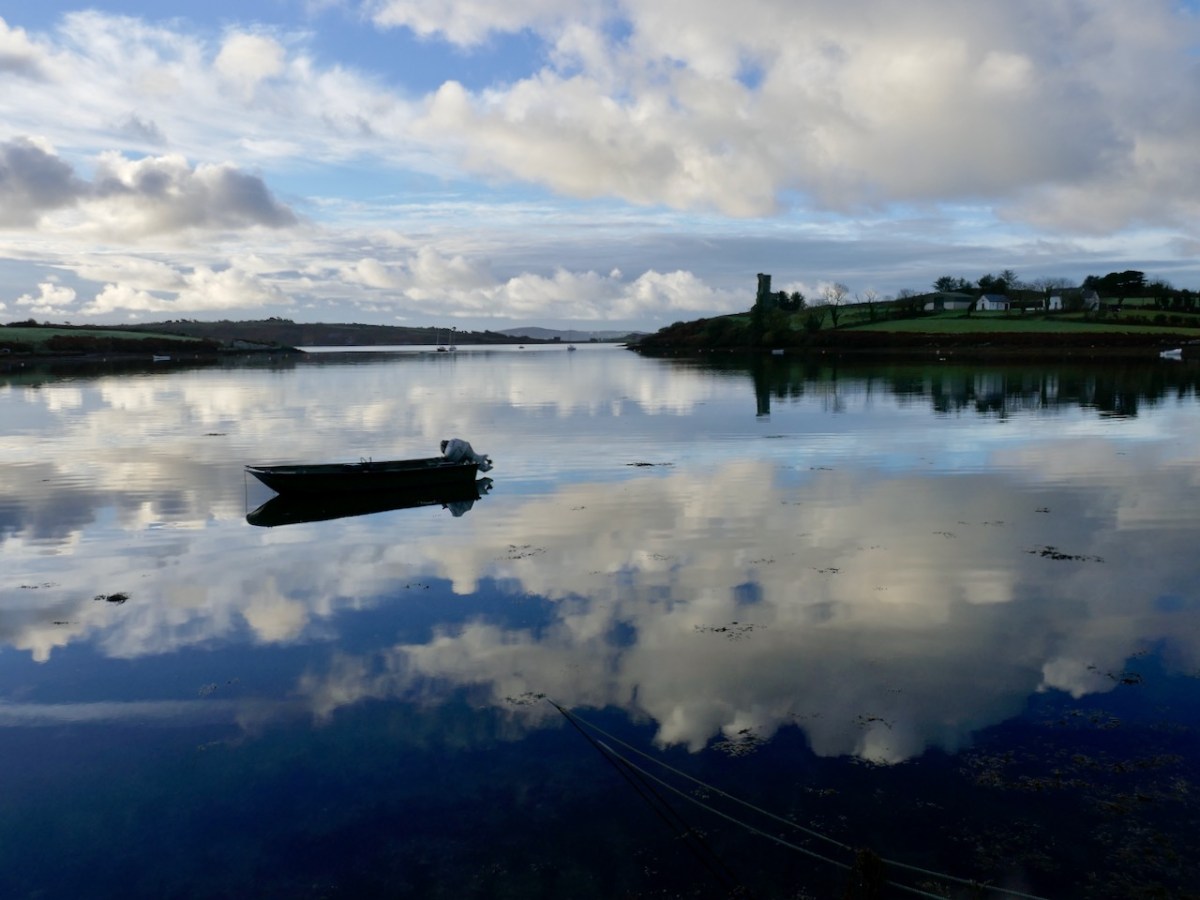
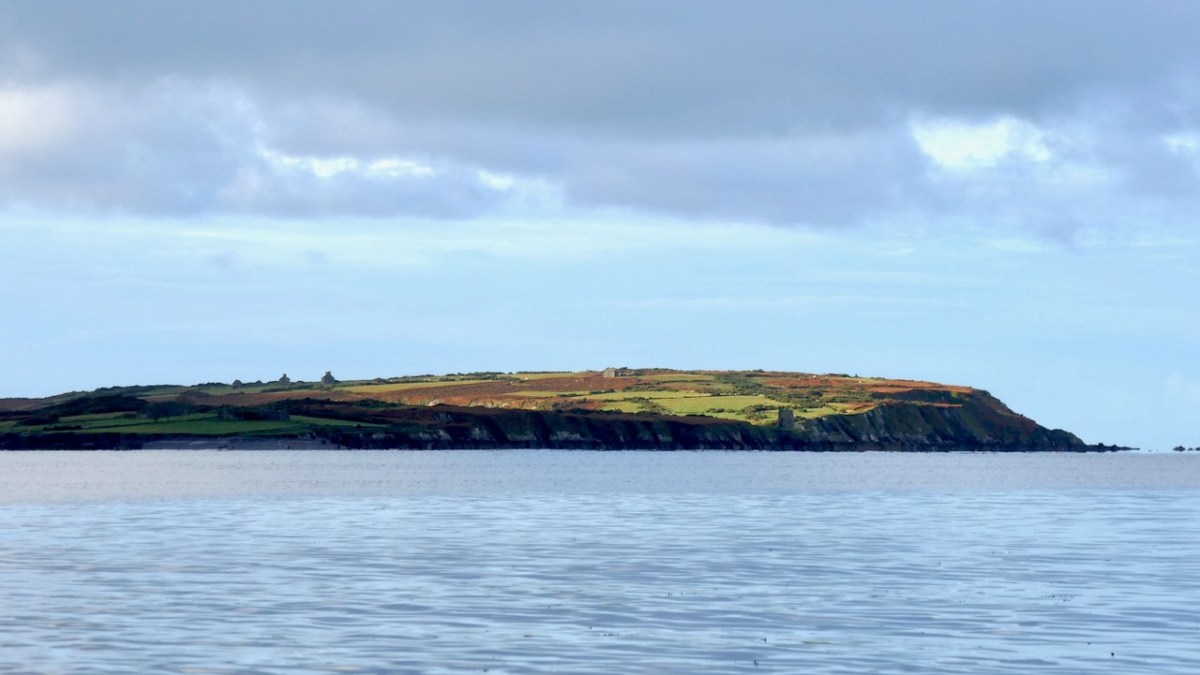
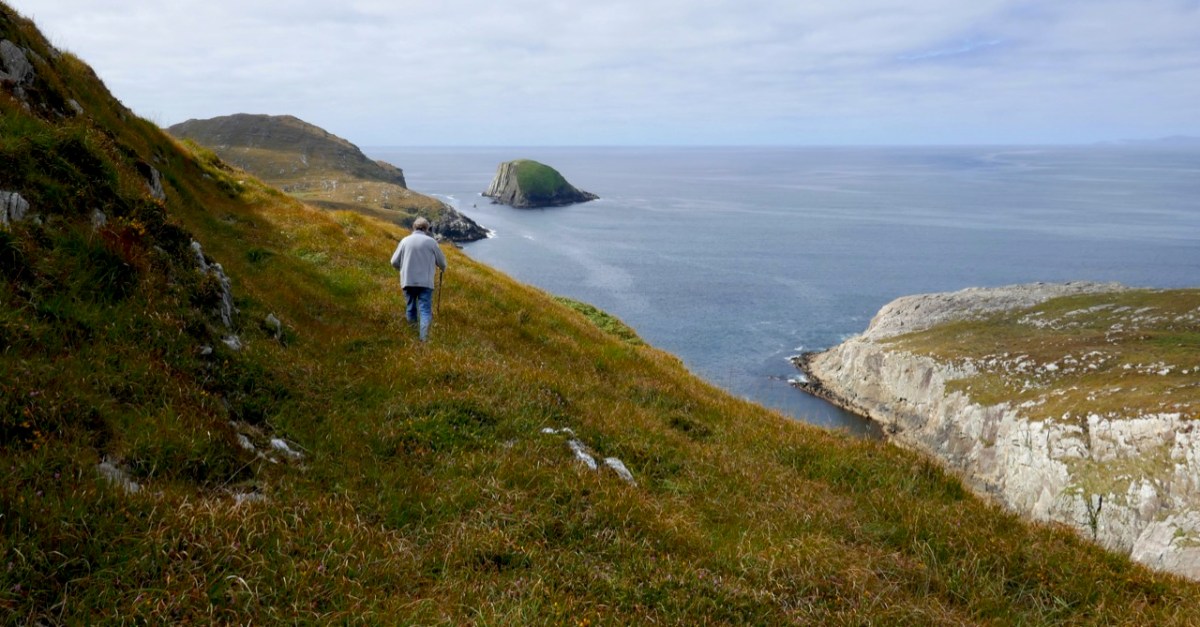
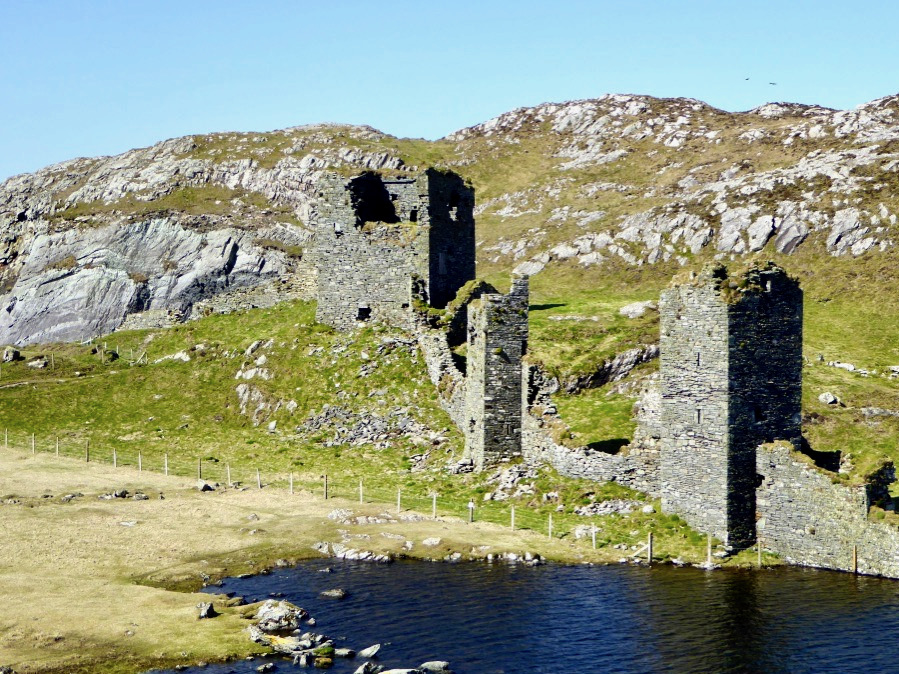
This week I was fortunate to be taken on a trip to the Goat Islands – Goat Island and Goat Island Little – by my friend Nicky – thank you, Nicky! We had a fine forecast for the morning and seized our chance.  

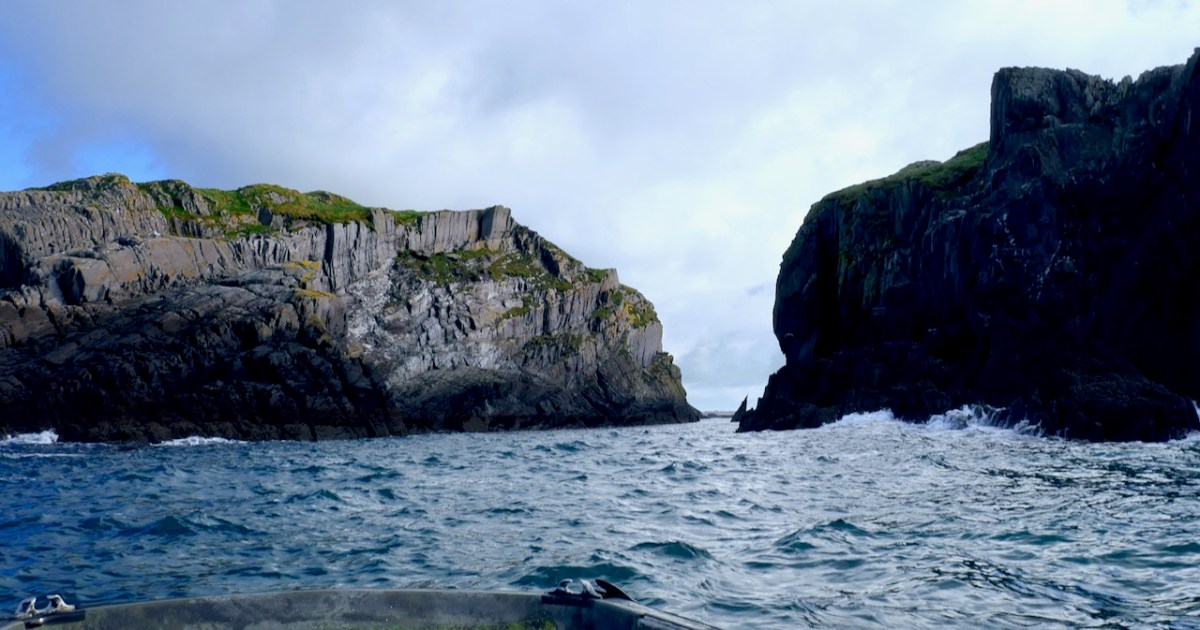
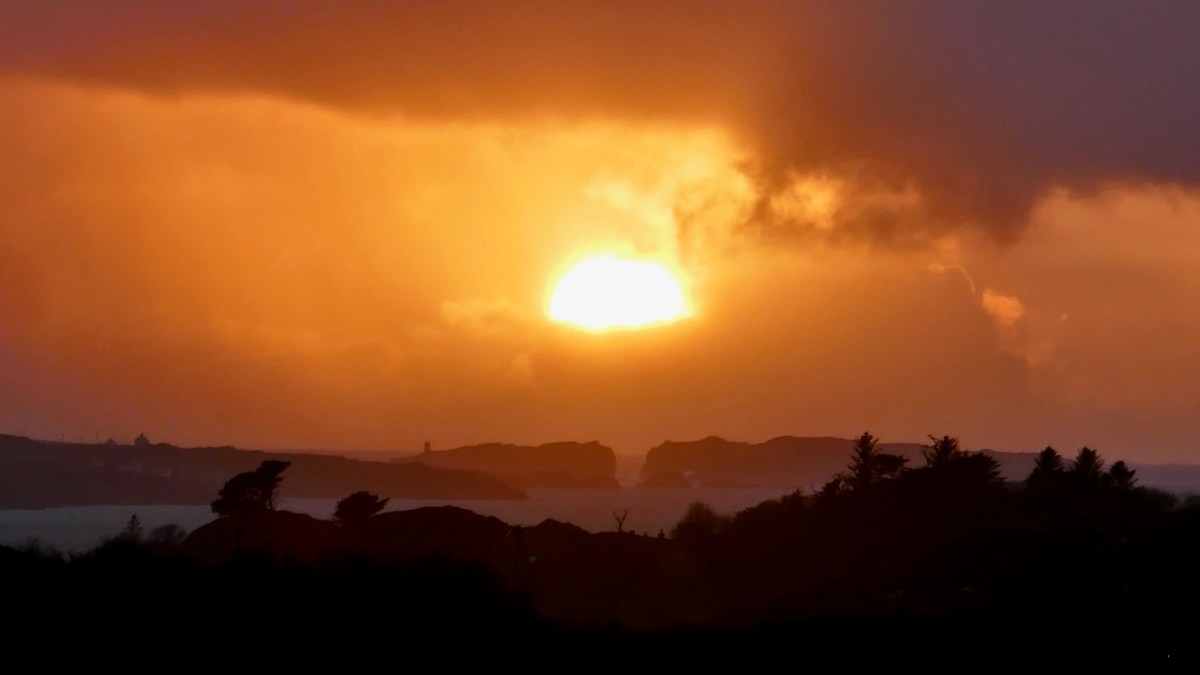
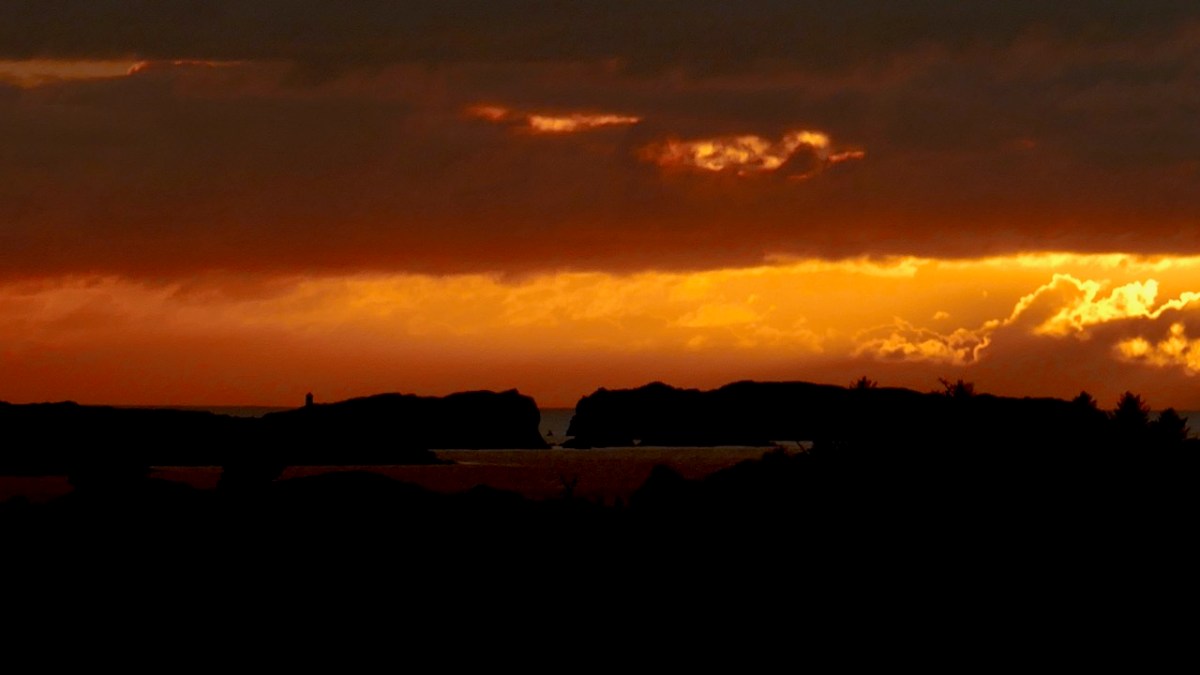
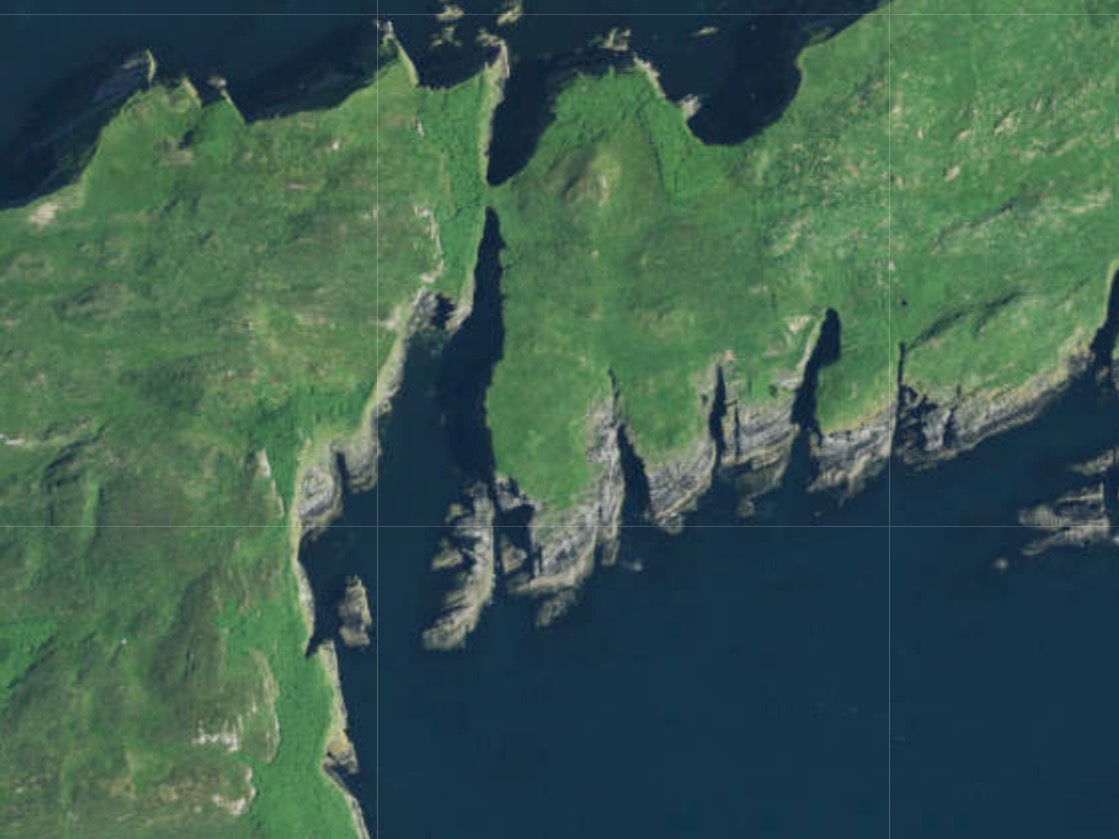
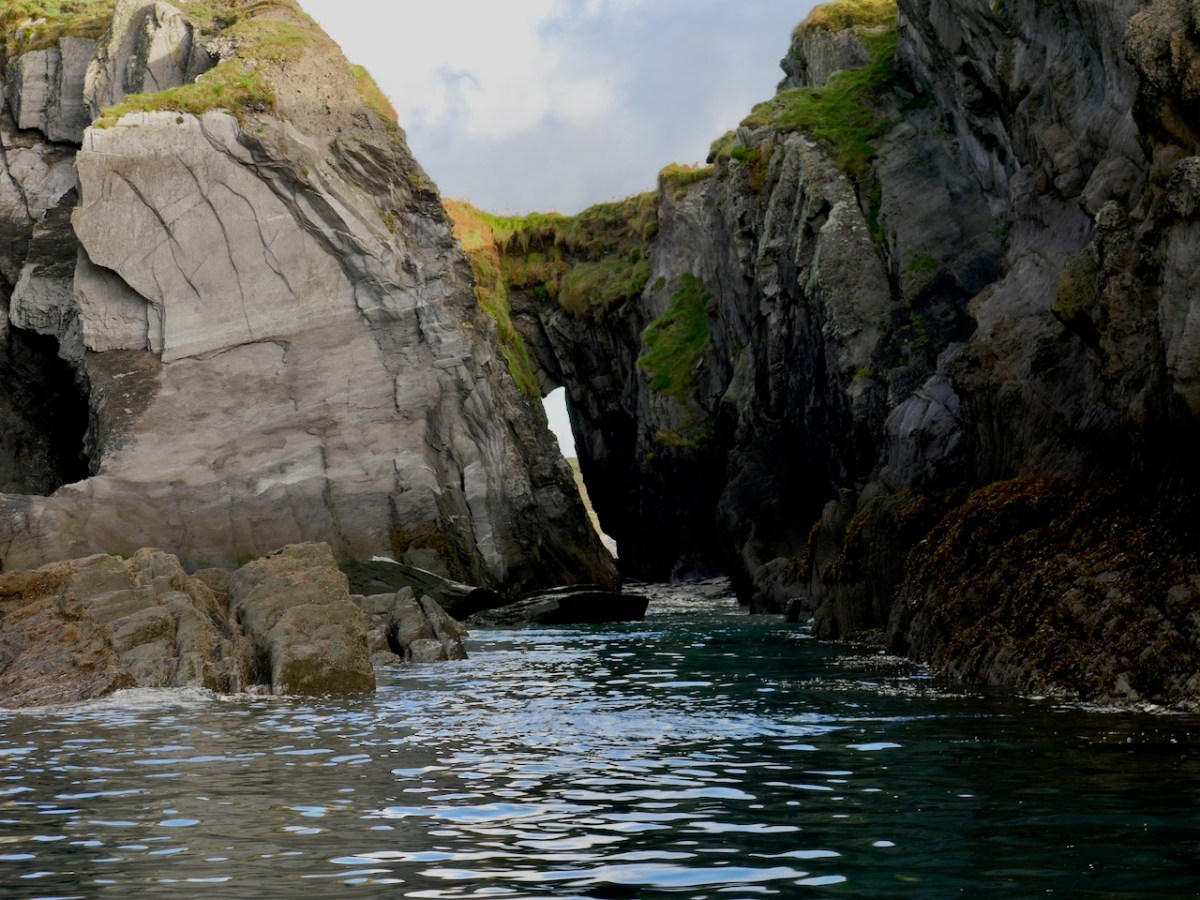
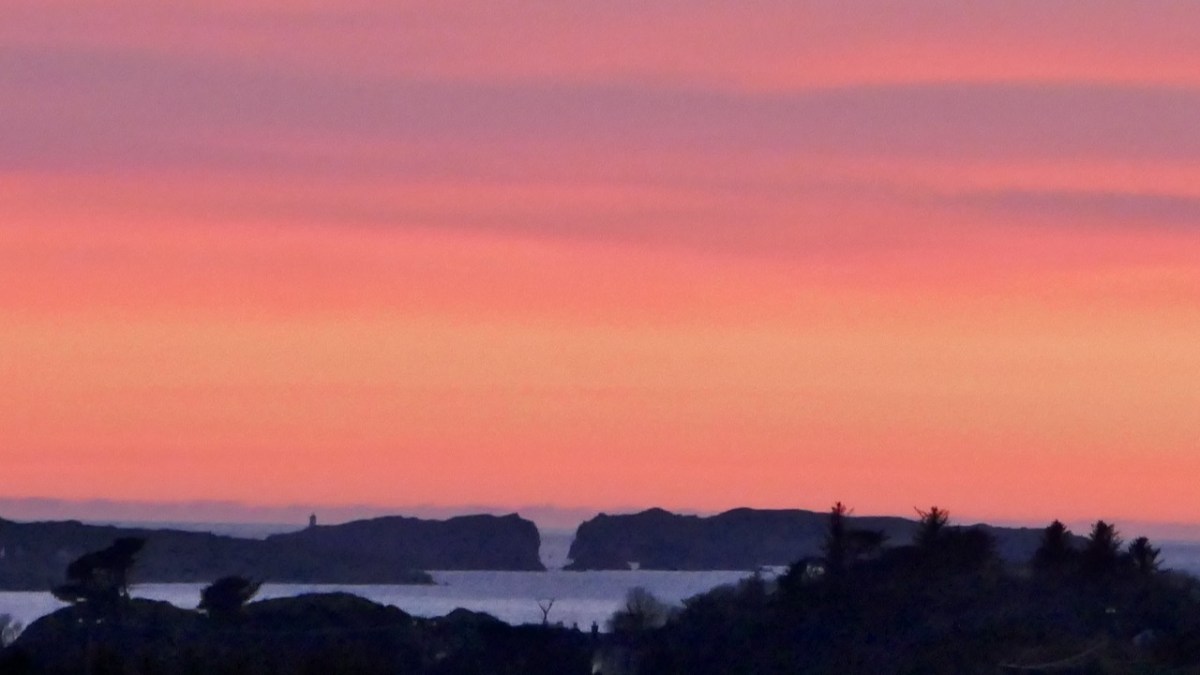
I can see the Goat Islands from my house and have been wanting to view them up close for as long as I’ve lived here. That’s because the two islands are separated by a cleft and twice a year the sun sets directly in the gorge created by that cleft. I’ve never managed to capture that moment (darn clouds) but I have come close. And somehow that impossibly romantic image, like a corridor to some magical realm, has sunk into my consciousness and manifested as a longing to go through that gorge in person. The experience was just as wonderful as I thought it would be.

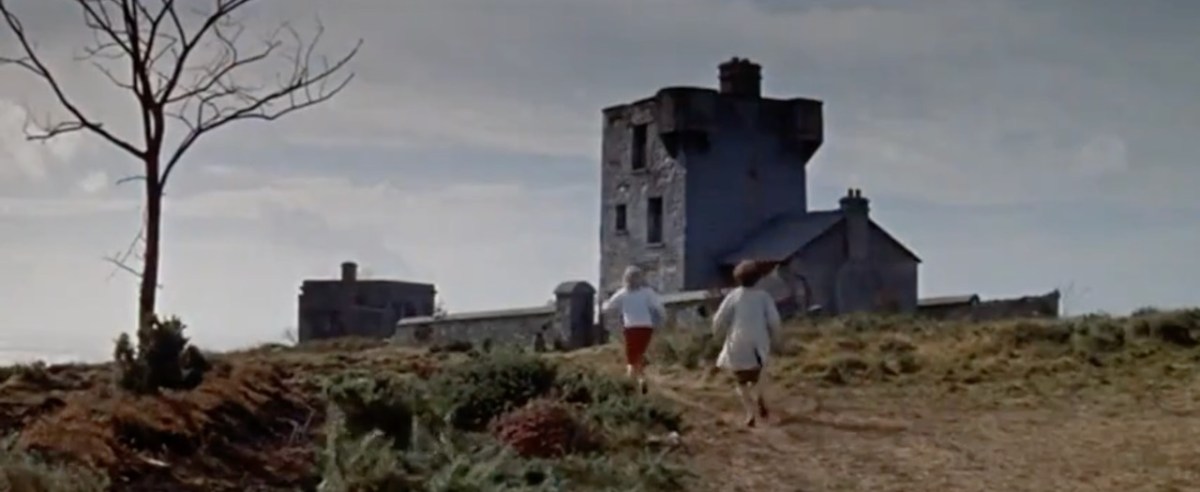
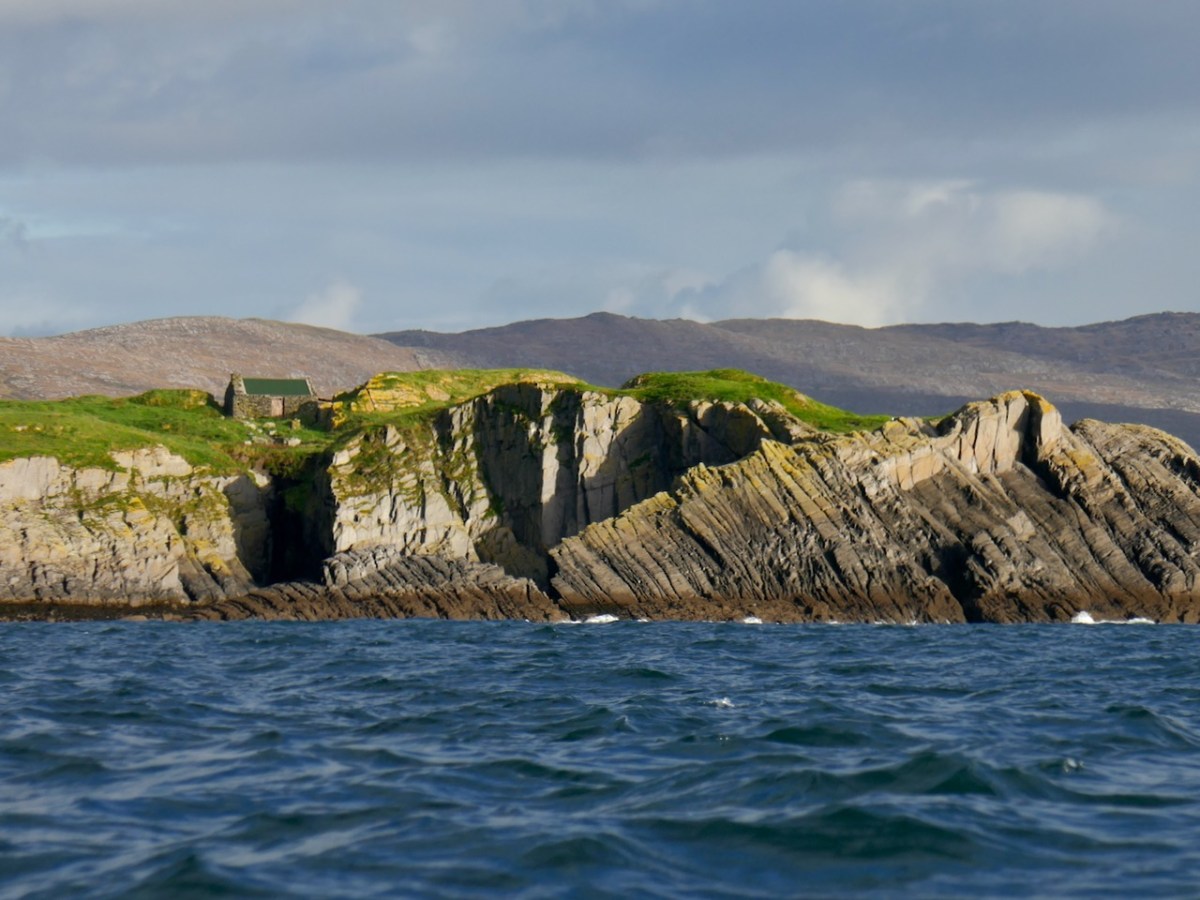
There isn’t much history to the Goat Islands. They are unoccupied now except for a herd of feral goats, but there is a small hut on Goat Island, recently re-roofed (does anyone know who has done this and why?).

When the first Ordnance Survey was done in the 1840s there was a cluster of buildings – probably the hut and a couple of outbuildings. 

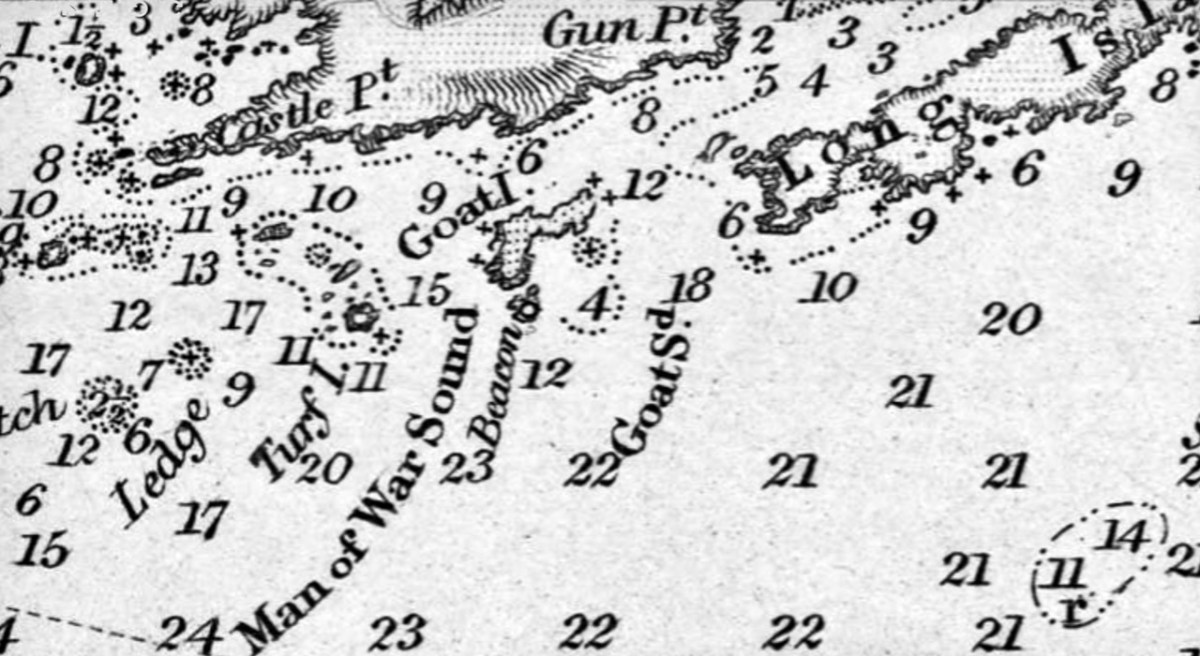
The name in Irish is Oileán Clutharach, which means Sheltered Island. Hmmmm – anything less sheltered is hard to imagine. On some maps and charts, the gap between Goat and Long Island is called Goat Sound, while the gap between Goat Island and the small rocky islet to the west is called Man-of-War Sound. That’s the 1849 Admiralty Chart below. I happen to have a copy, but you can find it here.

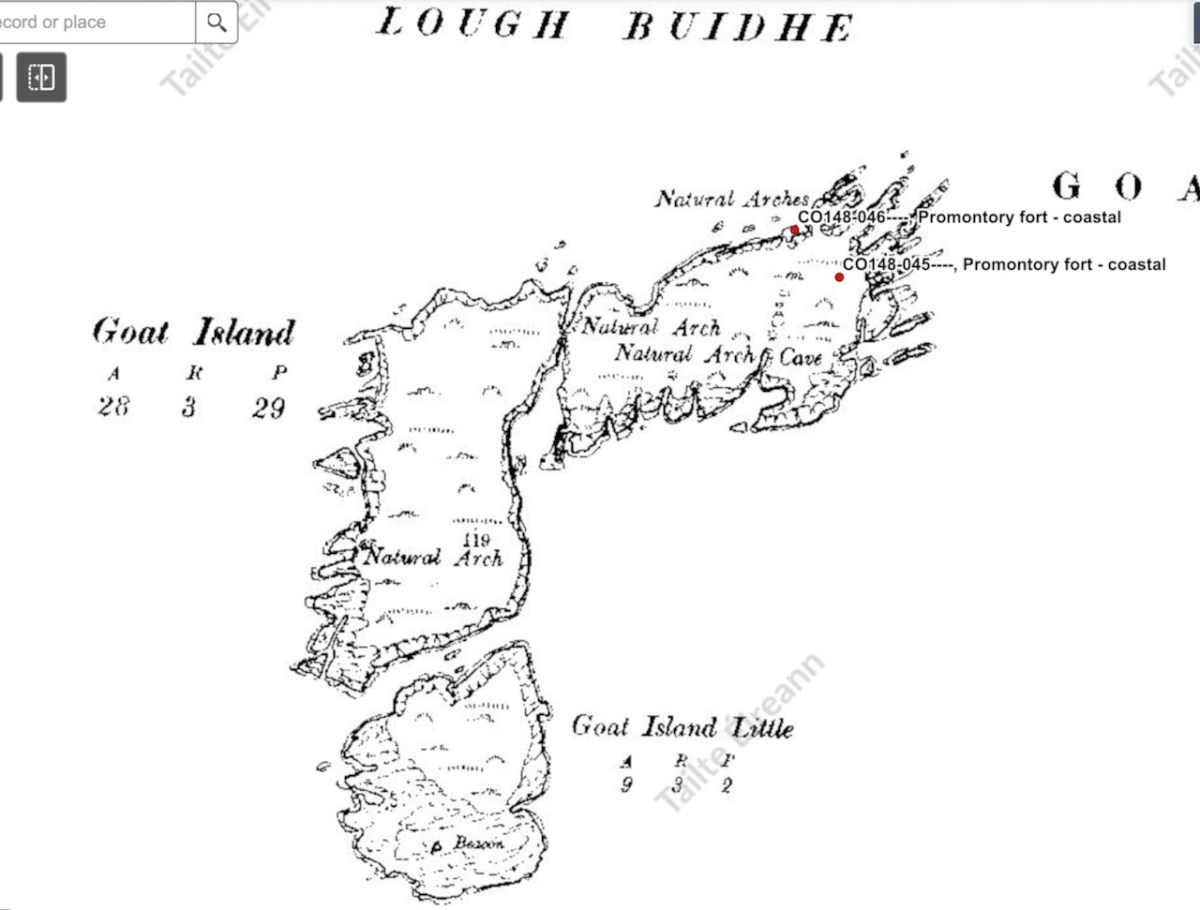
That islet is called Illaunricmonia, which translates, improbably, as Island of the King’s Copse, although it is called Turf Island on the Admiralty Chart. The sea between Goat Island and the mainland is labelled, on one of the early OS maps, Lough Buidhe, meaning Yellow Sea. All in all, a curious and seemingly inapt set of names that hint at more history that appears at first glance.

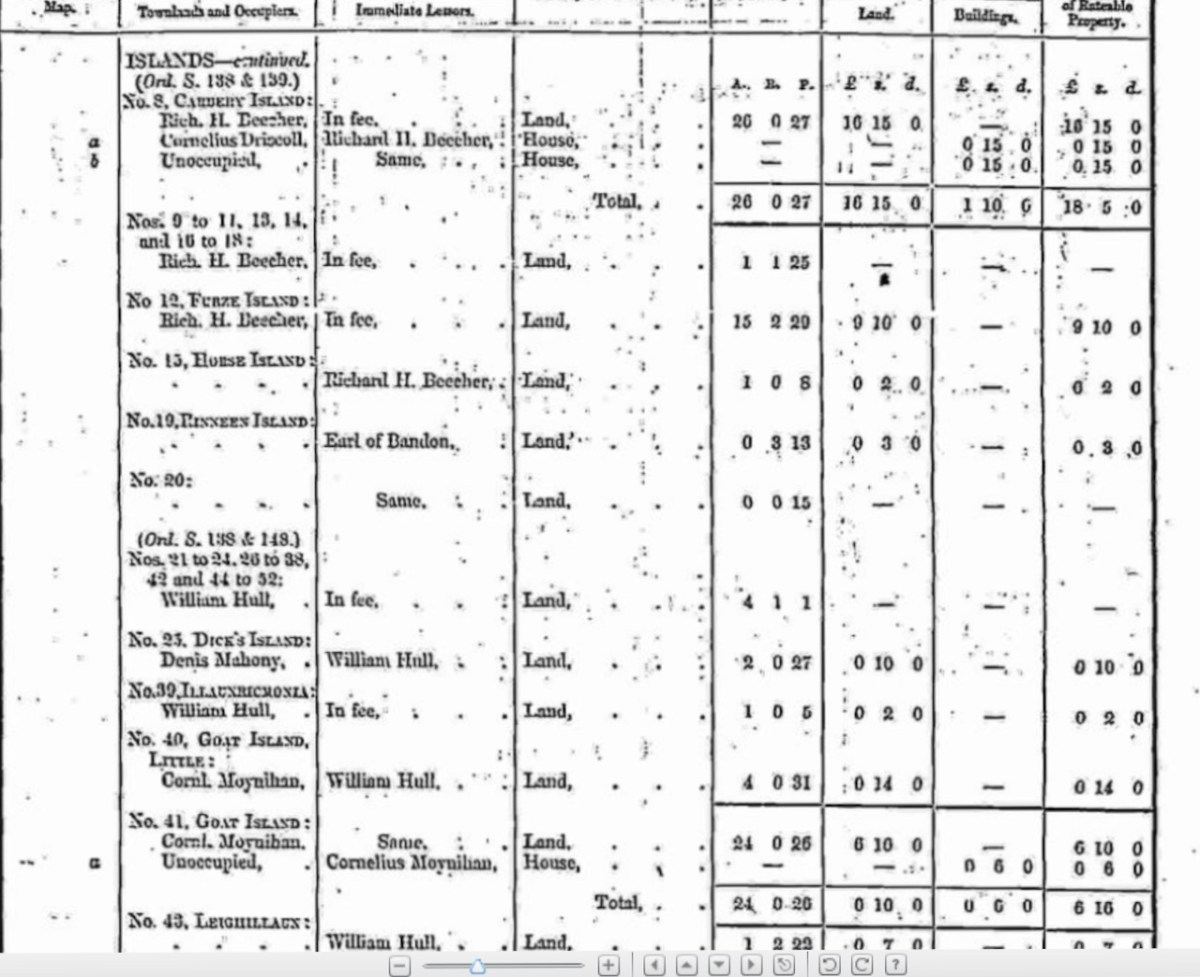
Griffith’s Valuation tells us both islands were owned by William Hull and Leased to Cornelius Moynihan. In the mid-nineteenth century, Goat Island Little was worth 14s and Goat Island 6£ 10s, while Moynihan’s hut was worth 6s. There are traces of lazy beds, visible even on the aerial photos – it’s hard to imagine how difficult it must have been to live here. Neither island has an obvious landing place but I understand it is possible to land on Goat Island if you know what you’re doing.

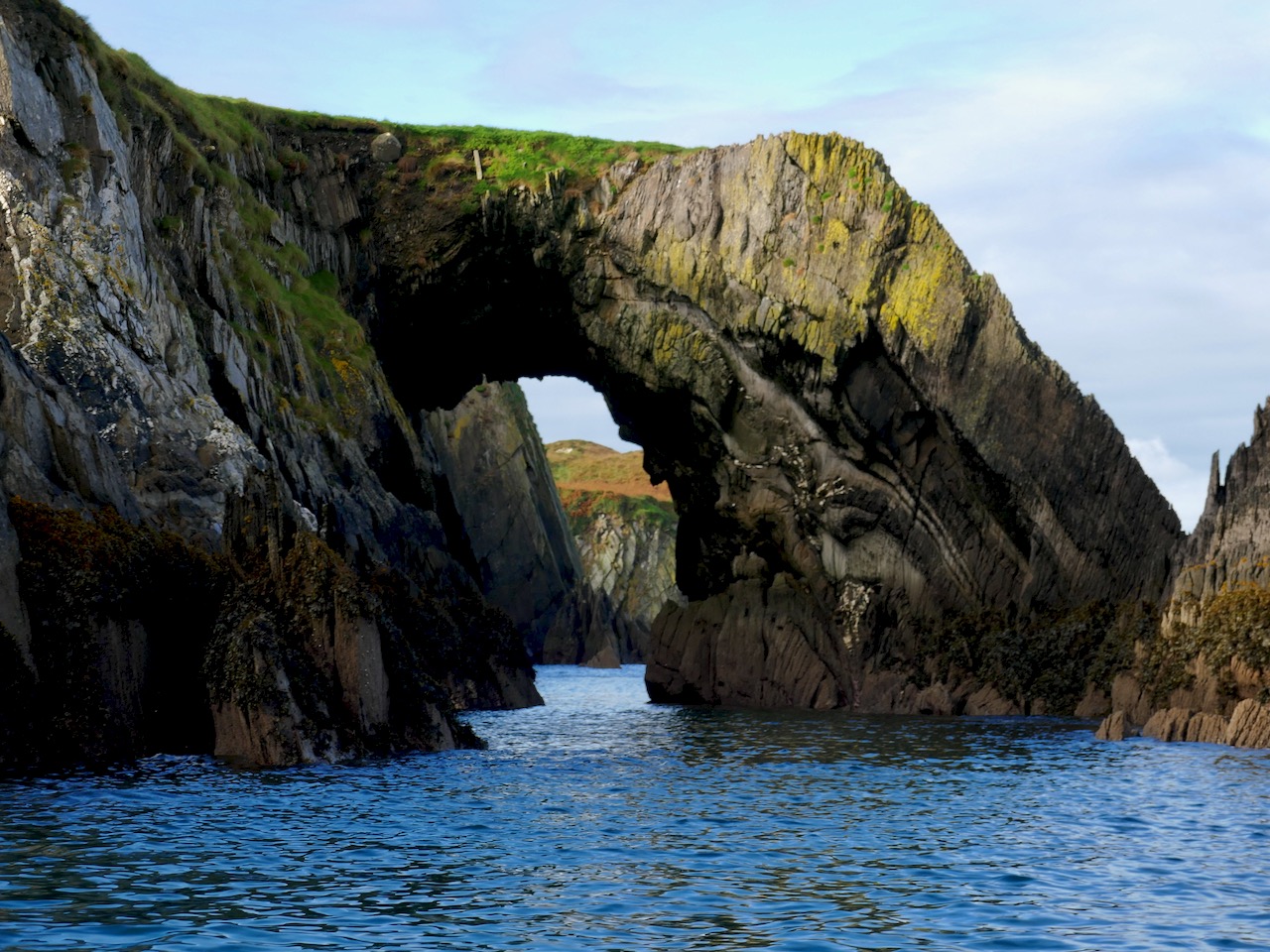
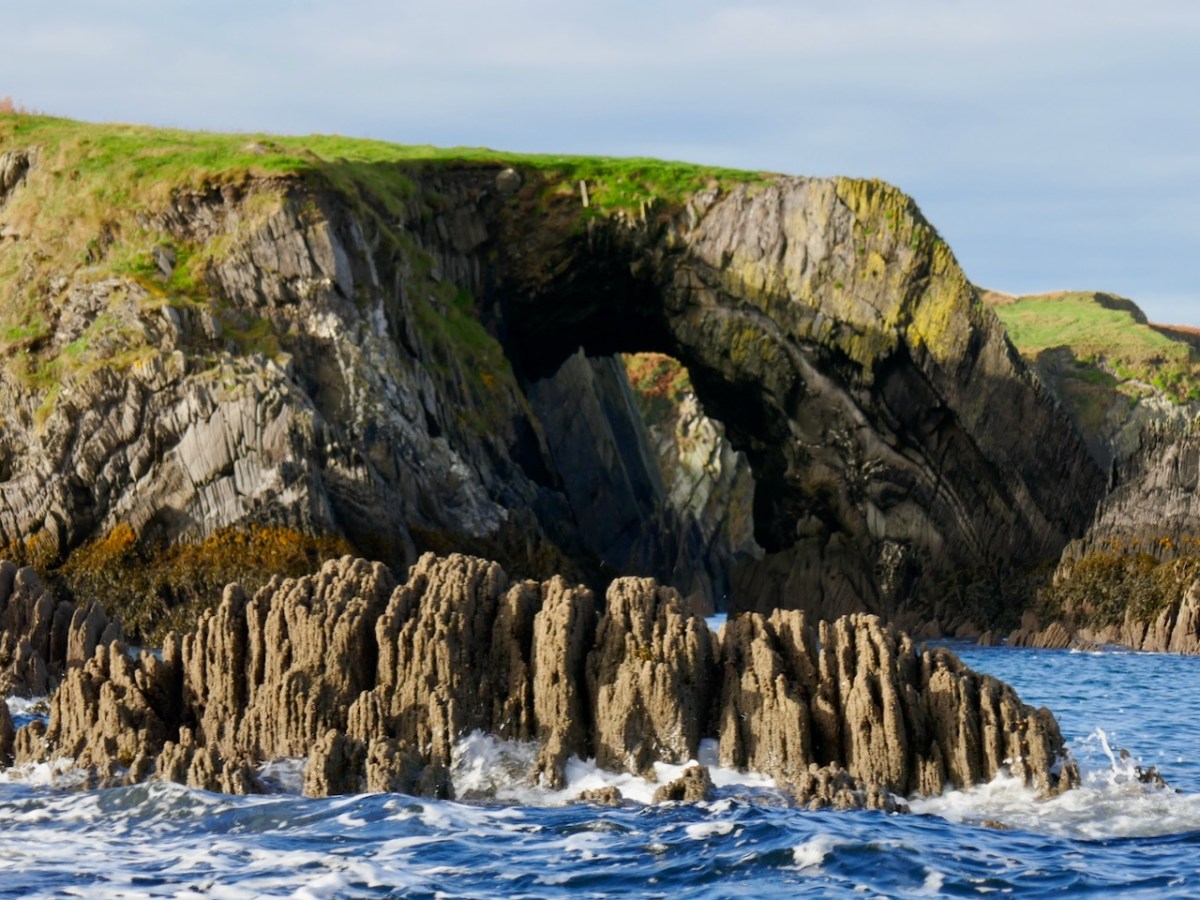
Not much history – but lots of geography! This was once one island, and probably joined to Long Island, which itself is one of a string of continuous islands off the coast. The cleft which divides it into two Islands probably started off as an indentation – and there are more indentations and developing clefts and fissures. Some of these now form sea-arches and at least one will eventually collapse, creating two island out of Goat Island. 
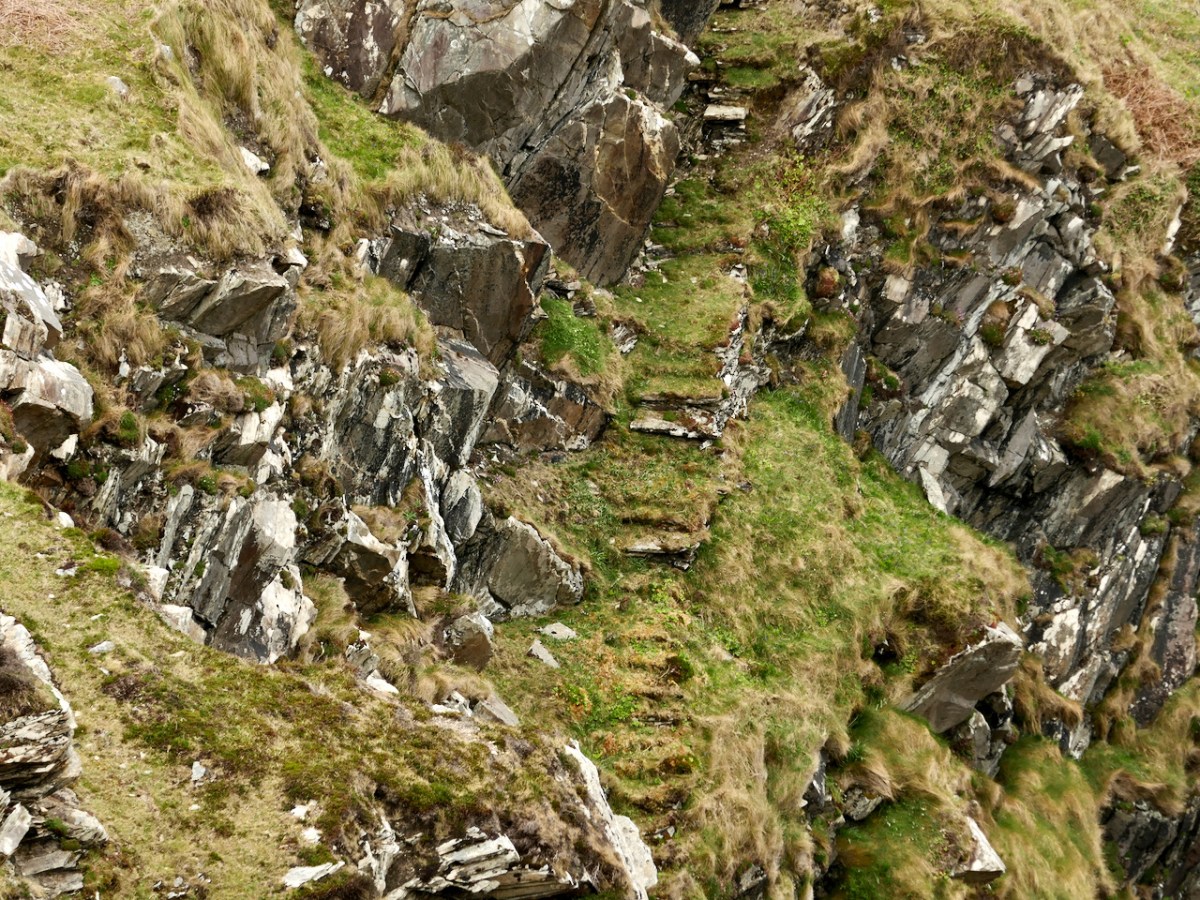
We could see right through the crack at the join point. 

The only structure on Little is a masonry beacon. Dan McCarthy in an entertaining piece for the Examiner, give the following account of the beacon.

Goat Island Little . . . was deemed suitable in the 1850s for the construction of a beacon to aid navigation for boats entering Schull Harbour via Long Island bay. A second beacon was constructed at Copper Point at the west end of Long Island. How the workers and boatmen managed to land themselves, as well as the stone, cement, and other materials needed for construction can only be marvelled at. In the end, the structure reached almost 5m in height and weighed 250 tonnes when it was completed in 1864. It was repaired in 1961 when 40 tons of gravel were brought from Schull to reinforce the foundations. However, The Skibbereen Eagle newspaper . . . recorded its distaste at the new construction. “These celebrated structures, finished at last… but to what order or style of architecture they belong we have been unable to discover. We have however been informed that, like their neighbour at Crookhaven, they are neither useful nor ornamental, as in the day time they are not required, while at night they can not be seen.”  The newspaper went on to recommend that, as in Normandy, the head of the gurnet fish, when properly dried, be filled with tow (wick) from which a brilliant light emanates when lit. Thus ‘an inexpensive and brilliant light would be produced, and the effect, no doubt, would be exceedingly useful and picturesque during the ensuing dark winter nights’.
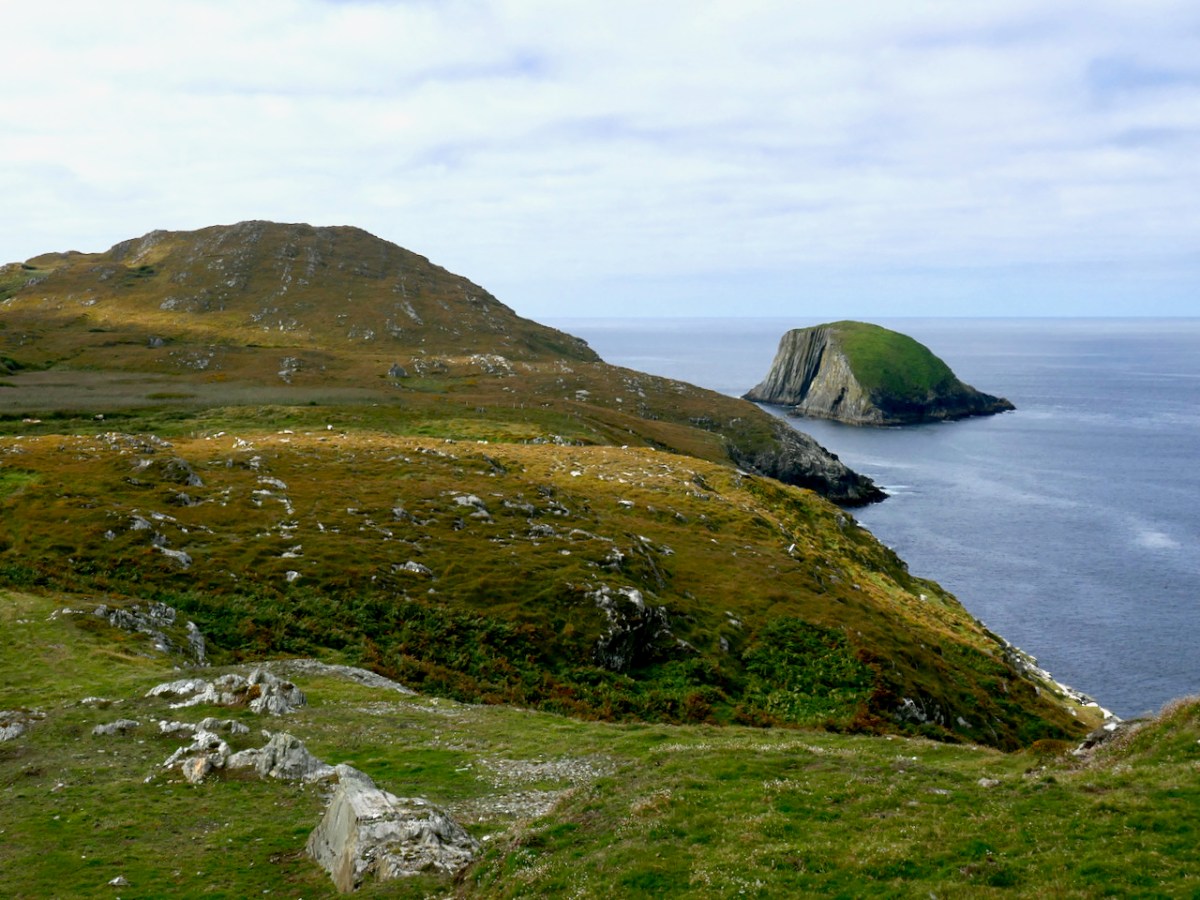
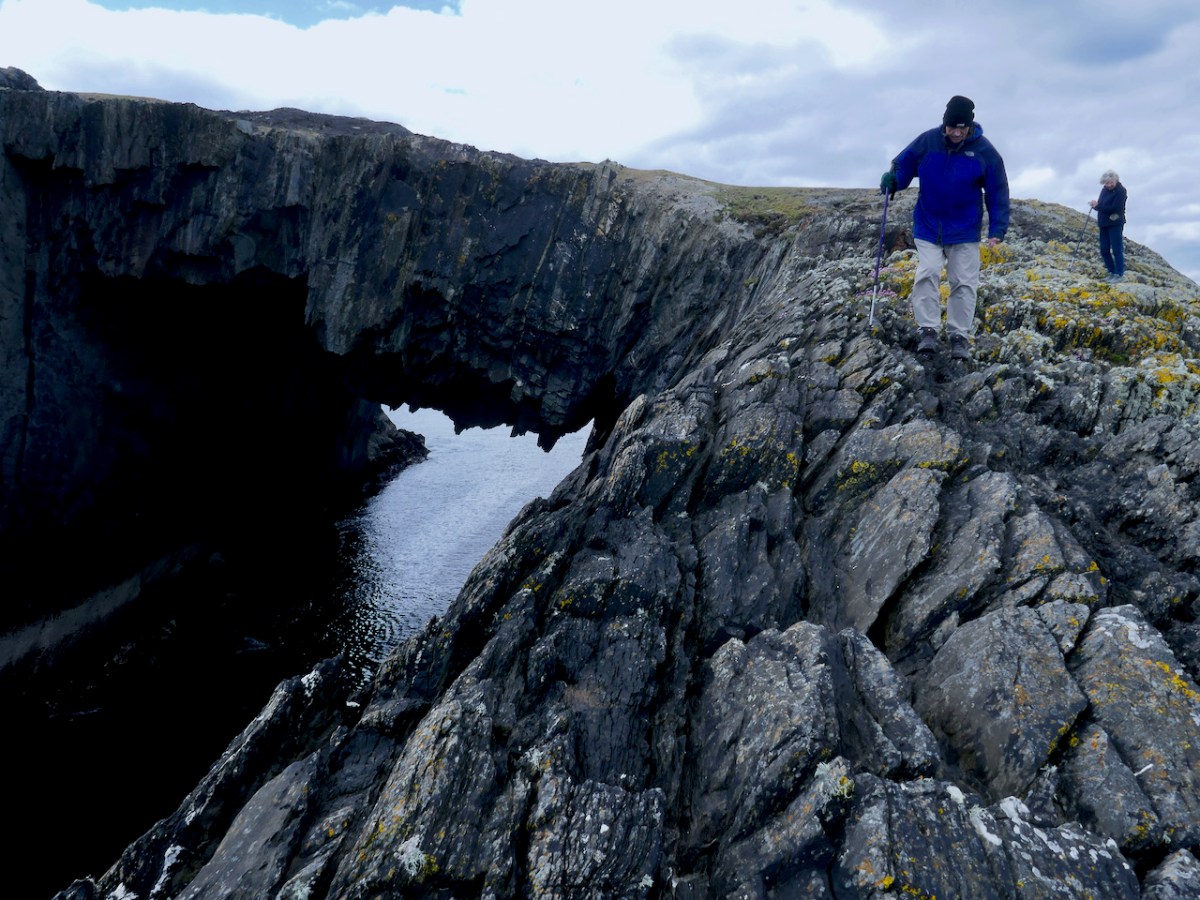
While we don’t endorse the gurnet fish alternative, we do have to admit that this is not the prettiest beacon, being remarkably phallic is its appearance.

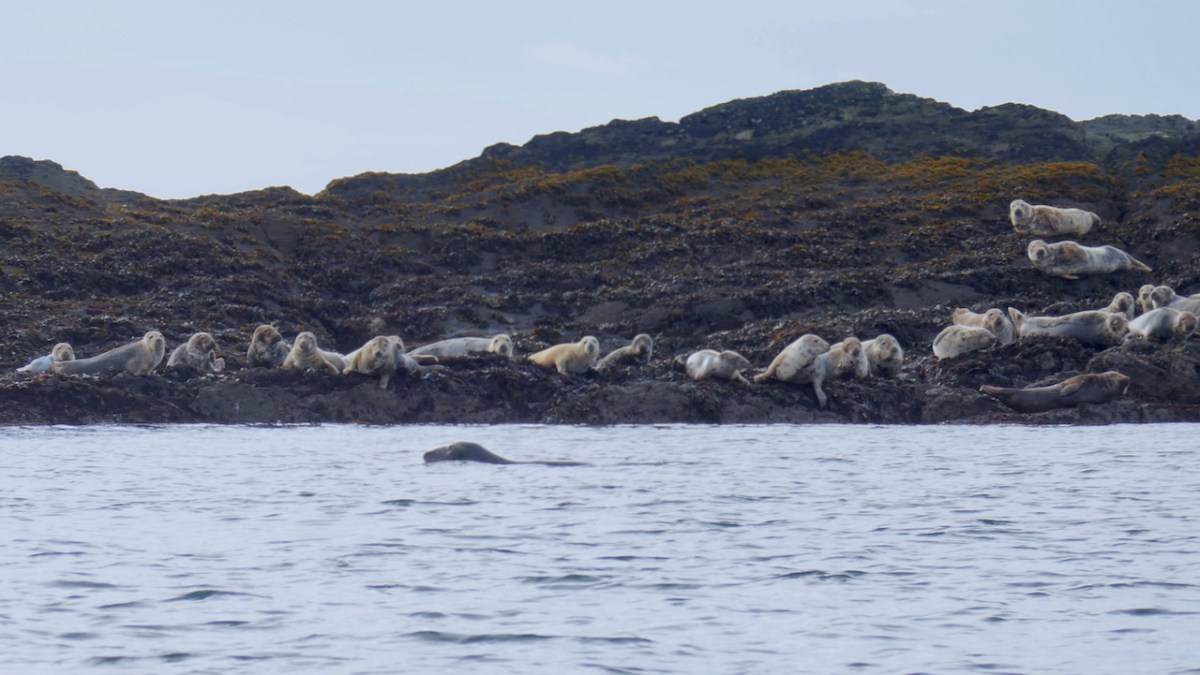
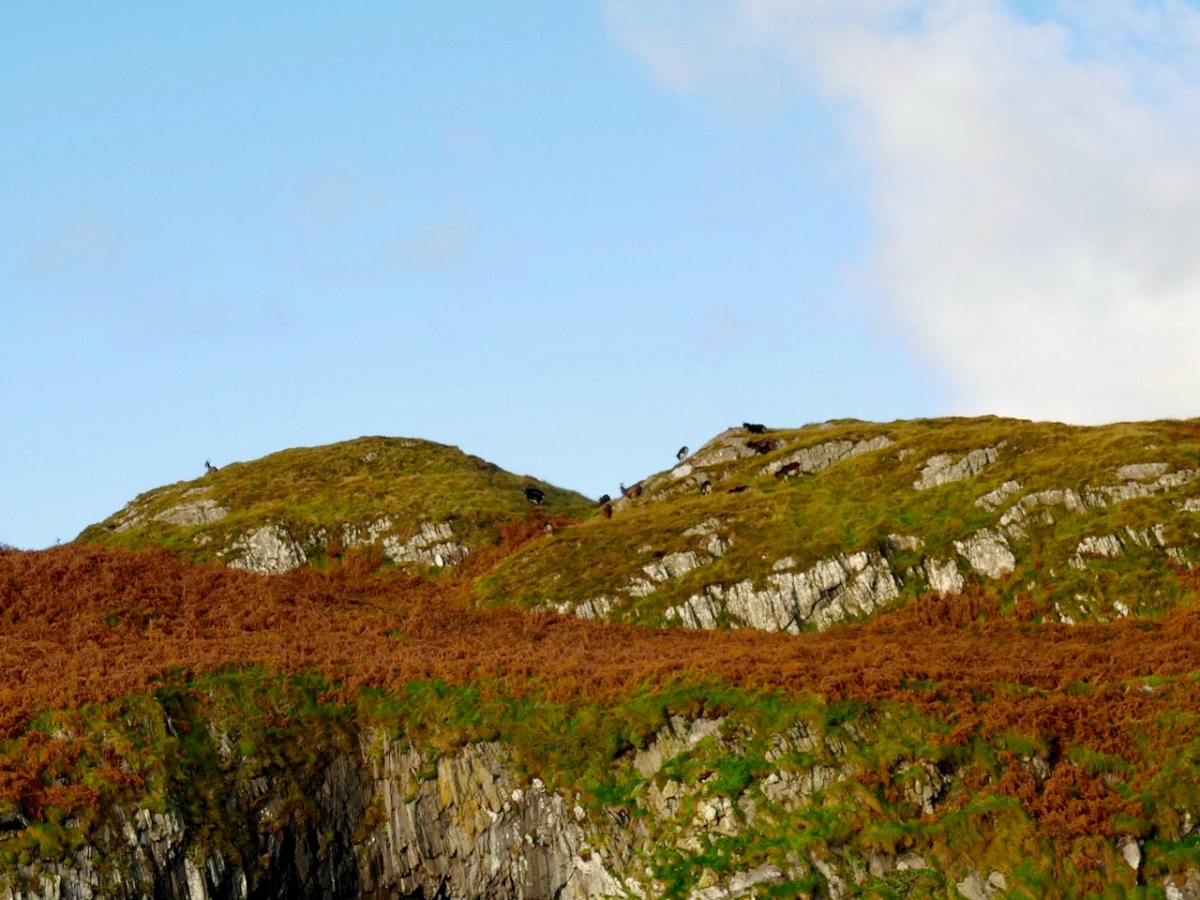
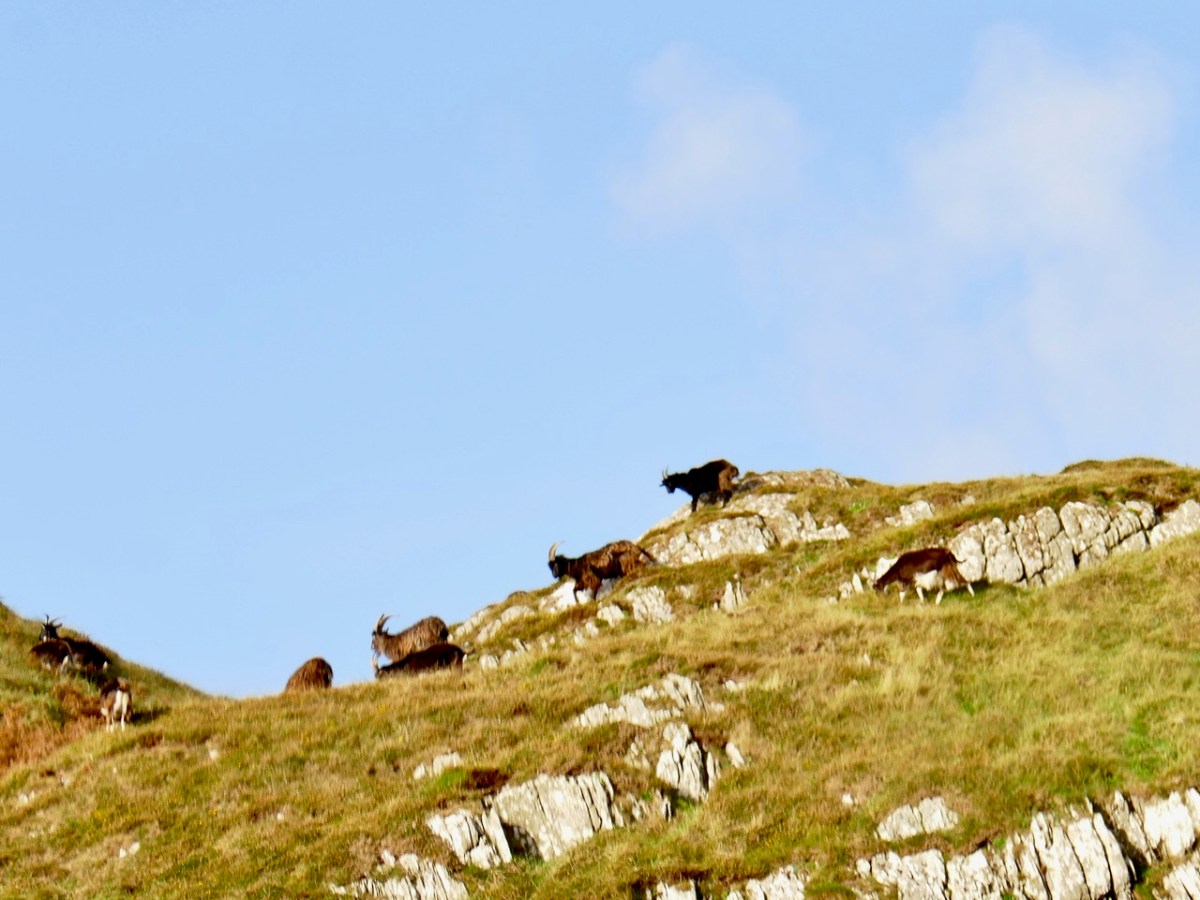
And what about the goats? Yes, they are there, on the larger island, with nothing to disturb them. The population, I imagine, is kept in check naturally by the availability of food.

While a managed herd can be used to keep down invasive species (as in the Burren), in general a herd like this will just eat everything in sight and so John Akeroyd and the team who wrote The Wild Plants of Sherkin, Cape Clear and Adjacent Islands of West Cork, say that there are few plants to record and that the islands are of more interest for their birds than their plants.

Nicky is familiar with these waters so I knew I was in good hands. We set out shortly after nine, leaving from Rossbrin Cove, looking resplendent in the morning sunshine.

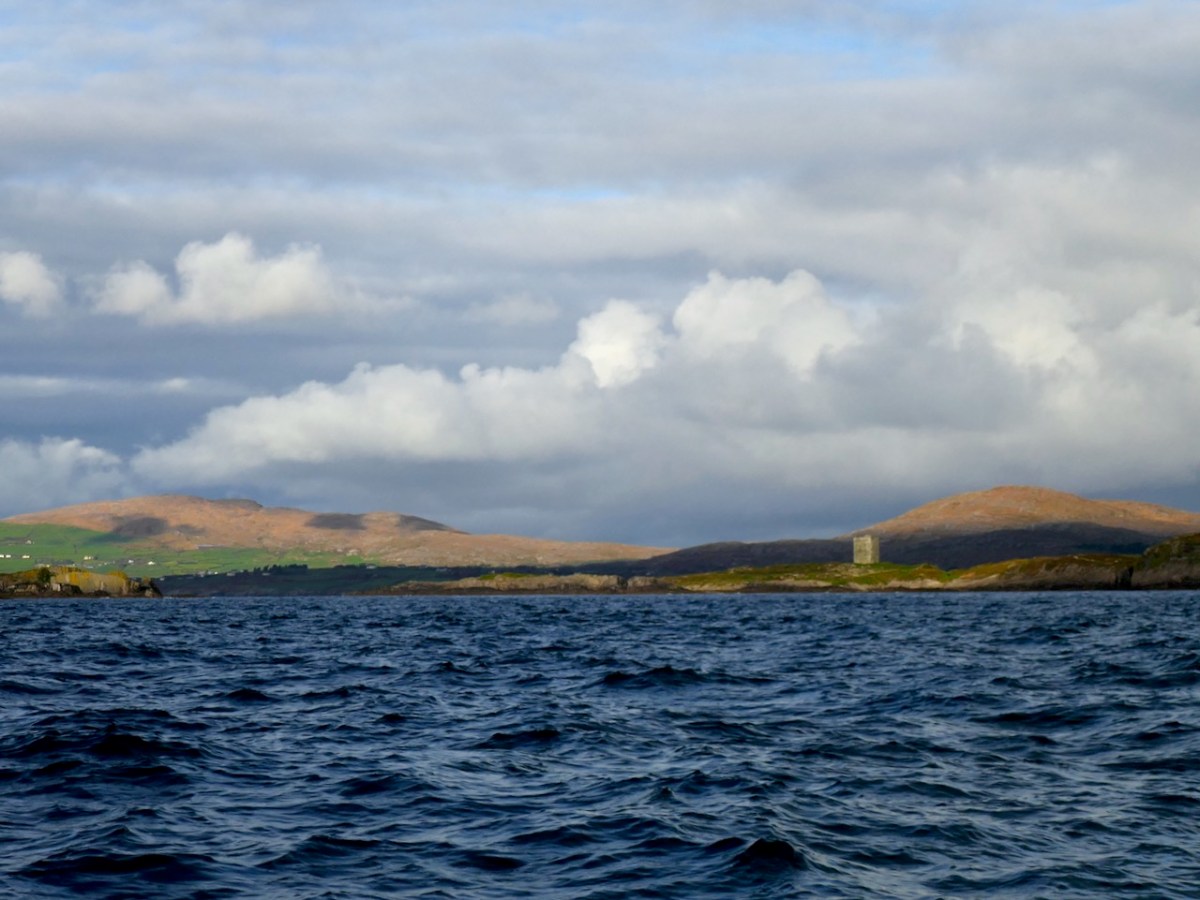
We passed Castle Island, the entrance to Schull harbour, and then Long Island.

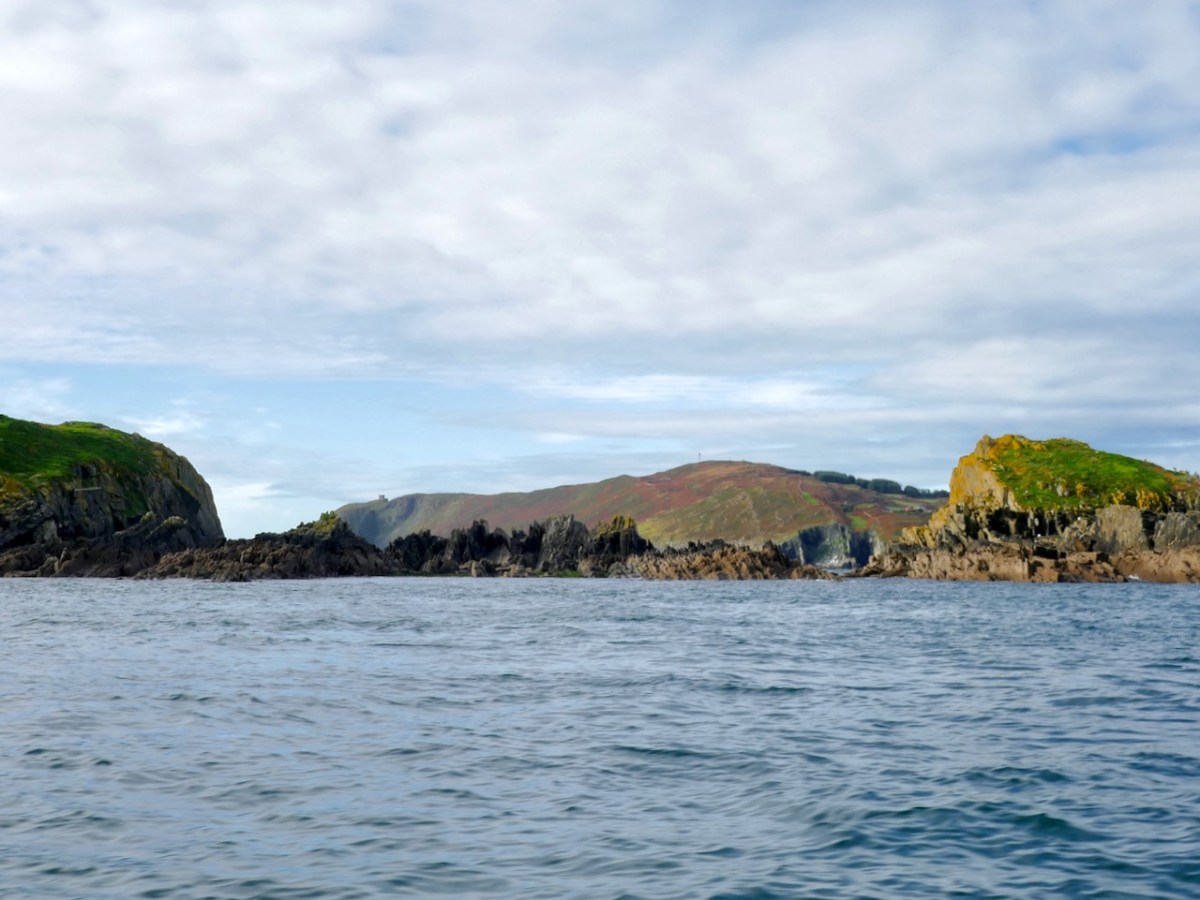
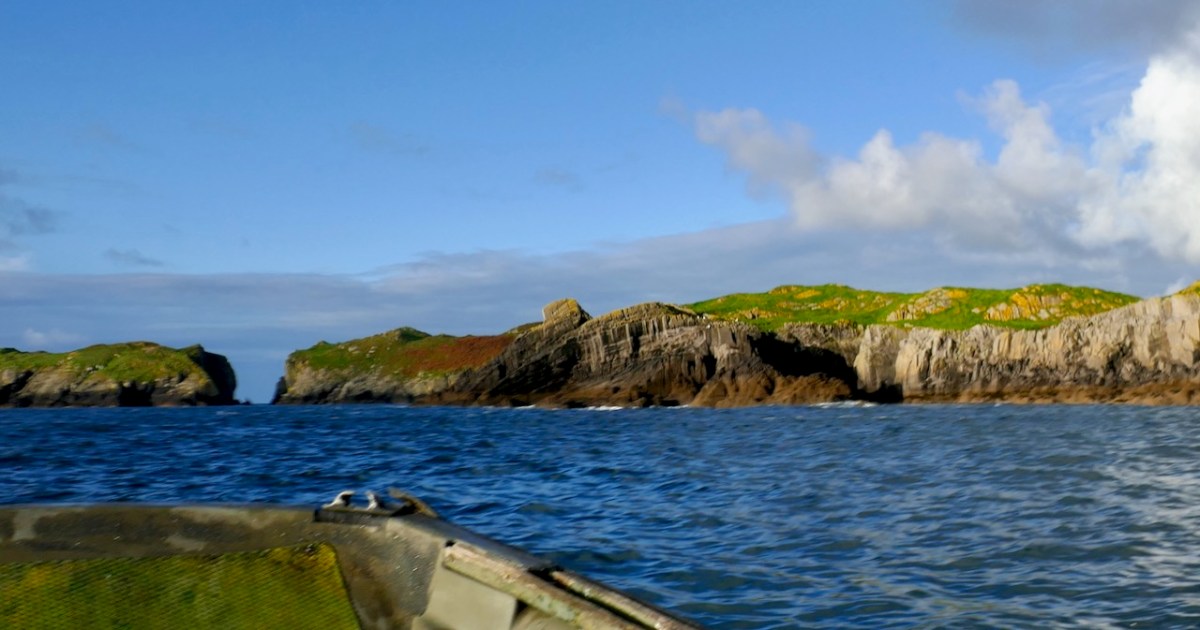
Our first glimpse of the islands was through the rocks at the end of Long Island. 

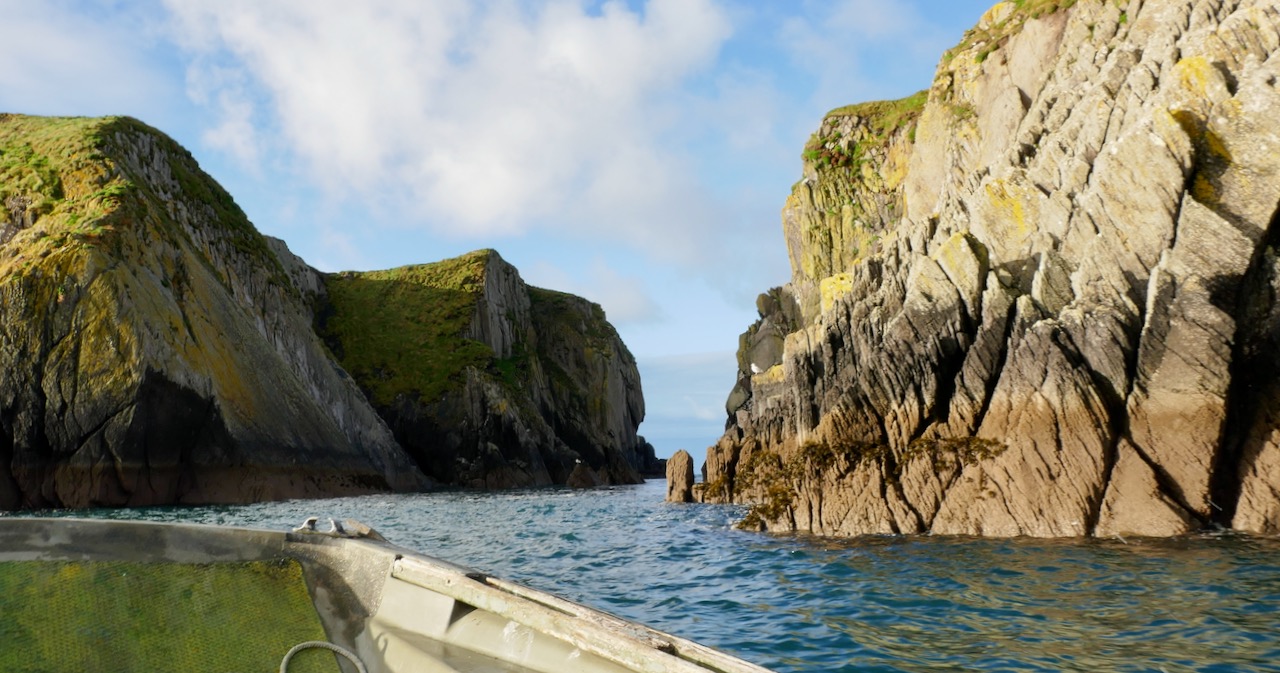
As we approached, the cleft loomed ahead and soon we were in it!

I switched to my iPhone, which does a better job of videos like this than my camera, so come with us now as we venture through the gorge, trying to avoid the very jagged rock right in the middle of the passage. You can view in YouTube by clicking on Shorts at the bottom of the video.

I’ve done it – fulfilled the ambition of many years and gone thought the corridor to the magical realm! There’s more to the story – we didn’t just turn around and go home, but I will leave that to the next post.

Mizen Magic Miscellany: The Far End Part 3

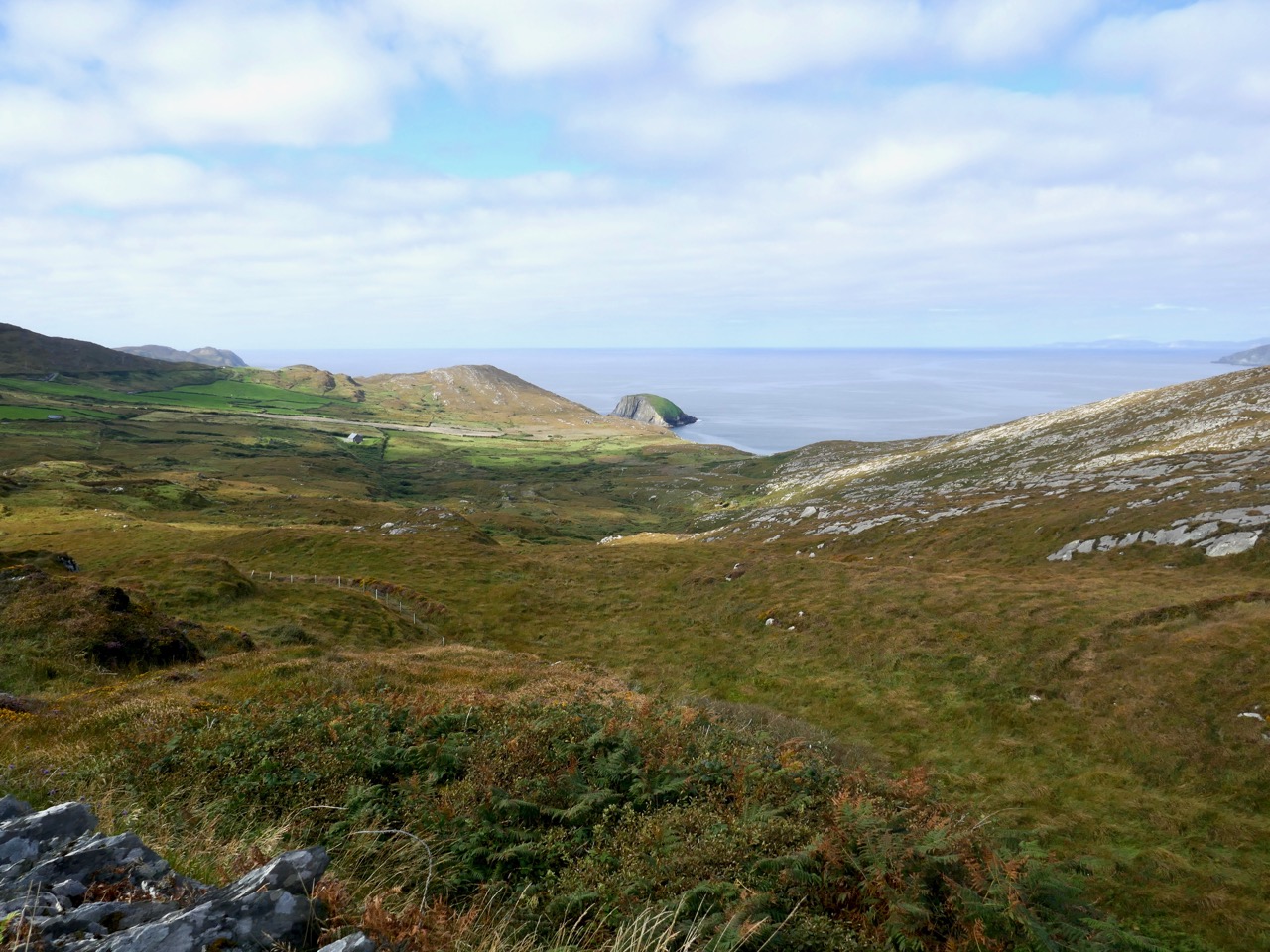
Sticking with the west end of the Mizen, we will introduce you today to some prehistoric rock art (two very different cupmarked stones), a remote and gorgeous stone pier, an historic mine site with links to the Famine, and finally a headland with sea-arches and an ancient promontory fort.

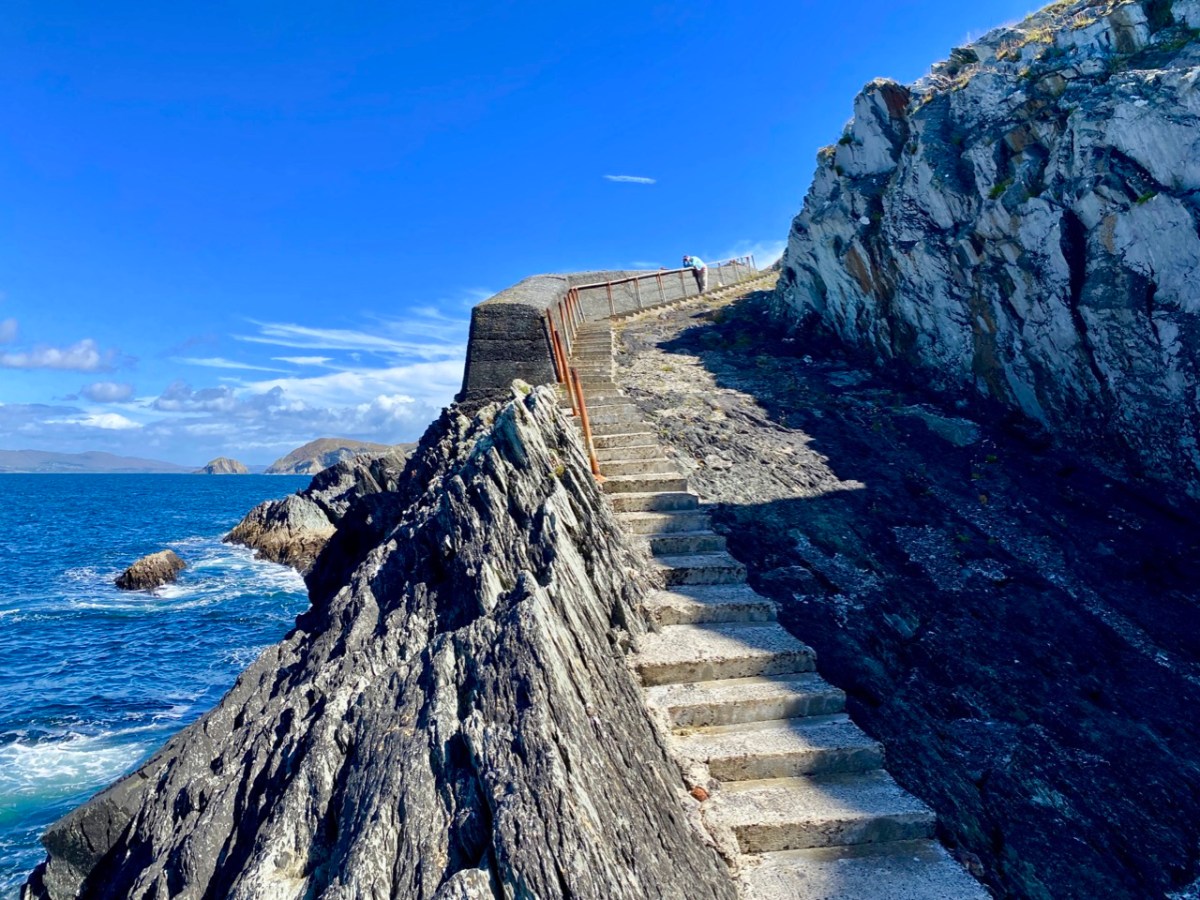
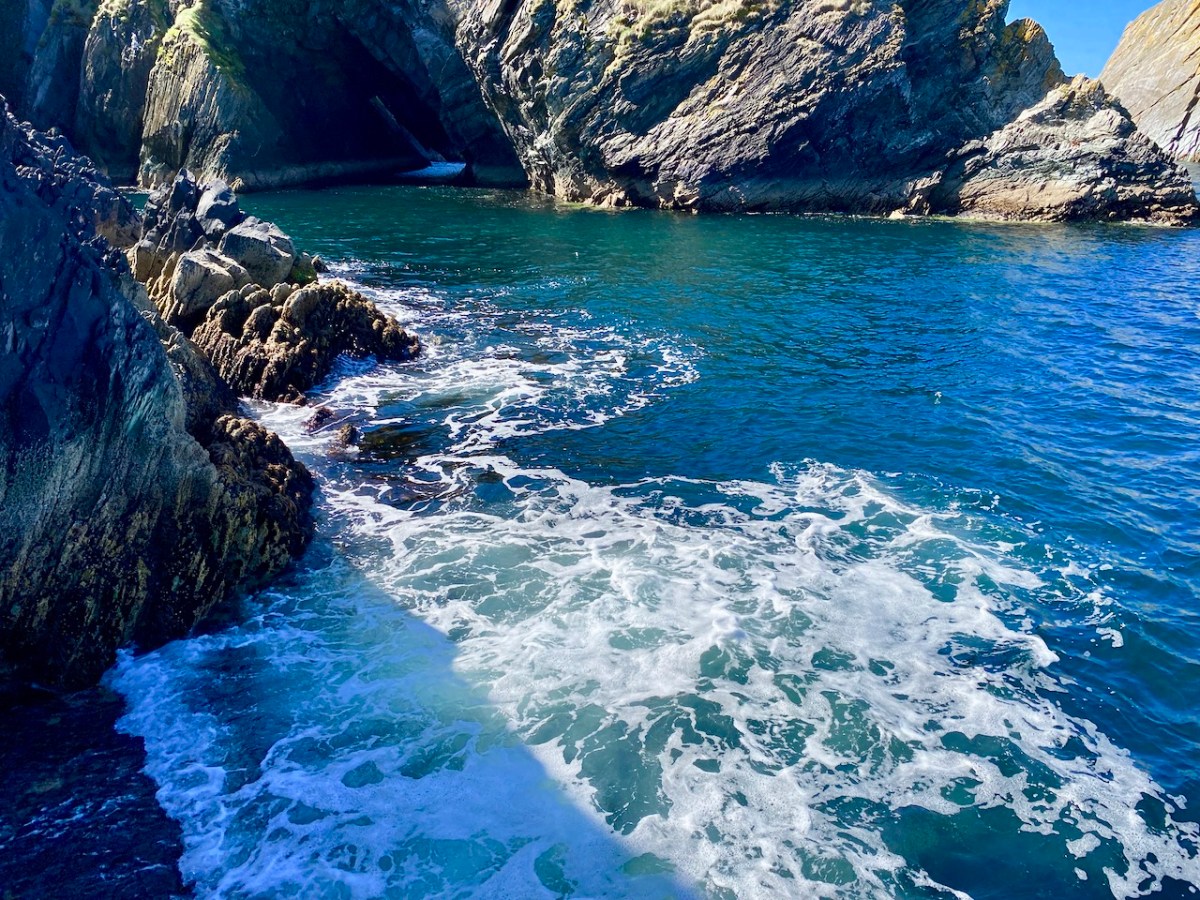
Let’s start with Toor – that secluded and beautiful spot out on the wild northern edge of the Mizen. It’s hard to believe that this was a well-used pier in its day. It has held up well, despite the bashing it gets from the ocean. And there are sea-caves!

Between us we took so many photos at Toor that we ended up making a slideshow, to the Music of Liam O’Flynn’s Joyce’s Tune from The Given Note. This link will take you there.

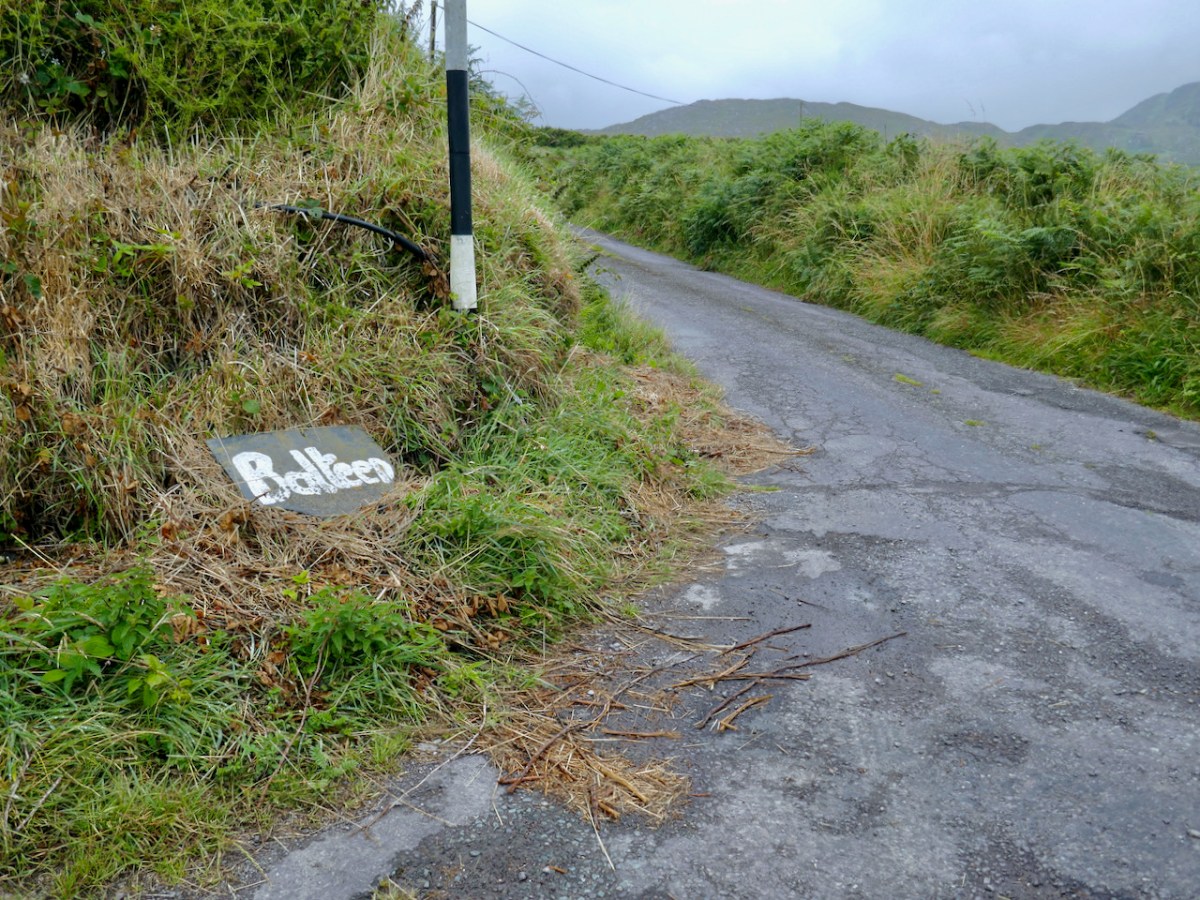
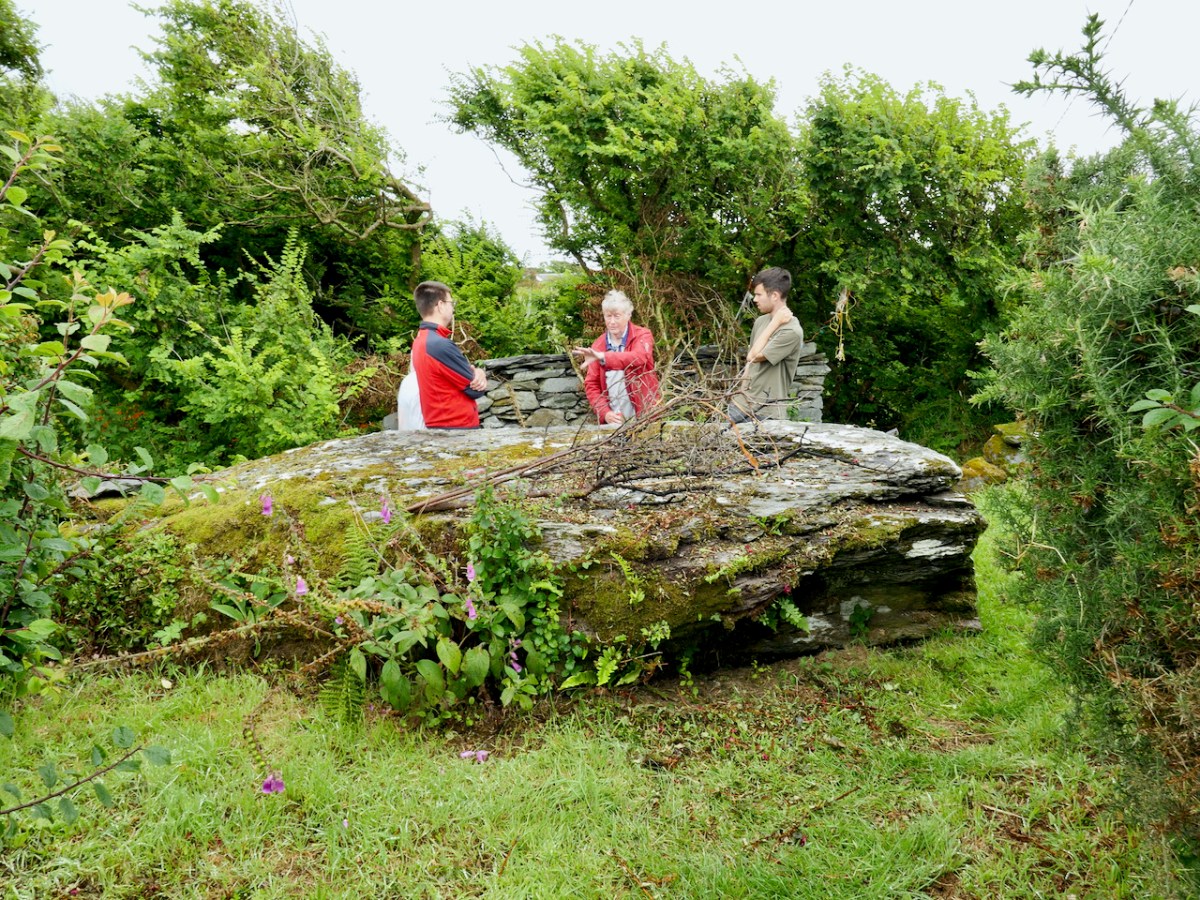
The townland of Balteen has not one but two cupmarked stones, the first built into a ditch by the side of the road. My post was was titled Rock Art and Red Socks, but you’ll have to click on the link to see why. The second rock was on private property but we were welcomed to come in and view it and take photos. I included some videos of both rocks in the post.

The mine, known as Dhurode Mine, was established by the Rev Robert Traill just before the Famine. A complex character, Traill was famously sectarian before that awful event, but redeemed himself with his energetic charity during the Great Hunger, eventually succumbing to famine fever.

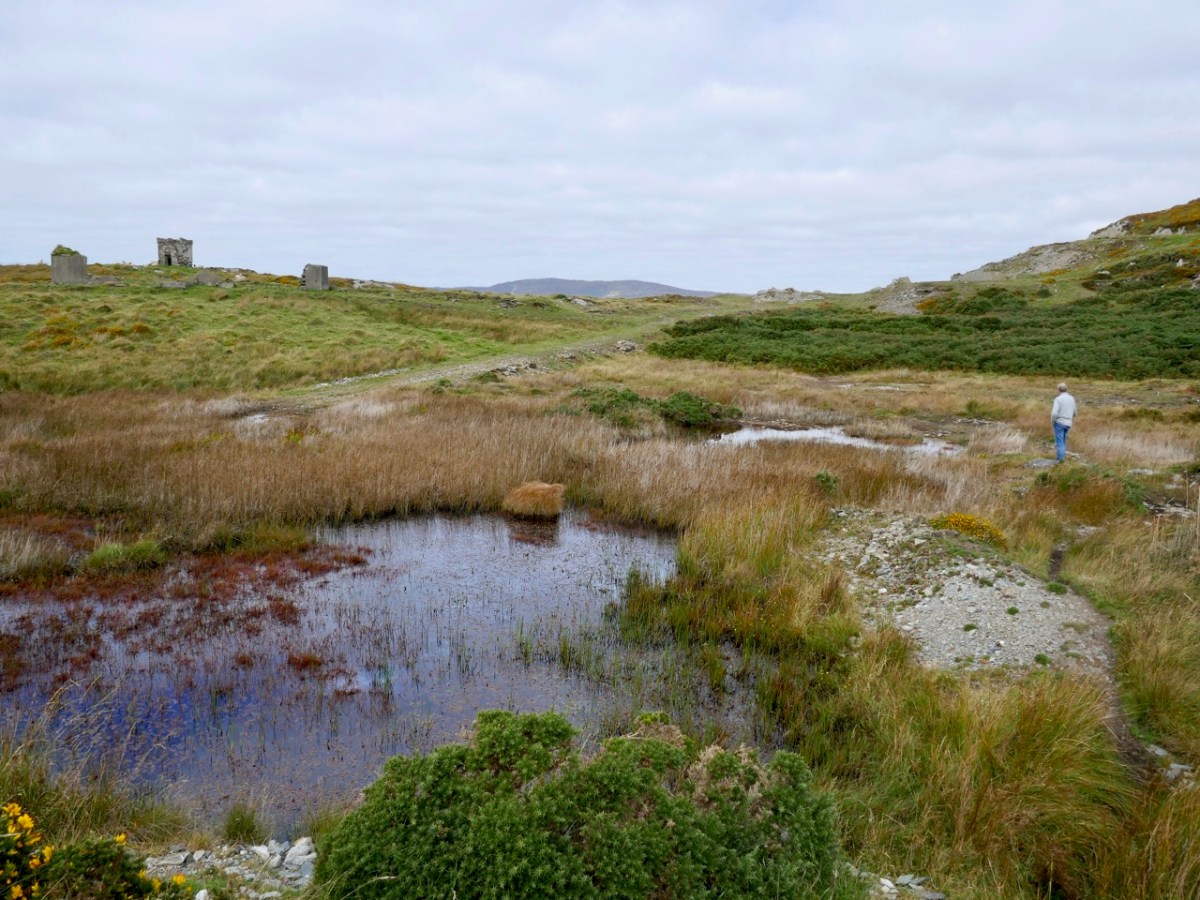
My post was Two Mines Are Better Than One (Mizen Magic 16). There are surprisingly many clues left of the mining activities. There were shafts, now with concrete caps, as well as open cast workings. Now it is silent, except for the call of the sea birds, but still carries the atmosphere of former days.

Finally, we have Lackavaun. Sea arches, a promontory fort, still-visible lazy beds, and a clear view to Bird Island. This was a tricky island to get on to, there was no landing place and it could only be attempted in calm weather. The first trip was to collect the eggs of the cóbach (the Black-backed Gull). Once ashore, the men attached ropes to iron bars which had been driven into the rock faces, and climbed down the cliffs to gather the eggs. 

Our guide was the marvellous book North Side of the Mizen.

Mizen Magic Miscellany: The Far End Part 2

Moving west at the Far End of the Mizen we come to two very special, and completely different, places. Barley Cove is one of Ireland’s most popular beaches, and rightly so – but there is much more to it than meets the eye. Three Castle Head, is, in my opinion , the most beautiful historic site in Ireland. OK, a bold statement – but wait til you see.

The area around Barley Cove encompasses a European Special Area of Conservation (SAC). In my post, Barley Cove: A Special Area of Conservation, I explained that SACs are areas designated as particularly interesting or sensitive on account of their flora or fauna. There’s a complex assessment process carried out that looks at the species present in the area, how important or endangered they are, or how representative of a particular habitat. It’s all done by the National Parks and Wildlife Service and the report on the Barley Cove area is online.

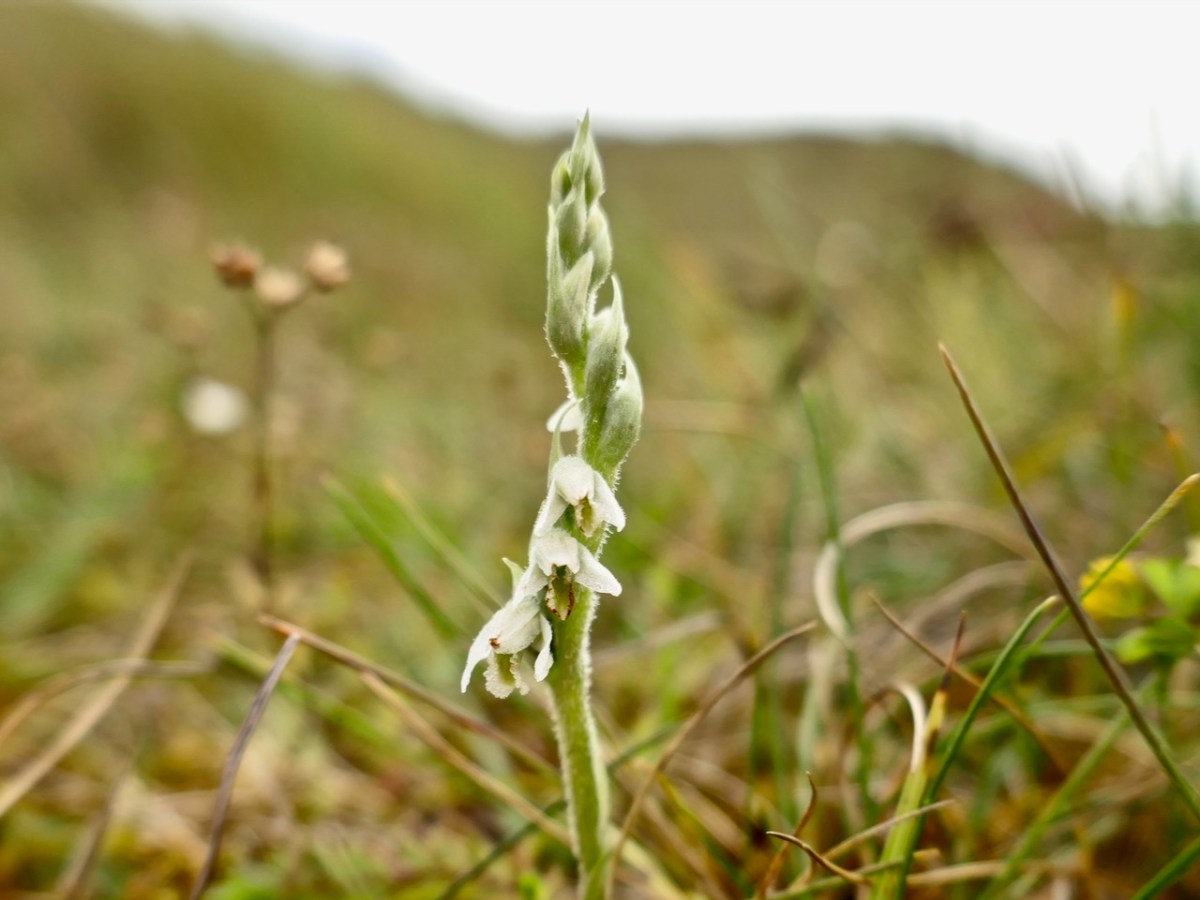
It’s also one of my favourite places to find wildflowers and that post included a gentle little slideshow. Because I went on October one of the flowers I saw was the little orchid, Autumn Lady’s Tresses. Although it is found here and there around the coast it is an unassuming little thing and quite hard to spot, so I was delighted to find it.

But I have been more recently, in July last year, and made a new slideshow, which I called Lying in the Dunes. I am a bit better at it now, and can sync the music to the images.

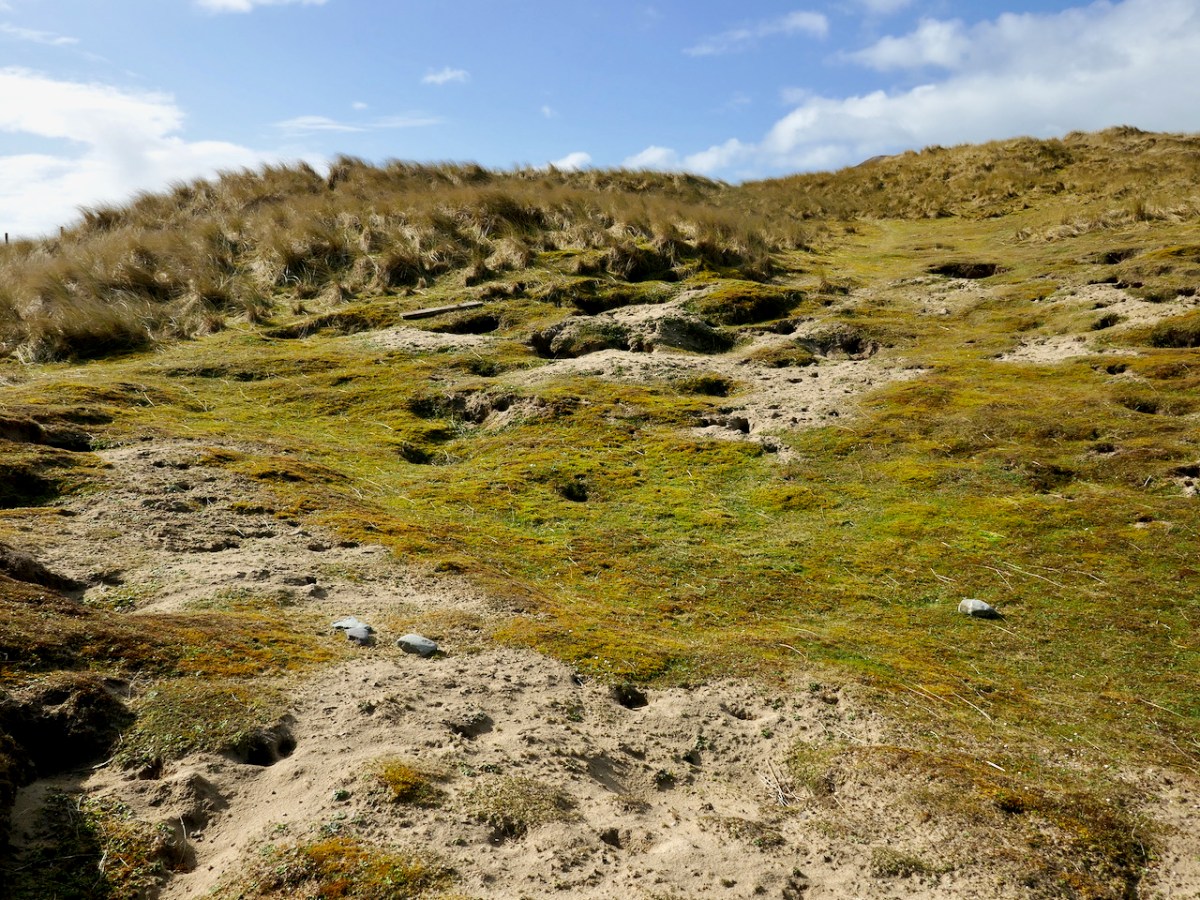
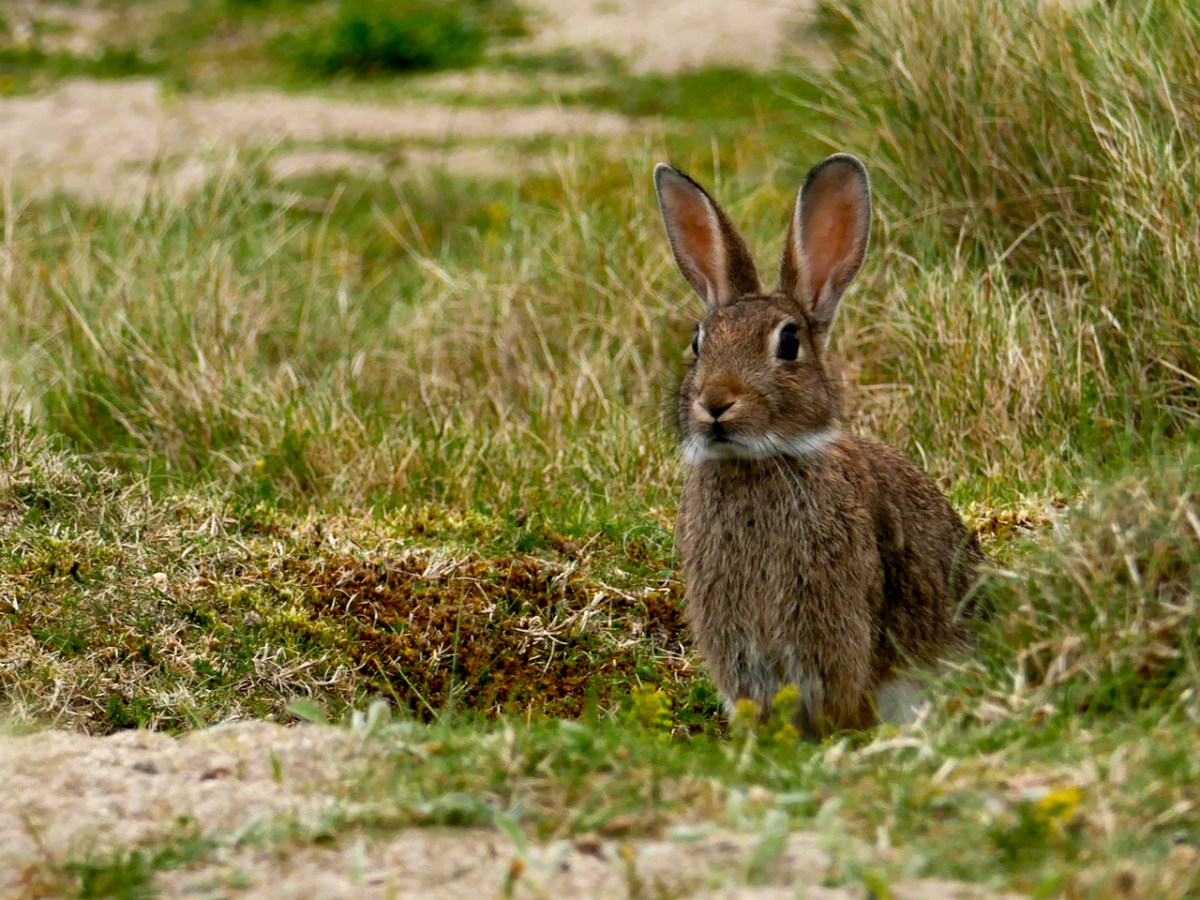
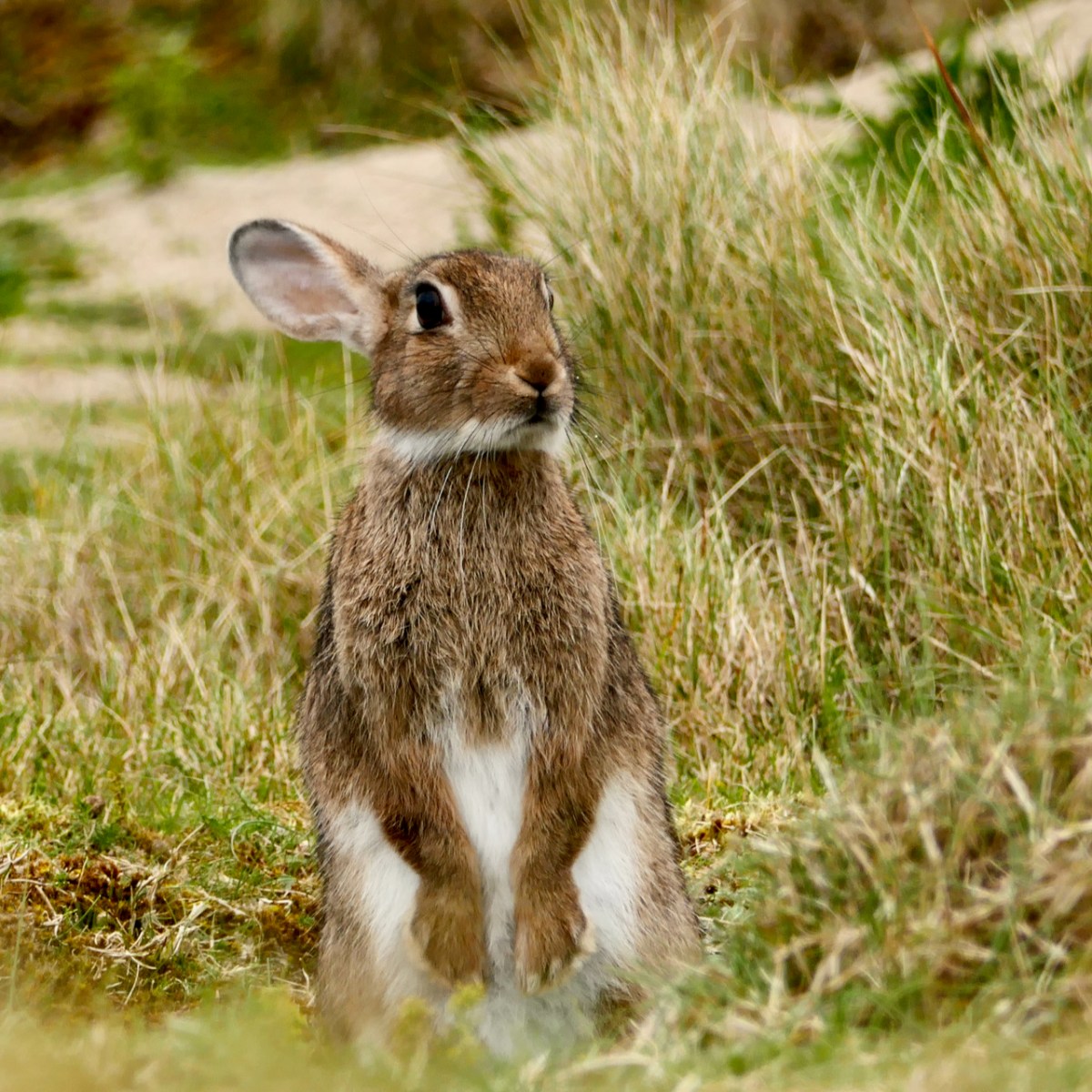
Barley Cove is also home to a large colony of rabbits. In my post The Bunnies of Barley Cove, I wrote: When you think that an adult female (a doe) can have up to seven litters a year, each one yielding up to ten kittens, the proliferation rate is explosive. They are kept somewhat in check in the wild by natural predators and a high mortality rate. Left totally undisturbed, rabbit populations probably undergo the same cyclical variations that other mammals do, with numbers increasing for about ten years and then declining due to over-population, before building up again.

Observing the bunnies and getting close to them called for patience and slow movements: I had to crawl through long grass and try not to spook them. Once they and I were at eye level, it felt like a real communication – being regarded by those deep pools of age-old knowledge, gentle and wise, was lovely. At the same time, the ears were on high alert, and I knew that one false move and he was gone.

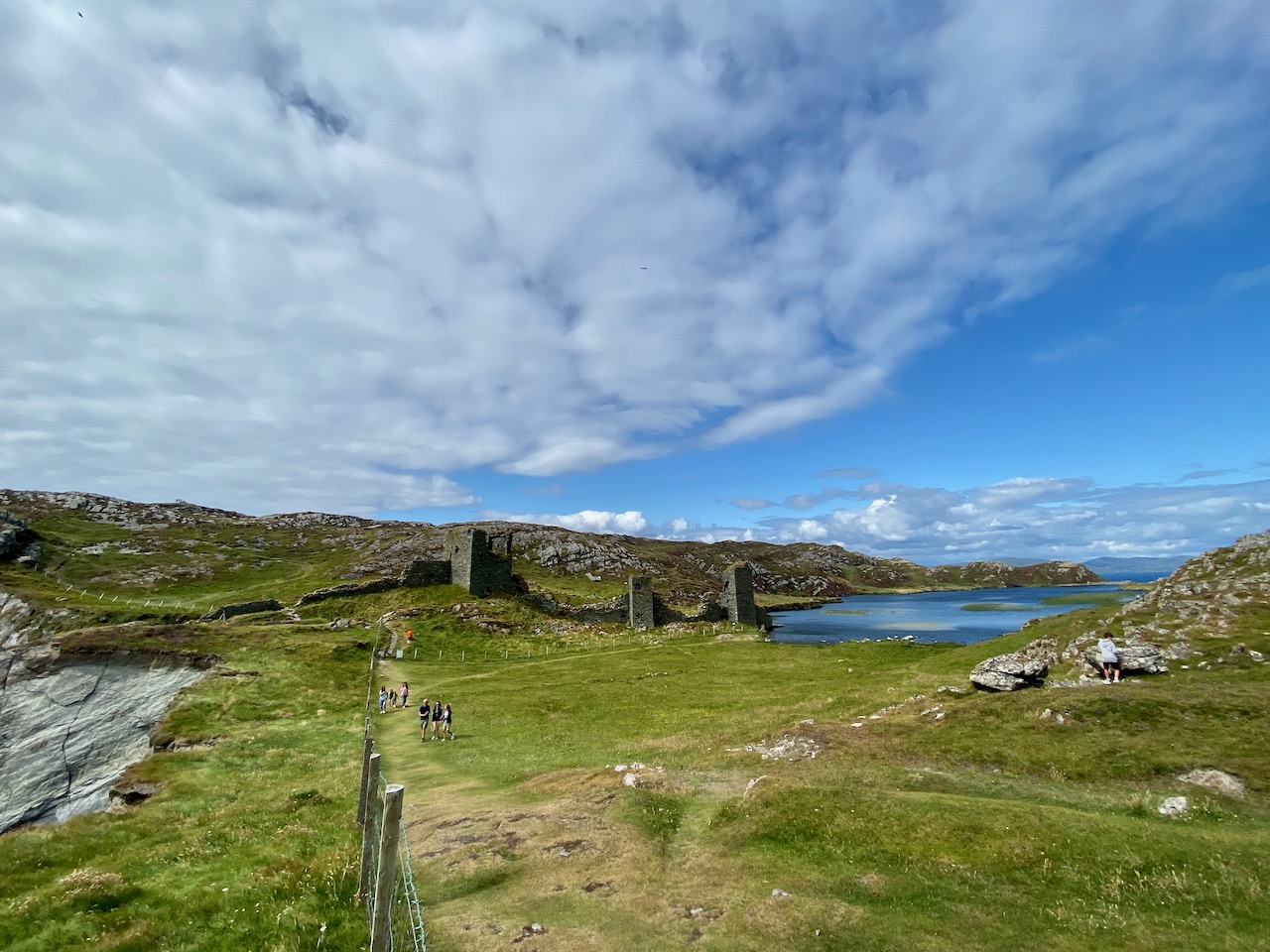
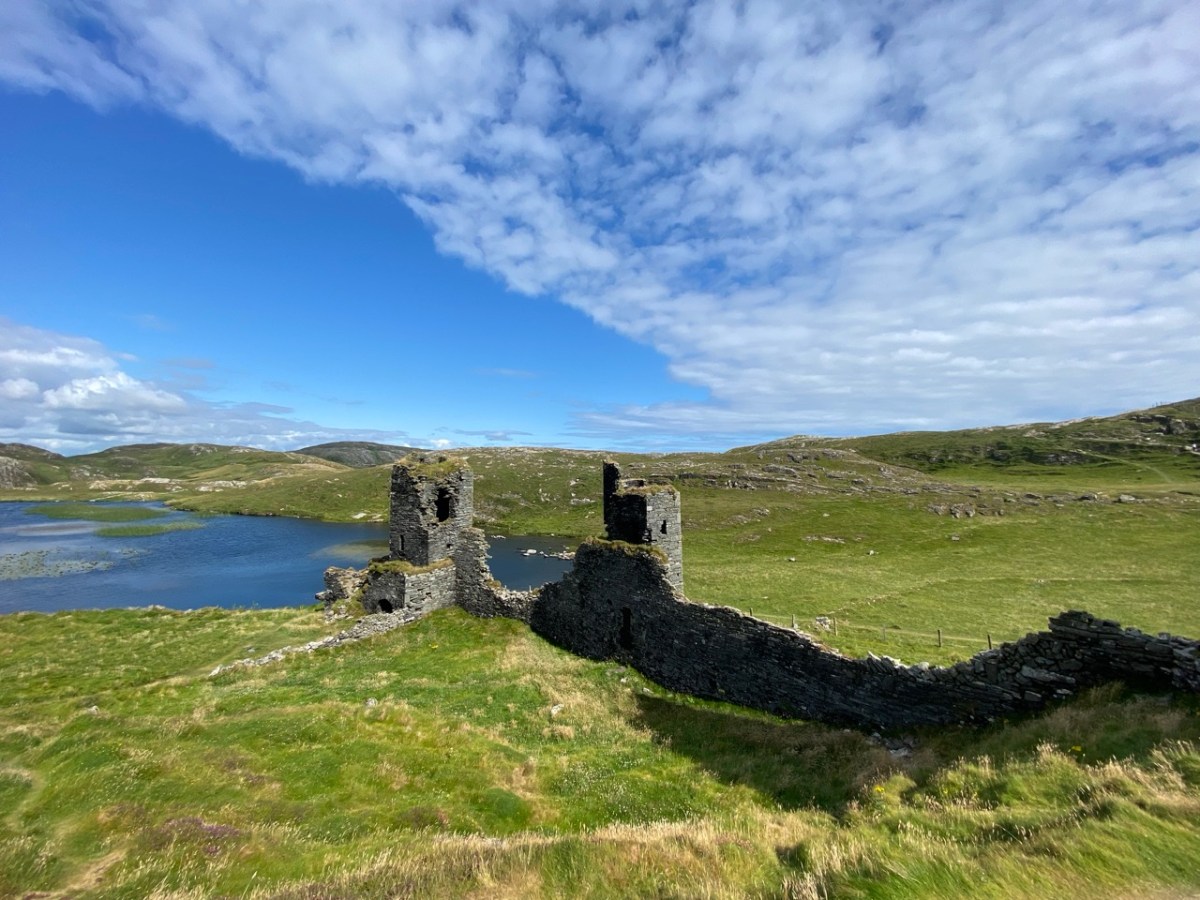
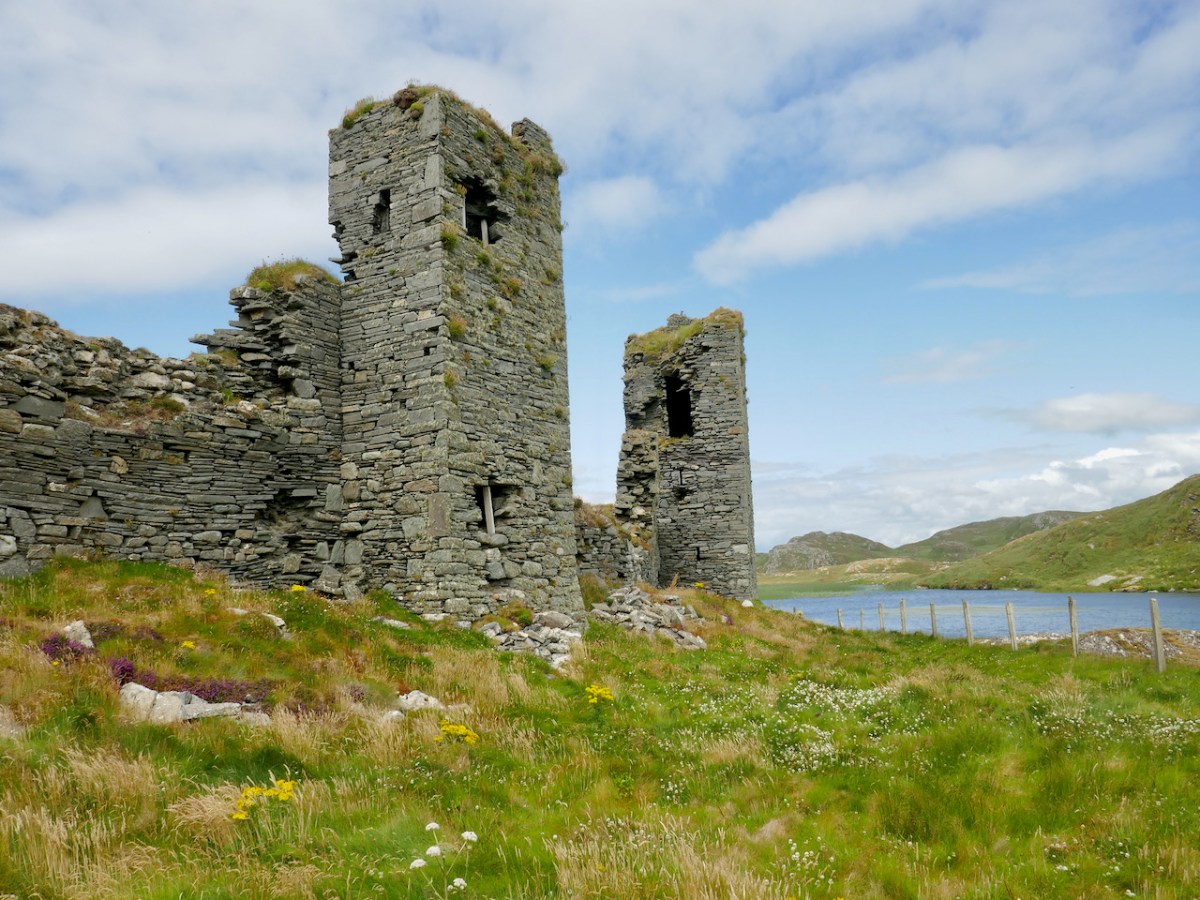
Moving further west again, we come to Dunlough, or Three Castle Head. This was one of my Castles of Ivaha series, and surely our most unusual castle in the most spectacular setting. To come over the hill and see it for the first time is an experience none of us will forget.

It’s a complex site and I tried to unravel the various phases of building that you can see, as well as the construction methods and functions of the curtain wall with its three towers. But in the end I had to say But all of that is dry as dust – who can worry about a dating timeframe when what presents itself to your view is so beautiful, so perfectly situated and so hopelessly romantic?

Podcast!

Roaringwater Journal gets in on the podcast trend!

This podcast was really fun to do – and provides a good overview of the Saints and Soupers blog series.

Shannon Forde, historian and manager of the Old Head Signal Station and Lusitania Museum, has made a wonderful series of podcasts about Cork history – the Cork Chronicles. https://shows.acast.com/chroniclesofcork. Have a browse – there’ a great lineup of eclectic topics and more are planned.

Mizen Magic Miscellany: The Far End Part 1

The Mizen is slightly over 35 kms long, and the last five km or so contain a wealth of sites and places that beg to be explored and experienced. These include our signature tourist attraction, Mizen Head Signal Station, our spectacular white sand beach, Barley Cove, and picturesque Crookhaven, but also some lesser known spots that are equally worthy of inclusion in our Mizen Magic list.

Despite the hype about Mizen Head, the actual southernmost tip of Ireland is Brow Head. In our post about it we said: Brow Head doesn’t have the same profile as Mizen Head: many people have never heard of it. But it’s magnificent, steeped in history, wonderfully scenic and best of all, totally walkable.

Brow head boasts not only a Marconi Telegraph Station, but also a Napoleonic-era Signal Tower. For a good overview read Mizen Magic 3: Brow Head, but we know you will want to know a lot more about Marconi, the telegraph pioneer, so take a look at In Search of Ghosts for more abut him and his operations on Brow Head. And for two takes on Marconi’s station, there is Peter Clarke’s drawing above and Brian Lalor’s below.

But there’s also that signal tower, and what was that? Robert wrote a series of 11 posts about the signal towers of West Cork, built between 1804 and 1806, to use all the latest signalling technology in case of the French invasion that never came. He finally got around to dealing with Brow Head in A Signal Success in Irish Engineering – Part 8: Brow Head.

Brow Head looks back to Barley Cove (above) and Crookhaven (below) – some of the most spectacular views on the Mizen are seen descending from the head.

We took a dander around the Harbour and wrote about it in Mizen Magic 22: Crookhaven Harbour. Do the same, and don’t forget to stop at O’Sullivan’s for their excellent chowder and famous crab sandwich.

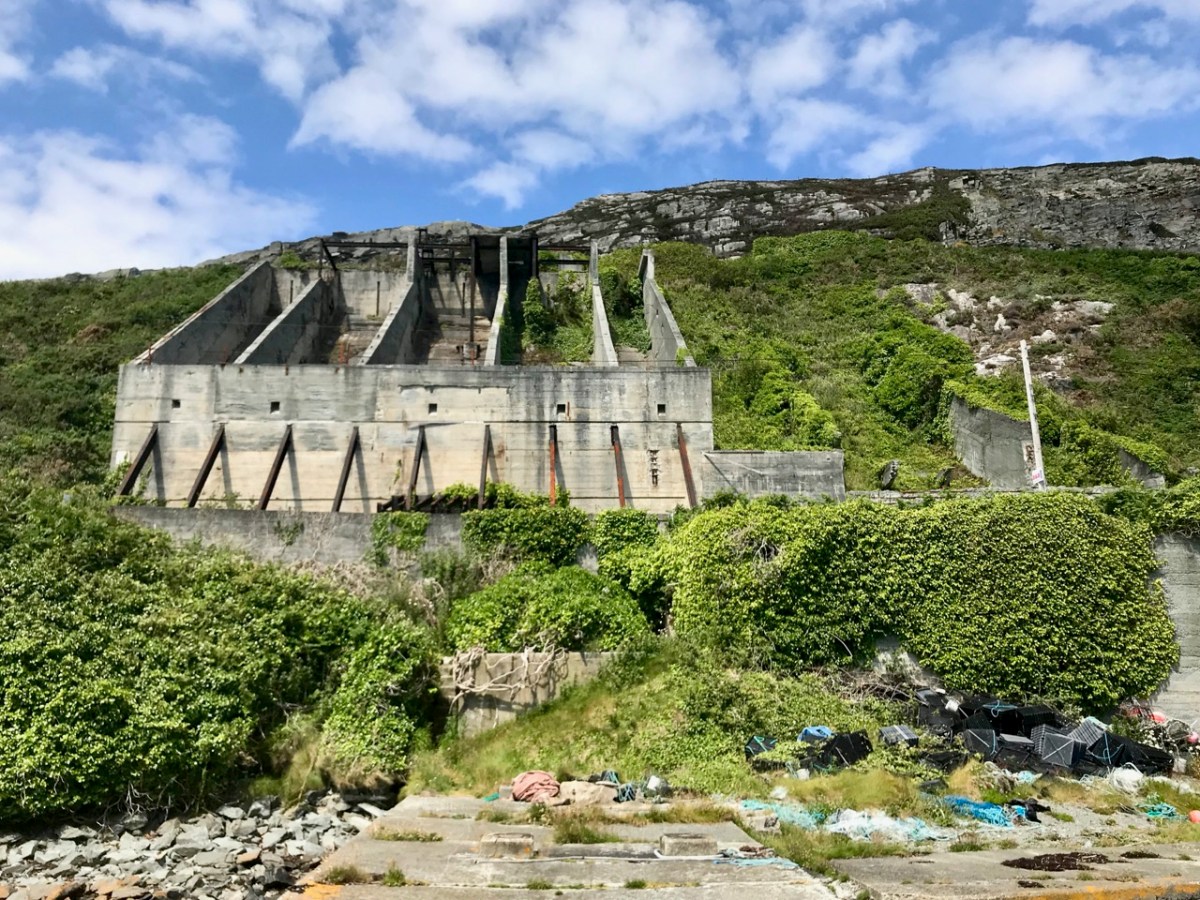
And while you’re sitting outside, savouring your chowder, look across at some Industrial Archaeology in Crookhaven. These imposing remains are all that’s left of a once-thriving stone quarry supplying road material until the late 1930s.

Of course there is much more to the Far End of the Mizen – I’ll continue this in the next post.

Dublin’s Stained Glass: A Review

Friends, take note – this is an ideal Christmas present! If it has never occurred to you to take a drive, a walk or a cycle through any part of Dublin, dropping into churches along the way, this book will convince you that it’s the ideal way to spend a day, surrounded by history and beauty.

As my regular readers know, I write frequently about stained glass, and I was a contributor to The Gazetteer of Irish Stained Glass. The editor and main writer of that volume was David Caron, and I previously reviewed his marvellous book (I called it a ‘miracle’) on the life and work of Michael Healy. Now comes his latest work, Dublin’s Stained Glass, a book about the best 20th century glass in Dublin Churches, stunningly produced by Four Courts Press. This book needs to be in your library!

The John’s Lane church features in David’s Book, with a detail from the St Rita window. Here’s all of the narrative part of the window.

Here’s a statement you might not hear every day – the Catholic Church was the greatest patron of Irish artists in the 20th century. This is particularly true after Vatican II, 1962-65, the decrees of which included encouragement to use modern forms of architecture and art. But it is also true that the Church had the means to commandeer resources that were available to few private individuals in 20th century Ireland. The result of this is that the work of some of our best artists is public and easily accessible. While this book focusses on stained glass, David also points out where appropriate other example of fine art in churches (e.g. stations, altar furniture) as well as identifying the architects working to modernise or re-order our churches.

I have used my own photographs throughout this post, but they cannot compare with the magnificent photography by Jozef Vrtiel, David’s long-term collaborator and the single most talented photographer of stained glass in Ireland. This is truly a combined effort – David’s text and Jozef’s images complement each other superbly.

The book is laid out in sections: City, Dublin North and Dublin South (suburbs and county), encompassing thirty-nine locations. They are not all churches – Bewley’s on Grafton Street is included for its Harry Clarke windows (above, and above that), as well as the National Gallery with its excellent stained glass room, the Hugh Lane Gallery, home of Clarke’s Eve of St Agnes, and St Patrick’s Campus of Dublin City University, with its floor to ceiling expanse of dalle de verre by Gabriel Loire. This is a good example of a non-Irish artist included in the book. Gabriel Loire was French, and the internationally acknowledged master of the dalle de verre technique, in which slabs of glass, chipped round the edges to increase refraction, was embedded in concrete or resin, allowing for soaring walls of colour to be incorporated into the architectural scheme.

This little predella panel is at the base of The Blessed Julie window in Staunton’s Hotel on Stephen’s Green

But of course, mostly the stained glass is in churches. Catholic churches tend to be open much of the time, making them the easier option to visit. A little careful planning may be needed to visit non-Catholic churches. David gives the postal code for each location – very helpful as it works well with Google maps. Of necessity, schools, hospitals and other institutions had to be excluded since they are not publicly accessible most of the time.

In the Dublinia exhibition this is George Walsh’s Trades window

In his introduction, David tells us:

During the 20th century Dublin’s reputation as a centre for stained glass excellence, both in terms of artistry and craftsmanship, was internationally lauded and is evidenced by the many orders placed by overseas patrons. Stained glass was the one area of the visual arts in 20th century Ireland that had an established school of the highest calibre, as distinct from singular talents such as Jack B Yeats and Eileen Gray. The highpoint for Irish 20th century stained-glass was the period from 1915 to 1980 and the leading figures were Harry Clarke, Wilhelmina Geddes, Michael Healy, Evie Hone and Richard King all of whom trained in Dublin, worked out of Dublin studios and so it is not surprising that the city has a concentration of first rate stained glass by them and many others.

Evie Hone’s Head of St John at the National Gallery

I would add that stained glass was an area where both Irish men and Irish women could excel. Many of our finest stained glass artists were women and there has never been any tendency, as with other areas of artistic endeavour, to privilege the reputation of men over women. 

Ballyroan Church of the Holy Spirit, with Murphy-Devitt’s stations laid out in narrative progression. This church also has paintings by Sean Keating

David starts with the architecture of each church, identifying the architect or firm, and describing its main features and influences as well as dates of construction and/or modification. As he says, if one were to visit all or many of the locations in the book, one would get a comprehensive overview of the story of twentieth-century Irish stained glass. 

Let’s take one example – the church in Ballymun, Our Lady of Victories, one of the first batch of six churches in the Dublin Diocese that were built in the five years immediately after Vatican II, and which take into account the Guidelines of the council. Stepping into this church, as I did for the first time in May this year, is an immersive experience. First of all, it’s enormous – a reminder that in the 60s we were building Catholic churches which could accommodate thousands of congregants over the course of several masses every Sunday. 

Secondly, you are immediately aware of being bathed in light and colour. There is a ‘lantern’ surrounding the central altar and this is the work of Helen Moloney. Here is David’s description:

Although it comprises eight sides or ‘windows’ (each composed of five panels), Helen Moloney created just two different designs for the windows; from these she made four different colour versions and these were duplicated to create the eight different windows. Despite the fact that there are essentially just two designs and she chose a deliberately restricted colour palette, this repetition is hardly apparent and instead one experiences an almost overwhelming sense of intensely zinging complimentary colours enlivened by punchy graphic symbols. Moloney used only the best of mouth blown glass in a selection of rich colours including red, blue, yellow, purple, violet, orange, green, and aquamarine, and although she has included different shades of these, mostly they are full strength from maximum visual impact.

The second artist with work in Our Lady of Victories is my own favourite, George Walsh, at this time still working at Abbey Studios. The stations are by him, in an innovative technique using copper sheets, with details cut into them in the manner of a stencil (above). David comments, The effect is graphic and reduces the Stations to their essence. David points out that a rare feature of these Stations is the inclusion of a fifteenth station, the Resurrection. Walsh also has a St Joseph, a St Patrick and a Madonna and Child in the church.

Finally, Sheila Corcoran created a series of symbolic windows at ground level (above), representing the Evangelists and other sacred subjects. Neither Moloney nor Corcoran included any painting, relying solely on glass of different colours and shapes to create their images – an unusual choice for the time and very effective in this context.

Moving to South Dublin, I cannot resist a visit to Greenhills, to the Holy Spirit Church on Limekiln Lane (above). I visited this church two years ago in the company of Robert, David Caron, Paul Donnelly (the Harry Clarke Studios expert) and Ruth Sheehy. We were thrilled that Ruth – whose work on Richard King has pride of place in my library and whose expertise I documented once before in my post Stained Glass Detectives – and a Find! – was able to talk us through the window, illuminating each part of it, and expanding on Kings’ style and colour choices. My topmost photograph in this post was taken as she led us through an erudite tour of each element.

King was aided and abetted by the Murphy Devitt Studios. Johnny Murphy worked with King to provide all the surrounding glass, in harmonious shades and using the same mouth-blown glass. He also designed the dalle de verre windows at ground level, while Peter Dowd, Roisín Dowd Murphy’s brother, was responsible for the wonderful bronze doors. The day we were there a choir was practising for an upcoming concert. The sensory effect stays with me still.

A Harry Clarke panel of St Paul on the road to Damascus, from the Sandford Road Church. This is not one of the churches included in the book, which just shows what difficult choices had to be made to stay within the page-count.

I have only highlighted two churches, both dating to the 60s – and neither of them contains a Harry Clarke! Rest assured that this book contains lots of Clarkes – at least 6 of the locations contain Clarke windows, as well as those and others containing the work of his Studios artists after his death. You will also be happy to see Evie Hone, Michael Healy, Wilhelmina Geddes, Hubert McGoldrick, Catherine O’Brien, Patrick Pollen and several others.

Patrick Pollen’s Baptism of Christ from Lusk

What is does not contain (with a few key exceptions) are productions by unnamed artists working in the large studios (Earley, Watsons, etc), nor windows from the mass-production houses such as Mayer of Munich. 

Harry Clarke’s St MacCullin, also from Lusk

There are, as I have said, 39 locations in the book, but David would be the first to admit that if he were not constrained by page- and word-count he would have included several more. So let me add a couple that are so well worth visiting, even though they had to be left out of this volume. While at Lusk, for example, David suggests a visit to nearby St Maur’s in Rush and I concur – George Walsh’s series for this church typical of his mature style (below). Another place to see Walsh’s work is the Church of the Guardian Angels on Newtownpark Avenue in Blackrock.

St Mary’s Church in Sandyford has early Netherlandish glass – and yes, that is NOT 20th century, but it’s one of the few places to see it up close in Ireland. St Laurence O’Toole Church in Kilmacud has a huge and very stylised panel by Phyllis Burke (below). Sandford Road Church of Ireland has a Harry Clarke St Peter and Paul (see the illustration fourth up). 

I’ve written about a few of the churches in this book, so you know I have other favourites too. St Michael’s in Dunlaoghaire, for example, and one of the several Harry Clarke windows in St Joseph’s in Terenure. I am sure you have your own favourite Dublin Churches – any additions you’d like to make to my short list, dear Readers? 

This is one of a set of stations made from antique glass and polished granite, done by George Walsh and Willy Earley for the Clarendon St church

Grand so, you have all you need now for some ecstatic wanderings around Dublin Churches. I leave you with our own ecstatic wanderings – as a bookend to this post, here we are in Greenhills, quite in awe of Richard King’s and Johnny Murphy’s enormous window. Left to right is Paul Donnelly, David Caron, Ruth Sheehy and Robert.