Hares in Abundance

exhibition poster

“And now, Sir Hare, good-day to you. God guide you to a how-d’ye-do with me…” (from the Middle English poem – Names of the Hare – translation by Seamus Heaney)

You may know that I am a Hare fanatic. Every day as I travel along through West Cork – driving, cycling or walking – I am scouring the fields and hedgerows in the hope of seeing one of these shy and elusive animals: very occasionally my watchfulness is rewarded. Last year I kept a Hare Diary… on the last day of December I counted up: I had seen only six, and two of these were in other parts of Ireland. Yet, when I first visited Ballybane West – just over the hill from here – back in the early 1990s I saw them on most days; one early morning then I looked out of the window and there was a whole luck of Hares running around the field beyond the house – at least ten of them.
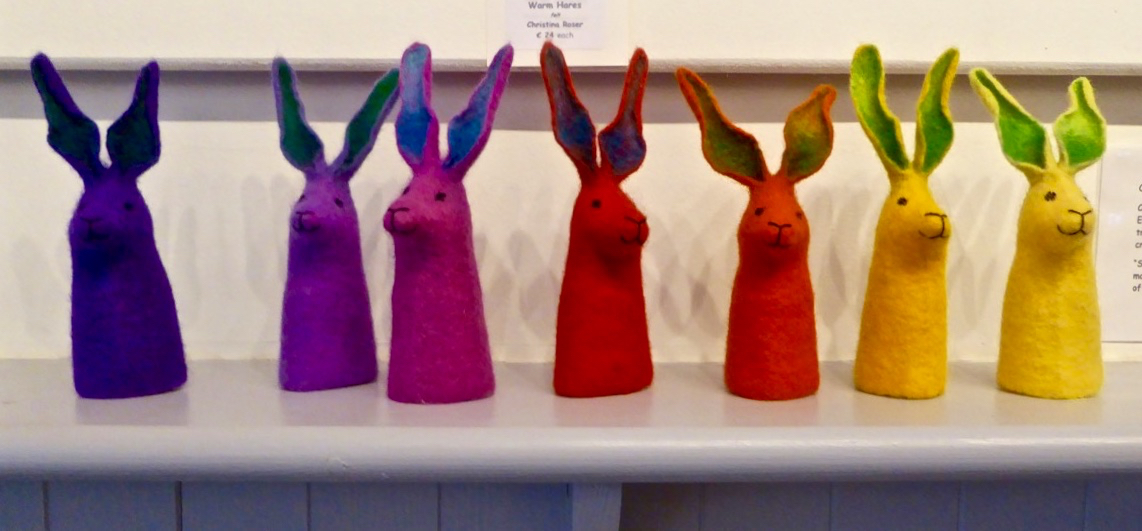
felt hares

A luck of Hares by Christina Jasmin Roser, feltmaker

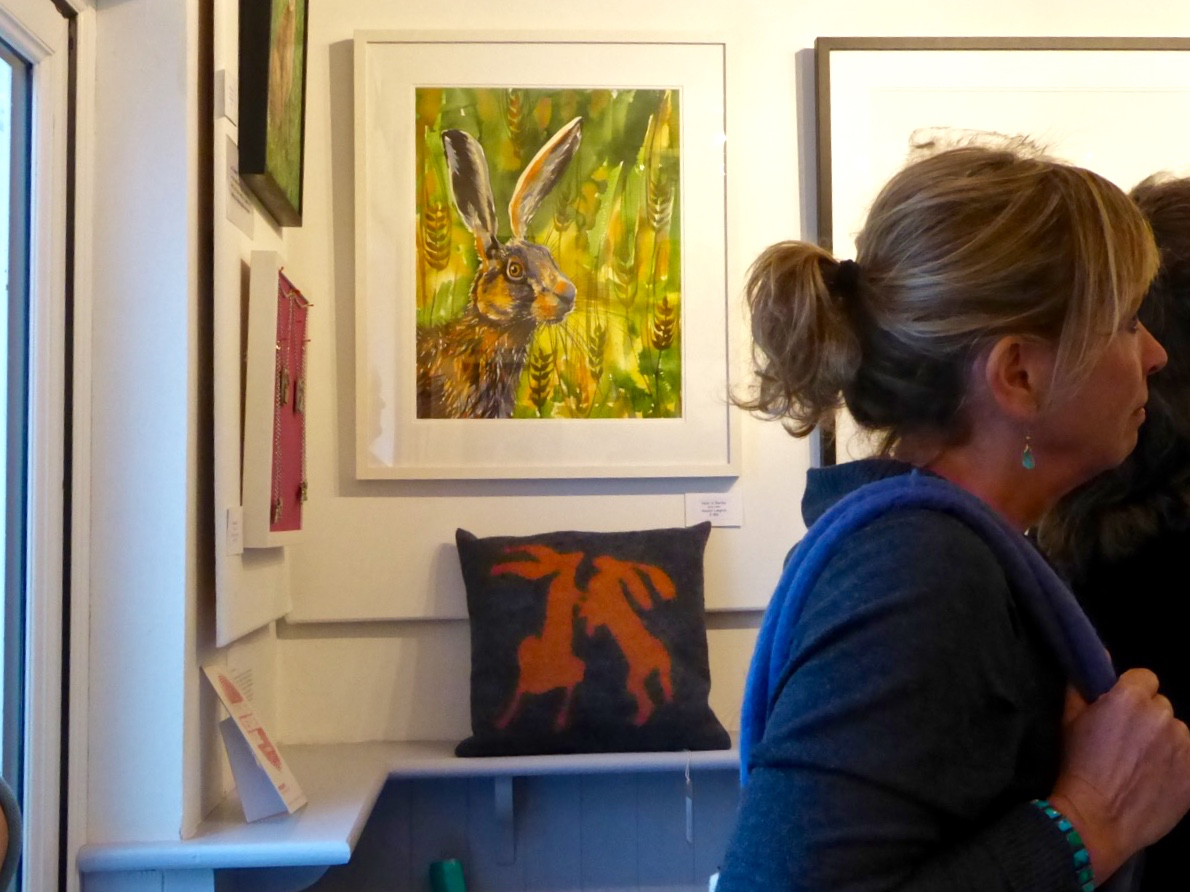
Where have all the Hares gone? I can’t answer that, but I can tell you that there are a whole lot of Hares in the Heron Gallery, Ahakista at the moment: Annabel Langrish and her husband, Klaus have mounted an excellent exhibition of art and craft works based around images of the Hare.

The exhibition brings together the work of several artists from the West of Ireland: paintings, drawings, feltwork, fabrics, papier mache, jewellery and ceramics. The whole makes a really attractive assemblage, but any one of the works on display – all of which are for sale – would be an elegant addition to your own art collection! I would readily bring them all here to Nead an Iolair but – as we already have numerous images of Hares around the house – Finola has put an embargo on further Hare imports (just for the moment).

Robert talking

Yours Truly was asked to say a few words about Hares at the exhibition opening: a wonderful portait of William the Hare by Sylvia Parkinson looks on

All the works in the Heron Gallery show bring out the magical qualities of this special animal. Mostly it is Lepus Timidus Hibernicus which is depicted: the Irish Hare. This belongs to the Mountain Hare species, related to Arctic Hares. Irish Hares don’t turn white in the winter but they do moult to a paler colour, and sometimes they have white patches then. There are also Brown Hares in Ireland: these were imported from Britain to add to the game stock on landlord estates from medieval times onwards.

Three ceramic Hares by Annabel Langrish, from the exhibition

Although the Irish Hare has been ‘legally protected’ since 1930 – and is listed as a protected species under EU legislation – it can be hunted under license, and Hare coursing is still permitted. This seems anomalous to me: those who support Hare coursing claim that the animals do not suffer. They are captured from the wild, caged (usually for several weeks), and released onto a course where they are chased by muzzled Greyhounds. After this they are put back into the wild. As their name would suggest (Lepidus Timidus), Hares are nervous animals and there can be little doubt that they do suffer stress through the ordeal. Many die before being released. Coursing has been banned in the UK since 2005. There have been moves to have Hares fully protected in Ireland.

The Hare’s Revenge: Dean Wolstenholme’s painting of Greyhounds coursing a Hare (right), while in the medieval woodcut (left) a Hare plays a tabor. The tabor is the forerunner of the Irish bodhran: I am reliably informed that the best skin to use for a bodhran is that of the Greyhound!
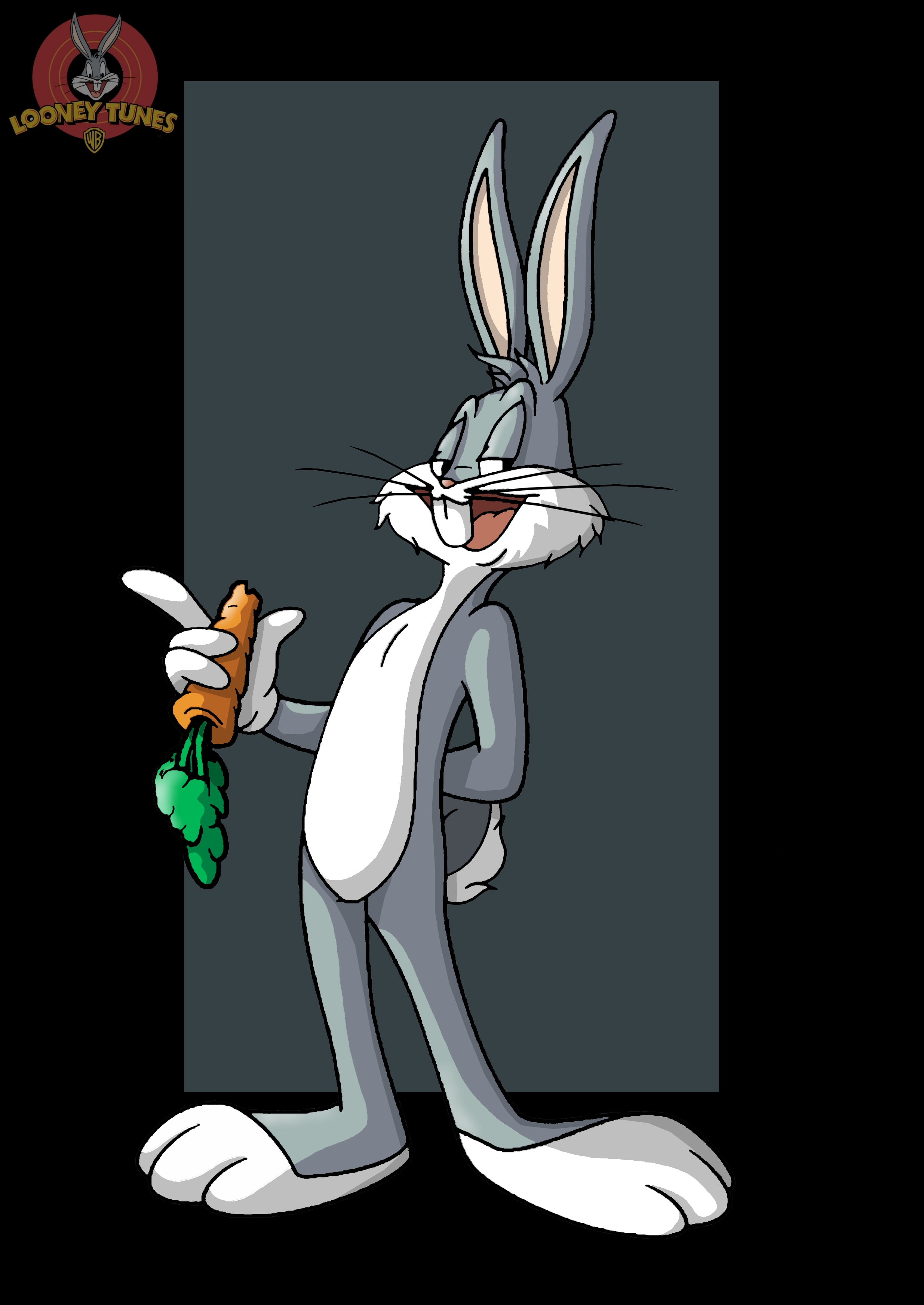
bugs_bunny_by_nightwing1975The Hare is a most ancient animal. Fossils have been found dating from Pleistocene times showing that the Hare has not changed or developed in three million years: presumably it is just so perfectly integrated to its environment. It also occupies a prime place in our own mythology. Hare is the archetypal Trickster figure in many cultures – helping to create the world, to bring fire to humans, generally being mischevious and getting into hopeless scrapes, but always coming out on top: just like Warner Brothers’ Bugs Bunny in fact – who is, of course, a Hare! Bugs (my favourite cartoon character) is loosely based on the Br’er Rabbit stories by ‘Uncle Remus’ – collected in the 1870s by Joel Chandler Harris from the oral tradition of the plantation slaves in the Southern United States. Br’er Rabbit (in America Hares are known as Jackrabbits) has his origin as a Trickster figure in African folk tradition.

I have gleaned most of my Hare lore from this much thumbed edition of The Leaping Hare by George Ewart Evans and David Thomson – published by Faber – which I acquired when it first came out in 1972. If you have an evening or three to spare I will happily regale you with tales of Hares gathered from far and wide and recorded in these pages.
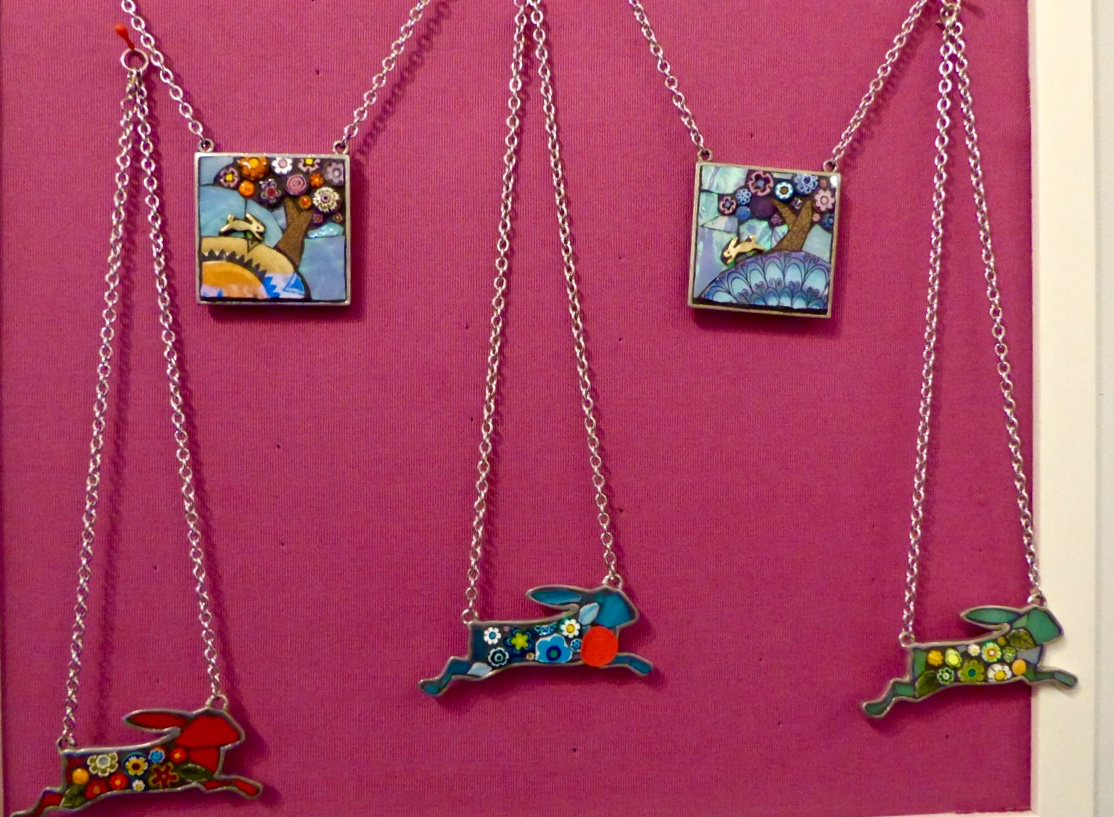
pendants

Jewellery by Alison Ibbs

When I lived in Devon, on Dartmoor, I was fortunate to have around me many examples of a symbol known as The Tinners’ Rabbits. Chagford was a Stannary Town – a place where refined tin was assessed, coined, and sold and there was a story that the symbol was a badge of the tin miners. It depicts three Hares (not Rabbits) in a circle: each Hare has two ears, yet there are only three ears in total. A bit of a riddle, perhaps – but one which has been found all over the world, as a project carried out by Chris Chapman reveals. In Chagford’s medieval church (and in several others in Devon and elsewhere) there is a roof boss carved with the image.

There doesn’t seem to be any real evidence to connect the Tinners’ Rabbits symbol to the tin miners – however, there is a surviving superstition in Cornwall and in Ireland that if you meet a Hare while on your way to the mine (or, in some places, when you are going fishing) you turn around and go home!

Some of Annabel’s Hares in the exhibition (left) and (right) our own view of the Hare in the Moon seen from Nead an Iolair last week

Part of the universal folklore of Hares reminds us that it’s the Hare in the Moon we are seeing above us, not the Man in the Moon. And… I know you thought it was an Easter Bunny that brings the chocolate eggs – in fact it’s the Easter Hare! The Saxon spring festival of Ēostre celebrated a hero-Goddess who had a Hare as a companion… Well, that’s one of the many interpretations you will find of this moon-based festival.

Hare eggs and Hare ceramic by Etain Hickey

It’s not Easter now – it’s July – but you can go and see this exhibition on the Sheep’s Head for the rest of this month, and enjoy the beautiful gardens there as well. If, like me, you are a Hare fan, then don’t miss it!
Looking on

Amid Unbearable Tragedy – a Model for the World

Laying the wreath

Some posts are hard to write. In the case of this one, there are such complex emotions – sadness and anger being the dominant two, but overlaid with pride and gratitude. I will explain.

Youngest

In June 23rd, 1985 – 30 years ago this week – a bomb on board Air India Flight 182, exploded when the plane was just off the coast of West Cork. Everyone on board,  329 people, were killed. One in every 4 victims was a child. Eighty percent were Canadians.

Dignified

The bomb was the work of Sikh extremists, operating out of Vancouver. A botched investigation, jurisdictional disputes, and massive incompetence at many levels has meant that no perpetrator of this heinous crime has ever been convicted for it – a travesty of justice that is a dark stain on Canada’s judicial system and that has left the families of the victims with no sense of justice to this day.

Moment of Silence 2

Members of the victims’ families began arriving immediately after the bombing and, deeply affected by their plight and by their own traumatic involvement in the the recovery operation, the people of West Cork opened their hearts and homes to them. Ahakista residents took on the task of petitioning governments for a memorial garden and of arranging a yearly commemoration service. The memorial is beautiful and perfectly maintained year round. Beginning in 1986 the service has been held every year without fail and family members who come are welcomed, supported and fed, in the Irish way. Many friendship have been forged over the years.

Family Friends

In contrast, it took the Canadian Government a long time to acknowledge that this terrorist attack, in the words of Prime Minister Harper’s official apology ‘…was not an act of foreign violence. This atrocity was conceived in Canada, executed in Canada, by Canadian citizens, and its victims were themselves mostly citizens of Canada.’ This speech was made in 2010. The first Canadian memorial to the victims was erected in 2006 and there are now four. There are no memorials in India.

Renée Sarojini Saklikar

Renée Sarojini Saklikar

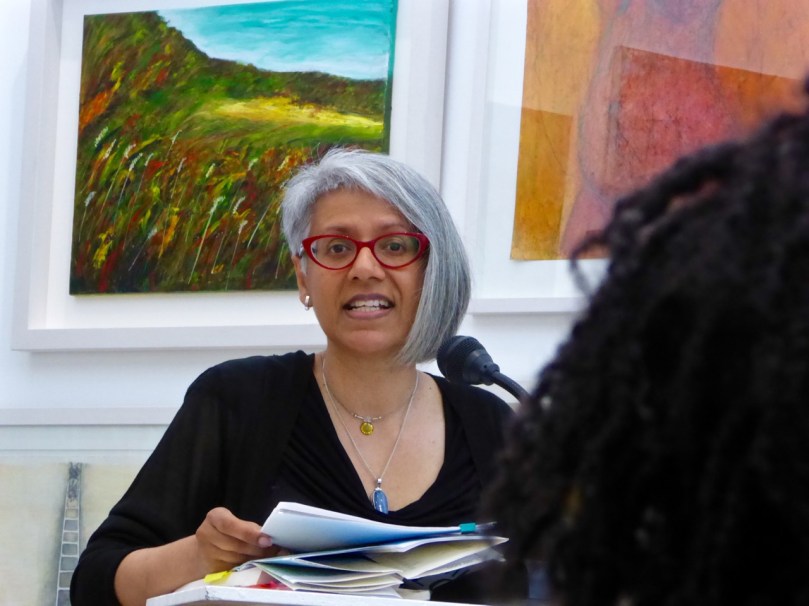
Because this was the 30th anniversary this year’s ceremony was a large one, with dignitaries from Canada, India and Ireland in attendance and about twenty family members. For us, it started the night before, with a poetry reading in the West Cork Arts Centre in Skibbereen. Renée Sarojini Saklikar is a Canadian poet who lost an aunt and uncle in the disaster. She read from her book Children of Air India, and also some new pieces. Deeply influenced by the opacity of official documents, by memory and loss, her poems carried a quiet power that seeped into our souls almost without our noticing. She elicited our participation in one poem – a piece made up entirely of acronyms – and she spoke to us about the process of writing poetry from trauma and invited our stories and comments. It was a deeply emotive experience – a good preparation for the following day’s ceremony of remembrance.

The Irish Navy ship and Coast Guard Fly Past

The Irish Navy ship and Coast Guard Fly Past

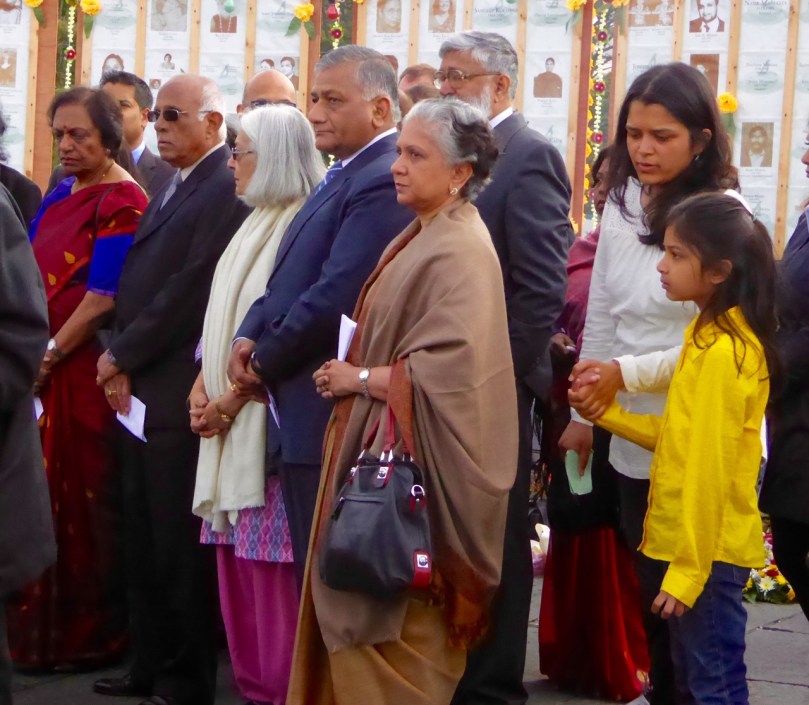
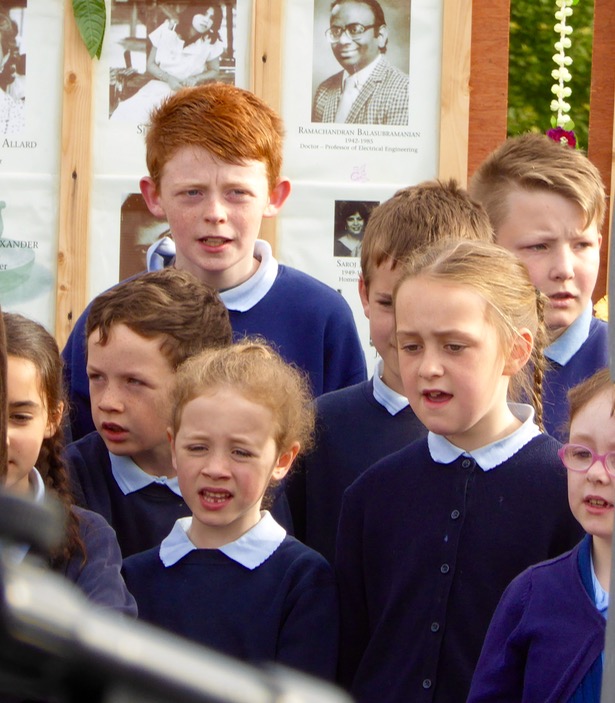
The ceremony timing mirrors the events of the original June morning when the bomb exploded in the plane, with a minute’s silence at 8:12AM, broken by chanting by family members. The Irish Navy were on hand to signal the moment with a siren blast, and a Coast Guard helicopter performed a formal fly past. A choir of children of the local National School sang and there were speeches and wreath-layings. I was pleased to see Canada’s Minister for Justice, Peter McKay, in attendance as well as the Canadian Ambassador to Ireland.

Dignitaries

Speaking to the family members brought home to me as nothing else could do the enormity of the tragedy and the still-raw emotions at the core of this event. Saroj lost her father, a teacher. “He was  a proud Canadian,” she said. “He loved Canada and taught Canadian children in Newfoundland. He cared so much for his new country, but when he died, suddenly in the eyes of Canada he was no longer a Canadian but an Indian.” Saroj had sat through many days of the Vancouver trial of the accused bombers (who were eventually acquitted) and still could not get her head around the outcome when the evidence was so clear.

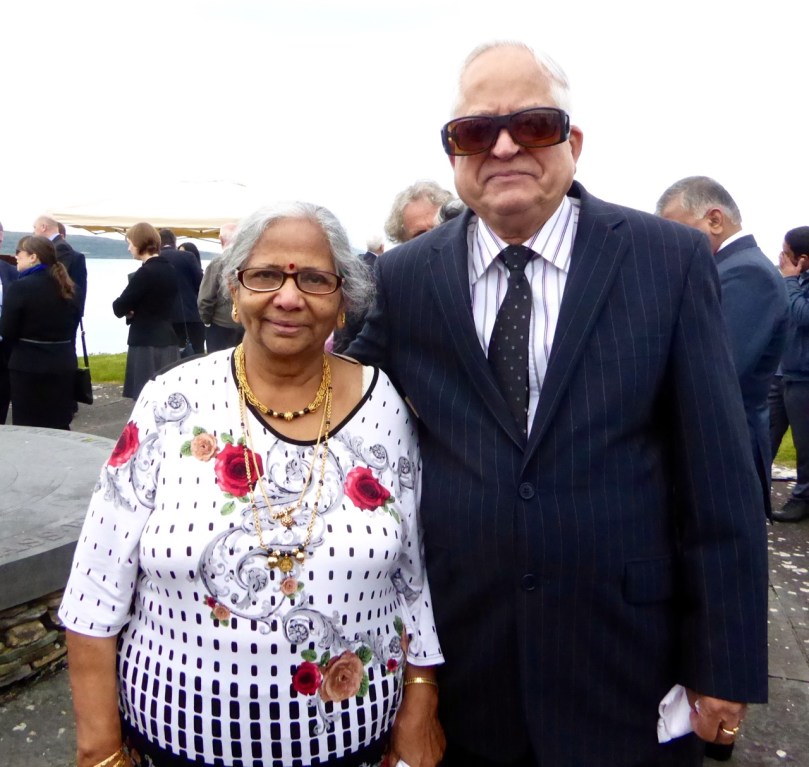
Dr. Padmini Turlapati was the spokesperson for the families. She lost her two sons. They had just finished school and were going to India for the summer to see their grandparents. She showed me their photograph – two merry kids, laughing and carefree. Because they were visiting their grandparents they had taken with them their albums of mementoes and photographs – Padmini had to piece together a few photos from their school and friends. Sanjay’s body was recovered, but Deepak is still out there, and so she comes back every year to the place which has become a focus for her grief. In her speech she encompassed all the emotions that the families still feel – unspeakable sadness, anger and – gratitude.

Over and over speakers spoke about the warmth, the generosity and the support of the West Cork people who had been there for them in their despair when it seemed that their governments had abandoned them. Several used the same phrase.  Addressing themselves to the people of Ahakista, to the fisherman and coast guard volunteers, to those who built and maintain the memorial and who organise each year’s ceremony. “You”, they said, “are a model for the world.”

As a Canadian who listened nightly to the reports of the Vancouver trials I can have an inkling of the unfathomable well of loss and anger that these families feel. As an Irish person who is now living in West Cork I am proud of how our neighbours and friends stepped in to support and comfort these devastated families.
Children Sing

Perhaps the best way to end is with one of Renée’s poems. I will try to reproduce it faithfully on the page.

In the home-house, in the basement, there is the mother — she is singing a sweet song.

It is before —

June                       1984

                                Of her name, there are redactions.

                                Of her mother tongue, there is no record —

                                                       this is the life of a woman, made in India,

                                                                                living in Canada.

In the home-house, in the basement, there is the mother

                   And she is absent, sister

Memorial in Winter

Sail Away, Sail Away

Merlin heads for The Mizen

Merlin heads for The Mizen

Many years ago I did a lot of sailing in Vancouver but for various reasons I haven’t been sailing for years. This week I was thrilled to have the opportunity to take to the water again!

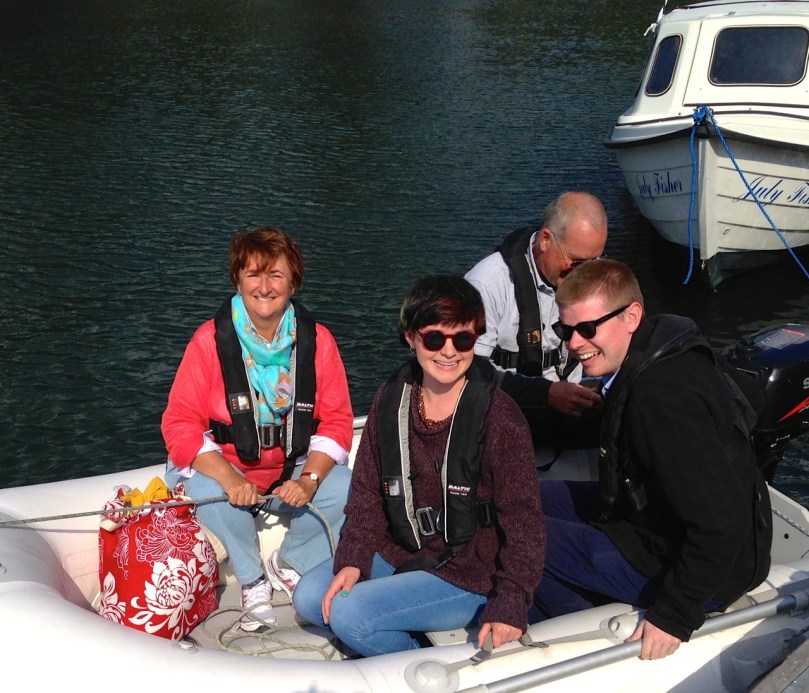
I went with Chris Forker of Carbery Sailing out of Ahakista. Chris has a beautiful yacht, Merlin, a 42 footer with room for eight. There were five of us – Chris, his wife Aideen, a young couple Conor and Ellie, and I. Robert decided that the better part of valour that day was dry land, but he took photos of us as we left and arrived and even drove up the Sheep’s Head mountains to capture us in full sail.

Ferrying out to Merlin

Ferrying out to Merlin

It was a fabulous day (but then, it always is, around here) and we got underway quickly after Chris had given us a tour of the boat and showed us on the charts where we would be going. He was an amazingly relaxed captain: once the safety instructions were over he invited us to do as much or as little hands-on as we liked.

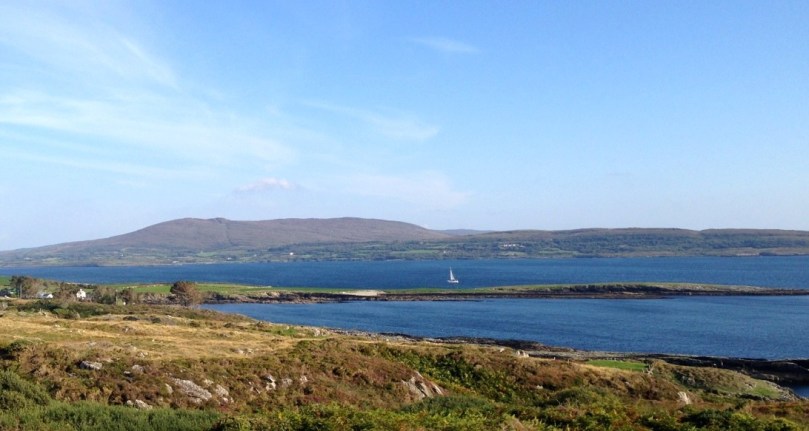
Merlin on Dunmanus Bay

Merlin on Dunmanus Bay

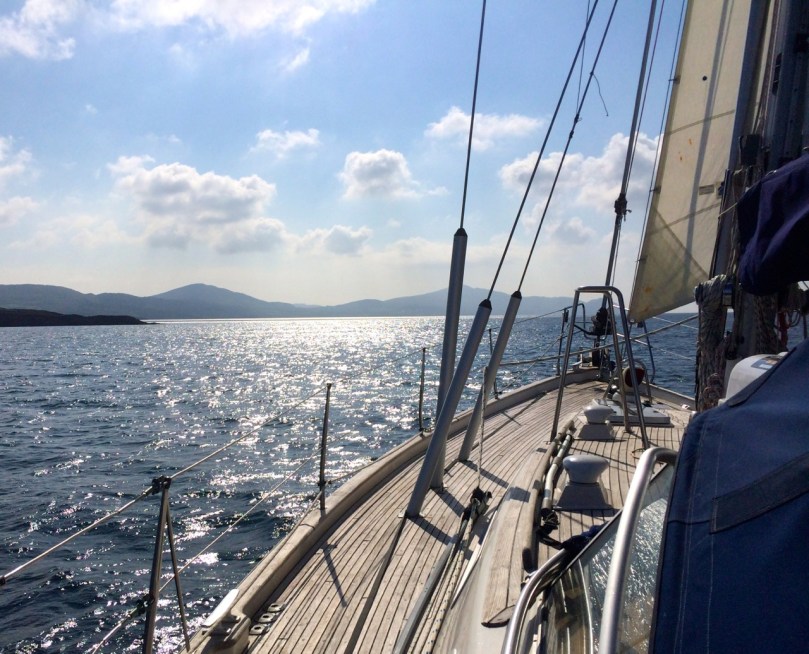
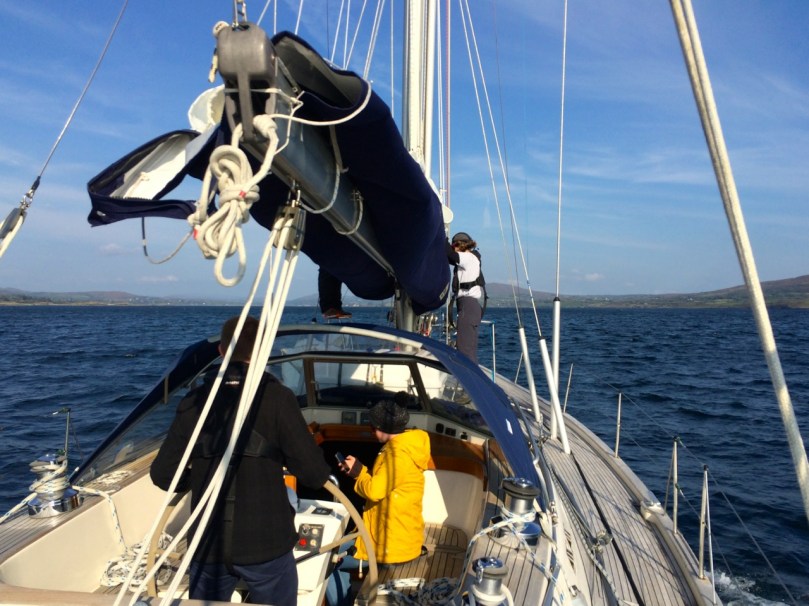
We sailed almost to the mouth of Dunmanus Bay and back to Ahakista. There was a brisk little breeze, so the conditions were excellent and as soon as the main and the foresail were up the boat settled into a close haul, heeled over, and bowled along at a merry pace. Chris pointed out all the points of interest, introduced us to Henry the friendly seal and recounted the history of the bay. 

Great day for a sail!

Great day for a sail!

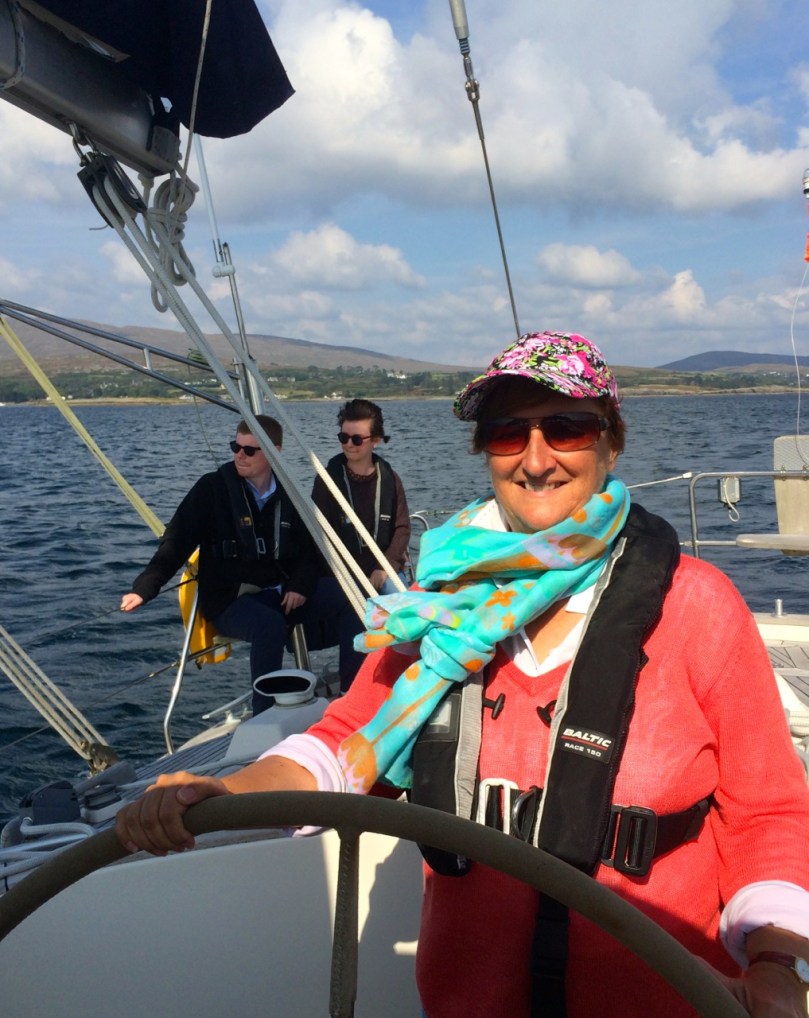
Chris is a born teacher (he does RYA training courses aboard Merlin) but in the most unobtrusive way, so I felt comfortable asking all the basic questions – stuff I had learned but forgotten. There’s so much vocabulary to sailing! Within an hour I felt emboldened enough to offer to take the helm – and there I was sailing a 42 foot yacht, calling the change of tack, adjusting the course to catch the wind. It was, in a word, heaven. The Sheep’s Head to the north, the Mizen Peninsula to the south,  incredible scenery, sunshine and a Caribbean blue sea skimming past our bow – what more can life hold on a warm September afternoon?

At the helm!

At the helm!

And just when I though it couldn’t possibly get any better, Aideen appeared with a cup of tea and a plate of Ummera smoked salmon on thinly sliced brown soda bread.

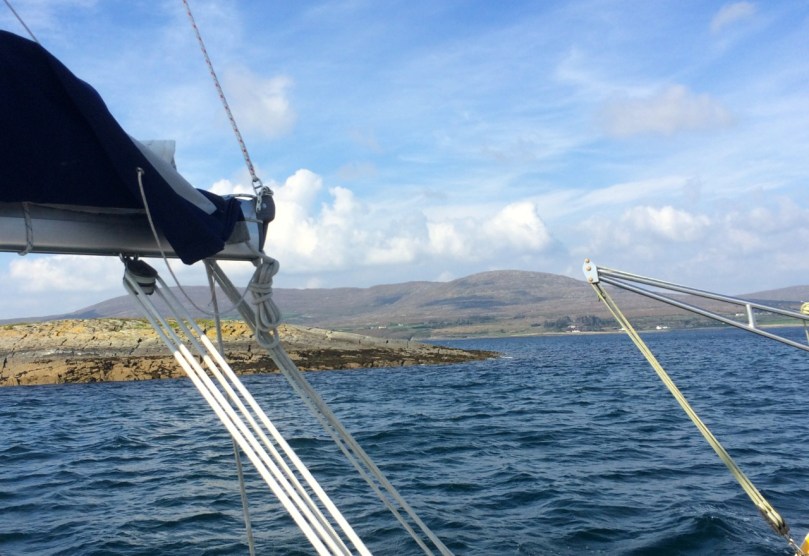
Robert and I have explored the Sheep’s Head and the Mizen extensively, but seeing it from this angle brings a new perspective. We were unaware, for example, that there are sea arches along the Mizen coast – dramatic bridges reaching out over the ocean, with the sea thundering underneath. There are several islands in the Bay. We sailed between Carbery and Furze Island. Rumour has it that the house on Carbery is owned by a wealthy Sultan who visits with his wives occasionally. Gannets plummeted into the water around us and, although we didn’t see any that day, dolphins often swim and play around the boat.

Conor, who had never sailed in his life, took the helm as we headed home, while Chris and Aideen dropped and stowed the sails.

Connor takes charge

Conor takes charge

As a re-introduction to sailing I couldn’t have had a more perfect experience. But even just lounging around the deck, soaking up the sunshine and the scenery, feeling the wind on my face and the gentle swell beneath, chatting in that companionable way that seems to happen like magic with shipmates – well, it all added up to a marvellous and memorable day that will ensure that I get out on the water again soon.

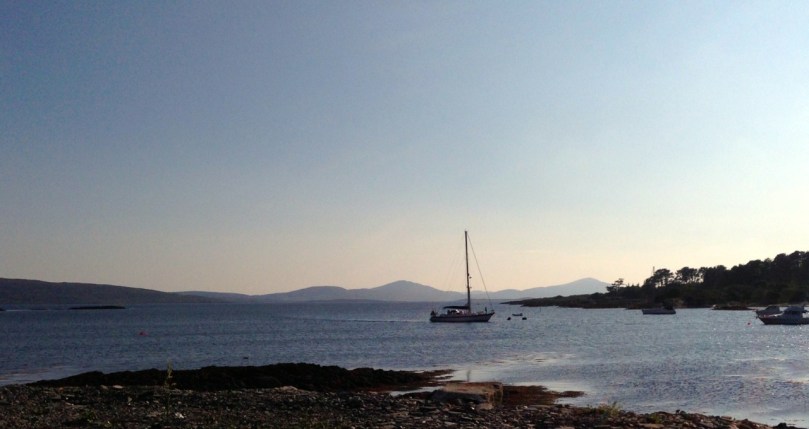
End of a perfect day

End of a perfect day

Pigs and Ponds in Ahakista

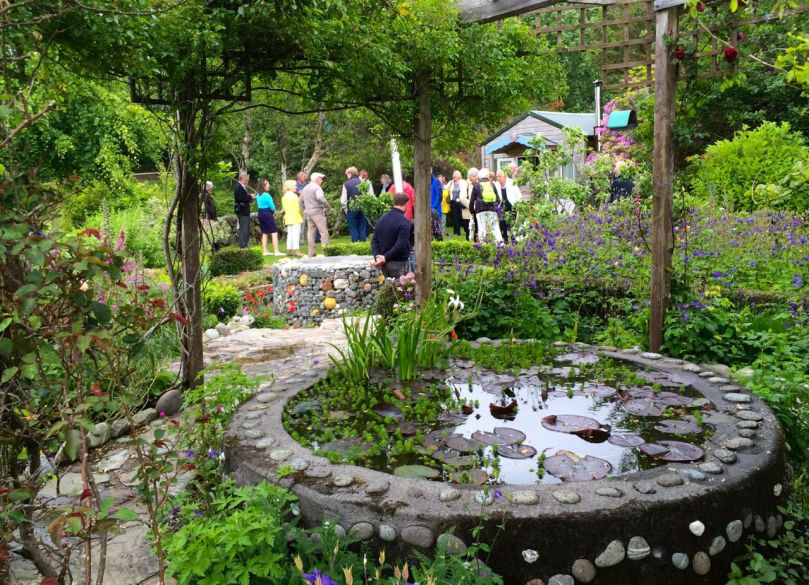
The Garden Trail is declared open at the Heron Gallery Gardens

The Garden Trail is declared open at the Heron Gallery Gardens

The West Cork Garden Trail takes place in the second half of June and this year the opening ceremony was held at the Heron Gallery Gardens in Ahakista. The gardens are a natural extension of the gallery, cafe and gift shop that Annabel and Klaus operate, with a satellite store in Schull and an online shop.

Welcome to the gardens!

Welcome to the gardens!

Annabel and Klaus have only been developing these gardens for nine years, although it’s hard to believe that this was wilderness so recently. Every year brings innovation and new plantings and trails. Although we kept our shoes on this time, we explored the barefoot trail, an invitation to experience the sensual pleasures of texture underfoot and squishiness between the toes. Along the trail we met friendly pigs (say hello to Fuchsia, Fern and Fay!) and climbed the hillside to a bench situated to enjoy glorious views of Dunmanus Bay. 

Robert makes a friend

Robert makes a friend

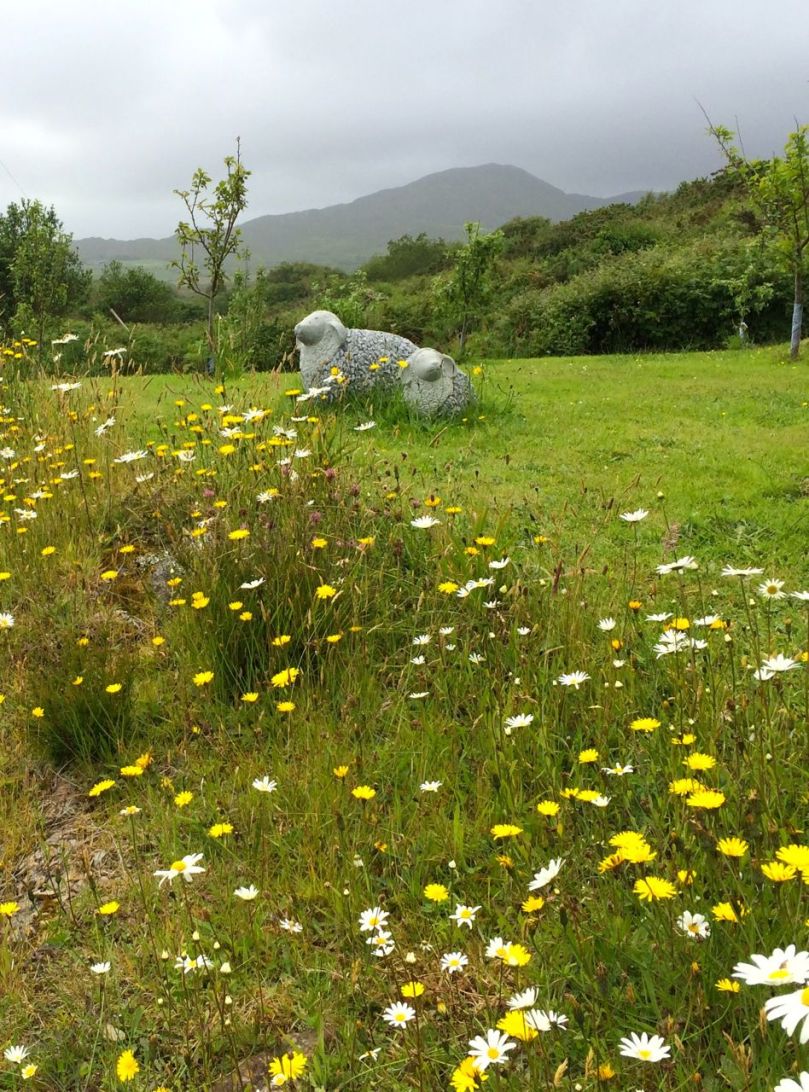
On the way back down we lingered by the pond, where wild flowers have been left to blow enthusiastically on a small hillside.

Wildflower meadow

Wildflower meadow

The more formal parts of the garden are a joy, with colourful herbaceous borders, pools with water lilies, tables and benches for eating or resting, and everywhere delightful, quirky sculptural installations.  

This is the perfect spot to enjoy lunch, or coffee and cakes, before a browse around the gallery featuring Annabel’s captivating images. Having travelled along the Sheep’s Head and wandered the garden, her inspirations will be obvious to you – look out for her oil painting of Fuchsia the Pig, or her many depictions of the Irish hare, two of which feel right at home at Nead an Iolair.