Queen of the May

May Eve activity: setting up the May Bush

May Eve activity: setting up the May Bush

I was excited to learn – from one of my favourite and most faithful volumes on folklore: The Year in Ireland by Kevin Danaher (Mercier Press 1972) – that on May Day the Fastnet Rock weighs anchor, casts off her moorings and goes sailing about in Roaringwater Bay! I spent May Eve in a whirl of anticipation – and hot spring sunshine – awaiting the morrow which would present this wonderful spectacle to add to the feast to be seen from our window. The morrow that came, ostensibly the first day of summer, was a disappointment: the wind was in the east – and biting – and the whole bay was encased in damp, grey fog. The perambulations of the rock remained out of sight until nightfall, by which time the sweeping light had smugly returned to its rightful place twelve miles off shore.
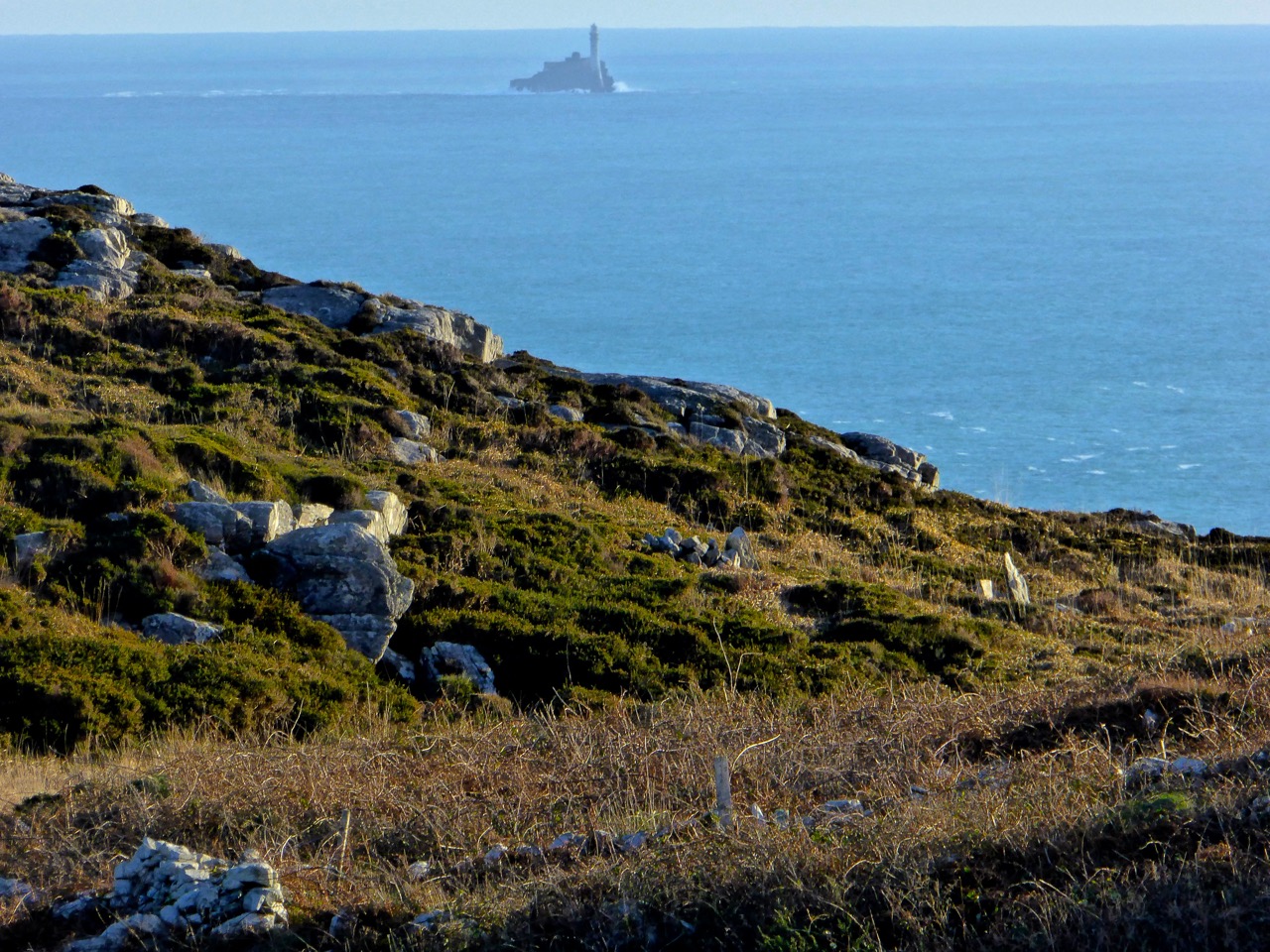
Dancing Rock...

Dancing Rock…

My only consolation – again, according to Danaher – is that a cold, wet May morning heralds an excellent summer (and this certainly came about last year). I could write all day about Danaher’s observations on the subject of Mary’s month – in his book 42 pages are devoted to it: the longest section by far, indicating the importance given to this part of the year in the traditional calendar. But I’ll leave that for another time and concentrate on our own activity: putting up our May Bush.

When I lived in the west of England it was a toss-up between going to Minehead or Padstow on May Day – occasionally both. They were contrasting experiences: in Minehead, on the north coast of Somerset, you had to take pot luck – there was no fixed itinerary to the day and you never quite knew what you were going to see, or where or when. What you wanted to see was the Hobby Horse, sometimes known as the Ship-horse, or the Sailor’s Oss. I’ll refer you to another classic book – by chance also dating from 1972: A Year of Festivals – A Guide to British Calendar Customs by Geoffrey Palmer + Noel Lloyd (Frederick Warne):

…The head of the horse (or the mast and sails of the ship) is in the centre; and a long rope tail, once a real cow’s tail, is fastened to the ‘stern’. The man inside the contraption glides and sways through the streets, and sometimes swings his tail around anybody who refuses to contribute to the collecting-box… The ship form of the horse is said to date from 1772 when, on the evening before May Day, a ship sank in a storm off Dunster, three miles from Minehead. The only object to be washed ashore was a dead cow, the tail of which was used to decorate the horse…

Now, the early photograph below is one of my all-time favourites as an illustration of a folk custom: it’s optimistically captioned Hobby-horse Festival, Minehead, Somerset and says to me that such traditions will continue forever because ‘they have to be done’ – even if the rest of the world has lost all interest…

The First of May at Padstow is another matter altogether. It’s a huge gathering: all the roads are closed to traffic and at times it seems impossible that any more people could be fitted in to this modest Cornish fishing community. Here there are two ‘Obby Osses’: the Red Oss, sometimes known as the Original or Old Oss, is stabled in the Golden Lion, while the Blue Oss – or Temperance Oss has its headquarters in the (perhaps more temperance friendly) Public Library. Both horses come out in the morning of May Day, led by a ‘Teaser’ and accompanied by numerous dancers, drums and accordions, perambulate all around the town, and well beyond it, finally meeting in the evening at The Square, in the shadow of an elaborate and colourful May Pole.

Padstow taster… Photos from the 1960s and 2006:

Preparing the Maypole in Bavaria

Preparing the Maypole in Bavaria (Florian Schott, Ellbach)

While I was experiencing my first Padstow May Day in the 1960s, our Cappaghglass neighbour Dietrich was in Bavaria, watching the construction of an enormous Maypole: he also remembers all the children dancing around it holding up May Bushes. For our own May Bush we took our inspiration from Danaher:

…The children set up their May Bush in the same spirit in which we hang out our flags on a national holiday, to celebrate an occasion, but some – at least – of their parents were glad of the feeling of protection against unseen forces which the May Bush gave…

Oh yes! We have to be aware that…

…So powerful were the preternatural forces abroad in the night between sunset on May Eve and sunrise on May Day that almost anything might be expected to happen… (Danaher) while …The powers of evil, always on the alert to entangle and destroy souls, being most dangerous and powerful on May-Eve, on that day the maids were apt to be uneasy and rather sullen, watching us suspiciously lest we might, through our unbelief, frustrate their precautions against danger. They strewed primroses on the threshold of the front and back doors – no fairy can get over this defence – and in the cow-byres they hung branches of rowan while the head dairy-woman sprinkled holy water in mangers and stalls. The milkmaids, at the end of the evening milking, stood to make the sign of the cross with froth from the pails, signing themselves and making a cross in the air towards the cows… from The Farm by Lough Gur by Mary Carbery (Longmans, 1937).

Burning the land

Burning the land

We have had a long, dry spell and there have been a number of gorse fires recently in our neighbourhood: this one occurred on May Eve – traditionally a time in Ireland when bonfires were lit – although the gorse fires have nothing to do with that tradition. Here are the observations of William Wilde (father of Oscar) in Irish Popular Superstitions, Dublin, 1853
…Turf, coals, old bones, particularly slugs of cows’ horns from the tan-yards, and horses’ heads from the knackers, logs of wood etc were also collected, to which some of the merchants generally added a few pitch and tar-barrels. The ignitable materials were formed in depots, in back-yards, and cellars of old houses, long before the approaching festival; and several sorties were made by opposing factions to gain possession of these hoards, and lives have been lost in the skirmishes which ensued… With the exception of one ancient rite, that of throwing into it the May bush, there were but few Pagan ceremonies observed at the metropolitan fires. A vast crowd collected, whiskey was distributed galore… The entire population collected round the bush and the fire; the elder portion, men and women, bringing with them chairs or stools, to sit out the wake of the winter and spring, according to the olden usage… Fiddlers and pipers plied their fingers and elbows; and dancing, shouting, revelry and debauchery of every description succeeded, till, at an advanced hour of the night, the scene partook more of the nature of the ancient Saturnalia, than anything we can presently liken it to…

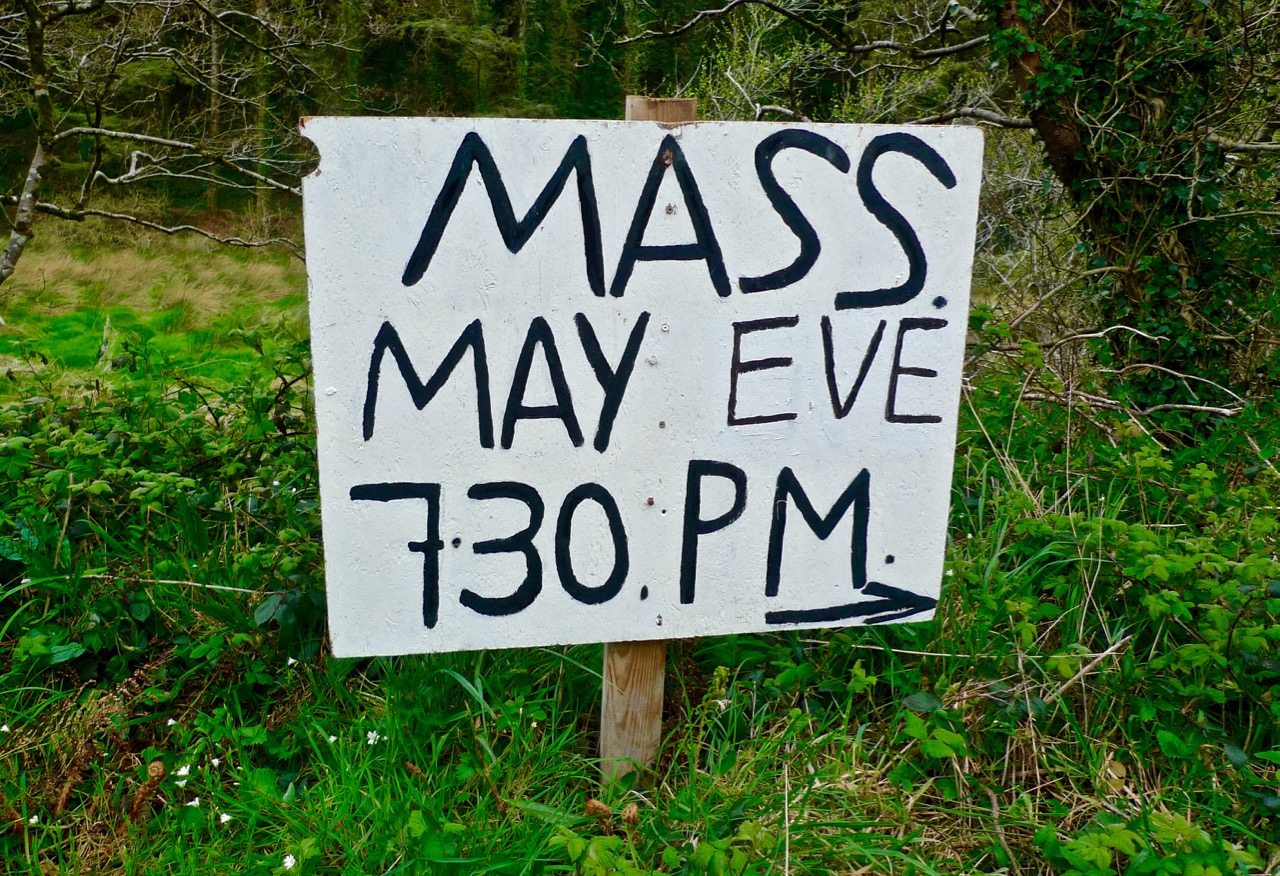
mass sign

By contrast, our own rural activities were much more calm and constrained. I couldn’t miss out on an outdoor Mass celebrated at one of Lough Hyne’s Holy Wells – the Skour Well. On a beautiful evening – attractive to the midges – it felt the most natural thing in the world to be at a site which has been considered sacred for hundreds, if not for thousands of years, and to take part in a ceremony which is also ancient. I counted over eighty people, including a gentleman of 97, at this event – presided over by two priests and centred on a portable altar with cloth and candles, the revered well being the backdrop. Prayers were said and hymns were sung in English, Irish and Latin.

There’s a continuity here which defies any twenty first century rationale. I was very conscious that this was the way that faith was practiced in Ireland in the penal times (requiring that a watchful eye be kept out for the Redcoats) – but also it was an honouring of nature and a respect for the elements: earth, water, sun and rain – old ways carrying on regardless of new technologies.

A May garland – Hatherleigh, Devon:

Finola’s memory of May Day in her schooldays was of all the girls wearing veils and processing down to the grotto saying the Rosary; and, every day throughout Mary’s month, singing the refrain that was sung at the close of the Mass at Skour Well:

O Mary! we crown thee with blossoms today,
Queen of the Angels, Queen of the May.
9074db7eb01031a082d064758b8b18ba

Window on our World…

Our View to the Islands

Our view to the Islands

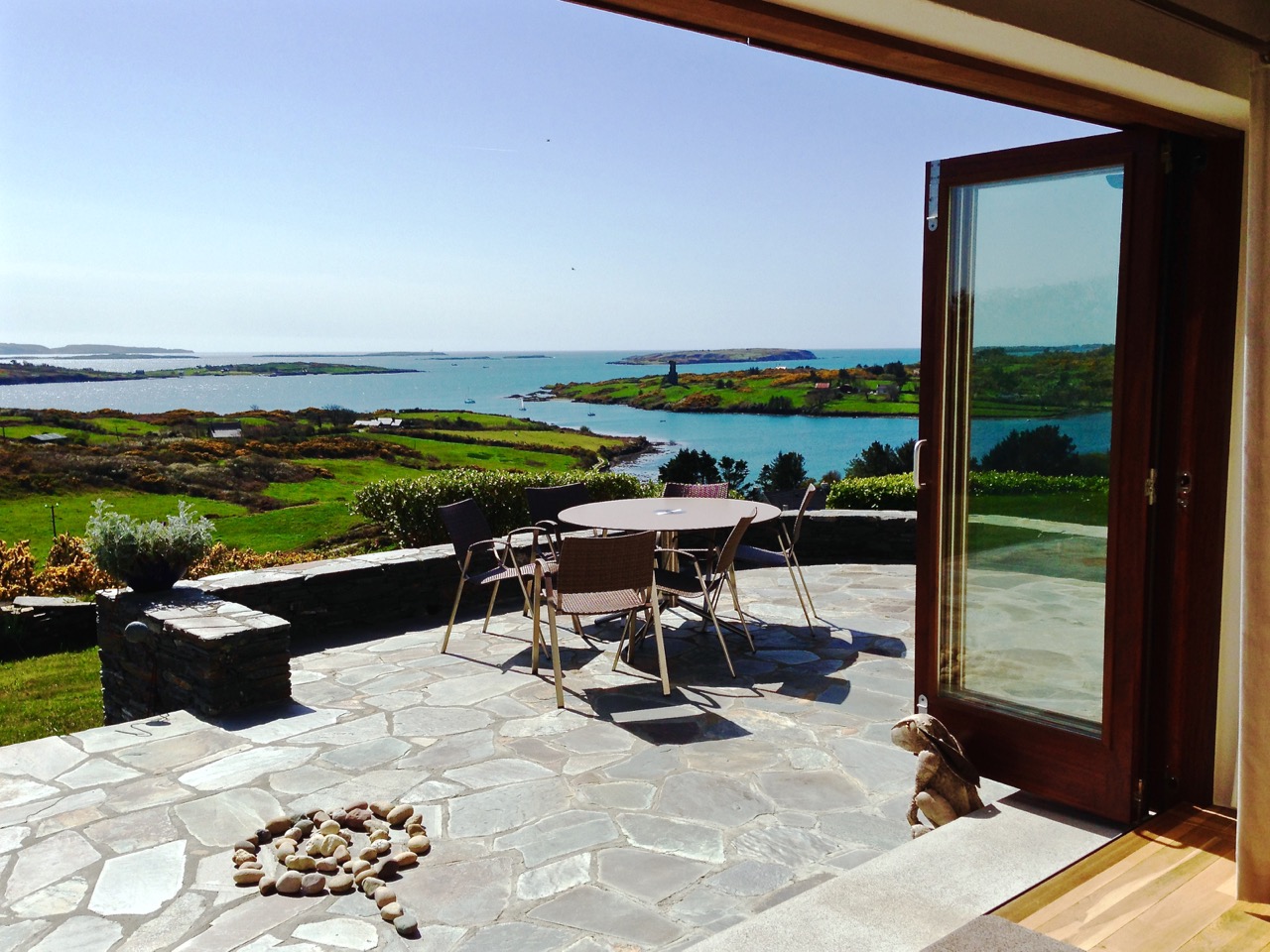
Sunlight and drama have been the key elements of the view from Nead an Iolair this week. The drama began at coffe time on Monday: whenever we are sitting having breakfast, lunch, tea, supper – or maybe just sitting – we are looking out over the scene you see above. Central in that prospect is our bird feeder, where we keep a constant eye on the comings and goings.

Suddenly, a bomb dropped out of the sky! It scattered the birds and there was such a twittering and chattering – squawks and alarm calls. The ‘bomb’ was a Kestrel – who had singled out a juicy victim from among the avian throng… I’m pleased to say that it missed its target and crashed ignominiously into the adjacent gorse bush. Seconds later it extricated itself and sloped off, trying not to look too foolish. I have to say I admire birds of prey, although I’d rather not see them lunching on our garden friends. In the past we have also had sight of a Sparrowhawk on our stone boundary wall.

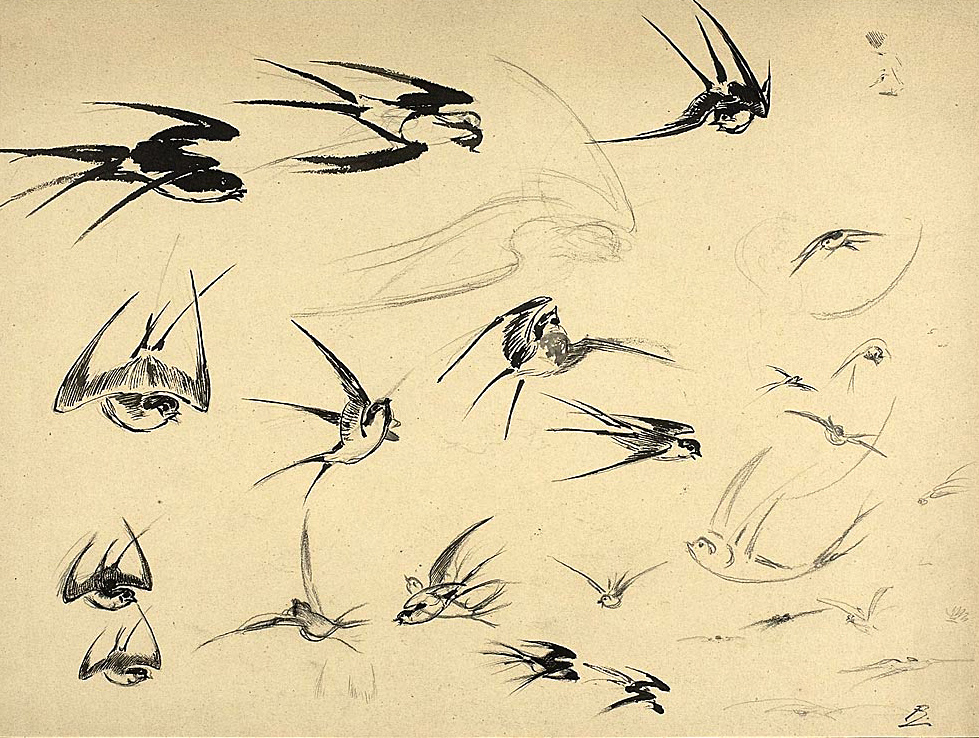
The Swallows: Felix Bracquemond, 1881

The Swallows: Felix Bracquemond, 1881

As I write this there are Swallows wheeling in the air above us: although we have had cloudless skies for several days the wind is in the east and it’s pretty chilly – however these harbingers of the Summer seem happy enough to have arrived on our shores in late April.

The Choughs are always with us!

The Choughs are always with us!

The Choughs are good friends of ours – they sit on the roof or tumble about in front of us, showing off their bright red bills and claws. At the moment they are foraging in the rocky land behind the house, pulling out roots and twigs for nest building. Another nester is the Starling family which inhabits the space in our eaves, creating a lot of noise and mess.

rabb

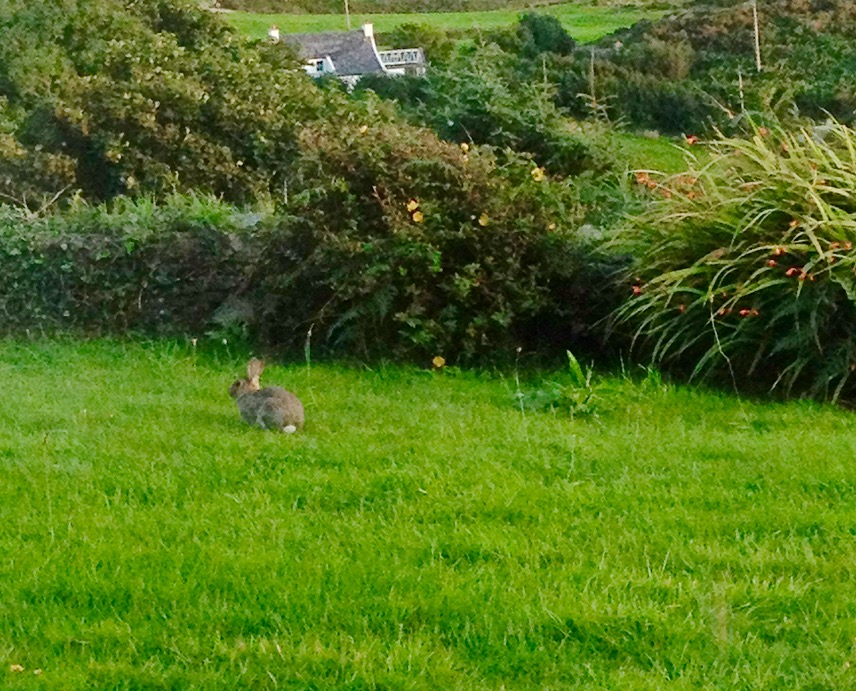
I was pleased to see a Rabbit in the garden: there has been an outbreak of mixomatosis in the surrounding countryside in recent times and over the last year we have hardly come across any of these mammals in the fields locally. Mixomatosis was introduced into the UK in the 1950s – apparently by accident – and then was used as a deliberate Rabbit control measure, by placing sick animals in burrows (then and now an illegal practice). By 1955 95% of Rabbits in the UK had been wiped out. I remember those days: seeing dead and dying animals every time I went out as a sensitive nine year old made me sickened and appalled, especially when I learned that we humans had initiated such cruelty. The virus recurs cyclically every few years, as has happened around here: I am still sickened and angered by it.

The next visitor was a female Pheasant. Although less colourful than her male counterpart she is nevertheless a handsome addition to our menagerie. The good weather has enabled us to have our doors open every day, but this does mean an influx of smaller guests, which have to be carefully rounded up and ejected before we go to sleep. They include spiders and flies, but also Native Irish Honeybees from our neighbour’s hives. Apis Mellifera Mellifera has evolved over thousands of years with a large body and long dark abdominal hairs which make it uniquely suited to survive in a harsh Irish climate. It will be found foraging early and late in the season and will fly in dull, drizzly and cold weather. I gleaned this information from the comprehensive website of the Native Irish Honeybee Society.

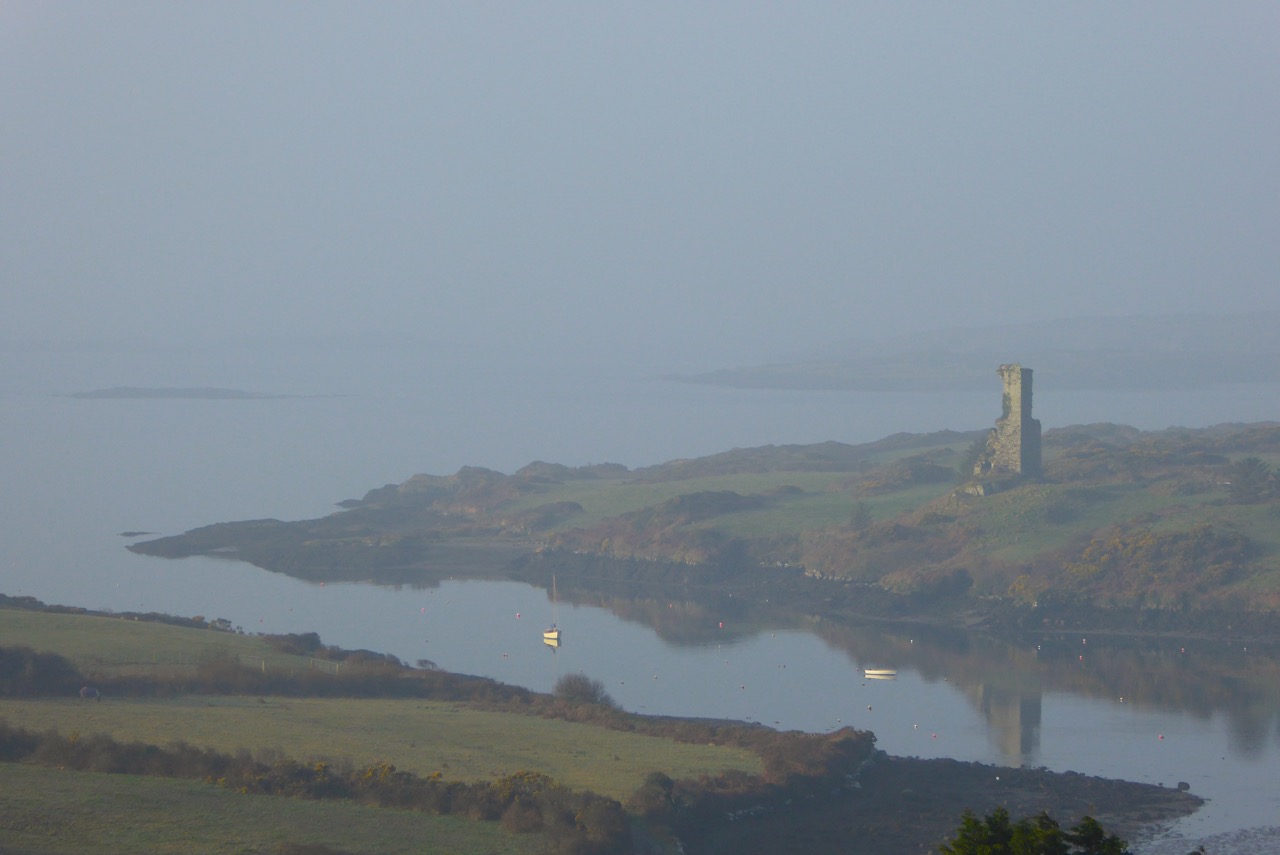
Castle in the Mist

Castle in the Mist

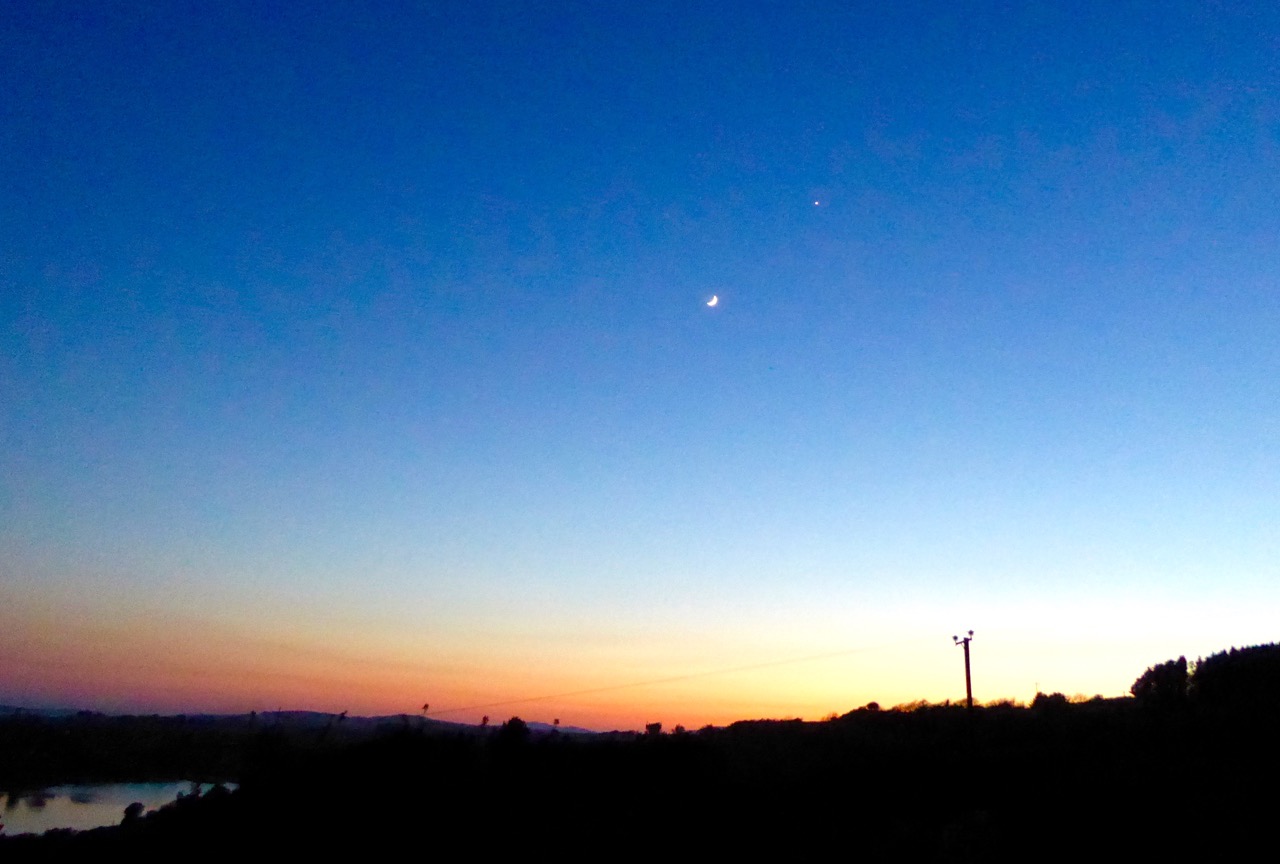
These wonderful spring days have been heralded by misty mornings. Evenings have been clear, with the crescent moon and Venus prominent over the western horizon. This is the time when we see our Bats. They might be either Common Pipistrelles or Soprano Pipistrelles: I’m sure you know that the former echolocates at a peak frequency of 45kHz while the latter echolocates at a higher frequency peaking at 55kHz. I keep listening out but can’t quite decide which is which… Anyway, they are both indigenous – and are probably sharing our eaves spaces with the Starlings.

crescent moon

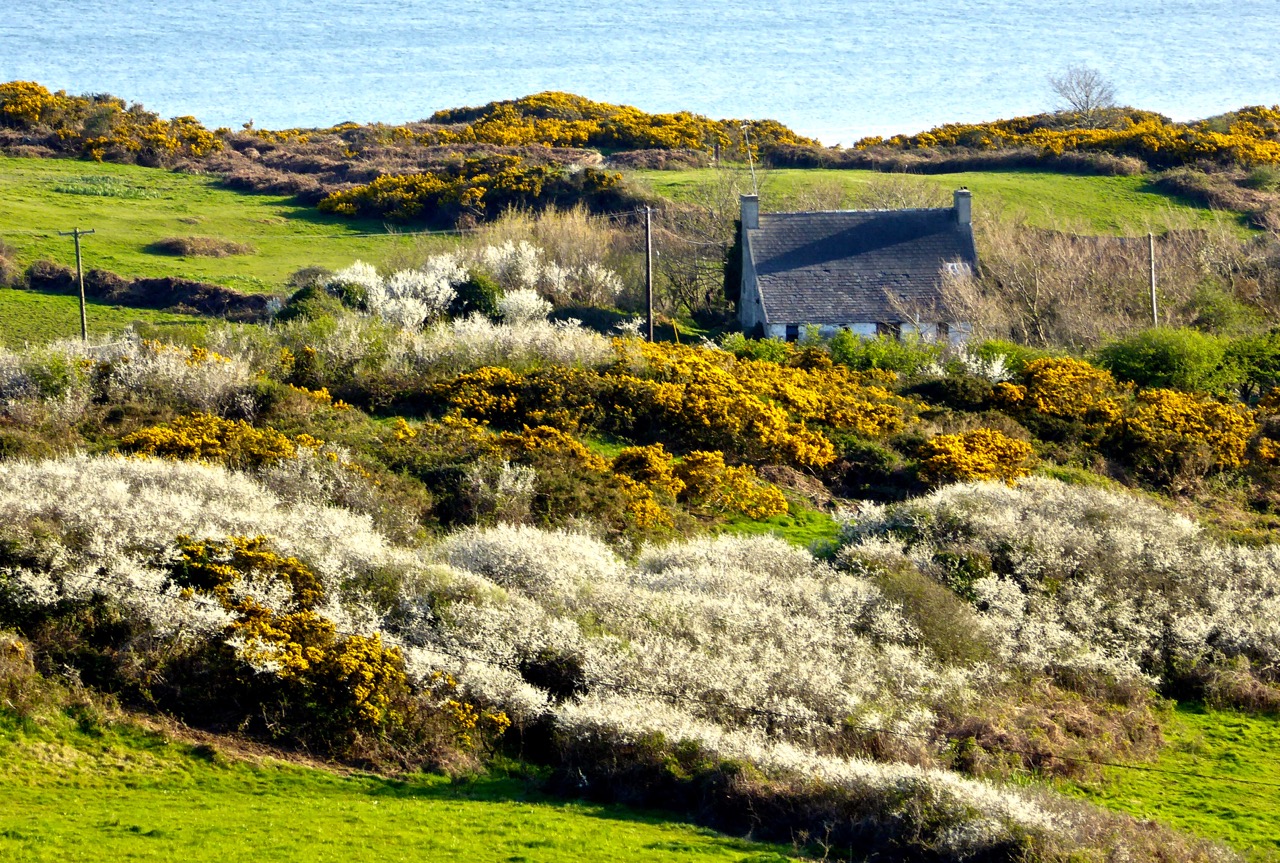
The gorse is in full bloom, as are the blackthorn hedges. Any picture of our surroundings at this time of the year has to show off the yellow and white – and, of course, the emerald green and azure blue.

looking out

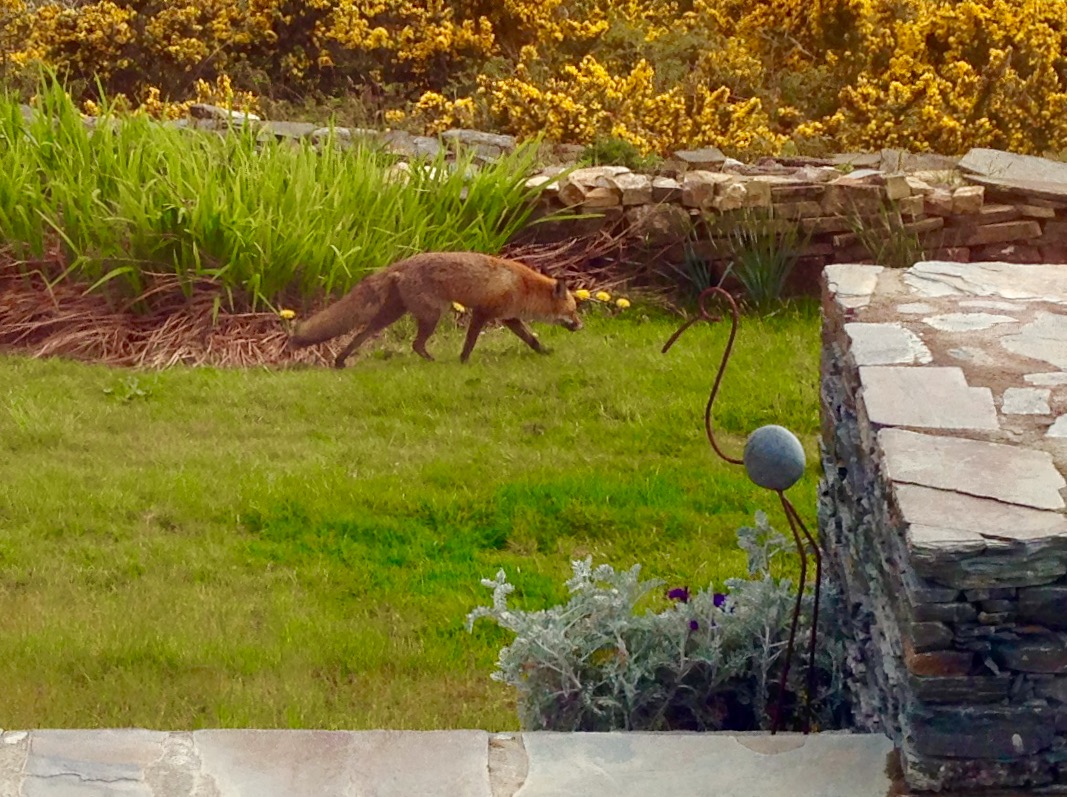
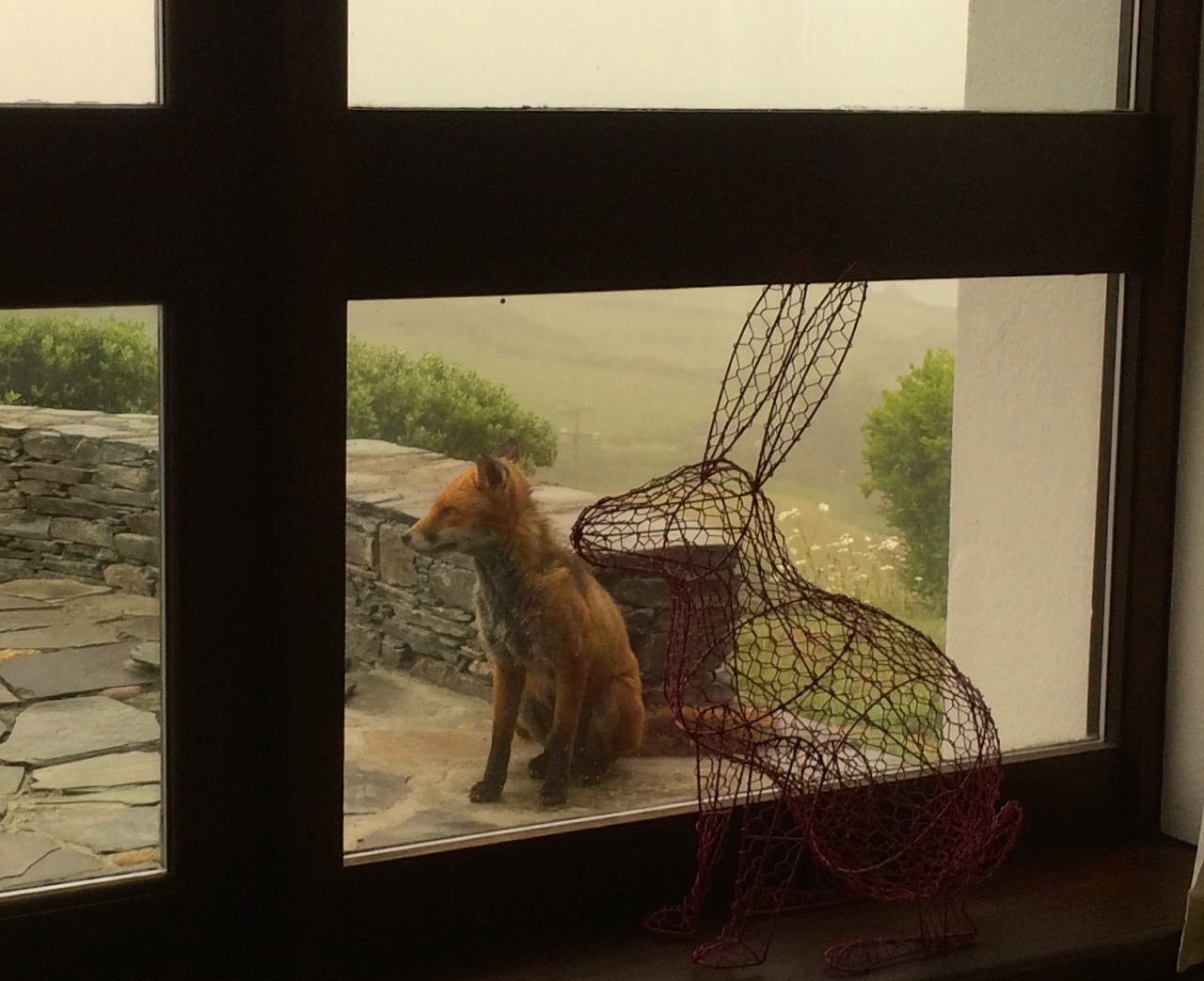
No ‘nature post’ here would be complete without mention of our own Red Fox, Ferdia. In fact, part of the drama of the week was the appearance of another Fox! As we hadn’t seen Ferdia for quite some time we worried that he might have gone the way of all Foxes: the average life of a Red Fox in the wild is only around five years – and our neighbours claim to have been hosting Ferdia for more like ten… The new Fox only made the briefest of appearances, just enough to be photographed. I think it is a Vixen – smaller and thinner – and very nervous. We couldn’t help thinking that she had come on to the scene because of Ferdia’s demise – but no! Yesterday evening, there was Ferdia knocking on the window, cocky as ever – although he does look a bit bedraggled at the moment, possibly because he’s beginning to lose his fine thick winter coat. Perhaps now we will have to find scraps for two foxes…

Fresh on the scene: a female Red Fox

Fresh on the scene: a female Red Fox

Seen through the window: a bedraggled Ferdia posing with one of our many household Hares!

Seen through the window: a bedraggled Ferdia posing with one of our many household Hares!

Finally, I was fascinated by another visitor to Nead an Iolair this week: a female Emperor Moth took up residence on our bedroom window cill. As you can see, her appearance is very striking. I wish I had been able to observe her all day, as evidently these Moths stretch themselves out in the sun waiting for a mate to arrive. The males are even more spectacular, but alas I didn’t see one. You’ll find this lady in an Irish folk tale: The Children of Lir.

Female Emperor Moth

Female Emperor Moth

I have to give a special word of thanks to Finola, who expertly took most of the photographs in this post with her excellent Leica-lensed camera

Showing Off West Cork

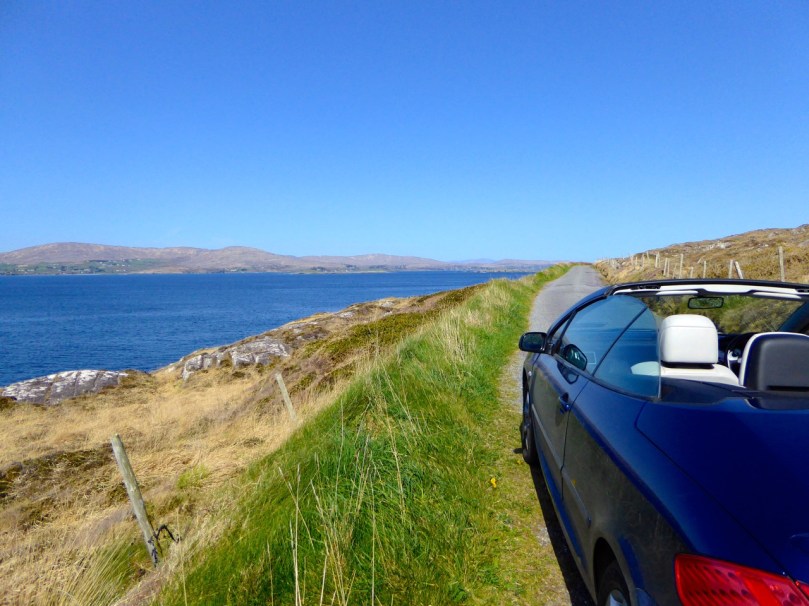
This is how you sightsee in West Cork!

This is how you sightsee in West Cork!

Ladies and Gentlemen, meet Susan Byron! Susan is the face behind Ireland’s Hidden Gems, a custom travel service for visitors to Ireland, and she and I met last year when Robert and I spent a week in Clare. Susan loves nothing better than to hop in her car and take off for a few days to some part of Ireland she wants to explore or re-explore. There are very few places she hasn’t seen, but I soon discovered that the Sheep’s Head was one of them. She has been to the Mizen before but hadn’t seen some our OUR hidden gems. In short order we decided that a visit must be organised, and a couple of weeks ago she arrived, bearing Burren lamb, bottles of wine, and an infectious enthusiasm to see everything.

The 17th century Bardic School

The 17th century Bardic School on The Farranamagh Loop walk

Now if someone who runs a bespoke travel agency wants to see your piece of paradise, well, you’re going to put your best foot forward. Fortunately, this isn’t a problem in West Cork – it’s pretty well a fail-safe place to show off. Susan spent her first day whale watching (something we promise ourselves to do soon) and exploring the area east of Skibbereen. On day two and three she was all ours and we spent the first day on the Sheep’s Head and the second on the Mizen.

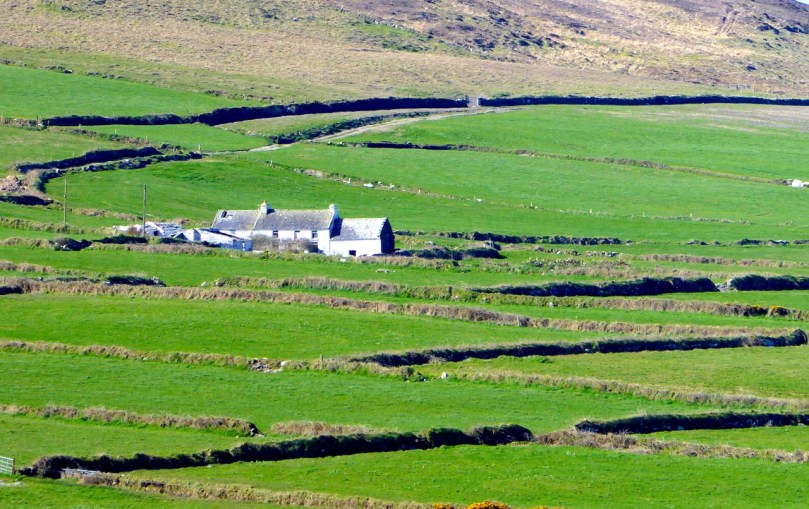
Mizen farm

Mizen farm

First of all, travelling with Susan is a hoot. She’s got a hot car, a ready laugh, an inexhaustible supply of stories, insatiable curiosity, and a real passion for Ireland. She is amazingly well-read – she knew the dates of the castles before I could tell her and was already familiar with what most tourists want to to see and do in West Cork. So this was a cheerful, companionable time of exploration, chatting, coffee and scones, hiking and sightseeing.

Our Sheep’s Head day took in two loop walks – the Farranamanagh loop and the lighthouse loop. We started off in drifting mist but the sun came out in the afternoon and soon we were shedding coats and applying the sunscreen. After a stroll around the lovely Farranamanagh walk (famous for its 17th century Bardic School) we had lunch in The Creamery in Kilcrohane and browsed in the Sheep’s Head Producers Market. We bought eggs from a farmyard, said hello to contented alpacas, and took innumerable photos of the killer views.

The Lighthouse Loop offers unparalleled vistas at the end of Sheep’s Head – south to Mizen Head and the sweep of the West Cork coastline, and then, as you round the end, north to the Beara and to the Iveragh Peninsula (Ring of Kerry) beyond it. The trail has some steep sections and clings to a cliff edge for part of the northern stretch. It, and the Farranamanagh Loop are but two of the many waymarked trails that crisscross the Sheep’s Head. Each is as rewarding as the next and you could easily spend several days exploring this one Peninsula.

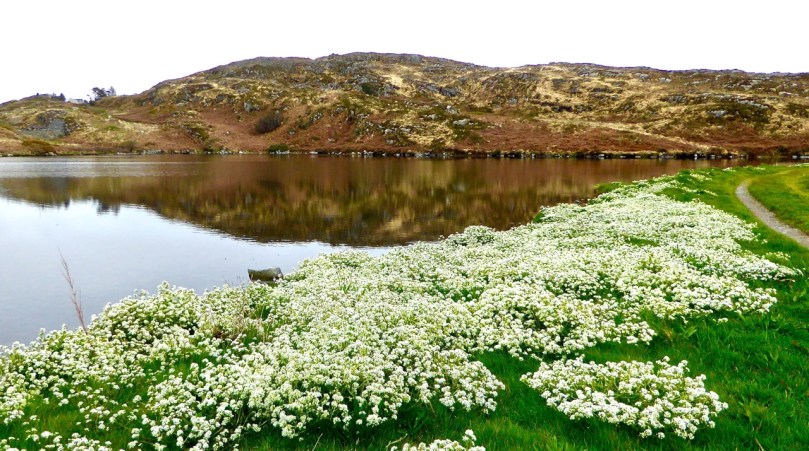
Lake Farranamanagh

Lake Farranamanagh

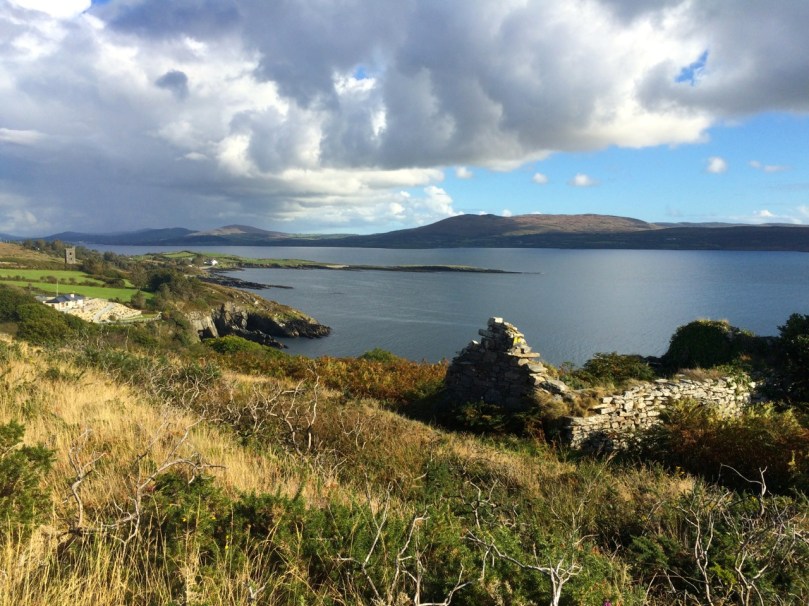
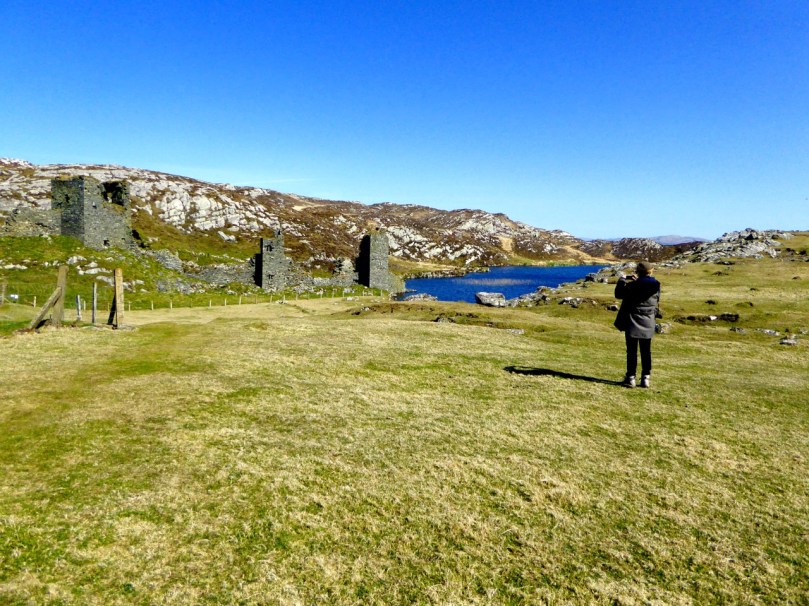
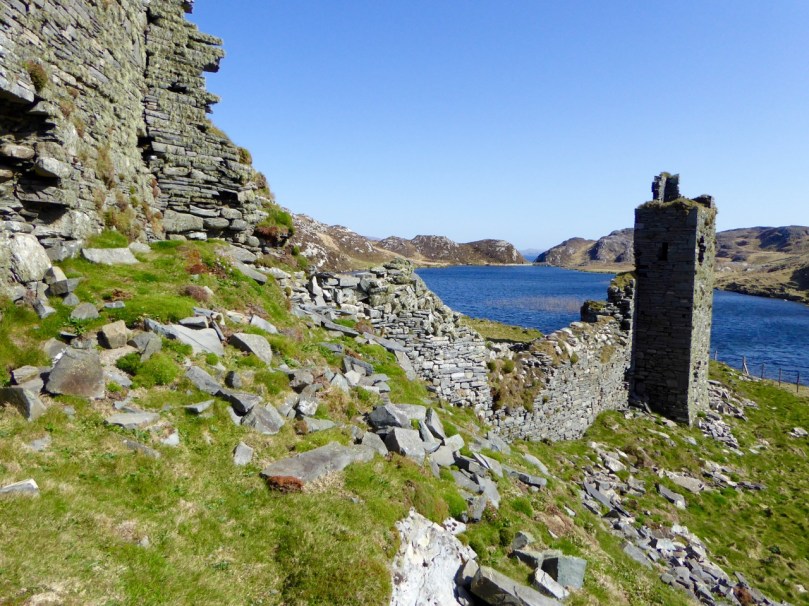
The Mizen, of course is OUR peninsula and we are always delighted to introduce it to friends. The weather was brilliant so we were able to drive in Susan’s cool car with the top down. (In my next life I want to come back as a blonde with a convertible.) Three Castle Head was at its most spectacular, with the water that deep azure blue that people who don’t live here have a hard time believing is real.

The Three Castles: it's love at first sight for Susan

The Three Castles: it’s love at first sight for Susan

The curtain wall and the lake

The curtain wall and the lake

Spring was bustin’ out all over so the air was heady with wildflowers and the fields full of newborn lambs. The drive on the north side of the Mizen is as jaw-droppingly gorgeous as any stretch of road in Ireland – the only difference is that it’s empty. We met not a single car, which enabled us to stop where we pleased to survey the scenery or take photos.

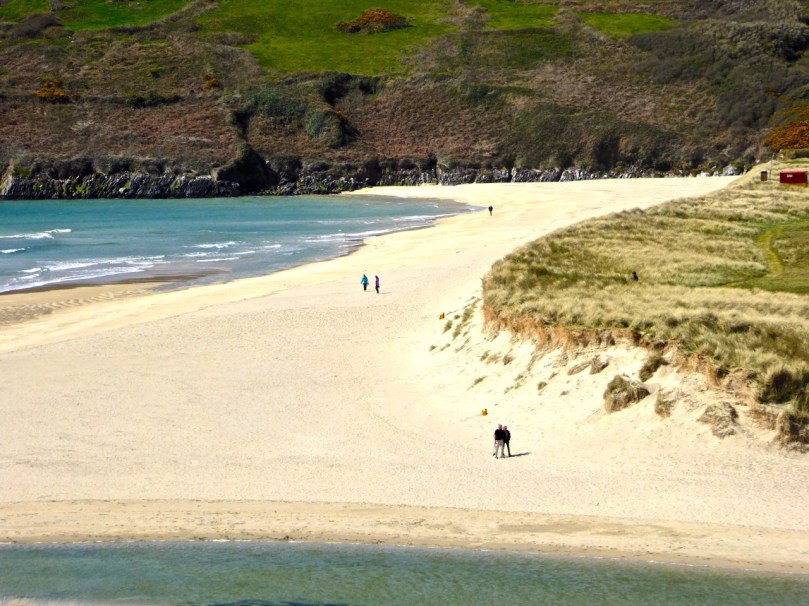
Barley Cove Beach

Barley Cove Beach

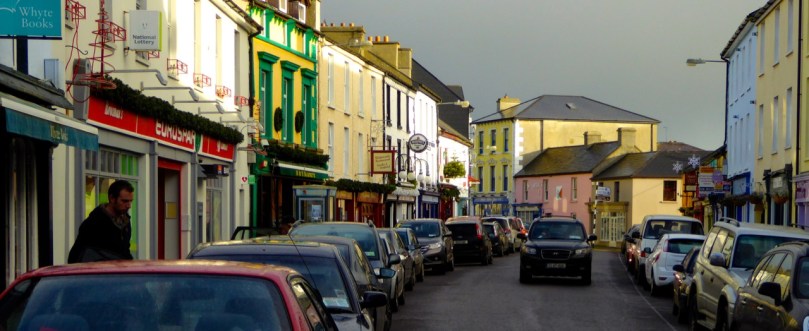
Susan wound up her time by conducting some retail therapy in Schull. No better place!

Schull, colourful village with great shopping

Schull, colourful village with great shopping

She has posted numerous photographs on her Facebook page and even used the phrase “possibly the most beautiful place I have ever been….” about Three Castle Head. That’s how I feel about that magical place – but when someone who has seen everything Ireland has to offer says it, maybe, just maybe, I’m not delusional after all.

Susan at the cairn. Three Castle Head on the Mizen

Susan at the cairn. Three Castle Head on the Mizen

Time Warp

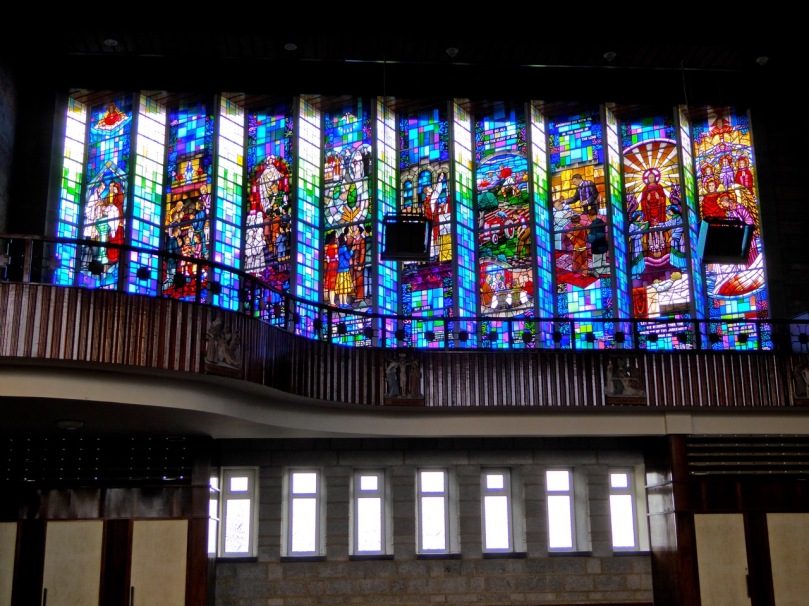
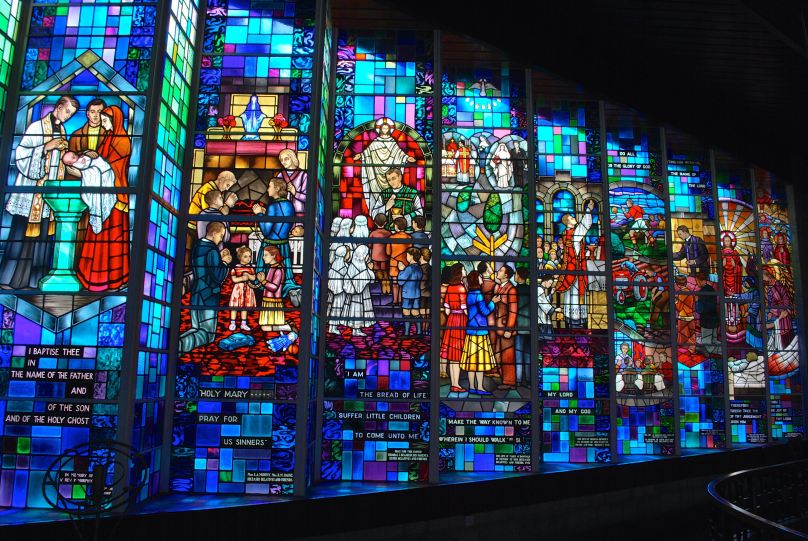
Stained Glass Wall in All Saints Church, Drimoleague

Stained Glass Wall in All Saints Church, Drimoleague

It was the early 1960s and I was sitting in class in my convent school while Mother Francisca explained the purpose of our education and gave us a glimpse of our futures. “What we want for you, girls,” she said, “is to be Good Wives or Nuns.” This week, I landed back in that classroom with a bang. Did I visit my old school? No – I strayed into a time warp. In doing so I rediscovered part of my heritage I had almost forgotten and I met a brilliant young scholar who helped me access those dim memories again.

All Saints, Drimoleague - 1950s modernist architecture

All Saints, Drimoleague – 1950s modernist architecture

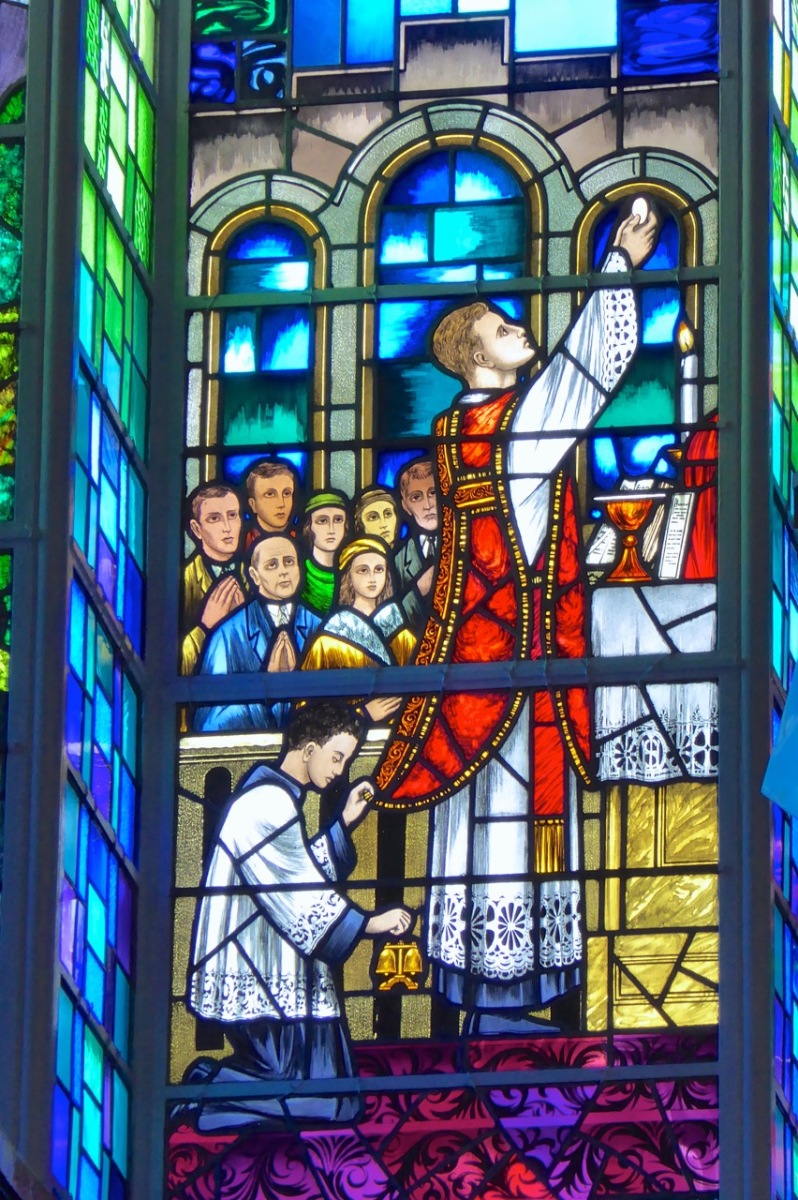
All Saints Catholic Church in Drimoleague is one of the most extraordinary buildings in West Cork. First of all, it’s a fine example of mid-century modern architecture (and there aren’t a lot of those in West Cork) and an engineering triumph. Built in the 1950s of concrete and limestone, its cavernous interior has no need for pillars: nothing intrudes between worshippers and altar. It’s like stepping into an enormous, curiously bright, almost empty box. Secondly, it has extraordinary artwork in the form of a giant mural behind the altar and a panel of stained glass windows above the balcony on the south wall. It was the stained glass that stopped me in my tracks.

All Saints, the interior

All Saints, the interior

The glass is laid out in a series of frames that takes the viewer from birth to death – no, beyond death, to heaven. The church was built in the 1950s and each frame represents the values of rural Catholic Ireland of that time. In a strange way it reminded me of a High Cross, in that the illustrations that we see on High Crosses were meant to tell a story – a biblical one in that case – and to instruct the viewer in the tenets of the religion. The purpose of this wall of glass was also educational – to provide a primer to mass-goers on the aspirations and actions that should guide their lives.

The Stained Glass panel, image © Richard James Butler

The Stained Glass panel, image © Richard James Butler

My parents, imbued with the message that the family that prays together stays together, developed an intermittent enthusiasm for saying the rosary. We would gather in the kitchen after dinner, each with our beads, and kneeling on the hard tiles we would tell off the Sorrowful or the Glorious Mysteries. The second frame shows just such a family, and I particularly love the toys on the floor and the statue of Mary on the mantlepiece. There’s a grandmother and a baby in a cot, and a little girl being inducted into the Mysteries by her older sister.

The next frame shows First Communion, with the girls in miniature bride outfits (as they are to this day) and the boys in their Communion suits with the short trousers and knee socks that all boys wore at that time. Since my godson in Dublin is about to make his First Communion I have been hearing about the process and I understand that apart from the length of the boy’s trousers not a lot has changed in 60 years.

First Communion

First Communion

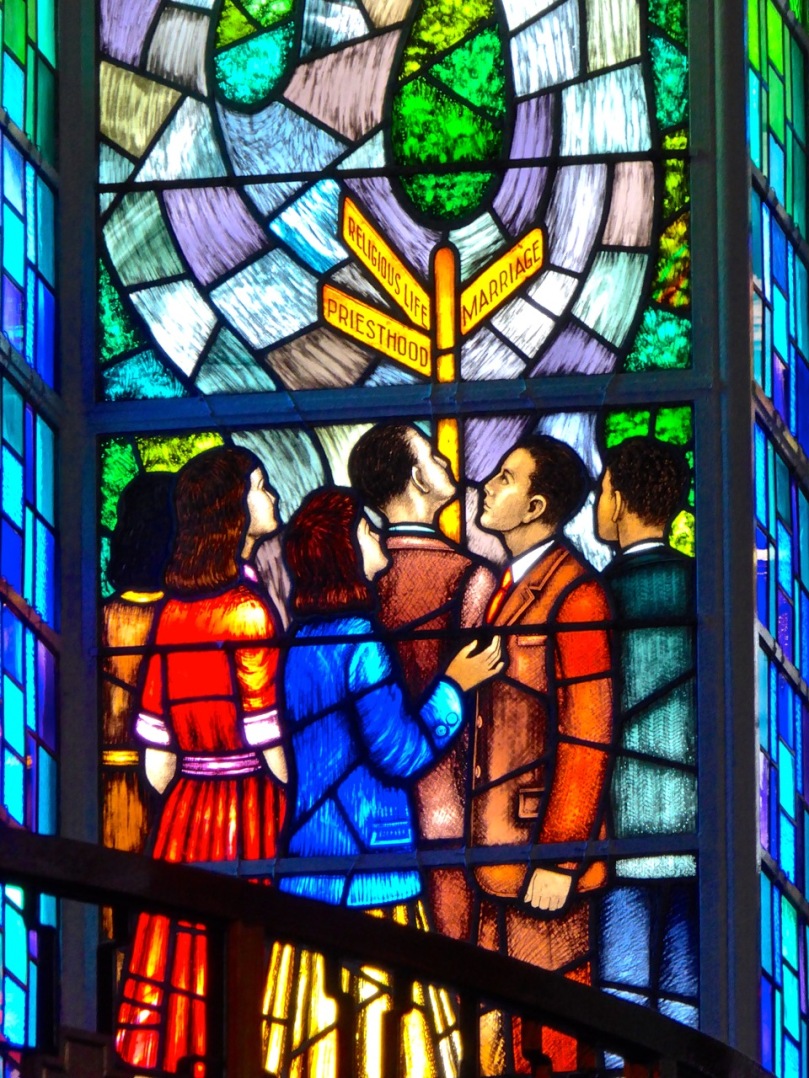
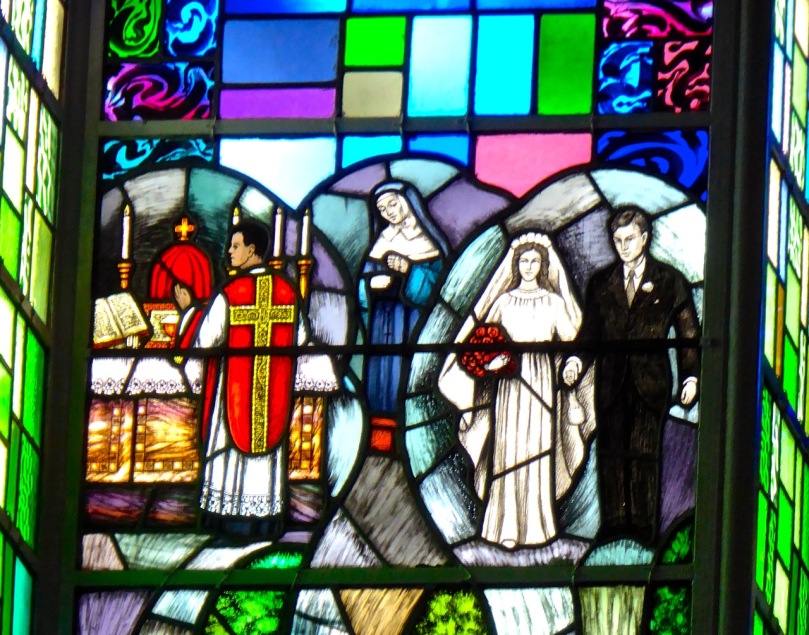
The one that brought me back to Mother Francisca shows earnest young men and women gazing at a directional sign which shows them their choices – marriage or the religious life. That was it! To hammer home the point the top of the panel shows a wedding, a priest and a nun. I’m casting my mind over the group of girls I went to school with – we didn’t produce any nuns and while most of us married I can’t think of a single one who hasn’t worked – we count among us an ambassador, teachers and principals, a town planner, an artist, a college dean, office administrators, a medical doctor, an international expert on child protection, a veterinary nurse, a parliamentary reporter, a lawyer…the list goes on. But none of this was discussed at school: we had no career guidance, no aptitude tests, no encouragement of any kind to think of ourselves as people who would work for a living. What’s curious is that we developed those careers in the complete absence of any kind of conscious preparation for them at the secondary school level.

Choices

Choices

Choices made

Choices made

The sixth frame might be my favourite. It’s the ‘work, rest and play’ lesson. At the bottom of the frame a happy family sits around the tea table. Above them men work on the fields and on top those men are playing Gaelic football while their wives sit on a bench on the sidelines and chat to each other. Men were to head the family, work and play hard, and women were to provide the supportive role. I doubt if anyone foresaw when that glass was designed in the 1950s that in the next century (only a few days ago in fact) two Irish rugby squads – the men AND the women – would bring home the Six Nations Cup for Ireland.

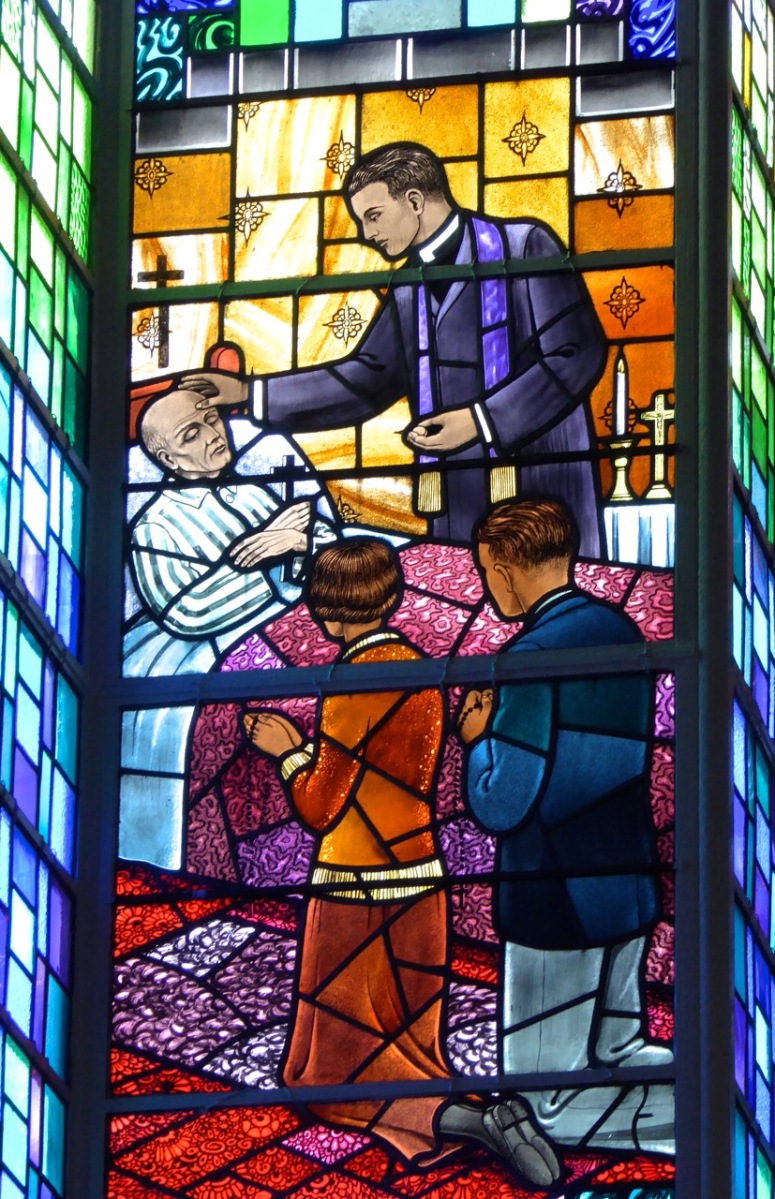
The last three frames deal with end of life, including Last Rights, death, and reception into heaven – the reward for living the exemplary life presented in the stained glass wall.

Last Rites

Last Rites

If you grew up like I did in 1950s Ireland, or if you are interested in the art and architecture or the social history of this period, the Church of All Saints in Drimoleague tells a fascinating story. There is little available online about this church – I couldn’t even find out who designed the windows. But my research revealed that one other person was as struck as I was by this church, although in a more scholarly way. Richard James Butler is a gifted young art historian from Bantry who is completing doctoral studies at the University of Cambridge. We were lucky to hear him speak at the Bantry Historical Society recently on the subject of the courthouses of West Cork – a topic we had no idea could be as interesting until we heard his erudite and engaging presentation. He has written a paper, All Saints, Drimoleague, and Catholic visual culture under Bishop Cornelius Lucey in Cork, 1952-9, which will be published in the next issue of the Journal of the Cork Historical and Archaeological Society. I’ve had a sneak peak, thanks to Richard’s generosity in sharing his findings with a fellow enthusiast. His paper deals with the Catholic ethos within which that era of church construction operated, with the role of the local community in commissioning such an unusual edifice, with the enormous mural, and with the windows. It was only after communicating with Richard that I learned that the windows were the work of the Harry Clarke Studios* and how unusual they were for their day in not being concerned solely with images of saints, the life of Christ, or Mary. If you get a chance to read his paper when it’s published, do so – it may make you take a fresh look at the legacies of 1950s Ireland by which we are still surrounded.
Devotion in 1950s West Cork

Devotion in 1950s West Cork

* For a discussion of the difference between Harry Clarke windows and Harry Clarke Studio windows, see this post.

Ah! Sweet Fiddler…

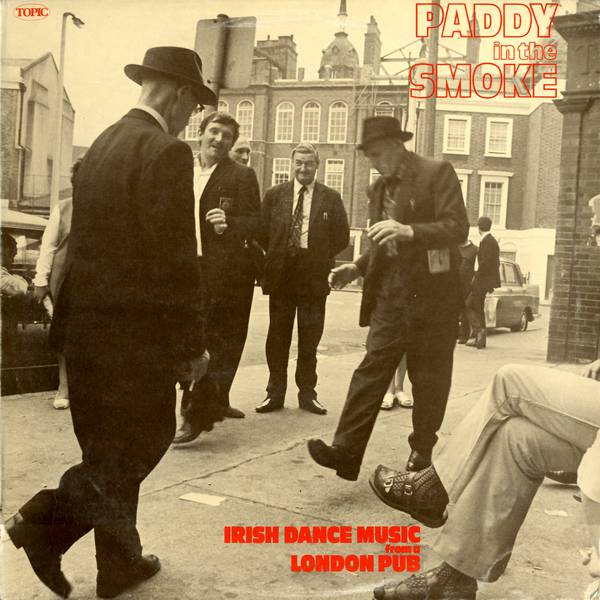
paddysmoke

How did I first become aware of Irish Traditional Music? Probably through this Long Player (remember those?) released by Topic Records in 1968. Paddy in the Smoke was – still is – central to my collection of folk music on vinyl and is available today as a CD or a download.  The recordings were made during the mid 1960s in a London pub, The Favourite, in Holloway. Irish musicians gathered there every Sunday between noon and 2pm (such were the licensing laws of the day!) and those sessions are now legendary, probably representing the epitome of ‘folk music to aspire to’ – certainly that was the case for this wet-behind-the-ears 22 year old attempting to play along with these wonderful tunes on an ancient single-row Hohner melodeon. Here’s a sample of one of the tracks on YouTube: you can hear how the atmosphere of the occasions has been wonderfully captured.

More from my collection of fiddle recordings

Jump forward a few years and in the mid 1970s I was making my first trip to Ireland, visiting Cork, Clare and Longford – looking for The Music: I found it in abundance. By then I was playing an Anglo Concertina, but I was very aware that wherever you went to in Ireland – or whatever you listened to from the Irish tradition – it was above all else the fiddle that seemed to be the king-pin.

Fiddles at the Chief O'Neill's Festival, Tralibane

Fiddles at the Chief O’Neill’s Festival, Tralibane

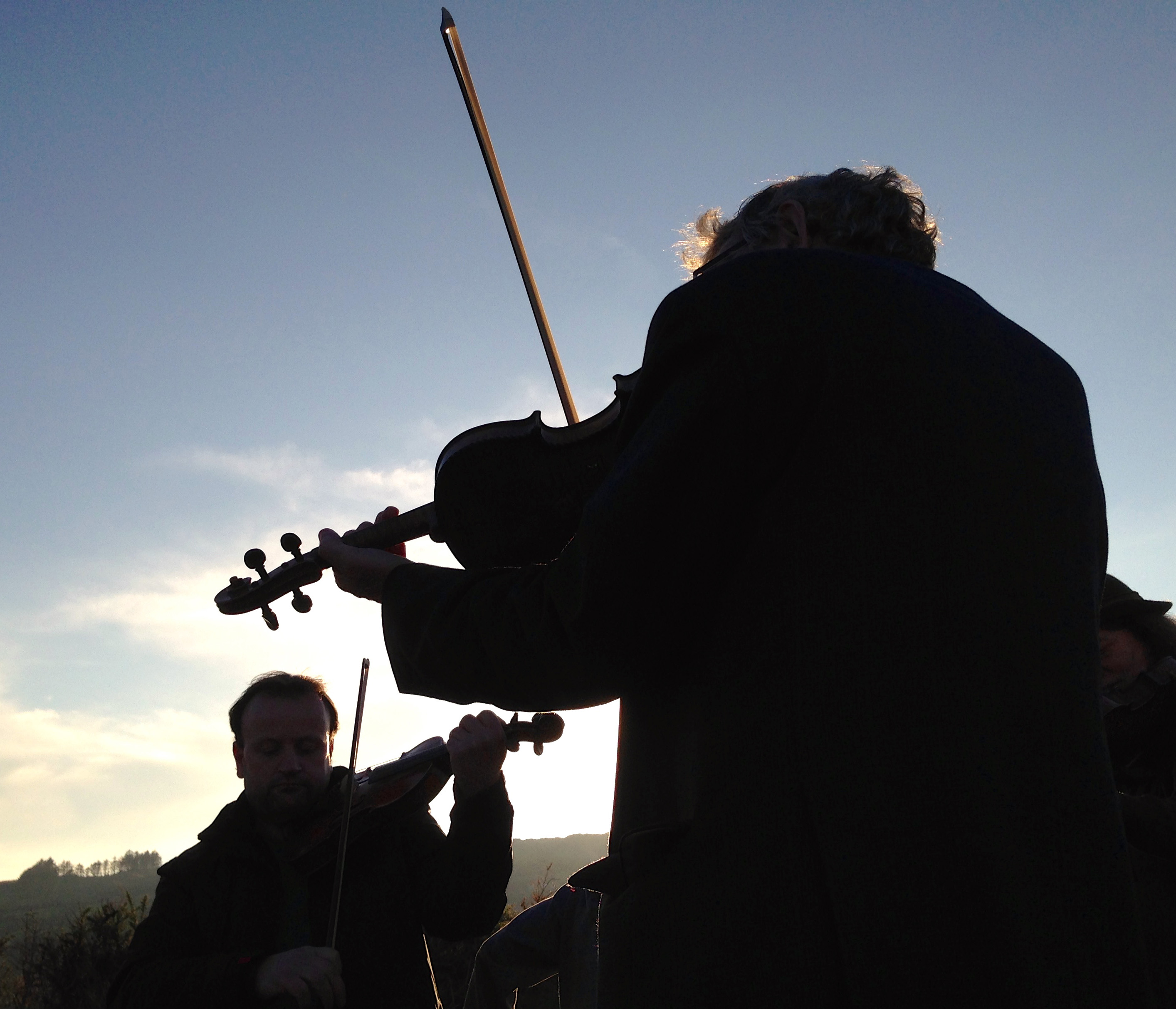
Now – dare I say it – almost 50 years on from hearing those first notes, here I am living on the shores of Roaringwater Bay and I am more than ever immersed in the music. Still it’s the fiddle that’s ubiquitous, wherever I go and whatever I listen to.

Fiddles to the fore: Friday night session in Ballydehob

I started to learn the ‘violin’ when I was 11 years old. It wasn’t a fruitful venture – I had given it up within the year and moved on to the piano. I suppose I have just always been happiest with an instrument that only requires you to press a key or a button to get exactly the right note. But I am filled with admiration for anyone who plays the fiddle – who is able to perfectly pitch the notes, and then ‘bend’ the music when the mood requires it. You can’t ‘bend’ steel reeds!

The Rakes dance band, founded in 1956 – Reg Hall, Michael Plunkett and Paul Gross. They introduced me to Irish dance music back in the day… They are still going strong! Reg Hall was responsible for the Paddy in the Smoke recordings, together with Bill Leader

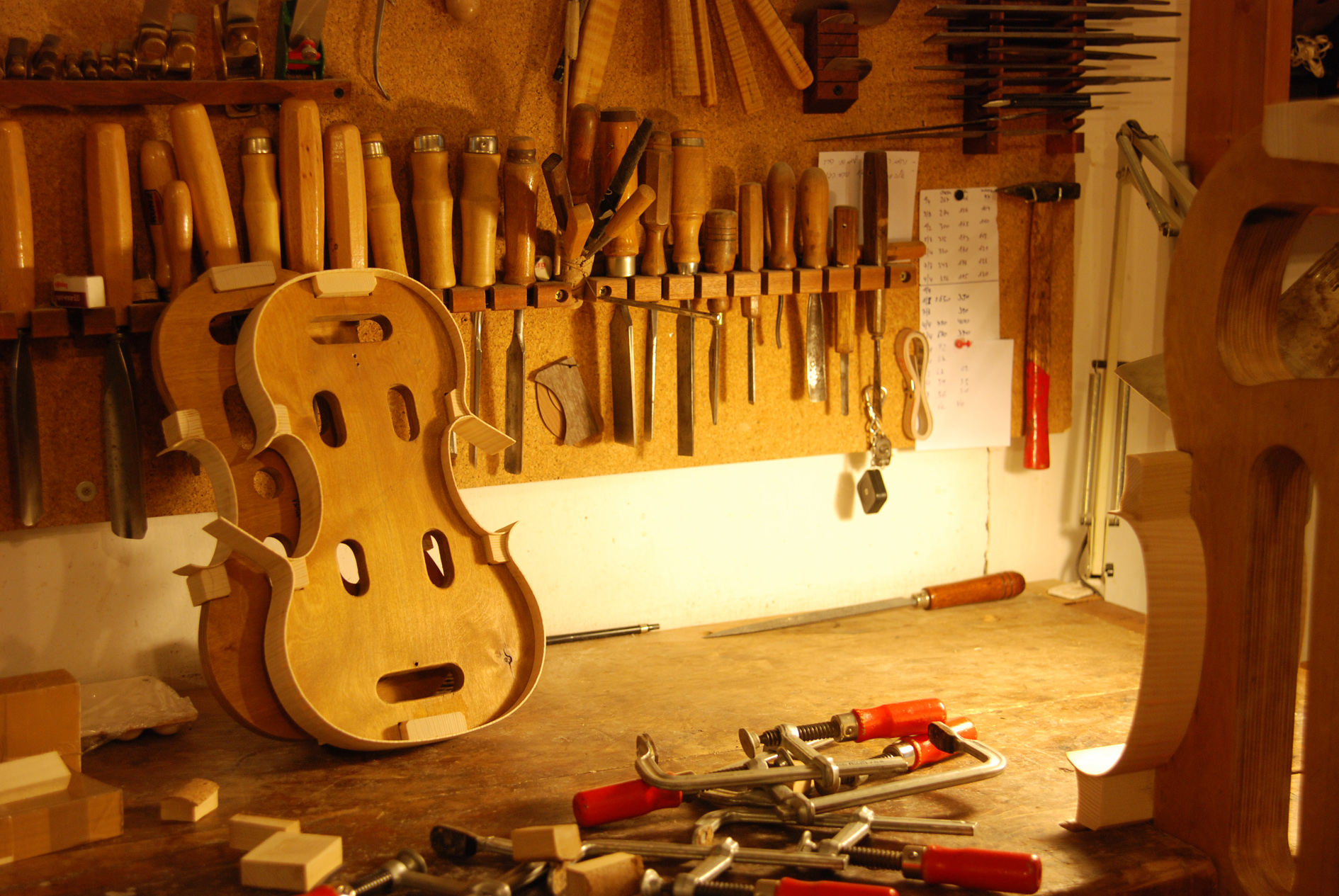
A fiddle is a violin – it’s the same instrument. Generally, classical players of the violin call it by either name, but traditional music players invariably call it a fiddle. It’s a beautifully constructed instrument with a feminine, flowing shape – a piece of craftsmanship which has been made the same way for 500 years. A seventh century Irish poem The Fair of Carman describes ‘…Pipes, fiddles, chainmen, Bone-men and tube players…’ but we don’t know what the fiddle was at that time. An excavation in Dublin during the 18th century uncovered a fiddle and bow dating from the 11th century: this is the oldest bow known in Europe – the bow is of dogwood and has an animal head carved on the tip.

workshop

The violin maker’s workshop (www.violinist.com)

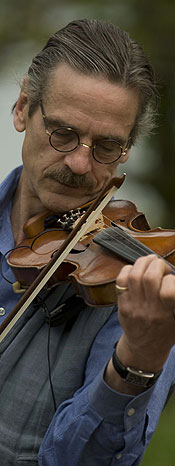
Can anyone learn to play the fiddle? Probably – with sufficient patience and perseverance – and a bit of musicality. But it takes very particular skills to put The Music into the instrument. We are immersed in good fiddling around here: we have so many music festivals – Baltimore Fiddle Fair, Masters of Tradition, Chief O’Neill’s, Ballydehob Trad Fest – right on the doorstep. The whole gamut of different regional styles and techniques is here for us to take in. If you have half an hour or so to spare, it’s well worth looking at this YouTube video dating from 2008: firstly, you’ll see Jeremy Irons learning to play traditional Irish fiddle, and you’ll see his mentors, including maestro Martin Hayes. But Jeremy lives in Kilcoe Castle, just over the hill from us – so you can also get a flavour of life down here in Roaringwater Bay – immersed in the sweet fiddle music…

left


Shadows and Stone in Action

Ken Williams - capturing the moment

Ken Williams – capturing the moment

Shadows and Stone is the undisputed champion of prehistoric photography sites in Ireland. The work of photographer Ken Williams, it contains an enormous number of high-quality images from Ireland, England and Wales, and Portugal. Within Ireland, the site is organised by the various types of monuments (passage graves, stone circles, rock art, etc) and there are also galleries devoted to solar phenomena such as the Equinox at Loughcrew.

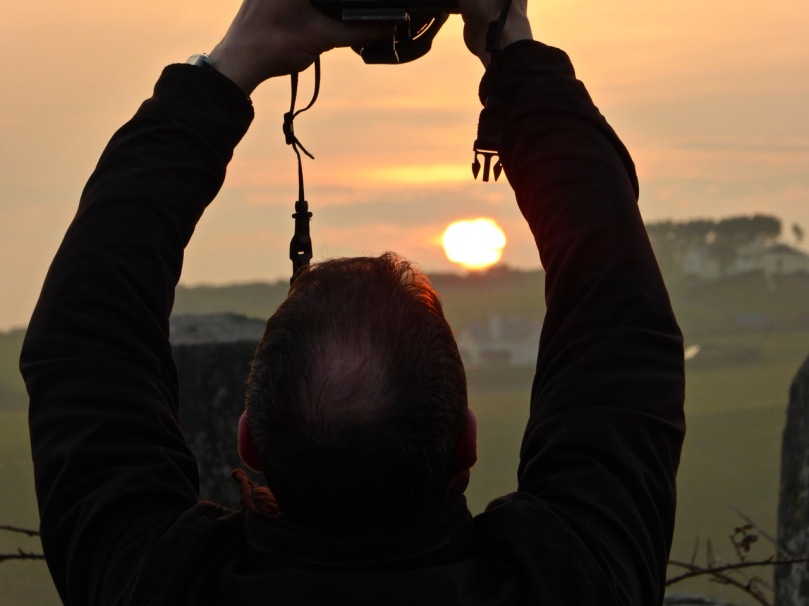
Ken and Robert: getting ready for sunset at Bohonagh

Ken and Robert: getting ready for sunset at Bohonagh

Ken’s work on rock art is astounding. We know first hand how difficult it is to get good photographs of the carvings. Many of them are covered in lichen, obscuring all the detail, and can really only be discerned in long slanting light, such as at sunrise or sunset. Ken uses artificial lighting to capture his excellent images and when we first met him a couple of years ago we asked him how he packed all those lights up to the remote locations in which a lot of rock art is found. He grinned and opened his backpack. “This is my equipment,” he said, “It’s all I use.” Essentially his gear consists of a camera, flashes, and tripods.

flashes strategically deployed

flashes strategically deployed

If you want to see the difference between what Ken captures and what us ordinary mortals manage to do, take a look at our photograph below of the highly carved panels at Derrynablaha in Kerry. Hard to see anything on them, right? Now click here for Ken’s version!

Derrynablaha Panels 5 and 6. Probably most highly carved pieces of rock art in Ireland. Can you see it?

Derrynablaha Panels 5 and 6. Probably the most highly decorated pieces of rock art in Ireland. Can you see the carvings?

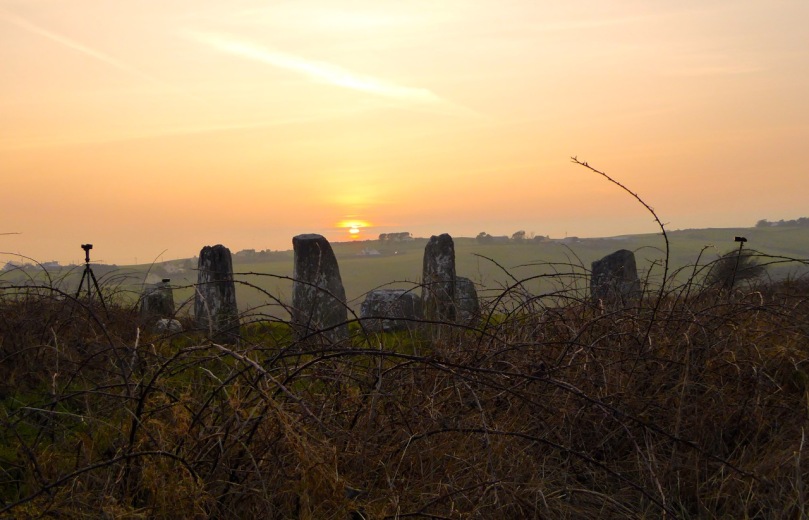
We met Ken this week at the Bohonagh Stone Circle: he was there to photograph the equinoctial sunset. It was a beautiful evening – perfect conditions to see the sun sink behind the recumbent stone, as it does in these axial stone circles at either the equinox or solstice.

Looking over the recumbent

Looking over the recumbent

It was a treat to see a master photographer at work and to have Ken explain how he gets those amazing shots. Since we had already had the opportunity to shoot the sunset last March, I knew how difficult it was to portray a scene when you’re aiming directly into the glare of the setting sun. It took a lot of processing afterwards before I could see both the sun and the stones in my shot, and by that time the sky was competely washed out. This time I concentrated on capturing the photographer at work. Ken, meanwhile, worked his usual magic – and here’s the result, included with his permission. Not only can you see everything, including the still blue sky, but his picture captures the mysterious ambiance of the setting and the occasion.

BohonaghEquinox15-12

We hope to tag along with Ken again in the future. Meanwhile – our thanks to him for an inspirational day and the great rock art chat.

Thanks, Ken!

Thanks, Ken!

By the way, it’s been a week of sky photography here in West Cork – first the equinox and then an eclipse! My neck hurts now.

Solar eclipse, West Cork, March 20, 2015

Solar eclipse, West Cork, March 20, 2015