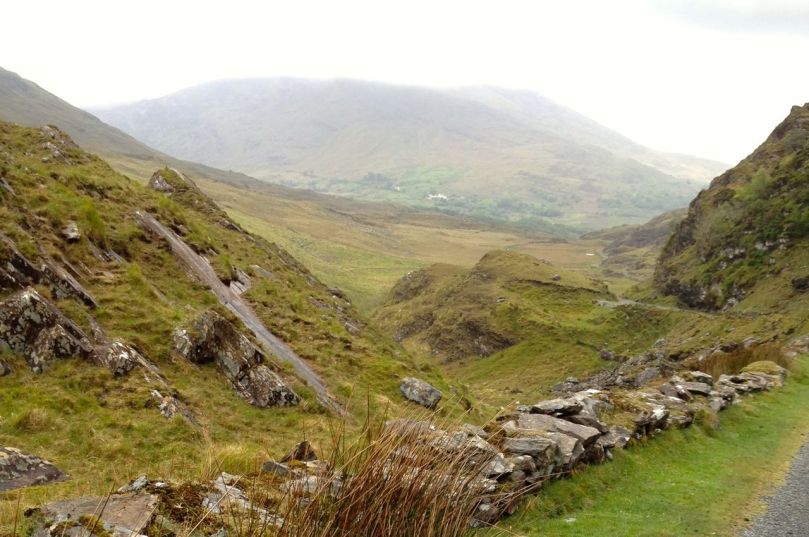
Walking the Sheep’s Head Way

COVER-FRONT

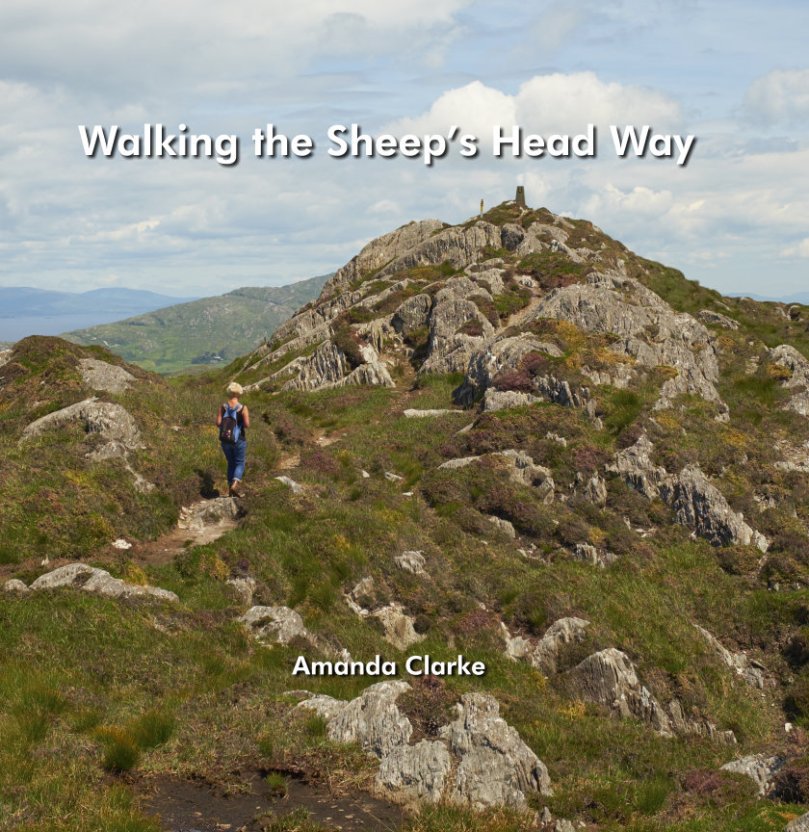
The definitive guide, by Amanda Clarke

NOTE: Since we wrote this post Amanda and Peter have brought out a second edition, including all the loop walks.

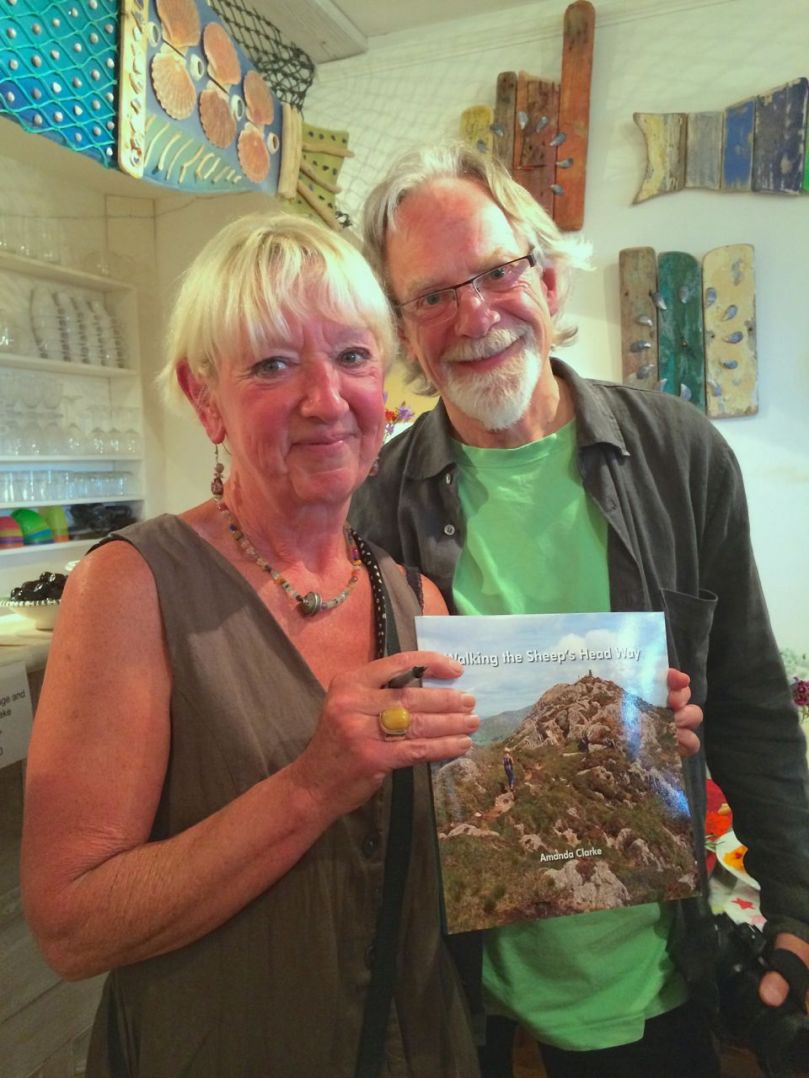
This week we attended a very special event – the launch of a new book, Walking the Sheep’s Head Way, written by Amanda Clarke and designed by Peter Clarke. Readers of this blog will be familiar with Amanda and Peter by now, as we have shared many adventures, hikes and explorations with them. 

Amanda and Peter at the launch

Amanda and Peter at the launch

For twelve years now they have been keen photographers and chroniclers of the Sheep’s Head: the book is a natural outgrowth of the passion they have for the peninsula.

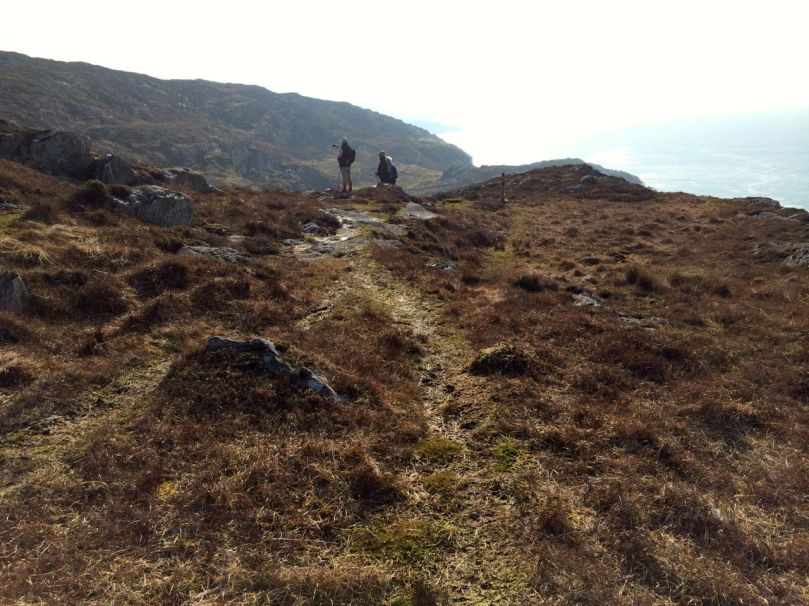
Along the north side

Along the north side

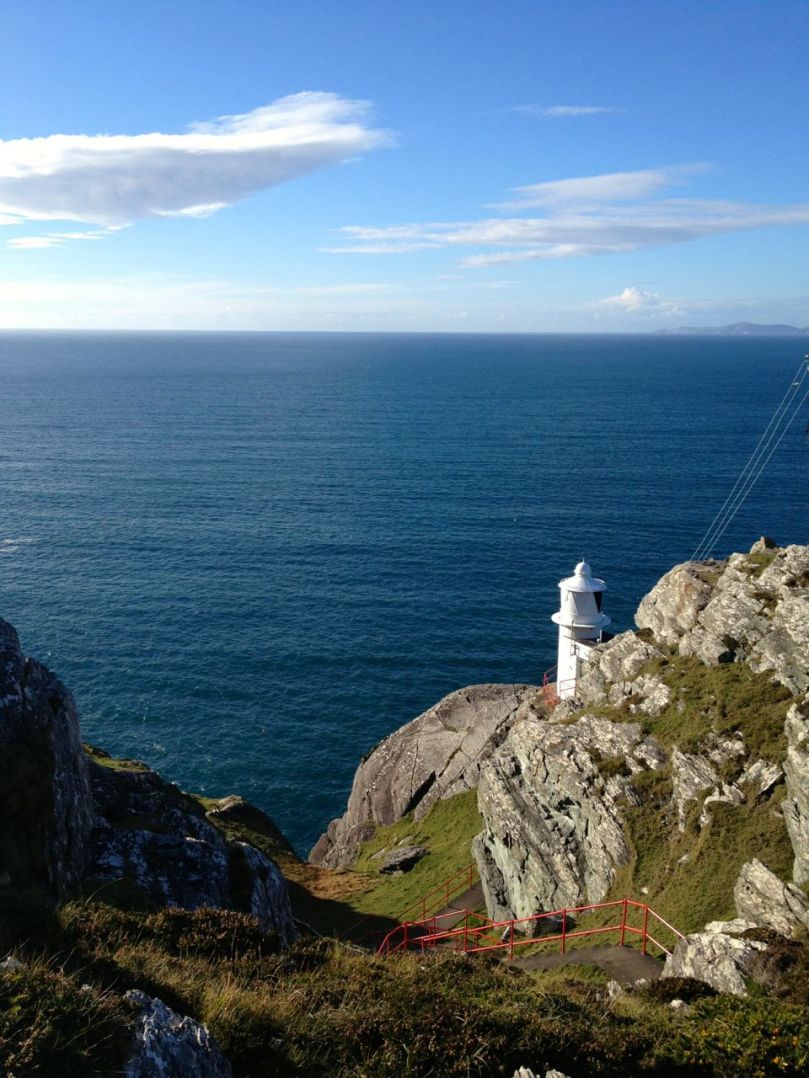
Starting and ending in Bantry, the book takes us on the original Sheep’s Head Way, beginning along the north side, out to the lighthouse, and back along the south side. It is divided into 11 sections, each one a separate walk, although they can be combined. Each walk is mapped, and because the Way is so clearly marked, you can’t go wrong. No, really!

Out to the lighthouse!

To the lighthouse!

Amanda has immersed herself in the history, geography, flora, birdlife, archaeology, folklore and landscape of the Sheep’s Head. (Indeed, it is difficult to live here and NOT be fascinated by it all and carried away by the sheer magnificence of the scenery.) Each walk is accompanied by her observations – what to look out for, the meaning of a particular feature, the history of the area, stories of the old days.

As she has done for Robert and me, she leads the reader through the walk as if she’s chatting along beside you like an old friend, filling you in on what’s around you or encouraging you to pause and just listen. 

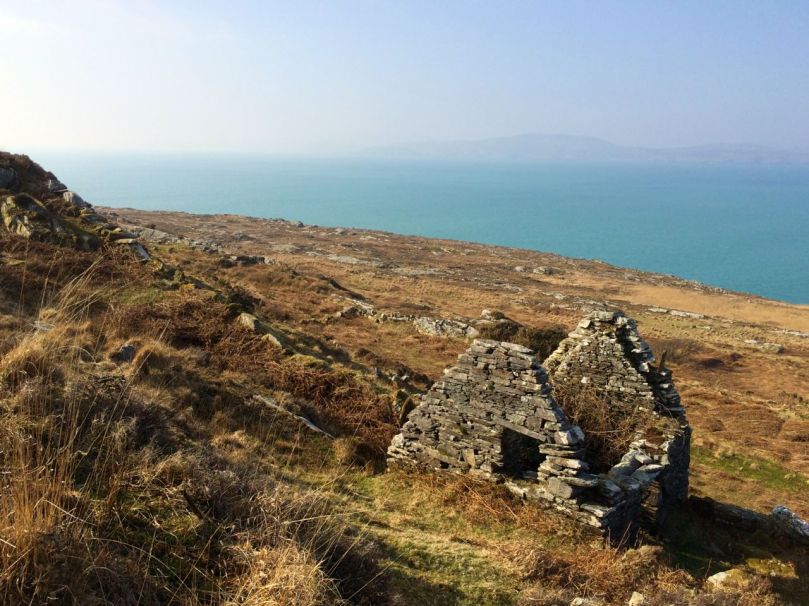
Abandoned houses at Crimea

Abandoned houses at Crimea

Each walk has its own character – whether it’s a holy well, a famine graveyard, an abandoned settlement, a prehistoric stone circle, old mine workings or signal towers – Amanda provides the essential commentary to enhance your understanding. 

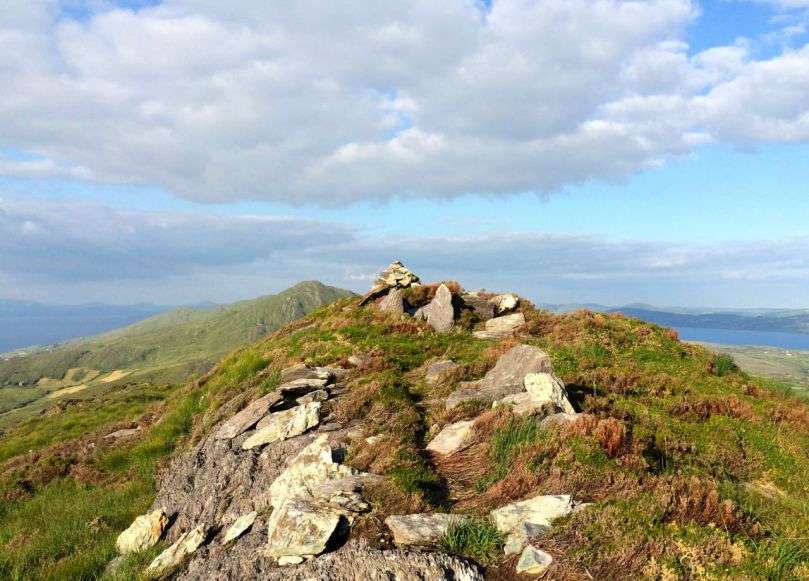
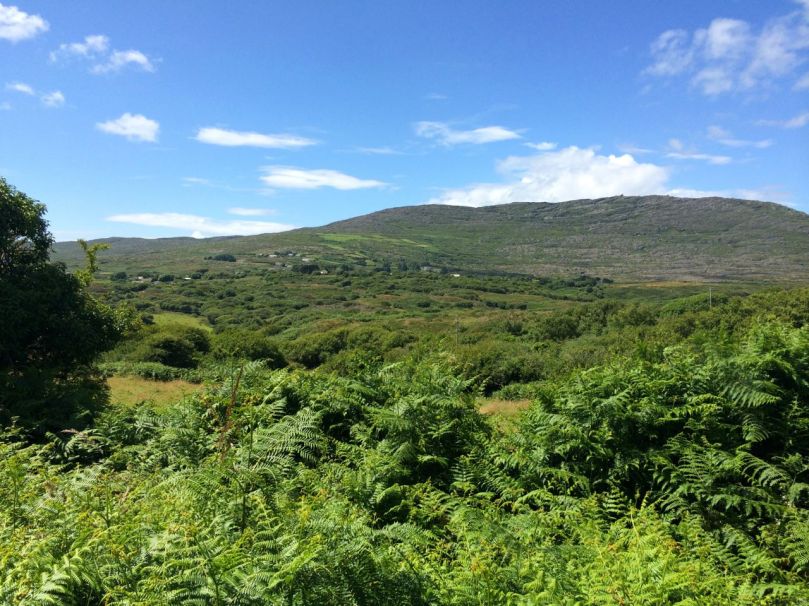
The walks encompass high ridges with sweeping views, cliffhangers with yawning drops to the sea below, soft boggy trails, seaside ambles, and stretches of boreen fringed with wild flowers. 

A ridge walk

A ridge walk

The Sheep’s Head Way has been recognised in Ireland as an area of outstanding natural beauty, and in Europe as a Destination of Excellence (one of the EDENs). And yet, you can walk for miles and never meet another soul, especially in the off season. 

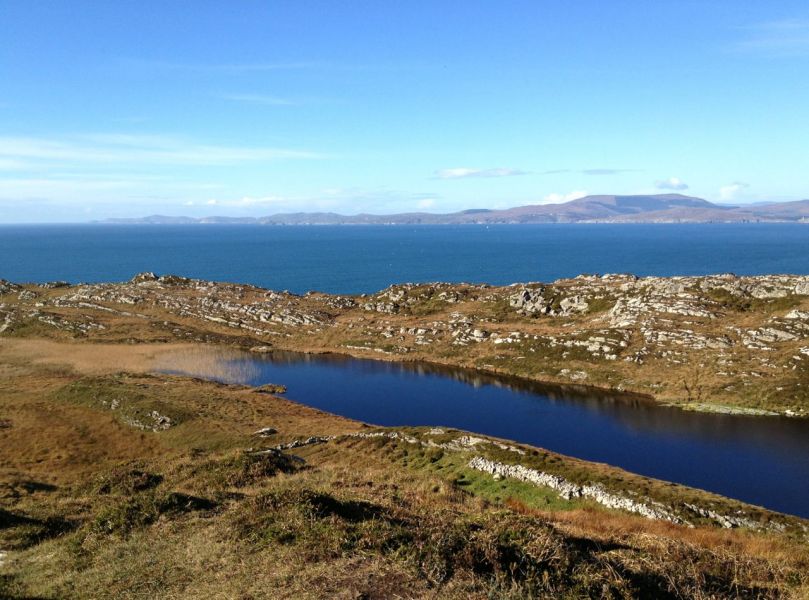
Looking towards the Beara

Looking towards the Beara

If you’re contemplating a holiday in Ireland, or if you’re already here and thinking about dropping down to see us in the Wilds of West Cork, pick up a copy of this book (buy it on Amazon or at one of our great local book shops) pack a pair of stout boots, check out Living the Sheep’s Head Way, and be prepared to be blown away. 

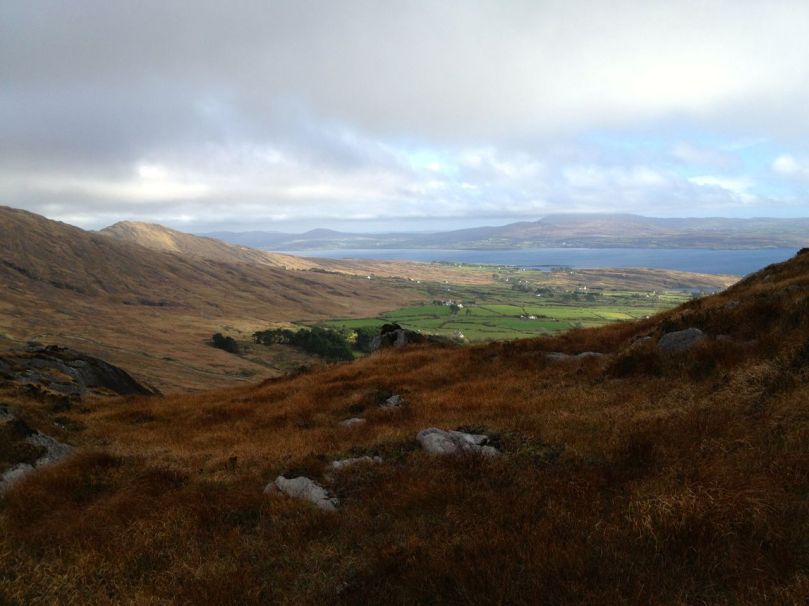
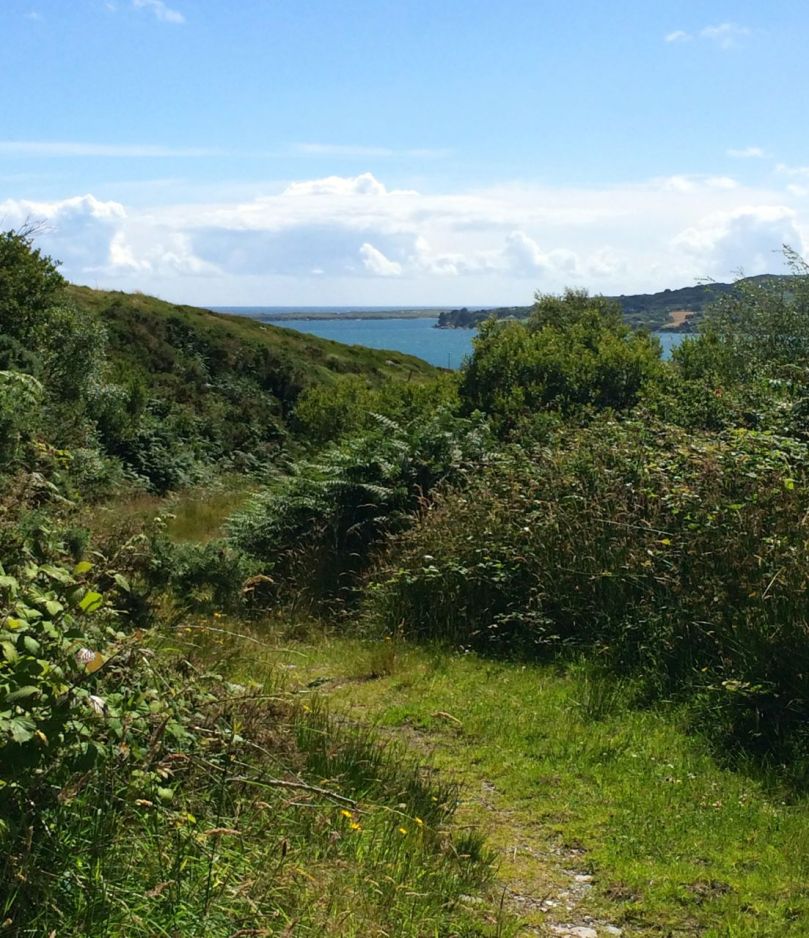
Looking down to Dunmanus Bay

Looking down to Dunmanus Bay

Let us know when to put the kettle on.

On the Butter Road

The old Butter Road runs between Schull and Ballydehob

The old Butter Road runs between Schull and Ballydehob

For most of its history, roads were a hit-and-miss affair in Ireland. We didn’t get the great Roman road builders, and anyway, it was easier to get around on the water. Some routeways led to Dublin or Tara in the early medieval period, but a real road system didn’t develop until the 18th Century with the building of turnpike highways between major cities. In the 18th Century, Cork became the largest centre for the butter trade in the world and needed transportation corridors to ensure butter could get from remote rural areas to the Butter Exchange (now a museum) in the city. The Butter Roads were built from the 1740s on, and provided an efficient and speedy (for the time) route to market. Butter was packed in firkins (40 litre barrels), stacked onto carts, and transported from West Cork and Kerry to Cork City to be loaded onto ships for Australia and America.

The Old Mill

The Old Mill

Here and there, traces of the old butter roads remain. One stretch runs between Ballydehob and Schull and in the last few years a project to open it as a walking route has been spearheaded by students of the Schull Community College. It starts at the Old Mill, now open as a gallery by our friend, the esteemed wildlife photographer, Sheena Jolley. Sheena has enhanced the mill stream and stabilised the workings, still intact in her basement. A visit to her gallery is a great way to start or end your walk.

Robert on the stepping stones

Robert on the stepping stones

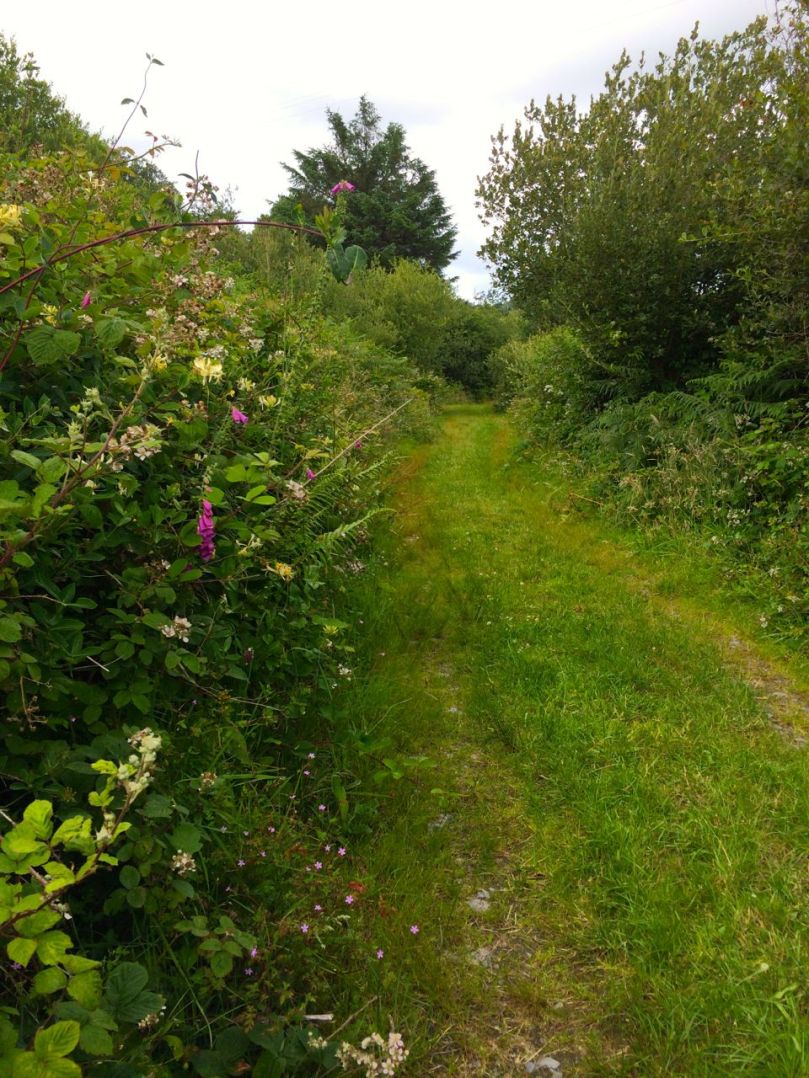
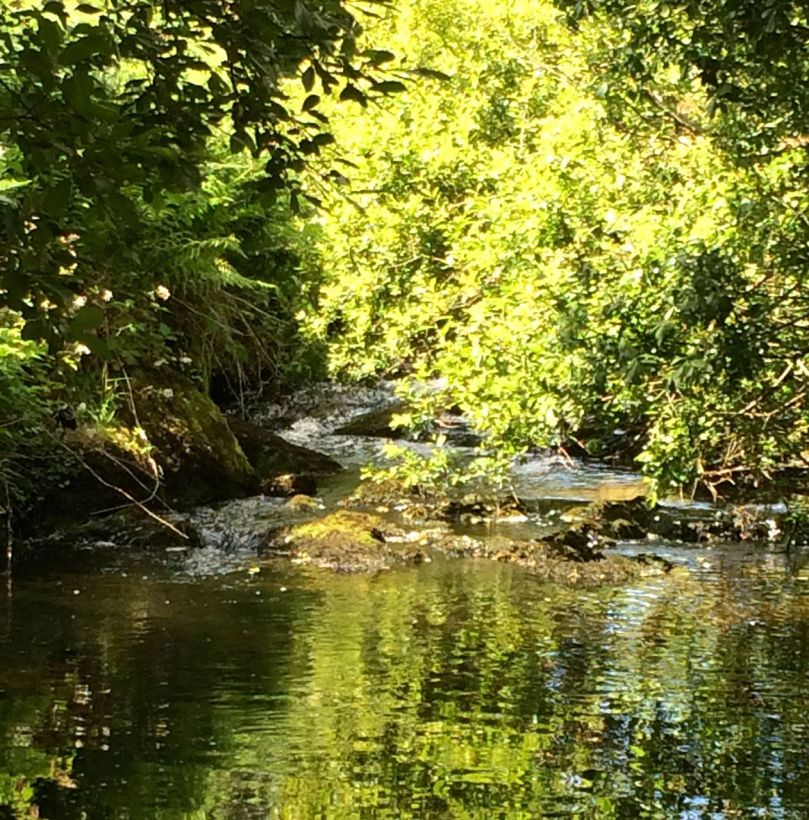
Setting out from the mill we were immediately on the old green road, soft underfoot, running between hedgerows alive with wildflowers, winding gently uphill. A plaque tells the story of the butter roads and of the current project. Gurgling and murmuring, the mill stream is on your right until you come to cross it. This is accomplished on stepping stones where we found it impossible not to linger and contemplate the gentle water. 

The mill stream

The mill stream

Onward and upward, passing an abandoned farmhouse, and marvelling at the variety of flowers along the route. Having been presented with the superb Zoë Devlin’s The Wildflowers of Ireland (thank you, Amanda!) I can now identify most of them, so here is a selection – captioned, by dint of my new-found knowledge. (Mousing over the pictures will bring up the captions, clicking on them will take you to full size images.)

As the road ascends, we could look back towards Schull and Long Island, or north to Mount Gabriel. The sense of peace, of being in a place of age-old tradition, is palpable. 

Mount Gabriel

Mount Gabriel

Near the top of the hill we met the Newman family, setting out from their farmhouse to walk down to Schull. John and Helen grew up in this house, walking to school in Rossbrin (about 4 km away) every day and John still lives in the house. He has a fascinating collection of old tractors and an obvious interest in farm machinery of every kind. They told us they had the butter road all to themselves in the old days, but now it’s quite popular and they are glad to see it used and enjoyed. A Mr Henry Ford once lived in the farmhouse, related to THE Henry Ford, whose father came from Ballinascarthy, near Clonakilty. 

Three generations of the Newman Family

Three generations of the Newman Family

The Butter Road is an ancient right-of-way, but access depends on the goodwill of those, like John Newman, and like Paddy Hayes whom we met on the way down, whose farms and fields lie along the route. This is a marvellous resource for the people of Schull and Ballydehob and we are grateful to those whose vision and hard work and generosity of spirit have made it a reality. 

If you want to experience the tranquility of the deep countryside, lovely views, and a sense of how the making of a road could connect far-flung communities to the wider world, we recommend an afternoon spent on the Butter Road. 

Walking back down: Long Island comes into view

Walking back down: Long Island comes into view

Cures and Curses

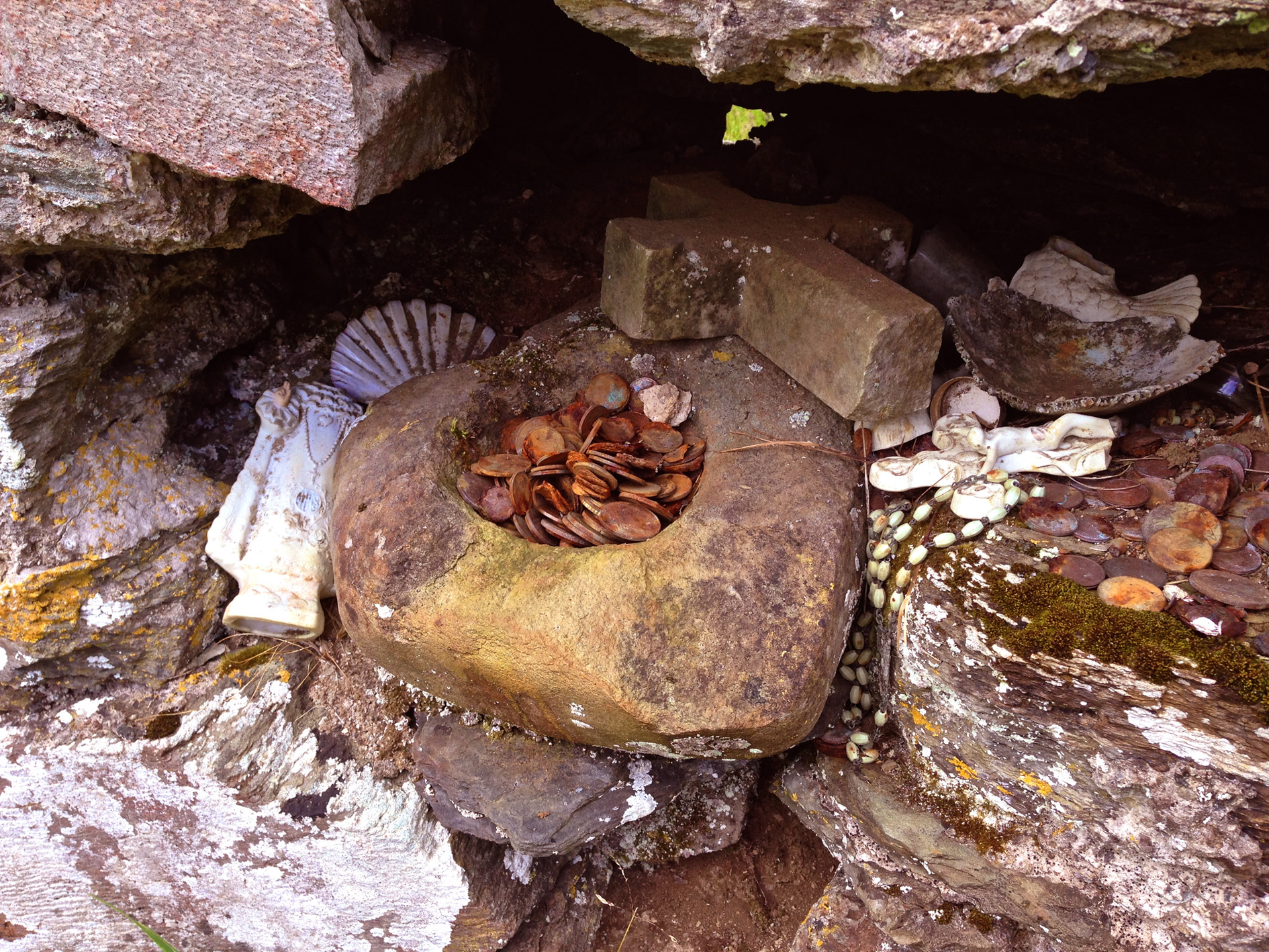
Wishing Stone at Maulinward

Wishing Stone at Maulinward

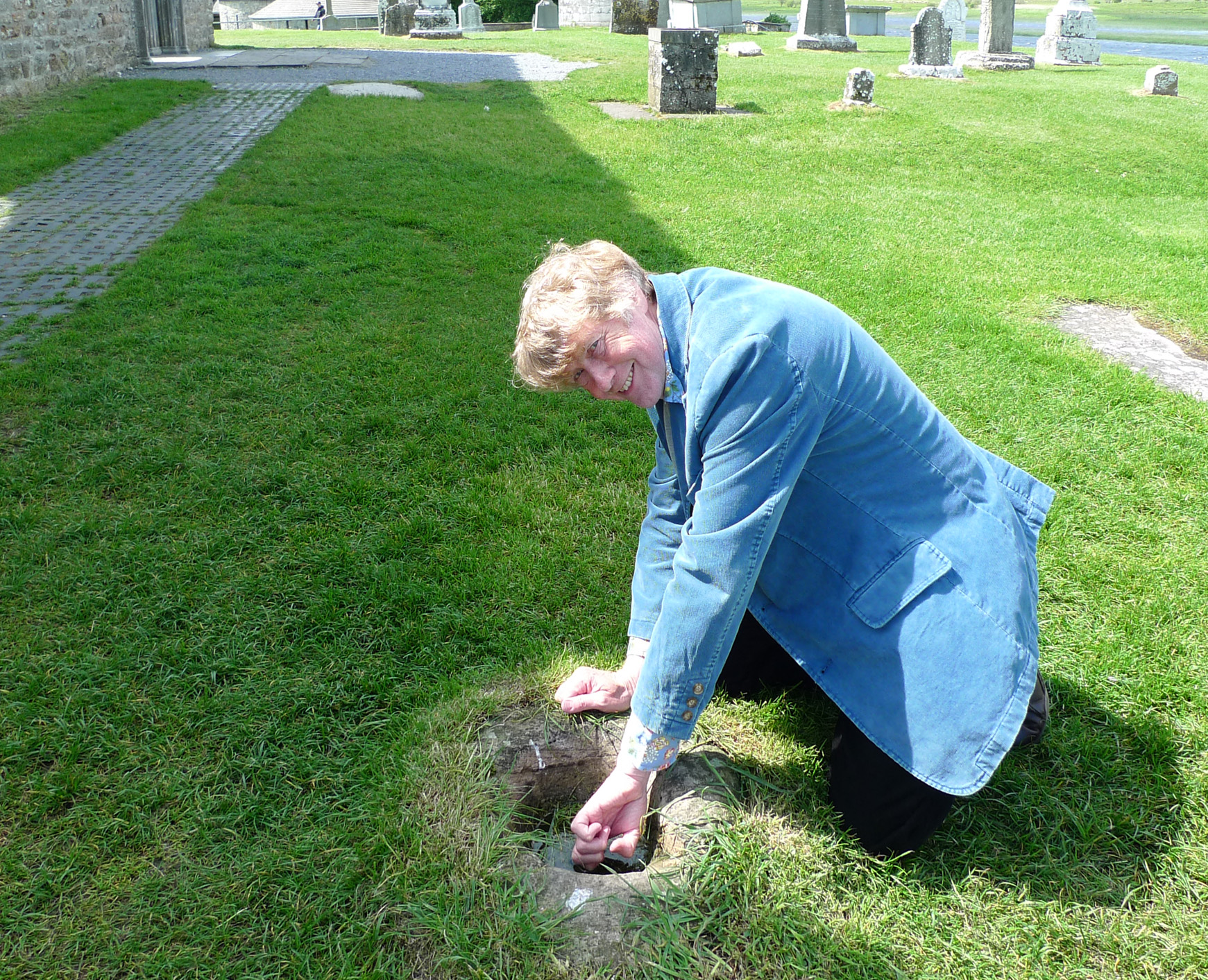
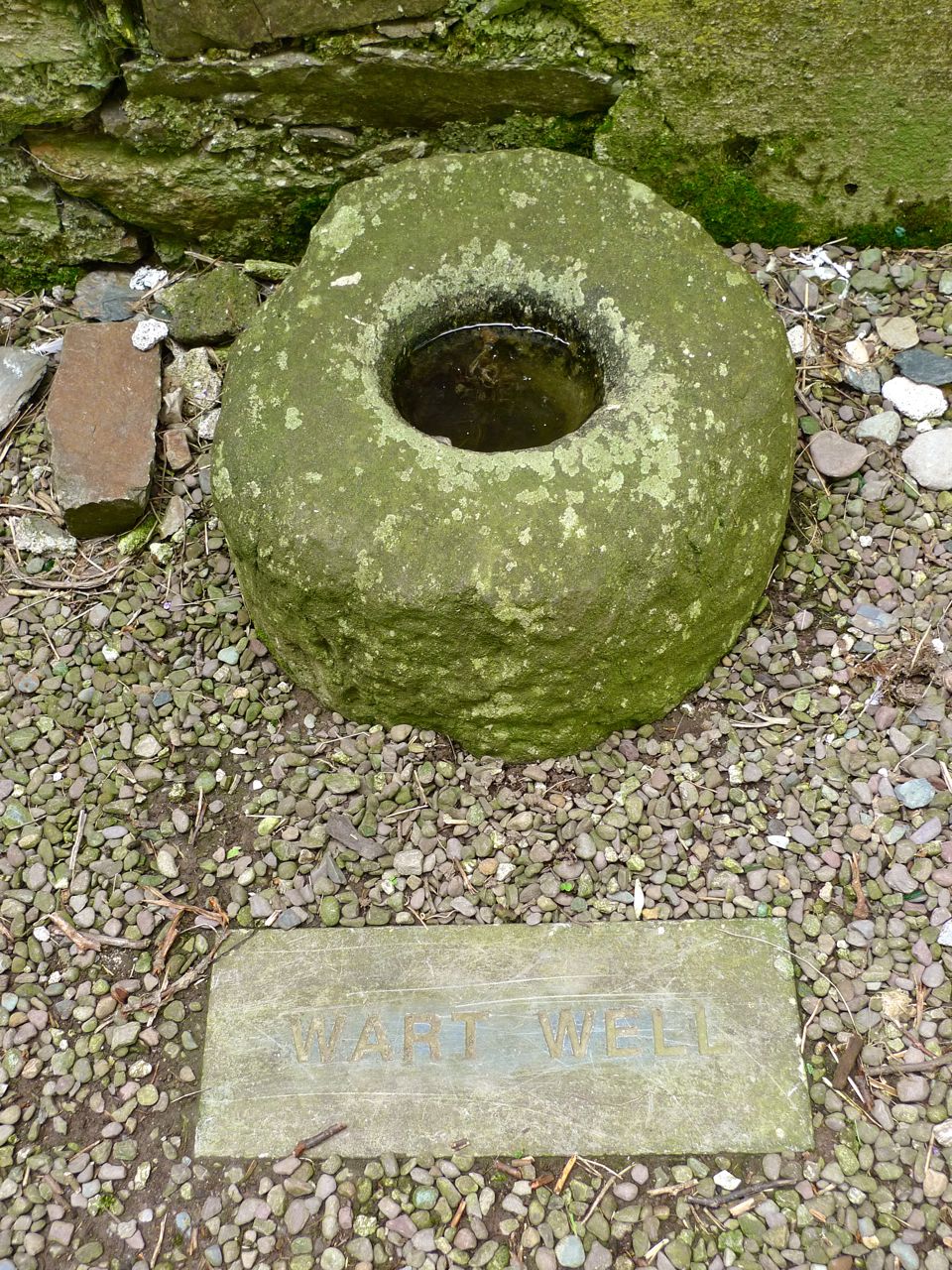
I am a firm believer in wart wells: there is one at Clonmacnoise, the holy centre of Ireland, and some years ago when I was visiting the place I dipped my finger – warts and all – in it. Within… well, perhaps it was two or three weeks… the warts had gone. The Cynics among you will be saying that they might have gone anyway, but I have had other warty experiences to reinforce my beliefs. When my daughter Phoebe was 11 years old and we were living back in Devon she had a really bad outbreak of warts on her hand. The doctor couldn’t recommend anything but our neighbour was very sure of what to do: take her to see Auntie Grace who lived up the lane. We duly knocked on Auntie Grace’s door and showed her Phoebe’s hand. “That’s alright, Dear” she said, and shut the door. That was all. But within a week (more or less) the warts had vanished completely, never to return.

Curing my warts at Clonmacnoise

Curing my warts at Clonmacnoise

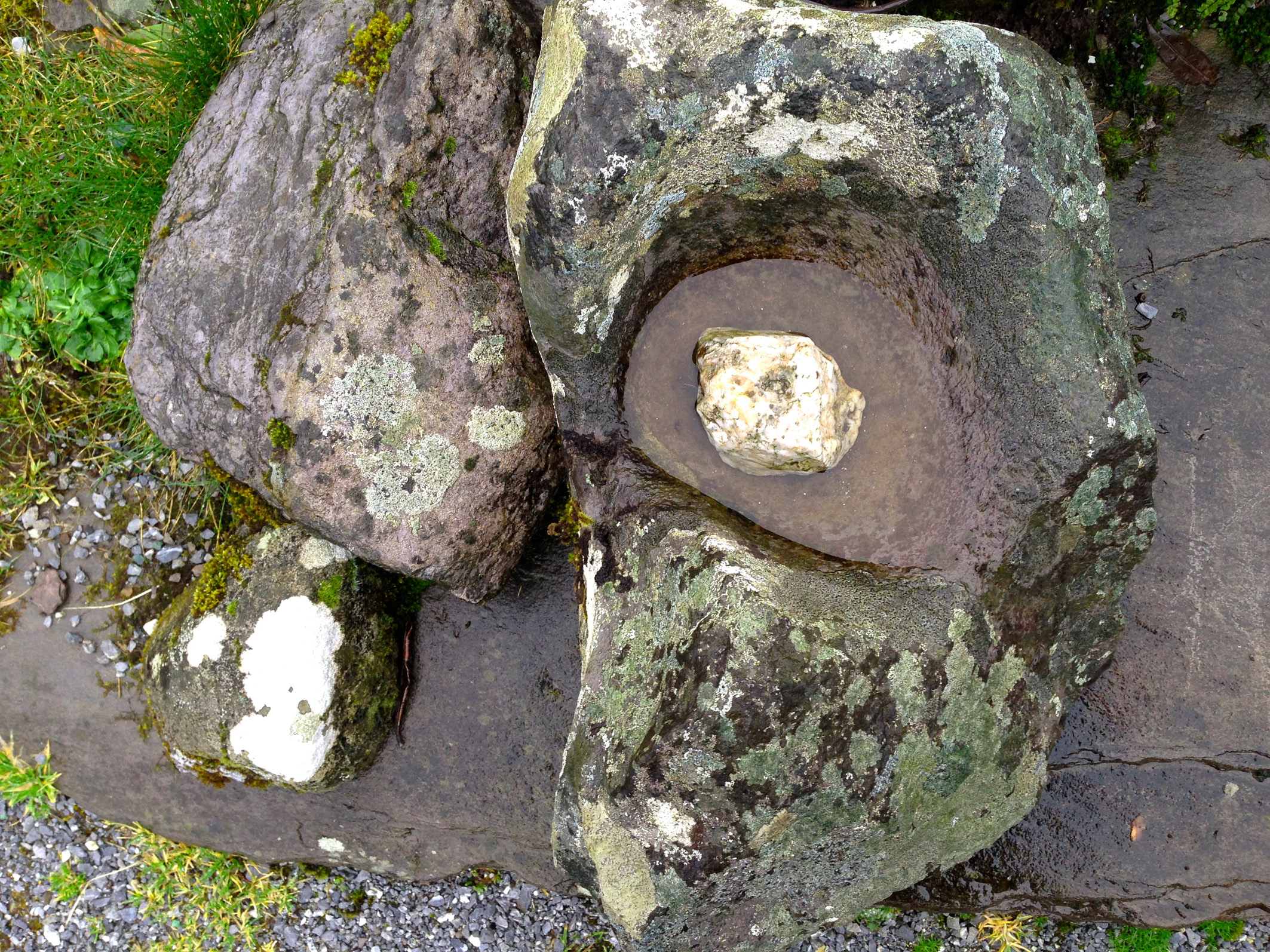
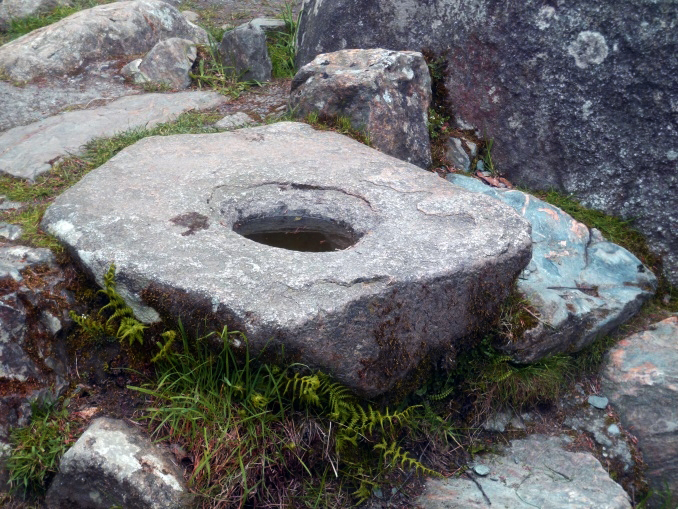
Bullaun Stones abound in Ireland. They are usually found at sites with ecclesiastical connections – as the two examples above (and this one), but this association does not reduce or affect their traditional uses: to cure or to curse. The Irish word Bullán means ‘bowl’ – a water container. At pilgrimage sites, such as St Gobnait‘s Well, Ballyvourney, the bullaun stones often hold smooth rounded pebbles – perhaps incised with a cross – which are turned around each time a pattern or procession is completed.

In the sixth century, the Council of Tours ordered its ministers “…to expel from the Church all those whom they may see performing before certain stones things which have no relation with the ceremonies of the Church…”  Such an order doesn’t seem to have prevented folk traditions of curing continuing into the twenty-first century.

Wart Well at Timoleague Friary

Wart Well at Timoleague Friary

Traditionally, in Ireland similar stones are used for less benign purposes than curing warts or other maladies. Thankfully not in West Cork but in faraway Cavan a group of bullaun basins and stones at the ruined Killinagh Church are associated with curses, as explained here by Harold Johnston in a 1998 interview: “…if you wanted to put a curse on someone, you turned the stones anti-clockwise in the morning.” However, the curse had to be ‘just’ otherwise it came back to curse you in the evening!

An 1875 drawing of the Killinagh Cursing Stones

An 1875 drawing of the Killinagh Cursing Stones

Nearer to home, in County Cork, are the ‘cursing stones’ known locally as  the Clocha Mealachta – not in this case associated with bullaun basins but kept hidden under a slab of rock, which seems a bit sinister to me.

Hidden Cursing Stones at Labbamolaga, Co Cork

Hidden Cursing Stones at Labbamolaga, Co Cork

I prefer the legends which show bullaun stones as a force for good: in more than one location they are said to be associated with a local saint. St Kevin of Glendalough (in County Wicklow) drank every morning from the Deer Stone, a bullaun which miraculously was always filled with milk.

Deer Stone at Glendalough

St Kevin

St Kevin


Baby Jumping

eurospar

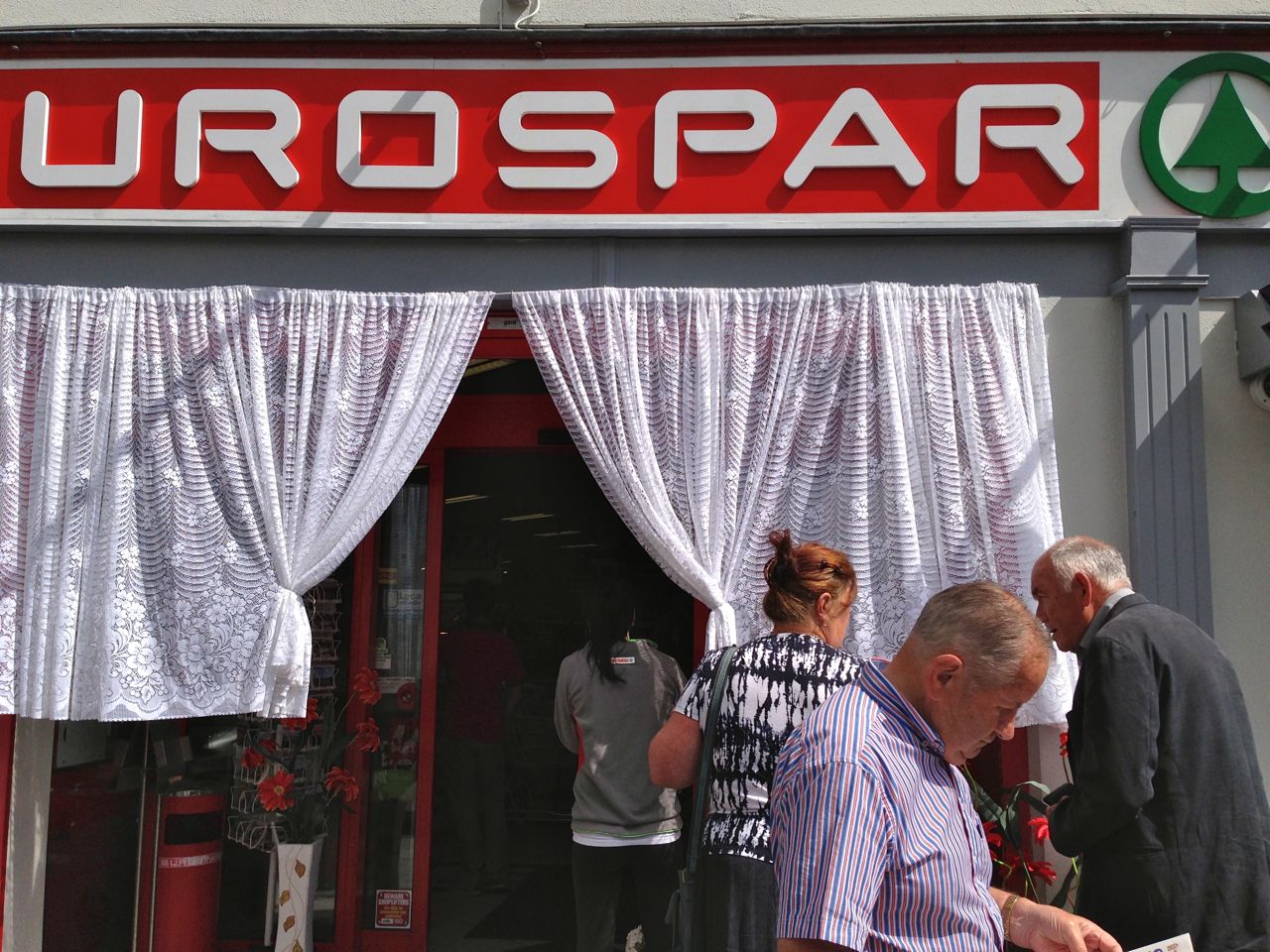
There was something odd about the Eurospar in Schull when we went to get our paper this morning…

Tell me.

There were lace curtains across the doors – on the outside!

A new decorating fashion for Schull? It’s a trendy place you know.

table

street

spar

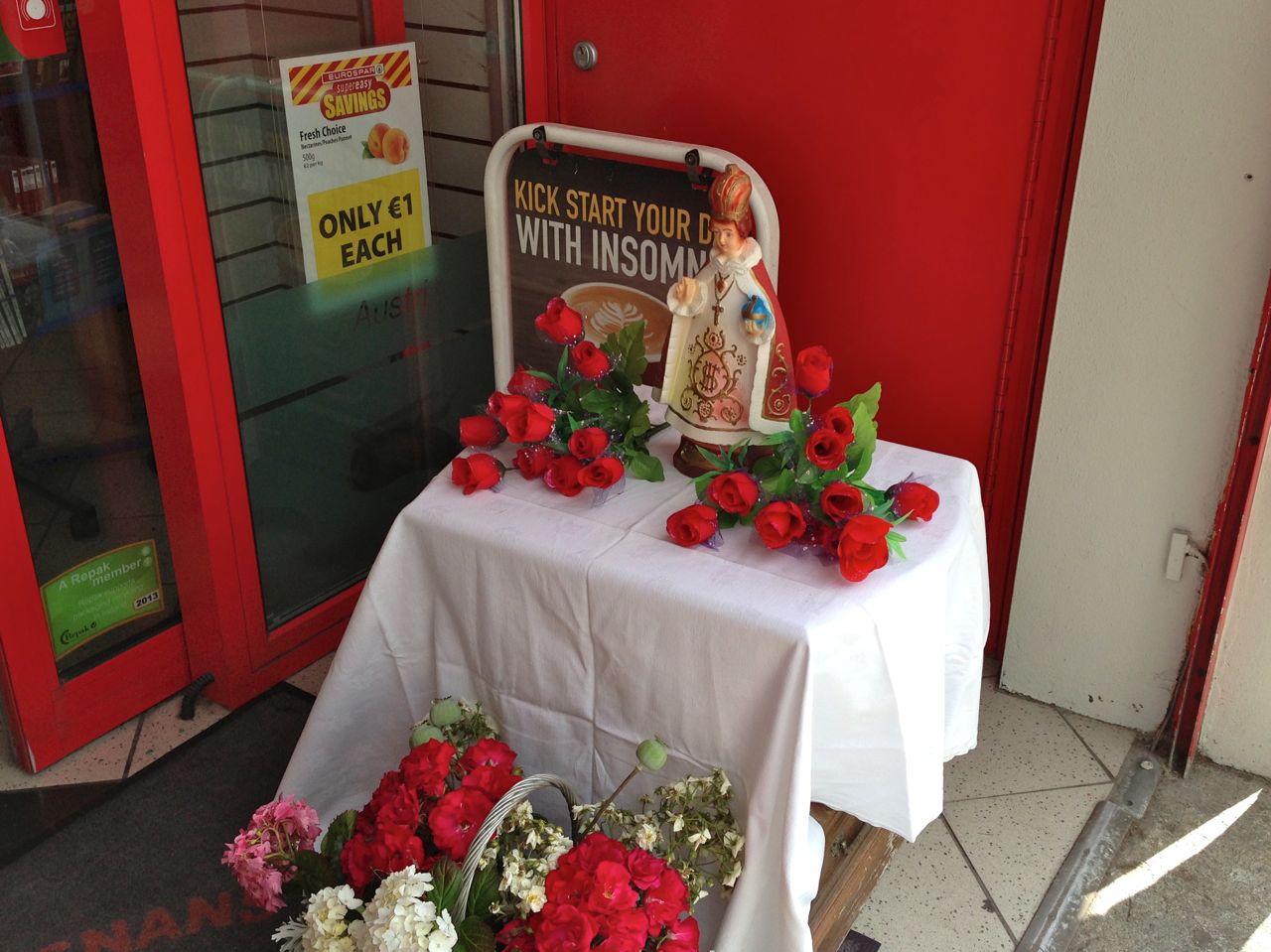
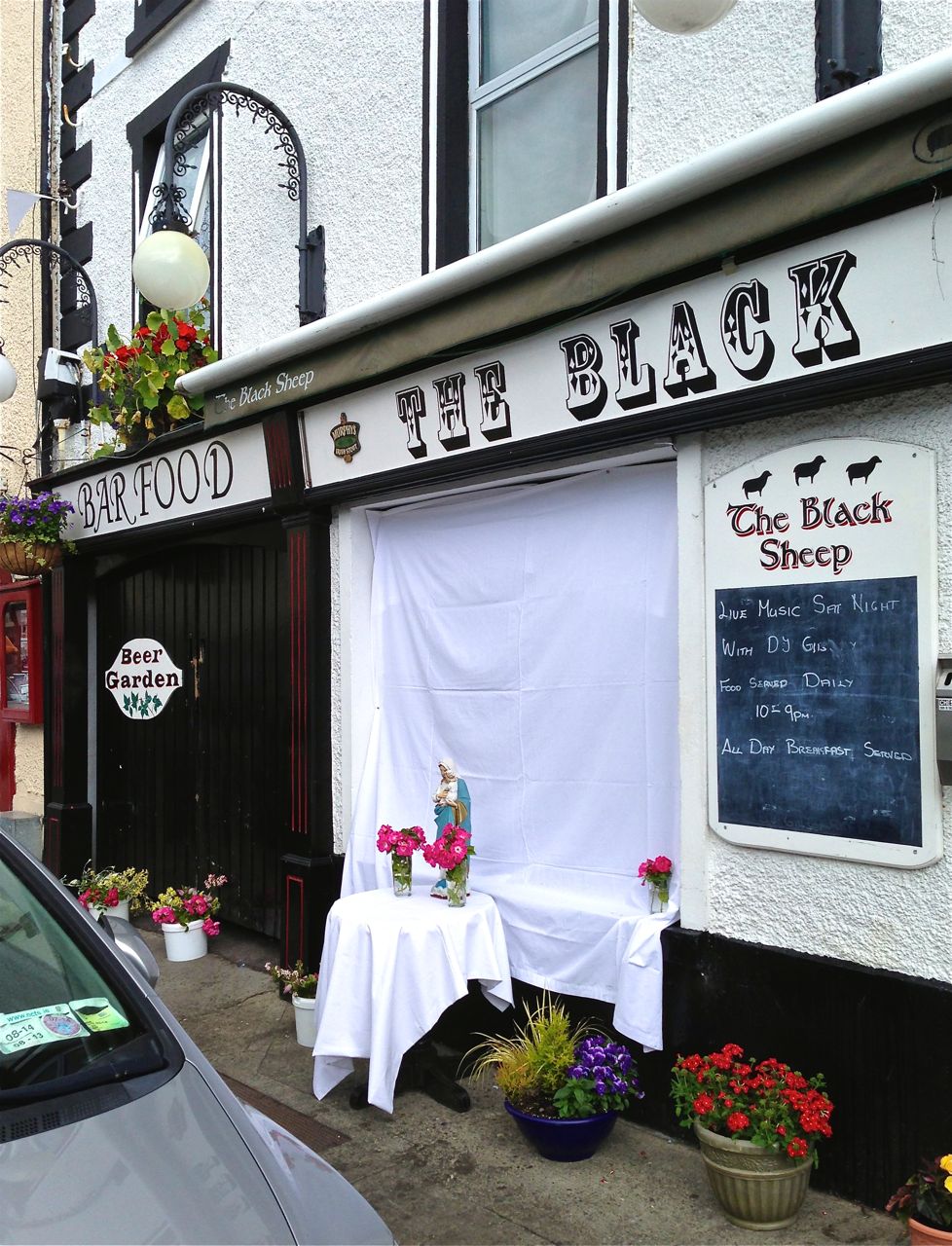
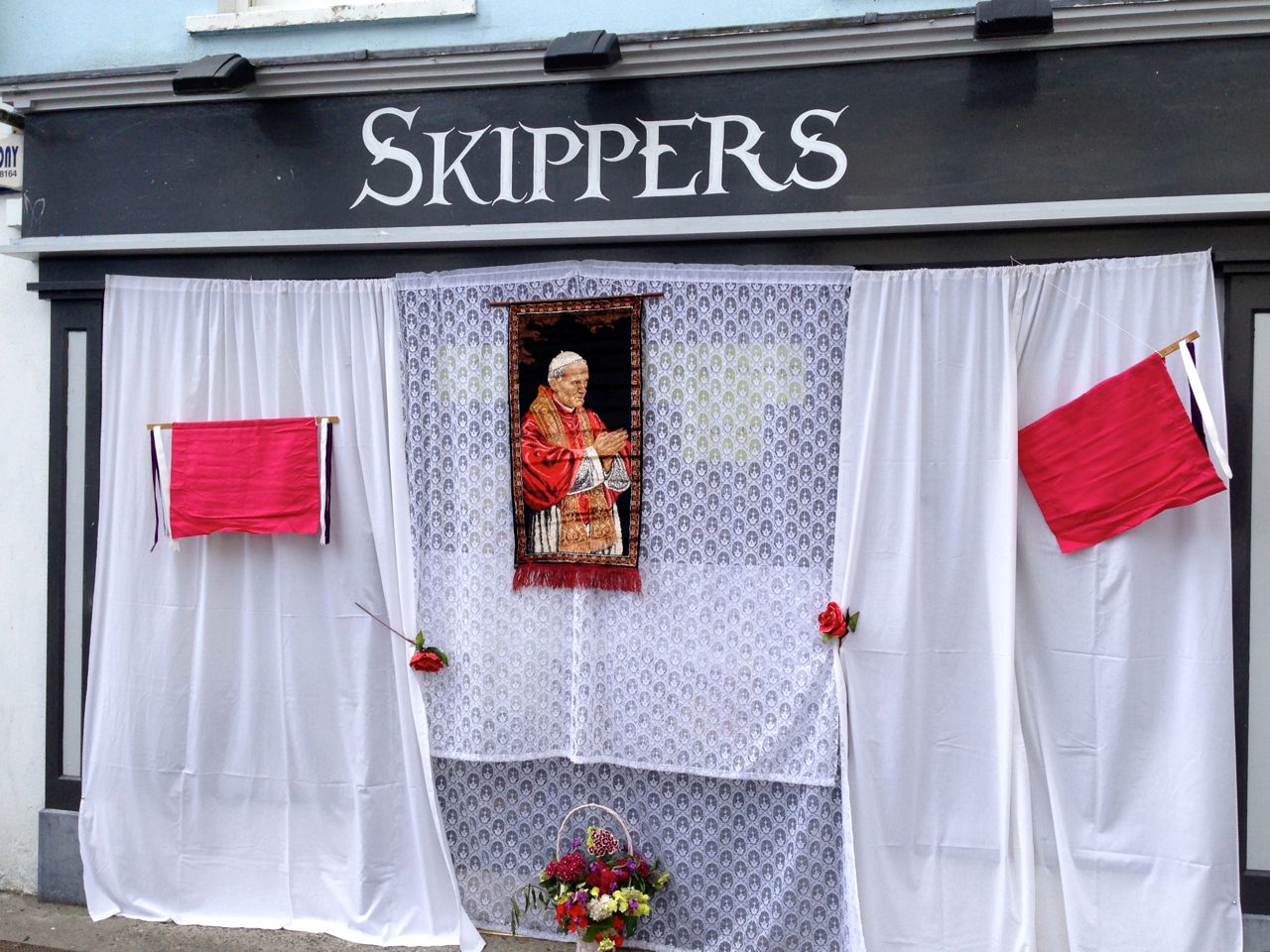
But also a table outside with flowers and an Infant Jesus of Prague statue on it… And similar treatments to shops and pubs all down the street.

Aha! – Religious connections: is it a Saints Day?

Well it is – by chance – St Peter’s Day, 29 June. But that’s not what this was all about.

How did you know?

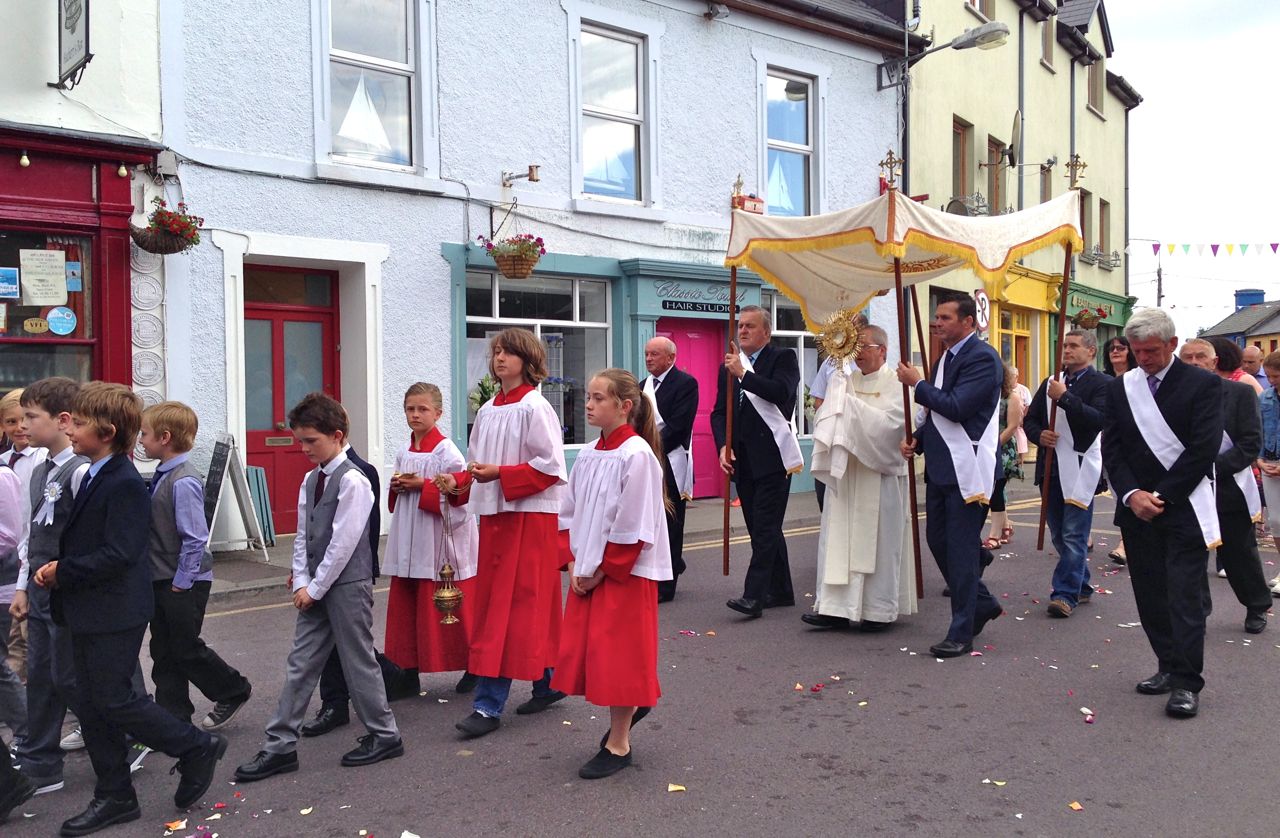
Simple: we asked someone on the street, and they told us that there was going to be the annual Corpus Christi procession.

procession

leadingcanopy

petals

Oh! Isn’t that a big thing in other countries?

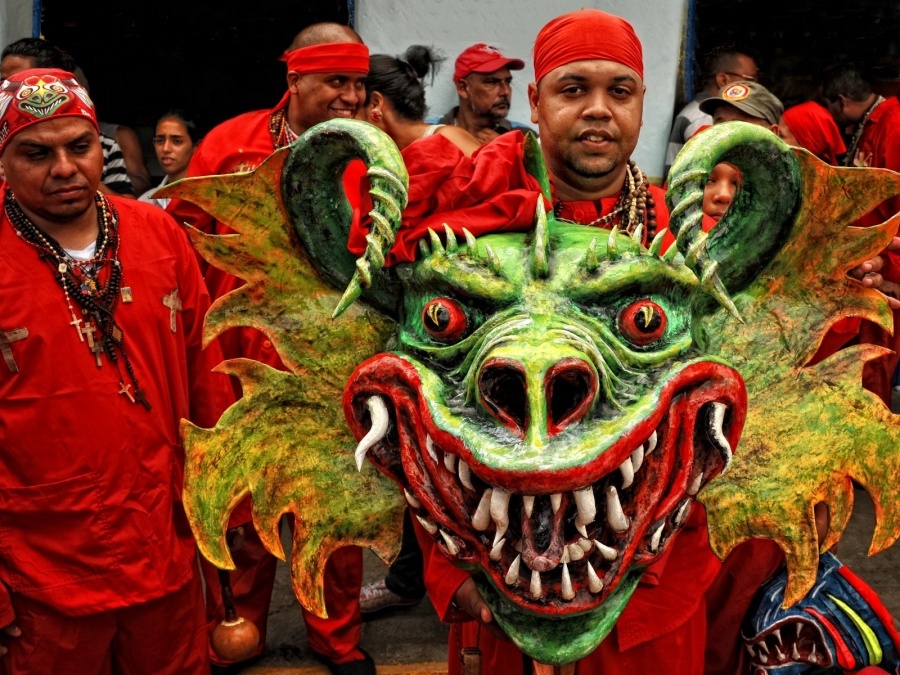
There are certainly some exotic examples – take a look at the Dancing Devils of Yare in Venuzuala… It is a custom originally frowned upon by the church as it seems to hark back to African pre-Christian roots. Now it’s brought into the church calendar and on Corpus Christi men dress up as devils, wage battle with each other, and then ‘surrender’ to the Eucharist and are blessed by the priest.

davil

black sheep

Anything like that in Schull?

Not exactly, but the procession is quite singular, going through a busy Irish street on a sunny Sunday morning. I counted about 200 people, with mainly men at the front, then women, then children, many of whom were dressed in their First Communion finery, and were scattering flower petals all across the road. At the back was the priest, walking under a decorated canopy which was carried by men in suits and white sashes; the priest was holding up the Monstrance…

You’ll have to explain that to me.

monstrance

Monstrance – from the Latin monstrare – to show: it’s ‘…the vessel used in Roman Catholic, Old Catholic and Anglican churches to display the consecrated Eucharistic host during Eucharistic adoration or Benediction of the Blessed Sacrament…’ The symbolism is a sunburst, the source of all life, which in the Christian tradition is represented by the Body of Christ – Corpus Christi.

sun

Is all this rooted in something more ancient than Christianity?

Well – apart from the sun symbolism – probably not. The feast was promulgated by Juliana of Liège, Belgium, who was born in the 13th century and became an Augustinian nun and, eventually, Prioress of her convent. She experienced a recurring vision of the bright full moon which was flawed by a dark spot or stripe. She believed that the moon symbolised the Church, which was flawed by the absence of a liturgical feast for the adoration of the Eucharist. She spent much of her life petitioning for such a festival but did not see her hopes realised: she died in 1258. Her work was not in vain, however, as in 1264 Pope Urban IV instituted the feast of Corpus Christi.

So this year sees the 750th anniversary of Corpus Christi?

Yes it does. But it’s a movable feast, relating to the date of Easter – theoretically it should have occurred this year on 22 June but Schull obviously has other ideas.

So it seems. Now, I see you’ve called this post Baby Jumping….

jumping

You are very observant! Well, I can’t resist mentioning this traditional Spanish holiday dating back to 1620 that takes place annually to celebrate Corpus Christi in the village of Castrillo de Murcia. The custom is known as El Colacho, and men dressed up as devils jump over babies born during the previous year who are lying on mattresses in the street.

El_colacho_saltando

Why?

The Brotherhood of Santísimo Sacramento de Minerva organises the festivities which culminate when the ‘devils’ jump over the babies on the mattresses placed on the procession route traversing the town. It is said that this cleanses the babies of original sin, ensuring them safe passage through life and guarding against illness and evil spirits. Pope Benedict evidently wasn’t impressed by the custom and asked Spanish priests to distance themselves from El Colacho. As he put it, ‘…the Church teaches that it is baptism by water, not a giant leap by an airborne devil, which cleanses the soul…’

How did that go down?

According to a report this year ‘…The festival is still a vibrant tradition replete with musical processions through the village with El Colacho chasing the young and old, and teenagers in lederhosen dancing an Irish jig…’

Something Schull could consider perhaps?

spectators

Perhaps. But in the meantime have a look at this curious but highly entertaining Pathe News clip from 1941 showing a Corpus Christi procession in Bandon, not very far from here.

http://www.britishpathe.com/video/corpus-christi-procession-1

skippers

After the Procession

After the Procession


Rock Art in Danger

The age-old landscape of Derrynablaha

The age-old landscape of Derrynablaha

Both Robert and I have written about prehistoric rock art several times in this Journal – here and here, here and here. Readers will know that it was the subject of my Master’s thesis in the early 70s, and that it has become a shared passion for us both as well as a retirement project. One aim of this project for me is to assess how rock art has been doing, as a category of ancient monument in Ireland, since I last studied it intensively forty years ago.

Benign neglect - rock art in a cow field

Benign neglect – rock art in a cow field

Within the archaeological community there is discussion about how best to protect rock art sites. The arguments take shape around opposing approaches: the first alternative is to promote and advertise rock art, to make it as well-known as other monuments such as megalithic tombs and medieval friaries; the second is to leave it lie in obscurity. 

Spain has a lot of rock art, and the approach there is to encourage people to come and view it and explore it. There are visitor centres, interpretive signs, rock art trails. While the results have been positive on the whole, raising the profile of this class of site and increasing the understanding and respect of visitors, it has not been without challenges: some damage and vandalism has occurred on carved panels.
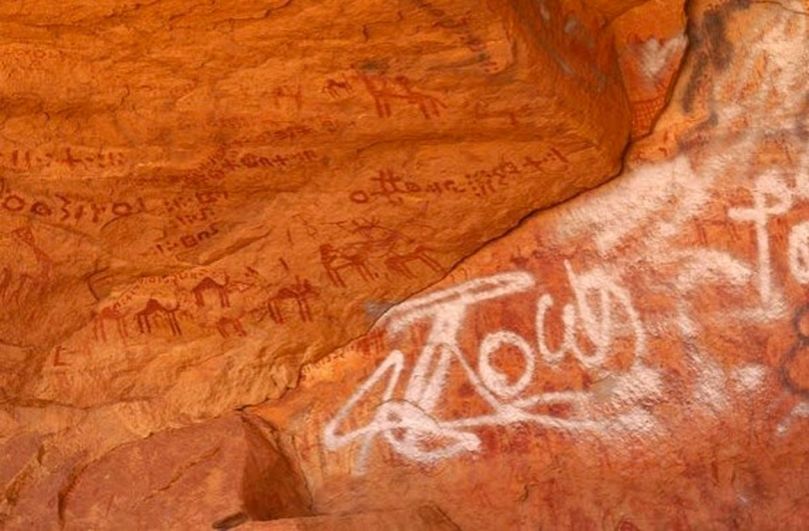
Vandalism to rock art in Libya

Vandalism to rock art in Libya

In Ireland we have taken a low profile approach when it comes to promoting rock art. Its very obscurity, the argument goes, is its protection. All known rock art sites are recorded in the database maintained by the National Monuments Service, and anyone planning on building on or developing a piece of property must check plans against this inventory. But apart from that we do not advertise the presence of rock art with signs or centres. A few are marked on the Ordnance Survey maps, but are difficult to find. The folk-beliefs of country people have helped in the past – where any prehistoric site was known it was never interfered with for fear of the bad luck that would follow. 
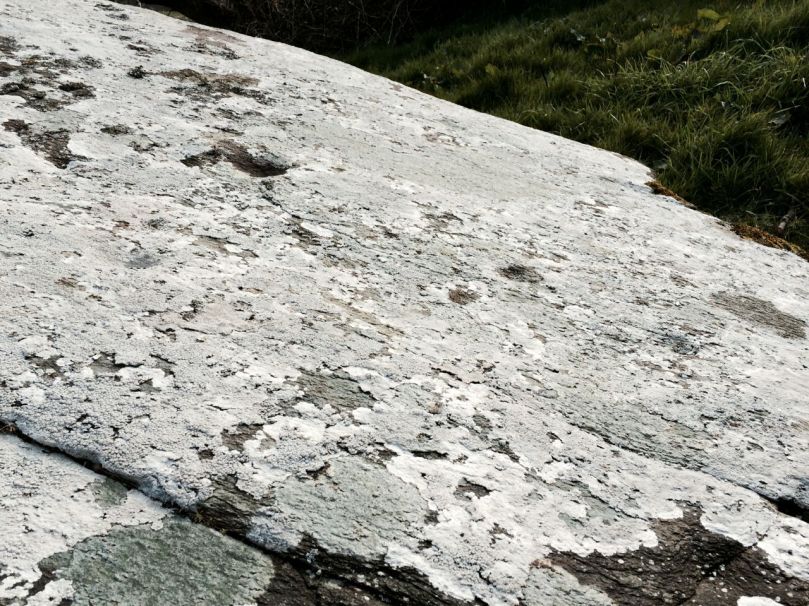
Under all that lichen lie many cupmarks

Under all that lichen lie many cupmarks

Weathering and lichen growth are not kind to carved surfaces over time and rock art in Ireland has not been protected from such natural occurences. On the  whole, however, the  fact that rock art is little known has indeed functioned to ensure that carved panels remain in place and my own sympathies would have lain therefore with the second argument.  However, times are a-changing in Ireland and I have become alarmed at the prospects for the conservation of this important prehistoric resource. I have come to believe that the more people who know about rock art, who know the locations of the rocks and can keep an eye on them, the better. 

Robert and I have spent a year now, in West Cork, visiting rock art sites and re-recording them. I have begun to understand in that time that there are two main dangers to rock art in the Irish landscape: ignorance and the economy. 

If only we'd known, we would never have built it on top of the rock art!

If only we’d known, we would never have built it on top of the rock art!

First: lack of awareness. By this I mean that in general people simply do not know that there is a class of ancient monument known as rock art. They don’t know what it looks like and don’t recognise it when they walk over it. This is not their fault – rock art can be almost impossible to see on the surface of a weathered rock on a grey day, even when you know it’s there. We have described how in one case a building was erected on top of rock art. In another case we are aware of, a piece of rock art was unrecognised and probably damaged when a homeowner erected an ornamental stone circle beside it. In both cases the homeowners would have protected the rock art had they known it was there, or understood the extent of it.
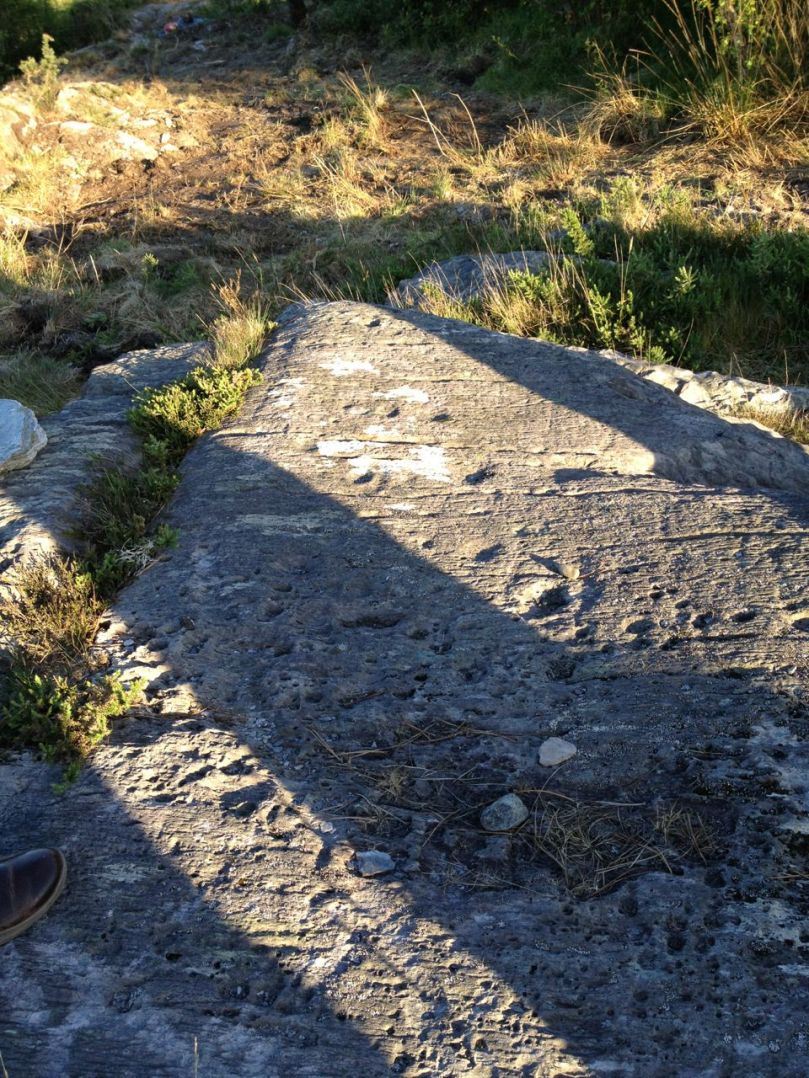
The shadows are from a newly built stone circle

The shadows are from a newly built stone circle

Second: the economy. Here, two huge threats to rock art exist. The first is in the rapid growth of forestry plantations in Ireland – a practice that is altering the landscape and obscuring what lies underneath in many areas of the country. We have experienced this first hand: rock art in a nearby townland can no longer be located in a young forestry plantation. 

The second is even more serious – the threat lies in the encouragement to farmers to improve and bring into production previously marginal land. All around us in West Cork the sound of the rock breaker is as common as the lowing of cattle. Vast stretches of rocky land, suitable only for a few sheep, are being levelled, drained and seeded. Green fields are appearing where once only scrubby grass and bog could grow.

The excavator is at the top left of the photograph

The excavator is at the top left of the photograph

We saw first hand what this could mean on a recent trip to Kerry. In the mountains above Sneem, on the Iveragh Peninsula, lies the lonely valley of Derrynablaha. It is spectacularly beautiful, but wild and remote. Forty years ago the one house in the valley was occupied by the farmer who ran his sheep on the mountain slope. That house is now in ruins: a new owner until recently simply carried on the use of the land for sheep. Imagine our surprise and concern, therefore, when, on a recent trip to Derrynablaha, we observed an enormous excavator working in the fields above the house. It had been there for some time. The ground had been levelled, all rocks and old field boundaries had been cleared away, and the land is now ready to be seeded and made into an enormous and pristine green field.

So what’s the problem with this? It’s alarming because Derrynablaha, and the neighbouring townland of Derreeny, contain the largest and most significant concentration of rock art in Ireland. Forty examples have been found and recorded so far. Some of them lie right beside the new field. An assessment by the National Monuments Service took place immediately and they will monitor closely now that they know this is happening. However, damage has already been done. Rock art does not exist in a vacuum – it is part of a prehistoric landscape and nowhere is this more so than in Derrynablaha, where the land has been lightly lived on over the centuries and where prehistoric and historic features lie just beneath the boggy turf. 
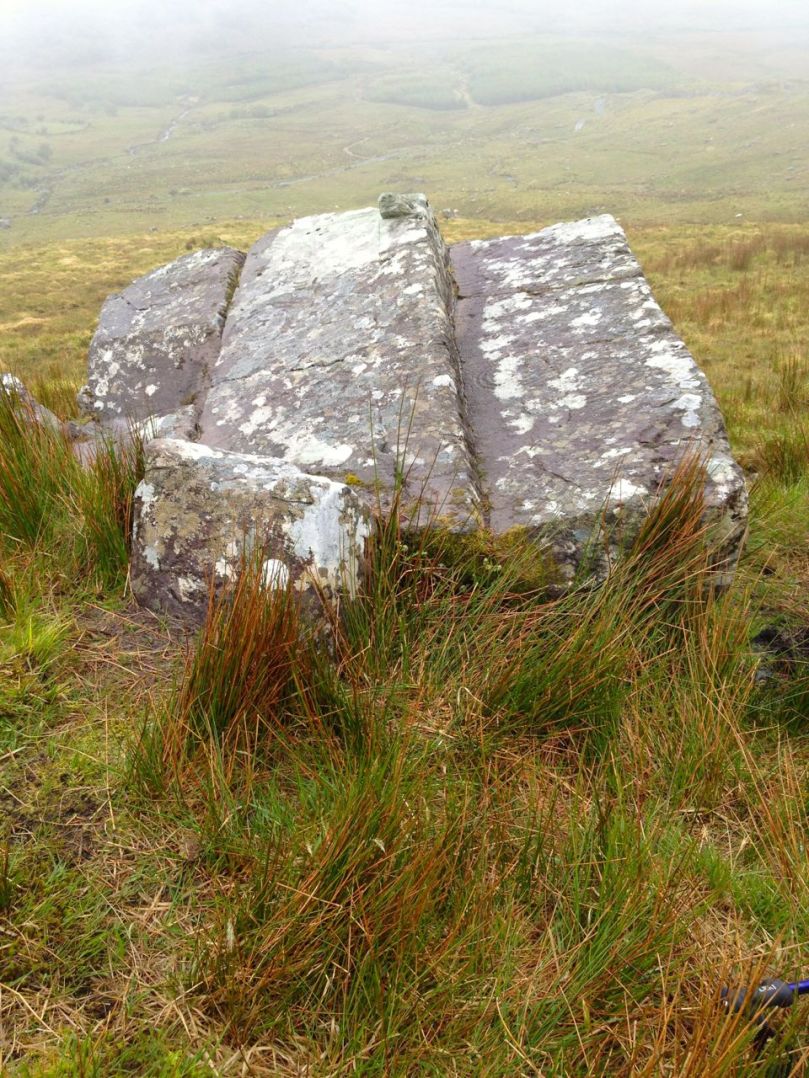
It's hard to see, isn't it? But tjis is one of the most iconic pieces of Irish rock art

It’s hard to see, isn’t it? But this boulder at Derrynablaha is one of the most iconic pieces of Irish rock art

The farmer, of course, is just doing his job. With the encouragement of the grants system he is improving his land, trying to be more competitive and hoping to pass on a viable farm to his son, so the young man won’t have to emigrate like many of his contemporaries. He is aware of the rock art and is avoiding direct contact with any pieces he knows. He needs no planning permission (a process that would have involved and alerted the County Archaeologist) to do what he’s doing.
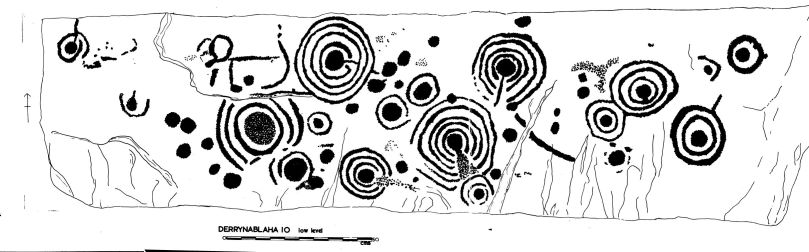
Just part of the surface of the Derrynablaha rock above

Just part of the surface of the Derrynablaha rock above

In both these scenarios – lack of awareness and the economy – the intentions of everyone concerned were honourable. But honourable intentions won’t save rock art from damage and destruction. Our only hope lies in a Save the Whales approach: the more people who know about and appreciate rock art and who are committed to helping to preserve this precious resource, the better its chances of survival will be. 

Derrynablaha - current landscape at that rock

Derrynablaha – current landscape at that rock

Pigs and Ponds in Ahakista

The Garden Trail is declared open at the Heron Gallery Gardens

The Garden Trail is declared open at the Heron Gallery Gardens

The West Cork Garden Trail takes place in the second half of June and this year the opening ceremony was held at the Heron Gallery Gardens in Ahakista. The gardens are a natural extension of the gallery, cafe and gift shop that Annabel and Klaus operate, with a satellite store in Schull and an online shop.
Welcome to the gardens!

Welcome to the gardens!

Annabel and Klaus have only been developing these gardens for nine years, although it’s hard to believe that this was wilderness so recently. Every year brings innovation and new plantings and trails. Although we kept our shoes on this time, we explored the barefoot trail, an invitation to experience the sensual pleasures of texture underfoot and squishiness between the toes. Along the trail we met friendly pigs (say hello to Fuchsia, Fern and Fay!) and climbed the hillside to a bench situated to enjoy glorious views of Dunmanus Bay. 

Robert makes a friend

Robert makes a friend

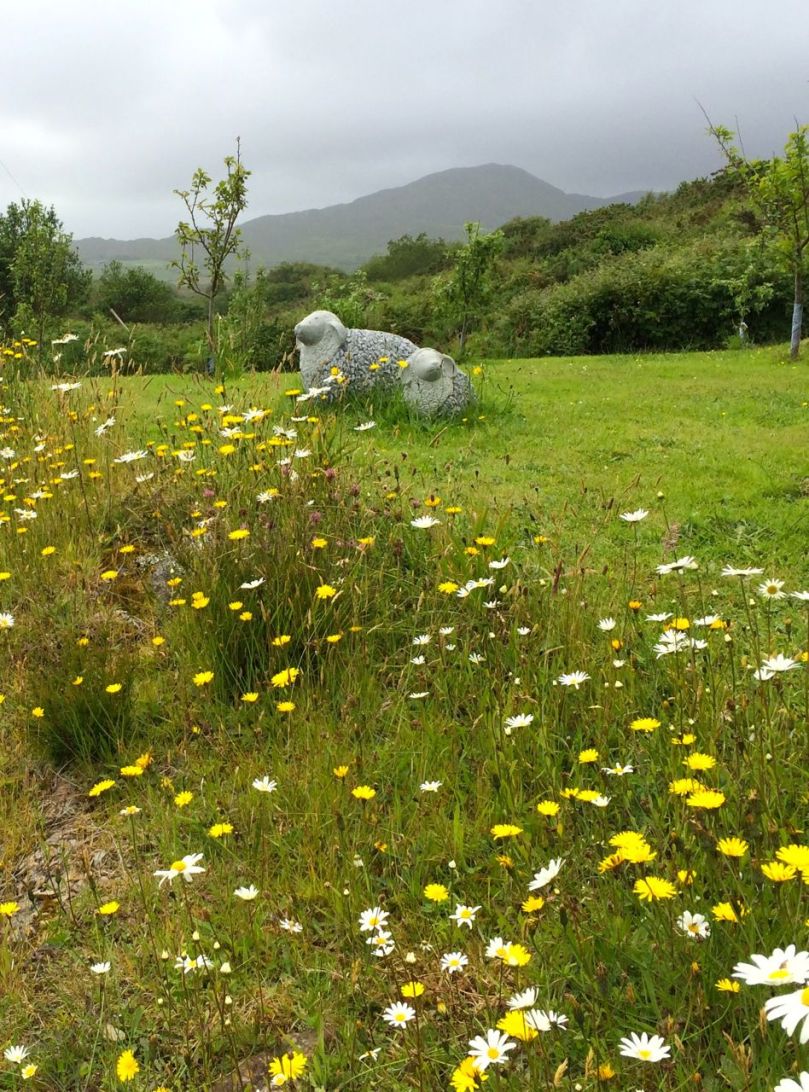
On the way back down we lingered by the pond, where wild flowers have been left to blow enthusiastically on a small hillside.

Wildflower meadow

Wildflower meadow

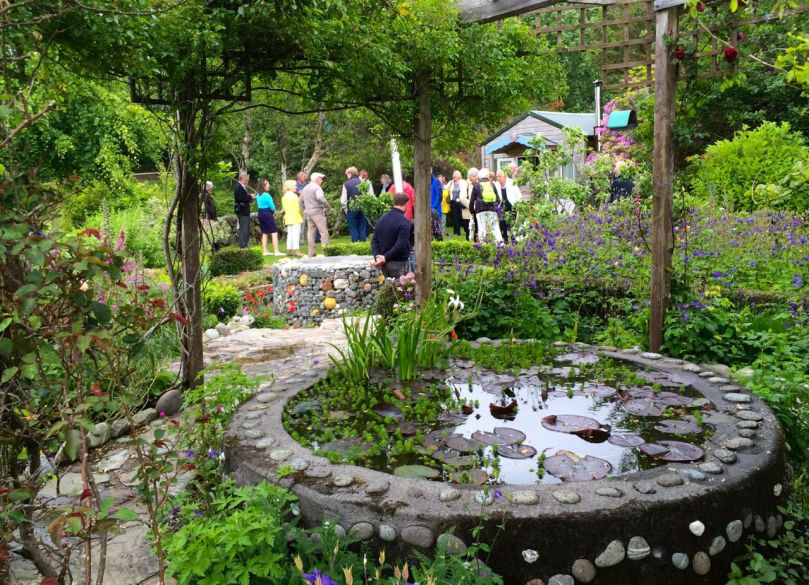
The more formal parts of the garden are a joy, with colourful herbaceous borders, pools with water lilies, tables and benches for eating or resting, and everywhere delightful, quirky sculptural installations.  

This is the perfect spot to enjoy lunch, or coffee and cakes, before a browse around the gallery featuring Annabel’s captivating images. Having travelled along the Sheep’s Head and wandered the garden, her inspirations will be obvious to you – look out for her oil painting of Fuchsia the Pig, or her many depictions of the Irish hare, two of which feel right at home at Nead an Iolair.