In the Wilds of West Cork

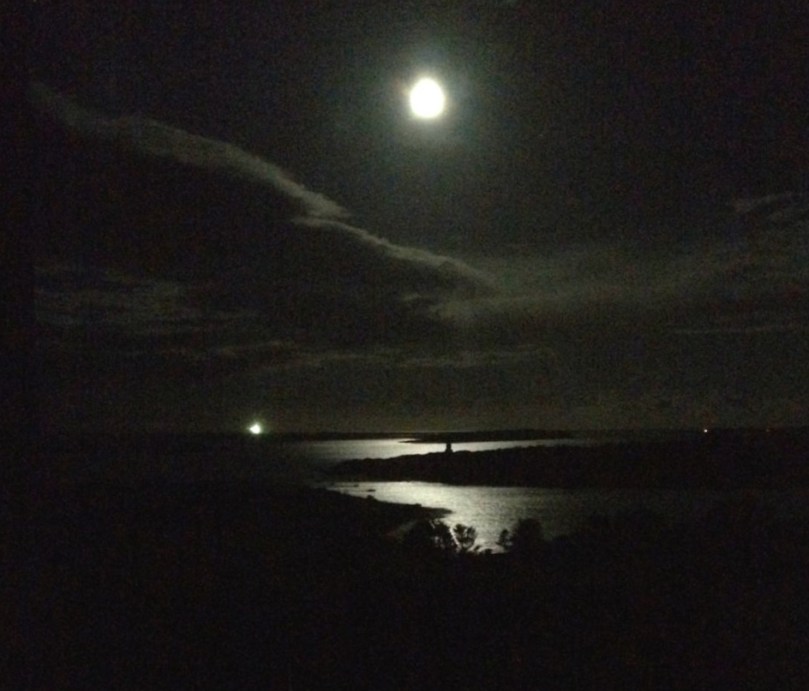
West Cork night life

West Cork night life

What on earth will you find to do in the wilds of West Cork? One friend asked me this when I announced my plans to move here. Others may have been too polite to express the thought, but the question hovered. They needn’t have worried, of course. I don’t think I have ever lived anywhere else where there was so much going on and so much to do. If that was true in the winter, it’s more so now. It’s spring and summer’s around the corner, so West Cork Festival Season has gone into high gear. I wrote about the Ballydehob Trad Festival six weeks ago. Since then, there have been two more – a jazz festival in Ballydehob and the Fiddle Fair in Baltimore. 
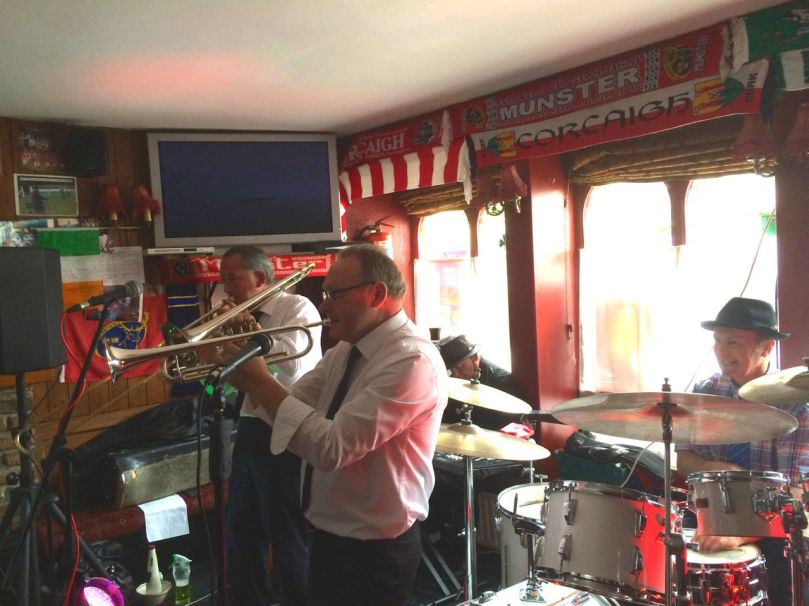
Live jazz in the Irish Whip Bar

Live jazz in the Irish Whip Bar

The Jazz Festival featured a street market, and jazz sessions in most of the pubs all afternoon and well into the night. The village hall was decked out as a night club one night, with dancing into the wee hours. There were musicians and jazz aficionados from all over Ireland, and the pubs were bursting at the seams and spilling over onto the sidewalks.
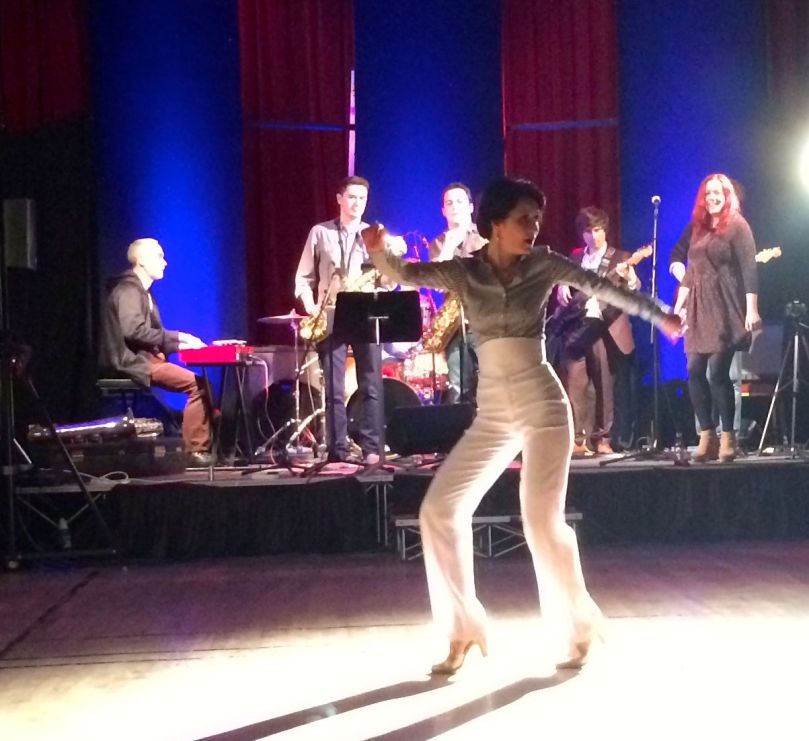
Soul Driven and the riveting dancer Ksenia Parkhaskaya

Soul Driven and the riveting dancer Ksenia Parkhaskaya

This is the second time we have been here for the Baltimore Fiddle Fair, which has ben going now for over 20 years, under the brilliant direction of Declan McCarthy. World class acts come to play in this tiny village. The audience is diverse too – we met people who had come from Britain, Germany and the USA just for this weekend. We had season tickets, which meant we weren’t asleep before 2 in the morning for four nights in a row – probably earlier than most of the attendees!
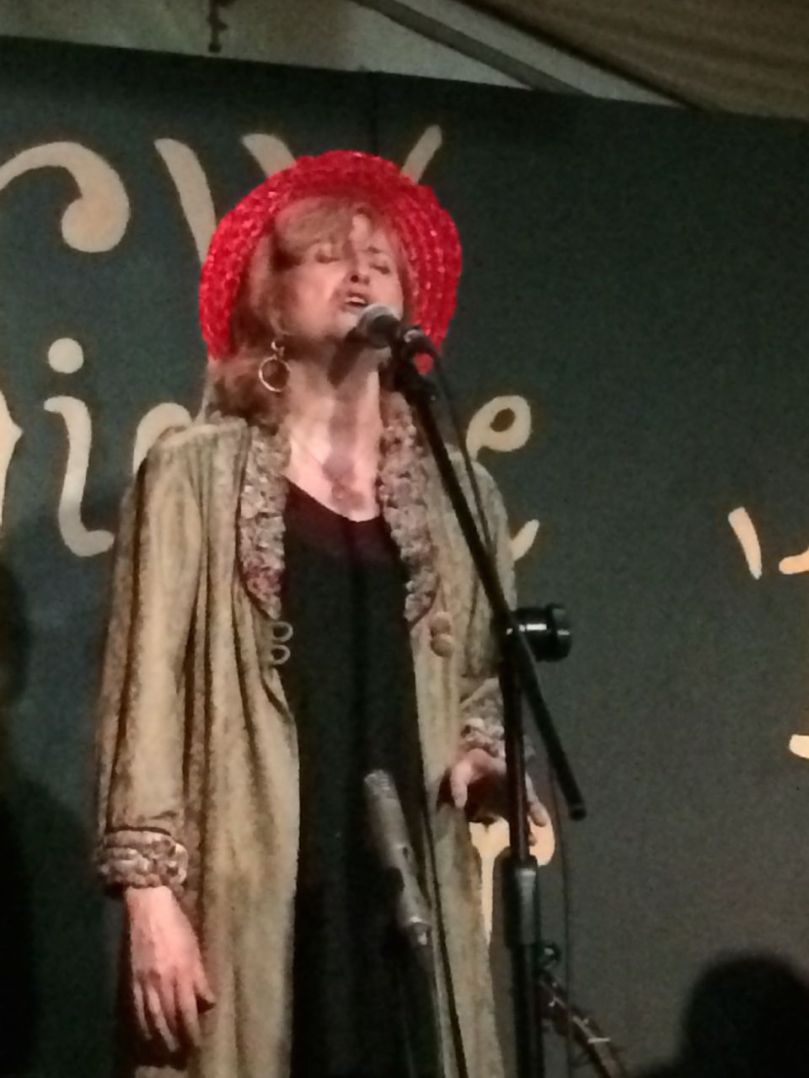
Eddi Reader

Eddi Reader

A highlight was Eddi Reader, a Scottish singer/songwriter with a larger than life stage presence, a great line in stories, and a soaring voice. Robert loved seeing Aly Bain, one of his musical heroes, in concert and we both appreciated the wide range of music on offer, from Appalachian old time fiddling to Swedish polskas, Scottish and Irish tunes, and an entertaining group call the New Rope String Band who kept us laughing with their slapstick humour. For the readers who have been requesting videos, I recorded one lively number and uploaded it to YouTube – take a look. It’s a tiny taste of what we experienced.
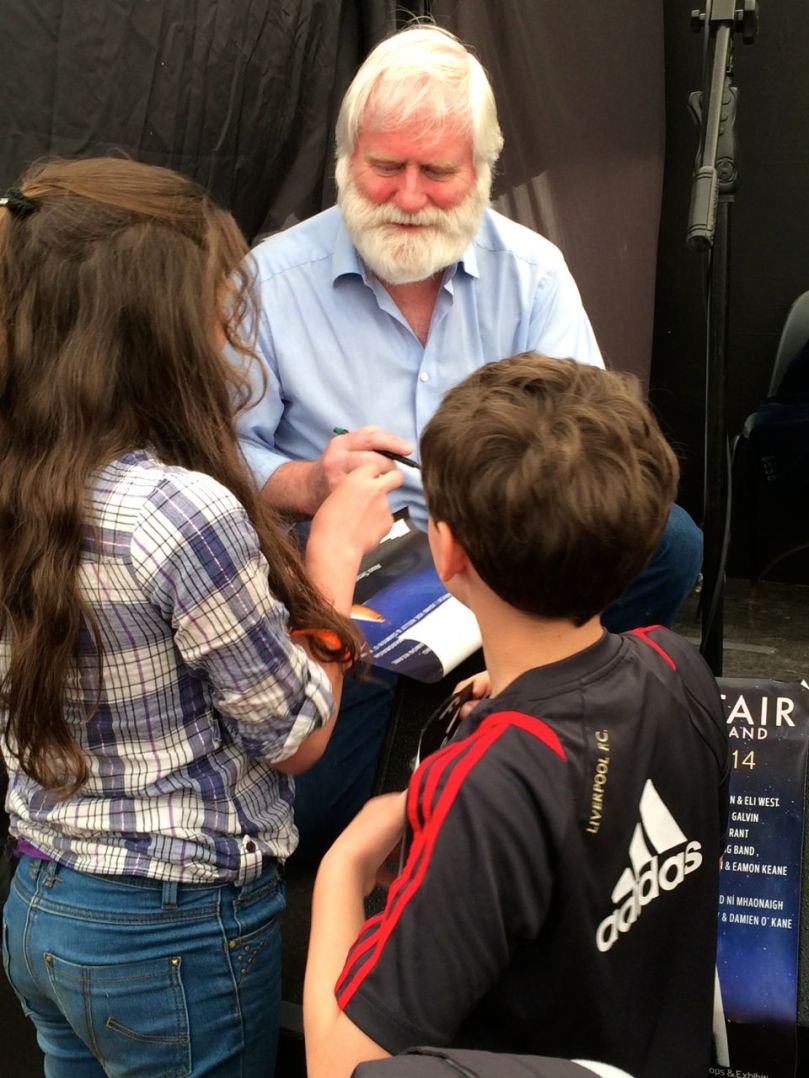
John Sheahan with young fans

John Sheahan with young fans

One unforgettable afternoon was devoted to a concert by John Sheahan, the sole surviving member of the legendary Dubliners. Accompanied by Eamon Keane on the keyboard, he told stories, read us his poetry, and played his own compositions. He is truly an Irish icon, and it felt like a real privilege to hear him in such an intimate venue. He played a wide variety of music and I recorded this one: St Patrick’s Cathedral.

Of course all these late nights and bouncing around on seats takes a toll on the body, leading to the need for a rejuvenating day at a spa. Fortunately, there is a marvellous one in West Cork, on Inchydoney Island, where my friend Amanda and I repaired for a girly day of pampering. You can read her account of our hedonism here. 

The strand at Inchydoney Island

The strand at Inchydoney Island

And in case you might feel that the entertainment described above is not highbrow enough, last night we attended a performance of a Haydn mass and Mozart’s Requiem by the West Cork Choral Singers. Accompanied by an excellent small orchestra (we recognised some of the players from our regular Firday night trad sessions: fiddlers turned violinists) and four outstanding soloists, the choir rose to the challenge of an ambitious program magnificently, garnering a well-deserved standing ovation by the appreciative audience.
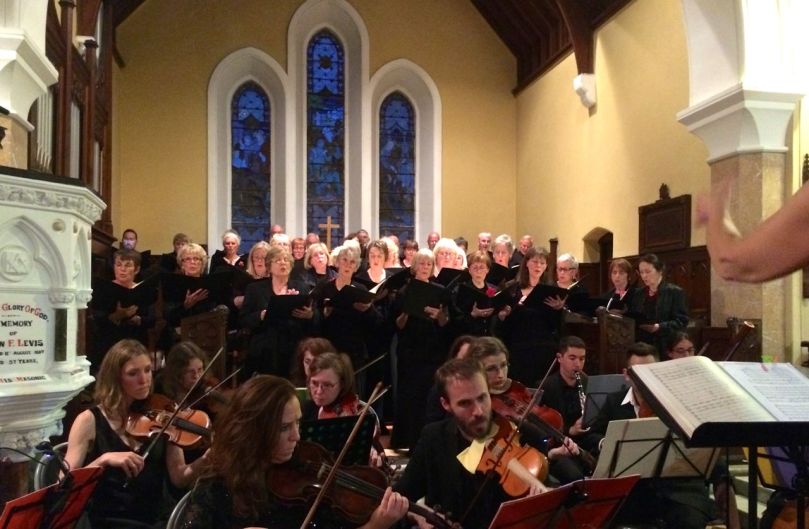
West Cork Choral Singers present Mozart's Requiem in Skibbereen

West Cork Choral Singers present Mozart’s Requiem in Skibbereen

We won’t have much time to recover from all those late night – next weekend is the Fastnet Short Film Festival in Schull as well as a Skibbereen Historical Society trip to Cape Clear, and the one after that is the Ballydehob Country Music Festival (where I may have a small role to play). More on those events in an upcoming post. If I survive it all…It’s a tough life, out here in the wilds!

The Southern Star

Banner

There’s so much going on here in West Cork. You could be out every night if you wanted to be, and  participating in as many community events as there are hours in the day. How do we keep up with it all? Easy – The Southern Star. It comes out every Thursday, and features a pull out Community section that details all the news from the towns and villages around West Cork. Births, baptisms, deaths, marriages and engagements are announced, and be-gowned university graduates are pictured with smiling parents.

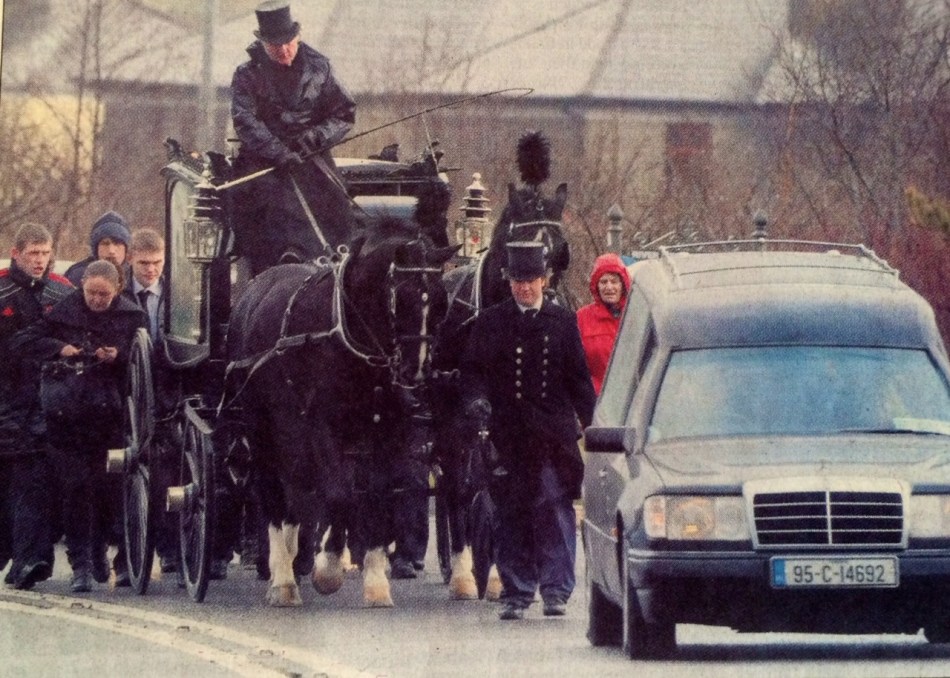
Recent funeral in Skibbereen

Competitions are legion – sometimes talent-based, and sometimes sporting, such as the Clonakilty Blackpudding Car Rally. But rural and farming pursuits such as ploughing competitions or agricultural conferences remind us that we are living in a part of the world that makes it living off the land. Recently a tillage seminar attracted large crowds in Bandon, while another one on calf-rearing had over 300 attendees in Timoleague. Cheval rides are often pictured – horse treks for charity from town to town or across golden beaches. A farmer recently put out an appeal for a missing cow:

The animal made good its escape from a farm in Jagoe’s Mills, Belgooly, on Friday, January 17th. The animal may be suffering from memory loss as it was last seen at the racecourse in Farrangalway, before evading capture and taking to the countryside in the Dunderrow area. This is an extremely prized animal.

The farming community has been up in arms recently over changes to the system of government grants known as “Single Farm Payments” and there have been huge turnouts at meetings, protests and rallies.

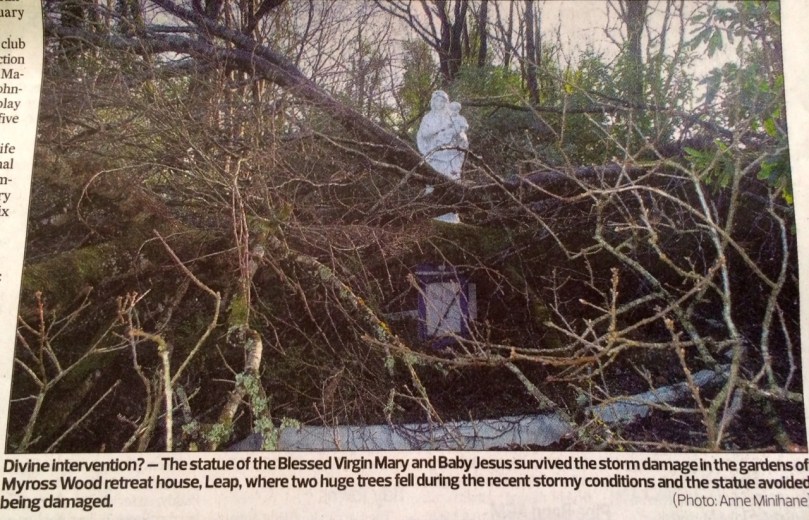
Divine Intervention at Myross

Divine Intervention at Myross

The ebb and flow of village life is chronicled in the Star’s Community pages. ICA (Irish Countrywomen’s Association) meetings are announced and later described. Local businesses close and the village say farewell to a pair of much-loved publicans. Community members gather to clean up a graveyard (…stone walls emerged and tombs reappeared after years of being buried in undergrowth. The little Huguenot chapel was cleared of saplings and briars…) or celebrate the opening of a new playground, to help neighbours affected by the recent awful storms or to hold a St Brigid’s Cross making session in the senior’s housing complex. West Cork people are upset about fluoride in their water and enthusiastic about the Men’s Shed Movement.

Getting news of cultural events

Getting news of cultural events

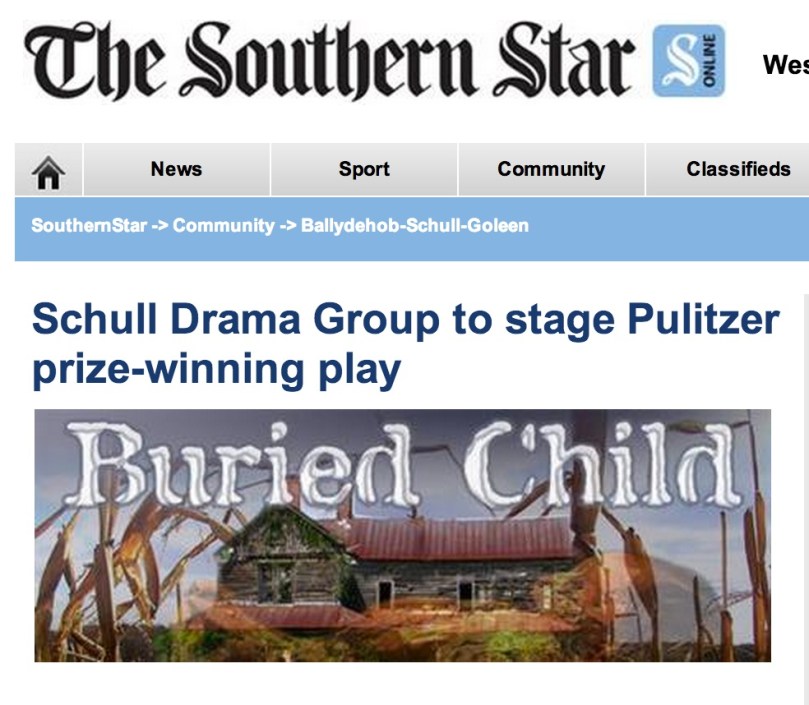
Reading the Southern Star is the only way to find out where Road Bowling events are taking place, or horse races. We comb through it looking for the upcoming meetings of the various Historical Societies, the concerts (from orchestral to traditional), the plays by the local drama groups (this weekend, Sam Shepard’s Buried Child in Schull), and the upcoming festivals. Ballydehob will hold its annual St. Patrick’s Day parade on March 17 (a national holiday here) and the theme this year is to recreate the 1914 Postal Directory of the village. We are witnessing the establishment here of an new national tourism initiative, the Wild Atlantic Way, and local communities are being asked to brainstorm how to get involved.

Daisy contemplates her strategy

Daisy contemplates her strategy

I will finish with one of my favourite recent items:

A Cowpat Challenge takes place at Kilmurry National School on Sunday, February 23rd. at 11am. Daisy the cow is coming to the grassy area in the playground which will be marked out into numbered squares. Whoever owns the square that Daisy decided to deposit the first cow pat into, wins a whopping €1,000.

We are posting early this week as we leave for a trip to Ireland’s west coast tomorrow. We still have no telephone or internet so this is coming to you through the kindness of neighbours who have given us access to their WiFi. Next post in two weeks – spring will have arrived by then. Right?

Christmas Markets

En route to Goleen, every couple of Km, a reindeer points the way to the Christmas Market.

En route to Kilcrohane, every couple of kilometres, a reindeer points the way to the Christmas Market

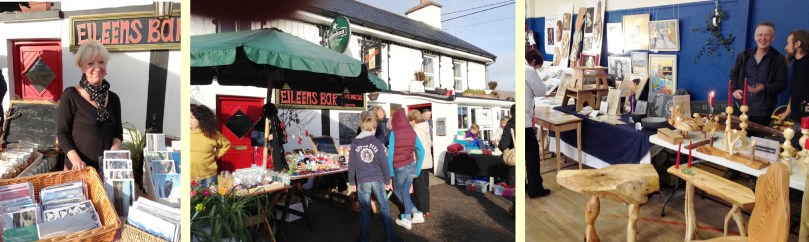
‘Tis the season…and oh dear, I am afraid to tot up what we have spent at the Christmas markets here in West Cork. We tell ourselves that we have moved here with nothing to hang on a Christmas tree; that we are supporting local entrepreneurs, artists, craftspeople and fund-raisers; that we need to lay in food for visitors; but the truth is that we find the whole Christmas market thing irresistible.

Amanda and her beautiful Wayfarer Cards; December weather in Kilcrohane; furniture and art in Ballydehob

Amanda and her beautiful Wayfarer Cards; blue skies in Kilcrohane; furniture and art in Ballydehob

We love the colour, the carols, and the stalls that only appear at this time of year. We love the ones run by kids – raffling for their youth group, or trying to make a bit of cash by knitting and stitching and sawing and hammering. We love the amazing array of wonderful foods: we have come to know many of the vendors as friends and it feels good to know where your food is coming from.

Raising money for the club; we made them ourselves!

Raising money for the club; elf workshop; we made them ourselves!

This year we have attended markets in Goleen, Ballydehob, Kilcrohane and Skibbereen – so far! Each community is proud of its market and each one has a distinct character. The weather has been marvellous too – a real bonus since at least part of every market is outside.

Everyone loves Eithne's baking; Josephine and he delicious Hannah Quill preserves; Paul and Anne and their Fabulous West Cork Pies; smoked fish, quial's eggs and Coolea cheese.

Everyone loves Eithne’s baking; Josephine and her delicious Hannah Quill preserves; Paul and Anne and their fabulous West Cork Pies; smoked fish, quail’s eggs and Coolea Cheese

I think we might be able to sport a respectable Christmas tree now…and we certainly won’t starve!

Part of the haul.

Part of the haul

The Flying Snail

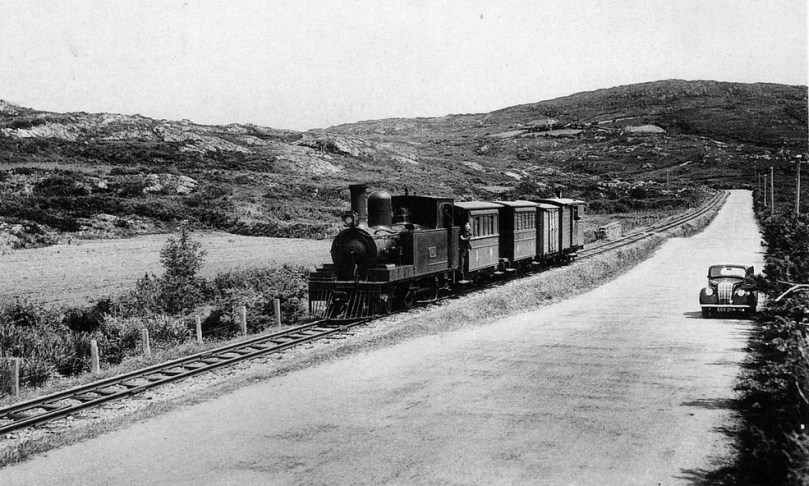
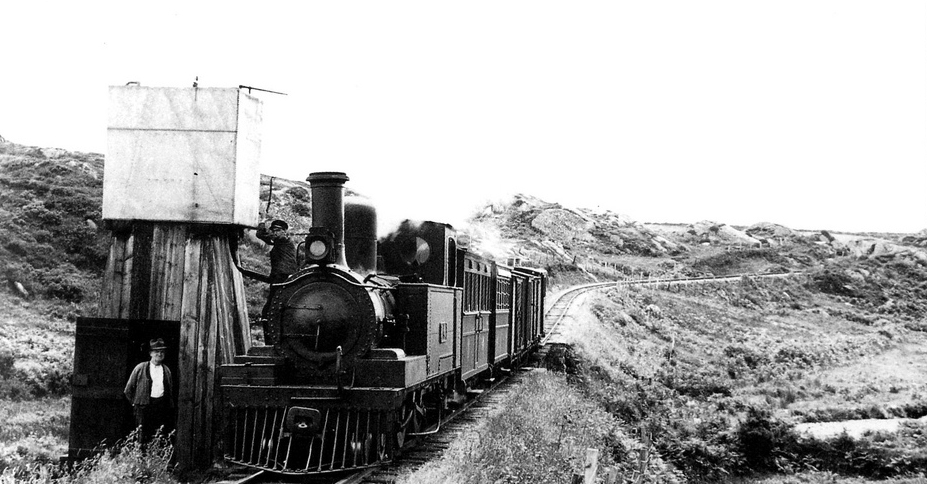
Iarnród - between Ballydehob and Schull 1939

Iarnród – between Ballydehob and Schull 1939

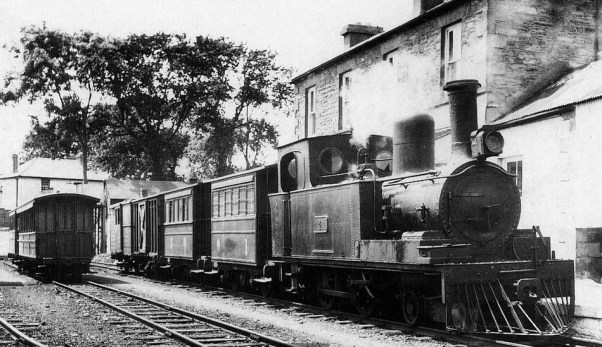
In the heydays of transport by rail, the south of Ireland was served by a network of lines radiating out from Cork. Most of these were scenically picturesque – the nature of the countryside saw to that – and all were imbued with Stories, still recounted with relish by the local people who remember them, or whose mothers and fathers remembered them. Here’s one of the stories – told about the Chetwynd Viaduct, coming out of Cork on the way to Bandon.

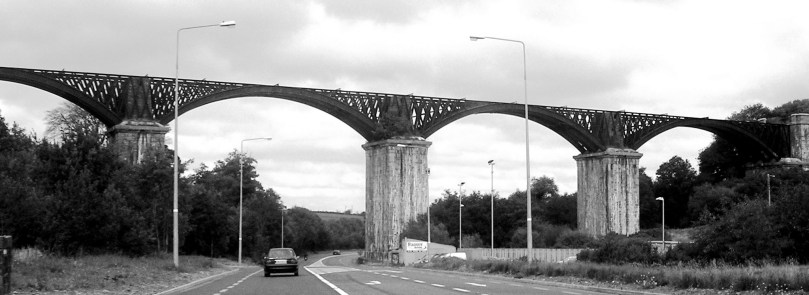
Chetwynd Viaduct today - a scheduled monument

Chetwynd Viaduct today

This structure was designed by Charles Nixon, a pupil of Isambard Kingdom Brunel, and built between 1849 and 1851. It’s still in place today, passing over the main  N71 road from Skibbereen, and is a scheduled monument. The railway, track and track bed have all gone. For quite a while after its construction it was known as “The Bowlers’ Everest”. Alert followers of these posts will know about Road Bowling already (don’t forget to pronounce it correctly: Road Bowelling) – a very skilful and ancient Irish sport involving hurling a heavy iron ‘bullet’ along a road, and getting it from one place to another in the shortest number of throws. For Bowellers, the viaduct presented an obvious challenge: to throw the ‘bullet’ on to it. This was attempted many times year after year, but it took a mighty man to do it: Mick Barry, widely acknowledged as the greatest bowlplayer ever. My informant was careful to add “…This has been said by many and denied by very few…” The Cork Examiner takes up the tale:

“…Barry conquered the Bowler’s Everest, the Chetwynd Viaduct on the Cork-Bandon Road on Saint Patrick’s Day, March 17th, 1955. He lofted the 16oz bowl on to the 100 foot high parapet; an incredible feat which required almost superhuman strength, virtually defying the laws of physics. This feat was witnessed by thousands of spectators…”

chetwyndbolmc

Bowlers’ Everest – the viaduct at Chetwynd and a 16oz ‘bullet’

Less commonly cited is another Chetwynd story: on September 8th, 1985, watched by over 10,000 people, Hans Bohllen from West Germany lofted a 28oz bowl clean over the viaduct, clearing the top by ten feet.

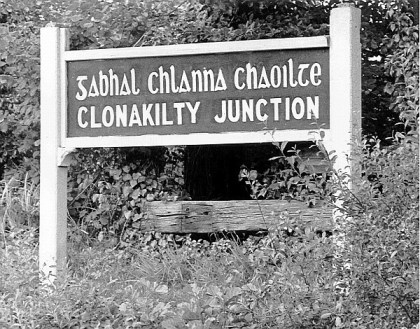
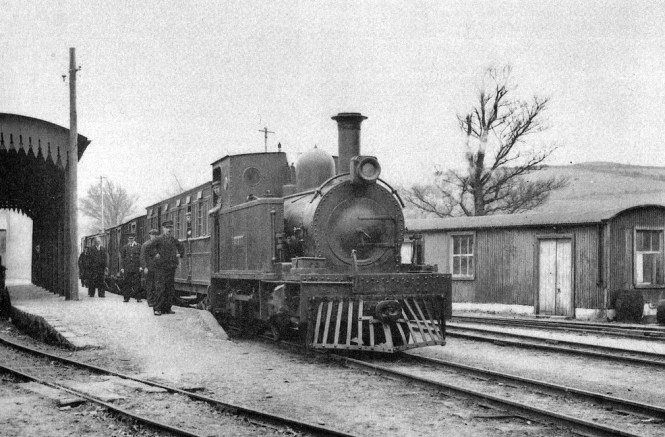
clonjunctionLines from Cork eventually penetrated surprisingly far into the south west extremities of the state: to Kinsale, Bandon, Courtmacsherry, Clonakilty, Bantry, Baltimore, and – on a 3ft gauge narrow line snaking out of Skibbereen – to our two local towns of Ballydehob and Schull. It’s worth mentioning the colourful history of railway track gauges in Ireland: the standard now is 5ft 3in – something shared in the world with only Brazil, Australia and New Zealand – but earlier lines had 4ft 8½ins [UK and Europe standard], 6ft 2ins and 5ft 2ins, and when trams were first introduced to Dublin they had 5ft 2 and a bit.

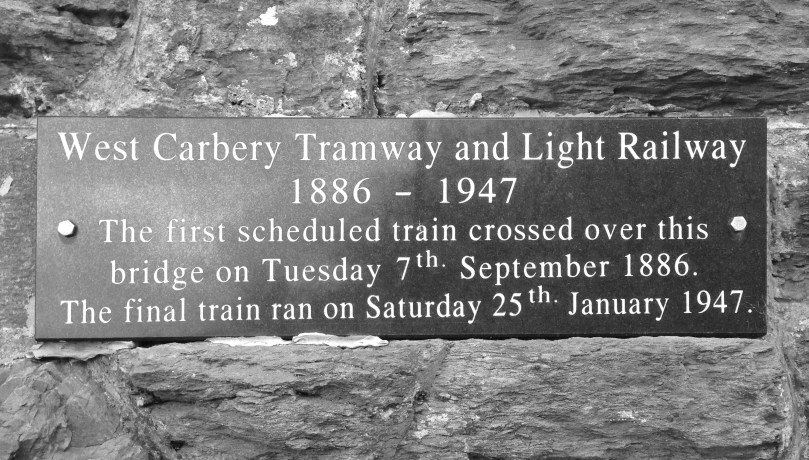
plaque

Local history: plaque on the viaduct at Ballydehob

In 1925 all the railway lines in the new Irish Free State were amalgamated to become the Great Southern Railway, and in 1945 the system was consolidated with road transport concerns and trams to become Córas Iompair Éireann. The logo used by CIÉ until 1964 was affectionately (and, perhaps, cynically) known as The Flying Snail.

Córas Iompair Éireann - the national rail and bus company - logo used between the 1940s and 1964: known affectionately as 'The Flying Snail'

‘The Flying Snail’

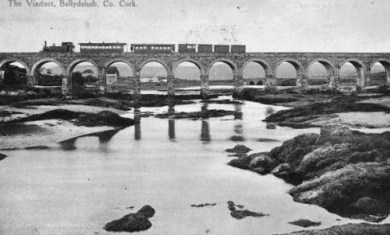
ballytrainmcThe line out to us here in West Cork was particularly eccentric and would have been a magnet for present day railway enthusiasts if it had survived. In places the narrow gauge track ran along the main road; it reached speeds of up to 15 miles per hour… But how we all wish it was still possible to catch a little train out of Schull, Ballydehob or Skibbereen and arrive in Cork in a bit. It would be grand!

view

Water stop – with a view…

schull station

Leaving Schull Station, 1939

skibb station

All aboard at Skibbereen!

Going for the Messages

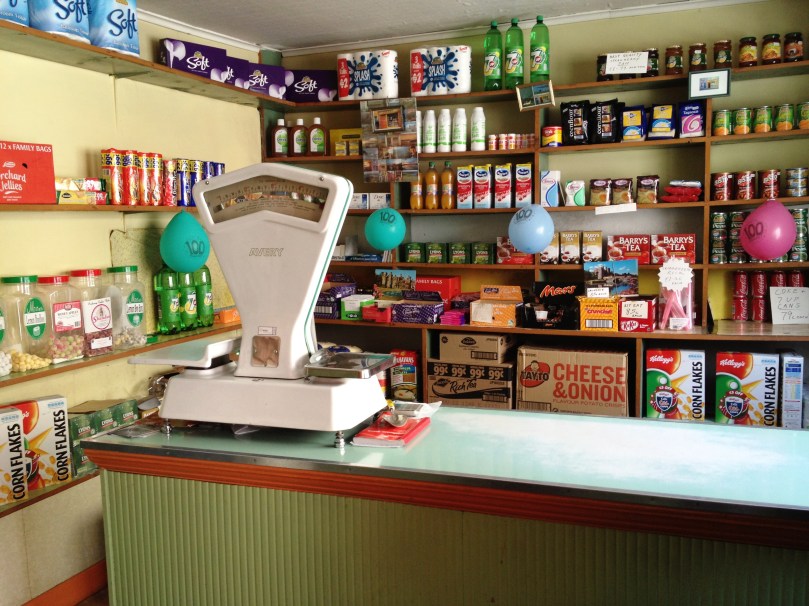
Inside Miss Clerke's, Skibbereen

Inside Miss Clerke’s, Skibbereen

When we were growing up in Ireland our mothers would send us up to the shops for messages. Clutching the coins she entrusted to us we would give the note to the shopkeeper, or recite what she wanted and he would duly hand over the message wrapped up in brown paper and tied with string.

Messages I remember: 10 Craven A, a yard of knickers elastic, 2oz of cheddar, 5 codeine, 1lb of broken biscuits, a packet of Bisto, a pair of brown shoelaces, a bottle of paraffin, a nice fresh piece of plaice.

Need a chamber pot?

Need a chamber pot?

Found it!

   Found it!

Nowadays we go off to the brilliant local supermarket (ultra efficient but with a wonderful variety of local produce) or the well-organized hardware store with its stocked and gleaming shelves, where the shopping experience is similar to that in Canada. But the shops of my childhood are still here too, in the small towns and villages. You can find hardware stores stuffed to the ceiling with everything you might need heaped in teetering piles. Ballydehob has one, My Beautiful Launderette, where we have dropped off our laundry and bought glue, mousetraps, nails, tools and flower seeds. In Bantry, when we can’t find the exact light bulb we are looking for in the airy modern electrical supply shop we can be sure to track it down in Vickery’s, a shambolic space loaded to the scuppers with kitchen ware, hinges, table lamps, shovels, and soap dispensers.

My Beautiful Launderette, Ballydehob

My Beautiful Launderette, Ballydehob

While modern boutiques abound in the larger towns, some clothing and haberdashery stores retain an old-fashioned charm, with most of the goods shelved in plastic bags behind glass-fronted counters.

Shoes, hats and First Communion dresses

Shoes, hats and First Communion dresses

Perhaps our favourite is Miss Clerke’s in Skibbereen. It is unchanged from the small grocery shops of the 1950s, with a little of everything neatly arranged around the walls. We go in there to buy bonbons – Robert has a liking for the apple-flavoured ones – although we have been out of luck lately. “The traveller,” she tells us, “hasn’t been able to get the apple ones for a while now.” We go home happily chewing on lemon ones (a ‘quarter’ in a paper bag) and fantasizing about life as a bonbon traveller.

clerke

Comhaltas

comhaltas2

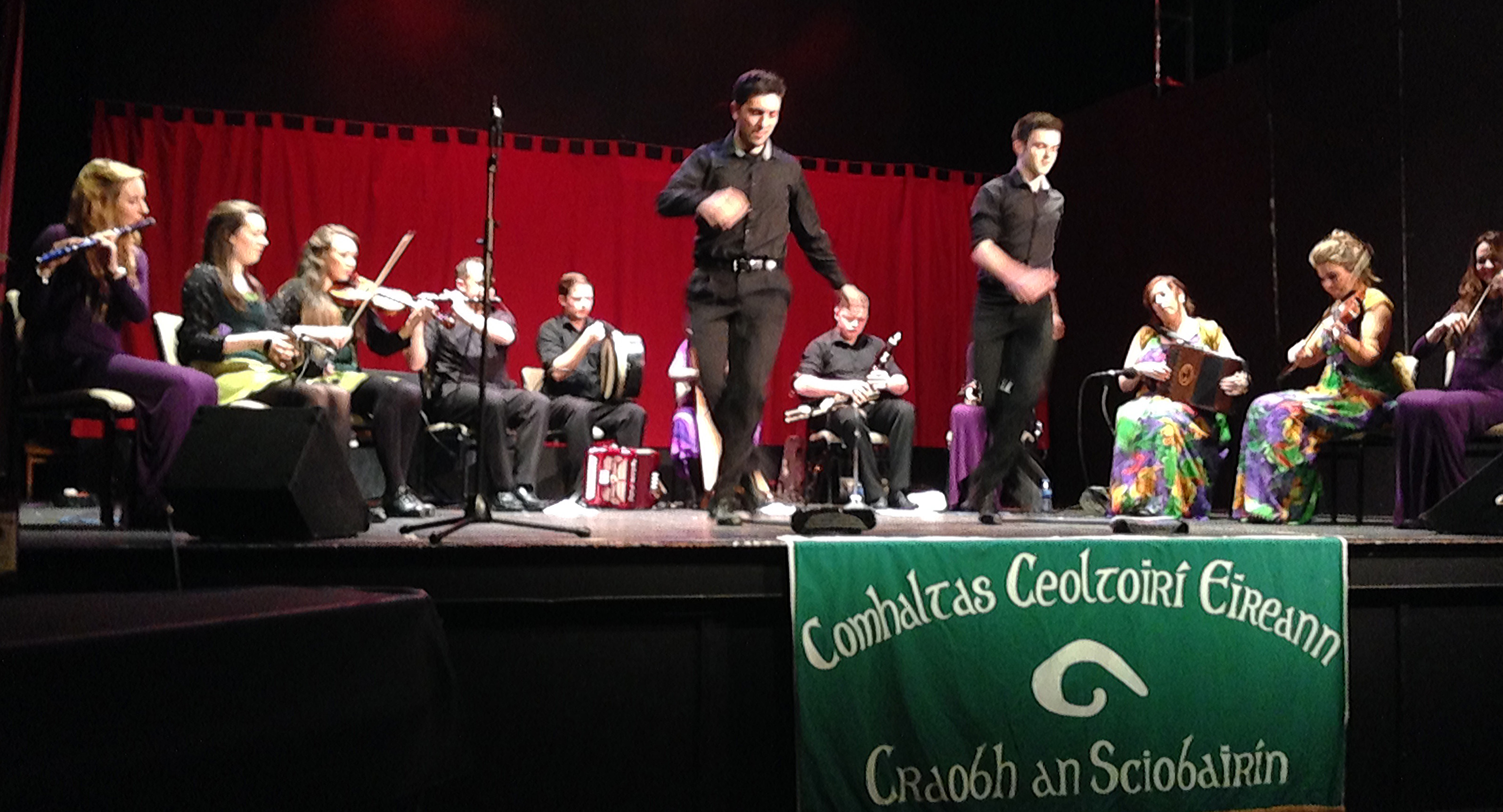
Comhaltas Ceoltóirí Éireann [Finola tells me that this is how you say it: kole tuss kyole tory air run – the literal translation is the Society of Musicians of Ireland] is an organisation founded in 1951 to ‘preserve and promote Irish traditional music and culture’. Its activities are very much in evidence – not just in Ireland, but anywhere in the world where Irish people have settled. They were evident in Skibbereen last week, when CCE featured some of its top class performers in music, dance, song and storytelling on a whistle-stop tour around the whole island of Ireland. We were fortunate that their venue in the south west was on the doorstep here.

tour poster

It was a most inhospitable October night: gales and floods were rife across Ireland and Britain. Yet the Skibb Town Hall was full to capacity, and the concert was well worth braving the elements for. The whole programme was polished and professionally produced: not a wrong note was played, nor a dance step placed out of kilter. It was a most memorable, satisfying and entertaining treat for the senses.

This was a showcase for the principal work that CCE has been carrying out for over sixty years: training people young and older in the crafts of playing and dancing in the traditional style. Once this would have happened naturally – through families and generations handing on the skills and the tunes. The fact that a CCE was needed and is now so established suggests that there was a danger of The Tradition dying out, or at least becoming diluted or rarified. This may or may not have been the case – for decades and all over the world collectors of folk culture have been convinced that they are recording the dying remnants of customs and lore, but perhaps there are always undercurrents of renewal which happen naturally: many of the most skilled exponents of The Music today learn their craft in the ‘old’ way – at the hearthside from parents, uncles, aunts and cousins. In our electronic age, however, lifestyles are radically changing and the formalised classes and competitions which CCE runs, and which are within easy reach of every community, can only be for the good. The latent talents shine through in performances such as those at Skibbereen. I taught myself to play the melodeon and concertina at the age of fifteen (and I’m still learning): now I’m watching far younger people perform with skills which outshine any I might have at this stage of my life, and who are storing up great potential for their own futures.

The showcase of Comhaltas talent at Skibbereen: the dancer on the left is Fernando Marcos from the Buenos Aries Branch of CCE!

The showcase of Comhaltas talent at Skibbereen: the dancer on the left is Fernando Marcos from the Buenos Aries Branch of CCE!

As I drove back to Nead an Iolair through the lashing rain squalls I pondered our own weekly music sessions in the pubs of Ballydehob. They are rough affairs: plenty of wrong notes, certainly, and arguments on tuning, timing, song names and ornamentation; very little polish… And, while we play mainly Irish traditional music, very few of us are Irish. Nonetheless we do (mostly) enjoy the experiences, and the sessions maintain a life of their own. However you do it, it’s great to keep The Music going…

Friday night session at Levis's, Ballydehob

friday night

Keeping The Music going – session style