Fish Palaces – and How They Worked

Four years ago I wrote about the fishing industry that once flourished on the shores of Roaringwater Bay (and around much of the west coast of Ireland): according to extant records it was active before 1500, and probably had its heyday in the seventeenth century, when it was heavily invested in by the Great Earl of Cork (Richard Boyle, sometimes described as ‘the richest man in the known world’). In those days, pilchards were the main catch: huge shoals of them came to the comparatively warm, sheltered waters of the islands during the summer months, along with other oily fish such as herring and mackerel. Seine boats were commonly used for this enterprise. Today, pilchards are rare: through a combination of overfishing and changing climate, the bountiful shoals no longer appear.
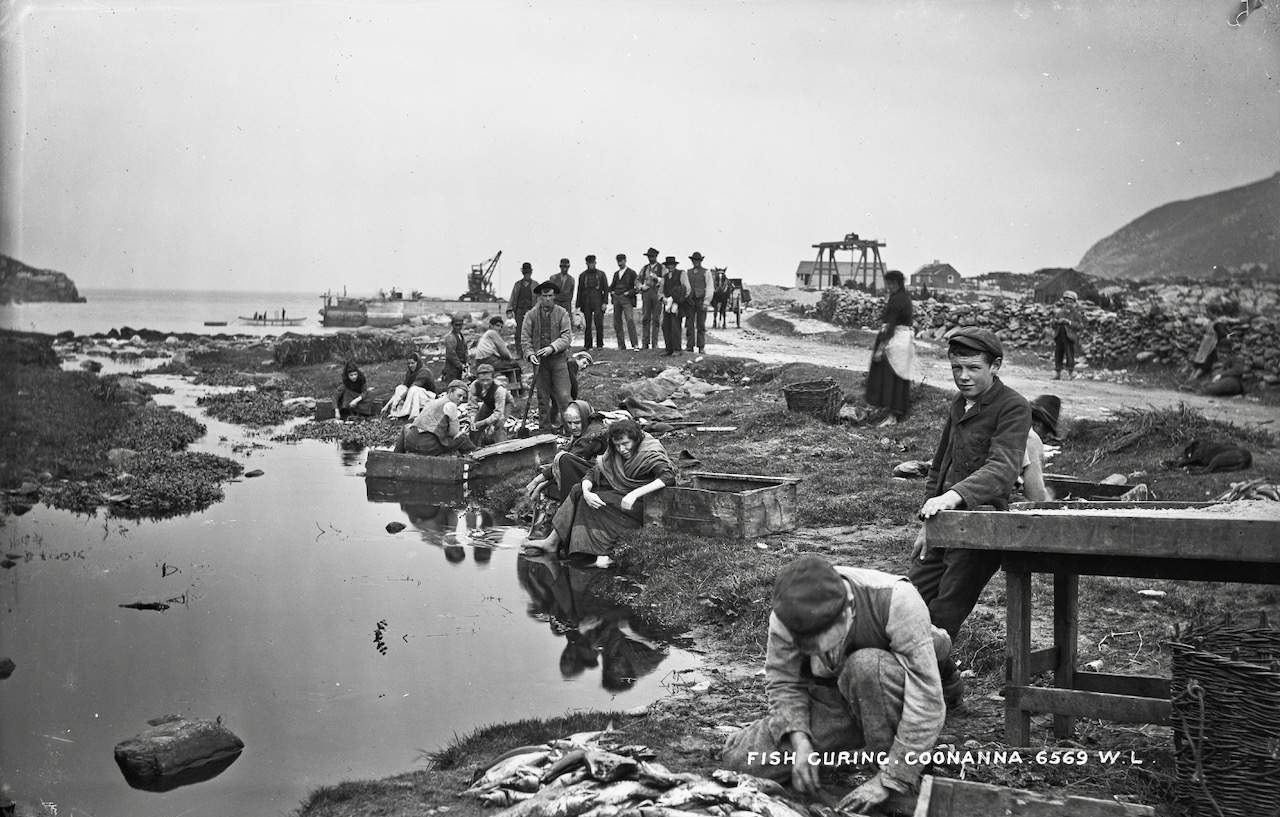
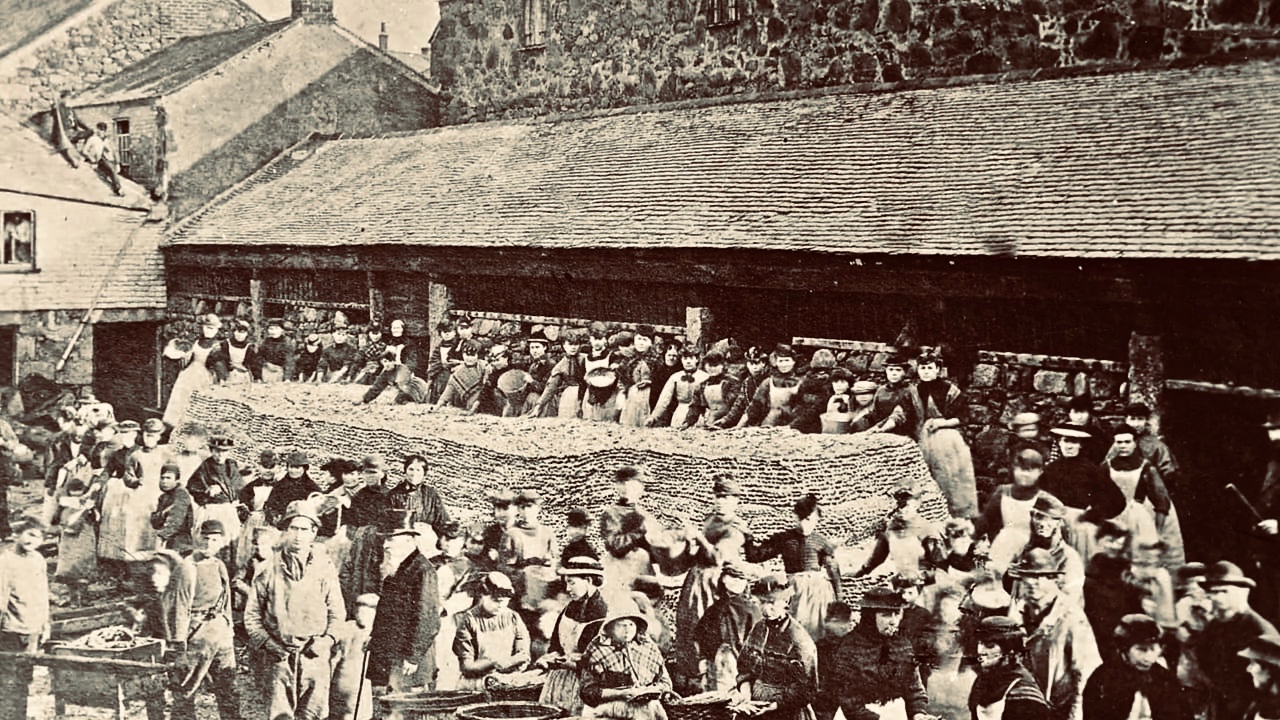
Header – pilchard curing in St Ives, Cornwall c1890: the pilchards are piled up in layers, forming the huge mound in the centre of the photograph. They are salted and weighted down. Above – curing the fish, Valencia Island, Co Kerry, early 20th century (Reddit / Ireland)

Shooting the Seine:

There were two boats per seine net, the seine and the faller. The seine boat was 27 foot long with a beam close to nine foot. The golden rule on the Northside was to never get into a boat whose beam was less than one third its length. The seine boat had five oars of about 17 foot (bow, Béal-tuile, aft, bloc and tiller oars). The crew of seven had to shoot the seine net; one man shooting the trip rope, another to feed out the bunt rope, four men rowing and the huer (master of the seine and captain of the boat) directing the operation. The faller (or bloc) boat was 24 foot long with a crew of five. Its job was stoning and to carry any fish caught. The largest load a faller could carry would be around 5,000 fish. All boats carried a Crucifix and a bottle of Holy Water.

(from Northside of the Mizen by Patrick McCarthy & Richard Hawkes, 1991)
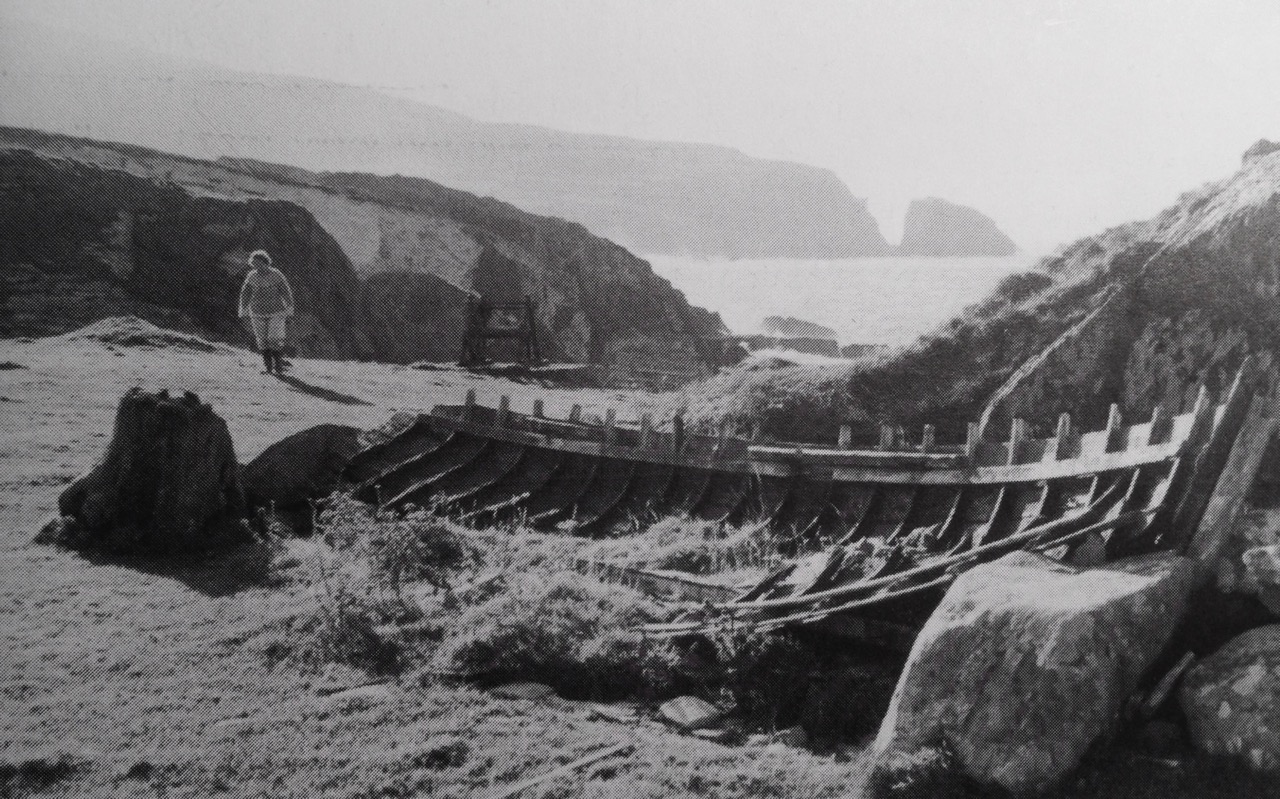
Twentieth century remains of a seine boat, from Northside of the Mizen

If the fish are gone, remains of the machinery of that industry are still to be seen. In particular, the sites of some of the curing stations – or Fish Palaces – are visible, and are recorded on the National Monuments Archaeological Survey Database. Take a look at the map below: I have drawn green pilchards to show the sites of fish palaces mentioned in the database – eleven in all on this section of the map. Also shown by red pilchards, however, are the sites of another six ‘curing stations’: these are mentioned in a long article by historian Arthur E J Went, Pilchards in the South of Ireland, published in the Journal of the Cork Historical and Archaeological Society in 1949: Volume 51, pages 137 – 157.
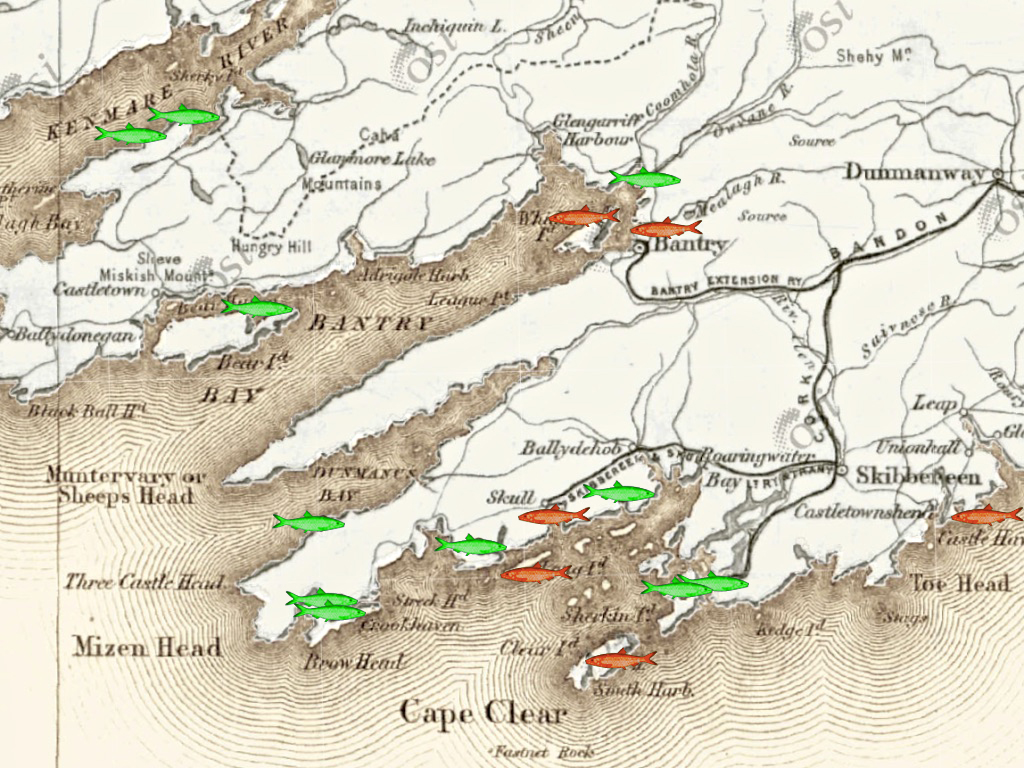
Known sites – or historical mention of – fish palaces (curing stations) in the South West of Ireland (information from  National Monuments database and  Arthur E J Went, Pilchards in the South of Ireland 1949)

The active fishing of pilchards on a large scale in Ireland has been discontinued for many years so that, unlike Cornwall, there is little left, apart from published records, to indicate its former importance. There is, however, published information as to the methods of fishing, and a few sites of old curing stations, frequently called pallices, can still be identified.

from Arthur E J Went, Pilchards in the South of Ireland, 1949
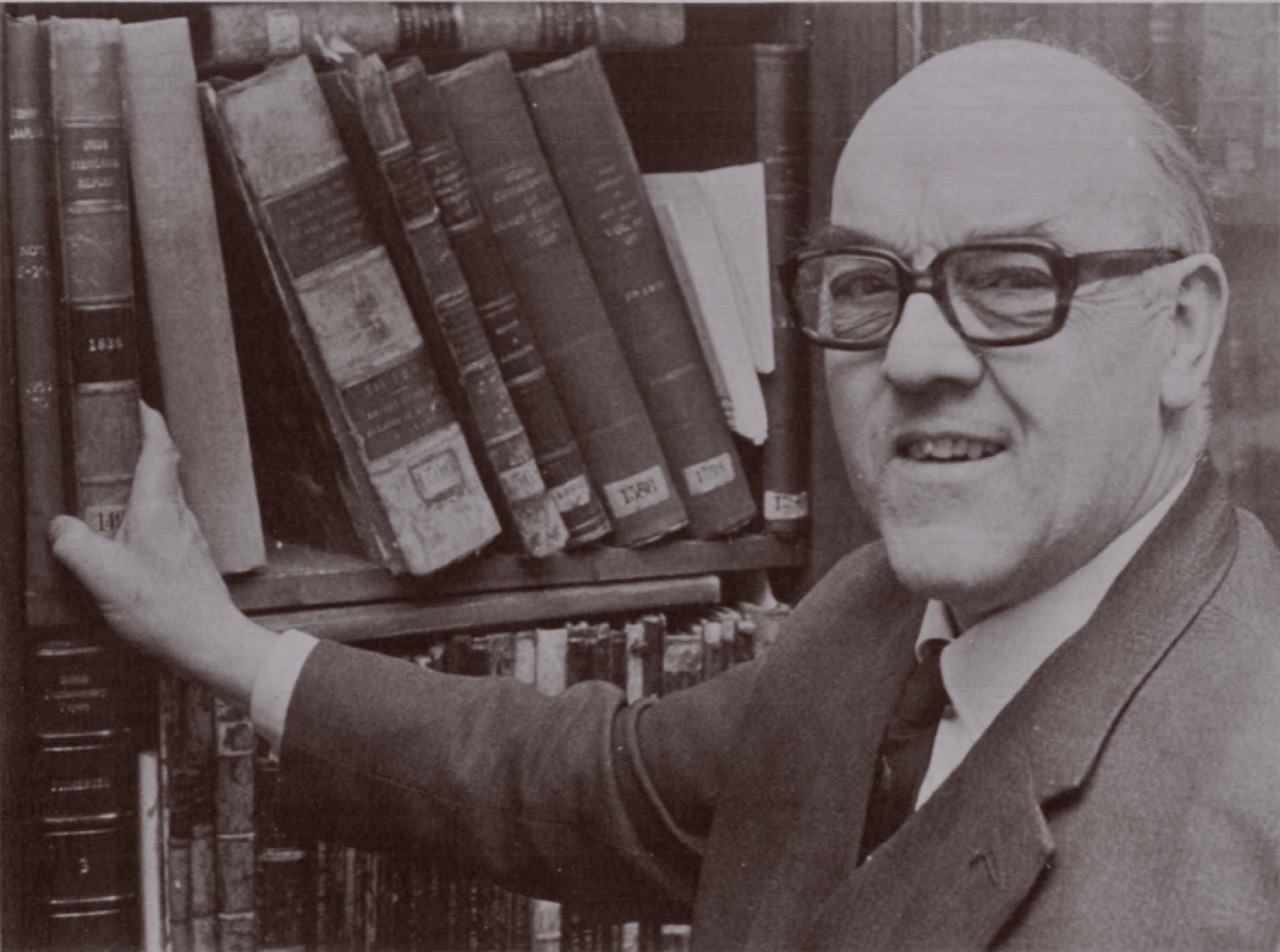
Arthur Edward James Went (1910–80), noted fisheries biologist and historian, lived at Sandycove, Co Dublin. In 1936 he was appointed Assistant Inspector of Fisheries in the Department of Agriculture, Dublin, and later was promoted to the position of Scientific Adviser and Chief Inspector of Fisheries

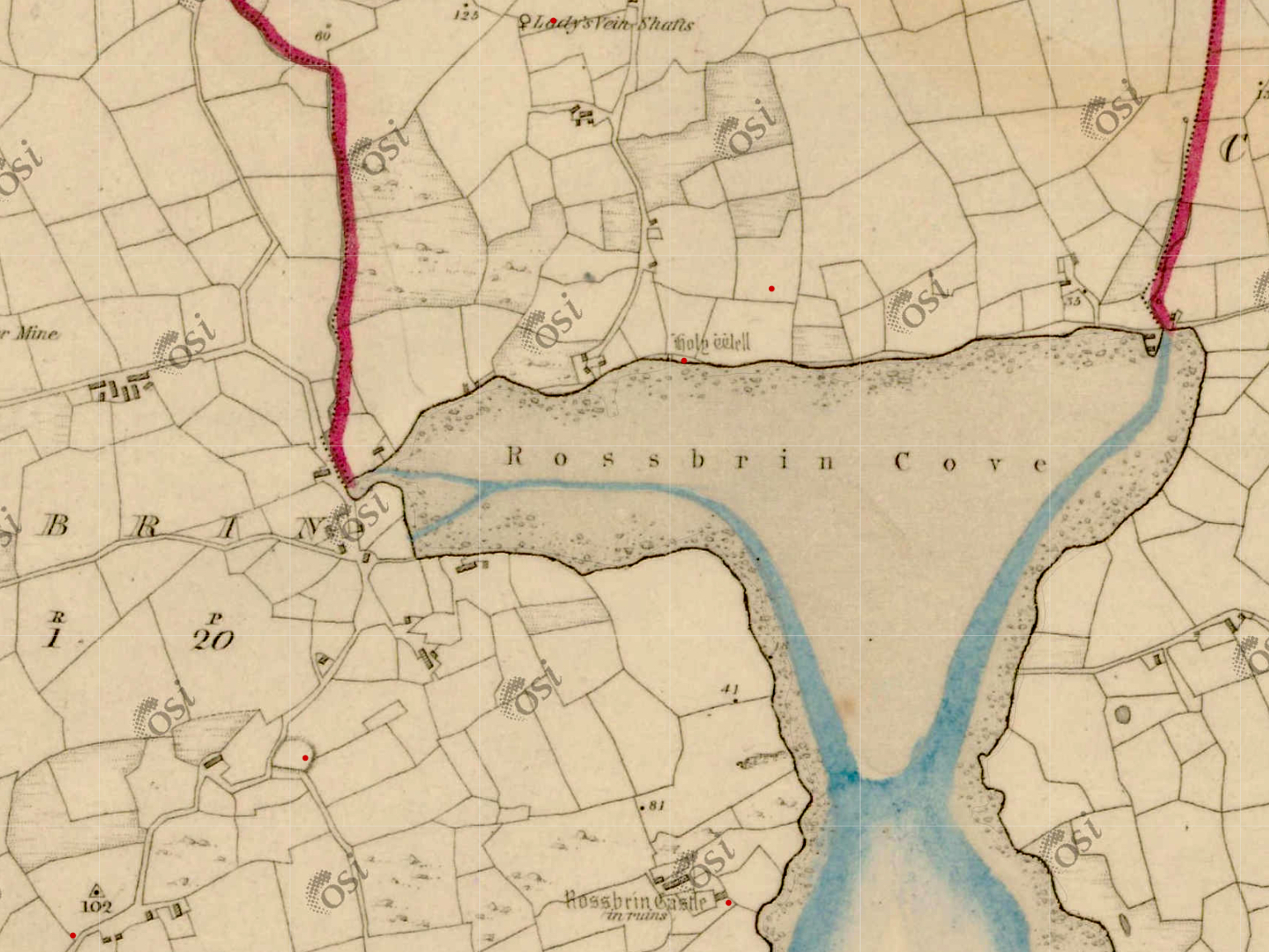
As explorers of all things historic and archaeological – particularly in West Cork – Finola and I couldn’t resist visiting some of the sites of Palaces – or Pallices – documented in these studies. We have always know about the one nearest to Nead an Iolair, in Rossbrin Cove – it’s just down the road: a perfect sheltered harbour, although it does dry out at very low tides. However, there seems to be some debate about exactly where this one is located. It would date from the time of William Hull and the Great Earl of Cork, so how much would be left after 500 years? There is a field on the north shore of the Cove with an old name: The Palleashes which, according to Arthur Went (quoting local tradition), was the site of a curing station for pilchards, operated by the ‘Spaniards’. There seems to be some difference of opinion locally as to which of the many small fields here is the actual site, although it is likely to be close to the large, now modernised quay, as this shows up on the earliest maps.
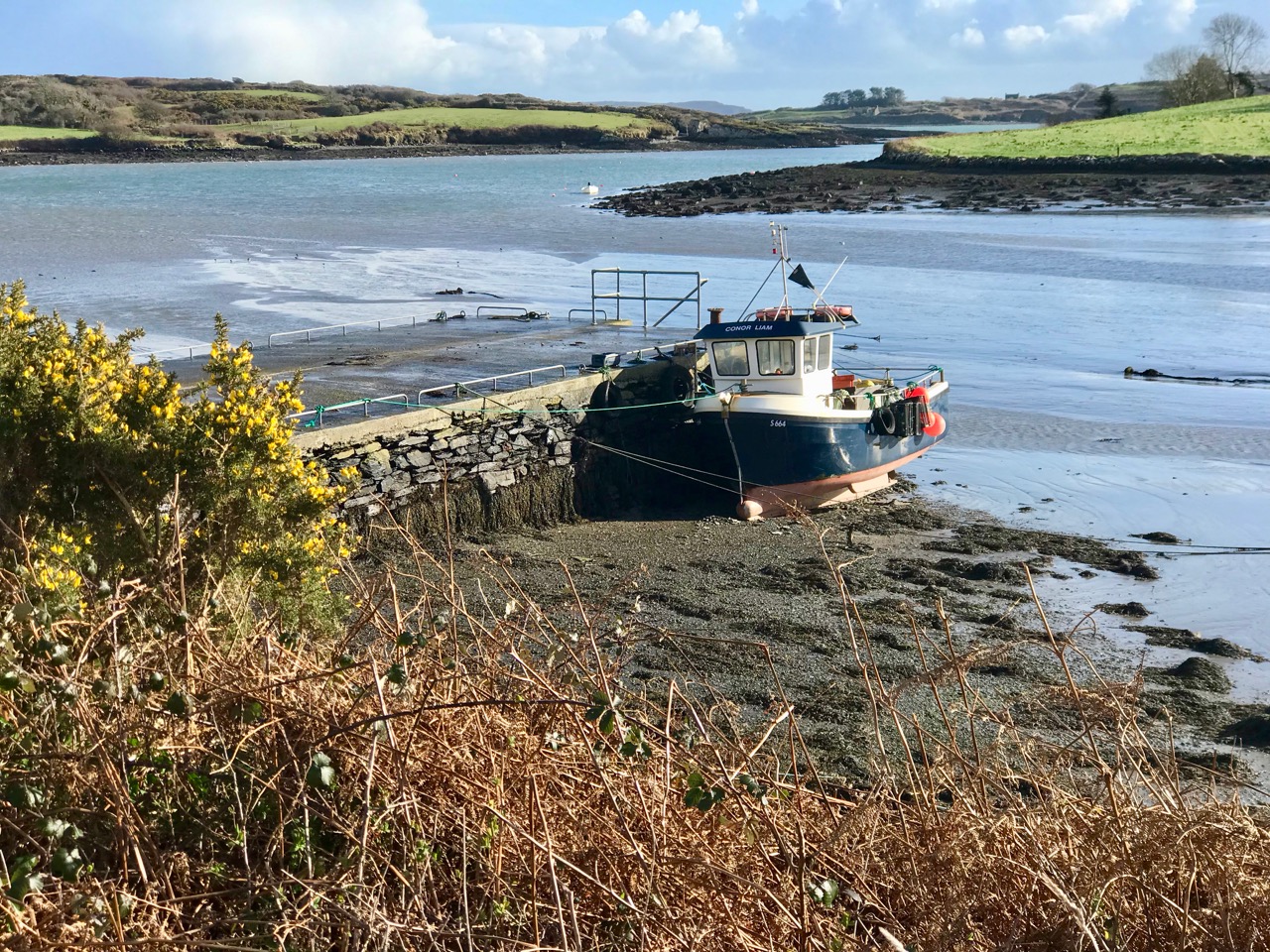
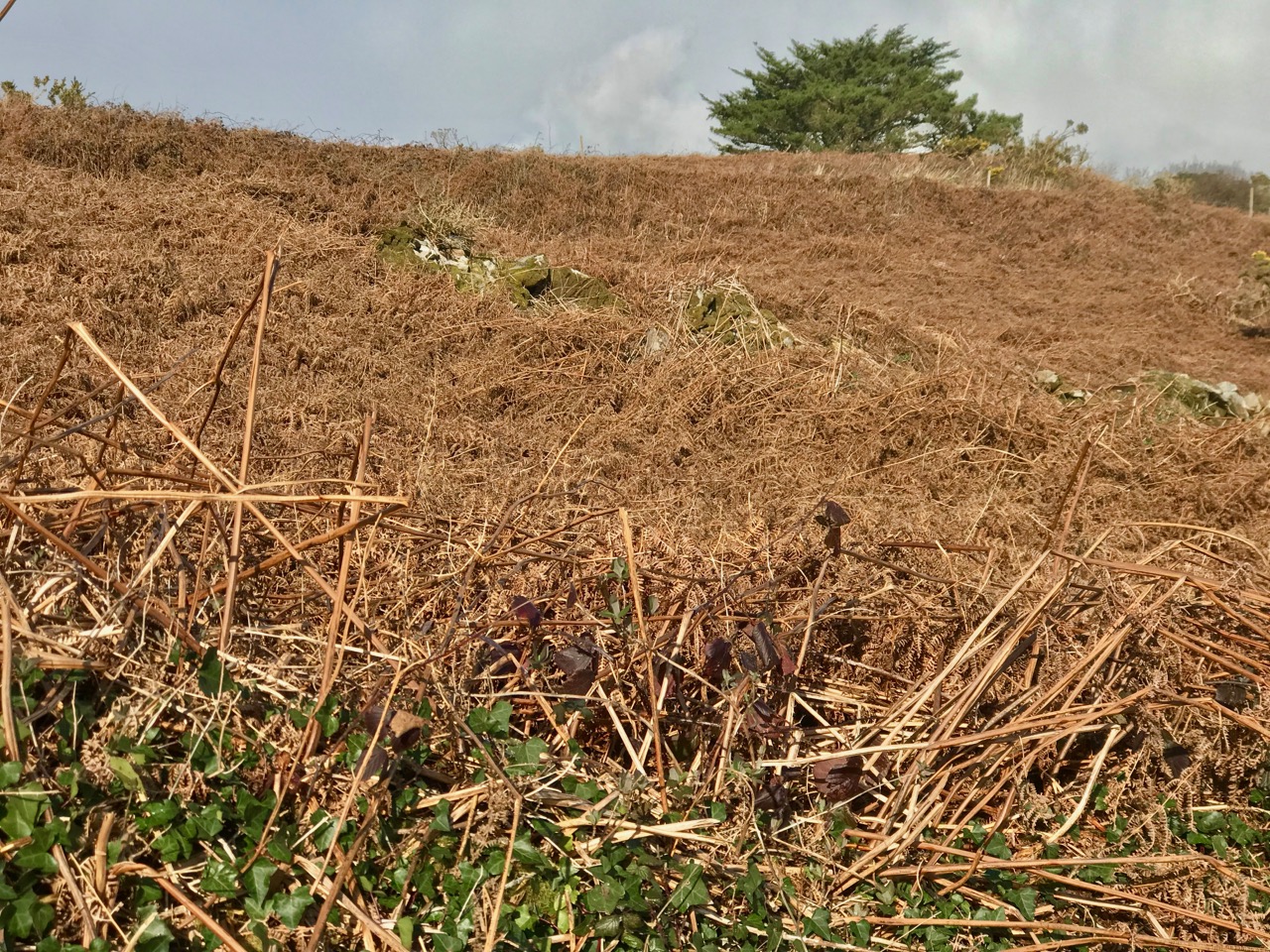
In the upper picture: the quay at Rossbrin is still used by small fishing boats today. Centre – the field above the present quay may be The Palleashes, and therefore could be the site of the medieval fish palace: there are very overgrown signs of stone walls here. Lower picture – the old 6″ OS map, surveyed around 1840, shows a lane accessing the area above the quay (to the left of the ‘Holy Well’ – that lane is no longer there today) and there are buildings close to the shore which could indicate the palace. In 1840 there was no road running along the north shore of the Cove, but the strand at low tide would have been used as a thoroughfare. Just above the ‘Holy Well’ indicated on the shoreline – and slightly to the right – is a small red dot. This is the area shown by Arthur Went as the possible site of the fish palace (and subsequently marked as such on the Archaeological Database); in my opinion it is more likely to have been directly accessed from the water.
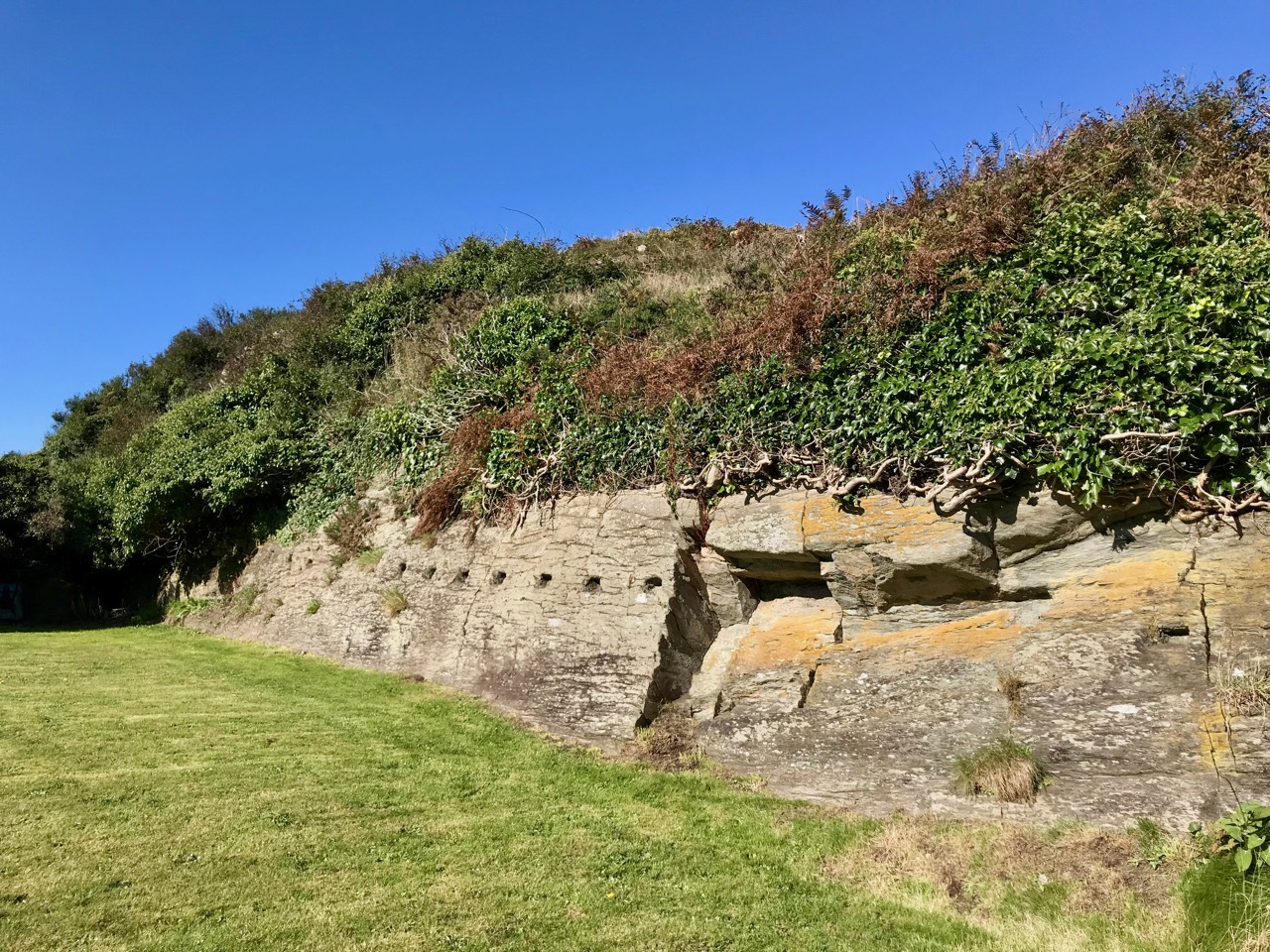
A sure sign of the site of a fish palace is a line of perforations or holes – as can be seen above at Baltimore, where a substantial curing station is recorded (although it may only date from the nineteenth century). Large timbers were inserted horizontally into these holes to form a ‘press beam’ to provide leverage for bucklers to squash out the oil from the salted pilchards, as shown in Arthur Went’s diagram, below:
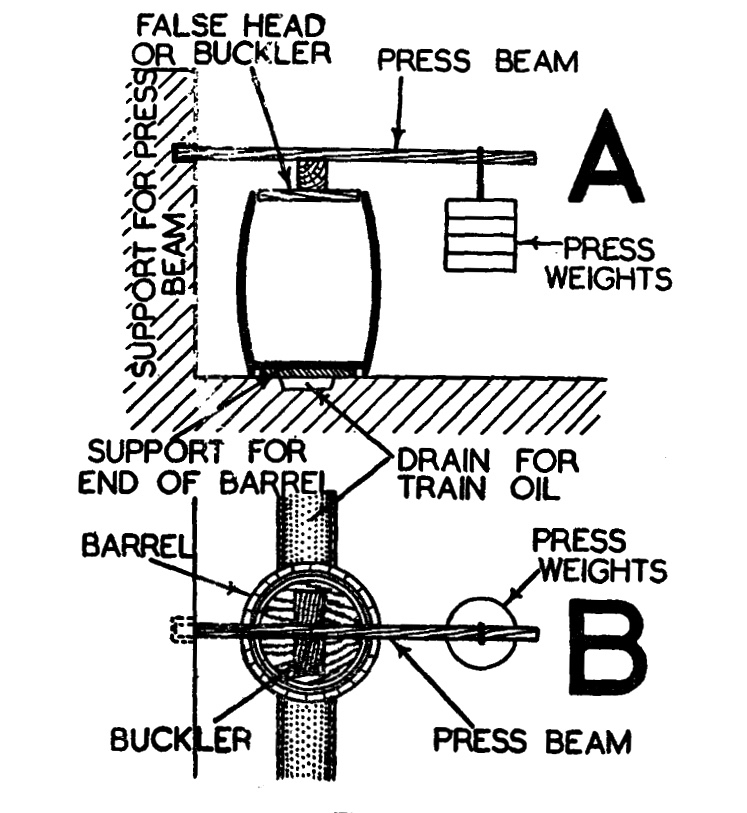
The ‘Train Oil’ – produced from the compressed pilchards – was a valuable commodity, and was collected to be stored and used for treating leather, and as fuel for lamps. As a by-product of the pilchard industry it was said to be as valuable as the fish themselves.
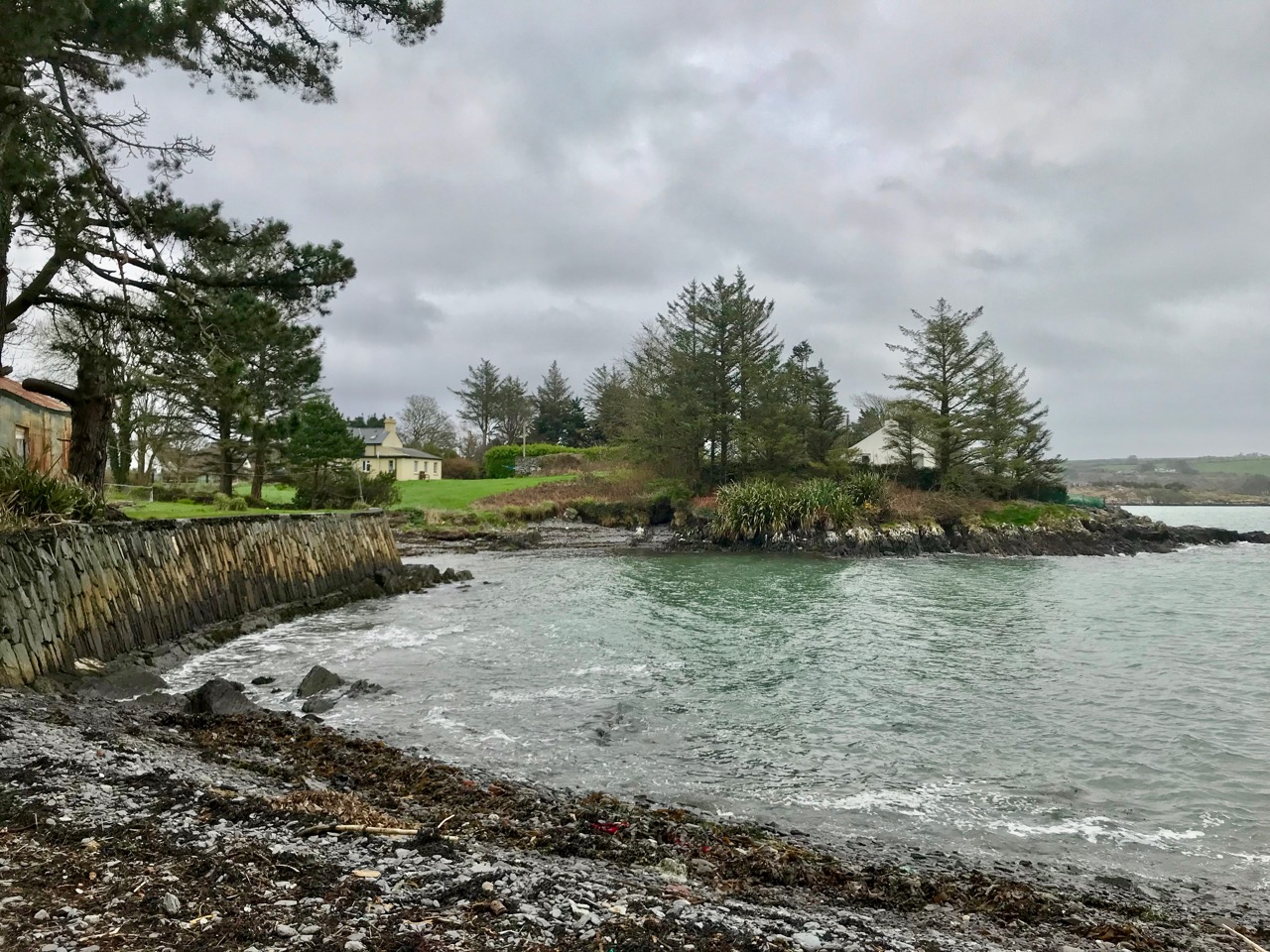
Palace Strand, in Schull

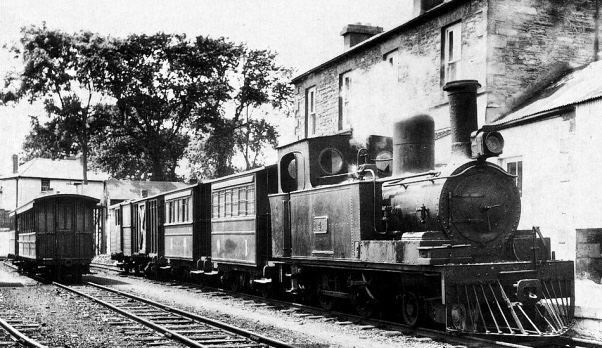
To continue my researches I went along to Schull, where Arthur Went mentions a ‘Palace House’ on ‘Palace Strand’ – an inlet just to the east of the main harbour. This is right beside the old railway station which was not quite the terminus of the Schull & Skibbereen Railway, as a spur went on from the station to serve the harbour itself. The station buildings and part of the platform are still there – now a private residence. I could not find anything in the area shown on Went’s map at the east end of the strand, but I did find something at the west end.
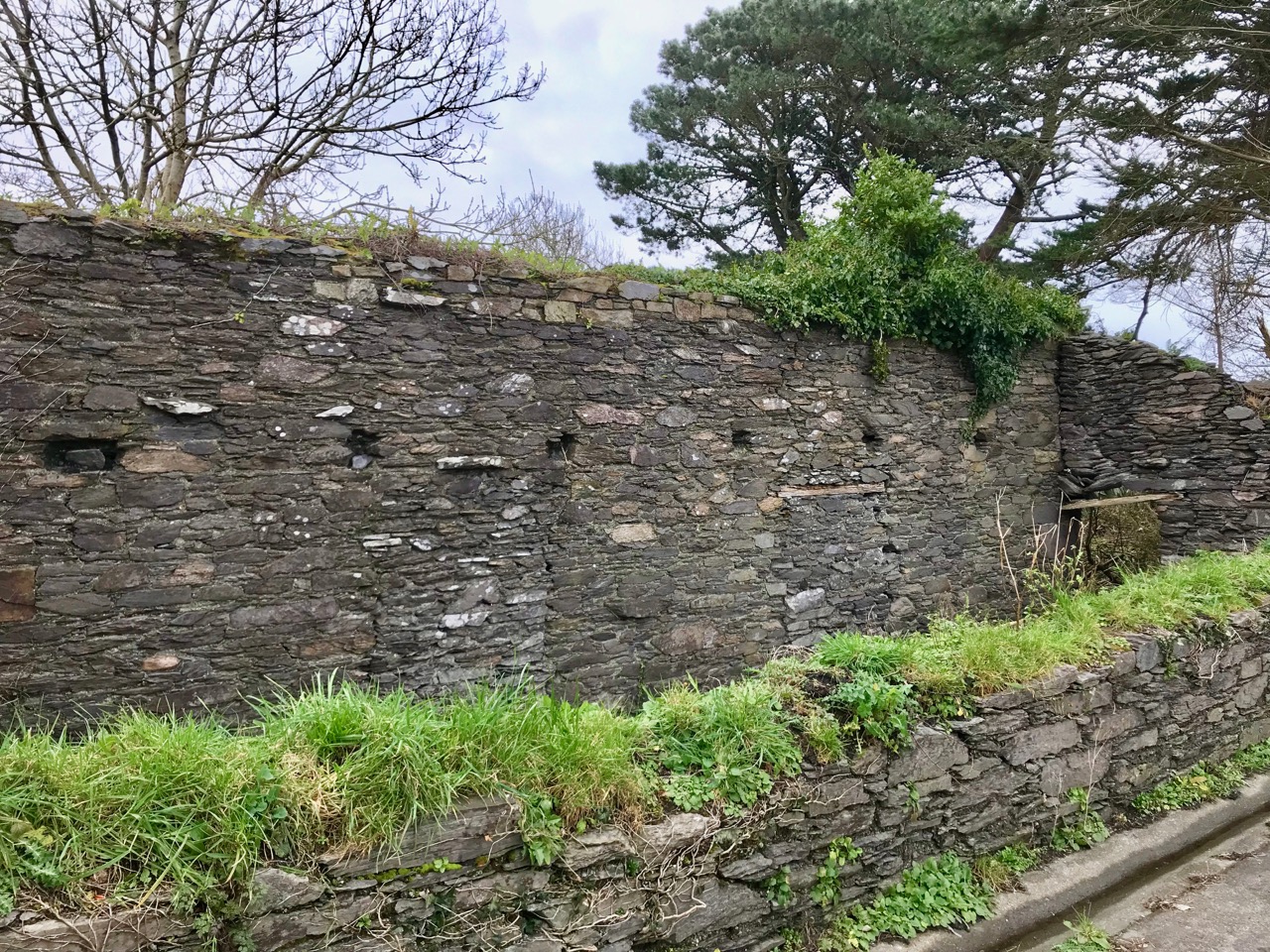
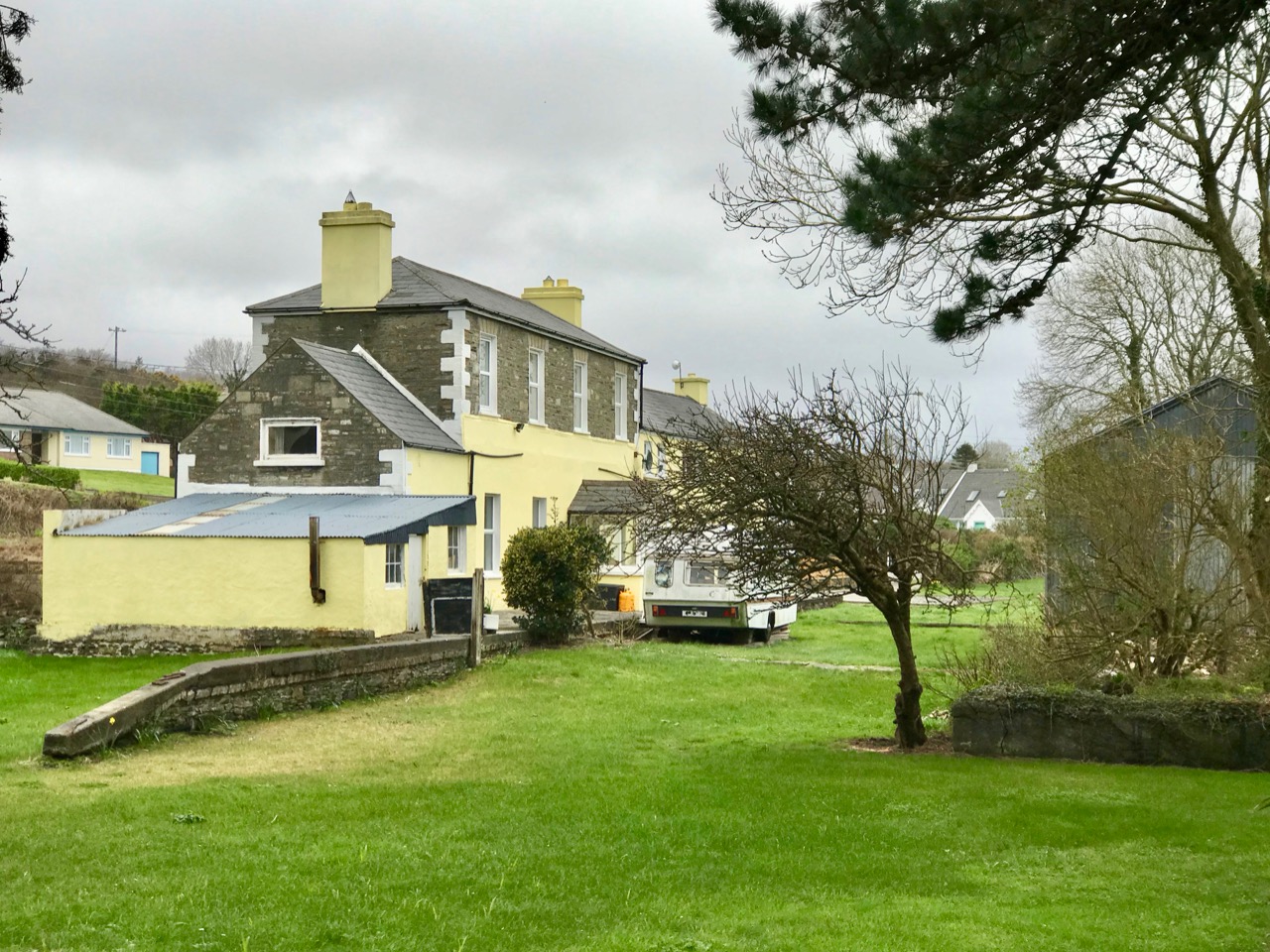
In the upper picture is a wall on the western boundary of the old station site in Schull. This contains beam holes very similar in size and spacing to those we have seen in fish palaces elsewhere: it’s very tempting to think that this wall – now part of a derelict building – may have had this purpose, as it is well situated close to the shoreline of Palace Strand. If this was a fish palace, it is also likely to date from the nineteenth century, as the early Ordnance Survey maps don’t indicate it. The centre picture shows the old station buildings today, and the lower picture taken at Schull Station in 1939 reminds us of past times: the railway closed in 1947.

This post is a ‘taster’ for a fully illustrated talk I’m giving at Bank House, Ballydehob, on Tuesday 26 February at 8pm: Pilchards & Palaces – 300 years of Fishing in South-West Ireland. It’s part of the Autumn series of Ballydehob’s ‘Talks at the Vaults’
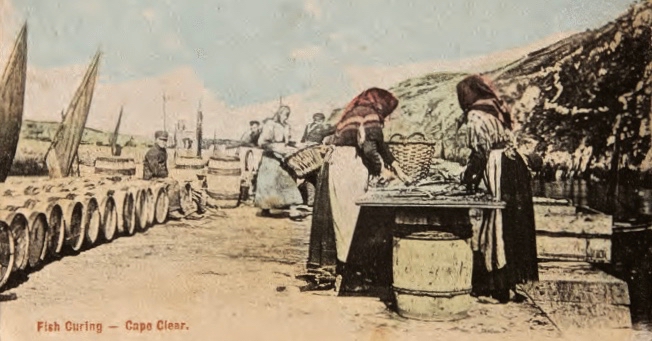
Below – a postcard showing fish curing on Cape Clear in 1906 (from Hely’s, Dublin)

Barley Lake

In Ireland February 1st – St Brigid’s Day – is thought of as the first day of Spring: we begin to look out for snowdrops and daffodils, and expect to see a ‘real stretch’ in the evenings. Of course, we also make our St Brigid’s Cross to ensure good luck and fertility to the household. It’s no coincidence, I’m sure, that the church festival of Candlemas (St Blaise’s Day) falls on the following day: February 2nd. Traditionally, people took candles into the church to be blessed that day, and these were used for the rest of the year.  Surely this is something else connected with the turning of the year and the coming of the light?

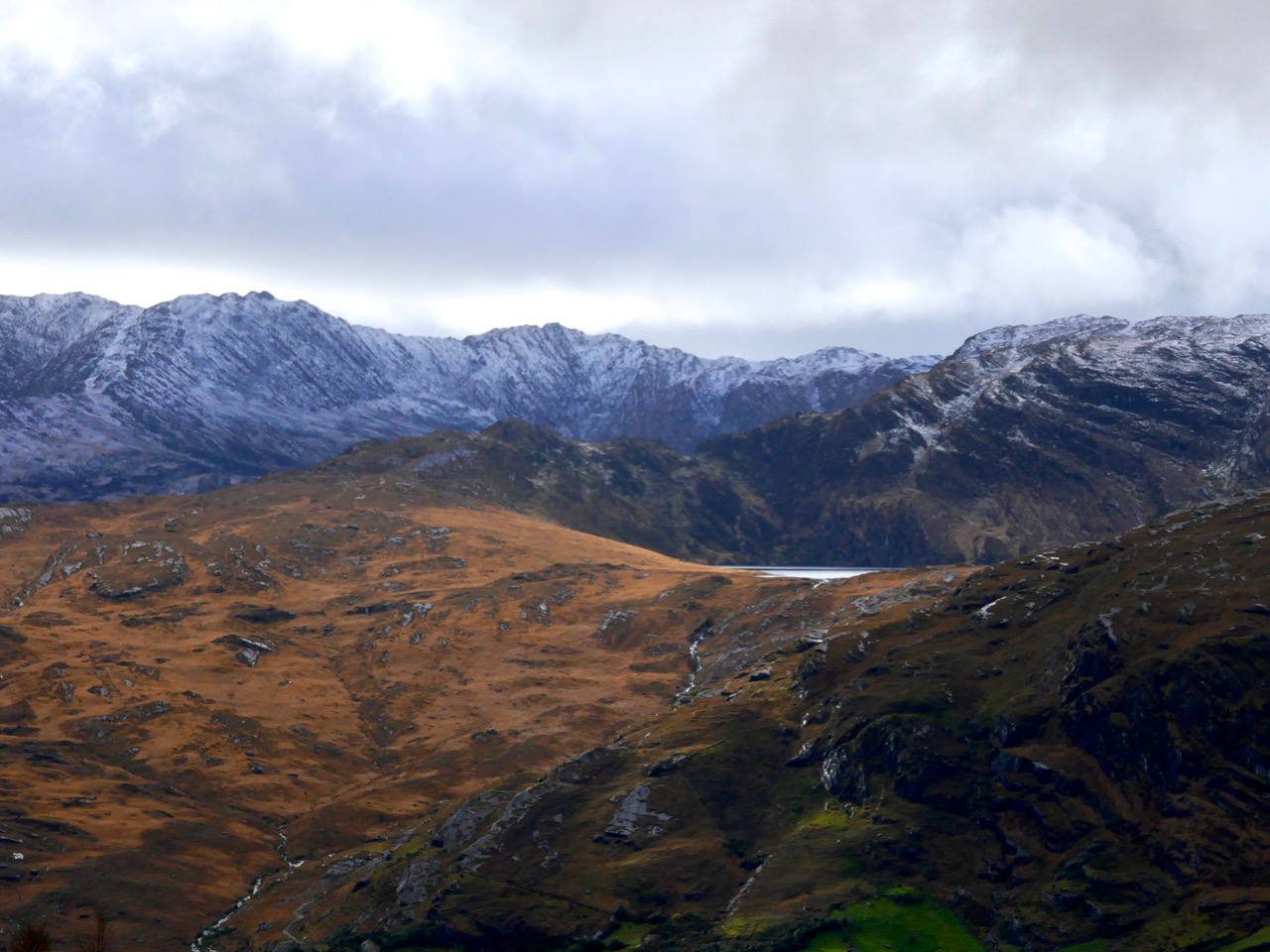
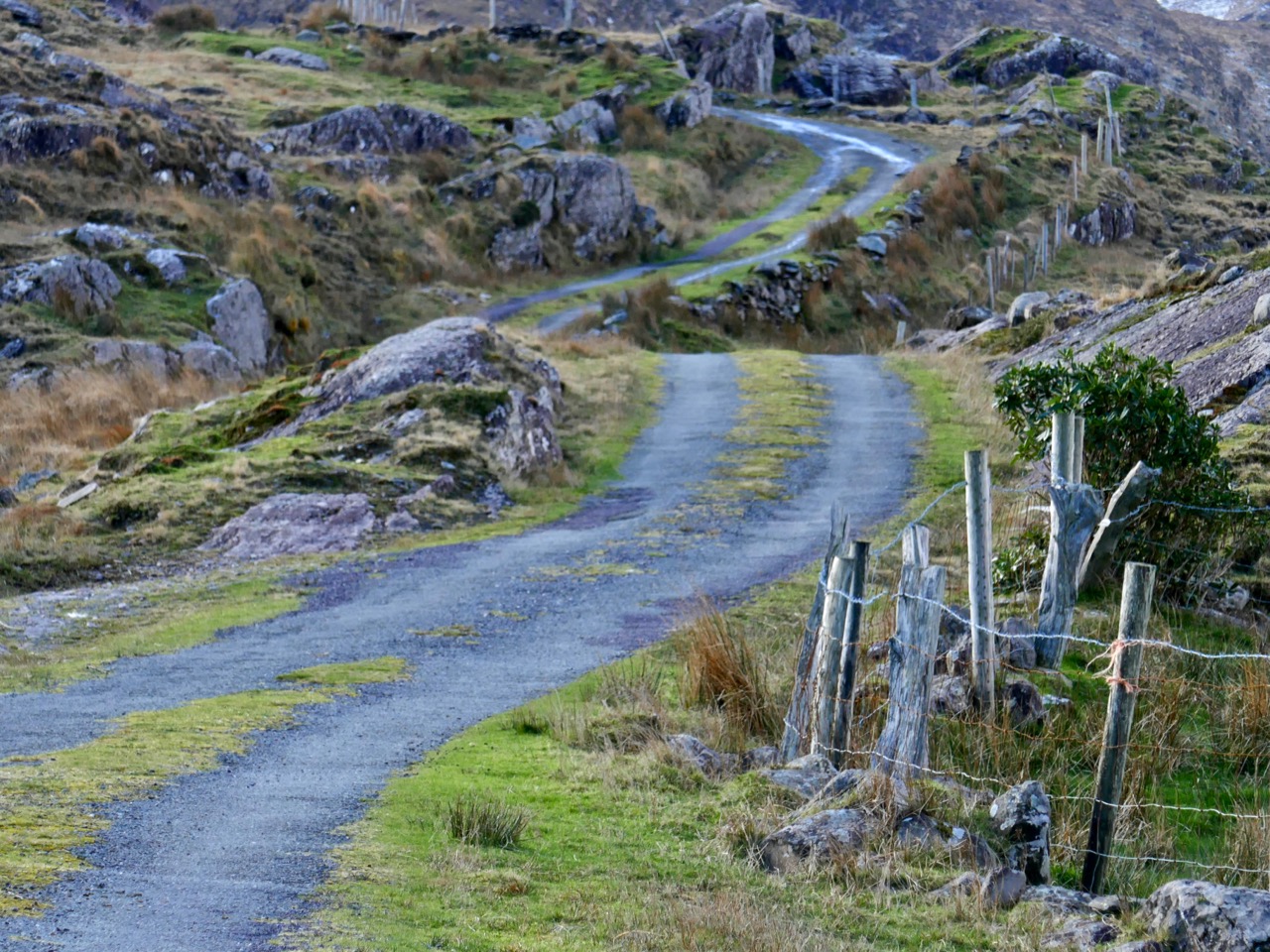
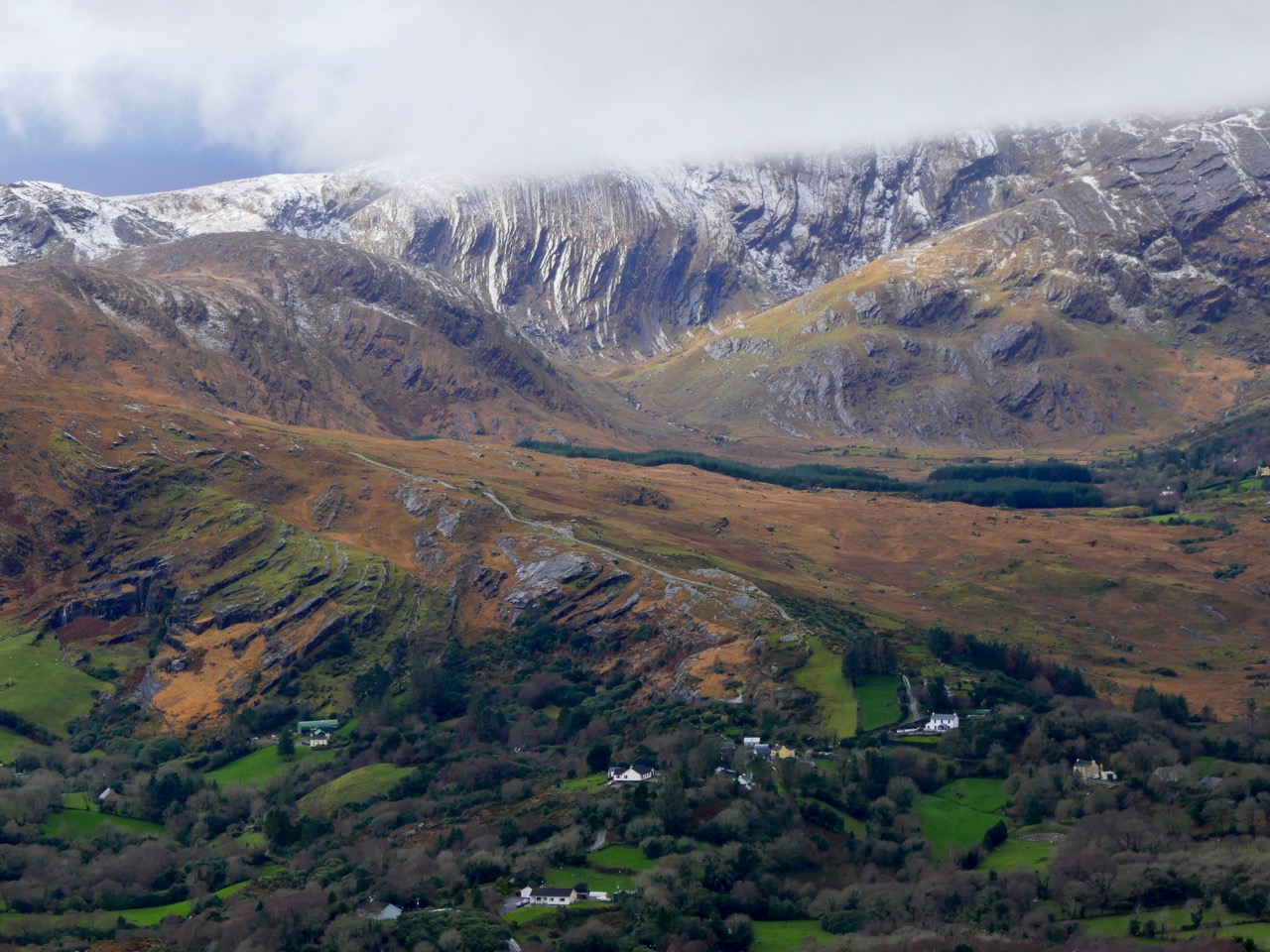
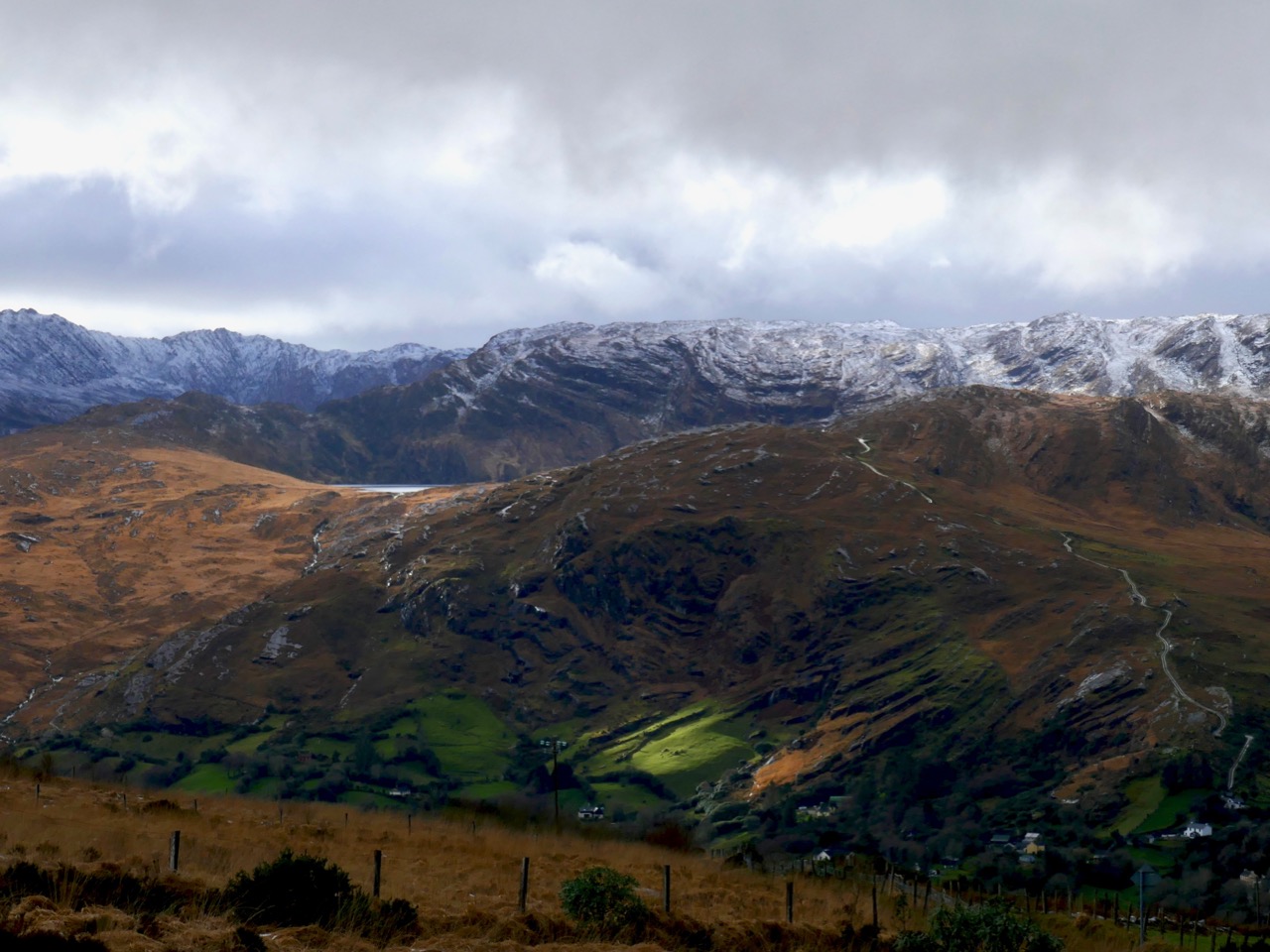
Header – a tantalizing glimpse of Barley Lake seen from the N71 road north of Glengarriff. Above – the winding boreen that heads up towards Crossterry Mountain

To make our own celebration of the arrival of Spring we set out on February 2nd on a trip to Crossterry Mountain in County Cork, just north of the road running west to the Beara Peninsula from Glengarriff. This was unexplored territory for us, but we had long planned to visit Barley Lake: if you travel on the spectacular N71 road from Bantry over to Kenmare you get tantalising glimpses of this corrie or tarn away to the west, just before you pass through the first of the tunnels.

Above – a closer view of the mountain crater that contains the lake

If you are into geology, Barley Lake is a classic demonstration of how Ireland’s land mass was moulded by the movement of the great glacier sheets towards the end of the last Ice Age, some 10,000 years ago. As the melting glacial ice moved south, it carved out and dragged huge boulders, which ‘plucked’ or excavated the land surface, leaving craters which filled with water after the ice melted. These are known as ‘corrie lakes’, ‘ribbon lakes’ or ‘tarns’. Barley Lake is one such crater; another is the lake at Gougane Barra in the Shehy Mountains, also in West Cork.
Upper – how ‘corrie lakes’ or ‘tarns’ are formed (DooFi  via Wikipedia). Above – glacial geology clearly delineated by fresh snow on the way to Crossterry Mountain
The road to the lake is remote and picturesque, but we were surprised to find quite a sizeable settlement high up on the mountainy road. We were not quite sure what it is called, but the townland is Crostera West. We enjoyed some of the names we found on the map: Lake Derreenadavodia, Magannagan Stream . . .

Mountain dwellers: Coomarkane townland, Scully’s Cottage and a red-roofed barn becoming part of the landscape

Driving, you approach Barley Lake from the north side. On the extract from OS Map 85, below, you can see the narrow way that winds up to a high point – the 300 metre contour, where there is a place to park, and then proceed on foot. Look carefully at the way the road is drawn here – it’s no exaggeration: there really is a series of hard S bends that have to be negotiated to get up the mountain. We should have photographed them, but I was hanging on tight to the steering wheel, while Finola was hanging on to anything she could – and we found ourselves driving into a blizzard!

Middle photo – a relatively straightforward part of the drive up the mountain, before we reached the S bends! Lower photo – snow coming in as we reached the summit

It was a day of weather contrasts: some of the journey was made in that beautiful low sunlight that we have been experiencing at the start of this year, while at other times the wind whipped suddenly in and threw sleet and ice at us. On the top we found a good covering of snow on the rock-strewn path that we had to take to reach the shores of the lake. We braved the elements, and passed by peat workings that looked to be still in use.

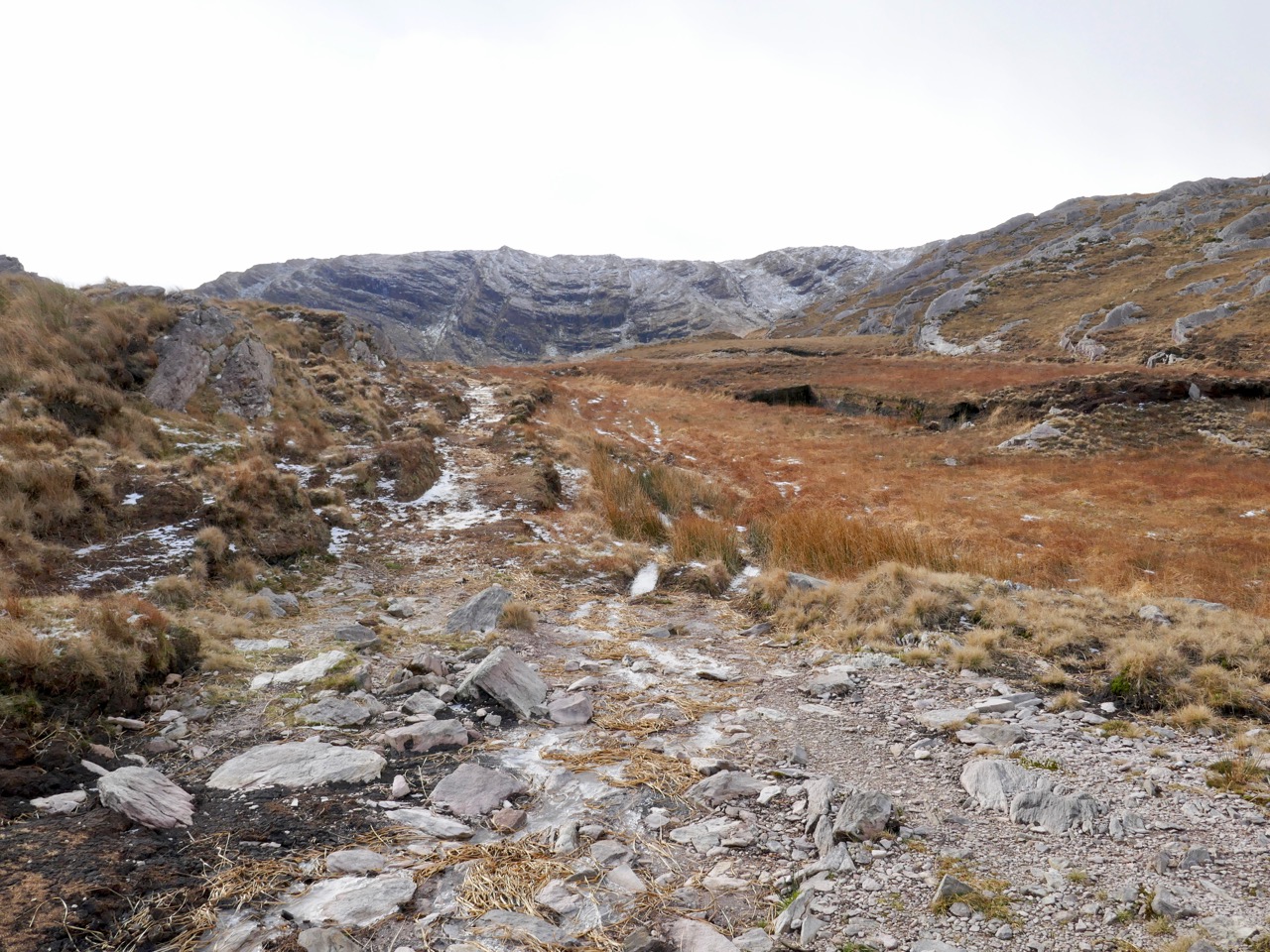
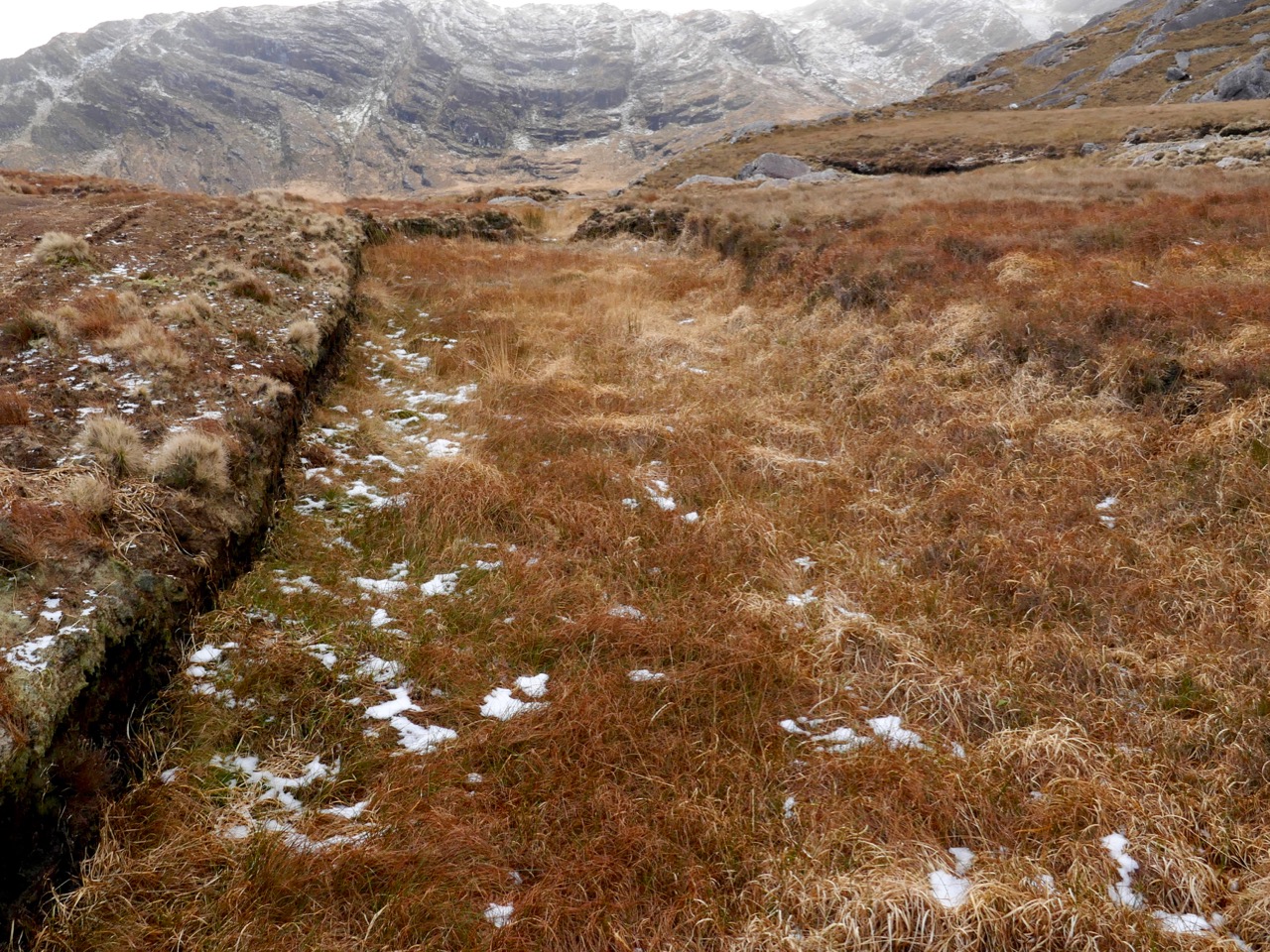
Top – the path to the lake. Above – peat workings

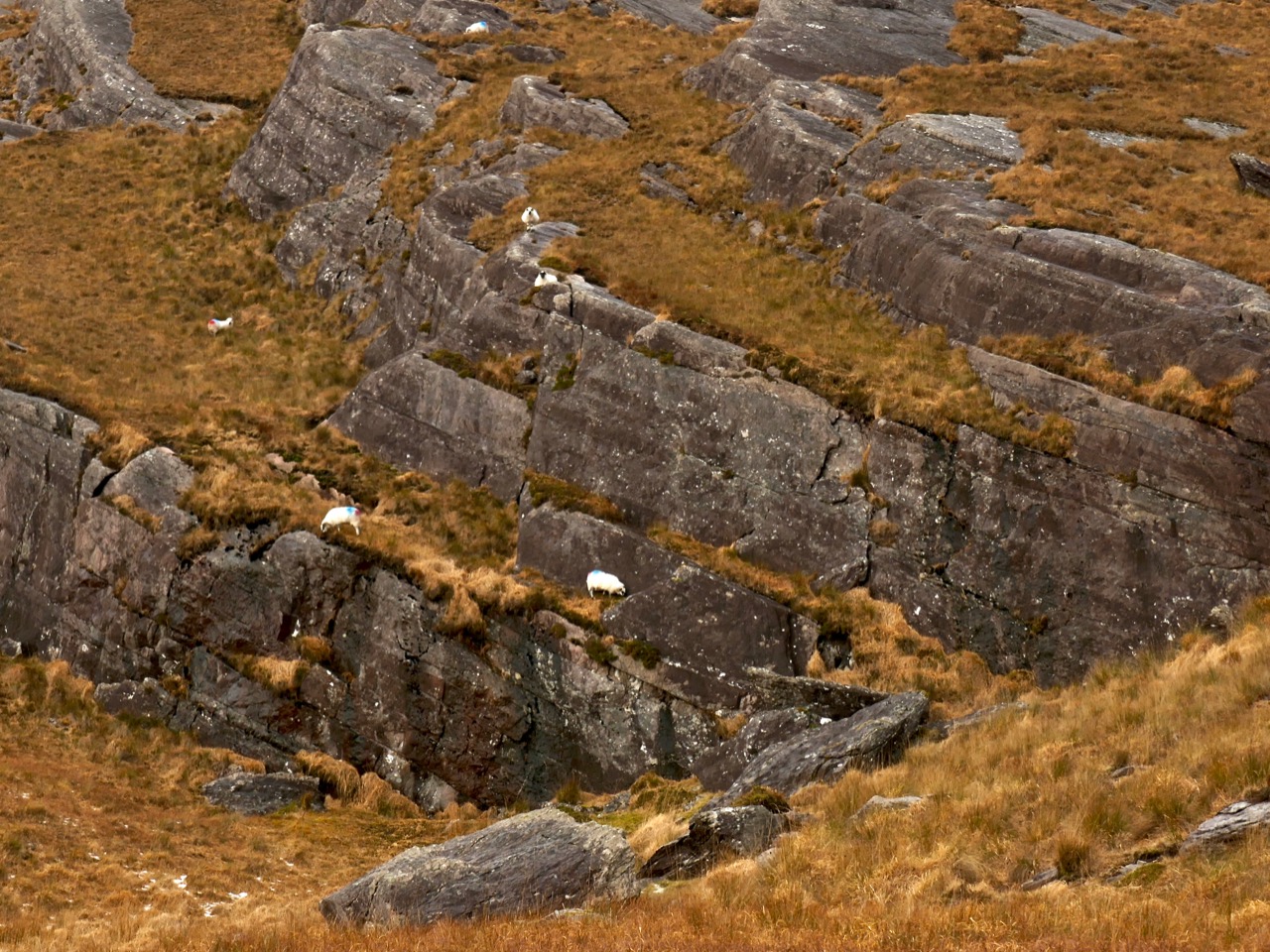
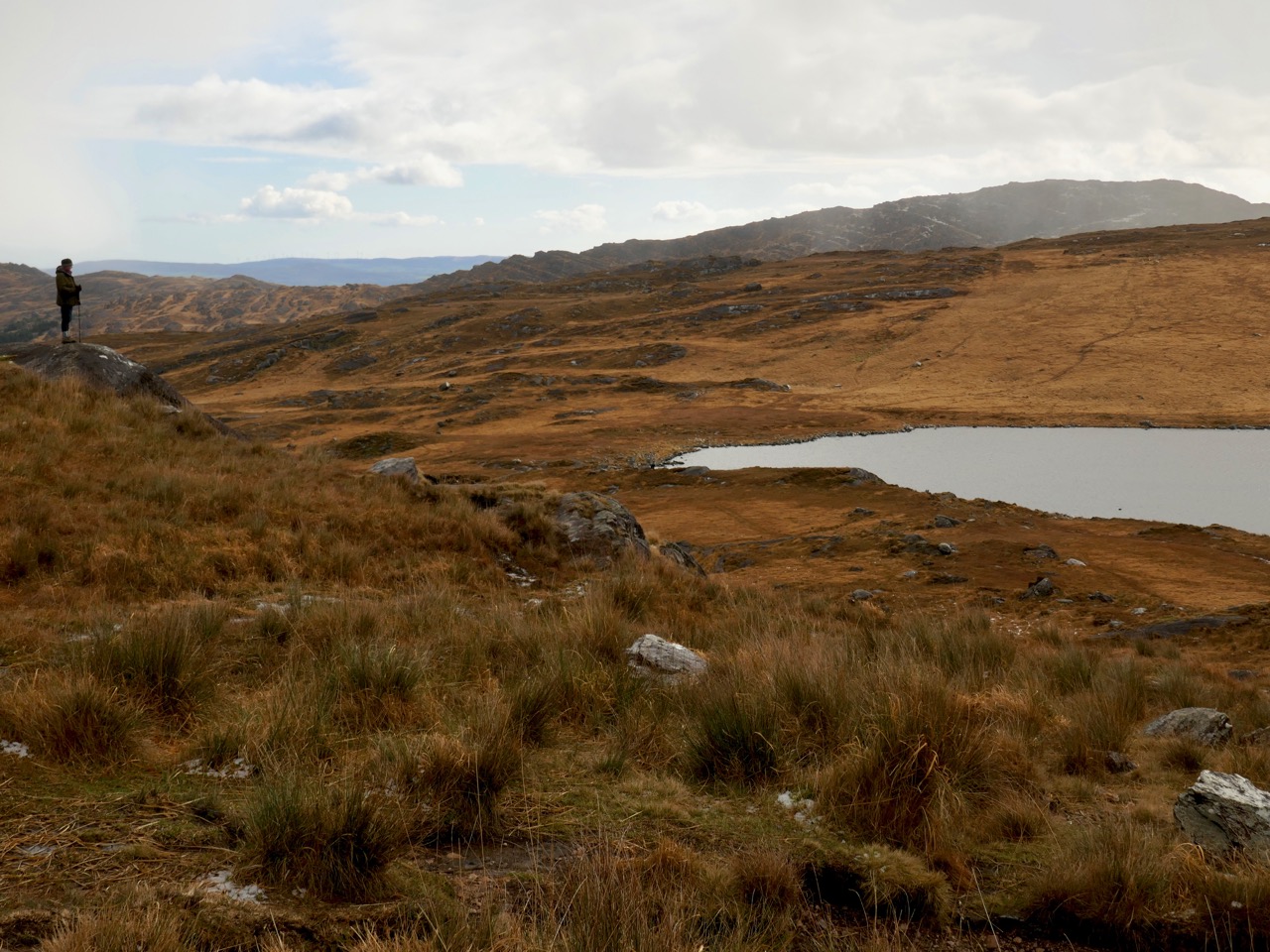
The lake itself felt remote and lonely – and unvisited on our winter day, although I gather many hikers aim to circumnavigate the shores. We didn’t: it takes several hours and the light was beginning to fade with the incoming snow. It would be fair to say that it’s bleak up there, but – as always in Ireland – beautiful. Our only companions were sheep, who seemed to space themselves out neatly on every available ledge.

Robert – finding his own ledge! Thank you to Finola, who took all the photographs on this journey

In spite of some challenging conditions, it was a grand day out. As we wended our way carefully back down the bends, we admired the wonderful distant views, and – as we approached the glens of Glengarriff, fortuitously back in sunlight – paused to examine more geological formations.

We never tire of exploring West Cork, and we will never run out of destinations: as always, our delight is the out-of-the-way side roads – Ireland’s speciality.

Saints and Soupers: the Story of Teampall na mBocht (Part 6, Counter-Accusation)

Today I am looking at what happened to Teampall na mBocht when the Catholics finally got the resources together to win back Fisher’s converts.  As we saw in the last post, the Rev William Allen Fisher built Teampall na mBocht (above) with money raised through his own efforts, confining the work to the poorest labourers. There is no evidence that he made employment on this project conditional on conversion, and his own accounts quantify payments to Catholics as well as Protestants (going by the evidence of last names, which can, of course, be misleading).

Reproduced courtesy of the National Library of Ireland (with permission) from a collection of prints by the Irish Church Missions to Roman Catholics. The notes accompanying the image say: This image shows a Protestant clergyman standing at a pulpit with his right arm raised in anger while arguing with a Roman Catholic clergyman in the audience. Audience is divided into 2 groups determined by features. Those seated have more prominent features with upturned noses and those standing have more stern features with straight noses

However, he also supplied food to the Christian missionary schools in the area, the enrolments of which surged accordingly, and he enthusiastically welcomed those who wished to confess and be converted: the number of Church of Ireland adherents rose dramatically in the Goleen area during this period. He denied all charges that he ‘bought’ such conversions. The activities of a clergyman who also happened to be a large landlord using relief funds to build a Protestant church and fund Protestant mission schools, even if by doing so he saved many from starvation, were always going to excite odium within the minds of his Catholic counterparts.

Alexander Dallas, founder of the Irish Church Missions to Roman Catholics Photo from Archive.org

The Protestant Crusade, with its colonies and schools and aggressive proselytising, had reached its zenith in the period leading up to and during the famine. Led by men like Alexander Dallas of the Irish Church Missions, or Bishop Robert Daly of Cashel, it never succeeded in winning the numbers of converts that its proponents and funders hoped for. What it did, in fact, was to drive a sectarian wedge deep into the heart of Irish society and create a legacy of bitterness and distrust.

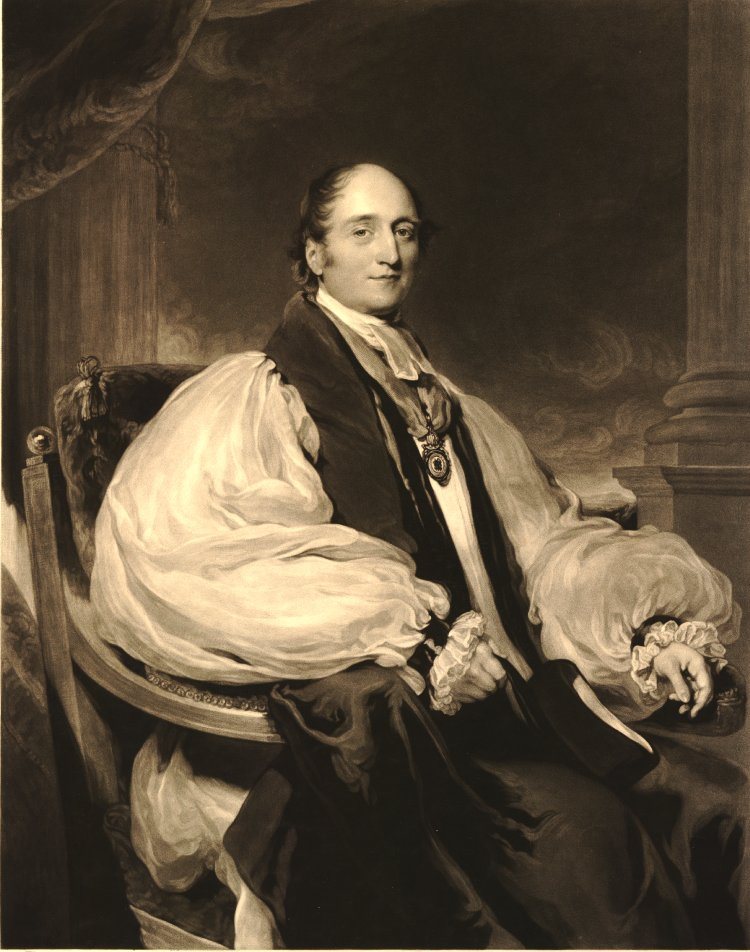
Lord John George de la Poer Beresford, every inch the aristocratic Lord Bishop of Armagh and Primate of All Ireland

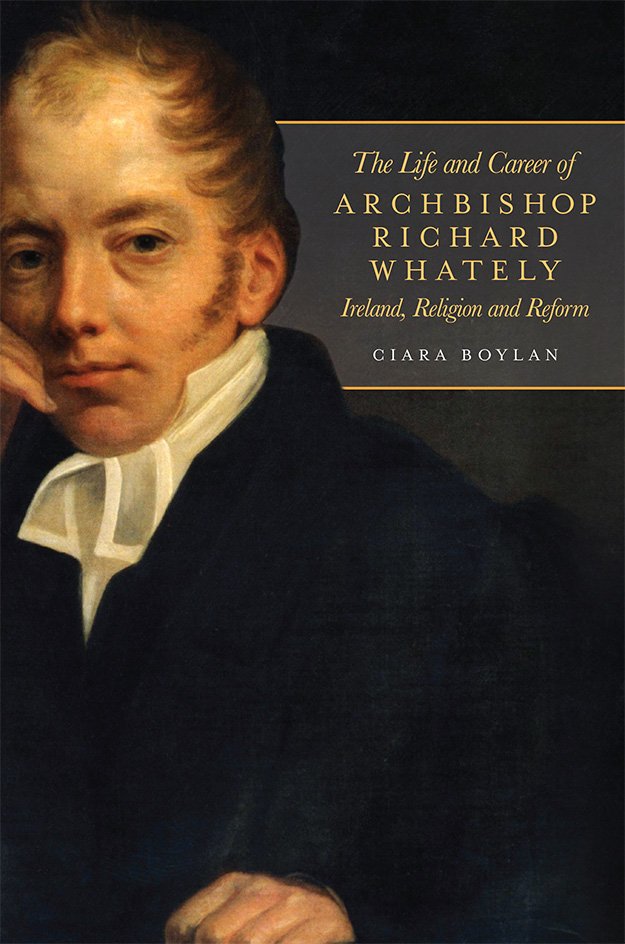
Moderate and liberal Church of Ireland leaders such as Archbishops Whately of Dublin and Beresford of Armagh, tried to curb the worst excesses of the movement, worrying that that The ICM was doing “Irreparable mischief to the Church in Ireland”. While they both deplored the ‘Romish’ religion they hoped for conversions through Irish Catholics seeing what a model of bible-based virtue looked like, not by means of radical evangelical activities and proselytising. 

Richard Whately, Archbishop of Dublin, a complex and possibly misunderstood prelate

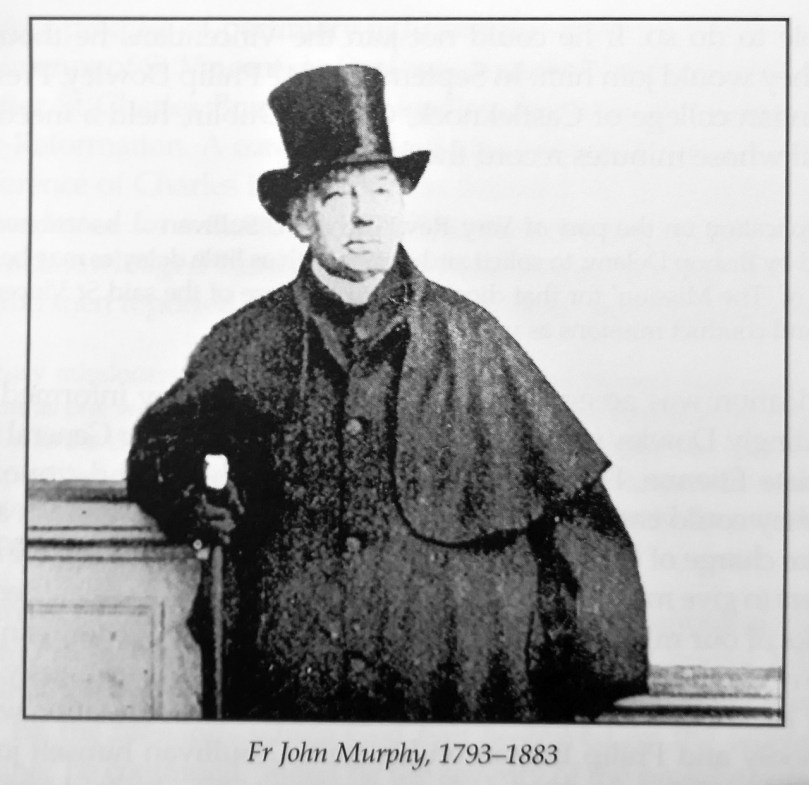
A Catholic backlash was inevitable and when it came it was as complete and heavy-handed as it was possible to be. Seeing the situation, and the number of converts in Goleen and Toormore, Bishop William Delany of Cork sent in the big guns, in the form of Fr John Murphy, AKA The Black Eagle of the North.

William Delaney’s rather magnificent statue in Cork. Note the Papal Insignia

Wait – the what? Yes, you heard me right! A scion of the famous and wealthy Catholic merchants, distillers and brewers (themselves accused of exporting grain during the Famine by none other than Fr Matthew) John James Murphy was the stuff of legend. Here’s a quote in full from one account (based on a well researched biographical sketch), because, well, you can’t make this stuff up.

The scene changes to a clearing in the virgin forests of Canada. There a French-Canadian priest has pitched his camp. He has no flour to make Hosts for the Holy Sacrifice and then down the little stream that bordered the clearing there drifted a birch-bark canoe paddled by an Indian. He shared his flour with the priest who was surprised at the soft cadences of the Indian’s English. And no wonder, for the Indian was born not on the banks of the St. Lawrence but on the banks of the Cork Lee. It was John James Murphy, one time an officer in the navy, now a hunter in Canada. In the course of his journeyings the Corkman had fallen in with a tribe of Red Indians and had thrown in his lot with them. They initiated him into their tribe, crowned him with feathers and dressed him in all the accoutrements of an Indian brave. To them and to all of the Five Nations he was known as the Black Eagle of the North.

In Black Eagle’s wanderings through the forests he came one day upon a green glade in the centre of which was a statue of the Blessed Virgin. And there in that silent glade there came back to him the faith and the teaching of his childhood. Perhaps the spirit of some martyred Jesuit was hovering around that neglected shrine.

So he returned to his tribe, washed off his war paint, relinquished his chieftain’s features and started off on a long trek, down the Hudson river, across the broad Atlantic, over the European continent to Rome, to commence his studies for the priesthood.

This account, by the way, omits to mention that in Murphy’s own words he also “dismissed his squaws.” The language, by today’s standards, is shudderingly horrifying throughout, isn’t it?

Murphy (above, illustration from Patrick Hickey’s Famine in West Cork) arrived dressed in black, wearing a tall black hat and flowing black cloak, and riding an enormous black ‘charger.’ He brought supplies of meal for the schoolchildren in the national school, took lodgings in Goleen, and set about sniffing out the converts. He marched them to Teampall na mBocht, mounted the wall, and proceeded to give a fiery sermon exhorting them to return to their true faith and insisting they recant at Fisher’s gate. His appearance and eloquence was electrifying and soon had the desired effect.

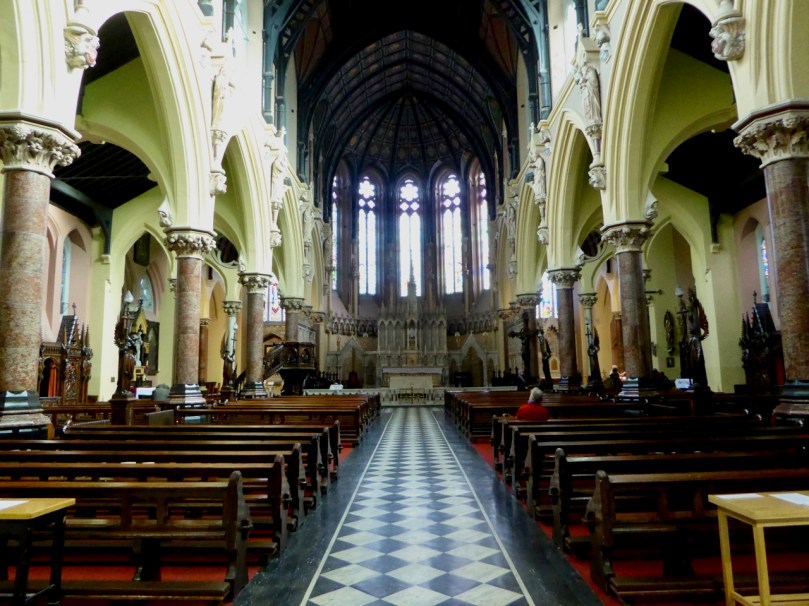
Interior of St Peter and Paul Church in Cork City, established and partly built by John Murphy’s considerable inherited wealth

Reinforcements arrived shortly thereafter in the form of a Vincentian mission. These missions, in which a group of priests from particular orders such as the Vincentians or the Redemptorists, would descend upon a town and preach every night for a week, were a staple of my young life. This one was reported to be a great success. Fr Hickey quotes from a contemporary report:

Our mission in West Schull (Kilmoe). . . is doing much good. A great number of the poor who were perverted in the time of the famine by relief given for that purpose by the Protestants, have returned already. The chapels, even in weekdays, are not able to contain the congregation and the confessional is crowded far beyond the power of our confreres to accomplish its work.

In fact, the famine was not over, and the Vincentians brought more than The Word of God (and the Fear of God) with them – they also distributed great quantities of food relief and some cash, both to individual families and to the schools. They established a chapter of the Society of St Vincent de Paul and the members busied themselves visiting the poor and distributing supplies. Fr Hickey says:

Food was now being used by the Catholic Church in order to hold on to its flock and win back the lost sheep. Did hunger tempt them to stray in the first instance? Were they now coming back because they were simply going to the church which would give them the most food, as some of them had bluntly told Fr Laurence O’Sullivan?

St Vincent de Paul. Most Irish people today recognise the Society of St Vincent de Paul as an active Catholic charitable organisation. The Vincentians, on the other hand, have declined in numbers to the extent that their Cork headquarters had to close for lack of vocations

Revs Fisher, Triphook (successor to Dr Traill), Donovan and Crossthwaite wrote a published statement which accused John Murphy and the Vincentians of failing to come during the horrors of famine and arriving only now in the harvest ‘to propagate Romanism’.

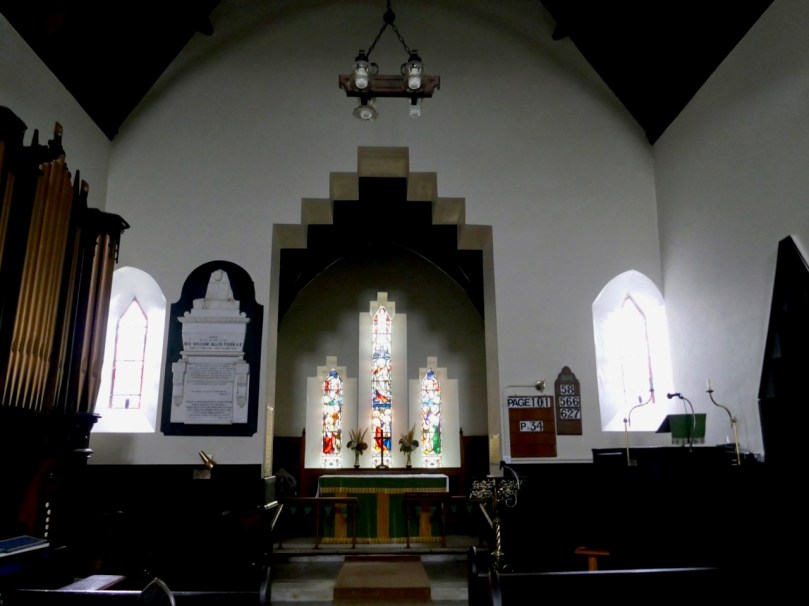
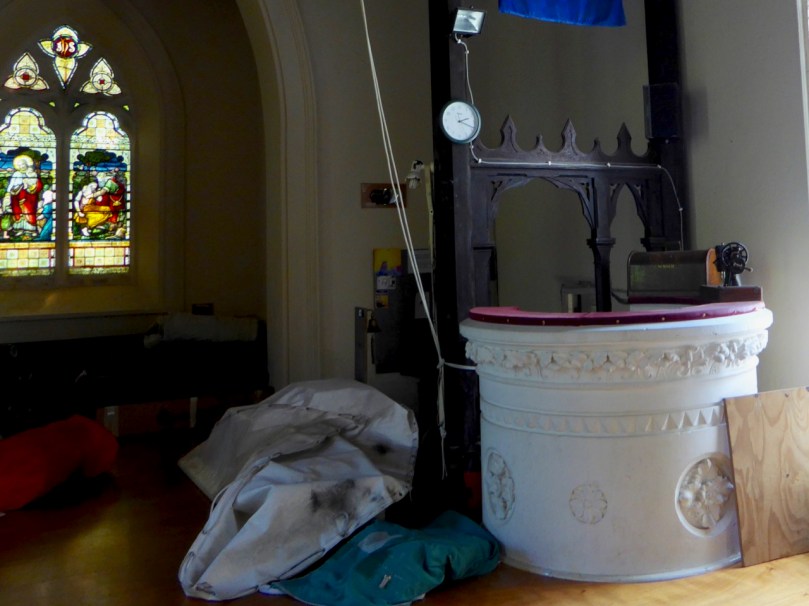
Fisher’s church in Goleen, now in use as a sail-making space. His pulpit would have been an important part of the church furnishings and I am pleased it has survived

It was a telling counter-accusation to the charges of Church of Ireland souperism, but in any case the heyday of the radical and fundamentalist evangelicals was nearing an end. A new era was dawning for the Irish, that of the Ultramontane Catholicism of Cardinal Cullen – the ethos that would drive Irish Catholicism for the next one hundred and fifty years. 

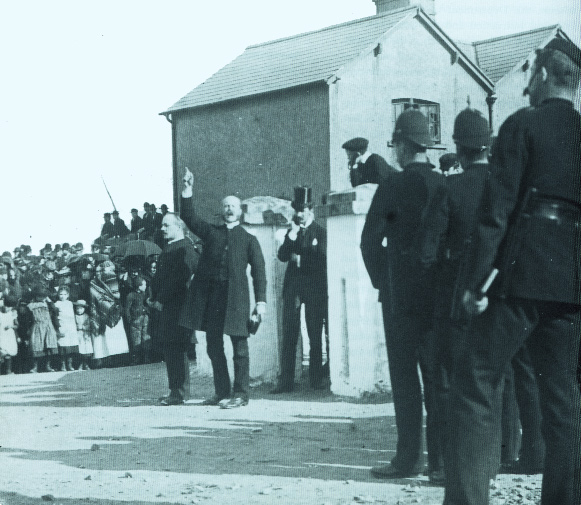
This photograph is captioned Late nineteenth-century evangelical preacher addressing a crowd under police protection, and is credited to Michael Tutty

Although I had hoped to finish this series with this post, I have learned so much now about the religious legacy of this extraordinary time in Irish history that I find myself unable to resist one final episode in the saga. In my next and last (I promise!) post in this series, I will endeavour to relate how the foundations of the kind of Catholicism I grew up with were laid down upon the contested ground of Teampall na mBocht and on the battle for the hearts of souls of the people of Ireland that such places epitomised. I shall also attempt to draw some personal conclusions from what I have learned, and to share with you some of the excellent resources I have used in this series.

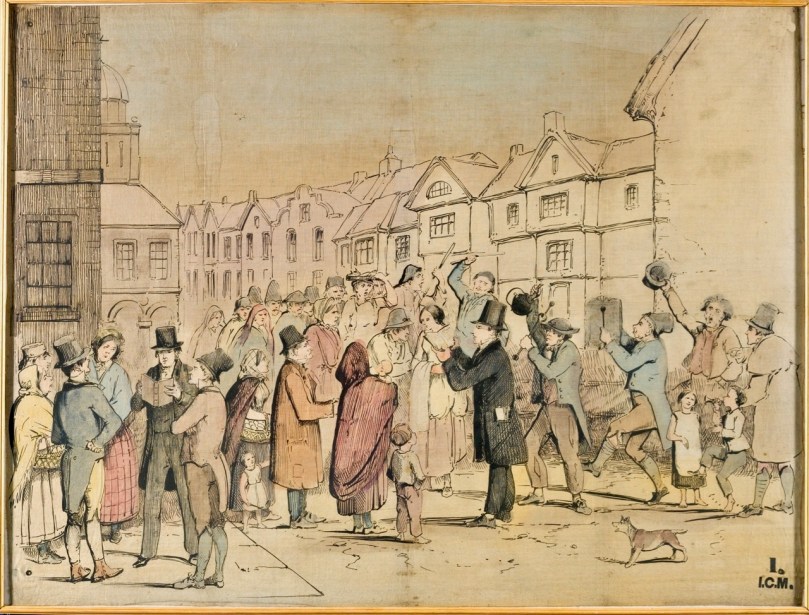
Reproduced courtesy of the National Library of Ireland (with permission) from a collection of prints by the Irish Church Missions to Roman Catholics. This print is captioned Two preachers standing in a street preaching to an audience. In the background a rabble sings, dances and jeers. The  notes given for this image in the NLI collections are: The differences between those converted to Evangelicism and the “unconverted” Roman Catholics are emphasised in this image. The captivated audience surrounding the preachers are dressed well whereas the rabble causing trouble behind them are badly dressed with the stereotypical Irish look about them

This link will take you to the complete series, Part 1 to Part 7

Introducing the Holy Wells – of Kerry!

Remember the New Year Resolution – spend more time in Kerry? We lost no time in implementing it, and spent three days there this week. Our main purpose was to accompany Amanda and Peter as they started Amanda’s new project – to extend her Holy Wells of Cork recordings into Kerry as well. Of course, Robert and I had a small list of must-see items as well, which will likely appear in future blogs.

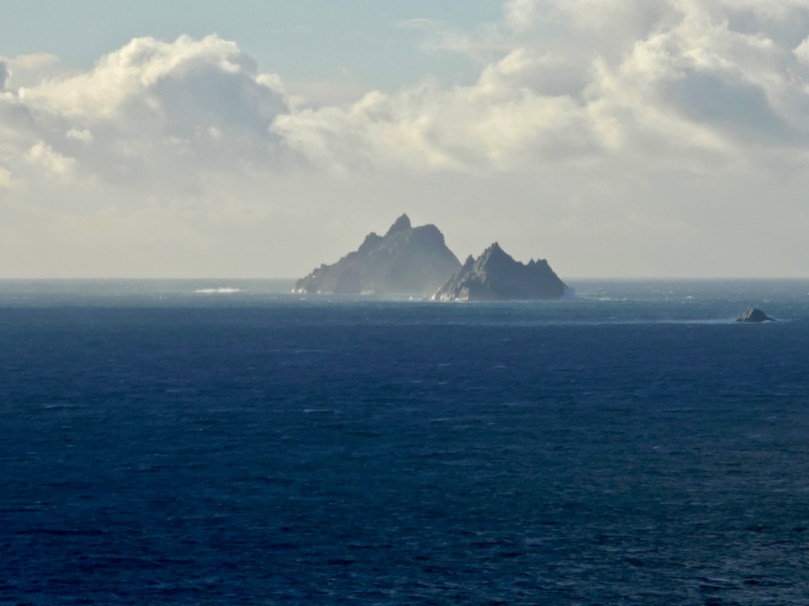
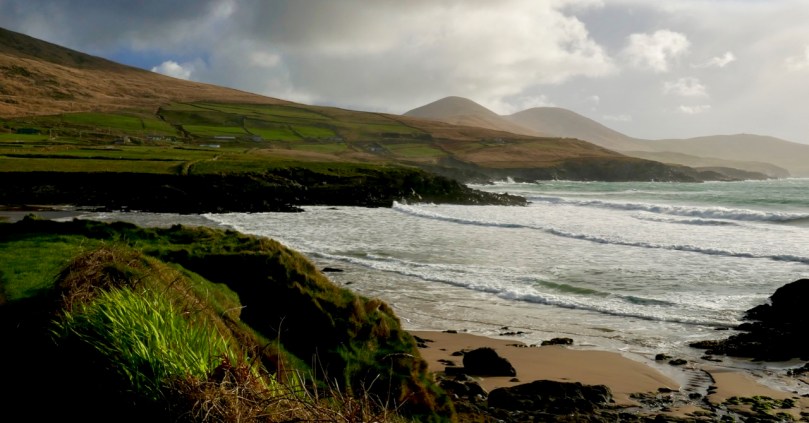
Above: Ballinskelligs Bay. Top photo: the mystical Skelligs. The larger one is Sceilg Mhichil (Skellig Michael) and the smaller is Sceilg Beag (Little Skellig). The Skelligs have featured in the Star Wars franchise, but are better known to us here as the home of hermit monks in the Early Christian Period

It’s always great fun to be out and about with Amanda and Peter. We had a few misgivings about the weather forecast, and indeed we had everything thrown at us – snow, hail, sleet, rain, gales – and brilliant sunshine! The sunshine persisted for our main day, to our delight, but the weather gods made up for it that night with a howling gale that knocked out the power to our hotel, the Royal Valentia. Undaunted, they served us up a great breakfast, and figured out how, with no electricity or internet, to charge our credit cards.

Robert’s post is mainly about Valentia Island, so I am concentrating on the holy wells. All of them will be written up in Amanda’s customary detailed style on her blog, so this is just a flavour of what we saw. By the way, if you are new to holy wells, check out her series of “On Wells” posts now. It will get you up and running.

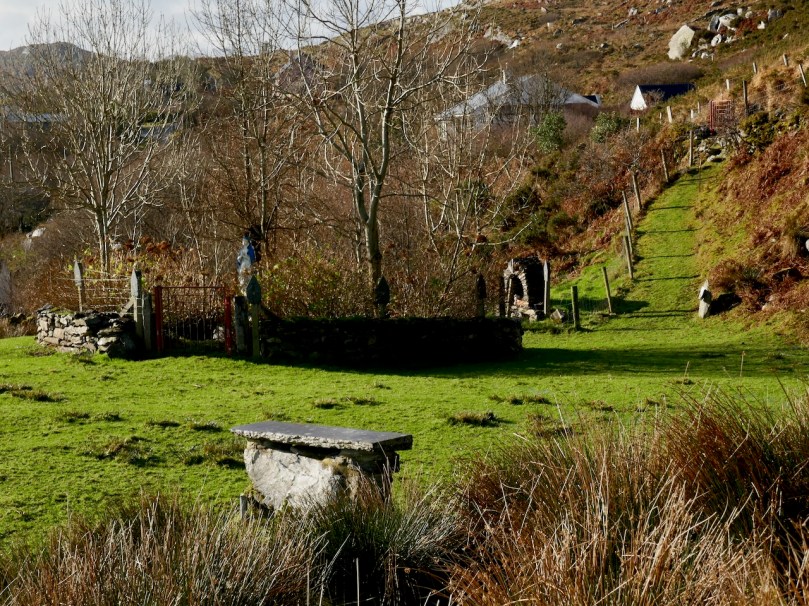
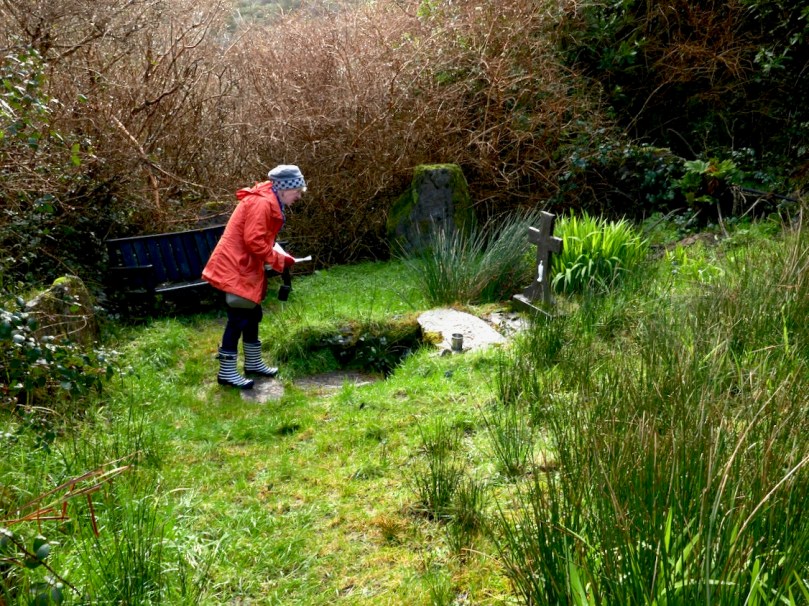
St Crohane’s Holy Well site, with the well in the background, a Marian grove in the centre, and a mass rock in the foreground

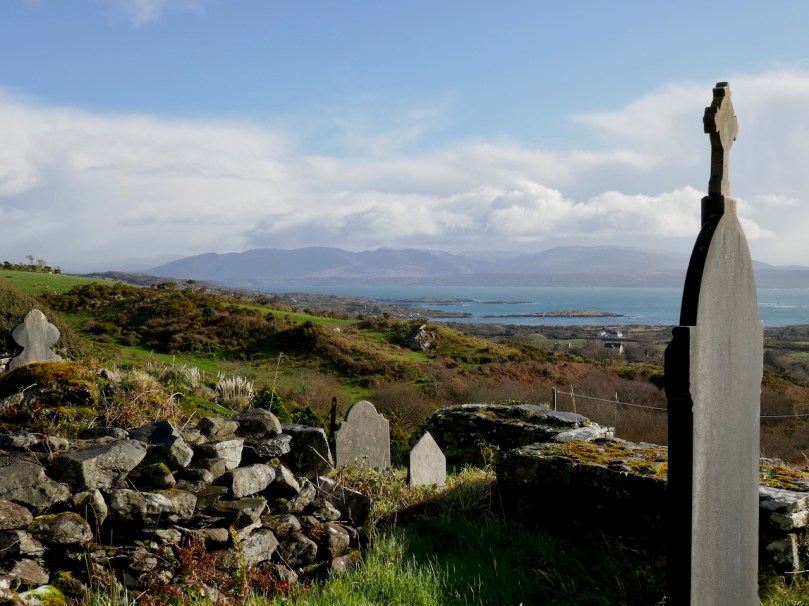
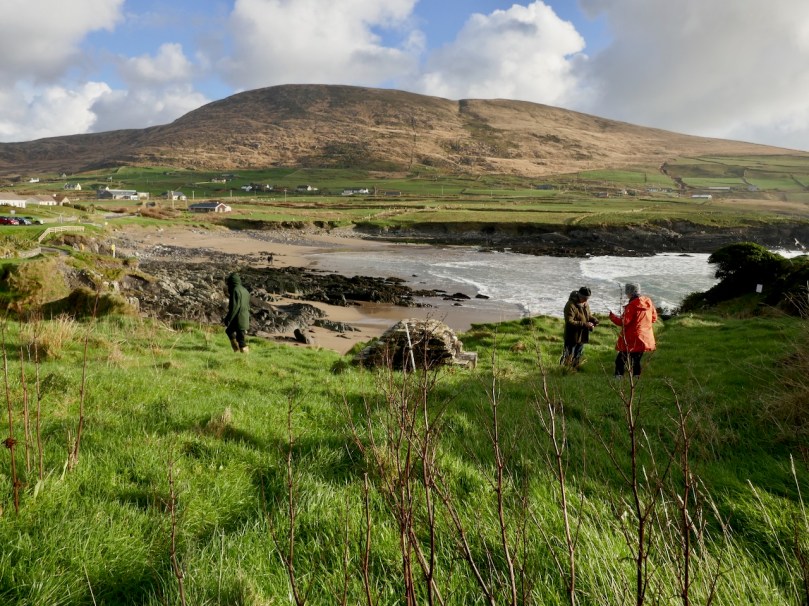
Our first well was one that Robert and I had tried to find and failed on a previous trip to Kerry. This time we were with the expert and there it was – St Crohane’s well, behind an old graveyard with not one but two ruined churches and spectacular views across to the Beara. The well was once the centre of a mighty three-day pilgrimage and although that no longer happens, the well is cared for and visited.

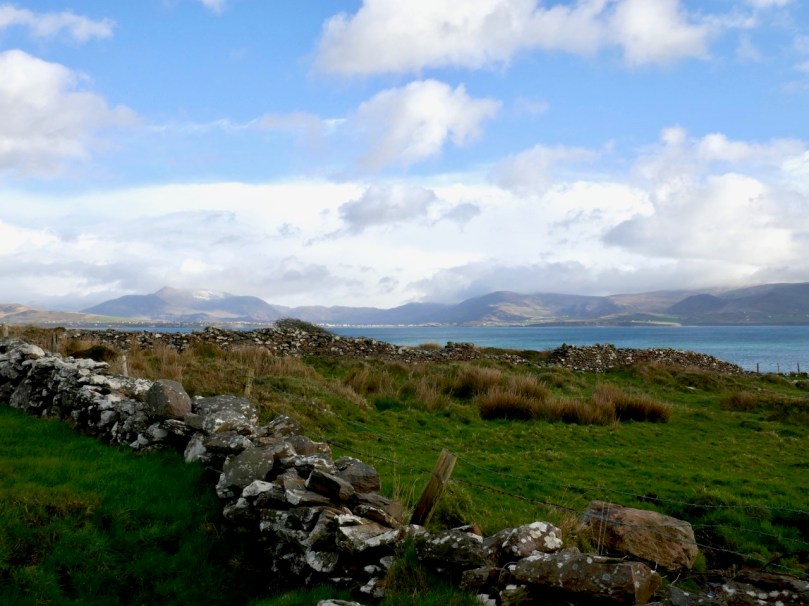
The view from St Crohane’s, across to the Beara

I was thrilled to find a Richard King stained glass window in Ballinskelligs (future post) in a church dedicated to St Michael, patron saint of the Skelligs. Below the church is the holy well also dedicated to Michael. This is a curious site (below), almost certainly built on a fulacht fia, like the Trinity Well in Duhallow. This also was the centre of a huge pattern in its day.

We visited two wells dedicated to St Finnan (or Finan or Finian), a monk who is also associated with Lindisfarne and Iona. The first of these was a neglected little well on St Finian’s Bay – the pounding surf was a bit of a distraction (see below and final picture).

The neat little well house is the beehive-shaped structure to Robert’s left

The second was on Valentia Island and took a bit of finding until we stumbled upon the magic path through the woods. A classic well, with everything you needed to have a drink, and surrounded by slabs of slate. Robert had a sip – brave man, and now apparently safe from rheumatism.

Amanda always comes prepared with detailed research and notes, but wells can still be difficult to find

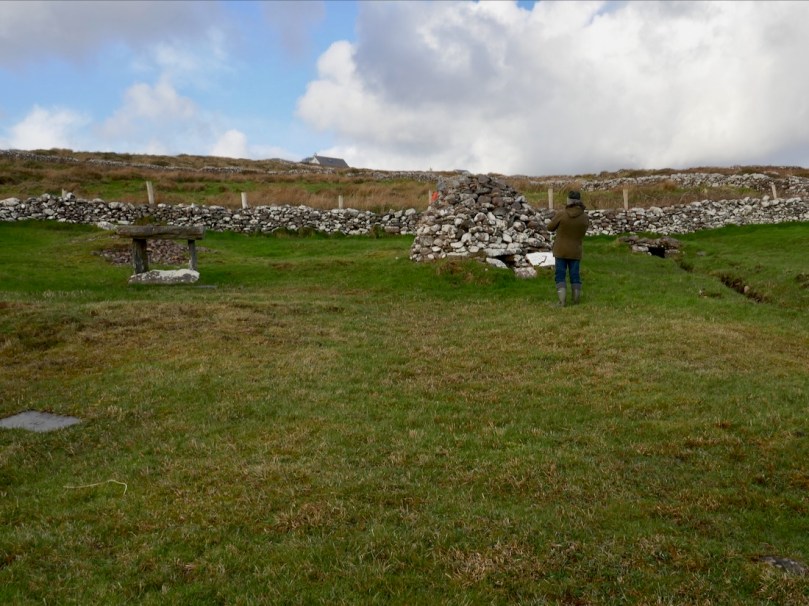
Our other Valentia well was dedicated to St Brendan (in one account, St Finnan was one of his acolytes) and was located at an amazing, windswept site, with crude cross slabs and a possible turas (pilgrim route) through the bog. Robert has more images of this haunting place.

Amanda gazes out across the bog, trying to make out the traces of a pilgrims’ path and possible stations

Two little wayside wells were encountered along the way, one along the road and one in the middle of Caherciveen – this last one, Well of the Holy Cross, a little sad and neglected, as urban wells tend often to be.

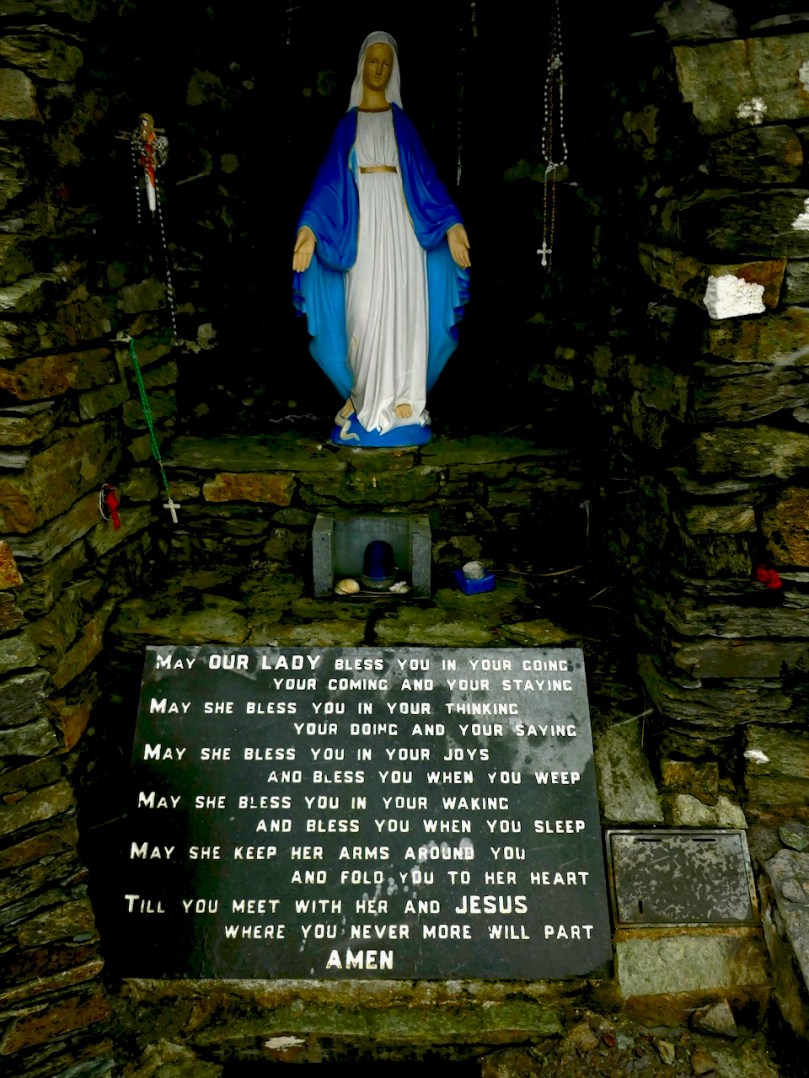
Although this was a holy well, dedicated to St John, it appears to have been repurposed as a Marian grotto, with St Bernadette in a small shelter of her own

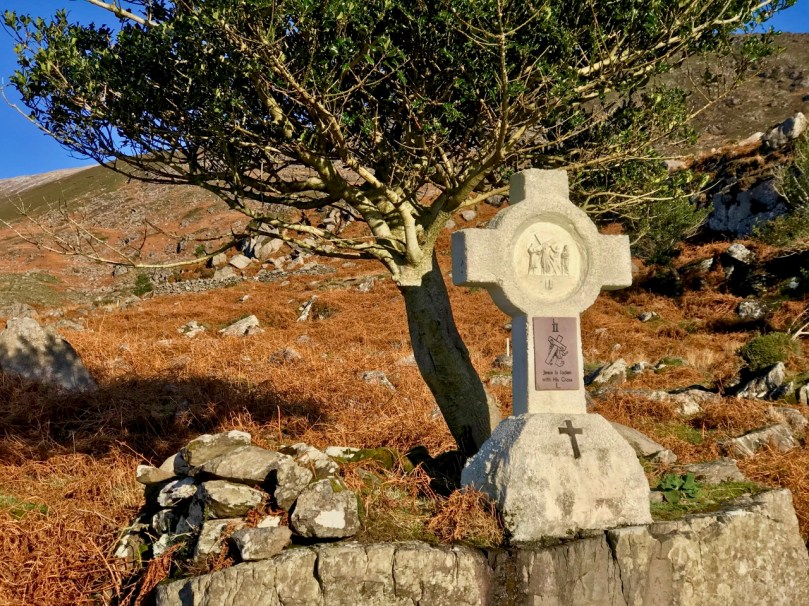
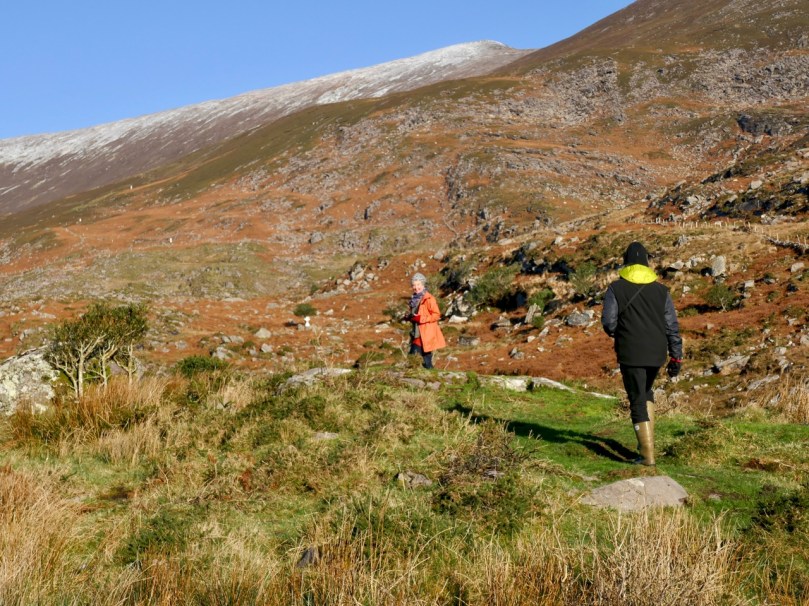
Our final well was also the most spectacular – St Fursey’s well, located on the slopes of Knocknadobar (cnoc na dtobar – mountain of the well). Once, people climbed to the top of the mountain at Lúnasa for a three day festival. Although the festival is no more, in the 1880s local people erected stations of the cross, 14 of them, going all the way up the mountain to the top. Some of us managed to get to the second station, but saw a hardy soul way above us, well on his way.

Station 2 on the pilgrim trail from St Fursey’s Well to the top of Knockandobar

As ever, organising a trip around holy wells provided us with three days of adventures and experiences in jaw-dropping scenery and the opportunities to do lots of side-trips. The light in January is clear and sparkling and the roads are quiet, unlike at the height of tourist season.

The white dots going up the hill are the Stations

Although many restaurants, hotels and b and b’s close for the winter, enough remain open so that a hearty bowl of soup and a good coffee is never too far away. And three cheers for The Royal Valentia – open all year, great food, friendly staff and good in a crisis!


Valentia Adventure

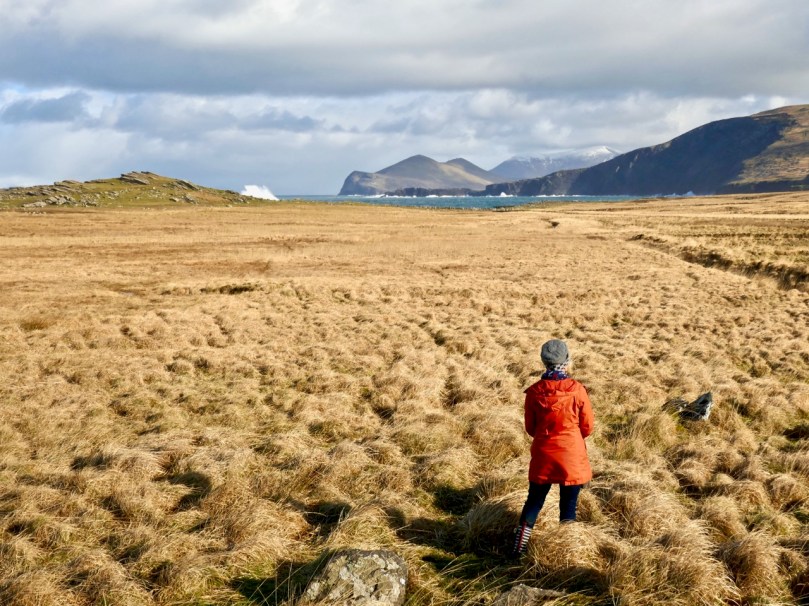
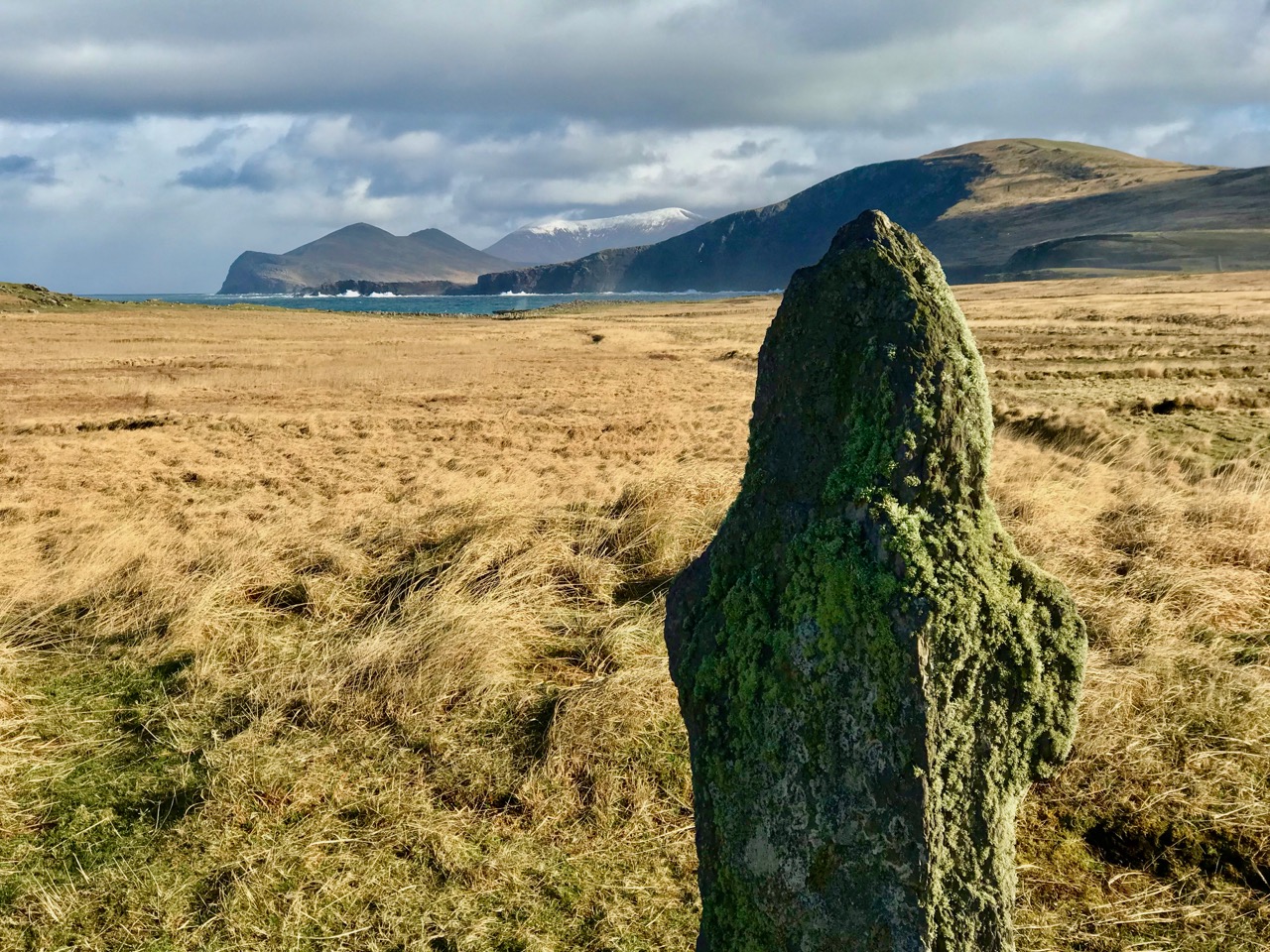
At the very end of January – when we should have been in the dark depths of winter – we headed off to Valentia Island in County Kerry, and enjoyed sublime golden sun. This time of the year often gives us the best light: we experienced this on our expedition through the Yellow Gap in West Cork a fortnight ago, and again during these three days in our neighbouring county last week. It’s to do with the low sun: somehow it enriches the amber hues of the landscapes, which are themselves enhanced by backdrops such as the one above. An ancient stone is set against a distant turquoise ocean and dark, snow-capped mountain peaks.

Holy wells were on the agenda (see Finola’s post here), as we were joining our friends Amanda and Peter Clarke from the Sheep’s Head. Amanda has nearly come to the end of her chronicle which records all the Holy Wells in County Cork, and she is now starting to explore those in County Kerry. I’m not going to say too much about the wells we saw, as Amanda will cover them in great detail, but the expedition certainly provided great opportunities for observation and photography, and caused us to wonder – again – at this unique aspect of Ireland’s history and traditions.

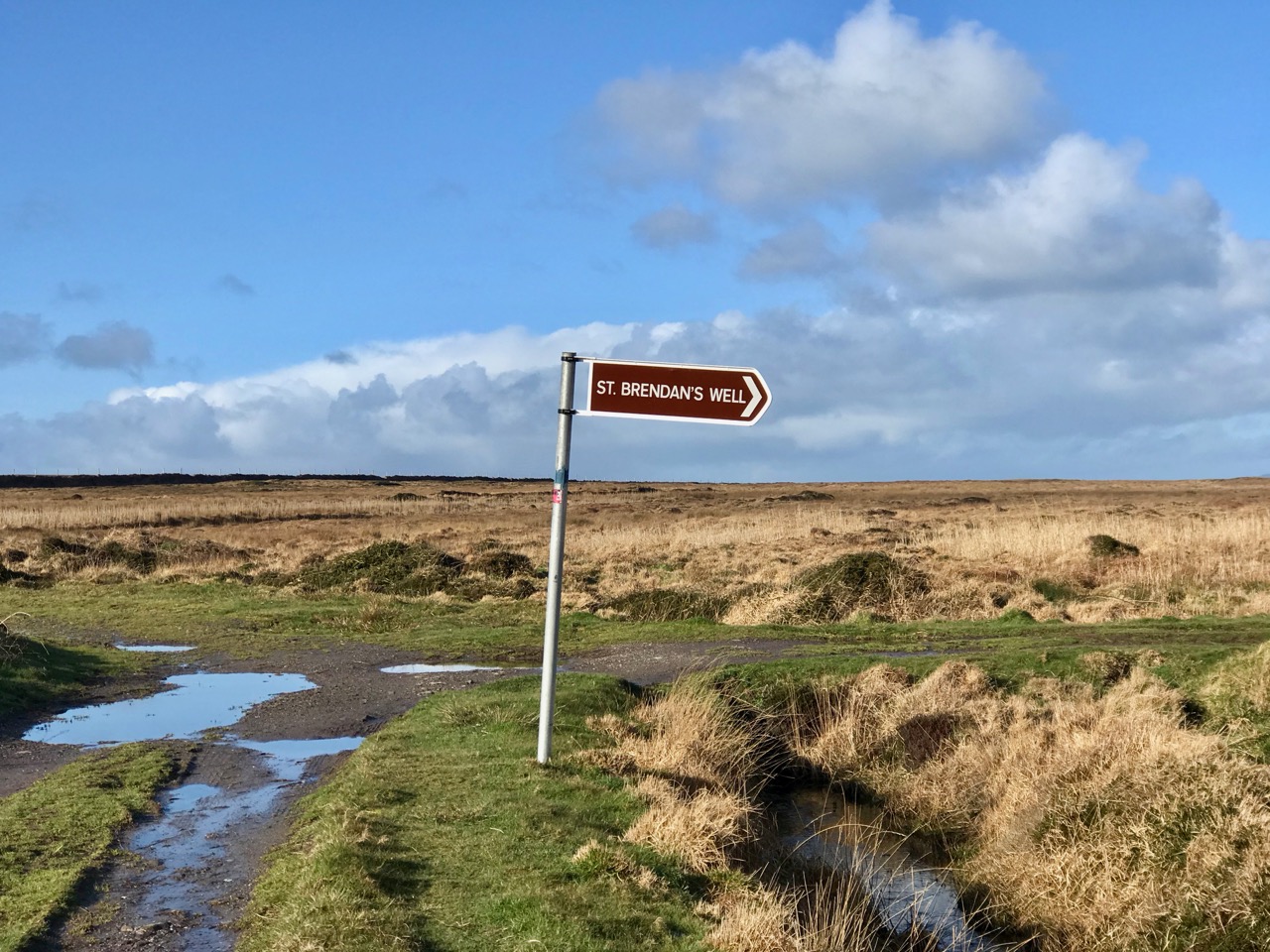
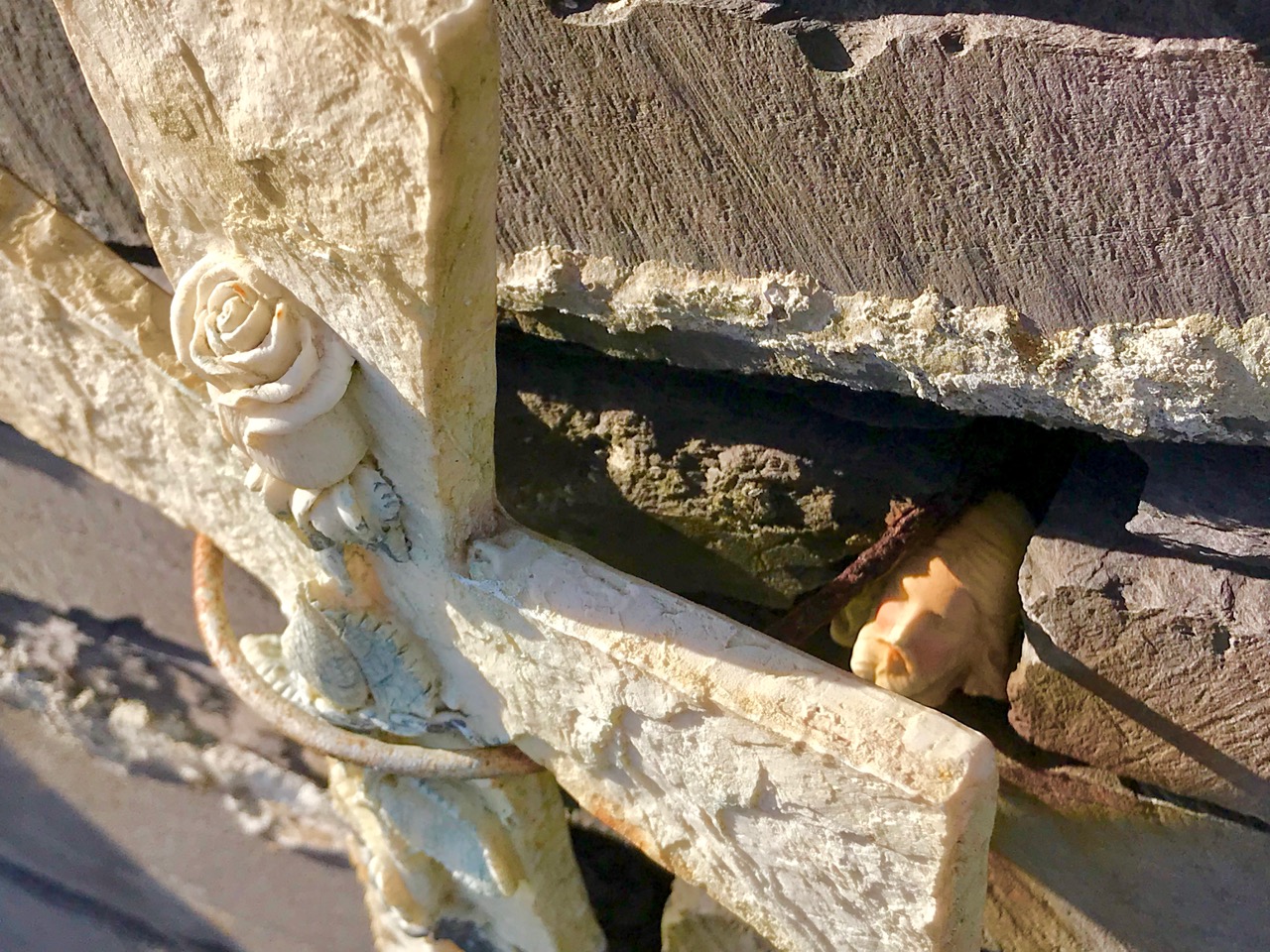
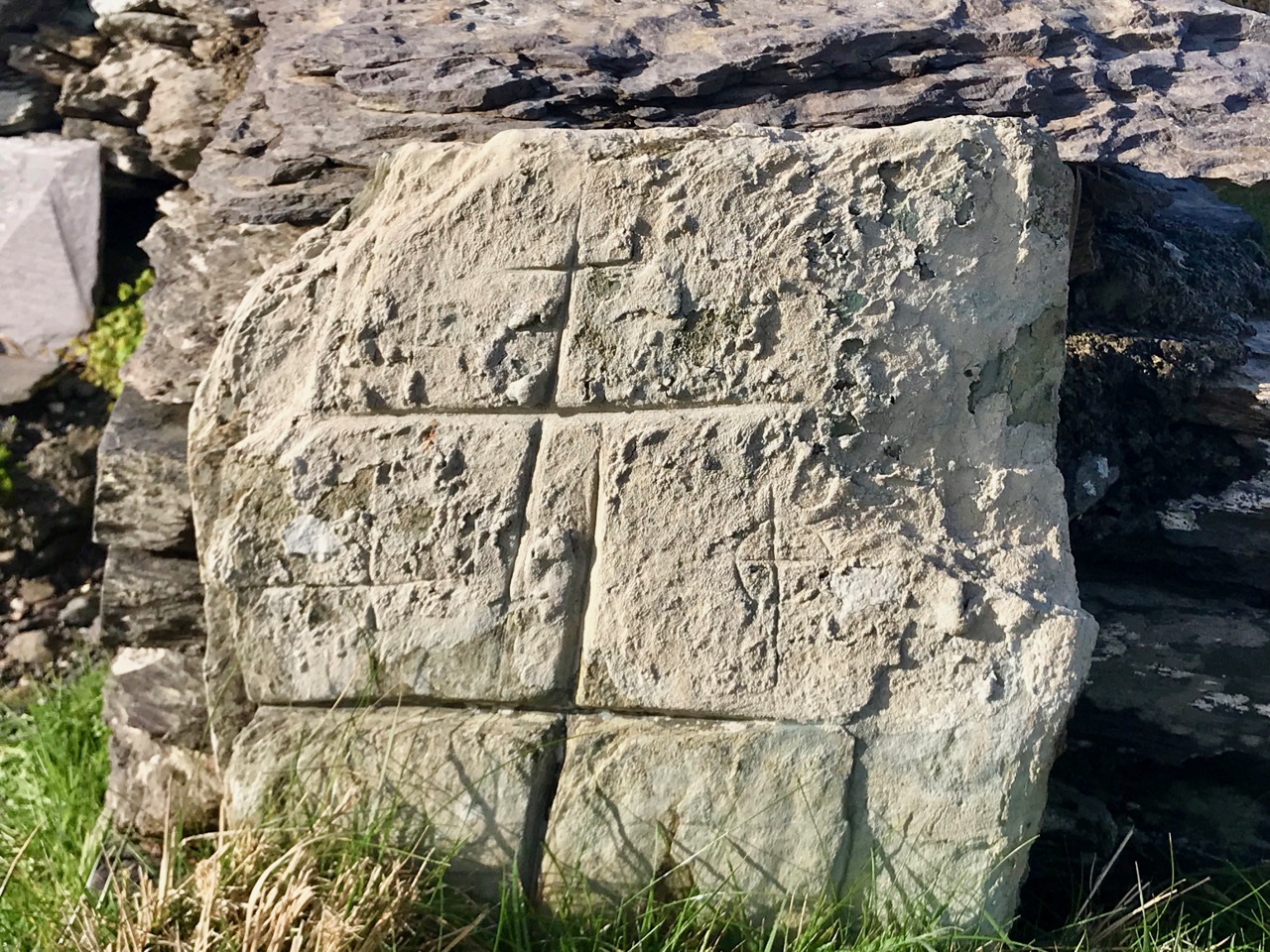
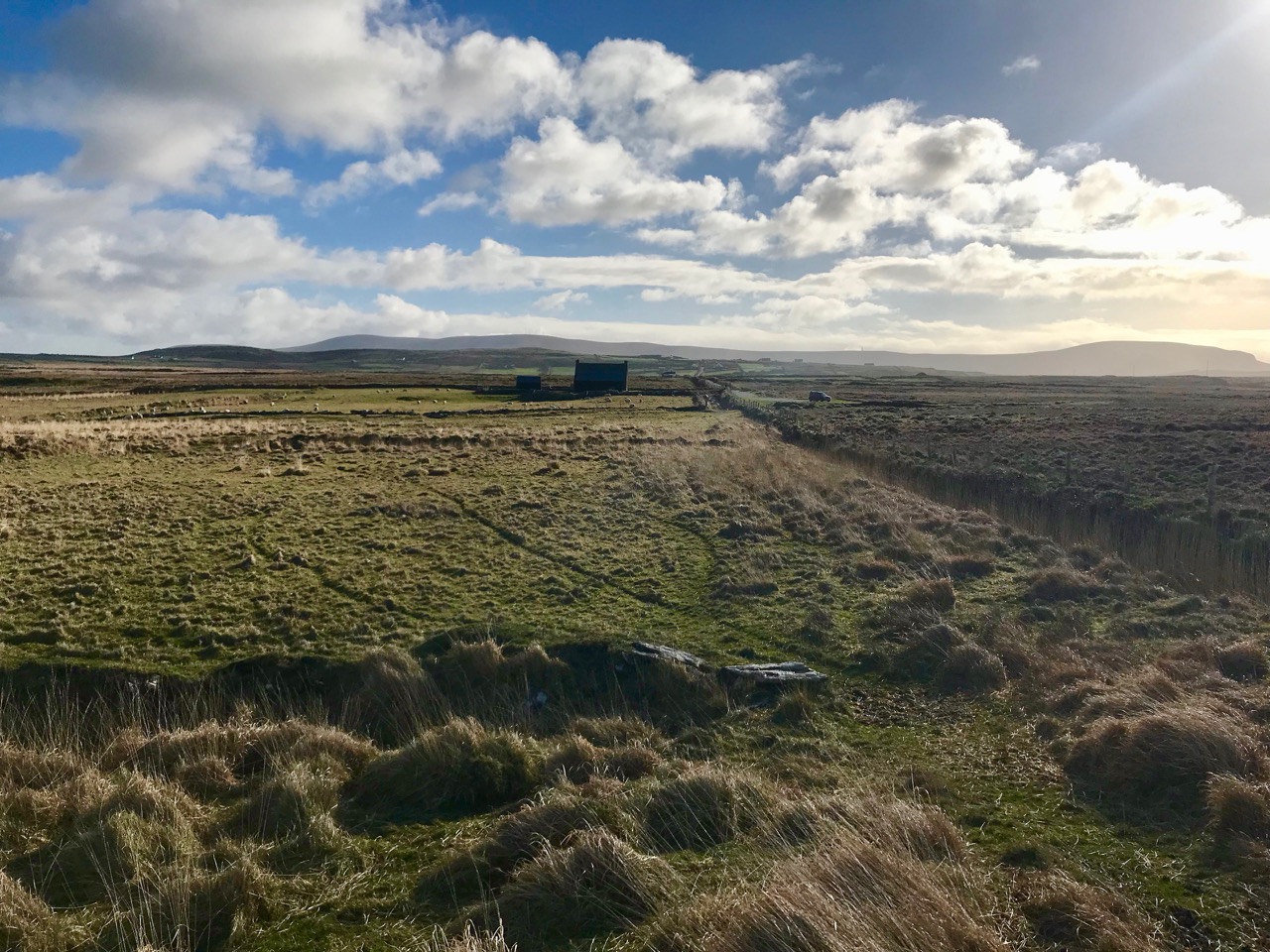
All the photographs above are from a remote and atmospheric site on the north west side of Valentia Island: St Brendan’s Holy Well. It’s a long way off the beaten track: desolate, bleak and boggy – but justifies making the effort. There are ancient stone crosses, carved slabs, cures to be had, and history. St Brendan himself journeyed there from Tralee in the fifth century, climbed the cliffs at Culoo, and found two dying pagans at the site: he anointed them and they became Valentia’s first Christian converts.

Above – the way to St Brendan’s Well, Valentia Island, passes by O’Shea’s Pub . . . one of the furthest flung bars in the world, that you can’t—and could never—buy a proper pint at . . . The story is here.

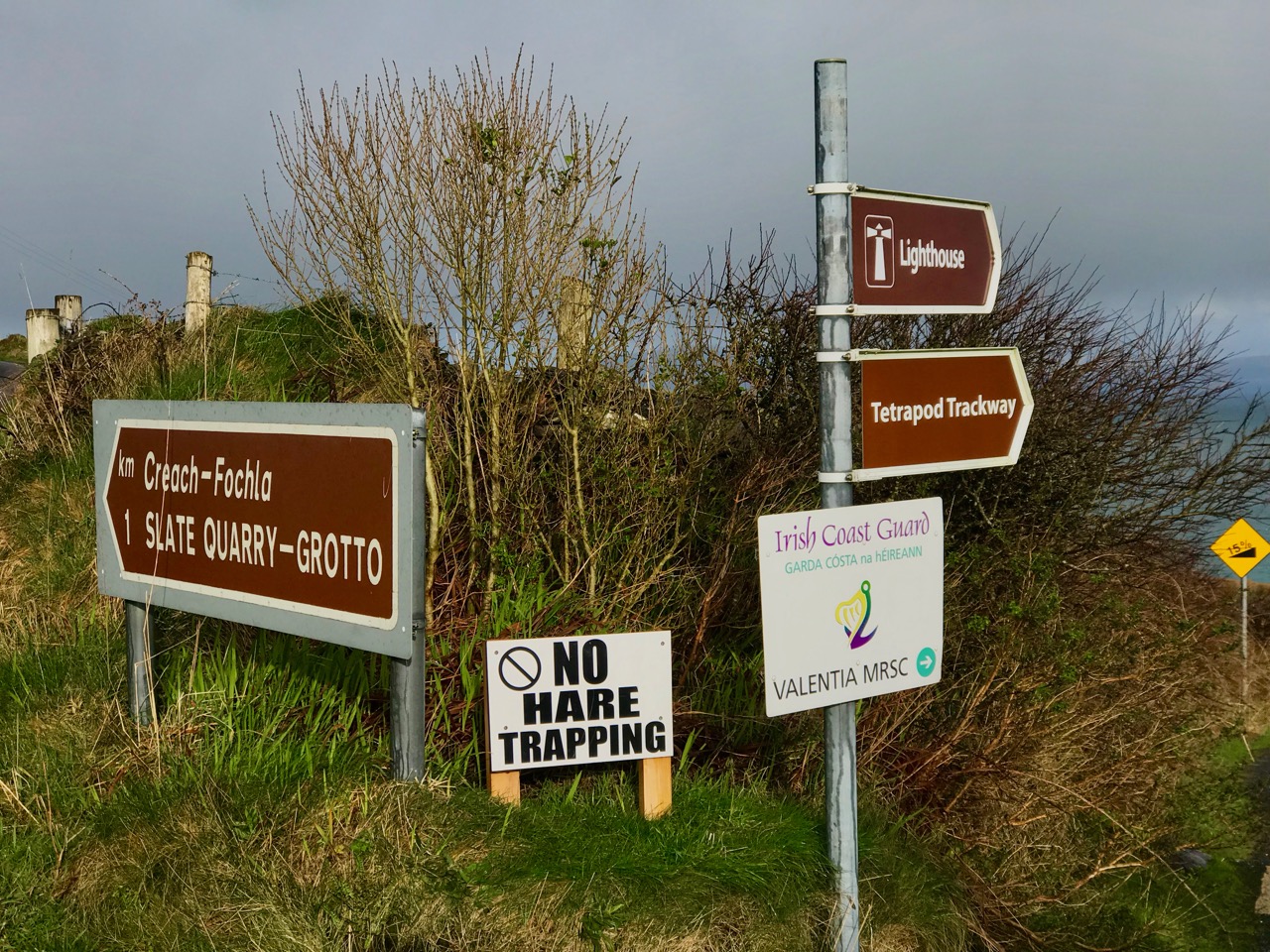
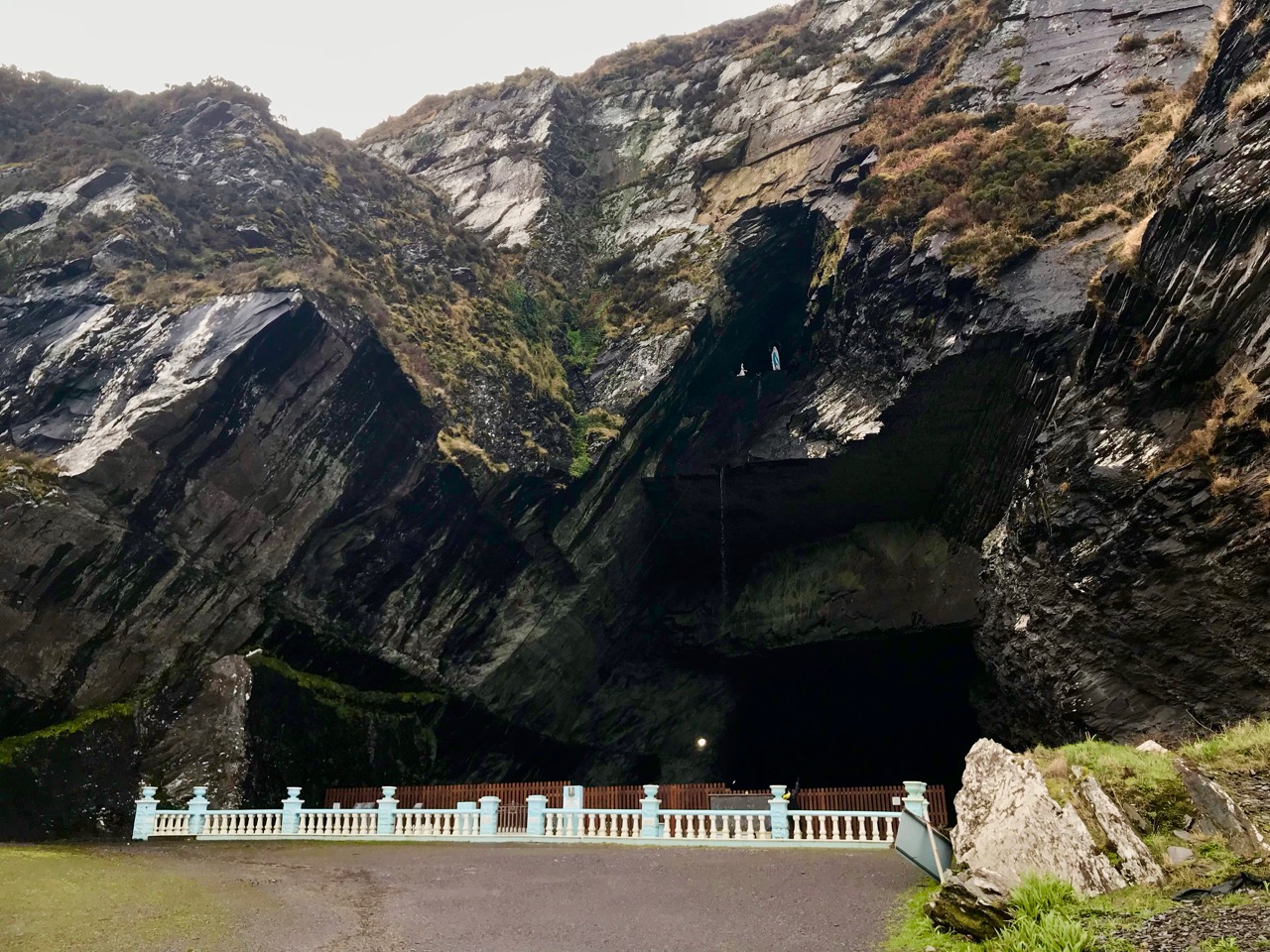
I certainly endorse that sign in the centre, seen on Valentia Island. Hare trapping in South Kerry is illegal – and so it should be! But – how could we not follow a sign that says: Slate Quarry – Grotto?

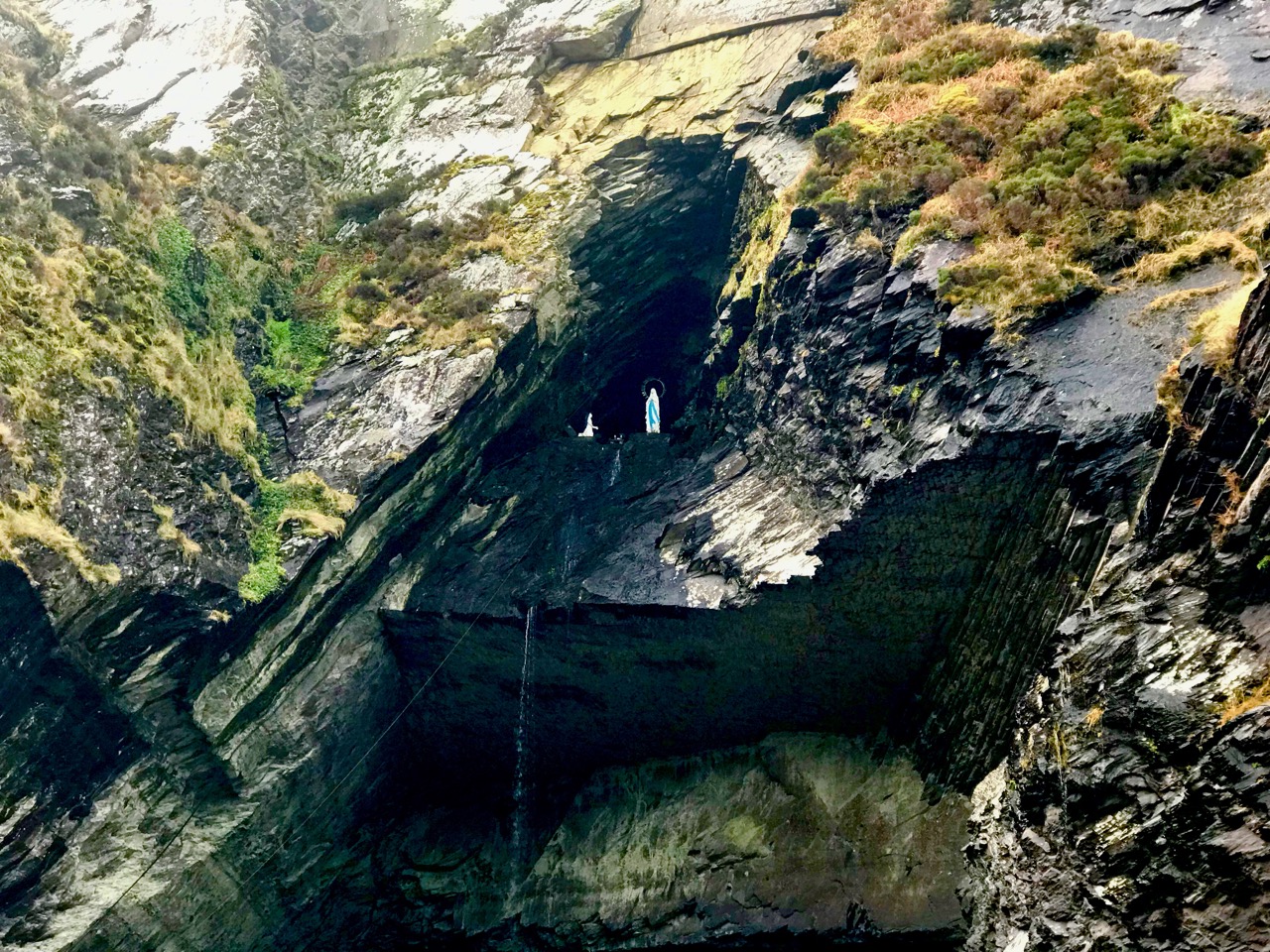
The Grotto – in this case a statue of the BVM together with Saint Marie-Bernadette Soubirous, the girl who witnessed Mary’s apparition in Lourdes – was installed in the Marian Year of 1954 in a cave high above the entrance to the Valentia Slate Quarry on Geokaun Mountain, at the north end of the Island. The Quarry had been opened in 1816 and supplied slate to the Palace of Westminster, Westminster Abbey, St Paul’s Cathedral, London railway stations and many another building project. The quarry excavated a huge cave into the mountainside, and closed after a major rockfall in 1910.

Fr James Enright, who was the PP of Valentia in the Marian Year, saw a golden opportunity in such a setting for a commemorative grotto. Fr Enright decided exactly where the statues were to be positioned, but the burning issue was how were these heavy items going to be put in place and worked upon at over 90 feet from ground level? The answer came in the building of a deal timber ladder.


Jackie Clifford , who was a blacksmith based in Gortgower, made the iron to bind and reinforce the ladder and was helped in his forge by Denny Lyne and subsequently aided by other islanders. Having been transported to the quarry in sections, it was assembled there and put in place by the volunteering islanders. The ladder was over 100 feet long, being four feet wide at the bottom narrowing to a foot. and a half on top. The sections of ladder were joined at the various points with a four foot lap. Many island volunteers were enlisted with each townland taking their turns to work. The initial work involved levelling a massive mound in order to form a proper base. This was quite labour intensive, being done with pick and shovel. The ladder was hauled into place by means of a block and tackle pulley system with people at the ends of ropes from above and to the sides in order to control it and put it in place. As one islander succinctly put it “The greatest miracle to happen there was the erection of the ladder”.


Subsequent to the ladder being put in place, a number of daring and intrepid islanders had to climb it for the purpose of erecting the statues. The statues were hoisted up by rope with other tools and building materials. The concrete for the base was mixed by shovel above.

(Quote from The Kerryman, January 2015)

The Quarry has recently reopened, and it’s quite surreal to stand in front of the grotto with the sound of heavy machinery reverberating at the huge cave mouth from deep within the mountain.

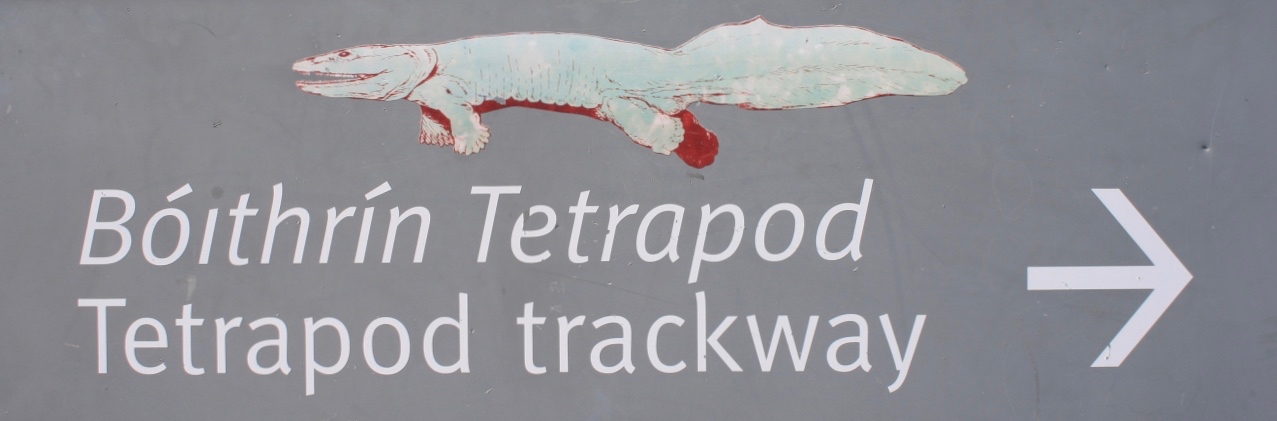
Have a look again at the signs above: one points to ‘Tetrapod Trackway’. This is surely a must-see for any visitor to Valentia Island as the fossilised Tetropod footprints here, representing the point at which life left the Devonian Seas 370 million years ago to begin to evolve on dry land, are the best examples of only four sites found to date in the world! We hurried to have a look – but the site was closed for repairs. You can see a picture of the tracks here.

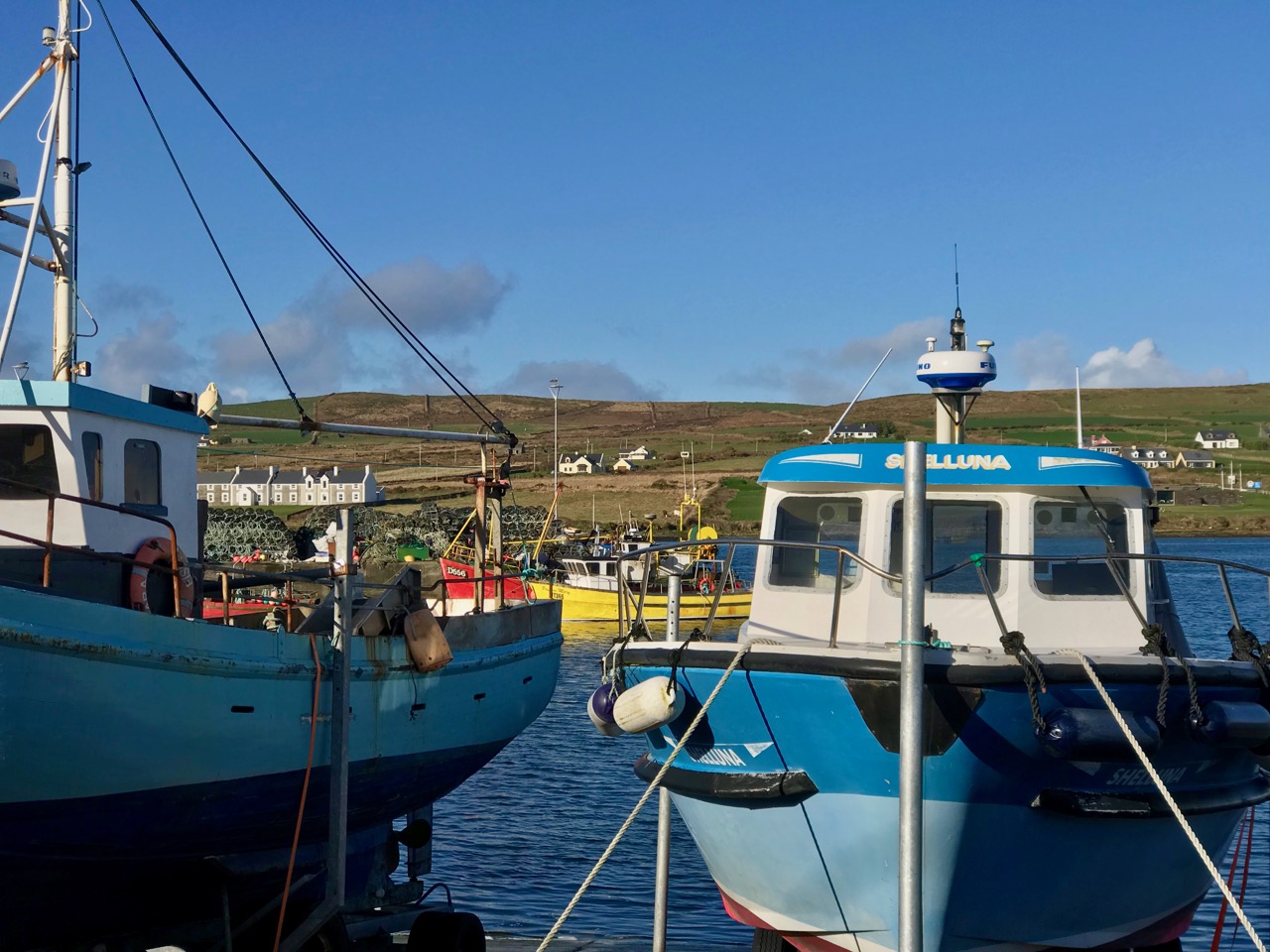
In the winter sunlight, the little village of Portmagee which stands at the threshold of Valentia Island and connects to it by a bridge opened in 1971, looks like a picture postcard. In fact, the bridge was opened twice – once on New Year’s Day, when it was blessed by the Bishop of Kerry – and again at Easter, because there was some debate about whether the first opening had been ‘official’ or not!

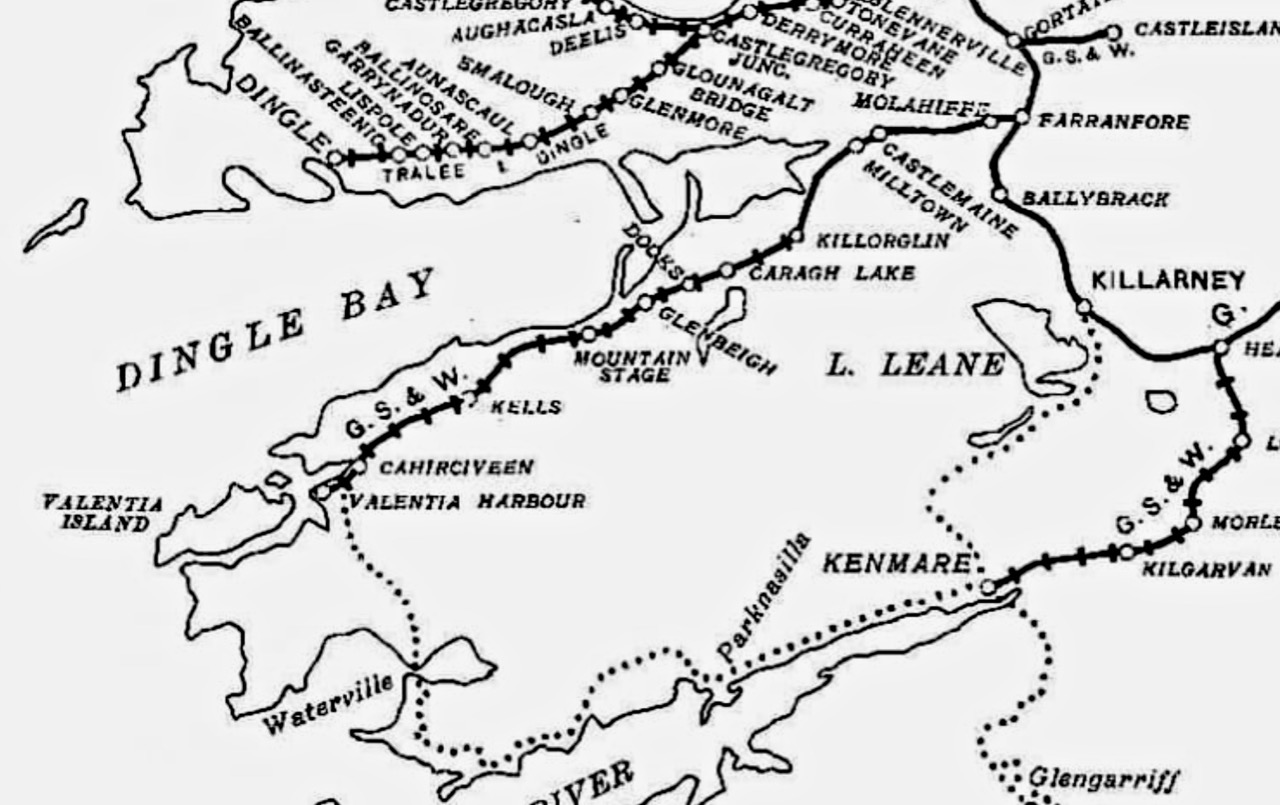
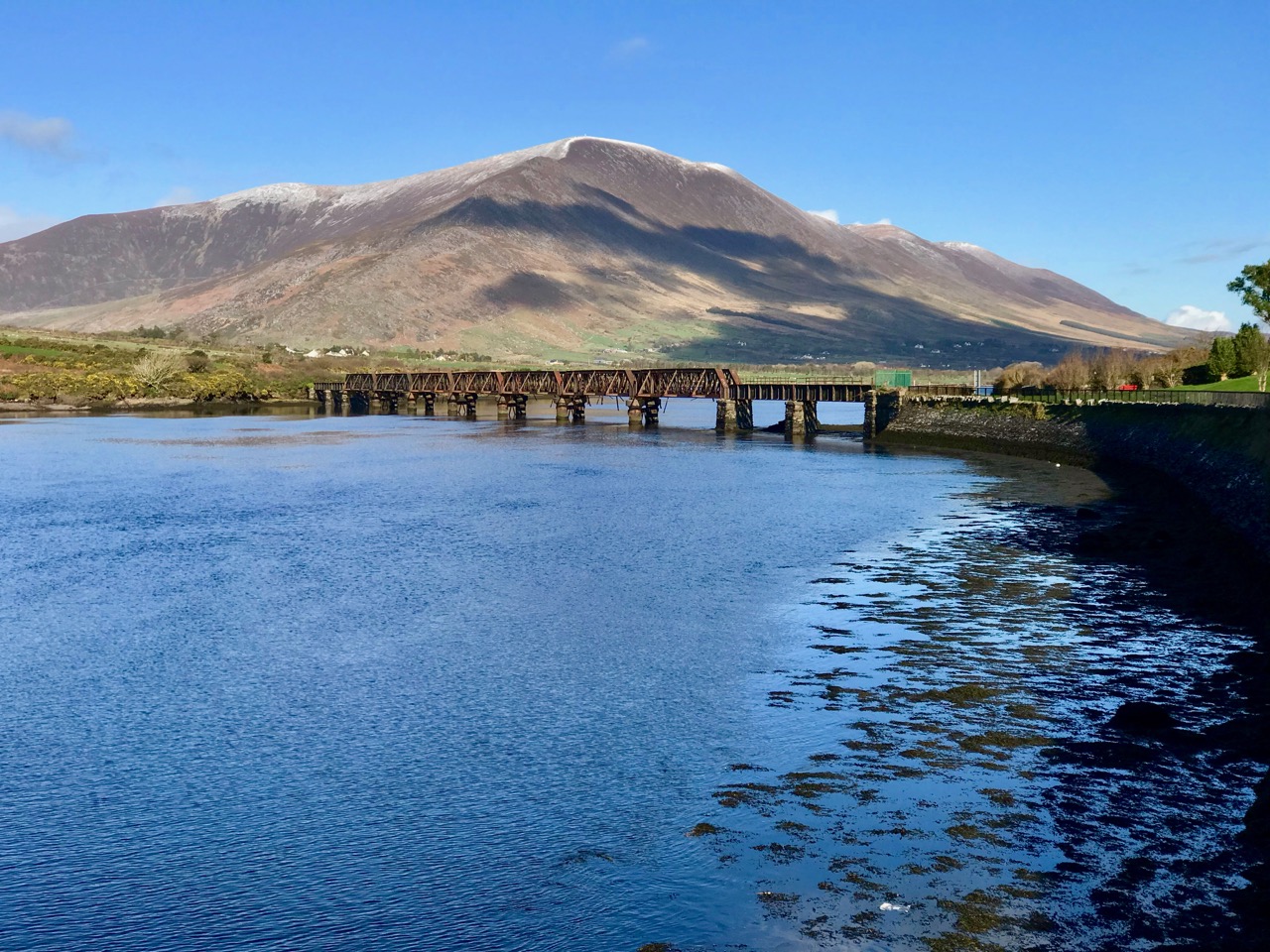
Here’s a railway map and photo dating from around 1901 showing ‘Valentia Harbour Station’. In fact, it’s not on the island at all, although Knightstown – the ‘planned village’ designed by Alexander Nimmo for the Knight of Kerry in the 1830s can be seen across the water. The station – the terminus of the most westerly railway in Europe – is on the mainland, to the east of  Valentia Island, which could be reached by a ferry. The Farranfore to Valentia Harbour Railway was 39½ miles long and operated from 1892 to 1960. The photo below shows the Valentia River Viaduct just outside Cahersiveen, now derelict but hopefully to have a new lease of life when a planned cycling greenway is developed along the old railway track.

Valentia Island has a great deal more to offer than I can show in a brief post. It’s well worth making the journey and staying for a little while: there is such varied landscape to be experienced – a microcosm of the West of Ireland, in fact – and much history if you want to delve under the surface.

The tailpiece shows a view from Knightstown looking across to Valentia Harbour on the mainland and the site of the former railway terminus:

Surfing the Archives

There’s really valuable history to be found on the internet! Here’s an example… the very first post we published after we moved to Nead an Iolair a whole lot of years ago mentioned a concert we attended in Abbeystrewry Church, Skibbereen which honoured a Rector of that church who was also Professor of Irish in Trinity College Dublin: Canon James Goodman, who lived from 1828 to 1896. He was also an uilleann piper and collector of traditional music. I wrote about him in more detail the following year, Some of you may remember a story I often tell about the Canon’s grave in Creagh Burial Ground, on the way to Baltimore. It was his wish that his pipes be buried with him, and so they were. Finola and I would visit the atmospheric site at Creagh and listen out for the haunting tones of the Canon’s pipes playing away there.

Header picture – a bronze statue at the entrance to Abbeystrewery Church in Skibbereen shows Canon Goodman playing his uilleann pipes. Above – Creagh Burial Ground and the Canon’s grave

I’m sorry to disappoint, but there’s an update to the story about the Canon and his buried pipes. I have been surfing the archives of Ireland’s principle media outlet, Raidió Teilifís Éireann, and it’s a wonderful resource! When you click on the links, you may find that some of the material is preceded by short advertisements: sorry, they are built in to the archive site – to help fund it no doubt. That’s a worthwhile cause, anyway. Now, have a look at this:

Mícheál Ó Riabhaigh being interviewed on RTE in 1966. He became the owner of Canon Goodman’s pipes and they have since passed to his son, Eoin O Riabhaig, player and pipemaker from Cork city

. . . When Canon Goodman died he wished for his pipes to be buried with him and his good friend Alderman Phair made sure that this happened. However, Alderman Phair thought it a pity that such a set of pipes would just lie in a grave so just days after Goodman’s burial the pipes were taken out of his grave. The pipes remained in Alderman Phair’s possession for six or seven years before being passed on to Mícheál Ó Riabhaigh. The pipes were made by master craftsman Willie Taylor . . . (from the RTE Archive notes 1966)

Before leaving that subject behind for today, here’s a YouTube video of Mícheál playing the Canon’s Taylor pipes; it dates from 1963:

Remembering my recent post on the Irish drum, or Bodhran, I was delighted to find some ‘old footage’ on the RTE Archives on the instrument:

This link is also footage from 1966:

. . . Sonny Canavan tells Ted Nealon about taking part in the Wren Boy activities and as Captain not being able to have a drink.  79 year old John (Jack) Duggan talks about his plans to go out with the Wren Boys this forthcoming Saint Stephen’s Day. Jack has been involved with the Wren Boys since he was twelve and played the concertina.  John is also a bodhrán maker and describes in detail how to go about it using a sieve from a barrel for the rim and the skin of a goat . . . (from the RTE Archive notes 1966)

Sonny Canavan is interviewed again in 1977 (above):

. . . Sonny Canavan raises goats to provide the skin for his instruments and he gave this particular man a goat so he too could make a bodhrán. The man explains that after he shot and skinned the goat, the skin was buried for nine days it was then dug up and putting in on the bodhrán rim . . . (from the RTE Archive notes 1977)

And this piece is of additional interest because it shows Listowel playwright and writer John B Keane visiting Sonny to talk about bodhráns. J B Keane wrote The Bodhran Makers, which was published in 1986. The writer died in 2002.

Here’s another RTE piece showing concertina maestro Noel Hill, from Clare. I wrote about that instrument in The Clare Trumpet.

. . . Iarla Ó Lionáird introduces Noel Hill who plays a concertina made in the 1860′s. Noel Hill describes this concertina as having a special tone and an unusual key. From Comhaltas Ceoltóirí Éireann in Monkstown, Co. Dublin, Noel Hill performs two reels, ‘The Wind that Shakes the Barley’ and ‘Trip to Durrow’. . . (from the RTE Archive notes 1988)

We have never written about traditional Irish dancing – there’s a good subject! A post for another day, perhaps: it’s certainly thriving in Ireland. It enjoyed a great revival of popularity with the River Dance shows, but that was professional and polished (and impressive!) – but I like to see the raw version: people young and old dancing for personal enjoyment and entertainment in their kitchens or at the scoriachts. So, to finish for today (although I haven’t even scratched the surface of what’s on offer in the RTE archives), here are two pieces: The Fastest Reel in the West, from 1972, and Door Dancing, from 1981.

. . . Gay Byrne introduces John Conneely from Knock, Kilshamuck, Co. Mayo, who performs a reel in his own unique style to the music of ‘George White’s Favourite’ performed by John Cleary. The remarkable thing about this is that John had previously been hospitalised for months following a fall on a building site in England which left him with a broken back. Ciaran MacMathuna who is sitting in the audience describes John’s unique dance as “the fastest reel in the west”. . . (from the RTE Archive notes 1972)

. . . In Ireland long ago it was customary when groups of people worked together, as a ‘Meitheal’ to dig potatoes or save hay, that they would gather after a day’s work to relax and have a dance. These gatherings took place in traditional Irish cottages with mud floors and flagstones. A door was taken off its hinges to provide a flat surface for dancing. Solo set dancers were asked to dance on the doors as the skill of the dancer is best shown by how well they can produce the variety of steps within the narrow confines of the dance surface. In order to gauge the best dancer amongst a group of solo dancers, they placed four glasses on the corners of the door to help determine the most skilled dancer. The person to spill the least amount of water was the winner of the competition . . . (from the RTE Archive notes 1981)

Tailpiece – from the RTE Stills Library – The Oranmore Céilí Band, 1985: