Shay Hunston and the People of the Wild Atlantic Way

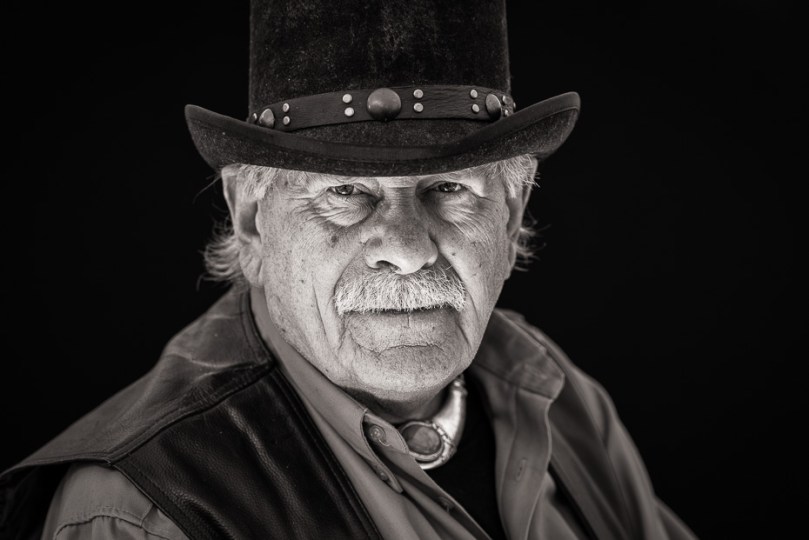
It’s the people! Shay Hunston is passionate about his subject. Sure, we have wonderful scenery, and every photographer is out capturing it. But time and again, what visitors tell us is that what makes Ireland special for them is the people they meet, their warmth, humour, empathy, poetic language, and the interest they take in others. So I set out to document those people – to show the faces and the personalities you will meet along the Wild Atlantic Way.

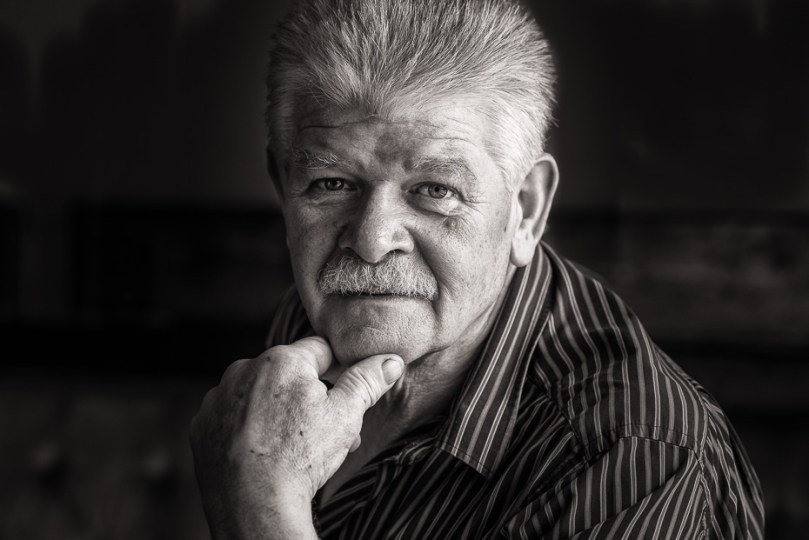
The first photograph above is part of that project – it’s Mike Watkins, the friendly face we pass most days as we drop into Budd’s of Ballydehob. He sits outside, drinking tea and greeting everyone. Here’s what he has to say about life: I have sunshine in my heart and I never, ever, ever get upset about anything. I’m happy every single day and everybody else should be the same, and we should all hug each other and talk to each other. This I have learnt from a lifetime of experience.
Tim Healy – Leap. The best advice I ever received in life was when I came to live in Leap in 1983. I knew of a local lad who had a reputation for liking a bit of a ‘Work Out’, he was well able to look after himself. So I said to him, just to wind him up, would you like to have a go, the two of us for 20 pounds. No, he said, I’ll tell you what, don’t be wasting your money, we’ll fight for pleasure.

So far, Shay’s project has been a Wild Atlantic Success, and he hasn’t even moved beyond Cork yet. He’s been going from community to community along the Wild Atlantic Way, photographing whoever volunteers. Once the prints are made, the town or village mounts an exhibition of his strong black and white images, in shop fronts, on the approaches to town, on walls and railings.
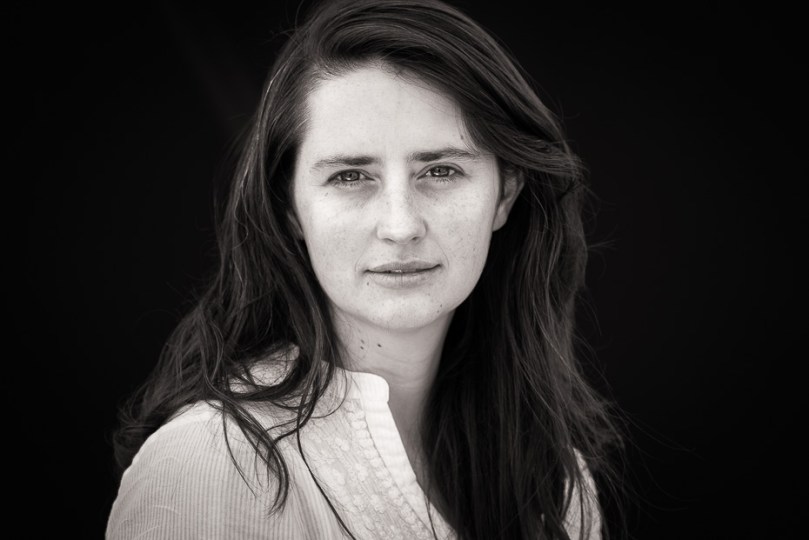
Caroline O’Donnell – Ballydehob. My grandmother once told me that as long as I have music and laughter in my life I would never grow old. I think about her every day and try not to grow old. She also said never marry a man you haven’t seen drunk… I’m still thinking about that advice.

We missed the shoot in Ballydehob as we were away, so we participated in Schull. It’s a nervous business, sitting for a portrait, but Shay creates an instantly warm and relaxing environment. He’s good humoured and patient and empathetic and he obviously loves doing this. He was also cool about my photographing him and his process (no pressure like, to be snapping away in the presence of genius!) and doing a blog post.*

Pat Murphy – Castletownbere. I started fishing at 13 years of age in open boats with a crew of three. We fished winter and summer in all kinds of weather. From October to March we fished for scallops, two rowing the boat and the third man looking after the dredge, by God you had muscles from pulling oars for six months…In summer we would fish for lobsters and crabs. To make the pots we would go to the mountains to cut hazel and sally rods. I use to make four pots a day. Besides the fishing we all had a bit of land to grow our own vegetables and potatoes. Come September, those of us who had a pig or a cow would slaughter them, butcher and salt the pieces and put them in a barrel, there they would be left for 6/8 weeks, they would then be hard dried or smoked, we would also salt fish. The best life advice I could give anybody is to be able to negotiate with people, to work together, not against each other.

Shay asks people to write a few words to go with the image. It’s lovely to meander down the street and read what people have said, so I’ve included snippets under each photograph.

Saoirse Canty – Ballydehob. My perfect day would be my friends and I hanging out around Ballydehob. We would do nothing and talk about nothing all day. The reason why that is so perfect to me is because it makes me truly happy and the familiarity of this beautiful town is very comforting. It is one of those things that I could do forever.

You will notice, of course, that this post is (not surprisingly) a little heavy on Ballydehob folk, so as part justification for that, here’s what Shay himself wrote about his experience working in Ballydehob:

Ballydehob is a remarkable place, a multicultural melting pot of creative activity and is home to artists, poets, writers, musicians, sculptors and craftworkers. The local community encourages people to pursue and develop their creative and artistic talents…With the influx of artistic people in the 70’s, Ballydehob became known as the ‘San Francisco of the Mizen’. Ballydehob is an inspiration to all and is a template for how a multicultural community can live in harmony, with sympathy and compassion for each others needs.

But just to show I am not totally biased, here’s Danny Smith, whose day job as a postman in Bantry allows him the space to observe and dream about his next painting. Next time you’re in Kilcrohane, drop into The Old Creamery and see the wonderful results.
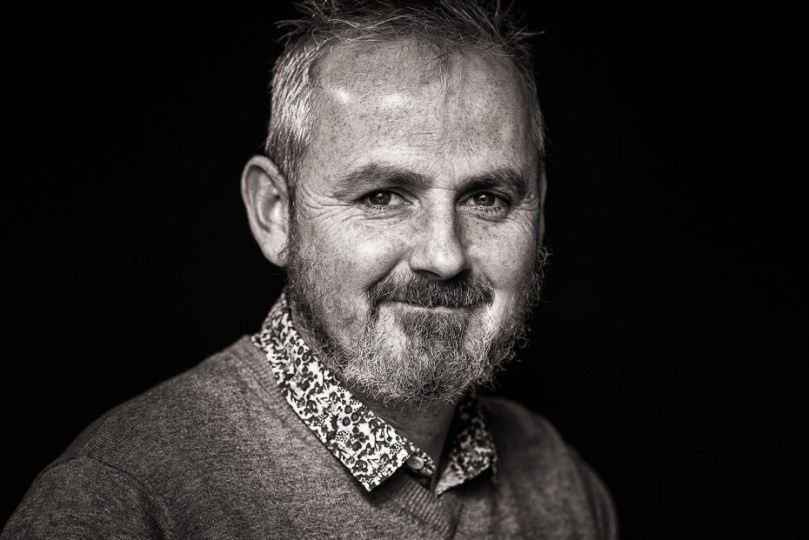
Danny Vincent Smith – Bantry. I started painting as long ago as I can remember, this passion for painting started from there. Every hour I would be thinking and looking for some kind of angle for a painting, observing everyday life, watching people’s faces, their expressions, trying to capture movement in the moment, such as an old lady with shopping, old farmers or a fella sitting inside the pub by himself. I try to picture people’s life’s and transfer them to canvas. My environment has a massive influence on my work and I feel like I’m documenting a time and place in rural life from where I live for future generations.

Go visit Shay’s website NOW to see lots more of his people photography, including his project to photograph the people of Dublin’s Temple Bar. Or sign up to follow him on Facebook or on Twitter. The Schull images should be ready in a few weeks – I will let you know.

Callum Donnelly – The Ludgate Hub, Skibbereen. My Perfect Day – A frosty morning, circa 8am, the ground is firm. I wrap up in a coat, scarf, gloves and I bring my springer spaniels for a walk around our local woodland. The air is sharp, and you can take a deep breath, and try to ignore the daily bombardment of emails, messages & calls. To be able to walk in silence, absorb your surroundings is a fantastic way of  balancing your mind in a world where work can often take precedence. Young people feel enormous pressure to succeed, and perform, its good to take some time out in an environment that is a polar opposite to your usual surroundings.

I will leave you with a couple of shots of Shay himself and his session with Robert. If he comes your way, you lucky people of the Wild Atlantic Way, take advantage of this opportunity! And as for everyone else – come and meet us for yourselves.

Shay and Robert
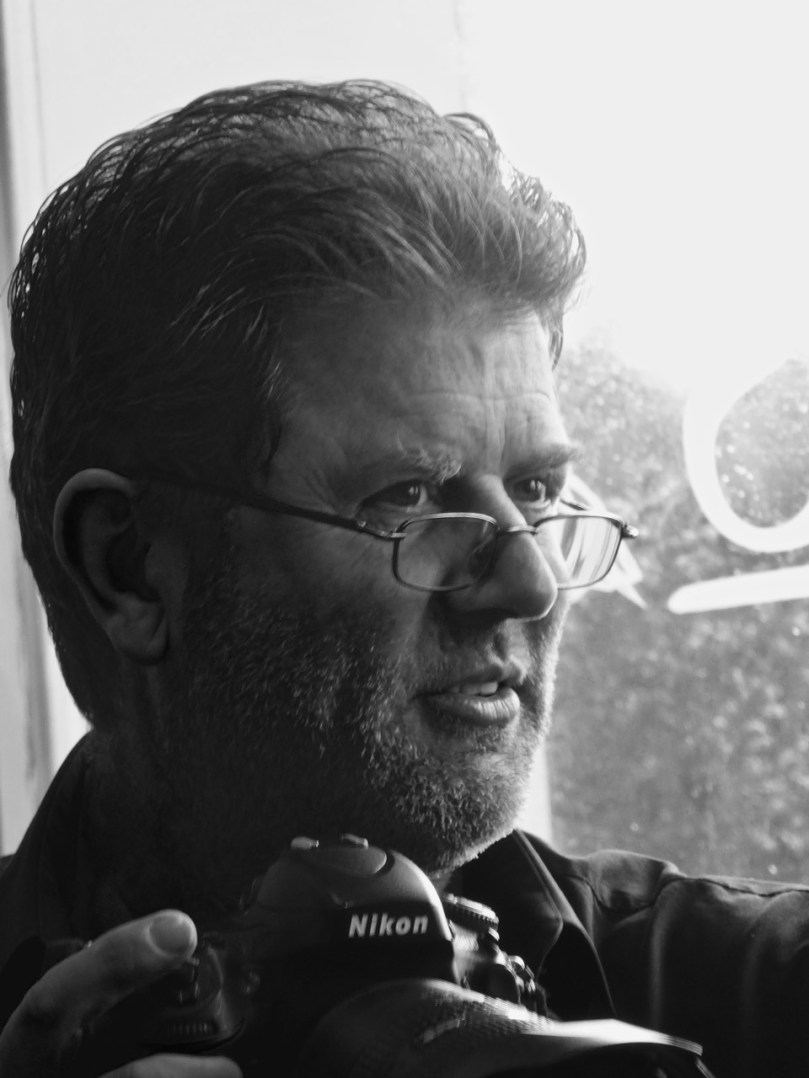
Himself

*Images were downloaded from Shay’s website with his permission. Please always credit the source for any image you download from the internet.
Cormac’s Chapel: The Jewel in the Crown (Part 1)

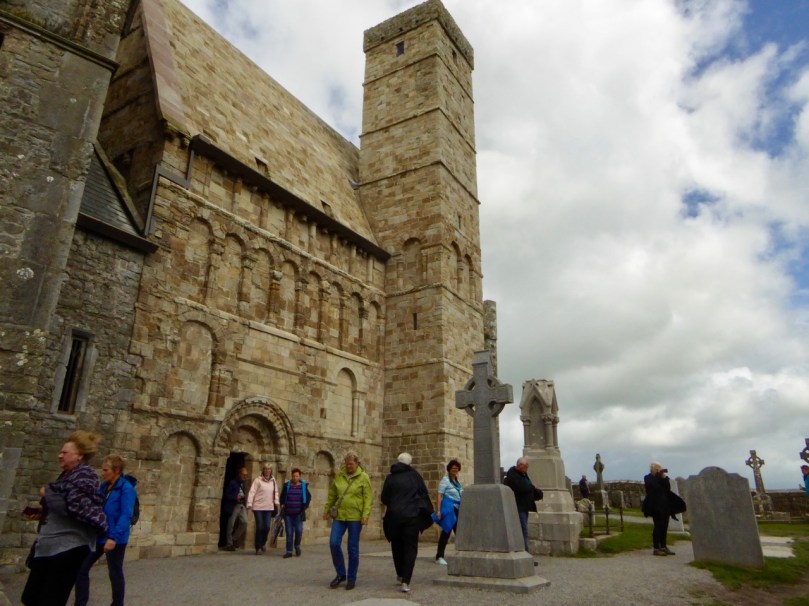
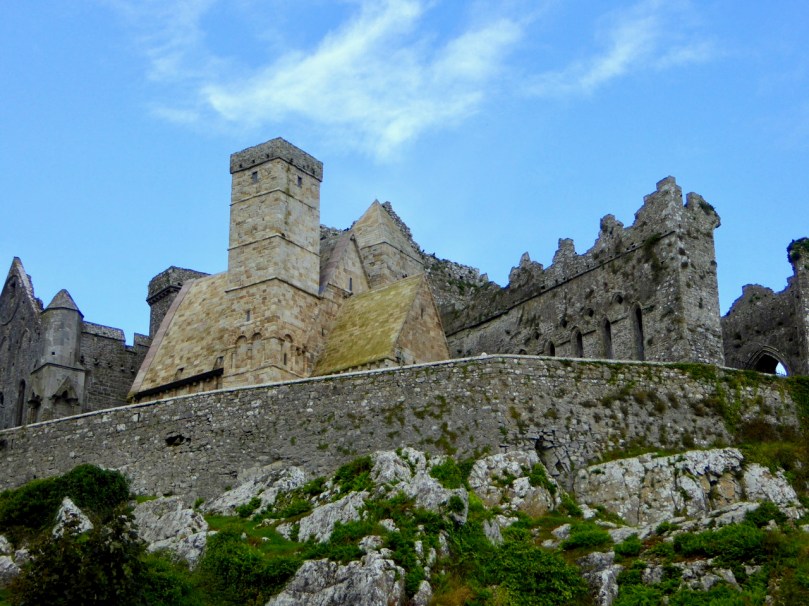
Cormac’s Chapel on the hill of Cashel is the jewel in the crown of Irish Romanesque architecture. It also allows us to trace the influences and development of the Irish Romanesque style both to other examples inside Ireland and to models outside of Ireland. Now that the church has been cured of its chronic leakage problems and the scaffolding has been taken down, we can finally look at this wonderful building in its entirety. In doing so I rely heavily on the work of Prof Tadhg O’Keefe.*

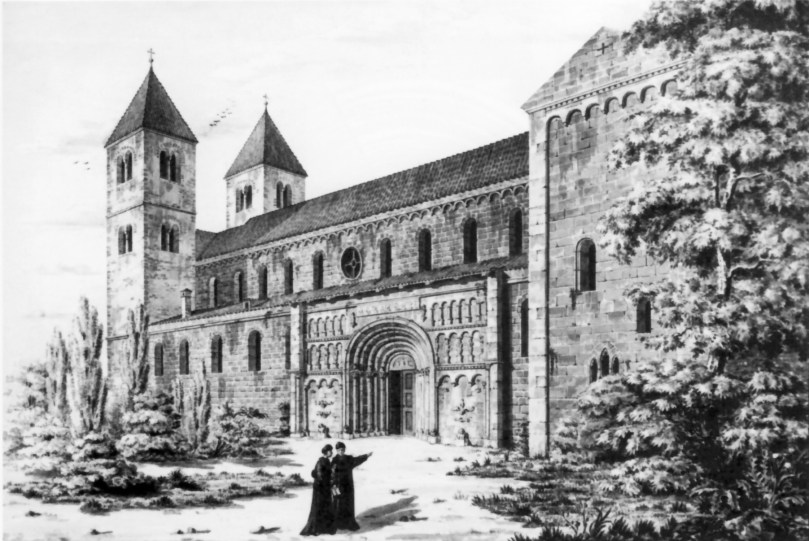
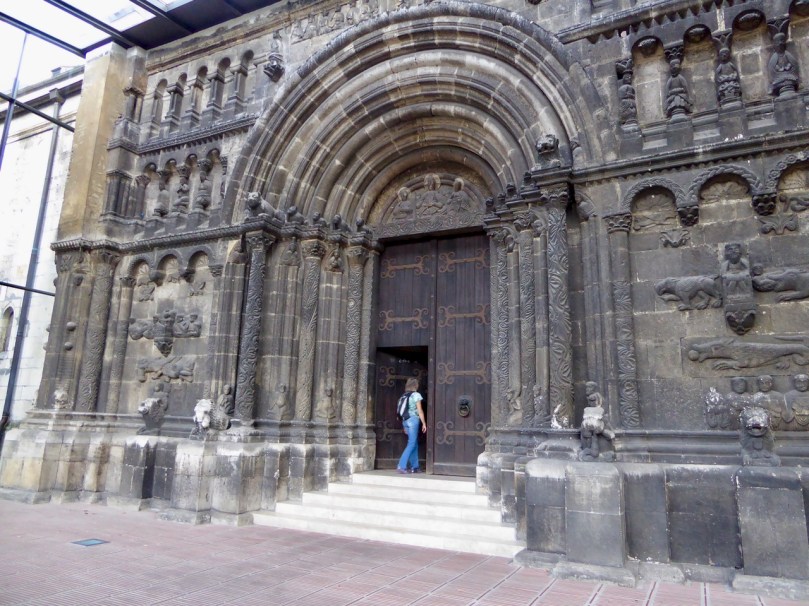
On a walking tour of Bavaria a couple of years ago we visited this church, which turns out to have been connected with Cormac’s Chapel in a surprising way. This incredible portal is completely enclosed by a glass frame to protect it from the weather

We know from historical records exactly when Cormac’s Chapel was started (1127) and when it was consecrated (1134). This means that it was not the high point (that is, the latest and most elaborate development) of Irish Romanesque, but in fact quite early in the sequence of buildings that constitute the corpus of Irish Romanesque architecture. We can look back to the early churches we examined in Irish Romanesque – an Introduction for antecedents, but in many ways this is not a ‘typical’ Irish Romanesque structure. It is, in fact, more reliant for its influences on Anglo-Norman churches in England and Wales, and on the important ecclesiastical links between Cashel and modern-day Germany. O’Keefe puts it this way:

This is the one building of that era in Ireland which must surely belong in the European canon of great Romanesque architectural essays; with a floor area less than the size of a tennis court it is also one of the smallest.
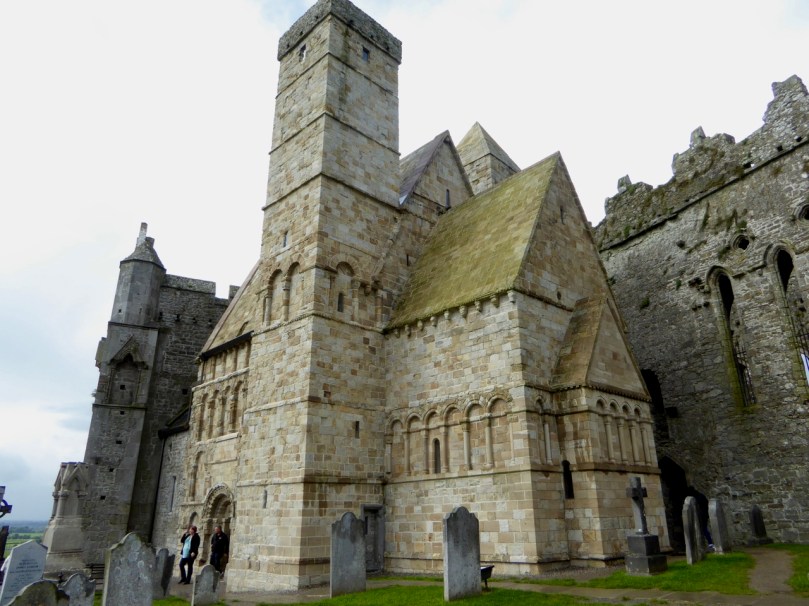
With the scaffolding finally removed, we can see the full extent of the chapel

Who was Cormac? Cormac Mac Cárrthaig (McCarthy) was King of Munster from 1123 to 1127, when he was deposed and retired to be a monk in Lismore with St Malachy (the man credited with reforming Irish monasticism and inviting in the Cistercians). His throne was restored to him within a few months and in gratitude he commissioned a new chapel to be built on the Rock. While the Rock of Cashel had been gifted to the church previously, the chapel was probably intended to serve the purpose of a royal inauguration site, thus enhancing and securing Cormac’s power. It took some time to build – it was consecrated seven years later.
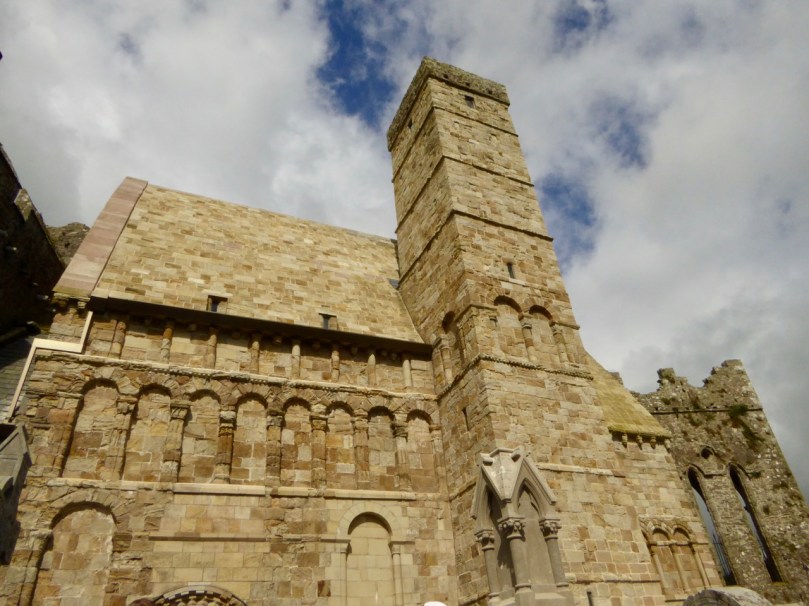
In this photograph, note particularly the high pitched roof and the tiny windows that are the only means of letting light in to the rooms above the chancel and above the nave. Note also how the later gothic cathedral impinges on the much smaller chapel

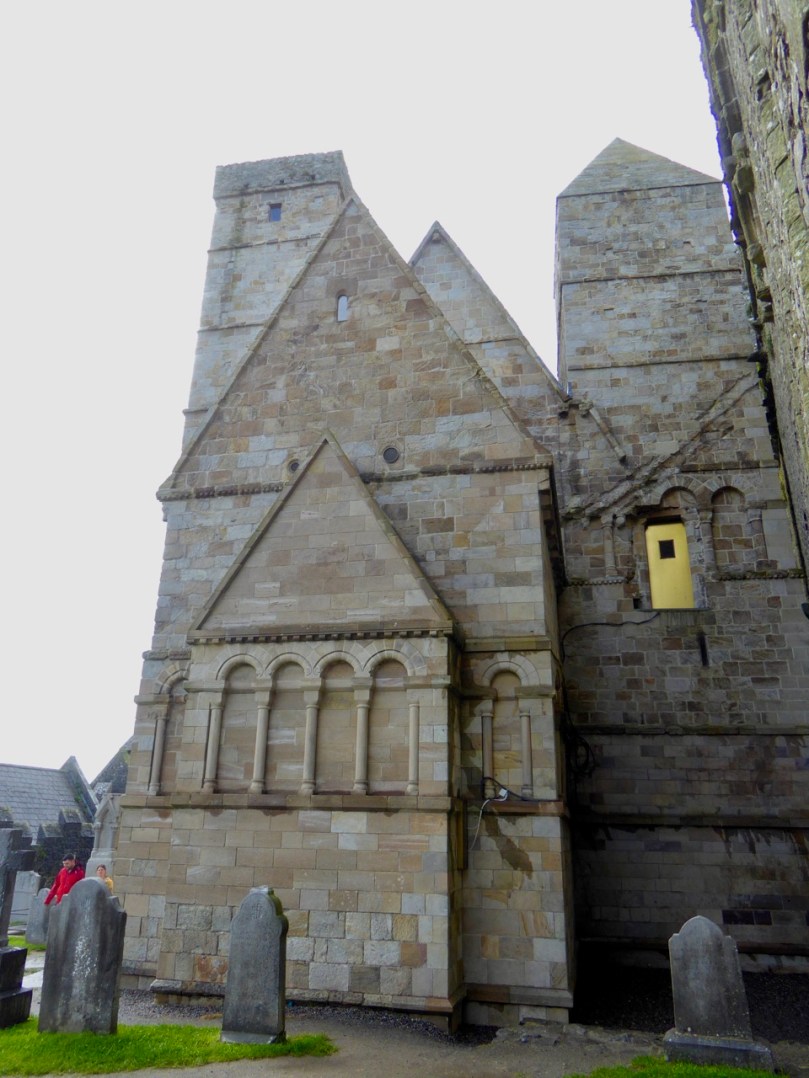
Let’s start on the outside. This is a nave and chancel church, with opposing doors on the north and south sides, twin square towers, steeply pitched stone roof, projecting altar bay, and extensive string coursing and blind arcading on the exterior walls. The pitched stone roof appears to be a typically Irish feature – similar examples have survived intact in St Kevin’s Kitchen in Glendalough, St Flannan’s Oratory in Killaloe, and in St Colmcille’s House in Kells (see Robert’s post A Medieval Feast), while we saw vestiges in Kilmalkedar a few months ago. In fact, the roof accommodates a second story, accessed via a stairway within the church. You can see the tiny round-headed windows that give light to this space on the wall above the chancel, and there are also rectangular windows right at the bottom on the roof where it meets the wall of the nave. It must have been an uncomfortable room, dark and damp, and it is hard to imagine it being used for daily activities (such as a Scriptorium, as the Kells room was traditionally thought to have been) so it has been suggested that it was a sacristy.

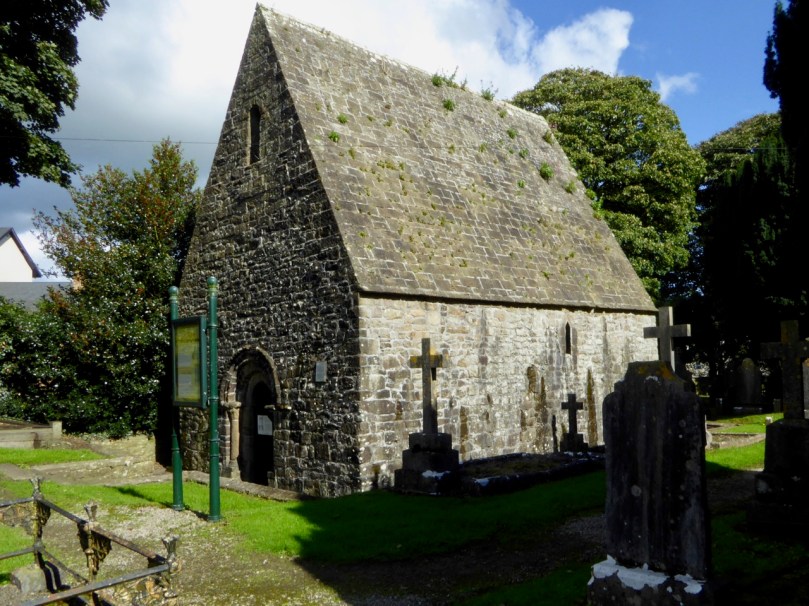
St Flannan’s Oratory in Killaloe, Co Clare. As in Cormac’s Chapel, the steeply pitched gable accommodated a room above the chancel, in this case lit by a single window in the end wall

But that pitched roof is where the older Irish influences stop – for the rest of the building we must look elsewhere.

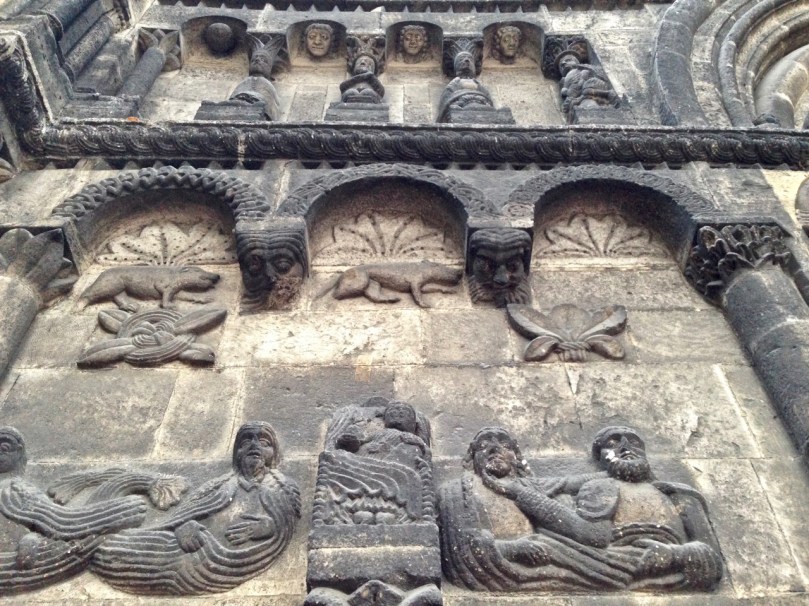
Intriguing carvings on the portal of the Regensburg church

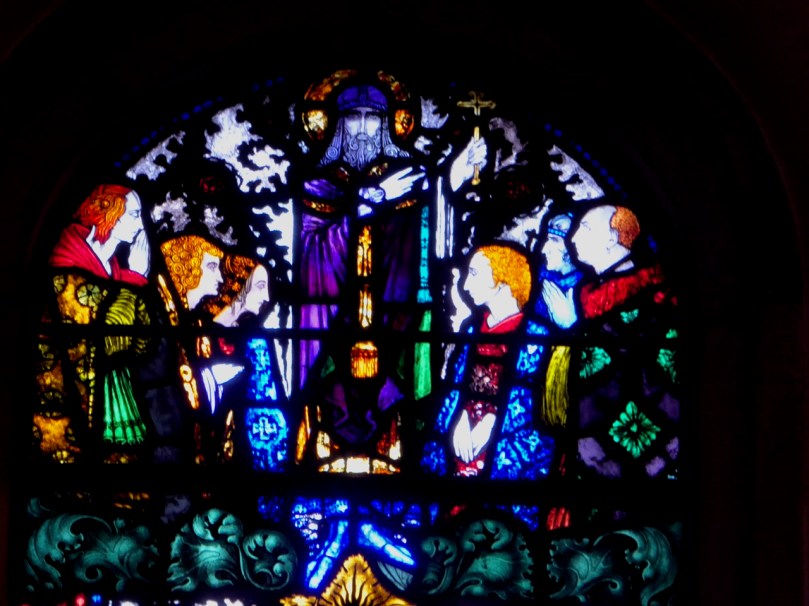
The two square towers are particularly interesting and have few parallels in Ireland. In fact, they are based on a church we happen to have visited two years ago in Regensburg (previously called Ratisbon) in Bavaria. Upon his restoration as King of Munster, Cormac received a visit from two Ratisbon monks, Isaac and Gervasius, accompanied by a carpenter (Conrad) and one other man.

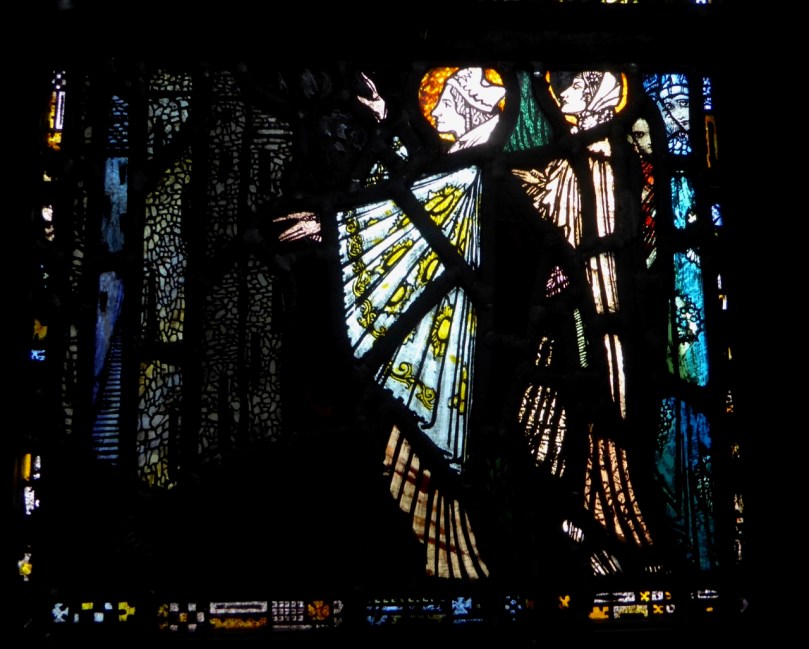
Detail from the St Albert of Cashel window by Harry Clarke in the Honan Chapel, at University College, Cork: Albert preaching to the (red-haired) people of Ratisbon

The first evangelising monk from Cashel to establish links with Ratisbon had been St Albert, way back in the 700s and there had been strong connections ever since. The church, St James, in Regensburg, is called the Scots Church or Schottenkirche (Schotte was the term used for Irish) and while it has been altered over the centuries, the Romanesque core remains, along with the two flanking towers and a magnificent doorway in the north wall.

Conrad the Carpenter and his sidekick may well have put to use the knowledge they acquired building the Schottenkirche St Jakob in designing the two square towers at Cormac’s Chapel.

This photograph illustrates the altar projection on the east end of the chancel, as well as the two towers. Note the conical cap on the north tower, as in the Regensburg example

Opposing doors in the north and south walls are almost  unknown from older Irish contexts, as it  was customary to enter through the west end (opposite end to the altar). We saw opposing doors in Liathmore but O’Keefe feels they may be a bi-product of later reconstruction. There are reports of a  two-door church of St Brigid in Kildare, and such designs…

were presumably designed to accommodate different types of procession, sometimes simultaneously: royal and episcopal parties certainly entered through the large portal on the north side, while clerical concelebrants and choristers presumably entered through the smaller portal in the south wall.

And wonderful doors they are! (Look back at Irish Romanesque 2 – Doorways for more about doors in general.) The south door is now the main entrance for visitors but in fact is relatively modest with only two orders and a timpanum depicting a animal, probably a lion. The archivolts are chevroned but weathering has damaged much of the other carvings.

The cathedral wall cuts off part of this doorway, damaging the door and making photography difficult. This is a small open triangular space between the cathedral wall and the north door

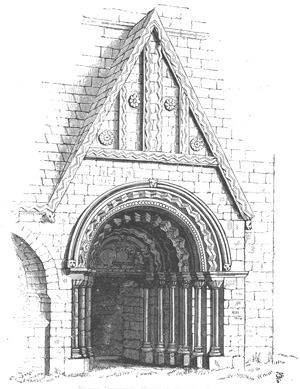
The north door is larger and more elaborate, although it is incomplete, as the later gothic cathedral was built up against this section of the chapel. Above the door is a triangular pediment, decorated with vertical and horizontal chevroned lines and with rosettes.

From Irish Pictures Drawn with Pen and Pencil, Richard Lovett 1888

The tympanum has a curious decoration – it’s a centaur, of all things, shown hunting a large lion with a bow and arrow. This is not unknown in Romanesque carvings, which often feature animals from the medieval bestiary, but unusual enough.

As for the rest of the chapel, Prof O’Keefe points to the most likely influence being the Anglo-Norman churches of England and Wales, which provide exact parallels for many of the features, external and internal, that can be observed at Cormac’s Chapel. One feature he points to, for example, is the shallow projection, lit by lateral windows, at the far east end of the church – functioning as an extension of the chancel to contain the altar. Indeed, muses O’Keefe, as he ponders the particular mixture of Irish and non-Irish features visible in this building;

Walking around Cormac’s Chapel, outside and inside, one instantly recognizes that it has affinities in Britain. The blind arcading and the chevrons can be paralleled effortlessly in literally hundreds of English Romanesque contexts, from south Wales to East Anglia, and from Exeter to Dundee (Fig. 78). Moreover, their execution speaks not of Gaelic-Irish craftsmen who have learned these forms and how to carve them but of actual English Romanesque craftsmen in Cashel in the late 1120s and early 1130s. We cannot prove this, of course, but later Romanesque work in Ireland looks sufficiently different for us to be very confident that Anglo-Norman hands recreating an English Romanesque repertoire shaped large parts of Cormac’s Chapel.

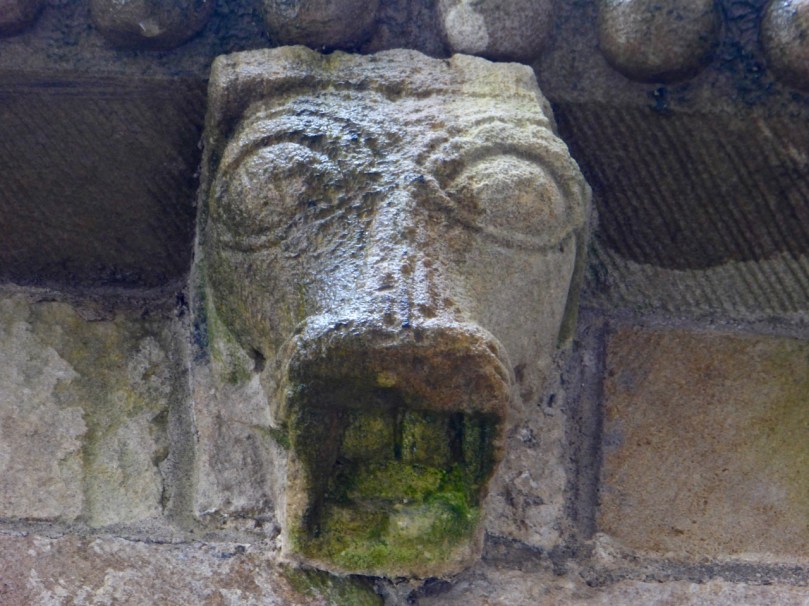
Blind arcading, string courses, and carved roof corbels (see below) enliven the outside of the chapel. The two small windows in the roof allow light to the room above the nave

Next week we will go inside Cormac’s Chapel and discover yet more treasures from the 12th century. See you back here then.

*Prof O’Keefe’s book  is now out of print although second-hand copies can be found. I relied heavily on his manuscript, Romanesque Ireland: Architecture and Ideology in the Twelfth Century, which he has generously uploaded to Academia.

Circumnavigation

It’s a hop and a step from down here on the Mizen (Ireland’s most south-westerly point) up to the top of the island: people are doing it all the time, on foot, by bicycle, by boat… We thought we’d do it as a road trip – in fact, why wouldn’t we circumnavigate the whole of Ireland? We did – it took us three weeks.

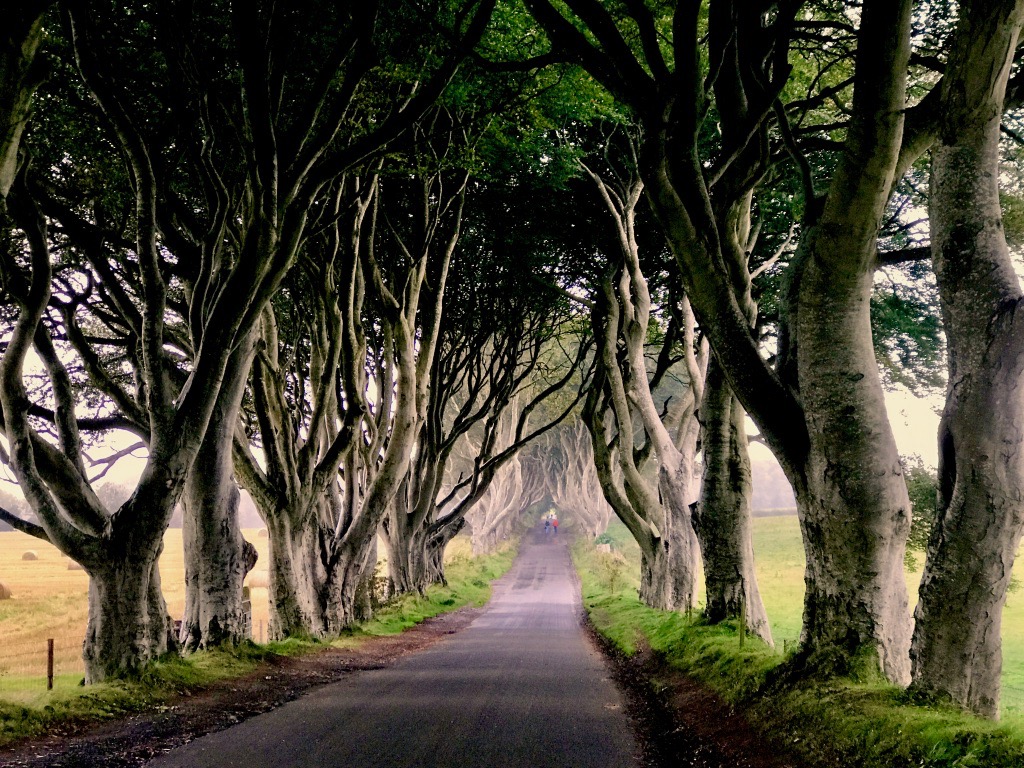
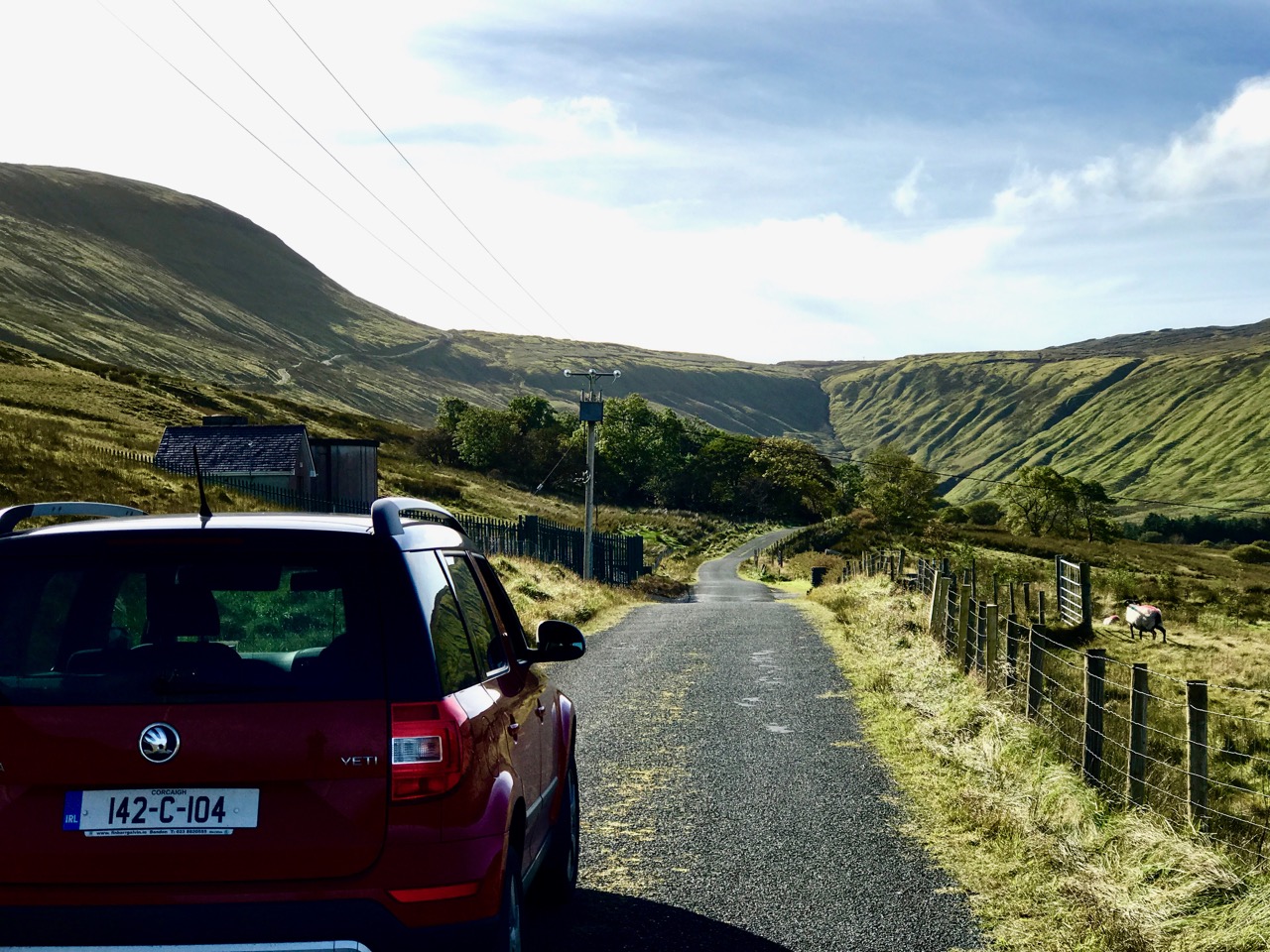
Header – the Dark Hedges, Ballymoney, County Antrim, Northern Ireland. Planted by the Stuart family in the eighteenth century to enhance their Georgian mansion of Gracehill, it is now much visited as it features in Game of Thrones. It’s good to know that traffic can no longer go through this avenue, as it has suffered damage in recent times. Above, one of the many byroads that we sought out on our journey around the island: this one is the loop road behind Ben Bulben in County Sligo

It was a most fascinating and educational trip, particularly for me: most of the places I had never visited before. Finola was more familiar with her own country, although for her it was a voyage of rediscovery. In many cases she saw how much had changed over years of boom and bust, while elsewhere her memories were reawakened.

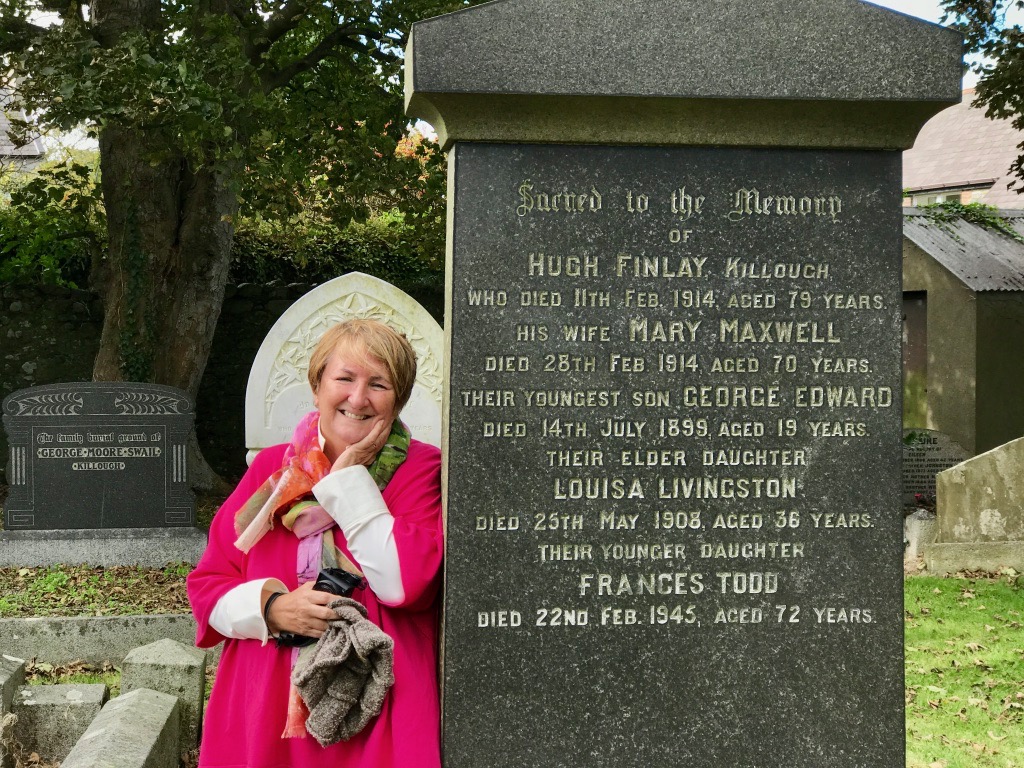
A voyage of rediscovery: Finola’s Great Grandparents are buried here in Killough, County Down, Northern Ireland

This is but a short summary of our travels: a taster. Many of the places we visited will feature in future posts here. As you can imagine, Archaeology, Romanesque architecture, stained glass, saintly shrines, pilgrimage sites, holy wells, stunningly beautiful land- and sea-scapes, and social history were prominent in our must-see itinerary. But we found we were also following in the footsteps of Irish poets. And British eccentrics.

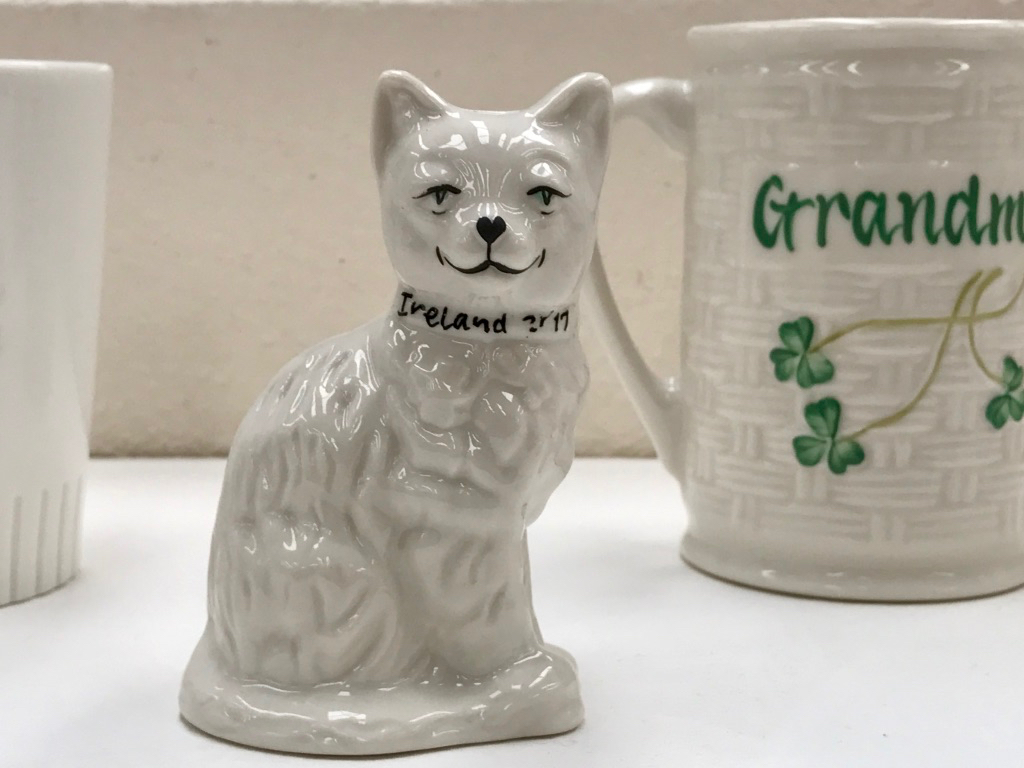
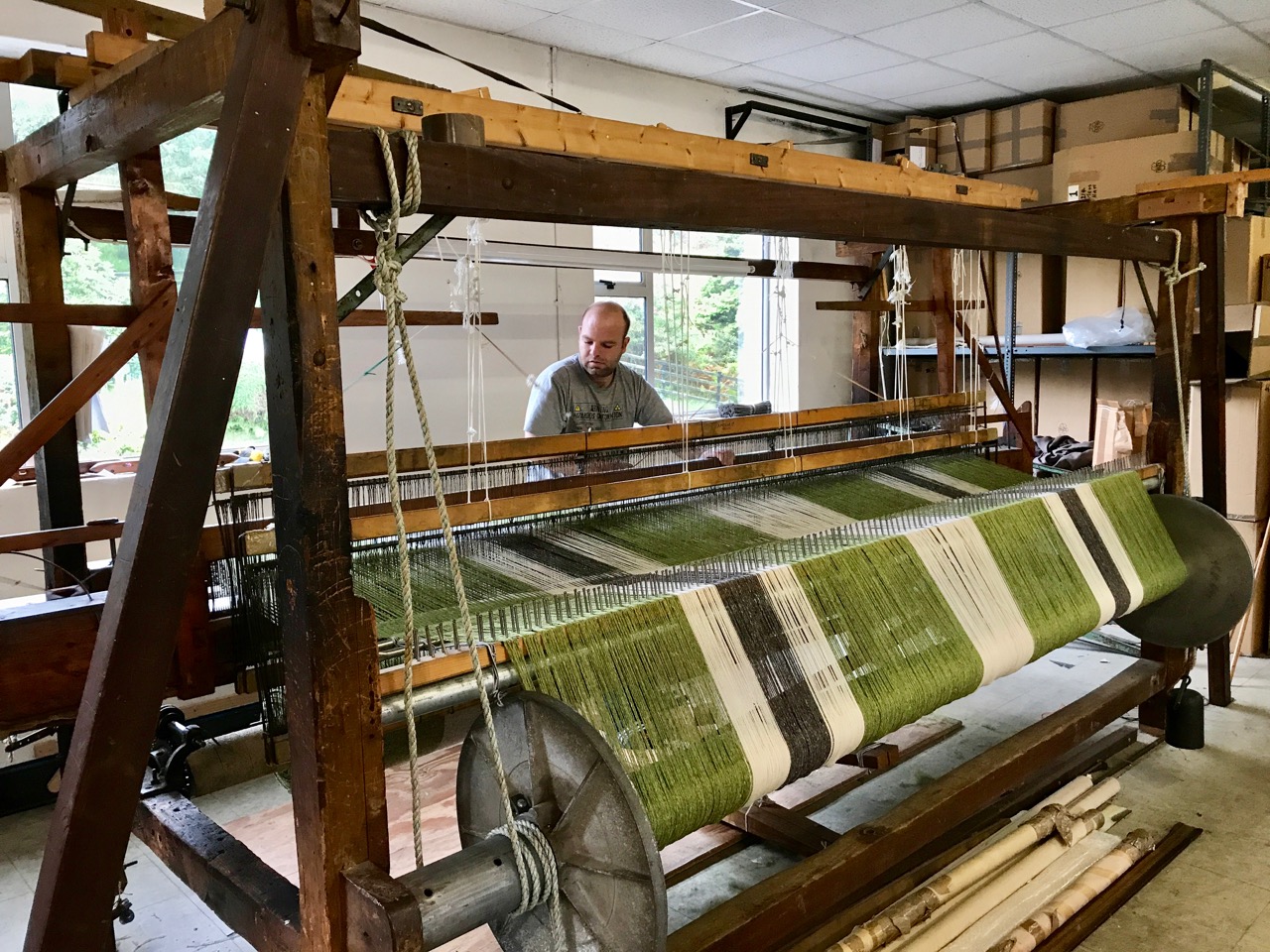
Craftworks: we visited the Belleek Pottery, County Fermanagh, Northern Ireland – which has been operating continuously since 1884 (upper), and (lower) Glebe Mill, Kilcar, County Donegal – where we could watch traditional handweaving on enormous looms

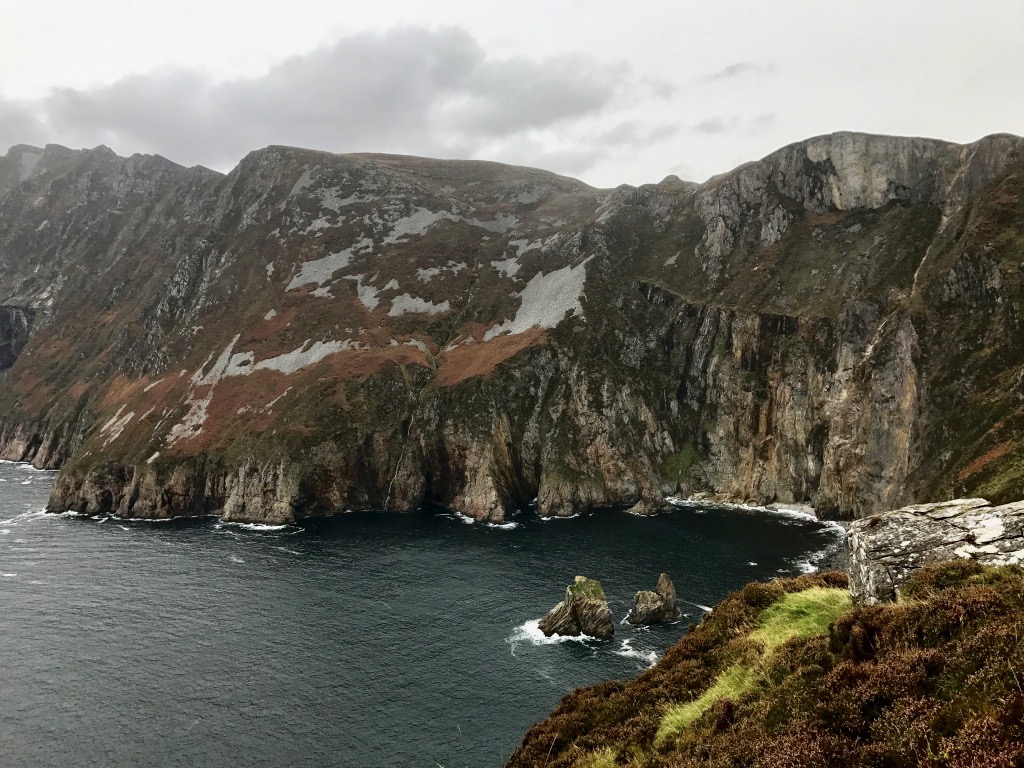
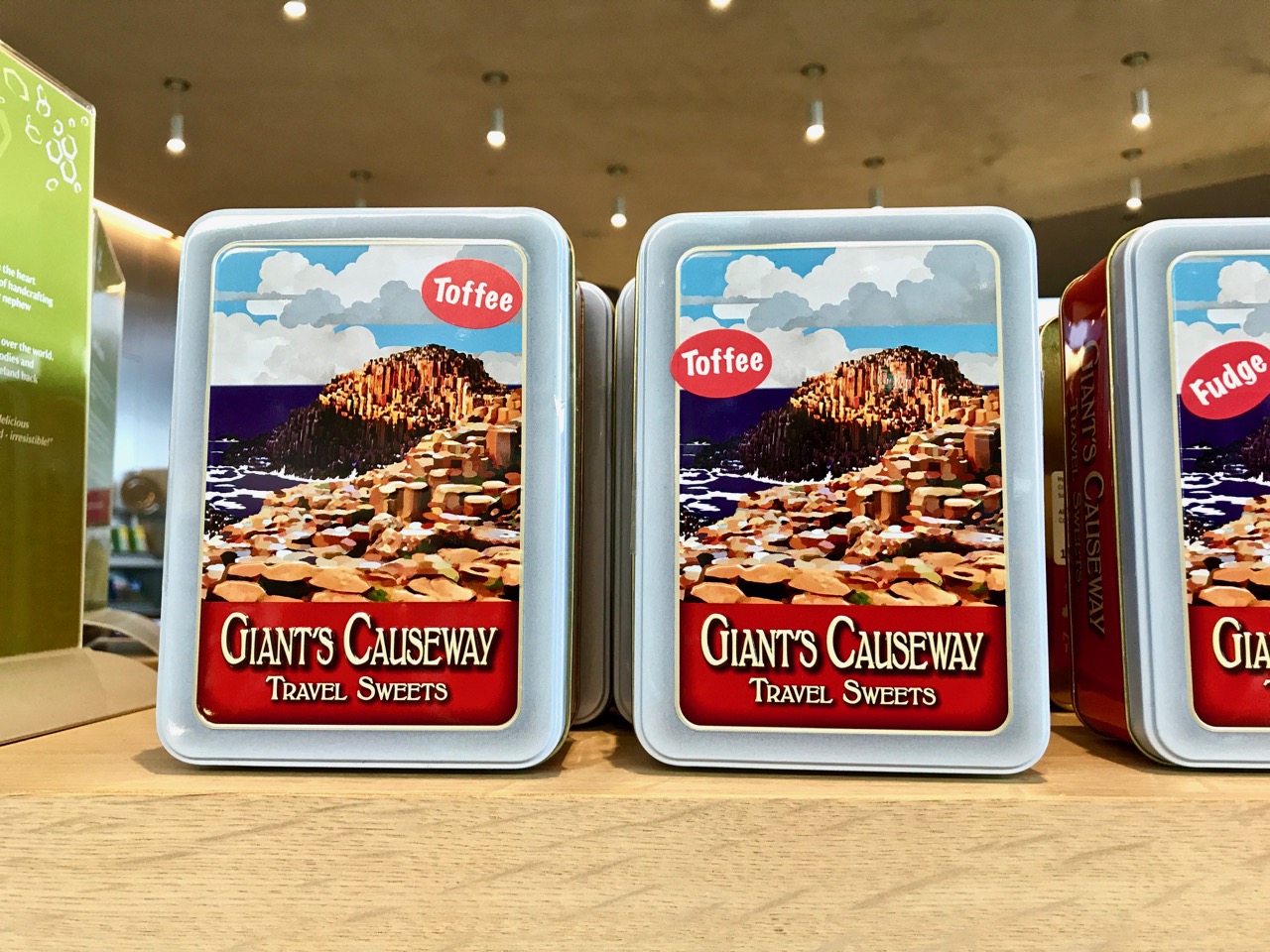
I prefer to stay off the more heavily trafficked tourist spots, but we made exceptions for Europe’s highest sea cliffs at Slieve League, County Donegal (three times the height of the Cliffs of Moher! Beautiful and very wet) and for the Giant’s Causeway. After all, this features strongly in the stories of Finn McCool. I thought that the inevitable crowds were catered for very well and – if you are prepared to walk away from the main site – you can have the spectacular cliff paths largely to yourselves. In Northern Ireland I was very struck by what an asset the National Trust is, for it preserves and makes accessible so many properties and areas of outstanding beauty. If only the Republic had a similar well funded body…

Top – the cliffs at Slieve League. Lower – Giant’s Causeway on a stormy day, and souvenirs in the National Trust’s Causeway Visitor Centre

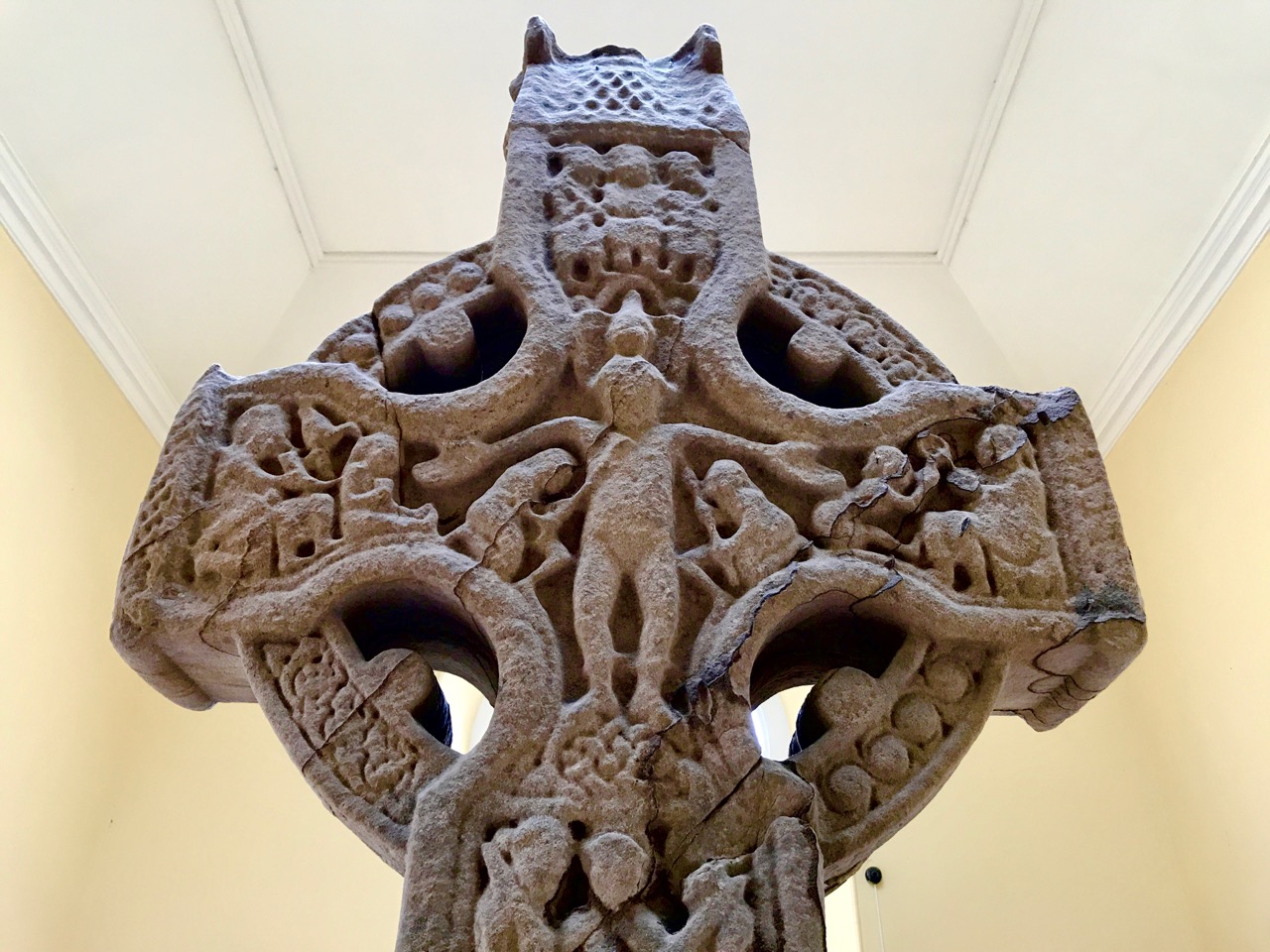
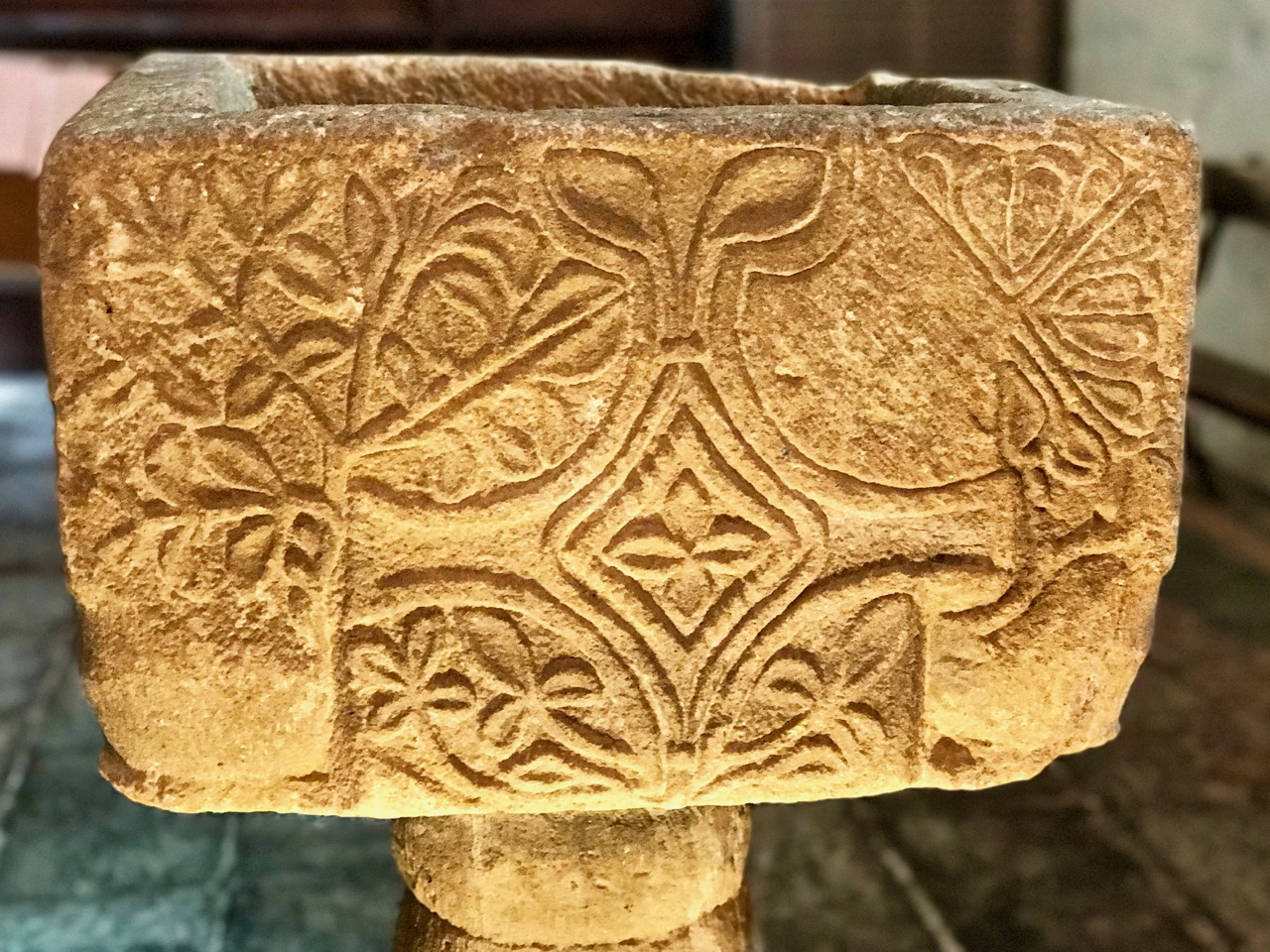
It would, perhaps, be unreasonable to pick out a ‘best’ destination that we visited, but I must say that I was probably most impressed by the medieval sites: we took in many. It’s amazing that right off the beaten track you can find stunning ancient carvings and artefacts tucked away and – sometimes – not even signposted.

Upper – the superb High Cross at Durrow has been protected and conserved, but it’s not signposted from the busy road that passes nearby. Centre – the beautiful shrine that holds the relic of the True Cross in St Peter’s Church, Drogheda, County Louth: the same church holds the head and remains of Saint Oliver Plunkett. Lower – 13th century font in St Flannan’s Cathedral, Killaloe, County Clare

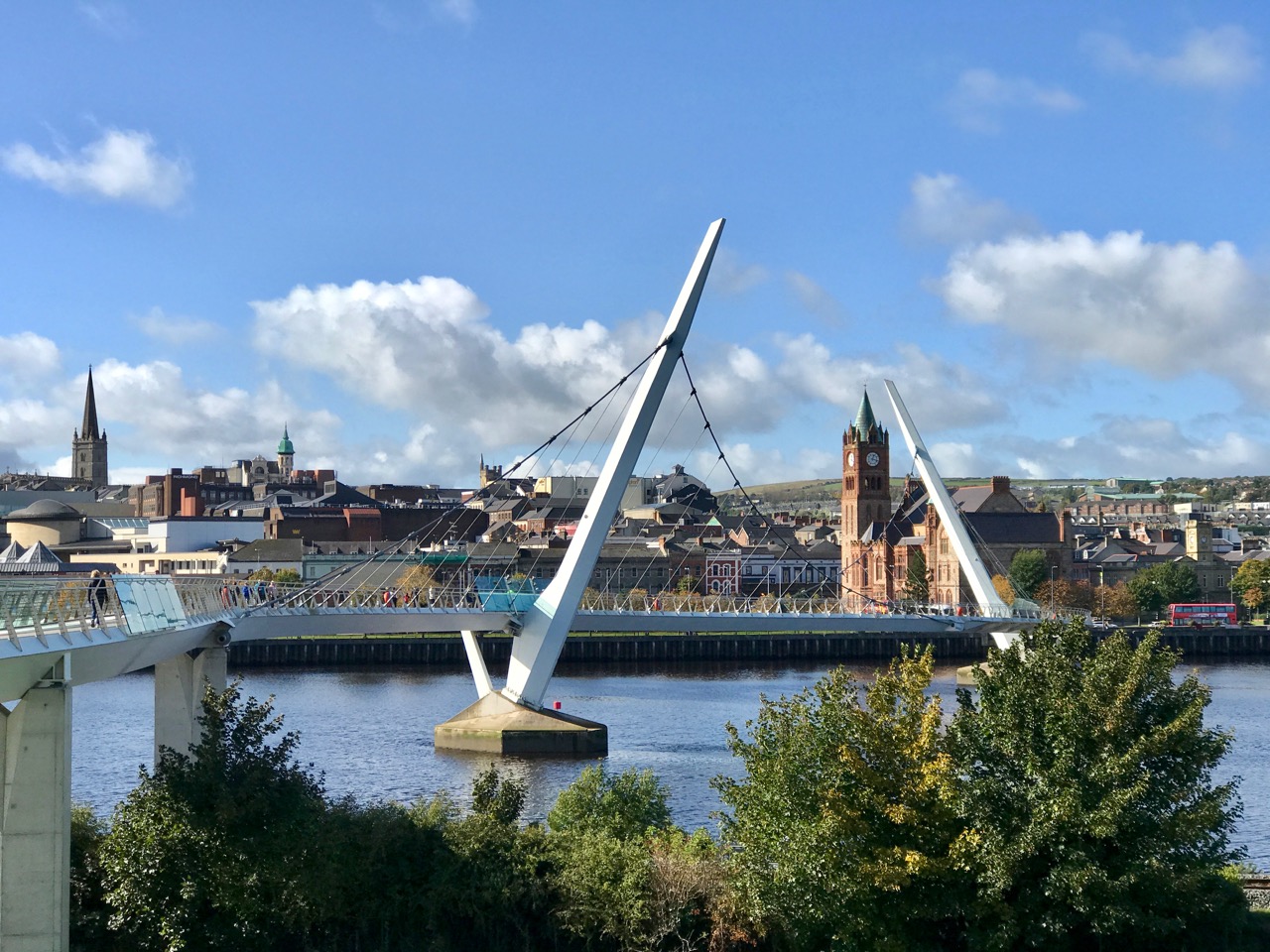
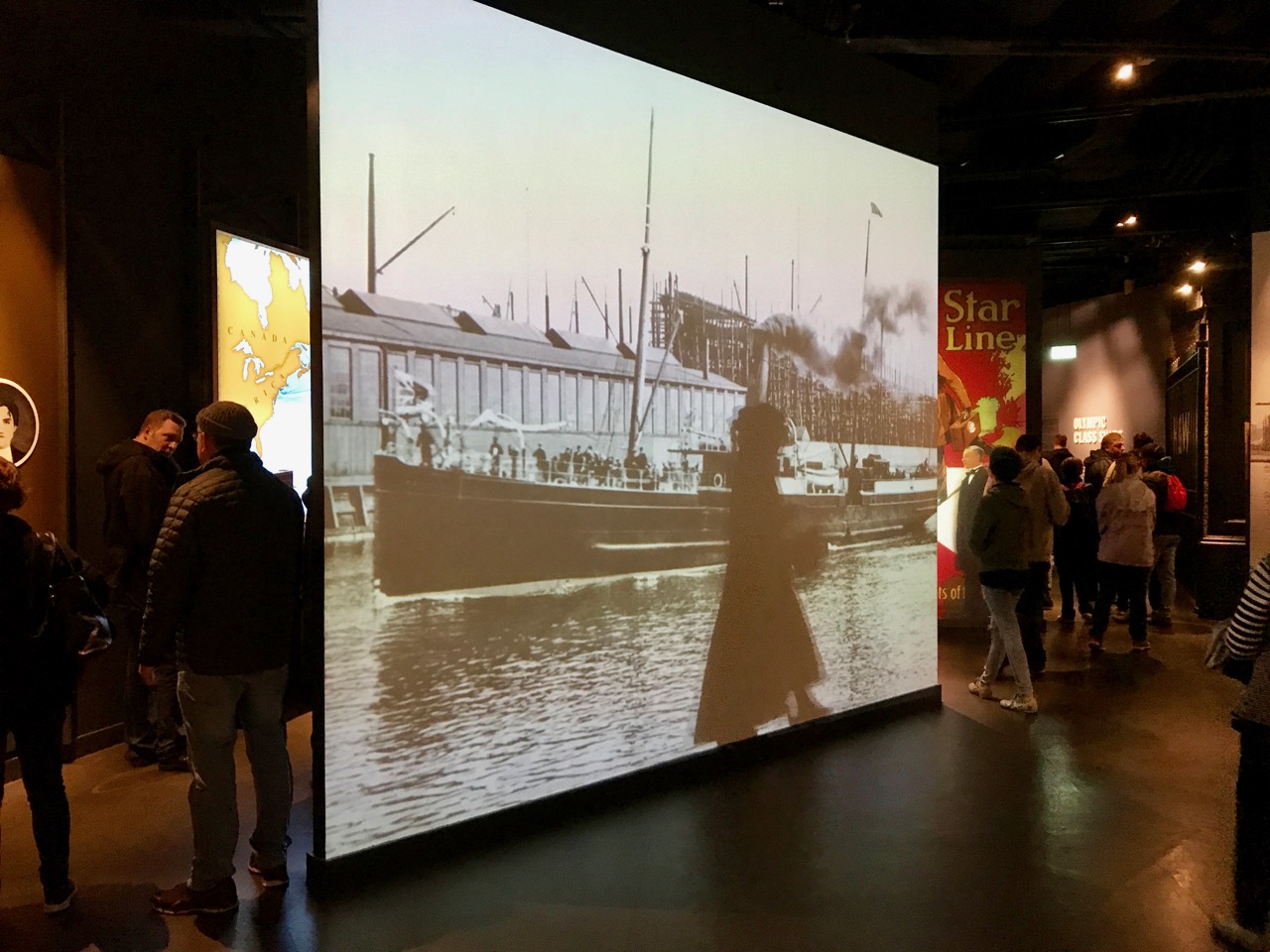
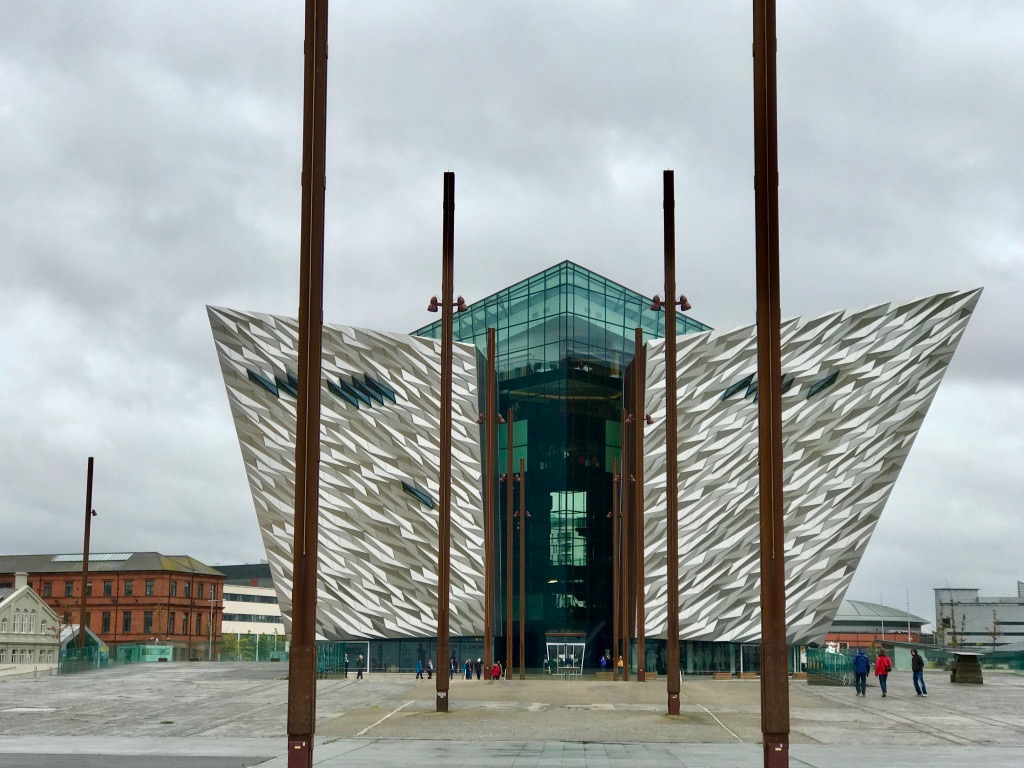
Our travels were punctuated with a whole variety of experiences, impossible to summarise in one short post. We took in Derry – the only completely walled city in Ireland and one of the finest examples in Europe: we walked the whole length of the early seventeenth century structure. Belfast was intriguing. We undertook the Titanic Experience, and were duly impressed with the building and the exhibitions. We also toured the whole city in the hop-on-hop-off bus: a full two hour tour of everything with a thoroughly enlightening commentary – a good way to keep out of the rain!

Upper – the Peace Bridge in Derry. Lower – the Titanic Experience, Belfast: the exhibition and the building. The external shot is taken from the enormous slipway which was used to launch the ship

We’ve only just got our breath back from all the travelling (although we always went at a leisurely pace with plenty of stops for investigation and coffee). Between us we took well over 5,000 photographs! You’ll see a good few of them in due course.

Often it’s the simple things that impress the most: just little vignettes of Irish life. We would thoroughly recommend a slow exploration of this land – ambling along the byroads and keeping a weather eye open for new experiences. Have a good time!

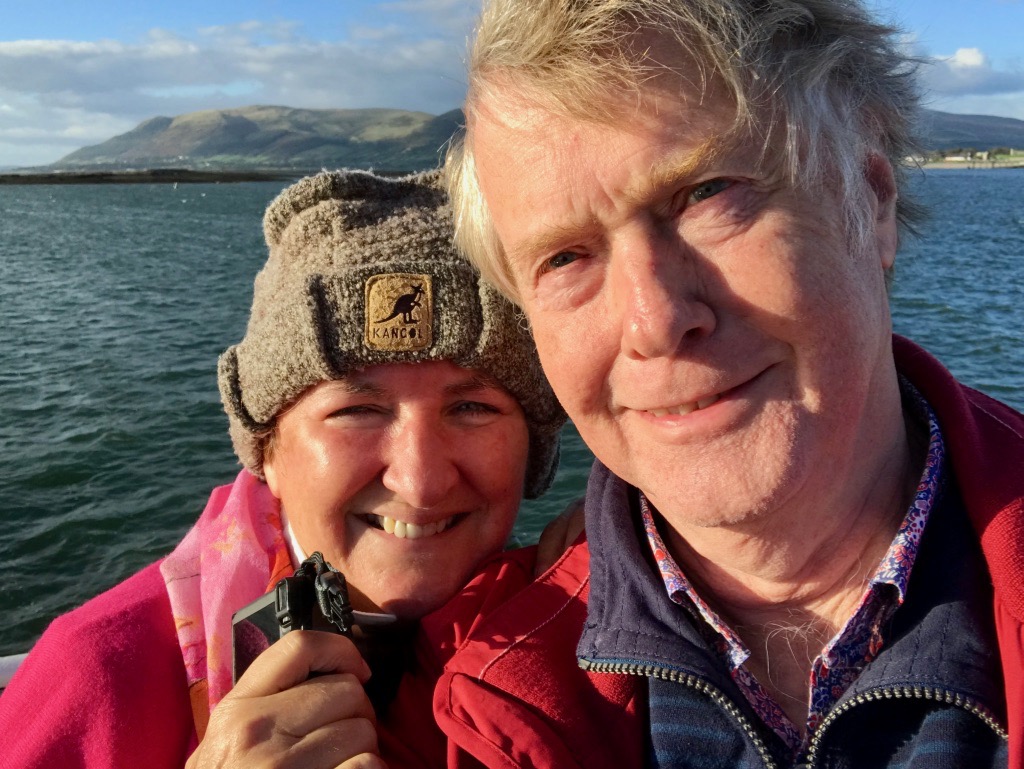
We are not averse to the odd selfie! Here we are on Carlingford Lough with the Mountains of Mourne behind us… Today it’s an invisible border between Northern Ireland and the Republic: what does the future hold?

On the Passing of Poets

Ireland: ‘land of Saints and Scholars’ – and poetry, as we found on our travels. In just a few days we have discovered how three pre-eminent Irish poets – whose passing has spanned a century – are being celebrated and commemorated in their own townlands.

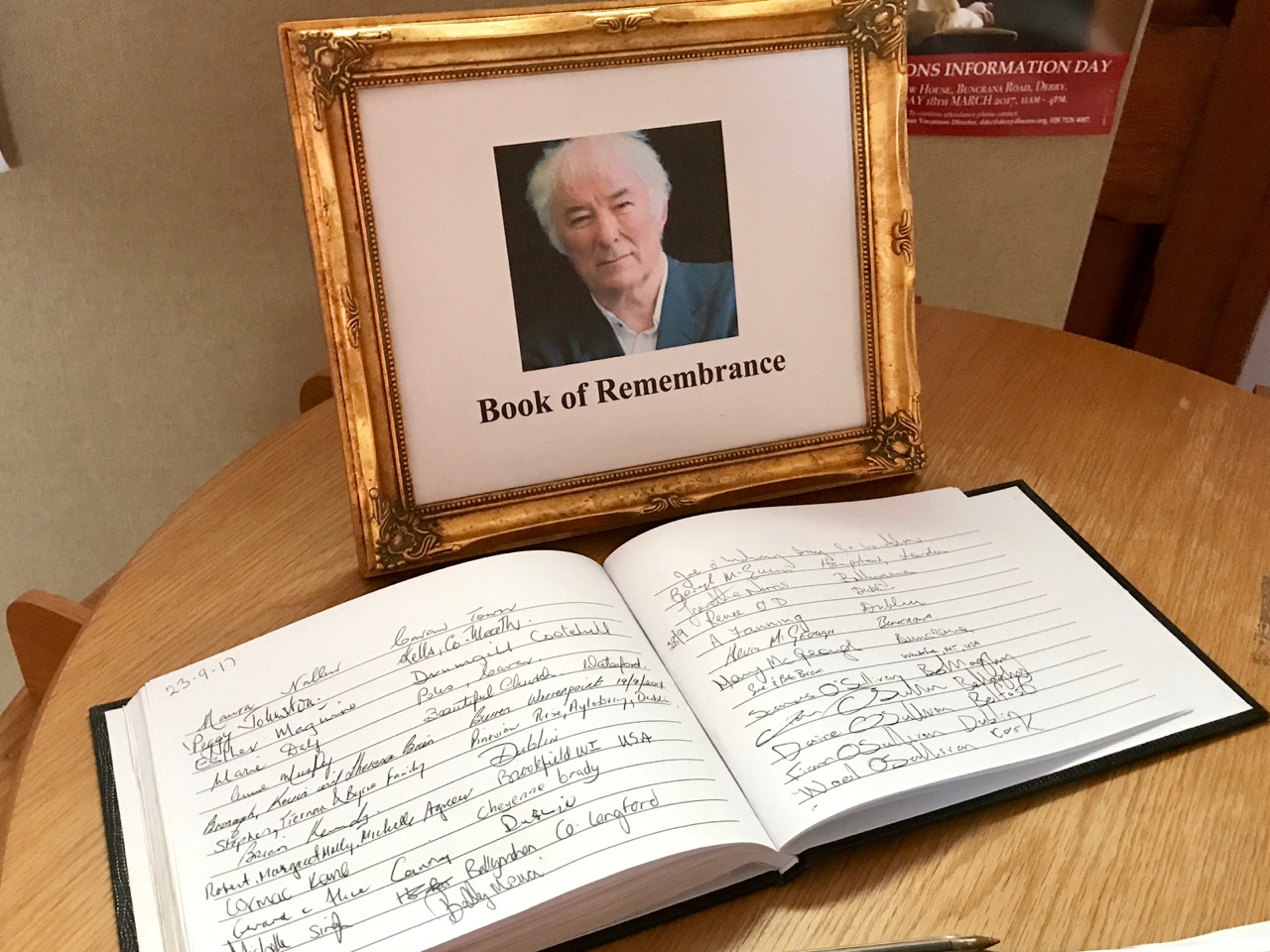
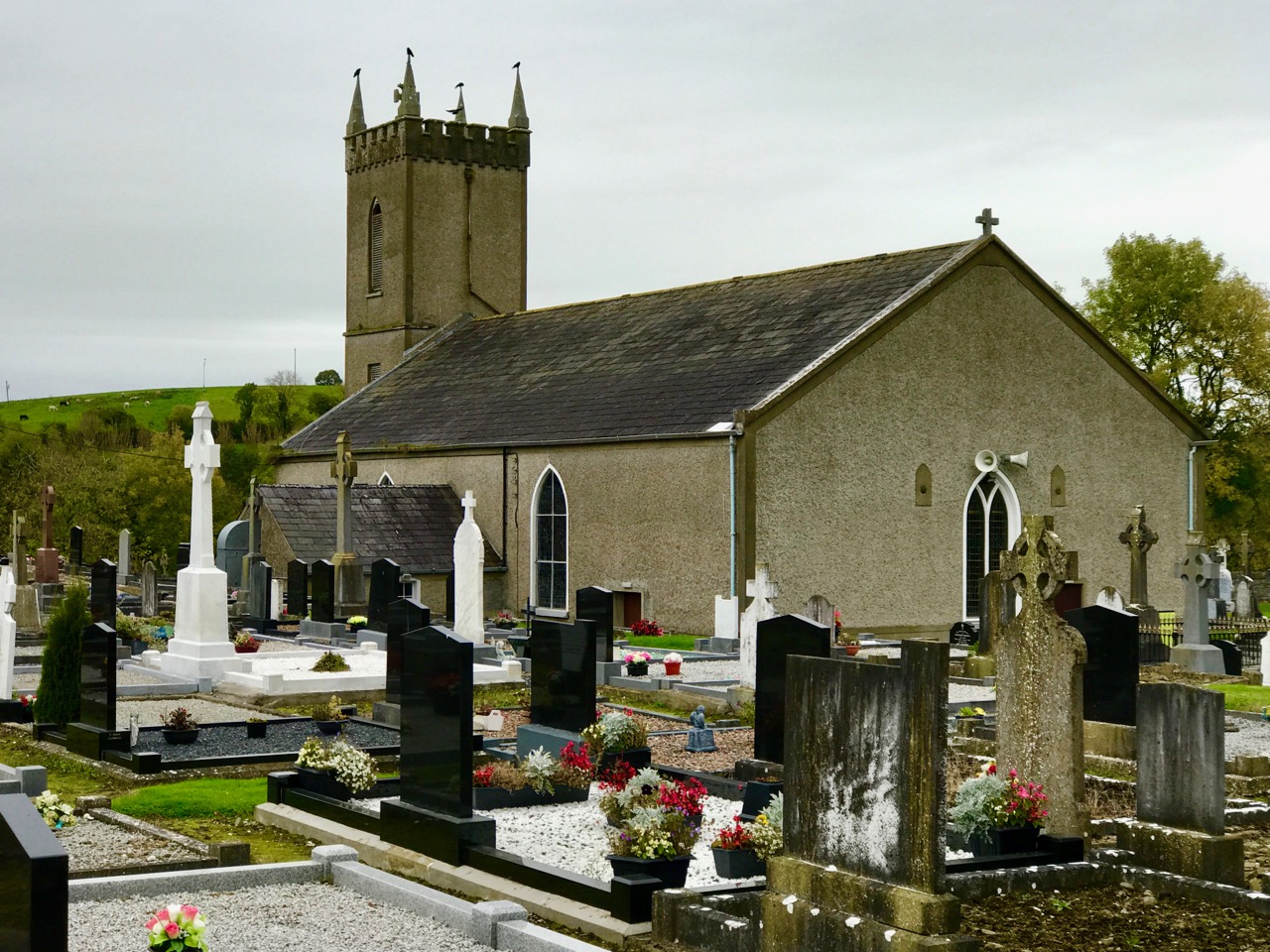
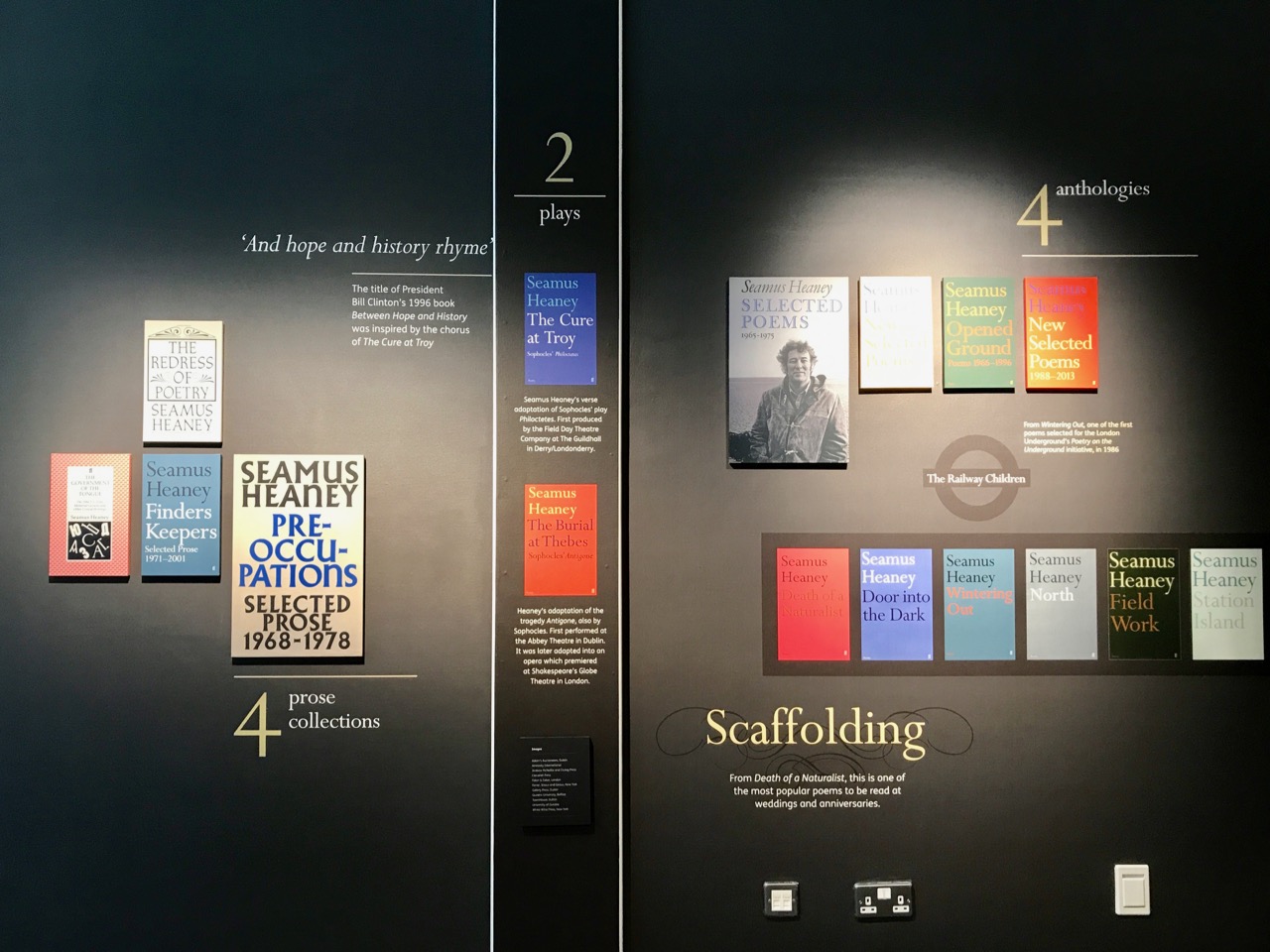
Bellaghy, County Londonderry, in Northern Ireland was the childhood home of Seamus Heaney  who was born at nearby Mossbawn on 13 April 1939, the eldest of nine children. Heaney passed away on 30 August 2013 and, in accordance with his own wishes, he is buried in the Cemetery of St Mary’s Church, Bellaghy. A Book of Remembrance is kept in the church, and on his headstone is a line: Walk on air against your better judgement, from one of his poems – The Gravel Walks.

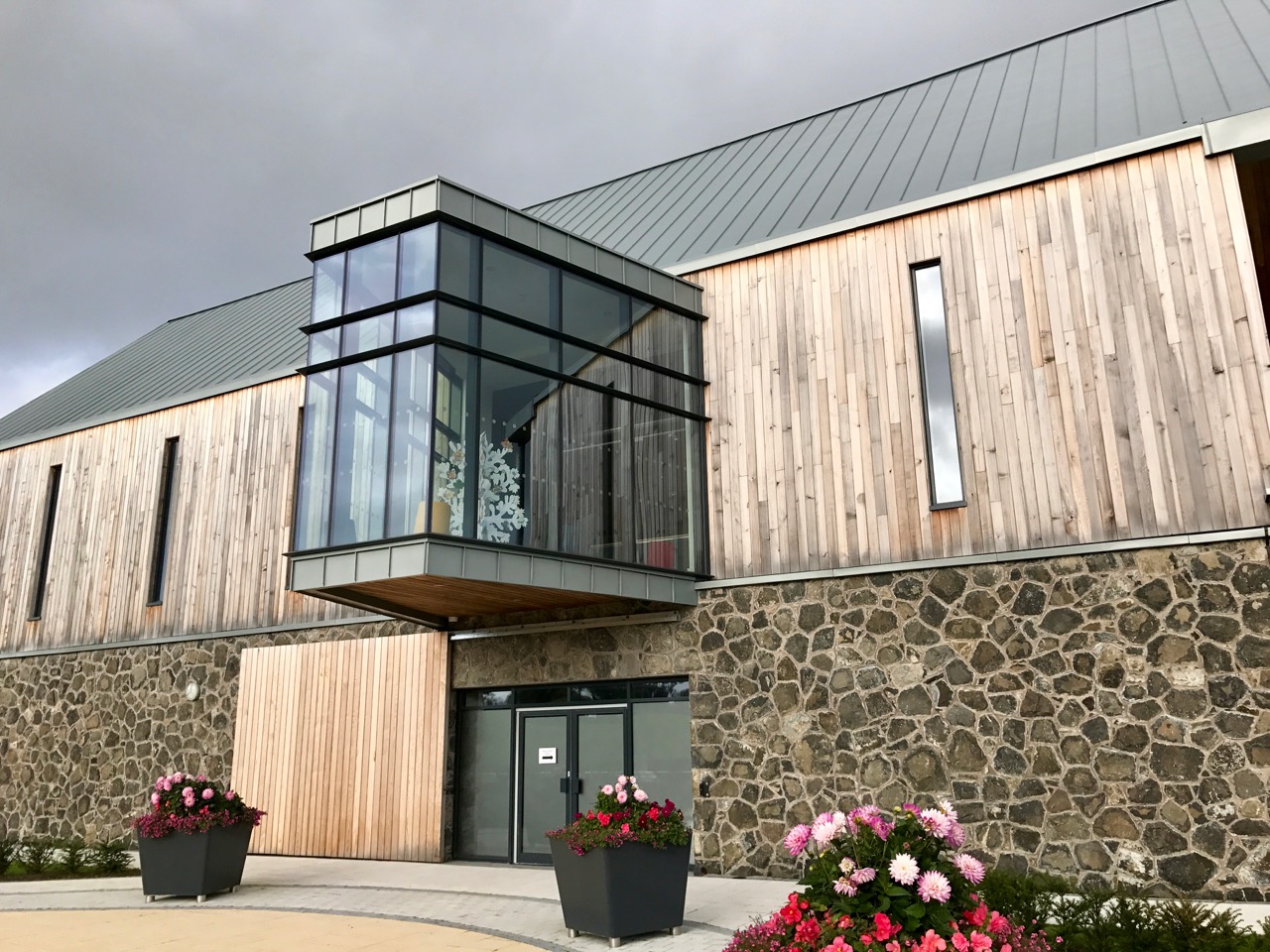
Exactly a year ago – October 2016 – a new building was opened to commemorate Heaney, the Nobel Prize winner, who has been described as ‘…the most important Irish poet since Yeats…’, ‘…the greatest poet of our age…’ and ‘…probably the best-known poet in the world…’ The quality of the HomePlace centre reflects this reputation and provides excellent facilities for the sheer exploration of words as well as performance, lectures and research.

This year sees the 50th anniversary of the death of another of Ireland’s country-born poets: Patrick Kavanagh. We visited Inniskeen, County Monaghan, to search out the old St Mary’s Church, which has been transformed to a Centre – open to the public – which displays information on the poet born and raised on a nearby farm in 1904, the fourth of ten children. The Centre also carries out research into the poet’s life and work, and organises an annual event to celebrate him. I am grateful to the staff of the Centre for allowing me to photograph the interior of the former church.

Appropriately, the grave of the poet can be found in the churchyard. Strangely, an elegant memorial to the poet and his wife (below left) vanished in 1989 and was replaced with a simple wooden cross (below right), said to have been carved by his brother, Peter. I could not get to the bottom of this matter: there are various reports to be found on the internet, including this one from RTE.

Like Heaney, Kavanagh’s strong influences came from his rural background. Some of his best-loved works portray country life, but without sentimentality. He remained on the farm in Monaghan until 1931, when he walked the 80 kilometres to Dublin. At first rejected by the literary establishment, his work eventually received appreciation. Seamus Heaney acknowledged that he had been influenced by Kavanagh.

When Kavanagh died on 30 November 1967, at the age of 62, he was recognised as …Ireland’s leading poet in English…

For our third commemoration we travelled to Slane, County Meath, to find the Francis Ledwidge Museum. This poet died exactly a hundred years ago, a victim of the Great War.

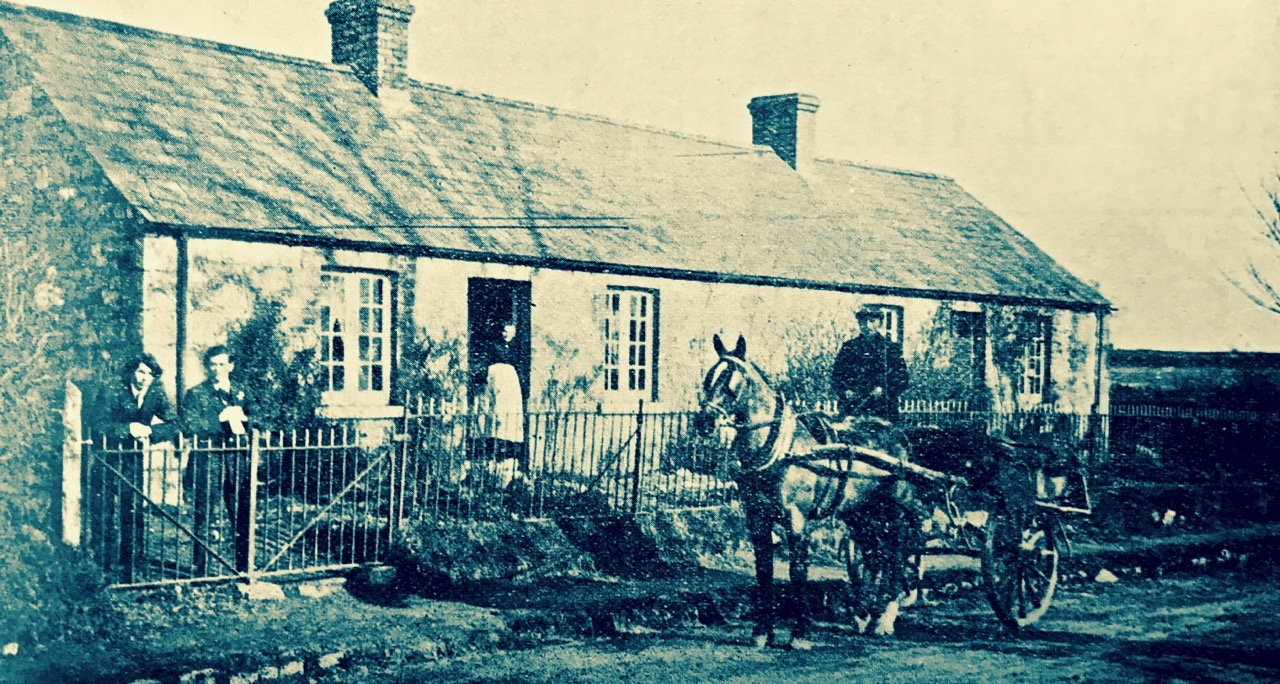
The Museum has been created in the cottage where Francis was born on 19 August 1887, the eighth of nine children. Again, he came from a rural background. His father died when he was only five, and he spent much of his life as farm hand, road builder, and copper miner. He was an active campaigner for better working conditions, became an early Trade Unionist, and attempted to organise strikes.

The Ledwidge cottage in Janeville, Slane, around the end of the nineteenth century (top), and the cottage – now the Francis Ledwidge Museum – today (lower)

Francis had written poetry all his life, and some was published in local newspapers when he was 14 years old. He attracted the patronage of Lord Dunsany, who introduced him to W B Yeats. Like many other artists, writers and poets, Ledwidge’s life was tragically cut short by the war. In the Third Battle of Ypres he and five companions were hit by an exploding shell. Father Devas, a Chaplain who was a family friend, recorded ‘…Ledwidge killed, blown to bits…’ A memorial was raised to him on the place of his death in Belgium, and a replica of this memorial can be found in the garden of the Janeville cottage.

Seamus Heaney also acknowledged Ledwidge as one of his influences

During our travels we have seen that poets in Ireland have respected the work of their compatriots. Wordsmithing is a time-honoured profession: there’s a common thread running from the Bards of old, who carried traditions, myths and genealogies through generations and over centuries.

Below – a portrait of Seamus Heaney by the Welsh artist Jeffrey Morgan hangs in the HomePlace Centre, Bellaghy

Rejecting those Earthly Dignities: Irish Women Saints by Harry Clarke

I’ve been struck by the absence of sacred women in the iconography of stained glass windows in Irish Protestant churches. Sure, there’s the odd window devoted to or including Mary (such as Nativity scenes) or Bridget, or images of women as Charity or Hope, but for windows depicting women who are venerated for their piety or leadership or courage you have to visit Catholic churches in Ireland. 

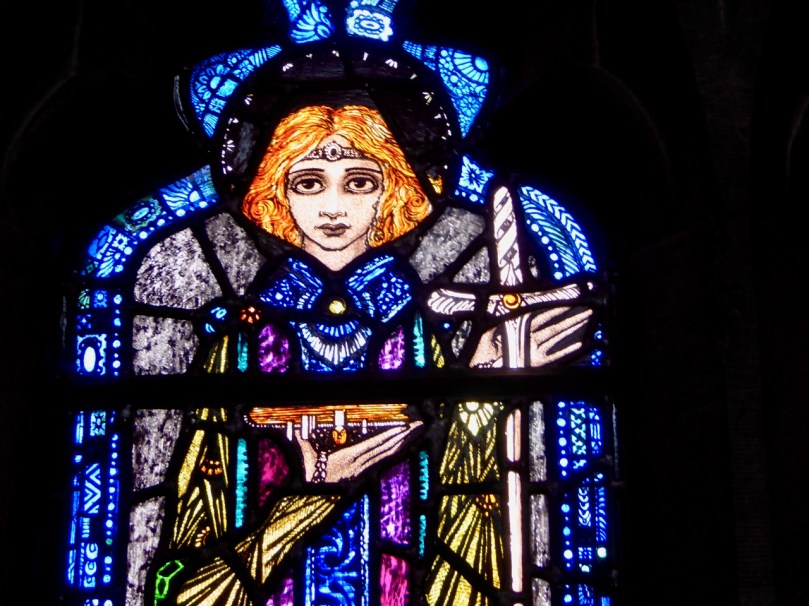
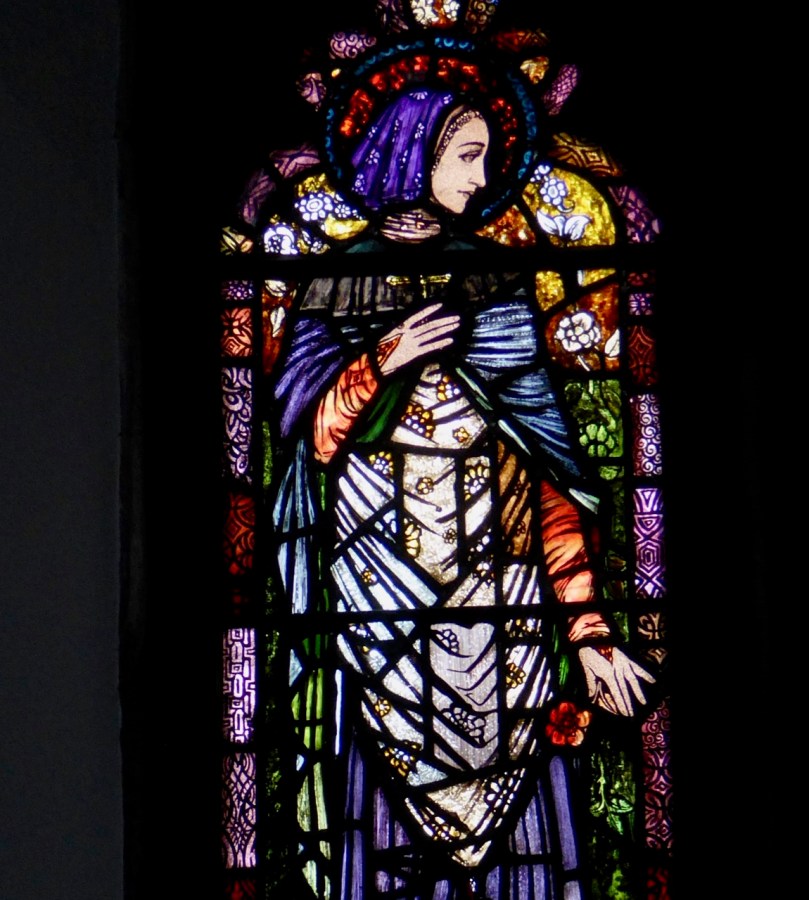
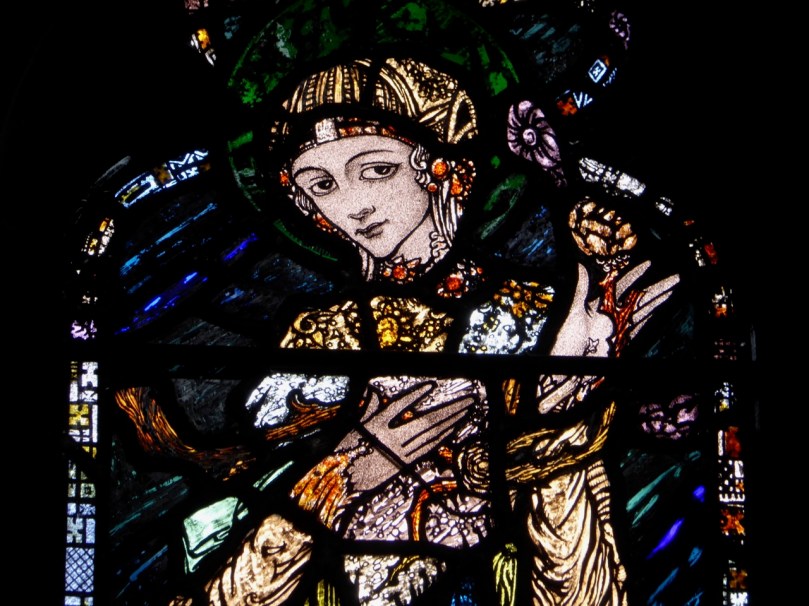
The top picture is St Dympna, depicted with a sword – it is a tradition to depict martyrs with the instrument of their death. She looks wide-eyed and innocent – she was only 15 when she died. Above is St Fanchea, bearing a rose and with a kindly expression

We’ve written already about Bridget here and here and about Gobnait: Bridget is considered the female equivalent of Patrick in being the most widely known and celebrated of the Irish women saints. Gobnait is a good example of a local saint, in this case she is associated with the Muskerry area of Cork. When you read the lives of Irish saints, women and men, you are reading accounts written many centuries after they lived, often a mixture of tradition, mythology, folklore and reconstructed hagiography. 

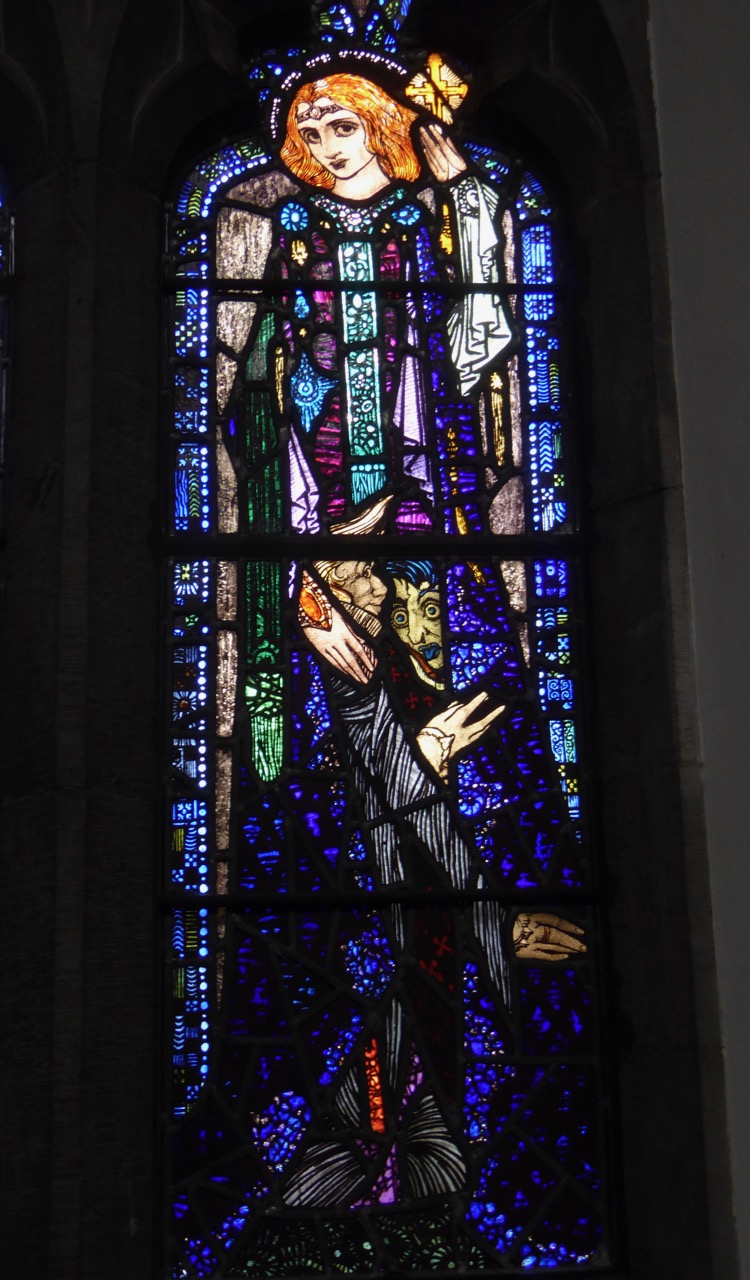
Harry Clarke, as I have discovered before, had a thing for red hair and gave St Dympna a particularly glowing crop. Here she shelters her patients, the mentally ill poor who came to her hospital

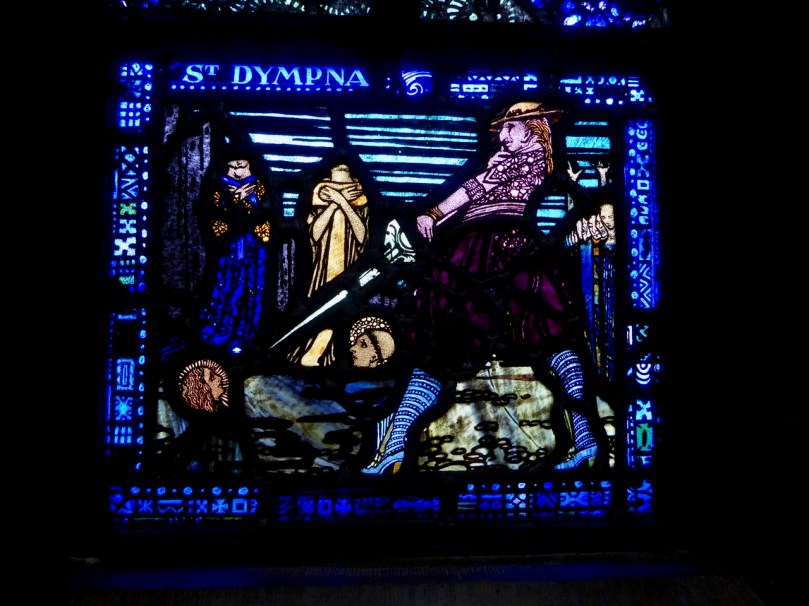
Robert and I have been travelling in Ireland and visiting stained glass here and there, and in the process discovering more unfamiliar Irish saints. Harry Clarke, Ireland’s incomparable stained glass artist of the early part of the 20th century, was often asked to depict local saints and always did as much research as he could into their lives, to enable him to tell their stories and use appropriate elements and symbols. [For more posts about the genius of Harry Clarke, Ireland’s most famous stained glass artist, go to our Navigation page and scroll down to C5.] In Carrickmacross (Co Monaghan) this week I found three Harry Clarke windows illustrating three Irish female saints, two of whom I had never heard of before. Let’s start with the one I thought I knew because I’ve had friends with that name – St Dympna.

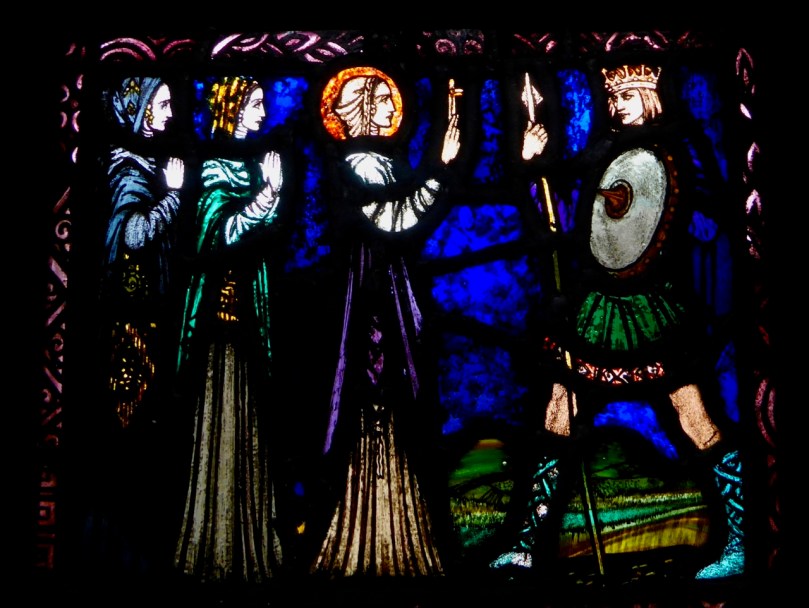
Dympna flees her father’s house. Following her is the court jester, his wife, bearing medicines, and Gerebran, her confessor

Dympna was the daughter of an Irish King called Damon. When his wife died, her father became unhinged and decided he would only marry the one who was as beautiful as her – his own daughter Dympna. Horrified, she fled with her confessor, Gerebran, and travelled to Gheel in Belgium. There she established a hospital and tended to the poor and sick. But her father found her and in his rage beheaded first the faithful Gerebran and then, when she refused to yield to him, his daughter.

Harry Clarke did not shy away from depicting the grizzly end of Dympna and Gerebran

She is venerated in Ireland and in Belgium, and particularly associated with care of the sick and those who are mentally ill. She is also a patron saint for those who have suffered incest. There are shrines and hospitals named for her in Belgium, Ireland and the United Stares. She is also known as St Davnet, and there are hospitals and holy wells with this name.

If you’d like to know more about St Dympna, take a look at this post from the wonderful Ali Isaac.

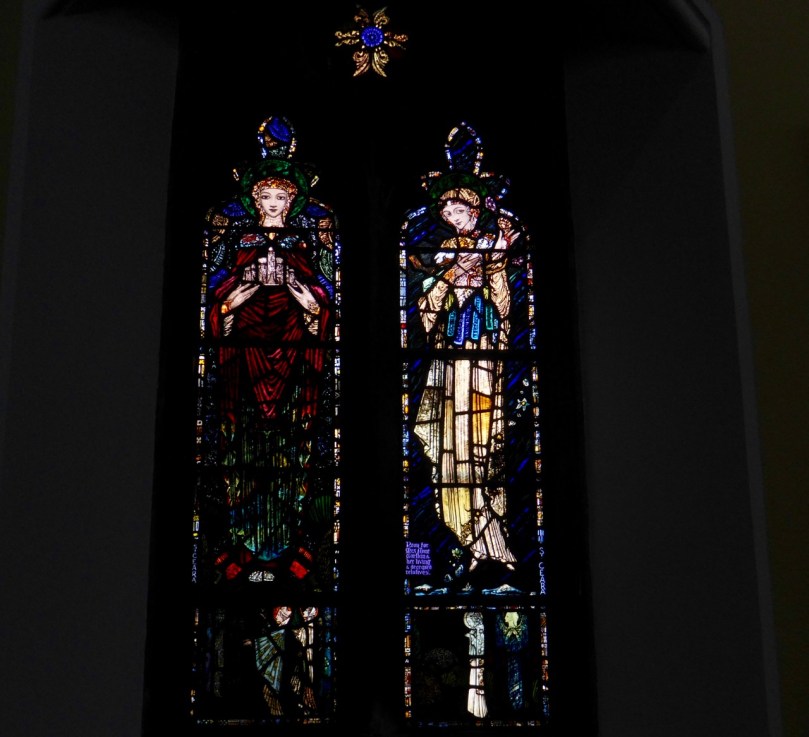
St Ceara is the subject of one window with two lights

Like Dympna, Ceara was of royal blood and established her first monastery in present-day Westmeath on land granted by St Fintan – or perhaps in Kilkeary near Nenagh in Tipperary at the behest of Brendan of Clonfert. You see, there may have been two Cearas and over time their stories were conflated. To add to the confusion, St Ceara, also known as Ciara, is known to have been an abbess who founded a monastery near the spot currently better known as Kilcrea Friary in Cork.

St Ceara and her virgins

Harry Clarke in his windows chooses to depict her as beautiful and royal, in one window carrying her monastery and in the other (below) sumptuously dressed and appearing more the princess than the holy woman.

St Fanchea was the sister of St Enda of Aran, and they share the two lights of one window. St Fanchea was famed for her holiness and founded a monastery in Fermanagh. Enda was a warrior-king but was finally won over by the piety of his sister and converted when he came to see her in her convent.

Fanchea and her brother, Enda of Aran

For a full (and graphic!) account of the brother and sister relationship, see the marvellous post in Omnia Sanctorum Hiberniae, a fabulous blog for anyone interested in obscure Irish saints. Marcella starts her story of Fanchea this way:

Aengus, son of Natfraich, King of Munster, is said to have desired Fanchea’s hand in marriage. Notwithstanding all his pressing entreaties, however, and rejecting those earthly dignities to which she might be advanced by yielding to his suit, the holy virgin’s mind was intent on a life of celibacy, and on those rewards promised by Christ to his spouses.

St Fanchea stops her brother, Enda, and turns him from his warrior ways

I’d love to hear from readers who have their own favourite women saints, especially Irish ones.

One Acre

That’s what we have in West Cork – one miraculous acre. We don’t sow potatoes nor barley nor wheat – we just try to let the grass grow and see what happens.

Top Image: Marsh Thistle. Above: Chamomile along our boreen/right of way; Wildflowers behind the house – Self-heal, Chamomile and Bog Pimpernel (the tiny pink ones)

This year was my year for leaving part of my acre un-mowed. I’ve been reading Zoe Devlin’s new book, Blooming Marvellous, and as she suggests, I started with the September chapter which happens to be, among other things, about growing a wildflower meadow. I have a better idea now as to what I should have done, and I’ll be able to improve things as I go along, but for a first year, it didn’t work out too badly.

Common Sorrel, A delicate grass called Bent, and Red and White Clover with Plantain

Essentially, I chose one section not to mow at all until a couple of weeks ago. I was pleased with the flowers that appeared in my little ‘meadow,’ as well as the grasses and the plants we commonly call weeds (ragwort and thistles) because they all added to the variety of what was there and provided food for the pollinators.

Ragwort (above) is toxic to cattle and horses and is considered a noxious weed. Known in much of Ireland as Buachalláns (boo-ka-lawns) it is also a superb food source for insects. A recent Guardian article spells out the dilemma we face with Ragwort.

Sheep’s-bit rewards getting up close and personal

Thing is, even the parts I hadn’t intended as a wildflower haven flourished as well. Maybe it’s because I have an eye for what’s growing now (and didn’t before), or maybe it was a particularly good year, but whatever the case, I was living this spring and summer on an acre of wildflowers, a feast for the sense, and a joy to walk upon.

The flowers I found on my own acre are a testament to what happens when you try not to mow too often or too short. Lying in the grass on a warm summer morning you become intensely aware of the activity all around you – bees, bumble bees, hoverflies, butterflies and insects of all sizes and description are busily flitting from flower to flower, alighting on the Clover, the Cat’s-ear or the daisies, investigating the Bindweed and the Bramble flowers, and then buzzing off again.

Slender St John’s-wort and Bramble (blackberry) flowers

And it wasn’t just the lawn – random flowers started to poke out of the gravel driveway, as if sensing friendly territory, and all sorts of stuff popped up in my herb patch (the only actual gardening I do). I let the herbs go fairly wild too, once I saw how the insects loved them. 

From the top: Common Ramping Fumitory among my Tarragon; this Field Woundwort just appeared in the gravel one day; Wood Sage growing on the boundary wall, a soldier beetle on Parsley flower

The rock walls hosted Foxglove and Stonecrop and Wood Sage and around the periphery Heathers and Vetches fought the Gorse for space.

Common Vetch

I’ve just chosen a selection of wildflowers from my acre for this post, to give you a flavour of what will grow if you let it. 

Above: Heath Speedwell; Below: Common Mouse-ear

There were more and I don’t know that I can identify them all, especially all those yellow members of the Asteraceae family – the ones that I always used to think were just Dandelions but now I know that this family has enormous variety of flowers. One of my goals for next year is to advance my knowledge in this area so I am comfortable with distinguishing more of them.

There are fewer bright blooms now that it’s well into autumn. But, like the sweet little Scarlet Pimpernel about to open, below, it’s amazing what’s still flowering sturdily on – on our one acre.