A Watery Tale

Last year I got myself into trouble by saying how much I admired the new corten steel signs marking significant spots on the Wild Atlantic Way. My post – Showing the Way – produced howls of protest from many readers who had taken a dislike to them. I may well ruffle the same feathers again when I say that I’m impressed with the information boards which have now appeared to supplement those markers.

Wild Atlantic Way signage at Colla Pier, opposite Long Island

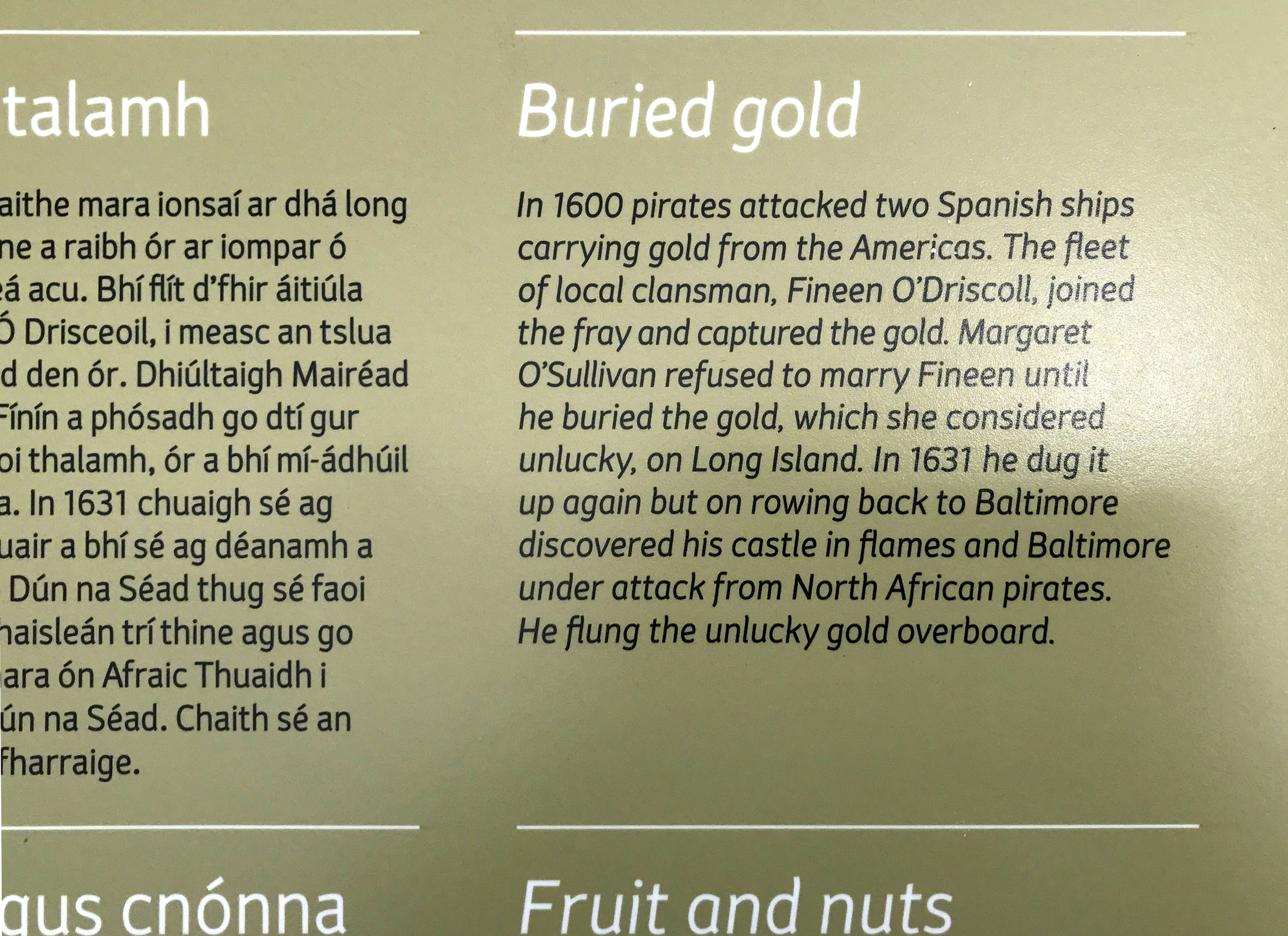
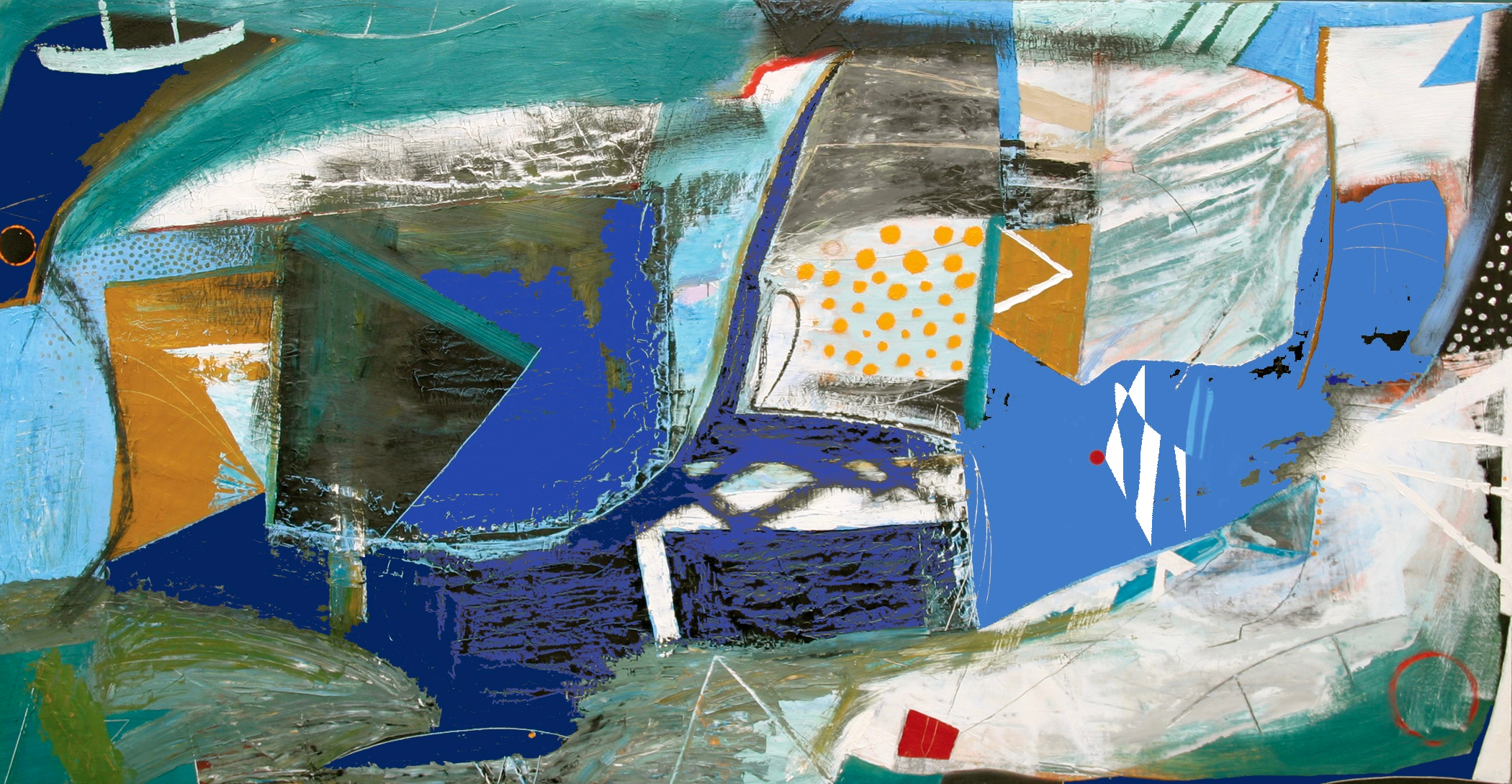
The example above, which we saw today, has appeared at Colla Pier, on the coast road running from Schull round to Crough Bay. The ferry serving Long Island sails from this pier. The board is mounted on a sturdy corten steel frame which should withstand all the elements. The illustration used on the new board (seen in our header picture) is by Sam Hunter and (to my eye, at least) is colourful and attractive. Overall, the panel manages to convey a significant amount of information in a compact design. There is a little Irish lesson (top picture, right-hand corner) and a local ‘story’ pared to the minimum. I was delighted, because I hadn’t come across this tale before. Here it is…

A more detailed version of this story can be read here

So in this short paragraph we find an unusual angle on a very well-known piece of local history: the sacking of Baltimore by Barbary Pirates, which took place 386 years ago, on June 20. Here in West Cork everyone talks about that incident as if it had happened yesterday: it resulted in the decimation of the population of the little fishing village overnight. A hundred and seven people were carried off to slavery in Algeria, and every house was burned.

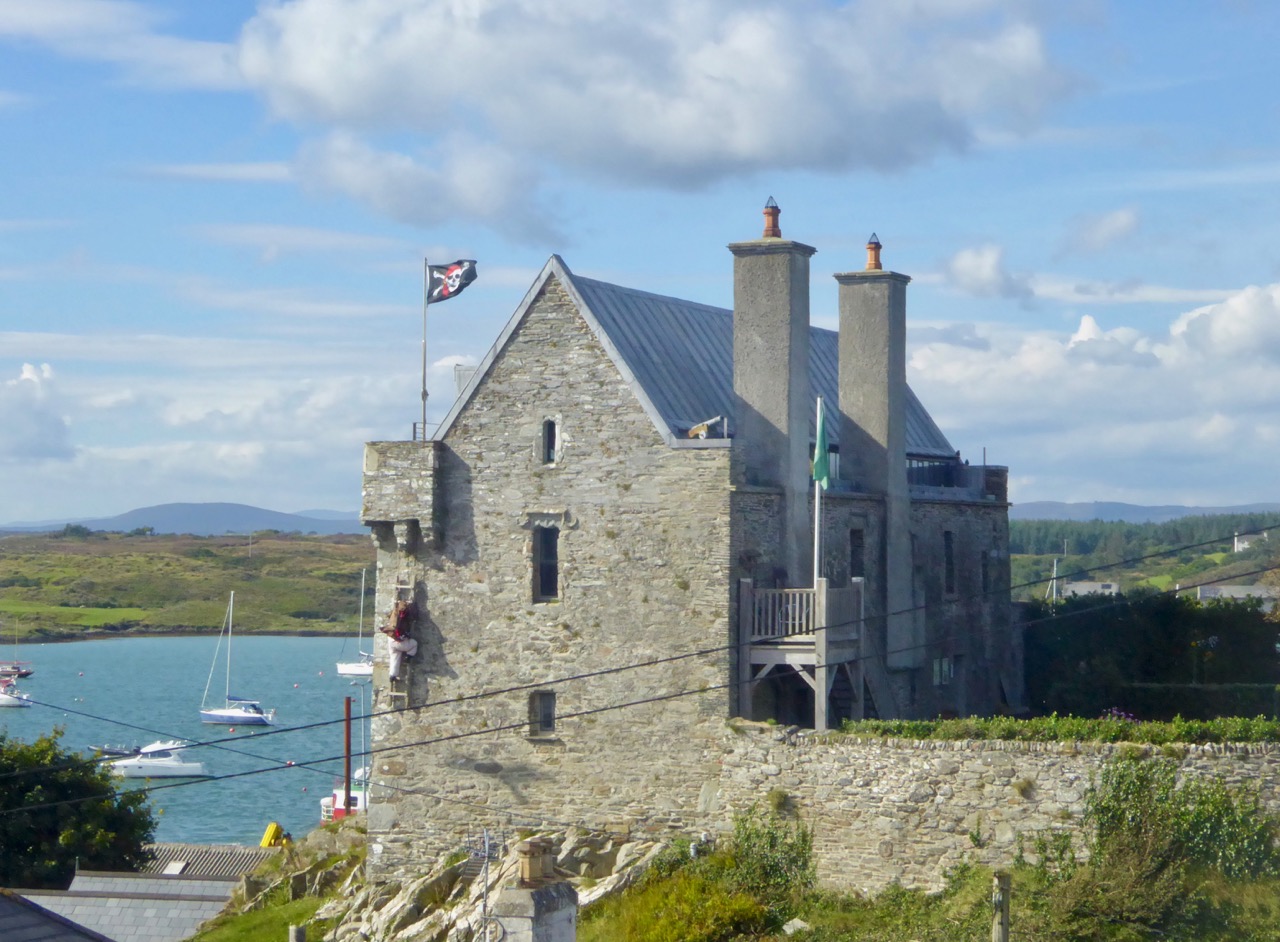
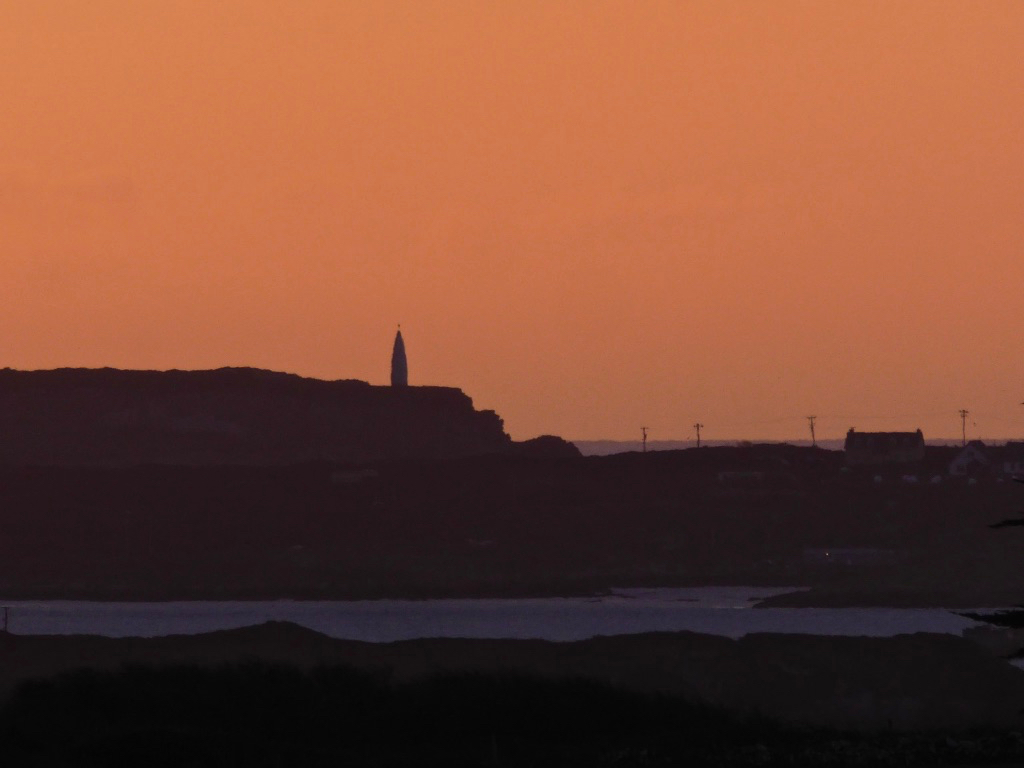
Upper picture: Long Island Sound, with the white houses of Long Island itself in the middle distance; Cape Clear is beyond. Lower picture: Fineen O’Driscoll’s castle at Baltimore – Dún na Séad (Fort of the Jewels). The clan chieftain was not at home to give help to the beleagured village when the Barbary pirates arrived because he was rowing across from Long Island with the ill-fated treasure stowed on board!

In one version of the story about Fineen O’Driscoll and his pirate treasure, the horde of gold is buried under a house on Long Island – a house where strange lights are seen at night! Presumably it’s still there – or under the sea out in Roaringwater Bay. It’s probably best left wherever it is!

Baltimore at dawn, seen in Finola’s beautiful picture above, reminds me that I have to tell you about another Irish – Cornish link. The village grew around a small settlement of religious dissenters from the west of England established around 1600 and led by Sir Thomas Crooke, a man with Calvanist and Puritan connections. Most of the settlers came from Cornwall and were seeking a haven where they could practice their religion unhindered. It was these people who were stolen away nearly 400 years ago, and ended their days in North Africa. Are you interested in the many historic links between the two westernmost counties of Britain and Ireland – Cornwall and Cork? You can find out much more at the exhibition coming up shortly: West meets West – the work of contemporary Cornish artists, at Uillinn, Skibbereen, from 3 June to 8 July

West Cork Finally Gets a History Festival!

For a place that’s dripping in history and archaeology, and with several active historical societies, it’s a wonder this hasn’t happened before.

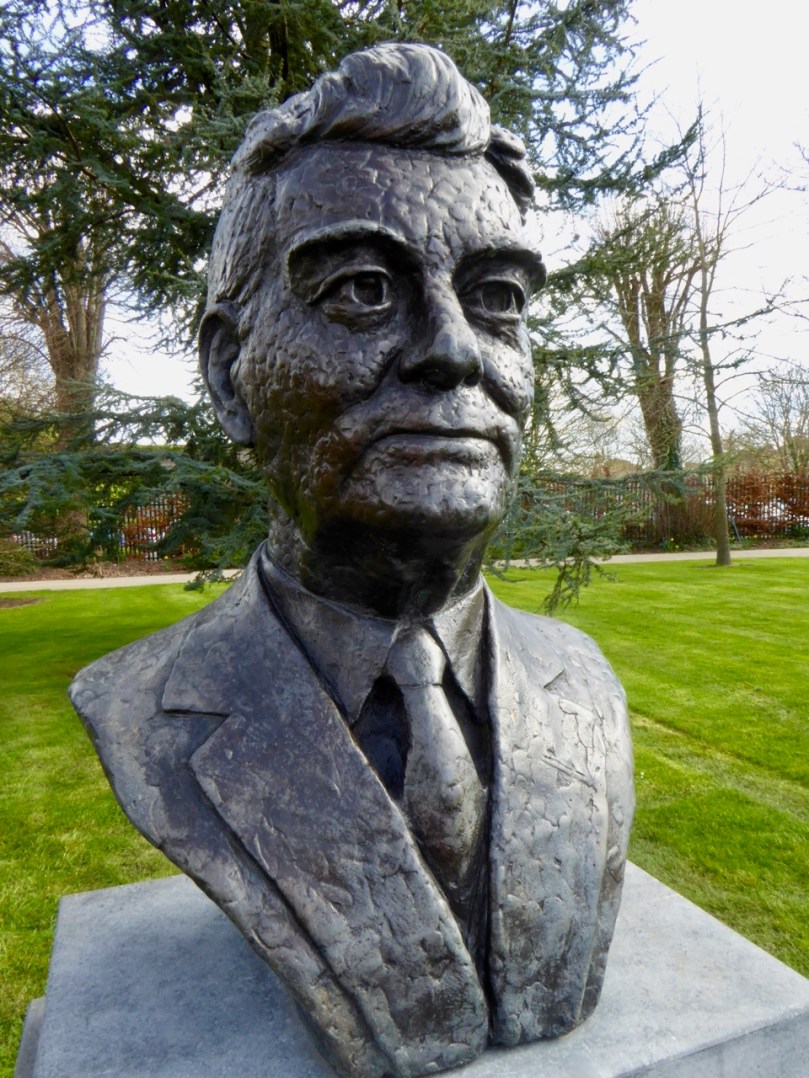
Tom Barry, bust by Seamus Murphy

The inaugural festival of the West Cork History Festival will take place just outside Skibbereen on the last weekend of July this year. Take a look at their website – it’s a great program, offering sessions from medieval to modern, from pirates and adventurers to soldiers, revolutionaries and poets.

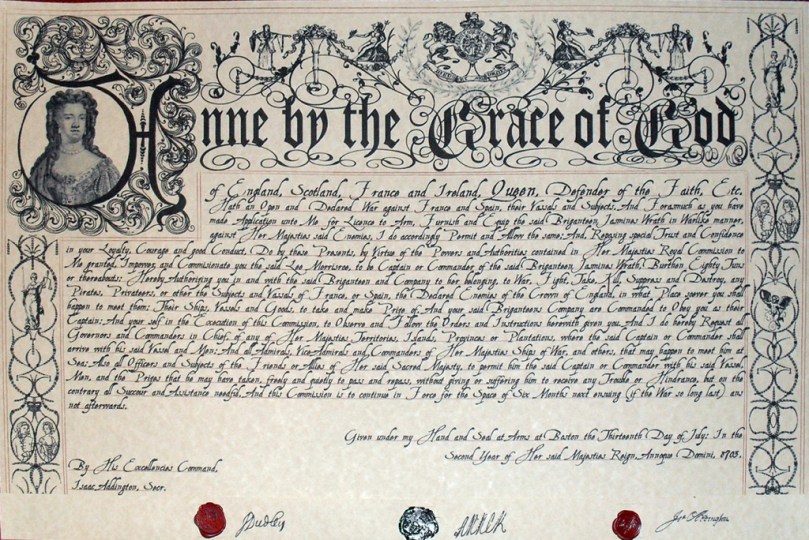
A Letter of Marque gave an individual permission to be a privateer – a form of legalised piracy

Although it’s got West Cork in the title, this is not only West Cork History. The organisers emphasise its eclectic nature and call it a festival of intellectual delights. National dimensions are obvious in discussions on the War of Independence and international ones in sessions on the First World War. West Cork gets a good look-in, though, with a thorough re-examination of Hart’s work on the Bandon Valley Killings (see here for a good summary of the events and the controversies surrounding the scholarship), in the light of the most recent research. Several active and respected local historians will contribute in their area of expertise.

War graves such as this one have been springing up all over Cork in the last few years. For most of the 20th century we maintained a form of collective amnesia about the Irish fighting in the First World War – see my piece Outposts of Empire

National and local topics are happily juxtaposed – tower houses, for example, will be the subject of two sessions, one of which places them in an all-Ireland context and the other in a West Cork context. (For more on tower houses, follow this link.)

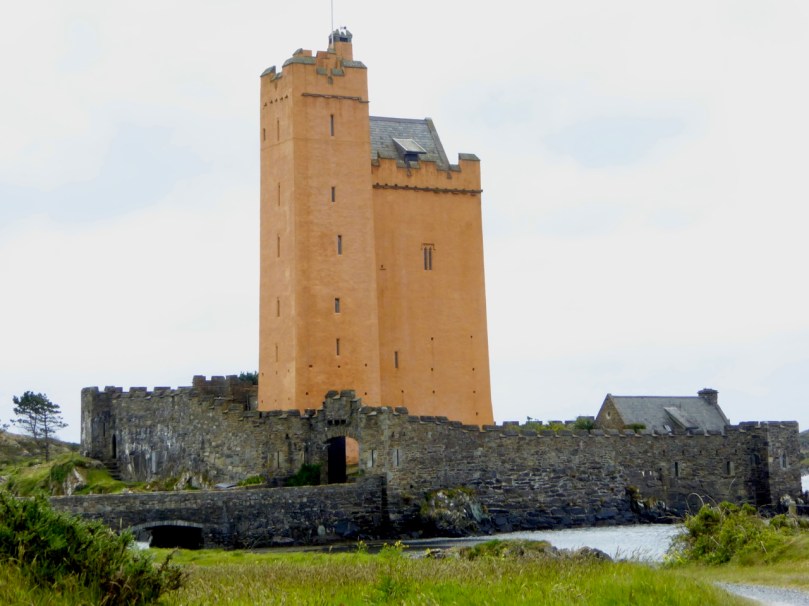
Kilcoe Castle – an impressive example of the Irish Tower House, now magnificently restored by Jeremy Irons

I’m very much looking forward to learning more about Richard Boyle, the Great Earl of Cork – a tremendous figure in the history of this area. But the Festival takes it one step further with a talk on the vital roles in Irish history played by the children of the Great Earl. I’m also going to make sure I take in a presentation on the Knights Templar by Dominic Selwood, yet another of the multi-talented speakers on the schedule.

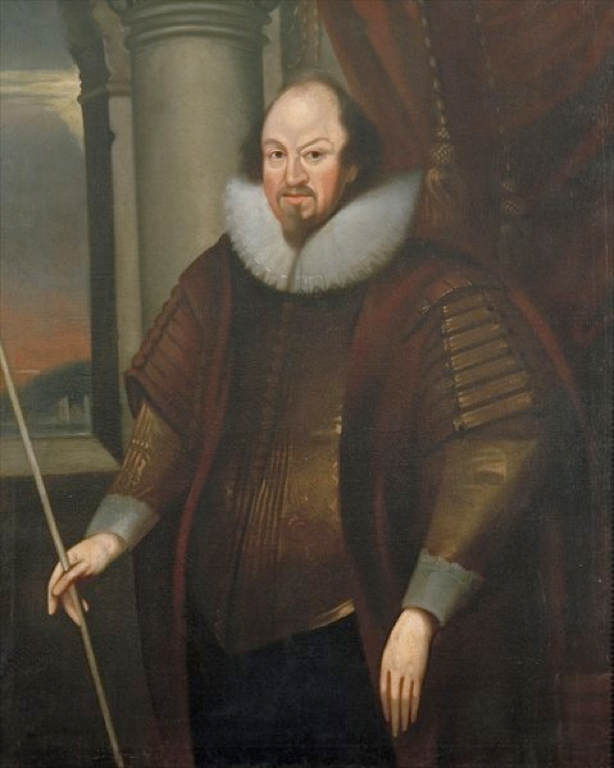
Richard Boyle, Great Earl of Cork (1566-1643)

The opening and closing sessions will be major highlights. Prof Roy Foster will deliver the introductory lecture. How fitting – Roy Foster is surely among the most respected historians of his generation. Author of numerous books and influential articles, including Modern Ireland (1600-19720) and a justly famed two volume Life of W B Yeats. His topic, ”A Fair People”: antagonism and conflict in Irish history, will set the tone for a weekend that will not shy away from controversial and thought-provoking sessions.

Prof Roy Foster, considered by many to be one of Ireland’s greatest contemporary historians

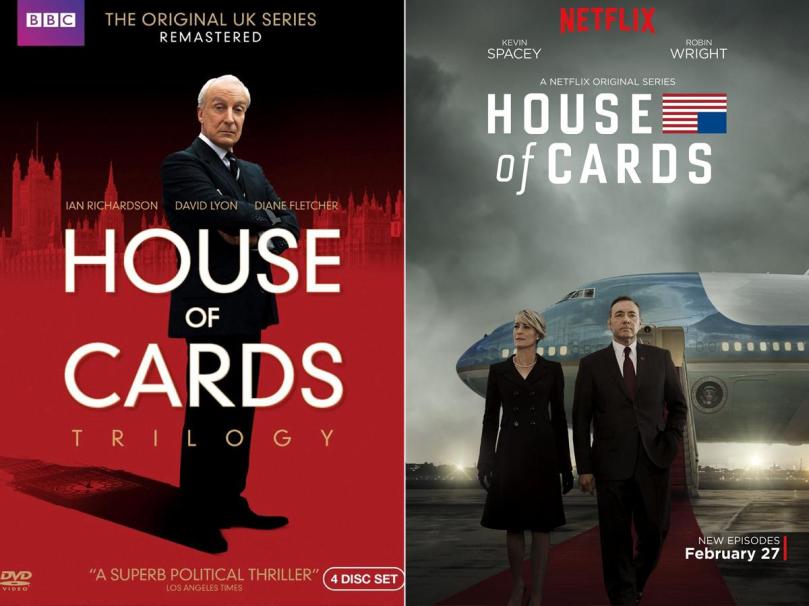
The closing session features the writer (and highly entertaining speaker) Michael Dobbs, creator and author of the House of Cards series of books and TV shows. Titled Life, Lust and Liquor: how House of Cards wrote itself, this should bring things to a close with a bang.

And in between, there’s a host of academics, researchers, film-makers, journalists, writers and editors – and even a couple of ambassadors! It’s an eclectic mix and sure to be provocative and engaging.

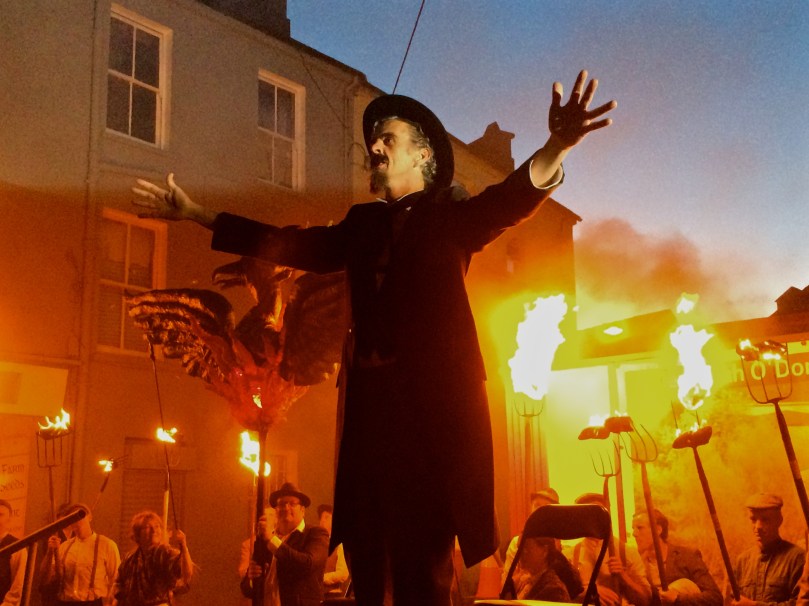
The Festival features a screening of the Film Rebel Rossa, made by the great-grandsons of Jeremiah O’Donovan Rossa. A West Cork man, Rossa became famous and infamous for his Fenian activities. See my three-part account of him here.

The Festival is the brainchild of Simon Kingston, who, with his wife Victoria (a professional historian) has a long association with West Cork, which culminated in their settling at Rosebank, the dower house of Liss Ard Estate, just outside Skibbereen. Simon is a graduate of Trinity and of Oxford and describes himself as an historian at heart, although he makes a living in the world of executive recruitment. He’s put together an amazing program, sure to become an ongoing feature of the West Cork heritage landscape for years to come.

I’ve only managed to give you a tiny taste of what’s in store at this Festival – you will have to come and experience the terrific range on offer for yourself. Meanwhile, they’ve set up a Facebook page so you can keep up to date on all the latest news and announcements. Head on over and give it a Like and a Share. And are you a member of the Twitterati? There’s a Twitter feed just for you!

 Right so – on July 28 – see you there?

We Welcome the Hope That They Bring

Sea Campion

The flowers that bloom in the spring, Tra la,

Breathe promise of merry sunshine —

As we merrily dance and we sing, Tra la,

We welcome the hope that they bring, Tra la,

Of a summer of roses and wine,

Of a summer of roses and wine.

And that’s what we mean when we say that a thing

Is welcome as flowers that bloom in the spring.*

We’re officially in spring now. Throughout April (an unusually dry one) our West Cork fields and boreens have been greening and sprouting. Every day on our walks we welcome old friends to the hedgebanks, or discover new ones.

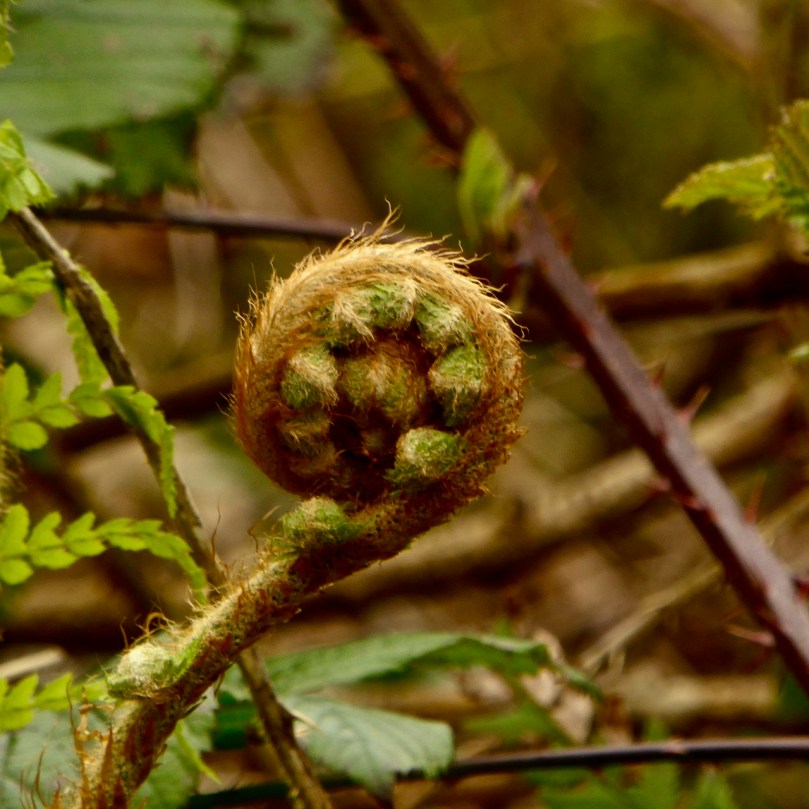
The photographs in this post were all taken in April. Above is Bitter Vetch, and below is a fern unfolding – a particularly fascinating process, almost mathematical.

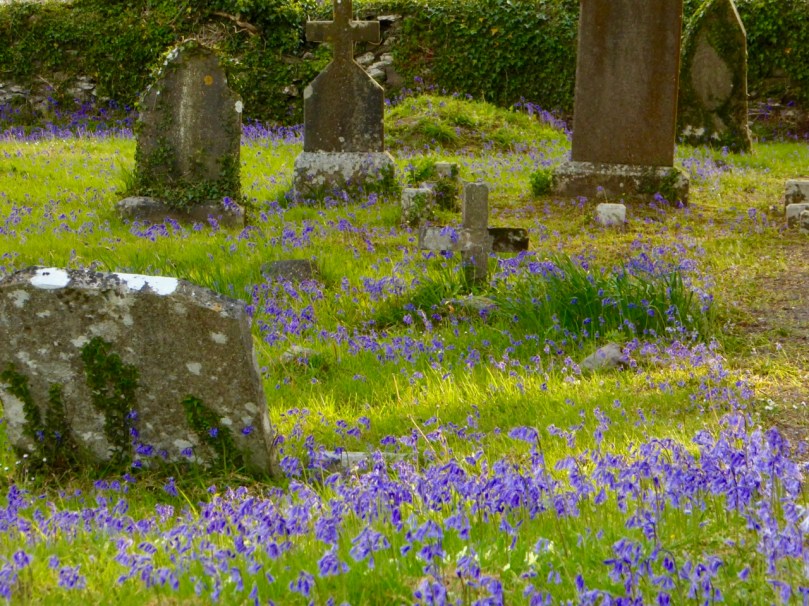
The quintessential flower that we all look forward to at this time of year is, of course, the bluebell. How it cheers the spirits when you spot the first one, and then begin to see them carpet the floor in shady places or old graveyards, or even climbing up along the hedgebanks, so that you are walking between blue walls.

They mix so beautifully too, with the bright yellows of first the celandine, and then later the buttercup, the white of the wild garlic, or the intense bright green of spurge.

About that wild garlic – in the post for March wildflowers I wrote that what we mostly have around here is the non-native three-cornered garlic. I have been on the hunt for our native species, called Ramsons and I finally spotted a huge patch, growing right along the main road between Skibbereen and Ballydehob, at the gates of New Court (I wrote about New Court in my post about belvederes). Robert pulled over, at great jeopardy to life and limb as it’s a busy corner, and out I leapt with my camera.

But what was this? Every leaf was covered in bird droppings – every single one! I realised that there is a rookery in the trees above: perhaps it is this that provides the fertiliser for the garlic. I certainly didn’t linger to explore further, as I could hear the gregarious cawing overhead. I’m still on the hunt for a clean patch!

It seems to be a very good year for Cuckooflower, also known as Lady’s Smock. Interestingly, the colour of the petals vary from almost white to a delicate purple, depending on the composition of the soil and other aspects of the habitat. Up to this year I had seen isolated examples of Cuckooflower (so called because their arrival coincided with that of the cuckoo) but this year there were Cuckooflower “blooms” in many fields. At first, you’d think they were just daisies, but once your eye was attuned to their shape, they seemed to be everywhere. This is great, as it’s an important larval food source for the Orange-Tip Butterfly – it lays its eggs on the underneath of the petals.

If March belongs to the Blackthorn, in April the Hawthorn (sometimes called Whitethorn around here, and May Tree elsewhere) gradually moves in and takes over. Suddenly the hedges are full of green trees loaded with showy white blossoms (the opposite of the Blackthorn, in which the blossoms come first and are over by the time the trees green up).

I found my first Thrift, or Sea Pinks, last month, but it’s in April that they become commonplace around the coast. I was delighted to find a patch down by the Ilen River at the very beginning of their blooming, and could see the stages they go through on their journey to the delightful pink flowers we all love.

At the very beginning of the month I was fortunate to participate in a walk with Éanna Ní Lámhna, well-known naturalist and a frequent speaker on topics related to wildlife on Irish radio and television. It was a great experience, as she spoke mostly about trees, about which I know little.

In the course of our marvellous walk I also observed several spurges, including this very rare example of a wood spurge. You just never know what you’ll find – this one was right outside a kindergarten!

There’s an exciting announcement about West Cork wildflowers coming soon! Stay tuned to this blog and all shall be revealed… Meanwhile, a few more flowers of April…

I featured Scarlet Pimpernel last month – this is his cousin, Yellow Pimpernel. On the right is Bilberry
Wavy Bittercress, found along the shore, consorting with thrift. On the right is Common Milkwort :it has a tiny white flower emerging from a deep blue one

Stream Water-crowfoot: at first I thought this was a weed choking a stream, but closer inspection revealed these lovely flowers

We’re not the only ones enjoying the bluebells

*OK, I know it dates me. It’s from The Mikado, by Gilbert and Sullivan

Connecting with St Ives

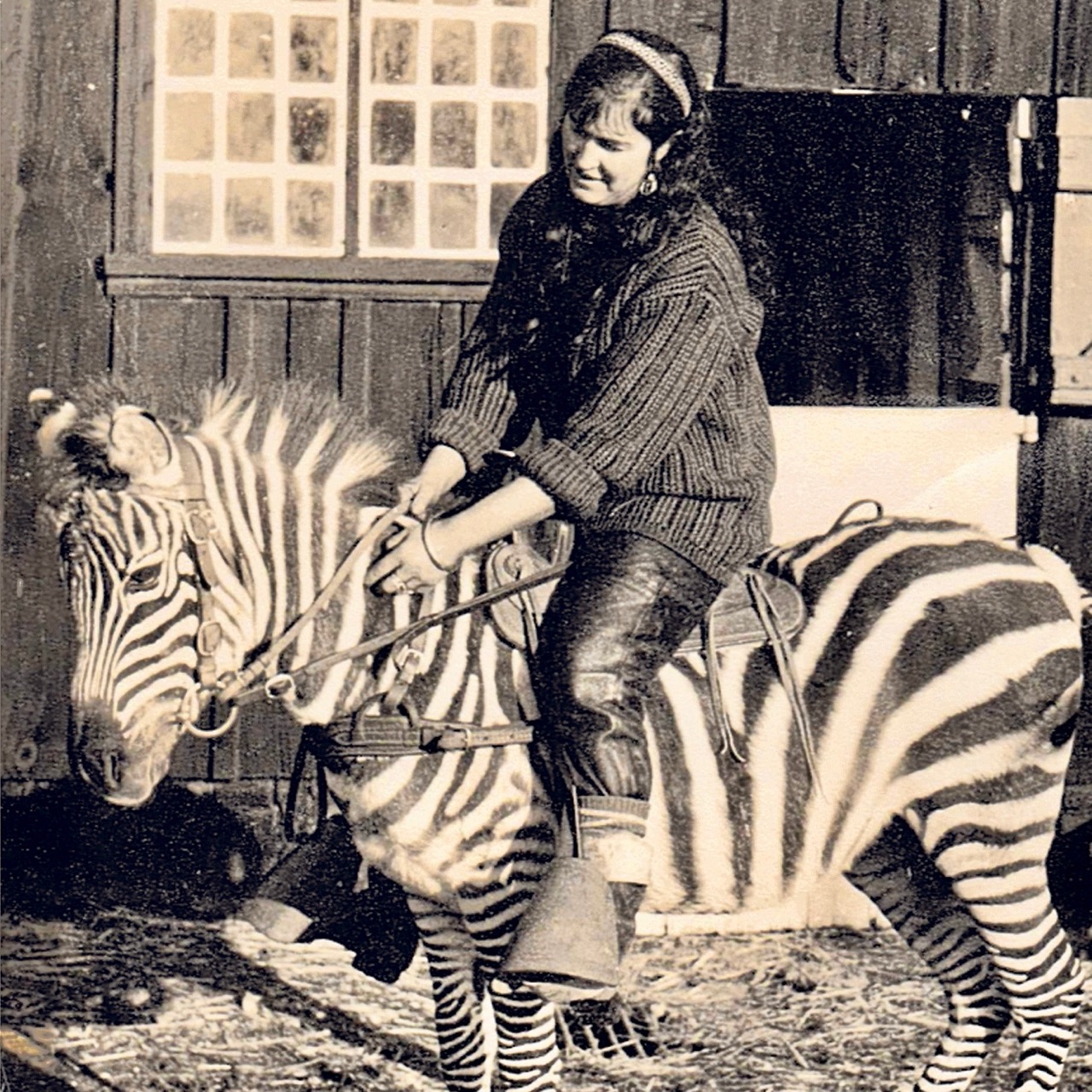
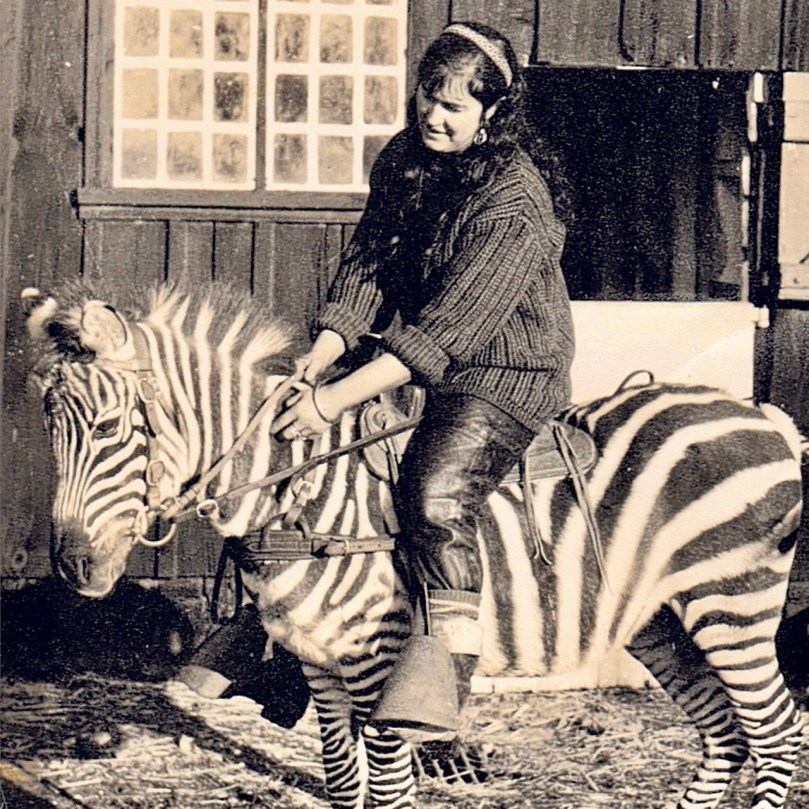
Have you ever met a Zorse? That’s a cross between a zebra and a horse. Probably not… But I have met the lady who invented them (above)! And, by quirky chance, she’s one link between Ireland and the group of artists who formed the ‘St Ives School of Painting’, Cornwall, in the twentieth century. You already know from last week’s post that the forthcoming exhibition in Uillinn, Skibbereen – West meets West, opening on 3 June, celebrates the historic connections and similarities between these two western outposts of Britain and Ireland, explored through the medium of art.
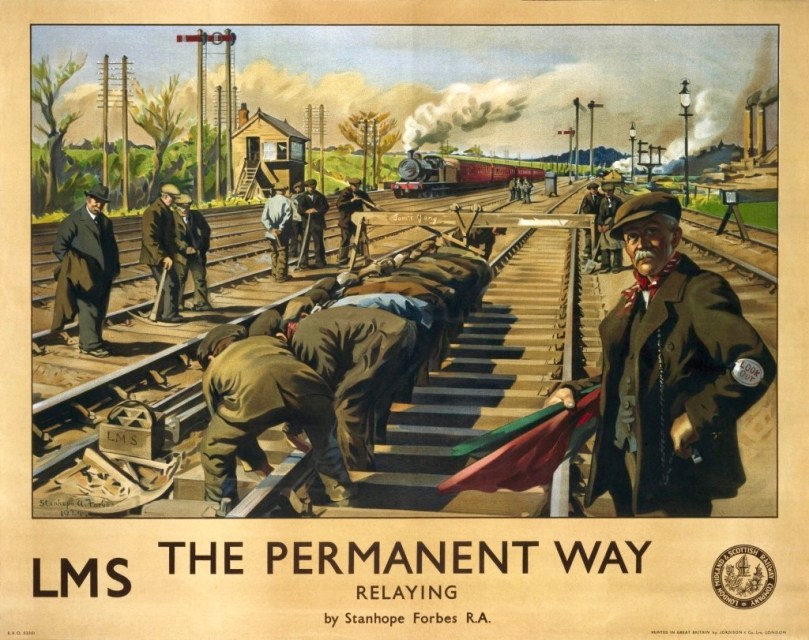
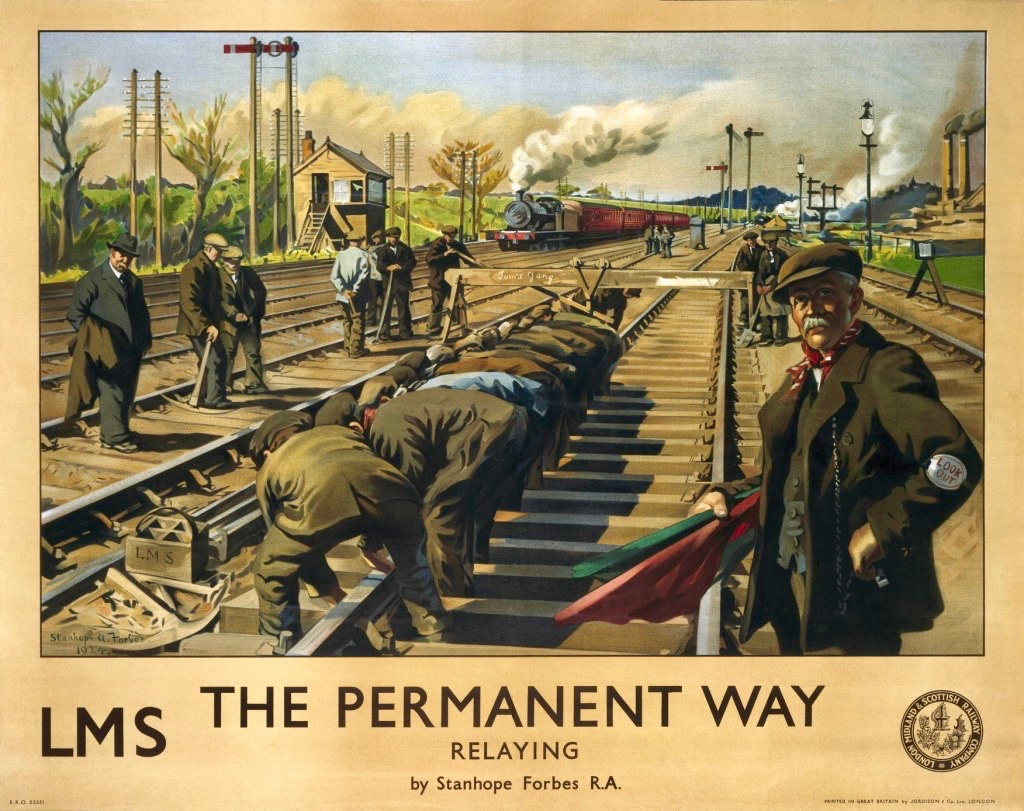
I was pleased to find this poster (produced for the London, Scottish and Midland Railway Company) by Stanhope Alexander Forbes, an artist who was born in Ireland but spent most of his long working life in Newlyn, Cornwall

It was the coming of railways from the capital to Cornwall (arriving to Penzance in 1860, and to St Ives in 1877) that opened up the far south-west of Britain to tourists – and to the artists who were drawn to this hitherto remote and unspoiled ‘rural idyll’. They were particularly attracted to the picturesque fishing villages, and rather overlooked the equally interesting and visually dramatic mining communities which were the centre of the county’s economy in the latter years of the nineteenth century.
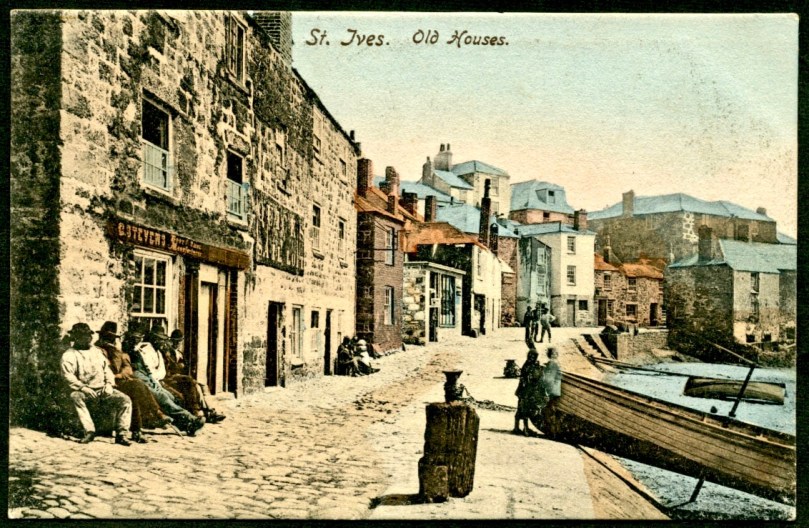
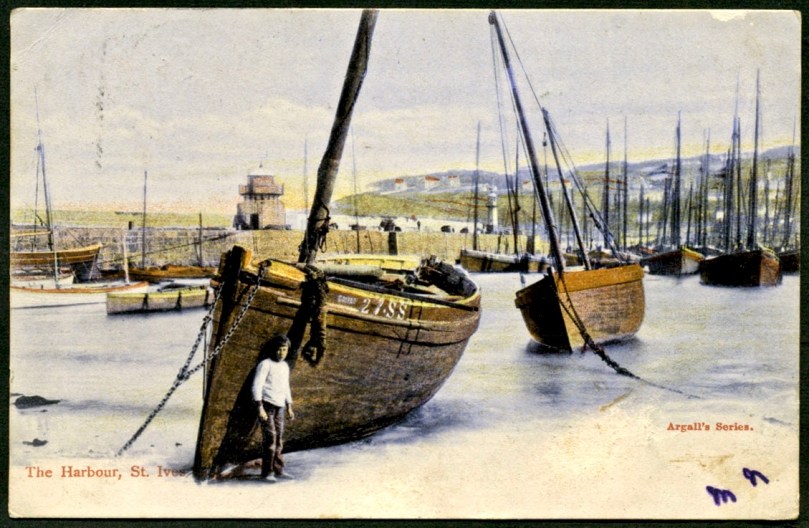
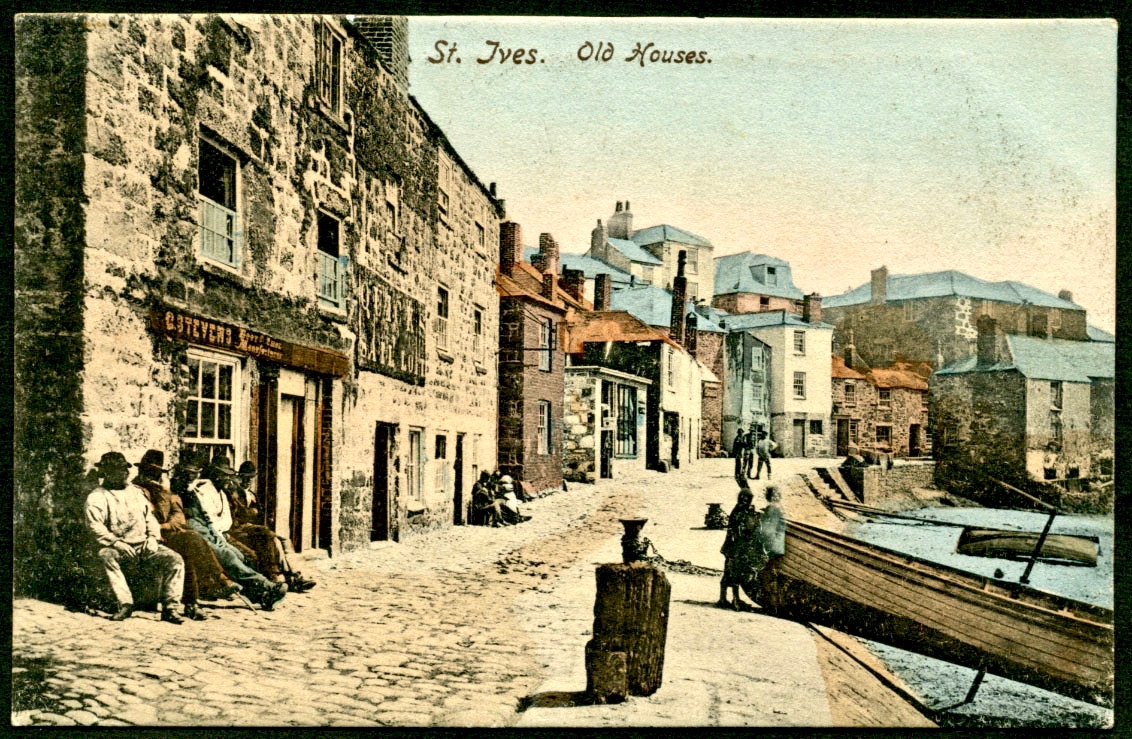
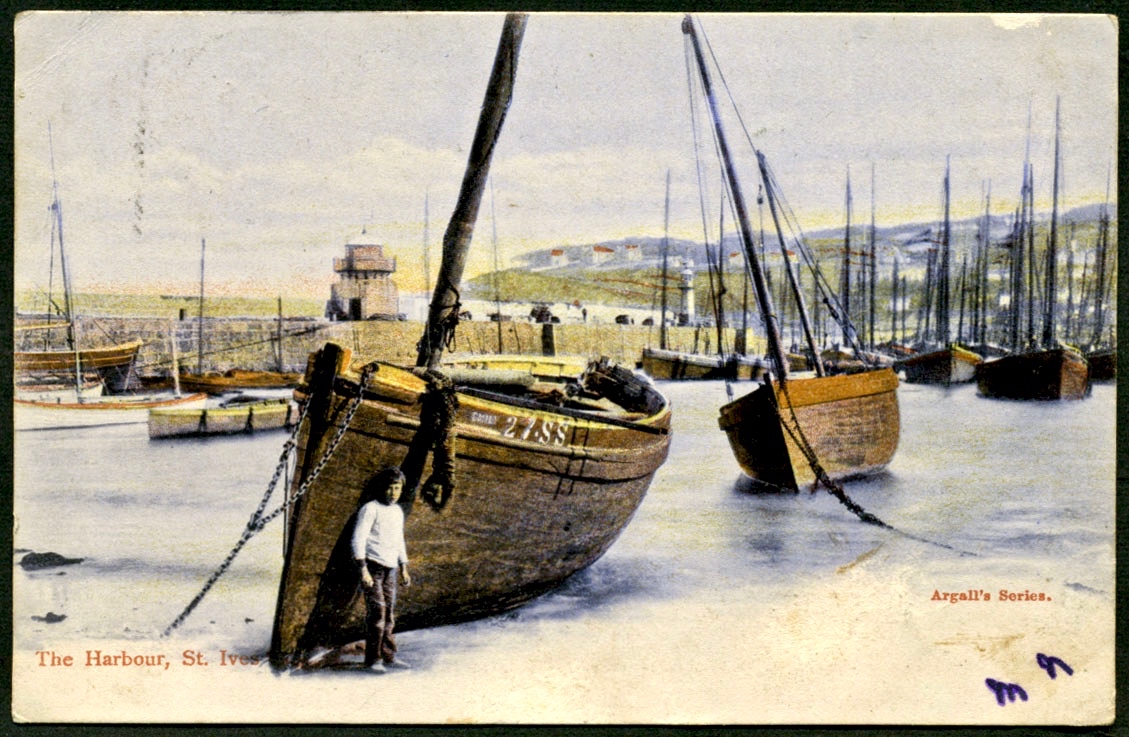
The picturesque St Ives fishing community as seen in these postcards which served the burgeoning tourist industry in the early 1900s

The first art gallery in St Ives opened in 1887, and an art school was opened the following year. By the time the photographs on the postcards above were taken, there were ten private schools of painting in the town. The development of St Ives as a national (perhaps even international) centre for ‘modern art’ began after the Great War when Ben Nicholson and Christopher (Kit) Wood visited and ‘discovered’ the seafarer and naïve artist Alfred Wallis, who spent his retirement years painting nautical scenes on old fish boxes, driftwood and even scraps of cardboard.  They found his small cottage (now marked by a plaque) filled with these images, many of them (to the artists’ horror) attached to the walls by nails driven through their centres.
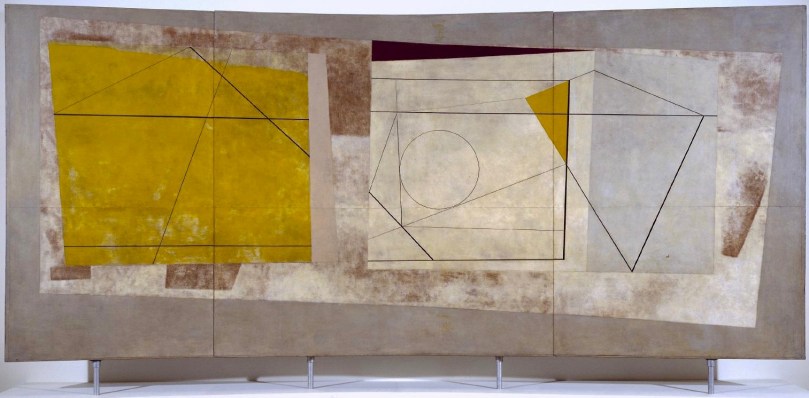
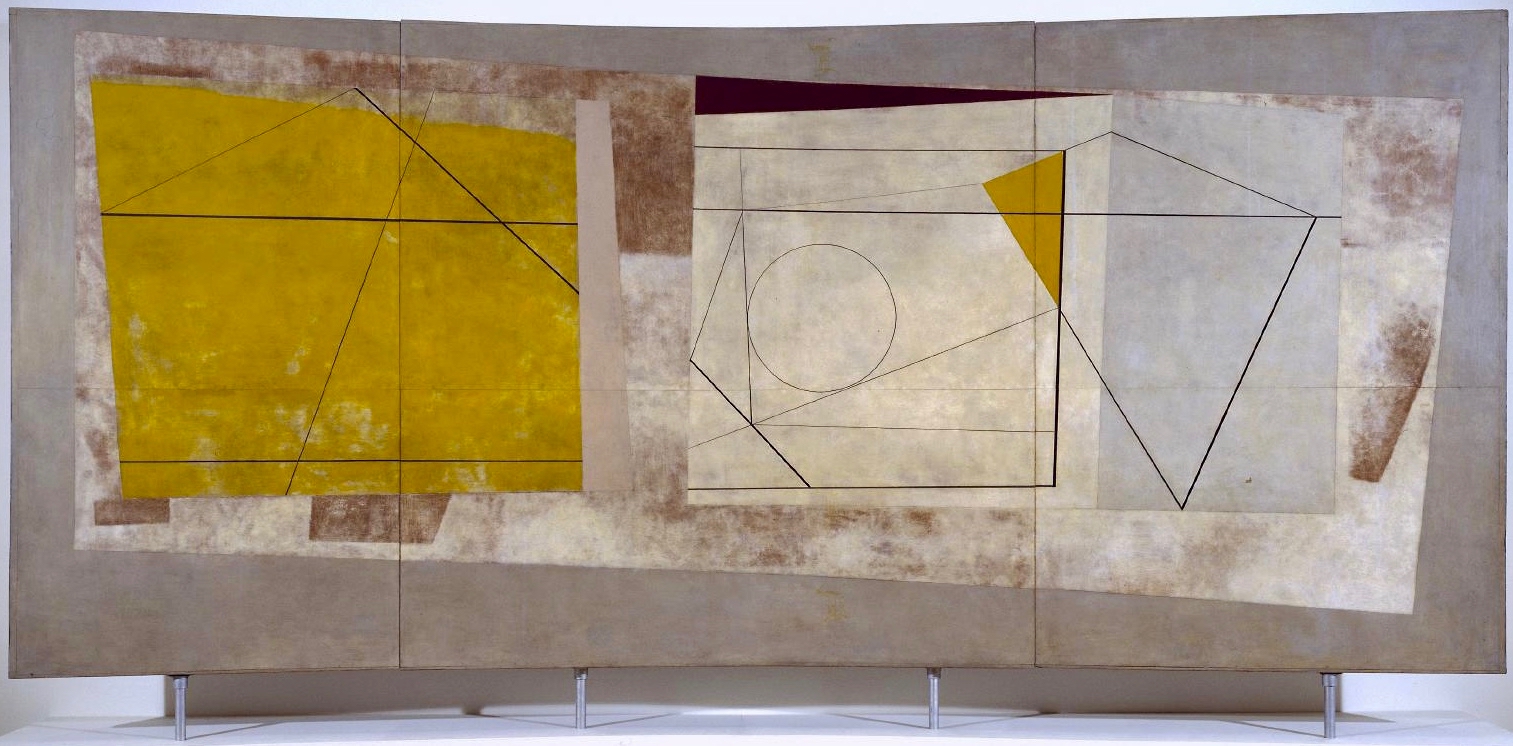
Art in St Ives, Cornwall: upper left – Christopher Wood self portrait; upper right – Alfred Wallis The Blue Ship; lower – Ben Nicholson Mural for the Festival of Britain

As the century progressed and another European war loomed, remote St Ives became home to many artists – some conscientious objectors, others just escapists. It made for a cosmopolitan mix. Ceramicists Bernard Leach and Hamada Shoji arrived from Japan in the 1920s. Many potters from all over the world were apprenticed at the Leach Pottery (which exists today in St Ives and is also now a museum), and spread Leach’s style and beliefs. At the outbreak of war in 1939 Nicholson (then the centre of the London based British avant-garde movement) returned with his wife, sculptor Barbara Hepworth, followed by their friend Russian Constructivist pioneer Naum Gabo and his wife Miriam. To quote the history pages of the St Ives Society of Artists:

…Soon Cubism, Futurism, Constructivism, eastern philosophy, true naïveté and the English marine tradition were being discussed behind the blackout curtains of the town. The place was a hotbed of creativity and its importance grew…

Post-war, the artists’ community expanded, and changed. The names we now remember from the mid-century years include Sven Berlin, Peter Lanyon, Roger Hilton, John Wells, Patrick Heron, Terry Frost and many others. A good insight of what life was like there is given in the entertaining autobiographical notes of Irish artist Breon O’Casey, son of playwright Sean O’Casey:

…One day, watching television, sometime in the late fifties, I saw a film about Alfred Wallis, a primitive painter who had lived at St Ives in Cornwall. The film showed St Ives and the studios of some of the artists living there. I realised it was the place for me… Ah St Ives! In those days still a working fishing port, with tourism and art only tolerated, but kindly tolerated. The relief of mingling with other crazy artists was enormous. It was literally as if a great weight was lifted from my shoulders. This is exactly how it felt. One must remember the strong antagonism to modern art then, and the nervous energy used up resisting it… One was with a group of people who were hoping to make a living from their art and indeed some were professional artists. That times were hard mattered little. If no one has much money it doesn’t matter. And I certainly never experienced the depths of poverty and the necessary determination to survive it, that my father had experienced. Nor indeed did I face the privations that, as one reads, Matisse faced, never mind those suffered by the true early warriors, Van Gogh and Gauguin… My studio was in a ramshackle, wooden structure tucked in behind other similar studios facing out over Porthmeor beach to the wide Atlantic. I slept in a curtained off alcove at one end – illegally – and in the winter the thud of the great waves would shake the whole crazy structure like a dog shaking a rat. It was kept standing by the law of inertia which says: if an object has been in one place for a number of years, it will resist, of itself, natural physical forces trying to move it…

Breon O’Casey in 2009: he died in Cornwall in 2011. Right – O’Casey’s Trio

Peter Lanyon was one of the most influential artists in the St Ives School during his working life. He was a native of the town – born in The Red House, Bellyars, St Ives in 1918. Both his parents came from families who were connected with mining. Lanyon was a teacher and an artist. Irish artist Tony O’Malley (1913 – 2003) received his only formal art education from Peter Lanyon and, after Lanyon’s death in 1964, O’Malley dedicated all his work to his friend and mentor. Irish sculptor Conor Fallon (1939 – 2007), a friend of O’Malley and O’Casey, was also inspired by Peter Lanyon’s work and spent some years in St Ives before moving back to Kinsale. Lanyon claimed that he sought in his work to ‘get under the skin’ of his native county and explored it by going underground in the mines and flying over it in a glider. Lanyon died as a result of a gliding accident; the work of one of his sons – the late Matthew Lanyon – will feature in the West meets West exhibition in June this year.

Top: Bojewyan Farms by Peter Lanyon (courtesy Sheila Lanyon). Lower: Lanyon, left, in 1961 – photo by Ida Kar; Irish artists Tony O’Malley (centre) and Conor Fallon (right)

This post is a necessarily brief historical summary of the St Ives artists and their influences on the annals of art in the islands of Britain and Ireland. Many important names have been omitted. But we cannot leave the subject without mentioning Sven Berlin – and coming back to the Zorse!

‘The Dark Monarch’ – a fictionalised novel by Sven Berlin that characterised and defamed many of his fellow artists in the St Ives colony – they drummed him out of town! Right – Juanita Casey, Berlin’s second wife (photo Dolmen Press)

Sven Berlin (1911 – 1999) was a colourful and controversial addition to the St Ives group. Born in London, he came to Cornwall in 1938, meeting with Nicholson and Hepworth and writing the first book on the life of naïve artist Alfred Wallis. While there he met Juanita (1925 – 2012), who was named by her uncle after his favourite circus lion. Her mother, an Irish Traveller, had died in childbirth and her father, an English Romany, had given her up for adoption. She joined a circus at the age of 13, beginning a lifelong obsession with horses. She was a writer, artist and poet and – later – a horse breeder and circus trainer. She spent some years working on boats in Penzance and exhibiting paintings in the Newlyn Gallery, and there she became involved with Sven Berlin; they married in 1953. Soon after, Sven was ostracised from St Ives and they travelled in their Romany caravan to the New Forest and lived for a while in the Shave Green Gypsy community.

Sven Berlin in St Ives, left, and with Juanita and their family in their Gypsy wagon

The marriage broke up when Juanita met and eloped with a groom, Fergus Casey. While with him she trained and rode zebras and embarked on her project to produce the Zorse – apparently unsuccessful.  Her lifestyle was forever Bohemian. Her obituary in the Independent newspaper observes:

…Casey wrote that her children looked upon her “the way steam enthusiasts admire a hissing antique boiler.” Often, she would be the first to admit, her creativity and spontaneity took over from her domestic duties and responsibilities…

Fergus, a journalist, was drowned in Galway and Juanita, with her daughter, Sheba, continued to travel – firstly to Sneem in Co Kerry, and then to Okehampton in Devon, England where she once again joined the circus, as a horsemaster. I met her in Okehampton when she was in her eighties, and was fascinated to listen to many of her incredible stories – although while telling them she was always keeping half an eye on her television set in the corner, which was always on and always tuned in to the horse racing channels!

Below, Juanita Casey, living in Okehampton, Devon, in her eighties and an illustration from her novel  The Selene Horse

Don’t forget! West meets West – the work of contemporary Cornish artists, at Uillinn, Skibbereen, from 3 June to 8 July

West meets West

Picturesque Newlyn, Cornwall – the fishing village was the centre of a major art movement in the late 19th and early 20th centuries

I have been working hard with Uillinn – West Cork Arts Centre‘s fantastic new gallery in Skibbereen – to bring over an exhibition of the work of contemporary Cornish artists, which opens in June. West meets West will be the launch of a continuing programme which sees the art and culture of Cork and Cornwall being shared, to the mutual benefit of all working artists and art lovers – and to residents and visitors.

Greenstone – a canvas by the late Matthew Lanyon, one of Cornwall’s important contemporary artists whose work will be shown at Uillinn in June this year

Why Cornwall and Cork? And, particularly, why these westernmost peninsulas of Ireland and England? Well, as you may have noticed from past posts on this Journal, historic links between the two geographical areas go back a very long way. Starting between three and four thousand years ago copper was mined on Mount Gabriel and was mixed with tin from Cornwall to produce a revolutionary new metal – Bronze. This material was hard enough to make tools and weapons – therefore a practical commodity: also it does not rust. It has, too, been used to make bells for centuries, so its properties include sonority. In fact the word bronze probably originates from the Medieval Latin bronzium, in modern Italian bronzo, meaning ‘bell metal’. Regardless of all this, the important thing we know is that relations between the west of England and the west of Ireland were well enough advanced to set up regular trading between the two outposts in those far-off days.

Tony Lattimer, international award winning ceramic artist based near The Land’s End in Cornwall, whose large ceramic sculptures will be shown in West meets West, Skibbereen, June of this year

In a recent post I alluded to the incredible debt that Cornwall owes to us in West Cork because we gave them their patron saint – Saint Piran. The fact that the gift wasn’t intentional shouldn’t delay us too long: we tied Cape Clear’s Saint (whose Irish name was Ciarán) to a millstone and threw him over a cliff. Instead of meeting his doom he miraculously surfed the millstone across to the Cornish coast, where his landing place – Perranzabuloe – is named after him, and where he is royally celebrated on March 5th every year, with all the zeal that we show to our own St Patrick!

Apart from metal mining and saints, another important connection is shared fishing grounds. From medieval times onwards (and perhaps before) the Cornish fishing fleets put out from Mousehole and Newlyn to follow the pilchard and herring shoals across to Roaringwater Bay. This is really where art comes into our story, as it was the way of life of some of the Cornish fishing communities that attracted artists to that western County of England in the late nineteenth century, once the arrival of the Great Western Railway in Penzance had established the direct connection with London. Newlyn was an early focus, and a young man from Dublin, Stanhope Alexander Forbes, an up and coming young painter in the plein air tradition, made his home there in 1884 and stayed for life. Forbes found in Cornwall a true ‘rural idyll’: an unspoiled countryside where life was simply lived, and a rugged coastline with a magical quality of light. Known as the ‘Father of the Newlyn School’, he gathered around him like-minded artists who recorded (and perhaps romantically idealised) the way of life of the communities there, and that special quality of the light, in canvasses which are highly admired and respected today.

A preliminary sketch by Stanhope Alexander Forbes for a painting known as On Paul Hill (Paul is the name of a village between Newlyn and Mousehole in Cornwall). Forbes painted in the Plein Air style, out of doors and from real life

I made my home in Cornwall for a number of years, before I decided that I hadn’t come far enough to the west, and followed the pilchards and herring myself to Roaringwater Bay, where I now look down on them from my eyrie in Nead an Iolair (although the shoals are today much diminished). During my years in Cornwall I came to know and respect the stories of the artists from Victorian years up to the present day. The ‘Newlyn School’ which Forbes represented was only one piece of the jigsaw there: we will explore others later. Art is probably Cornwall’s biggest asset. Ever since the opening of the Tate Gallery in St Ives – established there because of that town’s historic links with artists and craftspeople of international repute – ‘art tourism’ has grown to become a major year-round driver of the local economy.

Newlyn old and new: left – Stanhope Alexander Forbes in 1900 painting outside Trelyn, Boase Street, Newlyn – my home for 25 years! Right – Newlyn today is Britain’s largest fishing port

Cornwall is home to a number of artists renowned today in the British Isles. I got to know many of them when I lived in Newlyn. Three of them will be exhibiting in Uillinn from 3 June to 8 July this year: Philip Booth, Matthew Lanyon and Tony Lattimer. Their work is large scale, stimulating and mutually complementary: constructions, canvasses and ceramic sculptures. Please make a note of the dates now: this exhibition is important for West Cork and for Cornwall. Please don’t miss it!

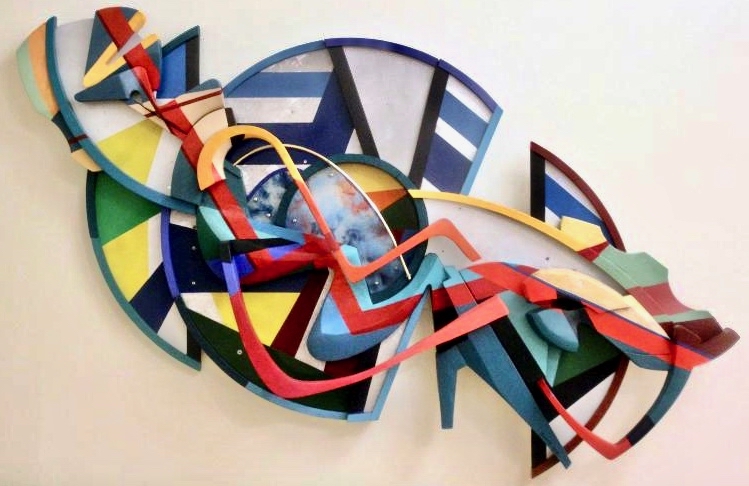
Below: Philip Booth, from Lamorna, Cornwall, will be showing a number of his spectacular relief constructions at West meets West, Uillinn, Skibbereen, in June. This one is titled ‘Formed in Running Water’

Formed in Running Water

All That Jazz

The Ballydehob Jazz Festival gets better every year! There was a marvellous program this year – eclectic and varied, and our little village was buzzing with locals and out-of-towners.

The great thing about a festival like this is that there’s something for everyone. The Big Acts take place in the “Festival Hall” (AKA Community Hall) where there’s big band sounds and dancing till the wee hours. There are workshops for kids (this year’s line-up featured archery tag and circus skills) and a Sunday Market with a continuous bandstand of acts.

The East Coast Jazz Band are effortlessly cool

But a lot of the action takes place in the intimate venues. The pubs and restaurants all host entertainers so you can have lunch and dinner accompanied by soulful crooners, or crowd into one of the pubs to listen to a piano duo or a swing band or a funk quartet. There’s a good mix of West Cork and come-from-away groups and every venue is packed to the scuppers.

Above: Stephanie Nilles and Thomas Deakin were one of THE acts of the Festival. Their sound (and her lyrics!) left us gasping. Below: The Eileen and Marilyn Experience, perennial favourites in West Cork, and Grace Notes, a new vocal performance group under the direction of Caz Jeffreys 

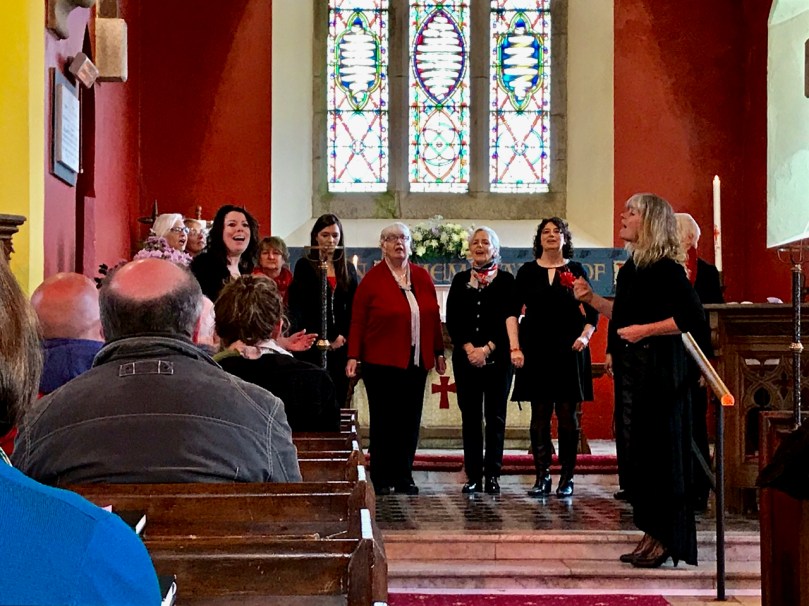
This year there was a first – a Jazz Mass. Actually it was a Church of Ireland Service, with gospel provided by the choir I (try to) sing with, Acapella Bella. Something tells me this could well become an annual event.

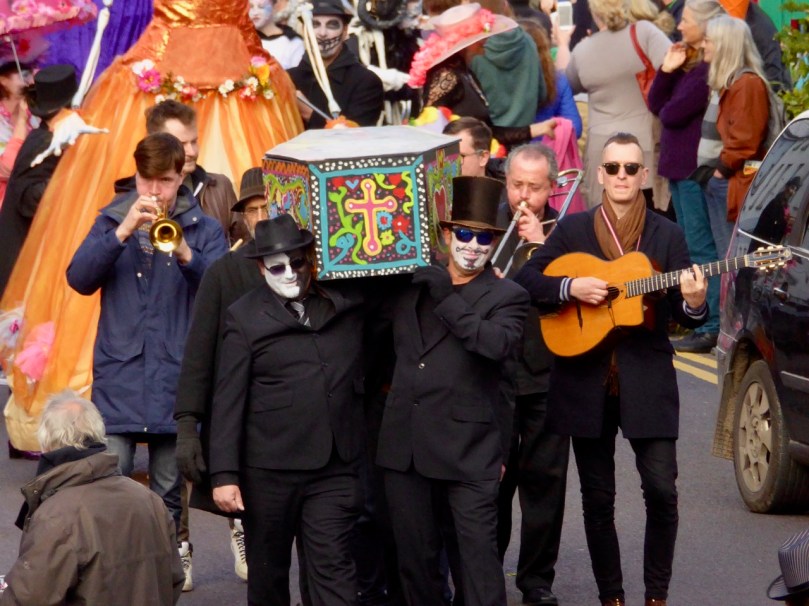
But the highlight of the festival for everyone is the New Orleans-style Jazz Funeral. Ballydehob is a hotbed of creativity at the best of times and the idea of a Jazz Funeral has galvanised the community. This is only the third year we’ve done it and it’s been improved and expanded every year.

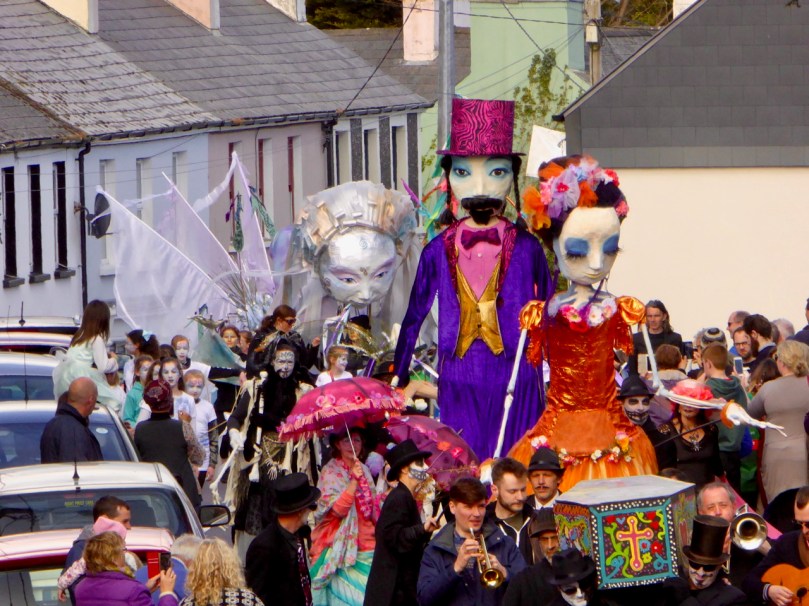
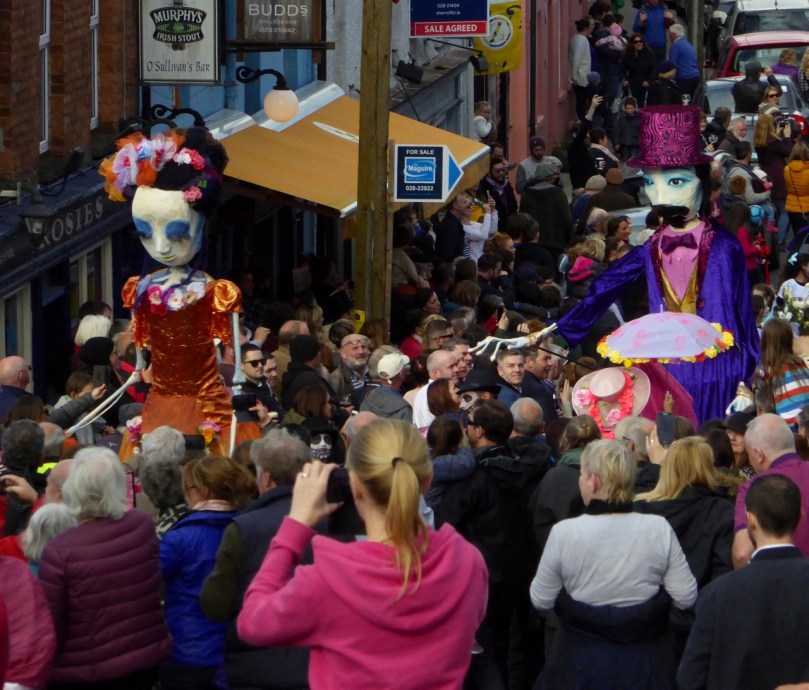
Last year the giant puppet, Katrina, made her first appearance, and this time she was joined by a mate. Billed as Mexican Day of the Dead meets Bealtaine, the parade wound its way up the village, stopping along the way so the puppets could wow us with a dance. It was a marvellous spectacle.

Almost, you could forget you were watching dolls and feel the emotion flowing between them and they put their arms around each other and kept time to the music.

A stilt walker, a giant centipede, a pair of gangsters on a penny farthing, and a whole army of children in costume completed the parade of mourners. The weather held off (the Gods of Bealtaine must have been appeased) and the streets were thronged with cheerful festival-goers, all swearing to be back again next year and this time to bring all their friends.

Tara Brandel performed her dance Car at the end of the parade. Finola cosies up to a gangster

The tagline for the Festival is…drum roll, please…THE BOUTIQUE FESTIVAL IN THE BACK OF BEYOND PACKING A BOMBASTIC ARTISTIC PUNCH. Take a look at the program and see for yourself – great descriptor, or what!