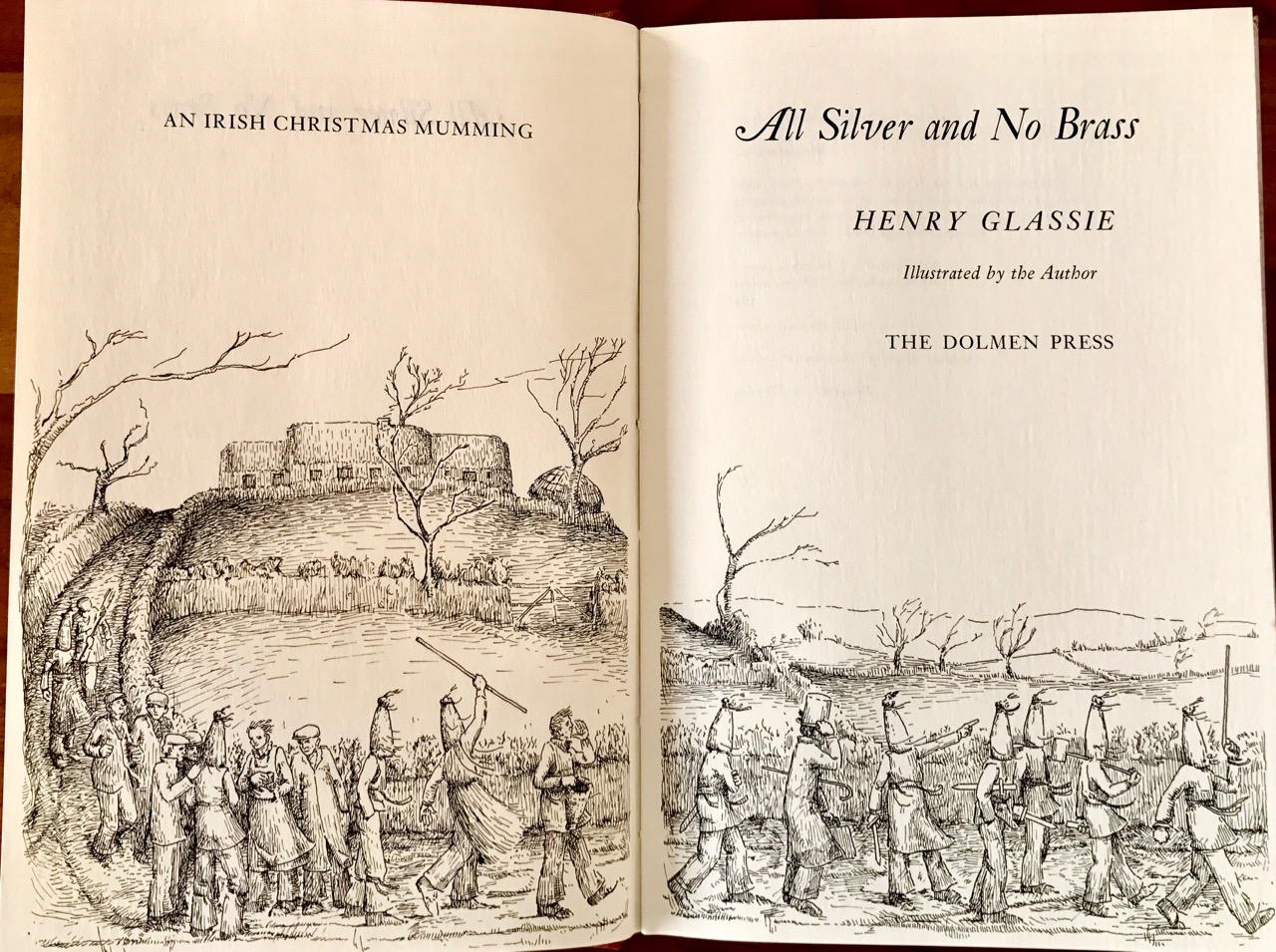
All Silver and No Brass

title page full

Henry Glassie’s book has been sitting on my shelves for 40 years, waiting to be dusted off and revisited. As a Mummer myself, I eagerly searched out any book on this then neglected subject, and was pleased to find this volume which concentrated on the Mumming tradition in Northern Ireland. It is written and illustrated by Henry Glassie, a Professor of Folklore at Indiana University Bloomington, and is the product of an extended field trip to County Fermanagh in the early 1970s.

Henry Glassie – born 1941 – has written many books about life and traditions in Ireland. His first was All Silver and no Brass, published by The Dolmen Press in 1976

…Winter nights in Ireland are black and long. A sharp wet wind often rises through them. Midwinter is a time to sit by the fire, safe in the family’s circle, waiting for the days to lengthen and warm. It is no time for venturing out into cold darkness. The ground is hard, the winds bitter. But for two and a half centuries, and possibly for many years before them, young men braved the chilly lanes, rambling as mummers from house to house, brightening country kitchens at Christmas with a comical drama. Their play, compact, poetical, and musical, introduced an antic crew and carried one character through death and resurrection…

(From the Preface to All Silver and no Brass by Henry Glassie)
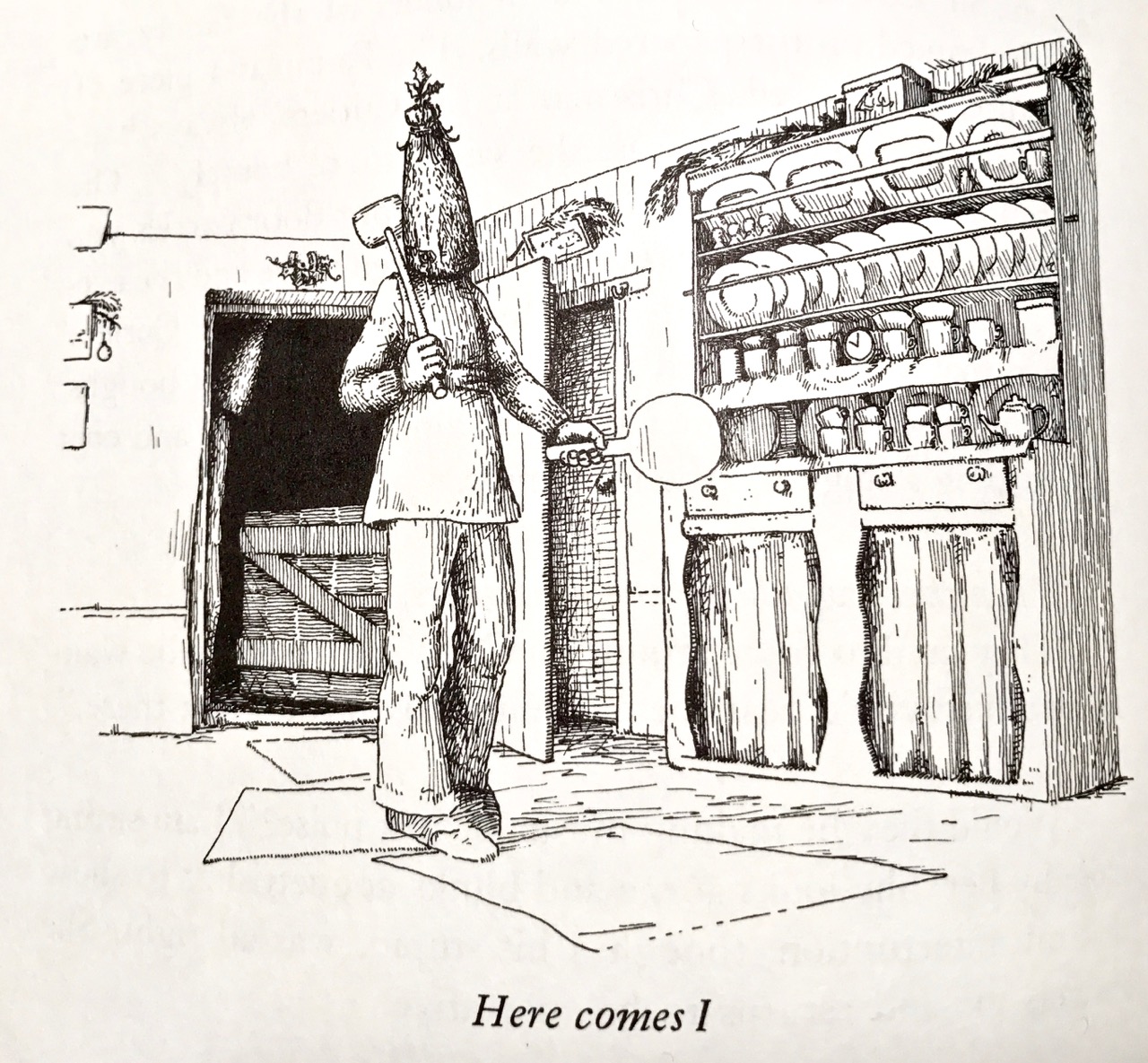
here comes I

saint patrick

Glassie stayed in Ireland during the Troubles, and deliberately chose a community that was close to the upheavals of those days.

…Mumming was neither my project nor my goal. My project was the creation of an existentially grounded ethnography of people in trouble… We settled next to the barbed-wire bound barracks in the southwest Ulster town of Enniskillen, in the County Fermanagh, about twelve miles north and east of the burning border. I began quickly, luxuriously conducting my study on foot. I came to know every dog, bog, path and field in a small area south of the town, lying west of Upper Lough Erne, its waters as bright, its isles as green as promised in the old ballad of the Inniskilling Dragoon…

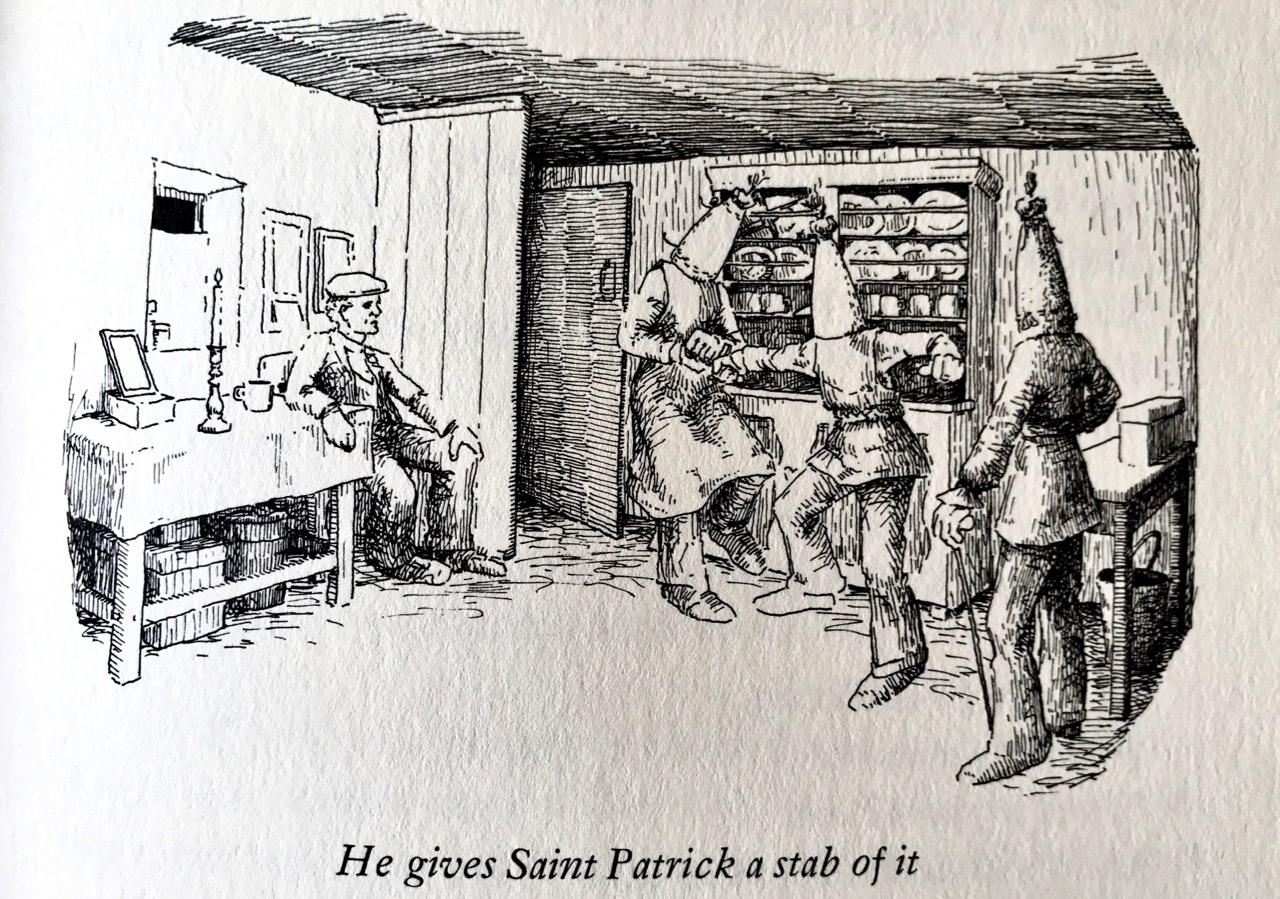
Enniskillen, from a photograph dated 1900, and Henry Glassie’s illustration of the mummers ‘Doin the Town’ as remembered in the 1970s

I like the way the book is set out. One section transcribes a number of conversations that Glassie has with people who remembered – and had been involved with – the mumming tradition.

…Most of the kitchens at the centers of those white houses were opened willingly, generously to me. My Americanness set me outside the local social categories, so I got on well with people of opposed political and religious persuasions. More of the people were Catholics than Protestants, more were men than women, more were old than young. Almost all had made courageous adaptations within the terrors that frame our lives. That was what interested me most: how daily life passed sanely, even artfully, despite armored cars hurtling down the country lanes, despite bombs that cracked the air and rattled the windows. I had forgotten all about mumming. Then one evening Mrs Cutler and I were chatting about Christmas and she mentioned the mummers’ arrival as the season’s high point. Suddenly excited, I asked if any of the play’s performers were still alive, and she listed people I knew well. All of them were men in their sixties and seventies who had begun to stand out in my thinking as exceptionally energetic, outgoing, and articulate. From that time on, I asked many questions about the drama, its performance, meaning, and purpose. I learned that the memory of mumming is cherished…

wren-boys

Upper picture – Wrenboys from Athea, Co Limerick, 1946 and below – ‘Mummers hunting the wren’ in Macroom, Co Cork, around 1950

Glassie talks at length to two brothers, Peter and Joseph Flanagan, who have very clear memories of taking part in the mumming.

“…We’d just take every house that we faced, whether we’d be admitted or not. We’d just take every house that we’d face. Of course, there was people on the other hand that wouldn’t admit them because it might frighten the youngsters, you see, or cause some confusion. That’s the way. That’s the way it goes now. So, You all stood at the door and…”

He twists and rapidly knocks five times on the table.

“…’who’s there?’

“…’Captain Mummer. Any admission?’ Yes, aye, or no: that was the way. ‘Any admittance for Captain Mummer and his men?’

“and if the person was pleased to admit you, well, they’d open the door. Throw it wide open for you.

“And Captain Mummer walked in.”

Peter moves quickly from his seat and down the kitchen. His heavy boots sound sharp on the floor. He closes the front door behind him, raps on it thrice, and re-enters. He strides ten feet into the kitchen and stands to deliver his lines, turning his torso to project to the audience assembled in a semi circle that runs from the front table past the hearth to the back table. Joe and I are fixed upon him…

“Here comes I, Captain Mummer and all me men.

Room, room, gallant room, gimmee room to rhyme,

Till I show you some diversion round these Christmas times.

Act of young, and act of age, the like of this were never acted on a stage.

If you don’t believe in what I say, enter in Beelzebub and he will clear the way.”

Frowning, Peter returns to his stool. It has been years since he has thought of the rhymes. “Let me see now,” he says, and sits repeating the speeches of Beelzebub and Prince George under his breath. Joe picks up the large turf out of the fire with the tongs and sets them at the front of the hearth. He sweeps the thick ashes off the iron to his side with a besom, places new turf against the backstone, and arranges the old coals next to them. The smoke and glow increase as the new turf ignite. Joe, too, went mumming, but he went out less often than Peter and cannot remember the part he played. He sits back as Peter starts in again…

Henry Glassie’s drawing of ‘how a mummer’s hat is made’ together with two examples from more recent times

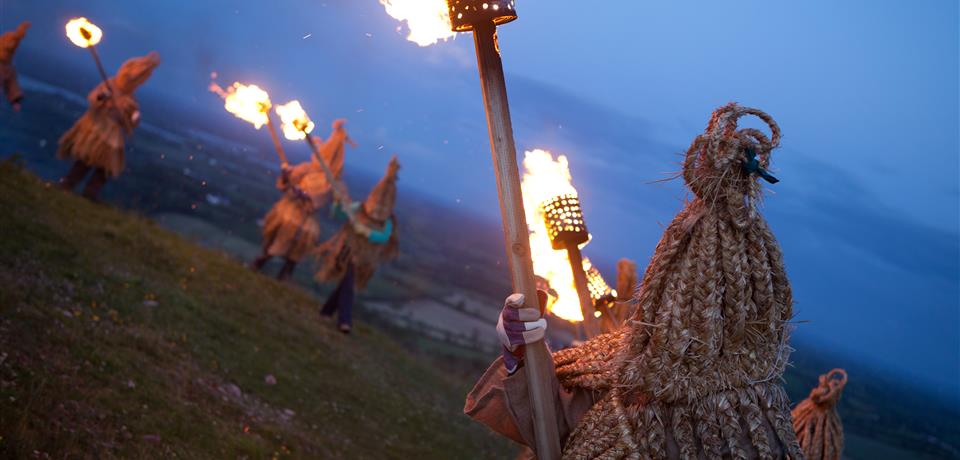
Glassie’s writing goes on to describe the recollections of the play from those who undertook the performances. It is an invaluable record: his informants have now passed away. They would probably be surprised to know that their plays have not been lost: a new generation is performing in the north – and elsewhere on the island of Ireland. They would be even more surprised, perhaps, to learn that their own play breathes again: there is a Mummers Centre in Derrylin and the Aughakillymaude Community Mummers (Aughakillymaude translates as the wooden field of the wild dog) perform regularly in the area around Christmas time once more, while at other times they travel across Europe keeping the spirit of mumming in Ireland very much alive:
aughakillymaude-mummers

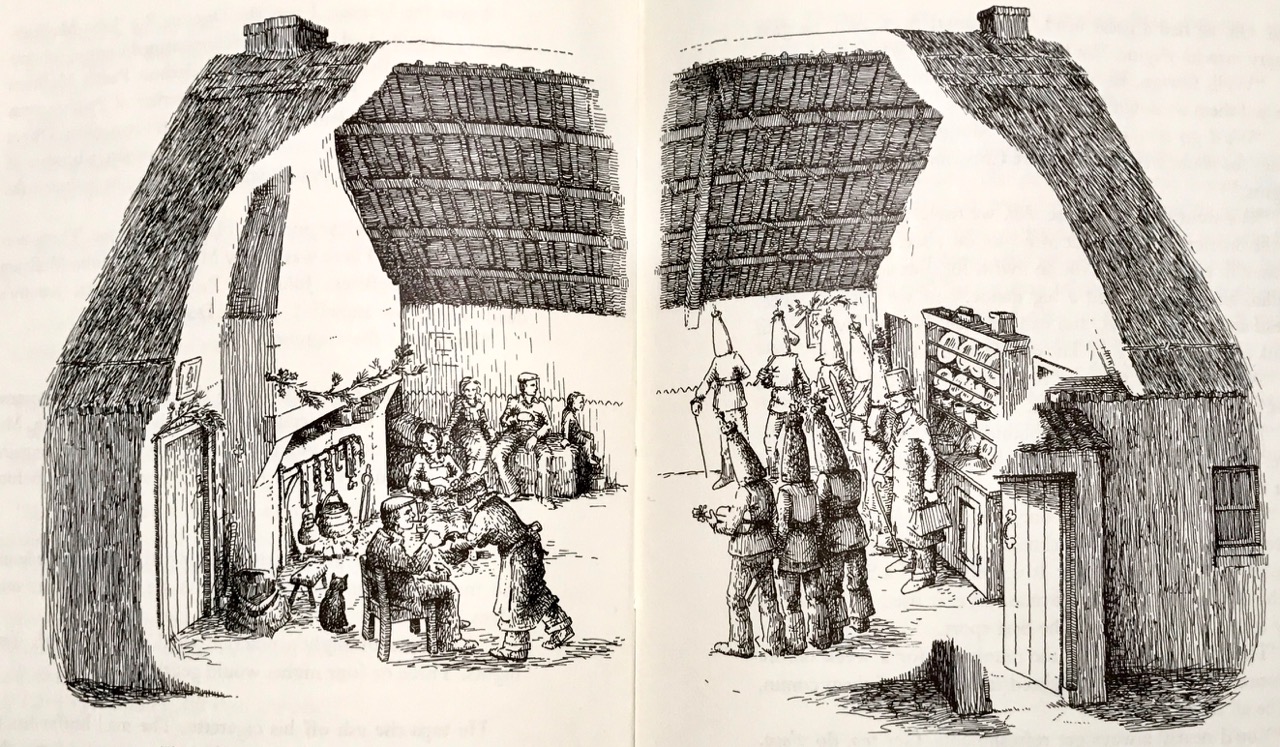
Aughakillymaude Community Mummers in full cry (above)  and (below) Henry Glassie’s reconstruction of the performance before the hearth
the performance


How Are You Keeping?

Mind yourself, now

That’s how people greet each other in West Cork. Lovely, isn’t it? And when we say goodbye we always add Mind yourself. Mind yourself – it’s like being told to be careful, to look after yourself, and not to forget to take time to have a cup of tea and a nice sit down occasionally, all rolled up in one.

Directions 1

It’s been a while since I’ve written a post on how to speak like you’re Irish (scroll to the end to see a list of the previous posts) but I’ve been keeping notes all along, so here is my latest primer so that you can feel like you’re getting the hang of West Cork Speak.

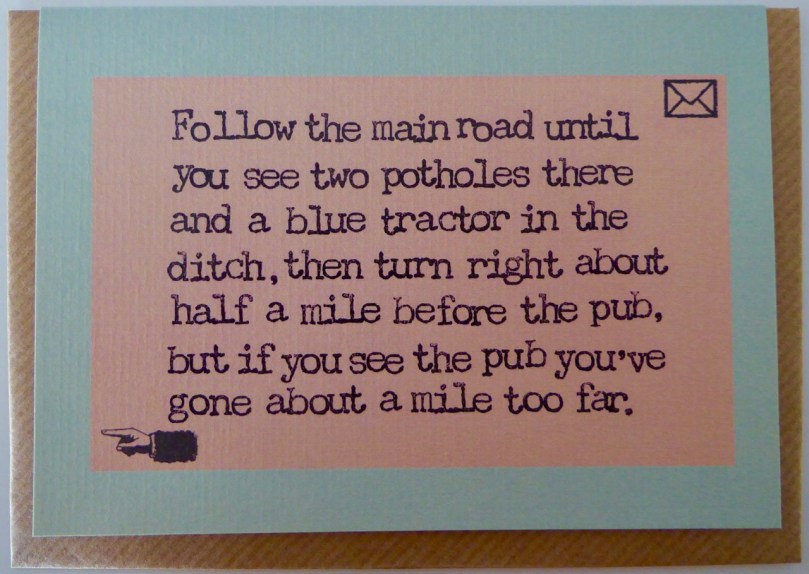
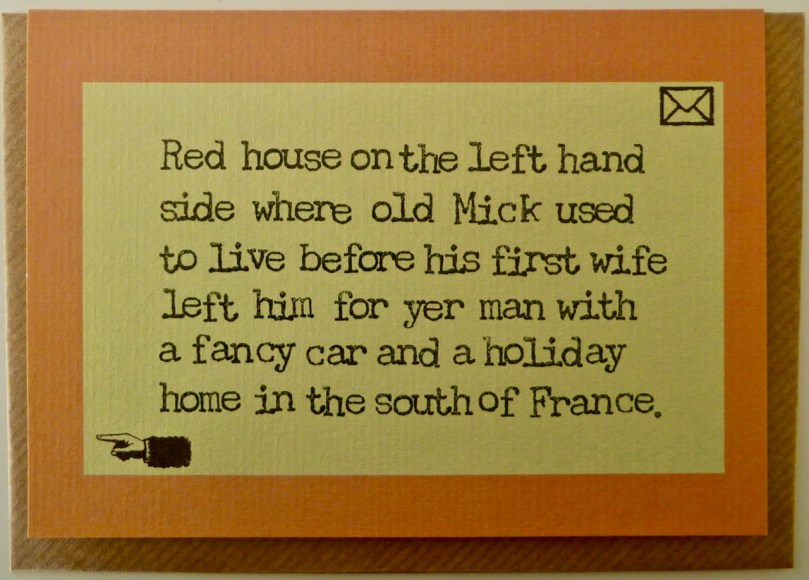
Besides my own images, I’m illustrating this post with cards from Conker Tree Studio. Justyna, from Poland but now living in Ireland, has designed a line of cards and magnets with directions and phrases that she has come to, er, appreciate in the everyday talk around her. Look out for her cards anywhere you go in Ireland, or buy them online.

Directions 4

Directions 3Sure it is!

Sure can be used on its own, but it’s more usually heard in combination with other words in phrases that convey an endless variety of responses useful in almost every circumstance. Take Ah, sure, j’know – use it to express sympathy, along with an exquisite understanding of the circumstances being related. Ah, sure, look is similar although it’s pronounced with a more world-weary air and perhaps without the underlying implied slight cynicism of Ah sure j’know.

Sure, we can't complain

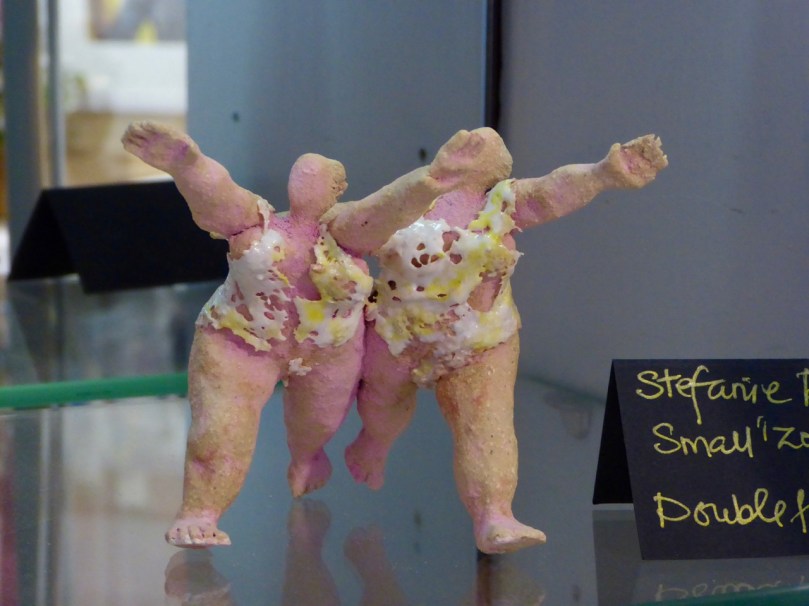
Ceramics by Stefanie Dinkelbach, at Etain Hickey Collections (or here)

The auld arthritis is killing me but isn’t it a grand day?  Sure, we can’t complain. 

I bought it off a farmer and it runs great. But I just discovered it has no seat belts. Ah sure, what harm. 

I paid my water bill, like an eejit, and now I hear the lads who didn’t pay won’t get penalised.  Ah sure, j’know. 

I was hoping to get the silage cut today but would you look at the rain, ’tis coming down in sheets. Ah sure, look.   

Sure aren't we all having a grand time?

Sure, aren’t we all having a grand time?

Don’t be bold!

Around children, it’s good to tune in to the specialised vocabulary adults use for their behaviour. Being bold has nothing to do with bravery – to be bold is to misbehave. If a child is being annoyingly but not nastily bold, he might be just acting the maggot. Or she might be a bit giddy. In any case, the proper response of any right-thinking adult in the vicinity is to give out to them. Giving out means rebuking or reprimanding. The other thing adults like to do with children (and other adults) is to put manners on them. This is a very handy phrase that can be used in all kinds of ways.

No acting the maggot

Nobody’s acting the maggot here!

Sinead, stop acting the maggot. Ah, Mammy, don’t be always giving out to me.

The eldest was put into Miss O’Brien’s class this year.   She’s strict out – that’ll put manners on him.

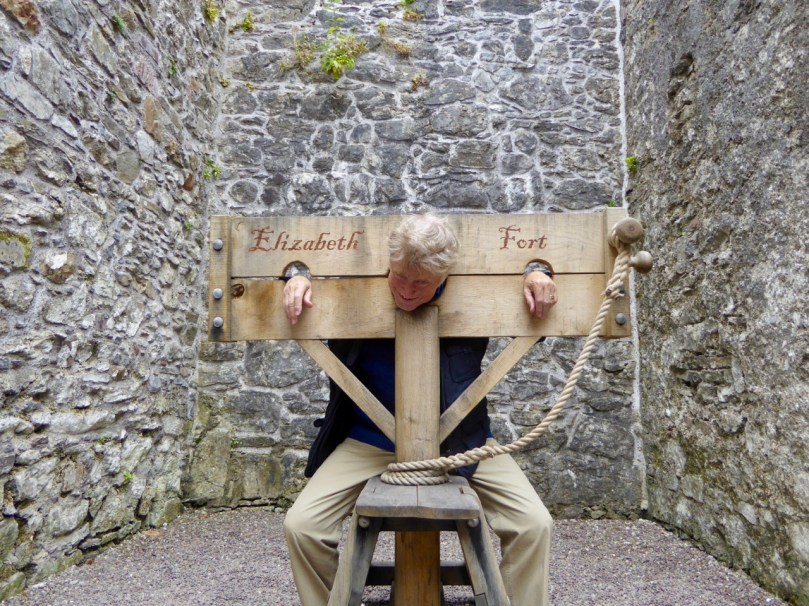
In the stocks

That’ll put manners on him (Elizabeth Fort, Cork City)

Assent and agreement.

Perhaps because it’s considered bad form to say no (even if that’s what you mean) we have developed a plethora of ways to say yes. No bother is a universal favourite, but perfect has lately been making significant inroads. Y’know yerself, however, is the ultimate form of both eliciting and delivering concurrence.

I think the clutch has gone but I need it desperately for tomorrow.  No bother.

I’ll have the Full Irish, but no meat, extra mushrooms, gluten-free toast, a large cappuccino…no wait, I’ve changed my mind, add the black pudding back in and change the cappuccino to a soya latte. Perfect!

Breakfast at Budd's

The full Irish at Budds of Ballydehob – all local ingredients

They’ll all be down for Christmas, there’ll be nine of them including the grandchildren all wanting mince pies and home made scones and mountains of mashed potatoes, but y’know yerself, like…

How are you? Ah sure, y’know yourself.

So now – off you go and do a biteen of practice. You know yourself, like, that it’ll take a while before you can make a good fisht of it, like Justyna from Poland. But if you don’t get around to it, no bother. Life is busy, in fairness. Mind yerself, now.

Ah sure, all in their own time

This is the fifth in a series. Previous posts:

West Cork Speak: Lessons 1 and 2

West Cork Speak: Lessons 3 and 4

West Cork Speak: Lessons 5 to 7

You’re Grand

Skibb men

How are ye keeping?

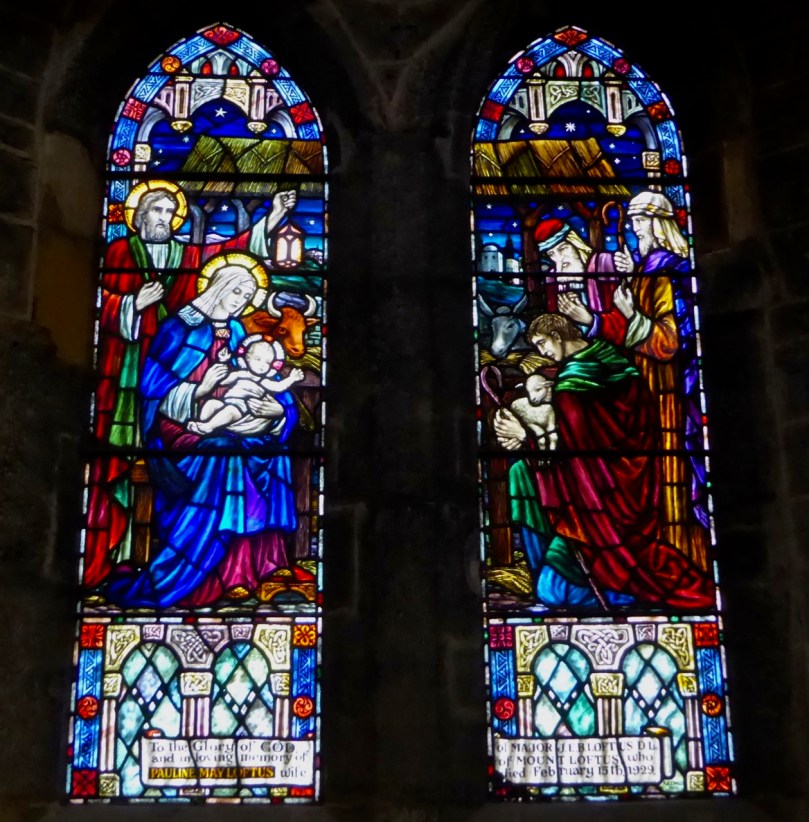
The Christmas Story, One Window at a Time

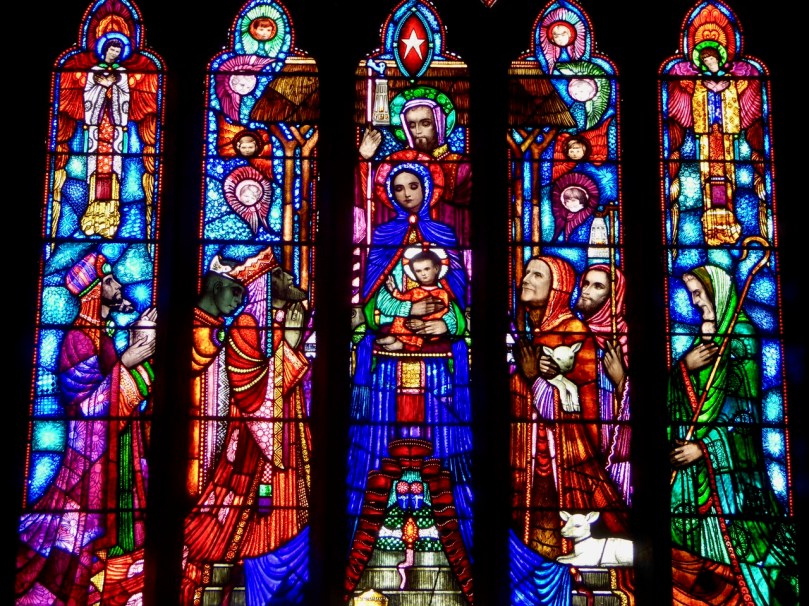
Bandon Catholic Church

The Christmas story, as told in stained glass in Irish churches, is the biblical story. There are no Christmas trees or Santa Clauses, no references to anything other than the story of the birth of the Christ child. Not surprising, since stained glass is to be found mainly in churches after all. The one above is from the Catholic Church in Bandon. Pop in next time you’re passing – it will surprise you with its size and striking colour.
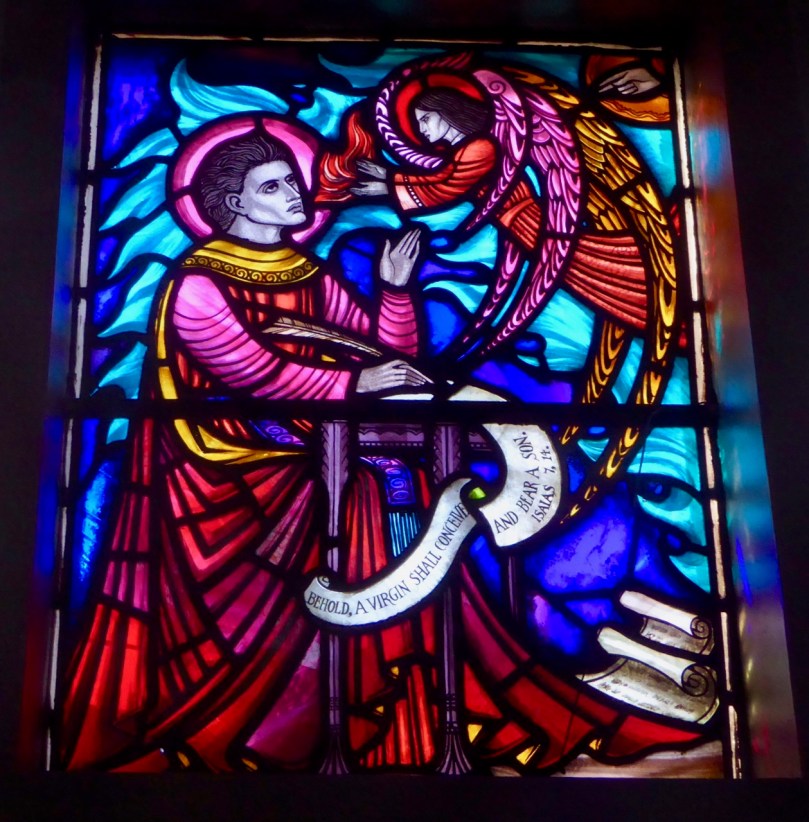
Church of the Annunciation, Cork. AnnunciationFive windows in a Cork church tell the story, beginning with the Annunciation

Two years ago I wrote a post about depictions of the Nativity by Harry Clarke. This year I’m branching out, to show you some of the stained glass Nativity images I have found in churches all over Ireland. Some are by artists I can identify, some are by the Harry Clarke Studios (after Harry’s death in 1931), and some are by anonymous artists. Some are traditional and some are avant garde. 

The next two windows show Mary visiting her cousin Elizabeth (mother of John the Baptist), followed by the betrothal of Mary and Joseph

In Cork, in the Church of the Annunciation – a church designed by the stone carver Seamus Murphy – a series of windows illustrate the complete Nativity story, from the Annunciation to the Visit by the Magi. These windows are by the Harry Clarke Studios and were installed in the 40s.

The birth in the manger with shepherds visiting, and the arrival of the Magi round out the story

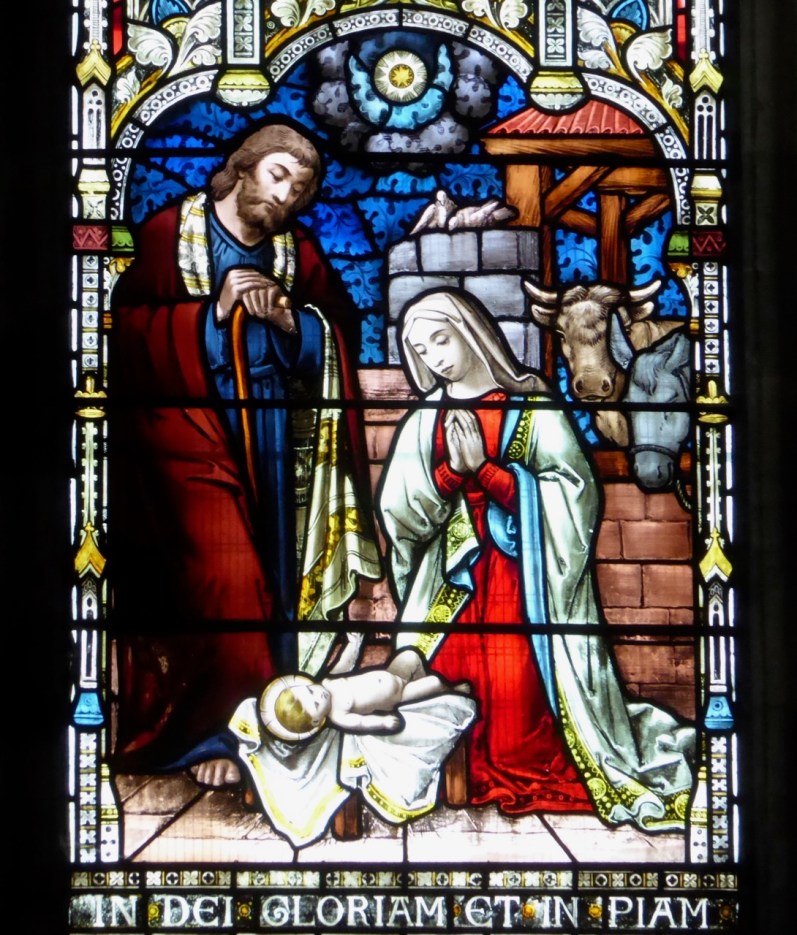
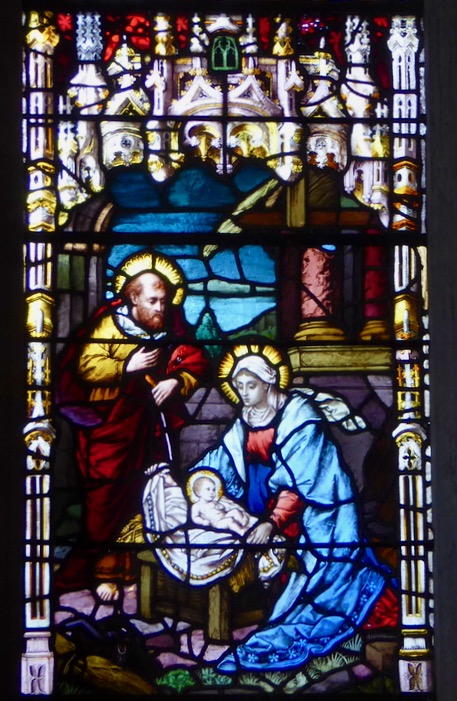
When we visited Kilkenny we saw two examples in St Canice’s Cathedral. The first, a traditional crib scene, looks like it belongs on a Christmas card.

St Canices

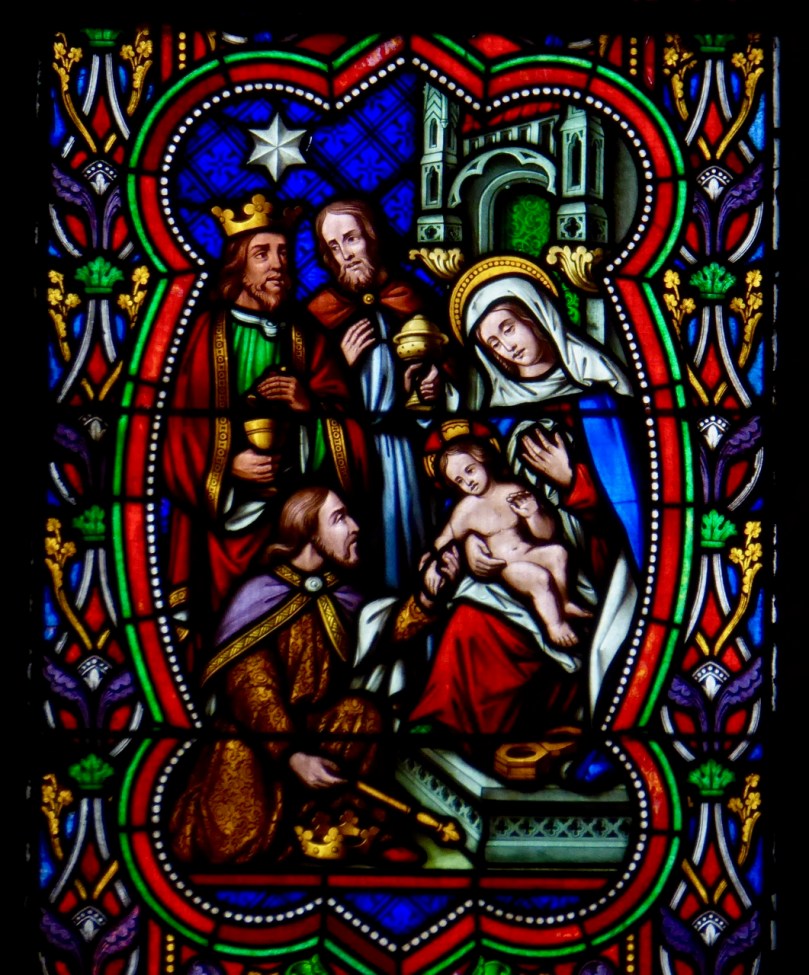
On  another wall in the same church is a two-light window by A E Child, depicting the visit of the Magi. A E Child was a highly influential teacher, and member of Sarah Purser’s Tower of Glass (An Túr Gloine) – a contemporary of Harry Clarke and a highly skilled stained glass artist, but with a more orthodox style than Clarke’s.

Canice's AE Childe

Still in Kilkenny, the Black Abbey has reputedly the largest stained glass window in Ireland. It’s divided into numerous smaller scenes and this one depicts the Nativity. It bears a striking resemblance to the Christmas card window from St Canice’s – perhaps it was from the same studio.

Black Abbey Kilkenny

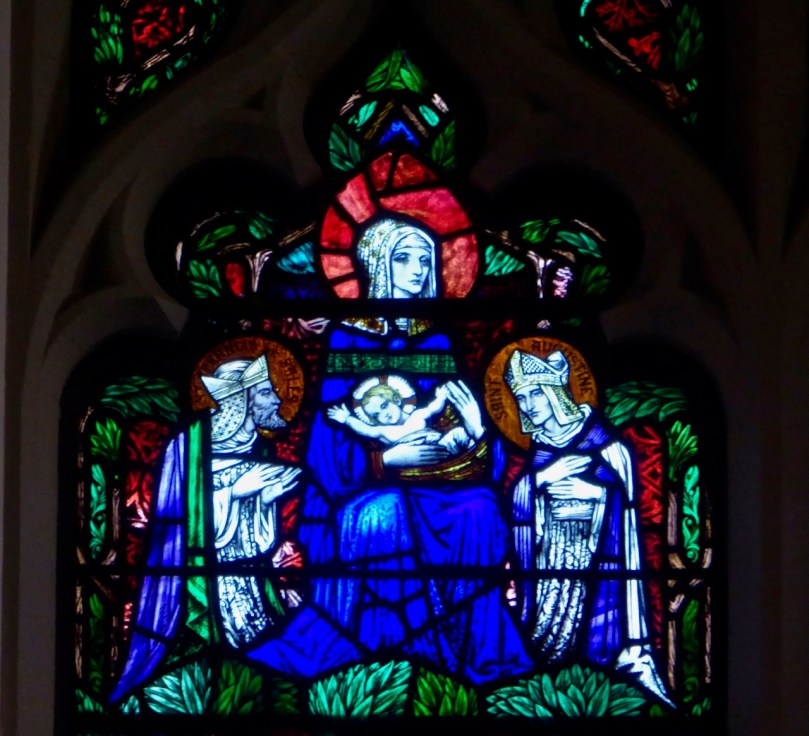
In  Tullamore, the enormous Church of the Assumption has wonderful stained glass by different artists. Several large windows are by the Dublin firm of Earley. This one of the madonna and child shows a small shepherd on her right and three crowns on her left – a clear indication, I think, that this is intended as a Nativity image. The swirling colours and modern lines create a dramatic effect.

Church of the Assumption, Tullamore

The St Joseph window in the Richard King collection in Athlone contains a detail in one of the side panels that depicts the Flight into Egypt, and another of the marriage of Joseph and Mary.

Back to Cork and to the Holy Trinity Church on Father Matthew Quay, just behind the South Mall. Three windows on the west wall are by the Harry Clarke Studios. Research in the Studio archives (held in Trinity College) has revealed the the middle window was designed by Harry Clarke, but executed in fact by his father. It has many of the hallmarks of Harry but lacks the rich detail for which he became justly famous.

Holy Trinity Church, Cork, Designed by HC and executed by his father

Behind the altar, on the north wall of the same church is an enormous window dedicated to Daniel O’Connell and containing scenes from the life of Christ. It is conventional, but finely painted and the colours are rich.

Holy Trinity Cork, East Window

I will leave you with two of our favourites. Close to home I love the the Sarah Purser/Tower of Glass round window in the Holy Rosary Church in Kilcoe. Here’s a detail.

Tower of Glass Magi closeup. Kilcoe

And finally, from the village church of Eyeries on the Beara Peninsula, Robert wrote about  a stunning set of windows by George Walsh. His nativity scene is touching and beautiful.

george walsh nativity

Grand Canal Hotels

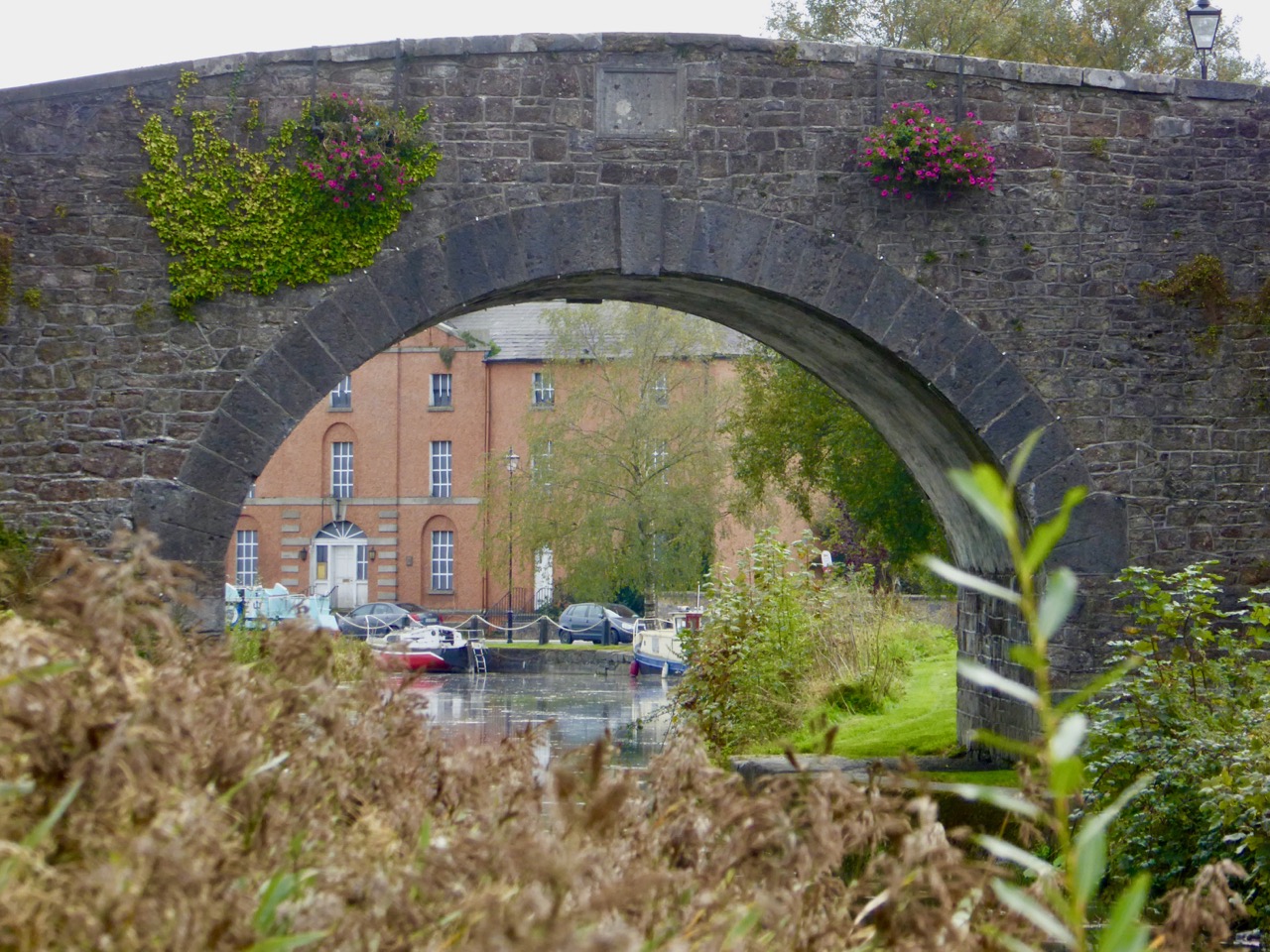
rbtstown hotel through bridge

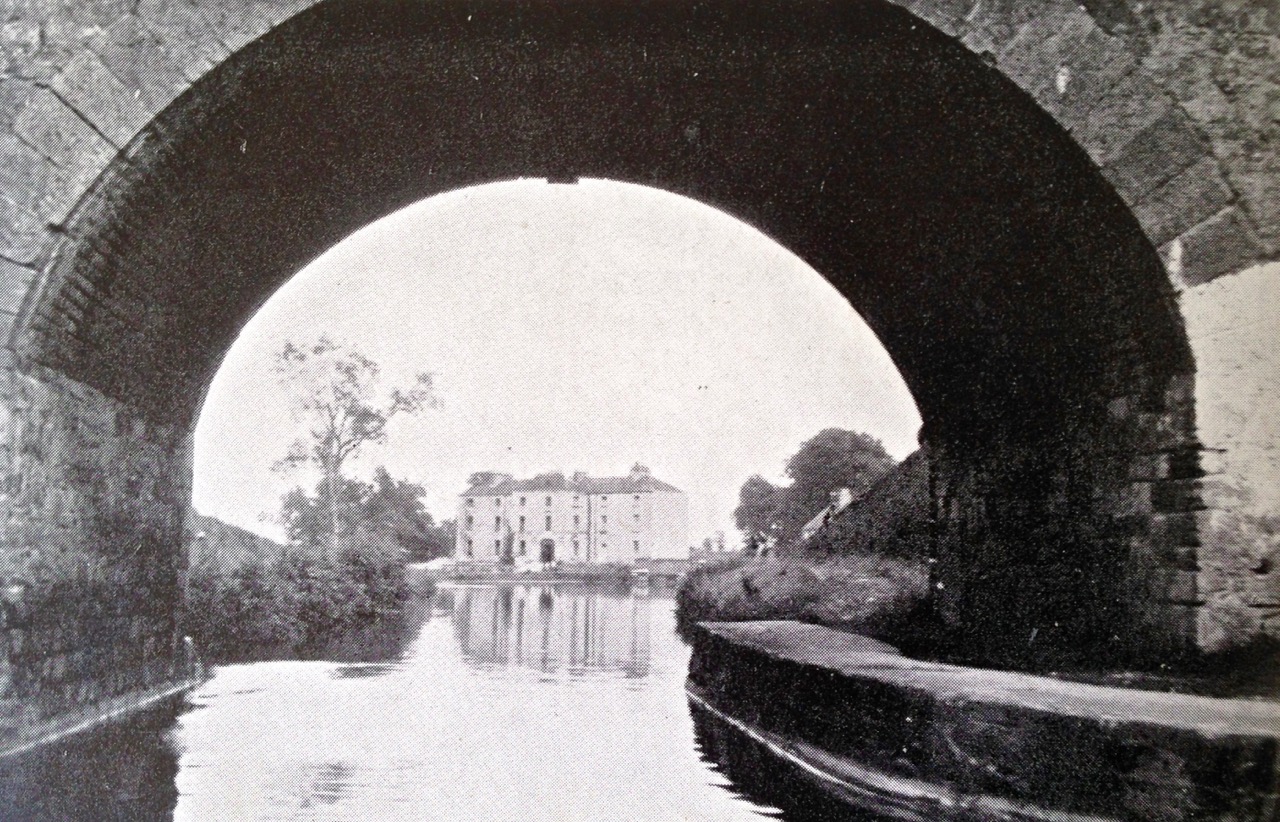
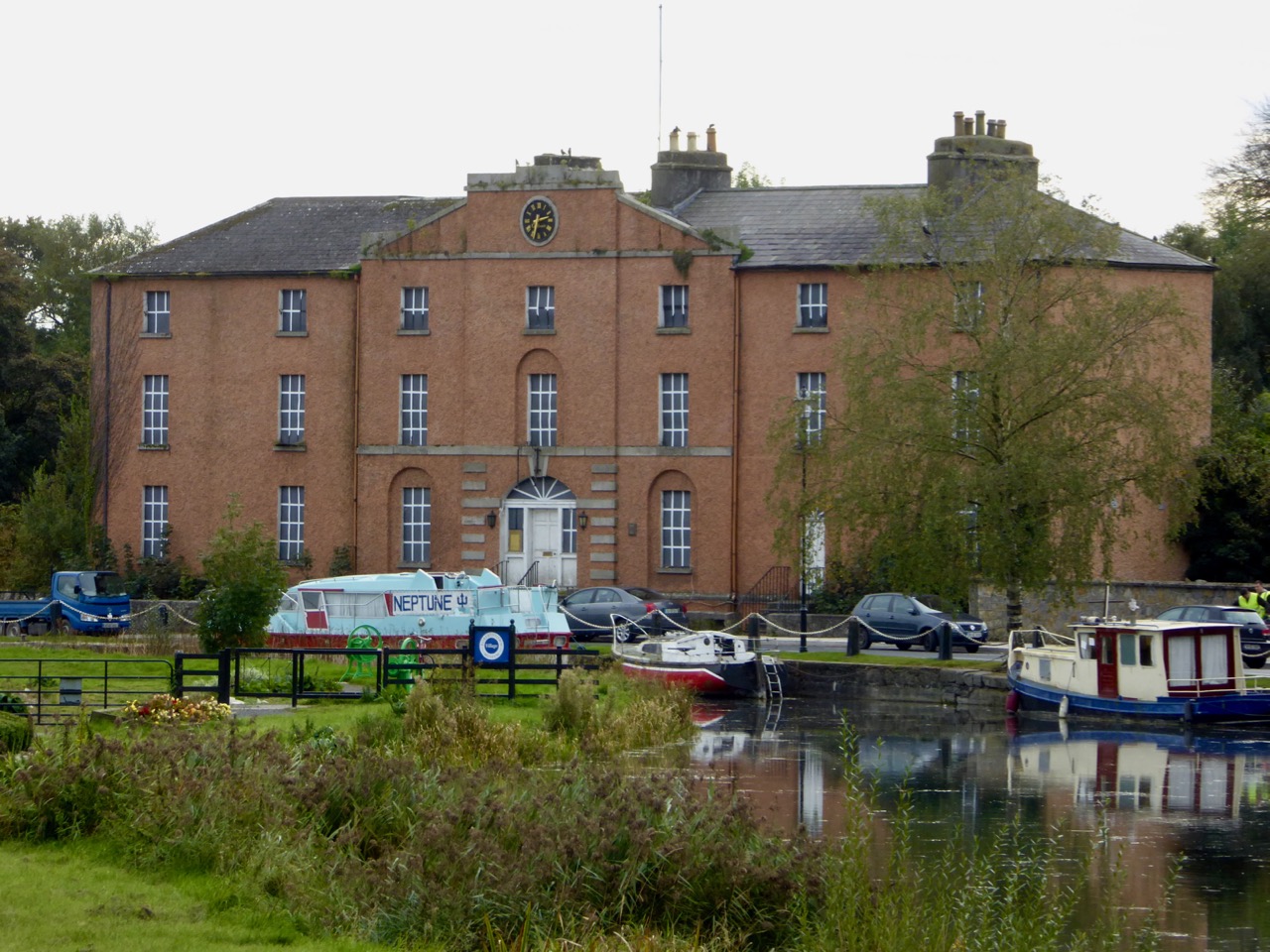
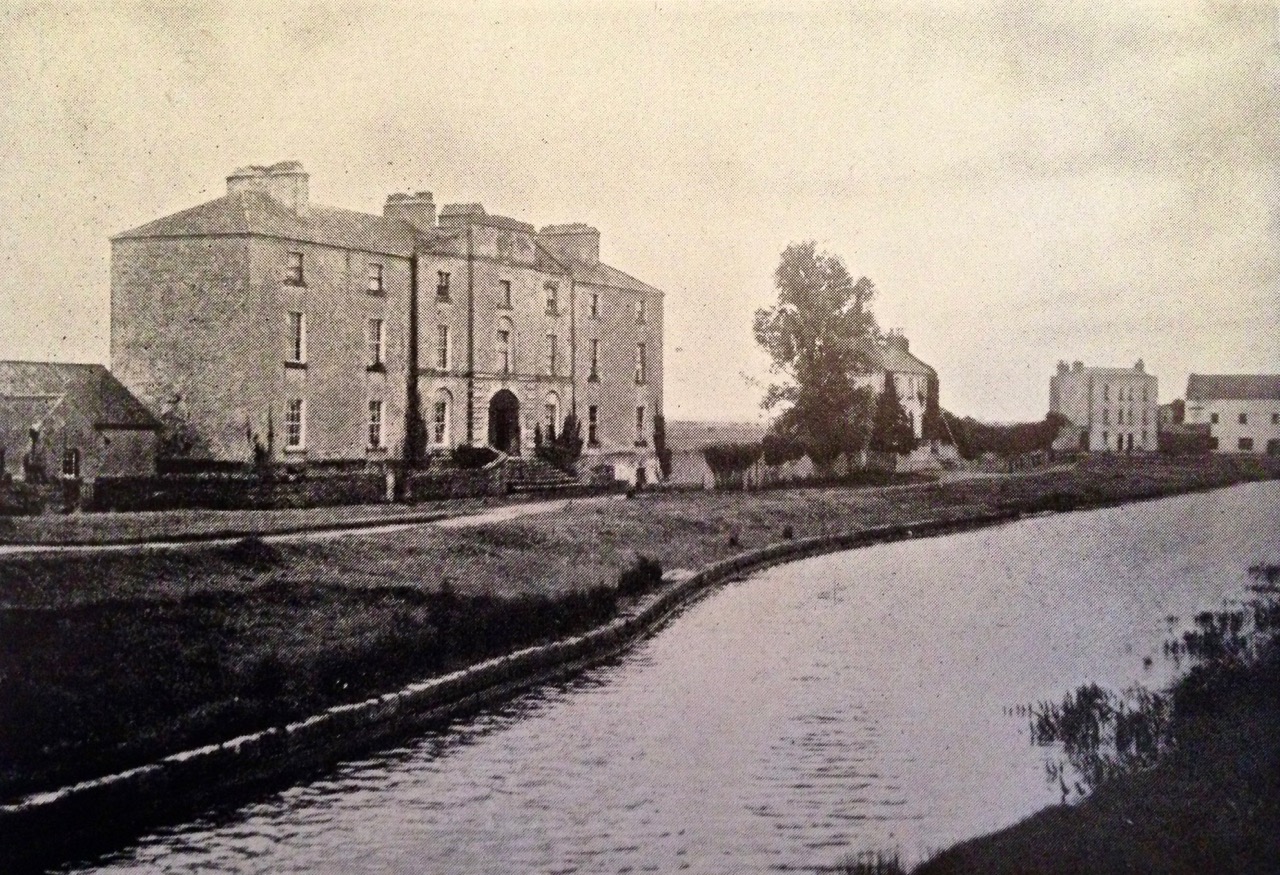
This view of the old hotel on the Grand Canal at Robertstown, Co Kildare, is our best effort to replicate the photo taken by Angela Rolt in 1946 for Green & Silver, Tom Rolt’s book about their Irish waterways adventures exactly seventy years ago:

robertstown

Angela Rolt’s 1946 photograph of the Canal Hotel at Robertstown. We could not get the same view (which must have been taken from their boat) as we were on dry land! By clever manipualtion of her lenses, Finola produced our own version (top picture)

…We had travelled less than a mile along the summit level before we saw ahead, framed by the arch of a bridge, the canal hotel at Robertstown. It is an almost exact replica of the Shannon Harbour hotel, but is in better repair being at the present time a Turf Board hostel for workers on the bogs. Robertstown itself, a whitewashed canal depot, a post office and a shop and ‘select bar’ or two strung along the canal waterfront beside the hotel, is a canal village… There was, for me at any rate, a fascination about Robertstown which I find difficult to define and which our photograph can scarcely convey. A particular atmosphere, melancholy, nostalgic yet captivating, always invests a waterfront no matter whether it is that of some old seaport town, some cliff-walled fishing cove or merely, as in this case, some inland village beside a still canal. It captivates because it is a doorway to the unknown and so appeals to our sense of adventure and that nomadic instinct which lies buried in all of us. It is nostalgic because it recalls memories of places visited and never perhaps to be revisited. It is melancholy because it is redolent with the unnumbered farewells which it has witnessed; a reminder that life, in the words of some poet whose name I cannot recall, is a perpetual farewell… (from Green & Silver, L T C Rolt, George Allen and Unwin, 1946)

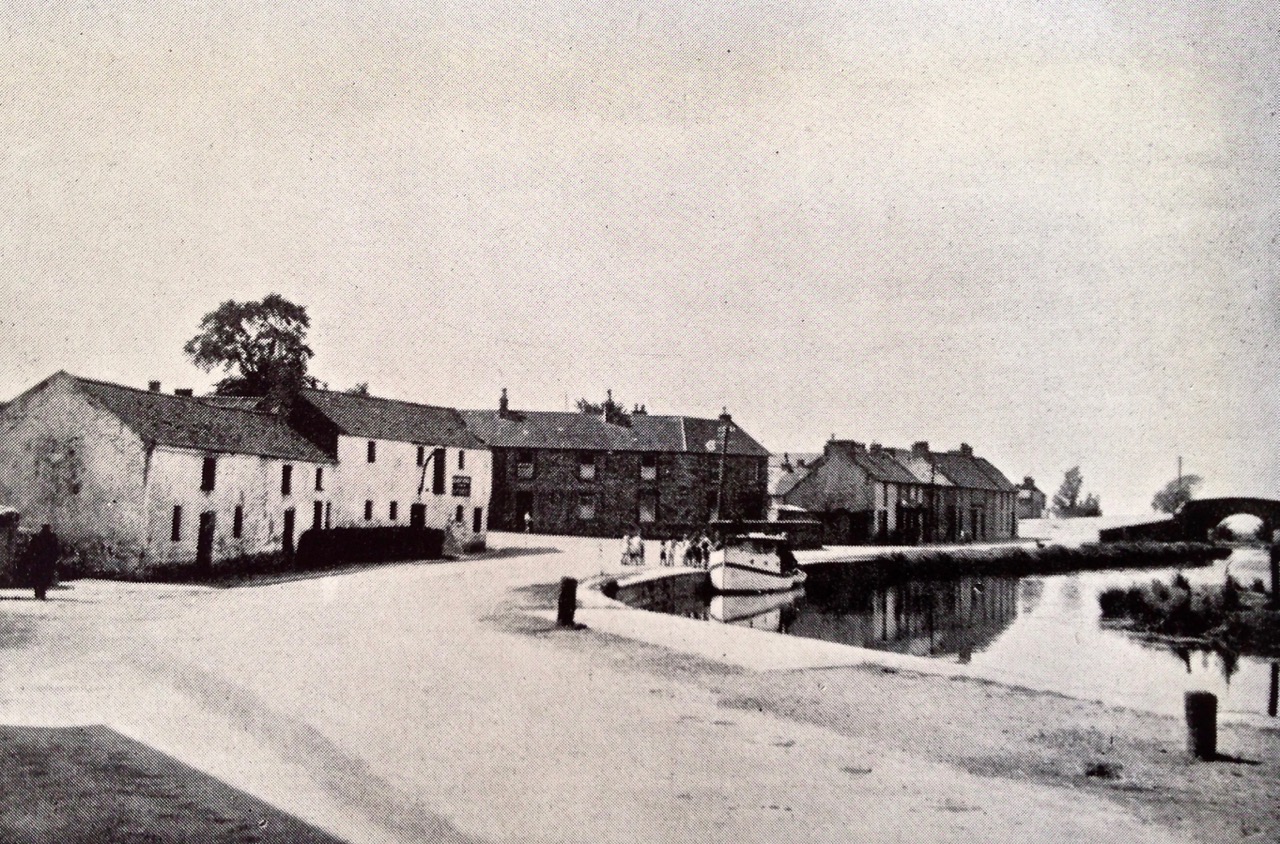
canal port

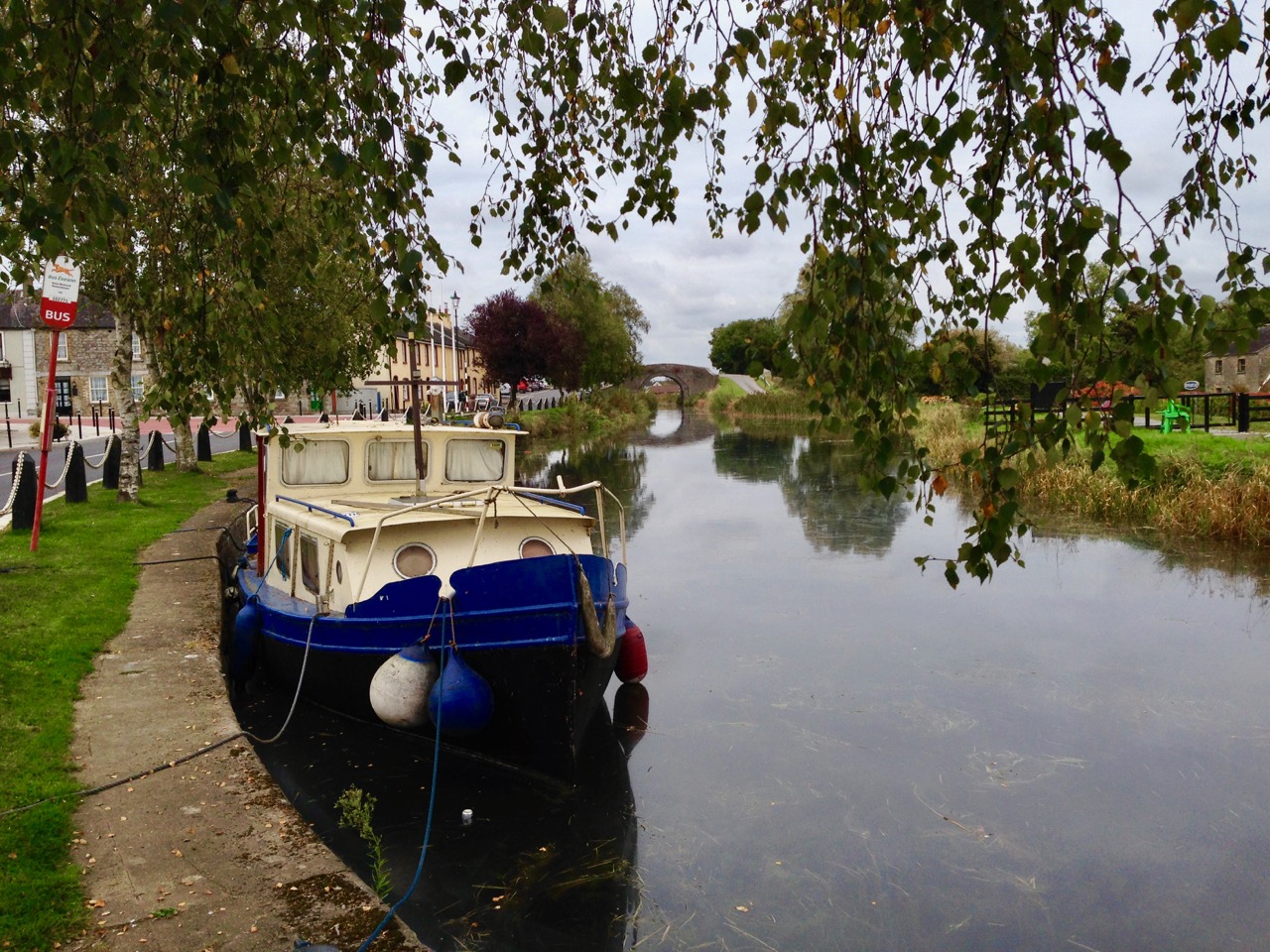
canal in roberstown

The canal village of Robertstown: upper picture – Angela Rolt’s photograph of 1946 sums up the ‘melancholy and nostalgic’ character of the place then. The Rolts’ boat, Le Coq – is seen moored up on the quay: its journey created significant interest as in those days the appearance of a ‘pleasure craft’ was rare. A crowd of small children always materialized out of nowhere to gaze, ask questions and – sometimes – throw stones. Lower picture – Robertstown in 2016

Rolt was a prolific – and often romantic – writer: more than 500 publications are attributed to him, including articles and letters and forty significant books on canals, railways, engineering and philosophy: Green & Silver is the second of these. His summing up of Robertstown as ‘melancholy and nostalgic’ reflects the times in which he lived and travelled on the waterways. The heyday of canal transport was long gone, although the Grand Canal and Shannon were still in commercial use seventy years ago. Carrying then was in severe decline: it would only last another ten years or so and the Rolts’ transit of the Royal Canal was probably the last before the canal became impassable before being formally closed in 1961.

bargehorse robertstown

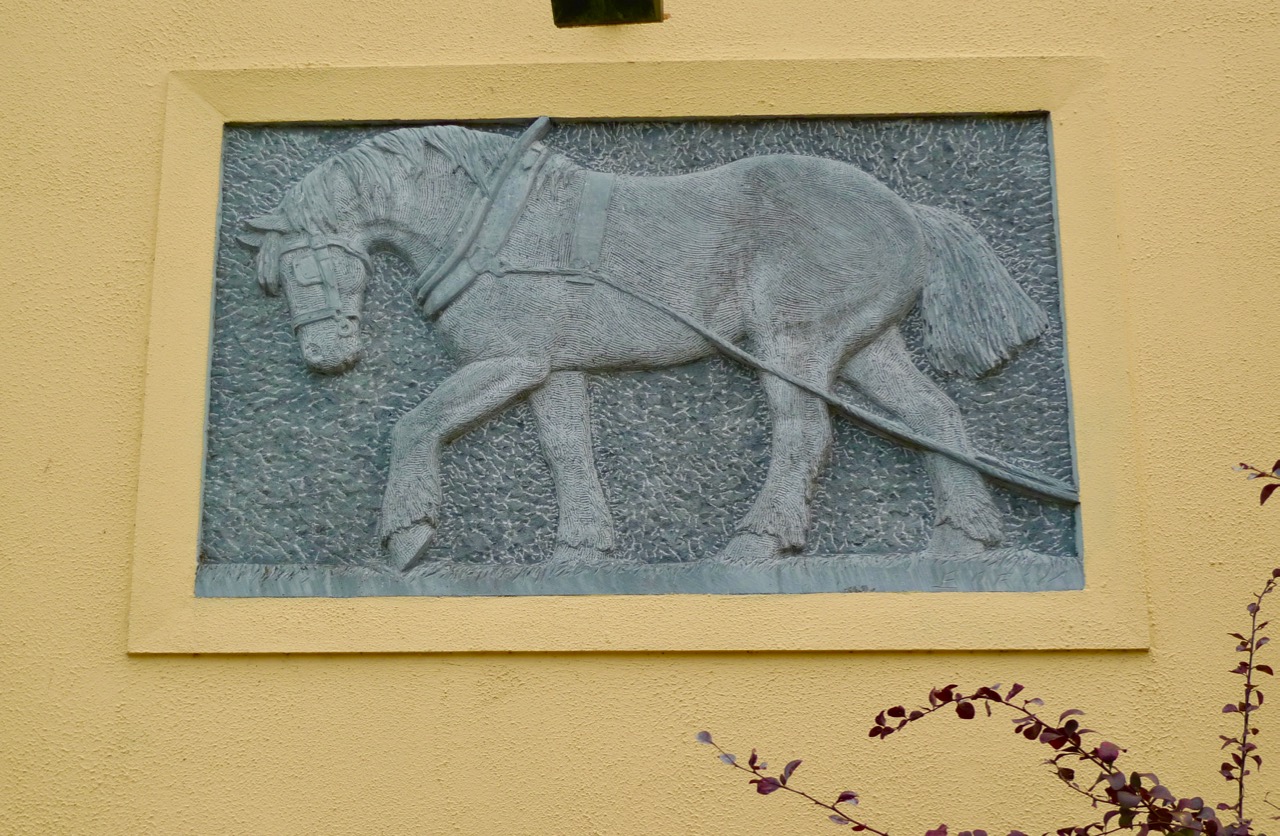
Horse drawn commercial traffic on the Grand Canal in Robertstown is remembered there in this modern relief carving of a barge horse on the wall of the Garda station

My own journeys on the English canal system during the 1960s could similarly be described as ‘melancholy and nostalgic’ and I certainly shared Tom Rolt’s fascination for what I found. The era of water transport was over and in those days the canals were imbued with an air of neglect and decay, although better times were remembered by the local populations. As did the Rolts, I had difficulties in making a passage through some of the near derelict canals in the English midlands with my little boat (often bow-hauling from the bank was the only answer to the weed and rubbish-choked ‘navigations’); however – like them – I always succeeded. Today, in both Ireland and England the picture is very different: generations of pioneering enthusiasts and campaigners (I was one of them!) have succeeded in reawakening interest in our industrial history and realised the amenity asset of the waterways systems which have generally been brought back in a new incarnation as ‘cruiseways’.

faded elegance robertstown

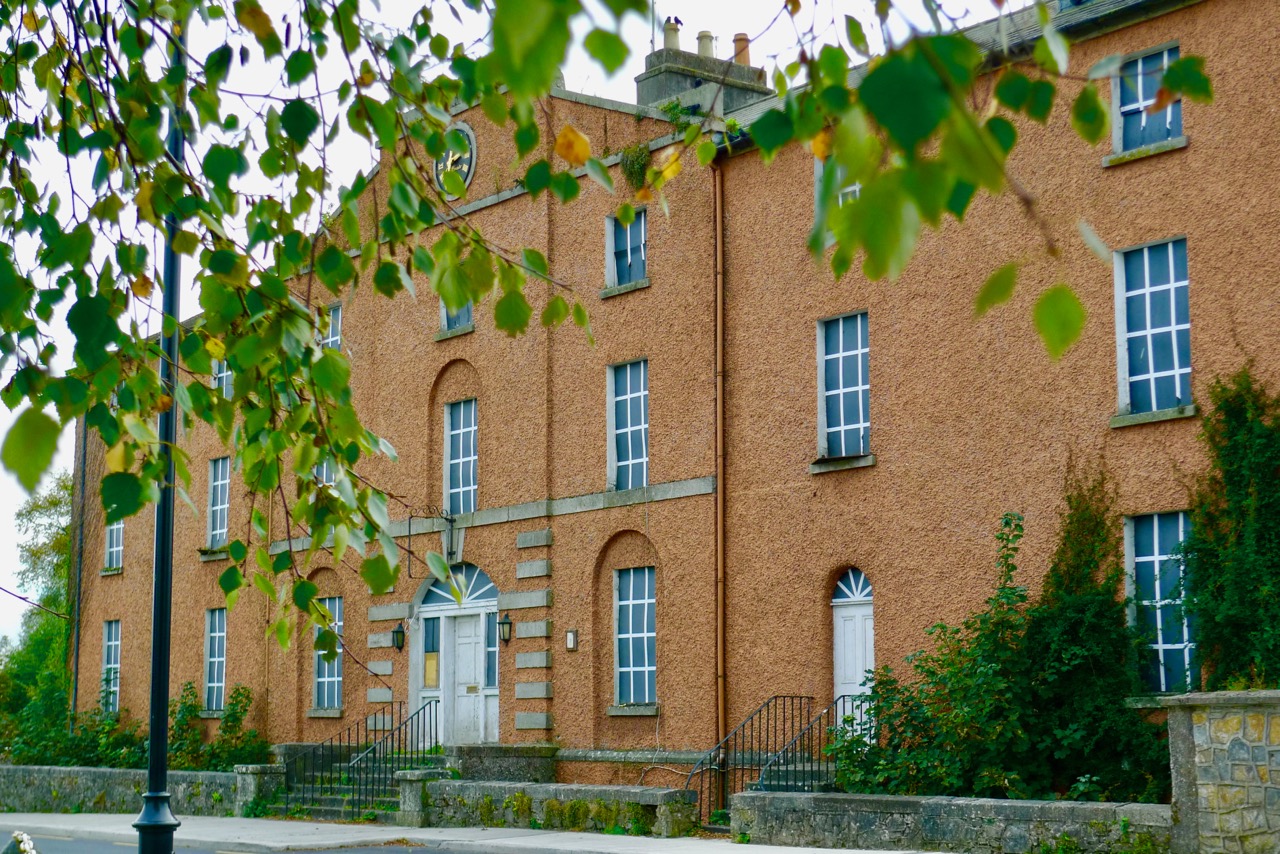
The Canal Hotel at Robertstown: from a distance it retains its elegant façade but it’s all a sham, and the building is in urgent need of conservation

In both places there is still an architectural and industrial heritage to be acknowledged. A particular example in Ireland is the Grand Canal hotels. There were five constructed originally: Shannon Harbour, Tullamore, Robertstown, Portobello and James’ Street Harbour. All were of a pattern and impressive architecturally. Two have vanished.

portobello-grand-canal-hotel

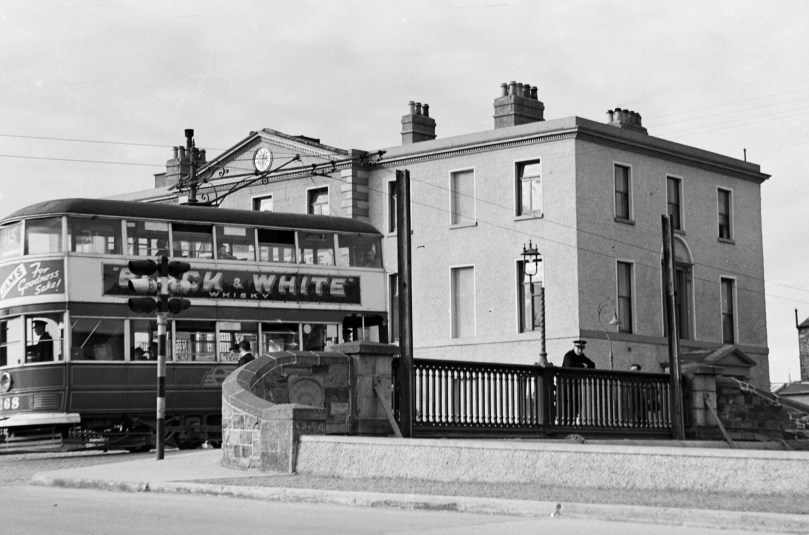
The former Grand Canal Hotel at Portobello Harbour, Dublin, in the 1940s: it became a nursing home (Jack B Yeats spent his last years there) and is now a private college

rbstown hotel elevation

Robertstown Canal Hotel: a local civic amenity group has painted in the fenestration to improve the look of this significant building in the townscape, but the reality is masked decay and an uncertain future

The other remaining hotel building is at Shannon Harbour, where the Grand Canal meets the mighty river. In the heady days of canal prosperity …the company’s hotels were simply the posting houses of this water-road… (Rolt) …There was considerable interchange of passenger as well as goods traffic at Shannon Harbour. Travellers changed here from the Dublin passage boats into Bianconi’s ‘long cars’ which operated between Birr, Shannon Harbour and Athlone in connection with the boats. Alternatively they might board the paddle steamers The Lady Lansdowne or The Lady Burgoyne which plied between Killaloe pier head and Athlone, calling at a jetty on the river near the mouth of the canal. Smaller craft sailed from Killaloe pier head to the transatlantic port of Limerick, and so the Grand Canal became a link in the route between Dublin and America…

Shannon Harbour, Grand Canal Hotel

shannon harbour view with hotel

Upper picture – Angela Rolt’s view of Shannon Harbour and the intact hotel. Lower picture – the same view in 2016, showing the hotel in a state of near dereliction

The Shannon Harbour hotel today is but a shell: the roof has fallen, the windows are empty sockets. But, like the building at Robertstown, it is a scheduled historic monument. The structure has been stabilised with steel props and there is talk – rumour, at least – of some future project. Even in its distressed state the hotel has a ‘grand’ air: certainly a prominent presence in the minimalist architecture of this small settlement which had a bustling past.

Shannon Harbour canal hotel: a stabilised shell today, recognised as historically and architecturally important for Ireland

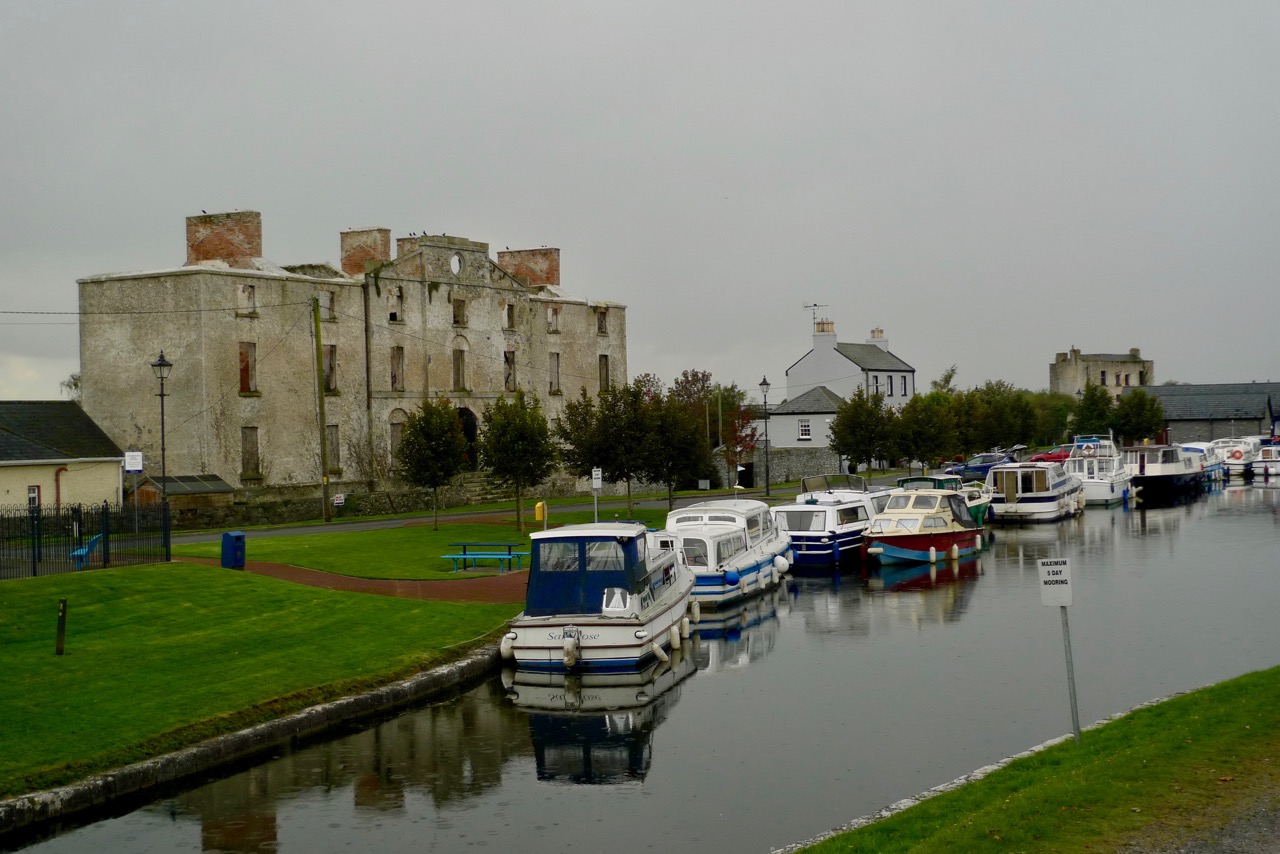
It’s hard to imagine what the future could hold for such a monument of a different age, especially in this rural hinterland of County Offaly. Meanwhile, our own adventures continue – we still have some way to go yet to catch up with Tom and Angela Rolts’ voyages. This is the seventh instalment of the Travel by Water series. All the posts to date are available to view by clicking on the blue link.

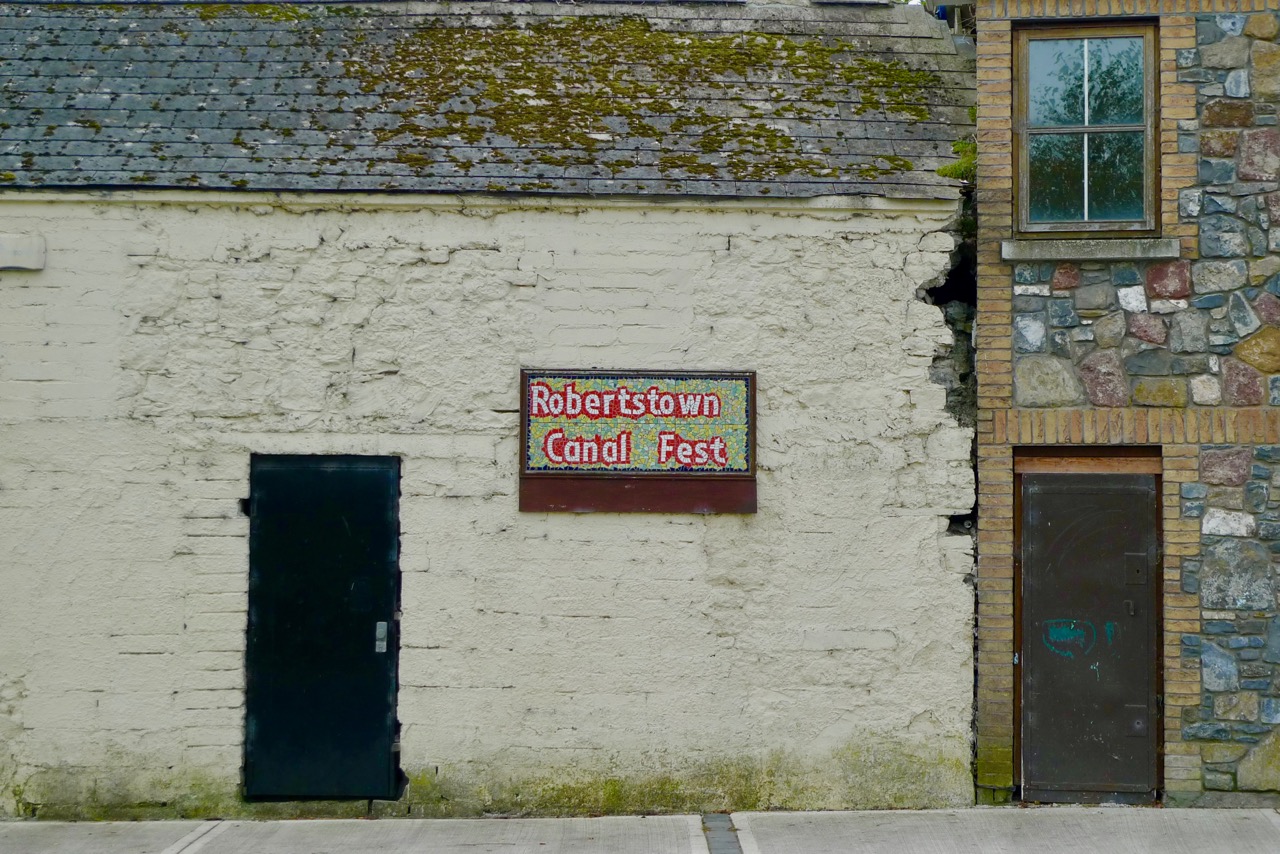
canal fest robertstown

Dancing Cappaghglass

Cappaghglass by Emma Jervis 1

When you love the place you live in – really love it, in your bones and your heart, how do you express that? How do you convey to others the feeling of waking to the sun rising over Roaringwater Bay and sinking back into the sea behind Long Island after a day of sparkling colour and rural rhythms? How do you represent the sense of coming home after a lifetime of being an emigrant? How to talk about what persists of the Ireland of your youth and what has changed irrevocably, for better or ill?

Fields of Cappaghglass

The green fields of Cappaghglass in evening winter sunlight

I suppose, like the Bee Gees I would turn to words, but Tara Brandel took on that challenge with Cappaghglass, her final piece of choreography and dance performance at the end of her two year residency at Uillinn, the West Cork Arts Centre.

Reaching

I’ve written about Tara’s dance performances before – her Bridge two years ago in Ballydehob left us speechless and profoundly moved. She has performed numerous pieces in the meantime as part of her Uillinn residency, sometimes solo and sometimes with her company, Chroí Glan. This dance has been gestating all that time.

Mining area

Mine houses and a fenced-off shaft – echoes of mining heritage

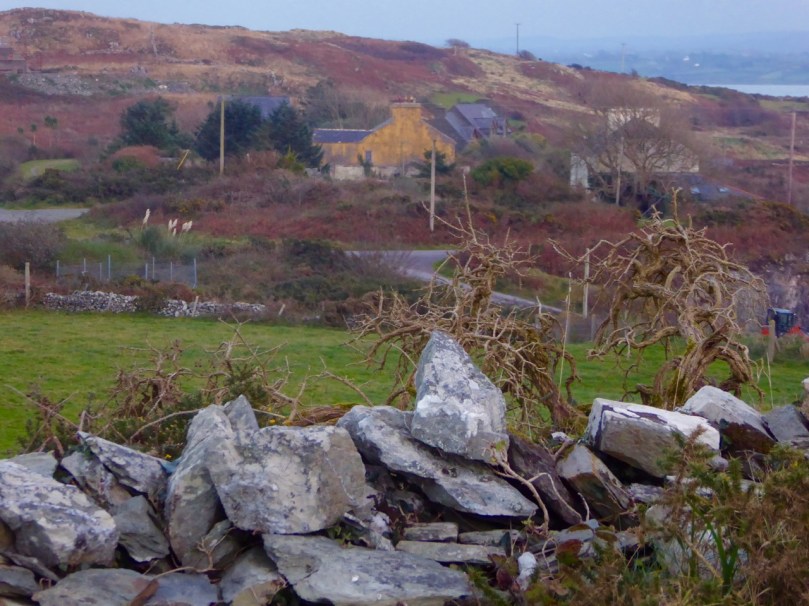
Cappaghglass*, where Tara lives and where we also are currently putting down roots, is undoubtedly beautiful, peaceful, pastoral and scenic. In the past it was also heavily industrial, with 400 tons of copper mined every year, and a population of several hundred people. It had a ‘Big House’ and a hotel: no traces remain of either. It had a dozen farms: now there are two. There are twenty homes in the townland – and another twenty holiday homes that remain empty most of the time.

Cappaghglass by Emma Jervis 2

I gratefully acknowledge Emma Jervis, whose photograph this is, along with the first one in the post

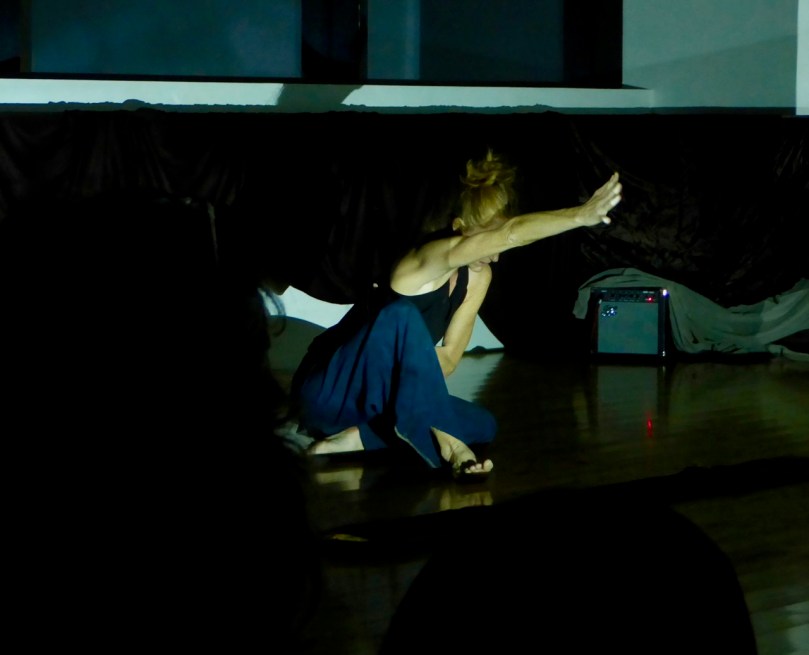
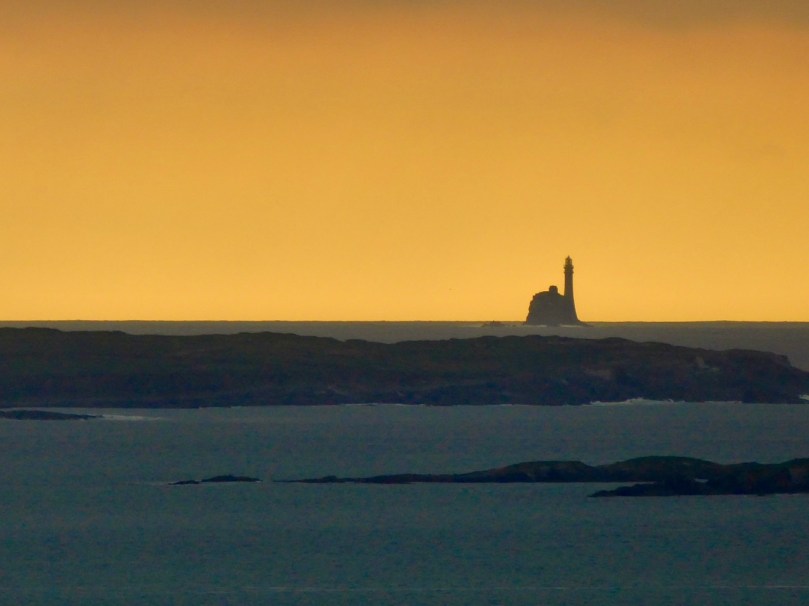
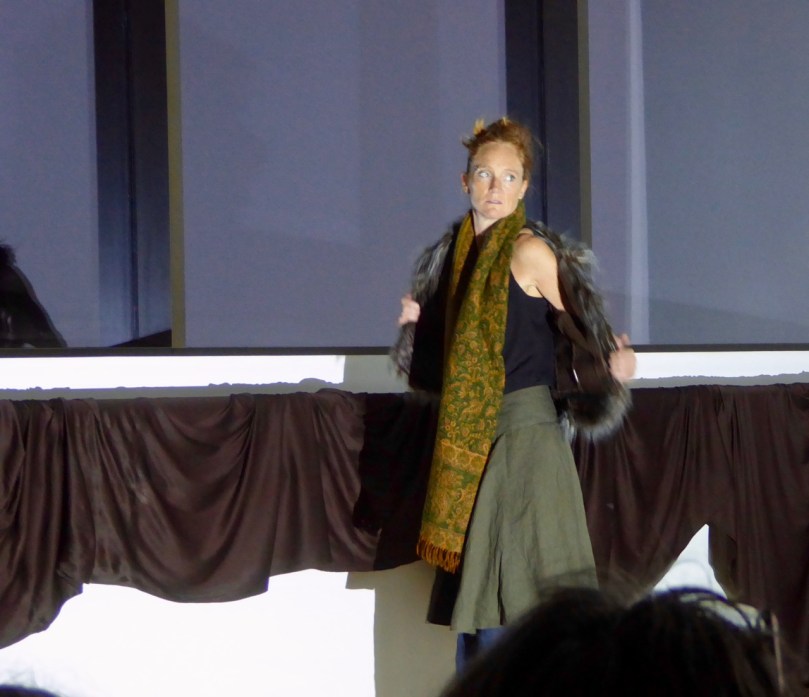
Tara danced it all for us. We watched as she explores her environment as a child, then takes the first tentative steps to leave. Buffeted by the world, she returns to the freedom and the green fields, and always the sea heaves in the background and the Fastnet Light turns on the horizon. She switches effortlessly, with a twitch of a scarf and body movements, from a young, then an old Irish woman to a Syrian refugee, inviting us to consider the experiences of displacement, migration, loss and belonging.

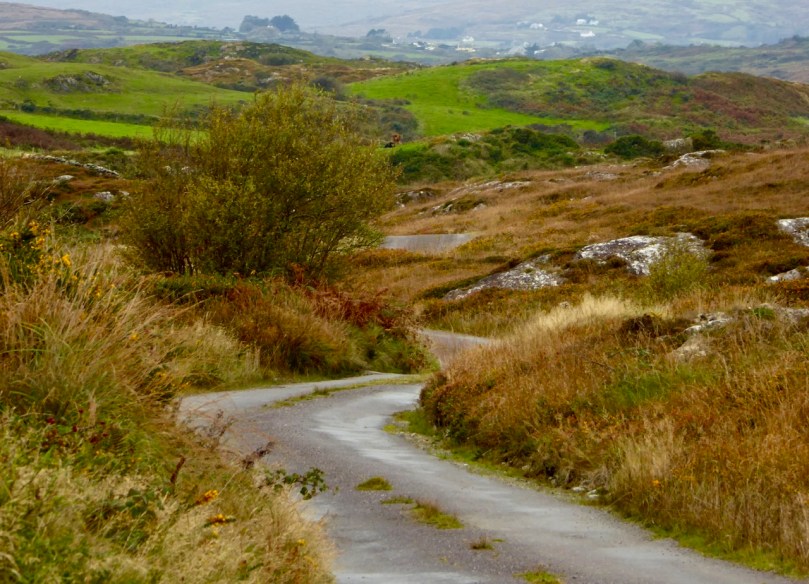
Road through Cappaghglass

The high road through Cappaghglass

Her body speaks to us, but she also uses words and song. She sings – simple repetitive chants – and uses technology to loop the sound so it repeats. Then she records a further piece and then another, and so layers of sound start to build and this provides the music to which she dances.

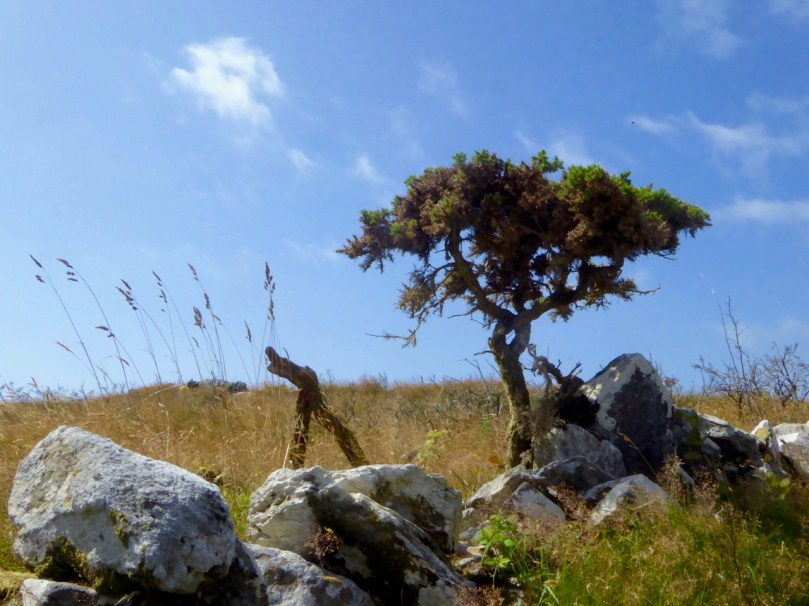
Gorse Tree

Visual layers are added – projections on the wall of a map, the sea, waving grass, and finally the Fastnet Light.

Fastnet in the sunset

Tara’s dancing is athletic and graceful. Her hands assume critical importance in conveying action and emotion. Clothing is donned and shed in a shorthand for identity.

Clothing is used

In  a final brilliant move she approaches the barre, over which is draped heaps of material. Reaching into the mass of cloth she ties two lengths around her waist and moves towards us. It is then we understand, as the material slowly slides away from the barre and follows her in an enormous train, that this is Cappaghglass – the whole townland spread out behind her, claiming her, rooting her, her home, her place.

townland train

We  walked the townland today in the fading light of late afternoon and we saw it afresh. Like Tara, like so many people, we have experienced migration and displacement. But this is home now and we find it rare and precious.

Ruined ivy-clad houses and the traces of tiny fields hint at families for whom this was home

Only art has the ability to reach down into you and clutch at your soul and make you think and feel in ways you haven’t thought and felt before. Tara did that for us with her dance. We are grateful for her gift.

Cappaghglass sunset*Cappaghglass, in Irish pronounced cappa gloss = the Green Tillage Fields

Clonfert, St Brendan – and the Ghost of British Fascism

yew walk 2016

Clonfert, Yew Walk

The yew walk at Clonfert  – ‘a great cathedral of natural growth’ – which Tom and Angela Rolt found so impressive on their visit to Clonfert, Co Galway, in 1946, during their travels around the waterways of Ireland. Their photograph is above; 70 years later we followed in their footsteps and took the picture at the top of the page

We were following the Rolt’s journey described in the book Green & Silver – this post is the sixth instalment of the Travel by Water series. We would certainly have included Clonfert in our own itinerary, as we could not have missed the incredible 12th century doorway of Clonfert Cathedral, a high point of Hiberno Romanesque architecture – that deserves a future post of its own. The Rolts walked to Clonfert from their mooring on the Grand Canal at Shannon Harbour, a round journey of over a dozen miles; we drove to Clonfert and managed to get thoroughly lost in the maze of tiny roads in that part of rural County Galway.

st brendan's grave inscription

The twelfth century doorway to Clonfert Cathedral – a medieval architectural masterpiece – and the grave of St Brendan which it faces

…Close behind the cathedral and sheltering with it among the fine trees which make Clonfert an oasis in the bogland, stands the Bishops Palace, now a lay residence. Having been courteously granted permission to explore the grounds, we found Clonfert’s celebrated yew walk which is reputed to date back to early medieval times. The yews have attained unusual stature, and their interlacing branches curve outward and then upward towards the light to form a series of those ogee curved arches beloved of the Gothic revivalists of the Strawberry Hill period. As the main walk runs from east to west with two short transepts radiating from a central crossing, the effect is truly remarkable and represents nothing so much as a great cathedral of natural growth. Moreover, the light within was appropriately dim and religious, the dark foliage excluding most of the light from the overcast sky. We found the silent twilight of this great nave of ancient trees strangely impressive, more so, in fact than the man-made cathedral close by. In spite of the difficulty involved we decide to make this the subject of our pictorial record of Clonfert rather than the often-photographed west doorway… (LTC Rolt, Green & Silver, George Allen and Unwin 1949).

nuns walk sign

Tom Rolt, the navigator of canals, devotes several passages in his book to Saint Brendan ‘the navigator’ and his many voyages all over the world until …having completed ninety three years… Brendan set out fearfully and alone upon his last voyage while his body was brought home to Clonfert for burial… (Green & Silver): …There is much evidence to support the belief that Brendan reached America nearly a thousand years before Columbus, that Newfoundland was his first landfall, and that he sailed from thence down the coast to the Bahamas and the everglades of Florida… Rolt goes on to admire the conjectured boat which Brendan and his small party of monks would have used: …The hull of this vessel of AD 551 bears a remarkable resemblance to that of an ice-breaker boat which I saw re-timbered at the yard of an English canal company in AD 1943. She was massively built of oak, iron fastened to the ribs, with a high prow and a whaleboat stern equipped with a steering paddle (the rudder had not then been invented). She was decked fore and aft, while the mast stepped in the well amidships bore a single lug sail. Her timbers were possibly skin-covered as the wooden curraghs of Inishbofin are today covered with canvas. She had considerable freeboard, and she shipped no oars but depended on sail alone. In this small but stoutly built craft, of which the Galway Pookawn of to-day is probably the direct lineal descendant, Brendan set forth to sail into the sunset…

Fascinating and curious juxtapositions in the offerings left at St Brendan’s Tree in Clonfert

The Rolts did not mention St Brendan’s Tree, which we encountered on our way to the yew walk. We don’t know how ancient or how recent this manifestation might be. It’s a horse chestnut and it is festooned with all the offerings one would find at a holy well – and more! In addition to statues, rosaries, cards, coins and ribbons there were toys, musical intruments, shoes – and underwear. We were guided to the yew walk by a forester working nearby: we expressed curiosity at the tree, wanting to know its history and efficacy but his response was pragmatic: “I’m Church of Ireland myself and wouldn’t be knowing anything about this sort of goings-on”.

Brendan made several voyages. Rolt continues the story: …It was upon Brendan’s return from his second voyage that he founded his monastery and college at Clonfert – Cluain Fearta Breannain or the meadow of Brendan’s Virtus. This was destined to become a great European University of three thousand students rivalled only by the similar institutions of Clonard and Bangor. Clear thinking was the liberal aim of education at this period… Fifteen years elapsed before Brendan once more set sail to Scotland, and Wales, visiting the great Welsh scholars Gildas the Wise and Cadoc of Llancarvan, and from thence to Brittany and the Cornwall of King Arthur… Where Brendan voyaged after this is uncertain, but rumour and legend associate the name of this indefatigable traveller with the Canary Islands, Teneriffe, Egypt, Palestine and the Isles of Greece. Yet the patron saint of seafarers returned to Ireland to die in the convent of his sister Brigh at Annaghduin…

Bishops Palace

Palace Interior

We found the Bishop’s Palace, which Rolt mentioned as being a ‘lay residence’ – presumably in good order – in 1946. 70 years later it is ruinous. We were intrigued and I determined to seek out its recent history. In doing so I chanced upon a whole section of Irish and British relationships which startled me, and seemed somehow to make entirely poignant the time span of 70 years which I have been observing in this series.

Discarded robin

A poignant moment – discarded robin and broken statue in Clonfert graveyard

I quote from an article in The Dublin Review, issue No 26, Spring 2007. This is an excellently written and comprehensive account of matters well beyond the remit of this little post, but I commend anyone who is interested in history – and the state of the world today – to read it. This extract continues the story of the Palace at Clonfert:

…In 1951, John Arthur Burdett Trench – obsessive huntsman since the age of eight, polo player and, in his mid sixties, possessor of a memory of having ridden home the winner of the Grand National at Fairyhouse at a time when English officers could still relax in the grandstand – sold Clonfert Palace near Eyrecourt in Co. Galway to an English family not long arrived in Ireland. The house had belonged to the Trenches for generations and had once been the residence of Church of Ireland bishops. It stood on the flood plain of the Shannon, a short walk from Clonfert Cathedral, hidden away behind its famous avenue of yew trees, an inconspicuous island of Ascendancy civility on the frontier of the vast bog. Like many other ancient mansions, its comforts and refinements had not survived the privations of the twentieth century and it was badly in need of restoration. Every day for months the new lady of the house would drive across the bogland roads from her temporary accommodation in Tipperary to supervise the installation of bathrooms, electricity and central heating, an Aga in the kitchen. Word spread that Clonfert Palace was being returned to its former glory and that there was work to be had from the new owners. They turned the ballroom into a drawing room and brought a carpenter from Banagher to build bookshelves that covered an entire wall. They filled the once-dilapidated rooms with fine furniture, replaced the broken sash cords on the windows, draped curtains made to measure in Dublin and hung paintings of their ancestors on the wall. They recruited a gardener, a housekeeper and a cook. Occasionally the lady’s husband would arrive in a large, exotic Buick driven by a French chauffeur.

Soon, it became known that the family bringing Clonfert Palace back to life was Sir Oswald and Lady Diana Mosley and their two sons. On the fifteenth of February 1952, the Westmeath Independent carried a short item entitled ‘Distinguished Residents’, disclosing that the previous Friday the Mosley family had ‘moved into occupation’ of the palace. ‘Sir Oswald and Lady Mosley, who have a large staff, are charmed with Ireland, its people, the tempo of its life and its scenery,’ the paper related, dutifully informing readers in a final sentence that ‘Sir Oswald was the former leader of a political movement in England’…

Frightening reminders of a world in chaos – less than a lifetime ago. Left – a poster from 1939 (Oswald Mosley led the British Union of Fascists) and – right – Mussolini and Mosley meet in Italy in 1936 (image from http://www.panorama.it/)

After the war, the Mosleys were virtually outcasts from Britain. Neutral Ireland seemed to offer them a retreat and a measure of civility. The Dublin Review continues:

…Sir Oswald would take his breakfast in bed. The Irish Times and Financial Times would be delivered from Eyrecourt. Lady Mosley would give her orders for the day to Mrs Swan, the cook. When Sir Oswald surfaced he might go for a long walk along the Shannon, passing the barges hauling cargoes of porter, coal or flour. On return he would set to work in his study. Nicholas Mosley has written about his father’s attachment to ‘the hierarchical … classless patterns of life … in the semi-feudal grandeur’ of the estate where he grew up in Staffordshire; in Clonfert Mosley seems to have replicated this idyll. Just as his grandfather had produced wholemeal bread, Sir Oswald supervised the growing of vegetables and ploughed the paddock to plant lucerne, a clover-like plant used for fodder…

bishops palace from neswpaper

This newspaper photograph of the Bishop’s Palace at Clonfert could have been taken around the time of the Rolt’s visit (1946) or after restoration by the Mosleys

The ‘idyll’ did not last too long. The Dublin Review again:

…One foggy night a few weeks before Christmas 1954, while Diana was visiting London, the Mosleys’ neighbours the Blake-Kellys were woken just before two o’clock by the whinnying of a pony in their stables. From their window they could see flames and smoke billowing from the Palace next door. Mrs Blake-Kelly sent her son to bang on the Mosleys’ front door and within minutes Sir Oswald, Alexander and their servants were standing on the lawn watching the flames consume their house. A French maid, Mademoiselle Cerrecoundo, rushed back into the house to fetch some clothes and was trapped at an upstairs window. Sir Oswald, Alexander and the chauffeur, Monsieur Thevenon, held a blanket under the window and she leaped to safety, hurting her back and her hand. Monsieur Thevenon drove to the Garda station in Eyrecourt and from there fire brigades were summoned from Ballinasloe and Birr. It took an hour and a half for the engines to arrive and by then more than half the house was lost to the blaze. The firemen cut through the roof with their axes to create a barrier to the advancing flames…

The story does not quite end there: as if some sort of retribution of biblical proportions were needed, even the land was punished. The Dublin Review concludes:

…By morning, when the firemen had finished their work and stood gazing at the hole rent through the roof of the house, cold westerly winds were gathering strength. It was the beginning of the worst storm in the midlands for a hundred years. Rain, sleet and snow poured down on the smouldering ruins of Clonfert and the winds reached hurricane force, knocking trees across the roads and felling the electricity wires that had been strung only in the last few years. Within a few days thousands of acres of land by the Shannon were flooded. The army came to evacuate farmhouses which were under three or four feet of water and drive cattle to high ground. Stone outhouses were washed away, corn stooks submerged and the swollen bodies of cows and pigs that could not be saved were left bobbing in the water…

protect

I was born in 1946, just when Tom and Angela Rolt were planning their exploration of Ireland’s waterways, but also directly after the turbulence of an awful global war which caused the deaths of over seventy million people. One of the elements which led to that war was the rise of fascism in Europe. In my lifetime to date I have seen fascism largely invalidated and the creation of a European Union whose members have worked towards common and positive aims. For seventy years there has been ‘peace in Europe’. Now – in 2016 – I have reason to worry about our children’s future; some things which should have been buried forever in the pages of history seem to be stirring. I desperately hope my foreboding is misplaced.

brendan stamp