Ballydehob Trad Fest

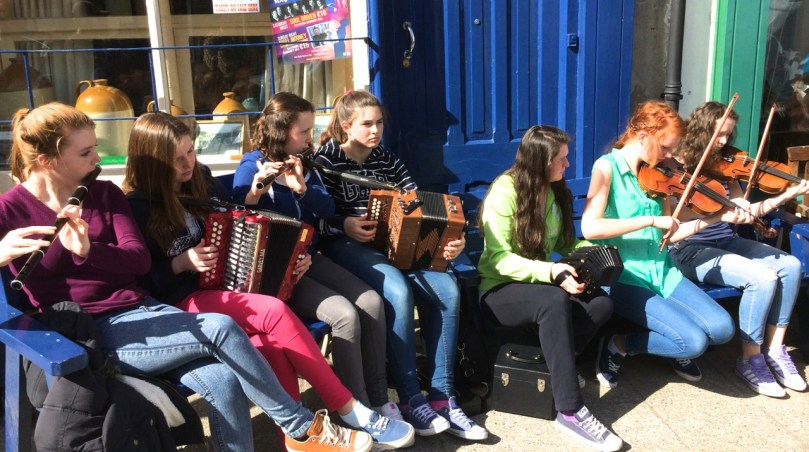
Young Traditional Musicians at the Ballydehob Trad Fest

Young Traditional Musicians at the Ballydehob Trad Fest

If you like traditional music, then Ballydehob was the place to be this weekend. Féile Átha Dá Chab, the Ballydehob Traditional Music Festival, had us bouncing on our bar stools, hooting and cheering in our concert seats, and applauding the talent of hoards of youngsters.
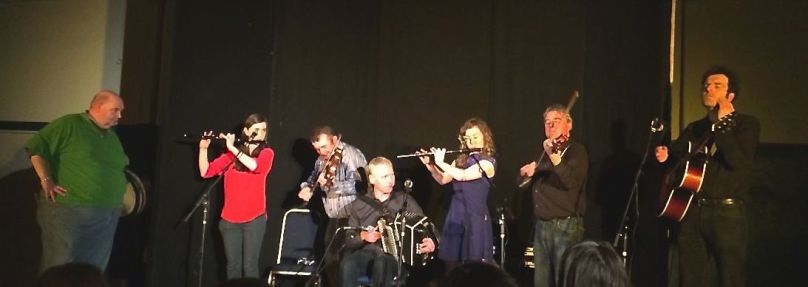
Finale of the Four Men and a Dog Concert

Finale of the Four Men and a Dog Concert

The Festival kicked off with an outstanding concert by Four Men and a Dog. Playing, singing, telling stories, and with the unique wit of Gino Lupari (an Italian bodhran player with an Irish accent) they entertained us for over three hours in the village hall. They invited two talented local girls to play with them, and with Mairead and Maria Carey on their flutes, we were on our feet for an intense finale that left us exhilarated.
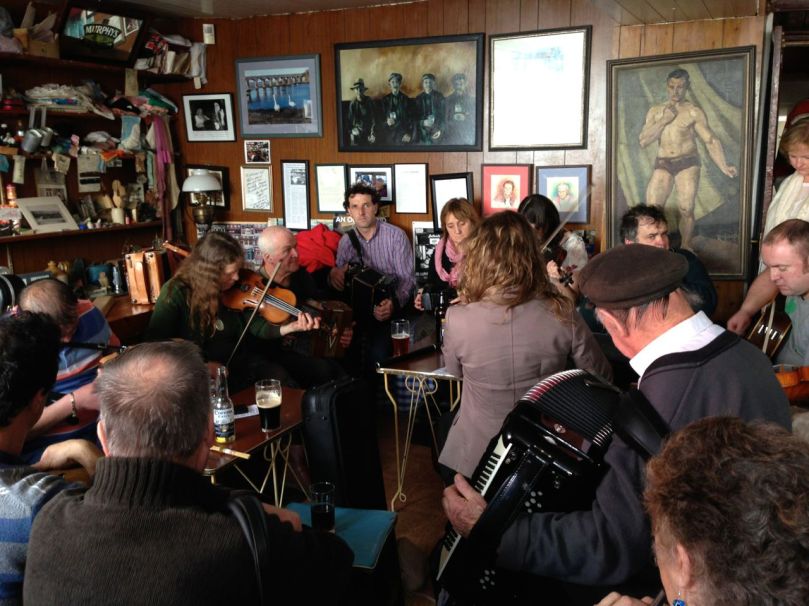
Sunday afternoon session at Levis's

Sunday afternoon session at Levis’s

Once the concert is over, where do you go? To the pubs, of course, where there were sessions going on till all hours. We were in Levis’s, but we could have been in any one of half a dozen pubs, all with great music.
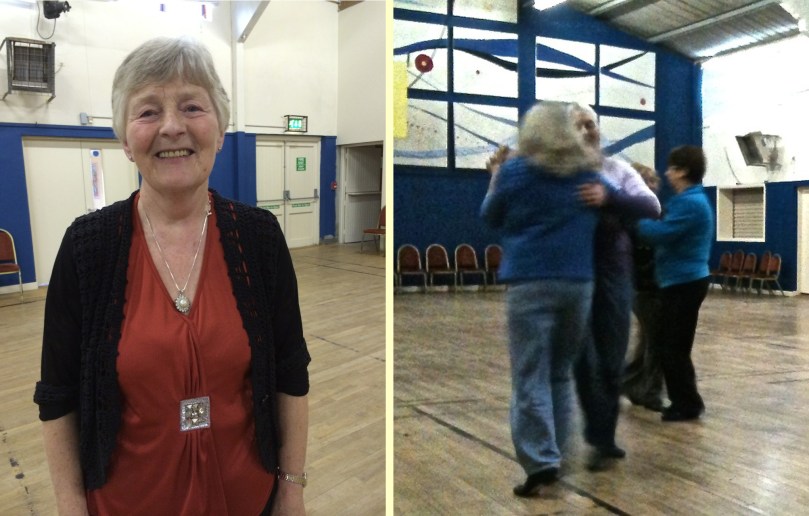
 

Maureen Culleton/Learning how to twirl

Maureen Culleton/Learning the steps

Our friends from Devon, Chris and Gill, who are staying with us, bravely signed up for the set dancing workshop next day, along with sixteen others. They are tango dancers and in great shape, but by noon they were exhausted and had a whole new respect for this form of dancing. Maureen Culleton, highly experienced and very encouraging, introduced some new dances to the locals and put everyone through their paces. The day culminated in a Céilí (pronounced kaylee) where the set dancers danced into the wee hours to the music of the Striolán Ceilí Band from Kerry. People around here love set dancing and are very good at it. It’s an activity that brings together all ages in country villages. Here’s a good example of set dancing, with the Striolán Ceilí Band playing in the background.
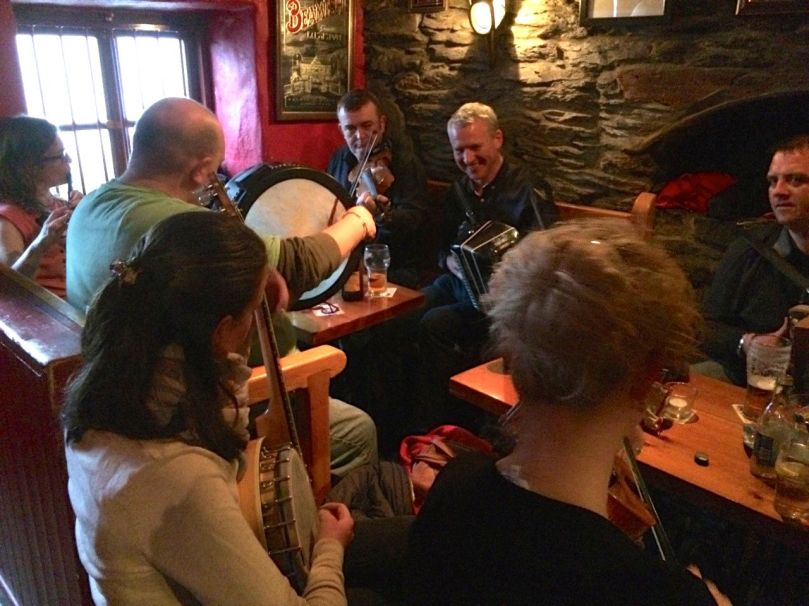
In Rosie's

In Rosie’s

Robert and I aren’t set dancers so we took to the pubs (amazing how much time a couple of non-drinkers can spend in pubs!) for the sessions that were going on in most of them. Members of Four Men and a Dog were in Rosie’s, playing with local musicians. Getting to see them in such an intimate setting was great.
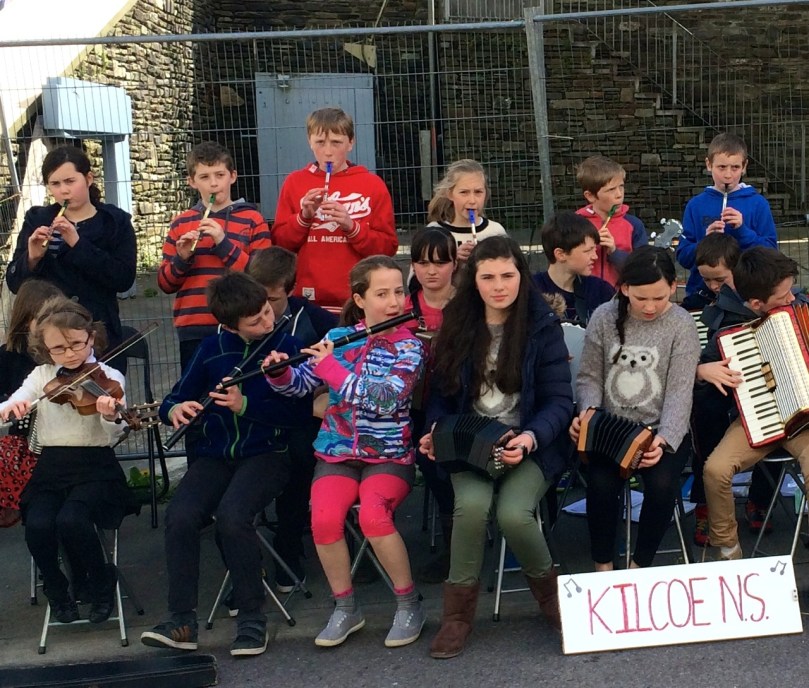
The Kilcoen Kids

The Kilcoe Kids

Today, Sunday, the sun came out and the streets of Ballydehob filled up with young musicians competing in the Street Seisiún Competition. Seisiún, pronounced seshoon is the Irish word for session. And a session, in case I haven’t explained this before for our non-Irish readers, is the word used for a bunch of traditional musicians getting together to make music. The younger children, of course, stole our hearts, singing, dancing and playing music on the streets. The teens were remarkably accomplished: many of them have been studying in the Comhaltas system for years.
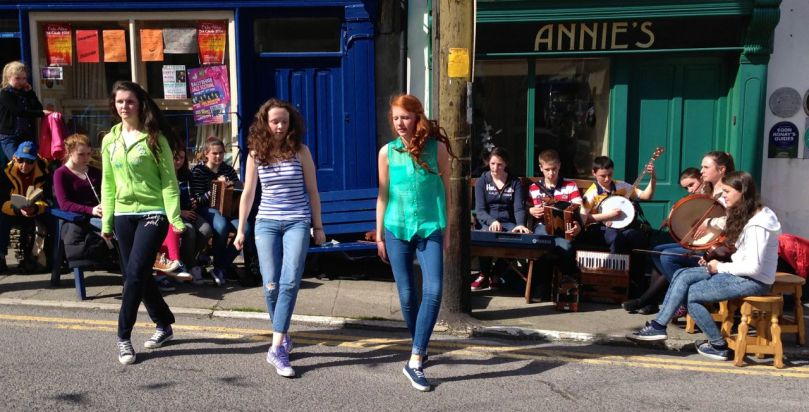
Dancing in the streets

Dancing in the streets

As I type, people are wandering from pub to pub on the session trail in Ballydehob. When you love something, you just don’t want it to stop! Fortunately, in this part of Ireland, the music is alive and well – and in good hands for the future.
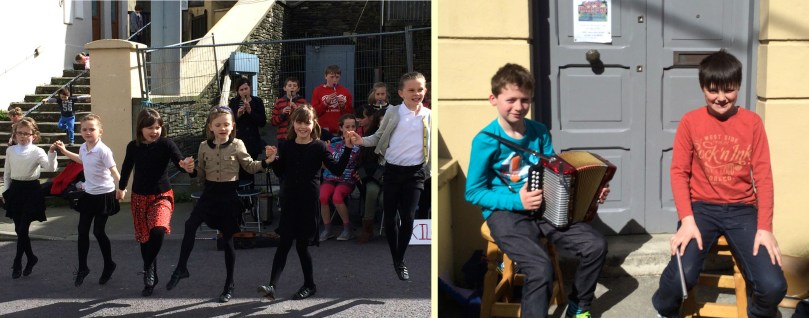
 

The future is assured!

The future is assured!

Well done, Ballydehob, on another fantastic traditional music festival!
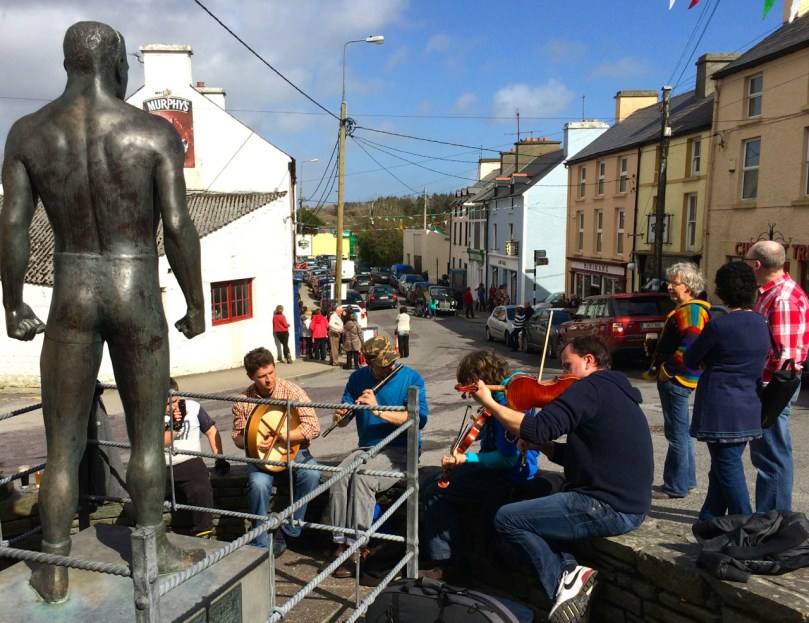
Danno enjoying a private concert

Danno enjoying a private concert


Whiddy Island

Whiddy Island from Sheeps Head

Whiddy Island from Sheep’s Head

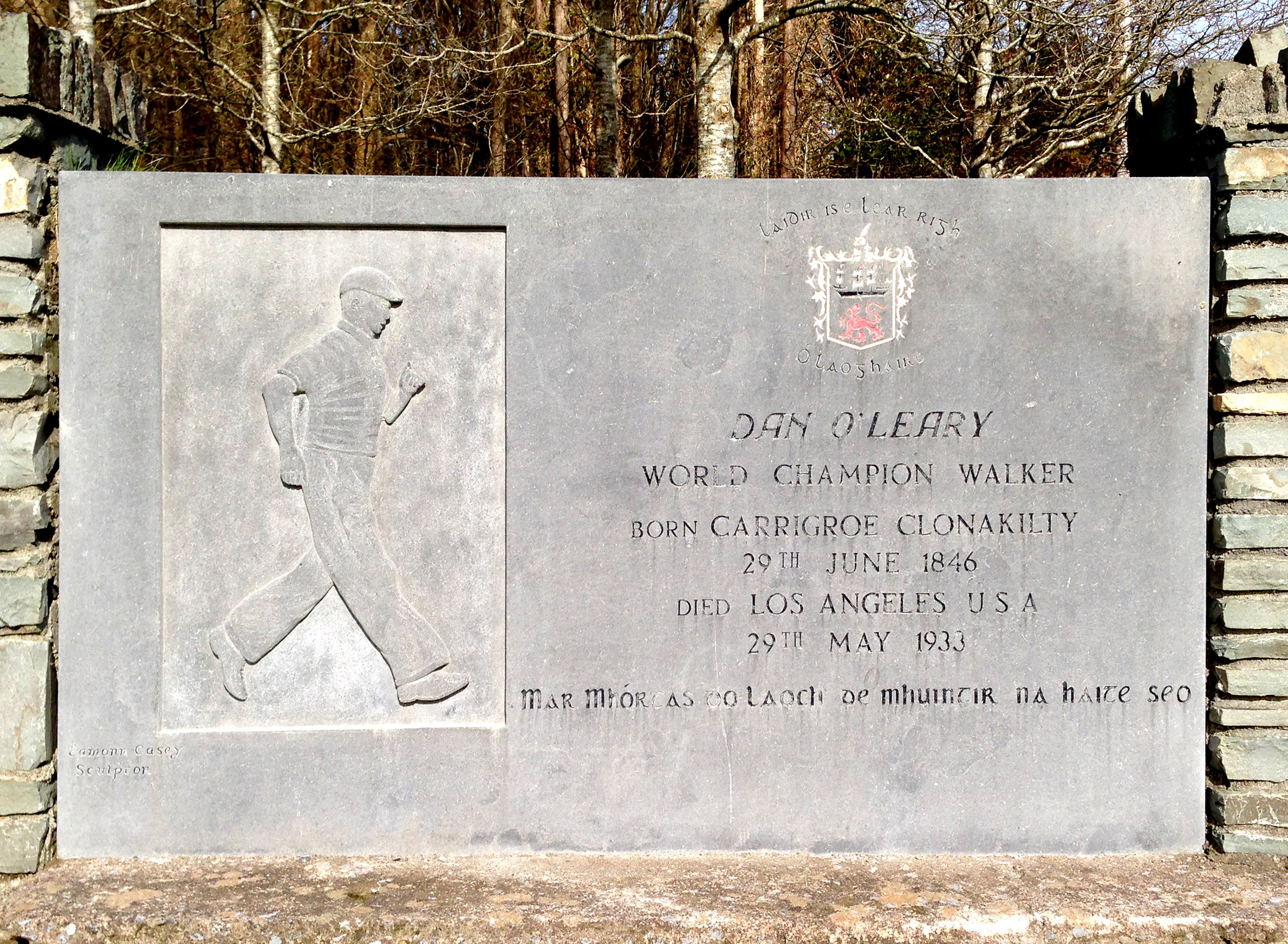
On a sunny Sunday in March, we were lucky to find out about a guided tour around Whiddy Island and enthusiastically signed up. Our guide, Tim O’Leary, runs the ferry to the island and its only pub, the Bank House. He is a native Islander and extremely knowledgeable about the island’s history, traditions, stories, flora and fauna. 

Off to Whiddy Island on a beautiful day in March

Off to Whiddy Island on a beautiful day in March

It was a gorgeous day for a tramp – a good thing as it’s a six mile walk – and the weather allowed us to drink in the glorious views and to stand at various spots listening to Tim as he shared stories of life on the island.

Whiddy Island Graveyard

Whiddy Island Graveyard

In the graveyard he told us about the island tradition of burial: a coffin has to be lifted from the boat at a particular quay and laid on a special coffin rock. From there it is shouldered uphill to the burial ground by four men of the same last name as the deceased. Nothing but human power can be used on the long uphill climb, or to dig the grave or conduct any part of the service. “We will carry this tradition on,” he said, “as long as we can.” The burial ground itself is part of an ancient ecclesiastical site and commands views across the island.
View out to Bantry Bay from the Island high point

View out to Bantry Bay from the Island high point

We learned that many island families made a good living in times past from fishing and fish processing, and it still an important part of the economy, although now mussel beds have replaced fishing lines and ‘pilchard palaces.’

Tim shows us the 'hairy rope' used to grow mussels. Mussel beds ring the Island.

Tim shows us the ‘hairy rope’ used to grow mussels. Mussel beds ring the Island.

The land was famous for being fertile and one historical document talks about the earliest potatoes always being grown on Whiddy. All this activity supported up to 800 people but like many places in West Cork the population was decimated by the Great Famine. Now, fewer than 30 people live here year round.

The Island can no longer support a school

The Island can no longer support a school

We walked up to the remains of O’Sullivan Beare’s castle, which functioned more as a prison than a dwelling as it housed those who needed to be ‘encouraged’ to pay the taxes he imposed for fishing rights. We explored the area that had once been a thriving American Air Force base for a brief period at the end of World War I – nothing remains except acres of concrete and memories of the vibrant life that the service personnel brought to this small community. Other defensive structures exist on the island too – several ‘batteries’  with huge guns were built after the French invasion of 1796 but alas they are too unsafe to visit.

O'Sullivan Beare's stronghold

O’Sullivan Beare’s stronghold

The west end of the island contains enormous tanks that now house the Irish national oil reserves. It was built as a Gulf Oil terminal in the late 60s and was the scene of a horrifying accident in 1979 when an explosion sank a French tanker, the Betelgeuse, and 50 people lost their lives. The enormous tanks, behind their barbed wire barriers, loom darkly against the landscape, a permanent reminder of this awful tragedy.

The oil tanks at the west end of the Island

The oil tanks at the west end of the Island

Take the ferry across to Whiddy Island any time and hike around the hills and the beaches. But if you can, catch one of Tim’s guided walks, and finish with a well-deserved pint in the Bank House at the end of the day.

There's nothing like a guided tour with Tim!

There’s nothing like a guided tour with Tim!

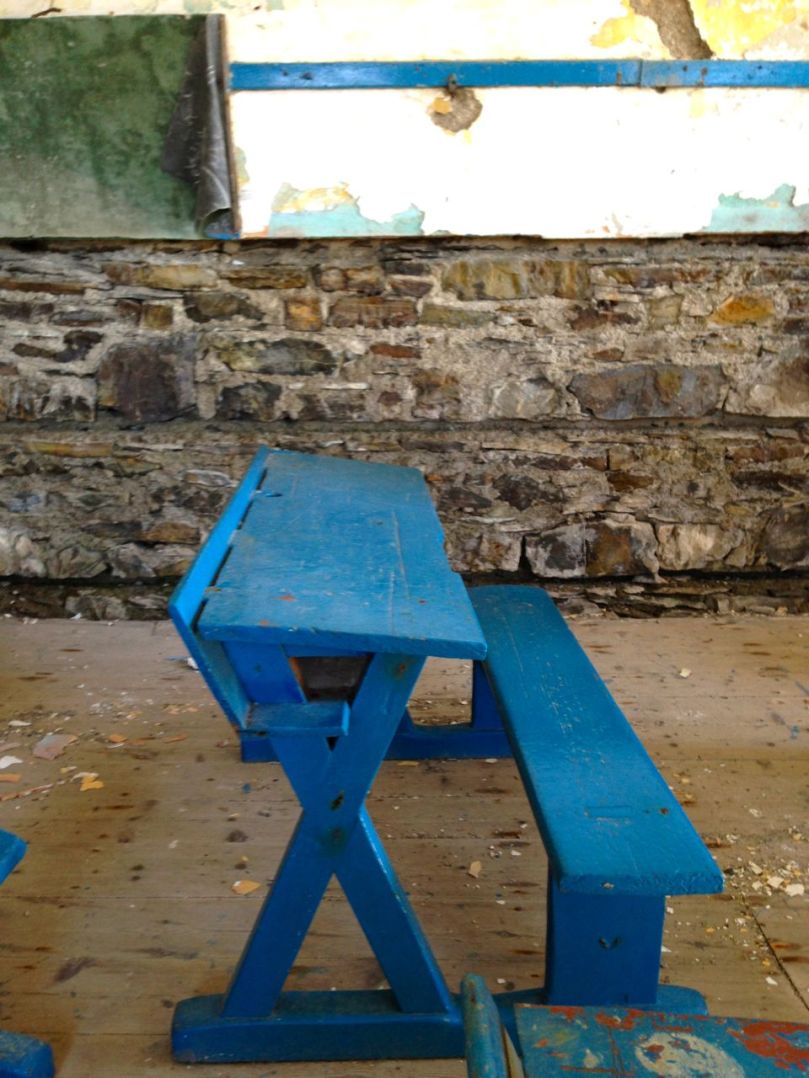
One thing, though…when Tim sat in this desk back in the day, his teacher forgot to teach him about distances. So just take it with a grain of salt when he tells you there’s “only another half mile to go.”

desk

A note on the West Cork Speak Competition! Deadline extended to the end of next week. Only one entry so far, so don’t be shy and get those conversations in!

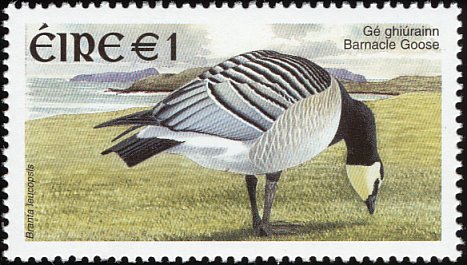
The Barnacle Goose – and Other Wonders

Barnacle Geese portrayed on canvas by Charles Tunnicliffe

Barnacle Geese portrayed on canvas by Charles Tunnicliffe

Here we are in Lent and the butchers are feeling the pinch.

Excuse me?

Well, strictly speaking we shouldn’t eat any meat or animal products during the 40 days of Lent. So that’s a lean time for the milk sellers, the cheese makers and the egg producers as well as the butchers. 

Surely that’s not still the case?

Depends on how strictly you observe the ‘abstinences’. But – I have to be honest – these rules were officially relaxed by the Catholic Church in Ireland in 1917. Still within living memory, however – just. And old habits die hard… 

So, tell me a bit more about Lenten traditions.

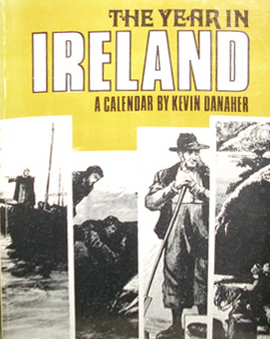
Published by Mercier Press, 1972

Published by Mercier Press, 1972

I will: I’m relying for much of this on The Year in Ireland, an excellent book published in 1972 and written by Kevin Danaher, who at that time was Lecturer in Irish Folklore at University College, Dublin. While he derived some of his material from printed sources he cites ‘…memories of a childhood spent in a district where old beliefs and customs still survived vigorously…’ and ‘…more than thirty years of research into Irish folk tradition…’ so it’s reasonable to say that much of the popular culture he describes was alive and well in the middle of the twentieth century – at least around his native part of the West of Ireland, County Limerick.

Now, the butchers….?

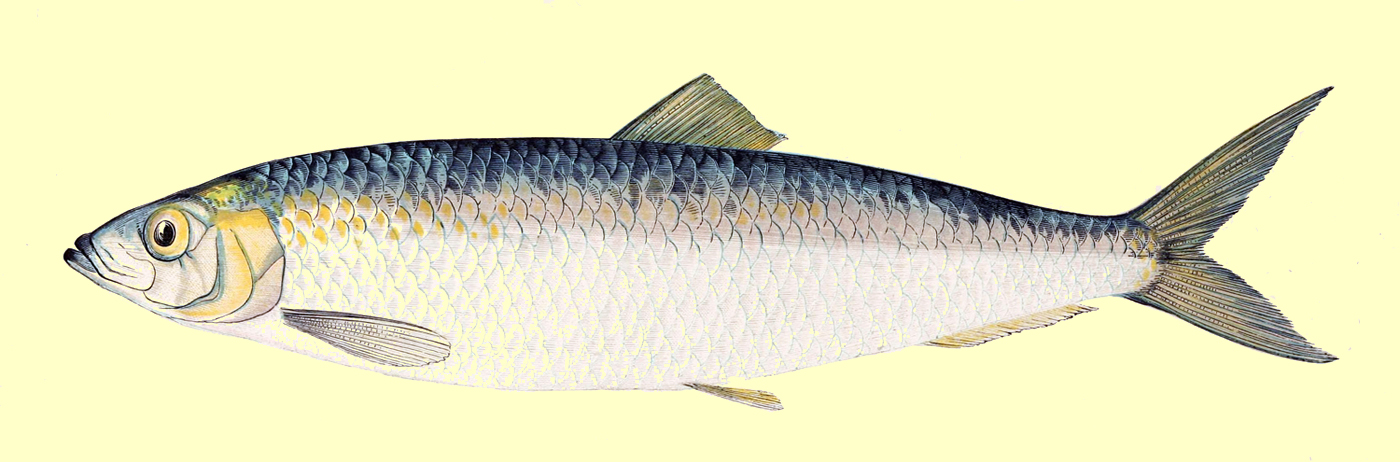
Yes – so pleased were they that Lent was over that on Easter Saturday in Cork, Drogheda and a few other towns they held a mock funeral for the Herring (for salted Herrings became a staple diet during the ‘abstinence’). The butchers put a Herring on the end of a nine foot long lath and carried it through the streets, insulting the poor fish as they went. When they got to the bridge the Herring was hurled into the water and they hung up a quartered Lamb decorated with ribbons and flowers instead.

herring

Another commentator in 1916 describes a remembered ceremony in County Monaghan:

whippingtheherring‘…On Easter Sunday morning, immediately after last Mass, all the young men and maidens, dressed in their best, flocked into the town of Carrickmacross, where they formed into a procession, headed by one of their number carrying a long pole, from the top of which dangled a Herring, and marched to the tune of whatever musical instruments they could muster (fiddles were the most common in those days) till they came down to the lake just outside the town, when the Herring was taken down from the pole and thrown into the water amidst the cheers and laughter of the spectators… The Herring, being the cheapest and most plentiful fish, was the principal dish of the poorer classes, and of some of the better-off people, too; consequently the people grew so tired of seeing him day after day on their tables that they conceived the idea of getting rid of him by drowning, after which they would indulge in all kinds of games and pastimes, amply making up for the quiet time they spent during Lent, as no one would think of enjoying themselves during the Holy Season…’

Enjoyment being another ‘abstinence’ then?

Certainly. Danaher again: ‘…there was no merrymaking during Lent, no music, dancing, card playing or visiting friends. No mother would visit her daughter newly married at Shrove until Lent was over. Musical instruments were stored away. In many houses the pack of playing cards was burned and a new pack was bought at Easter. Many people, women (who were equally addicted) as well as men, gave up smoking and some in excess of zeal broke or burned their tobacco pipes. And although some topers found solace in the old couplet:

 – Good luck and long life to the Council of TrentIt took away meat but it left us the drink –

large numbers took a pledge against alcoholic drinks ‘for the duration’…’

The Council of Trent

The Council of Trent

I’m getting dizzy – just tell me about the Barnacle Goose.

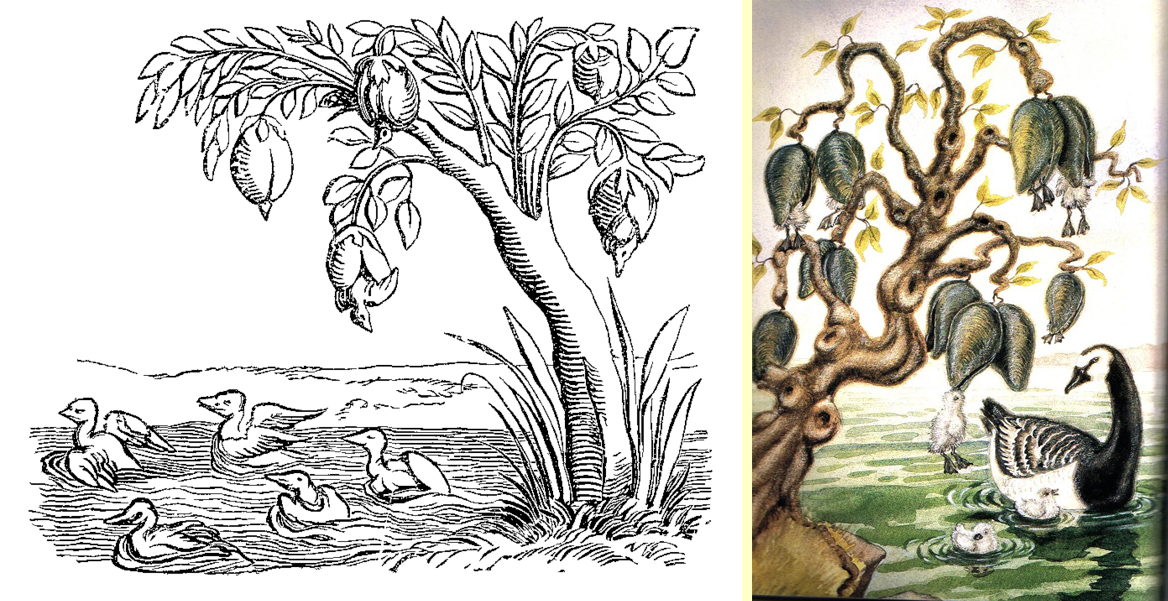
Human ingenuity has a way of overcoming all difficulties and we find that the clergy were eating Geese throughout Lent! This was because it was once thought that the Barnacle Goose (and the Brent Goose) – both of which winter on our west coast but don’t breed here – should be classified as fish. This is first mentioned by Geraldus Cambrensis who visited Ireland in the twelfth century and described the wonderful way in which these Geese came not from eggs but from Shellfish – or grew on trees!.

img4465-1

He goes on to say ‘…Accordingly in some parts of Ireland bishops and religious men eat them without sin during a fasting time, regarding them as not being flesh, since they were not born of flesh..’ More recently – shortly before the 1914-18 Great War – Martin Duncan, librarian of the Zoological Society, was lecturing in the North of Ireland on marine mammals when he was asked by a local Parish Priest ‘…whether he had told the whole story of the Barnacle “because his people were in the habit of eating the Barnacle Goose during Lent under the impression that it was more fish than fowl”, and stating that a comparatively recent pope had granted a dispensation to the people of Derry to continue to eat the Barnacle Goose during Lent as an ancient and established custom…’ The same licence obtained all along the Kerry coast ‘…not because they had any belief in the mythical story of its origin, but because they knew that it lived more on the sea than on the land, and so acquired fishy character…’

In fact it is true that a pope commented on the topic, but that was Innocent III in 1215 – and he condemned it. As Danaher relates, ‘…news of this does not seem to have yet reached the people of the west of Ireland…’

Good for them! Oh – and what is the collective noun for Barnacle Geese?

A Crustacean of Barnacle Geese…

BarnacleGooseIE

March Miscellany

shovel

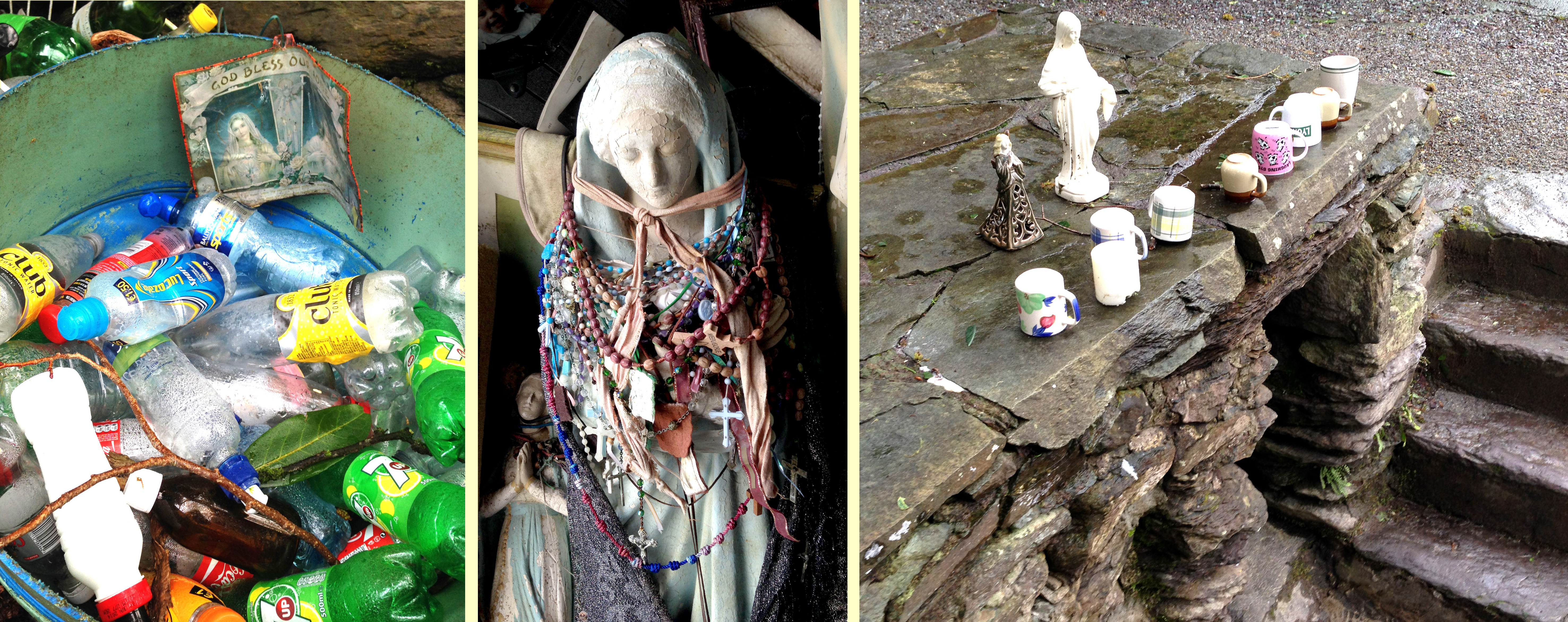
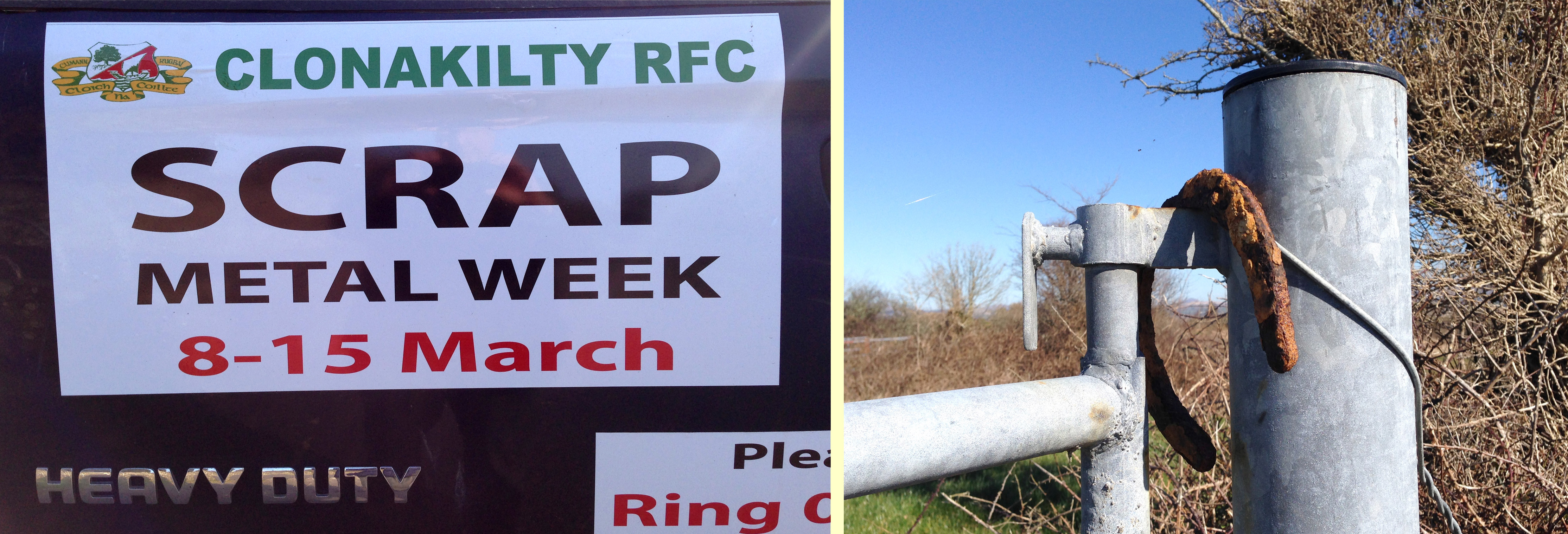
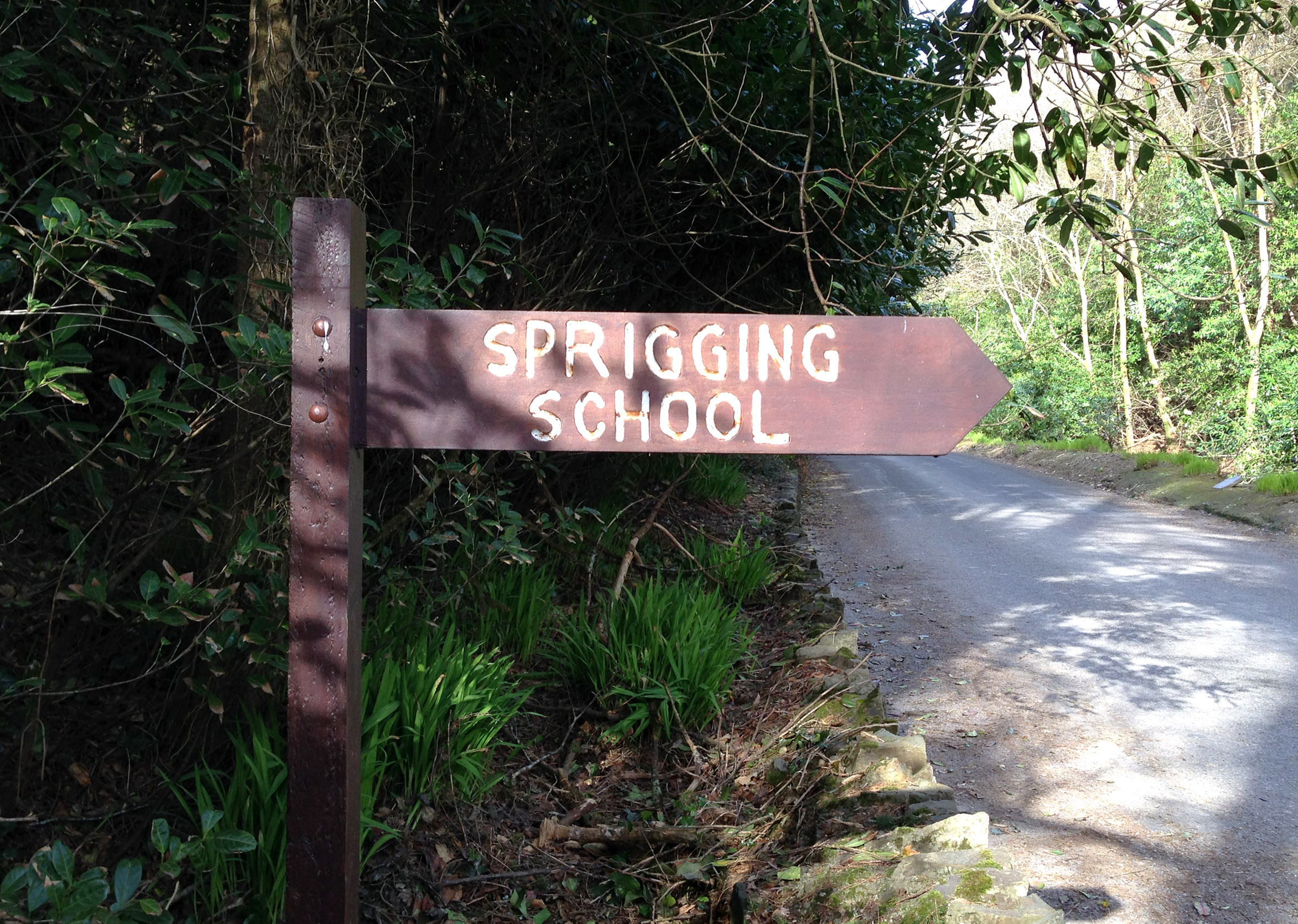
Another selection of Irish ‘normalities’ which have caught my English eye over the last few months (the previous selection is here). They have amused me, surprised me and sometimes baffled me. I have the greatest respect for their ‘Irishness’ – a unique outlook on life and culture from a small island which has made a big mark on the world. Mostly the images need no commentary but I have provided a little information for the curious at the end of the post.

them jobs

holy water

scrap

sprigging

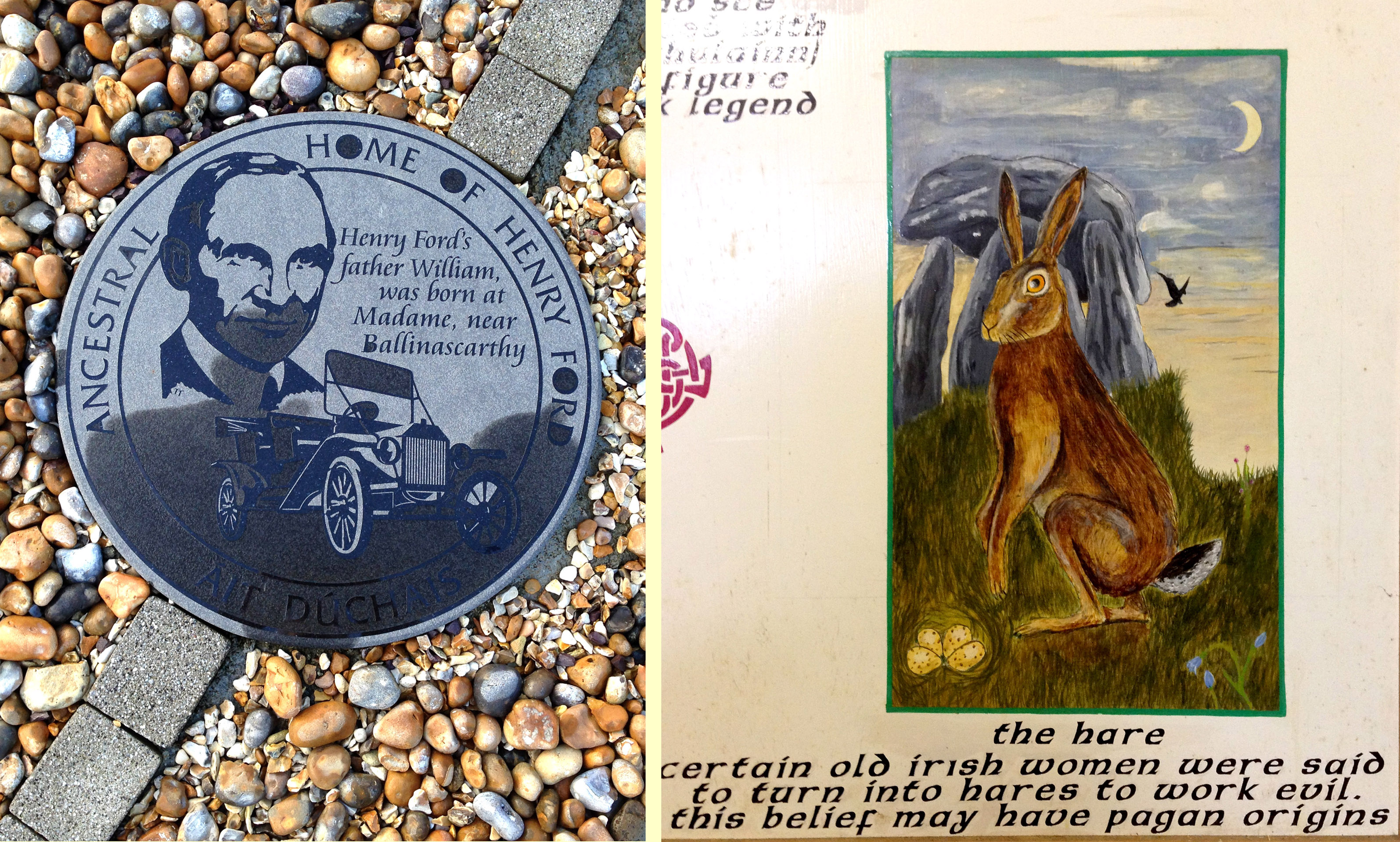
ford hare

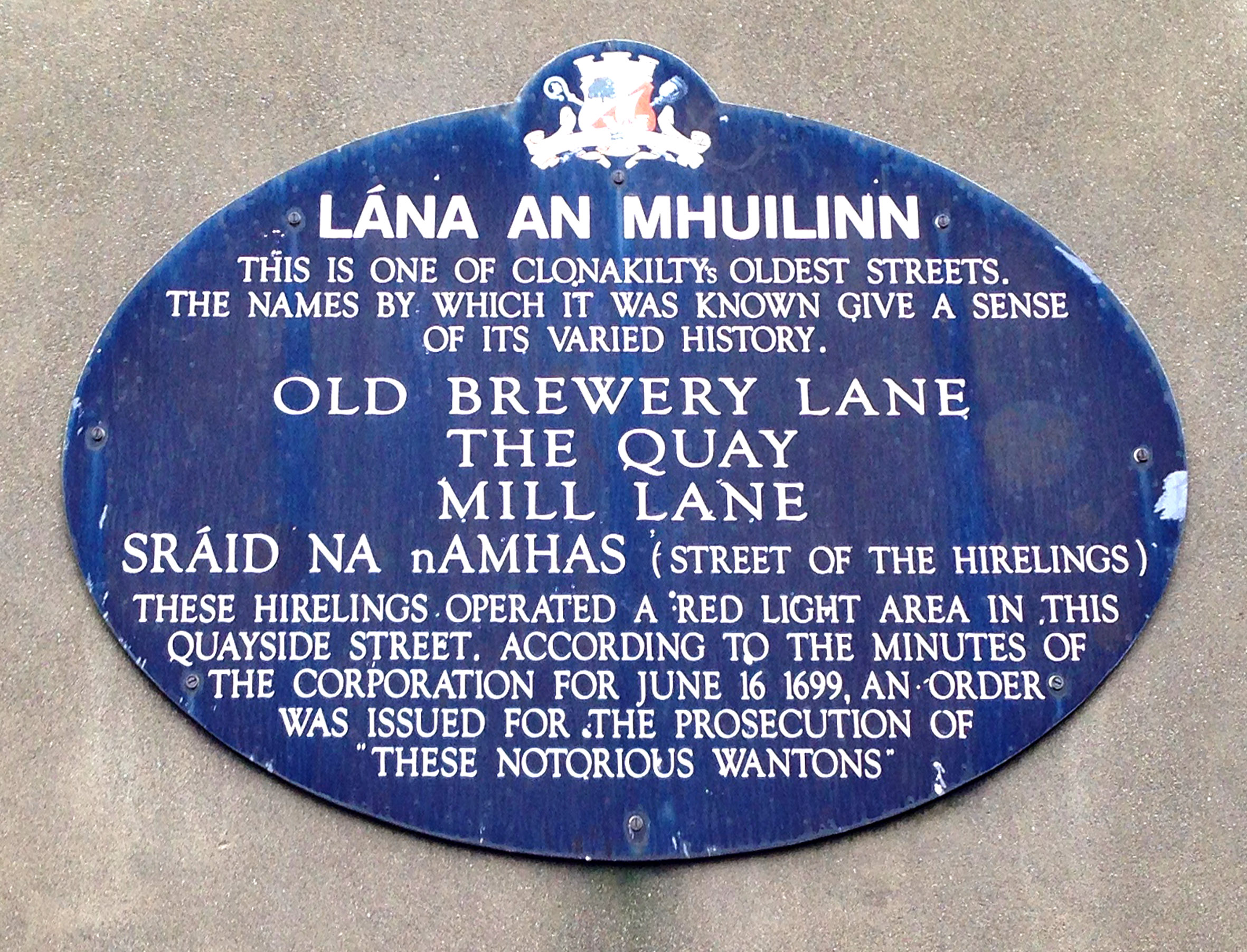
red light

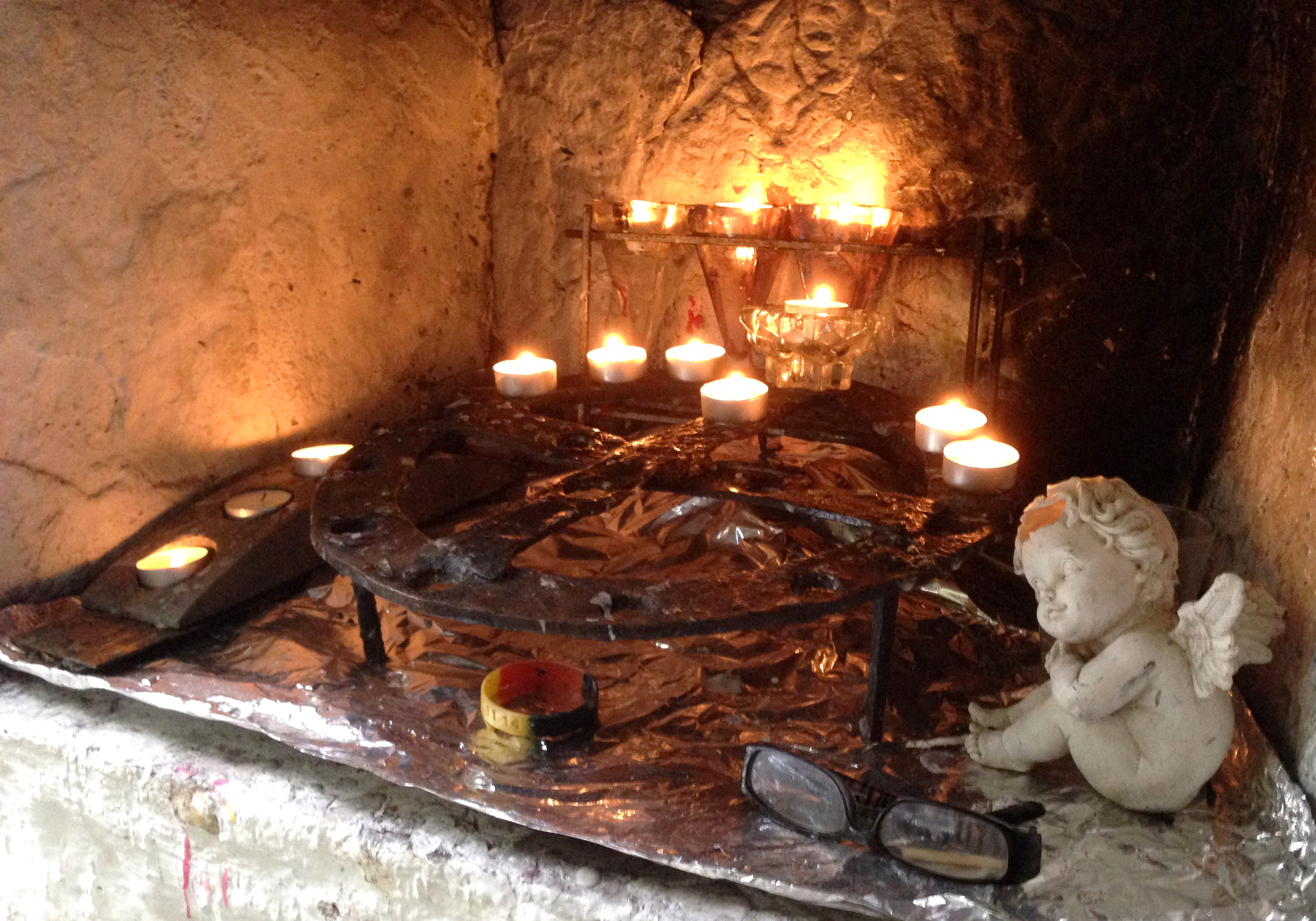
shrine

luckyhouse

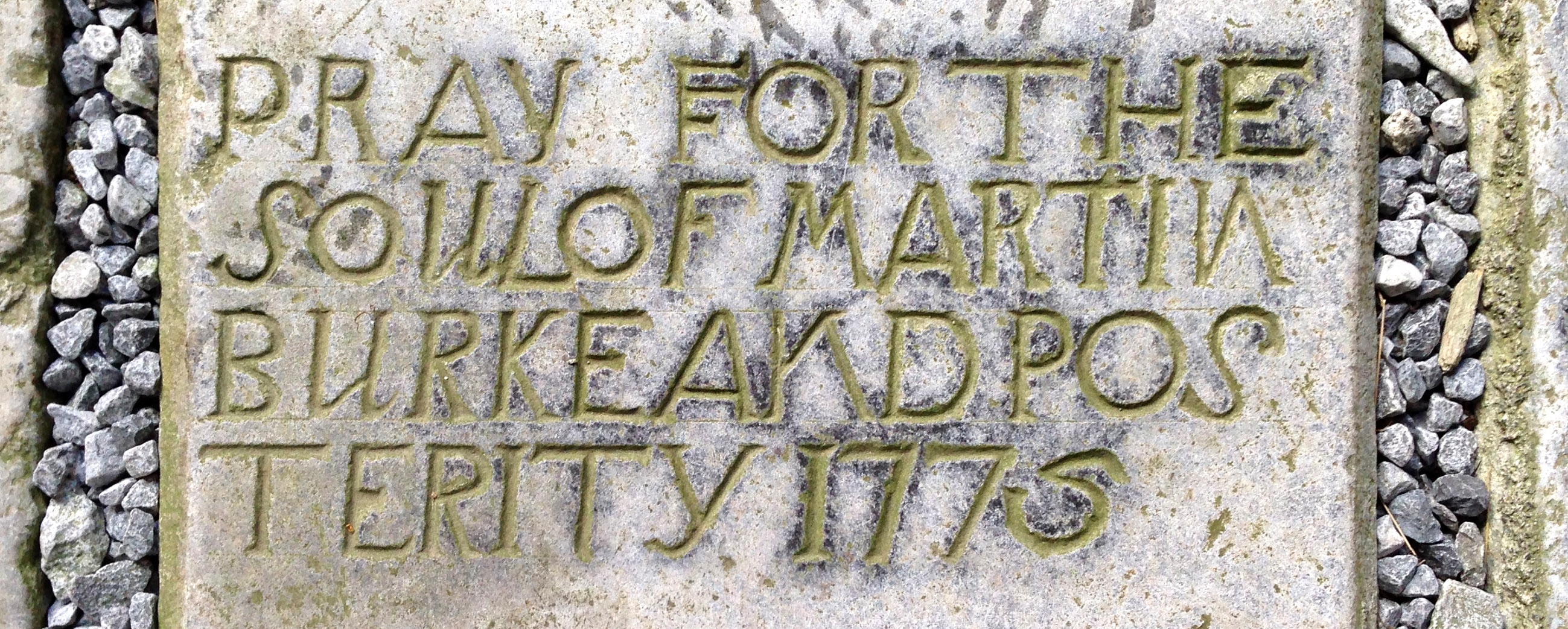
posterity

till he comes

walker

walking

offerings

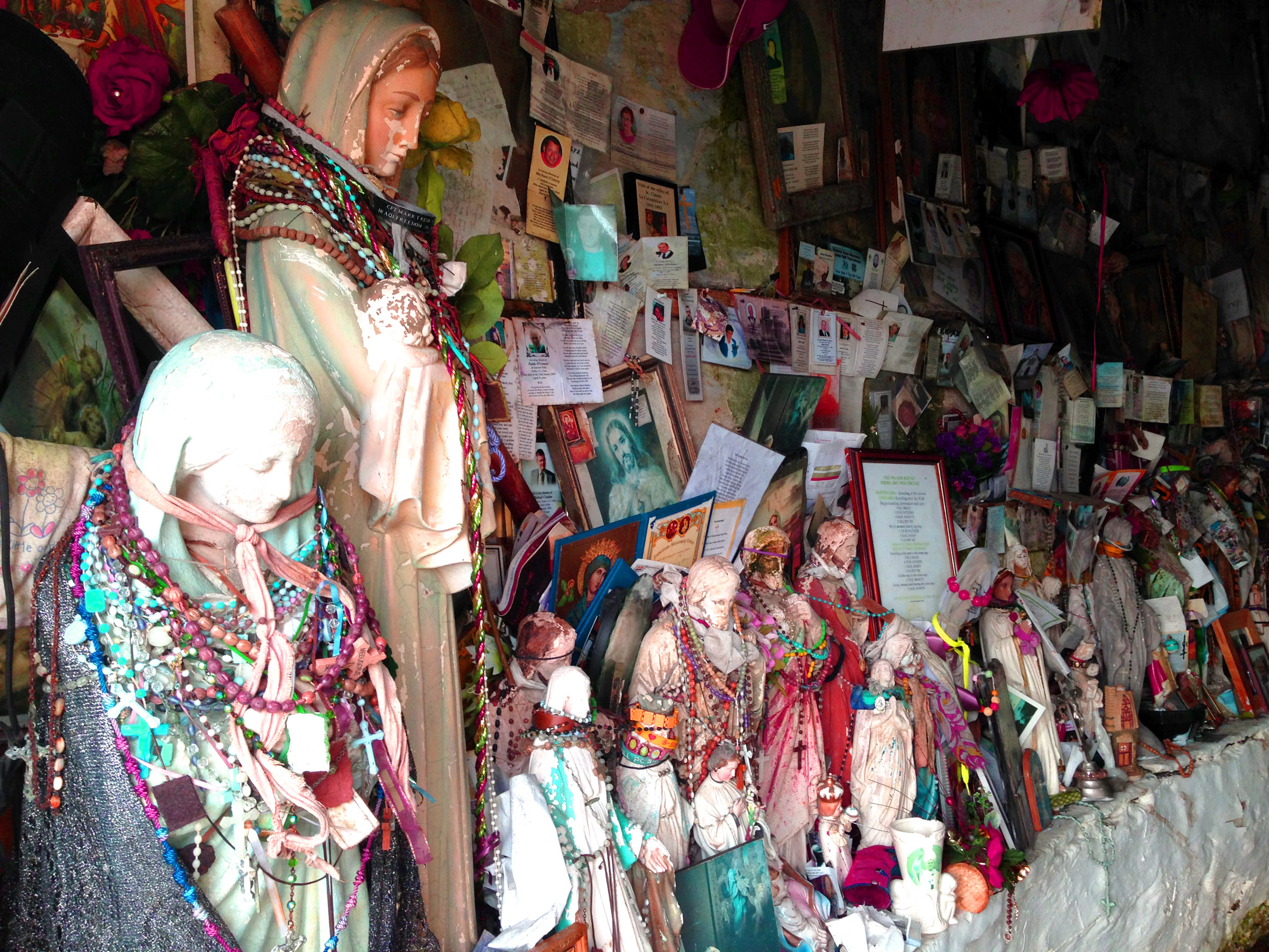
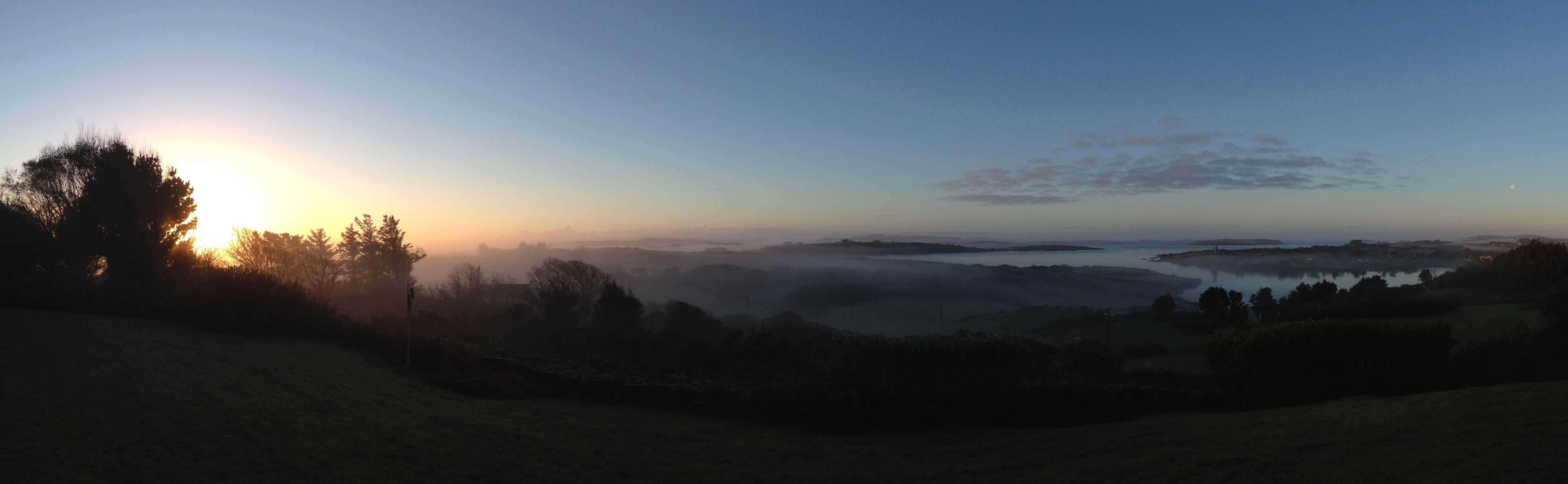
Most of the images are from our own neighbourhood, but the spectacular wells and shrines – including the one above (to St Brigid) were seen on our trip to Clare. Can’t resist just one more image: it’s the view we enjoy every day from Nead an Iolair, constantly changing and always arresting.

panorama

West Cork Speak: Lessons 5 to 7. And PRIZES!

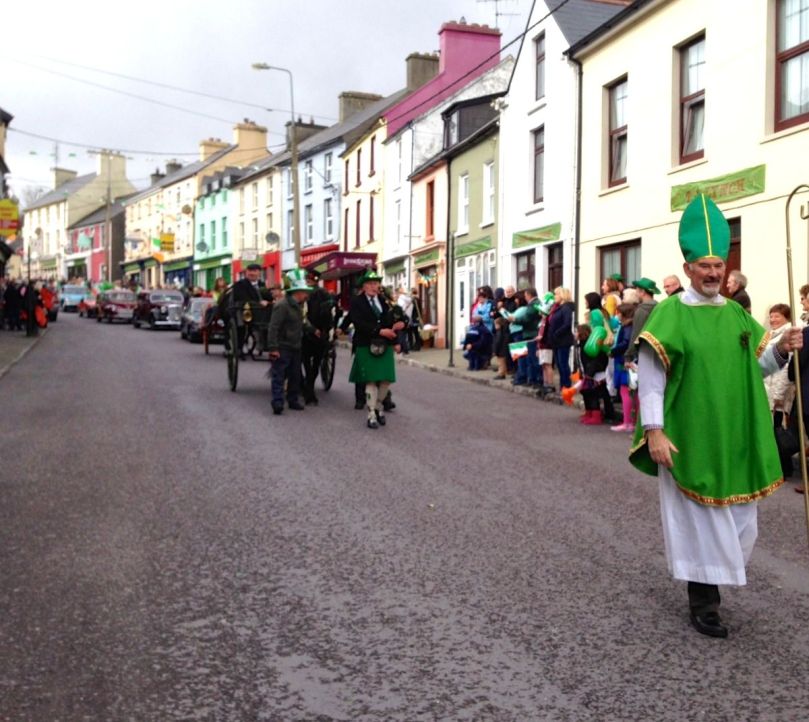
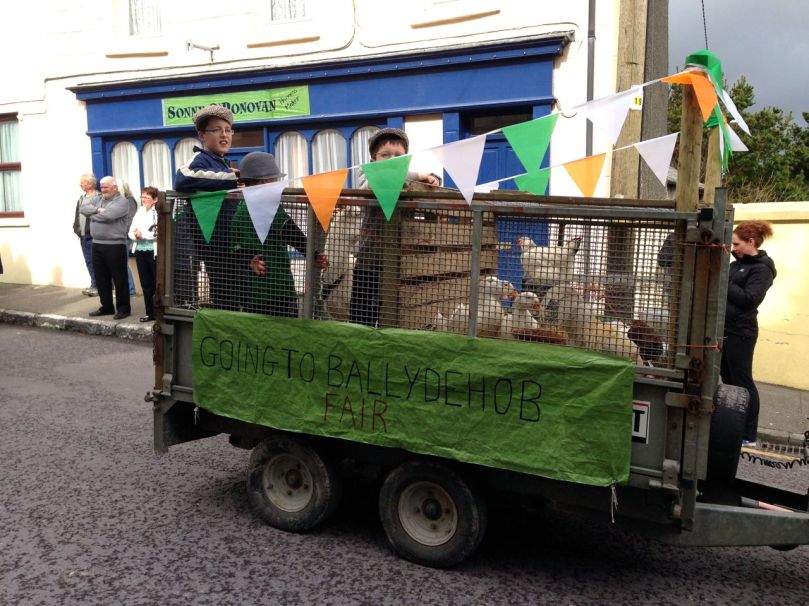
Here comes himself at the head of the parade

Here comes himself at the head of the parade

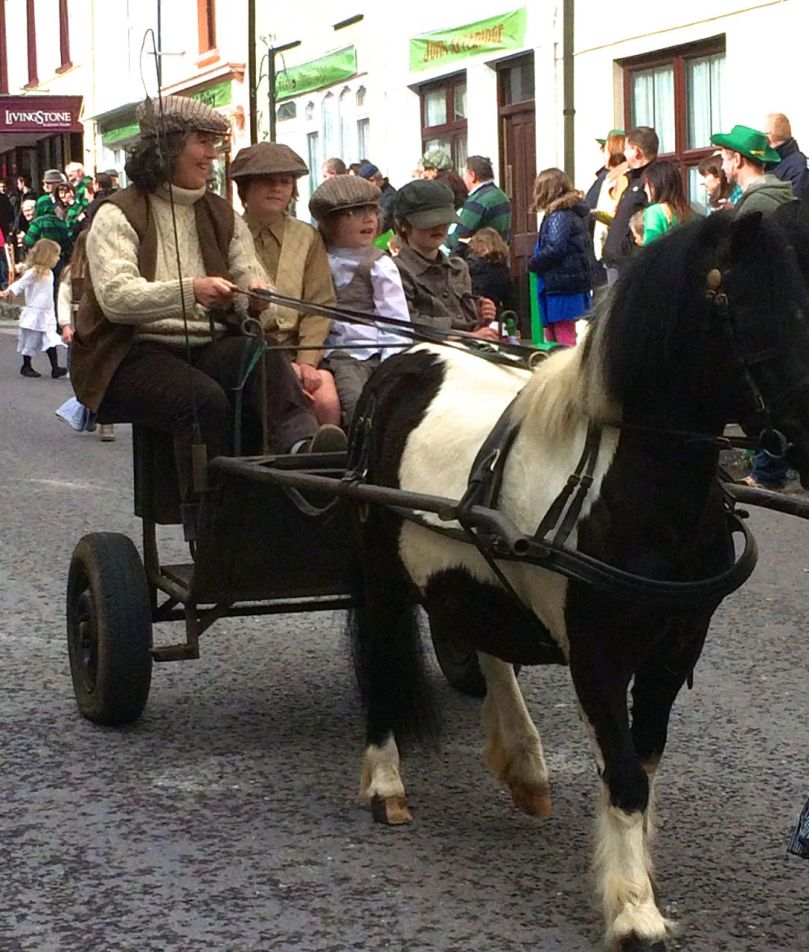
Time for the next lesson in how to sound like you’re from West Cork! In Lessons 1 and 2 we covered like and grand, now and so – versatile words that will take you a long way in any conversation around here. Then in Lessons 3 and 4 we looked at how you would frame your sentences in the conditional tense, and how to use the pronouns ye, and himself, herself and yourself. I hope you have been practising, in preparation for your visit. You ARE coming, right? Good – well so, you would need to be moving along to the next important steps in your language development. And to help you see where you’re coming, I will illustrate these lessons with pictures of the St Patrick’s Day parade last Monday in Ballydehob.

Vintage tractors galore

Vintage tractors galore

Lesson 5: In Fairness

Nothing distinguishes the West Cork denizen like the phrase in fairness. Occasionally rendered as in fairness, like or even to be fair, it is tacked on to the end of sentences with total abandon, whether it matches with the sense of what’s been said or not. If you meet someone on your walk, don’t be surprised to hear him say “’Tis a grand evening, in fairness like.” It’s as if it’s important to give God His due – He’s sent us lots of storms lately and endless days of rain, but sure, He’s doing His best to make it up to us now, isn’t He?

Sometimes you are left wondering about what’s not being said. If you hear “She’s a terrific dancer, in fairness,” you might wonder if there’s another part to the sentence, that has been left out – “even though she can’t sing,” maybe. But no, it’s probably just been added for some kind of emphasis, or to round out the sentence in some way. So go ahead, just drop it in here and there, and you’ll be grand.

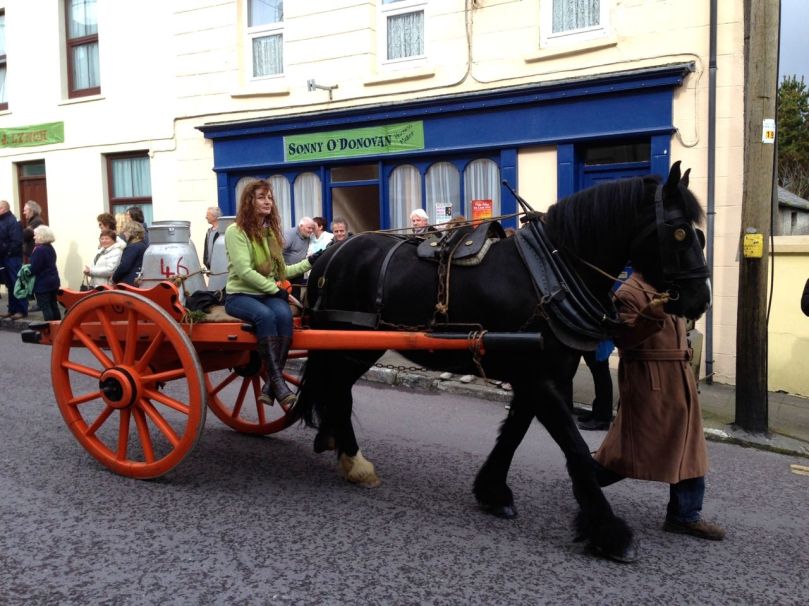
Going to the creamery

Going to the creamery

Lesson 6: Modifiers

Nobody in West Cork is very happy – no, we are happy out. And why wouldn’t we be, living in this beautiful place? We might also, if we have a lot to do, be busy out. If we badly need a pint, we might be thirsty out.

If using out as a modifier doesn’t trip off your tongue, try altogether instead. Or entirely.

We saw a good movie the other night. “It was great fun altogether.”

A recent story in The Examiner tells of a local hero, a student who found a toddler wandering late at night and made sure he was safe. Since the story is told mostly in dialogue, it’s an excellent example of Irish speech.

And the student, I think you will find yourself saying, “Wasn’t he a fine lad entirely?”

Don't they look happy out?

Don’t they look happy out?

Lesson 7: The diminutive

In Irish, the diminutive is formed by putting –ín (pronounced een) at the end of a word. We tell people that we live down a boreen (Irish word for road is a bothar, pronounced bo-her, and a bothairín is a small road). I’ve written about the children’s graveyards here: a cillín, pronounced killeen, actually means a small cill or church.

Some West Cork people routinely add -een to the end of a word to convey a sense of its size. Our landscaper asked if he should put the tools in our shedeen. Our neighbour, when I asked him about a certain piece of land said it was “nothing but a fieldeen.” You may well be asked by a waitress if you’d like a biteen more coffee.

Isn't that a grand careen?

Isn’t that a grand careen?

Now so – there you are! I think you might be ready to put all of that into practice.

Announcing our second ever COMPETITION (the first one was about place names). Your task, Dear Reader, is to construct a short conversation between two individuals. They are driving in opposite directions, but meeting on the boreen they roll down their windows to pass the time of day. The big topic of the moment is the St Patrick’s Day parade in the village and this, therefore, is the subject of their conversation. Reconstruct the chat, using what you’ve learned in the seven lessons so far, and your own imagination. An astute panel of judge will pick the winners and excellent prizes will be dispatched. Actually, prize-eens, in fairness. Good luck!

'Tis a lovely float, in fairness, like

‘Tis a lovely float, in fairness, like

Equinox at Bohonagh

Sunset over the recumbent, Spring Equinox 2014

Sunset over the recumbent, Spring Equinox 2014

We don’t normally post midweek, so this is a special edition, coming to you courtesy of the spring equinox. In my post Ancient Calendars, I explained about the orientation of the stone circles of West Cork. Bohonagh, just outside Rosscarbery, is oriented east-west. On the spring equinox, if you stand behind the recumbent, you will see the sun rise between the portal stones. If you stand behind the portal stones you will see the sun set behind the recumbent.

Around here, there is no guarantee that sunrise or sunset will be visible, due to the variable weather conditions, so you have to watch the forecast carefully. This week, sunshine was forecast only for Tuesday the 18th, so that is the day these photographs were taken. Curiously, this is also the day, according to my calendar, when sunset and sunrise divide the day into two equal halves. The official equinox, however, happens today: March 20th 2014.

Equinoctial sky

Equinoctial sky

The top photograph shows the moment when the sun set across the valley, sinking down directly above the recumbent as seen from between the portal stones. The second photo is taken from further down the hill, after the sun had disappeared. Silhouetted are the stone circle, especially the tall portal stones, and to the left, the boulder burial. Finally, I have included an image showing the east-west oriention.

east-west orientation

east-west orientation

We felt very privileged to be witnessing this event, thousands of years after the builders had planned it. With us earler in the day were Amanda and Peter, and you can see Amanda’s description of the site here.