When Harry Met Edith: Part 1 – “Like a Living Flame”

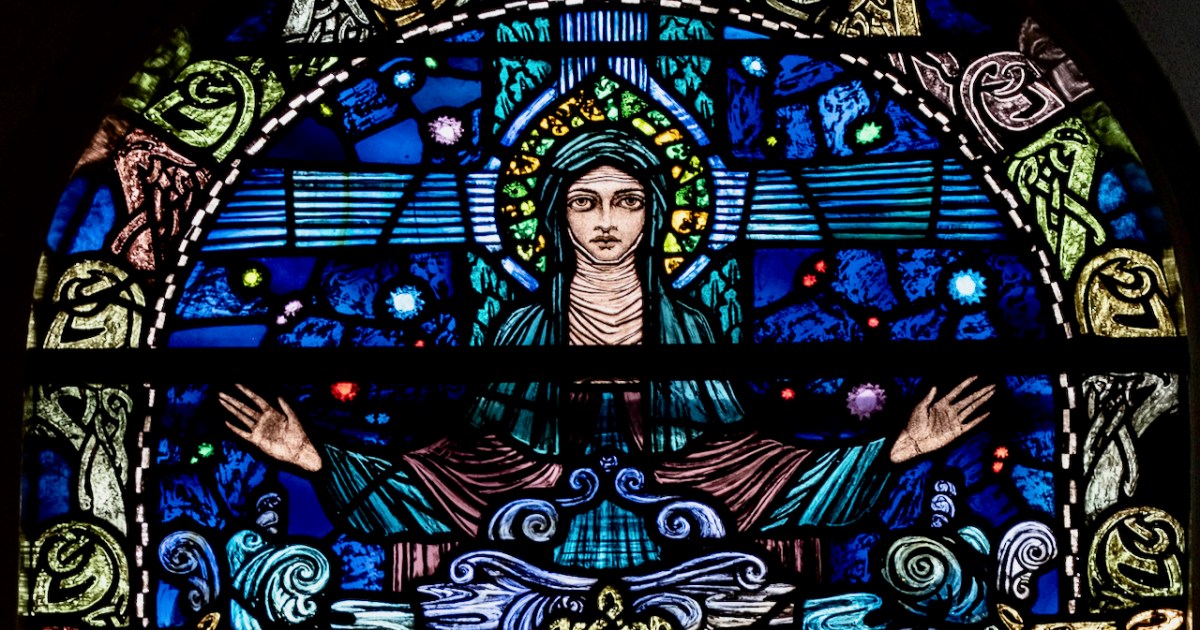
St Barrahane’s Church of Ireland in Castletownshend, West Cork, is unique in many ways and a national treasure, not least because of its three Harry Clarke stained glass windows. I have written about the St Luke window and also about the St Louis/St Martin window. Both are gems. But for some reason I have not yet properly written about the East Window and it seems fitting to start that post now, since Harry Clarke died 92 years ago this week at the all-too-young age of 41.
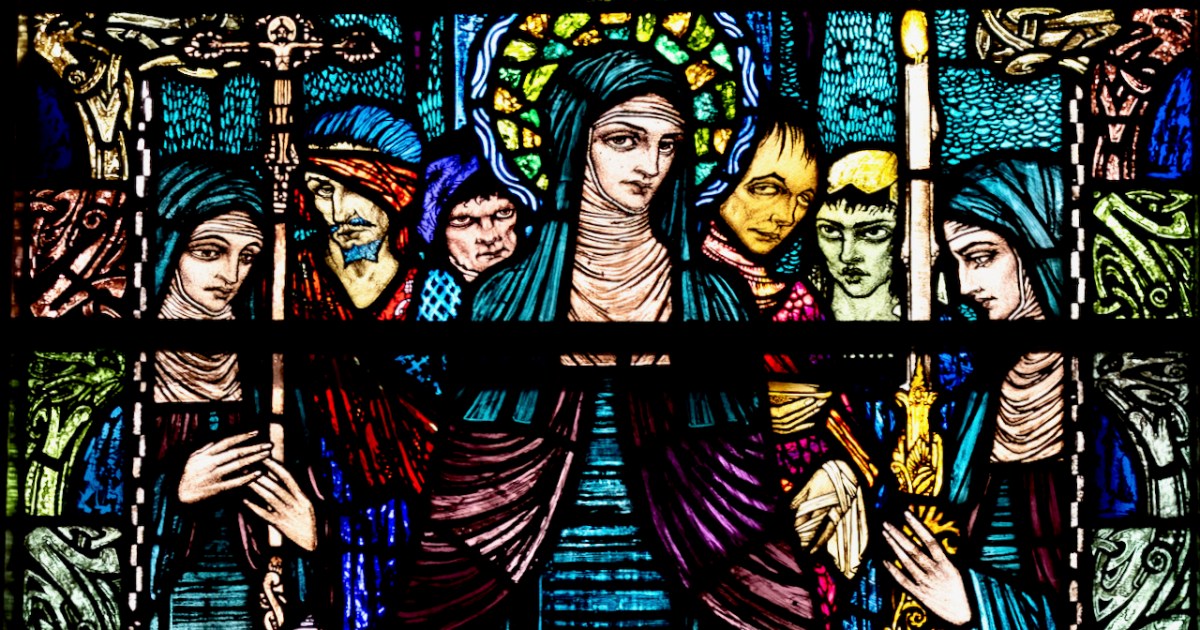
The East Window, the largest part of which comprises a nativity scene, was one of the first commissions Harry received after he burst on the scene in 1916 with his series of saints for the newly opened Hiberno-Romanesque Arts and Crafts masterpiece that was the Honan Chapel at University College Cork. That’s a small detail from his Joseph window for the Honan, below.

The Somerville siblings had been planning for a long time to commission a new window to honour their grandparents, the existing one being hideous and gloomy. In 1907 they had requested a new design from the Manchester firm of Walter J Pearce, but had not followed up with a commission. Besides her intense dislike of the ‘Berlin Woolwork’ (as the family called the despised stained glass) Edith Somerville thought the window openings themselves too long and narrow and felt they should be shortened to produce a more pleasing proportion for a stained glass scene. However, none of the schemes progressed beyond the Somerville siblings procuring permission from the church committee to remove and sell the offending window and replace it with a more suitable memorial to their grandparents.

This illustration is from Somerville and Ross: A Biography by Maurice Collis.

On January 14th 1917 Cameron, the oldest of the family and hence the one who had to have final approval over expenditures like this, went to see “Bertie’s windows”. Sir Bertram Windle was the President of University College Cork and a first cousin to the Somervilles (below, captured from the UCC website). He had worked with Sir John O’Connell to actualise the Honan Bequest which resulted in the building of the Honan Chapel with the inclusion of stained glass windows by An Túr Gloine and by Harry Clarke.

Cameron records in his diary:

Bertie took me to see his jewel of a chapel – quite the best modern building I have seen – & the windows – all but one – very good & some – the Clarke windows- supremely lovely. I have never seen such glass except in 14th century windows – the whole chapel simple & lovely nothing mean or tawdry […] After luncheon went again to the Chapel for another look at the windows.

The Edith OEnone Somerville archive in Drishane :
a catalogue and an evaluative essay /
by Otto Rauchbauer

Edith Somerville got up to see the windows for herself in March. Edith was already an established writer and artist, who had studied in France and was familiar with modern art movements. At that point in her life she was slowly coming to herself again, after a period of intense mourning on the death in 1915 of her beloved cousin and collaborator, Violet Martin with whom she had written a series of highly successful novels and stories under the name Somerville and Ross.

Violet Florence Martin, in an 1886 portrait by Edith Somerville, from the National Portrait Gallery, used under license

Her own artistic knowledge and sensibilities are evident in her reaction to the windows. She wrote to Cameron: 

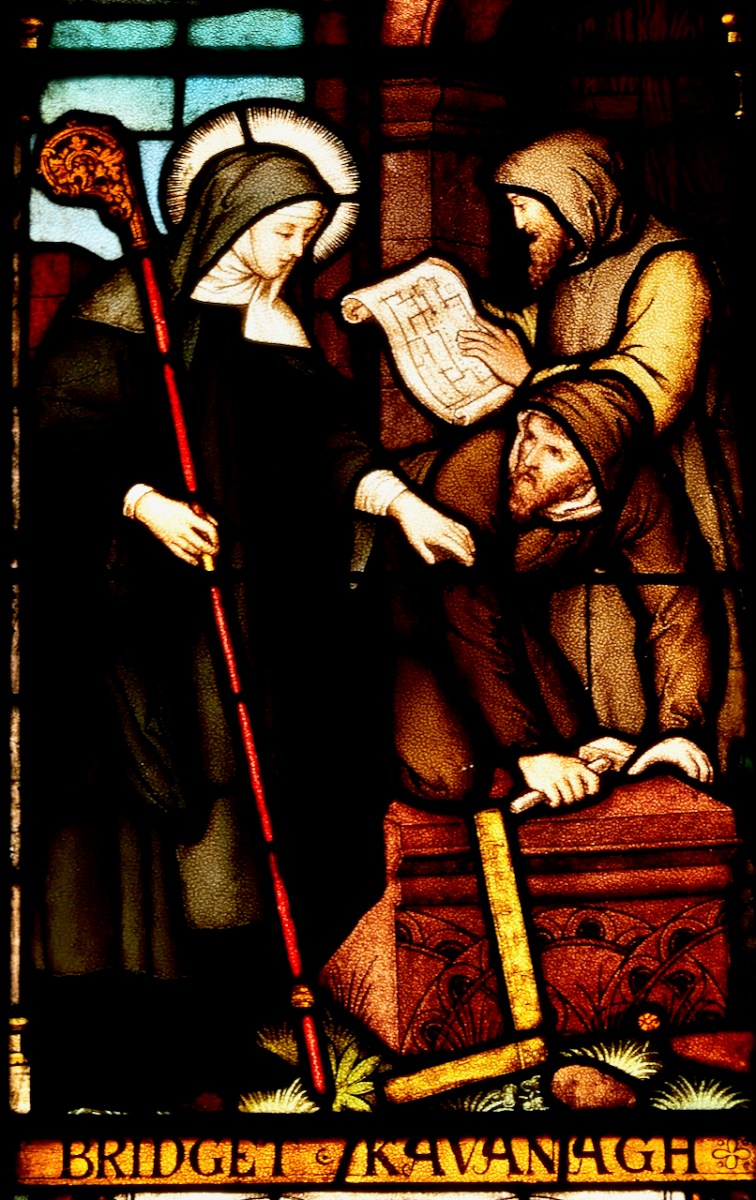
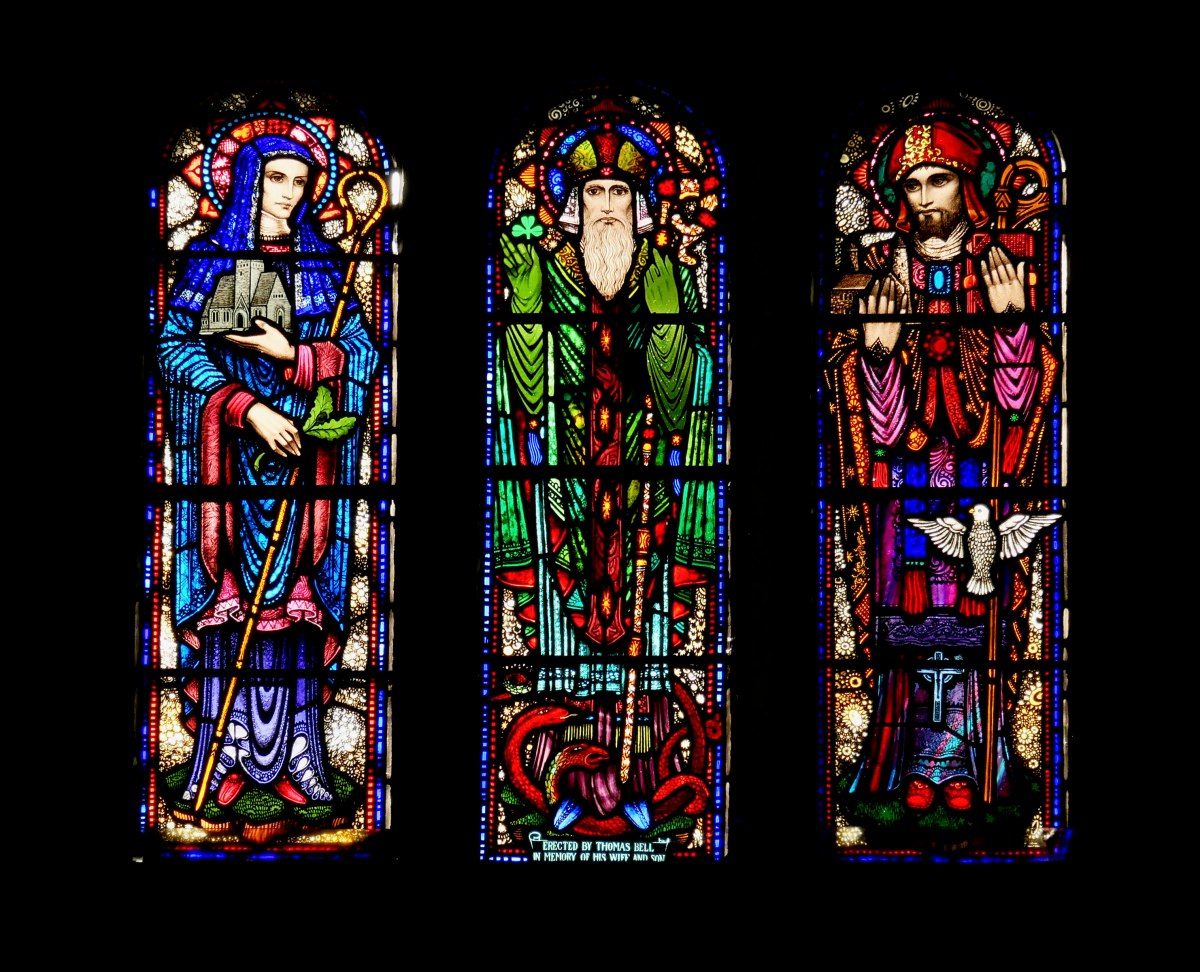
They certainly are very wonderful in colour, & some of them beautiful in all respects. I preferred the Western three-light window [Brigid, Patrick and Columcille] & I almost disliked the blue one, & the Aubrey Beardsley female face [Gobnait] thought horrible; so modern and conventionally unconventional. The green western light was lovely and a nice design, I like 2 of the left side ones (Brigid and Patrick]. I thought the eastern Purser window just moderate (i.e. not among high class tho’ much better than average). There is to me a slight faint of coarseness in Clerke’s [sic] work. Not much finesse, though the actual glass has a quality of burning and furious brilliance that I have never seen anywhere else. The blue robe, for instance, hits your eye like a living flame or a blast of wind. Perfectly amazing, but not quite pleasant. I can rave about some of his qualities with anyone, but I am not quite a whole-hogger. However, I expect he will be artist enough to adapt his work to the church & to realise how to get harmony into it. His windows have a kind of hellish splendour – in a chapel dedicated to the Infernal Deities they would be exactly right, gorgeous and sinful. . . If that young man. . . went mad it would not surprise me, but I hope he won’t before he does our window for us.

The Edith OEnone Somerville archive in Drishane :
a catalogue and an evaluative essay /
by Otto Rauchbauer

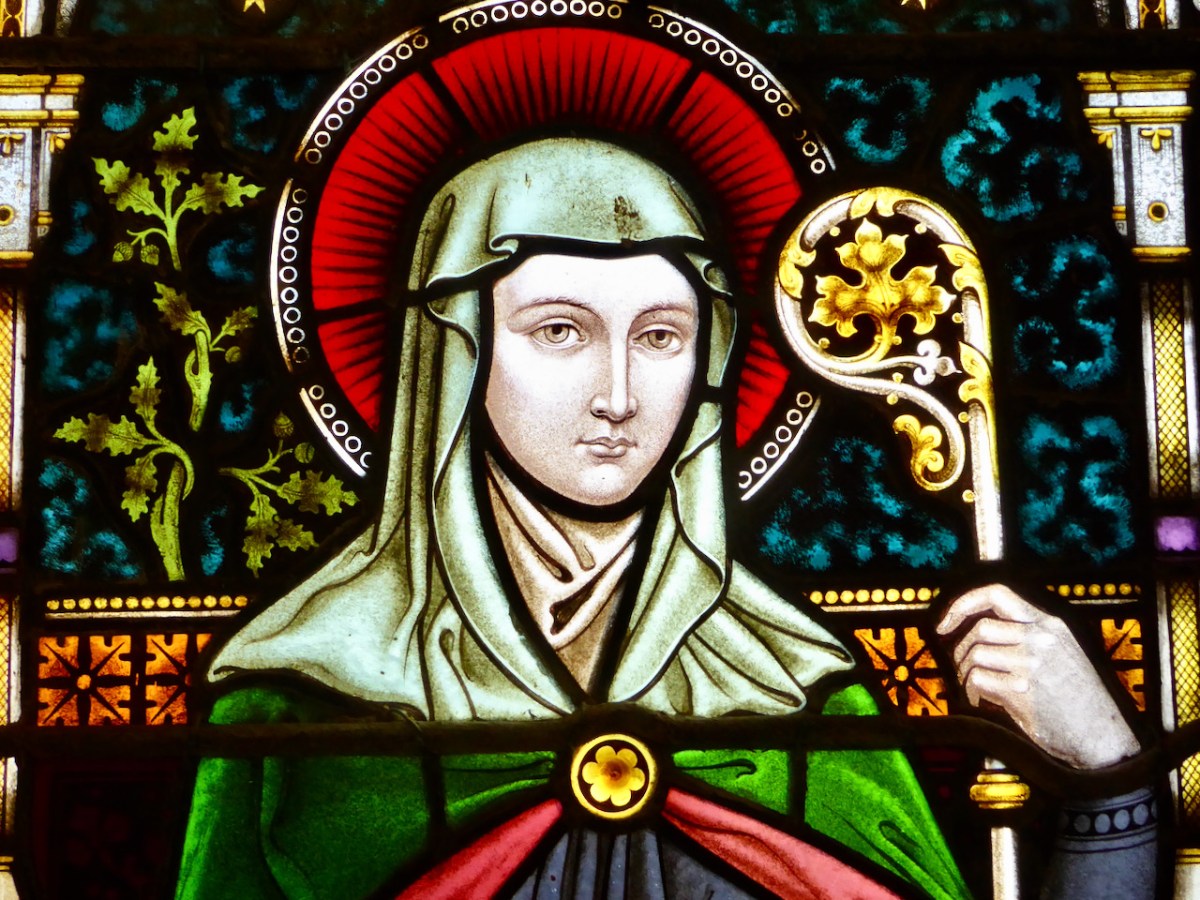
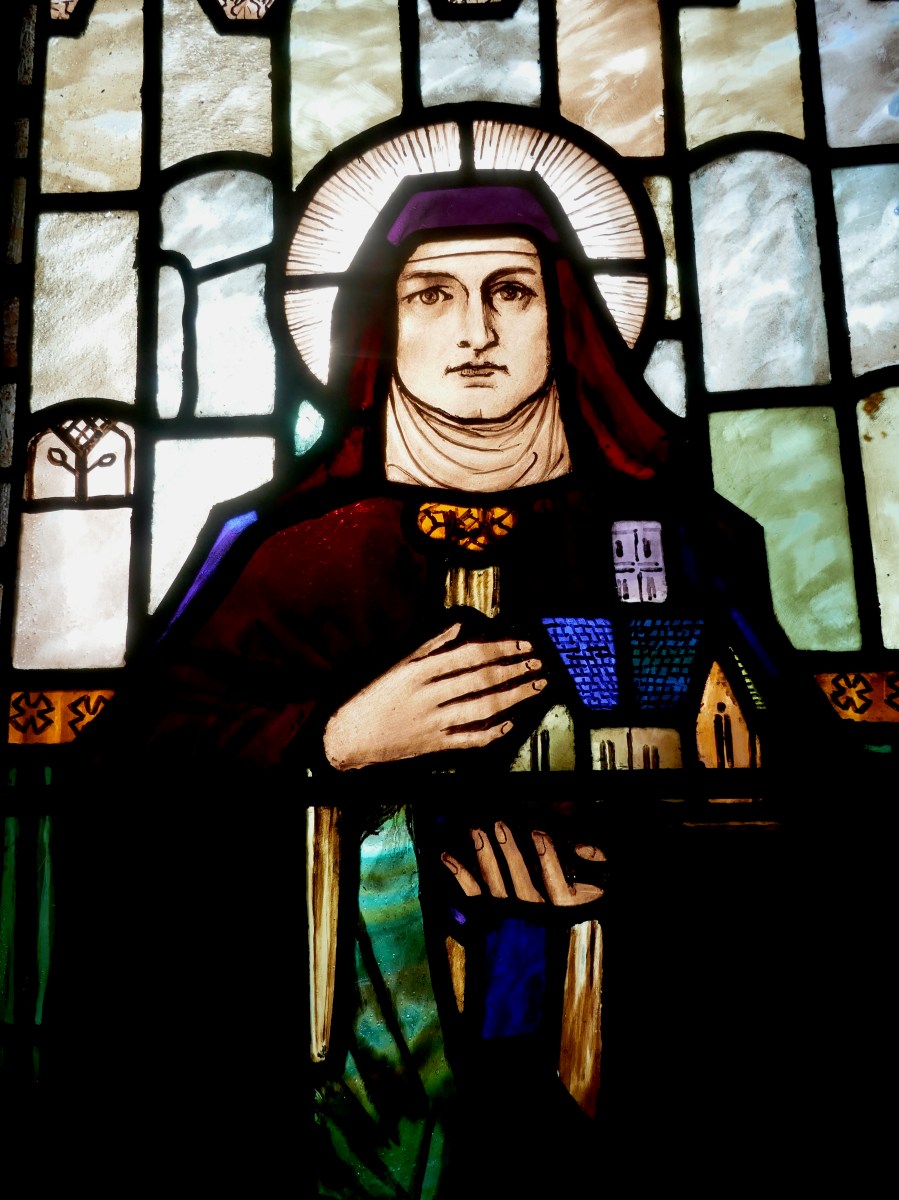
Was it St Ita’s blue robe (above) that struck Edith so forcefully – like a living flame or a blast of wind – ? Or was it perhaps, the one worn by Gobnait, patron saint of beekeepers, cleverly worked out as a series of honeycomb shapes (below). In either case, this deep blue was one of Harry’s hallmarks – he went to great lengths to procure good blue glass.

We can unpack a lot in Edith’s letter to Cameron. For a start, it seems that Cameron had already decided, no doubt influenced by Bertie, that Harry Clarke was the artist who should do the East Window. Edith’s reaction, while often credited with being the deciding factor in choosing Clarke, was after the fact, and both more moderate and more judicious than Cameron’s. Her comments are enough to make me wonder, if the decisions had been hers to make, whether Harry would have been engaged. She was insistent, in a further letter to Cameron, that something more of ‘harmony’ and less of intensity than the Honan windows (as exemplified by his Gobnait portrait, below) would be appropriate for Castletownshend. In fact, shortly after seeing Harry’s work at the Honan, it seems that Cameron had deputed their cousin Egerton Coghill (see my post about Egerton and the St Luke window) to approach Harry, whom he appears to have known personally, but after that initial meeting, it was Edith who took charge of the process. This made sense since Cameron was not living in Castletownshend at that time, but in London. Things moved quickly – even before she had seen his work for herself, she had sent him a tracing of the East window (perhaps one that had been prepared for the proposed Pearce commission) and thereafter it was she who communicated with Harry. 

He responded to getting the tracing in a letter of Feb 1, 1917.*

Thank you for your letter and tracing of the East window of Castlehaven Church. I clearly understand your ideas about shortening the existing window but I hesitate to support your doing so until I see the church – I like long openings and the window may only look out of scale by being filled with inferior glass – I do think you would be unwise to make the three openings into two if you are going to have single figures and not subjects or a subject. Were the existing window or openings left I would have room to put small subjects from the lives of the selected saints at the top and bottom of each opening – were the windows shortened I would have room for the figure only. I am judging from the tracing and cannot tell until I saw the actual window with the light etc – the trees may present difficulties.

The approximate cost of filling the existing window with single figures and small subjects – figures to be of S Brigid S Finbarr and Barrahane will be £315 and if it were shortened by 3‘6“ the cost will be – £252.

I will be in Cork in the early spring and if it were convenient to you, could meet you at Castlehaven Church –

If you are anxious to place the commission at once I will go down any day next week (after Tuesday) that you suggest.

I do my work from start to finish myself and so take longer then is generally expected over a window – Your window would take about six months and could be started on a date mutually agreed-upon should I have the pleasure of doing it –

I greatly appreciate your asking me about the work

Letter from Harry Clarke to Edith Somerville,
Somerville Archives, Drishane House

Harry did indeed come to Castletownshend  – a diary entry records it was April 4 and he stayed to lunch, although another source says that he stayed overnight and that Edith found him shy but liked him enormously. At this time, Edith was nearing 60, (dressed as Master of the Fox Hounds, below) whereas Harry was 27. She referred to him as ‘our window boy’ in a subsequent letter to Cameron.

The letter refers to the dimensions of the window – Harry didn’t mind  the shape at all – “I like long openings.” But Edith, very much the painter, had been taken by the more horizontal orientation of windows she had seen in Exeter Cathedral, such as the Old Testament window below) and really wanted to change the windows by making them shorter and perhaps even cutting them down to two-lights. As we will see, she realised part of this ambition, but not all.

Although the decision that Harry was to do the window was now made, that’s not to say that all went smoothly from this point on. Edith had a hard time being decisive about the iconography she wanted (St Finbarr didn’t make the final cut), and at one point Cameron managed to lose Harry’s design for the window and she had to ask him to do it again. Also, there was the matter of cost, and how the rest of the family felt about it all. We’ll get into all that in the next post, as well as the elements of the window that Harry designed. Here’s a sneak preview.

*I have to record here my debt of gratitude to Thomas Somerville and the Somerville Archives, for permission to view and quote from letters from Harry Clarke to Edith Somerville and from Edith to Cameron. It is an enormous privilege (and quite a thrill) to have original material to work from.

West Cork in Photographs 2022

A personal selection of photographs, taken in West Cork in 2022, by Robert and Finola.

Looking forward to sharing many more adventures with you in 2023.

Favourite Posts of 2022

Every year we choose your – and our – favourite posts. We assume that your favourites are the ones we see to be ‘most read’. Ours? Well, that’s a more complex algorithm altogether, for which there is no real explanation or formula. 

This image has an empty alt attribute; its file name is lissagriffin-loop-from-mass-rock-to-barley-cove.jpeg

It looks like you love the West Cork posts – anything about local history, archaeology and walks that help you to get to know this part of the world better. Among your favourites this year were several of our Mizen Magic series. In particular you loved the latest additions to the Fastnet Trails – the Lissagriffin Loop (above) and the Gortduv walk (below).

This image has an empty alt attribute; its file name is mizen-traffic.jpeg

We love exploring small areas of the Mizen in depth – and apparently so do you! Croagh Cove (pronounced as ‘Crew’ locally) and that amazing little pier at Toor (below) really caught all of our imaginations.

This image has an empty alt attribute; its file name is first-glimpse-of-sea-arch.jpeg

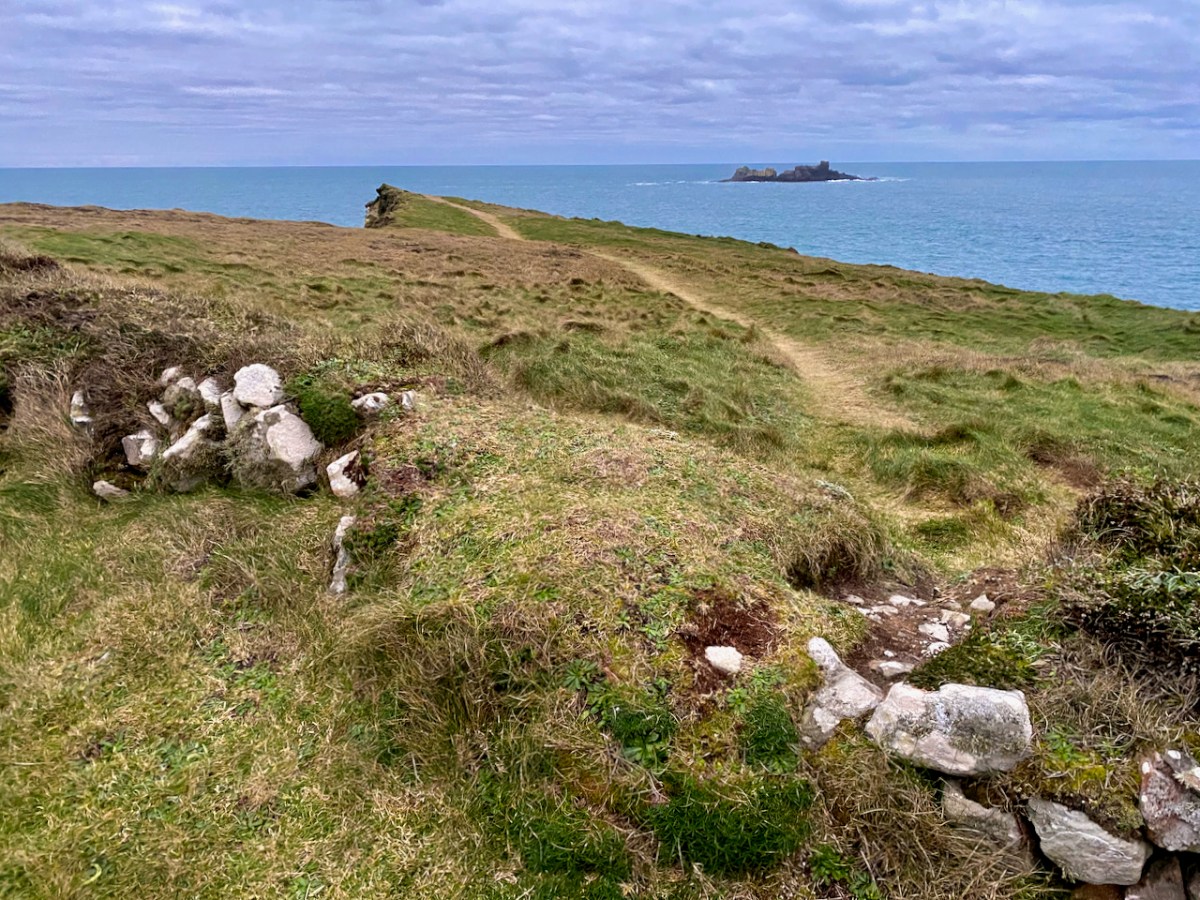
We started a new series on Mizen Megaliths – we’re determined to see them all, even if it kills us – which one of them almost did (kidding, but some of them are not for the faint of heart, below). The oldest is the portal tomb at Arderrawinny, which is our lead photograph.

This image has an empty alt attribute; its file name is mountaintop-megalith.jpeg

A little further afield from the Mizen, but still in West Cork, Dunworley Promontory Fort proved to be a fascinating piece of history, as did Caheragh Explorer – in fact you can watch Robert talking about this fascinating place in a short documentary by the Skibbereen Historical Society.  

Another Historical Society doing great work is Castlehaven and Myross – their Placenames Project is a tremendous undertaking. And Conor even managed to persuade Finola into the sea in December. Meanwhile, over in Bantry, their Graveyard Project is uncovering all kinds of history.

This image has an empty alt attribute; its file name is abbey-graveyard-bantry.jpeg

Our village, Ballydehob is a happening place these days. From the empty streets and shuttered shops captured in 681 Days! the village came alive with art and music and festivals, just like in Pre-Covid days. A new exhibition in BAM (Ballydehob Arts Museum) showcased the quirky, amusing and technically dazzling work of Ian and Lynn Wright.

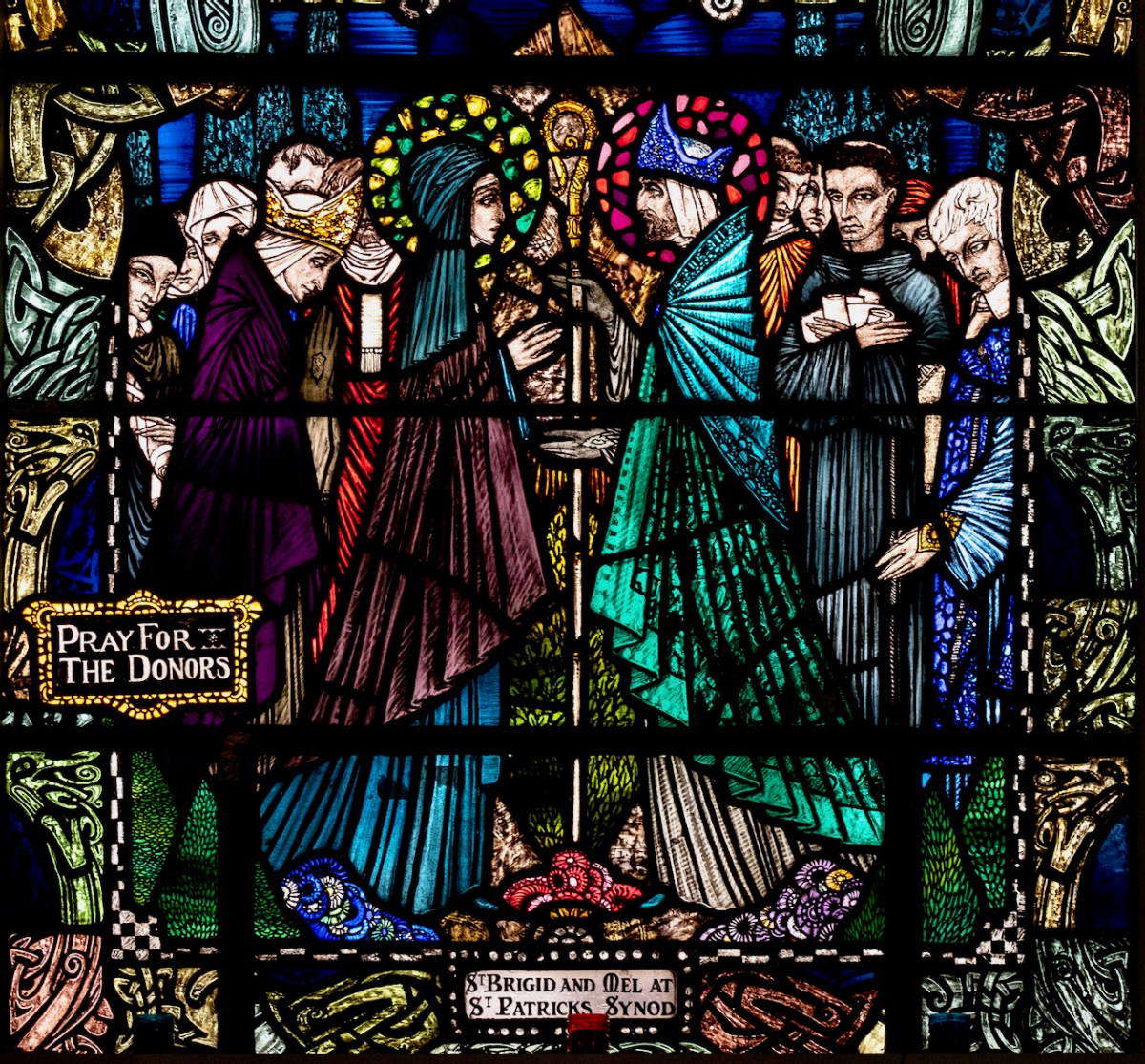
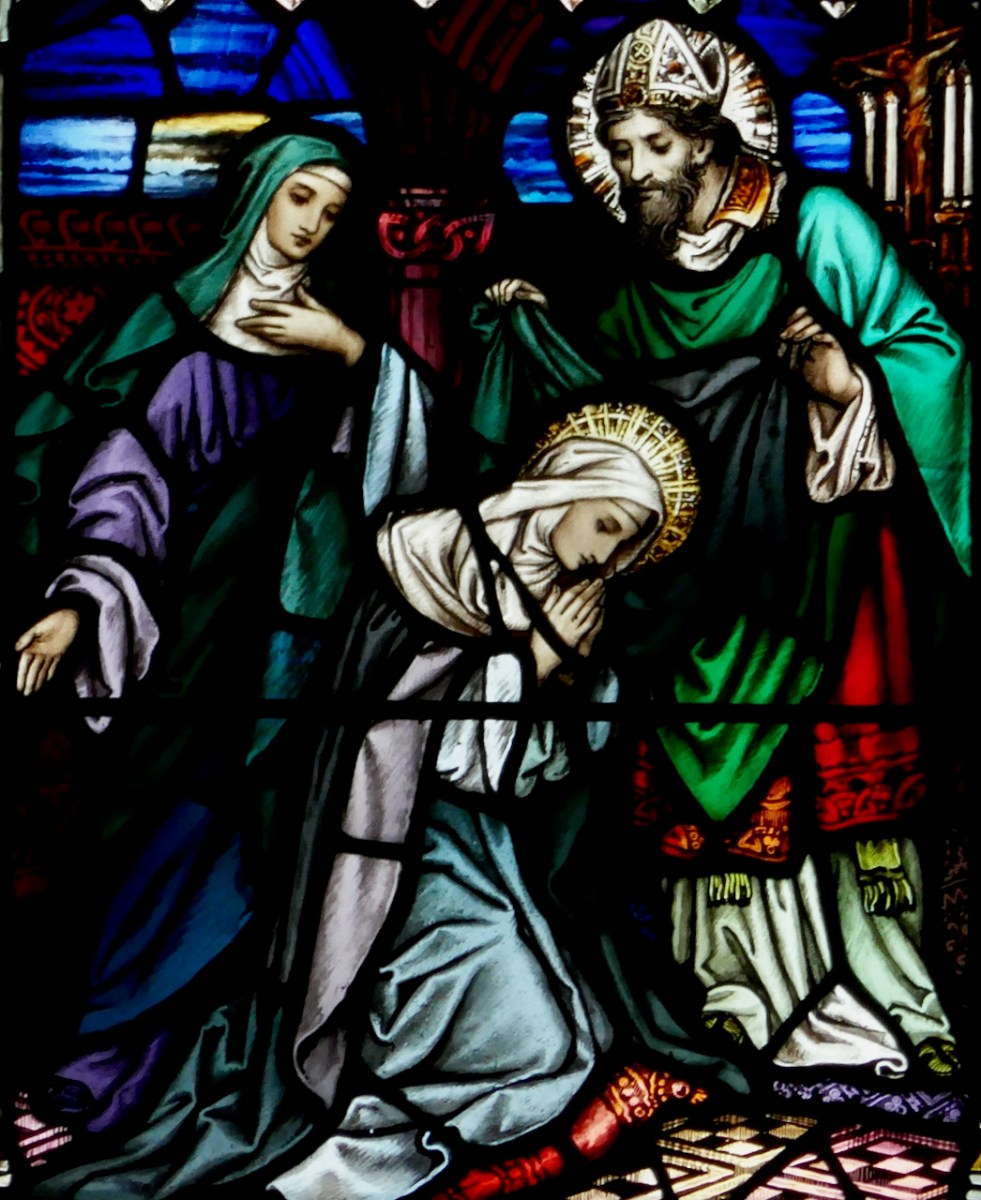
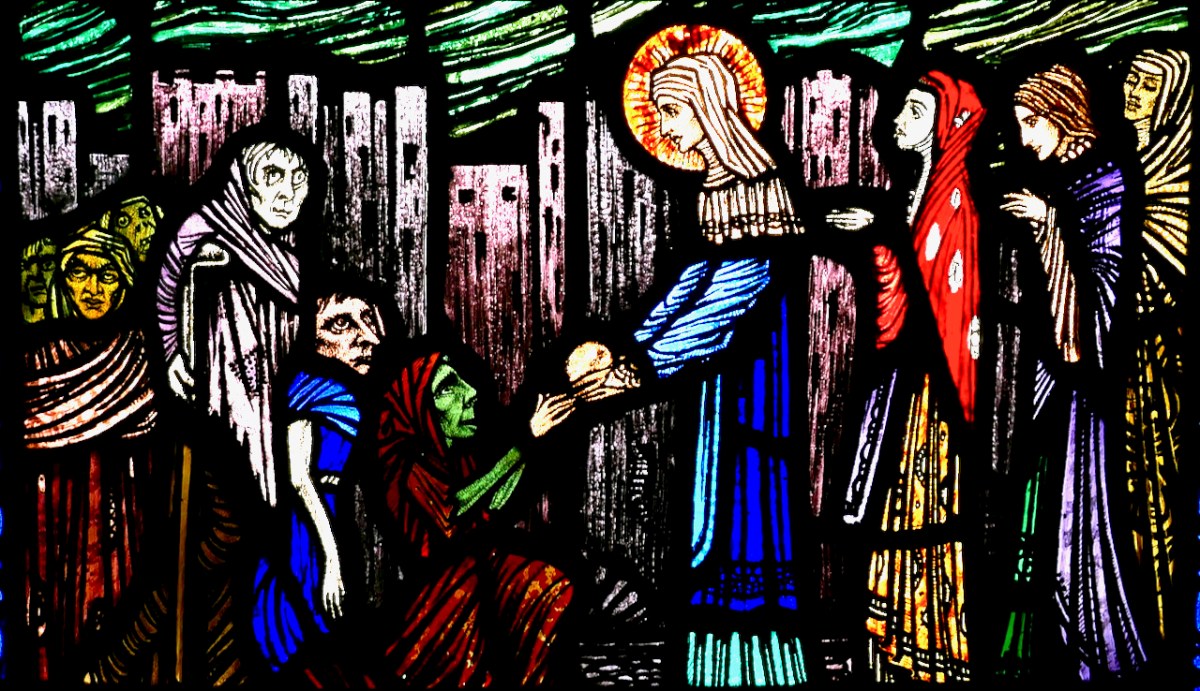
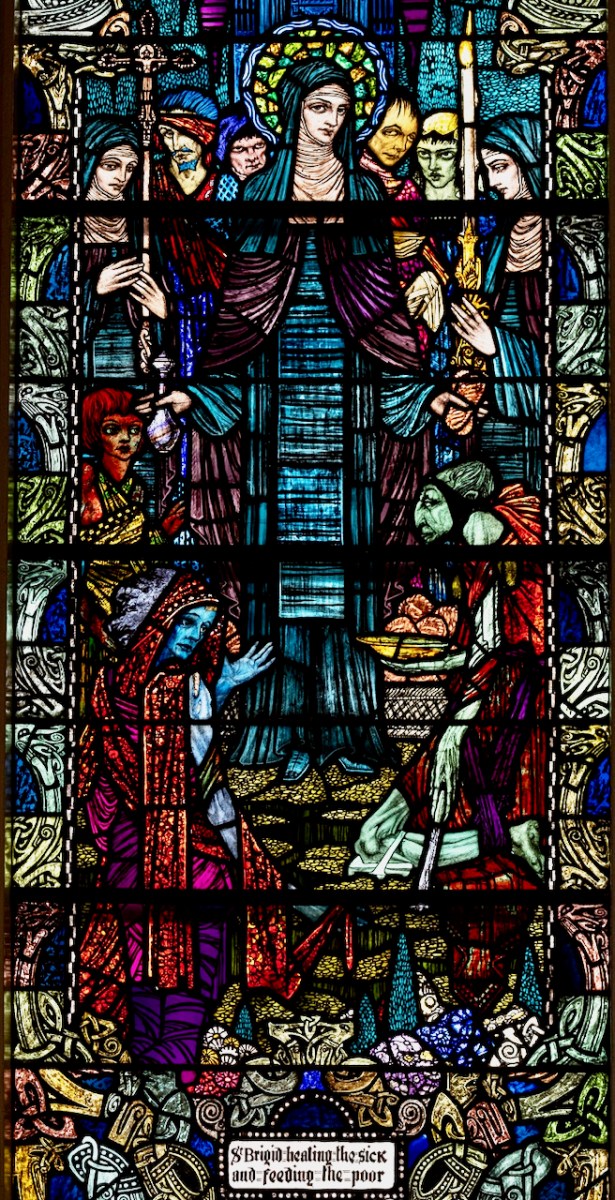
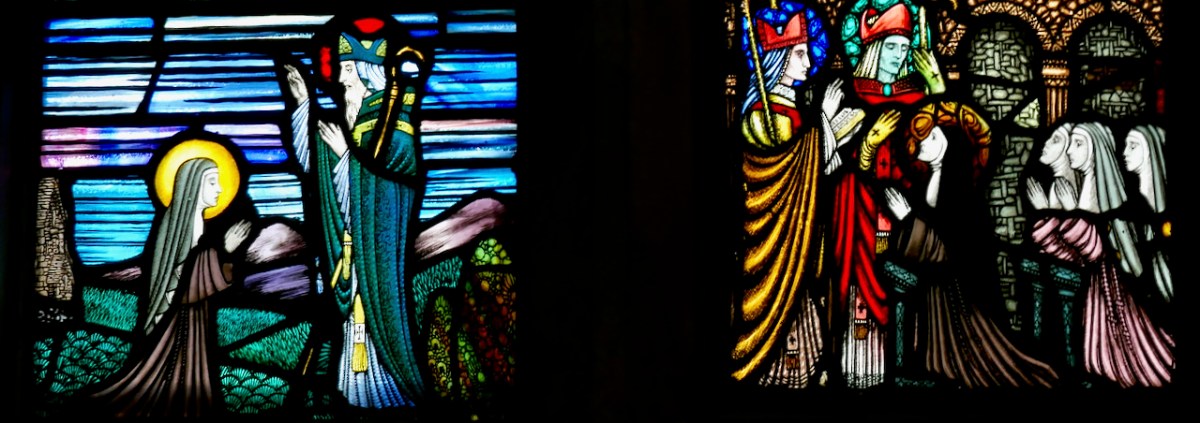
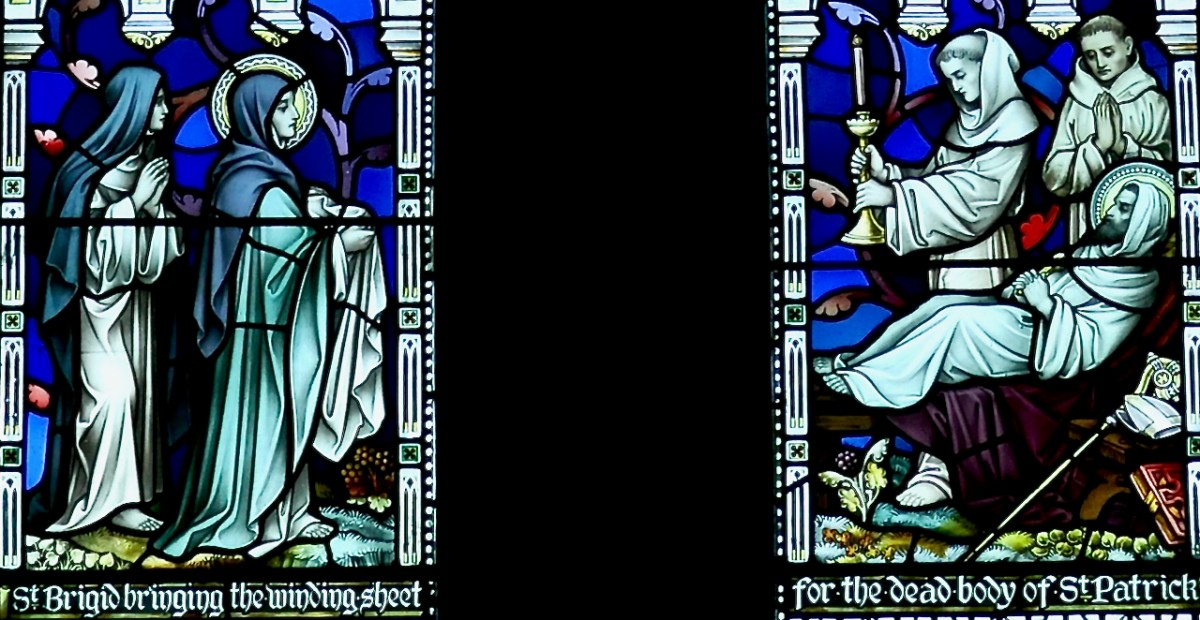
Robert loves folklore and told us the The Oldest Adventure, or The Sons of the Salmon.  Finola meanwhile likes to read about old Irish saints and her post St Brigid: Dove among birds, Vine among trees, Sun among stars was just in time for the saint’s feast day – soon to be a national holiday.

This image has an empty alt attribute; its file name is brigid-accepts-the-veil-and-crozier-from-mel-armagh-mayer.jpeg

Finola didn’t have as many wildflower posts this year, as she concentrated on short videos on Instagram, but she really enjoyed her outing with the Biodiversity Data Centre, looking at rare plants.

This image has an empty alt attribute; its file name is sea-pansies.jpeg

She continues to study the world of stained glass and this year she wrote about one of Ireland’s few examples of the work of Burn Jones, and about William Dowling, the artist who carried on the great Harry Clarke tradition after Harry died. He turned out to be the artist behind the mysterious sketch in One Window, Eight Stories.

This image has an empty alt attribute; its file name is brendan-patrick-and-ailbhe-predella-from-assumption-window-knoickainey-dowling.jpeg

I’m not sure what it says about us, but two our most popular posts this year (your and ours) were not our work at all. Karen Minihane’s book Extraordinary, Ordinary Women of West Cork related the untold stories of brave West Cork women, members of Cumann na mBan who played active (and sometimes terrifying) roles during the War of Independence. 

This image has an empty alt attribute; its file name is book-cover-extraordinary-women.jpeg

Our first ever guest blogger, Brian O’Riordan, left us all in the shade when he told the story of Mary Harper: Record-Breaking Lone Trans-Atlantic Sailor in Crookhaven. All kinds of people saw the piece and commented – including Mary’s daughter and granddaughter! 

This image has an empty alt attribute; its file name is well-wishers-and-mary-crookhaven.png

Two final pieces, chosen by us as posts that were fun to work on. Robert chooses Ships in Churches, which explores the background and meaning of ship graffiti in St Mary’s Old church in Schull, while I really enjoyed delving into the raging controversy, now long-forgotten, that attended the threatened closure of a graveyard in Rathclaren. The high-flown language and sputtering outrage reported in the Examiner was a treat to read.

This image has an empty alt attribute; its file name is church-and-wide-sea-2.jpg

We’ve been doing this for ten years now and it never gets old for us. This year, as ever, some of our adventures were in the grand company of Amanda and Peter, AKA Holy Wells of Cork and Kerry for Dunworley Promontory Fort (below) and some with Walking with Stones, for the exploration of the cave with scribings.

This image has an empty alt attribute; its file name is dunworley-first-glimpse.jpeg
This image has an empty alt attribute; its file name is inside-with-walls.jpg

Our posts were read over 260,000 times in 2022 – that’s a lot of people getting to know West Cork. 

This image has an empty alt attribute; its file name is sheep-road.jpg

Here’s to the next ten years.

12 Arches of Ballydehob – Pics for Christmas Day!

Last week’s post The Twelve Arches of Ballydehob proved a most popular subject. Ballydehob’s railway viaduct – dating from the late nineteenth century can’t be ignored. It was fairly easy to put together another dozen pics of the structure, making a good Christmas Day theme to take your minds off turkey and stuffing!

As we have lived not too far from the viaduct over the last ten years, we have seen it – and photographed it – in many of its moods. And it’s a constant backdrop, of course, to life in our West Cork village. Below – here it is, supporting a very ancient tradition, on St Stephen’s Day (that’s me on the right!):

“No Wrens Were Harmed in the Making of this Post!” That was the title of my RWJ article on the Wren Day festivities in Ballydehob in 2019 – pre-Covid. It was great to be out and about in the village, echoing a custom which has been passed from generation to generation. When I grew up in England I joined in the Mummers’ tradition there: I followed it for much of a lifetime, and even now can recite the whole play without a prompt… “Here comes I, Bold Trim Tram: Left hand, press gang – press all you bold fellows to sea…”

Something else which could do with a revival is the Pedalo tradition. Pedalos were brought out of storage for an unique occasion in the summer – a project named Inbhear, an art installation by Muireann Levis. Here is own my post about it.

I was pleased to have this photo of the viaduct in my collection. If the scale looks a little wobbly it could be because this – and the train – are models sited at the West Cork Model Railway Village at Clonakilty. Below – a local company, in Ballydehob, has chosen to use the bridge in its title.

We showed you some of Brian Lalor’s work last week. Here’s another of his drawings. It is dated 1975: he tells me he has plenty more viaduct pics if I write another post in the future.

Atmospherics a-plenty: we have them all the time in Ballydehob. We do live in one of this world’s most inspiring places… Have a very good and atmospheric Christmas, everyone! And – safe journeying if you are out and about.

Christmas 2022

Angels we have seen on high – in a Harry Clarke Nativity window, soon to be the subject of a post.

It’s been a good year here at Roaringwater Journal. Lots of adventures and explorations, new finds and old friends. Thank you to all our loyal readers – we do it all for you!

The Twelve Arches of Ballydehob

As we are approaching the traditional Twelve Days of Christmas I thought it fitting to give you Twelve views of Ballydehob’s iconic viaduct. Our West Cork village of Ballydehob has many claims to fame. It has been the centre of a great Irish art movement in the mid-twentieth century (have a look at this site). But earlier – between 1886 and 1947 – it was an important stop on the Schull & Skibbereen Tramway. This was a three-foot gauge railway line which must have been a great wonder to those who witnessed it in its heyday. There are fragments of it still to be seen, but its most monumental structure remains with us: the twelve-arched viaduct at Ballydehob.

Above: Brian Lalor was one of the creatives who settled in Ballydehob back in the artists’ heyday (he is still here today). The railway viaduct was a great source of visual inspiration to him and to his artist colleagues.

Here (above) is another Lalor work depicting the viaduct (many thanks, Brian). Behind the arches in this print you can see the former commercial buildings on the wharf, now converted to private use. At first glance you might think what a fine masonry structure this is. In fact, most of it is mass concrete. Look at the close-up view of the arches below: they are cast and faced in concrete, albeit the arch-stones are made to look like masonry. Only the facing infills and the parapets are actually of stone. This is quite an innovative construction for its time. Barring earthquake it’s certain to endure.

I was not surprised to find how often images of this engineering feat have inspired artists and others working in creative fields. Here’s a particularly fine example from the days of the artist settlement around the village in the mid-twentieth century (below): this one is a batik by Nora Golden.

I really like this moody photograph by Finola: it demonstrates the elemental nature which repetition and shadow gives to the scene. (Below): we have to see the way over the top, now a public footpath. The railway was a single track narrow-gauge at this point.

The ‘Tiny Ireland’ creator – Anke – has sketched this wonderful caricature of our wharf area, showing the 12-arched bridge in context. Finola has written about Anke. You can buy your own piece of Tiny Ireland through her website, here.

How better to look at the bridge in context than this view from Aerial Photographer Tom Vaughan. Thank you, Tom, for allowing us to use this magnificent image. Here’s the link to his own website. You will find excellent gifts for the connoisseur here. The last of our ‘Twelve Arches’ (for now) has to show us the bridge in its rightful use. I think this postcard – from the Lawrence Archive -dates from the early 1900s. I can’t resist quoting the caption for the rail buffs among you!

. . . A Schull-bound train has stopped especially for the photographer: this is Ballydehob viaduct looking north. The train comprises GABRIEL, bogie coaches Nos 5 and &, brake vans Nos 31, 32 and 38 . . .

The Schull & Skibbereen Railway – James I C Boyd – Oakwood Press 1999