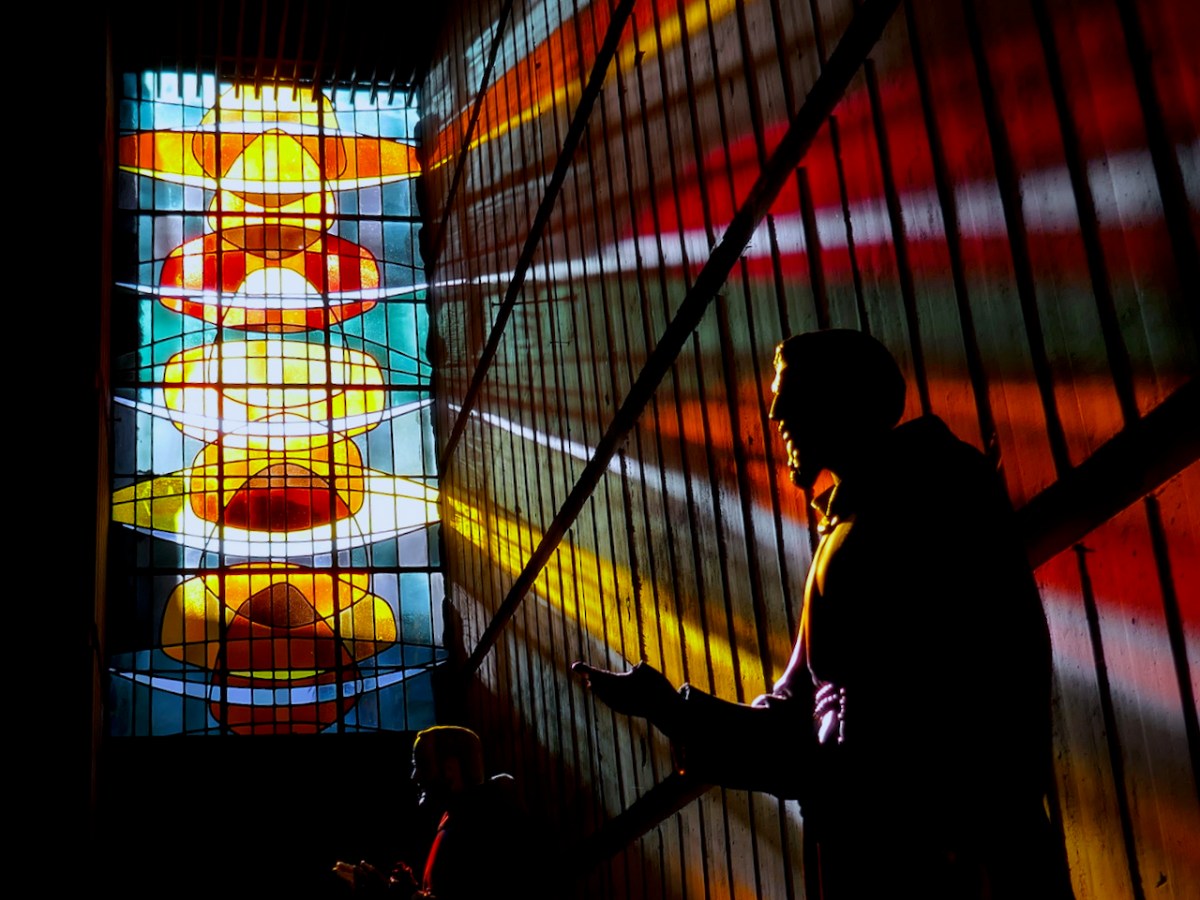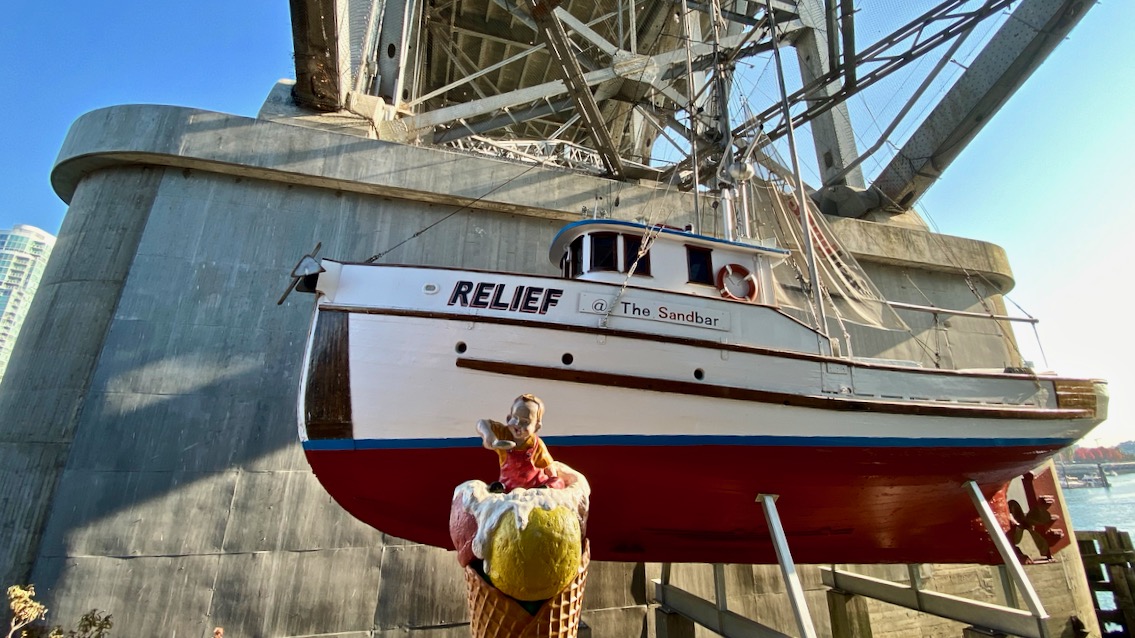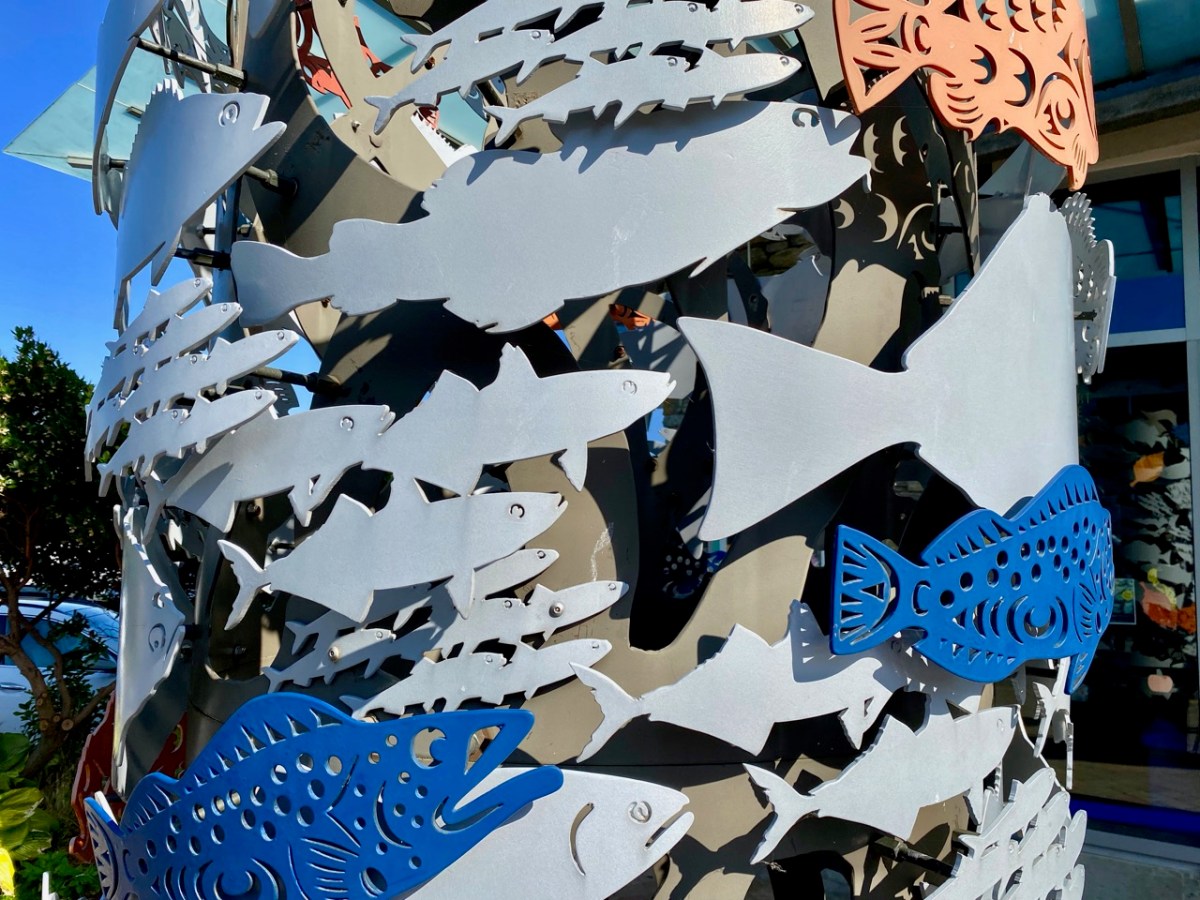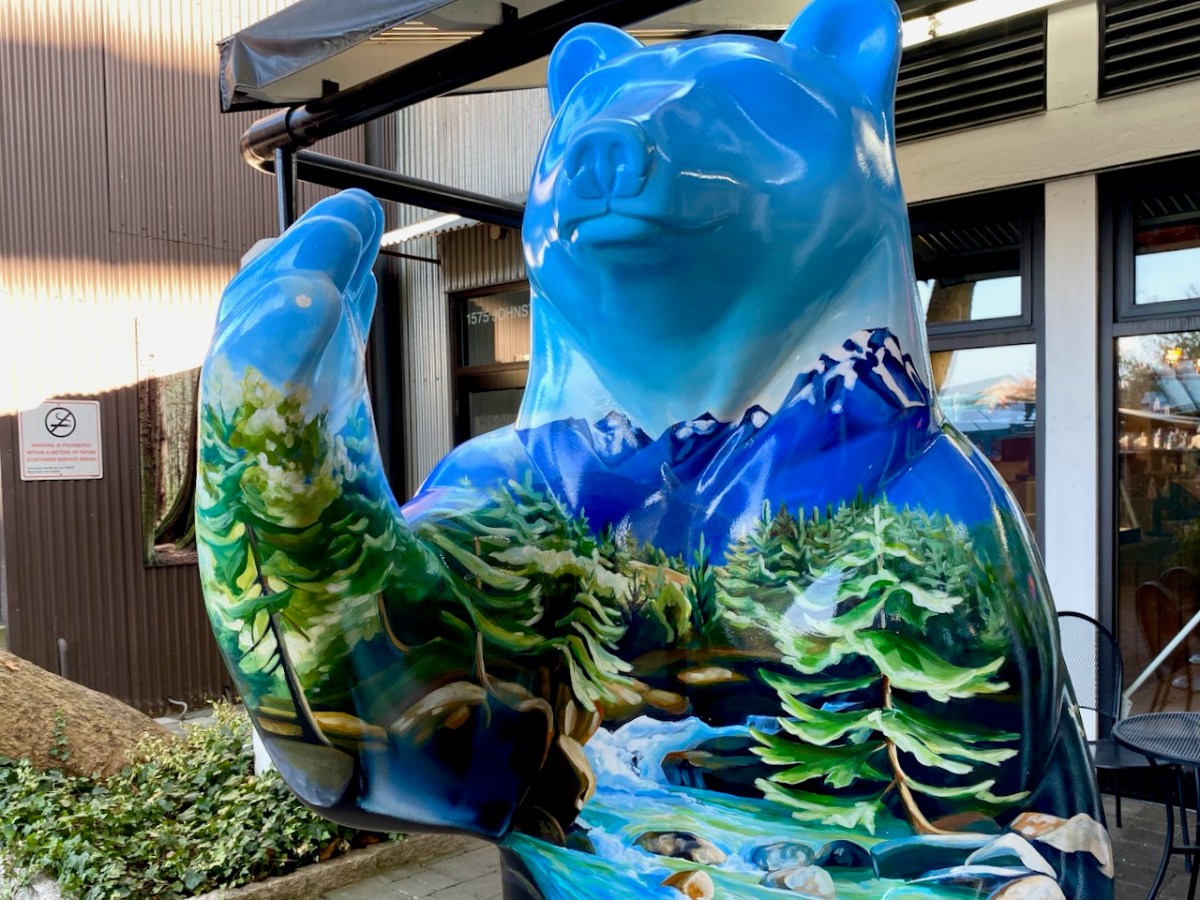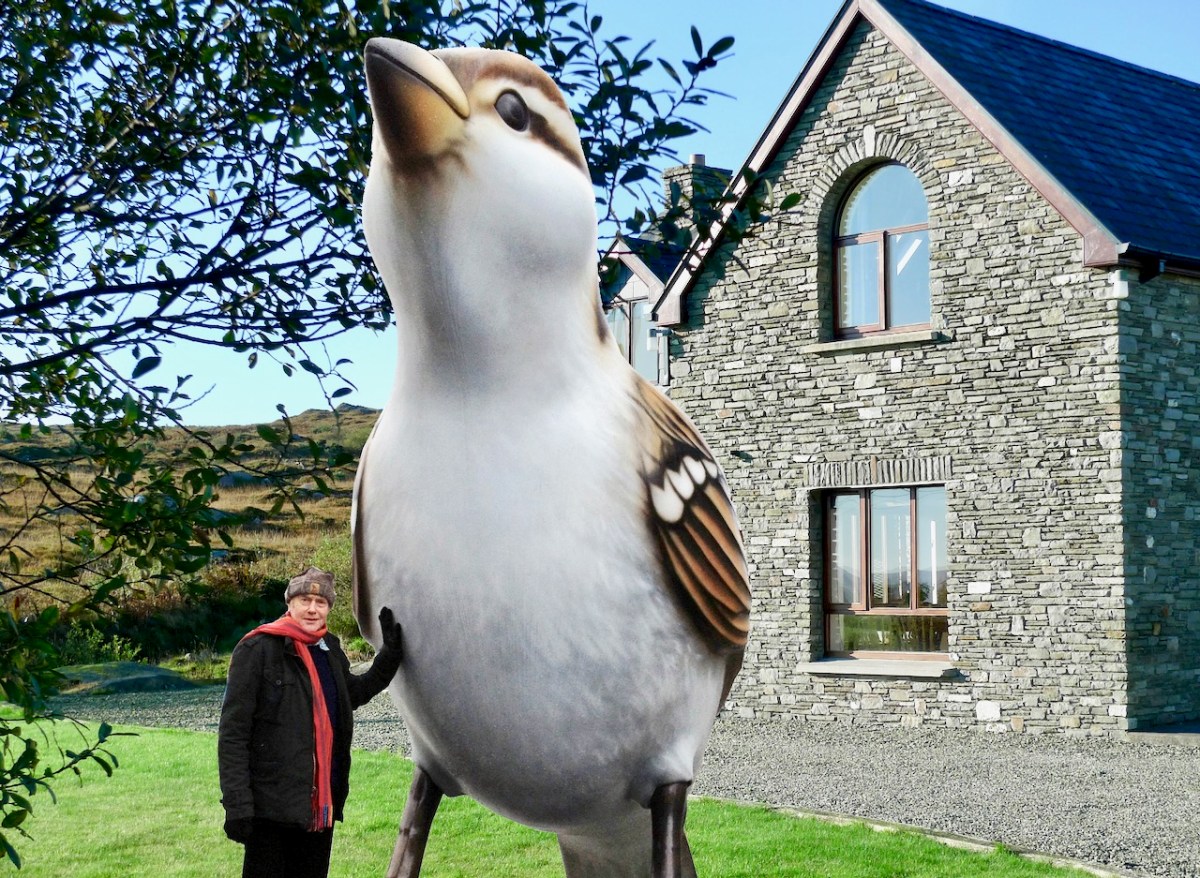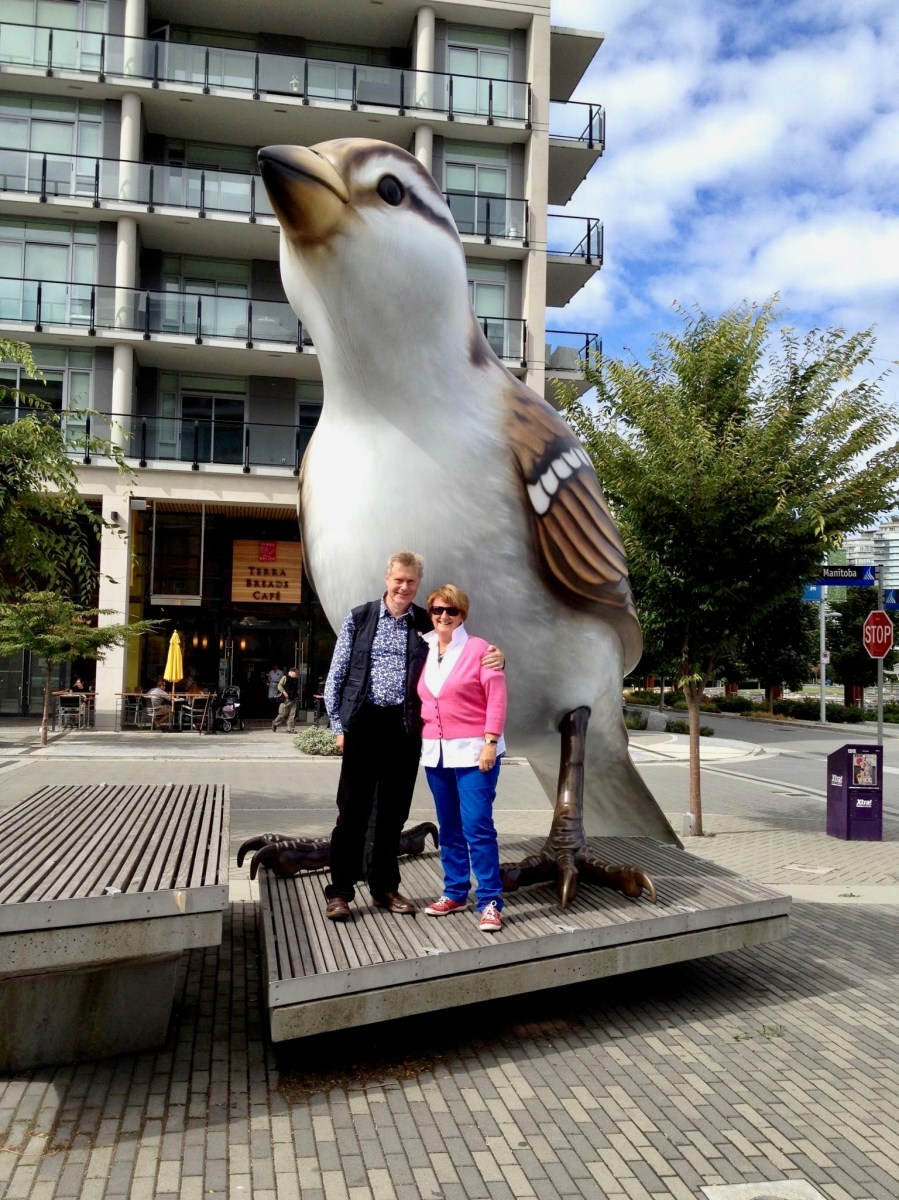
Why have we chosen this photograph to head up our ten year anniversary blogpost? That’s simple: the pic was taken on 15 October 2012. We had moved into Ard Glas – just outside Ballydehob – for a six-month rental to see how we liked West Cork!
But – what about the giant sparrow?
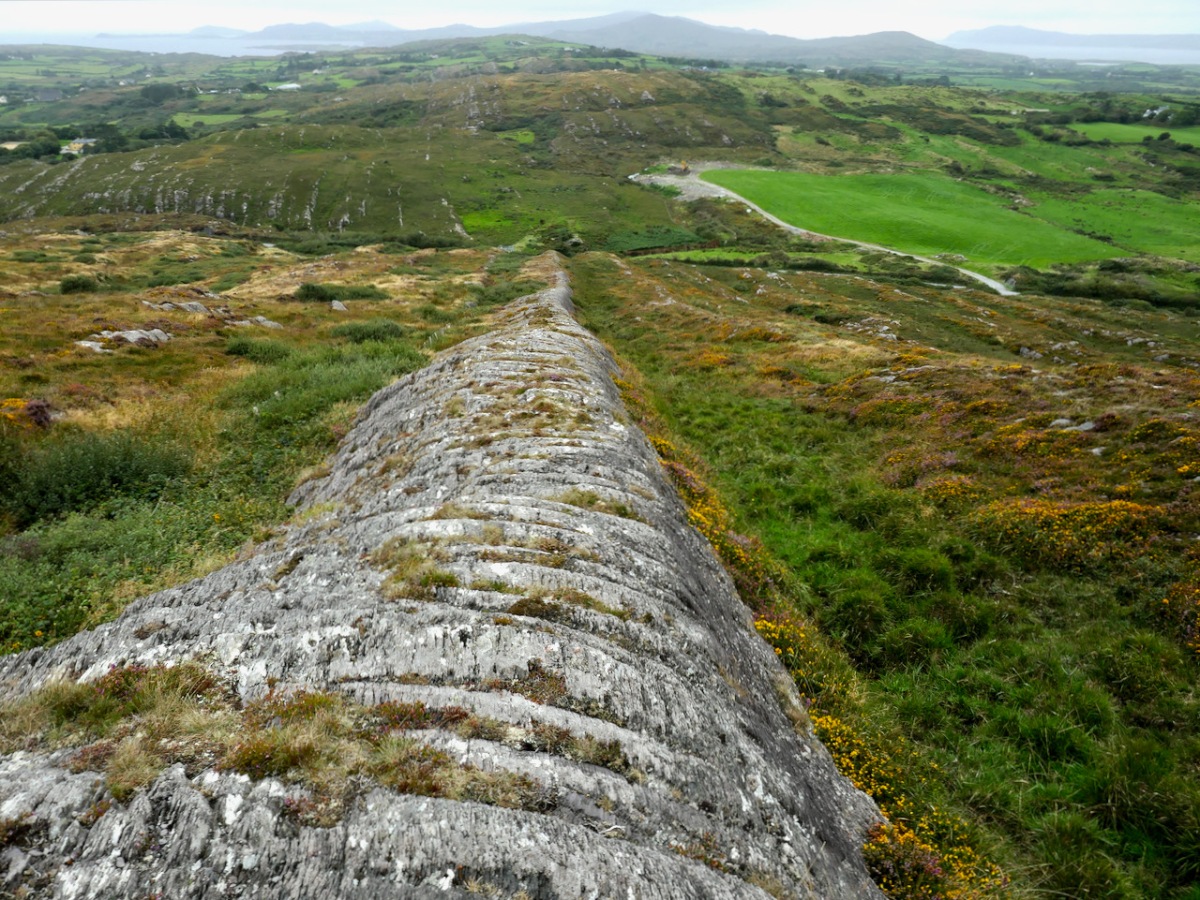
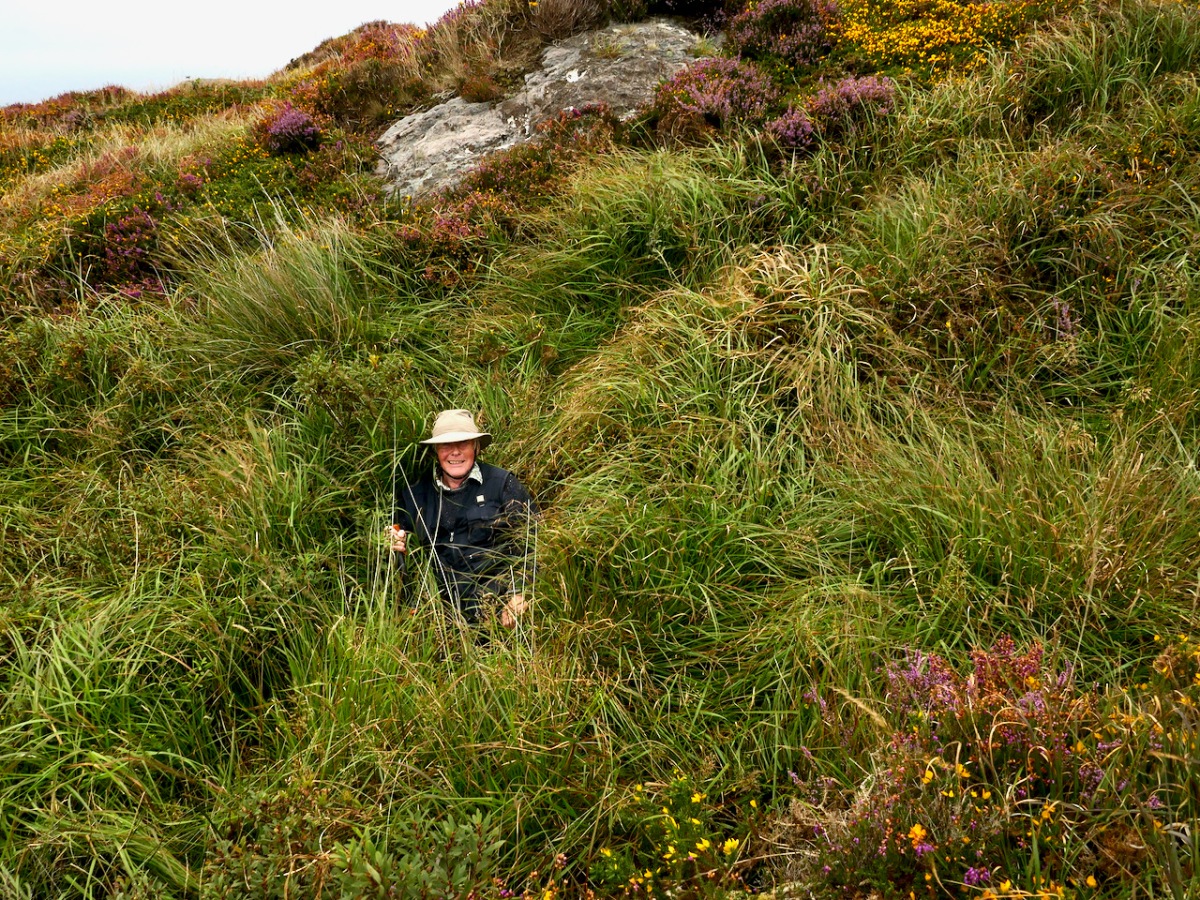
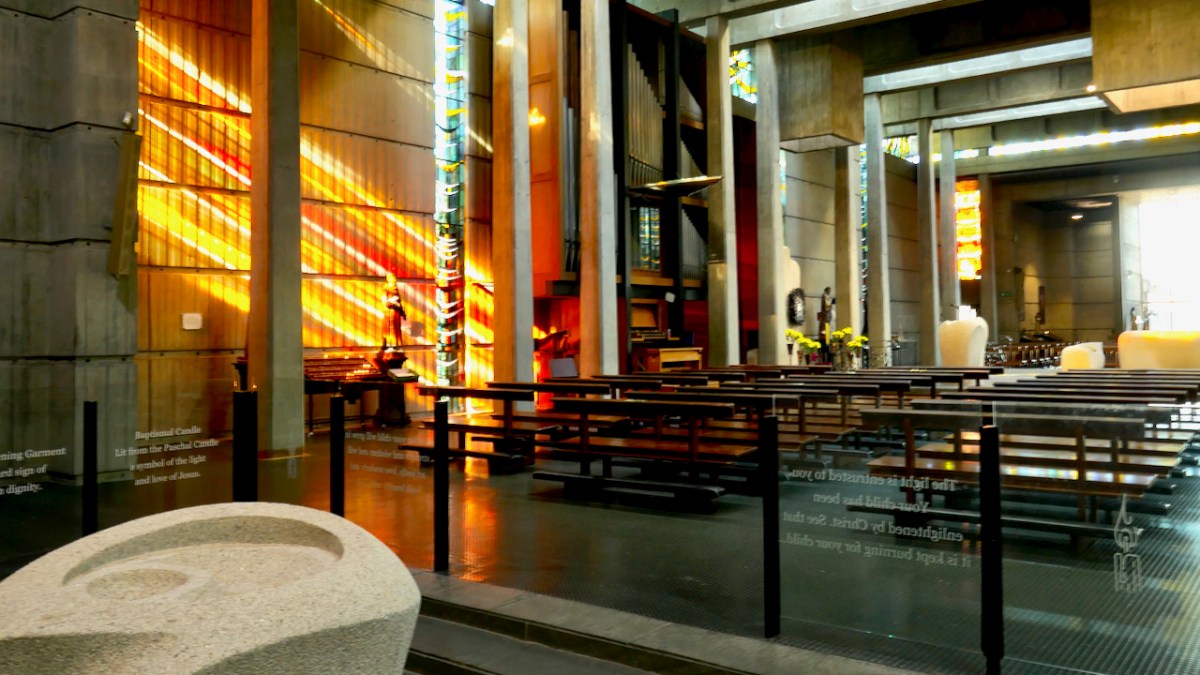
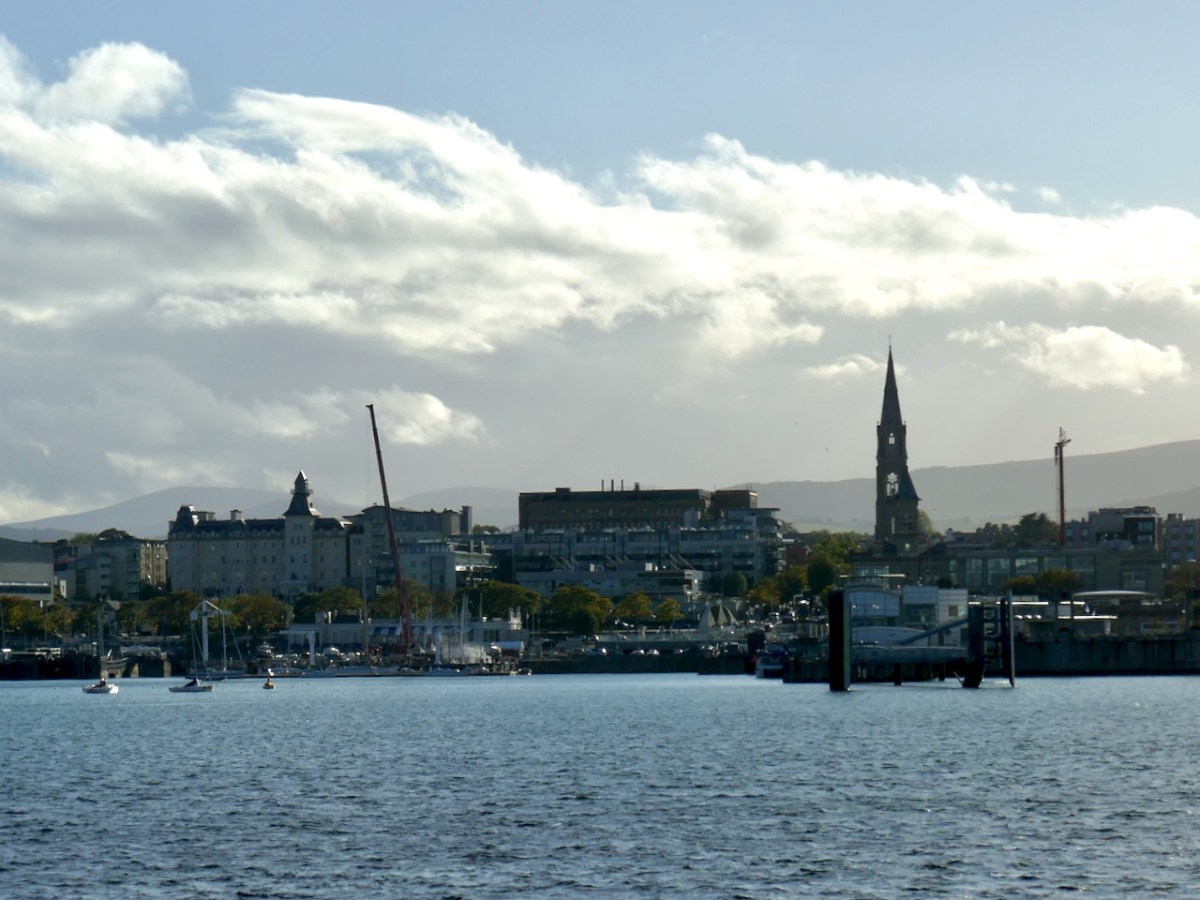
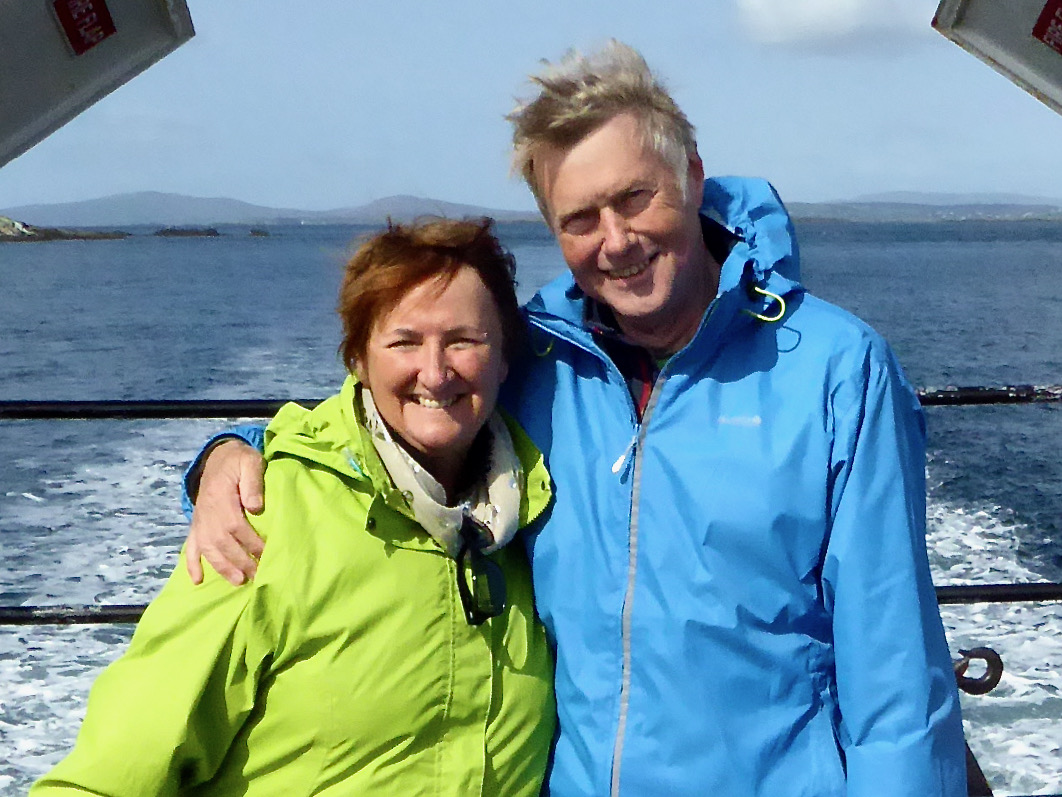
Wait a minute. We very obviously ended up liking West Cork so much that we bought a house in Cappaghglass (the townland next door to Ard Glas), and have stayed there ever since. As you can see, we have been thoroughly enjoying ourselves over the last decade:
Yes, but, that very large sparrow…?
Be patient! Believe it or not, we have kept the blog posts going, with hardly any interruption, ever since. This is Roaringwater Journal post number 968. In the last decade, our Journal has been viewed over 1.5 million times and we have acquired over 5,700 followers between our various platforms.
Our posts are all still there in the archives – and you can still read them. Search by using the three-bar icon on the home page and select All Pages-Navigation, or one of the other menus. Alternately, press the cog button under the Roaringwater Journal title at the top of the page, then scroll down to Archives. Roll down through all the months. Or enter a search term into the magnifying glass symbol next to the cog. That will show whether we have mentioned your chosen subject in any of our blogs. We warn you that some posts (especially the very early ones) haven’t survived the test of time perfectly: but we leave them in there because it’s all a bit of history.
Sparrow?
Hang on! Of course, things change a bit as the years go by (although we don’t*). We have varied the layout of the blog, and the header etc. We had thought of refreshing it all again to celebrate this milestone but… ah, well – perhaps for the twentieth anniversary.
Sp……..?
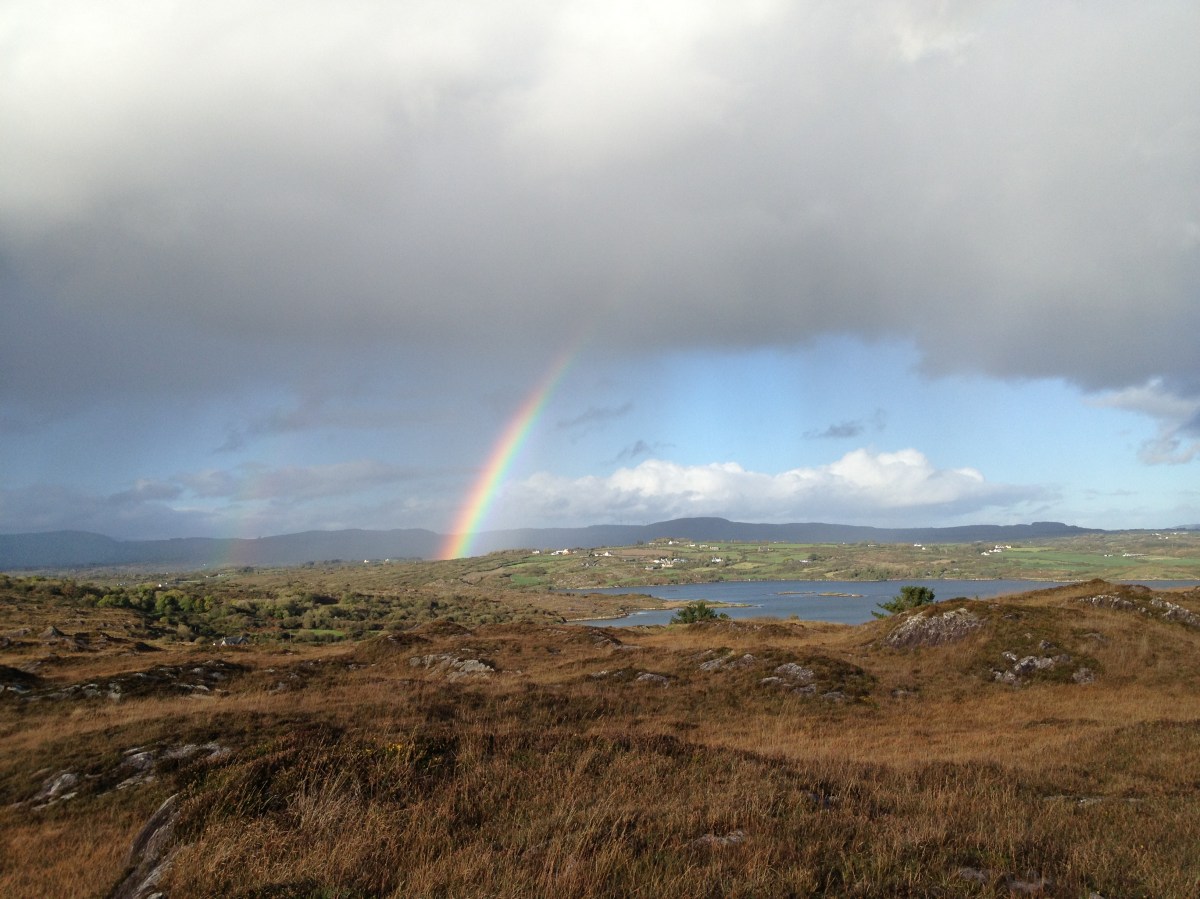
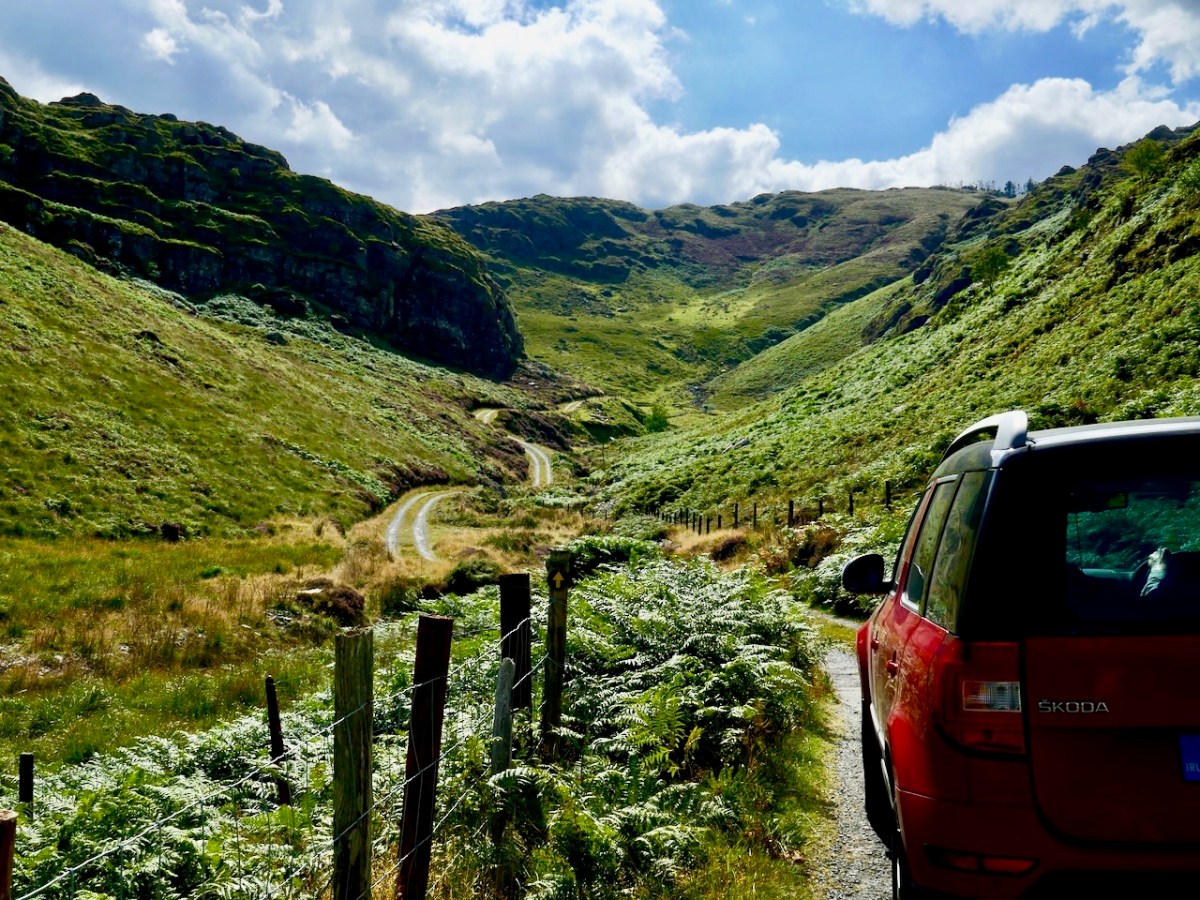
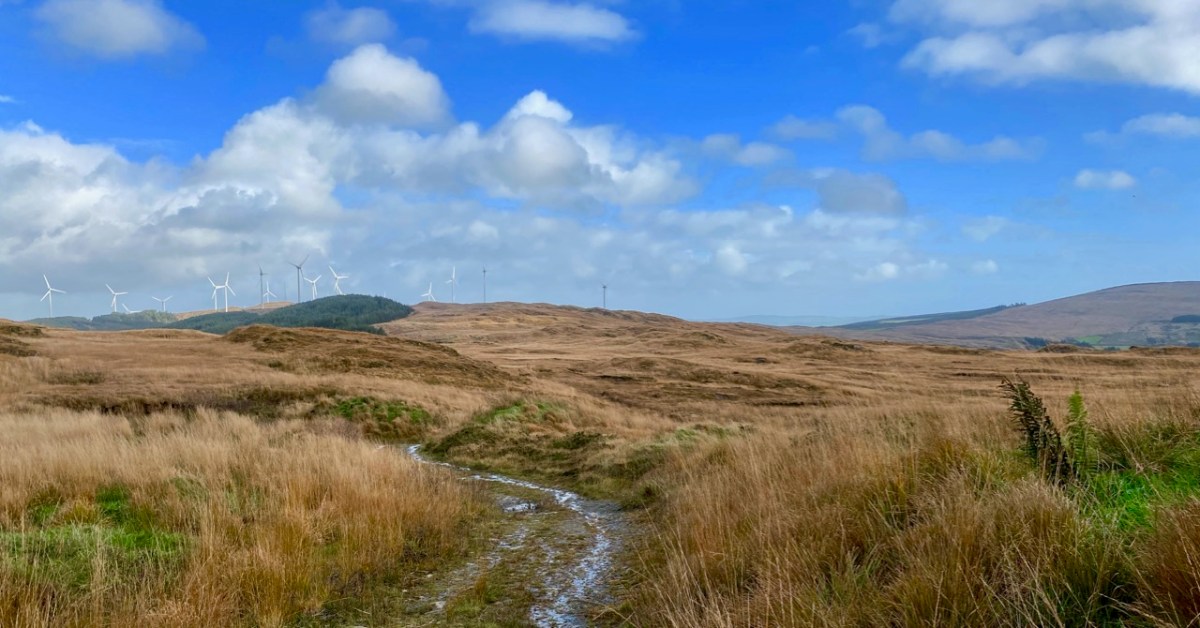
Another pic from 2012 (above) showing mixed weather conditions over Roaringwater Bay. It hasn’t always been sunshine here (have a look at this) but it always feels sunny to us – or just about to be sunny. One of our newest posts -here – shows us doing what we like the most, and always have: exploring remote and often forgotten West Cork byways.
Our regular readers will know that, over ten years, we have developed our interests to take in history, archaeology, rock art, stained glass, architecture, topography, folklore, wildflowers, art and culture, landscape and language… and very much more. We share our adventures often with Amanda and Peter Clarke, our fellow bloggers and friends – see Holy Wells of Cork and Kerry and Hikelines.
What of the next ten years? Well, we are trying to be innovative. This week we have introduced a ‘guest post’ for the first time: this one, by our friend Brian O’Riordan, explores the exploits of an intrepid 79-year old woman who sailed solo across the Atlantic to Ireland in 1994 , which falls right into our own interests, and – hopefully – yours too.
S…………..?
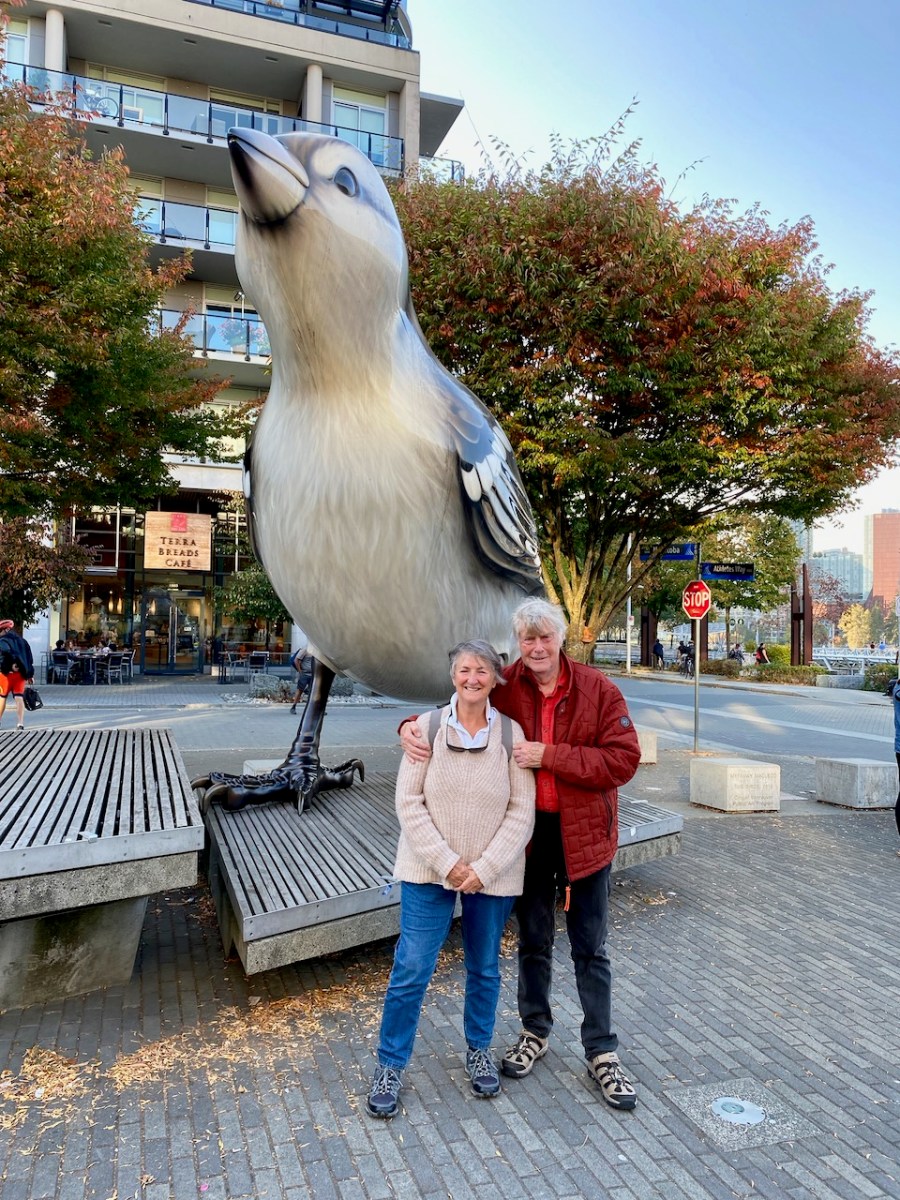
Ok – we have got the message! About the sparrow, that is. The original giant sparrow is one of two (a male and a female) which were created for the Olympic Park in Vancouver, Canada, in 2010 by the sculptor Myfanwy MacLeod. One was transported by our own photo magic to Ard Glas! Perhaps they are not relevant to West Cork, but they are meaningful to Finola and Robert, as we saw them together in Canada ten years ago – pic below. We have just recently returned from a visit to Canada, enjoying a long-awaited catch-up with Finola’s family there. We made sure to record our presence there with another photo-op (below the below).
* Hopefully this demonstrates how youthful we remain, imbibing as we do the stimulating West Cork air. Here’s to the next ten….!
This is a Guest Post by our friend Brian O’Riordan, a native of Charleville, now residing in London
In 1995. as I was crossing Drake Passage between Antarctica and South America, I met a lady with a strange story. I was on a small Russian expedition ship, the Professor Multanovskiy. We experienced increasingly bad weather, encountering a force 12 gale as we rounded Cape Horn. We were not permitted to go out on deck but the ship operated an open-bridge policy. That was where I spoke to Mary Harper as we both studied the ship’s chart of Cape Horn.
She seemed to be the oldest passenger on board but had no difficulty making her way around the ship in the rough weather. We were experiencing waves of over 40ft at this time. She told that she had made the Trans-Atlantic crossing from Nova Scotia to Ireland, singlehanded, the previous year. She did not tell her family but left a letter with her solicitor to be opened 6 weeks after she set out, if she had not been heard from. When she arrived in Ireland, she was feted; it was Regatta time and she was asked to present some of the prizes.
Our conversation was interrupted by an almighty wave which shook the ship so I went below to check on Valerie, my wife, in our cabin, to find her injured. I was not able to speak to Mary Harper again as we landed the next day, but resolved to research her voyage to Ireland when I got back to my home in the UK. Strangely, I could find nothing out about her exploits on the Internet. Eventually I tackled the search by looking for her as a person who sailed out of Nova Scotia and there I was in luck as it had been reported that Mary Harper had set out to cross the Atlantic but had to be rescued as she sustained fractured ribs in a storm; but that was in 1993 and she told me it was in 1994. Turns out she did try in 1993, but had to abandon the trip: Latitude Magazine recorded her intentions (below)
I then came across Roaringwater Journal written every week by Finola Finlay and Robert Harris. Since Roaringwater Bay is one of the nearest landfalls for Trans-Atlantic sailors I felt they should know about Mary Harper. They did not, but set in motion an enquiry (special thanks to Florence Newman for this lead) which eventually took me to the iconic O’Sullivan’s Bar in Crookhaven run by Dermot and Linda O’Sullivan. Linda e-mailed me a framed press cutting which hung on the wall of the pub with all the other nautical memorabilia. The cutting was from the Cork Examiner of 11th August 1994 and was an interview with Mary Harper, aged 79, who landed in Crookhaven on 8th August on her 30ft sloop, Kuan Yin II, named after the Buddhist Goddess of Mercy and patroness of sailors and seafarers. Bingo! I now had evidence of Mary’s crossing.
Shortly after, a notice appeared on the Web of a book launch in Nova Scotia entitled My Sailing Adventures with Mrs. Mary Harper by Jacinta MacKinnon. I contacted Jacinta who sent me a copy of the book which contained stories of sailing around the inner islands of Cape Breton. Importantly, however, she had also had access to a summary made by Mary of the log book of her solo Atlantic crossing.
On July 1st 1994 Mary Harper left Baddeck, sailing alone, on a coastal cruise northwards towards St Johns on the Eastern tip of Newfoundland where she had a rendezvous with friends at the Royal Newfoundland Yacht Club in Long Pond. She called in to a number of friends on the way, so it started out as a leisurely cruise although Jacinta MacKinnon had an inkling that she would attempt the Atlantic crossing again as did her friends in Long Pond. After all, the boat was ready having been modified for the crossing the previous year. On reaching Long Pond she must have provisioned for the crossing and she finally decided to attempt the Trans-Atlantic crossing as she sailed out into Conception Bay on July 14th. Crucially, she had not told the Coastguards or Harbour Master of her intentions.
The first two days she dodged huge icebergs coming down “Iceberg Alley” from the glaciers in Greenland. She had to weather a number of storms, one of which shook the boat so severely that she was surprised it survived. On some stormy days she was driven off course and backwards but on August 6th, she sighted land and gannets flying overhead.
Some fuel had been used up tacking and she would need the engine running as she came in shore to avoid rocks and other obstacles. She put out a call through the Irish Coastguards for anyone who could sell her fuel. The Valentia lifeboat answered the call and indicated they would reach her within 2 to 3 hours. She was very embarrassed when they arrived as the lifeboat crew found the fuel tank nearly full. Mary had used the handle of a mop as a dipstick not realising that there was a bend in the inlet pipe. However, the crew gave her 5 gallons of fuel and returned late with another 5 gallons so that she could safely negotiate her landing. She was heading for Baltimore, in West Cork, as she got a radio message that her daughter and son-in-law were awaiting her arrival there. Coming near land the wind and tide were driving her westward: she was unable to pass Fastnet Rock after three or four attempts. Three other boats in the vicinity had the same trouble.
She decided to head for Crookhaven which was now 10 miles west of her position (the photo of the Fastnet Rock above was taken from near Crookhaven) and managed to find the opening of the harbour which was hidden from her view. Two young French men came out from the pier in front of O’Sullivan’s Bar and helped her anchor before she stepped ashore and had the Champagne held in storage from the first aborted attempt the year previously.
News spread that a solo Trans-Atlantic sailor landed at Crookhaven. Her arrival was greeted with enthusiasm but also incredulity that a sailor so old could have made that journey. It was the time of the regatta with races nearly every day. Mary became the guest of honour and was invited to present some of the prizes (above) with Norma O’Keeffe (Commodore at the Crookhaven regatta) and Jason Fitzgerald. In the lead photograph at the beginning of the post, she is shown surrounded by well-wishers in Crookhaven.
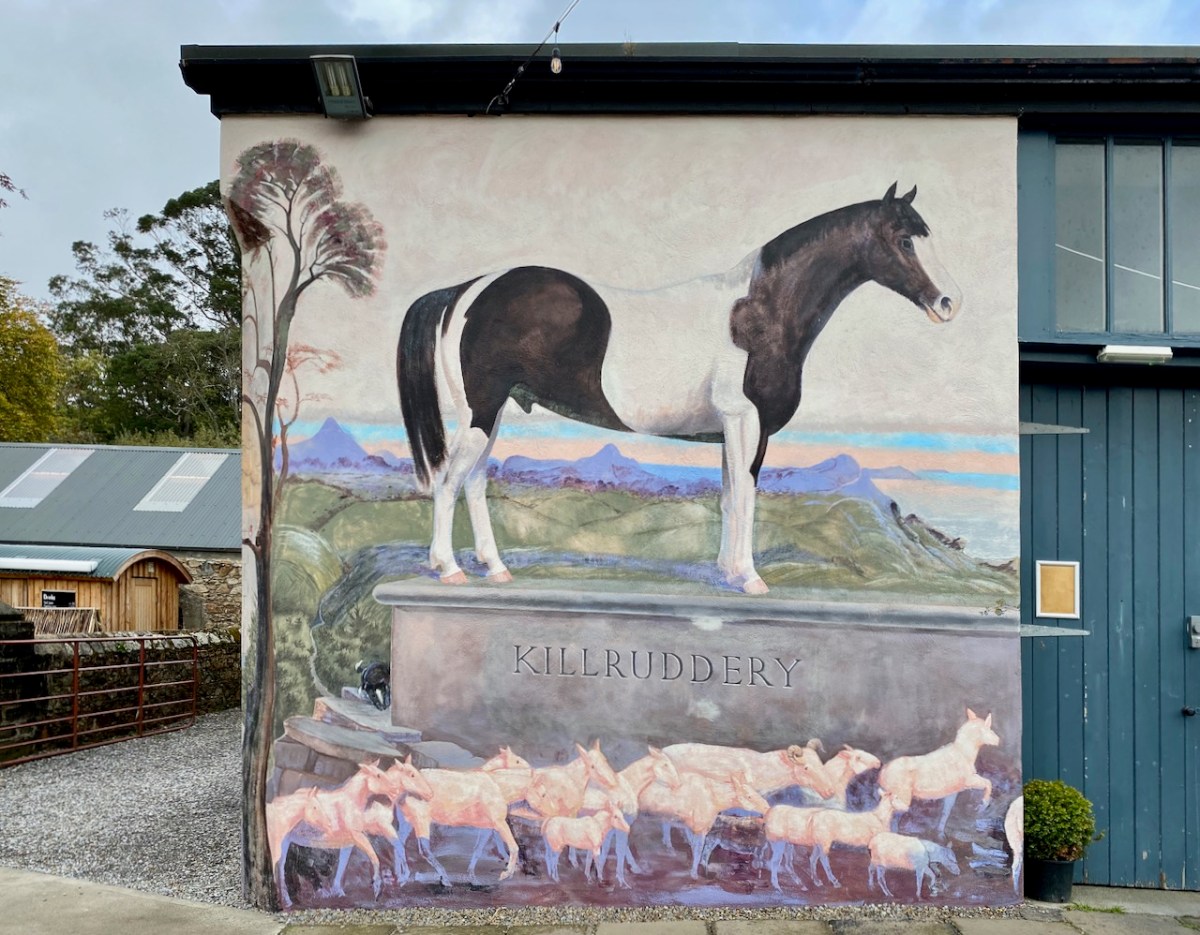
The then proprietors of O’Sullivan’s Bar (that’s a recent photo above, although the mural has now changed), Billy and Angela O’Sullivan, were very impressed by her and, of course, framed and mounted the Cork Examiner interview published that week.
There was much talk of Mary entering the Guinness Book of Records as the oldest person to make the solo crossing of the Atlantic at the age of 79. Mary said she was not interested in the record, she just wanted to meet the challenge of the crossing. Later when her journey was not credited as a record she commented “I did not officially leave Newfoundland and I did not officially enter Ireland” as she did not register her journey with the Harbour Masters or Coastguards. This, of course, was why I had such difficulty tracing her achievement. It had taken her 23 days to make the crossing which is 1680 nautical miles but because of the difficult sailing conditions and being blown off course had lengthened considerably to 2150 nautical miles (approx).
The summary she wrote of her journey stops in Crookhaven (Finola sent me this photo of herself beside the press cutting) but Billy O’Sullivan told me that she stayed in Crookhaven for a week and MacKinnon knows that she sailed eastwards along the South coast of Ireland, up the Irish Sea, through the Caledonian Canal in Scotland and across the North Sea to Sweden where she met up with some friends, Christer Arakangas and his wife who sailed with her in Nova Scotia. She then sailed around the picturesque Stockholm archipelago. Kuan Yinn II suffered some damage on the rocks (she hated rocks!) so when it was repaired, she sold the boat and on her return to Baddeck bought another boat and named it Kuan Yinn III. She continued to sail with Jacinta MacKinnon until finally ending her sailing days in 2004.
When asked about her memories of her Trans-Atlantic journey she replied “It was a great trip, the ocean, the sky, the waves which you can only appreciate from a small boat when you are between them, the sun and the clouds, all clean and free of pollution, so beautiful” and about sailing in general she is quoted as saying that as soon as she set sail, she felt that the whole world was hers to play in: “I feel like a free spirit”. Mary Harper died on December 17th 2008 at the age of 92.
Jacinta, with Ferris Asaph, has written and performed “A Sea Ballad for Mrs. Mary Harper”. Some of the photos on this piece are from that video. Take a look.
Postscript: Mary Harper was originally from New York but after her marriage to Harry H Harper Jnr. who became the Vice President and Executive Editor of the Reader’s Digest she moved to Pennsylvania and opened a sports shop for women. Both enjoyed going to Canada and having their vacation in Baddeck on the island of Cape Breton where they had a boat.
This island had two special features: a large tidal lake named Bras d’Or and the house and laboratory of Alexander Graham Bell where he conducted his telephone experiments as well as aeronautical experiments being involved in the first heavier than air flight over Bras d’Or Lake. In 1993 Mary Harper donated 24.3 hectares (approx. 60 acres) on the shore of Bras d’Or Lake as a nature reserve, now named after her.
Mary Harper was an intrepid sailor. She has not entered the Guinness Book of Records because of a technicality but her exploits must not be forgotten.
Acknowledgements: To Finola Finlay for getting me on the first rung of the ladder in seeking out the Irish end of Mary Harper’s story and in hosting me on Roaringwater Journal. To Jacinta MacKinnon for her book “My Sailing Adventures with Mrs. Mary Harper” and for providing me with additional information, and to the O’Sullivan family, Bill, Dermot and Linda for their hospitality and the all-important press cutting. To Mary Daunt who took the photographs of Mary Harper presenting the prizes, being surrounded by well-wishers, and the detailed view of the press cutting
This post was written in 2013 – nine years ago! It’s one of our West Cork blog posts from the earliest days . . .
Just as the leaves begin to turn, the gales have come to tear them away and send them flying all over the Bay. Autumn is bringing angry seas with wild white horses, while the trees on our exposed acre are bending sideways. I admire the small birds who manage to find their way to our bird-table in the face of it all: we have just been visited by a whole flock of ravenous Goldfinches who hang on to the wildly swaying feeders in a determined frenzy to fatten themselves up for the coming winter and squabble noisily with any Great-tits, Chaffinches or Robins who try to get in on the act.
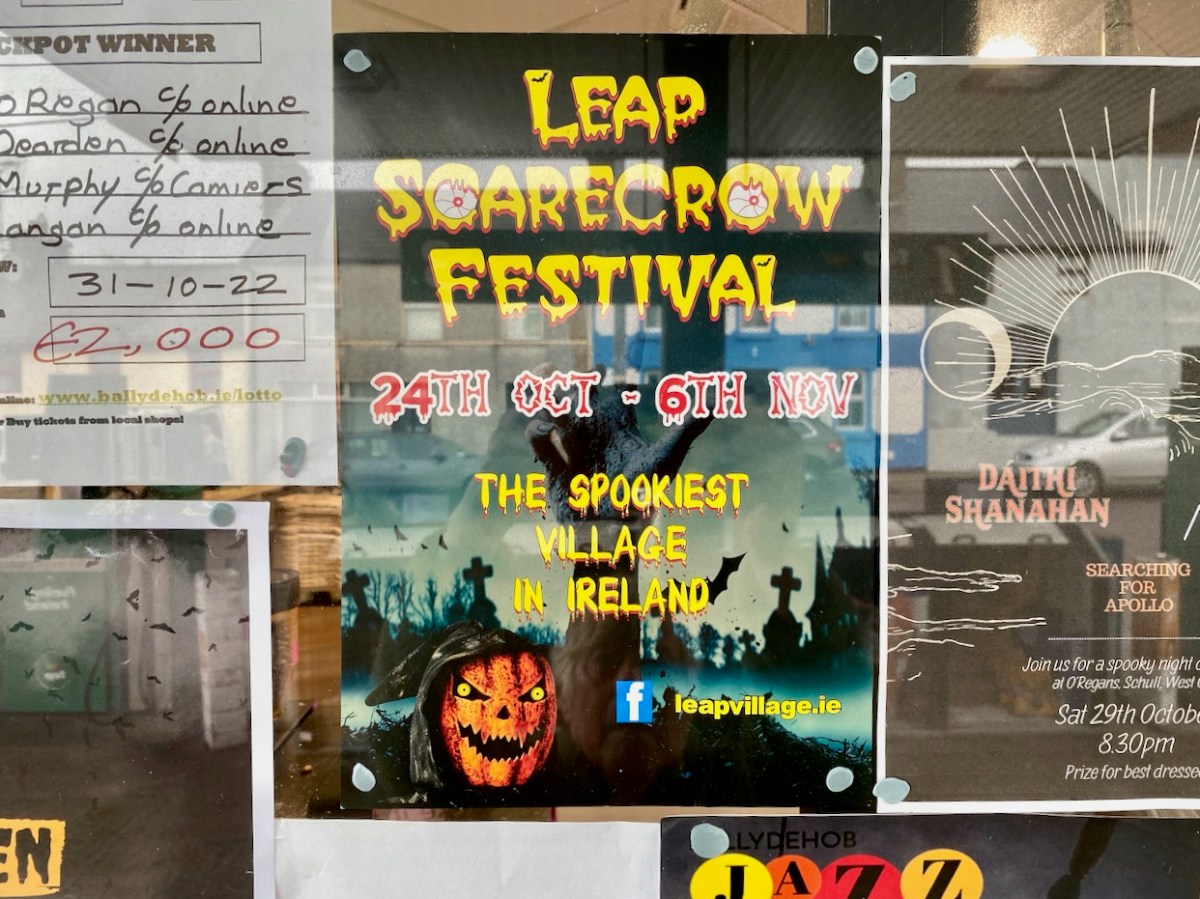
In Ballydehob (our local community) it’s time for the annual Thrashing. This event always takes place just before Hallowe’en, a festival which nowadays overlays the old Celtic Samhain (1 November) – when the souls of the departed are remembered. Here it’s a good time to bring in the threshing machine and lay up sacks of grain in the barn. It’s also a reason to hold a fair and show off vintage cars and tractors, to make butter, to watch performing dogs, to gamble on mouse racing – or just to chat over a cup of tea.
Byway in Ballydehob
Don’t miss it!
The Thrashing
Mouse Bookie
We look forward to the turning seasons: what we see from Nead an Iolair changes constantly, is never dull, and can’t be taken for granted. Skies can be steel grey – or still as gloriously blue as they were in the summer; and our sunsets can be even more beautiful.
Five years ago I wrote a piece about the incredible biodiversity that flourished along the Caol Stream, right in the middle of Skibbereen. At the time, the flood relief project was underway, and it wasn’t totally clear how much clearance of the vegetation would take place. I was optimistic, given the resilience of nature, that once things settled down, the wildflowers would once again creep in to populate the banks of the stream.
I am no longer optimistic that this will happen anytime soon, if at all. The photo above shows you what the same area is like now. So this post is an elegy for the missed opportunity that this project represented – the opportunity to balance the needs of the people of Skibbereen not to be flooded repeatedly, with the need to conserve our biodiversity.
Please click on this link to see the riches we have lost:
A few years ago, on one April day after a bleak, harsh winter that had gales, hurricanes, blizzards and unceasing bitter east winds thrown at us – the sun came out! We were out too, and headed up to the Beara Peninsula to see if we could remember what sun-soaked landscapes felt like… They felt great!
Header – the glories of Cork and Kerry combine on the spectacular Beara; top photograph – finally, after a long,harsh winter, we see the spring blossoms appearing; middle – a wayside shrine on the road out from Glengariff; bottom – Hungry Hill dominates the views as we head west on the peninsula
You will remember our previous visits to the Beara: there are not enough superlatives for what it has to offer in the way of stunning scenery and colour. None of these photographs have been enhanced – what you see is exactly what we saw on the day – and it’s what you will see, too, if you choose aright (although even on dull days we always find plenty to interest us).
Top photograph – St Kentigern’s Church is in the centre of one of Ireland’s most colourful villages; middle – the sunlight plays games with the beautiful windows by glass artist George Walsh; bottom – light from the windows dances on the pews
We knew where we were going: Finola was keen to revisit the little Catholic church of St Kentigern in Eyeries, which has a fine collection of windows by George Walsh: it’s a gem – and at its best for the quality of the light enhancing it on the day. I wanted to see the settlement itself in the early spring sunlight as it’s one of the most colourful places in the whole of Ireland! Neither of us was disappointed.
Just a taster of the treats in store in Eyeries: on a beautiful spring day there was hardly a soul around, but we were still able to find an ice cream in O’Sullivan’s!
Our second objective was to travel into the hills and find Ardgroom Outward stone circle. The trail involves farm gates, stiles and a lot of mud – but the 9 stone circle (named locally ‘Canfea’) is a fine, almost intact monument with wide vistas to mountain and sea. The impressive outlier stone is 3.2m in height.
The magnificent Ardgroom Outward (or ‘Canfea’) stone circle is accessible via a marked, boggy path: the vistas from the site make the journey worthwhile. Finola is dwarfed by the huge outlier!
It’s barely a skip up to Eyeries from Nead an Iolair, so we had to carry on around the peninsula and take in the almost surreal views of oceans, lakes and mountains before dipping into Kerry and then heading over the top back into Cork county and down the Healy Pass – surely one of Ireland’s most spectacular road trips.
Returning home – with the evening sun setting gloriously over Roaringwater Bay – we reflected that there can’t be many places in the world where a single day can offer such a feast to satisfy all the senses.
This is an update of a post that originally appeared here 7 years ago. We find as time goes by that we need to go back and fix broken links, insert newer ones, update information, and make sure the photographs are still faithful to what’s on the ground. This is a revised and updated version of what I wrote at that time
It was the early 1960s and I was sitting in class in my convent school while Mother Francisca explained the purpose of our education and gave us a glimpse of our futures. “What we want for you, girls,” she said, “is to be Good Wives or Nuns.” This week, I landed back in that classroom with a bang. Did I visit my old school? No – I strayed into a time warp. In doing so I rediscovered part of my heritage I had almost forgotten and I met a brilliant young scholar who helped me access those dim memories again.
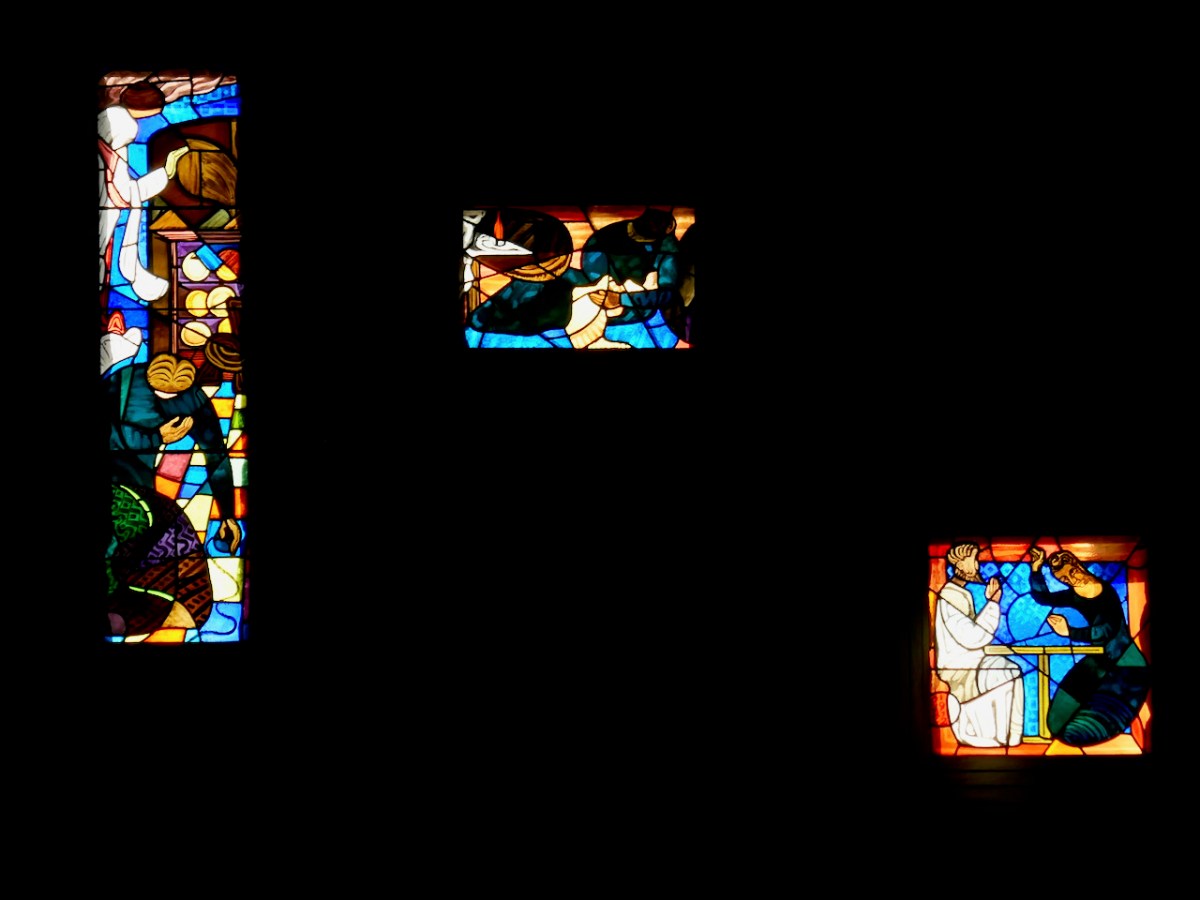
All Saints Catholic Church in Drimoleague is one of the most extraordinary buildings in West Cork. First of all, it’s a fine example of mid-century modern architecture (and there aren’t a lot of those in West Cork) and an engineering triumph. Built in the 1950s of concrete and limestone, its cavernous interior has no need for pillars: nothing intrudes between worshippers and altar. It’s like stepping into an enormous, curiously bright, almost empty box. Secondly, it has extraordinary artwork in the form of a giant mural behind the altar and a panel of stained glass windows above the balcony on the south wall. It was the stained glass that stopped me in my tracks.
The glass is laid out in a series of frames that takes the viewer from birth to death – no, beyond death, to heaven. The church was built in the 1950s and each frame represents the values of rural Catholic Ireland of that time. In a strange way it reminded me of a High Cross, in that the illustrations that we see on High Crosses were meant to tell a story – a biblical one in that case – and to instruct the viewer in the tenets of the religion. The purpose of this wall of glass was also educational – to provide a primer to mass-goers on the aspirations and actions that should guide their lives.
My parents, imbued with the message that the family that prays together stays together, developed an intermittent enthusiasm for saying the rosary. We would gather in the kitchen after dinner, each with our beads, and kneeling on the hard tiles we would tell off the Sorrowful or the Glorious Mysteries. The second frame shows just such a family, and I particularly love the toys on the floor and the statue of Mary on the mantlepiece. There’s a grandmother and a baby in a cot, and a little girl being inducted into the Mysteries by her older sister.
The next frame shows First Communion, with the girls in miniature bride outfits (as they are to this day) and the boys in their Communion suits with the short trousers and knee socks that all boys wore at that time. When my godson in Dublin made his First Communion I heard a lot about the process and I found that apart from the length of the boy’s trousers not a lot had changed in 60 years.
The one that brought me back to Mother Francisca shows earnest young men and women gazing at a directional sign which shows them their choices – marriage or the religious life. That was it! To hammer home the point the top of the panel shows a wedding, a priest and a nun. I’m casting my mind over the group of girls I went to school with – we didn’t produce any nuns and while most of us married I can’t think of a single one who hasn’t worked – we count among us an ambassador, teachers and principals, a town planner, an artist, a college dean, office administrators, a medical doctor, an international expert on child protection, a veterinary nurse, a parliamentary reporter, a lawyer…the list goes on. But none of this was discussed at school: we had no career guidance, no aptitude tests, no encouragement of any kind to think of ourselves as people who would work for a living. What’s curious is that we developed those careers in the complete absence of any kind of conscious preparation for them at the secondary school level.
The sixth frame might be my favourite. It’s the ‘work, rest and play’ lesson. At the bottom of the frame a happy family sits around the tea table. Above them men work on the fields and on top those men are playing Gaelic football while their wives sit on a bench on the sidelines and chat to each other. Men were to head the family, work and play hard, and women were to provide the supportive role. I doubt if anyone foresaw when that glass was designed in the 1950s that in the next century two Irish rugby squads – the men AND the women – would bring home the Six Nations Cup for Ireland.
The last three frames deal with end of life, including Last Rights, death, and reception into heaven – the reward for living the exemplary life presented in the stained glass wall.
If you grew up like I did in 1950s Ireland, or if you are interested in the art and architecture or the social history of this period, the Church of All Saints in Drimoleague tells a fascinating story. In 2015 when I originally wrote this post there was little information available about it. Now I know that the church was designed by Frank Murphy, ‘Cork’s Modern Architect’, thanks to the sterling work by yet another brilliant young scholar, the architect Conor English. We attended Conor’s talk about Murphy at Nano Nagle place some years ago (that’s him on the right, along with Peter Murphy, Frank’s son) . You can read more about Frank Murphy and his achievements in this article.
My research revealed that one other person was as struck as I was by this church, although in a more scholarly way. Richard Butler is a gifted young historian from Bantry who completed a doctorate at the University of Cambridge. At the time I wrote this blog post, Richard was teaching at Leicester University, but is now the Director of Research at Mary Immaculate College in Limerick. We first heard him speak at the Bantry Historical Society on the subject of the courthouses of West Cork – a topic we had no idea could be as interesting until we heard his erudite and engaging presentation. Now, he has written the definitive book on Irish Courthouses.
At that time, he had written a paper, All Saints, Drimoleague, and Catholic visual culture under Bishop Cornelius Lucey in Cork, 1952-9, for the Journal of the Cork Historical and Archaeological Society*. He was very generous in sharing his findings with a fellow enthusiast. His paper (and a subsequent one with more information**) deals with the Catholic ethos within which that era of church construction operated, with the role of the local community in commissioning such an unusual edifice, with the enormous mural, and with the windows. It was only after communicating with Richard that I learned that the windows were the work of the Harry Clarke Studios*** and how unusual they were for their day in not being concerned solely with images of saints, the life of Christ, or Mary.
Richard’s paper not only details the commissioning of the windows, but the extraordinary interventions made by Bishop Lucey to dictate the content and form of the figures in them. It’s a fascinating read.
We have discovered, to our surprise, that not everyone is as enamoured of the Drimoleague Church as we are – the word ‘factory’ has been bandied about. Personally, I think Drimoleague should take great pride in having such an outstanding and unique building, by such a distinguished architect. There’s more to the story – all to be read in Richard’s papers.
*Richard Butler, ‘All Saints, Drimoleague, and Catholic visual culture under Bishop Cornelius Lucey in Cork, 1952-9’, Journal of the Cork Historical and Archaeological Society 120 (2015), pp. 79-97.
**Richard Butler, ‘All Saints, Drimoleague: clarifications and new discoveries’, Journal of the Cork Historical and Archaeological Society 121 (2016), pp. 141-43.
Welcome to the UCD Library Cultural Heritage Collections blog. Discover and explore the historical treasures housed within our Archives, Special Collections, National Folklore Collection and Digital Library