Seaweed and Sealing Wax

Finola has been involved in the Ellen Hutchins Festival since it began in 2015 – the 200th anniversary of the death of Ireland’s first female botanist. This year she was asked to help organise and MC an outdoor event, and has had a very busy time – together with her collaborators – leading up to this. On the day – last Friday – I went along to see the culmination of their hard work, and I thought I would share the experience with you.

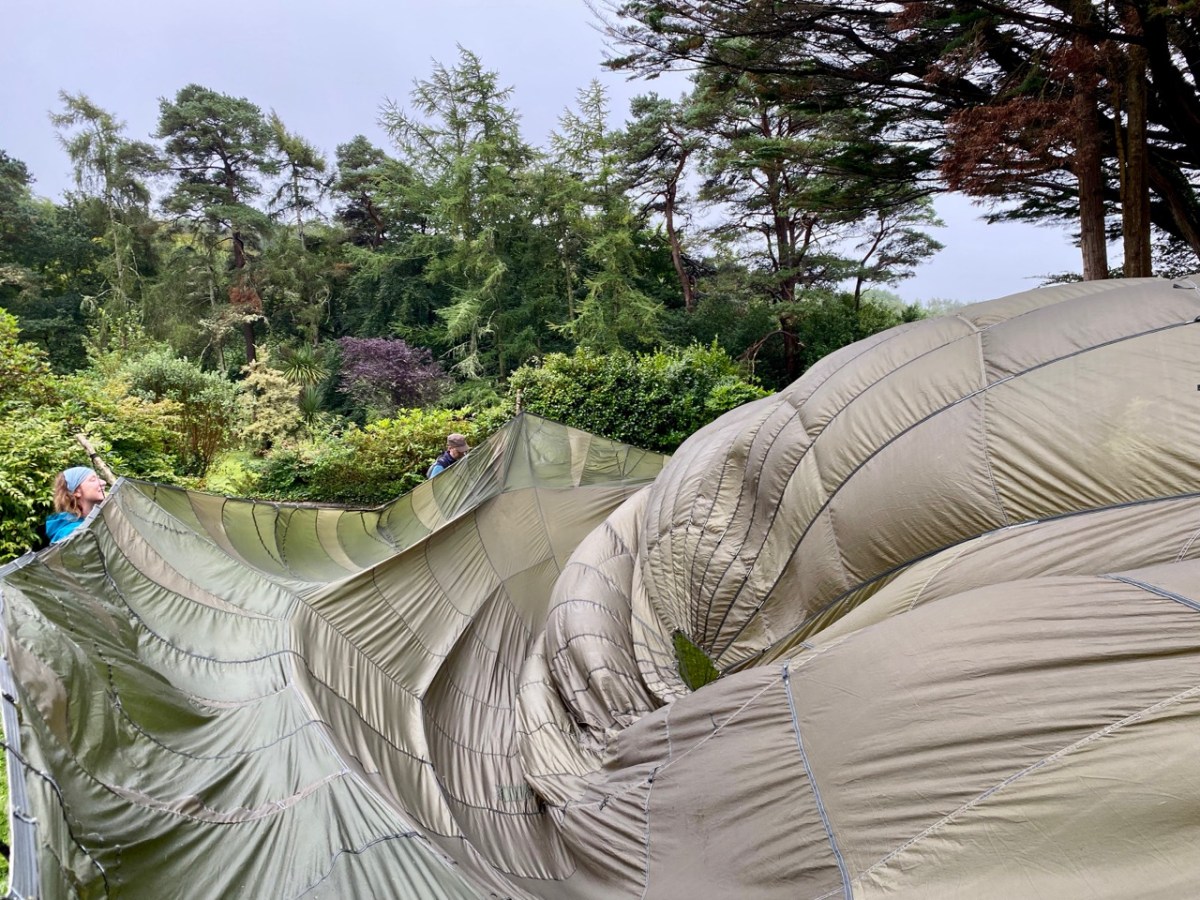
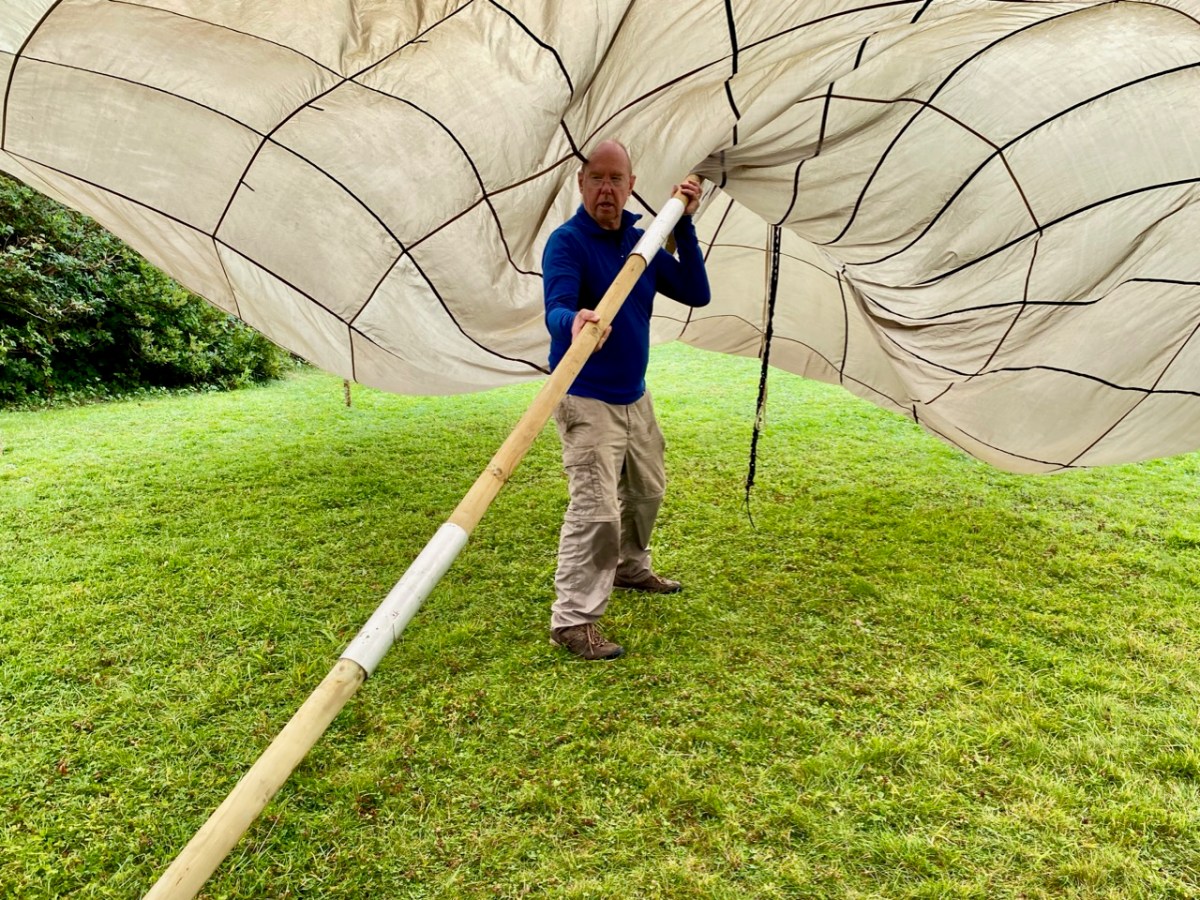
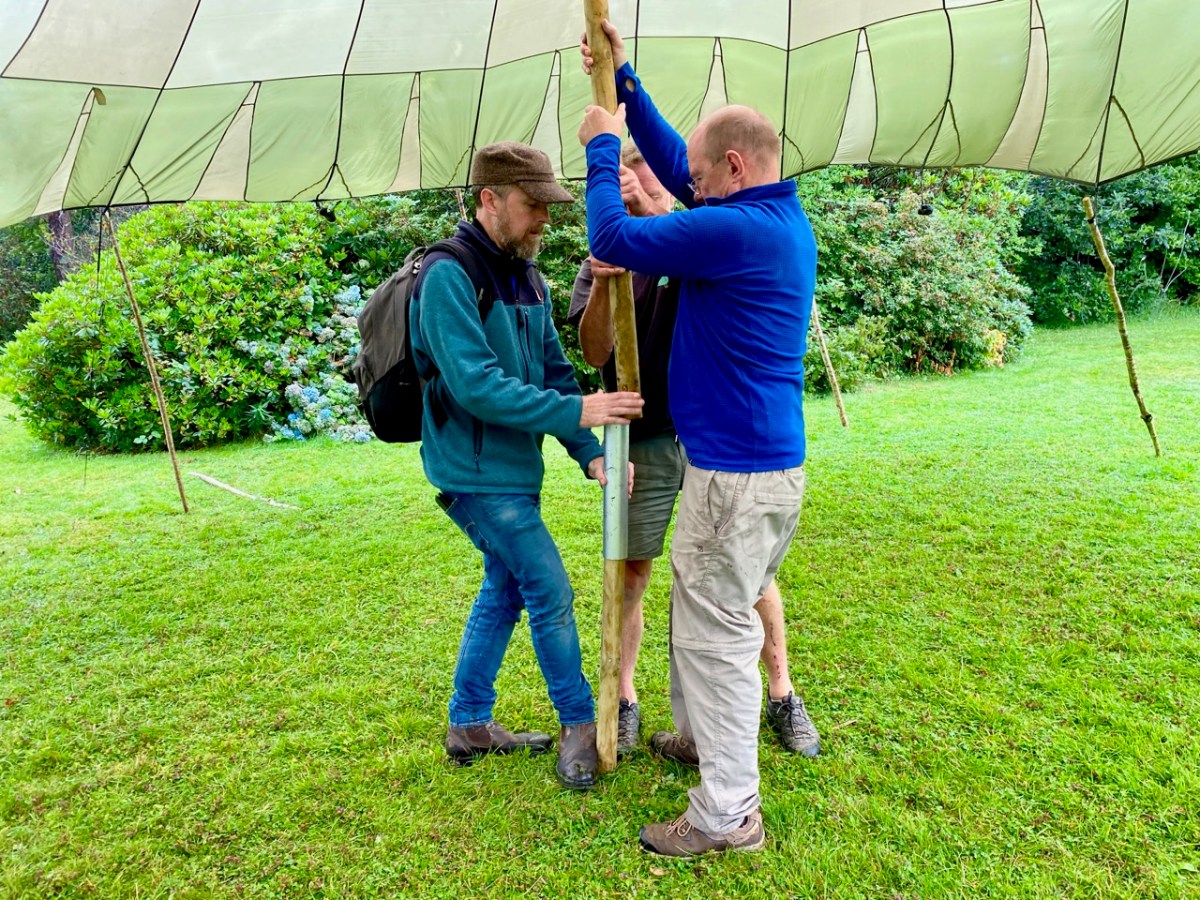
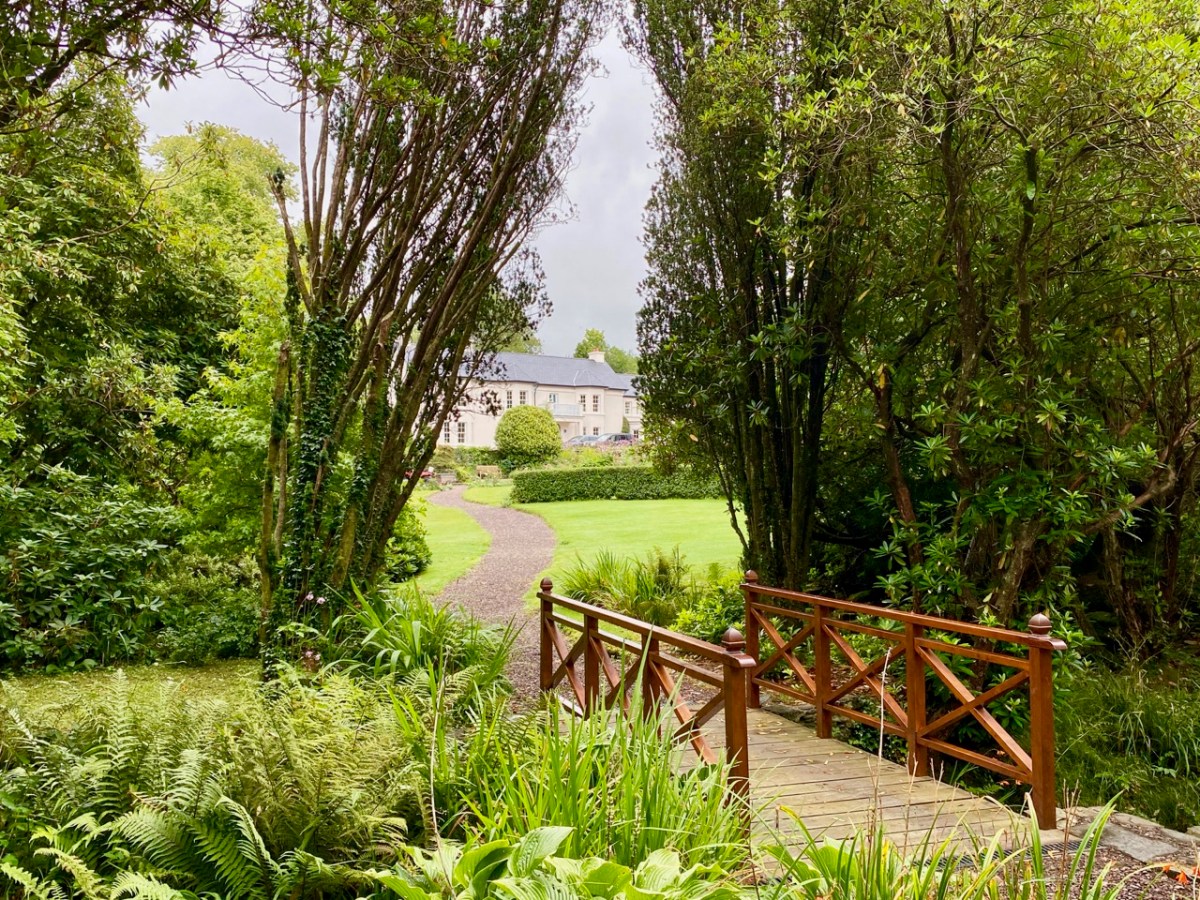
The weather forecast for that day was atrocious! Heavy rain and thunderstorms were predicted for the duration, and we set out for Ballylickey with some trepidation. However, as is often the case in West Cork, the weather forecasters were confounded. Nevertheless, the Festival team had prepared for all eventualities and we arrived in time to contribute to the setting up of a shelter made from a silk parachute and a number of wooden poles. The transformation of an empty area of lawn in the gardens of Seaview House Hotel into an impressive performance space in a very short time was quite remarkable – and a visual treat – as the swirling mass of silk was tamed by our team, directed by Seán Maskey.

Watching (and, indeed, participating) in this constructional triumph, I was taken back to the days when I lived in Cornwall and followed the escapades of two theatre groups there: Kneehigh Theatre and Footsbarn. Both started out as small troupes of travelling players who took their performance spaces with them and incorporated the action of creating and erecting their transitory auditoria into their shows: all part of the visual entertainment. Both those groups have evolved and travelled far away from their roots, but the evanescent nature of their early shows has stayed with me, to be pleasantly awakened by the happenings at Ballylickey.
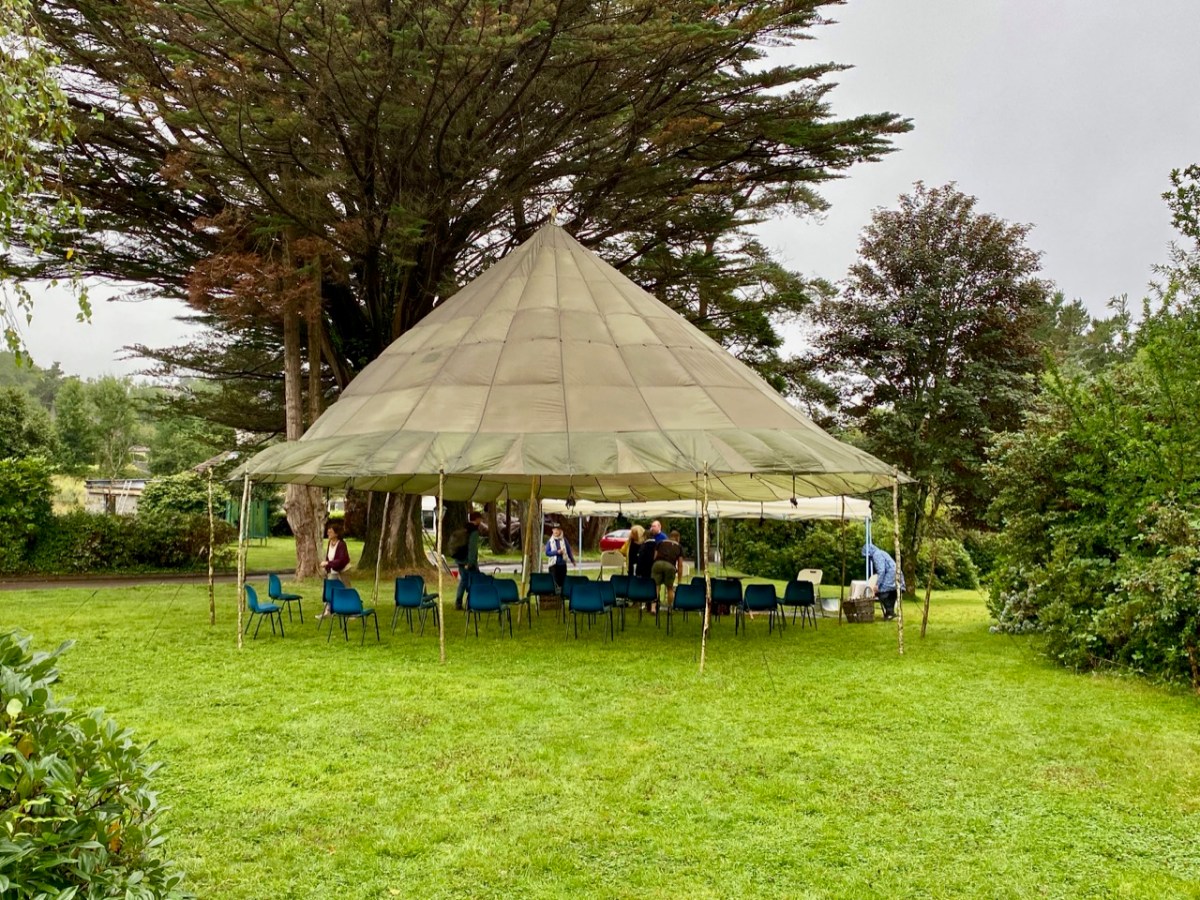
To see where Ballylickey fits in to the story of Ellen Hutchins, have a look at Finola’s post from 2015. Ellen was born in 1785 in Ballylickey House and lived much of her short life there. Seaview House – now the Hotel – was built partly in the grounds of the Hutchins family home, so it is a fitting venue for Festival events, as we know that we are following her own footsteps as she became interested in the world of plants and seaweeds which she discovered all around her as she was growing up.

. . . Ellen was a pioneering botanist who specialised in a difficult branch of botany, that of the non-flowering plants or cryptogams. She discovered many plants new to science and made a significant contribution to the understanding of these plants. She was highly respected by her fellow botanists and many named plants after her in recognition of her scientific achievements.In addition to being an outstanding scientist, Ellen was also a talented botanical artist. Botanical drawings serve science in a very important way . . .

Ellenhutchins.com
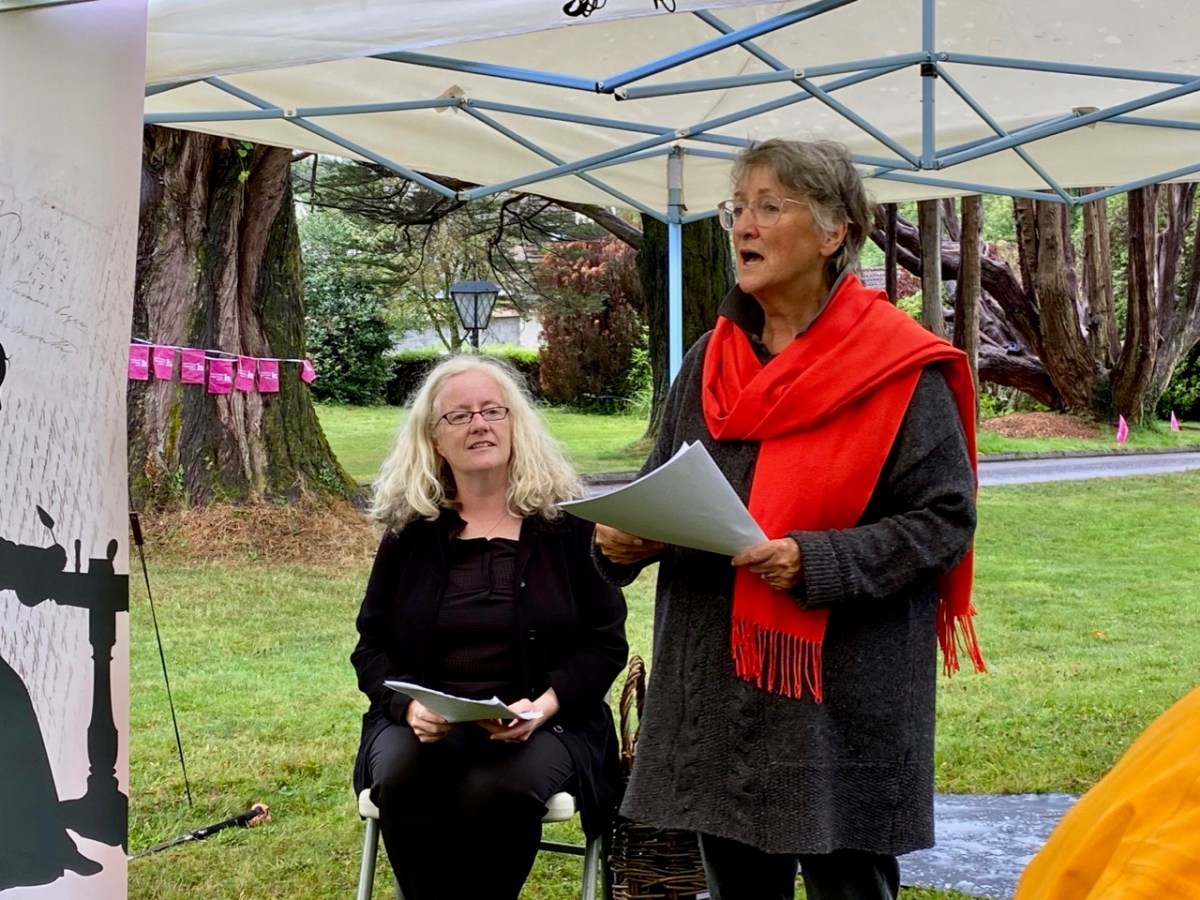
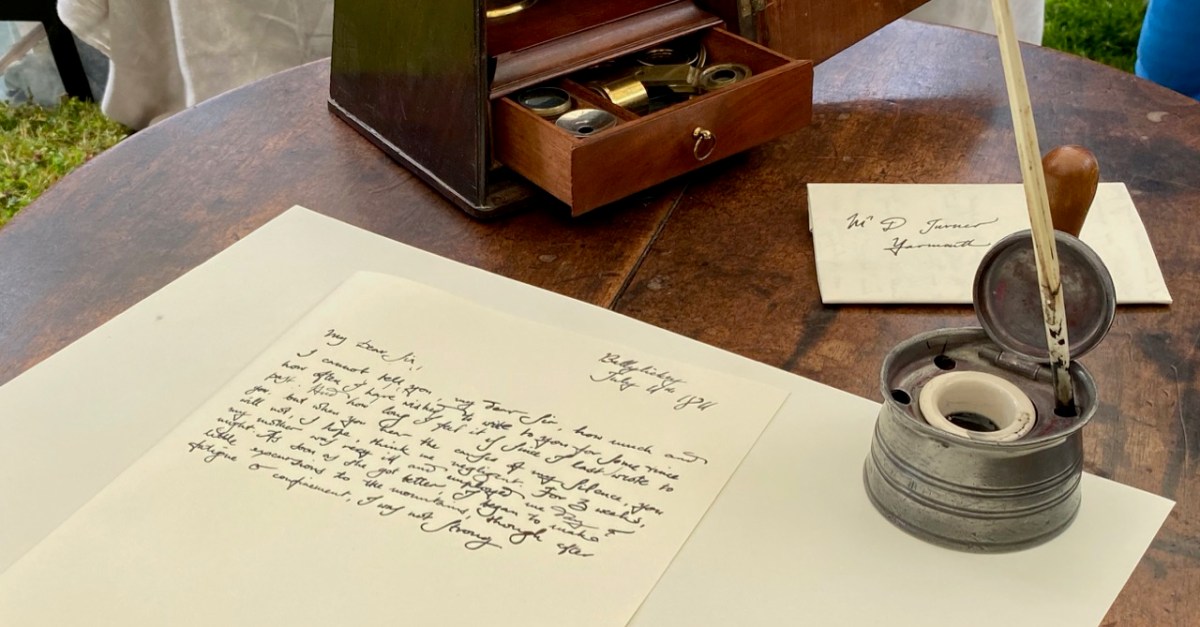
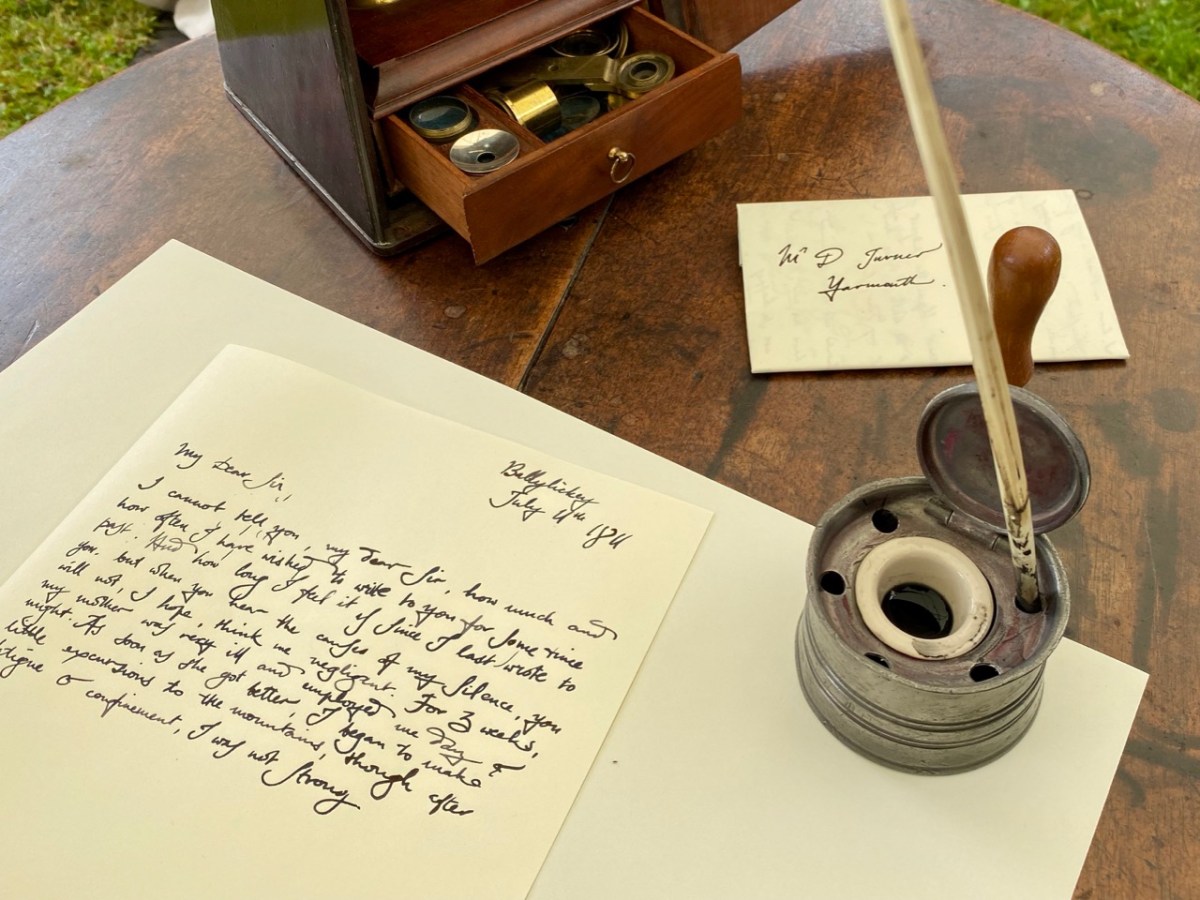
That’s Finola (above) introducing the subject of the day: the correspondence that passed between Ellen and Dawson Turner of Yarmouth, Norfolk, who had become a recognised authority on botany in early 19th century Britain, even though this was always a leisure pursuit: professionally he worked for his father, who was head of Gurney and Turner’s Yarmouth Bank and took over his role on his death. Dawson wrote numerous books on plants and got to know the leading botanists of the day, including Ellen. Amazingly, one hundred and twenty letters between her and Dawson survive. Those from Dawson Turner to Ellen are held by the Royal Botanic Gardens, Kew, and those from Ellen to Turner are at Trinity College Cambridge. Friday’s event was a reading of a selection of these letters. On Finola’s right, above, is Karen Minihan, an actor and drama director who lives in Schull: she read the letters from Ellen. Moreover, it was she who selected and organised the extracts – which were the heart of the performance.

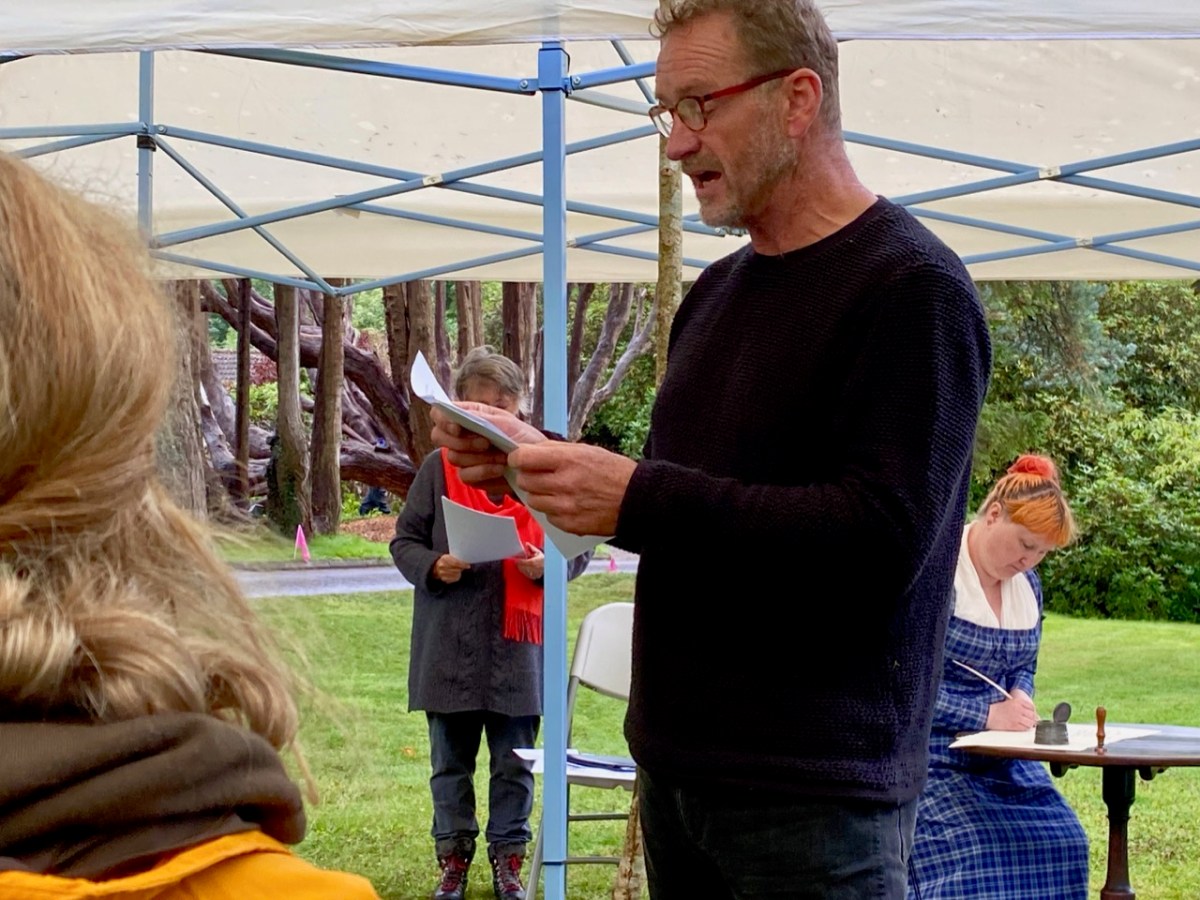
Above are the two other performers: on the right is Mark O’Mahony from Cappaghglass – he is a part-time actor, and here he reads the letters from Dawson. On his right is Carrie O’Flynn. She is a historic re-enactor and researcher: she appeared as Ellen, in authentic period dress, and provided really illuminating interpolations between letter-readings, informing us about the act of letter-writing itself in the early 1800s – the ink and quill pens; the postal service; Ellen’s probable appearance and dress (there are no surviving portraits of her) and the difficulties which Ellen would have had to face in pursuing here chosen interests, especially as she was herself quite frail and was for many years the carer of her own mother. Her achievements in the light of all this are truly remarkable, and Carrie succeeded in bringing this out with her contributions. Below she shows us the brass microscope that Ellen used – an essential item of equipment for her work.
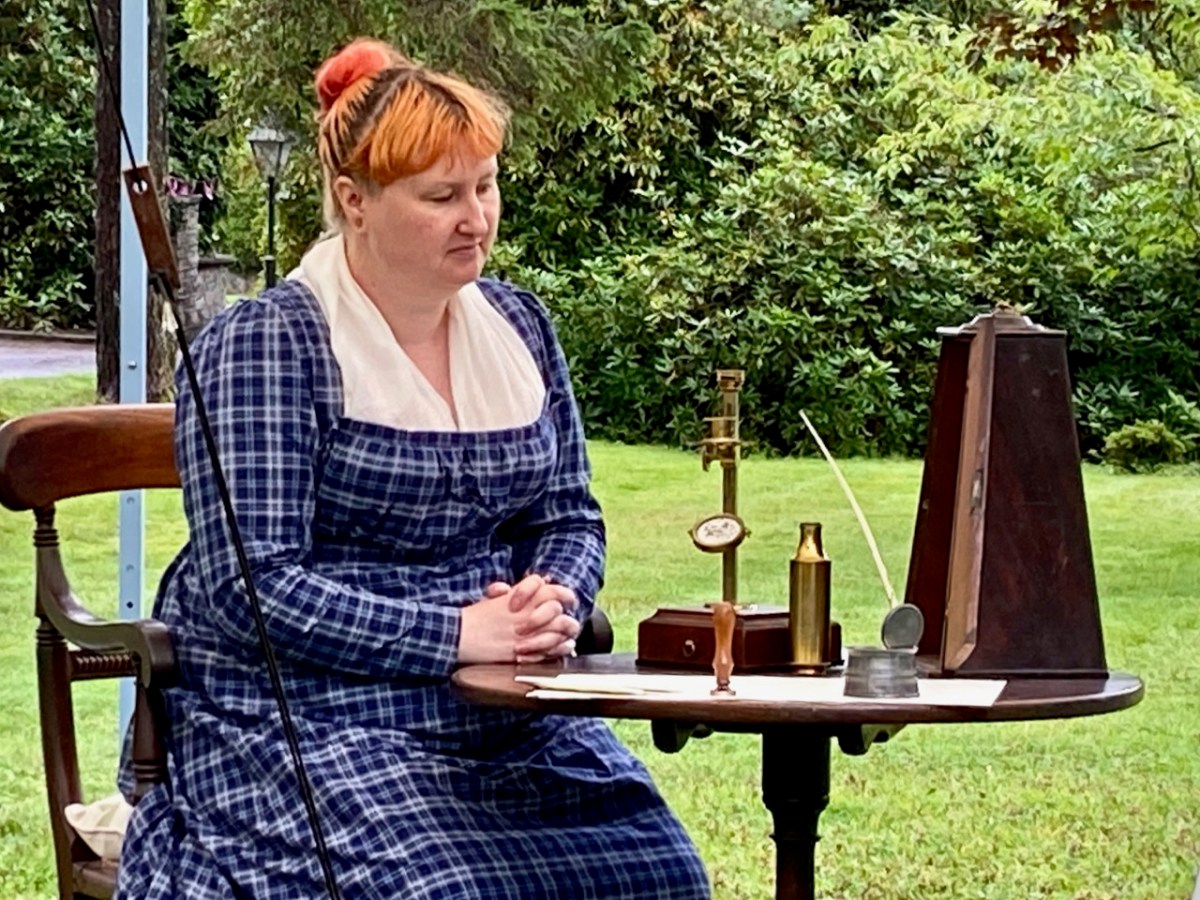
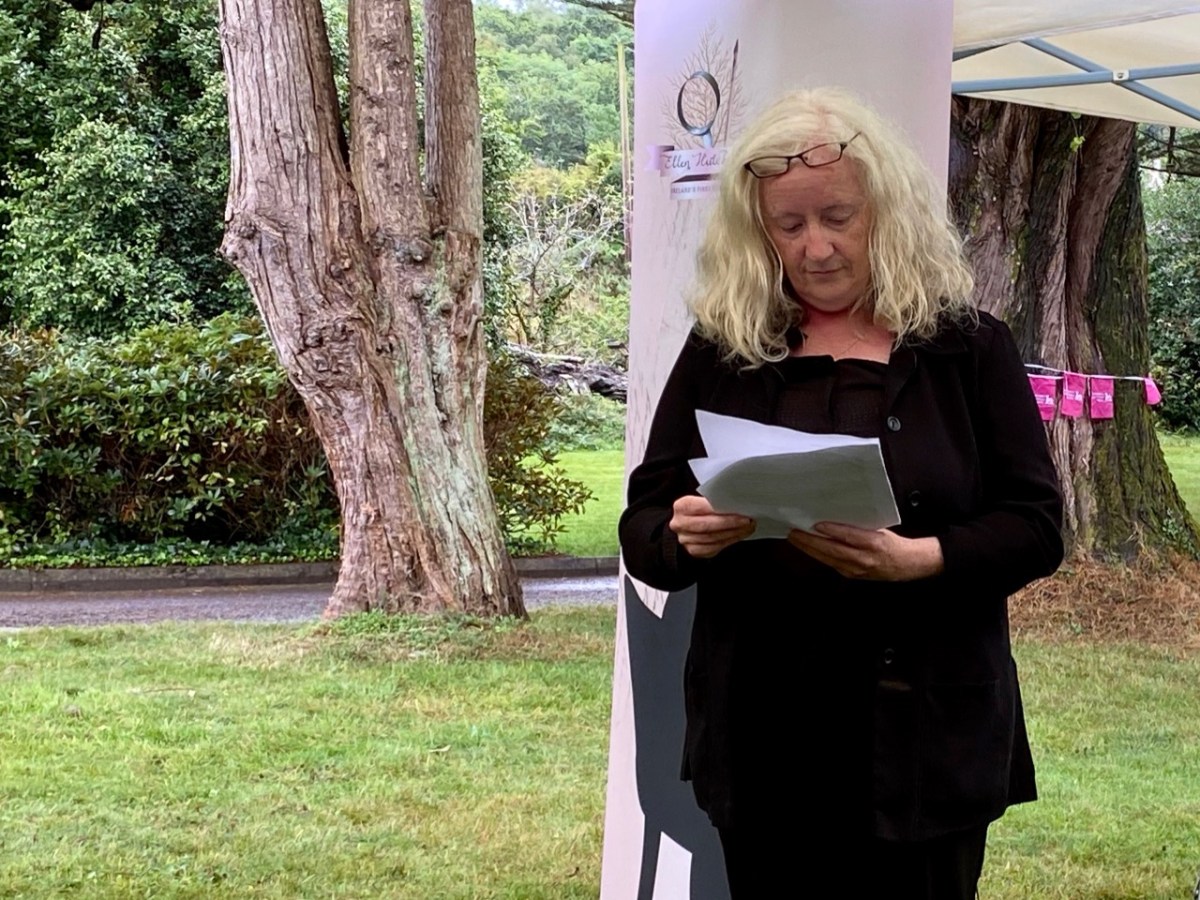
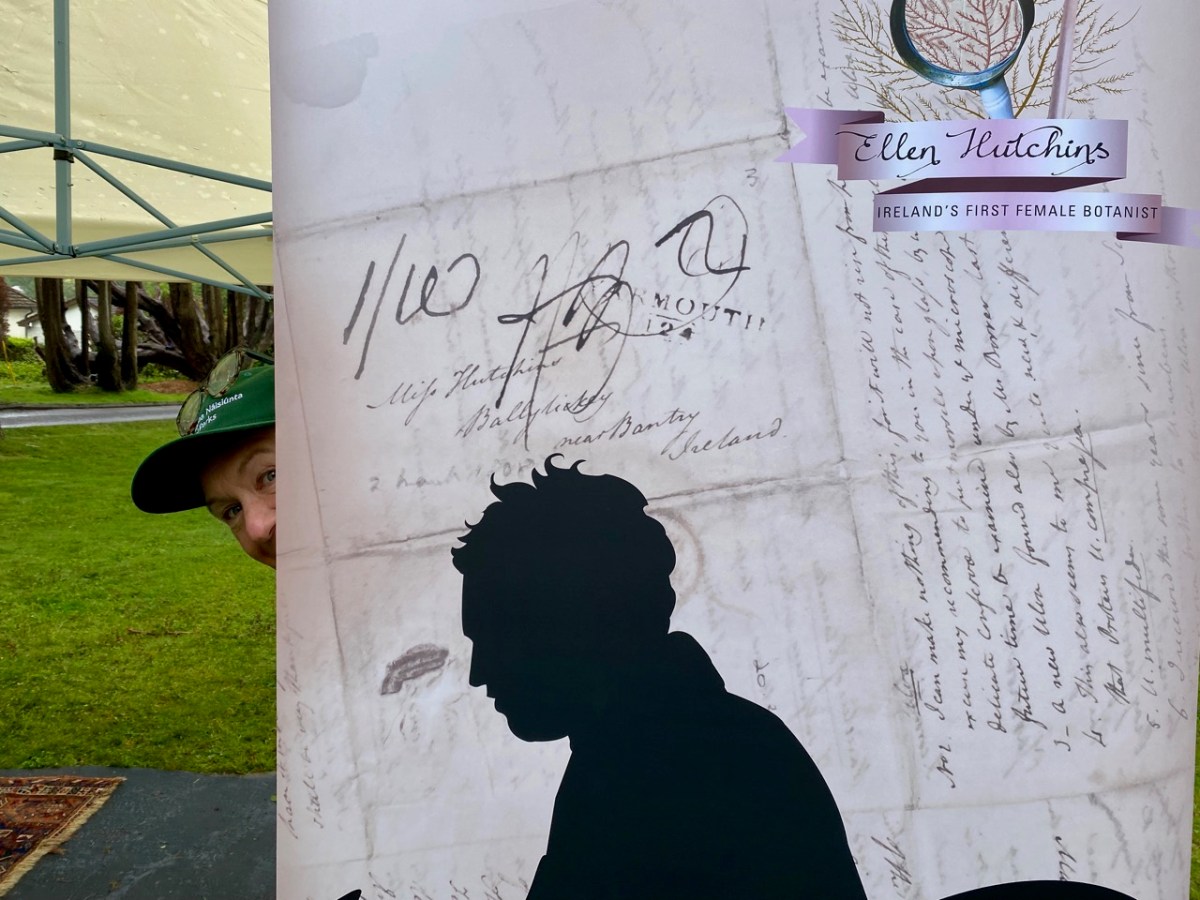
As the reading of the letters progressed it became gradually obvious that a deep friendship was developing between the two botanists, and the language reflected this. Particularly telling (and this was drawn out in the selection of the letters) was the way the missives were framed as time went on. From a simple, almost curt formality in the earliest, we begin to read how their shared interests extended beyond the botanical; they exchange newly discovered poetry; Dawson tells Ellen that he has named his newly-born daughter after her; they imagine how they would like to meet each other and walk their favourite landscapes together. Each sends the other packages containing examples of the plants and seaweeds that preoccupy them, and their greetings at the top and tail of every page become increasingly warmer. We, the audience, open our imaginations as to how a happy fulfilment could ever metamorphose – West Cork and Norfolk are as far apart as any two place could be in early 19th century Britain. Poignantly, we learn that they never met: Ellen – always in poor health – died in 1815 at the age of twenty nine. We can only imagine that Dawson, remote in Norfolk, was desolate.

Important to our day – apart from the presenters and actors – were Madeline Hutchins (above – showing us some of Ellen’s drawings of seaweed), great great grand-niece and a co-founder of the Festival; and – behind the scenes but essential – the team, including Clare Heardman, co-founder of the Festival and a Conservation Ranger at the National Parks and Wildlife Service. Here’s Clare in action setting everything up – and running the Festival shop:
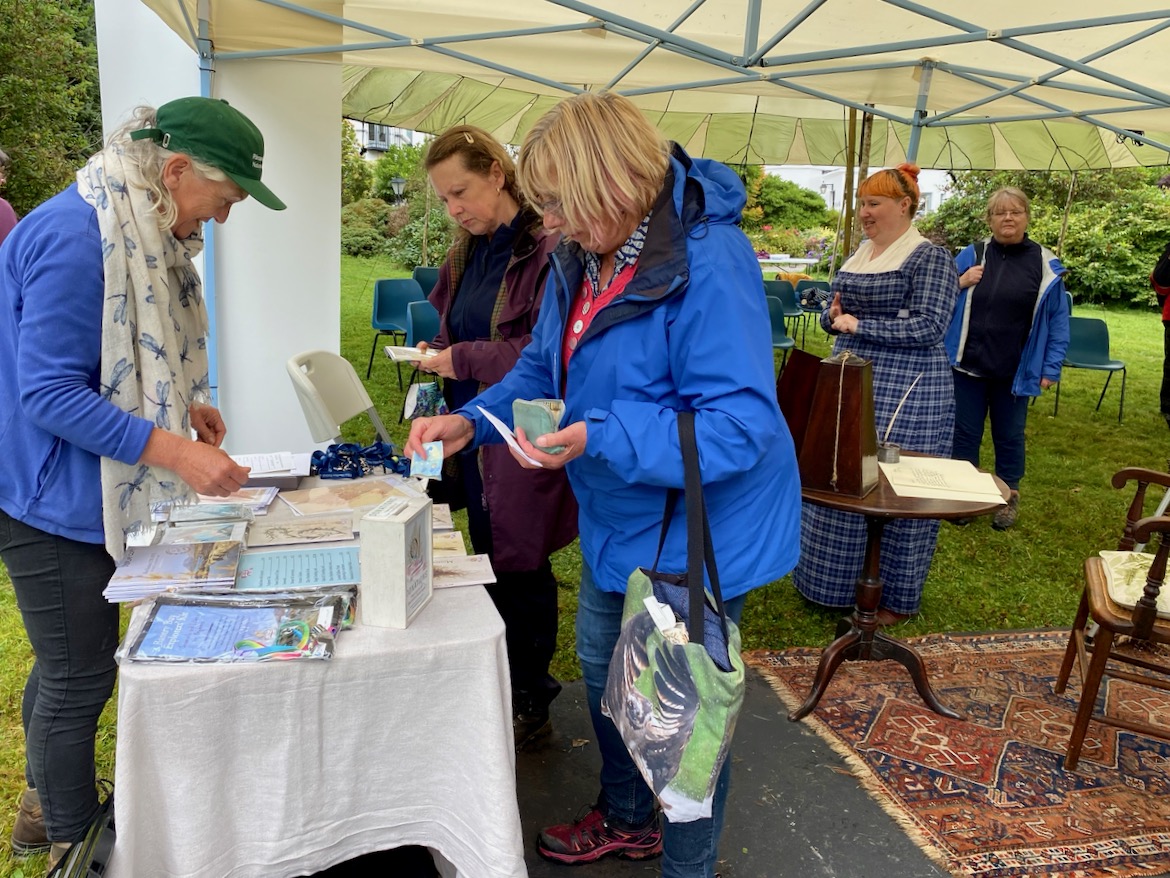
We had a further treat in store for us after the show: we were taken on a guided tour of some of the environments which Ellen would have known and explored during her life at Ballylickey. This felt really special, and brought us close, again, to the extraordinary young woman whose short but productive life we now celebrate here in West Cork.
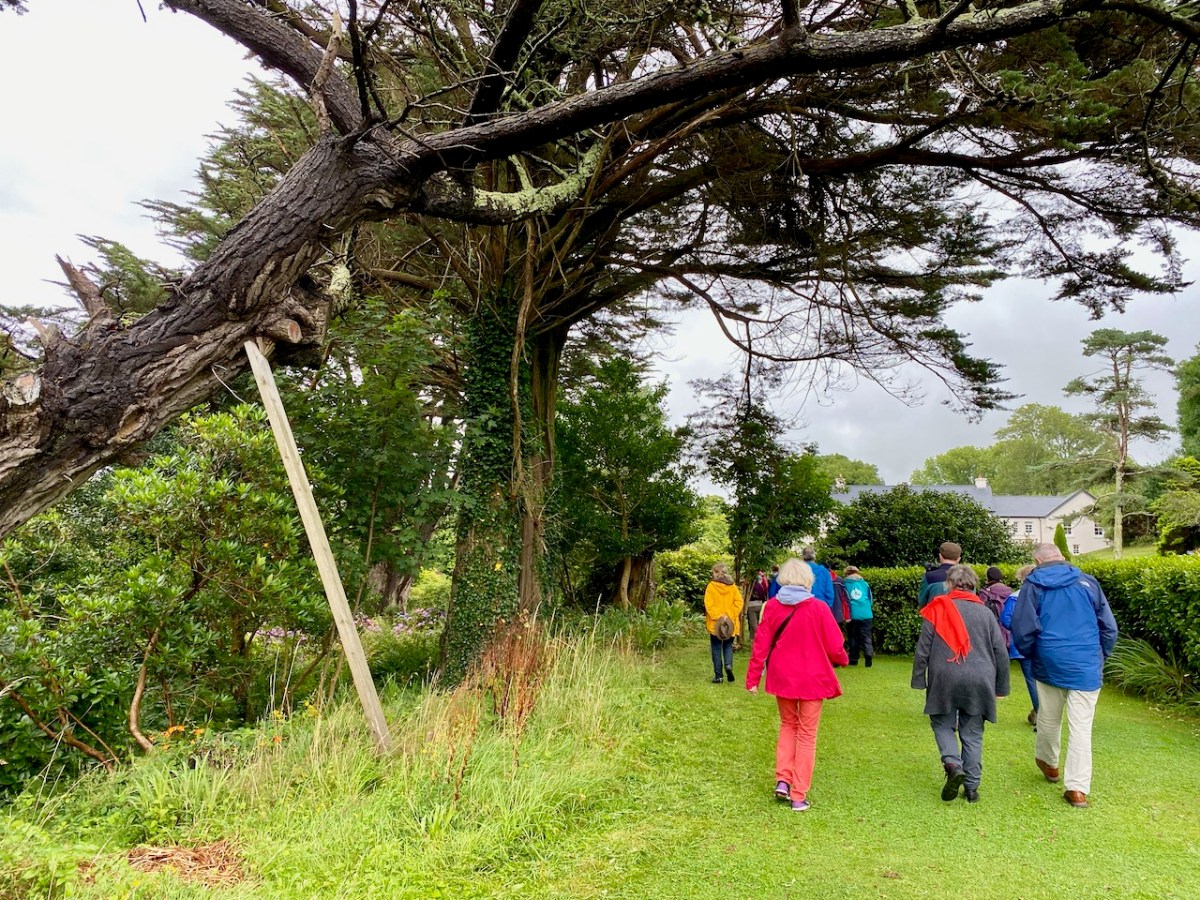
Please note that Ballylickey House today is private property, and visitors should not seek access. There is plenty of the natural environment that Ellen would have been familiar with around Ballylickey and on the shores of Bantry Bay – well worth an exploration. And this link to the Ellen Hutchins Audio Trail is invaluable, especially to anyone who was not able to be at Friday’s event.
Particular thanks, of course, to all who participated – and attended – the event. It was a great success! Thank you to the weather Gods. And many thanks to Seaview House Hotel for providing the venue
An Evanescent Signal Tower – Glandore Head

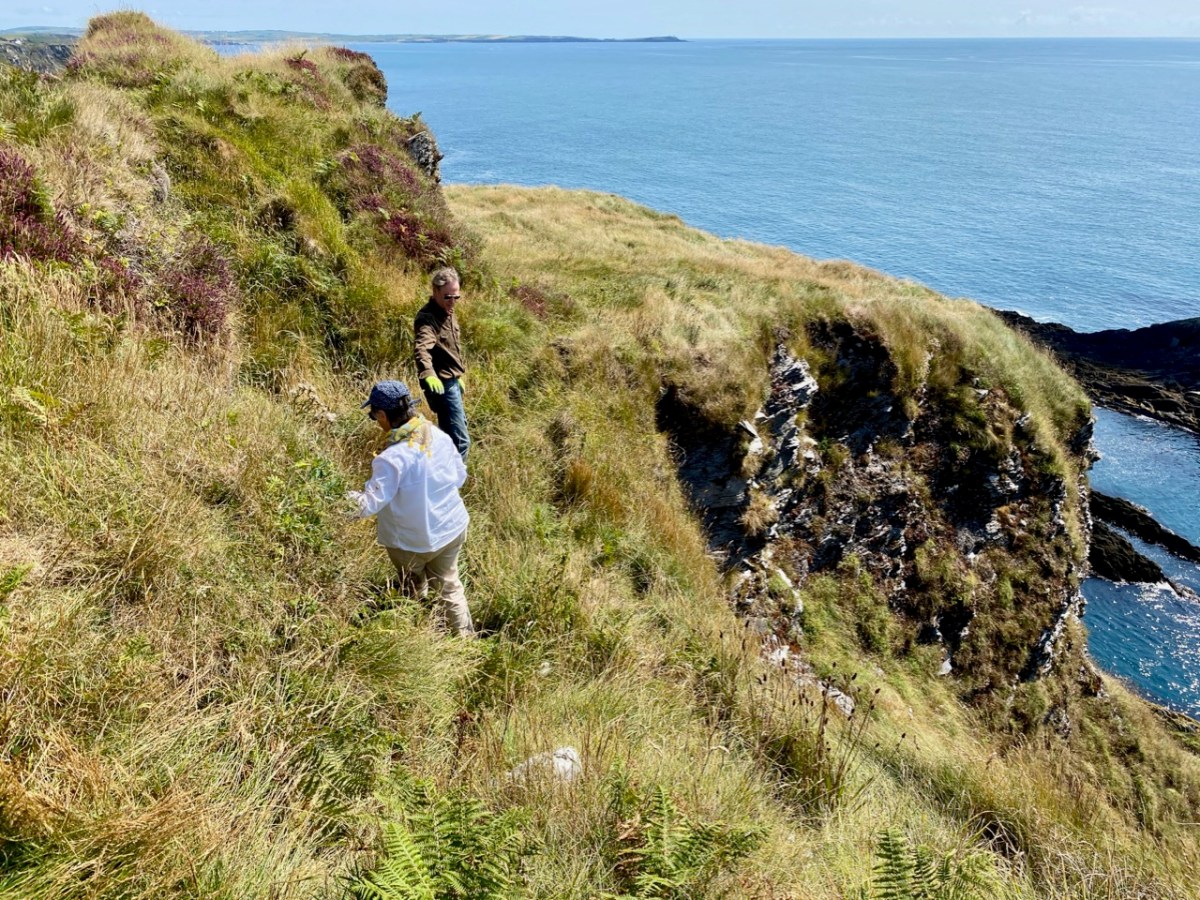
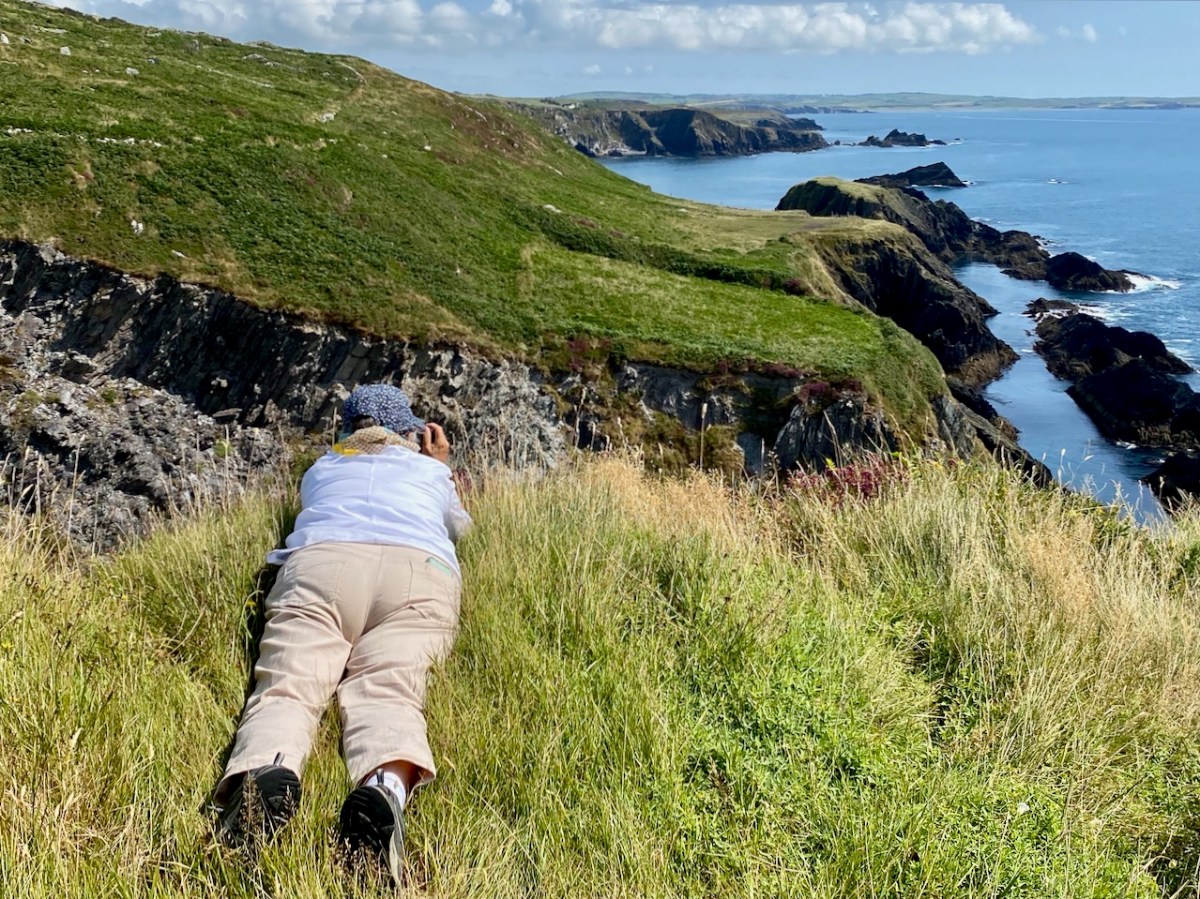
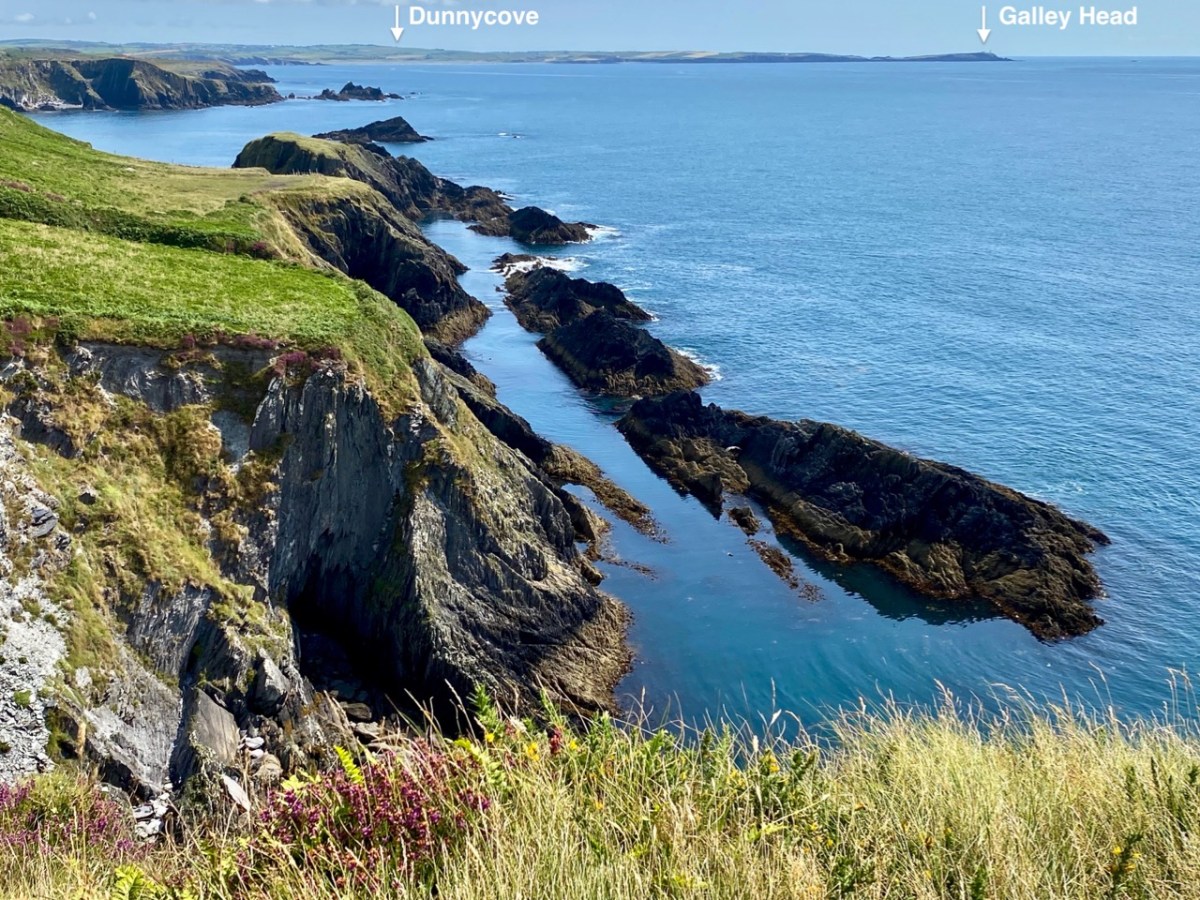
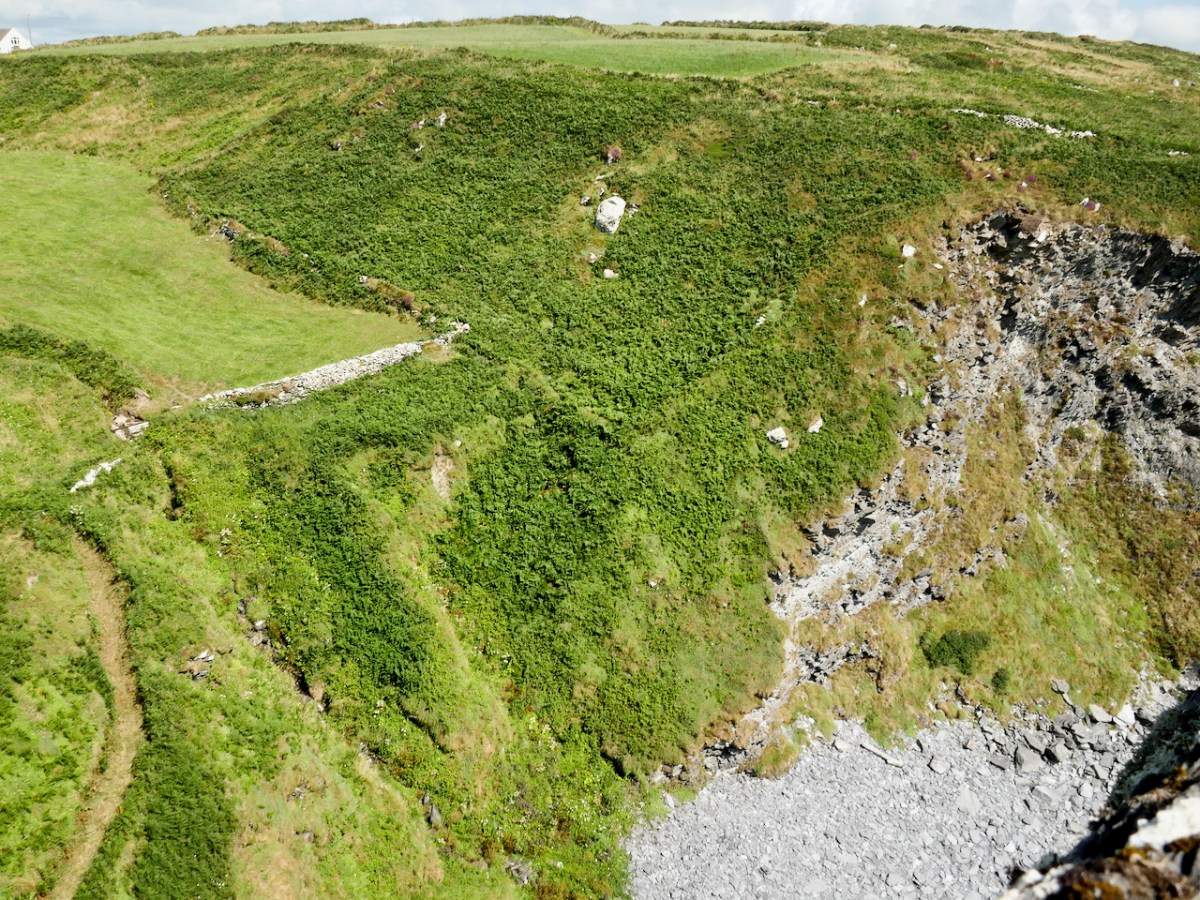
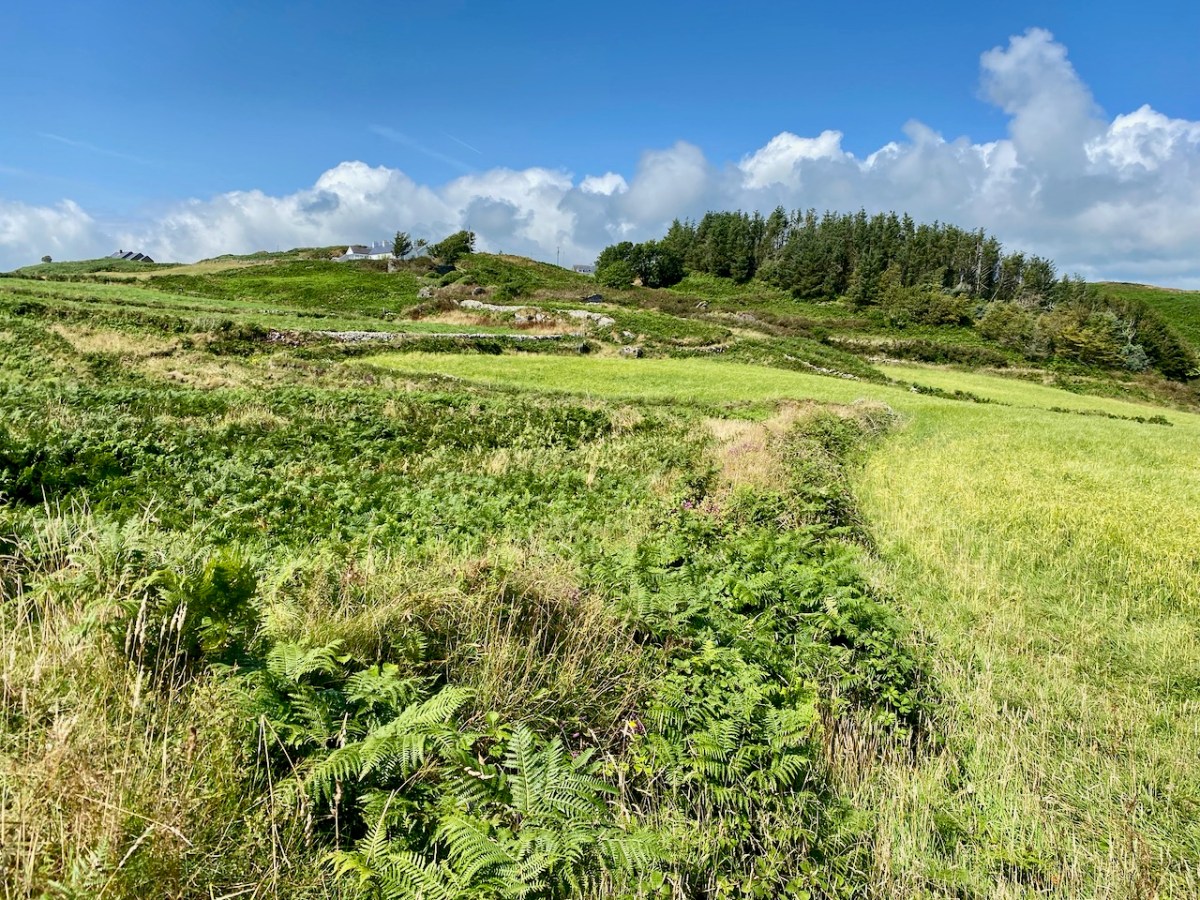
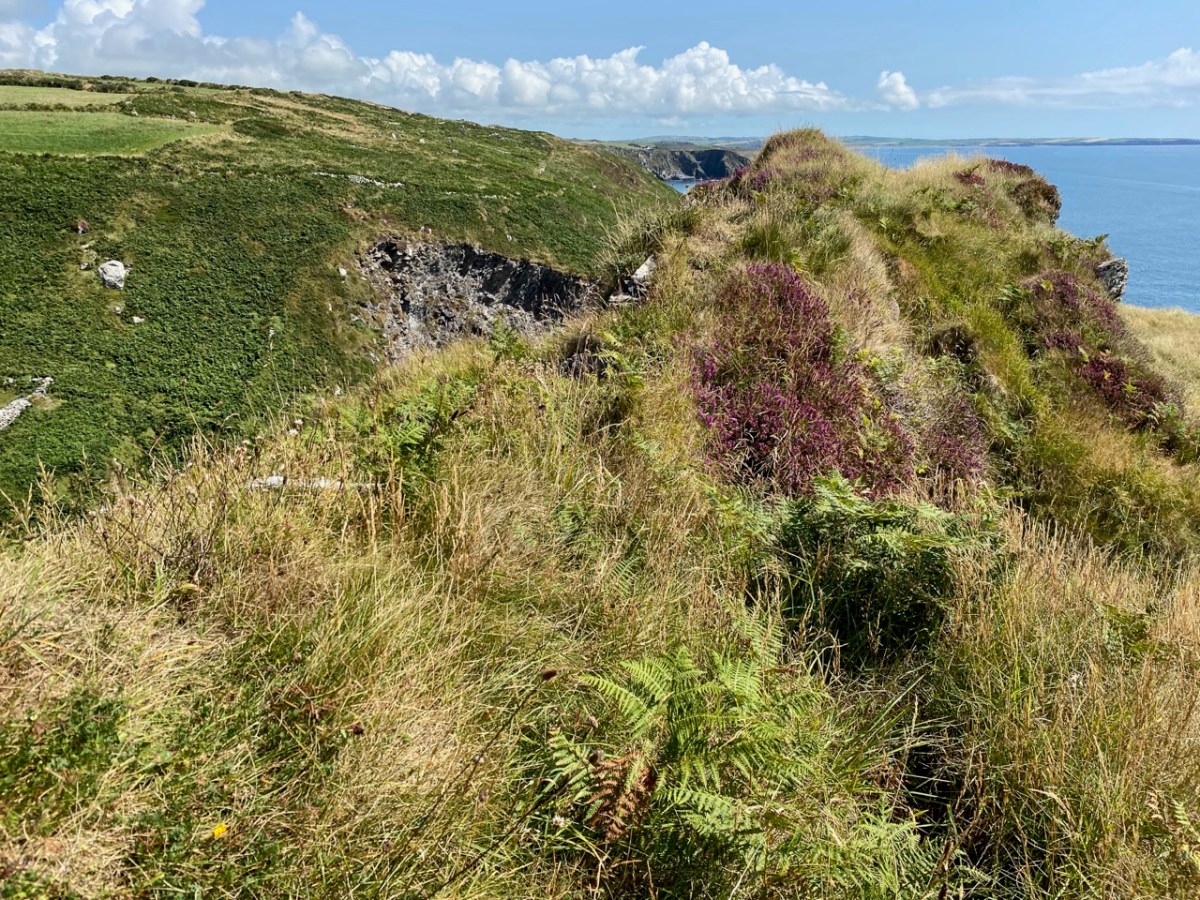
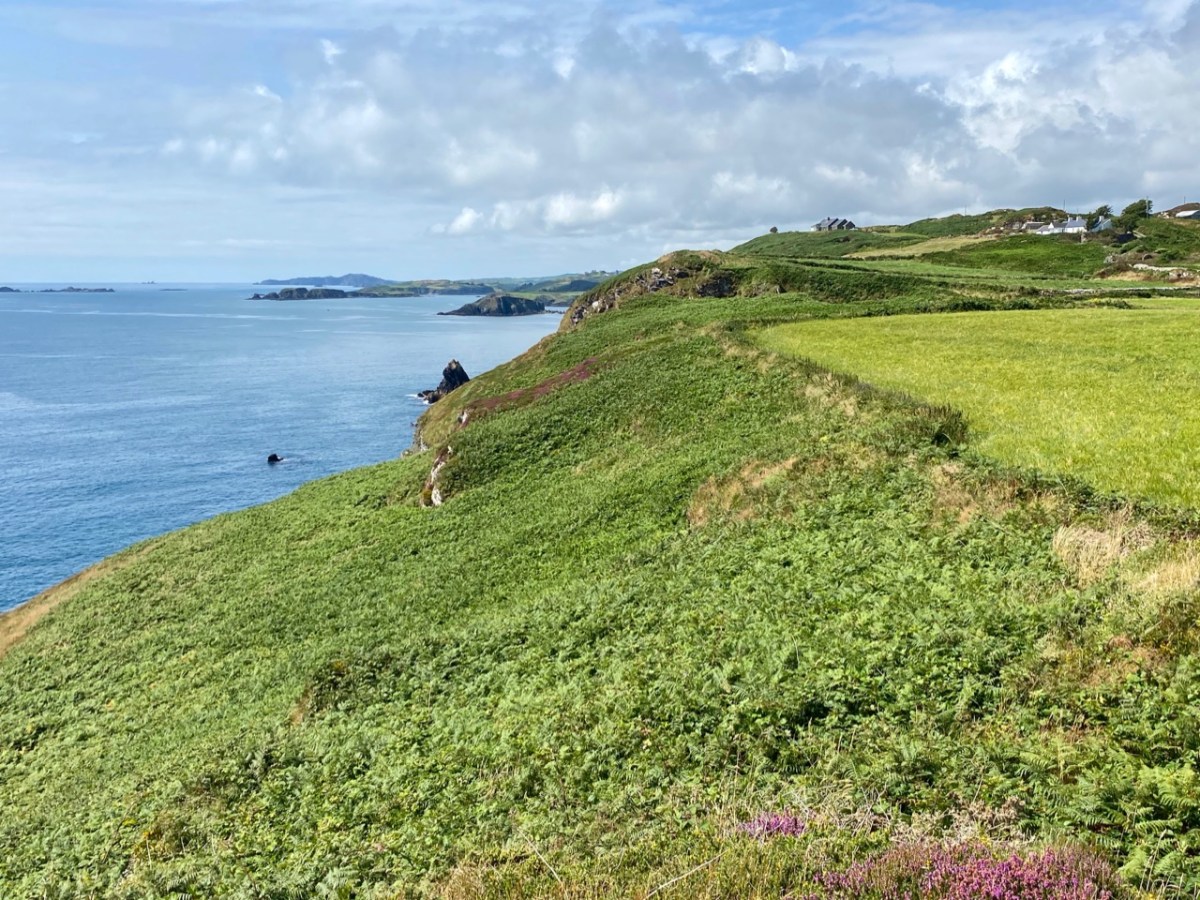
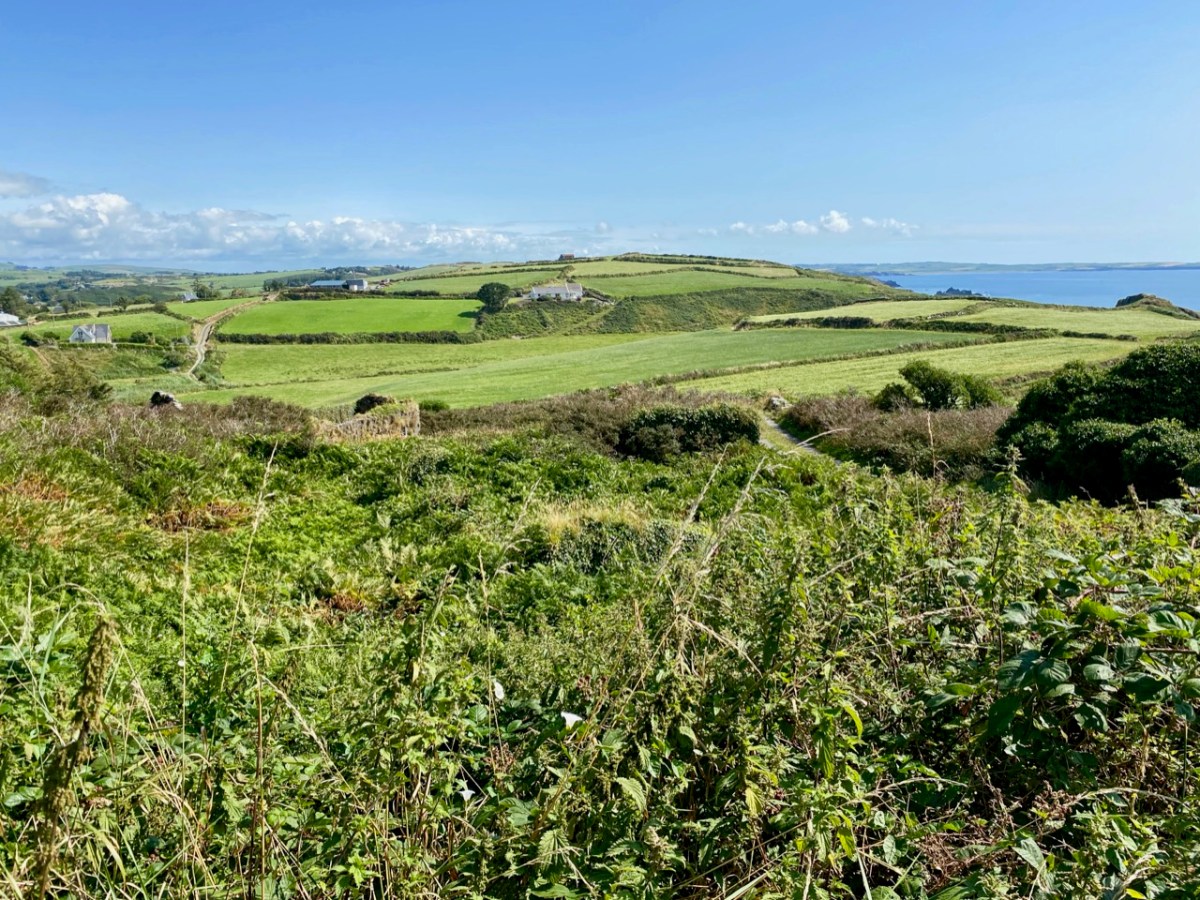
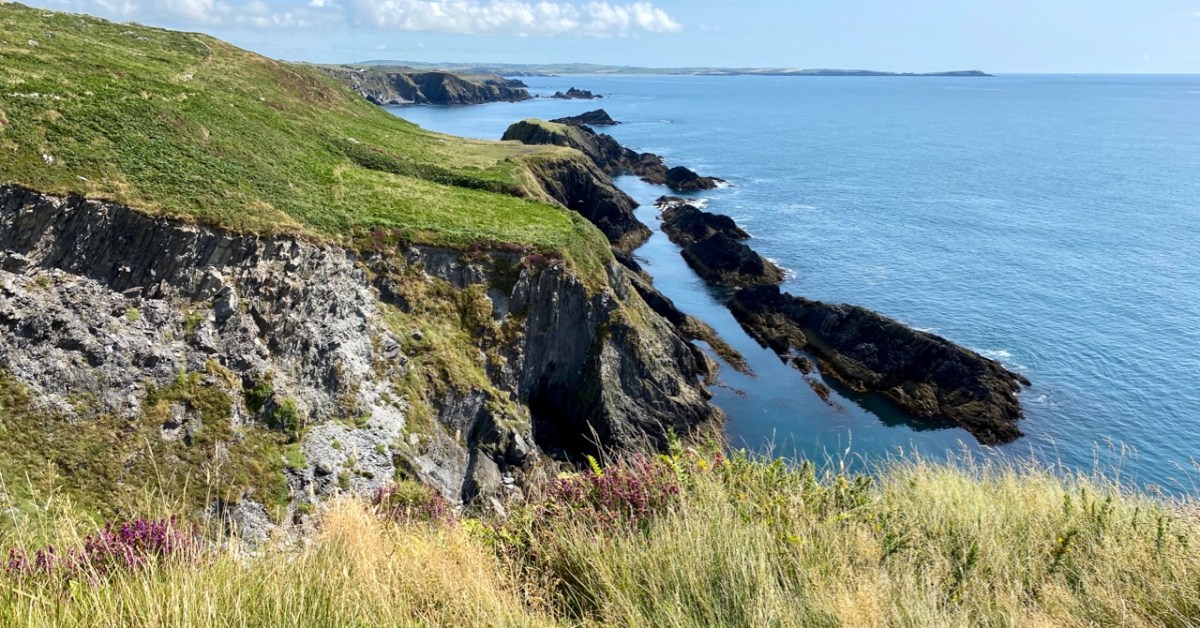
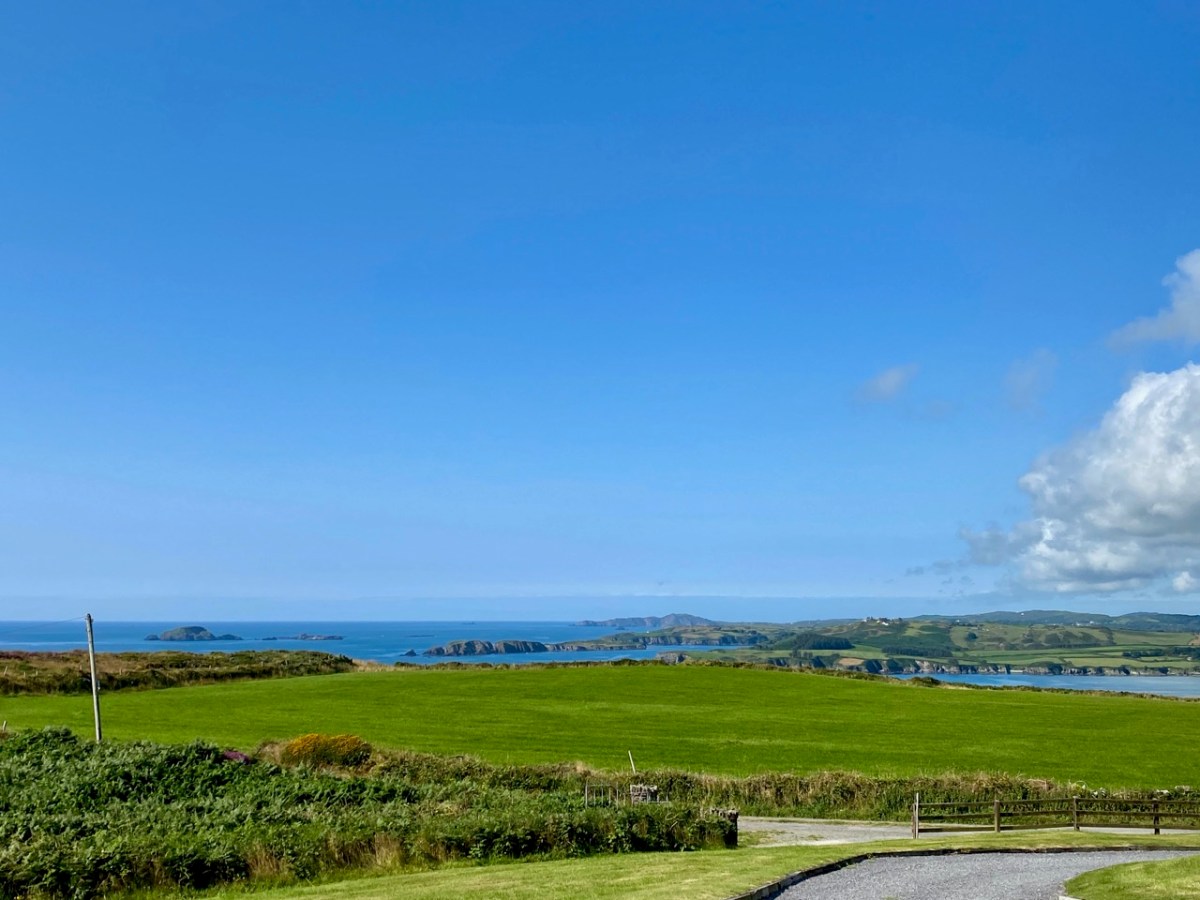
This is a bit of an epilogue to my Signal Success in Irish Engineering series (although that is not yet complete!). Here is the site of a Napoleonic-era Signal Tower in West Cork – but the tower itself has completely vanished! It’s no 28 on the map which accompanies Bill Clements’ book – Billy Pitt Had Them Built – Napoleonic Towers in Ireland (The Holliwell Press 2013) and it is given the name Glandore Head. We recently visited friends who have a house in the townland of Reenogrena, which is south-east of the village of Glandore and its extensive natural harbour. The topography of the area is soul-stirring – that’s probably an understatement: look at the view of the coastline there, above, and the distant views both west and east, below.
We were fortunate with the day we had. The benign weather gave us a possibly false sense of security as we explored a wild, riven coastline. We could well imagine how exposed we might feel there in one of West Cork’s severe storms: our climate-changing extremes are becoming ever more prevalent. But on this occasion we were confident enough to venture to the very edges of the land, always conscious that humans had settled in these remote places many generations before us.

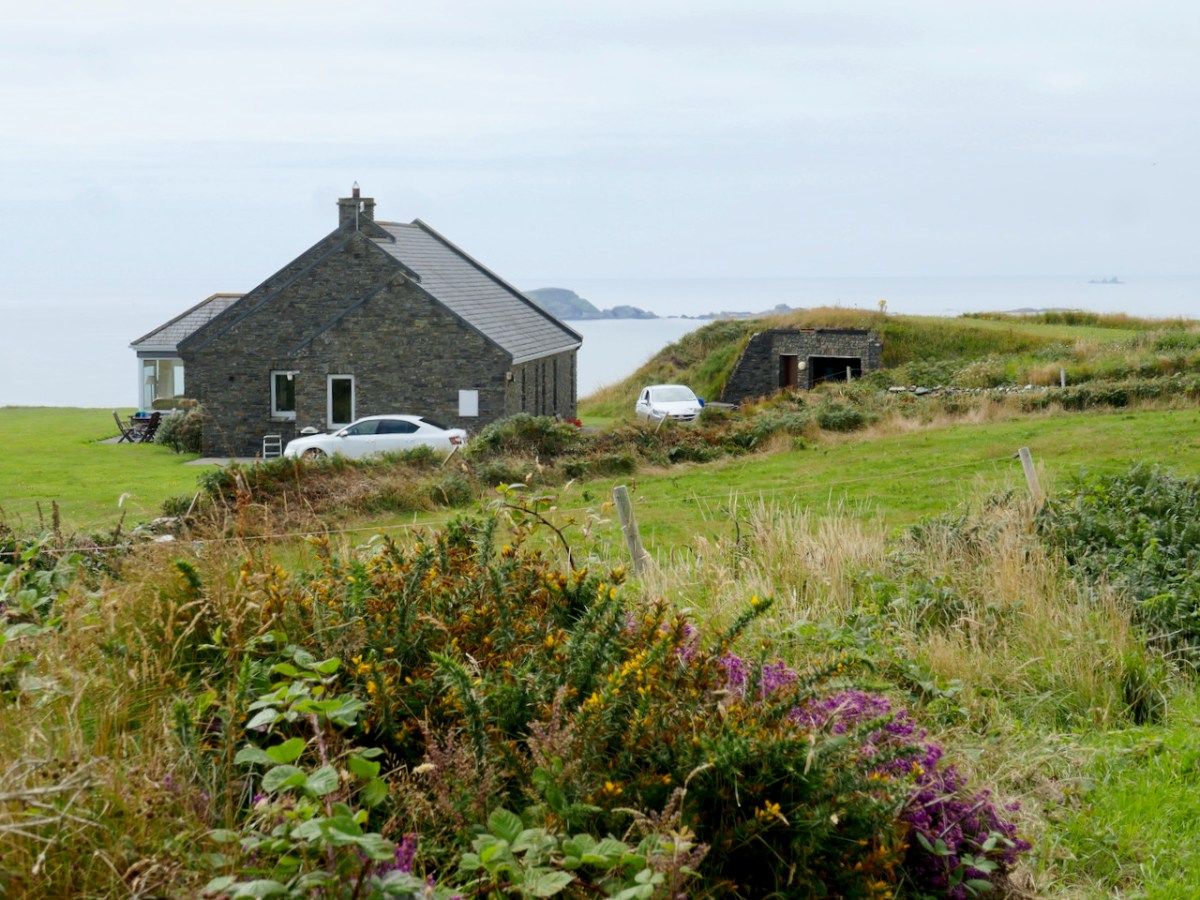
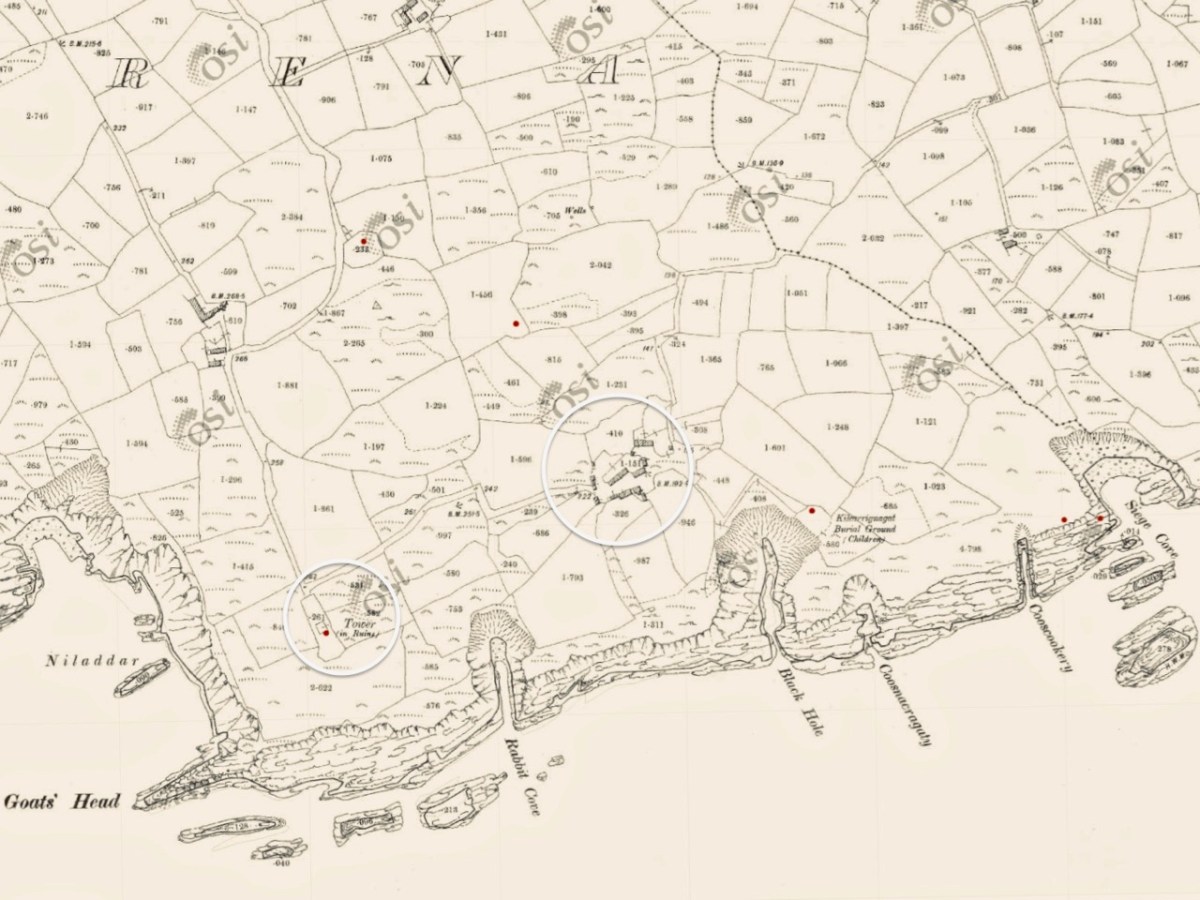
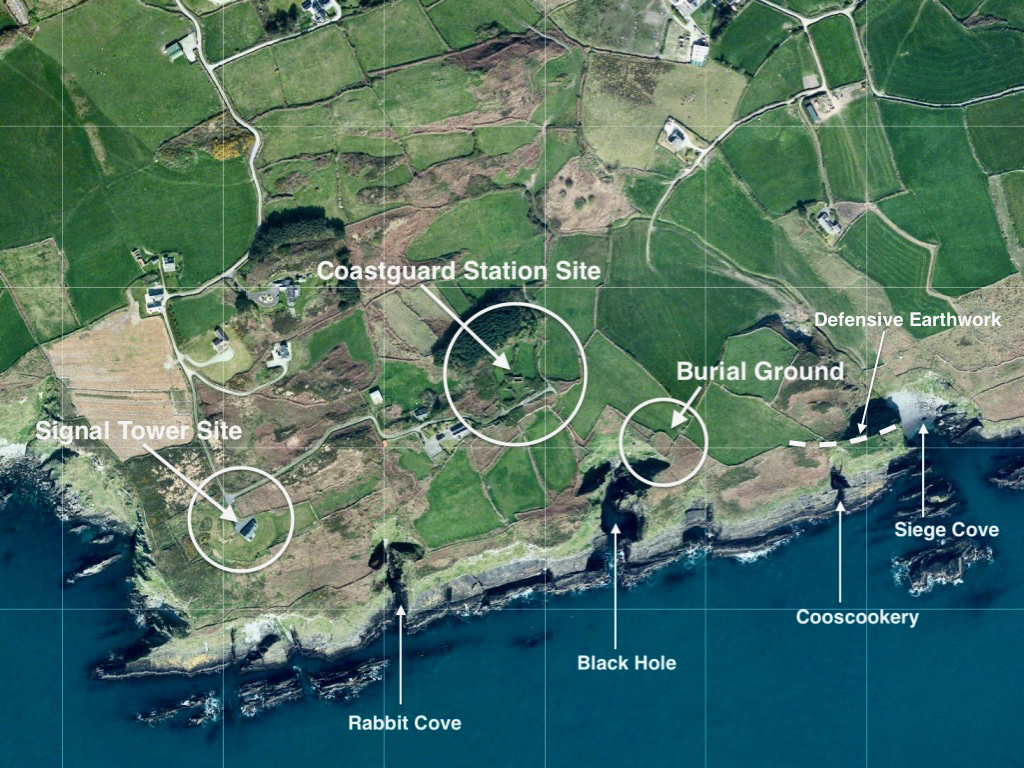
There is nothing left of the signal tower at Glandore Head, which would have been constructed between 1801 and 1804. The site has now been taken over by a recently built house which enjoys the excellent views in all directions. In the picture below it seems that the tower was located in the area of the earth-sheltered garage. We know more or less where it was because it appears on the earliest Ordnance Survey maps from around 1840. Even by then the structure itself had lost its original function, as the threat of Napoleonic invasion had passed, but it is labelled as a ‘Telegraph’. On the later 25″ map – dating from the late 1800s – the site is marked as ‘Tower in ruins’.

Centre – the earliest 6″ OS map; lower – the later – and far more detailed – 25″ OS map. It’s interesting to compare the two versions. The accuracy of the later map in terms of topographical detail and humanly constructed features – buildings, trackways etc is very noticeable. Below is the contemporary aerial view. 50 years separate the two OS maps, while the satellite image is 100 years later again.

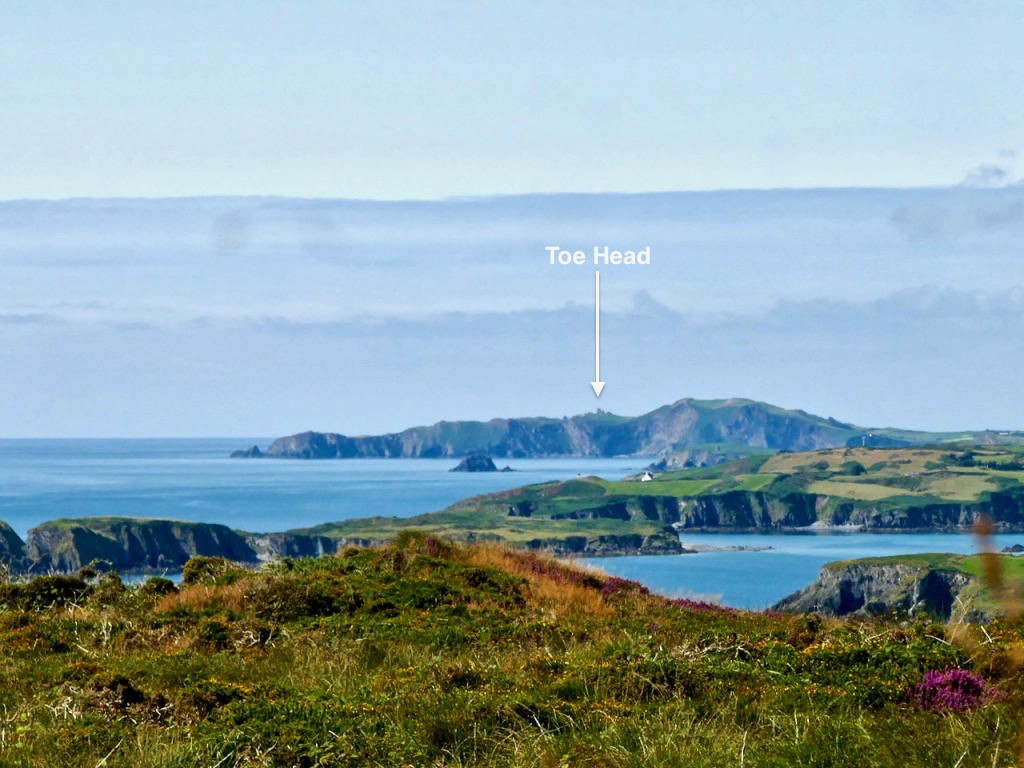
The reason why I like to examine and compare the mapped information is my interest in reading the history of a place through its landscape, and this particular vignette of West Cork is a prime example of the process. Firstly, the signal tower location was chosen because of visibility to other significant places on the coastline which are in view: the towers at Toe Head to the west and Galley Head (Dunnycove) to the east (below).

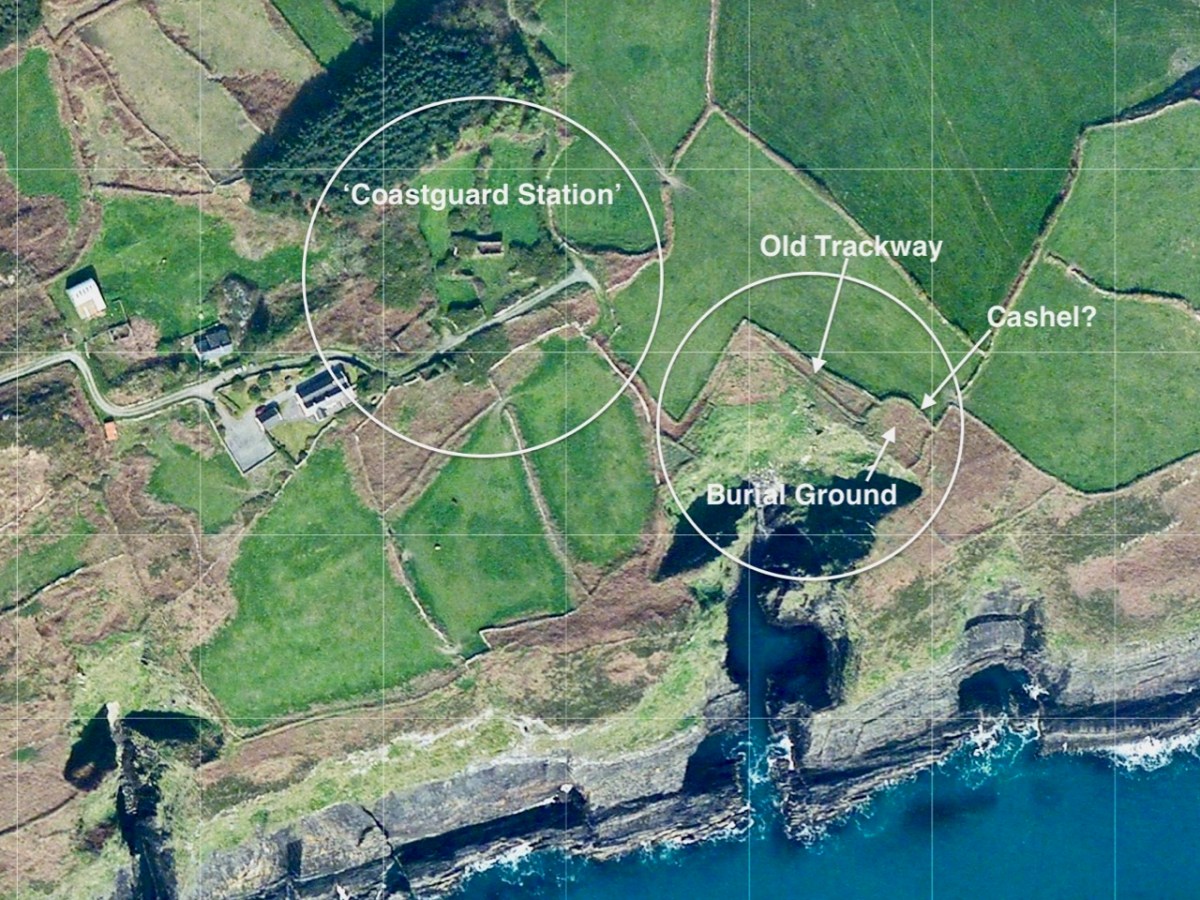
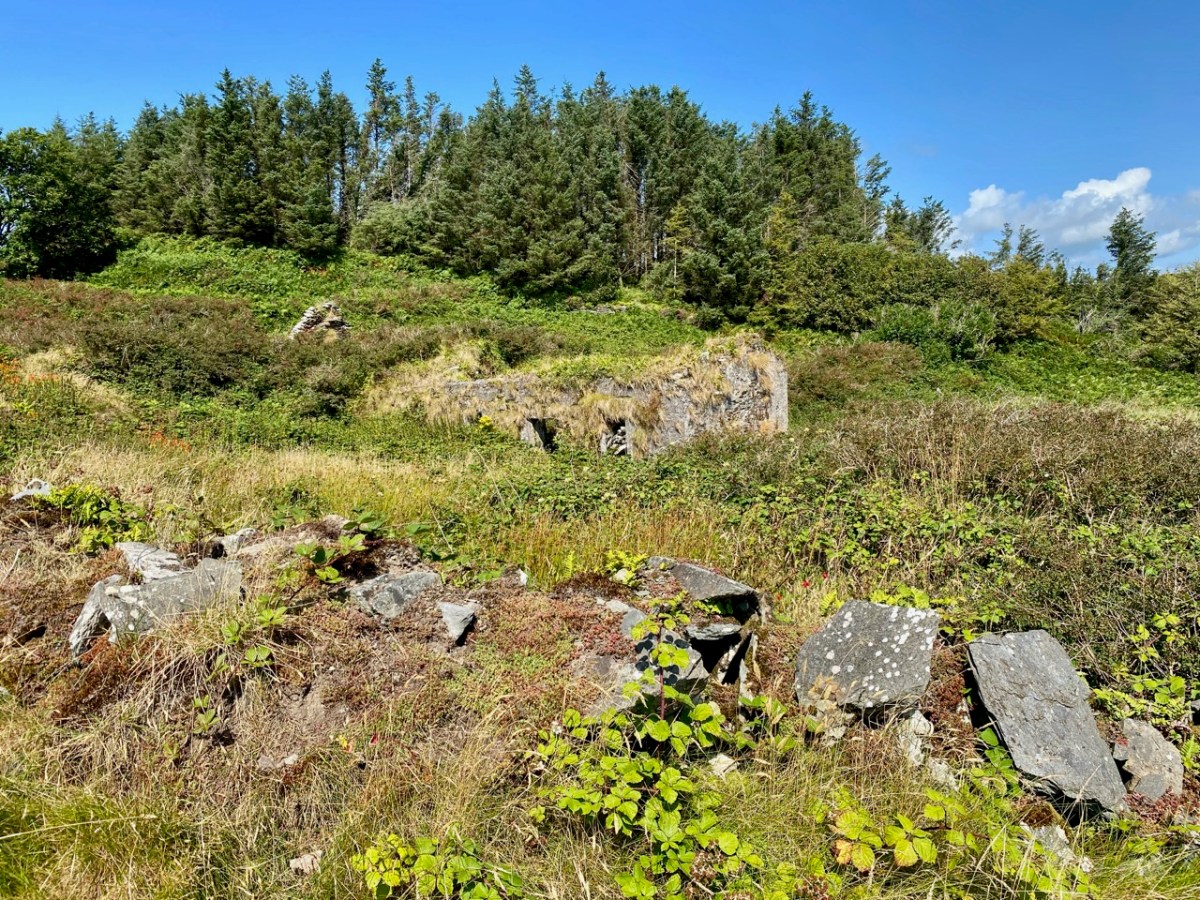
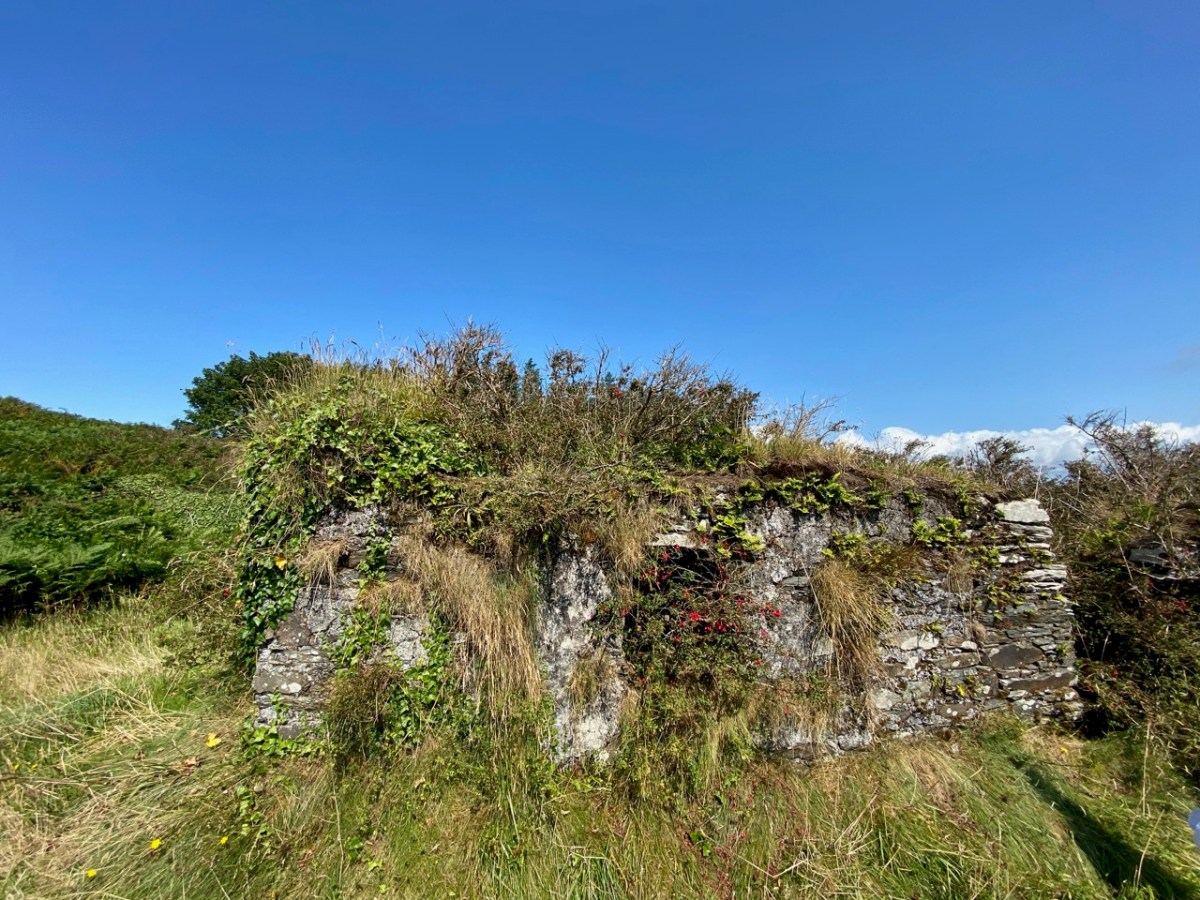
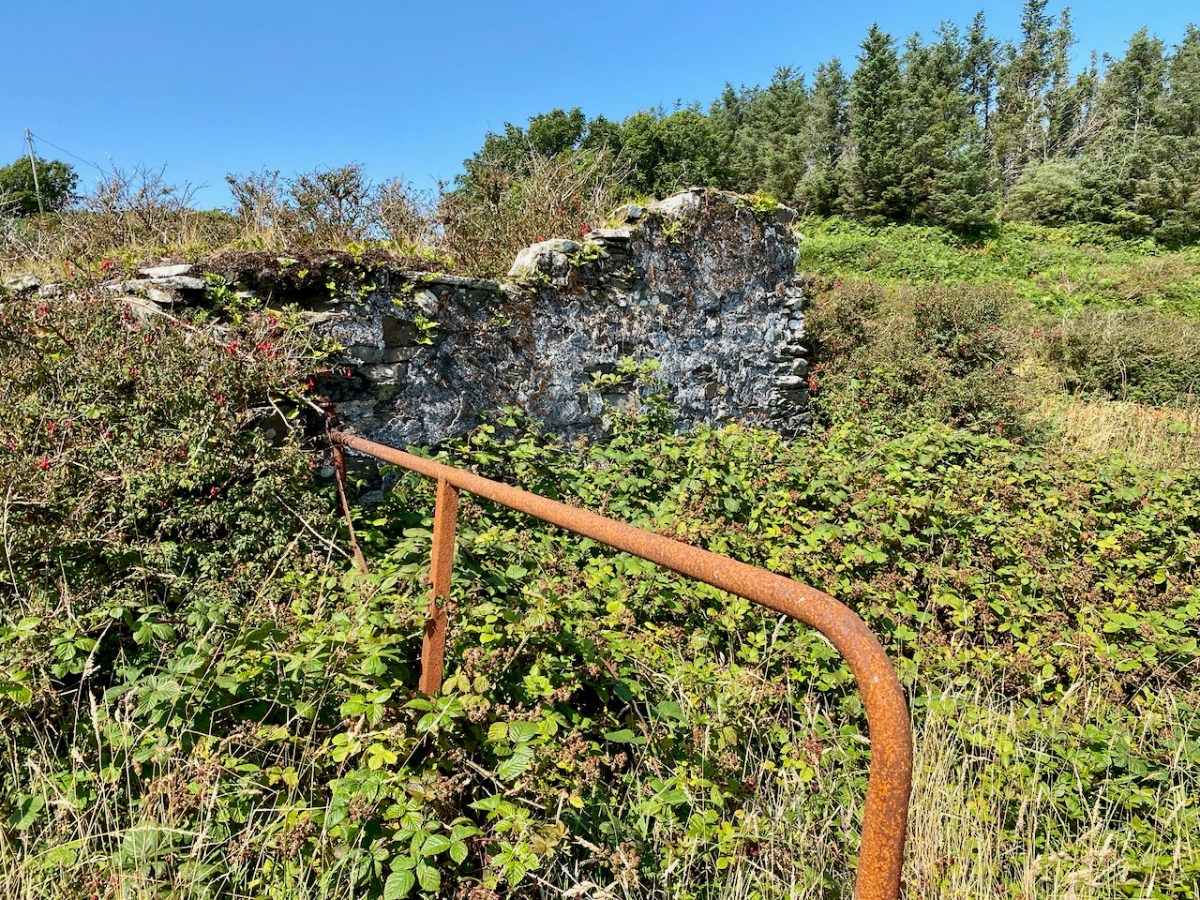
Next, look at the ‘Coastguard Station’ site. This is marked on the c1840 OS map, but not on the later 25″ map. But that later map does show a number of buildings on that site. As you can see from the aerial view, there are only the remnants of buildings now. Also the older map shows no roadway or track accessing the ‘Coastguard Station’ – it could only be reached by crossing fields. Here’s a closer look at this group of ruined buildings today, followed by some of our photos.

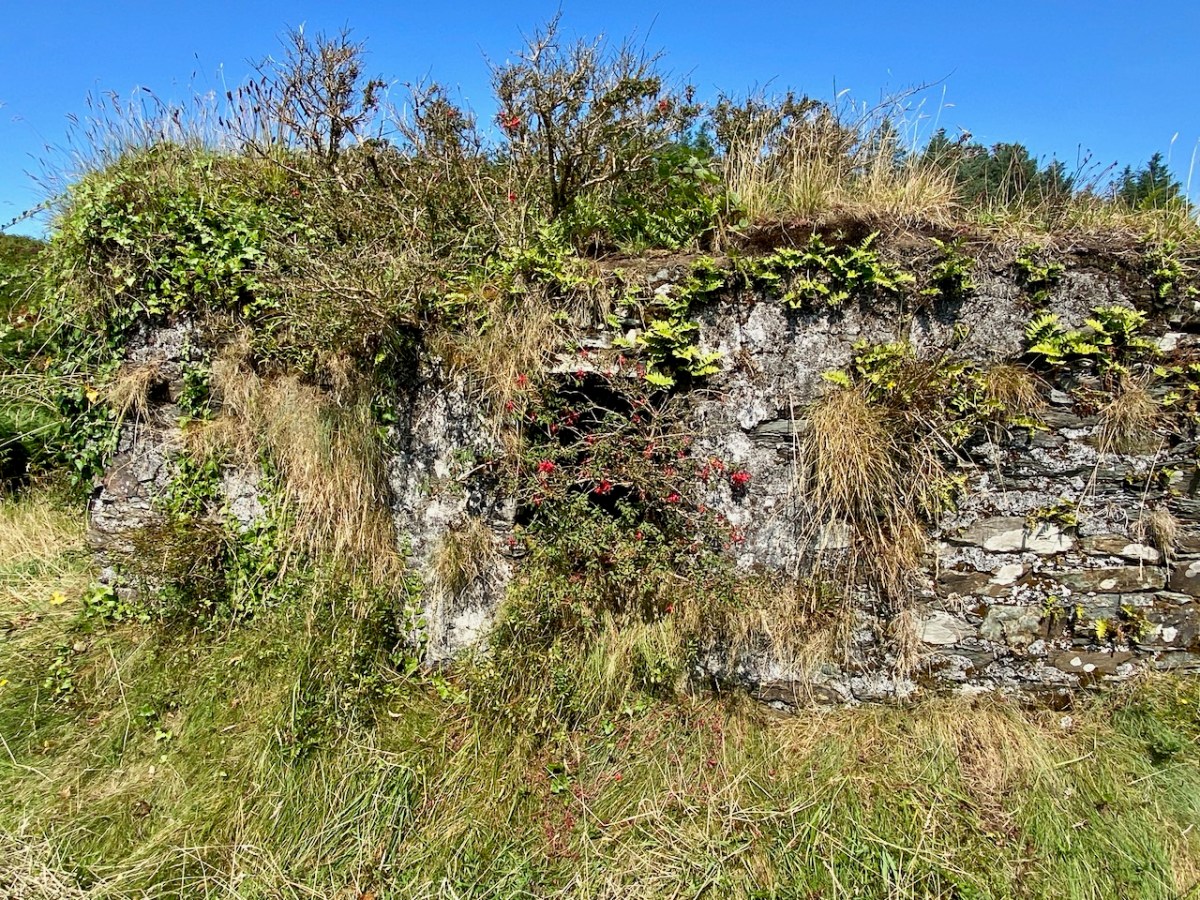
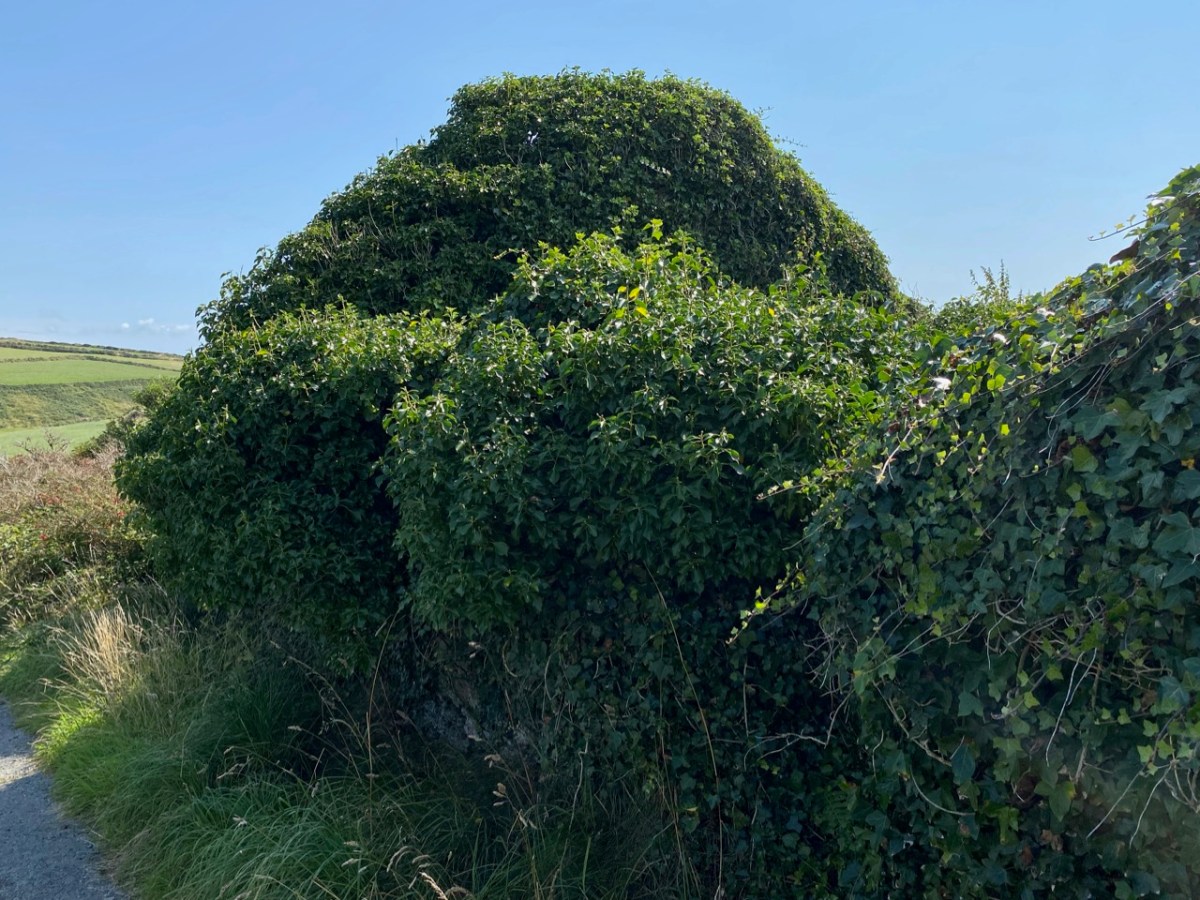
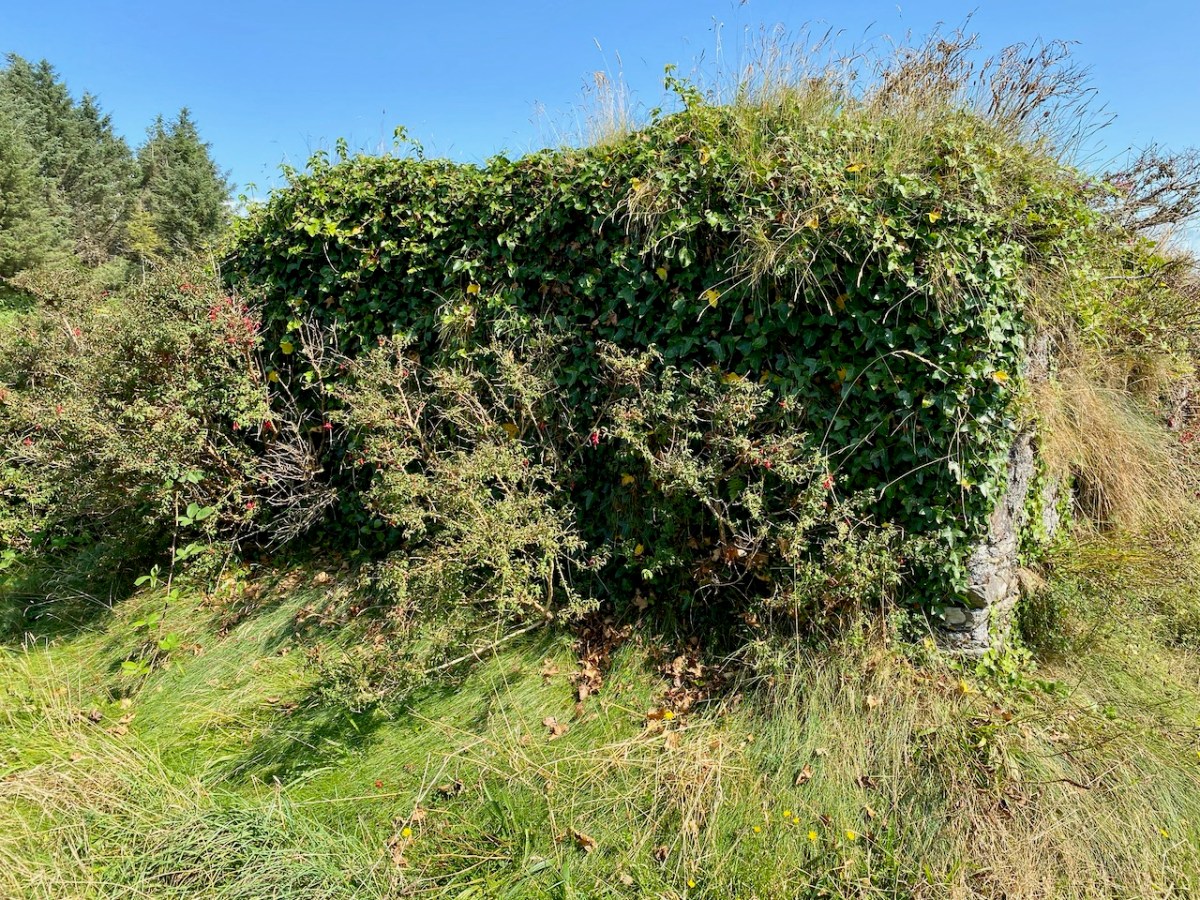
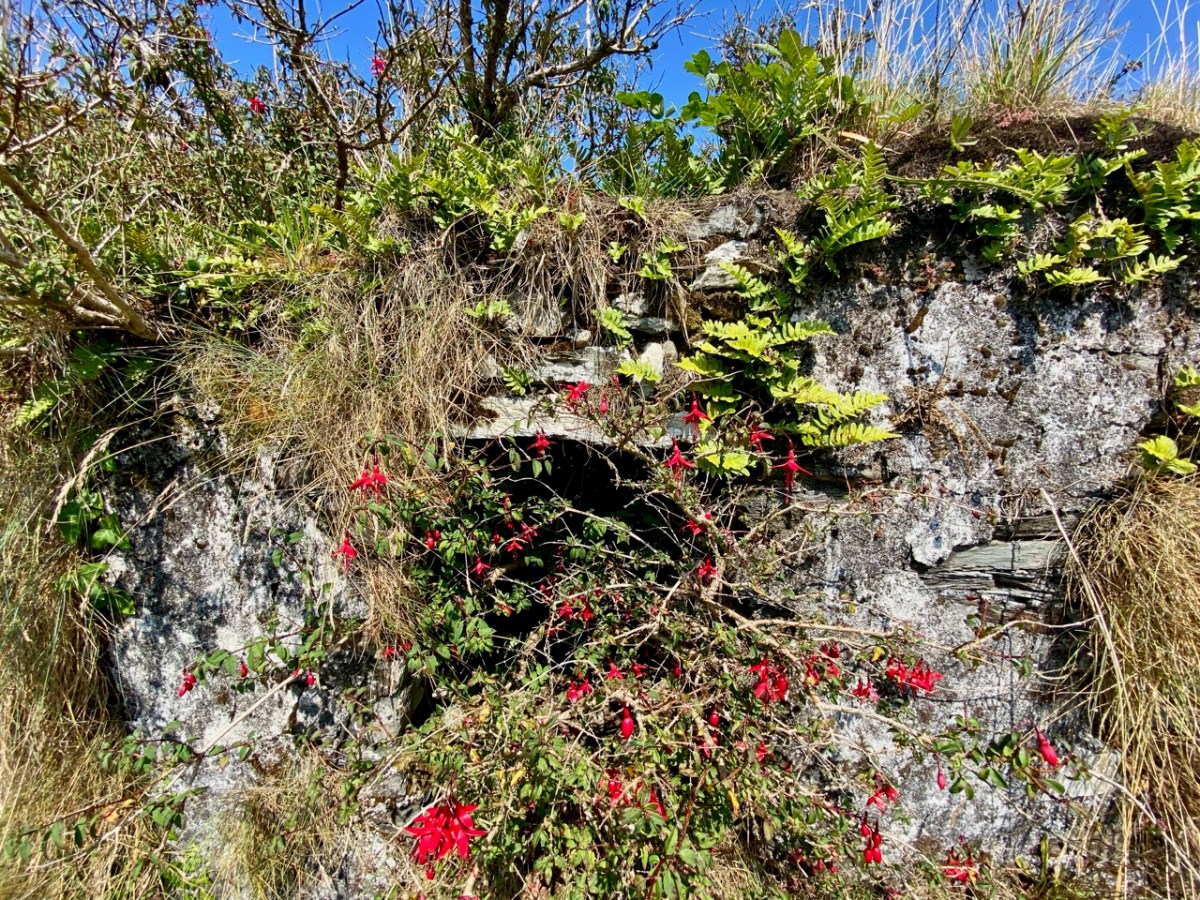
While it is likely that there are old coastguard buildings amongst these ruins, it seemed to us equally possible that we were also looking at the earlier remains of a settlement – cottages and cabins. Records of the area are scant. There’s nothing we found – apart from the OS maps – to give any further light on what we were scrutinising. Surprisingly, very little information is available on the early years of the Irish Coast Guard service, other than its establishment as the Water Guard, or ‘Preventative Boat Service’ in 1809, initially under Navy control but from 1822 part of the Board of Customs. From this we might assume that its purpose was to intercept smuggling operations, rather than to give any assistance to seafarers. Incidentally, it is important to note that in Ireland the name has always been two words: Coast Guard.

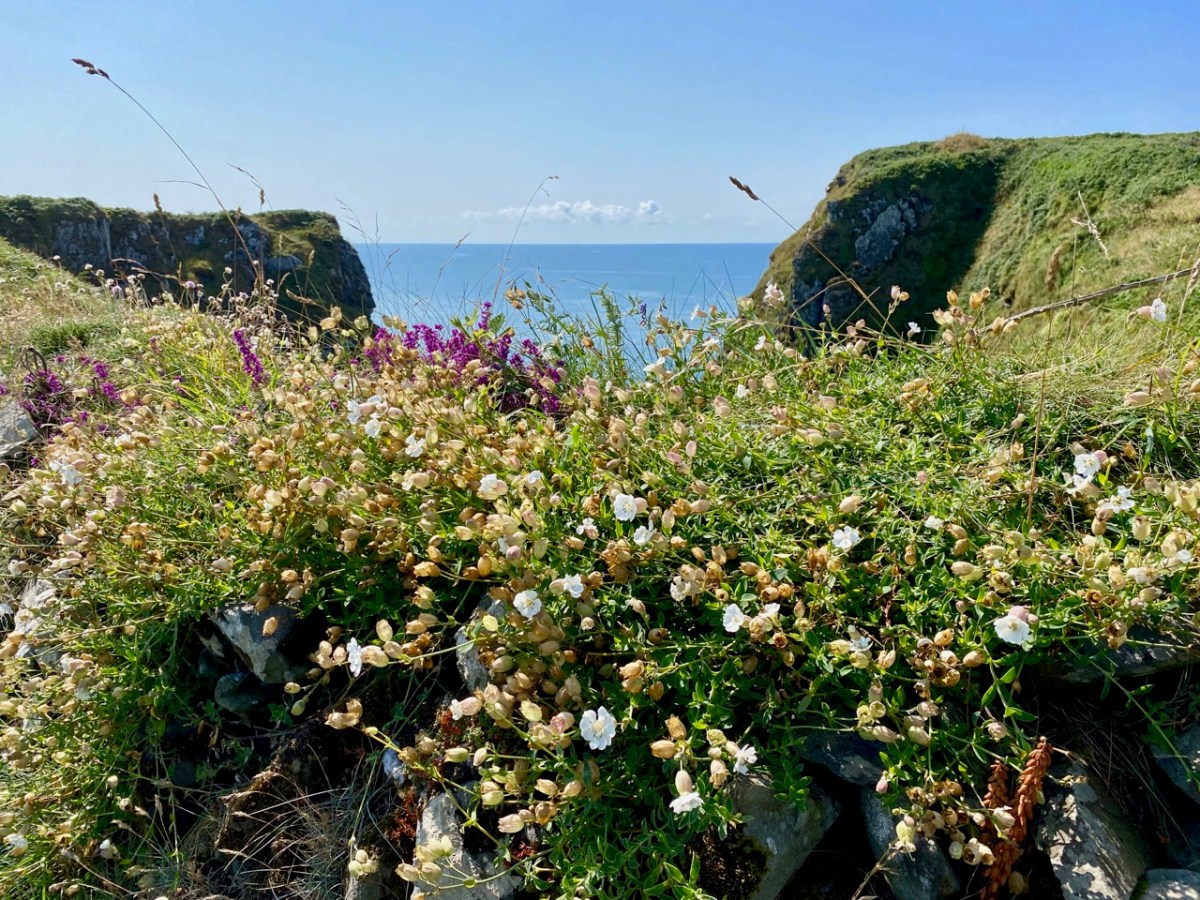
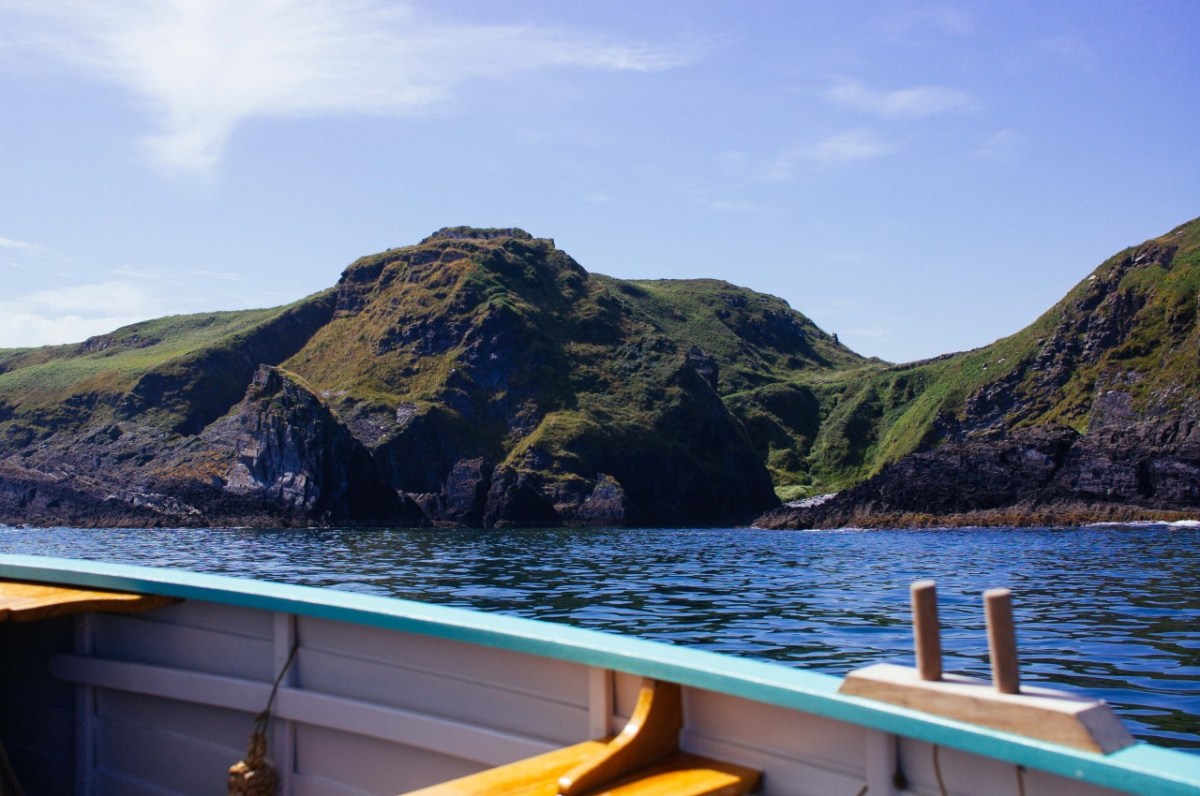
It’s easy to see that this hostile coastline – which would not be benign to small fishing boats – would nevertheless attract subversive landings. The only nearby access to the water is Siege Cove, to the east of the Coast Guard site. The upper photo depicts the curiously named Cooscookery inlet – not a good landing point, while the lower is Siege Cove – itself a difficult climb to the fields from sea level. The names of the topographical features would be a good study in themselves – and might reveal some hidden history: Coosnacragaty, Black Hole, Rabbit Cove, and Niladdar. The small burial ground is known as Kilcarrignagat (it means the ‘church at the rock of the cat’). That’s the overgrown trackway leading to it, below. It is of particular interest – partly because you wonder what communities it served, but also because it seems to have been established in a previously existing ring-fort or cashel.

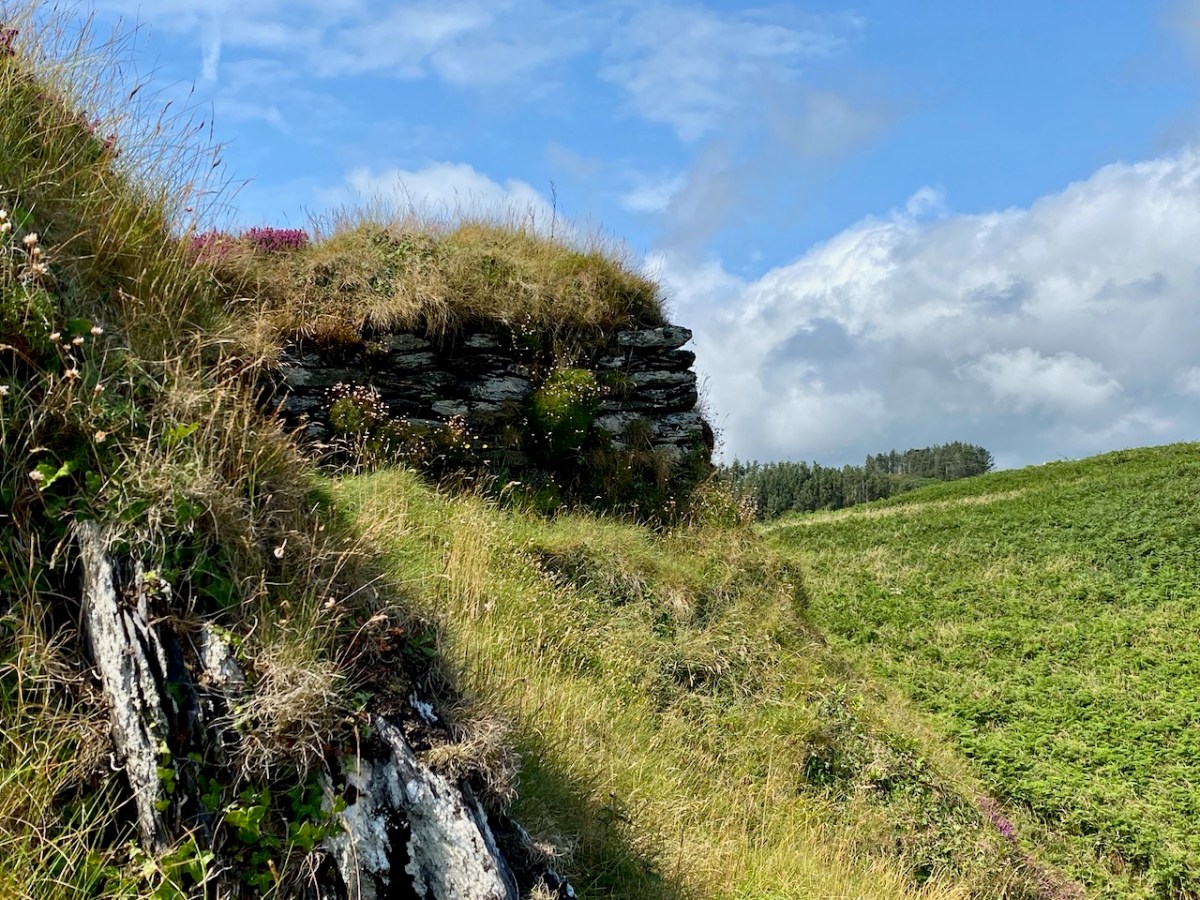
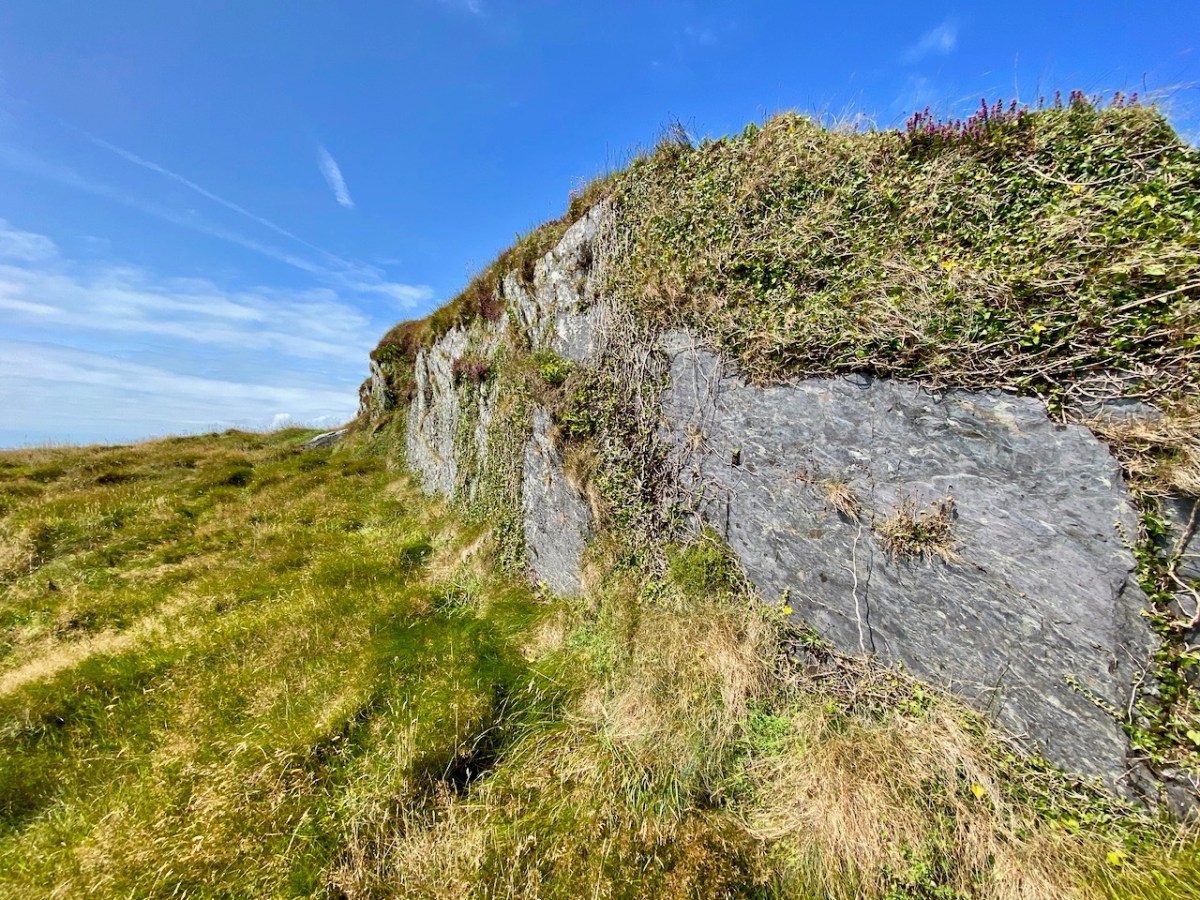
Further yet to the east, and directly above Siege Cove, are the distinct remains of a defensive structure, partly taking in natural outcrops but also built up with stone. This is likely to be indications of the first habitation in this area – perhaps a thousand years ago. There seems to be at least one promontory fort here, and Finola will take up that subject in this locality in future posts (she has already tackled examples elsewhere). It seems to me that this whole coastal region would be worthy of a detailed archaeological study – UCC take note! Meanwhile, we can only express our gratitude to friends Michael and Jane for introducing us to the many wonders of their own territory.

Addendum: After I had published this post I discovered an excellent photograph of Siege Cove and the coastline in this area taken from the sea. I cannot find a contact for the photographer. I do know his name is Tim, and that he publishes an occasional diary of his journeys in a boat (an Ilur based, I believe, In Glandore). I hope he won’t mind me publishing this and including a link to his website.

West Cork Creates 2021

I never fail to come away on a high from this annual exhibition, and this year just confirmed that all over again! It is packed with swoon-worthy pieces, like Paddy McCormack‘s Whale Rider seat, above.

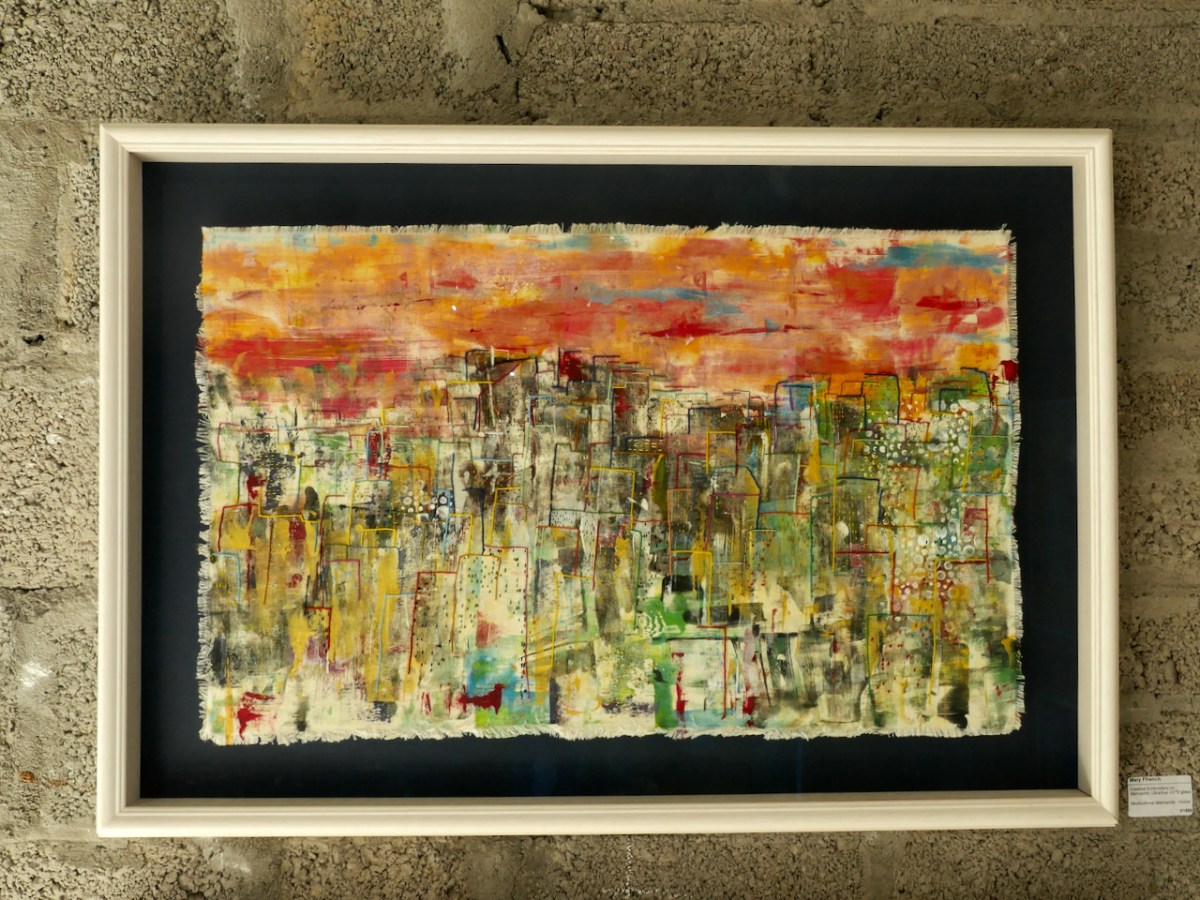
Mary Ffrench, Embroidery on Monoprint

The divide between ‘art’ and ‘craft’, although useful in some ways, can pigeonhole work that does not fall neatly into one category or the other. This annual juried exhibition gloriously transcends any artificial dividing lines and instead celebrates all that is best in the West Cork visual arts scene.

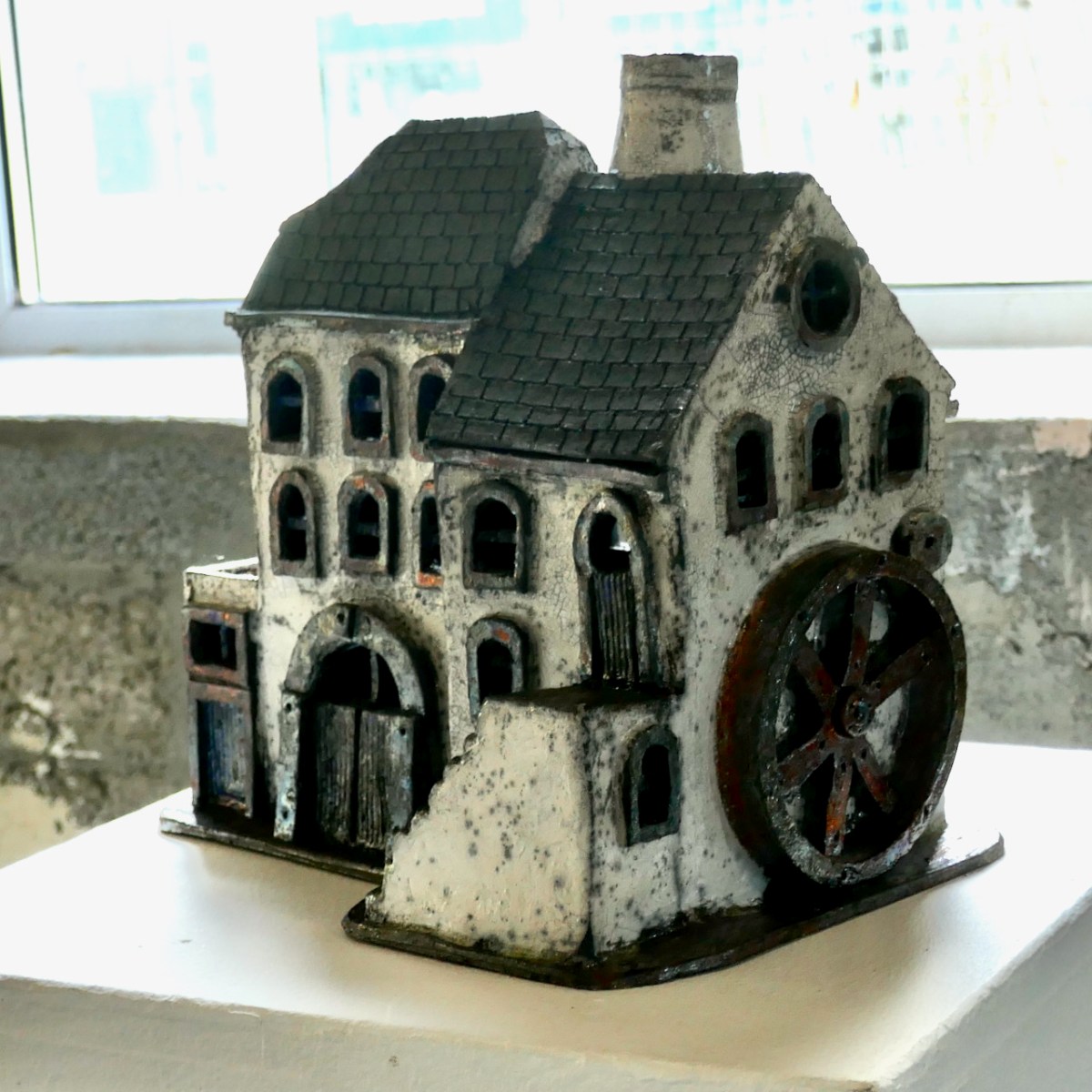
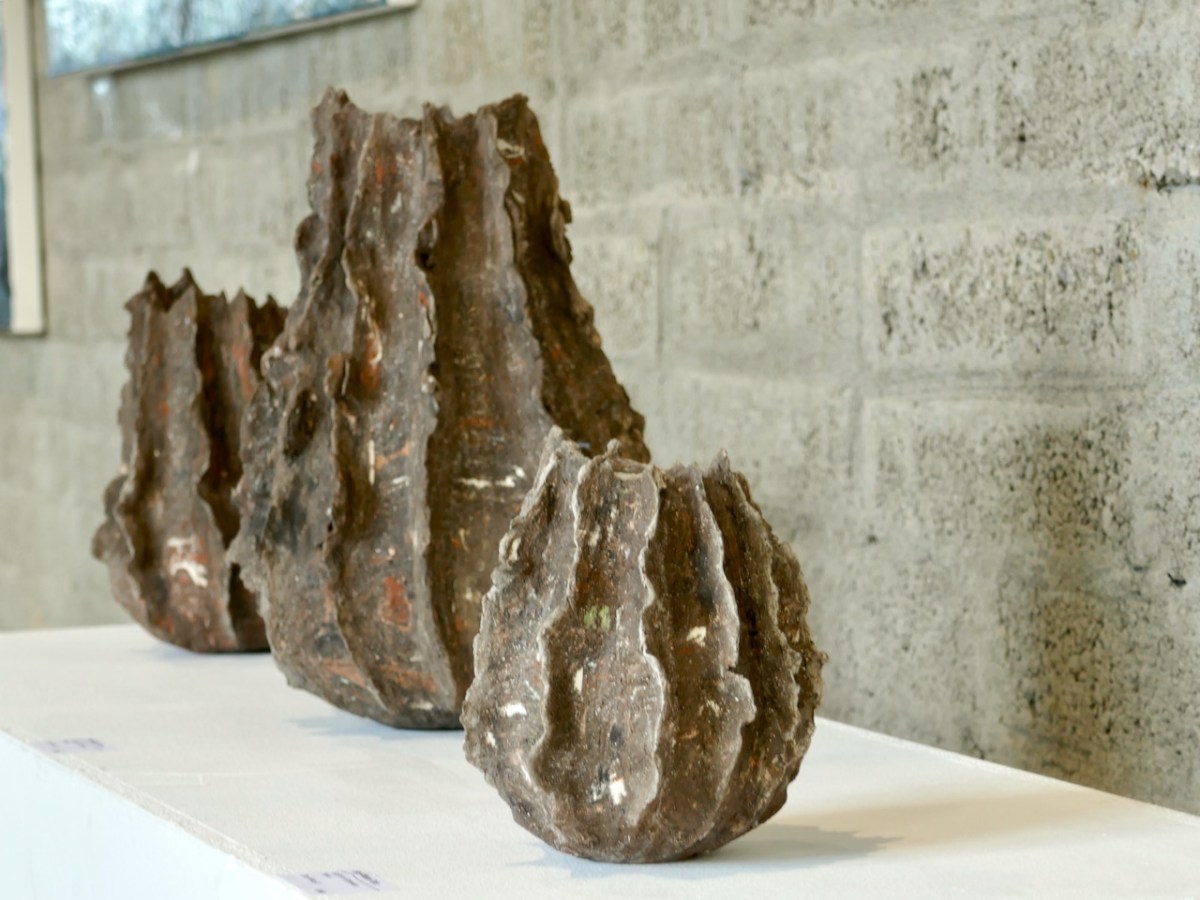
Brendan Ryan, Raku, The Old Mill; Bernadette Tuite, Sculptural Stoneware, Brow Head

Take a look at the website for bios of and statements by each of the artists. There’s a dizzying variety of approaches, materials and visions, but all are responding this year to the theme of Home Ground – and it’s not hard to relate, as we have all become so much more aware of our own patch of ground, and have taken to exploring all that it has to offer.

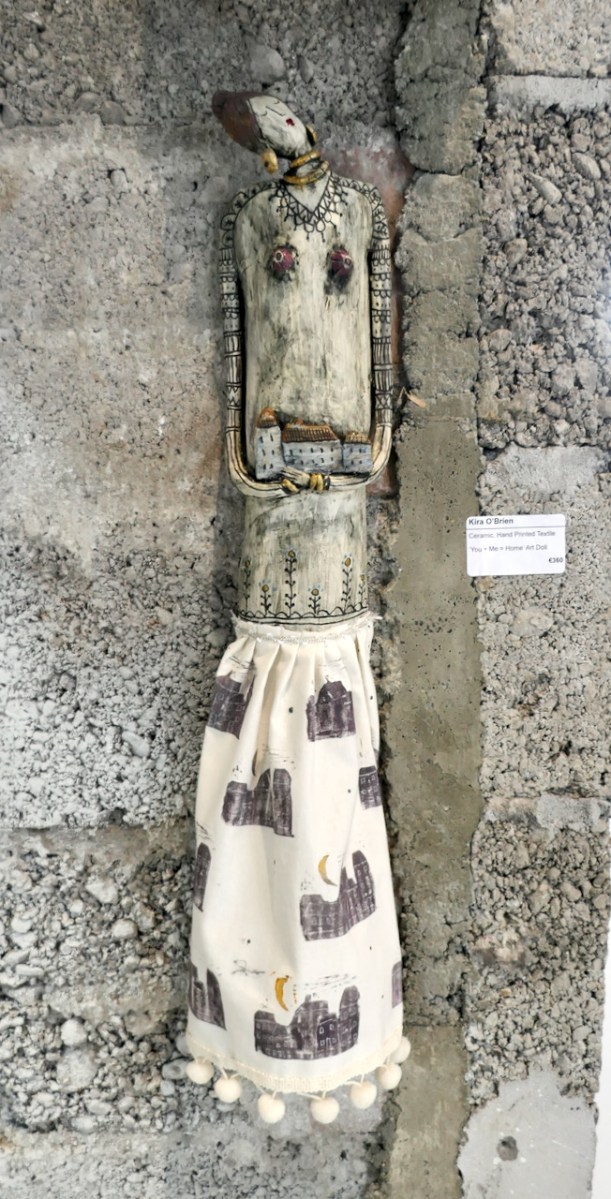
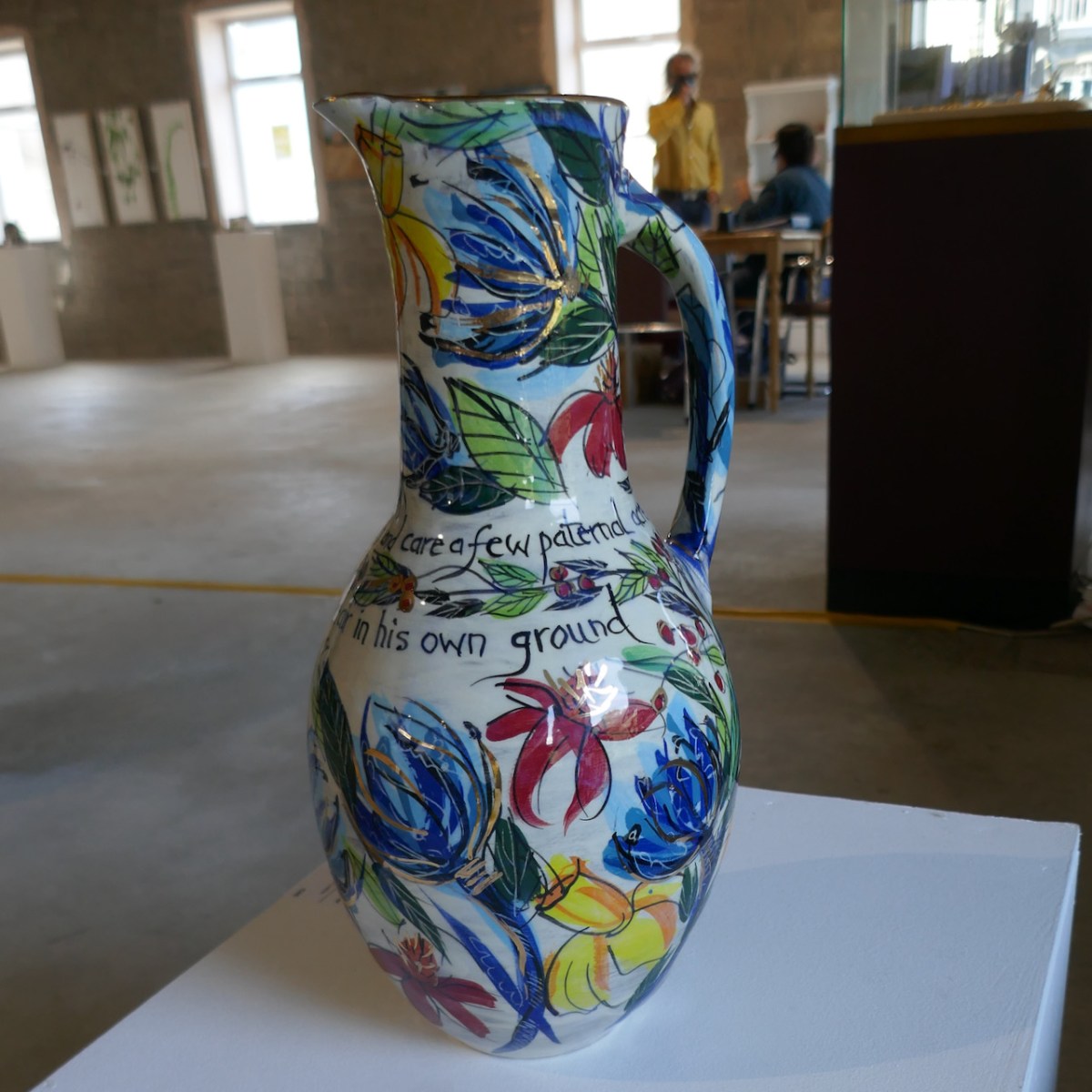
Greenwood chair by Alison Ospina with fabric by Mary Palmer (and in the background large jugs by Etain Hickey and Jim Turner; Kira O’Brien and her ceramic and hand-printed fabric piece ‘You+Me=Home’

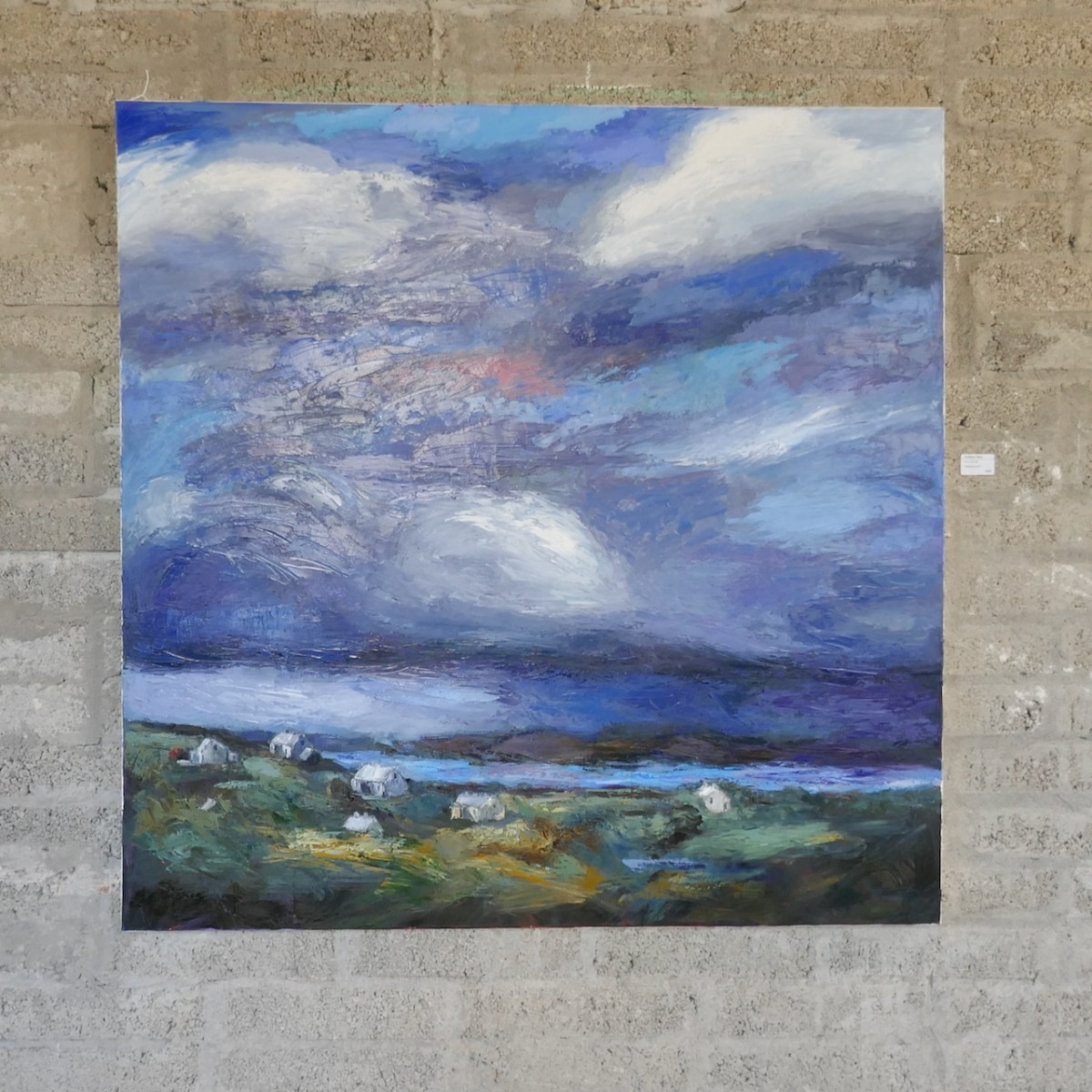
It’s all for sale, too, with some very keen prices, so if you are looking to bring home a piece of West Cork, this is the place for you. The most lustworthy painting in the exhibition, to judge from the reaction of everyone who comes in the door, is Christine Thery’s Vanishing Island (below), a large oil painting of her beloved Heir Island.

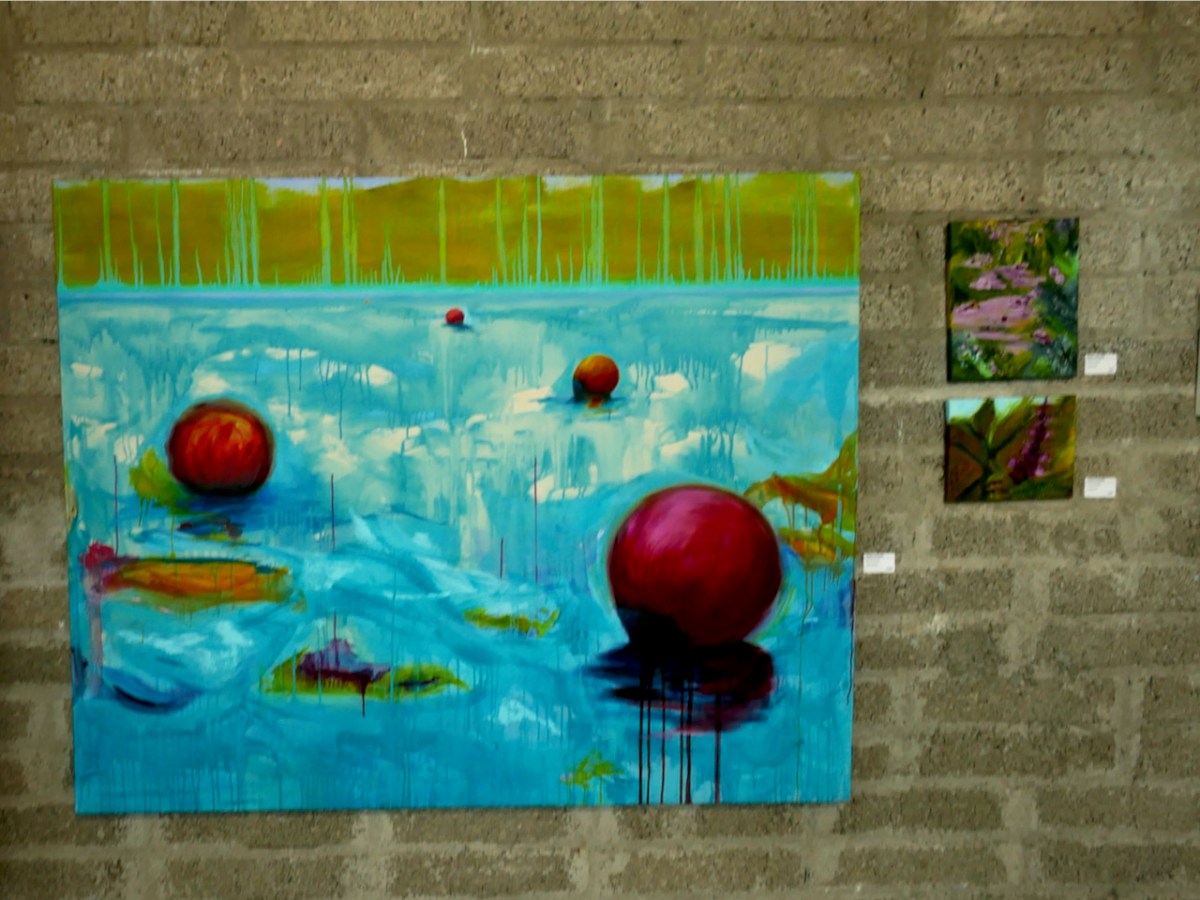
Helen O’Keefe’s terroir is another Island – Long Island – and she captures the sometimes nostalgic emptiness of it all in her paintings, although the large one below shows her responsiveness to its vibrant colours as well.

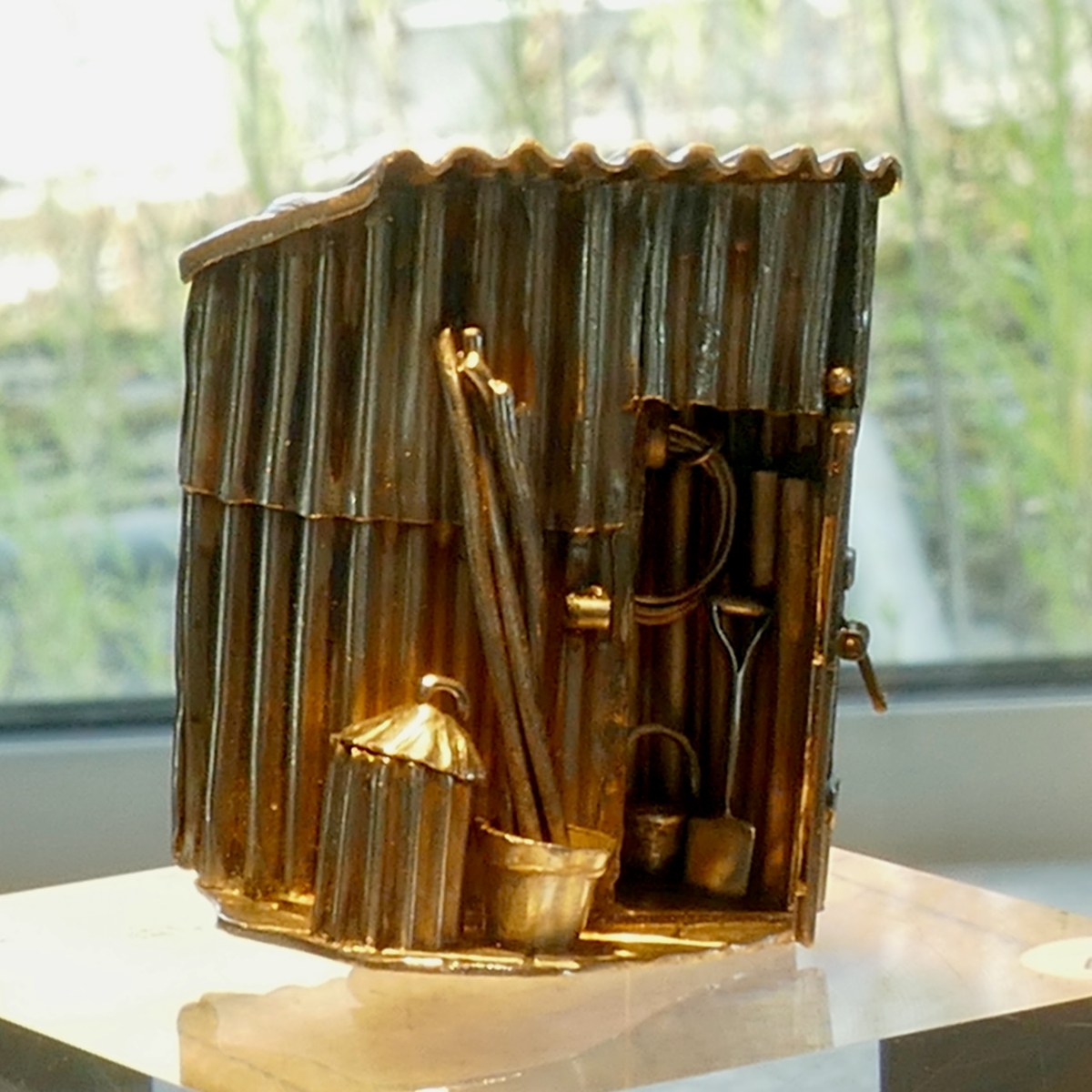
Lots of jewellery too – Here is one of Michael Duerdon’s gorgeous brooches – Garden Shed. (If a particular person out there is wondering what to get me for Christmas…just saying.)

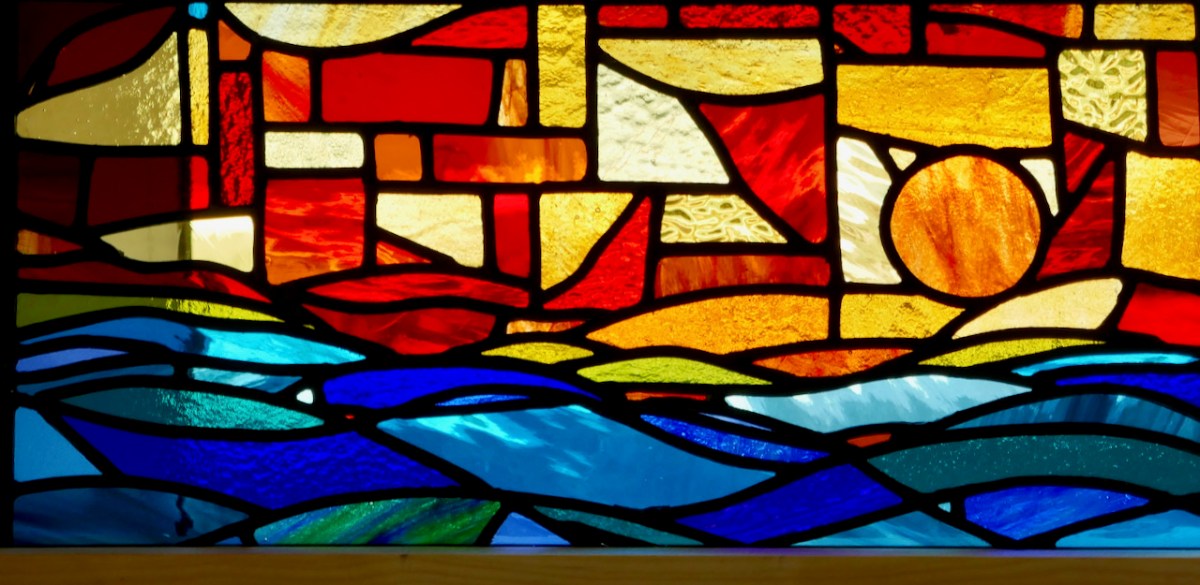
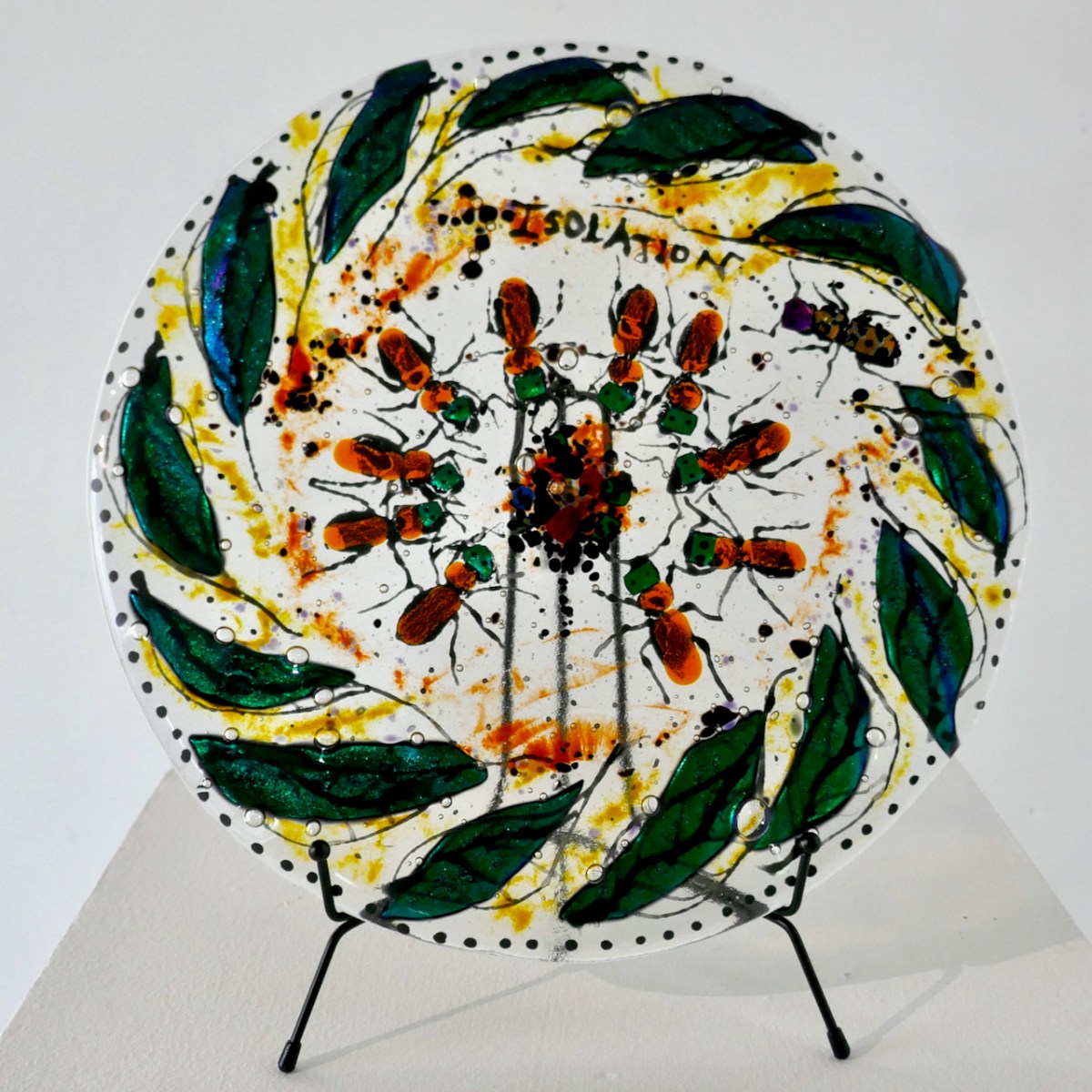
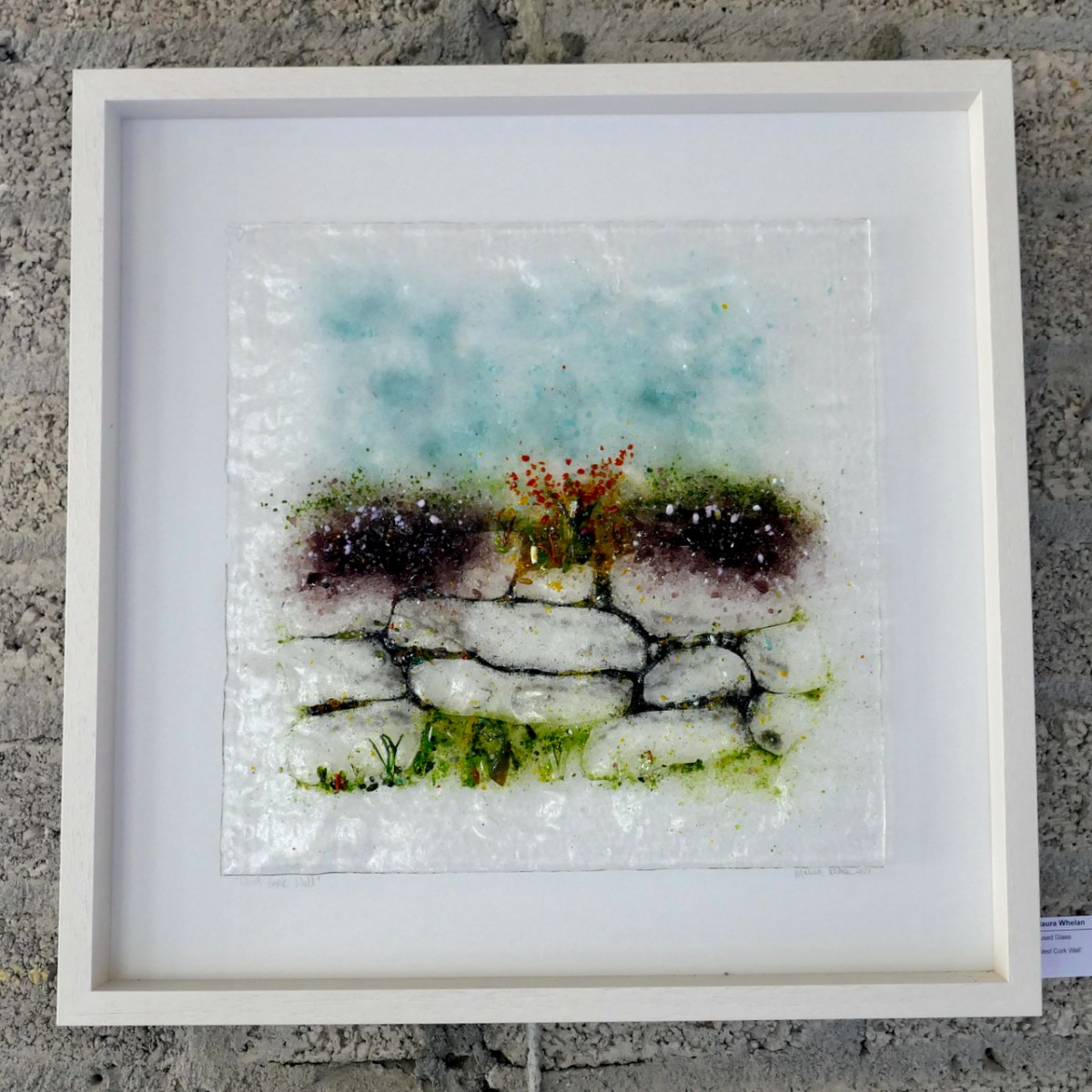
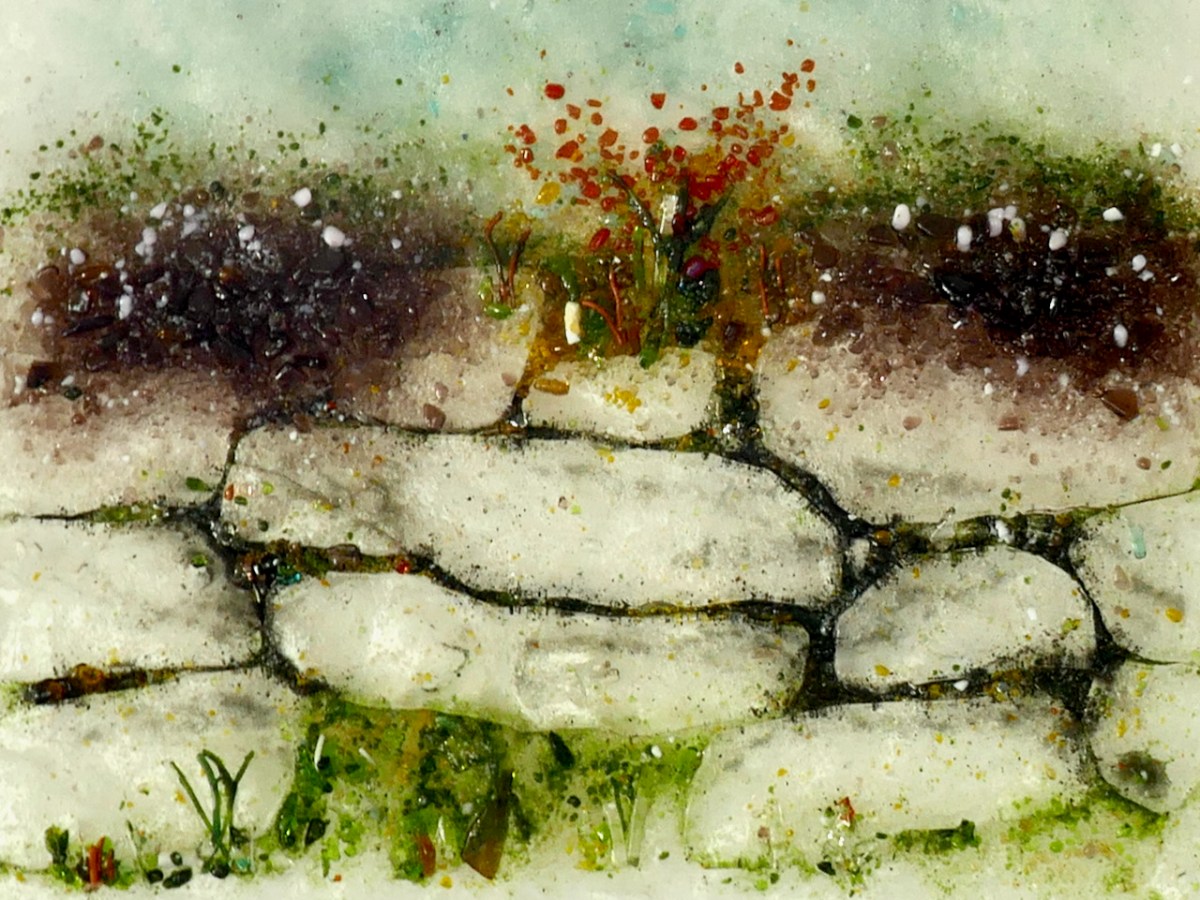
And glass! As someone who studies and writes about stained glass, I was delighted to see such a variety of glass this year, from classical stained glass, to fused creations.

In descending order: Deirdre Buckley Cairns stained glass inspired by the Calf Islands; Angela Brady’s witty ‘Ant Colony’; A vibrant kiln-fired plate from Trish Goodbody; Maura Whelan’s West Cork Wall, and a detail from that piece

Jim Turner and Etain Hickey each have their own ceramics in this show, but they have also collaborated on several items, including beautifully decorated large jugs (above, upper). Etain has been inspired by her lockdown walks this year to produce a set of wall plates in glowing reds and blues, all angles and arcs, illustrating the agricultural life around her (above, lower).

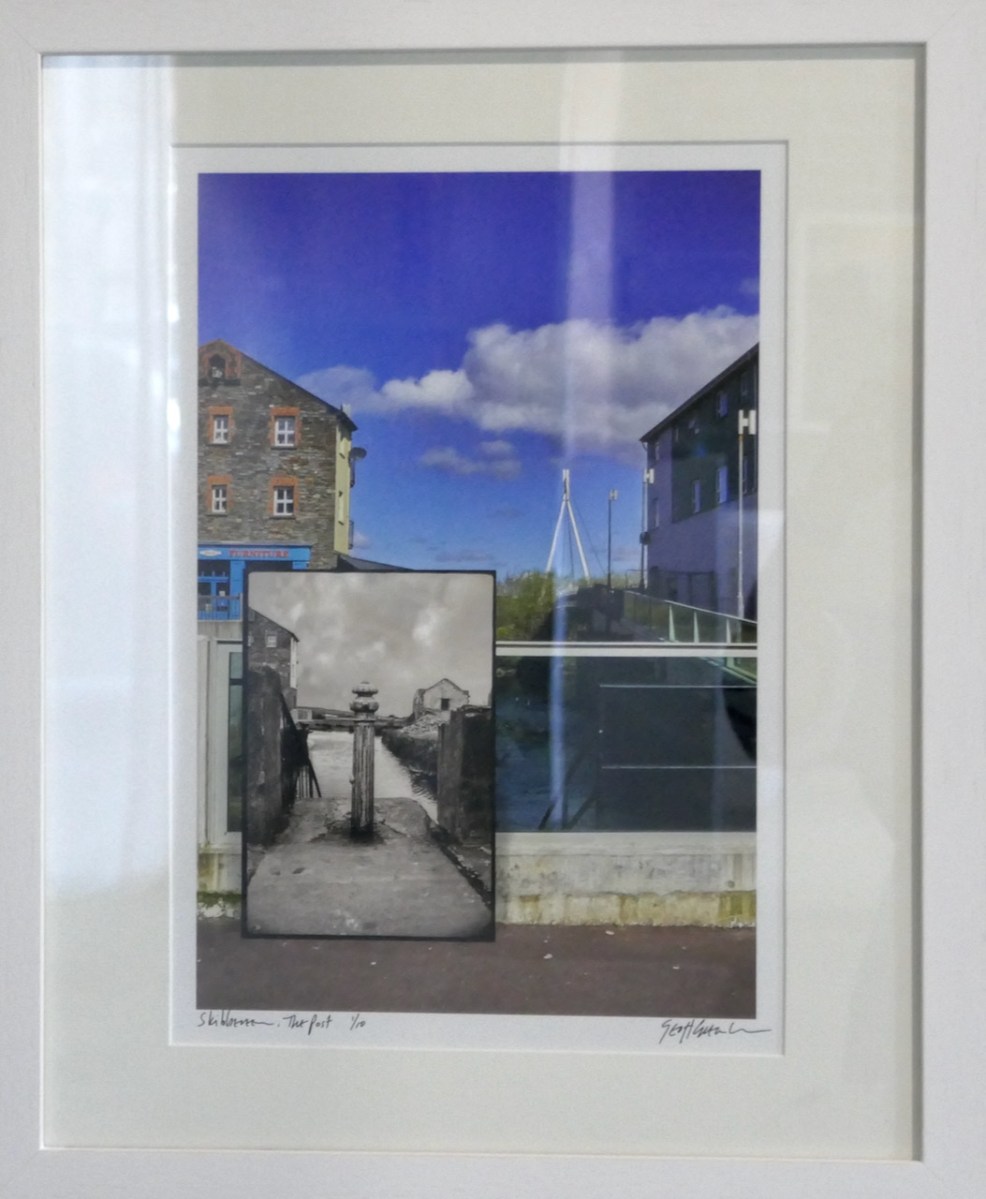
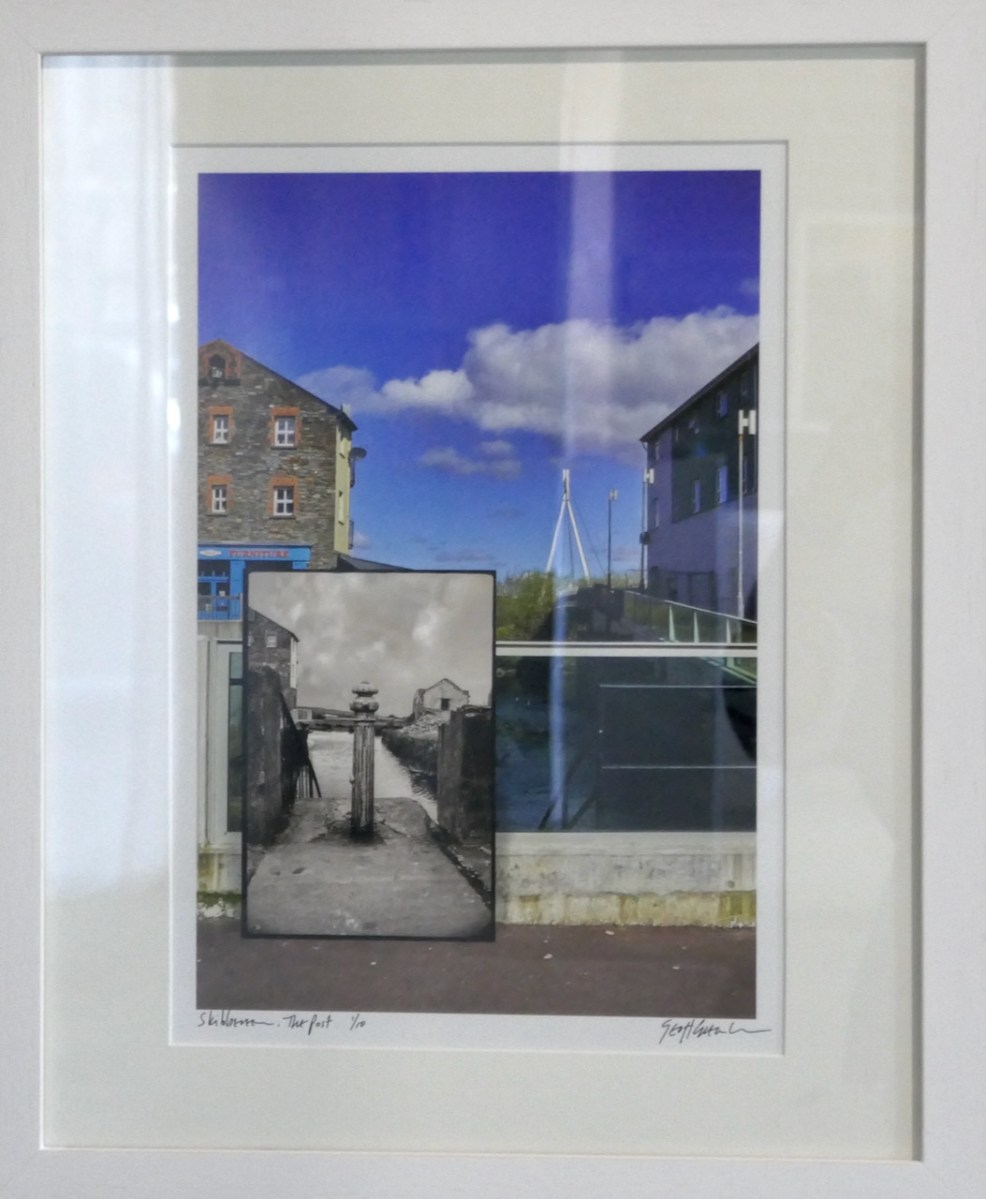
Geoff Greenham is one of my favourite local photographers and I love his approach to the theme this year – juxtaposing the old and new in his series on Skibbereen. Below is ‘Bollard’. Although the exhibition space, in the O’Driscoll building by the River, is superb for exhibiting, it’s not great for photography, so my apologies to Geoff and others for the reflections in some of my images.

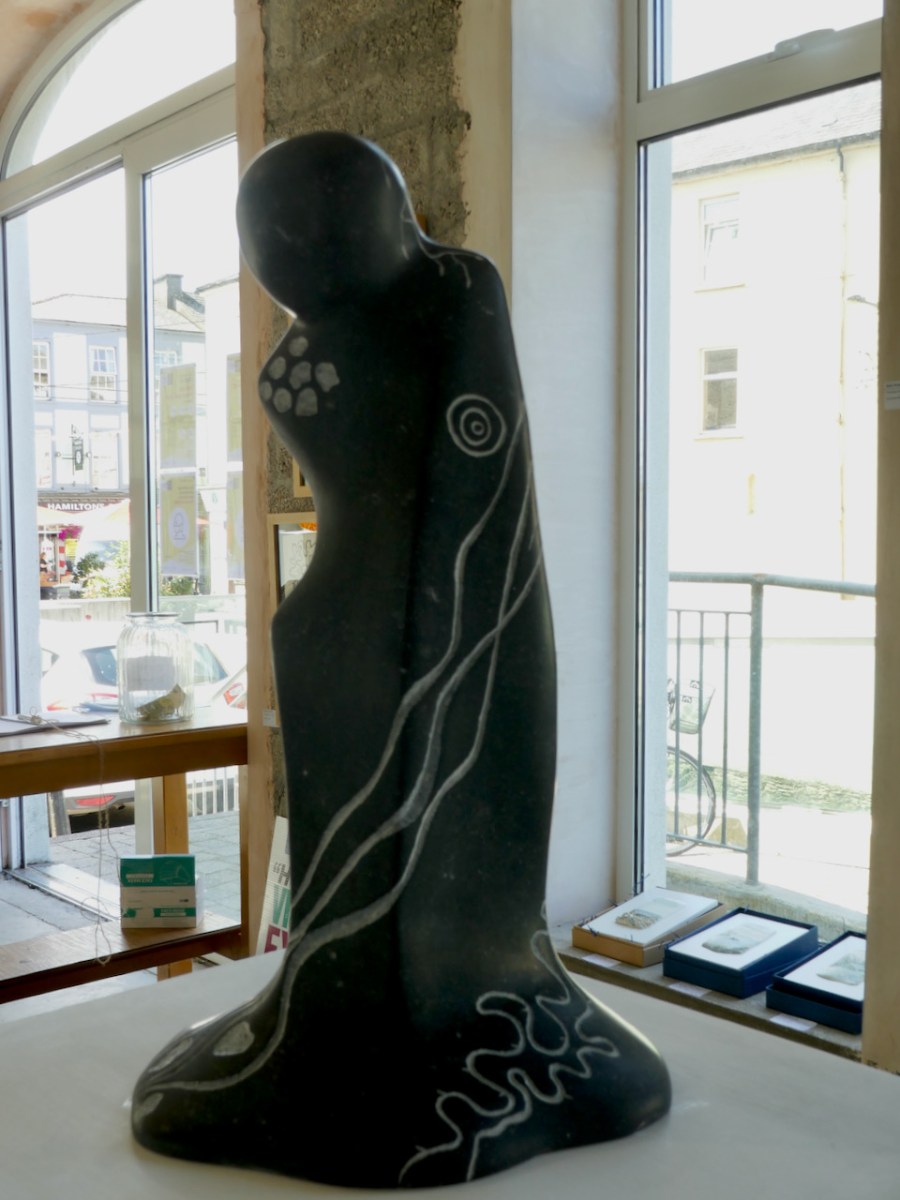
Geoff Greenham and Sonia Caldwell were standouts for me last year, when West Cork Creates was solely online, so I will finish with Sonia’s sculpture in this year’s show – another one of her thoughtful, brooding figures which showcases her mastery of technique.

I have only shown a tiny fraction of what’s in the Exhibition. It’s on for another two weeks, until the 28th, so make sure you get there!

Dunlough, or Three Castle Head

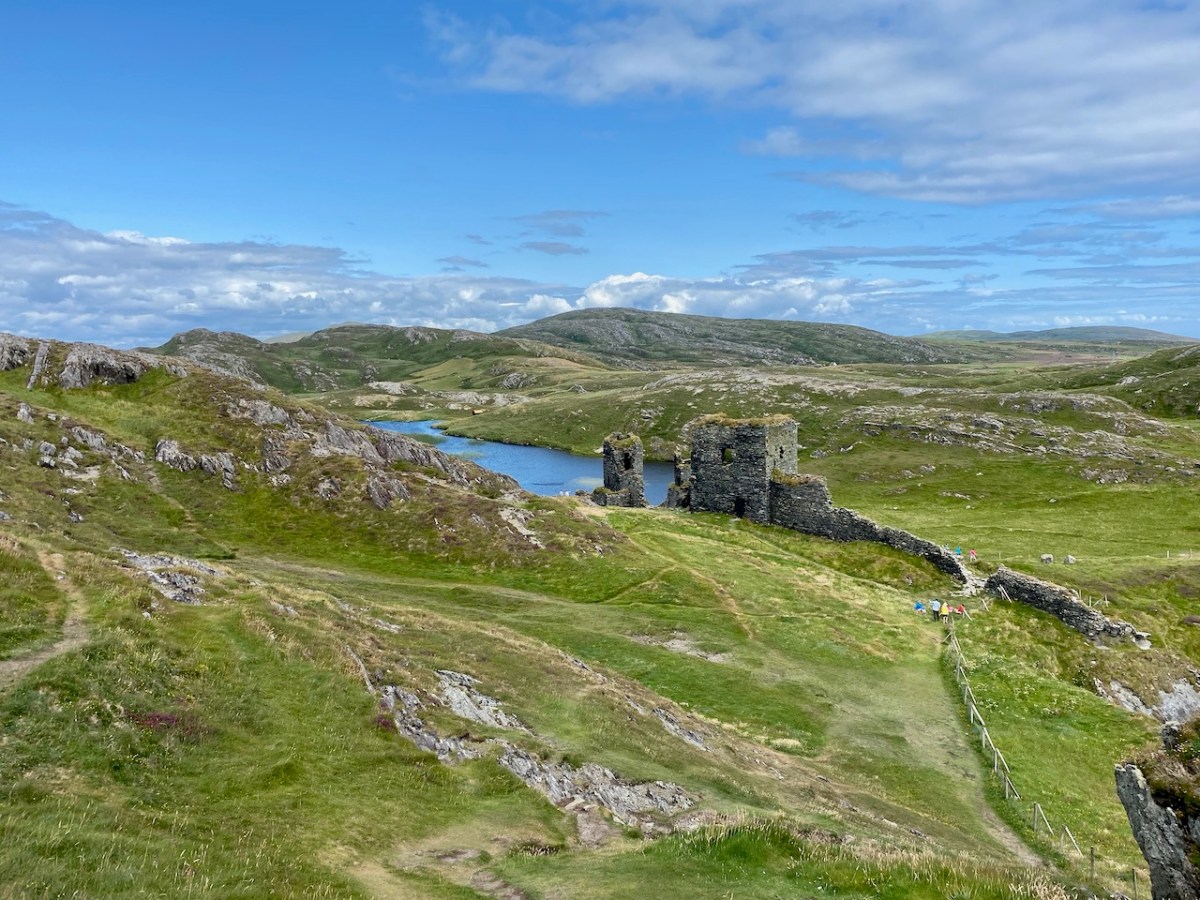
It’s actually amazing that in all the years we’ve been writing Roaringwater Journal (since 2012), we’ve never written before about Three Castle Head in detail, although we’ve mentioned it lots and visit it often. I consider it to be one of the most beautiful places in West Cork, perhaps in Ireland, and certainly one of the most interesting. It’s one of The Castles of Ivaha.

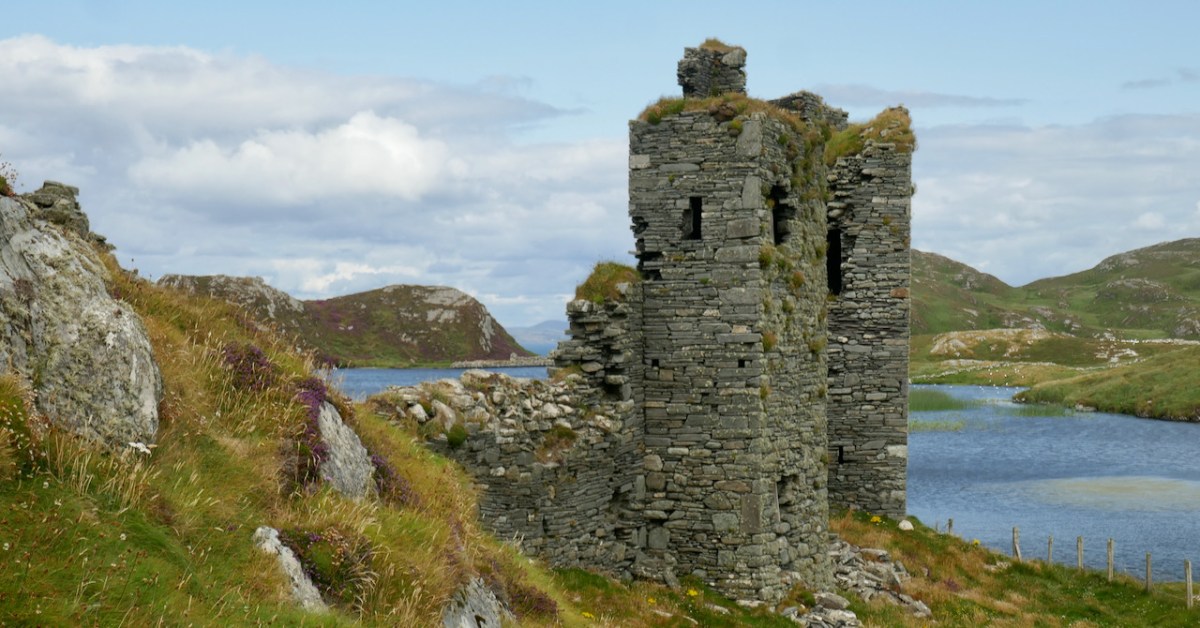
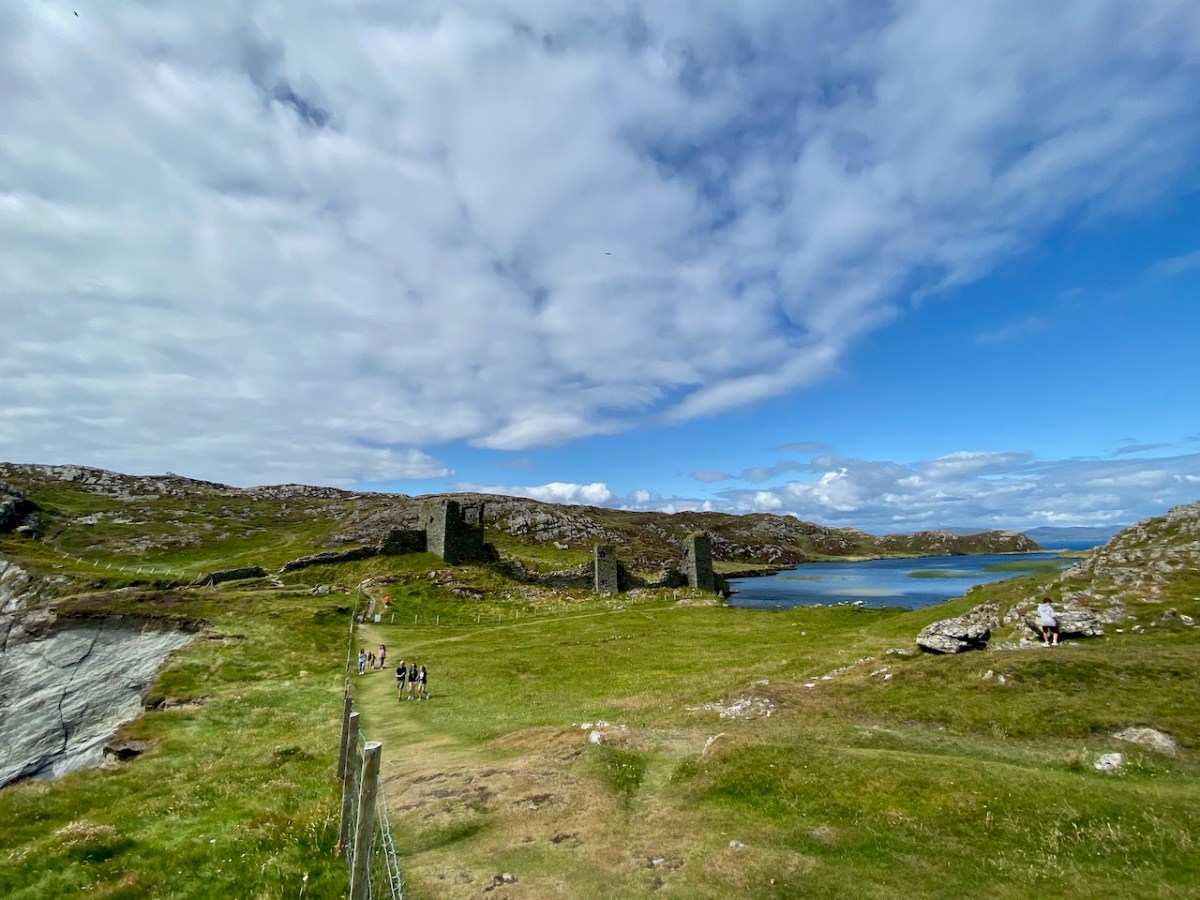
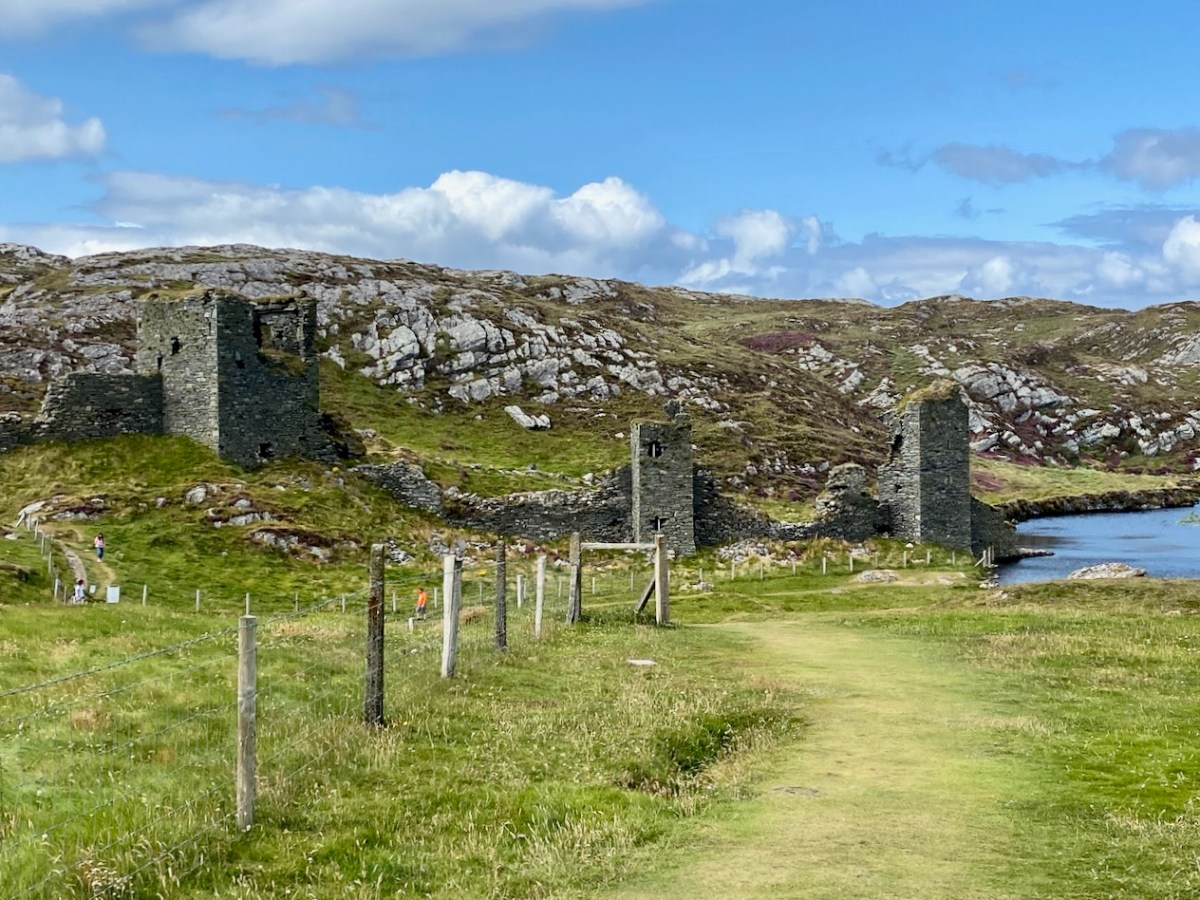
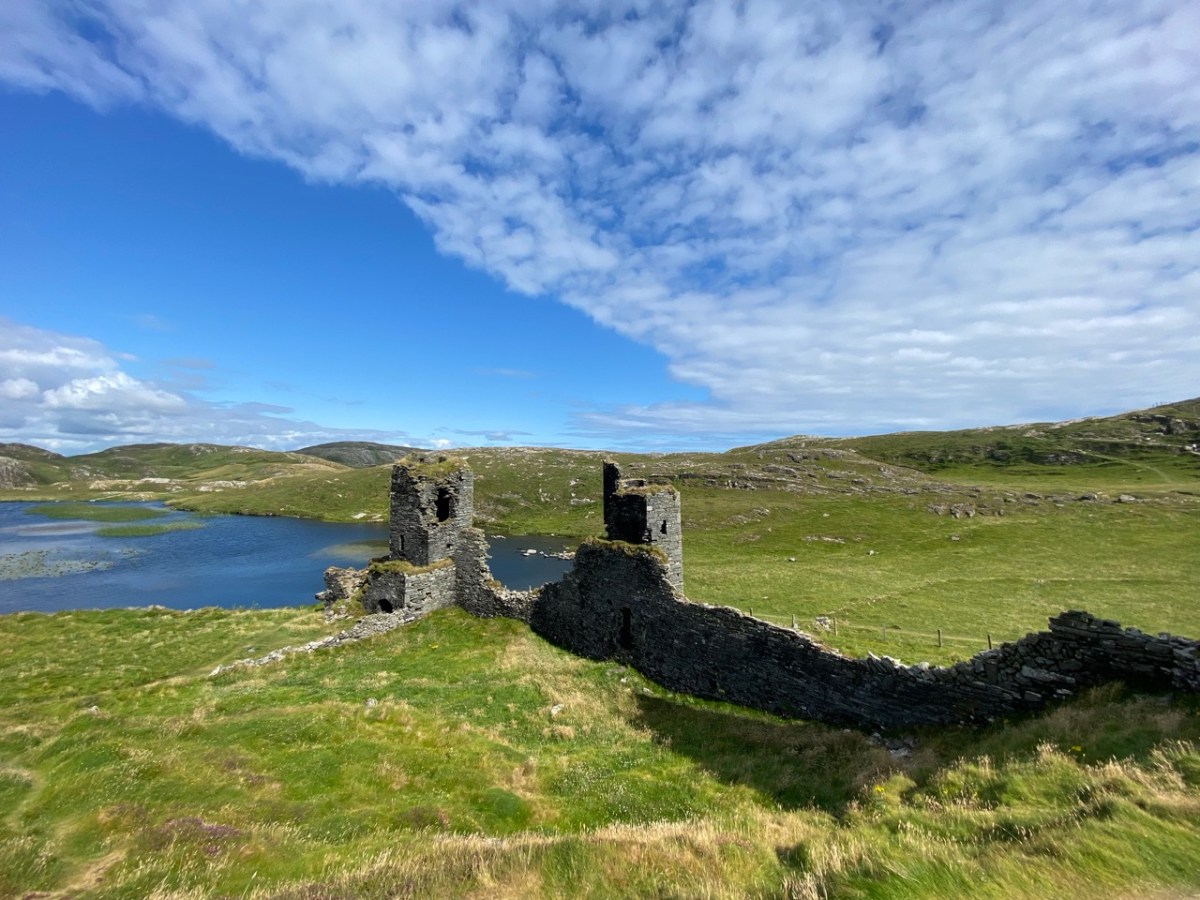
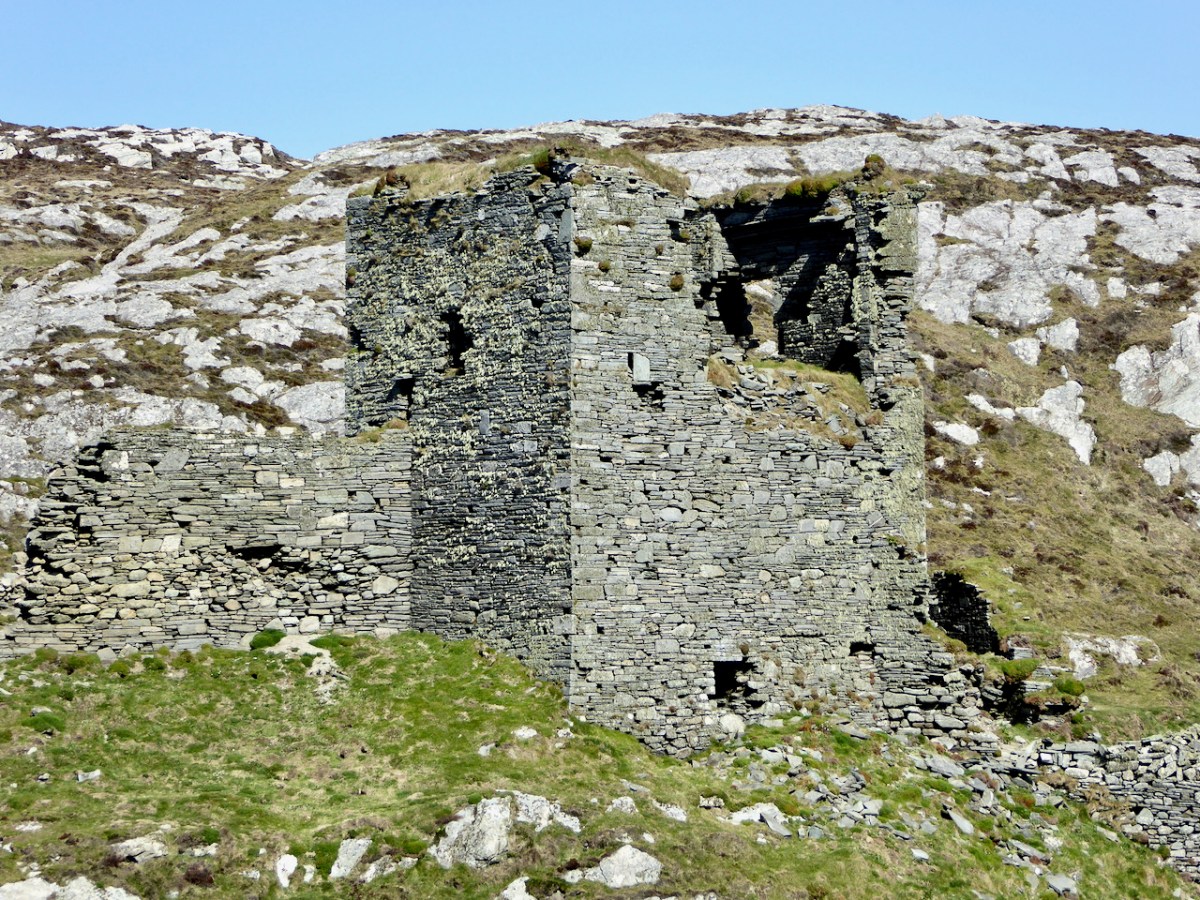
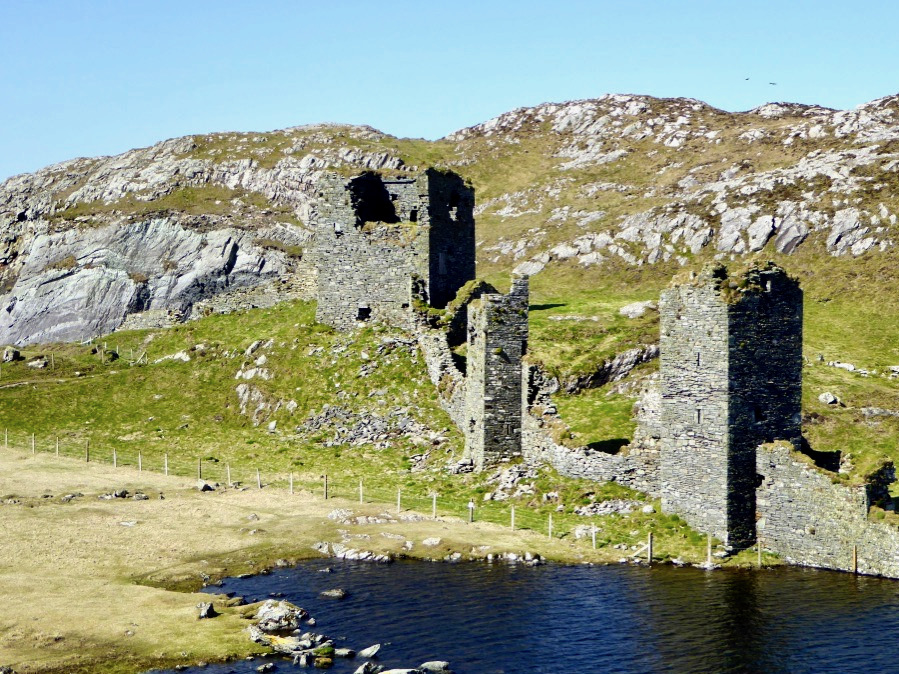
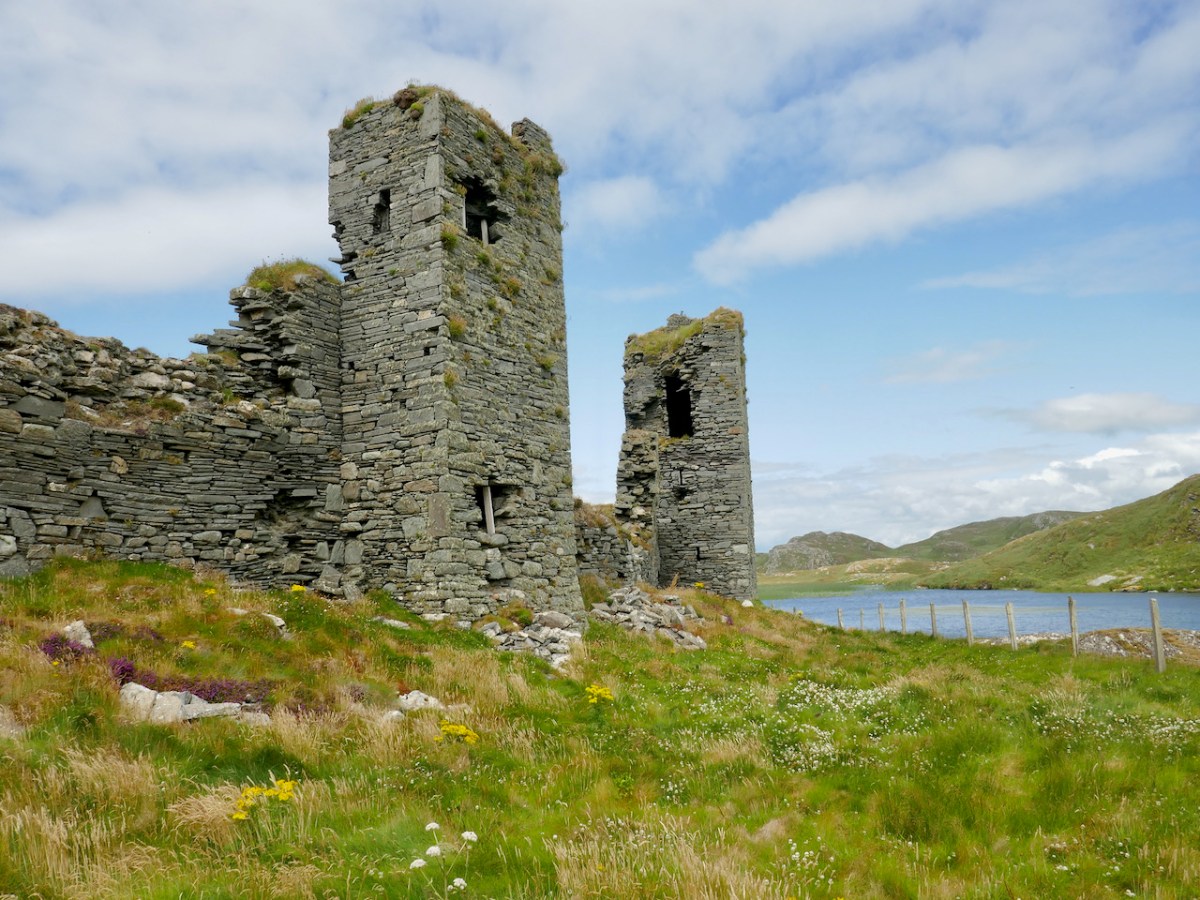
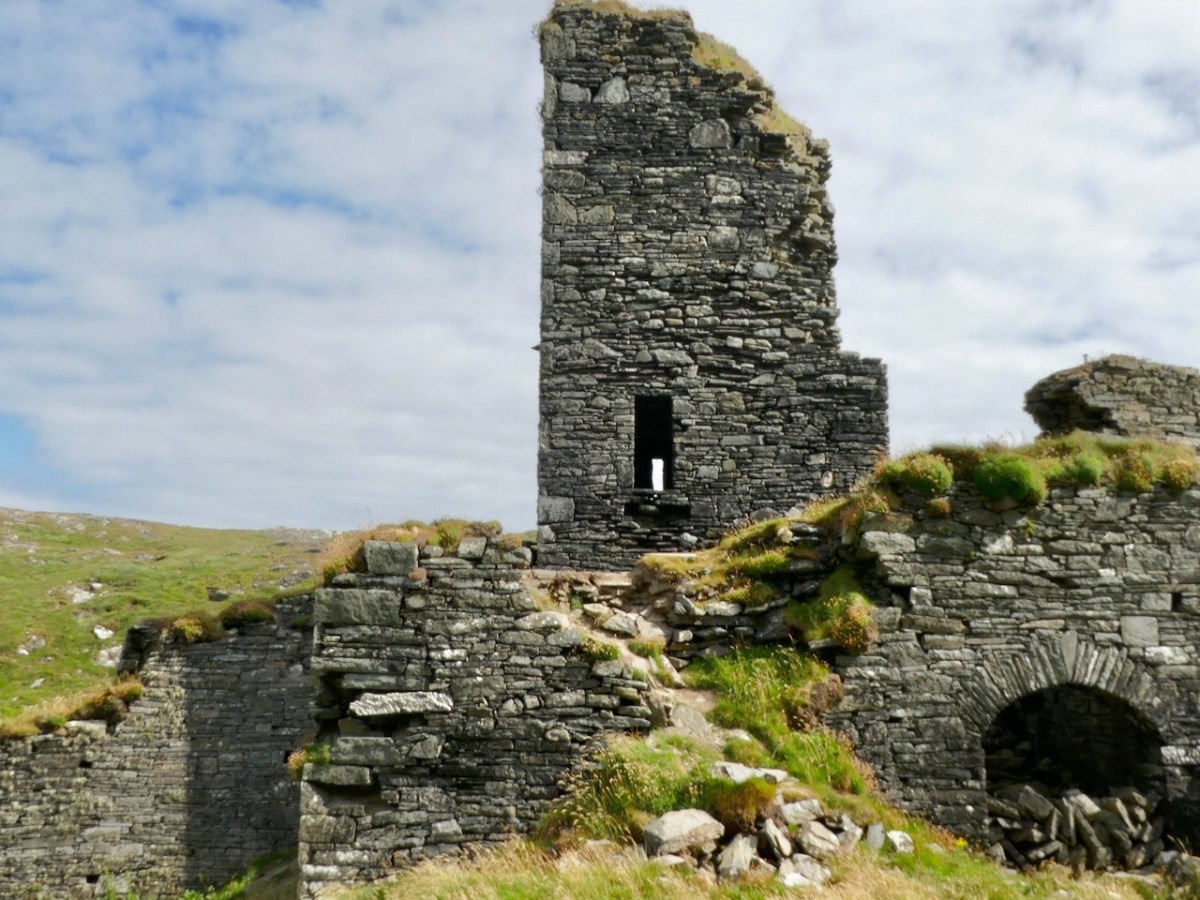
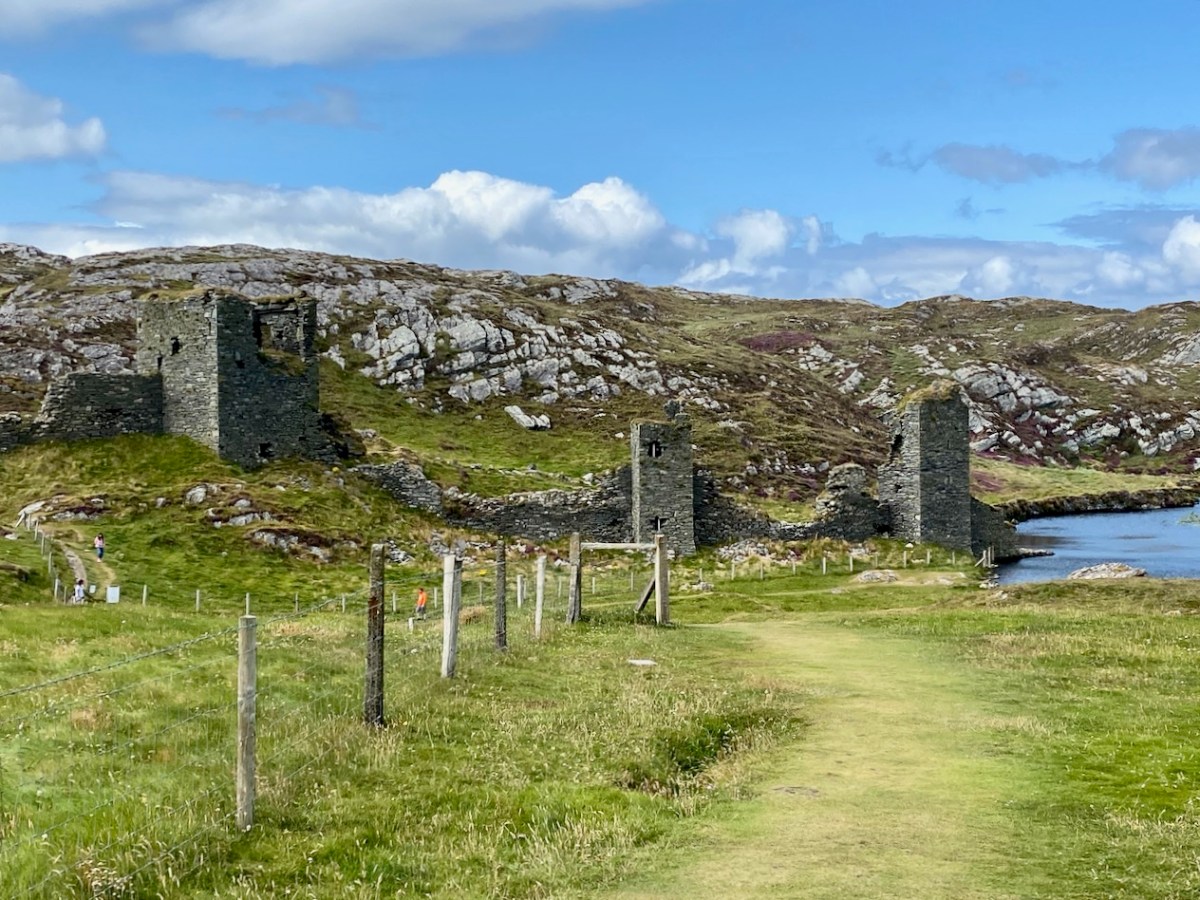
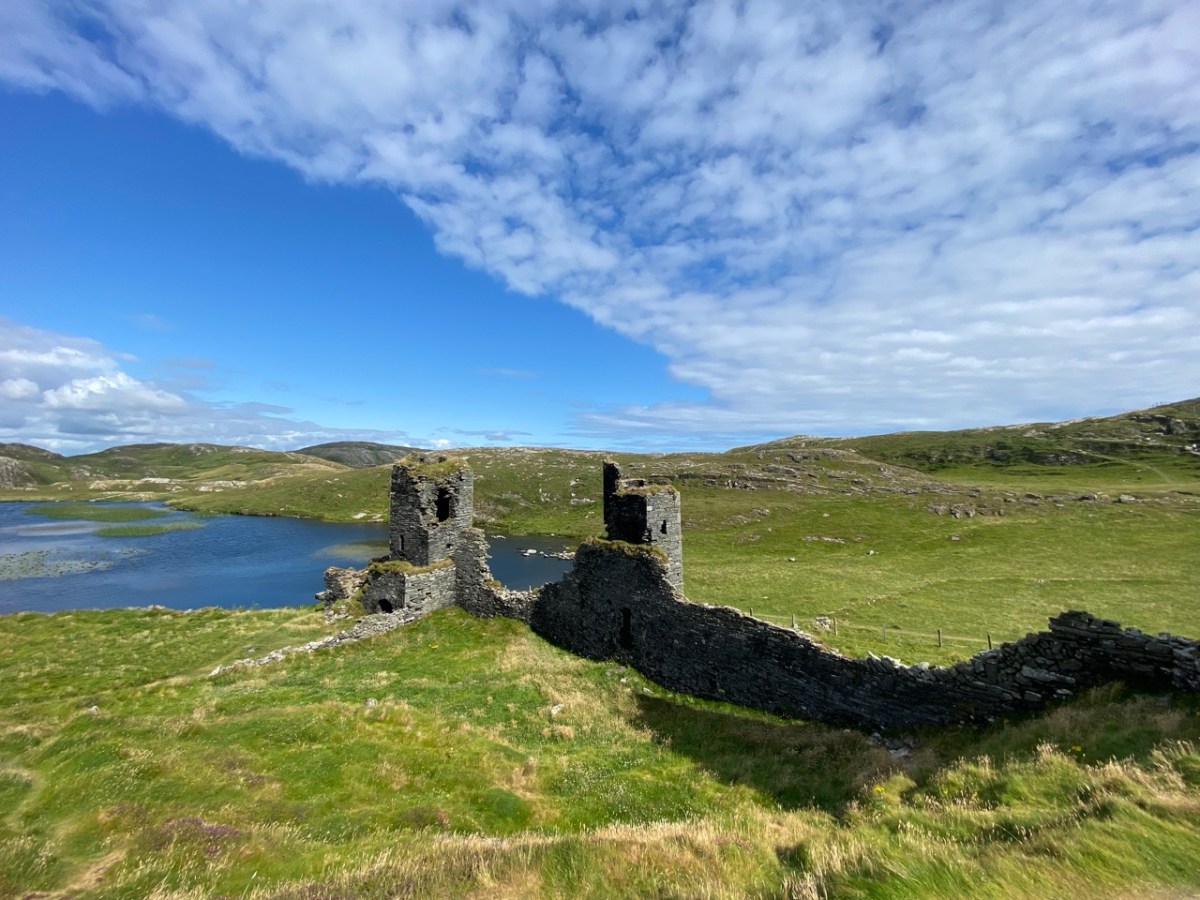
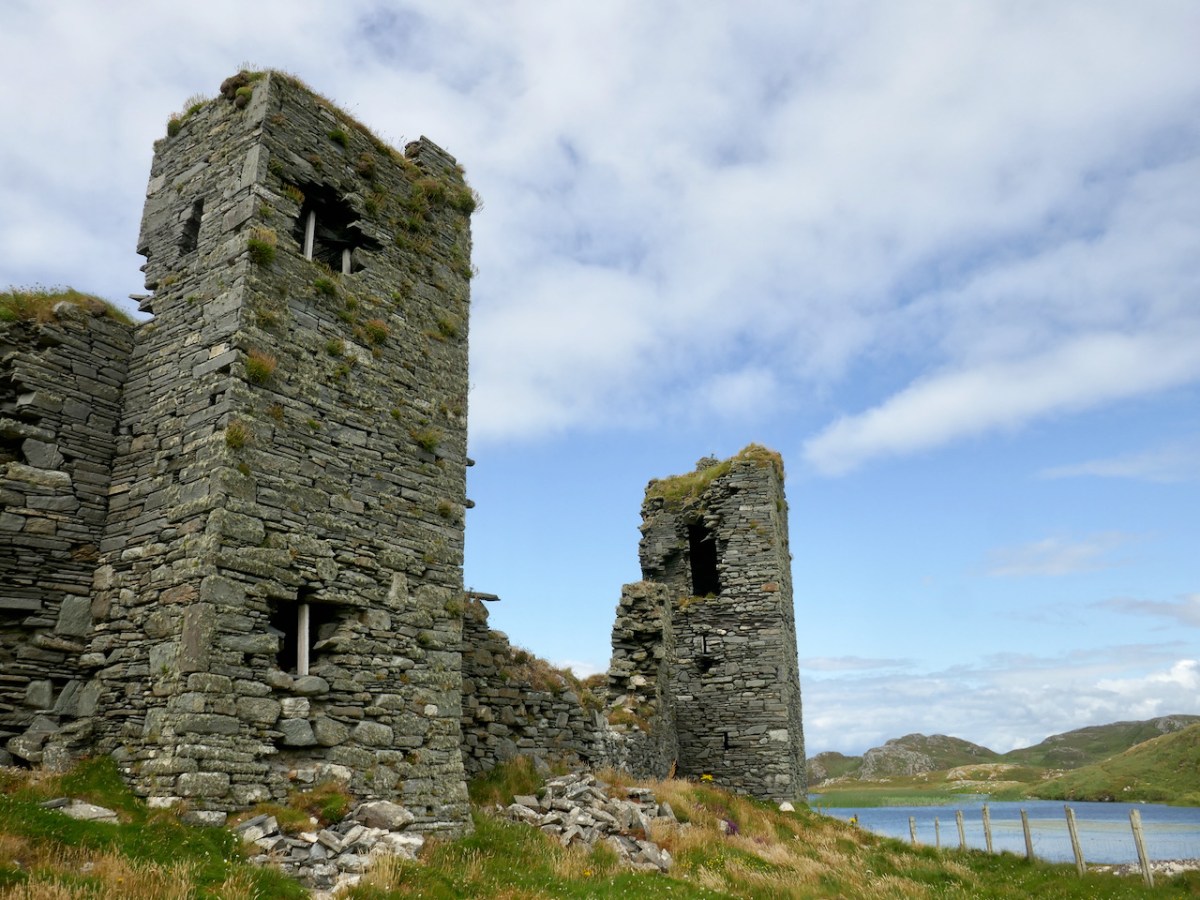
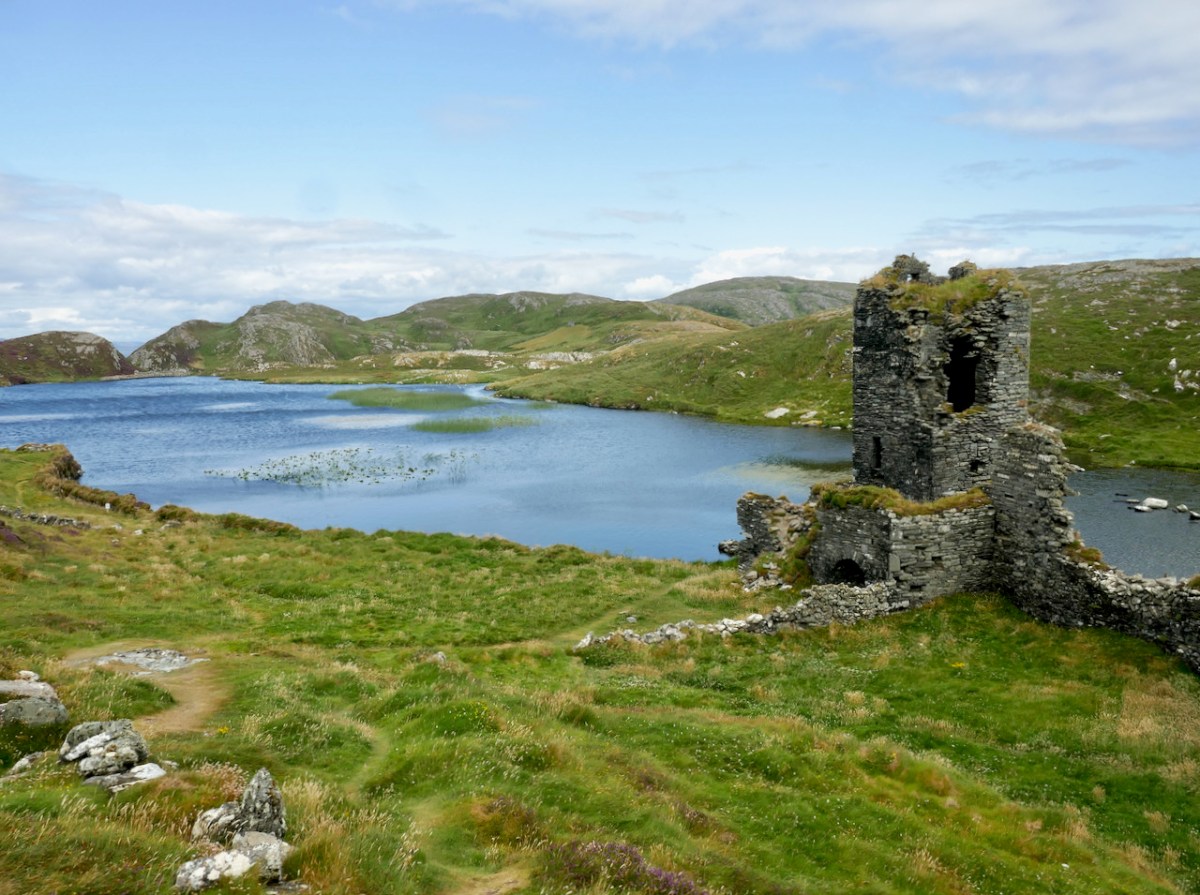
To come over the brow of the hill on a sunny day and catch your first glimpse of Three Castle Head is breathtaking, so let’s describe first what you actually see in front of you. Instead of three distinct castles, what you see is a long wall, known as a curtain wall, punctuated by three towers. The wall stretches from a precipitous cliff on the south west to a lake on the north east end, and it is this lake that gives this place its Irish name of Dunlough (from Dún Loch, or Fort of the Lake).

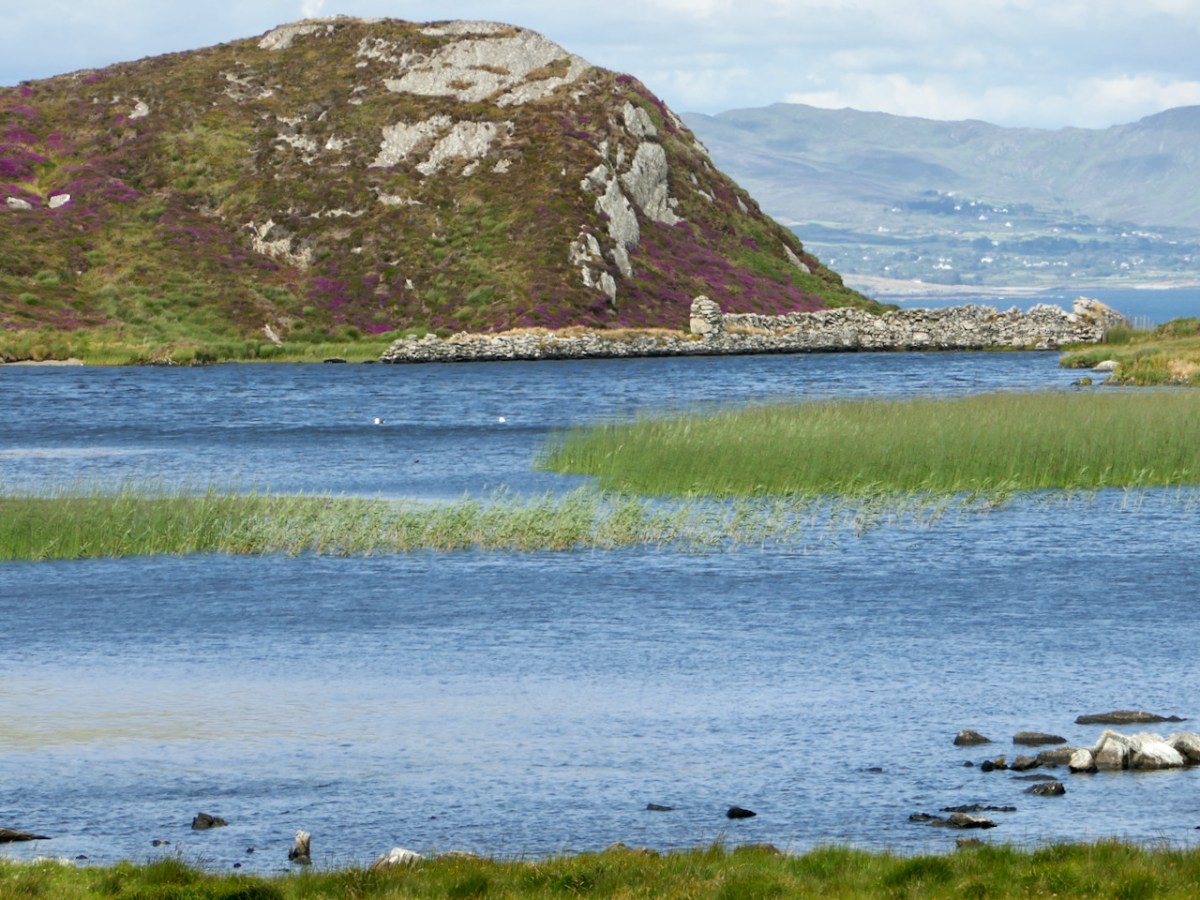
The lake may have been held back at one point at the north east end where it drains into the sea – a long wall stretches partly across it here – or this wall may have been part of the fortification system for the whole promontory. 

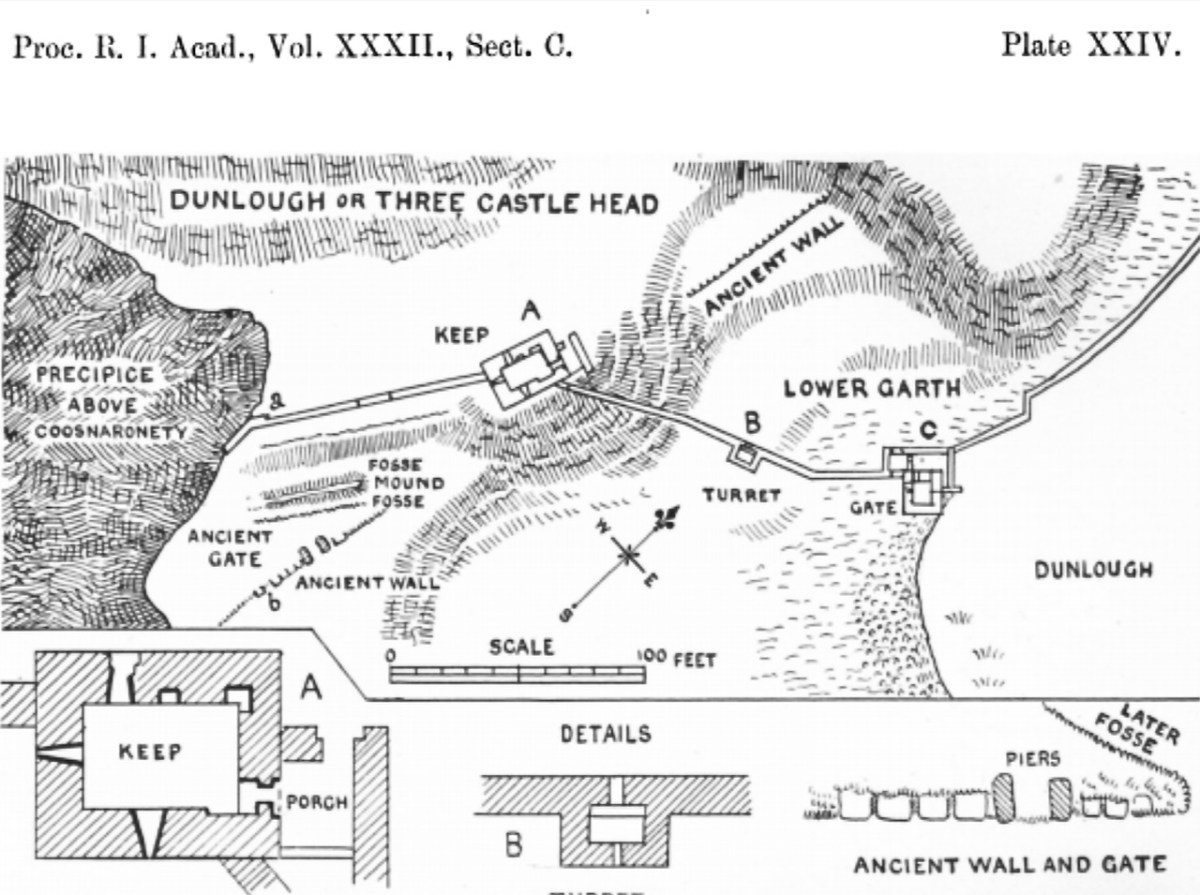
The curtain wall would have constituted a formidable defence for the area behind it – the cliff makes it impregnable on the west side, while the lake forms a barrier on the east. Our old friend Thomas J Westropp visited Dunlough in about 1914, when there was more to see on the ground of the pre-curtain wall fortifications, wrote up his observations, and supplied a drawing.* More on his conclusions later. For convenience, I will use his terminology for the three towers, although they are not necessarily what a modern medieval historian would use. He called the largest tower, located more or less in the middle of the wall, the Keep; the one immediately to the east the Turret, and the one closest to the lake the Gatehouse. You might like to have a good read of the posts Tower House Tutorial Part I and Part II to help you make sense of what follows.

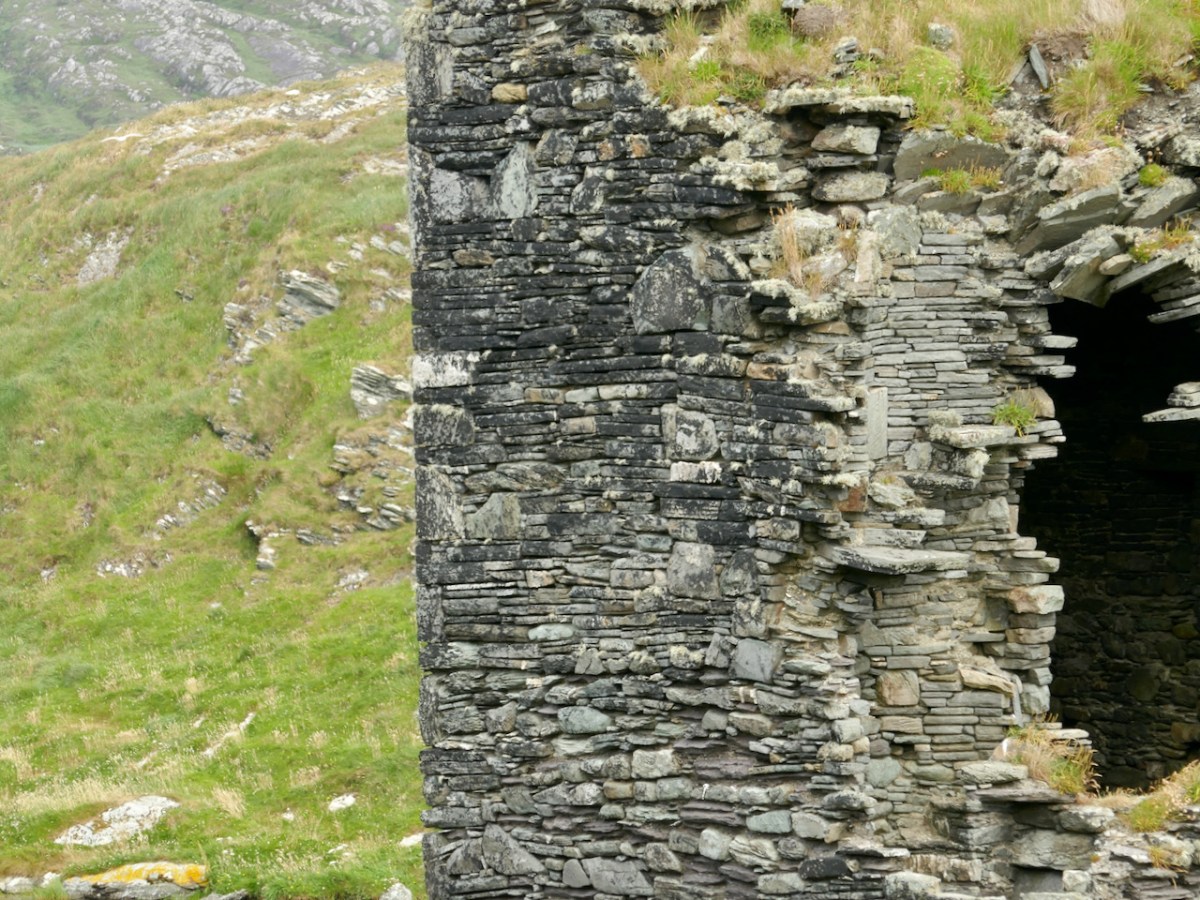
The wall and the three towers are very finely built, using the rubble construction method, where both sides of the wall are shaped with stones carefully chosen for their straight edges, and the interior is filled with rubble. Mark Samuels, in his discussion of the construction of this tower says:

A proper lime mortar, quite hard, white and capable of adhering to the stones was used in the basebatter. However, at second-floor level, the mortar was little more than earth and the building stands entirely by virtue of the careful laying of the stones. The unusual drystone construction gives it a ‘vernacular’ air which is a peculiarity of this stronghold.
The Tower Houses of West Cork by Mark Wycliffe Samuel, 1998

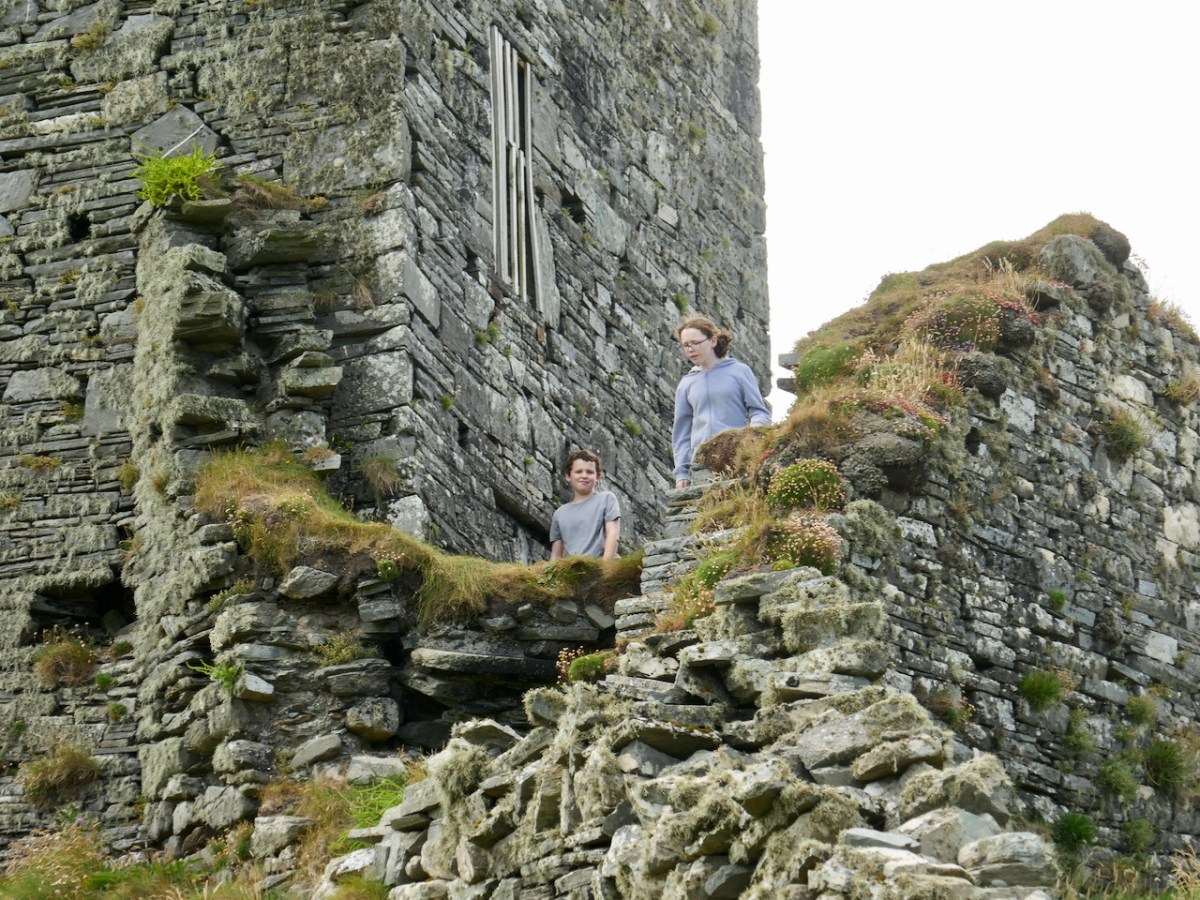
There is evidence of little mortar being used where the interior of the curtain walls can be seen, so this was a very skilful job indeed of ‘dry stone’ construction. Where mortar is discernible, however, it appears to be the local blue till, rendered into a kind of mud, rather than limestone-based mortar, and this has robbed the walls of some cohesion, so that they crumble more quickly once they start deteriorating. For a fairly thorough outline of what’s involved, see my post Building a Stone Wall. The curtain wall is likely to have had a rampart or wall walk, but no sign of this remains. Our budding archaeologist companions on our recent visit are taking a good look at the construction, below.

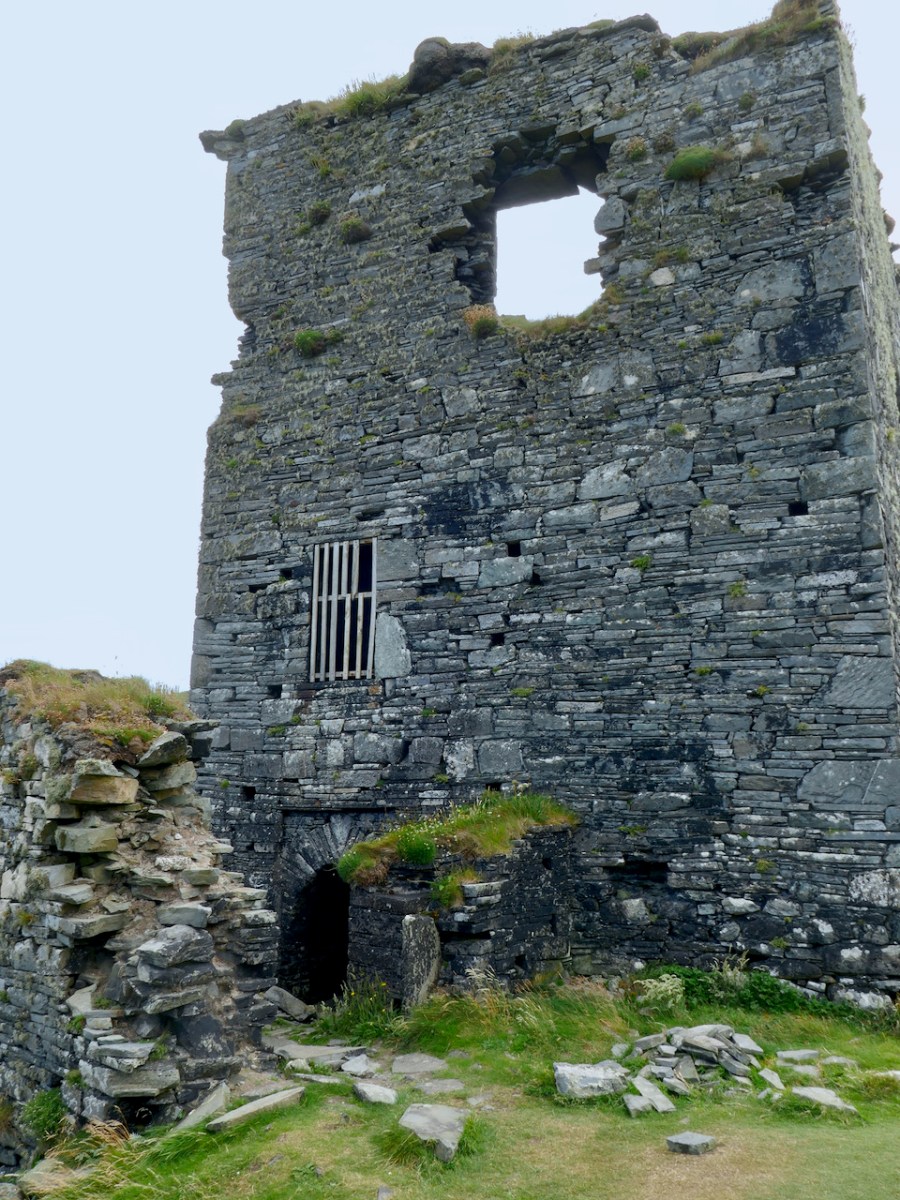
The Keep is the kind of tower house that the O’Mahonys were building all over Ivaha (The Mizen) in the 15th century and is typical of those towers, with a few interesting variations. There are two entrances, one above the other, denoting that this was, in common with all the other O’Mahony tower house, a ‘Raised Entry’ castle. However, unlike the others, the entries are surrounded by a small forecourt. Typically, the ground-level entry gave access only to the ground and first floors and there was no access to the upper, or residential floors (those above the vault) from it. The residential floors were accessed by means of a staircase inside the raised entry: it runs inside the wall to the right of the doorway.

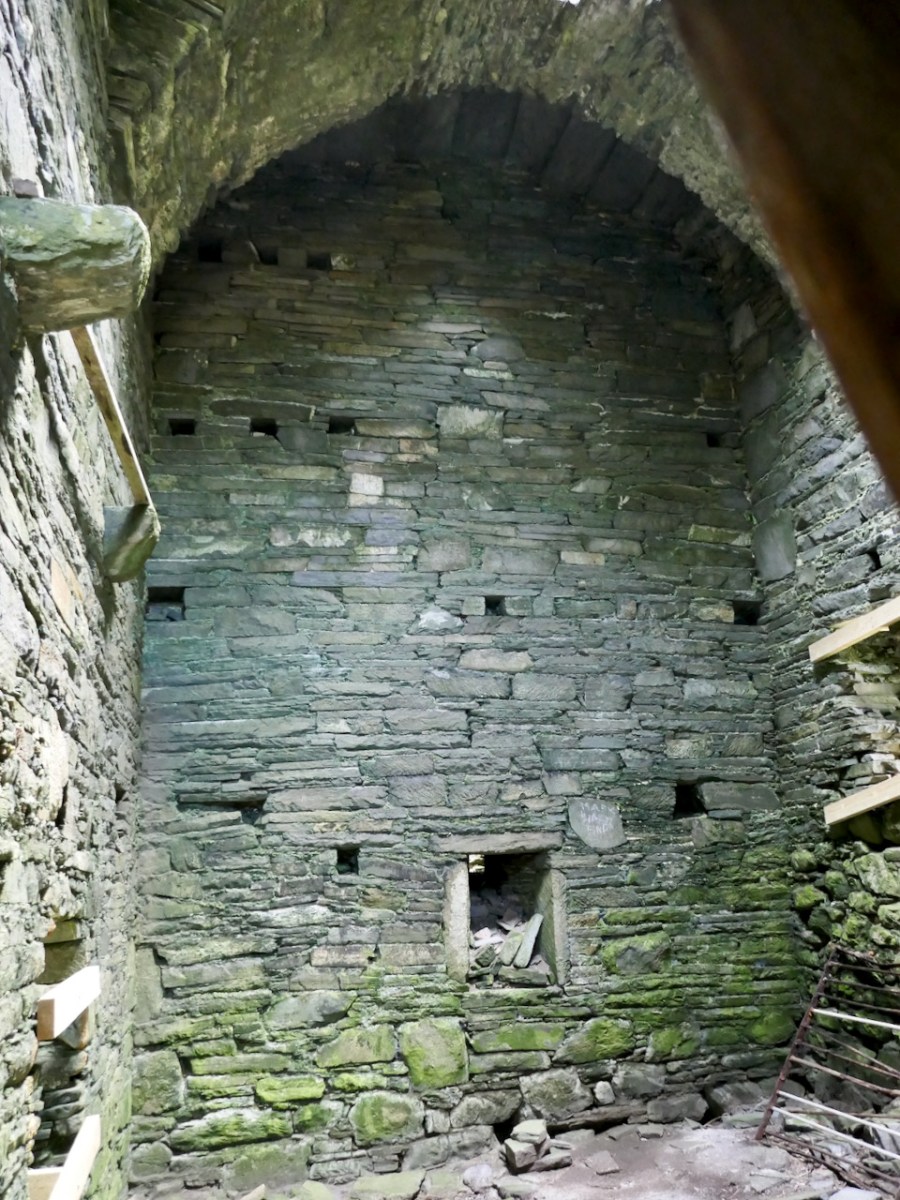
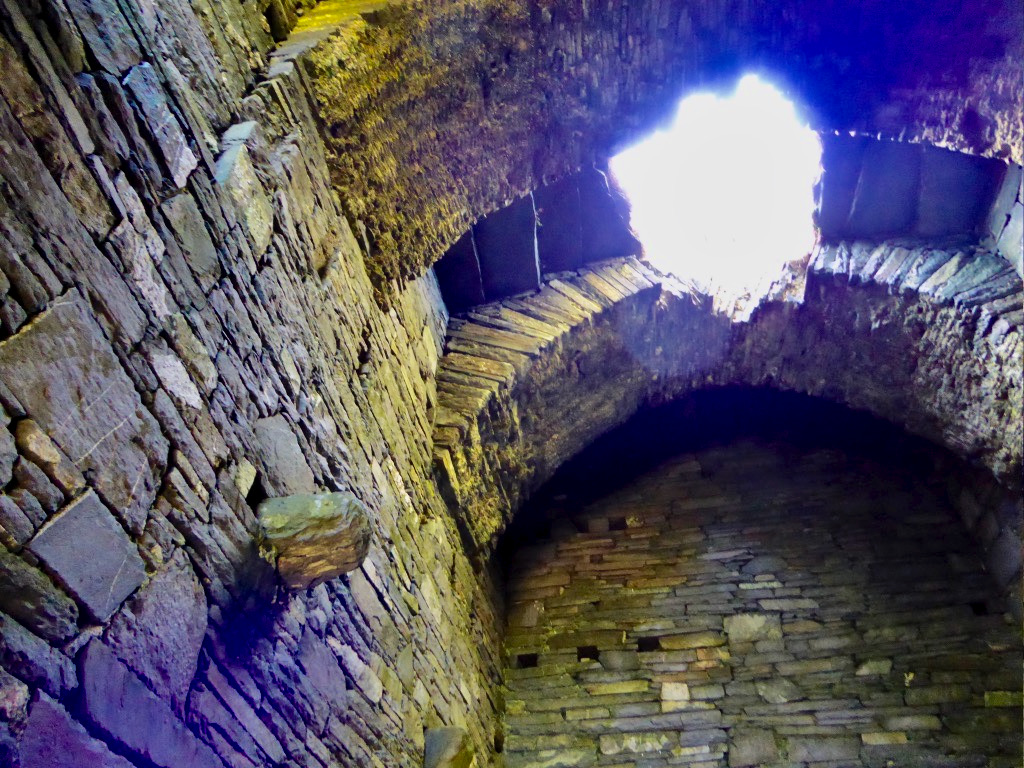
Above that floor is the vault, which would have separated the lower floors from the upper floors where the household of the chieftain lived or where they would have entertained visitors. Some of the O’Mahony Castles, where they survive sufficiently to asses them, had a continuous vault, such as the one at Dunmanus. However, in others, and this is the case in the Keep at Dunlough, the Vault is formed by archways, upon which great slatey slabs have been laid to form the floor above. In the Keep, you can still see the impression in the mortar overlaying the arches of the wicker used to build these wicker-centred arches.

There would have been at least one and probably two more floors above the arch/vault – the residential floors. These were not comfortable dwellings – there were no fireplaces and the windows, although bigger than the lower floors, would not have let in much light. Above the top floor, a wall walk would have patrolled by look-outs. 

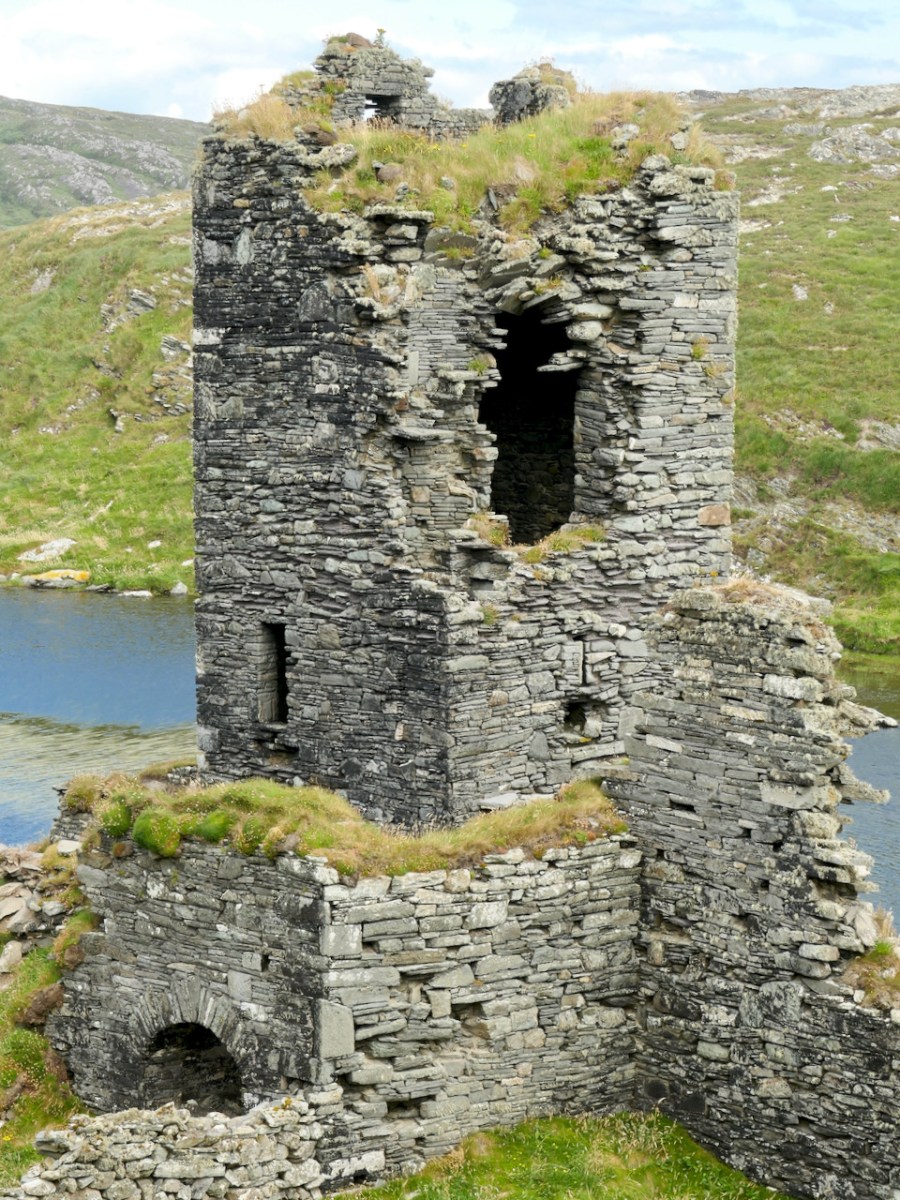
Westropp christened the middle tower (below) the Turret as it is the slimmest of the three. There is no evidence of a stairway so the floors were reached by means of ladders. Unlike the other two towers, which were built straddling the curtainwall, this one has three of its sides outside the wall, with the entrance through the wall on the north side.

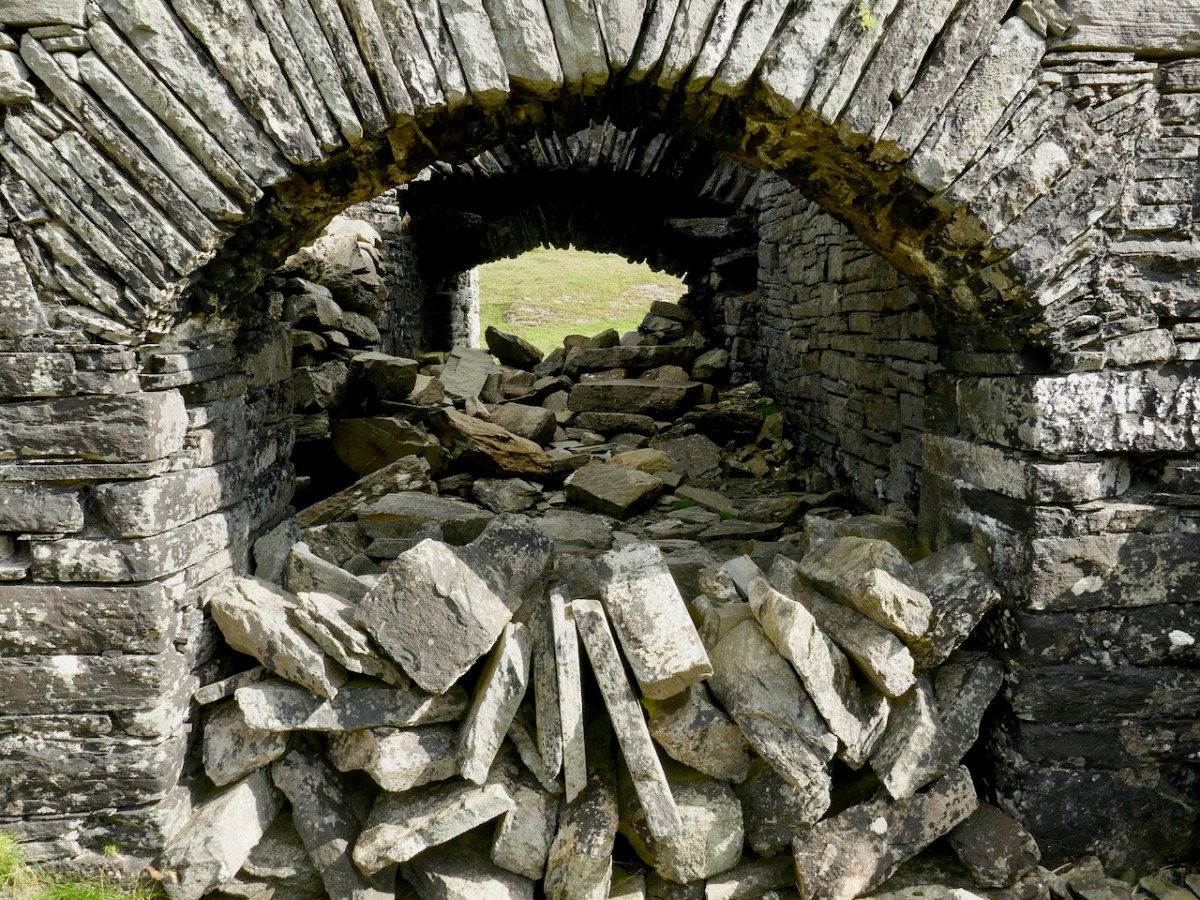
The gatehouse is perhaps the most complex of the three towers. At its base is an arched passageway, now with the collapse of ages completely blocking it.

Because it’s difficult to really see this tower now, I will give you Westropp’s description of it from his 1914 visit:

The entrance had inner and outer arches, which were closed and barred from the inside, I presume lest anyone should get into the enclosed hill, hide till night, and then open the gate treacherously. The outer gate is 6 feet 10 inches wide, the inner, 6 feet 3 inches and 9 feet 8 inches apart ; they have slightly pointed arches. From the interspace a small door opens into a little court, or rather passage, round the other two sides of the gate tower. This turret has a vaulted basement 9 feet by 9 feet 9 inches, and walls 4 feet thick, with a loophole, commanding the outer face of the gate. There are two stories or lofts, reached by a ladder through a trap-door and under another vault. The second floor has slits in each face ; the third, one to the south, and a torn gap westward above the gate. Over the upper vault is a little gabled attic, with an ope overlooking the lake. A small stair runs spirally up the north-west corner. The walls having been very thin there, have fallen, or been broken, down to the basement vault. A short wall runs from the gatehouse out into the lake. 

Westropp, 1915 (see footnote)

The small spiral staircase can be clearly see where the outer wall has fallen away (above).

Several sources tell us that this is the oldest of the O’Mahony Castles, built in 1207 by Donagh the Migratory O’Mahony – there are references in Annals to a ‘castle at Dun Locha’. Modern scholarship on castles tends to agree that there were structures called castells before the coming of the Normans, but it is clear that they did not look like these tower houses. It may be that the reference in the annals is to Dunloe in Kerry, but it may also be that there was indeed a castell here in 1207. If there was, it was not what we are looking at now: any analysis of its construction places it firmly in the fifteenth century. 

Once again, we turn to Westropp. When he  visited Dunlough in about 1914 there was more to see on the ground of the pre-curtain wall fortifications, and he wrote up his observations, and supplied a drawing (above). This was an ancient promontory fort, he said, dating to well before the  castle-building era, and he traced the line of the fort bank through the remains of fosses, or ditches, vestigial but still visible. The next phase was the building of a wall, and this may well have been the castell of 1207. It follows a line south-west to north-east, at a different angle to the curtain wall. He was able to make out a gate feature near the cliff. This was demolished, he said, to build the curtain wall we see today.

I agree with the broad strokes of Westropp’s analysis. Yes this is an old stronghold of the O’Mahony clan – and what you are looking at today was not built in 1207, but built on top of the 1207 fortifications. The O’Mahonys went on a castle-building spree in the 1400s and the Dunlough curtain wall and towers, in terms of their architecture and their similarity with all the other O’Mahony castles, fits with that timeframe. 

But all of that is dry as dust – who can worry about a dating timeframe when what presents itself to your view is so beautiful, so perfectly situated and so hopelessly romantic? So let’s take a vote – is this Ireland most beautiful castle? Hands up who agrees with me!

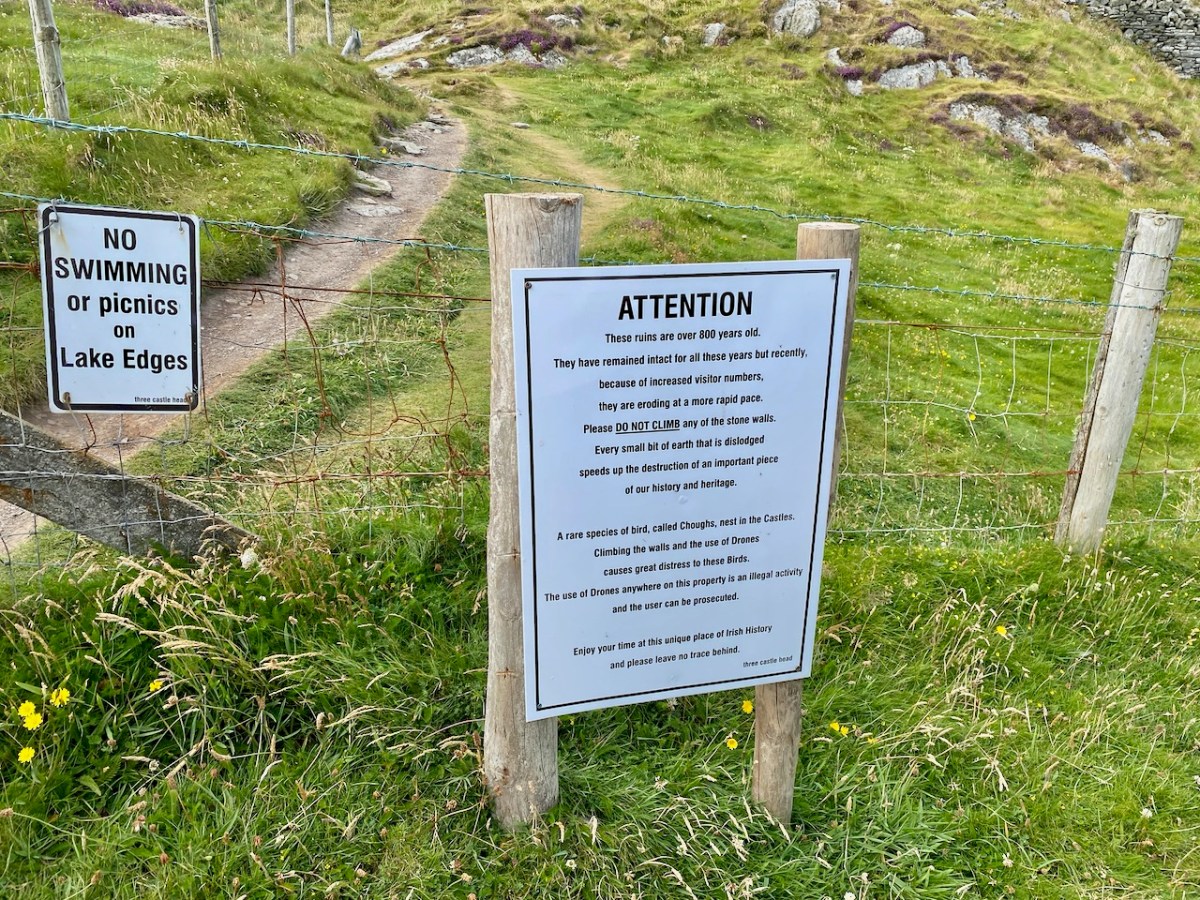
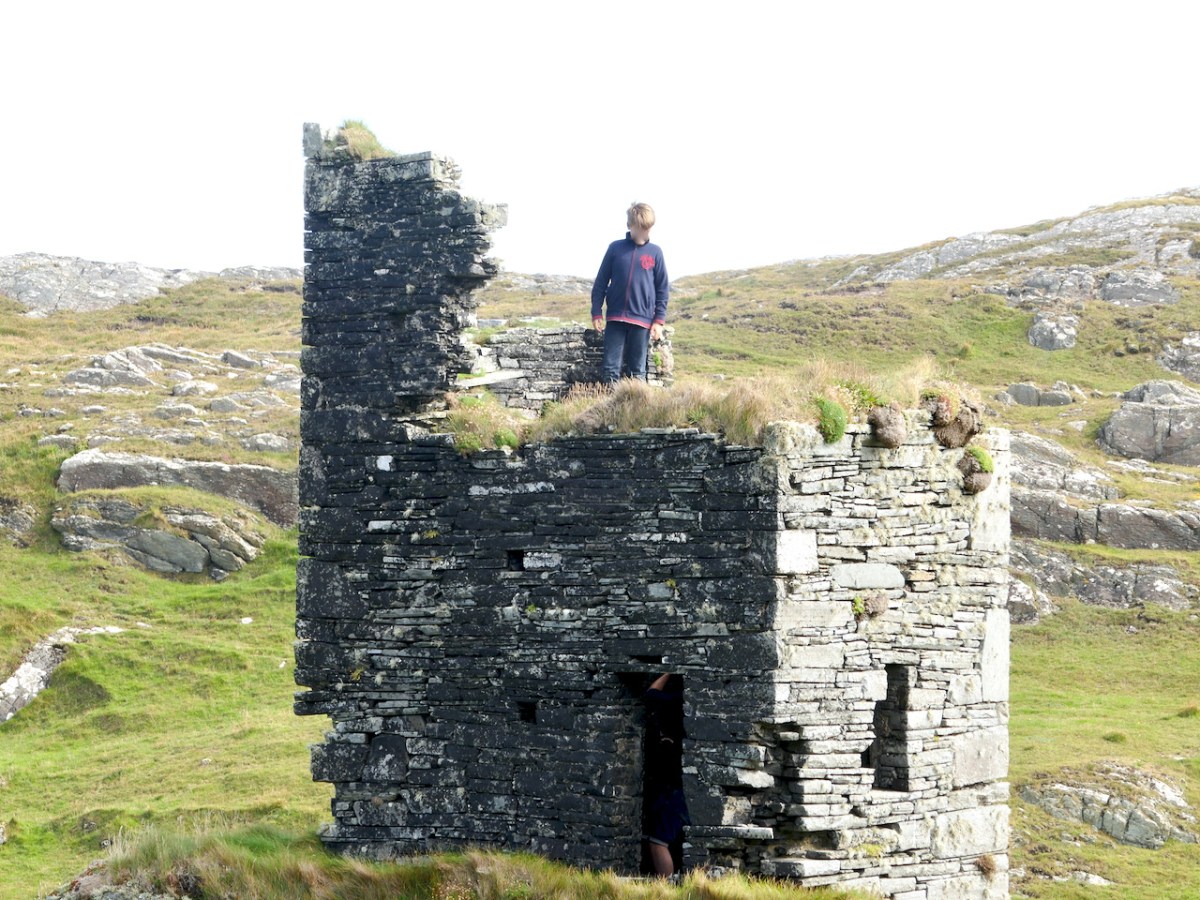
One last word – for many years Three Castle Head was off limits as a private farm. In recent years the owners have been welcoming visitors and this is gratefully acknowledged. However, the increased footfall is coming with a cost in wear and tear. Look at the walls above – these are fragile ruins: knocking off one loose stone can have a catastrophic effect on the building envelope.

It’s also dangerous to go clambering over unstable ruins like this. So, a heartfelt plea – if you visit, and I hope you do, PLEASE STAY OFF THE WALLS! I was pleased to see a new notice up about this on our most recent visit, and indeed visitors seemed more respectful than they had when I was last there (above). If we stay away from the walls, hopefully they will stand to delight us for more generations to come.

*Fortified Headlands and Castles in Western County Cork. Part I. From Cape Clear to Dunmanus Bay by Thomas Johnson Westropp Source: Proceedings of the Royal Irish Academy: 1914 – 1916, Vol. 32 pp. 249-286, (accessed at: https://www.jstor.org/stable/25504178

West Cork Villages and Towns – Schull

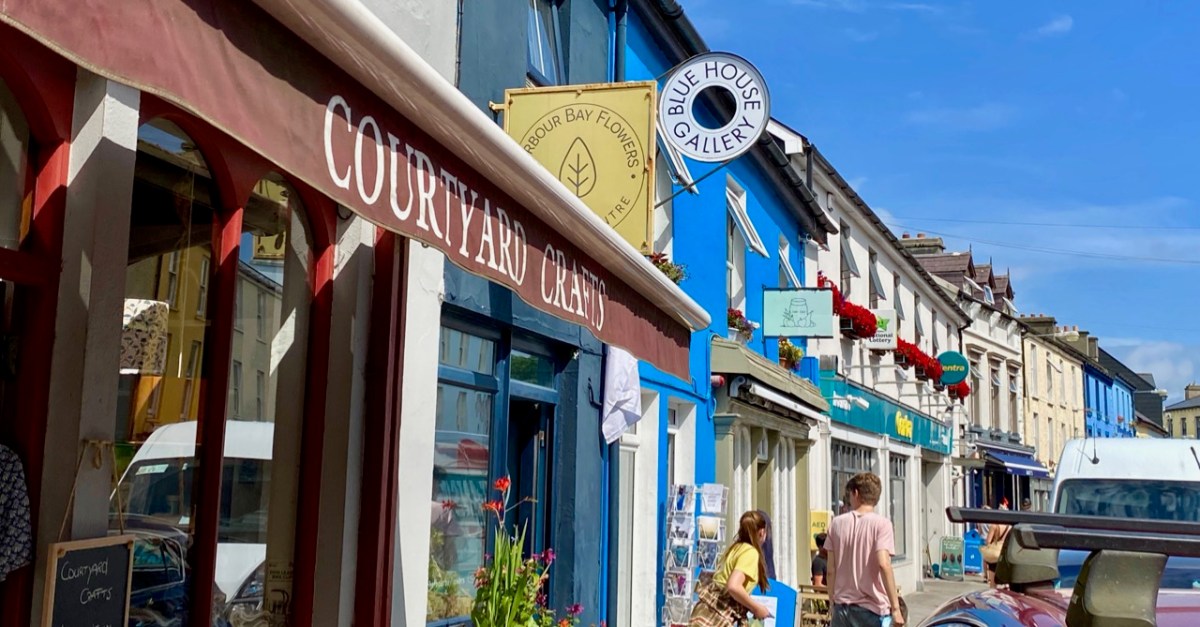
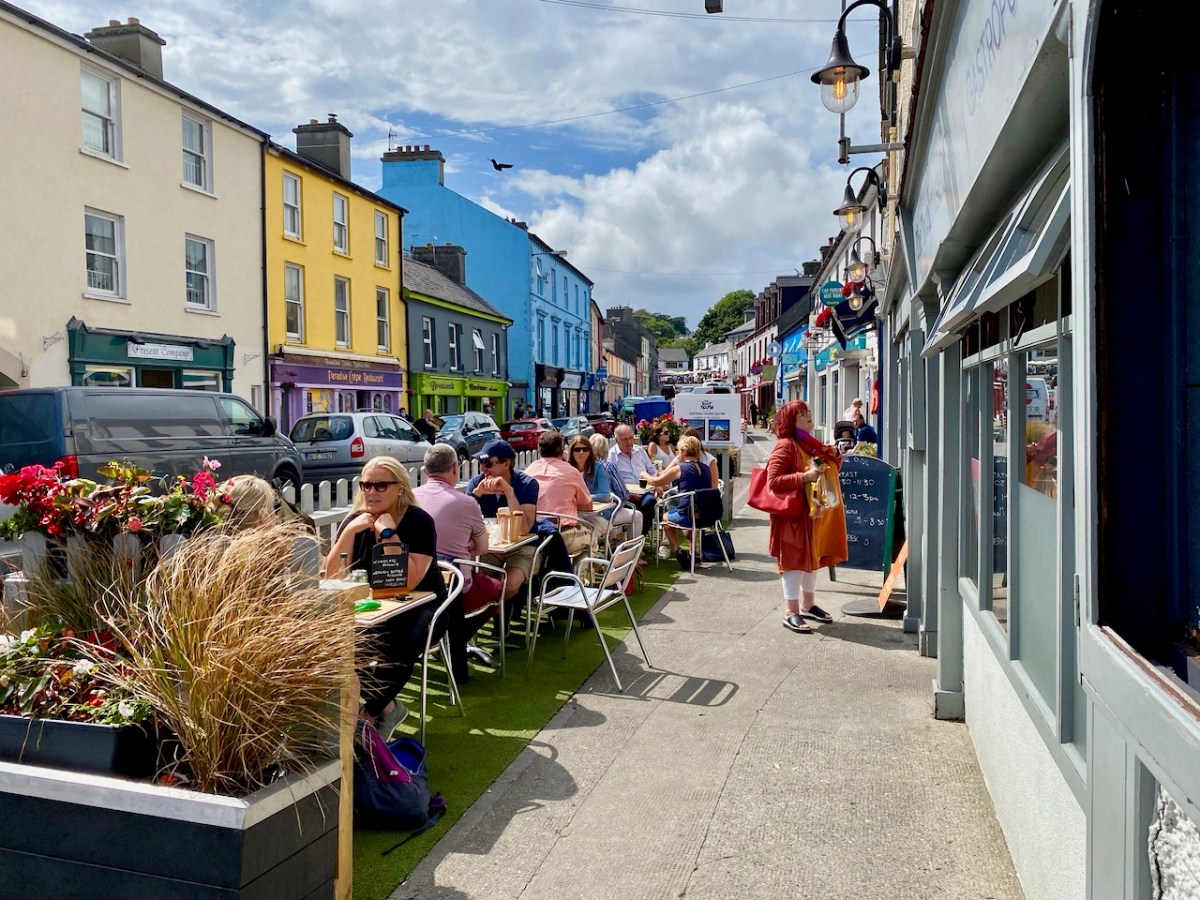
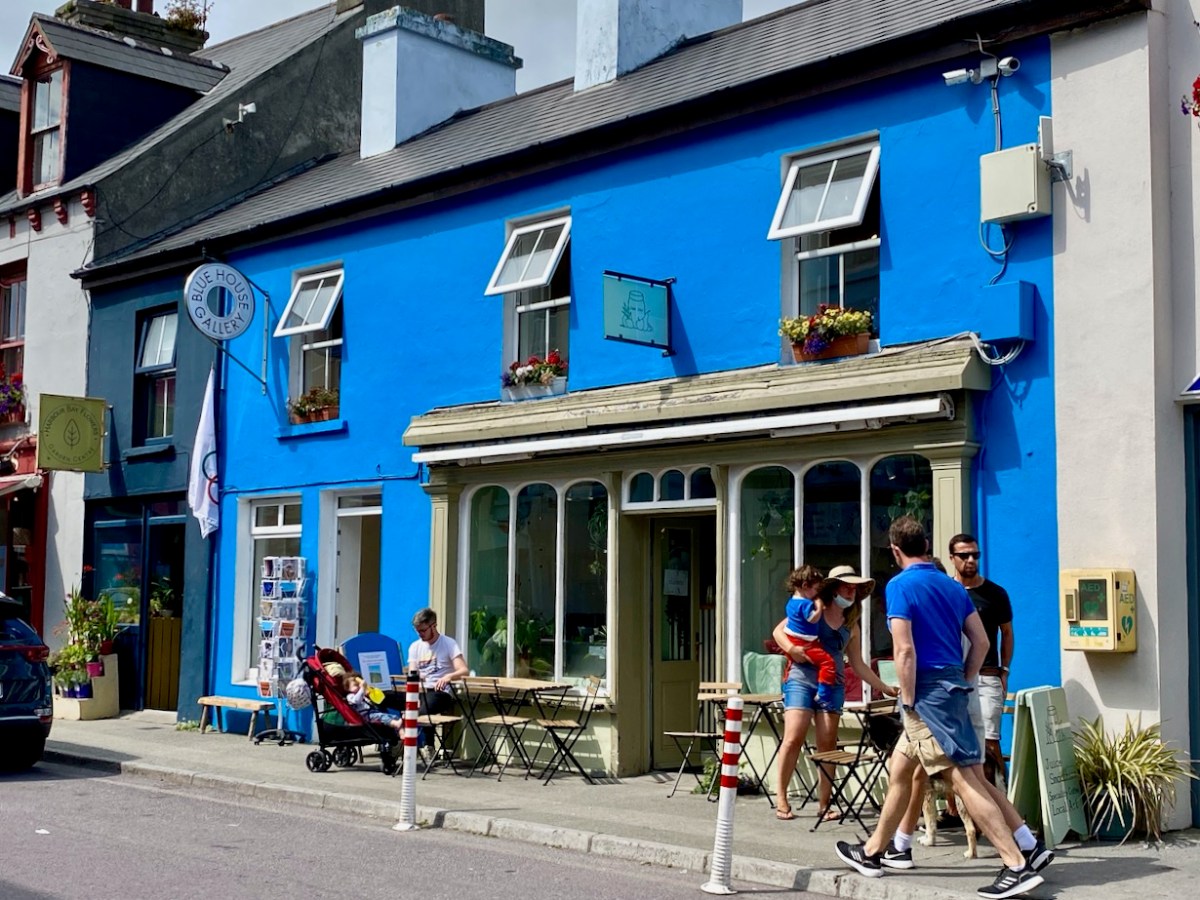
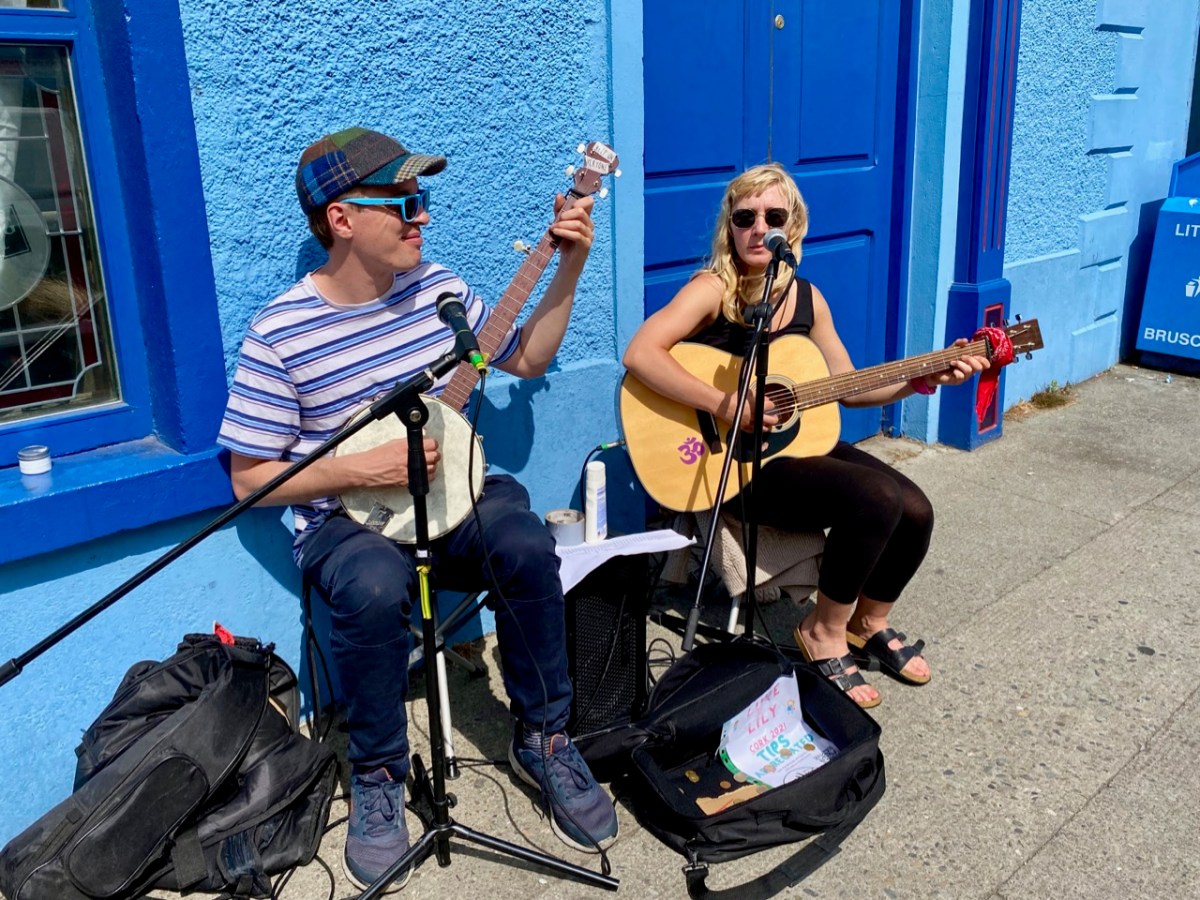
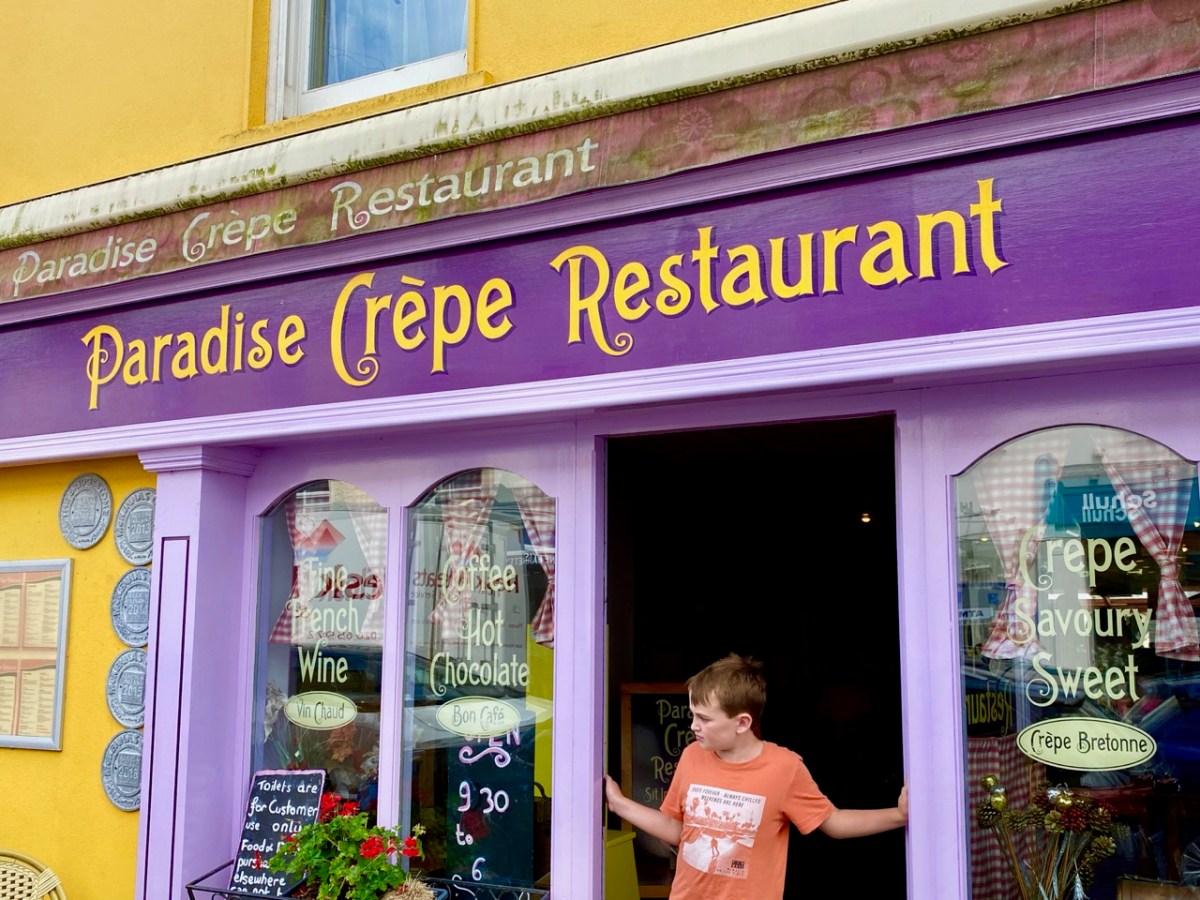
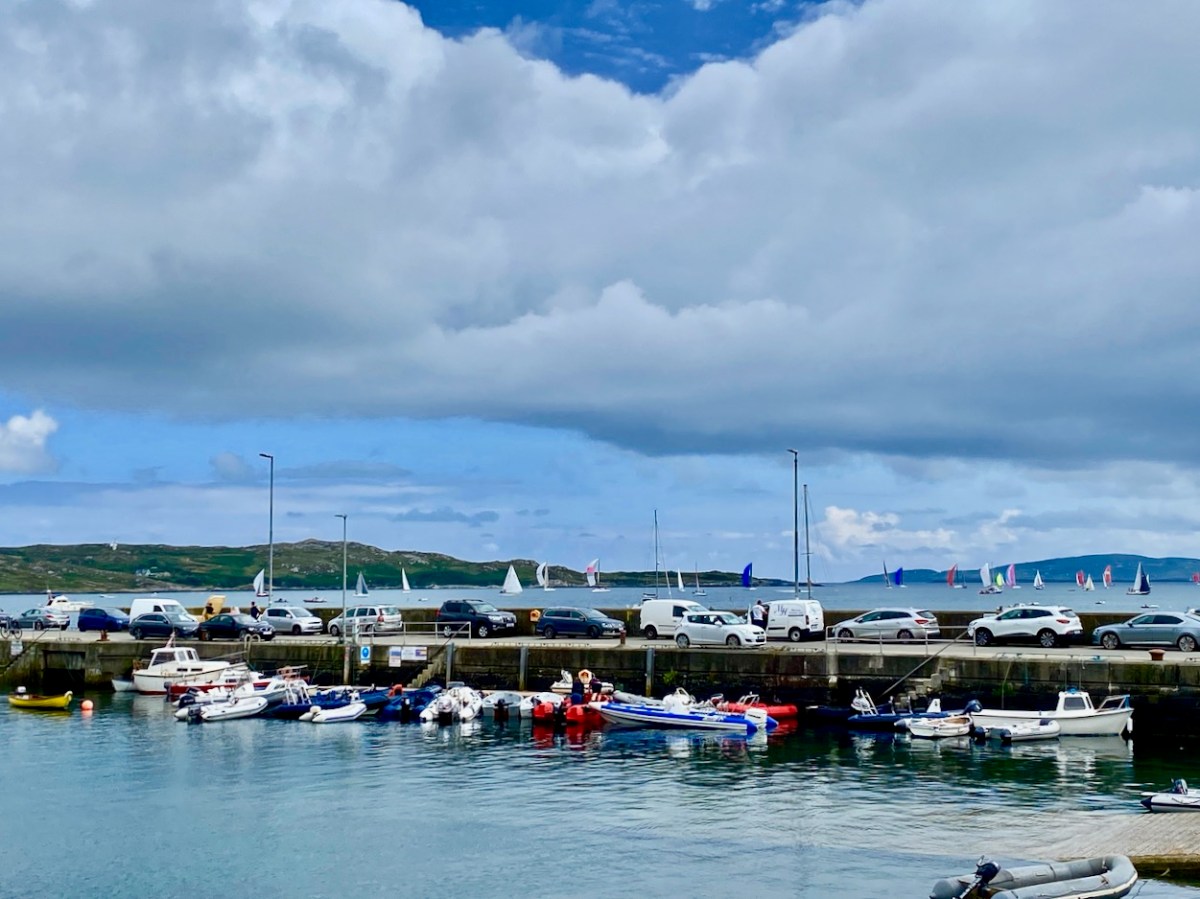
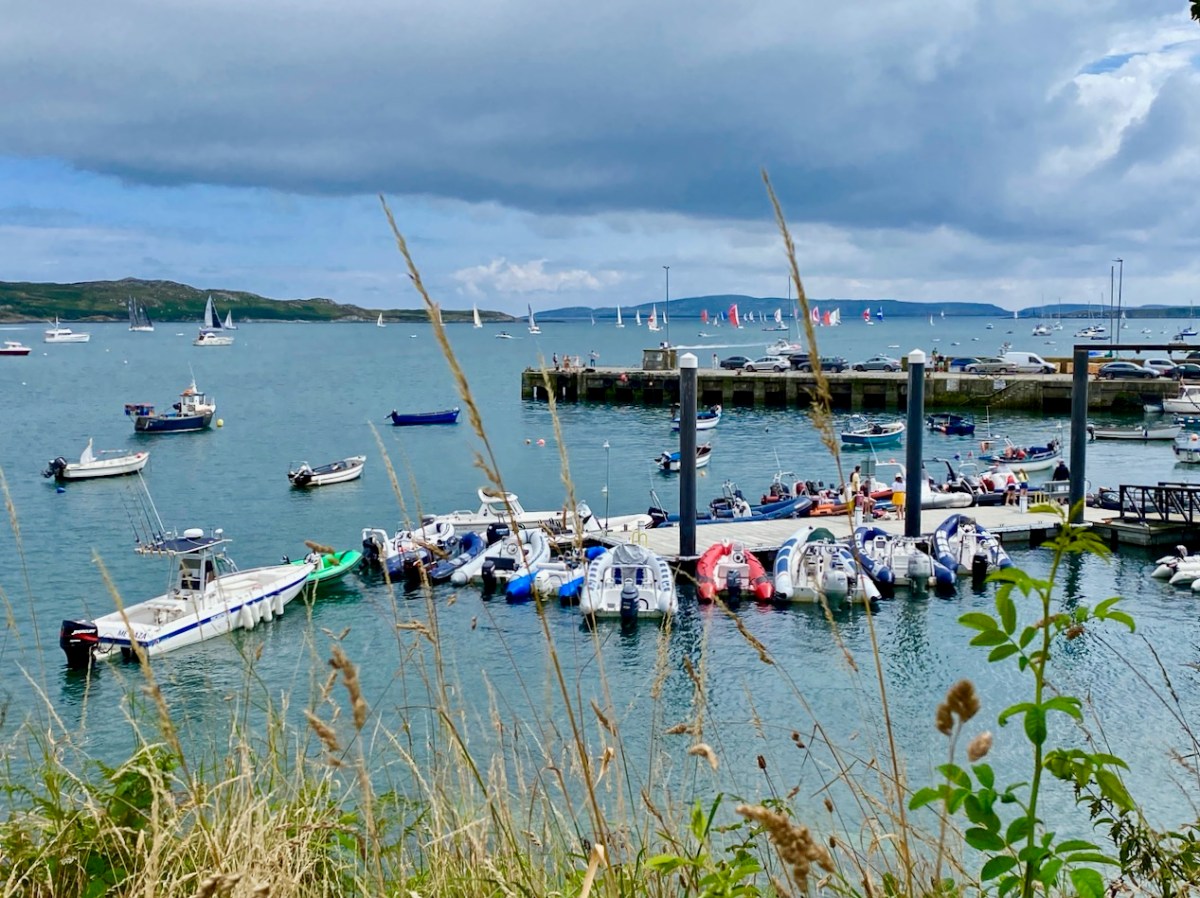
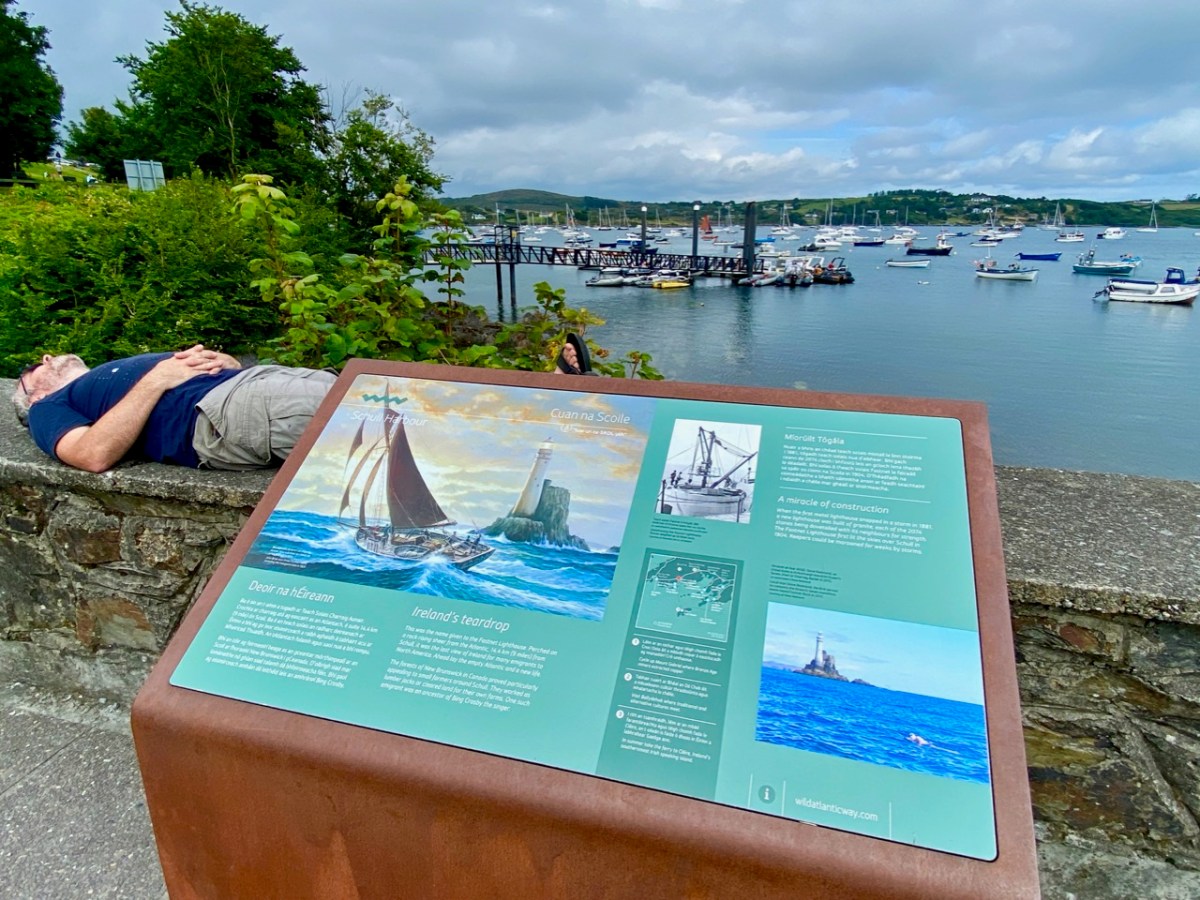
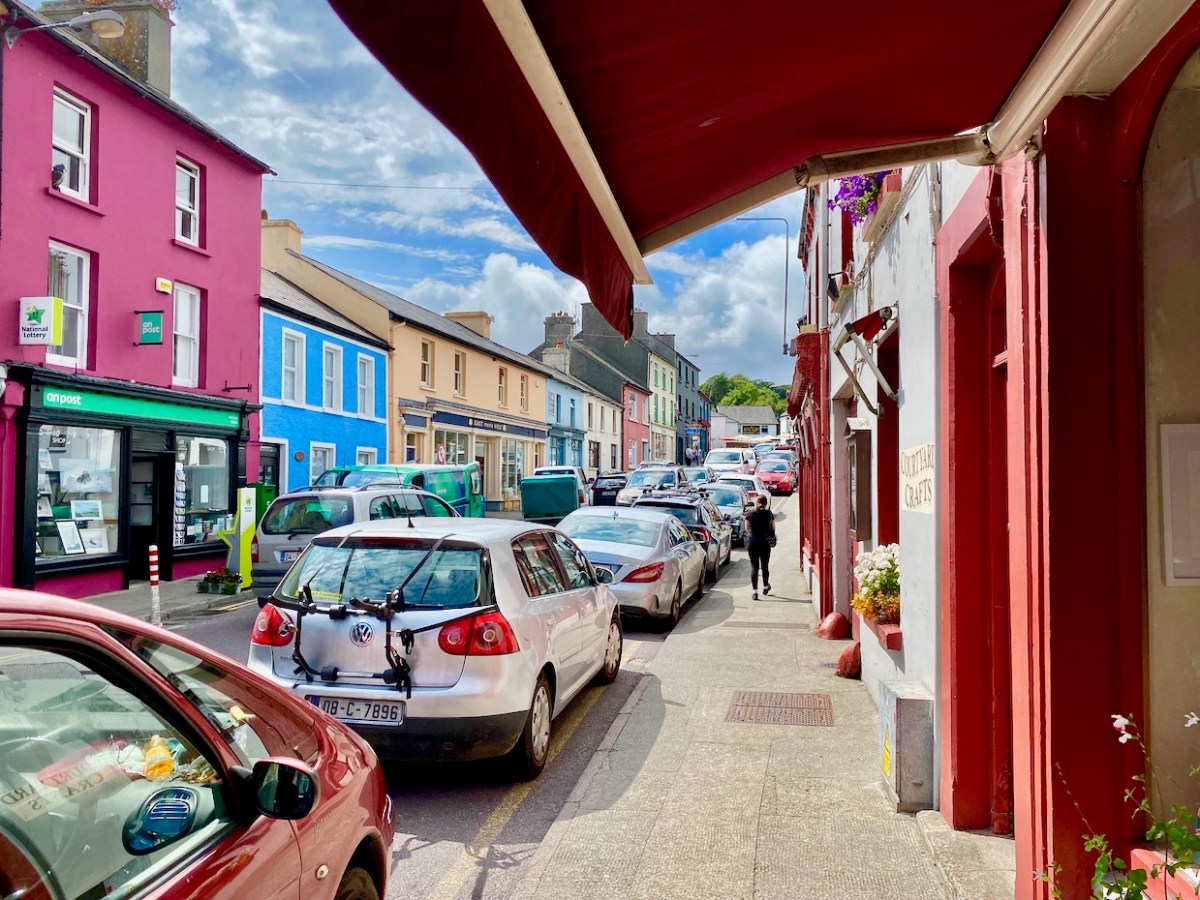
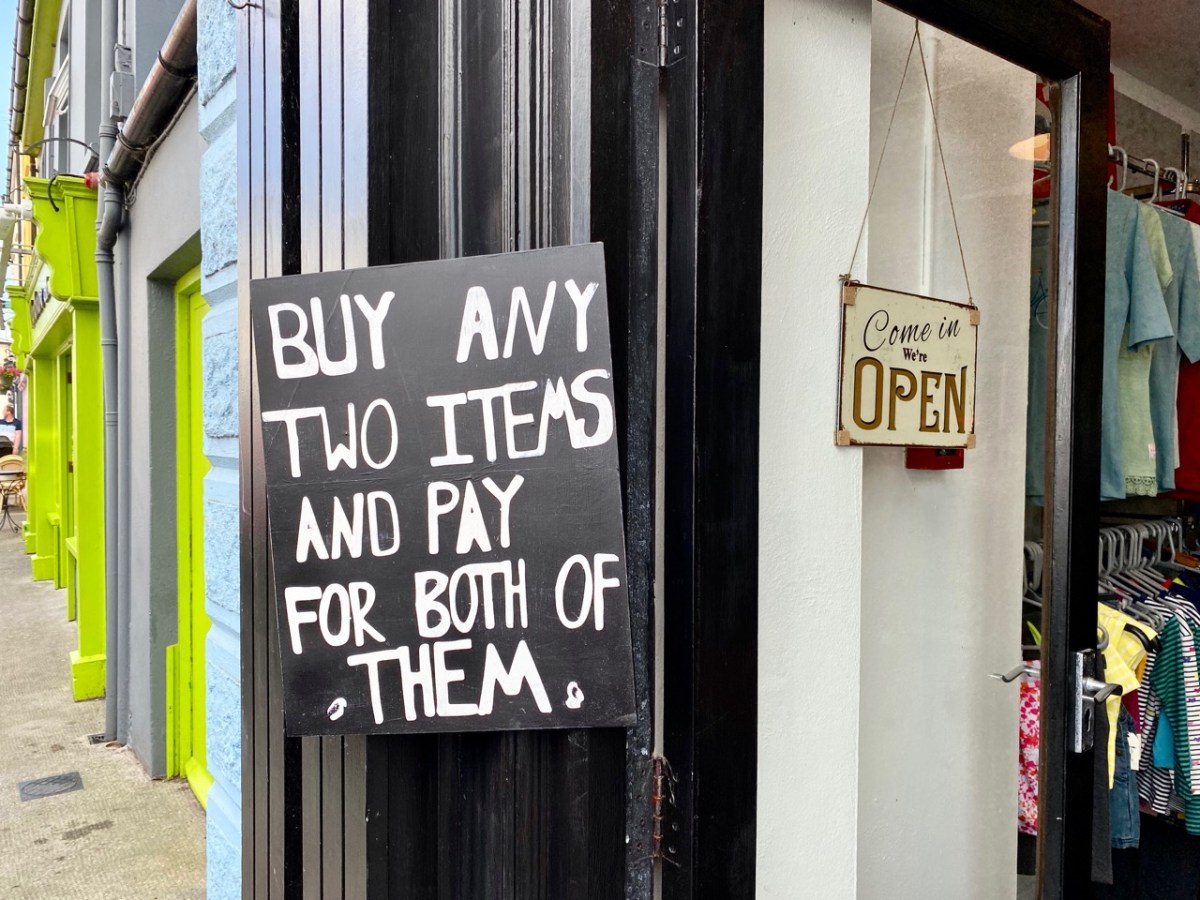
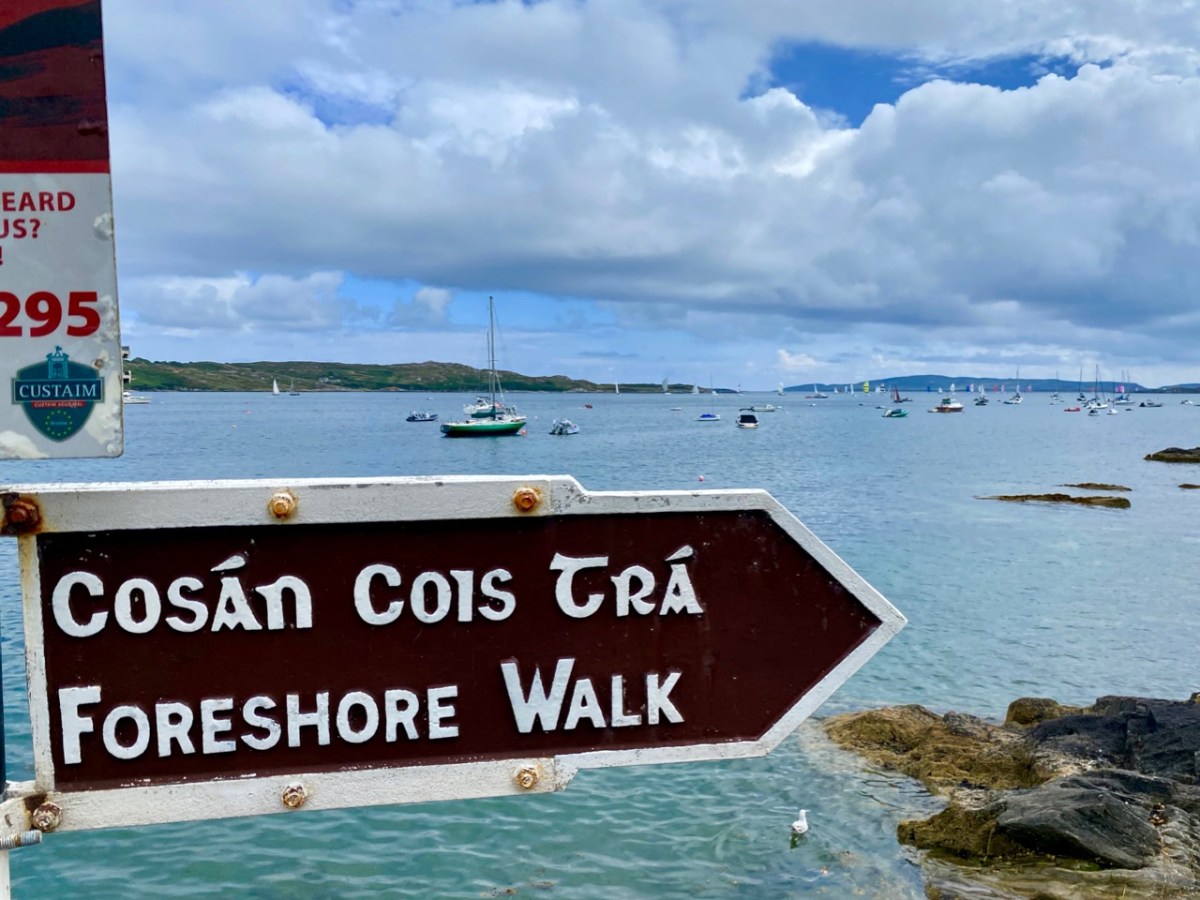
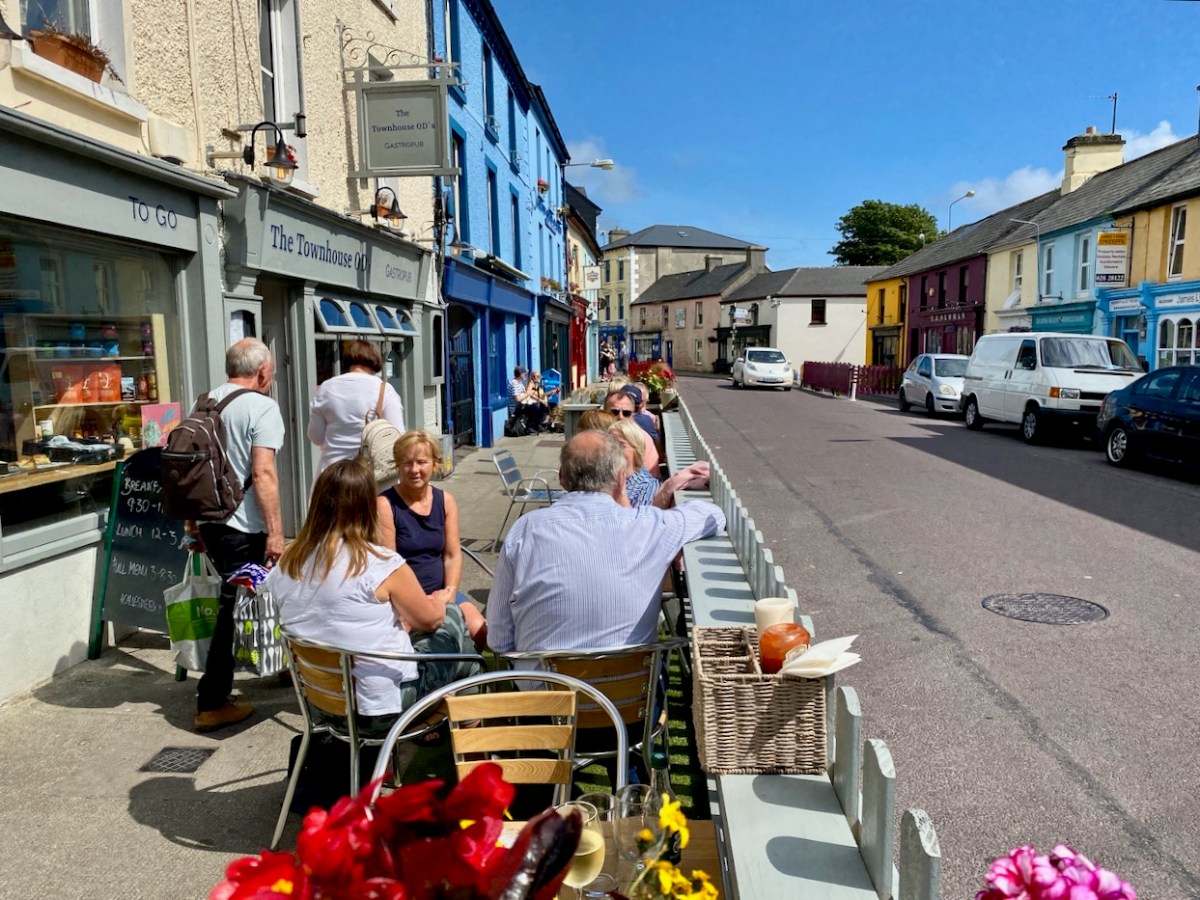
What better time to visit Schull than during Calves Week? That’s a big sailing festival at the beginning of August every year, and you have to be a sailor to understand the nuances of its title. It’s held at the same time as the UK’s premier sailing event – Cowes Week, ‘…the world’s longest running sailing regatta…’ and is focussed around the three Calf Islands in Roaringwater Bay. So there you have it – Cowes and Calves! What it means, of course, is that the village of Schull is at its busiest and, since Covid has given a boost to outdoor socialising, the streets are crowded with visitors enjoying the shops, pavement cafés and galleries.

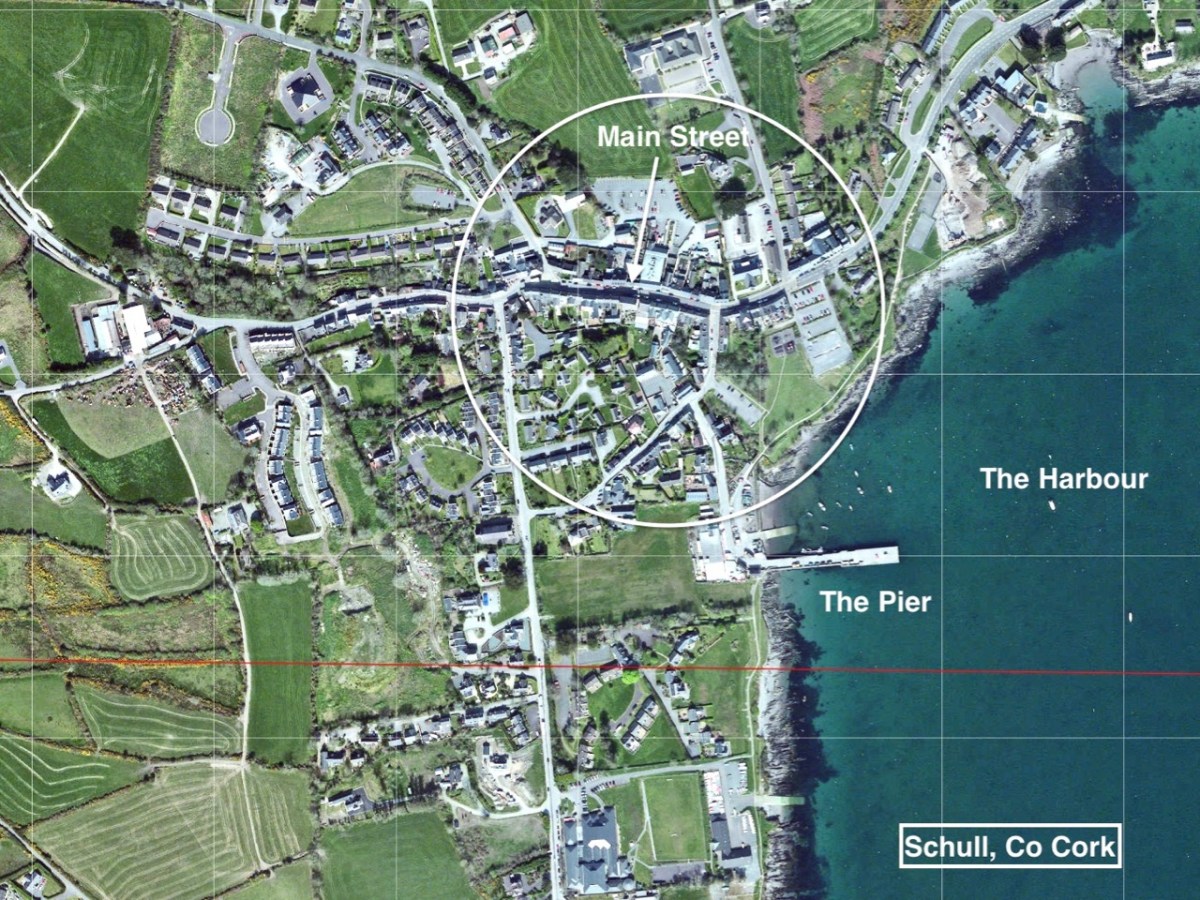
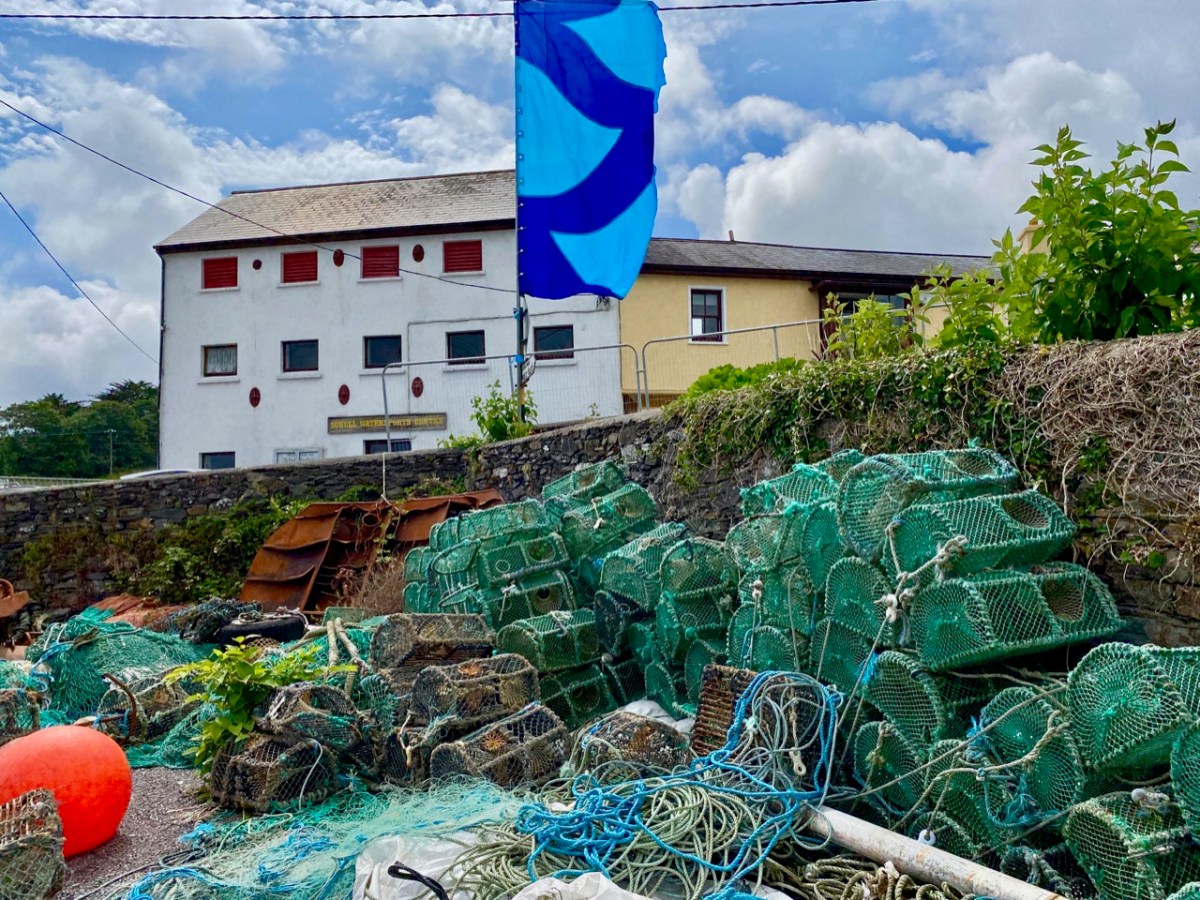
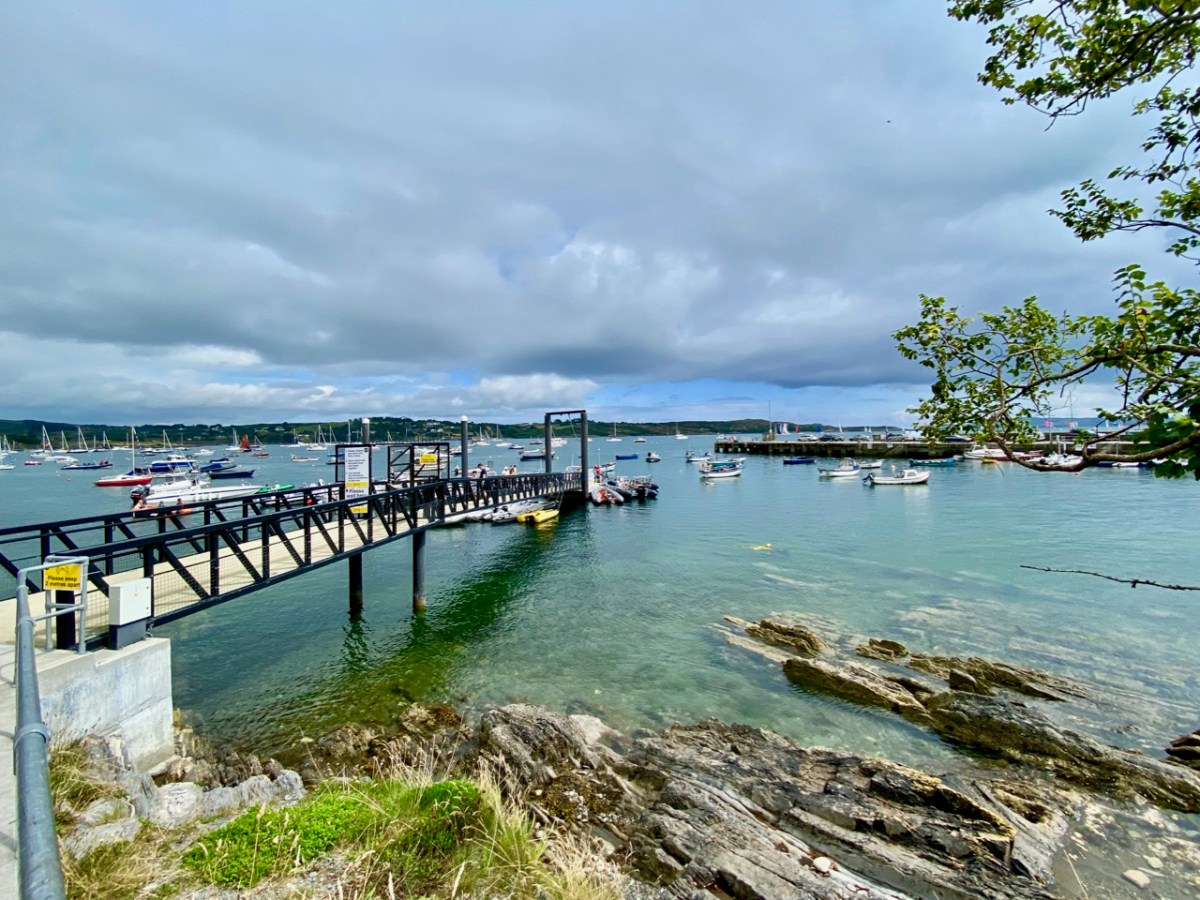
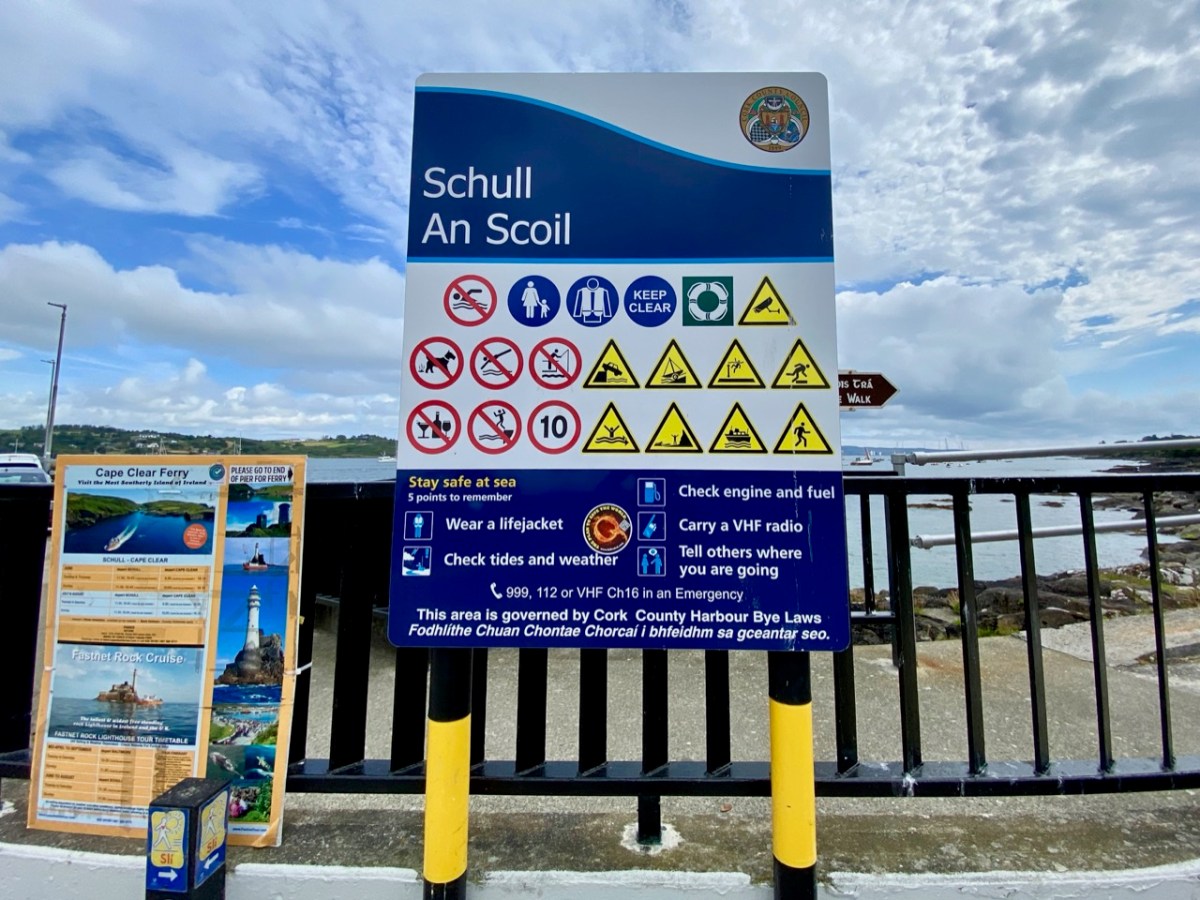
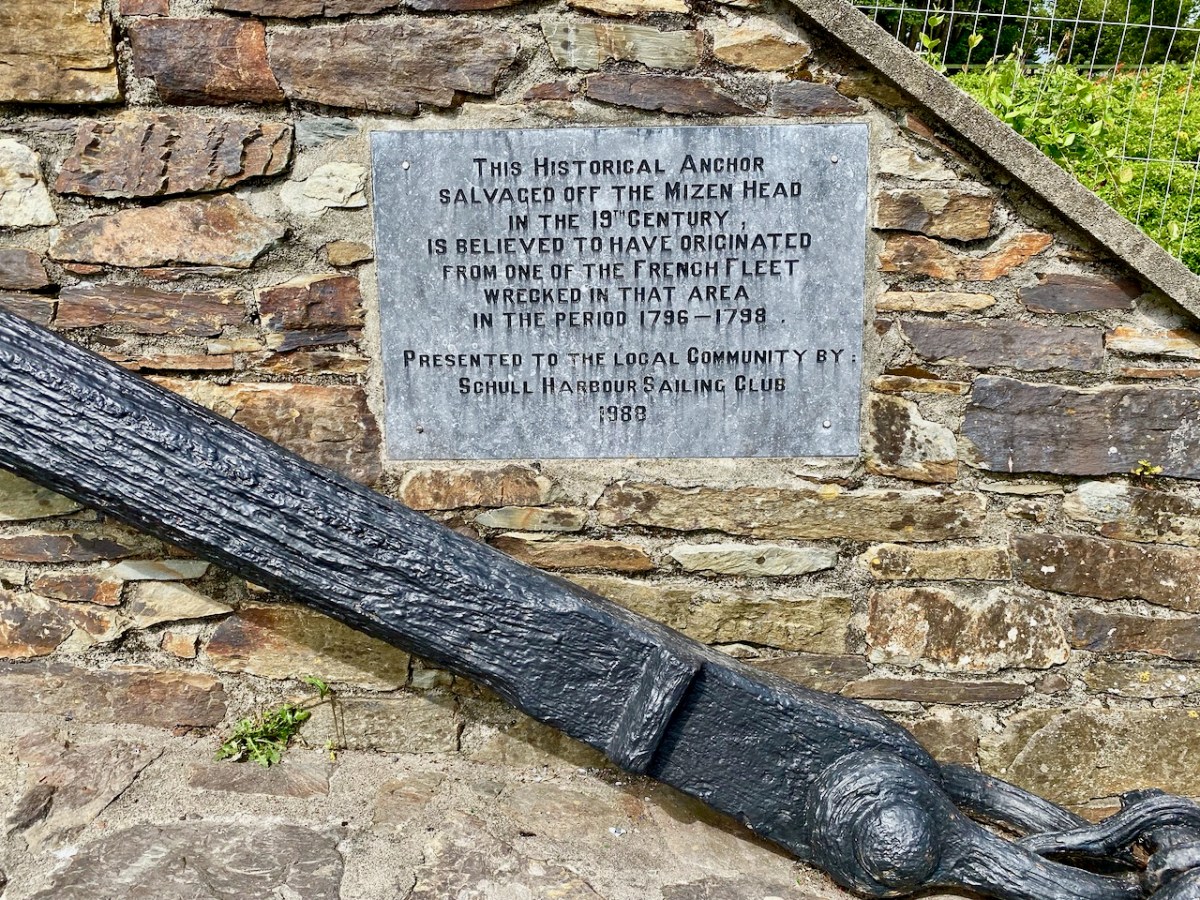
In this occasional series on the Towns and villages of West Cork we will take one community and try to discover why and how it has developed through history, and how it fares in the present day. A snapshot of the place will be presented – hopefully – in the best possible light (although this won’t always be on a sunny summer’s day!) From the aerial view above, you can see how Schull has been built up around its connection with the water. Schull Harbour is at the head of a long sheltered inlet, and the pier today is always busy with fishing and pleasure boats, ferries and yachts.

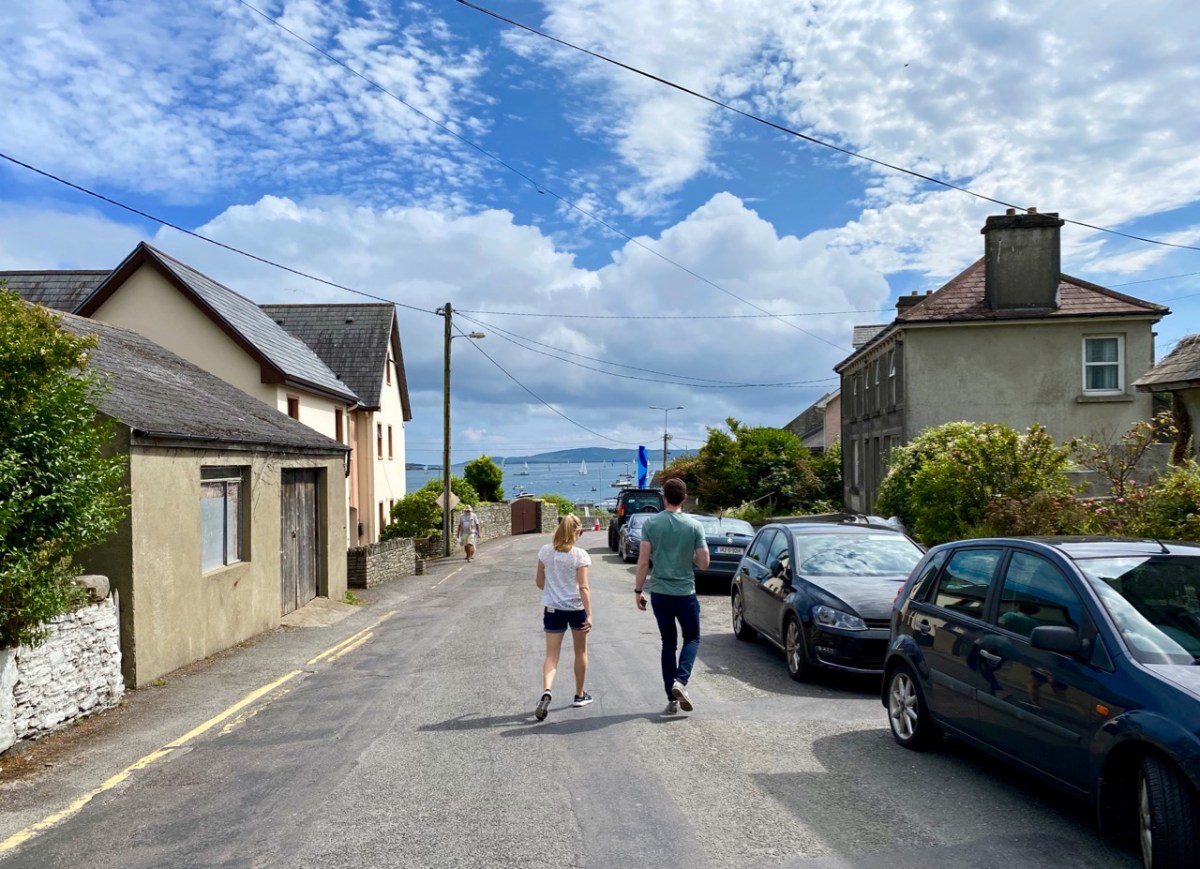
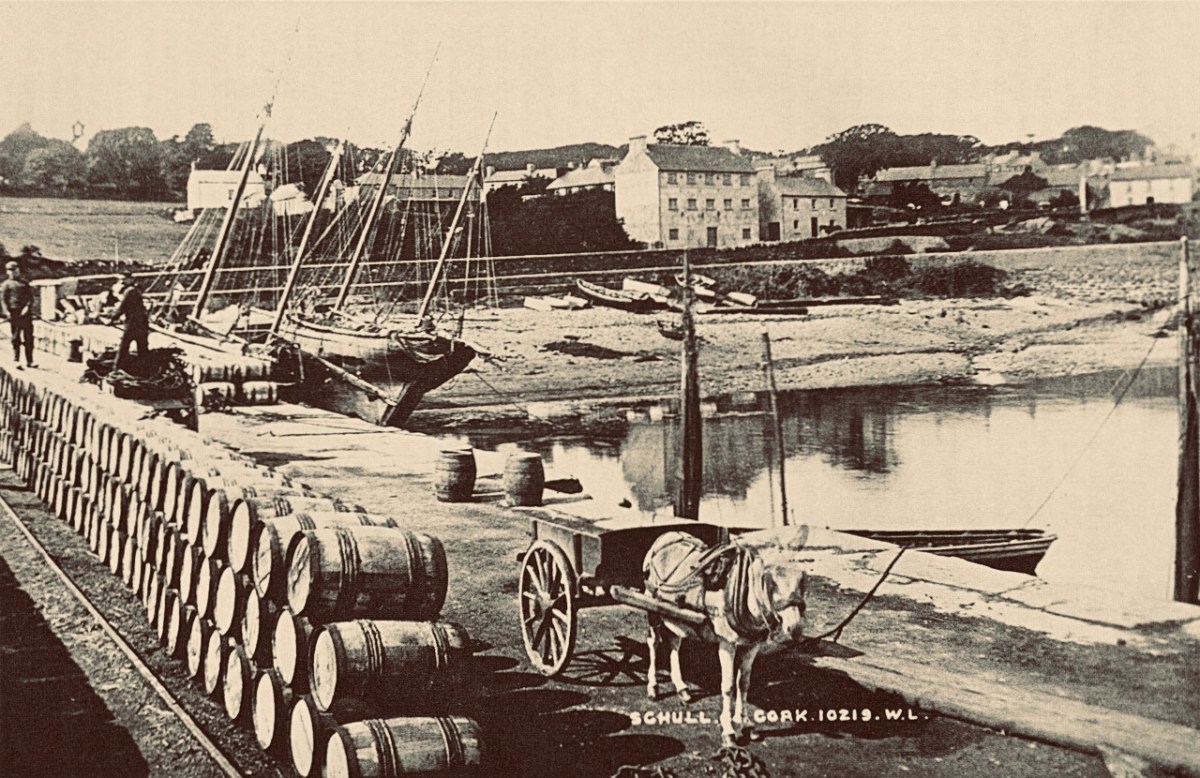
That’s the road to the pier, above, and it’s just a few steps from the village centre. If you are a visitor, you may have no idea that Ireland’s most south-westerly railway line once ran right on to this pier! The narrow gauge Schull, Ballydehob & Skibbereen Tramway and Light Railway was in service between 1886 and 1947, connecting these remoter parts of the county to Skibbereen and then, via the main line, Cork city. Although never considered a commercial success, it was a valuable element of infrastructure enabling local passengers to get to shops and markets, and fishermen to send their catches to distant merchants as hastily as possible (bearing in mind there was a speed limit of 15 miles per hour on most of this rural line). This photograph from the NLI Lawrence Collection (below) dates from the 1890s, and shows barrels of fish stacked up next to the railway track on Schull pier, awaiting despatch. They are likely to contain salted pilchards and herrings.

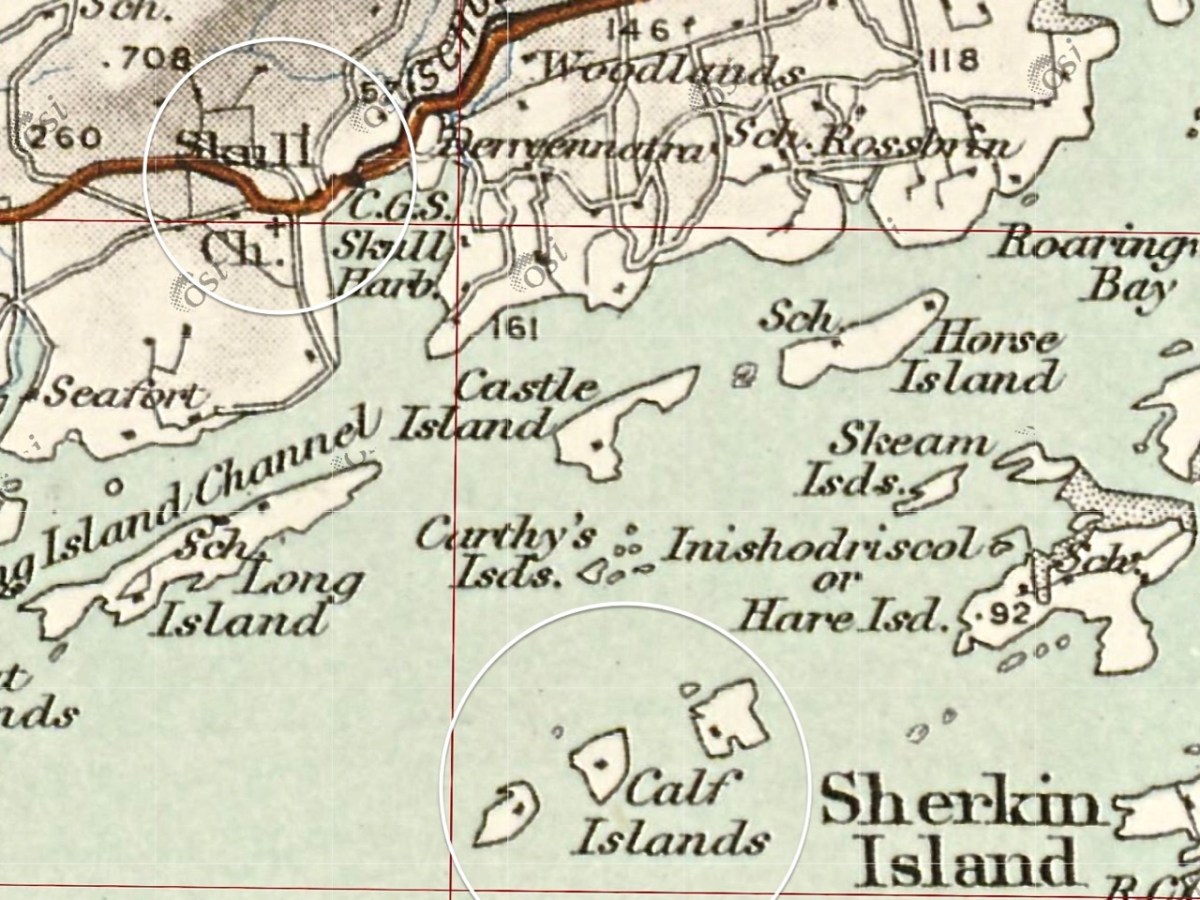
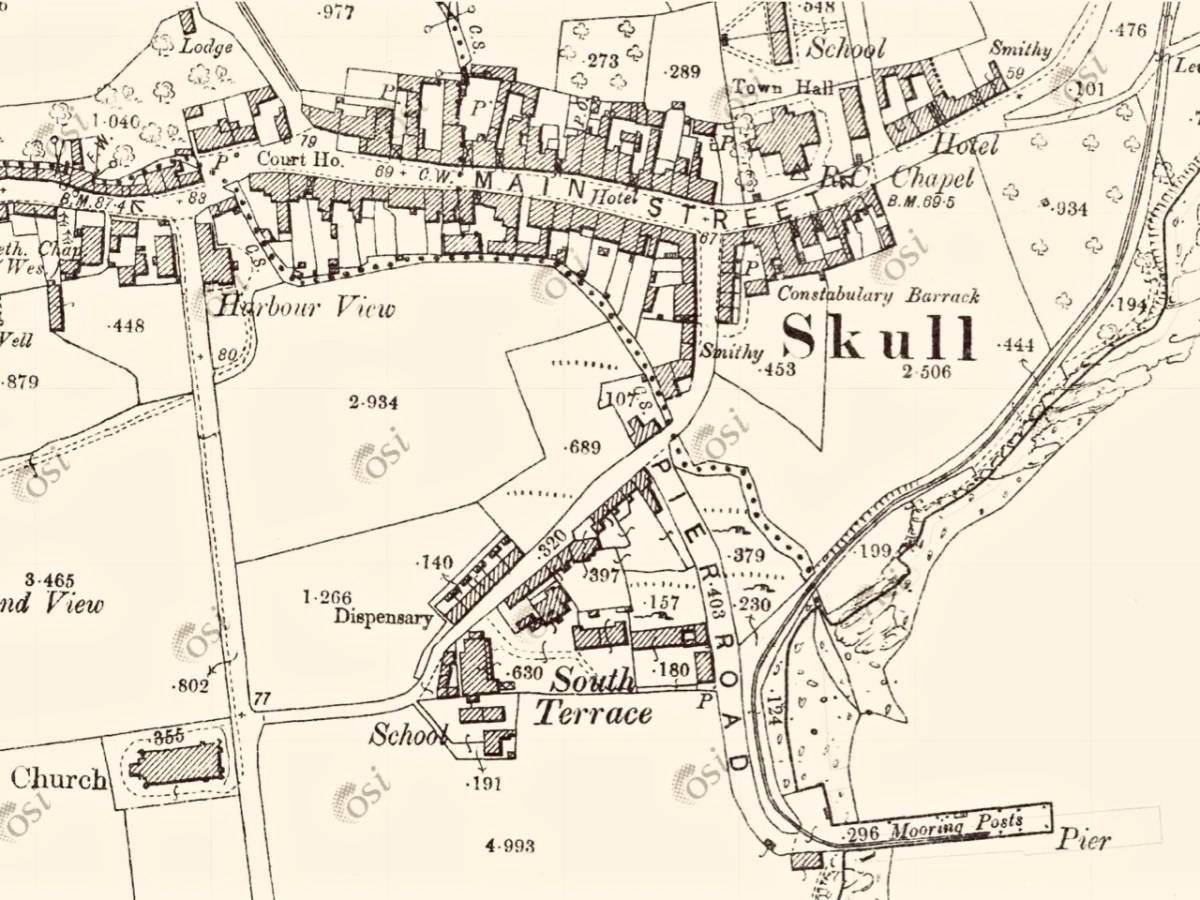
In all these pictures of the pier and pontoon areas above you can see the lively sailing activity in the background. Below are two extracts from early OS maps, one showing Schull and its location to some of the offshore islands, and the other showing the town centre, probably around 1890. It’s thought-provoking to see on the latter the various facilities which the town offered at that time, as well as the railway: Court House, Constabulary Barrack, Smiths, Schools, Hotel and Dispensary.

Note that on both the maps above, which date from more than a century ago, the settlement’s name is given as Skull: it still is on all OS Ireland maps up to the present time. Mostly today it’s known as Schull, or in Irish An Scoil, which translates as The School. Some of you may remember my posts earlier this year when I looked in to the possible origins of this village name – and the earliest ‘School’: a site described on Archaeology Ireland as a ‘possible early Christian settlement’:  . . . the ancient school of Sancta Maria de Scholia, ‘a place known in early times as a centre of learning’ . . . There’s a fair bit of local lore surrounding the subject, and you need to read Schull resident John D’Alton’s article on this to find an alternative view to the perhaps romanticised ideas of an ancient monastic site: I’m sitting on the fence!

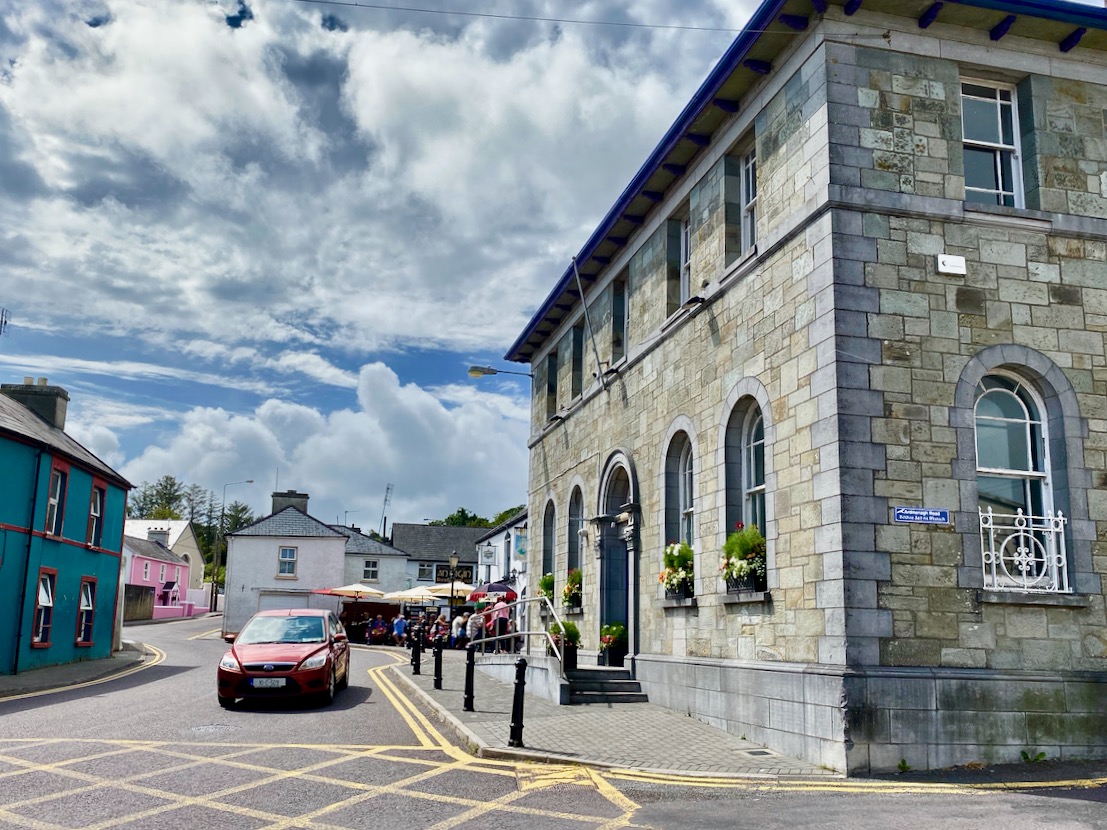
Historic village – perhaps with medieval origins – to vibrant sailing centre and colourful streets in the 21st century. Schull has come a long way, and has far to go. Today the resident population numbers around 1,050: this is boosted substantially with the influx of summer visitors. It’s good to see long established names and new businesses on the streets, contributing to the colourful palette of the architecture. Great things are happening in the future: the old bank building (below) is to become a cinema and film centre: a focal point for the acclaimed annual Fastnet Film Festival.

Year round, Schull is worth exploring. Mount Gabriel, the area’s highest point, is above the village and offers superb vistas over the bay and islands. Finola has looked at the many legends associated with this peak and there is ancient history there, too: the remains of Bronze Age copper mines on its slopes. Good walks can be had on the high ground and on the coastal footpaths – see the Explore West Cork website.

Our Roaringwater Moths

A joint post by Robert (words) and Finola (images)

This weekend our eyes have been opened! A hitherto hidden layer of the natural world in West Cork has been lifted for us by a friendly neighbour who offered to lend us a moth trap for a couple of nights. If the idea of a ‘moth trap’ seems unkind, let me immediately say that the intention isn’t to harm any aspect of Nature . It’s a ‘moth trap’ because it attracts moths during the night to an environment which is benign to the insects, and they hang around so that we can examine them – and get really excited about their beauty – in the morning. They then disperse back to their natural environments and – as long as you are careful – no injury ensues.

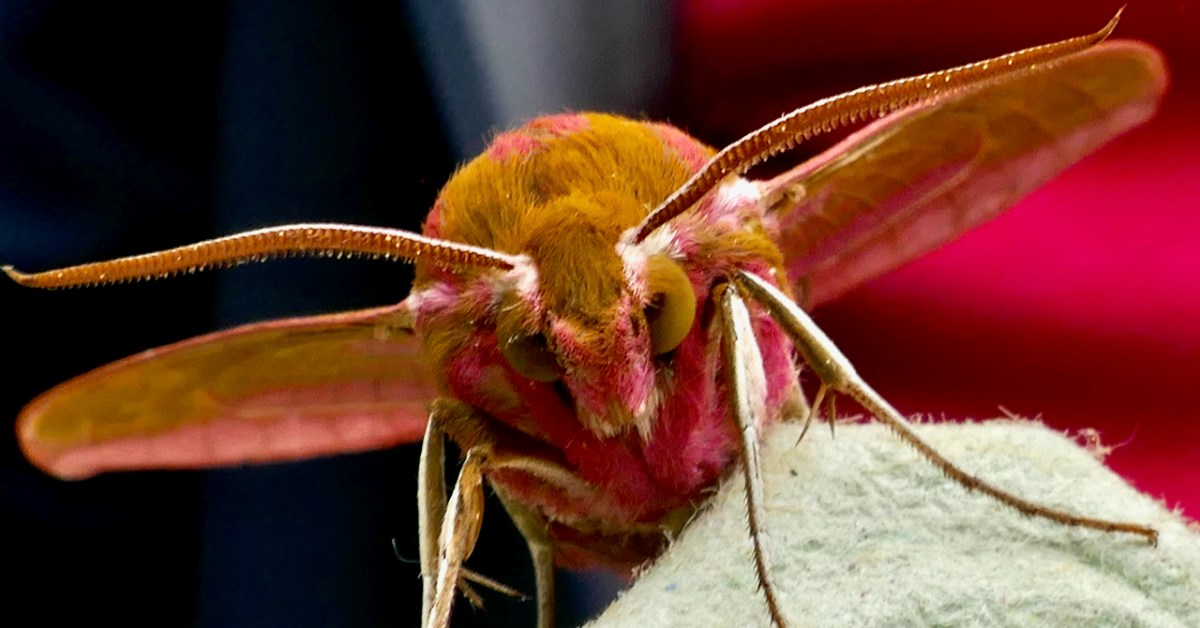
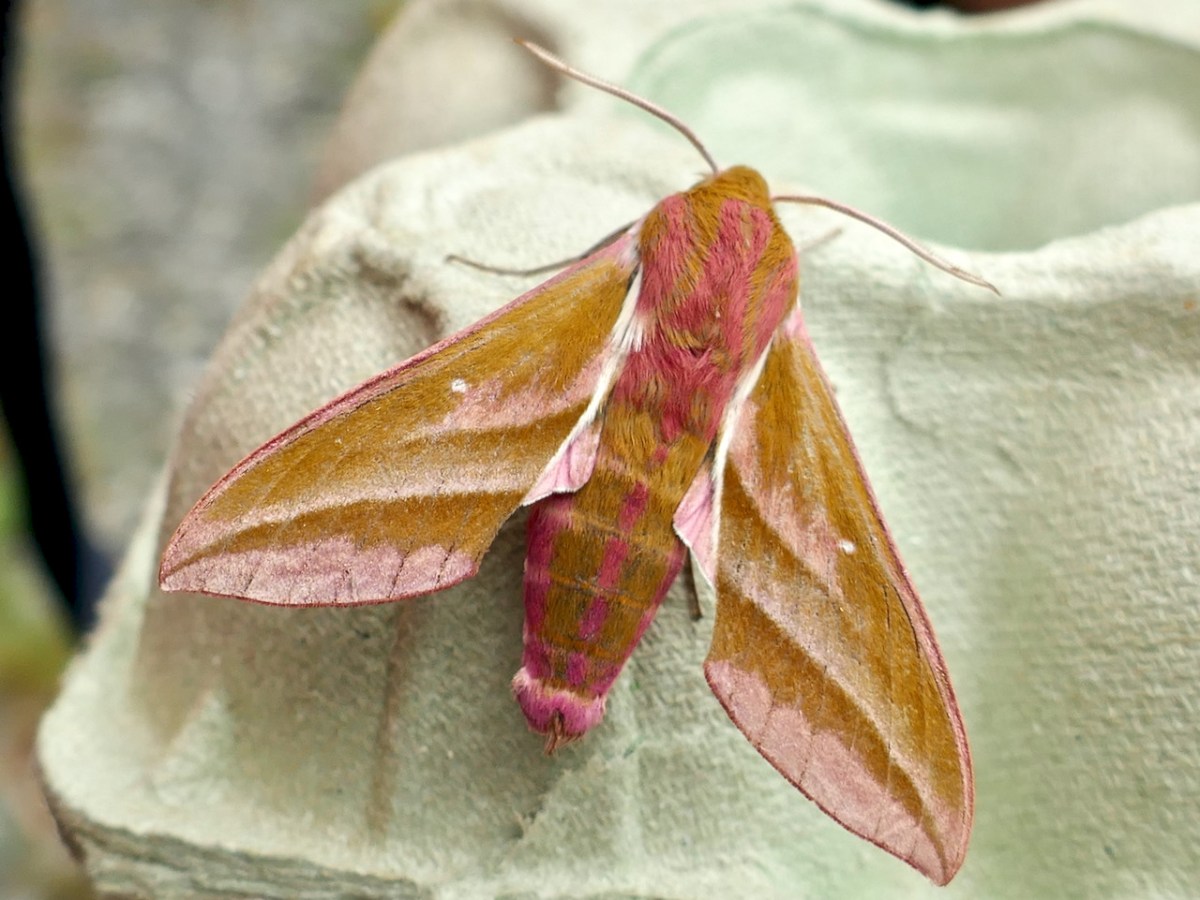
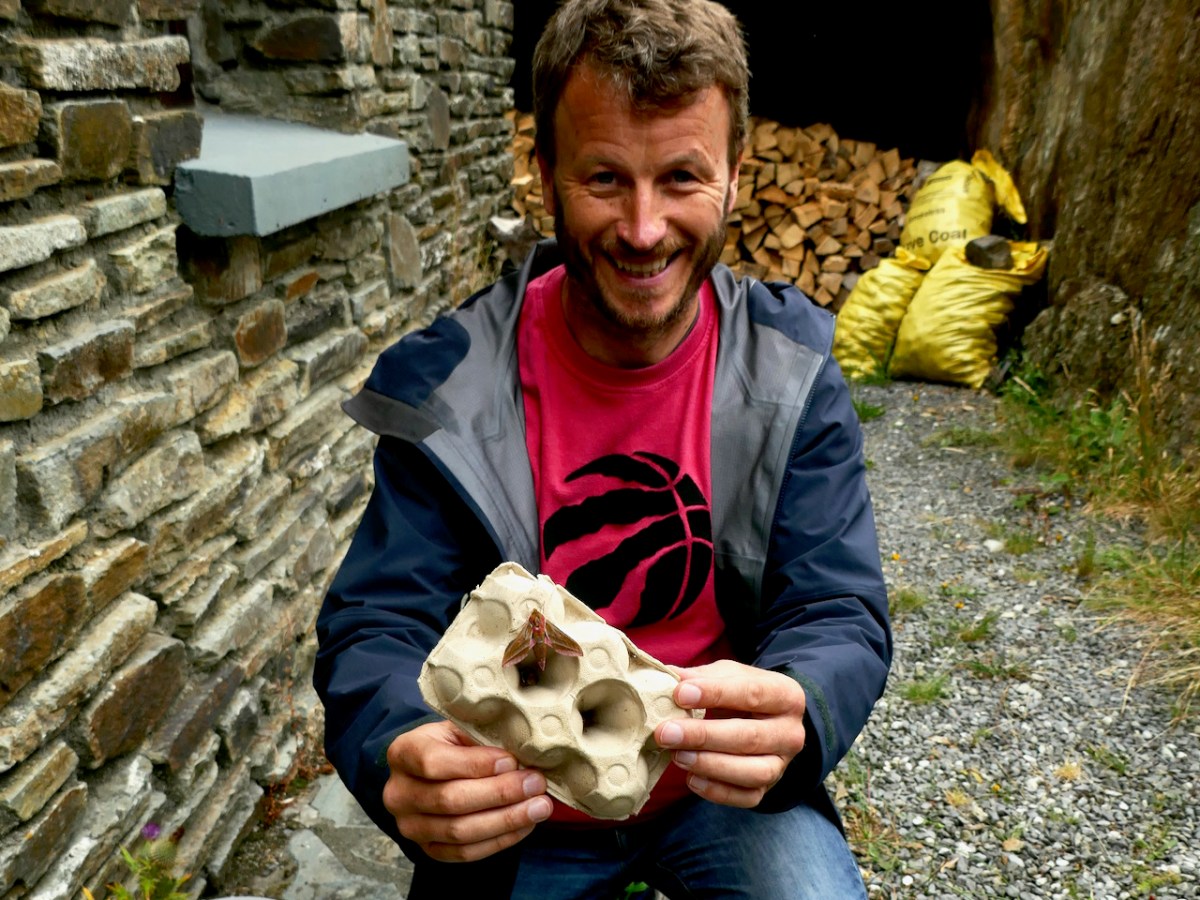
Header and upper picture (above) – one of our first finds was an Elephant Hawk-moth – bizarre and beautiful! Lower picture (above) – Ferdia showing us the Elephant Hawk-moth at the first ‘reveal’

Our friend – Ferdia – is a professional who works for the National Parks and Wildlife Service and – perhaps strangely – his special expertise is in the lives of bats. So why has he introduced us to moths? Well – the principal food source for bats is moths, so he has to be knowledgable about those as well. The other ‘enemy’ of moths is the Robin. So our cheerful little red-breasted companion who comes to greet me every morning when I take out the seeds has suddenly become a garden monster indiscriminately guzzling some of the most beautiful small creatures I have ever encountered! But I have to tell myself that it’s all about the natural order of things. 

So let’s have a look at the ‘moth trap’. It’s basically a light source mounted on a funnel which sits over a box. The light is ultra-violet: this is what the moths like. In the box are some old cardboard egg cartons – also attractive to the insects. So – in the darkness – they fly towards the light and flutter down into the box, where they seem very happy to settle in all the crevices of the cartons, cheek by jowl with other moths of all varieties, and wait patiently to be discovered. They are nocturnal creatures so it’s not surprising that they seem a bit sleepy when daylight comes but they don’t appear to object to showing off for us, and will even quite readily explore our hands and clothes – and they definitely pose for the camera! All these photos are taken by Finola, mainly using her macro setting with the Leica lens. 

Revealing what’s in the box – the moths like to settle down in the crevices of the egg boxes and don’t seem to be unduly perturbed when we take them out to have a peek. Note that there’s a stray black beetle in the picture above

It’s hard to describe the excitement we both felt when our friends Ferdia and Anna came up that first morning for the ‘reveal’. To begin with, they pointed out to us that not all moths end up in the box. They are attracted by the light but many settle in the vicinity rather than going into the funnel. So the trap had been put against a sheltered stone wall of our house and our astonishment grew as we realised how many moths there were within a radius of about a metre around the trap, occupying many nooks and crannies of the stonework. But their ability to camouflage themselves by choosing places where they perfectly blended into the background was stunning: at first they seemed completely invisible. Take that, Mr Robin!

Upper – Ferdia is about to open the trap: he never harms the moths, the plastic containers are used to temporarily hold them for identification before they are released. Lower – moths settling in the garden – how many can you see in the picture? We think there are nine

If you thought moths were brown and boring, think again. Of course many are brown – ish. But many more are not, and even the very brown ones are so beautifully marked that they deserve as much study as the ‘brash’ ones, which immediately catch the attention. But ‘brash’ is not a good word. Perhaps we should say ‘showy’, or ‘flamboyant’ – have a look at the examples. My eye was caught by the Garden Tiger, which one can only say is just resplendent.

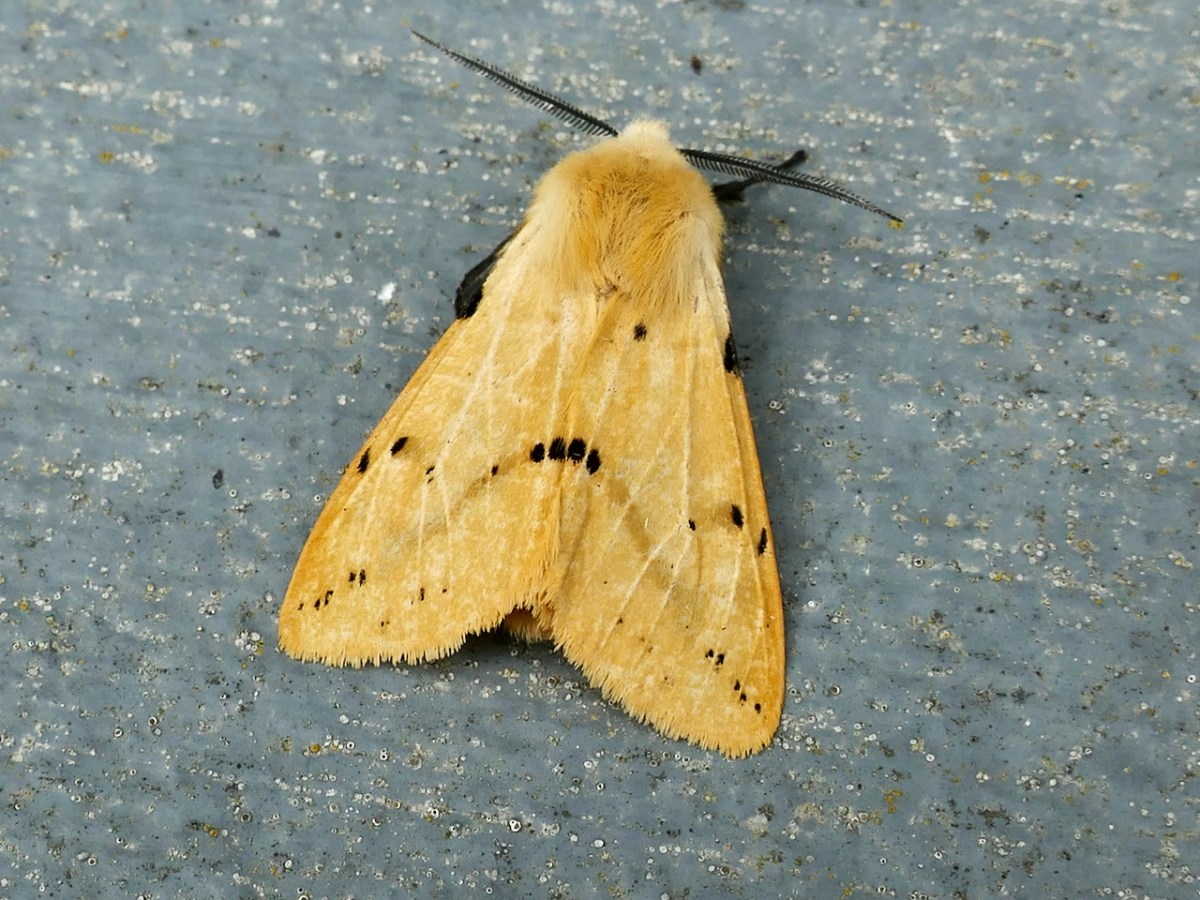
Buff Ermine

Burnished Brass (these are all real moth names)

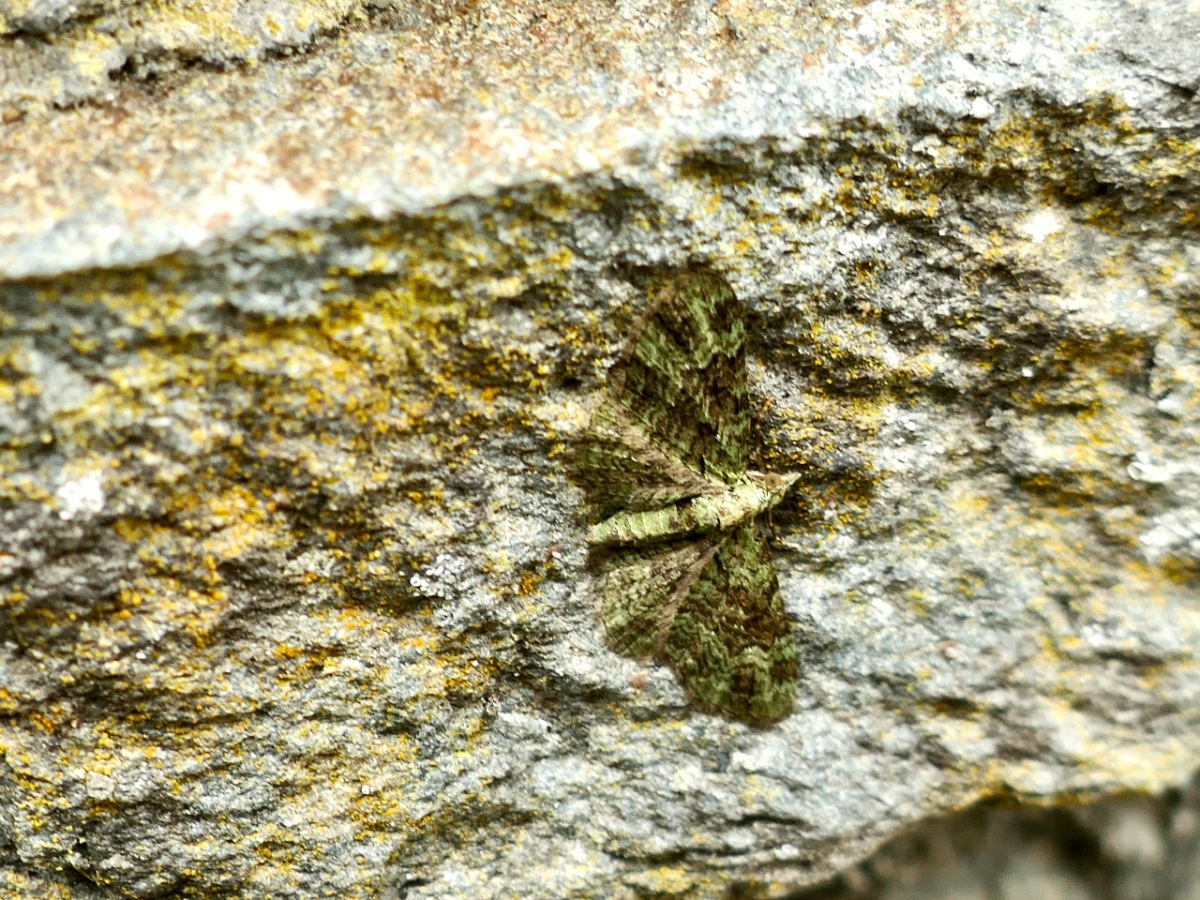
Six examples of good moth camouflage (from upper) – Green Pug and a close-up of the same one –Dark ArchesDark SpectacleMottled BeautyTrue Lover’s Knot (can you see it?)
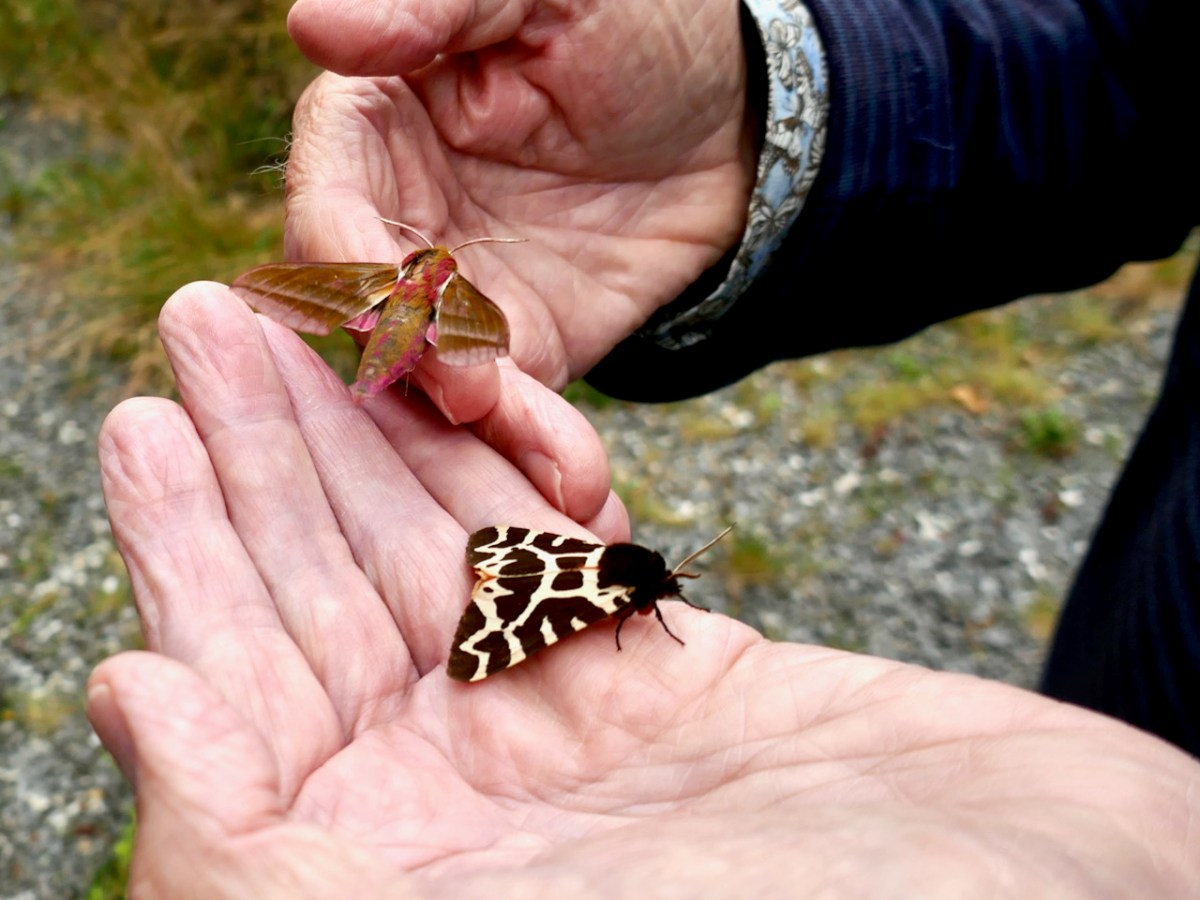
Four studies of the incredible Garden Tiger Moth. This one certainly does not seem to seek camouflage: perhaps its markings frighten off the predators?

Every moth has a name! When you consider that there are nearly 1500 different ones in Ireland, that’s amazing. Mostly they are simply descriptive, but that makes sense. Feast your eyes on the ones we found. I think you will understand our excitement and wonder at this new world which has suddenly landed on our own doorstep. Ferdia educated us to the environment here in regard to moths. We are on the coast and we face out towards France: it’s a migration route! Believe it or not, some moths migrate great distances over the sea; not just from France, but from Africa too. How can they survive such journeys? They appear so delicate and evanescent.

From upper – Clouded Border Common WaveEmerald. Above – mixed moths: Elephant Hawk-moth and Garden Tiger

One of our first discoveries as the magic box was opened was the Elephant Hawk-moth. Admire the colour, and the size, but also look closely at the texture. Moths are mainly covered in ‘scales’ but these can appear like feathers; and see where the scales are wearing away on one example, revealing the anatomy of the creature underneath. Yes, moths are fragile and short-lived, but remember they are just one part of a cycle that involves mating, egg-laying, the caterpillar larvae; becoming a chrysalis and then hatching into another beautiful creature.

I was surprised to learn that moths appear at all times of the year – even in the middle of winter. Their cycles coincide – as you would expect – with those of their plant-based food sources. So the insects we have seen over the last two days are effectively ‘midsummer moths’ and if we put out a light-box in a month or so we are likely to see completely different species.

Another spectacular species that must live around us – hitherto unnoticed – is the Poplar Hawk-moth: Hildegard is modelling it in the upper picture, while I am showing it off in the lower one: it’s amazing that we have never seen this wonderful creature until today!

So how are we doing – in West Cork – in terms of looking after our moth populations? Well, as with much of the natural world, things are declining due to unfriendly farming methods and general habitat deterioration. That’s a constant message to all. Many of us are becoming more aware and are being active in establishing our own micro universes – such as Finola’s wildflower meadow here at Nead an Iolair. 

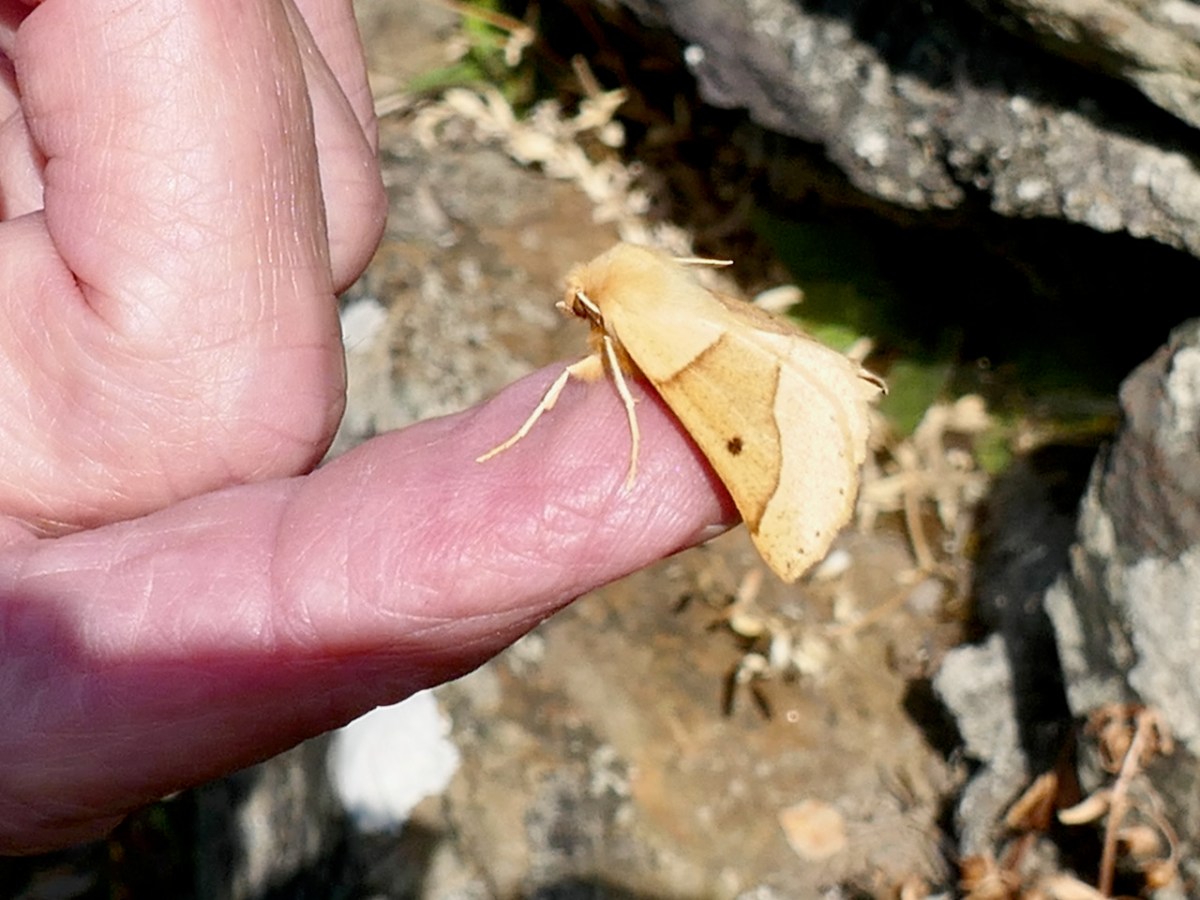
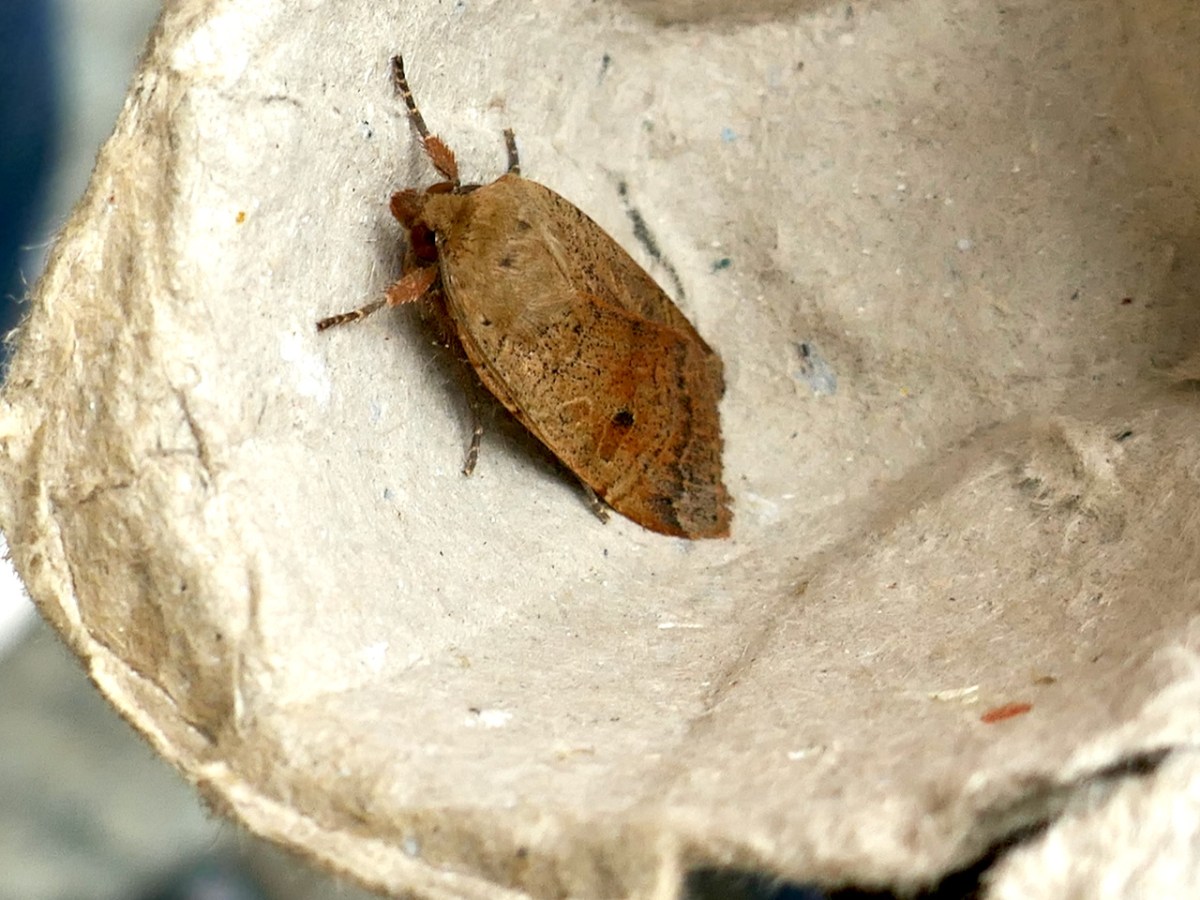
In our habitat – that’s a Spectacle Moth hiding in the grass but showing off its spectacles (upper); centre is a Pebble Prominent in the foreground with a Spectacle behind; while (lower) is one of my own favourites, the subtle Scalloped Oak Moth

Moths choose to lay their eggs on plants that will provide nourishment, and those plants are known as larval food plants. Some of the moths are quite adaptable and may use a wide variety of trees, shrubs and flowers. For example, the Poplar Hawk-moth, the Clouded Border, the Scalloped Oak feed on Aspen and Willows. Others prefer flowers and herbacious ‘weeds’: the Elephant Hawk-moth loves Willowherbs and Bedstraw (lots of those in West Cork); the Garden Tiger likes Nettles and Dock (our wildflower patch!); the Dot Moth goes for all those weeds that are the bane of gardeners, such as Nettles, Bindweed, Groundsel and White Clover while the Small Fan-footed Wave selects Dandelion and Plantain. The Sharp-angled Carpet is highly specialised to Stitchwort and Chickweed.

From upper – Rosy Rustic with Lesser Yellow UnderwingDot MothSmall Fan-footed WaveSingle Dotted WaveSharp-angled Carpet ((purely a descriptive name – it won’t eat your carpets!)

The good news is that here in West Cork we still have flourishing habitats to offer moths – our fields, hedgebanks and heaths provide what they need – that is, the native plants to which native moth species are adapted.  As everywhere, we cannot take this for granted as all our native habitats and plants are under pressure. Yet another reason for letting at least part of your garden go wild.

From upper – Lesser Yellow UnderwingLarge Yellow Underwing – a Pug: there are very many different Pugs!

Hopefully this little article will open some eyes – as our own eyes have been opened (widely) by the realisation that there are far more worlds within our own world that we can be aware of – and should care for. If nothing else, it’s just the sheer excitement of discovering all the incredible creatures that we share our world with . . .

. . . Moths are often characterised – inaccurately – as being dull and, in the mind of many, they are undesirable and troublesome insects. This is also a mistaken view as just a few species are real pests in that they consume food crops, stored food products or objects that people depend on or value. The vast majority live their lives unseen by most people. However, when moths are seen in daylight the appearance of many species can be a revelation showing intricate patterning and colours that is at least the equal of the Irish butterflies. Most moths are undoubtedly secretive and their colours and patterns usually give them daytime camouflage . . .


Ireland Red List No 9 – Macro-moths (Lepidoptera)
National Parks and Wildlife Service 2016

The Magpie

One of the joys of the moth trap was finding that it didn’t just attract moths. Look at what we also found: a wonderfully fierce-looking (but in fact docile) wasp and – best of all – a Sexton Beetle. These splendid creatures lay their eggs in the rotting corpses of animals: human Sextons look after graveyards and were in the past gravediggers as well!

With very many thanks to Ferdia and Anna for giving us these bewitching experiences.

As a footnote to those who might be concerned at the harm that moths can cause in the house – to clothes, carpets etc – I must add that, of the 1,500 species we have in Ireland, no more than half a dozen are harmful in this way. Putting out a light-box moth trap will not bring destruction upon you! Instead your days will be illuminated and dazzled by your new discoveries.