St Brigid And Her Wells

It has become my habit over many years now to mark St Brigid’s Day with a post. This link will bring you to the last five. If you have read them, you will know already that the camp I am in is the one that sees her as an historical figure – an actual woman, powerful and pious, that ruled benevolently over Kildare in the 5th/6th centuries. I used, to the extent that I could, the original documents that lead us through her life – an account by Cogitosus written in the year 650, and the Vita Prima, written 100 years later. Both are likely to have been based on an earlier Life by St Ultan. Since both accounts are mostly a list of miraculous happenings, I do not hold them out as factual – what is convincing is that they were written so soon after her death and that they are so specific about the establishment of her foundation in Kildare.
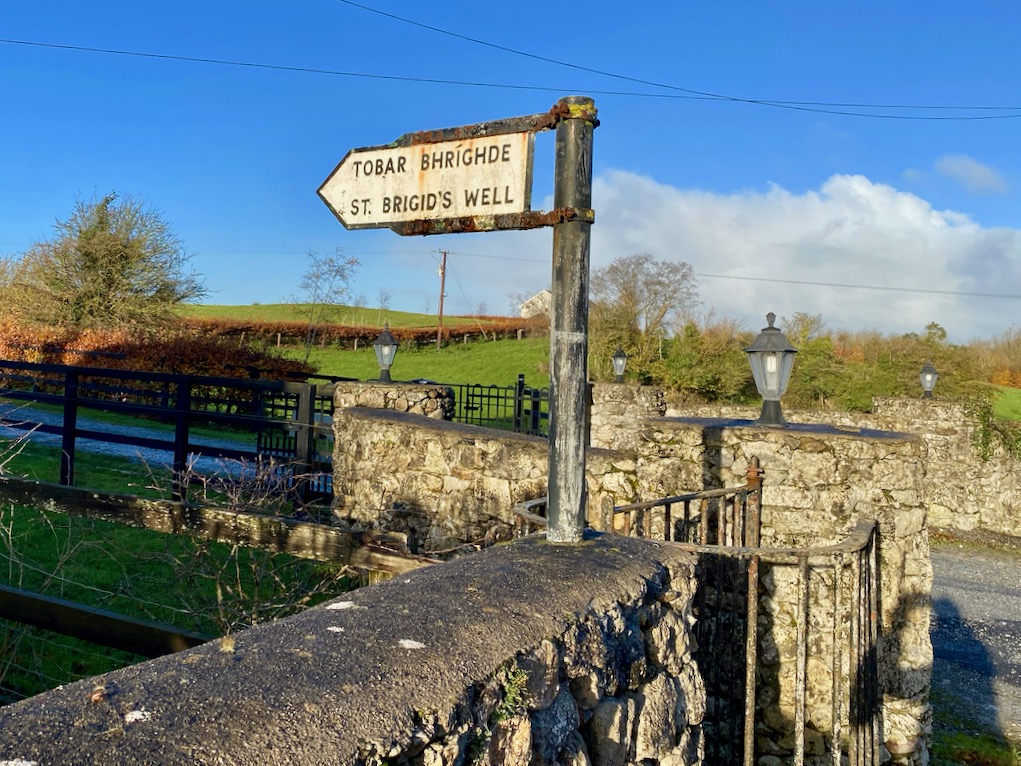
Over the centuries much folklore and mythology has accrued to St Brigid’s story, as it does inevitably to all of these Irish Early Medieval icons. Most of it has enriched her legendary image. However, I do find it puzzling that so many people are now convinced that she never existed and is simply a Christianised version of a mythical ‘Celtic’ goddess. Funny, we don’t do that to our other founding saints, Patrick and Columcille.
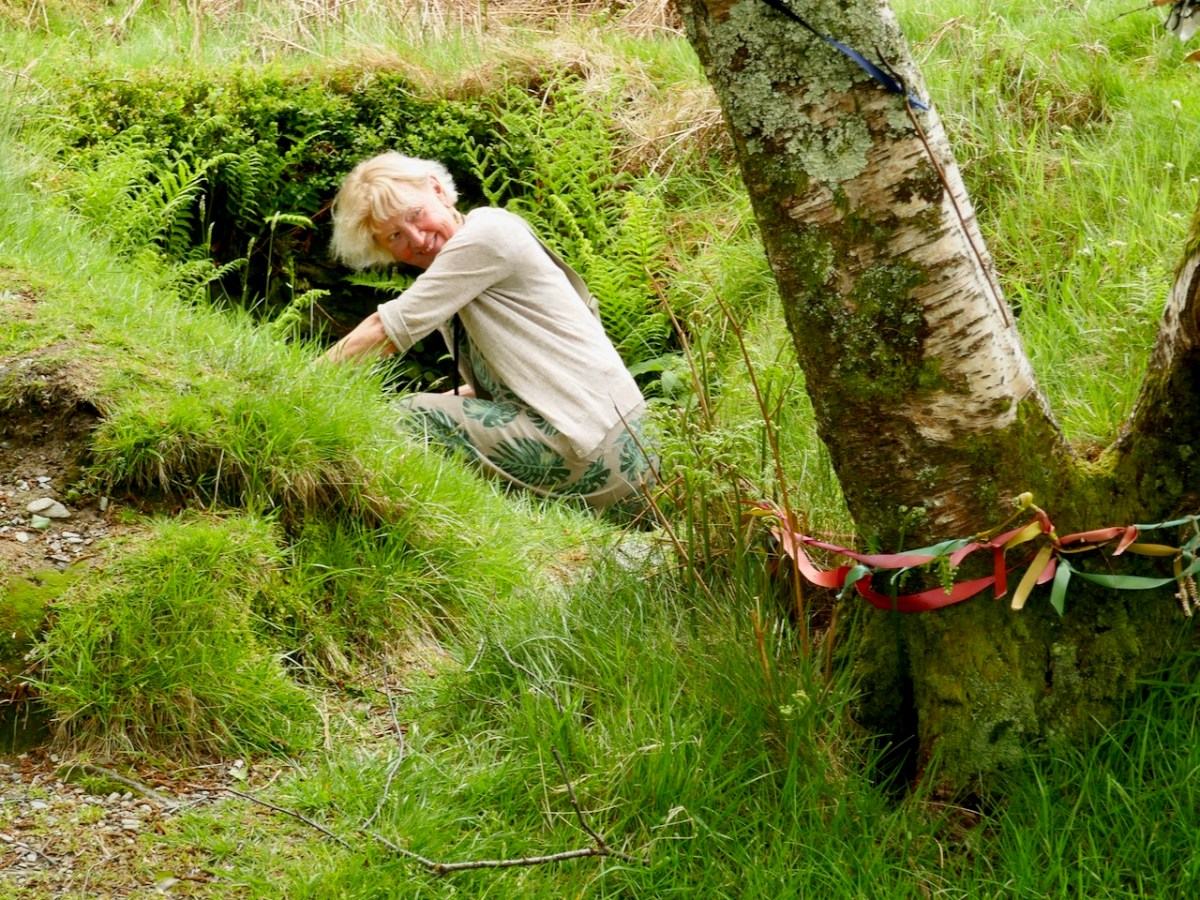
I usually go for stained glass images but this year it will be about her holy wells. This is partly in homage to Holy Wells of Cork and Kerry – or in other words to my good friend Amanda Clarke, with whom Robert and I, and now I, have had so many adventures, out Good Well Hunting

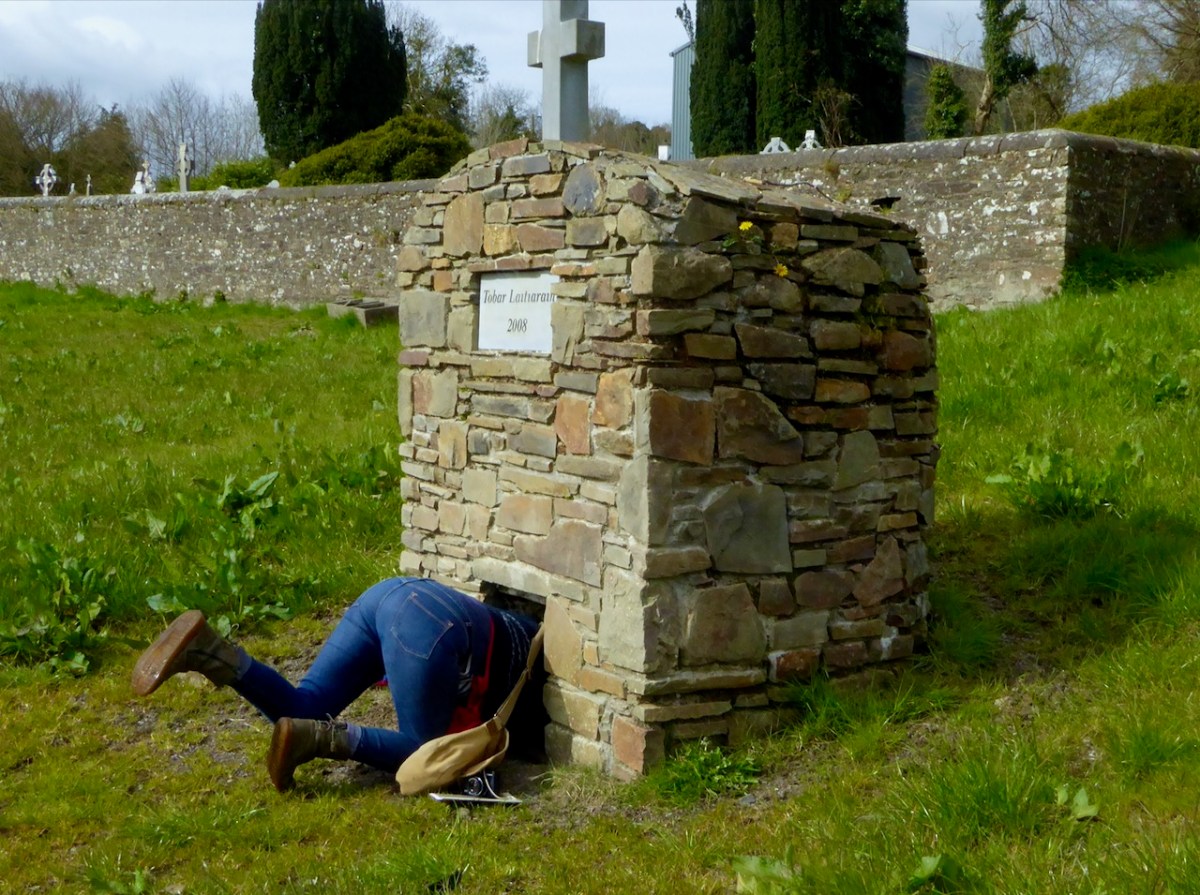
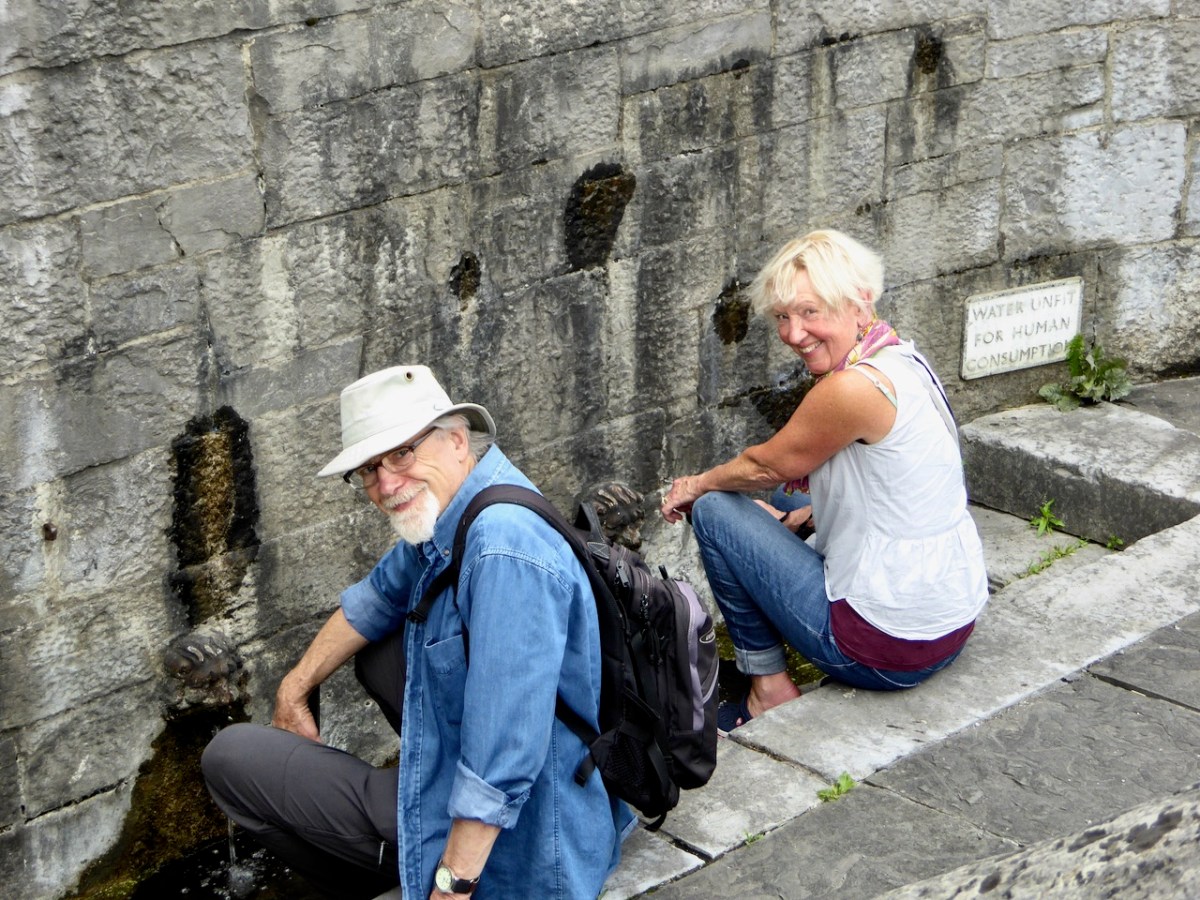
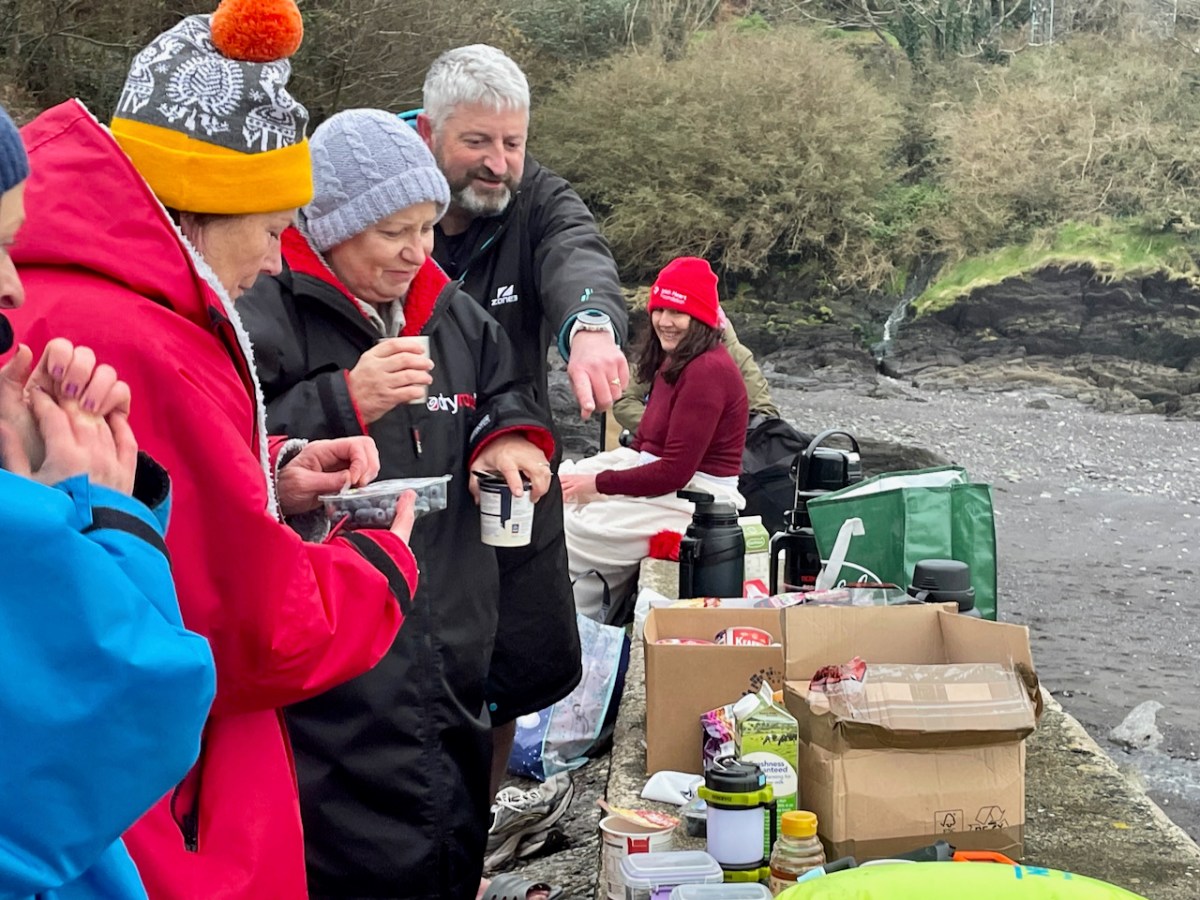
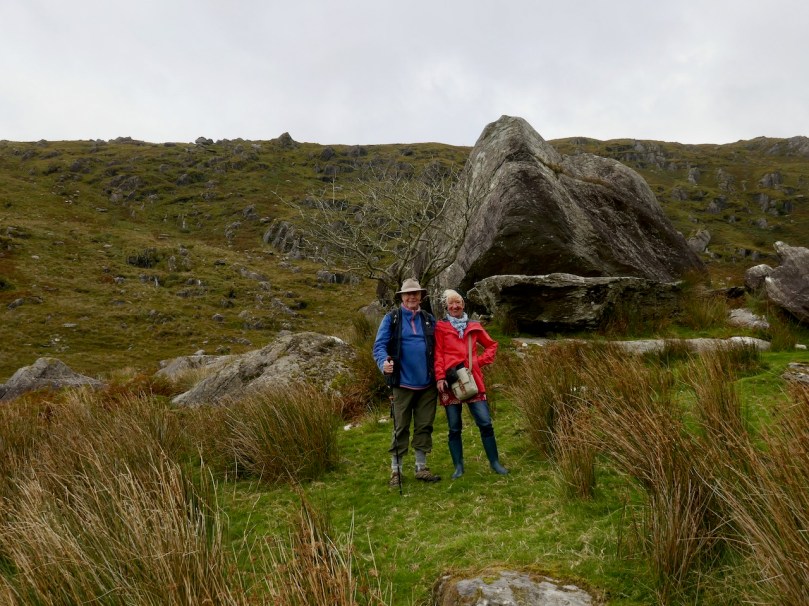
I was privileged to be on the first ever outing – to St Brigid’s well in Lough Hyne on St Brigid’s Day in 2016 – exactly ten years ago (above). Amanda is marking this auspicious anniversary with a special post summarising those ten years and what she has learned along the way. Do pop over and have a read – since her book is now out of print, it may be the closest you get to a summary of her wisdom. Lough Hyne is a small, obscure well, hard to get to but as full of intriguing detail and structures and folklore as any of the more frequented wells. On the other end of the spectrum are Brigid’s large and most well-known wells. We have been to several of both types. I’ll start with three of the most-visited.
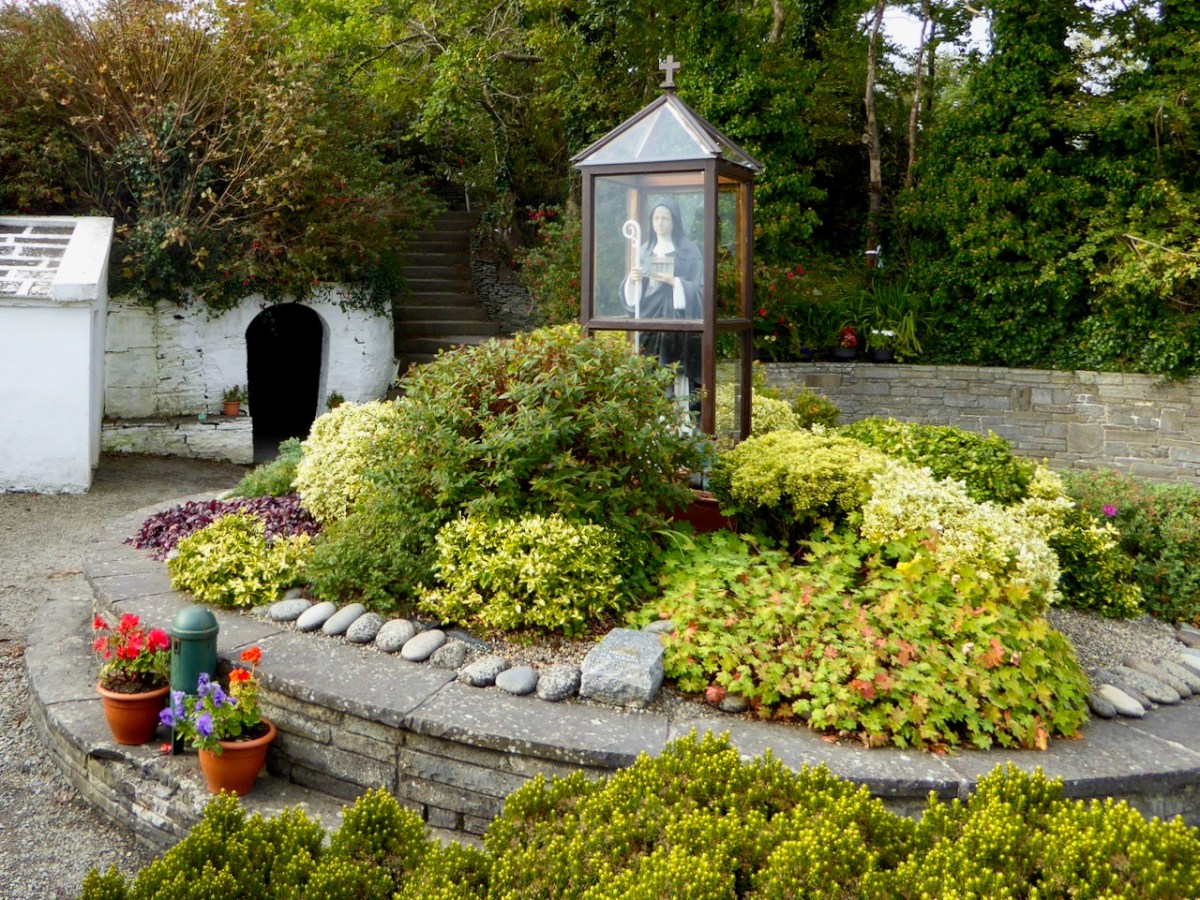
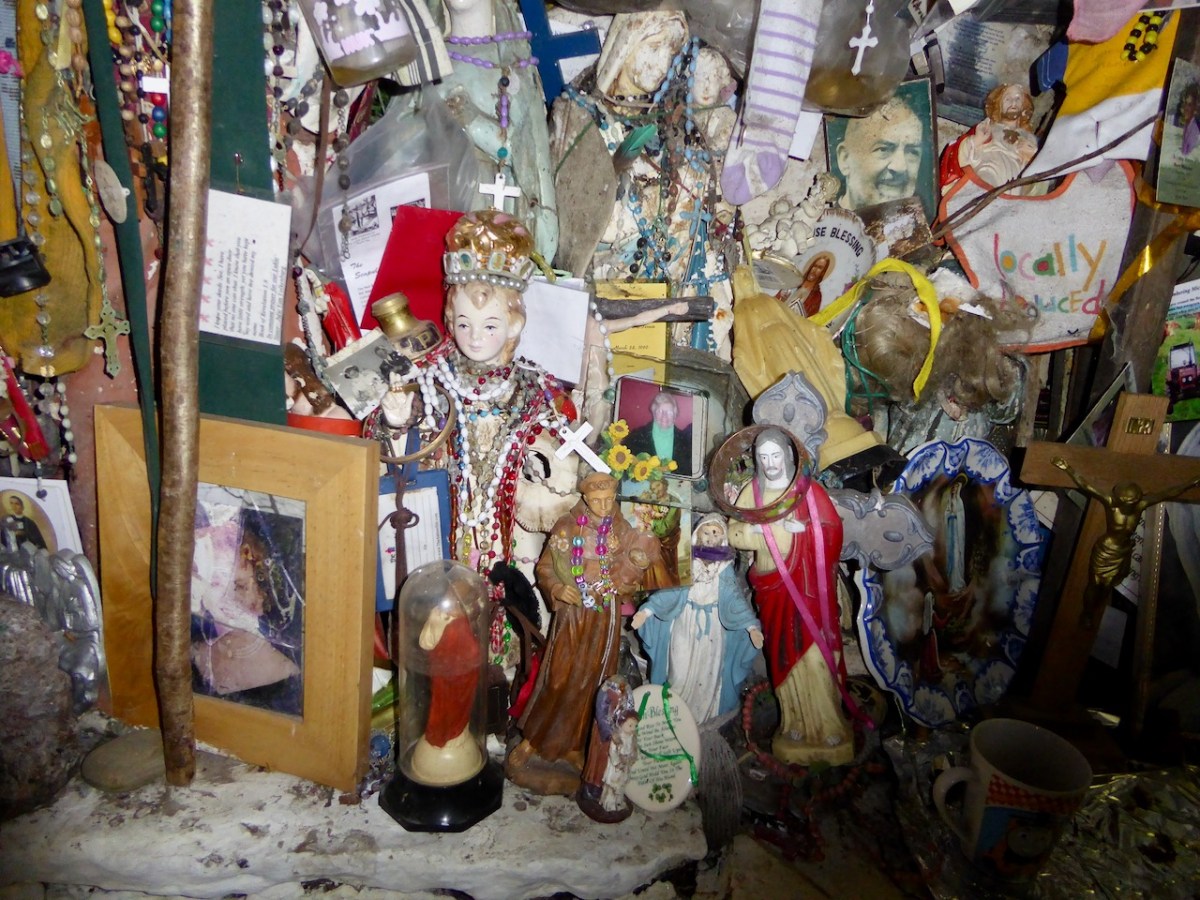
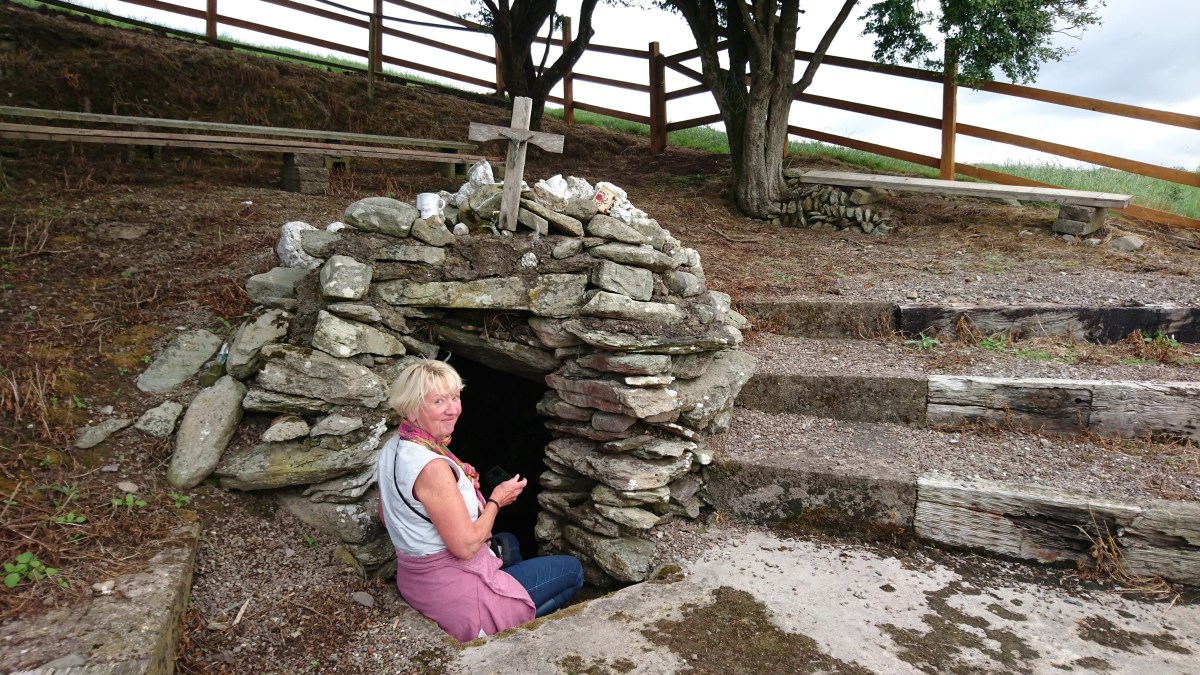
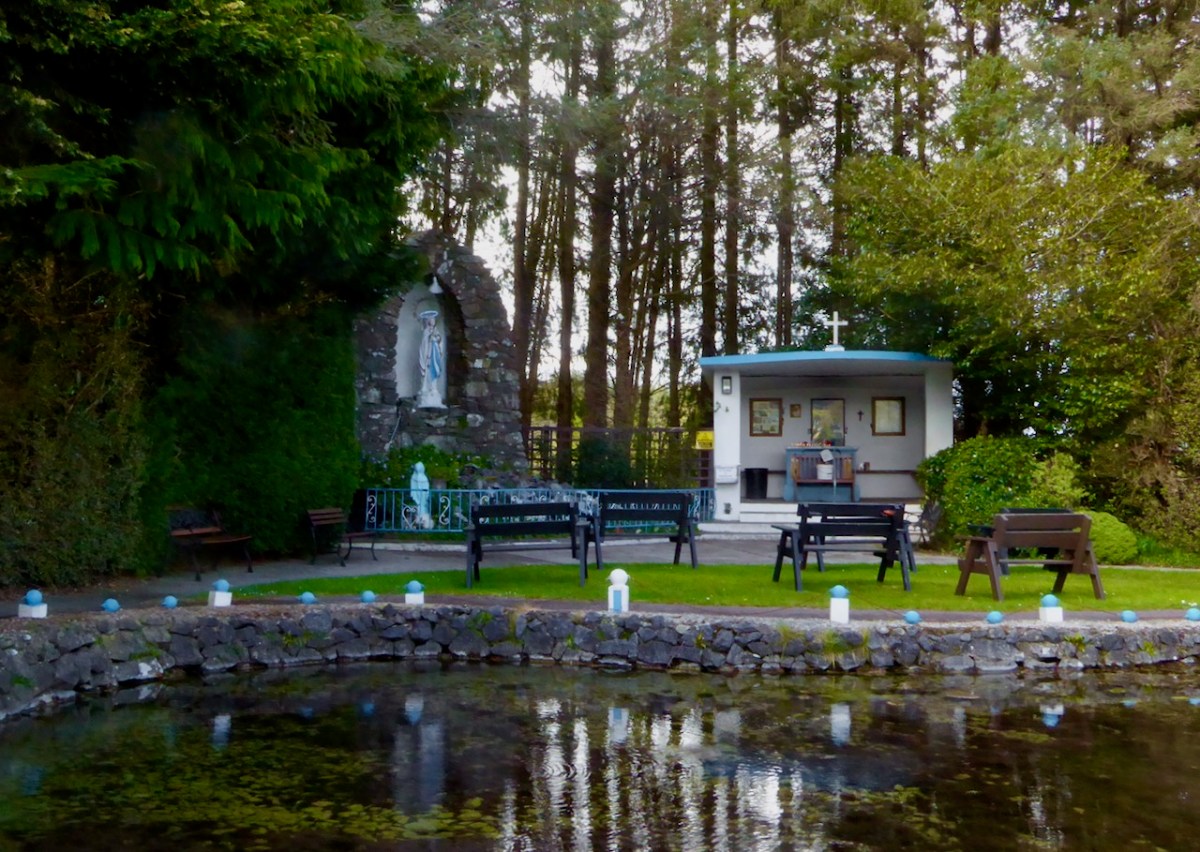
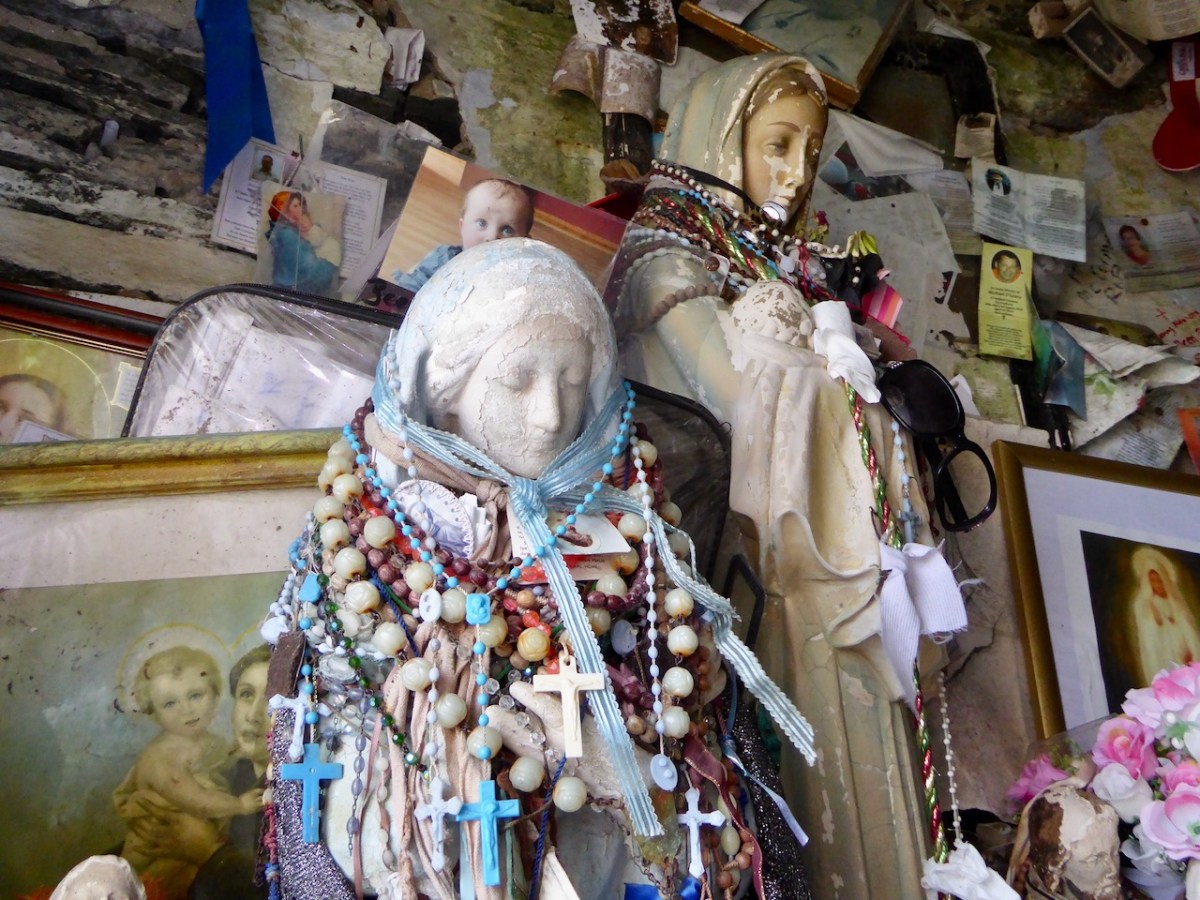
Nothing can quite prepare you for the impact of Brigid’s Well in Liscannor, Co Clare. At first it seems like a well-tended garden-like area with the obligatory statue, but then you see the entrance to what looks like a cave. 
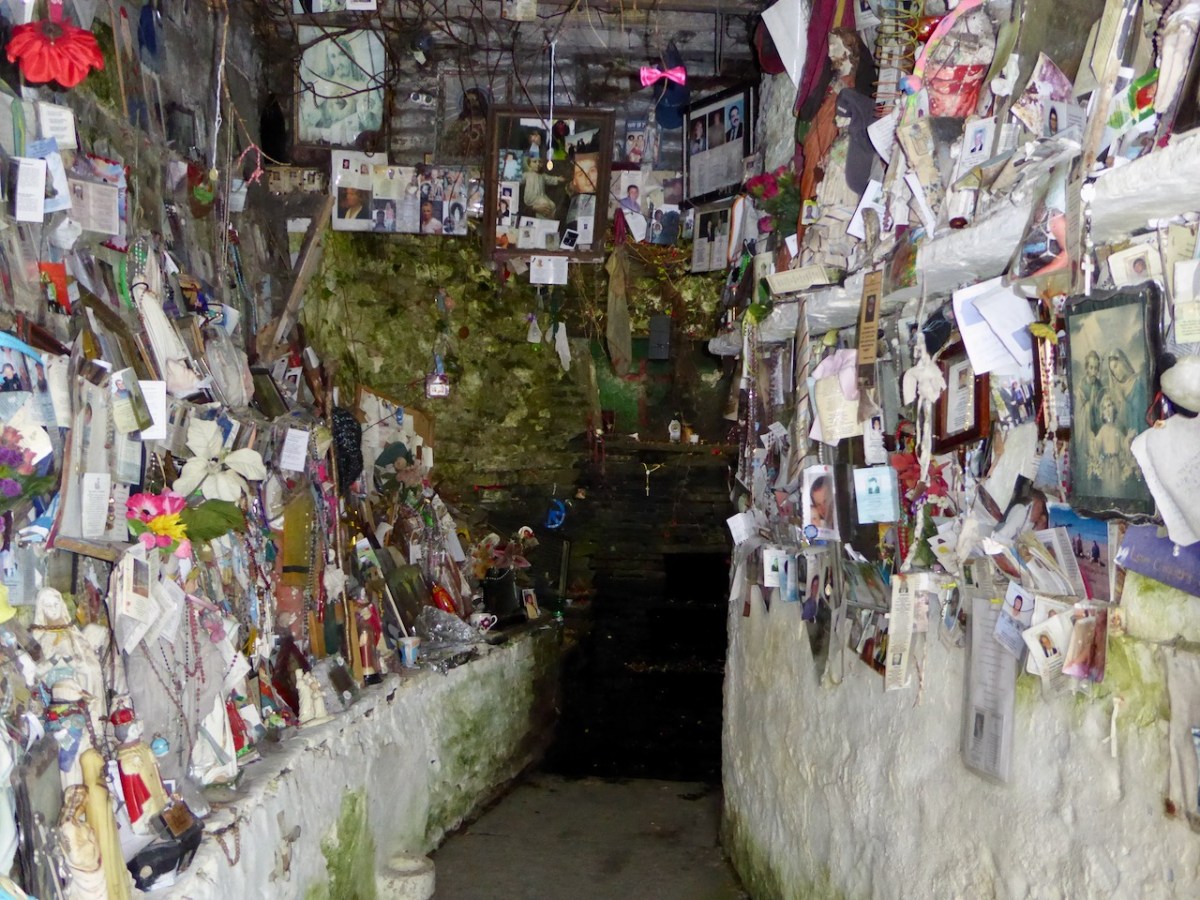
And that’s kinda what it is – a womb-like space filled with statues, icons, candles, supplications, photographs. It is a powerful testament to what a living tradition this is – to visit a place associated with her, to pay your devotion and ask for her intercession. 
Kildare, of course, is the city and county most associated with Brigid and St Brigid’s well outside Kildare town is a beautiful and contemplative place. It is laid out in such a way to lead you through the pattern of prayers, and it encourages you to slow down and feel the atmosphere.
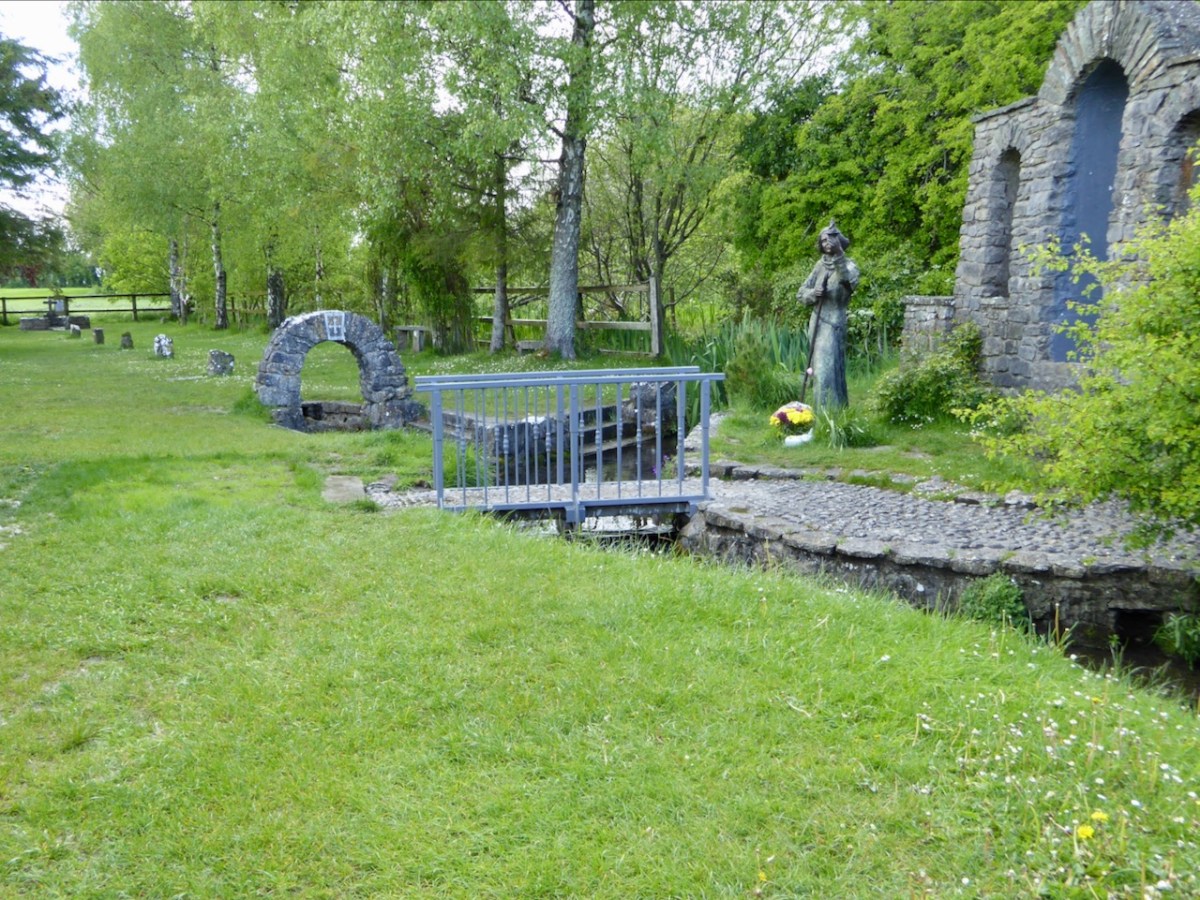
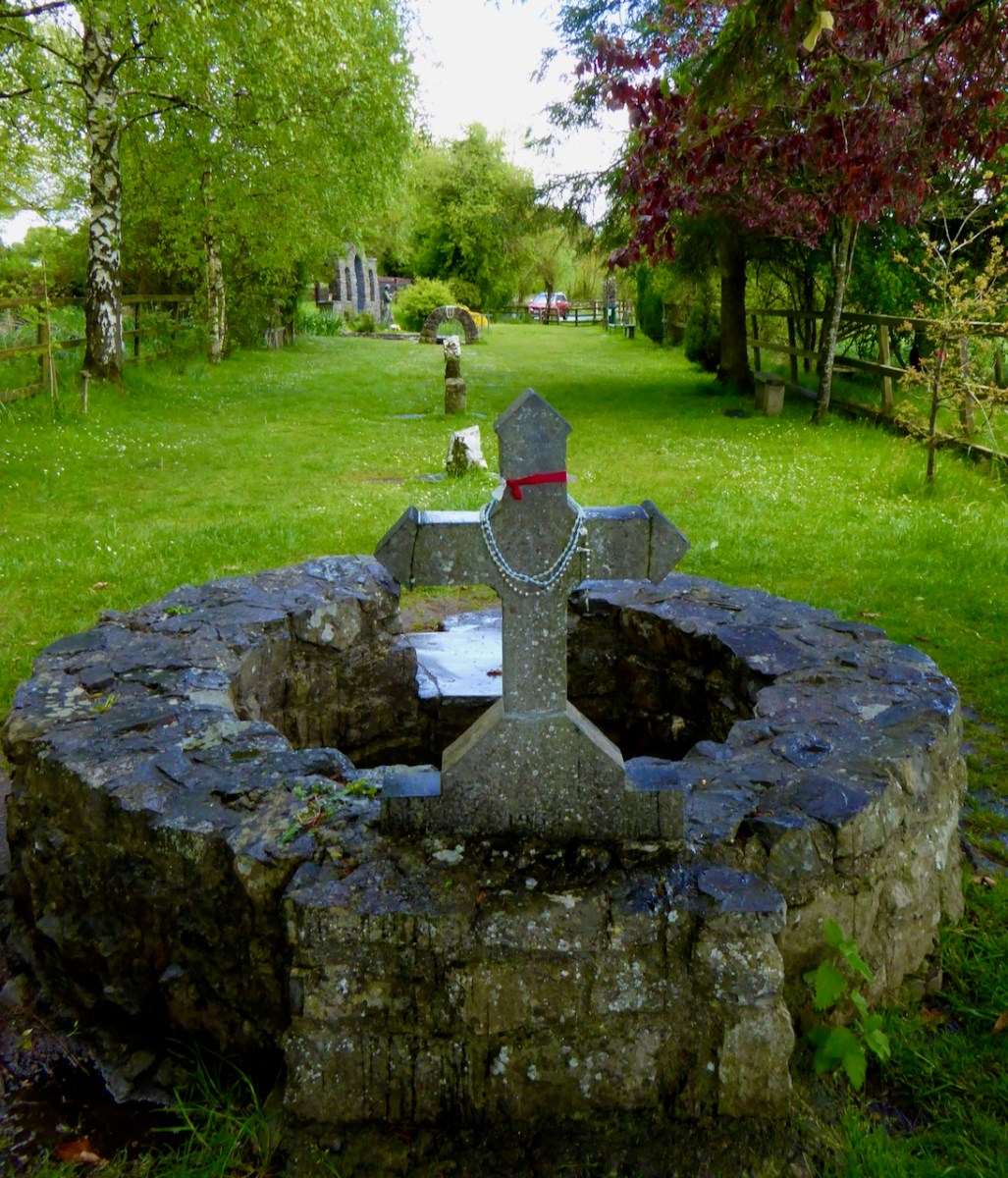
Another such is the Brigid’s well near Lough Owel near Mullingar. This one features a statue showing her in the act of casting her brat, or shawl, across the land to claim it for her monastery.
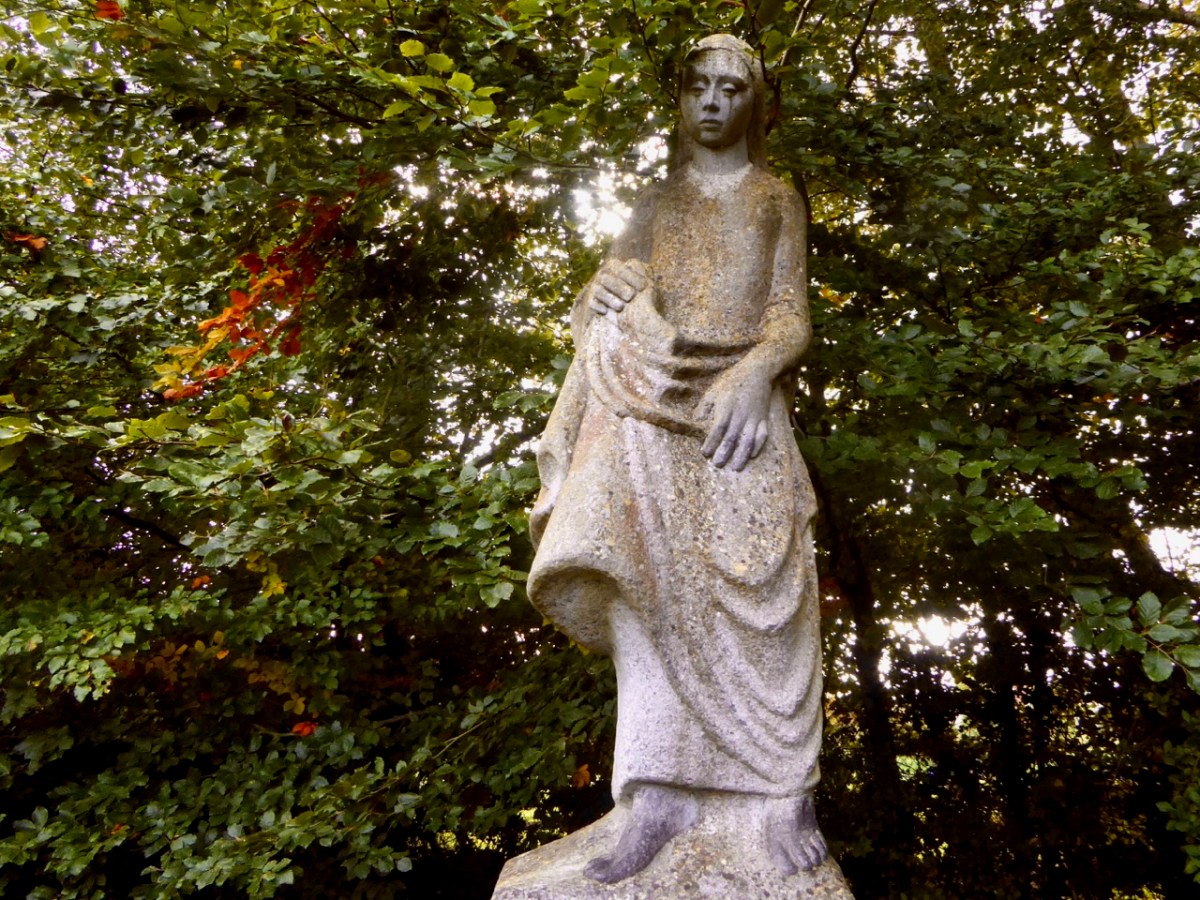
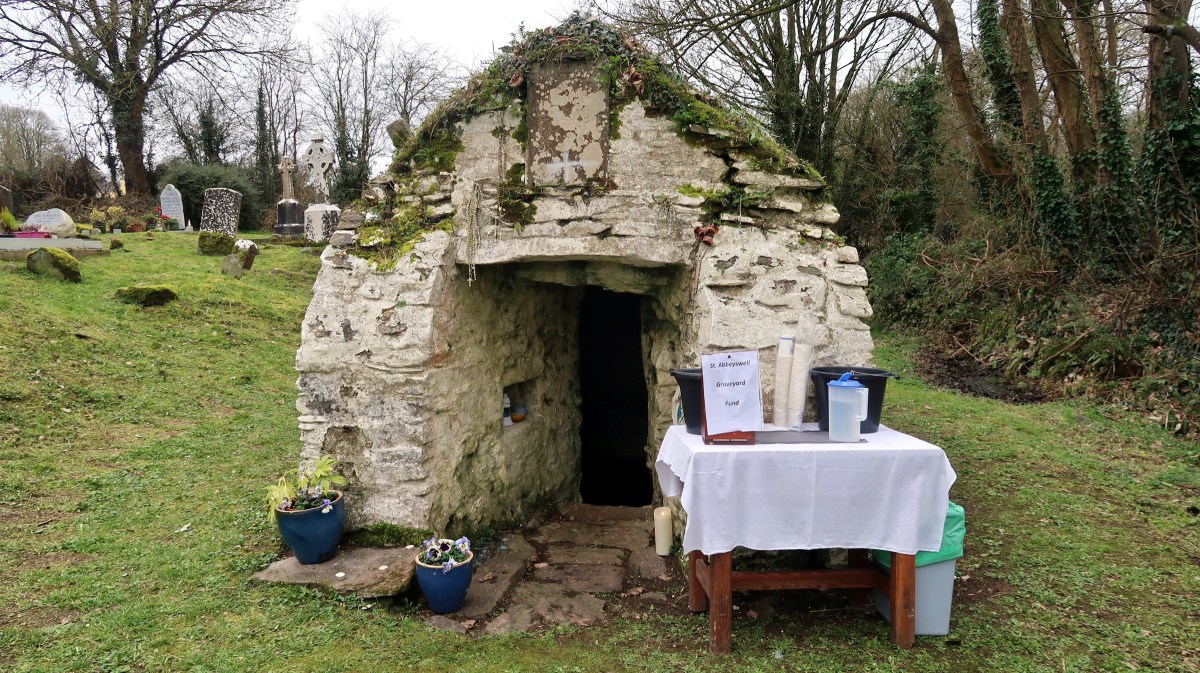
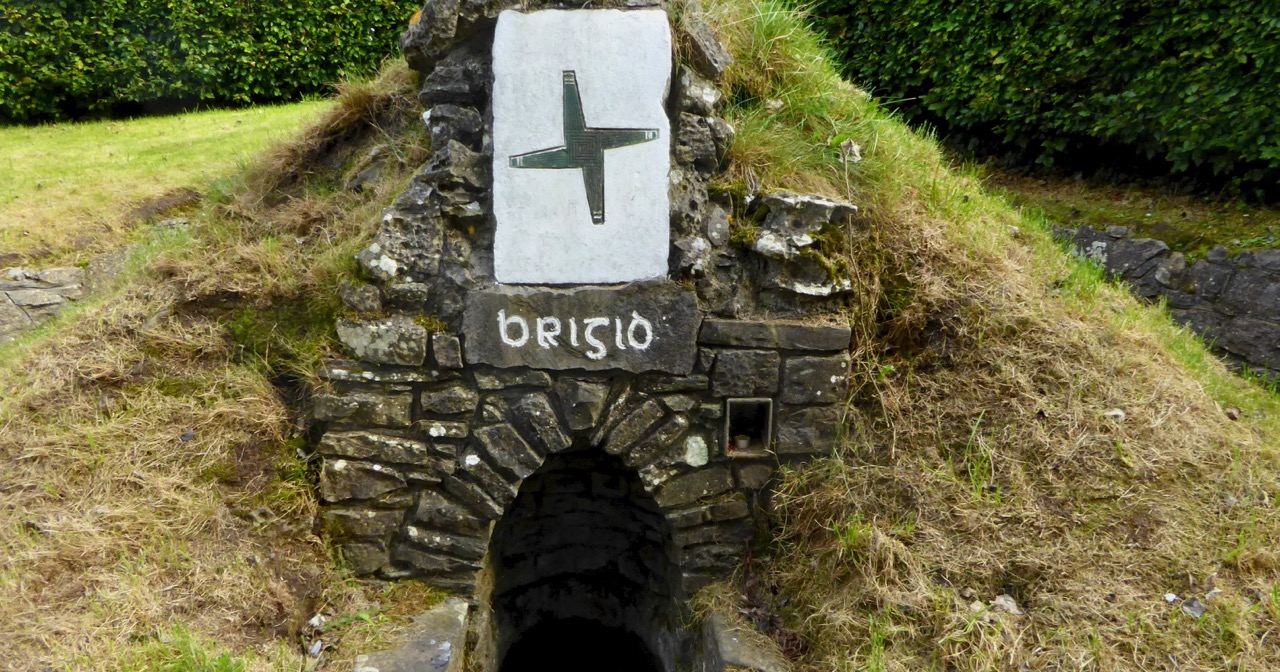
There’s a space for a priest to say Mass, the Stations of the Cross, and the well itself, topped by a green mound and a St Brigid’s Cross (my feature photograph for today)

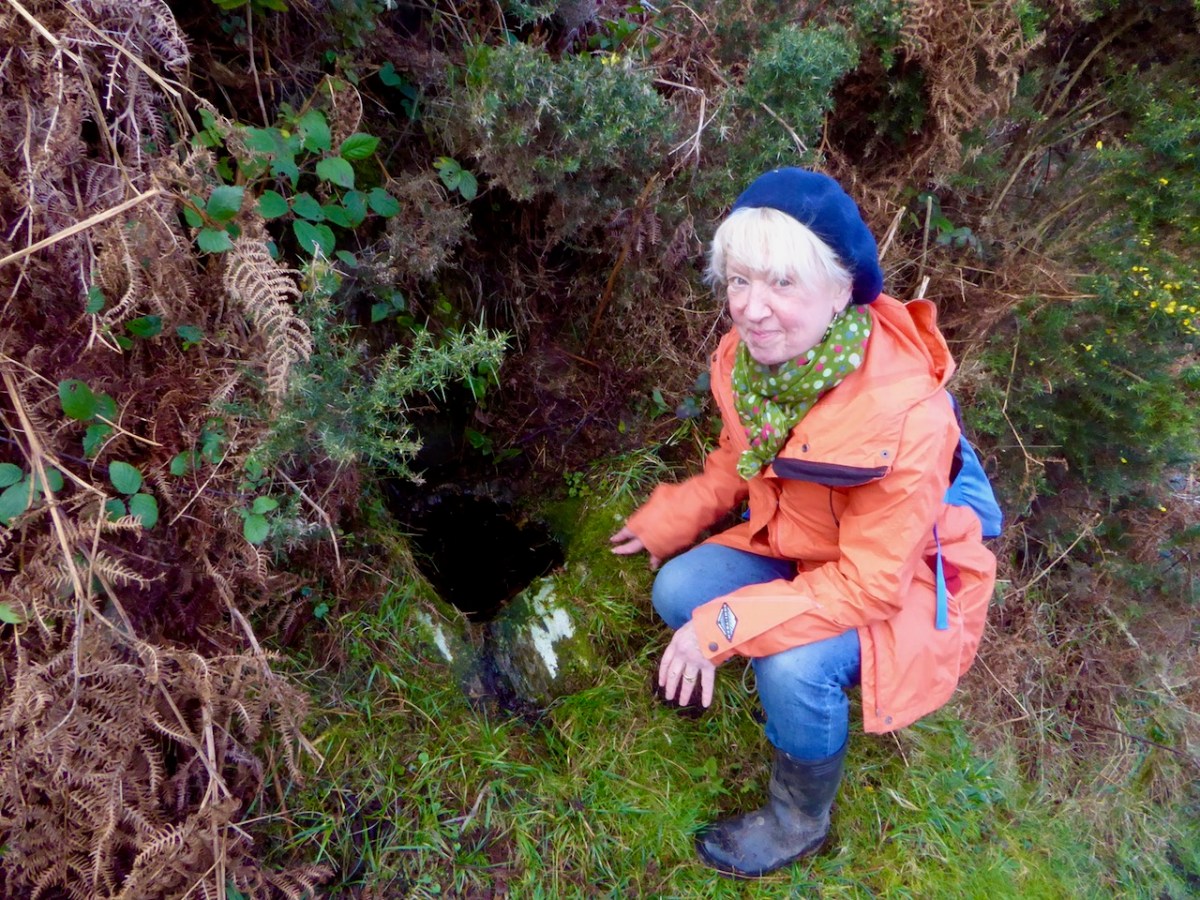
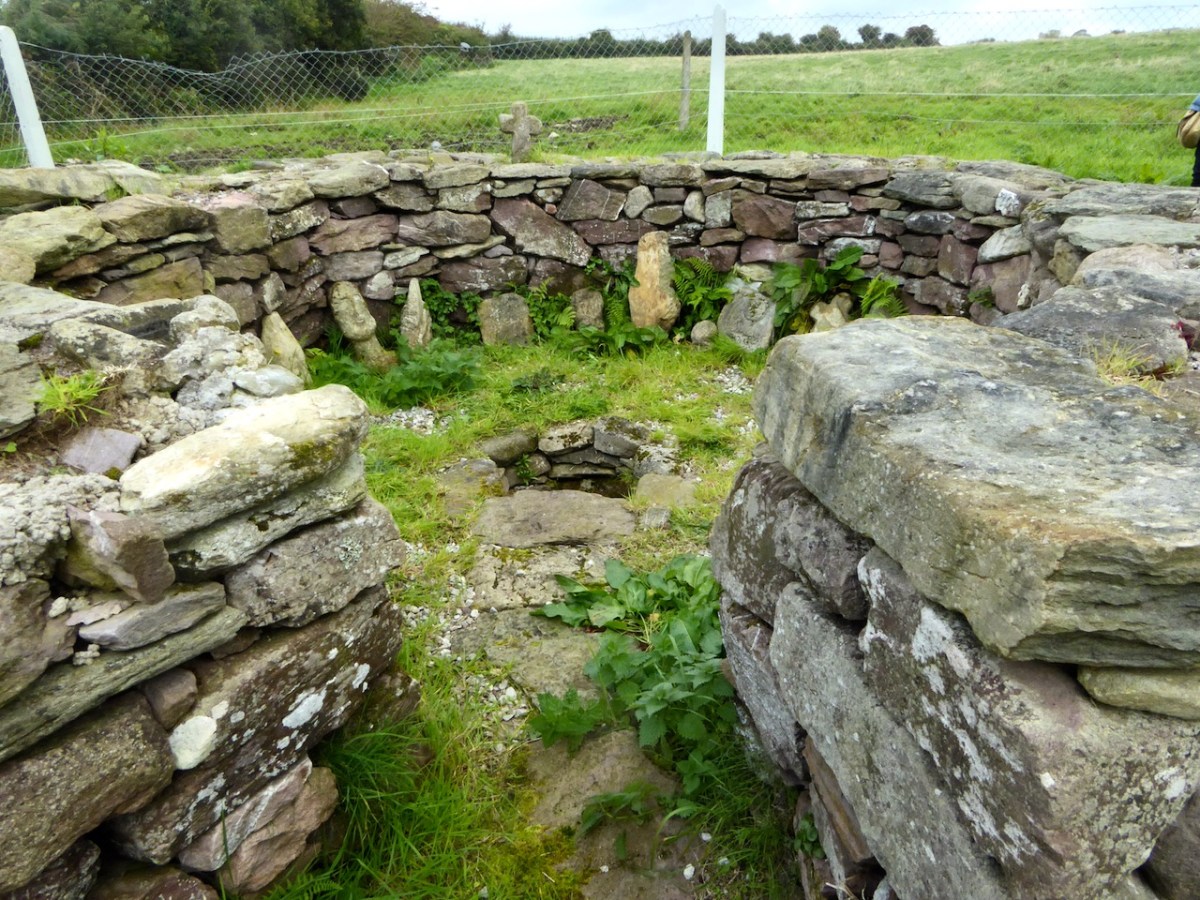
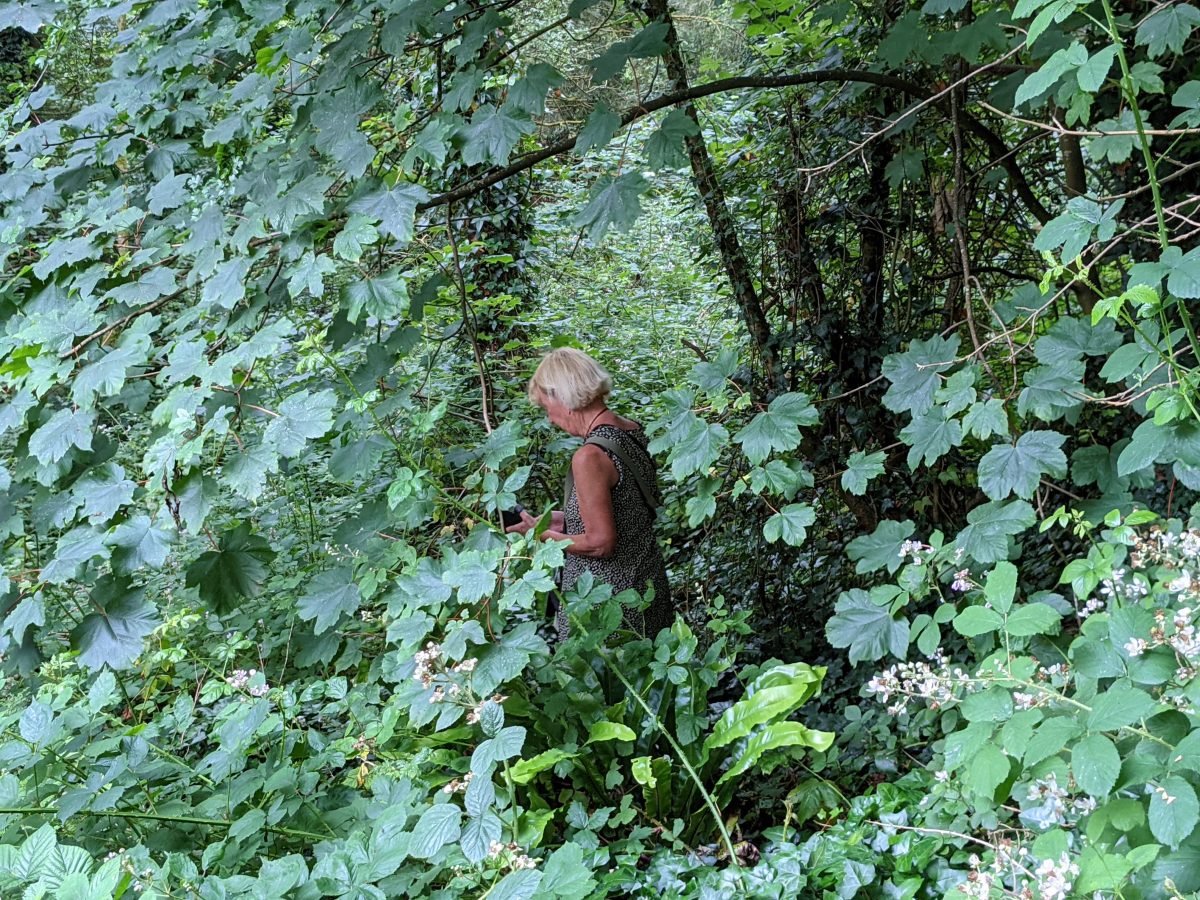
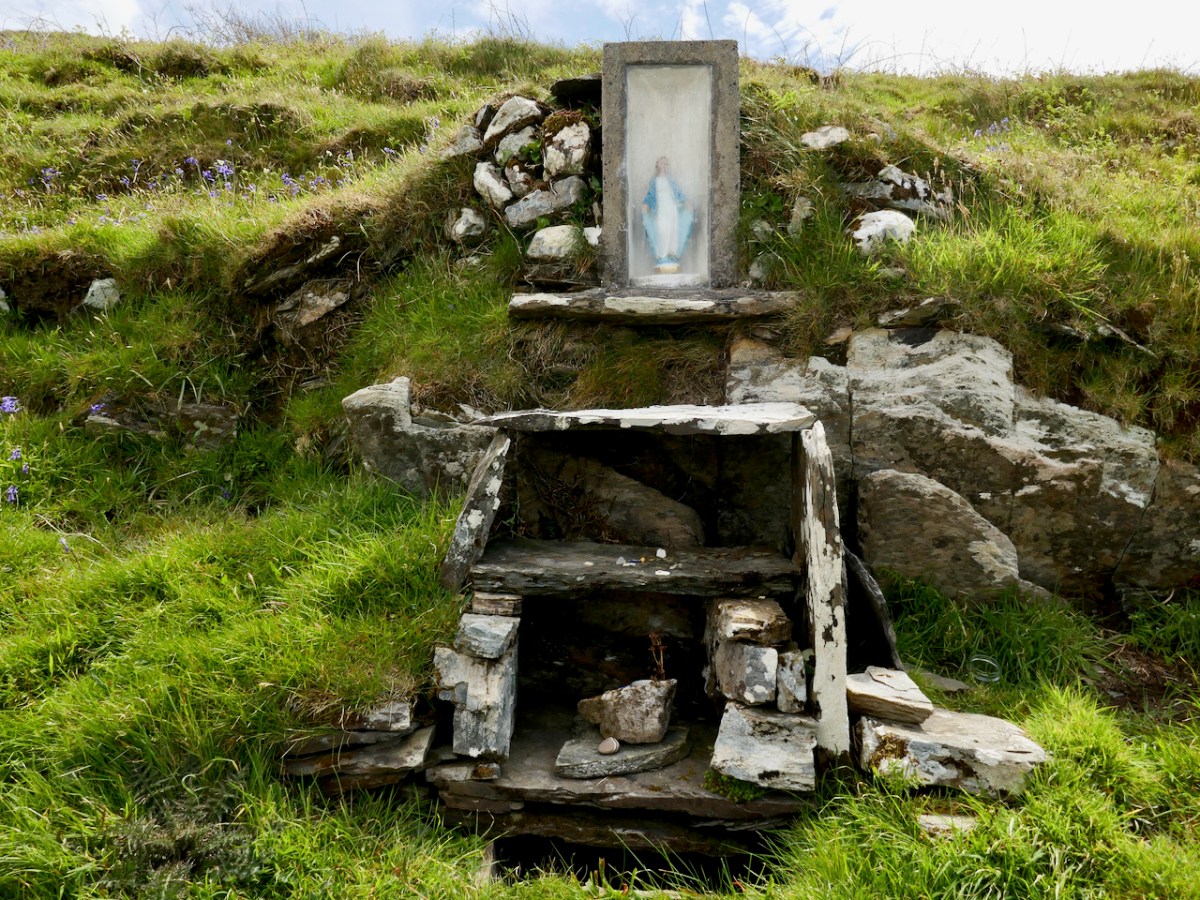
But it’s the hidden wells, down almost-forgotten paths, that resonate with me most. Amanda, with her exhaustive research, has led us to several. This one is near Carrigillihy in West Cork. Only the locals really know about it – there is no signpost and you have to look out for a tiny path off the road.
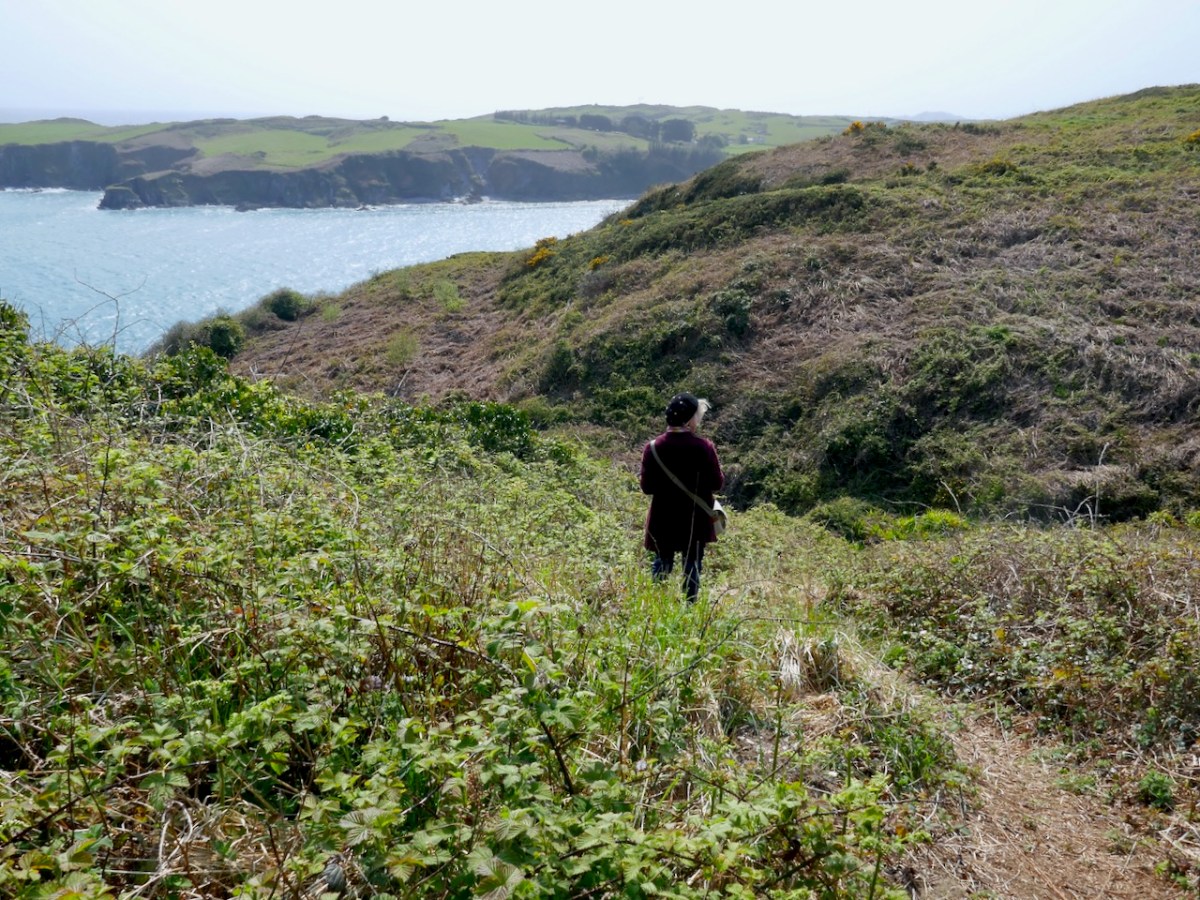
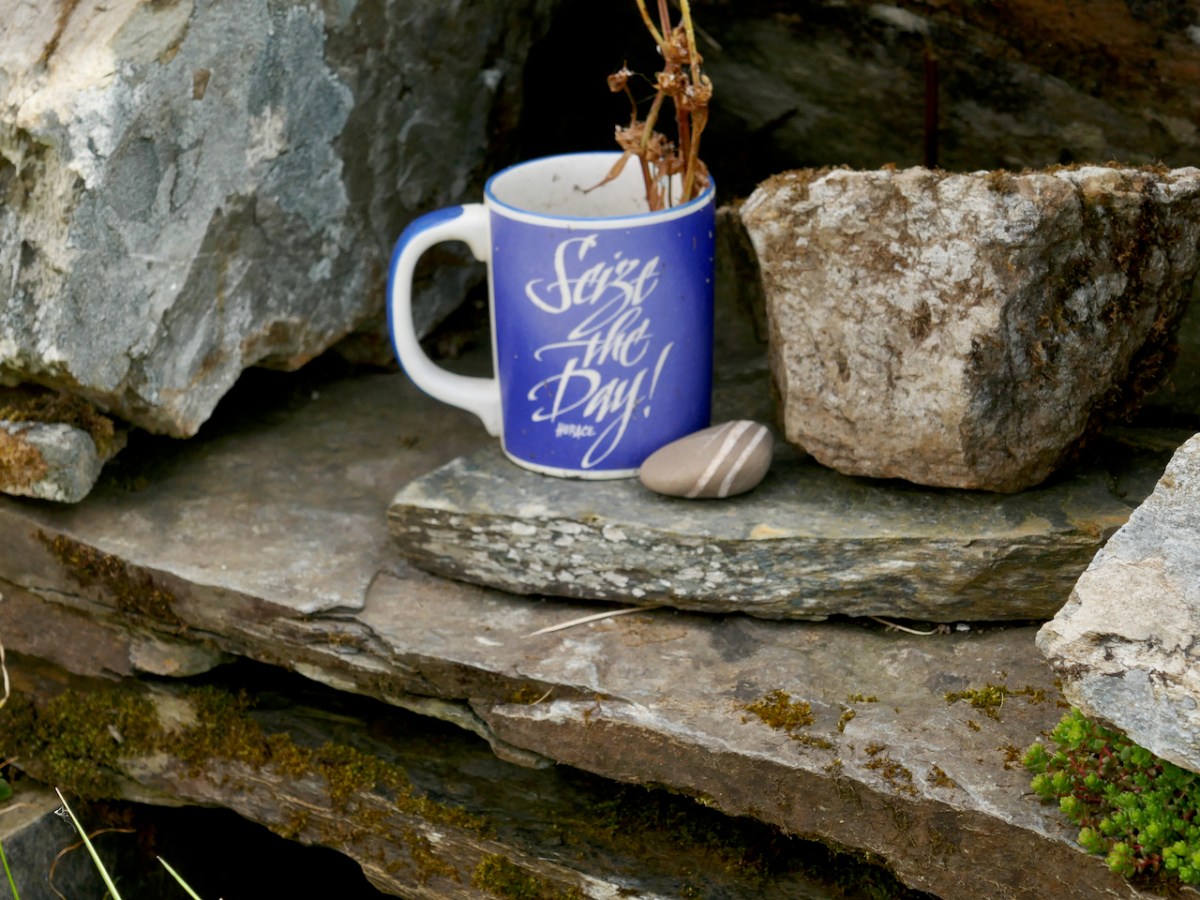
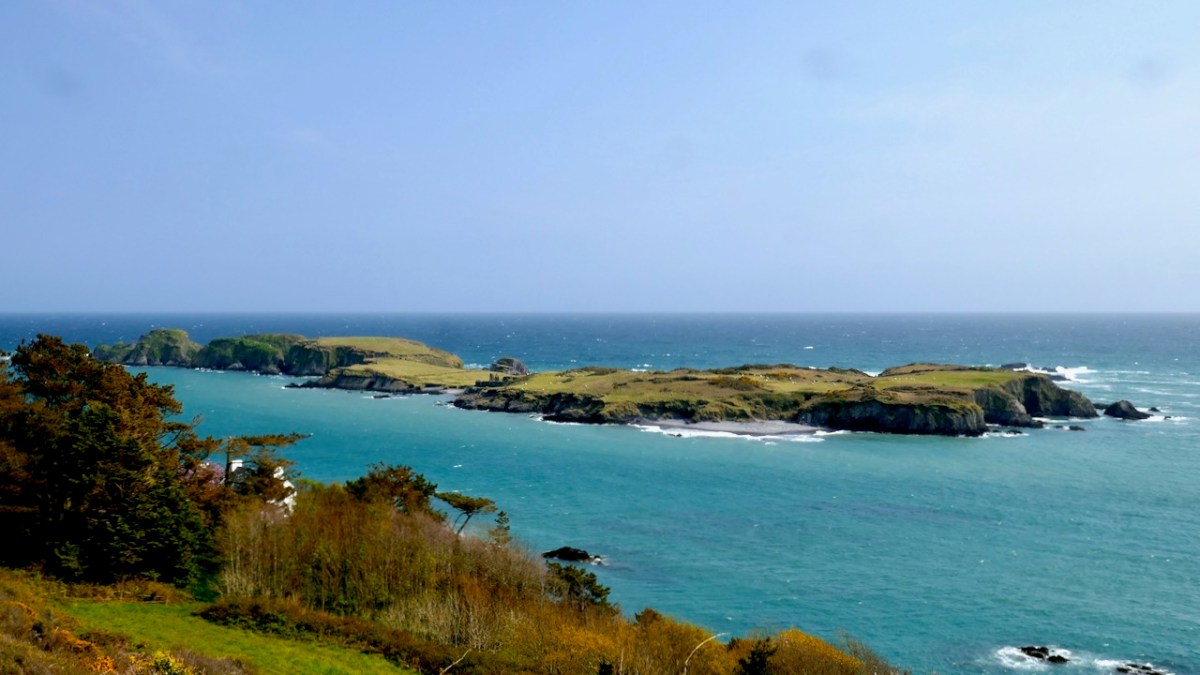
My lead photograph is the well itself. From it, there is a view to Rabbit Island, where the well was originally located. Realising that it was now too inaccessible, the well re-located itself (they do that) to the mainland.
Sometimes it takes real effort to get to a well – thus it was with Stonehall, in Co Limerick. The map was vague, and directions even vaguer but there was nothing vague about the mud. 
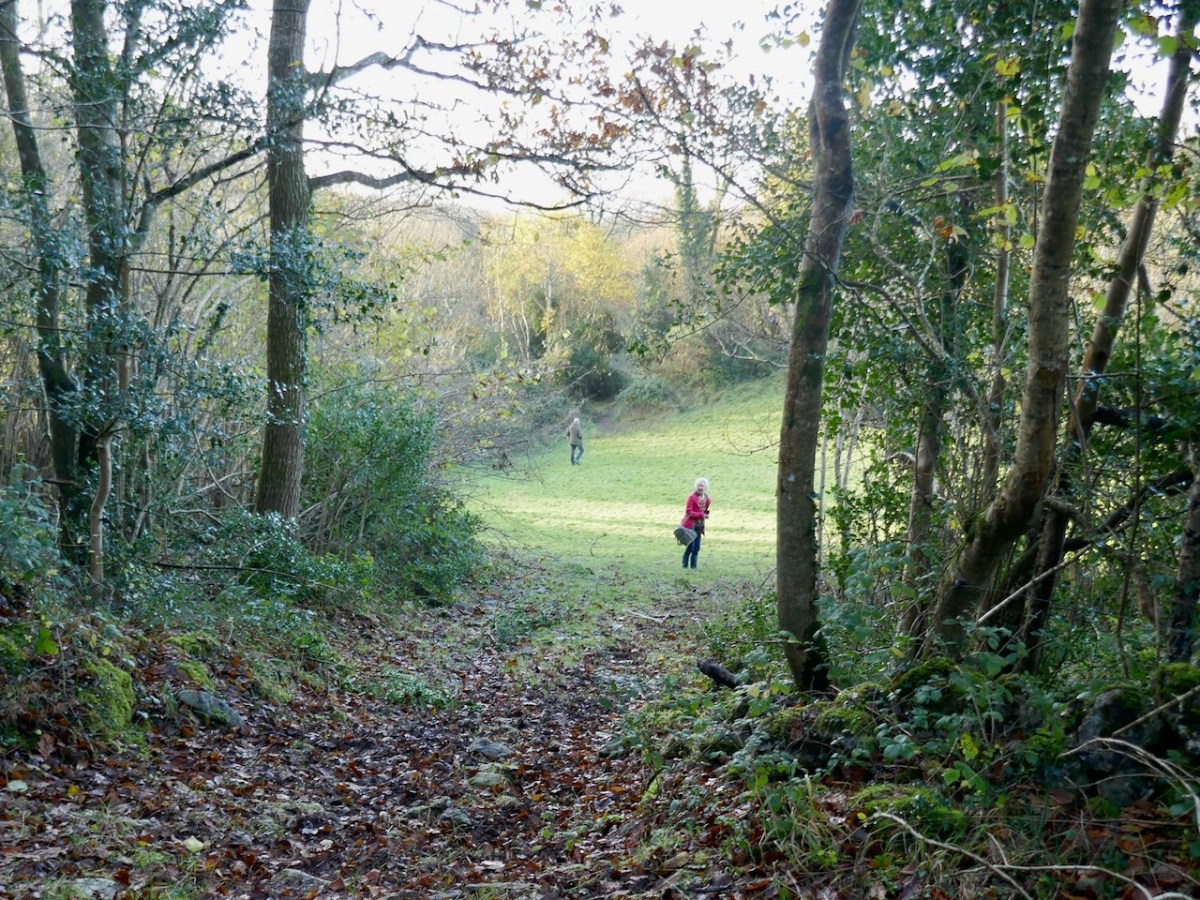
Once you finally get there – across this field and up this rutted path – and catch a glimpse of something promising (Amanda swears by small gates), the sense of achievement is huge. 
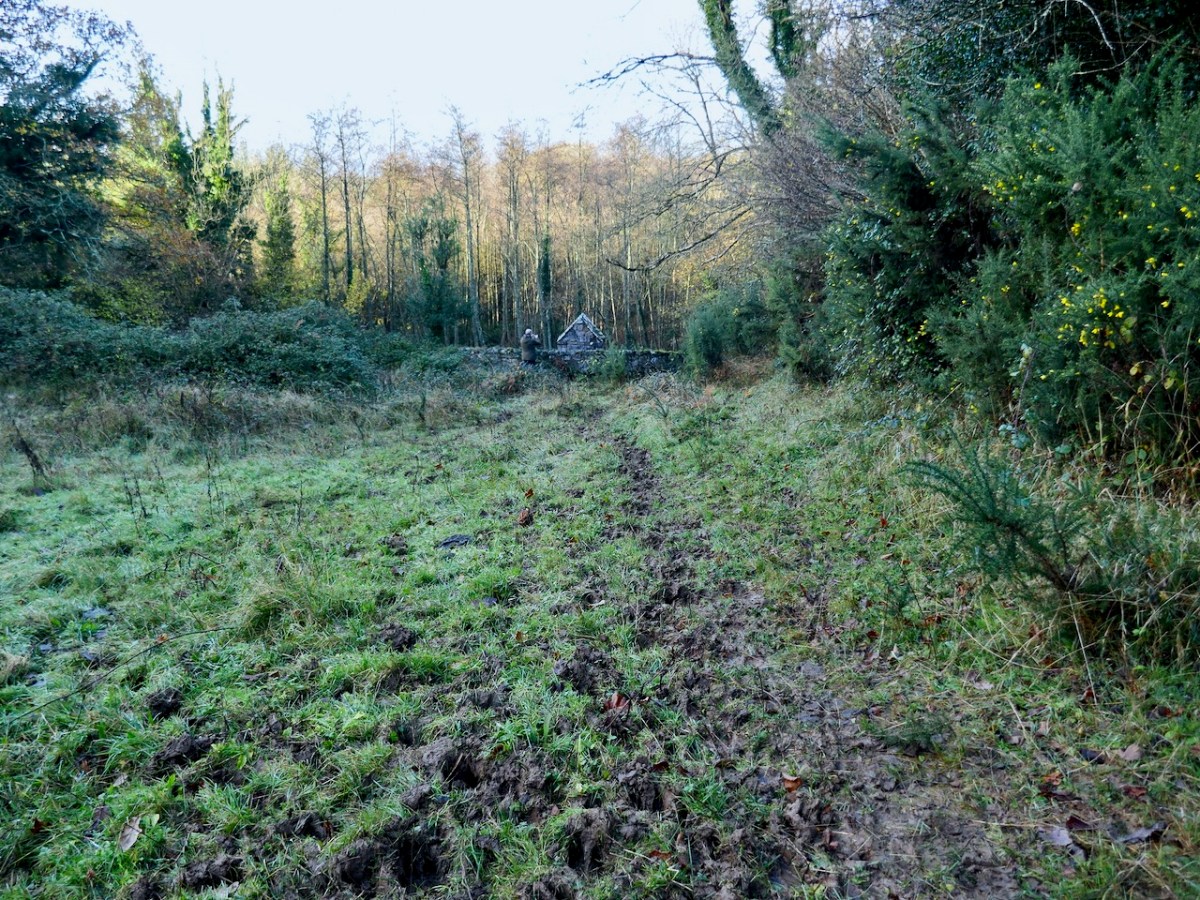
You might be the only people who have been year in years, but here it still is.
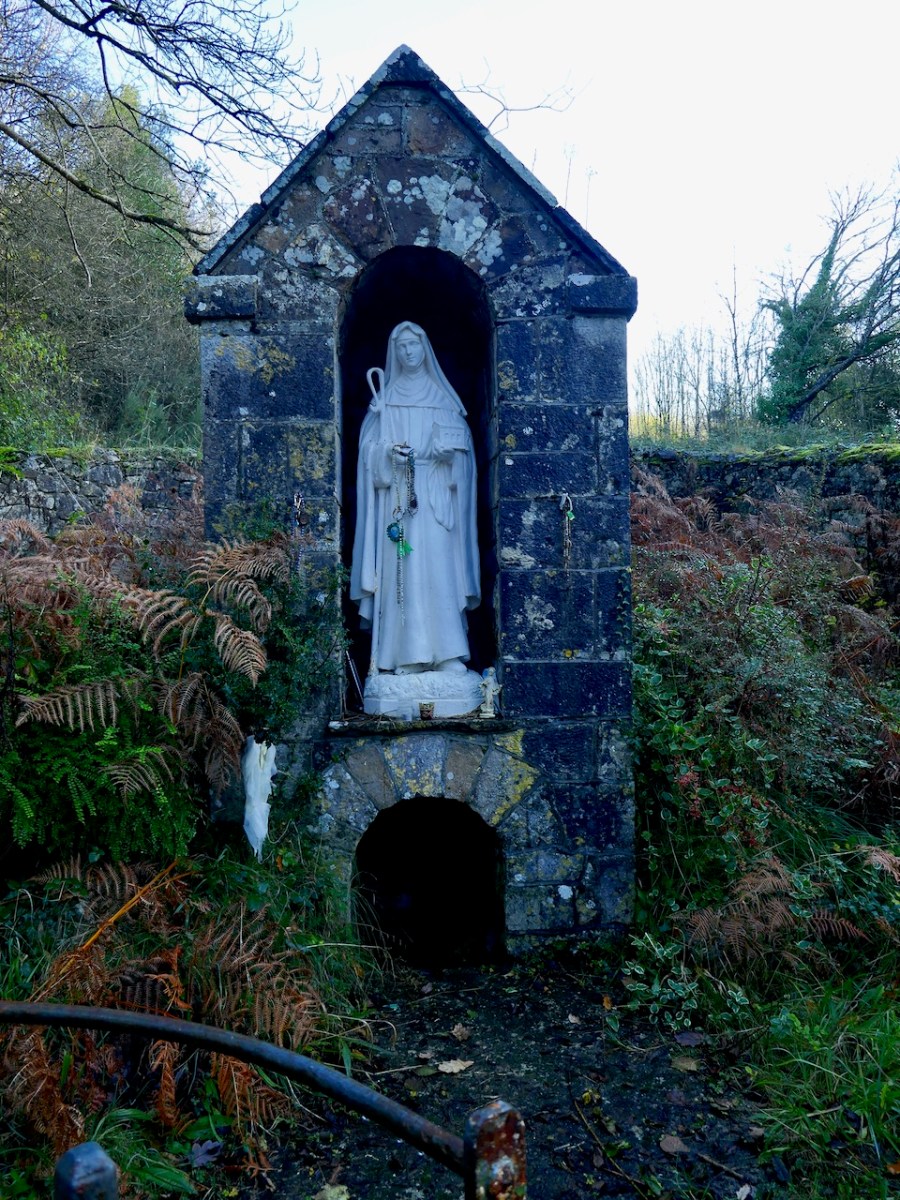
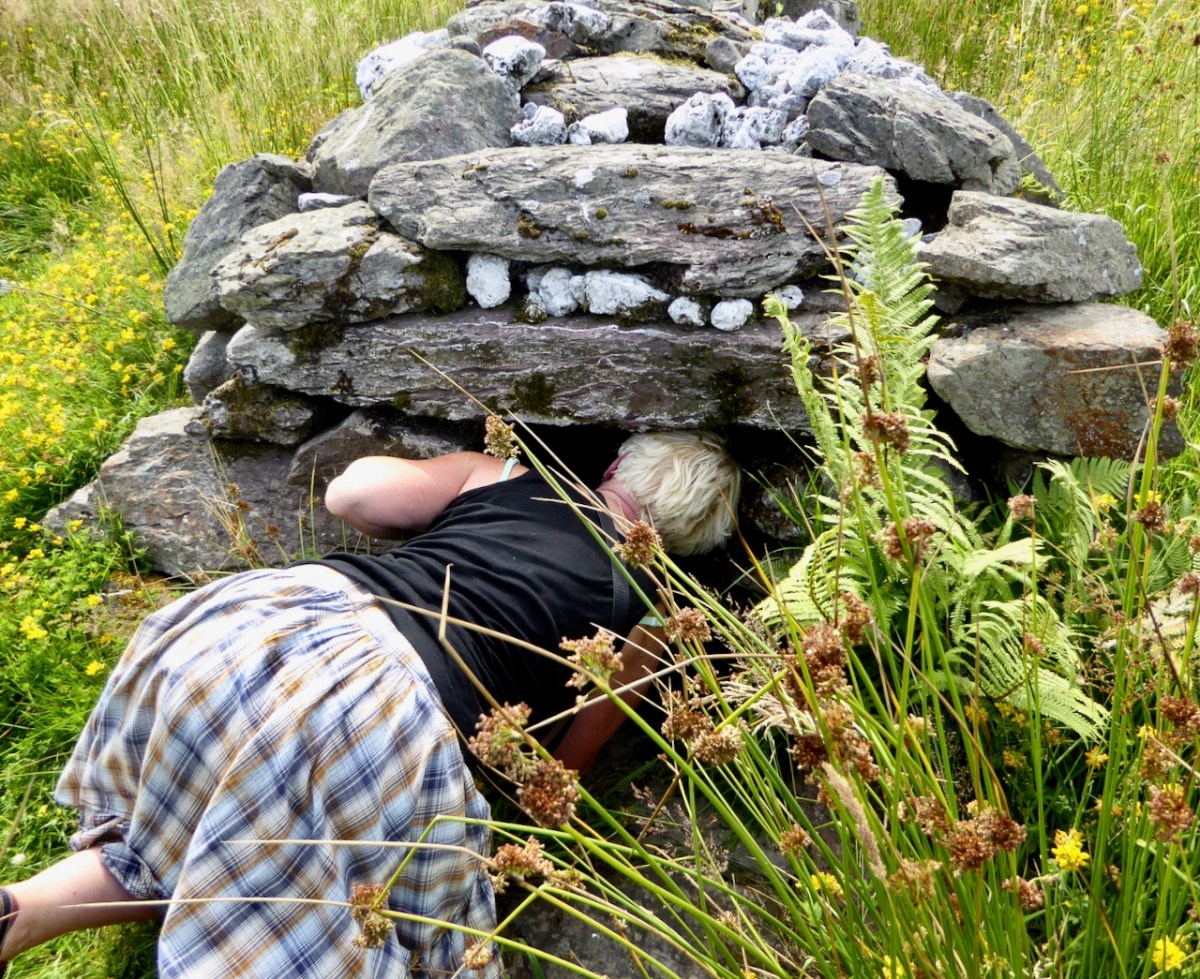
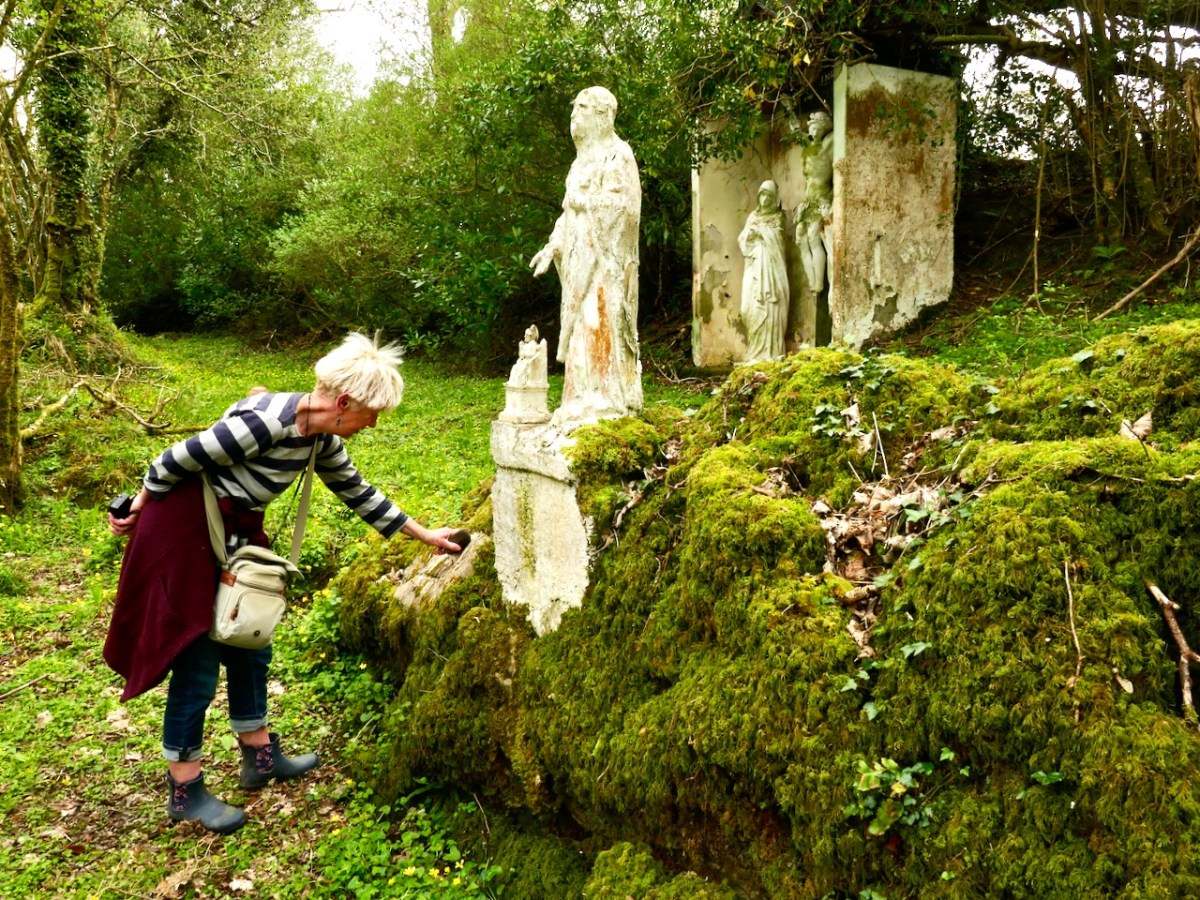
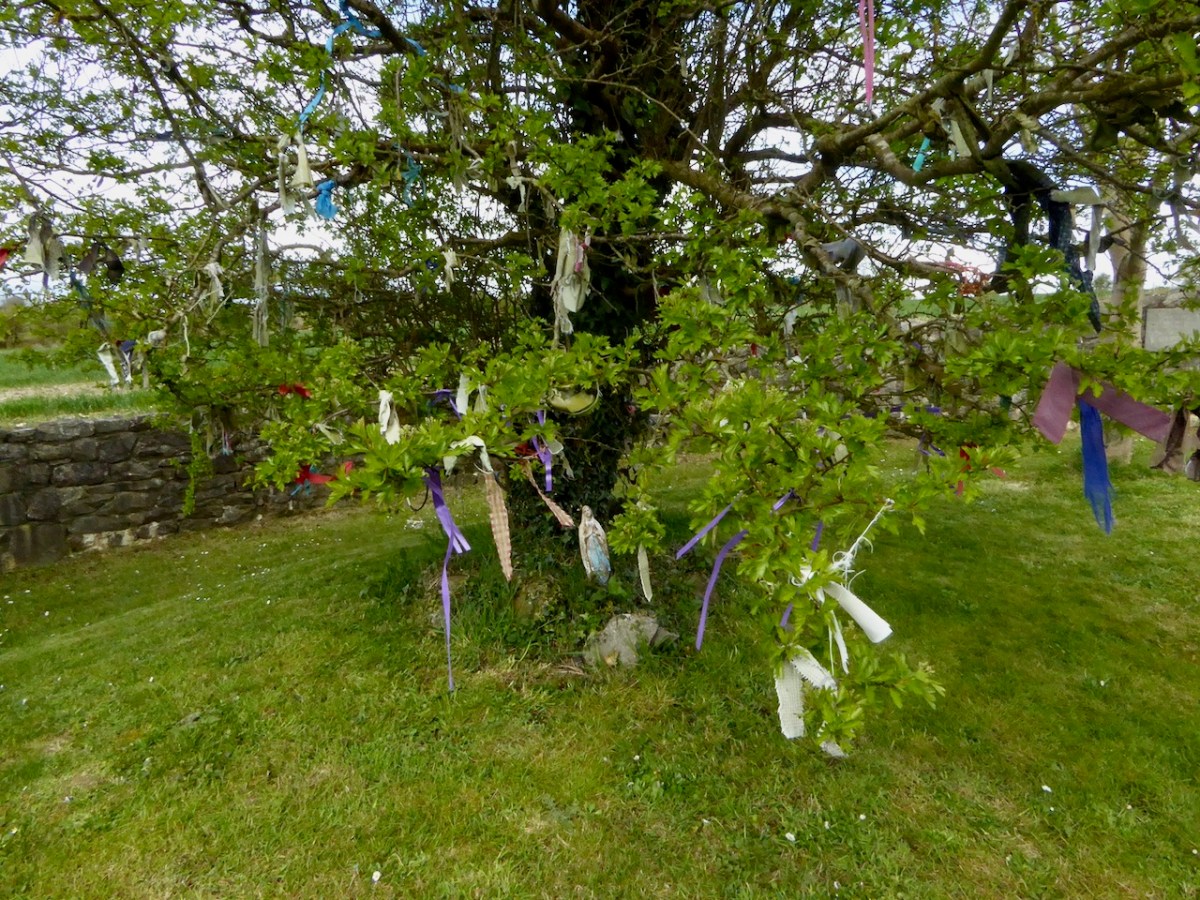
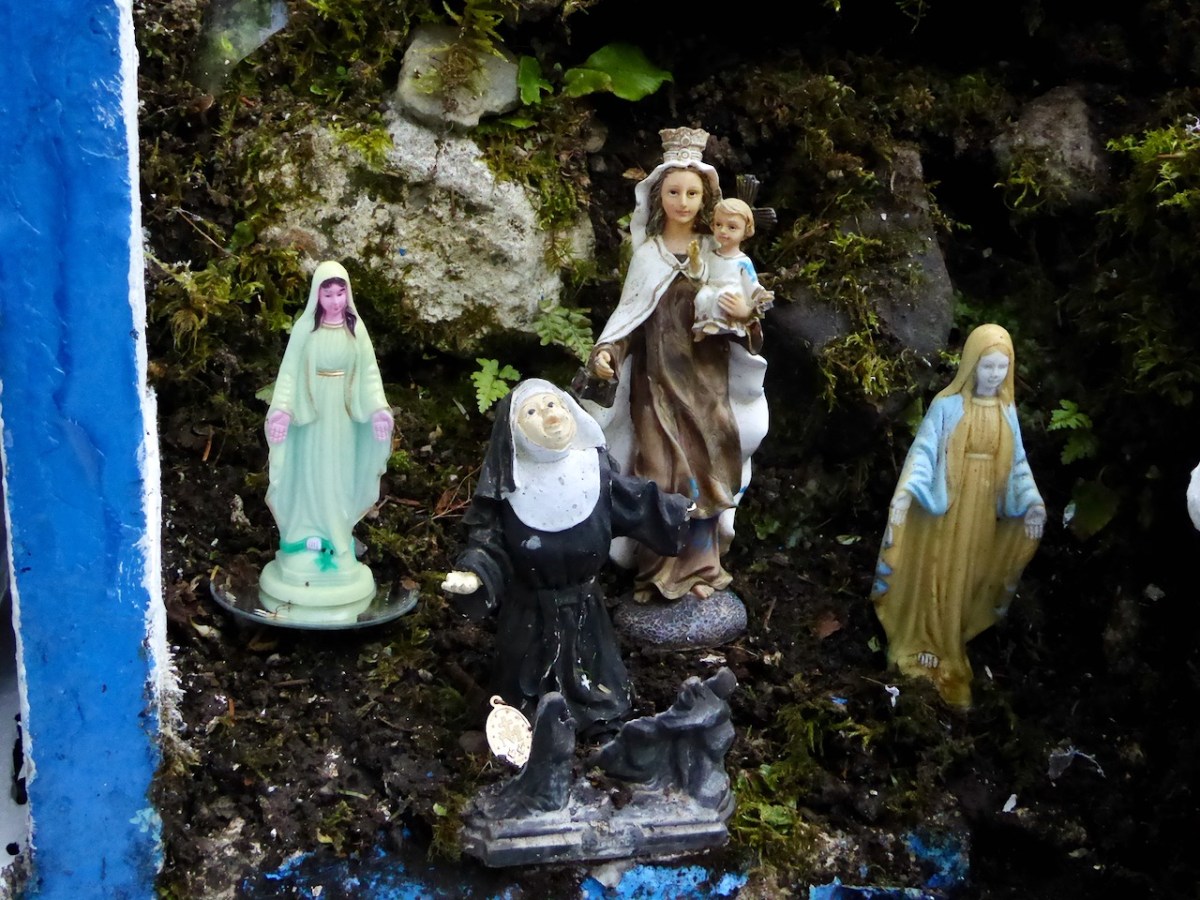
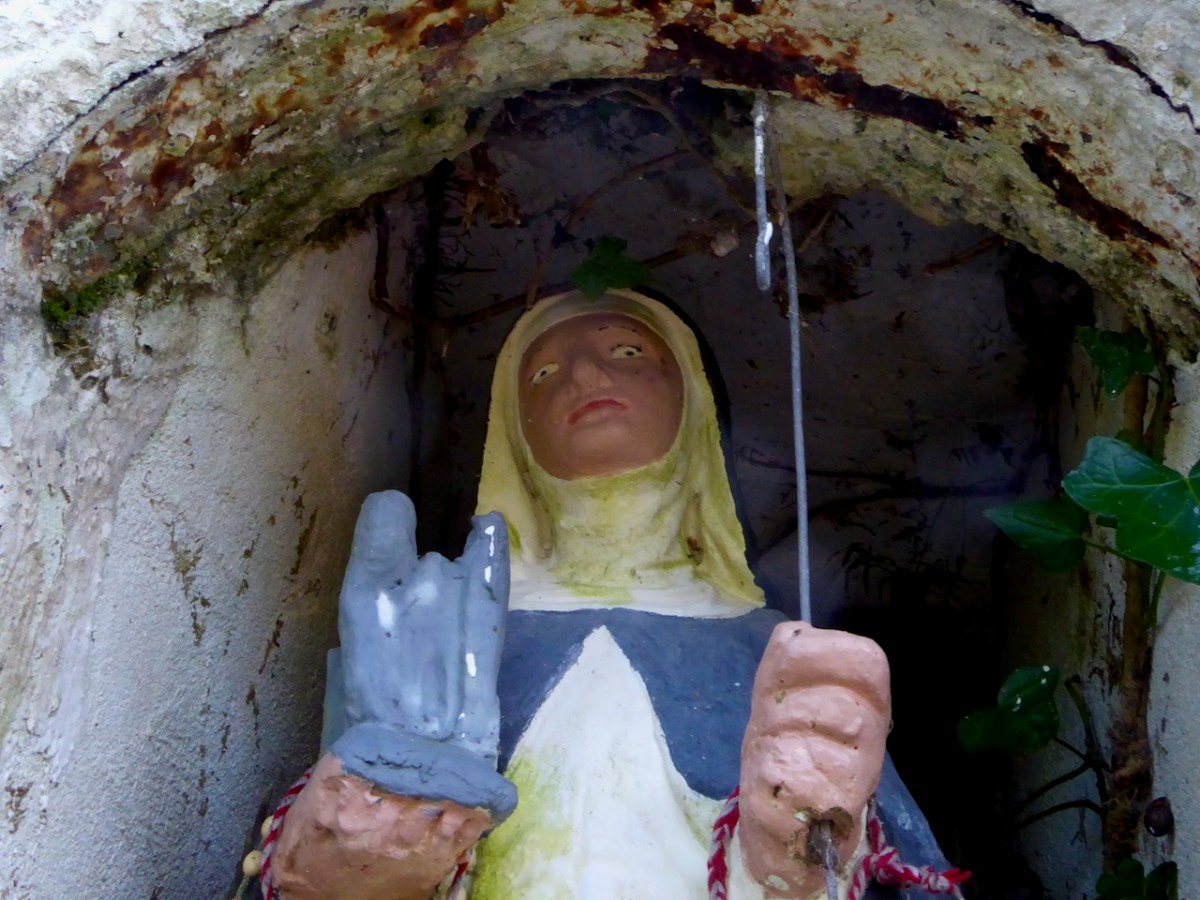
One of my favourites is the one at Britway, not too far from Rathcormack in Co Cork. We discovered this one on our own, in the course of an expedition, and I loved the vernacular nature of it but especially the statue. Brigid had been furnished with a coat-hanger crozier, and her eyes had been coloured black, giving her a threatening air. I believe she may have been refurbished more recently, so perhaps is not quite so scary now. 
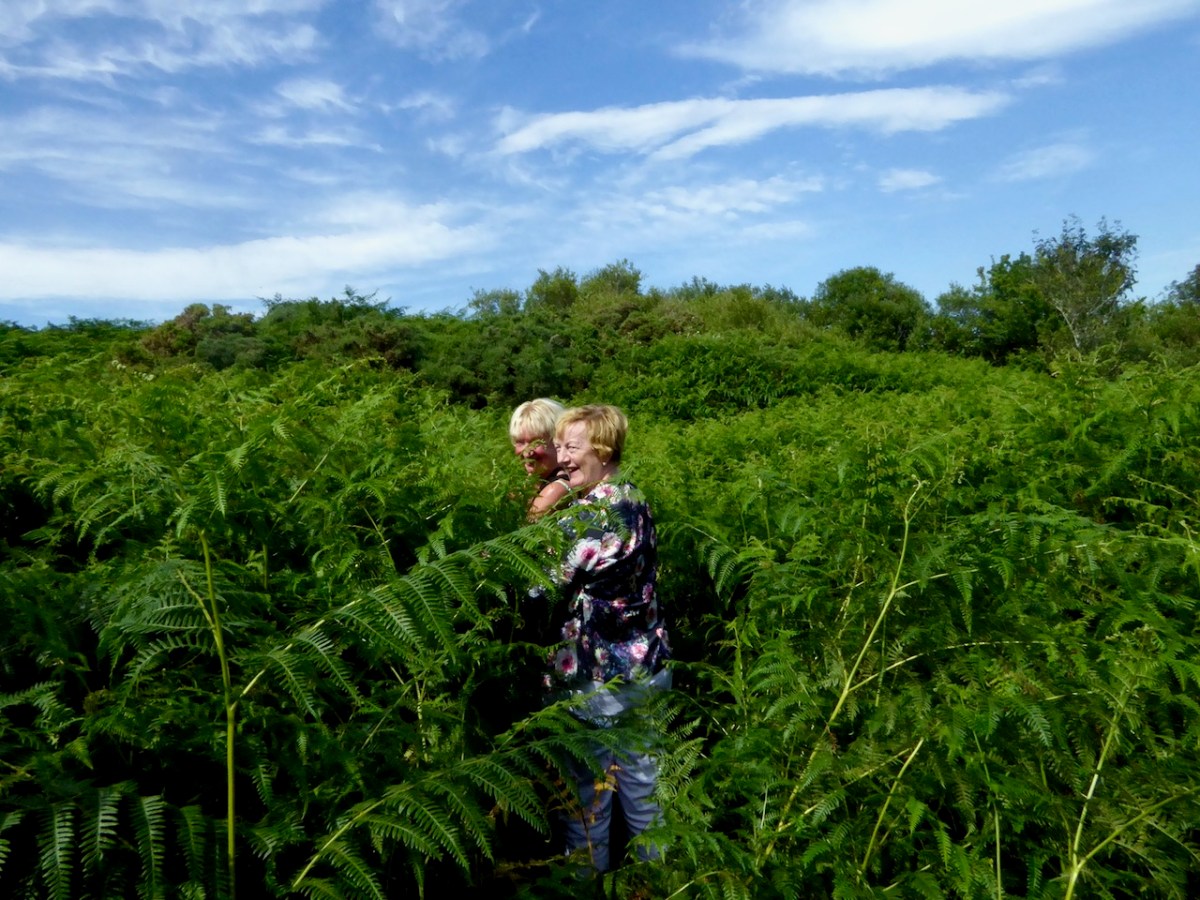
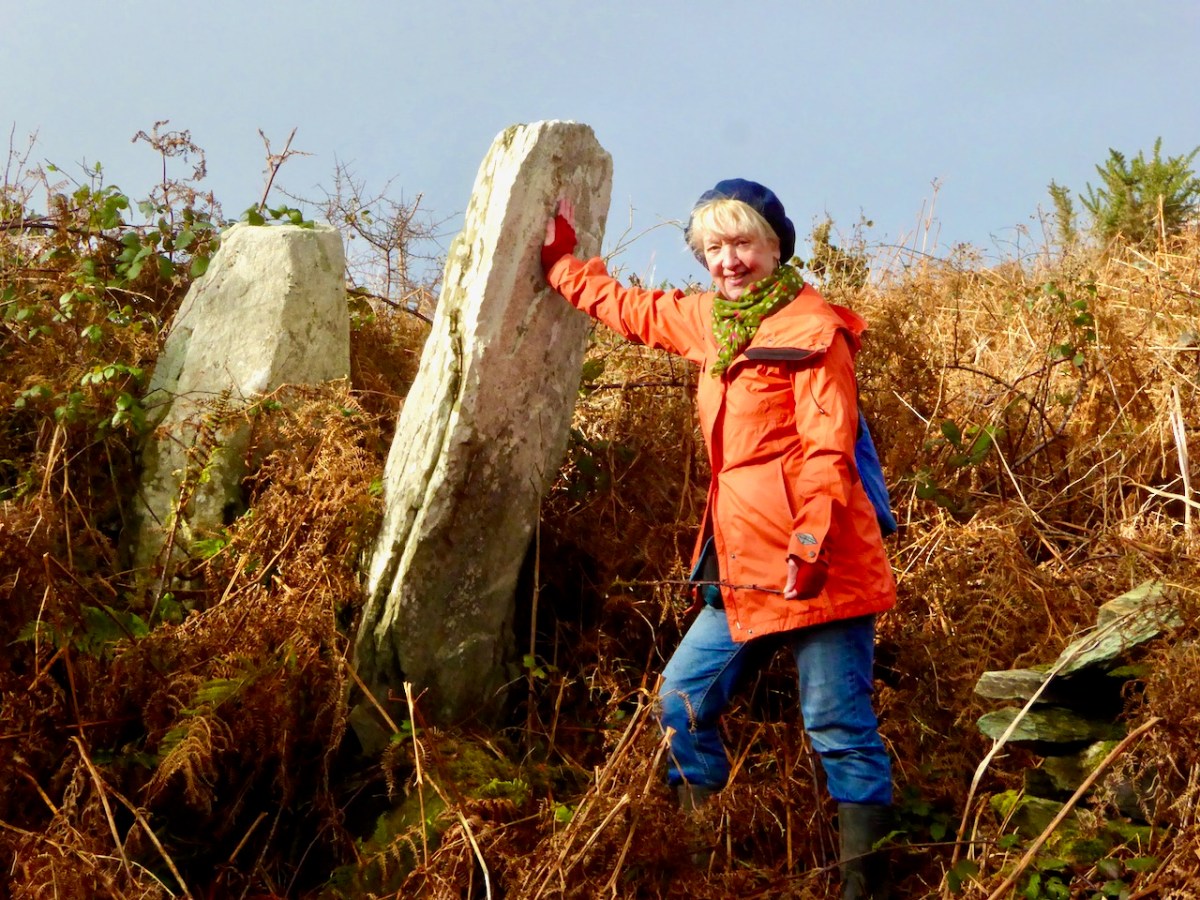
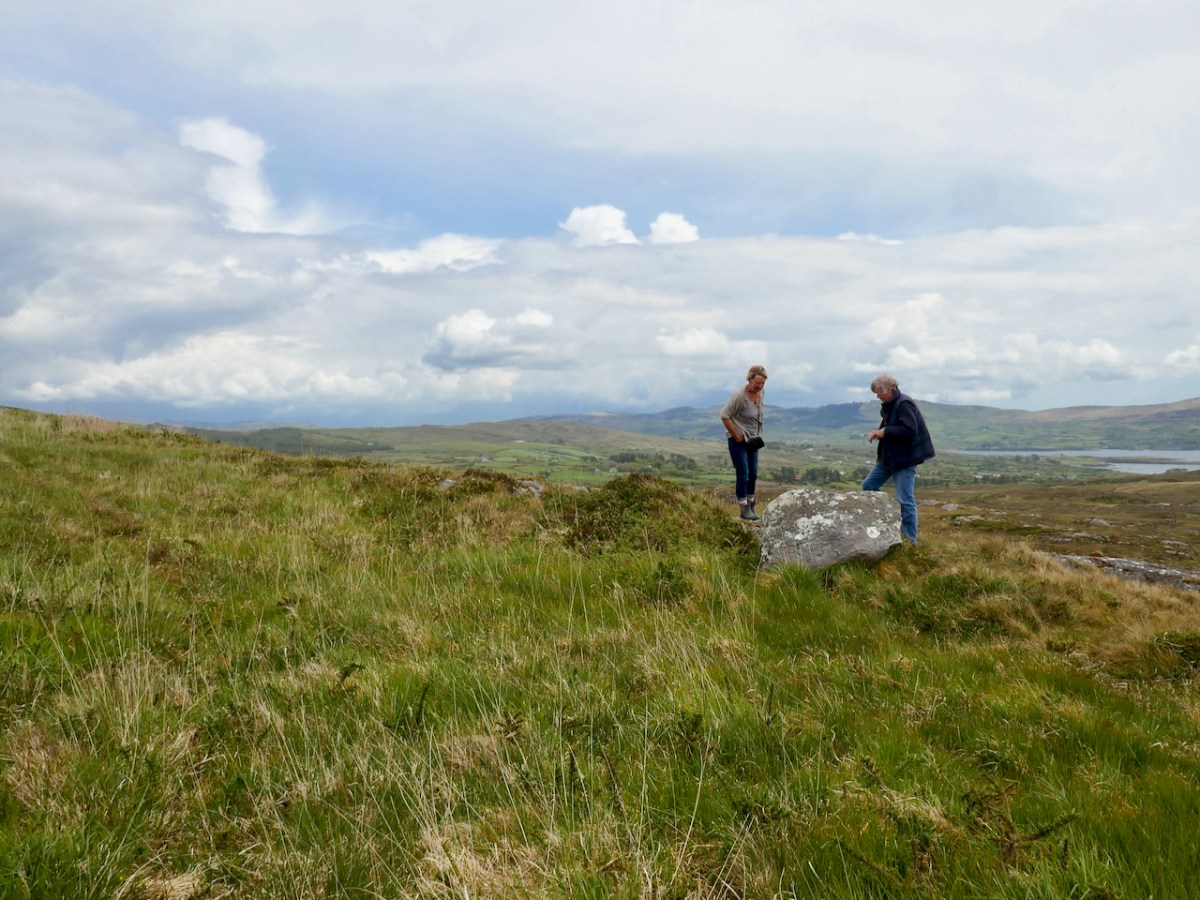
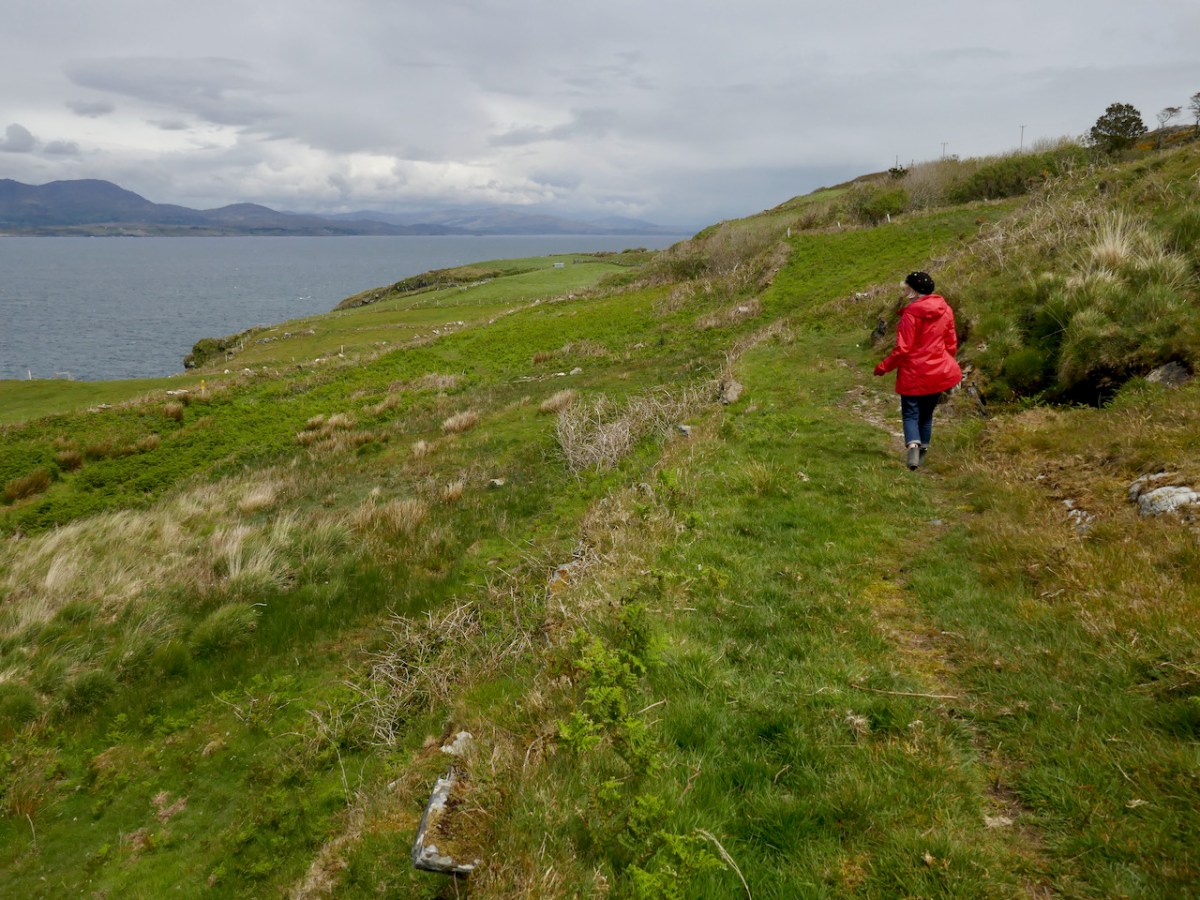
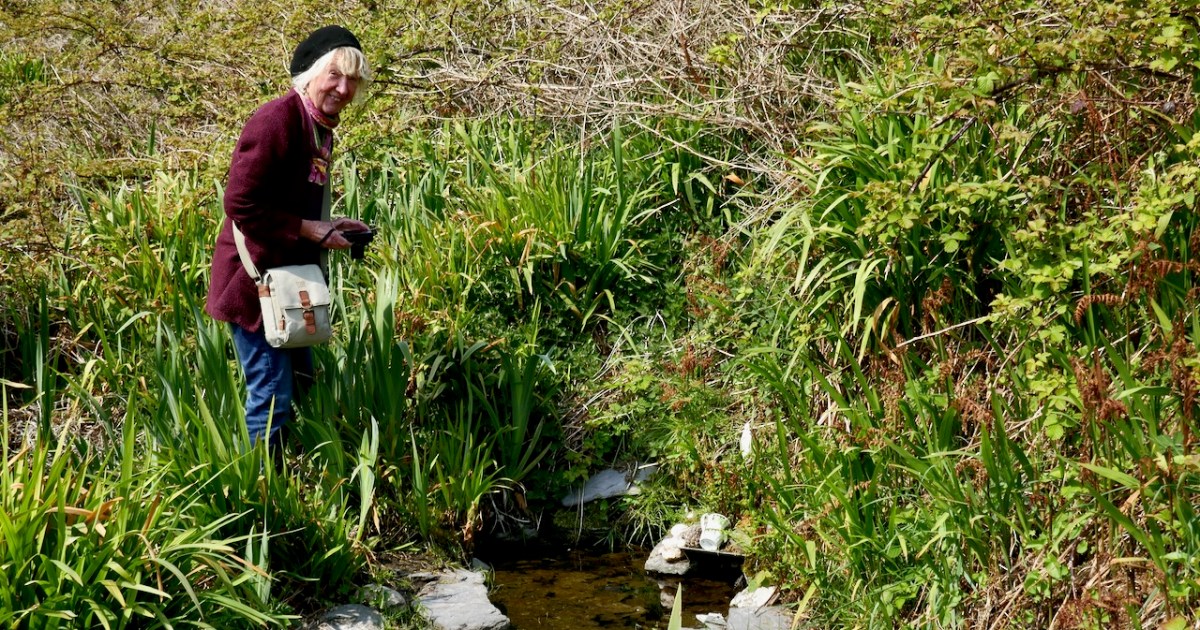
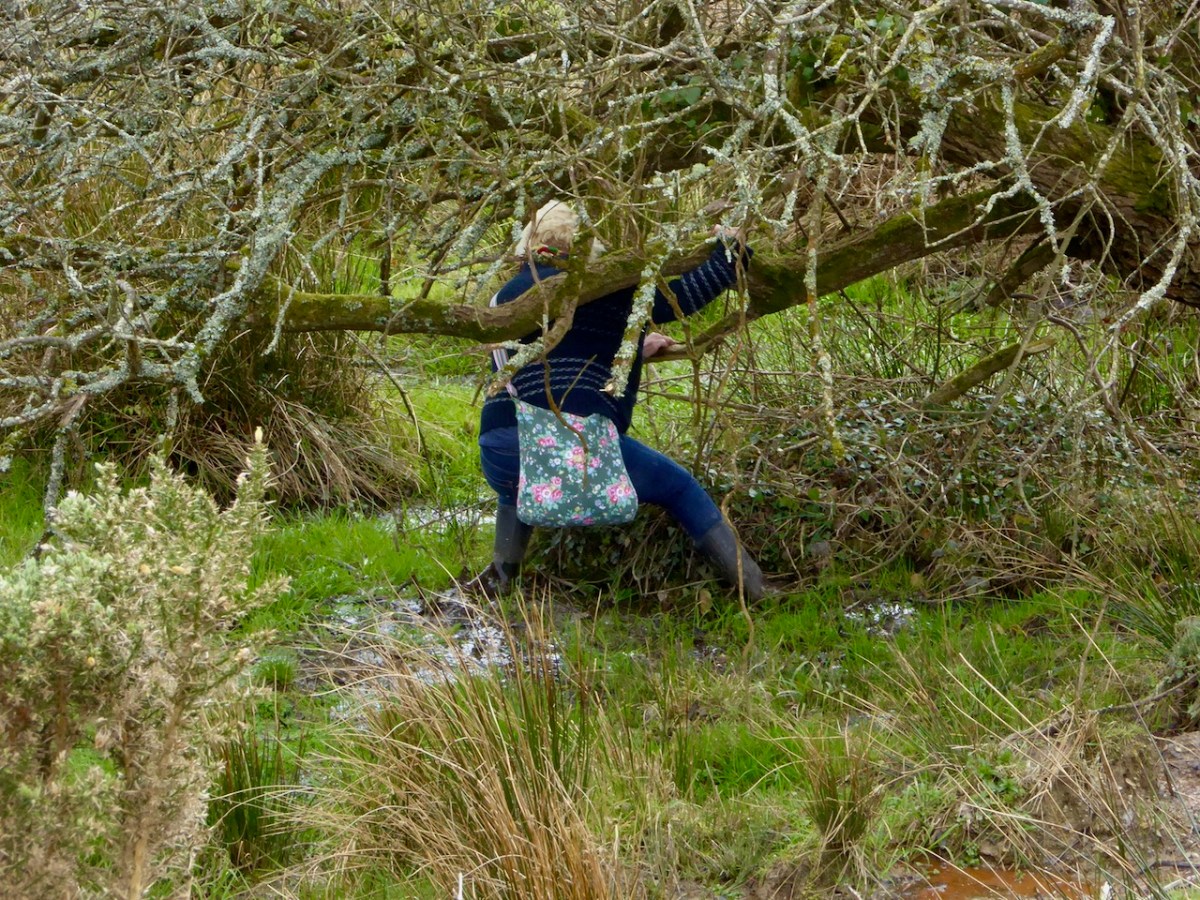
I leave you with some images of Amanda in her happy place. 
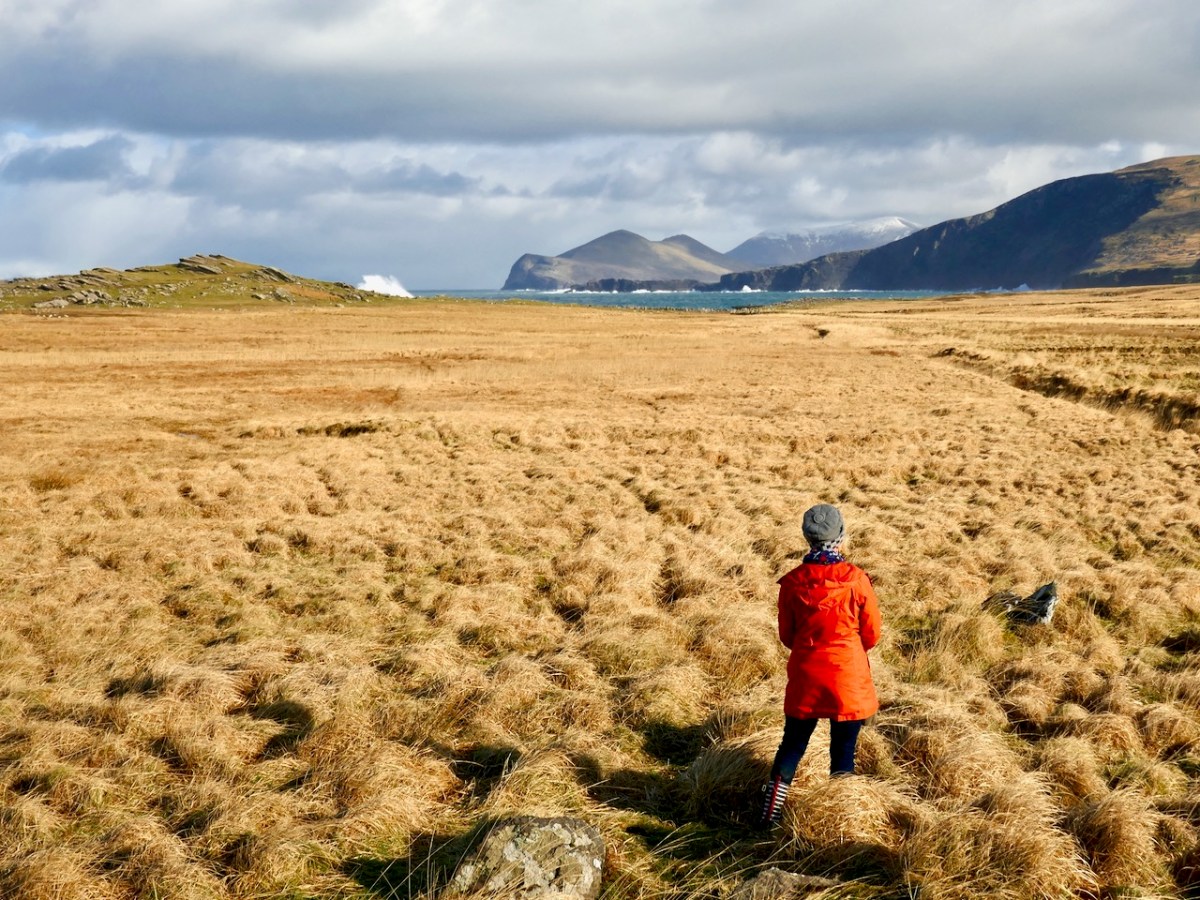
Congratulations, my friend, on ten amazing years of exploration and discovery and on becoming the Go To Authority on the Holy Wells of the south west of Ireland. 
Air India Disaster 40 Years On – Dignity, Love, Remembrance

I keep coming back to this story. I wrote about it first when the anniversary was the 30 year mark. And again two years ago when there were new developments in Canada. If you are not familiar with the story, please go now and read Amid Unbearable Tragedy – a Model for the World (Updated).

I attended this year’s ceremony – the 40th anniversary. It remains the single largest mass murder in Canadian history and the deadliest aircraft bombing ever. In fact, it remained the deadliest terrorist attack involving an airplane until September 11, 2001. 

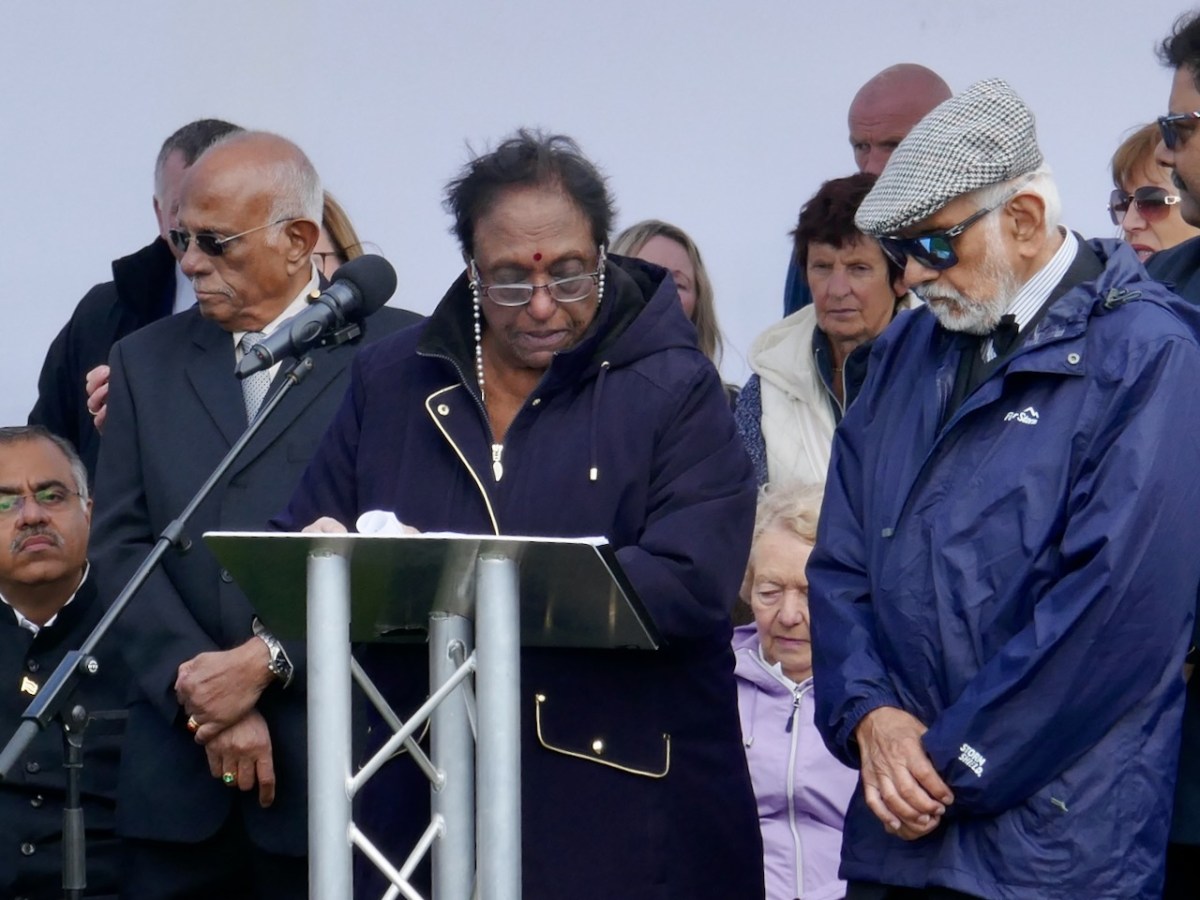
There was a large turnout this year. Family members still come, including my new friend Sanjay Lazar, who contacted me in advance of the ceremony. His is a story tragic beyond belief – he lost his parents and his sister in the bombing, and became in time a spokesperson for airline safety and a trade union champion. 

He comes every year, as does Dr. Padmini Turlapati, who spoke about her two sons, Sanjay, whose body was recovered, and Deepak, who is still out there. Unbelievably, she made us laugh with her funny stories about the boys.

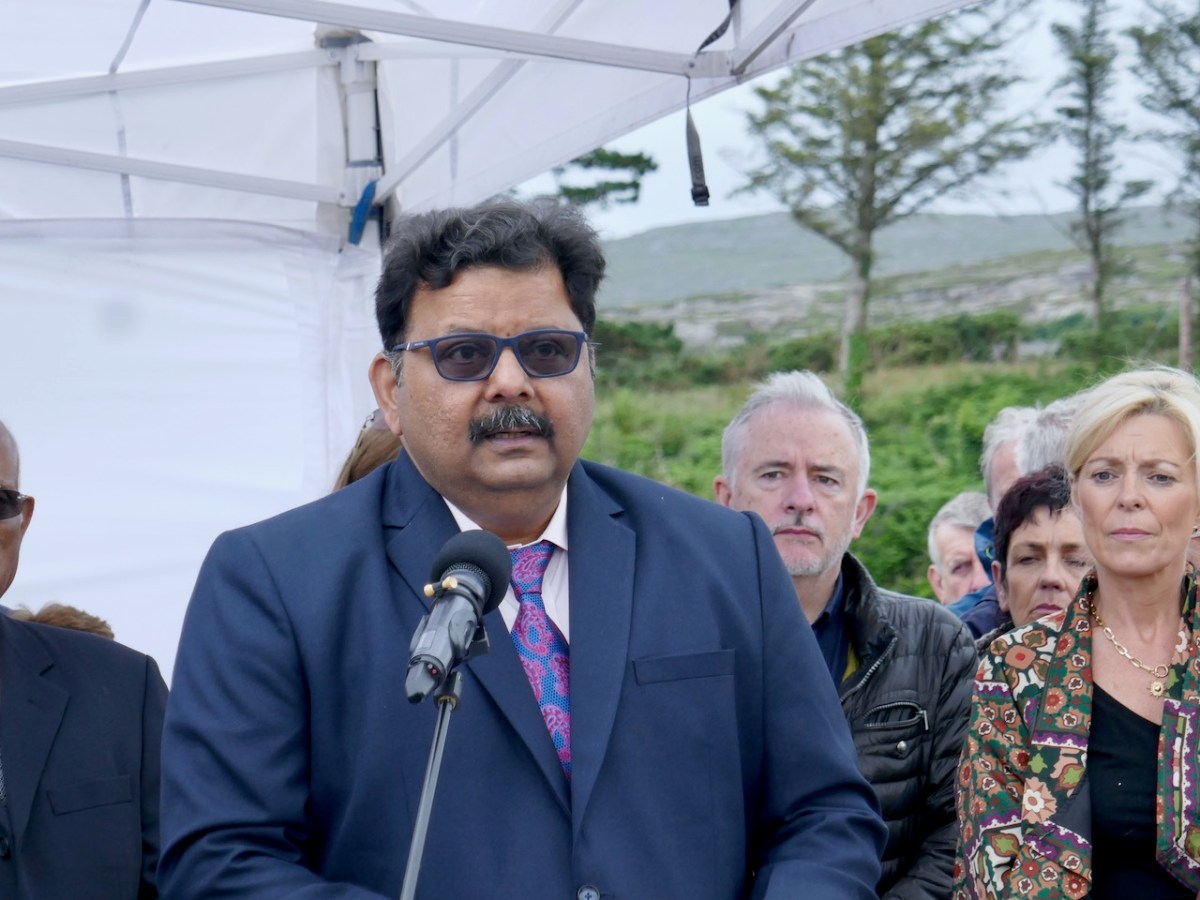
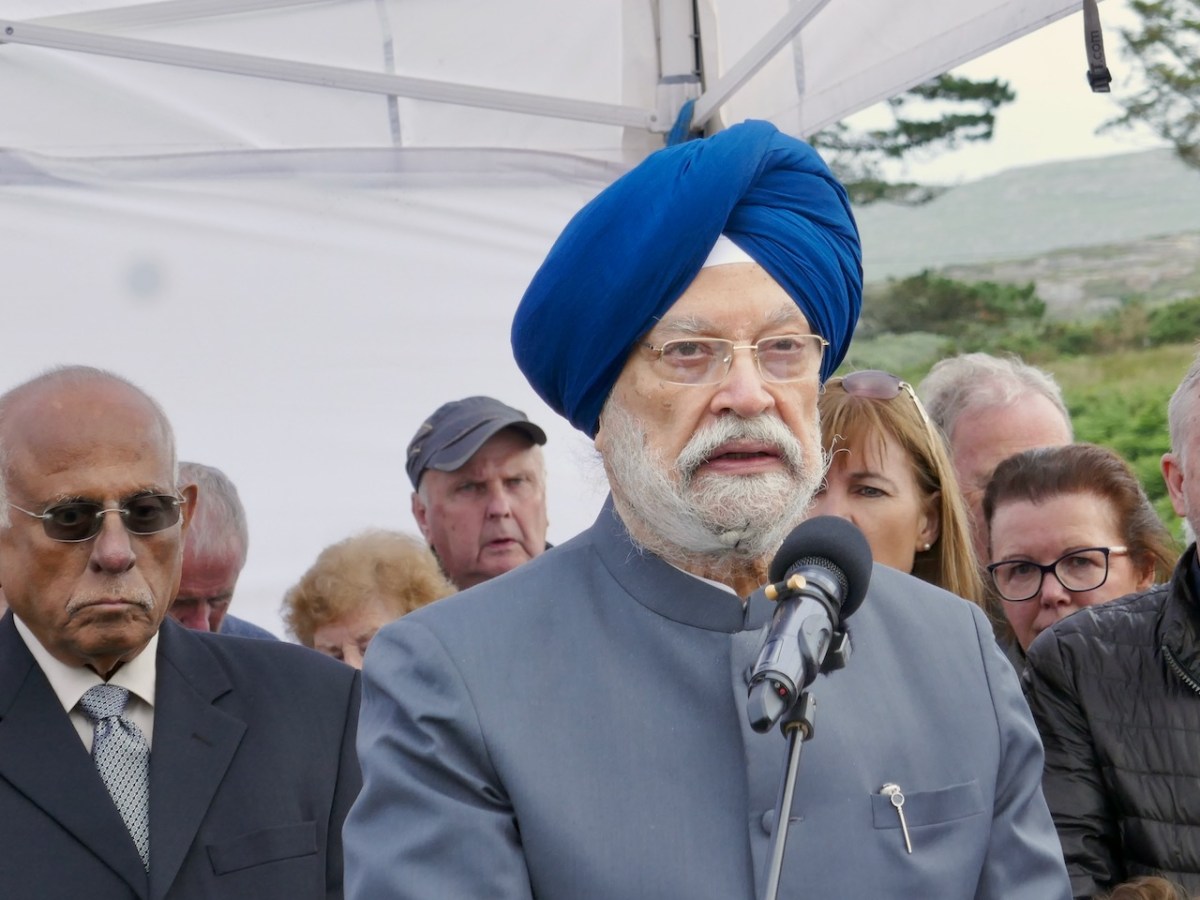
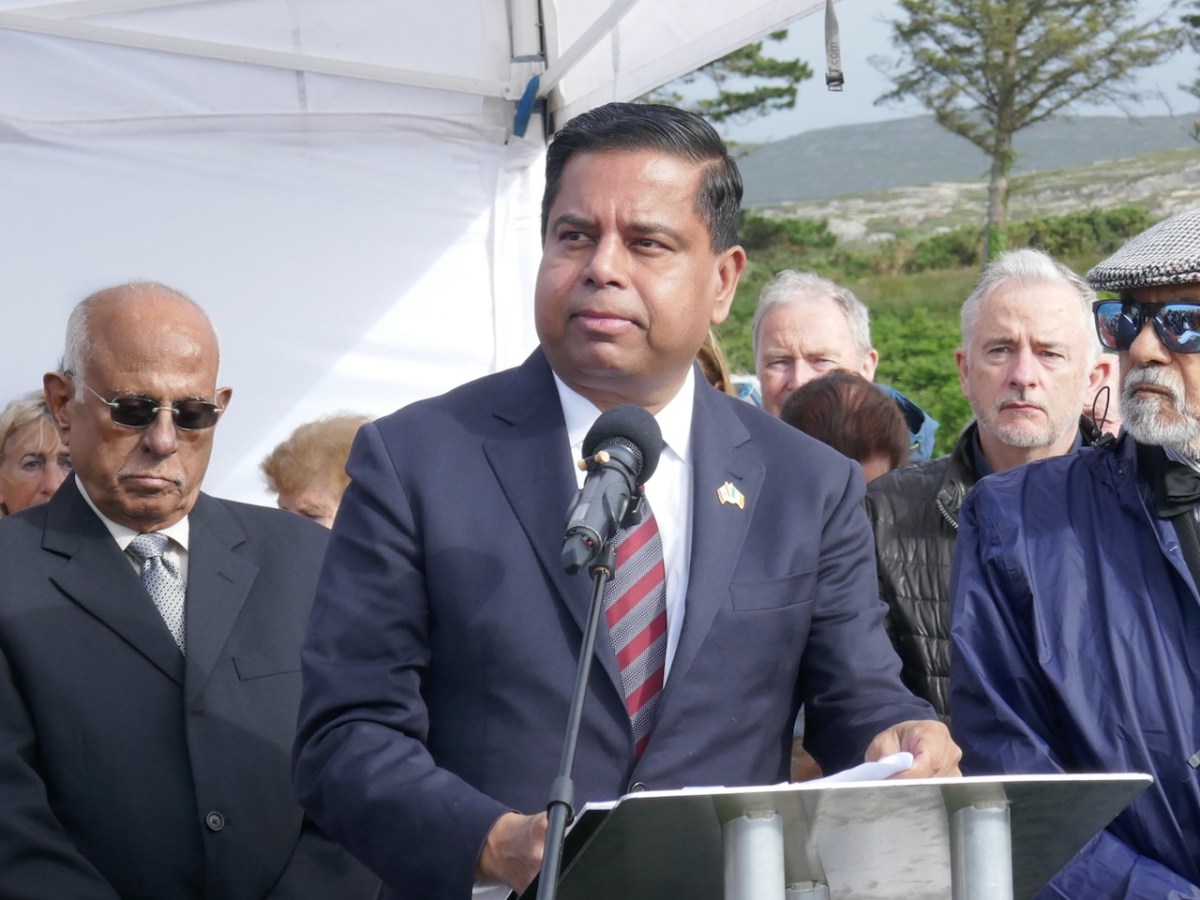
One particularly moving speaker was Hardeep Singh Puri, Indian Minister of Petroleum and Natural Gas. Himself a Sikh, what he said was captured beautifully by Amanda in her daily blip:

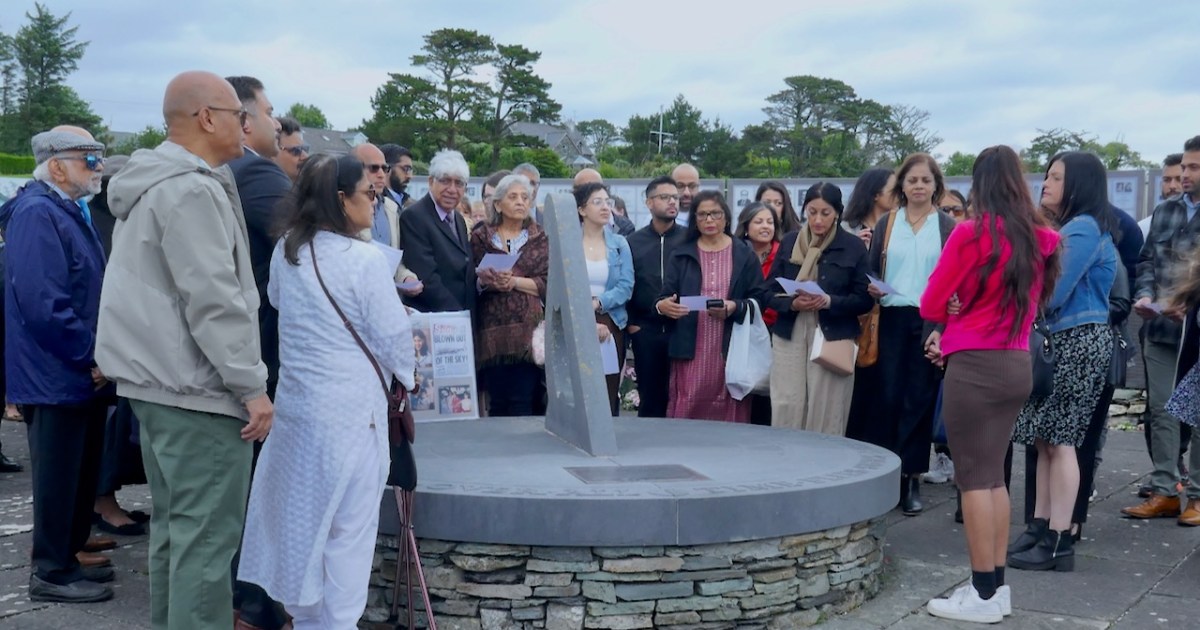
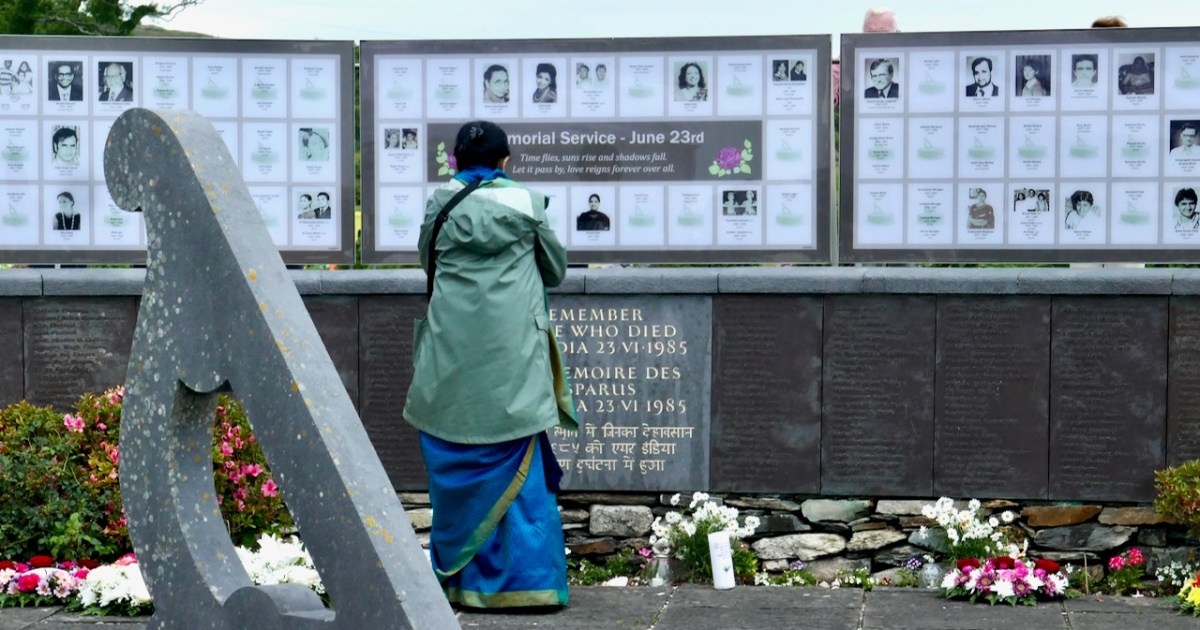
Towards the end one of the speakers spoke of the utter futility and horror of terrorism and urged us to look around  – here he said was what it was all about –  kindness, goodness and love. I looked – a very multi-cultural gathering, Sikhs, Christians, Muslims, Hindus, Indian, Canadian, British, Irish from all walks of life-  all joined in sorrow and support, humanity at its best.

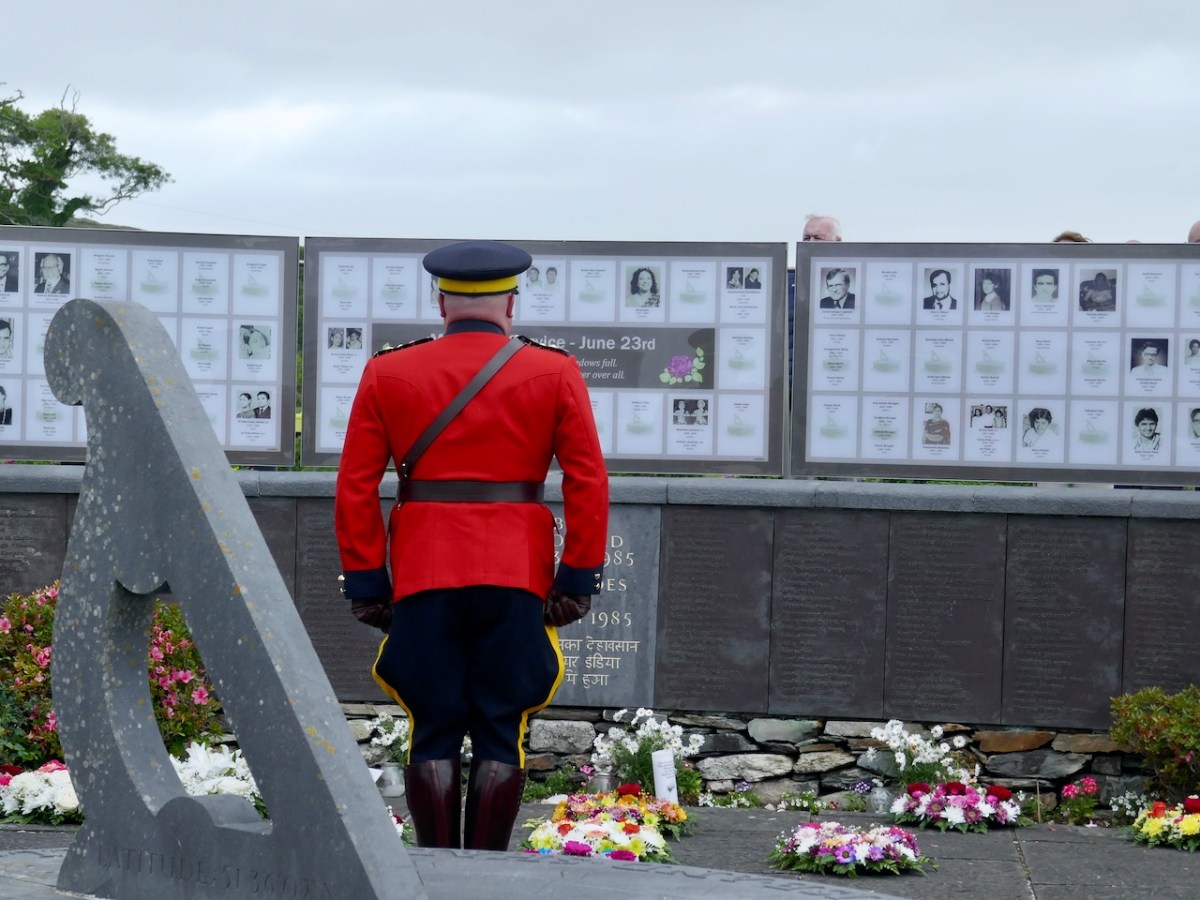
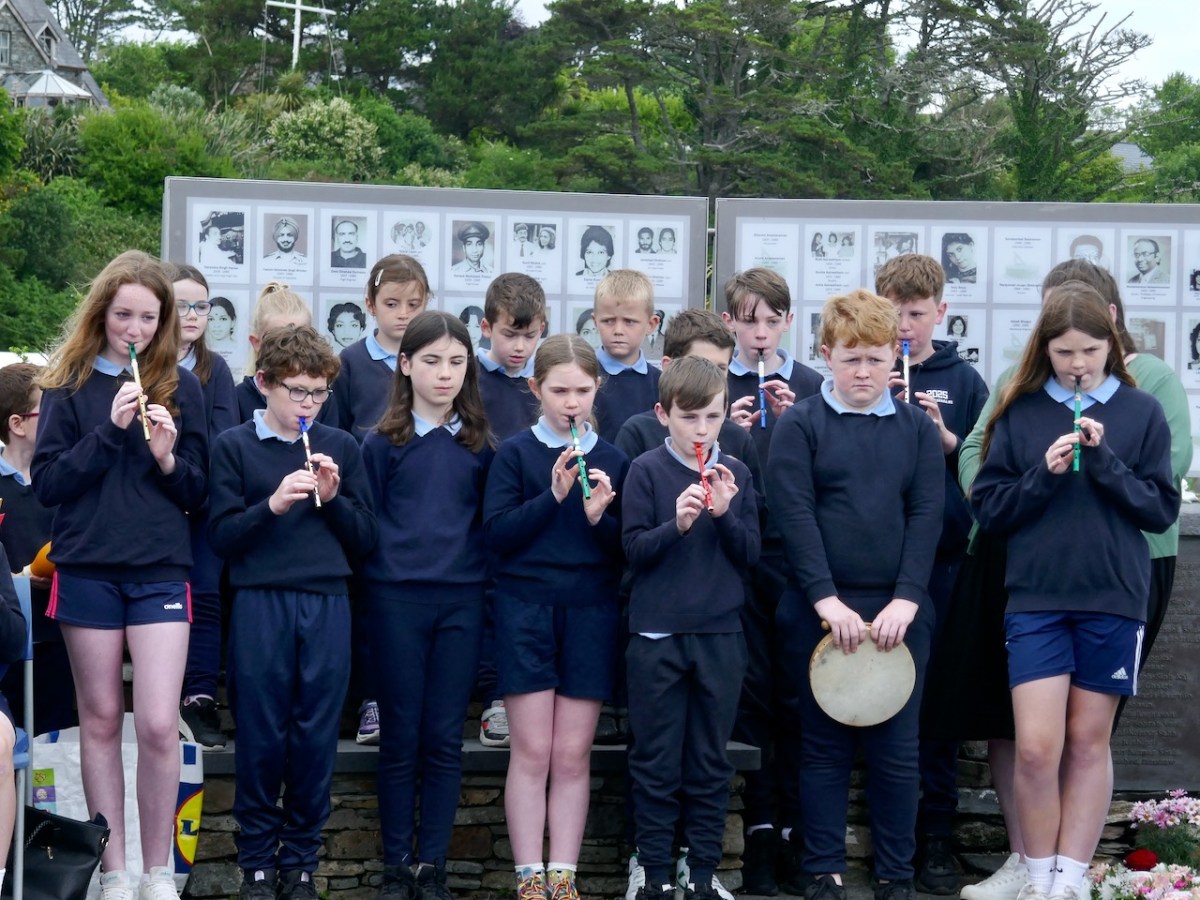
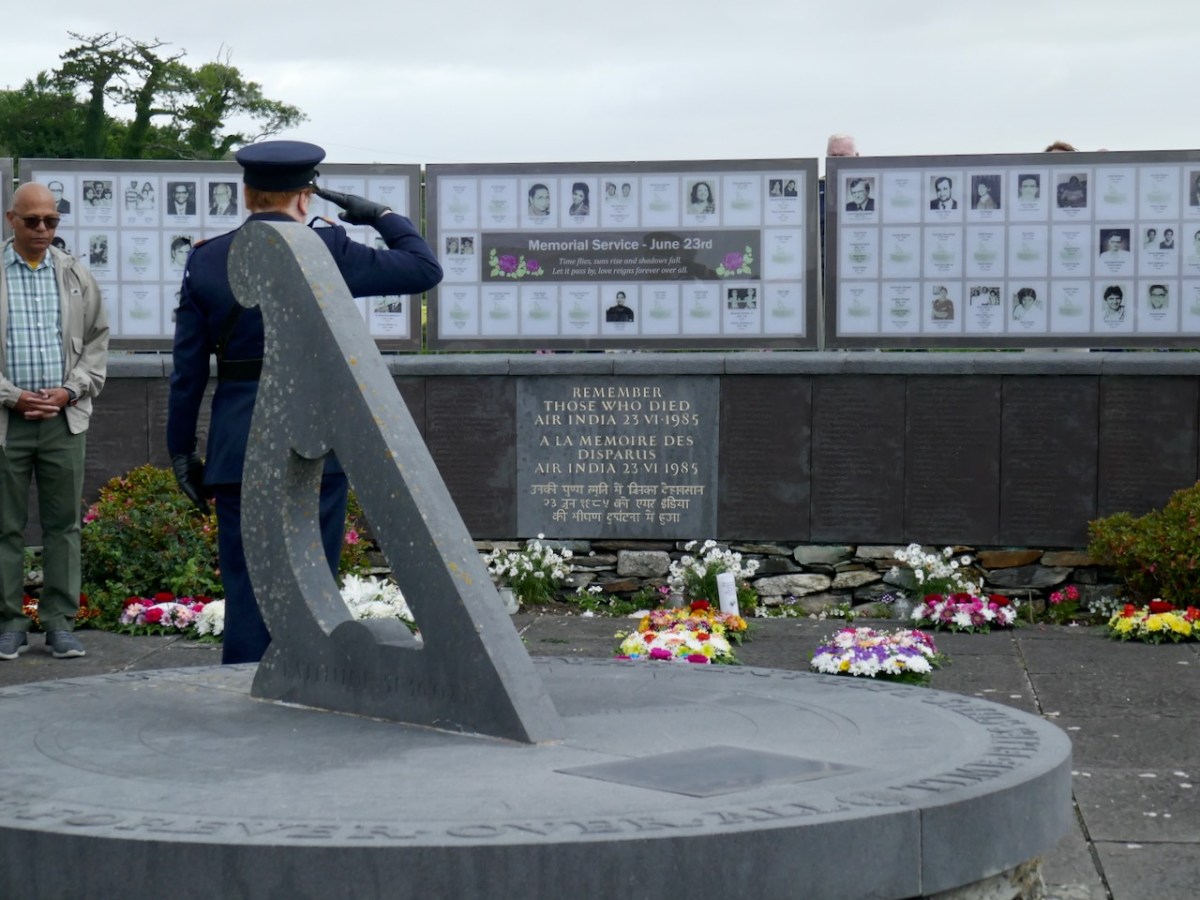
Amanda was undone by the performance of the local schoolchildren. As she mopped her eyes a very large Mountie in full dress uniform put his arm around her and patted her shoulder. It was a lovely moment.

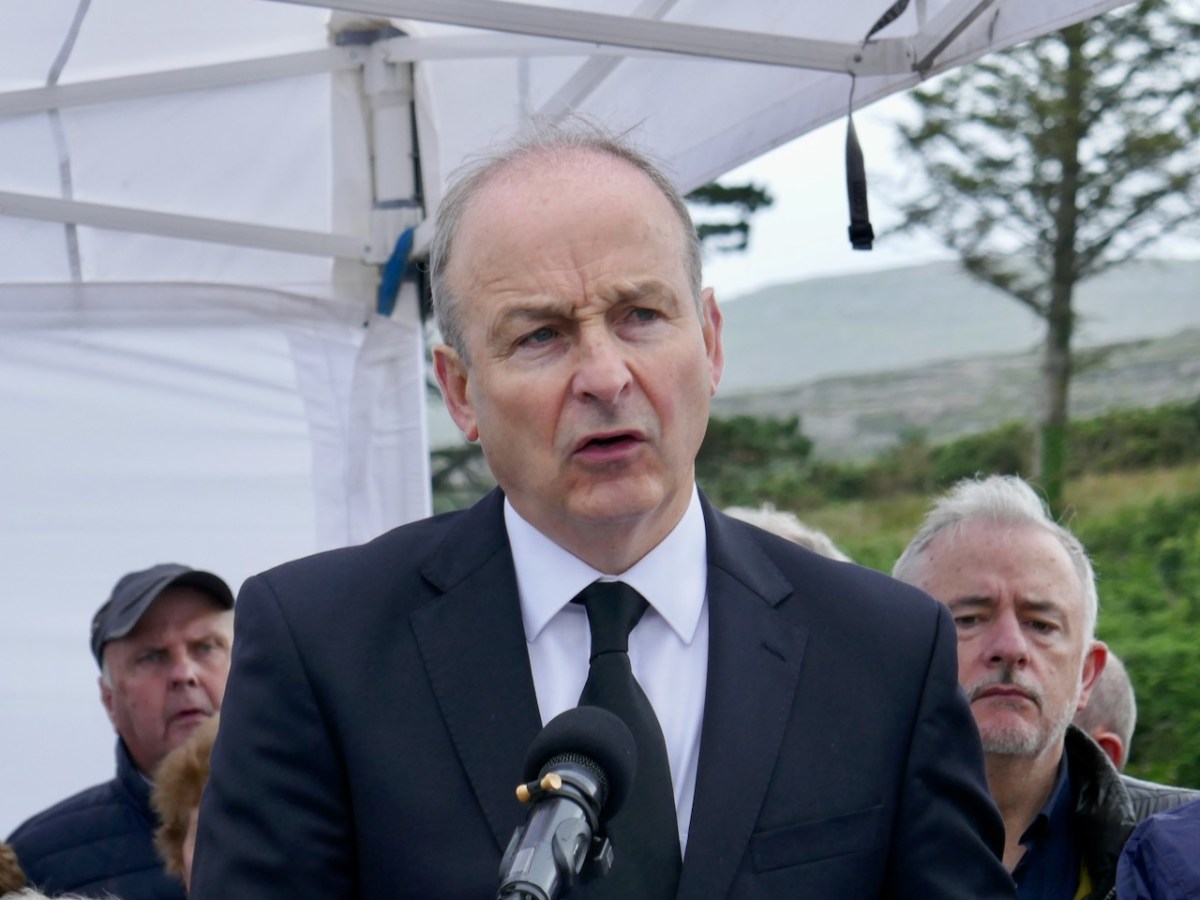
Micheál Martin, grave and respectful, spoke the words I have used in my heading, dignity, love and remembrance. It perfectly summed up the feeling of the day. It was echoed by Gary Anandasangaree, Canadian Minister of Public Safety, who came to Canada as a child refugee, fleeing terrorism in Sri Lanka, who condemned terrorism in all its forms and spoke to the frustration of the family members who are still without answers. 

In the last three years there have been high-profile assassinations of Sikh leaders in Canada, including the chief suspect in the bombing, and this has led to the closure of each others embassies in the midst of accusations by Canada that India was behind the murders. Meanwhile, India accused Canada of harbouring terrorists. Mark Carney, the new Prime Minister, has been working quietly behind the scenes to normalise relations again, with success. 

This year it seemed that something has shifted – ten years ago, even two years ago, there was more emphasis on the anger at the botched investigation, the utter frustration at the lack of answers and the failure of the Canadian government to hold anyone to account. This year people spoke mainly about moving towards a sense of peace. The emphasis was on support and love, on getting along in our multi-cultural societies, on respecting each others’ cultures and on mourning with each other for those who will never return.

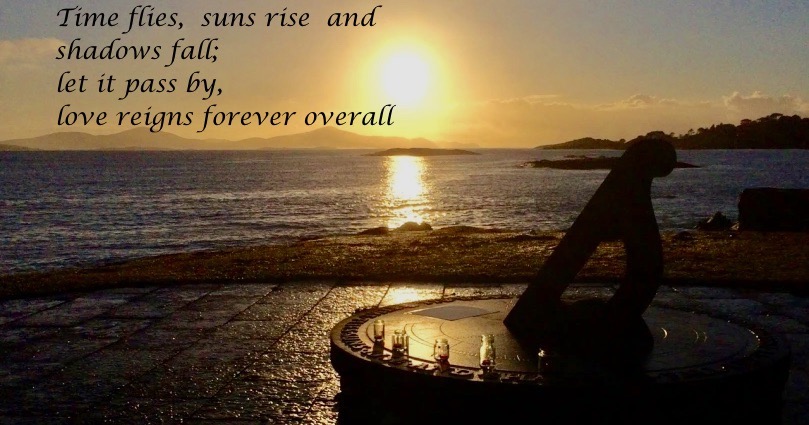
The central point of the commemoration is Ken Thomson’s beautiful sculpture, a sun dial set to the exact time the bomb went off.

Holy Wells of Cork: The Book!

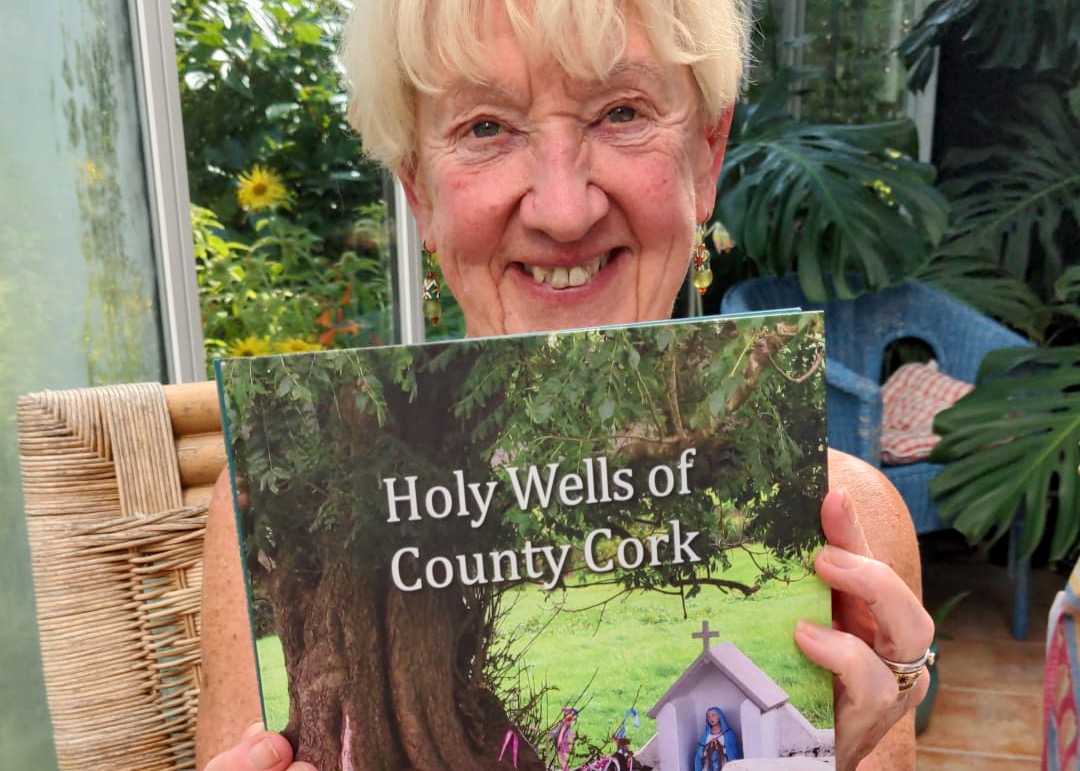
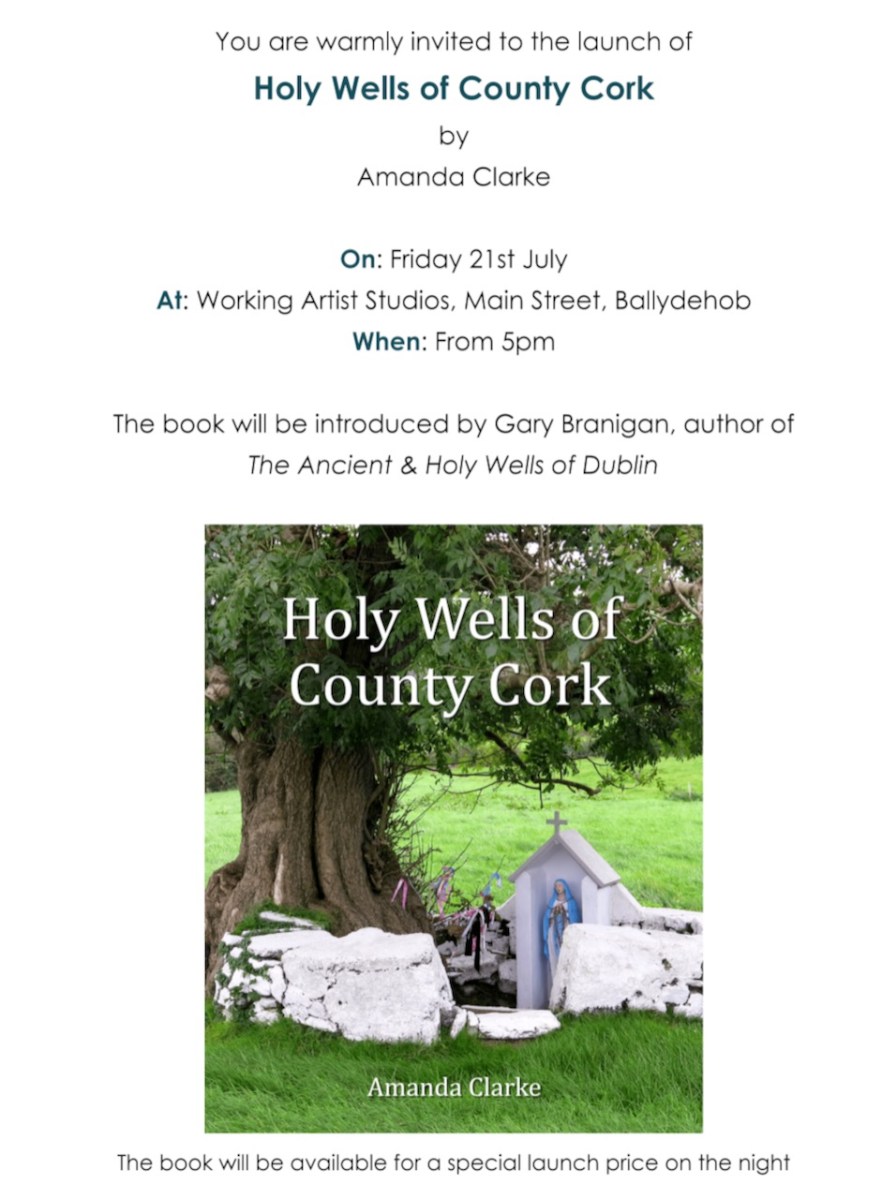
Woohoo! The book is published, and will be launched in Ballydehob on the 21st – see the end for details. All welcome.

This project started on St Brigid’s Day in 2016 – Amanda Clarke set out to record every holy well in the County of Cork – all 358 of the currently known ones. I happened to be with her (above) on the very first venture – a Brigid’s Well, chosen because it was St Brigid’s Day, Feb 1 (now a national holiday). 

That was seven years ago, and Robert and I continued to accompany Amanda and Peter on many of their holy well expeditions, along the way covering almost every inch of Cork and then progressing into Kerry and Limerick, because after all you can’t have too many wonderful adventures in the great outdoors with good friends.

We have fallen in mud and slipped in cow pats, tramped over bogs and halfway up mountains, coped with frisky bullocks and over-friendly dogs, got soaked to the skin and baked under hot skies, and wandered and wondered and laughed and photographed to our heart’s content. I recommend it to everyone – pick a focus, find out what you can and go find it.

Half the work, maybe more than half, is the research and Amanda is brilliant at that, mining every resource she can find for information about each well – its history, folklore, cures, saintly associations, rounds and pattern days.

The result of her investigations is sobering, though – only a third of our holy wells remain active. Another third can still be found, even if they have not been visited in a long time, and the final third have disappeared. Even wells that were once the focus of huge local celebrations can slip into the mists as if they had never existed. 

In this light, Amanda’s records are incredibly important and this book is an immeasurable contribution to Cork history. I will end by quoting from Amanda’s Press release:

. . . this book is a celebration of the many holy wells that have quietly prevailed through the millennia, providing powerful connections to the past. It is widely accepted that many holy wells date from the pre Christian era and are an important part of our cultural heritage. They are not dead monuments – many remain potent, active and meaningful, a source of quiet and solace in a chaotic world.

Amanda’s book is available now for pre-order at a special pre-launch price. Just go to https://wildwayspress.com/ Orders will be processed after the launch on 21 July 2023. There is also an option at checkout to pre-order for collection at the launch. 

Come and get a signed copy of what is sure to become the book that every Cork household needs on its shelf.

Honouring St Barrahane

It’s December 3rd (yesterday) – St Barrahane’s feast day, that is. He’s one of our local saints and not a lot is known about him. There are other St Barrahanes – or St Bearchán as it’s more commonly spelled – a whole raft of them, in fact from around the country. But this one belongs to Castlehaven.

Now, I am not normally given to honouring saints’ feast days, but there are exceptions. St Patrick’s, after all, is a national holiday, and St Brigid’s soon will be, so it would be rude not to. St John’s Eve is big in Cork and this year I did the rounds in my local graveyard – see this post for my lovely experience. That’s Castlehaven graveyard, below, right on the sea – the sea that Amanda and I are bobbing around in, in the lead photograph.

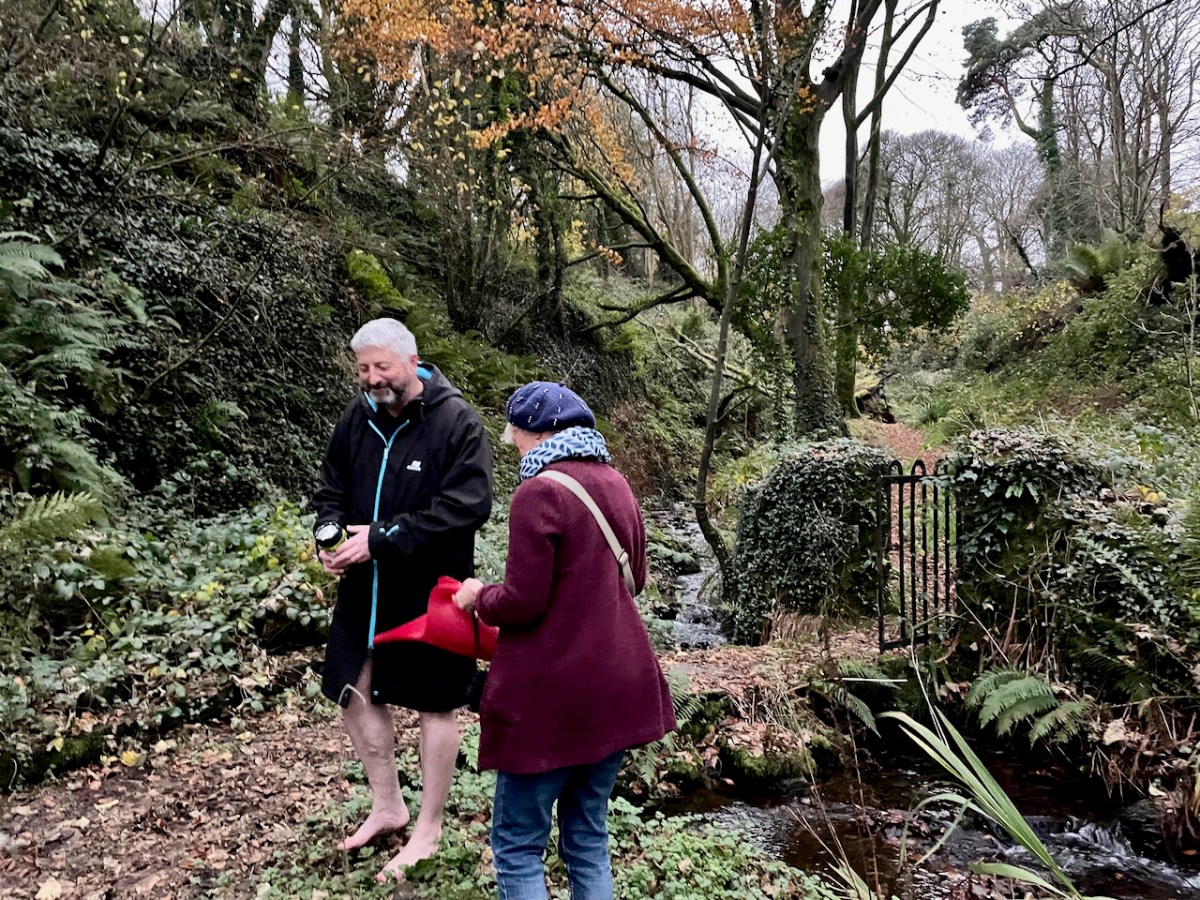
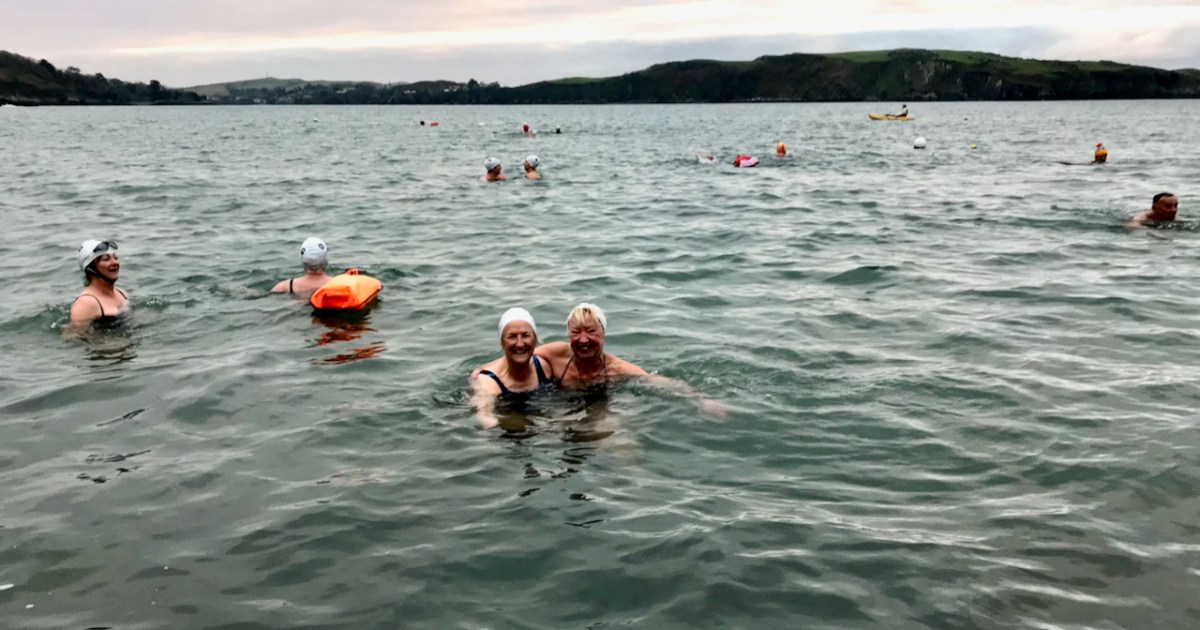
You remember Conor Buckley and his adventure and outdoors company, Gormú? To jog your memory, take a look at Castlehaven and Myross Placenames Project and Accessible August. He’s an all-round dynamo, whose idea of fun is to take people swimming at dawn in the middle of winter. But on this occasion, there was heritage to back him up – a local custom of going to St Barrahane’s well to get water on Dec 3rd, as a cure, but also as a talisman against any kind of accident at sea. Important, in this maritime location.

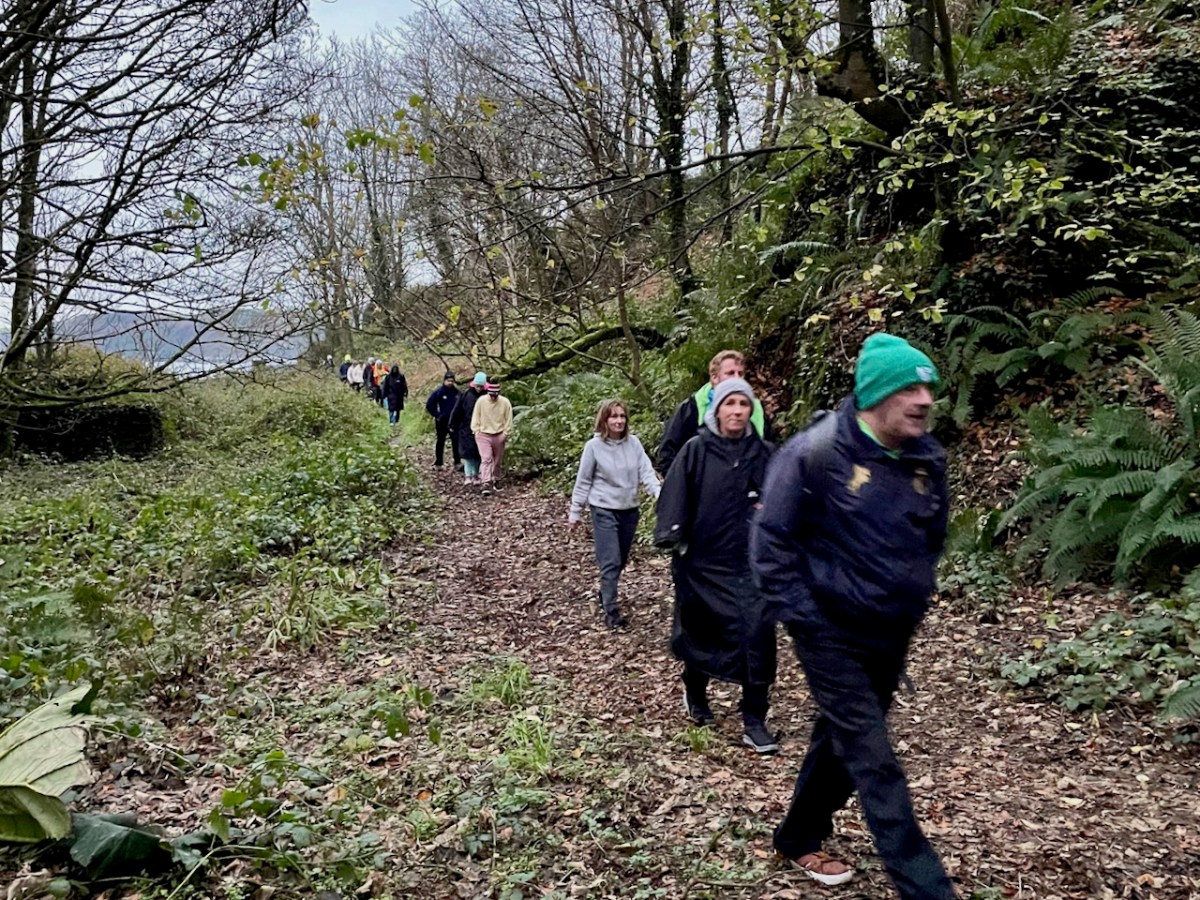
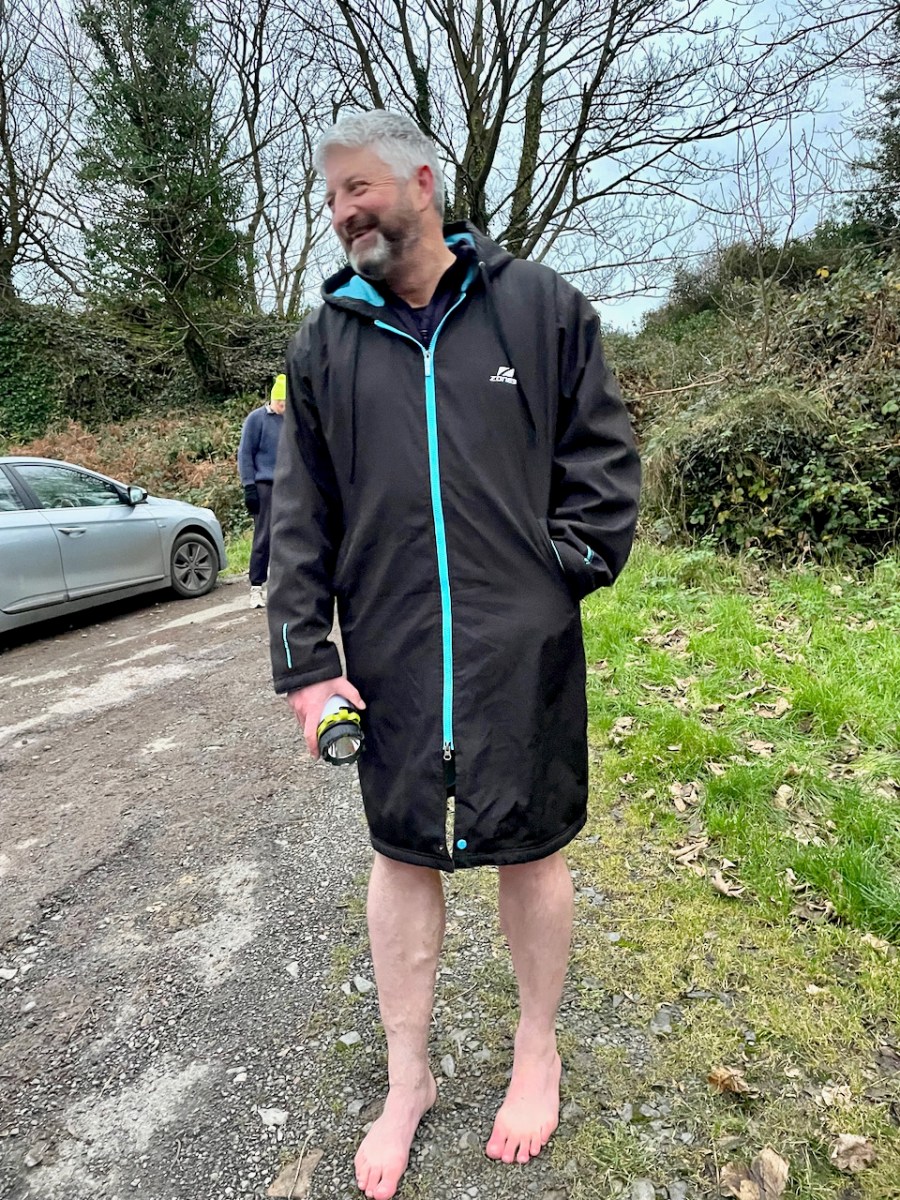
We gathered at the top of the road at dawn and walked down to the sea. Conor invited us to go barefoot as the original pilgrims would have done, and there were actually a few takers.

Then up to the holy well – about 20 of us. Conor told us about the traditions associated with this particular well, and asked Amanda to speak about wells in general. Declaring that she “has done more for holy wells than anyone else in Ireland” he then invited her to be first to the well – being first was also particularly auspicious in the local folklore.

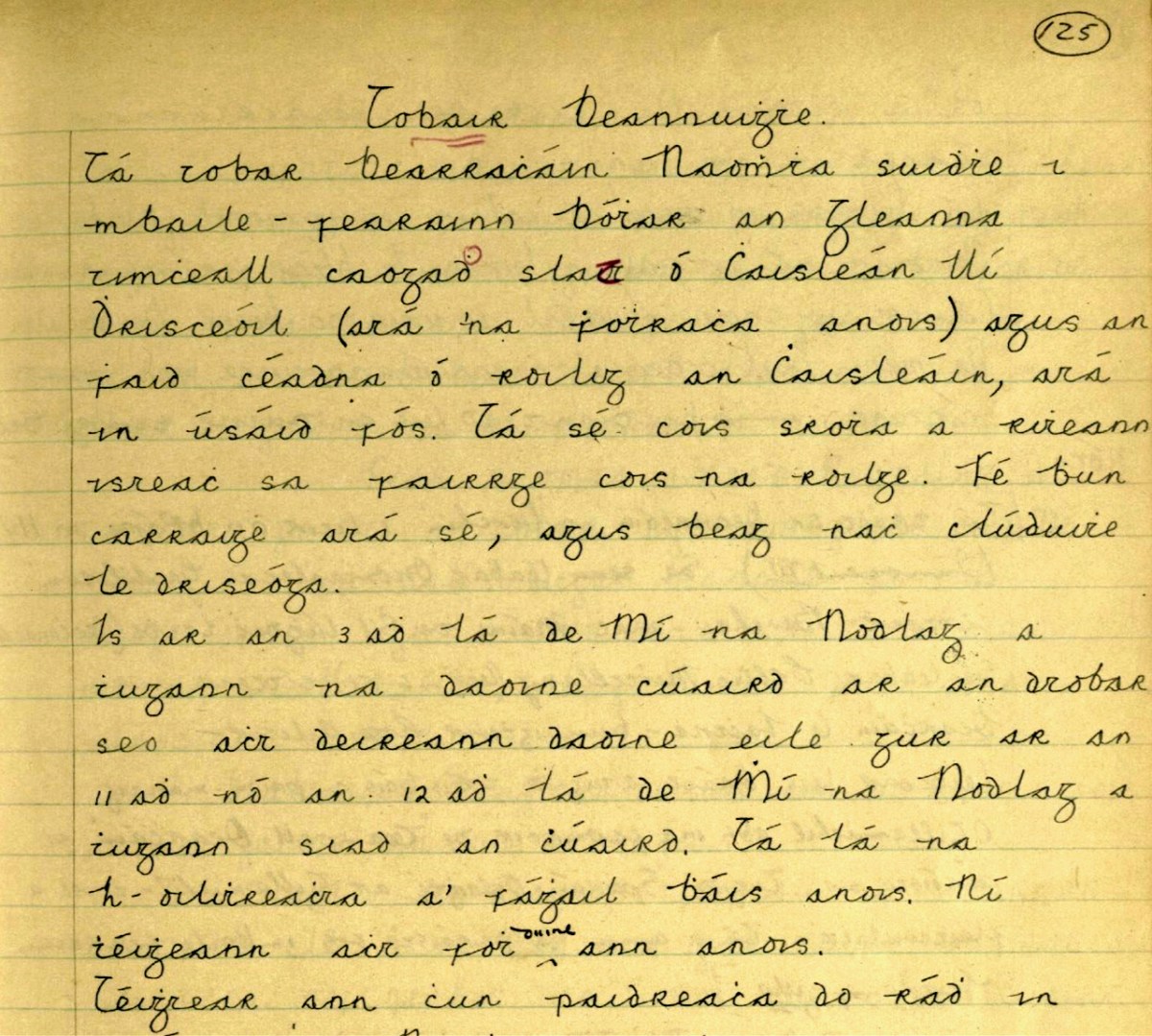
The well contains a sacred eel (to see it brought good luck forever) and a cure for fevers that lasted all year. People would visit at any time, but particularly on Dec 3rd to collect water and take a bottle home with them. By the 1930s, when this account (below, in Irish) from Dooneen School was given in the Dúchas Schools Collection, only a few people were still coming. The onus on the pilgrim was relatively light – just a few Hail Mary’s and the Sign of the Cross and then you could drink the water. Some people left rags or a coin.

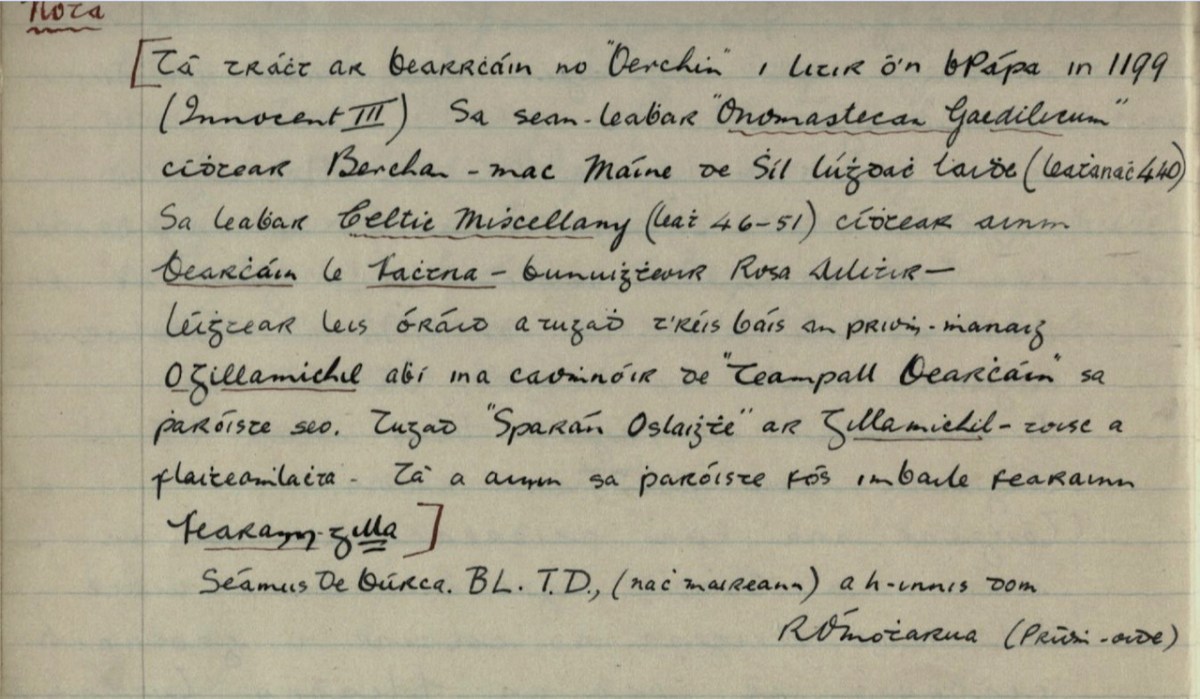
After the student’s writing is a Nóta, written  by the headmaster, R Ó’Motharua. 

The information for the Nóta came from James Burke, a noted local historian, TD (member of the Dail, or Irish Pariament) and Editor of the Southern Star.* He took a scholarly interest in local saints, of whom Barrahane was a prime example. Here is my translation (corrections welcome).

There is mention of Bearrcháin or “Berchin” in a Papal letter in 1199 (Innocent III). In the manuscript “Onomastecan Gaedilicum” one sees Berchan – son of Máine of the Race of Lúghdach Maidhe (Page 440). In the book Celtic Miscellany (page 46-51) one sees the name of Bearcháin with Fachtna – the founder of Rosscarbery – he was reading with him an oration that was given after the death of the Abbot O’Gillamichil who was the patron of Teampall Bearcháin [St Bearcháin’s Church] in this parish. They called Gillamichil “Open Purse” – because of his generosity. His name is still in the parish in the townland of Farranagilla [meaning Gilla’s Land].


https://www.duchas.ie/en/cbes/4798763/4796172

Farranagilla, by the way, is a townland halfway between Castletownshend and Skibbereen. This accords with other information I have from James Burke about St Barrahane. In a letter to Edith Somerville of February 1917 he says:

When we come to Saint Barrahane (Irish Bearćán) we are in more shadowy ground. 

There was a great St Bearchan a noted prophet of Cluain Sosta in Hy Failghe of whom there is much (exhaustive) knowledge but I have elsewhere tried to prove that the patron of Castlehaven parish was a native of West Cork and is identified with the Bearchan  mentioned in the genealogy of Corca Laidhe but he is only a name. He certainly was the patron of Castlehaven which as early as 1199 and no doubt much earlier was called Glenbarrahane. 

From a letter in the Somerville archives, Drishane House. Quoted with permission**

James Burke had originally set out this information in his paper for the Cork Historical and Archaeological Society of 1905 on Castlehaven and its Neighbourhood, pointing out that the original name for Castlehaven Parish was Glenbarrahane, after its patron saint. In his magisterial work, A Dictionary of Irish Saints (Four Courts Press, 2011, p96),  Pádraig O’Ríain agrees with the notion that the saint belonged to the Corca Laighde family, despite some misgivings. He also adds local tradition maintains that Bearchán came from Spain.

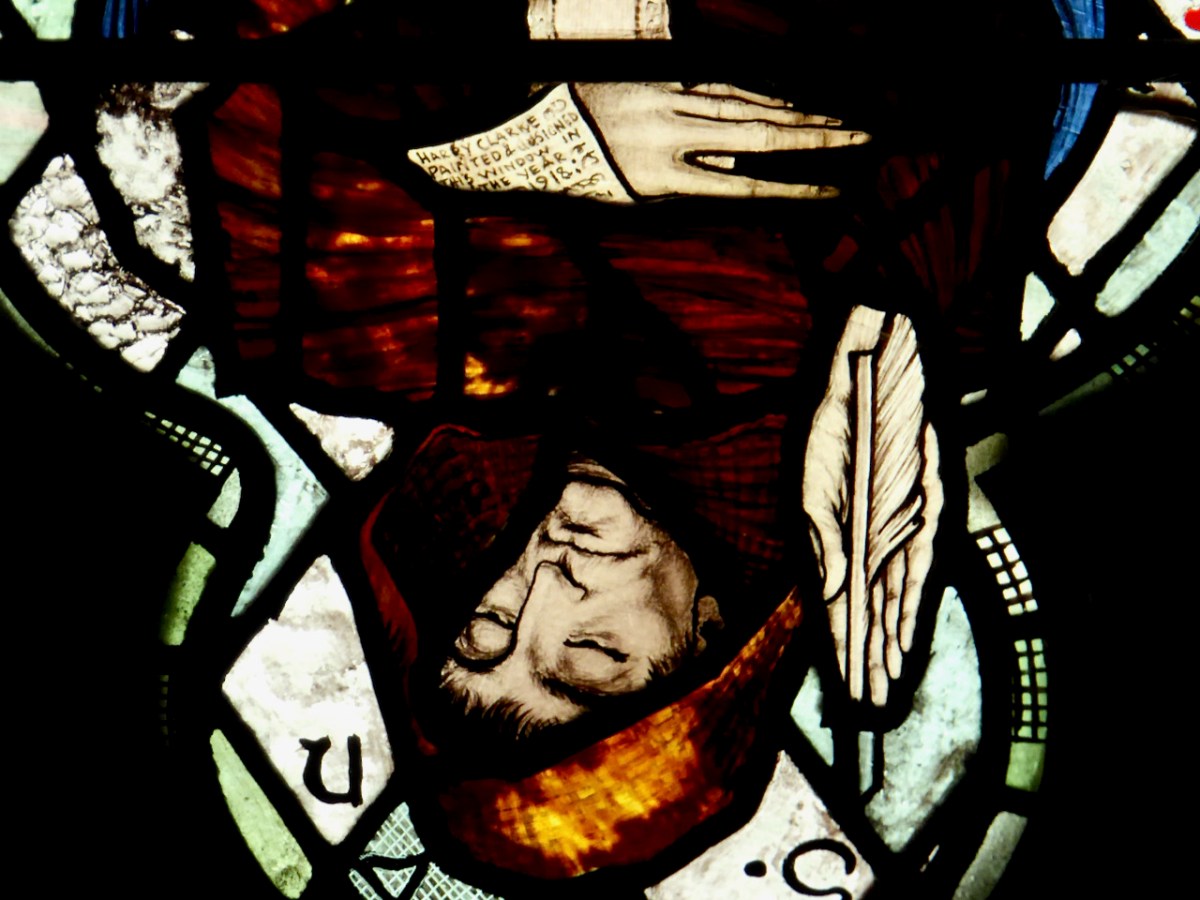
Why was James Burke writing about St Barrahane to Edith Somerville? She was researching appropriate saints for the window she and her family had commissioned from Harry Clarke (of which more in a future post). A lack of information didn’t stop Harry Clarke from imagining what Bearchán might have looked like. In his Nativity window in St Barrahane’s Church of Ireland, he gives full reign to his imaginative vision and depicts him as a monk.

He gets the full Harry treatment – large eyes, a face full of wisdom and compassion, long tapered fingers. He is writing on an extended scroll – and the scroll hides a surprise, only visible in close-up and upside down.

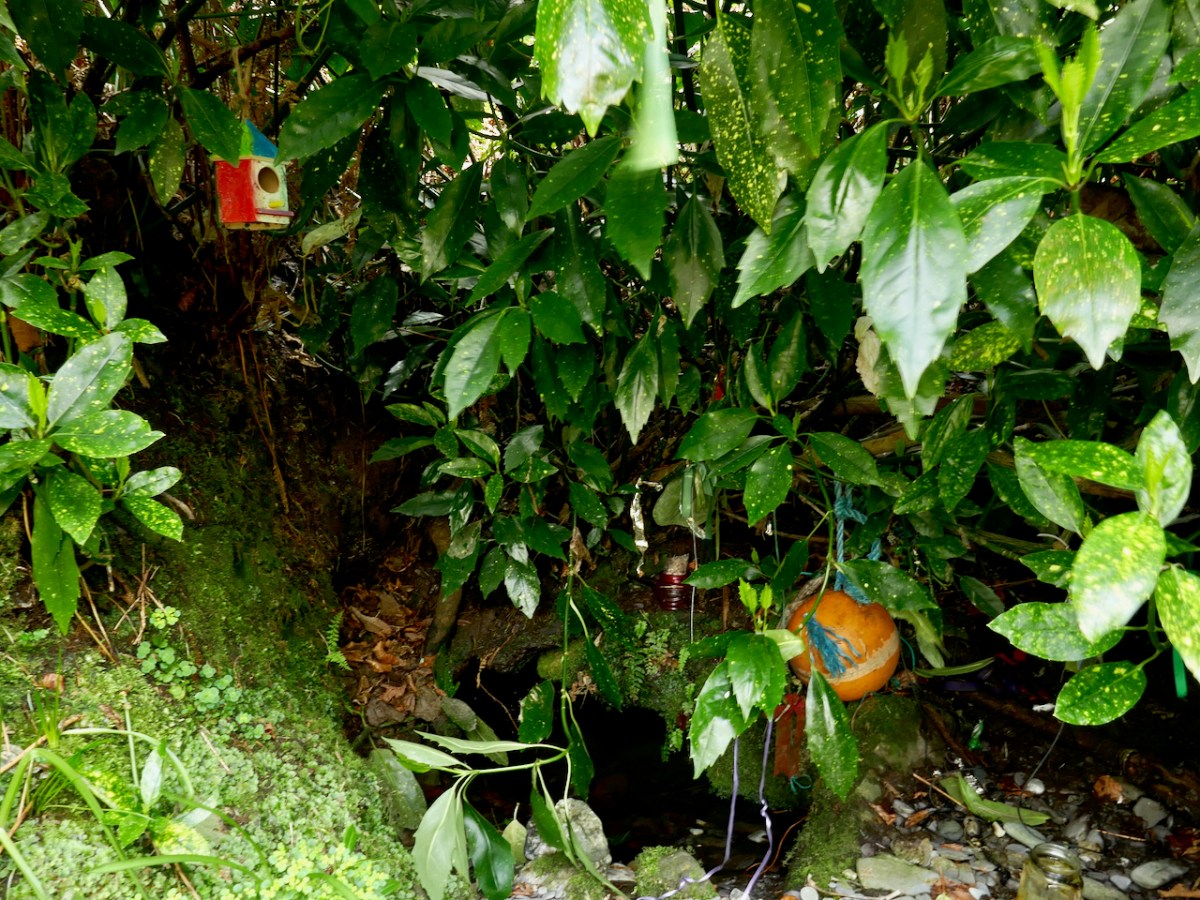
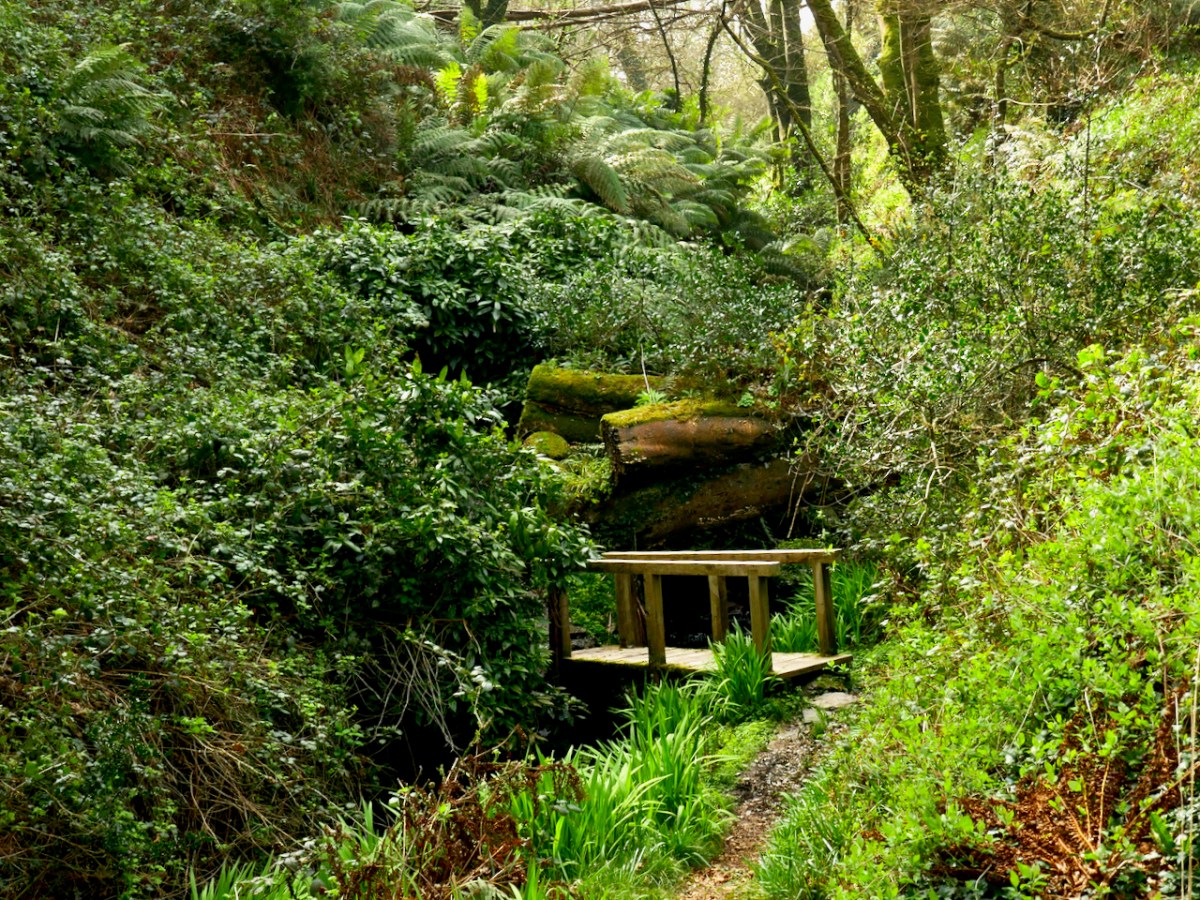
The well itself is a little beauty – half hidden in the undergrowth and accessed by a wooden bridge. It is festooned with fishing floats – fisherman left them here to protect them at sea – rags, and rosaries. The water is fresh and clear.

In fact, the water from this well is used to baptise infants in both the Catholic and Protestant churches of Castlehaven Parish! 

So there you have it – what we know about St Barrahane and the traditions that surround him. We collected a jug of the water from the well for anyone who wanted to fill a bottle. As Joey in Friends used to say – Could I be wearing any more clothes?

But, this being Gormú, there was more to the day – the visit to the Holy Well was to be followed by a swim! Yikes! Amanda and I egged each other on during the week (I will if you will)) and finally decided it had to be done. And guess what – it wasn’t that bad! In fact, the water felt if anything slightly warmer than the surrounding air. In case anyone thinks I am virtue-signalling here (Look at me, swimming in December!) we didn’t stay in long, and there was a lot of shrieking involved. Some of the real swimmers emerged half an hour later.

There was an immense sense of camaraderie as we chowed down on our hot porridge and tea afterwards. Vincent O’Neill presented Amanda and me with the latest issue of the Castlehaven & Myross History Society Journal.

It is a great thing that Conor and other local historians have taken on the task of re-activating this pilgrimage and it felt wonderful to be a part of it. 

*For more on James Burke, see A Tale of Two Editors: the Lives and Words of James Burke and Patrick Sheehy, in the Skibbereen Historical Journal, Vol 16, 2020, by Alan McCarthy
**With thanks to The Somerville Archives and Tom Somerville for permission to quote from the James Burke letter.

A Dander on The Sheep’s Head

it’s not just for long walks – the Sheep’s Head is also perfect for wandering with intent, having, as my father used to say, a dander. Our trip there this week, in the excellent company of Amanda and Peter, was that sort of day, where we drove around and dropped in and out of interesting places. Amanda and Peter Clarke, our regular readers will know, are the couple behind Walking the Sheep’s Head Way, so who better to have as companions and guides for a day of exploring. Amazingly, given all the time we’ve spent there, only one of our stops was familiar.

Our first stop was a curious stone overlooking Dunmanus Bay. Known as the Giant’s Footprint, the local legend tells a familiar story about two giants throwing rocks at each other. This must have been a mere pebble, because one of the missiles became the Fastnet Rock. Footprint stones are also associated with inauguration sites, where kings were acclaimed in early medieval society. (See the comments section below for a link to an amazing piece of art from our friend, the acclaimed photographer EJ Carr, who used this stone in his fantasy photography piece on the Arthurian legend – follow the link in the comment to view his images.)

Being with Amanda is always a great opportunity to visit a holy well and we had never been to Gouladoo. It also ticked a box for me as I’ve been wanting to visit promontory forts. The holy well first – it’s a Tobar Beannaithe, a Blessed Well, not associated with any particular saints. Amanda’s research revealed that it did have a particular purpose, though – girls would visit to pray for a husband. Read Amanda’s comprehensive account here

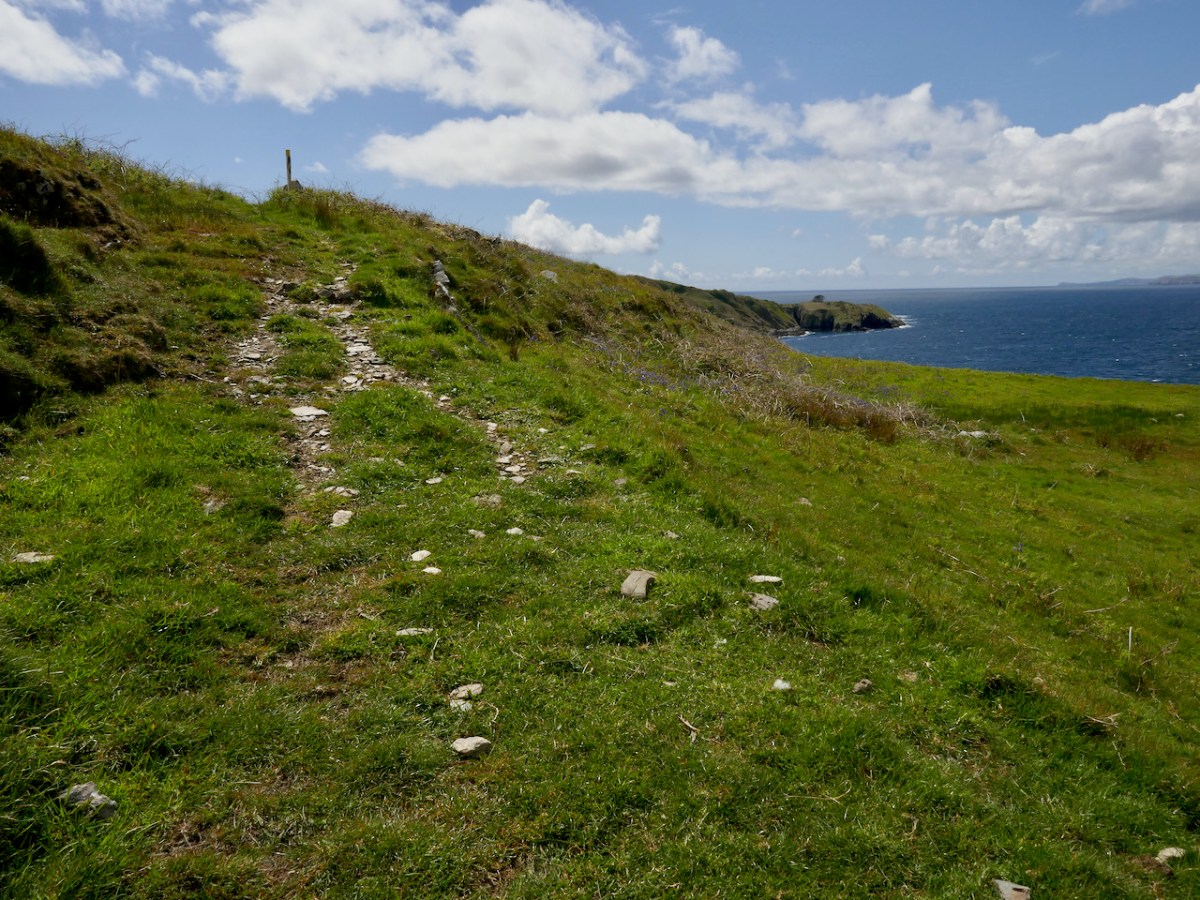
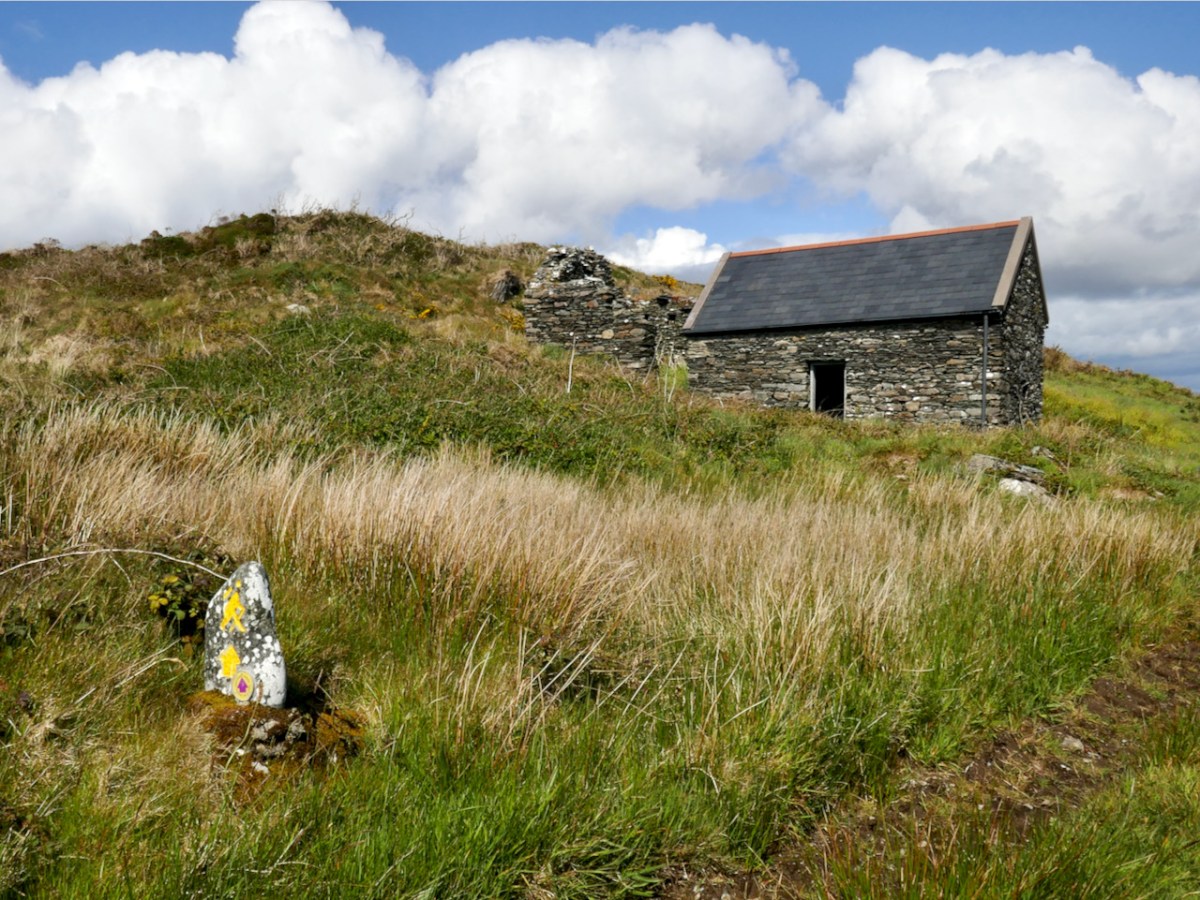
Because this is on the Sheep’s Head Way, the route is signposted and maintained. The well itself has a cup thoughtfully provided so you can have a drink if you dare. The path down to it has been carved out of the hillside and roughly paved, indicating that this was a site to which many people once came.

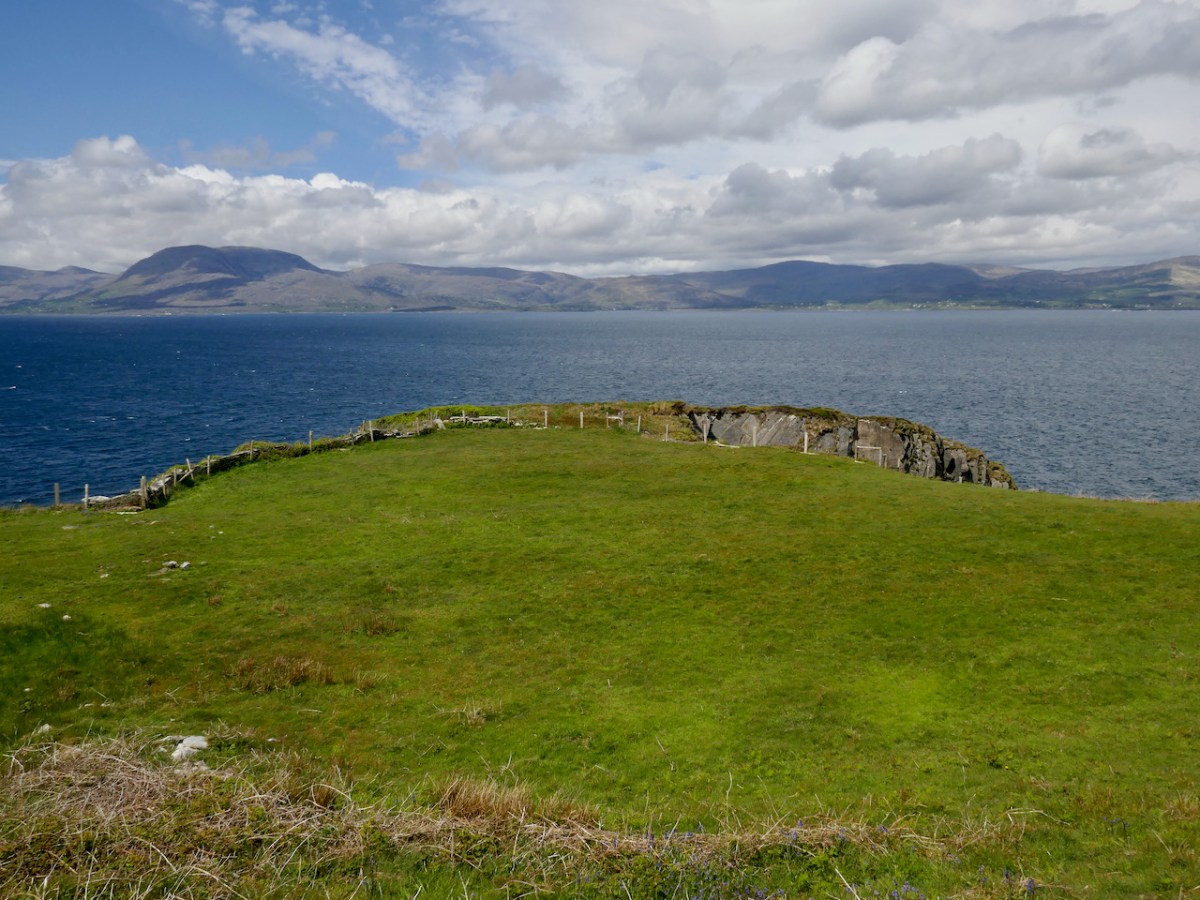
If you turn your back to the holy well, the promontory fort is straight ahead of you.

Where you have a promontory jutting out into the sea it’s easily fortified by building banks and ditches at the neck. Promontories with narrow necks were usually chosen, as being easiest to defend, and archaeological evidence suggests that some were in use as early as the Bronze Age but most evidence of occupation dates to the Early and Later Medieval Period (400 -1500AD). 

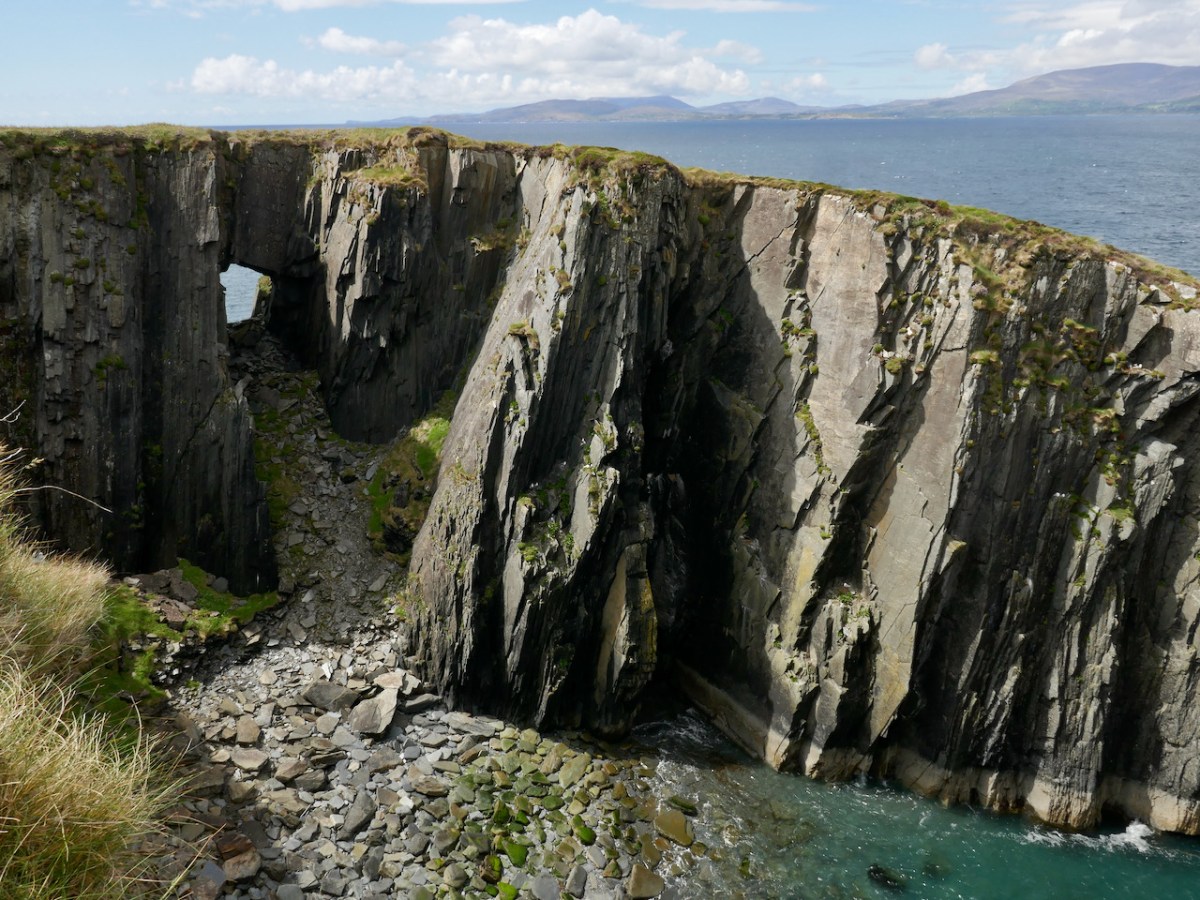
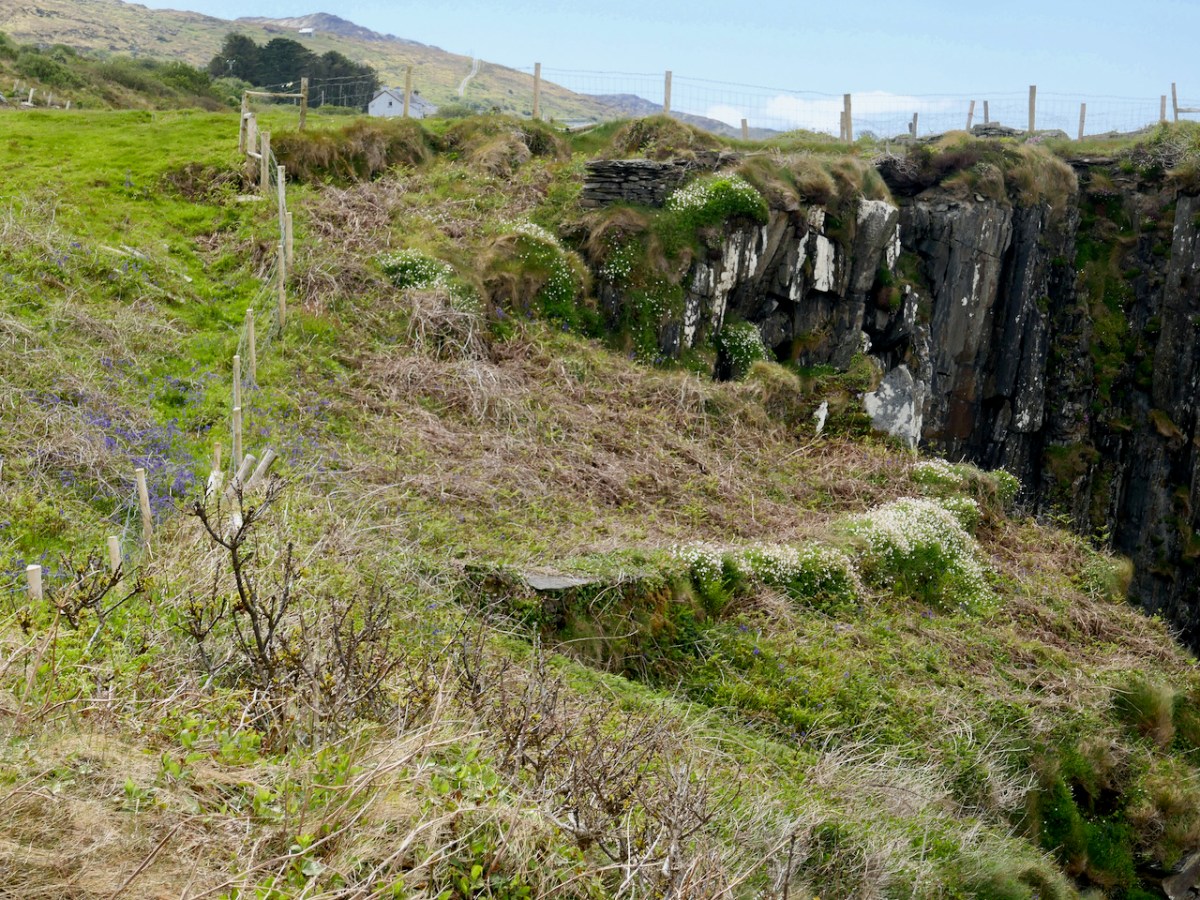
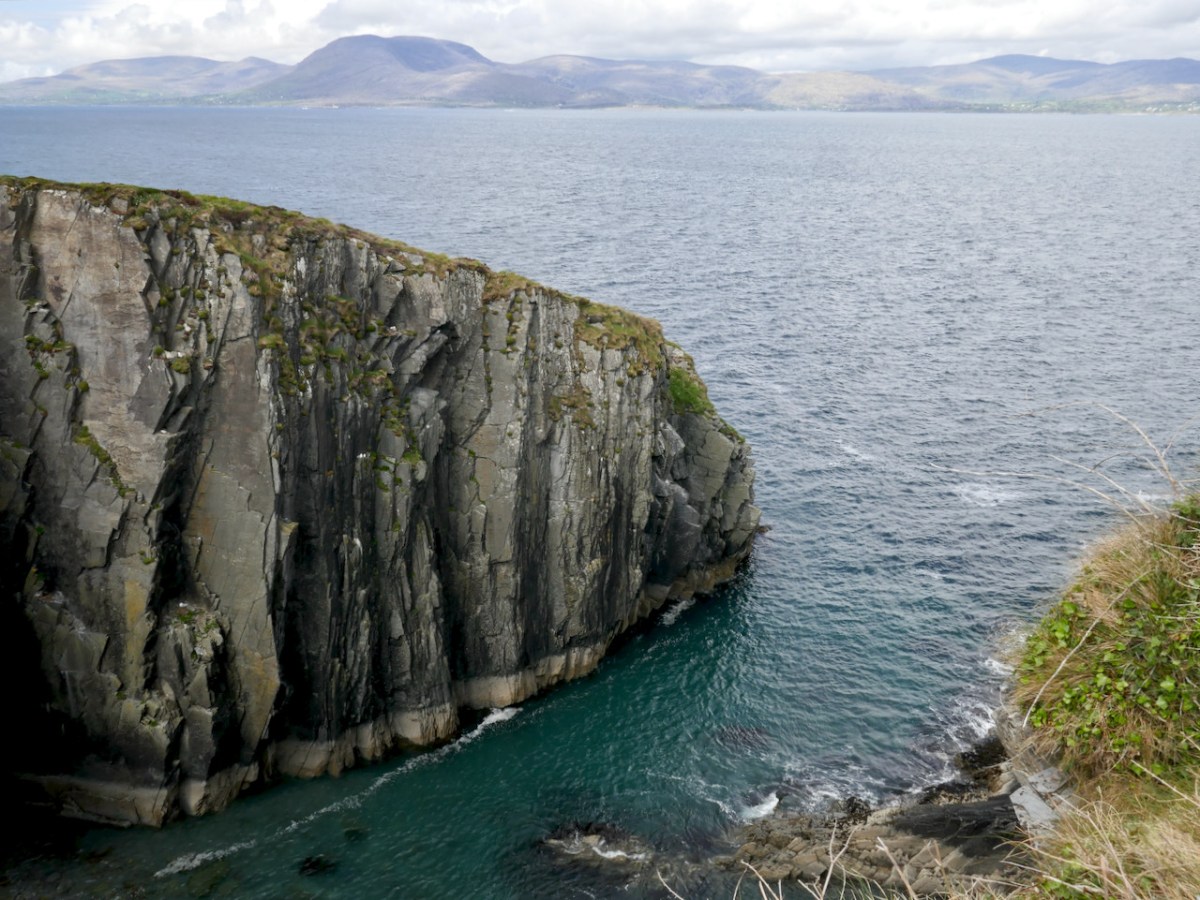
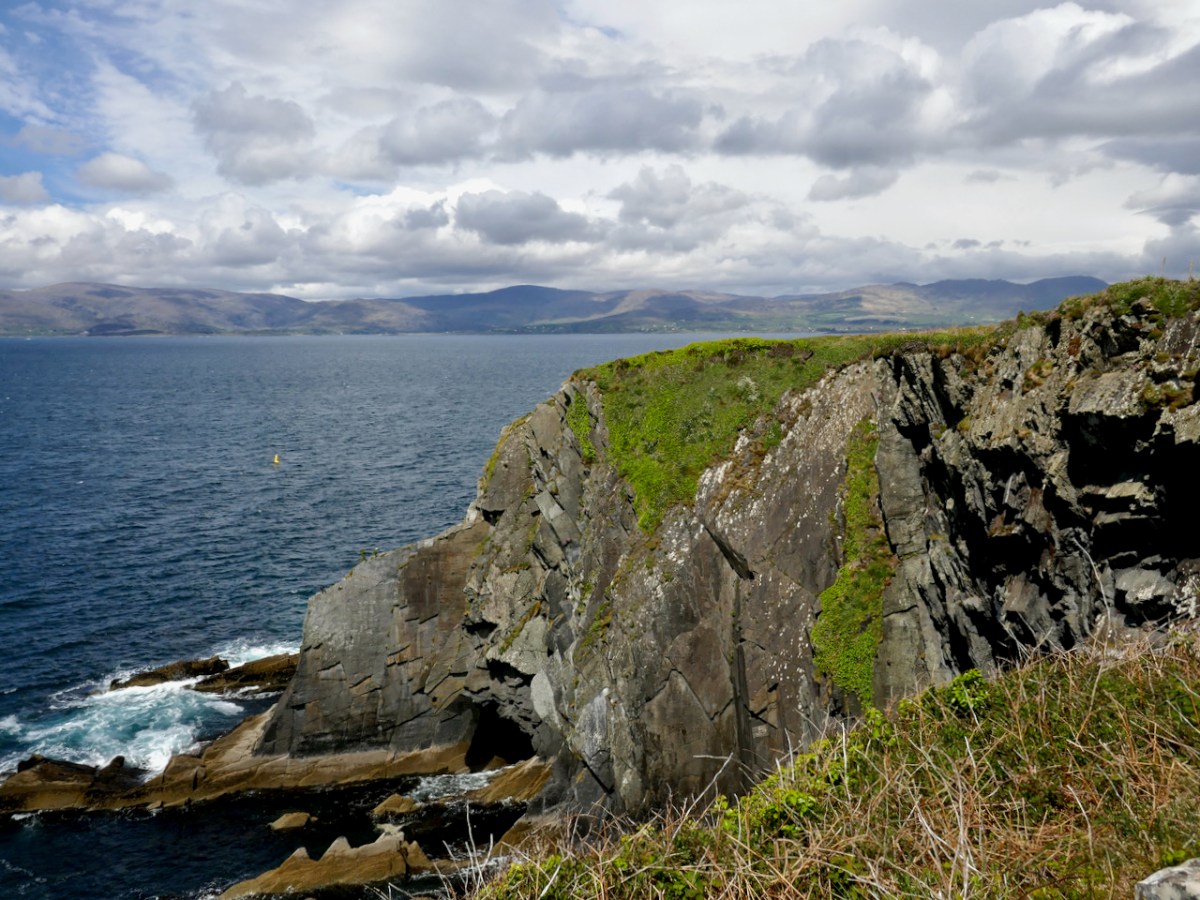
As promontory forts go, this is a classic – a narrow neck with evidence of walls across it, steep cliffs on all sides, and a flat and verdant area in the middle for houses and cattle. This one has an added feature – sea arches underneath! The sea arches mean that this may eventually become an island.

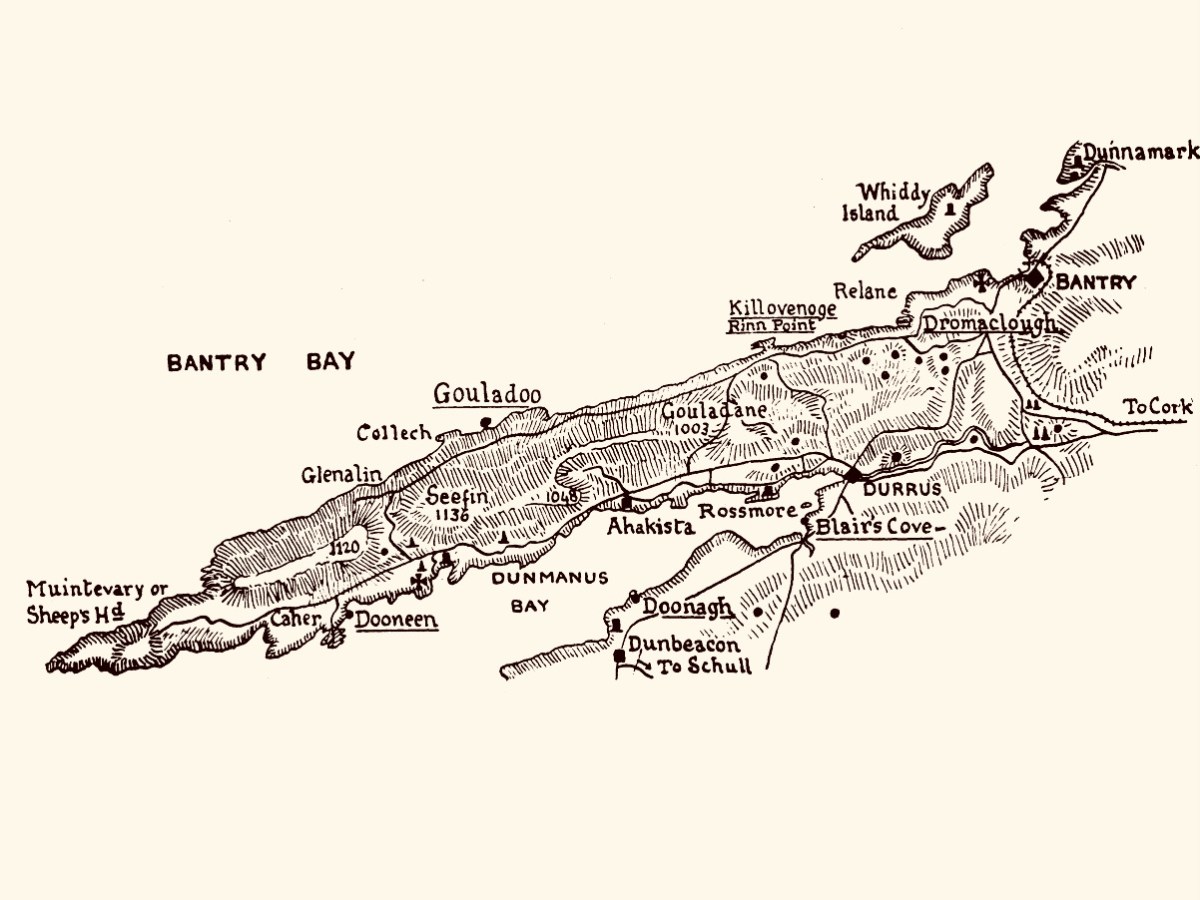
The antiquarian Thomas J Westropp set out to visit all the promontory forts along the Beara and Sheep’s Head in or around 1920 and has left us his account, written over three articles in the Journal of the Royal Society of Antiquaries of Ireland. Gouladoo, as his map shows, was one of his destinations.
Here is his description of the fort as he found it then.

Far to the west of Rinn, in Kilcrohane, is a remarkable fortified headland of dark grey slate, up tilted and separated from the mainland by a gully. This is spanned (like those at Doonagh and Dursey) by a natural arch. The adjoining townland is called Dunoure, but no fort is known to have existed near this, so perhaps that name refers to Gouladoo. The arch is lintelled, like a great Egyptian pylon, and is 15 ft. or 16 ft. wide at the gully. The neck is wider to the landward, and was strongly defended. First we find a trace of a hollow or fosse; then the foundation of a drystone wall 82 ft. long (E. and W.); behind, a natural abrupt ridge forms a banquette over 4 ft. high; the wall is about 12 ft. thick, the terrace 12 ft. to 15 ft. wide. Beyond this the neck was enclosed all round by a fence about 6 ft. thick. The whole work measures about 80 ft. each way. As at Doonagh, I think that the line of debris on the peninsula along the edge of the chasm is a trace of a wall, and that the bare slope behind it was stripped by a landslip. The whole is tufted with luxuriant masses of rich crimson heather.

The Promontory Forts of Beare and Bantry: Part III, Thomas J Westropp
The Journal of the Royal Society of Antiquaries of Ireland, 1921

It’s quite difficult to see those features now, although there is a piece of the wall remaining, and what must be his ‘terrace.’

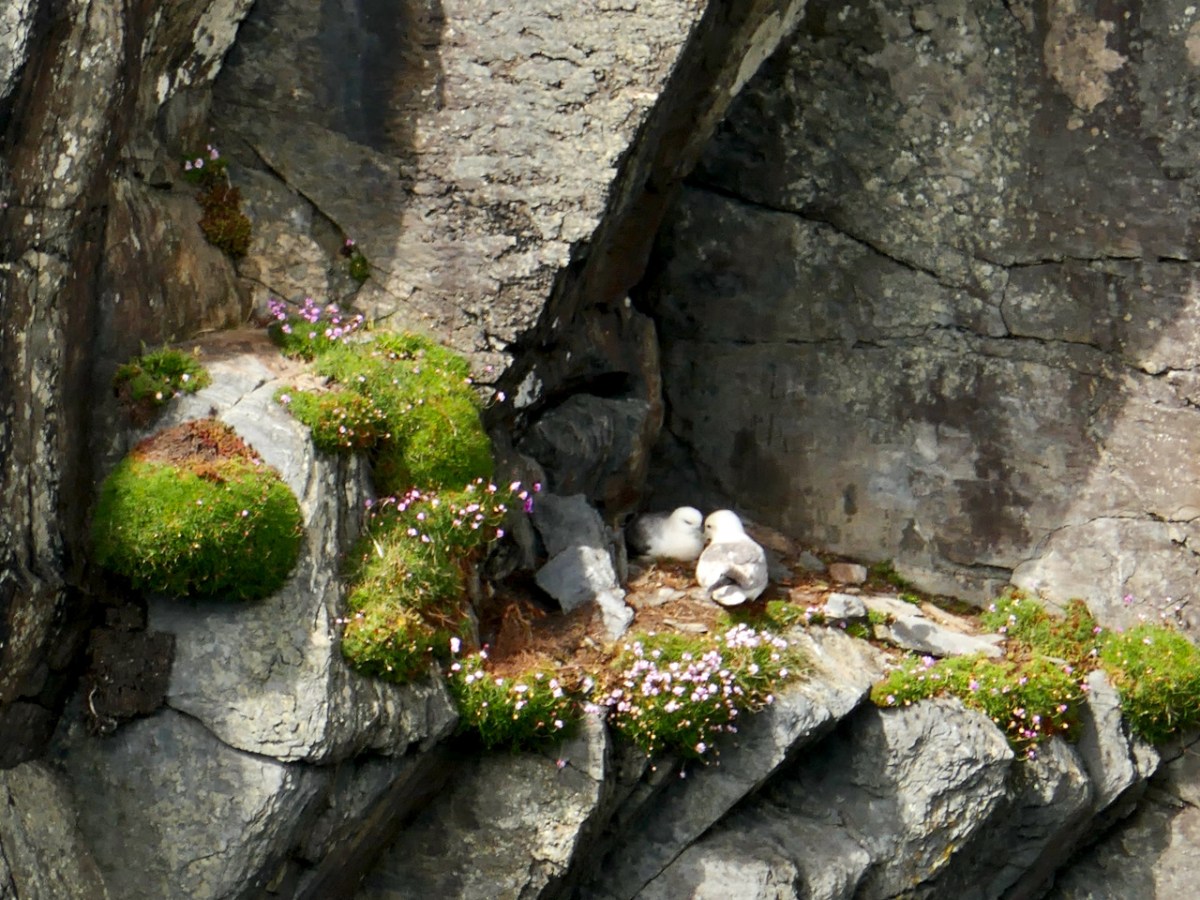
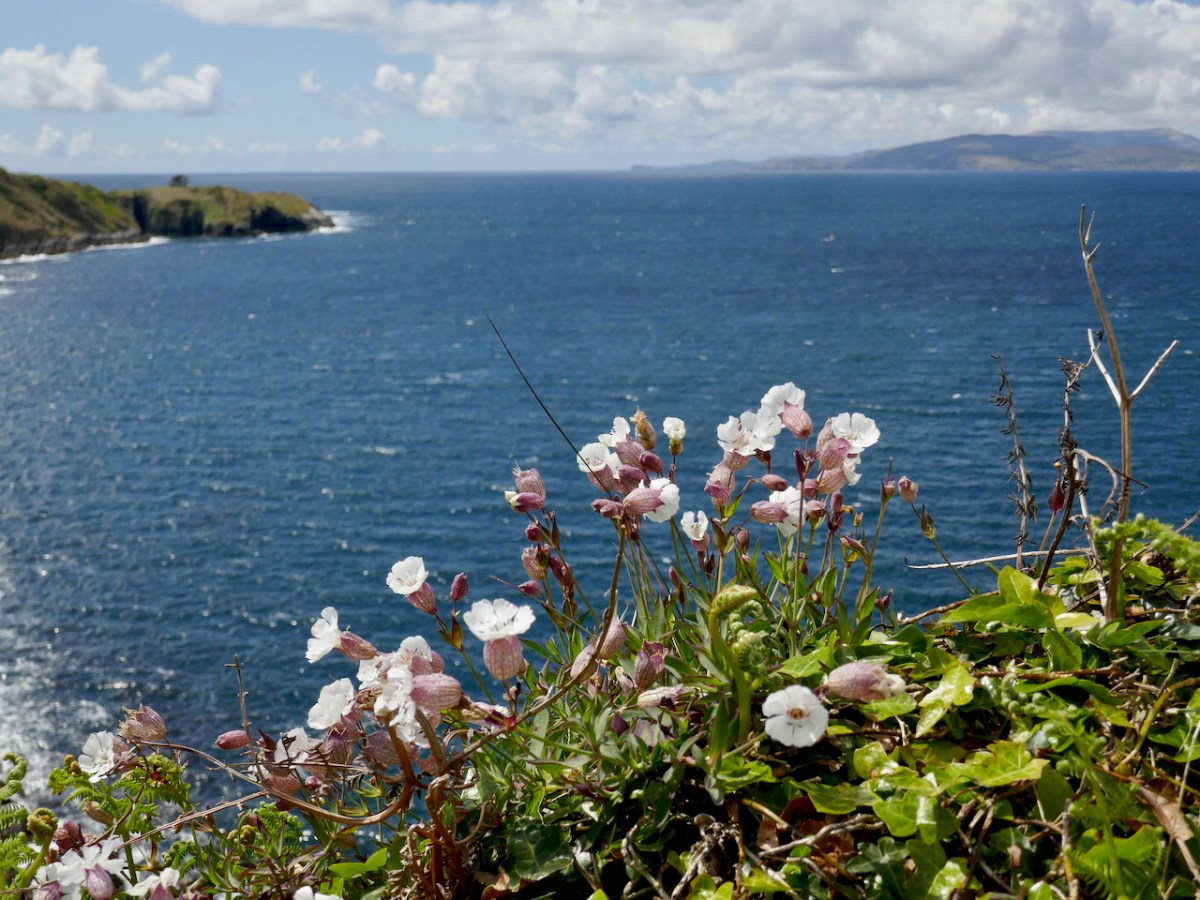
There are other compensations to visiting a site like this – those sheer cliffs which provide such an impregnable defence for the fort, also host many gulls in nesting season. The Bluebells and Sea Campion were abundant there too.

Westropp wrote his article, The Promontory Forts of Beare and Bantry, over several issues of the Journal of the Royal Society of Antiquaries of Ireland, and maybe it would be fun to retrace his steps a hundred years later to see what’s on the ground now – what do you think? 

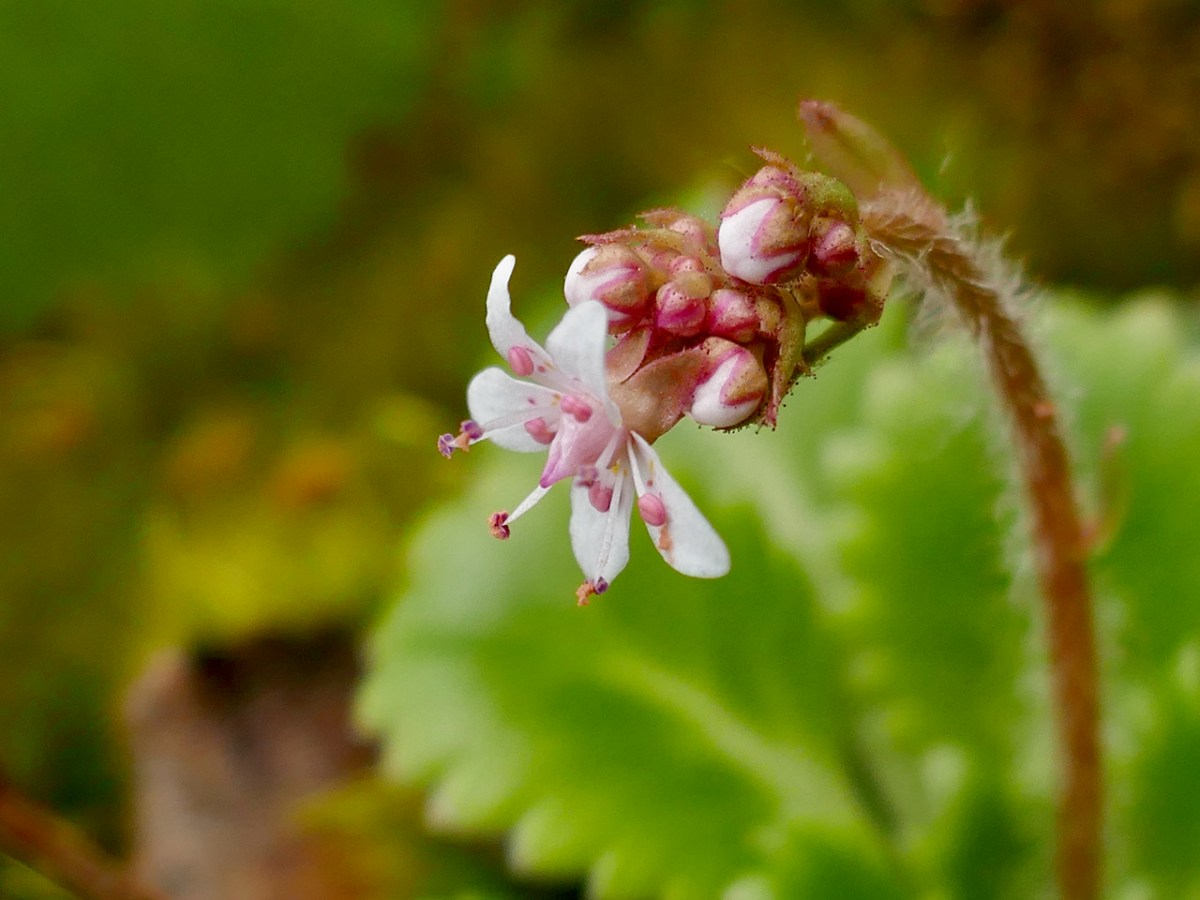
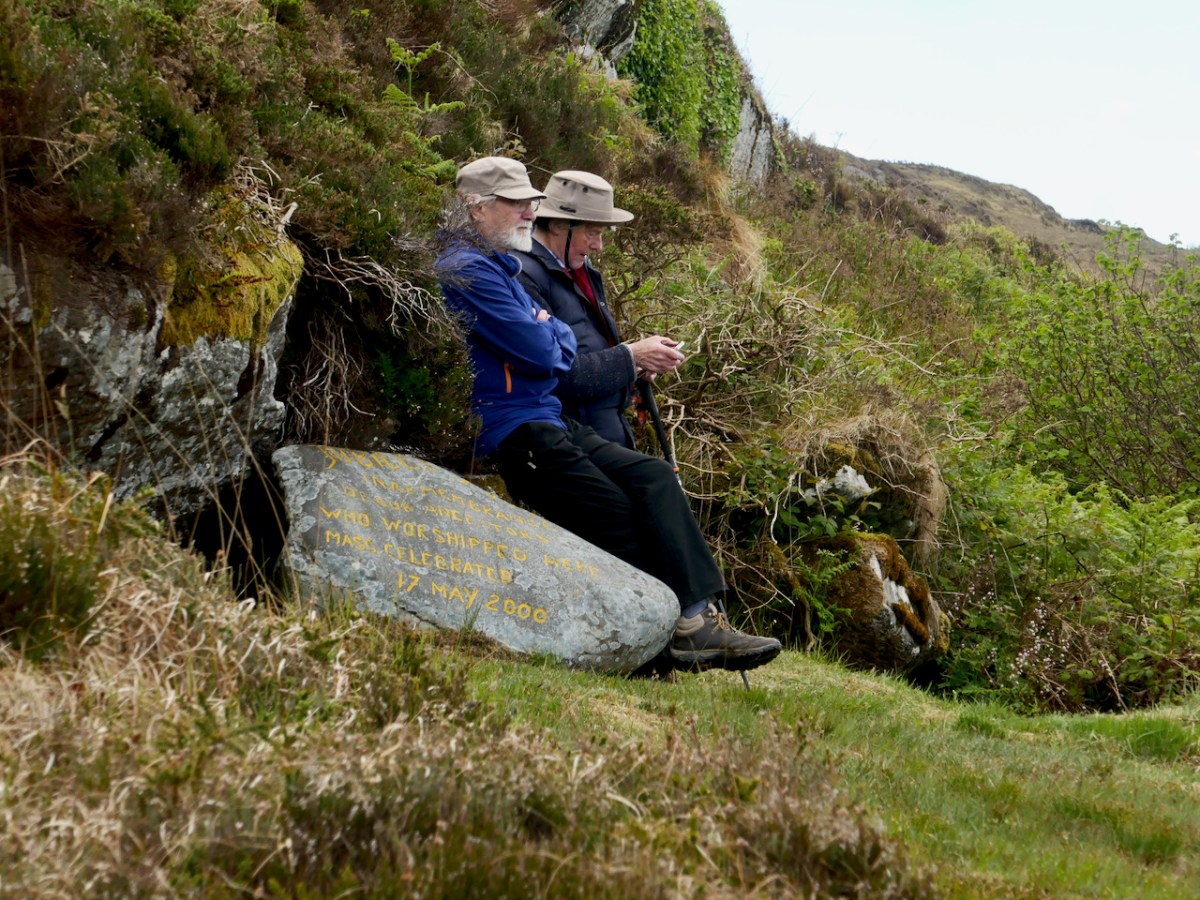
From there it was off to the Mass Rock at Glanalin, an easy walk down from the Pietà in the pass above Kilcrohane. It’s a particularly lovely walk to this mass rock (above), and in May the spring flowers are everywhere, especially St Patrick’s Cabbage, one of the group of plants known as the Lusitanian Flora, that only grows here and in Iberia.

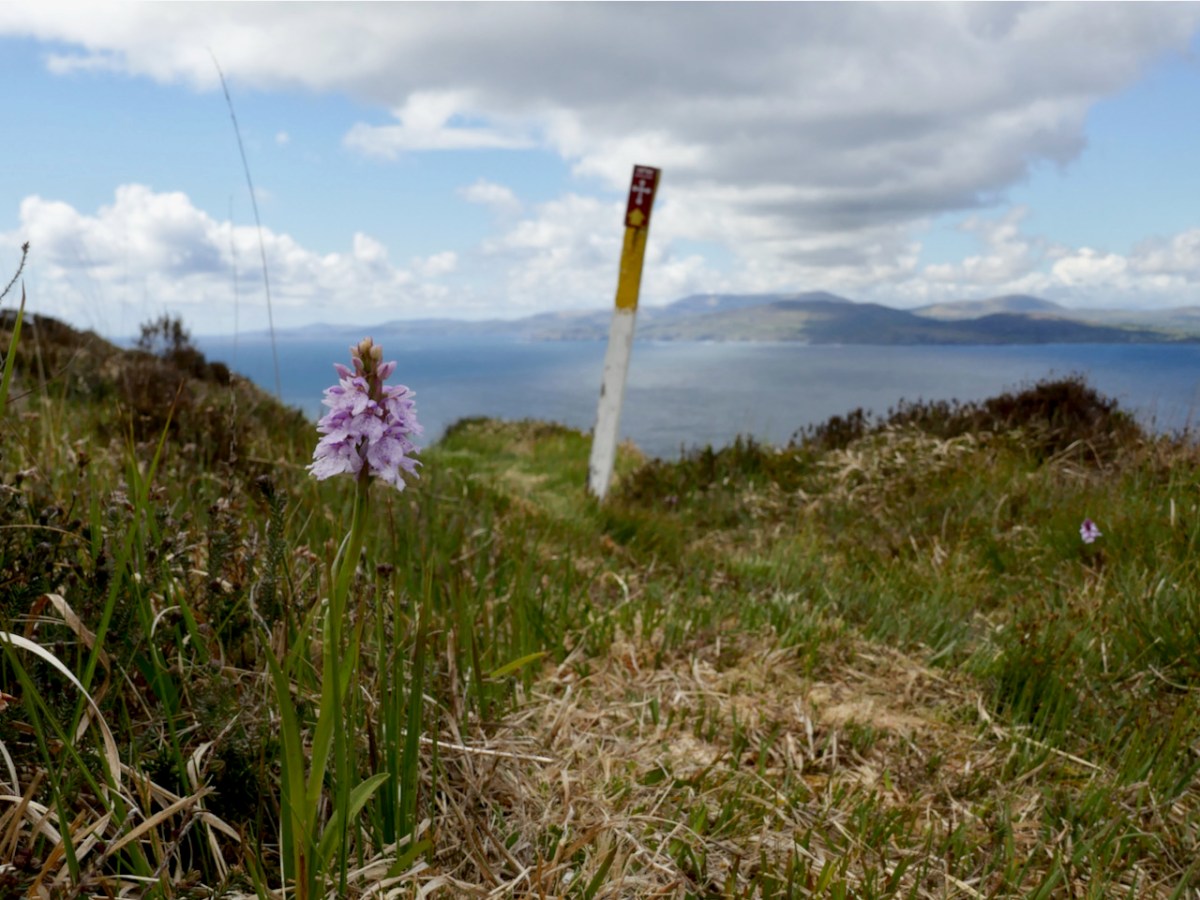
And finding a lone Heath Spotted Orchid (above) was a real bonus too!

By sheer coincidence we were there on the same day, May 17th, when Mass was celebrated here in 2000 in remembrance of the ancestors who worshipped here.

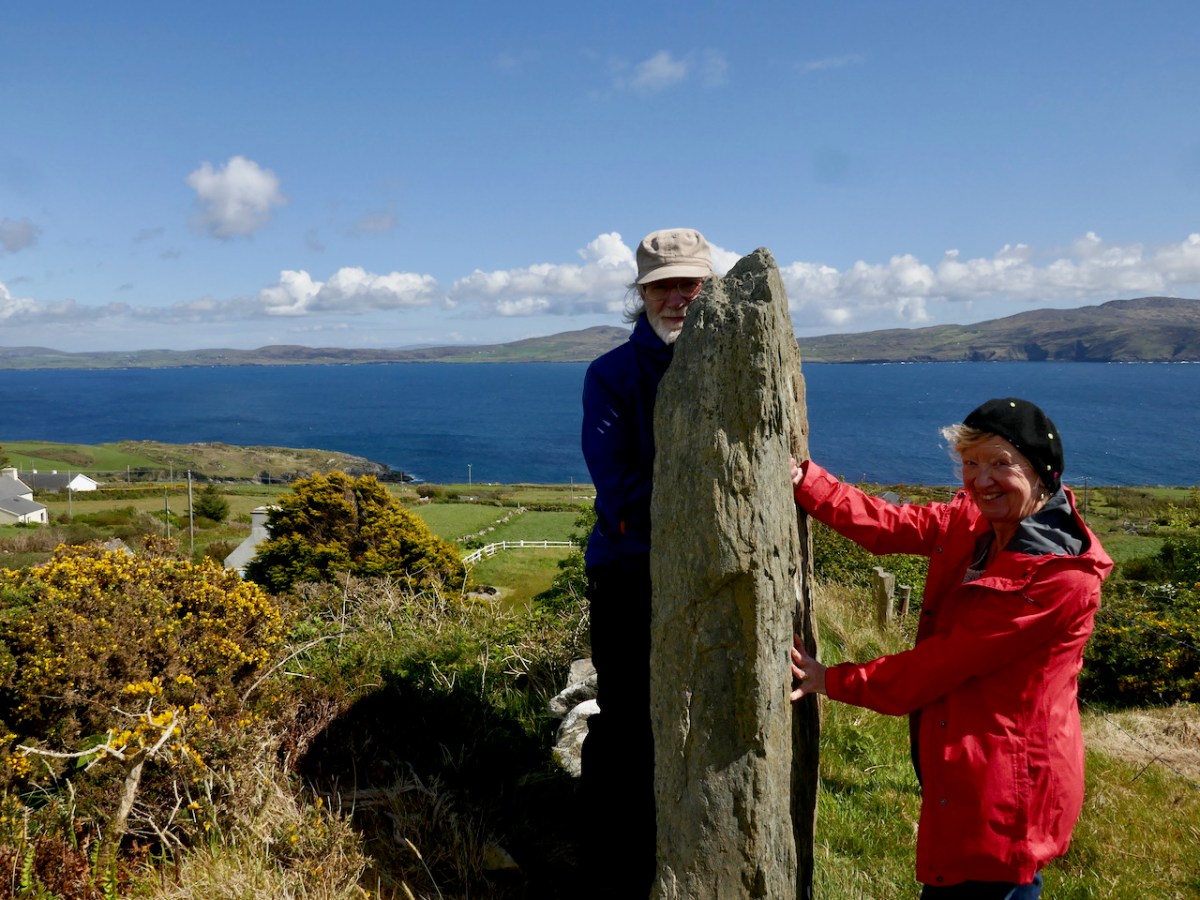
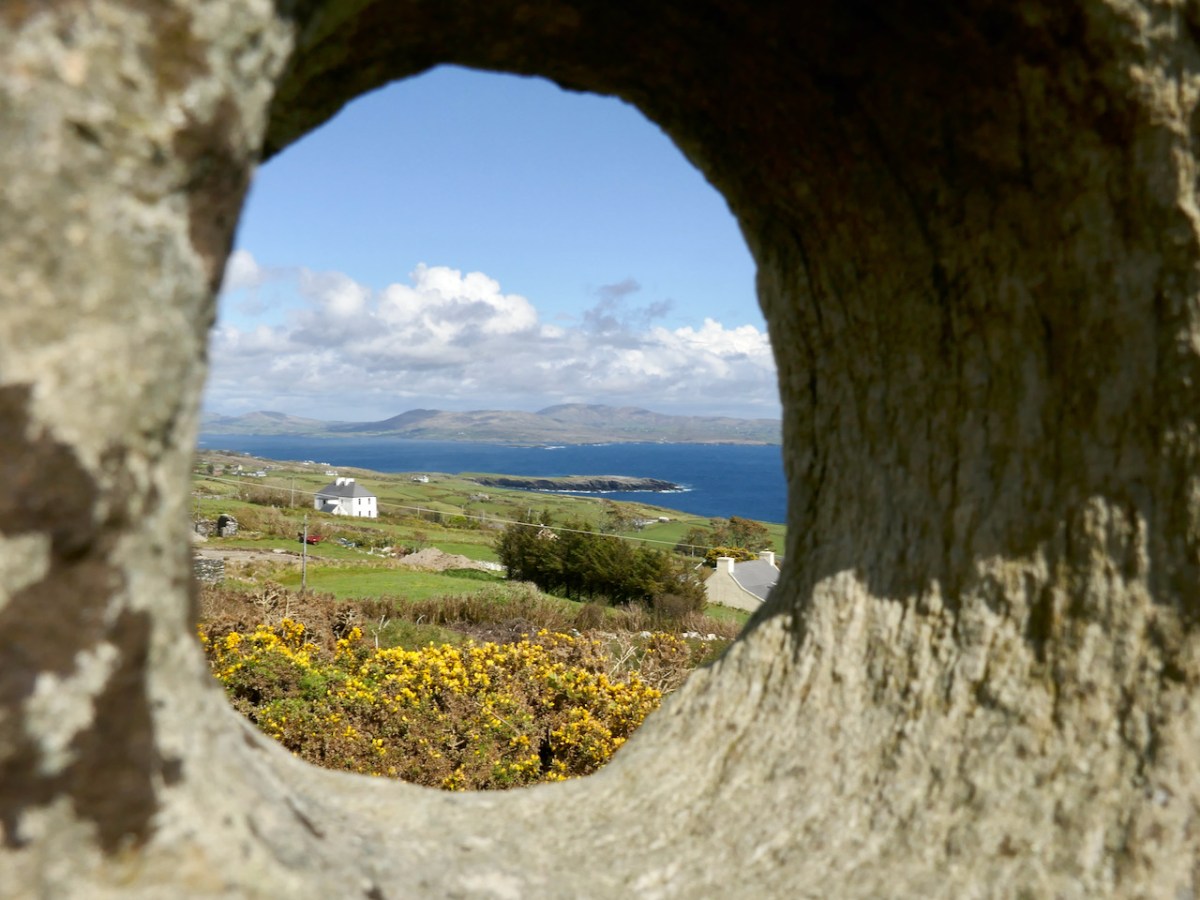
Our final stop of the day was another site new to us, the Marriage Stone! That’s Peter’s sketch of it above, from his Hikelines Blog. Tradition has it that people would get married here, as described by local farmer Jack Sheehan:

The hole in the stone is narrow on one side and wide at the other. The man had a bigger hand and he put his hand through the big side and the woman put her hand through the narrow side. They made their promises when they put their hands through the stone

Of course we all had to do it!

There was a ring fort nearby –  actually described as an enclosure in the National Monuments records – but over the years it has been disturbed to the point where it is hardly recognisable. Perhaps it is this site that gave its name to the townland, Caherurlagh. A caher is a stone fort and so the townland name means Fort of the Slaughter. Perhaps there are some aspects to the history of this area into which we should not delve too closely.

I highly recommend a day like this on the Sheep’s Head, with Walking the Sheep’s Head Way as your travelling companion, and channeling the spirit of old Thomas Westropp. I will leave you with what he had to say about the views north to the Beara as he journeyed along the north side towards Gouladoo

We pass beneath the beautiful woods of Bantry House and the picturesque old graveyard, where the Franciscan Friary once stood erected by O Sullivan in 1330. We reach the shore out of a maze of low green hills, several with ring forts on their summits, near Dromclough. Thence on past Rinn Point and up the lofty road, often unfenced and narrow, along the edge of cuttings and precipices to Gouladoo and Collack. The sweep of the high mountains in Beare and those inland heights towards Muskerry is magnificent as seen across the great bay. From Black Ball Head and Dunbeg past flat-topped Slieve Miskish and the great domes of Hungry Hill and the Sugarloaf, on to the shapely cone of Mullach Maisha, the stately range extends. 

Back to The Bealick

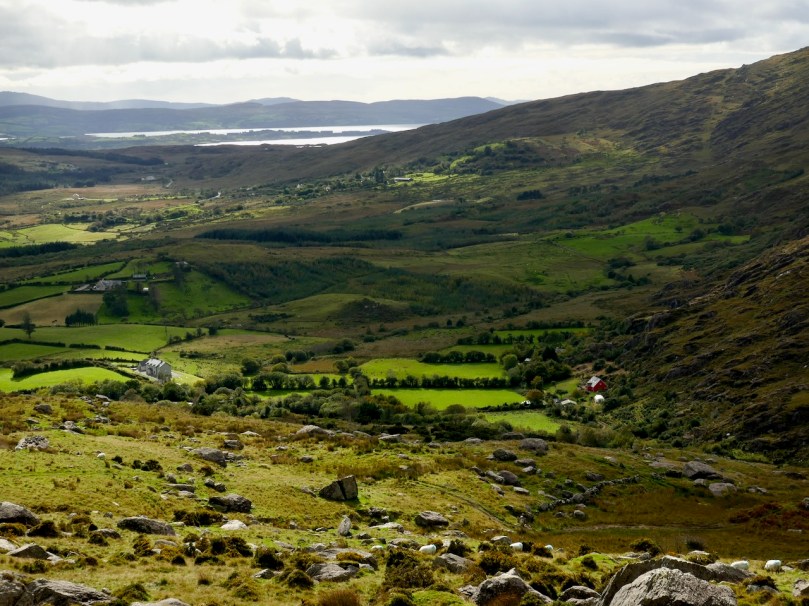
Yesterday we went back to the Bealick – back to the valley of Cooleenlemane that so entranced Robert and me that both of us wrote about the experience last year. I concentrated on the Bealick (pronounced Bay-lick) – the ‘caves’ containing ancient rock scribings and my post was called Witches’ Marks and Lovelorn Shepherds: Inscribed Rock Art in a Remote Valley. Robert wrote about the valley itself, through geological and historical time in his post, Cooleenlemane – A Walk Into History. What more could we have to say about this impossibly beautiful place? Lots, it turns out.

The red house at the bottom right marks our starting off point. In the distance is Bantry Bay and Whiddy Island

We took the walk in the company of our favourite travelling companions, Peter (of the Hikelines Blog) and Amanda (Holy Wells of Cork and Kerry). We had been missing them badly as they had been in New Zealand when the pandemic struck, unable to get home for six months. It felt really good to be out and about with them again.

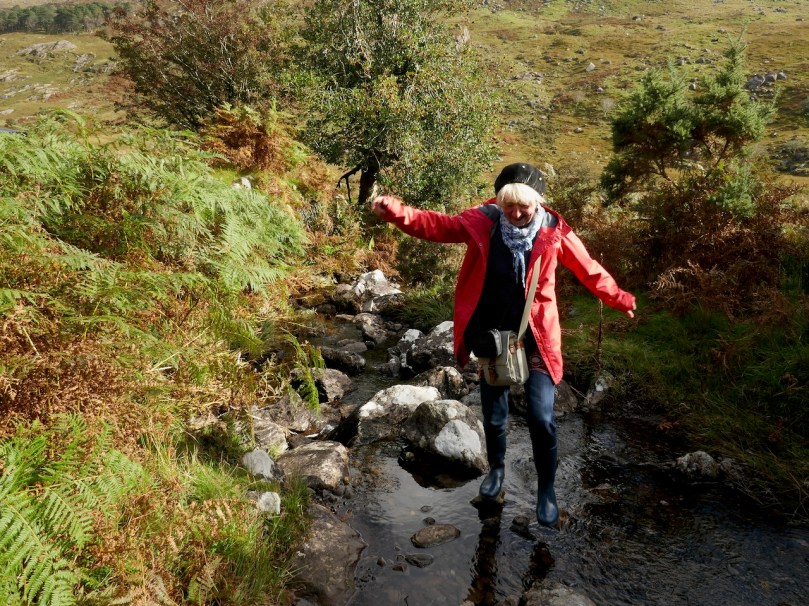
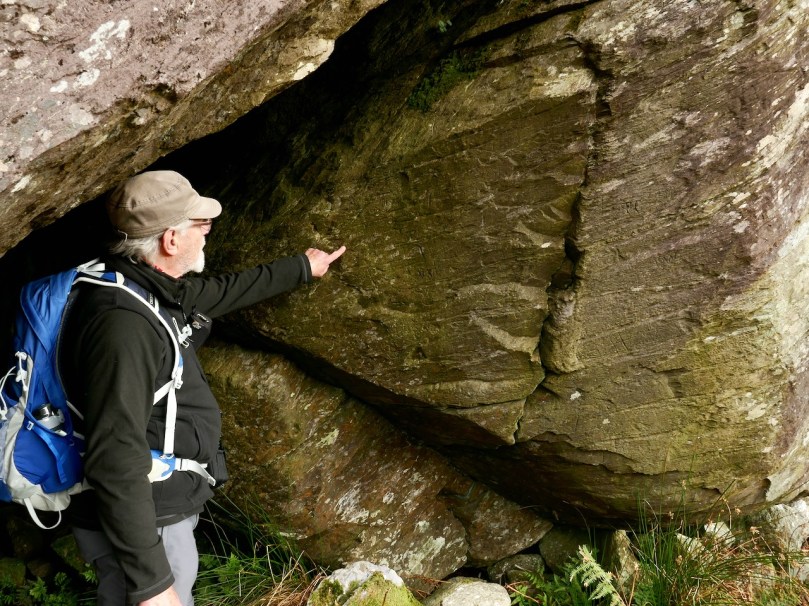
Amanda fords one of the many streams (it was a wet walk!) and Peter points out some of the scribings in the Bealick

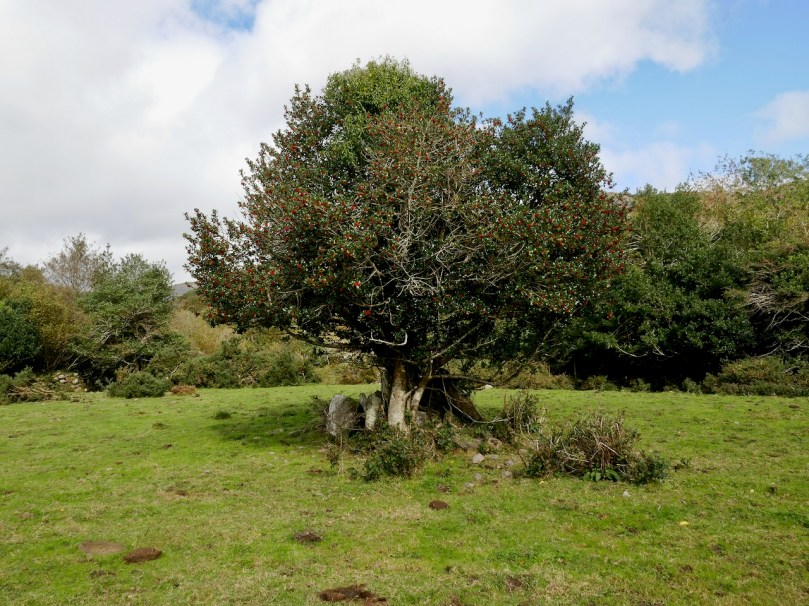
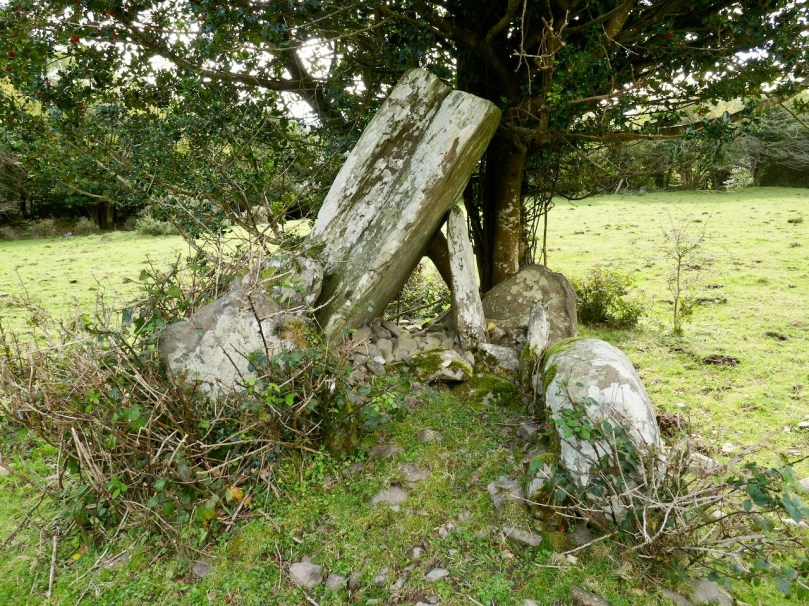
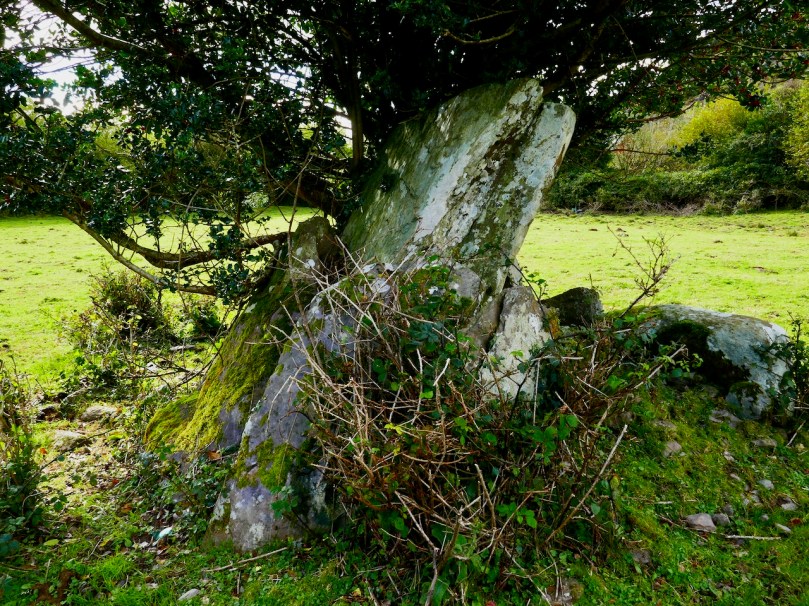
Apart from the jaw-dropping scenery and the sheer pleasure of a hike into a relatively untouched valley, this time I found myself drawn to the evidence of occupation over time, starting in the Bronze Age. At the entrance to the valley and right beside a ford across the river stands what is described in the National Monuments inventory as a ‘Megalithic Structure. . .the exact nature of which is unknown.”

It’s in the middle of a small clearing, with a Hawthorn tree growing out of it – altogether a magical sight. It could be what remains of a wedge tomb – see my post Wedge Tombs: Last of the Megaliths to learn more about this type of monument. 

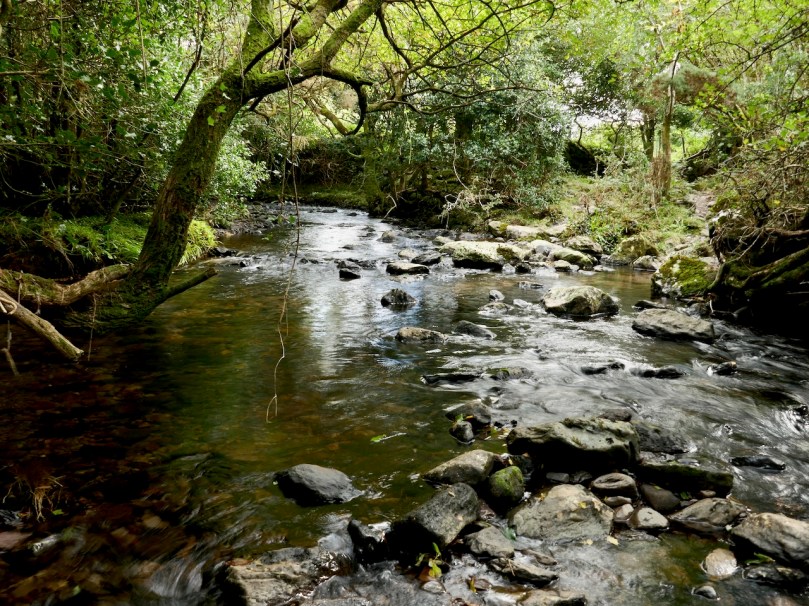
I wondered how ancient the ford might be. For most of the length of the Cooleenlemane River as it runs down the valley it is easy to cross with the help of a stone or two, but in this spot it widens. Although no longer in use now, this type of crossing place is often of considerable antiquity – indeed one of the most common place names in Ireland contain the word áth (pronounced awe) which means ‘ford.’

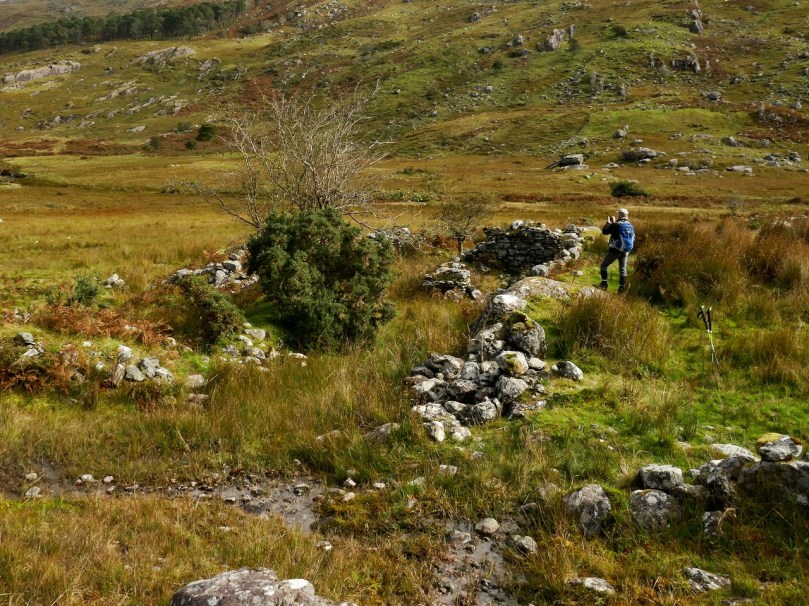
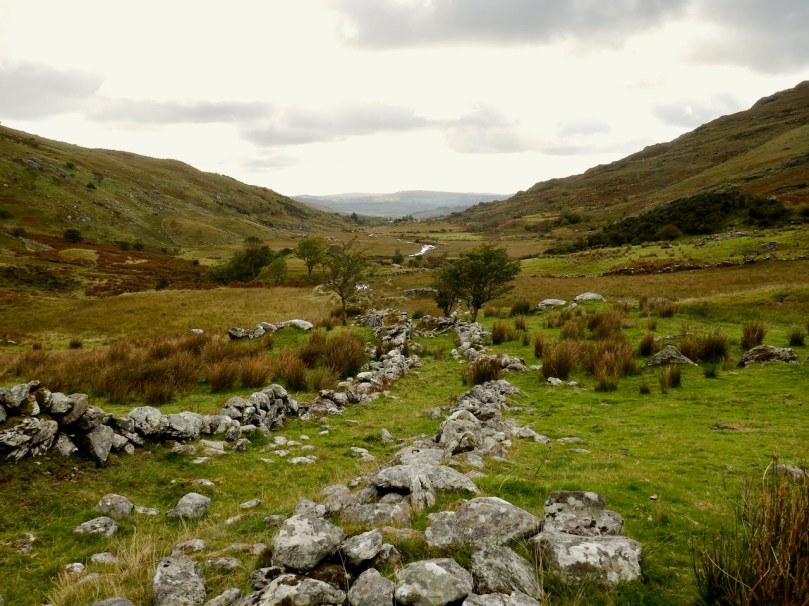
Leaving the megalith, we followed the course of the stream up the valley, mostly trying to select higher and slightly dryer ground, and trying not to get too distracted by the oh-so-photographical scenery all around us. Ruins of small stone cottages dotted the landscape, and a tiny cart track runs the length of the valley almost to the Bealick.

The National Monuments inventory also lists a cashel, two enclosures, and two hut sites in the valley. We passed the Cashel half way between Furze Hill and the Bealick, although we actually obtained the best views of it from the Priests Leap Road afterwards.

The upper photograph shows Furze Hill, the dark patch on the left, and the Bealick just above the bend in the river. The cashel is half way between them. The lower photograph is a closer look at the cashel

Cashels are ring forts made of stone rather than earthen banks. They are considered to be the farmhouse enclosures of high-status individuals (you can see an exceptionally good example at Knockdrum – see Robert’s post Knockdrum Stone Fort to understand how they functioned). This one is clear but very ruined, circular in plan, about 17m across.

It probably dates either to the late Iron Age or the Early Medieval Period – anywhere in the first millennium AD. Like other cashels, it has clear sight-lines down the valley and was built to be visible and a statement of status and power.

We didn’t hike up to the enclosures or hut sites further up the valley – a walk for another day. I think Peter (above) is already plotting his course up there. The most southerly of the enclosures sounds interesting, with an entrance marked by upright stones and a levelled interior. There is no way of knowing how old these are, of course, but taken with the megalithic structure and the cashel, they do indicate that this valley has been lived in and worked for thousands of years. 

And then there’s the Bealick itself – the three ‘caves’ formed by massive rocks leaning against each other, two of which contain the rock scribings. In the way of such unique places they become special features of the landscape and take on a mantle of history. In this case, the Bealick was a Mass Rock, a home, a sheep-shelter, and a mysterious repository of enigmatic markings. 

On our walk yesterday we became aware that we were not the only ones in the valley. Along came Mary, with four very well-behaved dogs, on the look-out, she told us, for her brother’s cattle.

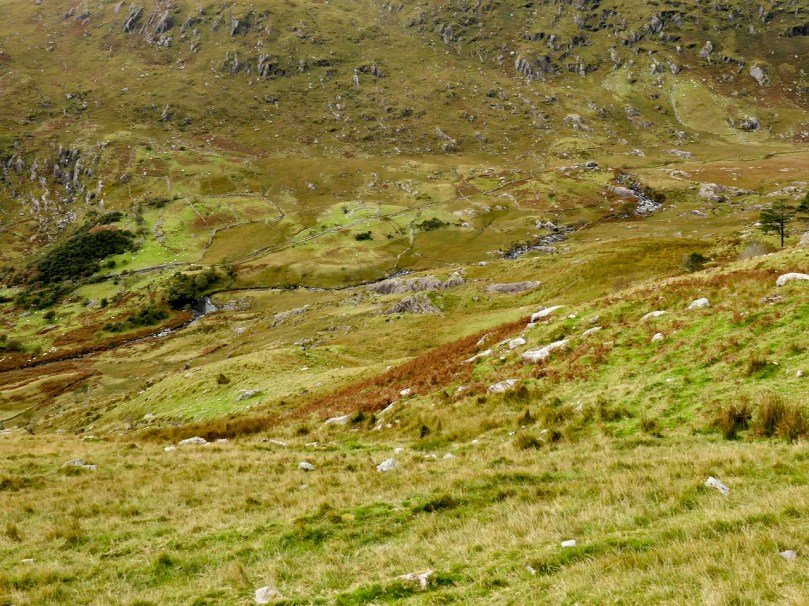
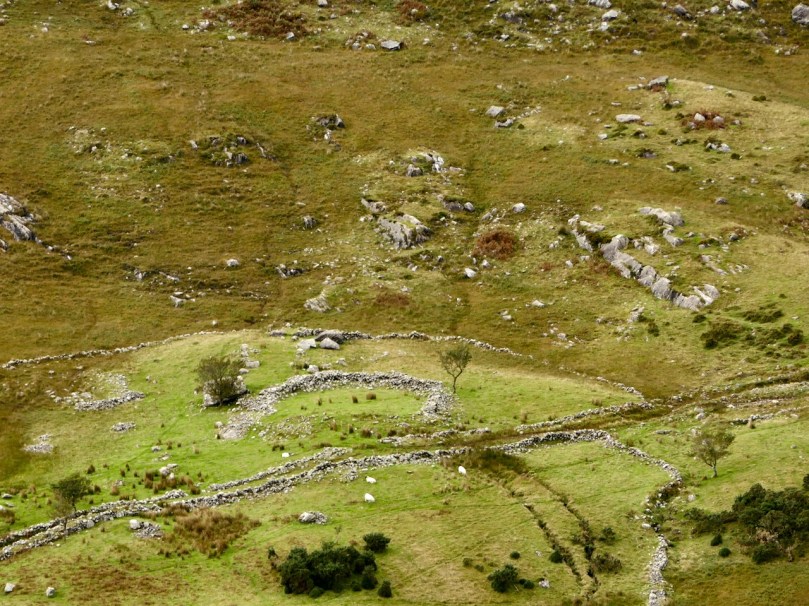
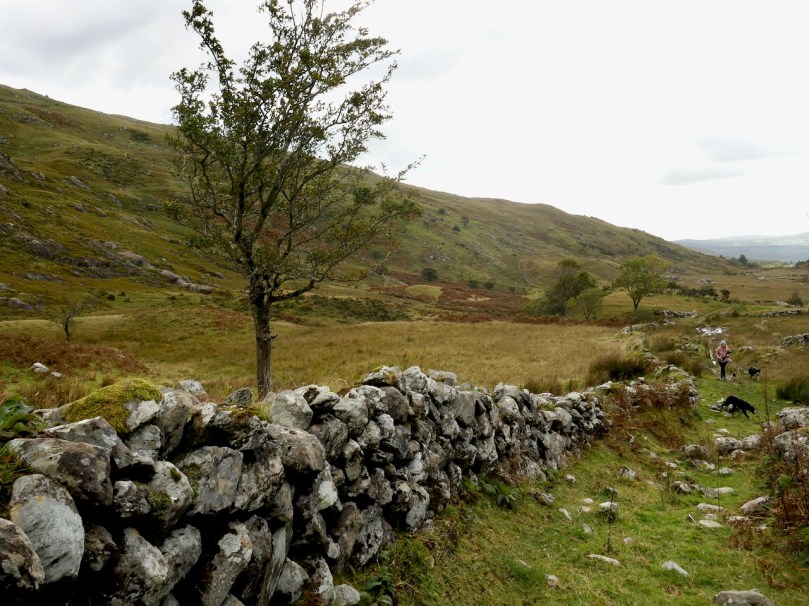
From the top: a field enclosed with stone walls runs up the steep slope; lazy beds in an old field; a ruined cottage surrounded by tiny haggards (a haggard is a small enclosure beside a house)

She explained that the land was commonage and that it hadn’t been lived in, in living memory – probably abandoned not long after the Famine, she thought. She pointed out locations of what she called ‘cowlocks’ or small homestead here and there, with their associated potato patches recognisable by the lazy bed ridges still visible in the small fields. She told us the prominent knoll we had passed was called Furze Hill. 

She pointed to a cliff above the Bealick (both images above) and named it as `Carrignasprogue’. A direct transliteration from Irish, this is Carraig na Spioróg, or Rock of the Sparrowhawks. It’s a particularly dangerous place for sheep, she said, as they tend to get trapped at the bottom of the sheer part and have to be rescued. Every field, every bend on the river and every prominent rock would have had its own name, enabling those who lived in the valley to know exactly what part was being referred to. 
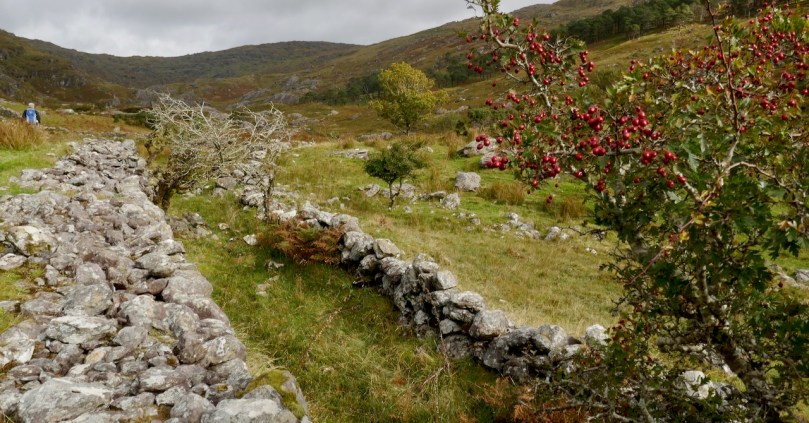
Nowadays, several families share the valley, grazing sheep and cattle in it and for the most part leaving them to their own devices. The grazing has kept the valley relatively clear – we saw little evidence of overgrowth of gorse or bracken and none of the rhododendron invasions that plague the Killarney National Park not so far away. One hesitates to use the word pristine nowadays, but the sense I have is of a remote place that hasn’t changed much in hundreds of years. Long may it remain so.

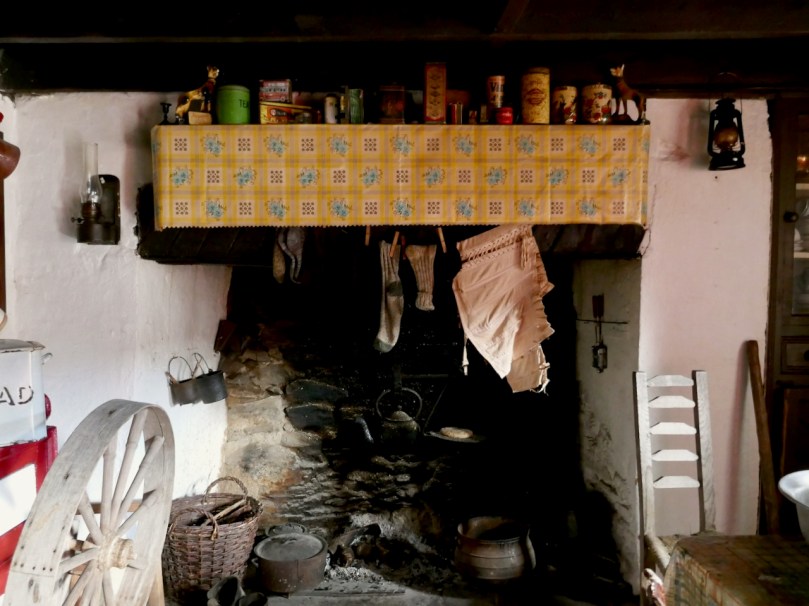
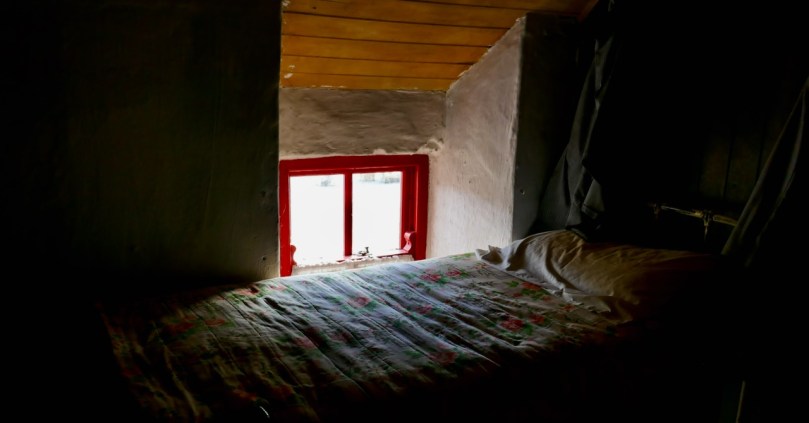
We drove home a circuitous route, up over the Priests Leap Road into Kerry and back over the Caha Pass into Cork. We were delighted to find Molly Gallivan’s open and serving tea and scones. There’s a tiny cottage attached, reconstructed in the style of the traditional Irish farmhouse and I was especially struck by this bedroom – it could have been in one of those tiny Cowlocks we passed by in the valley earlier.