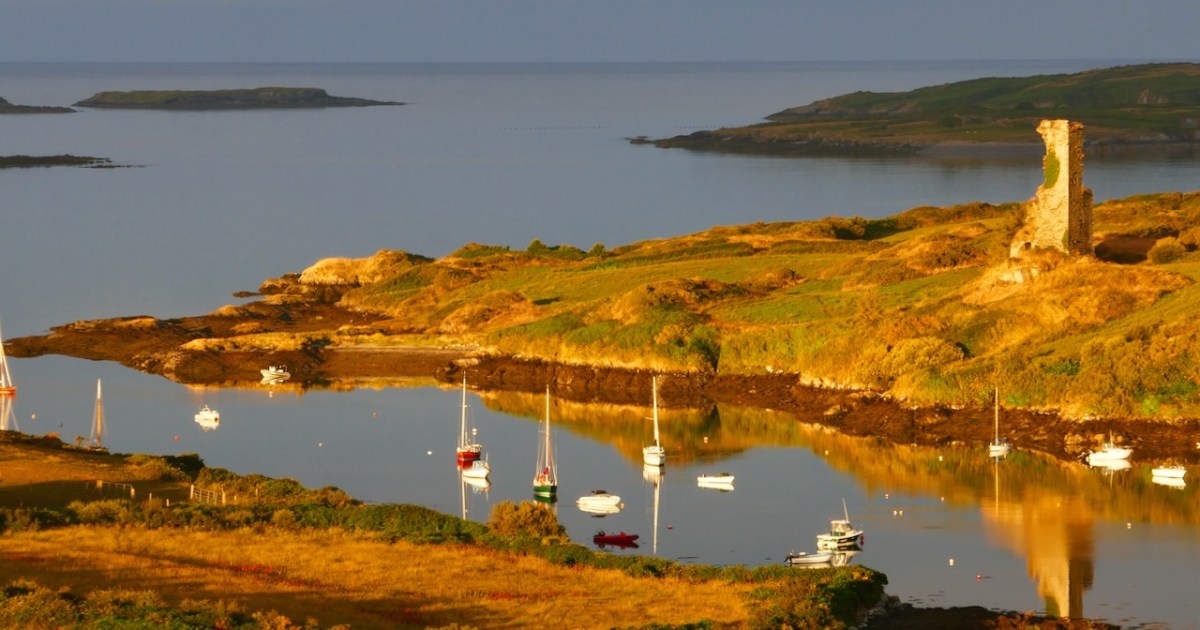
Farewell Nead an Iolair, and Finbarr and Ferdia and. . .

. . . and that view!
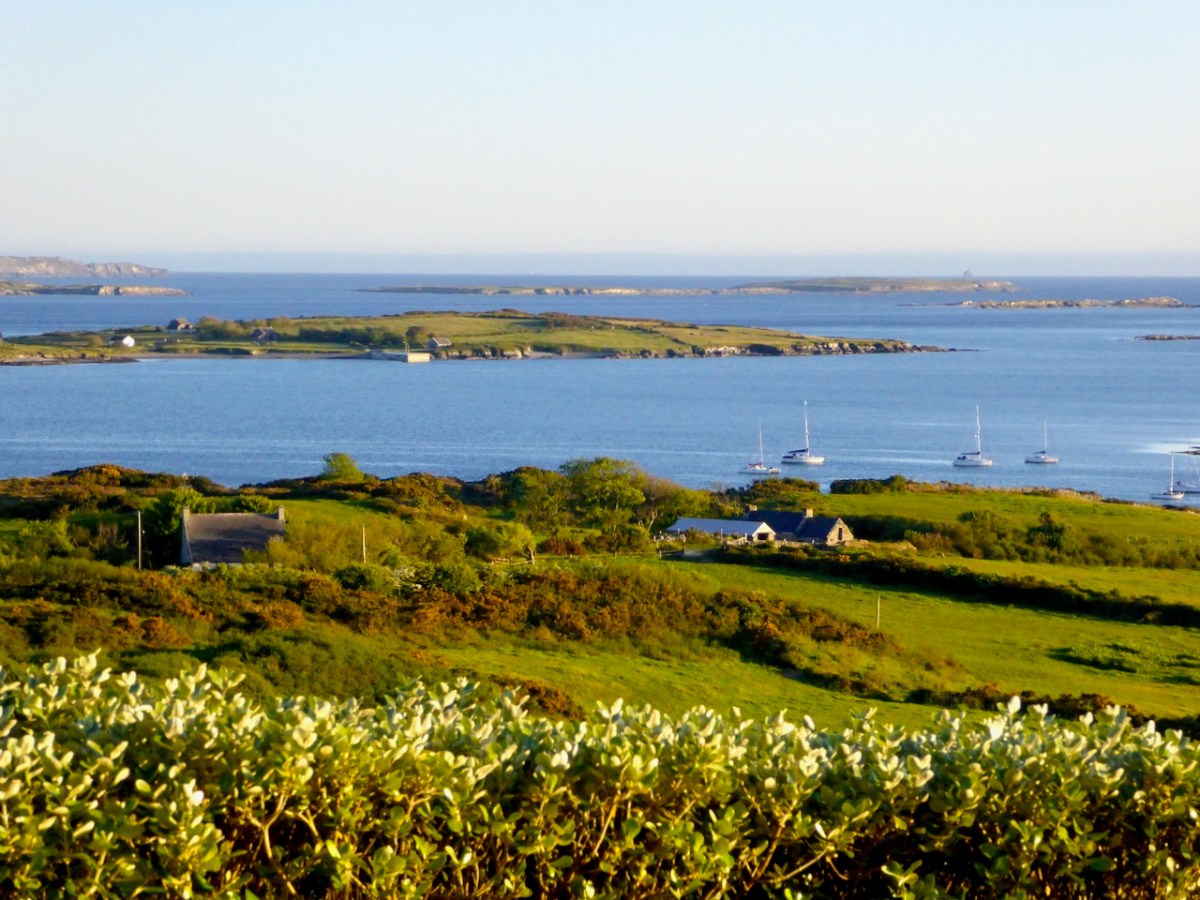
Yes, after 13 years of owning this special house, I have sold it to a lovely couple who I know will treasure it like we did. I am moving into Schull (all of 8km away) on Thursday, and I am looking forward to being able to walk everywhere, especially to Amar’s cafe.
Nead an Iolair – it means Eagle’s Nest and was Robert’s choice of a name for the house – has been the subject of many of our posts and as a final honouring of the house and the acre it sits on, here is a round-up of some of the posts we have written about it all, over the years.
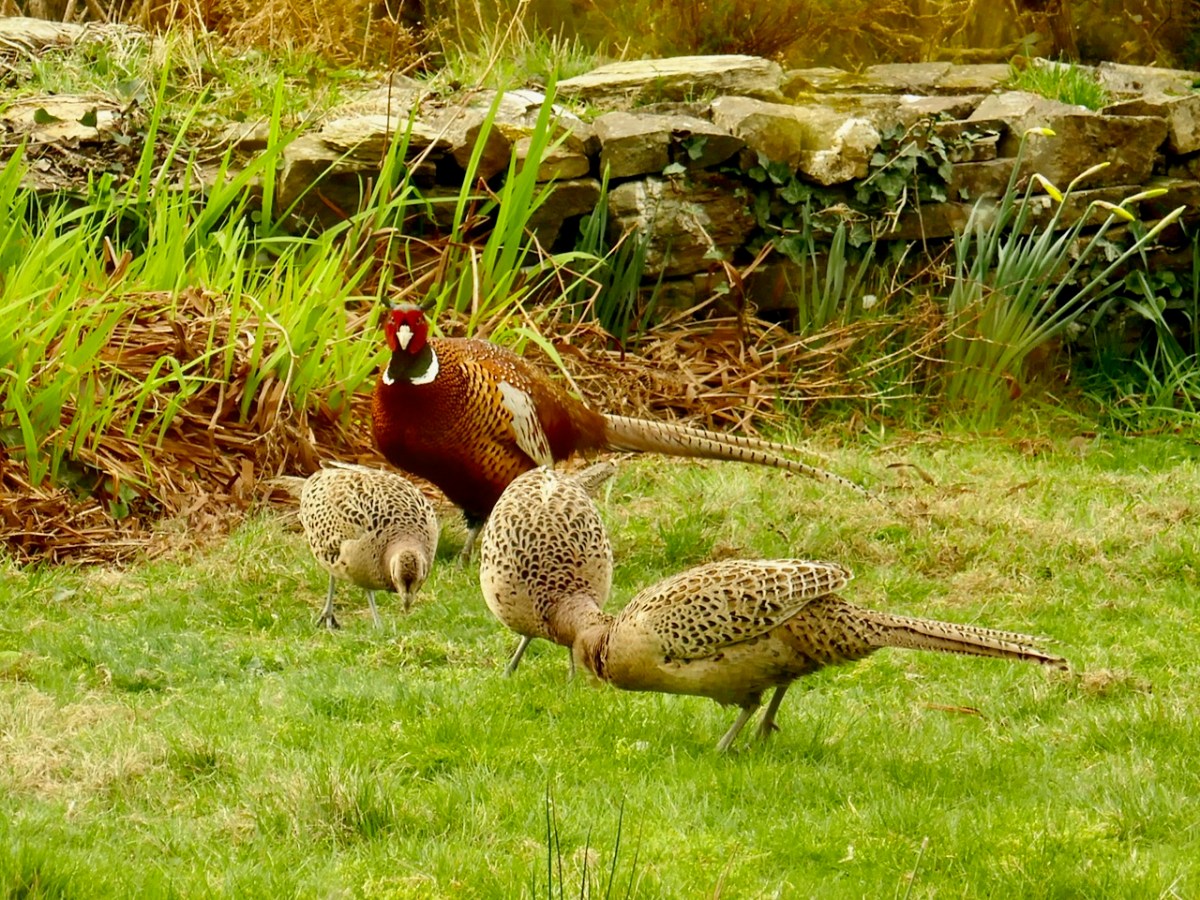
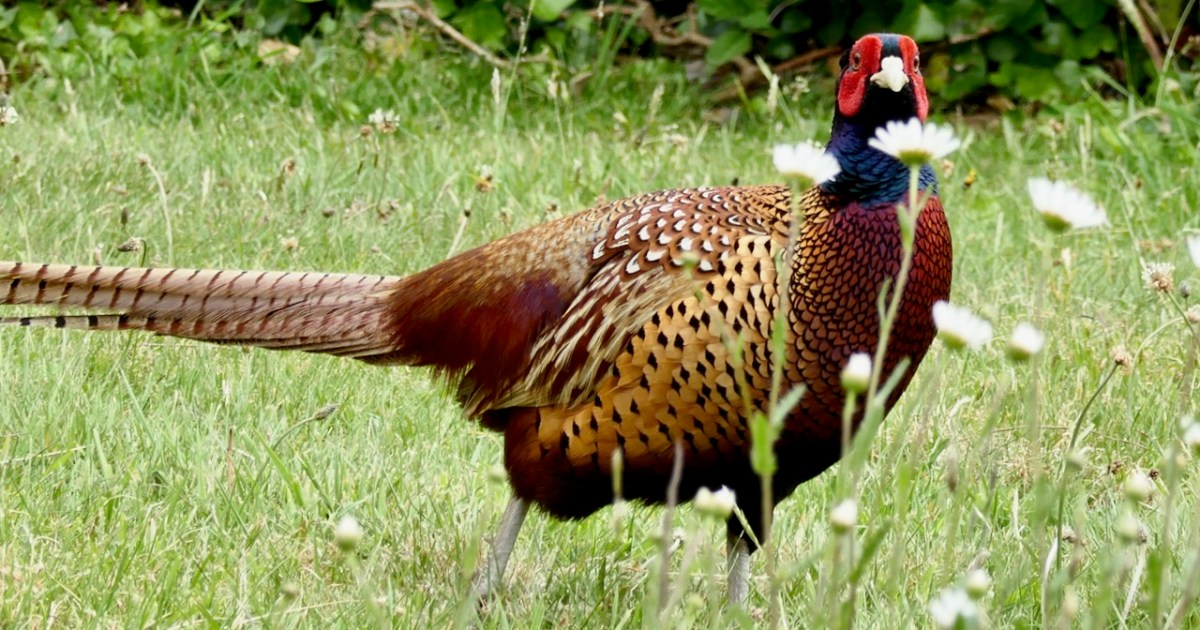
Although we have kept no pets, we are far from deprived of the company of animals. Finbarr the Pheasant, for example – our heads tell us it cannot be the same bird all these years, but our hearts just think that we have looked after him so well that he has adopted us. He has had up to four wives – there are currently two and it has kept him busy, herding and courting them and fending off other males. All played out in front of our living room window.
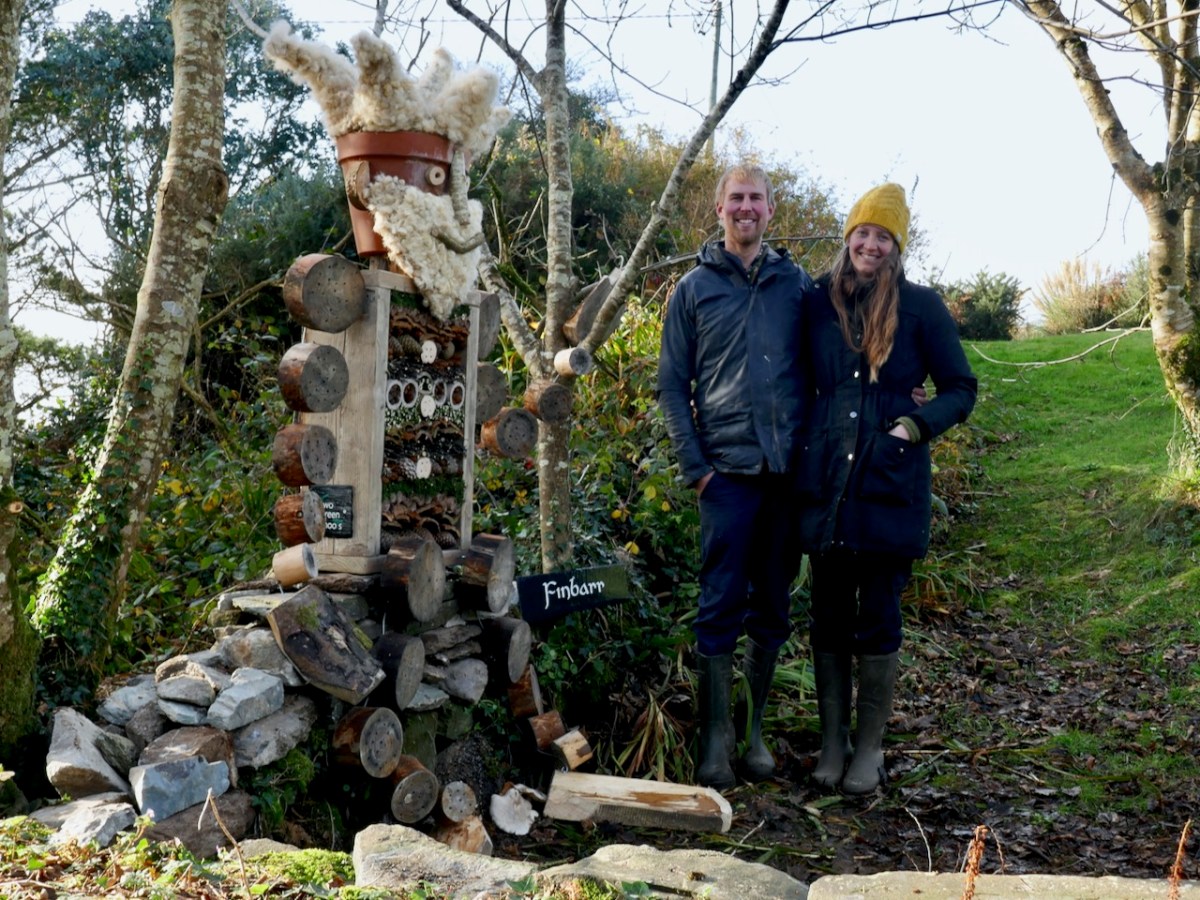
And let’s not forget our other Finbarr, Our Lockdown Mascot, the bug hotel designed and installed for us by Kloë and Adam, of Two Green Shoots. He’s still there – say hello if you pass.
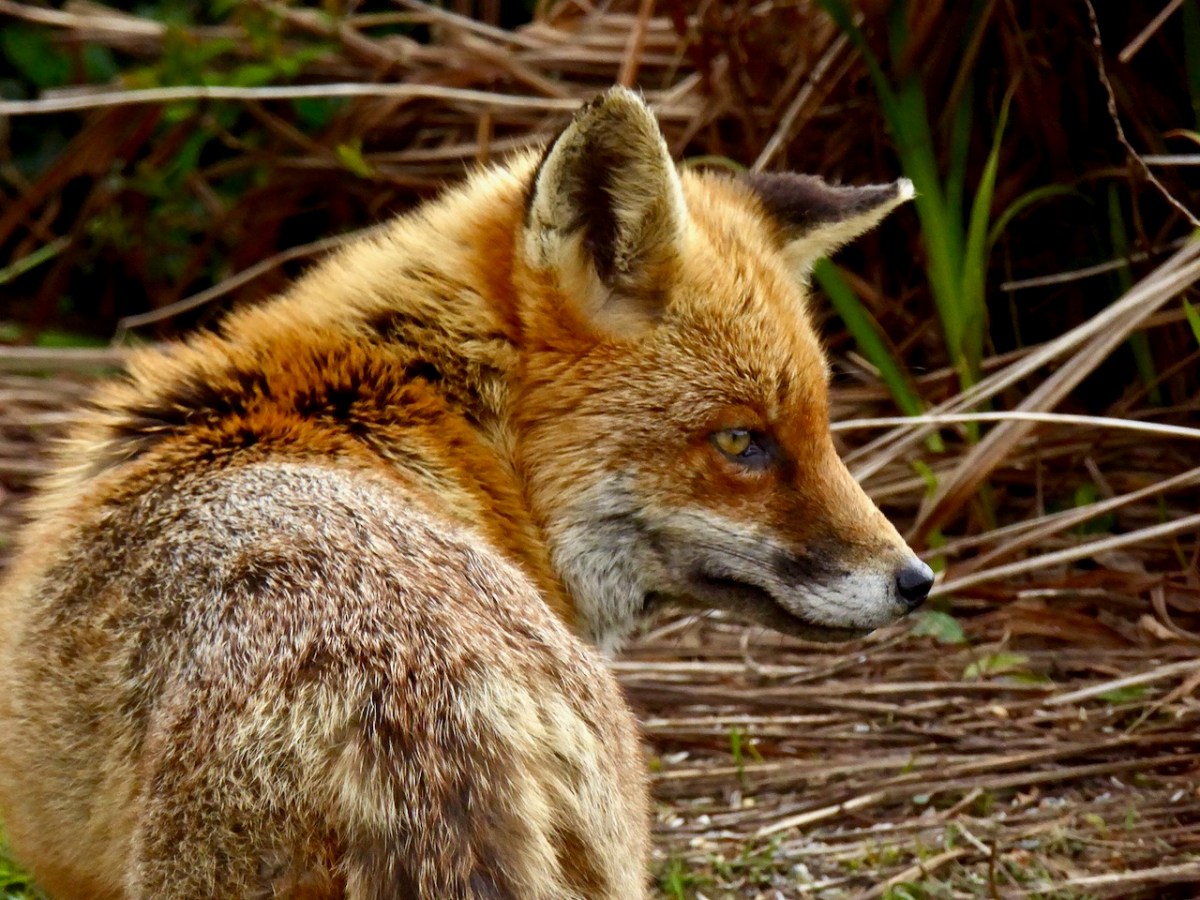
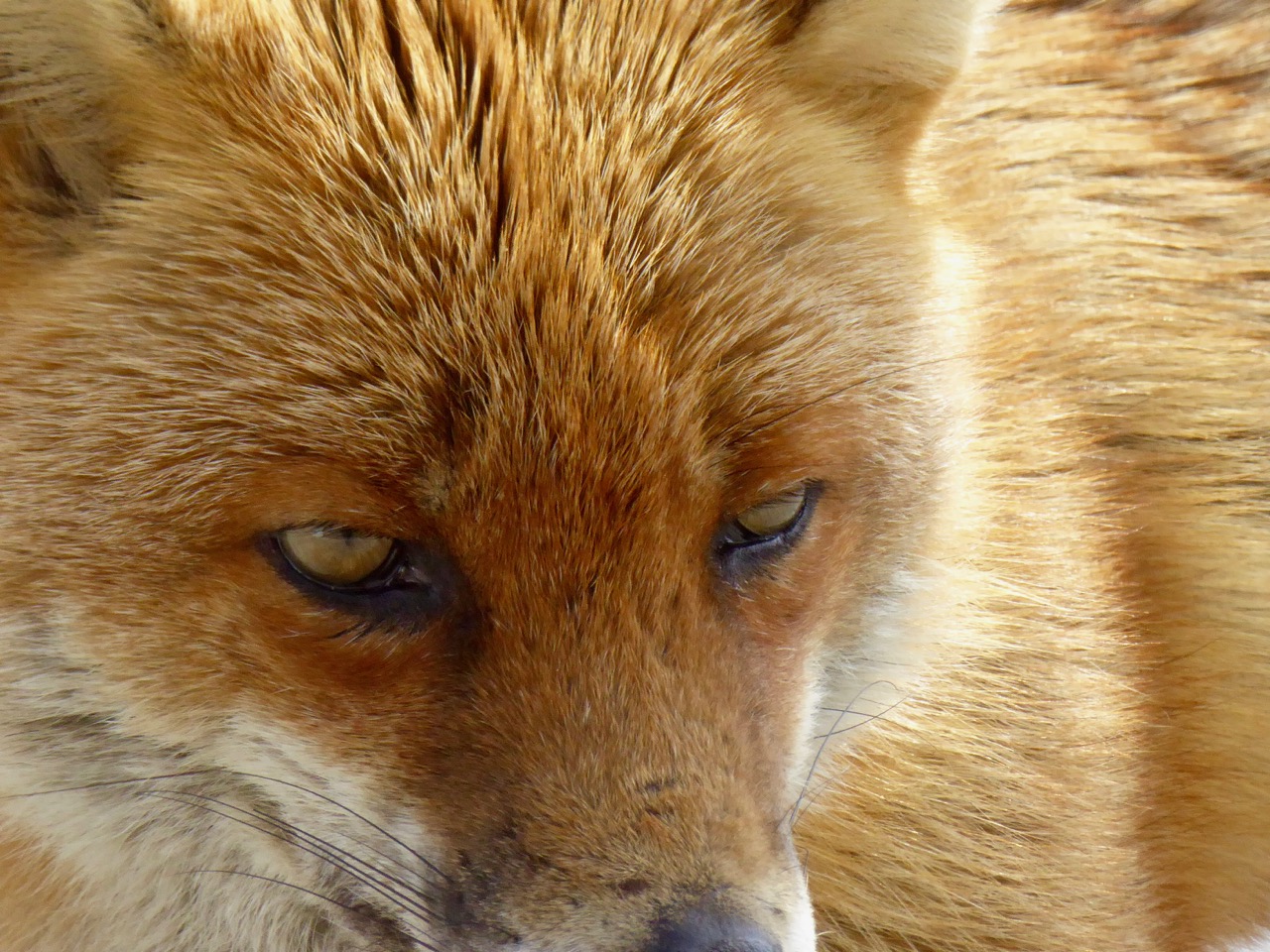
And we still miss Ferdia – the friendly fox who would eat out of our hands (anything except broccoli) and who loved to sit on the terrace while Robert played his melodeon. Occasionally another fox trots by but none have taken Ferdia’s place as a constant visitor.

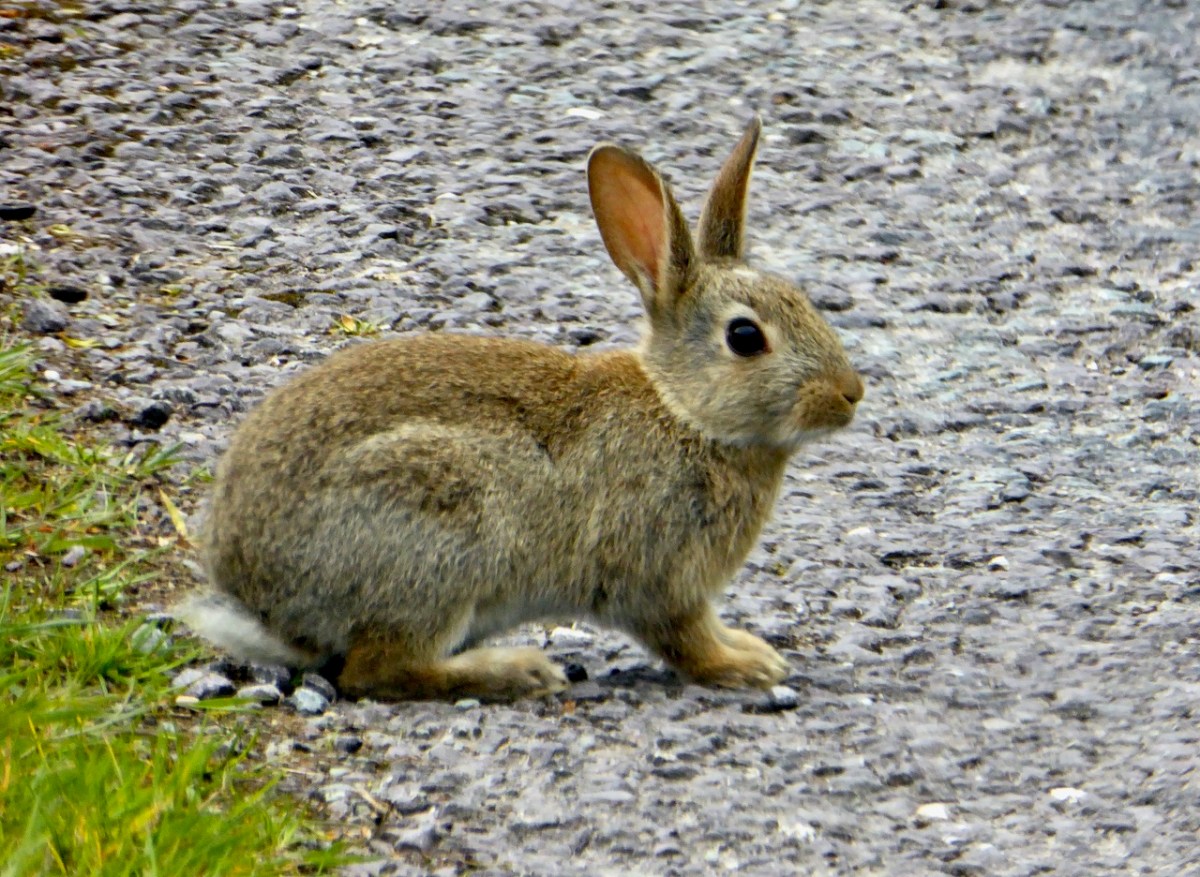
If I come home in the evening, rabbits are leaping into the hedges as I drive in. When I throw open the curtains in the morning, they are sitting outside my window.
Robert was a hare fanatic, and we did have a brief dalliance with a young hare we called Berehert (below), but they have become quite rare now in our neighbourhood.

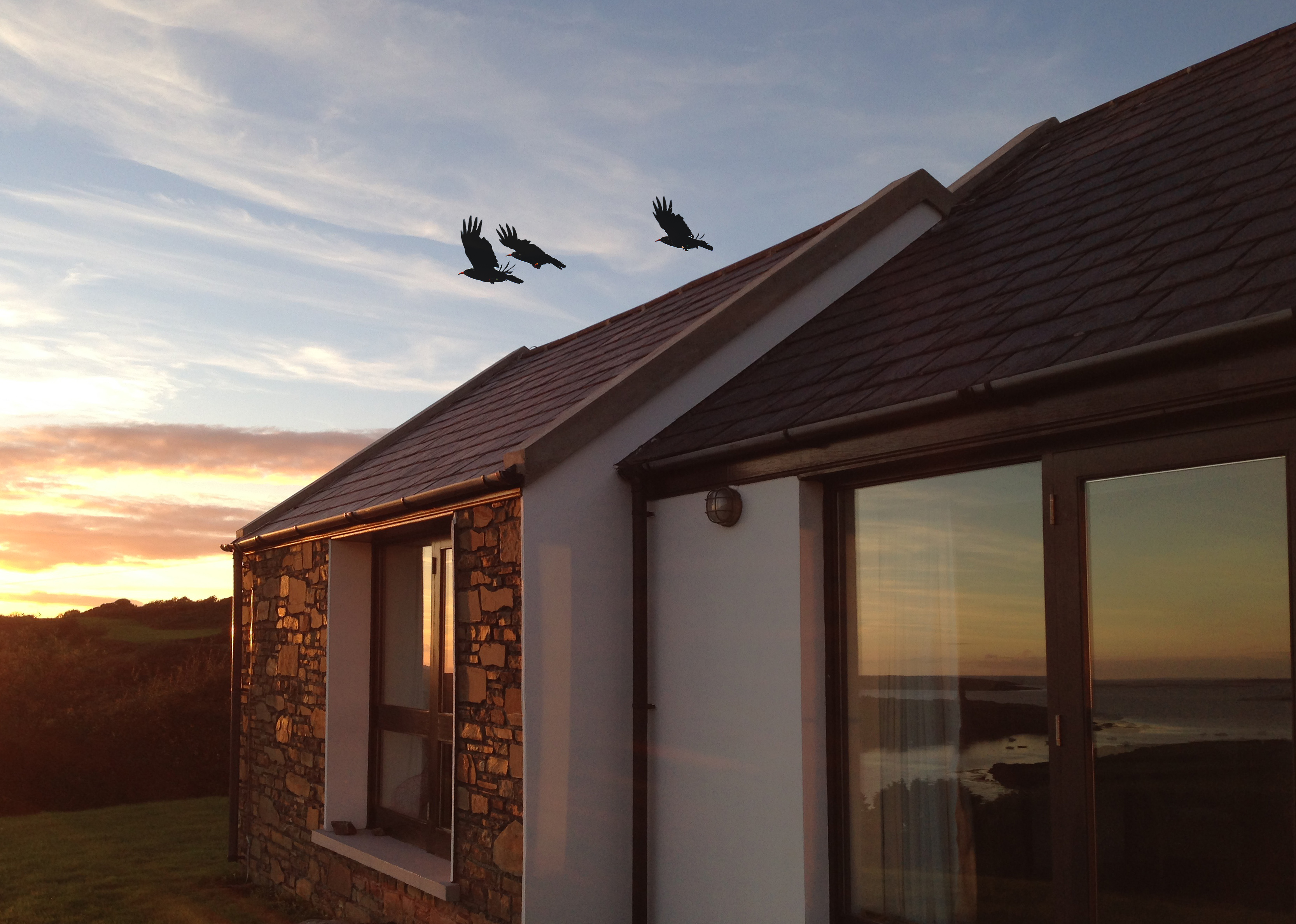
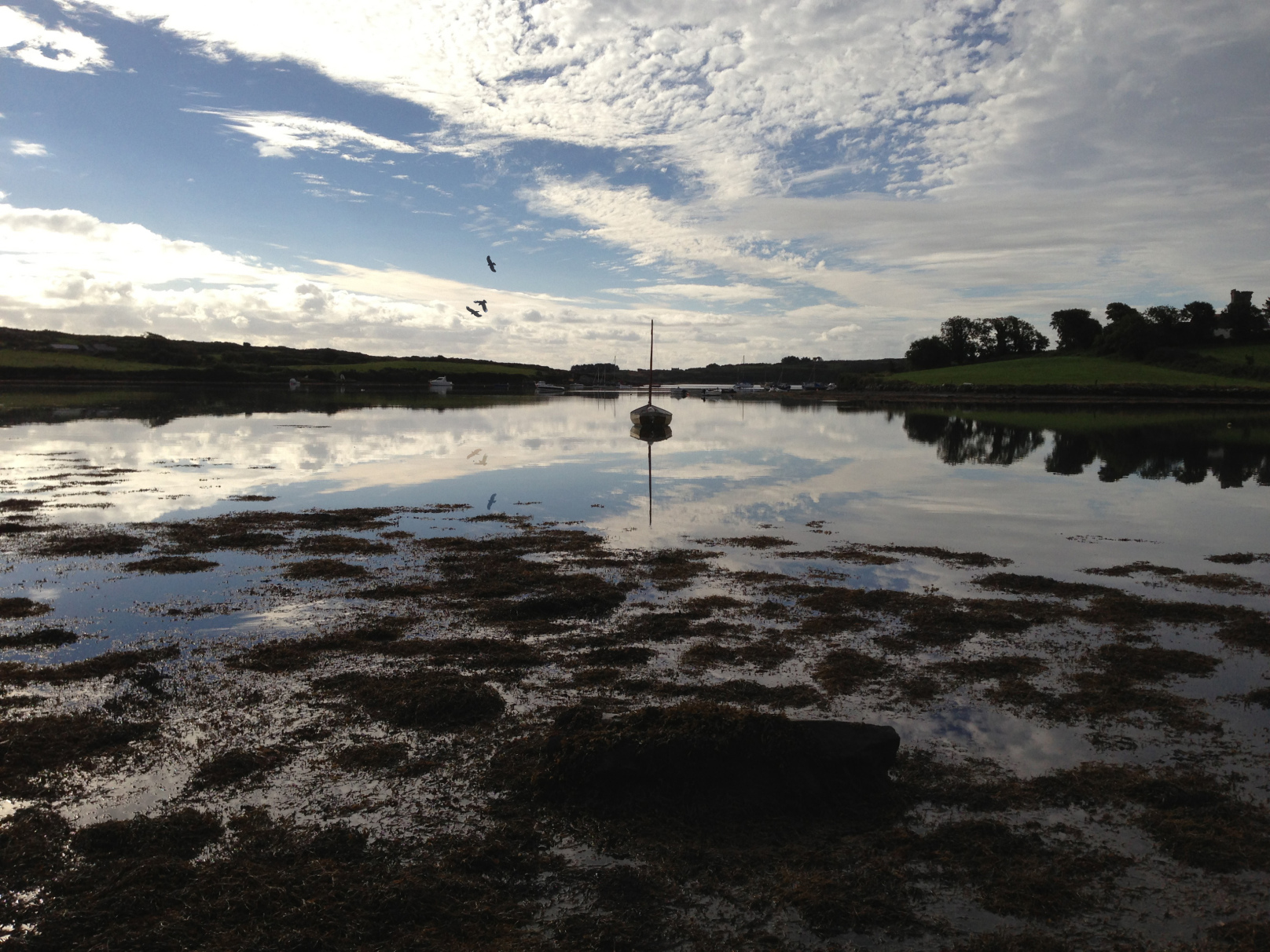
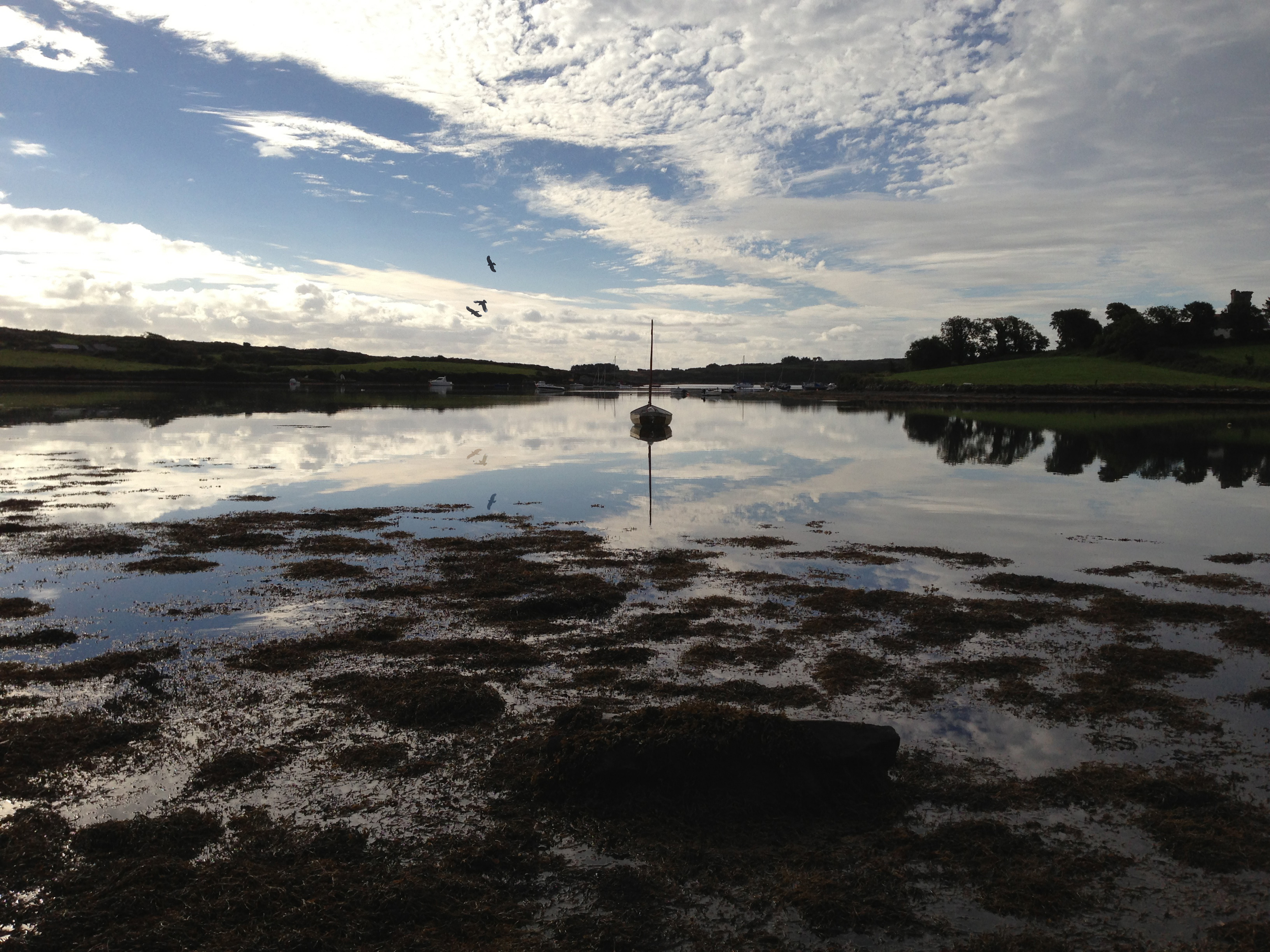
The choughs are wheeling overhead all day, with their distinctive call and their aerial acrobatics.

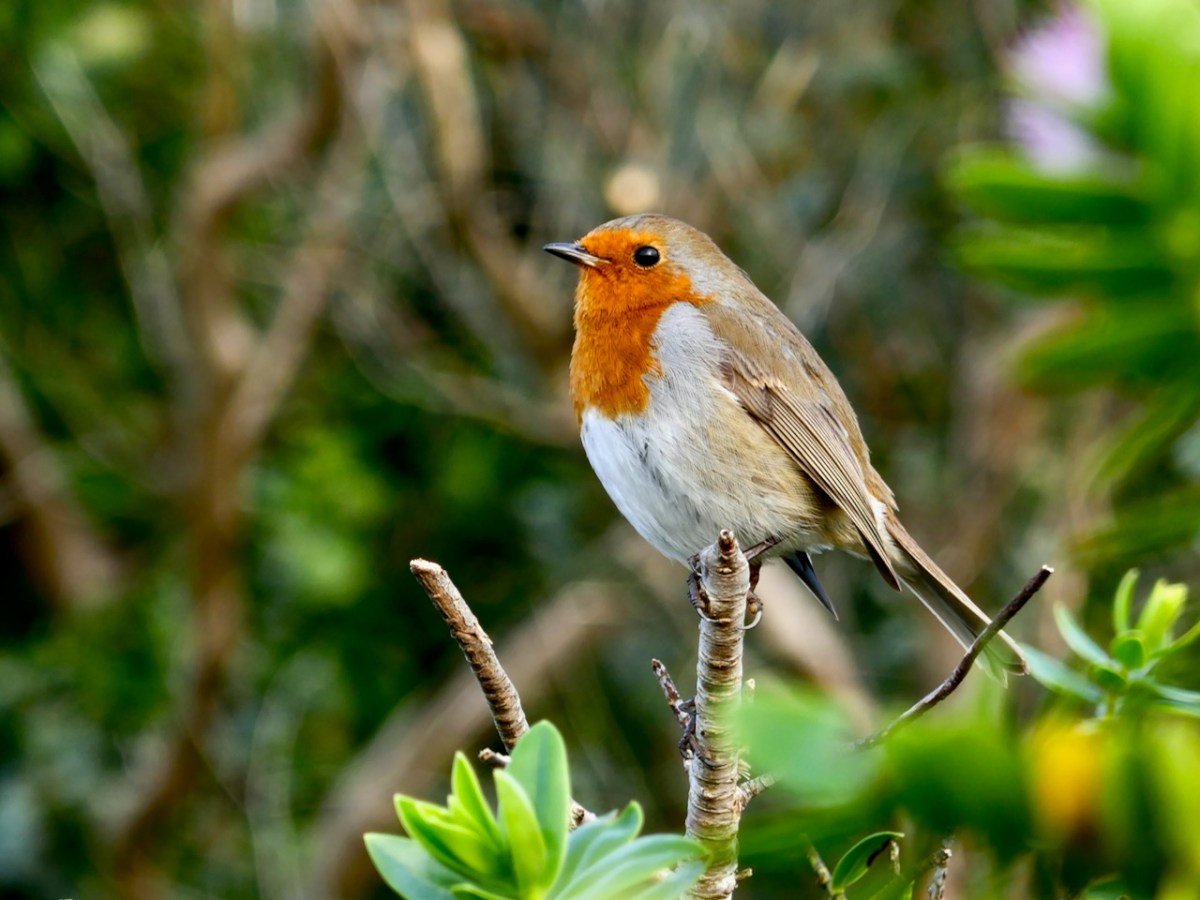
Small birds come to the feeder, and there is a robin that I am this close to coaxing onto my hand.
And although we don’t see them, the moths are everywhere – from hardly visible against a stone wall to spectacularly coloured.
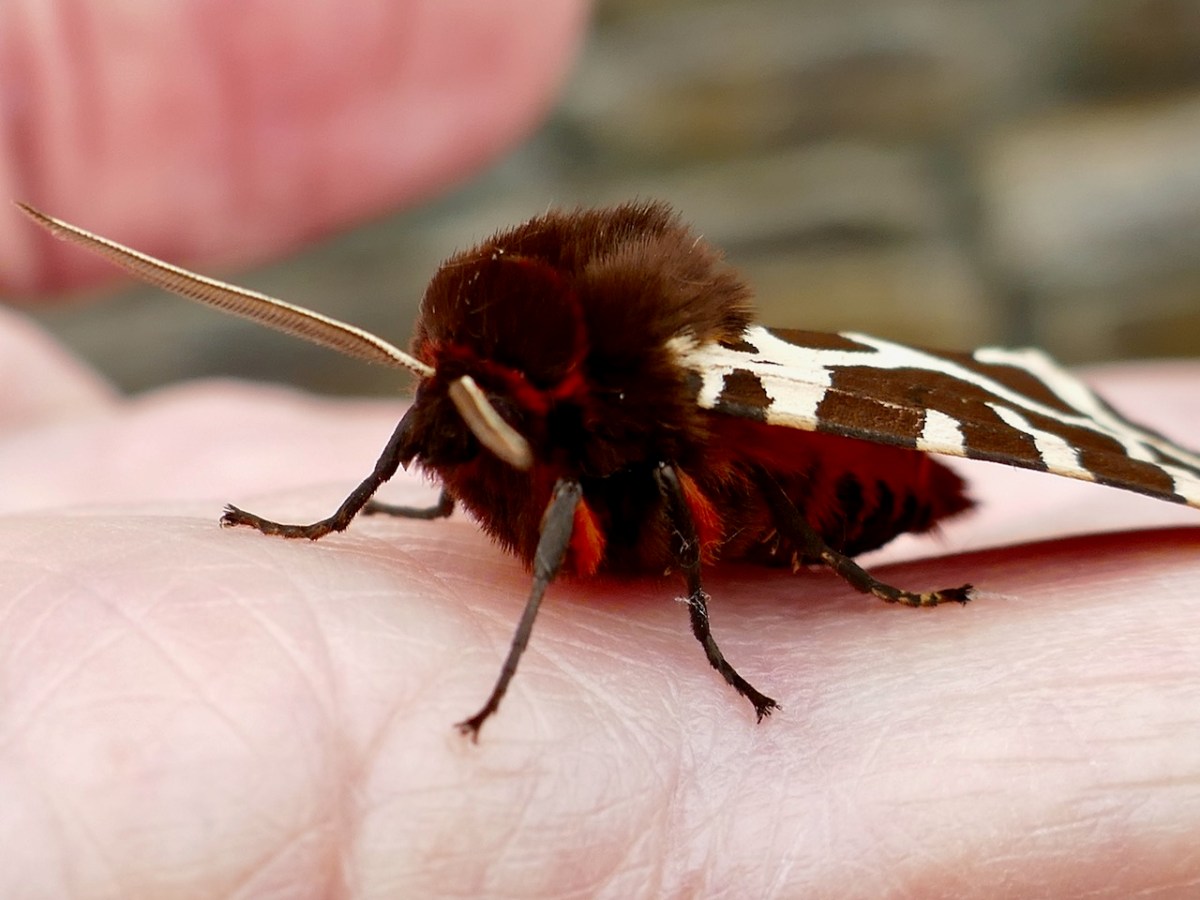
It has been a joy to discover the beauty and variety of these silent creatures of the night.

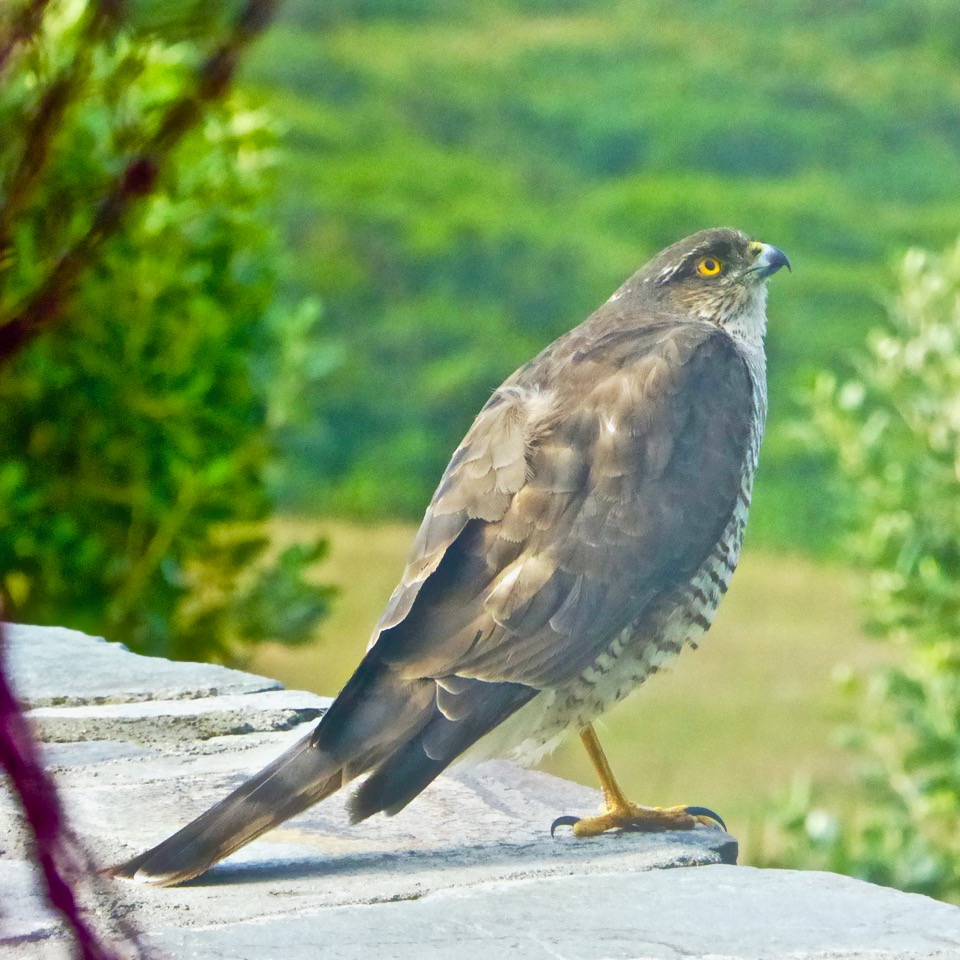
Every now and then a bird or animal will appear for a brief time to grace us with its presence – like Spiro the Sparrowhawk, who perched outside our bedroom window and cased the joint before swooping off low over the back wall.

Or like this bundle of ferocity – The Wild One – a stoat who terrorised the pheasants, despite being a lot smaller than they are.

One acre – that’s what we have here. I documented the wildflowers that have popped up all over the acre, both in my wildflower patch and just on the land on general.
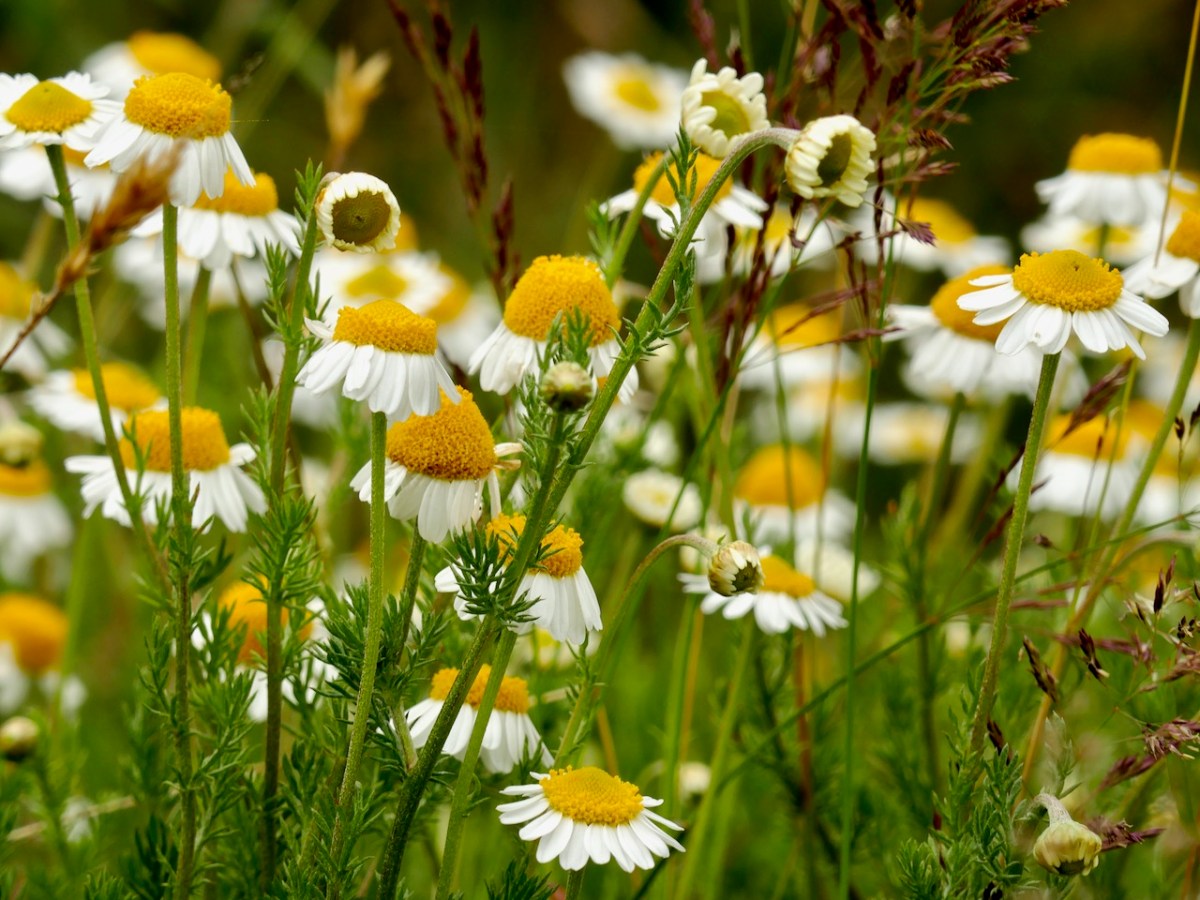
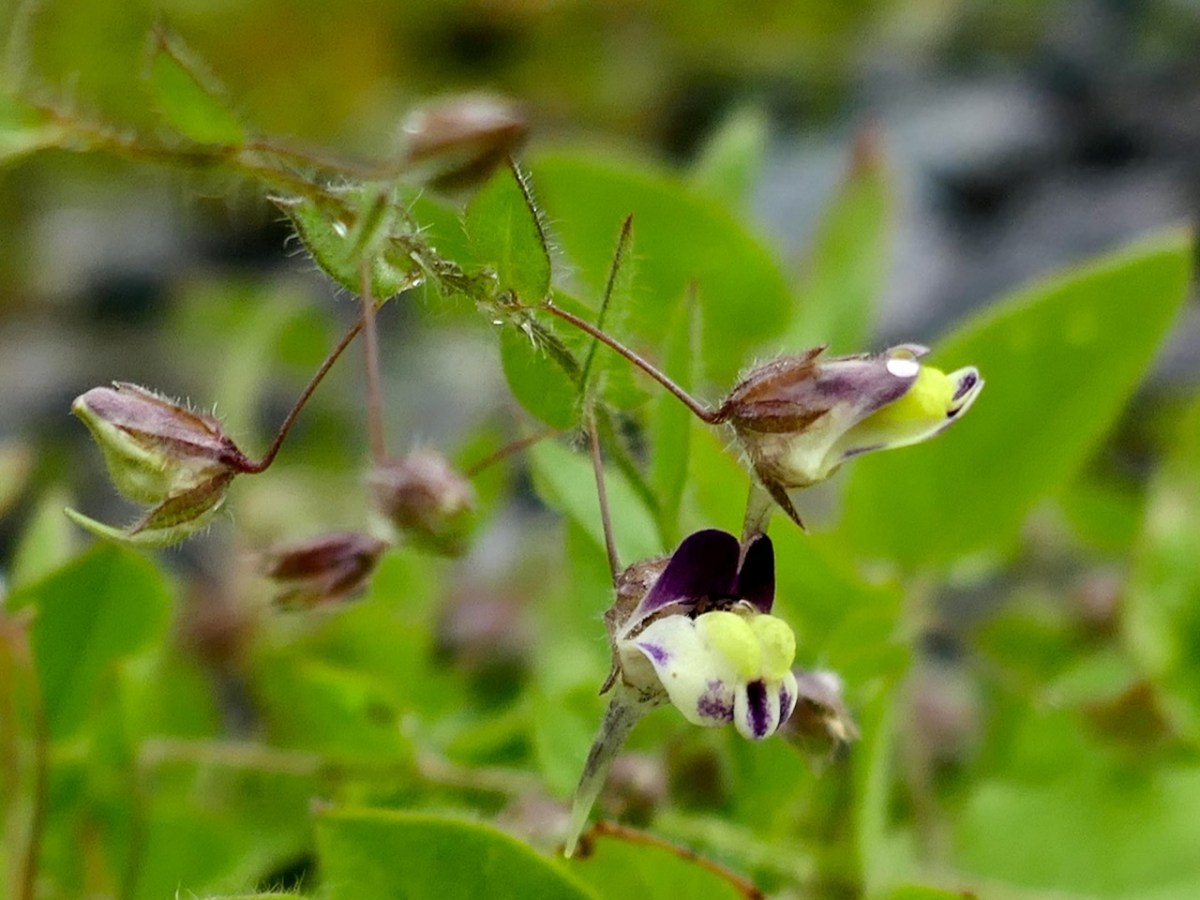
The chamomile is spreading and every now and then, something really unusual shows up  – like this tiny sharp-leaved fluellen that has managed a toe-hold in my driveway and came from God knows where (below). My slideshow, Lying in the Grass, will give you an idea of the variety of plants I have found here.
The storms that sweep through in the winter can do some damage. When we moved in, we had the gorse jungle in our front haggard dug out.  All that did was expose our pine trees to the winds and each of them toppled in turn. 

The lovely wall surrounding our property also gave way over time, leading us to get Diarmuid to come and Build a Stone Wall. Watching him, we discovered that this was a craft and a skill that hasn’t changed in hundreds of years. 

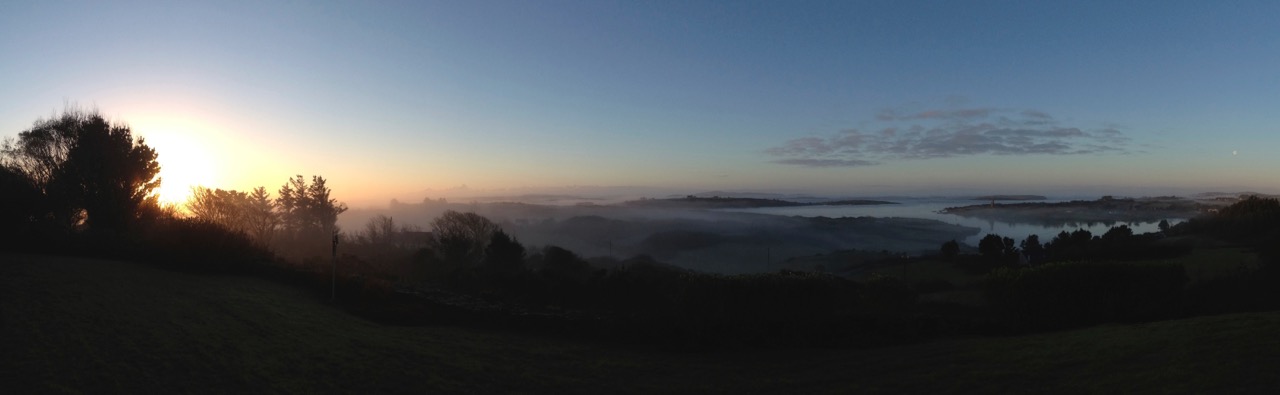
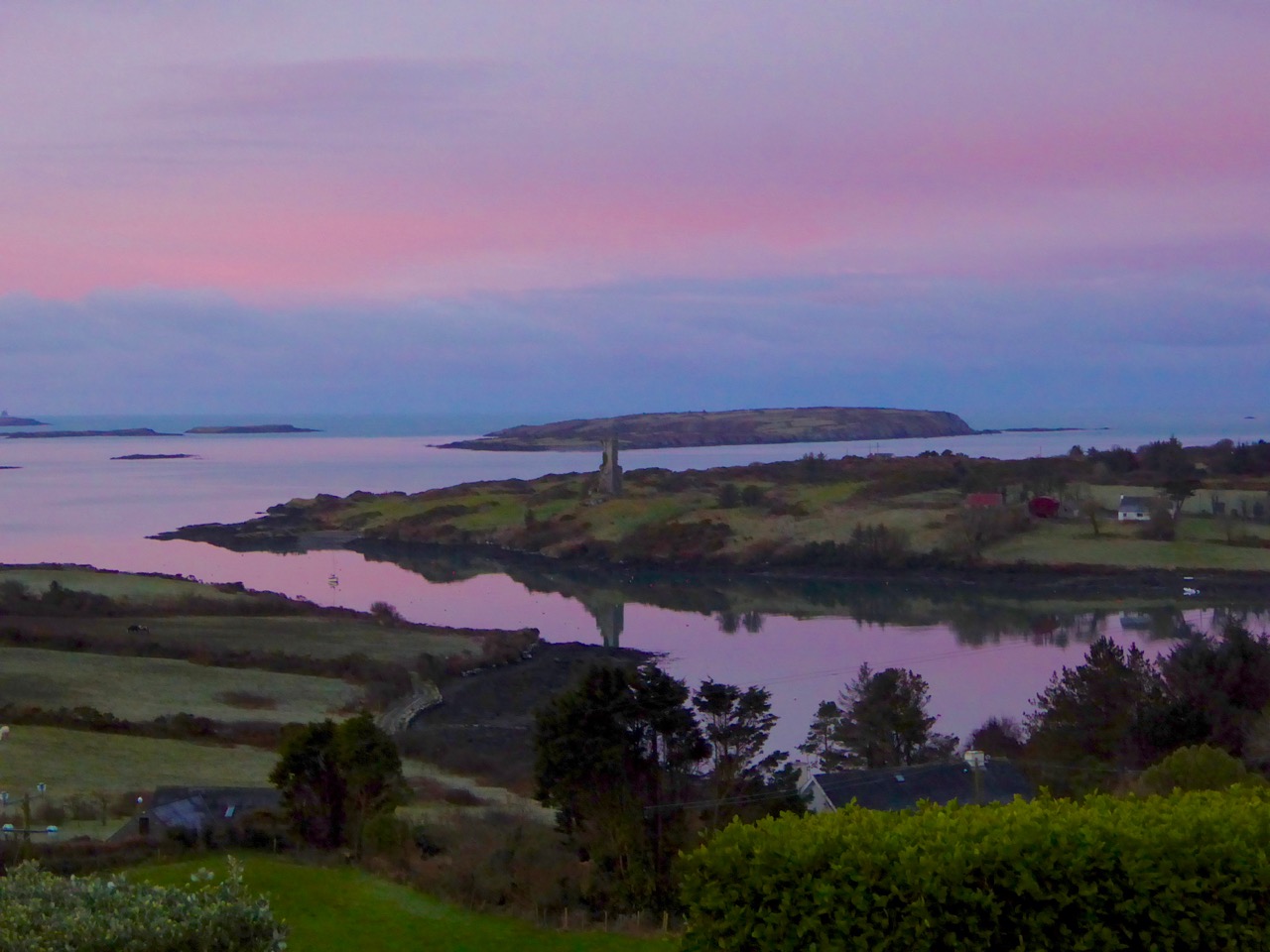
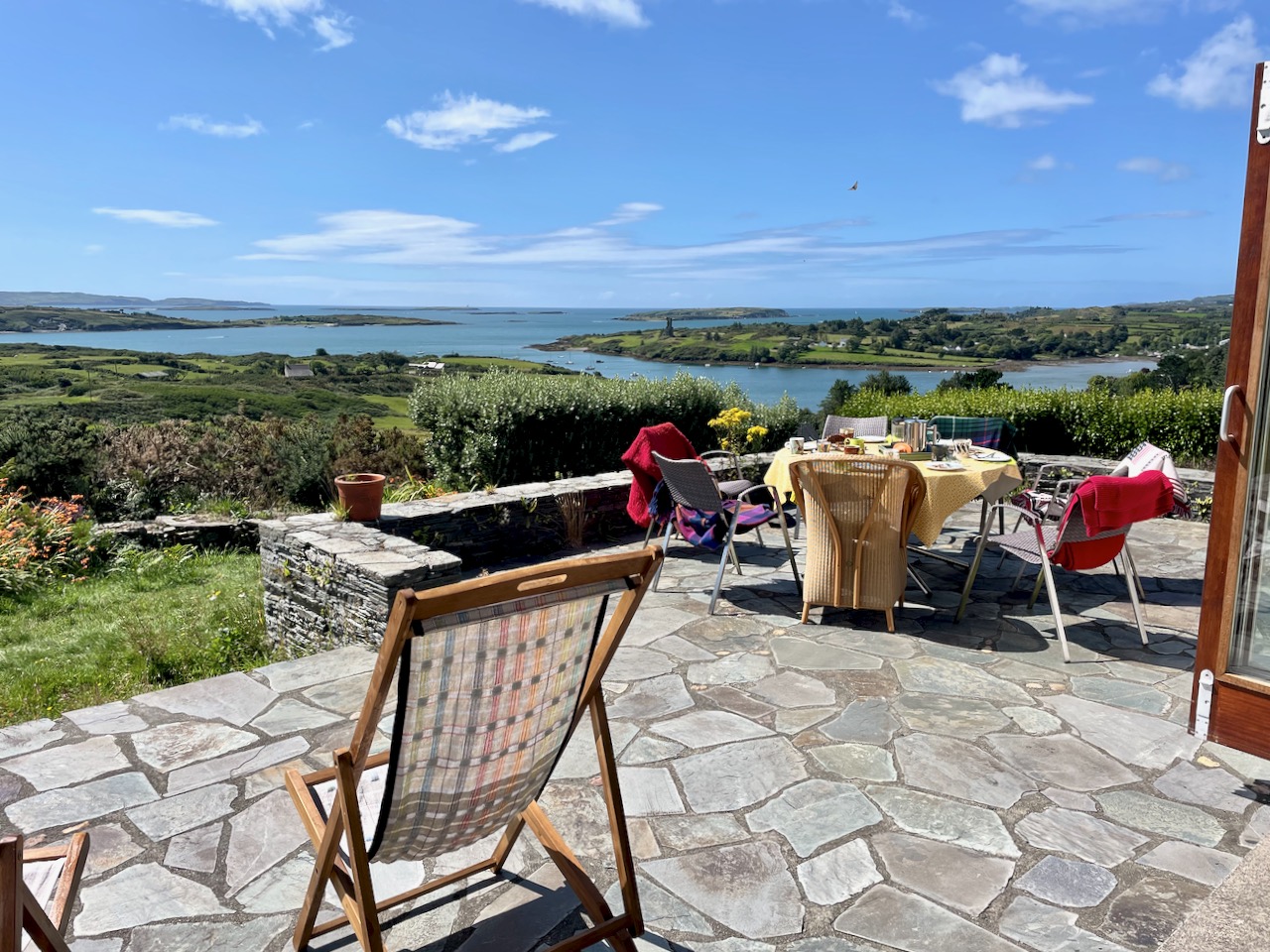
I will miss our amazing view across Roaringwater Bay. We can see several medieval castles, the Baltimore Beacon, the Fastnet Rock, most of the islands. We hear The Roaring on a calm day after a storm. We see the sun going down further and further south each day as the year turns, sometimes sinking into the sea and sometimes dropping behind an island or a hill.

And even though Robert is gone almost two years now, I still find myself saying we, because his presence is so palpable in this place that he loved, and all my experiences here were shared with him. I know his benign spirit is coming with me to Schull: he would have loved the new house and totally approved of my move.

And yes, don’t worry, his Finola Window is coming with me

Chough Country

WHERE not a sound is heard
But the white waves, O bird,
And slippery rocks fling back the vanquish’d sea,
Thou soarest in thy pride,
Not heeding storm or tide;
In Freedom’s temple nothing is more free.

‘Tis pleasant by this stone,
Sea-wash’d and weed-o’ergrown,
With Solitude and Silence at my side,
To list the solemn roar
Of ocean on the shore,
And up the beetling cliff to see thee glide.

Though harsh thy earnest cry.
On crag, or shooting high
Above the tumult of this dusty sphere,
Thou tellest of the steep
Where Peace and Quiet sleep,
And noisy man but rarely visits here.

For this I love thee, bird.
And feel my pulses stirr’d
To see thee grandly on the high air ride,
Or float along the land,
Or drop upon the sand,
Or perch within the gully’s frowning side.

Thou bringest the sweet thought
Of some straw-cover’d cot,
On the lone moor beside the bubbling well,
Where cluster wife and child,
And bees hum o’er the wild:
In this seclusion it were joy to dwell.

Will such a quiet bower
Be ever more my dower
In this rough region of perpetual strife?
I like a bird from home
Forward and backward roam;
But there is rest beneath the Tree of Life.

In this dark world of din,
Of selfishness and sin,
Help me, dear Saviour, on Thy love to rest;
That, having cross’d life’s sea,
My shatter’d bark may be
Moor’d safely in the haven of the blest.

The Muse at this sweet hour
Hies with me to my bower
Among the heather of my native hill;
The rude rock-hedges here
And mossy turf, how dear!
What gushing song! how fresh the moors and still!

No spot of earth like thee,
So full of heaven to me,
O hill of rock, piled to the passing cloud!
Good spirits in their flight
Upon thy crags alight,
And leave a glory where they brightly bow’d.

I well remember now,
In boy-days on thy brow,
When first my lyre among thy larks I found,
Stealing from mother’s side
Out on the common wide,
Strange Druid footfalls seem’d to echo round.

Dark Cornish chough, for thee
My shred of minstrelsy
I carol at this meditative hour,
Linking thee with my reed,
Grey moor and grassy mead,
Dear carn and cottage, heathy bank and bower.

I was pleased to find this poem. It was written by a Cornishman – John Harris – who was born in 1820 in Bolenowe. Perhaps he was an ancestor? His father was a miner at Dolcoath Tin Mine where young John also started at the age of 10. He began writing poetry as a child, usually in the open air where he was inspired by nature. After 20 years working in the mine, one of his poems was eventually published in a magazine. It attracted notice, and he was encouraged to produce a collection, which was published in 1853. The Cornish Chough is taken from that collection.

Above – choughs over Rossbrin Cove. The wonderful header picture was kindly given to us to use in a previous piece on the birds by our friend and neighbour Oliver Nares. Oliver and Susie are fortunate to have choughs nesting on their property and keep a good eye out for the welfare of the chough families which are raised there. We don’t have choughs nesting at Nead an Iolair (which means Nest of the Eagle) but we often see and hear them over us: they are the most acrobatic and joyful of birds.

The reason I have returned to choughs today is that they were the subject of an early post which I published on Roaringwater Journal on 6 October 2013 – exactly five years ago! Choughs – Cornwall’s emblematic birds – left that county fifty years ago but returned very recently as migrants from Ireland. We consider ourselves very privileged to be living in abundant chough country.

The Wild Side

Tortoiseshell

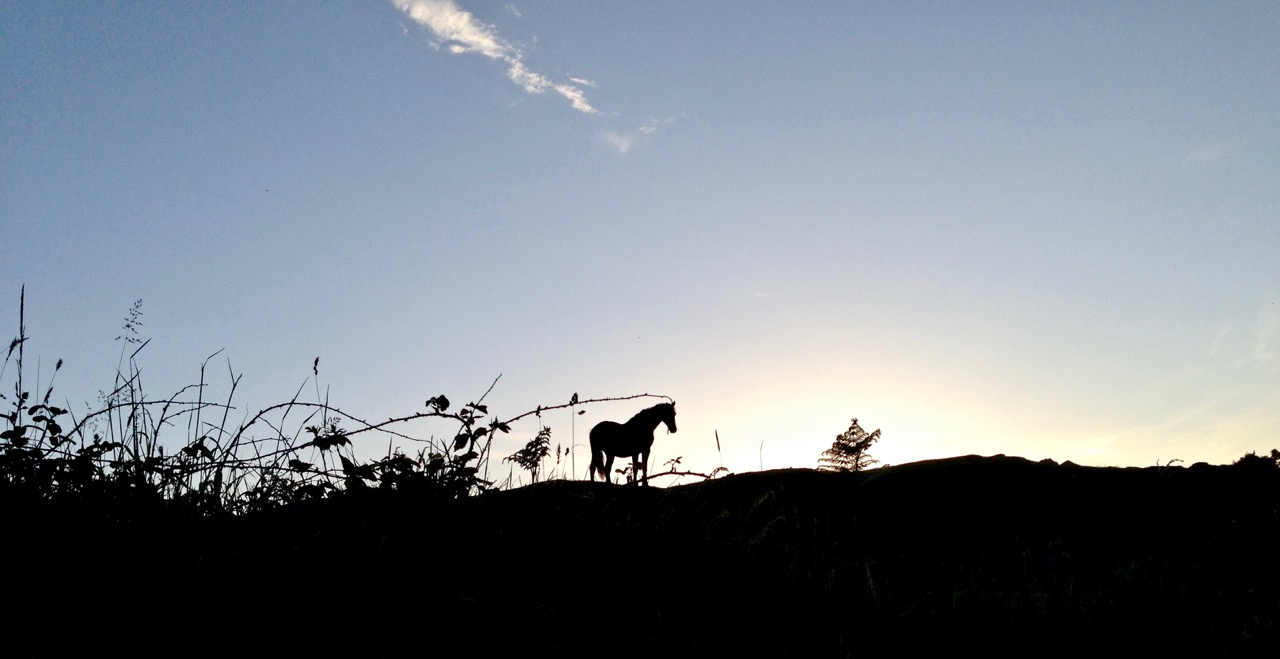
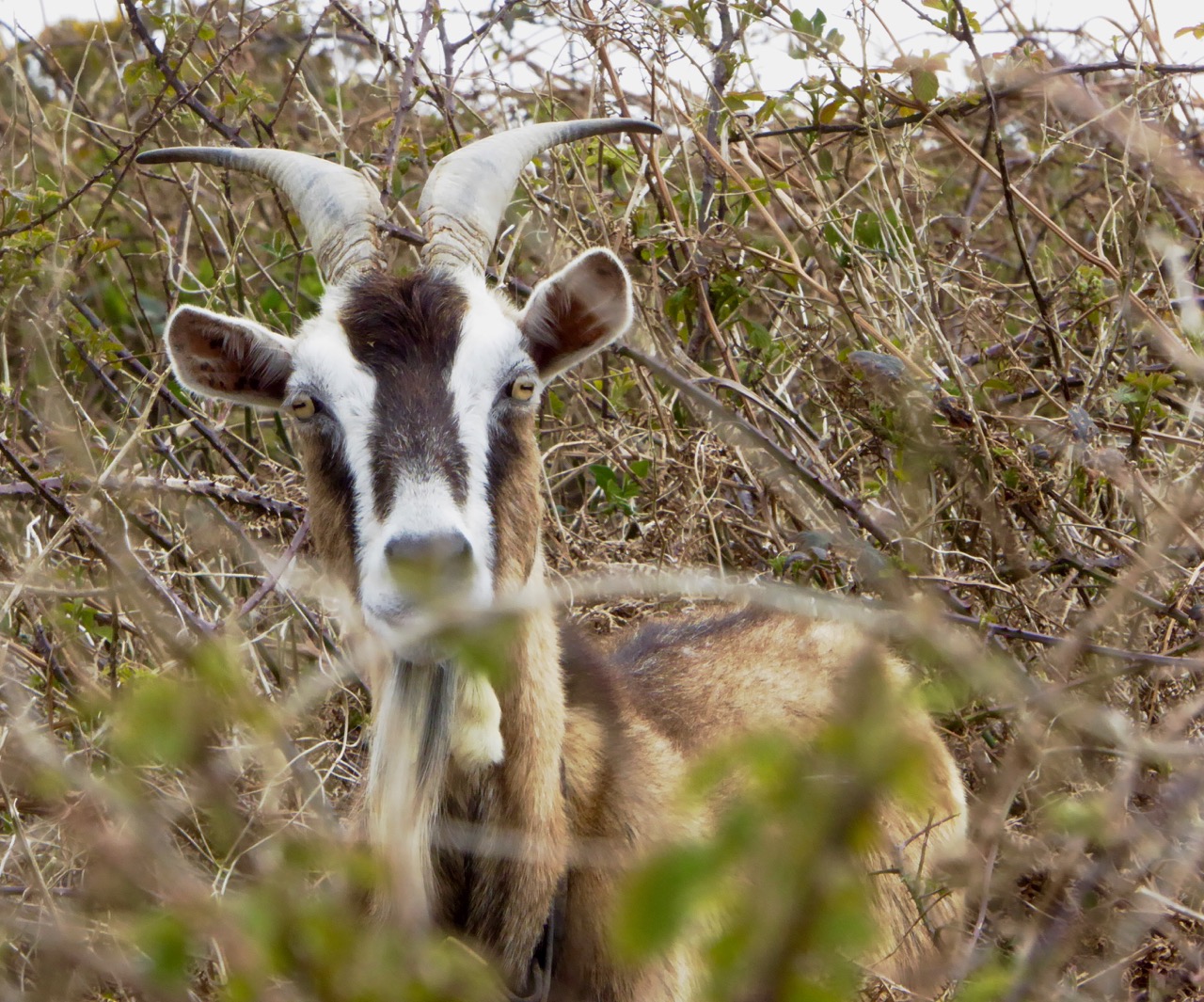
Up here in Nead an Iolair, in the townland of Cappaghglass, we luxuriate in the nature all around us. Our house was built in the 1980s on a piece of land which had belonged to the successors of the mining company – the copper mines were active for a few generations in the 19th century both here and on Horse Island, just across the water. The post-industrial landscape which surrounds us is alive: small, stone-enclosed fields are grazed by cattle, ponies and a few goats while in equal measure are large tracts of gorse, heather and rock. Here and there are the remains of the mine workings – a stump of a chimney, fenced-off and walled shafts, quarries, ruined workshops and cottages: the architecture of abandonment.

horse on horizon

Nick's Goat

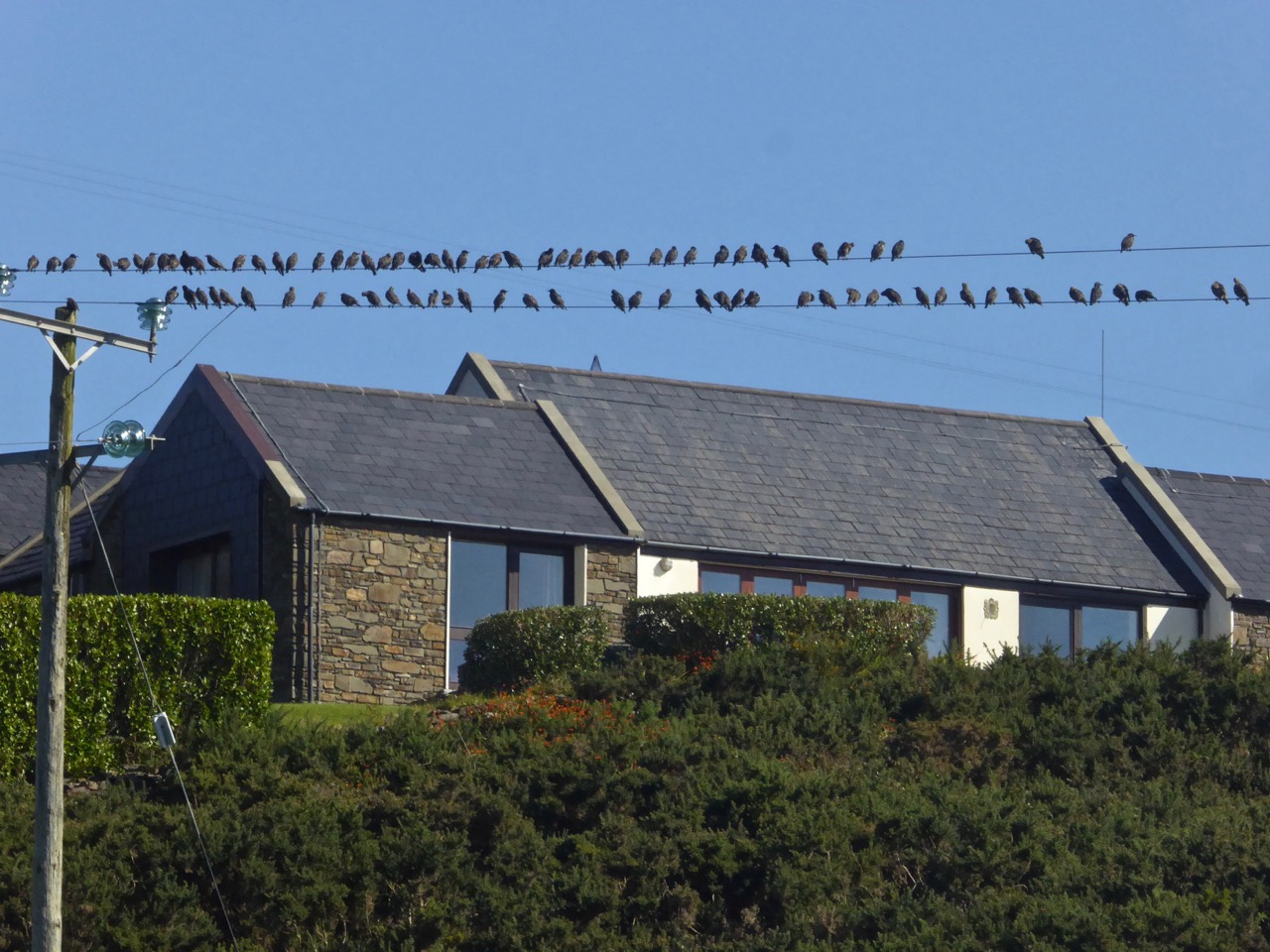
nead birds

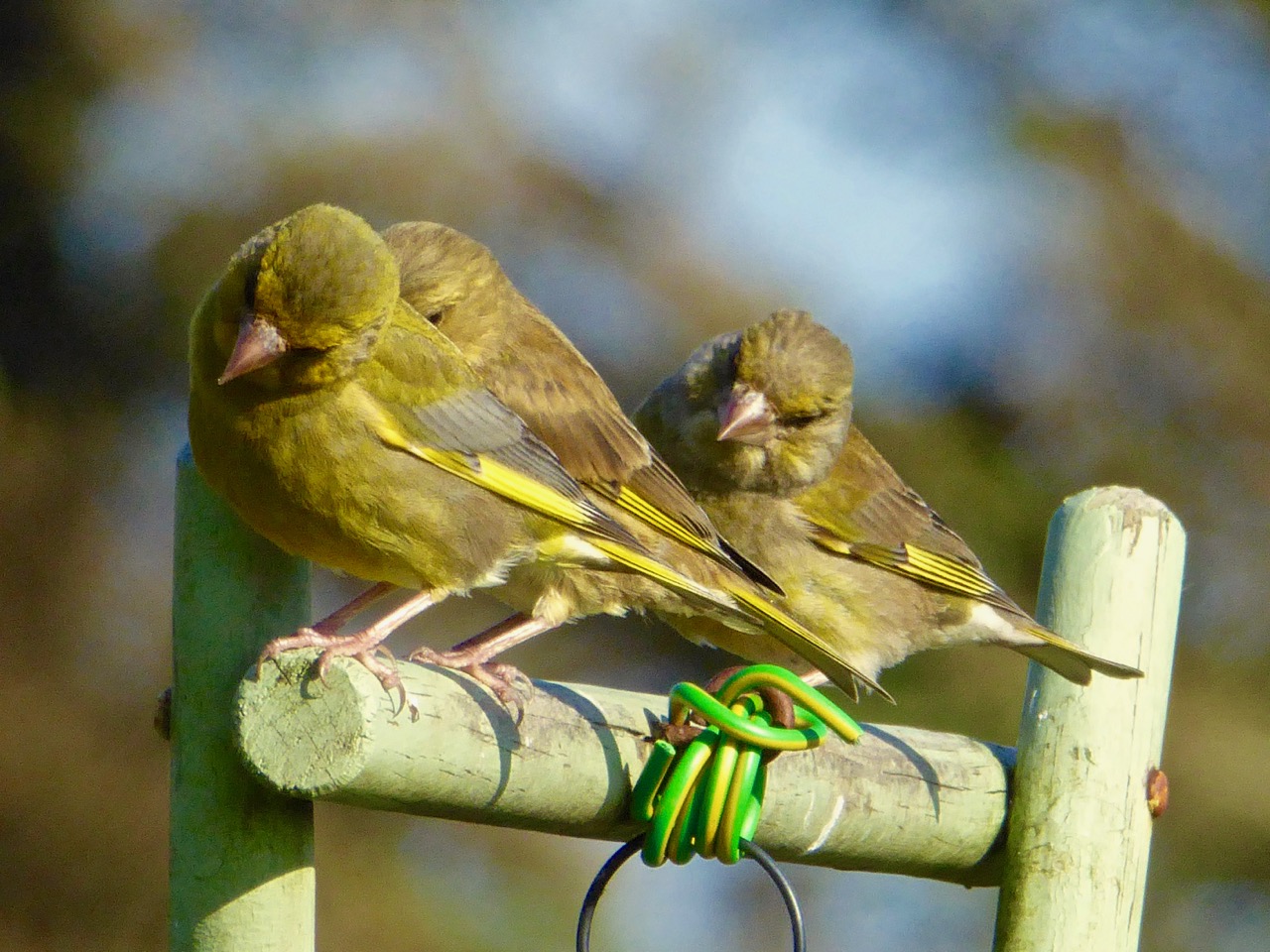
It seems to me that our house interrupts nature, with our lawns, our haggard, stone terrace, hedges and fences, but nature is well able to adapt and cope. Of course, we encourage this: we enthusiastically nurture all the little birds that visit our feeders – and the big ones: rooks, pheasants, magpies: they all get their share. And there are those that don’t come to the feeders but nevertheless forage the land – choughs (which perch on our roof and shout out their names – cheough – cheough… before flying off to give us an endless and entertaining display of dizzying acrobatics), starlings, blackbirds, thrushes and – always on a Sunday – Spiro the sparrowhawk who unsuccessfully dive-bombs the feeder, scattering – but never catching – the small birds. After the effort he rests on one leg on the low terrace wall and stares thoughtfully out to the Cove.

Can YOU see it?

Chough on the post

Spiro

From The Galleries

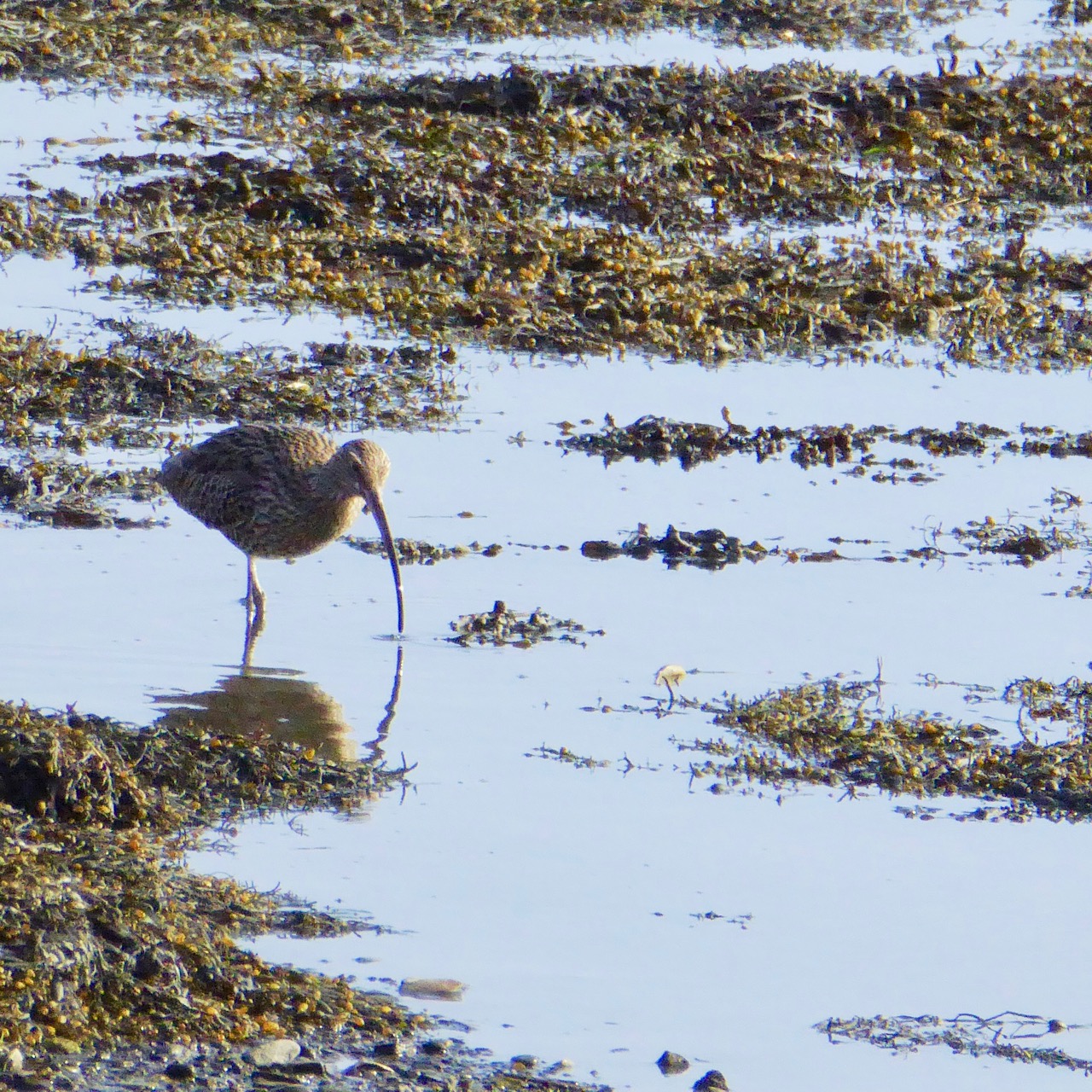
Michael, whose family has farmed the fields around us for generations, tells us that the land above us is known as The Galleries – possibly because there is such a spectacular view to be had from these fields to Rossbrin below us and to the islands of Roaringwater Bay beyond. The Cove itself is a paradise for the waders, especially at low tide, and for crustaceous life in the rock pools.

Muddy shanks

Curved beak

All around are the hedgerows that, in the spring, summer and autumn, support a wealth of wildflowers. In turn these are the haunt of nectar-seeking insects, especially bees and butterflies.

We are visited by four-legged mammals in all shapes and sizes: I’m pleased to see some of the decimated rabbit population returning after a recurrence of myxomatosis these past couple of years. We don’t get hares in the immediate neighbourhood: they seldom mix with the smaller Leporidae, but we sometimes catch a glimpse of them from the road that goes down to the village. Rats, mice and shrews are never far away, but are kept under control by our larger visitors – feral cats and foxes. Our own Ferdia has gone from us during this past year – he was an ancient fox who had made a pact with the human world: I’ll sit picturesquely on your terrace and entertain you provided you keep the food scraps coming – we did, of course. His descendants make fleeting visits, passing through but, as yet, never pausing to make our acquaintance.

Ferdia's Eyes

Bunny eyes a daisy

When it comes to observation of the natural world there’s never a dull moment here. We are fortunate that some globally threatened species seem to thrive around us – curlews can always be seen by the water, for example. The small birds crowd in, especially when I refill the feeders: sometimes we have to fight our way through the melee when we want to go out. It’s a great way to live, and a great place to live in. Thank you, Mother Nature.

RH and friend

Photographs (from the top down): Tortoiseshell butterfly; Cappaghglass field; Nick’s goat; Nead an Iolair with starlings; greenfinches; chough on our gatepost; Spiro the sparrowhawk; view across Roaringwater Bay from The Galleries; muddy shanks; curlew in the Cove; 2 x bees; Ferdia the fox; rabbit; Nead bird feeder with goldfinches, greenfinch, bluetits and great tit – and pheasant; Robert and friends; heron hairdo. Grateful thanks to Finola for many of these pics

Heron Mullet

West Cork in Photographs – Your Favourites, Part 1

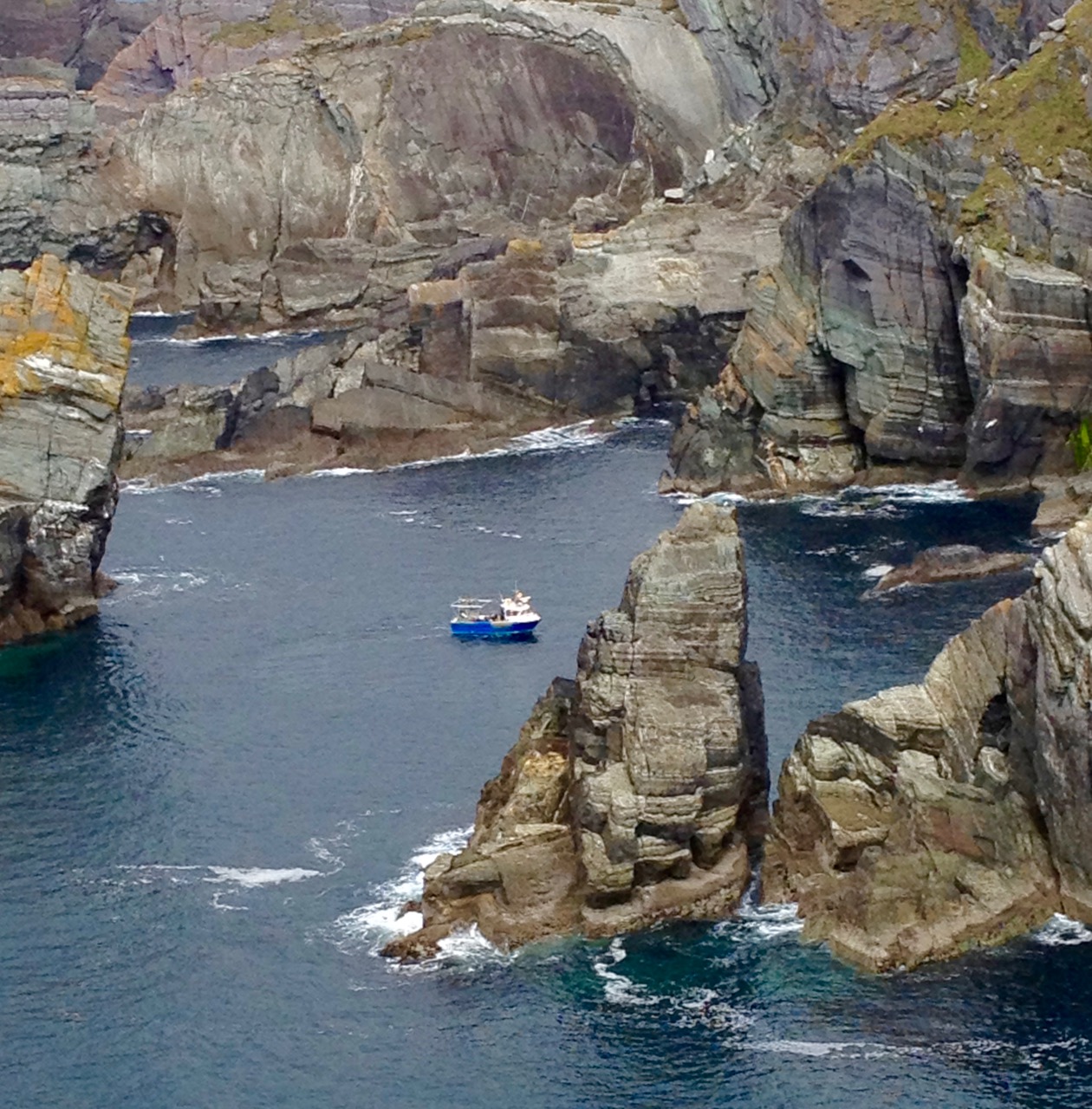
Navigating Mizen Head

A fishing boat navigates the rocks of Mizen Head

Our Roaringwater Journal Facebook Page features lots of our photographs of West Cork – two or three every week – and we know by the views and the ‘likes’ the ones that capture your imagination. It’s become a tradition here with us at the end of the year to go through them all and show you the top choices. Think of it as our Christmas present to you, our wonderful readers – nothing to read, just images of our gorgeous part of the world to drool over. Of course, we have our own favourites too, even if they didn’t get as many likes as others did, so we sneaked a few of those in here two. This is the first of two posts – the next one in a few days.

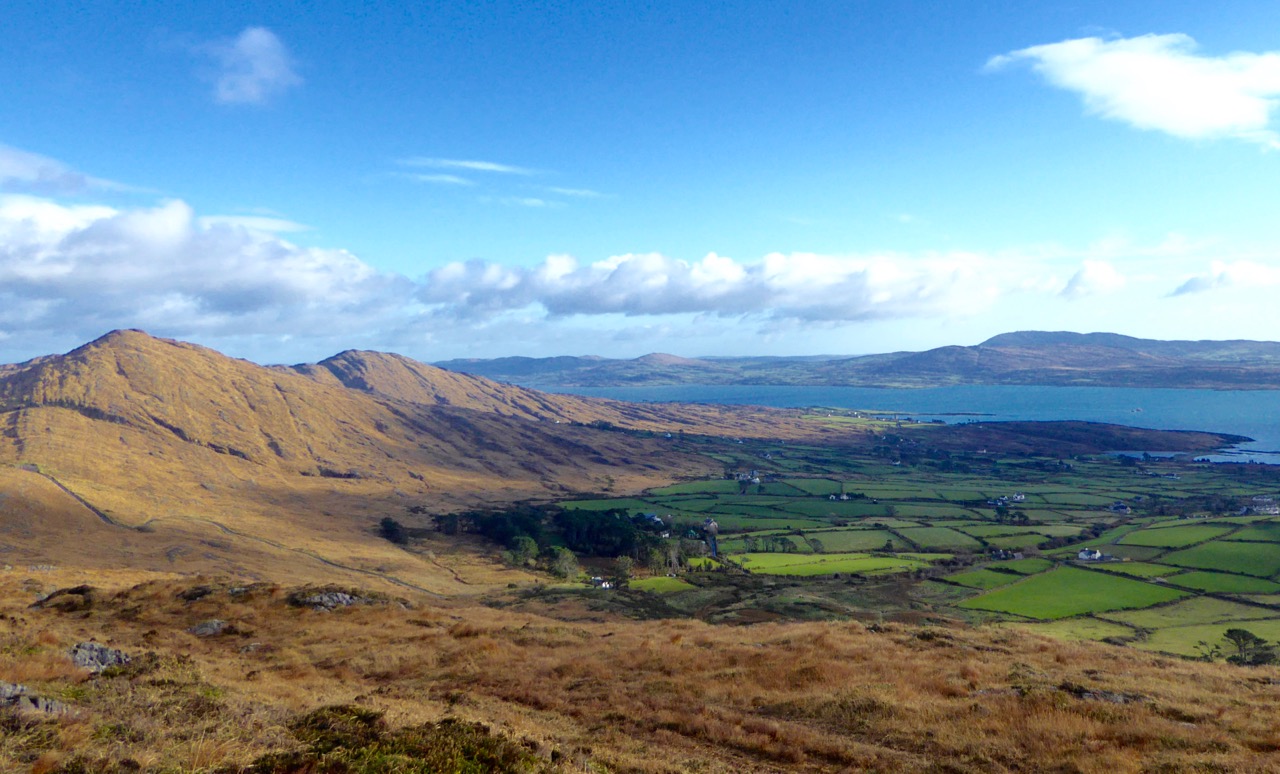
Sheeps Head November Day

Sheep’s Head

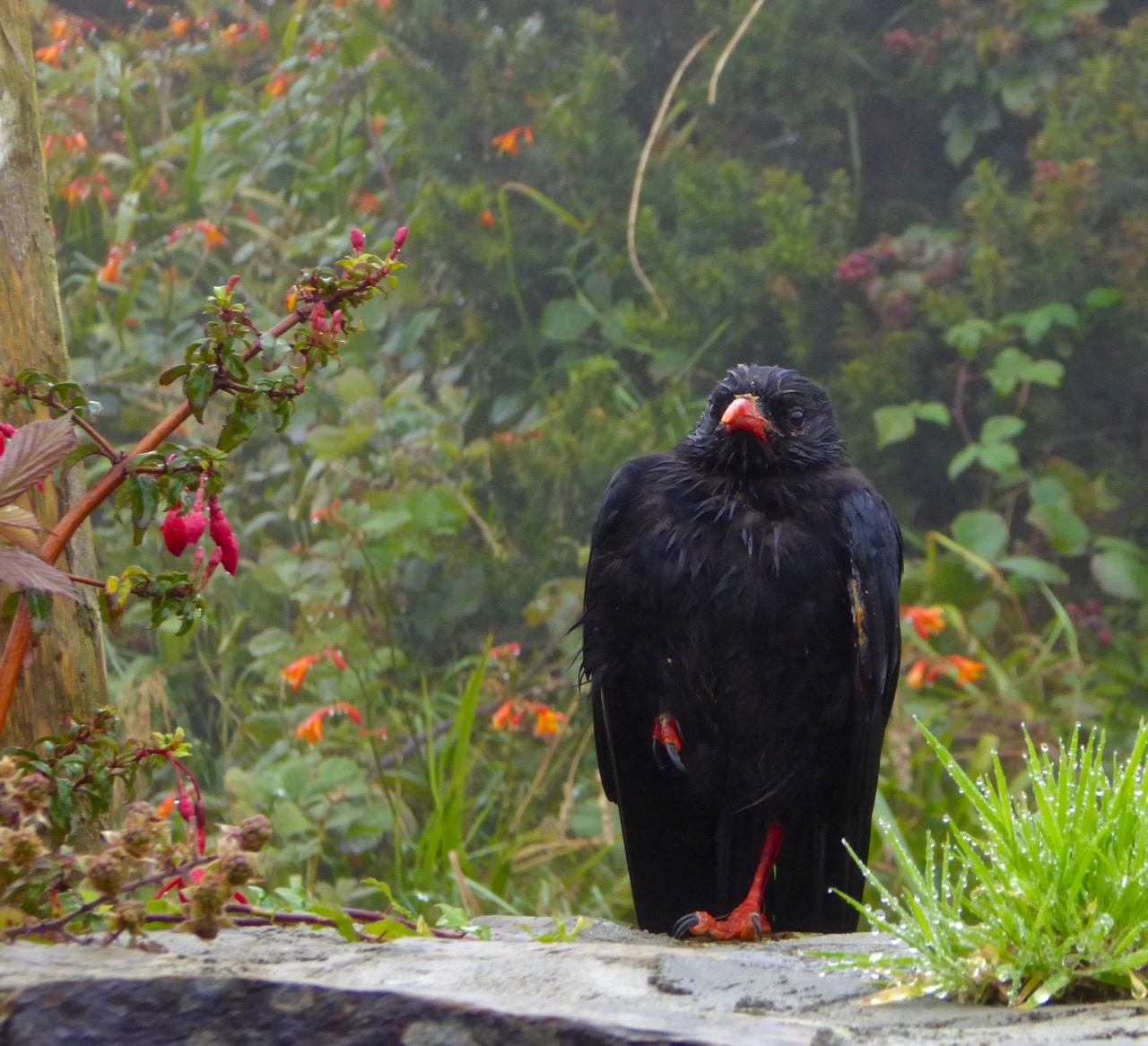
Chough by the Gate

Chough in the rain

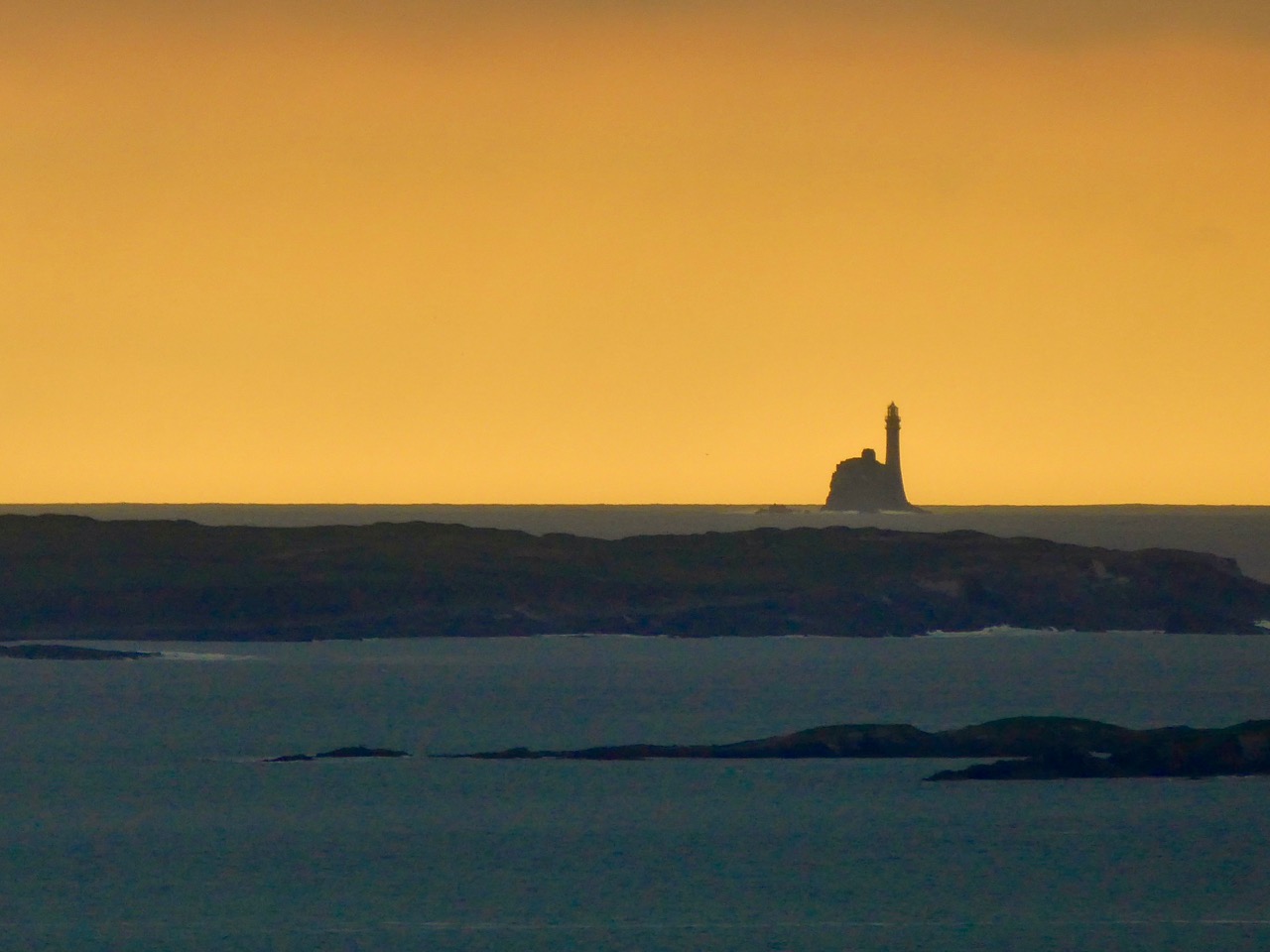
Fastnet in the sunset

Fastnet Lighthouse at sunset

2 0f the 12

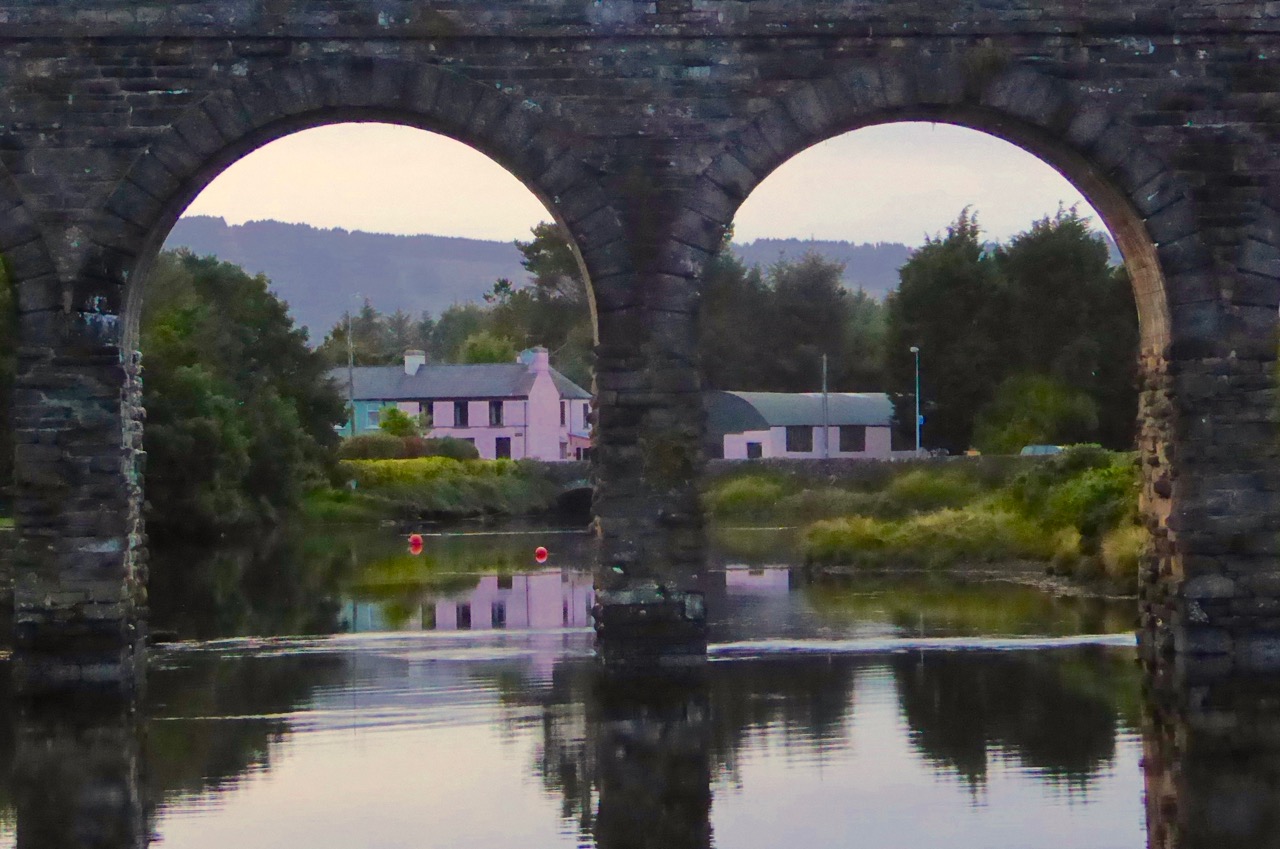
Two of the arches of Ballydehob’s famous Twelve Arch Bridge

Roaringwater Bay from Sailors' Hill

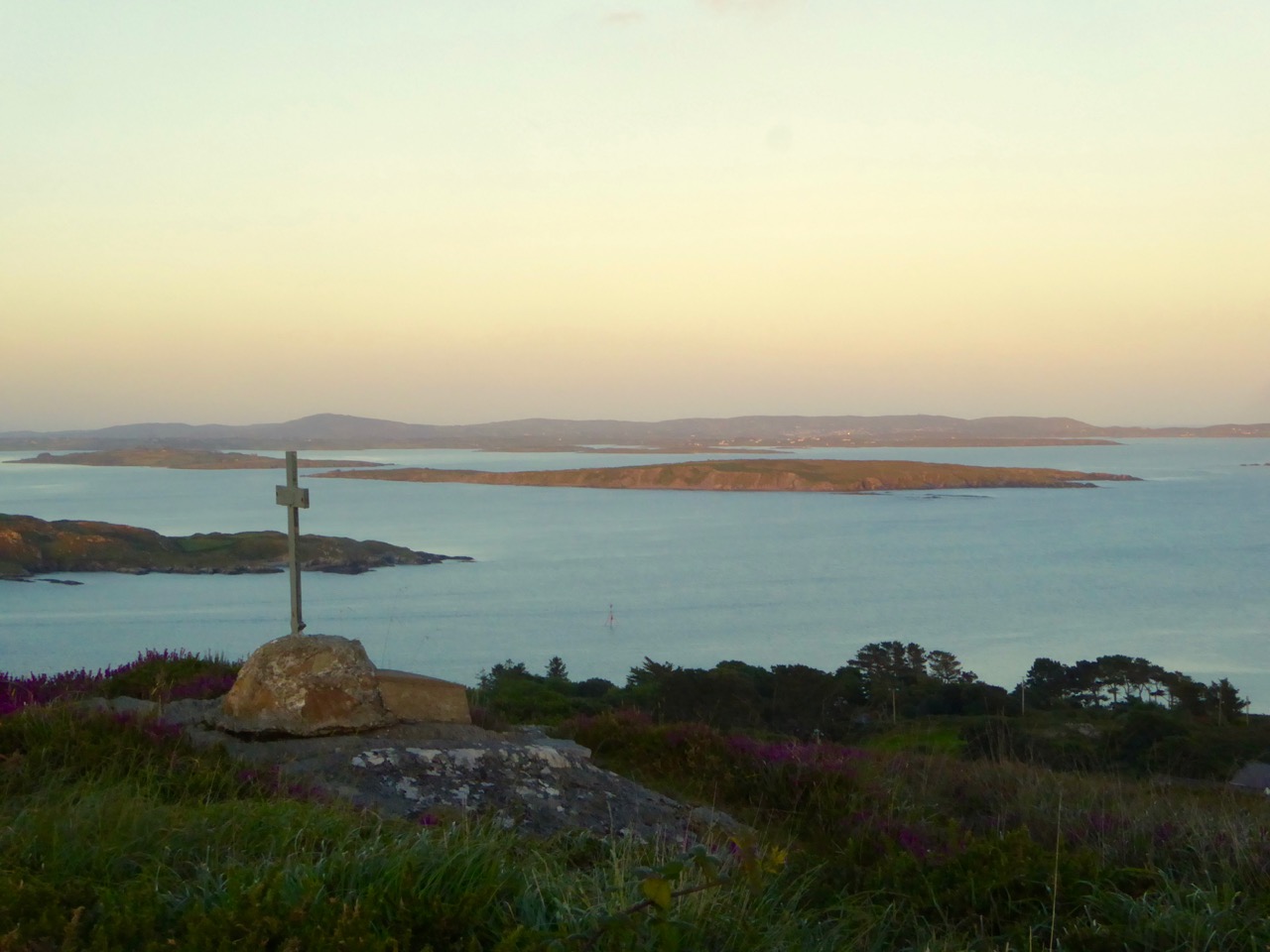
Roaringwater Bay from Sailor’s Hill above Schull

Gougane Oratory 2

Gougane Barra in the autumn

To the Mass Rock, Sheeps Head

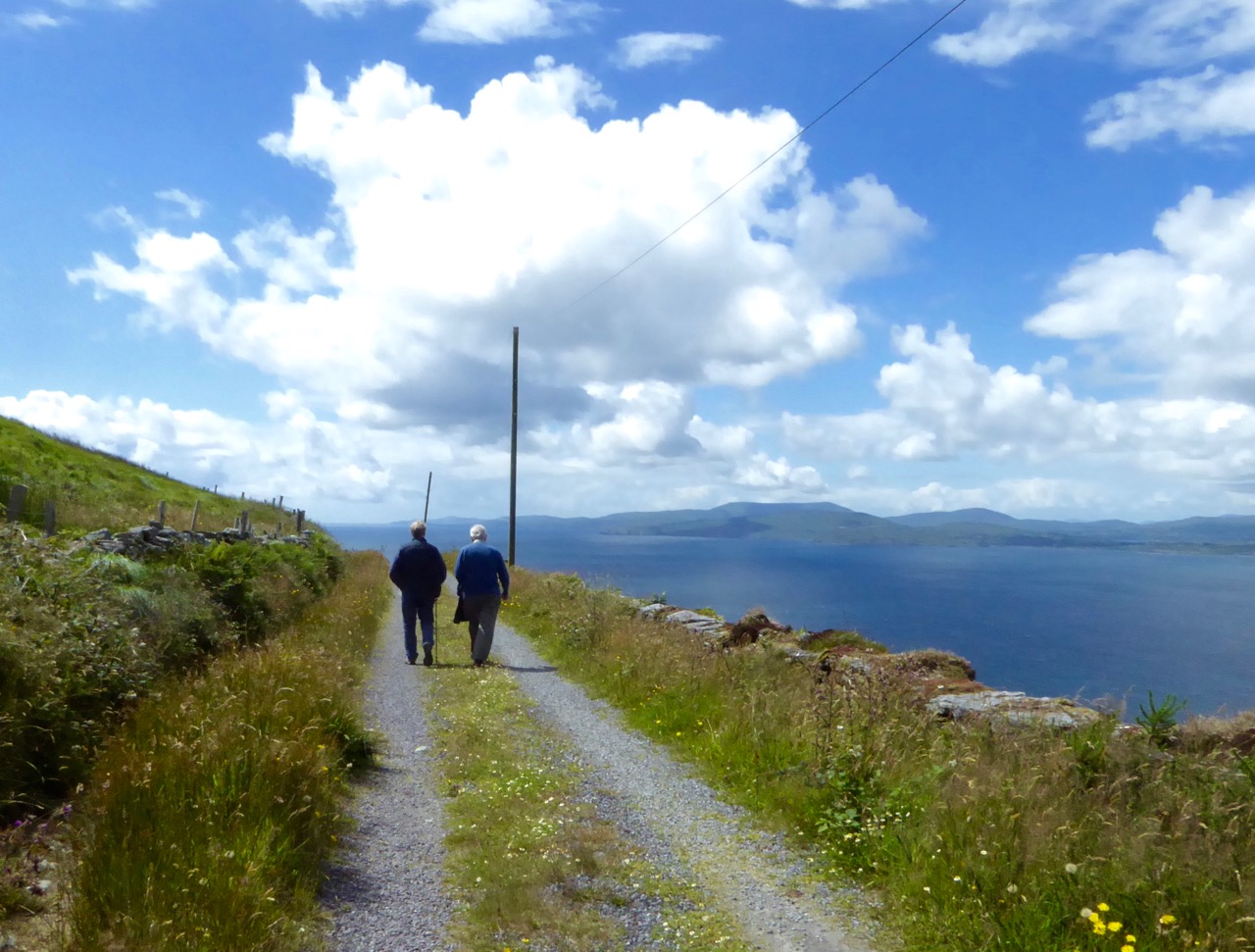
Walking to the Mass Rock, Sheep’s Head

Kealkill 2

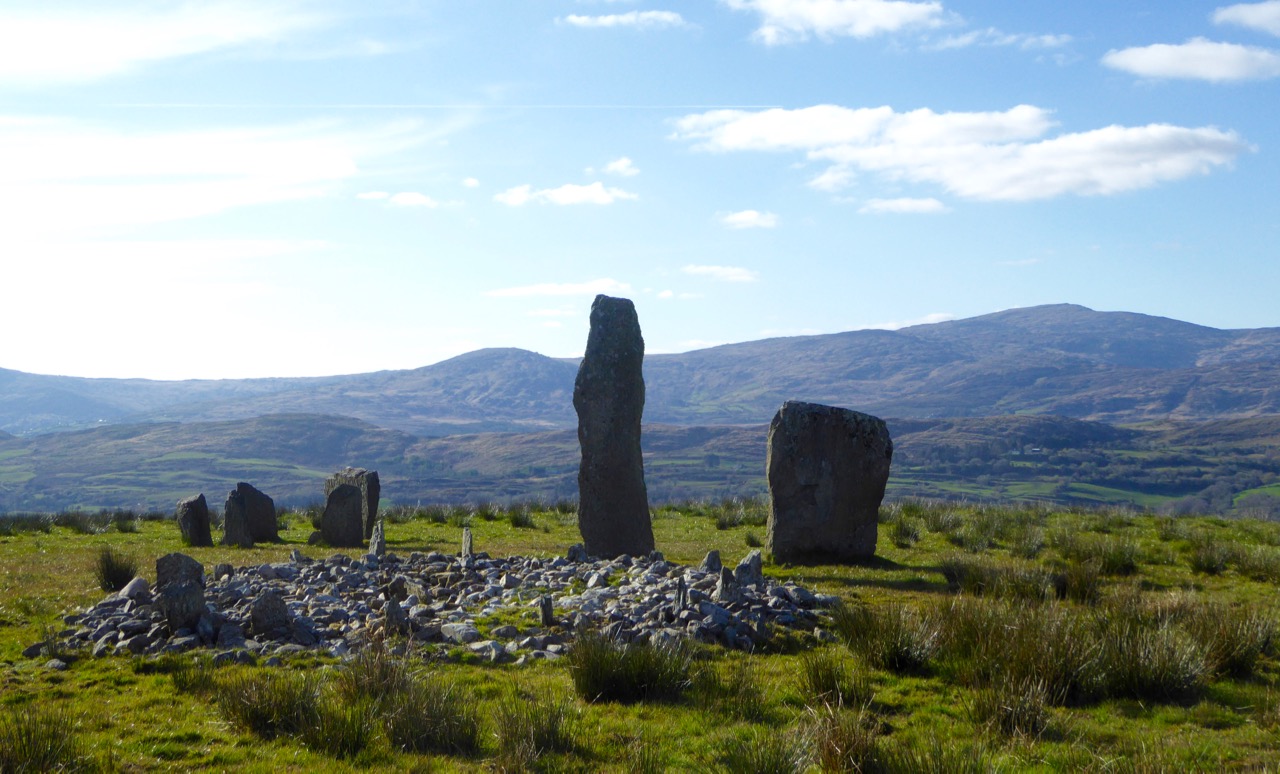
The archaeological complex at Kealkill – a five stone circle, a standing stone pair and a radial cairn

Rossbrin Dawn

Rossbrin Cove dawn

The next batch (Part 2) is now up. Enjoy!

A Chatter of Choughs

Rossbrin Cove: Chough country

Rossbrin Cove: Chough country

One of the many treats of living up here in Nead an Iolair is the frequent appearance of a group of Choughs. Towards the evening we hear them on our roof, chattering to each other. Chatter of Choughs, by the way, is the correct collective noun: all the Corvid family seem to have interesting ones – Murder of Crows, Parliament of Rooks, Conspiracy of Ravens, Tiding of Magpies… These are just some of a very long list: do you of know any to add to it?

Autumn evening at Nead an Iolair

Autumn evening at Nead an Iolair

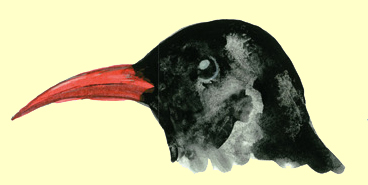
Choughs are distinctive birds, but easy to mistake for other Corvids when in the sky. Look out for curved red bills, and red legs and claws. Also listen for the chatter, in which the bird tells you its name:

It won’t tell you its latin species name, however: Pyrrhocorax-pyrrhocorax!

Birds on line!

Birds on line!

As an erstwhile resident of Cornwall I have a particular interest in the Chough. This bird appeared on the old Cornish coat-of-arms, together with a tin miner and a fisherman (the two latter have vanished on the new one – perhaps a poignant comment on changing times), and was once a familiar sight on the coast. Changing habitat and trophy hunting led to a decline in the British Chough populations recorded by naturalists as early as the eighteenth century. The last breeding pair was seen in Cornwall in 1947, and not long afterwards the Cornish Chough was pronounced extinct. Amazingly, the new Millennium saw the Chough returning naturally to Cornwall, with three birds taking up residence on the Lizard peninsula and breeding successfully. It’s reckoned that there are now between forty and fifty living on that far western coastline. On my last days in Cornwall before coming here to Ireland I was walking at Nanquidno, near Lands End and – as if to wish me ‘goodbye’ – there was a pair of Choughs foraging happily on the path in front of me! Where did the new generations of Cornish Choughs come from? DNA tests have given us the answer: Ireland…
Cornwall's old and new logos: and the 'Raven King' - in folklore, Choughs and Ravens are interchangeable

Cornwall’s old and new logos: and the ‘Raven King’ – in folklore, Choughs and Ravens are interchangeable

Cornish nationalists, who are campaigning for a devolved parliament, are delighted by the come-back. “This will be seen as a symbol of hope,” said Dr Loveday Jenkin of the nationalist party Mebyon Kernow. “The re-emergence of the Chough is a symbol of the re-emergence of the Cornish nation.”

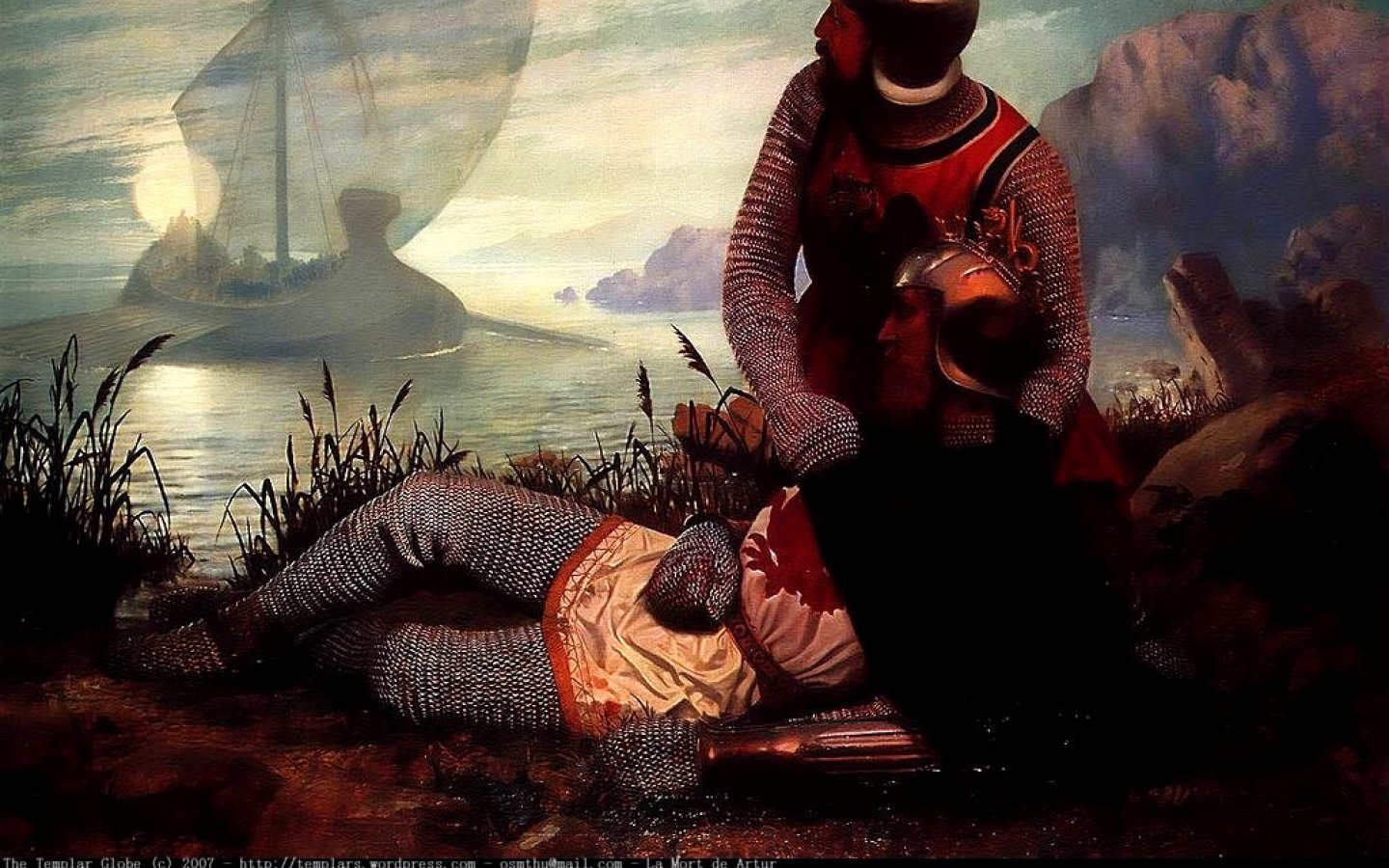
King Arthur's last battle

King Arthur’s last battle

Cág Cosdearg is the name of the Chough in Irish – this is a literal translation of ‘red-legged Jackdaw’. There are a number of legends attached to this bird: King Arthur turned into one, and the red beak and legs are symbolic of the blood shed at his last battle (presumably this is another link with Cornwall). The Chough was known to Daniel Defoe as a ‘fire raising bird’ in his …tour thro’ the whole island of Great Britain…

“…It is very mischievous; it will steal and carry away any thing it finds about the house, that is not too heavy, tho’ not fit for its food; as knives, forks, spoons and linnen cloths, or whatever it can fly away with, sometimes they say it has stolen bits of firebrands, or lighted candles, and lodged them in the stacks of corn, and the thatch of barns and houses, and set them on fire; but this I only had by oral tradition…”

I like the Irish expression, “You’ll follow the Crows for it” meaning that a person would only appreciate something after it had gone.

chough close

Watching our Choughs perform their aerobatics up here is a delight – I’ve seen them turning cartwheels in the air, and they even appear to fly upside down at times. Sylvia Plath puts it wonderfully in Blackberrying:
“…Overhead go the choughs in black, cacophonous flocks—
Bits of burnt paper wheeling in a blown sky.
Theirs is the only voice, protesting, protesting…”