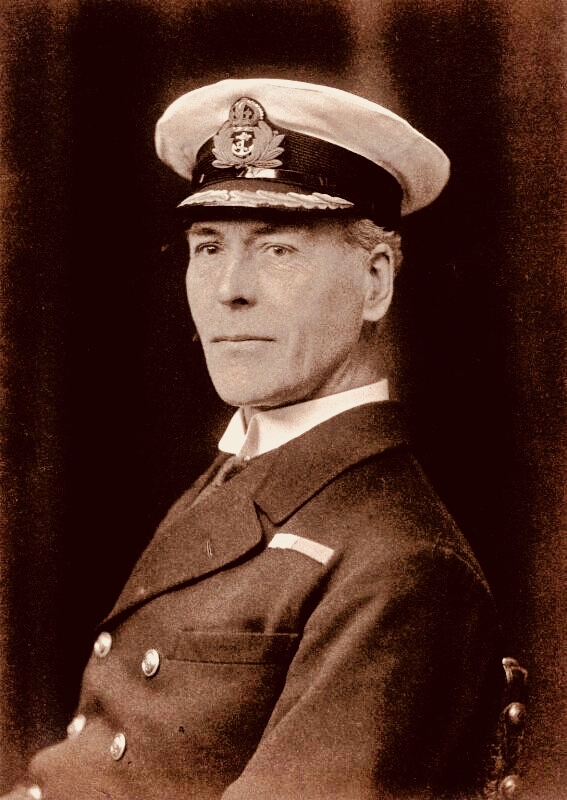
Henry Boyle Townshend Somerville (1863 – 1936) is mostly know in Ireland now for how he died, murdered by the IRA in 1936. And that’s a tragedy in many ways, not least of which is that the notoriety of his death has obscured his important contributions to Irish archaeology and especially to the once-controversial field of archaeoastronomy, of which he was a distinguished pioneer. [The portrait above is by Walter Stoneman and used with permission from the National Portrait Gallery under a Creative Commons License.]
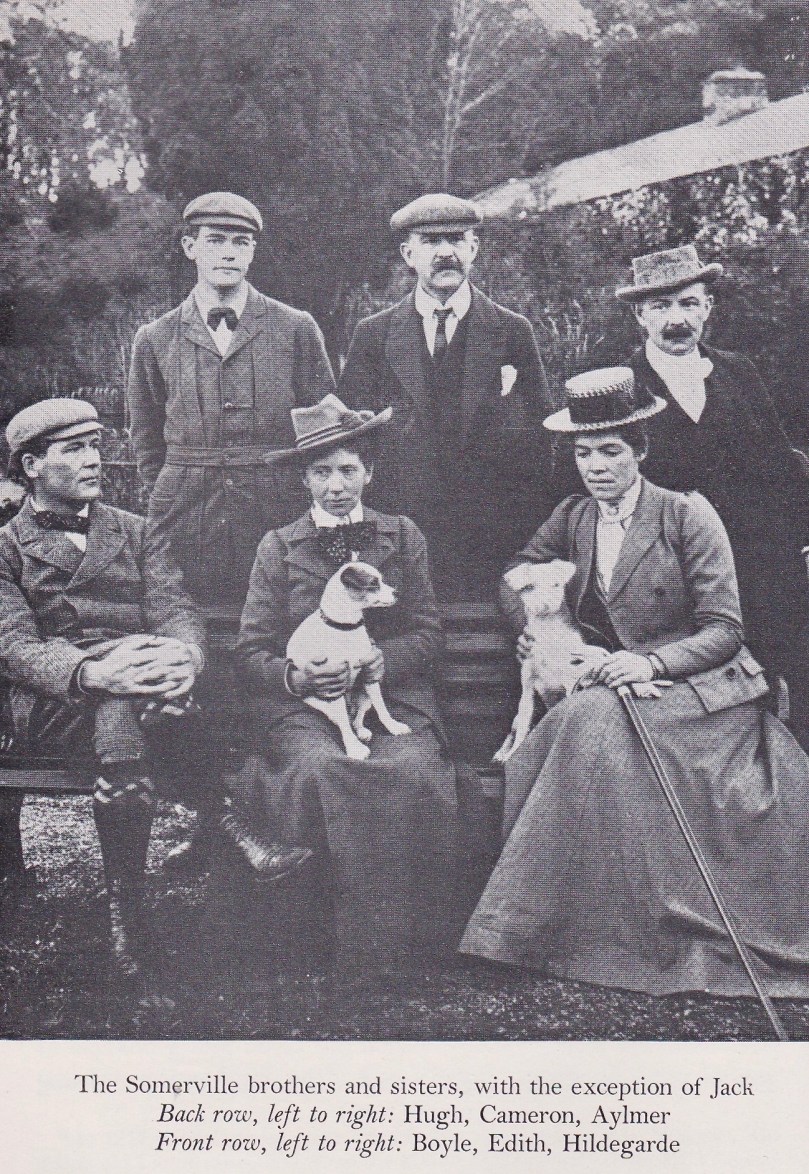
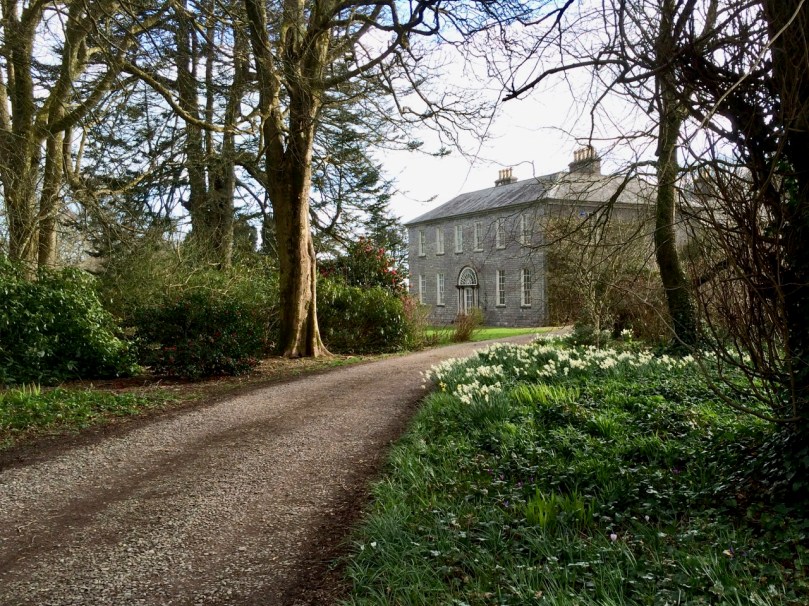
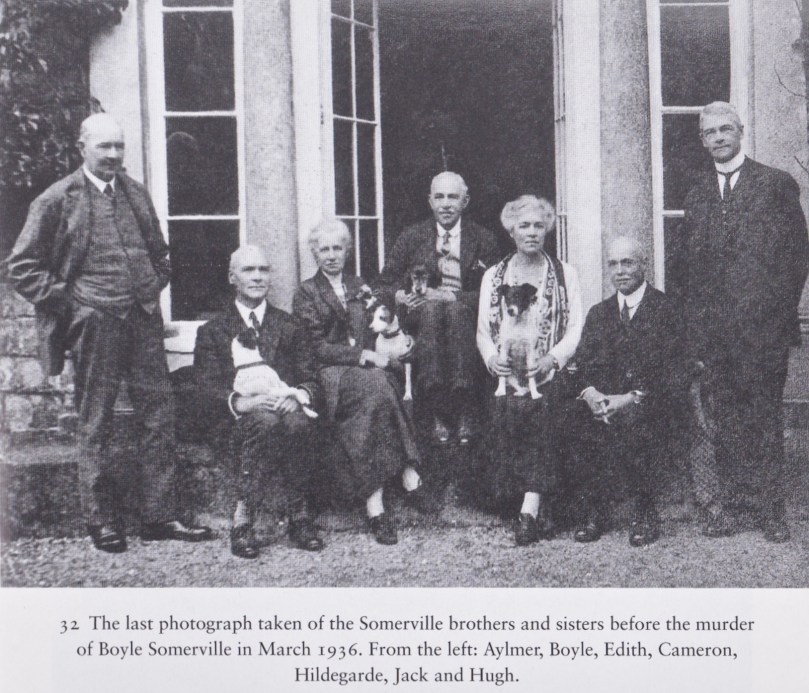
Boyle was about 30 in this photograph. This illustration is from Somerville and Ross: A Biography by Maurice Collis. The family lived in Drishane House, below, in Castletownshend, West Cork.
Boyle was one of the famous Castletownshend family of Somervilles that included Edith, the writer with Violet Martin of the Irish RM stories. He was her favourite brother and companion on youthful adventures, including the incursions into the souterrain at Knockdrum Fort, armed only with a poker and a candle. See Robert’s companion piece about this ancient site.
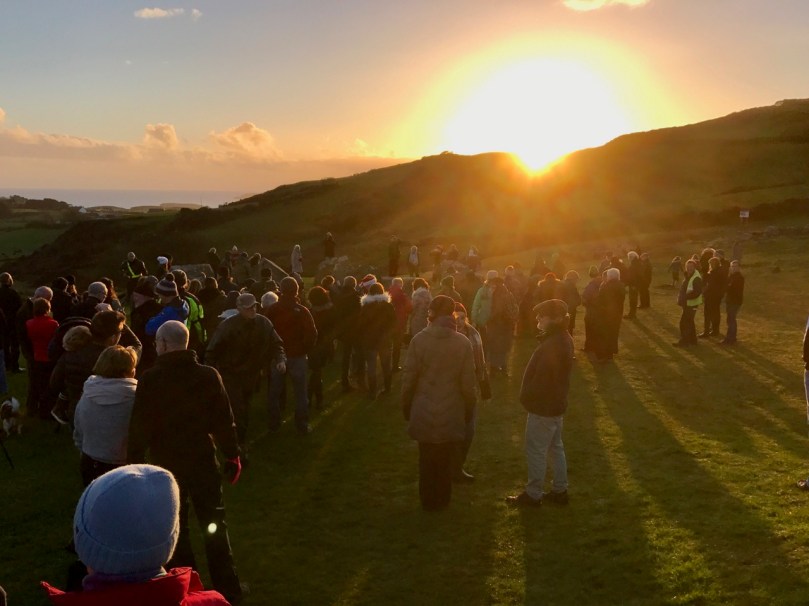
Boyle drew the first proper survey of Drombeg and his observations established the winter solstice orientation. Today, crowds gather to witness this spectacular event
He went off to sea in 1877 at the early age of 13 – seafaring was in the Somerville blood – and rose through the ranks of Commander, Captain and finally Vice-Admiral. Throughout his time in the navy he was engaged in surveying and in hydrographic, intelligence and research projects all over the world. He collected ethnographic materials (now in the Pitt-Rivers Museum) and wrote papers on his experiences.
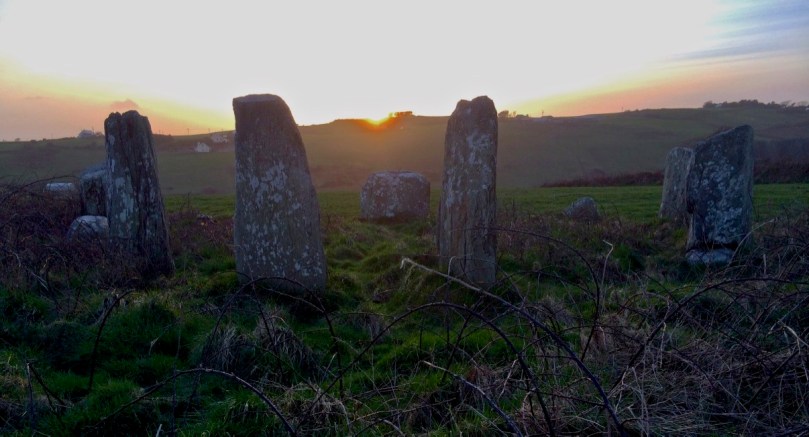
Another one of Boyle’s stone circle solar events, this one occurs at the autumn equinox at Bohonagh
But it was astronomy that fired his imagination, and specifically the astronomy of ancient sites. Following on the work of astronomer Norman Lockyer, he surveyed monuments in Scotland and Ireland and demonstrated that many of them had significant solar, stellar and lunar orientations. His 1927 paper, simply titled Orientation, in the first issue of Antiquity is a readable and well-argued essay that argues for the acceptance of the importance of calendrical observations to early farming communities.
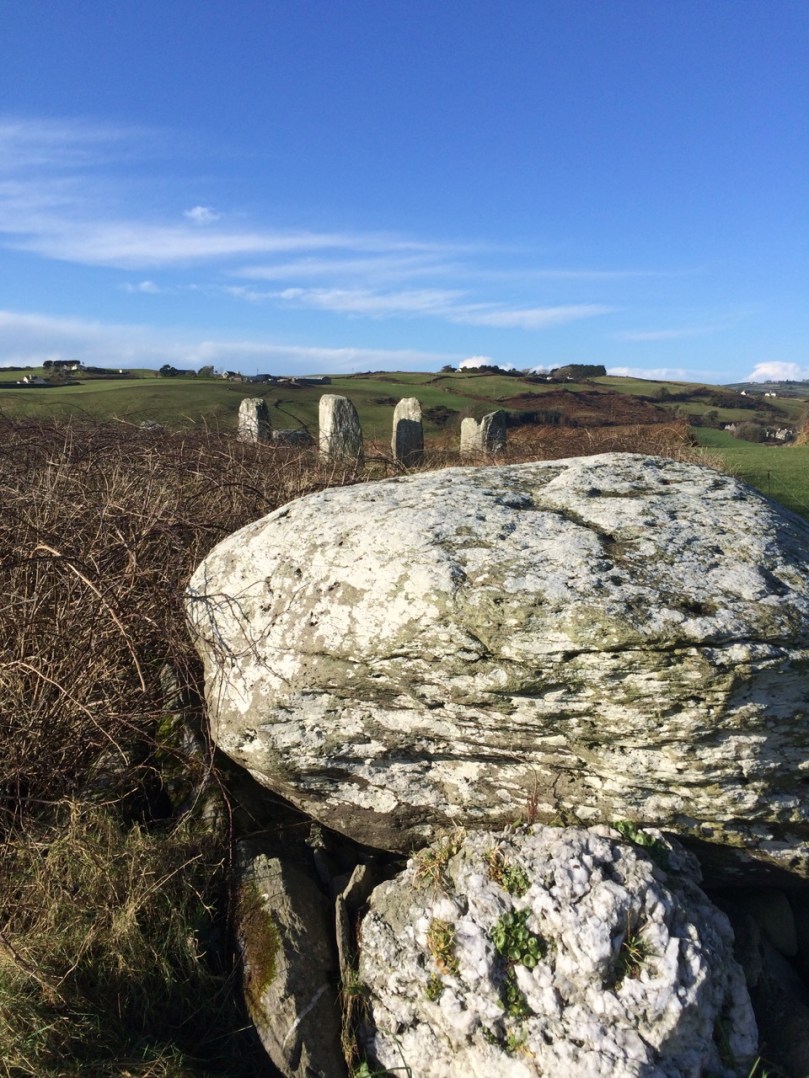
The Bohonagh complex of monuments as Boyle described them – a stone circle, a cup-marked stone and a boulder burial
It is hard to remember now that the scientific community of the time was dismissive, but even the writer of his obituary in the journal of the Royal Society of Antiquaries of Ireland could not resist a patronising summation:
He was an accomplished surveyor and careful observer, and if the theories as to the orientation of megaliths which he held are not universally accepted, his investigations have resulted in presentations of an accuracy too often absent from the surveys of many writers on those subjects.
Makes him sound like a crank, doesn’t it? But let’s go back to that bit about being an ‘accomplished surveyor and careful observer.’ In paper after paper, he did just that – carefully observed and documented the archaeological monuments of West Cork and elsewhere. It was he who first described the West Cork Stone Circles and coined the term recumbent, providing properly surveyed plans and making careful notes of the way in which they offered sightings to solar events at significant times of the year through the axis provided by the line running from the ‘entrance’ through the ‘recumbent.’ (For an explantation of how this all works, see our post Ancient Calendars.)
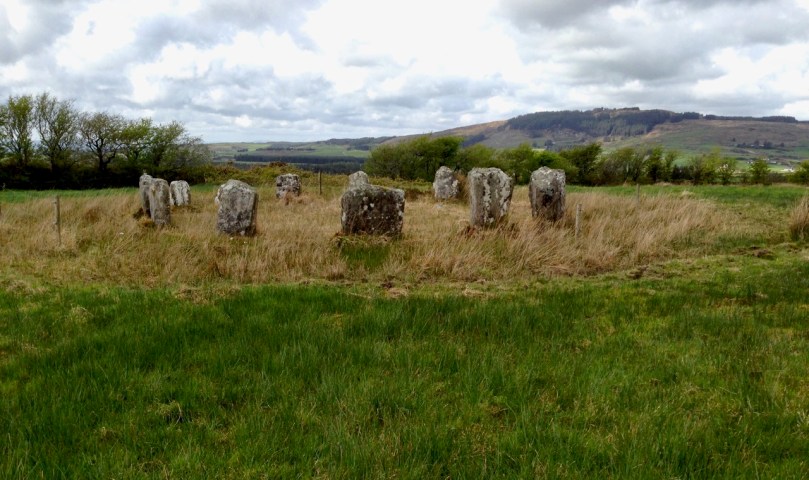
Reenascreena Stone Circle with its surrounding shallow fosse
Take a look at a couple of his papers for the Cork Historical and Archaeological Society. The first, on Five Stone Circles, is a good example of how he conducted his surveys. The second, titled Prehistorics sets out the case for a proper classification system for megalithic structures. Most of the terms he recommends, such as Standing Stone, Stone Row, Stone Circle, Passage Grave and Cup-Marked Stone are familiar to us and in everyday use now and he probably didn’t coin the terms. However, one of his terms never gained acceptance, and I think that’s a pity. It’s the charmingly named ‘Clochtogle’ and it’s what we now call a Boulder Burial. But in fact Clochtogle is a better term in being simply descriptive rather than assigning a function, since, as he points out in his paper, and as I pointed out in this post, there is precious little evidence that points to these monuments being burial places and they seem singularly unsuited for that function.
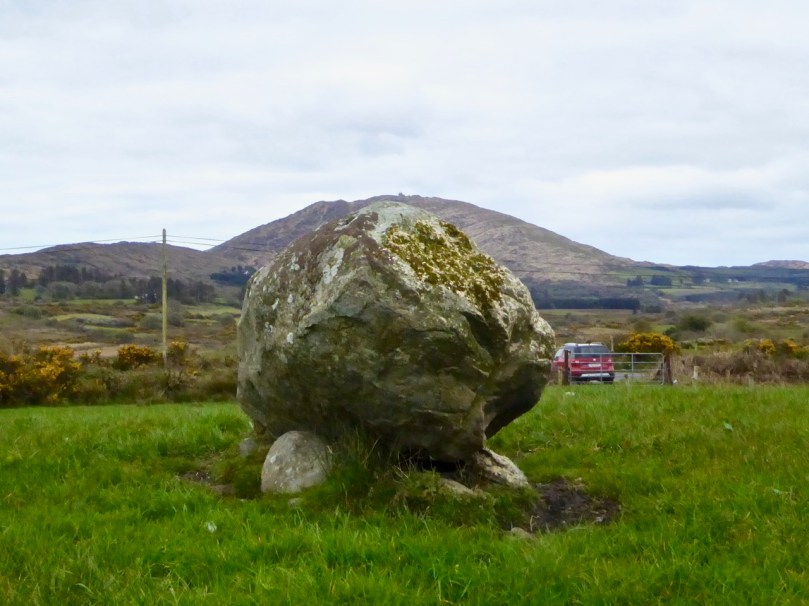
The Rathruane Clochtogle
Clochtogle is based on the Irish term cloch tógáil (cluck toe-gawl) which simply means raised up or lifted stone. We have lots of them in West Cork. In looking at the photograph of the Rathruane clochtogle (do you think this term might still catch on?) I am struck by how it seems to mirror the shape of Mount Gabriel in the background. Boyle, in his writings, did point out that not every monument was oriented to quarter or cross-quarter calendrical events: some, he said, may have other traditions reflected in their orientations. In our own investigations of West Cork monuments we are constantly struck by how many encompass views of Mount Gabriel.
Brian Lacey has an excellent paper in the Journal of the Royal Society of Antiquaries of Ireland* in which he describes Boyle Somerville as an important and distinguished. . .Irish archaeologist. . .and one of the founders of international archaeoastronomy. He details his various contributions to the field, and does not shy away from mentioning his less-than-scientific interest in ley-lines and also in the use of a medium to communicate with the builders of Drombeg. Edith, along with most of their circle (and indeed many of the literati of the time) routinely used mediums and ouija boards. After his death, as her biographer Maurice Collis puts it, Edith ‘lost no time in getting into touch with Boyle.’ But this does not detract from Boyle’s ultimate contributions: Without any doubt, states Lacey, Boyle Somerville was an extremely important and internationally-influential Irish archaeologist for his time. He deserves to be remembered better and celebrated with pride in this country.
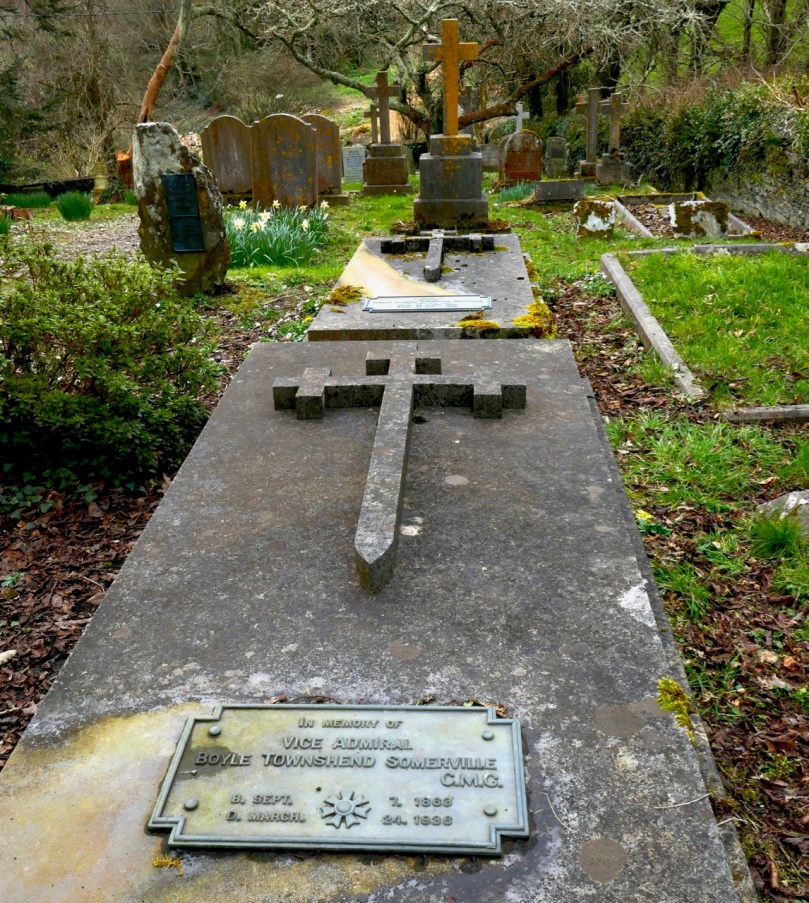
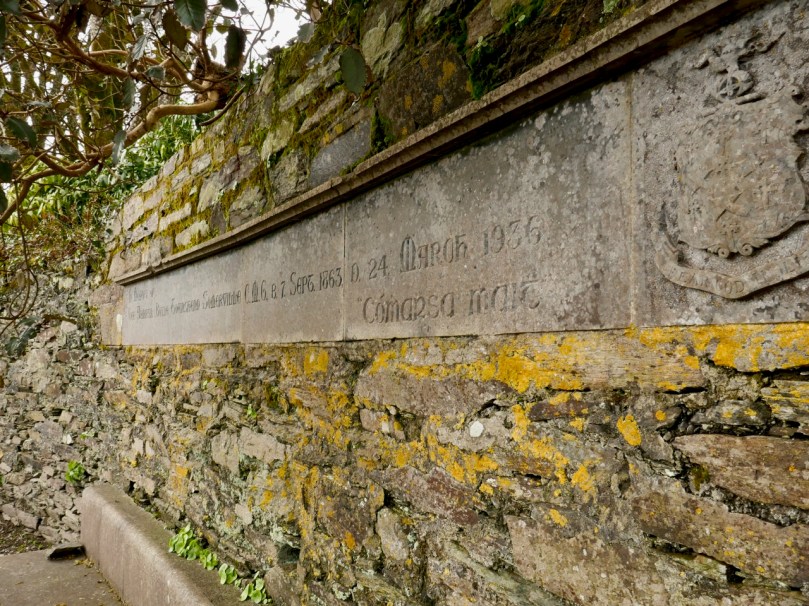
Boyle’s death, at the hands of an IRA hit squad, triggered a national outcry. There’s a good account of it here so I won’t repeat the information that is widely available. I will emphasise, though, that the murder horrified the local community and brought together Catholic and Protestant in mourning the death of one who was highly regarded and universally respected in Castletownshend. Edith determined to raise a monument to the memory of her beloved brother and the notion that took was to erect a bench outside the entrance to Drishane House for the use and enjoyment of the village. She asked Seamus Murphy to execute it, one of his first commissions. Next time you come by, linger at this spot and reflect on the life of Vice-Admiral Boyle Somerville. Accomplished, erudite, decorated and distinguished, he is remembered by those who knew him by the simple and deeply moving words Cómharsa Maith – Good Neighbour.
 *The Skibbereen and District Historical Journal, Vol 7, 2011, also has a paper by Brian Lacey about Boyle Somerville, substantially similar to the one in the RSAI Journal. It is not available online.




 Roaringwater Journal