Nelson’s Arch

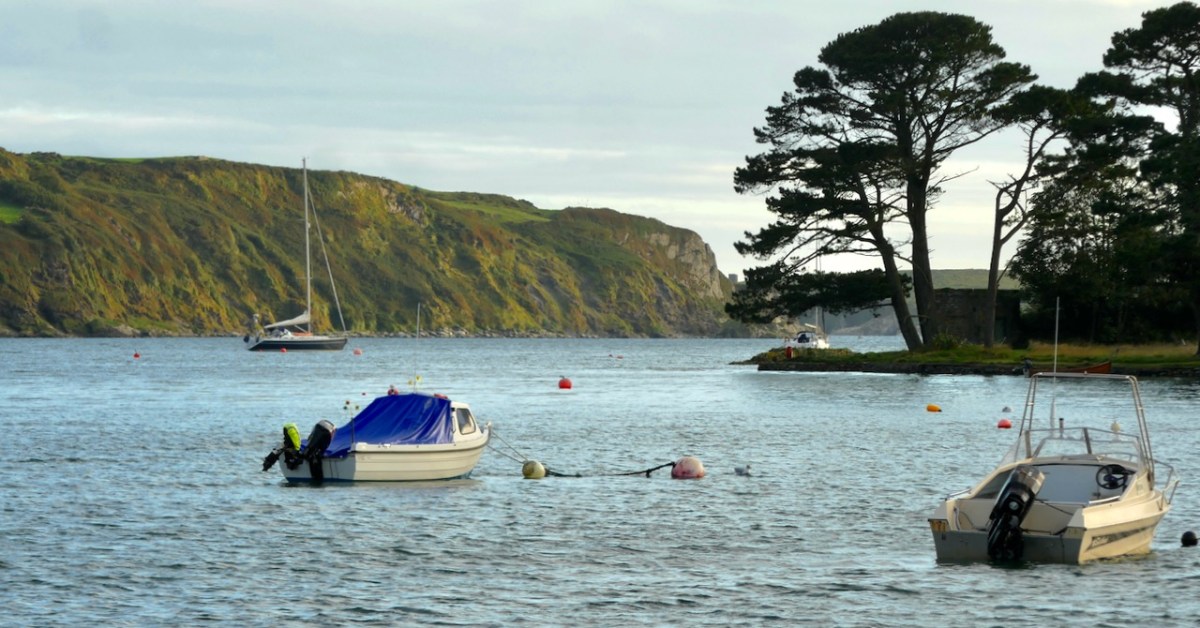
This is the inlet at Castlehaven, looking towards Castletownshend. It’s a peaceful scene. Finola and I were in the village at the weekend, showing groups around the church and the graveyard: it was a West Cork History Festival event. Very recently, I came across a reference to a structure that used to stand looking over this inlet: it was known as Nelson’s Arch. Here’s a watercolour print dating from the early nineteenth century . . .
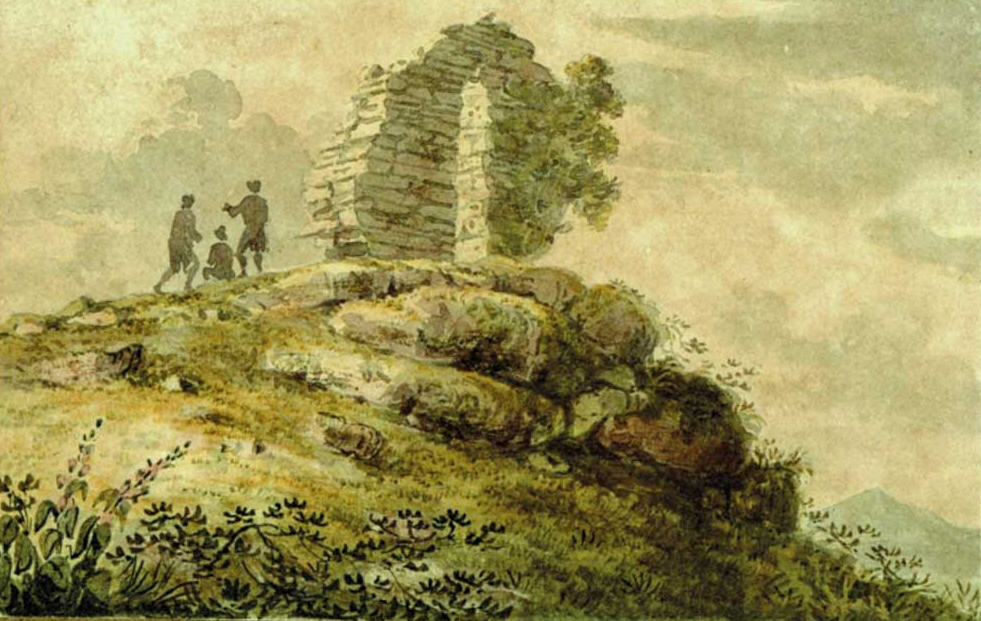
It looks like part of a ruined building. In fact, this is how it appeared when built! It’s a folly, but with a purpose. It commemorated the death of Britain’s Admiral Nelson, and the defeat of the French fleet at the Battle of trafalgar in 1805. Dennis Kennedy researched the arch and wrote an article about it for History Ireland, in January 2016. here’s a brief extract:

This arch . . . was the first monument erected anywhere in the world to the victor of Trafalgar, Admiral Lord Nelson. It was completed twenty days after the battle, and less than a week after the first news of it reached these islands. The artist, and the builder, was Captain Joshua Rowley Watson RN, then stationed in Castletownshend as the naval officer in command of a large force of Irish Sea Fencibles defending that section of the west Cork coastline against possible French invasion. On hearing of the victory at Trafalgar and the death of Nelson, Captain Watson designed and built, in one day, the rough stone arch . . .

Dennis kennedy, History Ireland Issue 1, Volume 24
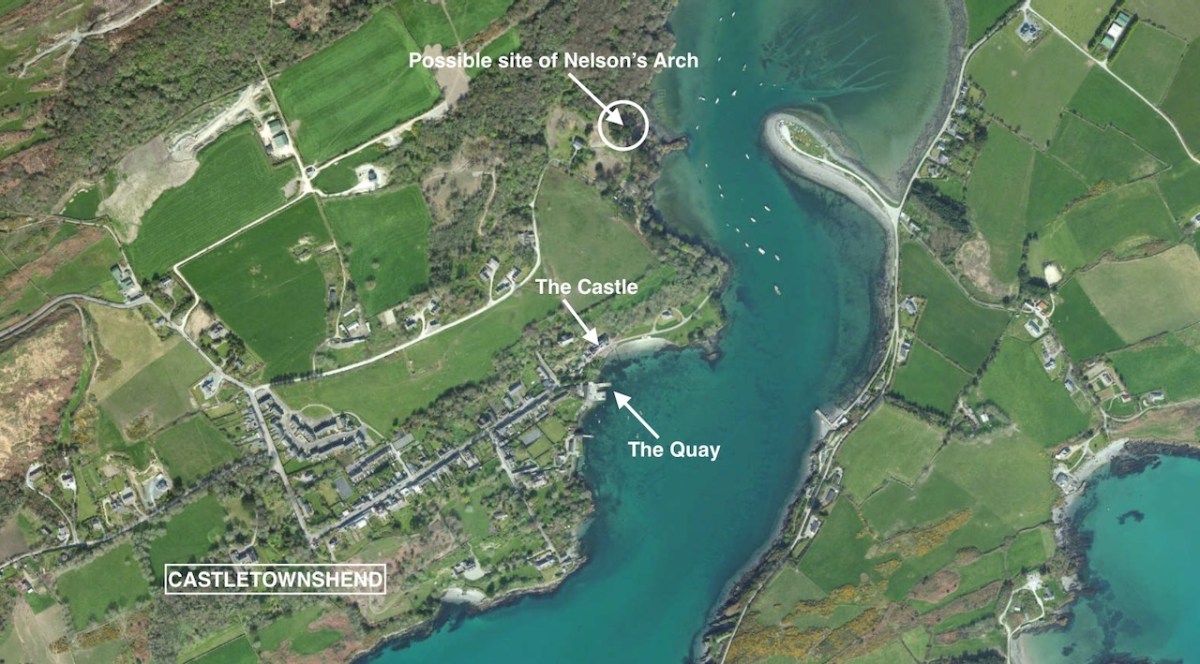
I can’t tell you for sure where this arch was constructed, only that it ‘looked out over the harbour at Castletownshend’. I am speculating that the site was where I have indicated in the above aerial view. My reason for suggesting this is that is an old archaeological record shown on the earliest Ordnance Survey maps states that ‘a structure’ existed at this spot. Evidently a plaque (now lost) was placed on the ‘structure’ setting out its origin:

. . . This arch, the first monument erected to the memory of Nelson after the battle of Trafalgar, was sketched and planned by Captain Joshua Rowley Watson RN, and built by him and twelve hundred of the Sea Fencibles then under his command (assisted by eight masons). It was erected in five hours on the 10th of November 1805 . . .

Dennis kennedy, History Ireland Issue 1, Volume 24

The idea of twelve hundred men – and eight masons – building this structure is hard to ponder. The Battle of Trafalgar took place on 21 October 1805. Subsequently, of course, two further notable monuments to Nelson were erected: the column in Trafalgar Square, London, was completed in 1843 to a design by the architect William Railton at a cost of £47,000. It’s still standing, guarded by its four bronze lions, which were added by Sir Edward Landseer in 1867. Its height (to the tip of Nelson’s hat!) is 51.59 metres. But Dublin City Centre also had a Nelson’s ‘column’:
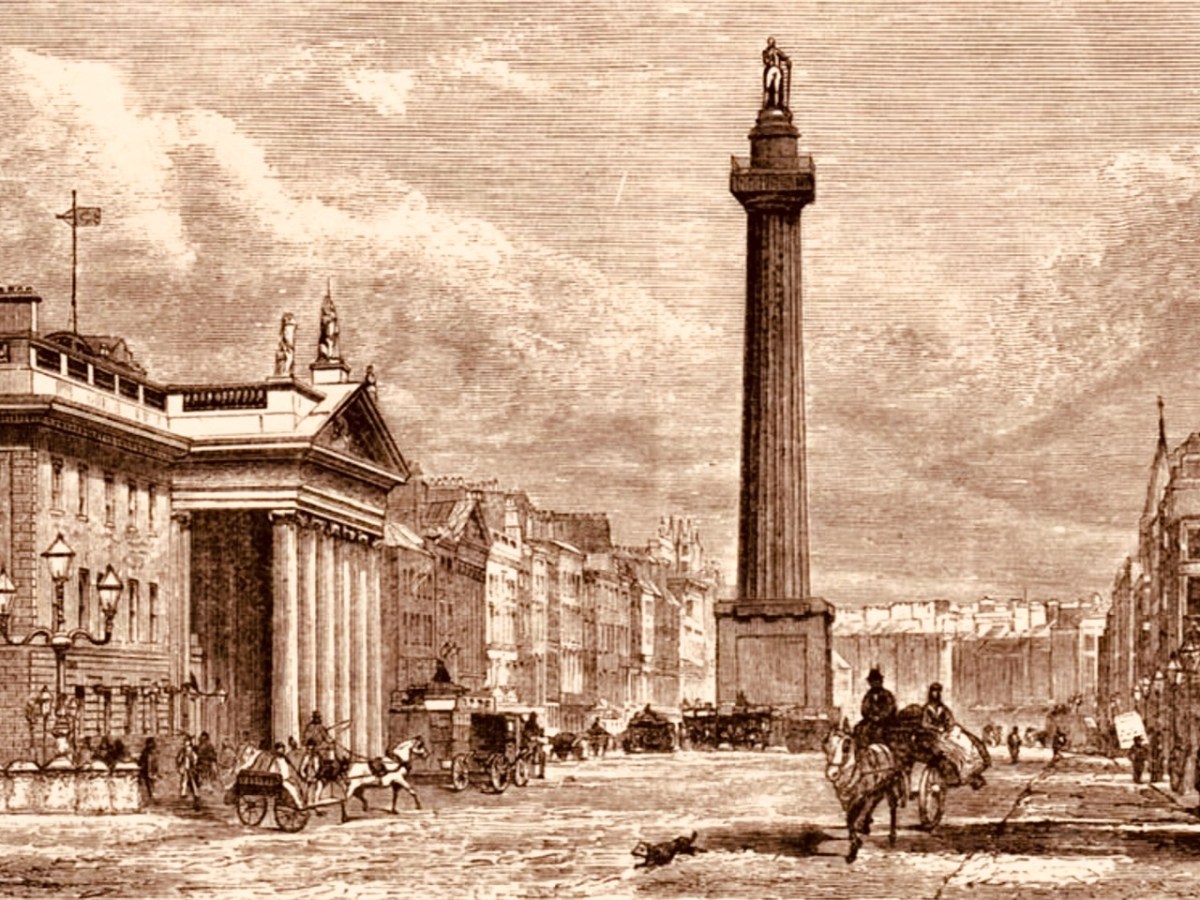
This structure in today’s O’Connell Street was made by Cork sculptor Thomas Kirk. From its opening on 29 October 1809 the 40.9 metre high Pillar was a popular visitor attraction, as it contained a staircase which could be climbed by the public, and which provided a wide view over the city centre. The London column – built from Dartmoor granite – was never provided with a staircase, but it’s a ‘must-see’ tourist destination. It’s actually the only extant monument to Nelson: having survived the rising on Easter Monday, 24 April 1916 – when the nearby General Post Office was reduced to a burnt-out shell, (below) – Dublin’s Pillar succumbed to an attack – probably by dissident volunteers – on 8 March 1966 . . .
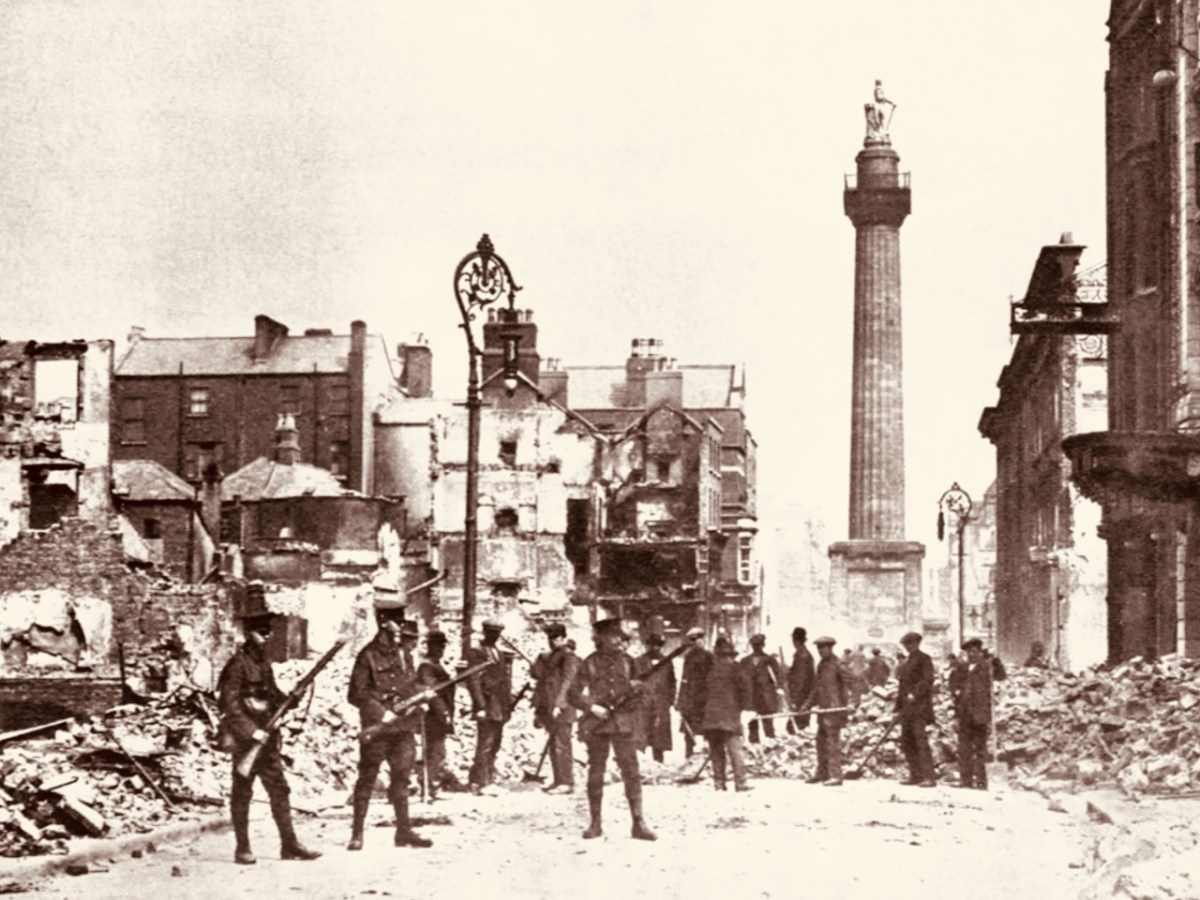
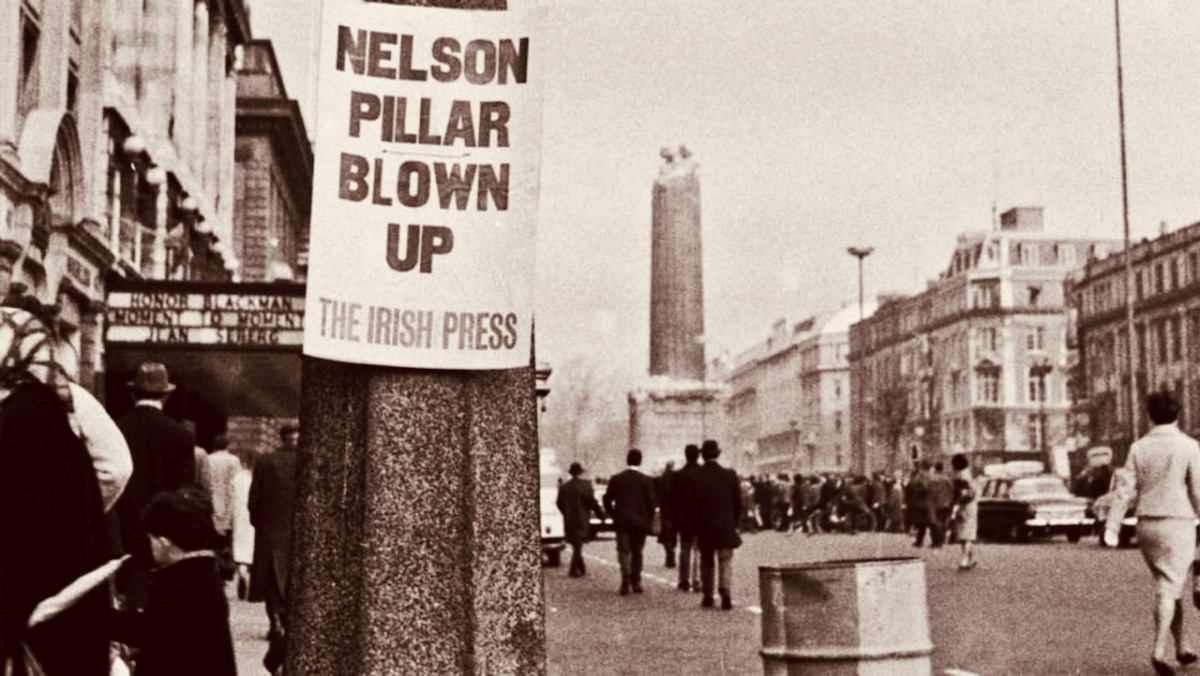
In the early hours of a Tuesday morning, a powerful explosion destroyed the upper portion of the Pillar and brought Nelson’s statue crashing to the ground amid hundreds of tons of rubble. An IRA spokesman denied involvement, stating that they had no interest in demolishing mere symbols of foreign domination: “We are interested in the destruction of the domination itself” (quote from the Irish Independent newspaper). According to Kennedy’s History Ireland article, our Nelson’s Arch at Castletownshend suffered a similar fate only a few days later, in March 1966. There must be many West Cork residents who remember the arch when it stood (and when it fell). I have only managed to find the photograph that Kennedy used in his piece:
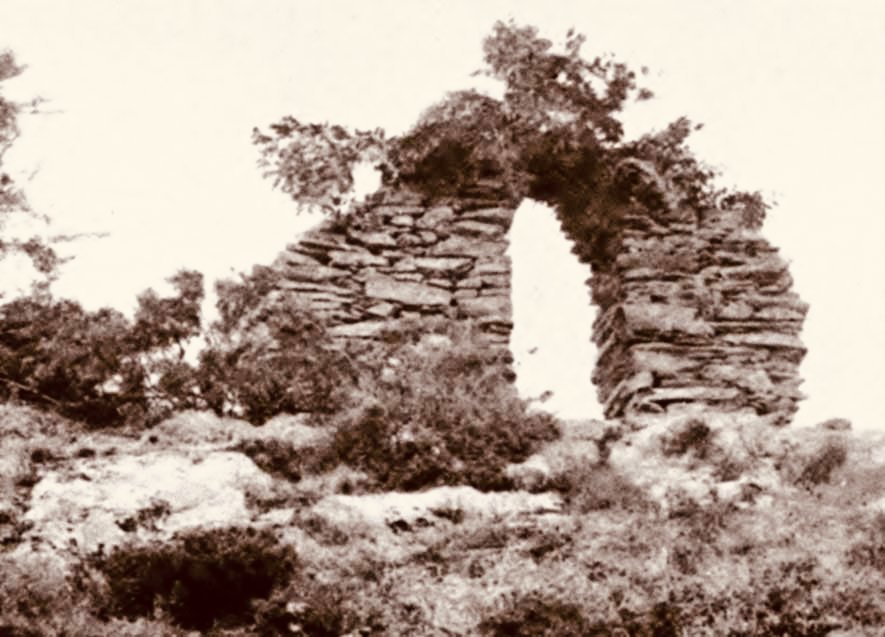
Compare this with the watercolour sketch: it obviously survived virtually unchanged during its lifetime of 161 years. To my knowledge no-one has laid claim to destroying the structure. But the motivation – disgruntlement at a brazen symbol of British imperialism – was undoubtedly the same as the Dublin Pillar destruction. If anyone is able to provide further information on the life and death of Nelson’s Arch, Castletownshend, we would be delighted to add it here.
Feasts and Festivals

It’s August in West Cork and we’re going to need a holiday to recover! July was a blast – here are a few highlights – The West Cork Literary Festival (I was on stage at Future Forests as part of a joint Lit Fest and Ellen Hutchins Fest Seaweed and Sealing Wax presentation, to a large and enthusiastic audience; A Fusion Feast at Levis’s with good friends and cooked by Rob Krawczyk and, both with their own Award Winning Restaurants; the Launch of Holy Wells of Cork by Amanda Clarke; and a continuation of the high standards of exhibitions at The Blue House Gallery in Schull, with Oonagh Hurley, Catherine Weld and Shane O’Driscoll – including this rug designed by Shane and made by Ceadogán Rugmakers.

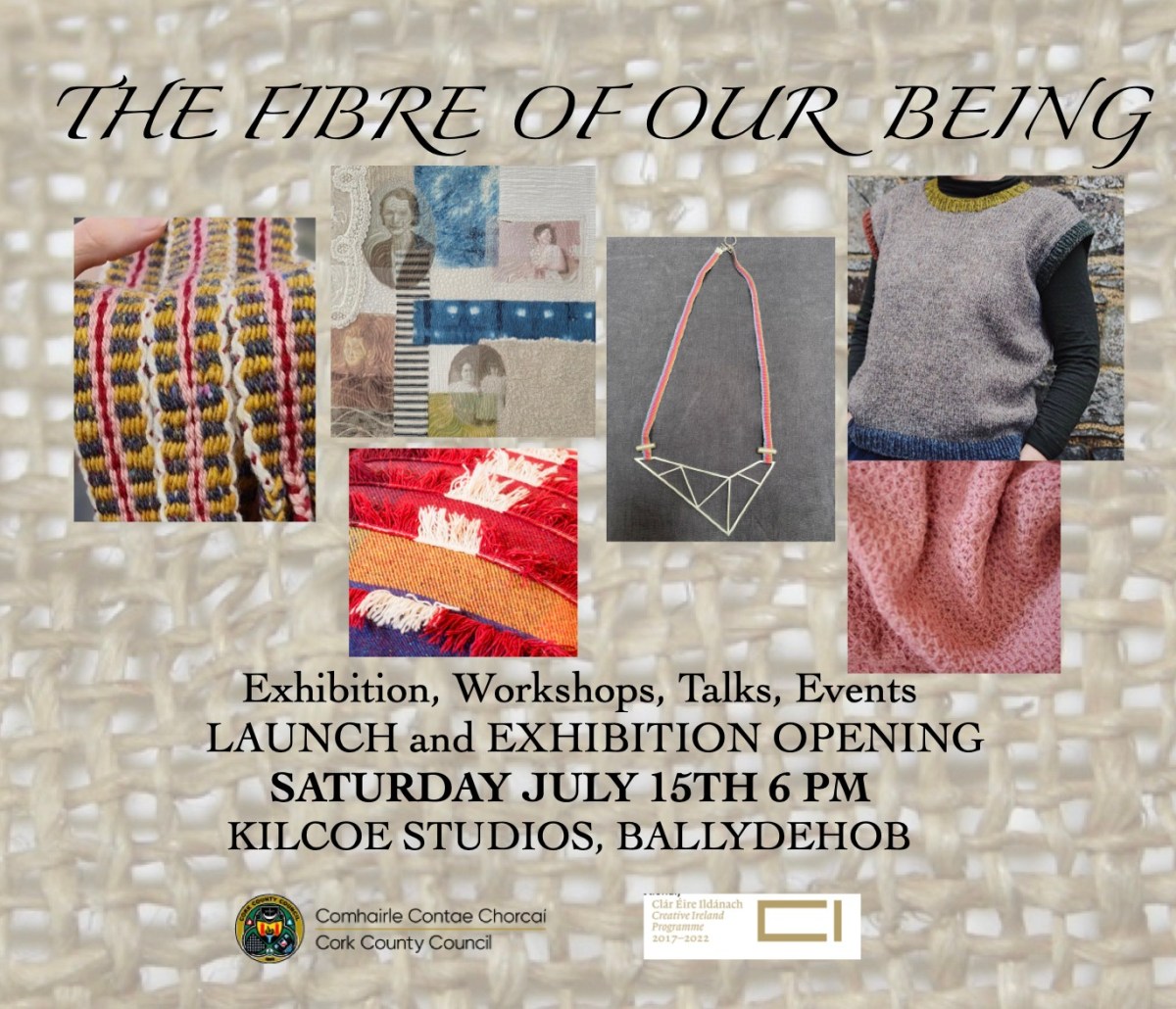
The wonderful Kilcoe Studios also organised an innovative series of events titled The Fibre of Our Being, “exploring contemporary textiles which draw on tradition to reinvigorate their process” and involving several different artists, including our friend and neighbour Liadain Aiken – see here for our post on Robert’s sweater.

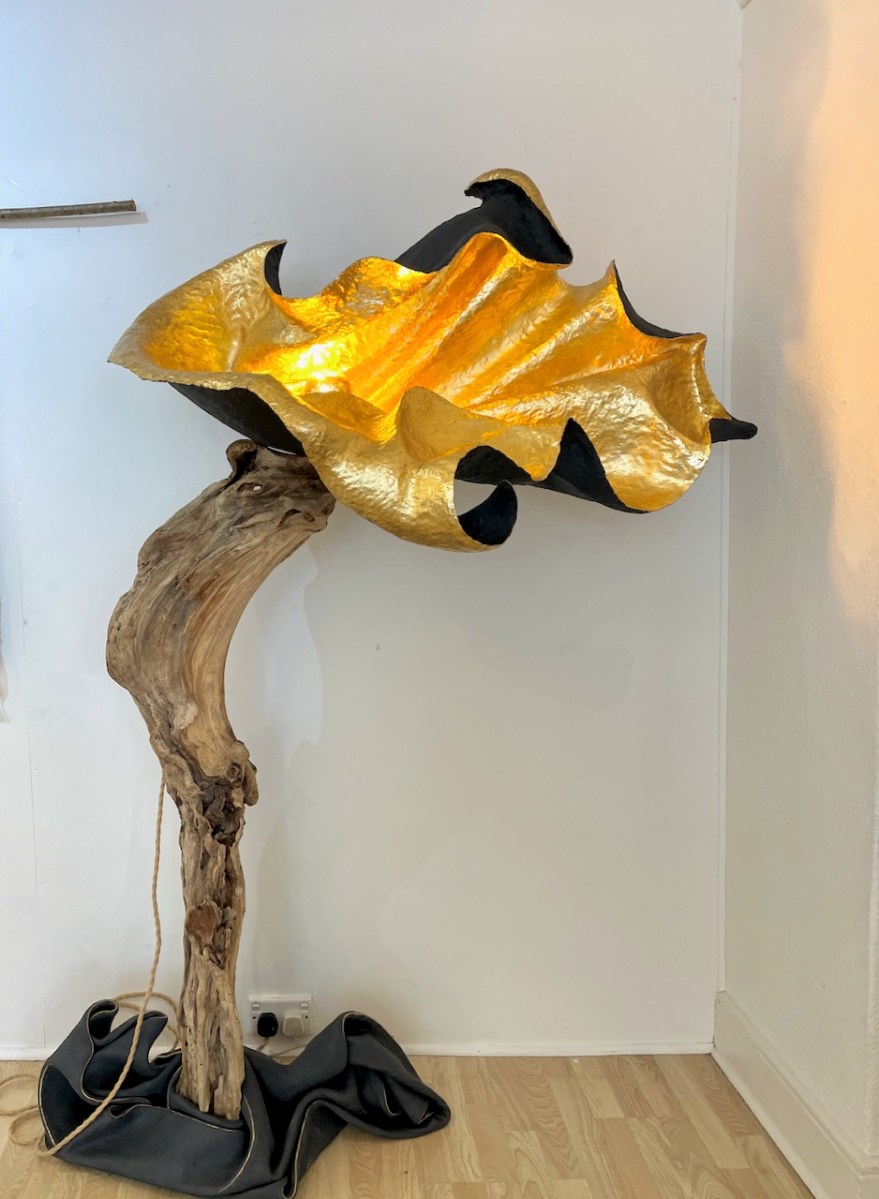
August started with the 10 Hands Exhibition at the Working Artists Studios. 10 Hands is the brainchild of Angela Brady, architect, film maker and craft historian. This year, the ten artists and makers have been joined by 6 more from the Working Artists Studios team, and the result is very impressive. Lots of variety here, and an exceptionally high calibre of vision and execution. I am craving one of the incredible standards lamps by Ania Surazynska – here’s one example. This artist is new to me, but I see a very, er, bright future for her. You heard it here first.

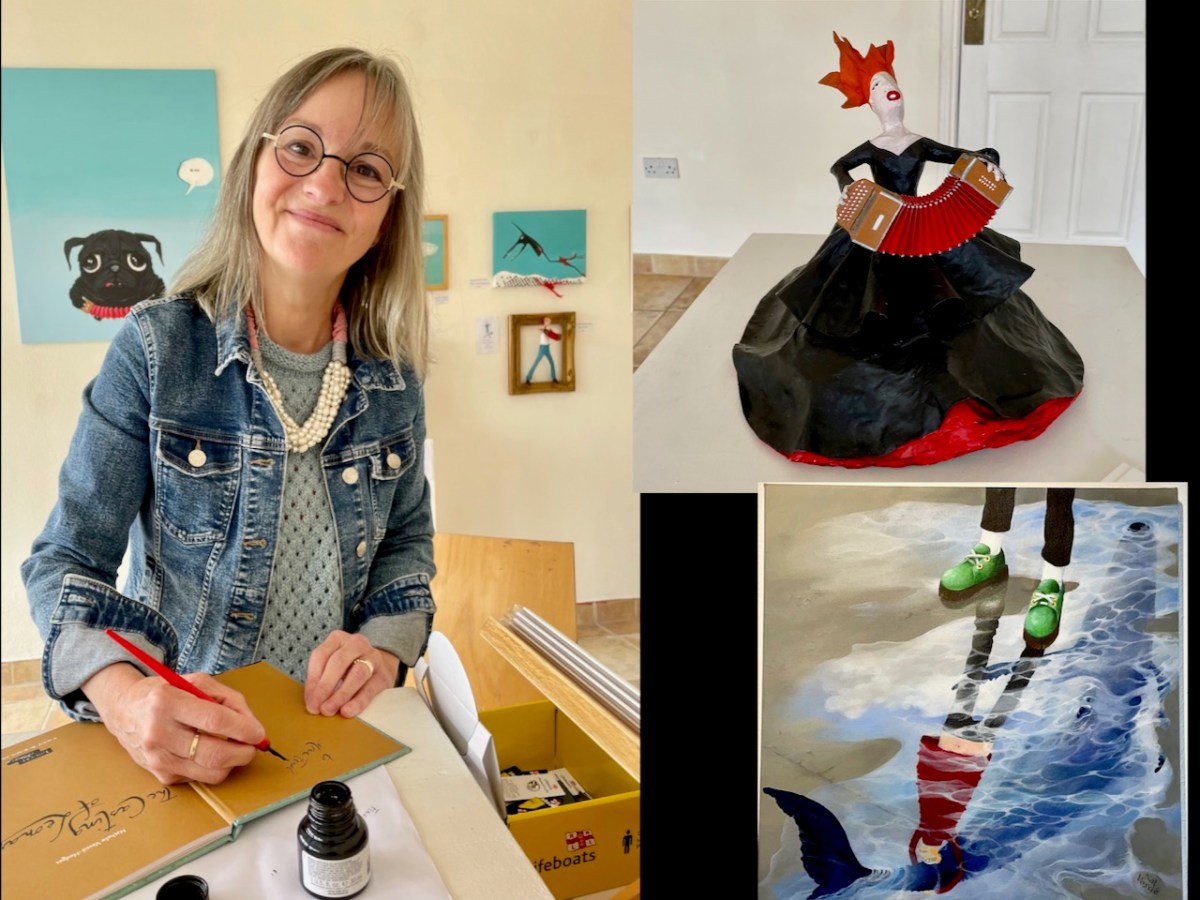
While we weren’t able to get to the opening last night, we are planning a trip out to Union Hall tomorrow for the annual and always-outstanding West Cork Creates Exhibition. This show has now moved to a marvellous new establishment, the Cnoc Buí Arts Centre. We visited last month and were delighted by the exhibition we found there, of sculptures, paintings and books by Nathalie Vessié-Hodges. Here she is signing one of her books for me (it was published by the Louvre!). A fairly recent blow-in to West Cork, I predict we will be seeing more of Nathalie.

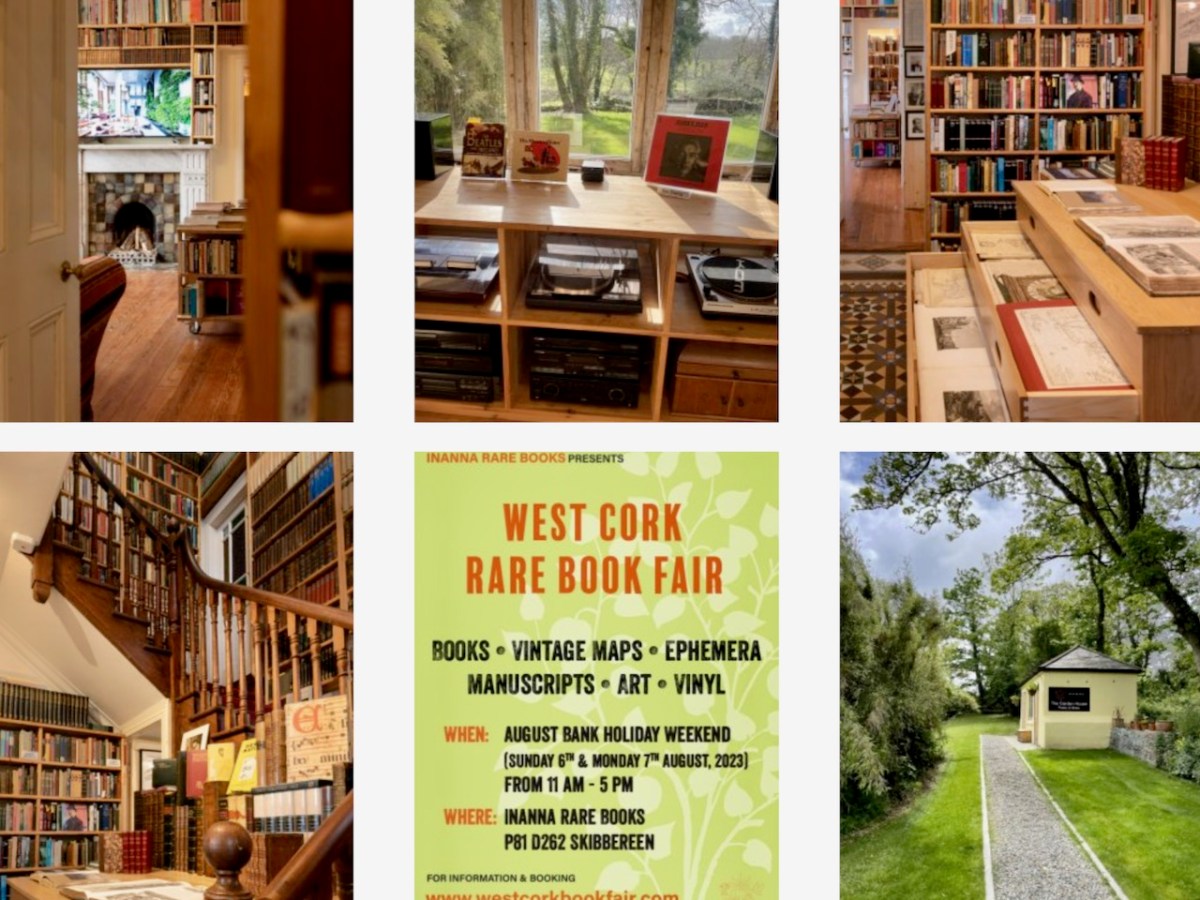
Also on our list for tomorrow is the West Cork Rare Book Fair – we attended last year at the lush Inish Beg Estate and this year it is being held at the home of Innana Rare Books just outside Skibbereen. Doesn’t this look inviting? (It’s a screenshot from the Innana website – thank you, Holger and Nicola!)

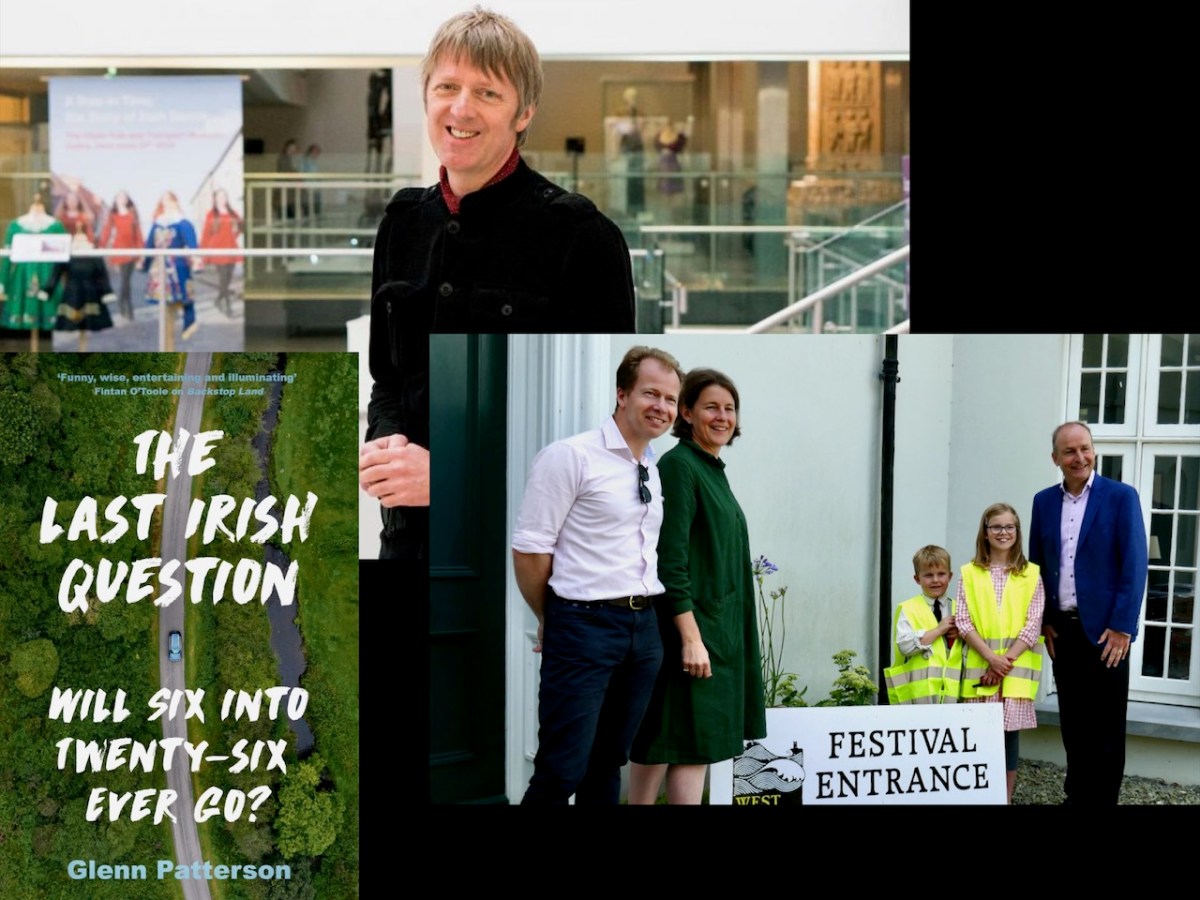
And then it’s right into the West Cork History Festival. Robert and I have organised the field trips, and we are looking forward to our own contribution to those – a tour of the historic Church of St Barrahane in Castletownshend. There are several other options – including walks and swims with Gormú, a walking tour of Ballydehob (oops -sold out!) and an historical Kayak trip through Castlehaven. The Program of Talks features leading academics and writers, and there’s a hot rumour that Micheál Martin will do the opening honours. I’m particularly looking forward to Friday night’s opening session with writer Glenn Patterson who will be in conversation about his latest book The Last Irish Question: Will Six into Twenty Six Ever Go? followed by a panel ruminating on what we have learned from the Decade of Centenaries about our past and our future.

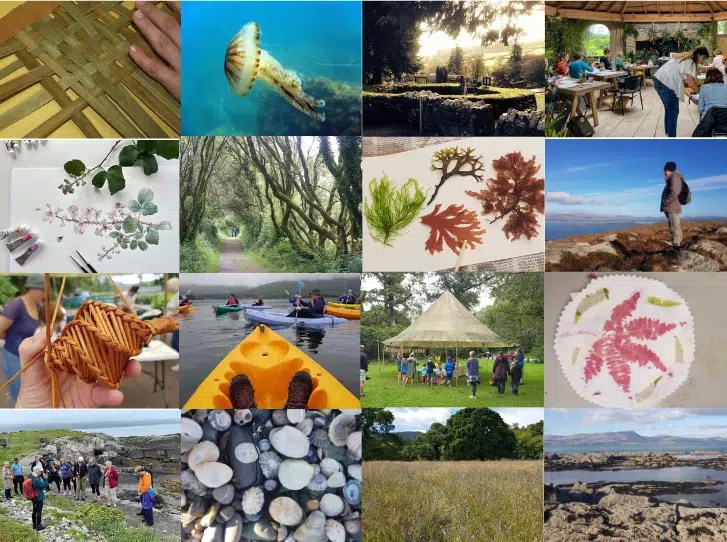
For history buffs, you just can’t beat this Festival, this year in the magical surroundings of Inish Beg Estate. As soon as it’s over I will be hot-footing it to the events of the Ellen Hutchins Festival – a feast of delights for anyone even vaguely interested in the natural world, inspired by the life and work of Ireland’s first female botanist. I’ve signed up for several events – lots of them are free and many are suitable for children.

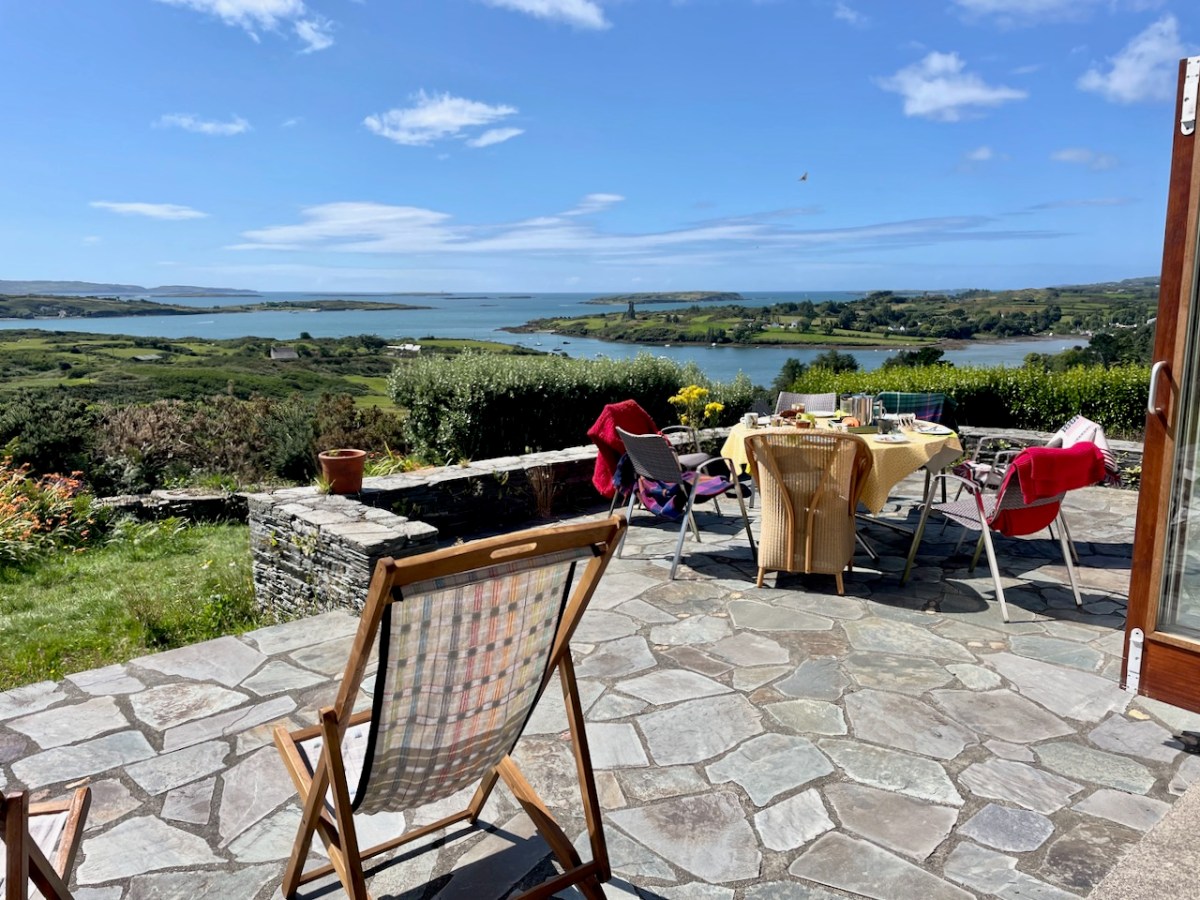
And once all that is over, I might just have to retire. Wait, what? I AM retired, I hear you say? Ah – so no excuse needed to do more of this – having leisurely lunches overlooking Roaringwater Bay?

Oh – you have another question? What’s Graham Norton doing in the top photo? That’s easy – he lives part time in Ahakista on the Sheep’s Head, and there he is, doing his stint as Quizmaster at the annual Ahakista Festival this weekend. We attended one year and it was predictably hilarious.

Gearing up for August in West Cork

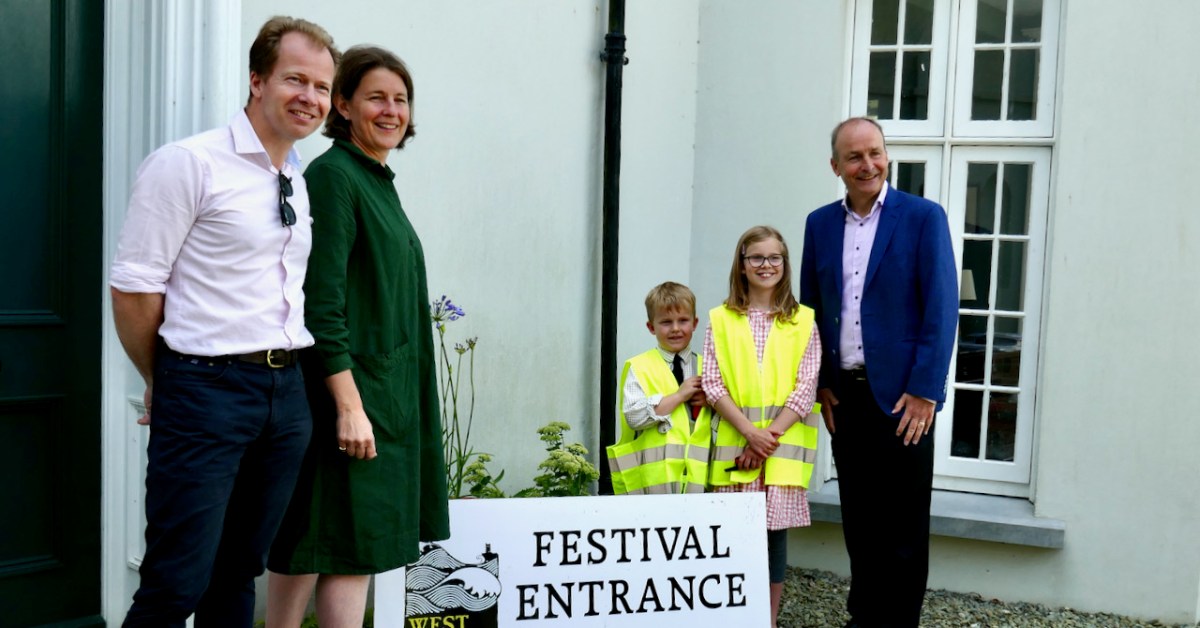
August has roared into West Cork bringing gorgeous weather and a plethora of can’t-miss events. I am wrecked already and we are only a week in! As I type we are in the middle of the marvellous West Cork History Festival. Yesterday Micheál Martin, our Taoiseach, came for the afternoon, as he has done several times in the past. He’s a former history teacher and very supportive of our Festival. He spoke compellingly in a few introductory remarks about our need for a nuanced view of Irish history, one that no longer depends on a single narrative. It was an honour to have him there – no fuss, very discrete security detail, and giving us his whole attention. (Above, Simon and Victoria Kingston, visionary Festival Founders, with their children Rory and Constance, and An Taoiseach.)

The theme of the first day was Black 47 – its the 175th anniversary of the worst year of the Famine – and I am struck anew by the horror of it all (That’s Lilian Lucy Davidson’s harrowing depiction, titled Gorta, above, which featured in the Coming Home Exhibition in Uillinn in 2018). Take a look at the Festival Program to see the range of what we were offered today. It’s a blended festival this year: a small in-house audience but anyone can register for the program online. It’s a high-quality production too – several pony-tailed and bearded young men in black were in command of all that. You can still buy tickets for the online portion – they will be good for two weeks. The luminous Jessie Kennedy, a long-time Festival collaborator, has assembled the Celestial Quartet, and together they have devised a selection of classical and newly-composed music to honour Agnes Clerke, the famous astronomer who grew up in Skibbereen during the Famine. Read all about her in my post From Skibbereen to the Moon.

The festival continues today with an emphasis on the Bandon Valley Killings – a traumatic episode in our West Cork History that deserves a full examination 100 years later. 

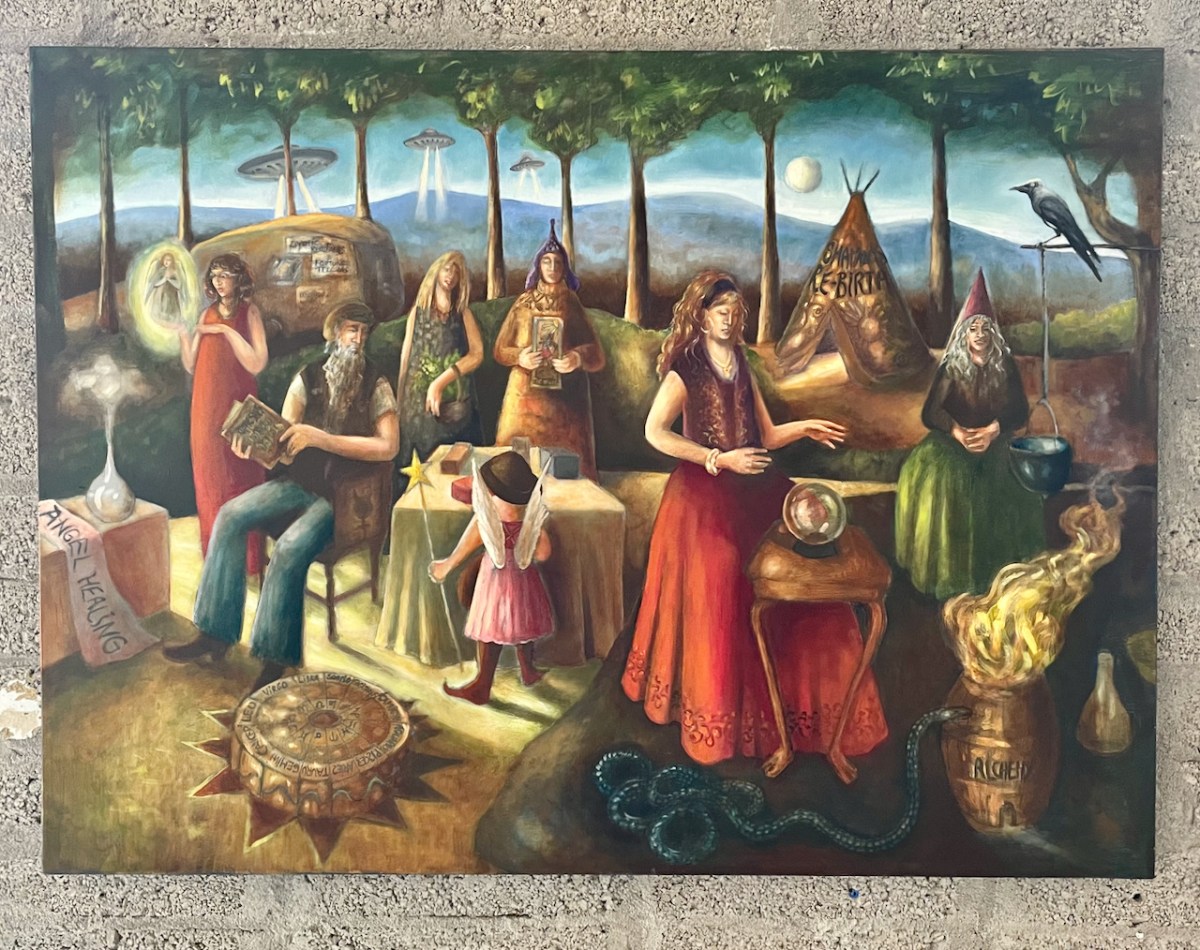
On a more cheerful note, yesterday marked the opening of what is consistently the best art and craft show in West Cork, year after year. It’s called West Cork Creates, is located in the O’Driscoll building in Skibbereen, and is curated by Alison Ospina and her jury panel. The calibre is as high as you will find anywhere. Above, for example, is Hilary Nunan’s work, which mixes fibres with acrylic paint – these are titled Grasses. Below is New Age Medieval, a painting by Carin MacCana. I wrote about Carin’s stained glass work in this post – she is now retired from teaching and has stated to devote her time to painting. She and Penny Dixie share an extension of the Gallery for their own show as well.
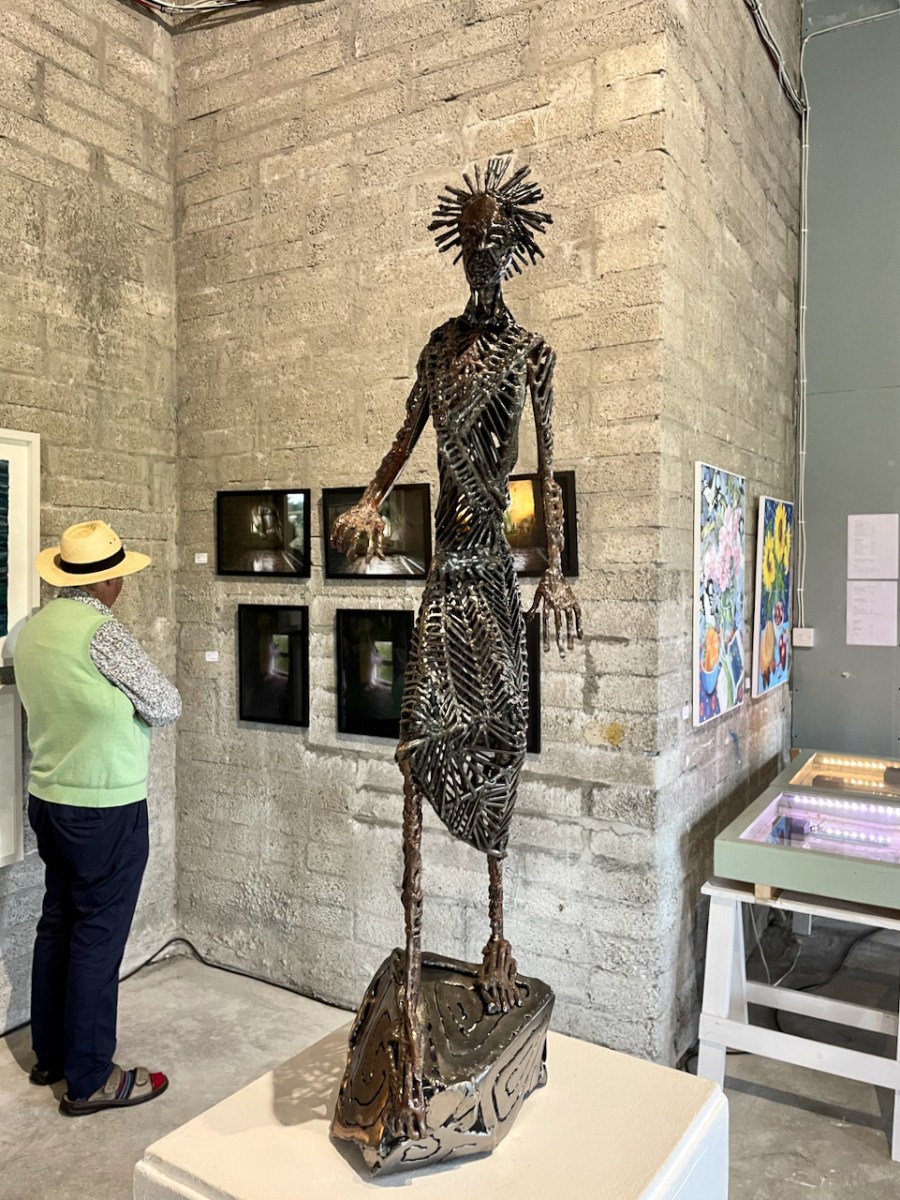
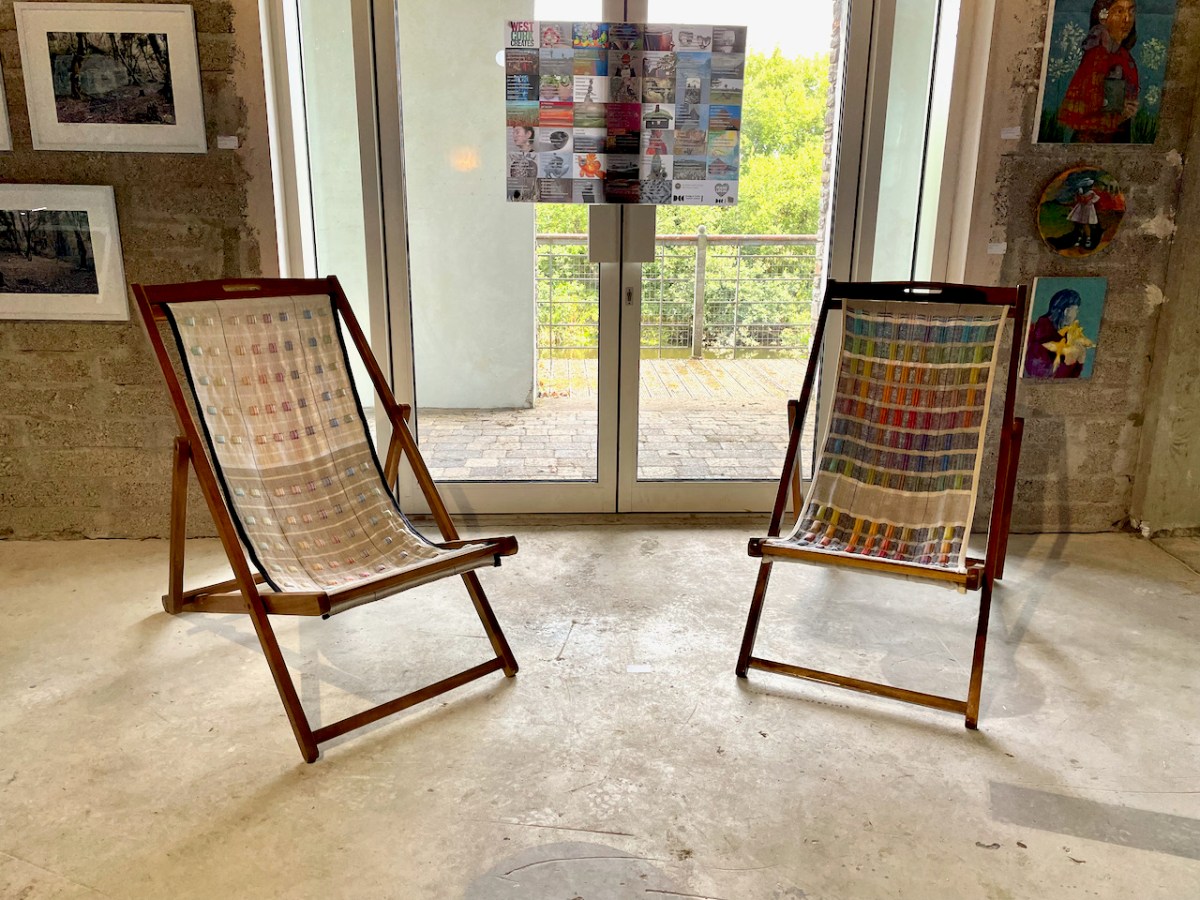
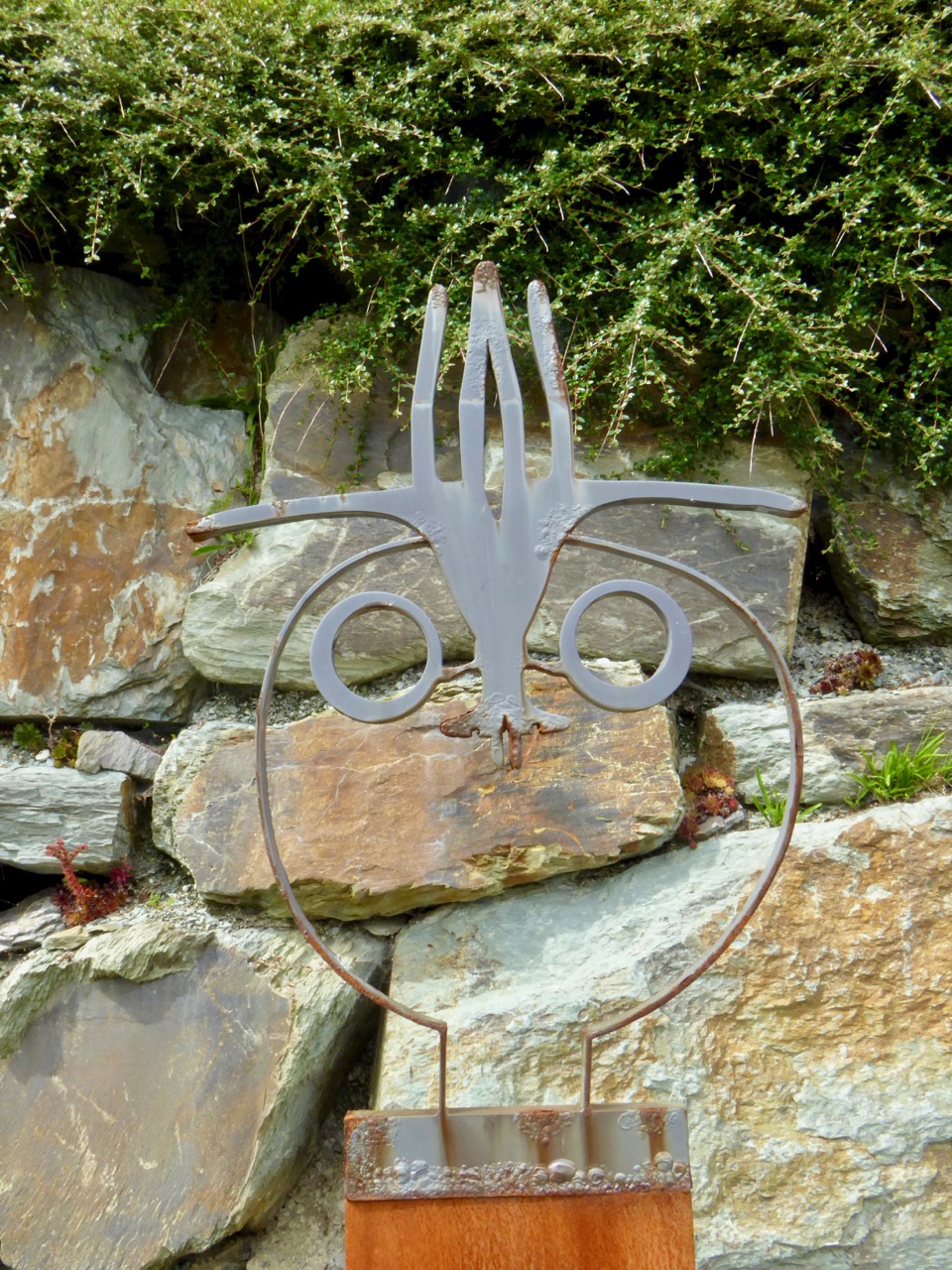
Dubhaltach Ó Colmán has several striking metal sculptures in the show (above). His work goes from strength to strength. But perhaps our favourite were the two deckchairs below, reclaimed by Suzanne McGuirk and covered with her own exquisite organic linen woven fabric. They are soon to grace the terrace of our own home!

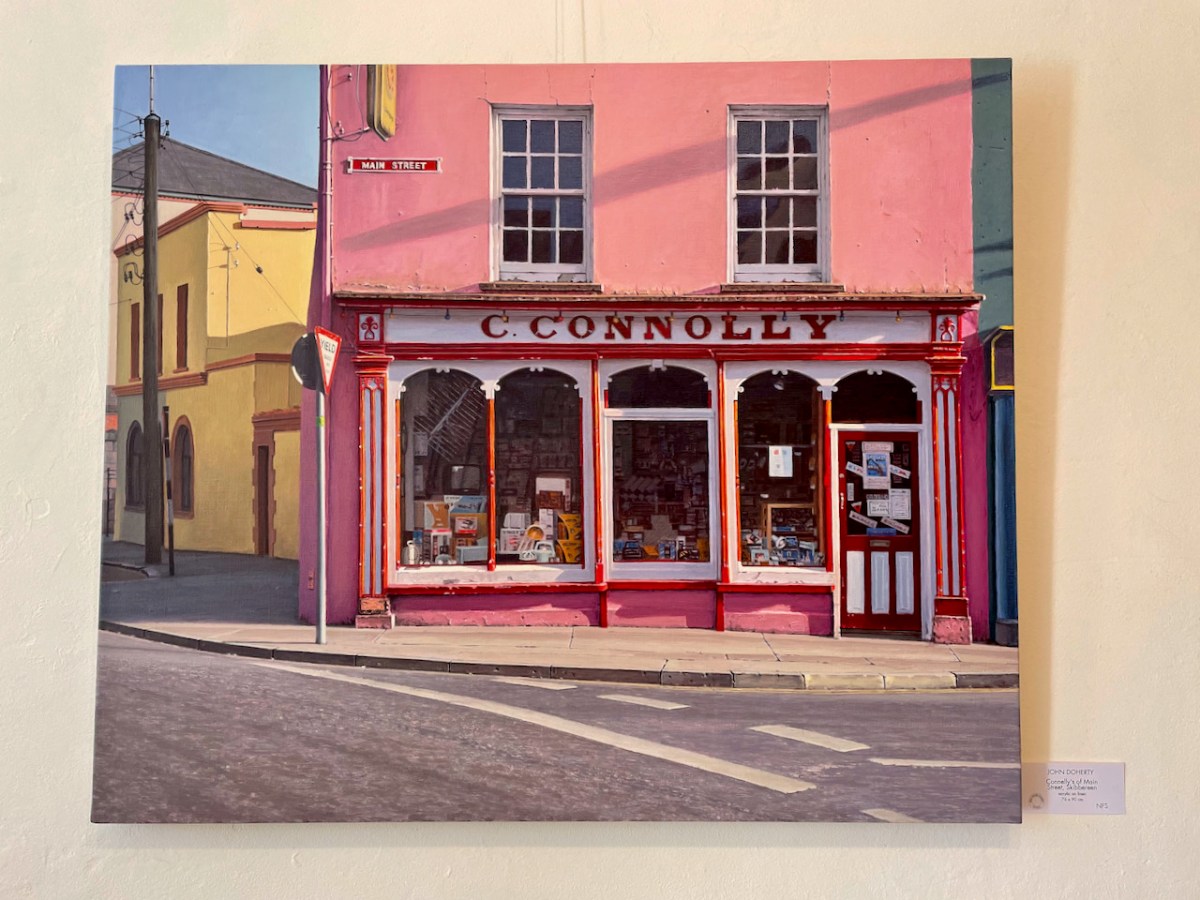
In Schull, the Blue House Gallery has just opened an exhibition of work by John Doherty. A photorealist painter, John’s work draws you in initially with its detailed representation of everyday objects: it’s nostalgia, you think at first, before it dawns on you that, as the Taylor Gallery says of his work: His images, coupled with the wry wit of their titles, point towards the human stories that exist behind the facades that represent a meticulous  examination of the half-forgotten life of the past. No, that’s not a photograph, below, of Connolly’s of Skibbereen – it’s one of John’s paintings.

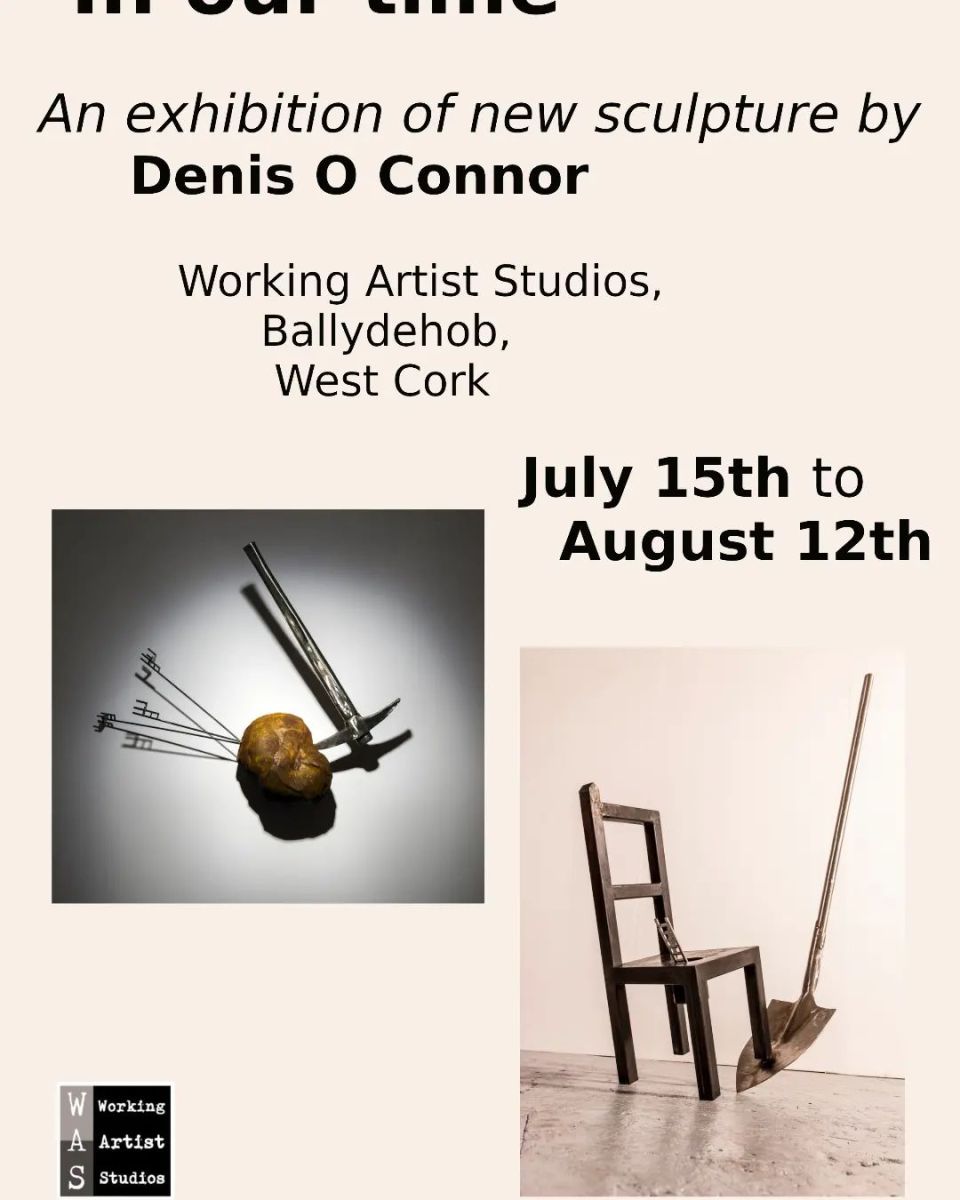
And in our small village of Ballydehob we have not one but four exhibitions, all worth visiting right now! Starting from the top of the main street, let’s first drop by The Working Artists Studio, who are currently hosting the sculptor Denis O’Connor. He’ll be giving a talk on Friday and we intend to be there.
Of his work he says: 

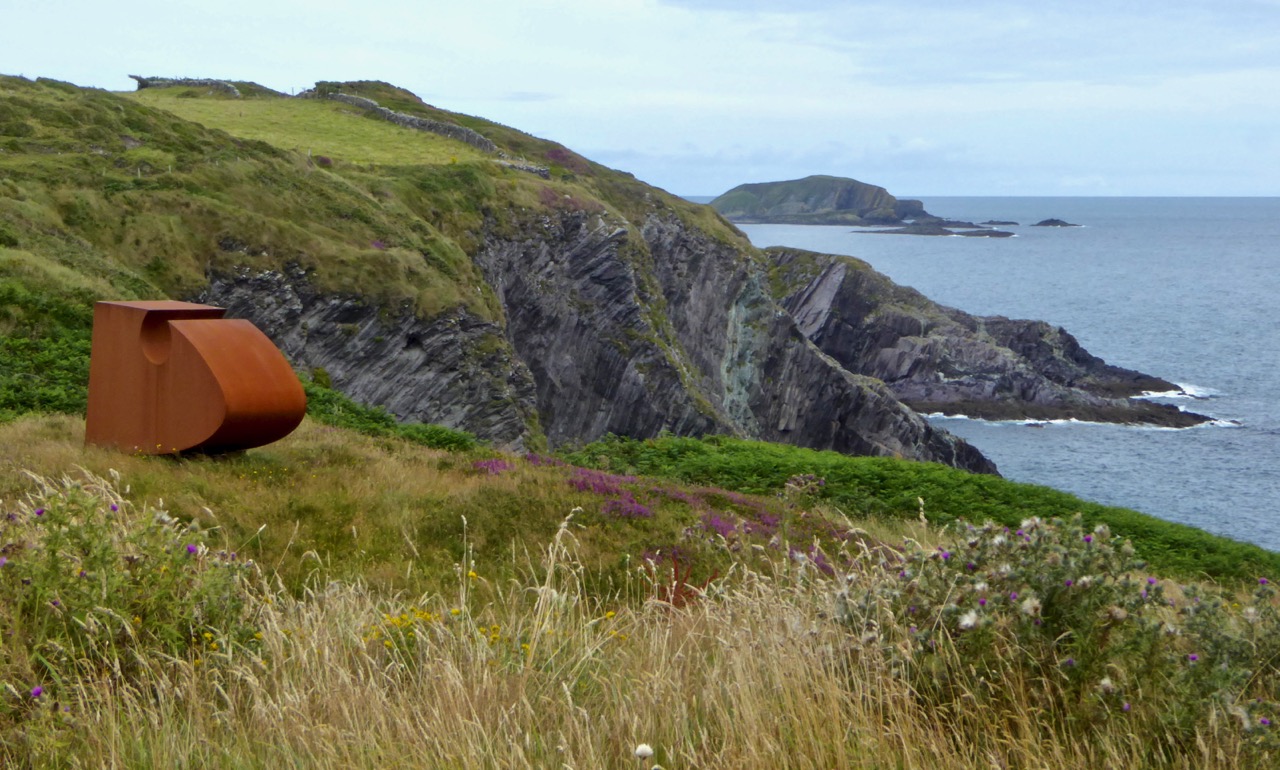
Process and Making are central to my sculpture, working in an intuitive, physically dynamic way, trying to develop new ways of defining my language of sculpture.  I work with the medium of steel towards creating physical forms [rocks and boulders] which begin to transcend a sense of how elements of the landscape are made but also its physical vulnerability and hostility.

Just down the road is the Ballydehob Arts Museum. Robert wrote last week about the unique exhibition of Lynn and Ian Wright’s ceramics – everyone who visits enjoys their humour and skill.

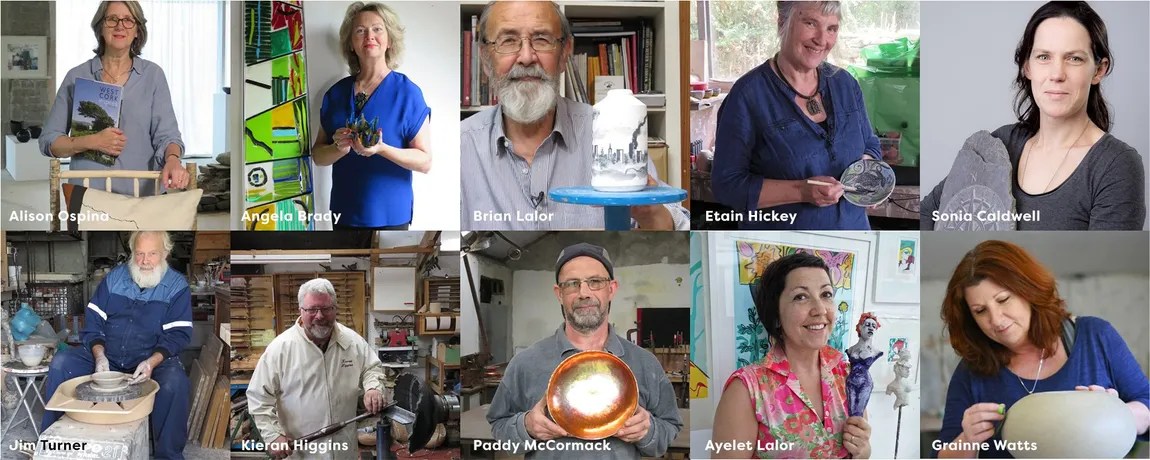
Next door down is Rosie’s Pub, where the art-loving proprietors, Noel and Chris Camier, host regular shows all summer in their Aisling Gallery above the pub. The current show is the Ten Hands Group – ten Artist/Makers at the top of their game coming together for a marvellously-curated show. That’s the ten of them, above.
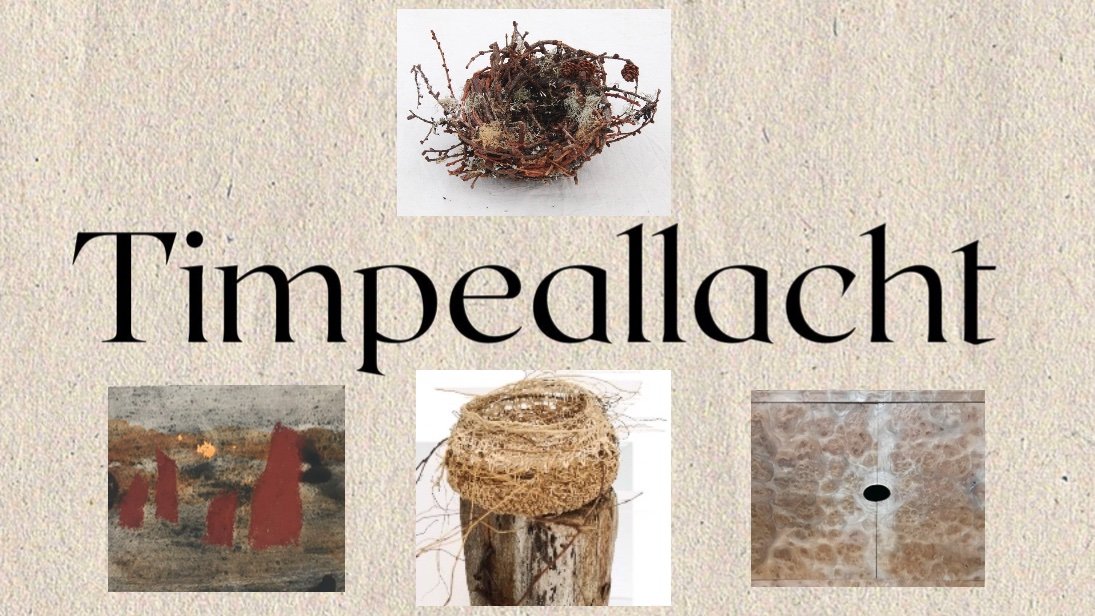
Finally, a new-ish addition to the village, the Kilcoe Studios is hosting Timpeallacht (it means surroundings or environment) in which all the items have been made from local and natural materials.
There’s more – much more – but this will give you a flavour of how we are spending our time right now. Next up for us is the superb Ellen Hutchins Festival. No wonder I’m exhausted – and blissed out. I will leave you with a ‘Head’ from the indefatigable Angela Brady – regular readers will remember we took a glass workshop with her.

West Cork in High Summer – Festival Central!

West Cork has festivals all year long, but right now we are gearing up for some of our favourites and they are looking terrific!

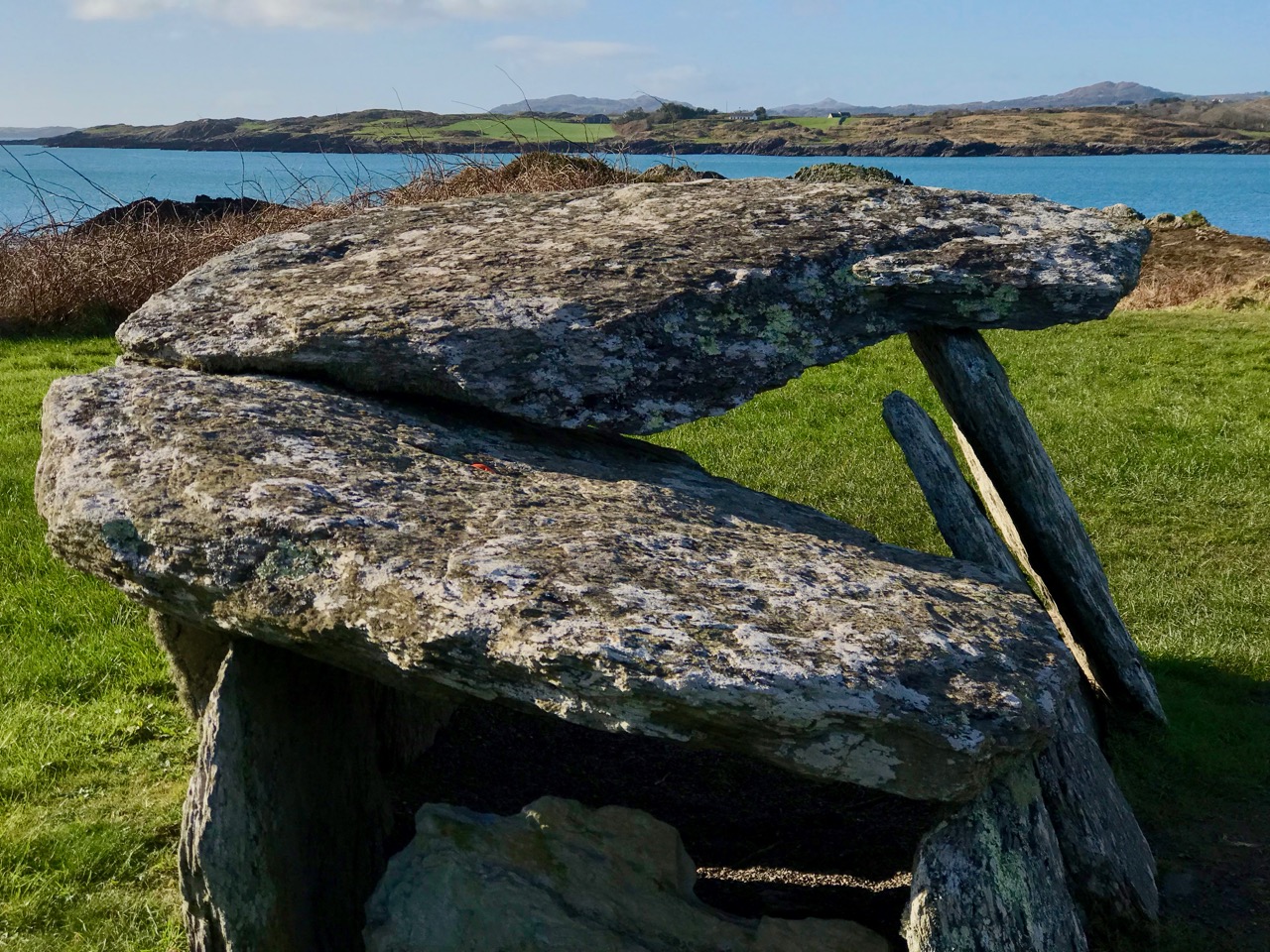
We’re planning the field trips. for the History Festival. Top photograph is of last year’s tour of Reen Farm, John Kelly’s Sculpture Garden and above is the Bronze Age Altar Wedge tomb, which this year’s Mizen field trip will visit

For us, the most significant is the West Cork History Festival, because we are very involved. Have you ever thought you might like to go along on one of our field days?  Well, here’s your chance as we will be leading two field trips on Aug 8 and 9 and Carina Jeisy of Beara Baoi Tours is leading another. All the details are here and you can buy tickets there too – if you hurry.

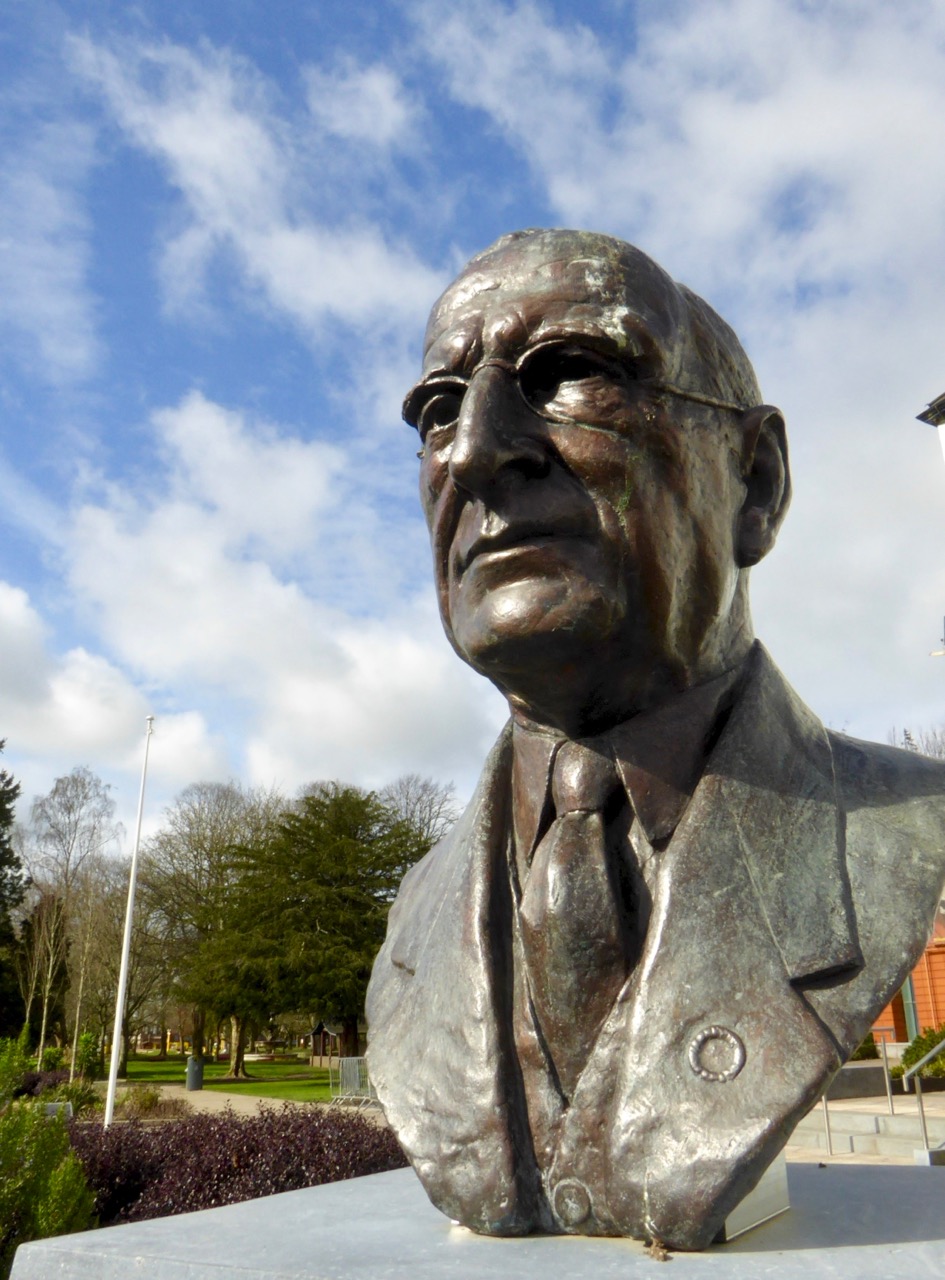
Dev, by Seamus Murphy. Seamus’s daughter, Orla Murphy, will be at the Festival to speak about her father and his legacy. Dev? Well, he’s part of the reason Irish history will never be uncontested

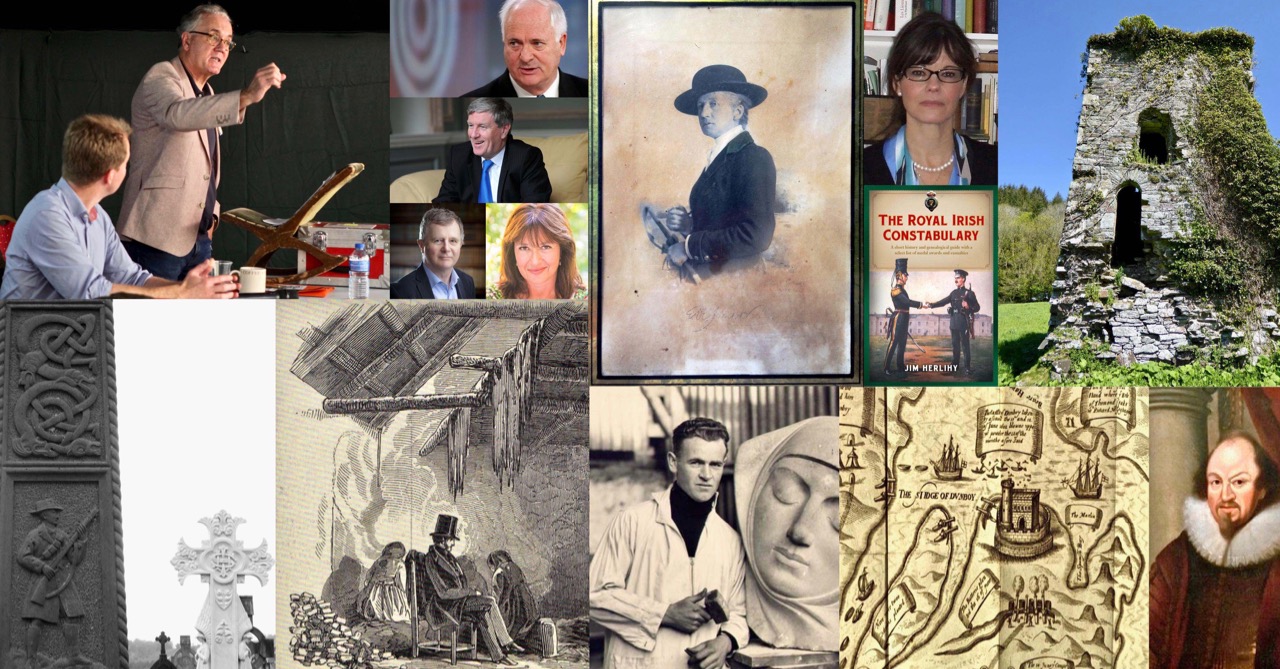
The Festival is now in its third year and this year’s line-up of speakers and events is looking particularly engaging. From former Taoiseach John Bruton, to current Ambassador to the USA Dan Mulhall, to professors from many of the major institutions, to TV and news media presenters, online ‘public’ historians and local experts – there’s sure to be lots of food for thought and discussion. If the two past festivals are anything to go by, some controversy is sure to arise, since not everyone has the same take on historical events – especially in the hotly contested fields of Irish history!

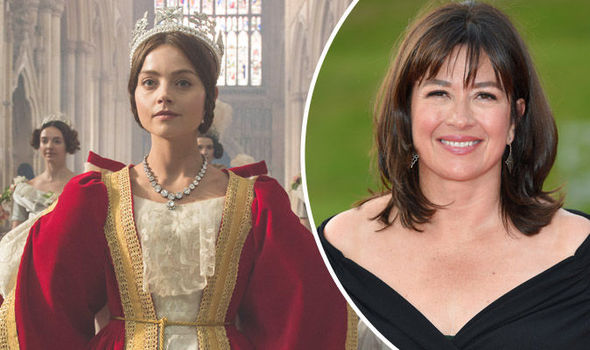
The closing speaker will be Daisy Goodwin, the writer of the hit TV series, Victoria. Daisy also happens to be the great-great-great-granddaughter of Robert Traill, who gave his life trying to feed the hungry around Schull during the famine. He was a complex character: see this post and this one in my series Saints and Soupers. Daisy gave him an active role in the episode in which Victoria finally finds out about the full horrors of the Famine. It was an episode that shocked British people, who had never been taught about the Famine and Daisy will talk about that, writing Victoria and her West Cork connections.

Esteemed local historian Gerald Butler, in conversation with one of last year’s speakers, William Casey, will talk about Daniel O’Connell’s Skibbereen Monster Meeting

This being West Cork, there’ll be lots of food on offer over the whole weekend and music too – I’m really looking forward to the Saturday night concert, exploring the music of Canon Goodman (who is also the subject of one of the talks). Wander over to the website and take a browse through the programme. If you enjoy our blog, you will love this Festival.

Taking us up to the History Festival is the superb Skibbereen Arts Festival. I have rhapsodised about this tour de force of culture and variety in previous posts (see this one and this one) and I feel the same way about the offerings this year.

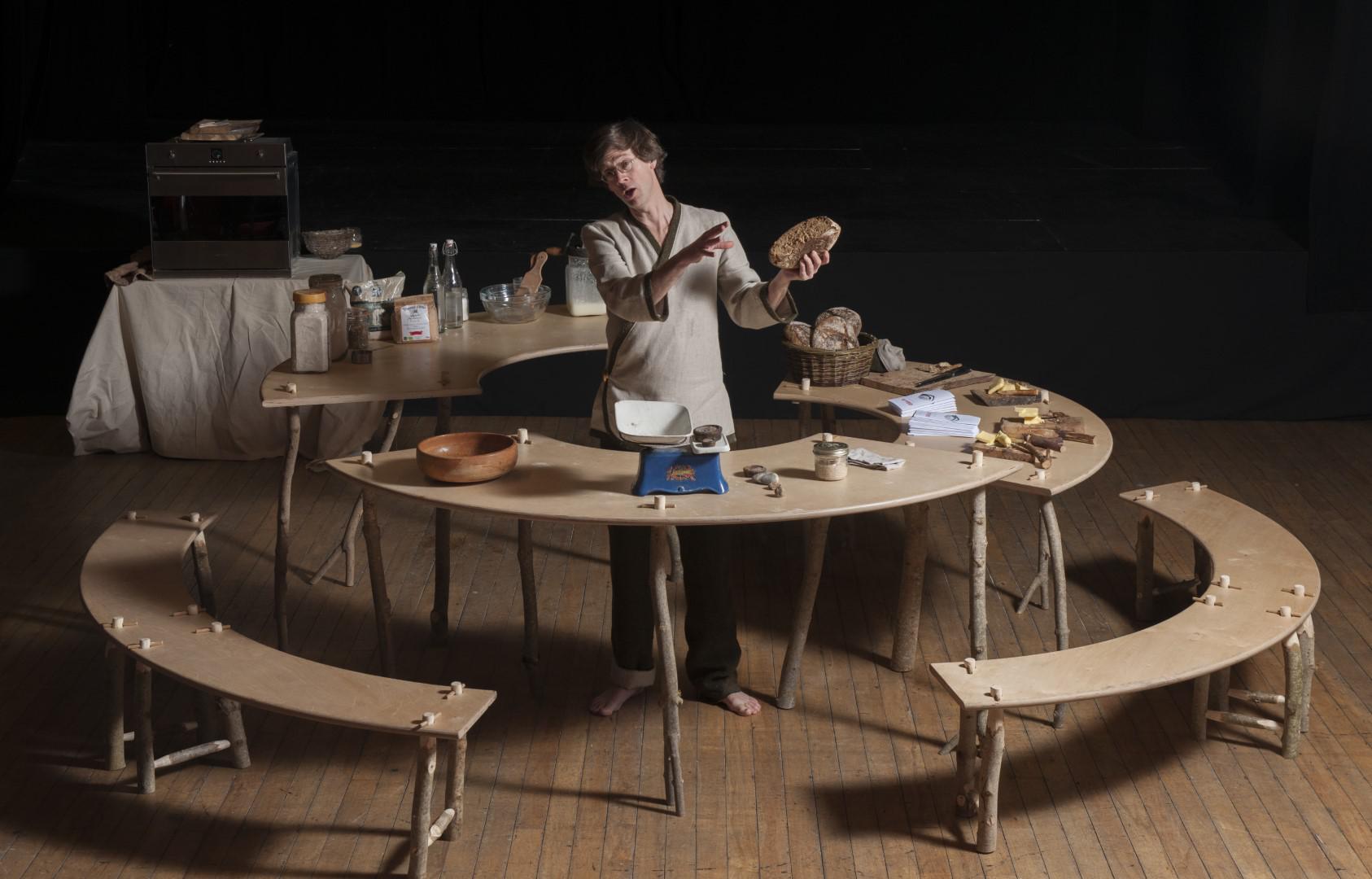
We have tickets to several events and we know we will be dropping in to some of the exhibitions, galleries and shows that are running all over town. I am looking forward to Manchán Magan’s Aran agus Ím (below)- billed as a show that celebrates the Irish language in an engaging, accessible bilingual way, through sourdough bread and home-churned butter and that takes place in a Bakery.

For some time Skibbereen has hosted the Speakeasy Sessions once a month, and there’s a special edition during the Festival. It’s part of a significant Spoken Word programme at the Festival this year. Speakeasy is hosting a Story Slam Competition where 12 people will compete for a prize. One of the judges is our own Cormac Lally, popular local poet: here he is with his Ninja Baby Moves Number 214.

And for something totally different, at the end of the month is the Ellen Hutchins Festival with a brilliant program of events focussed on the natural world of flowers, seaweed and lichens and with lots of stuff for kids. If you’ve never heard of Ellen Hutchins, take a look at my post Ellen Hutchins: The Short and Remarkable Life of Ireland’s First Female Botanist. I wrote it four years ago and in that time the Festival has turned into an annual affair and there have been major exhibitions on Ellen’s life.

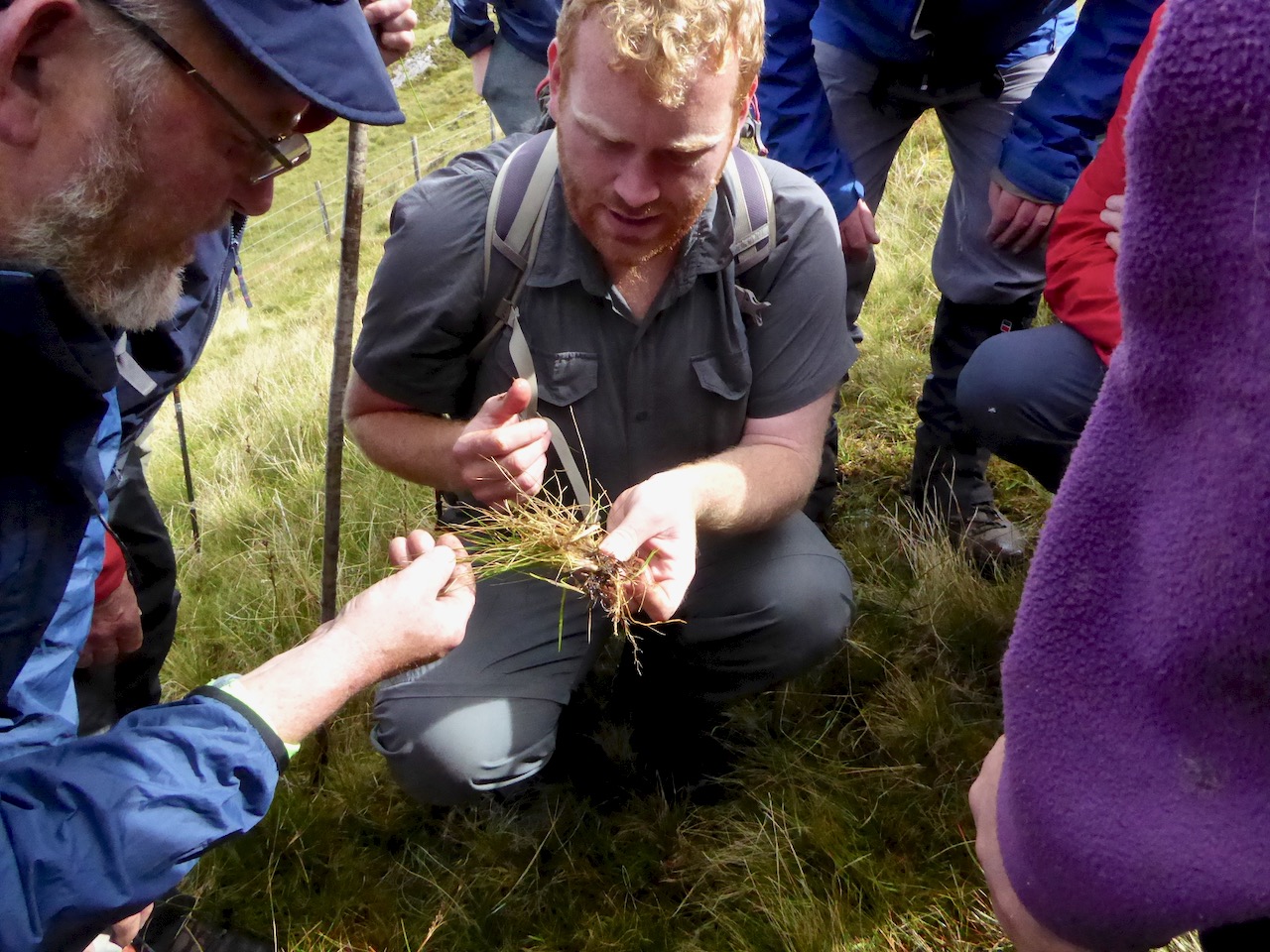
Botanist Rory Hodd on an Ellen Hutchins field trip

At about the same time in Bantry is the annual Masters of Tradition Festival, with formal and informal concerts, talks and sessions, many in the wonderful setting of Bantry House. With Martin Hayes as the Artistic Director, this annual festival is always a treat. Here he is playing the Sailor’s Bonnet.

This is actually just a drop on the bucket of all the things going on in West Cork from now until the end of August. I’m seriously going to need a holiday in September! No – wait – that’s the Taste of West Cork Food Festival! I’d better go into training. . . 

A taste of the History Festival

Countdown to West Cork History Festival 2018!

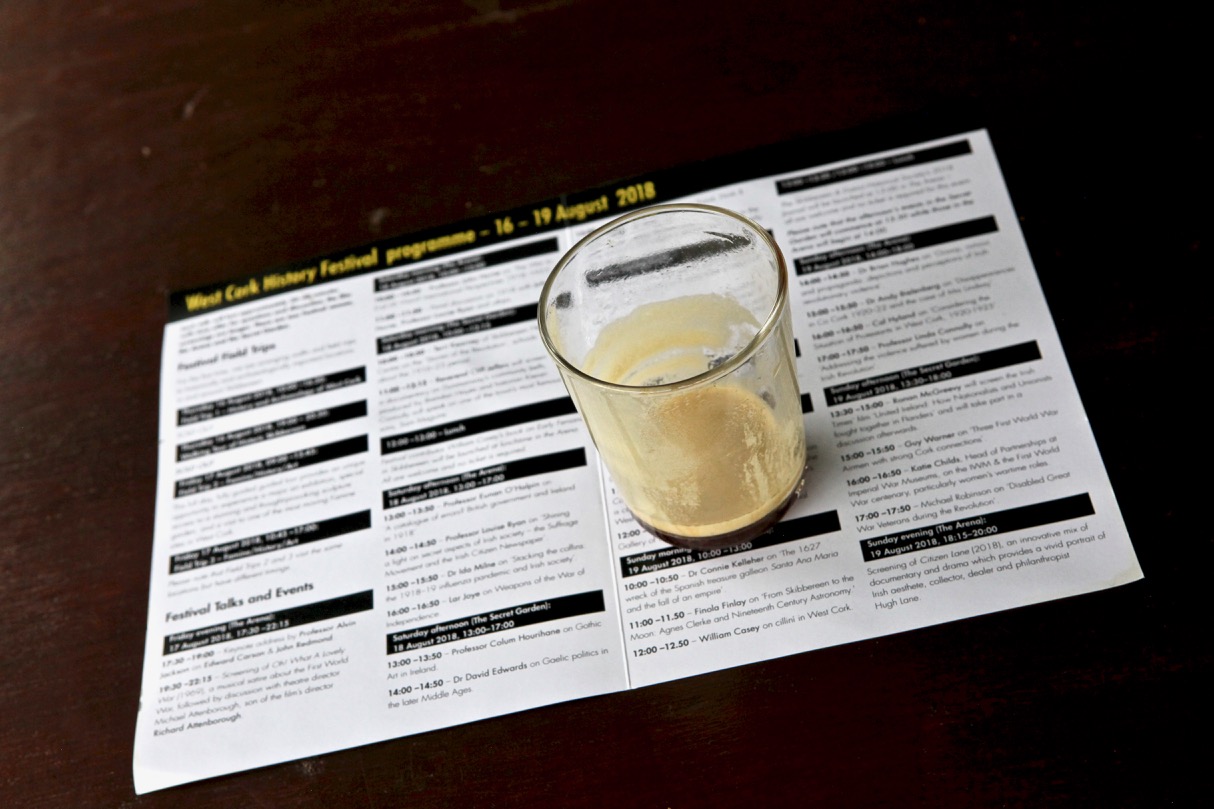
As last year, Roaringwater Journal is very involved in the marvellous upcoming West Cork History Festival. We are both on the organising committee and this year we are leading field trips and chairing sessions, and I am giving a paper (more on that below). The Festival will be held in Skibbereen this week – 16th to 19th of August.

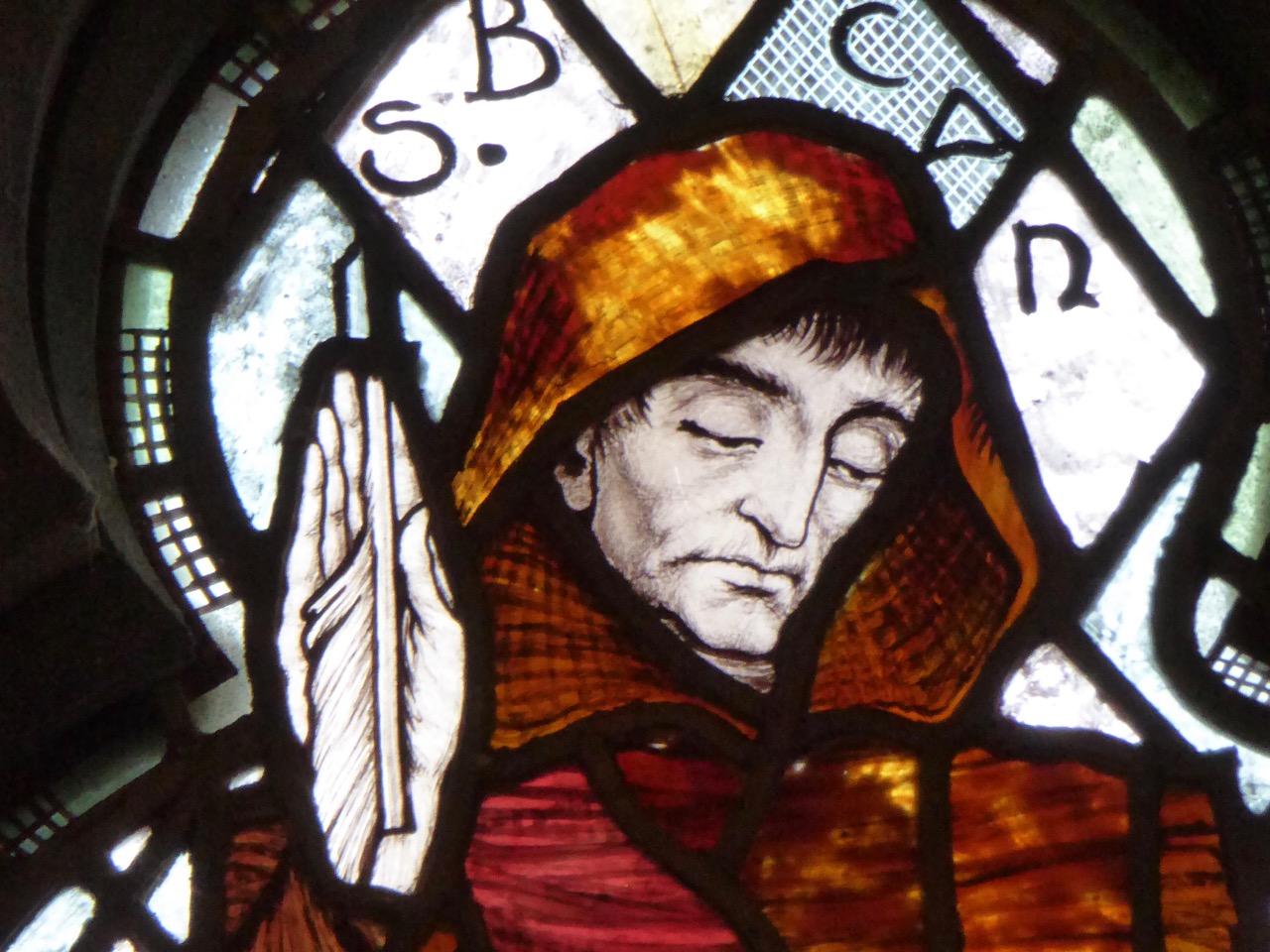
This is St Barrahane from Castletownshend. During the Thursday Field Trip we will be revealing his secret message

We haven’t had a lot to do with the detailed logistics or with the ultimate lineup of speakers – that is the purview of the Founders, Simon and Victoria Kingston. What a force they are! As you can imagine, organising a festival like this is an enormous amount of work and they do it while working full time, with two young children and a life lived between two countries – all while remaining cheerful, focussed, inventive and energetic. Here are Simon and Professor Roy Foster, our keynote speaker, talking last year about the upcoming festival.

Simon and Victoria are next door neighbours to the wonderful Liss Ard Estate. This place is dear to our heart as it’s where we were married, and they have been incredibly supportive of the festival, providing parking and accommodation.

While many of the speakers are academics and writers on the national scene, local historical societies are attending and volunteering and local experts have been persuaded to share their knowledge. The Skibbereen Heritage Centre is a big part of the festival this year, with both Terri Kearney and Philip O’Regan on the program, and William Casey giving a talk and launching a book.

Philip O’Regan of the Skibbereen Heritage Centre leads a walking tour of the historic town. Here he points out the building where O’Donovan Rossa founded his Phoenix Society, forerunner of the Fenians

We are looking forward to the field trips, a new addition this year and a popular one, given how quickly they booked up. Thursday’s focusses on archaeology and history and Friday’s on the Famine and Art.

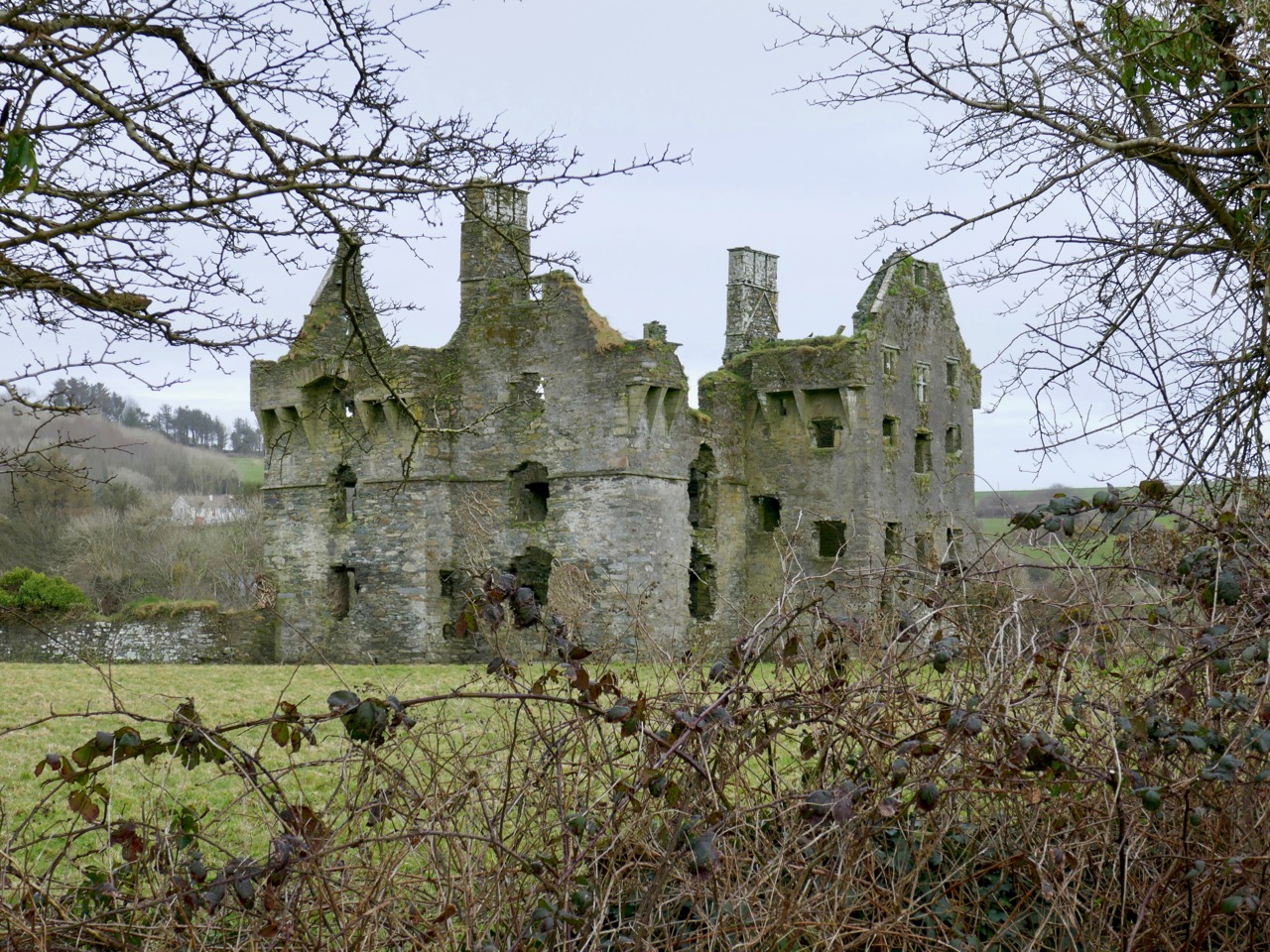
Coppinger’s Court – these fortified mansions gradually replaced tower houses in the seventeenth century, during of the series of changes from Irish to Planter land ownership

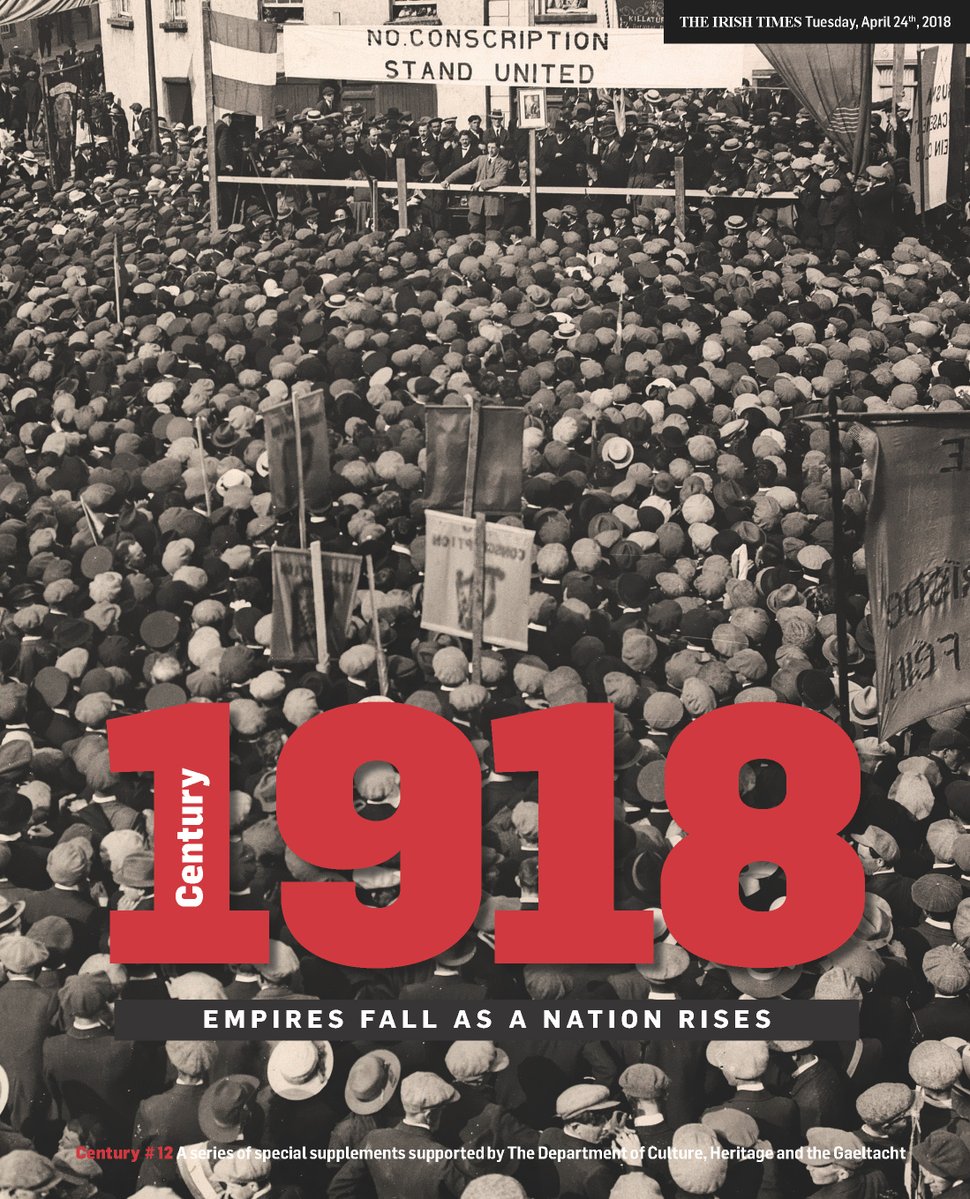
The Festival aims to cover international, national and local themes and this year will, of course, focus partly on the events of 1918, with talks on WWI, Carson and Redmond, Women’s Suffrage and the great Flu epidemic. The Irish Revolutionary Period is the subject of several talks, by both academics and non-professionals, ranging from the hot topic last year, Protestants in West Cork, to the violence suffered by some women during that period.

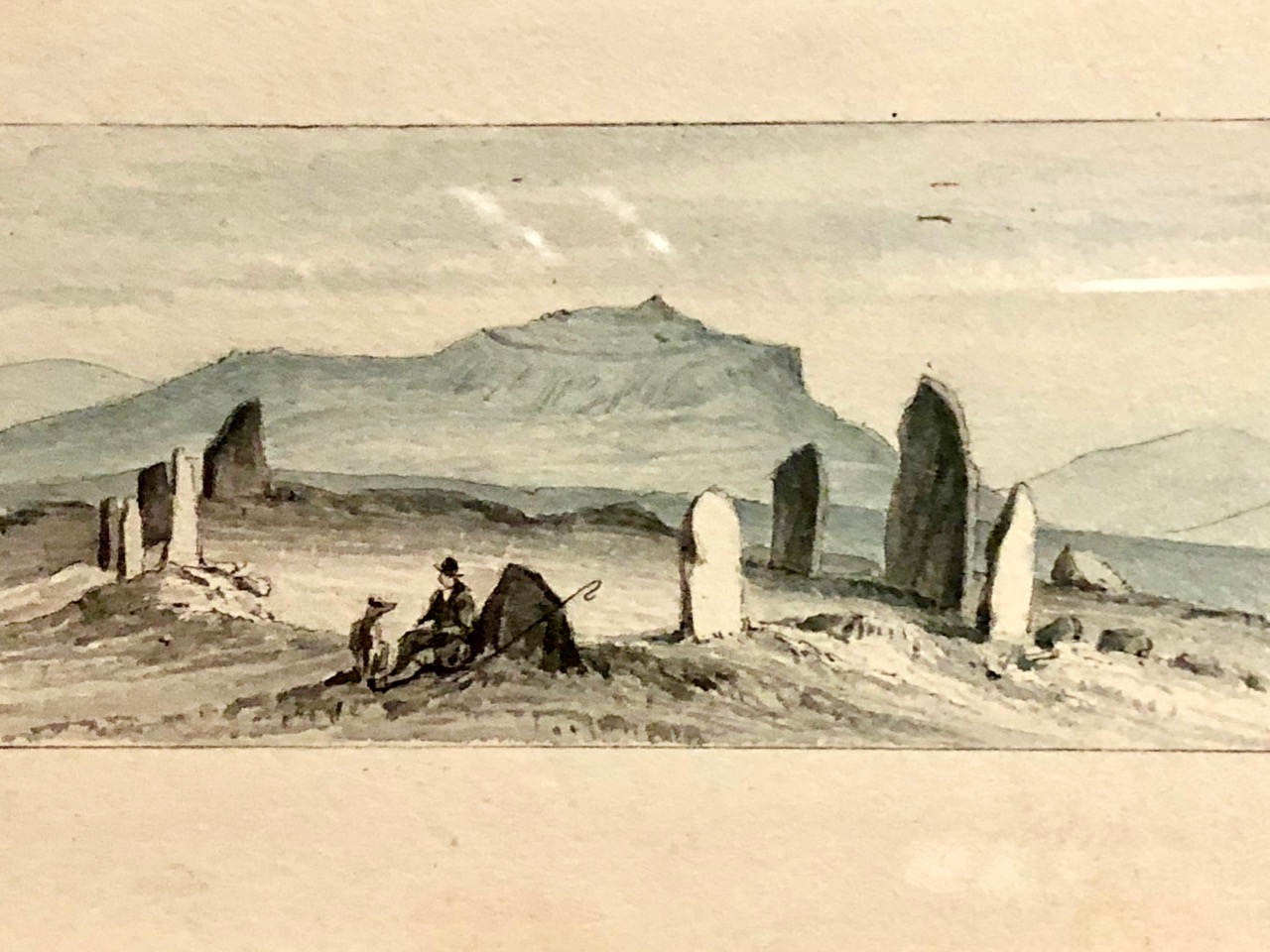
Inspired by the Coming Home: Art and the Great Hunger exhibition currently running at Uillinn/West Cork Arts Centre, there is also a thread that looks at the intersection of art and history. It will be the main focus of Friday’s field trip, and run through sessions on Margaret Clarke, on Gothic art, on George du Noyer and most pointedly in the talk by Niamh O’Sullivan on the Coming Home Exhibition itself.

Stone Circle by George Victor du Noyer

We’re not forgetting the Medieval and Early Modern periods either. Dr David Edwards from UCC is recognised as an expert on Richard Boyle and on this period and his talk on Gaelic politics in the later Middle Ages should be fascinating. But never mind all that politics – what did people actually do back then, and what did they eat, before the advent of the potato?  Dr Susan Flavin is going to tell us that when she talks about ‘Food, Drink & Society in 16th century Ireland’.

Richard Boyle, Great Earl of Cork

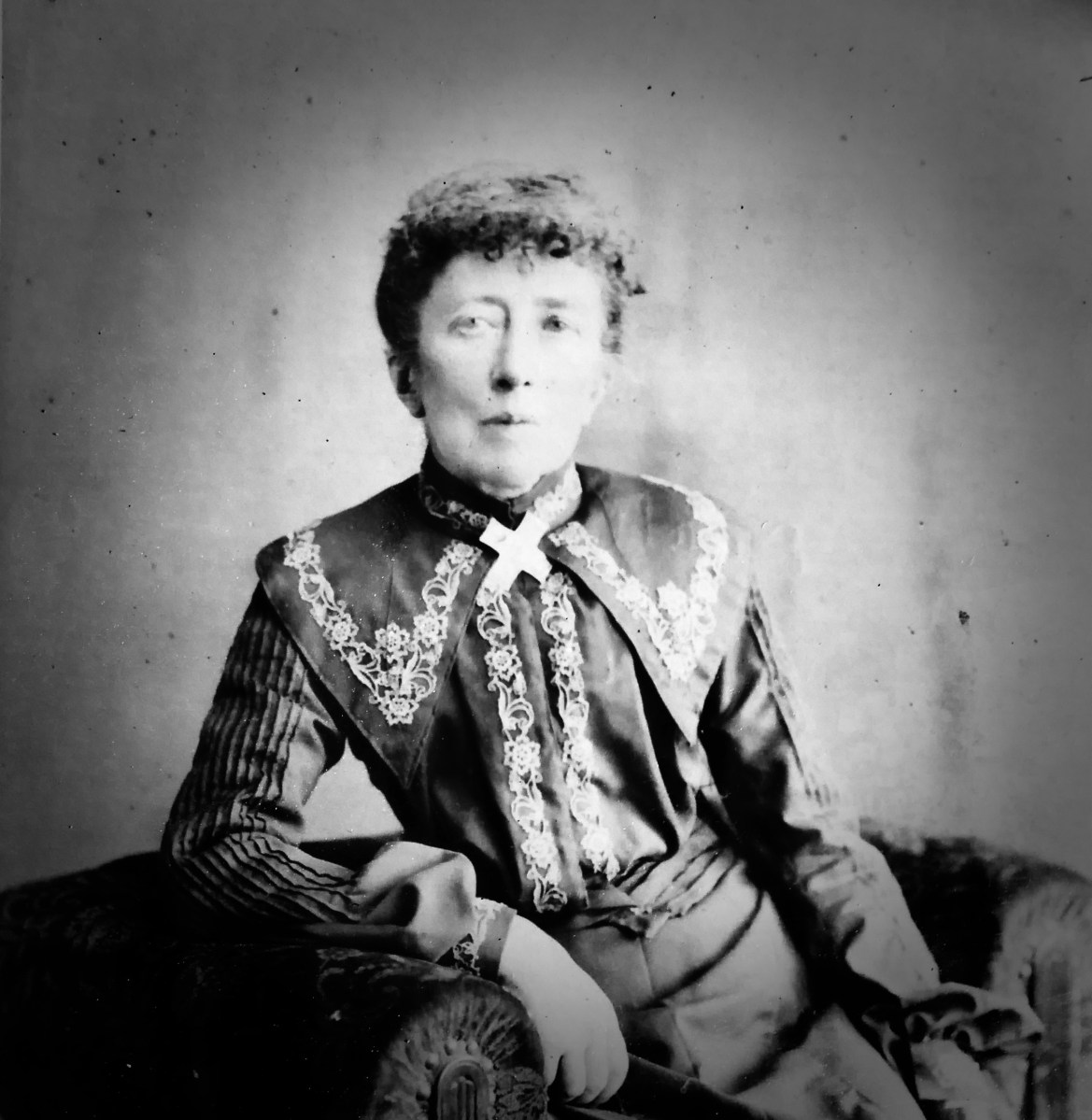
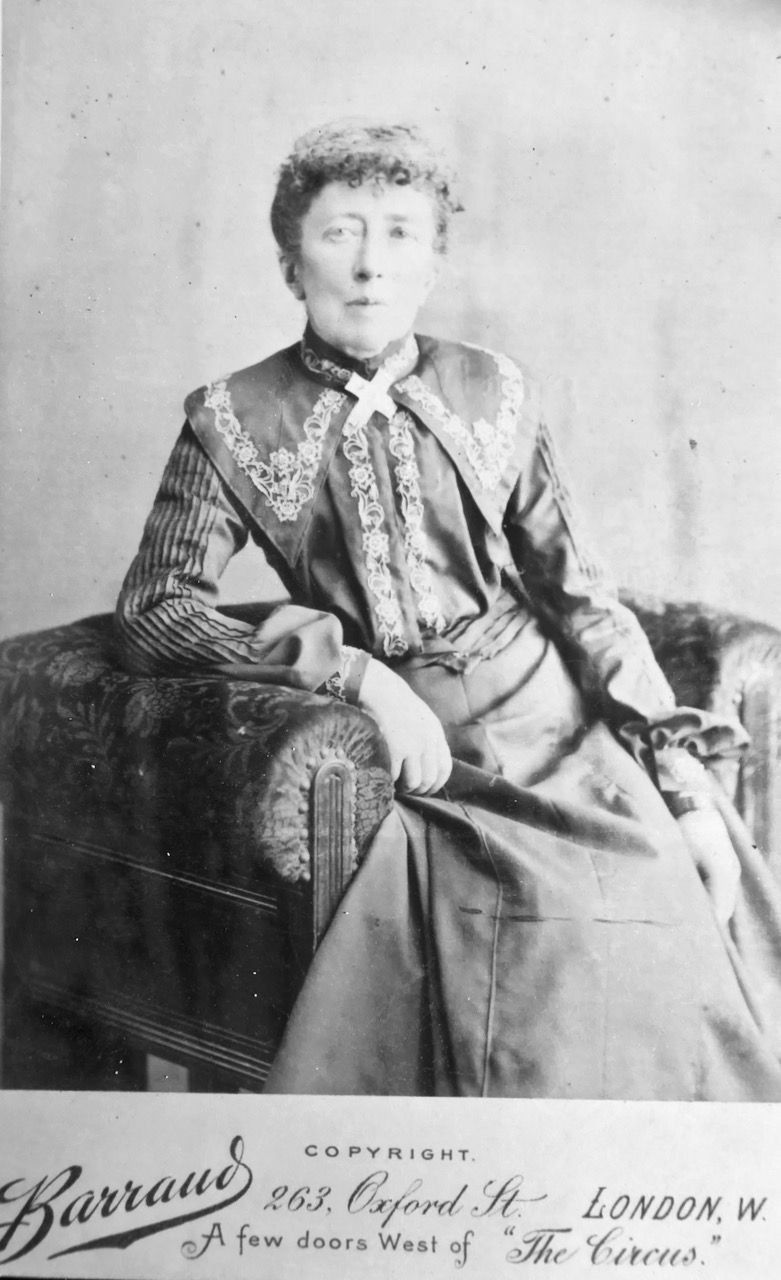
Lots of local history too – on Cillíní (children’s burial grounds), women in the fishing industry, Sam Maguire and his memorial bells in Dunmanway, Pirates and treasure of the Coast of West Cork, and my own talk on Agnes Mary Clerke who grew up in Skibbereen during the famine and went on to become the most successful science-writer of her day, with a moon crater named in her honour.

Agnes Mary Clerke

That’s just a taster of the talks – there are lots more. And if that wasn’t enough, there are also film screenings, a concert by Jessie Kennedy based on the life of Lady Mary Carbery of Castle Freke, and a poetry reading by none other than Jeremy Irons! How can you resist that voice?

So if you don’t have your tickets yet, get them now. Yes, you’ll still be able to get them at the gate, but if you want to secure them now, do it online at this link.

Where Art and History Meet

Perhaps I should say where they collide! West Cork has both, in abundance, and we’ve just lived through one of those once-in-a-lifetime conjunctions of  the artistic and the historical that leave you stimulated, thoughtful and reeling all at once.

Clockwise from top left: Coverage of the Festival in the Southern Star – the headline says it all; Roy Foster delivered an acclaimed opening address; Finola introduces Kevin Vickers, Canada’s Ambassador to Ireland; Canon Salter and his daughter Brigid at the screening of An Tost Fada, perhaps the most controversial (and certainly one of the most interesting) moments of the Festival

First of all, as our readers must be tired of hearing by now, we participated in the brand new West Cork History Festival. It was a great success, with well over 400 people enjoying a huge variety of talks, films, and panels, augmented with lashings of food and drink. It was so well planned, in fact, that the rain showers obliged by only appearing during the talks, and clearing off when it was time to be outside mixing and mingling and moving between marquees. The Festival wasn’t short on controversy. Sparks flew at several sessions, mainly between speakers and audience members, proving, if we didn’t already know it, that history is very much alive in West Cork. Depressingly, it also signals that, 100 years on, some people are still fighting the old battles. However, to judge from the general climate, those folks are in the minority.

John Kelly the Irish/British/Australian artist, and West Cork resident

Two days after the Festival, we moved on to art. Or so we thought. We had signed up for a guided tour of Reen Farm, the Sculpture Garden that is the home, studio and inspiration for the artist John Kelly. This event was part of the marvellous Skibbereen Arts Festival that has been running all week.

Two upside-down kangaroos in the tennis court – don’t ask me to explain this one, my head was spinning at that point

We’ve met John a couple of times and had seen an exhibition of his at Uillinn that focused on his experiences in the Antarctic. We were aware that, as a sculptor, a painter, and a writer John is internationally esteemed and has exhibited world-wide.

The Turrell-inspired crater with passages leading through it to the sea. (We have our reason to relate to John’s version of the famous Sky Garden at Liss Ard Estate in Skibbereen)

You’ve probably all visited a sculpture garden at some point – but I guarantee you, you’ve never had an experience like this. Being led around by John himself was a privilege, but it’s also a must in order to understand his inspirations, because it’s all about history, and eclectic history at that. 

His Tate Modern piece (above) was a response to the famine in his townland, Reen, as reported in 1846 by a local resident, N M Cummins. Now, looking at it, you would never arrive at that conclusion by yourself, but once you stand there and listen to John recounting the grim happenings that took place there 170 years ago and how that led him to contemplating the food abundance that made Henry Tate a millionaire around the same time, it all starts to come together.

Robert and the Cow up a Tree – just to give you a sense of the scale of the sculpture

I won’t recount the story of the Cow up a Tree, because you have to go yourself and hear it from John in all its convoluted glory. (If you really need to know you can read about it on John’s website.) It’s the highlight of the tour, but definitely only one part of a whole fascinating set of experiences that goes on and on. 

Besides the art (some of which will make you laugh out loud), stunning views greet you as you follow the trail, and finally Christina’s garden and John’s studio round out the day. The Garden is now part of the West Cork Garden Trail and is open from August 7th (tomorrow) until the 13th.