As of this week I hadn’t been in a canoe for, oh, about 25 years. That all changed on Thursday when my friend Jack O’Keeffe invited me along on a CORKumnavigation! I was a bit apprehensive but I needn’t have been – the trip was easy, my paddling skills were still intact and I felt very safe. Most of all, though, this was a terrific experience.
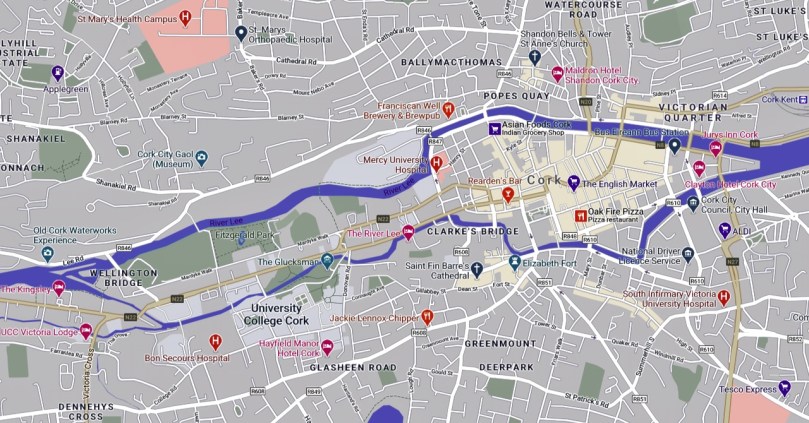
There are, in fact, very few cities in the world where you could do something like this. That’s because Cork was built on a marsh, with the the rivers that formed it gradually flowing around the reclaimed land, and joined to the land on either side by a series of bridges. The traces of that former city (above) are all still there, as both Brian Lalor and Eiléan Ni Chuilleanáin pointed out in this post and this one.
There are complications for anyone wanting to navigate this river using the two channels as seen in the map above – the flow of the river is one and the tide is the other. There’s a hydro-electric dam upstream at Inniscarra and it can control the release of water that raises or drops the level of the river. And then there’s the tide – since the river here is tidal the water level rises and falls on every tide.
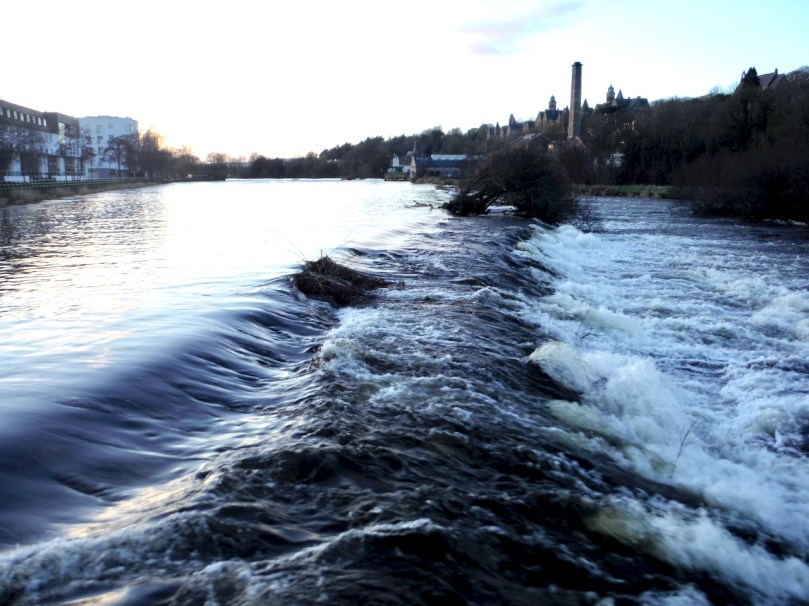
Why is this important? Because there are weirs and bridges along the CORKumnavigation route. The water has to be high enough to cover the weirs (which are a real hazard to small craft) but at the same time low enough to allow passage under the bridges. There are windows of opportunity in which the tidal level is just right, and the Inniscarra Dam isn’t affecting the river unduly. Several years ago, under an initiative managed by Meitheal Mara, all the weirs and bridges were surveyed and measured and thus it is now possible to work out the times in each month when it is possible to travel safely around Cork by water.
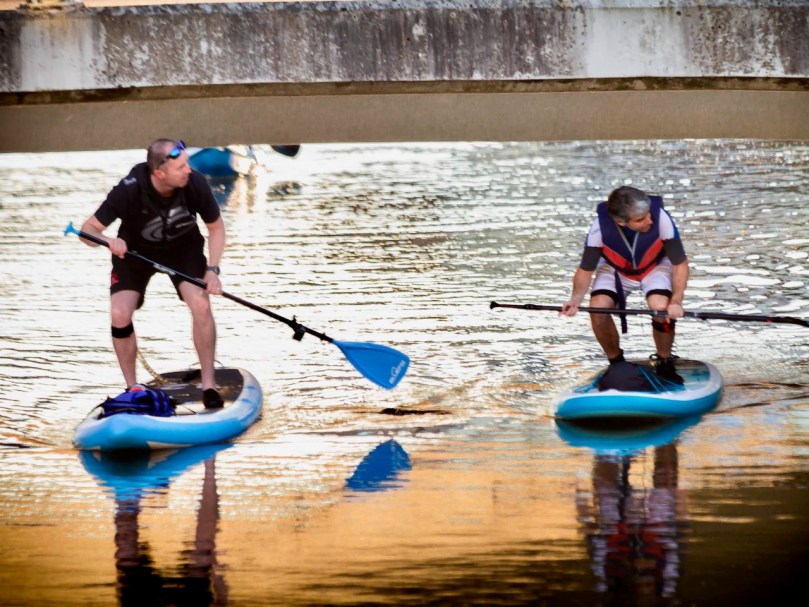
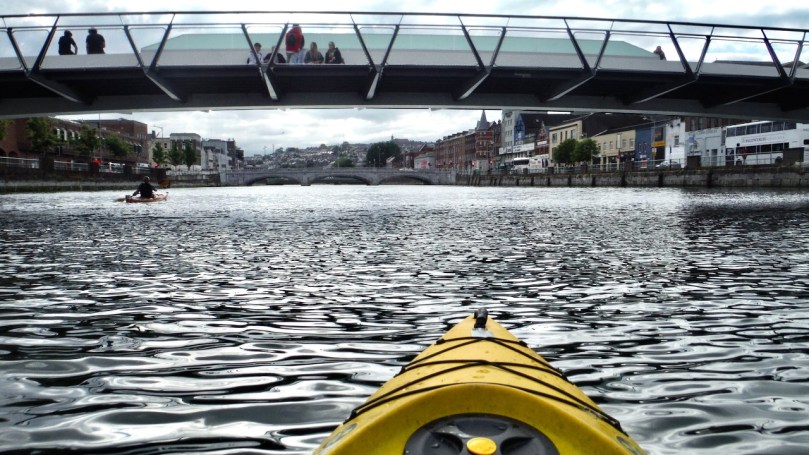
Jack takes all this information, calculates optimum times for the voyage, and spreads the word when those windows open. And magically, people gather in an astonishing variety of small craft – curraghs, skiffs, one and two-person kayaks, canoes, paddleboards, inflatable sit-upons. My partner in the canoe was the genial Cathy Buchanan who is the Manager of Meitheal Mara and a former National Rowing Champion. We proved to be a wonderfully compatible team, able to keep the canoe going in the direction we wanted, and chatting companionably throughout (first photograph in the post).
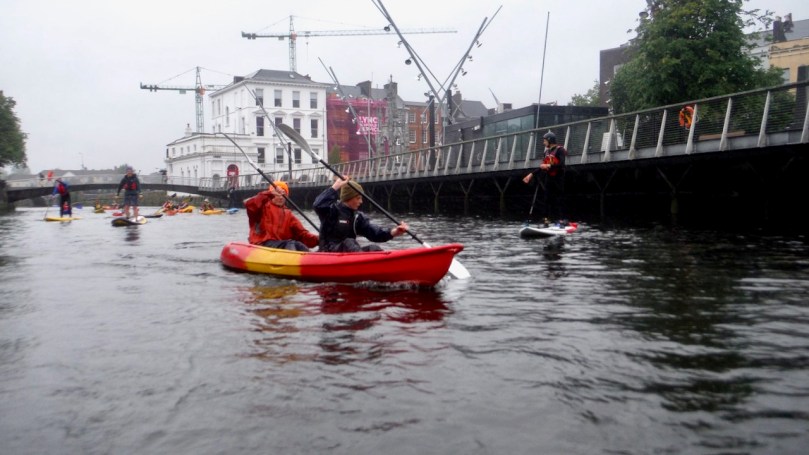
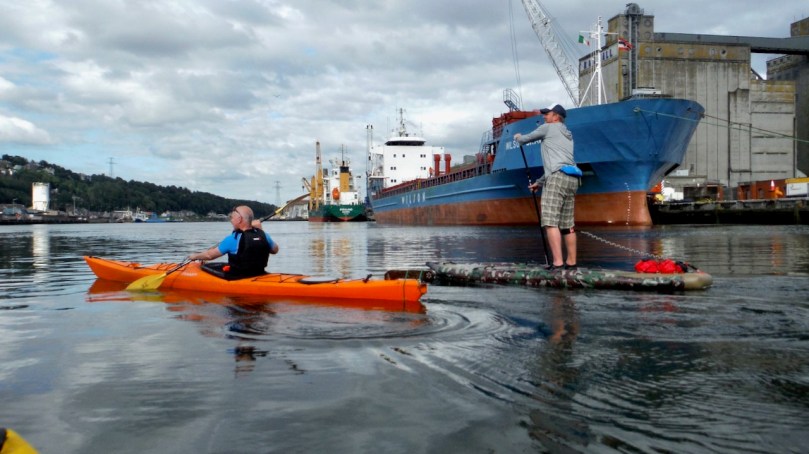
On this occasion, the trip was anti-clockwise. We launched at Crosse’s Green, right by the new half-built convention centre and under the looming walls of the 17th century Elizabeth Fort, and paddled downstream, passing first under the South Gate Bridge, the site of one of Cork’s original historic bridges, and from there down to the docks, past City Hall and the mid-century building where my father worked in the 60s. In the photo above the paddlers are passing the intersection of the South Mall and the Grand Parade.
Once around the Port of Cork wedge, we started upstream along the quays – Merchant’s Quay, Patrick’s Quay, Camden Place and under all the patriotic bridges – Brian Boru, St Patrick, Michael Collins and Christy Ring (legendary hurler). There’s a new one, a pedestrian bridge (below), that finally breaks the macho bridge-naming stranglehold to honour Mary Elmes, the modest self-effacing Cork woman who worked heroically to save Jewish children in France and Spain during WWII. The bridge has become a favourite strolling and sitting place for Corkonians and visitors and we were greeted with waving and cheering as we passed underneath.
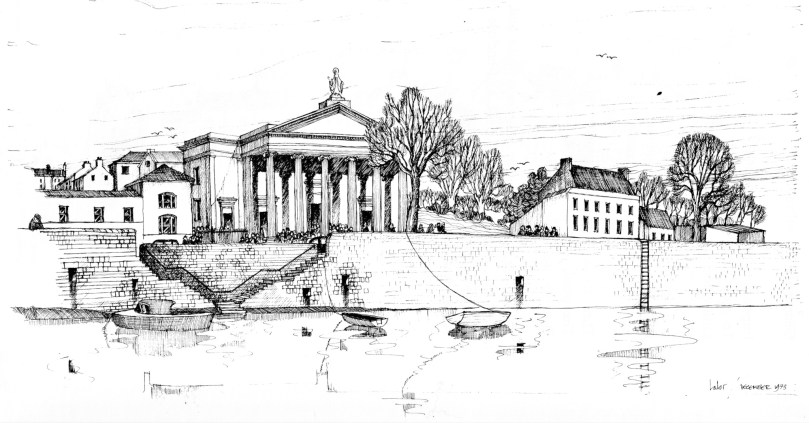
Viewed from the water, with the docks (below) behind us, the quays are very fine examples of Victorian Commerce, with the most imposing edifice of all being the neo-classical St Mary’s Church, a monument to the rising power of a Catholic middle-class. Rounding a bed you come to the Lee Maltings where UCC students, including me, played raquetball in the early 70s.
Once past the Maltings, everything changes. The river seems to slow, the headwind stops, greenery appears and you float past lovely old Edwardian houses with their gardens sloping down to the river on the right, while the landscaped lawns of Fitzgerald Park and the Mardyke sports grounds stretch along the left bank.
This brings us finally under the fabled Shaky Bridge and on to the portage, a rather grand name for the act of hauling our boats over the Split Weir and an opportunity for a rest and a drink.
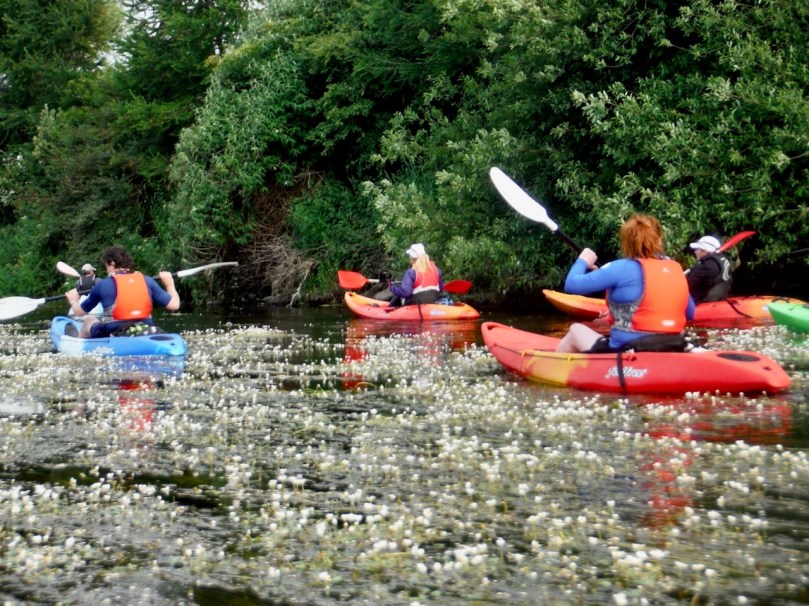
Then came my favourite part of the whole trip, as this smaller, south stretch of river meanders through the treed banks along which you are hardly conscious that you are in a city. The noise falls aways, green branches arch down to the water, Water-crowfoot provides a sparkling carpet to paddle through, a duck family swims leisurely aside and overhead in the canopy of leaves birds are singing their hearts out. You could be deep in the country, totally unconscious of the urban life all around you, until you emerge once again beside the River Lee Hotel. It especially astounds me as I attended UCC for five years, often walking in and around this part of the campus but unaware of the green and beautiful waterway below.
From there it’s a short paddle to the pull-out, and you’re done. The whole thing took about two hours or a little more but it felt like longer, I think because we had experienced so much in that time. We were lucky with the weather, as it was a warm and sunny evening. We were expertly guided by Jack, who quietly and unflappably sorted out any issues as we went along. It was, in fact, ideal. It felt privileged, too, to be along with a small group on such a unique trip.
My heartfelt gratitude to Jack, and to all the people at Meitheal Mara who worked so hard to establish how this route could be safely undertaken. Given that there are so few cities where this is possible, this is a world-class experience and deserves to be far better known than it is.
You may remember that, a few weeks ago, I put up a post about the Irish Folklore Commission, and mentioned Bríd Mahon, from Cork, who had found references to many Irish versions of . . . the earliest known folktale . . .
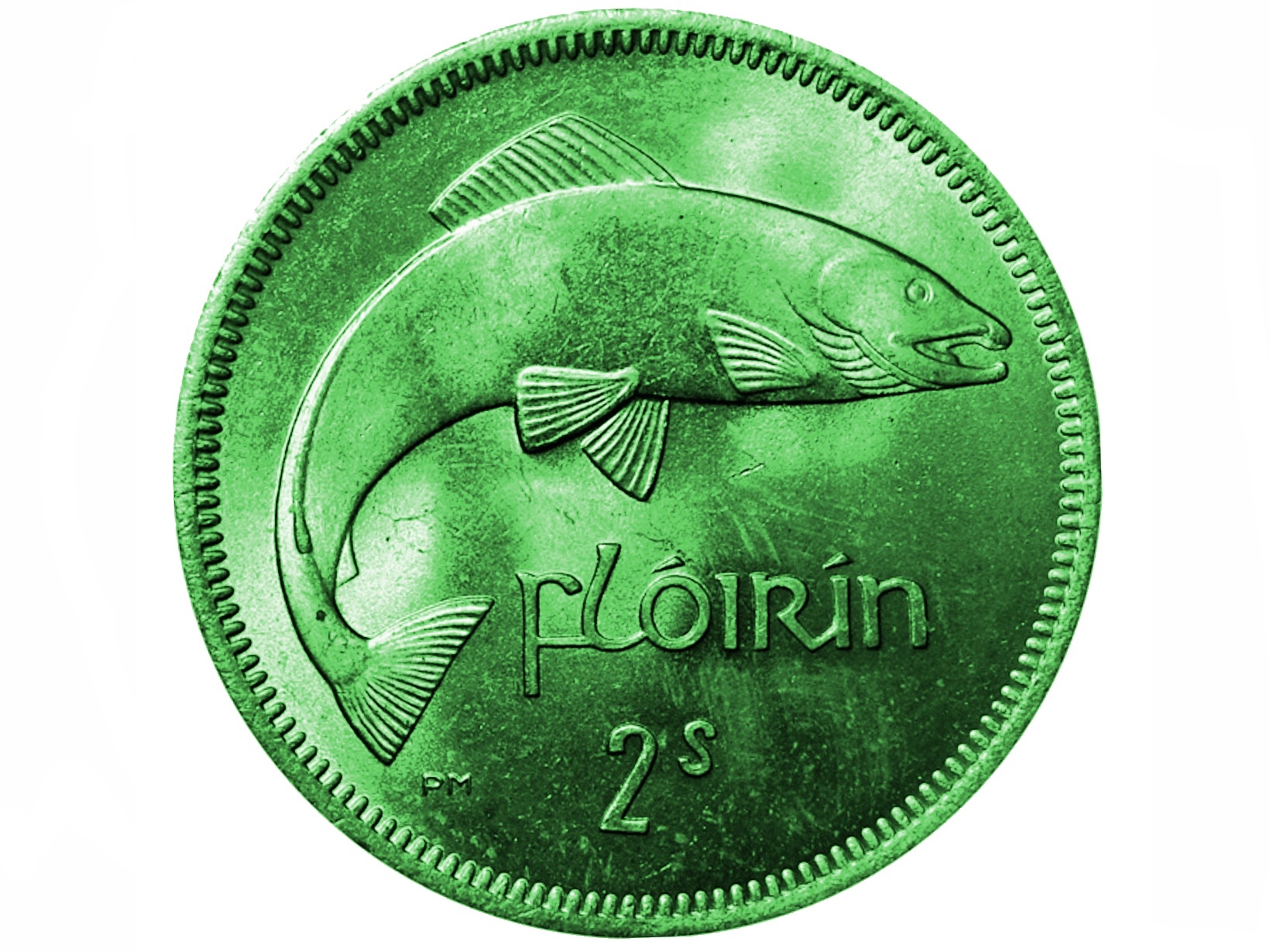
Seán O’Sullivan showed me an international folktale known in Irish as ‘Ao Mhic an Bhradáin agus Ó Mhic an Bhradáin’ (‘Hugh and O, the Two Sons of the Salmon’) . . .
It was the earliest known folktale, first discovered on Egyptian papyrus 3,250 years before. During my years with the Commission hundreds of variants of that far-flung story were gathered in remote hamlets on the western seaboard of Ireland, in parts of Munster, in northwest Ulster and from a group of travelling people on the borders of Wicklow and Wexford . . .
A full text is available as an audio file, in Irish. It’s here if you want to have a listen:
Since writing that first post I have been trying to find a translation of the story into English, but without success. So – nothing ventured nothing gained – I’m providing you with my own version of the story! I have distilled this from the Irish language (although my knowledge of Irish is but rudimentary), using dictionaries and online translation helpers and then putting the whole thing into a sort of vernacular tongue which seems to suit the subject. I think I have the gist of it right enough, but you’ll just have to go along with my own way of telling it. I have also delved into the Roaringwater Journal archives for a few illustrations to break up the text. For me, it’s a fine story: I hope you enjoy it!
Legend of the Salmon of Knowledge by Charlie Fallon (Saatchiart):
Hugh and O, the Two Sons of the Salmon
It came about that there was a poor man whose only means of making a living was catching fish. If he came home with no fish, he wasn’t lucky: he could only do his best. The poor man had a wife, but no child came to them, and the years were on them.
Fisherman on Lough Skeagh 1946 (Irish Folklore Commission):
One day he was out fishing with his rod and took a fine salmon. It was hard work, but he reeled in the fish and was about to kill it when it spoke to him! “Don’t kill me’’ said the salmon, “Let me go and I will tell you a story of good fortune.”
The poor man was amazed to learn that the salmon could speak, but he replied: “I will hear the story and, if I am pleased, I will let you go.”
“Listen now”, said the salmon. “I know you have been upset that you have no children; I am glad to tell you that you will soon have two sons.”
“That is certain to be untrue”, said the fisherman.
“I am not telling you a lie”, said the salmon. “Let me go and you will see that I am telling you the truth.”
The fisherman cut the line and released the salmon. He returned home and told his wife the great news. She was not impressed. “It’s a pity you did not bring the salmon back with you for our supper: it’s clear that he was mocking you!”
Nevertheless, within the year the couple were surprised to have two sons. “Look now”, said the fisherman, “wasn’t it the truth that the salmon told me?”
“By my soul it was”, said the woman, “but what shall we call these two?”
“We will call them É Mhic and Ó Bhradáin” said the fisherman. And so it was. They were known as Hugh and O, the Two Sons of the Salmon. You could not put anything between them in looks, manner or speech.
As the boys grew, so did the luck of the fisherman. Every time he went out with his rod his catch increased fourfold, and they became rich enough that each boy could have a hawk, a greyhound and a horse. The boys also had the luck with their hunting.
At twenty years of age Hugh told his brother that he would leave and seek his fortune in the world. “If I am not back in twelve months, then come and find me,” he said.
Hugh took his hawk, his dog and his horse. Also, he did not forget his sword. He tackled the road and had good travels. On a day in winter he got lost in a wood, and stumbled on a fine castle in a clearing. “By the Devil”’ he said, “I’ll go in and wait out the night if no ill will is shown to me.”
Inside was a fair countrywoman and they began to converse until a terrible noise was heard, and the walls of the castle shook. The girl vanished and it wasn’t long before a big, strong, bad-tempered affair jumped into the room. “What kind of a person has the destiny to end his life in my castle?” he shouted.
“It doesn’t matter to you”, said Hugh. “What the heck, now I’m in I will stay here!”
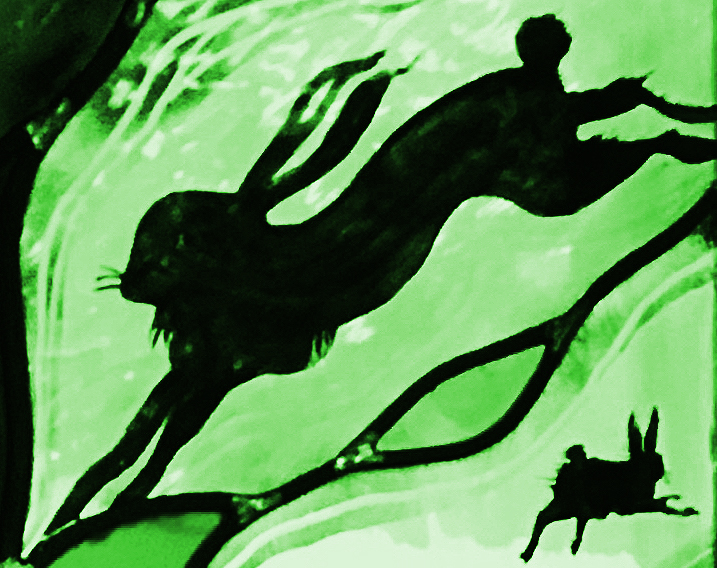
The two laid into each other with their swords and, in the shock of the fight, the giant was turned to dust. In the morning it was raining all over the woods, and Hugh spent the day wandering. As evening fell, what should come to him but a hare? He took his horse and released the hound and the hawk but the hare outran them all and disappeared into a small cottage in the wood. “Why wouldn’t I go in?” said Hugh.
Inside was a fire in the grate and he sat down beside it. Soon the ugliest old woman he had ever seen came through the door. She made no blessing to him at all, only to look badly at him.
“Come in from the door”, says Hugh, “and share the fire with me.”
“I won’t come”, she said, “I would be scared!”
“What would you be scared of?” asks Hugh.
“That hawk, and I don’t trust the greyhound, and I wonder what this horse would do to me?”
“You are in no danger from them”, says Hugh “They are all honest. Come up and sit by the fire.”
“I will not”, she says, “unless they are all leashed.”
“Why don’t I bind them?” says Hugh. “But I have nothing to bind them with.”
“I’ll give you a way to bind them”, says she, and tore three snares of hair off her head. “Here”, she says, “Use these.”
He snapped a hair leash on the hawk – the old lady must have had very strong hair! And he tied the hound with another snare and the horse with the third. When he had done this the old woman produced a sword.
“Take care, my boy”, she said, “I know you were in the castle last night and you killed my son there. He would despise me unless I challenge you now.”
She wielded her sword and they fought a battle inside the cottage. The woman – who was small – had the advantage because Hugh could not properly swing his sword within the confines of the room. The old woman had the head start on him, and he called out to his hawk.
“Fade, squeeze, snare!” says the old woman. With that the snare closed on the hawk and it could not stir.
Hugh became angry and tried to get the better of the old lady, but it was no use. Soon he was tight-lipped, and called for the greyhound to come to his aid.
“Fade, squeeze, snare!” says the old woman. The snare clipped on the greyhound and she couldn’t move. The fight continued, and Hugh urged the horse to come to his aid.
“Fade, squeeze, snare!” says the old woman.
“I can’t help you”, said the horse, “The snare is too tight on me.”
Hugh’s anger intensified and he was about to take a final blow at her when the old woman took out a magic rod. She hit Hugh with the rod, and he turned into a stone in the middle of the floor. She struck another blow for the hawk, the greyhound and the horse, and there were three more stones in the floor.
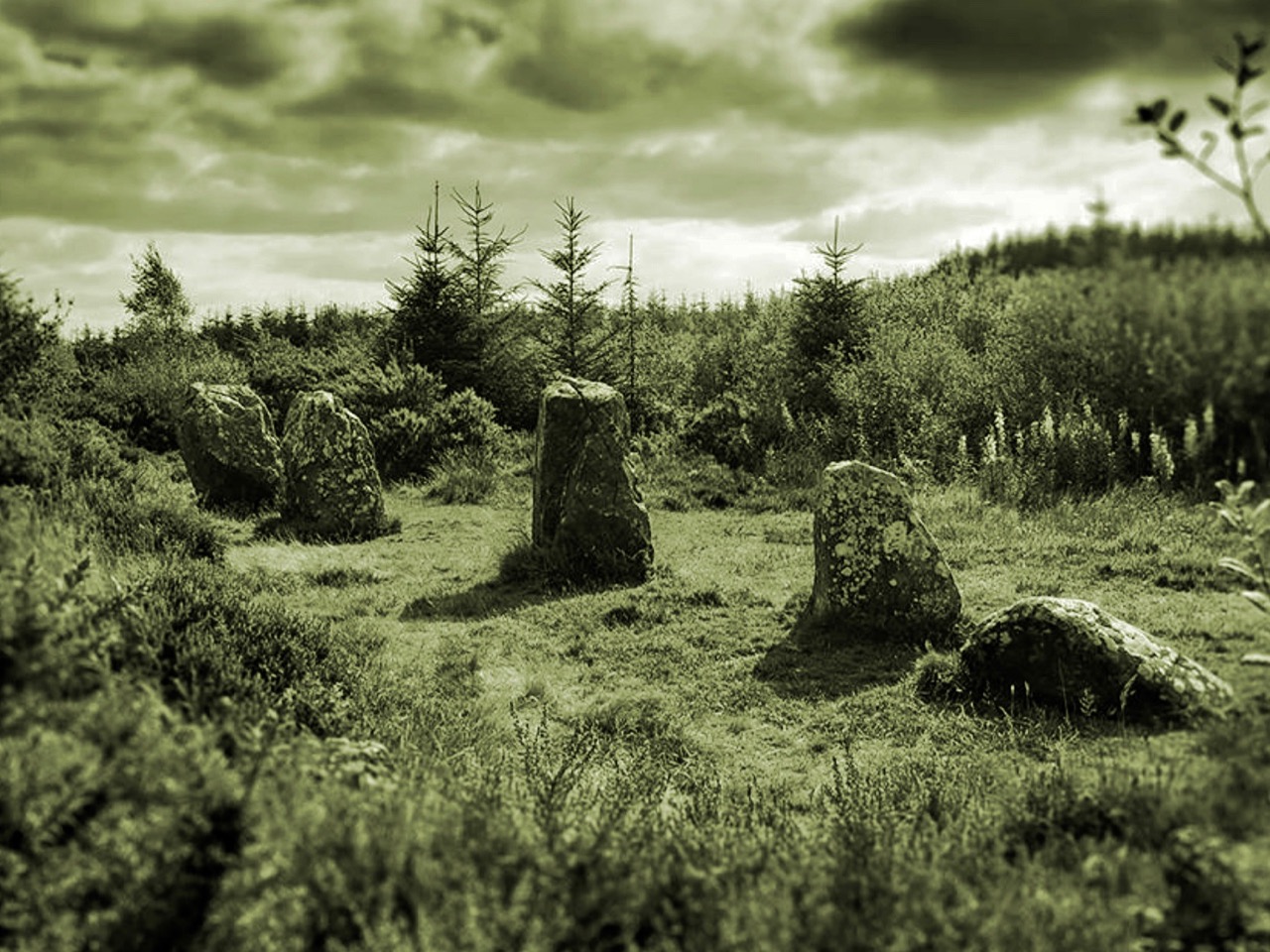
The Giant’s Fingers, Co Cavan:
“Now”, she said, “I have avenged my son’s death, and these stones will stay here a long time before anyone will take them away!”
After a year Hugh had not returned home, and O said to his mother and father that he was going to look for him. “I fear something bad has happened to him”, he said.
“It will be little help to you or us if he is dead’’ said his father, but he would not be stopped. He seized his hawk, his dog and his horse, and never forgot to take his sword also.
He travelled a long way and a short way and one evening – why, shouldn’t he find himself in the same wood where his brother had been, and across the wood he found the same fine castle.
“I am tired after this day’s ride”, he said. “I’ll stay in this fine castle tonight, unless anyone puts me out of it.”
The first thing he saw was the fair countrywoman, who was surprised, thinking that he was Hugh – for the twin brothers looked exactly the same. “Where have you been?” she asked. Before he could answer a terrible noise and shaking filled the air and the girl disappeared. In bounced a much larger and stronger giant than the one which his brother had faced up to.
“What brought you to my castle uninvited?” he shouted. “And what kind of person are you to have the destiny to end your life here for a second time?”
“I was outside and had no place to go”, said O. “But I have no memory of ending my life here before.”
“Come here and I will make you remember”, said the giant, wielding his sword. It was a long night of fighting, but the eventual ruin of the thing was the despatch of the giant by the brother, who settled down and went to sleep.
Tomorrow morning he got up and searched the castle, but failed to find anyone else alive in it. He raised his horse, his dog and his hawk and went out hunting in the demesne.
As evening fell, what should come to him but a hare? He took his horse and released the hound and the hawk but the hare outran them all and disappeared into a small cottage in the wood. “Why wouldn’t I go in?” said O.
There was no-one inside but a fine red fire in the grate, and he sat down beside it. Soon the ugliest old woman he had ever seen came through the door. She made no blessing to him at all, only to look badly at him.
“Come in from the door”, says O, “and share the fire with me.”
“I won’t come”, she said, “I would be scared!”
“What would you be scared of?” asks O.
“This hawk, and I don’t trust the greyhound, and I wonder what that horse would do to me?”
“You are in no danger from them”, says O, “They are all honest. Come up and sit by the fire.”
“I will not”, she says, “unless they are all leashed.”
“Why don’t I bind them?” says O. “But I have nothing to bind them with.”
“I’ll give you a way to bind them”, says she, and tore three snares of hair off her head. “Here”, she says, “Use these.”
He pretended to bind them, but at the first opportunity he put the three hairs into the fire.
“Take care, you scoundrel”, she said, “there’s no doubt that you killed my son – the best son a woman ever had! You were in the castle last night”, she said,“ and my son is dead there today. You did it, for sure”.
“But what is your satisfaction?” says O, “I wouldn’t have killed him if he hadn’t tried to kill me.”
“I’ll tell you”, she said, “I’ll be happy.” She wielded her sword and they fought a battle inside the cottage. They both laid into the battle, and it was the greatest sword-wielding that any man had ever seen between any two, and they continued on ever and ever until O was in trouble. He saw that he was strained and he called for his hawk to come to his aid.
“Fade, squeeze, snare!” says the old woman.
“I can’t move”, said the snare, “because I’m here in the fire”. So the hawk jumped, and that was it for the woman – her eyes were out. This did not stop the battle between them and she very soon had the headache on O once more. He yelled out to the greyhound, “Give me help.”
“Fade, squeeze, snare!” says the old woman.
“I can’t help you”, said the snare, “because I’m here in the fire”. So the greyhound jumped in and took a piece out of the old woman’s leg. Yet she still gave her best and O was forced to call out for his horse.
“Fade, squeeze, snare!” says the old woman.
The snare spoke and said, “I’m here in the fire”. With that the horse came to his aid and didn’t the old lady explode with both her legs gone.
From then on it was O taking the lead. He raised his sword to strike the final blow: “Here’s an end for you,” he shouted.
“Hold on”, says she, “If you remove my head or my walls of life, your brother and his horse, his dog and his hawk will remain captive forever”.
“How can you bring them back?” he asked.
“There’s a magic wand, stuck under that rack by the fire. Hit these stones with the rod and they will come back as right as they ever have been.”
He made for the rod and the first thing was he had struck the witch and she turned to stone herself! Then he struck the other four stones and his brother, the hawk, the greyhound and the horse were back right as they had always been. There was the great reunion and the sharing of stories, then they were all for going back to the castle. “We have the magic wand now”, they said, “We can do whatever we like – let’s call and see what big lads there might be there now.”
There was the fair countrywoman, and wasn’t she surprised to see the two men standing there as alike as you could ever believe. O grabbed her for fear she would vanish as she had before. “Now”, he said “there’s something strange about you, for you left me before when the ground shook.”
“It’s like this”, she said, “ there are three of us here enchanted. The old woman comes every night and puts the magic on me, then in the days I have to do all the chores in the castle for her two sons. She didn’t come at all last night.”
Enchanted Woods (The Dark Hedges, Co Antrim):
“No”, says O, “and you will never see her again. I ended up with that old girl last night and I took the living breath from her. But tell us how you came to be here?”
“It’s too long to tell”, said the girl. “There were only the two of us, sisters – and the best times were when we were living with our father and mother: strong, rich and important. Our mother fell ill and knew that there was no cure. She called us to her bed and told us that she saw a disaster on the horizon. The old powers would come and put an enchantment on us, and take our castle. Our father asked how long we would stay enchanted, and if there was any cure. There was none, she said, unless the Sons of the Salmon would ever find us. The old powers came to take the castle from us. When we resisted the old woman struck us with a magic wand and we were turned into three stones – my father, my sister and I. Only I was released every day to carry out the chores. That is how we have lived our lives up to now, and if the old woman is dead then perhaps the magic is at an end.”
“She is dead”, said Hugh, “as we have survived the magic. Where are the stones that were made for you and your father?”
She showed them the stones. Hugh beat the magic wand on the stones and there were all three bounced up as well as they ever had been. Then their stories started together, with the father telling all that had taken place. “And now”, he said, “we believed that we would be captured forever unless the Sons of the Salmon lifted the magic. But you cannot be the Sons of the Salmon, yet the magic has been lifted!”
“That doesn’t matter now”, said Hugh. “but we are two brothers and you have these two daughters. Why wouldn’t we be the ones to marry them?”
“So be it”, said the father, “and I will divide my kingdom between you.”
“Perhaps we don’t need a kingdom”, said the brothers, “for our own father is a gentleman too. Now we should return to him to give him the news.”
And so it happened that the families were united. The gentleman who had been a fisherman remembered the story of his meeting with the salmon who could talk, and who had foretold the birth of the two boys. Of course it was these two who were the Sons of the Salmon. It was agreed that they should go and look for the salmon so that he could share the news. The fisherman went back with his line to the pool where he had the adventure in those far off days. What should happen but the salmon reappeared and spoke again! The long of it was that they struck the salmon with the magic wand and he turned into a fine gentleman who told them how he, also, had been put under an enchantment which could only be lifted by his own sons.
The short of it was that they all returned to the castle in the woods. They picked up the stone that was made from the old woman and took it to the pool where the salmon had spoken. “What would we do with her”, said O, “but put her where she put somebody else?”
They threw in the stone, and there was never trouble again in that castle or in that kingdom. The sun has always shone in everlasting summer, and the fields are only green. And the children’s children of those families have spread across the western lands and are the happiest of all peoples in all this world.
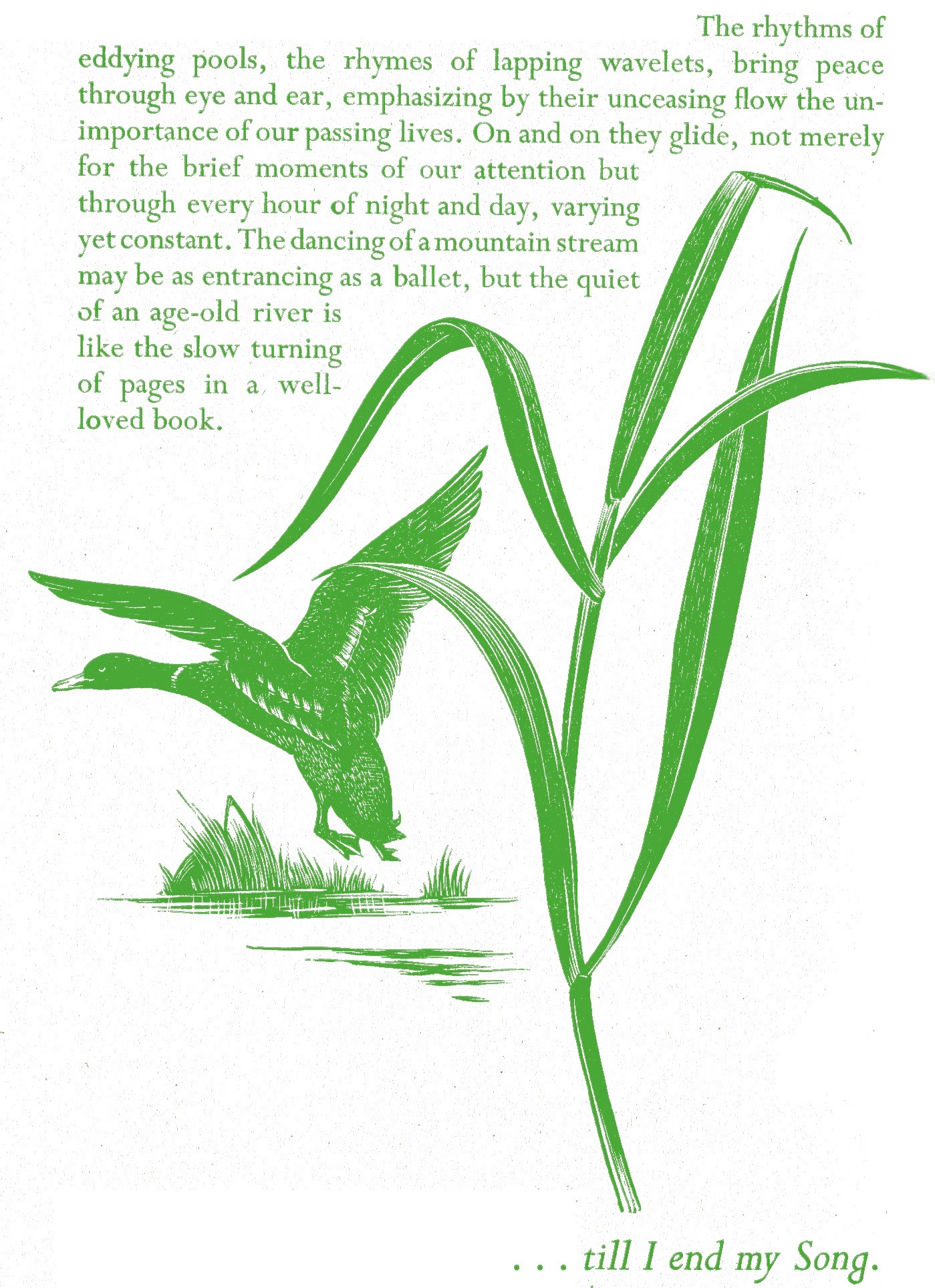
Endpiece from Irish writer and illustrator Robert Gibbings’ final book – Till I End My Song (1957):
Salmon of Knowledge by George Walsh:
This story was reworked by Robert, based on a most ancient story, told in Irish
Don’t you wish, sometimes, that you could just walk into history? I have felt that, often, when visiting historic sites: you see the remnants of something – a stone circle, rock art, an ancient dwelling, a battle site – and you just want to be able to go back in time and talk to the people who made them, or who visited them. You want to ask, of course, why the most enigmatic monuments were built – and what was it like to be there in those days?
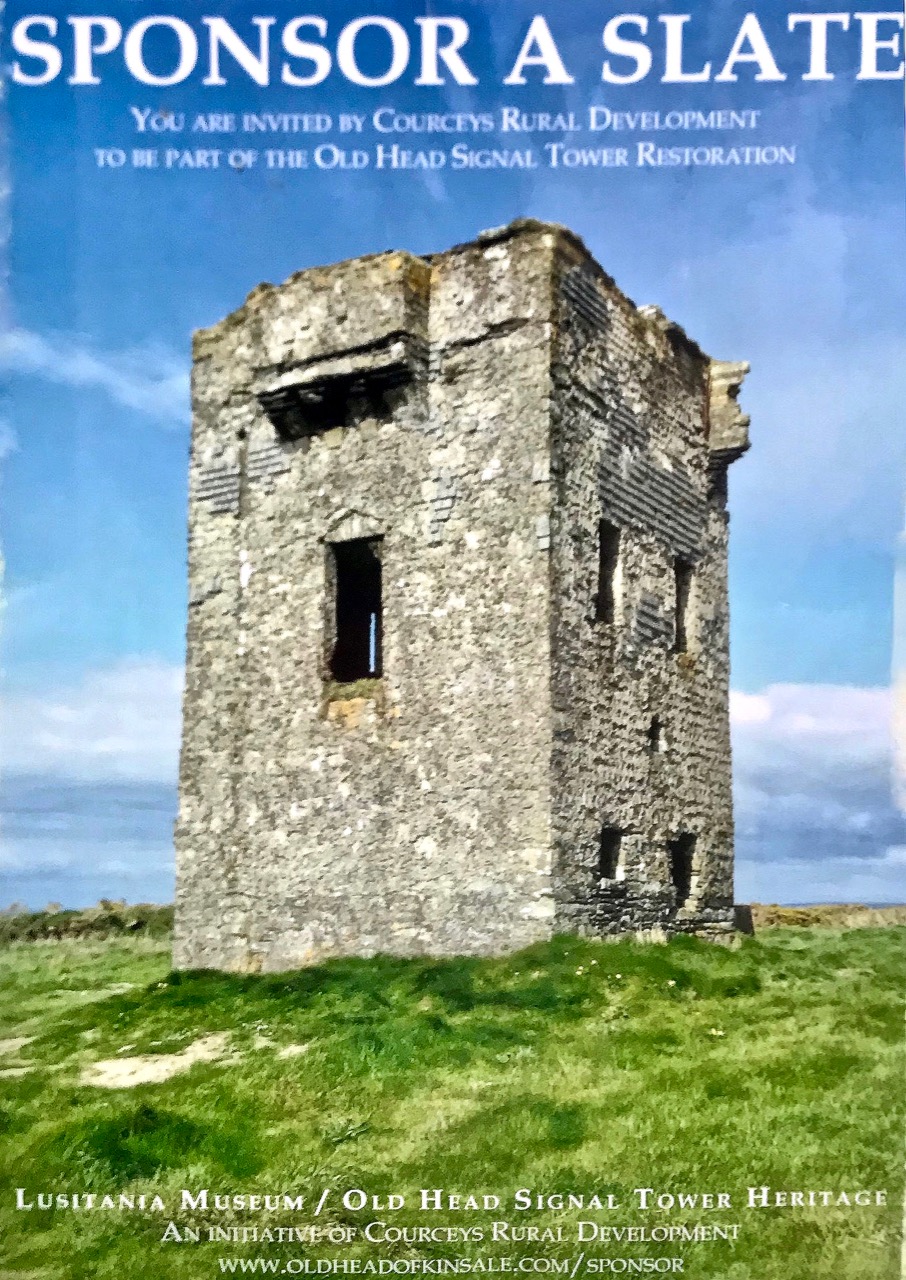
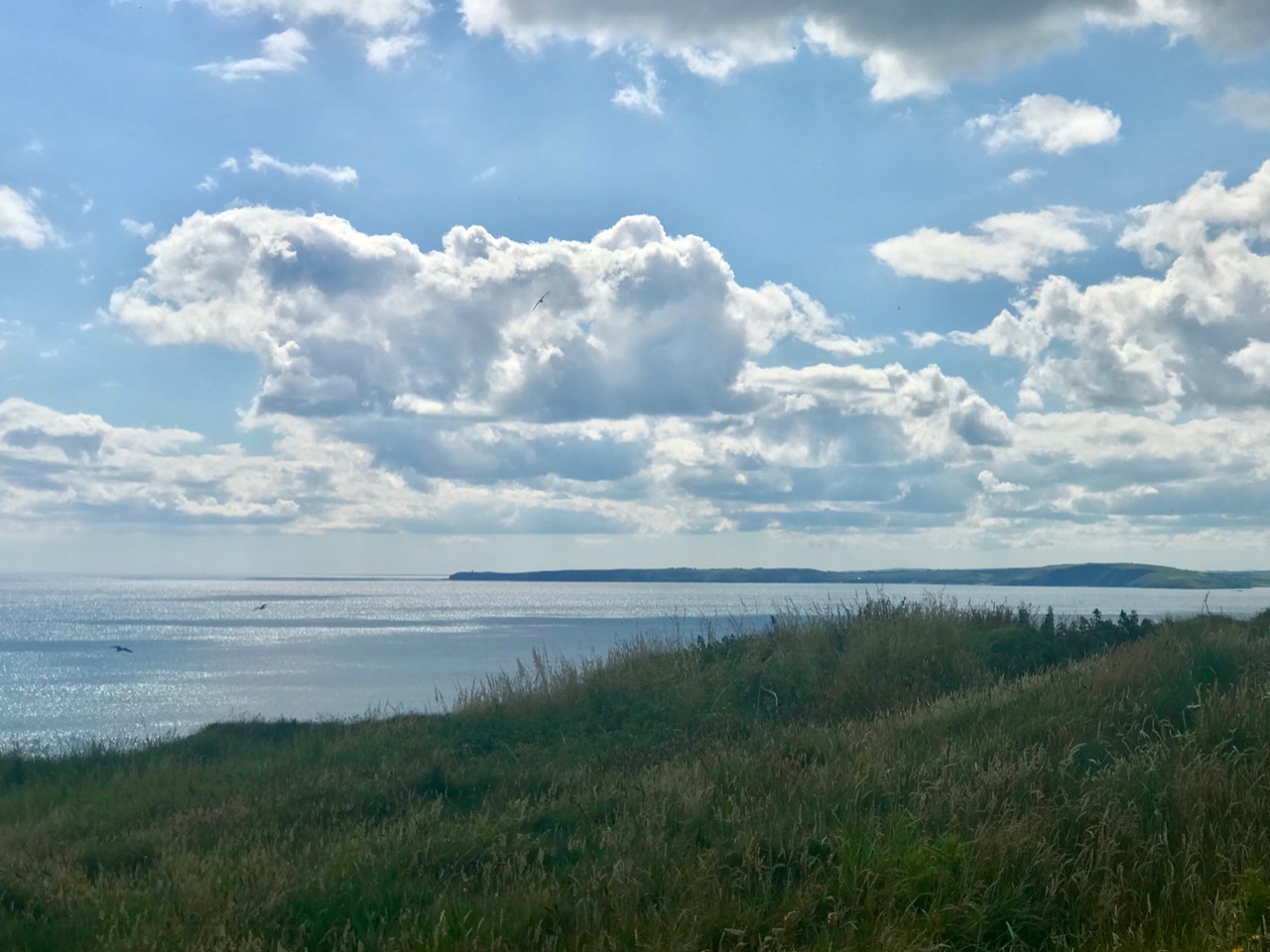
In my posts of the last two weeks we have visited some 19th century signal tower sites in West Cork. The first example, at Kedge Point near Baltimore, is a shell but there is sufficient of it to see exactly what it looked like, set high up on its lonely perch looking out over the cliffs. Last week we walked towards the westernmost end of the Sheep’s Head Peninsula to find scant ruins of a tower there, but with very fine vistas in all directions.
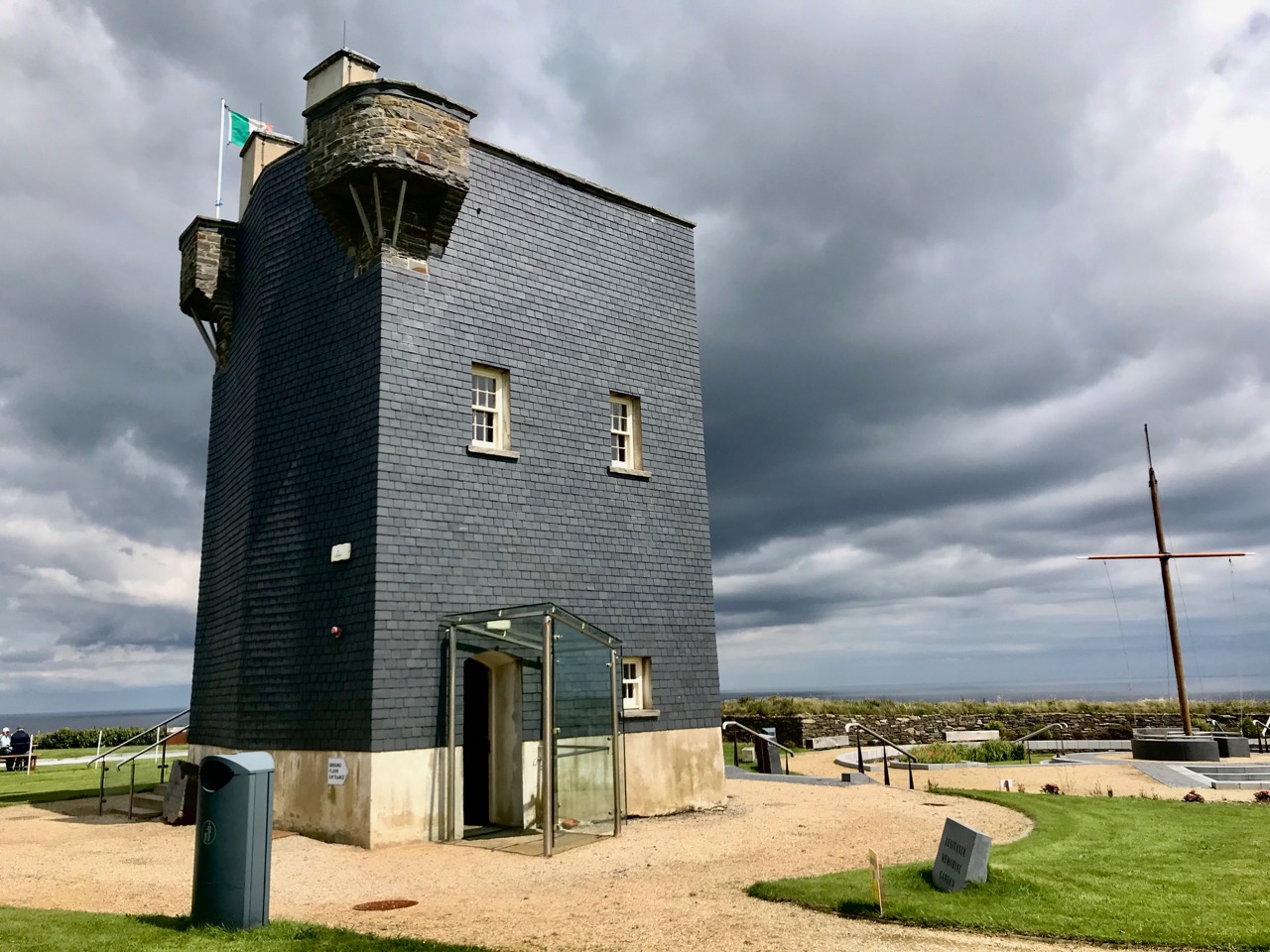
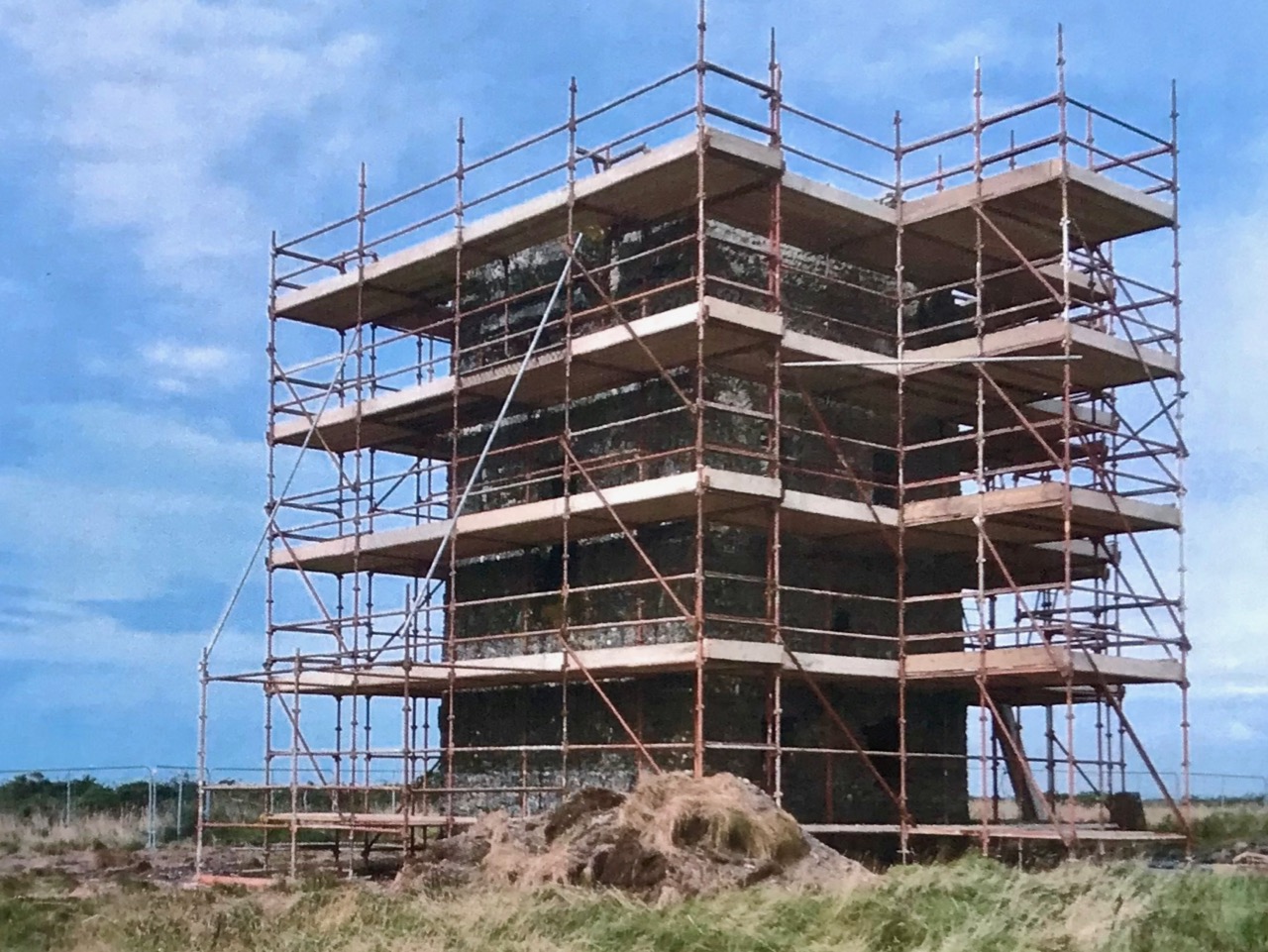
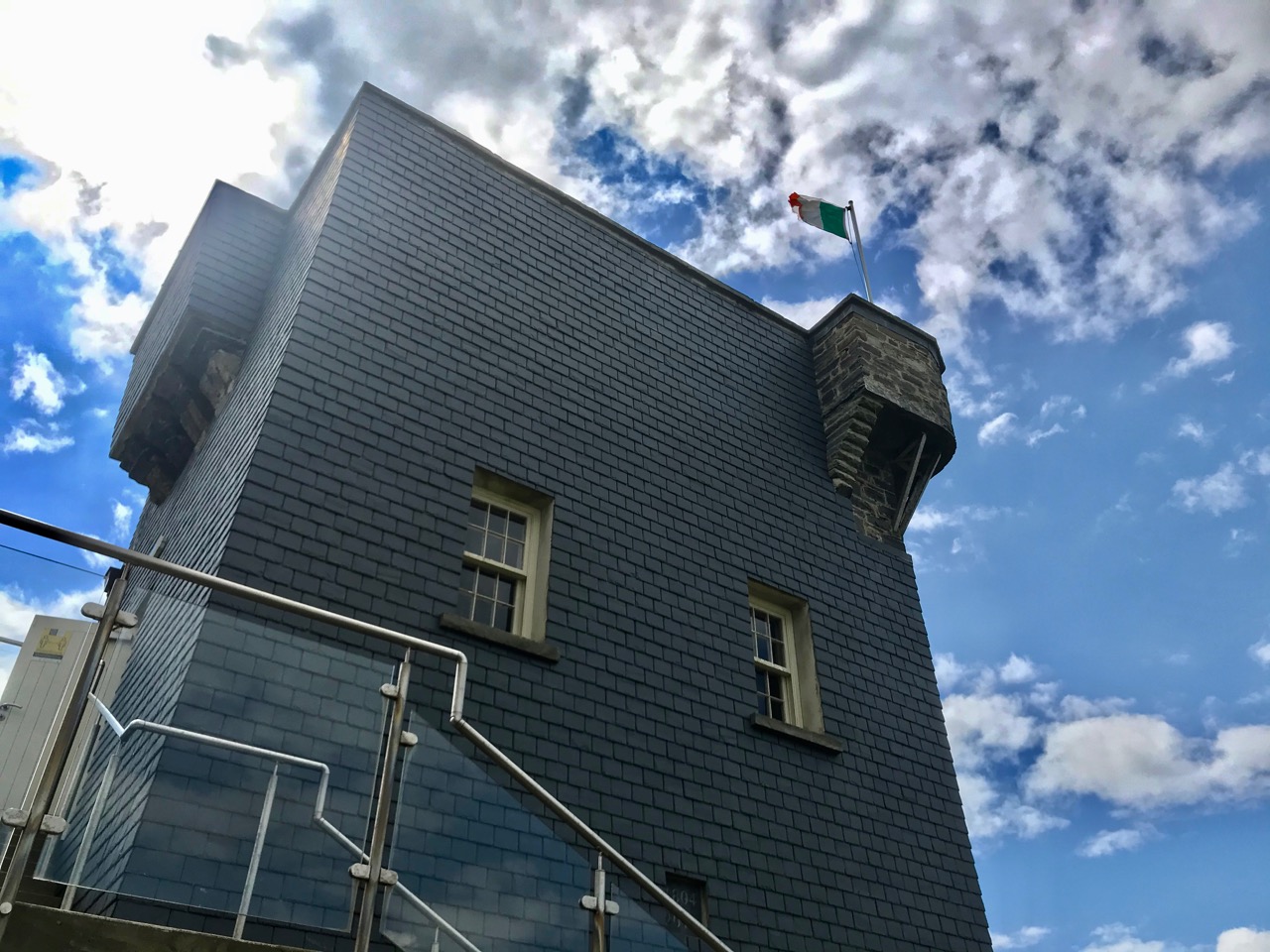
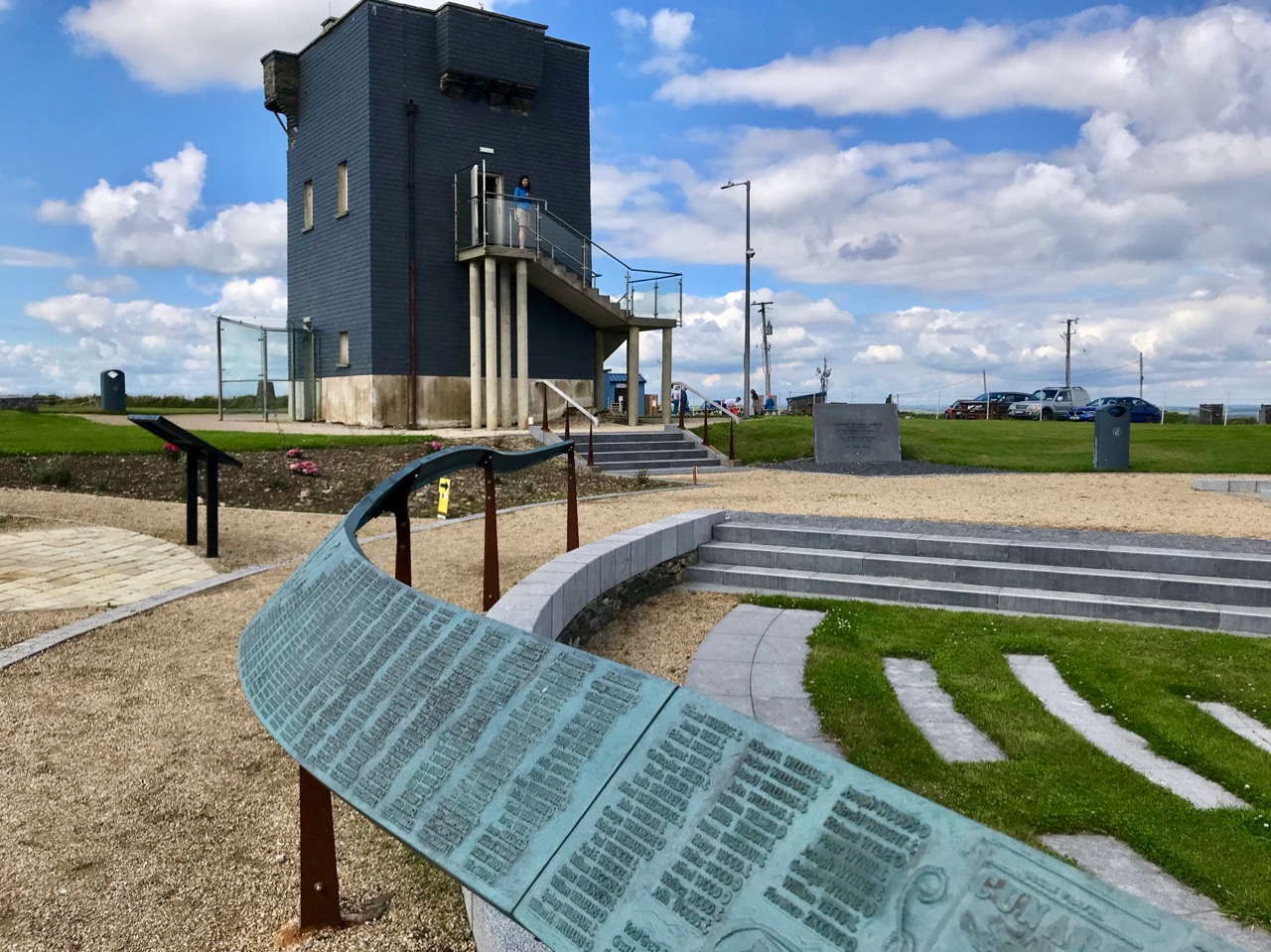
This time we are looking at another signal tower – on the Old Head of Kinsale – but it’s not a ruin. It has been fully reconstructed so that it is exactly as it was in its heyday. At the Old Head we truly can walk into history!
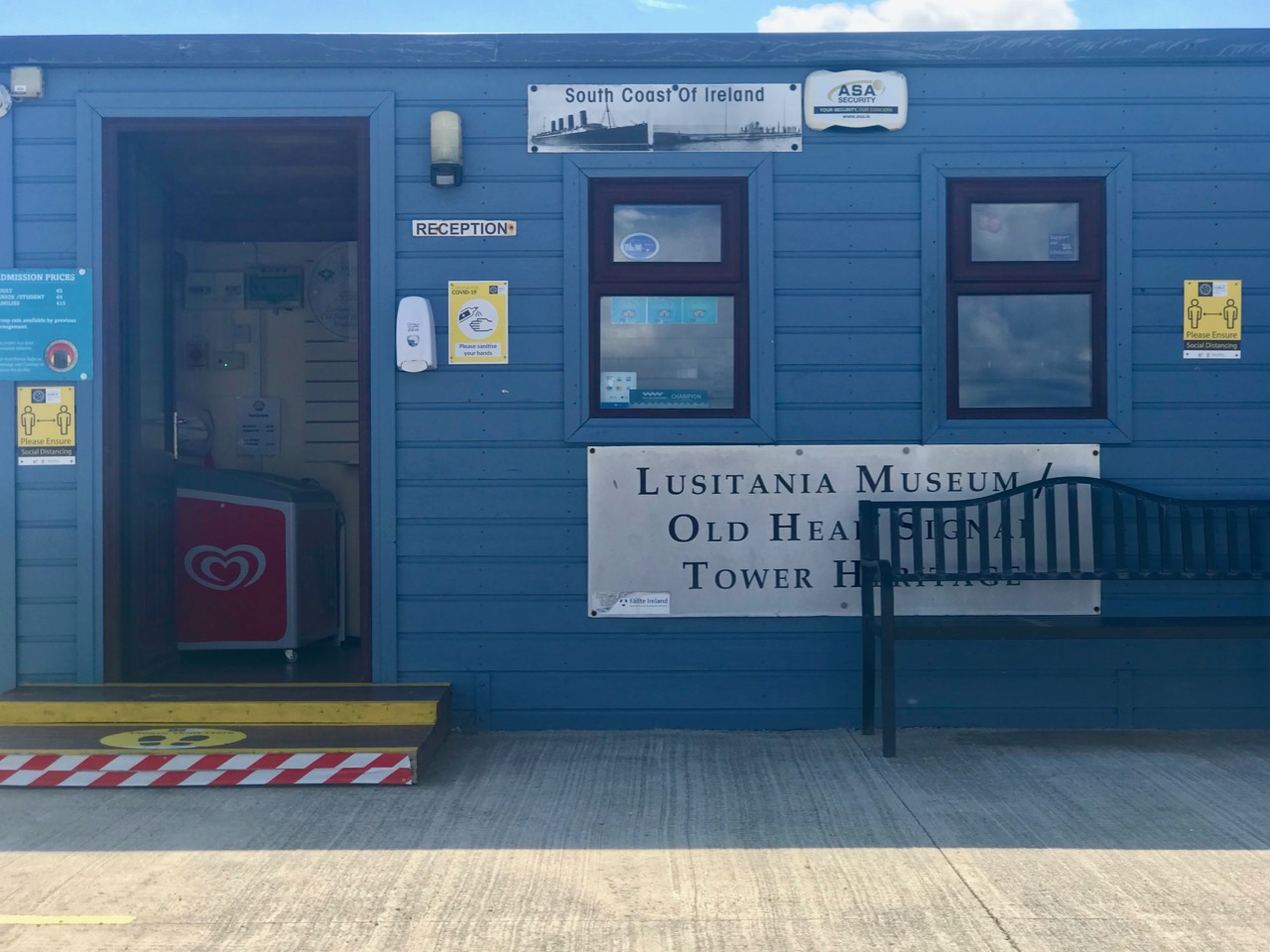
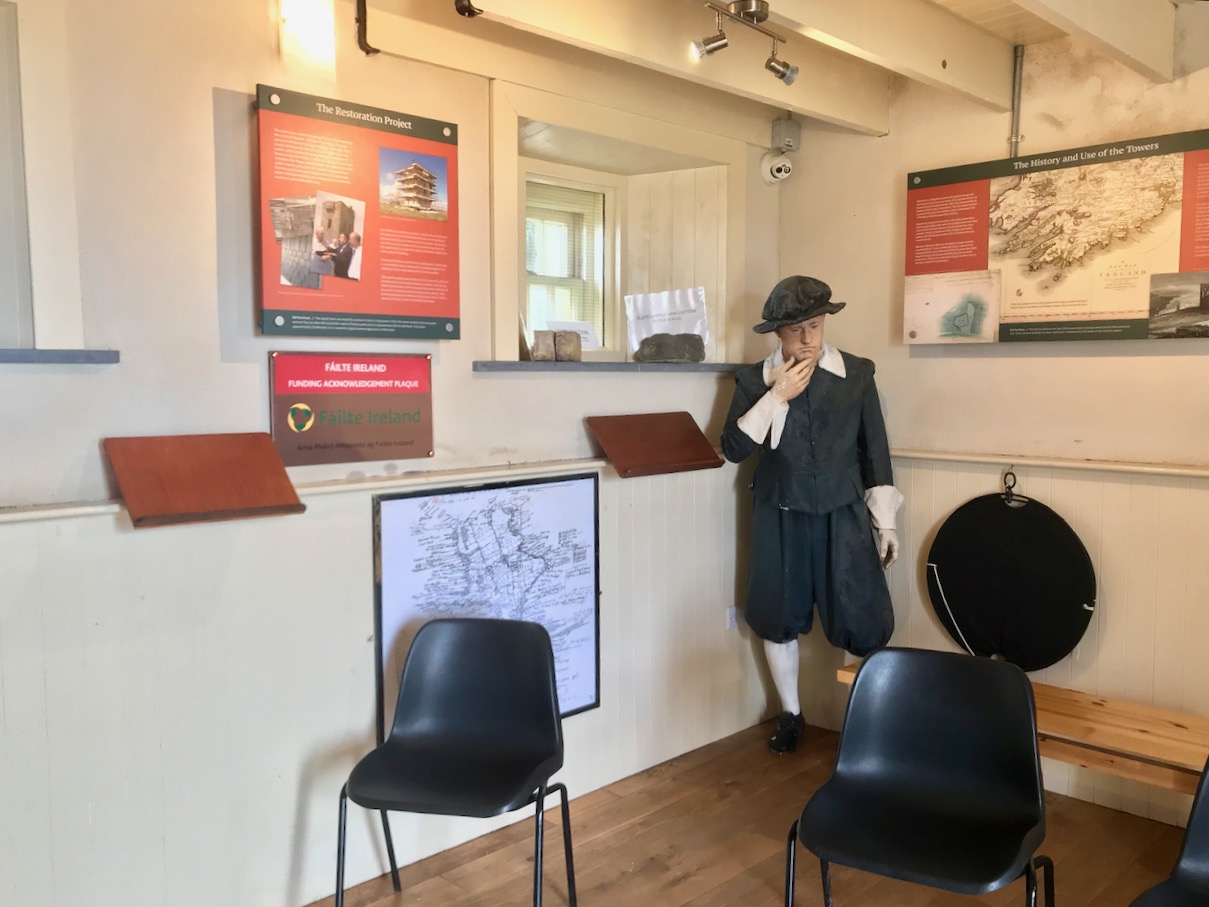
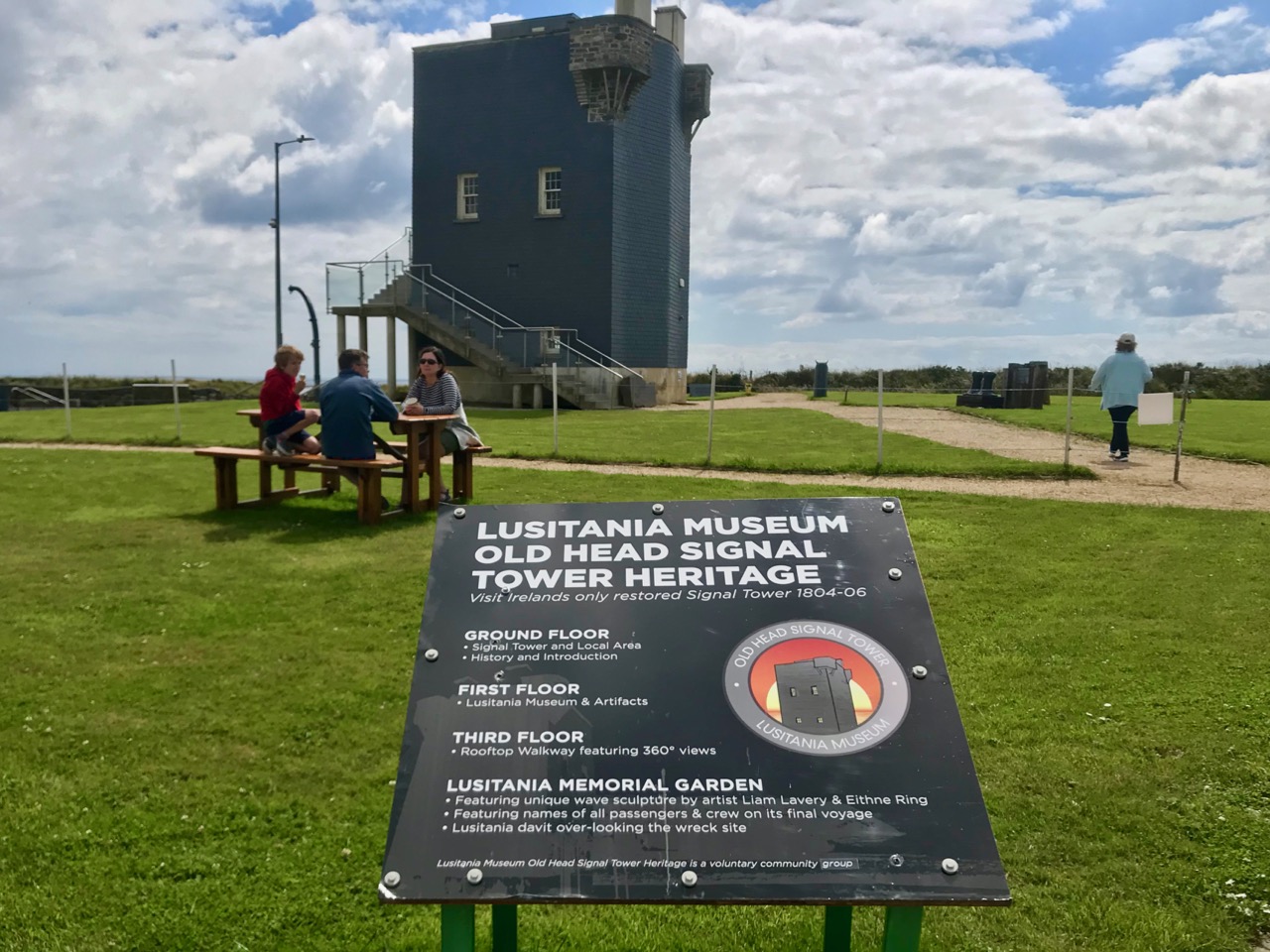
I think I’m probably safe in saying that there isn’t another museum dedicated to the Irish signal towers anywhere in the whole world! And it’s pretty special that the museum has been created by restoring an existing signal tower. And – when we visited – we were lucky enough to meet JJ who – it can reasonably be said – was the driving force behind the whole project.
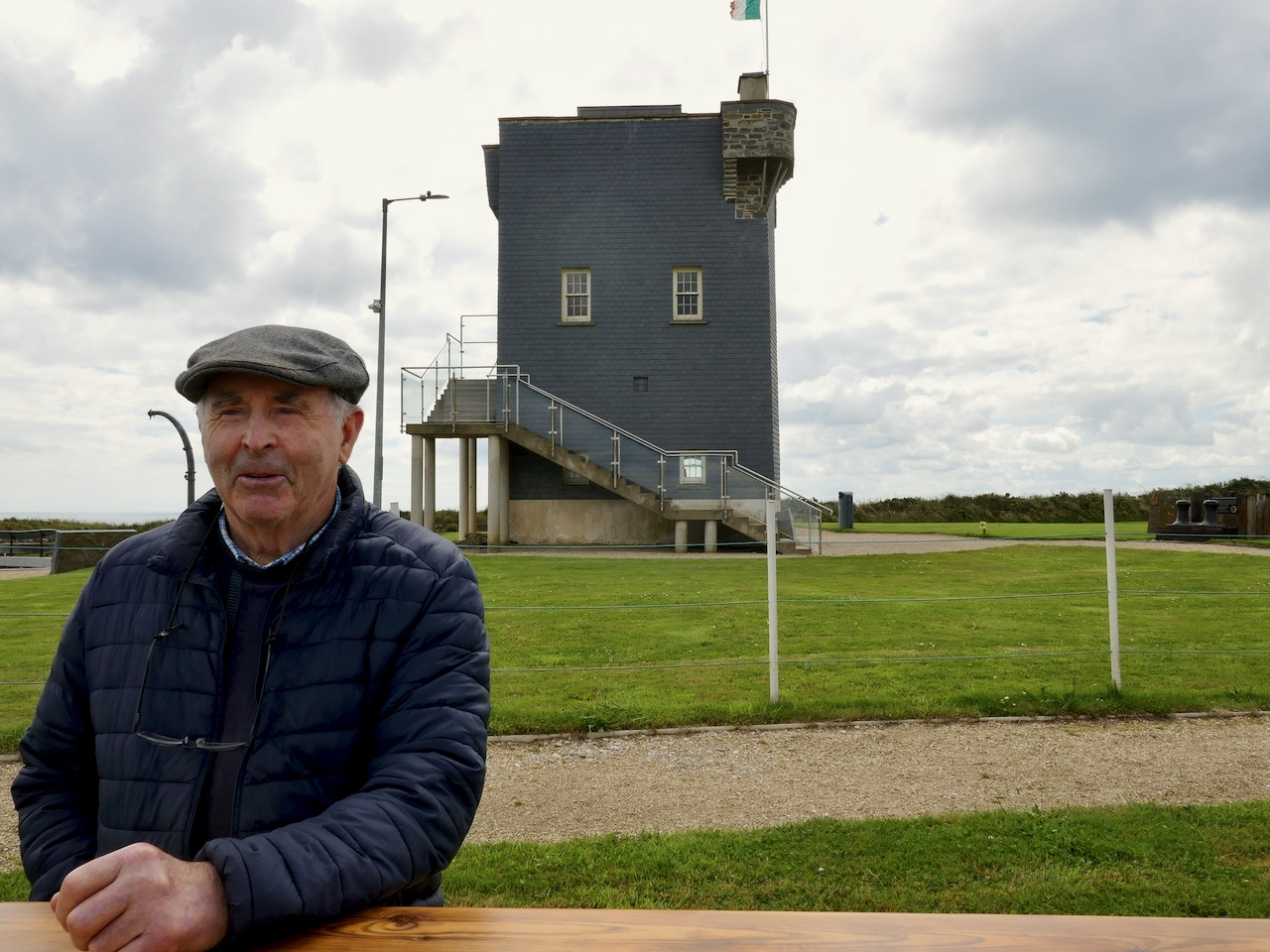
James Joseph Hayes at the Old Head of Kinsale signal tower, July 2020
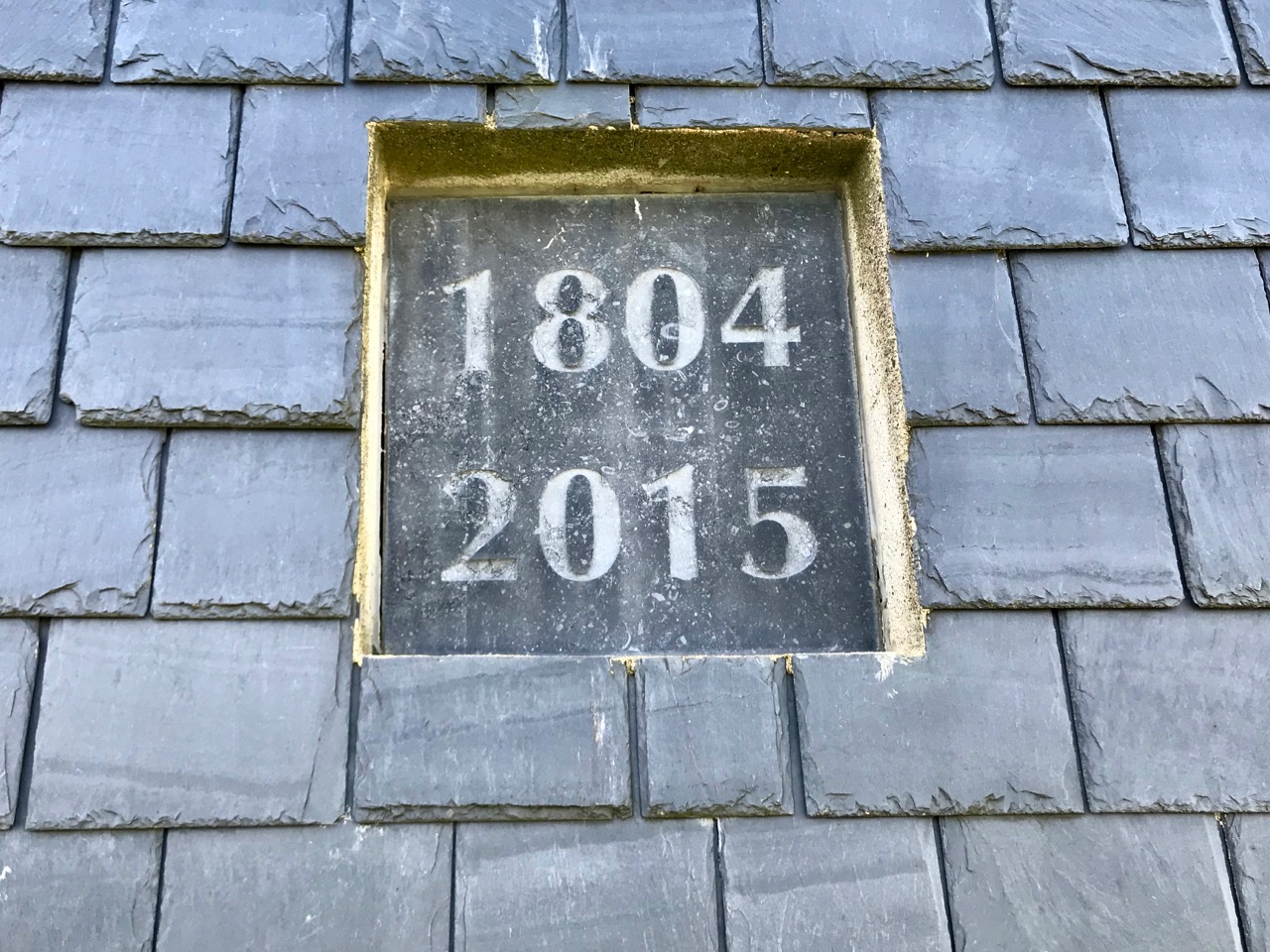
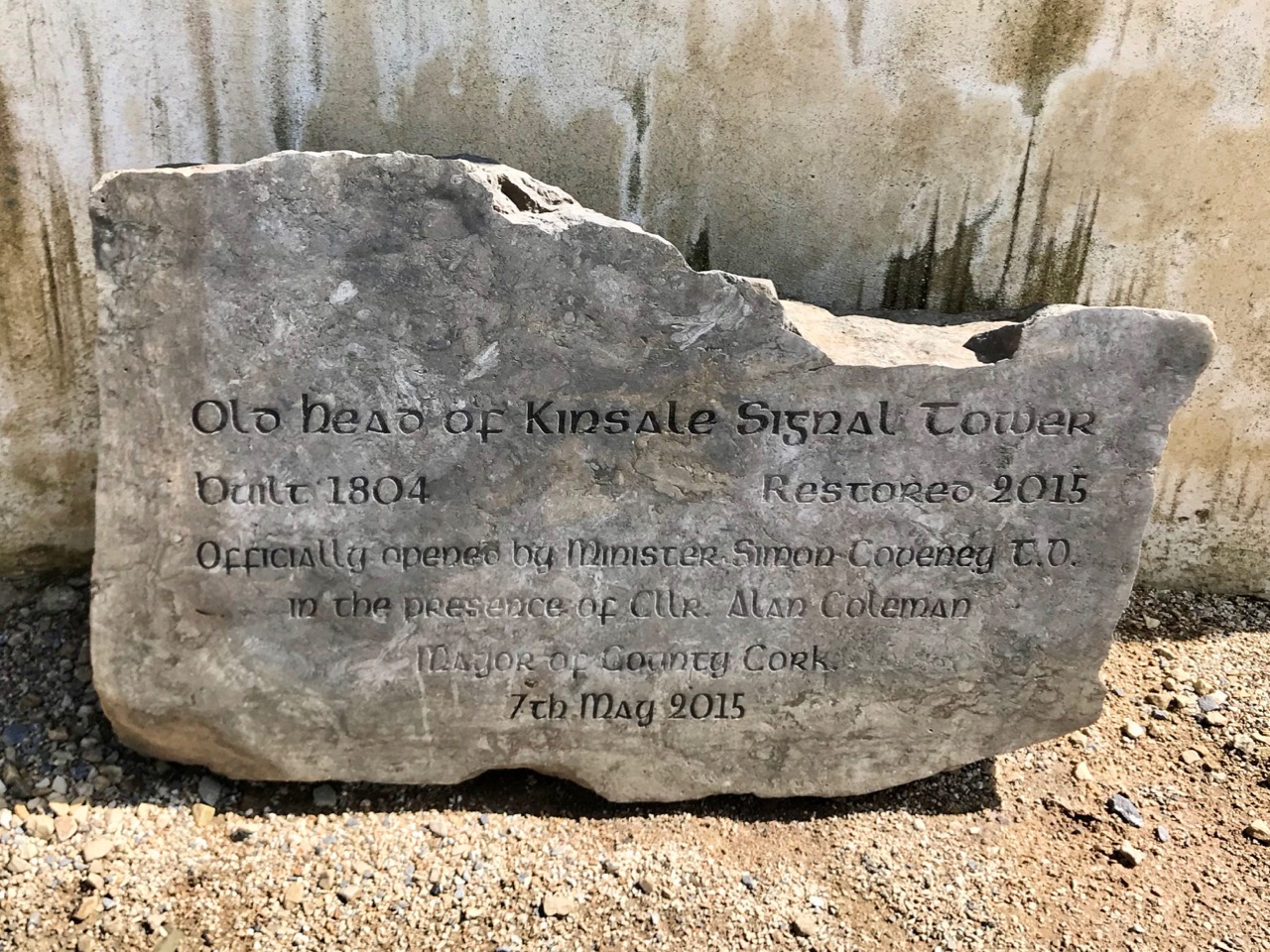
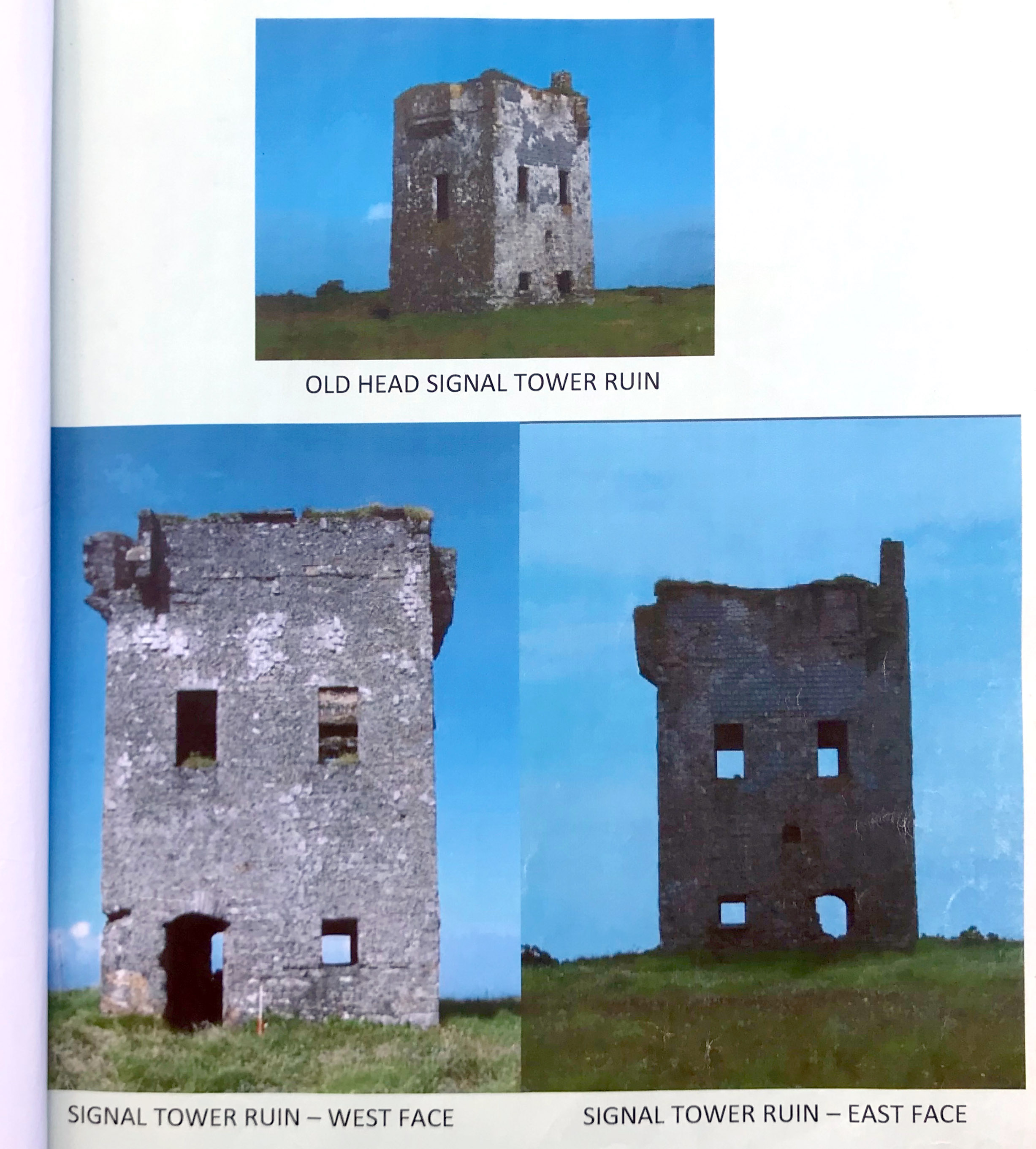
Ten years ago West Cork development Partnership were looking for projects which would benefit the area, encourage economic activity and attract visitors. JJ gained support from enthusiasts locally and proposed establishing a heritage centre at the site of the old signal tower, which was at that time a substantial ruin. As the Old Head is also the closest point to the wreck of the RMS Lusitania, which was sunk by a German torpedo in May 1915, the idea was also advanced that the heritage centre could also encompass the story of that tragedy. The whole idea caught the public imagination and, after five years of hard work, came to fruition. The fully restored building was opened in time to commemorate the centenary of the Lusitania’s sinking.
Evolution of a ruined tower, and the birth of a significant memorial to a WW I tragedy through the celebration of a little known aspect of Irish engineering in the Napoleonic era
JJ Hayes and the team he gathered around him have to be congratulated on their aspirations, and on their tenacity in realising their dreams in such a professional manner. They have brought the signal tower back to life using sound and sustainable construction techniques which are completely appropriate to the building type and will ensure that it will survive long into the future. In this video you can watch a first hand account of the restoration work, narrated by the construction Project Manager, Brandon Duarte:
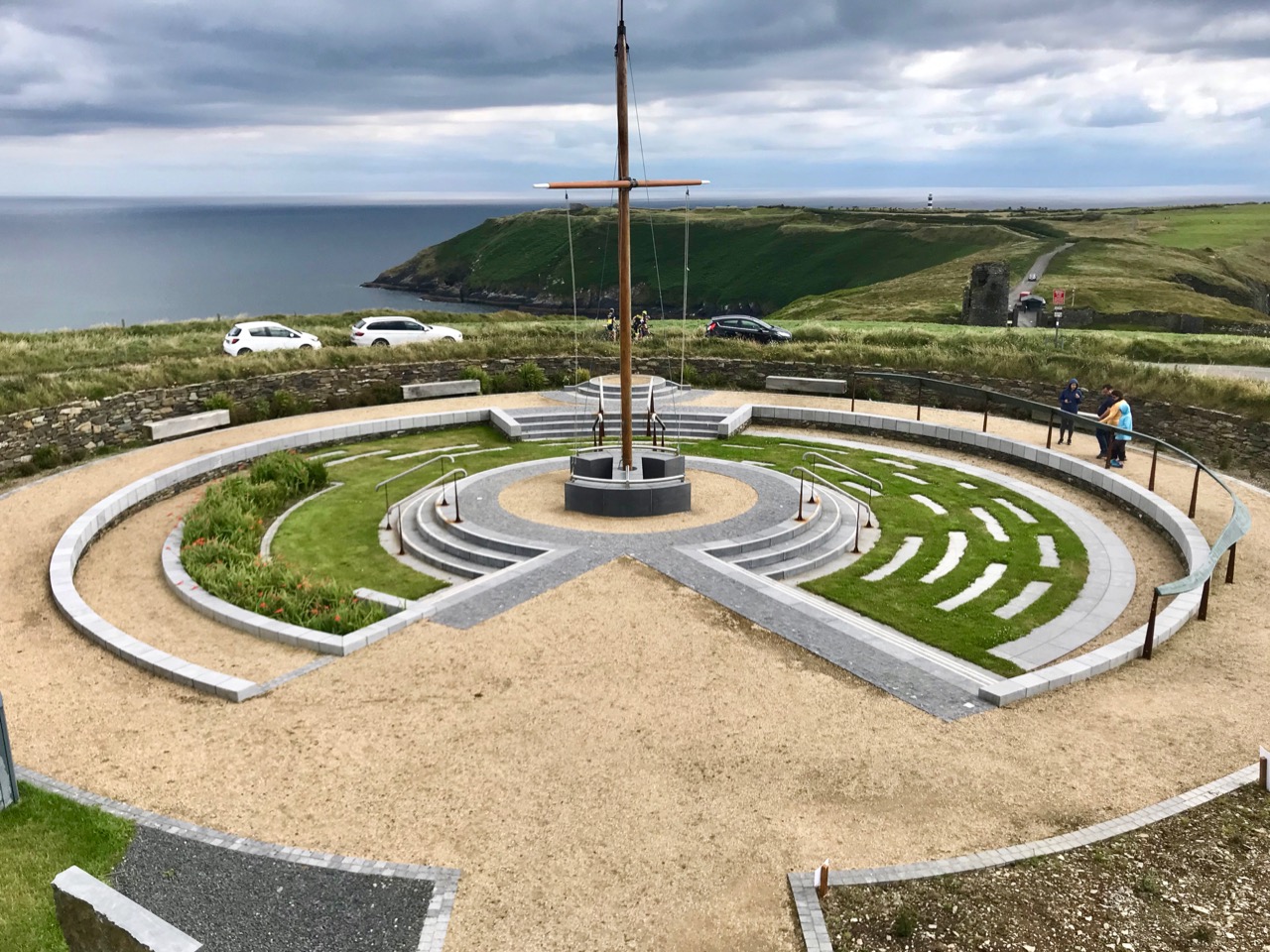
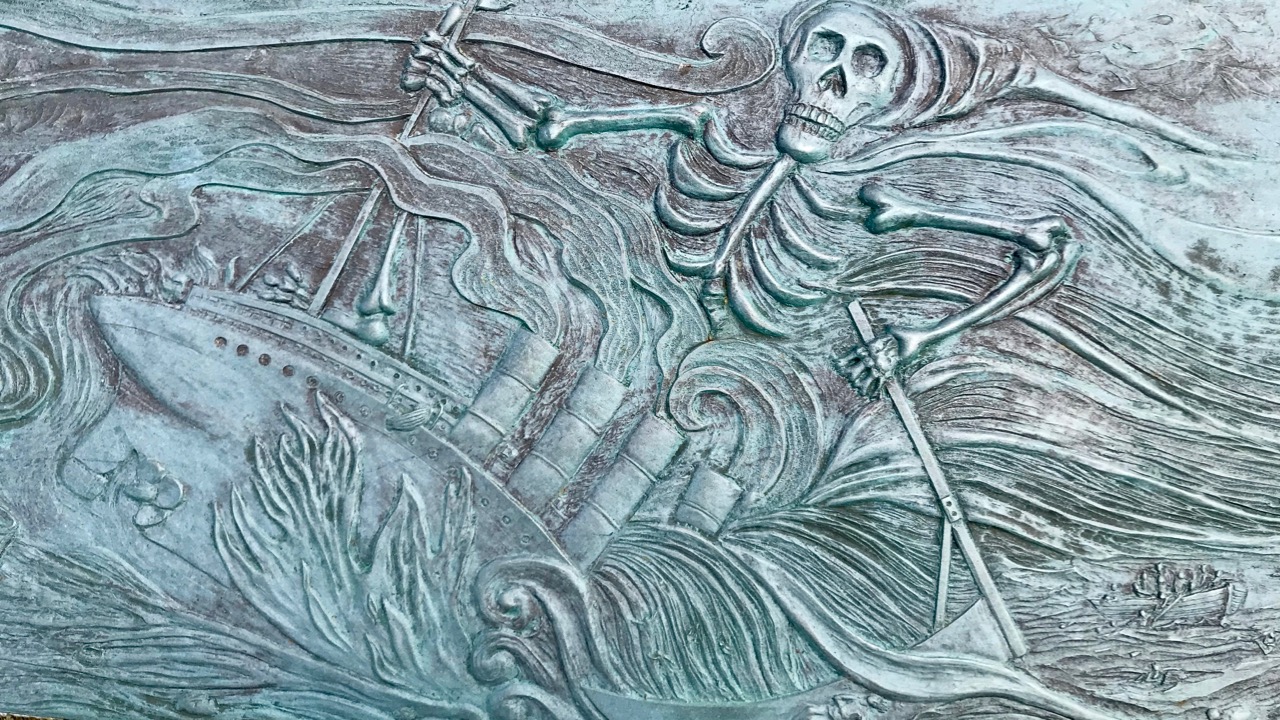
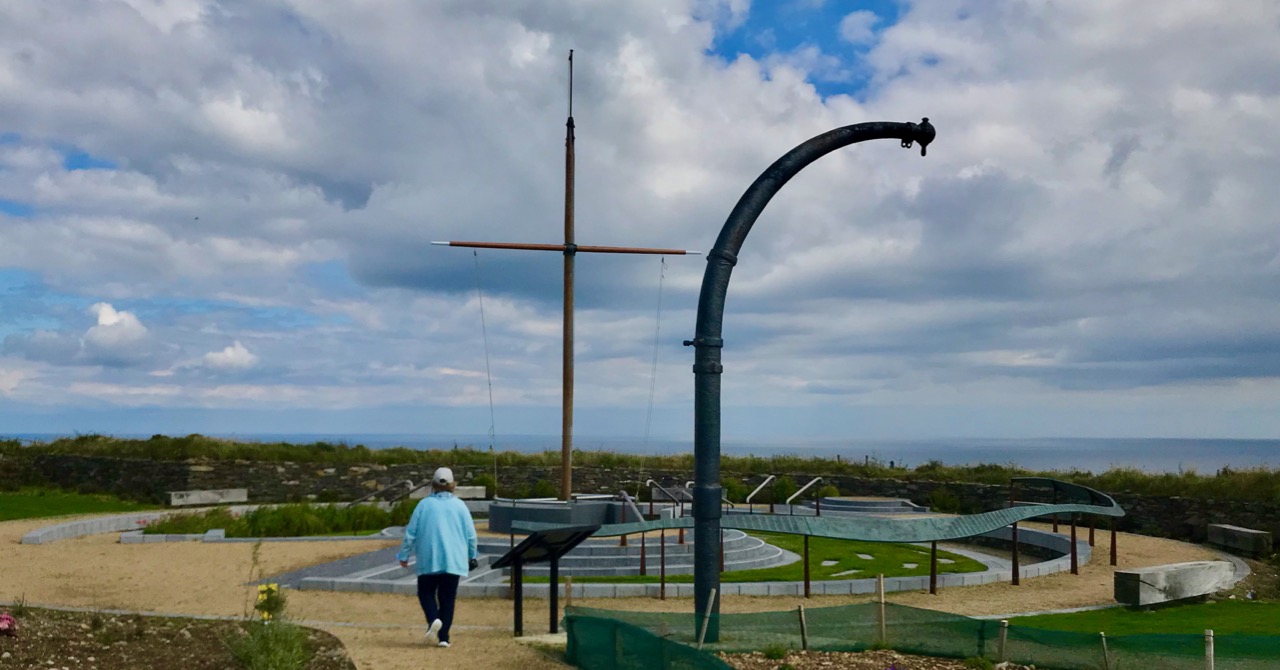
There are so many creative elements to this project: beyond the building a Lusitania Memorial Garden has been laid out as a contemporary work of art, the centrepiece of which is a 20 metre long bronze sculpture by artists Liam Lavery and Eithne Ring. We featured another example of their work earlier this year. This work contains the names of all the one thousand nine hundred and sixty two passengers and crew who were on board the ship on that fateful day. Twelve hundred perished.
Lusitania Memorial Garden, with Sculpted artwork commemorating the victims of the sinking
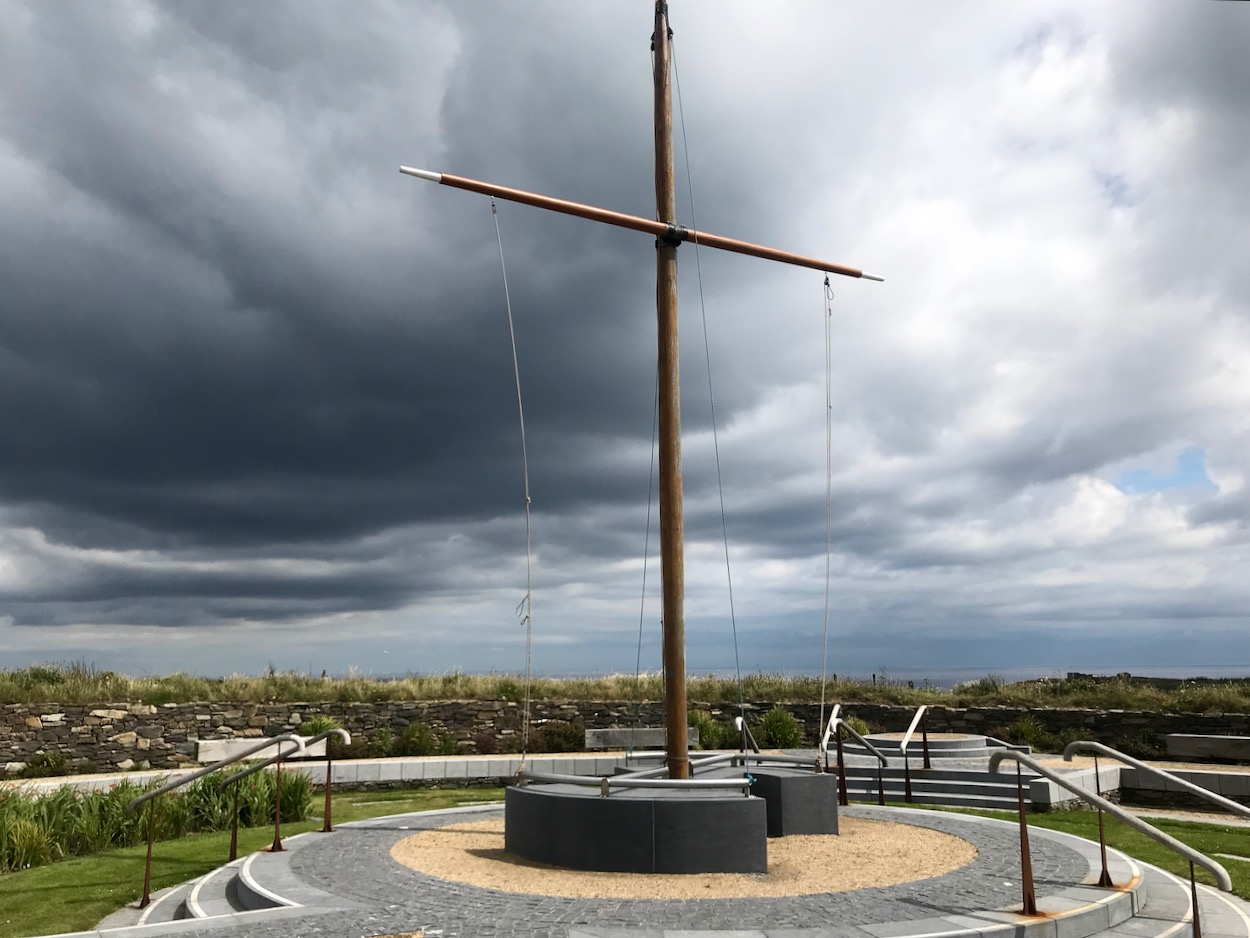
The centrepiece of the Memorial Garden is a rigged ship’s mast. This is placed roughly where the original signal mast associated with this tower would have been – the focal point for sending and receiving signals over two hundred years ago. This mast is from the Sail Training Vessel Astrid – a 42 metre long tall ship which started life in the Netherlands in 1918 but sadly ended by foundering just outside Kinsale Harbour on 24 July 2013. Fortunately, in this case, all on board were rescued. It is apposite, perhaps that these many nautical links are brought together at this centre as all the signal towers are believed to have been manned by sailors or retired sailors who relied in their day on good systems of communication – systems which evolved rapidly through history.
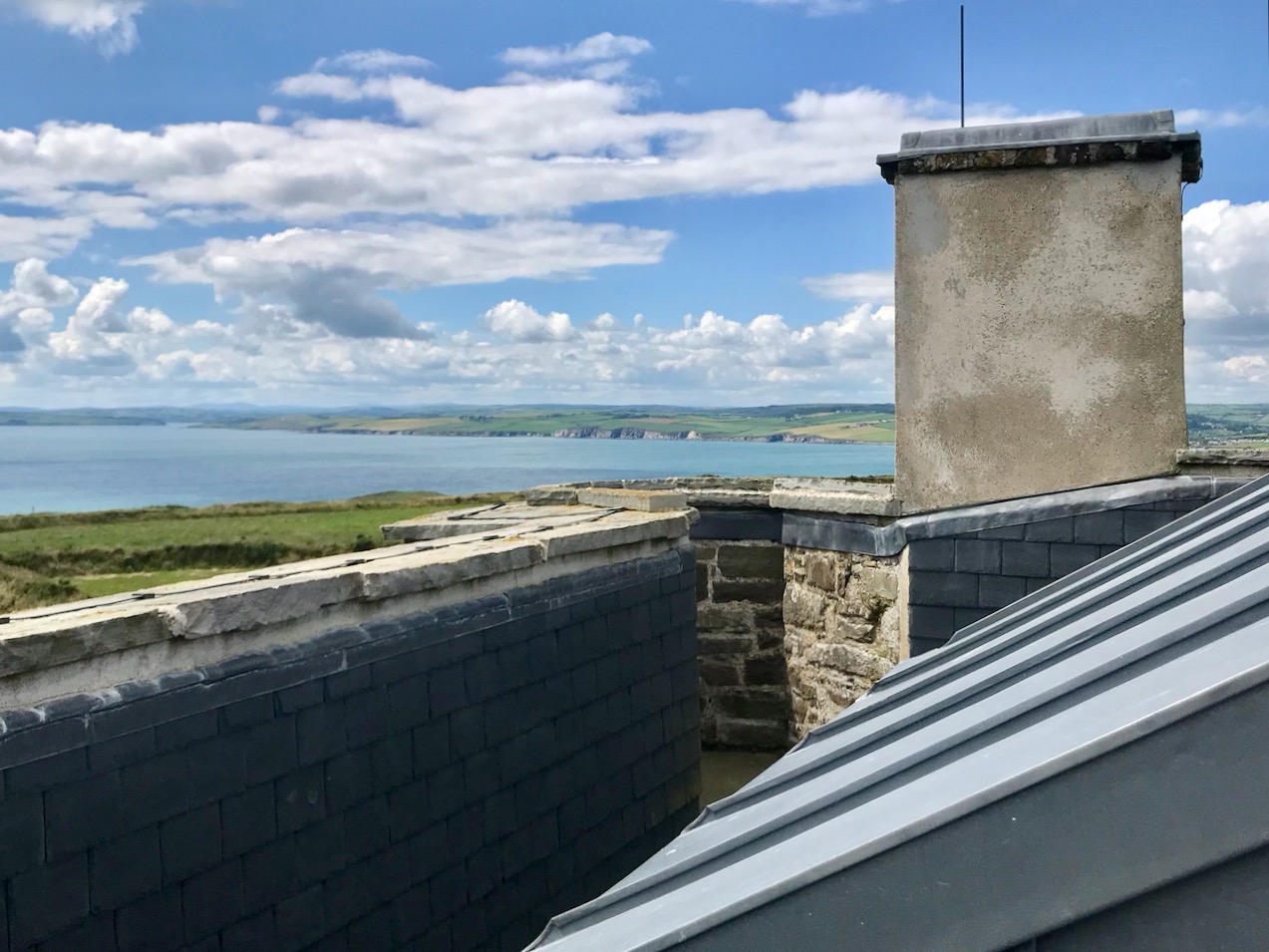
From the Old Head of Kinsale Tower, which is number 25 of the 81 that were built around the coast of Ireland you can see tower number 26, which is on the Seven Heads peninsula, 13 kilometres to the south west (above and view from the tower parapet, below). Again, we can only admire the quality of the optical devices used to see and clearly read the flag and ball signals at such a distance. In fact, the whole subject of signalling and communication – particularly in association with these Irish stations – is worthy of a future post of its own. Keep watching out!
Like Brian Lalor, the poet Eiléan Ní Chuilleanáin*grew up in Cork in a house alive with art, scholarship and republican ideals, in a city yet to emerge into modernity. As a poet she returns often to the subject of Cork, immersed from childhood, as Brian, in its unique character. She has said . . . there is a poetry, and I include my own, which can only be written out of the sense of the absolute proximity of the real past, and the place which is home, from which history can be seen.
In a poem that begins ‘In the graveyards of the city’ she writes,
Tablets fixed on their boundary walls,
They are shouldered by tall square houses
Chimneys nodding to each other
Over the heads of gesturing
Angels, all back and no sex.
And we instantly see what she describes, although we hadn’t before.
In 2007 the poet and critic Thomas McCarthy wrote in the Irish University Review**:
The Gallery Press book, Cork, was certainly one of the most beautiful local books of 1977. Written to accompany Brian Lalor’s subtle, and sometimes very slight, drawings of Cork, the poems were full of a sunlit magic. The book itself, as an object, was one of Gallery Press’s finest hours. It marked a restoration of dignity to the world of Irish poetry publishing just at the moment when standards of production and presentation had begun to decline everywhere. I remember the display copies of the limited hardback of this book in the old Cork Craftsman’s Guild shop in Patrick Street: how fine it looked, how fitting it was that this volume of poems and drawings was displayed with the best ceramics and wood-cuts of the day. The opening poem is probably as complete an evocation of Cork as will ever get published:
The island, with its hooked
Clamps of bridges holding it down
Its internal spirals
Packed as tight as a ship
With a name in Greek or Russian on its tail
In a lingua franca of water –
And now the river, flat and luminous
At its fullest, images the defences:
Ribbed quays and stacked roofs
Plain warehouse walls as high as churches
Insolent flights of steps
Within are narrow lanes, man high
Flagged and flattened
By the prudent stonecutters, . . .
McCarthy concludes, It is a perfect description, pencil-like and deftly matched to the delicate drawings of Lalor. The latter give Ní Chuilleanáin free rein; they allow her to soar with that light method, the elusive and evocative, and even retiring, loose line.
There are gestures at consistency. But much of the city is a haphazard succession of buildings dating from a mixture of periods, still following the medieval pattern of streets and laneways, crammed on their island site, churches, markets and houses. On the hills that surrounded the town suburbs grew up: some respectable, terraces with British Army names recalling Wellington and Waterloo, inhabited by the officers from the barracks higher up again; some grim and filthy with names like Brandy Lane, Spudtown, Cat Lane. I still remember the smell of the lanes and tenements, the public houses and their truculent customers, the shadowy shawled women making off down an entry clutching drink or money with equal desperation.
One of her poems seems to translate these thoughts from prose. As McCarthy puts it, Psychologically and socially, Ní Chuilleanáin’s Cork is a complex and evasive place, made concrete only through the most intense observation
Geometry of Guilt, the windows
Broken or always empty;
Daylight sucked in and lost, a bird astray;
The knife edge of the street, blinded
Fronts of houses like a baconslicer
Dropping to infinity, down
Draughty quays and frozen bridges
And the facades are curves of seeping stone
As damp as a scullery
Or a child’s game of windows and doors arranged
Matching the caves of womb and skull
I will finish with another of McCarthy’s astute assessments of Eiléan’s work: Ni Chuilleanain maintains a psychic bridge between two cranky and petulant discourses, Dublin and Cork. Her poems have become that undelivered Golden Box, forever on its way from Cork to the good Dean, a box of poems which, when opened, reveals sunlight, cloisters, avenues, water channels, and sites of ambush.
We are soft-footed and busy as dogs
Disappearing down alleyways,
The faces I meet are warped with meaning.
We turn away from each other,
Our shoulders are smooth as the plaster veils of statues
That are turning their backs in the windows and doors.
As in the previous post, Cork, Part 1: Brian Lalor, all the drawings are by Brian Lalor and reproduced here by permission of the artist.
*Eiléan Ní Chuilleanáin is pronounced (approximately) Elaine Nee Quillinawn
**‘We Could Be in Any City’: Eiléan Ní Chuilleanáin and Cork Author(s): Thomas McCarthy Source: Irish University Review , Spring – Summer, 2007, Vol. 37, No. 1, Edinburgh University Press (Stable URL: http://www.jstor.com/stable/25517350
***Home and Places, in Home/Lands, A collection of essays commissioned by the International Writing Program at The University of Iowa to mark the third New Symposium held on the island of Paros, Greece, in May 2008.
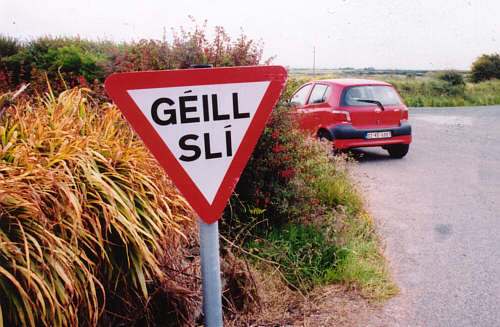
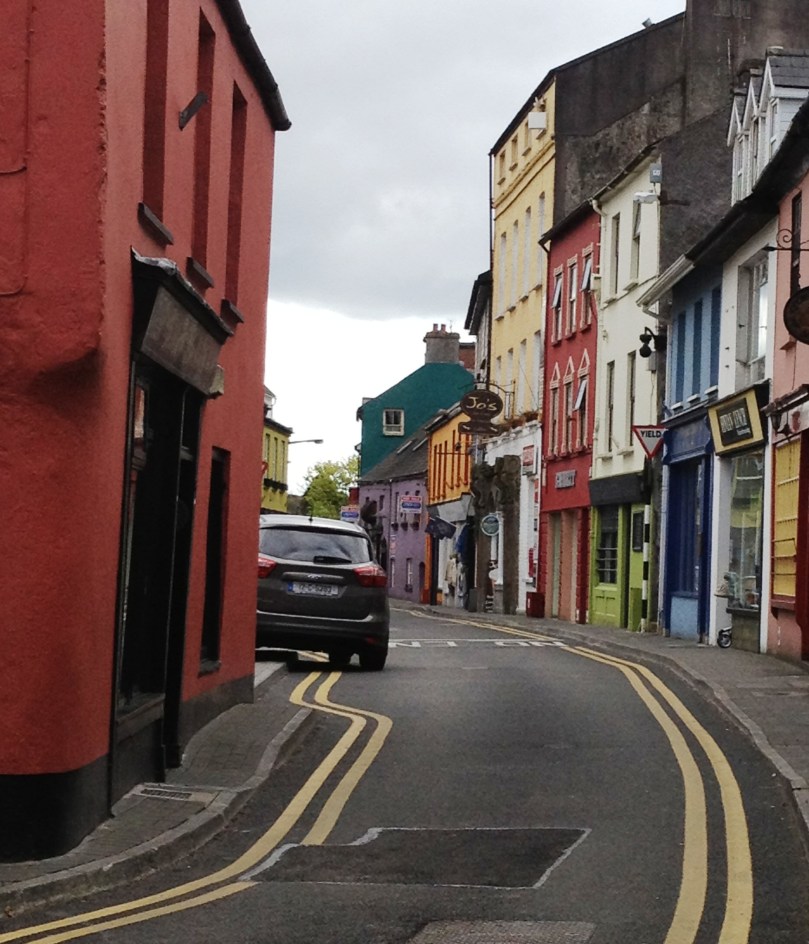
Directional signs in Irish and English, cars parked every which way, street names in small print on the wall. Welcome to driving in Ireland!
This post was first published way back in 2013. Recently, it came to light that a Government Minister was stopped for drink driving in 2016 and was found to be driving on a Learner Permit. He was 48 and had been driving for many years on that permit. Many years before, it had been (inexplicably) permitted to drive in Ireland on what was then called a Provisional License and people just kept renewing them, year after year. Sometimes they had failed a driving test and often they had never taken one. The law became more stringent in 2013, provisional licenses were discontinued, but multiple crackdowns have failed to convince Irish people, especially those from rural areas, to adjust their thinking. What makes my blood boil about this case is that I, who had been driving legally and safely for 40 years, was put through a rigorous, expensive and wholly unnecessary process in order to earn an Irish driver’s license, while so many people here simply ignore the law.
Update: As I was hitting the publish button, the Minister was being sacked.
The following was written and published in 2013. Since then, progress has been made and some Canadian licenses are now recognised in Ireland, with provisos.
In my Driven to Distraction post I alluded to having to get an Irish driver’s licence. I can drive legally for a year on my Canadian licence, but if I intend to stay longer, and if I want to get insurance at reasonable rates, I have to get an Irish one.
No Overtaking (Rules of the Road/RR Page 79)
I have driven for almost 40 years without incident, in all kinds of conditions (Northern Canadian winters!) and vehicles, standard and automatic. I have rented a car every summer in Ireland year after year. I was prepared for some kind of process whereby I would be asked to demonstrate my competence and my knowledge of the Irish road rules – a process which I assumed would also acknowledge my experience and skills. The first part of that last sentence was a realistic assessment; the second part was a hopeless dream. It turns out that I must start from scratch, as if I was 17, as if I had never driven before.
Double yellow lines: no parking at any time. RR p115
Perhaps, you surmise, this is because we drive on the right in Canada and in Ireland we drive on the left. But anybody with a European driving licence can simply swap it for an Irish one, no matter what side of the road they drive on. This also applies to those in possession of licences from Taiwan, New Zealand, Japan and South Korea. Within Europe, all countries have agreed to the principle of mutual recognition for all sorts of qualifications and Ireland happens to have concluded agreements with several other countries for mutual recognition of driving licences. But with the US and Canada, it has not yet happened. There are “talks” apparently, but no real progress. This also means that Irish drivers who emigrate to Canada must go through a staged testing process.
You MUST not park on a footpath. RR p116
Right – fair enough – I must prove my knowledge of the road and my driving competence. OK, theory test now passed, when can I take the road test? Wait, not so fast! First I must take, and pay for, a series of 12 driving lessons from an approved instructor. The lessons must be documented and they should occur two weeks apart: that will take six months. In the meantime, I must have L plates on the car and I cannot drive alone or on Motorways. Did you get that? I CANNOT DRIVE ALONE. I have, in effect, lost my independence. I must rely on Robert to drive me everywhere (we live three miles from the nearest village) or to sit beside me while I drive.
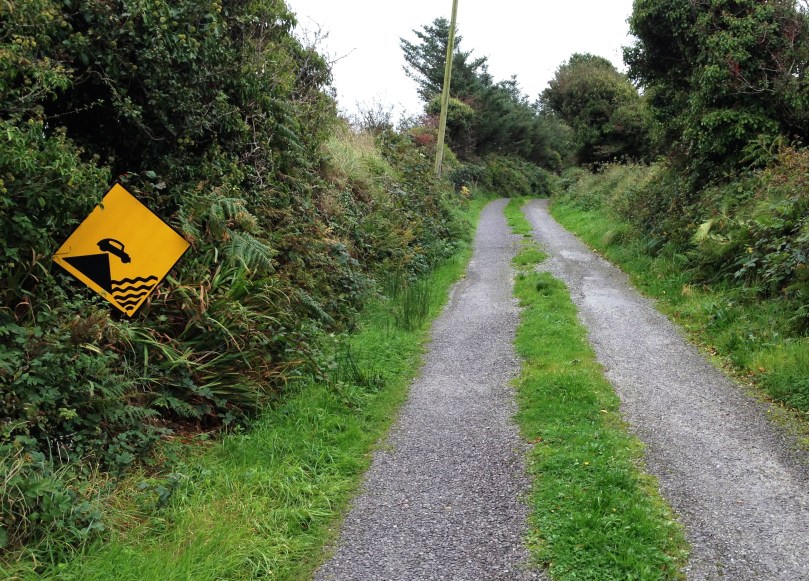
Unprotected quay ahead. RR p183
In a future post I will describe the lessons – a whole experience in themselves! Meanwhile, I must admit that studying the Irish Rules of the Road has been a salutary experience. I leave you with some photographs to illustrate the Irish approach to road signage and to the observation of the Rules.
Drive at a safe speed. RRp88 (photo by Amanda Clarke)
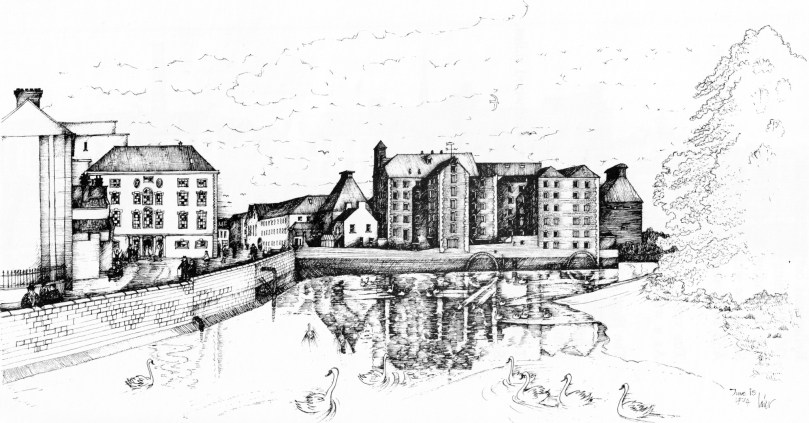
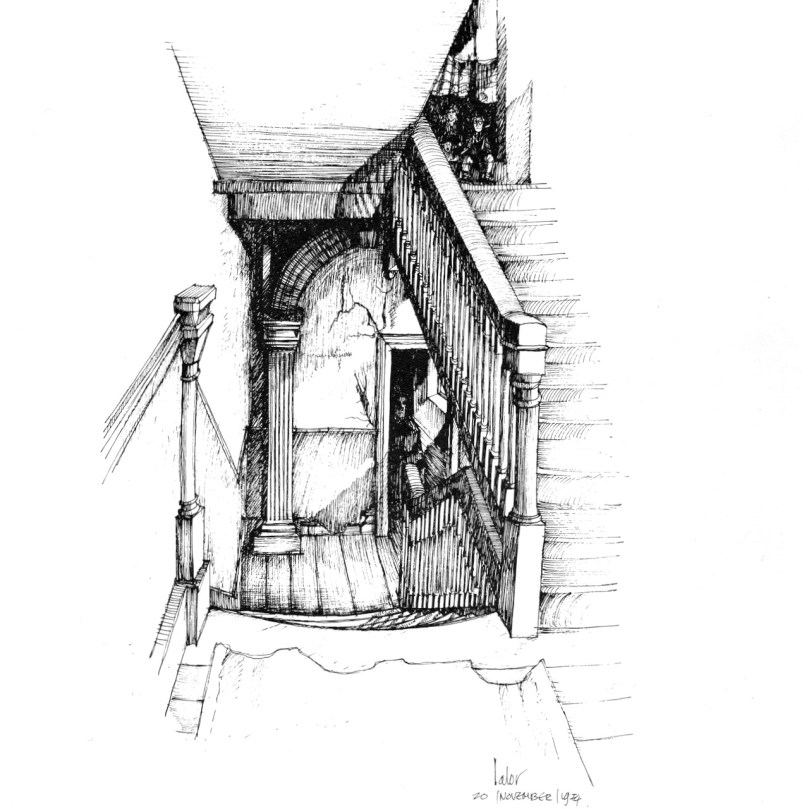
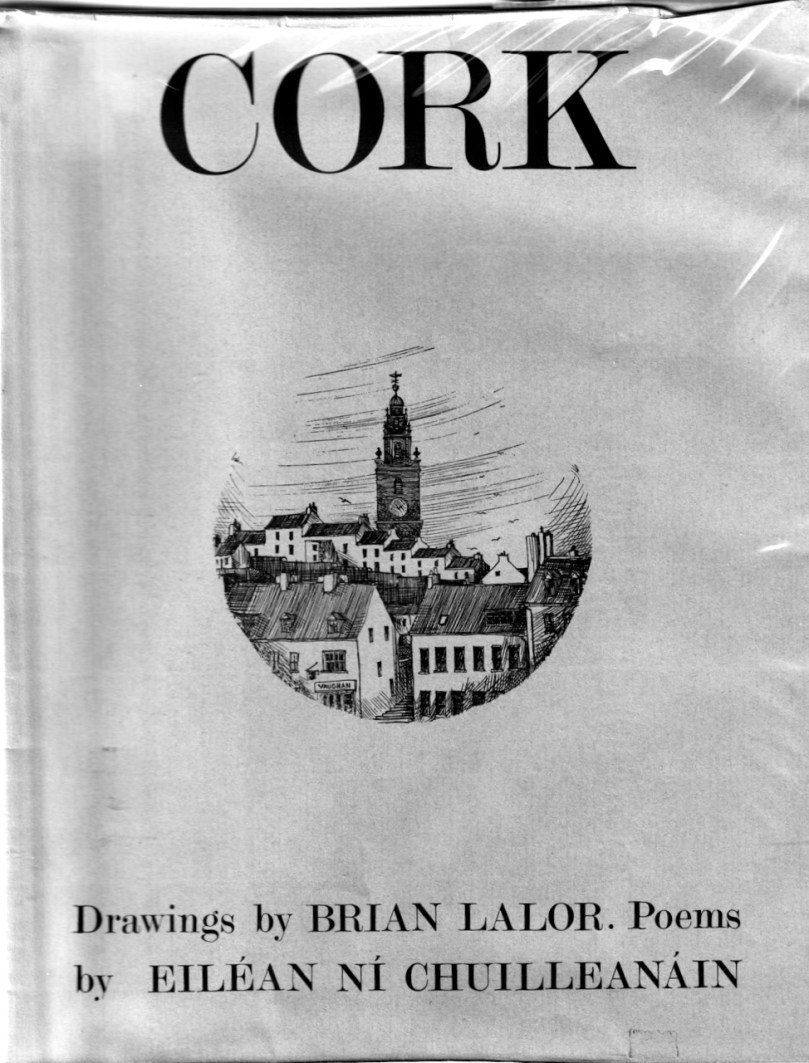
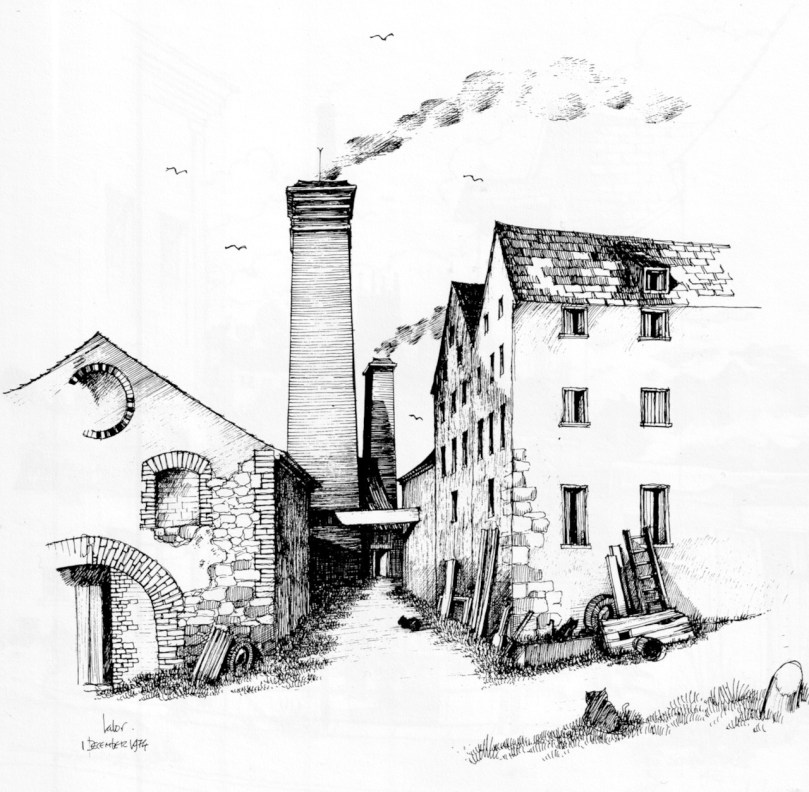
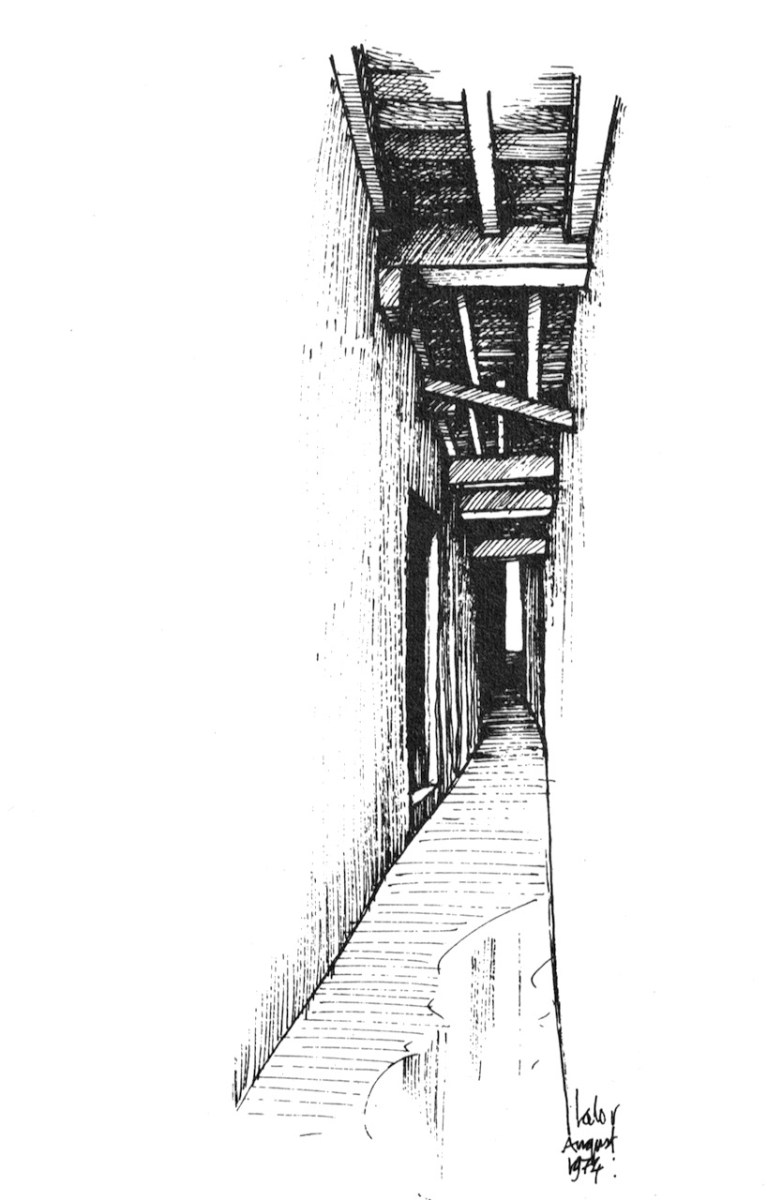
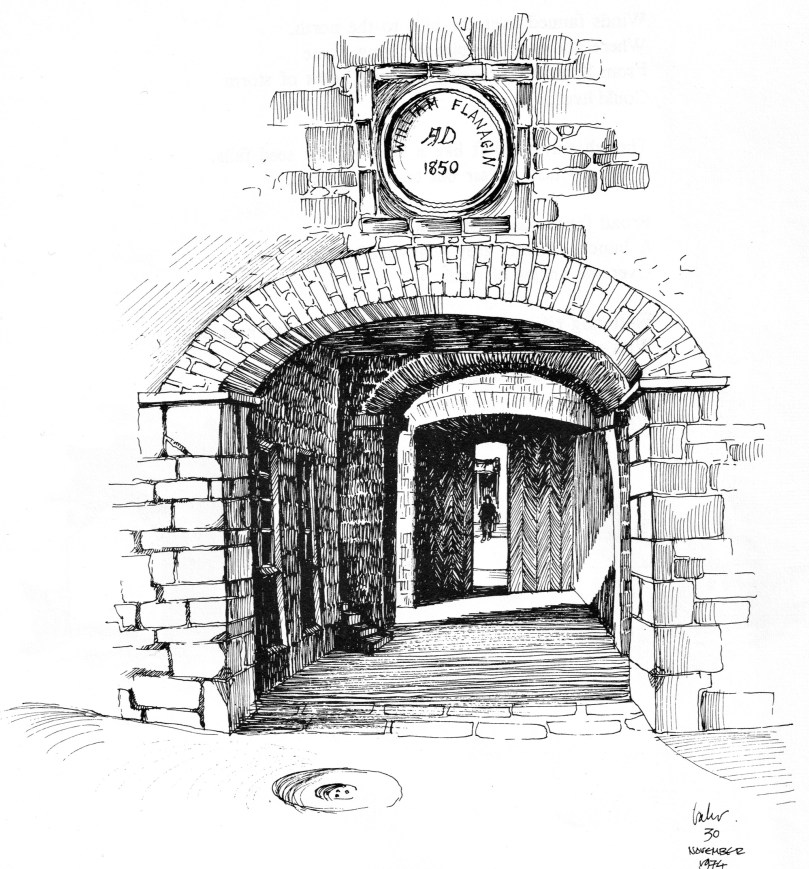
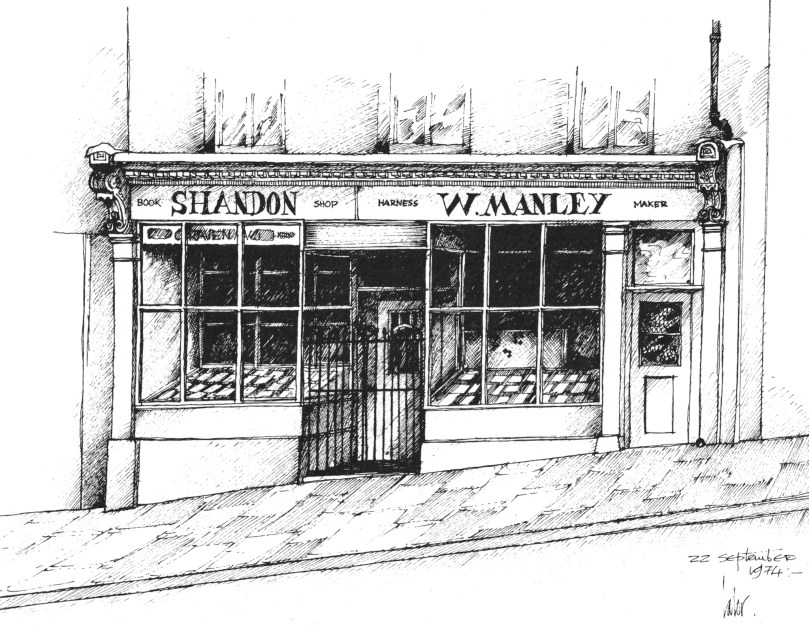
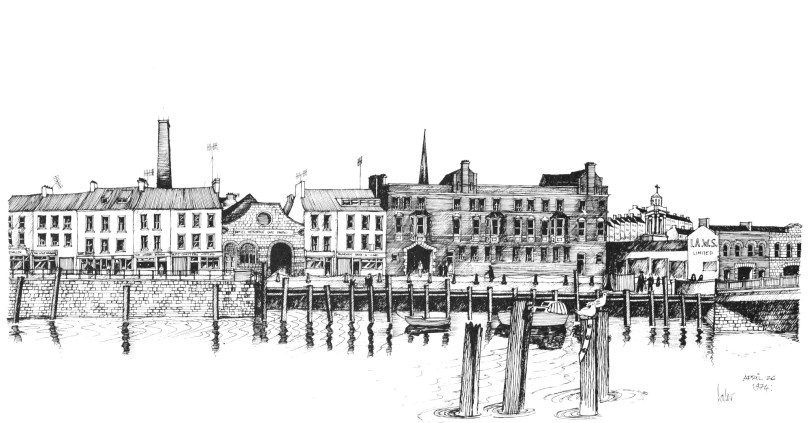
In 1973 and 1974 the artist and writer, Brian Lalor, made a series of drawings of Cork, his native city. These drawings were published by the Gallery Press in 1977, along with poems by the Cork poet Eiléan Ní Chuilleanáin, in a book simply titled Cork. Both poet and artist/writer were already established and both have gone on to forge distinguished careers in Irish art and literature.
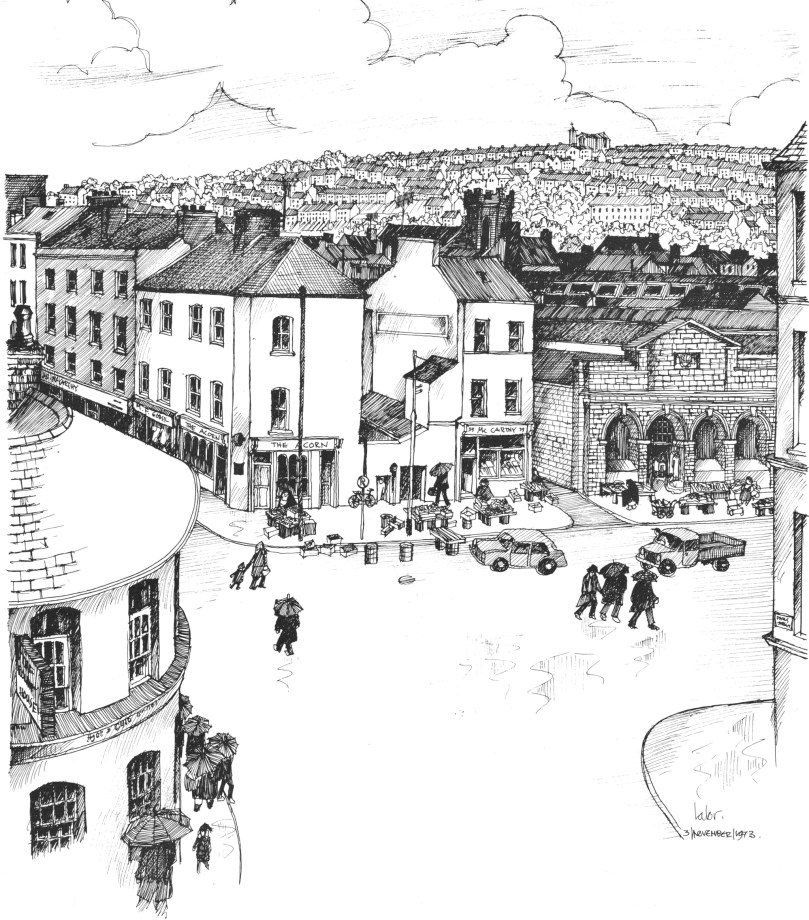
Grand Parade
I have owned a copy of this book since 1978 – a birthday gift from my mother. Knowing of my love for the city of Cork, my home for seven years, she mailed it to me in Canada. I have cherished it ever since. The copy she posted to me was signed by Eiléan Ní Chuilleanáin. This year, seated in our living room overlooking Rossbrin Cove, Brian Lalor signed it for me too.
Brian’s drawings of his (and my) beloved Cork capture a city on the edge of modernising. He has graciously given me permission to reproduce some of his drawings in these posts and I will use his own words (from A Note on the Drawings at the end of the book) since they capture so much better than I ever could his fascination with the city and his intentions in recording its idiosyncratic character.
The South Gate Bridge. That couple looks familiar
This collection of drawings developed as a result of a habit of many years, begun in Cork and fostered in Europe and the countries of the Eastern Mediterranean, a habit of of never passing a laneway, flight of stairs, courtyard or public building without investigating what secrets it might conceal, what historical or human curiosity might be within. Coming then to Cork in the early seventies and finding it a city reeling from the cataclysm of “urban renewal,” it seemed an appropriate time to attempt a record of the inconsequential details which made up the character of the place, while the opportunity still existed.
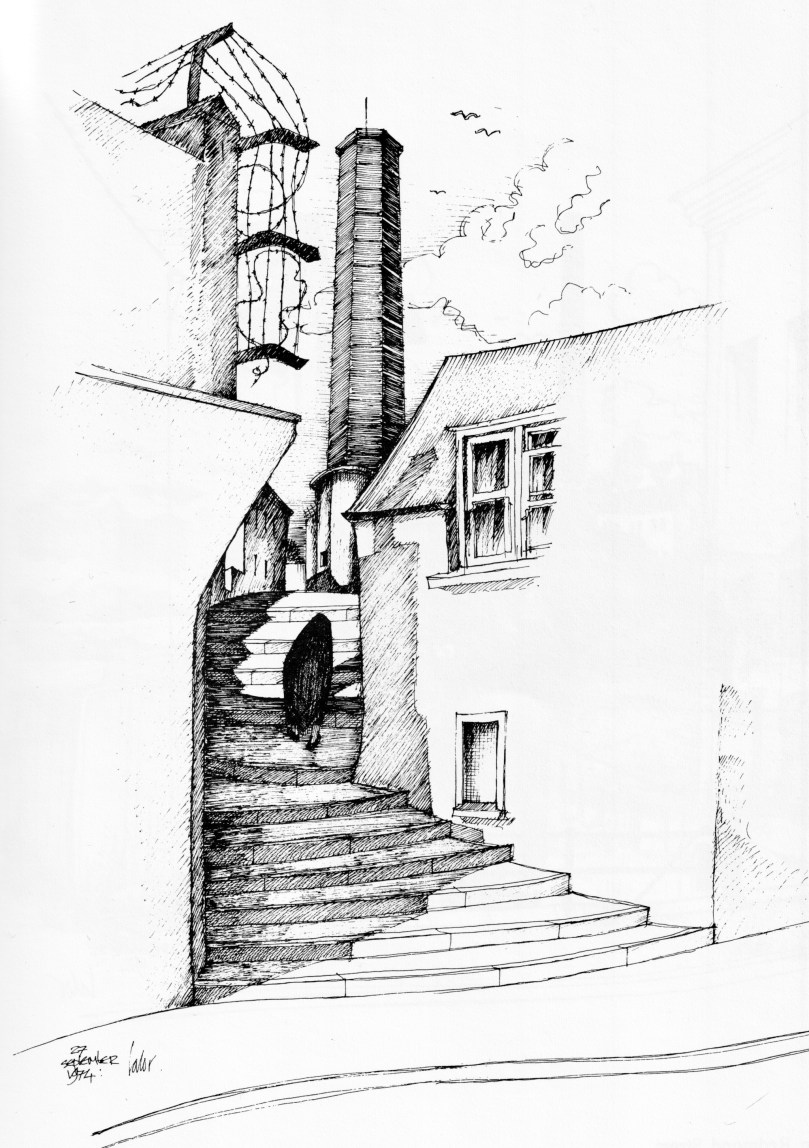
Upper: Paradise Place. Lower: Curry’s Rock. Older women still wore the traditional shawl in the early 70s and were known as Shawlies
This is not Cork seen from its public face but from above and behind, not just observed in its principal role as the second city of the Republic but sought out in all its idiosyncrasies and individuality. The monuments of Architecture, memorials to wealth and power, religious fervour and civic pride will not be found here, except when they creep in by accident for, avoiding the European grand manner, they block no vista nor crown a Summit. Rather, they lurk in unexpected places and just spring upon one, owing their location principally to occupying the sites of earlier ecclesiastical foundations. This latter fact is the clue to understanding the city of Cork, the link with the past. For it was in the periods of its earliest habitation that the considerations of commerce, security and the political existences of the time gave rise to what held as the nucleus of the city up to the present day.
Cornmarket Street
Cork was never a planned city; it grew organically from the meanderings of the River Lee through the marshlands of the depression between the surrounding hills. Its streets and by-ways follow today those of the middle ages, and the water channels which gave access from the early town to the outer expenses of the river basin. The line which runs from the Episcopal seat of Shandon to that of Saint Finbarr’s was the principal artery of the ancient city of Cork, as it is today nine centuries later. It is around this thread that the drawings are gathered. This line held the centre of all life within the city from its foundation in the tenth century, to the late nineteenth, and even today what is outside this line is peripheral to the soul of the city.
Welcome to the UCD Library Cultural Heritage Collections blog. Discover and explore the historical treasures housed within our Archives, Special Collections, National Folklore Collection and Digital Library















 Roaringwater Journal