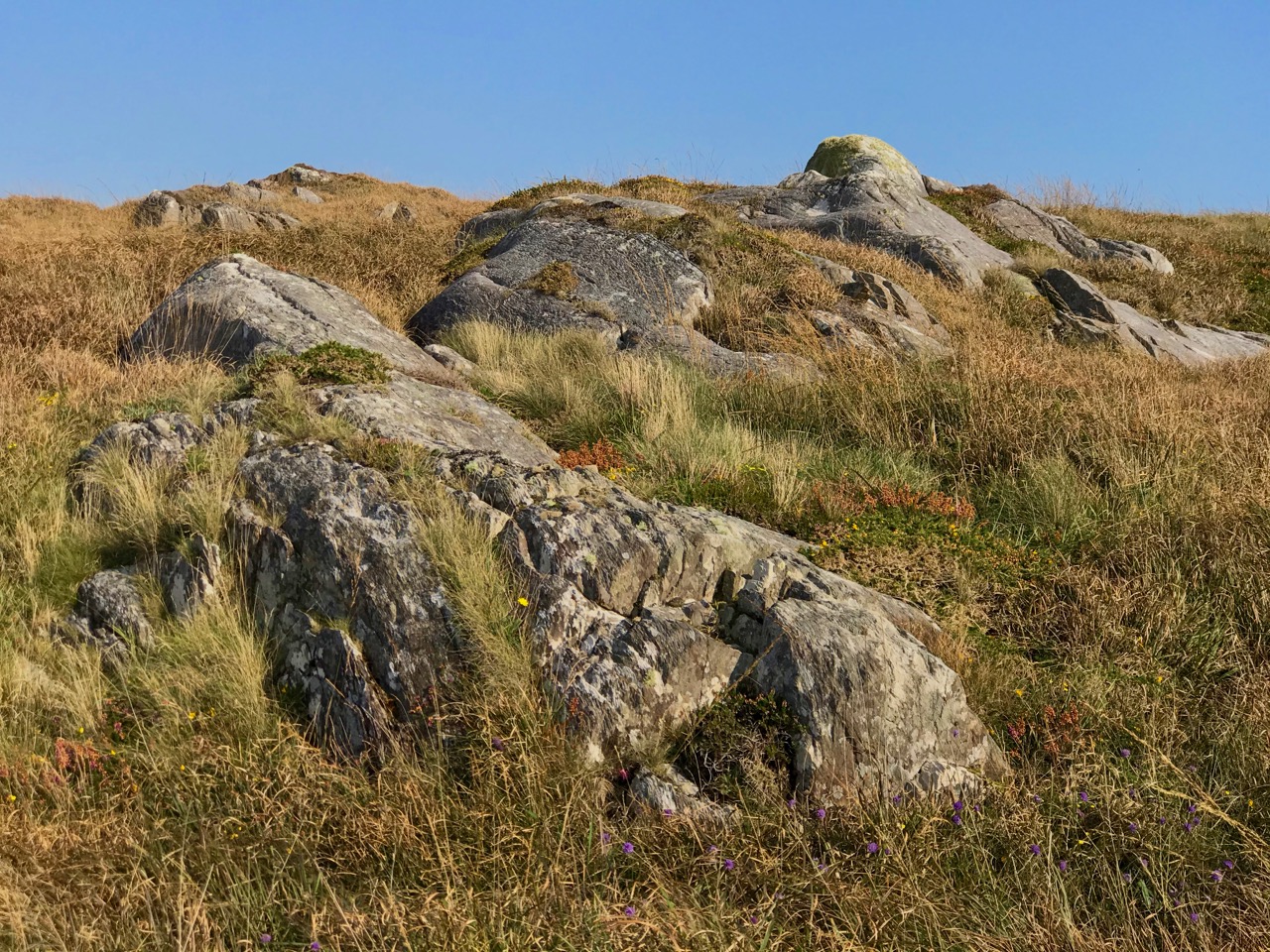
Every now and then I republish one of Robert’s classic pieces. This one is from five years ago. We were both fascinated by the West Cork landscape and, being Robert, he wanted to get under the skin of it all. So what follows is his exploration of what makes West Cork, well, West Cork.
West Cork Rocks, by Robert, from 2021
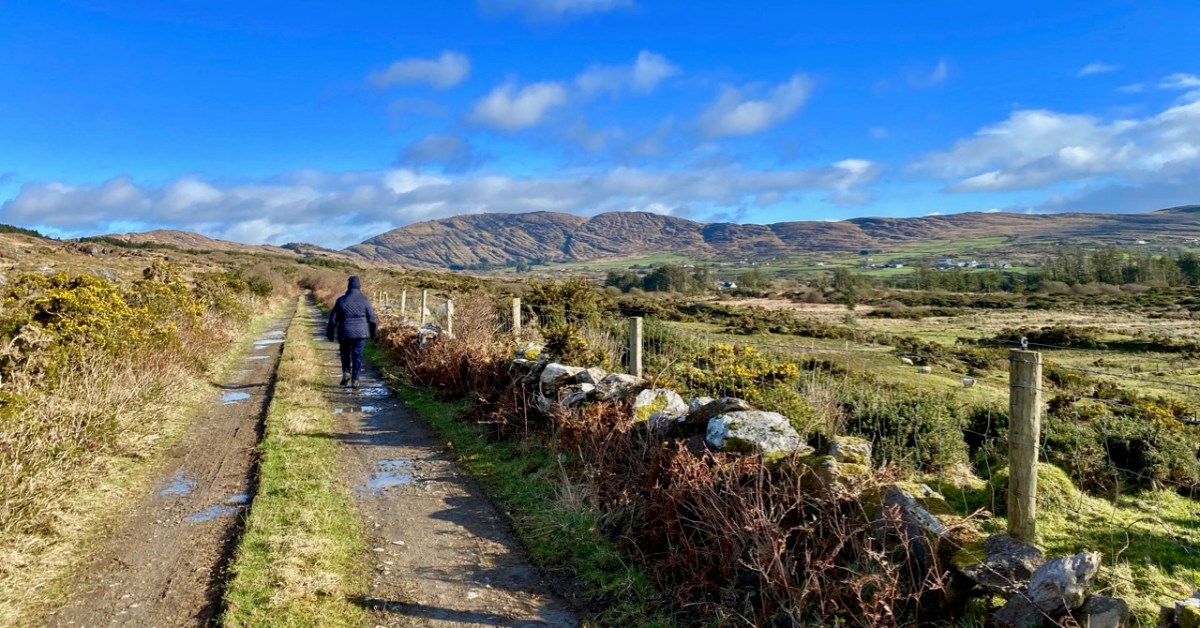
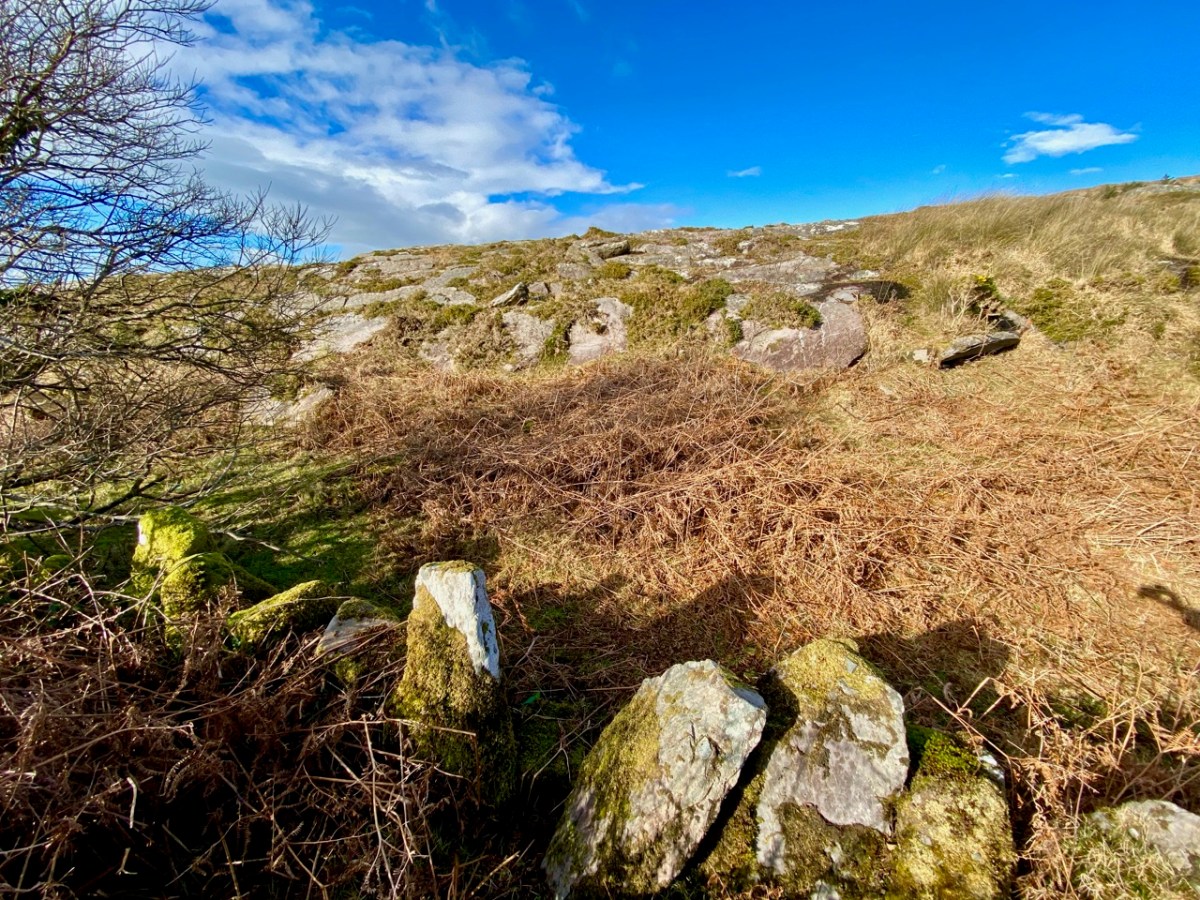
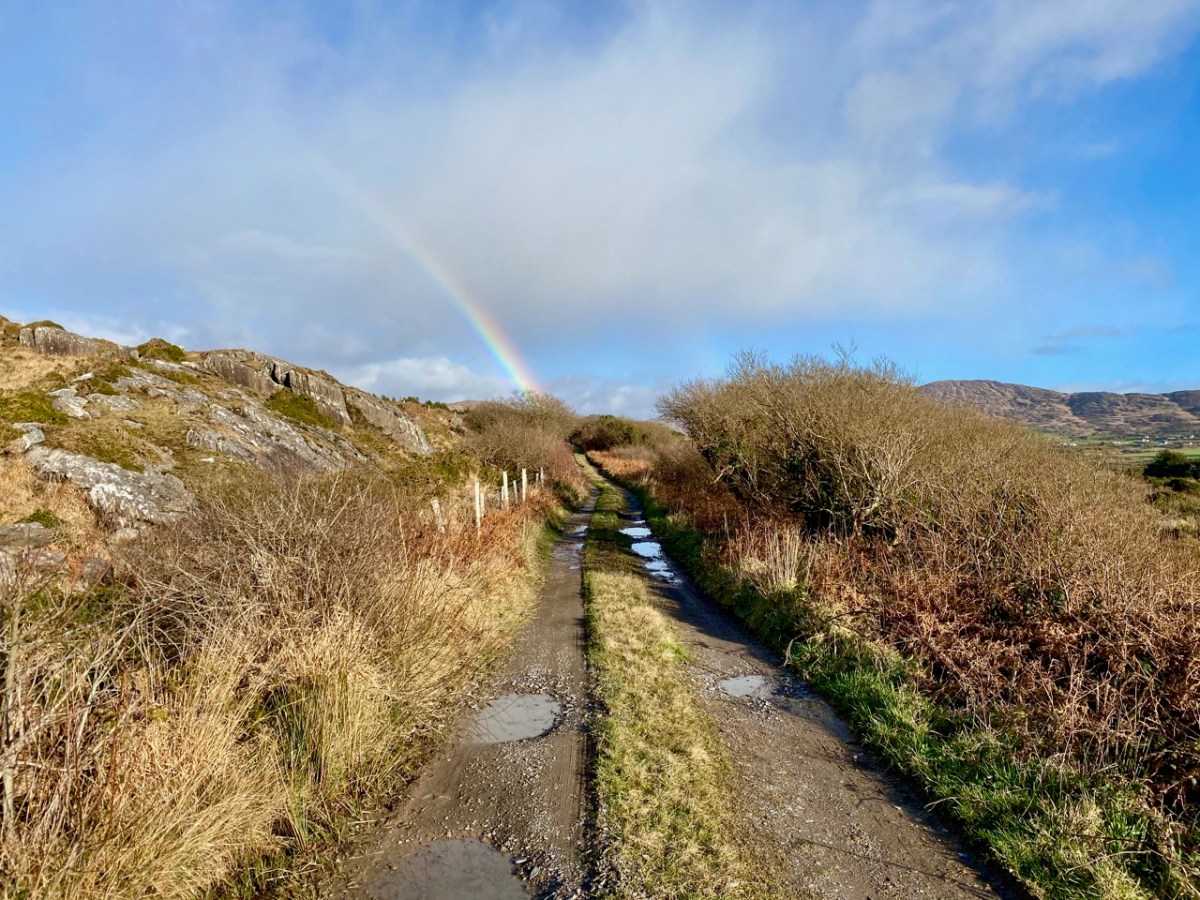
It certainly does! But this post is – literally – about rock: the hard, knobbly kind that is underneath us, surrounds us, and which has historically built our environment. In the picture above, taken on a clear February day during the most severe Covid lockdown, Finola is walking through beautiful West Cork. Beyond her is the great, gaunt outcrop of Mount Gabriel. Beside her is a traditional stone wall: its design unchanged over centuries. In the landscape all around her are rocks – large and small – scattered in the rough pasture.
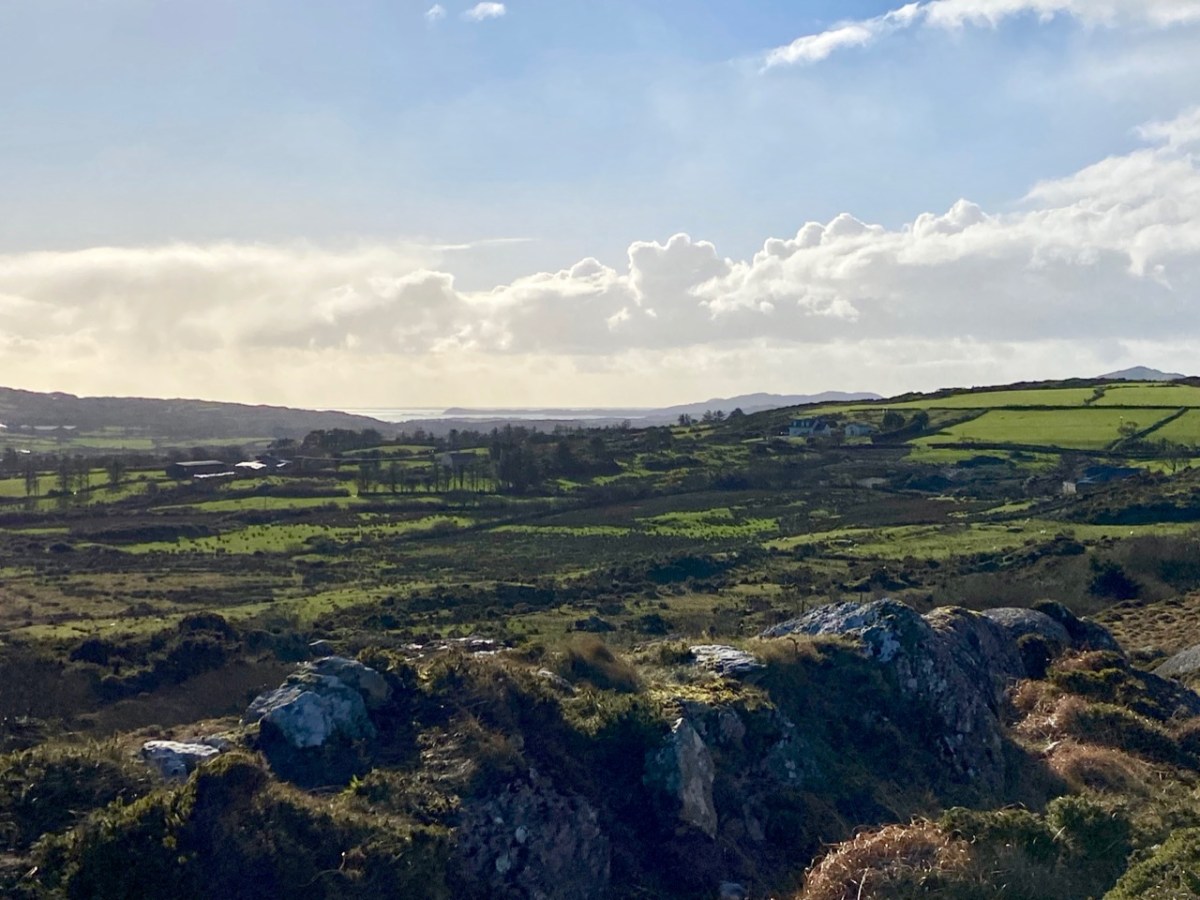


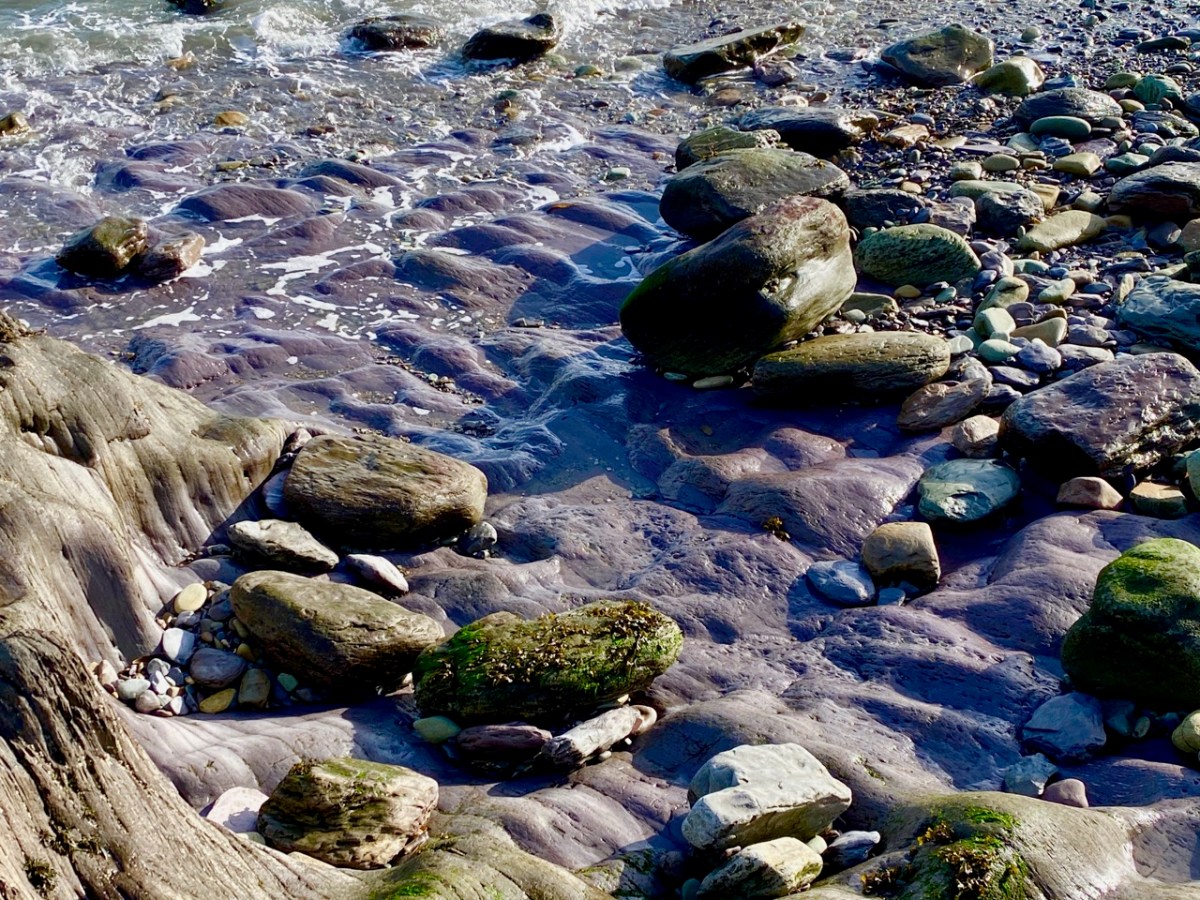
In the distance, of course, is the coast: there are very few places in West Cork where you cannot, at least, catch a glimpse of the sea – and so many where you can immerse yourself in it, or stand on its shore and admire the infinite textures which those same rocks display. It’s mostly Old Red Sandstone: that’s the correct geological term. It was laid down in the Devonian period – a while ago now: between 400 and 300 million years, in fact. This followed an era during which our mountains were built, known as the Silurian times. Continents were shifting and separating, and what was to become Ireland was a great arid desert – deserted: there was no-one around to see it!
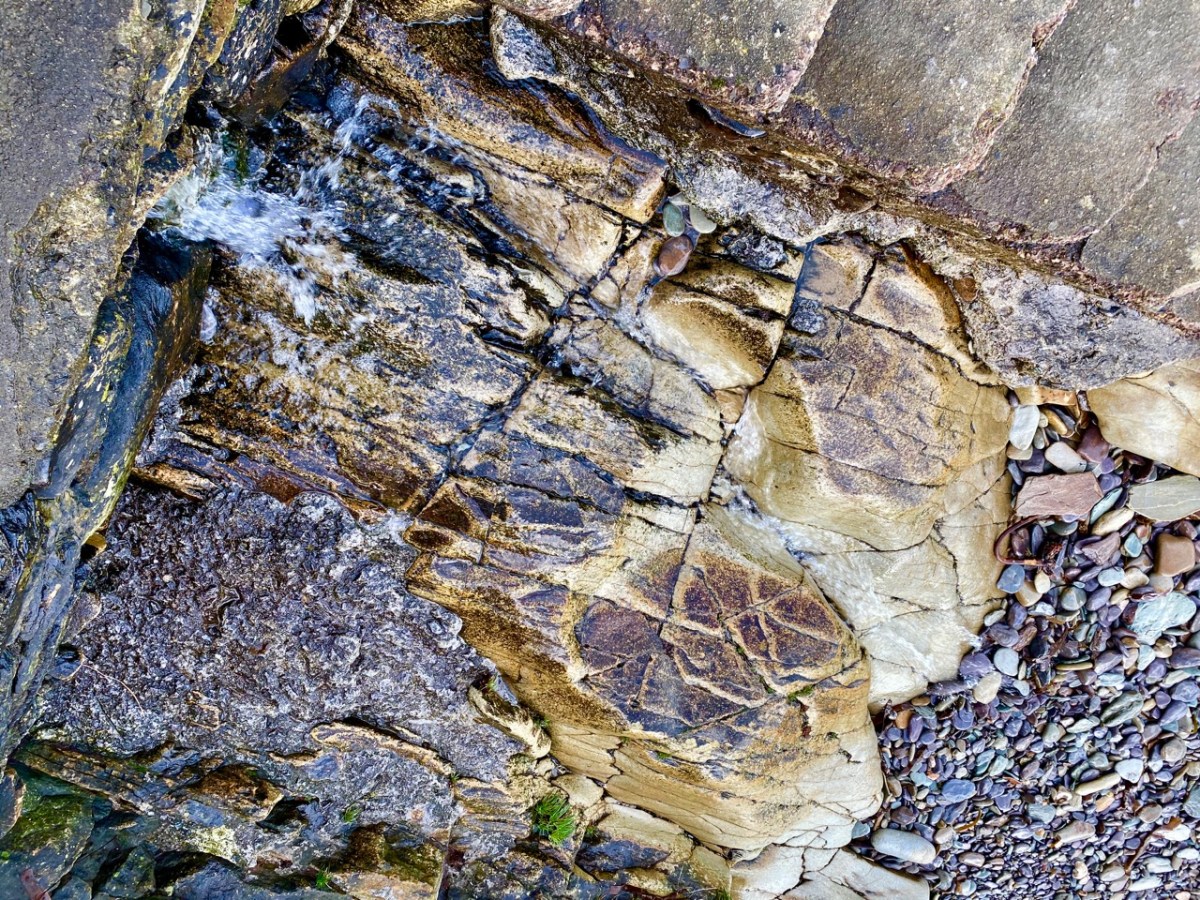
Old Red Sandstone: in fact it varies in colour depending on its local history. Broadly, some of the mountain rocks are purple-grey, while those closer to the sea could be greeny-red, but that is probably far too wide a generalisation. The sheer beauty is in the infinite shapes and colours. What artist needs any finer palette?


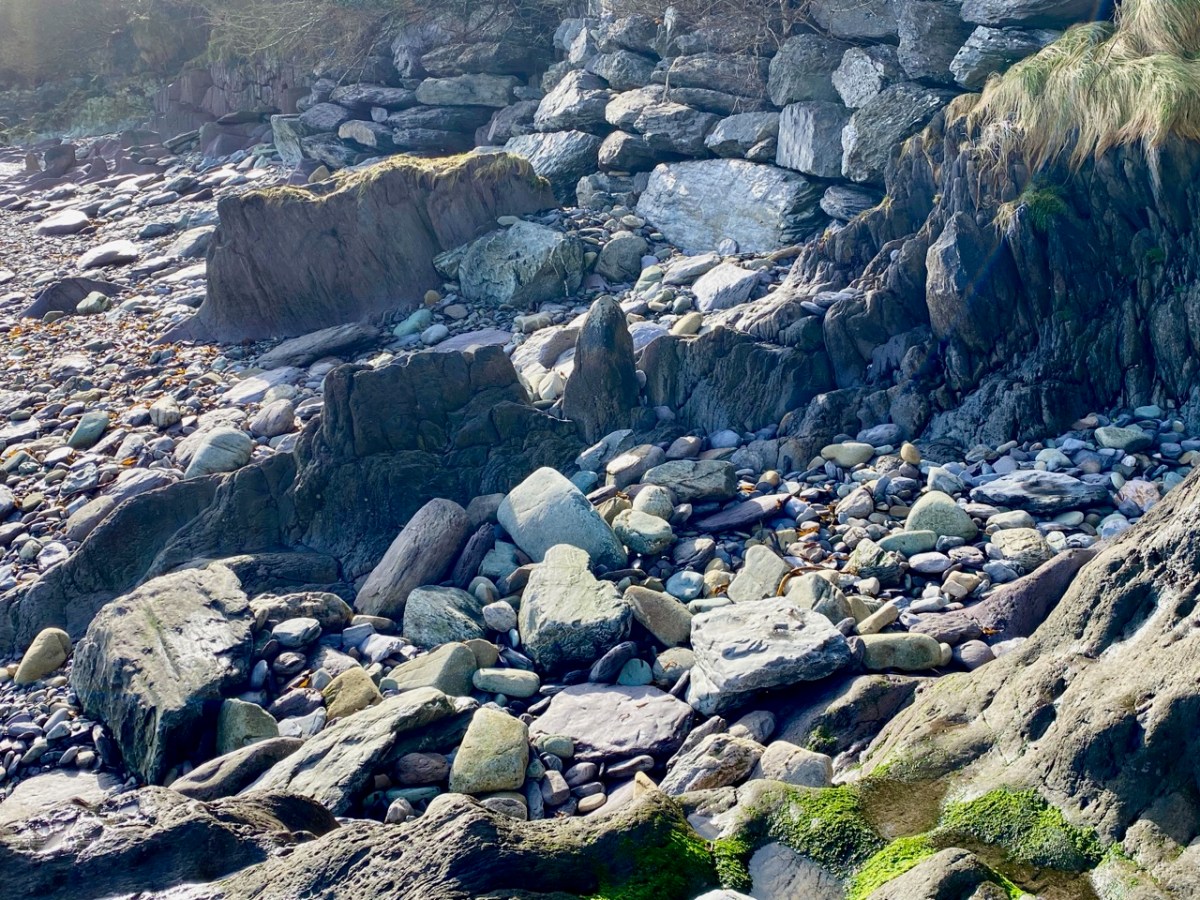
In those deserted times, an ‘Old Red Sandstone Continent’ extended over what is now northwest Europe, but it is worth noting that in ‘our’ part of it – the Munster Basin, covering today’s Kerry and Cork – we have one of the densest masses of this rock in the world: at least 6 kilometres thick. And we have to appreciate what it has given to us – high mountain spines sweeping steeply down to an indented shoreline of coves, creeks and inlets, with the myriad mottled islands that we oversee. An unparalleled, unfolded world.
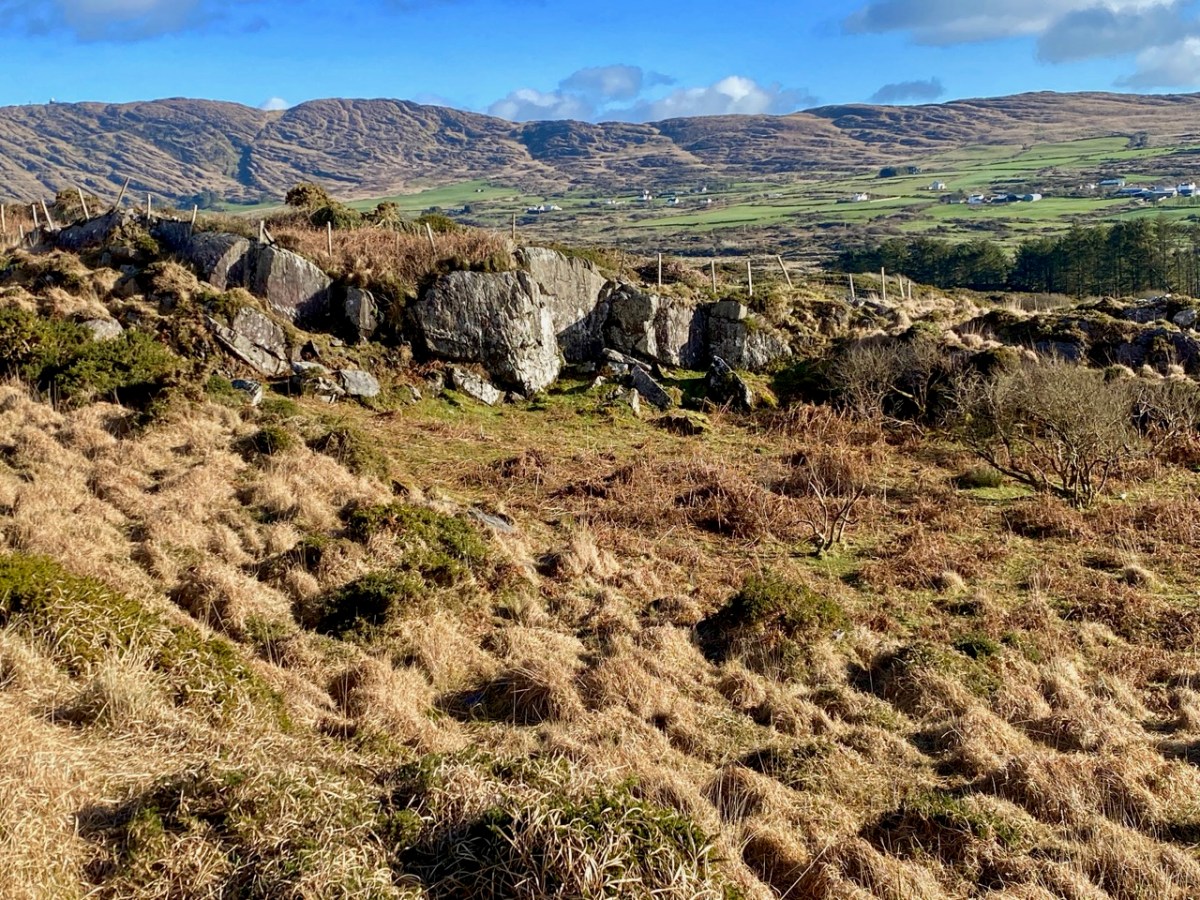
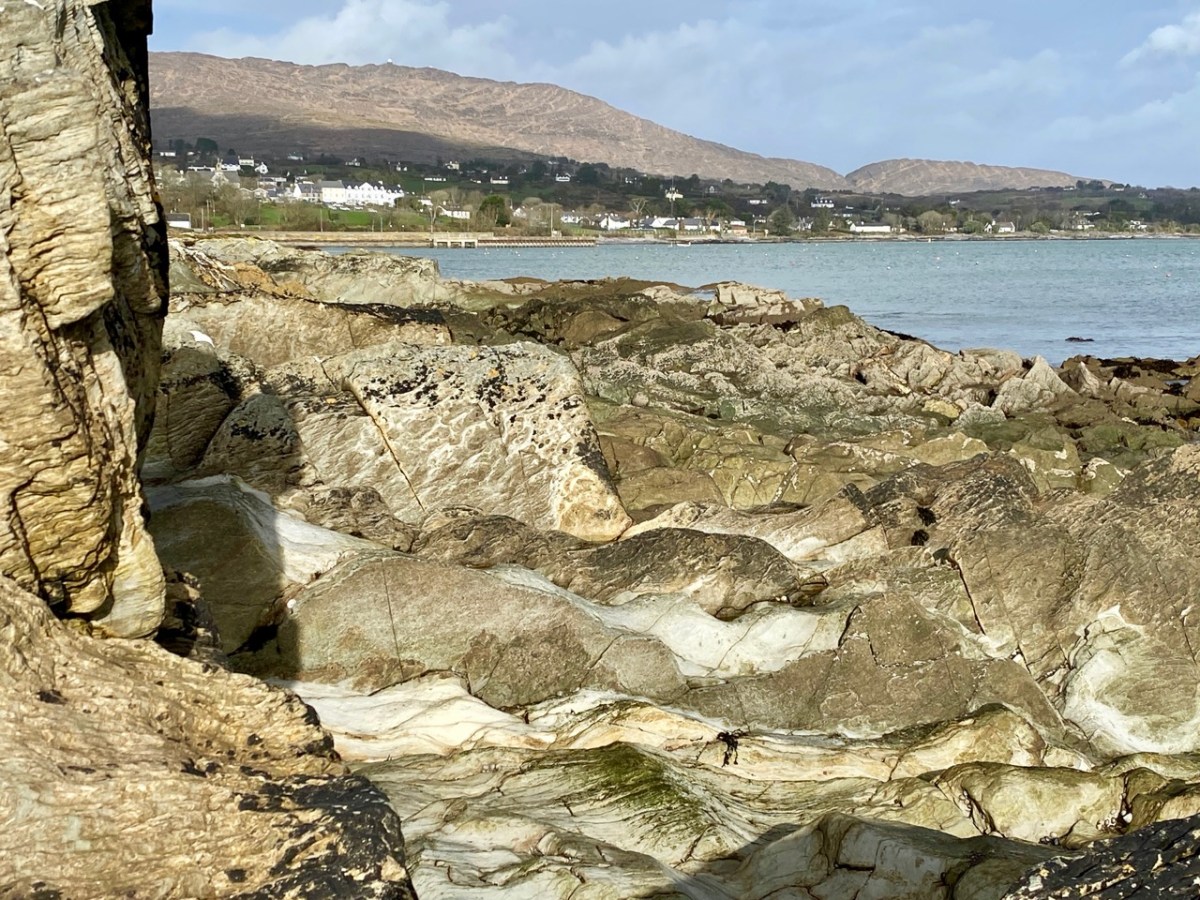
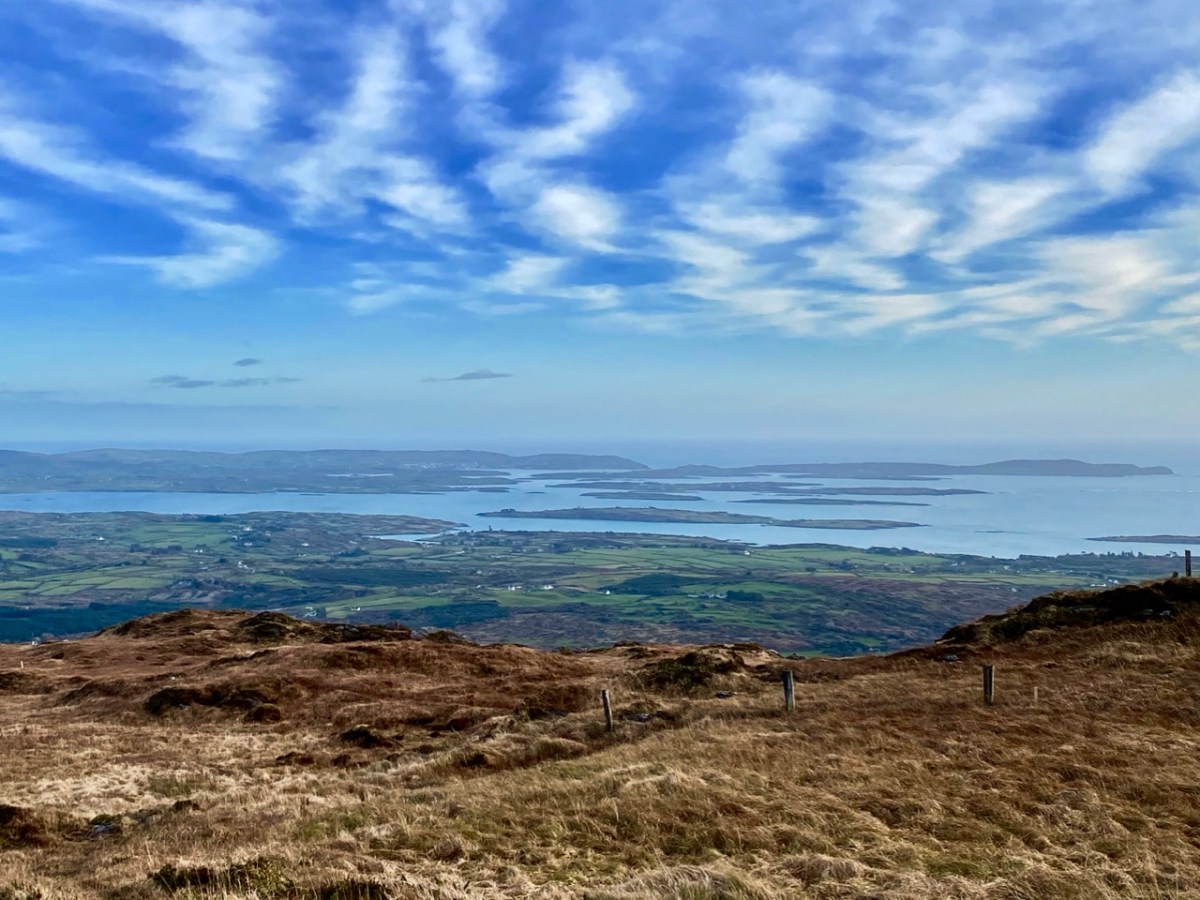
After the ‘desert’ period, but much later – only about a million and a half years ago – came the Pleistocene Epoch. the word is from the Greek pleistos and kainos – meaning ‘most recent’ – and that brings us almost up to date. That was a time of great climate events: deserts were inundated and then covered in ice sheets 3 kilometres thick, while moving glaciers tore up the rock surfaces, advancing and retreating several times. Eventually, what had been desert became arctic tundra. It is supposed that the ancestors of our present day life forms happened along during this epoch, and managed to survive. But we don’t find any traces of them until after the last ice sheet retreated in our part of the world – only about 12,000 years ago. The landscape that was left behind was inundated by rising sea levels, and the very last land bridge (between Cornwall and the eastern tip of Wexford) was washed away after that, but not before the Giant Elk and its mammal relations had got a foothold on the western side. The snakes, however, didn’t make it. And what of the humans?


Well, the humans embraced the rocky landscape. They made their marks on the outcrops; then they moved the rocks about, and made architecture from them. We can still see their efforts, some 5,000 years later.
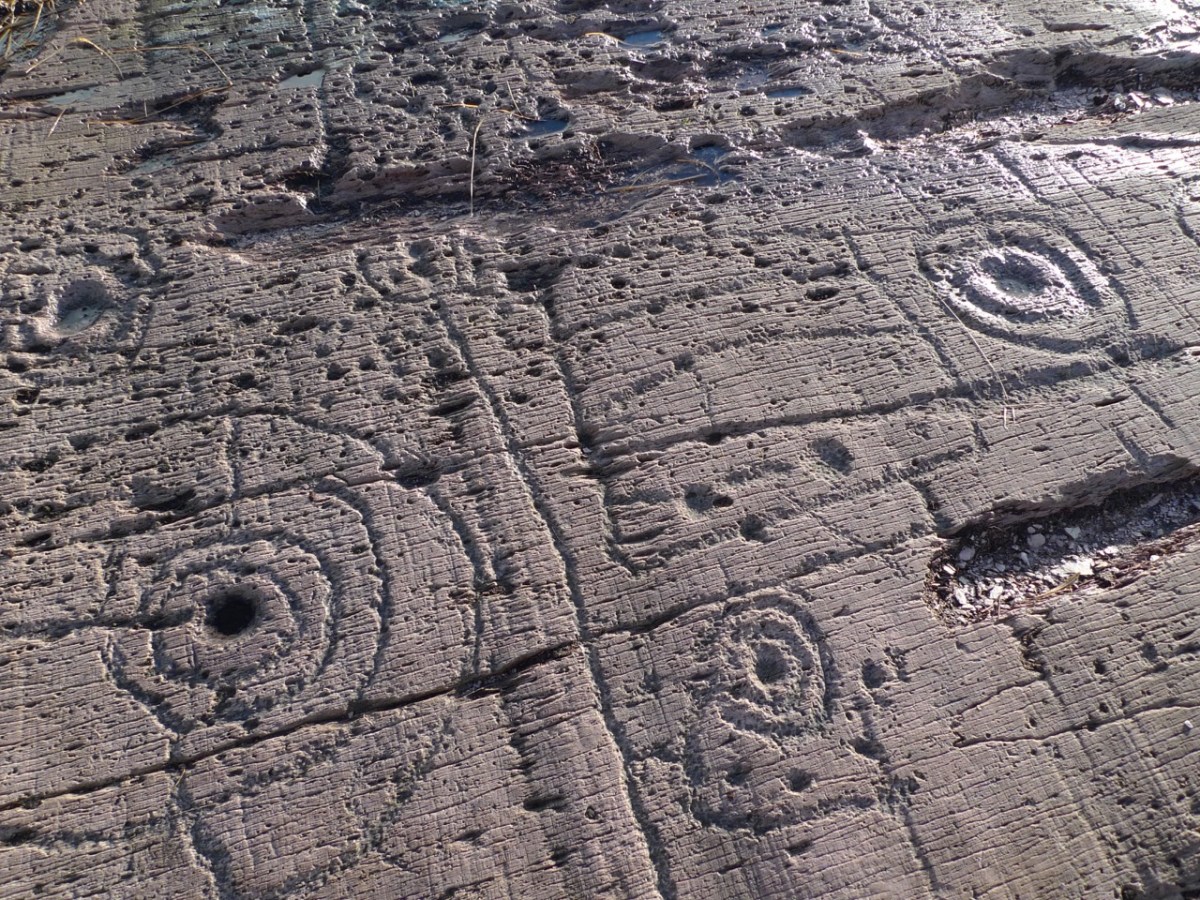

These Neolithic carved motifs could be the earliest human interventions on the natural Irish landscape: they might date from 3,000 BC. These examples are from West Cork, and were only discovered a few years ago. Finola wrote the definitive thesis on Rock Art when she studied at UCC in the 1970s, and we have staged exhibitions and given talks on the topic.
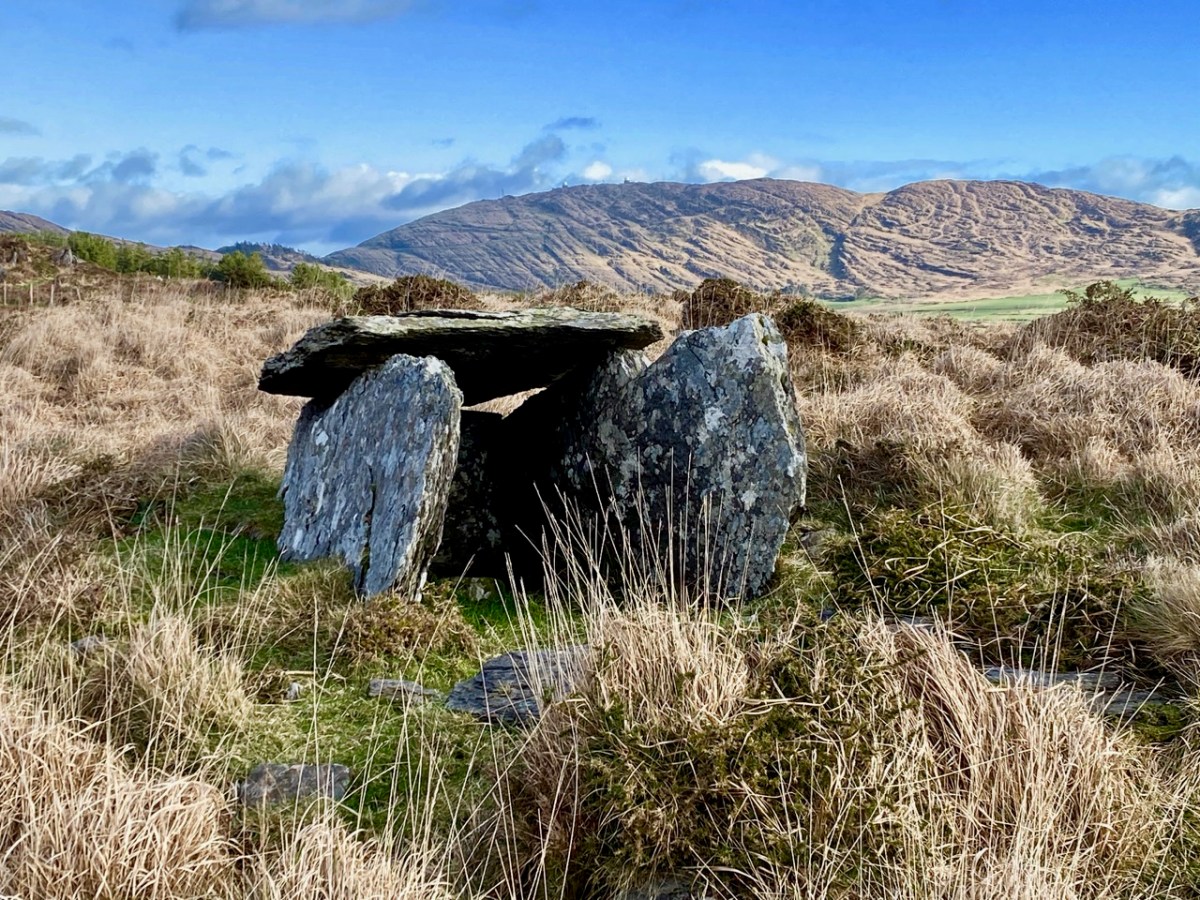
A couple of thousand years later, Irish people started to build things with the stones they found around them. This wedge tomb under the backdrop textures of Mount Gabriel at Ratooragh has rested here since the Bronze Age. Finola’s post today uncovers the fascinating folklore stories that generations have told about such artefacts. But restlessly working the fabric of the landscape – Old Red Sandstone – into walls, shelters, tower houses, temples and towns has never ceased.


Discover more from Roaringwater Journal
Subscribe to get the latest posts sent to your email.


Utterly delightful
LikeLiked by 1 person
Dear Finola. Thank you yet again for your wonderful blog posts. I recently passed on your comments about Dereen Gardens to my friends who work there. I think you will get a reply from them which I hope will be of interest to you. In the meantime I have a question for you about the rock art found around W Cor k and Kerry. How do you knpow how old it is? as it seems to n=me that dating it must bery difficult as it is not possible to dig beneath it ad find dateable evidence to carbon test.
I hope we can meet up again if there is another archeology festival in Kerry.
Kind Regards,
Steve Allin
>
LikeLike
There was one excavation at a Rock Art site that confirmed a Late Neolithic date. Apart from that, the evidence most s based on analogy with other rock carvings and with megalithich art.
LikeLike
And classic it is, thank you for sharing it again.
LikeLiked by 1 person
Some wonderful photos showing the diversity and sheer power of these impressive rocks – and those colours!
LikeLiked by 1 person
Wonderful account of both West Cork’s natural geology and the the work done upon it by ancient civilizations!
The all too familiar West Cork coastal rocks are as if they were flipped 90 degrees eons ago, their strata appearing almost vertical. In fact, I am sure they were. You can see this clearly when you look down from the Mizen.
LikeLiked by 1 person
Obviously, you are not short of rocks then, Finola!
LikeLiked by 1 person
Certainly an impressive read of the stories, both human and otherwise, embedded in stone.
LikeLiked by 1 person
Perhaps should have said rock…”rock”
LikeLiked by 1 person
Good old Robert ! A marvellous summary of rocky history from distant past to the very present ! The photos are powerful too. I am about to re-construct my stone boundary wall along the waterfront, about 200 yards of it, which I think was built about 250 years ago by some strong men with no machinery, some of the rocks being quite large. It would need three men to move them. The years have covered them with lichens of various sorts and different colours , so that each rock is a work of natural art, and the wall was a thing of great and casual beauty. How long will it take for the new stones to be thus decorated ? Don’t know.
LikeLiked by 1 person
Many thanks for this, Finola. Very interesting.
One teeny weeny feedback: pleistos meaning ‘most’ and kainos meaning ‘new/recent’ is the origin of Pleistocene! Sorry, I’m a very ex Classicist …
Would I have your permission to use some of this text, with appropriate acknowledgement, for any future Biodiversity Day?
I had a bit of a table about rocks and even managed to find a bit of limestone with fossil remains to speak to the ancient biodiversity of the area (even if carried to the Sheep’s Head by glacial activity – I think it probably came from a drumlin eroding onto the seashore).
Vivien xx
LikeLike
Thank you and Fixed! And of course, Vivien, please help yourself to anything. If you require photographs, let me know which ones and Iâll dig out the originals. Thank you again Finola
http://www.roaringwaterjournal.com
>
LikeLike