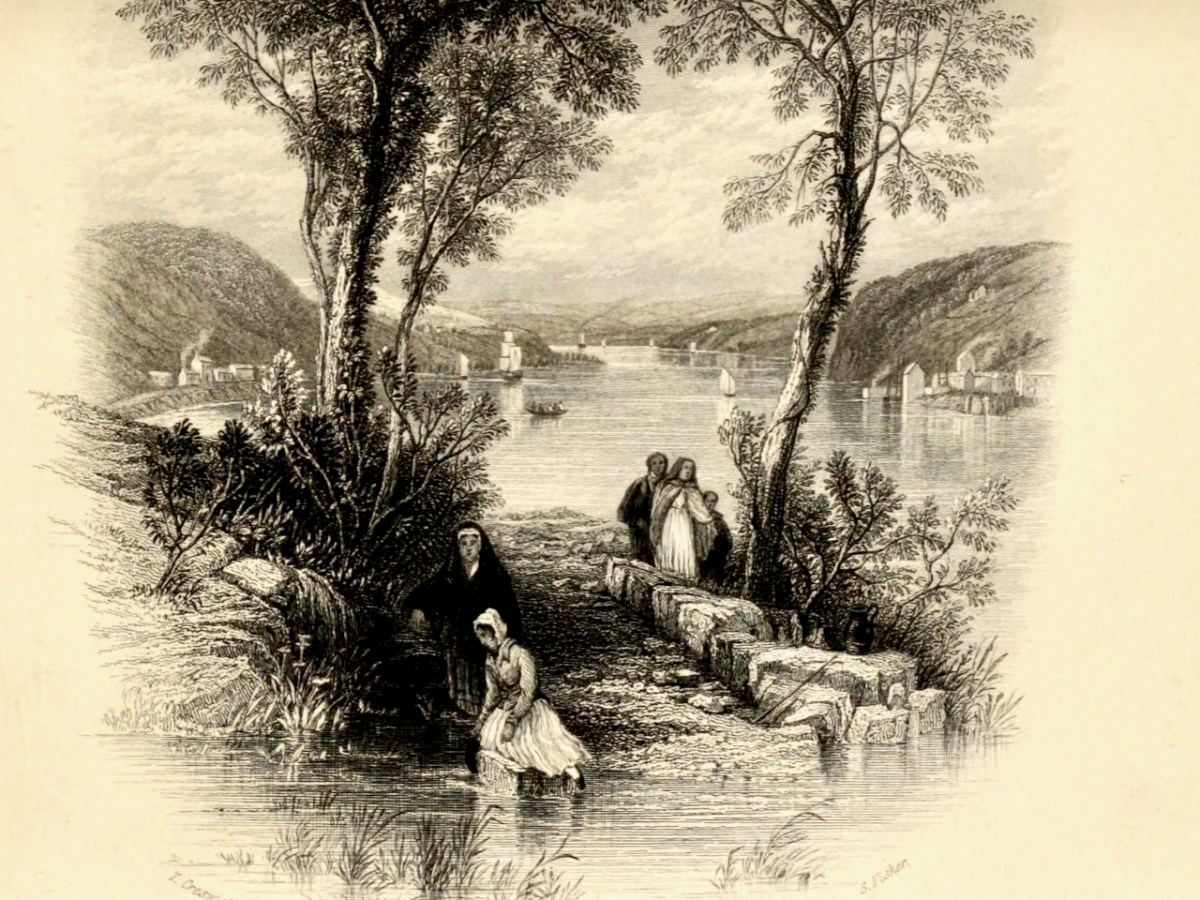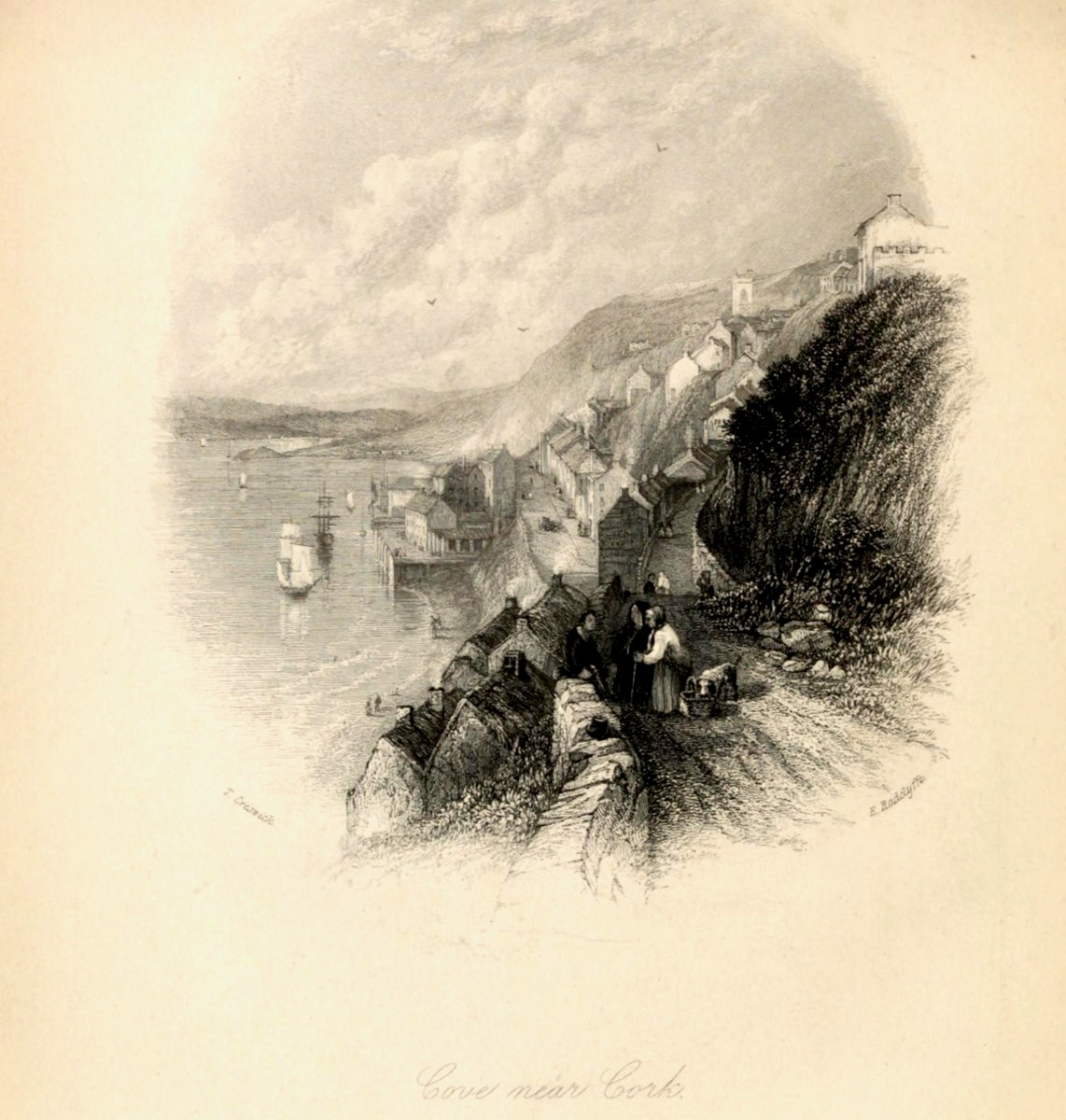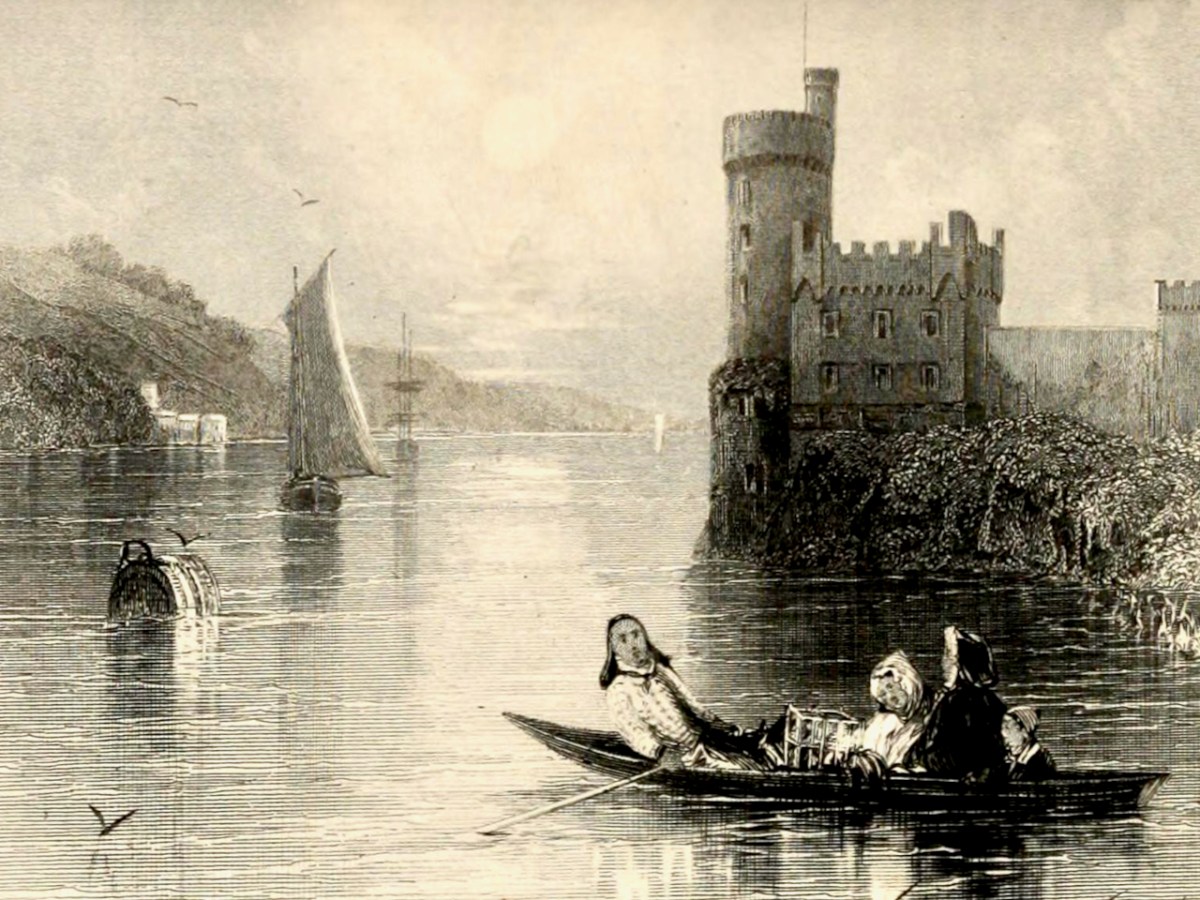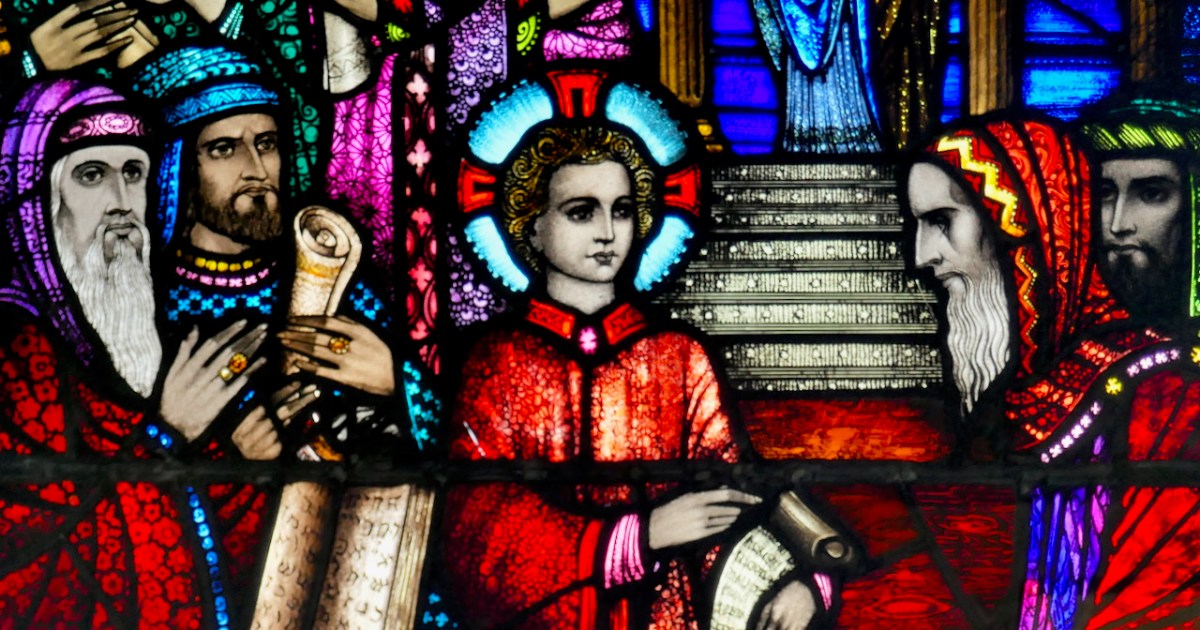
The Oldest Adventure – Told Again!

Legend of the Salmon of Knowledge by Charlie Fallon (Saatchiart)

You may remember that, back in the Covid days, I put up a post about the Irish Folklore Commission, and mentioned Bríd Mahon, from Cork, who had found references to many Irish versions of . . . the earliest known folktale . . .

Seán O’Sullivan showed me an international folktale known in Irish as ‘Ao Mhic an Bhradáin agus Ó Mhic an Bhradáin’ (‘Hugh and O, the Two Sons of the Salmon’) . . .

It was the earliest known folktale, first discovered on Egyptian papyrus 3,250 years before. During my years with the Commission hundreds of variants of that far-flung story were gathered in remote hamlets on the western seaboard of Ireland, in parts of Munster, in northwest Ulster and from a group of travelling people on the borders of Wicklow and Wexford . . .

I tried – without success – to find a translation of the story into English. So – nothing ventured nothing gained – I created my own version of the story! I distilled this from the Irish language (although my knowledge of Irish is but rudimentary), using dictionaries and online translation helpers and then putting the whole thing into a sort of vernacular tongue which seems to suit the subject. I think I have the gist of it right enough, but you’ll just have to go along with my own way of telling it. I first published it over two years ago, and feel it’s worth reviving again: perhaps there will be a new audience. I also delved into the Roaringwater Journal archives for a few illustrations to break up the text. For me, it’s a fine story: I hope you enjoy it!

This image has an empty alt attribute; its file name is sons-title.jpg


Hugh and O, the Two Sons of the Salmon

It came about that there was a poor man whose only means of making a living was catching fish. If he came home with no fish, he wasn’t lucky: he could only do his best. The poor man had a wife, but no child came to them, and the years were on them.

Fisherman on Lough Skeagh 1946 (Irish Folklore Commission):

One day he was out fishing with his rod and took a fine salmon. It was hard work, but he reeled in the fish and was about to kill it when it spoke to him! “Don’t kill me’’ said the salmon, “Let me go and I will tell you a story of good fortune.”

The poor man was amazed to learn that the salmon could speak, but he replied: “I will hear the story and, if I am pleased, I will let you go.”

“Listen now”, said the salmon. “I know you have been upset that you have no children; I am glad to tell you that you will soon have two sons.”

“That is certain to be untrue”, said the fisherman.

“I am not telling you a lie”, said the salmon. “Let me go and you will see that I am telling you the truth.”

The fisherman cut the line and released the salmon. He returned home and told his wife the great news. She was not impressed. “It’s a pity you did not bring the salmon back with you for our supper: it’s clear that he was mocking you!”

Nevertheless, within the year the couple were surprised to have two sons. “Look now”, said the fisherman, “wasn’t it the truth that the salmon told me?”

“By my soul it was”, said the woman, “but what shall we call these two?”

“We will call them É Mhic and Ó Bhradáin” said the fisherman. And so it was. They were known as Hugh and O, the Two Sons of the Salmon. You could not put anything between them in looks, manner or speech.

This image has an empty alt attribute; its file name is green-coin-2.jpg

As the boys grew, so did the luck of the fisherman. Every time he went out with his rod his catch increased fourfold, and they became rich enough that each boy could have a hawk, a greyhound and a horse. The boys also had the luck with their hunting.

At twenty years of age Hugh told his brother that he would leave and seek his fortune in the world. “If I am not back in twelve months, then come and find me,” he said.

Hugh took his hawk, his dog and his horse. Also, he did not forget his sword. He tackled the road and had good travels. On a day in winter he got lost in a wood, and stumbled on a fine castle in a clearing. “By the Devil”’ he said, “I’ll go in and wait out the night if no ill will is shown to me.”

This image has an empty alt attribute; its file name is spooky-castle.jpeg

Inside was a fair countrywoman and they began to converse until a terrible noise was heard, and the walls of the castle shook. The girl vanished and it wasn’t long before a big, strong, bad-tempered affair jumped into the room. “What kind of a person has the destiny to end his life in my castle?” he shouted.

“It doesn’t matter to you”, said Hugh. “What the heck, now I’m in I will stay here!”

The two laid into each other with their swords and, in the shock of the fight, the giant was turned to dust. In the morning it was raining all over the woods, and Hugh spent the day wandering. As evening fell, what should come to him but a hare? He took his horse and released the hound and the hawk but the hare outran them all and disappeared into a small cottage in the wood. “Why wouldn’t I go in?” said Hugh.

Inside was a fire in the grate and he sat down beside it. Soon the ugliest old woman he had ever seen came through the door. She made no blessing to him at all, only to look badly at him.

“Come in from the door”, says Hugh, “and share the fire with me.”

“I won’t come”, she said, “I would be scared!”

“What would you be scared of?” asks Hugh.

“That hawk, and I don’t trust the greyhound, and I wonder what this horse would do to me?”

“You are in no danger from them”, says Hugh “They are all honest. Come up and sit by the fire.”

“I will not”, she says, “unless they are all leashed.”

“Why don’t I bind them?” says Hugh. “But I have nothing to bind them with.”

“I’ll give you a way to bind them”, says she, and tore three snares of hair off her head. “Here”, she says, “Use these.”

He snapped a hair leash on the hawk – the old lady must have had very strong hair! And he tied the hound with another snare and the horse with the third. When he had done this the old woman produced a sword.

“Take care, my boy”, she said, “I know you were in the castle last night and you killed my son there. He would despise me unless I challenge you now.”

She wielded her sword and they fought a battle inside the cottage. The woman – who was small – had the advantage because Hugh could not properly swing his sword within the confines of the room. The old woman had the head start on him, and he called out to his hawk.

“Fade, squeeze, snare!” says the old woman. With that the snare closed on the hawk and it could not stir.

Hugh became angry and tried to get the better of the old lady, but it was no use. Soon he was tight-lipped, and called for the greyhound to come to his aid.

“Fade, squeeze, snare!” says the old woman. The snare clipped on the greyhound and she couldn’t move. The fight continued, and Hugh urged the horse to come to his aid.

“Fade, squeeze, snare!” says the old woman.

“I can’t help you”, said the horse, “The snare is too tight on me.”

Hugh’s anger intensified and he was about to take a final blow at her when the old woman took out a magic rod. She hit Hugh with the rod, and he turned into a stone in the middle of the floor. She struck another blow for the hawk, the greyhound and the horse, and there were three more stones in the floor.

The Giant’s Fingers, Co Cavan:

“Now”, she said, “I have avenged my son’s death, and these stones will stay here a long time before anyone will take them away!”

After a year Hugh had not returned home, and O said to his mother and father that he was going to look for him. “I fear something bad has happened to him”, he said.

“It will be little help to you or us if he is dead’’ said his father, but he would not be stopped. He seized his hawk, his dog and his horse, and never forgot to take his sword also.

He travelled a long way and a short way and one evening – why, shouldn’t he find himself in the same wood where his brother had been, and across the wood he found the same fine castle.

“I am tired after this day’s ride”, he said. “I’ll stay in this fine castle tonight, unless anyone puts me out of it.”

The first thing he saw was the fair countrywoman, who was surprised, thinking that he was Hugh – for the twin brothers looked exactly the same. “Where have you been?” she asked. Before he could answer a terrible noise and shaking filled the air and the girl disappeared. In bounced a much larger and stronger giant than the one which his brother had faced up to. 

“What brought you to my castle uninvited?” he shouted. “And what kind of person are you to have the destiny to end your life here for a second time?”

“I was outside and had no place to go”, said O. “But I have no memory of ending my life here before.”

“Come here and I will make you remember”, said the giant, wielding his sword. It was a long night of fighting, but the eventual ruin of the thing was the despatch of the giant by the brother, who settled down and went to sleep.

Tomorrow morning he got up and searched the castle, but failed to find anyone else alive in it. He raised his horse, his dog and his hawk and went out hunting in the demesne.

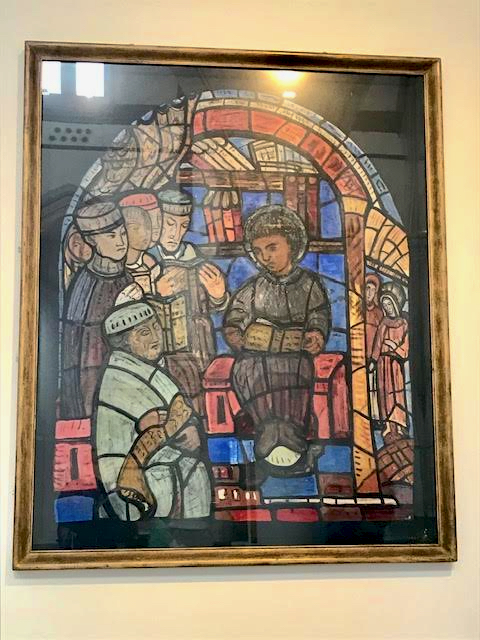
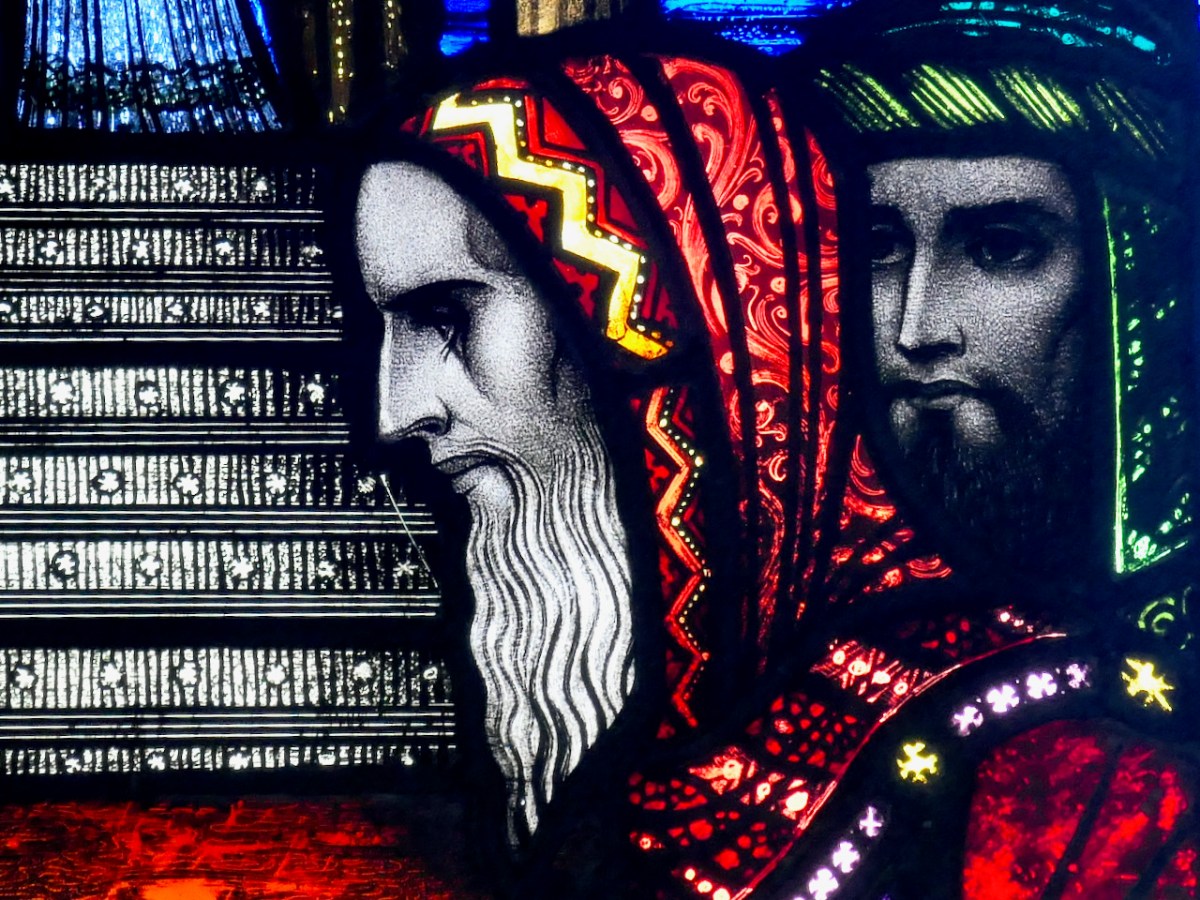
Hare – stained glass by George Walsh:

As evening fell, what should come to him but a hare? He took his horse and released the hound and the hawk but the hare outran them all and disappeared into a small cottage in the wood. “Why wouldn’t I go in?” said O.

There was no-one inside but a fine red fire in the grate, and he sat down beside it. Soon the ugliest old woman he had ever seen came through the door. She made no blessing to him at all, only to look badly at him.

“Come in from the door”, says O, “and share the fire with me.”

“I won’t come”, she said, “I would be scared!”

“What would you be scared of?” asks O.

“This hawk, and I don’t trust the greyhound, and I wonder what that horse would do to me?”

“You are in no danger from them”, says O, “They are all honest. Come up and sit by the fire.”

“I will not”, she says, “unless they are all leashed.”

“Why don’t I bind them?” says O. “But I have nothing to bind them with.”

“I’ll give you a way to bind them”, says she, and tore three snares of hair off her head. “Here”, she says, “Use these.”

He pretended to bind them, but at the first opportunity he put the three hairs into the fire.

“Take care, you scoundrel”, she said, “there’s no doubt that you killed my son – the best son a woman ever had! You were in the castle last night”, she said,“ and my son is dead there today. You did it, for sure”.

“But what is your satisfaction?” says O, “I wouldn’t have killed him if he hadn’t tried to kill me.”

“I’ll tell you”, she said, “I’ll be happy.” She wielded her sword and they fought a battle inside the cottage. They both laid into the battle, and it was the greatest sword-wielding that any man had ever seen between any two, and they continued on ever and ever until O was in trouble. He saw that he was strained and he called for his hawk to come to his aid.

“Fade, squeeze, snare!” says the old woman. 

“I can’t move”, said the snare, “because I’m here in the fire”. So the hawk jumped, and that was it for the woman – her eyes were out. This did not stop the battle between them and she very soon had the headache on O once more. He yelled out to the greyhound, “Give me help.”

“Fade, squeeze, snare!” says the old woman.

“I can’t help you”, said the snare, “because I’m here in the fire”. So the greyhound jumped in and took a piece out of the old woman’s leg. Yet she still gave her best and O was forced to call out for his horse.

“Fade, squeeze, snare!” says the old woman.

The snare spoke and said, “I’m here in the fire”. With that the horse came to his aid and didn’t the old lady explode with both her legs gone.

From then on it was O taking the lead. He raised his sword to strike the final blow: “Here’s an end for you,” he shouted.

“Hold on”, says she, “If you remove my head or my walls of life, your brother and his horse, his dog and his hawk will remain captive forever”.

“How can you bring them back?” he asked.

“There’s a magic wand, stuck under that rack by the fire. Hit these stones with the rod and they will come back as right as they ever have been.”

He made for the rod and the first thing was he had struck the witch and she turned to stone herself! Then he struck the other four stones and his brother, the hawk, the greyhound and the horse were back right as they had always been. There was the great reunion and the sharing of stories, then they were all for going back to the castle. “We have the magic wand now”, they said, “We can do whatever we like – let’s call and see what big lads there might be there now.”

There was the fair countrywoman, and wasn’t she surprised to see the two men standing there as alike as you could ever believe. O grabbed her for fear she would vanish as she had before. “Now”, he said “there’s something strange about you, for you left me before when the ground shook.”

“It’s like this”, she said, “ there are three of us here enchanted. The old woman comes every night and puts the magic on me, then in the days I have to do all the chores in the castle for her two sons. She didn’t come at all last night.”

Enchanted Woods (The Dark Hedges, Co Antrim):

“No”, says O, “and you will never see her again. I ended up with that old girl last night and I took the living breath from her. But tell us how you came to be here?”

“It’s too long to tell”, said the girl. “There were only the two of us, sisters – and the best times were when we were living with our father and mother: strong, rich and important. Our mother fell ill and knew that there was no cure. She called us to her bed and told us that she saw a disaster on the horizon. The old powers would come and put an enchantment on us, and take our castle. Our father asked how long we would stay enchanted, and if there was any cure. There was none, she said, unless the Sons of the Salmon would ever find us. The old powers came to take the castle from us. When we resisted the old woman struck us with a magic wand and we were turned into three stones – my father, my sister and I. Only I was released every day to carry out the chores. That is how we have lived our lives up to now, and if the old woman is dead then perhaps the magic is at an end.”

“She is dead”, said Hugh, “as we have survived the magic. Where are the stones that were made for you and your father?”

She showed them the stones. Hugh beat the magic wand on the stones and there were all three bounced up as well as they ever had been. Then their stories started together, with the father telling all that had taken place. “And now”, he said, “we believed that we would be captured forever unless the Sons of the Salmon lifted the magic. But you cannot be the Sons of the Salmon, yet the magic has been lifted!”

“That doesn’t matter now”, said Hugh. “but we are two brothers and you have these two daughters. Why wouldn’t we be the ones to marry them?”

“So be it”, said the father, “and I will divide my kingdom between you.”

“Perhaps we don’t need a kingdom”, said the brothers, “for our own father is a gentleman too. Now we should return to him to give him the news.”

And so it happened that the families were united. The gentleman who had been a fisherman remembered the story of his meeting with the salmon who could talk, and who had foretold the birth of the two boys. Of course it was these two who were the Sons of the Salmon. It was agreed that they should go and look for the salmon so that he could share the news. The fisherman went back with his line to the pool where he had the adventure in those far off days. What should happen but the salmon reappeared and spoke again! The long of it was that they struck the salmon with the magic wand and he turned into a fine gentleman who told them how he, also, had been put under an enchantment which could only be lifted by his own sons.

The short of it was that they all returned to the castle in the woods. They picked up the stone that was made from the old woman and took it to the pool where the salmon had spoken. “What would we do with her”, said O, “but put her where she put somebody else?”

They threw in the stone, and there was never trouble again in that castle or in that kingdom. The sun has always shone in everlasting summer, and the fields are only green. And the children’s children of those families have spread across the western lands and are the happiest of all peoples in all this world.

Endpiece from Irish writer and illustrator Robert Gibbings’ final book – Till I End My Song (1957):
Salmon of Knowledge by George Walsh

This story was reworked by Robert, based on a most ancient story, told in Irish

Garrane Mass Rock

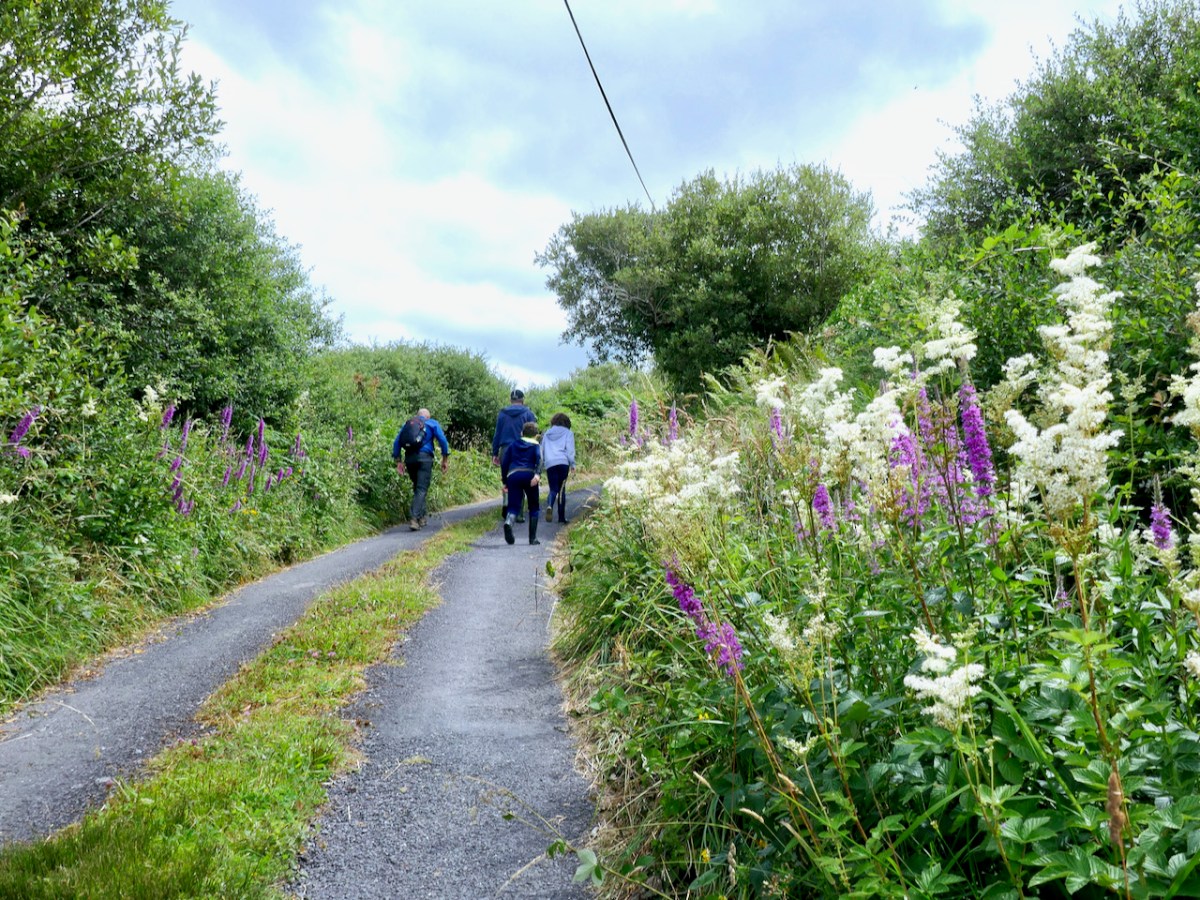
Would we like to see a Mass Rock? The question came from Oliver, and the answer was an enthusiastic YES! (The phrase Is the Pope Catholic may have been employed.) This particular mass rock has been re-discovered in recent times, but its origins are a bit of a mystery. It’s not listed on the National Monuments Record of Sites, and some elements are clearly dated to the early 1950s. There is no defined trail and it would be very easy to get lost, so we were very grateful indeed to our guides, Oliver Farrell and Tracey Daly (above), who live close by and use the trails frequently with their sons. Rio the Wonder Dog accompanied us.

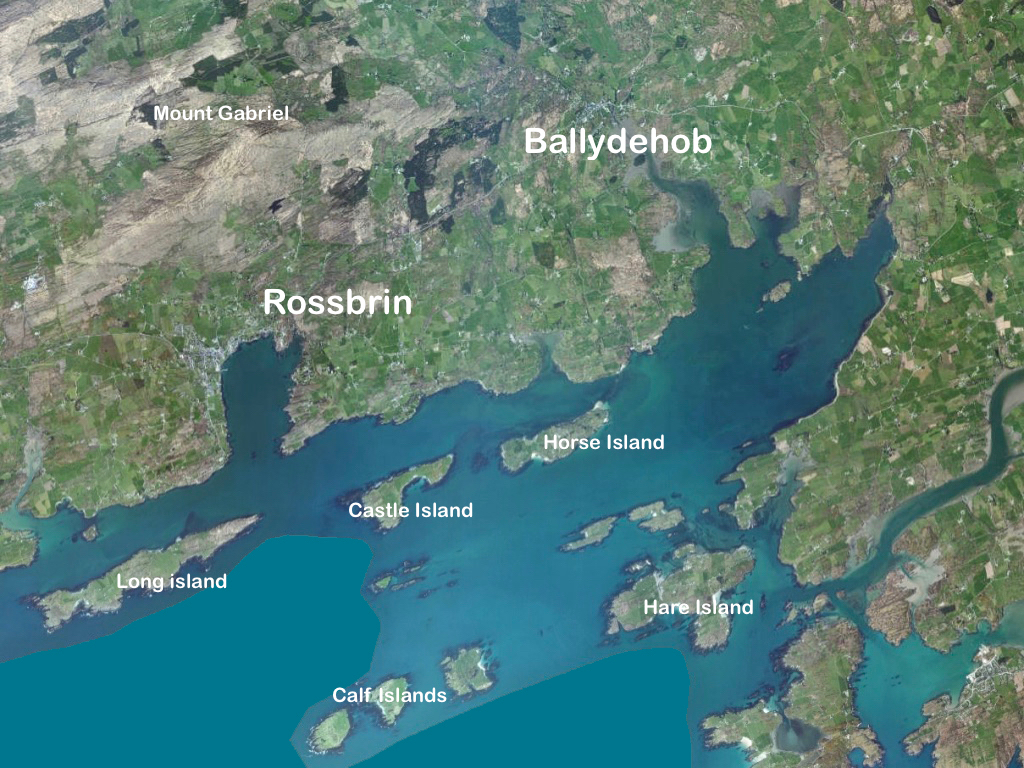
Garrane (it’s Garrane on the OS maps, but often spelled Gurrane, especially locally, and it means ‘grove’) is a townland in the area between Ballydehob and Caheragh. The area is managed by Coillte, and starts among tall trees. As you ascend, though, you emerge into rocky scrub territory that was cleared in more recent times, leaving interesting stumps here and there, like stubby totems.

It’s a lovely hike up (although I’m not sure I could find it by myself again) and soon we were enjoying panoramic vistas across the countryside and over to Roaringwater Bay and Cape Clear beyond. Rio led the way, occasionally disappearing into the bushes but always coming back to his humans to make sure we were keeping up.

At this time the hills are covered in Western Gorse and heathers and butterflies were flitting through the shrubs as we ascended, attracted by the blooming Ling.

When Oliver said we’d arrived, I didn’t see anything except what looked like a pile of stones.. The bracken was everywhere, including within the mass rock itself. Oliver set to work and soon it was revealed – a flat, altar-like surface, with a niche in which a small shrine had been placed.

The shrine – a concrete box containing a statue of the Blessed Virgin Mary, was dated 1954. This marks it as having been inserted into the niche during the Marian Year. Most of the grottoes we see in every village and town across Ireland date to 1954 – for more on this see my post Mary Mary. It’s possible, perhaps, that the mass rock itself was refurbished during this time, to make it suitable to contain the shrine.

What exactly is a mass rock, I hear my non-Irish readers ask. Take a look at my post Were you at the Rock, or go to the wonderful Find a Mass Rock, an excellent site maintained by Dr Hilary Bishop of Liverpool University. 

So we had found the mass rock, but there was more. Tracey and Oliver led us higher still to a spot overlooking the mass rock to a concrete cross. Although much battered, it retained much of the original decoration – glass, clear and coloured, and a small crucifix. Exploring this area, their sons had discovered the mass rock a few years earlier – it had likely been hidden for 50 years by forestry.

We wondered if this was erected at the same time as the shrine had been inserted in the mass rock, in 1954, or whether perhaps it had been erected in 1950, the Holy Year. And all around Ireland in 1950 villages and towns erected hilltop crosses – see my post Sanctifying the Landscape for more about the Holy Year and the Vatican directive that sent Irish communities up their local mountains to set up huge (and in this case not so huge) concrete crosses.

So – this spot was obviously the focus of devotional activity on the early 50s, most likely chosen because of the already existing mass rock. The memory of the mass rock was still held in the community, making it the perfect location for the Holy Year and Marian Year memorials. As we often do, we turned to the Schools Folklore Collection to see if we could find references to a mass rock in the record for the old primary school, now long closed, at Garrane. Here’s what we found:
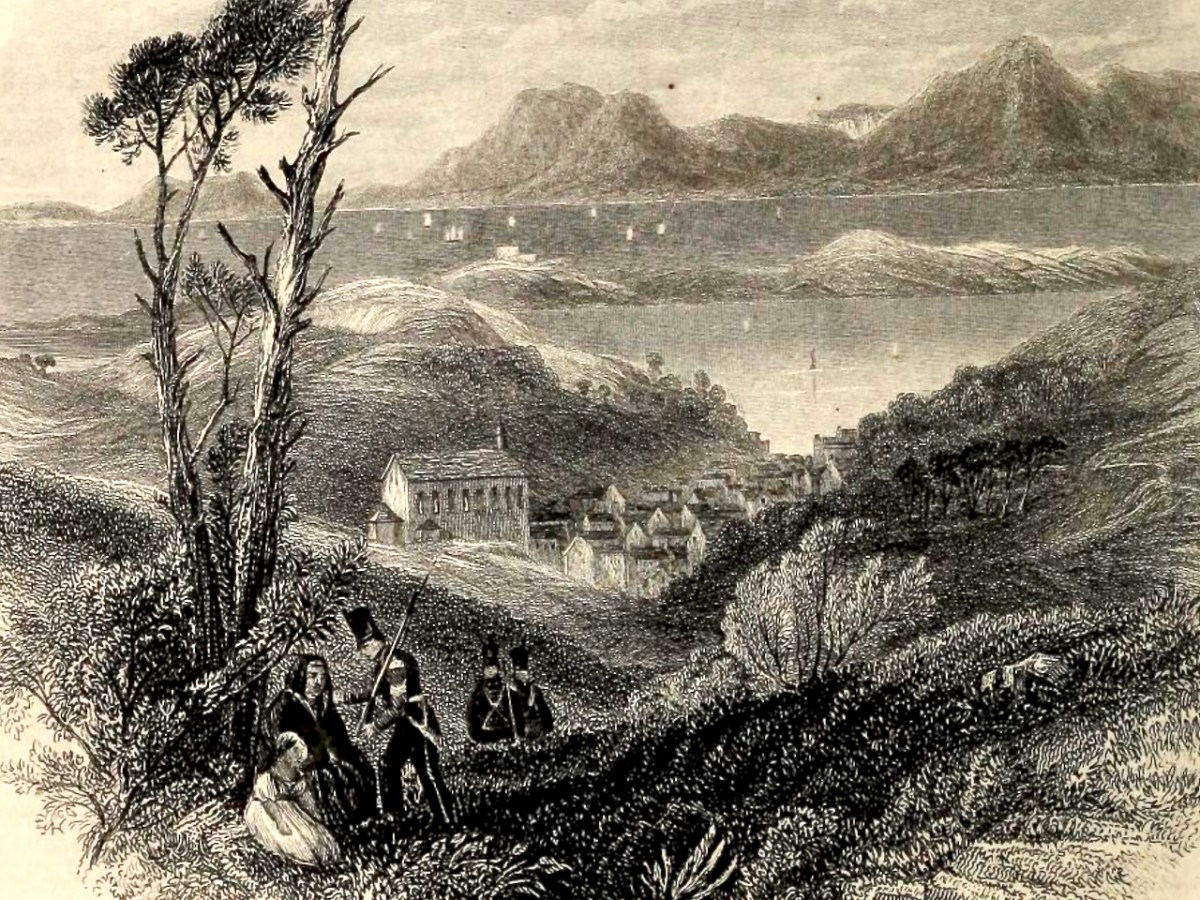
That’s all, and frustratingly opaque, referring to the mass rock being in a ‘field.’ I would be interested in hearing from local people who might know more about the history of this particular mass rock, so that we can get it listed as a National Monument. If you know anything, please comment below, or get in touch via our contact page.

Rio led us back down the mountain, pausing occasionally to do something I had never see a dog do before – eat blackberries right off the brambles. He beat us to some of the best ones too as we headed down to the tall trees.

The Gurrane and Ballybane Trails Development Group is working on a plan for trails in the area, including this one – good news!

Well Off The Well-Trod Track

Not long ago I reported on some ‘small road’ works close by our home in West Cork. Whenever we travel here in Ireland, we are on the lookout for ‘byways’ … very narrow routes, seldom used, but which often traverse the most scenic landscapes. For some – such as today’s example – you have to be fairly brave, and prepared to travel a long way in reverse if necessary!

We were coming back from a day out in Kenmare, aiming for our West Cork home. There’s a corner of the Beara Peninsula – within Kerry – that we had never explored before so we headed out to revisit the little church at Dawros, Tuosist parish. We have always been fascinated by the stone basin that is in the church grounds, mounted on crude pillars – I have seen it described as a ‘baptismal font’:

From the church we went north, over a mountain road which eventually connected to the main N71 towards West Cork, Glengariff, and home.

It looks straightforward enough on the Google map – and there are no turnings, so you can’t get lost! The winding route from Dawros to the N71 is about 10 kilometres. If you could go in a straight line it would be about half that distance! During our whole journey on that mountain road we didn’t see a single vehicle (but we can’t guarantee that would always be the case).

The early OS map (upper) and aerial view (lower) give an impression of the topography over part of the route. The field boundaries are fascinating – and obviously ancient: sweeping linear enclosures cascading down the slopes. From the early map we can see that the road we travelled (known in part as Gortnabinny Road – marked in green) did not actually reach the main Kenmare to Glengarriff road in those times. It presumably just served remote settlements and lonely holdings.

It couldn’t have been a better day for the drama of sunshine and clouds that outlined the valleys and hills. There is little sign, here, of a drought that is causing problems on farms and in town gardens. When distant views opened up, we were treated to some of the finest vistas in our counties.

Against the drama of the surrounding peaks we felt secure in our little vehicle which progressed steadily along the narrowest of boreens. Our only living companions in this place were sheep, easy to discern because of their brightly dyed coats.

While driving on roads such as this is a richly rewarding experience, you also need to get out and encounter the wildlife close-up.

We are always on the lookout for adventures, and we don’t have to be travelling far away from home in order to find them. In our experience, the ‘small roads of Ireland’ – wherever they are – can take us to unexplored territory.

Kenmare Stone Circle

The significant stone circle at Kenmare is an unusual monument in several respects. It is said to be the largest stone circle in the south west of Ireland, oval in shape and measuring 17.4 x 15.8m. It seems intact: I found no record of any intervention or ‘improvement’ to the circle, which consists of an oval ring of 15 stones with a central ‘boulder burial’. Although situated very close to the main streets of this Kerry town, it has often been described as ‘hard to find’. I can remedy that – here’s a present-day location map:

The site is just a few minutes’ walk from the centre of Kenmare and now has its own dedicated car park beside it. The circle is very ‘tidy’ and well looked after. A nominal entrance fee is requested, the funds being put towards the maintenance of the area.

While the circle is fairly well enclosed nowadays by a ring of tall trees, the vista would previously have been more open with extensive views. Quarrying has taken place in the vicinity in past years. Here is the historic 6″ OS map showing the site as it was around the late nineteenth century.

The archaeology.ie Historic Environment Viewer gives a brief, sober description of the site:

. . . In level pasture, on the SW outskirts of Kenmare town. A subcircular area (17m E-W; 15m N-S) is enclosed by fifteen stones (L 0.8-1.6m; T 0.2-0.7m; H 0.3-1.2m), two of which are prostrate. The axial stone is the lowest and is a regular flat-topped slab contrasting with most of the other stones, which with one or two exceptions, are of boulder type. A boulder-burial (KE093-032002-) occupies the centre of the stone circle. (Ó Nualláin 1984a, 26, no. 41) . . .

Archaeology.ie KE093-032001

I was disappointed in my search for an antiquarian’s account of this circle: Ó Nualláin (quoted above) and others have included it in general lists of such monuments. I was hoping for some speculation on its significant size, and on the large central boulder, itself a slightly unusual feature within a stone circle.

Finola has comprehensively speculated on boulder burials, however, in her Roaringwater Journal post from a few years ago. (She has also written on stone circles generally here). The Kenmare example is visually very much in line with the overall archaeology.ie Monument Class description:

. . . Boulder Burial – A large boulder or capstone of megalithic proportions, resting on a number of supporting stones, usually three or four in number, which, in most cases, do not form a recognisable chamber structure. Excavations suggest a Bronze Age date for this burial monument (c. 2400-500 BC) . . .

Archaeology.IE Monument Classification

Finola has pointed out, however, that there is no conclusive evidence for assuming that these ‘boulder burials’ are – well – principally burials.

. . . William O’Brien [Professor of Archaeology UCC] excavated three boulder burials in the late 1980s and found no evidence of burials. In his book, Iverni, he comments in an understated way, “The absence of human remains at Cooradarrigan and Ballycommane does pose some questions as to their use.” His findings dated the sites to the Middle Bronze Age, between 3000 and 3,500 years ago . . .

Finola Finlay, Roaringwater Journal

So, should we perhaps call them ‘elevated stones’? Visually, they are certainly always striking. This one at Kenmare is said to weigh around 7 tons. Bearing in mind the stones in this circle are likely to originate some few miles distant, we can imagine the efforts required to assemble them. O’Brien dates the boulder burials he studied to 1000 or 1500 BC. This would tie in with the general thinking that stone circles were Bronze Age also.

The two drawings above are from Jack Roberts. On his survey (top) I have superimposed an oval template which confirms the suggestion that the Kenmare ‘circle’ is egg-shaped. In the lower sketch view – probably dating from the 1980s – the stones appear to be out in the open, free from the present-day tree shielding.

While it is generally implied that all the stones in this monument were placed at the same time, there is always the possibility that there might have been an evolution in its construction. By that I mean that we could speculate that the ‘boulder burial’ stone was placed first and the circle came afterwards – perhaps to enhance its setting. Or vice versa.

This photograph clearly shows the recumbent stone. Many of the circles in south west Ireland are known as axial circles, where a ‘recumbent’ stone (seemingly placed on its long edge) may provide a horizon viewing point when observed from a ‘portal’ of two stones at the opposite side. The orientation axis created by this observation is usually from north east towards south west (as is the case here). Where a stone circle has a clear horizon (such as Drombeg, in West Cork) it has been noted that this alignment faces the setting sun at midsummer solstice.
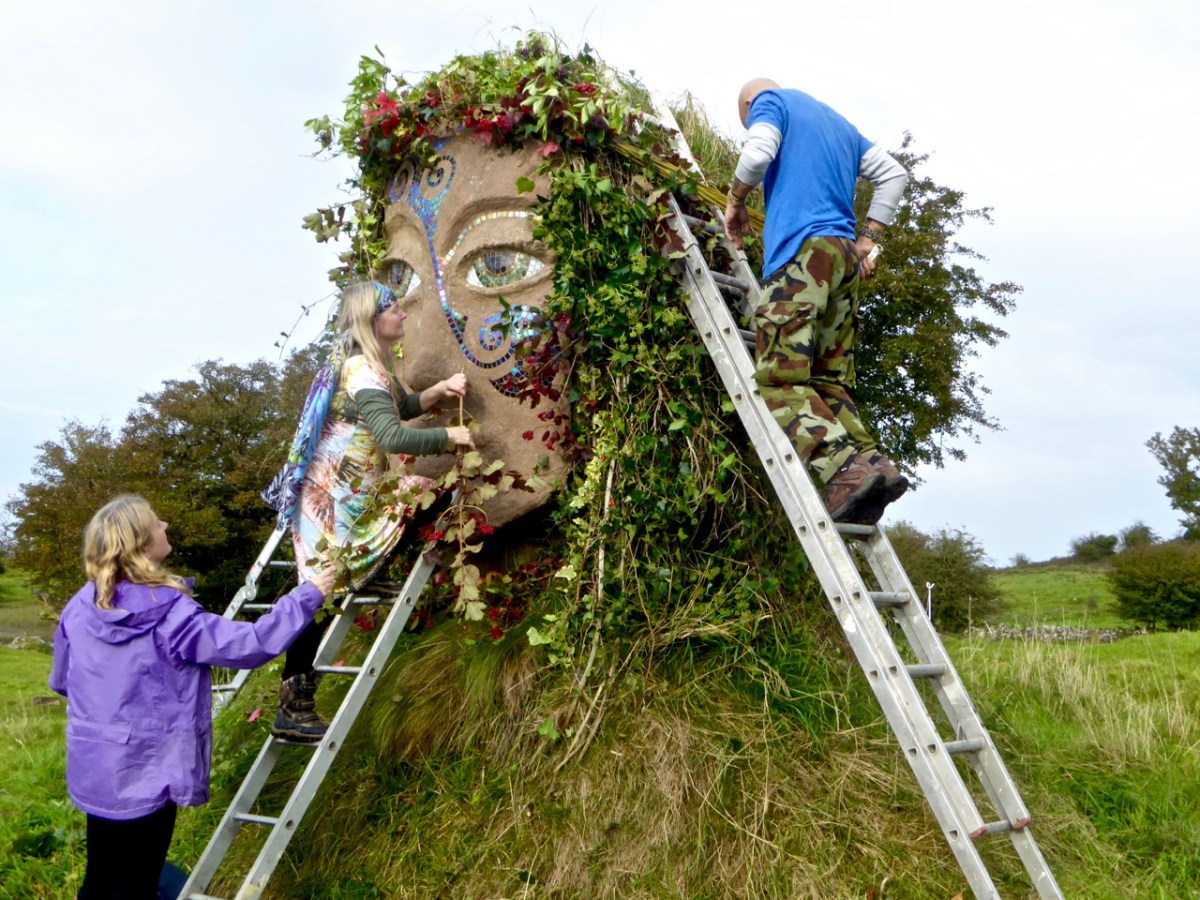
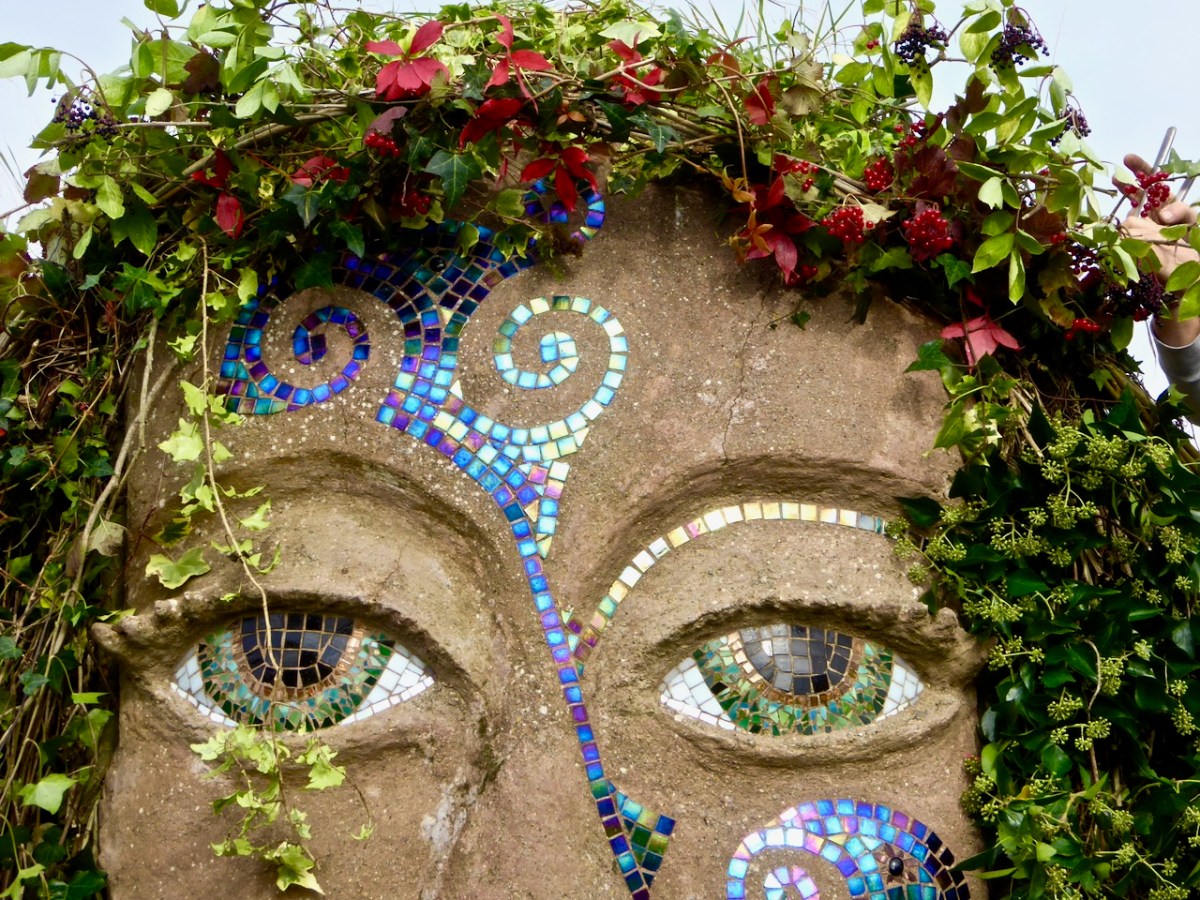
As you can see from these close studies of some of the individual stones (above) there are quite significant differences in their shape and character within the circle. It has been suggested (elsewhere) that the shapes and the relative placing of the stones is significant. ‘Male’ and ‘female’ stones have been suggested – but this is yet more speculation.

As far as we can see there are no ancient markings on the stones at Kenmare (except for a possible single cup-mark on the upper surface of the boulder burial), but I am fascinated by the lichen shapes and textures on one particular stone (above). This is ‘nature’s art’, of course.

It’s impossible to ignore the two ‘fairy’ hawthorn trees that have been established within the vicinity of the stones. In my opinion it was an inspiration to exploit the idea of visitors purchasing ‘message cards’ from the site kiosk and writing down their own thoughts and personal wishes, which are then tied on to the branches. That’s Finola, above, being affected by the rainbow fairy vibes. She has written her own post today specifically on this aspect of the place. My favourite message is this one, below:

Health, Happiness and Harry Potter Lego

Is making a wish a universal phenomenon? The Kenmare Fairy Trees are at the edge of the Stone Circle that Robert is writing about today. I was very taken with the variety of wishes.

Predictably perhaps, the most common wish is for good health, although love comes a close second – and if both of those are in place, happiness can’t be far off.

Love is all very well, but it’s important to be practical too.

We can’t seem to avoid politics, although the second one seems like very, er, wishful thinking.

Me too!

Each to his fancy and me to my Nancy, as the old lady said as she kissed the cow.

Family is always top of the list.

Saol fada agus bás in Eirinn (may you have a long life and die in Ireland).

Wishes work best when you ask politely.

Just get me home safely!

Feel the magic.

What would you wish for, Dear Reader?

Mizen Magic 27: Toor

Tucked away in the north west corner of the Mizen, with access from one meandering boreen, is the townland of Toor. It’s one of our favourite places and we wanted to share it with you, as it was on a visit earlier this week. 

For more on this townland and the surrounding area, see Robert’s post, Mizen Mountains 1 – the Hill of the Foxes. We have borrowed Liam O’Flynn’s transcendent music for this slideshow with gratitude and permission. The Album, The Given Note, is available here. Robert has written about Liam O’Flynn in his post Piper to the End – A Tribute to Liam O’Flynn.

Of course, I can’t resist including some wildflowers, all typical of late August in West Cork. In order, they are Goldenrod and Heather, Montbretia (non-native), Rock Sea-Spurrey, Thrift (no longer blooming), Davil’s-bit Scabious and Knapweed.