Exploring Ancient Drowned Landscapes

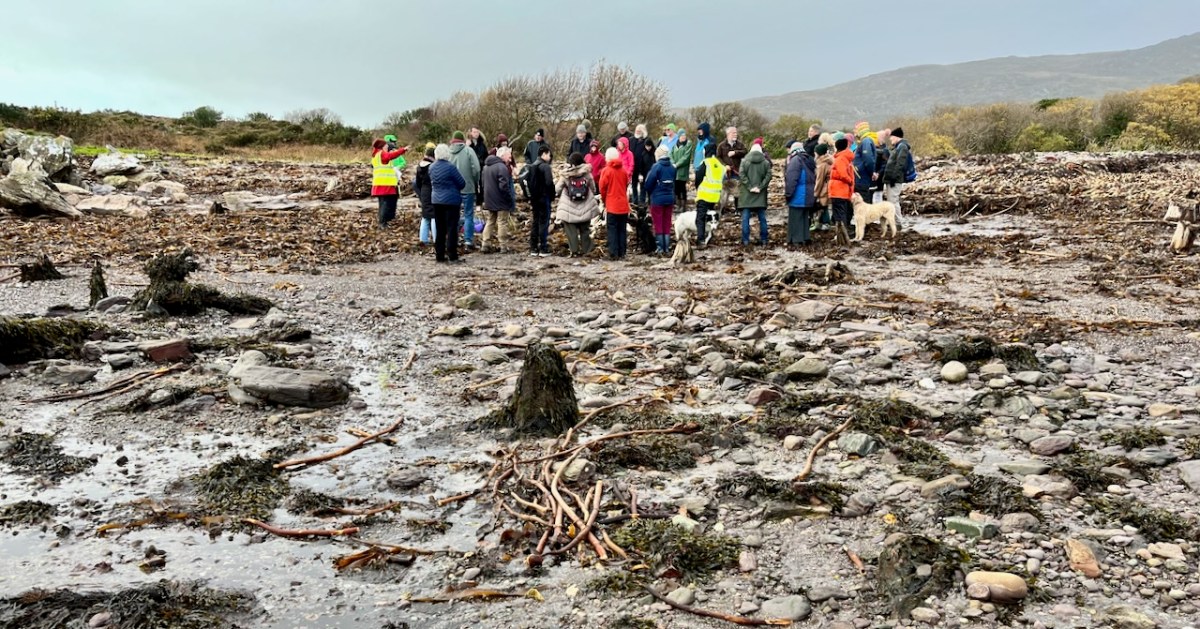
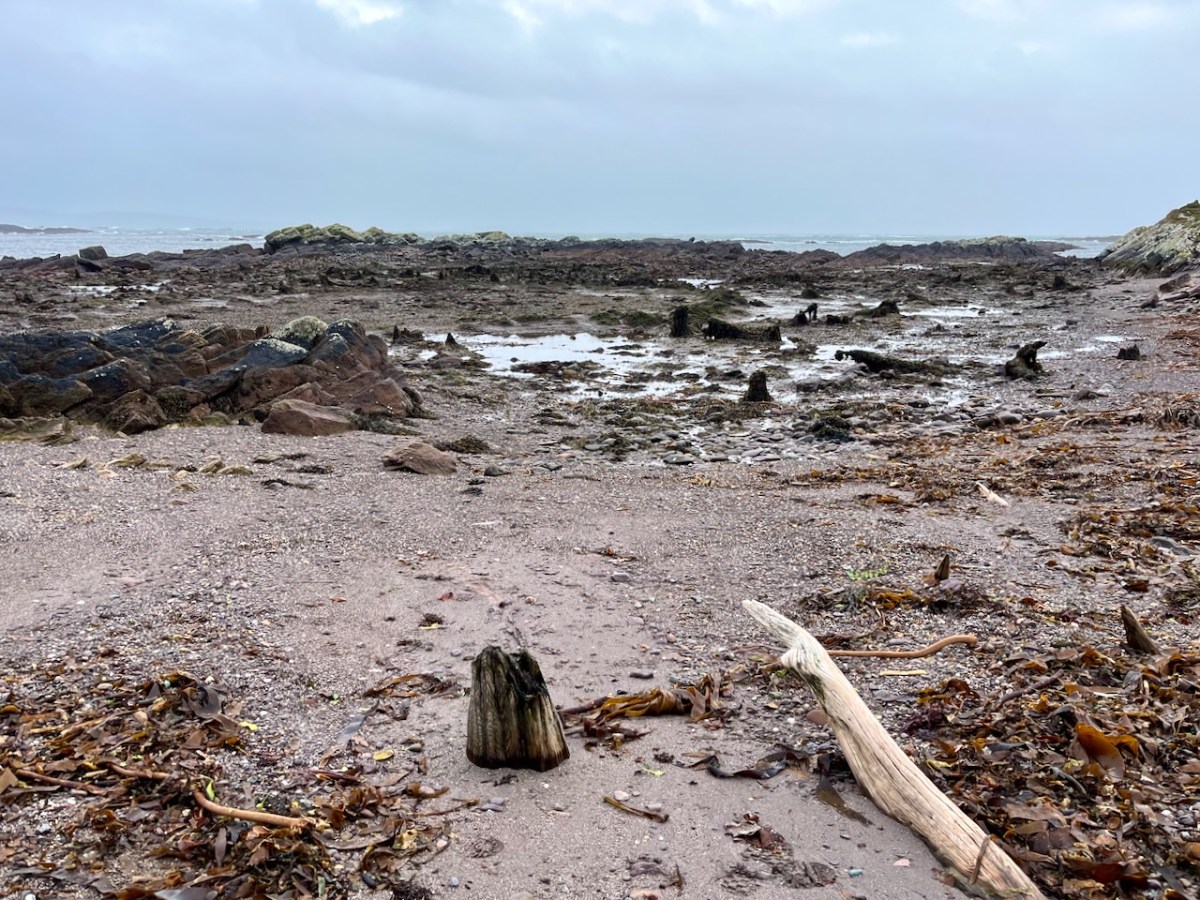
‘Drowned Landscapes’ – that’s an adequate enough description for us to look again at a subject which RWJ covered five years ago in this post: Tralong Bay, Co Cork – give it a read. I was reminded of the subject when we took part in an Archaeology Festival based in West Kerry just a week ago: Amanda’s current holy well blog describes the expeditions. One of the sites visited was Bunaneer Drowned Forest, where we saw stumps of trees on the beach there which were alive thousands of years ago. At low tide many tree remains become visible at Bunaneer, near Castlecove village on the south coast of Kerry’s Iveragh Peninsula. Our guides for this expedition were plant biologist Calum Sweeney and archaeologist Aoibheann Lambe.
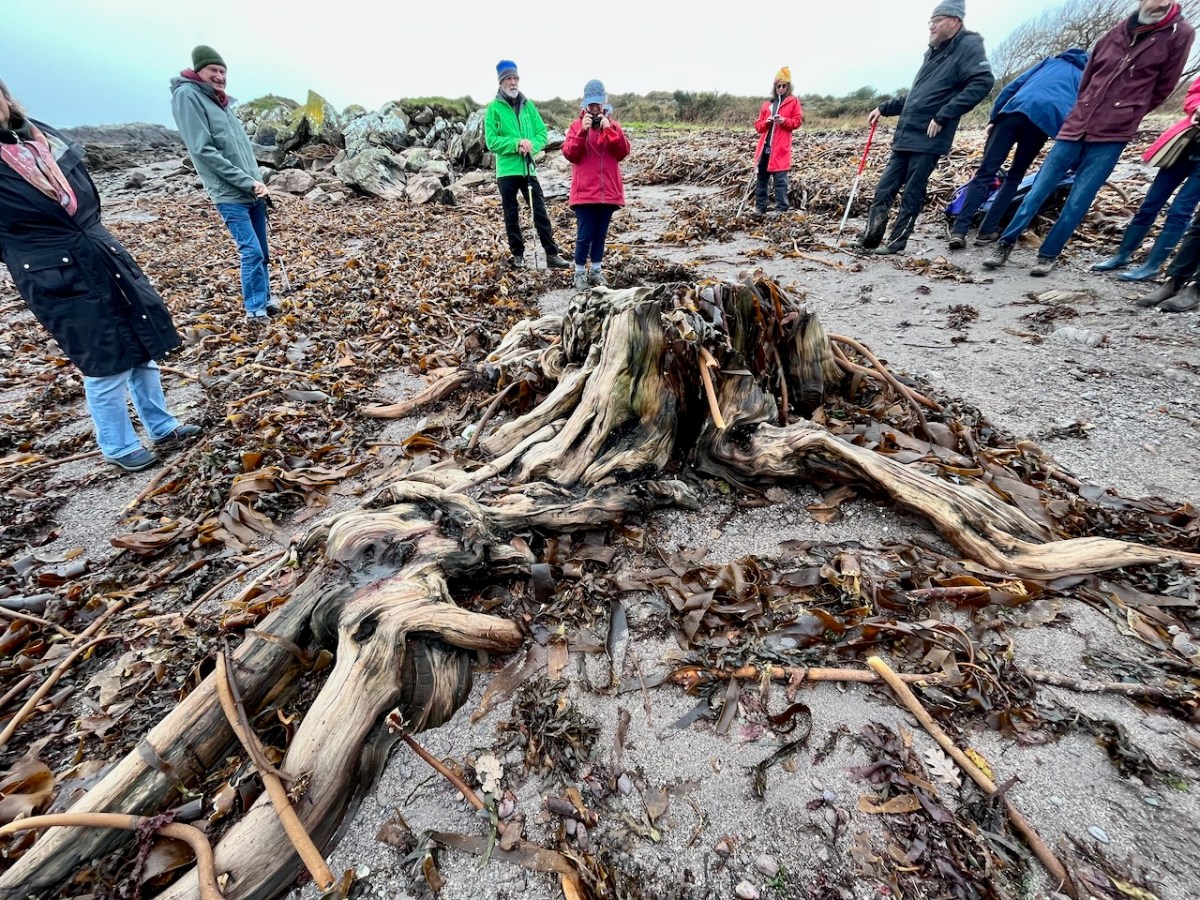
This large jumble of roots (above) is known as Goliath. All the remains here can be seen at regular low tides: at other similar sites elsewhere in Ireland, remains of ancient tree boles and roots are only revealed when tides are exceptionally low. I find it remarkable to be able to see and readily touch these archaic pieces of timber: we are communing with distant history!
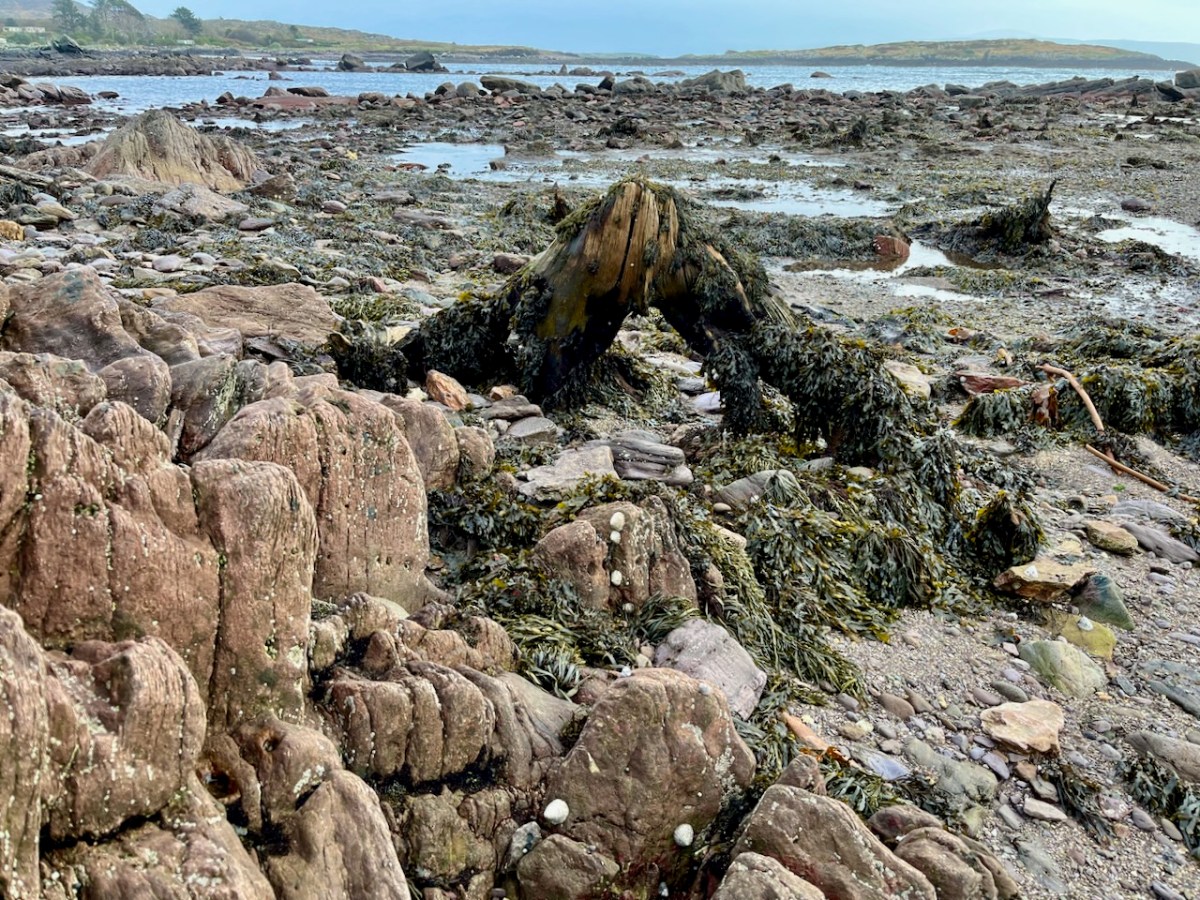
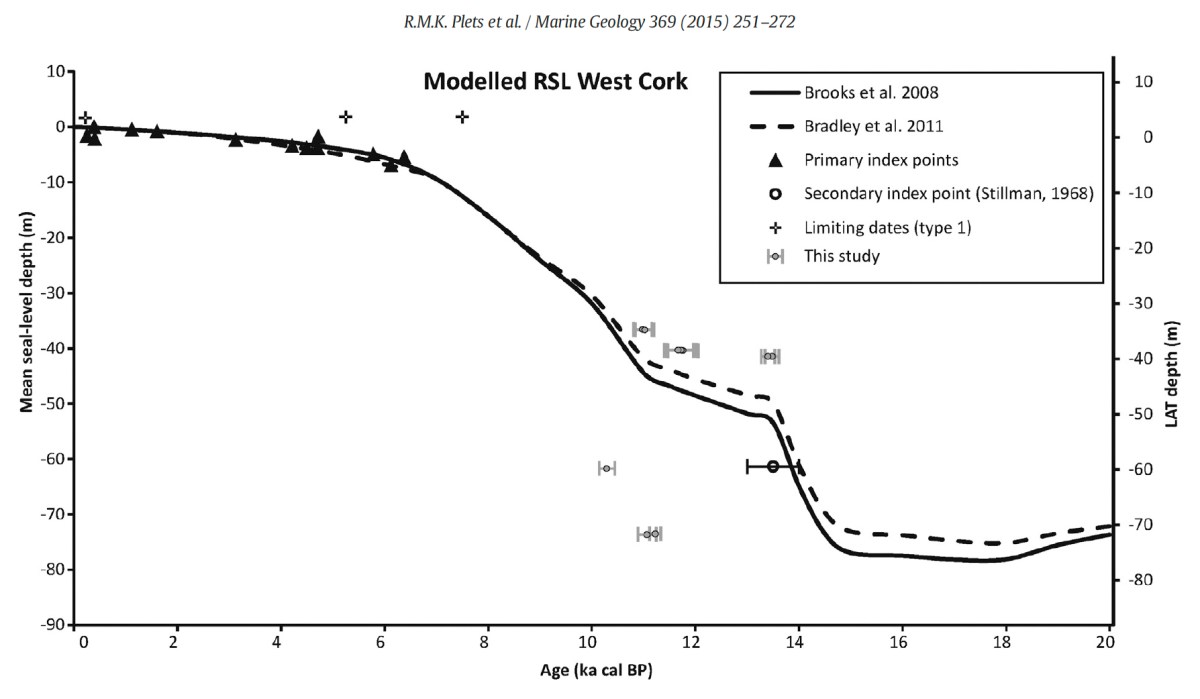
Carbon dating has shown that these remains were alive between three and a half and five millennia ago. This is evidence that sea levels were significantly lower then, and that the shore line was further out – perhaps 50 metres from where we see it today. We are constantly – and quite rightly – being warned about rising sea levels resulting from our changing climate in the long term: here we see clear verification that it’s a continuing – and now apparently accelerating – process.

Our friends Robin and Sue Lewando were also on this expedition. Robin has a particular interest in sea-level changes in the Late Quaternary and subsequent eras, and he pointed me to a 2015 paper which explores the subject specifically in the Bantry Bay area of West Cork. That’s a good place to be looking at ancient history: remember the story of Cessair – Noah’s daughter-in-law – who came ashore at Donemark? You first read about it here! So this is a scientific diagram which sets out how sea-levels have been changing over time in our locality:
It’s an interesting comparison to take our horizons wider in our study of changing sea levels across the islands of Ireland. Over on the east coast – north of Bray, Co Wicklow – there is another substantial area where tree remains have been revealed at certain tidal conditions.

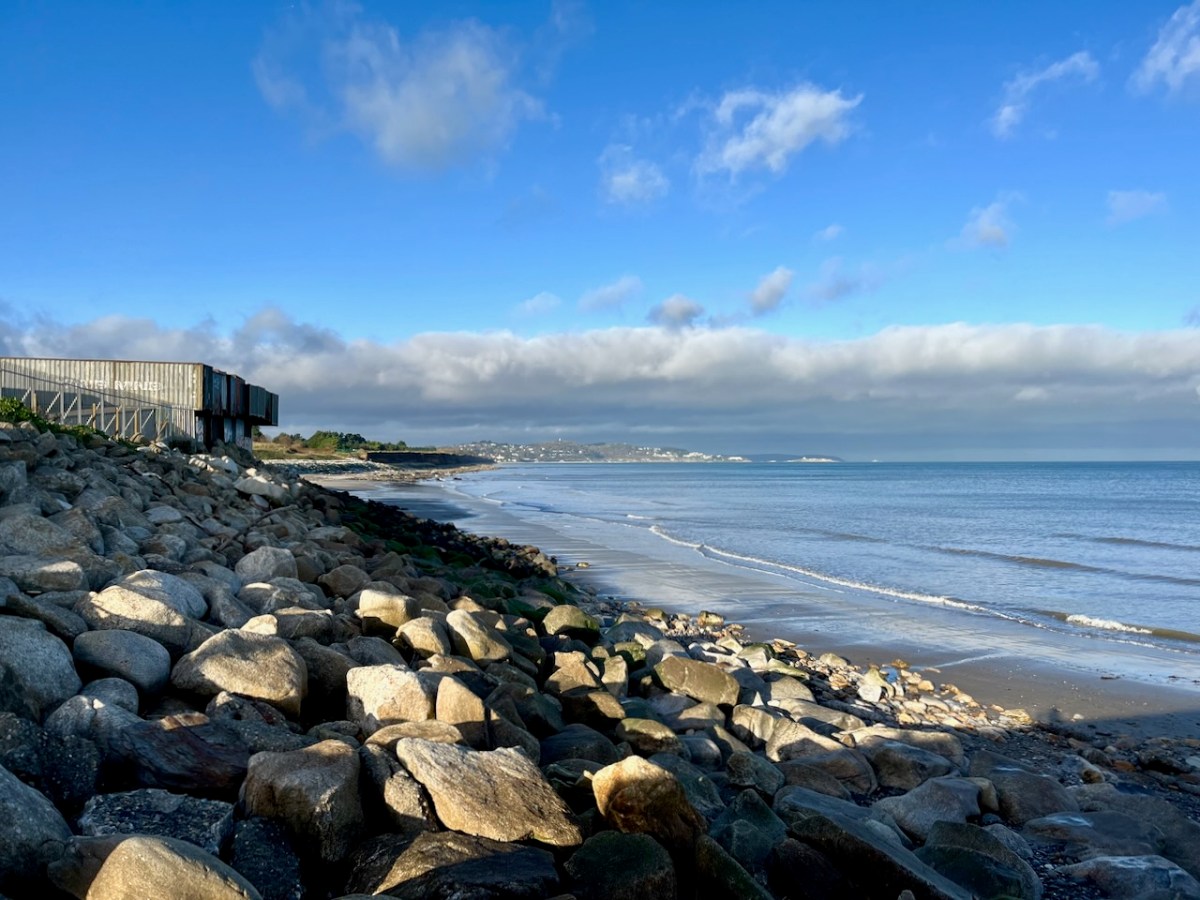
Above are the areas of beach between Bray and Killiney where ‘drowned forest’ remains have been observed. While at Youghal, Co Cork, further finds have occured:

This example catches our interest because the name of the settlement – Youghal – is derived from the Irish word ‘Eochaill’ meaning ‘Yew Woods’: they were evidently once common in the area, leading us to wonder whether the tree remains in this instance are of yew. In 2014 the following account of another ‘ancient drowned forest’ discovery appeared in the Irish Times (photograph courtesy of Joe O’Shaughnessy):
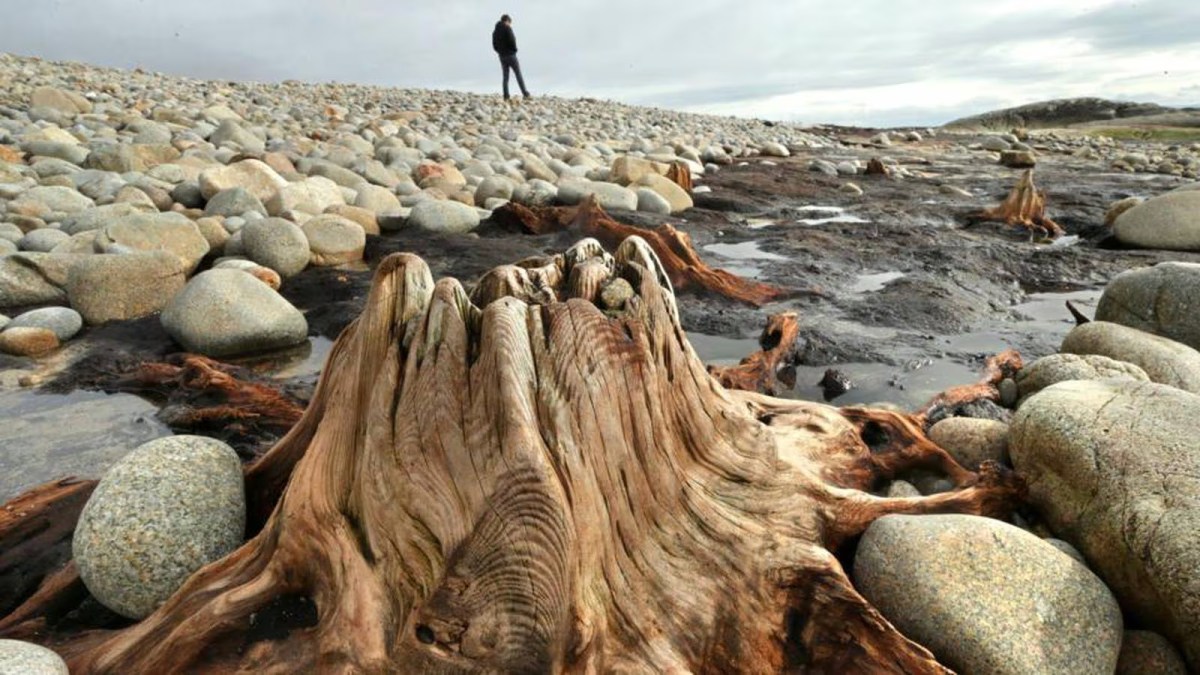
. . . Walking out on to the shoreline at low tide, geologist Prof Mike Williams points to the oak, pine and birch stumps and extensive root systems which were once part of woodlands populated by people, wolves and bears. These woodlands extended out into lagoons and marshlands that pre-dated the formation of Galway bay, Prof Williams says.

An extensive layer of peat also exposed at low tide in the same location in Spiddal was formed by organic debris which once carpeted the forest floor. The stumps at Spiddal are surrounded by root systems which are largely undisturbed. The carpet of peat is covered in strands of a reed called phragmites, which can tolerate semi- saline or brackish conditions.

“These trees are in their original growth position and hadn’t keeled over, which would suggest that they died quite quickly, perhaps in a quite rapid sea level rise,” Prof Williams adds. Up until 5,000 years ago Ireland experienced a series of rapid sea level rises, he says. During the mid-Holocene period, oak and pine forests were flooded along the western seaboard and recycled into peat deposits of up to two metres thick, which were then covered by sand.

Prof Williams estimates that sea level would have been at least five metres lower than present when the forests thrived, and traces of marine shell 50cm below the peat surface suggest the forest floor was affected by very occasional extreme wave events such as storm surges or tsunamis. He says most west coast sand-dune systems date to a “levelling” off period in sea level change about 5,000 years ago. Dunes in Doolin, Co Clare, are older still, having first formed around 6,500 years ago.

Prof Williams has located tree stumps in south Mayo and Clare, along with Galway, which have been carbon dated to between 5,200 and 7,400 years ago at the chrono centre at Queen’s University, Belfast. Some of the trees were nearly 100 years old when they perished . . .

Lorna Siggins
Irish Times 07/03/2014
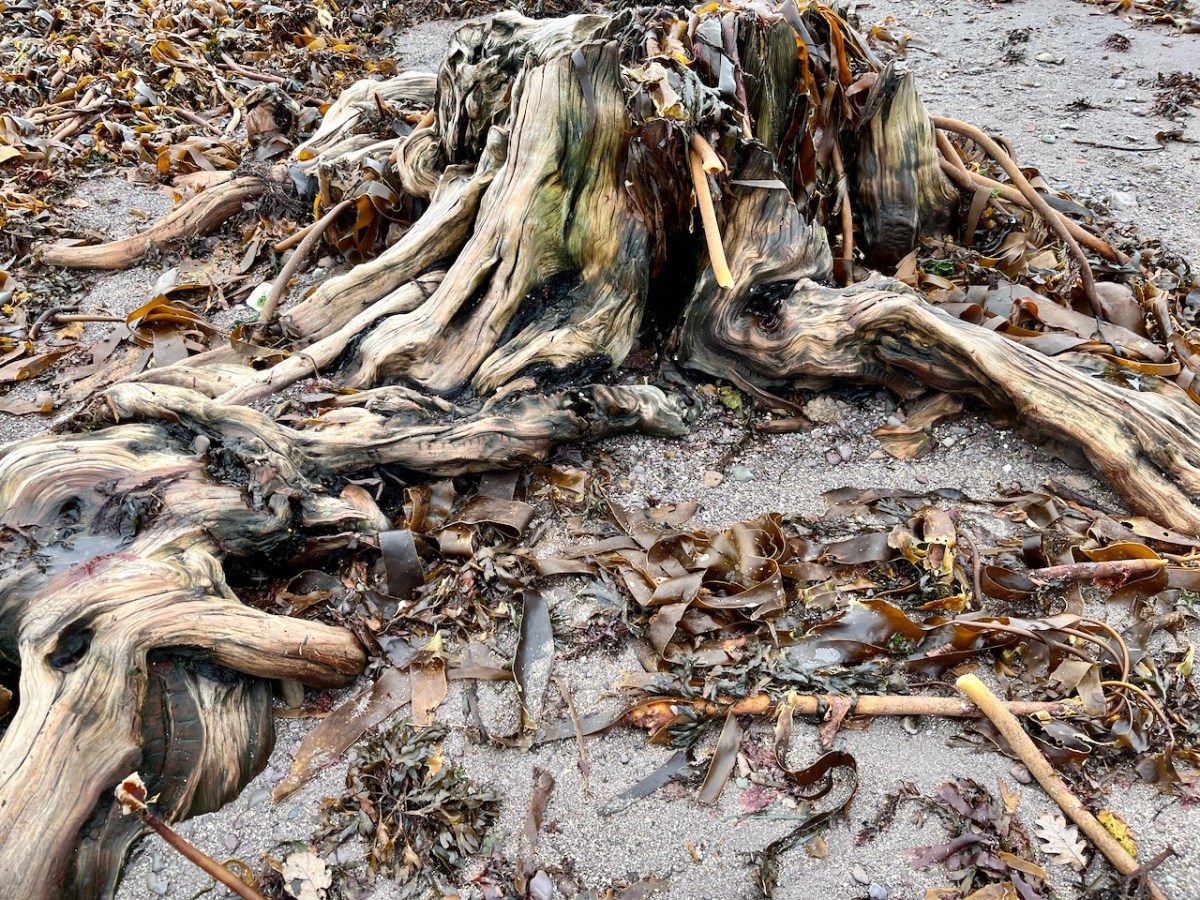
Goliath, West Kerry, November 2023

‘The Mountain’

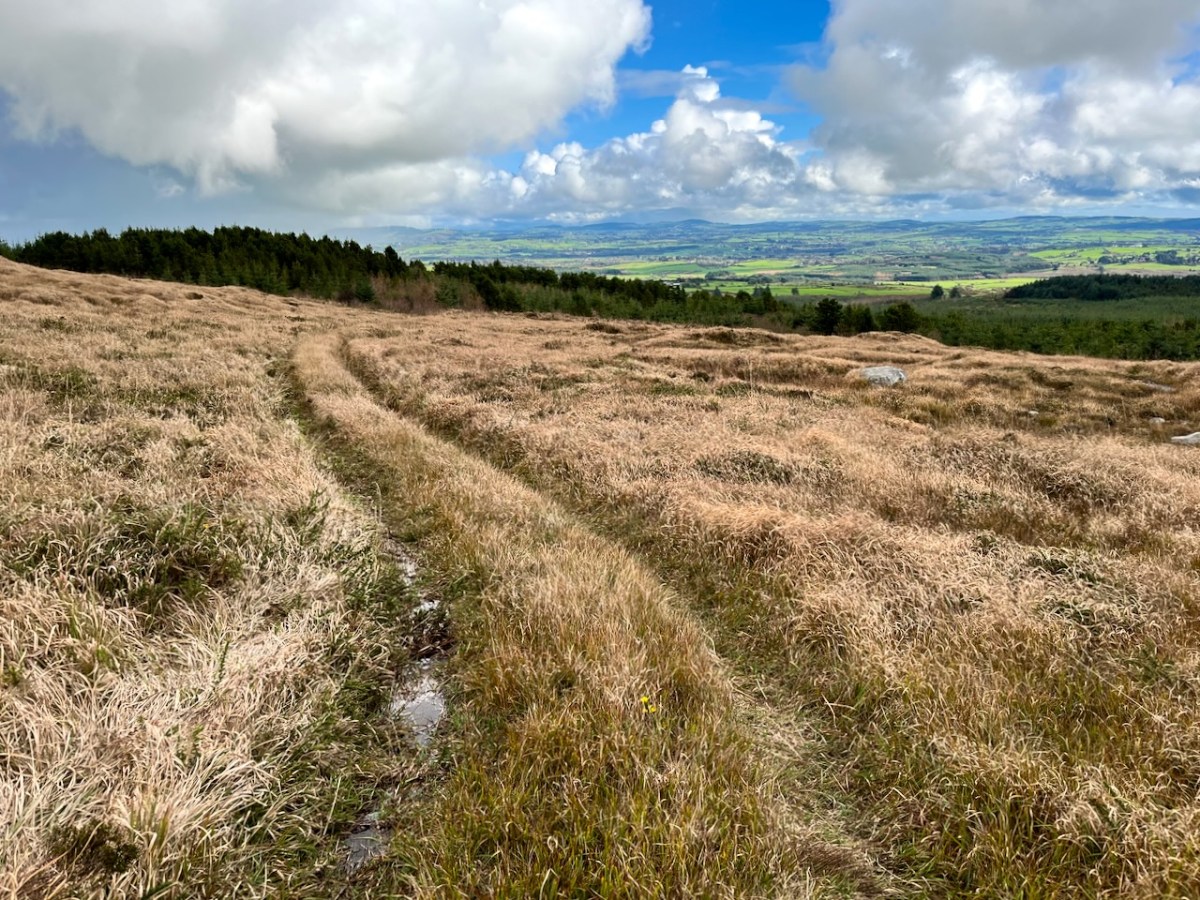
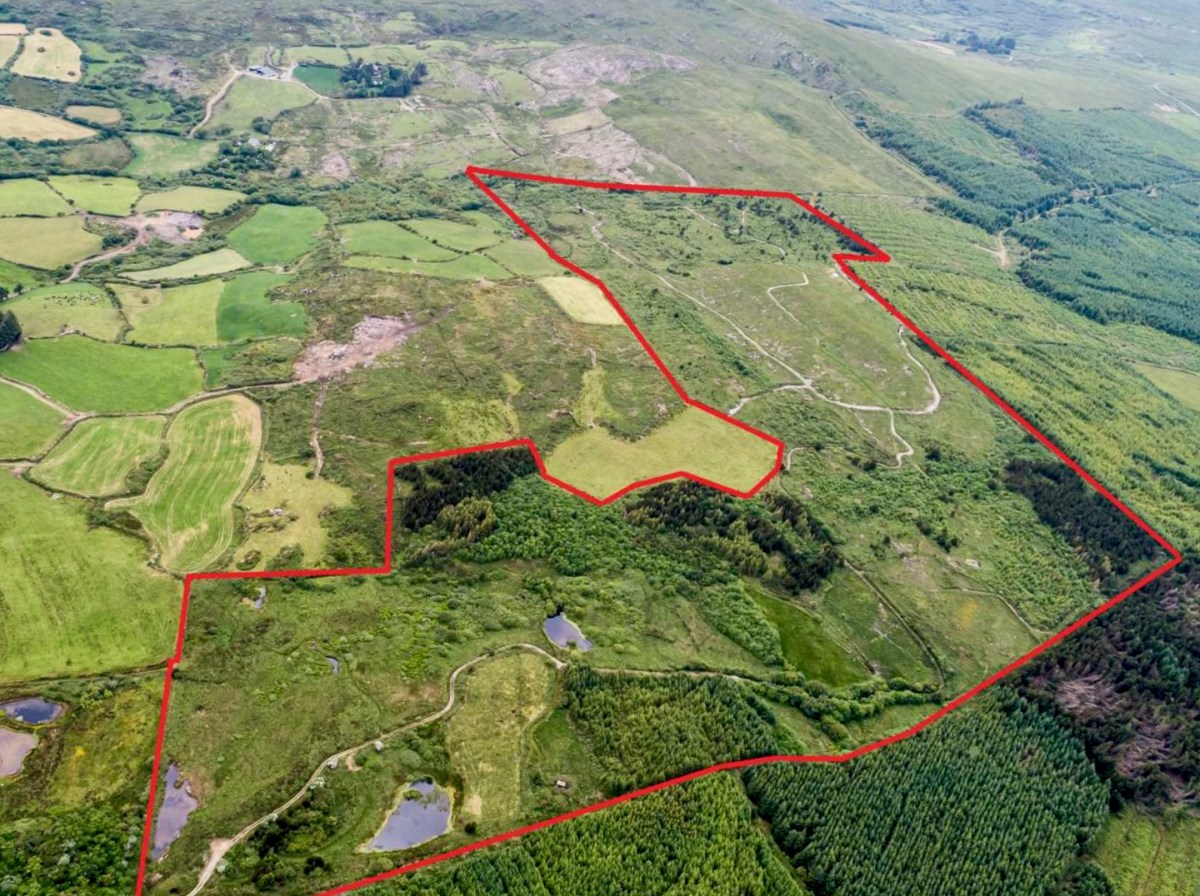
We spent a day on ‘The Mountain’. It’s a West Cork location, not too far away from us. The land has a history that touches on many of our interests covered here in Roaringwater Journal – and some of the West Cork people we have written about over the years – so it’s pretty special. We were delighted to be welcomed to it by its present owner, Oliver Farrell: that’s himself, in the pic below. You have met him before, here. Thank you, Oliver, for allowing us to experience this special site, and for letting us put out this post about it.

Previously, the 70 acre ‘Mountain’ site was owned by the Wrights – Lynne and Ian (above): you saw them in the 2022 Ballydehob Arts Museum exhibition, here. When they purchased it – in 1997 – it was rough pasture and bog. They aimed to develop an environmentally and economically sustainable forest using existing grants, and successfully challenged the decision of the Forest Service (through the EU) to only grant aid the planting of alien conifers. They set about transforming it: they had a vision of a ‘pure’ West Cork landscape supporting an ecosystem of native species. Now – many years later – it’s possible to see that the Wrights’ vision was fully justified – and realised. Today Oliver is undertaking essential maintenance work, and is committed to expanding on the inherent sustainable qualities that the site embodies. In fact, ‘The Mountain’ is largely in excellent environmental order.

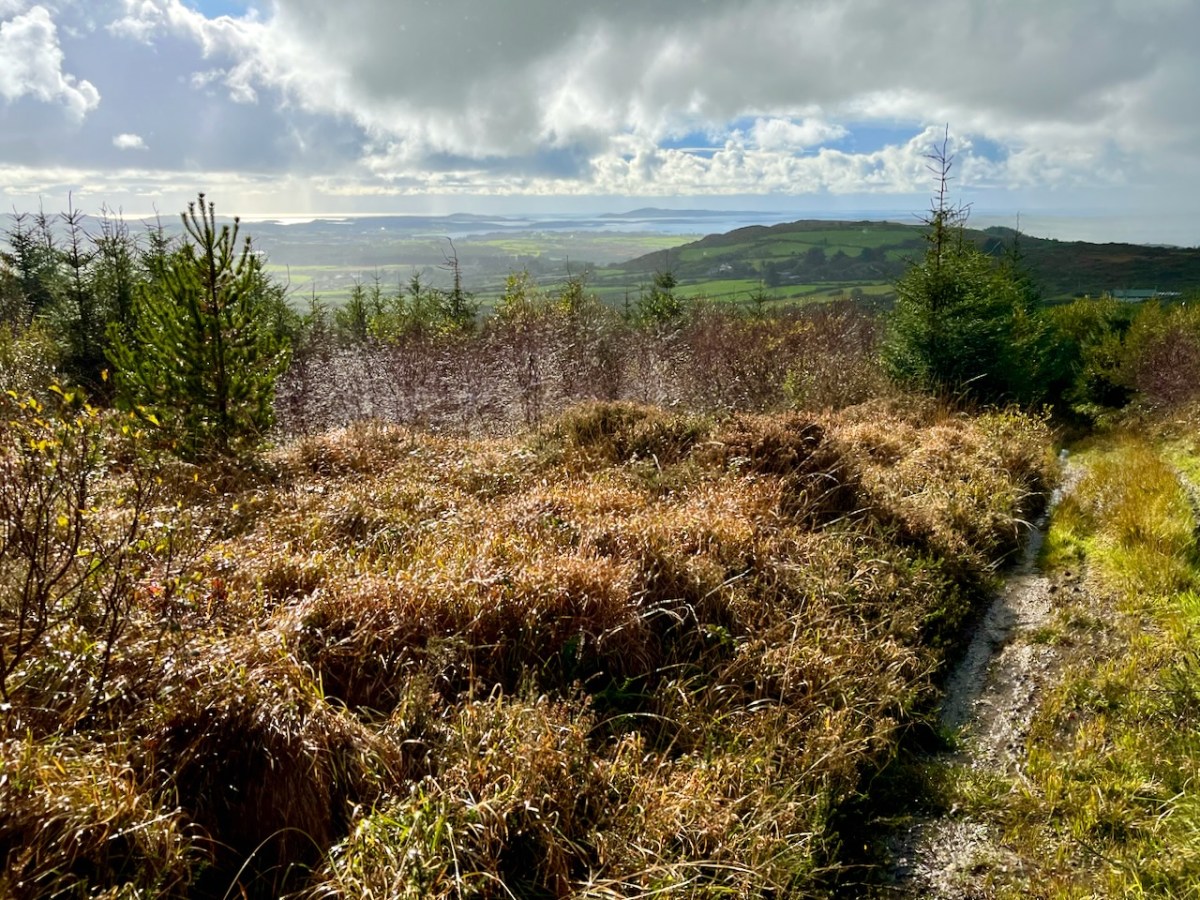
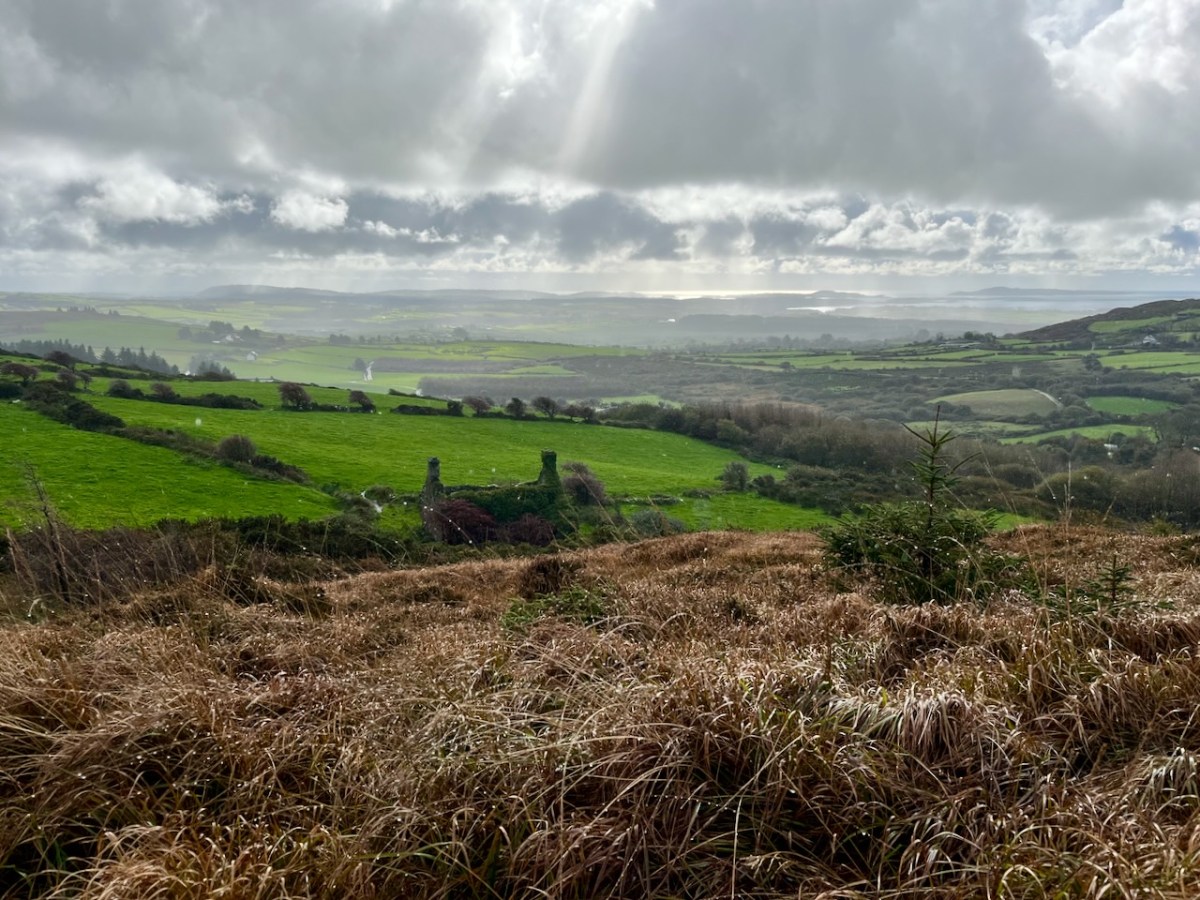
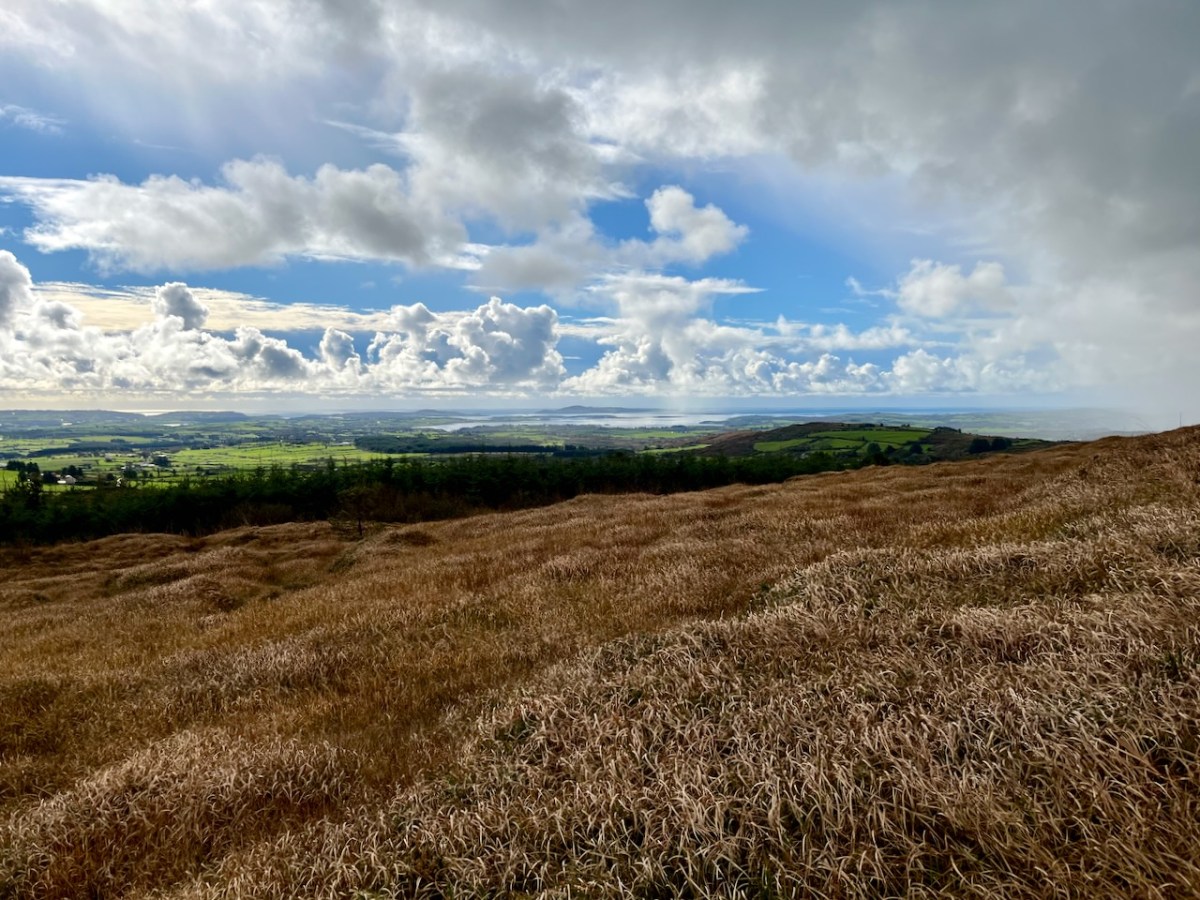
Interestingly, Ian told us that when they made the decision to buy the site they had only seen it under cloud: the spectacular view wasn’t revealed until later on. We were fortunate on the day of our visit to see the full panorama of Roaringwater Bay stretched out before us.

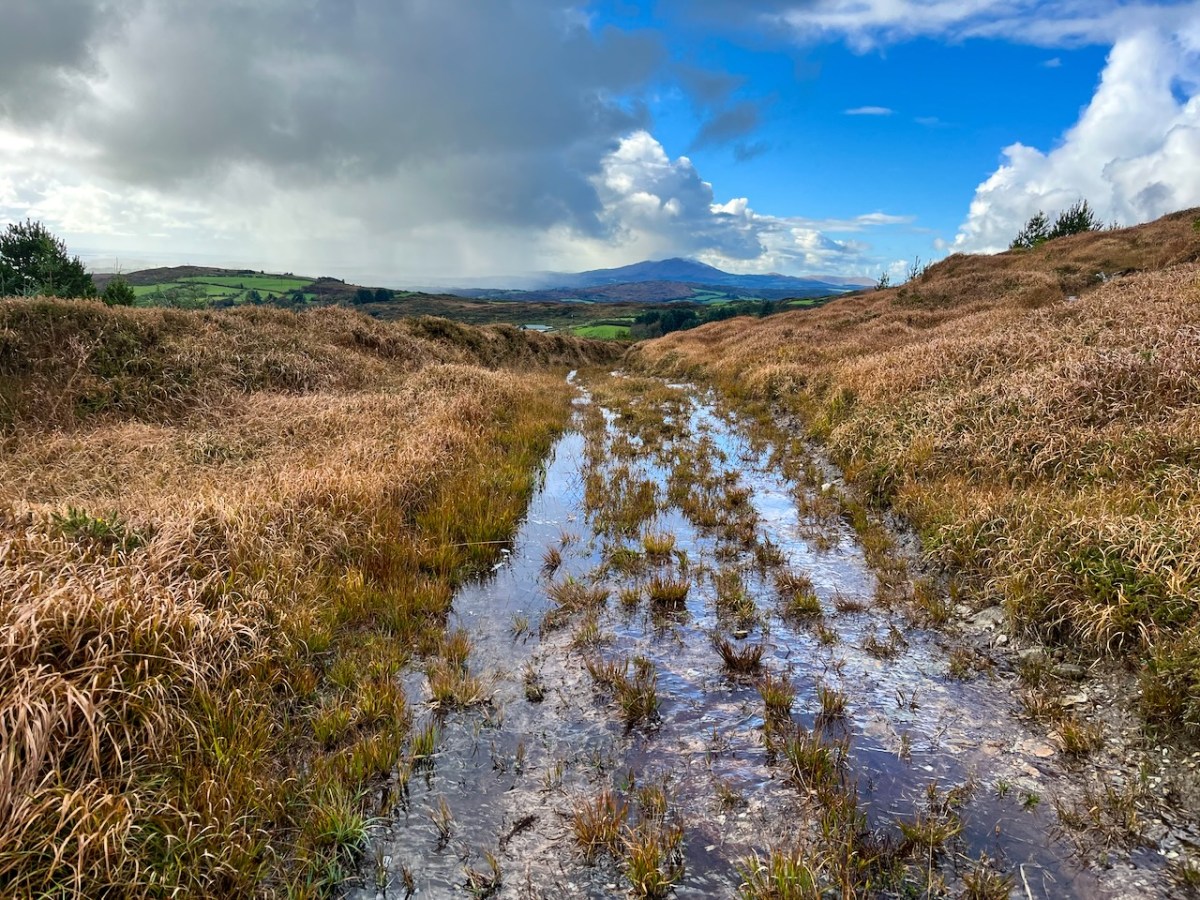
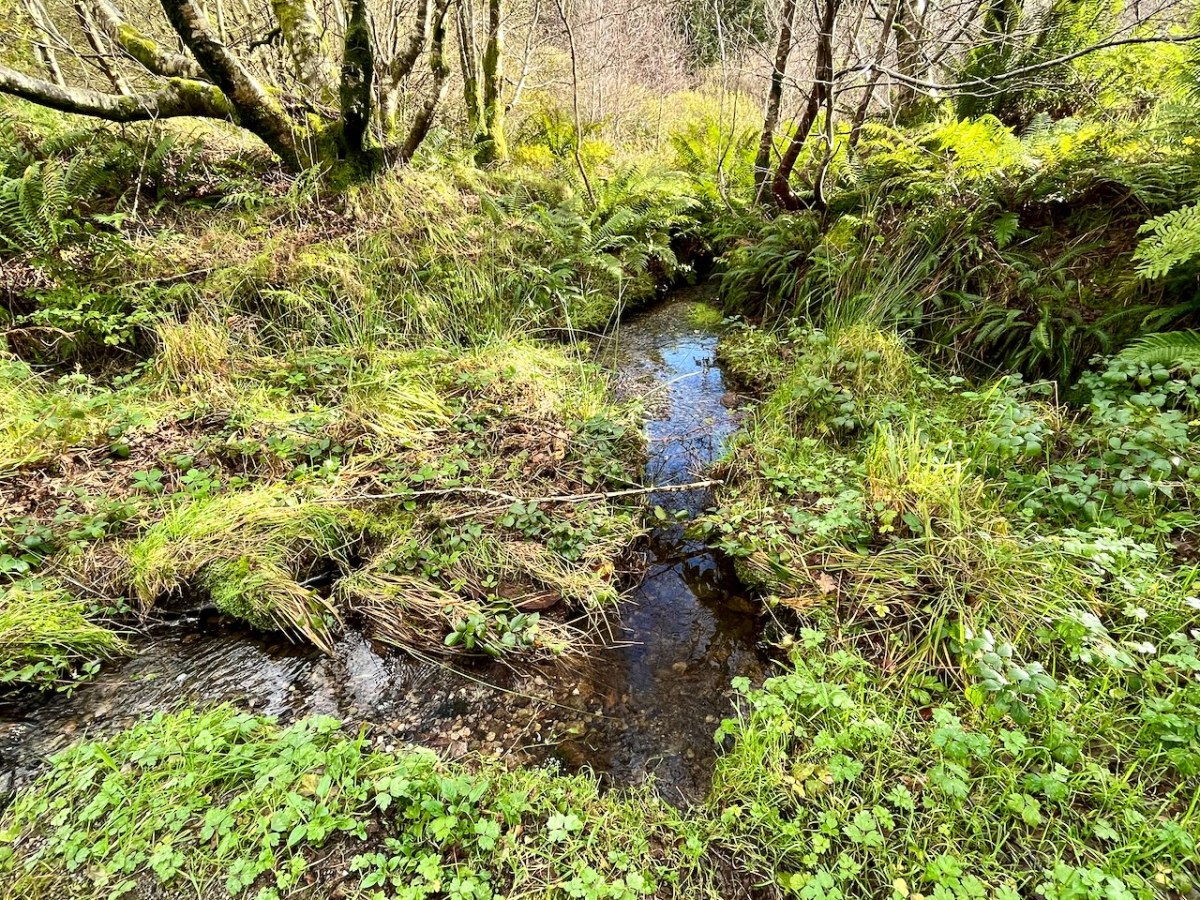
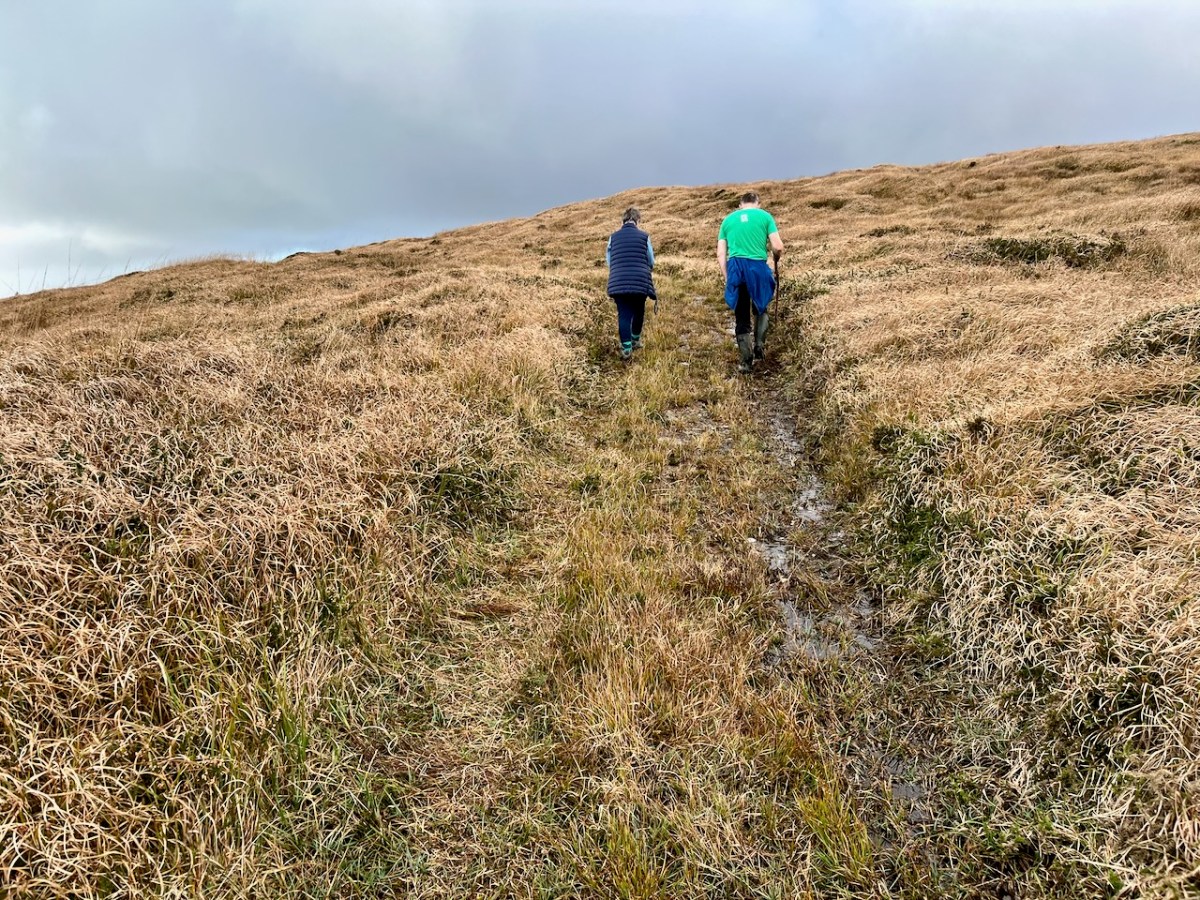
This dramatic view towards Mount Gabriel is a reward for climbing ‘The Mountain’. The ground was waterlogged on the day of our visit as this autumn has been a time of relentless rainfall, but always interspersed with brief dry patches: it’s great to be out to catch these. Springs rise on the high ground here, and I’m working out that they either feed the Roaringwater River – the water that gives its name to the whole Bay and islands that are central to our view from up here in Nead an Iolair, or another of the many streams that drain the West Cork hills below us.

Oliver stands above one of the spring outlets that form the infant waterway (top), while the stream matures as it flows on down through his land (lower). Below – Oliver and Finola inspect one of the lakes which has been created within the site.

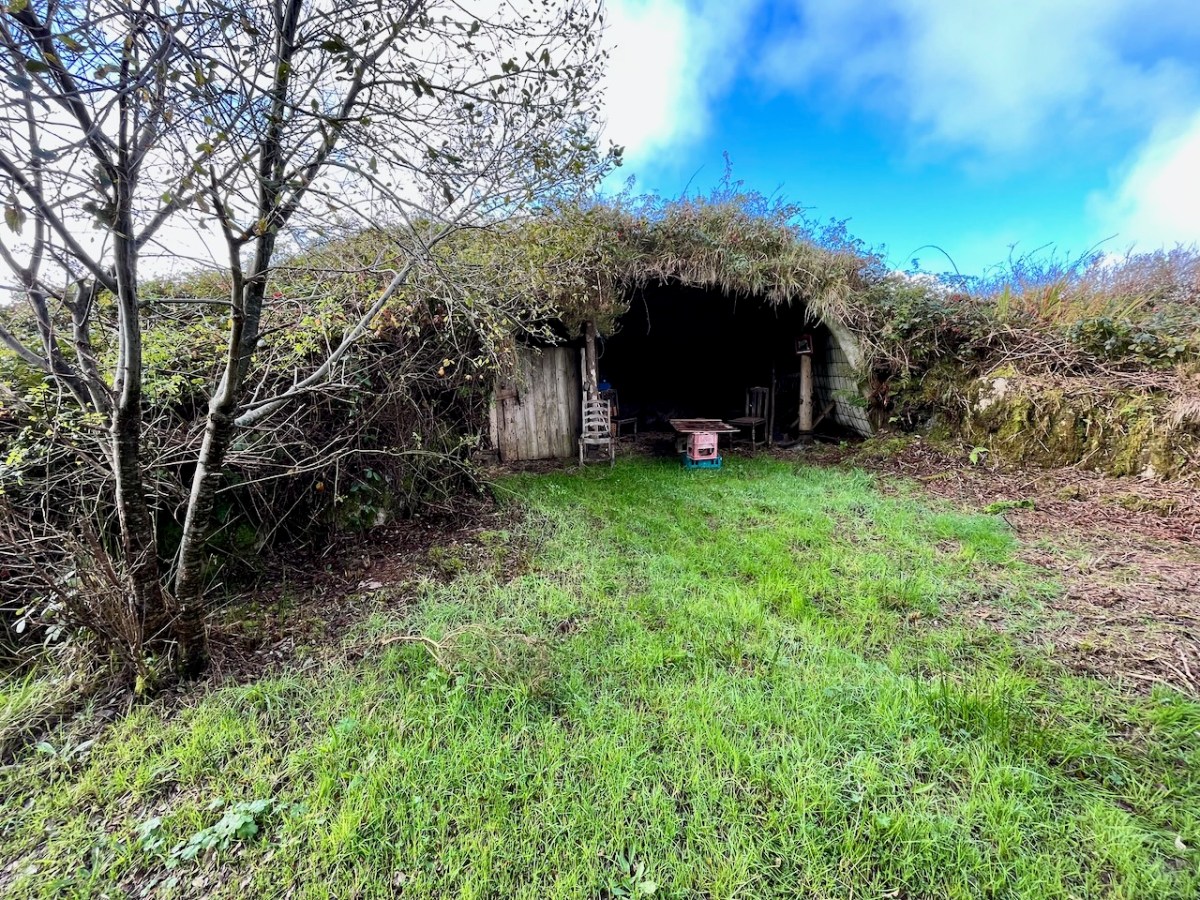
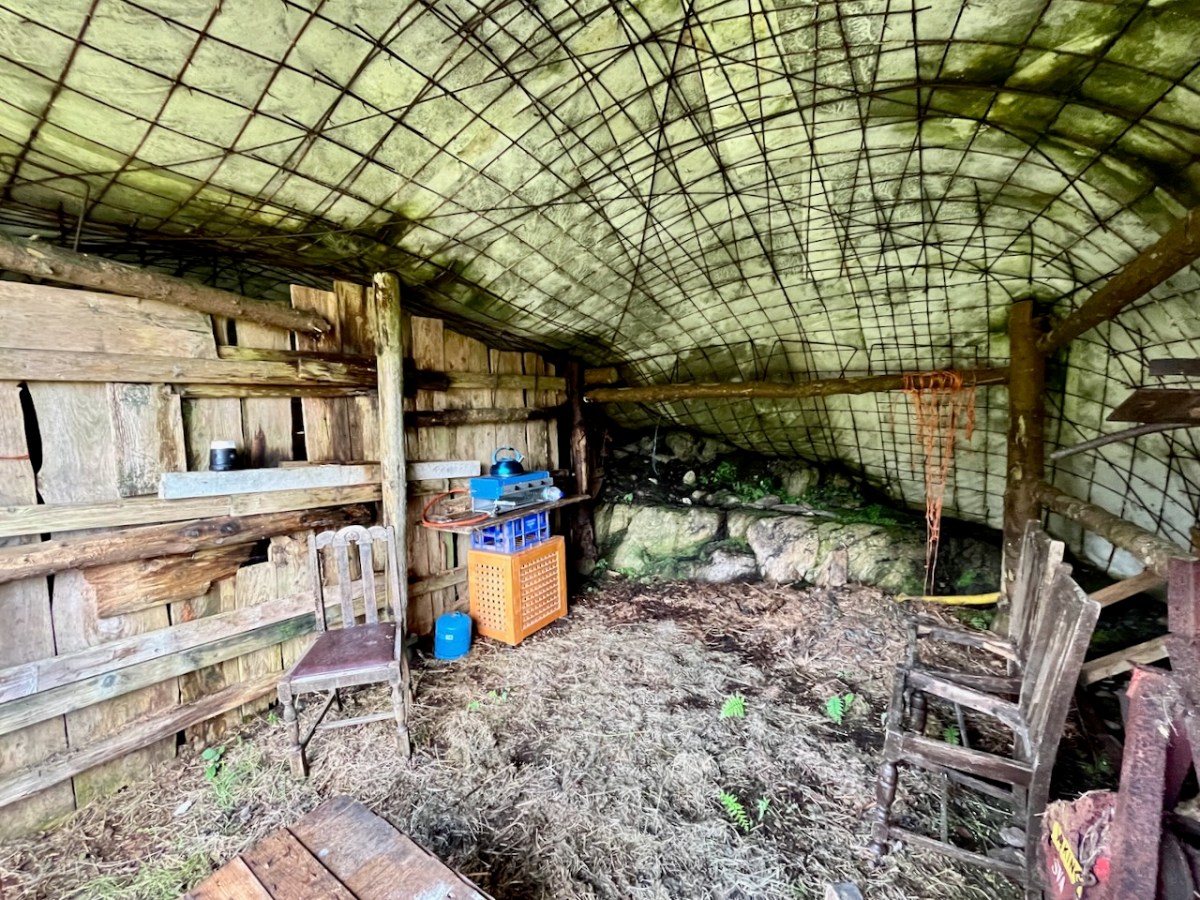
At one stage in his life Ian researched, developed and introduced the building of low–tech ferro–cement boats as a cottage industry on Lake Malawi to help address the problem of unsustainable fishing practices there. At the ‘Mountain’ site he experimented with ferro-cement as a material for establishing a well blended-in shelter and store.

Straddling two townlands, ‘The Mountain’ is an impressive example of how an area of West Cork wilderness has been perfectly moulded into its natural setting. It is an out of the ordinary place which demands exploration.

I’ll be visiting the site, and writing about it more in the future. Oliver will be keen to allow access: keep watching this space.

Bray Railway Station Murals

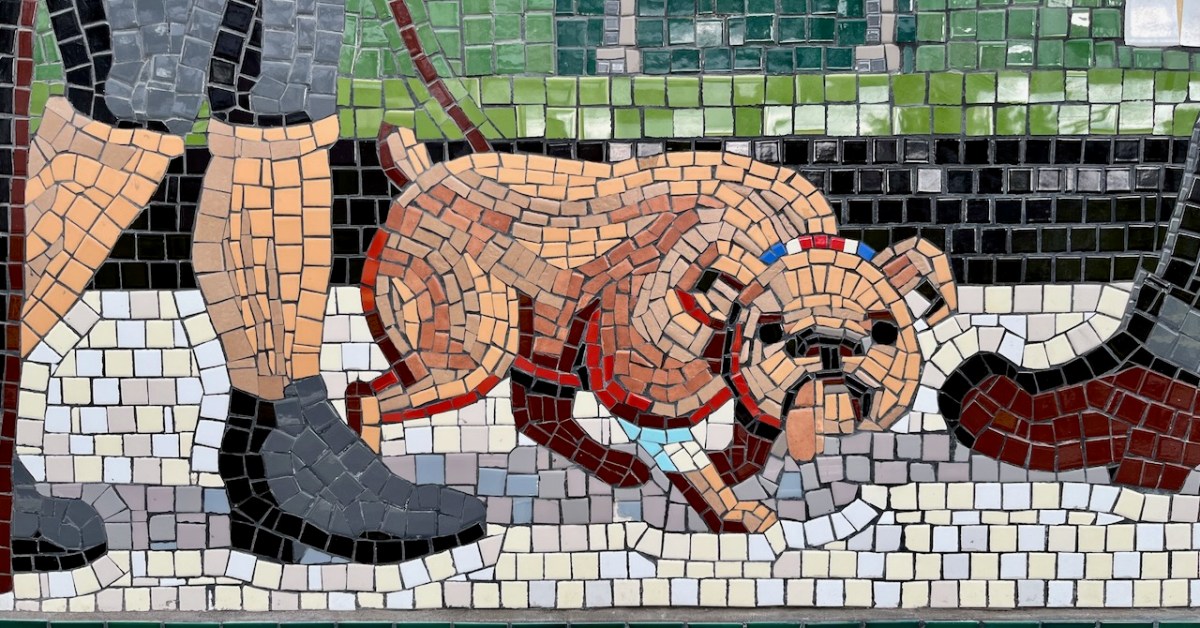
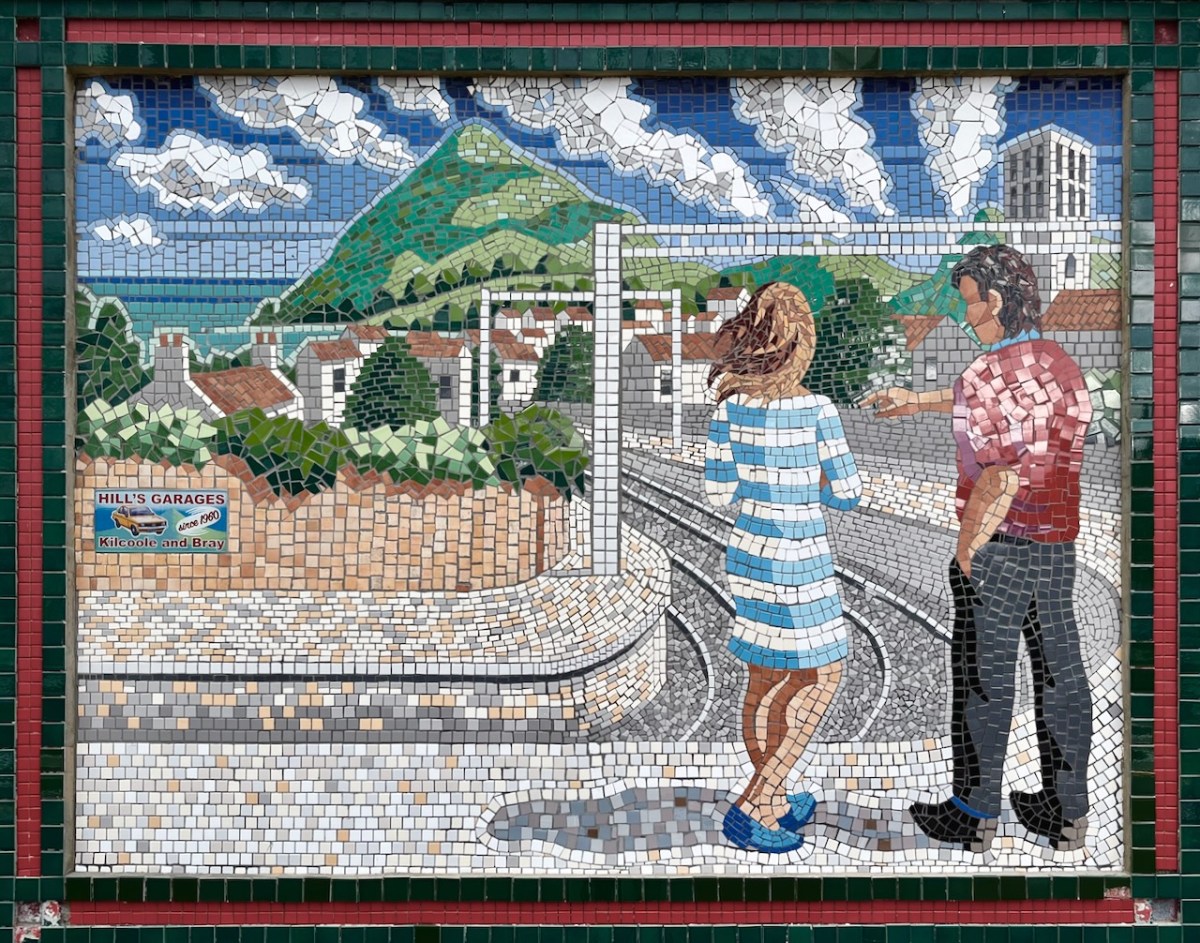
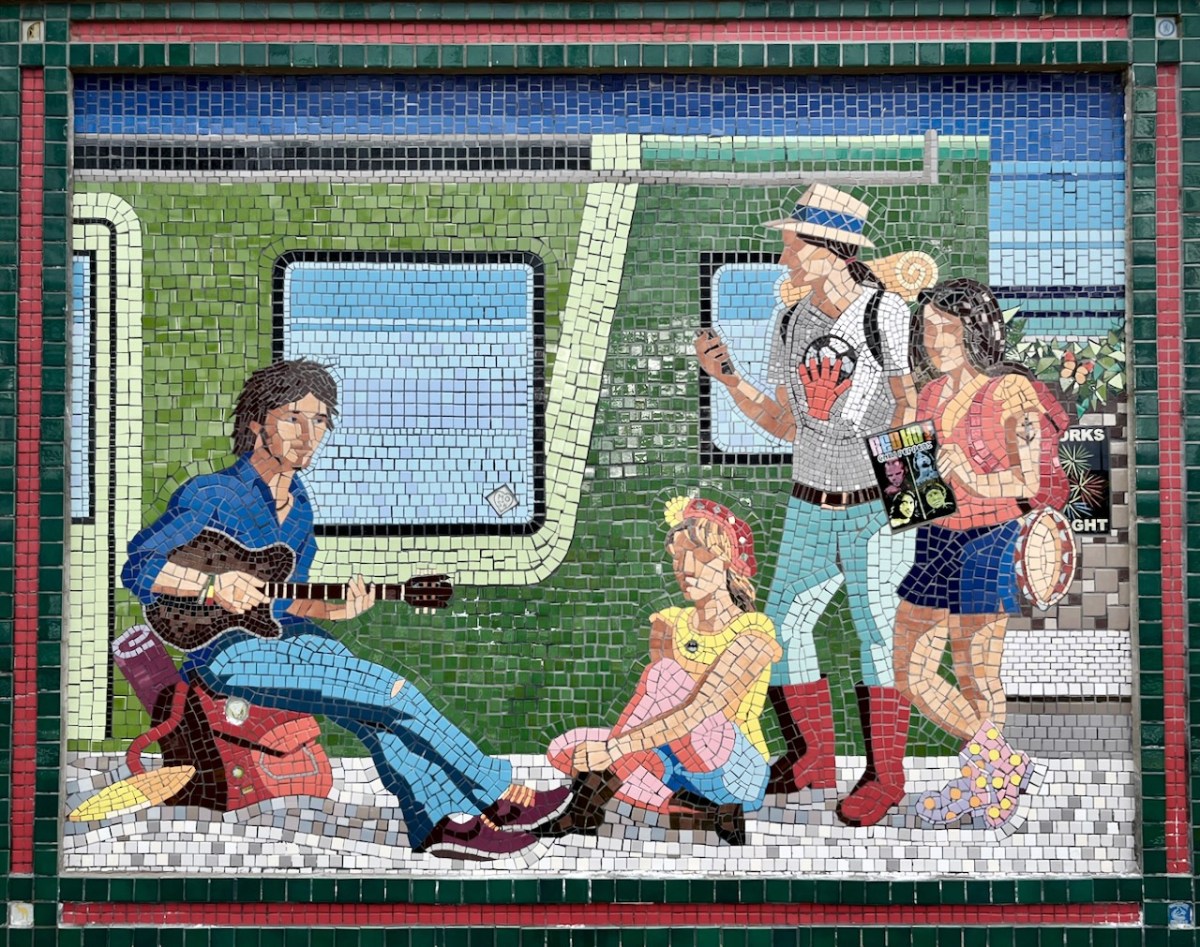
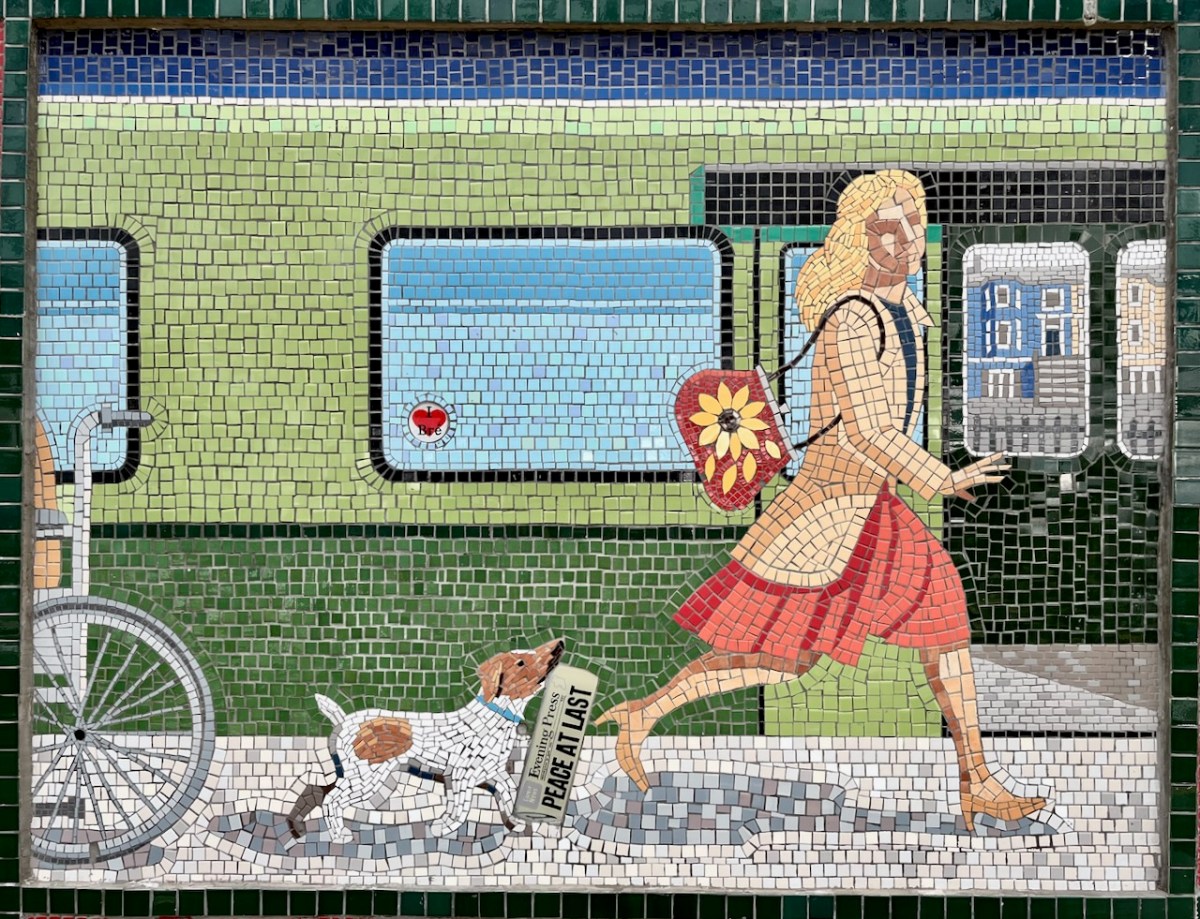
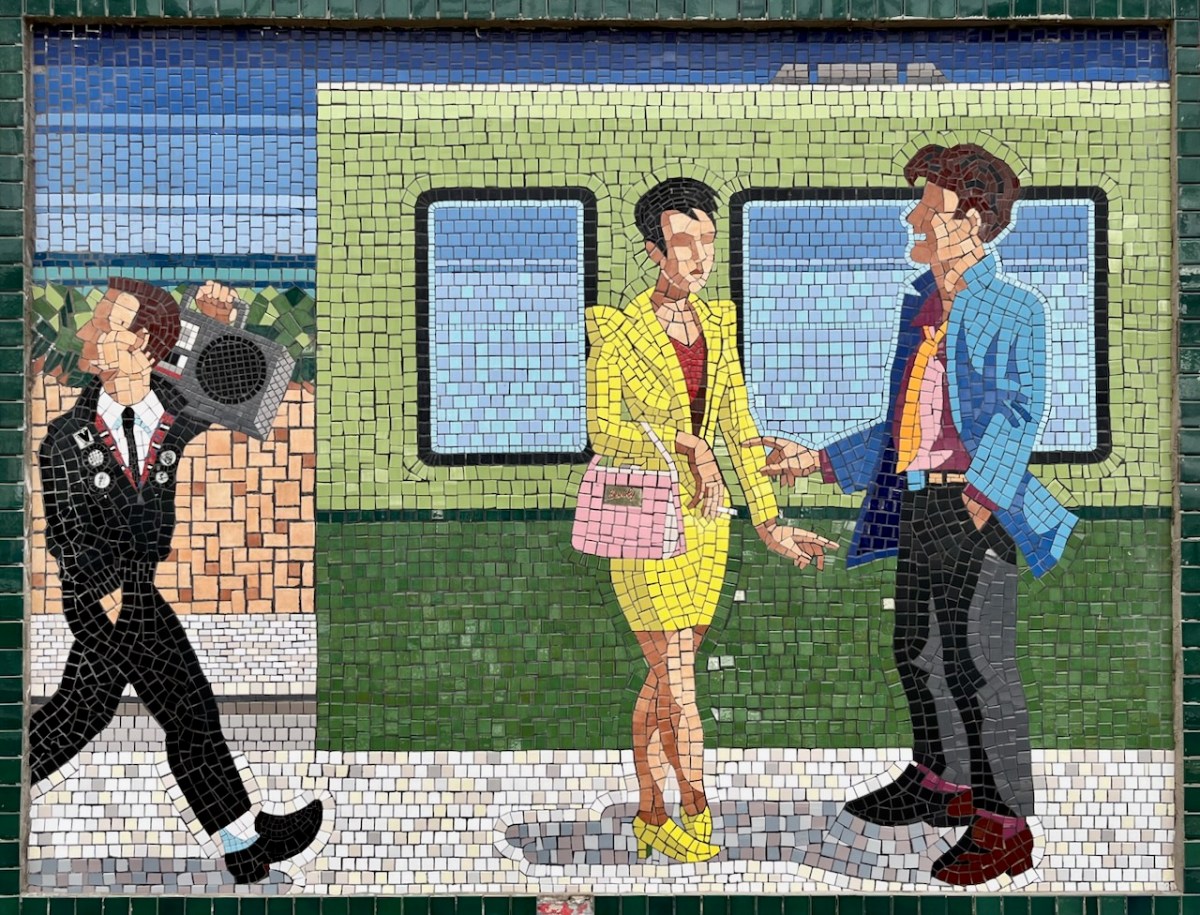
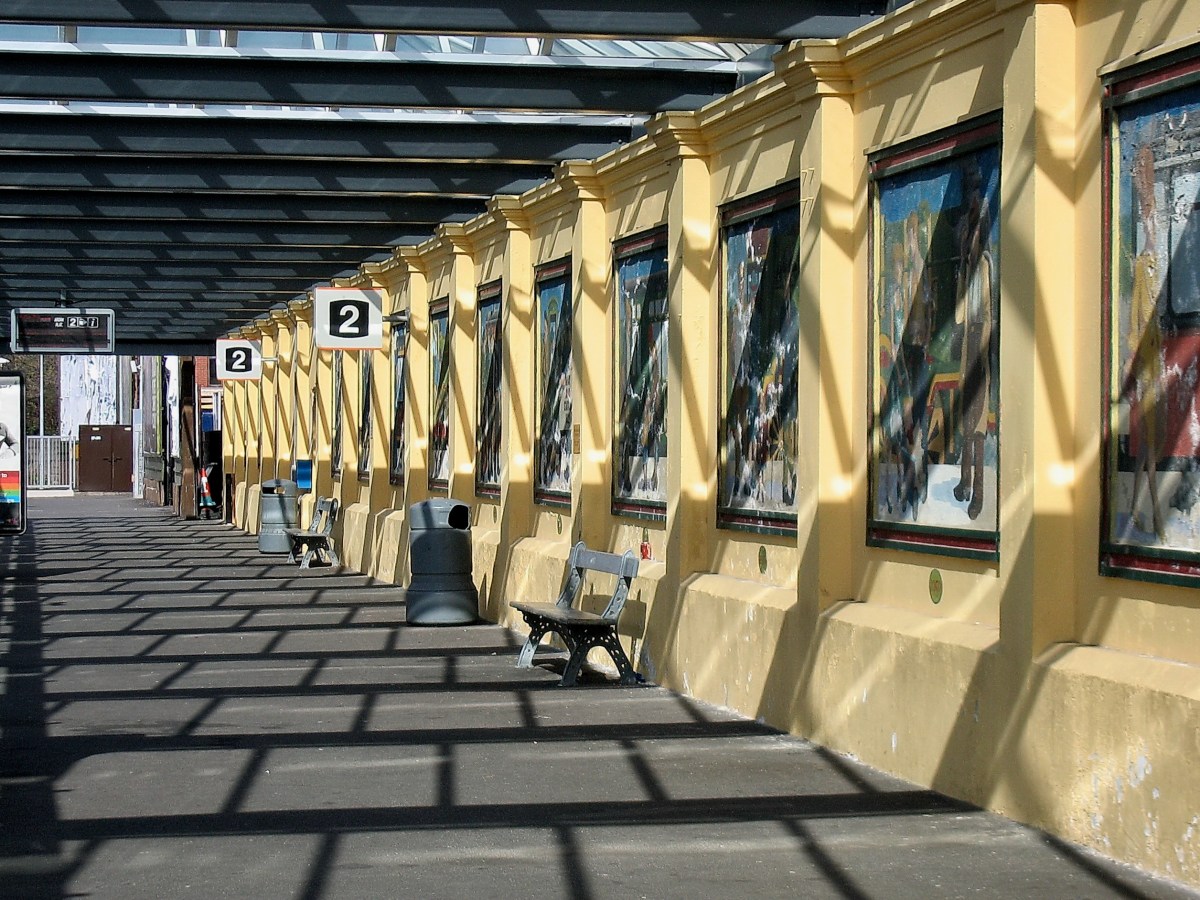
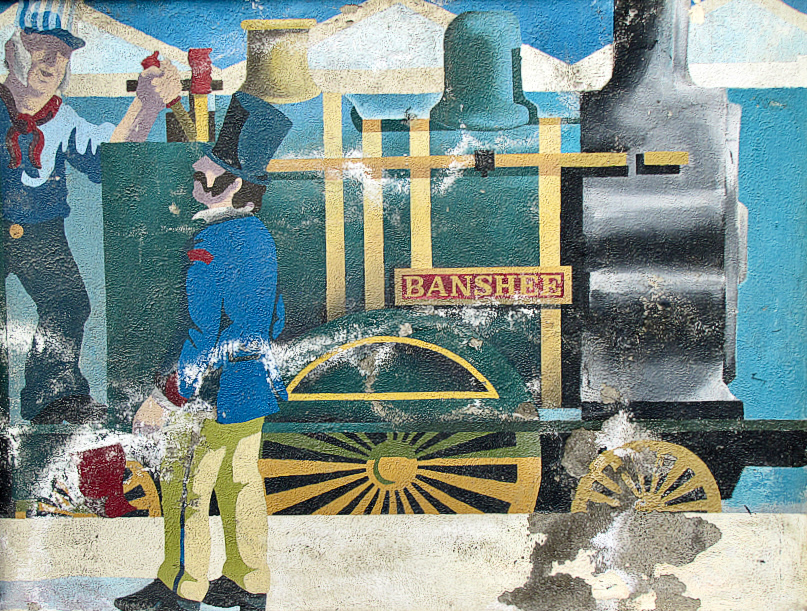
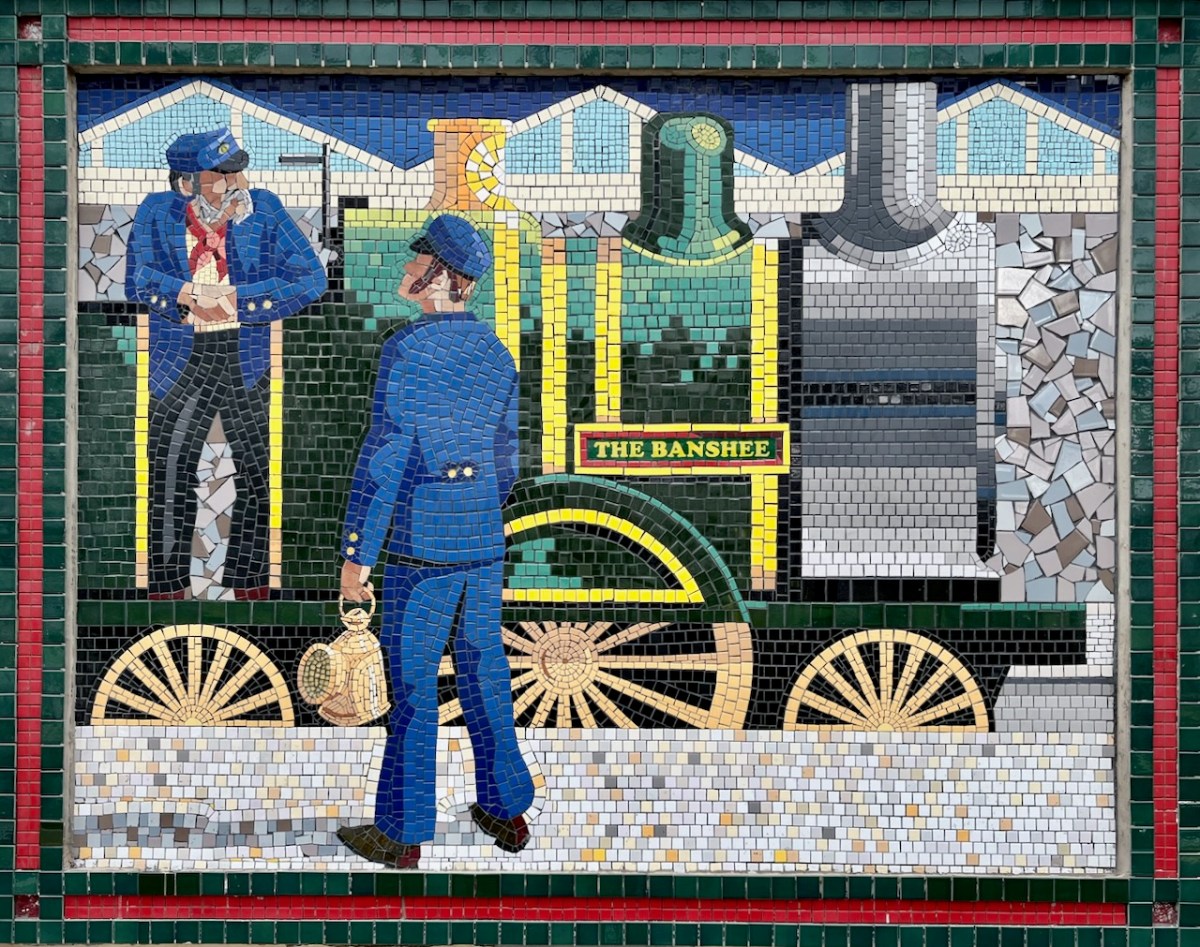
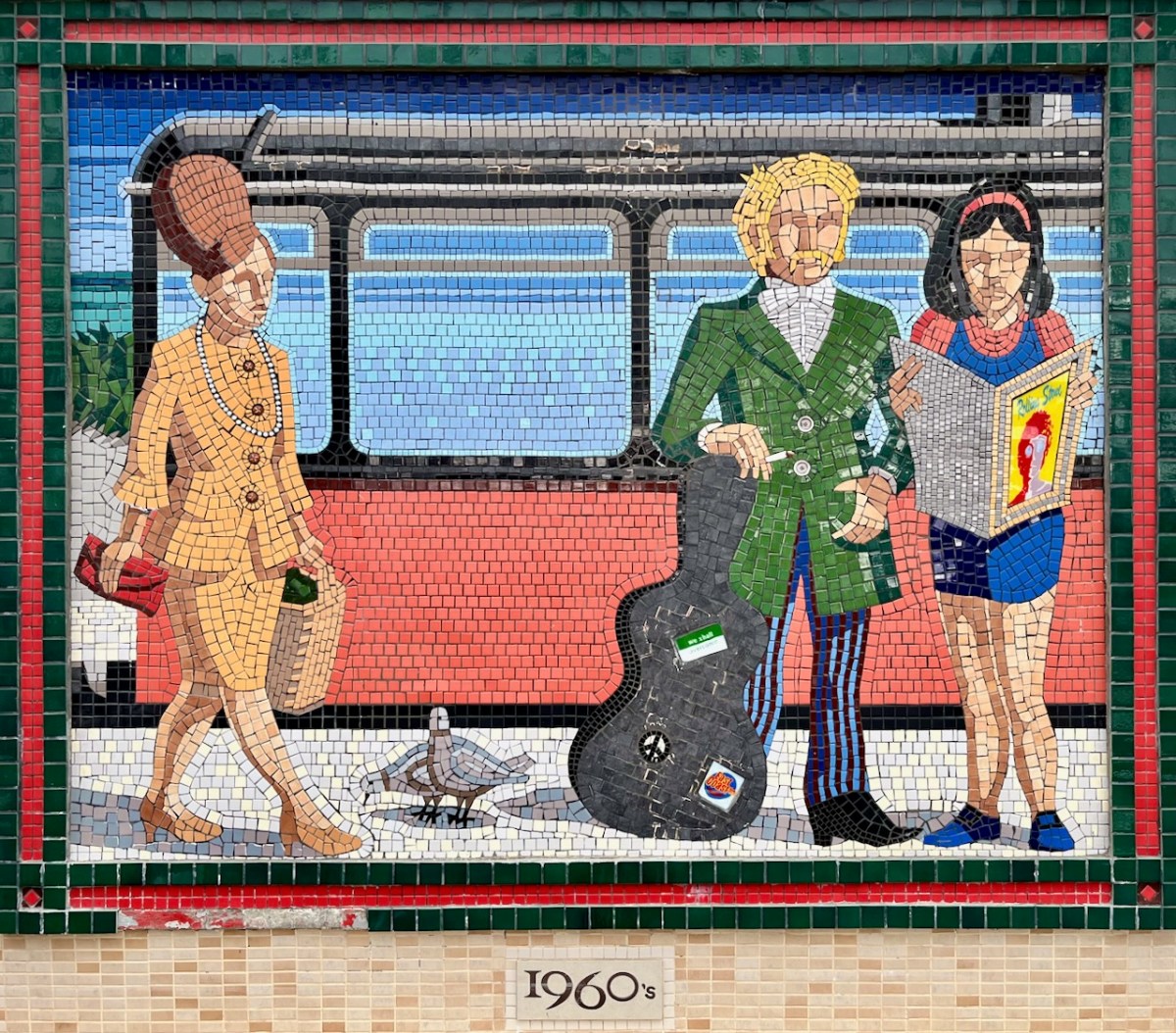
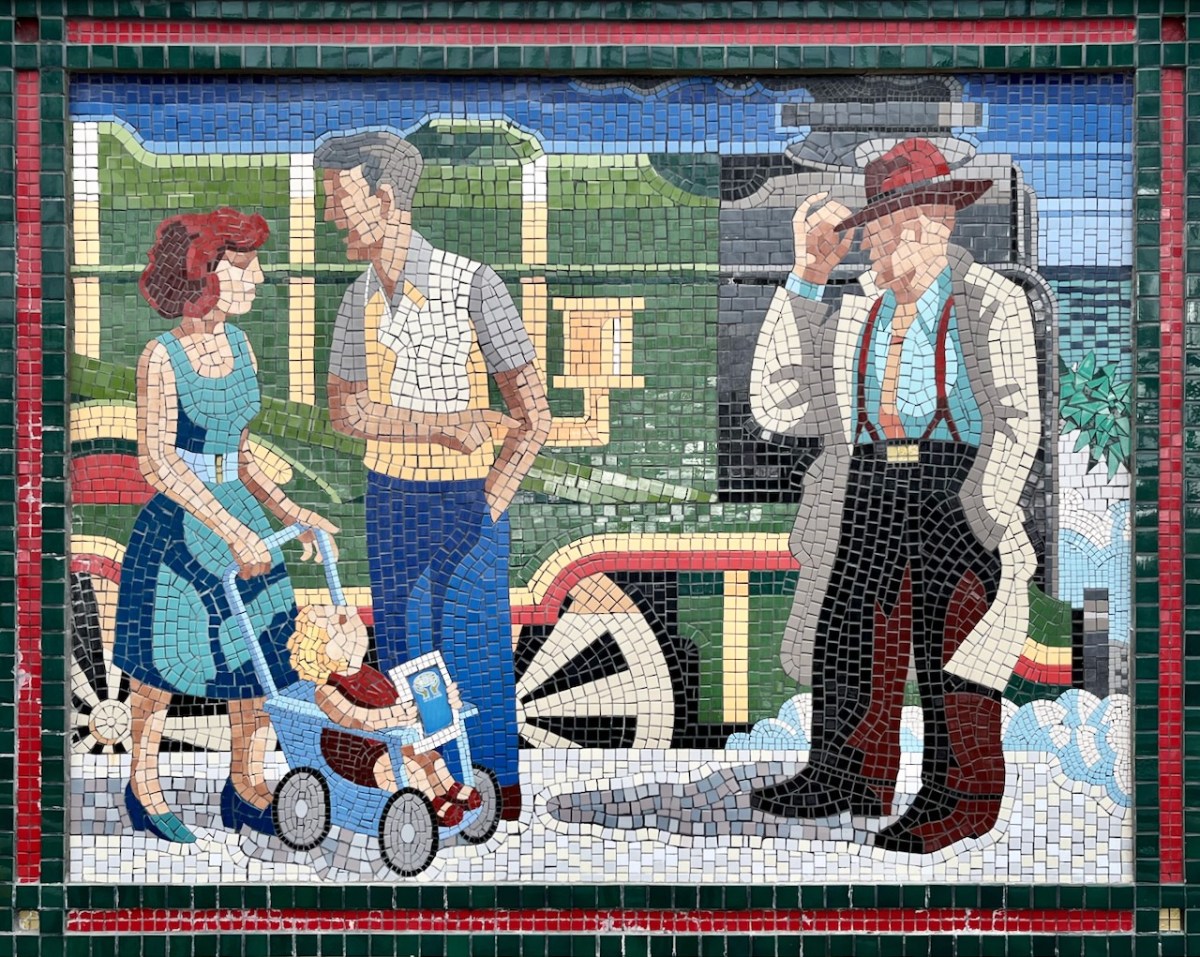
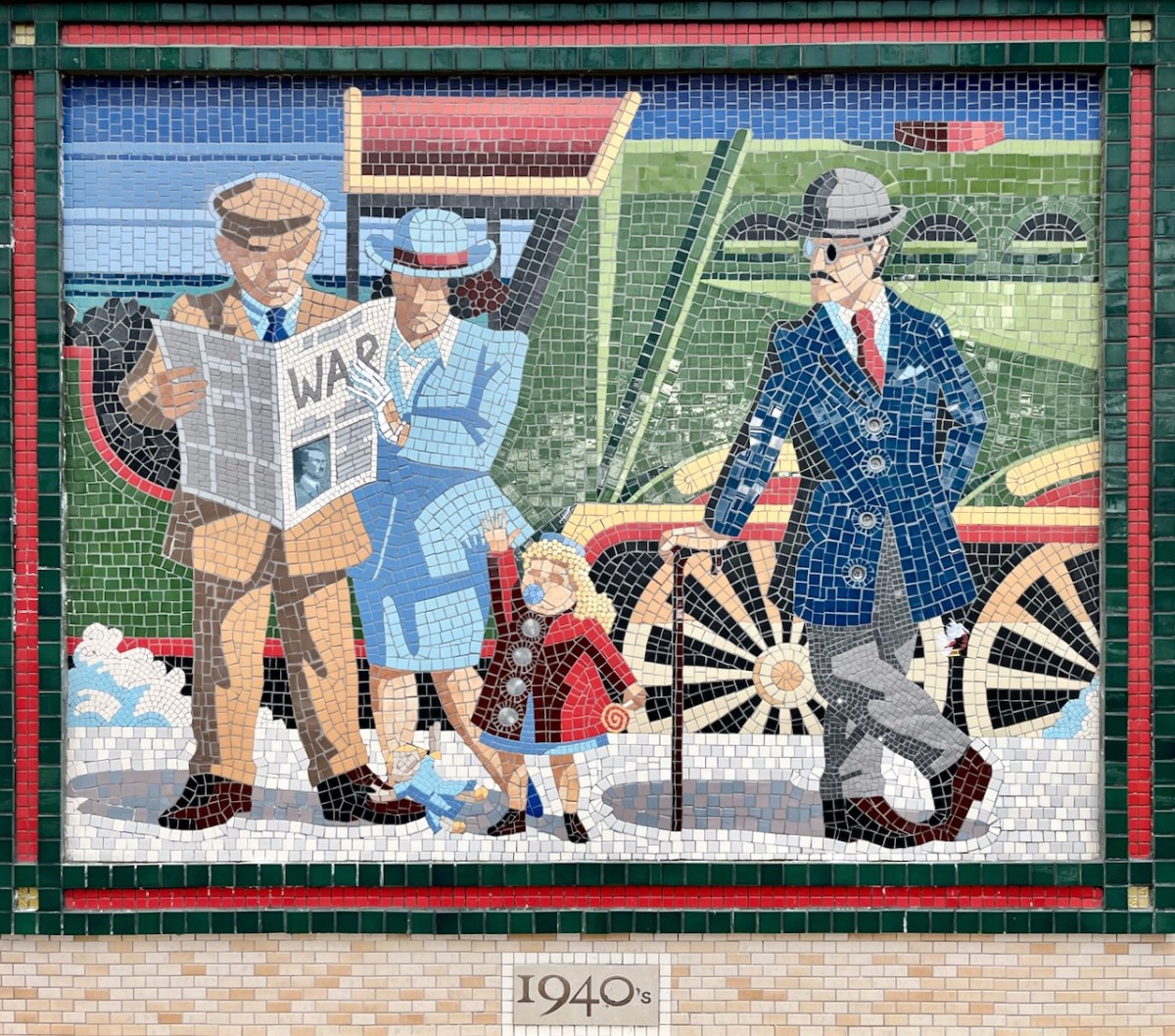
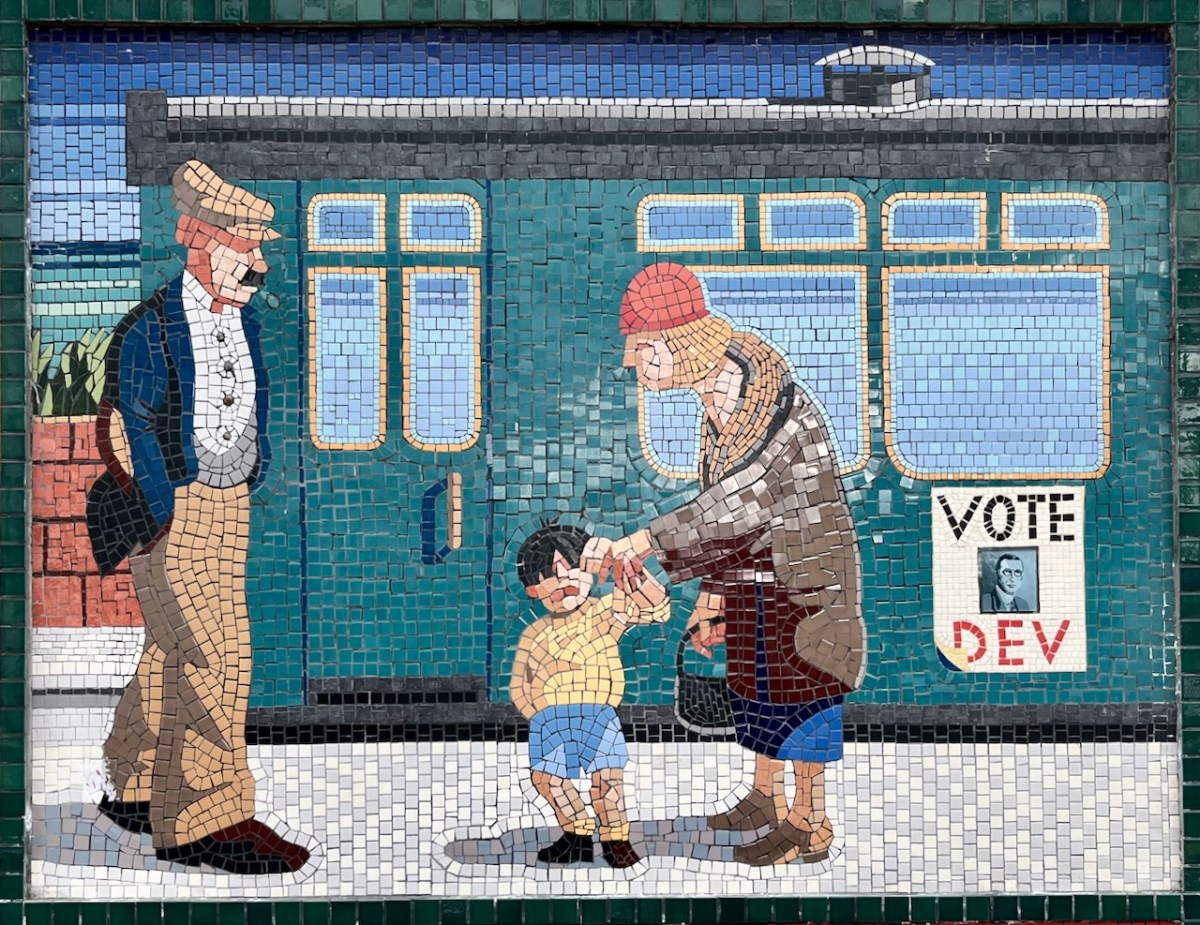
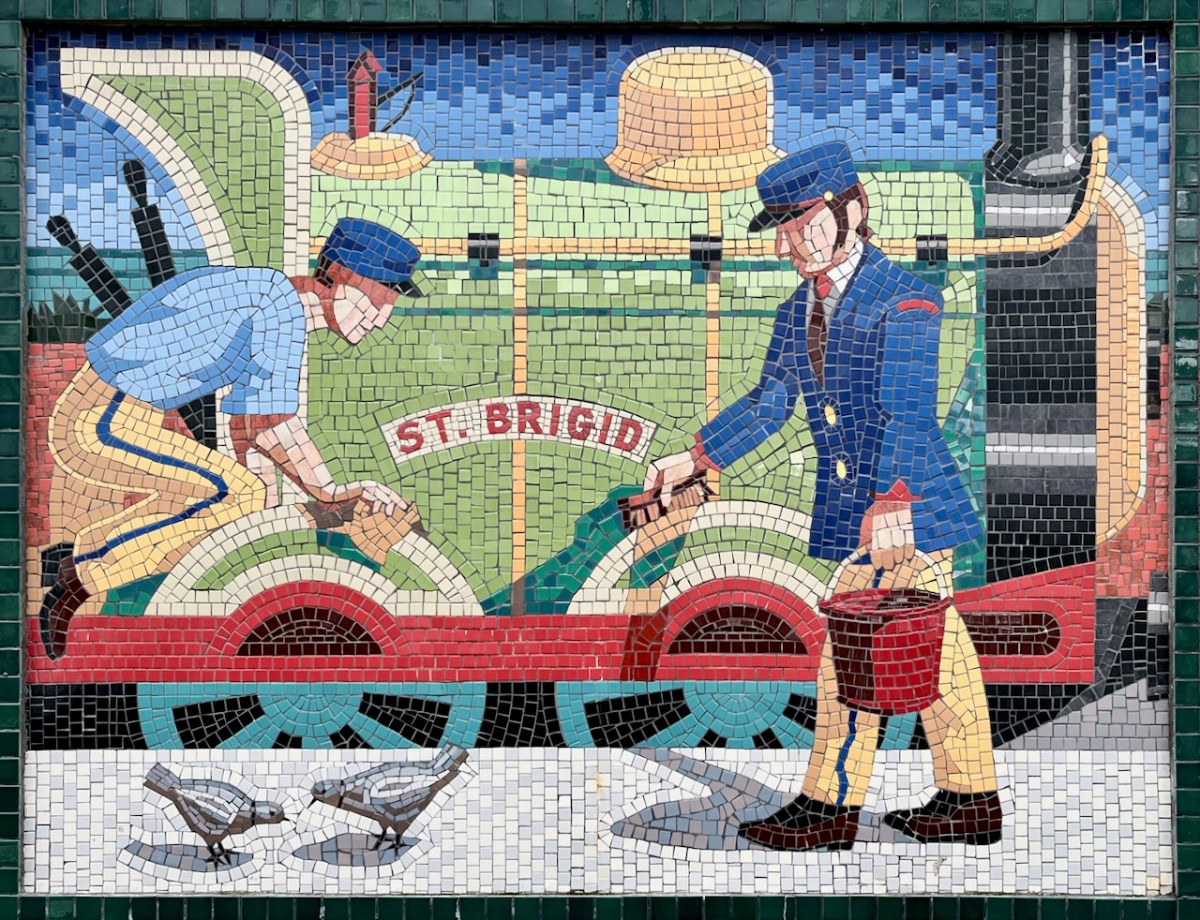
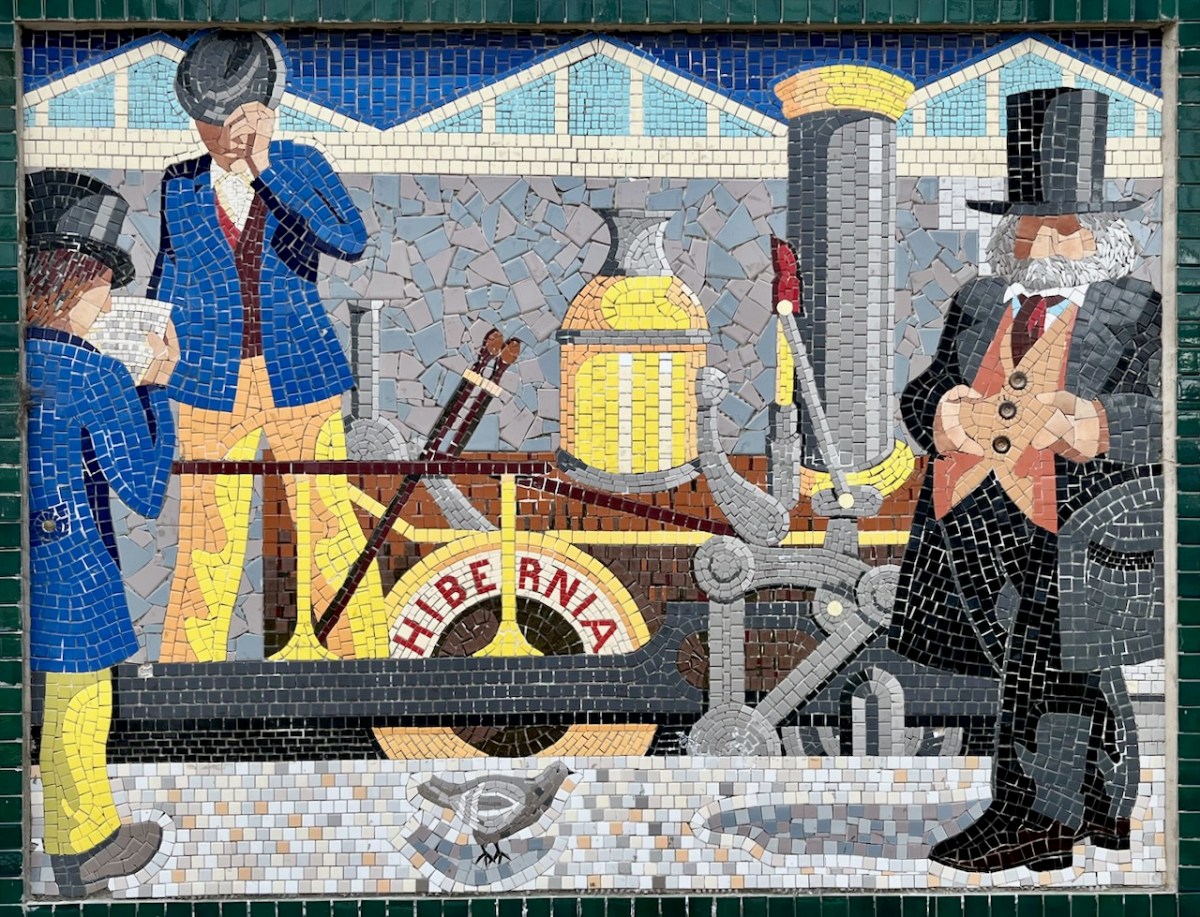
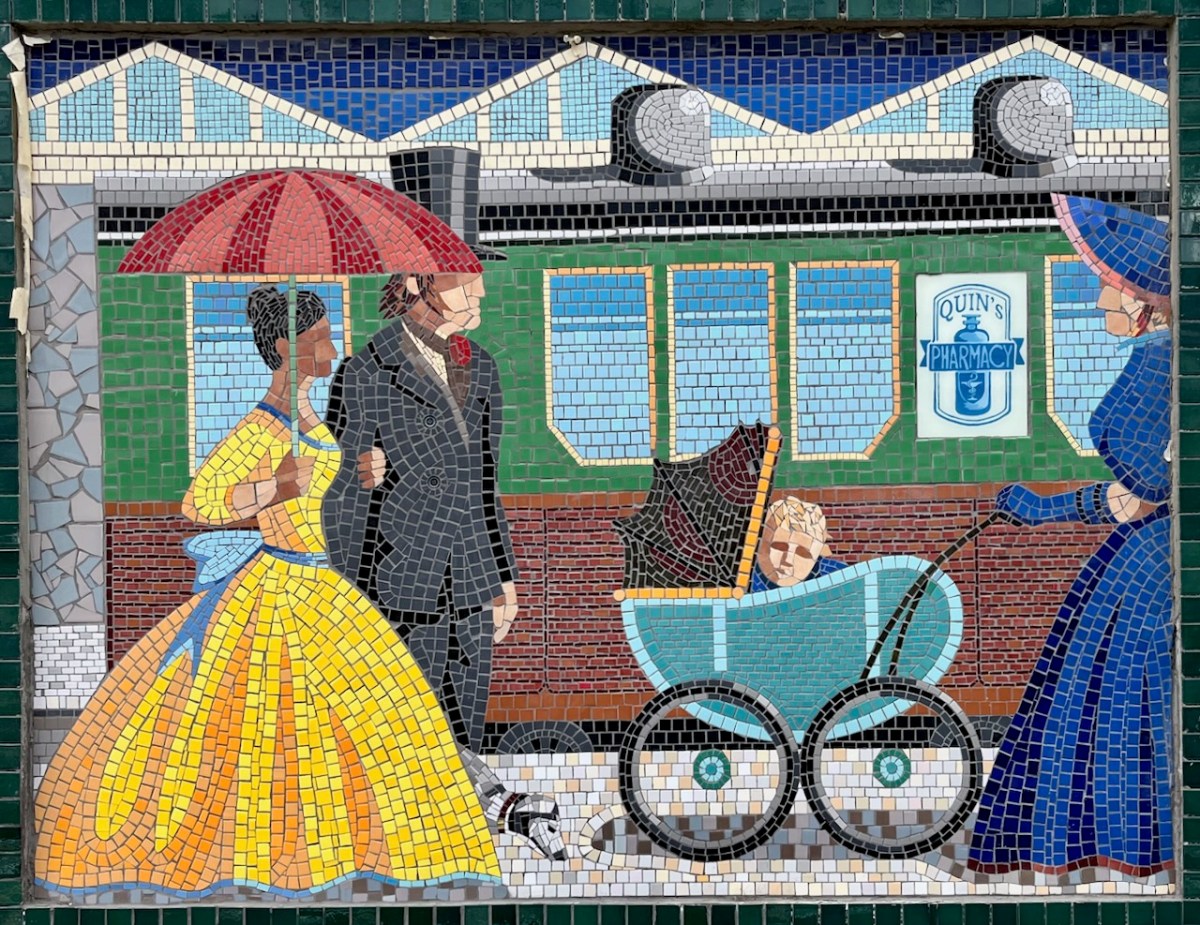
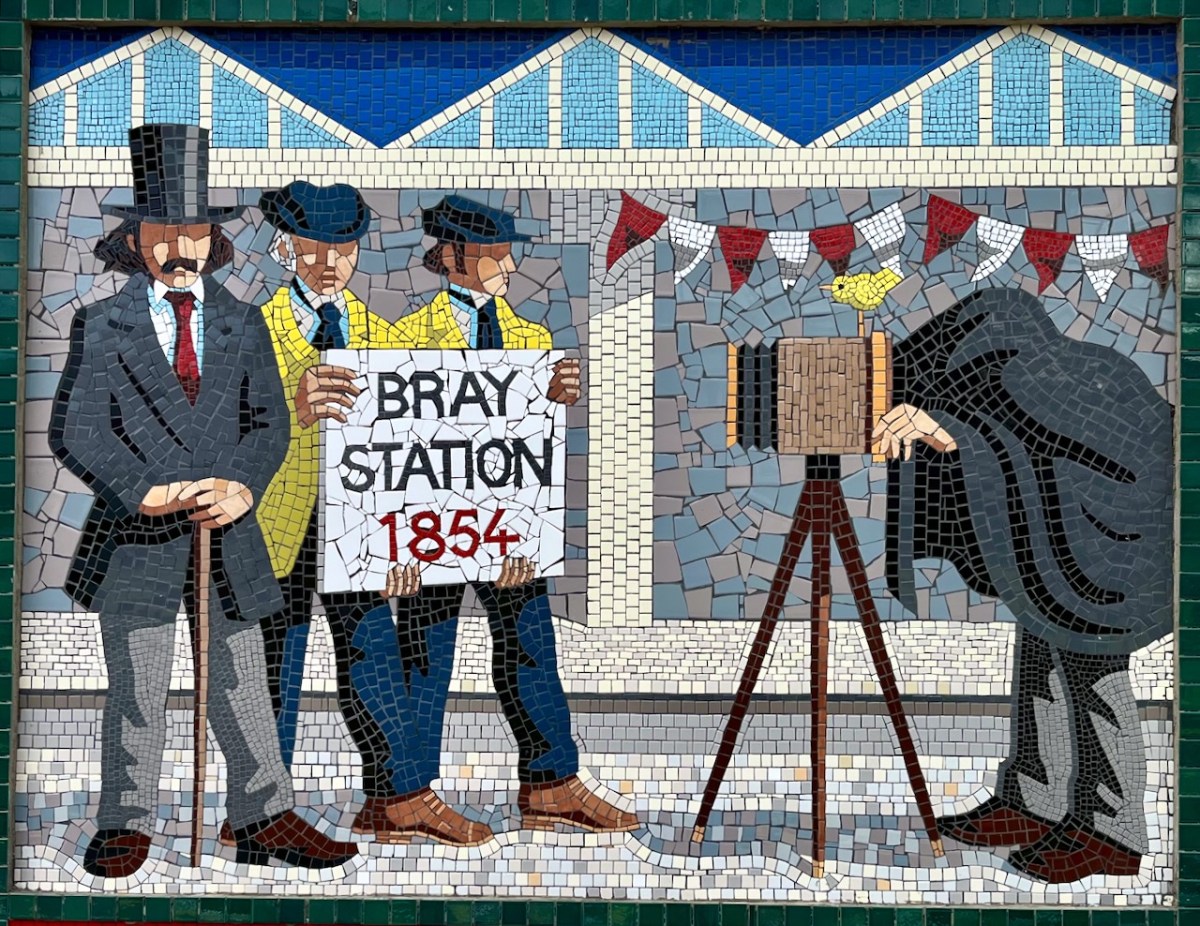
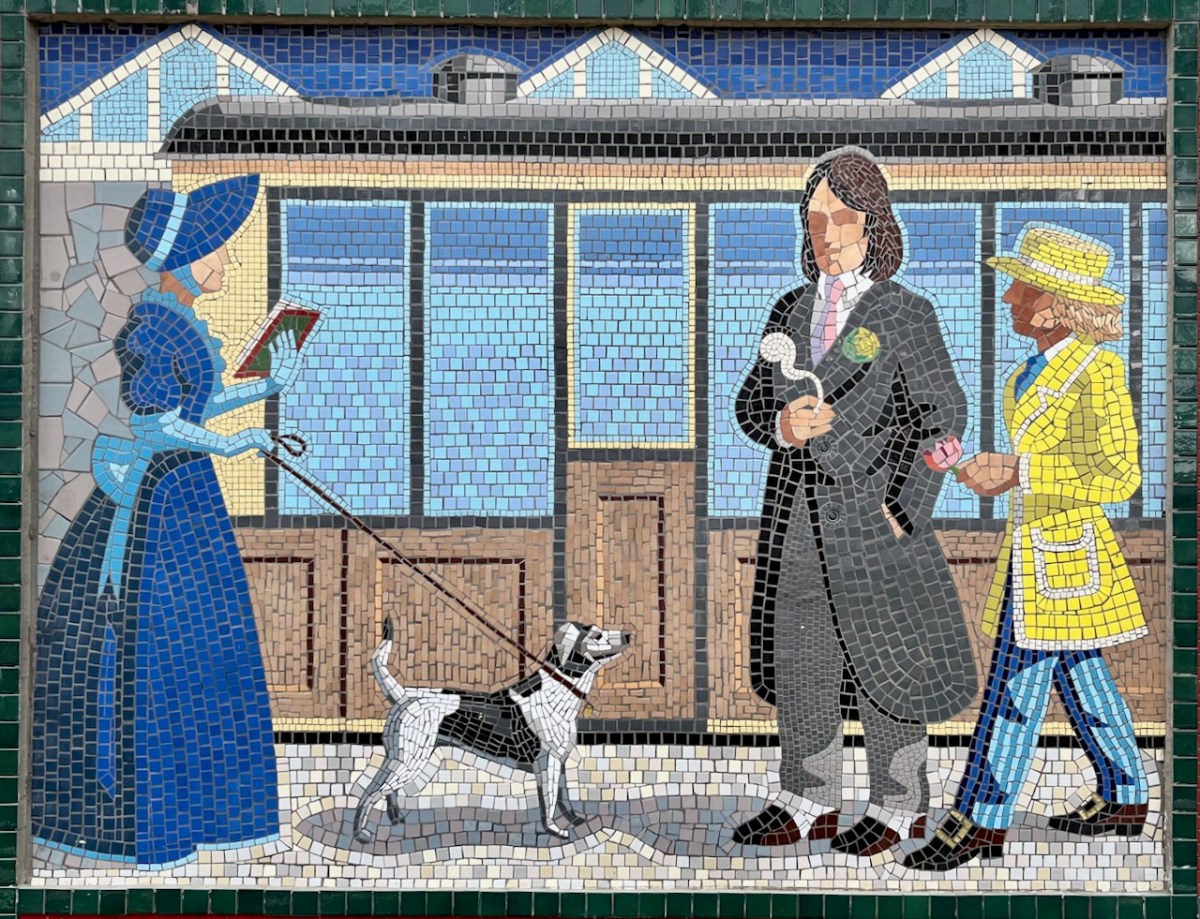
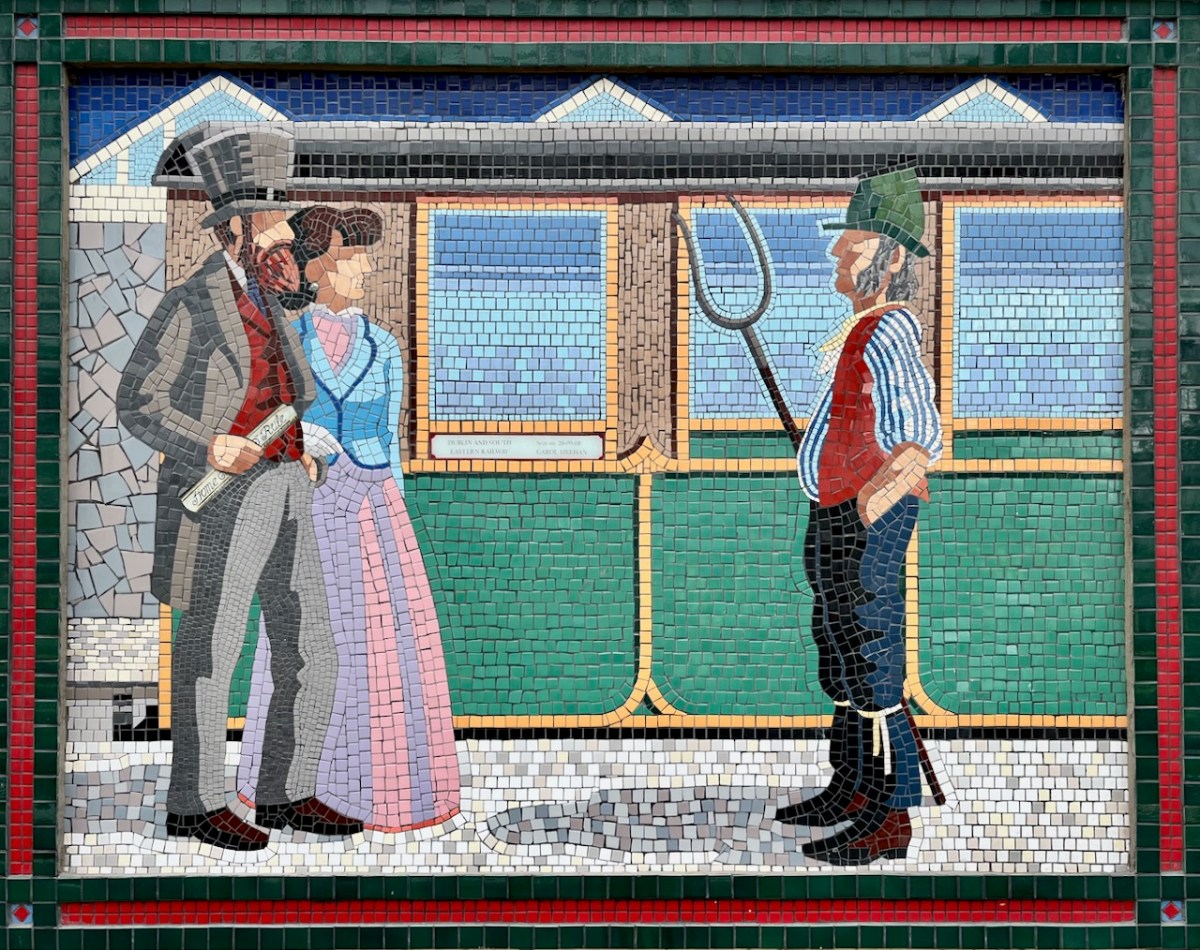
In a recent post I gave some examples of public art which can be seen on the railway station at Bray, Co Wicklow. I think this subject deserves a more comprehensive airing, so here we go! Just to recap, murals were originally painted here by Jay Roche and John Carter, who won a competition in 1987. Over the years the paintings deteriorated, and were replaced by the same team – assisted by Anthony Kelly and Eileen Maguire – with a very fine set of tiled murals. I’m recording the rest of these in this post, as I am so impressed by the overall work.

Each panel represents a decade in the line’s history. You’ll have to decide for yourselves which decade is which . . .

If only that newspaper headline was really true!

From Wiki Commons 2007: A Panel for Every Decade since 1850s in Bray Railway Station. These are the painted murals.

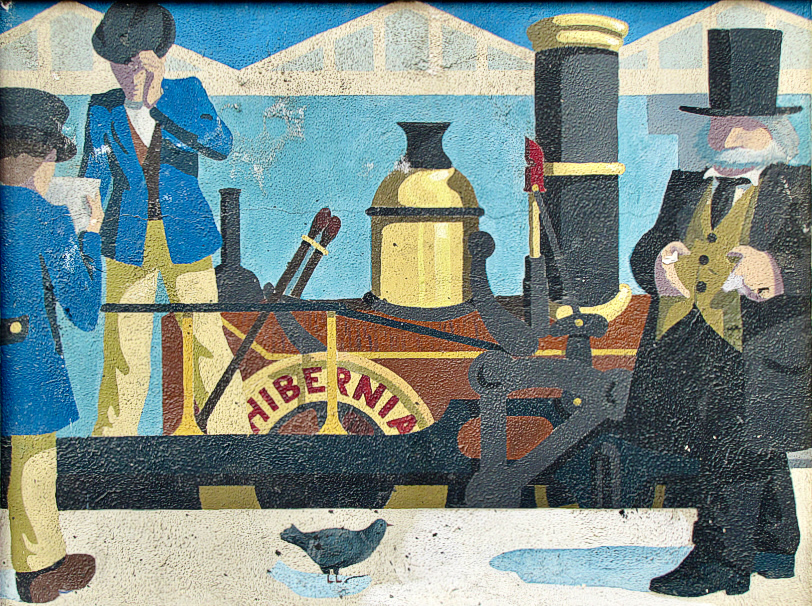
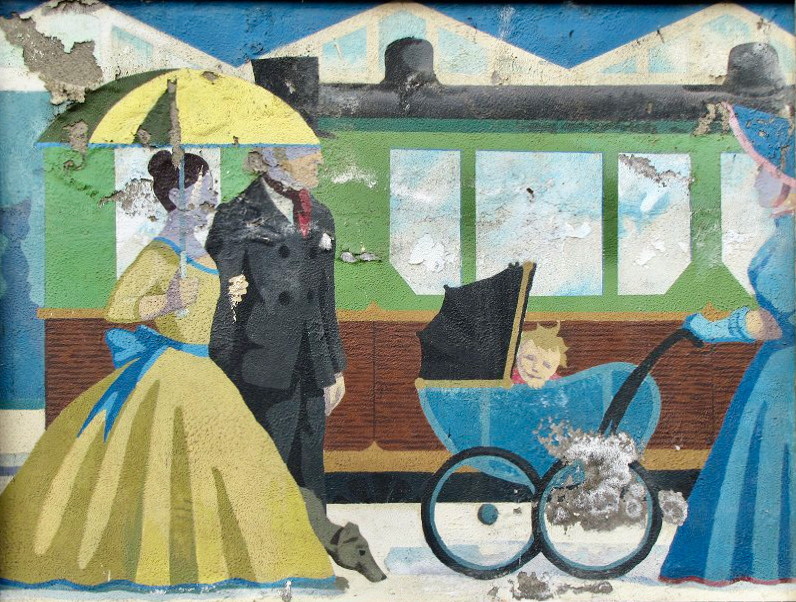
(Above) some of the painted murals in a fairly advanced state of decay: probably early 2000s. The tiled murals are loosely based on the subjects of the originals, but the artists have respected the variations that the change of medium calls out for:

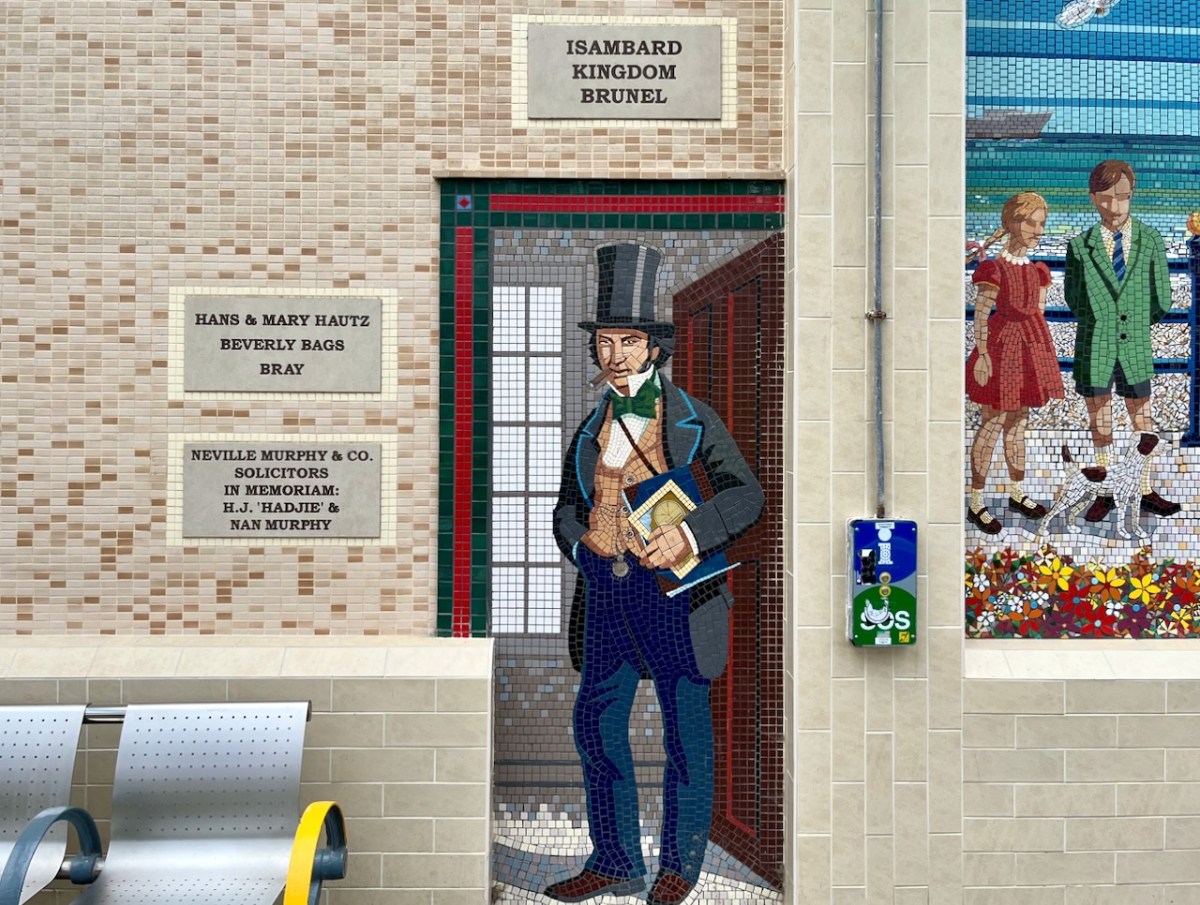
I mentioned – in Taking Notes – that Brunel was responsible for the line that runs through Bray. Here he is, standing on Bray Station:

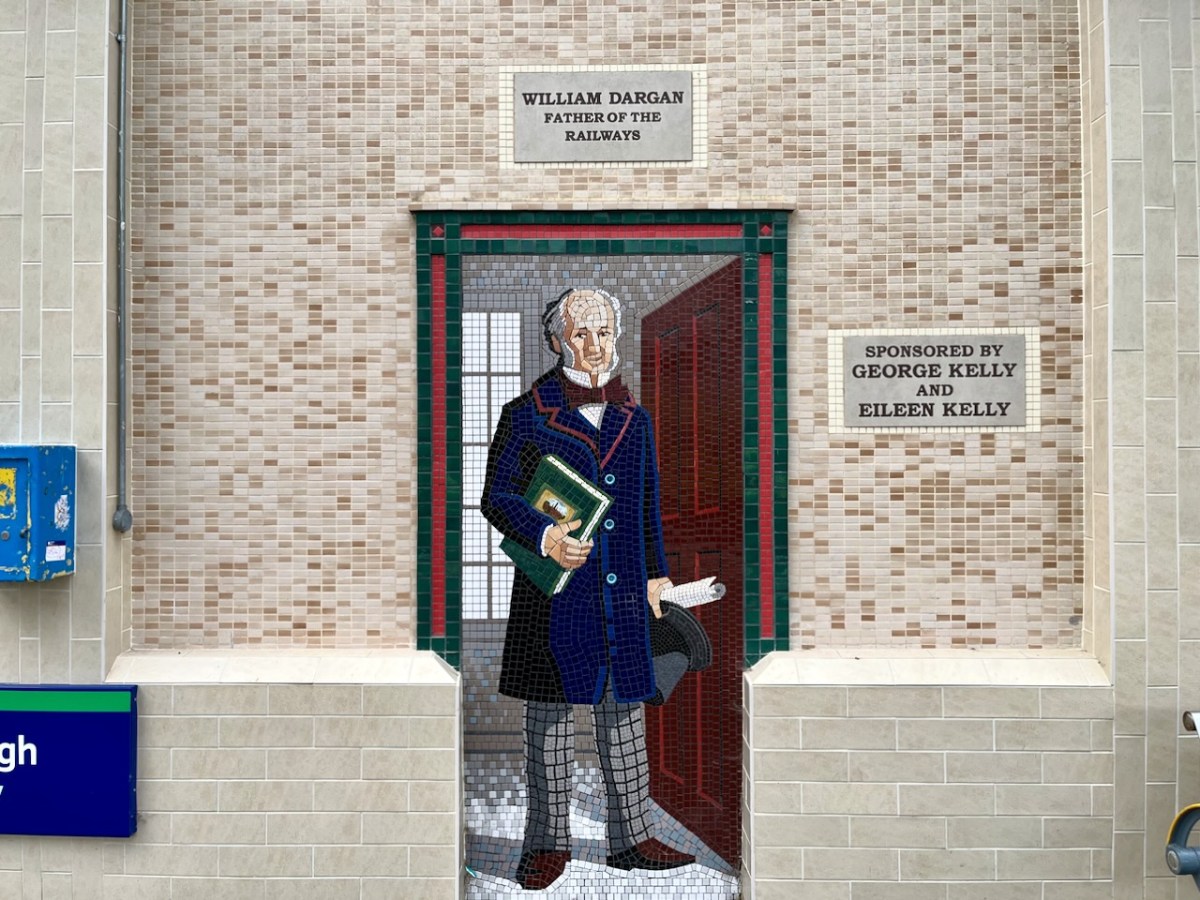
And here (above) – also one of the tiled murals on Bray Station – is a portrait of William Dargan. As you can see – considered ‘Father of the Irish Railways’ – Dargan lived from 1799 to 1867. He engineered over 1300 km of railways in Ireland. Working firstly in the UK he was an assistant to Thomas Telford, and oversaw the construction of roads and canals in the Midlands. He returned to Ireland in the 1820s and took an interest in promoting railways here. The first public commuter railway system in Ireland was designed and built by Dargan: it opened in 1834 and ran between Dublin and Kingstown, now Dún Laoghaire. The line as built was ‘standard gauge’ (ie 1,453mm between rails). This was converted to the ‘Irish standard’ of 1,600mm in 1857. The line extended south to Bray in 1854, and to Greystones the following year.

Isambard Kingdom Brunel, an engineer of Britain’s Great Western Railway, informed the Dublin and Kingstown Railway board that he was planning to build a line into South Wales and start a new sea route from Fishguard to Rosslare. He suggested a joint venture for a line from Wexford to Dublin. A coastal route from Bray (rather than inland) was chosen specifically because it would be scenically attractive for travellers. This led to engineering difficulties including tunnels and retaining structures which are still evolving to this day.

Brunel’s vision of a line going from the capital to Wexford and linking with a service of Irish Sea ferries has been fully realised, and is taken for granted. Let’s hope that this line is maintained and continues on far into the future.

I hope you have noticed how the design of the rolling stock has been changing as we go back through the decades. The representation on these murals is accurate, as far as I can see.

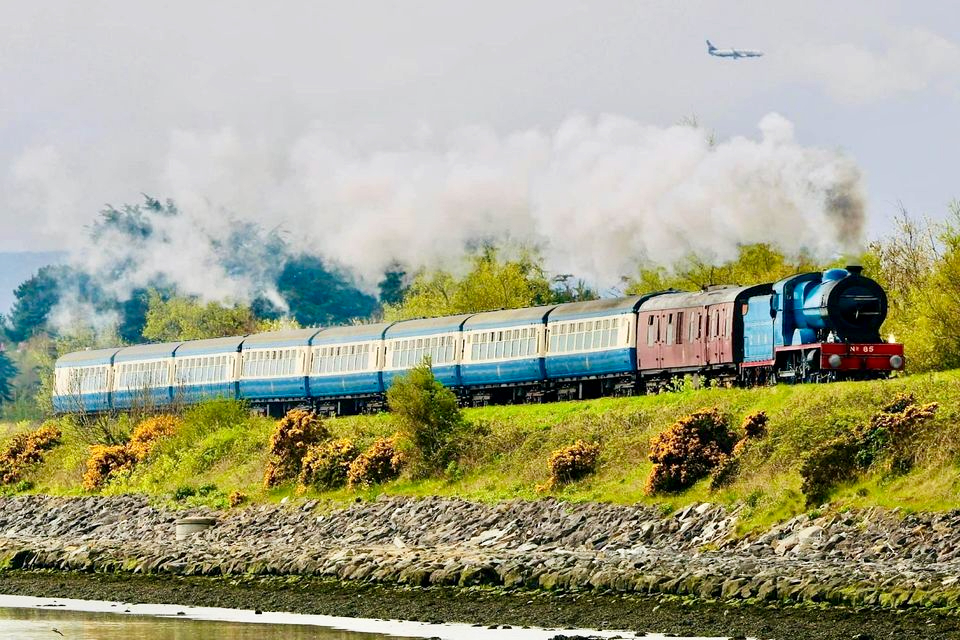
I was sorry to miss the sight of restored steam locomotives and carriages coming through Bray and Greystones on Sunday 24 September this year. Here’s a previous Steam Express visit to Wicklow in 2022 (courtesy Irish Independent):

Here in the West we did have some very singular railway lines – look at these posts: The Great Southern Railway: Headford Junction to Kenmare; Aspects of Baltimore; The Flying Snail and Tracking the Trains. Sadly, it’s no longer possible to travel by train in our region: all lines west of Cork City closed on 31 March 1961. Before that you could get to Skibbereen, Ballydehob, and Schull, Bantry and Baltimore and even, on a little branch line, to Timoleague and Courtmacsherry. Don’t we miss those opportunities?

Leap and its Scarecrows

There’s a village in West Cork called Leap – say “Lepp”. Where does that name come from? As is often the case in Ireland, it all starts with a story . . .

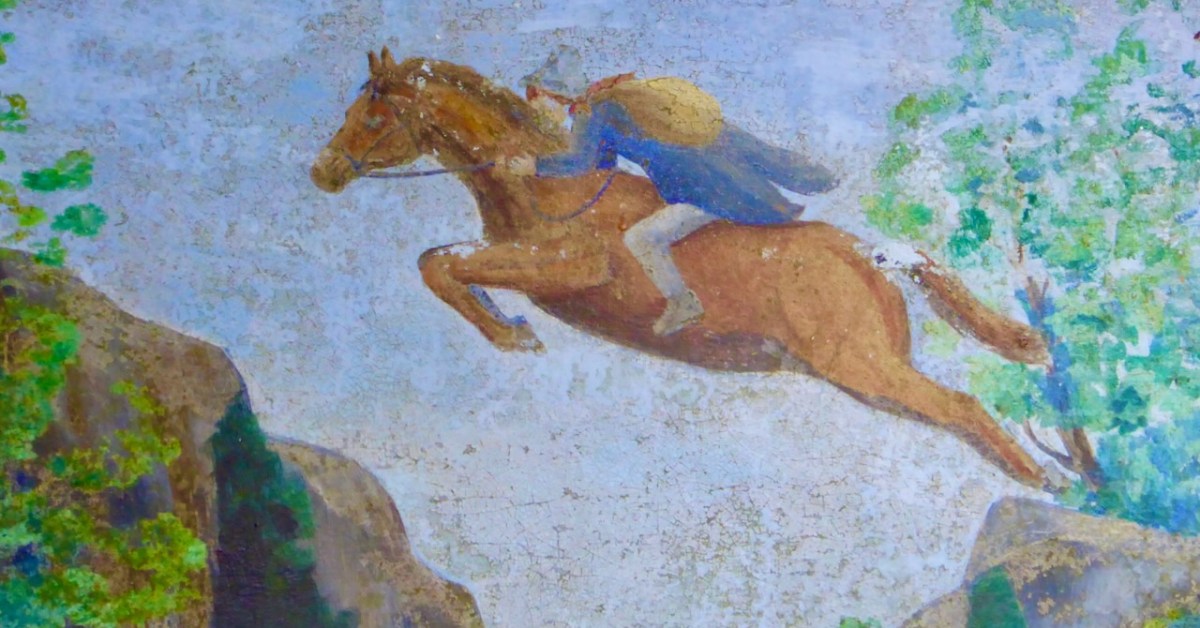
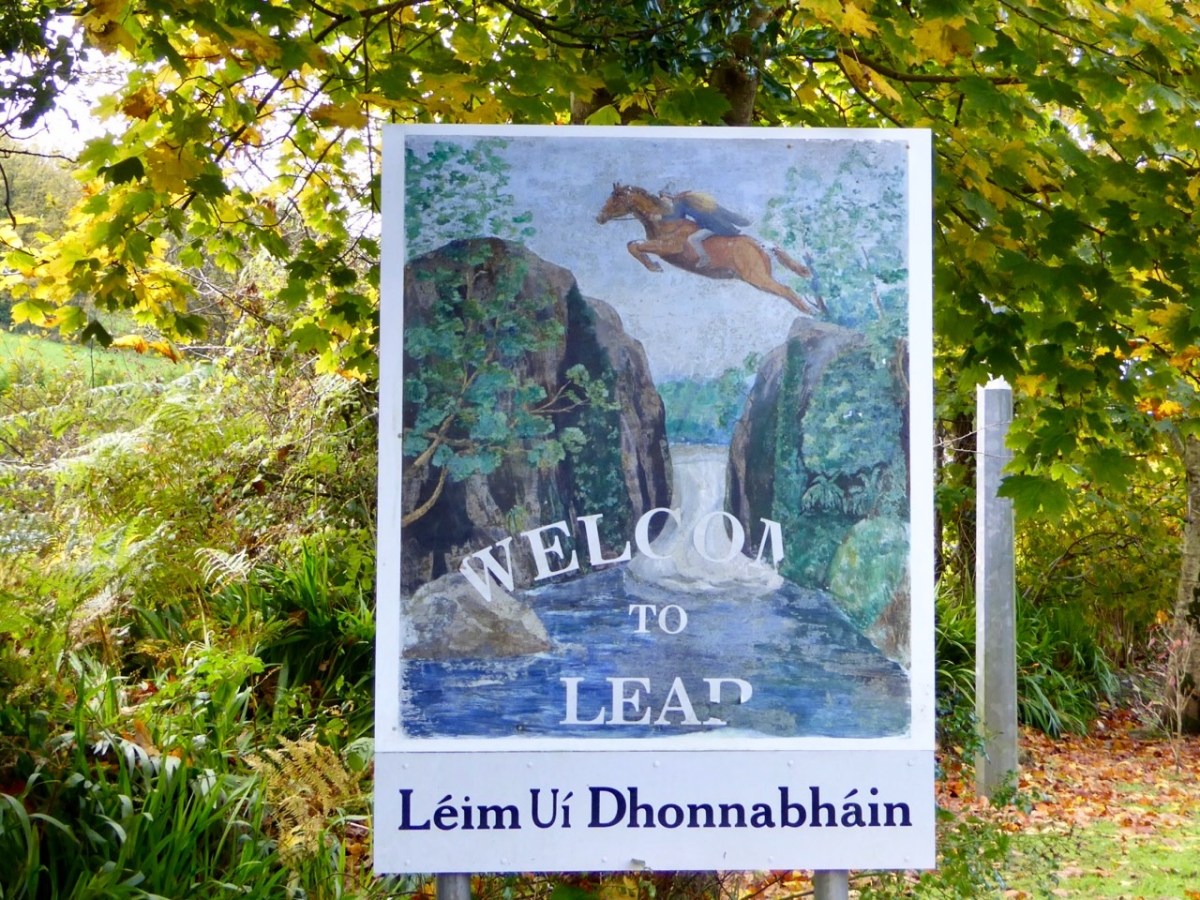
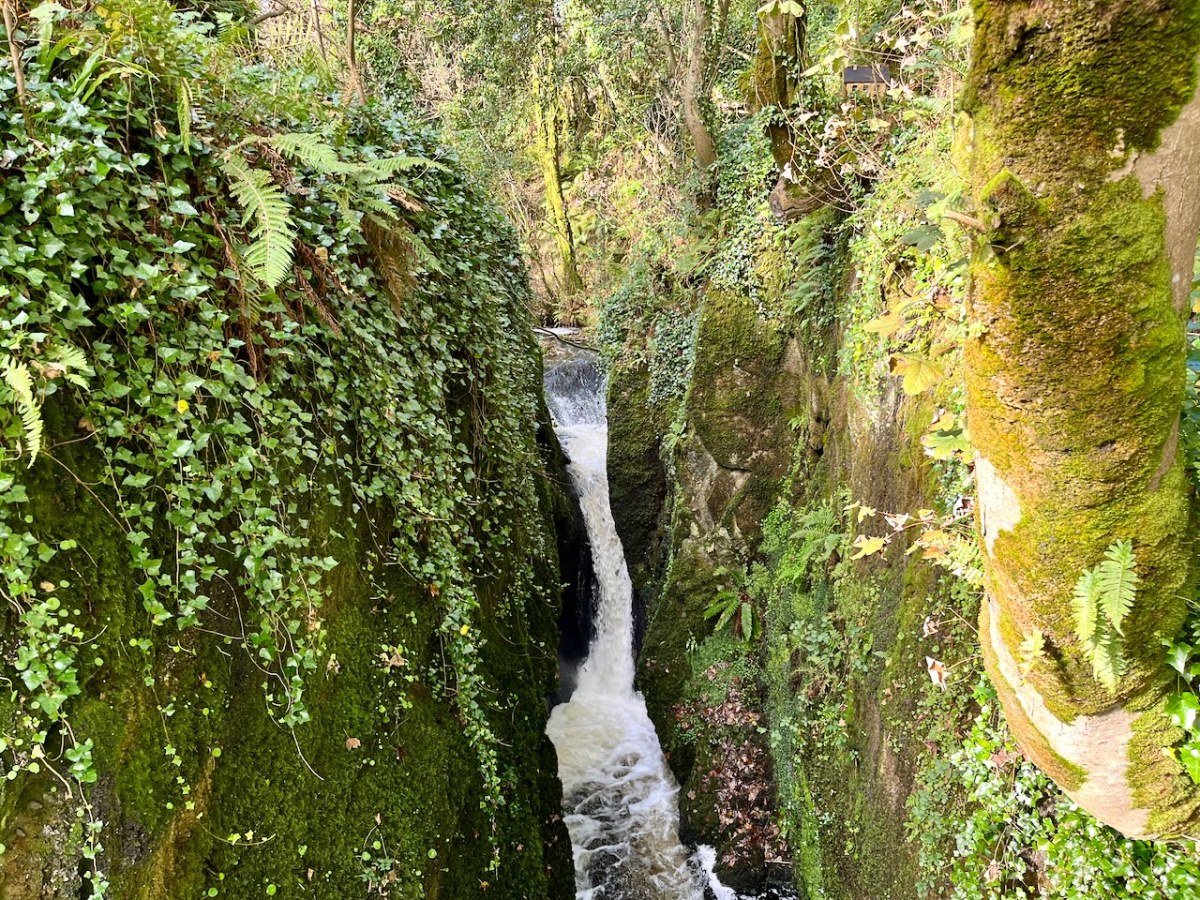
Tradition had it that St Patrick never went west of Leap (in Irish that’s Léim Uí Dhonnabháin, which translates literally as The Leap of O’Donovan), and that’s the sign at the entrance to the village, above. It was St Ciarán of Cape Clear who did all the converting in our part of the world: read about him here. So when The O’Donovan, pursued by British soldiers ‘leaped’ over the deep gorge which you can still see to this day, he was escaping into a much wilder country. The gorge (this is as it looks today – below) divides the West from East Carbery. So difficult was it to pass “beyond the leap” in those old days, that it was said: “beyond the leap, beyond the law”.

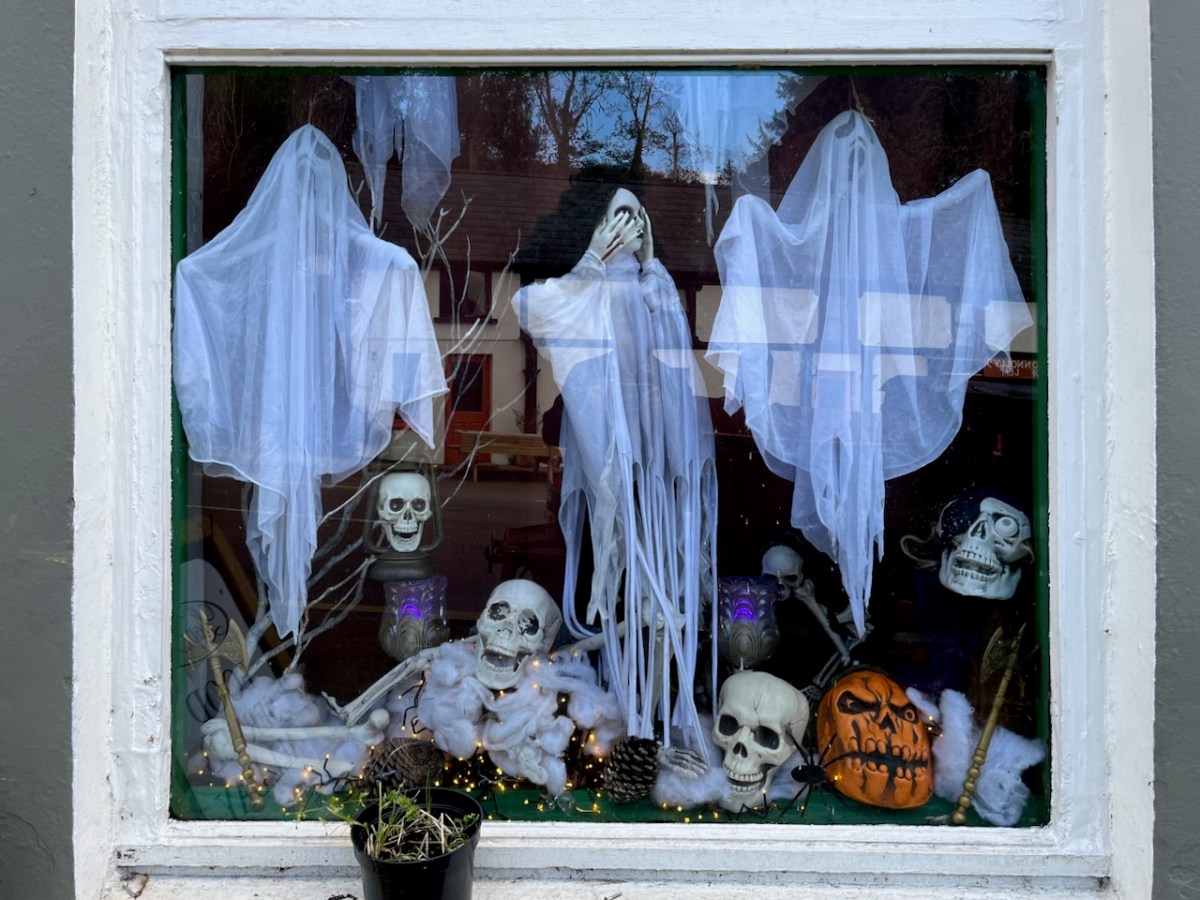
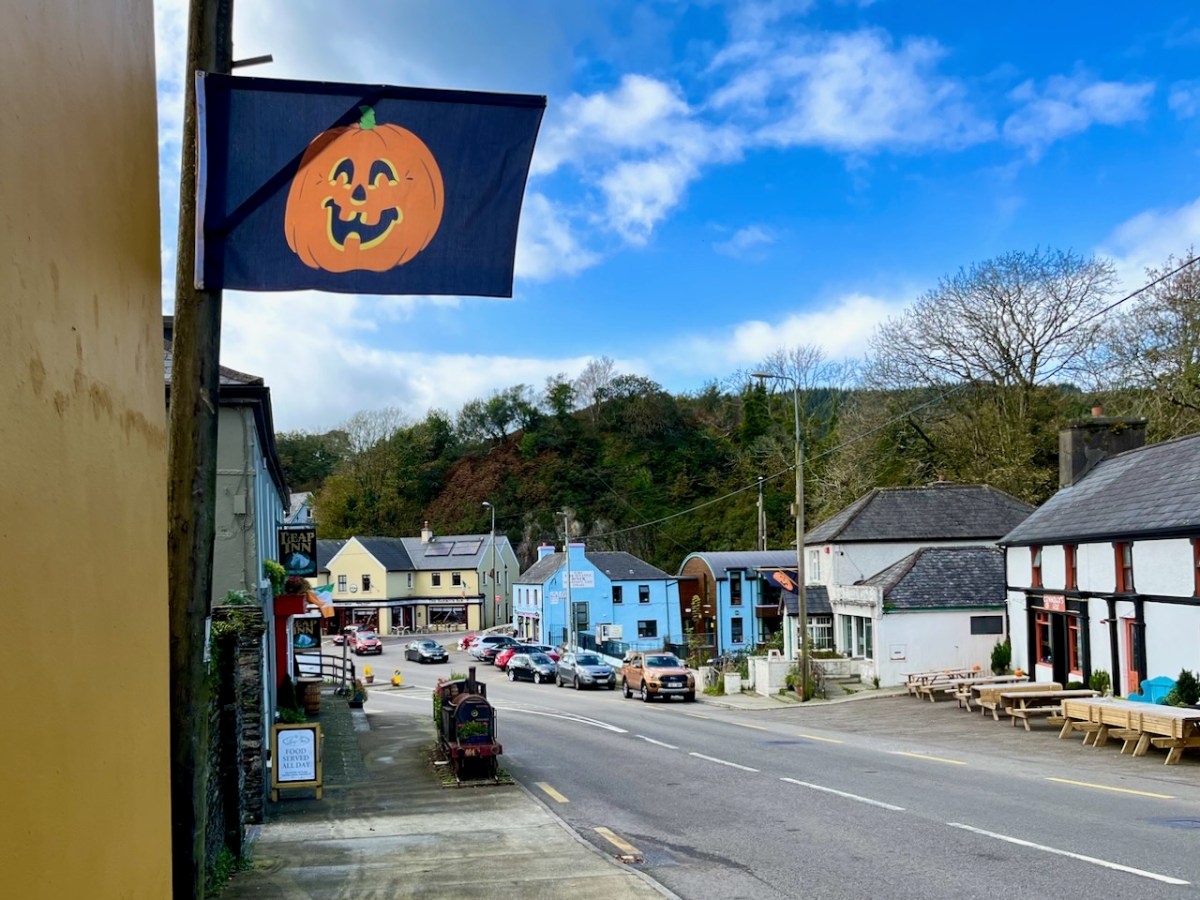
Apart from O’Donovans Leap, the village is celebrated today for its associations with Hallowe’en, Ghosts, and Scarecrows. And we are approaching the time of year when these phenomena come to the fore. At the present time, a few shopfronts are being decorated, but there are plenty of Scarecrows waiting in the wings for their moment to arrive!

You can see that Leap – in West Cork – will be worth a visit once the festivities are in full swing: that will be between Monday 23 October and Sunday 5 November this year. Back in 2015 we visited the Leap Scarecrow Festival and wrote this post about it (click here). Interestingly, it became the most popular post we had published up to that time – it’s had around 3,250 views since it first appeared. Have a look at it now – but also remember to go to the village of Leap at the end of this month!
A Swiss Spy in Skibbereen

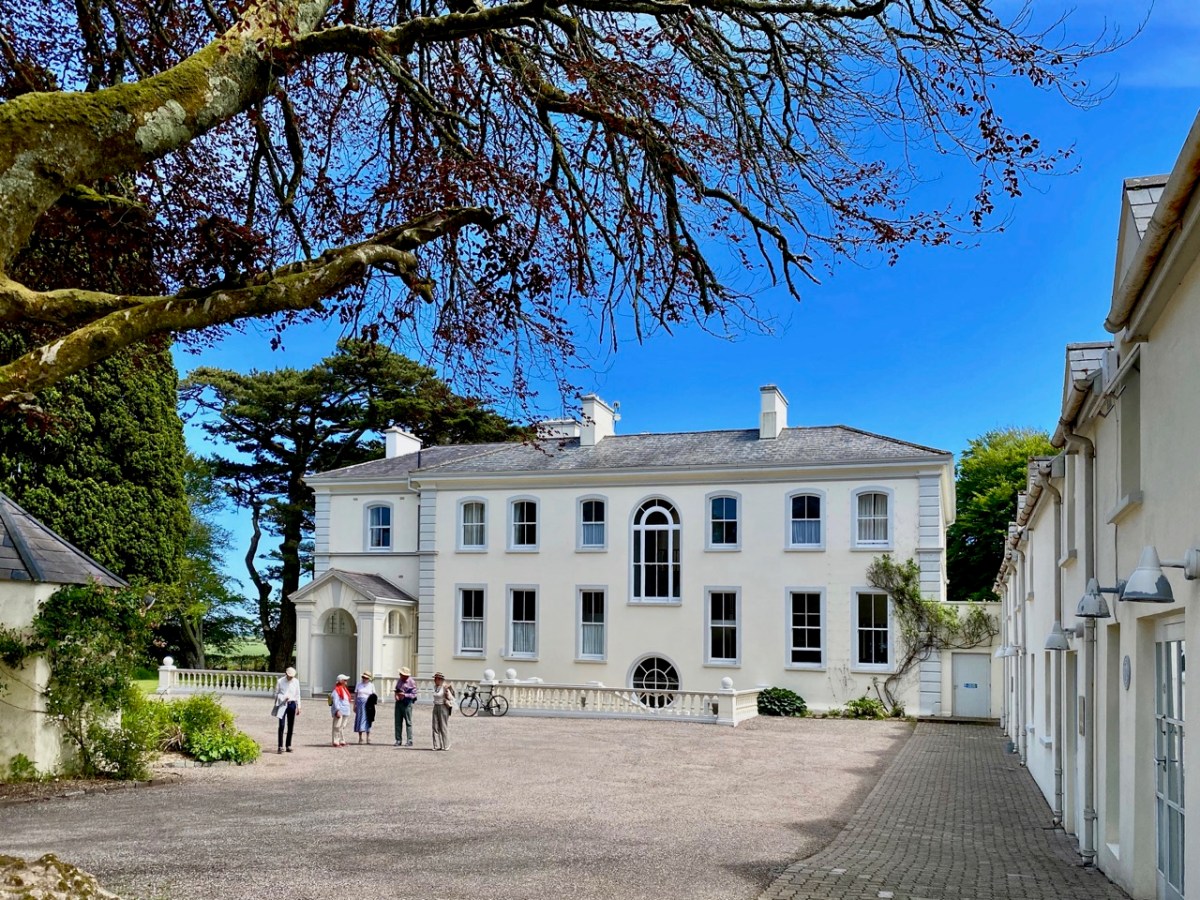
The story of a Swiss Government foray into West Cork at the time of the Cold War has seeped into folk memory. When we settled in Ballydehob in the early twenty-first century we heard many accounts and – as is often the case – sensation takes preference over sober fact. Nevertheless, the tale is worth telling, and I have set out what I perceive to be accurate. It all centres around the man above – Colonel Albert Bachmann – and two locations: Murphy’s Cove, Tregumna, and Liss Ard House, just outside Skibbereen.

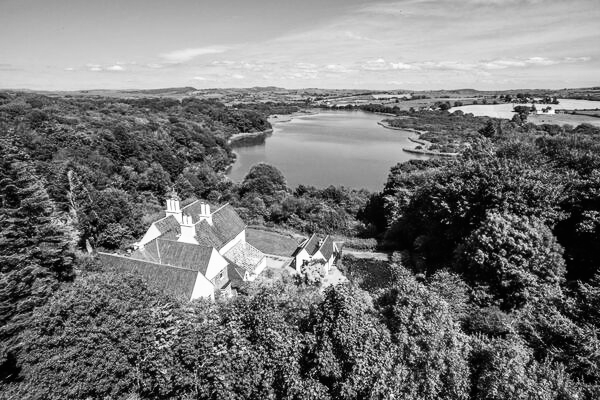
Contrasting atmospheric conditions: Murphy’s Cove, Tregumna, on this misty October day (upper pic) and Liss Ard House on a beautiful June day in 2021 (lower pic). Our story properly begins in 1962 . . .

The cover of Esquire magazine, January 1962 features an article headed ‘9 Places in the World to hide’: one of these places is “Cork – Ireland”. In fact, the article suggested that Cork was considered the safest place in all Europe in which to hide from the predicted nuclear holocaust. I was a teenager in the UK at the time, and remember the worries of everyday life through that year – in particular the Cuban Missile Crisis. 1963 was little better – dominated by Kennedy’s assassination. We didn’t have a television in those days – friends did; but our ears were glued to our wireless sets, not knowing what to believe, or expect. Now – sixty years later – I’m older and wiser. I survived.
. . . COLONEL ALBERT Bachmann, who has died in Cork at the age of 81, was the James Bond of Switzerland. He came to west Cork in 1963, fell in love with the area and bought property there. At the time he was rising through the ranks of Swiss military intelligence, though Switzerland is typically seen as the world’s most neutral state with few if any belligerent enemies. Bachmann took himself on a secret mission to Biafra, then trying to secede from Nigeria, where he implied mysteriously that he was involved in secret arms deals with the Shah of Iran. He passed himself off as an upper-crust Englishman called Henry Peel who smoked a pipe, though with his Germanic accent it is difficult to imagine this disguise was successful . . . He was promoted to Colonel in the intelligence and defence section of Switzerland’s Untergruppe Nachrichtendienst der Armee (UNA). This gave him authority over three units of secret Swiss military intelligence, including a special service set up to respond to any threat of Soviet invasion, which he felt very sure could happen . . . . He hunted with the West Carberry, where he was something of an embarrassment, having his own ideas about which fields he could gallop across without the permission of the owners . . .

Obituary in the Irish Times 14 May 2011

It has been said that, with Swiss military money, he bought 200 acres of land in West Cork, including Liss Ard House (above, from Skyscape). From 1976 onwards, Colonel Bachmann converted Liss Ard into an exile for the Swiss Federal Council (the governing body of the country, which has seven elected members). Known locally as “The Funk Hole of Europe”, it was equipped with all modern high-tech computer facilities long before such equipment was widespread in Ireland. The cellars were dug out and strengthened to store the massive Swiss gold reserves that the government would bring with them.

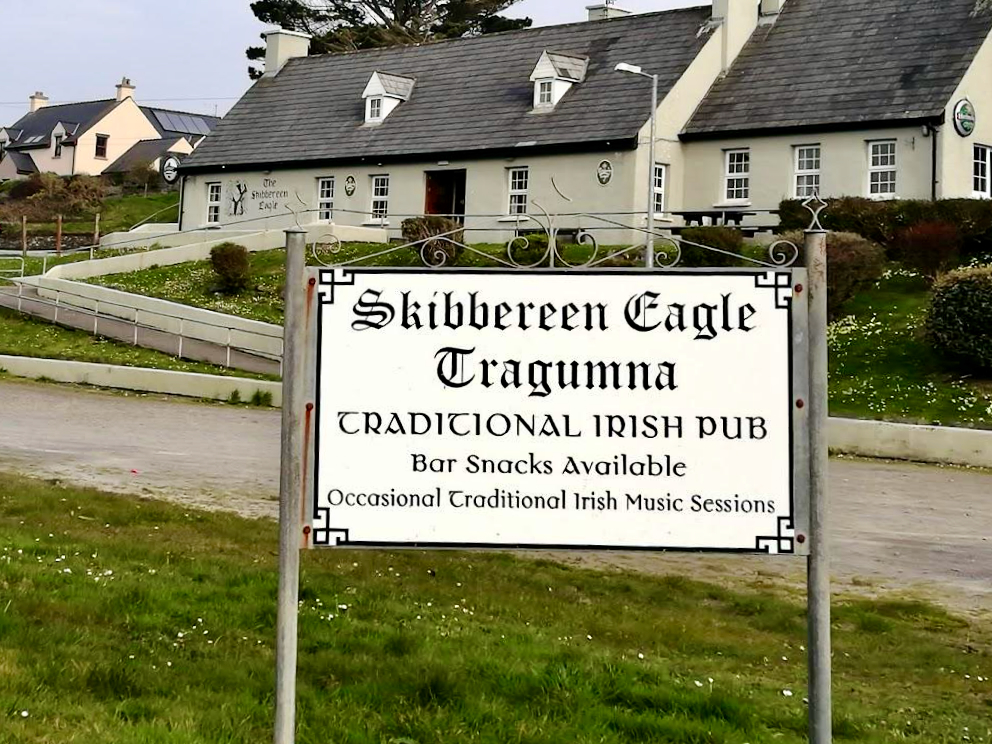
Above are some of the cottages in Murphy’s Cove that Bachmann bought, possibly also with Swiss money. Ostensibly they were to house fleeing diplomats in the event of the predicted collapse of civilisation. The Colonel’s interests, however were not always related to the Cold War. He set up a pub in Tragumna, the Skibbereen Eagle: named after an infamous local newspaper. Rumour has it that the kitchens were oversized because they would have to feed the exiled envoys. It’s still a popular establishment.

In fact, the more you try to delve into the life of Bachmann, the more enigmas you encounter. Some reports say that he raised the money himself to purchase Liss Ard: the historian Titus J Meier showed in a book that Bachmann acquired the property on the west coast of Ireland with the help of private and institutional sponsors. The Swiss Government only paid annual rent twice, each time amounting to 50,000 francs.

. . . Bachmann was obliged to retire in 1980. An official investigation criticised P-26 [a Cold War stay-behind army in Switzerland charged with countering a possible invasion of the country] as an illegal paramilitary programme, operating as a clandestine, parallel structure within the Swiss security network, and lacking governmental authorisation or control. When Bachmann’s secret army was finally dismantled, its war chest – gold worth six million Swiss francs – was donated to the Red Cross. But he always insisted that it served a vital function. “How vital,” Bachmann told the reporters who sought him out, “I cannot tell you.” . . .

Bachmann’s Obituary in The UK Daily telegraph

Another view of Liss Ard Estate (courtesy Irish Examiner)

Esquire Magazine January 1962

Col Albert Bachmann: born November 26, 1929; died April 12, 2011

Crash-Landing Drama!

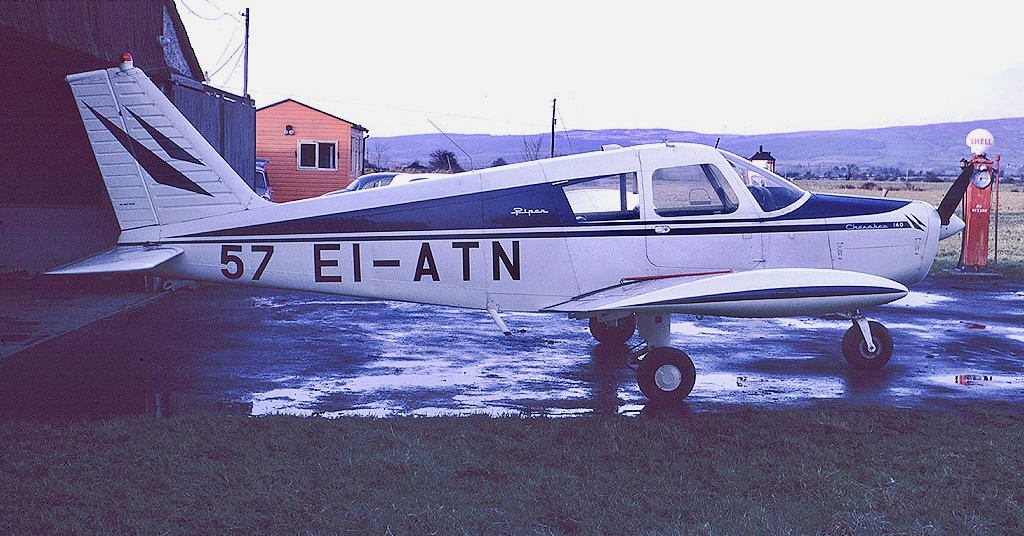
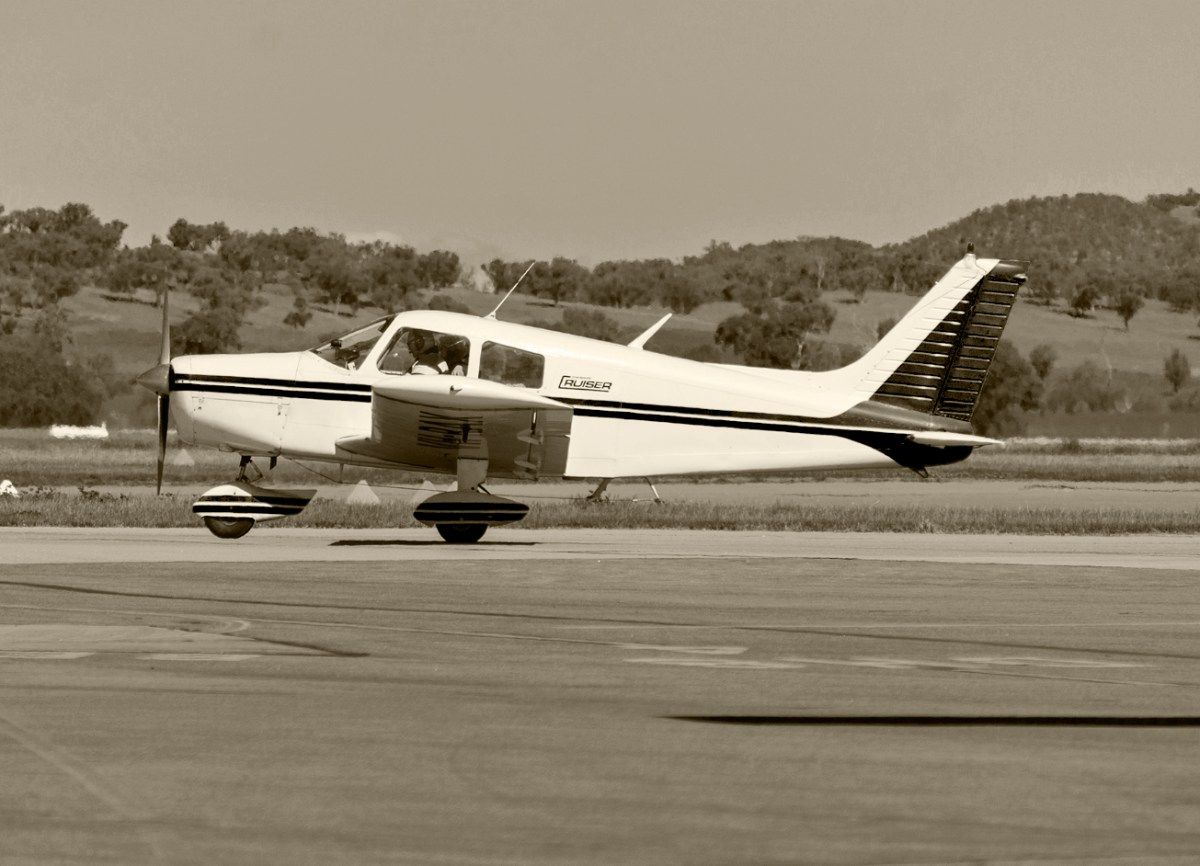
This Piper Cherokee plane set out on a flight from Luton in the UK to Cork exactly 50 years ago but didn’t make it! Instead it ended up in the waters of Roaringwater Bay just a few minutes away from where we live today. The pilot and all three passengers survived . . . It’s all part of the boundless jigsaw puzzle which is West Cork’s history. As you know, we love to discover the whole caboodle.

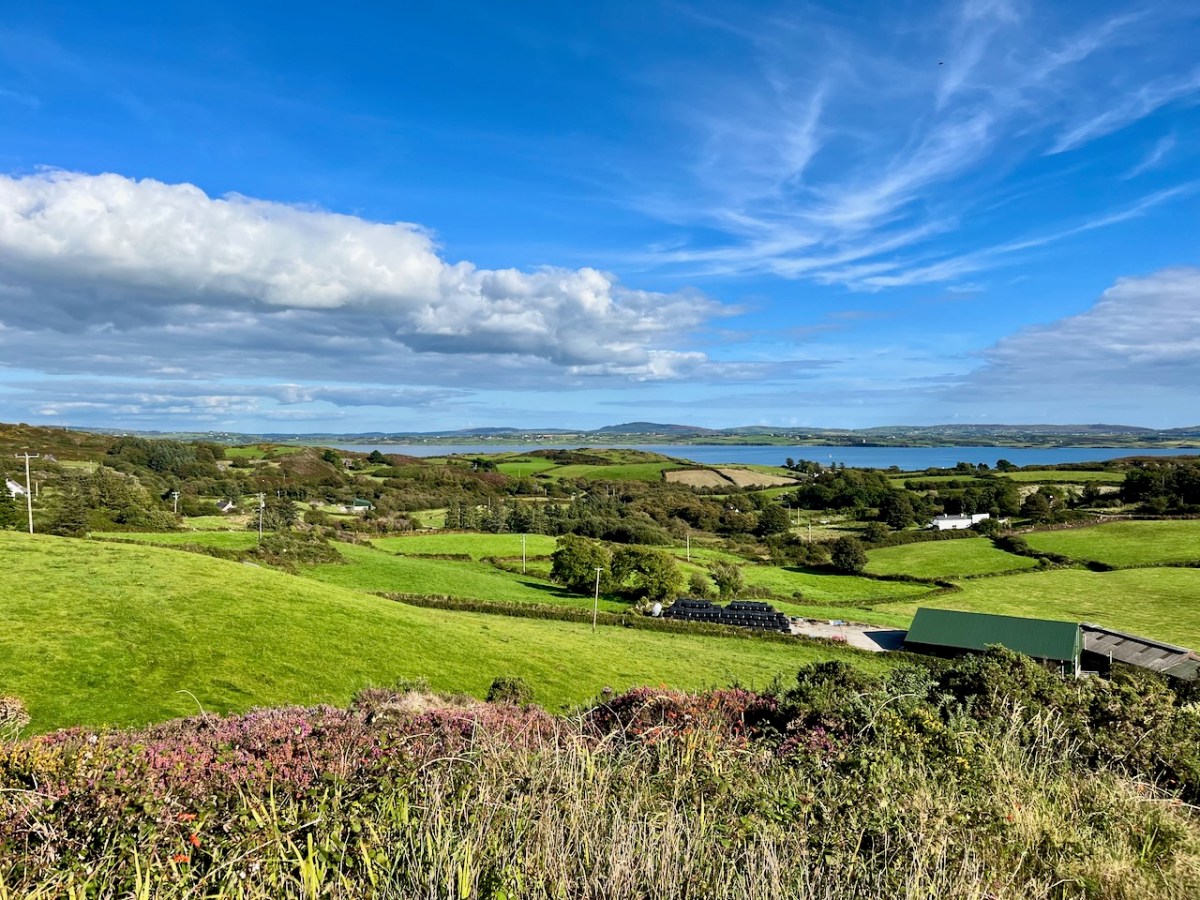
Here’s the view from just beside our house (Nead an Iolair) in the townland of Cappaghglass, looking across to the bay at Foilnamuck: a beautiful sunny day in September. Undulating country . . . Now, picture yourself piloting a small plane, lost, running out of fuel – darkness has come on – and you know you can’t get to any airport. You are going to have to ditch the plane. You can make out below you land and sea – a whole lot of islands. What do you do? You head for a stretch of sheltered water to cushion the inevitable blow.

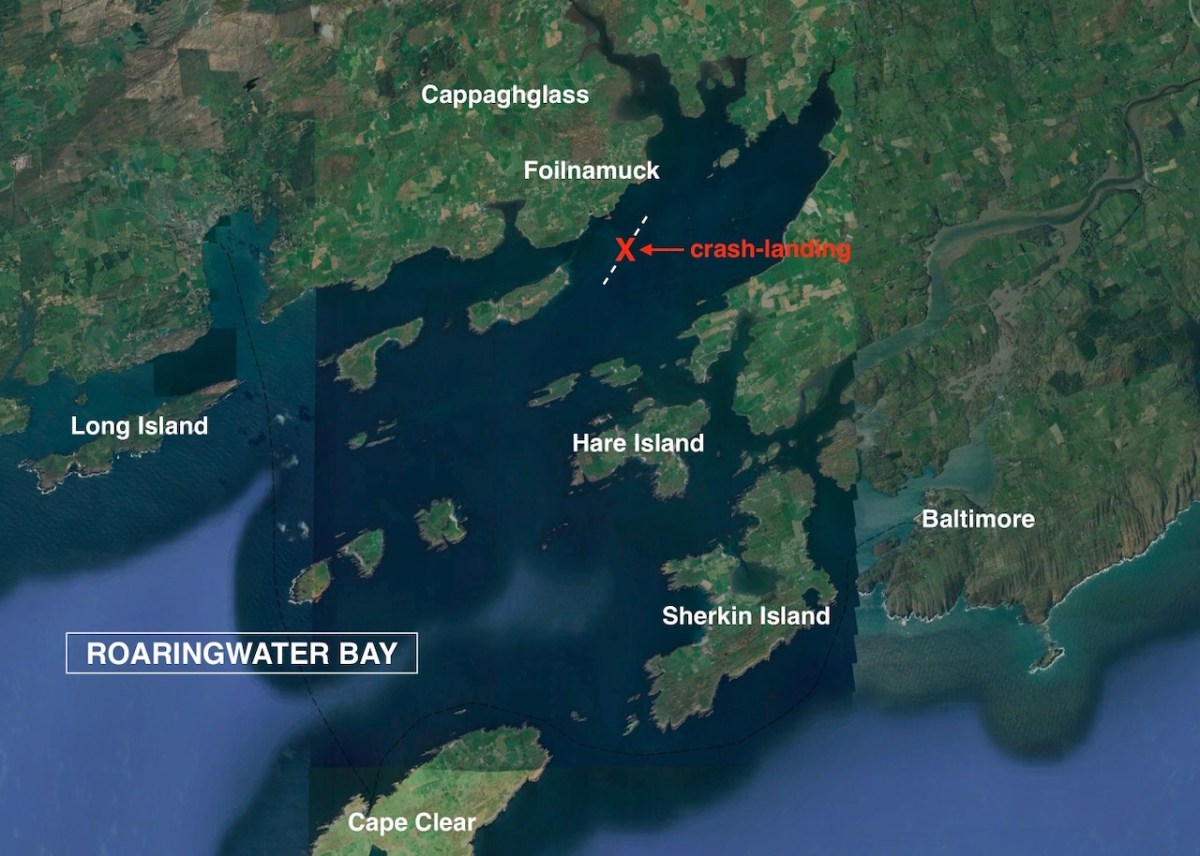
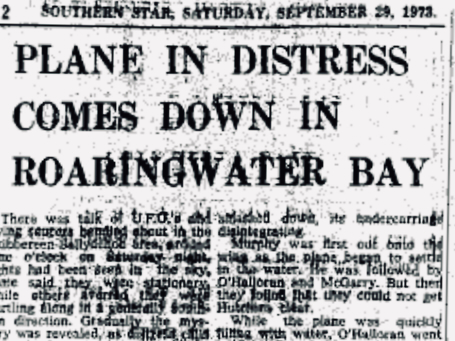
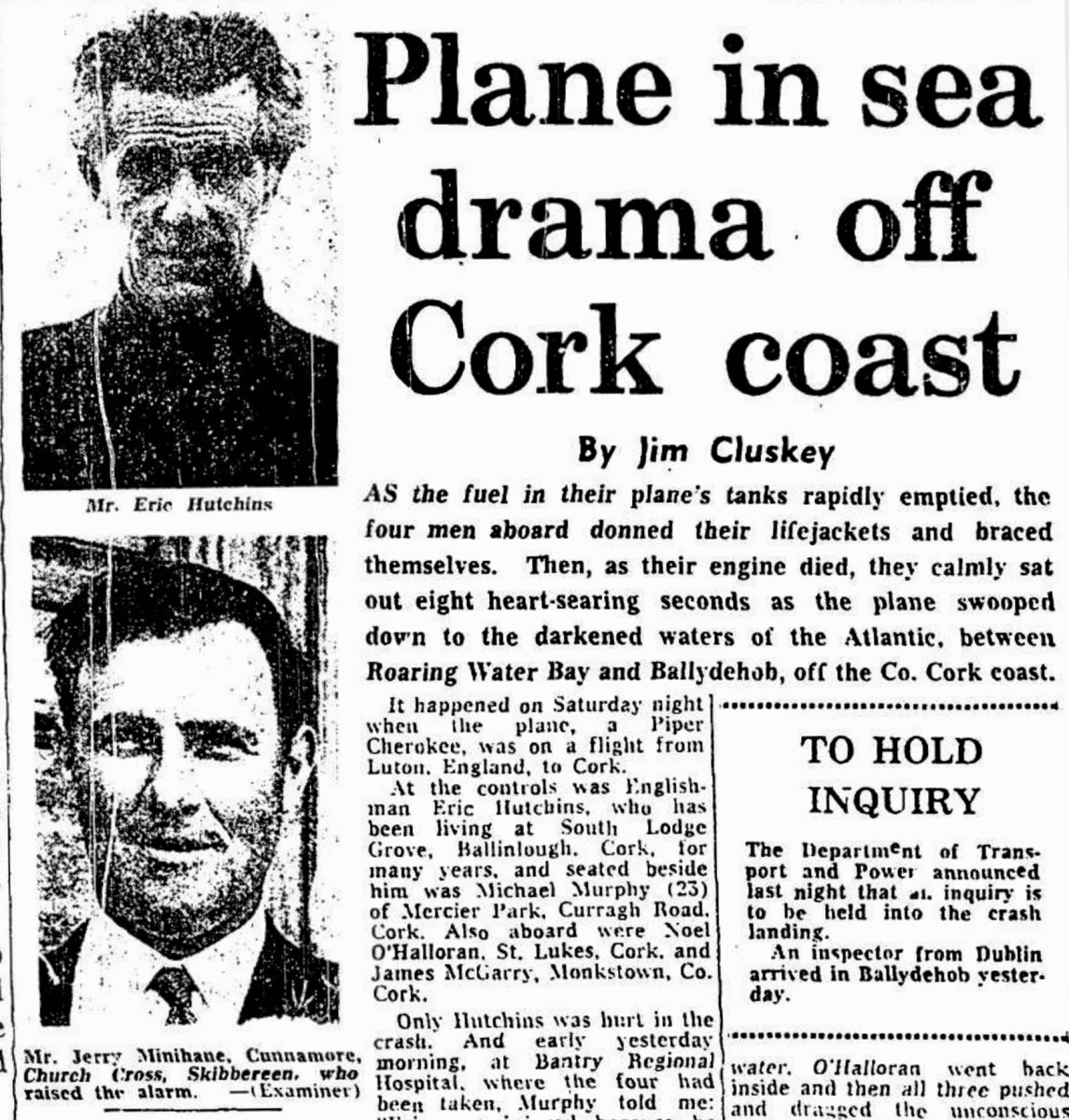
This Google Earth image shows – roughly – the site of the crash-landing that did occur on the night of 22 September 1973. In the coming days it was all over the papers. Thanks to Irish Newspaper Archives for the cuttings I have used.

. . . AS an inspector from the aeronautical section of the Department of Transport and Power arrived in Ballydehob to begin an investigation into Saturday night’s plane crash off the Cork coast, it was learned last night that the pilot of the Piper Cherokee almost lost his life in his efforts to save the other three men on board. Michael Murphy (23), of Mercier Park, Curragh Road, Cork, who was sitting next to the pilot, Eric Hutchins of Ballinlough, Cork, said that Mr Hutchins was concentrating so much on getting the plane down that he was knocked unconscious at impact. Mr Murphy, together with Noel O’Halloran, of St Luke’s, Cork, and James McGarry, of Monkstown, Co Cork, had been braced for the crash and scrambled free on to the wing. But then they found that they could not get out Mr Hutchins who was unconscious. Mr O’Halloran then went back into the rapidly sinking plane and between them they pulled Mr Hutchins free and threw him into the water. The three men then swam ashore taking 40 minutes to reach land at Fylemuck, as they had to support the injured man all the way . . .

Irish Press, Monday 24 September 1973

. . . Only Hutchins was hurt in the crash. And early yesterday morning, at Bantry Regional Hospital, where the four had been taken, Murphy told me: “Eric was injured because he was concentrating completely on getting the plane down. It is entirely due to his skill that we are all alive.” But Hutchins came close to paying dearly for his dedication, for he was knocked unconscious by the impact as the plane smashed down, spewing its undercarriage across the waters.

Murphy was first out onto the wing as the plane began to settle in the water. He was followed by O’Halloran and McGarry. But then they found that they could not manoeuvre the slumped Hutchins clear.

Regardless of the fact that the plane was quickly filling with water. O’Halloran went back inside and then all three pushed and dragged the unconscious man out on the wing and threw him in the water, with his lifejacket still not inflating.

With the plane tilting dangerously. O’Halloran dived under the wing and reached Hutchins. He was joined by the other two and, as the plane sank, they struck out for the shore. They reached it at Fylemuck after 40 weary minutes, still supporting the injured man between them . . .

(With Original Cutting, Above) From Irish Examiner, Monday 24 September 1973

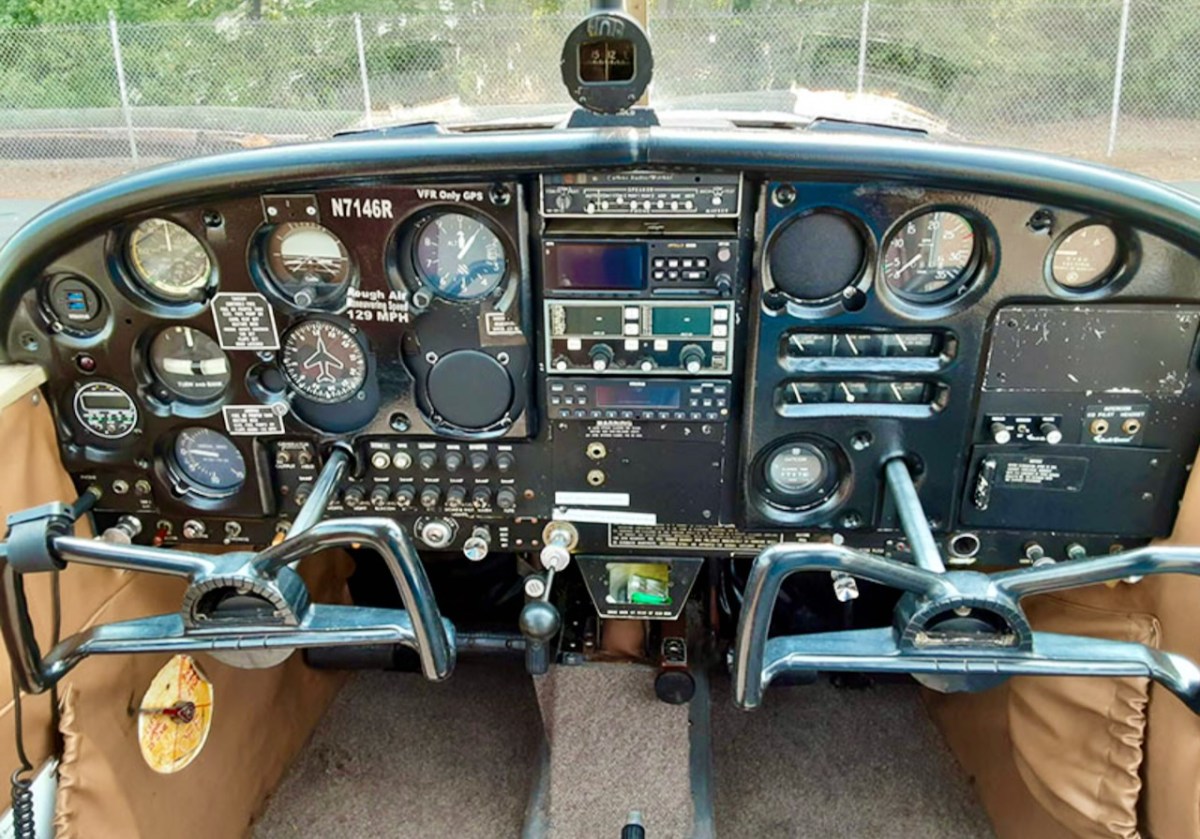
A Piper Cherokee in good times (top) with a view from the pilot’s seat (above – images courtsey AOPA). The plane has been in continuous production since 1961 and has included two, four and six seater versions. It was produced as a light affordable aircraft designed for flight training, air taxi and personal use. The 140 model piloted by Eric Hutchins on that fateful night in 1973 had an aluminium alloy semi-monocoque fuselage construction with a 150 horsepower four-cylinder engine. The standard fuel tank capacity was 136 litres, with an additional reserve of 54 litres. This was enough to cover the flight plan on that crucial day in 1973: the starting point was Luton, Bedfordshire, England, and the destination was Cork Airport, Ireland: a distance of 550km. In good conditions, with a direct flight (although in this case mainly against the prevailing wind) the plane was capable of covering over 900 km with a full tank. Things went awry when the plane’s navigation system failed during the flight. The group realised they were off-track, and they missed the Cork target, continuing westwards.

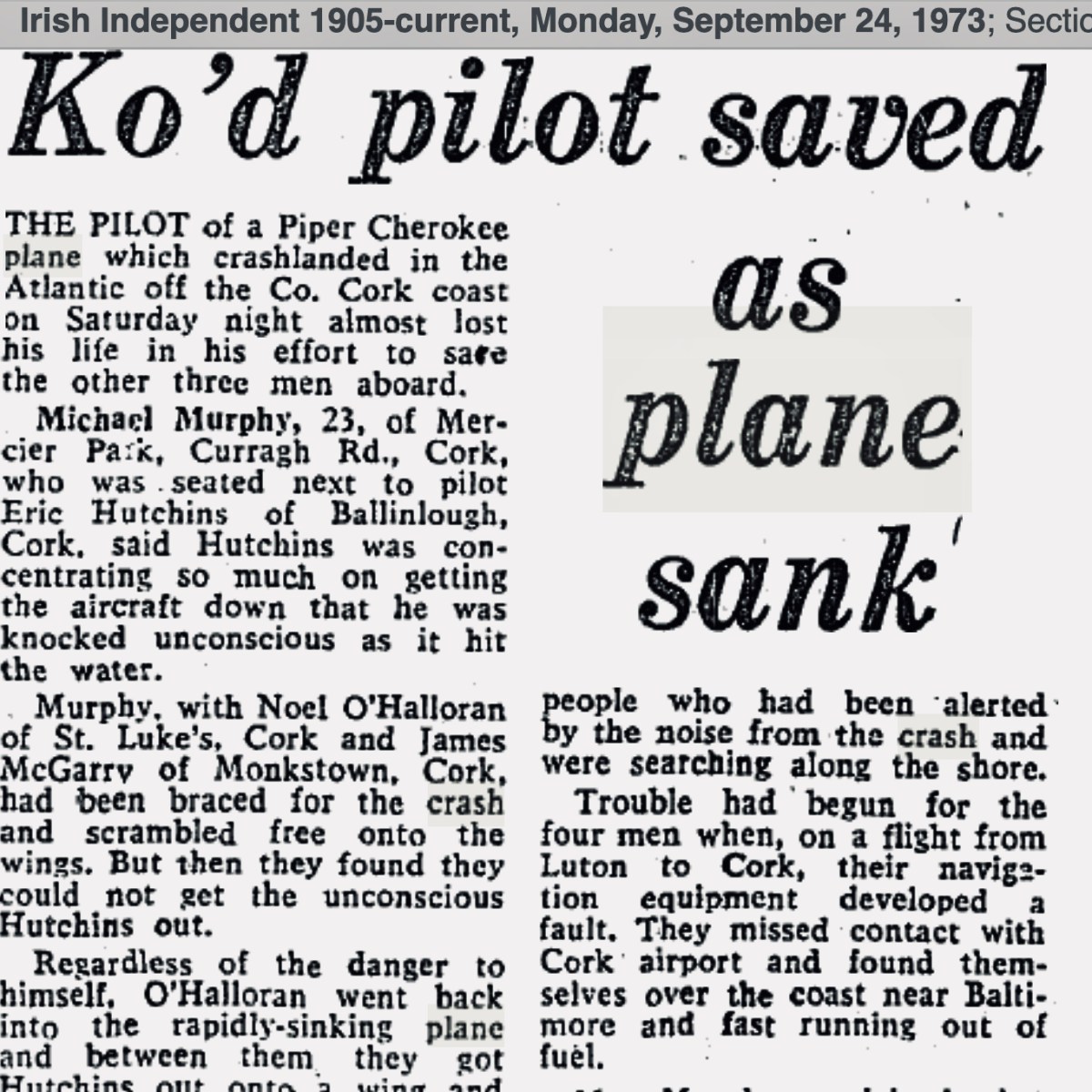
. . . Trouble had begun for the four men when, on a flight from Luton to Cork, their navigation equipment developed a fault. They missed contact with Cork airport and found themselves over the coast near Baltimore and fast running out of fuel. Mr. Murphy explained that coming down on land was out of the question because it was impossible to see the fields, adding “Eric picked an ideal place with calm water. None of us panicked, but took what precautions we could” . . .

IRISH Independent, September 24 1973

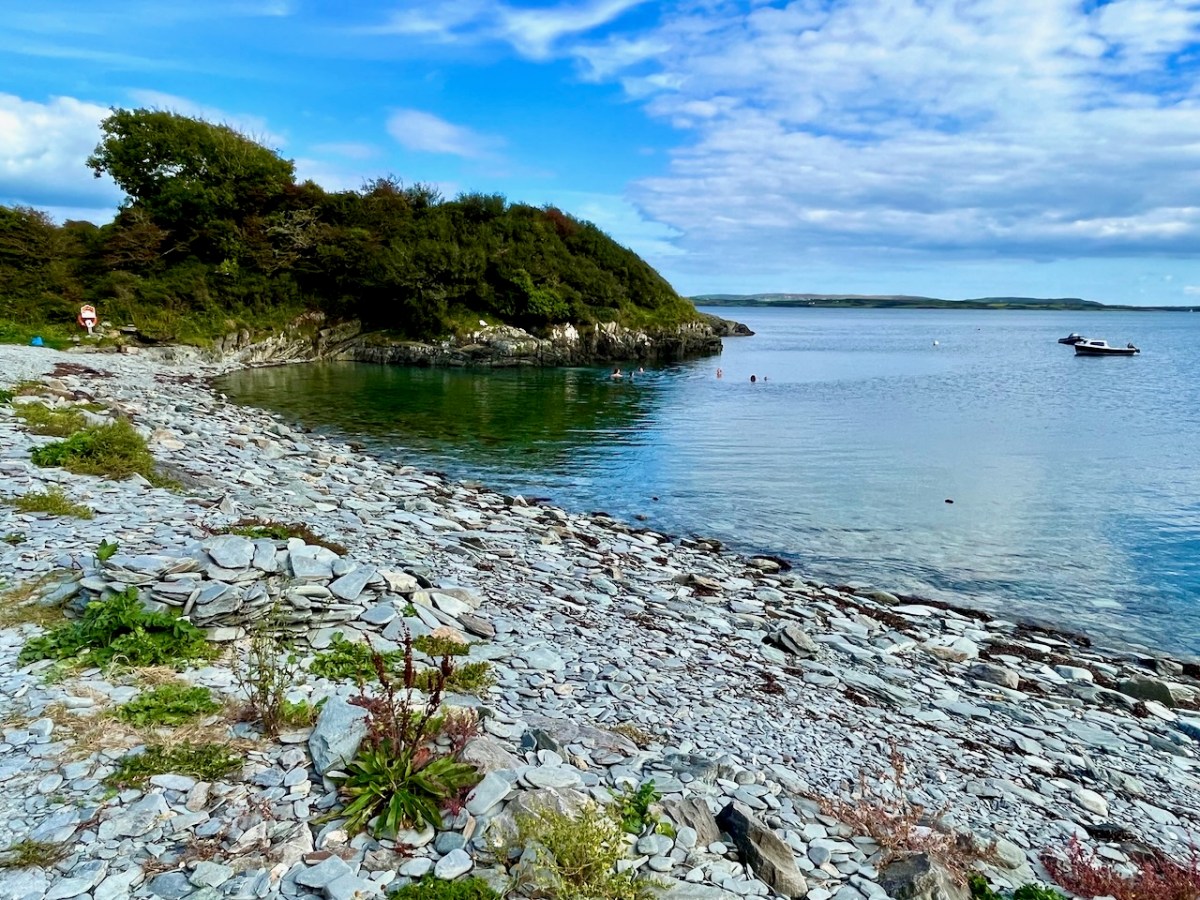
(Above) Calm water at Audley Cove, close to the crash-landing site. The water is exceptionally clear here. The four men were experienced flyers: they all belonged to an aero club and had received training in how to handle an emergency. They were also strong swimmers. They knew the drill regarding crash-landing on to water, and the actual experience would have been strictly routine, except that the pilot – Eric – was knocked unconscious during the impact. While still in the air they were sending out distress messages on the radio. The Piper Cherokee distress call was picked up by an Aer Lingus flight from London to Cork. The Marine Rescue Coordination Centre at Shannon was alerted immediately and a full-scale rescue operation was mounted, with helicopters and boats, including the lifeboat from Baltimore, under coxswain Christy Collins.

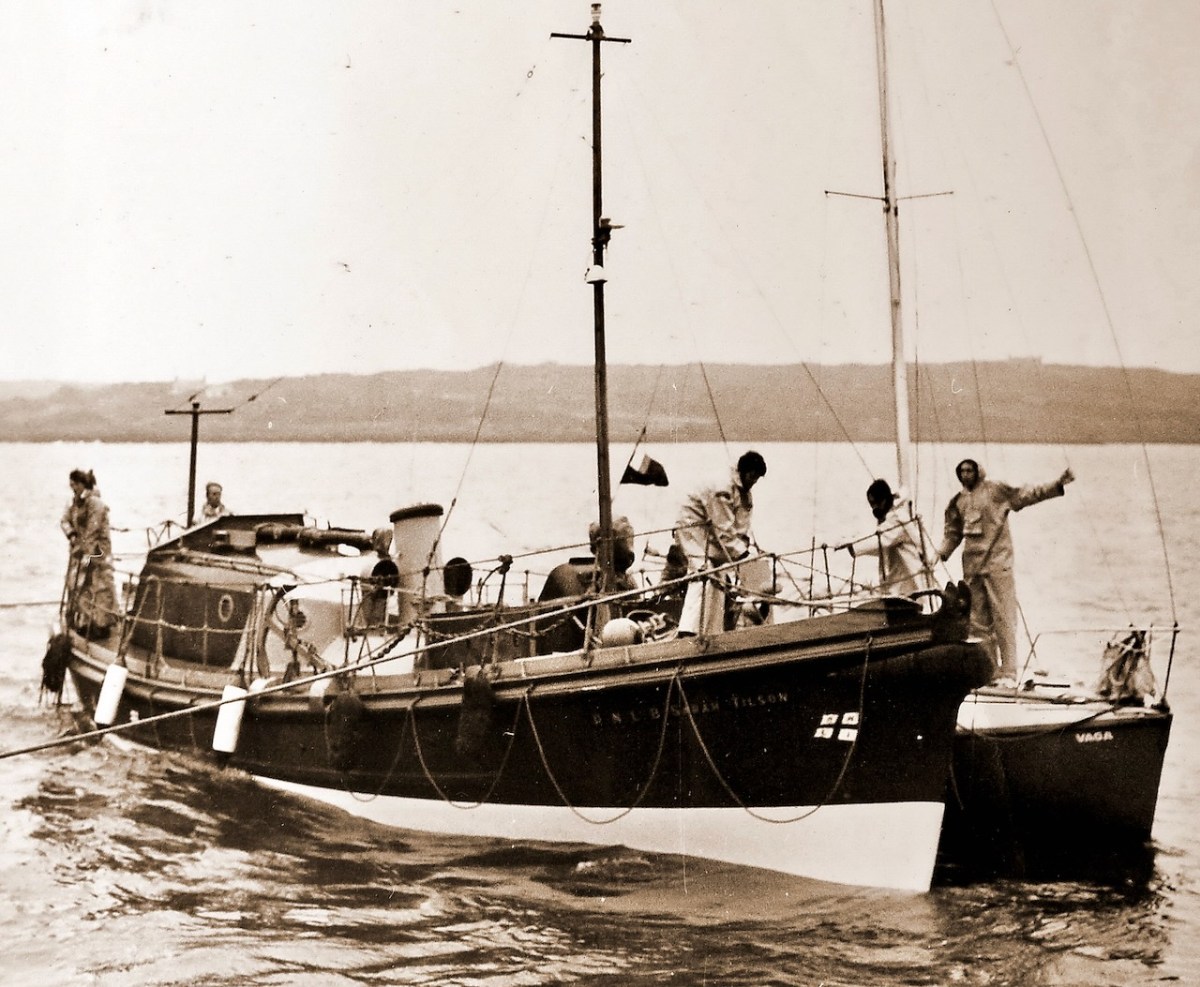
The Baltimore Lifeboat “Sarah Tilson” pictured (above – courtesy Cork Examiner Archives) in August 1973 rescuing the yacht Vaga close to Baltimore Pier. The 46ft 9in Watson class lifeboat was stationed at Baltimore between 1950 and 1978. She was launched on service 70 times and saved 21 lives. In fact her services were not needed on the night of the crash as the four men came to shore safely. The lights from the stricken plane had been seen locally and reported. The Ballydehob Garda – Paddy Curran – arrived in his Zephyr car and with the help of local neighbours was able to assist the men, who were taken to the hospital in Bantry, where Dr Larry O’Connor attended the injured pilot. Noel O’Halloran – who has given me much of this information (and the photo of the plane on the header) – told me that when the distress call was picked up it was initially thought that a large aircraft had come down, and an alert was sent out to all doctors and nurses in West Cork to attend at Schull to help with the envisaged emergency.

Two of the men – Michael Murphy and Noel O’Halloran are alive and well today – and I gather there will be a get-together for them in due course to mark the fiftieth anniversary. No doubt many stories will be shared. The pilot, Eric Hutchins, died a few years ago at the age of 84. He had been a professional flying tutor but, after the accident, retired and became a highly respected driving instructor. Michael and Noel lost touch with James McGarry and have recently discovered that he also died a while ago.

A vintage Cherokee (courtesy of Plane & Pilot Magazine)

What happened to the plane? She came to rest in approximately 7m of clear water, fairly close to the coast. On the Monday following – 24 September – she was dragged ashore. Following this, accounts are reminiscent of olden times when wrecked ships were scavenged: some locals dragged the plane on to the beach and began to dismantle it. The engine – a Rolls Royce – was pulled out using a mechanical excavator: it ended up at the Garda Barracks in Bantry. But it was too late to save the plane or the engine. When a machine has been immersed in salt water it needs to be immediately rescued and meticulously cleaned out if it is to be salvaged: unfortunately, this was not done.

I have no doubt that there are people living locally who remember all this. I was fascinated to learn about it, and that is all due to the worthy efforts of Noel O’Harrollan, who contacted Roaringwater Journal. Many thanks, Noel