Old Stones

A classic piece of Rock Art - on display in Dublin's National Museum

A classic piece of Rock Art – on display in Dublin’s National Museum

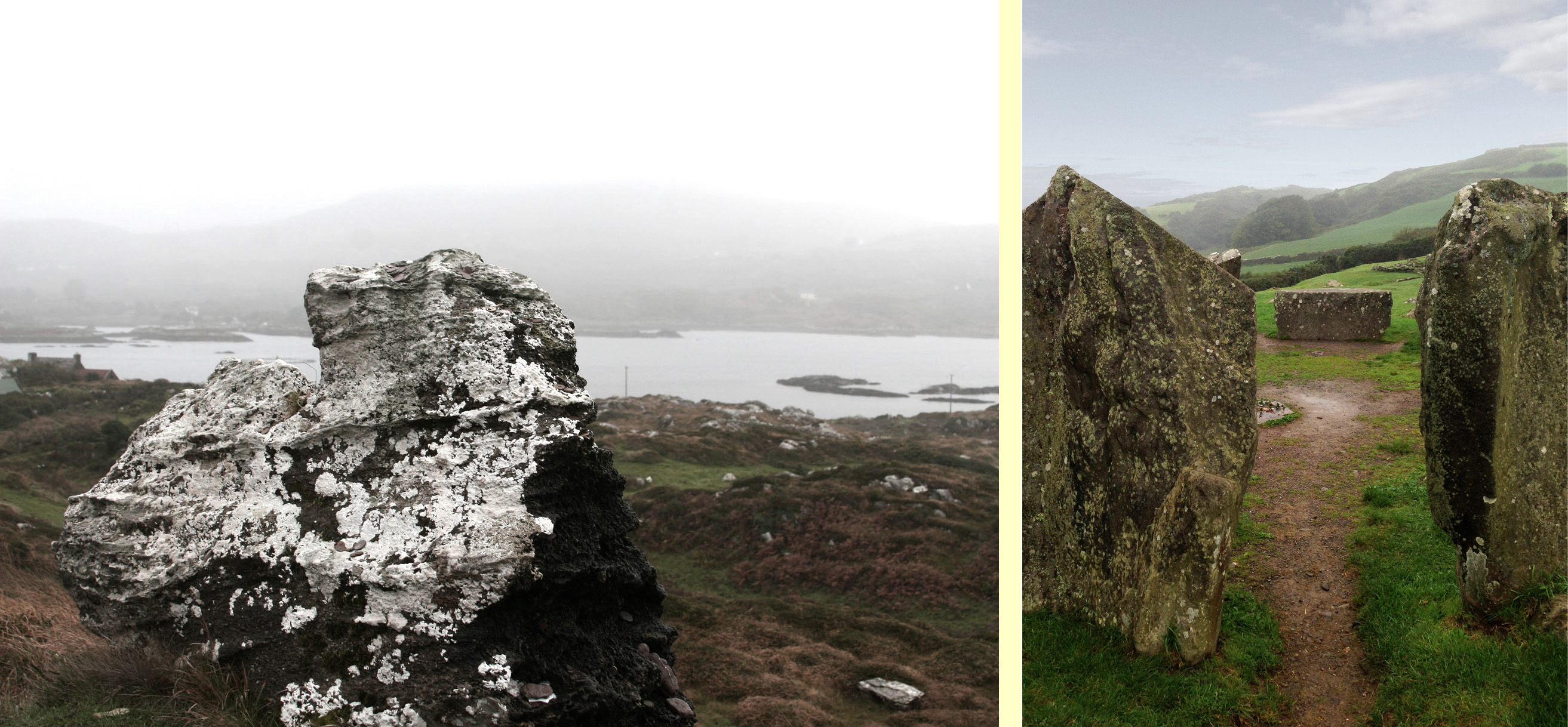
As we enter October, we begin to look towards the dark part of our year – and to think of the Cailleach who, in these western parts of Munster, is known as The Hag of Beara: in early tales she is pictured as a prolific figure responsible for shaping the landscape by carrying huge stones in her apron and dropping them to form hills and outcrops, as well as ancient standing stones, circles and alignments. She is also seen wielding a great hammer with which she sculpts and refines her geological creations. She has had seven periods of youth, one after another, so that every man who lived with her came to die of old age. Her grandsons and great grandsons are so many that they make up entire tribes and races. She falls asleep on Bealtaine (May 1st) and wakes again on Samhain (November 1st) – we will be looking forward to the storms which will herald her coming. Until then she rests on a hillside overlooking Coulagh Bay, beyond Allihies on the remote Beara Peninsula, where her rocky incarnation depicts her as both a young maiden and an old crone.
Monuments in the mist: The Hag of Beara and Drombeg Circle

Monuments in the mist: The Hag of Beara and Drombeg Circle

Ireland is stuck in a stream of warm air coming up from the tropics at the moment: this makes temperatures two or three degrees higher than the norm for early autumn, but also causes a damp landscape shrouded in fog: we have missed our view of the Fastnet for several days.
Standing stones

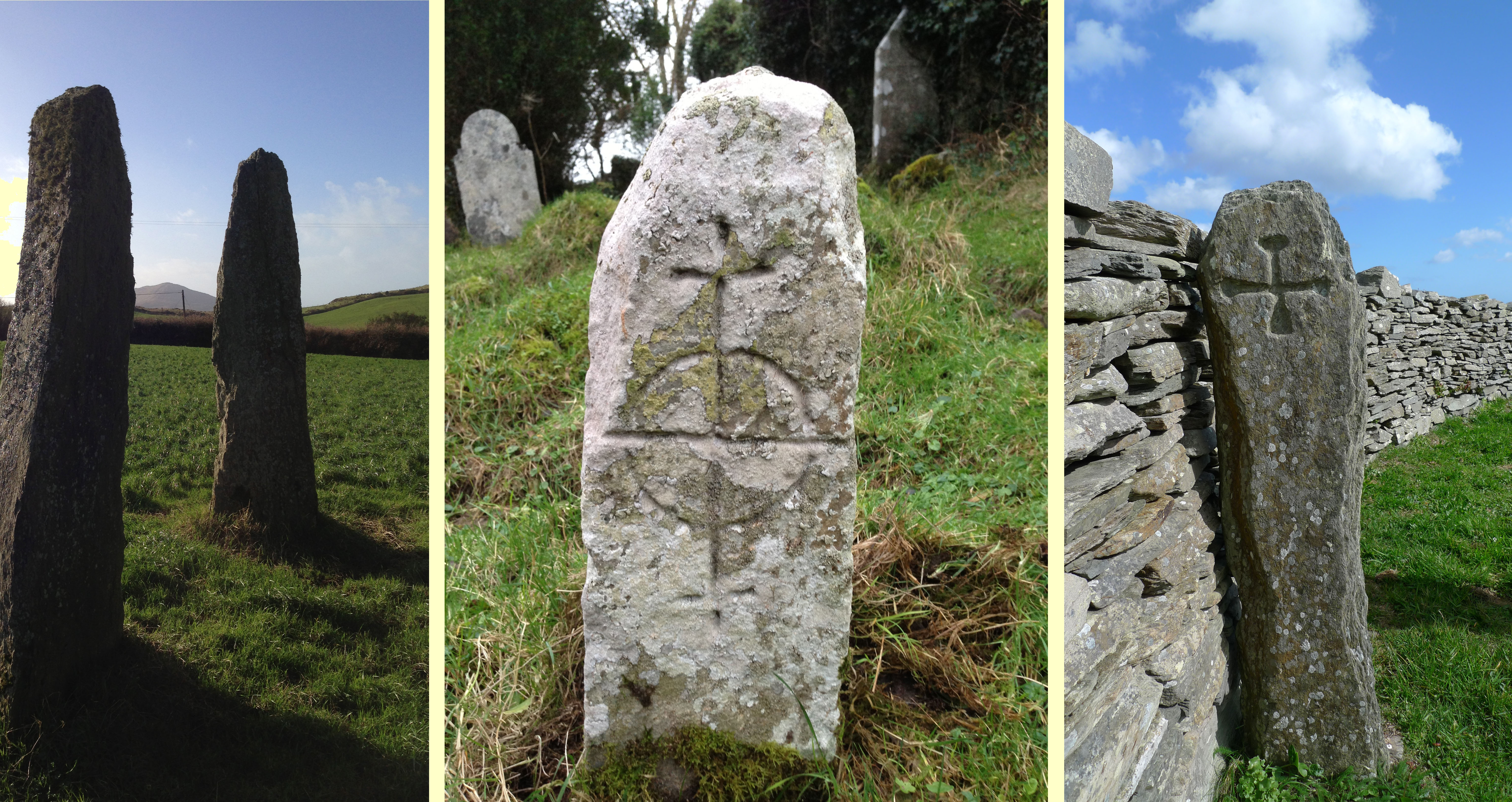
Some West Cork standing stones

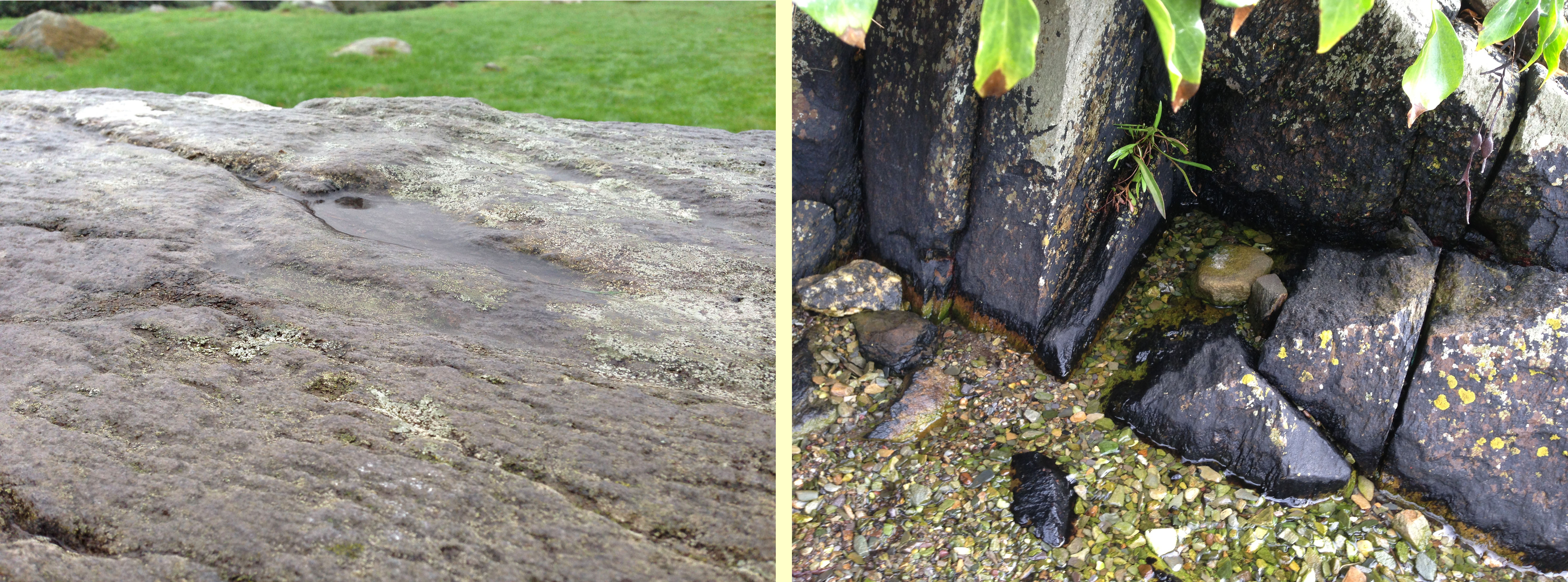
The weather hasn’t hindered our exploration of Ireland’s old stones – the terrain created by the Hag. Yesterday we went to Drombeg Circle: a popular site for tourists. Many visitors will fail to notice the rock art carved on the recumbent stone that points out this megalithic monument’s alignment with the winter solstice. At the foot of another stone we found some enigmatic markings which I readily interpreted as a dancing Hare.
Drombeg Rock Art - and a mysterious Holy Well in Rossbrin Cove

Drombeg rock art – and a mysterious holy well in Rossbrin Cove

Bishops Luck - a megalithic close by Nead an Iolair: according to local legend, a

Bishop’s Luck – a megalith close by Nead an Iolair: according to local legend, a bishop is buried under this!

Ireland’s history is written in stone: the natural landscape; megalithic monuments; buildings – cottages, castles, farms, churches, lighthouses; every townland is rich in examples. Building material, track surfacing, grave marker and artists’ canvas (perhaps): stone has been a resource to aid human occupation for thousands of years.
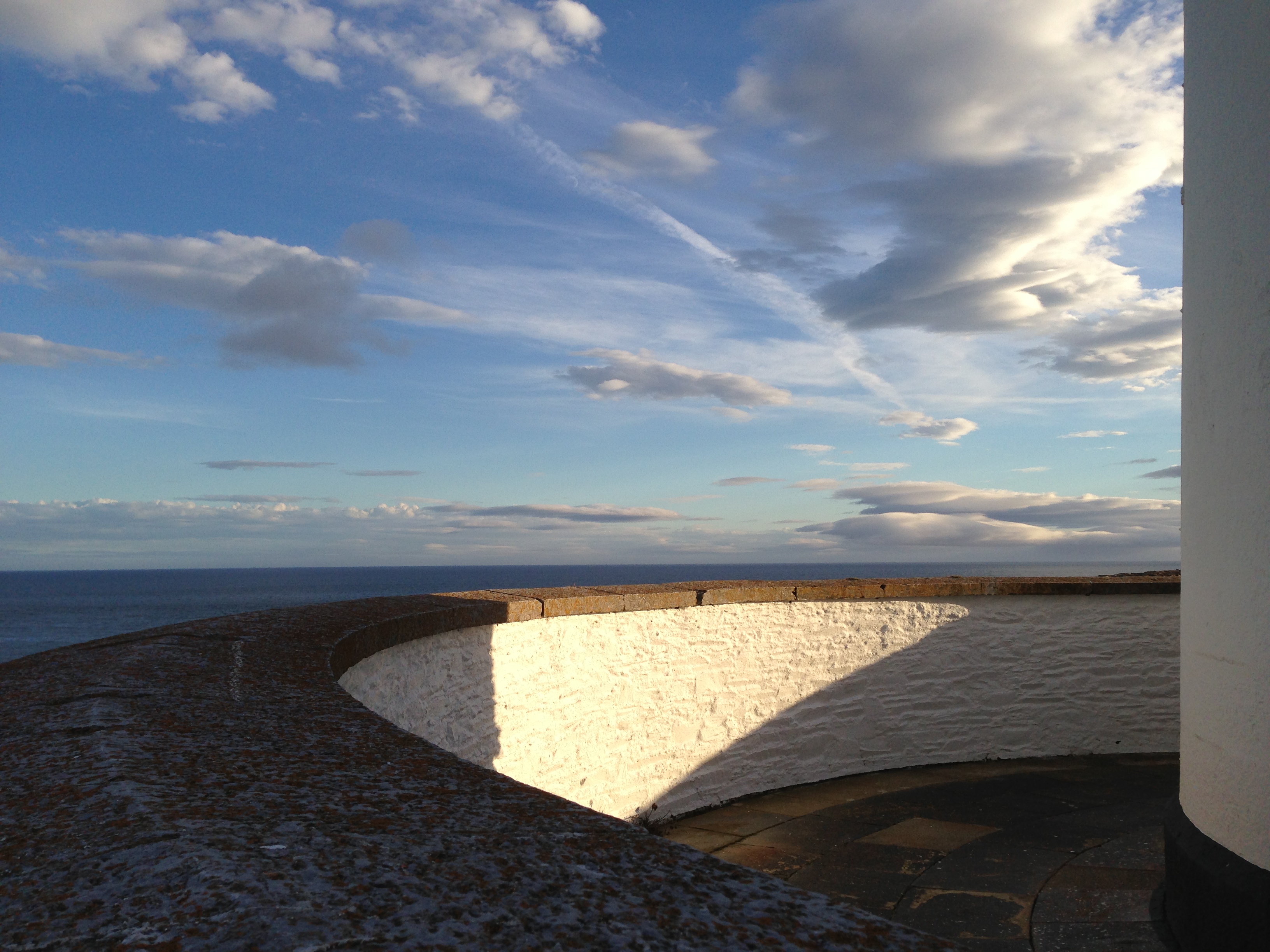
Stone in context: Galley Head Lighthouse
Stone in context: Galley Head Lighthouse

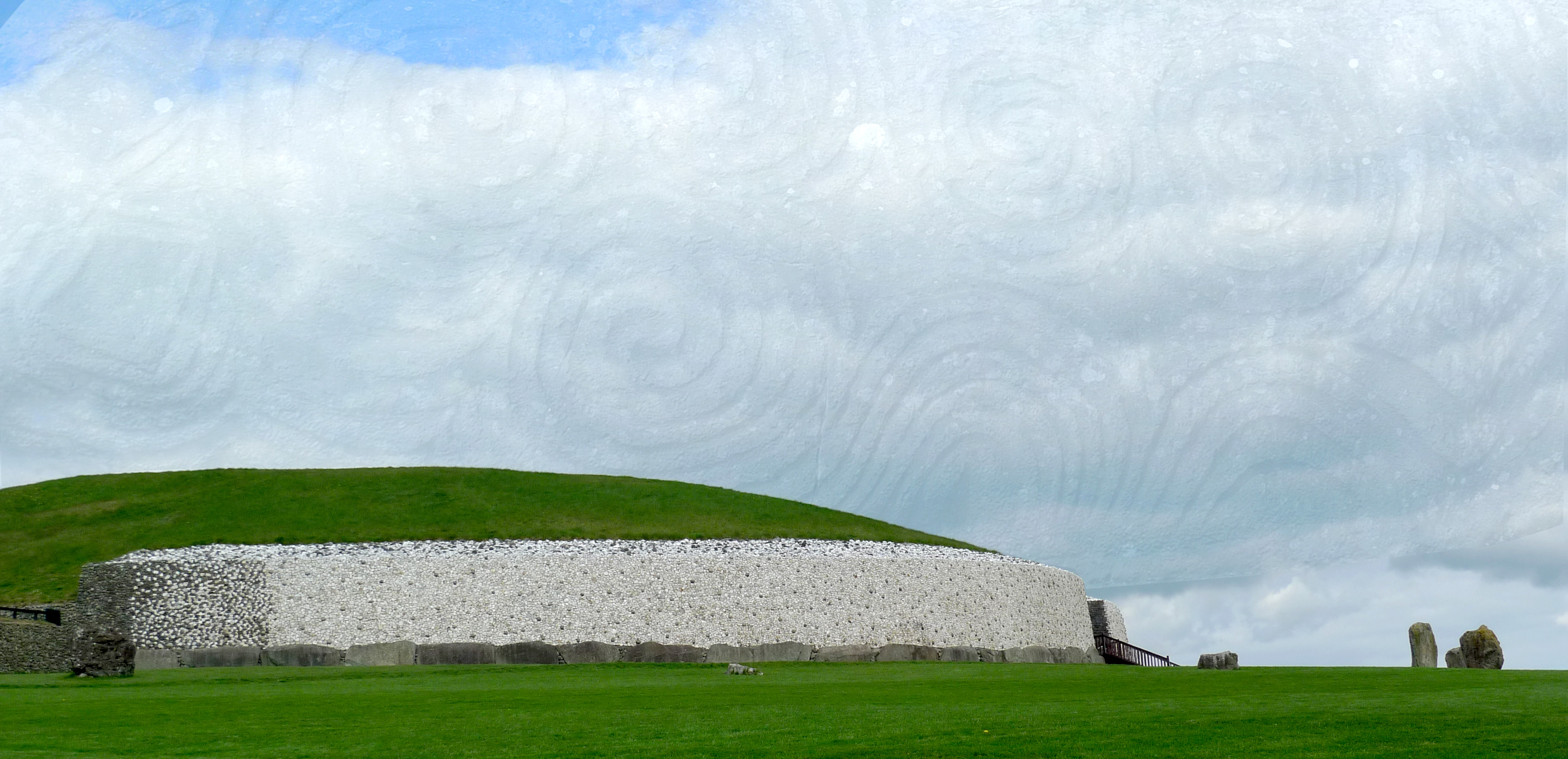
The ultimate stone monument - Newgrange Passage Grave, County Meath - the spectacular quartz facing is a conjectural reconstruction

The ultimate Neolithic stone monument – Newgrange Passage Grave, County Meath – the spectacular quartz facing is a conjectural reconstruction

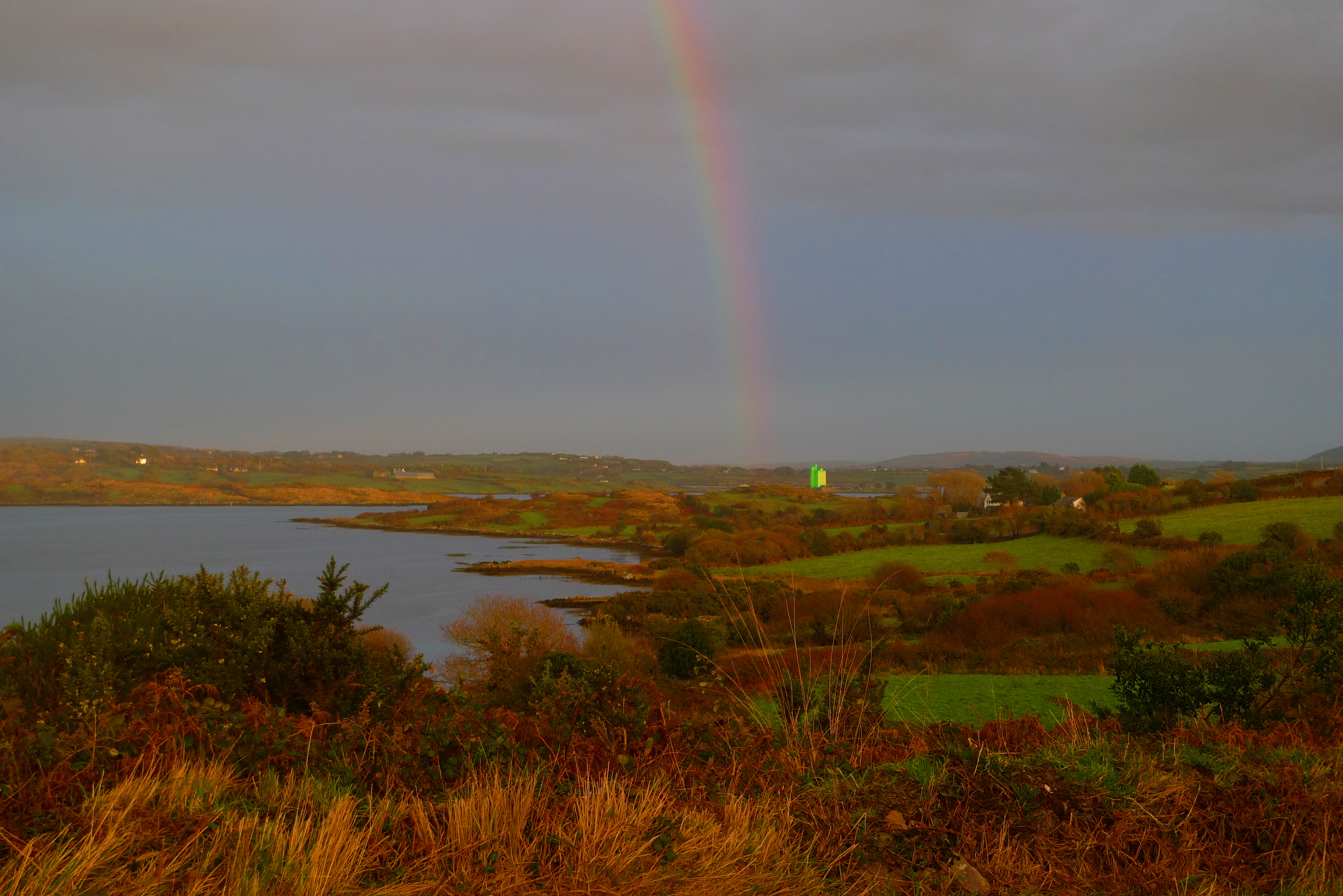
The Green Saint

pyramid

I welcome the excuse to put a picture of a green pyramid at the top of my post – with justification: it’s Saint Patrick’s Day, and all over the world things are turning green! It’s a campaign by Tourism Ireland to encourage people to visit the country, as tourism is now probably the largest industry here. As well as the Pyramids and the Sphinx, the Sydney Opera House, the London Eye, the Leaning Tower of Pisa and even the Angel of the North are getting the green treatment, along with many other well known landmarks. I’ve added a couple of my own – why not?

Kilcoe Castle - 17 March

Kilcoe Castle – 17 March

Gary and Finola puzzle over this St Patrick's Day phenomenon at Derreenaclough

Gary and Finola puzzle over this St Patrick’s Day phenomenon at Derreenaclough

We were staying near Dublin at the weekend to attend a wedding and, as there were three Irish people and me around the breakfast table, I asked the others to tell the story of St Patrick. They did a good and convincing job: I now know that Patrick was descended from a Roman family living in the north of England. He was captured by Irish raiders when a young man and kept as a slave for six years, before escaping home to Britain. After a while he had a vision in which he was being called back to Ireland to become a Christian missionary. He trained as a priest and crossed the Irish sea again. He was one of several early saints in Ireland. He has also become a hero figure in Irish folklore, and appears in many pre-Christian legends, including stories of Finn McCool and the Children of Lir.

Saint P

My breakfast companions assured me that St Patrick cast all the Snakes out of Ireland (but I was interested to learn today that there are also no Snakes in New Zealand, Iceland, Greenland and Antarctica) – although someone cheekily introduced Slow-worms into Clare in the 1960s, and they are now breeding happily in the Burren (ok – Slow-worms are in fact legless Lizards – but they do look a bit like Snakes). The story I like best about St Patrick involves his ash wood staff which he always carried with him. Whenever he was evangelising he would stick it into the ground: on one occasion it took so long to get his point across to his listeners that his staff had taken root and become a fully grown tree before he was finished!

St Patrick died on 17th March – probably in the year 493 AD. It’s fitting that we should end our blog (for the moment) on St Patrick’s Day: we leave Ireland this week having spent a wonderful winter getting to know and falling in love with this little bit of land sticking out into the wild Atlantic. We will be back – and, hopefully, we will continue our posts then. Meanwhile, Finola has written our goodbyes so well above that I don’t need to say any more…

Music Mad

site

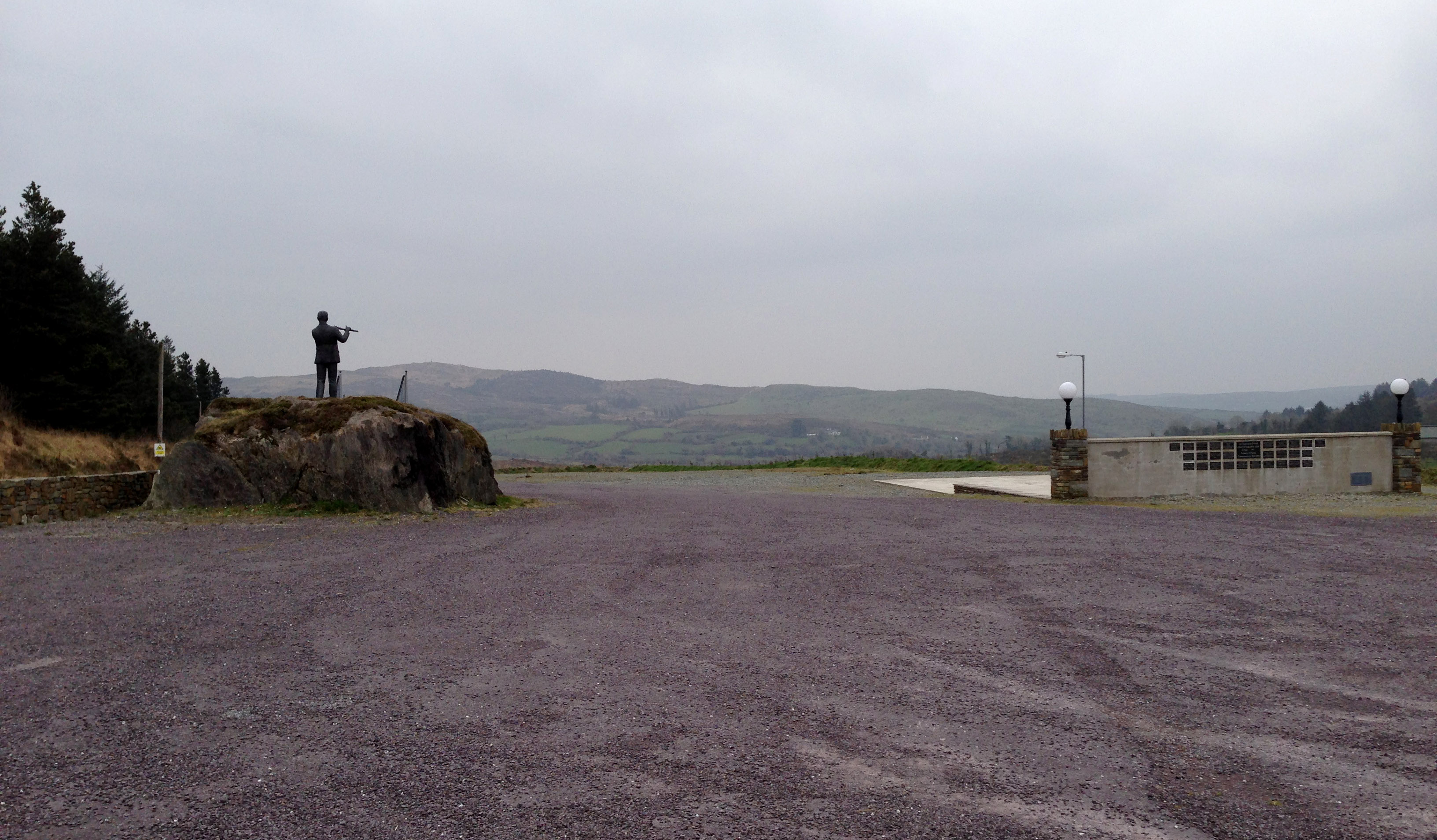
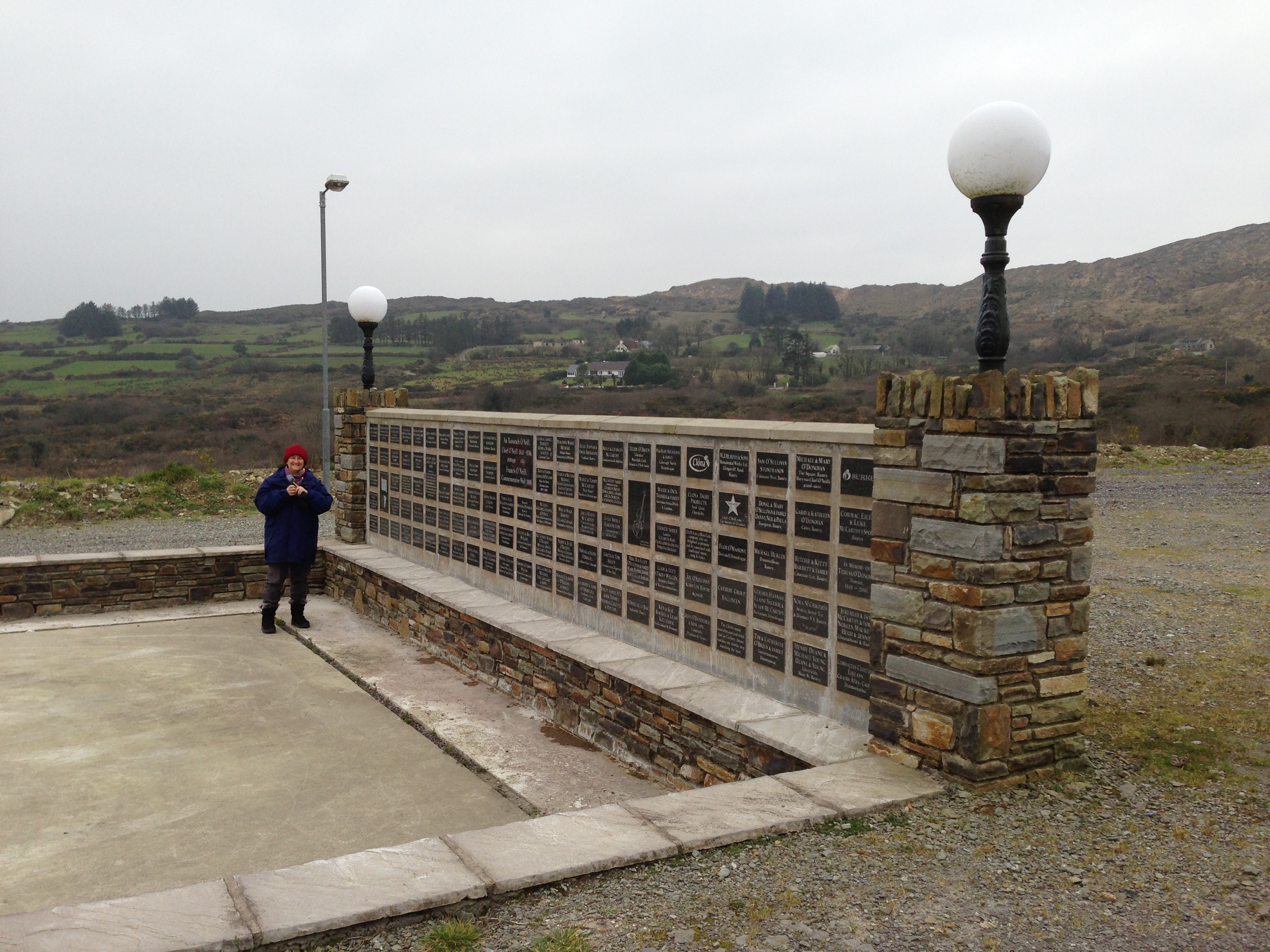
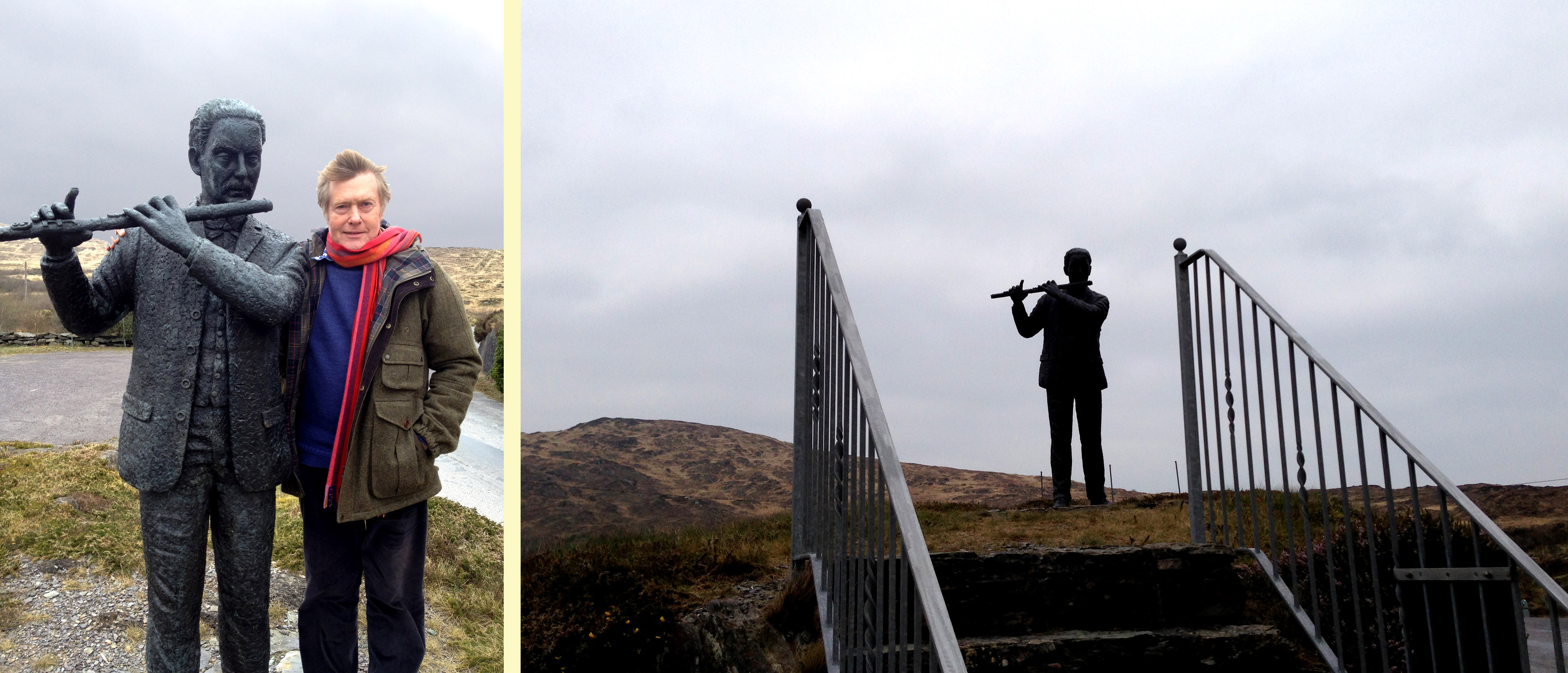
When we set off to find the Road Trotting we travelled roads we had never seen before: out to the east of Bantry. We were intrigued by a sign to ‘Tralibane Memorial’ and duly diverted to investigate. Up the hills and around a sweeping bend in the road: the first thing we saw was Mary, looking down over her modest garden – but that wasn’t the memorial; we found it a little further on. Our immediate view was a man playing a flute on top of a rock, approached by an ornate staircase. As we took in the whole site we had the impression of a huge plateau carved out of the hill summit – somewhere you could park a hundred cars or assemble a mighty crowd. It had the feel of a place where a Pope might come to give the Mass: there is an ornate Commemorative Wall surmounted by grand light fittings and with room for 120 granite name-plaques on each side.

commemorative wall

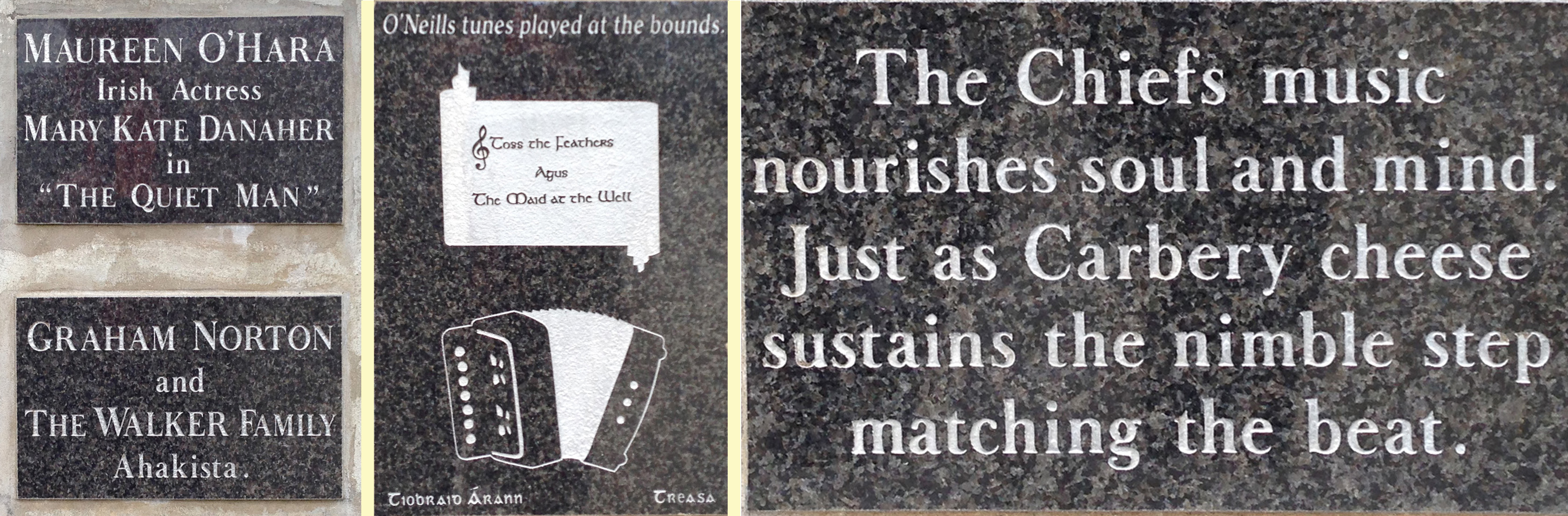
It’s a place waiting for something to happen. On the day of our visit it was deserted – and a little bleak. But, on other days, things do happen: crowds arrive and pay tribute – they come from all corners of the world. They also dance, and great craic is had. What is it all about? Well, once we’d worked it out we realised that this is a very important shrine for me, and for all other players of Irish Traditional Music. This is a memorial to Captain Francis O’Neill, a man who was born in the townland of Tralibane in 1848; ran away to sea at the age of 16; worked his way around the world and survived a shipwreck; became a policeman in Chicago; survived a gangster shoot-out, and eventually attained the rank of Chief of Police in that city. But he is famous for his greatest achievement: a collection of Irish tunes which numbers nearly two thousand, and which probably forms the repertoire basis of most of the musicians keeping the tradition alive today. The O’Neill collections were certainly my own introduction to The Music, and the several volumes in my own sheet music library are still the most valuable resource I have, bar only the internet.

plaques

O’Neill was imbued with the music of his native West Cork while growing up. He played the flute himself but, like many traditional musicians, he didn’t read or write music. The transcriptions which now appear in his collections (which are still all in print) were made by another O’Neill – James: unrelated but a colleague in Chicago. If you want to read a fuller account of O’Neill’s life try Ronan Nolan’s comprehensive article, where you can also find links to many of the wax phonograph cylinders recorded by Captain Francis during his collecting years (edit 2019: this link is no longer active!).

Robert + Francis

Ghosts of the Past

An abandoned village slowly returns to the bog

An abandoned village slowly returns to the bog

Amanda, Bardic School

Amanda, Bardic School

Amanda and Peter Clarke were our hosts yesterday for a Sheep’s Head Day. They know the peninsula intimately and were able to take us to places we would never have found on our own. They also love it: they have made their lives in Ahakista in a beautiful old farmhouse with a productive garden, and between them manage several projects that are great local resources.

We have written about the Sheep’s Head Peninsula in previous posts. It’s a wild and beautiful place, criss-crossed by a network of world-class marked trails, and full of prehistoric and historic sites. Part of our tour took in the Bardic School, about which Robert wrote in his Kings and Poets piece. But mostly what we saw was new to us: an impressive stone circle and a stone alignment, a lonely and moving famine graveyard, the remains of a pre-famine village, and finally a holy well and mass rock site.

The stone circle is probably the recumbent type, in which two tall portal stone stand opposite a stone with its longest axis parallel to the earth. The sightline from the portals over the recumbent stone is often focused on a solstice sunrise. Stone alignments in this area tend to be three to five stones in a row and may also be part of the solar and lunar observatory system that is characteristic of many Neolithic and Bronze Age monuments.

2013-03-02 11.04.30

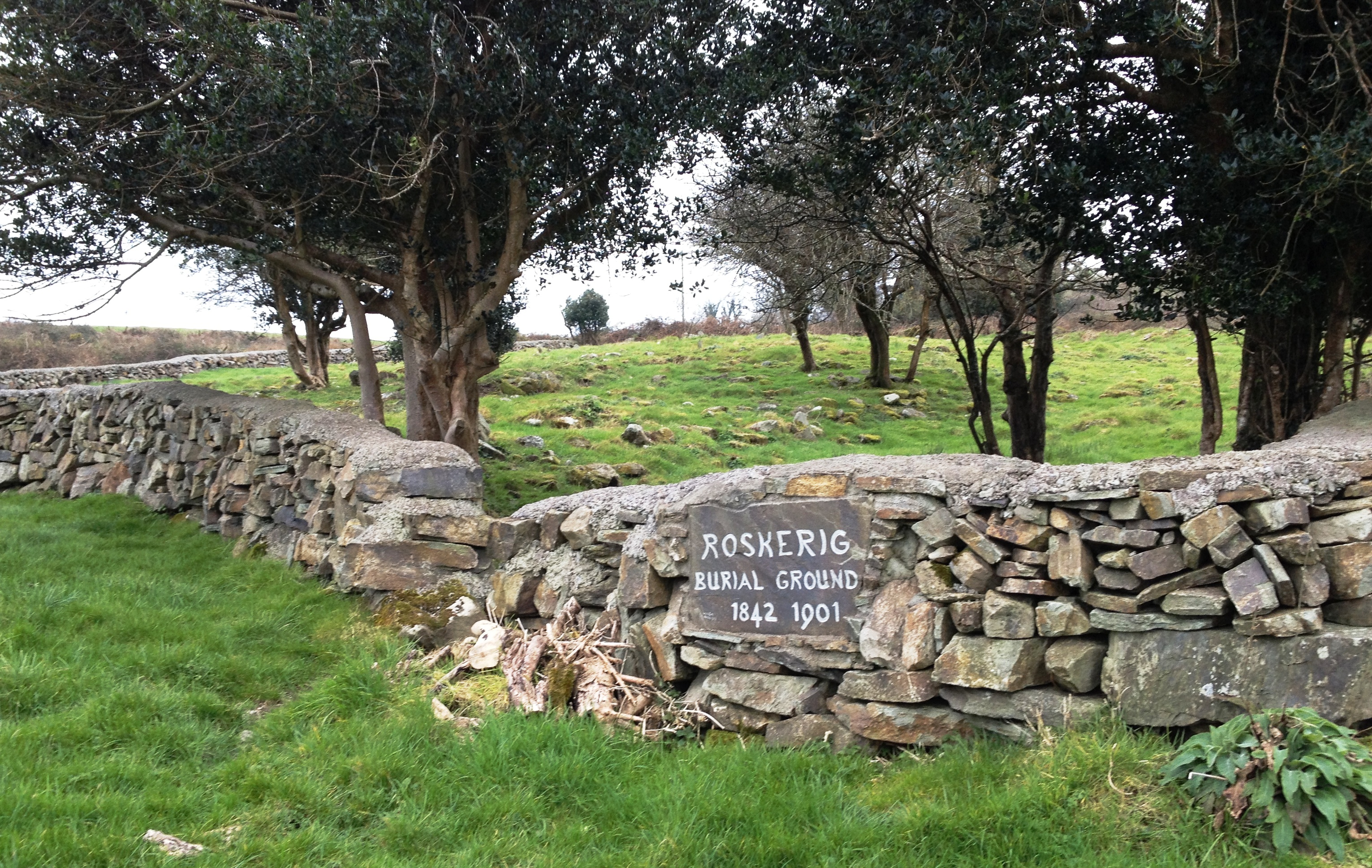
Ireland before 1845 had a population of 8 million people. Over a million died of starvation and disease and another million emigrated in the period of the Great Famine, from 1845 to 1852. West Cork was one of the epicentres of the disaster. It is still alive in the folk memory of the people and we saw two graphic reminders of it on our tour. The first was the Roskerig burial ground. Although stones were scattered around the graveyard, not a single inscription was visible, as if it had been hastily used in a chaotic time and then forgotten. The second reminder was the remains of a long-abandoned village, now slowly returning to the bog.

2013-03-02 11.23.39

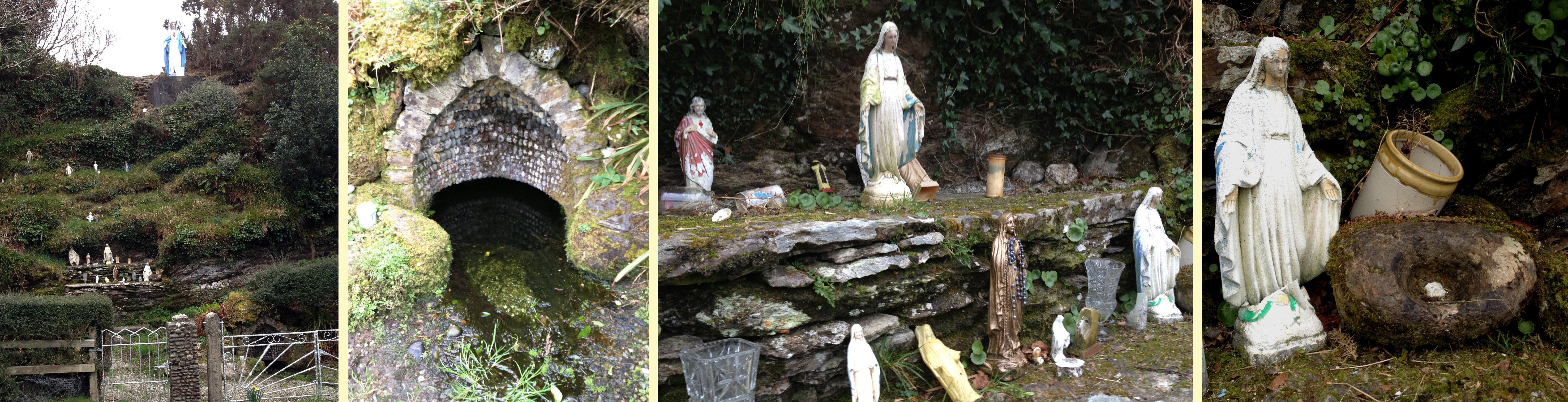
The holy well and mass rock are dedicated to Mary and are adorned with multiple images of her. The well is still in use and credited with miracle cures. The mass rock, where a crowd would gather outdoors in the days of the Penal Laws that outlawed Catholicism, to hear mass, is well preserved. When the Redcoats got wind that a mass was in progress and came to arrest the priest, Mary threw up a thick mist around the area to confuse the soldiers and allow the priest to escape. In acknowledgement, we deposited our coins in the well and said a prayer for something close to our hearts.

well

Uisce Beatha

fishy

Ireland is an island – a fairly small one. There’s a lot of water surrounding it (3,500 miles of coastline) and coming out of the sky. This abundance of water has shaped the natural landscape and coloured it emerald green. Not surprisingly, traditional life, history, culture and folklore in this country are imbued with watery references.

Schull Pier

Schull Pier

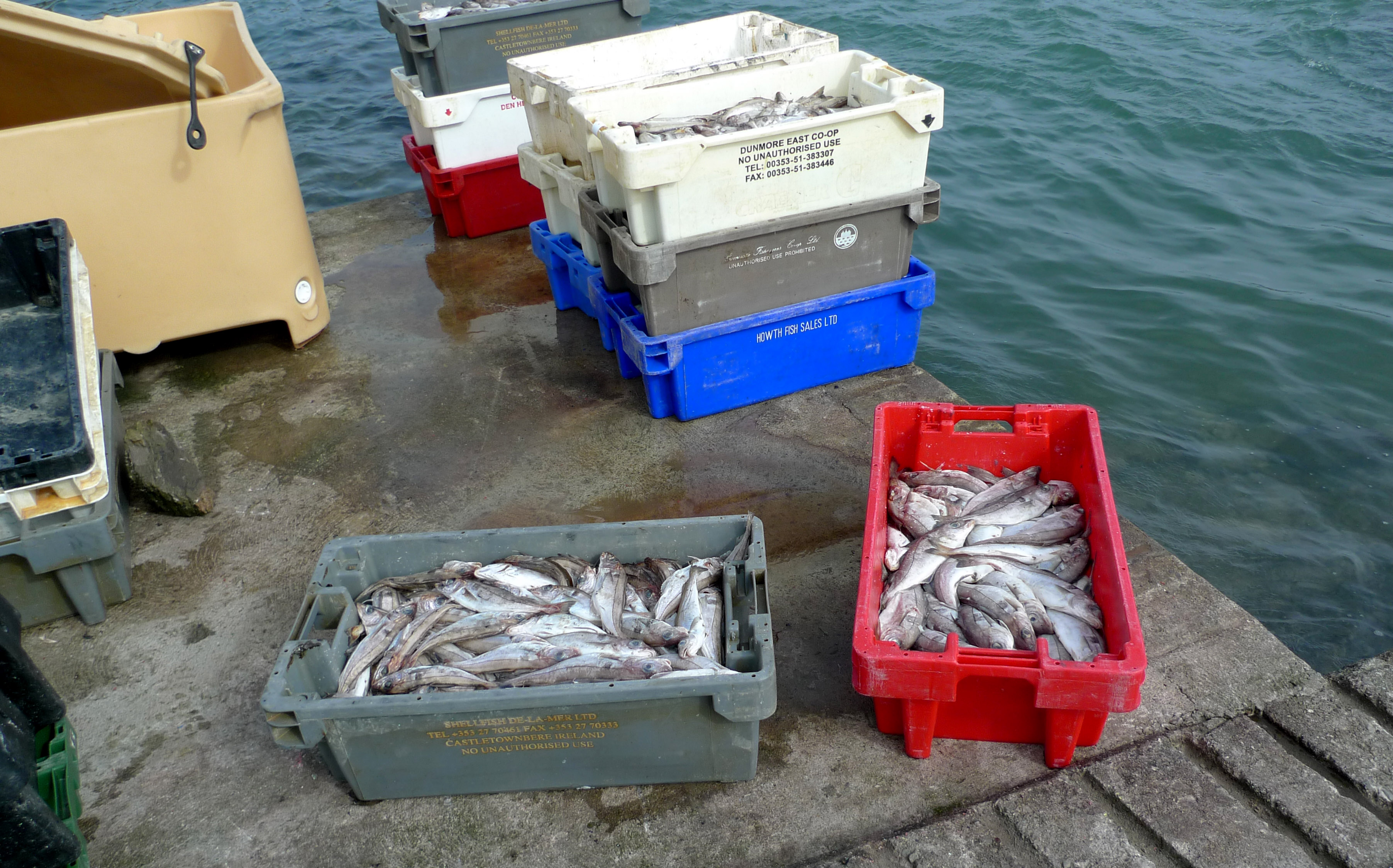
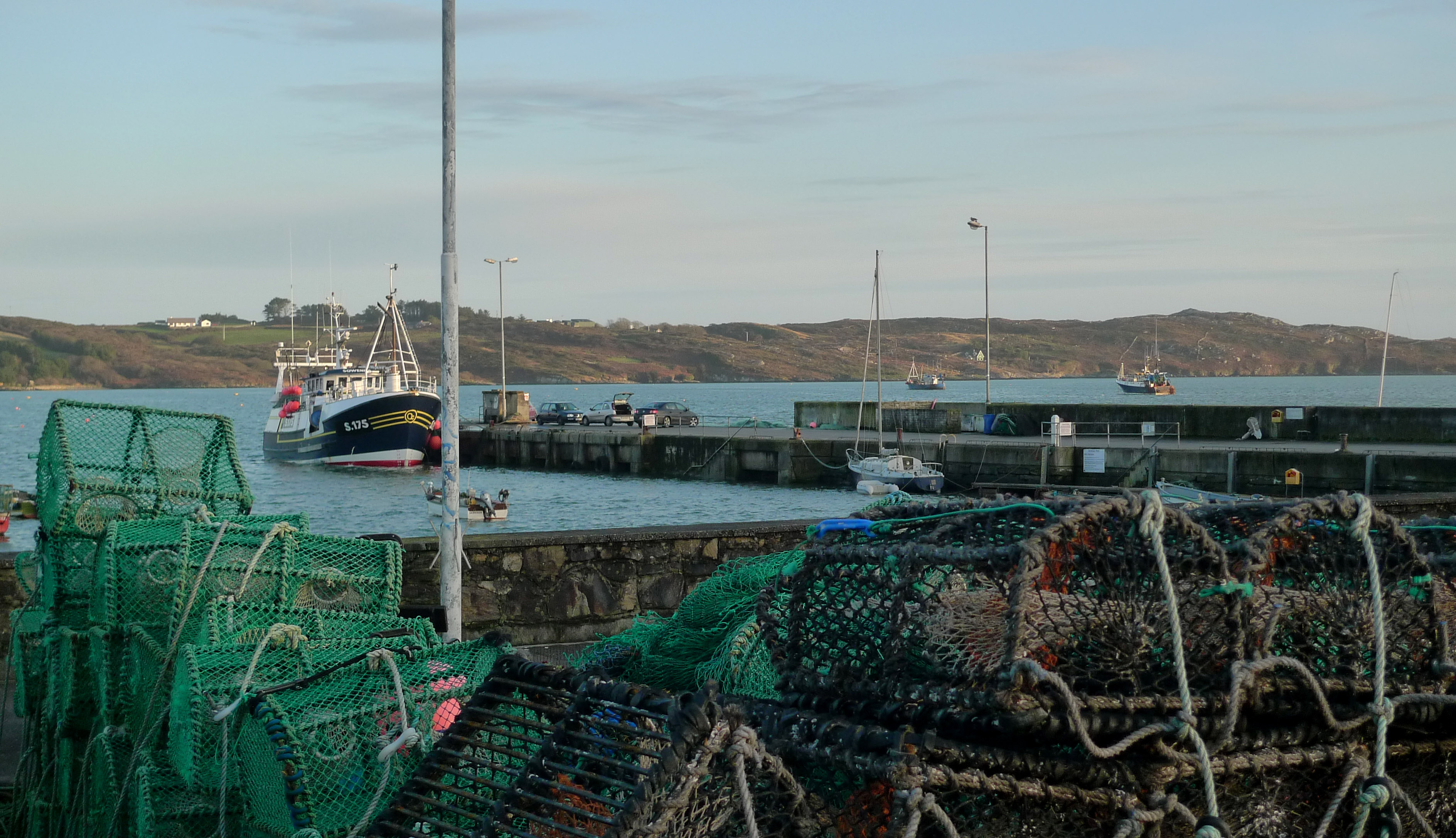
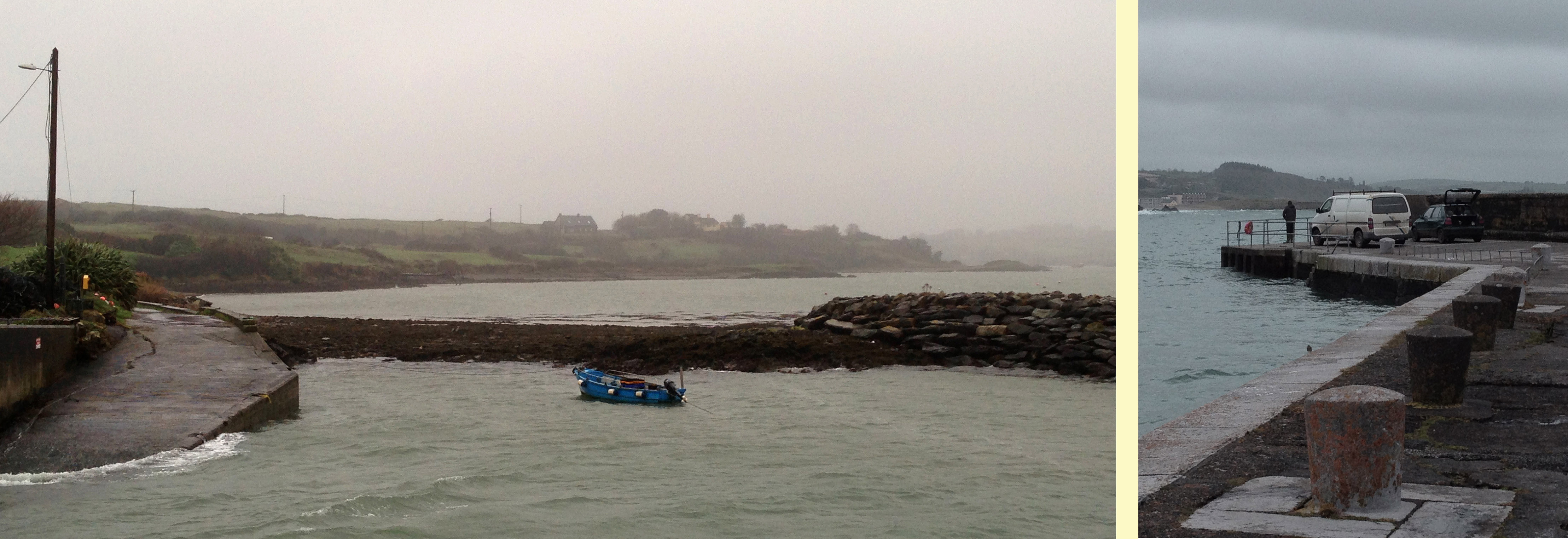
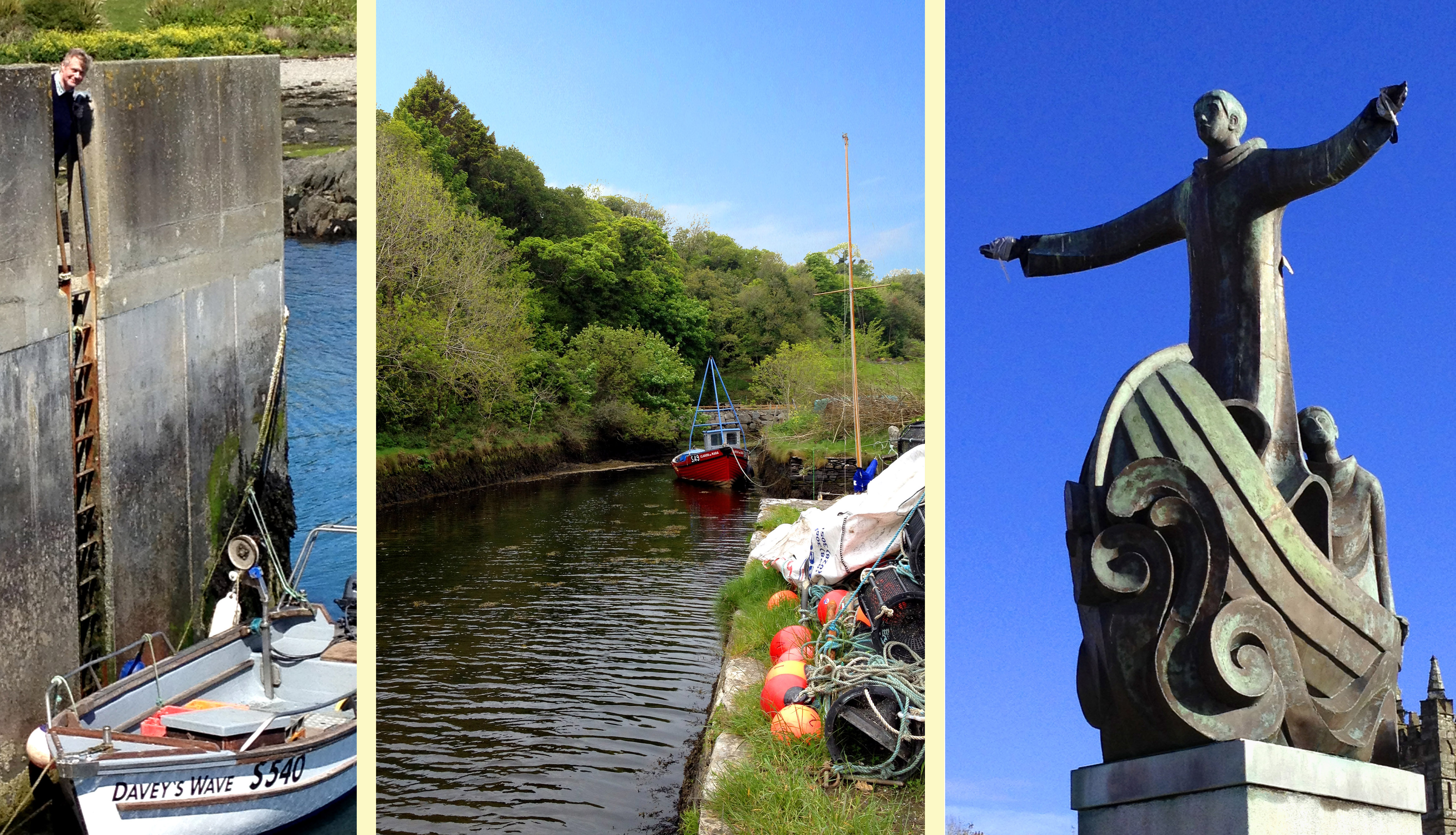
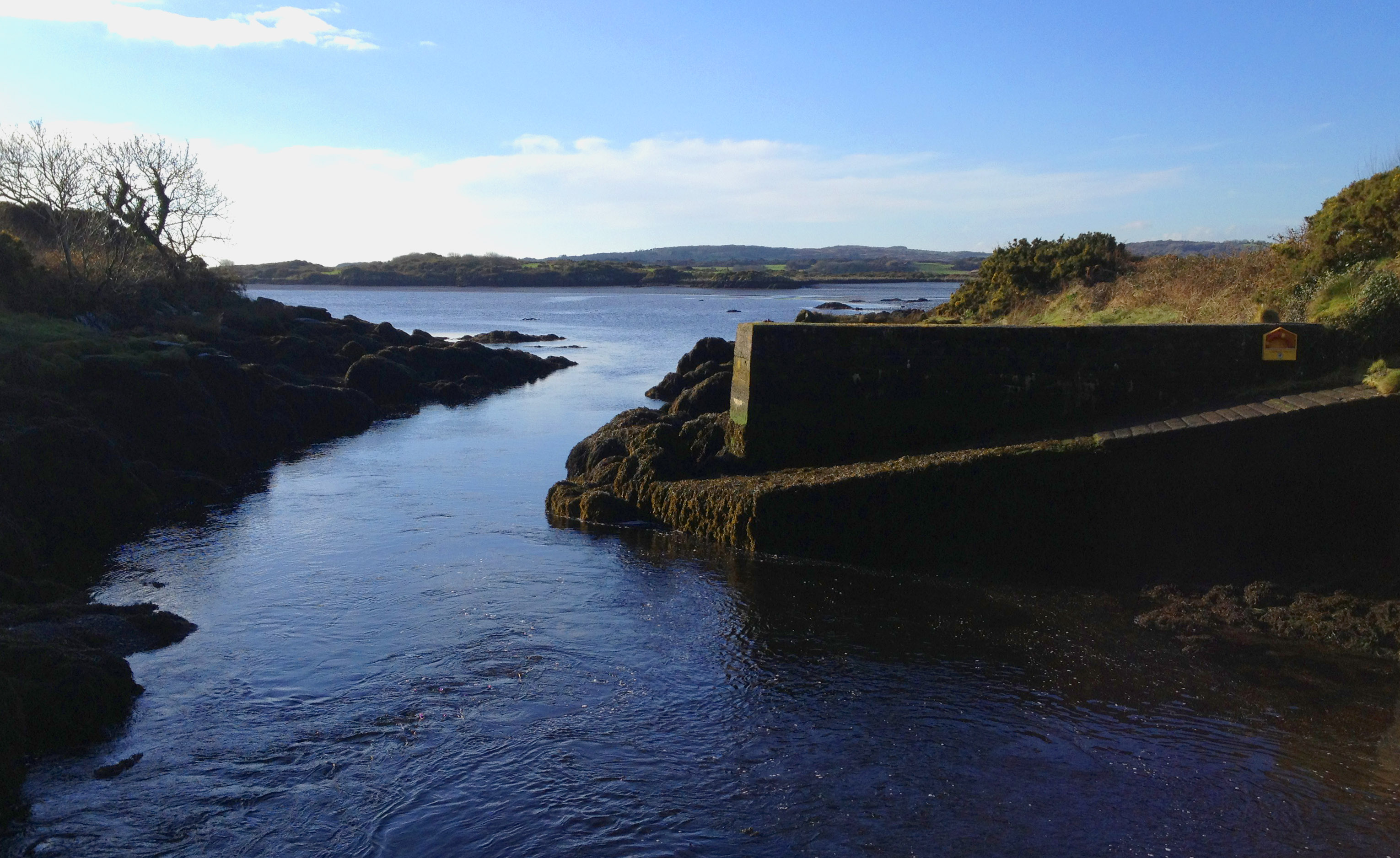
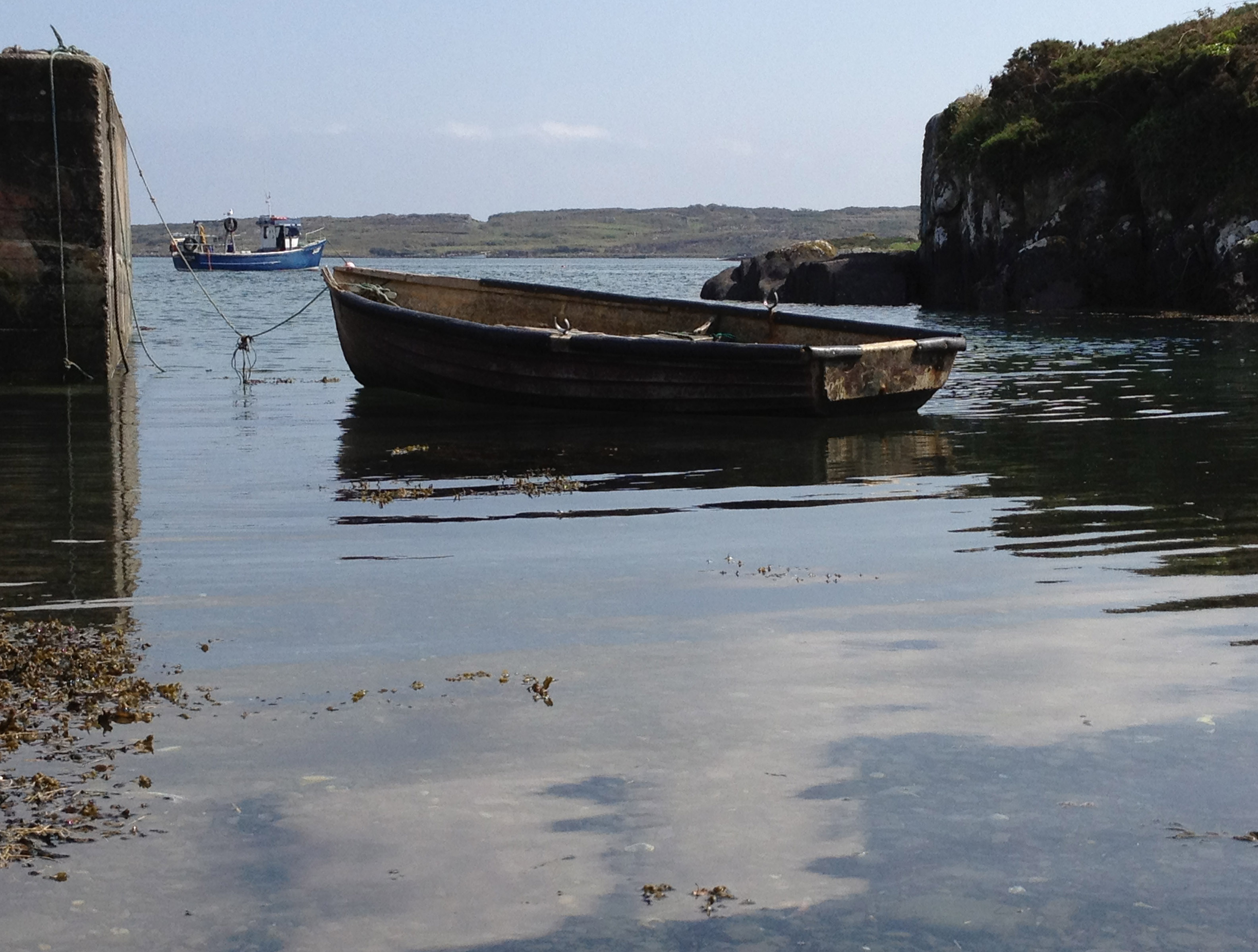
Down here in West Cork you are never more than a mile or two from the sea: it has historically provided defence, sustenance, isolation and wealth. When the O’Mahony and O’Driscoll clans ruled here in the fifteenth and sixteenth centuries it was recorded that more than 500 large fishing boats from France, Spain, and Portugal were constantly harvesting the fish shoals off the Mizen. Each chieftain’s income from the foreign ships surpassed £1,000 annually by way of fishing rights, harbour dues and protection money (that’s about 3,000 cows in trading terms in those days). Today you can still see evidence that the bays, inlets and islands have long provided income and a means of transport to the local communities: there are small piers everywhere. There’s an ancient one – ruined but still visible – just below us at Ard Glas, and an hour’s walk along the water would take in half a dozen others mostly still maintained in good order and regularly used.

cunnamore-roscarberry

Piers at Cunnamore and Roscarberry

When we go up to the market in Bantry on a Friday morning to get our own fish fresh from the local quays we pass by the statue of St Brendan the Navigator. In the sixth century Brendan set out with forty other monks in a little boat to find the Island of Paradise; instead, they discovered America, returning after seven years to tell of their many adventures with sea monsters, miraculous islands and sirens. In the 1970s Tim Severin recreated Brendan’s twin masted boat using Irish ash and oak lashed together with two miles of leather thong and wrapped with 49 traditionally tanned ox hides sealed with wool grease. In this he sailed for a year via the Hebrides and Iceland to reach Newfoundland, thus proving that the legend could have been based on fact.

Colla Pier, Roaringwater Pier and St Brendan

Colla Pier, Roaringwater Pier and St Brendan

The 'lost' pier at Bealaclare

The ‘lost’ pier at Bealaclare

In 2010 two fishermen found a small canoe in the Boyne River. It’s reckoned to be 5,000 years old and may have carried stone for the building of the great passage tomb at Newgrange (that predates the Pyramids). That boat is only 3 metres long, but another canoe discovered in 1901 in Co Galway is even older and much bigger: 15 metres long, hollowed out from the trunk of a single oak tree that was over 2 metres in diameter: something that couldn’t be found in Ireland today. It probably had outriggers and could have been used to bring tin from Cornwall to mix with the locally mined copper, enabling the Bronze Age to take off. Fascinating.

Bronze Age Canoe

Bronze Age Canoe

Every day we look out over the water, and on all our walks we have glorious views over the bays, the Celtic Sea and the Atlantic. That’s a constant in our lives that I don’t think we could ever do without.

Oh – by the way: Uisce Beatha (pronounced Ish-kah Baahaa) – that translates literally as Water of Life – and, in Ireland, also as ‘Whisky’.

Turk Head Pier

Turk Head Pier

Enigma

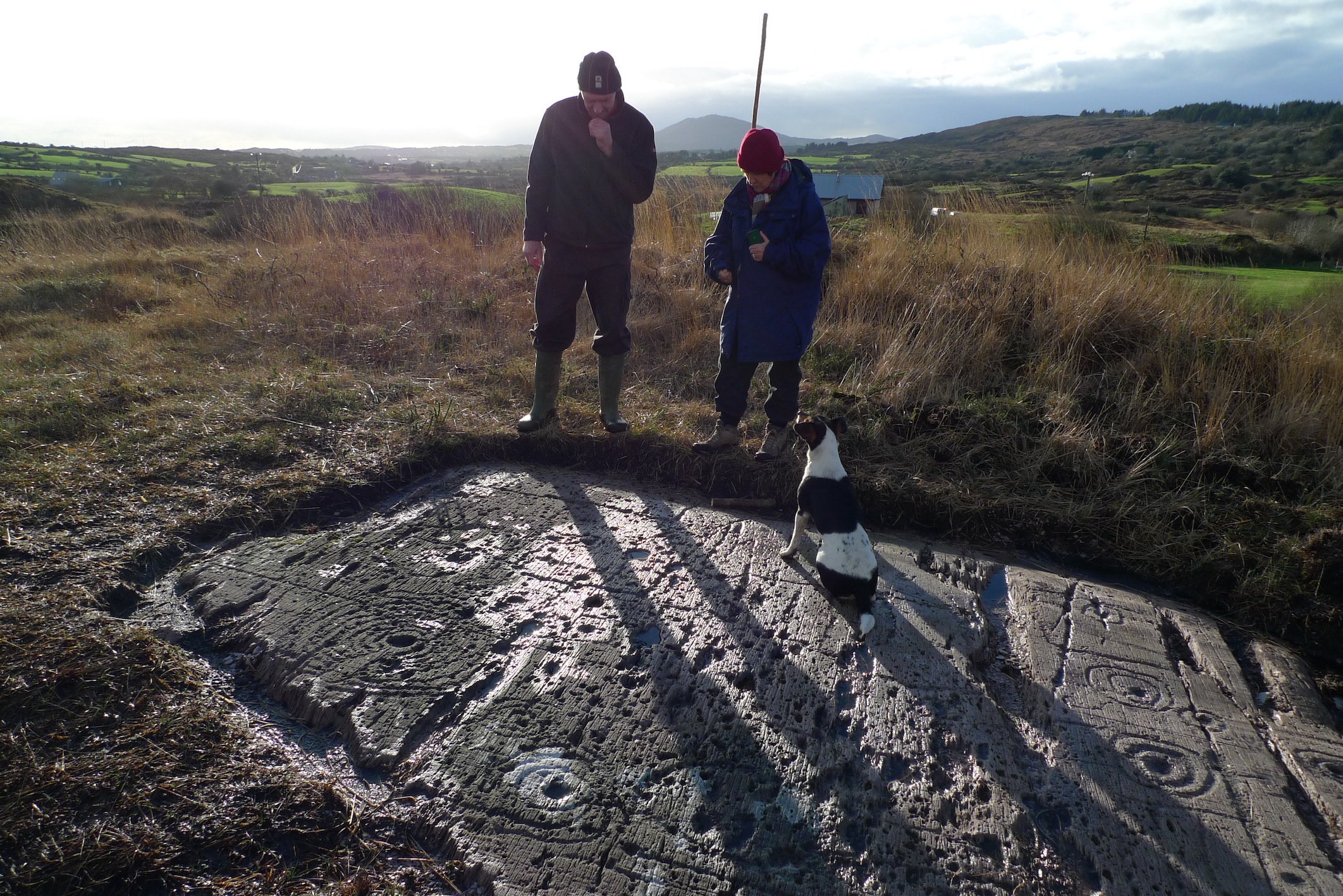
gary, Finola and Furry friend contemplate the Enigma

Gary, Finola and Furry Friend contemplate the Enigma

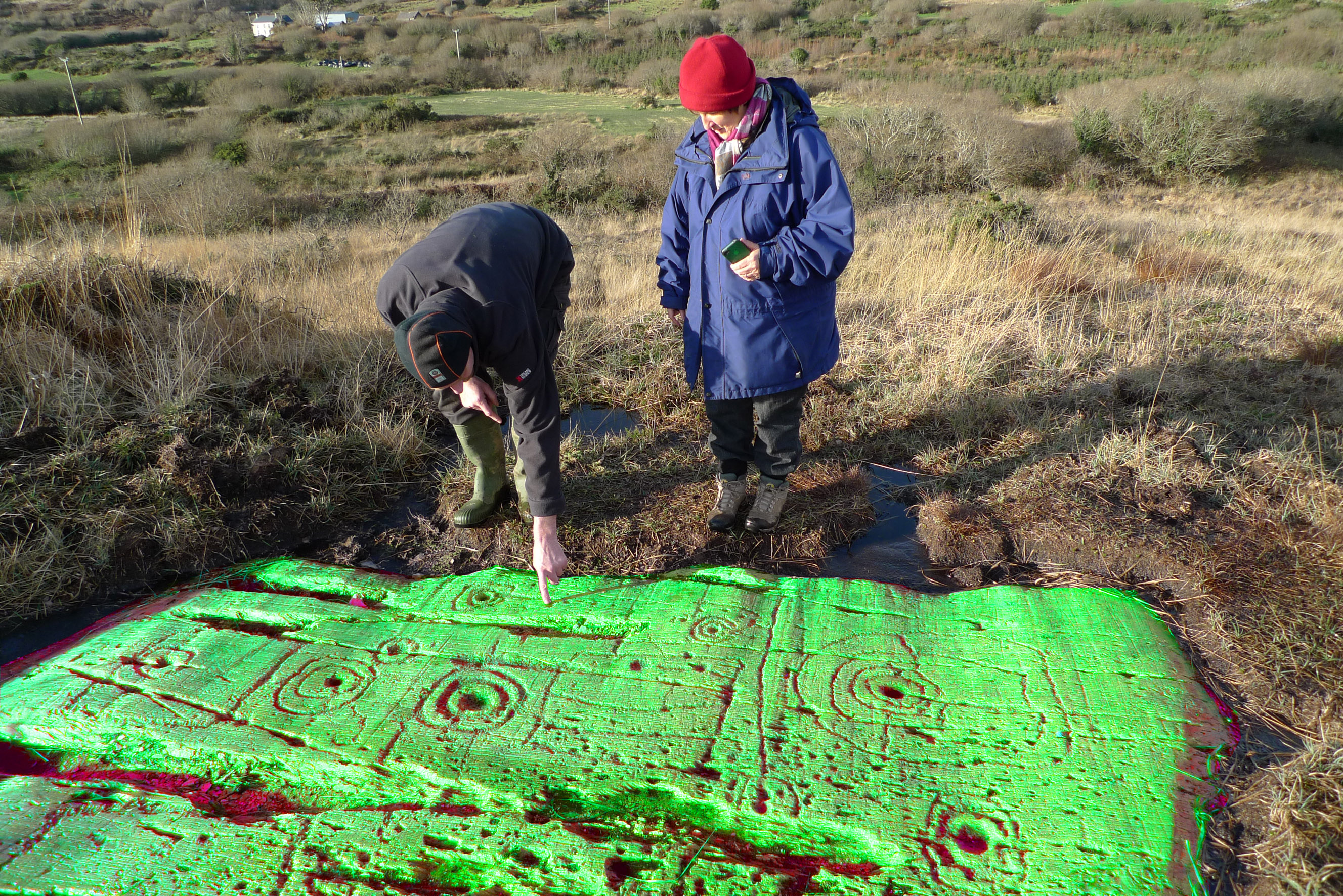
We went to look at an exciting new Rock Art discovery, in the hills between Ballydehob and Bantry: wild country. The man who uncovered it – Gary Cox – lives close by, and became familiar with the terrain through walking his dogs over the land every day. He noticed in passing a small piece of exposed rock, just a few centimetres square, on which it was possible to make out a couple of curved lines. Intrigued, he began to carefully pull back the moss and gorse to expose a secret which had lain hidden from view for hundreds – perhaps thousands – of years.

L1080544

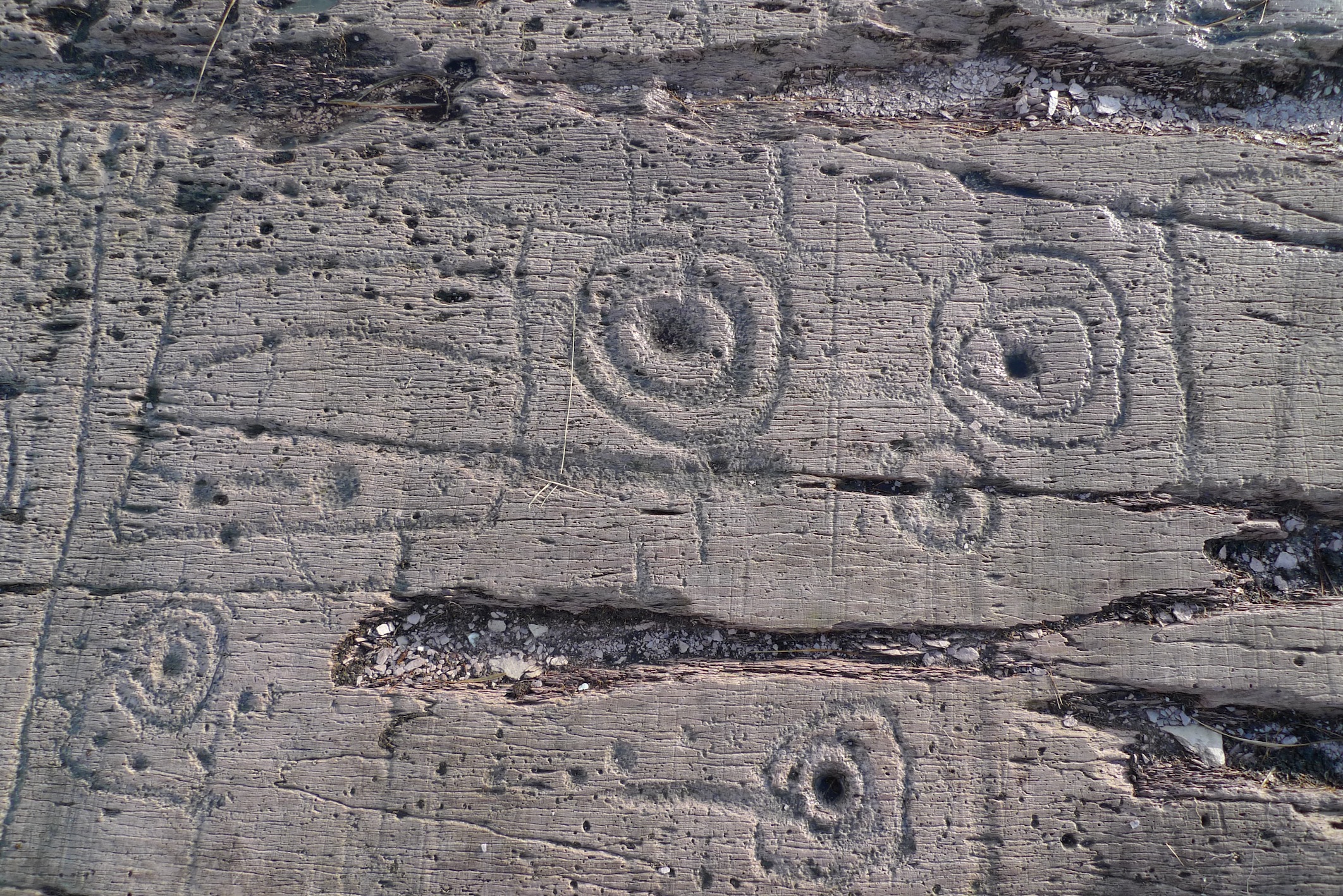
The Derreennaclogh panel is one of the finest and most intriguing pieces of Rock Art that we have seen in West Cork. Because the surface has (until now) been largely protected from direct contact with the weather, the carvings are pristinely visible, especially on a good bright day. On the rocks at Ballybane West – just over the hill – the designs are so weathered that you can go there day after day and never make them out, unless the shadows from a low sun are just right.

details

Details from the Derreenaclogh motifs

Current thinking suggests that all the Rock Art in ireland is Bronze Age – between four and five thousand years old: it’s breathtaking to think that we are looking at such ancient depictions of …. what? There’s the enigma: we have no idea – there are cup marks, circles, lines, even squares and waves on this newly revealed one: very unusual. Theories abound, of course: sun, moon, stars, maps, calendars – I’m sure someone has suggested they are flying saucers! We’ve written more on this in previous posts, and of the prolific appearance of rock carvings on the whole Atlantic facing coast from Scandinavia down through Scotland, Britain, Ireland, Brittany, Spain and Portugal. There are variations but the same symbols or motifs occur over and over. But here – on our doorstep – are some of the most unusual shapes to challenge our imaginations.

pukas

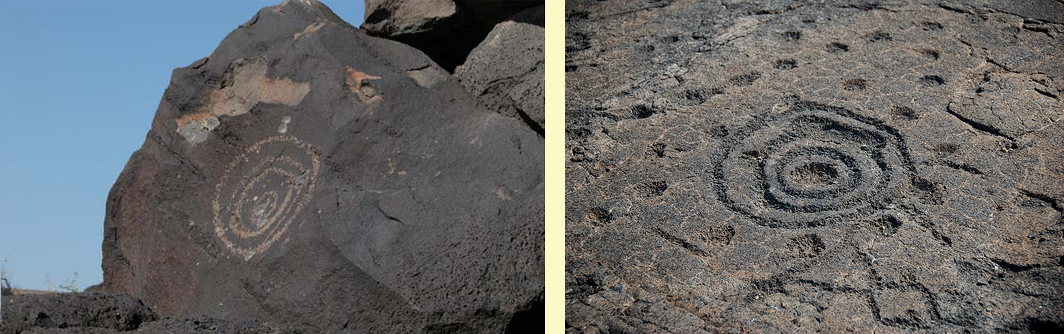
I have been extending my researches to petroglyph cultures beyond our own roots. I was intrigued to find some images from New Mexico – strikingly similar to our rock art – and Hawaii. In the latter place there are numerous circular depressions, around 50mm in diameter, interspersed with lines and circles. On our rocks in West Cork cup marks are also widespread – one of the most common images. They are also surrounded by concentric circles: at Derreennaclogh there is one cup mark with eight concentric circles around it – that’s more than we’ve seen on any other site.

Boca Negra Canyon Petroglyphs

Petroglyphs from New Mexico (left) and Hawaii (right)

There is folklore attached to the Hawaiian cup marks: local historians explain that these holes are called ‘Puka’. When a child was born a Puka would be carved in the lava stone. The new baby’s ‘Piko’ – umbilical cord – would be placed in the Puka to wish blessings upon the child for a long and prosperous life. In Hawaii and New Mexico the carvings are reckoned to be between 500 and 1,000 years old – much younger than our Rock Art. But here’s more food for thought: in Irish there’s also a word ‘Púka’ or ‘Pooka’ – sometimes a Fairy, or a shapeshifting spirit which can appear as a Hare or a Horse with dark fur. If a human can jump on the back of the Horse he will be given a wild ride but will probably be thrown off. Legend says that Brian Boru – the High King of Ireland – was the only man who could truly ride the Púka – by using a bridle incorporating three hairs of the Púka’s tail.