Saint Manchan, his Miraculous Cow, and his Shrine

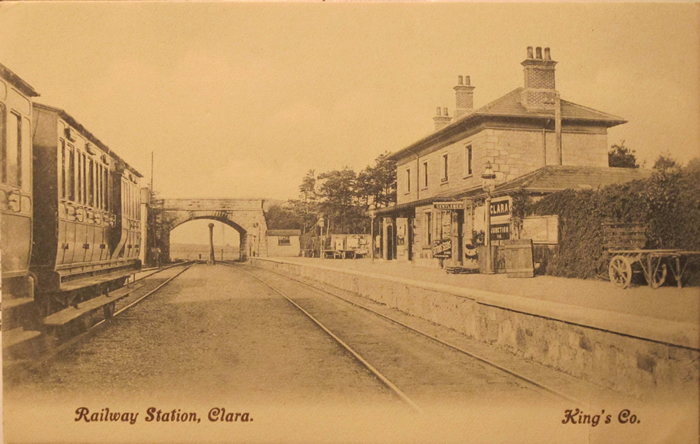
I was in the little two-horse train which labours west from Clara to Banagher and the outlook was desolate. There was another chap in the carriage. He sat hunched up in the corner with his nose to the window. One glance convinced me that it was useless to say anything and there the two of us kept on staring rather lovingly at a wilderness of bog stretching away to the Slieve Bloom Mountains. It seemed to me that there was a kind of promised land on the other side. On past a few scattered farm houses some grey boulders and the ruins of a church. I found myself thinking dismally enough of the tourists. After all what do they get? Just ruins, ruins and more ruins – the saddest ruins in Europe. Then suddenly I heard my friend of the opposite corner speak in a mournful kind of way with his nose still glued to the window – “That’s Leamanaghan, a quare kind of place, decent people, too, the best in the world, people who’d give you all the milk you could drink but wouldn’t sell a drop of it for all the gold in Ireland and it’s all by raison of a cow, Saint Manchan’s cow.”


(St Manchan By Tomas O’Cleirigh, Midland Tribune 27th April 1935)

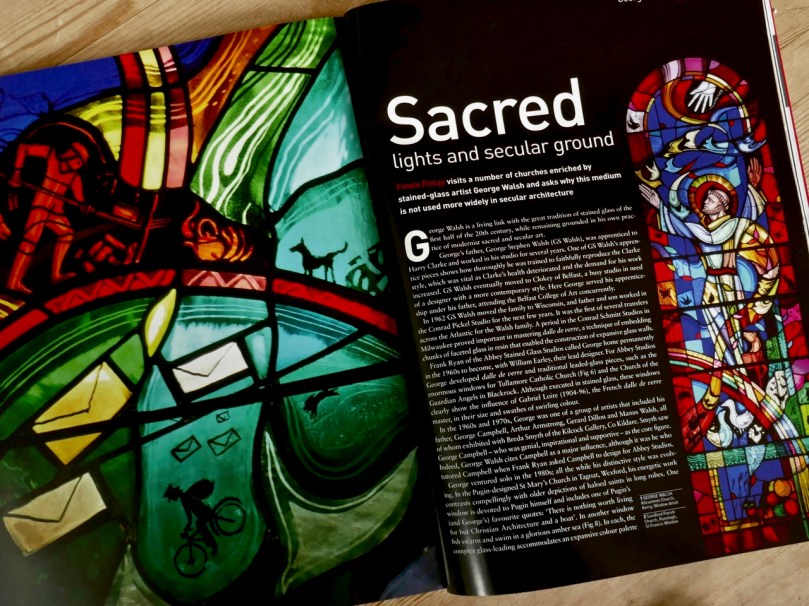
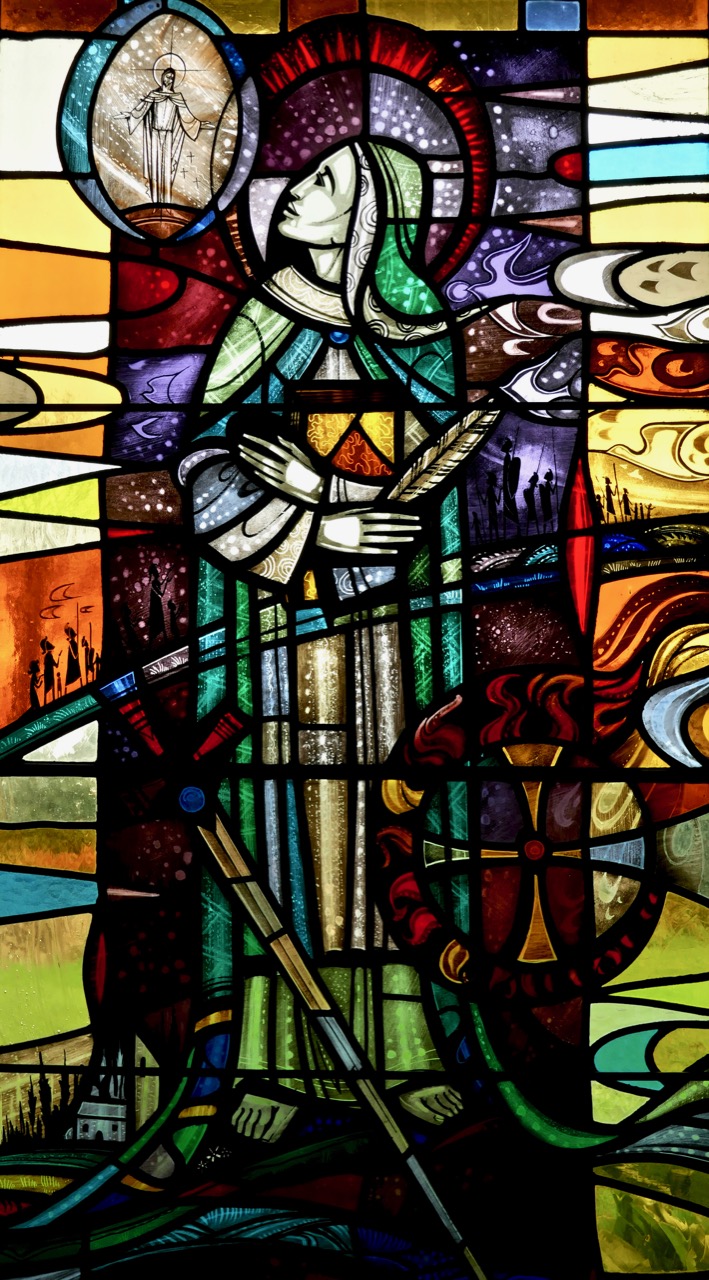
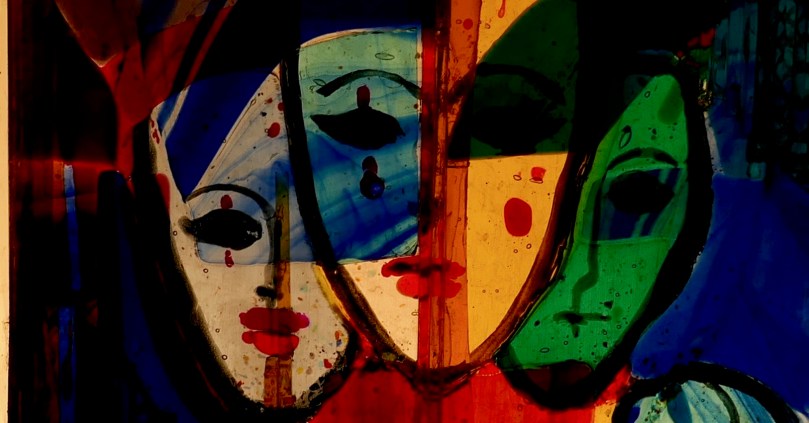
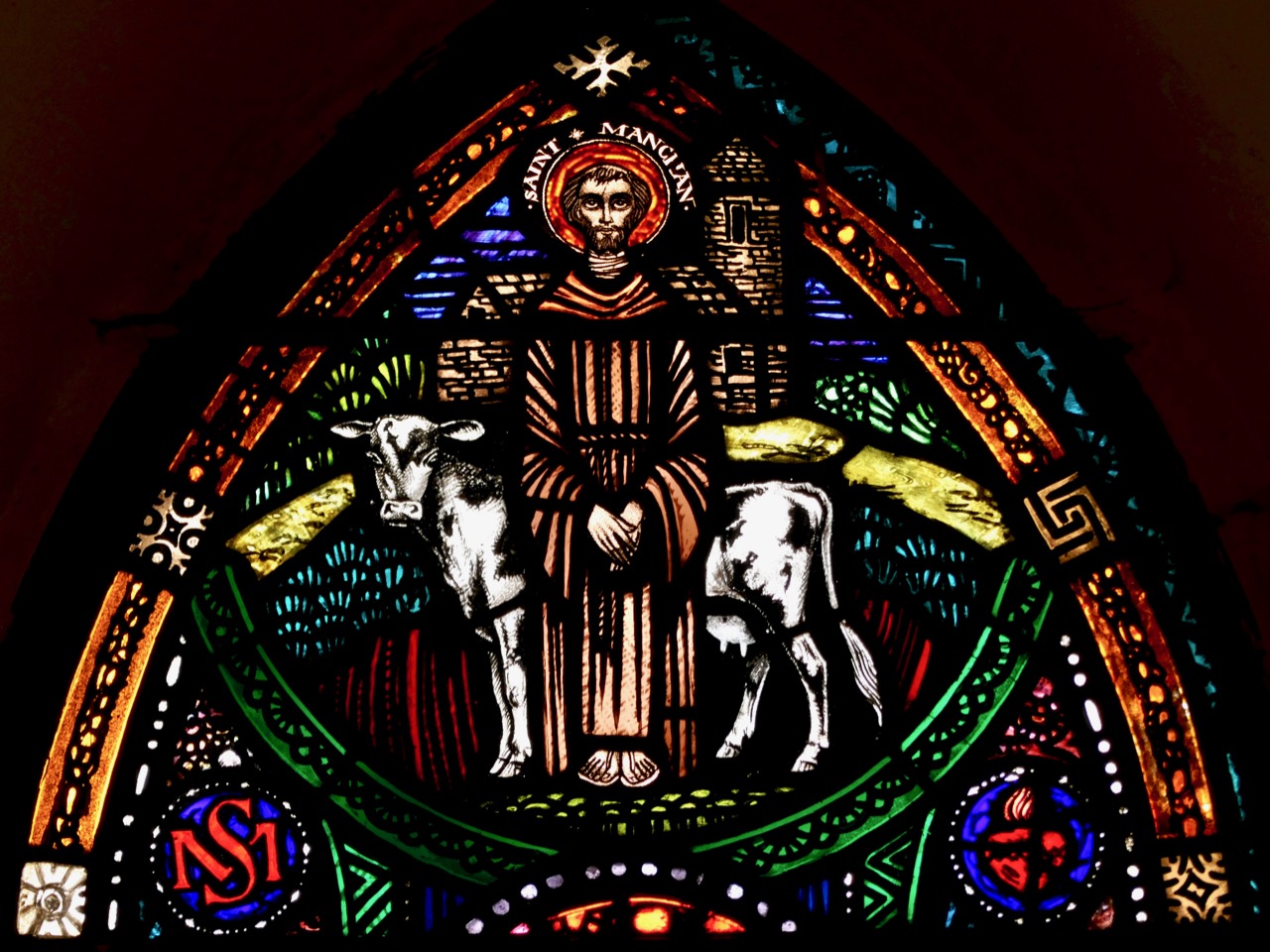
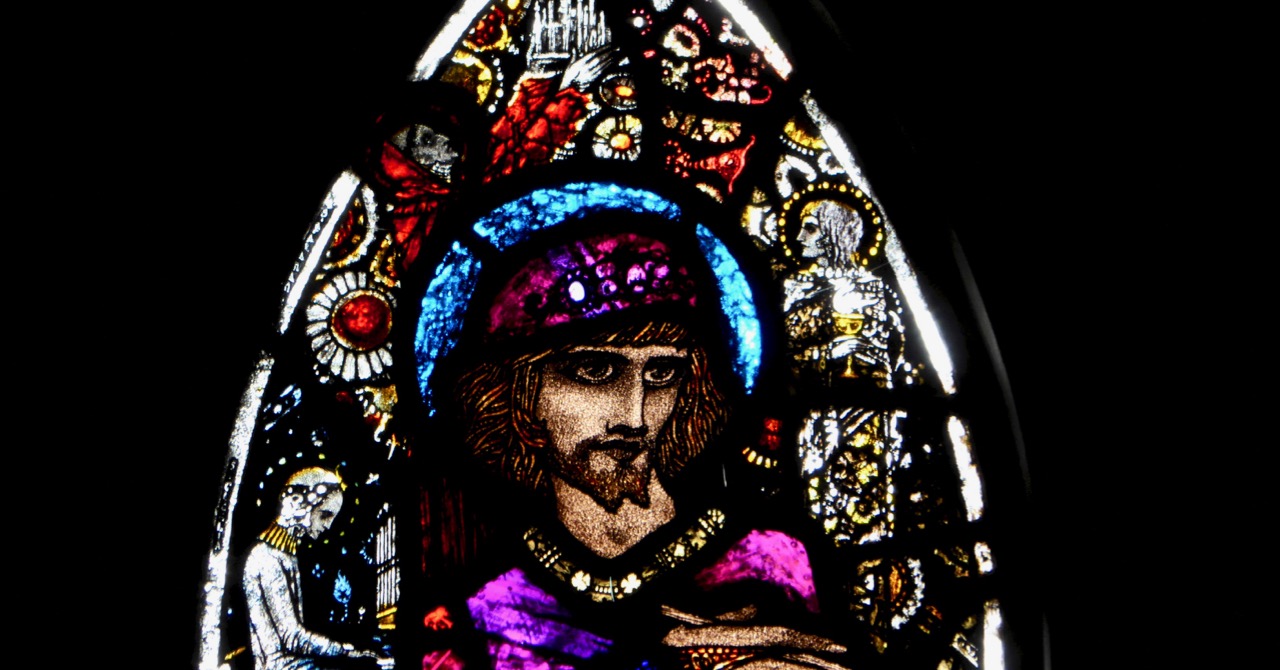
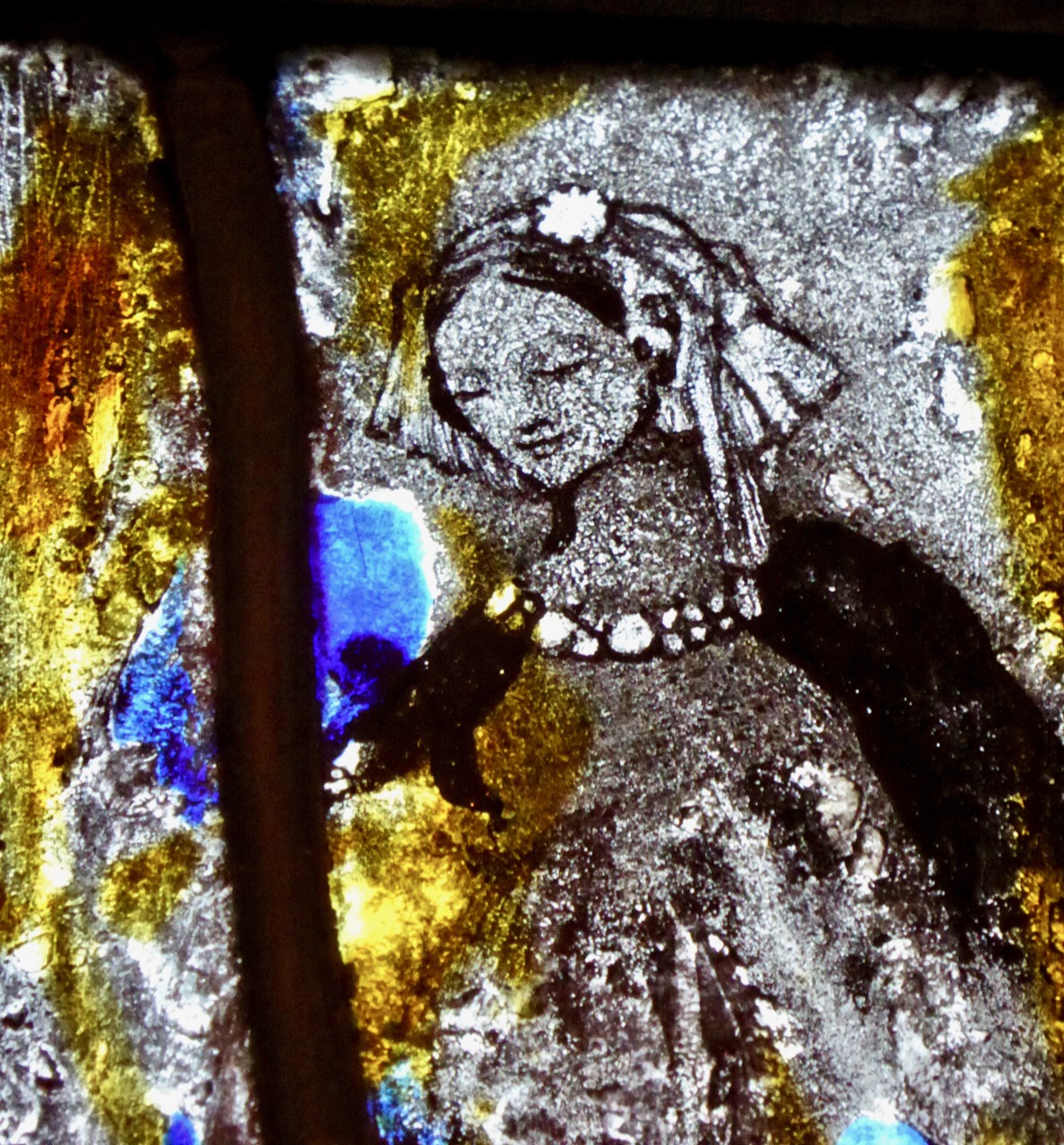
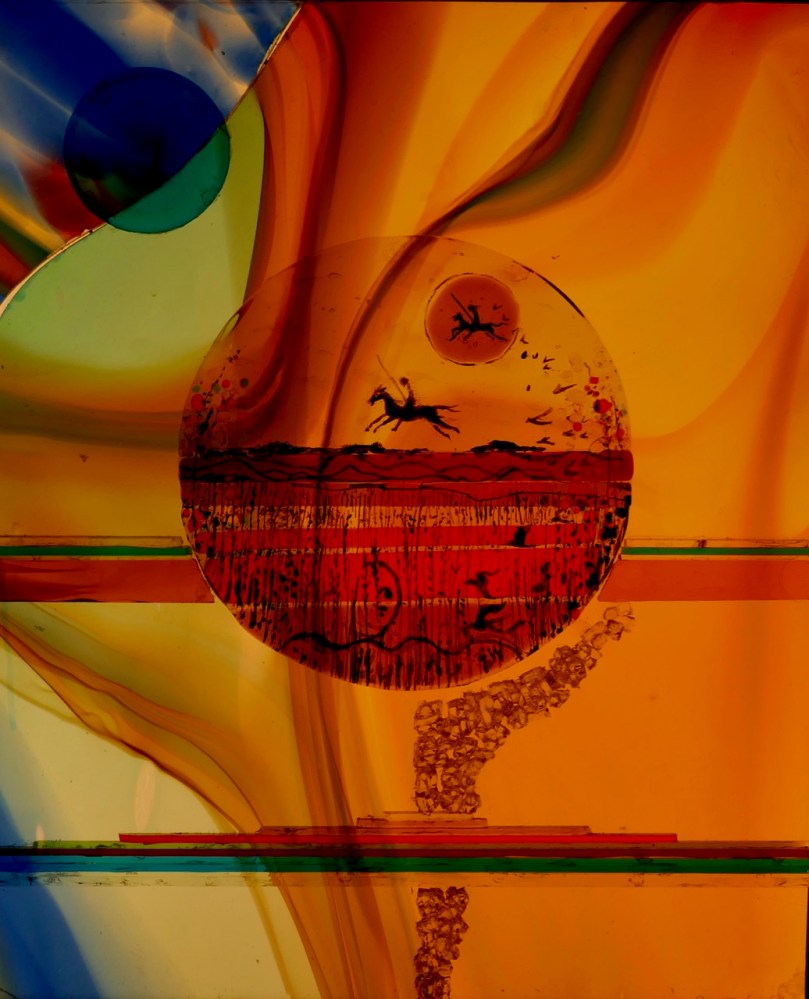
Upper – Finola is featuring the work of stained glass artist George Walsh this week. We were fortunate to find his portrait of Saint Manchan and his cow in the  little church at Baher , Co Offaly, on our travels. Centre – The Church of Saint Manchan

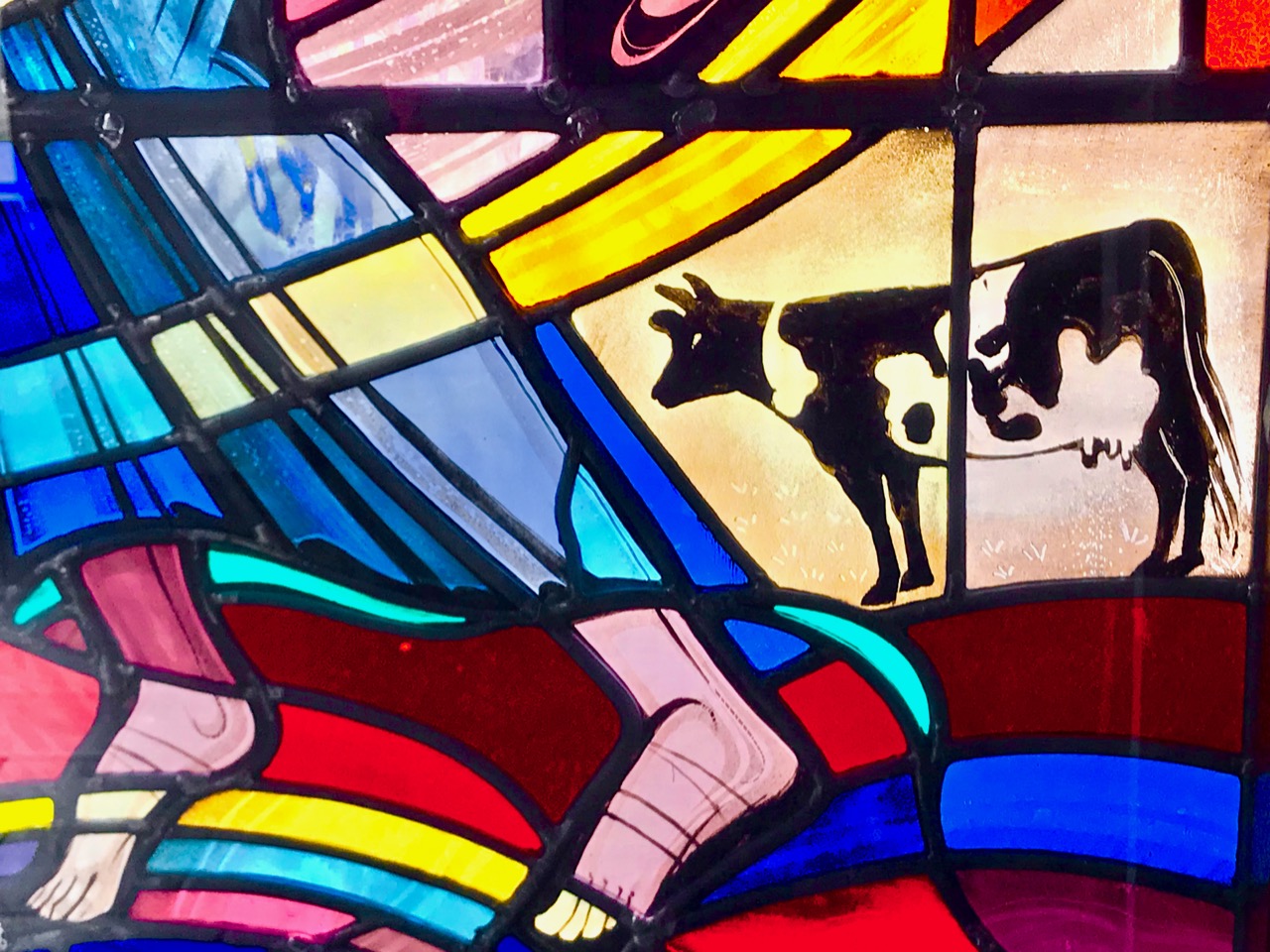
(From Robert’s diary, 2012) – St Manchan had a Cow, a miraculous animal that was always in milk, and the people of Leamonaghan had the milk for free (and, to this day, will not charge anyone for a pint straight from the herd). We tramped through a field of cows as we searched for St Manchan’s holy well: they gazed at us with some disdain. The well is a curious affair – old stones, concrete and rather ugly. The water is alive with tadpoles. We were tentative as we sampled the rank, slow moving stream – but it gave us the gift of credulity!

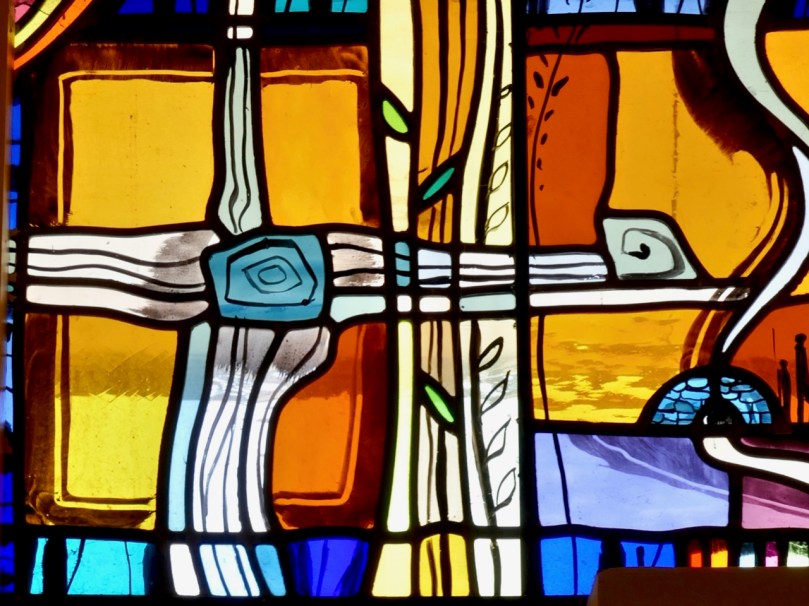
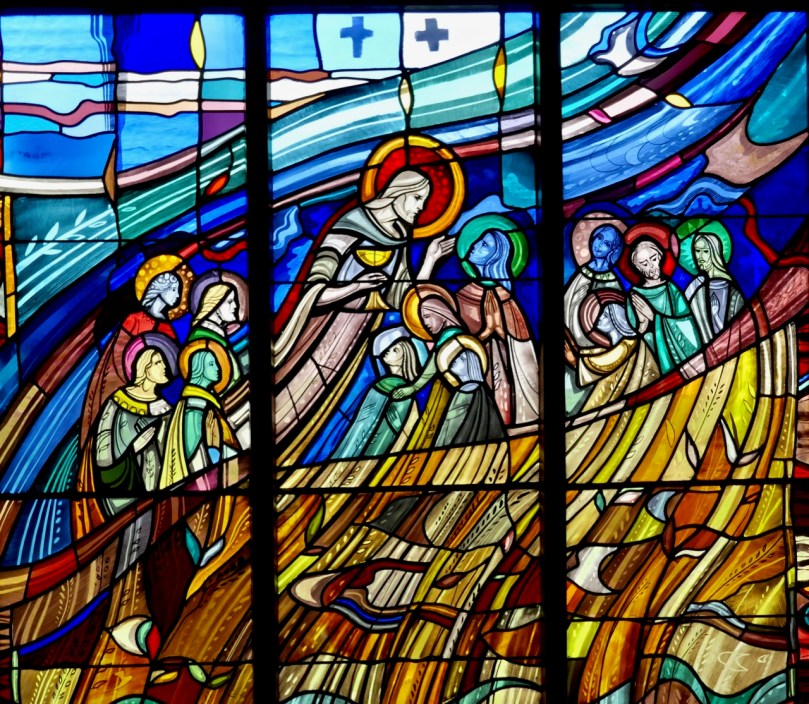
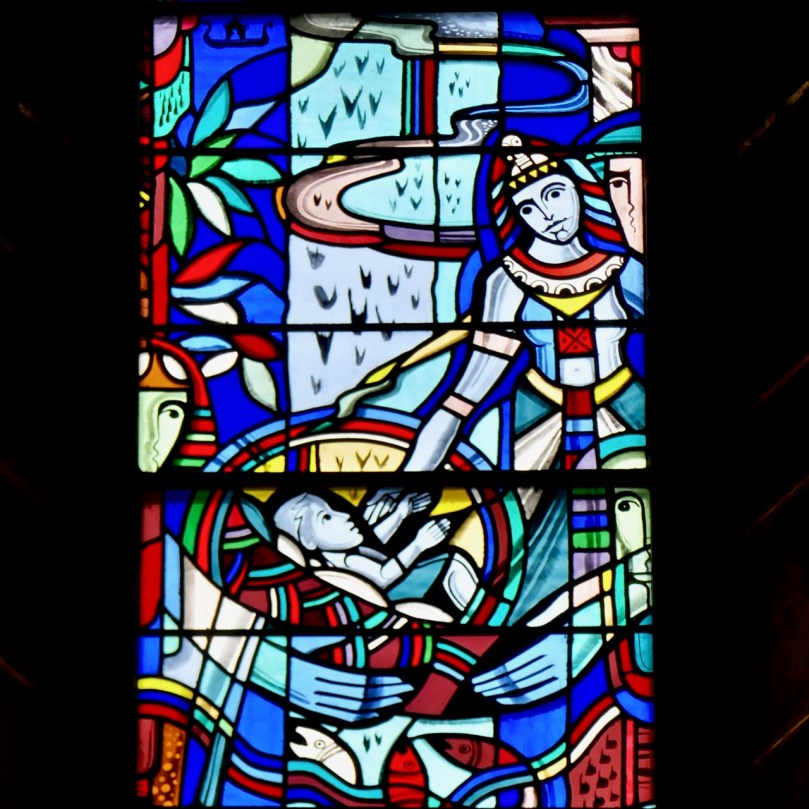
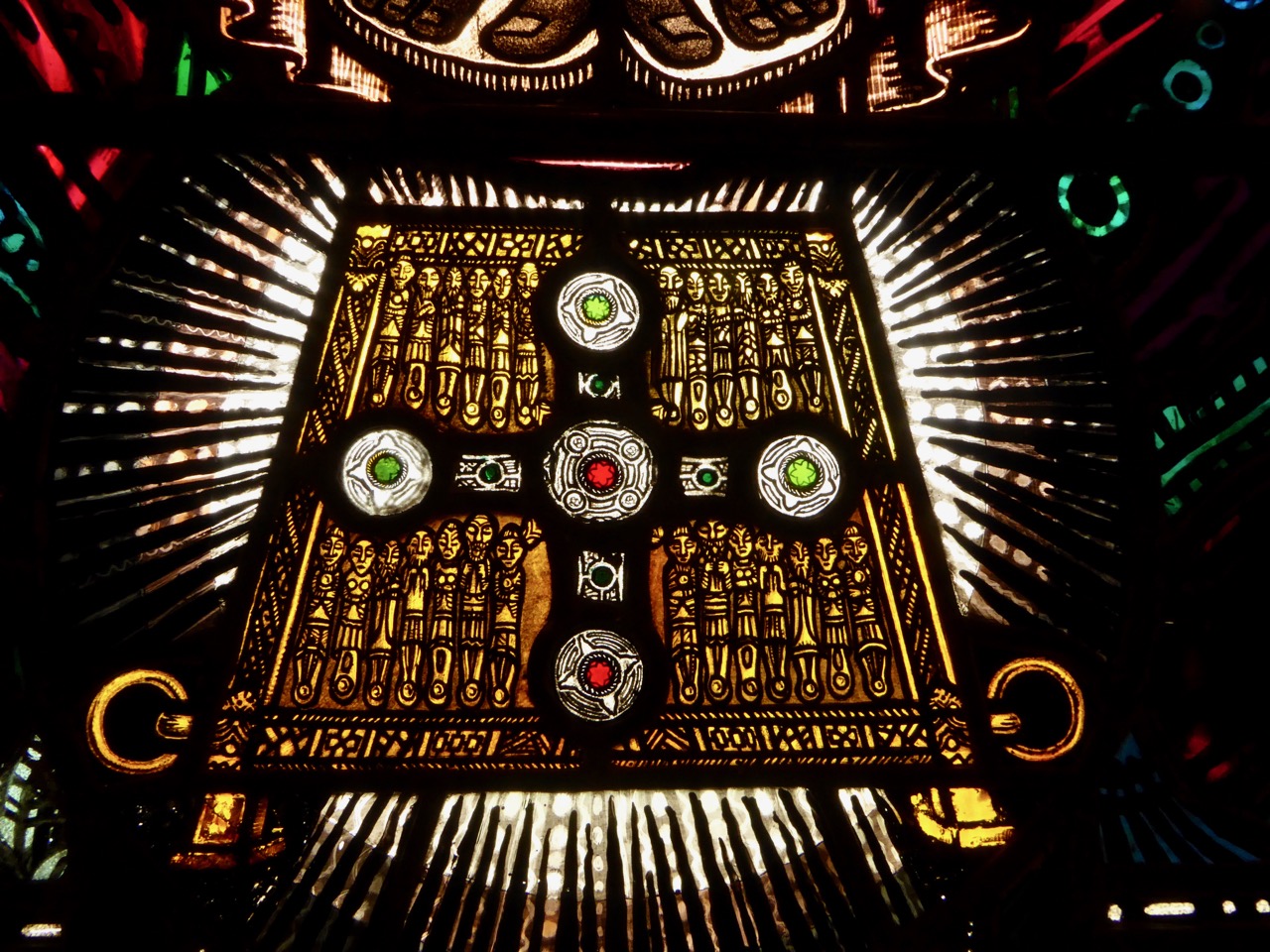
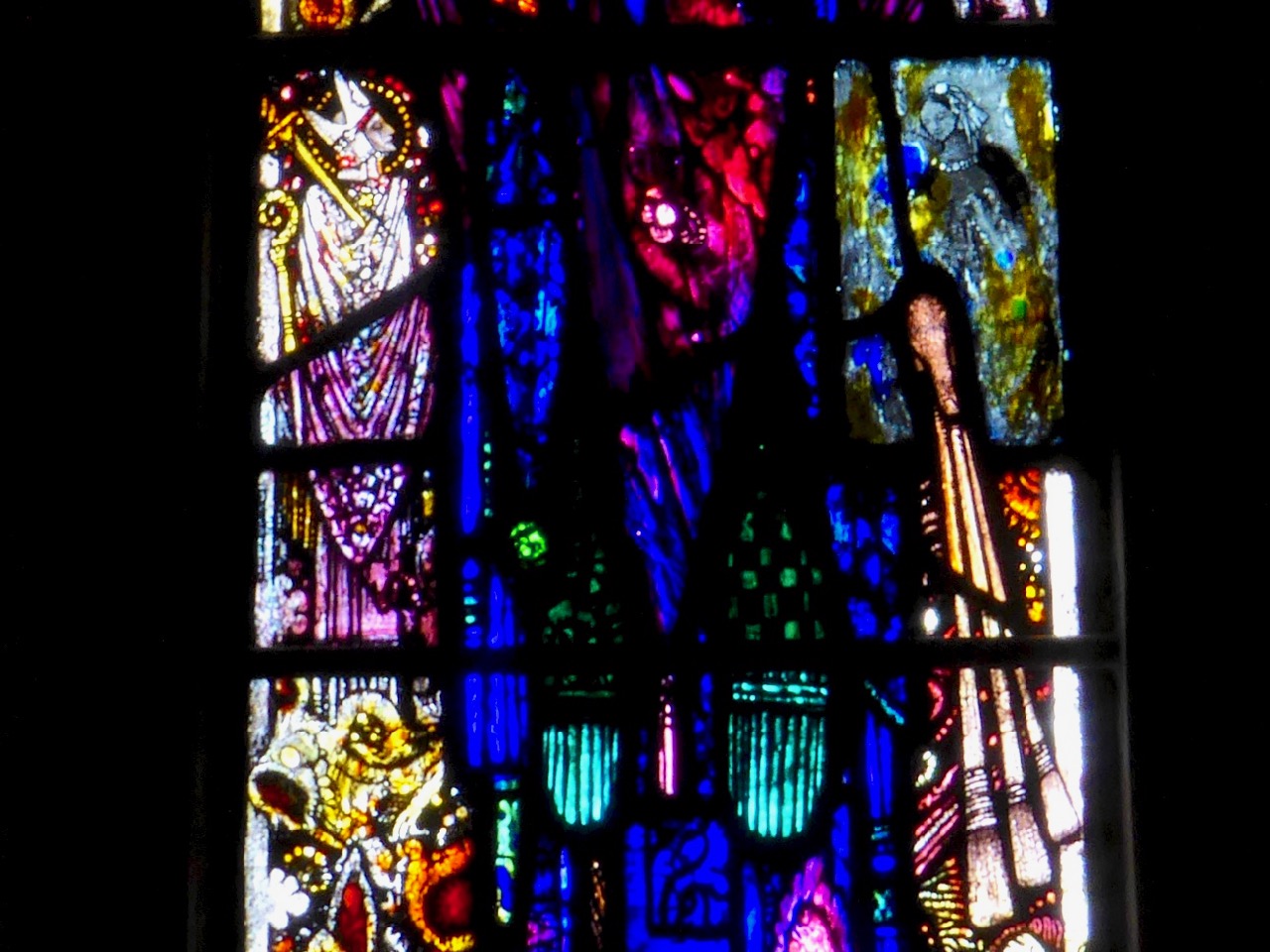
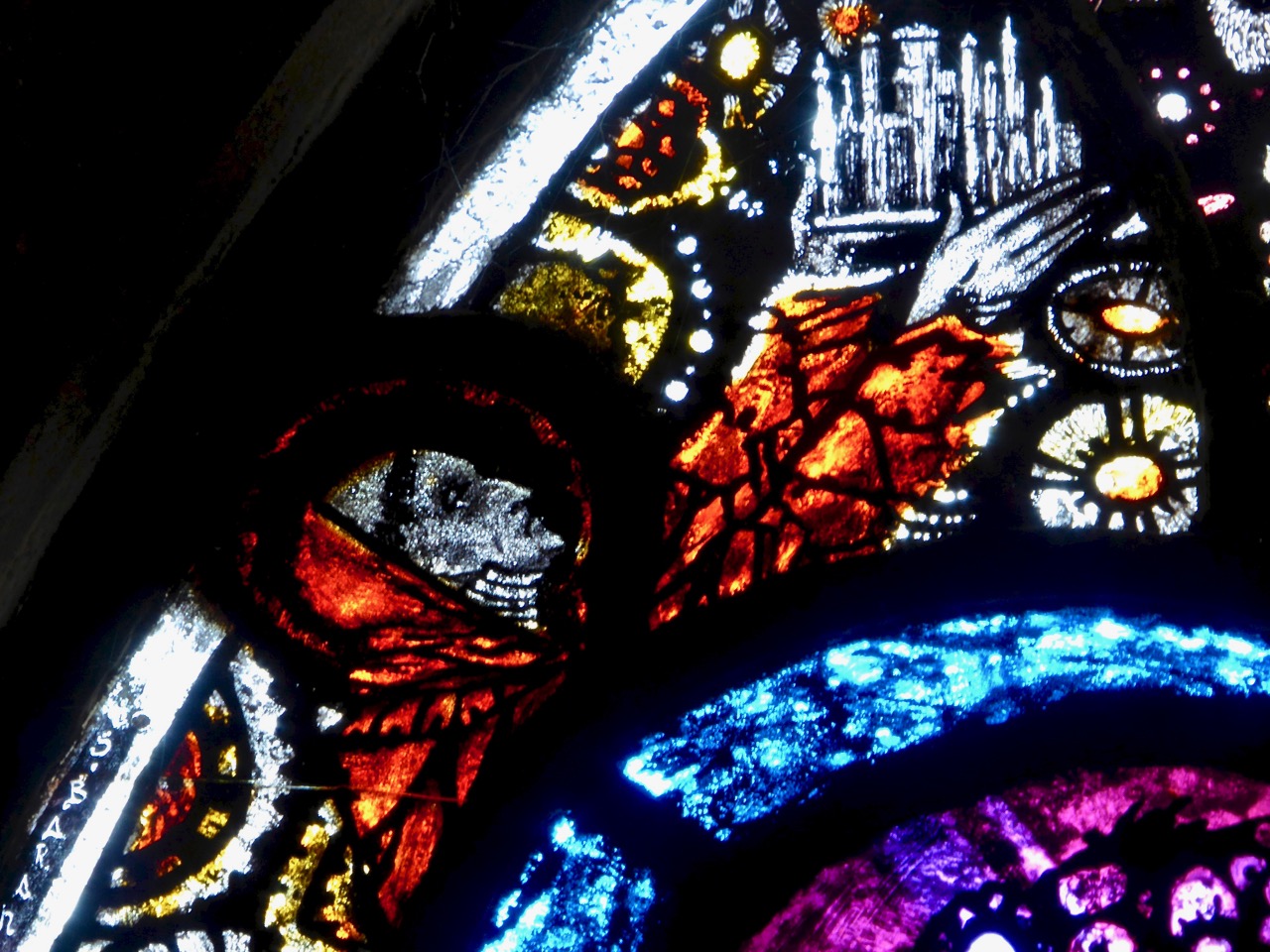
This detail from the Harry Clarke Studio window at St Manchan’s Church (dating from 1931) shows the miraculous cow

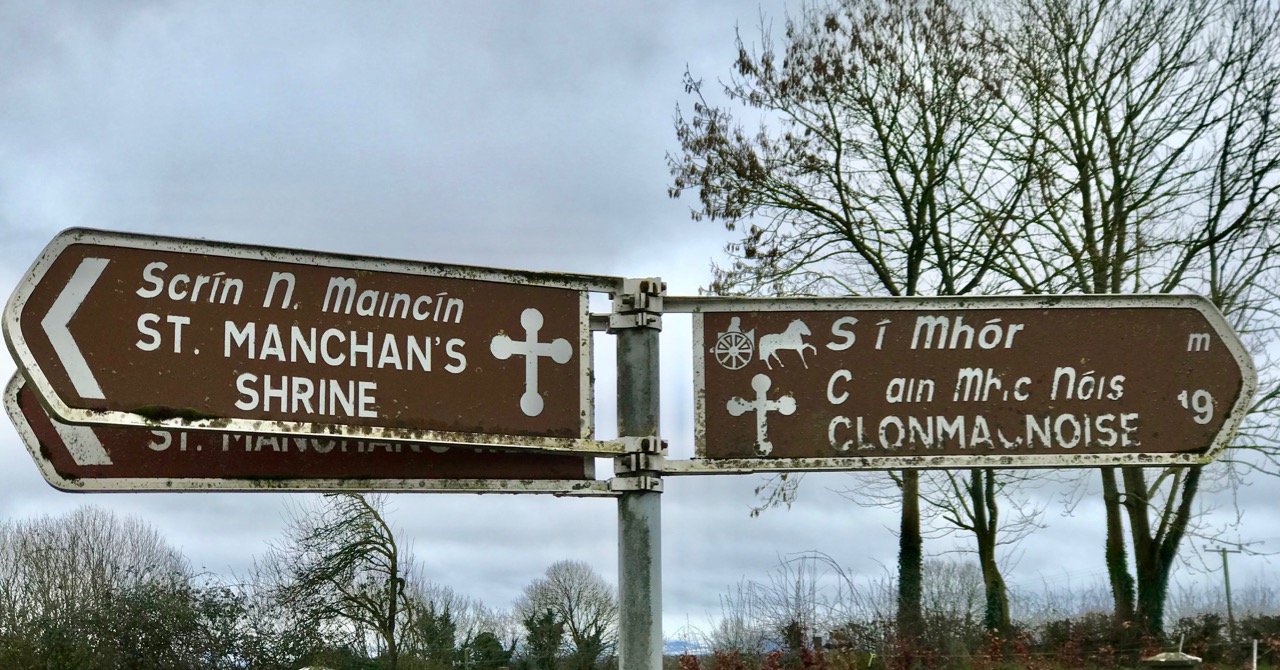
I went through a storm of real Irish rain to see Leamanaghan that very evening. It is four miles from Ferbane in County Offaly and hidden away in a vast bog region which is dotted with scattered boulders of magnesian limestone. The general depression is summed up in the name – Liath Manchan – the grey land of Manchan. Aye! The grey, lonely, chill land of Manchan. Saint Manchan lived here and died in AD 664. That might have been only yesterday, however as far as the good neighbours are concerned because he is the one subject over which every man, woman and child can get really voluble. I was taken to see the ruins of his church and then down to his well and heard how when you are sick you should pray here, walk three times round it and then go back and leave a little present for the saint himself in the window of the church . . . I was told that on the 24th January when all the rest of the world works, the people of Leamanaghan just take a holiday and make merry because it would be the unpardonable sin to think of work on their Saint’s day.
 

(Tomas O’Cleirigh, 1935)

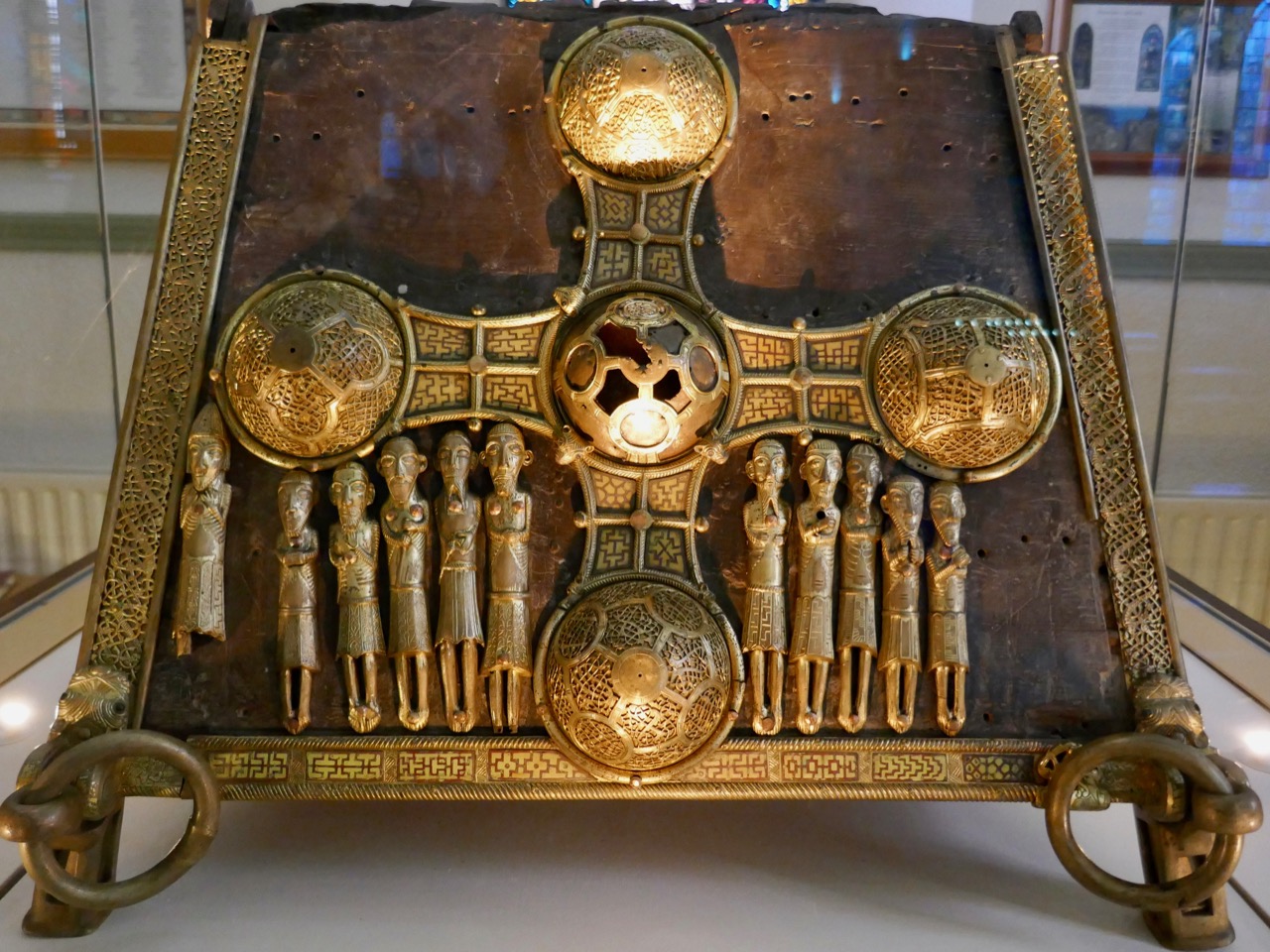
The twelfth century shrine of St Manchan securely displayed in the church today, with the Harry Clarke Studio window behind it

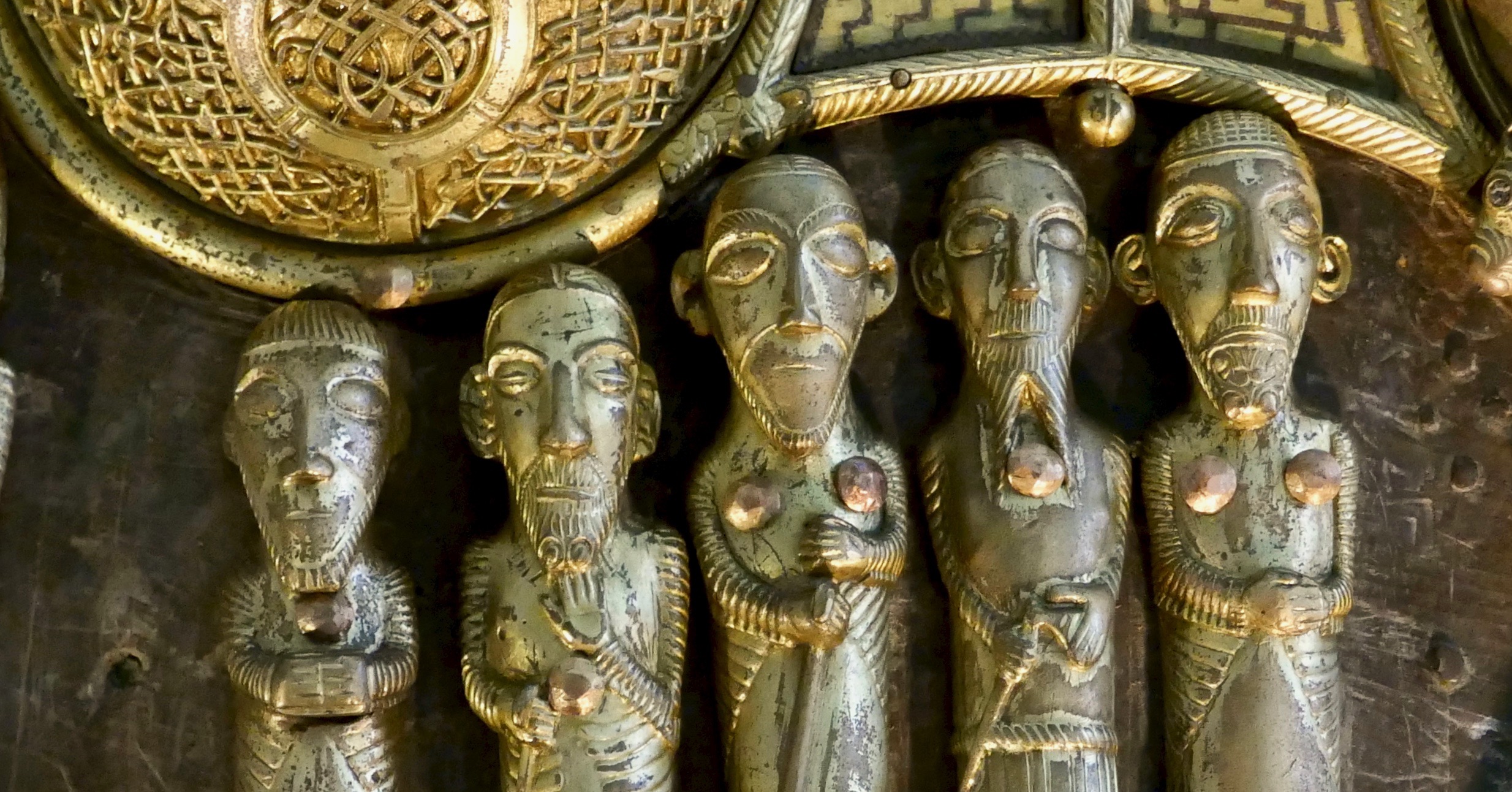
St Manchan died in a plague which he had asked God to bring on his sinning people. After his death, his herdsmen – Bohooly (from which the name Ua Buachalla – or Buckley – is derived) found it necessary to call upon the Saint to help recover the Community’s cattle, which had been stolen by raiders. Manchan duly appeared, but one of his faithful herdsmen was so overjoyed to see his old master again that he threw his arms around him. This he should not have done, as he was a mortal sinner: the Saint fell into a heap of dry bones, but the cattle were recovered. We learn that Manchan’s bones were gathered up and taken to Clonmacnoise, where a fine casket was made to house them, out of yew wood, bronze and gold. Nearly a thousand years later we stumbled on this same shrine in the little church at Boher which carries the Saint’s name, with a glorious representation of itself shining out from a Harry Clarke Studio window set behind it. It resided in a case of armoured glass, alarmed and watched by cameras  – incongruous…. and ineffective: the day after we saw it there the shrine was stolen in broad daylight, evidently after only a few minutes’ work. (Robert’s diary, 2012)

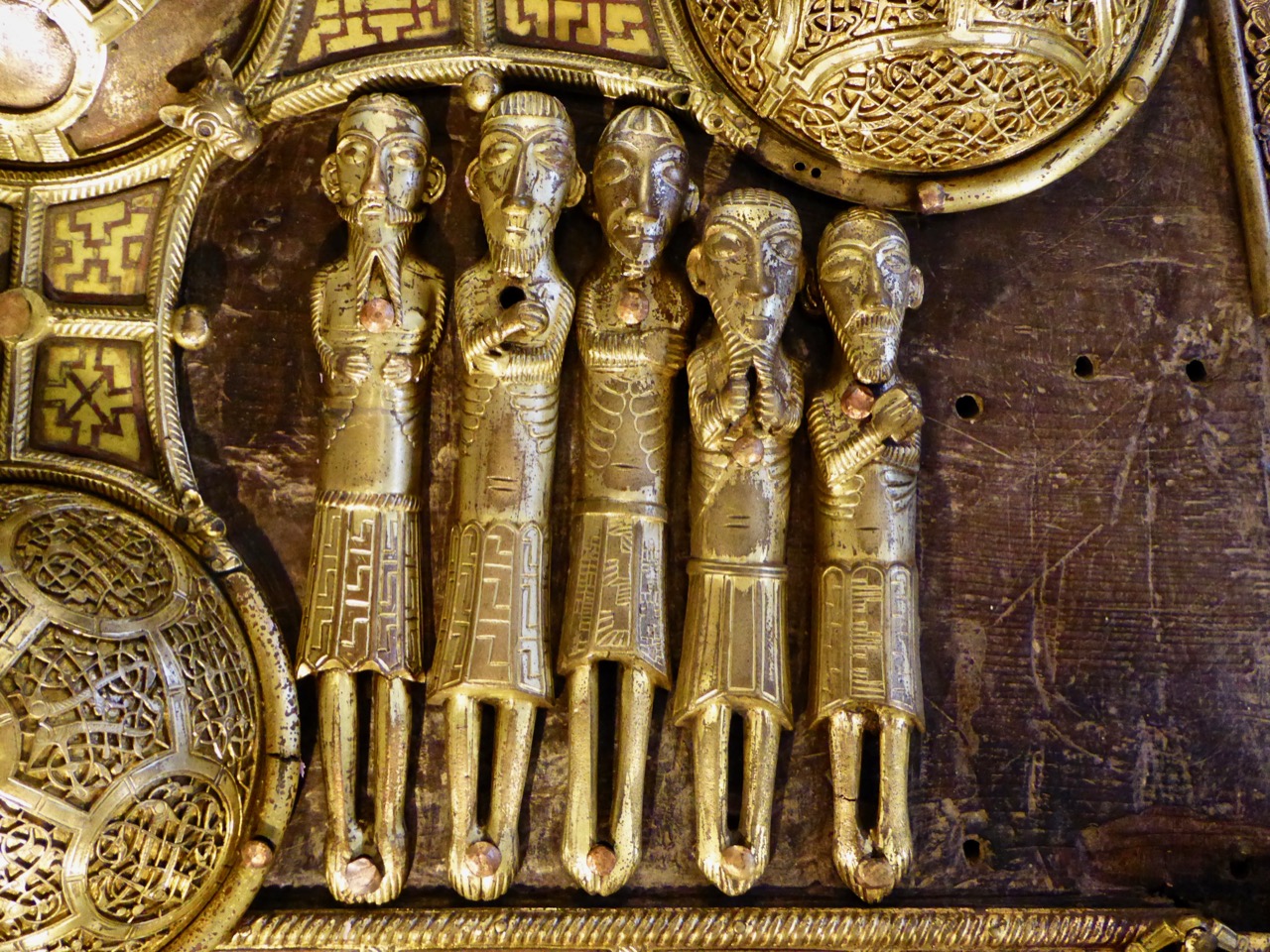
It’s wonderful that we can see the actual reliquary containing St Manchan’s bones returned to the church at Boher, Co Offaly, close to the ruins of the monastery at Leamonaghan which the Saint founded in the seventh century. Although it has suffered some damage over the centuries, the detailing is exquisite: it is one of Ireland’s finest medieval treasures 

They have all kinds of stories about the good saint but the best one of them all explains why Leamanaghan people don’t sell milk. Here it is: Saint Manchan had a cow – a wonderful cow that used to give milk to the whole countryside – good, rich milk for which no charge was ever made by the saint. Then, the people of the neighbouring Kil Managhan got jealous and watched for their chance. One fine day when Manchan was absent they came and stole the cow and started to drive her along the togher through the bog back home to Kil Managhan. The good cow, suspecting something was wrong, went backwards and most unwillingly, fighting, struggling and disputing every inch of the way. Now she’d slip designedly on the stones: again she’d lie down but every where she went, she managed to leave some trace of her rough passage on the stones of the togher. The marks are there to this day, – hoof marks, tail marks – every kind of marks and the chef-d’oeuvre of them all has a place of honour at the entrance to the little school. Alas! In spite of that very gallant resistance, the cow was finally driven to Kil Managhan. There, horrible to say, she was slain and skinned.


(Tomas O’Cleirigh, 1935)

The shrine wonderfully depicted in the Harry Clarke Studio window at St Manchan’s Church, Boher

Prior to being housed in the church the shrine had rested in an ancient chapel. This burned down, but the shrine was rescued and then was kept in a thatched cottage nearby: legend has it that the ruin of this cottage became the unprepossessing holy well that we had found . . . Miraculous cows; plagues; holy wells; a modern theft – St Manchan’s bones do not rest lightly in his casket. The stories tell that Manchan was a tall man with a limp. When the shrine was sent to the British Museum some years ago for refurbishment, the experts examined the bones and proclaimed that they belonged to a tall male who had suffered from arthritis. (Robert’s diary, 2012)

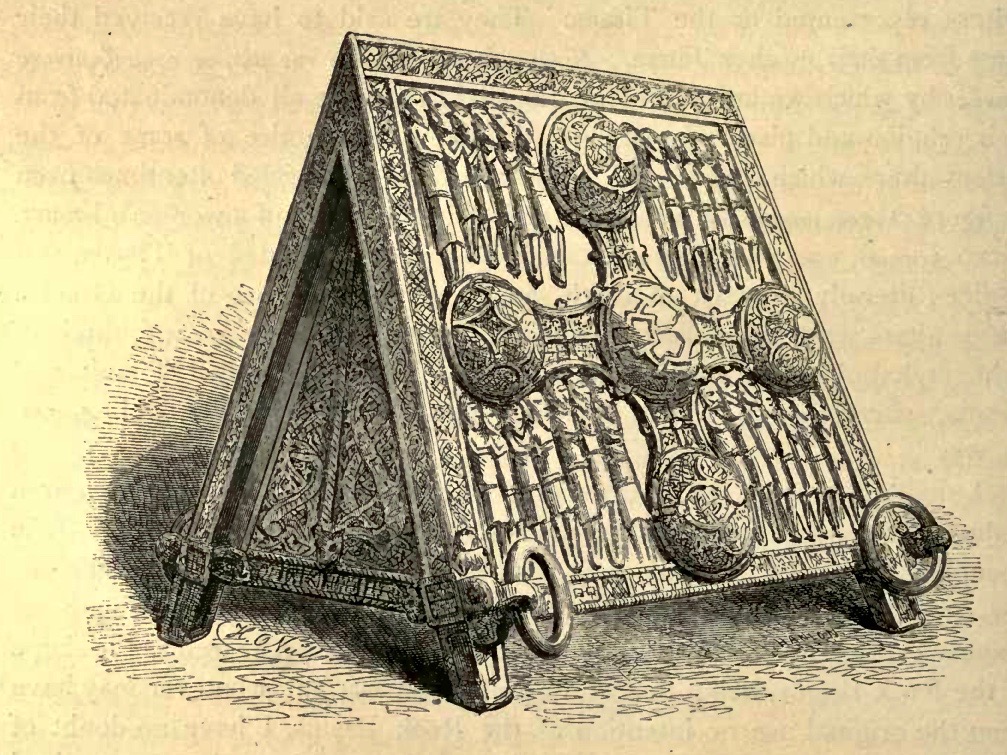
Remarkably, St Manchan’s Shrine has been exactly replicated. This full-sized copy of the reliquary is in the National Museum of Ireland: all the ‘missing’ figures and details have been restored. The drawing dates from 1867, and is a plate in a book titled The Towers and Temples of Ancient Ireland by Marcus Keane MRIA. In that book it is said that the copy belonged to Sir William Wilde, and it may well have been commissioned by him. It is likely that the Harry Clarke Studio modelled their version of the shrine on the replica, rather than on the original

In the meantime, the saint returned, missed his cow, and straightaway started in pursuit. He succeeded in tracing the thieves by the marks on the stones and arrived just at the moment when she was about to be boiled. He carefully picked the portions out of the cauldron, pieced them together, struck at them with his stick and immediately the cow became alive again. She was every bit as good as ever, too, except that she was a wee bit lame on account of one small portion of a foot which was lost. She continued to supply the milk as before, and, of course, no charge was made by the saint. Ever since the famous custom still lives on, and good milk is given away but never gold by the loyal people of Leamanaghan. Now, can any lover of the grand faith of Medievaldom beat that?


(Tomas O’Cleirigh, 1935)

A detail of the original Shrine in St Manchan’s Church

There’s one more piece to this Saint’s story: the fame of his miraculous cow grew and the people of neighbouring Kilmonaghan were jealous, and sent out some rustlers to drive the cow over into their own parish. The cow proved reluctant and stalled and slipped all the way, leaving hoof marks on the many stones that lay on the road. Those marks are still on the stones to this day (they say) and the Saint was able to follow her tracks and recover her. (Robert’s diary, 2012)

Saint Manchan, depicted in stained glass: Harry Clarke Studio (left) and George Walsh (right). Both can be seen in the church at Boher, Co Offaly

The very old vellum books state that Manchan of Liath was like unto Hieronomus in habits and learning. I can well believe it. Some distance away from the church is the little rectangle cell which he built for his mother – Saint Mella. Cold, austere and with no window, you get the shivers by even looking at it. There is also a large flag-stone on the togher leading from the well, and they say the saint and his mother used to meet here every day and sit down back to back without speaking a word because the saint had vowed never to speak to a woman!


(Tomas O’Cleirigh, 1935)

Treasure in a Country Church – Samuel Forde

Recently I stumbled across a reference to paintings that had been moved from Skibbereen Cathedral to a small country church – St Barrahane’s Catholic Church in Castlehaven on the road between Skibbereen and Castletownshend. The paintings were moved because the large church in Skibbereen was undergoing renovation. 

While some records indicate that this may have been in the 1840s or 1850s, in fact the more likely date is that they were moved to facilitate the 1881 to 1883 major re-furbishment in the Skibbereen Cathedral in which a semi-circular chancel was built to accommodate the altar, with stained glass windows behind it. However, it is possible that the paintings were not hanging behind the altar, but on a side wall, in which case the date of 1840s would be correct since this was when the side galleries were added. What we do know is that they were painted in 1827 over the course of three days in November.

Forde’s Self-Portrait (Portrait of the Artist). Image: © Crawford Art Gallery, Cork. Photo: Dara McGrath

We know this from the artist’s diary. And the artist? None other than Samuel Forde, the re-discovered Young Raphael of Cork, who died less than a year later at the tragically young age of 23. While Forde had never been totally forgotten, he was hardly a household name. But a few years ago, two brilliant young researchers, Michael Waldron and Shane Lordan stopped to contemplate his unfinished masterpiece, Fall of the Rebel Angels, in the Canova Casts Hall in the Crawford Gallery in Cork, and were overwhelmed with a desire to know more about its creator. This led them on a journey they could never have predicted, to curating an exhibition, writing the catalogue for it, and becoming the experts on Samuel Forde.

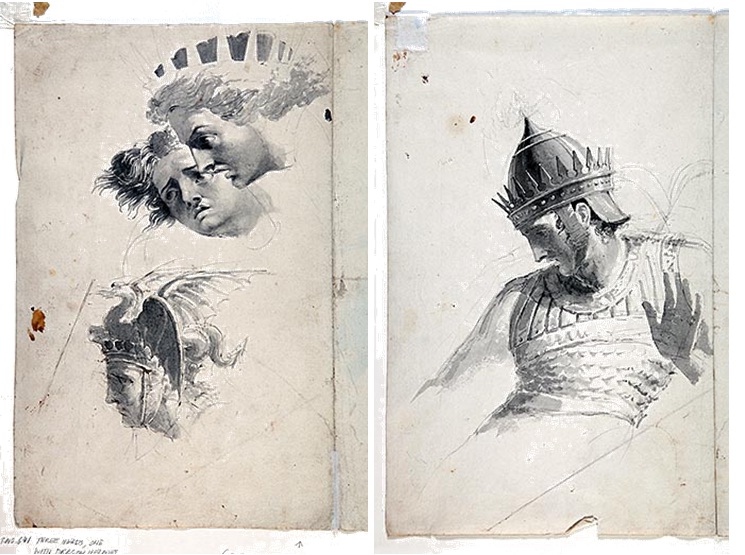
Sketches by Forde, shown in the Samuel Forde Project blog. The photographs are by Michael Waldron and the sketches are © Crawford Art Gallery

Along the way, they wrote a blog about their discoveries, and I refer you to that blog for their charming and engaging account of their initial encounter with Forde and their growing sense of him as the least-known member of a golden circle of Cork nineteenth century artists, a circle that included Daniel Maclise and John Hogan, preceded and influenced by James Barry. The blog also documents what is known about ‘our boy Sam’ as they came to call him, his life circumstances, his influences and his untimely death. Michael and Shane have also written on Forde for the Irish Arts Review.

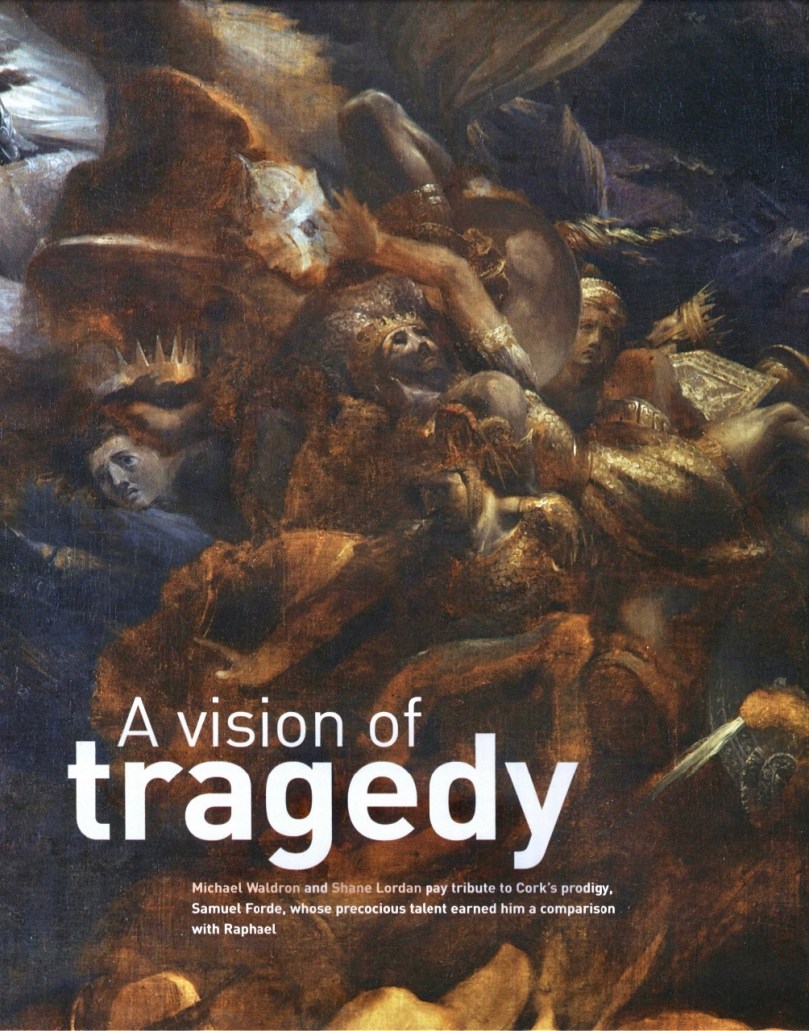
A detail from the Fall of the Rebel Angles, from Michael and Shane’s article for the Irish Arts Review, Winter 2013. © Irish Arts Review

Incredibly, the triptych is the only finished painting we know of by Samuel Forde, apart from his self portrait. Most of his other extant work consists of sketches, studies for his Fall of the Rebel Angels, a monochrome ‘bodycolour’ (a type of watercolour) and of course his great but unfinished Fall. We know he painted theatre sets and also ceilings, but none of these have survived.

A Vision of Tragedy by Samuel Forde. This is a mono ‘bodycolour’ and may have been designed for a theatre wall or ceiling. Read more about it here. It is reproduced with permission, © Victoria and Albert Museum

The triptych was commissioned by the church in Skibbereen, who asked another painter to do it. But that painter was more comfortable with miniatures, so passed on the commission to Forde, who produced it in one enormous and sustained burst of energy, using the skills he had acquired as a theatrical set painter working with distemper.

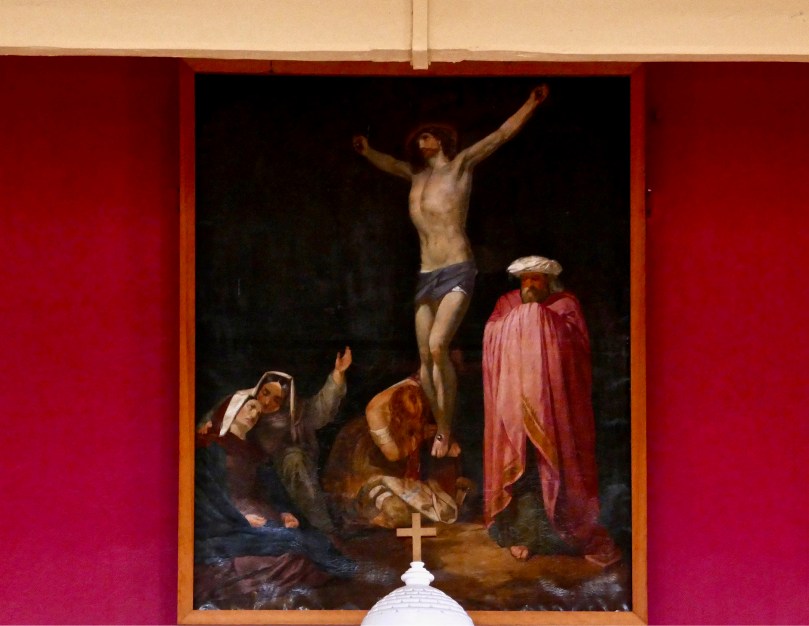
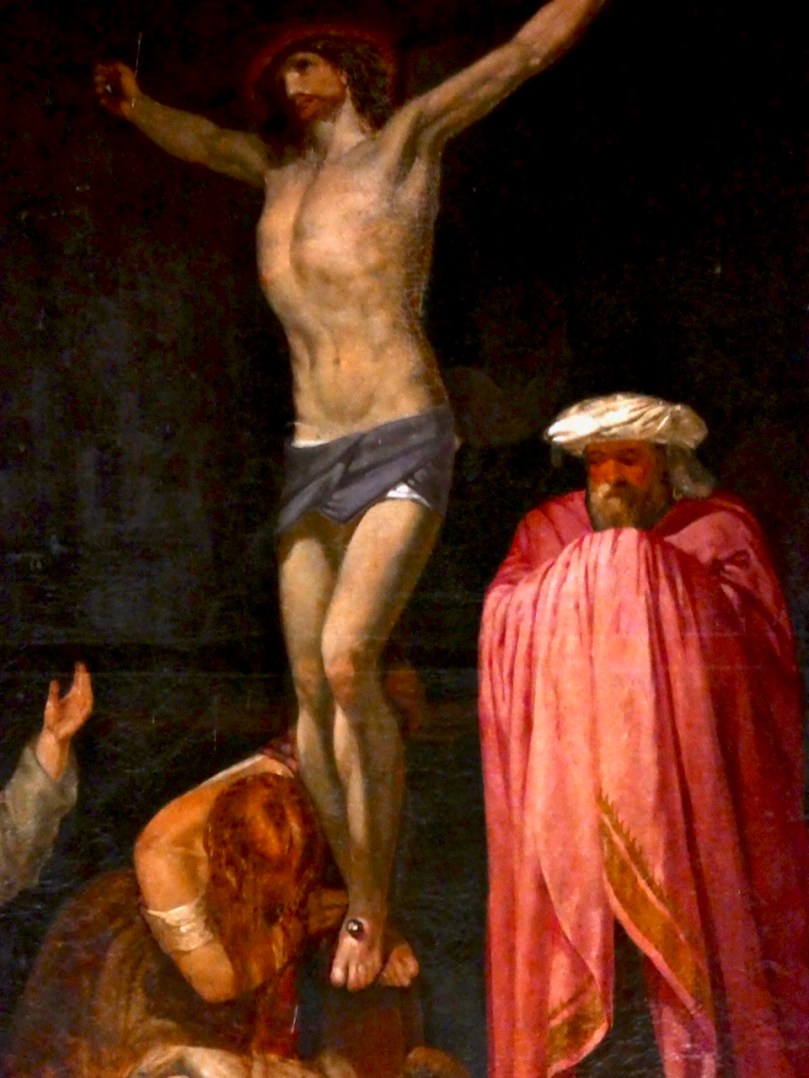
The central scene is the Crucifixion, flanked by Mary on the left and Patrick on the right. The Crucifixion is assured and emotive, depicting Christ on the cross with the Three Mary’s (his mother, her sister Mary the wife of Clopas and Mary Magdalene – based on John 19:25). The Virgin Mary has collapsed into the arms of her sister, while Mary Magdalene weeps at Jesus’s feet.

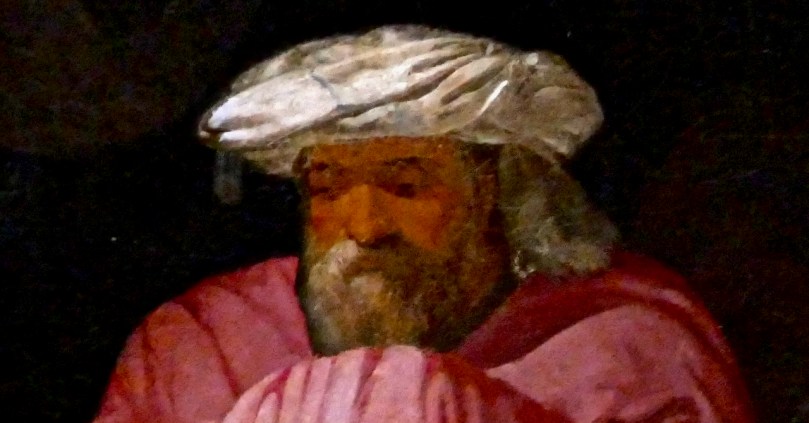
To their right is a figure that is interpreted as John, although John is usually depicted as young and smooth-faced. This figure, however, is bearded, elderly, and strikingly apparelled in a turban and long red robe. Perhaps Forde’s influence here is one of Tintoretto’s Crucifixions, in which a similarly turbaned figure is presented.

In looking for a possible model for the turbaned figure in Forde’s Crucifixion, I came across this Tintoretto. We know that Forde as a boy studied and copied classical paintings from books of prints 

The Mary painting on the left shows her as she is in the crucifixion scene, but with a crescent moon and a snake under her feet. The snake represents evil, of course, and is a common element of Marian imagery – take a look at the next grotto or church statue of Mary that you come across. The moon is from Revelations 12:1And there appeared a great wonder in heaven; a woman clothed with the sun, and the moon under her feet, and upon her head a crown of twelve stars. This is the same verse, by the way, that describes the fall of the angels – a subject that was to occupy Forde as he worked on his great unfinished canvas.

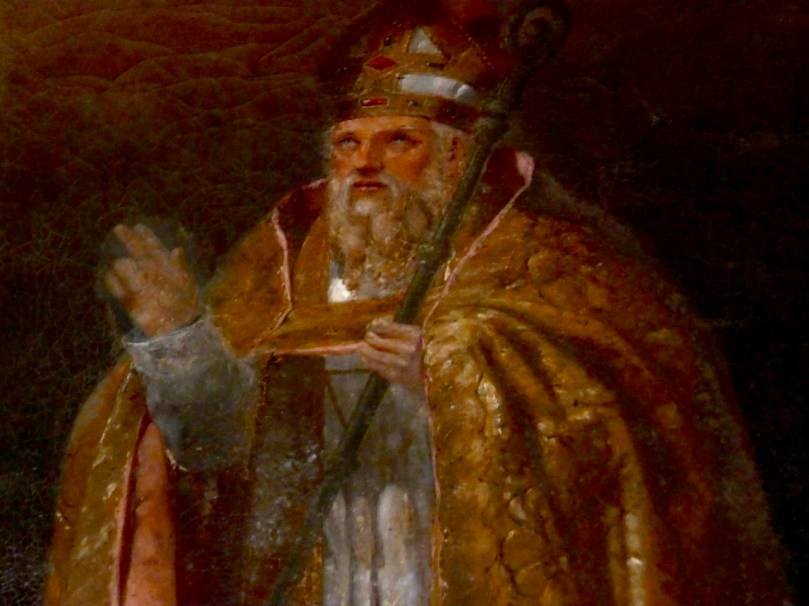
St Patrick is shown in his episcopal robes, with snakes slithering away, carrying his crozier and wearing his bishop’s mitre. Close examination of the canvas reveals that the Mary and Patrick paintings were intended to to be framed as ovals (as with his self-portrait) rather than rectangular. They were, apparently, conserved in the 1970s but look as if they may need some attention again.

What a treasure to discover in a small country church! If Samuel Forde had lived there is no doubt his career would have been as illustrious as that of his contemporaries Maclise and Hogan. Michael and Shane hope that more of his works will turn up in the future. Meanwhile, you can view Fall of the Rebel Angels in the recently and marvellously revamped Canova Gallery at the Crawford, and marvel that in quiet Castlehaven, by a series of circumstances, there exists such a testament to the Young Raphael of Cork.


Harry Clarke, Egerton Coghill and the St Luke Window in Castletownshend

Remarkably, there are three Harry Clarke stained glass windows in one small West Cork village – in St Barrahane’s Church of Ireland church, in Castletownshend. The smallest of the three windows is the St Luke, inset into the south wall of the chancel. It is a miniature masterpiece, designed with extraordinary attention to detail by Harry, and executed in his studio.

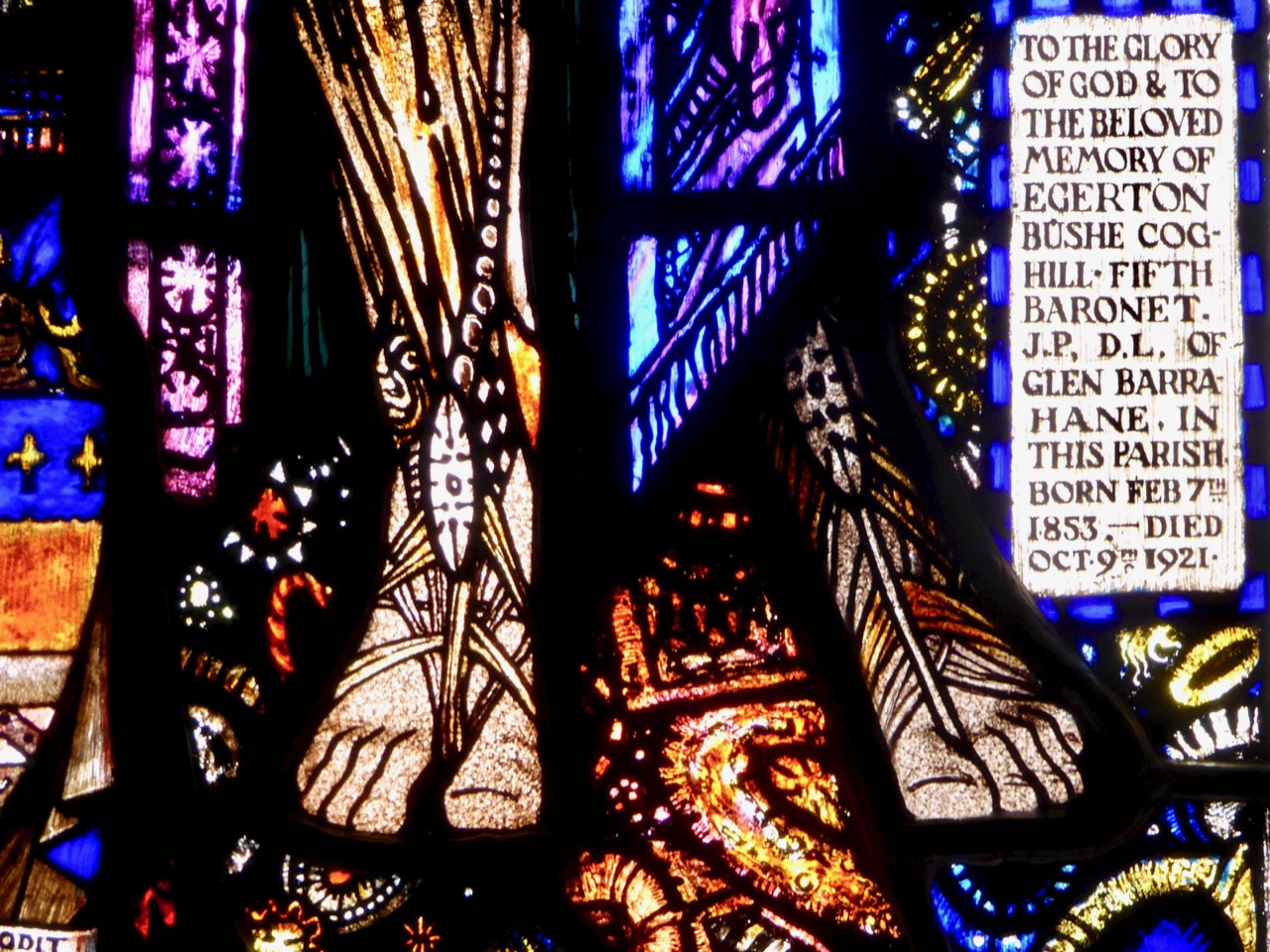
The iconography that was chosen was specific to the subject – St Luke as Patron Saint of Painters. That’s because this was a memorial window to Egerton Coghill – more correctly Sir Egerton Bushe Coghill, 5th Baronet Coghill.

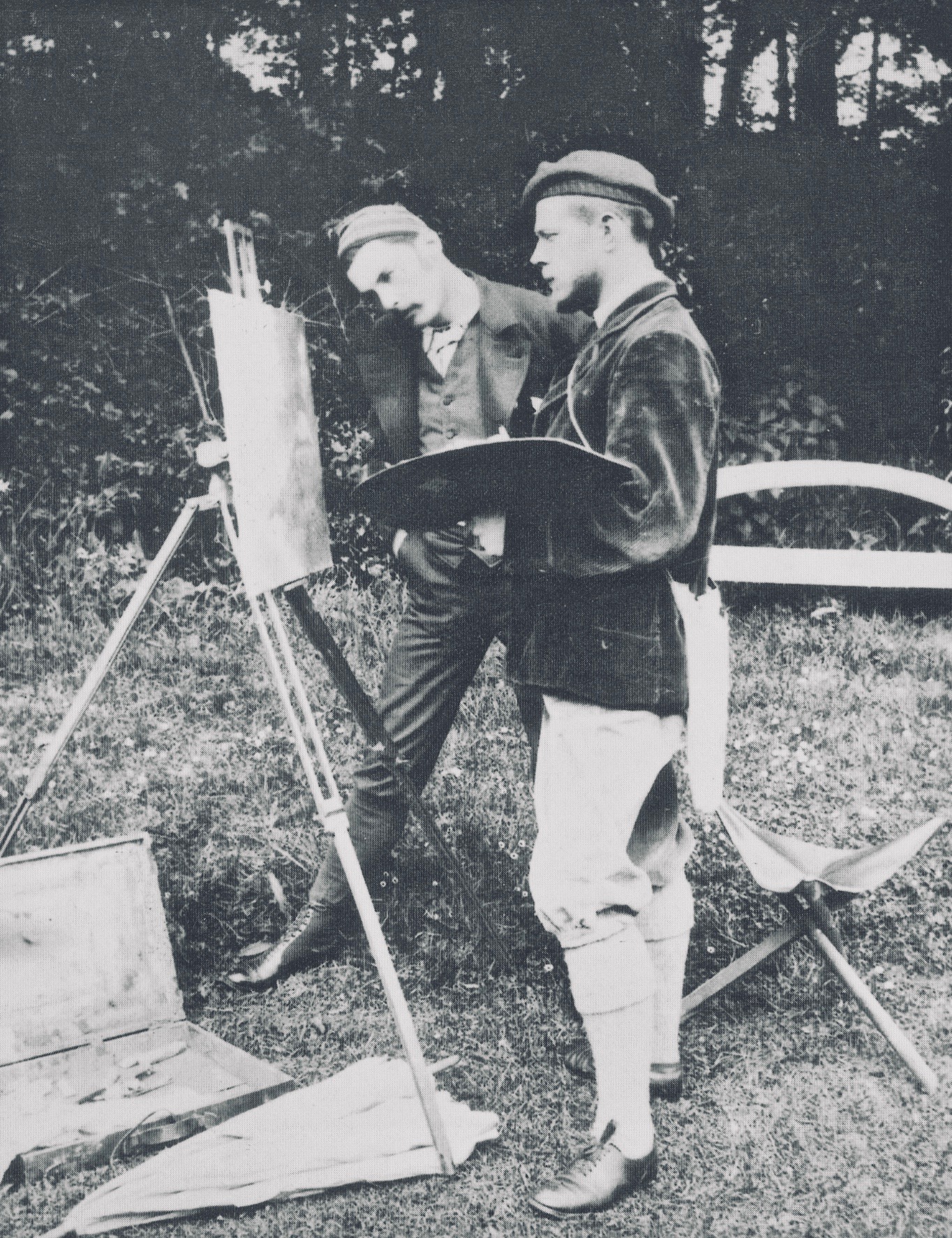
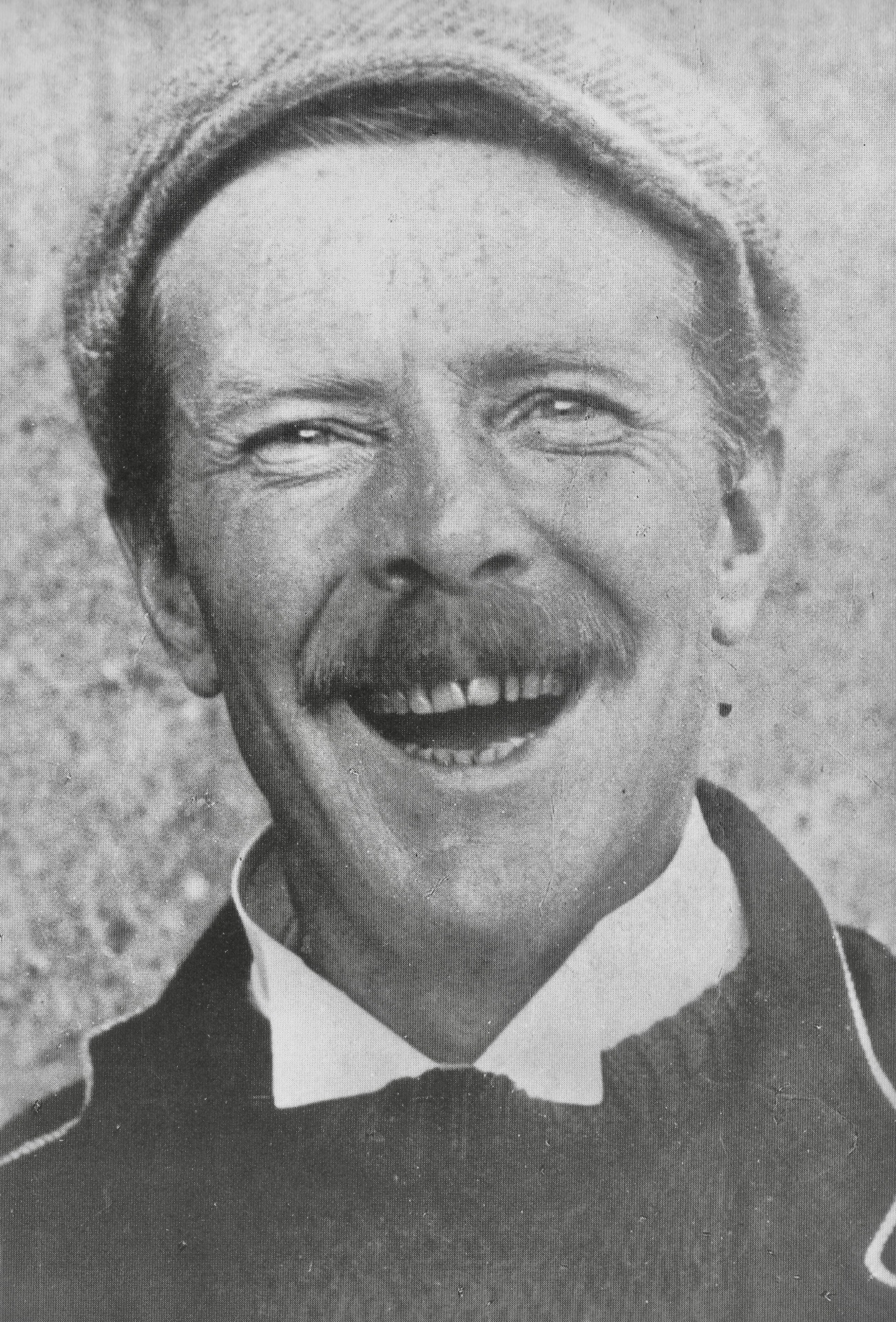
Egerton Coghill, left, with his painting companion Herbert Baxter*

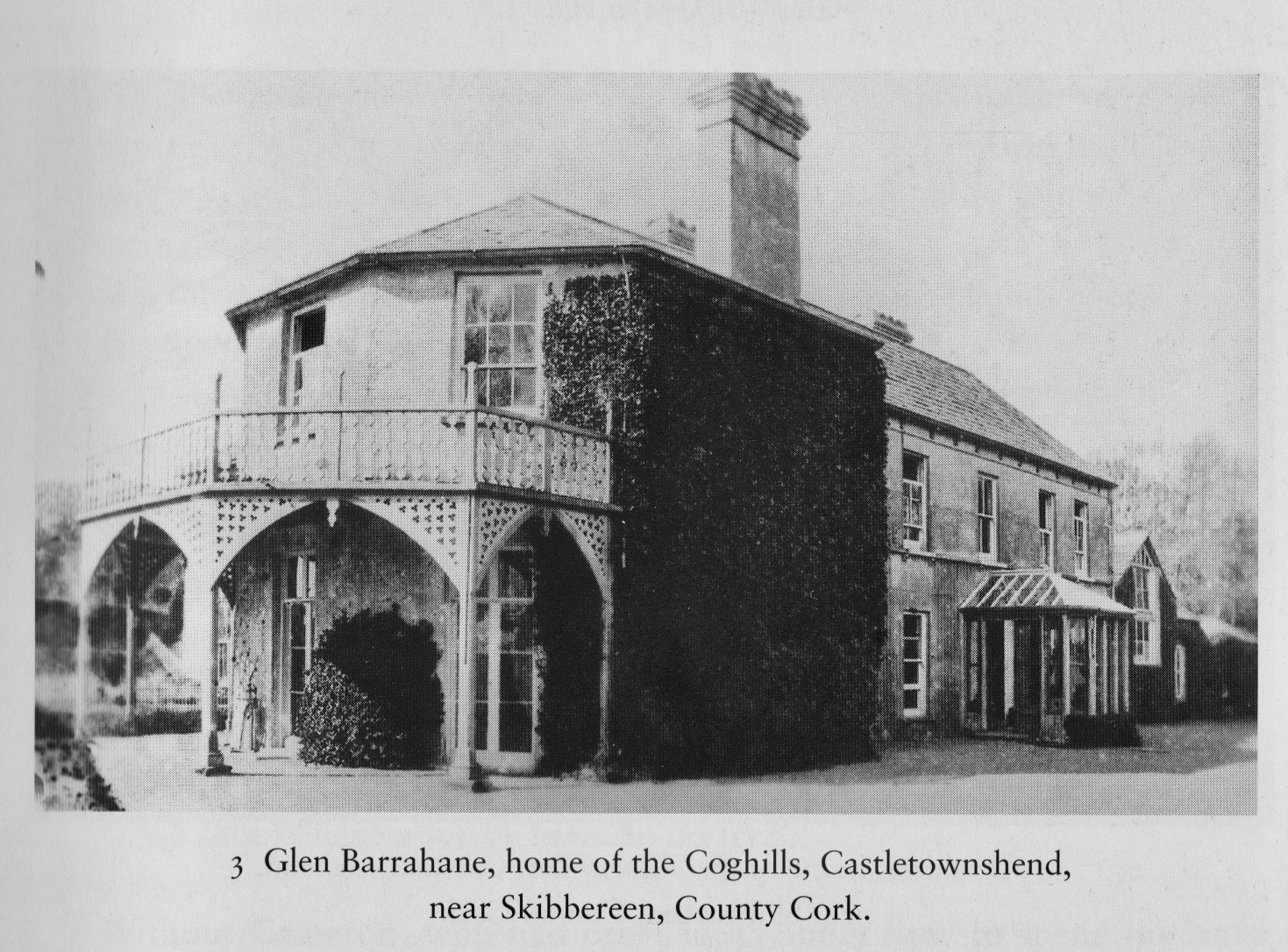
Egerton had grown up in Castletownshend, one of a large family of Coghills who lived in a rambling house called Glen Barrahane, and who seemed to be related in multiple ways to all the other families who lived in and around Castletownshend. His father (Sir John Jocelyn, one of Ireland’s earliest photographers) was the brother of Adelaide, who had married Thomas Henry Somerville, mother of the Somerville family that included (among others) Edith (see Stories and Stained Glass), Boyle (see Boyle Somerville: Ireland’s First Archaeoastronomer and Boyle’s Bealtaine), and Hildegard. Hildegard eventually married Egerton, her first cousin. To Edith and Boyle, therefore, Egerton was both first cousin and brother-in-law.

To Edith he was also a childhood playmate, a best friend and a great supporter and artistic mentor. In periods of distress for her he encouraged her to concentrate on her work – first art and then writing, and he loaned her money when the going got tough. Everyone loved him, it seems. He gave up a career in engineering to devote himself to painting and his limited private means allowed him to study abroad. When he and Hildegard fell in love their families were delighted, but they had to wait seven years to be able to afford to marry.

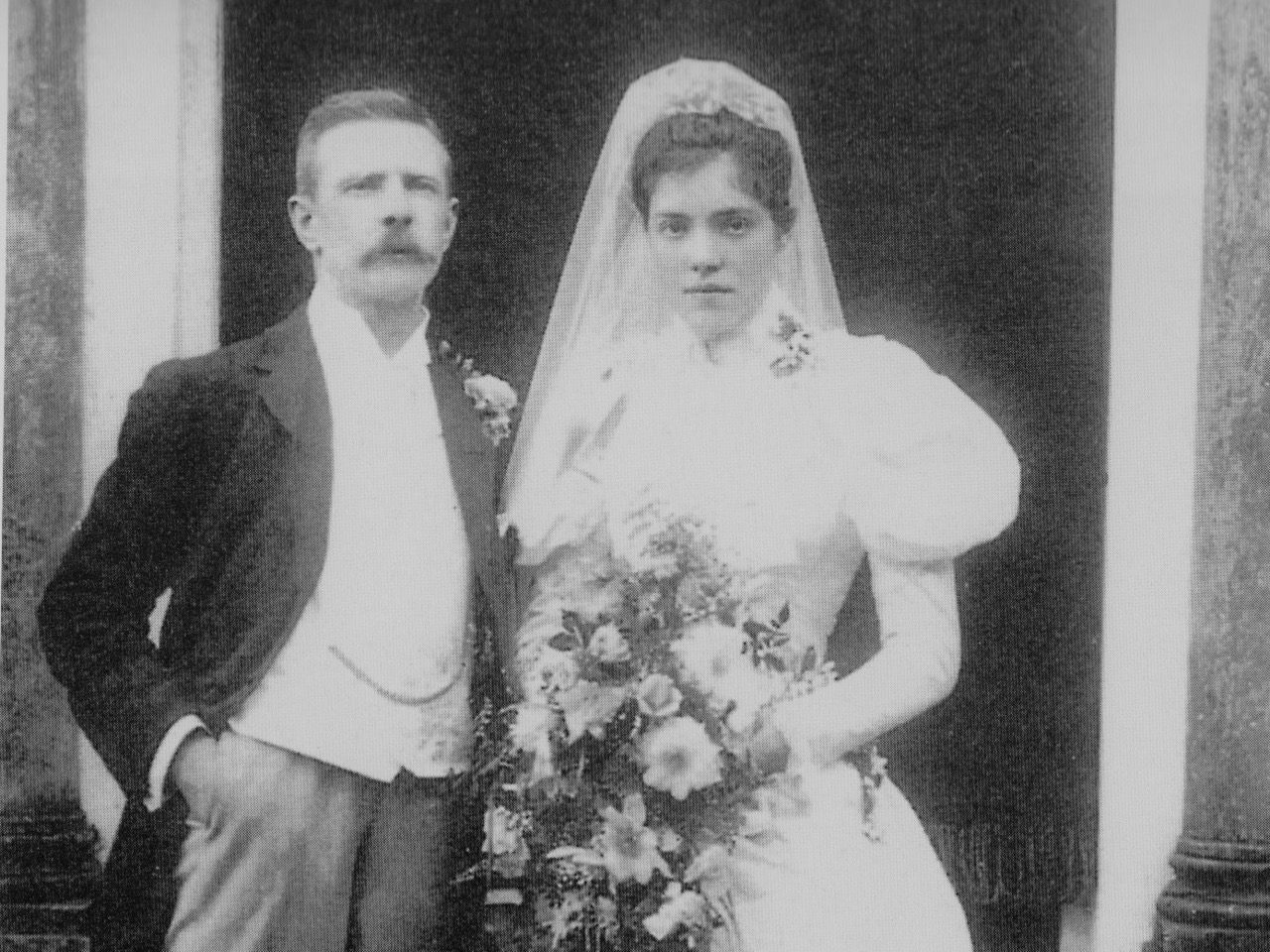
Egerton and Hildegard on their wedding day

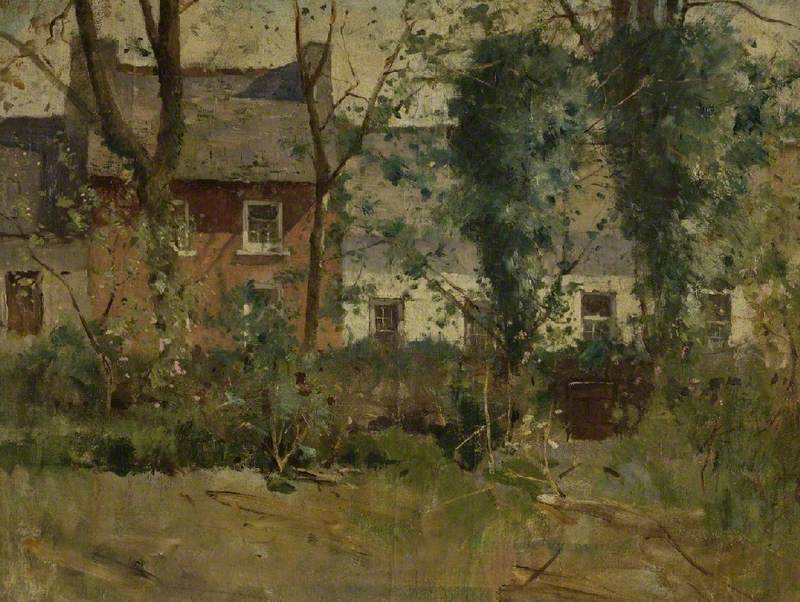
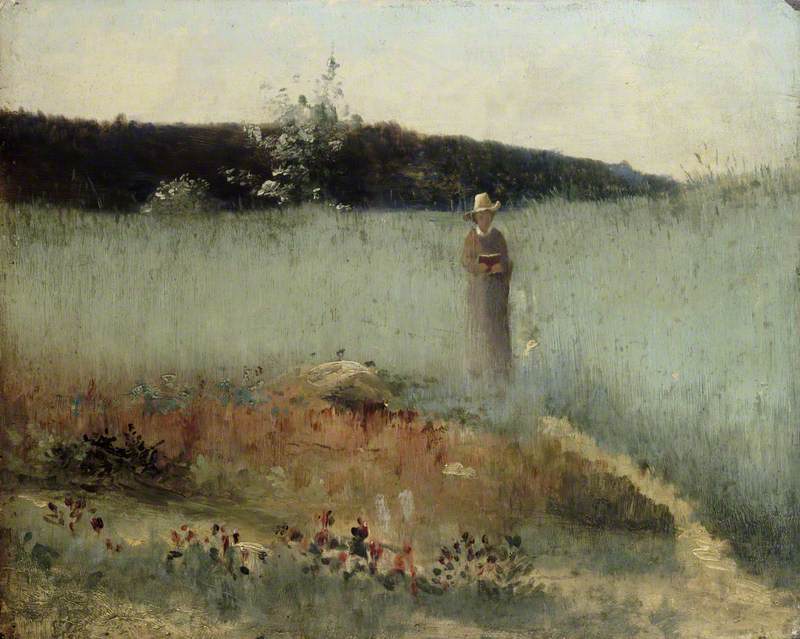
As a painter, Egerton was strongly influenced by the Impressionists. He painted en plein air, drawn to landscape and to muted colours. He loved to capture the scenery around Castletownshend, or the village itself, as in this charming depiction of the main street.

The Mall from Malmaison (Courtesy of the Fitzwilliam Museum)

He was accomplished and well-known in his day, exhibiting widely and selling well. A scholarship at Oxford, for landscape painting, is named in his honour. Now, he seems to have faded from memory, and images of his paintings are hard to find online.

Field of Rye, Barbizon (Courtesy of the Ashmolean Museum)

Egerton’s older brother, Neville, was killed at the Battle of Isandlwana during the Zulu Wars – Robert has developed a talk on West Cork Links to the Zulu Wars and will no doubt write a post about Neville eventually. One of the windows in St Barrahane’s (not a Harry Clarke) is dedicated to his memory. When Neville died, Egerton inherited the title and moved back permanently to Castletownshend with Hildegard and his children. Egerton himself died unexpectedly in England in 1921 during the upheavals caused by the War of Independence at home in Ireland, so it was some time before his body could be brought back to St Barrahane’s for burial. According to Edith, The whole country came to the funeral, and all the men competed for the privilege of putting a shoulder to the coffin, for even a few steps.

When Edith and Hildegard were able to consider a permanent memorial for their beloved Egerton it was naturally to Harry Clarke that they turned. Edith had been entranced immediately by Harry’s work when she travelled up to Cork, on the advice of her brother Cameron, in 1916 to view the windows in the Honan Chapel. She wrote to Cameron afterwards to thank him. She was nothing short of stunned by Harry’s windows and “the quality of burning and furious brilliance that I have never seen anywhere else. . . his windows have a kind of hellish splendour”.

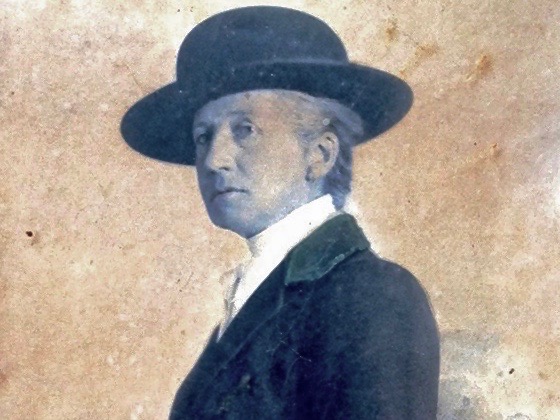
Edith in her Master of the Foxhounds habit, about the age she was when Egerton died

Since then, Edith had worked with Harry to install the Nativity window in 1918 (it was his first public commission) as a memorial to her grandparents, and again in 1921 on the Kendall Coghill window (Egerton’s bachelor-soldier uncle and a universal family favourite) about which I wrote in my post The Gift of Harry Clarke. She now asked him to take on this new commission, and Harry, who had known and liked Egerton, promised to pay special attention to this project.

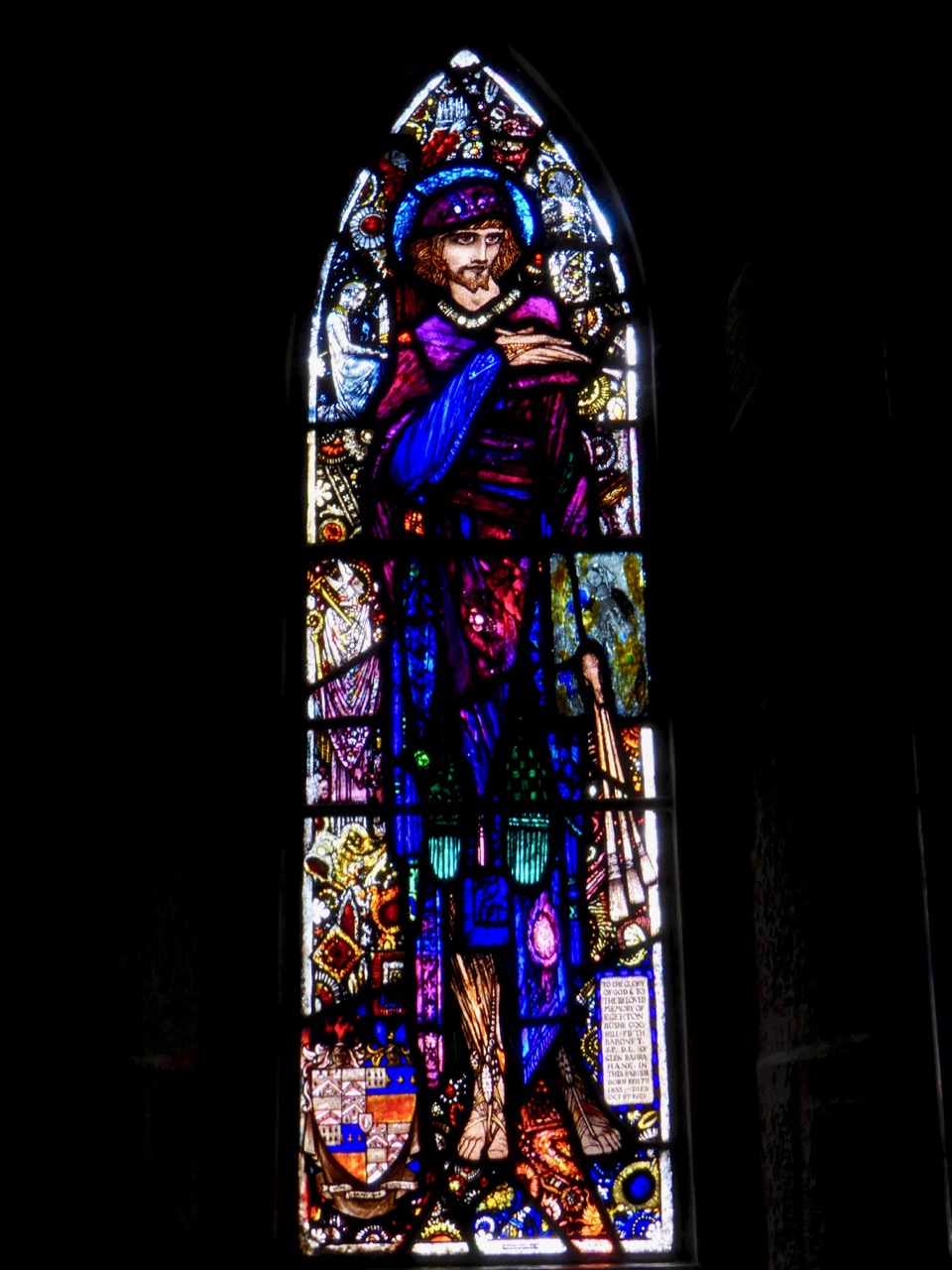
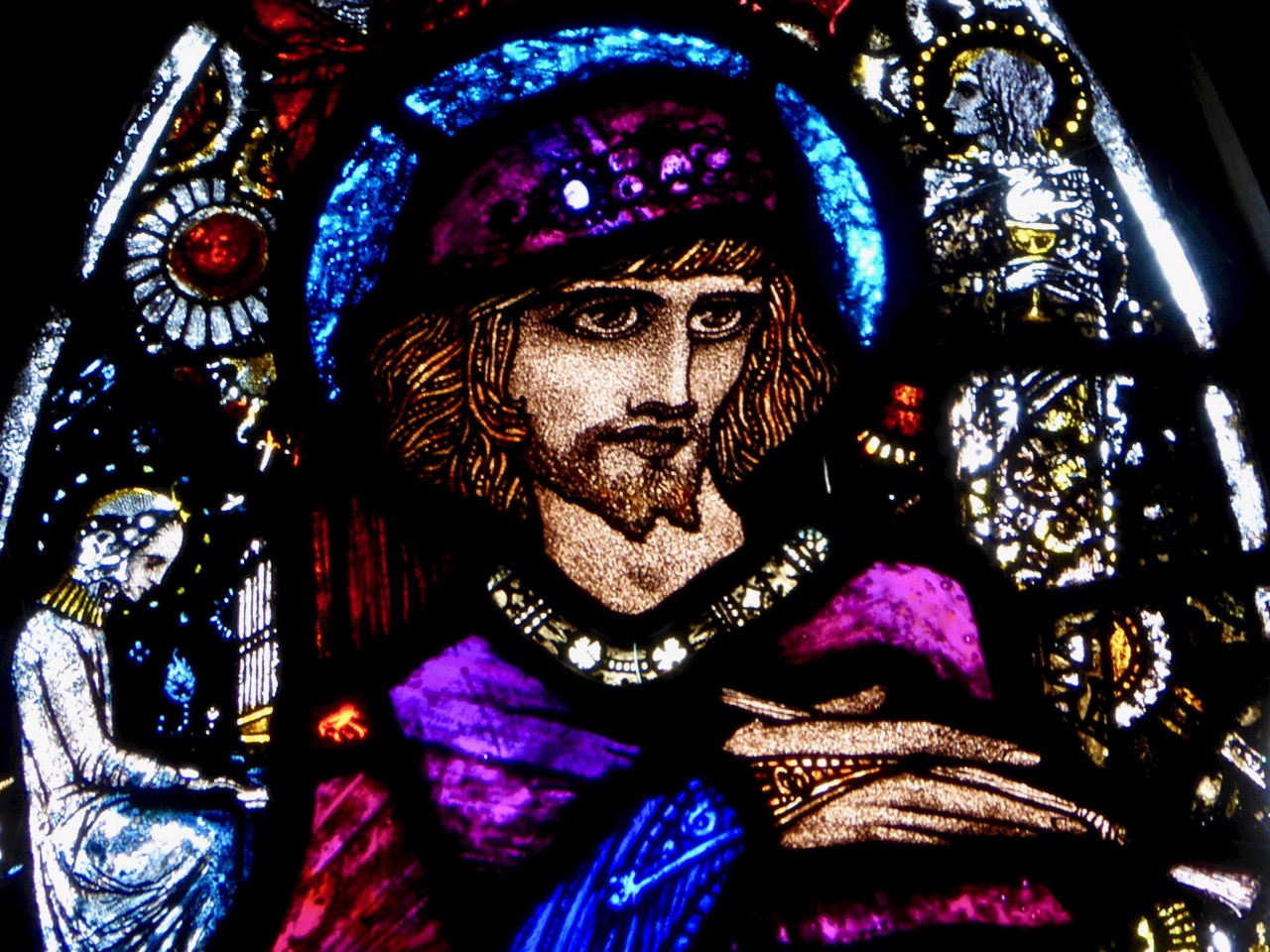
St Luke, Patron Saint of Painters, is depicted with a palette and brushes, with the Madonna’s face appearing on the palette

The design he came up with is exquisite, and every detail is important. St Luke, perhaps better known to most of us as one of the four gospel writers, is also the Patron Saint of Painters. This is based on the tradition that he painted the first image of Mary, and that image became an early Christian icon. In Harry’s design, Luke holds a painter’s palette and brushes, and the image of Mary appears like a ghostly presence on the palette.

Luke, with St Cecelia to the left and St John, holding a chalice, to the right

Luke himself is a typical Harry creation, with his huge eyes, forked beard, and expression full of compassion. His right hand, with long tapered fingers and a sleeve point (Harry loved those), holds a brush. His hat and garments are elaborately rendered in blue, scarlet and purple. His sandals, thong style, are complex twists of leather straps.

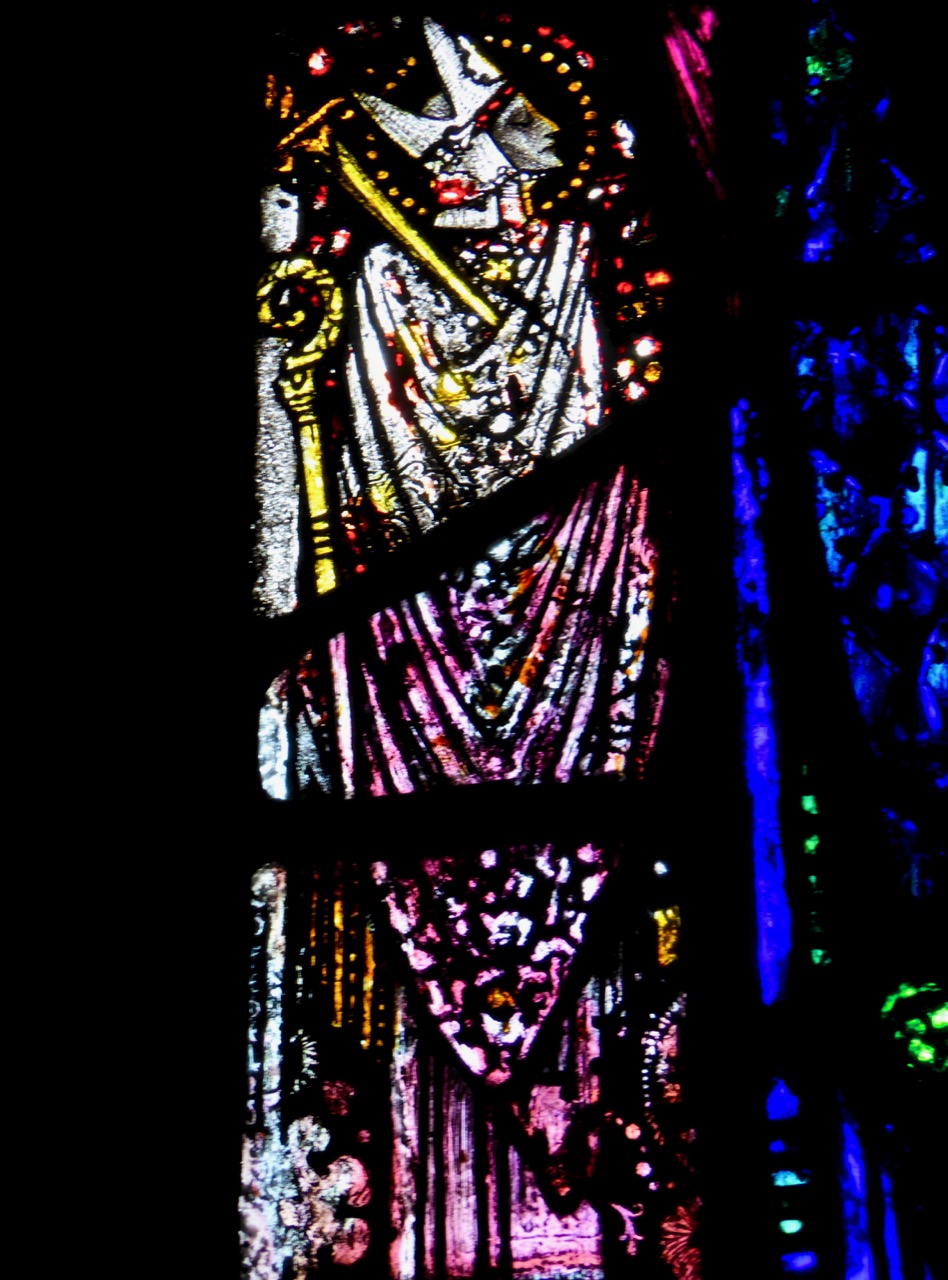
Besides the Luke and the Madonna images, there are four other sacred figures in the window. One of the unique joys of this window is that you can get close enough to it to see these tiny figures clearly, since it is at eye level (it helps to be tall). The first, on the left side of the window is St Fidelio, dressed as a bishop (below). Although one author asserts that Egerton was born on St Fidelio’s name day, I have been unable to confirm that or to find any information at all about St Fidelio, but obviously this saint had meaning to Egerton, or to the Somerville sisters, or perhaps it was a reference to Egerton’s faithfulness. However, it could, like St Cecilia, be another musical reference, to Beethoven’s opera, Fidelio. In fact, most of the figures appear to relate to secular aspects of Egerton’s life, while thinly disguised as the kind of saintly images suitable for a church window. I can almost hear Harry, Edith and Hildegard chuckling over the choices, knowing that Egerton, who had his full share of boisterous Coghill humour, would thoroughly approve of the coded messages.

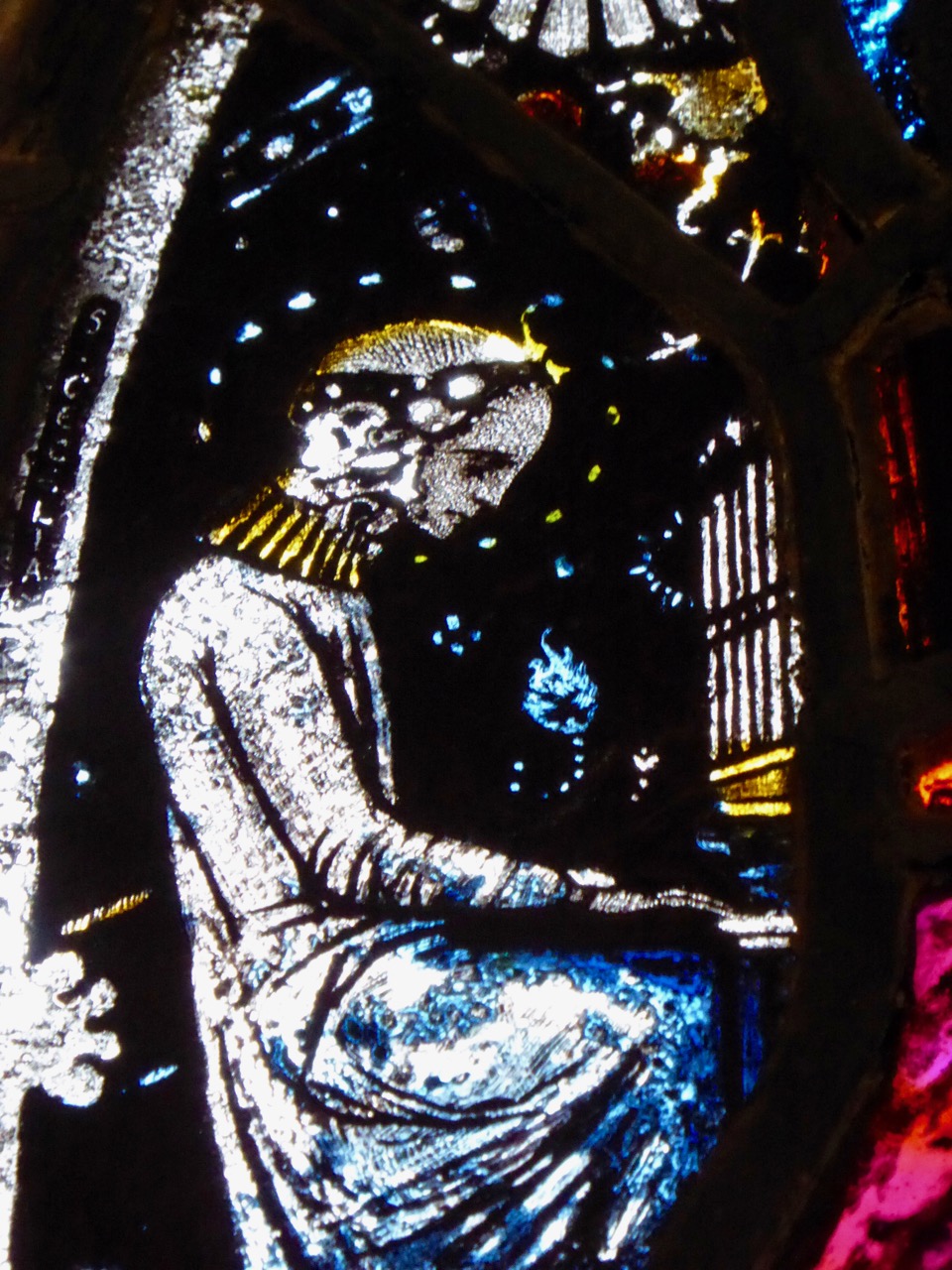
To the left of Luke’s shoulder is St Cecilia. Egerton loved music, had a fine voice, and performed happily in the musical theatre that was a staple of family life within the Castletownshend circle. Gilbert and Sullivan was a favourite. But this is also a nod to Edith – Cecilia is shown playing an organ while the organ that Edith played for over 50 years occupies the loft at the other end of the church (below).

Finally, at the top of the window, across from each other, are St John and St Barrahane. Barrahane, after whom the church is named (and who is pictured also in Harry’s nativity window in the same church) is the local saint, and the Coghill house was called Glen Barrahane in deference to that tradition. The tonsured monk is holding up a church (below). John was both his father’s and his grandfather’s (Baron Plunkett) name.

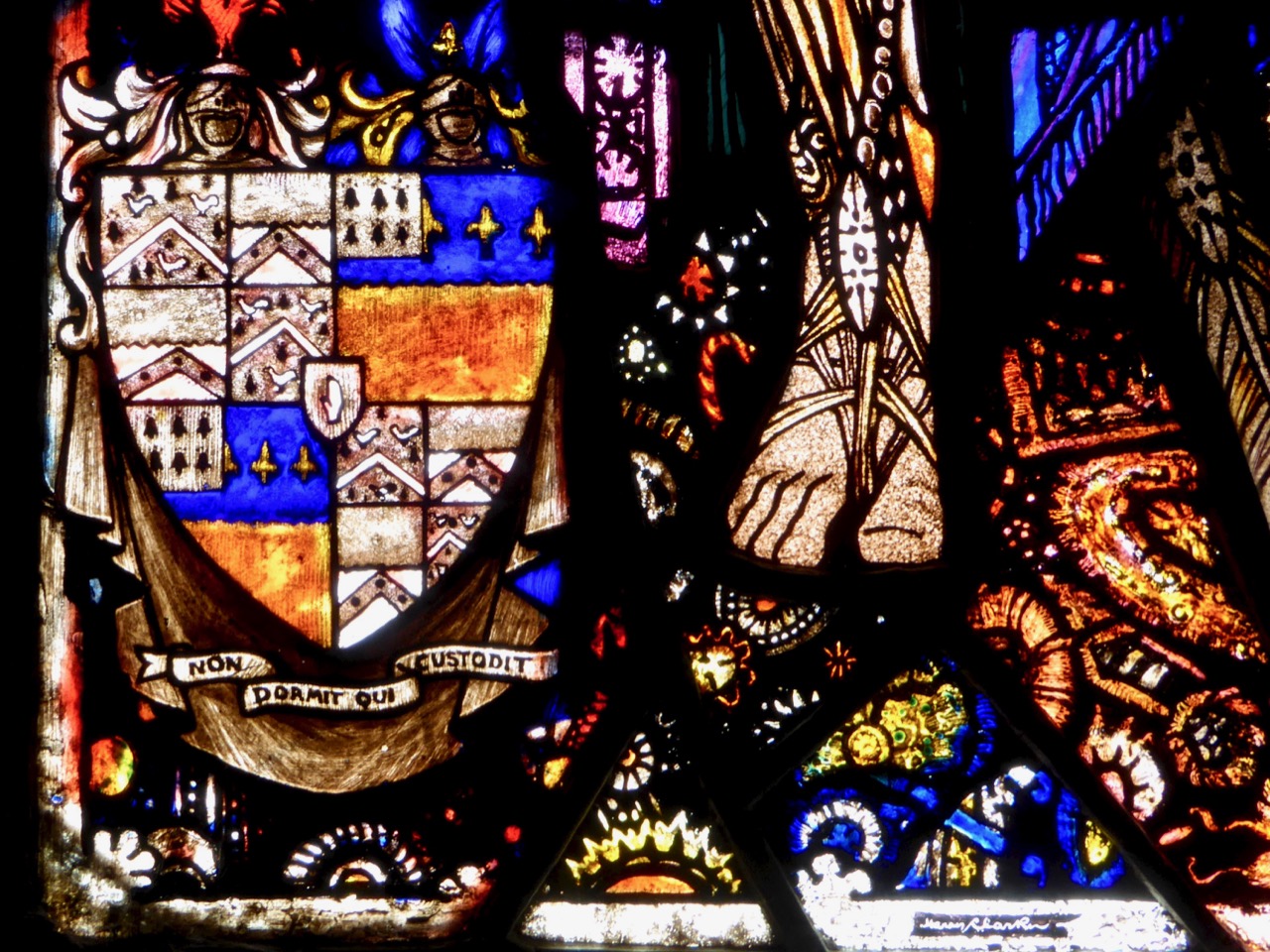
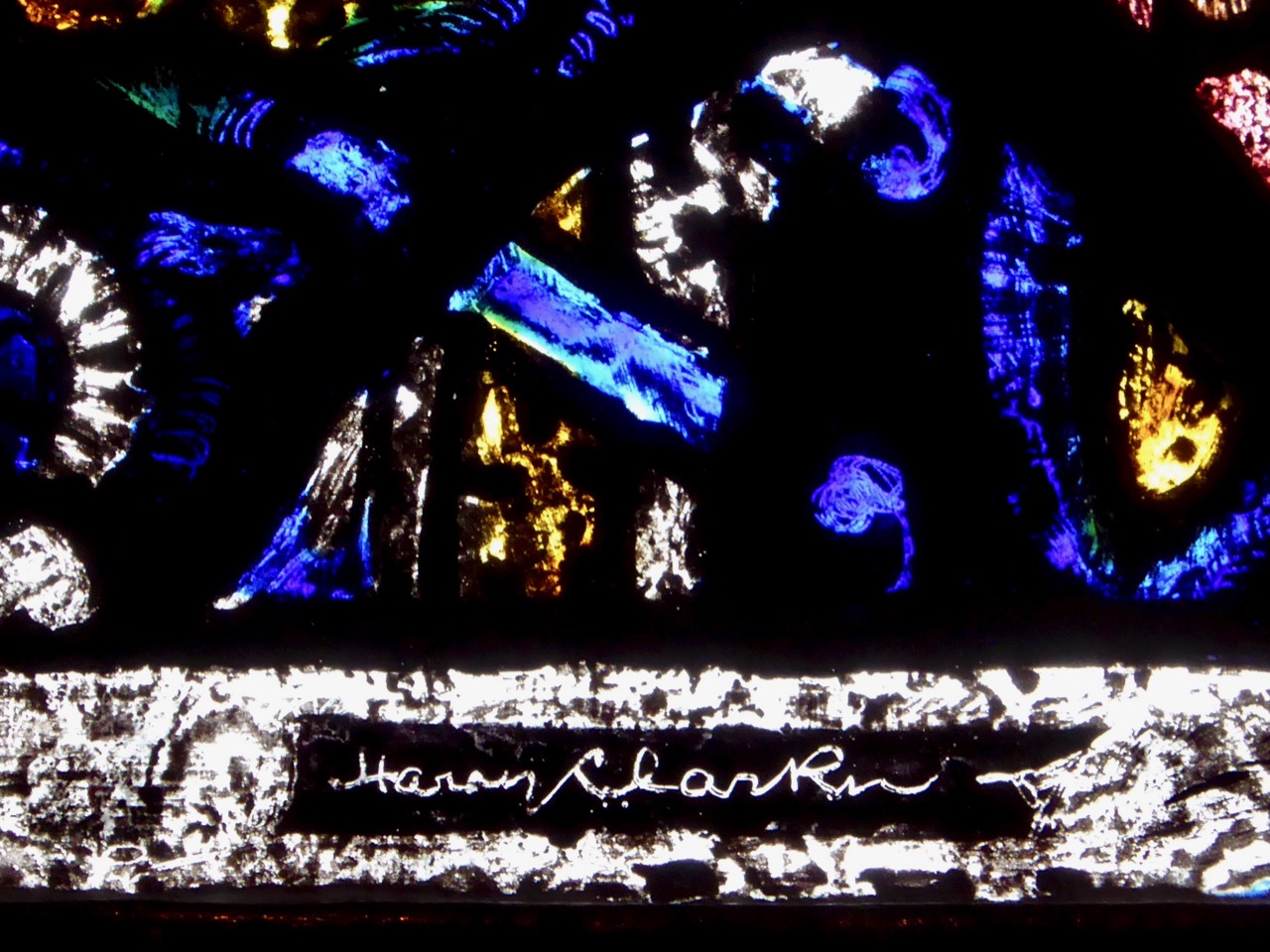
Egerton’s coat of arms, the dedication plaque, and Harry’s signature round out the window.

At this time, the Harry Clarke Studio was experiencing enormous demand for his work. To satisfy this demand he employed a group of highly talented artists and craftsmen, all of whom were trained to faithfully execute his designs, with Harry supervising closely. Thus it was with this window – most of it in fact was made while Harry was out of the country. The fact that he did not personally do most of the etching, staining and painting on this window does not in any way detract from its identification as a true Harry Clarke window – in every meaningful sense this was his creation and his signature indicates that he took full credit for the final product.

If you go to St Barrahane’s, make sure that you open the gate in the altar rails and go right up to the little window in the chancel. People have been known to miss it. It’s a unique opportunity to get nose-to-nose with a Harry Clarke. And when you do, spare a kind thought also for Egerton, a fellow artist, beloved by all who knew him, and honoured in this exquisite work of art.

*The four black and White photographs are from Edith Somerville: A Biography, by Gifford Lewis. I could find no copyright information on them so am assuming they are available for use, with gratitude to the author and publisher, Four Courts Press. The photograph of Edith as MFH is in my own possession.

A Frenchman’s Walk Through Ireland

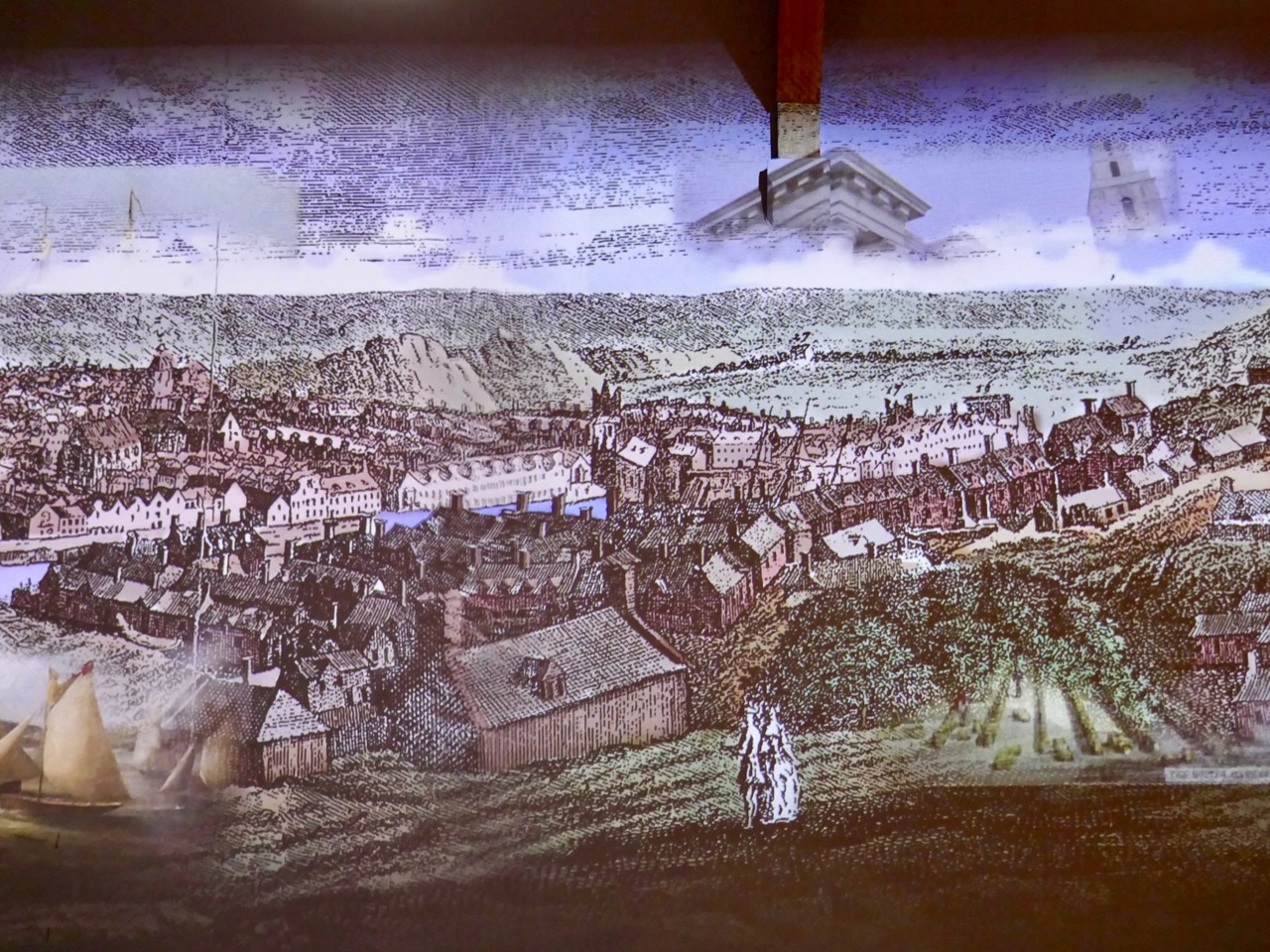
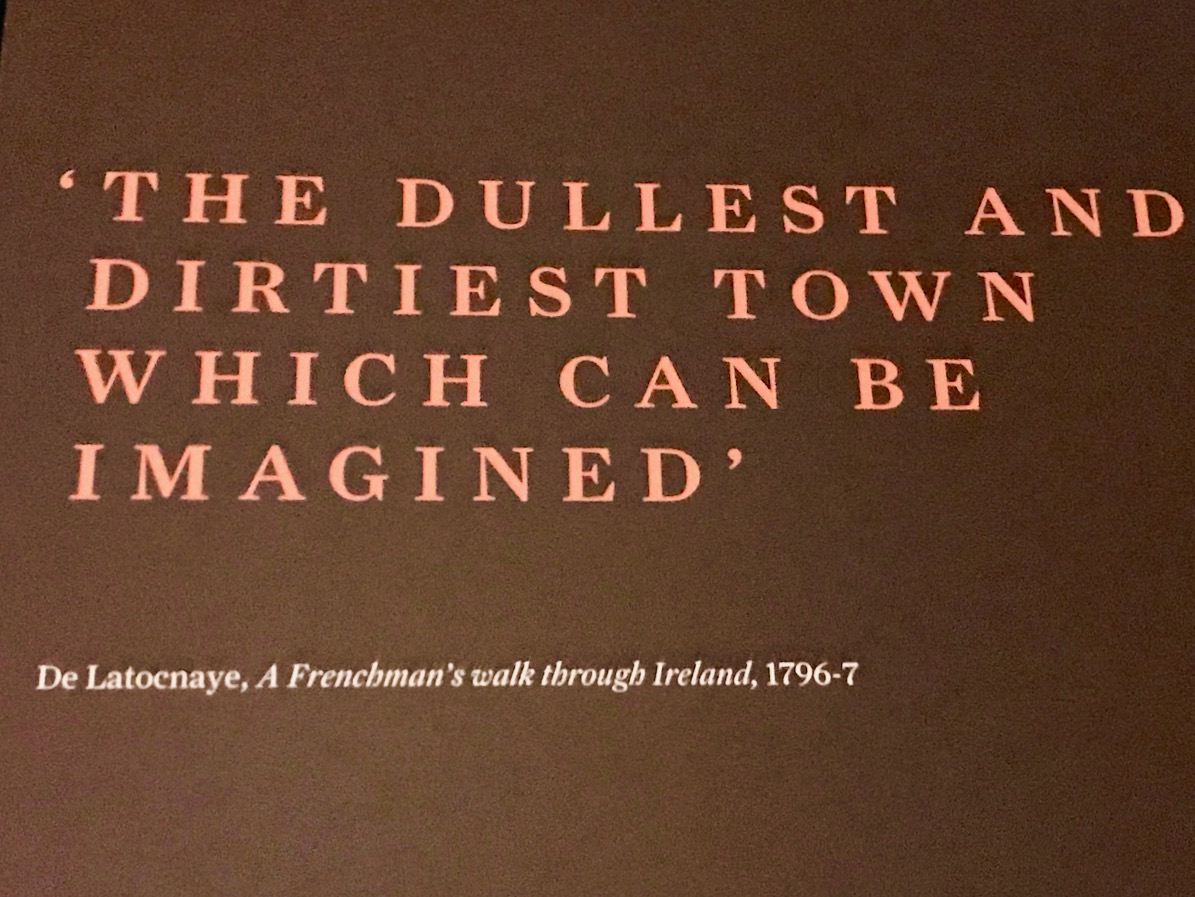
Cork City in the eighteenth century (represented above and below in Cork’s Nano Nagle Centre) had an unhealthy reputation, according to one commentator – Frenchman Jacques-Louis of Bougrenet de La Tocnaye – who travelled through Ireland in the 1790s and happily left us with some written descriptions of his journey.

Born into an ancient noble family in Nantes in 1767, de La Tocnaye fled the French Revolution in 1792 and self-exiled himself to idle London (his words). Then – armed with a sheaf of letters of introduction to people who might be useful along the way – he set out on a walking journey which lasted for ten years, through England, Scotland, Ireland and Scandinavia. Remarkably, he was able to get his writings published as he went along and we are fortunate to have some of them preserved, after a fashion, through a translation into English by John Stevenson in 1917 of Promenade d’un Français dans l’Irlande 1796 – 1797.

It is necessary to quote from the preamble set down by this translator before we embark on the writing itself. Apologies if you feel – as I do – we might be missing out on a few of the more colourful observations from de La Tocnaye on Ireland because of Stevenson’s reservations. The end result is of great interest to us nevertheless.

. . . A word about the author’s style. He has none. A well-educated man, at home in the highest circles of society, and doubtless a brilliant conversationalist, he is evidently unaccustomed to writing . . . Therefore, in the rendering, it has been necessary, at times, to convey what he intended to say rather than what is actually set down . . . 

. . . He has a weakness for using the swear words of the country of his sojourn, and uses them unnecessarily and unwarrantably. Second-hand matter, in the form of stories ‘ lifted ‘ from Irish authors, or antiquarian information inserted out of compliment to his friends, has been omitted as of no interest to the reader of to-day; and certain little sallies in the French manner, innocent enough, but which in English print might wear the air of indecencies, have been modified or suppressed. For the rest, the translation is as literal as a care for readability in English will allow . . .

. . . Travelling on foot over the island, east, south, west, north, his whole baggage in his pockets, in two silk stockings from which he had cut the feet, or in a handkerchief slung en sautoir on the end of a combined sword-stick and umbrella, which he said ‘made the girls laugh’ he got to the very heart of Irish life . . .

Sackville Street and Gardiner’s Mall, Dublin c1750. Attributed to Joseph Tudor 1695–1759. (courtesy National Gallery of Ireland)

De La Tocnaye’s writings on his travels in Ireland alone amount to 90,000 words! Today I am taking just a few extracts to give you a flavour of what life was like here in the late eighteenth century – seen through the eyes of one observer. I have no doubt that more of this journal will follow on these pages in time.

Leaving Dublin, de La Tocnaye made a stop in County Wicklow:

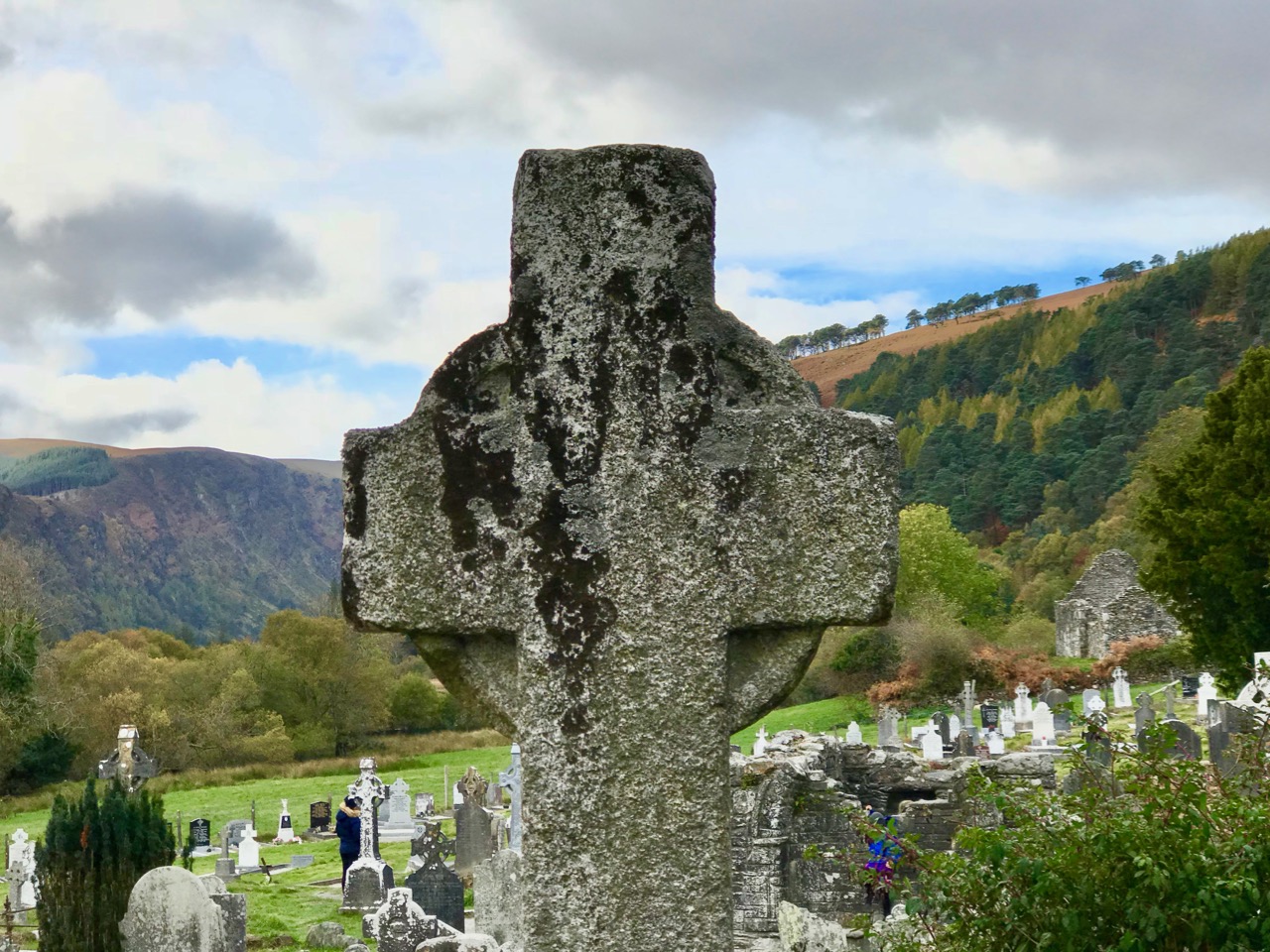
. . . Following the course of the stream which flows from the lake, I came to Glendalough, a word which means ‘the valley of the two lakes’. It is remarkable that there is not a single ancient name in this country which has not its special signification. The appropriateness here is evident, for there are really two lakes, which join at the portion of the valley called ‘The Seven Churches.’ It is here in this desert place that are to be found the most ancient remains of the devotion of past centuries, remains whose antiquity reaches back to the early ages of Christianity. St Kevin here founded a monastery in the third or fourth century of the Christian era, probably on the ruins of a temple of the Druids, who sought always the wildest places for the practice of their cult. This was for long a bishopric, but now it is united to that of Dublin. Here are still to be seen the ruins of seven churches, and one of those round towers of unknown origin which are so common in Ireland . . . 

High Cross at Glendalough

De La Tocnaye goes on to pronounce, at length, on round towers (and Irish pishogues):

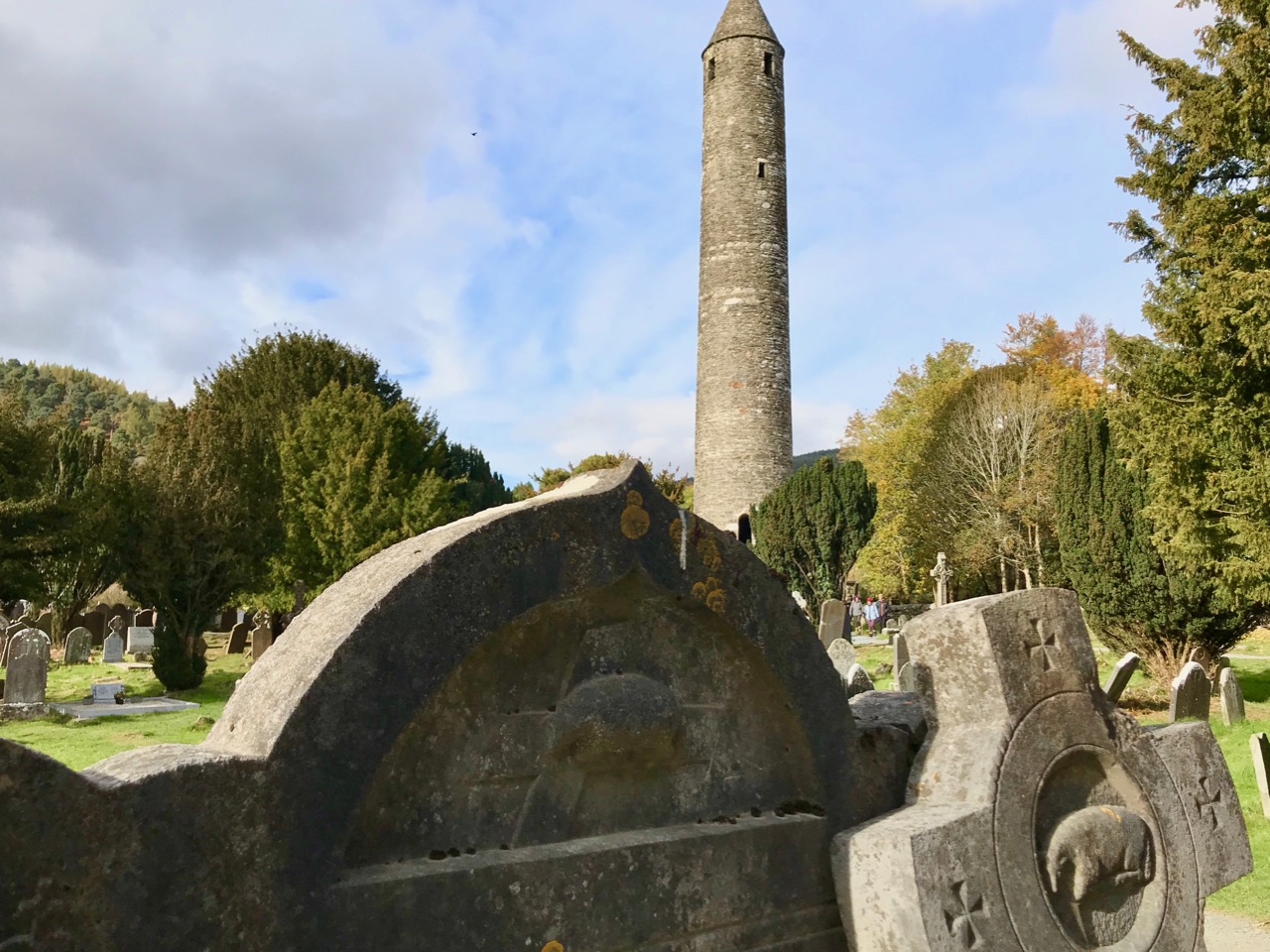
. . . They are all alike, having a door fifteen or twenty feet from the ground, generally opening eastward, some narrow windows, and inside not the slightest remains of a staircase, unless this may be found in a few projecting stones which may have served to support floors in which there must have been trap doors to allow of passing from one to another by means of ladders. These towers are always found at some distance from a church, and entirely isolated . . . Whatever these ancient buildings may have been, the Irish have now for them the greatest possible veneration. They come here from afar for pilgrimages and penitences, and on the day of the Saint, which is June 3, they dance afterwards and amuse themselves until nightfall. In this sacred enclosure are to be found remedies for many ills. Have you a pain in your arm ? — it suffices to pass the limb through a hole worked in a stone, and you are free from your trouble. There is another stone on which for another ailment you shall rub your back, and another one against which you shall rub your head. And there is a pillar in the middle of the cemetery which, if you can embrace, will make you sure of your wife. The Saint’s Bed is a hole about six feet long, hollowed in the rock — a very special virtue belongs to it. It is only to be reached after much trouble in scaling a steep slope of the mountain above the lake, but whoever has enough strength and resolution to climb to it, and will lie down in it, is sure never to die in childbirth. Belief in this virtue makes a great number of wives, and of girls who hope to become wives, come here to pay their devotions . . . All this seemed to come in very fitly at the beginning of my travels. I pushed my arm through the hole in the stone. I rubbed my back against the rock which cures the troubles of the back, and my head against another, thus ensuring my health for the remainder of my journey. I even tried to embrace the pillar, but I cannot tell with what result. As to the Saint’s Bed, I thought there was little danger of my dying from the malady against which it insures, and therefore I did not climb . . .

Round tower at Glendalough

Returning to de La Tocnaye’s comment about Cork City:

. . . I arrived at Cork, the dullest and dirtiest town which can be imagined. The people met with are yawning, and one is stopped every minute by funerals, or hideous troops of beggars, or pigs which run the streets in hundreds, and yet this town is one of the richest and most commercial of Europe . . .

View of Cork 1760

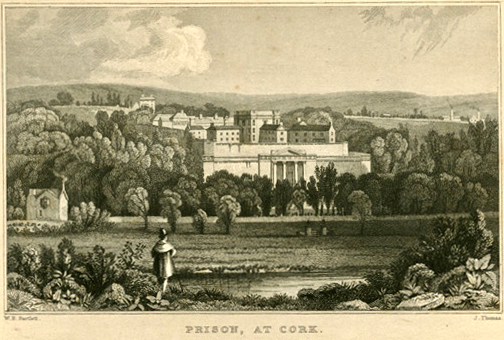
. . . There is no town where there is so much needful to do to make the place agreeable to a great number of the poor inhabitants. The spirit of commerce and self-interest has laid hold of all branches of the administration. For example, it would be very easy to furnish the town with a public fountain, but the person or company which has the privilege of bringing water in pipes to the houses thinks that by the building of such a fountain there would be lost a number of guinea subscriptions. Therefore, in order that the avidity of an obscure individual should be satisfied, thirty thousand inhabitants must suffer . . . I have seen poor people obliged to collect the water falling from the roofs on a rainy day, or to take it even from the stream in the streets. All the time there is perhaps hardly a place which it would be so easy to supply with water as Cork, by reason of the heights which surround it. There is even a spring or fountain about a mile away, which is called Sunday’s Well, which appears to me to have sufficient water for the supply of a public fountain in the centre of the town . . . The dirt of the streets in the middle of the town is shameful, and as if that were not enough, it would seem as if it were wished to hinder the wind and the sun from drying the filth, for the two ends of the street are terminated by prisons, which close the way entirely and prevent the air from circulating . . .

Cork Prison 1831 – engraving by W J Bartlett

Lest the people of Cork be offended, today, by de La Tocnaye’s descriptions of yesterday, rest assured that he had similar reactions to other places. Take Wexford, for example:

. . . From here I proceeded to Wexford, and without wishing it harm, I may say that it is one of the ugliest and dirtiest towns in the whole of Ireland. The excessive exercise in which I had indulged, and to which I had not been accustomed for a long time, compelled me to remain here eight days with a fever . . .

In spite of the title, this is a representation of Whiteboys from the 1780s. (courtesy National Library of Ireland)

That’s probably quite enough insults for one week! I have avidly ploughed through the writings of de La Tocnaye as he proceeded on his journey through Ireland, and there is much of considerable interest: we get from him a very good picture of life here two hundred years ago. Finola is writing today on the complexity of religious history in Ireland: I’ll close with a view from our French traveller:

. . . In every country of the world the peasant pays tithe with reluctance ; everywhere it is regarded as an onerous impost, prejudicial to the spread of cultivation, for the labourer is obliged to pay on the product of his industry. In Ireland it seems to me a more vexatious tax than elsewhere, for the great mass of the people being Catholic, it seems to them hard that they should be obliged to maintain a minister who is often the only Protestant in the parish, and who exacts his dues with rigour. Beyond the ordinary tithe he has a right, over nearly the whole of Ireland, to one-tenth of the milk of a cow, one-tenth of the eggs, and one-tenth of the vegetables of the gardens. One can easily understand that these conditions may be very severe when the minister exacts his dues in kind, and especially when it is considered that these poor miserable folk have, as well, to supply a subsistence for their own priests. They have often made complaints and claims in connection with this subject, and to these it was hardly possible to give attention without overturning the whole of the laws of the Establishment, as it is called; that is to say, the Established religion. From complaints and claims the peasants came to threats, and from threats to the execution of the things threatened. They assembled at night in great numbers in certain parts of Ireland, and in order that they might recognise each other safely, they wore their shirts outside their clothes, from whence came the name of White Boys. In this garb they overran the country, breaking the doors and gates of ministers’ houses, and if they could catch the cattle they mutilated them by cutting off their tails and ears. All the time they did no other violent act, and a traveller might have gone through the country with perfect security . . .

Tailpiece: Wexford Town in 1796 (courtesy Laurence Butler)

Off the M8 – Lismore Quest

It’s half an hour’s drive off the motorway, leaving at Fermoy – but well worth the diversion. Lismore, County Waterford, is an ancient town. St Carthage arrived here in 635 and established a great centre of learning famous throughout Europe; the Vikings ransacked it in the ninth century, after which the Norman Prince John, son of King Henry II, arrived in 1185 to build the Castle, which passed through the ownerships of Walter Raleigh and the Great Earl of Cork, before becoming the Irish residence of the Duke of Devonshire. So there’s lots to see, and lots of history to take in: be prepared for many visits!

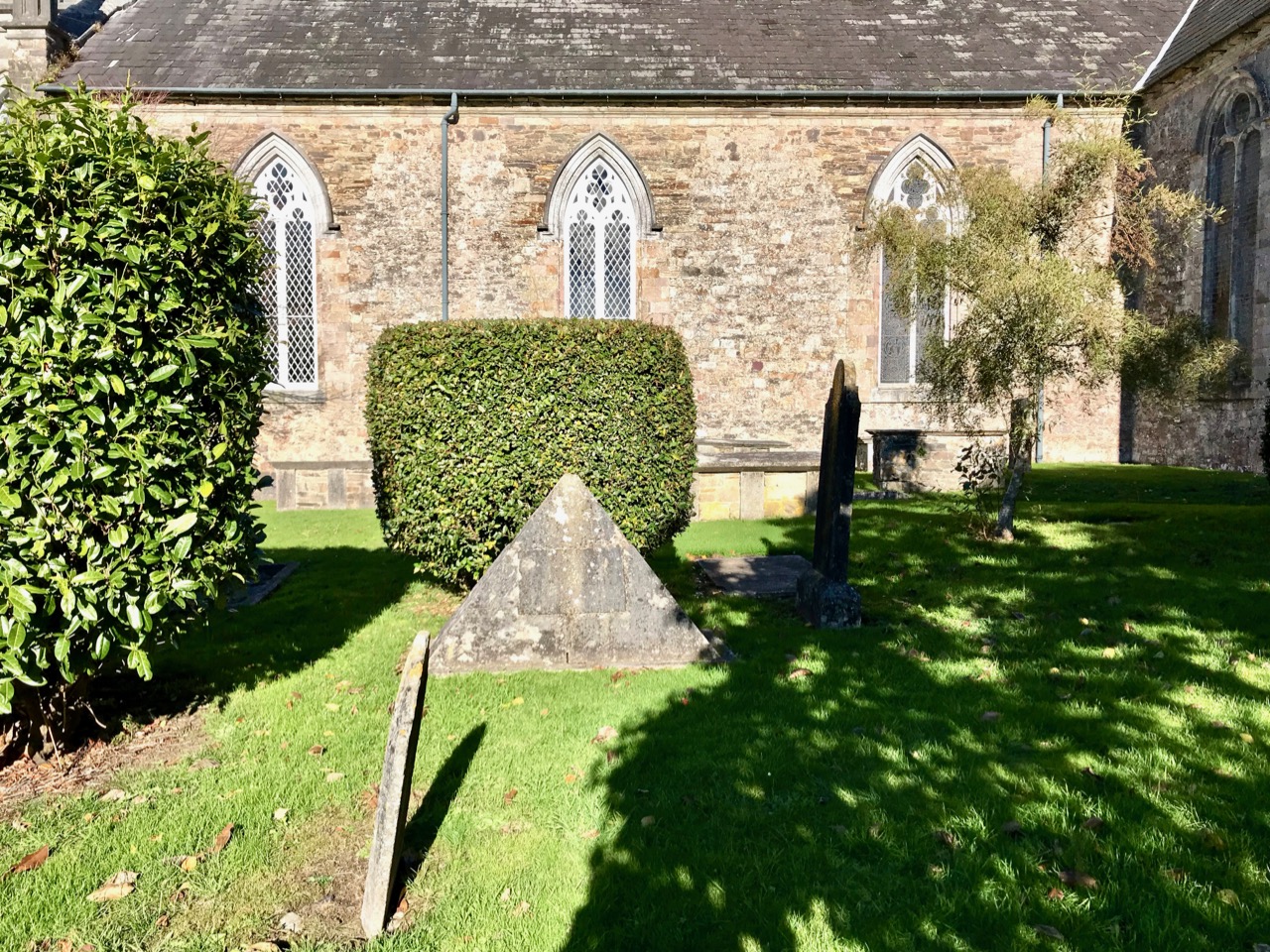
Our quest was to find a grave in the churchyard of St Carthage’s Cathedral. I am currently preparing a talk on the links between West Cork and Zululand (believe me, this is relevant)! The principle subject of this talk is a ‘soldier artist’ – William Whitelocke Lloyd, who was born and brought up in Strancally Castle, County Waterford, but lived for most of his adult life in Glandore, West Cork, (where you will find a pyramid). What should we find in St Carthage’s? Another pyramid! But that’s incidental to the main story here.

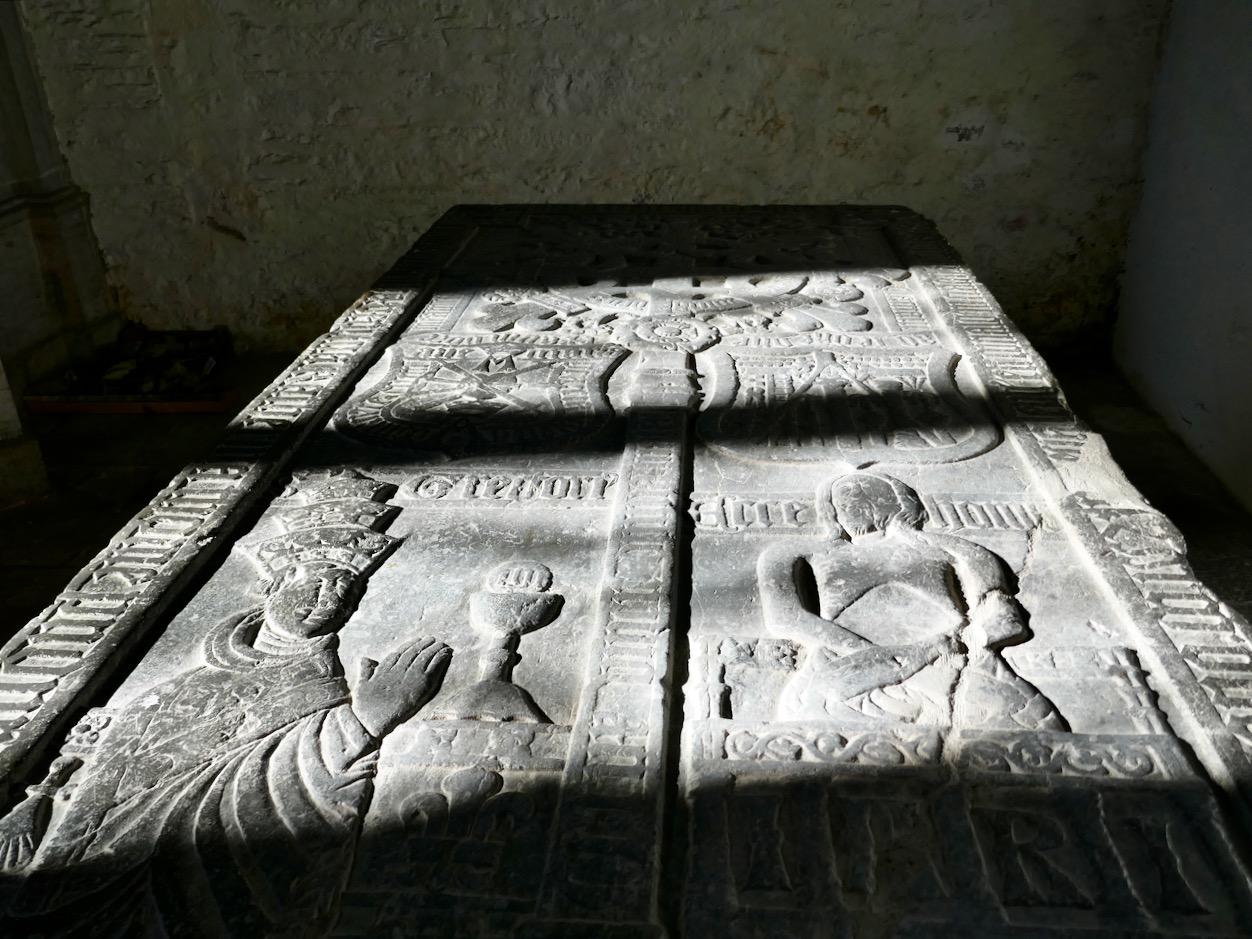
The Cathedral is said to be on the site of the original monastic foundation, and there’s some pretty ancient stonework inside it, including the quite remarkable tomb of the McGrath family which dates from 1486. The present building, however, comes mainly from the early seventeenth century when the Earl of Cork carried out major works, but also retained some earlier structure.

We did find the Whitelocke Lloyd grave, a little forlorn, close to the north west corner of the Cathedral. It has not weathered well and the inscription is not easily decipherable; a fallen cross lies broken across it. If you want to find out about this man’s exploits in the Zulu wars of 1879 – 80 and his career as an artist – for which he had no formal training – and why he is buried here with no family around him (his wife Catherine Anna Mona Brougham, daughter of the Dean of Lismore lies in a matching grave in Casteltownshend) you’ll have to come to my talk!

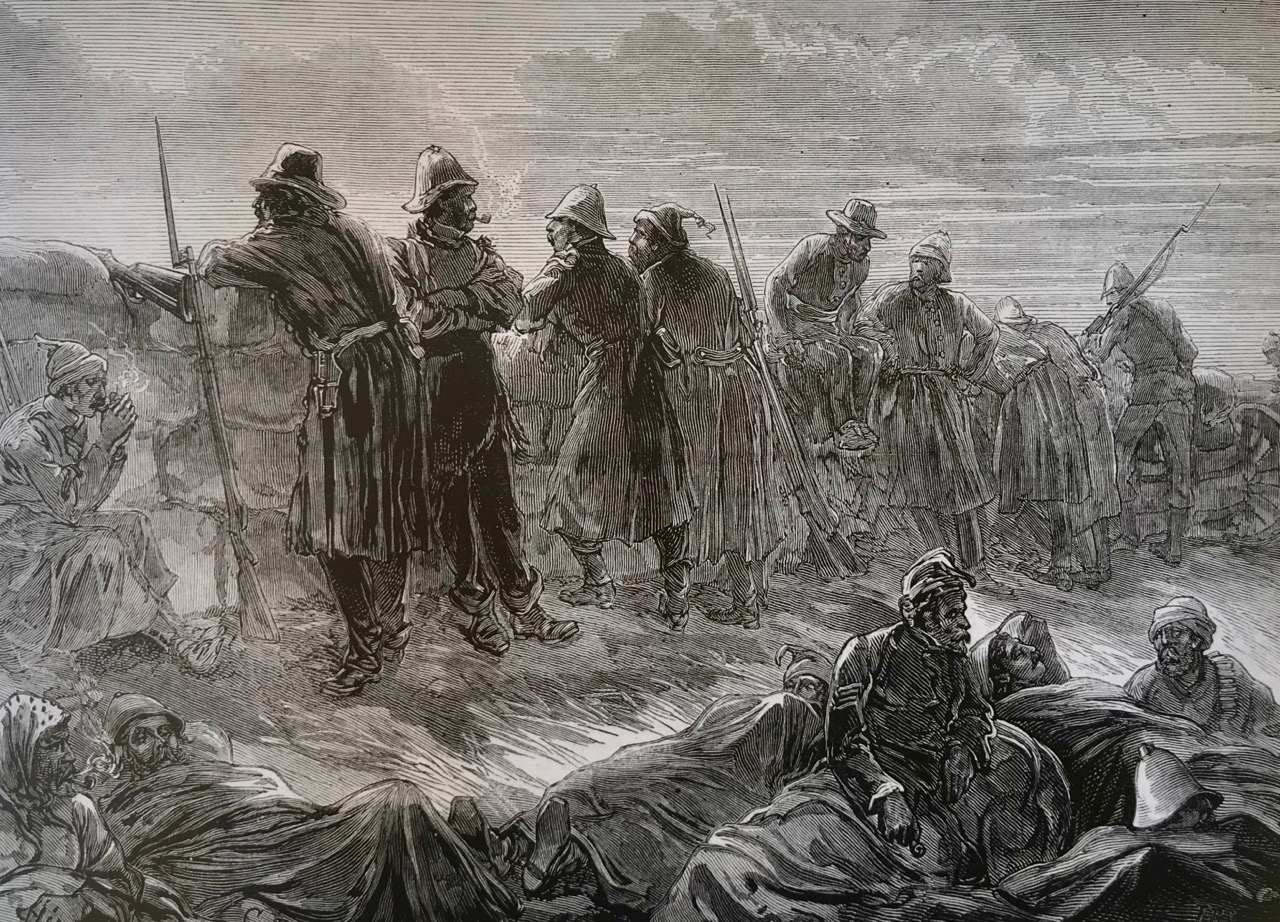
The somewhat forlorn grave of William Whitelocke Lloyd in the grounds of the Cathedral (above) and (upper pictures) two examples of the watercolour sketches of William Whitelocke Lloyd carried out while he was on active service in Africa. They were faithful records of the terrain and the conditions which the soldiers endured. Whitelocke Lloyd was ‘discovered’ by the Illustrated London News who used his drawings to produce engravings for publication – one is shown below.

Today’s post is largely a miscellany of the splendours we discovered in and around St Carthage’s Cathedral, and we hope this will inspire you to go there yourselves: it’s only two hours away from home – a mere hop and a skip.

Finola was delighted to find this rarity in St Carthage’s Cathedral – a window by the pre-Raphaelite artist Edward Byrne-Jones.

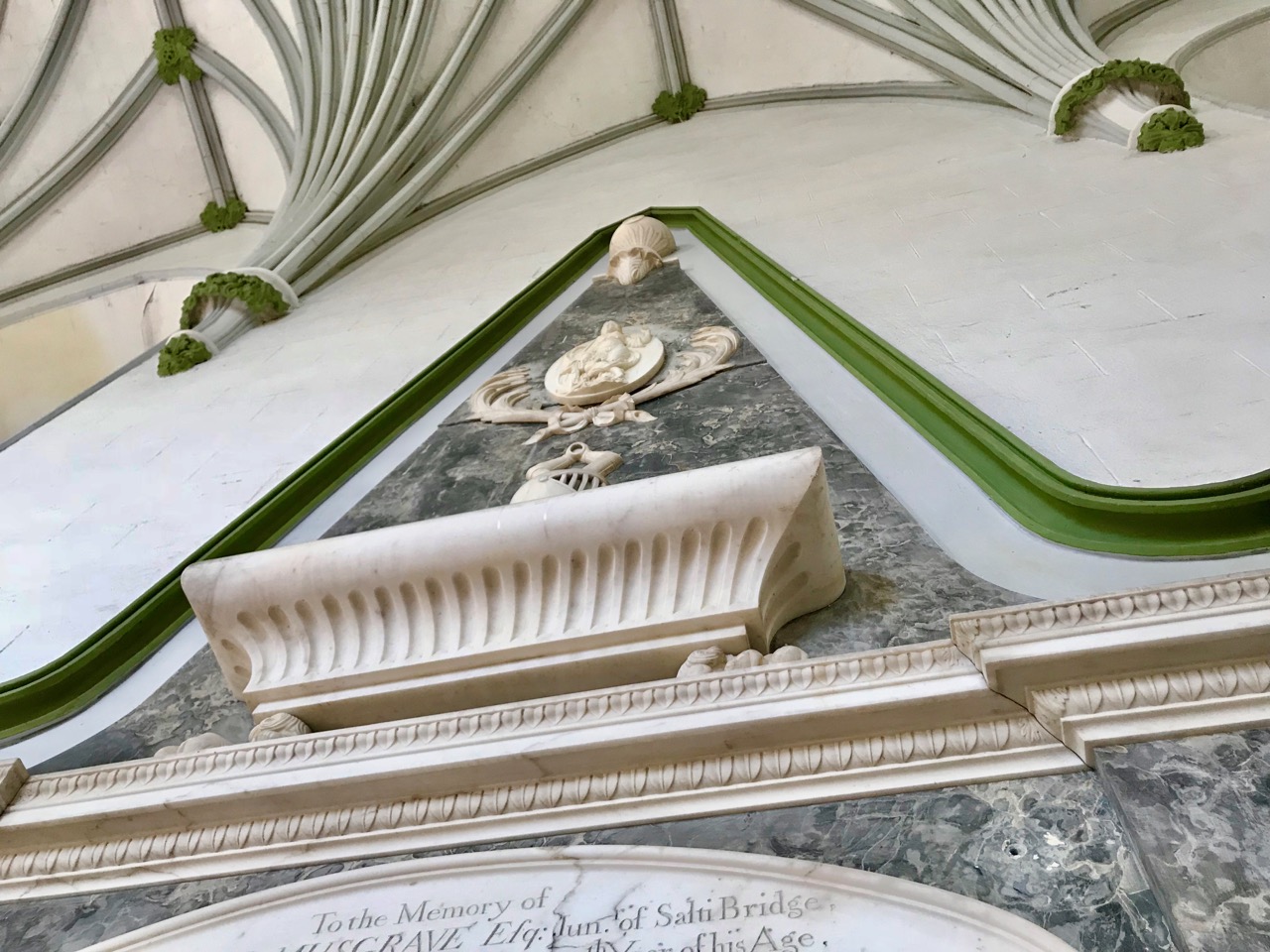
As with many Anglican churches, there are numerous elabortate memorials on the walls of St Carthage’s Cathedral. Here are just three examples, above.

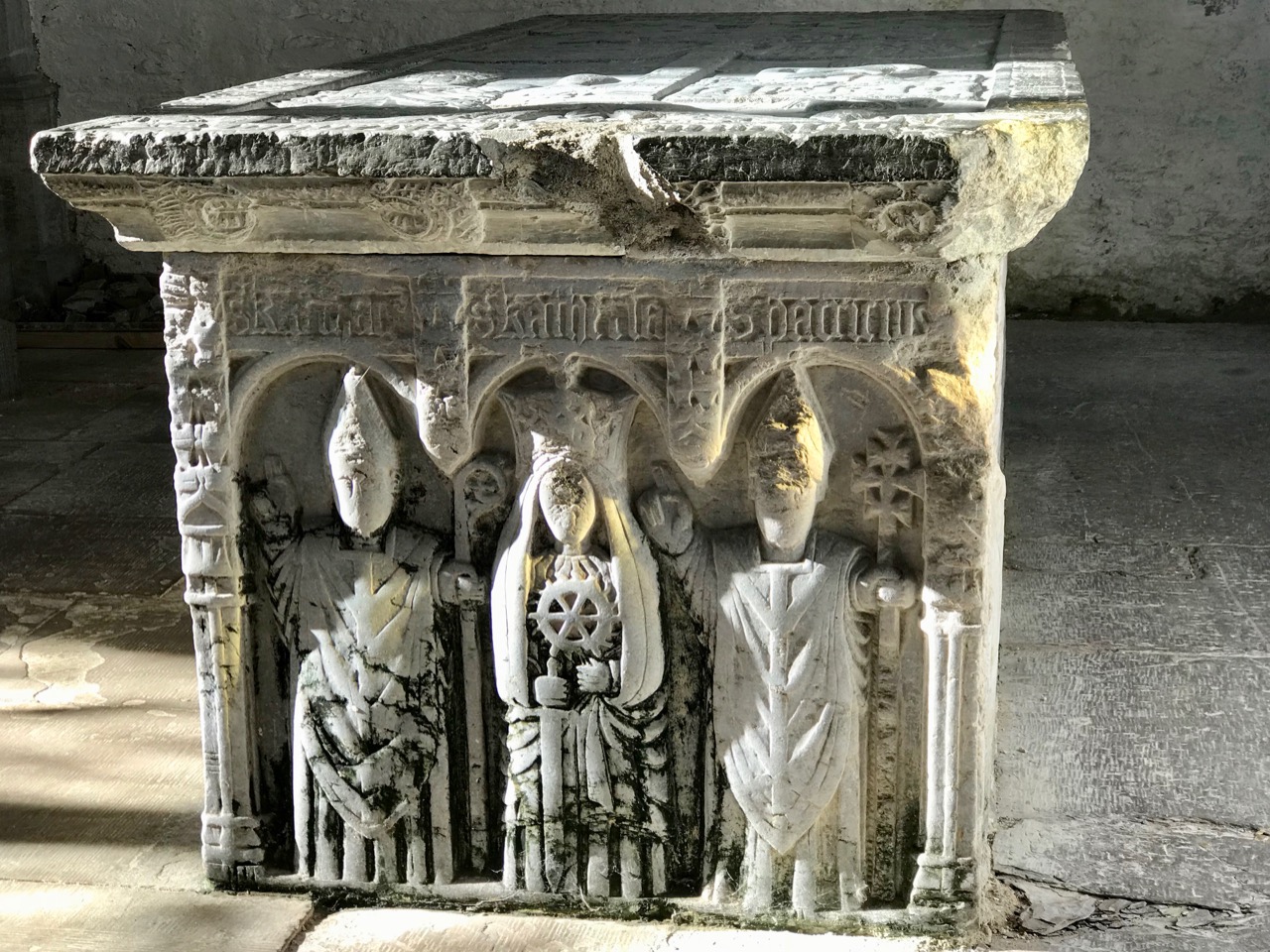
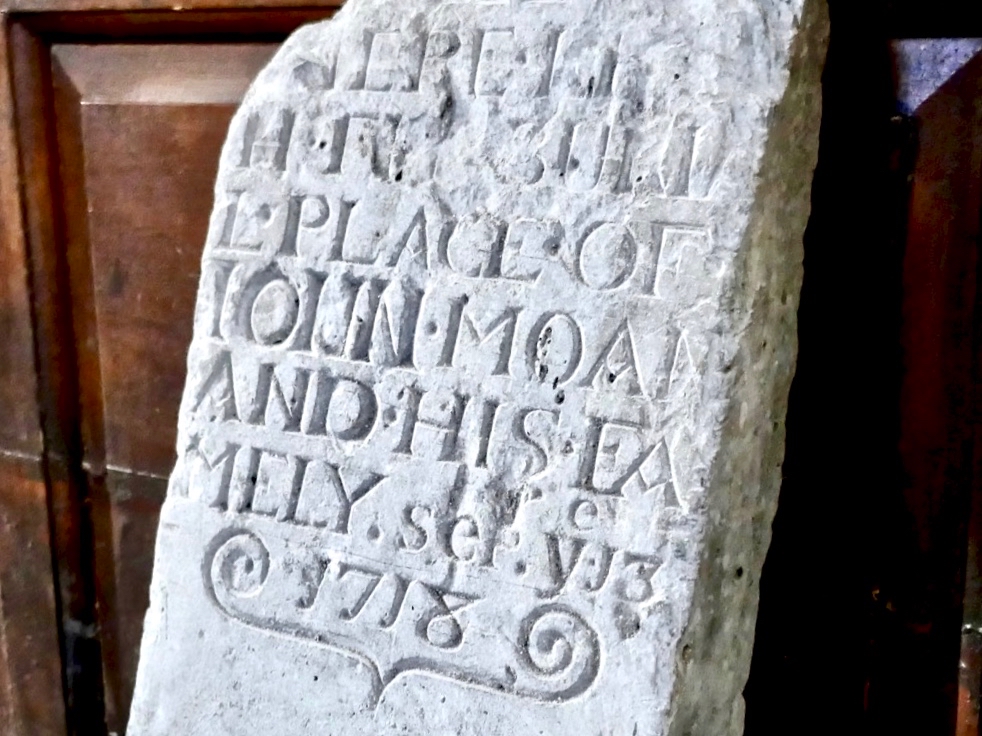
In the Cathedral reposes this McGrath family tomb – one of the finest examples of sixteenth century stone carving in Ireland. Below – one of the earliest grave inscriptions, dating from 1718.

Robert’s Talk – West Cork and the Zulu Wars – will be given at the Talks in the Vaults series, Bank House, Ballydehob on Tuesday 13 November, at 8pm

Cormac’s Chapel: The Jewel in the Crown (Part 2)

I said I’d be back in a week and it’s been a year! I’ve been working my way through a series of posts on Irish Romanesque architecture (see the bottom of this post for the list so far) and last October I wrote the first of a two part post on Cormac’s Chapel, the Romanesque jewel on the Hill of Cashel in Co Tipperary. Since this is part 2 (unless you’ve read it before and have an amazing memory) go back there now and read up on the Chapel and its history, as well as my detailed description of the exterior.

Illustration by W H Bartlett from The Scenery and Antiquities of Ireland by Joseph Coyne and Nathaniel Willis

Right, done that? Great, then come on inside. I was fortunate to visit Cashel last year, when the Chapel was open and I could spend as long as I liked taking photographs inside. This followed many years when it was closed – a conservation measure necessary to address the dampness which plagues stone-roofed buildings. During this open period it was noted that the number of visitors, all emitting carbon dioxide, was having a detrimental effect on the interior, so now it is only accessible during a guided tour and for a limited stay inside. Hopefully, this post will help you see things that you might miss during a short visit, or even items that those excellent guides might not cover.

The interior, looking towards the chancel

This was a royal chapel, used for high ceremonies and built to enhance the prestige of King Cormac. When we think of such edifices, our mind probably pictures a cathedral, but large churches were still in the future in Ireland in the first half of the twelfth century and Cormac’s chapel, although small by European standards, was not outside the normal dimensions of Irish churches of the period. What was important was not its size, but the extraordinary attention to detail and decoration that went into its construction. Moreover, it had a second storey, under the steeply pitched roof. Although we are not completely sure what the functions were of that upper level, it effectively doubled the space available to its users.

The north wall – note the blind arcading and barrel vaulted celing with parallel ribs, and the ornate door that leads to the second storey

Inside, the chapel is a nave and chancel structure, common among Romanesque churches, the only difference being the altar projection at the end of the chancel. The upstairs is accessed through the two square towers (see Part 1) and an ornate door in the north wall opens to a spiral staircase leading up to that floor (not accessible to the public). The size of this door and its elaborately carved orders speaks to its importance in some ceremonial way – O’Keefe says it tempts us to imagine the enactment inside Cormac’s Chapel of some ritual of procession involving relics.* In contrast, the north and south doors, the main entries to the nave, which are ornate on the outside, are relatively plain on the inside.

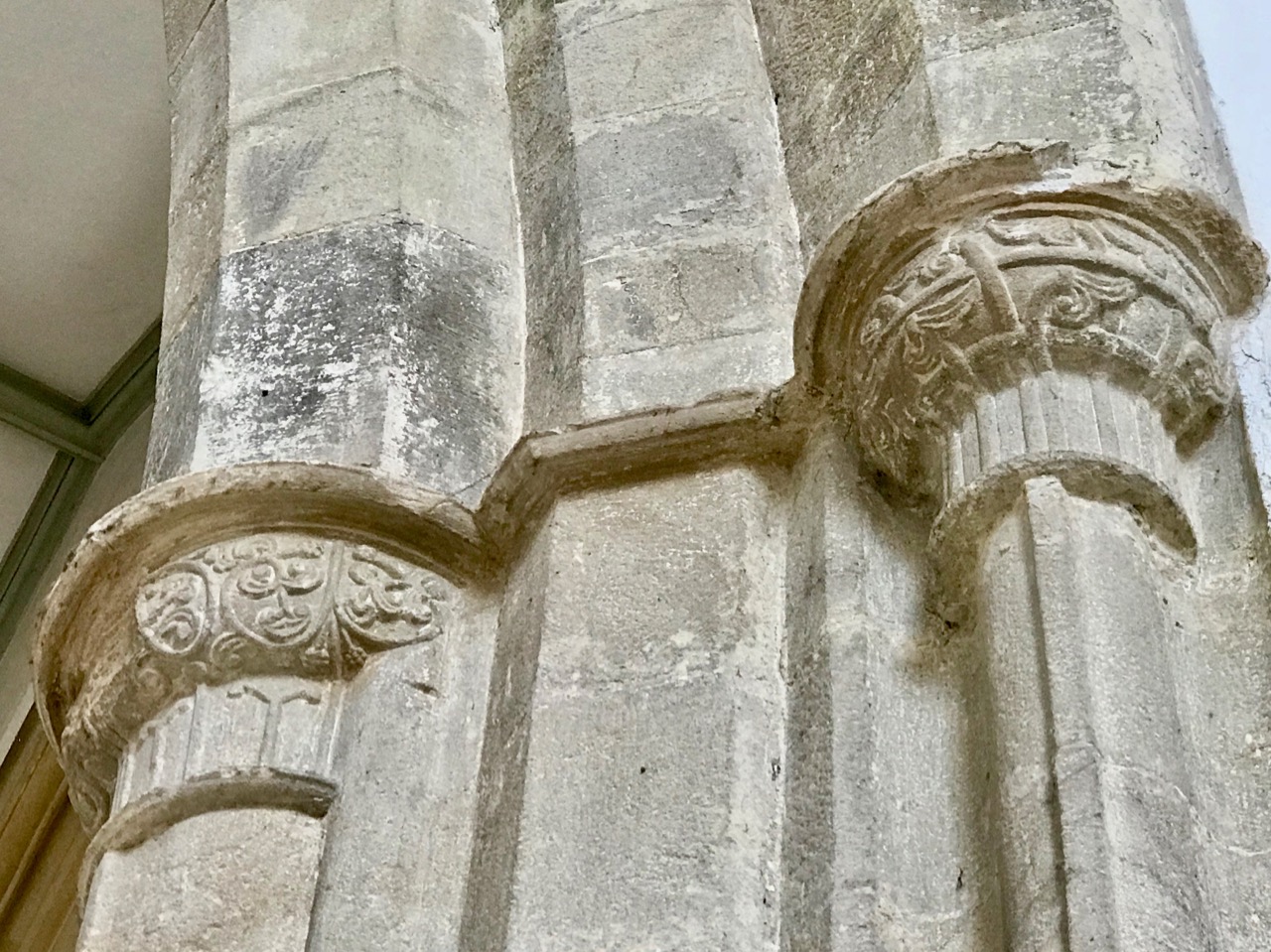
The nave is barrel vaulted, with parallel ribs running across the ceiling. The walls have blind arcades up to half their height, topped by a string course and a series of columns to support the ribbing. The blind arcade arches are carved with chevrons (above) while the columns between the arcades have irregular checkerboards of chevrons, lozenges and petals (below). The west wall has three windows on its upper stage, although only the middle one admits light now.

Beneath those three windows is a fragment of a large stone box, often described as a sarcophagus, wonderfully carved in the ‘Urnes’ style – a Scandinavian tradition of intertwined animals. Tradition has it that this is the tomb of Cormac himself, and certainly this carving style, although very different from what is found in the rest of the chapel, is probably contemporaneous with it. It was moved to the chapel from the later, Gothic, cathedral, where it was found. Whatever its use, it is a magnificent artefact, the work of a master craftsman.

At the east end of the nave is the chancel arch with four orders. The archivolts of the first order mainly consist of carved heads, each individual and striking. Some are more time-worn than others, but the features can be clearly discerned in many.

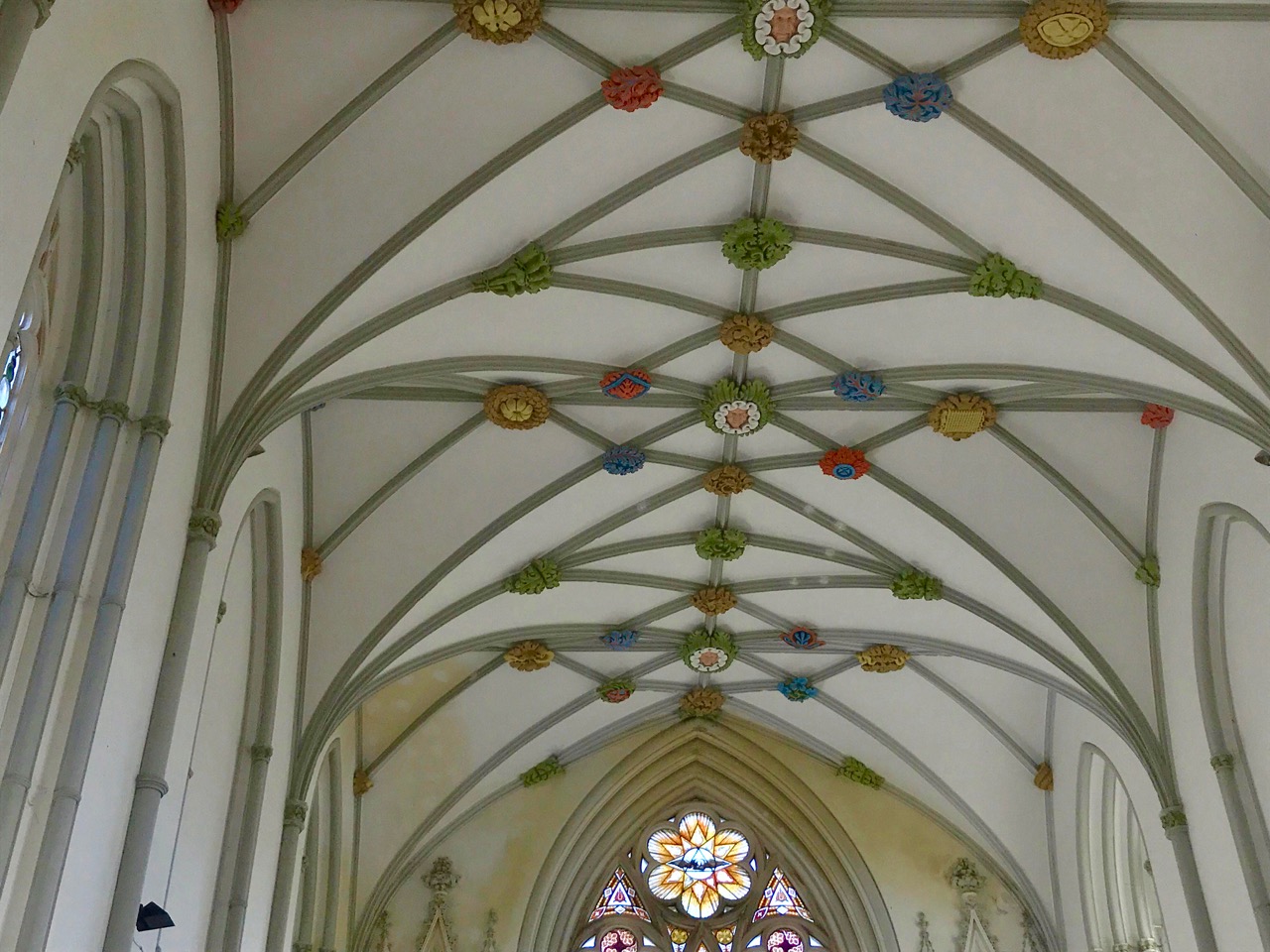
The chancel is also rib-vaulted, like the nave, but this time the ribs intersect at a central point, rather than being parallel. Like the nave, the walls have blind arcading above which are further arches and window-openings. Capitals are decorated with scrolls and scallops.

A final arch spans the projection which held an altar. The arcading in this final section is quite elaborate, and two deeply splayed windows provide light to this area.

Once in the chancel area, which has been well lit, you can start to appreciate the vestiges of paintings that would have enlivened the interior of Cormac’s chapel. A conjectural reconstruction of the artwork is provided in an explanatory panel – the chapel must have looked magnificent and colourful indeed. Preserving these precious fragments has been a tremendous effort.

Finally, stand in the nave and take a careful look around – you will see that the chancel is offset to one side of the nave. While some authors have suggested this as a decision to change dimensions midway through the building process (Dermot Bannon’s nightmare) and others have ruminated about mistakes, O’Keefe demurs. It makes a lot more sense, he says, to interpret Cormac’s Chapel as built to plan, and to suggest that the nave widens on the north side to reflect and accommodate the visual spectacles of procession involving both north-side doorways.

Sketch by Richard Lovett, from his Irish Pictures. The ‘offset chancel is clearly seen in this illustration

There you have it – the glorious high point of Irish Romanesque architecture inside and out. If you haven’t been to Cashel yet, there’s a treat in store. And if you have, well, go again, and make sure to sign up for the guided tour that includes Cormac’s chapel.

The interior of Cormac’s Chapel sketched by George Victor duNoyer for George Petrie**

Previous posts on Irish Romanesque architecture

Irish Romanesque – an Introduction

Irish Romanesque 2 – Doorways

Cormac’s Chapel: The Jewel in the Crown (Part 1)

*Once again, I relied heavily on Prof Tadhg O’Keefe’s manuscriptRomanesque Ireland: Architecture and Ideology in the Twelfth Century, which he has generously uploaded to Academia.

**George Victor Du Noyer, “Cormac’s Chapel Cashel. Original sketch for Petrie’s engraving in his book on the Round Towers. Geo V Du Noyer. Delt Nov 1840,” Royal Society of Antiquaries of Ireland, accessed October 21, 2018, http://rsai.locloudhosting.net/items/show/22213