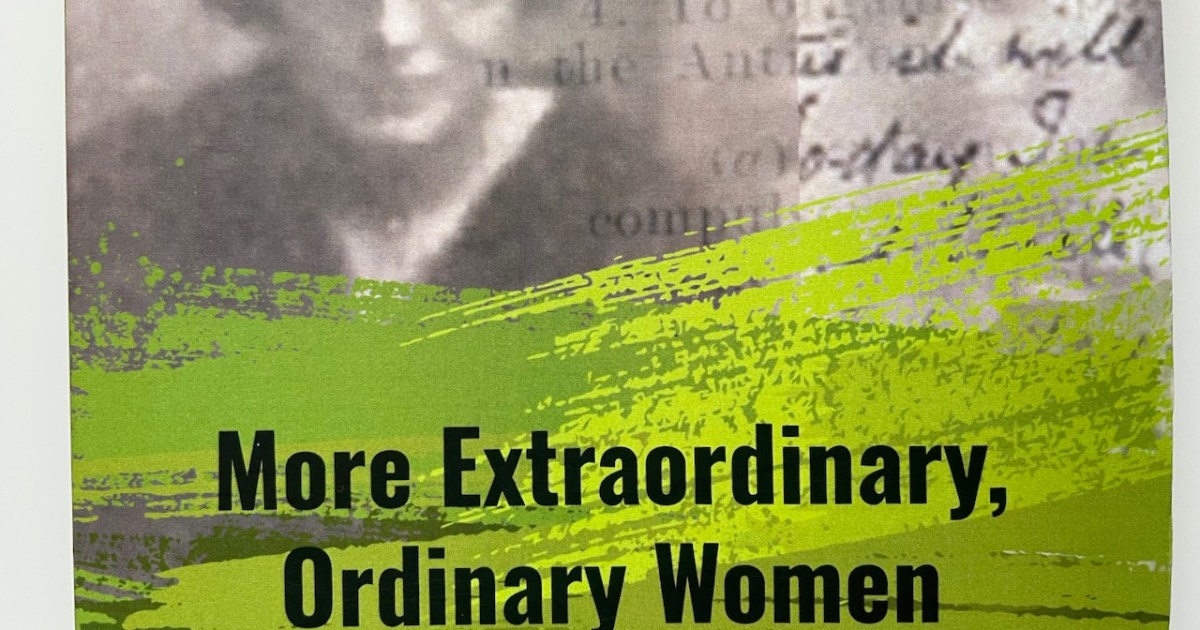
More Extraordinary Ordinary Women

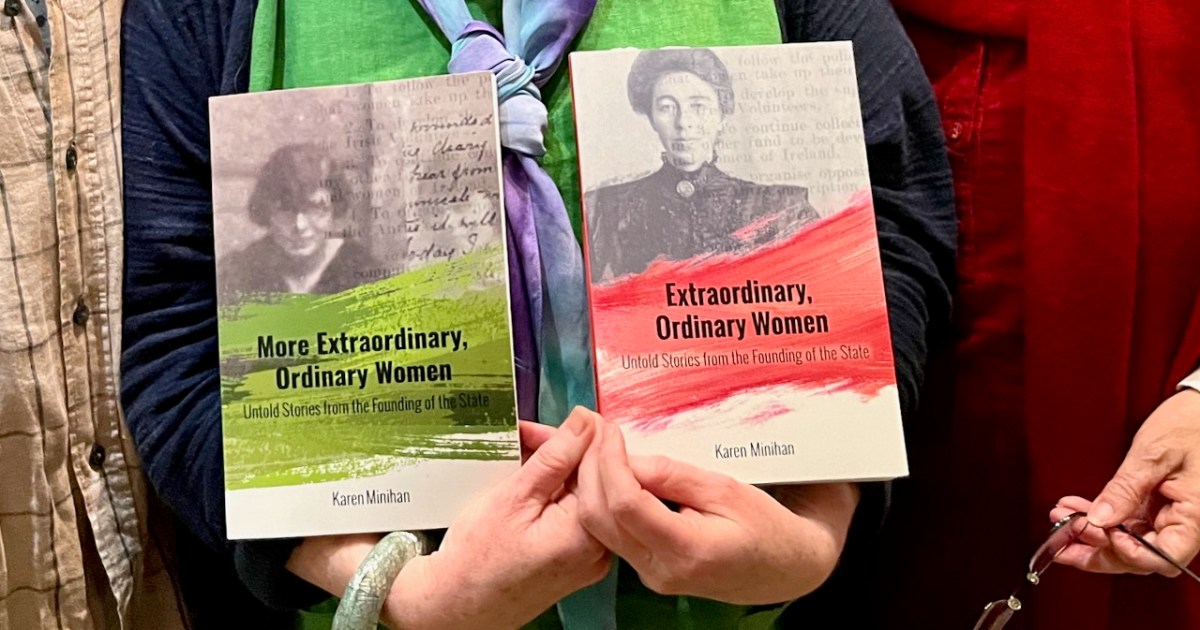
We launched Karen Minihan’s new book, More Extraordinary Ordinary Women, on St Brigid’s Day. The date was apt – Brigid was a woman venerated in her time, who founded the ecclesiastical city of Kildare and ruled benevolently over a vast monastic empire, but still lost out as Patron Saint of Ireland to a man. However, we now have a brand new public holiday in her honour and I think all the women in this book would be pleased about that.
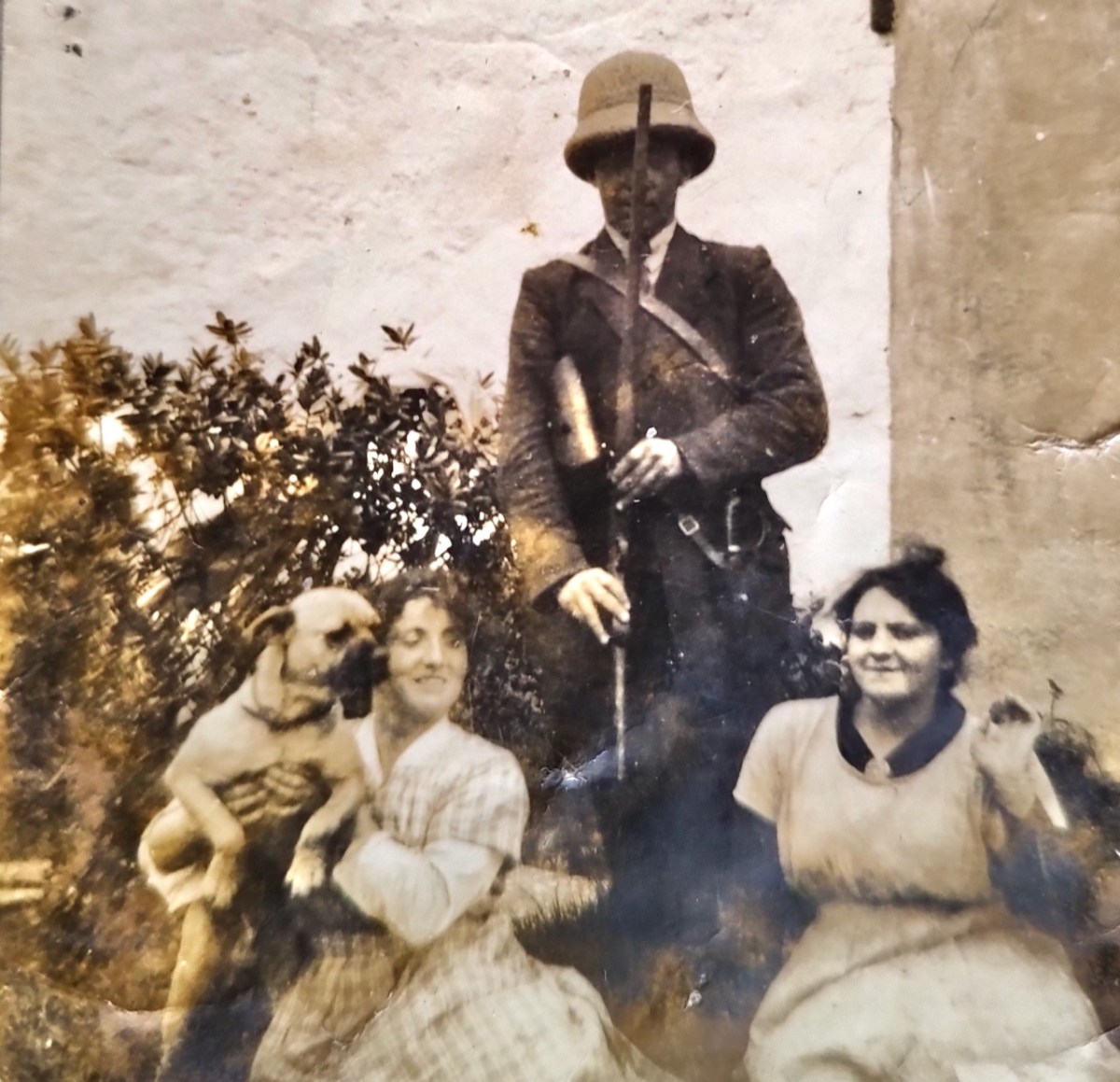
Here are May and Tess Buckley from Gortbreac in Castlehaven, who get a chapter each in this book, with their brother. They showed remarkable courage and resourcefulness – they also happen to be directly related to Ellen Buckley, O’Donovan Rossa’s second wife.

This is a follow-up to Karen’s first book, Extraordinary, Ordinarily Women, and I can’t emphasise enough the importance of the work that she has done with these two books. She has brought the lives of strong courageous women out of the shadows, and challenged the prevailing narrative that elevated the role of the male volunteers and members of the IRA over the parts played by everyone else. It’s not an exaggeration to say that women’s stories were more than neglected but that they were actively suppressed.
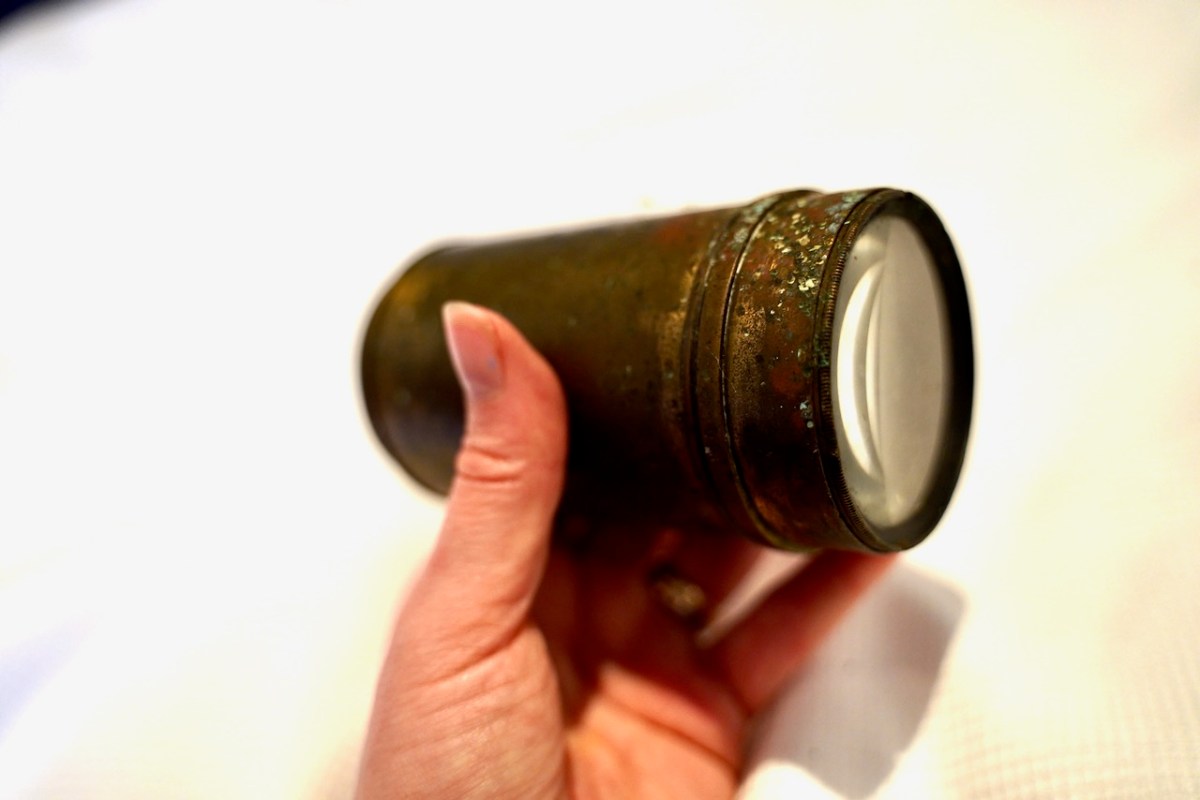
Tess Buckley’s telescope – she used it to identify any approaching military or police movements from afar

When the Military Service Pensions were established in 1924, women were explicitly excluded. Ten years later they were included in Military Service Pension Act 1934, which established five grades of service – A B C D and E, but relegated women to grades D or E. To get a D pension you had to be a Member of the headquarters staff or executive of Cumann na mBan OR in command of one hundred members or more. To get an E pension you had to prove you were in active service. They didn’t make it easy – requests for more information, for verification and letters of support – it often got so wearying that the women stopped pushing or said simply they had nothing more to add.

This is Mary Anne O’Sullivan of Bere Island on her wedding day. The situation on Bere Island was very difficult due to the presence of a British Army Camp (there until 1937) and Mary Anne showed great courage and presence of mind in hiding an escaped IRA prisoner

Many of them never spoke about their experiences, which made Karen’s research all the more daunting. This generation is only now discovering what their grandmothers and great-aunts did, sometimes by perusing the Pension files, or by discovering old documents in attics. Four of the stories in this book involve sisters – in Molly Walsh’s story Karen notes:

Molly did not speak of her experiences during this time to the generations that followed, she only spoke to her own siblings, sometimes they would go into a separate room to talk.
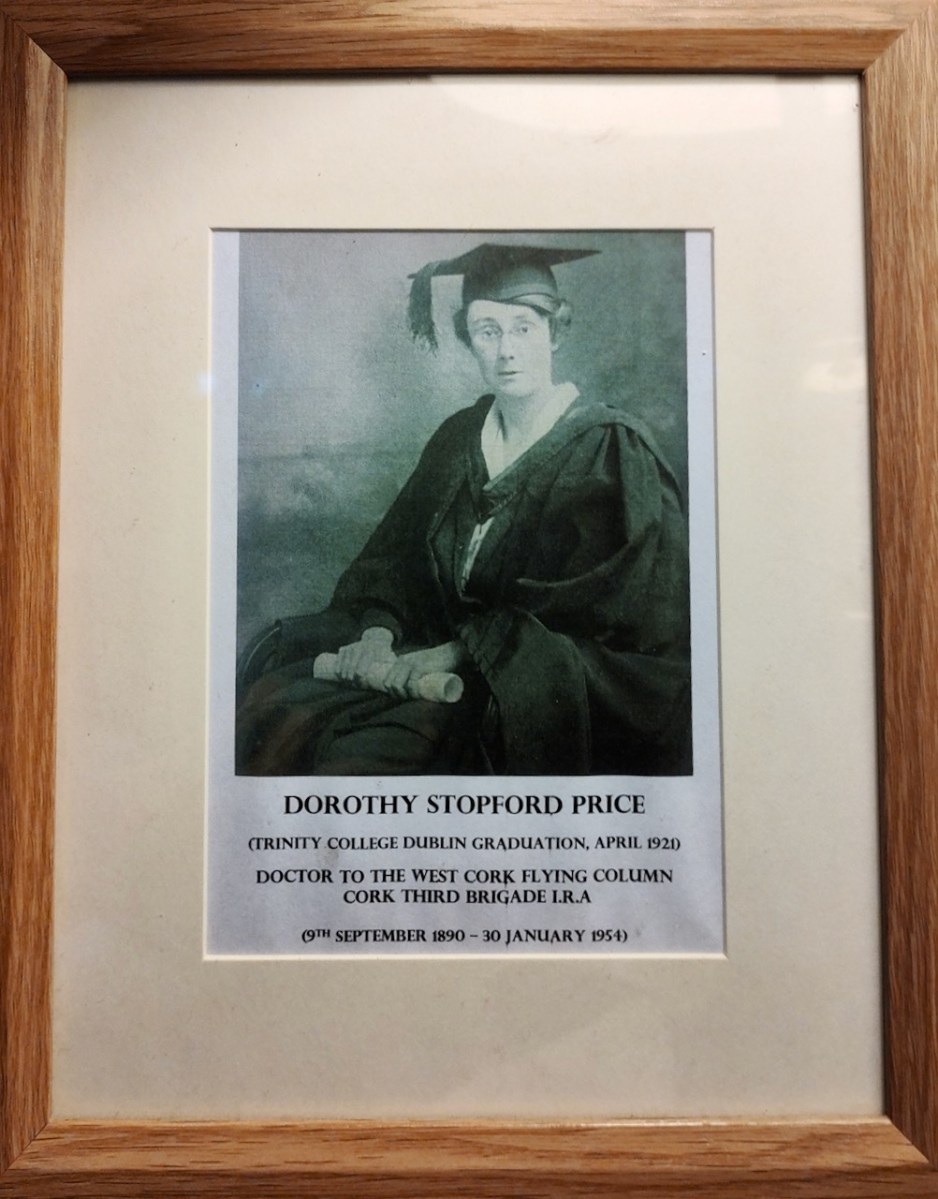
One of Molly’s great friends was Dorothy Stopford Price (above), who came from a landed Protestant family but spent time in Kilbritain teaching first aid at first and then as the community doctor and as medical officer to the local IRA Brigade. As an aside, although Dorothy pioneered the treatment and vaccination for TB in Ireland (below), all you ever hear about is the role played by a man, Noel Brown.

You have to read the book yourself to see how daring, brave and well-organised these women were, but I do want to tell you something of the story of Kathleen O’Connell of Ballydehob, who lived in a house two doors down from Working Artists’ Studio where we launched the book. She was an incredible woman – here are just some of her accomplishments, taken from Karen’s book.

In the Nominal Rolls of Cumann na mBan she is recorded as Captain of the Ballydehob branch and, by 1921, she was the Treasurer of Schull District Council (including Ballydehob), which had 114 members. What is also apparent is that she was trusted with possessing and delivering the secret, important information that the dispatches contained. And, of course, it meant that she put her own safety at risk. There is also a record of Kathleen being involved in setting up four or five “hospitals” in her area.

There was raid after raid.

During a Black and Tan raid on the town which occurred immediately after the vols. had been here (the house was reported) I had a large quantity of ammunition got by the volunteers in some raids on ex-policemen’s houses and elsewhere which was left to me to dump but I hadn’t got time…I got it out of the house by putting it in a large hand-basket and covering it with cabbage & bread. I went more or less in disguise wearing a shawl & long skirt, to get out of town to the dump, or safety somewhere, I had to ask the sentry for permission to get through… 

The village of Ballydehob was surrounded. She was sent by the sentry to the officer in charge and she managed to convince him to let her through …as I said I wanted to take bread home to children; all this time I had the basket of ammunition and some literature. I went about a mile with it. She had two loaded revolvers, a holster and some clips of bullets; and the consequences of being caught were stark: They would have shot me probably if they had discovered it.

I took part in an ambush which was laid at Barry’s Mill. Took out food a couple of times during the day alone, in Wood’s commandeered horse & trap, also took dispatches which arrived while they were there

She also scouted for the Volunteers that day, travelling back and forth to the mill. 

On the last trip I went out there, alarm was given of the approach of the enemy. I could not then get back. Commandant Lehane gave me his 45 revolver and I remained their with the others for a considerable time, until it was reported the military had gone some other way. . . 

17 lorries and private car with a ‘lady searcher’ arrived around this time in Ballydehob in order to search her and her home. She had been anticipating the visit – “I had everything dumped but the dispatch. It was in my pocket. I ate it.”

This is the house – the colourful one on the right in this picture – in which Kathleen O’Connell lived in Ballydehob

Kathleen was ruined financially by all her support for the cause. Letters of support for her pension application were fulsome in praise of her work and her commitment. She was awarded a grade E pension in 1939. She died, here in 1945, aged 50. She had not married and had  no children, and all memory of her gradually disappeared from Ballydehob. When Karen went looking for the house she had lived in, it seemed nobody could remember the heroic Kathleen O’Connell who had once lived here.

Another view of the house in Ballydehob, from Google Maps. There should be a plaque!

However dangerous Cumman na mBan activities were during the War of Independence, those dangers tripled during the Civil war, as did the horrors of families ripped apart. Cumman na mBan took an anti-treaty stance, and where they now supported all the efforts of the anti-treaty side, the pro-treaty fighters knew all their secrets, their hiding places and their habits. They had to be, therefore triply ingenious – and they were!

Another reason why now was an apt time to Karen to release this book is that we are facing an upcoming referendum. In the 1937 Constitution, heavily influenced by the Catholic Church – Archbishop McQuaid (above with deValera) submitted multiple comments and suggestions for amendments – DeValera and his government included this provision:

ARTICLE 41:2: In particular, the State recognises that by her life within the home, woman gives to the State a support without which the common good cannot be achieved.

This felt like a deep betrayal to many women of Ireland, who had rallied to the cause taking as their inspiration the words of the 1916 Proclamation, which said: The Republic guarantees religious and civil liberty, equal rights and equal opportunities to all its citizens, and declares its resolve to pursue the happiness and prosperity of the whole nation and of all its parts, cherishing all the children of the nation equally.
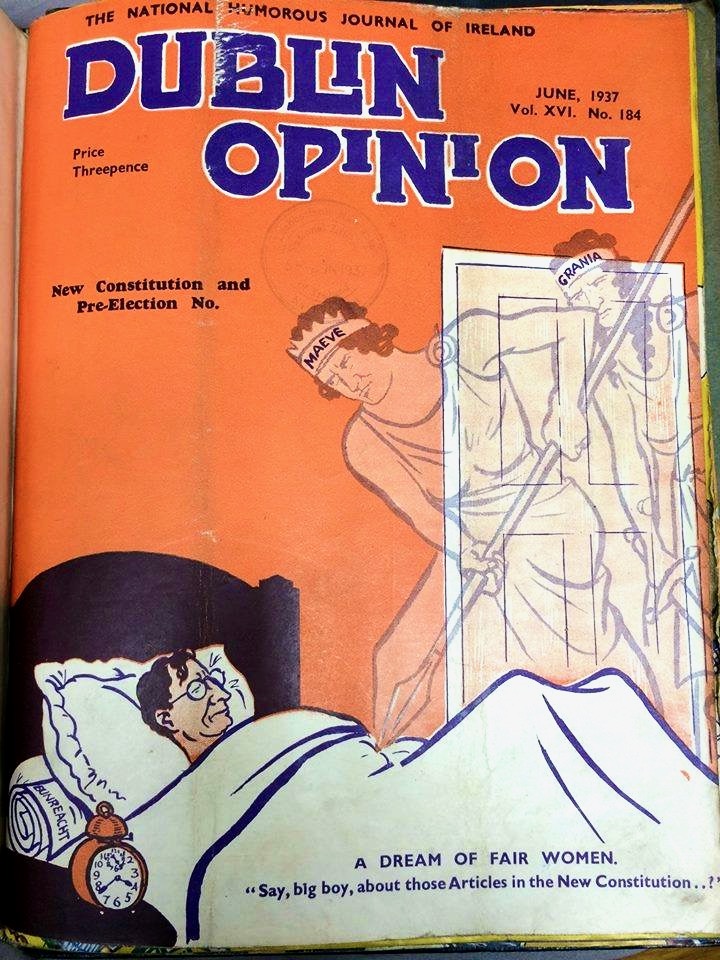
The cover of Dublin Opinion in June 1937. Queen Maeve and Grainne Mhaol are poking the sleeping deValera, who has the Constitution, Bunreacht na hÉireann, under his pillow

The upcoming referendum asks us to vote to remove the wording of Article 41:2. It’s 2024 – 100 years since these extraordinary ordinary women were playing their part in the founding of the state, only to be banished to a life within the home.
I like to think that Kathleen O’Connell, Lizzie Murphy, Tess and May Buckley, Molly Walsh and Dorothy Stopford Price, and all the other Extraordinary Women, are up there in heaven, chatting to one another over pots of tea, and casting a protective eye over the campaign to remove article 41. When it’s voted out, I see them nodding their heads and saying at least all our work wasn’t in vain.

I was honoured to be asked to launch the book!

Let’s all get out and vote for this constitutional amendment! It’s the best way we can honour the work that these extraordinary women did. That – and buy Karen’s book! It’s available in bookstores in West Cork or by contacting the author.
Yeats’ Day

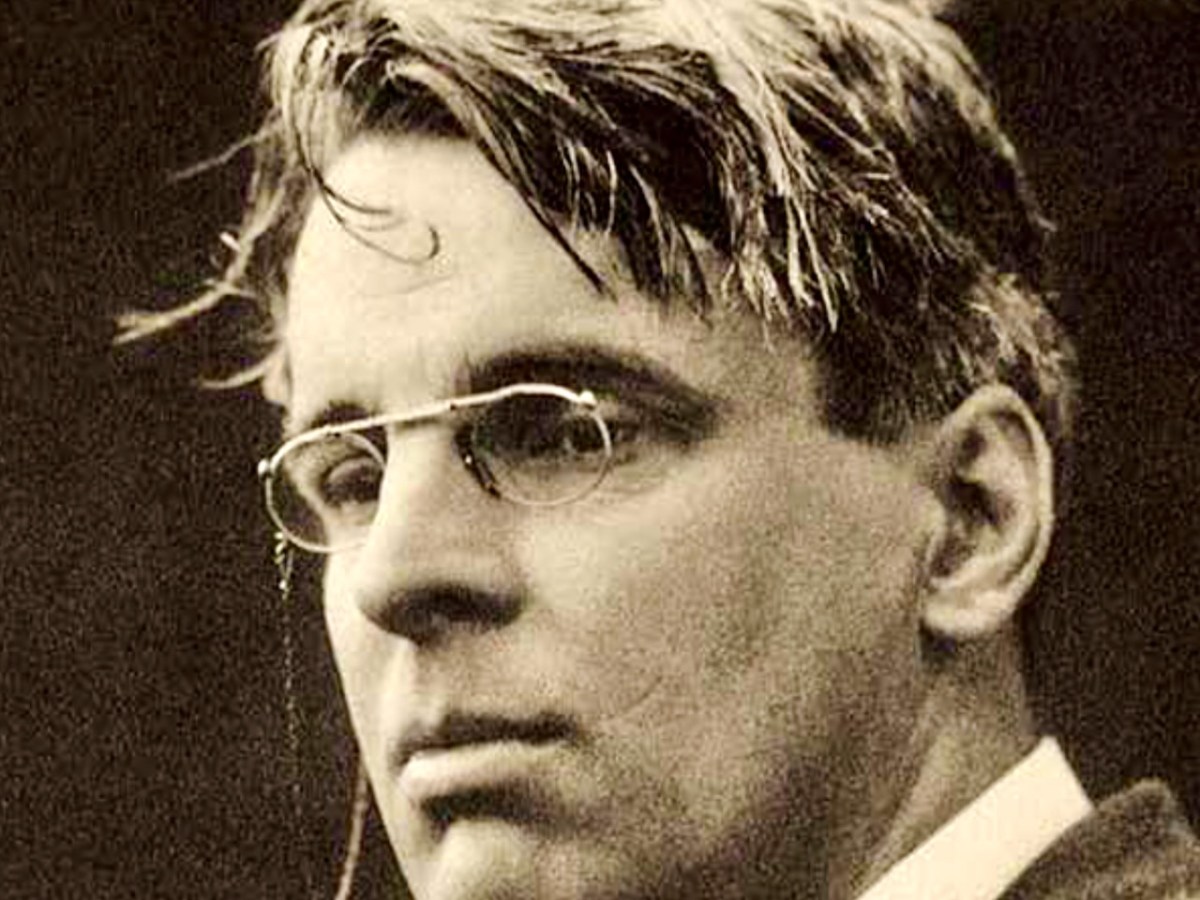
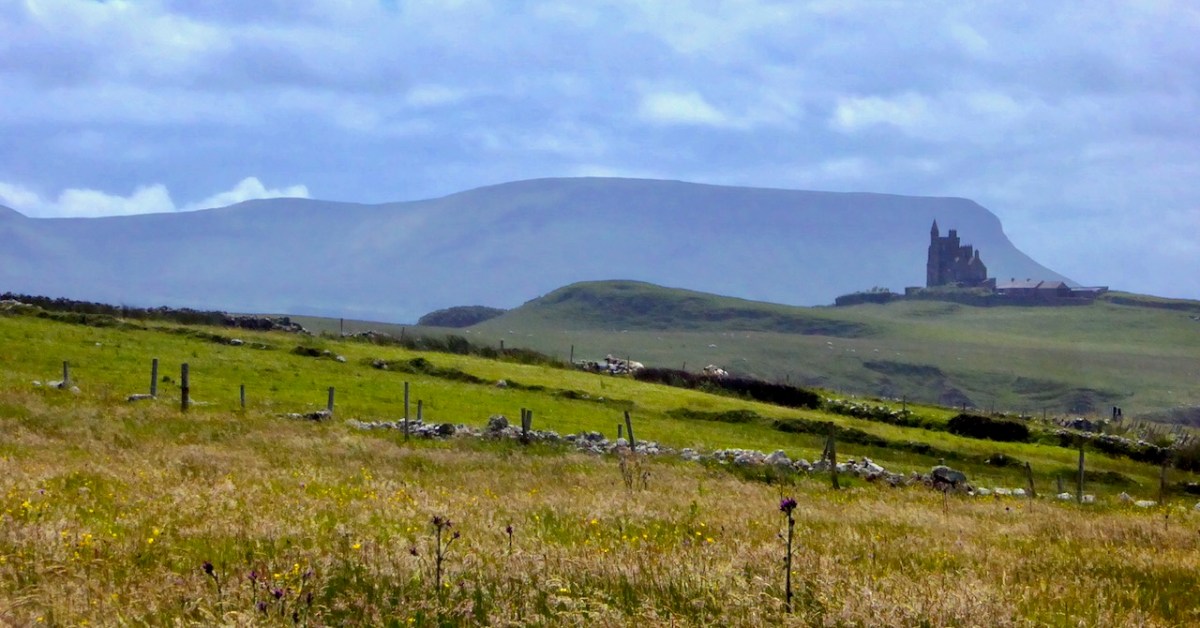
Yeats country – Benbulben and Classiebawn Castle (above). Finola took this fine view seven years ago, when we set out to visit the haunts of William Butler Yeats. We have to turn to Yeats now, as it’s exactly one hundred years since he was awarded the Nobel Prize for Literature – in December, 1923. I have carried a place in my heart for Yeats, ever since I was at Primary School on the Hampshire/Surrey borders, not far from Thomas Hardy’s Wessex. Yeats and Hardy were rivals for the coveted award – the final vote in 1923 was between the two of them: in the end, only two Nobel committee members voted for Hardy, and Yeats achieved the prize. The Guardian newspaper said that “…Mr Yeats is to be congratulated, almost without reserve, on lifting this substantial stake. He is a poet of real greatness; prose, too, he can write like an angel…”, however then arguing that Thomas Hardy would have been a worthier recipient of the award!

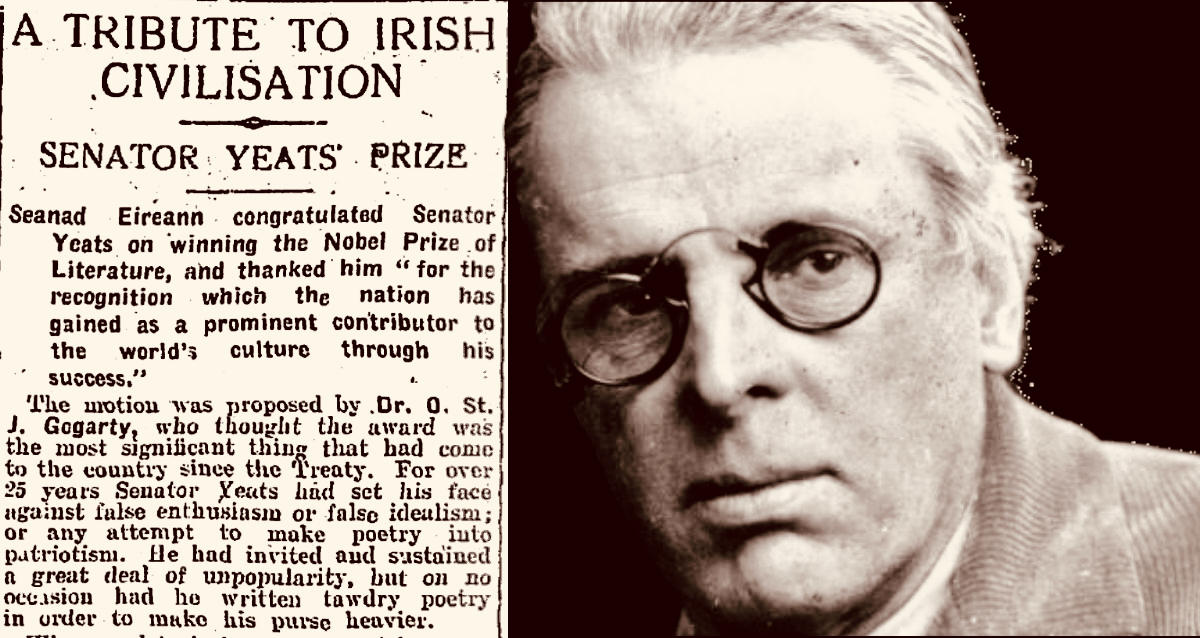
The Irish press congratulates Yeats on his achievement (above – Irish Independent 29.11.1923). My schoolboy encounter with the poet must have been when I was around ten years old and we were tasked to learn The Lake Isle of Inisfree. I can still recite it, word for word, to this day, sixty seven years later. But it was far more than mere words for me, then. Our teacher – Mr Sharpe – was careful to explain that this man was cooped up in the city of London – on its “pavements grey” and was yearning for the countryside he loved:

I will arise and go now, and go to Innisfree,
And a small cabin build there, of clay and wattles made;
Nine bean-rows will I have there, a hive for the honey-bee,
And live alone in the bee-loud glade.

And I shall have some peace there, for peace comes dropping slow,
Dropping from the veils of the morning to where the cricket sings;
There midnight’s all a glimmer, and noon a purple glow,
And evening full of the linnet’s wings.

I will arise and go now, for always night and day
I hear lake water lapping with low sounds by the shore;
While I stand on the roadway, or on the pavements grey,
I hear it in the deep heart’s core.

Inisfree serves the poet’s romantic dreams of a remote idyllic landscape far away from the noisy metropolis. It does exist as a place – on Lough Gill in Co Sligo: Yeats spent childhood summers nearby. Interestingly, I searched the internet for pics of the island, and the above came up. It’s from a Roaringwater Journal Post which I wrote in 2016. And it’s not Inisfree, but another ‘lake island’ – just outside Skibbereen, in West Cork – Cloghan Castle Island on Lough Hyne: there’s a holy well nearby, and an 8th century church dedicated to St Brigid – but all that is another story. The diversion just serves to warn against trusting what you find online!

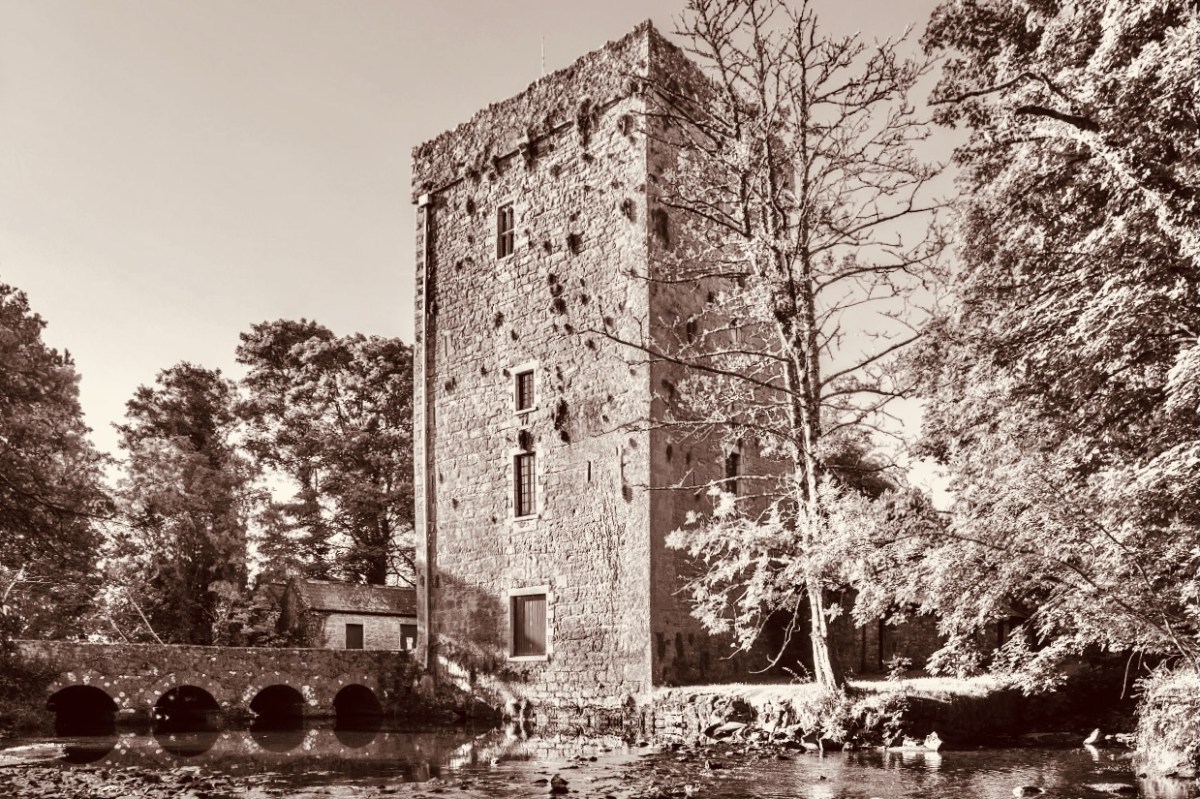
Thoor Ballylee Tower, Co Galway (above) – this 14th century tower house was described by Seamus Heaney, another Irish Nobel Literature prize winner, as The most important building in Ireland, because of its associations with Yeats, who spent many summers there with his family.

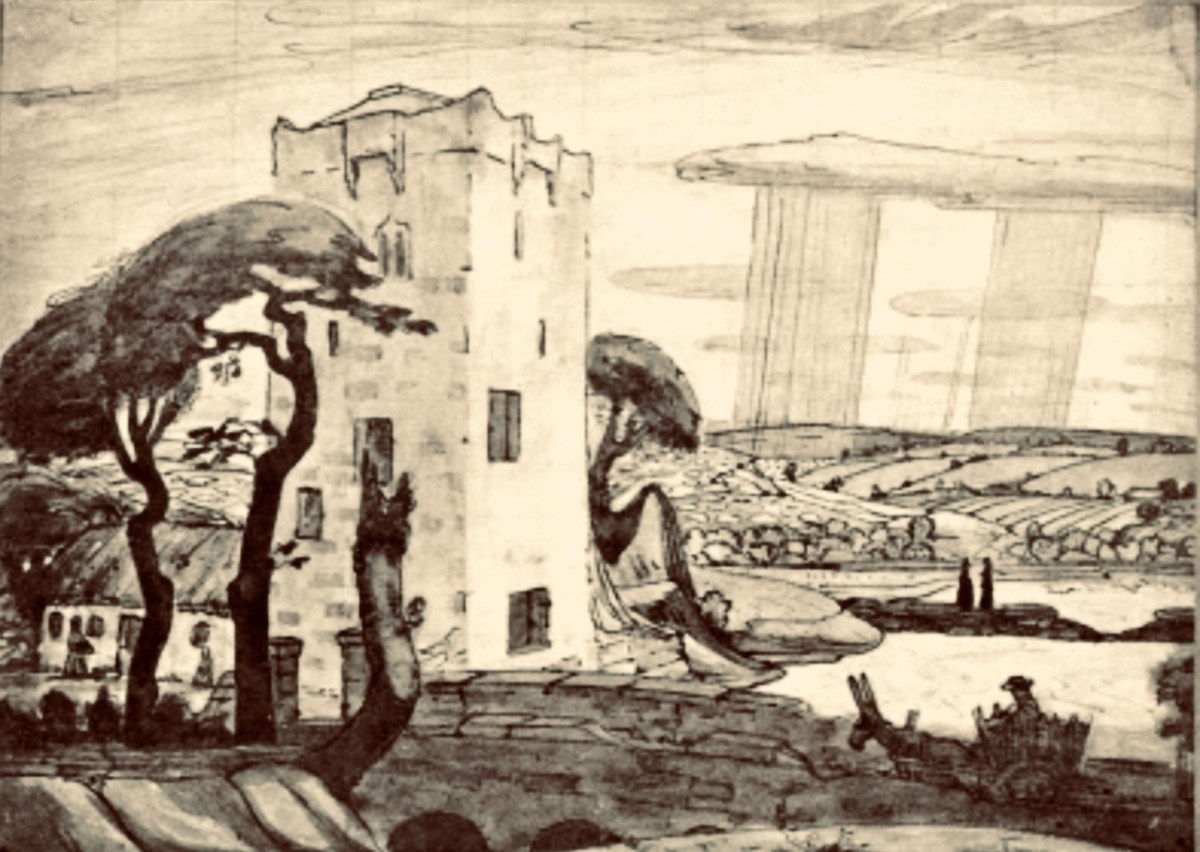
Here is the finely crafted cover of The Tower: a book of poems by W B Yeats, published in 1928 (courtesy Yeats Thoor Ballylee Society). The Tower was Yeats’s first major collection as Nobel Laureate after receiving the Nobel Prize in 1923. It is considered to be one of the poet’s most influential volumes and was well received by the public. (Below) a 1917 drawing by Robert Gregory – son of Isabella Augusta (Lady) Gregory and Sir William Gregory of Coole Park, Co Galway – of The Tower (courtesy Yeats Thoor Ballylee Society).

Going back to my early school years: I was an incurable romantic, and a daydreamer. I paid enough attention to lessons to get by, but my heart lay outside the school gates. Just minutes away were hop-fields and, beyond those, pastures, woodlands, streams – idyllic places where I loved to wander. I could completely relate to Yeat’s desire to be far away from the city, and that’s why his poem appealed to me. I knew very little about Ireland, and had no idea that was where I would one day make my home. I am here now, sitting at my desk, with the hills and oceans of Yeats’ own country beyond.

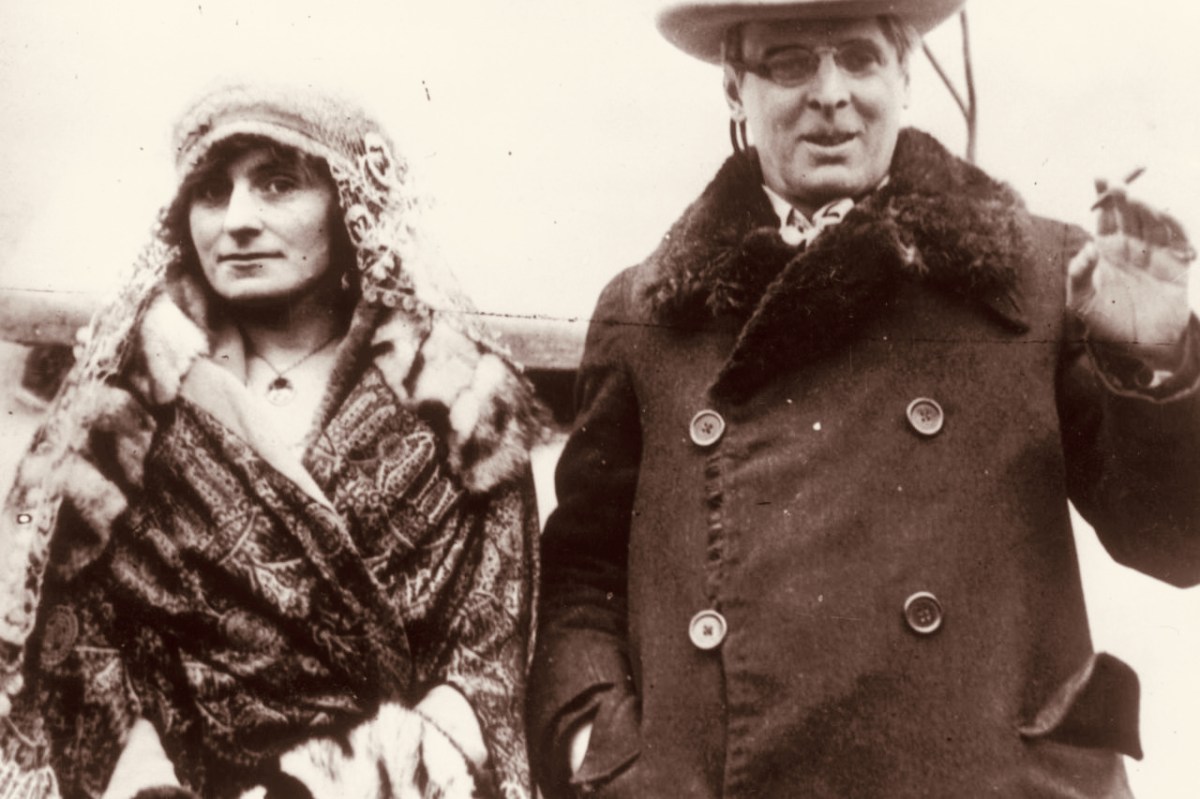
W B Yeats and his wife George Hyde-Lees heard the news that the Nobel Prize had been awarded to him on 14 November, 1923. The photograph above (courtesy Irish Independent) is said to be taken on that day. It’s also said that they celebrated by cooking sausages! The Irish Independent records: “Irish poet and senator, William Butler Yeats created history when he was awarded the Nobel Prize in Literature, the first Irish citizen to achieve such an accolade. The prize was awarded to Yeats ‘for his always inspired poetry, which in a highly artistic form gives expression to the spirit of a whole nation’.”

Somewhat surprised by the award, Yeats would later write in his (unpublished) autobiography: “Early in November (1923) a journalist called to show me a printed paragraph saying that the Nobel Prize would probably be conferred upon Herr Mann, the distinguished novelist, or upon myself, I did not know that the Swedish Academy had ever heard my name.” The news of the award was widely praised in Ireland with members of Dáil Éireann proudly announcing that it had placed Ireland on the international stage. It was a sentiment reiterated by the laureate himself, who at the awards ceremony claimed that the Nobel Prize was less for himself than for his country and called it Europe’s welcome to the Free State. In his presentation speech, Per Hallstrom, then chairman of the academy’s Nobel Committee, praised the poet’s ability to ‘follow the spirit that early appointed him the interpreter of his country, a country that had long waited for someone to bestow on it a voice’.

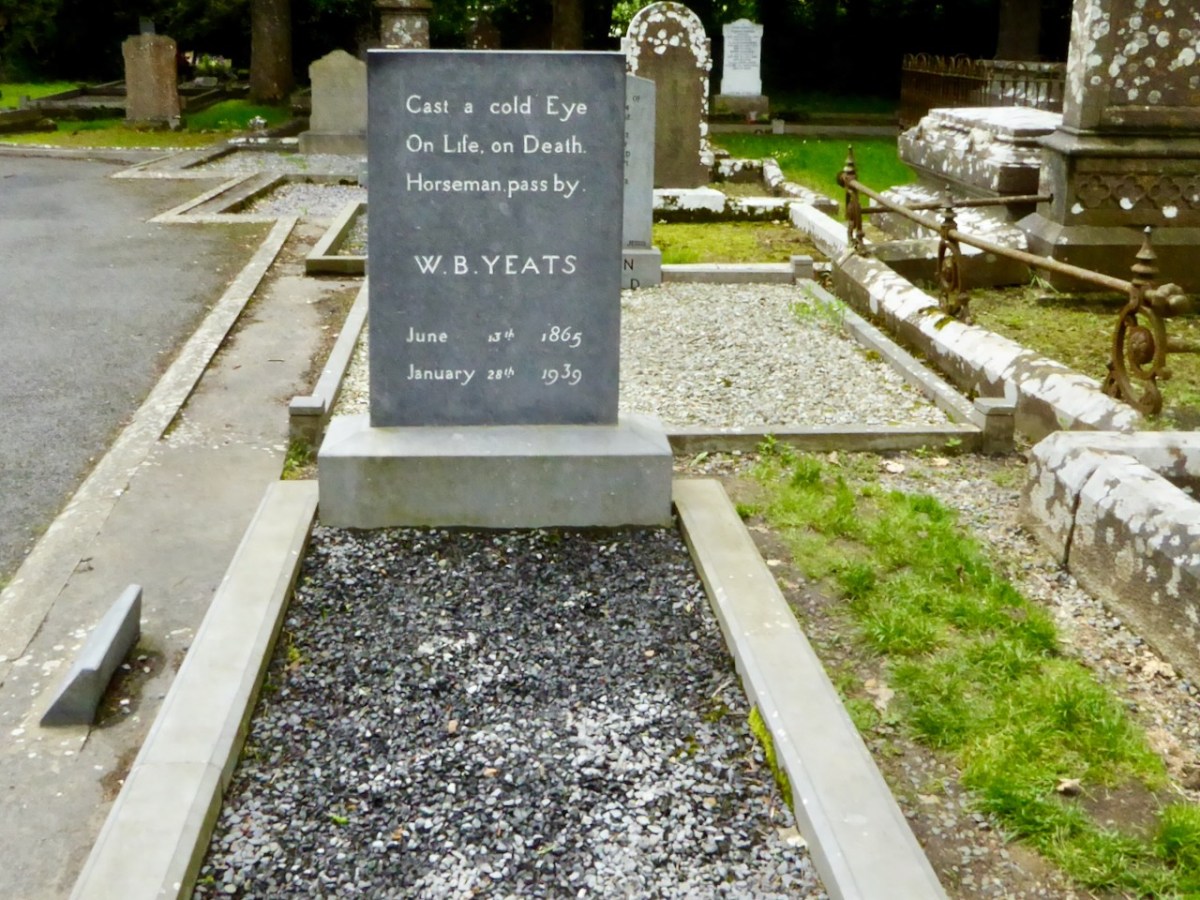
A portrait of Yeats painted by Augustus John OM RA in 1930 (courtesy Sothebys – private collection). Before Yeats passed away he requested that his final resting place be in Sligo. He died in Menton, France in 1939 aged 73 and was buried there. His wish was fulfilled in 1948 when his body was exhumed and buried in St Columba’s Church, Drumcliff. His headstone reads:

Exploring Ancient Drowned Landscapes

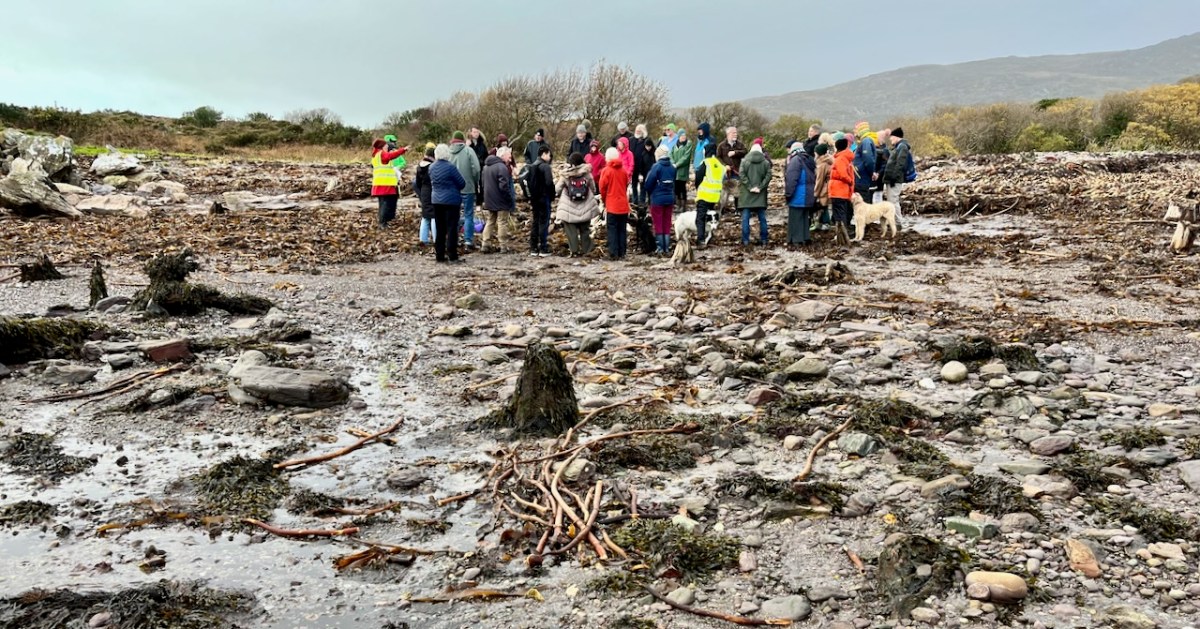
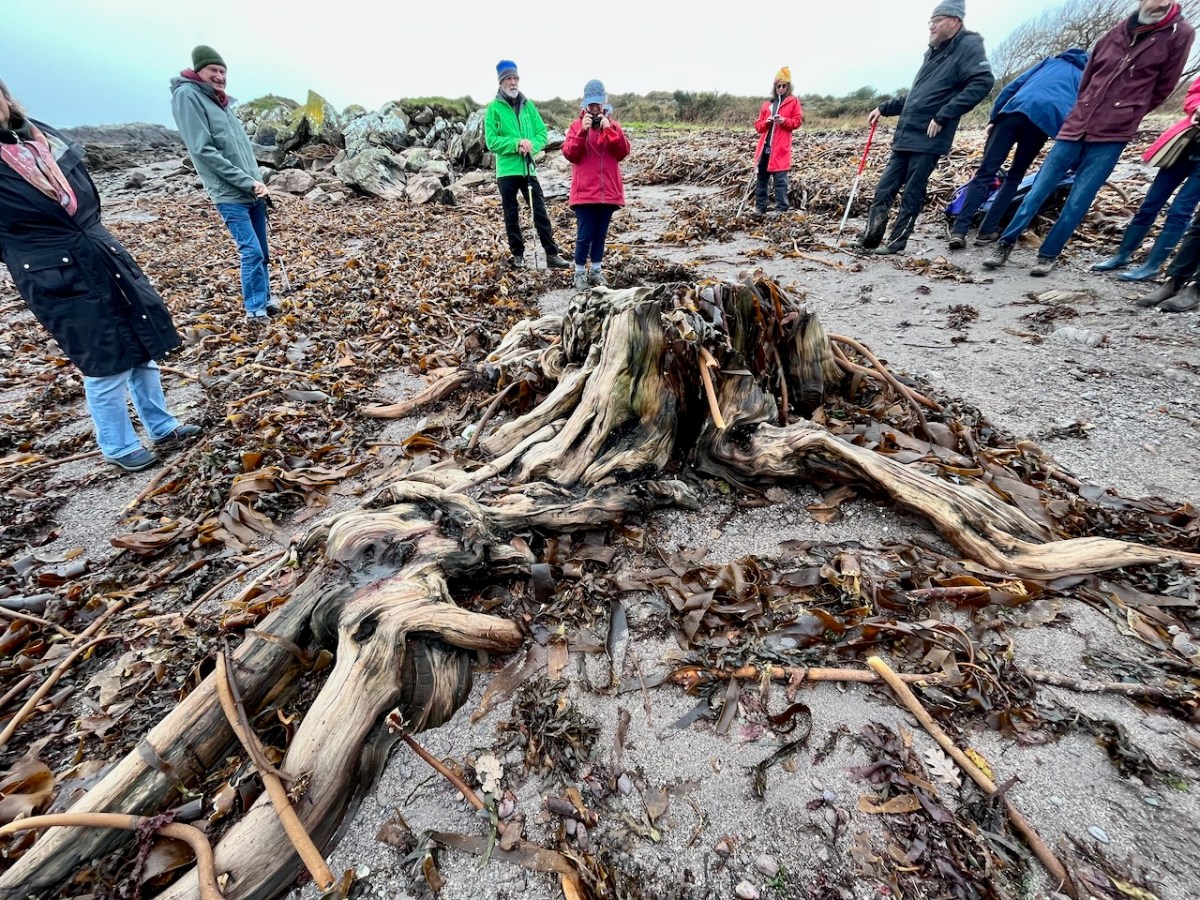
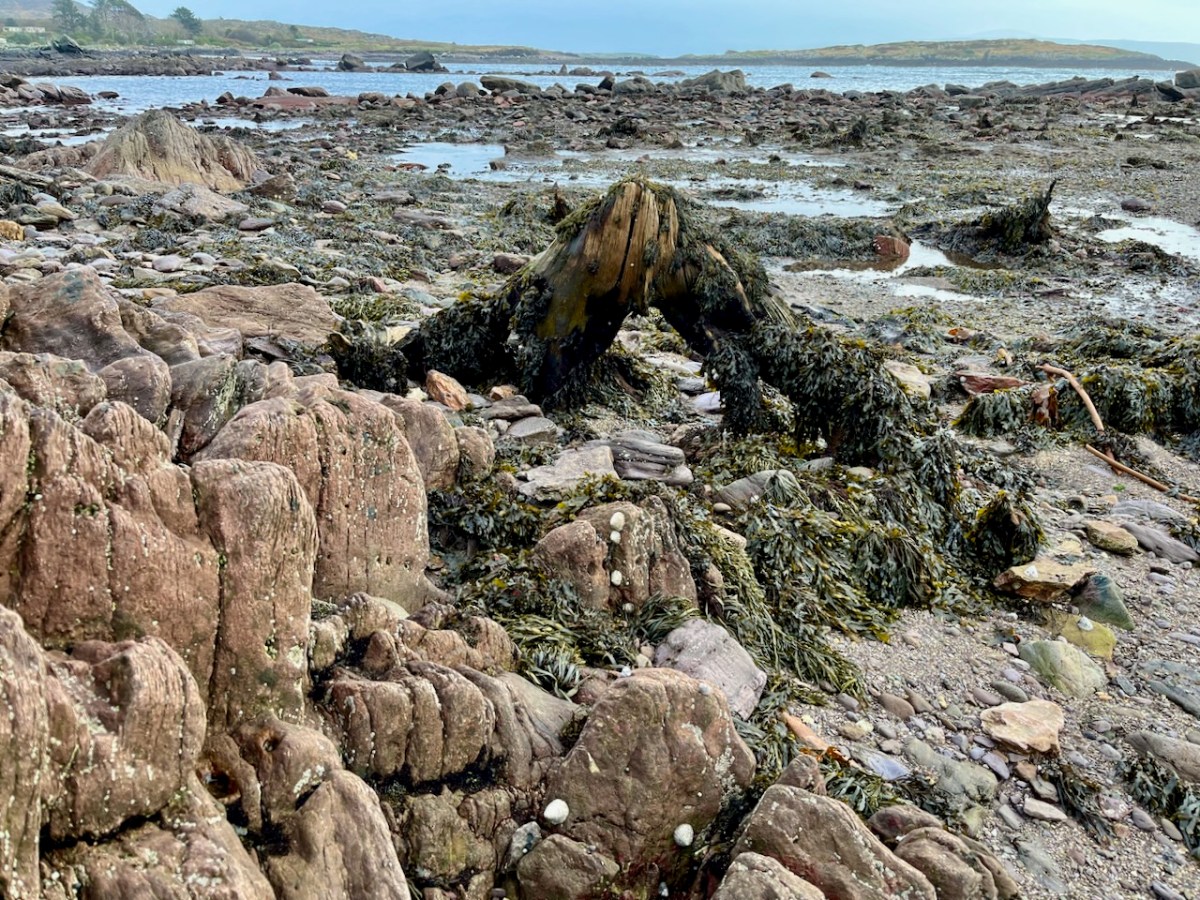
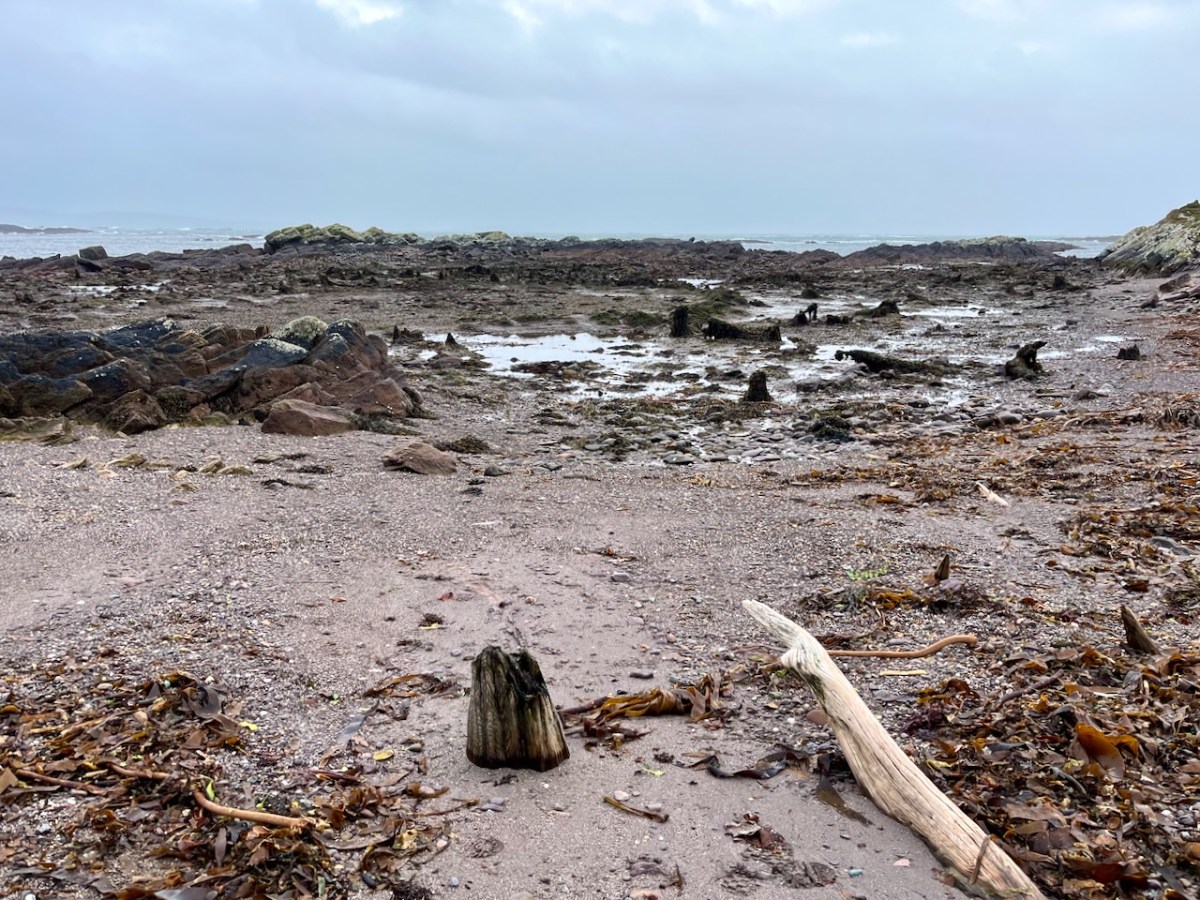
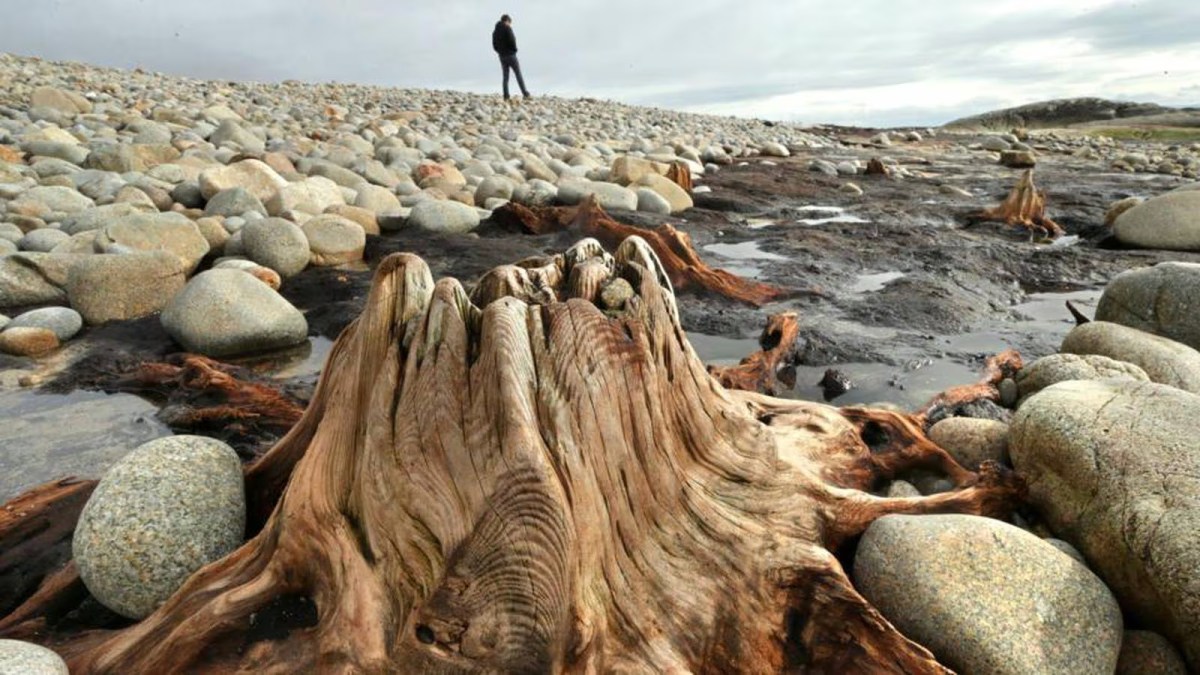
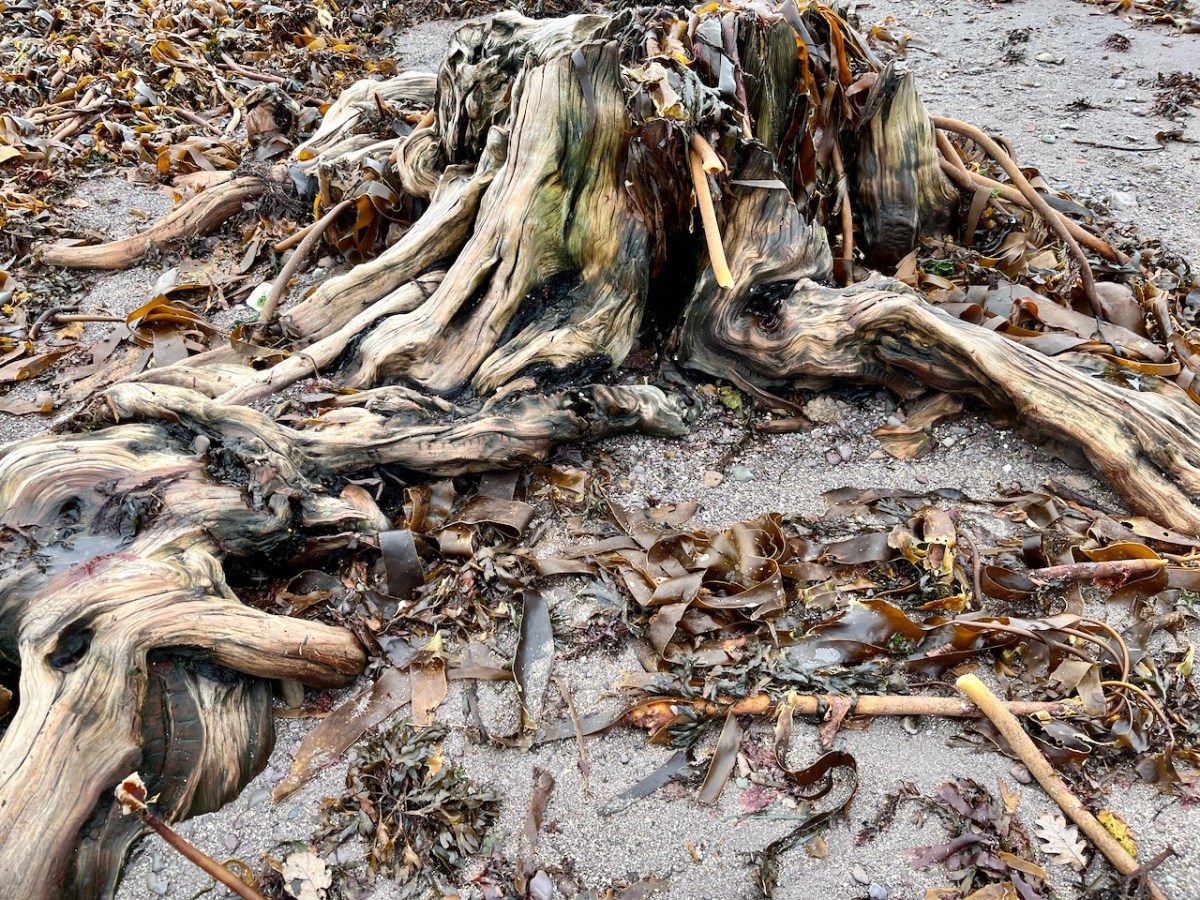
‘Drowned Landscapes’ – that’s an adequate enough description for us to look again at a subject which RWJ covered five years ago in this post: Tralong Bay, Co Cork – give it a read. I was reminded of the subject when we took part in an Archaeology Festival based in West Kerry just a week ago: Amanda’s current holy well blog describes the expeditions. One of the sites visited was Bunaneer Drowned Forest, where we saw stumps of trees on the beach there which were alive thousands of years ago. At low tide many tree remains become visible at Bunaneer, near Castlecove village on the south coast of Kerry’s Iveragh Peninsula. Our guides for this expedition were plant biologist Calum Sweeney and archaeologist Aoibheann Lambe.

This large jumble of roots (above) is known as Goliath. All the remains here can be seen at regular low tides: at other similar sites elsewhere in Ireland, remains of ancient tree boles and roots are only revealed when tides are exceptionally low. I find it remarkable to be able to see and readily touch these archaic pieces of timber: we are communing with distant history!

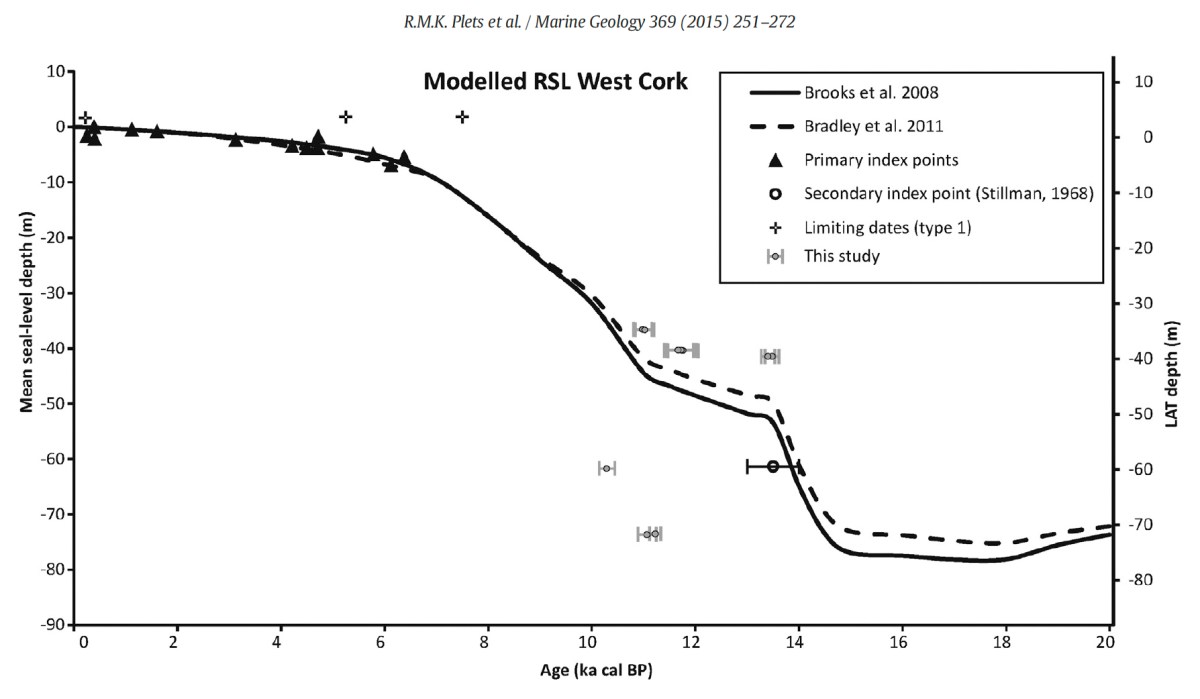
Carbon dating has shown that these remains were alive between three and a half and five millennia ago. This is evidence that sea levels were significantly lower then, and that the shore line was further out – perhaps 50 metres from where we see it today. We are constantly – and quite rightly – being warned about rising sea levels resulting from our changing climate in the long term: here we see clear verification that it’s a continuing – and now apparently accelerating – process.

Our friends Robin and Sue Lewando were also on this expedition. Robin has a particular interest in sea-level changes in the Late Quaternary and subsequent eras, and he pointed me to a 2015 paper which explores the subject specifically in the Bantry Bay area of West Cork. That’s a good place to be looking at ancient history: remember the story of Cessair – Noah’s daughter-in-law – who came ashore at Donemark? You first read about it here! So this is a scientific diagram which sets out how sea-levels have been changing over time in our locality:

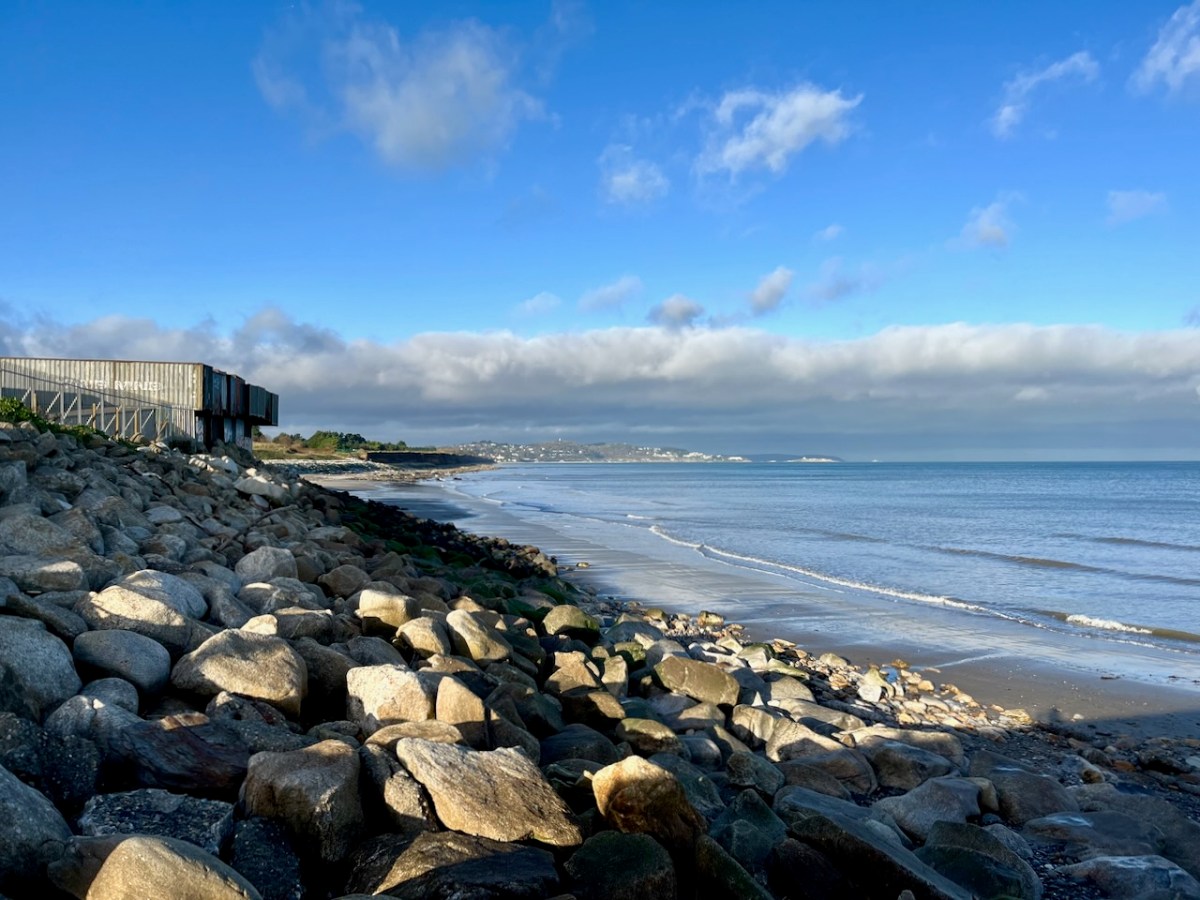
It’s an interesting comparison to take our horizons wider in our study of changing sea levels across the islands of Ireland. Over on the east coast – north of Bray, Co Wicklow – there is another substantial area where tree remains have been revealed at certain tidal conditions.

Above are the areas of beach between Bray and Killiney where ‘drowned forest’ remains have been observed. While at Youghal, Co Cork, further finds have occured:

This example catches our interest because the name of the settlement – Youghal – is derived from the Irish word ‘Eochaill’ meaning ‘Yew Woods’: they were evidently once common in the area, leading us to wonder whether the tree remains in this instance are of yew. In 2014 the following account of another ‘ancient drowned forest’ discovery appeared in the Irish Times (photograph courtesy of Joe O’Shaughnessy):

. . . Walking out on to the shoreline at low tide, geologist Prof Mike Williams points to the oak, pine and birch stumps and extensive root systems which were once part of woodlands populated by people, wolves and bears. These woodlands extended out into lagoons and marshlands that pre-dated the formation of Galway bay, Prof Williams says.

An extensive layer of peat also exposed at low tide in the same location in Spiddal was formed by organic debris which once carpeted the forest floor. The stumps at Spiddal are surrounded by root systems which are largely undisturbed. The carpet of peat is covered in strands of a reed called phragmites, which can tolerate semi- saline or brackish conditions.
“These trees are in their original growth position and hadn’t keeled over, which would suggest that they died quite quickly, perhaps in a quite rapid sea level rise,” Prof Williams adds. Up until 5,000 years ago Ireland experienced a series of rapid sea level rises, he says. During the mid-Holocene period, oak and pine forests were flooded along the western seaboard and recycled into peat deposits of up to two metres thick, which were then covered by sand.

Prof Williams estimates that sea level would have been at least five metres lower than present when the forests thrived, and traces of marine shell 50cm below the peat surface suggest the forest floor was affected by very occasional extreme wave events such as storm surges or tsunamis. He says most west coast sand-dune systems date to a “levelling” off period in sea level change about 5,000 years ago. Dunes in Doolin, Co Clare, are older still, having first formed around 6,500 years ago.

Prof Williams has located tree stumps in south Mayo and Clare, along with Galway, which have been carbon dated to between 5,200 and 7,400 years ago at the chrono centre at Queen’s University, Belfast. Some of the trees were nearly 100 years old when they perished . . .

Lorna Siggins
Irish Times 07/03/2014

Goliath, West Kerry, November 2023

Leap and its Scarecrows

There’s a village in West Cork called Leap – say “Lepp”. Where does that name come from? As is often the case in Ireland, it all starts with a story . . .

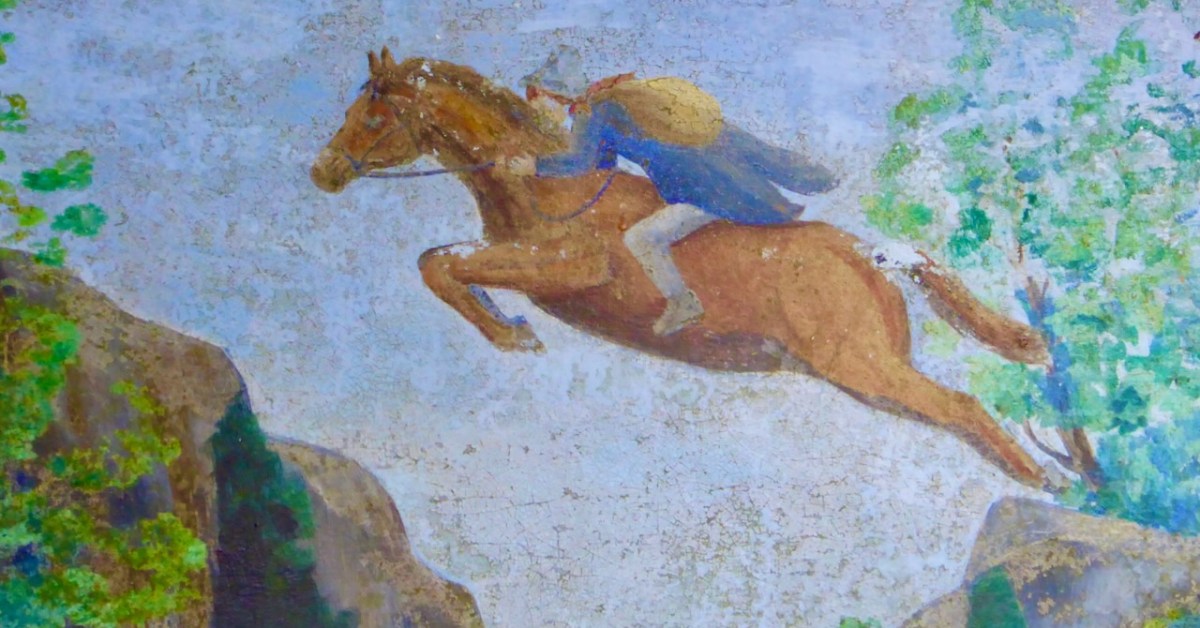
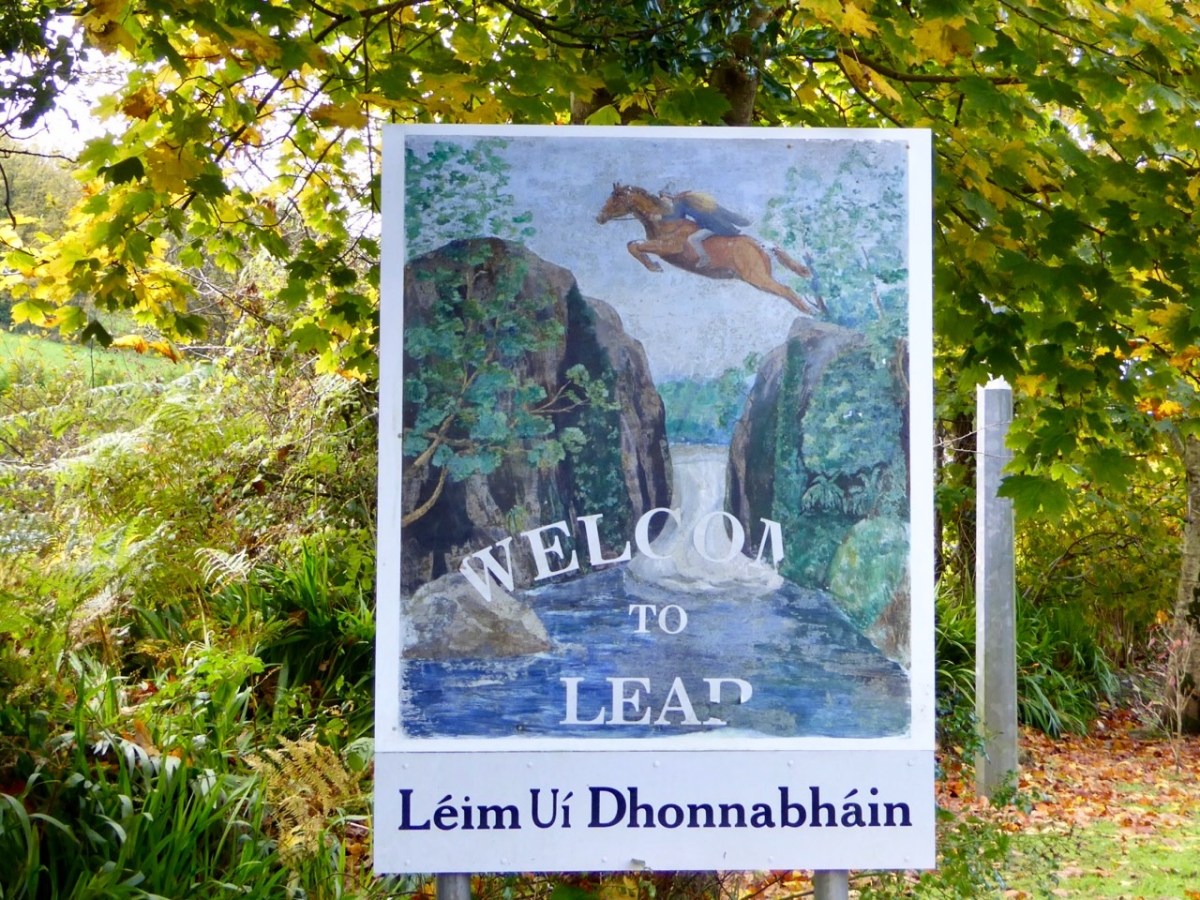
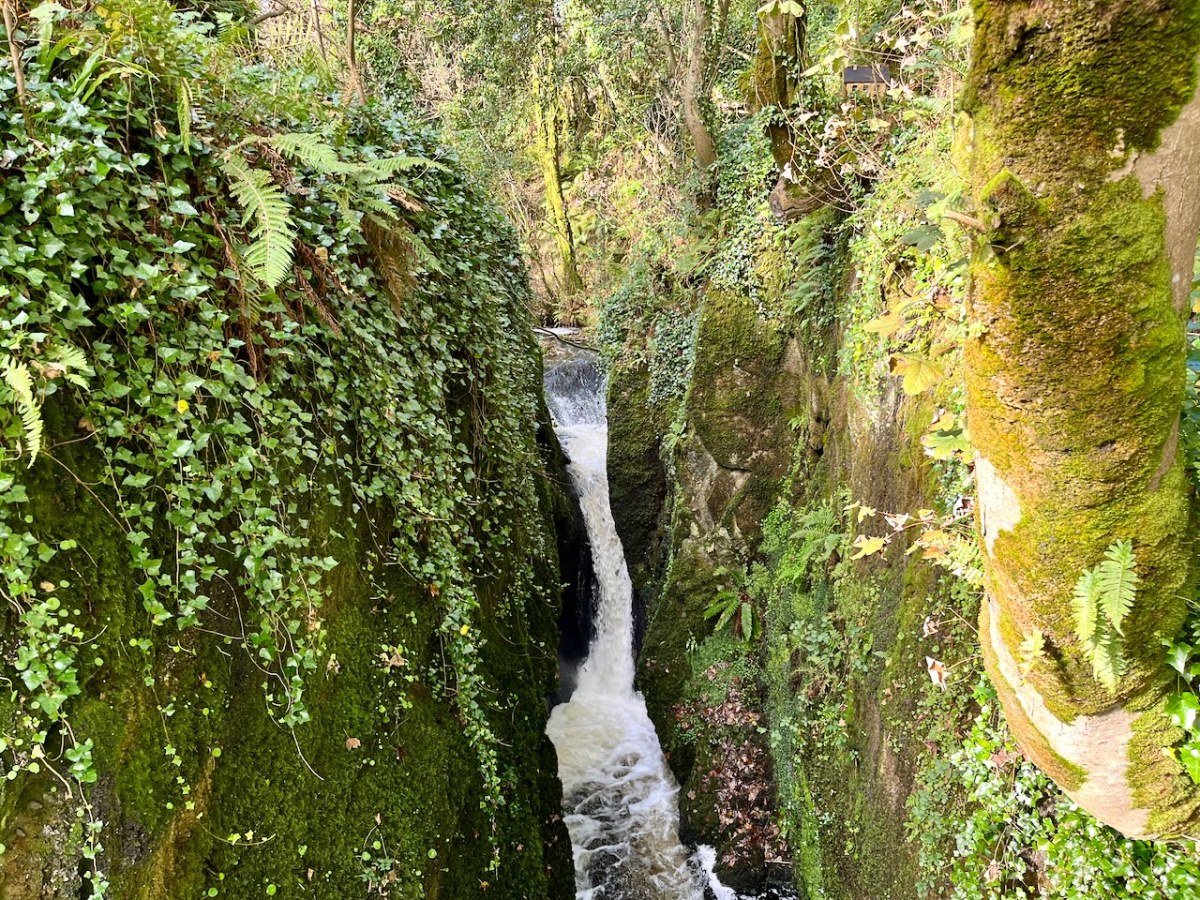
Tradition had it that St Patrick never went west of Leap (in Irish that’s Léim Uí Dhonnabháin, which translates literally as The Leap of O’Donovan), and that’s the sign at the entrance to the village, above. It was St Ciarán of Cape Clear who did all the converting in our part of the world: read about him here. So when The O’Donovan, pursued by British soldiers ‘leaped’ over the deep gorge which you can still see to this day, he was escaping into a much wilder country. The gorge (this is as it looks today – below) divides the West from East Carbery. So difficult was it to pass “beyond the leap” in those old days, that it was said: “beyond the leap, beyond the law”.

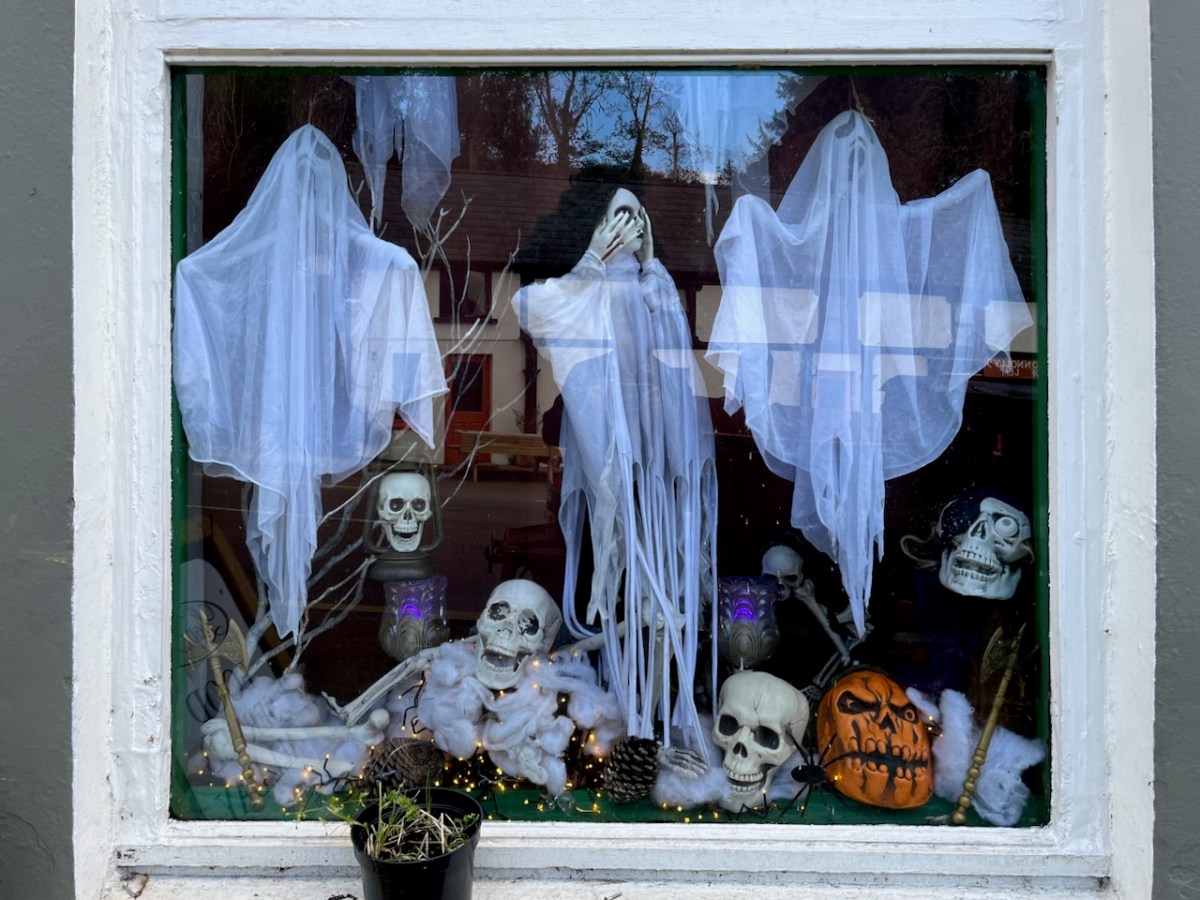
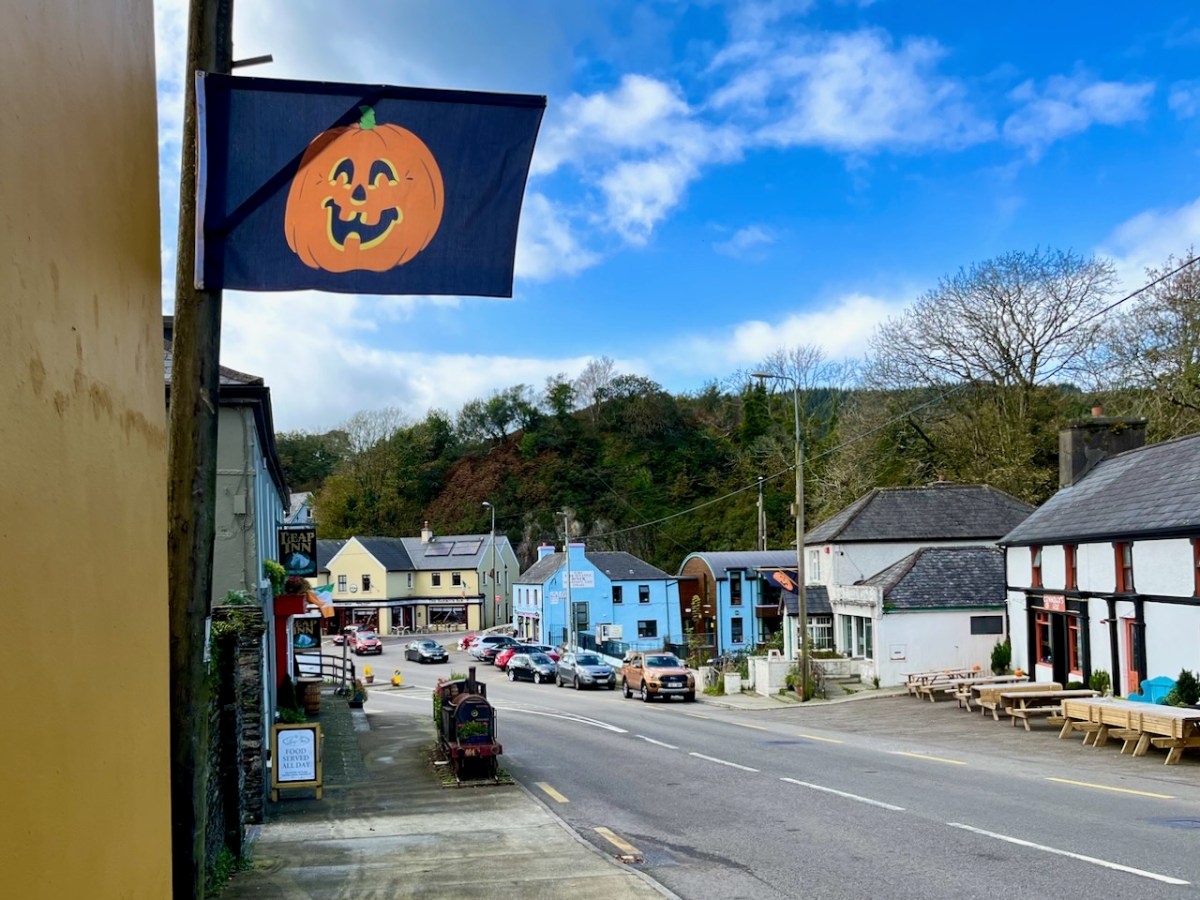
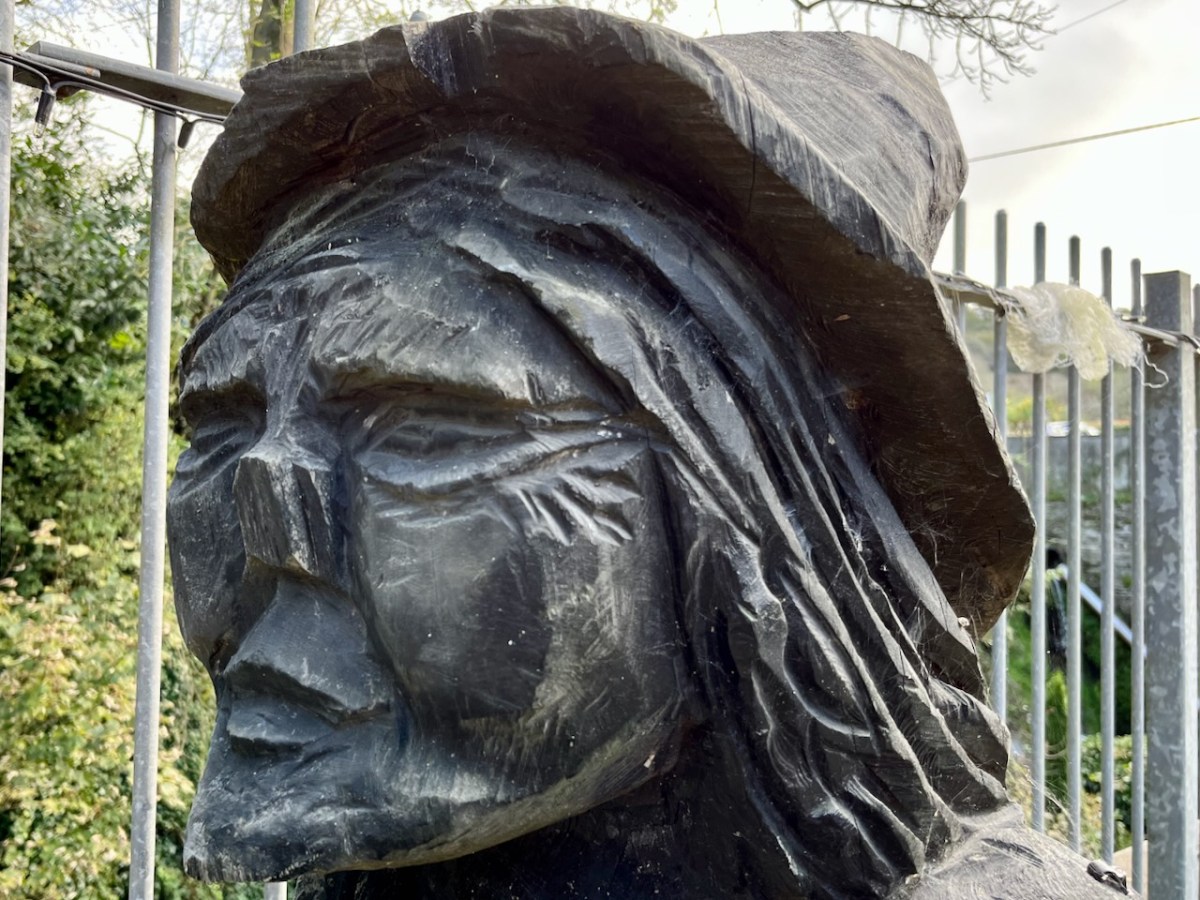
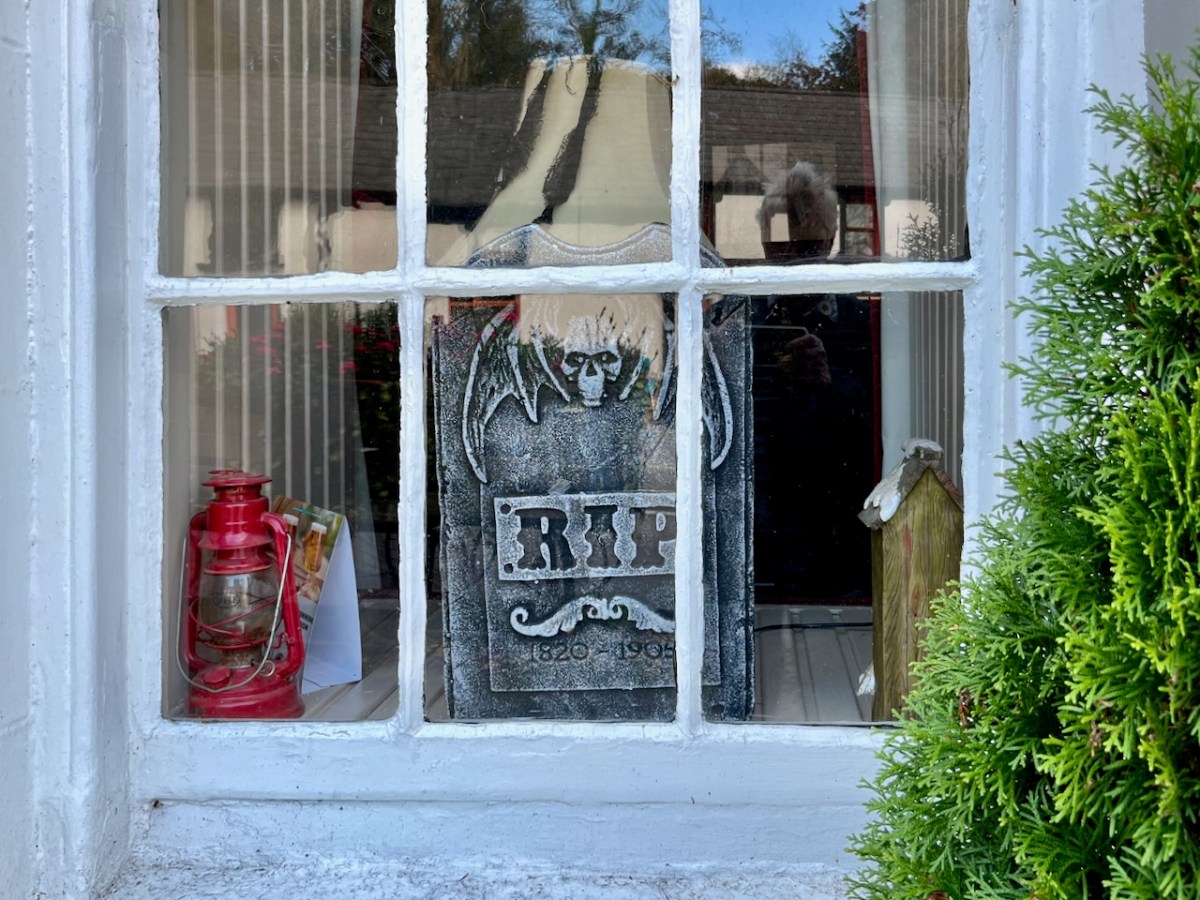
Apart from O’Donovans Leap, the village is celebrated today for its associations with Hallowe’en, Ghosts, and Scarecrows. And we are approaching the time of year when these phenomena come to the fore. At the present time, a few shopfronts are being decorated, but there are plenty of Scarecrows waiting in the wings for their moment to arrive!

You can see that Leap – in West Cork – will be worth a visit once the festivities are in full swing: that will be between Monday 23 October and Sunday 5 November this year. Back in 2015 we visited the Leap Scarecrow Festival and wrote this post about it (click here). Interestingly, it became the most popular post we had published up to that time – it’s had around 3,250 views since it first appeared. Have a look at it now – but also remember to go to the village of Leap at the end of this month!
St Michael

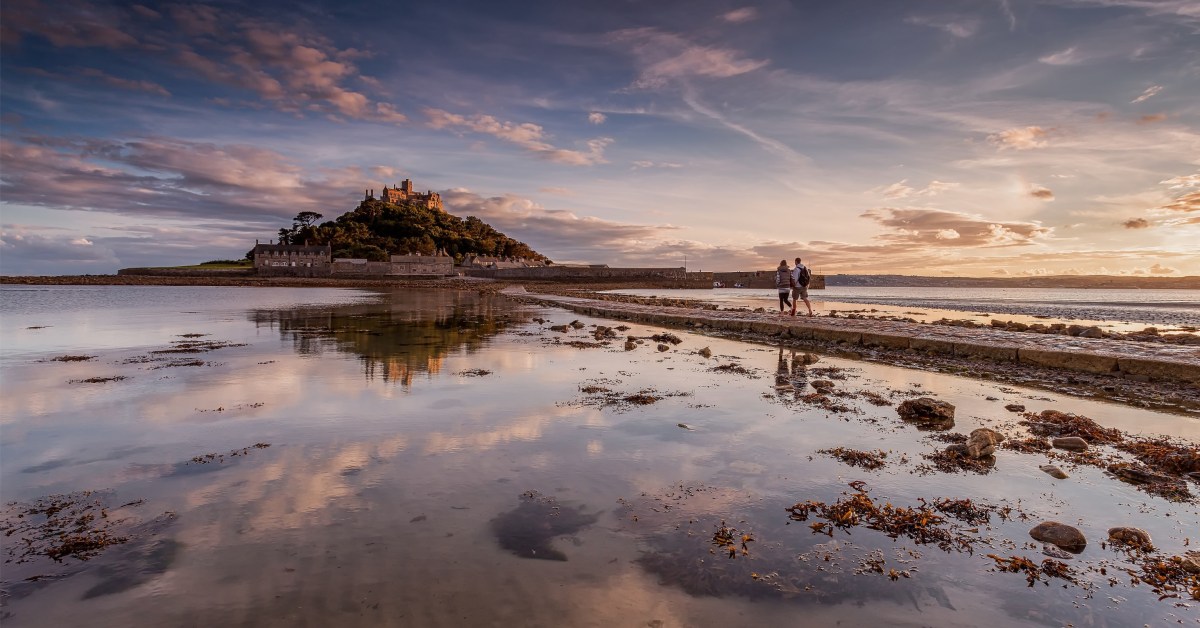
For a part of my life I lived in the west of Cornwall, looking out over St Michael’s Mount (above). Back in the 5th century, the Archangel himself appeared to fishermen on that rock. Legend has it that the Mount was constructed by giants and, also, King Arthur battled and defeated a giant there. As you all know, we have just passed Michaelmas – the day of the saint – September 29th.

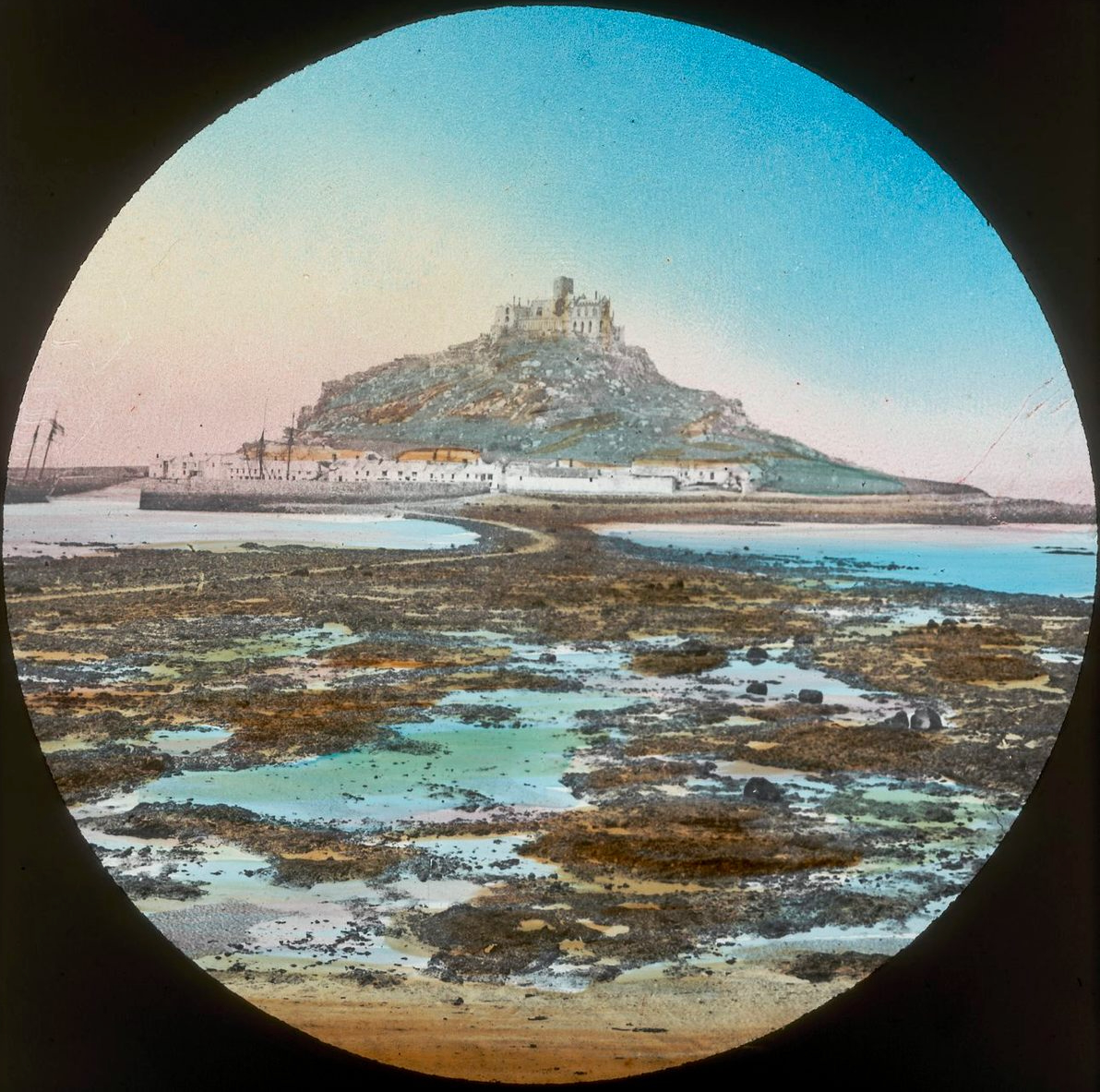
There is another ‘St Michael’s Mount’ on the coast of Brittany: Mont St Michel (above, from an old lantern slide). I have mixed memories of that place, having gone there on a school trip when I was twelve: I had all my hard-saved pocket money stolen from me in one of the little winding lanes that goes up to the summit. Michael is the patron saint of high places, so expect to find him on pinnacles.

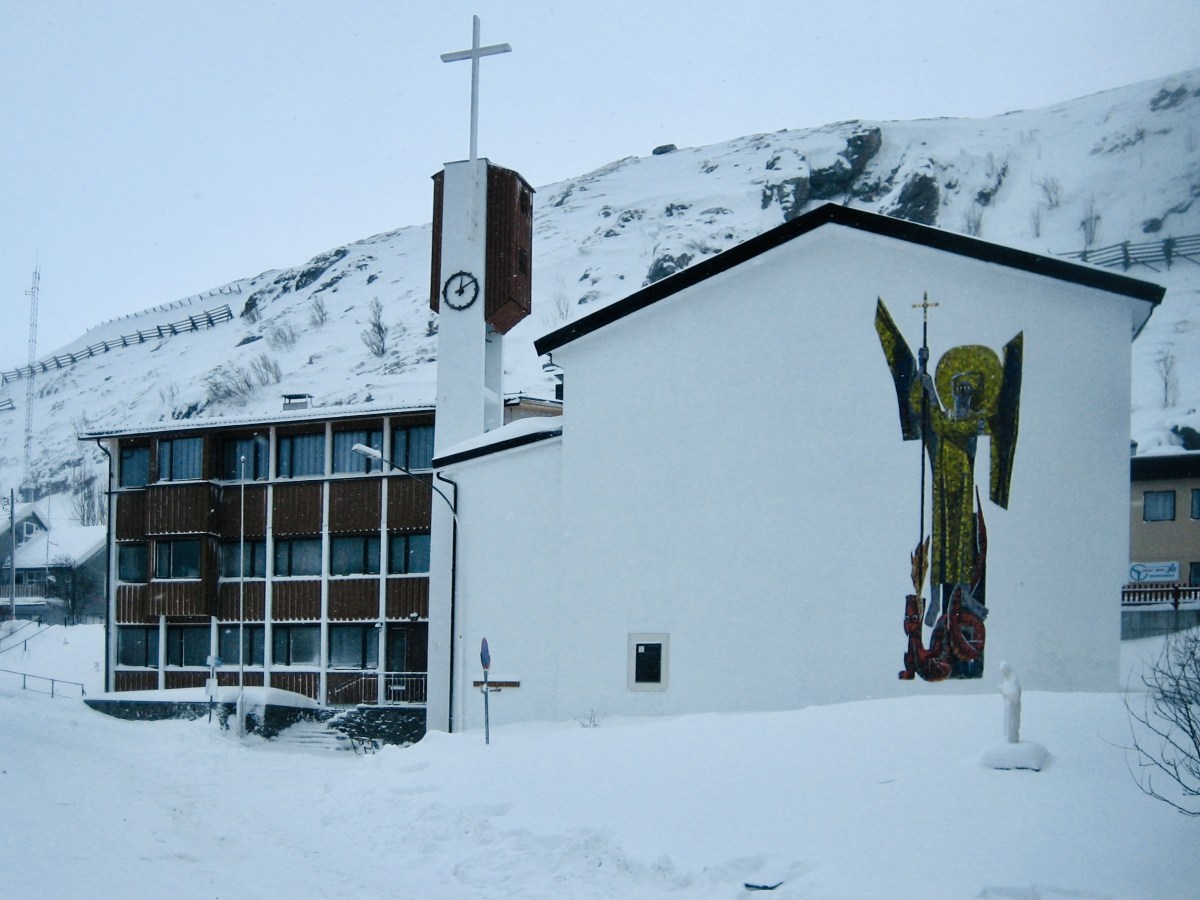
This St Michael’s church is certainly in a high place. It’s at Hammerfest in Norway, and has the distinction of being geographically the highest church in the world! (image by Manxruler)

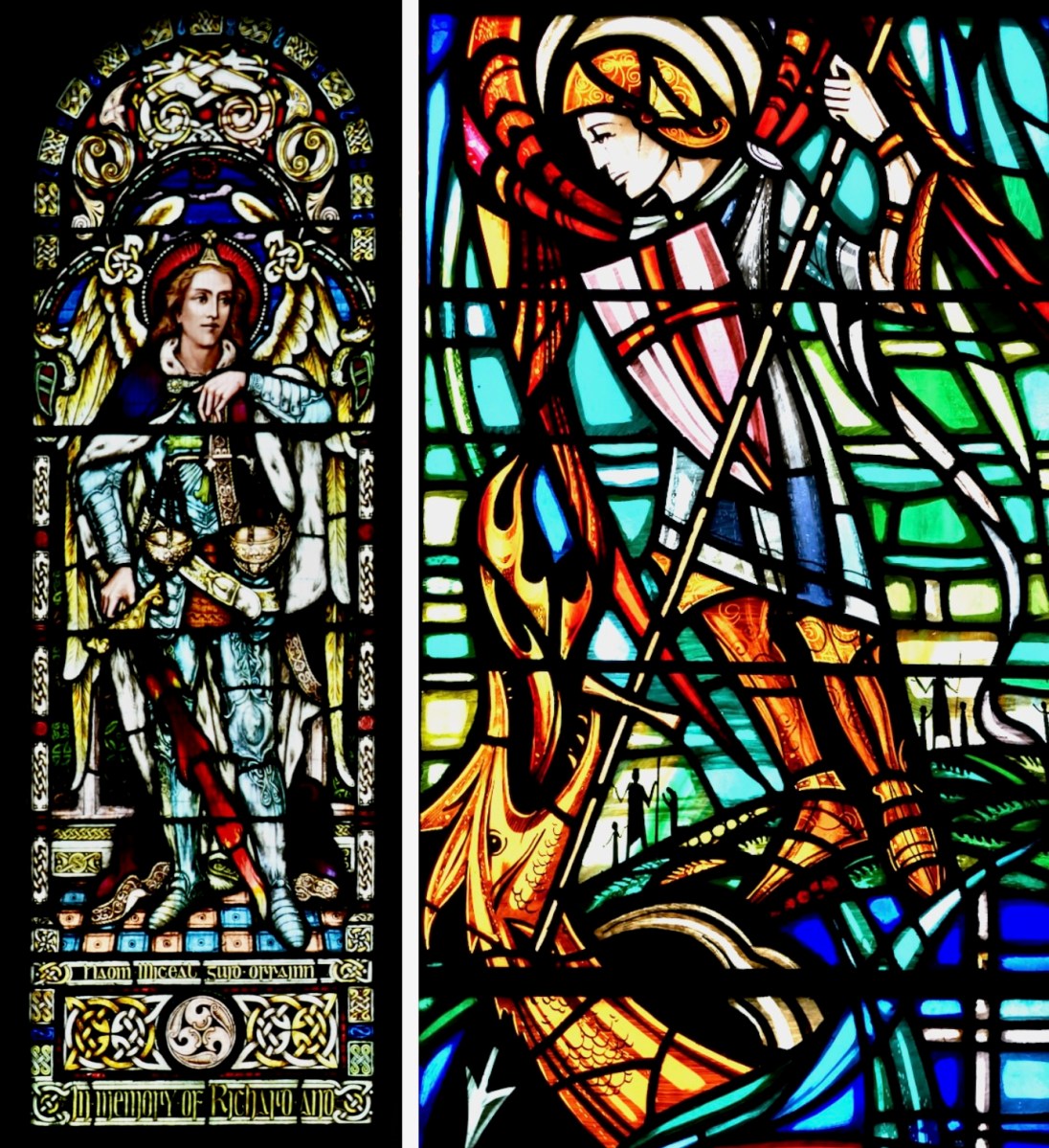
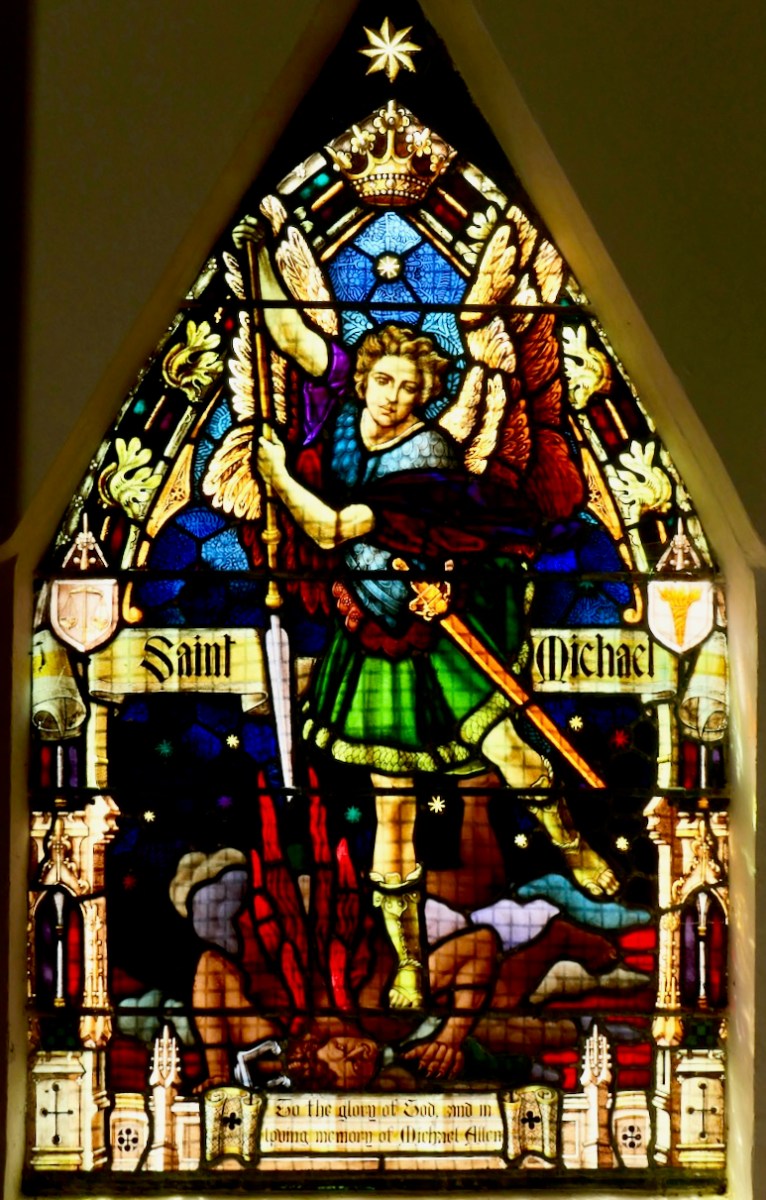
I asked Finola if there was very much in the way of St Michael imagery in Irish stained glass. There’s a fair bit: on the left, above, is a Watsons of Youghal image of the Archangel in his role as weigher of souls. He stands at the gates of Heaven waiting for you on Judgment Day with his scales in his hand. Often, beside him, angels hold up two books: the smaller one records the names of the blessed, while the larger book is a list of the damned… On the right is our friend George Walsh’s depiction of Michael defeating Satan, who here takes the form of an impressive dragon.

This St Michael is very local to us: it’s in Teampall Church at Toormore, and is by Clokey of Belfast (Finola’s photo). Look carefully and you’ll see the Saint pinning down the fire-breathing Devil.

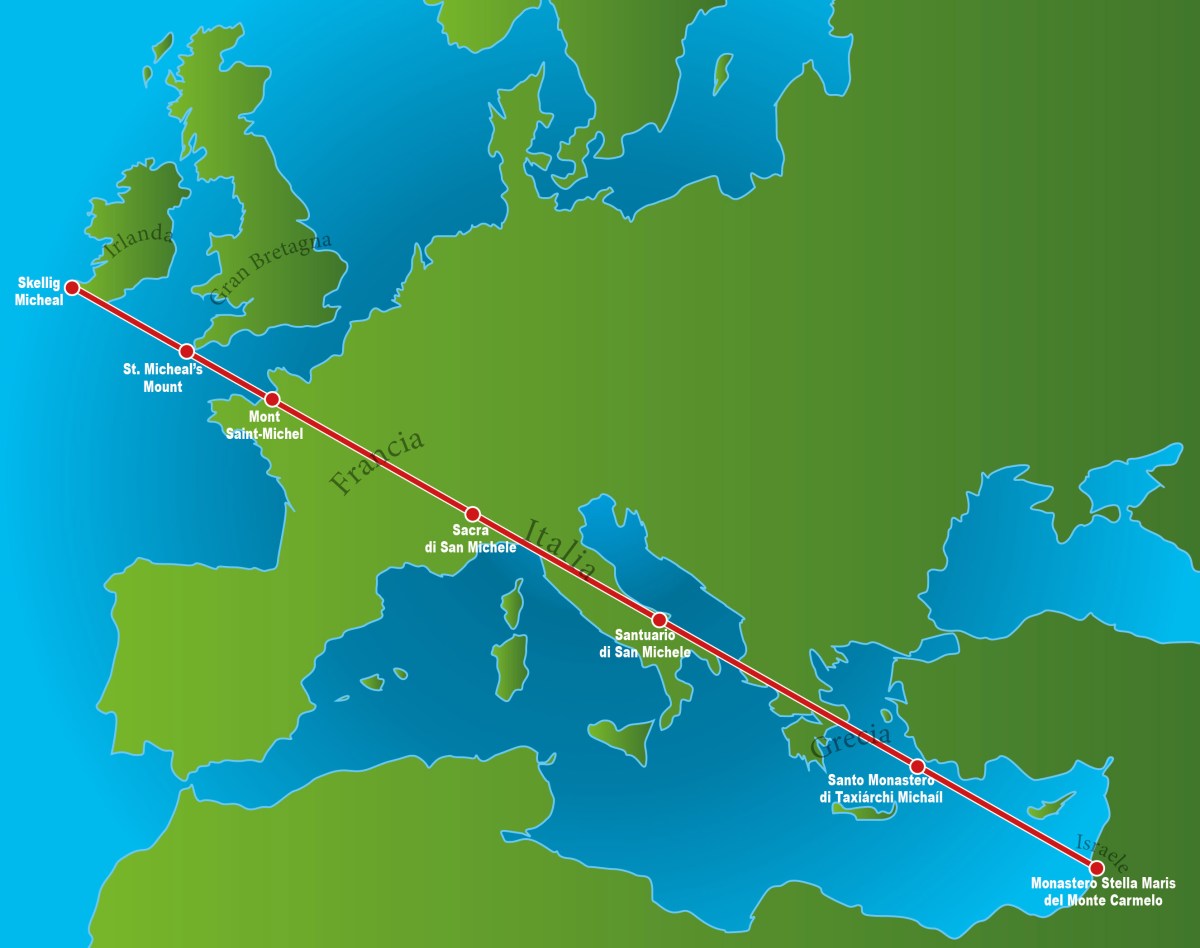
Also in my distant youth I was an ephemeral chaser of ley-lines: I have since thought better of it, but the idea of a straight line starting in Ireland and connecting seven St Michael sites while traversing Europe and Greece was attractive, and fleetingly convincing. Of course, there are many more Michael sites scattered around the Christian world which don’t fall anywhere near this line.

. . . As with other ley lines, no scientific evidence indicates that the alignment was planned and meaningful, making the claim pseudoscientific, but commonly reported at these sites. Physicist Luca Amendola noted that the deviation of these sites from the loxodrome that allegedly connects them ranges between 14 km and 42 km. According to legend the Sacred Line of Saint Michael the Archangel represents the blow the Saint inflicted the Devil, sending him to hell. Some also say that it is a reminder from Saint Michael that the faithful are expected to be righteous, walking the straight path . . .

Wikipedia

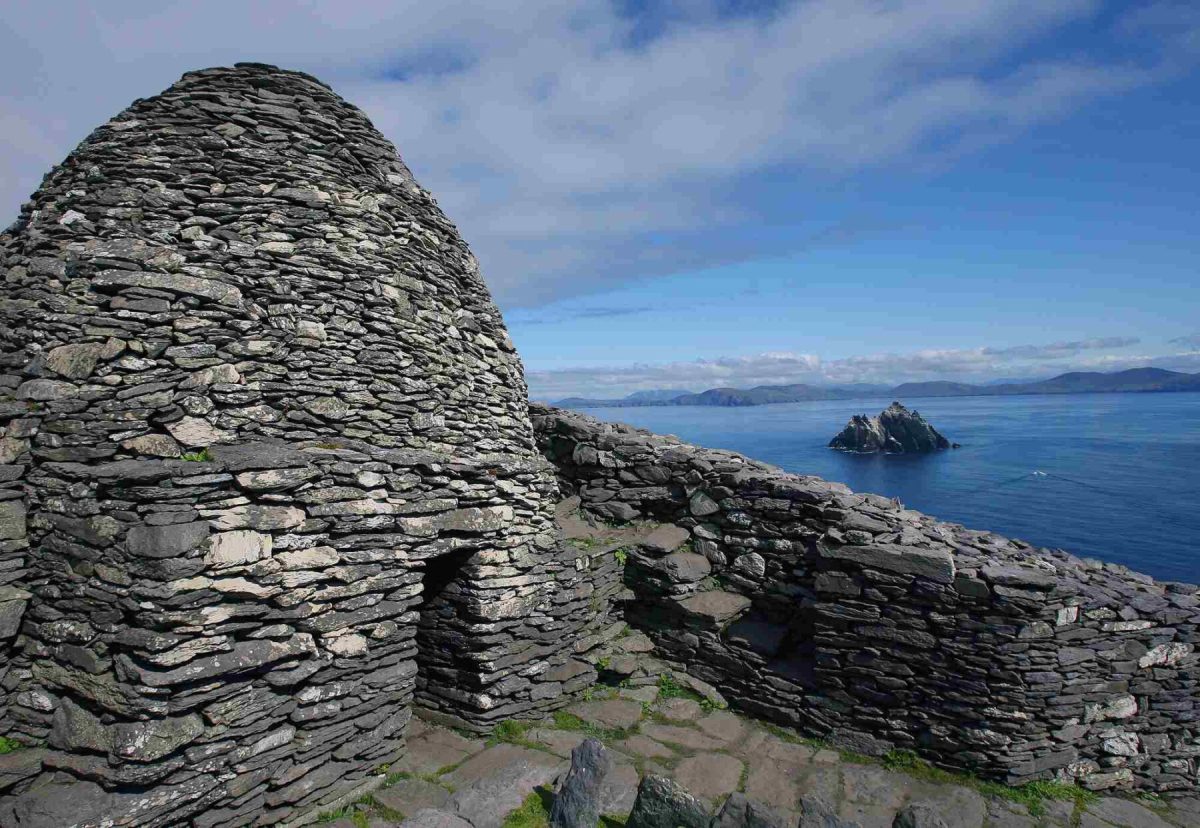
It’s nice to see that the phenomenon starts (or finishes) at Skellig Micheal, off the coast of Kerry (pic below courtesy of OPW):

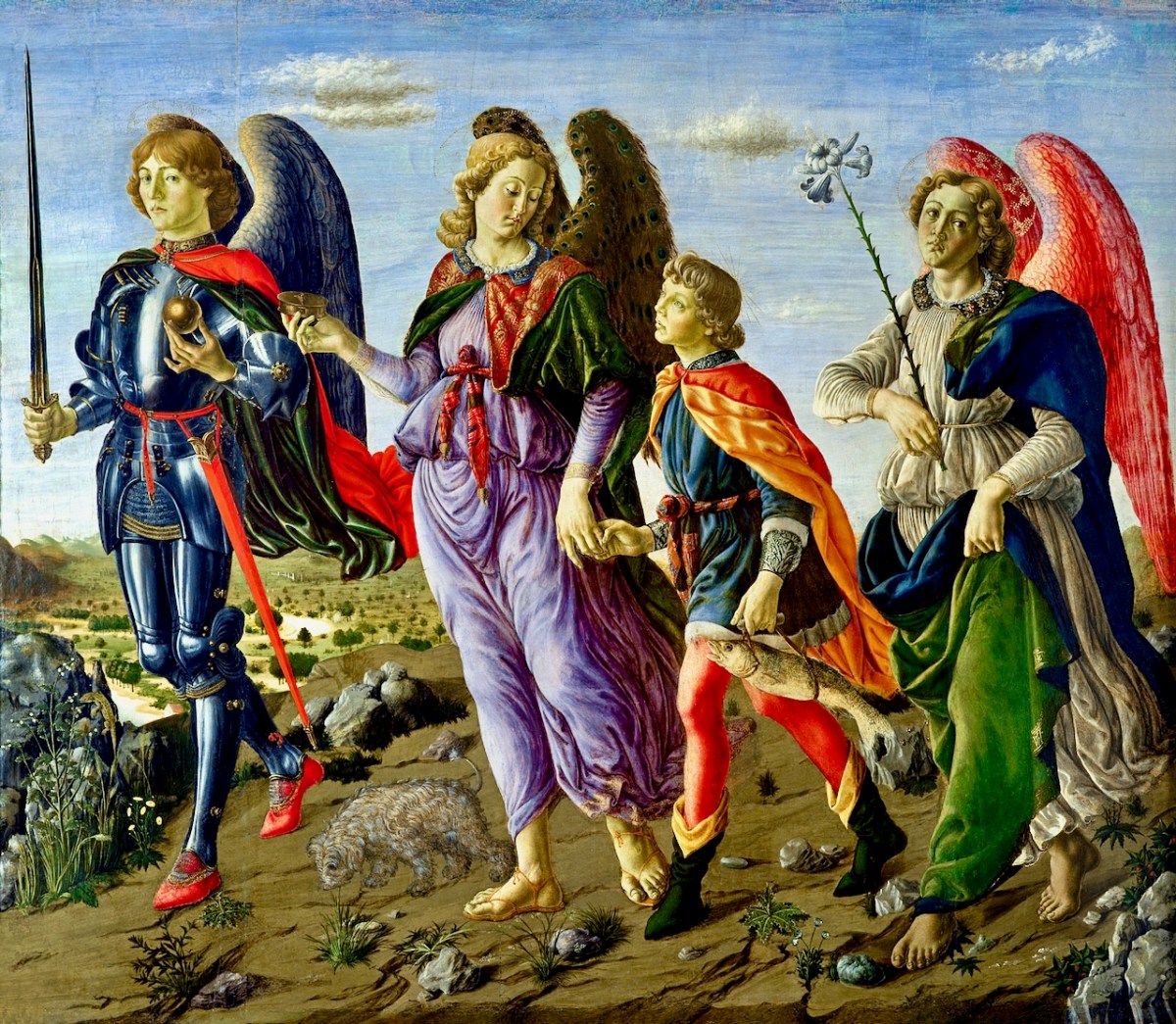
Here’s an interesting view of the three somewhat feminine Archangels painted by Francesco Botticini in 1470. Michael is on the left. With them is Tobias who, in the popular Biblical tale, overcomes obstacles as he and his heavenly guardians set out to discover a cure for his father Tobit’s blindness. They are successful, for Tobias returns with a cure for his father as well as a wife!

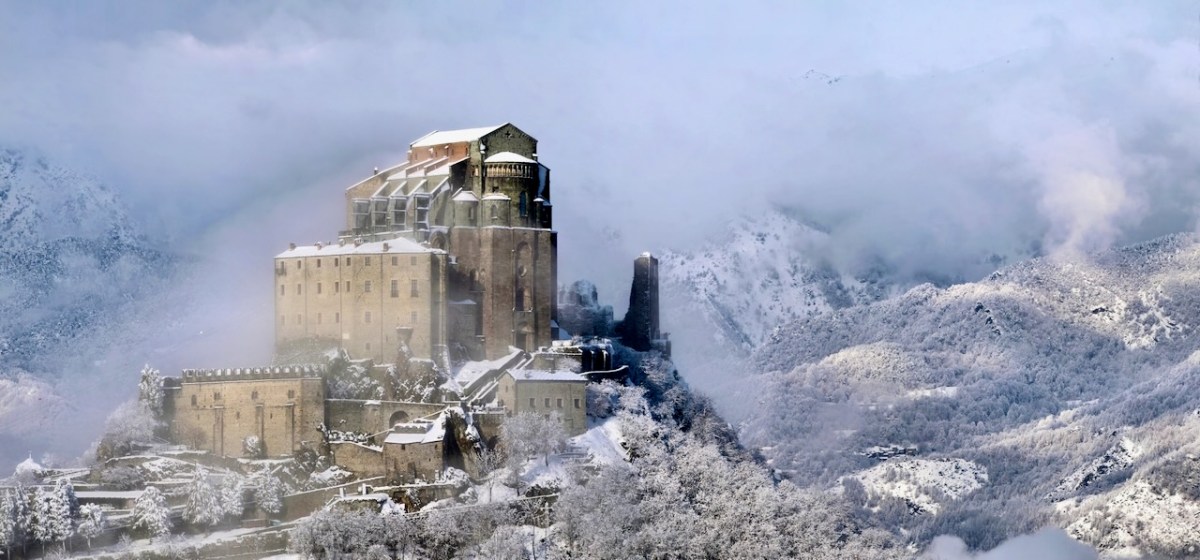
I couldn’t resist this wonderful image of a St Michael’s site (from Wikipedia). It is the tenth-century Sacra di San Michele on Mount Pirchiriano in Italy. It also happens to be on the Saint’s ley-line!

I’ll finish this little review of St Michael where I started – off the coast of Cornwall. This 1920s postcard of the Mount, from a painting by A R Quinton, sums up the romantic image which I still carry from my days lived on that coast.

Taking Notes

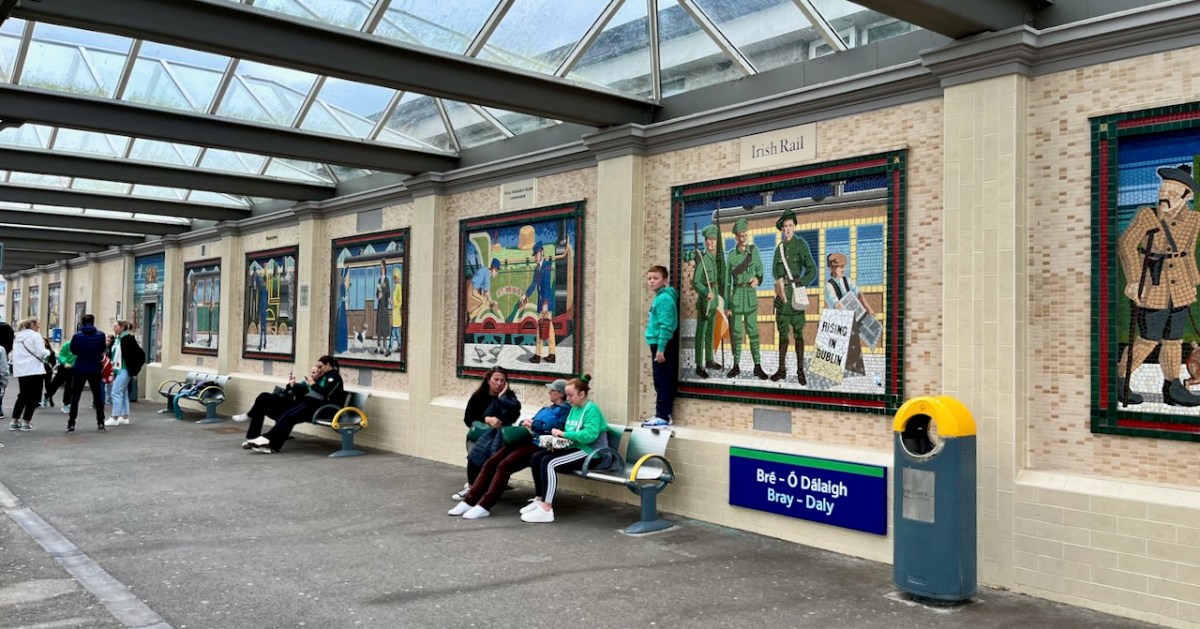
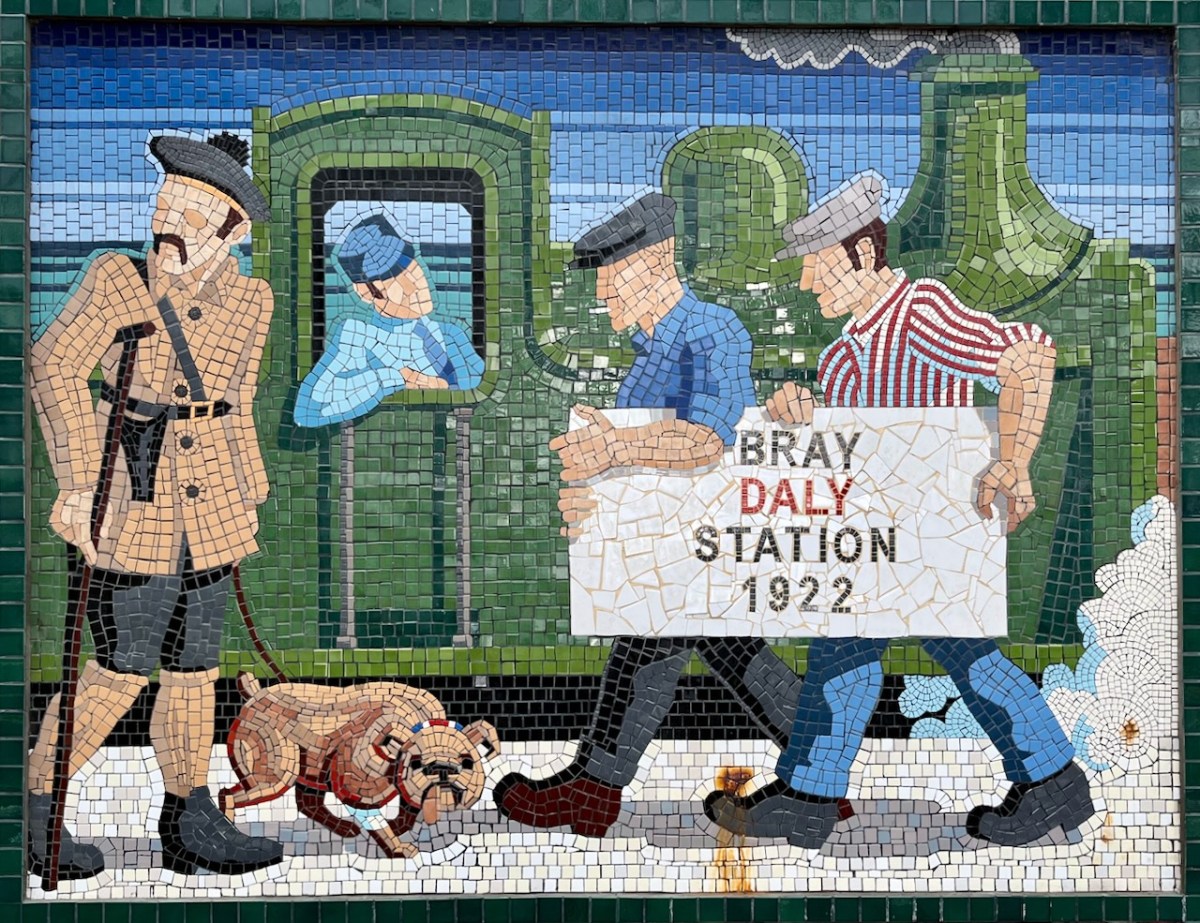
Regular readers will know that I am always on the lookout, in Ireland, for signs of all kinds. They may be humorous, informative or historical – like the one above. This is on the railway station in Bray, County Wicklow. Back in 1987 a competition to design painted murals to enhance the station platforms was won by Jay Roche and John Carter, who produced 19 panels to illustrate the railway through its history.

As you can see from this picture of Bray Station taken yesterday, the panels certainly brighten up this much-used civic concourse.

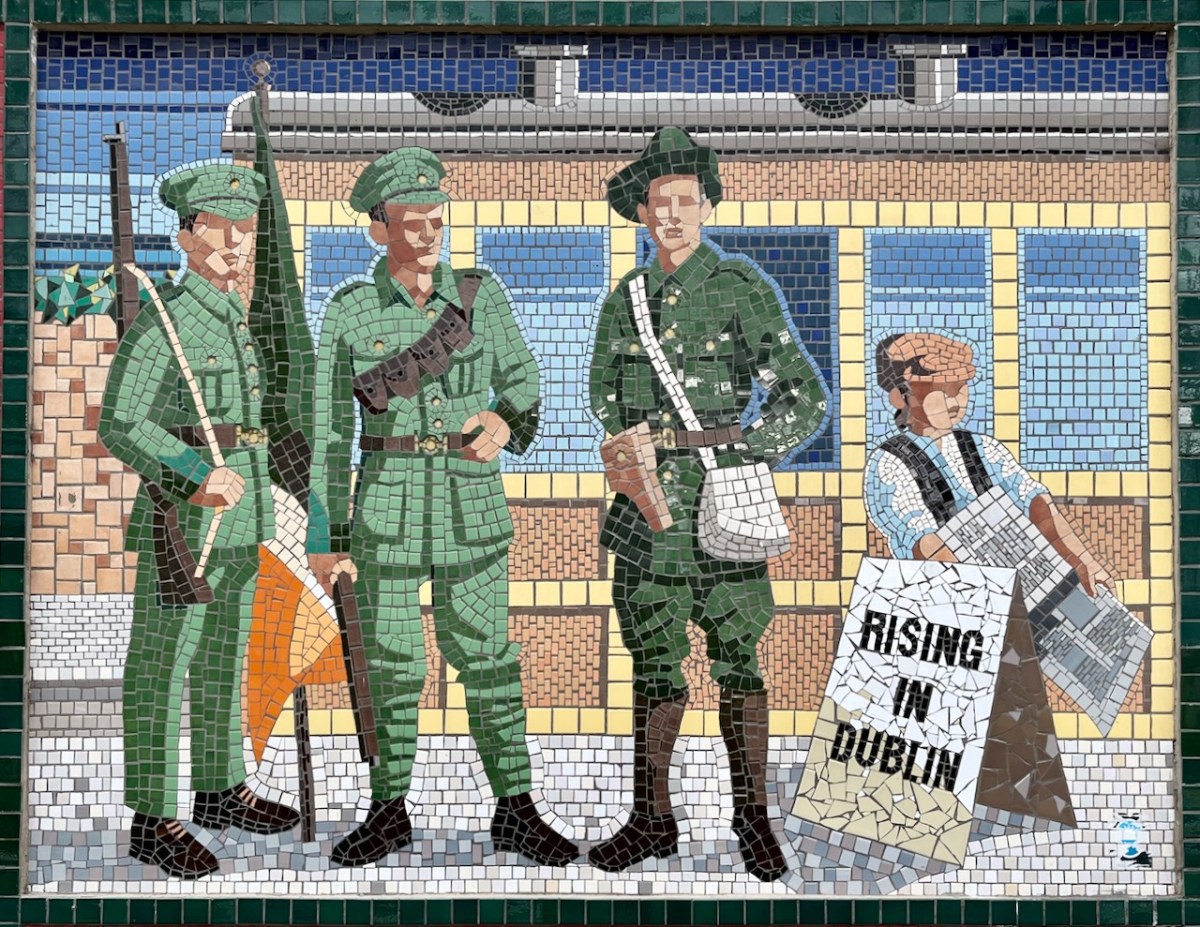
. . . Each panel is like a window into the past that tells a story about the people, dress or time of the mural. One mural signifying the 1920s, makes reference to a man in a Black and Tan uniform.  On the website Mural to Mosaic, which chronicles the progress of the project, the artists state they are trying to show that dramatic events were unfolding around that significant time in Irish history . . .


The Daily Edge Newsletter 2012

You’ll have noticed that the panels are now made of mosaic. The painted originals suffered from wear and deterioration and the same artists, assisted by Anthony Kelly and Eileen Maguire, have in recent times transformed all of them into the new medium. I think the result of the earlier concept and its newer manifestation are excellent, and provide a great visual diversion for anyone waiting for a train or a Dart (Dublin Area Rapid Transport). In fact, it’s worth missing a train in order to fully appreciate the artwork!

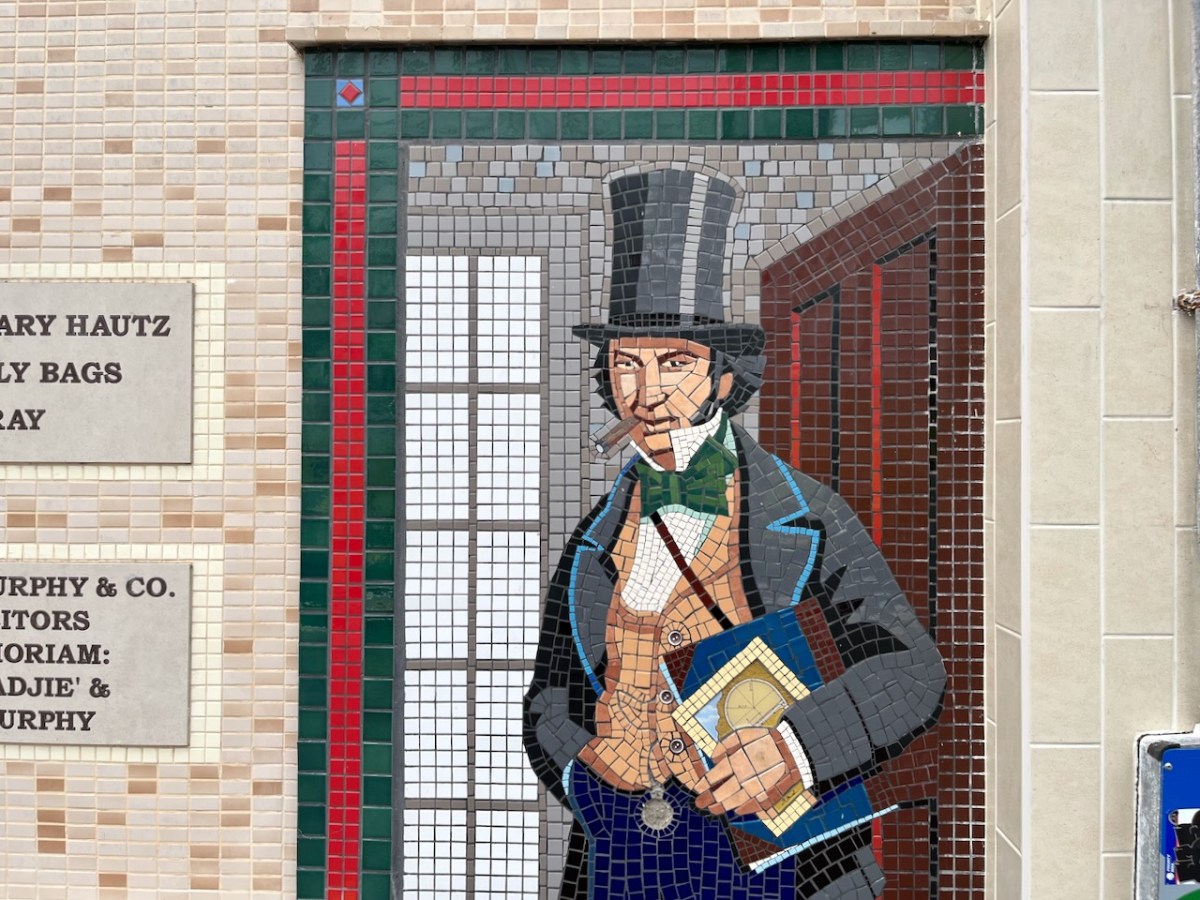
Isambard Kingdon Brunel is the engineer credited with planning the line which, in 1844, was intended to be ‘broad gauge’ all the way to Rosslare. Here he is in a Bray station mosaic, above. I’ll return to this railway in a future post as the full story of it is well worth the telling – even though it’s not West Cork (which, of course had its own interesting railway line).

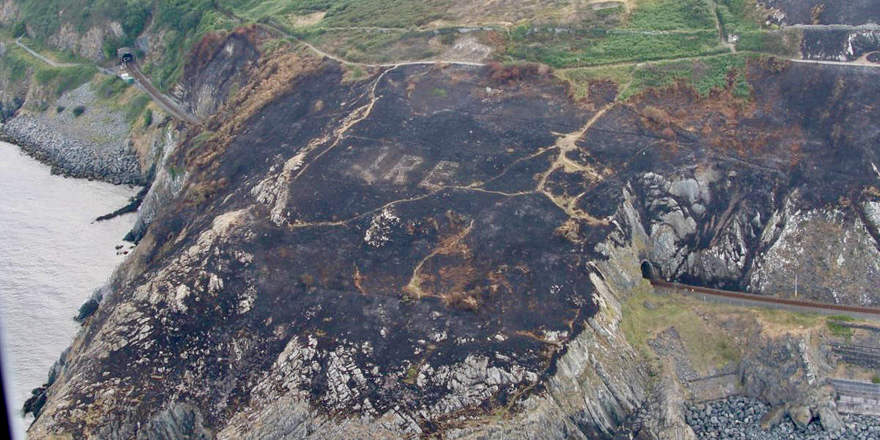
Before leaving behind the railway, here’s a photo of Bray Head (courtesy of Irish Defence Forces) taken after a gorse fire in the summer of 2018. As well as the Bray to Greystones line you can see the outline of the EIRE sign that was put there in ‘the Emergency’: one of over 80 such signs dotted along the coast, it was a warning to aircraft of all persuasions that they were flying over neutral Ireland.

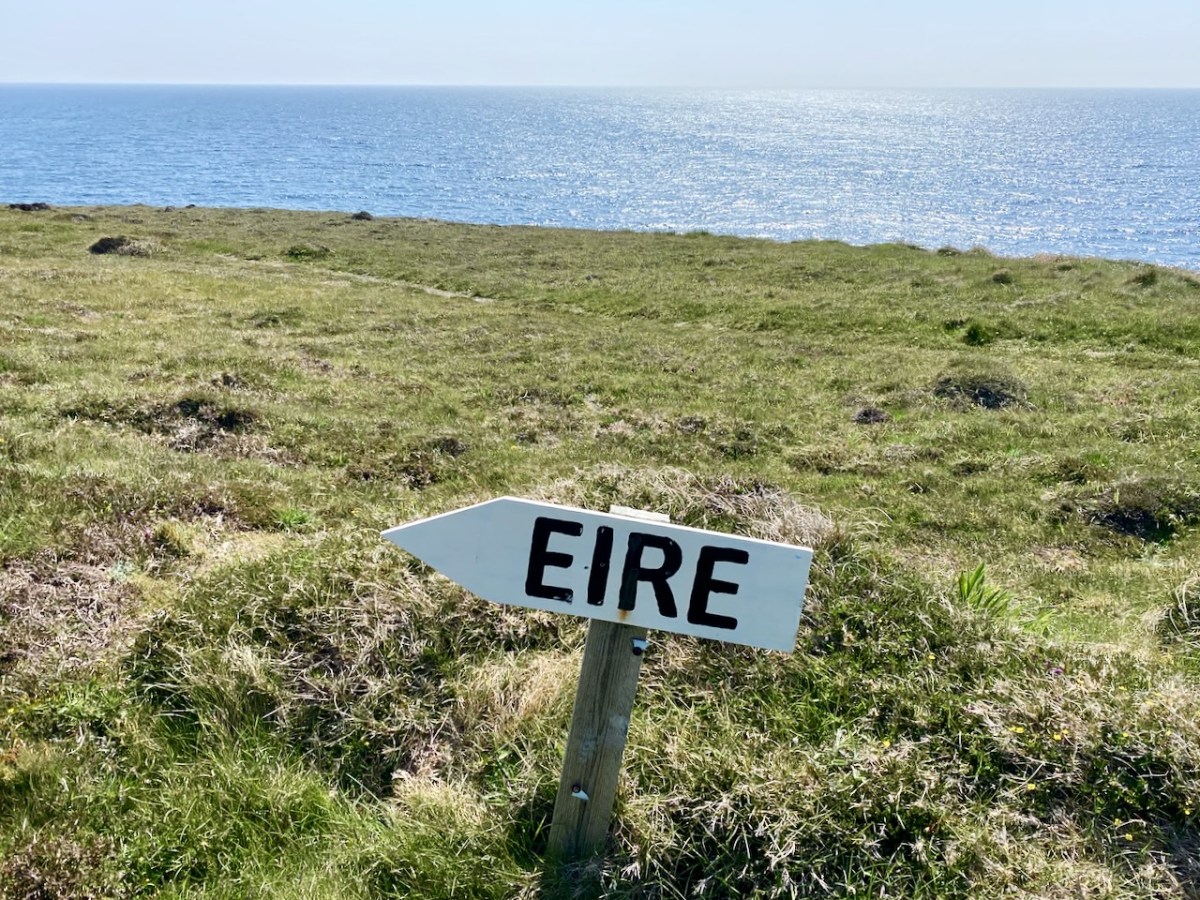
. . . The ‘Éire’ signs were erected around the Irish coastline from the summer of 1943 onwards, a period when overflights of Irish territory and forced landings of belligerent aircraft (mainly Allied) had increased dramatically. In keeping with the De Valera* government’s policy of discreetly co-operating with the Allies, Allied air crews who landed in Ireland were assumed to be ‘non-operational’, and therefore were not detained (a fact that the Germans noted with displeasure). It made more sense to all concerned, however, if such forced landings could be avoided and so the ‘Éire’ signs were erected to ensure that pilots knew that they were flying over Irish territory . . .

Royal Irish Academy Newsletter

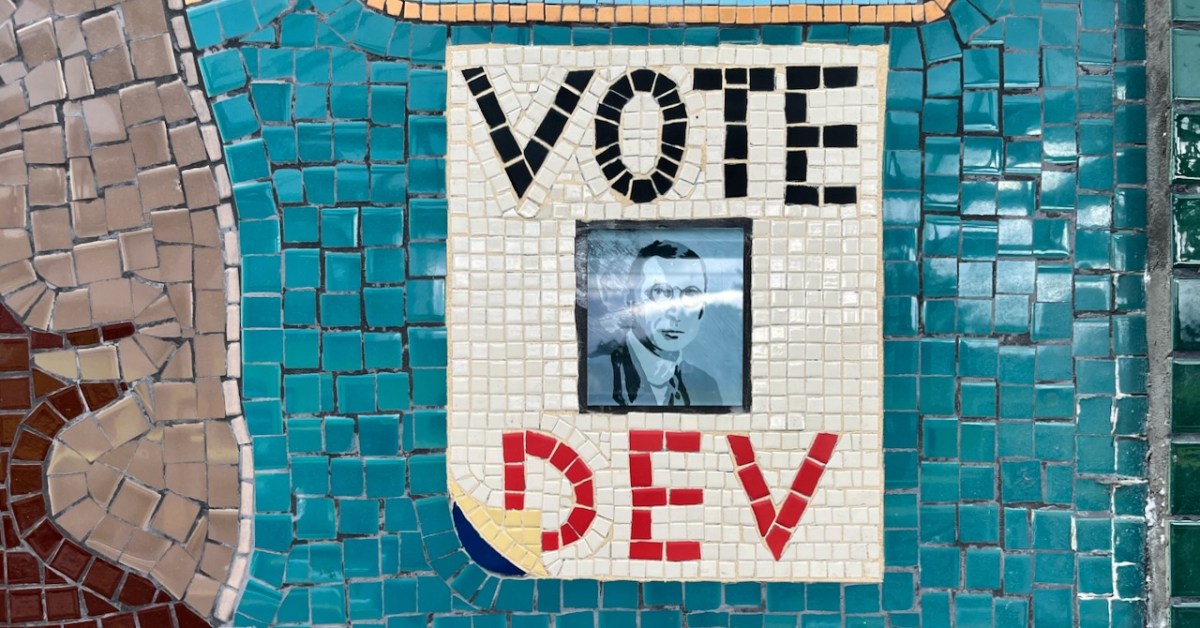
*See our header pic for another reference to Dev!

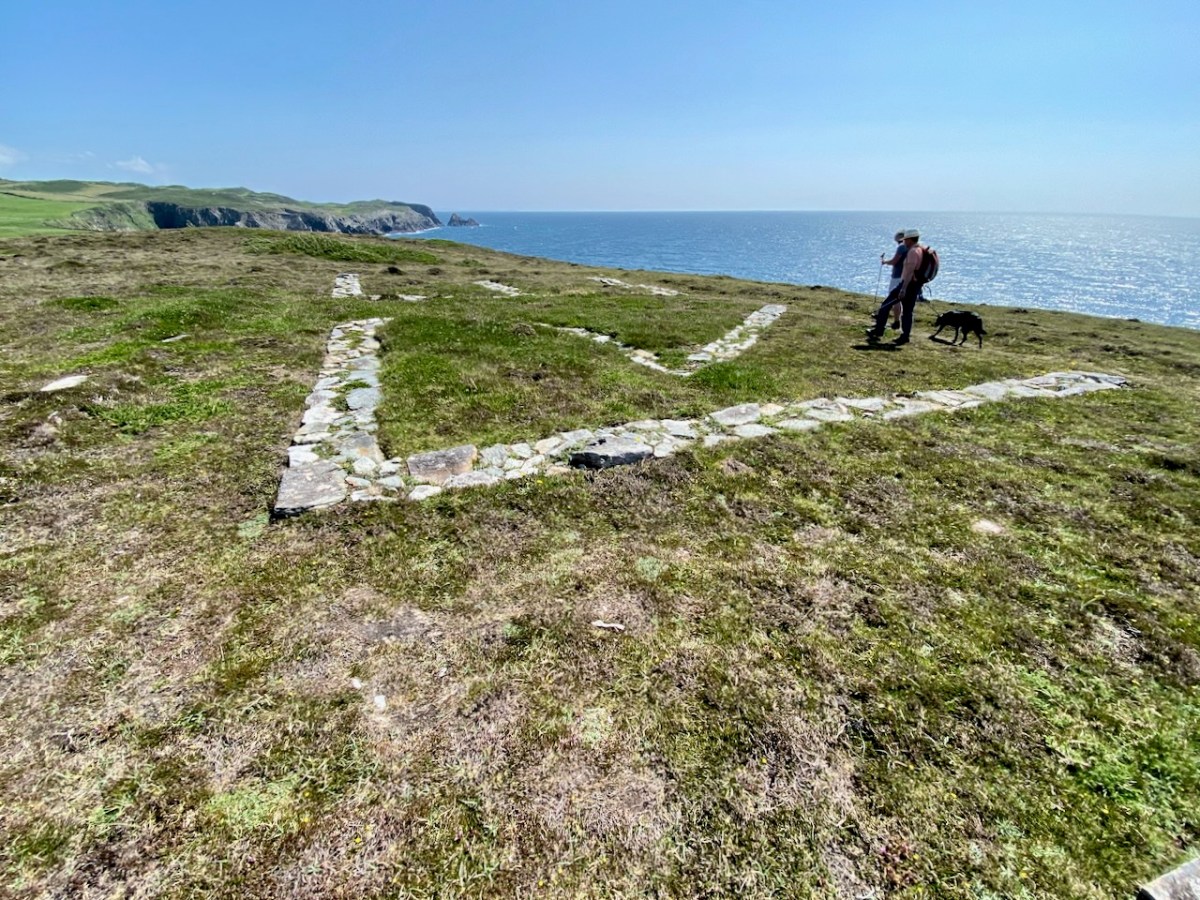
The EIRE sign above is very clearly delineated: it’s on the cliffs at Toe Head, in ‘our’ County Cork.

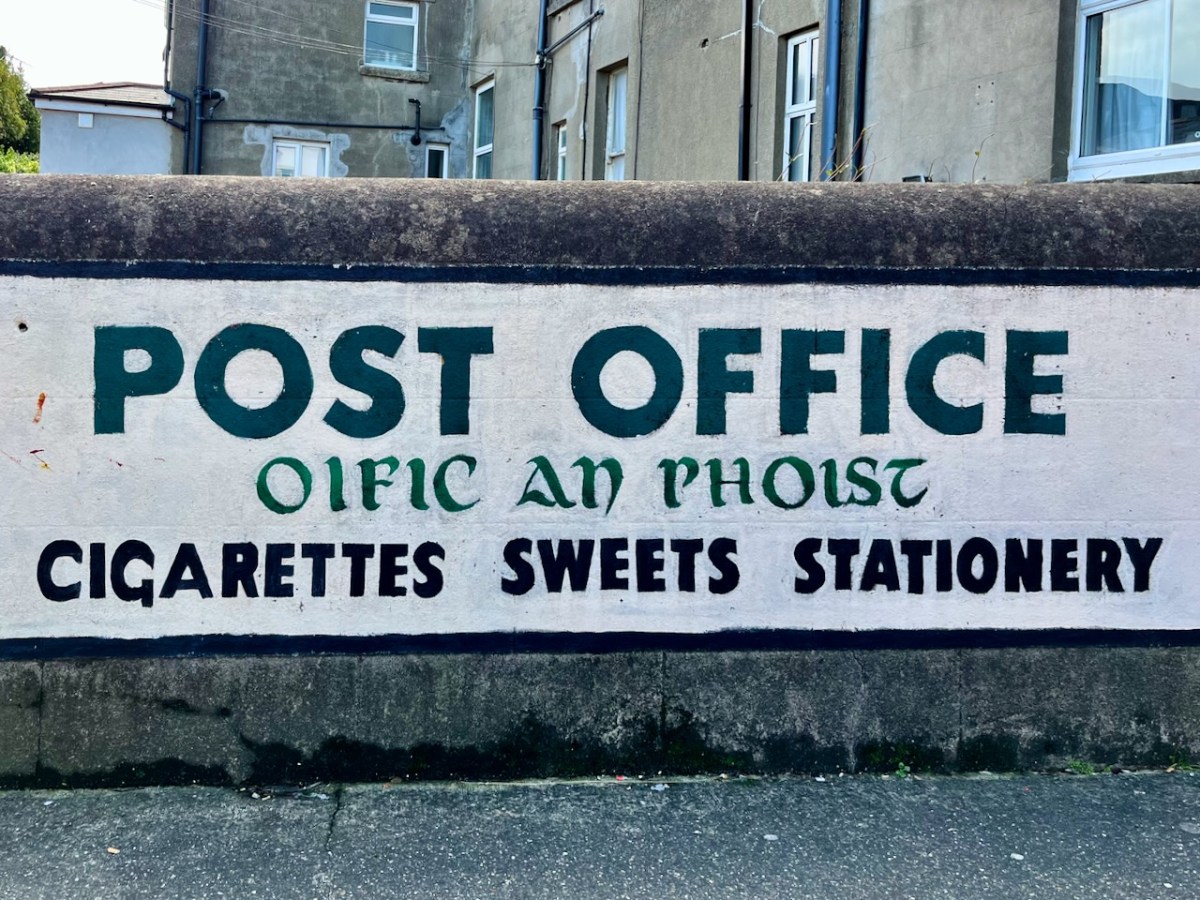
This Post Office sign has been kept intact, probably for reasons of nostalgia. I’d doubt there are many today who would proudly proclaim that the sale of cigarettes is one of their mainstays.

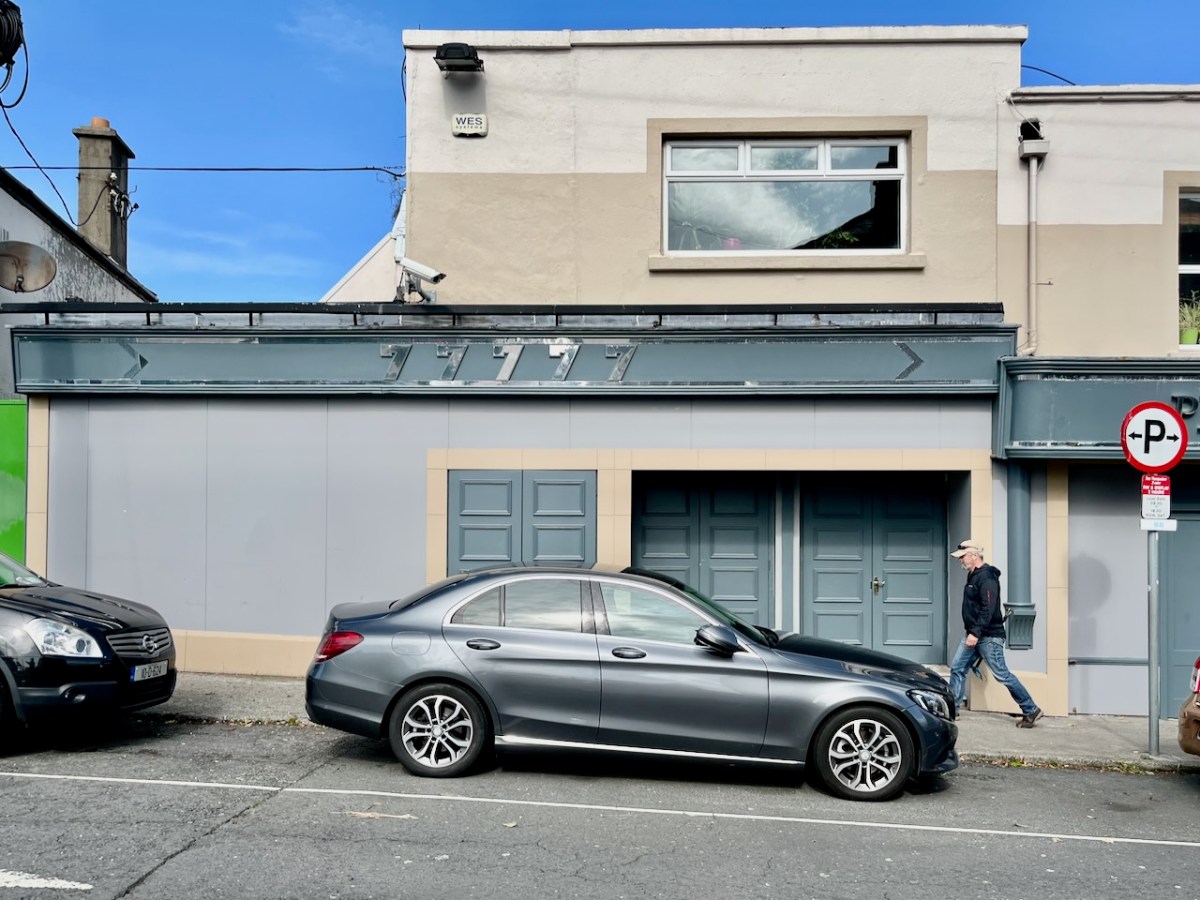
(Above) – I couldn’t resist the enigma of this signwriting . . .

. . . But I think the one above leaves us in no doubt who it speaks to.

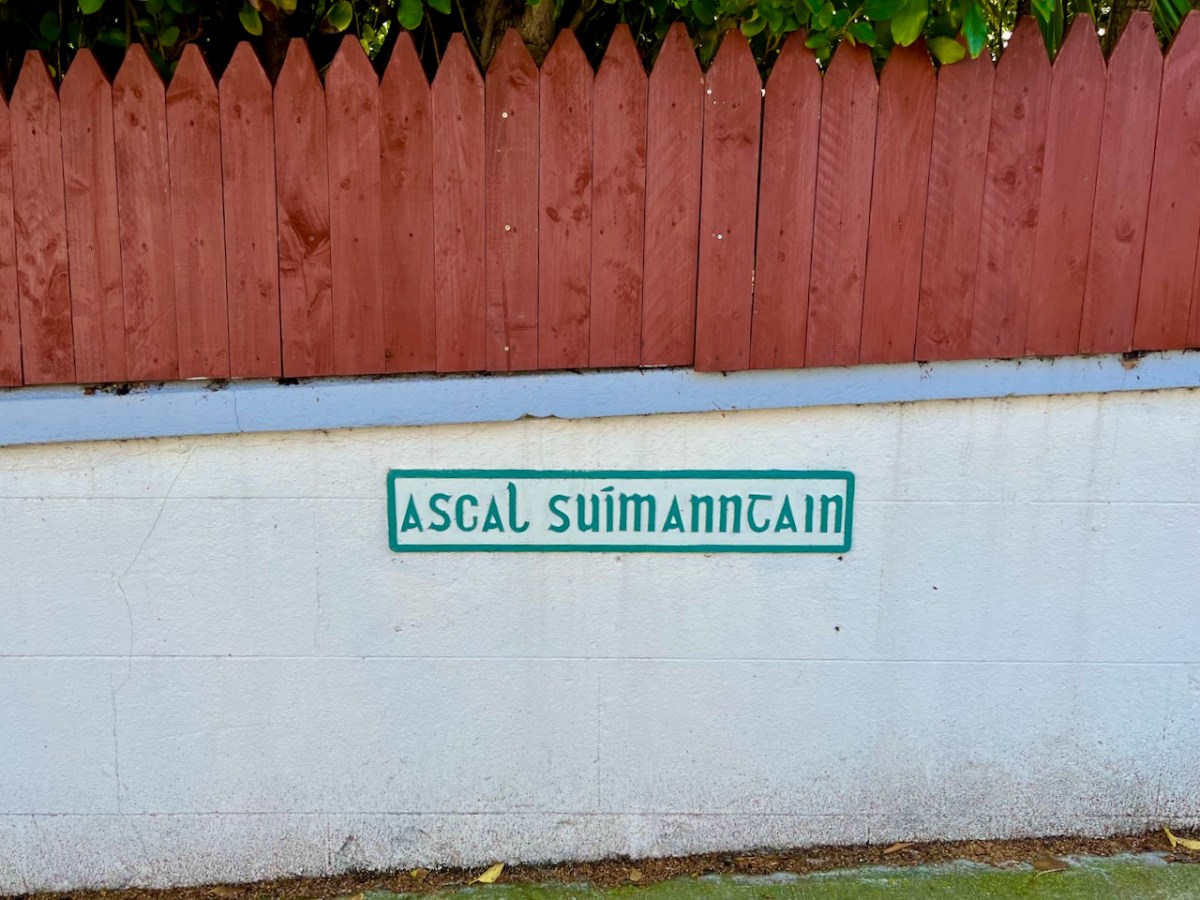
I’d like to understand the meaning of this Irish road name: one AI translator told me it is ‘thought position’, another ‘location avenue’ . . .

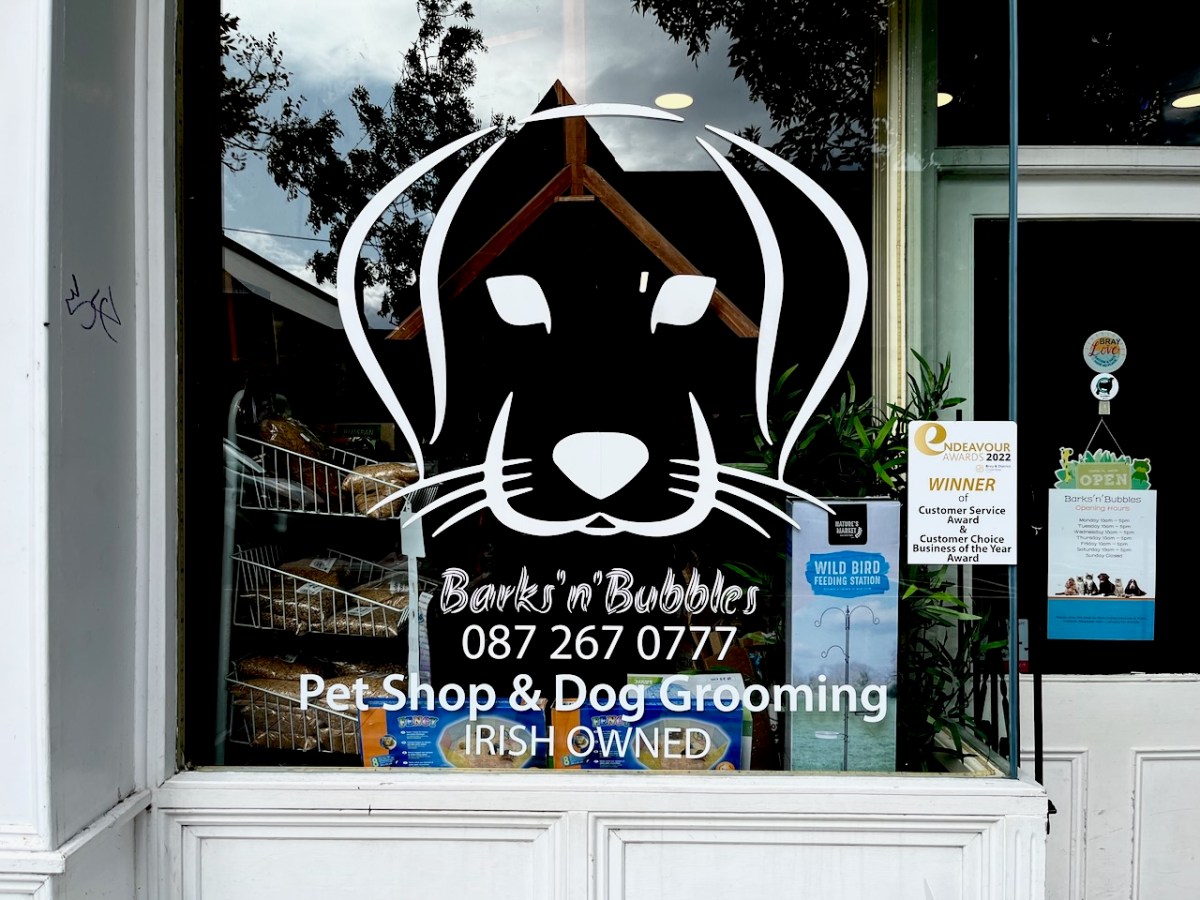
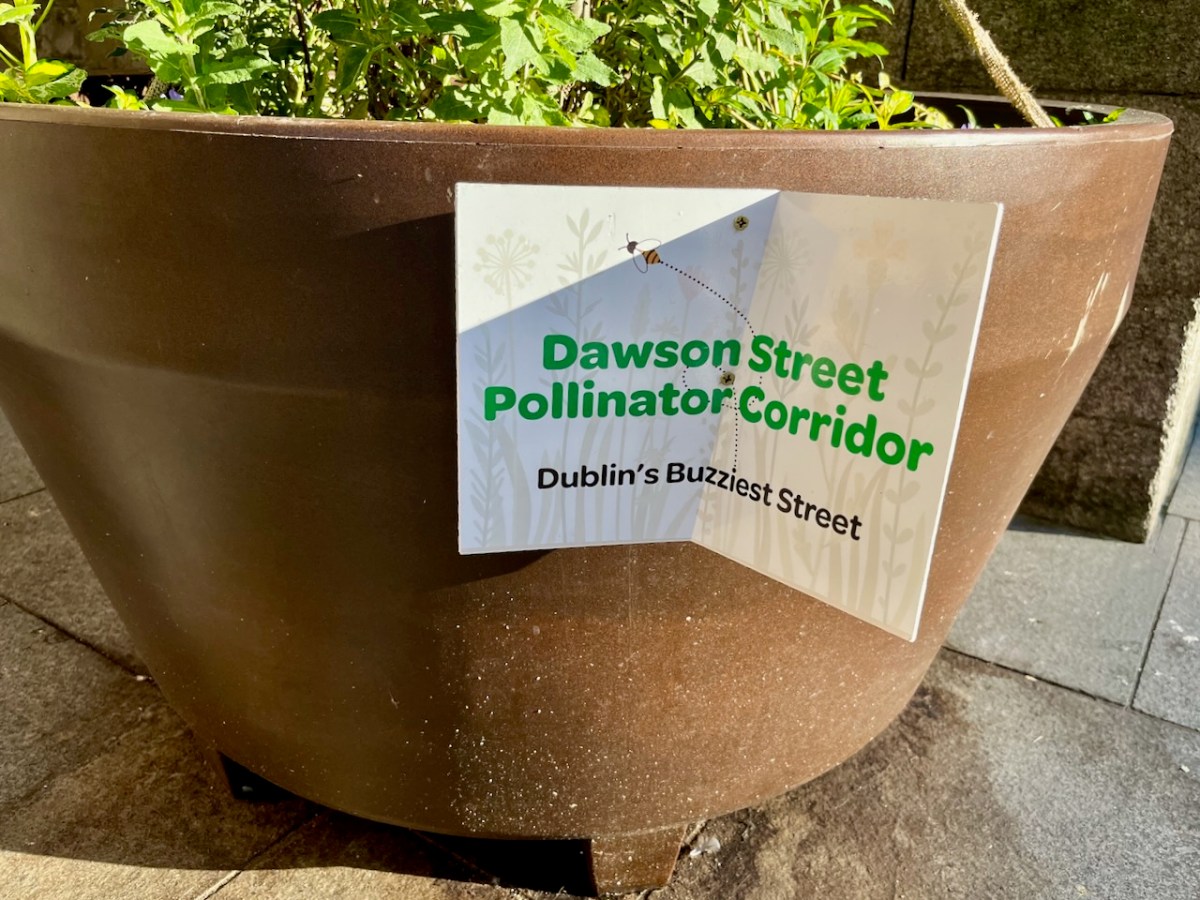
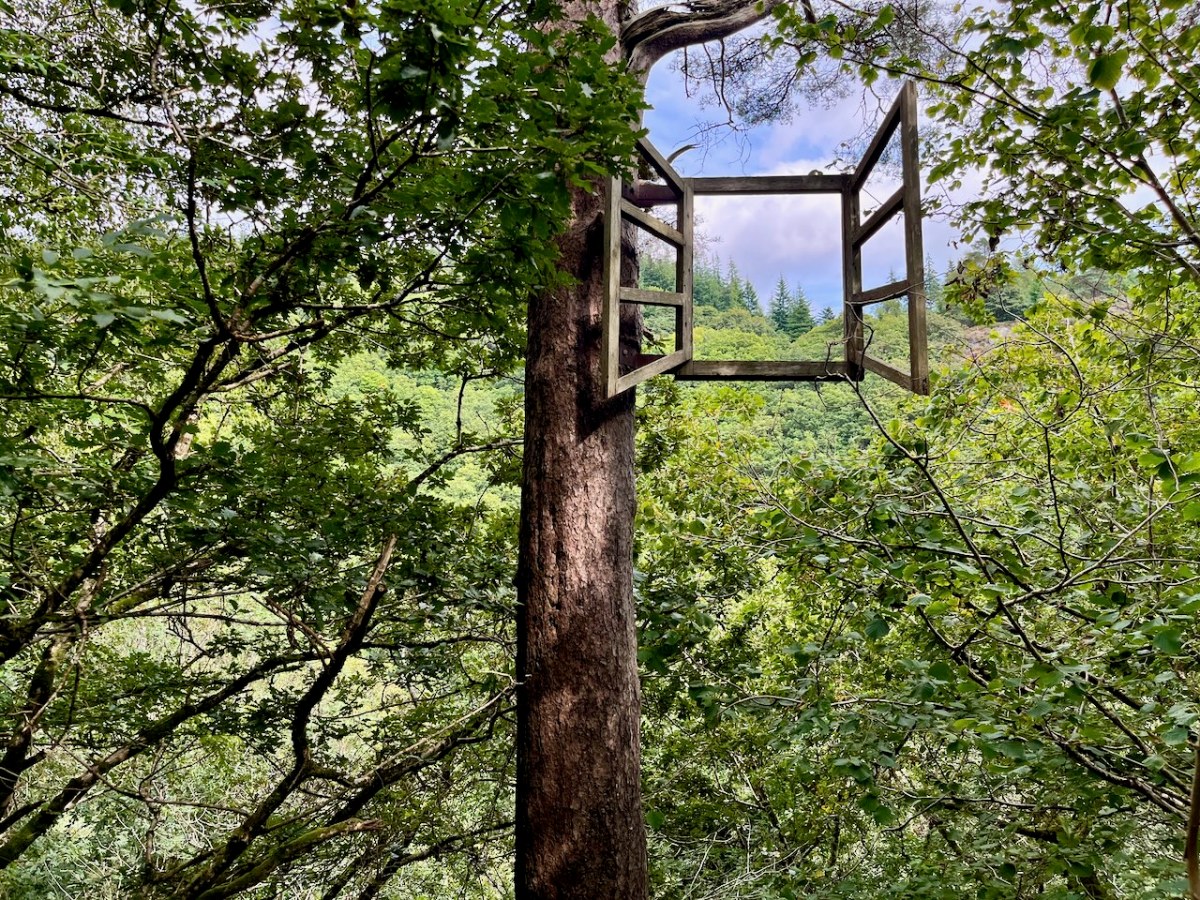
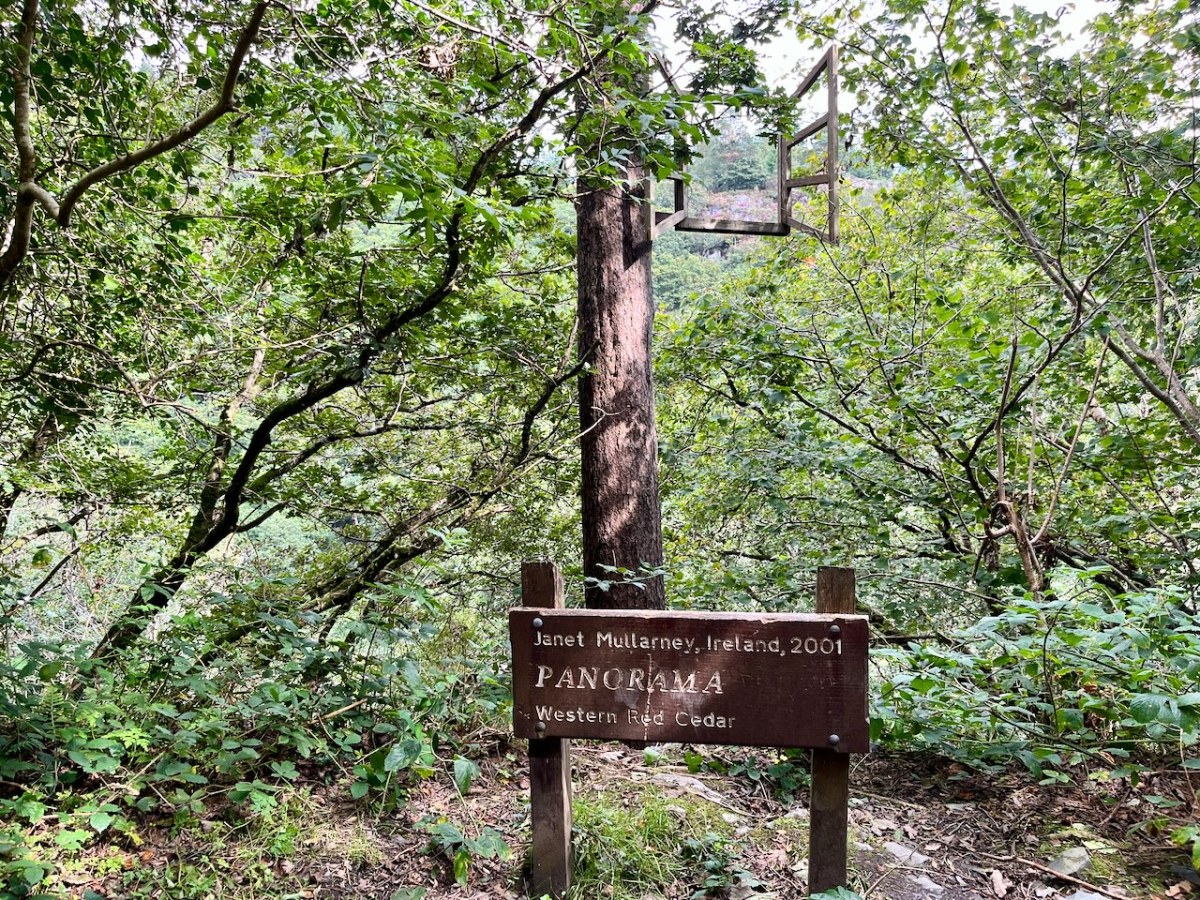
No comment on the two signs above. The following, however, provokes some questions – a window on someone’s world?

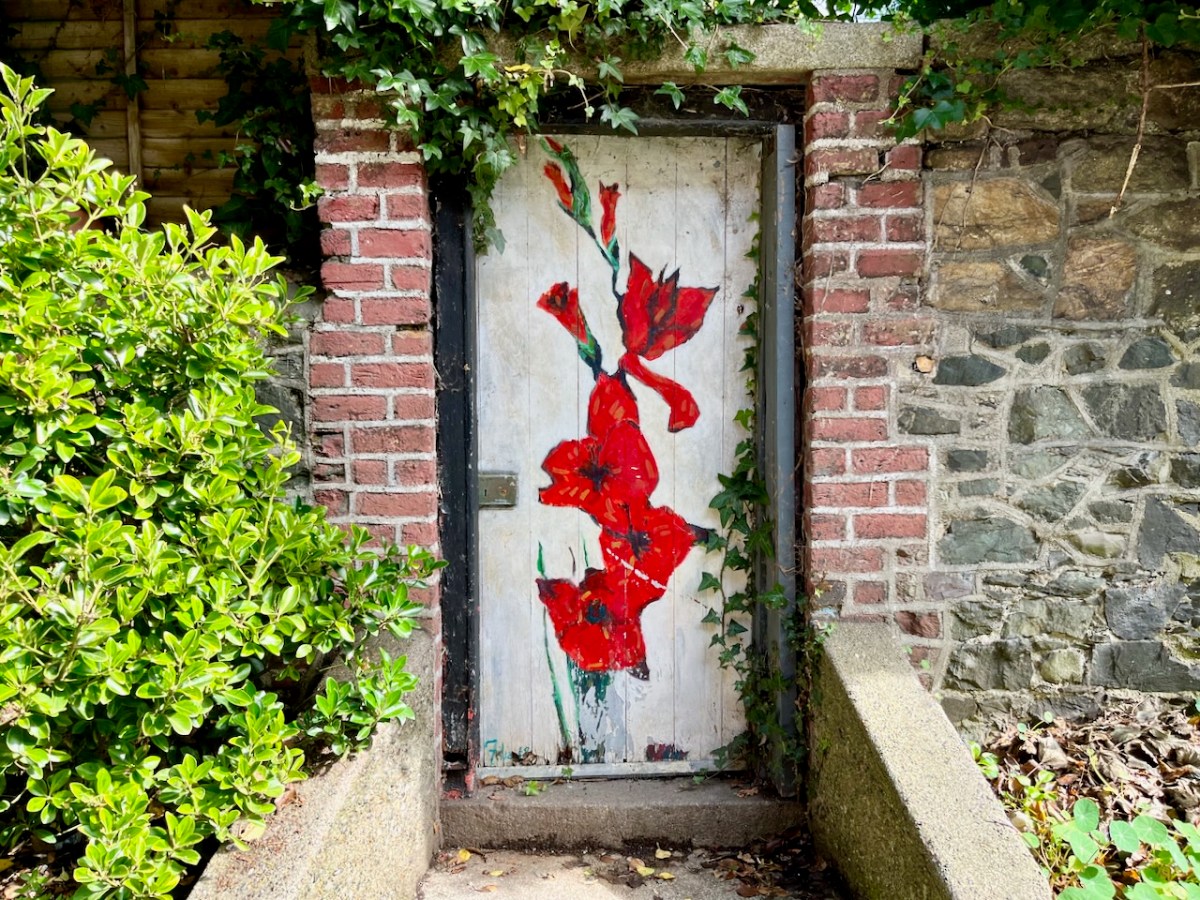
What world does this gate open up to?

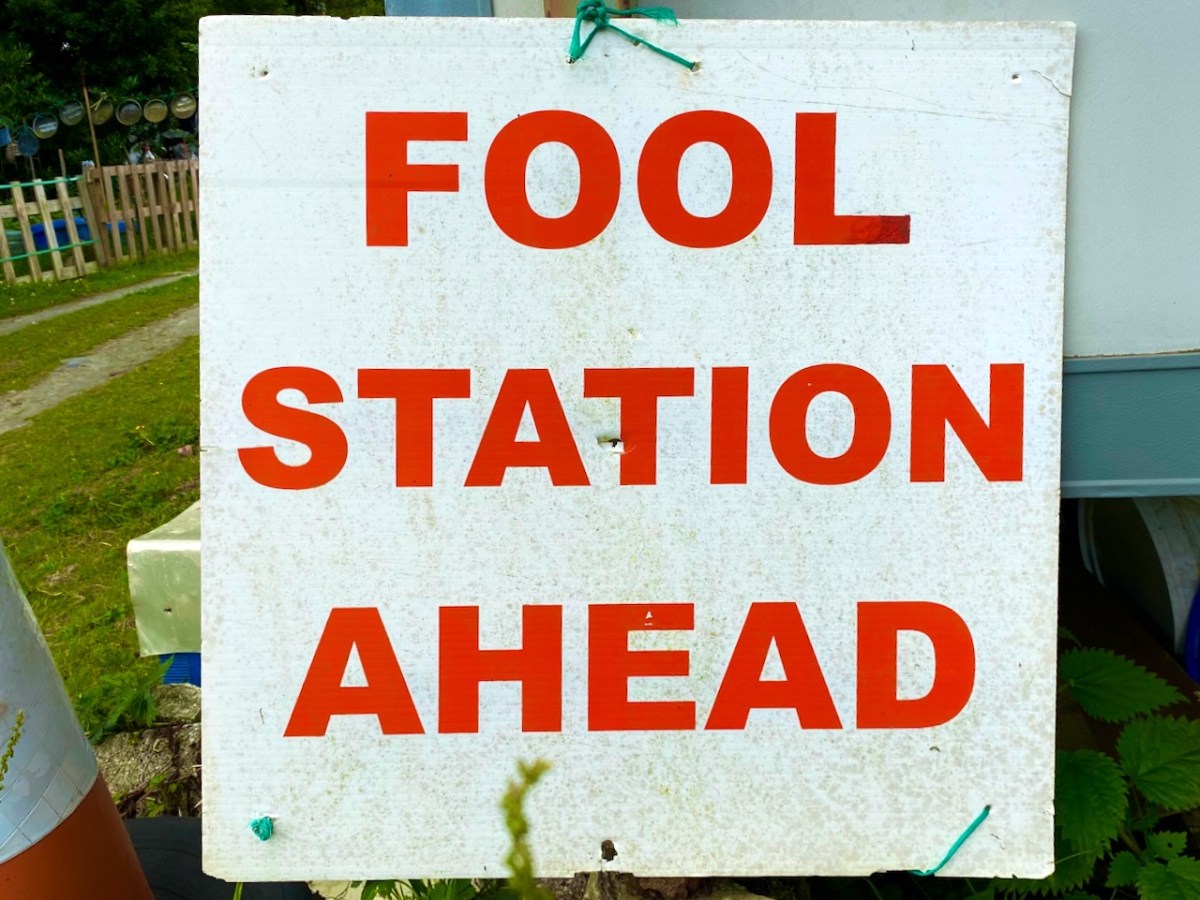
Promises, promises . . . But I think they found it: