Earlier in the year I went back to my childhood days, remembering when I first learned about Jonathan Swift from my Granma, and walked with her to the places associated with him in the town of my birth: Farnham, Surrey. Here is the post.
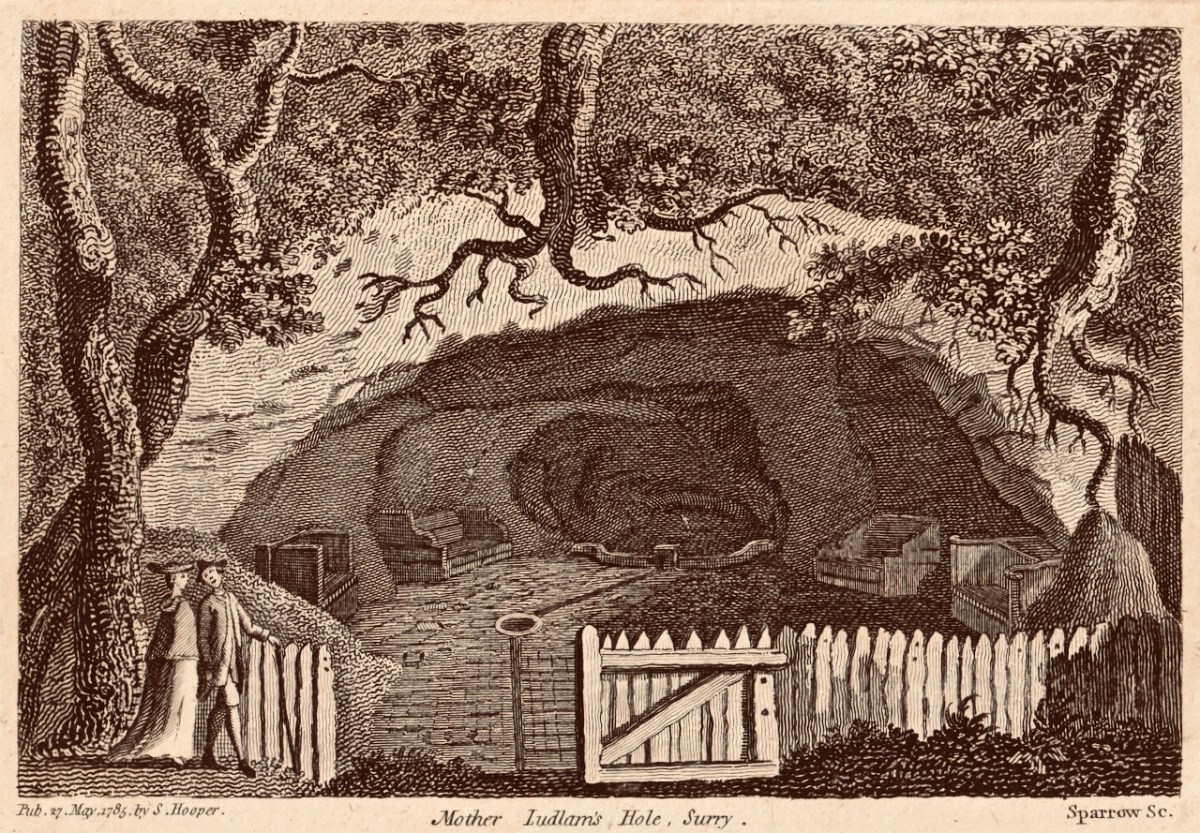
If you read my ‘Dean Swift and I’ post you will find this engraving of ‘Mother Ludlam’s Cave’ which was close to Stella’s Cottage, and must have been familiar to Jonathan Swift during his years living in Surrey. I came across this old print in a local bookshop when I was growing up in Farnham, and it has stayed with me ever since
I have been keeping a few series of posts going through the year: one is about the Napoleonic signal towers that dot the coastline all around this island. I began the series in 2020 (do you remember how we thought the Covid restrictions would soon be over?). In 2021 I continued the posts with new episodes. This is one of my favourites.
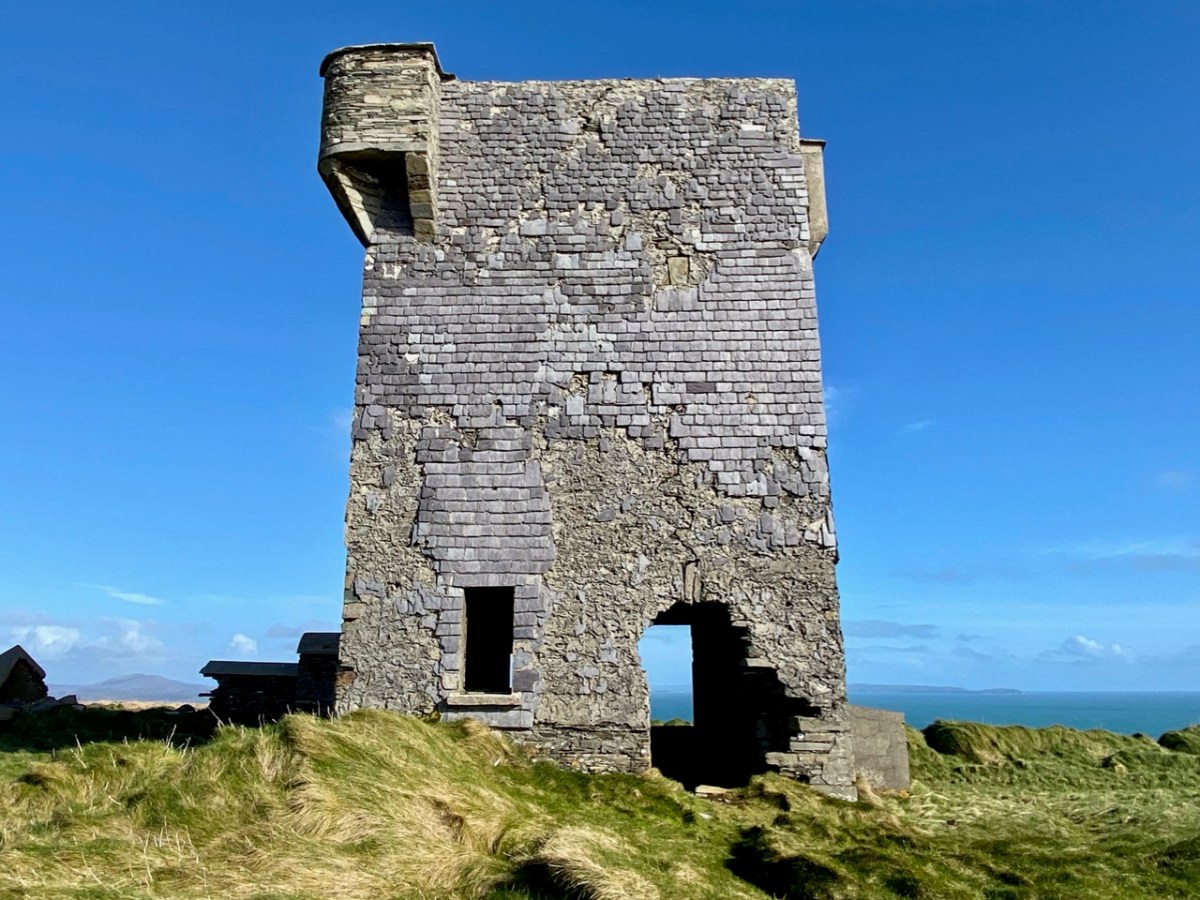
The Napoleonic Signal Tower at Brow Head, West Cork
West Cork had good coverage from our blog during the year which has just ended. I began a series of posts about West Cork Villages and Towns. Perhaps it was an interesting time to concentrate on our local communities: hopefully it proved that we West Corkonians are not deterred from celebrating life as much as is possible in these strange times.
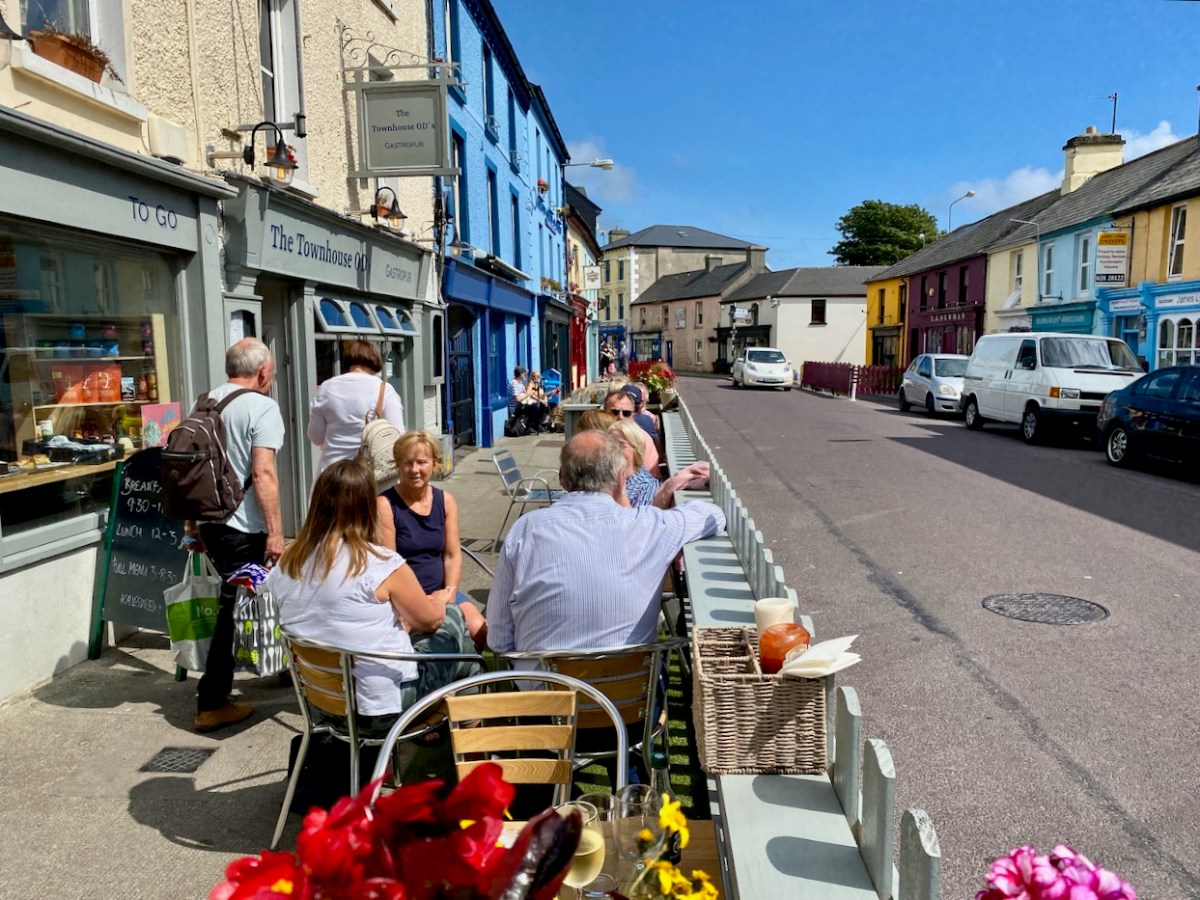
The communities of (top to bottom) Bantry, Schull and Skibbereen have been the subjects of posts in my West Cork Villages and Towns series in the past year. There are many more to come in the future, including the remarkable activities that take place in our ‘home’ village, Ballydehob (below).
It proved a remarkably popular post and I was forced to admit that it did come from my imagination, although all the background historical information can be verified. What really interested me was the interest and enthusiasm that everyone has about life here on our wild West Cork coastline all those centuries ago!
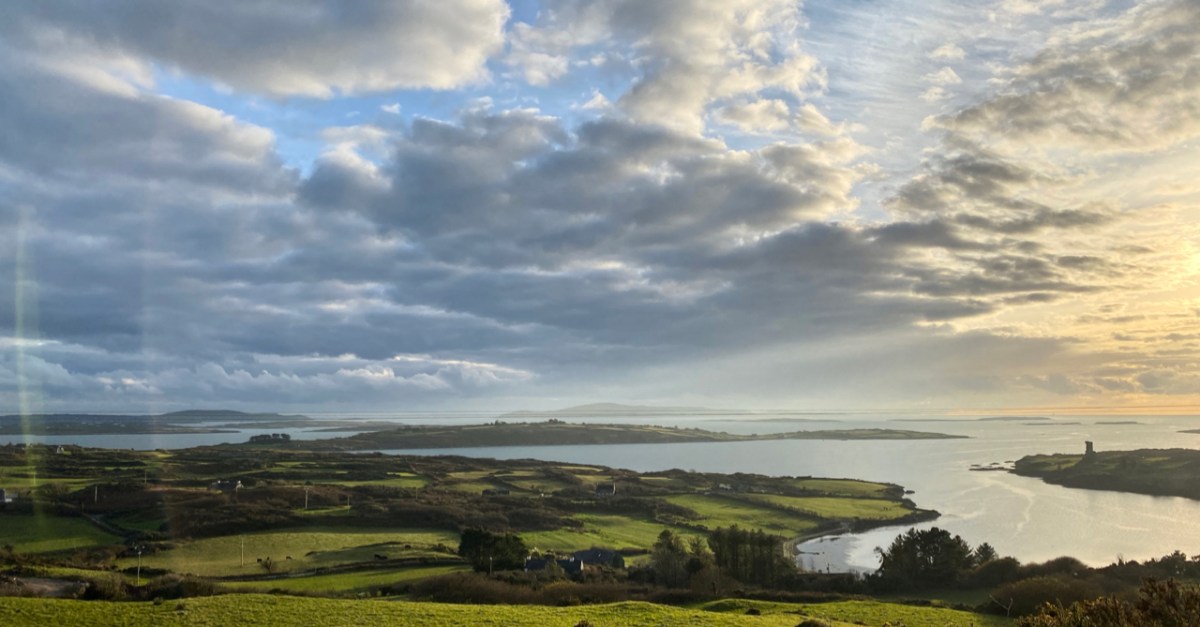
We are most fortunate to live overlooking Rossbrin Cove and the islands of Roaringwater Bay
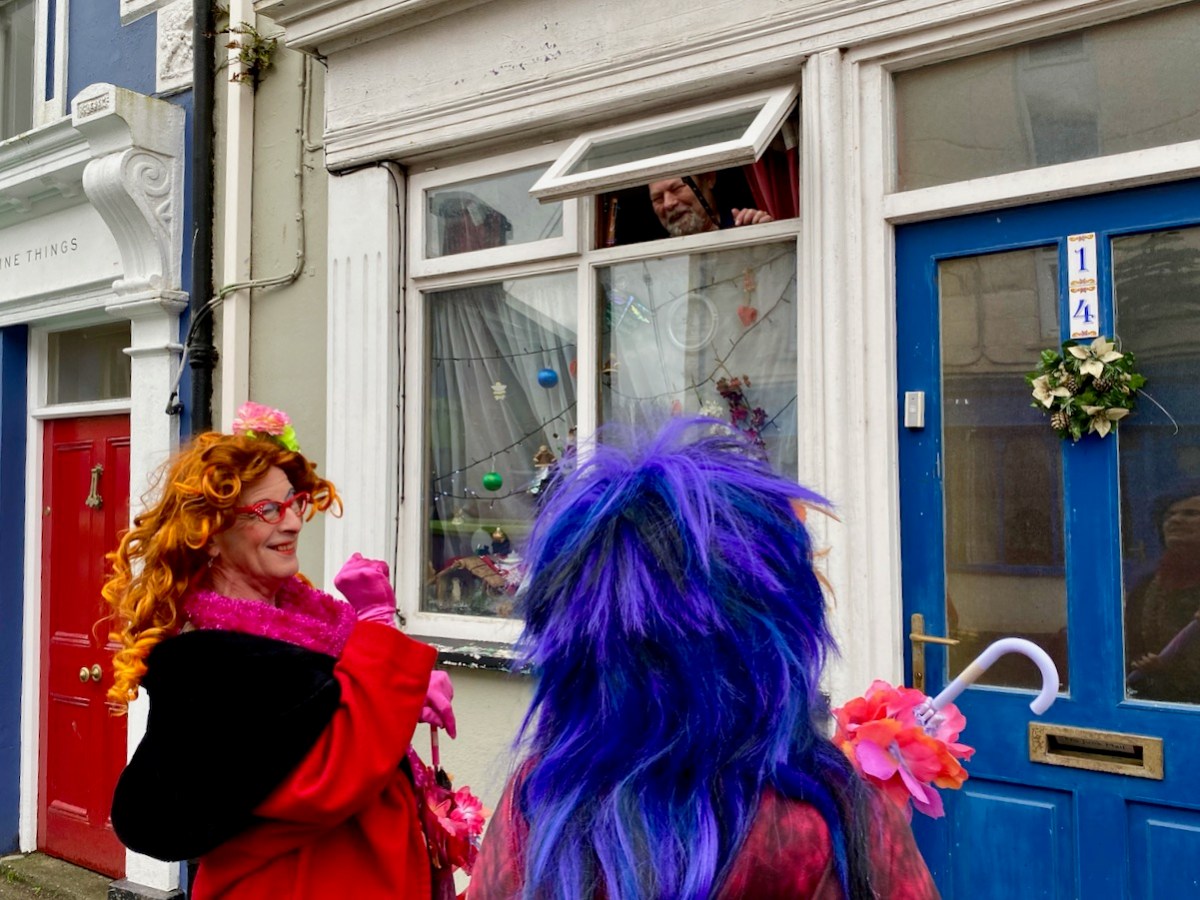
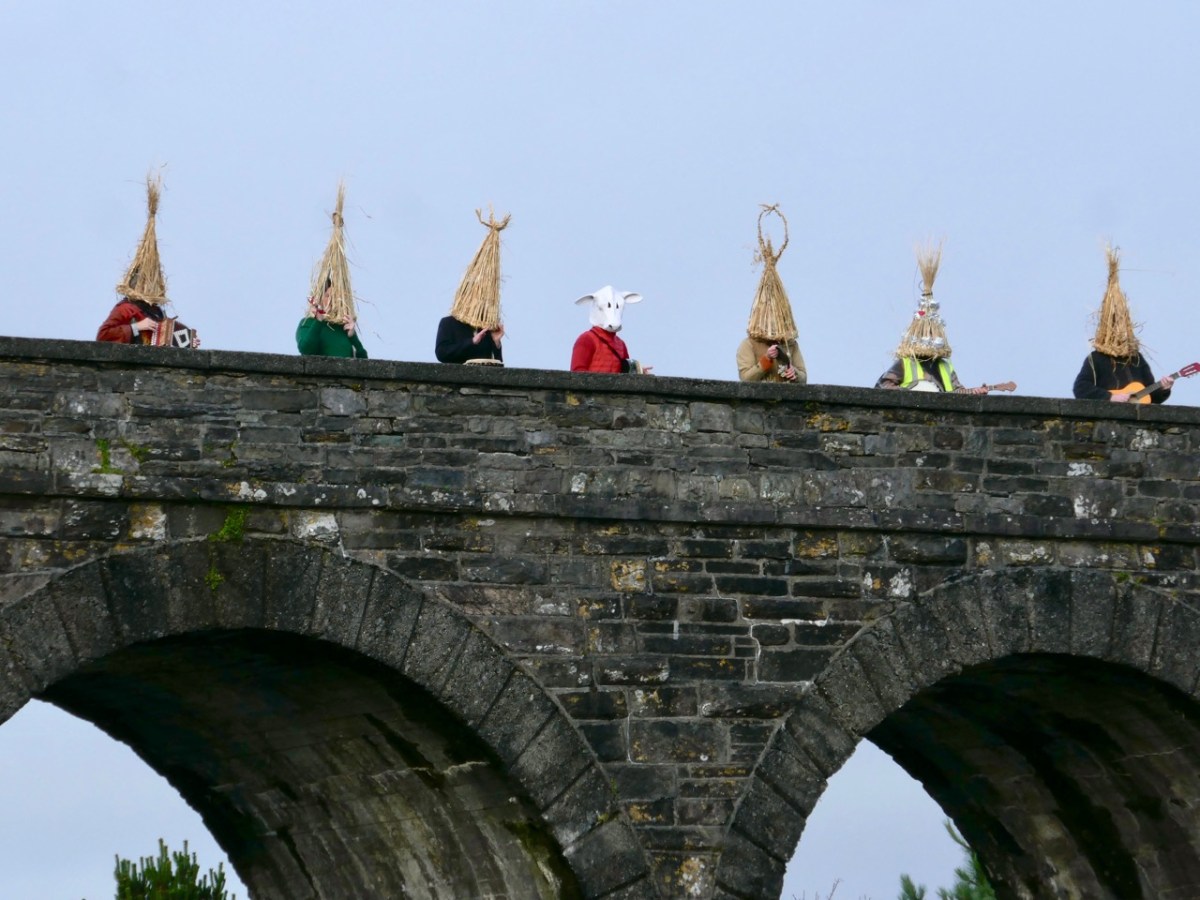
It’s always a difficult task to choose just a few posts from the 50 or so each of us has written over the last twelve months. If I started all over again I would probably choose many different ones. But they are all still there to be read (dating back to 2012): you only have to search the archives! Our new year began – yesterday – with the enactment of an ancient Irish tradition in Ballydehob: the Wran Day. That will be my post next weekend, but here’s a taster. Happy New Year everybody…!
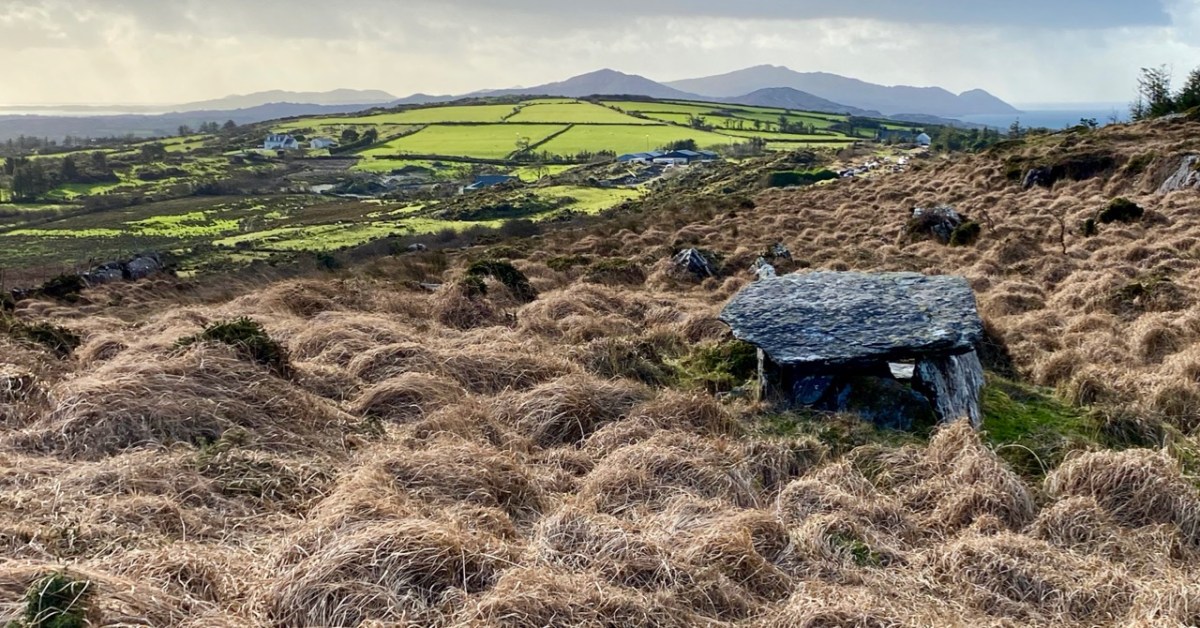
At this time we usually do a couple of ‘reviews’: looking back through the year and picking posts and photographs that jump out at us, asking to be shown again. Next week’s offering will be our selection of favourite Roaringwater Journal articles from 2021, but here, following on from Finola, is my choice of photographs that have never been published. We gave ourselves the stipulation that they have to be from West Cork, and they had to be taken this year. We are trying to have a minimum amount of commentary – and hope they will speak for themselves. First up – above – is Ratooragh Wedge Tomb, far down on the Mizen: we discovered it in February, and that exploration resulted in this article.
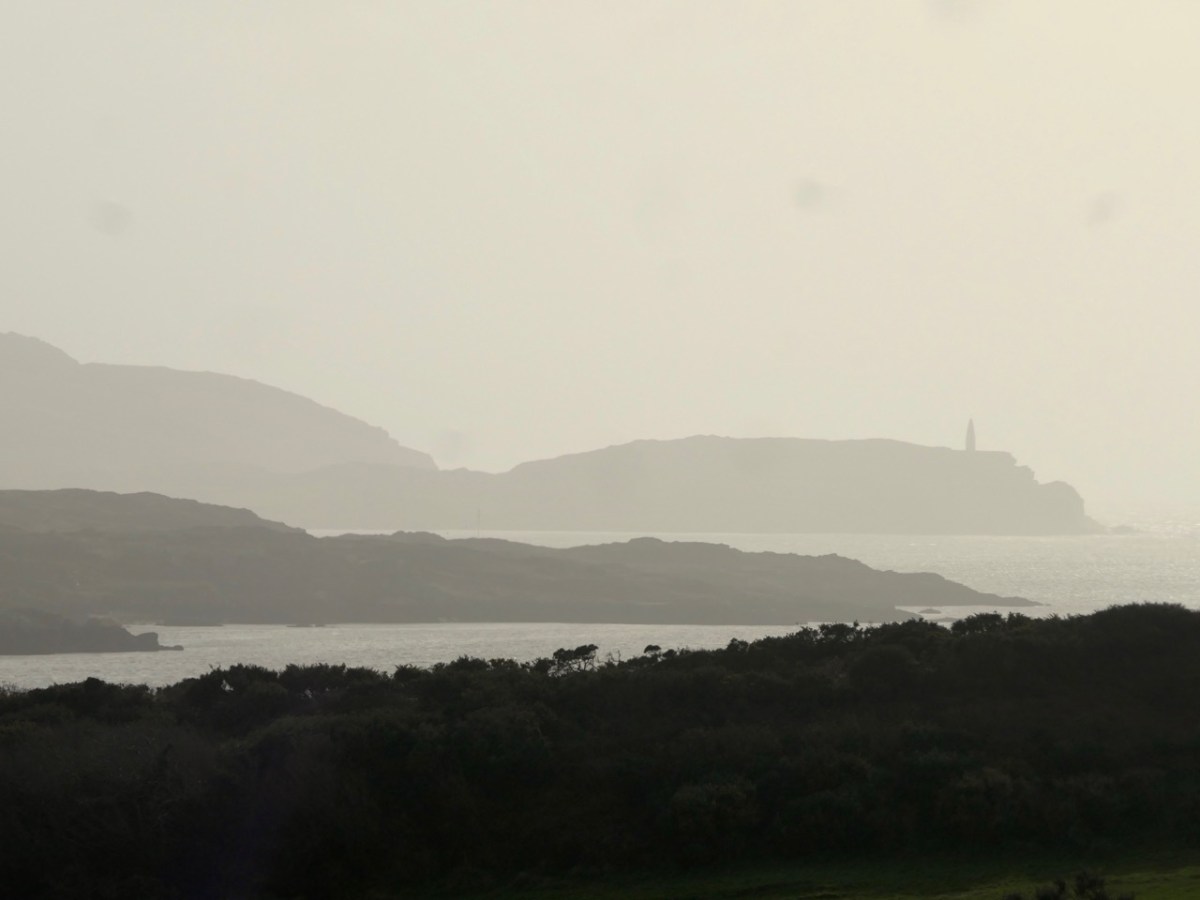
Baltimore Beacon has a recognisable profile: we can see it in the far distance from our home: Nead an Iolair
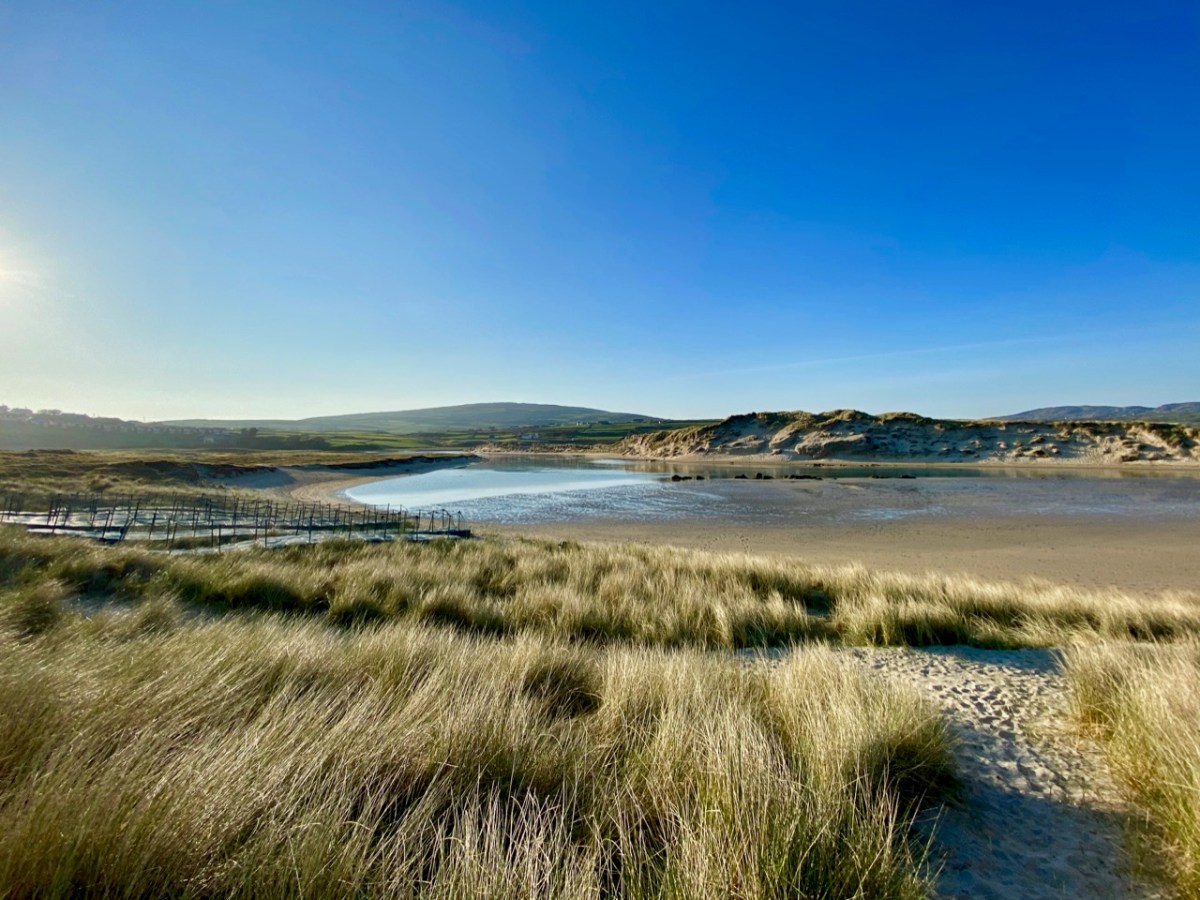
Barley Cove is a favourite place for us to walk – far enough away from the madding crowds: there are few of those in West Cork!
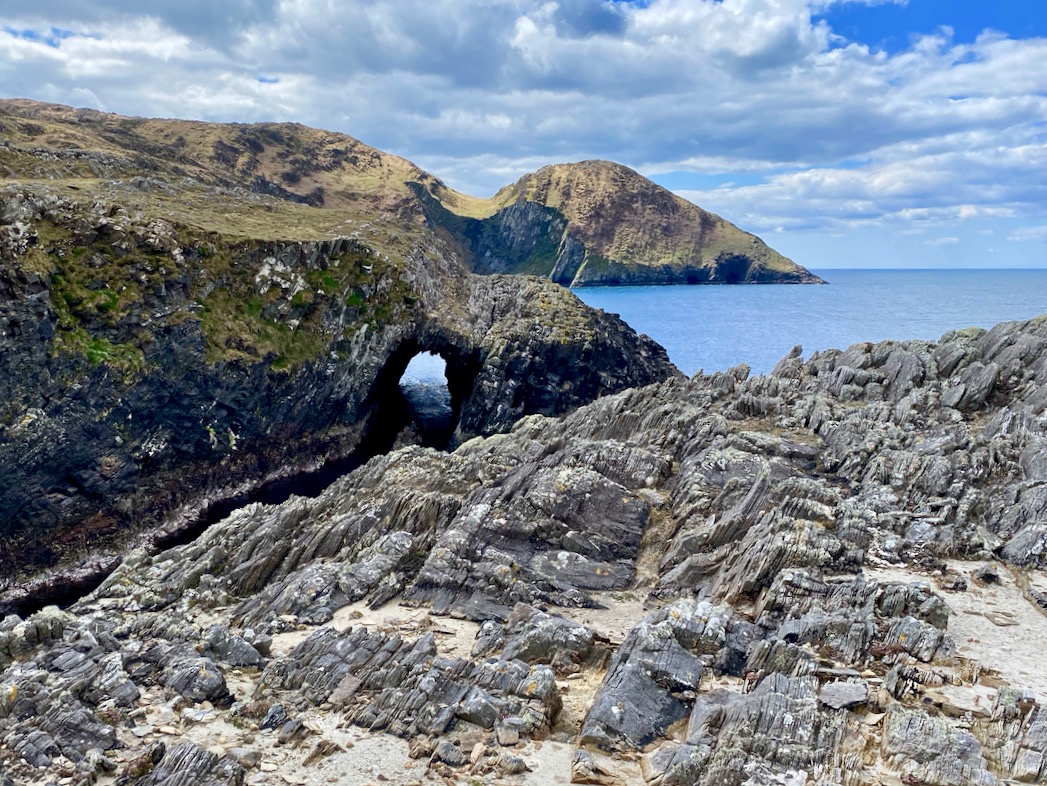
We like to explore the seascapes over by Dunkelly: here is a wonderful natural sea-arch
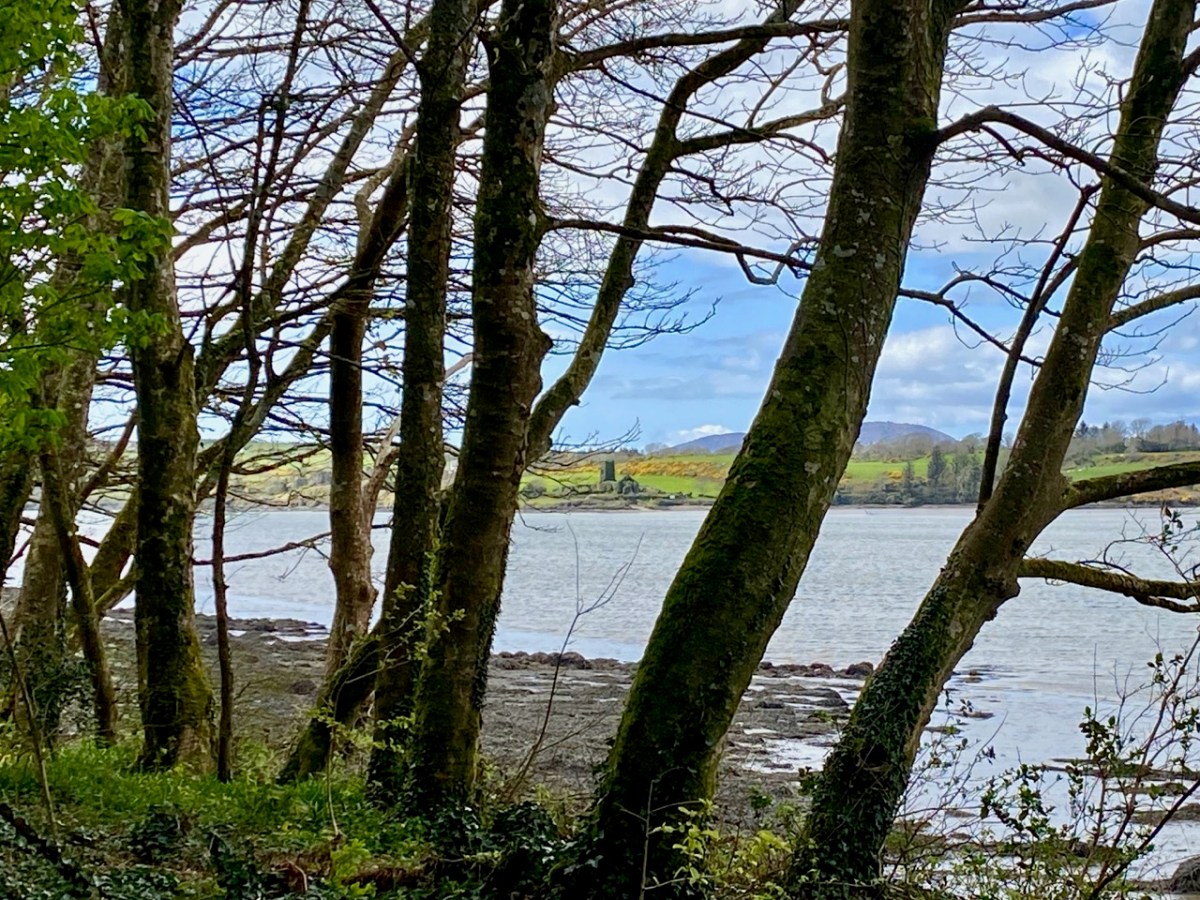
This view is from Inish Beg Estate, looking across the Ilen River towards the burial ground at Aughadown. In the background is Mount Gabriel
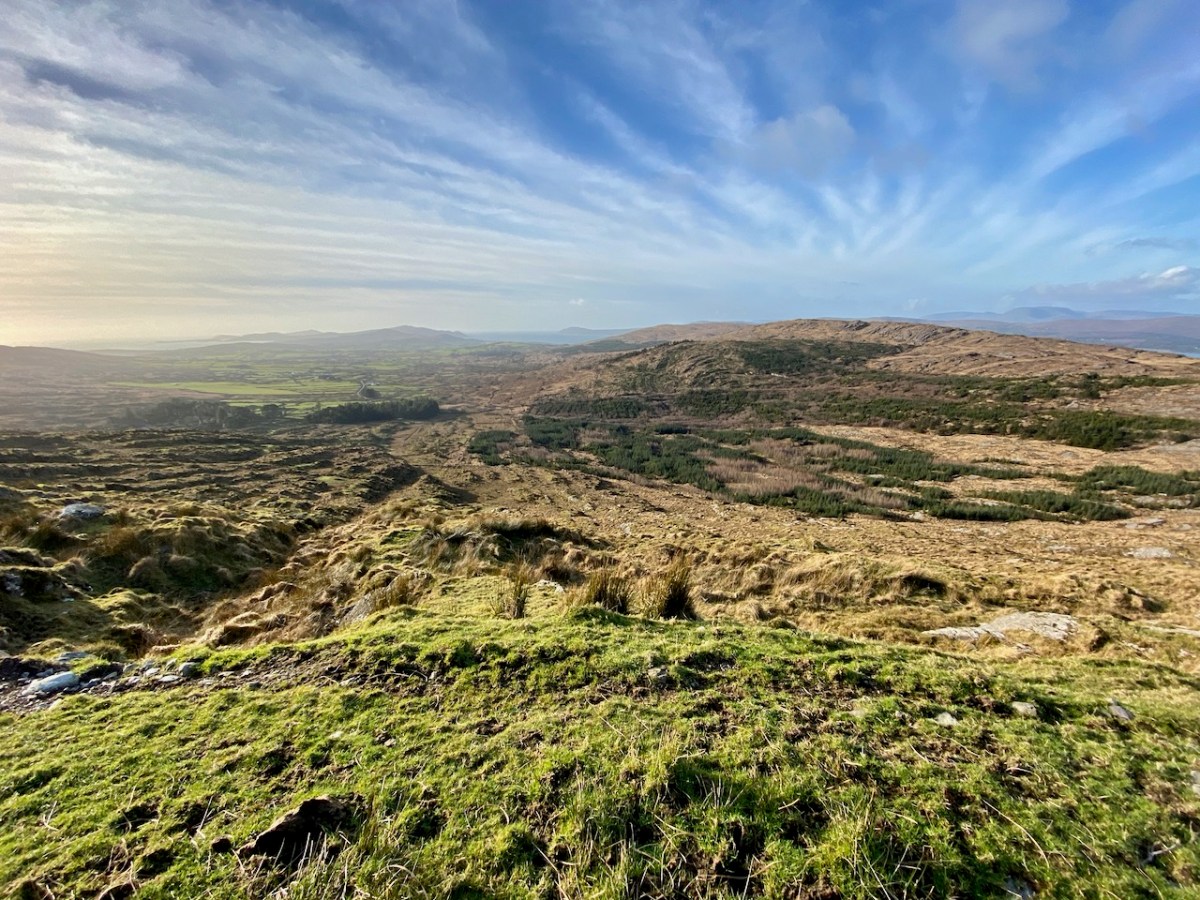
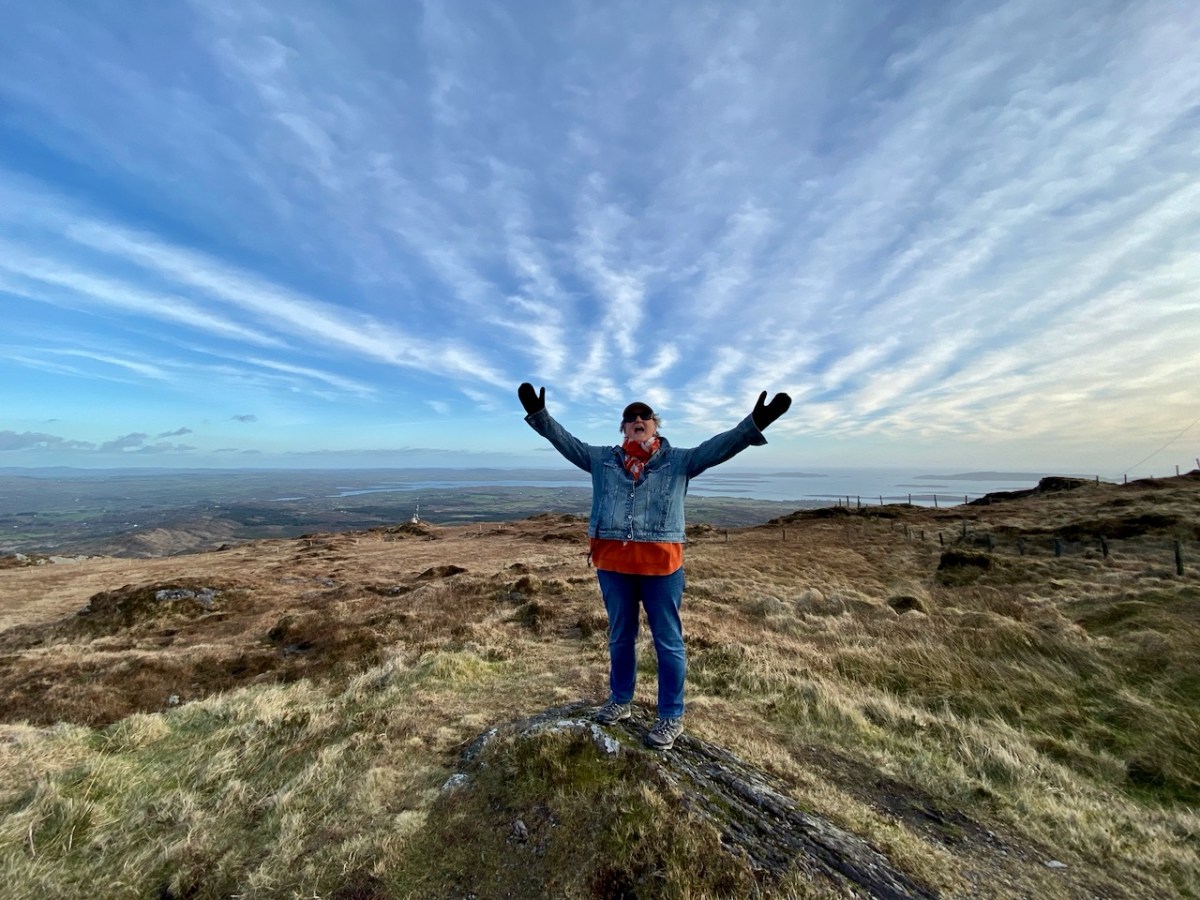
…And here is the view from the upper slopes of Mount Gabriel. Go up there on a good day and you are ensured the most scenic prospect from the top. During the year, Finola walked all the way up and – next – you can see her celebrating her achievement!
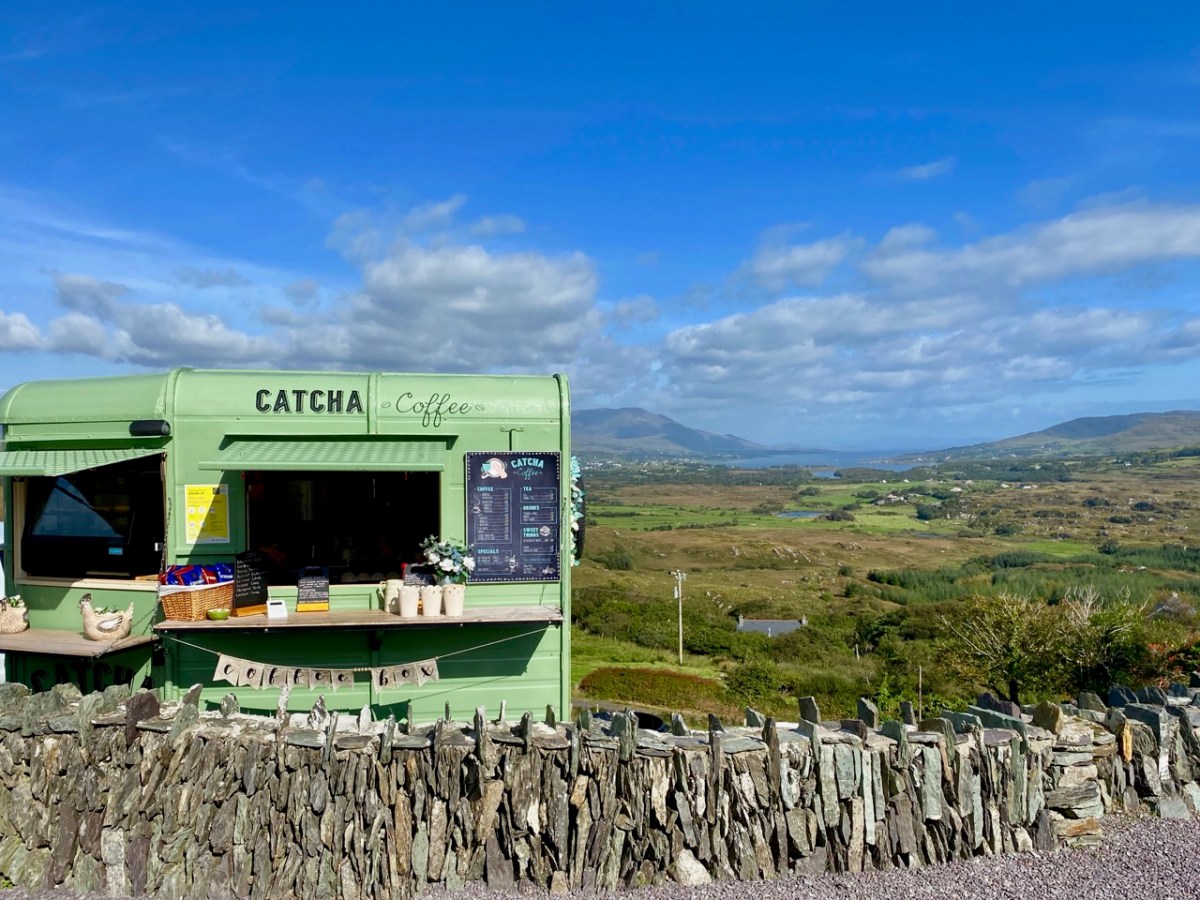
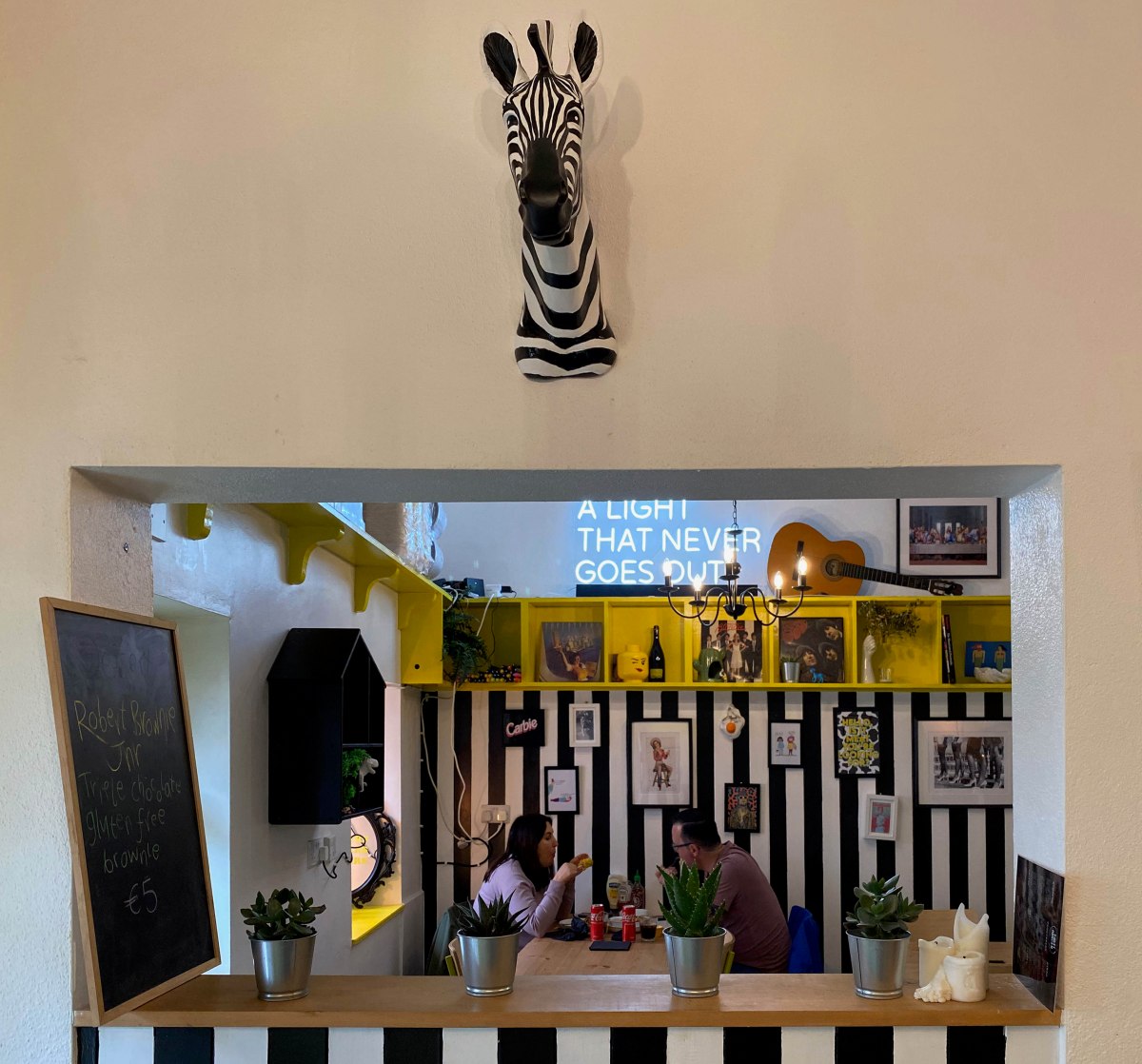
The strange times that we live in have seen an abundance of food and drink outlets springing up in town and country. I like the look of this oneon the Beara
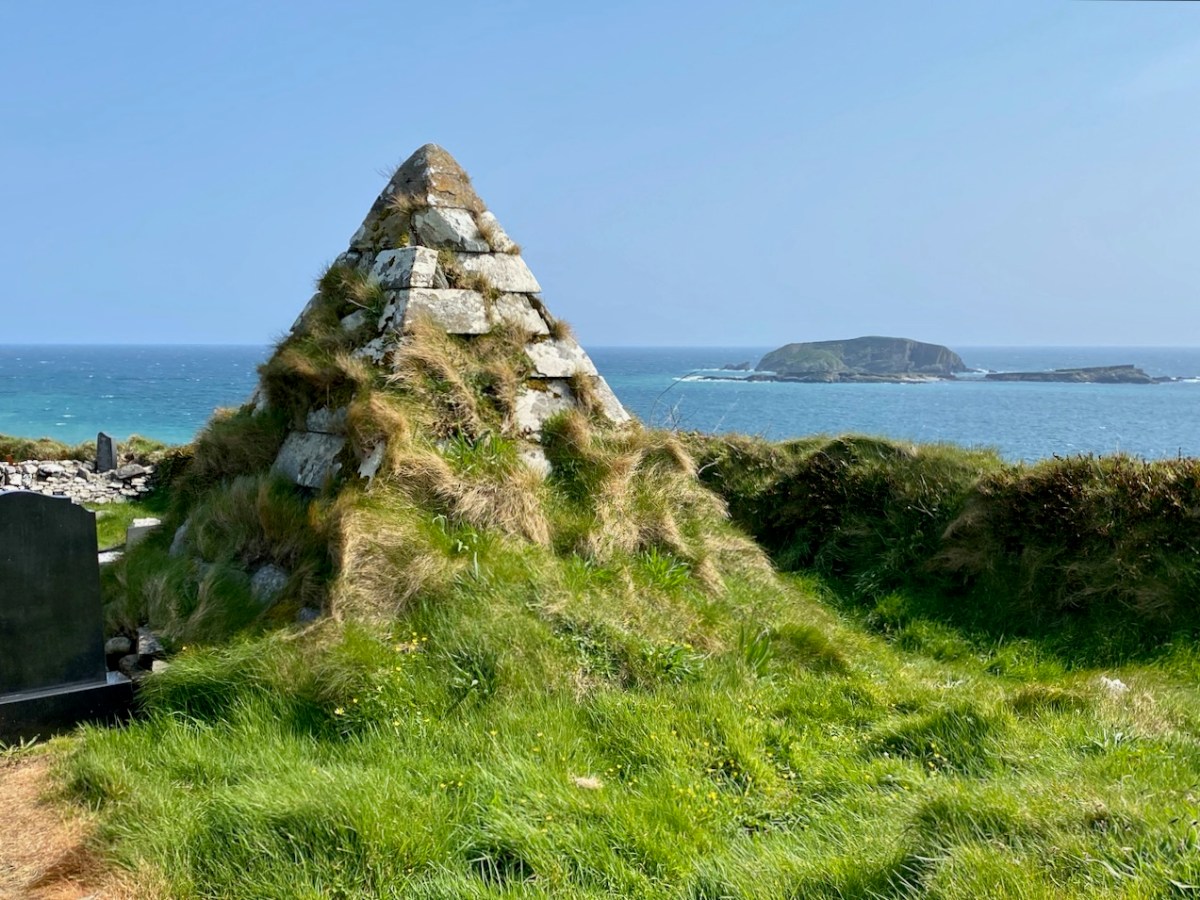
This pyramidical grave marker is one of a few in West Cork: it’s at Myross, and looks out over High Island and Low Island
The West Cork landscapes offer an always changing mix of water and rock
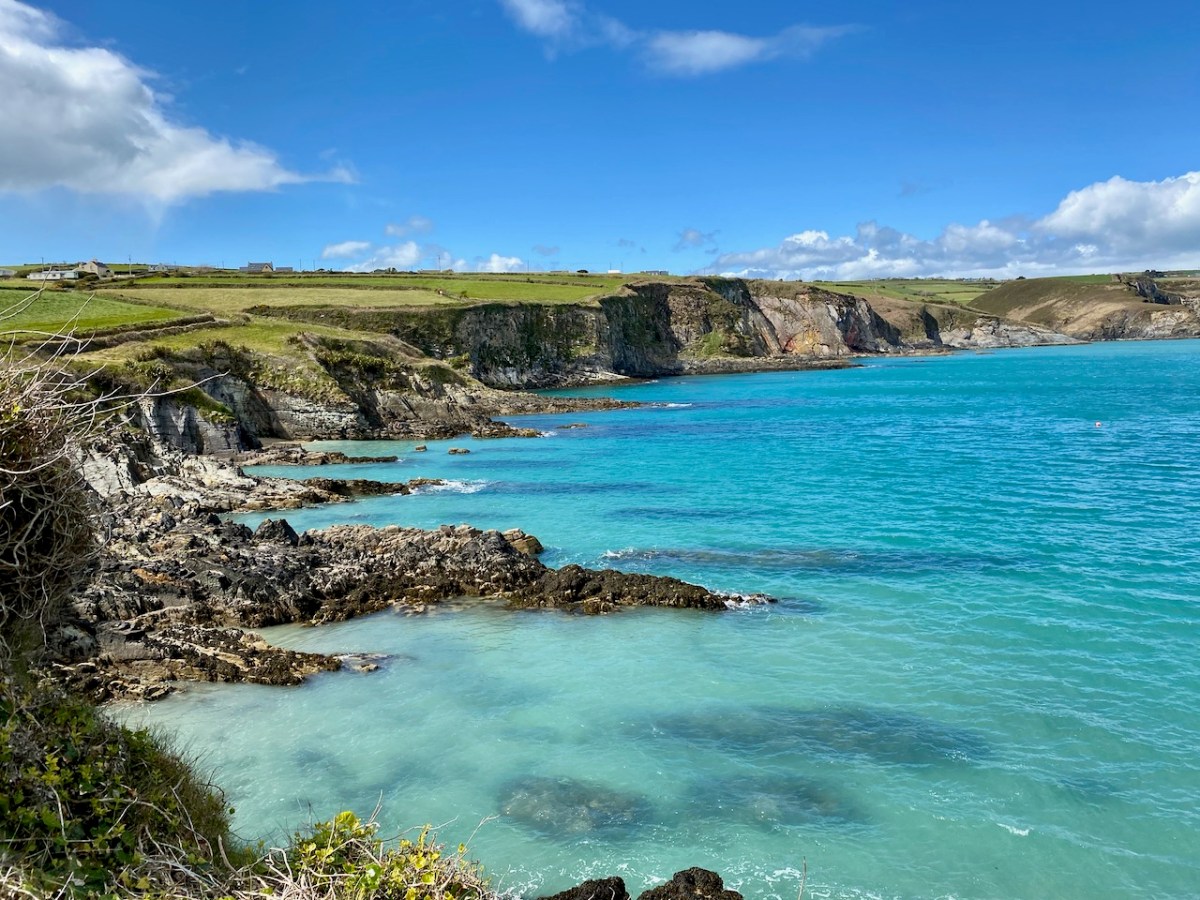
This is the coastline at Dirk, beyond Ring: it really is that colour under the summer sun!
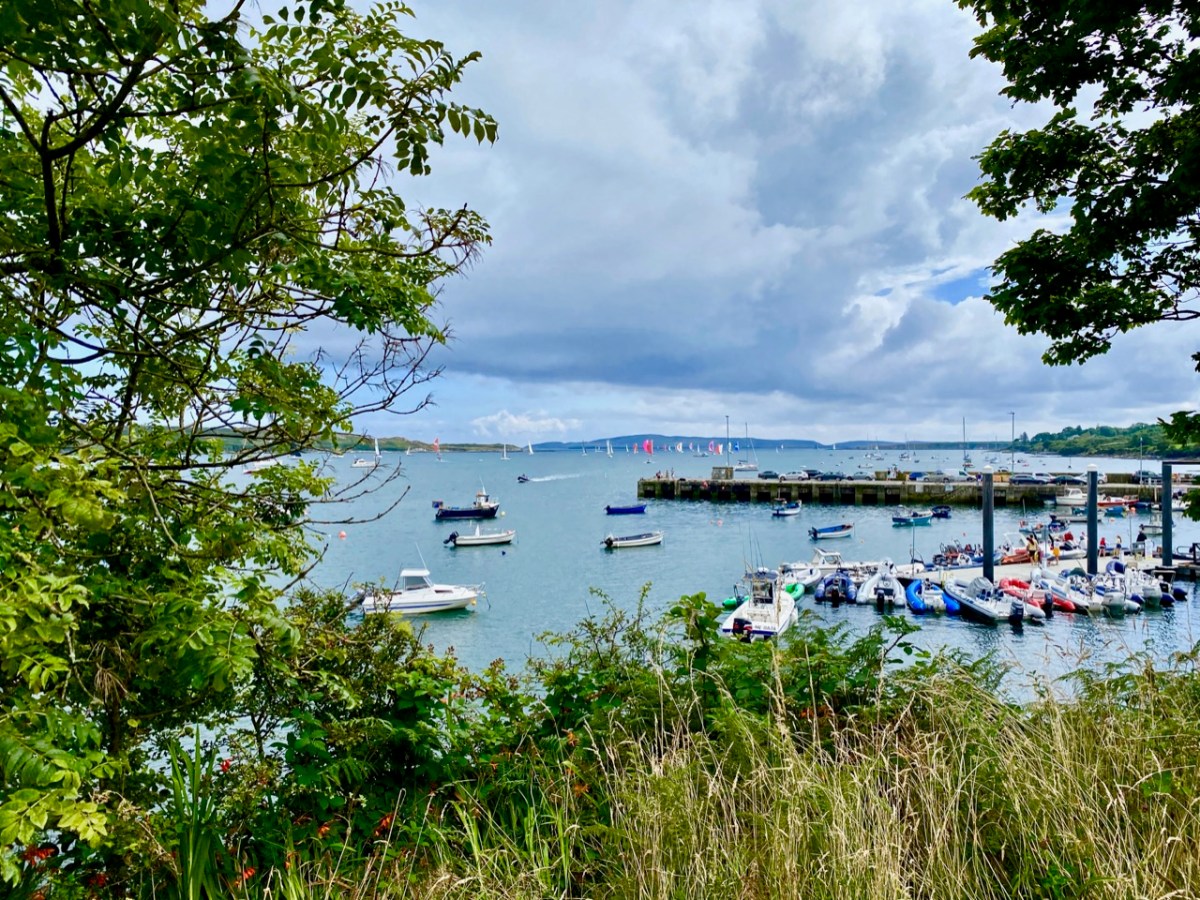
Our neighbouring town is Schull, which even in these Covid times was busy with seafarers in the summer holidays
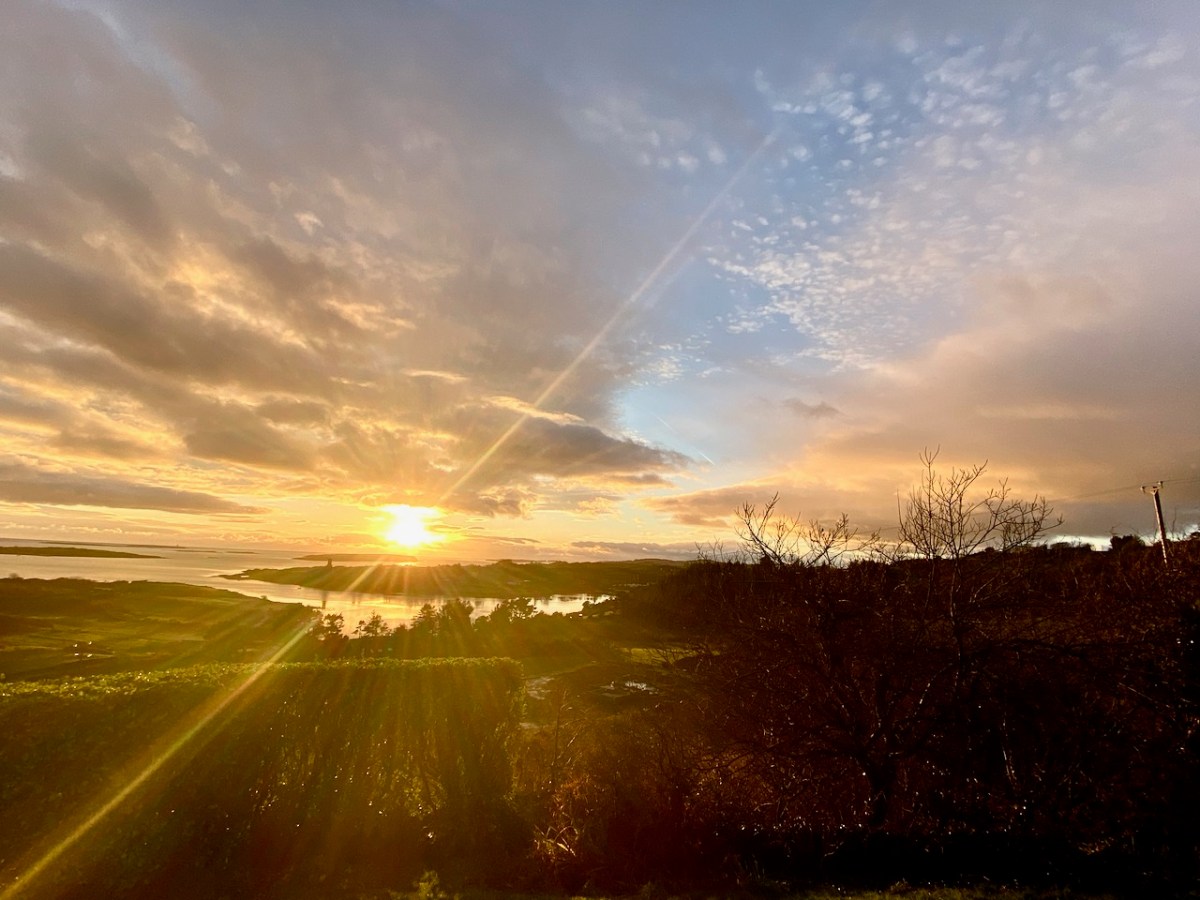
We look down on Rossbrin Cove. Here is our view on a clear day in February
I asked Finola to take my picture next to this gentle giant – I couldn’t resist!
This may seem a surprising picture to finish off with, but Yay Burger has become our go-to on a Sunday night after a hard day on the Blog! Yay Burger has been a life-saver for us through the pandemic, and is one of a number of food outlets that have earned Ballydehob the title ‘centre of the culinary universe’
Here’s the latest episode in our series about Napoleonic-era signal towers in West Cork. There are links to the earlier posts at the bottom of this one. That’s Toe Head above – in the far distance, and that view is taken from the signal tower site at Kedge Point, Spain, to the east of Baltimore.
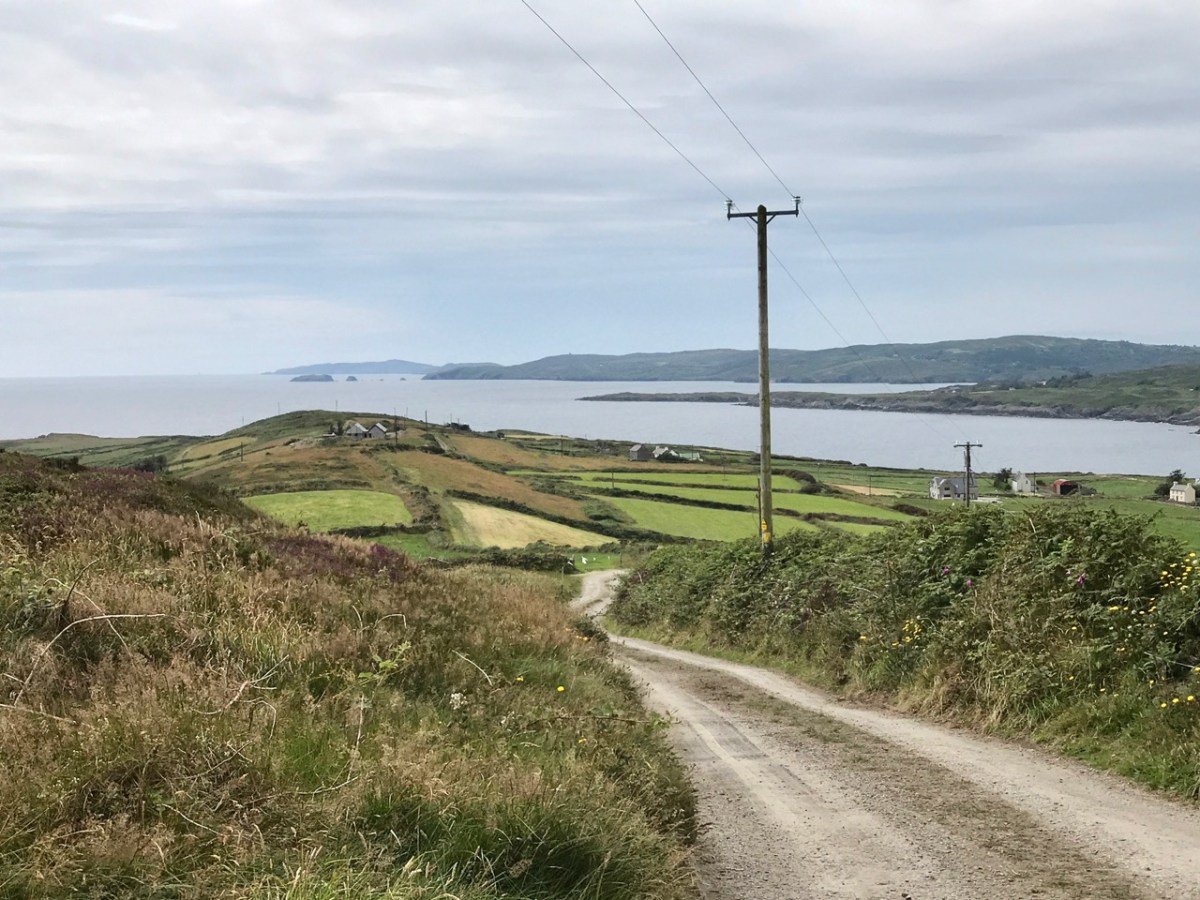
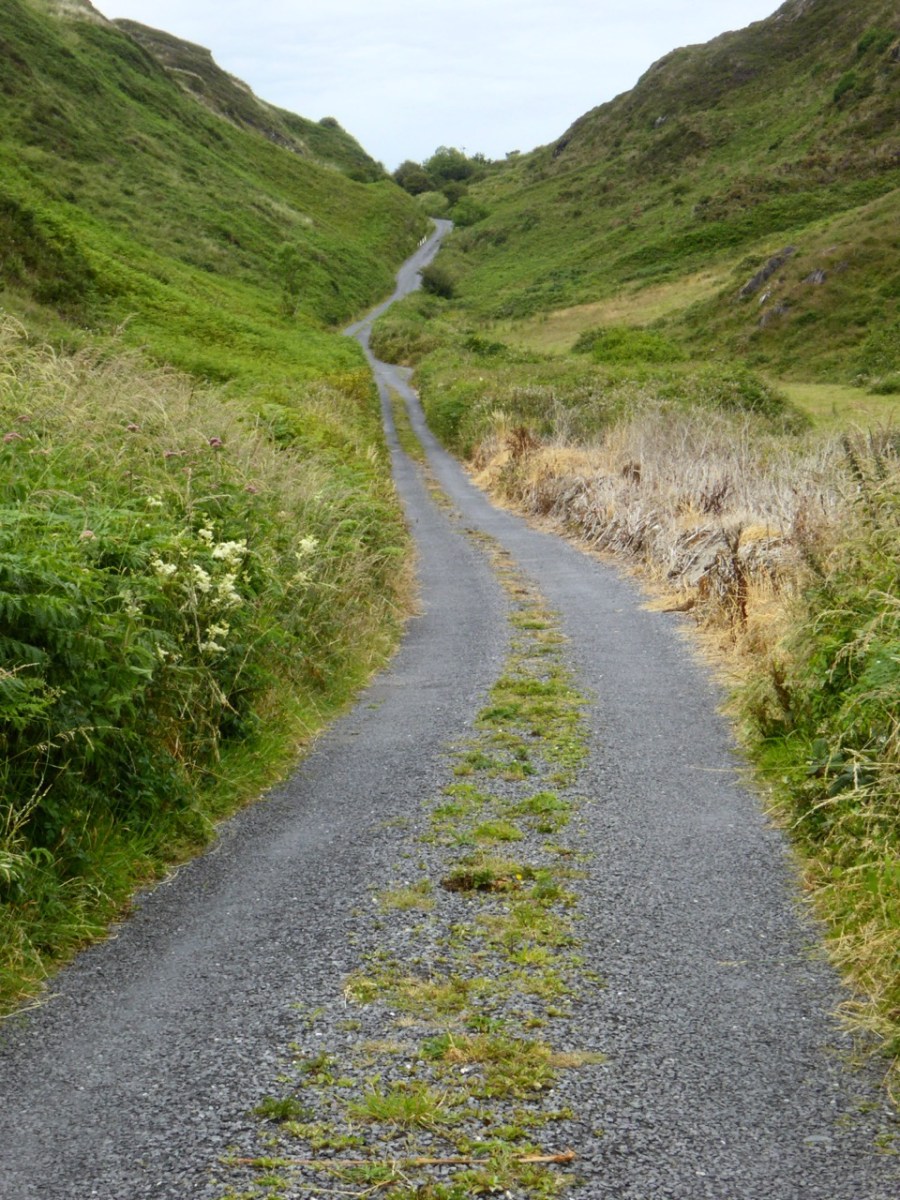
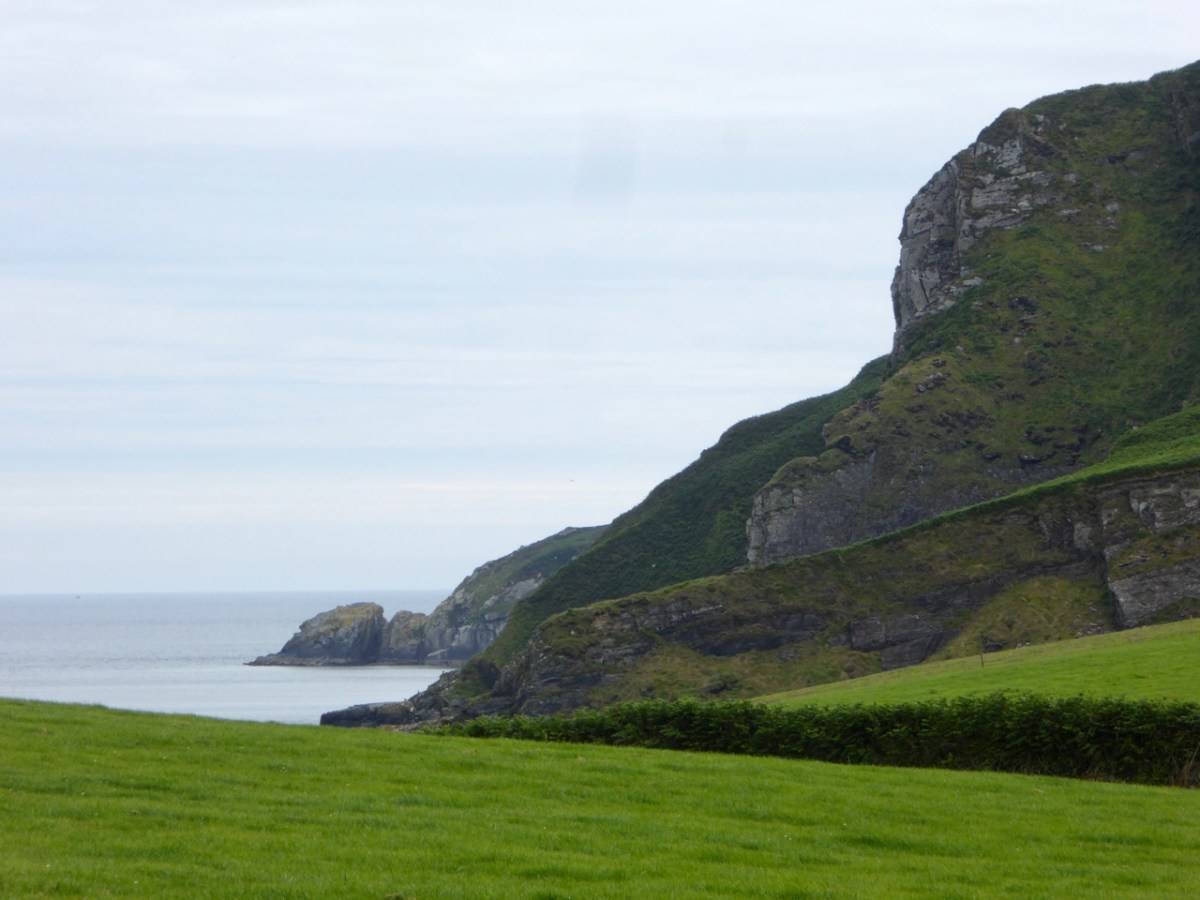
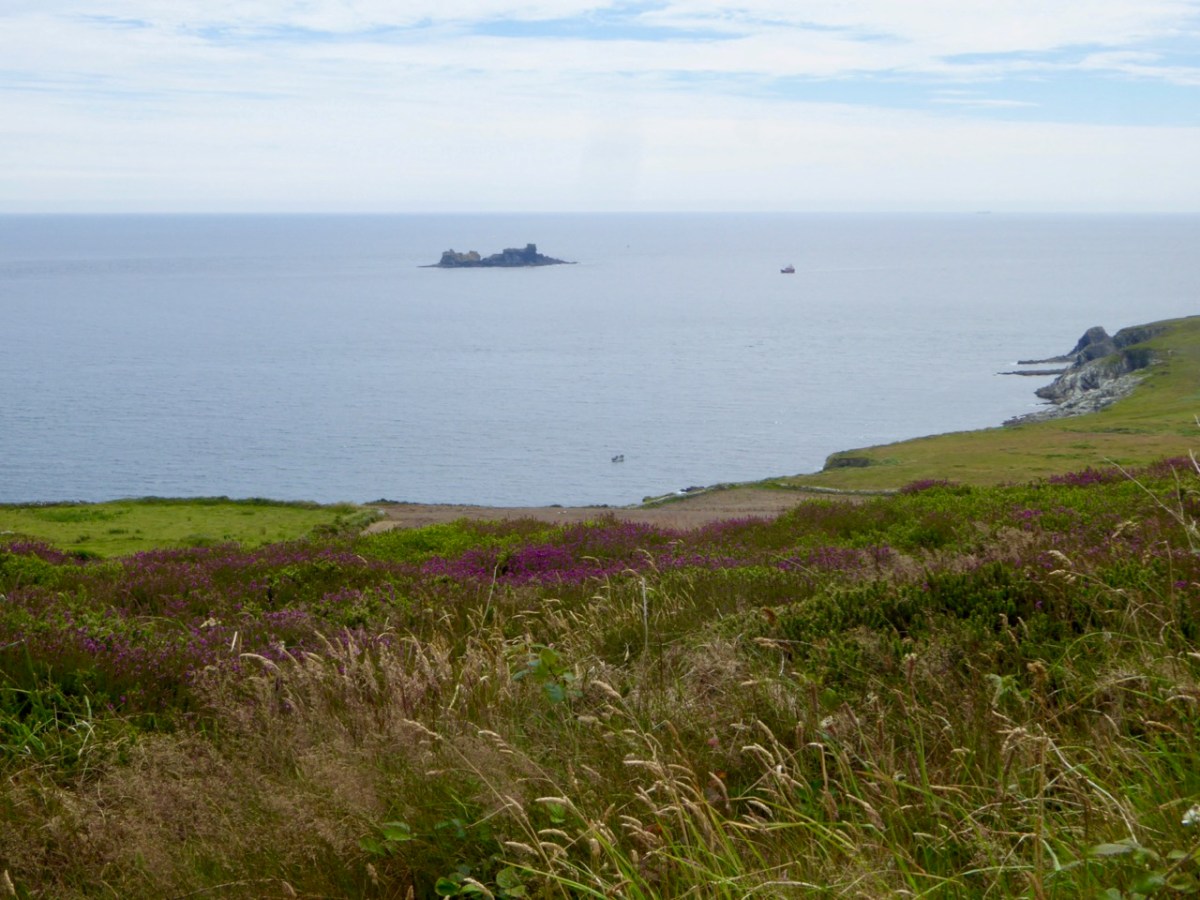
Toe Head itself is a spectacular setting in West Cork: the views, above, show the nature of the terrain, the boreens, and the seascape in the area. So far I have written accounts of nine signal towers: this is the tenth. I’d like to tell you how many of these structures are in West Cork, but that would mean that I would have to geographically define ‘West Cork’. I can’t do that, as there is officially no such area: we are all part of County Cork! All I can do is to let you know that there are nineteen signal tower sites located in the whole County. I have another nine to cover, after this one. But I assure you – Toe Head is definitely in our West Cork!!
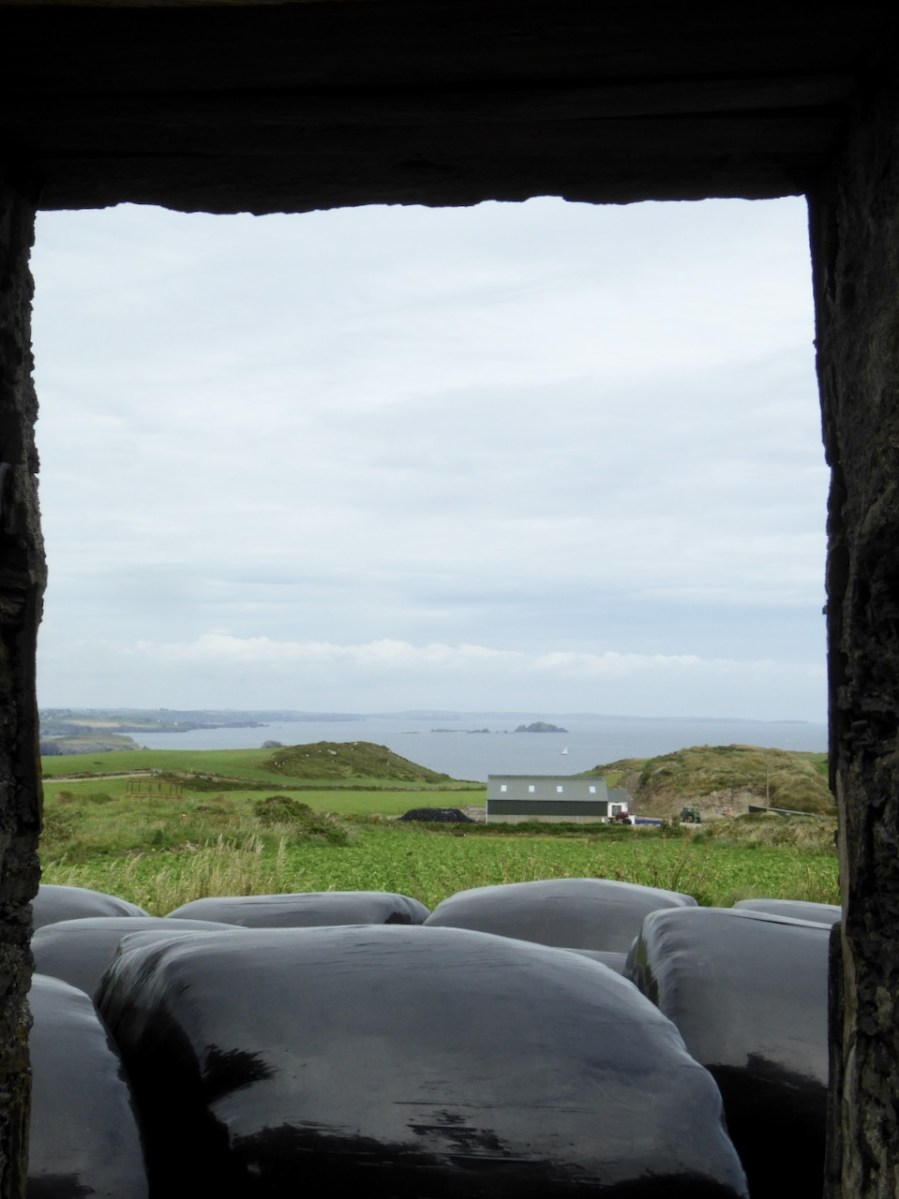
Here’s the Toe Head tower – in a sea of black bales. If you have followed the series so far, you will have noticed that each tower is fairly basic, and generally offers the appearance of a medieval castle. But they were all built at the very beginning of the nineteenth century, to provide a system of surveillance and signalling around the coast of Ireland, from Malin Head in the north to Pigeon House Fort, Dalkey, on the east coast. Each signal tower is within view of one – or two – others, depending where it lies on the chain. In the first post in the series, here, I explain the logic and geometry of the project.
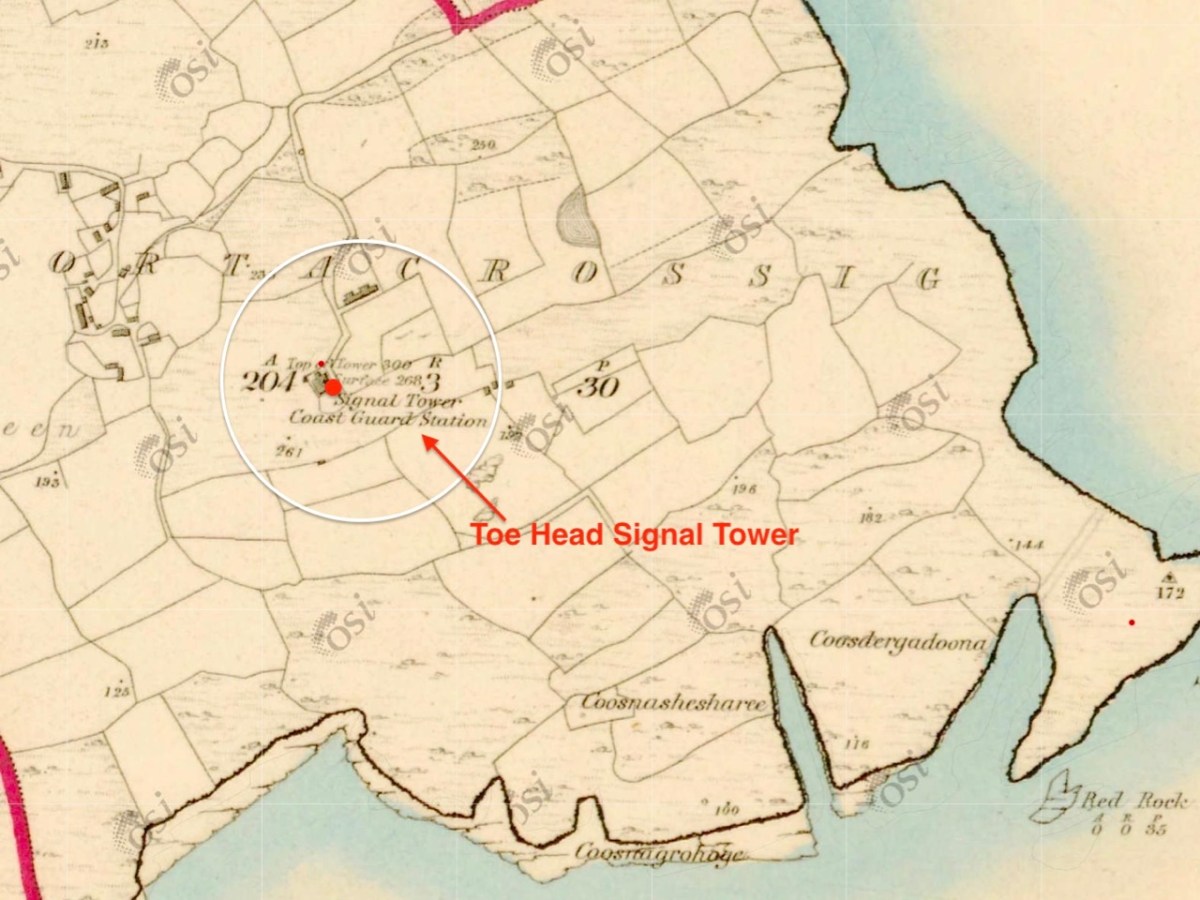
The 6″ Ordnance Survey map extract in the upper picture dates from 1842. By this time the use of the tower for signalling had ceased – the Napoleonic invasion threat lasted only through the first few years of the century: many towers became disused after this and some have vanished altogether, although many ruins do remain because of their remote locations. In the case of Toe Head, the building was adapted to incorporate a Coast Guard Station. I am assuming that, originally, the tower was a simple square structure , and the extension to the rear was added to provide additional accommodation for the Coast Guard service. The current aerial view shows newer farm buildings and an access road close by.
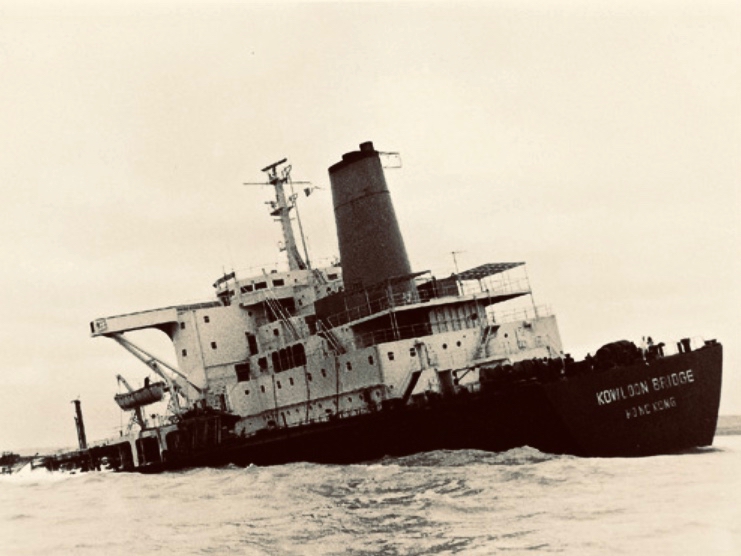
If you look at previous posts in this series, you will see that the Toe Head tower is architecturally simpler, with no bartizans or other ornamentation – it’s more like a small Anglican church tower than a ‘castle’. Like many others, it’s clear to see that this building was slate-hung: this form of weather-proofing was probably added at a later date – possibly when the Coast Guard service took it over. At the centre of the view from the window above you can see the Stag Rocks which in the 1980s became the graveyard of the 900ft long Kowloon Bridge, a bulk cargo carrier travelling from Quebec. The ship was disabled by a storm and then abandoned, drifting on to the Stags. A detailed account of the event was posted in the Irish Examiner 30 years later.
The abandoned Wreck of the Kowloon Bridge close by the Stags in November, 1986 (centre picture). The lower picture shows the wreck underwater today (courtesy Aquaventures.ie): she drifted out of control towards the rocks before running aground on the reef. The resulting fuel spill spread out over the Irish coastline causing extensive damage to local wildlife, and financial losses for the local fishing fleet. Apparently, no-one was ever held to account for the environmental disaster.
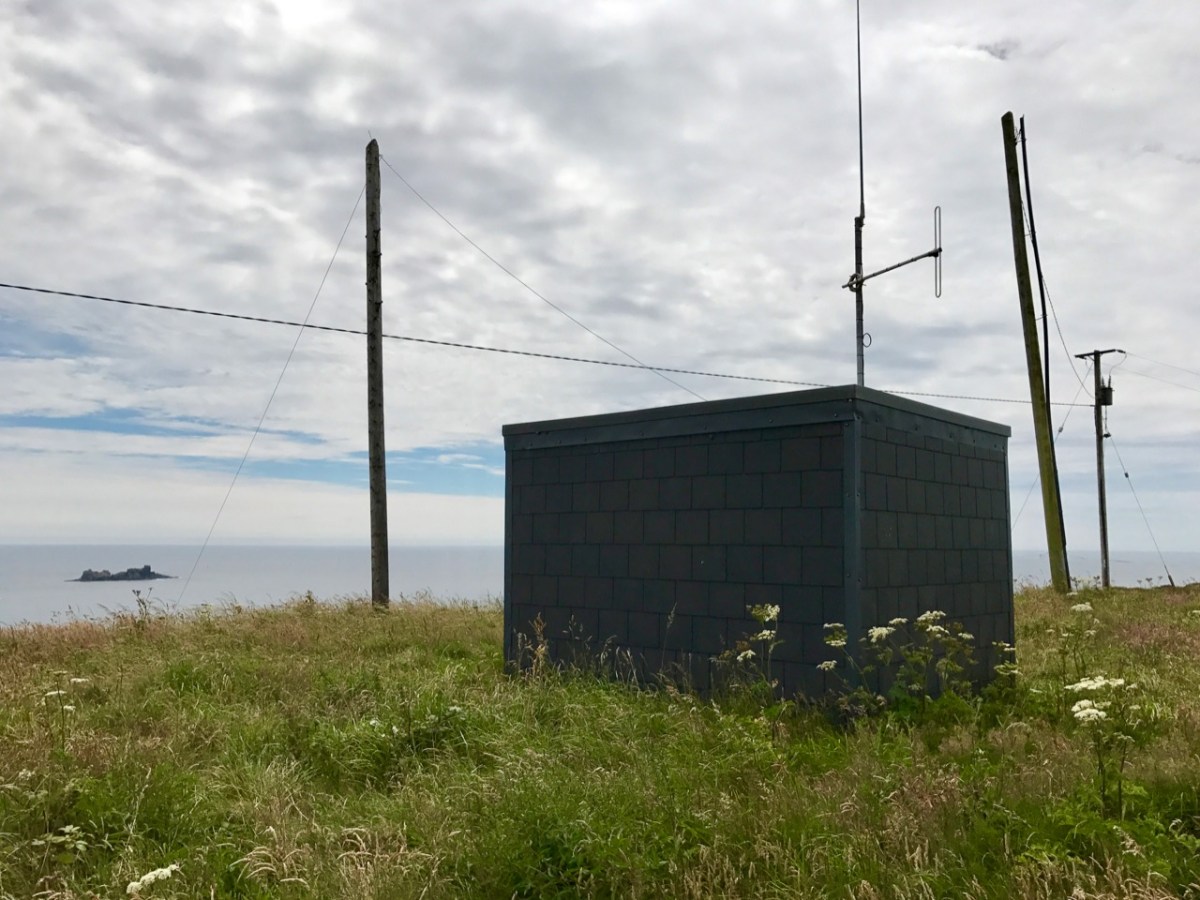
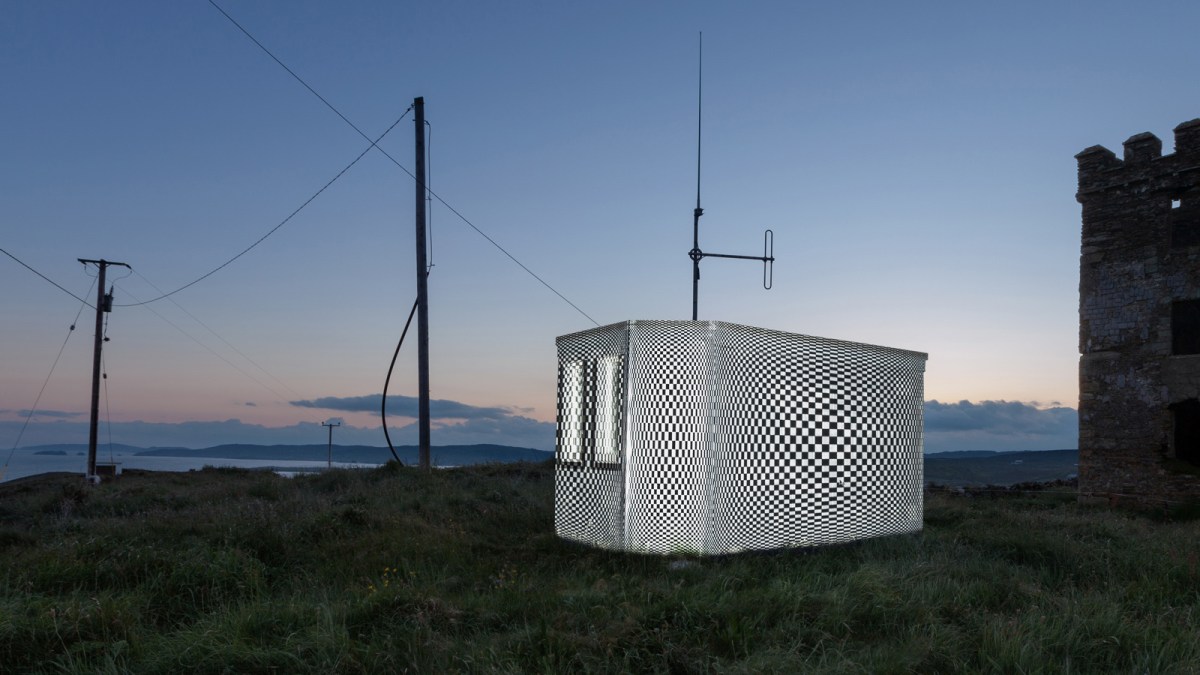
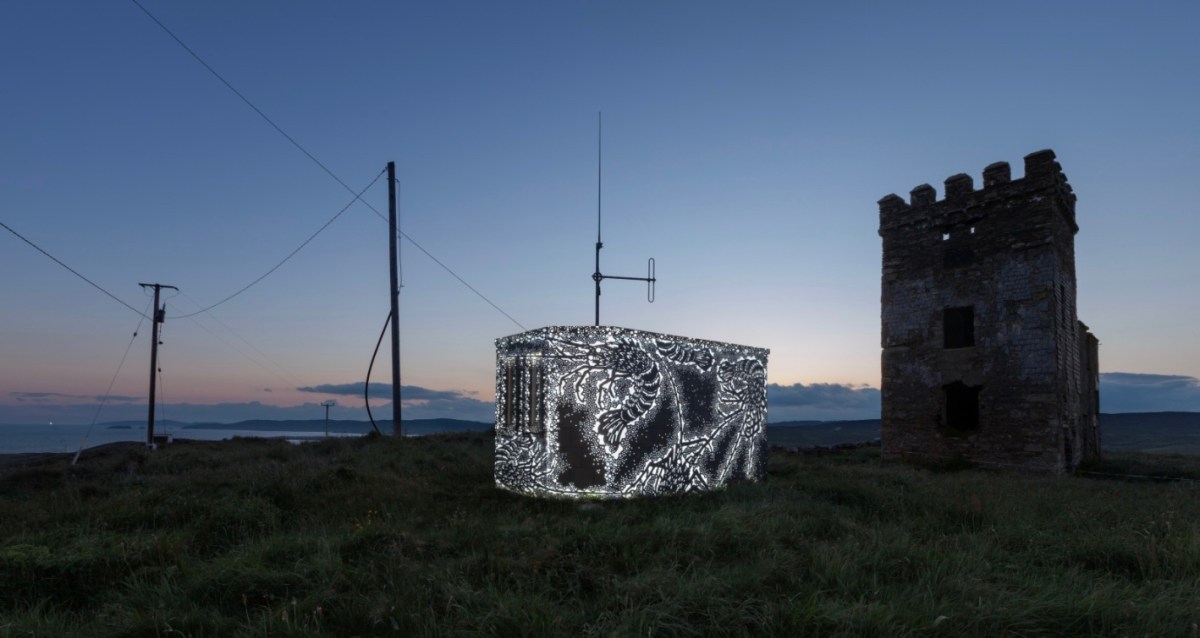
The Stag Rocks can be seen in my picture above, which shows the current incarnation of a World War II Lookout Post that was put in place close by the older signal tower in 1942. You can read more about these lookouts in this post: they were designed by Howard Cooke RIBA of the Irish Office of Public Works at the outbreak of that war (during which Ireland remained neutral). I mentioned in that same previous post an art installation project carried out in 2014 by Tim Schmelzer of Vienna. His work at Toe Head is particularly impressive, and here are some still shots to illustrate the nature of the artworks, which were created on-site using high-powered projection equipment.
The signal tower ruin today is gaunt and desolate. Nevertheless it’s an atmospheric place to visit. On the slopes below the building is an EIRE sign (officially number 28), also dating from the World War II years, when Irish neutrality had to be spelled out to the warring powers flying overhead. I came across an interesting comment from Anne Wilkinson in 2018, giving a slightly different take on the EIRE signs:
. . . These EIRE signs were also to alert German Pilots and crew who were conscientious objectors and who had overflown the UK, to ditch and parachute to safety. Many airmen lived at the Curragh Camp. They were allowed freedom during the day, eg. they often cycled the lanes and roads to enjoy the peace and quiet and then returned to the Curragh Camp for their curfew hour . . .
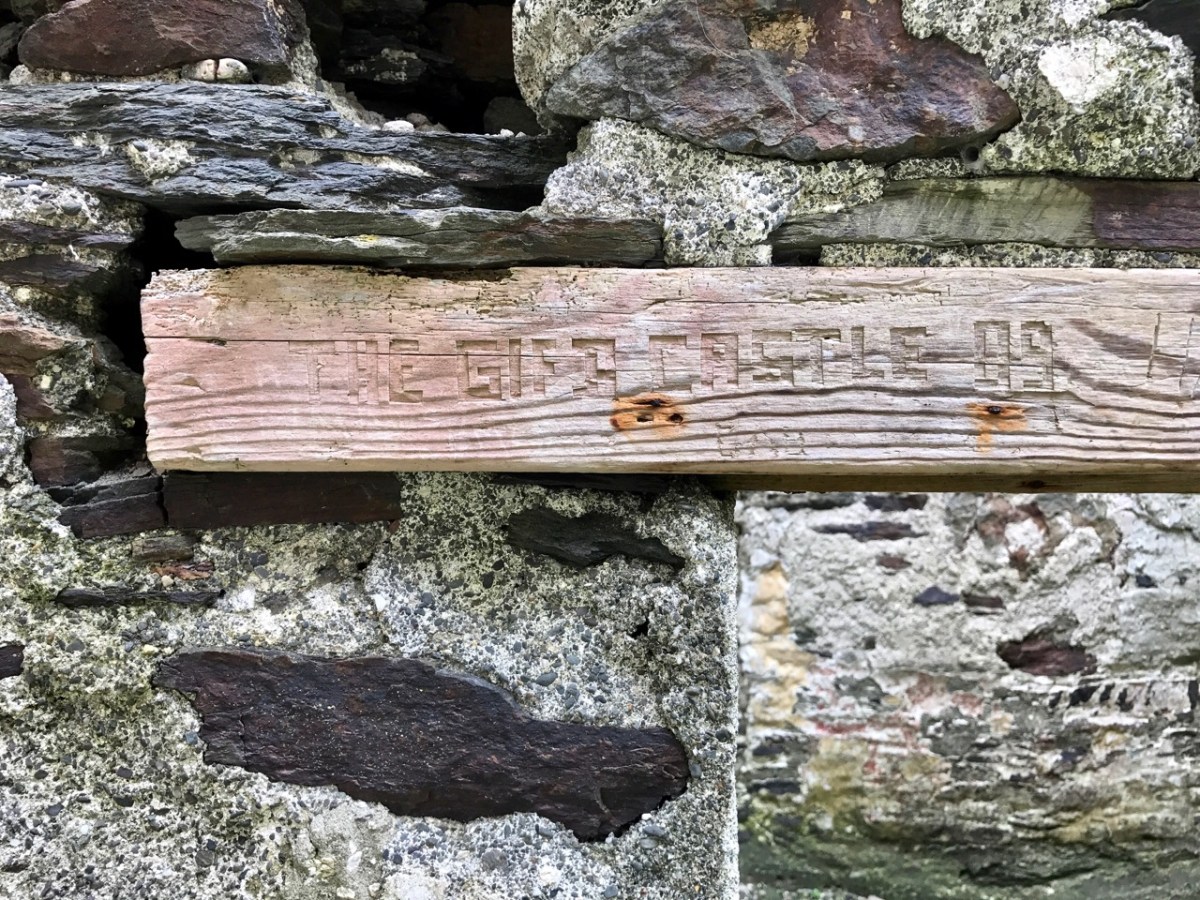
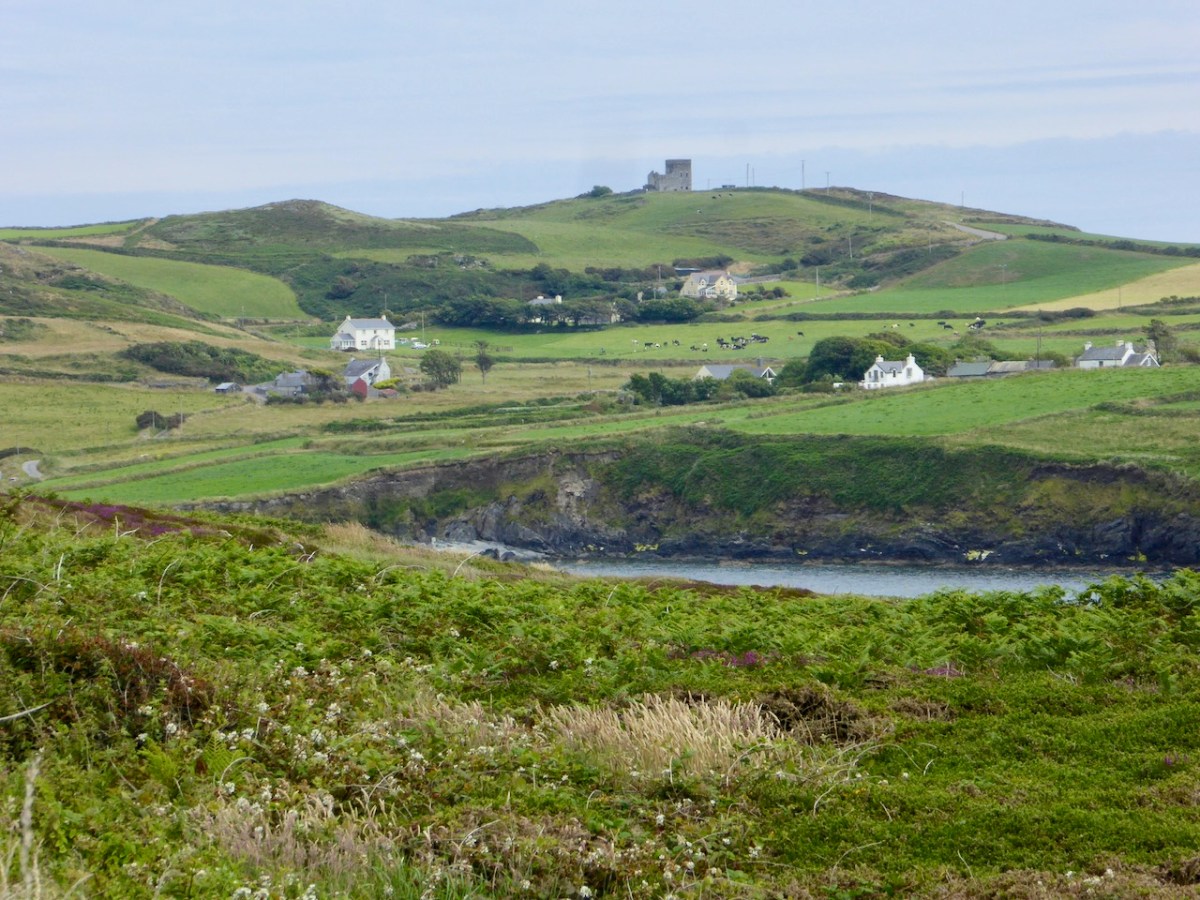
And here’s a little enigma to finish off the post (above). It’s graffiti carved on a timber lintel over one of the openings of the signal tower buildings. It’s probably quite recent – dating from ’89 or’99 – but what does it spell out? And why is it here? It’s tempting to say THE GIFT CASTLE but that ‘T‘ after the GIF doesn’t ring true . . . There’s a story there somewhere: perhaps one of our readers can give us a clue! Finally, here’s a distant view of the signal tower, looking across Toe Head.
The previous posts in this series can be found through these links:
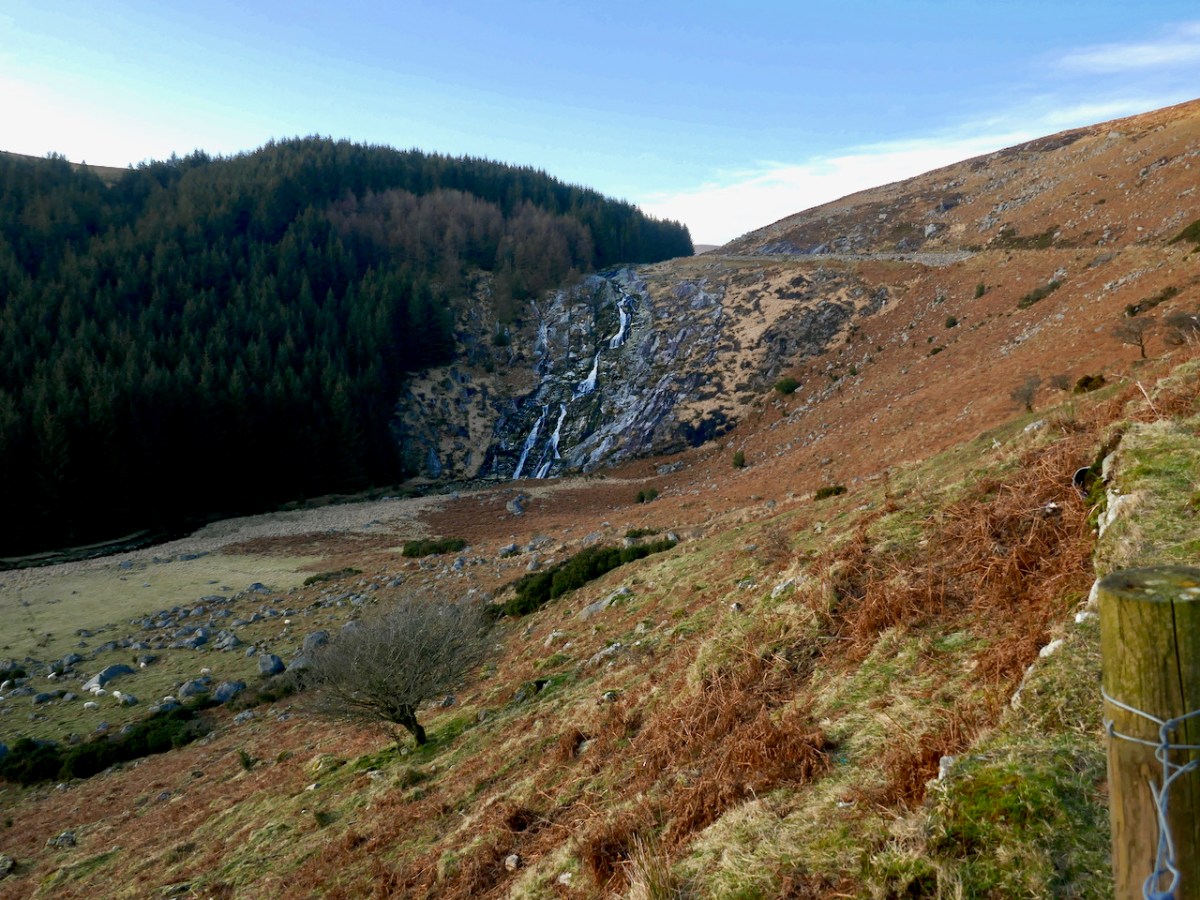
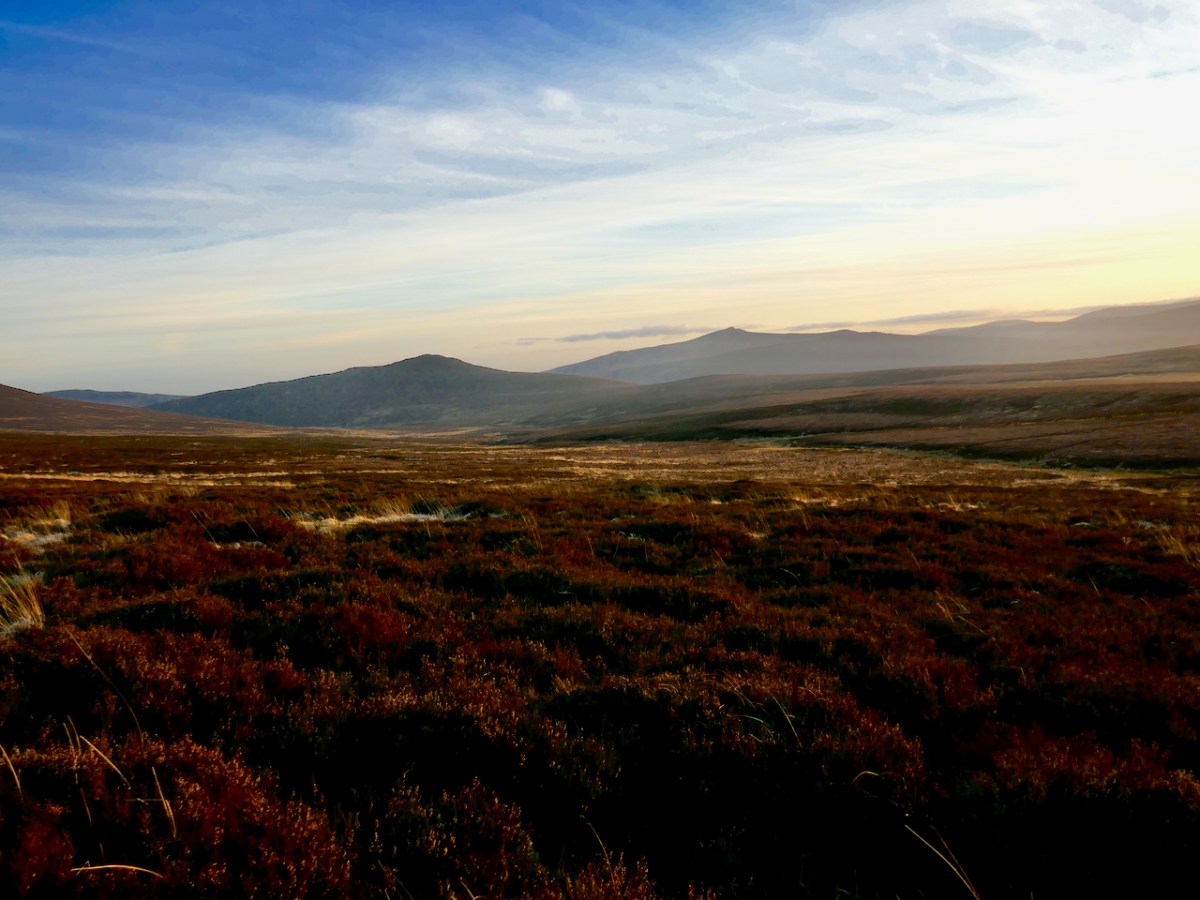
On our most recent trip to the east of this beautiful country – County Wicklow – we experienced the first snows of winter lining the edges of the remote roads that penetrate the mountains here. It’s a magnificent although often bleak wilderness: immersed in such vast, empty tracts of moorland you feel as far away from the civilised world as you can get without leaving these shores, yet Dublin city itself is just a stone’s throw distant – another of Ireland’s remarkable idiosyncrasies.
The 1790s was an era of conflict and change across the western world. News of independence in America and revolution in France inspired Catholic and Presbyterian communities in Ireland. In 1791, the Society of United Irishmen was founded, with the hope of uniting all religious persuasions in pursuit of Irish independence. In the late 18th century, the wild, inaccessible Wicklow mountains provided ideal shelter for insurgent groups who set out to disrupt British and loyalist forces. The deep valleys and fast strongholds of the natural terrain hid rebels from reprisals long after the United Irish forces had succumbed in other areas of the country. This group of ‘outlaws’ was so troublesome that the authorities resolved to forge a road across the impenetrable landscape:
. . . Construction of the road began in 1800 through parts of the county “infested with insurgent plunderers”. The road commenced from Rathfarnham in Dublin to Killakee and continued over the Featherbed Mountain to Glencree, where a major camp was formed. There were four work parties of fifty men each. Soldiers were paid a shilling a day and overseers earned five shillings daily; but very few local civilians could be induced to accept work and no “dependence” was placed on those that did . . .
The Sally Gap and Wicklow Gap roads built by the British are still the main roads through the Wicklow Mountains today. The network of military barracks that they link are still to be seen at Glencree, Laragh, Glenmalure, and Aughavannagh. Intended to stop local unrest, ‘Wicklow Military Road’ is today a scenic reminder of the dramatic events of that time.
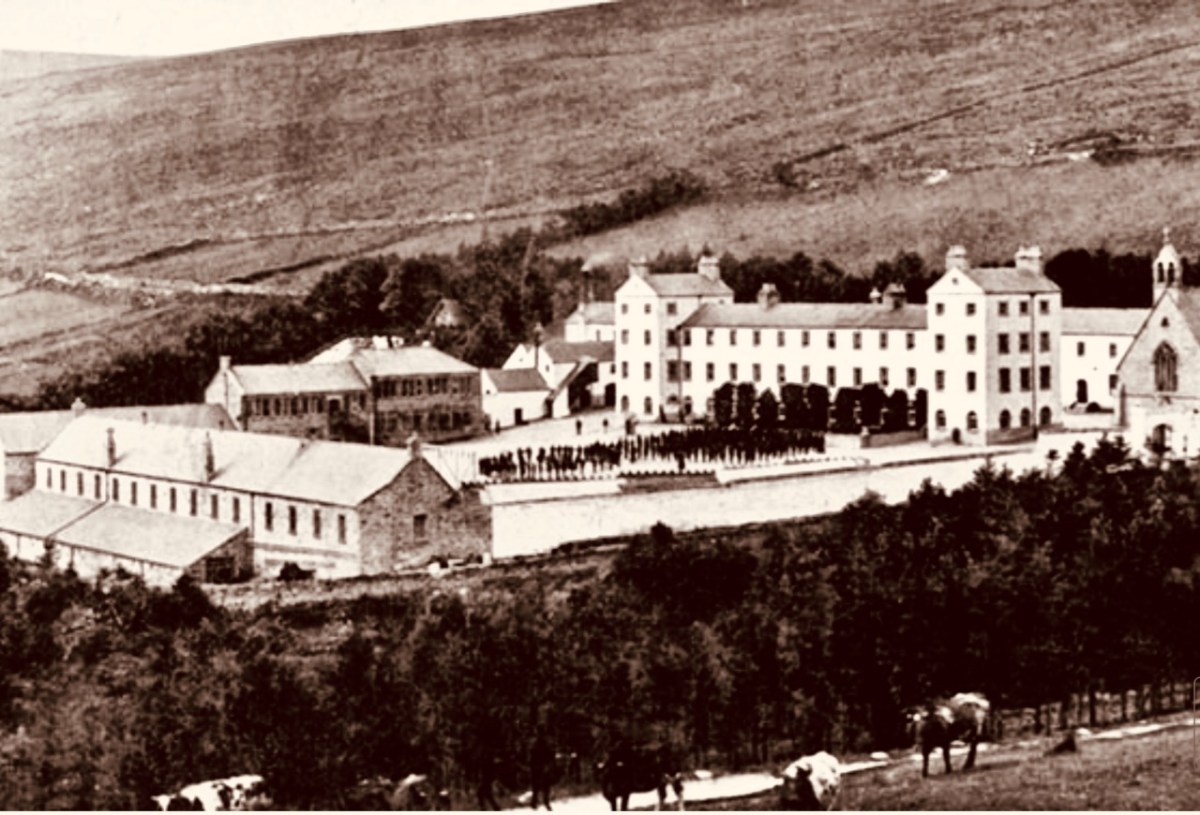
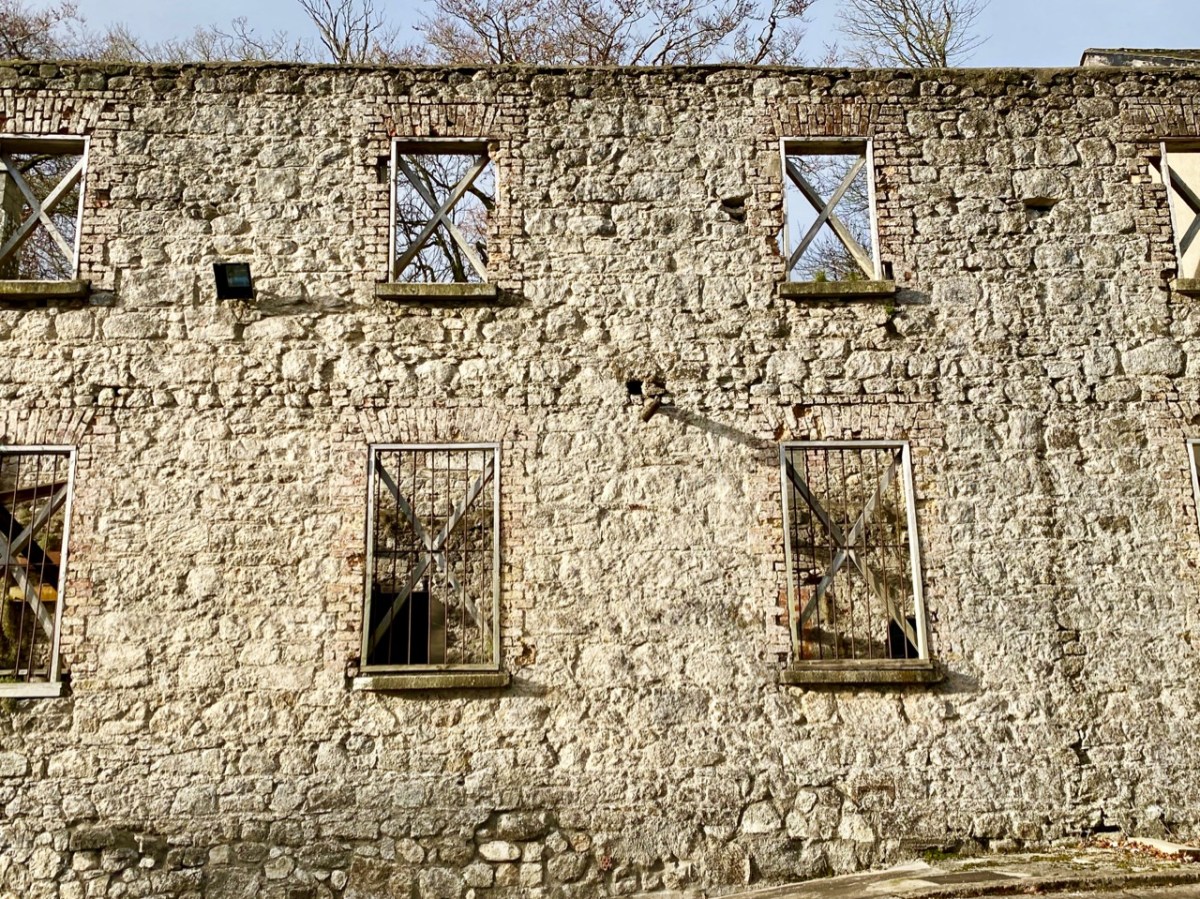
Built originally as a British Army barracks, the settlement at Glencree has gone through several mutations. This photo from the nineteenth century (above – courtesy Glencree.ie) shows St Kevin’s Reformatory, established on the site of the then abandoned barracks in 1858 and running through to 1940. One suspects it was a grim place: there are few records existing. It housed up to 300 boys.
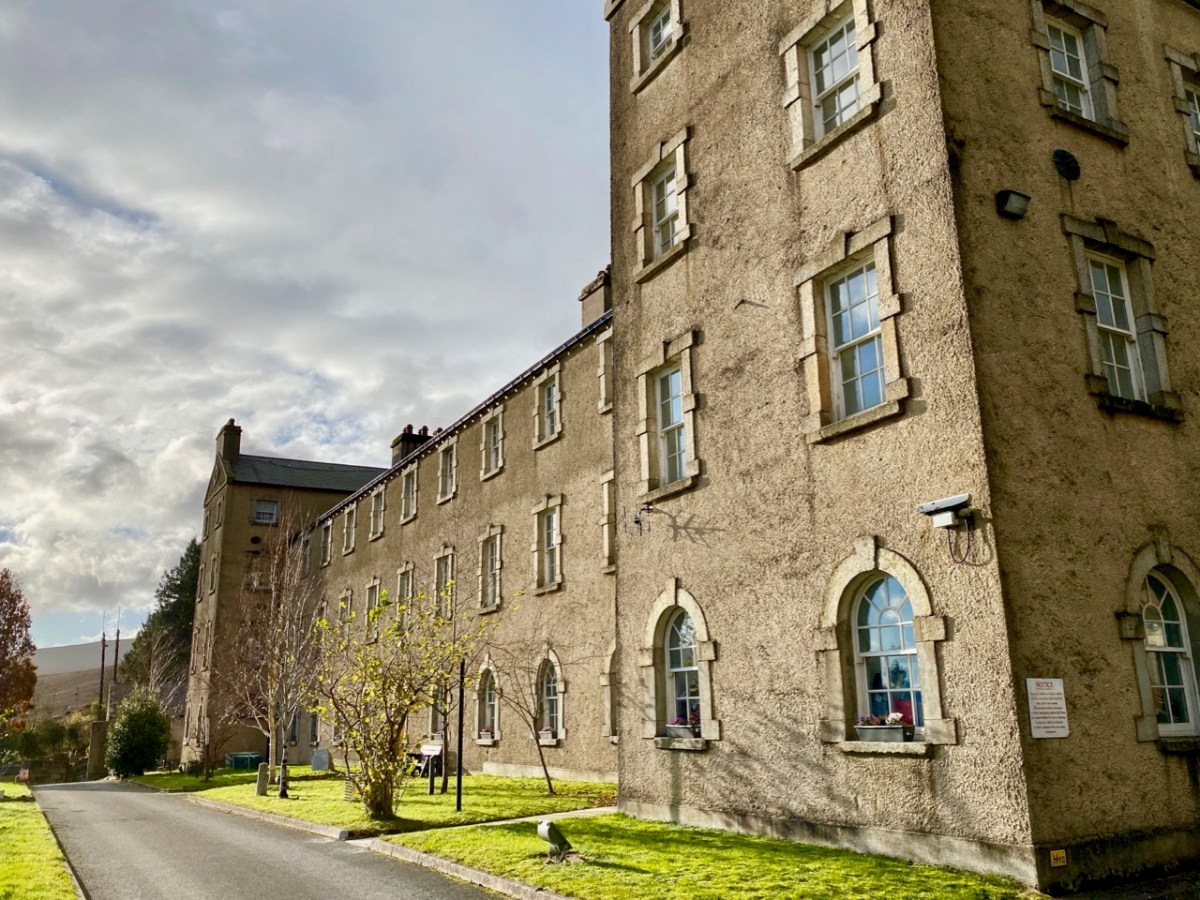
Many of the buildings survive today, when Glencree has become the home of The Centre for Peace and Reconciliation. Founded in 1974 in response to the conflict in Northern Ireland, Glencree played an important role in the Irish Peace Process, bringing together those in conflict for confidential dialogue and helping to build relationships across divides. This Irish-based, independent, non-governmental organisation has evolved its expertise on a global basis, and this has been shared in more than ten conflict and post-conflict countries around the world.
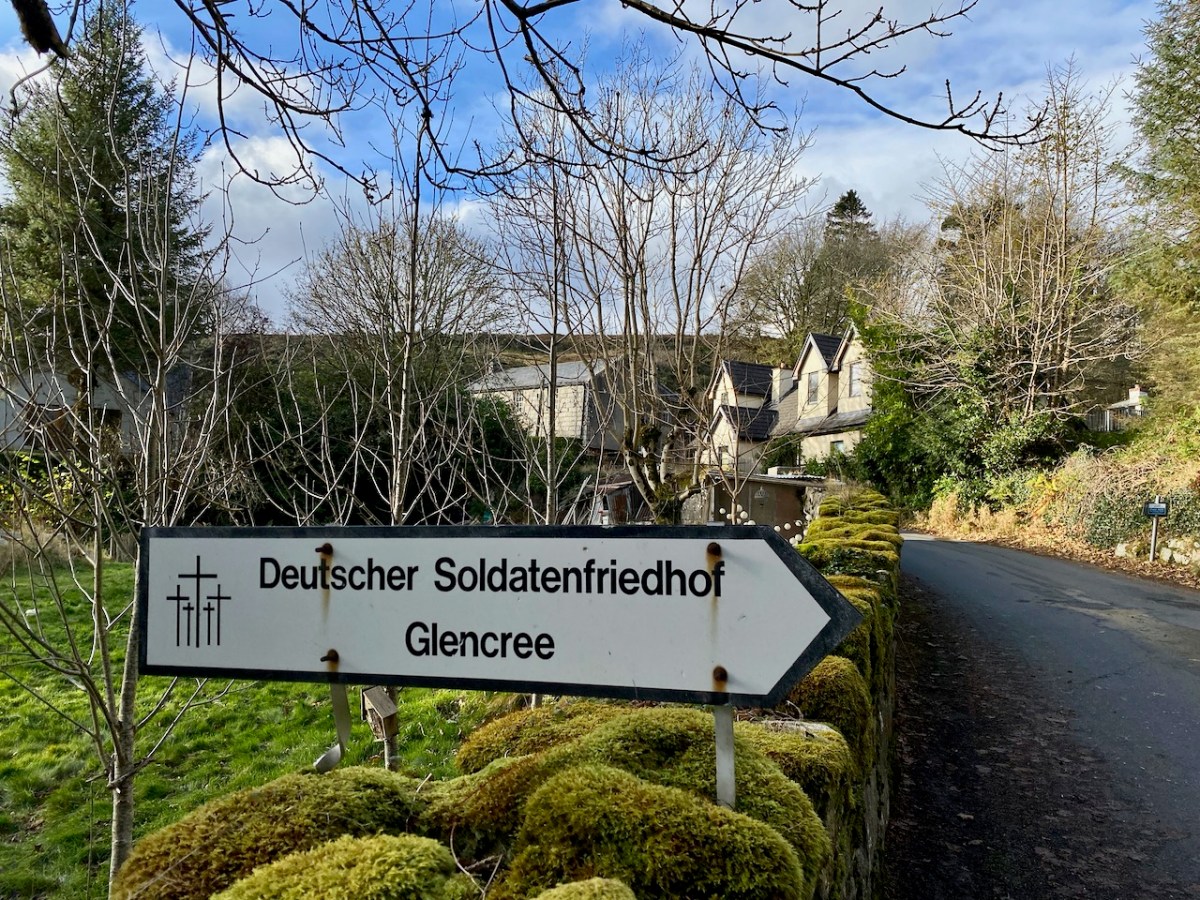
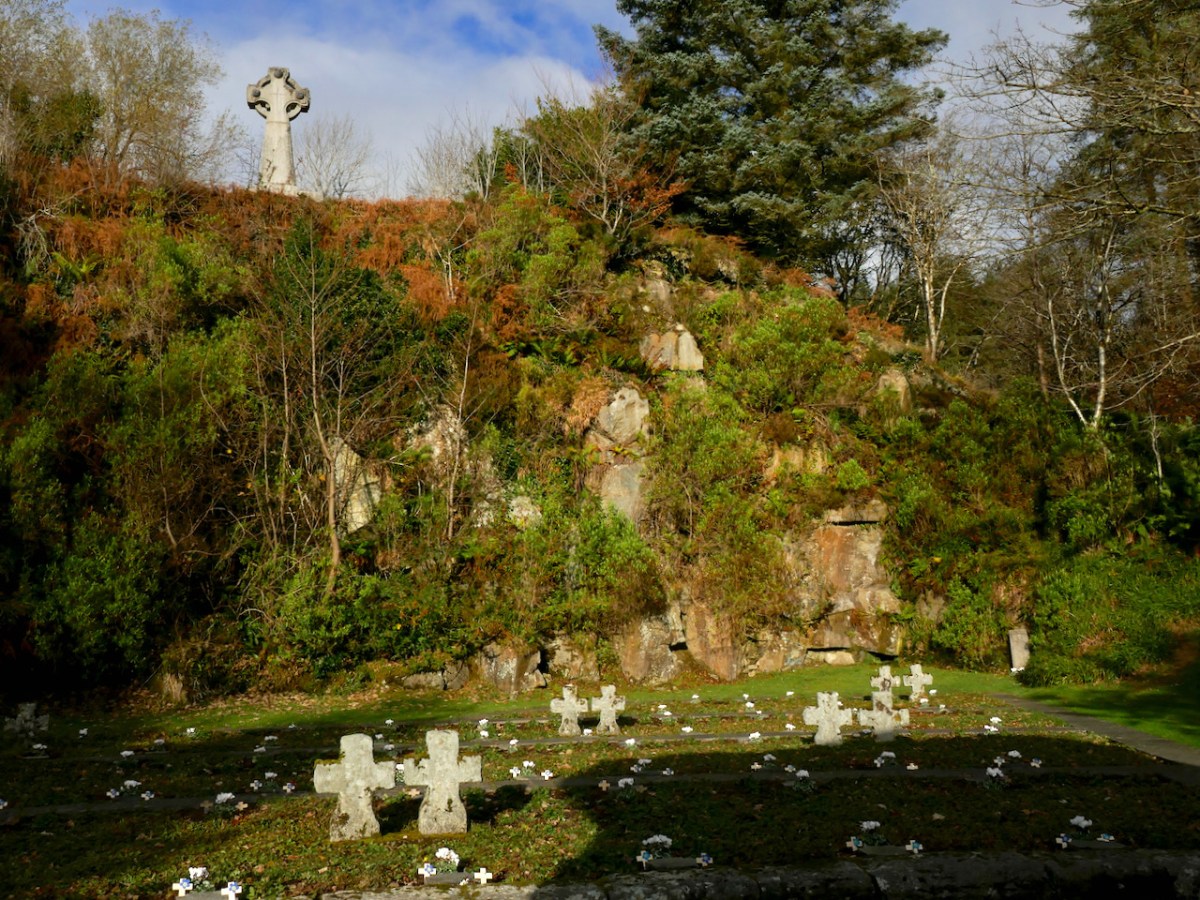
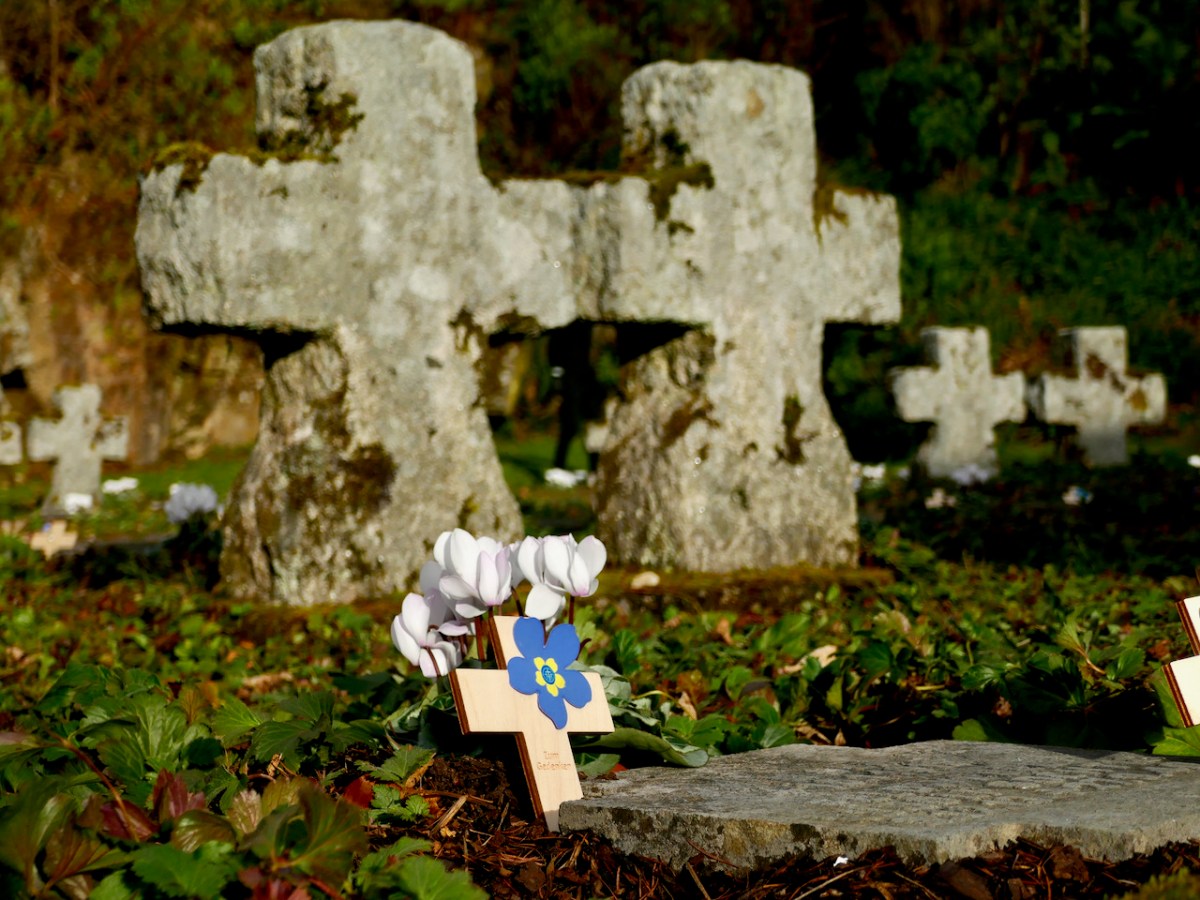
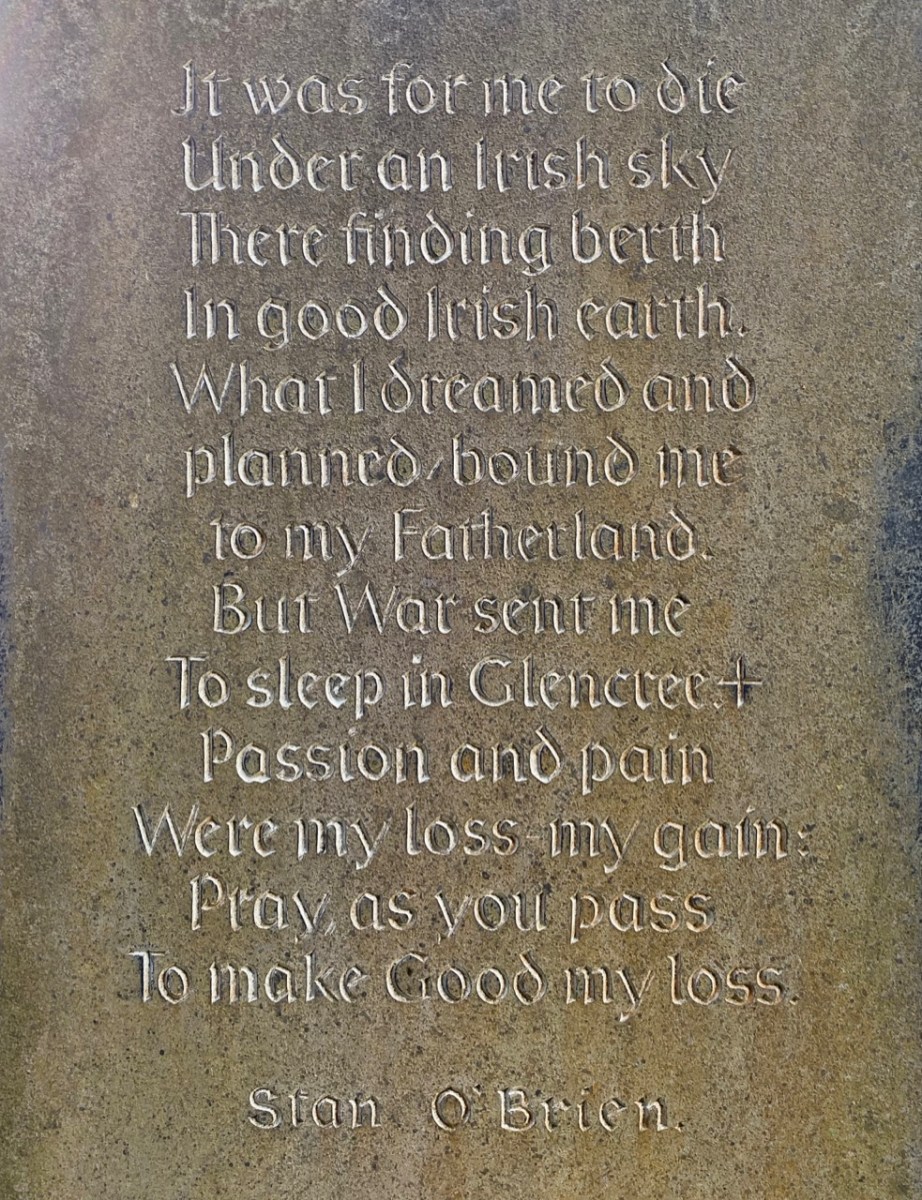
There is so much to discover in Glencree. You may be surprised – as we were when we first visited – to come across a German cemetery. Set in a landscaped former quarry, the German Military Cemetery is one of the many German war cemeteries in Western Europe. The bodies of 134 German military servicemen and civilians are buried here, dating from both World Wars. It is a secluded, peaceful garden of memory, marked by art and poetry, and kept in immaculate order.
You could ponder at length on this little graveyard: there are many historical connections. After the nearby Reformatory School closed, the buildings were used for a time as a refugee centre for German children following the bombing of Dresden in 1945. In 1954 the German Legation sent a letter urging the Irish authorities to give consideration to a single cemetery for German war dead in Ireland. These would include German soldiers and sailors washed up on Irish beaches, wrecked or crash-landed after being shot down during the Second World War. Six graves at Glencree remember German soldiers who died in British prisoner-of-war camps in Ireland during the First World War. All the bodies were re-interred here after this cemetery opened in 1961. In pre-Covid times, there would be a series of commemorative events in Glencree every November to pay respect to all victims of all wars.
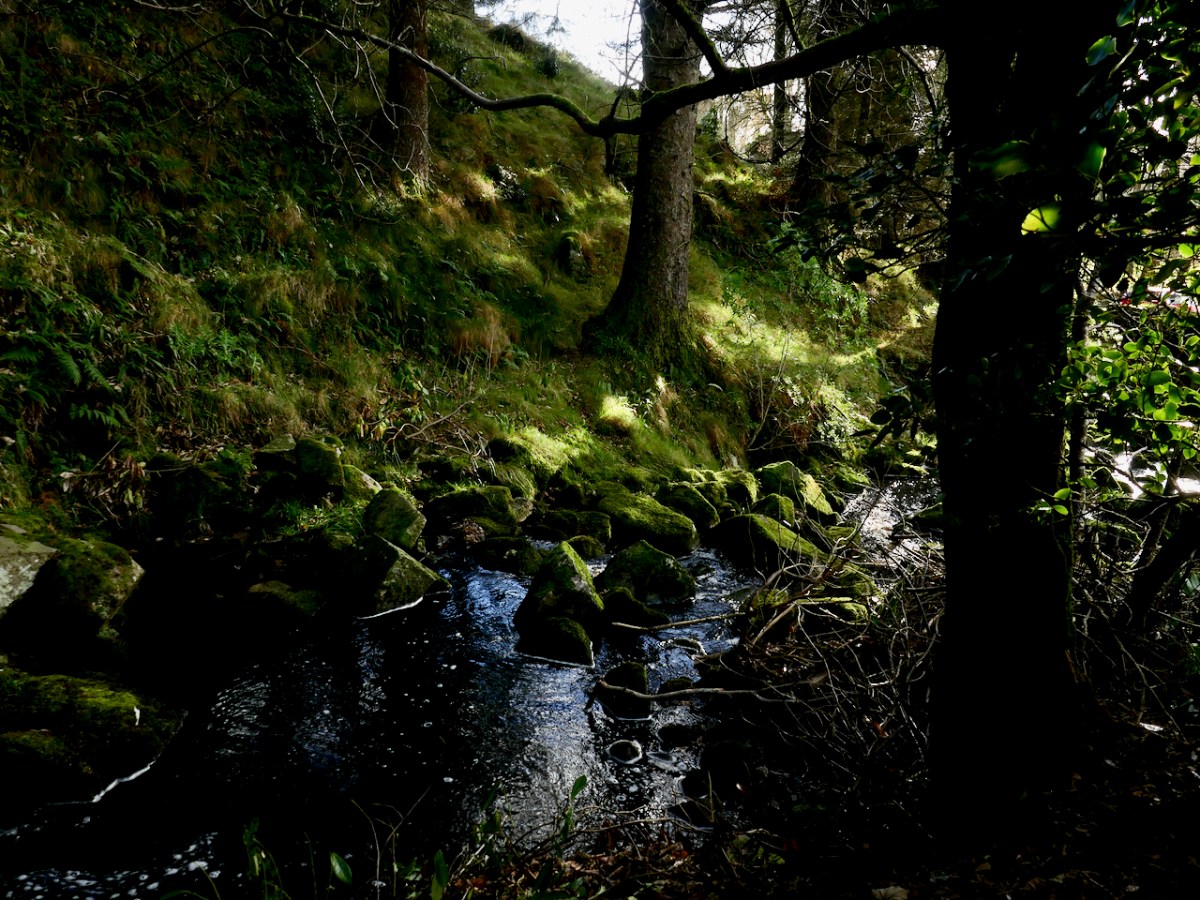
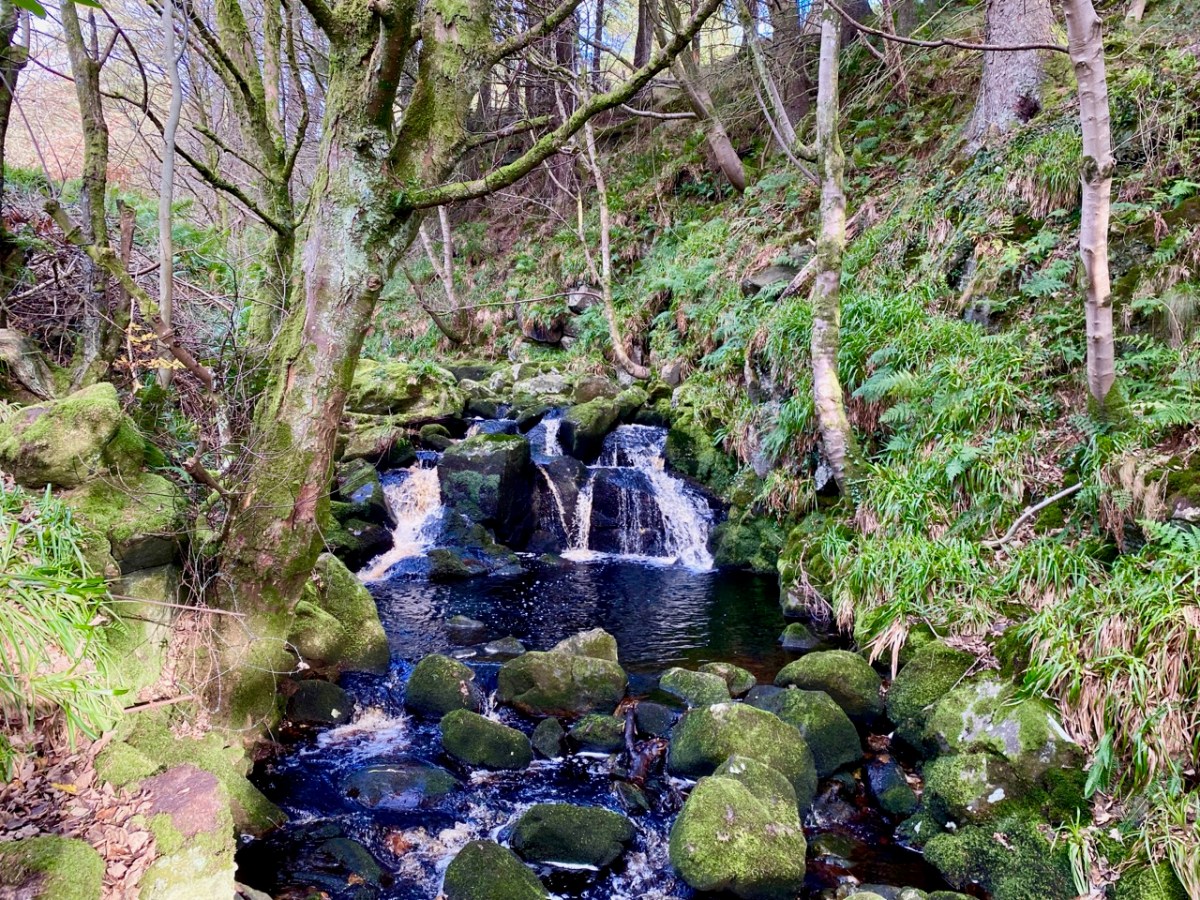
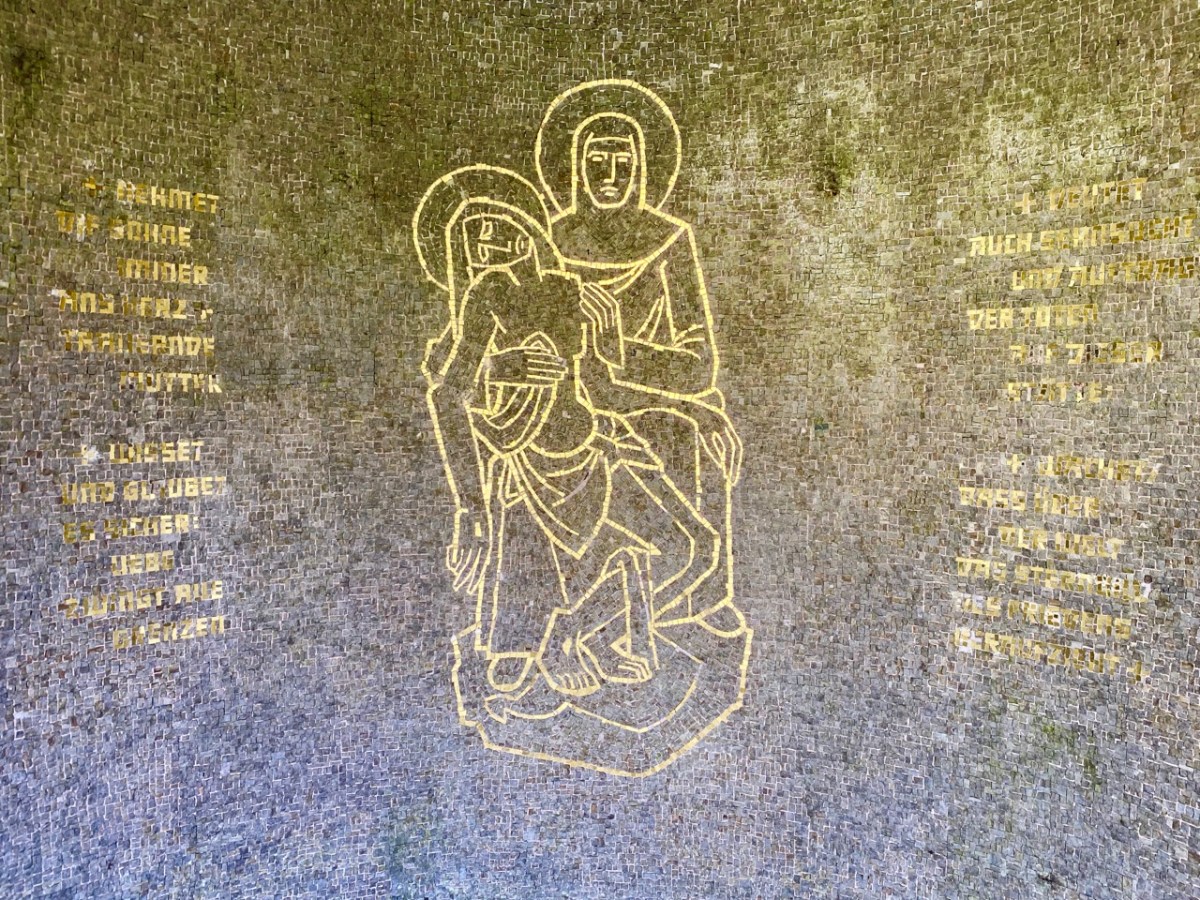
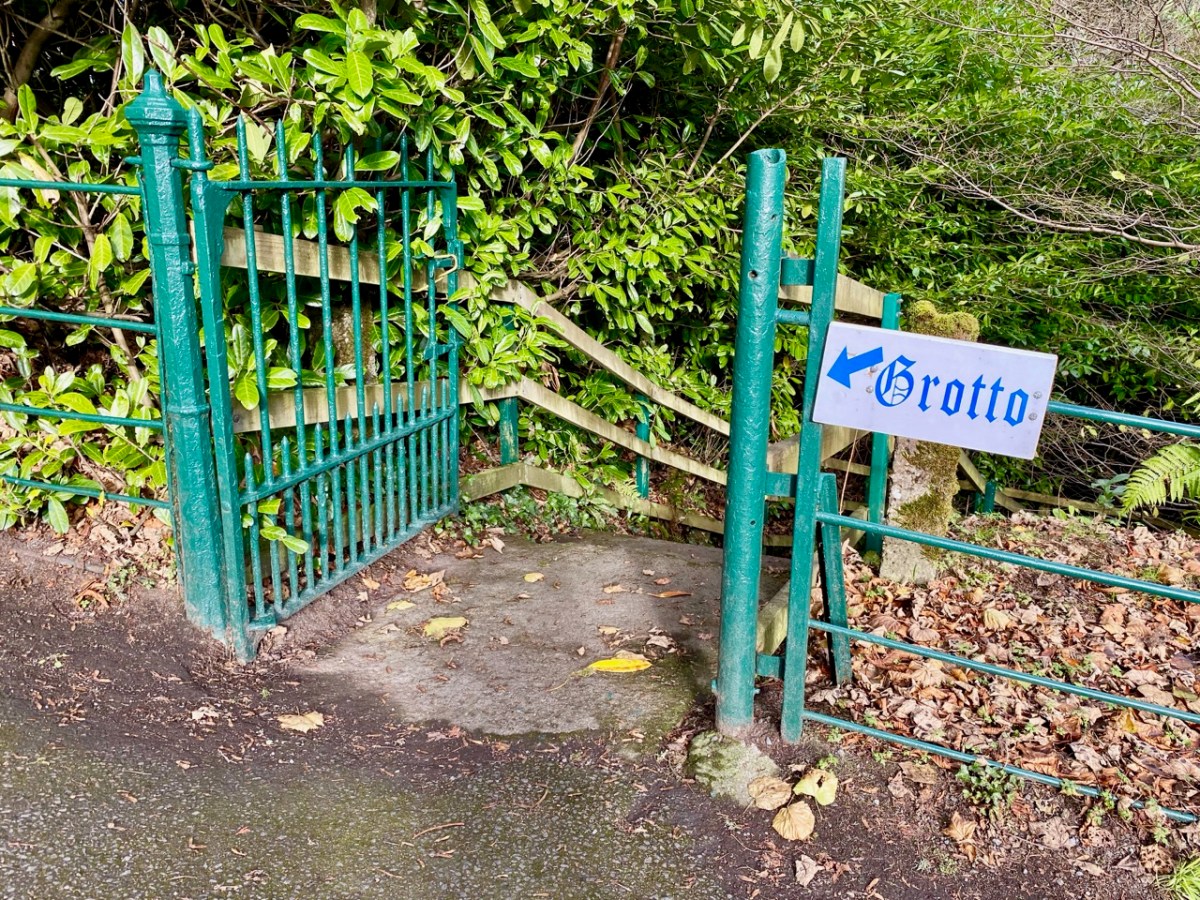
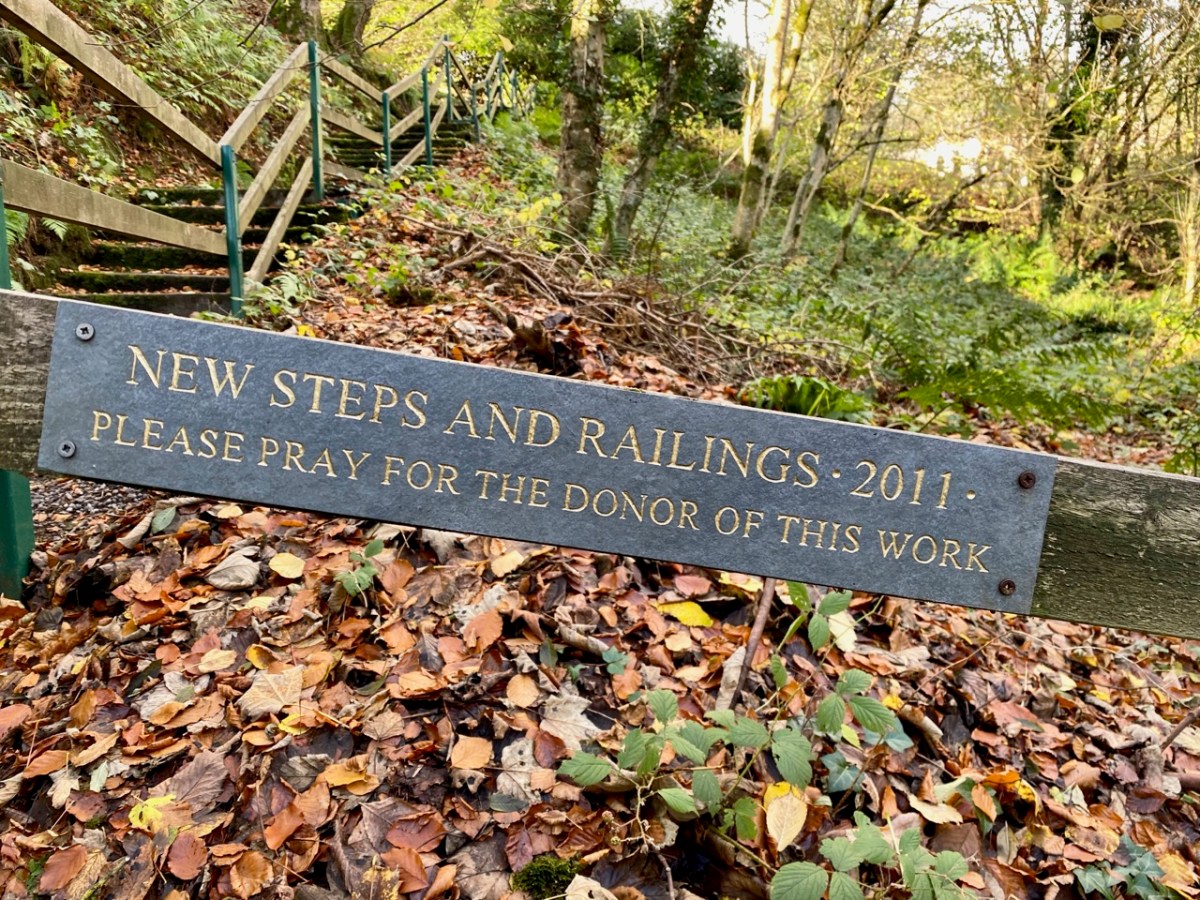
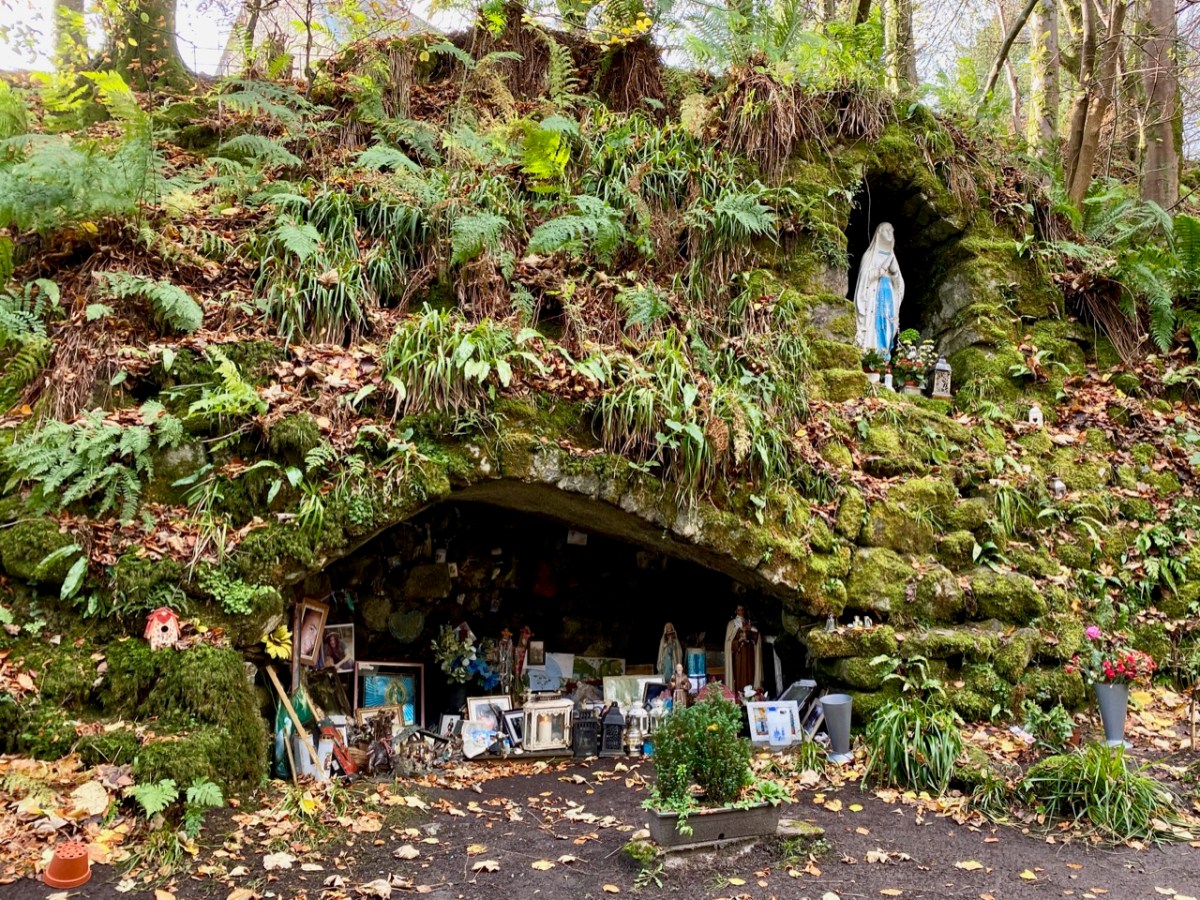
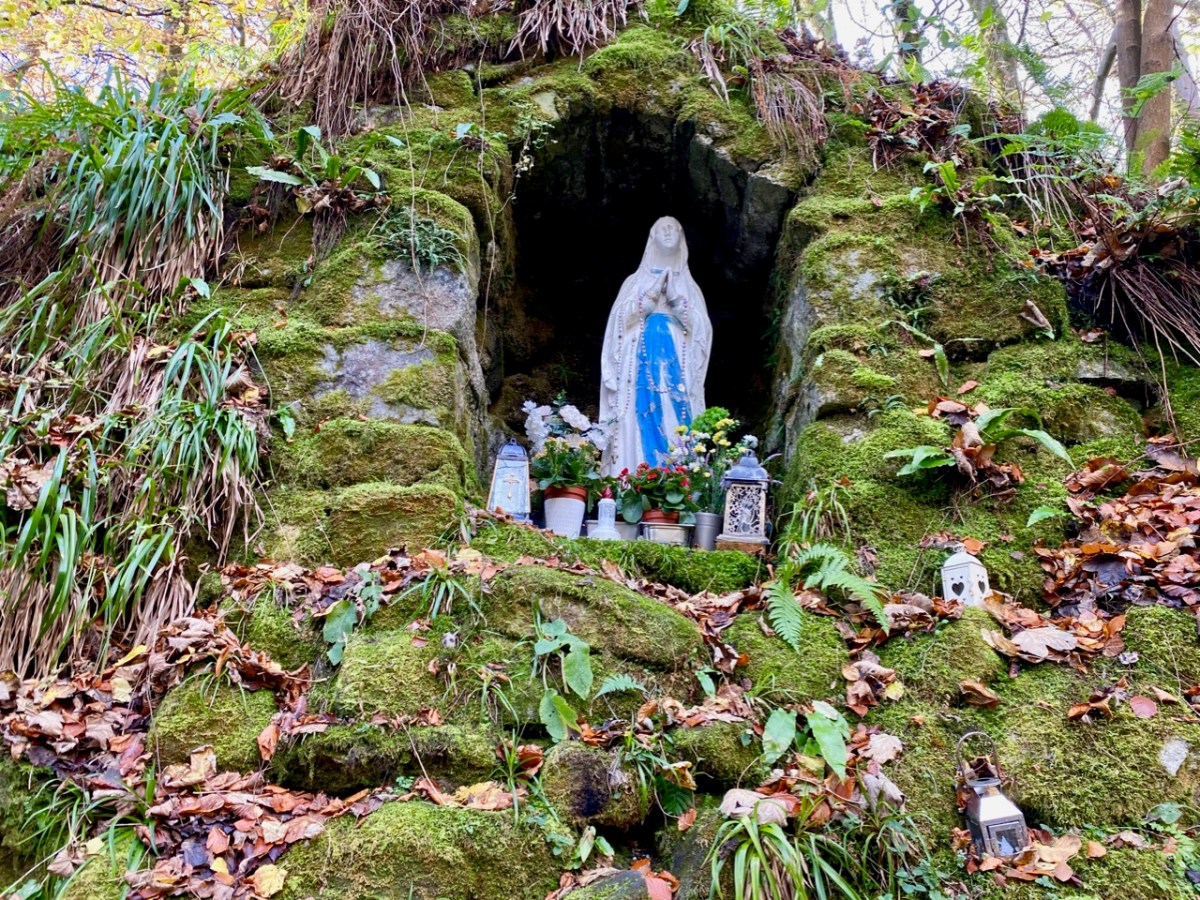
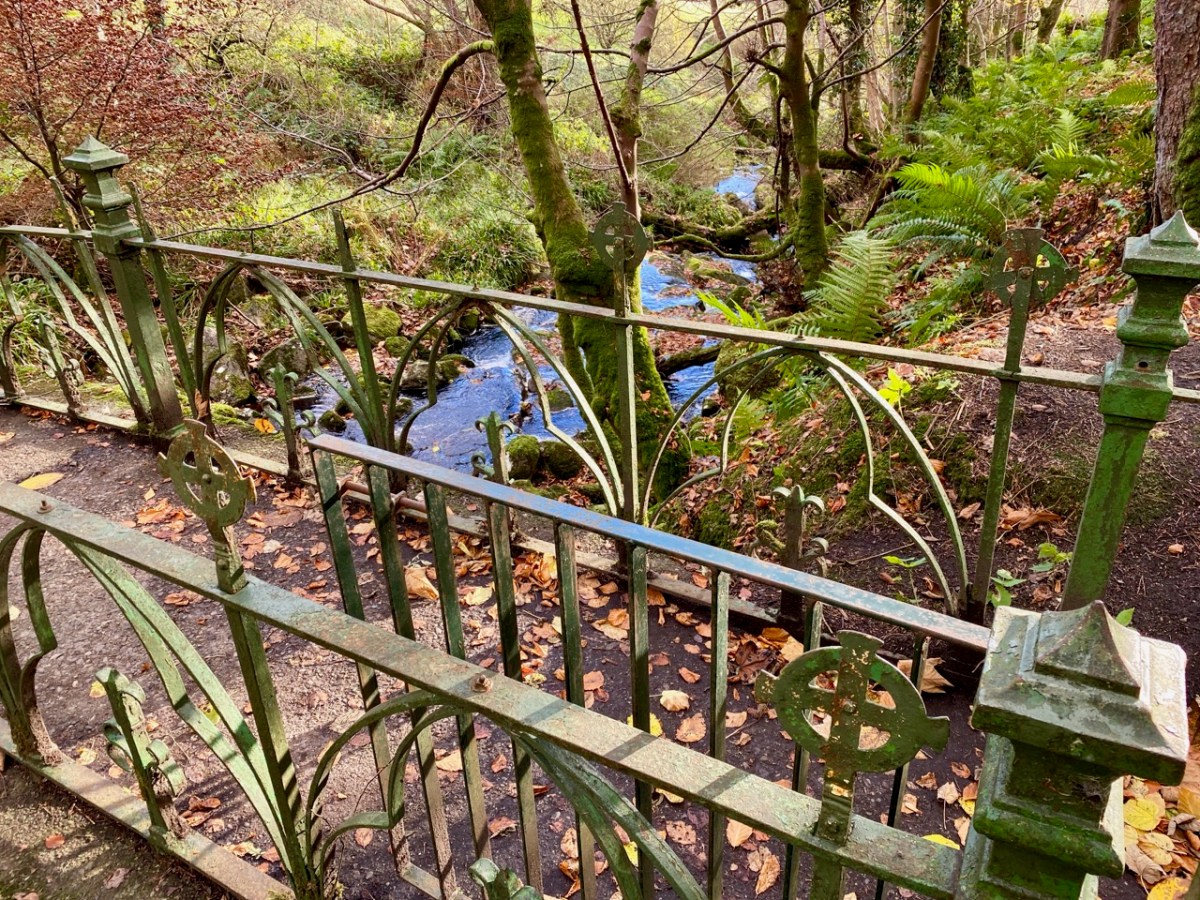
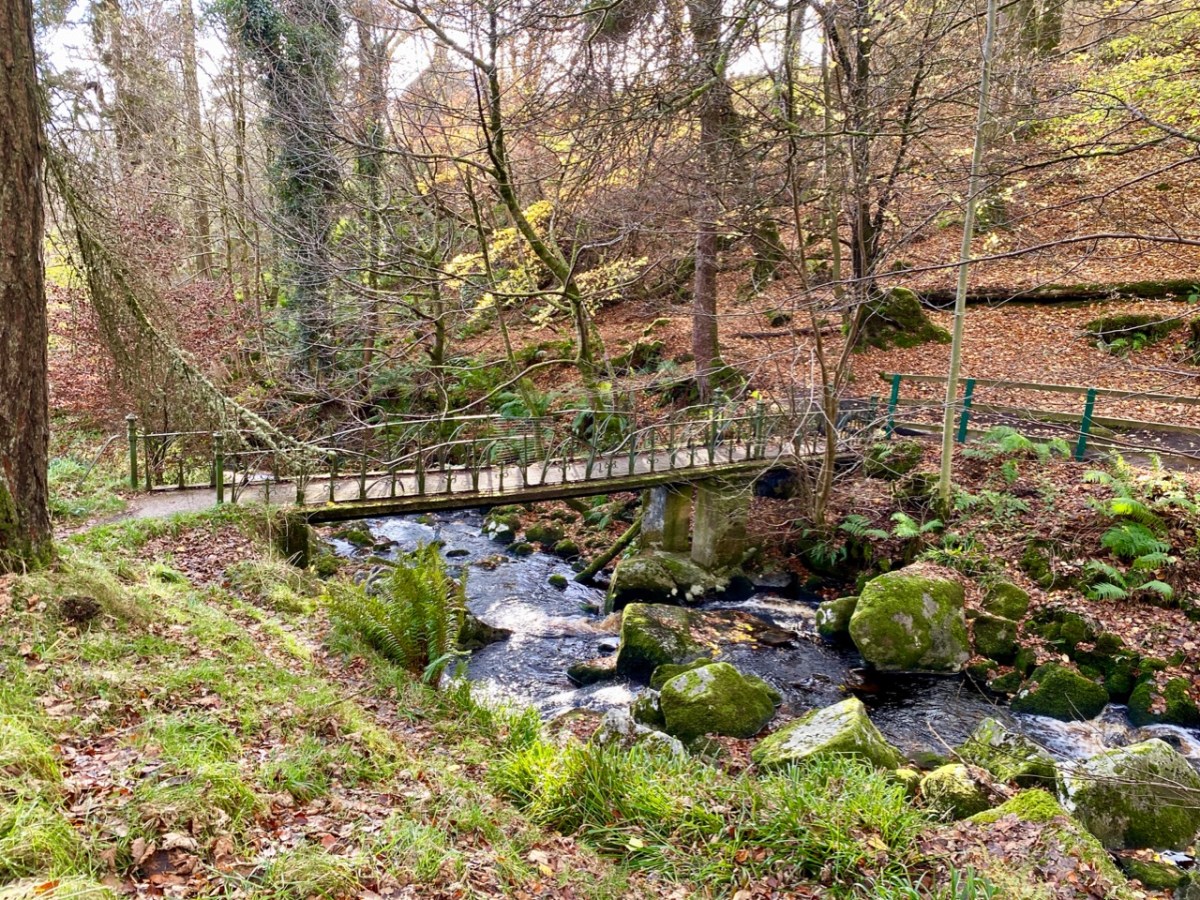
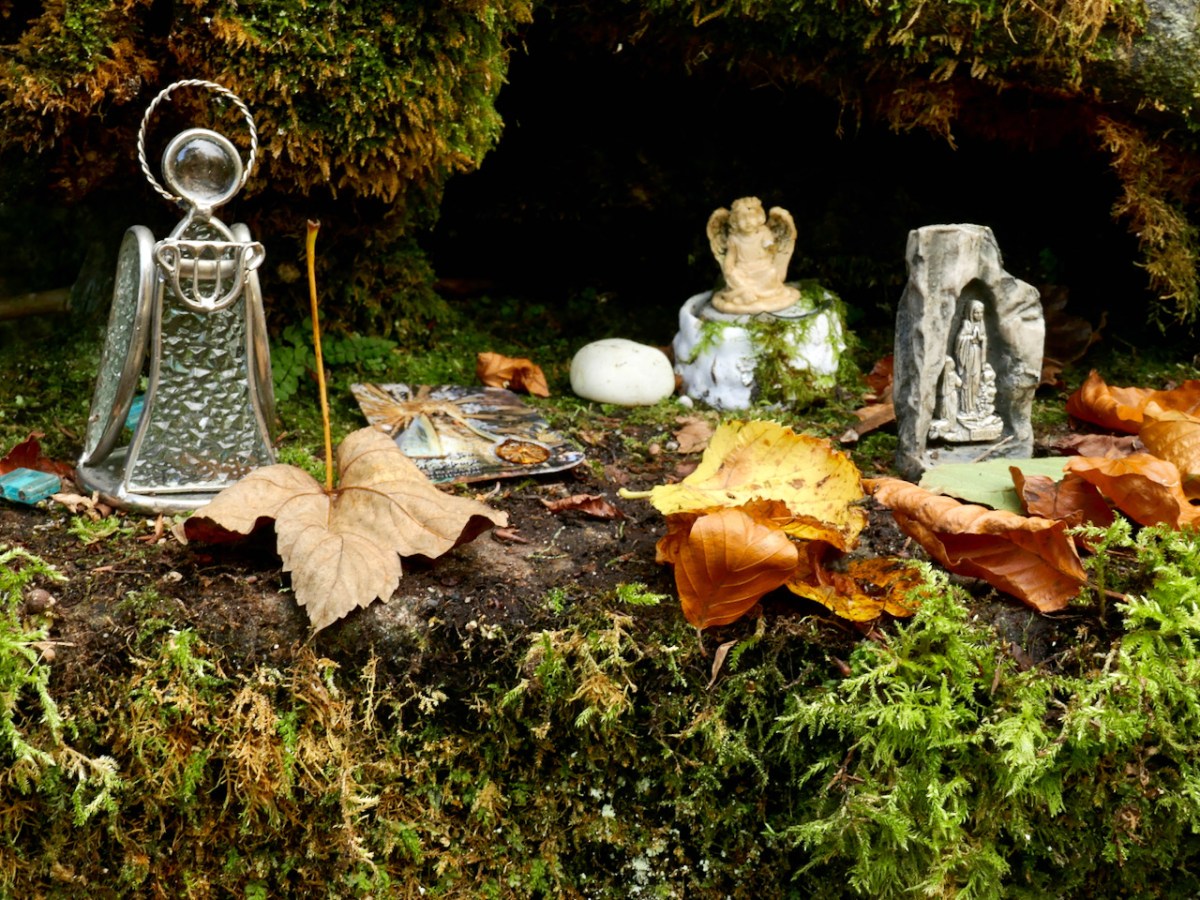
There is added interest, for us, at Glencree: a grotto established (as far as I can ascertain) in the Marian Year of 1954, dedicated to Our Lady of Reconciliation. It is reached from a path and steps which descend into the stream valley below the church.
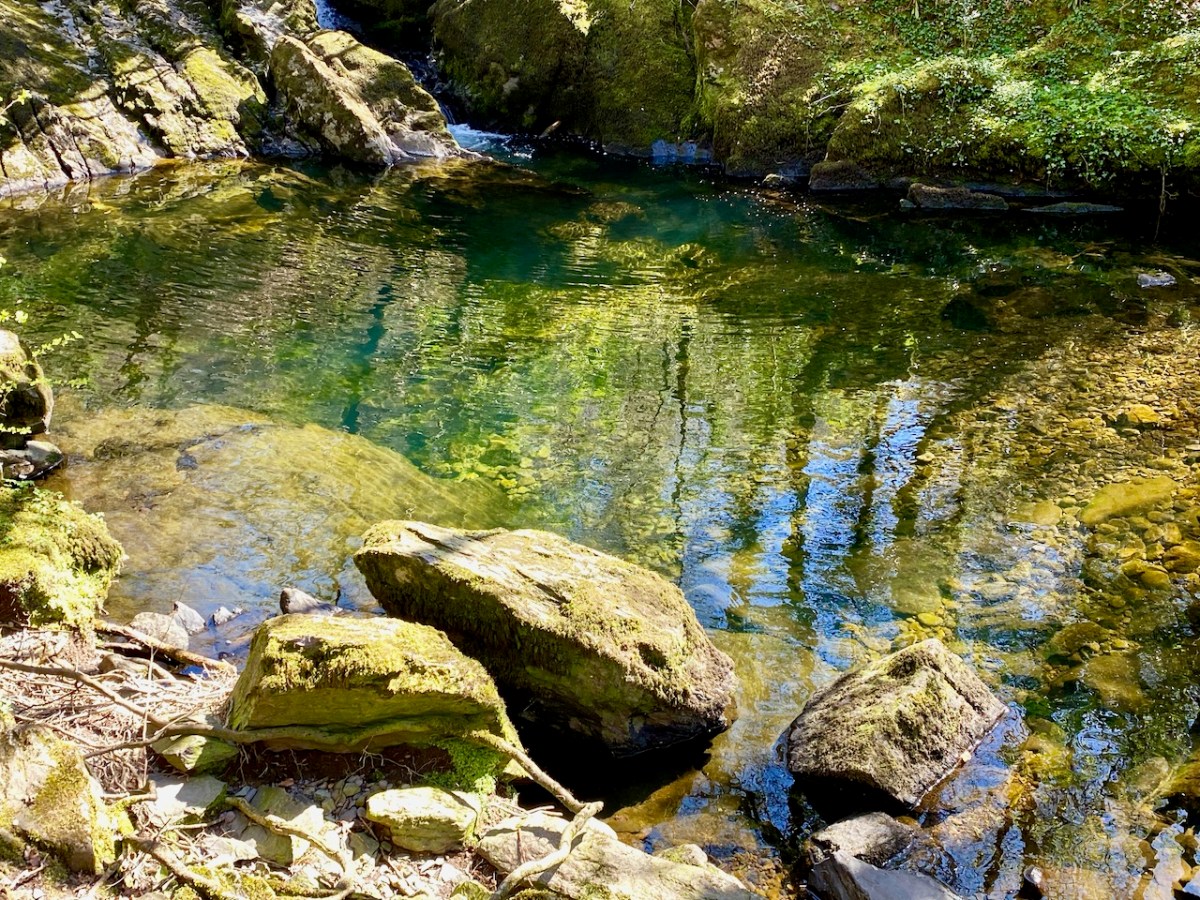
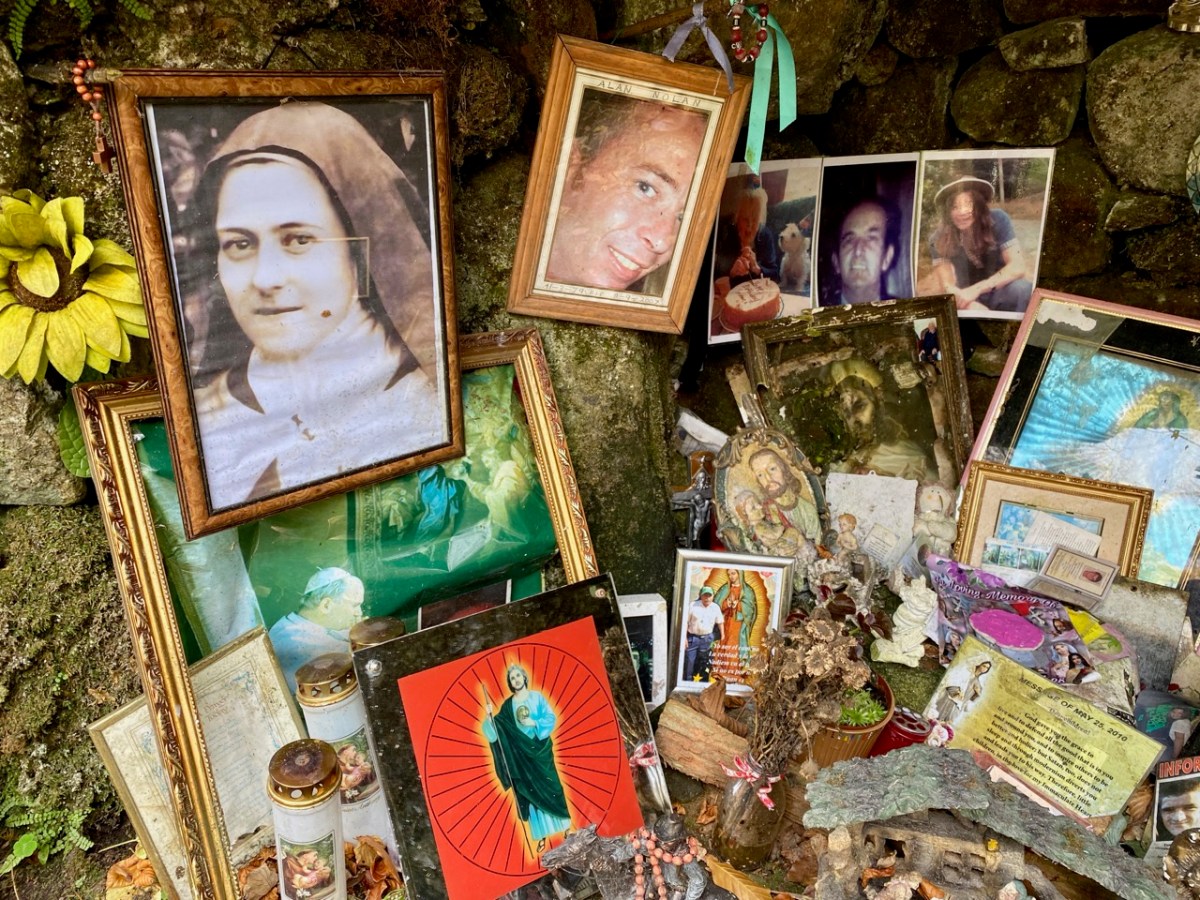
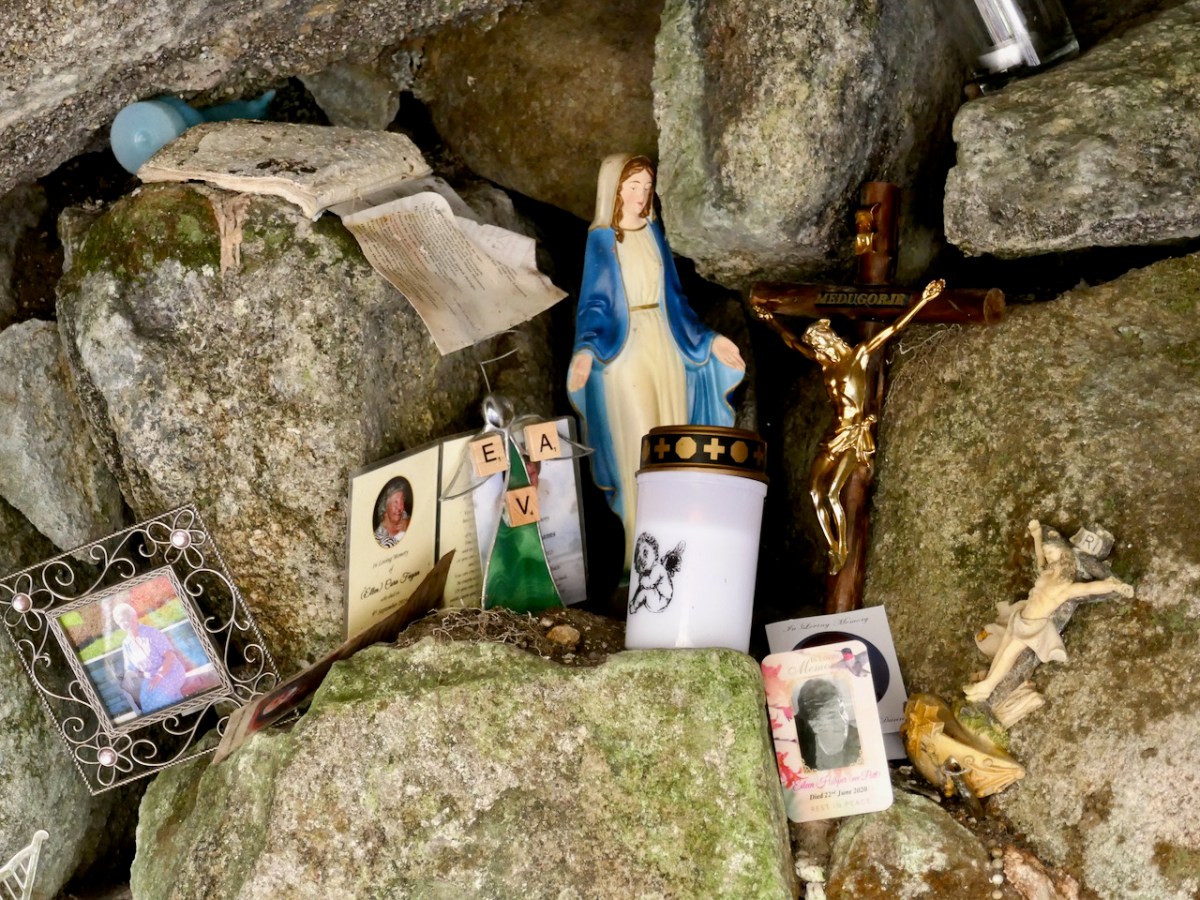
The ‘cave’ is much visited, and – as in many other locations in Ireland, particularly holy wells – petitions for the good health of individuals, and personal relics are in evidence.
Glencree is a place apart. You might, as did we, come across it by accident and get drawn into its many strands. You should certainly visit this secluded haven of tranquility in Wicklow, and consider the implications of its transition from a base of an occupying military force in a wilderness haunted by outlaws to a modern-day centre of reconciliation.
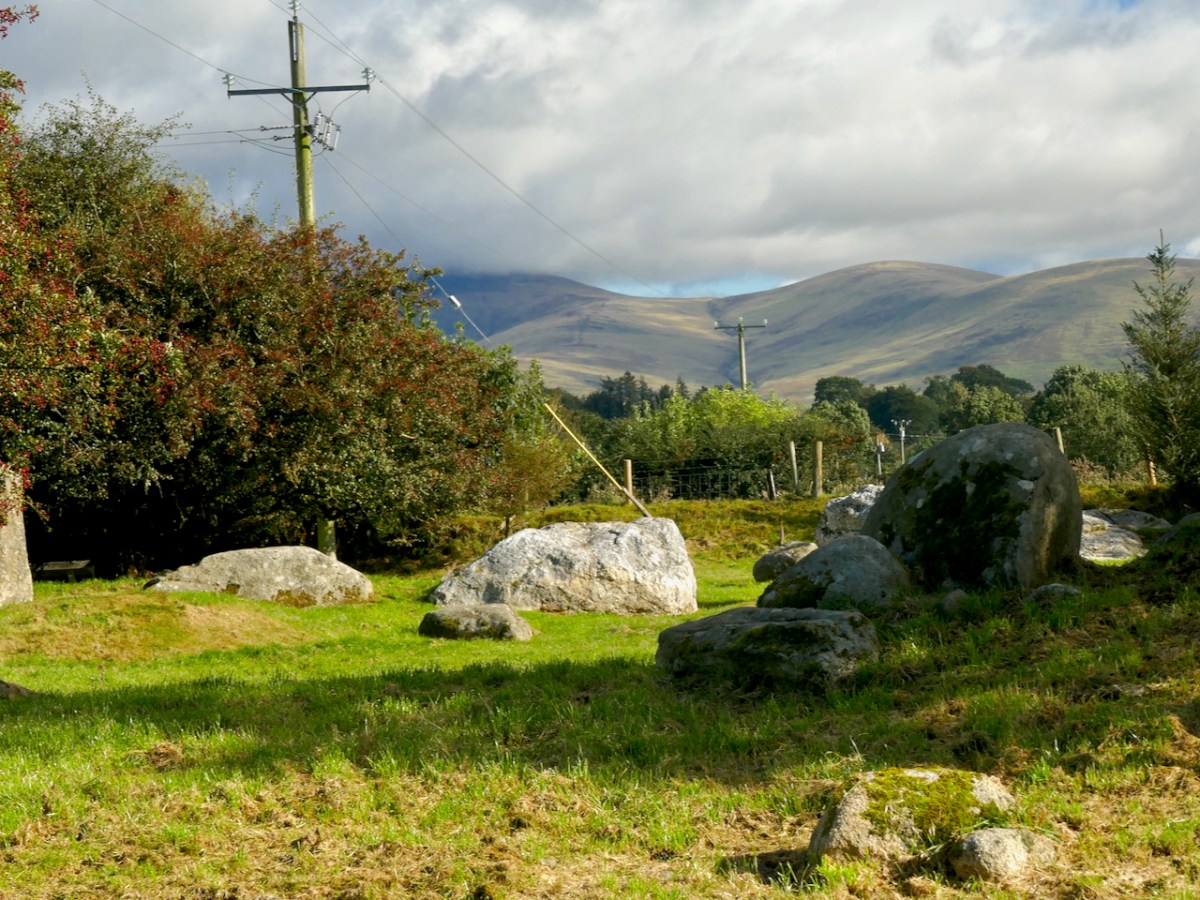
Our travels are always attuned towards our particular interests, be they history, stained glass, art or – as in this case – archaeology. We go out of our way to take in sites we have never seen before – and there are so many. When we were ‘holidaying’ in Wicklow last week we searched out this stone circle in the townland of Castleruddery Lower. It was well worth the journey.
. . . Neglected, knee-high in grass and surrounded by round-crowned hawthorns whose May blossom speckles the bank, it is difficult to appreciate how important Castleruddery must have been early in the Bronze Age when Beaker copper prospectors and the Wicklow mountain goldminers passed by its brilliant entrance. It is not properly a stone circle but a henge, with a stone-lined interior. It was constructed on the summit of a hill just east of the valley into which the Little Slaney flows. Six miles north is the lovely Athgreany stone circle and only two miles to the south is the Boleycarrigeen ring, its stones embedded in a low earthen bank . . .
Aubrey Burl, Rings of Stone, France Lincoln Publishers, 1979
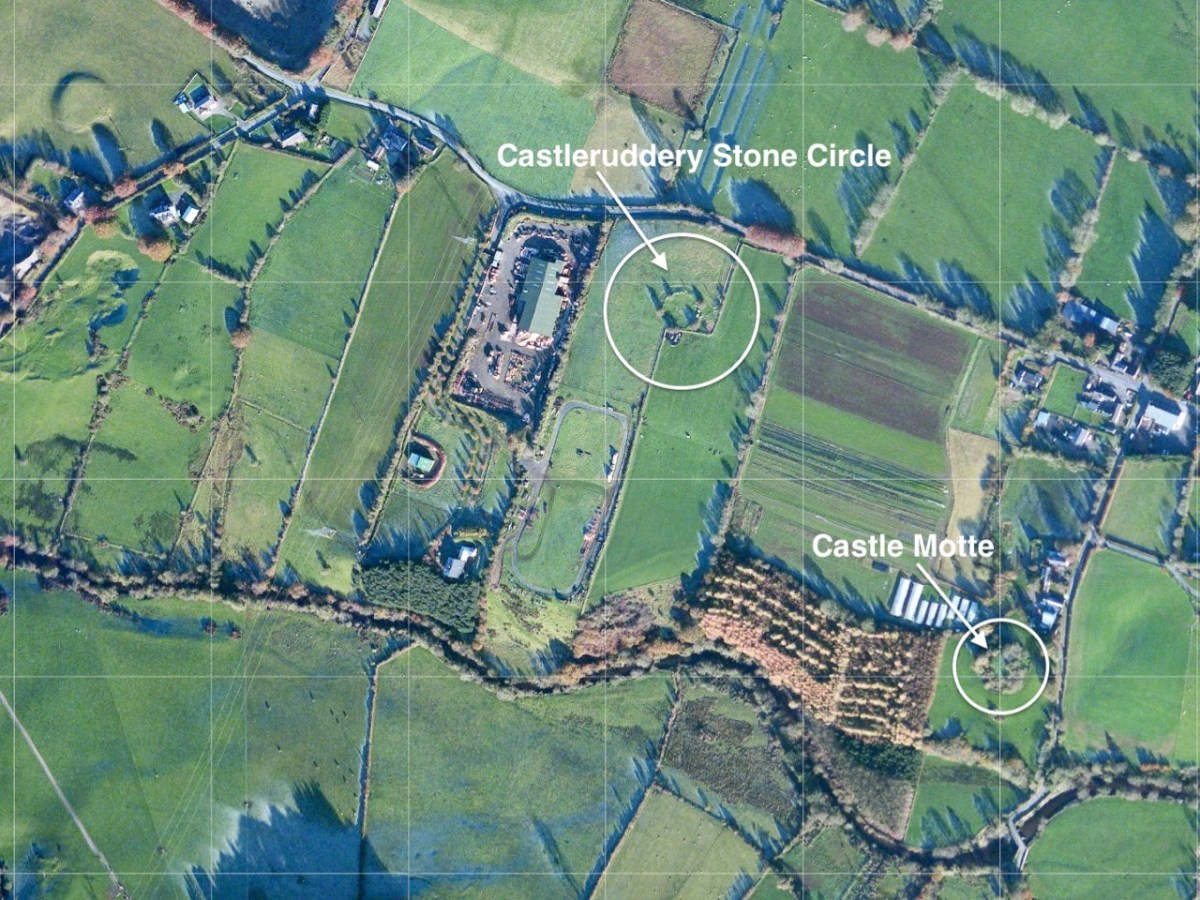
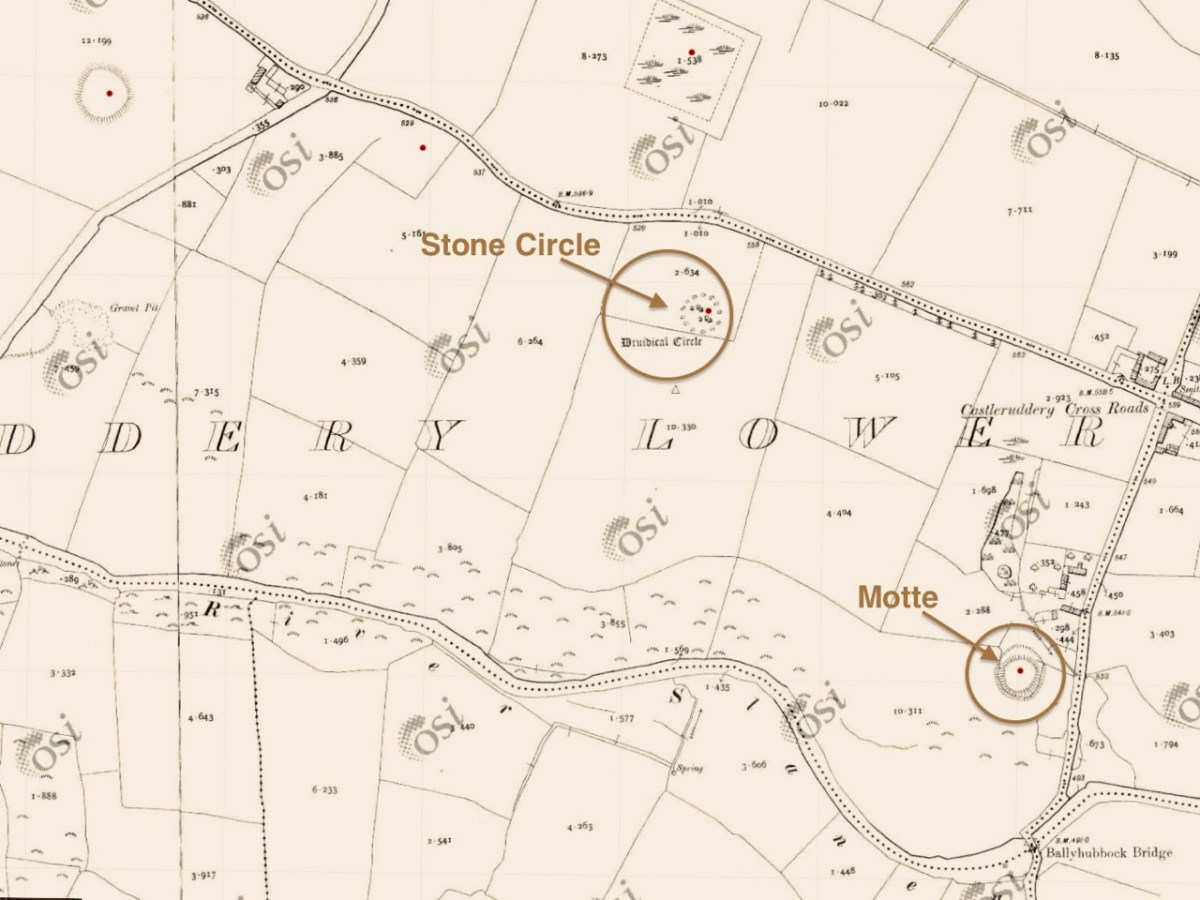
The aerial view, and the extract from the 25″ Ordnance Survey map (above) show the monument in the context of the surrounding landscape. Nearby is a medieval ‘Motte’, very much younger than the ‘Druidical Circle’ – thus named on many early maps. The local Irish name – Chaisleán an Ridire – translates as Knight’s Castle, which might make you think that there is some medieval connection between the circle and the Motte, but in fact Castleruddery stone circle is likely to date from the late Neolithic, around 2,500 BC, marking it as one of the earliest of this monument type in Ireland.
We noted this little figurine by the entrance gate to the circle: it made me wonder what folklore or traditions might be associated with the site today. I could find only one reference to Castleruddery in the Duchas Schools Folklore collection, dating from 1936:
The informer here was Michael Murphy, aged 68 – a ‘labourer’ from Colliga, Co Wicklow. The School collector was from Baile Dháithí, Dunlavin, Davidstown, Co Wicklow. There was no doubt in Mr Murphy’s mind that the stones could only have been placed there by supernatural powers!
The two quartz portal stones at the east side of the circle are remarkable: deliberately chosen, no doubt, to emphasise the importance of the orientation. The circle has 29 significant stones still standing today, but there were probably more. There is evidence of attempts to break up and remove some of the stones, which would have made good building or fencing material for someone who did not share respect for the integrity of the circle.
The two views above show iron ‘drill’ markings: these were made to try and separate sections of stone to be taken away for re-use. In the upper picture one section has been removed, but the operation was unsuccessful for the remainder of the boulder. One has to wonder whether otherworldy forces intervened – and meted out some form of ‘bad luck’ to the perpetrators.
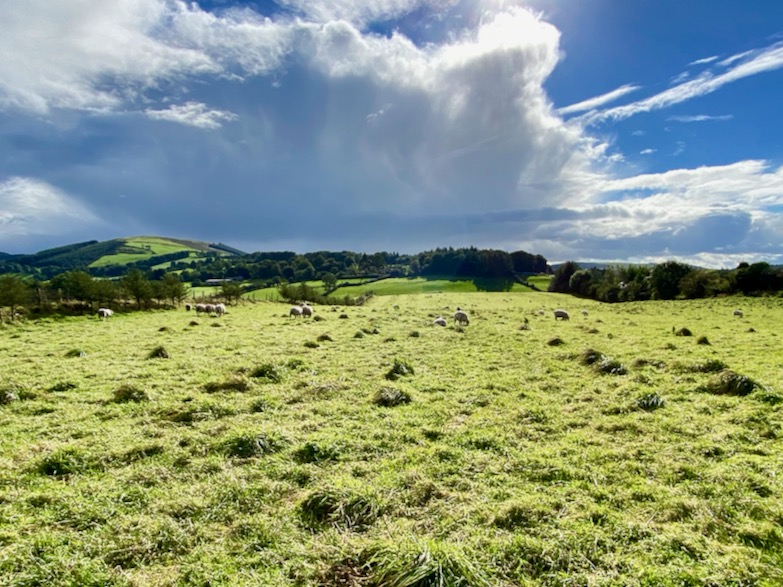
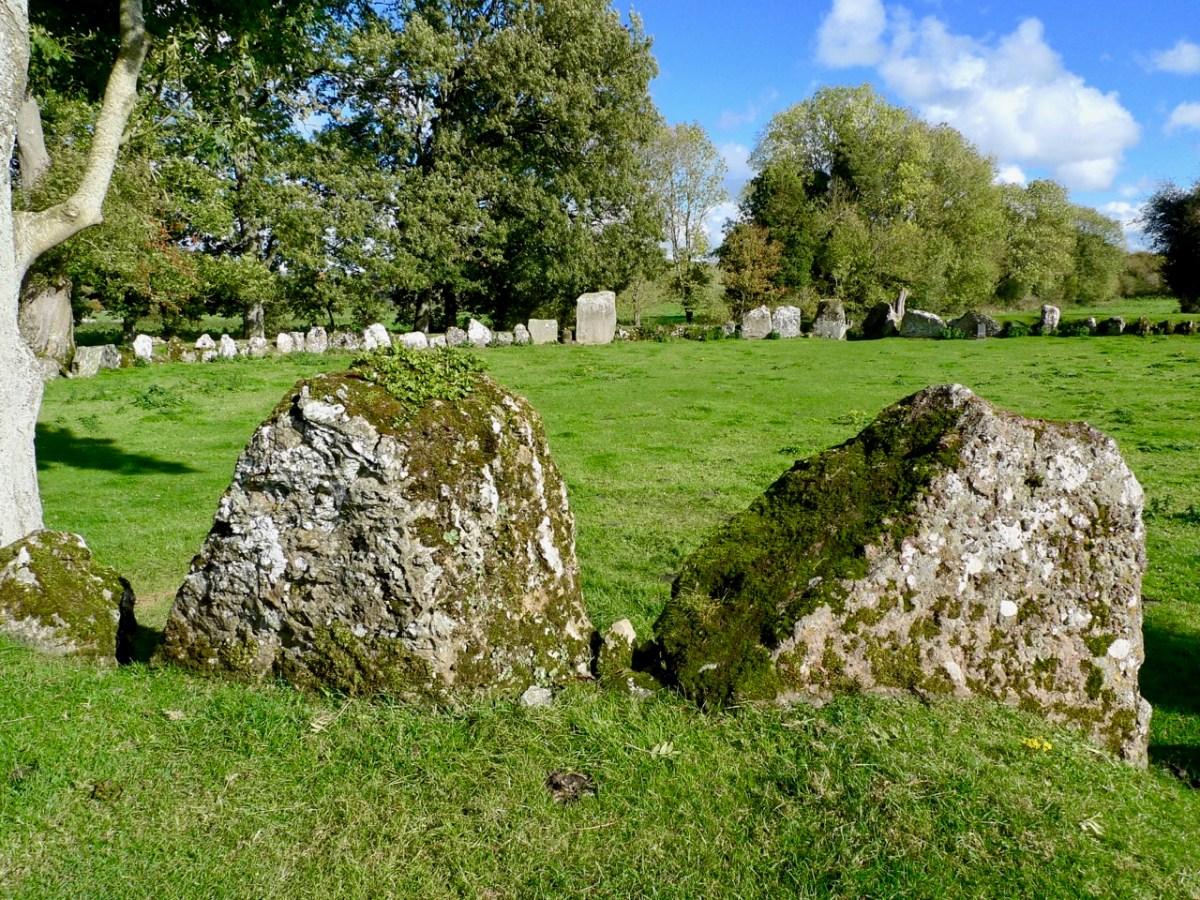
In the present day it’s territory for sheep, and they seem to be unconcerned about any ancient associations or supernatural influences interrupting their tranquil grazing. The archaeologists tell us that this is more of a ‘henge’ monument than the type of stone circle we are familiar with in West Cork. It’s certainly larger, and crop marks have shown that the 29 stones surmount an earthen ring, approximately 30 metres in diameter, and there is a further ring which was once supported or reinforced by timber. Comparisons are made with a henge circle at Grange, close to Lough Gur, Co Limerick, which we visited in 2016. There the ring of at least 113 stones has an internal diameter of 46 metres. We took the two photos below at Grange.
The Grange circle was excavated in 1939 by professor S P Ó Riordáin, and the Duchas board at the site states:
. . . The excavation indicated that the enclosure was constructed purely for sacred or ritual purposes. The bank may have provided a stand where an audience could observe ceremonies within the enclosure . . . One of the stones is known as Rannach Cruim Duibh. This suggests that the circle became associated with the festival of Lughnasa, traditionally the first Sunday in August, and a celebration of the harvest. Crom Dubh, meaning the Dark Bent One, was credited with bringing the first sheaf of corn to Ireland . . .
Duchas, Grange Circle
There must surely be connections, and common purposes, between the many similar circle monuments all over Ireland. We always want to know What was it for…? probably, we never will, but it’s part of the whole romance of archaeology to wonder about such places. We must be grateful that so much remains for us to explore.
We often find time to visit the east side of the country – where we see everything from a different perspective! But we are just as interested in history and archaeology over there as we are here in our own West Cork. Today I am bringing together three sites from three different eras – all equally fascinating, and all within a stone’s throw of each other, hovering on the borders of South County Dublin and County Wicklow.
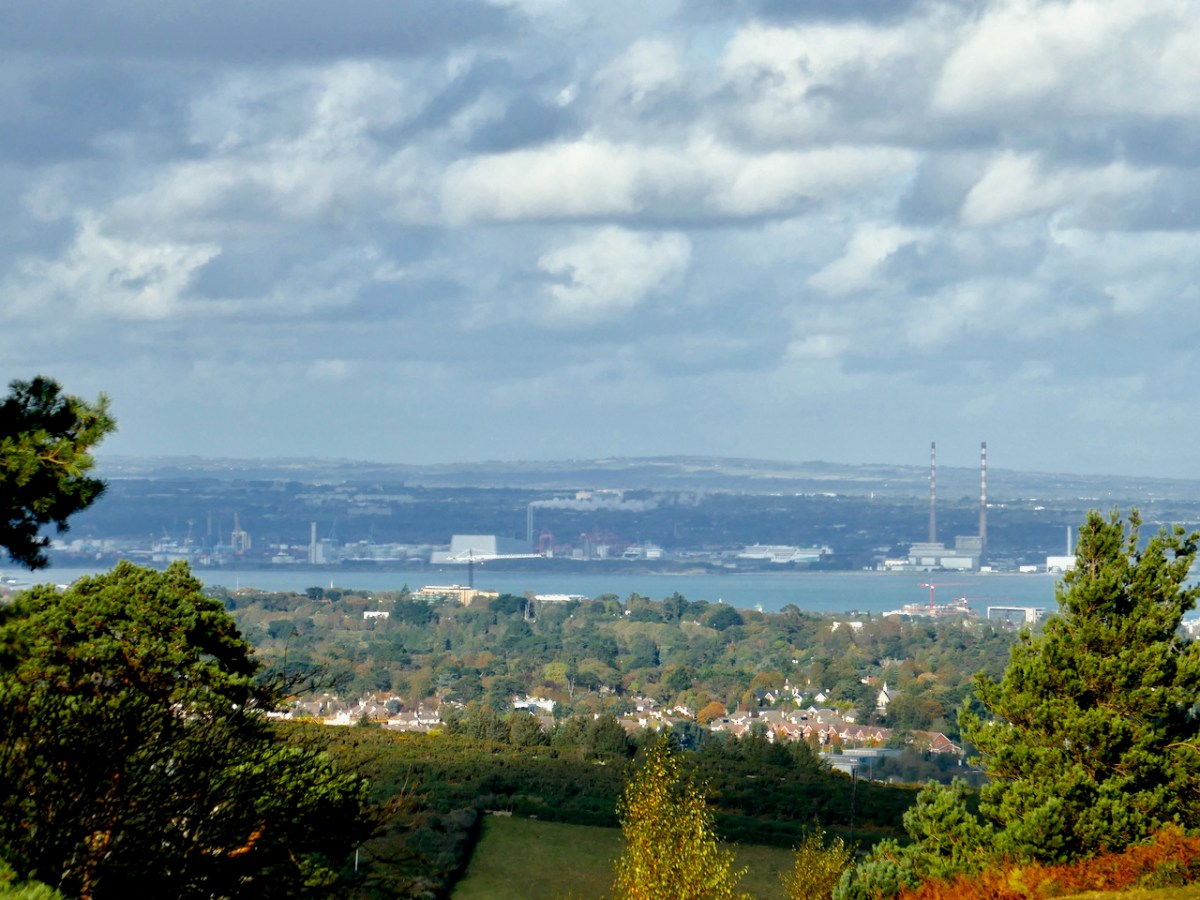
From the high ground in these two counties you find stunning views to the north out across Dublin Bay, with Howth in the distance. The twin striped chimneys on the right of this picture are protected historic structures: they date from 1971 and were built to serve the Poolbeg electricity generating station. At 270m they are amongst the tallest artificial structures in Ireland and are a visible feature on the skyline from many parts of the city. The power station closed in 2010.
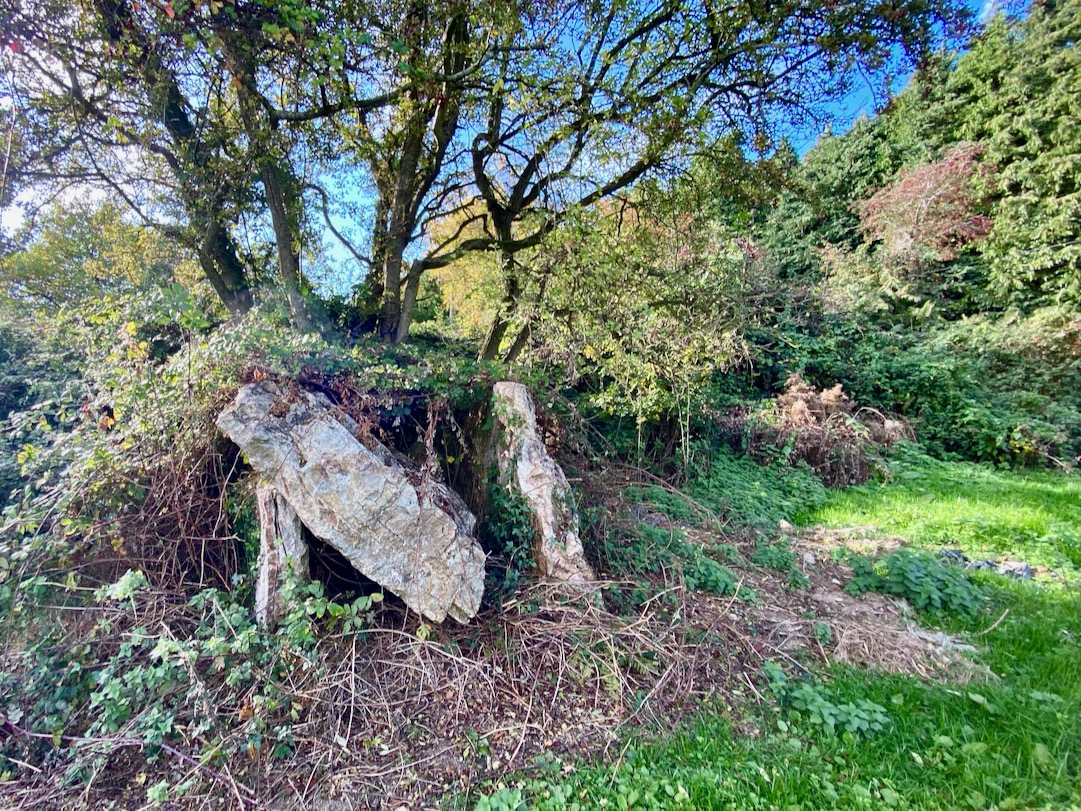
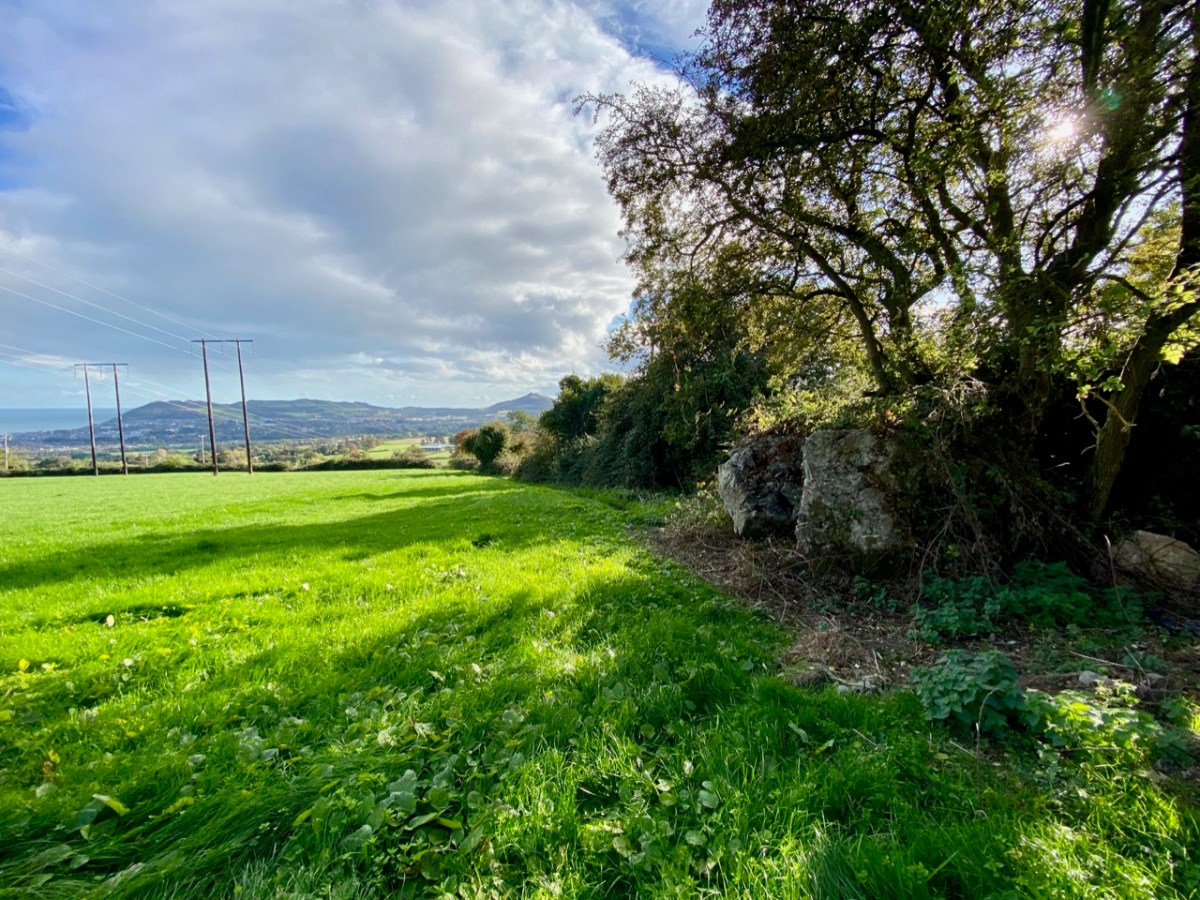
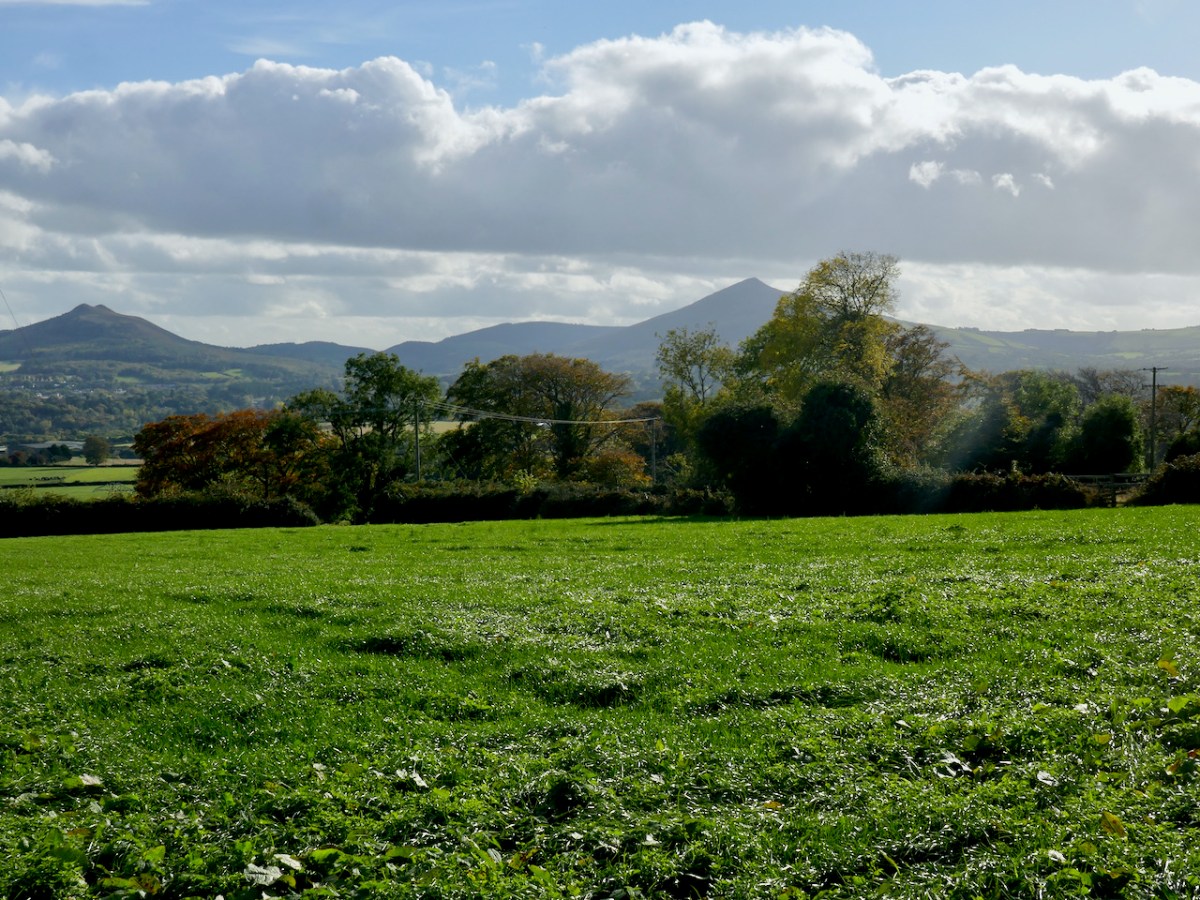
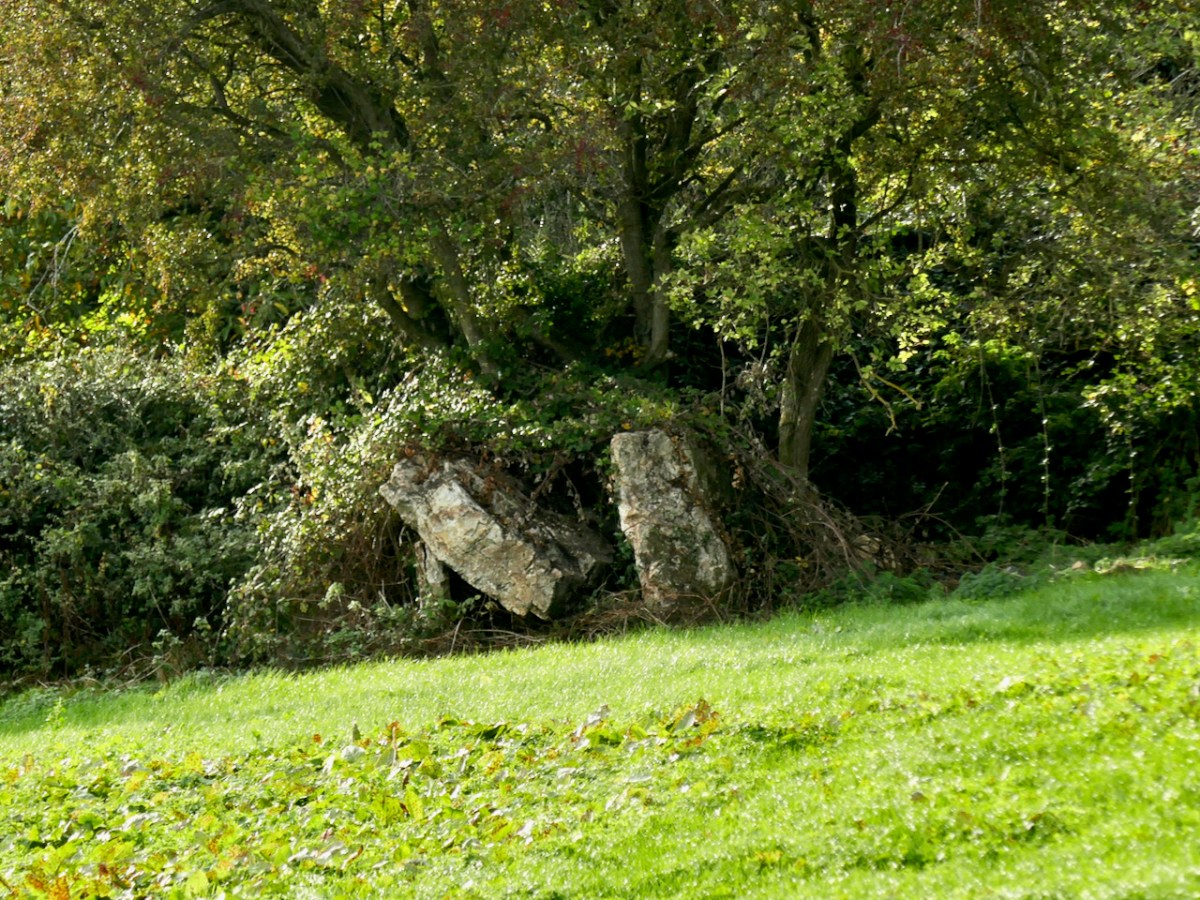
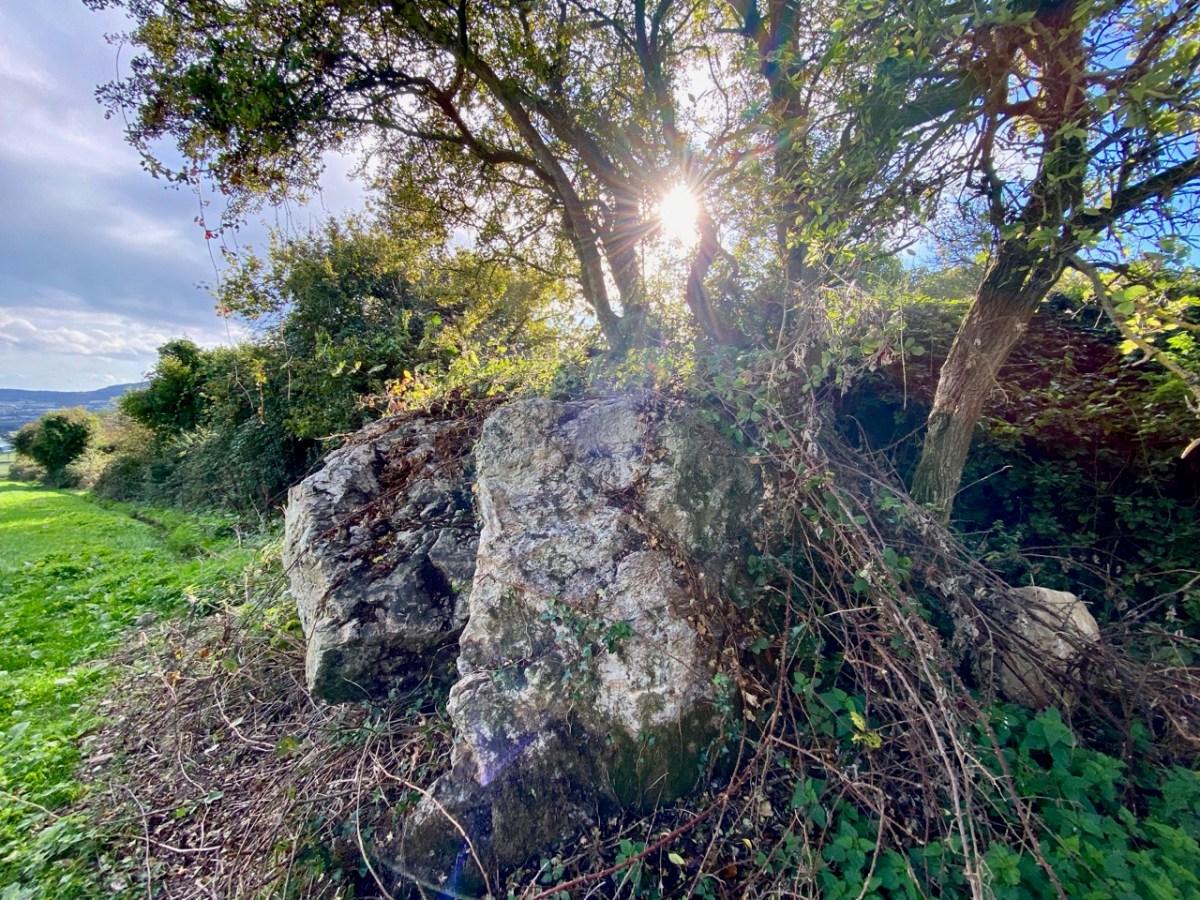
The first site we are visiting in this little tour is the wedge tomb in Shankill townland, County Dublin. It lies below Carrickgollogan hill, and commands distant views to the two distinctive Sugar Loaf peaks, which are situated in County wicklow. Or – let’s say – it should command those views, but it now reposes in a rather neglected state, engulfed by a modern hedge boundary, which you can see below.
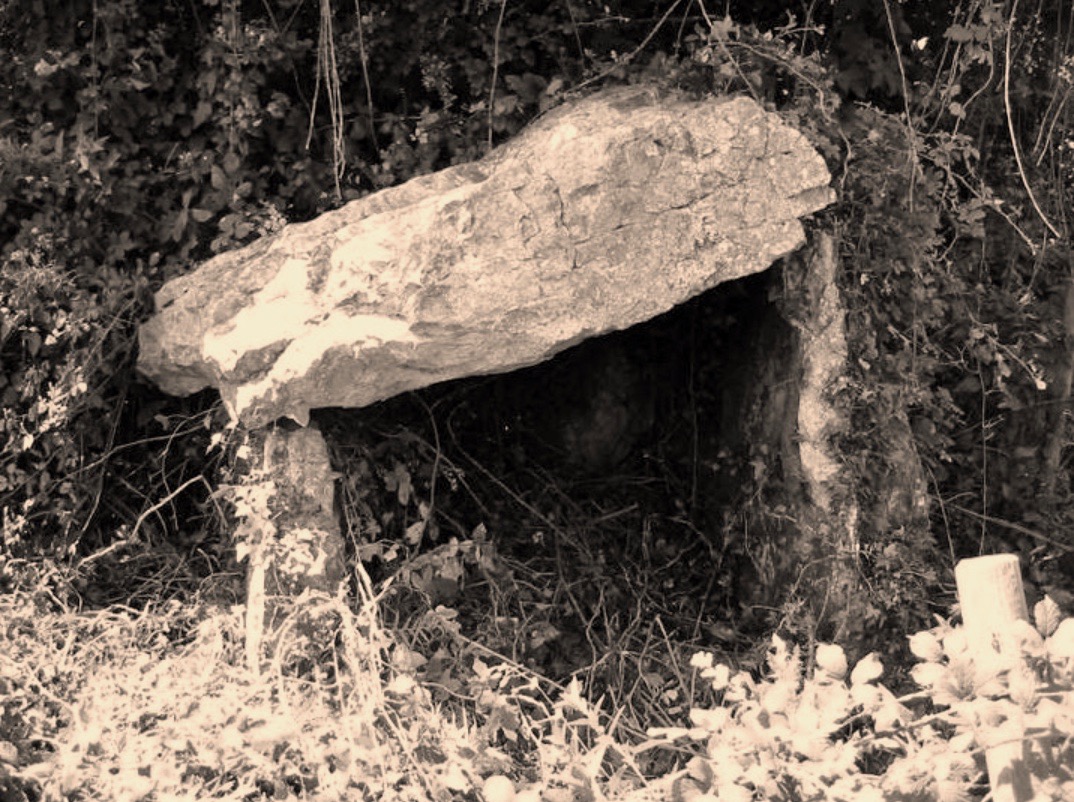
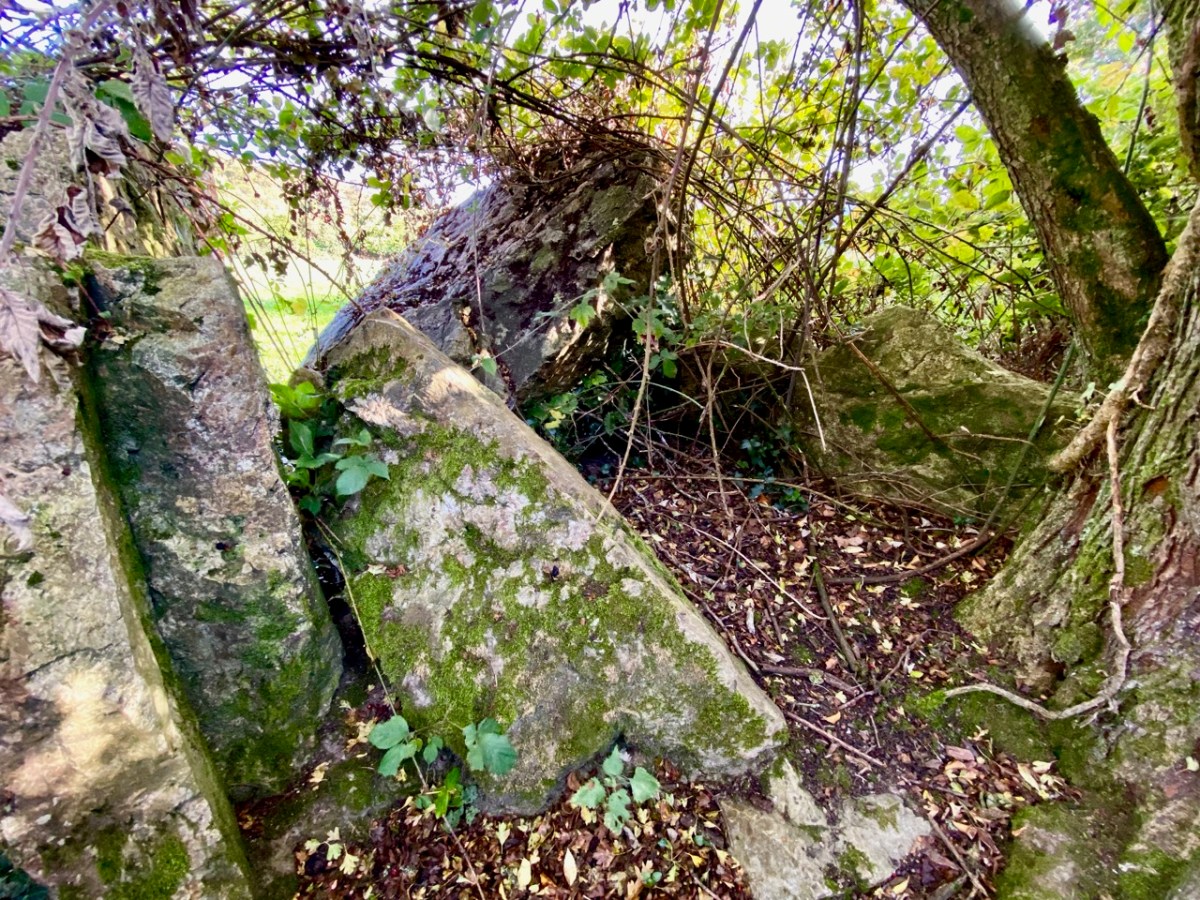
The picture above is taken a little to the west, to show the full skyline profile. The monument is not in good shape: the photo below (courtesy Ryaner via The Modern Antiquarian) shows the tomb in 2006, when the capstone remained intact on its supports. In less than two decades the capstone has fallen, as you can see from our photos taken a few days ago.
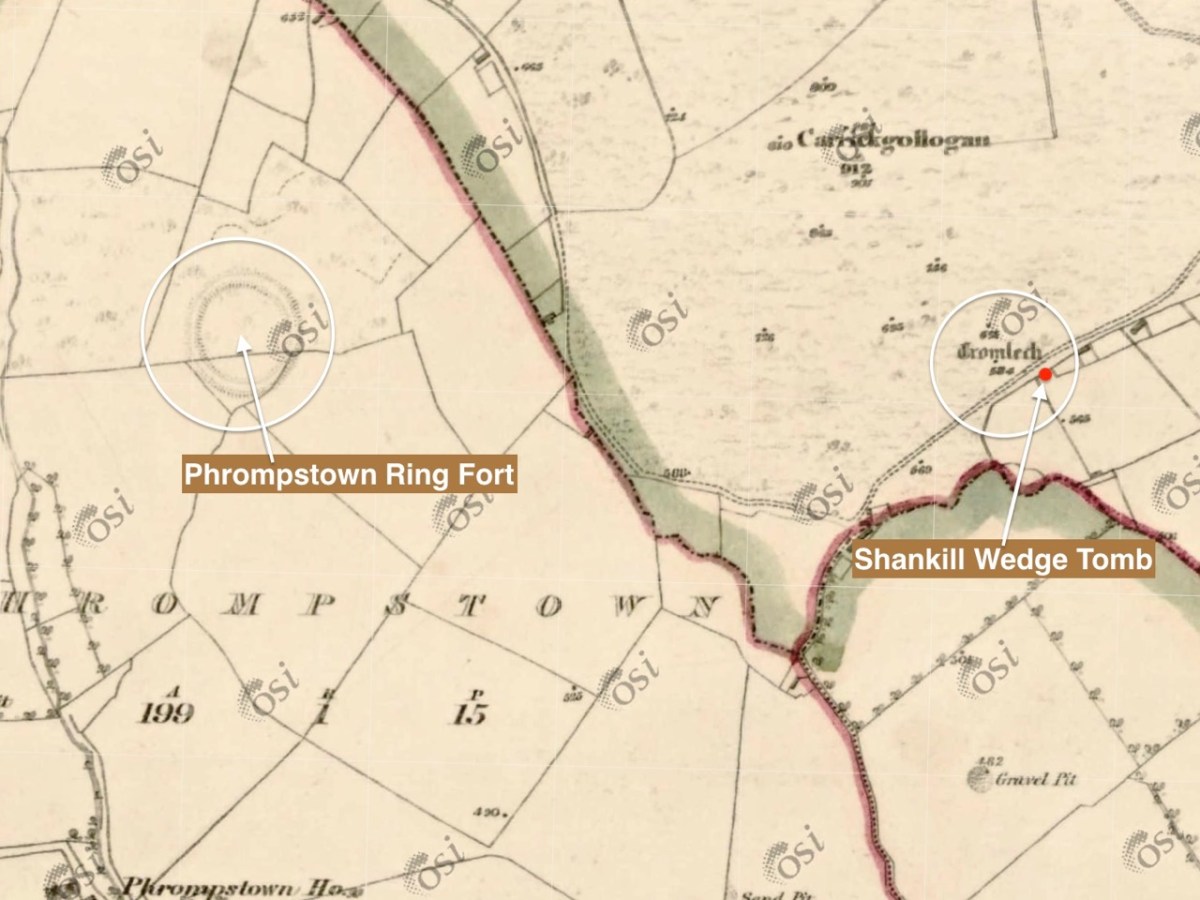
It is quite difficult to penetrate the undergrowth to see what remains of this structure, which probably dates from between 4,000 to 5,000 years ago. It seems a shame that such an ancient survival is not cared for in any significant way by our State. The tomb was recorded (as a ‘dolmen’) by the archaeologist William Borlas in 1897. Just over a century later, it has significantly deteriorated. The extract (below( from the first edition 6″ OS map gives it the title ‘Cromlech’ – and also shows nearby a substantial ring-fort: there is no trace of that remaining today.
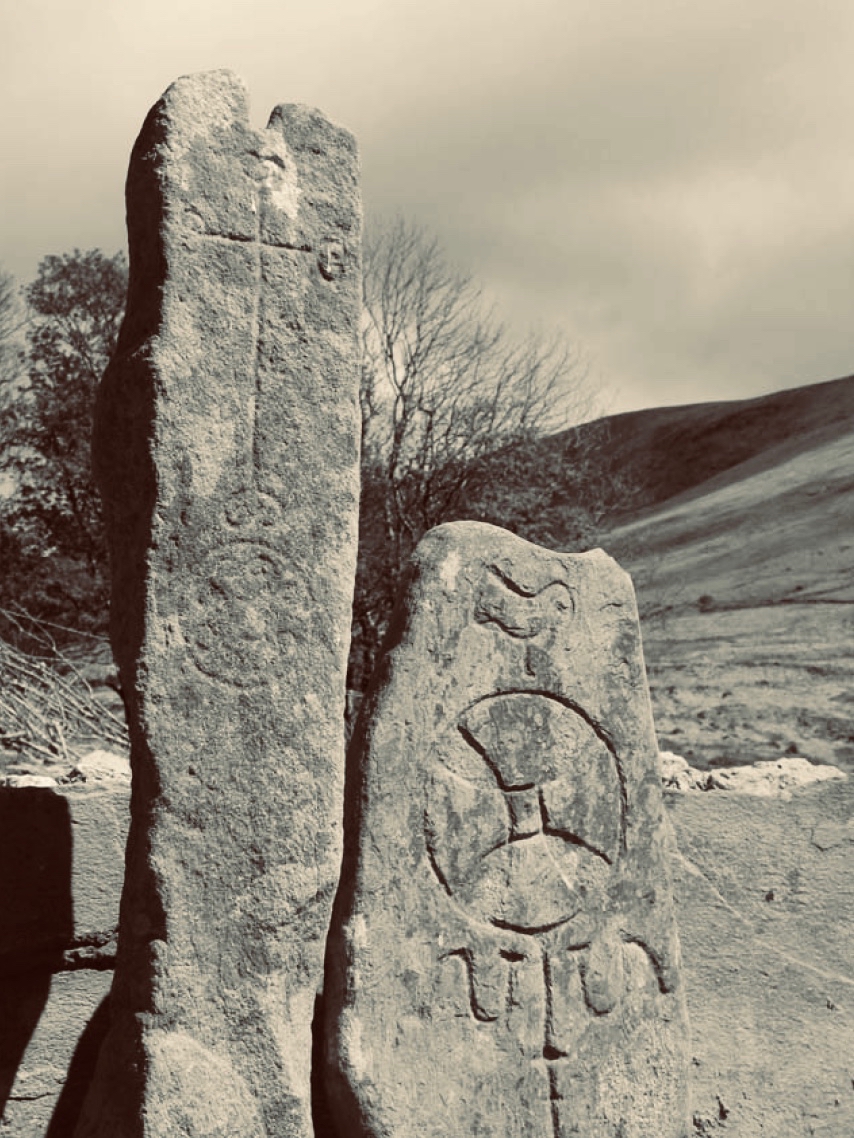
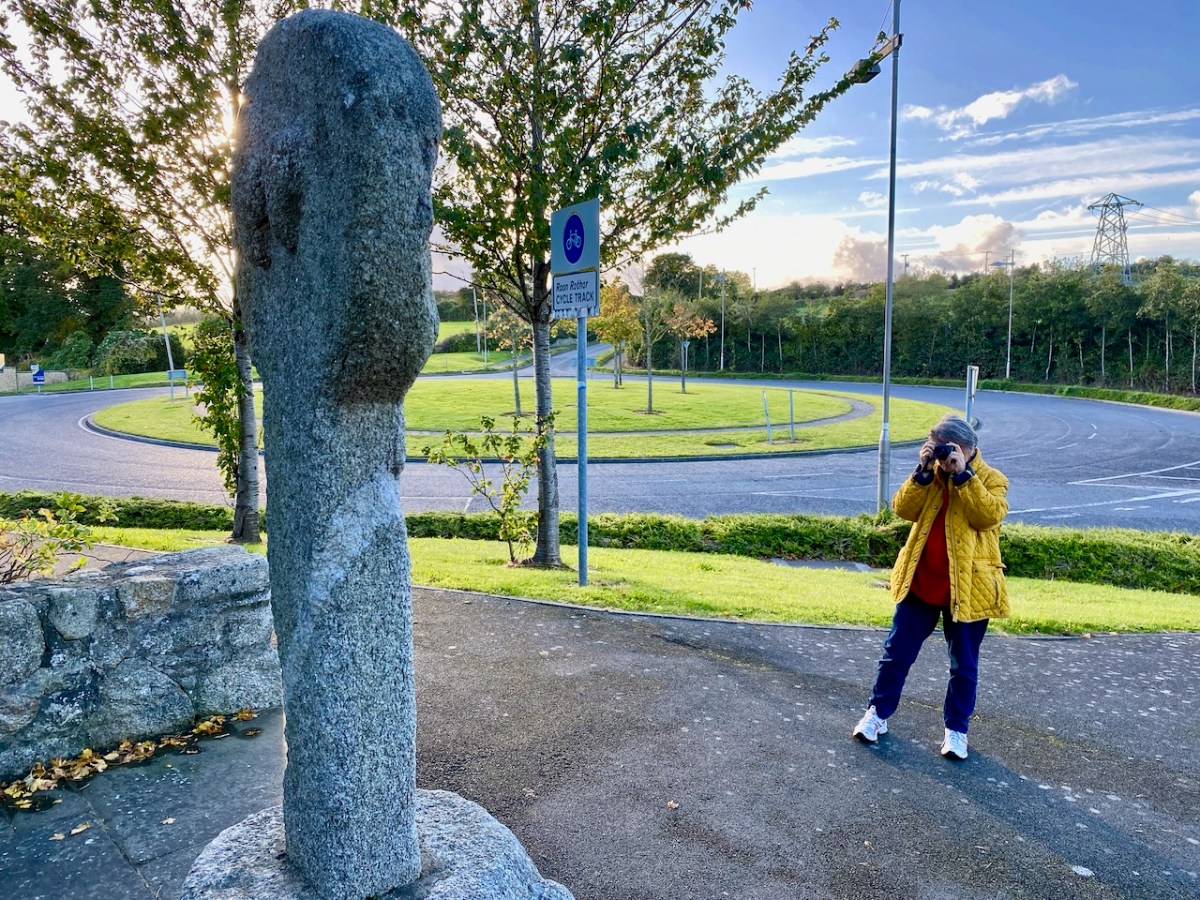
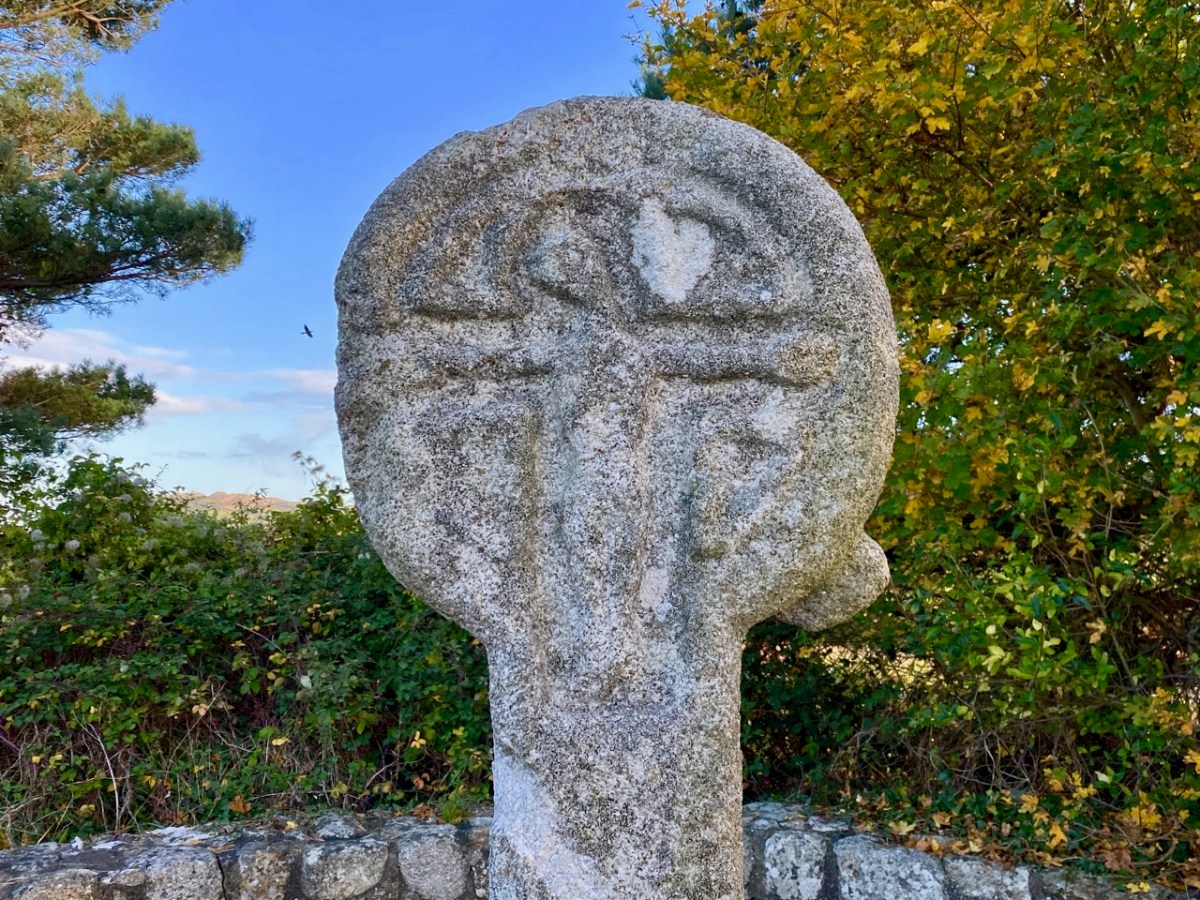
We leap forward about three thousand years for our next archaeological site, but we are only a short distance away as the crow flies – in Fassaroe, Co Wicklow, less than half a kilometre. This was a great discovery for me: a very fine carved cross, likely to date from the 12th century. Although it has been moved from its original site, it is cared for, and easily found right beside a strangely deserted modern traffic roundabout with little sign of habitation nearby.
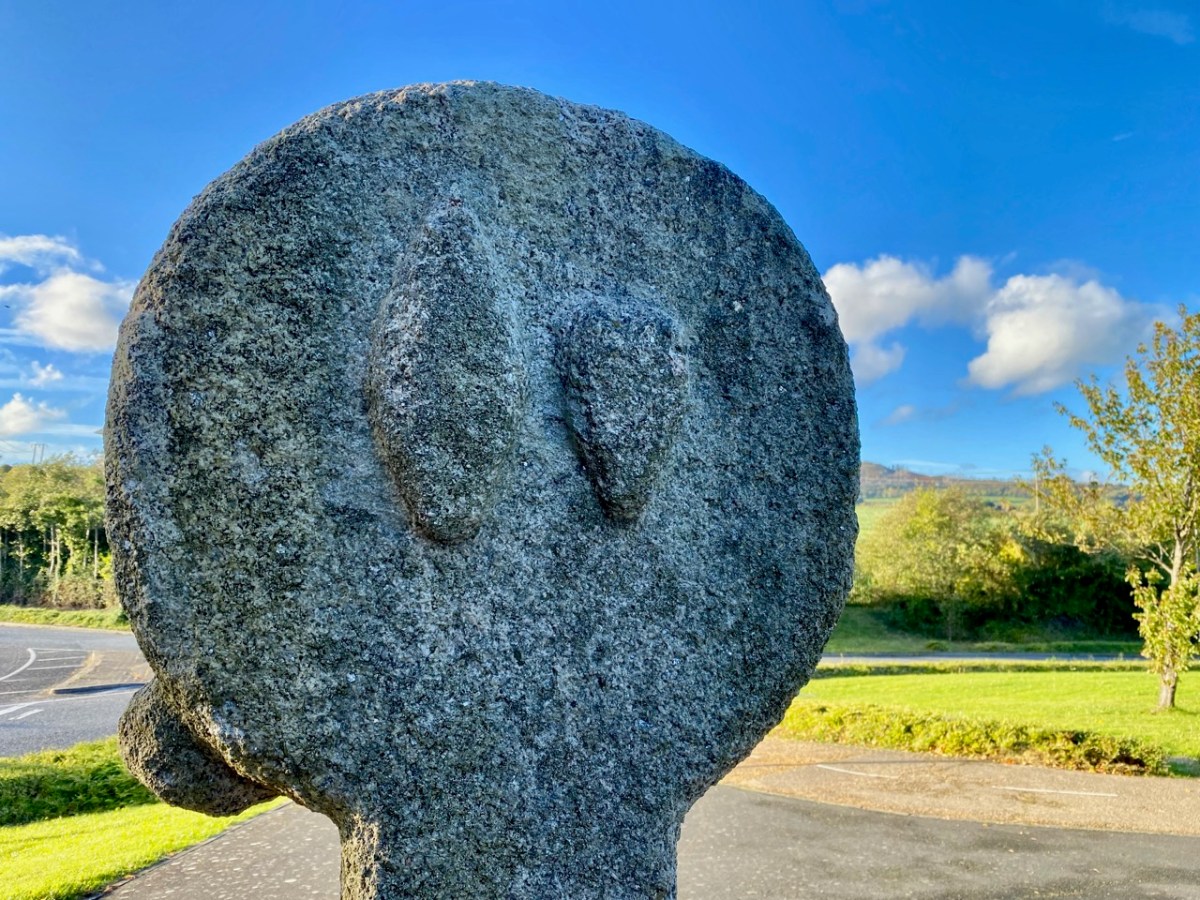
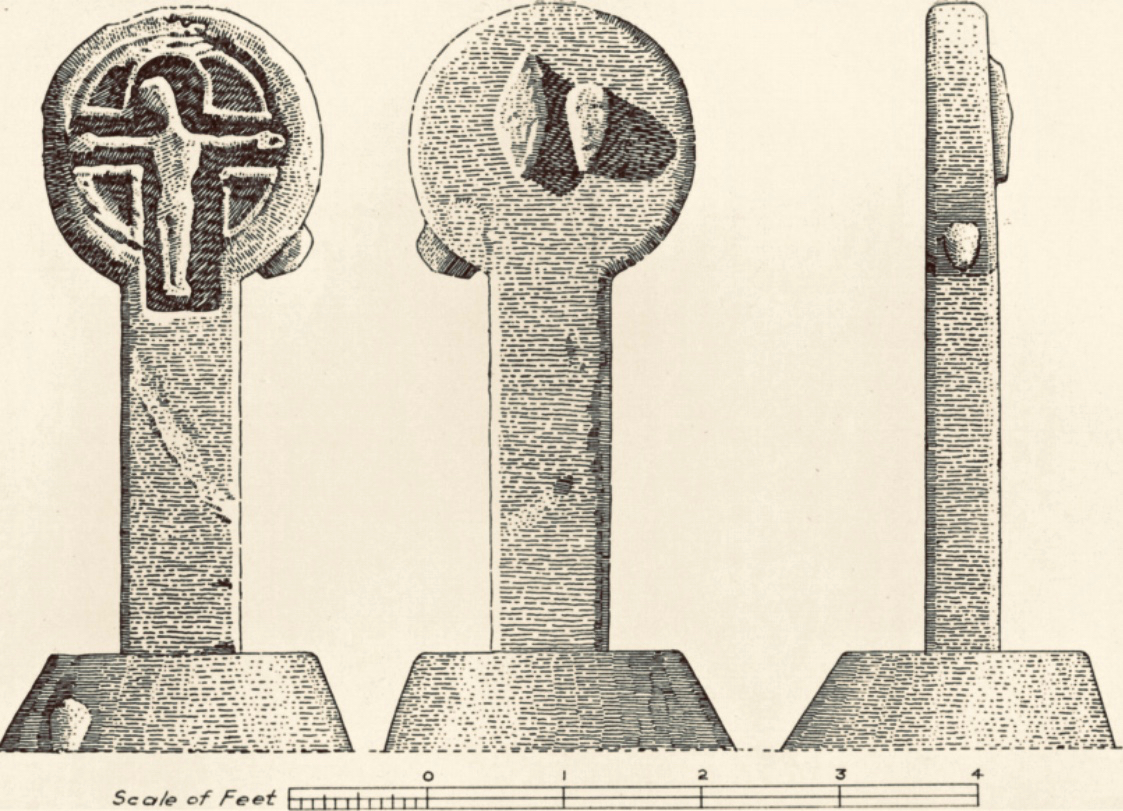
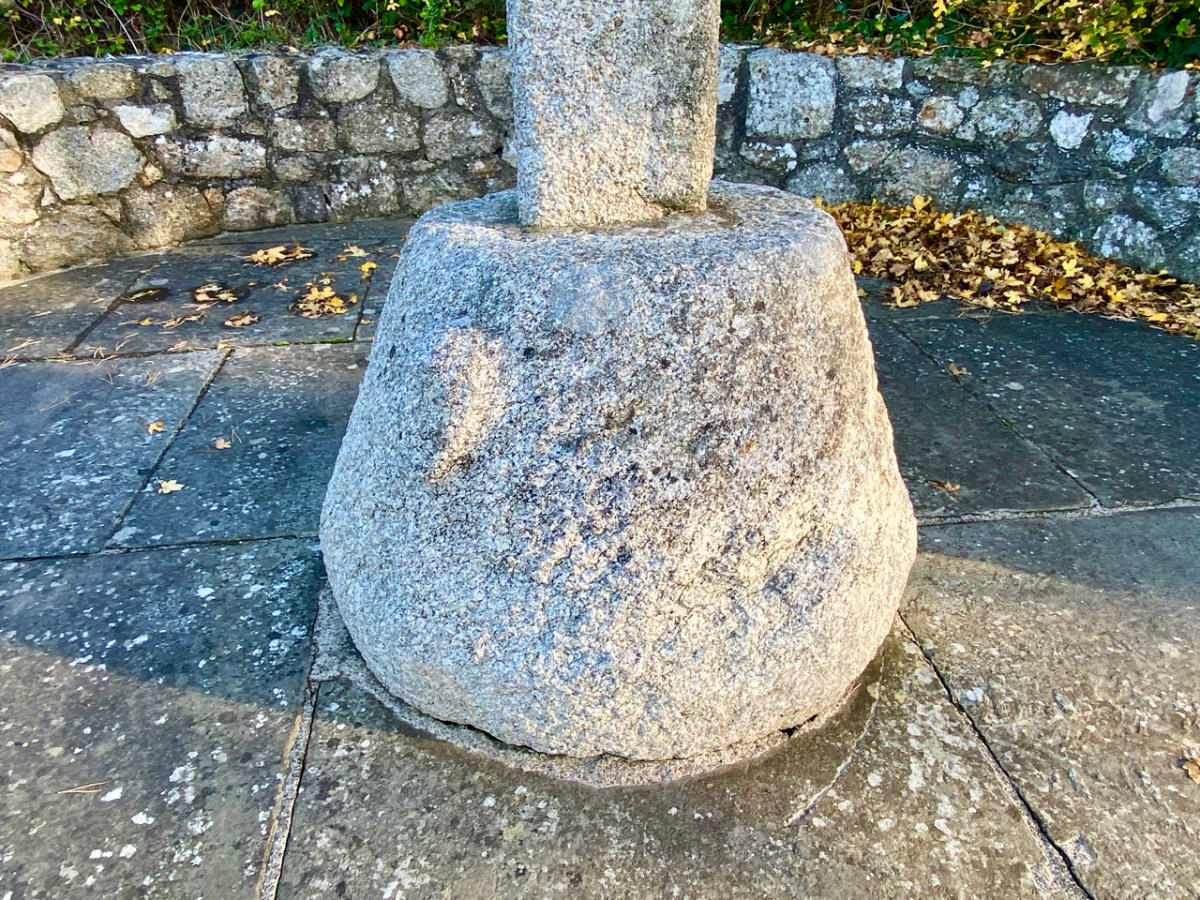
The granite cross face is carved with a crucifixion, but there are also ‘bosses’ on the back, sides and base stone. These are believed to be heads, well worn now but in good light some features can be seen: a pointed ‘ceremonial’ head-dress, and beards.
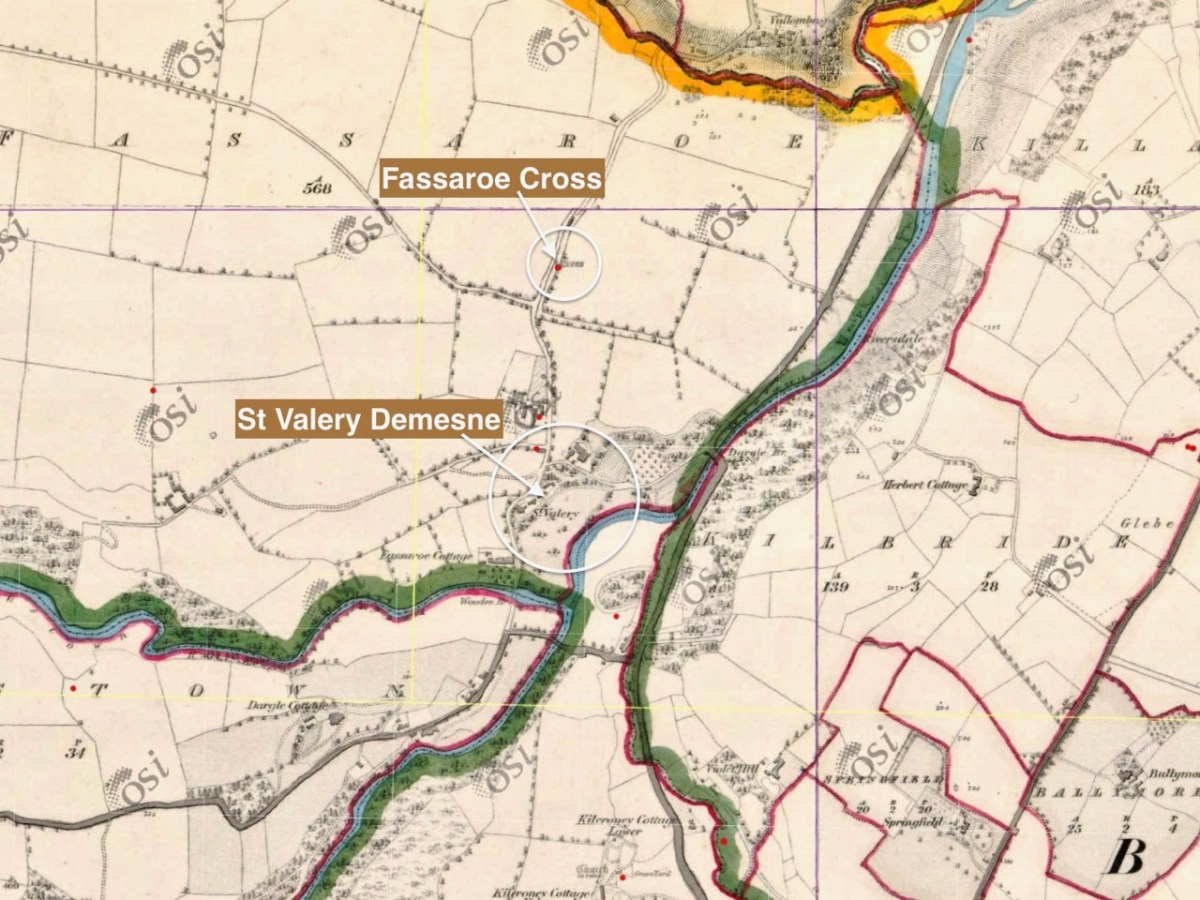
The clearest view of the carvings (above) is illustrated in The Journal of the Royal Society of Antiquaries of Ireland, Volume 88, 1958. An article by P Ó hÉailidhe discusses this cross and others nearby. The carving is popularly known as St Valery’s Cross as it purportedly came from the nearby demesne of that name. Some archaeologists theorize that it was originally brought to that estate from elsewhere.
This extract from the first edition of the 6″ Ordnance Survey map (c1840) shows the location of the cross, not far from St Valery.
It’s about 7km from the Fassaroe Cross to the last stop on our journey. We have to head north on a road that takes us through The Scalp.
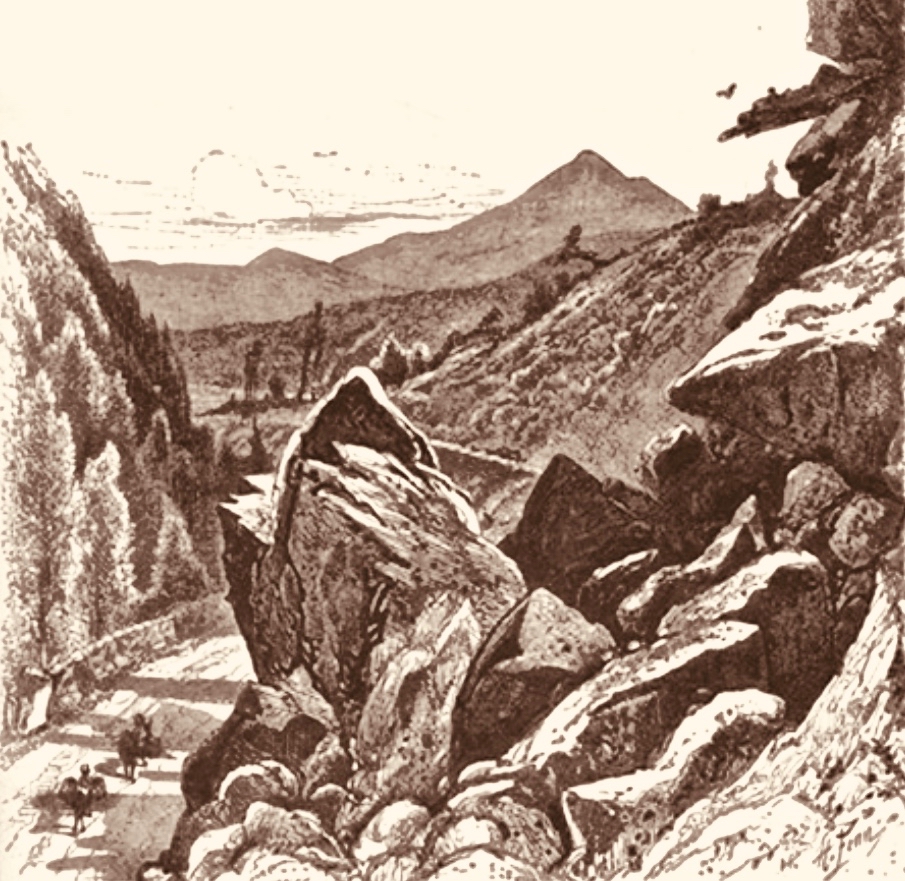
. . . Within an easy drive of Bray is a wild ravine known as the Scalp. The road runs over a shoulder of Shankhill Mountain and through this ravine; it presents a very wild appearance, enormous masses of granite being heaped up in grand and picturesque confusion on either side. It looks as if nature, in order to spare man the trouble of blasting a road, had by some mighty convulsion torn a rent through the mountain just wide enough for a high road . . .
Irish Pictures Drawn with Pen and Pencil, Richard Lovett, 1888
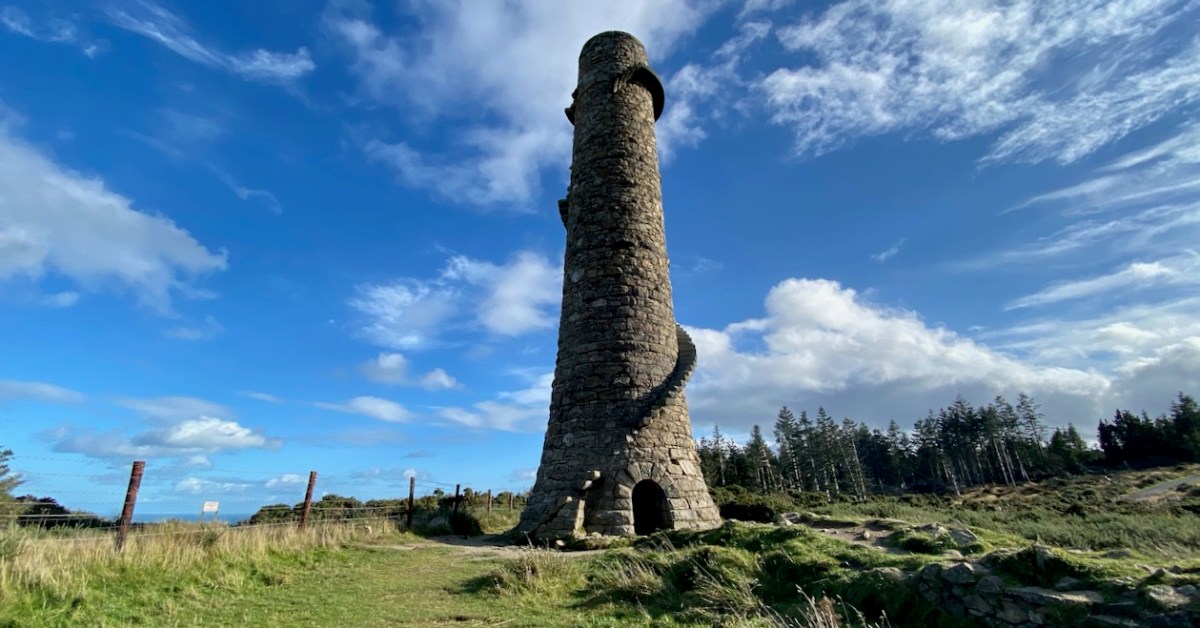
The view above accompanies Richard Lovett’s 1888 account. In spite of the topological interest of the Scalp road, our journey took us on and forward a few hundred years to our last stop – the lead workings on Carrickgollogan hill, Ballycorus townland. The hilltop mine chimney which forms our header picture is a well-known landmark in this part of the country.
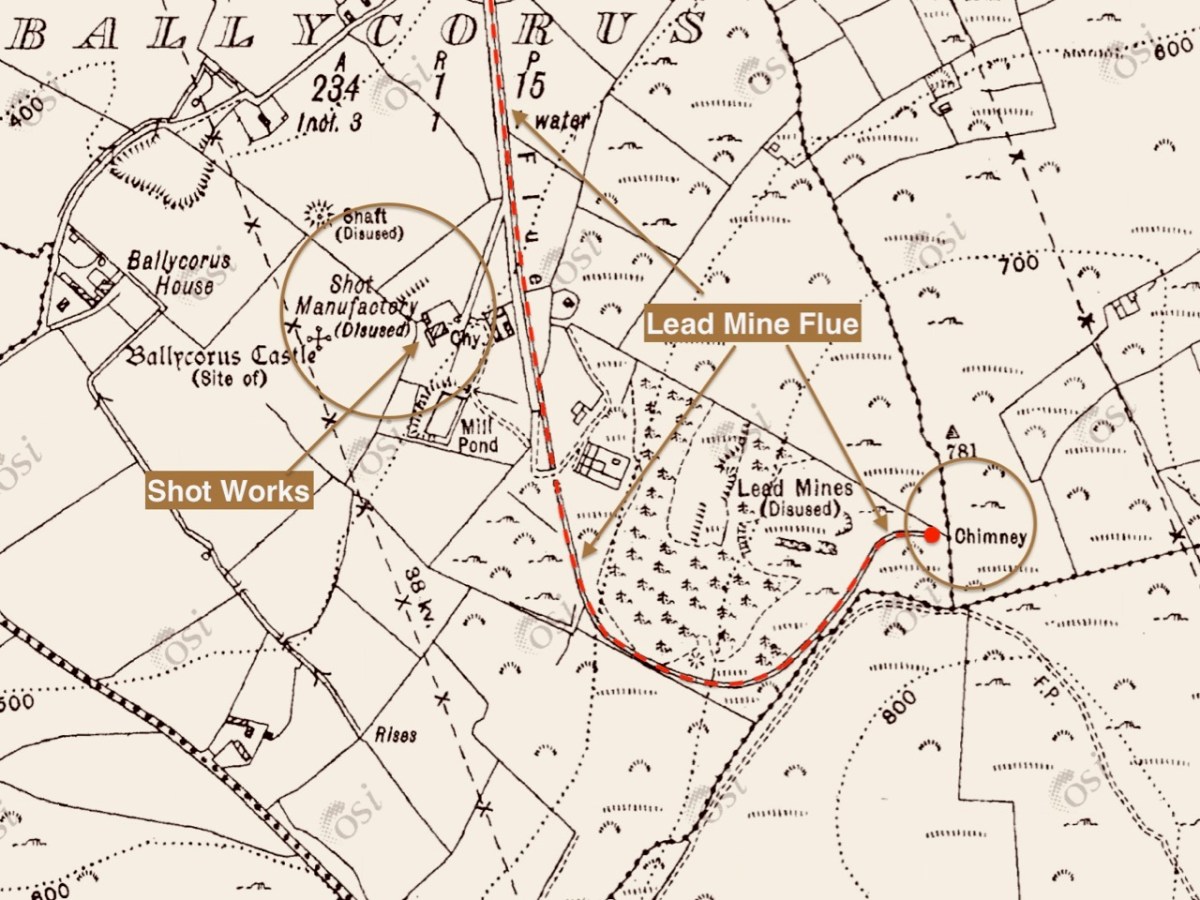
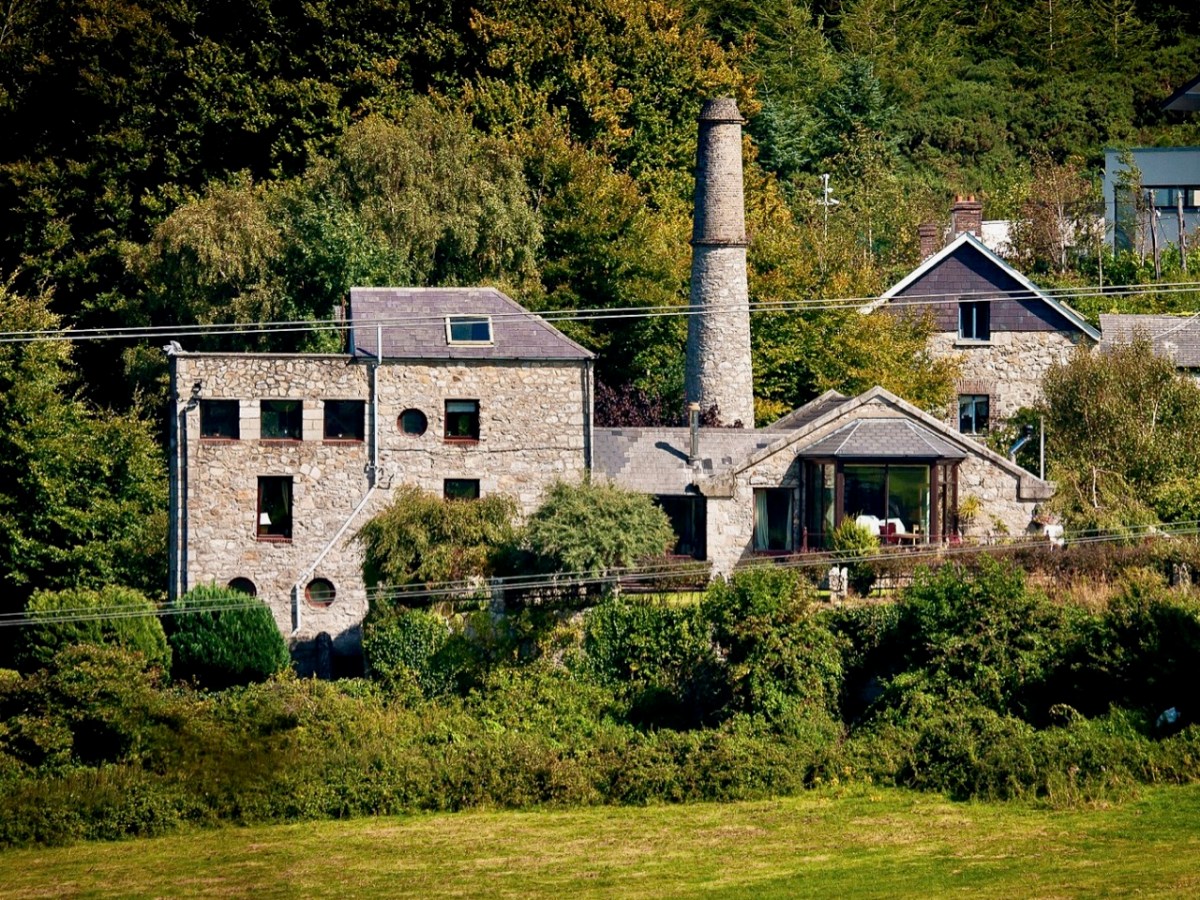
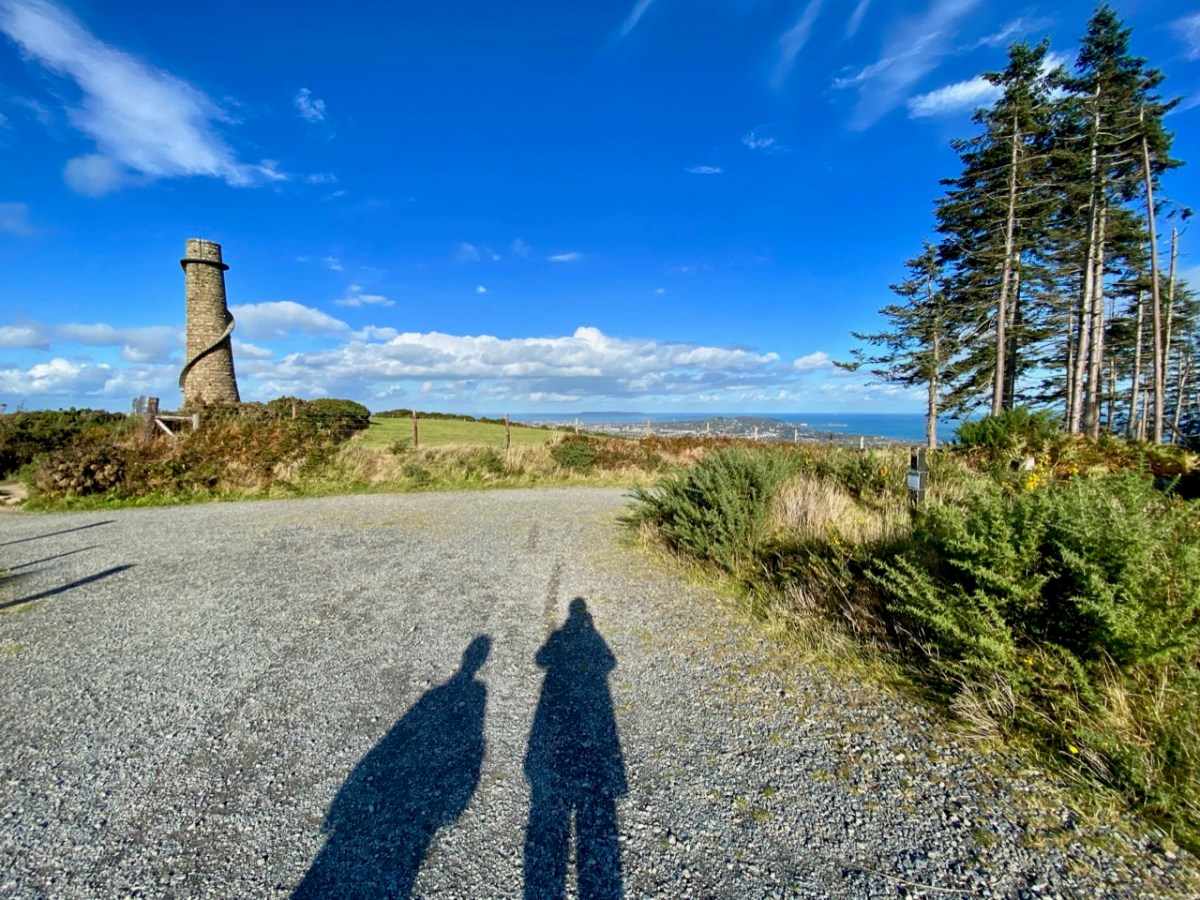
The mine was established in the early nineteenth century. Many of the lead works buildings remain today in the valley below the landmark chimney, mainly converted to modern dwellings: the photo above (courtesy Joe King via Wiki Commons) shows a distant view of the converted buildings and ‘shot tower’. The ‘Shot Works’ can be seen on the 25″ OS extract, above. This also show the location of the Lead Mine flue and chimney, which was the destination of our archaeological journey. That’s us (below) climbing the hill towards the chimney that’s on the 220m contour line, and offers views towards Dublin Bay.
Open-cast mining commenced in 1807. The Mining Company of Ireland took over the site in 1826 and began to carry out underground extraction. A 2 km long flue (shown in red on the map above) was laid out from the smelting facilities to the great chimney at the summit of the hill. You might think this was an acknowledgment of the poisonous fumes which lead working released, and an attempt to divert those fumes from the main site – but no!
. . . A process had been discovered in the 1770s whereby additional quantities of lead could be extracted from the fumes emitted by reverberatory furnaces if the vapours could be trapped long enough to precipitate the lead. To this end a flue 2 kilometres long running from the lead works and terminating at a chimney near the summit of Carrickgollogan was constructed in 1836. The precipitated lead deposits were scraped out of the flue by hand and many of the workers subsequently died of lead poisoning, giving the surrounding area the nickname “Death Valley”. . .
Wikipedia
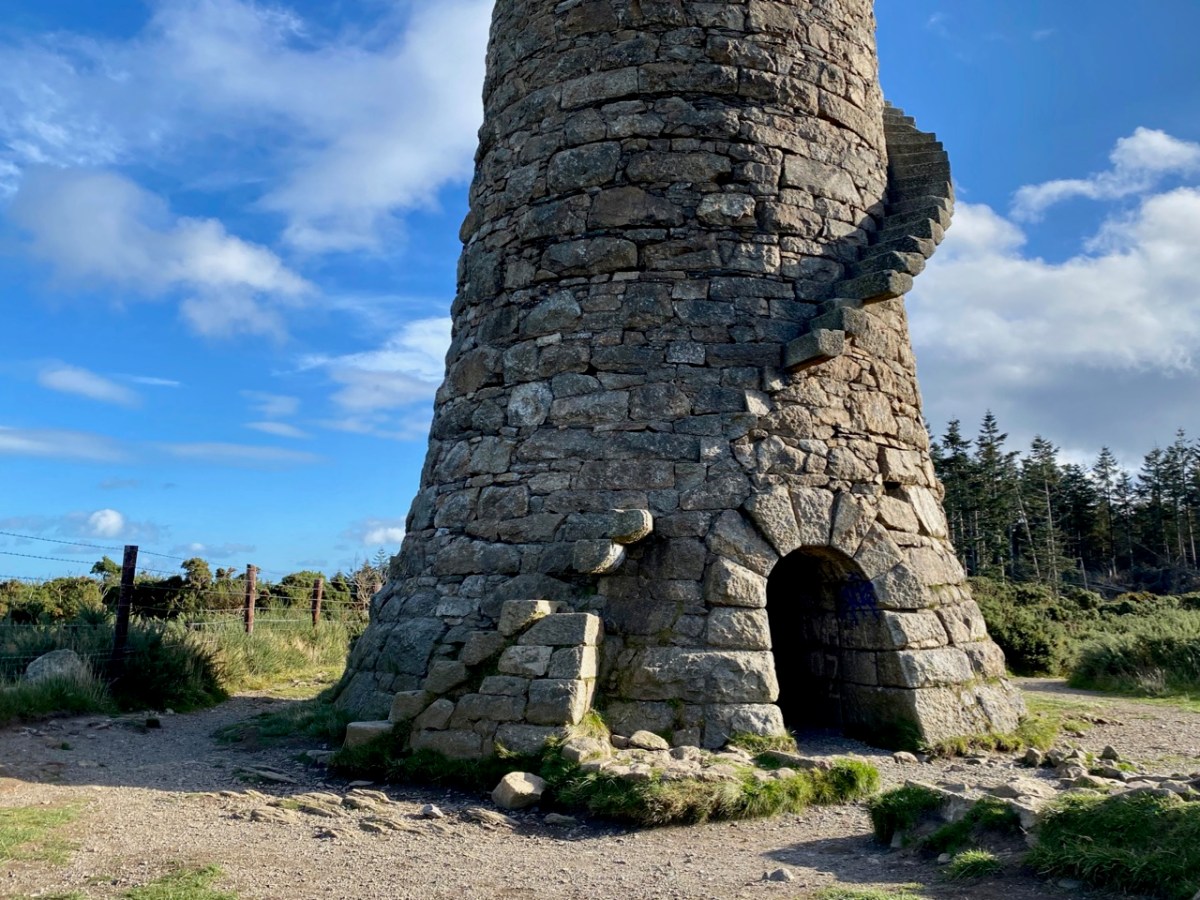
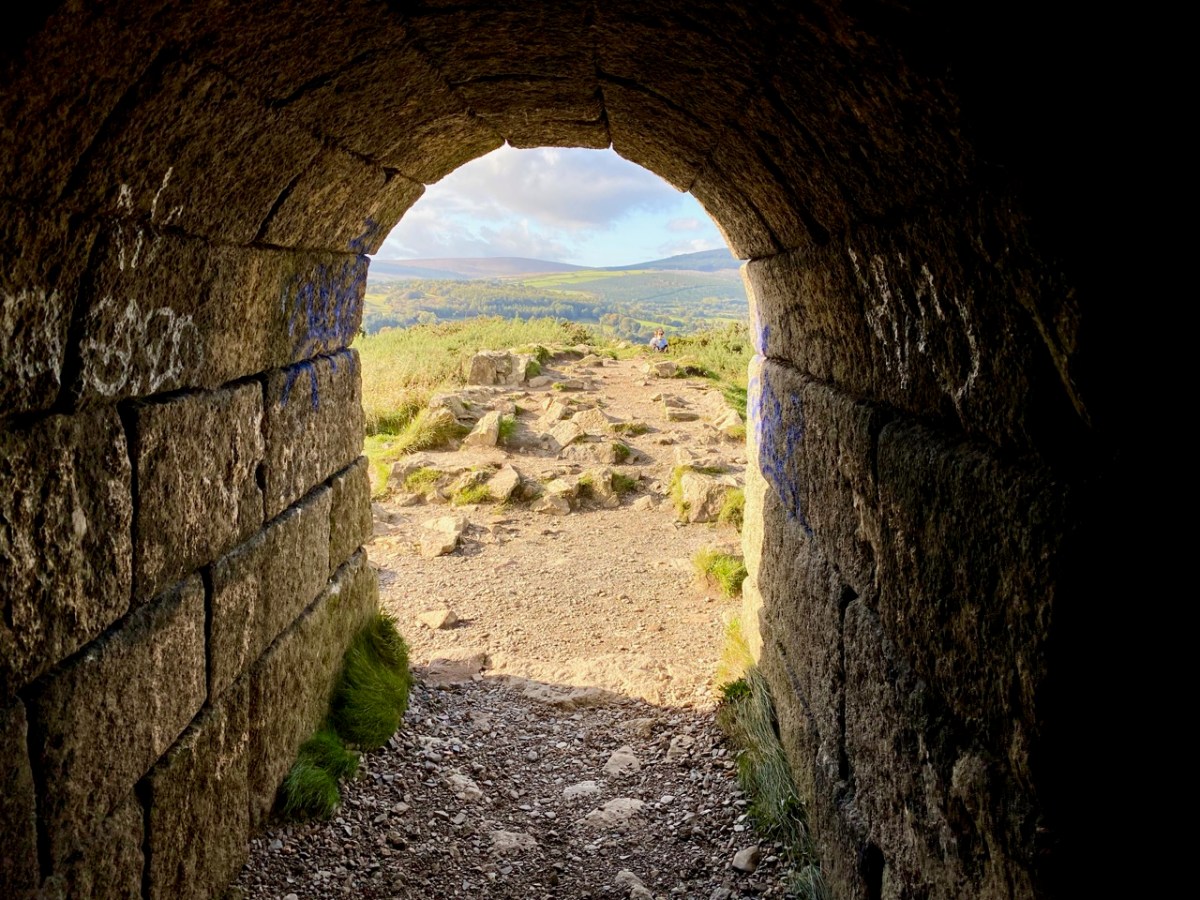
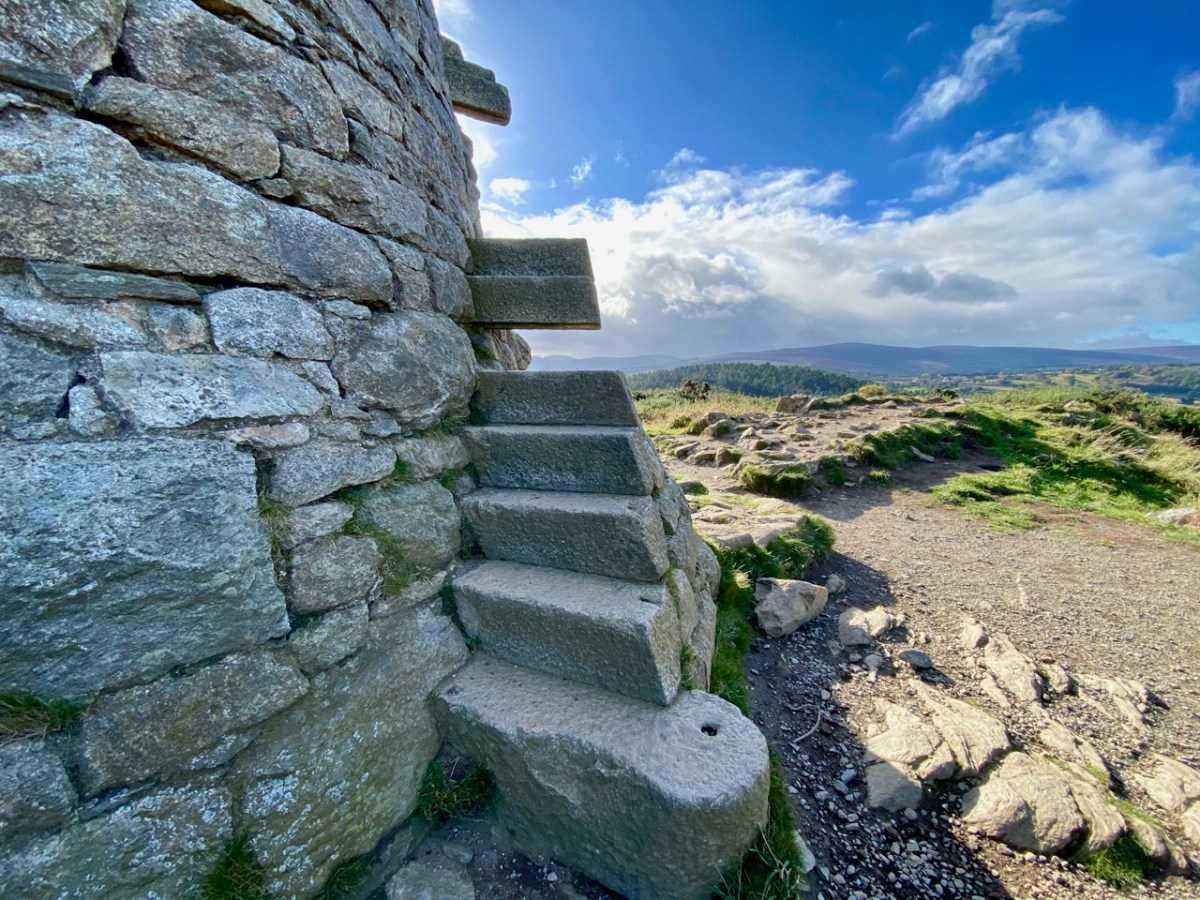
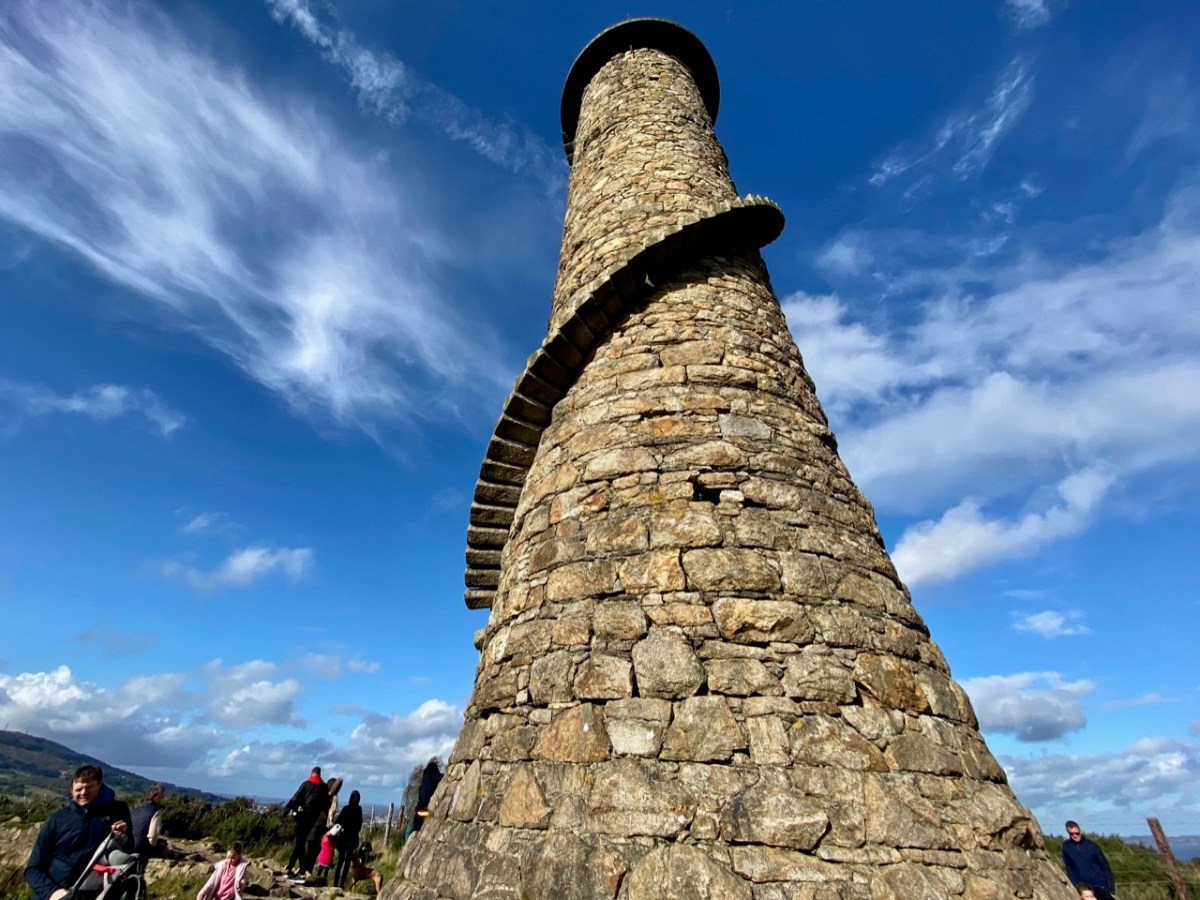
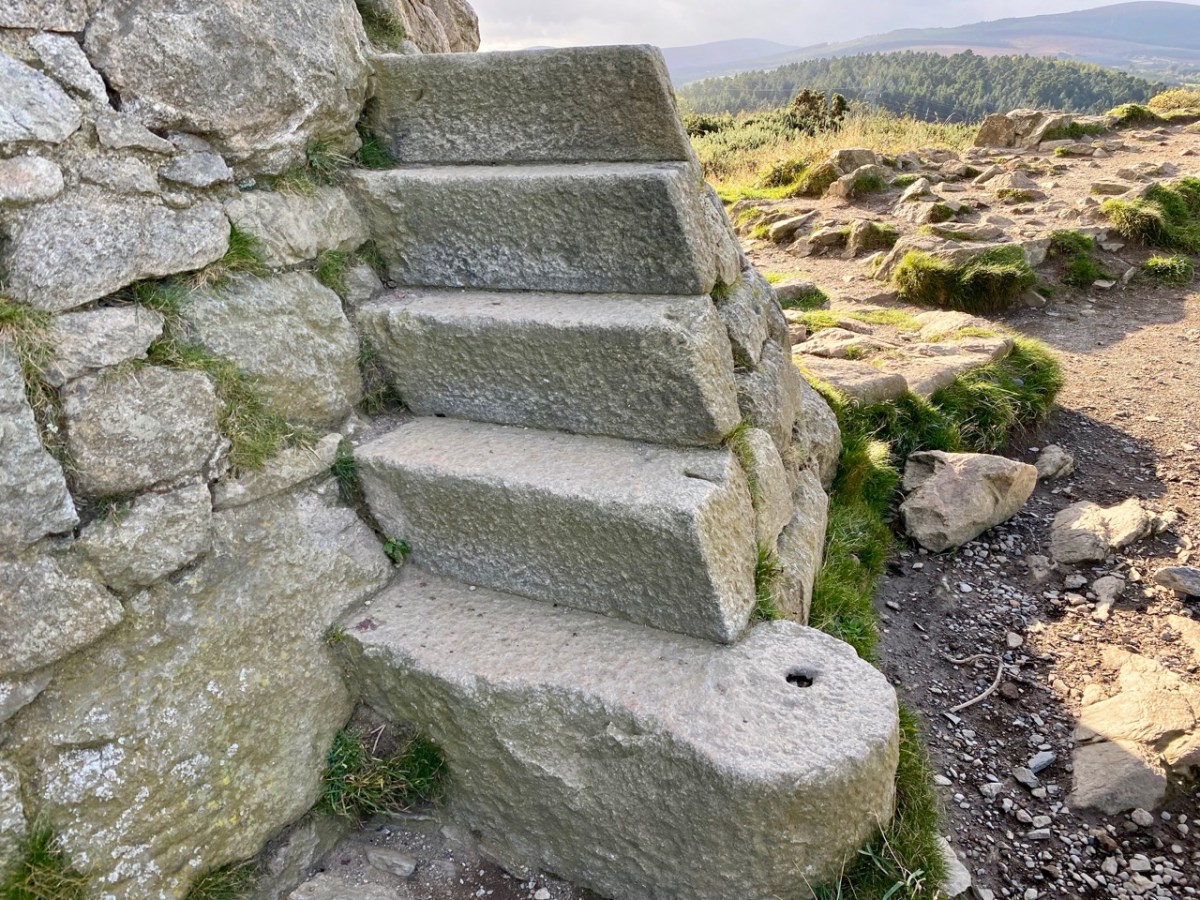
The lead mine chimney remains – although a brick upper section was removed in the twentieth century for safety reasons (see lower picture) – and so does much of the enclosed flue. A public trail follows its course to the top of the hill. The remaining chimney is a fine granite structure, in reasonably good condition. It’s certainly much visited: Finola – who grew up in Bray – has fond memories of cycling out there with her two brothers, and finding ways to climb part way up the spiral staircase which accessed a viewing platform, in spite of key parts of the stair structure being missing!
All three examples of archaeology we have studied today have one thing in common: they are constructed of local granite. Thousands of years separate the oldest and the most recent, but the inherent strength of the material has ensured survival, at least in part. As with West Cork and all other parts of Ireland, the temporal history is rich, and much of it is largely intact. We have so much more to explore!
Welcome to the UCD Library Cultural Heritage Collections blog. Discover and explore the historical treasures housed within our Archives, Special Collections, National Folklore Collection and Digital Library















 Roaringwater Journal