Illustrating the Tower House: A Guest Blog (sort of)

Tower House Full View

There’s this brilliant young man, JG O’Donoghue, who combines the best qualities of researcher and sketch artist to produce outstanding illustrations, especially of heritage subjects. I’ve been a fan of his on Facebook for a while, but recently I saw the full extent of his talent.

Path to a Castle

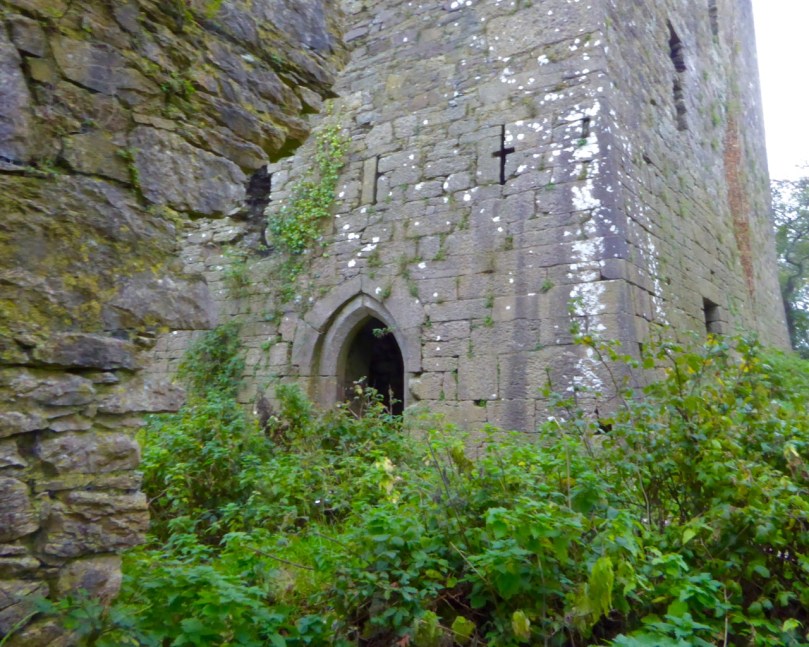
Kilcrea Castle, Co Cork

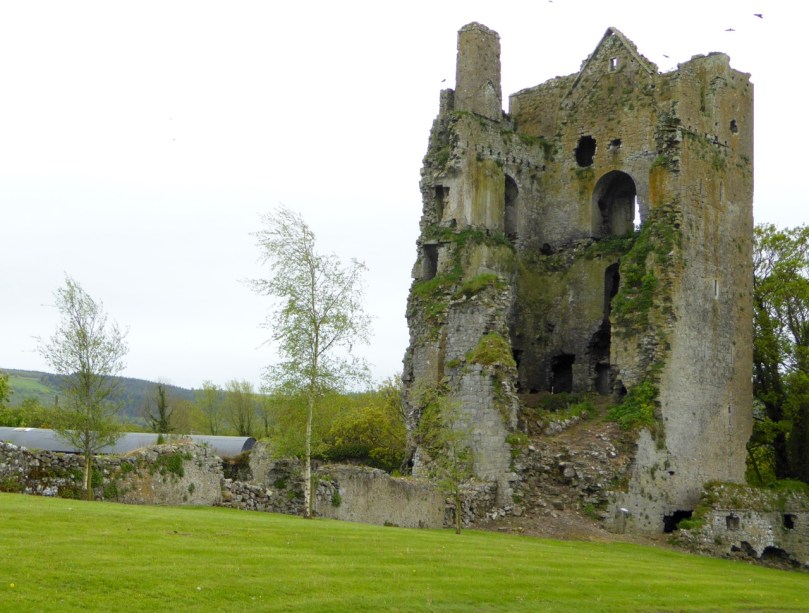
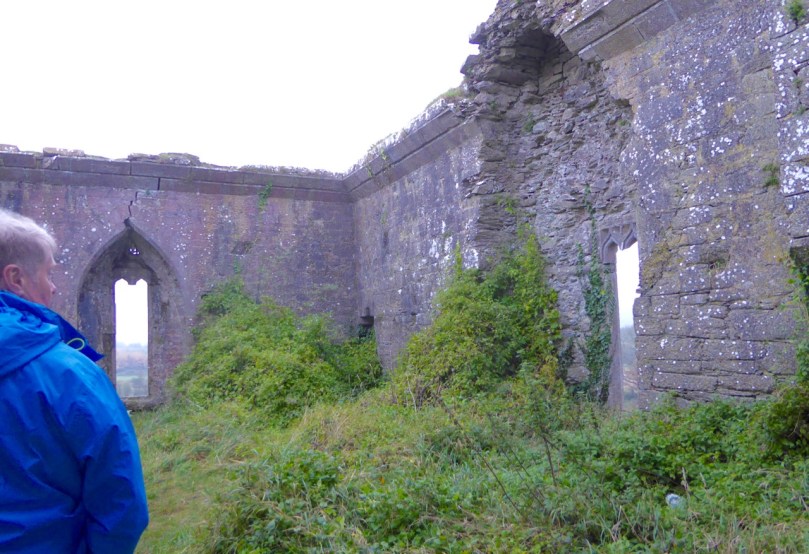
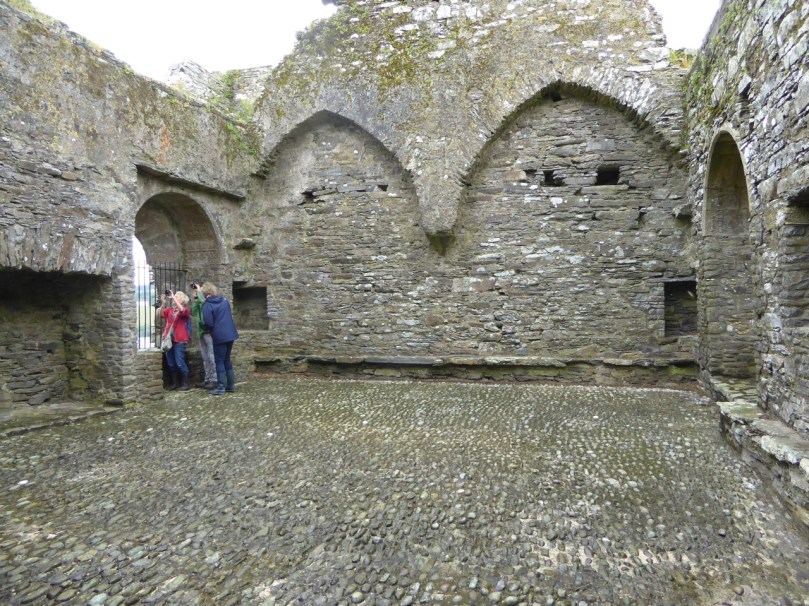
You see, he’s done this job on tower houses. I’ve been studying tower houses for a while, especially the tower houses of West Cork (see my posts here and here and here) and recently I gave a talk about them in Ballydehob. So I recognise accuracy when I see it, as well as a meticulous attempt to be true to both published accounts and his own close observations. He has generously allowed me to use his drawings in this blog post, as well as his own words, slightly edited to fit the length of a blog post. So this is not my post, really – it’s his, as you’ll see if you head on over to his own blog, or follow him on Facebook. Since much (but not all) of what follows is based on Kilcrea Castle, Near Ovens in County Cork, I have included some of my own photographs of that site, to give you a sense of what it looks like on the ground.

Above the main entry

JG Writes:

The Tower House

Tower houses are a type of late medieval Irish castle, believed to have originated around 1300, or sometime within the 14th century, but most are probably from the 15th to the 17th centuries. By the 17th century, this would have made Ireland the most heavily castellated part of the British Isles. The tower house signifies changes in Ireland: on one hand it shows a resurgence in Gaelic power in the west after years of decline following the coming of the Normans in the 12th century. On the flip side it is a sign of the collapse of centralised power in the form of the English monarchy and a rise in decentralisation.
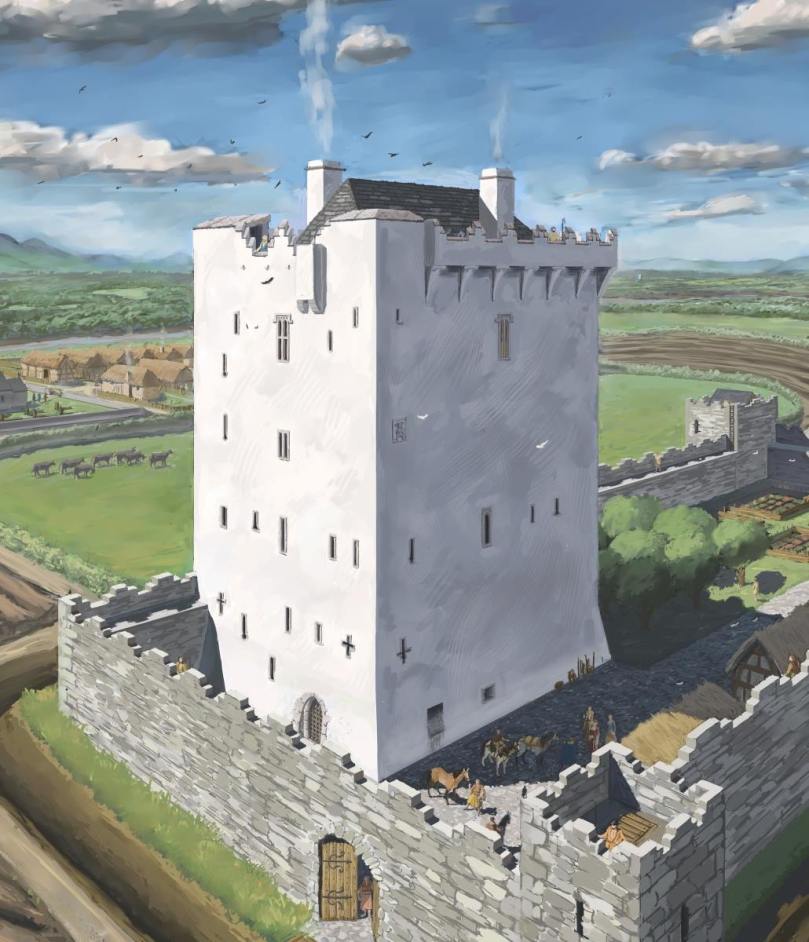
Tower House Closer View

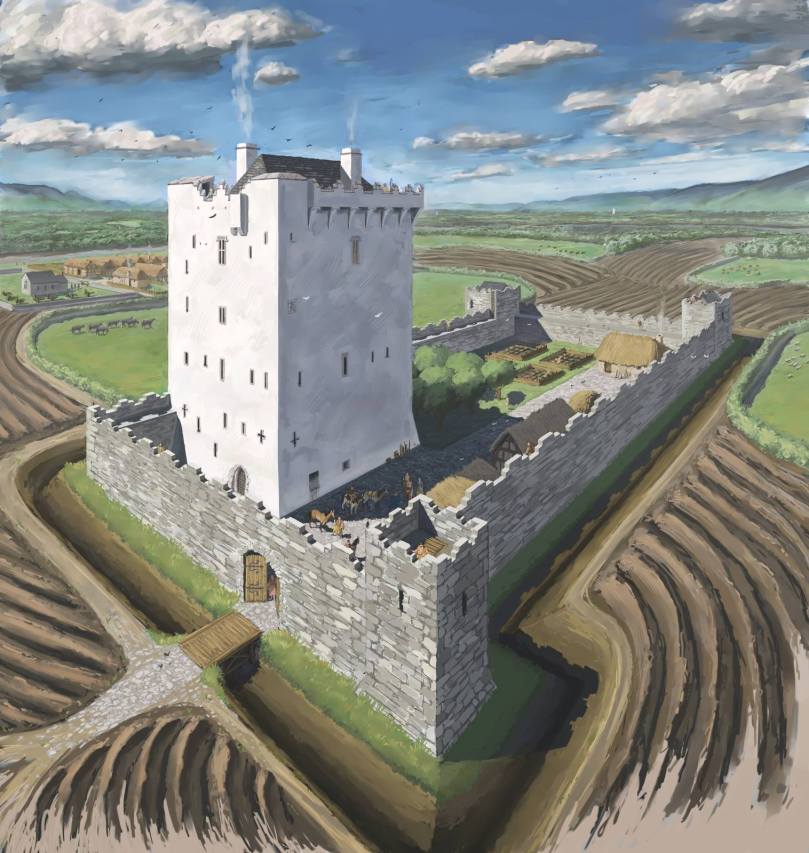
One tower house in five has a bawn wall in Ireland. The bawn is the external wall you see attached to the castle shown here. The actual design of the tower house itself though is nearly entirely based on Kilcrea tower house, in Cork, my favourite tower house and one which I have visited a few times and read extensively on. The only changes to the overall design of Kilcrea was the inclusion of a second chimney for the kitchen room inside, and the machicolation. I added these elements so the castle would be more representative of tower houses as a whole. Also the crenellation (the regular gaps in the walls at the roof & bawn, which provided cover for archers) in the castle are a style specific to late medieval Ireland. The bawn crenellations are based off Blarney Castle.
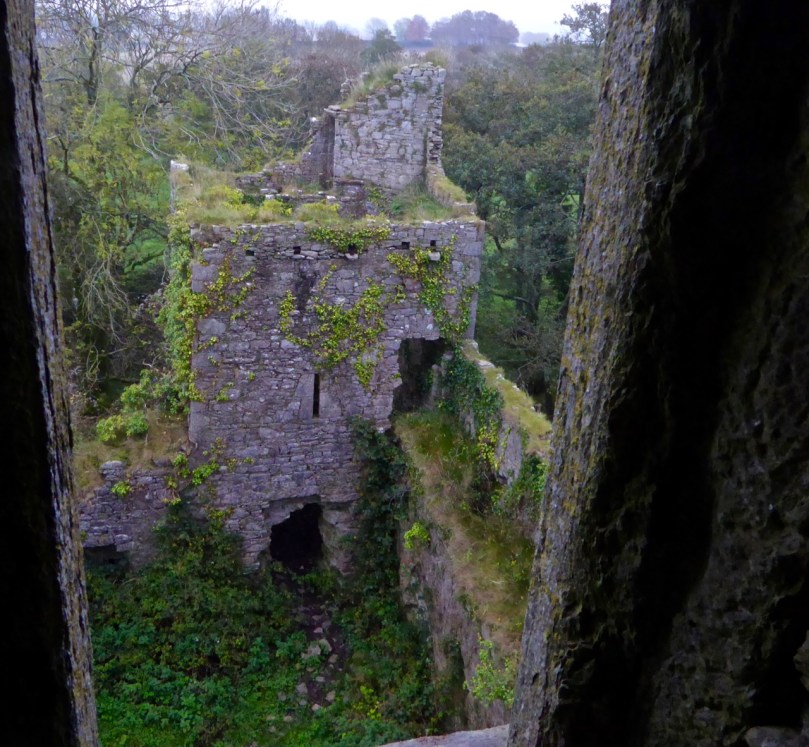
Bawn Corner Tower

The bawn walls and corner tower

Notice as well how white the tower house is? This is probably how most tower houses would have looked, as they were coated with a substance called harling, a mixture of limewash and crushed pebbles. Because of this, commentators at the time often mention the white gleaming castles of the Irish, as you can imagine these would have been visible for miles around and been quite a symbol of power and prestige. You may also see the little figure on the dark side wall of the tower house: this is a sheela-na-gig, a type of sculpture common in Ireland at the time, this one is based off the one in Ballynacarriga Castle.

Ballynacarriga Sheelanagig

This is the sheela-na-gig from Ballynacarriga

Tower houses are believed to have been surrounded by mixed farming, some cereal with animal husbandry too as shown in the illustration. Often they are found associated with churches and friaries, some were even built attached to churches, and some probably weren’t too far from some sort of clustered settlement. Note as well the dry moat. Not all tower houses had moats, but some did, like Kilcrea, so I included it here.
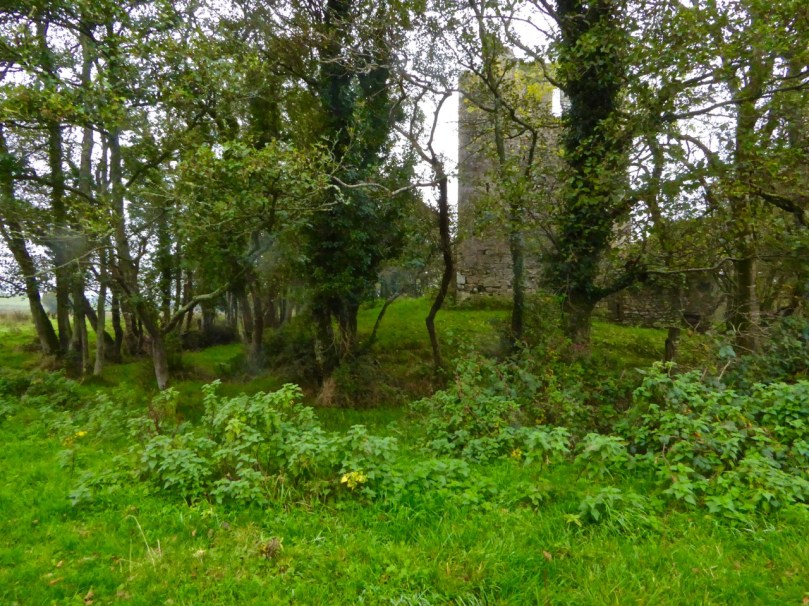
Moat at Kilcrea

Notice also the slight batter (where the wall comes outwards at the bottom to defend against a battering ram), also in the bawn towers, which is based on Kilcrea & Barryscourt.  As you can see though, the real bling in the tower house is the top of it, this is where most showing off happened with turrets, crenellations, chimneys, gabled/pitched roofs and machicolations, as shown here. Another place they showed off was the ashlar (fine finished masonry) windows. The top floor in Kilcrea was believed to be the hall, with the floor directly below the lord’s chambers. Hence they have the nicest windows, especially the hall floor, which had 4 large windows as shown.

Great Hall Window

One of the windows on the top floor

Also notice the variety of windows: some were narrow slits just for archers to fire from inside, others have the addition of a cross slit, which could be used by crossbows too and then there were others with either triangular or circular holes, these were for later fire arms. Some windows even had all three as shown here in the 1st floor window in the dark side of the tower house, the one closest to the light. All these windows, except for the decorative ones on the top floors, would have been splayed inwards allowing maximum cover for archers.

Inside the Tower House 
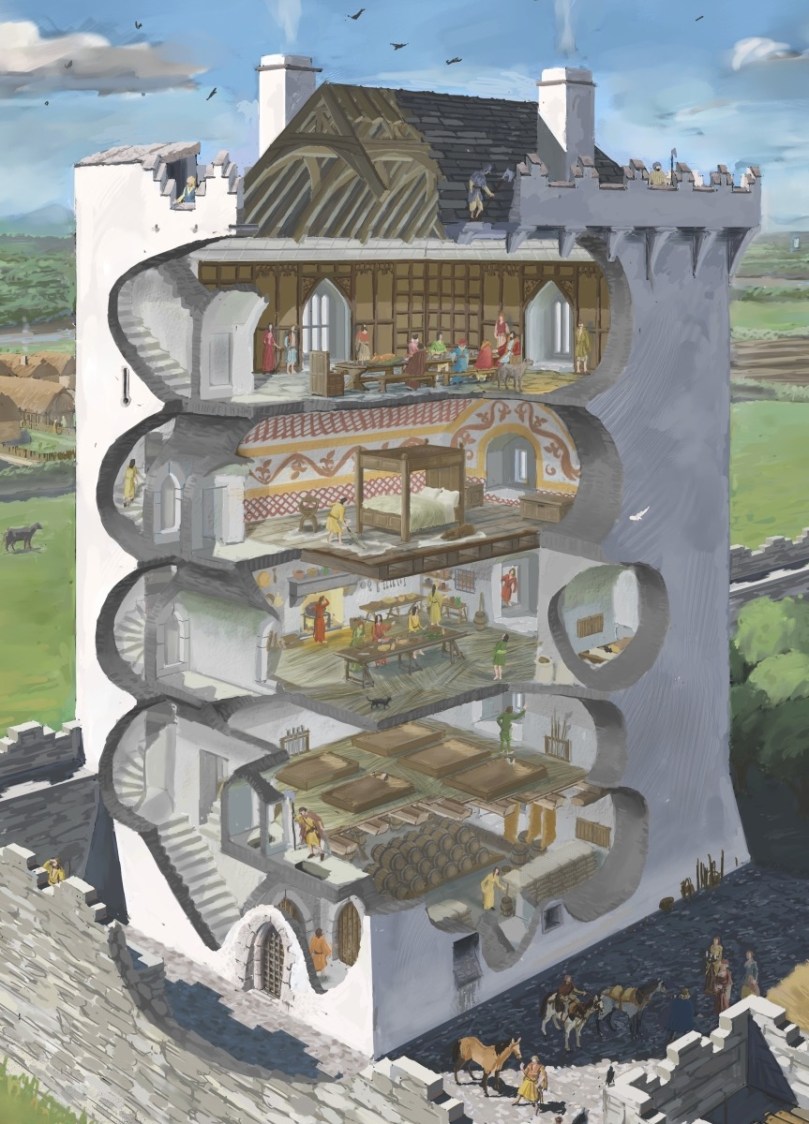
TowerInterio65-Internal

Ground Floor – here is a cellar, as in Stanihurst’s “house and castle” account of Mallow castle, 1584, “lower rooms whereof ar sellors vaulted over”. Here various food and drink would have been kept, perhaps not just for the castle itself but for the wider community, acting as a safe house for everyone’s goods in case of raids. The floor surface here is very basic and is just beaten earth.

Lower floors

1st Floor – I have made into a sleeping quarters. There is mention in the historical recorded accounts of tower houses that they were used for sleeping and that there were beds without curtains, and you could sometimes fit three people into them. So here I have shown some rudimentary beds, not just for guests, but also for the guards and servants. The 2nd & 1st floors are also covered with reeds, this would have often been what medieval floors were covered with according to medieval accounts, which then on occasion would have been swept out and replaced. This room also doubles up as a guardsroom, as this floor was probably the last line of defence before the attackers get into the rest of the castle, so I’d imagine weapons would have been kept here for ease of access.
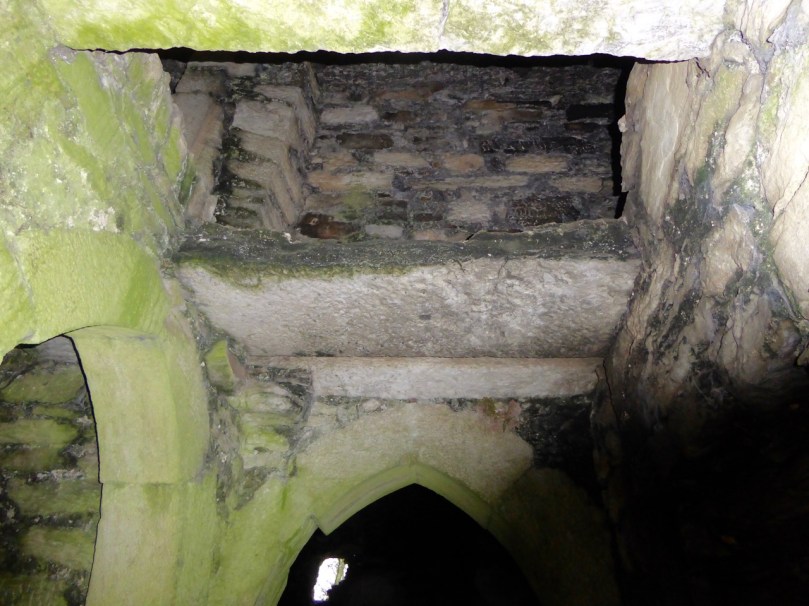
Kilcrea murder hole

Entrance lobby with murder hole above it

Murder Hole Room & Lobby – you will notice small rooms off both ground and 1st floors. In the ground floor this was the lobby, where for defence purposes, once you were past the main front door, you were greeted by two other strong doors, one to the rest of the tower house, another to the ground floor. Above this was the murder hole room, essentially a room with a hole in it, the reason for the dramatic name is that while you were trapped in the lobby between the two strong doors, you would be fired upon from above by muskets (apparently unlike what movies would have us believe, hot oil was rarely used). But in the day to day, these were probably used as a kind of door eye hole.
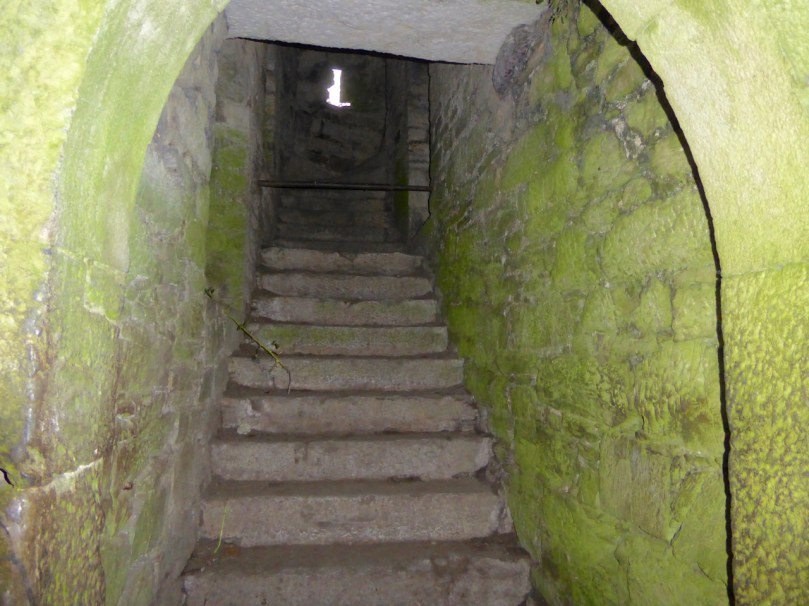
Mural stairs from Ground Floor

The mural stairs leading up from the main entrance. The bar across is said to be there to prevent a re-occurence of the time a cow wandered up to the second floor

Stairs – in a tower house usually started as a mural stairs to the left of the lobby entrance, these were then carried on by spiral staircases from the first floor up to the 4th floor, which then had another set of straight stairs leading to a small spiral stairs to the wall walk area. This was probably defensive in nature, so it was harder for the attackers to take the spiral stairs and wall walk. This last set of stairs was usually hidden within one of the window embrasures at the top floor, this was a common feature in southern Ireland.
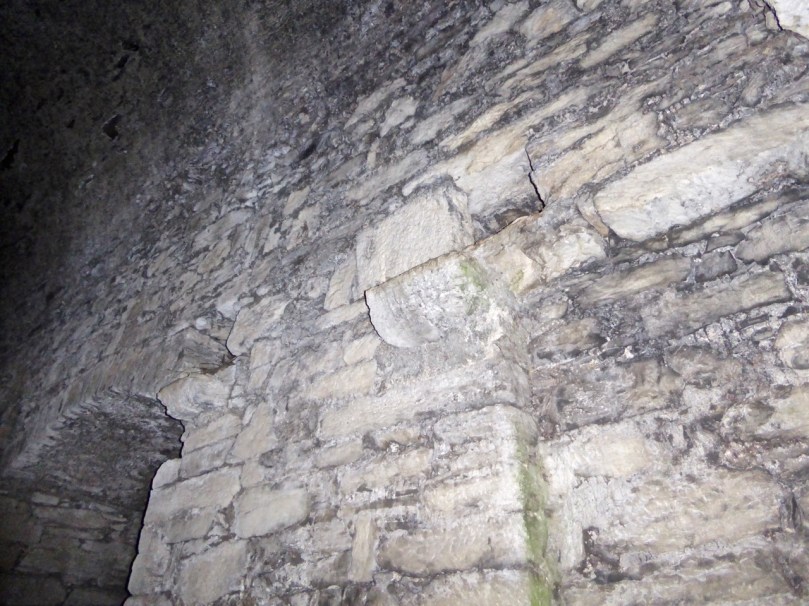
First floor window and corbels to support second floor

The ground floor with window embrasure to the left. Above it you can see the corbels which would have supported the first floor

2nd Floor – shows a kitchen with some sleeping quarters off in the mural chambers around the main room, these were L shaped rooms and could be accessed via the window embrasures of the main room. You can see one person leaning out of one such a door, having a word, while another person is sleeping inside another L shaped room.

Access to Mural Chamber, 2nd floor

Entrance to one of the mural chambers

Kilcrea’s main room was probably more sleeping quarters, but in some other tower houses which had fireplaces at this level there is speculation that these were the kitchens. Most kitchens would probably have been external though.

Upper floors

3rd Floor – Here I created the lord’s room: situated between two floors with fireplaces, this would have been quite a warm room. It shows a typical late medieval bed, chests used for storage and a Savonarola chair, or X chair, in front of the bed, these were quite common throughout Europe at the time, made in Italy. The third floor has its floor boards shown rather than covered, with the occasional fur. Also note the paintings on the wall. There is mention in some written sources that the Irish decorated their walls with branches: I found a piece of metalwork from late medieval Ireland with this very design, the Clogán Óir Bronze Bell shrine of St. Senan, which was early medieval with later alterations in the late middle ages. One side had a pair of dragons with floriated tails and above, branch and leaf ornament along the top, so I used that here, while the knot-work is based off other metalwork at the time.

4th Floor – This was the dining room. In the earlier periods there was always a large external hall to the tower house, made of non stone material, but as time moved on more and more of the the hall activities were taking place within the tower house. This dining room floor in Kilcrea had lovely large windows, not all of them surviving, some with double lights with ogee heads, as shown. I added a transomed triple ogee headed light as shown in the window on the left, which is typical of a late medieval tower house. These windows must have created quite a bright room. Rooms of this stature were probably decorated with ornate wood panelling as shown. No such panelling survives in Ireland, so these are inspired by ones in Britain. Generally tables at the time were long with benches and only really the lord would have had a separate chair. People ate with their hands, there were no forks yet in Europe and everyone had a personal knife with which to cut their food.
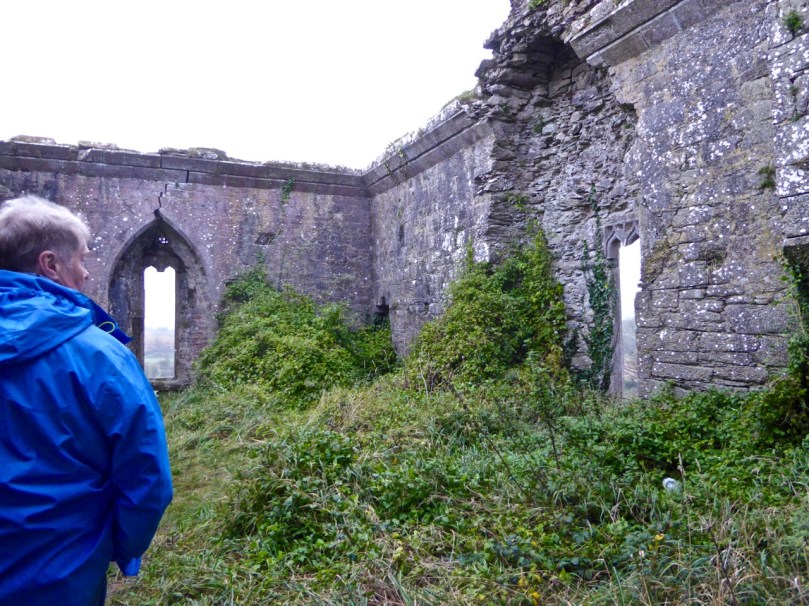
Kilcrea Great Hall

Roof – the 4th floor in Kilcrea had very thin walls, in comparison to the rest of the tower house, most likely to give it more space and air. The roof wasn’t gabled but hipped, resting on cornices as shown above the wood panelling. The roofs were often covered with tiles but many were probably thatched too. On the wall walk level, in the front, you can see there were holes at the bottom of the parapets. In Kilcrea some of the wall walk flagstones had chutes carved into them to drain away the rain. The other side (the shadow side) shows wall walk machicolations, which were extended floors with holes in the ground: these are based on Blarney Castle with its pointed corbels. Chimneys were also on the wall walk level and were to become display features in their own right, rising to great heights to carry smoke away but also to show everyone around how well the castle was heated (in later periods castellated houses had lots of chimneys as an extra form of bling).
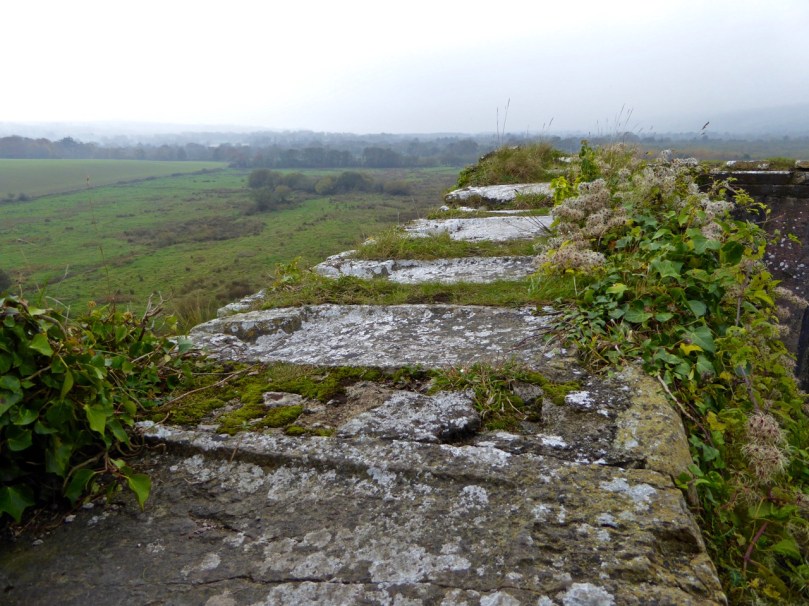
Wall walk

The Wall Walk, with flagstone chutes designed to carry off the rain

Garderobes

Usually tower houses had 2 garderobes, as did Kilcrea, one for public and another for private use. In the case of Kilcrea both were probably public, but the upper one accessed from the dining hall had 3 holes in it, so probably had wooden seats with three holes for 3 people to use at the same time.
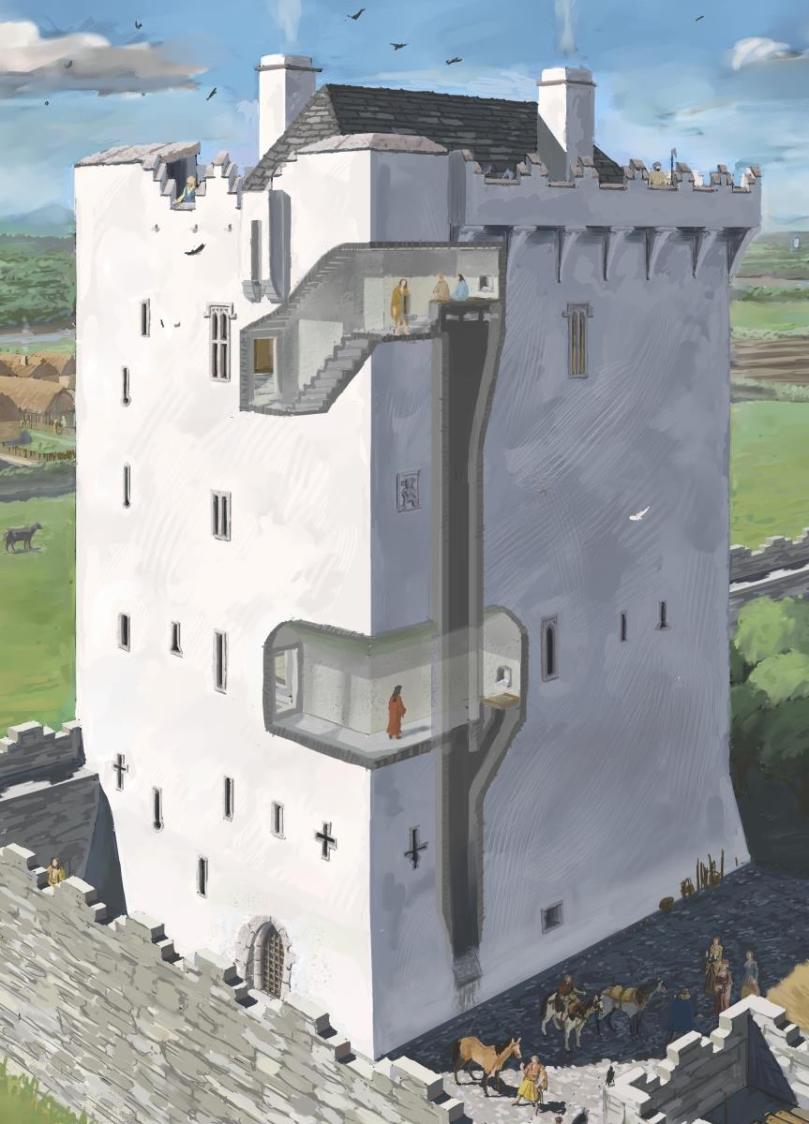
Tower House Garderobes

This upper garderobe chamber also had a window with a slop stone, which were small drainage basins underneath windows, which were essentially urinals (often found on stairs). The garderobe on the 2nd floor, is one of the 3 L shaped chambers off the main room. Garderobes were normally at the ends of passages in both Anglo-Norman castles and tower houses, to give more distance between the rest of the house and the toilets.
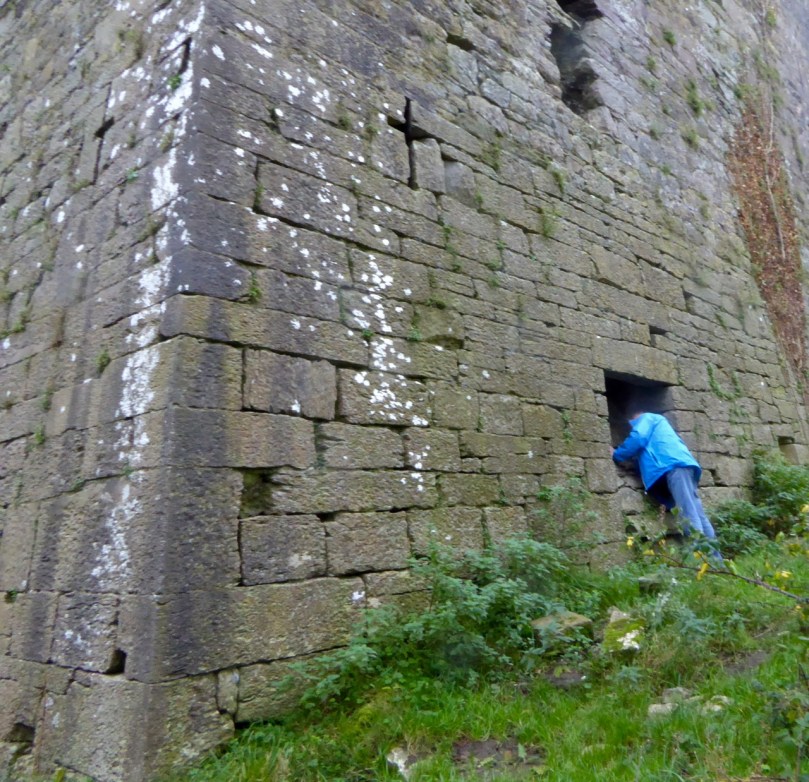
Inspector of Drains

Inspector of Drains

Thank you, JG – for your talent in representing medieval life and for your generosity in allowing me to feature your incredible drawings! Go raibh míle maith agat!

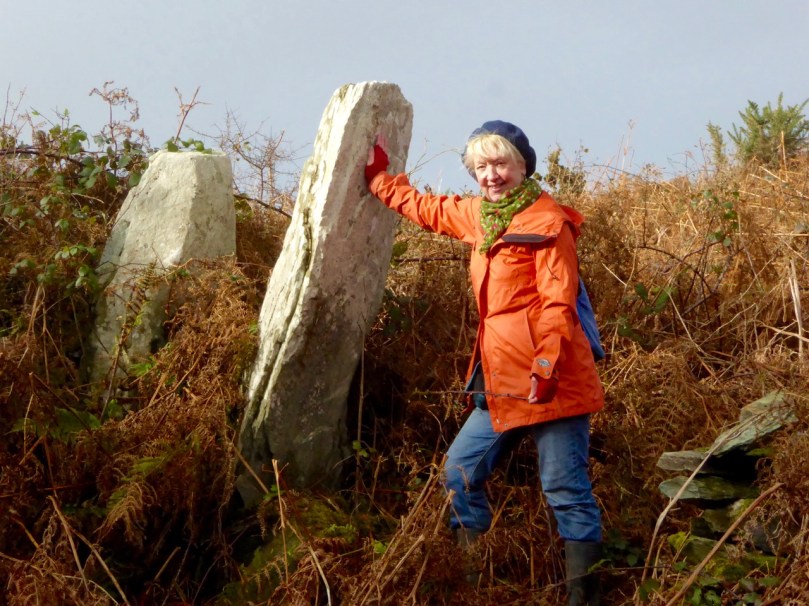
The Holy Wells of Cork

Kealkill Holy Well

There’s a new blog on the scene – and it’s just the sort of thing to appeal to Roaringwater Journal readers. Holy Wells of Cork is the brainchild of Amanda Clarke. We’ve written about Amanda before – she often comes along on our adventures and she and Peter are the team behind the book Walking the Sheep’s Head Way and the website Sheep’s Head Places.

Amanda on a holy well trip

Amanda’s always been fascinated by holy wells. We’ve gone to see quite a few over the last couple of years – often a case of hunting down an obscure reference or a dot on a map. She decided that the perfect day to launch her blog was, of course, St Brigid’s Day, February 1st, and that, in order to do it properly, she should visit a St Brigid’s well on that exact day. I tagged along as the recorder.

The holy well is up there?

It’s up there? And I have to go up on my knees?

St Brigid’s well, Tobar Breedy, is on private land on the side of Lough Hyne, south of Skibbereen, and Amanda had sought and been granted kind permission by the landowner to visit the site. You can read her account here – it’s all in her signature chatty style that manages to make you feel as if you’re on the adventure as well. 

Amanda at Tobar Breedy

As a bonus, there’s a tiny ruined medieval church, also dedicated to Brigid (Templebreedy).

Temple Breedy

However, all is not well in the land of holy wells. A recent post is about four holy wells that were once the focus of veneration in Cork City. Read how they have weathered the passage of time, and be glad that she is recording them before some of them disappear from public consciousness altogether.

The first time I went to this secluded holy well in Castle Haven I was afraid to venture over the crumbling bridge. But when we returned, the bridge had been replaced. Local people are often proud of their holy wells and keep them up

Amanda will be posting regularly so go on over and sign up so you will get the updates as soon as they are on the blog. There’s lots of background information as well.

Finding Tobar Abán

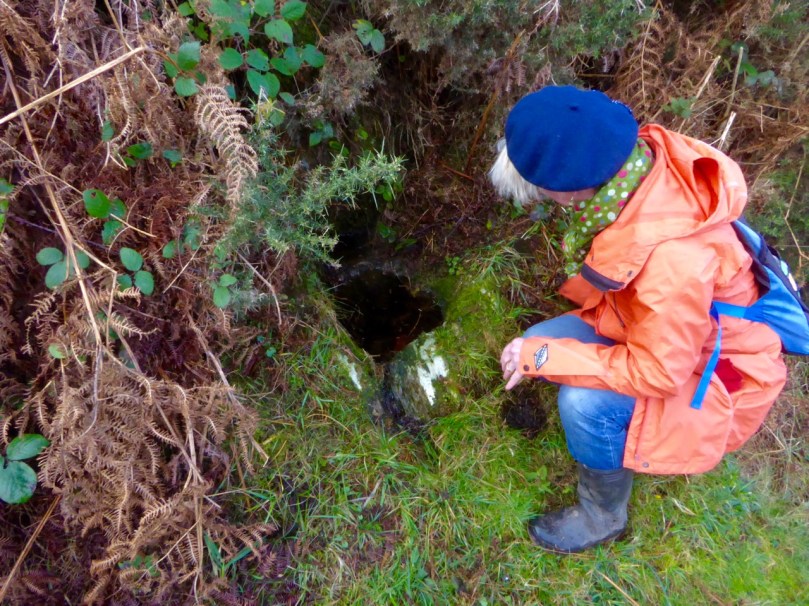
Believe it or not there’s a tiny well under all that decaying foliage

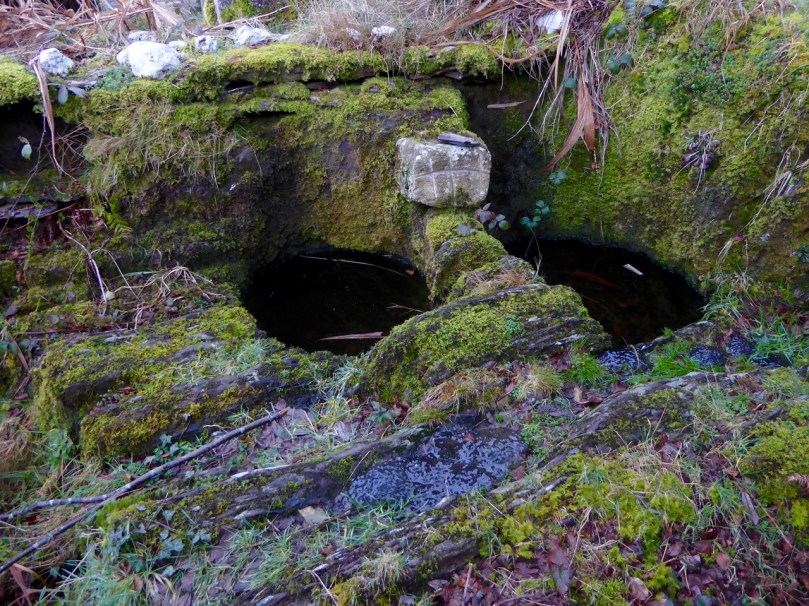
We’ve featured holy wells ourselves from time to time. One of our favourites was this time last year, just outside Ballyvourney, where we found the well of St Abán , who may have been St Gobnait’s brother.

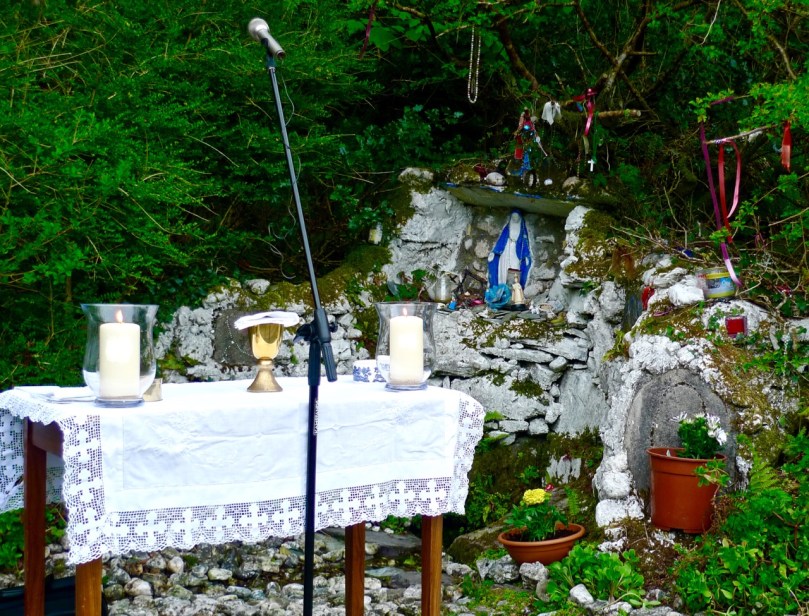
altar at the well

Robert wrote about the other holy wells near Lough Hyne, one a Lady’s Well and one dedicated to curing eyesight. Last year, he attended the mass which is still said here every May.

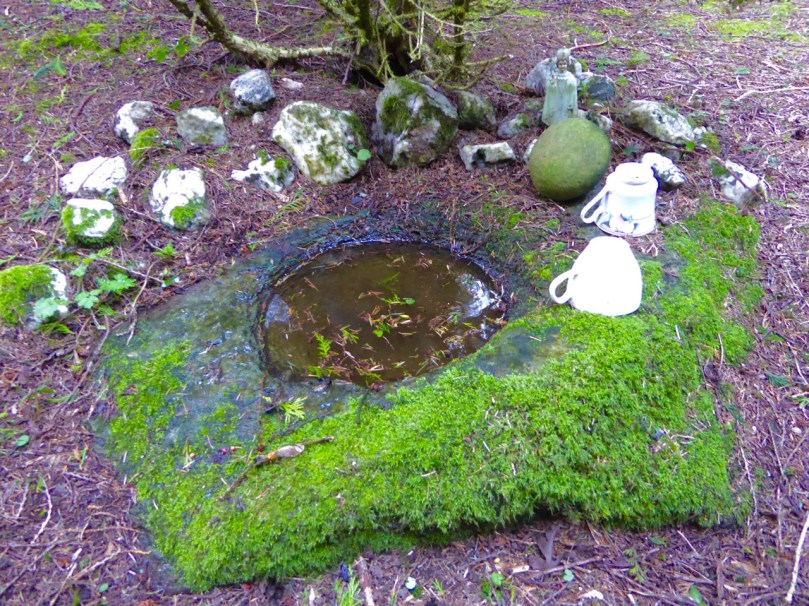
Tiny holy well in the woods

This little well is in the middle of a small wood, with evidence it is still in use. Note the white quartz stones around it – white quartz is often found at prehistoric sites too

No doubt Amanda will record all of this properly in time. I’m looking forward to her future posts and to going along on the field trips!

Offerings at a holy well

I love the offerings that you see at Holy wells. Sometimes you get extras too. In the case below, St Lachtan’s Well, it’s frogspawn. Holy frogspawn, of course.

St Lachtan's holy well

‘Going to the Skelligs’

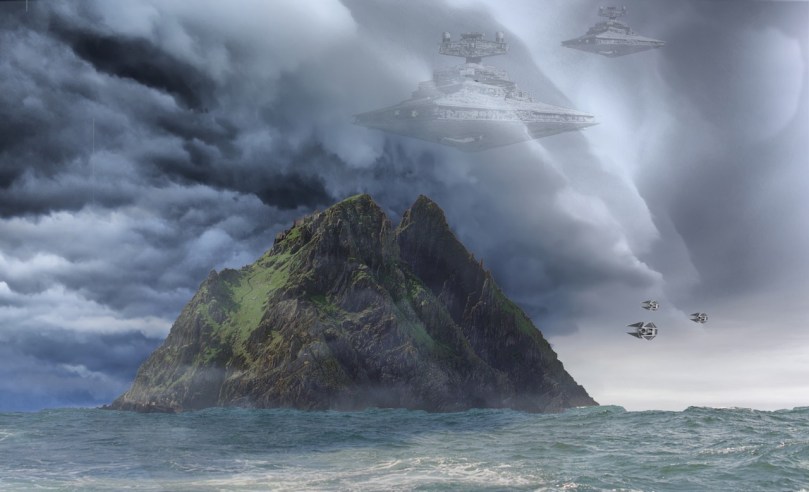
star wars on the skelligs

My eye was taken by an article in the Irish Times this week which stated that the Archbishop of Canterbury and the Pope have agreed to work towards a fixed date for Easter. Currently, that festival can occur anywhere between 22 March and 25 April – this year it will be an early one: Easter Sunday will be on 27 March. This has meant that, in Ireland, the Easter school holiday will last for three weeks, from St Patrick’s day (17 March – and always a day off school) until 4 April. Evidently the church leaders believe that a fixed date for all Christians around the world to celebrate Easter would be logical and practical. So much for logic – what about history and tradition?

It’s all about the sun and the moon, and the Vernal Equinox. That’s the point in the first half of the year when day and night are of exactly equal length. We are used to thinking of the equinox occurring on 21 March but this won’t happen again until the 22nd century! From now until 2044 the equinox will be on 20 March, then on the nineteenth. This is in part because our Gregorian calendar is inaccurate, but also because the Earth’s axial precession is gradually changing. In 325 the Council of Nicaea established that Easter would be held on the first Sunday after the first full moon occurring on or after the Vernal Equinox, but that was taken to be 21 March. You can begin to see the complications…

As you might expect, Ireland has had a lot to say about all this. The early church here, established by Saint Patrick, didn’t necessarily agree with the Roman church over certain issues, including the date of Easter. Matters came to a head in 664 when a synod was convened in Whitby, Yorkshire attended by delegates from the Ionian tradition and the Roman tradition. The Ionians were led by the Irish Saint Colmán, Bishop of Lindisfarne. They supported the older traditions, but the debate was won by the Romans and Saint Colmán resigned his post and returned to Ireland, where he founded abbeys in Inishbofin and Mayo and – presumably – continued to celebrate Easter in the ‘old way’.

The situation today is still confused. While Roman Catholic and Protestant churches use the ‘Alexandrine rules’, agreed in the 7th century and adapted when the Gregorian calendar was introduced (1582), Orthodox churches generally follow a method based on the earlier Julian calendar but, in fact, there are different systems used by the many different branches of Orthodoxy around the world so the Easter festival in any year may be celebrated on varying dates in divergent places.

Let’s look at tradition, especially in Ireland. Although the churches here did eventually conform to the Roman calculations, there was always some dissent. Folklore tells us that the monks on the Skelligs – isolated rocks off the Kerry coast which housed a monastery back in medieval times – followed a calendar which was several days behind the rest of the country – this sounds as though they were still basing themselves on the Julian system. This was useful, however, if you missed out on getting married before the beginning of Lent (you couldn’t marry during Lent): the period we are in now – between Little Christmas (6 January) and the beginning of Lent – was in Ireland always the most popular time for weddings. ‘Going to the Skelligs’ was a joking expression used unkindly against confirmed bachelors and spinsters.

From Danaher The Year in Ireland – Mercier Press 1972:

In much of the south-west of Munster there is a vague tradition that the festival of Easter was celebrated a week later on the island sanctuary of Sceilg Mhichil than on the mainland. Whether this tradition is a distant echo of the ancient controversy on the date of Easter is a matter of speculation, but it did give the occasion of another form of disapproval of the unmarried. These had lost their chance of marrying this year on the mainland, but they could still be married on the Skellig, and steps must be taken to send them there… All over County Kerry, in parts of west County Limerick, in much of County Cork, especially along the coast, and in west County Waterford the negligent were greeted, in the first days of Lent, with a barrage of chaff and banter. ‘You’re off to the Rock, I suppose?’ ‘Don’t miss the boat!’ ‘Is it Mary or Katie you’re taking on the excursion’ etc etc. The victims had to grin and bear it… In many places the custom was carried further, and local poets were encouraged to compose verses on the occasion, verses which told of a grand sea excursion to the Skelligs, praised the splendid vessel which would take the party there and gave a long list of the participants, linking together the names of the bachelors and old maids as incongruously as possible. These verses – most of them mere doggerel – were written out and circulated about the parish so that all might enjoy them, and were sung to popular airs, often in the hearing of those lampooned in them… The custom has in more recent times taken the form of large posters, giving details of the ‘Grand Excursion’ with a list of the couples taking part in it. These notices were hung in prominent positions on the first Sunday of Lent, where they might be read by all on their way to church… In south-east County Cork the Skellig joke appeared in its most extreme form. Here bands of young men went about on Shrove Tuesday evening, and if some inveterate bachelor ventured out and fell into their hands he was bound with ropes and had his head ducked under a pump or in a well; this drenching was called ‘going to the Skelligs’

The Skelligs have been in the news recently, as the setting for a scene in the new Star Wars film: The Force Awakens. Filming on the historic site provoked considerable debate and discontent among archaeologists and conservationists. Despite our own reservations, Finola and I went to watch the film in Vancouver and – although we had to wait until the very end (the Skelligs appear only in the last scene) – we were delighted to see one of the West of Ireland’s most magnificent seascapes on the big screen – and in 3D!

Shrovetide is nearly upon us. If you haven’t arranged your pre-Lent weddings yet don’t forget there’s always the Skelligs!

With thanks to mavek-cg (http://mavek-cg.deviantart.com) for the fine image on the header

Atlantic Winter

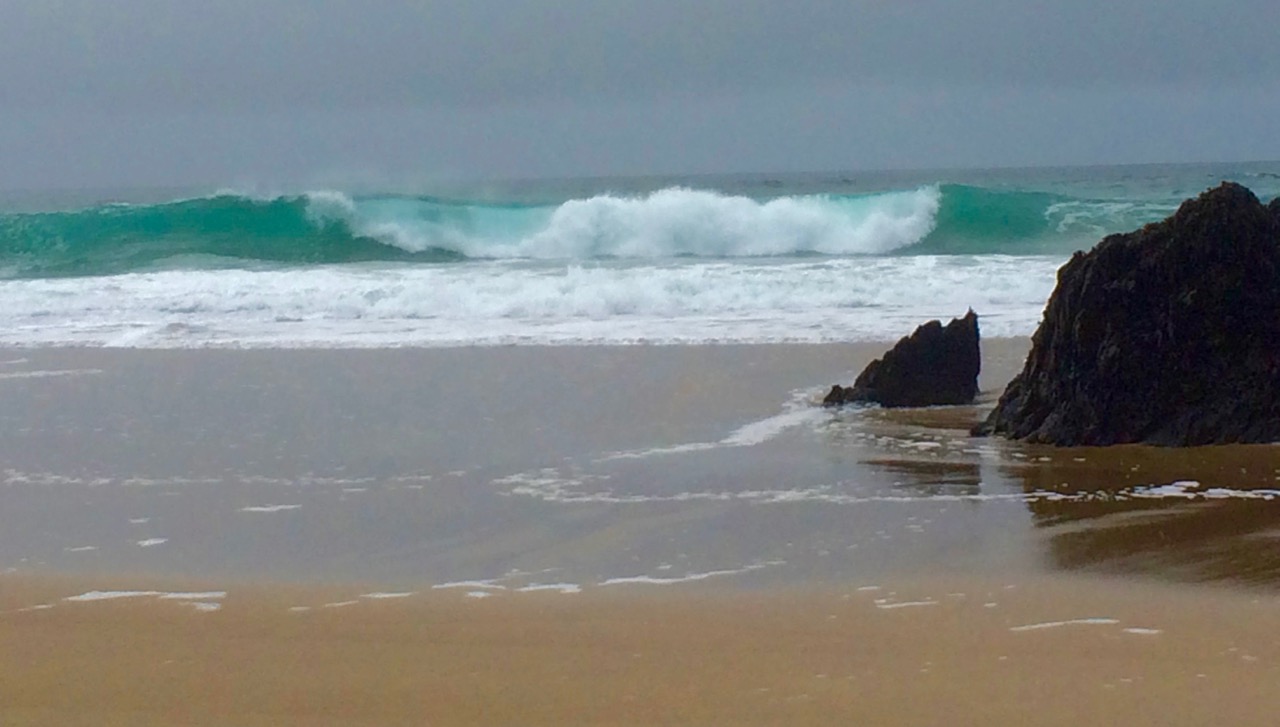
Dingle Beach

When St Brendan of Clonfert set out to discover America in 512 he and his fellow monks had to face the enormity of the Atlantic Ocean in tiny boats built out of wood and oxhides, sealed with animal fat. Up here in Nead an Iolair our view out to the islands of Roaringwater Bay and beyond is dominated by that same ocean and – sometimes – we feel just as small. This year the winter gales have started early, and spates of fierce westerlies have been throwing the Atlantic straight at our windows. The tiles rattle alarmingly while we are tucked up in bed at night. At these times I think of the Saint and what he had to face. But, like Brendan, we always survive the storms, and often wake up in the morning to a calm, clear day – except that you can hear the constant ‘roaring’ of the open sea out over the bay.

celebrating massOn their way to the New World – Saint Brendan and his companions take advantage of a passing Atlantic denizen to celebrate Mass…

The Atlantic has shaped Ireland. The sea is omnipresent: poets have written about it, storytellers have woven tales around it, and composers have tried to capture its spirit in music. Here’s a small section from the impressive ‘Brendan Voyage’ written by Shaun Davey for orchestra and Uillinn pipes – it’s the haunting second movement, played by Liam O’Flynn with the Irish National Youth Orchestra, at a performance in Cork City Hall. It makes me think of the wonderful sunrise on that calm day after the storm…

Brendan Voyage

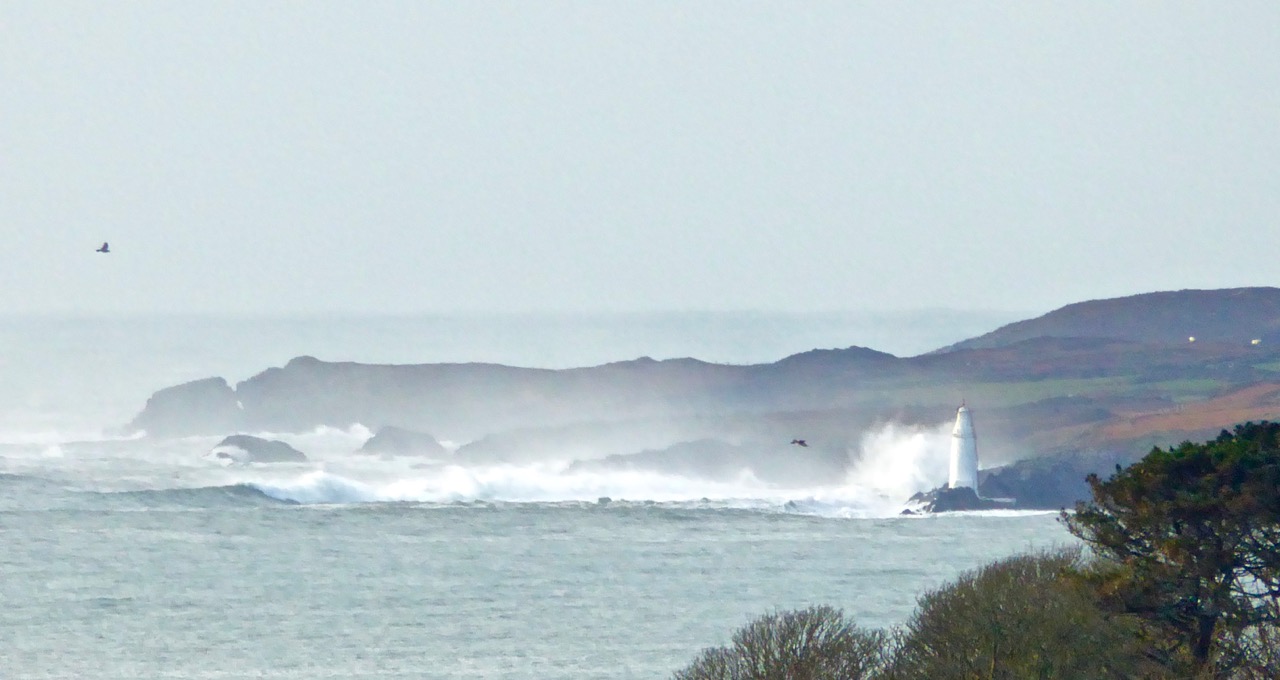
Long Island Beacon

Brow Head

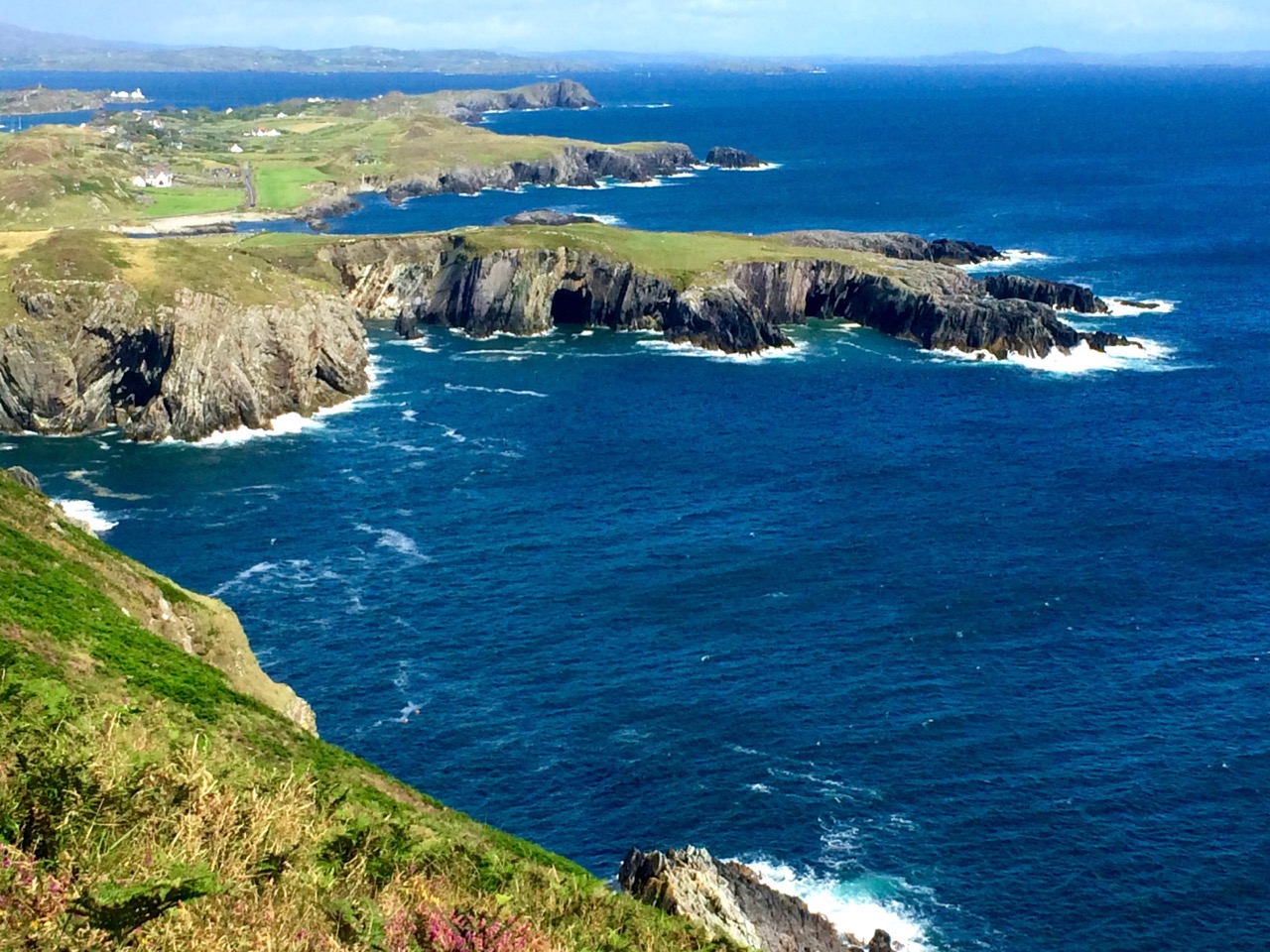
Mizen Head

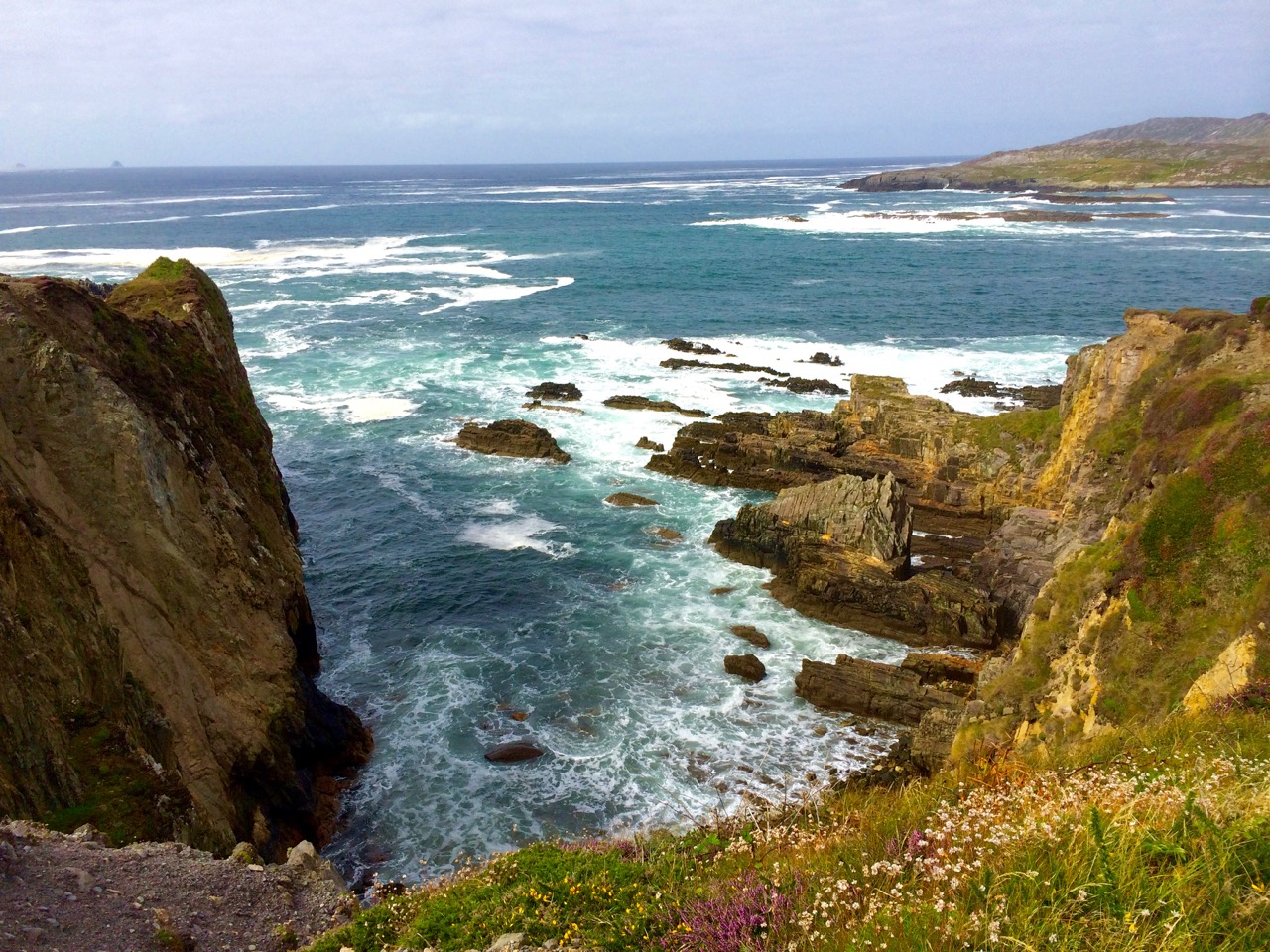
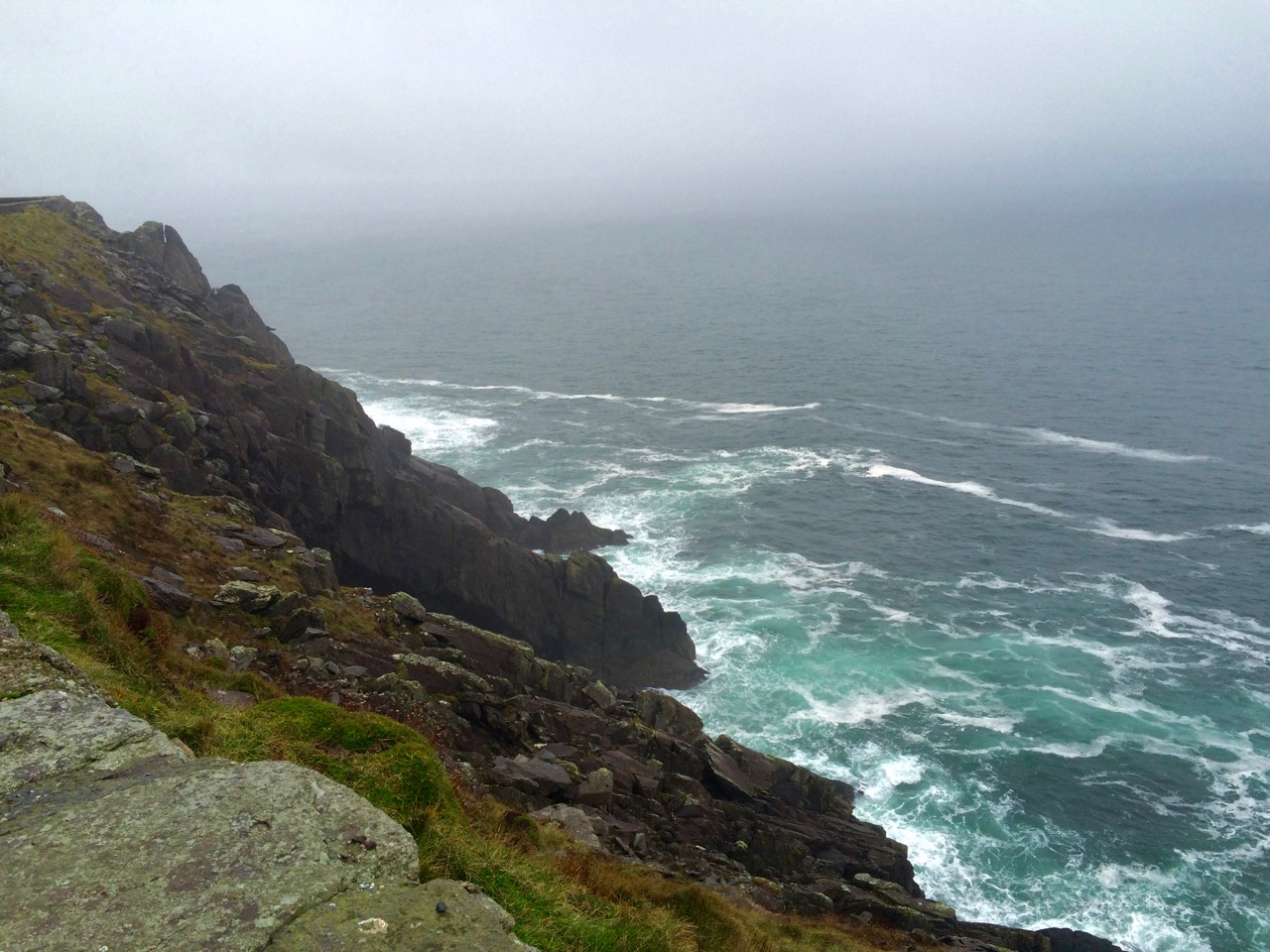
Our own Atlantic: telescopic view of a storm battering Long Island, taken from our garden at Nead an Iolair (top), Brow Head, near Crookhaven (centre), and the impressive land and seascape at Mizen Head – Ireland’s most south-westerly point (lower picture). At the head of this page you can see the huge rollers that come into Dingle Bay, Co Kerry

Dogger, Rockall, Malin, Irish Sea:
Green, swift upsurges, North Atlantic flux
Conjured by that strong gale-warning voice,
Collapse into a sibilant penumbra.
Midnight and closedown. Sirens of the tundra,
Of eel-road, seal-road, keel-road, whale-road, raise
Their wind-compounded keen behind the baize
And drive the trawlers to the lee of Wicklow.
L’Etoile, Le Guillemot, La Belle Hélène
Nursed their bright names this morning in the bay
That toiled like mortar. It was marvellous
And actual, I said out loud, “A haven,”
The word deepening, clearing, like the sky
Elsewhere on Minches, Cromarty, The Faroes.

Glanmore Sonnets VII, taken from Field Work by Seamus Heaney, published by Faber and Faber Ltd

Seamus Heaney was deeply affected by the seascape of his native Ireland. Anyone who works on or beside the sea is aware of the resonant names from the Shipping Forecasts, and the poet has used those names here to introduce his word-picture of the elemental Atlantic.

Near Malin Head 2

On the Beara

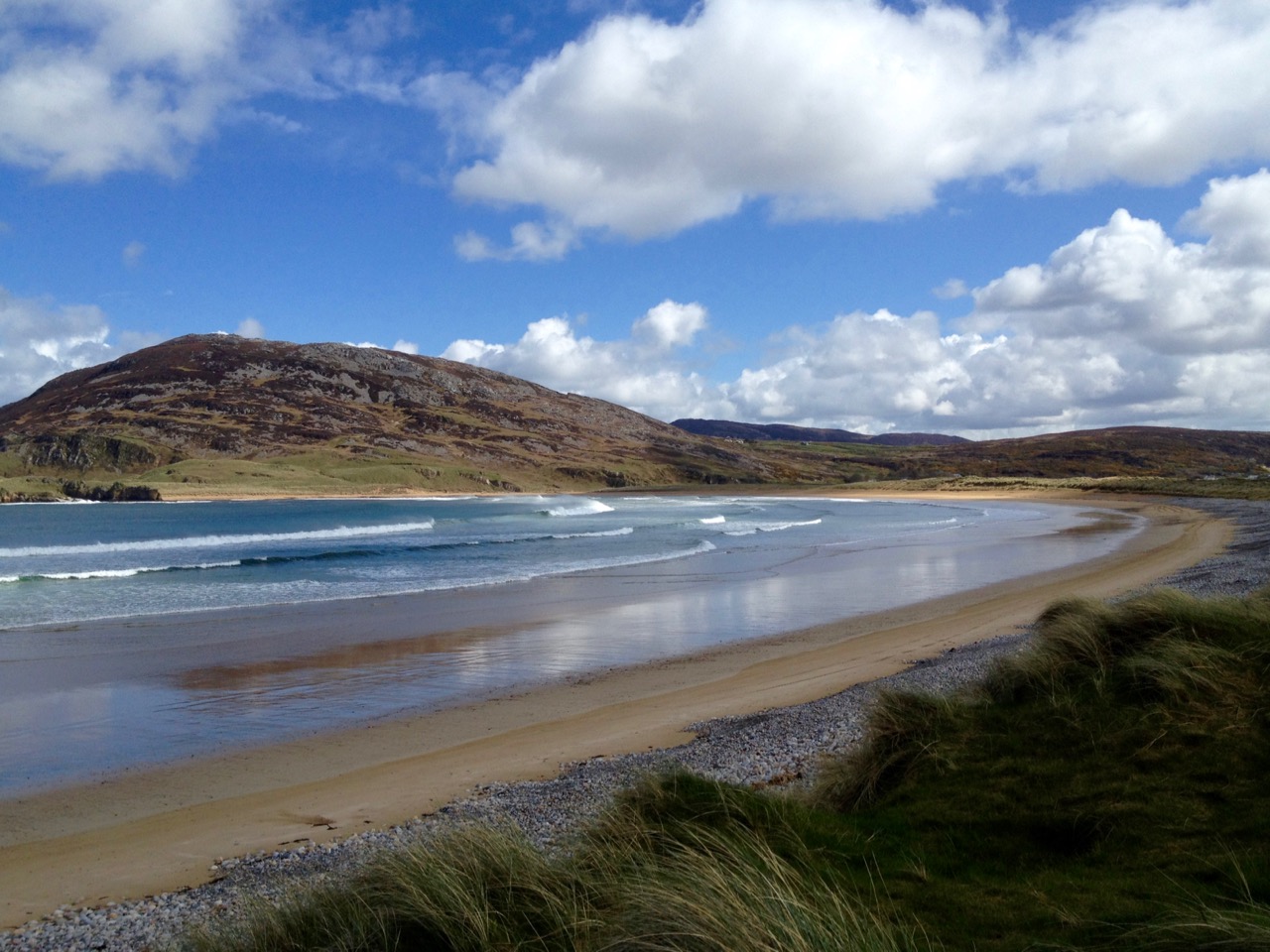
Donegal Beach

Atlantic contrasts from Mizen to Malin: near Malin Head – Ireland’s most northerly point (top), off the Beara (centre) and a beach in Donegal (lower)

A later traveller over the Atlantic waters was Chistopher Columbus in the 15th century. On the way he looked out for St Brendan’s Isle, a spectral island situated in the North Atlantic somewhere off the coast of Africa. It appeared on numerous maps in Columbus’ time, often referred to as La isla de SamborombónThe first mention of the island was in the ninth-century Latin text Navigatio Sancti Brendani Abatis (Voyage of Saint Brendan the Abbot), from whence it became firmly implanted into Irish mythology. St Brendan took a little party of monks to the island to say Mass: when they returned after a few days to the rest of the flotilla, they were told that they had been away for a year! The phantom island was seen on and off by mariners for years until in 1723 a priest performed the rite of exorcism towards it during one of its apparitions behind low cloud… You can see St Brendan’s Isle for yourselves, above the wonderful giant fish in the second picture down.

Dingle Peninsula

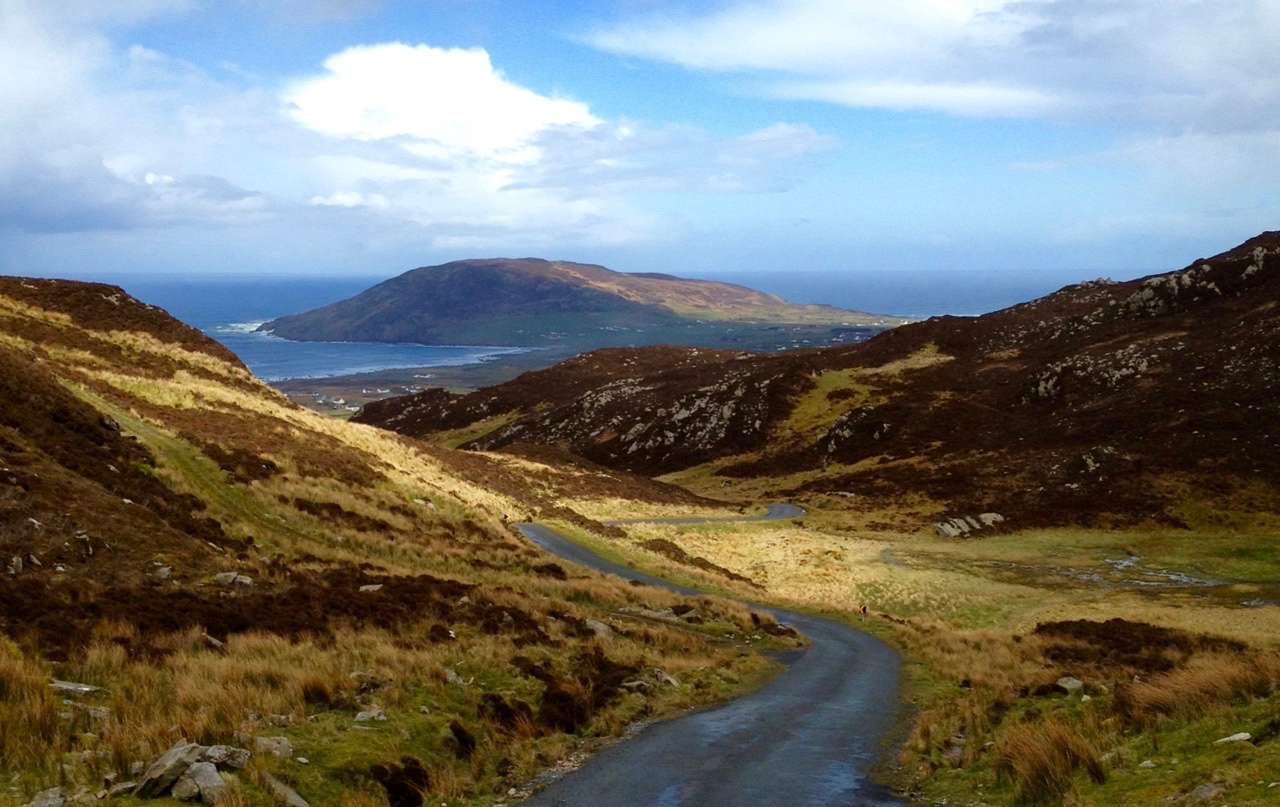
Coast Road

Dingle peninsula (top), and Coast Road in Donegal (lower)

I was pleased to find this Irish Times video made by Peter Cox when he was fundraising for his book Atlantic Light: spectacular photographs of the coastline on Ireland’s Wild Atlantic Way. The excellent aerial views in this film are all taken by a drone… Look out for places you will have seen in our blogs!

atlantic video

We are privileged that the Atlantic Ocean is the abiding but ever-changing feature in our daily lives. It must affect us in unknown ways: I do know that, wherever I go in this world, I will – like Saint Brendan – always be drawn back here to our wonderful safe haven…

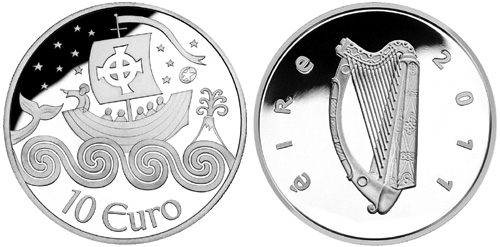
St-Brendan-Coin1


Murphy wins by a neck!

High Stakes

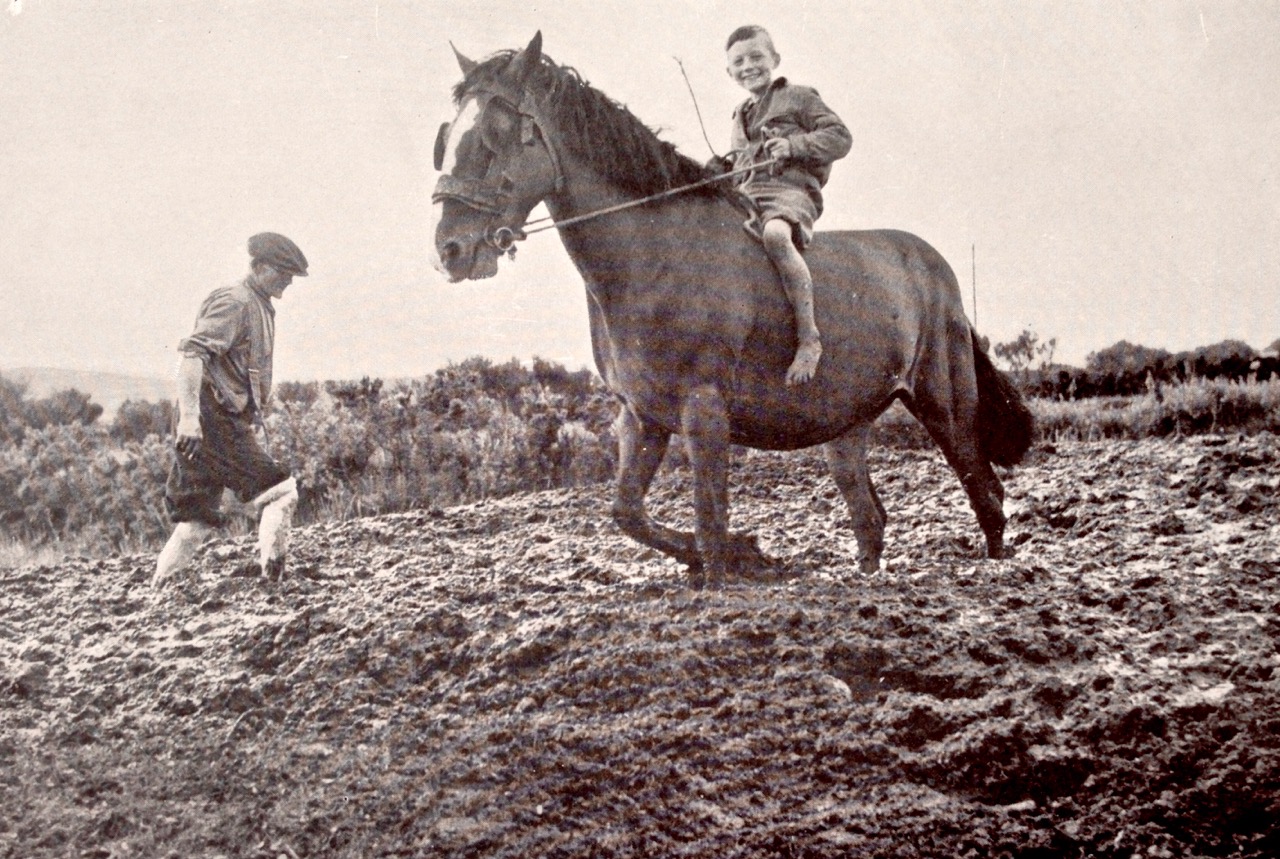
Romping home! Dirty Dick Murphy winning the Salthill Fiesta, Galway, in June 1977 (photograph Connacht Tribune)

In the All-Ireland Name Stakes we’ve always known that Murphy is the front runner. In fact it’s the most popular surname, significantly outnumbering the next in line: Kelly. This was the case in 1890 – when the Registrar General of Births, Marriages and Deaths, Robert Matheson, compiled the first comprehensive analysis of names for the whole of Ireland. Then, there were 62,600 Murphys and 55,900 Kellys in a population of 4.7 million. More recently the phone network company Eircom published A Survey of Irish Surnames 1992-97 compiled by Sean J Murphy from telephone directory records in the Republic and Northern Ireland (making it comparable to the 1890 study): this showed 70,900 Murphys and 59,800 Kellys in a total population of 5.3 million.

The race

Runner-up! A Kelly, perhaps… from the collection of photographer Tomás Ó Muircheartaigh, who documented life in rural Ireland between the 1930s and the 1950s

So Murphy wins – by a margin. Let’s have look at the name: Ó Murchadha (or in modern Irish Ó Murchú) means ‘sea warrior’ (Irish Medieval History gives Murchú as ‘hound of the sea’). Most of the Murphys are evidently here in County Cork, with Counties Wexford and Kilkenny next up. There are O’Murphys – mainly confined to Ulster, where the family were part of the tribe claiming descent from Eoghan, son of Niall of the Nine Hostages, who was responsible for kidnapping St Patrick and bringing him to Ireland. Otherwise the Murphys usually trace their ancestry back to Diarmait Mac Murchadha – King of Uí Cheinnsealaig and King of Laigin (Leinster) who lived in the twelfth century and was himself descended from the High King Brian Boru through his father’s grandmother.

Key players in Murphy geneaology and Irish history: Brian Boru, Diarmait Mac Murchadha and Henry II

Diarmait Mac Murchadha was deprived of his titles by the then High King of Ireland, Ruaidrí Ua Conchobair, and asked the English King, Henry II, to help him retrieve them. In return, Mac Murchada pledged an oath of allegiance to Henry, who sent troops in support. As a further thanks for his reinstatement, Mac Murchada’s daughter Aoife was married to Richard de Clare, the second Earl of Pembroke, popularly known as ‘Strongbow‘. The result of all this was that the Normans came to Ireland – and stayed – and it’s all thanks to the Murphys!

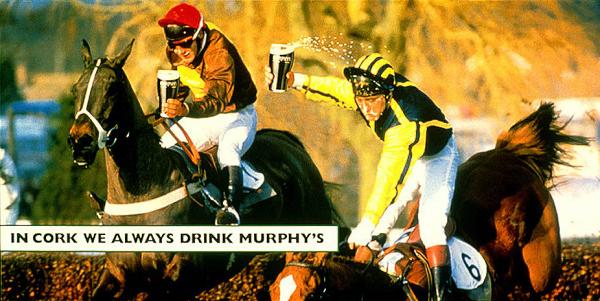
murphy's irish stout

We mustn’t forget Murphy’s Irish Stout! (advertisement by BBH London)
Now let’s look at some famous Murphys. Father John Murphy – an Irish freedom fighter – is immortalised in the ballad Boolavogue. Fr John was born in 1753 and studied for the priesthood in Seville as this was the time of the Penal Laws when Catholics were persecuted in Ireland. He returned to his homeland in 1785 and there he was only known as ‘Mister Murphy’: Irish priests were not styled as ‘Father’ until the 1860s. John Murphy led a group of rebels against English forces in the 1798 uprising. He was captured, tortured and brutally executed at Tullow, Co Carlow. Here is a rendering of the beautiful elegy Boolavogue composed by Patrick Joseph McCall in 1898, the centenary of the Rebellion, played on the pipes by Davy Spillane, with Aly Bain on fiddle:

Boolavogue is a town in Co Wexford where the rebels secured their first victory before they were captured. Here are the words to the ballad:

At Boolavogue, as the sun was setting
O’er the bright May meadows of Shelmalier,
A rebel hand set the heather blazing
And brought the neighbours from far and near.
Then Father Murphy, from old Kilcormack,
Spurred up the rocks with a warning cry;
“Arm! Arm!” he cried, “For I’ve come to lead you,
For Ireland’s freedom we fight or die.”

He led us on against the coming soldiers,
And the cowardly Yeomen we put to flight;
‘Twas at the Harrow the boys of Wexford
Showed Booky’s Regiment how men could fight.
Look out for hirelings, King George of England,
Search ev’ry kingdom where breathes a slave,
For Father Murphy of the County Wexford
Sweeps o’er the land like a mighty wave.

We took Camolin and Enniscorthy,
And Wexford storming drove out our foes;
‘Twas at Sliabh Coillte our pikes were reeking
With the crimson stream of the beaten Yeos.
At Tubberneering and Ballyellis
Full many a Hessian lay in his gore;
Ah, Father Murphy, had aid come over
The green flag floated from shore to shore!

At Vinegar Hill, o’er the pleasant Slaney,
Our heroes vainly stood back to back,
And the Yeos at Tullow took Father Murphy
And burned his body upon the rack.
God grant you glory, brave Father Murphy
And open heaven to all your men;
The cause that called you may call tomorrow
In another fight for the Green again.

Two of my Murphy heroes are musicians: Denis Murphy (1912 – 1974) was a great fiddle player from the Sliabh Luachra area of Cork and Kerry. There were so many Murphy families in that area that Denis’s father Bill was always known as ‘Bill the Waiver’ because his people had been weavers of flax in olden times. I have Denis in my collection of Irish music cd’s but was never able to hear him playing live. I did meet my other hero, however, on my first visit to Ireland back in 1975. That’s Paddy Murphy (1913 – 1992), the renowned concertina player from Co Clare. I was privileged to be taken out to a private session in a remote townland somewhere north of Kilmihil. There, in a bar which seemed like someone’s front parlour, I heard Paddy play and talk of his family history and his very individual virtuoso style of playing an instrument which I have been trying to master for the last 50 years!

Noted traditional musicians: Denis Murphy (left) from the Sliabh Luachra and Paddy Murphy (right) from County Clare

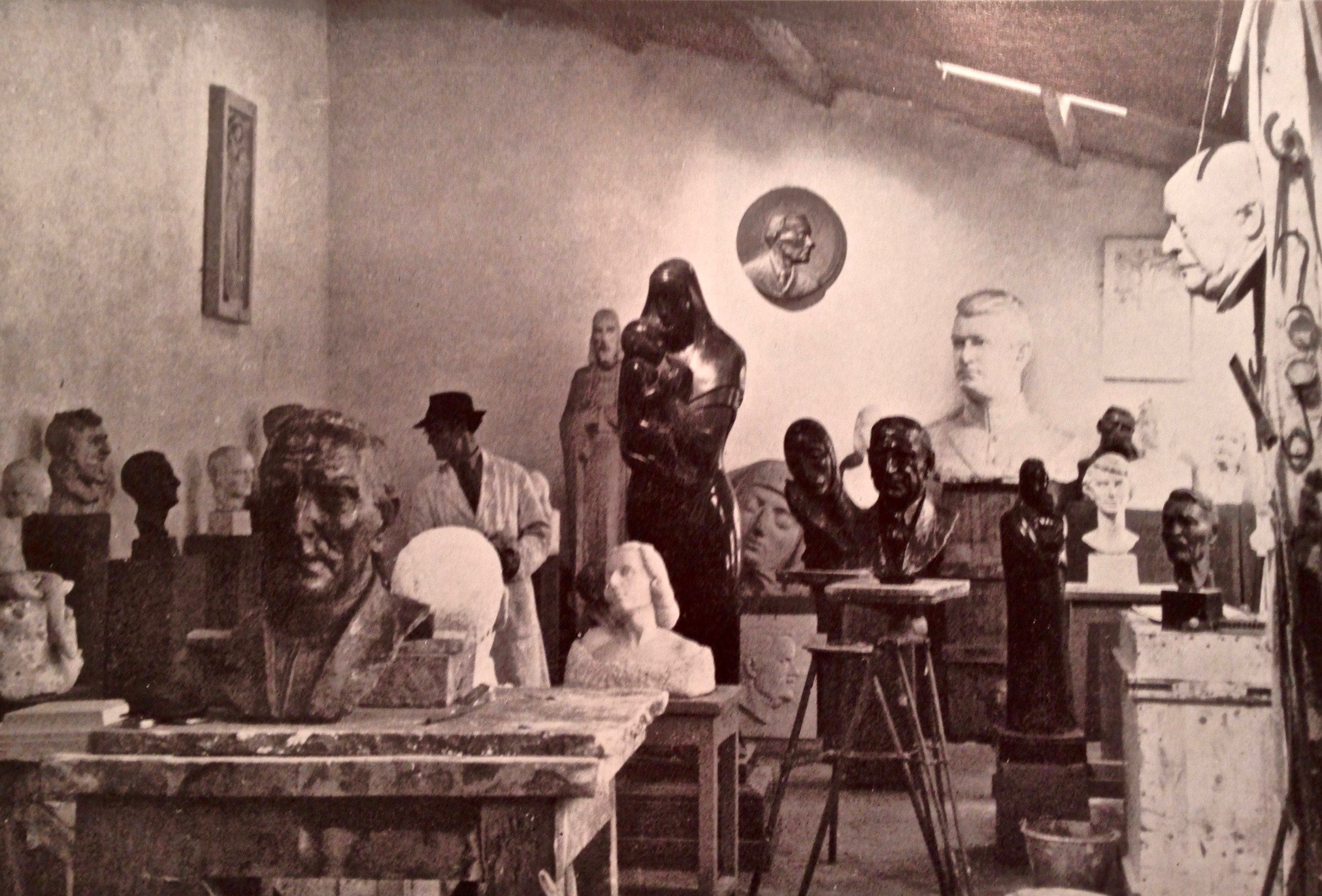
Next is someone we have met before, in our posts on Saint Gobnait and The Tailor and Ansty: that’s the sculptor Seamus Murphy (1907 – 1975). This Murphy, from Burnfort near Mallow, Co Cork, became Professor of Sculpture at the Royal Hibernian Academy. He is also known for his book, Stone Mad, which was published in 1950.

Murphy in studio

Seamus Murphy in his studio: pictures top and lower left are from the collection of photographer Tomás Ó Muircheartaigh, who documented life in rural Ireland between the 1930s and the 1950s

The last Murphy that I want to mention (and there could be so many) is, perhaps, an unexpected one – she is Marie-Louise O’Murphy, who lived from 1737 to 1814. Although she was born and died in France she was of Irish extraction: her grandfather Daniel, a former army officer, had left his home in Cork for Rouen, where he worked as a master shoe-maker. When just in her teens, the physical features of young Mlle O’Murphy were spotted by Giacomo Casanova, who recommended her to King Louis XV. As a result she became the King’s Petite maîtresse – little mistress (or, rather, one of them) and bore him a daughter. However, the King’s favourite, Madame de Pompadour, decided that Marie-Louise’s presence in the royal household was too challenging and she was sent off to the country to marry a nobleman – and also received a handsome dowry for life. Marie-Louise O’Murphy (who was given the name of Marie-Louise Morphy de Boisfailly – possibly to raise her status in Versailles) is familiar to us as the artist’s model for François Boucher’s Resting Girl, painted in 1751. The canvas is now in the Wallraf Richartz Museum, Cologne.

A colourful note on which to end our survey on the Murphys of Ireland (and beyond), perhaps. We apologise to all the thousands of Murphys who we have not mentioned, but we’d like to hear from any of them…

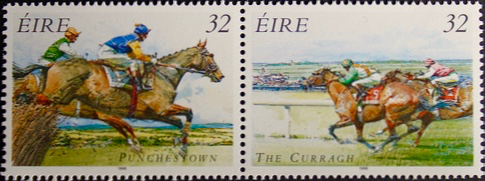
Racing stamps


Tower House Tutorial, Part 2

Oooh, it open - let's go inside!

Oooh, it’s open – let’s go inside!

It’s time to move inside! Now that you are all experts in tower house construction from the outside, let’s go into one of these small castles and see how they were built.

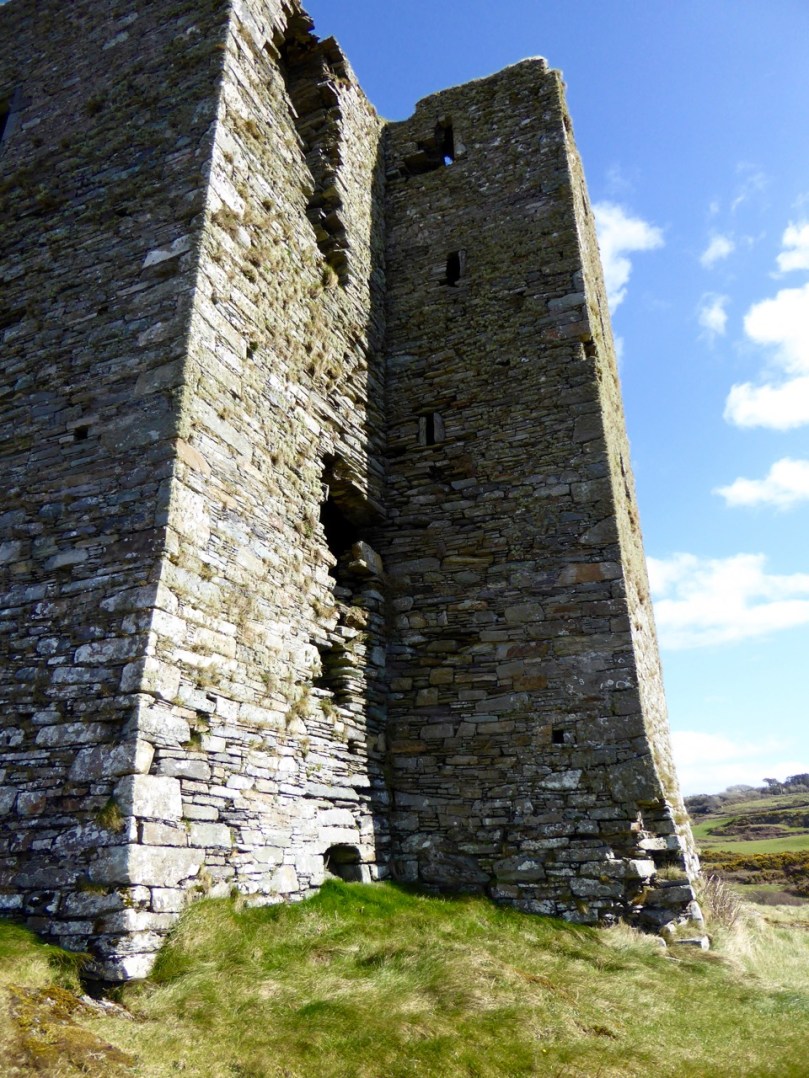
Remember that a tower house was all about defence and thus many of the features you will find inside have much to do with an expectation of attack and little to do with comfort. This was all fine, of course, as long as weapons consisted of bows and arrows, swords and spears, and even muskets. But as soon as cannon appeared on the scene the tower house was doomed – even its thick stone walls were no proof against such a bombardment.

Raheen architecture

Ironically, having a wall or two blown away by cannons, as at Raheen Castle (by Cromwellian forces), above, allows us to see the internal construction of the castle. In the case of Raheen the lower floors were separated from the upper floor by an enormous barrel-vaulted ceiling.

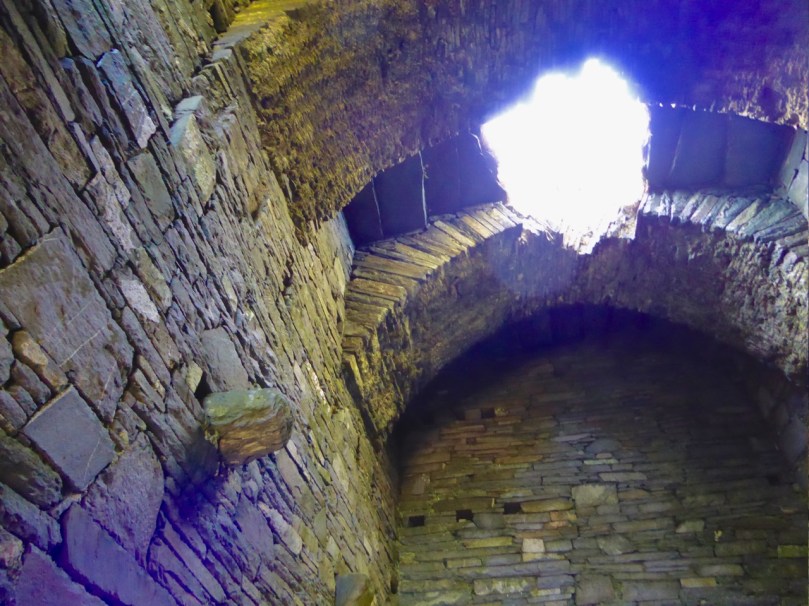
Dunlough Castle - note the projecting corbel denoting a wooden floor, and the imprint of the wicker scaffolding on the ceiling mortar

Dunlough Castle – note the projecting corbel denoting a wooden floor, and the imprint of the wicker scaffolding on the ceiling mortar

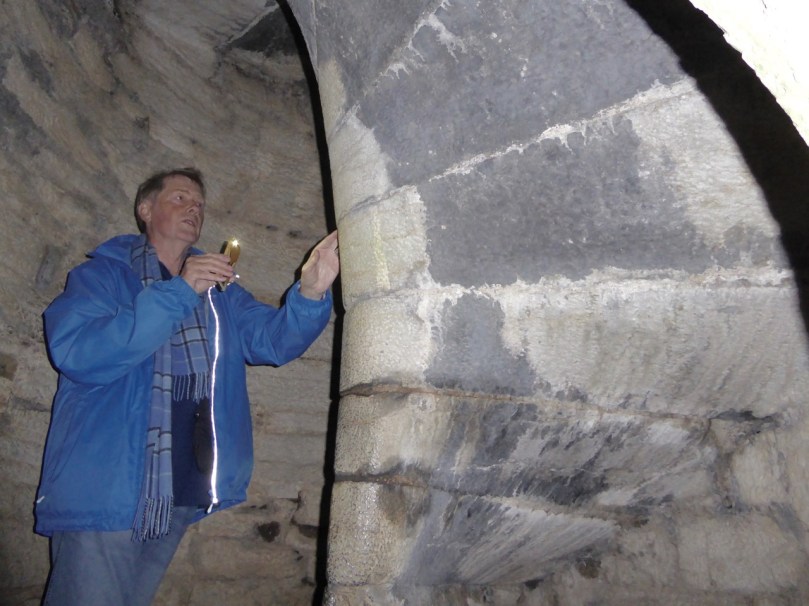
These vaulted ceilings were wicker-centered. A scaffolding of wicker was erected first and a layer of mortar laid on top of that. Ceiling stones were laid on the scaffold and mortared into place and then the stone work was built up to provide the floor of the next story. When the scaffold was dismantled the impression of the wicker was left on the mortar – clearly visible in several of our examples here.

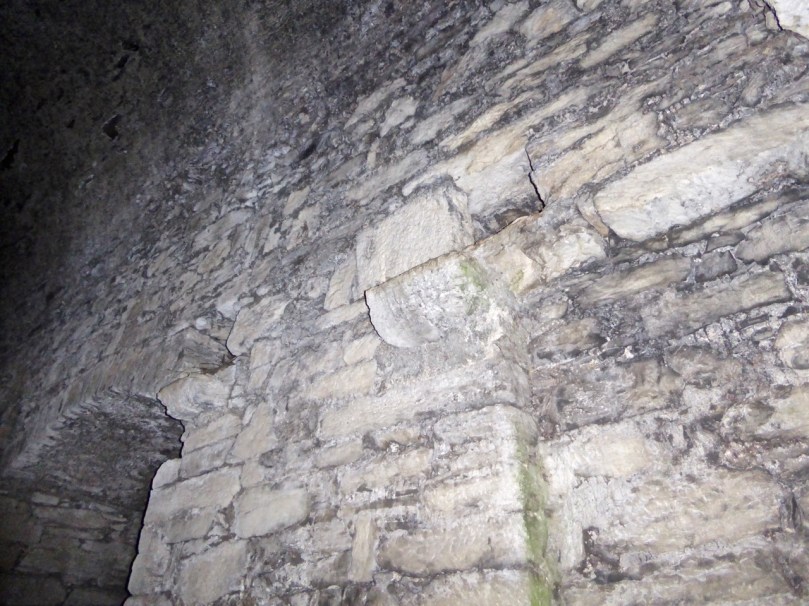
Floors were supported using projecting corbels and beams which fitted into sockets

Floors were supported using projecting corbels and beams which fitted into sockets

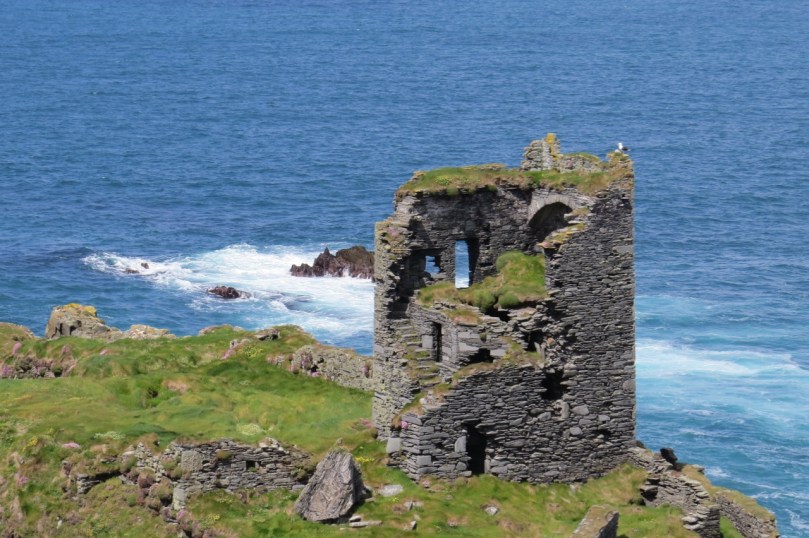
The entrance was often a raised entrance (see When is a Castle..?) with access via an outside wooden stairs that could be pulled up when necessary. Tower houses where the entrance was on the ground floor needed a defended access and this was often in the form of a small lobby, externally (as at Dunlough Castle) or internally, as at Kilcrea Castle. The door was secured with a heavy wooden bar, slotted into a bar-hole.

Look for a bar-hole behind the main door

Look for a bar-hole behind the main door

At Kilcrea we see that the lobby could be defended from each side and also from above, with the addition of a murder hole – literally a hole through with the inhabitants could throw rocks or boiling water down on those trapped in the entry.

Each floor was accessed by a stairway. Although some very basic castles may have relied on internal wooden stairs leading from one floor to another, most staircases were accommodated inside the walls – thus they are called mural stairs.

Dún an Óir Castle on Cape Clear Island. The mural stair can be clearly seen

Dún an Óir Castle on Cape Clear Island. The mural stair can be clearly seen

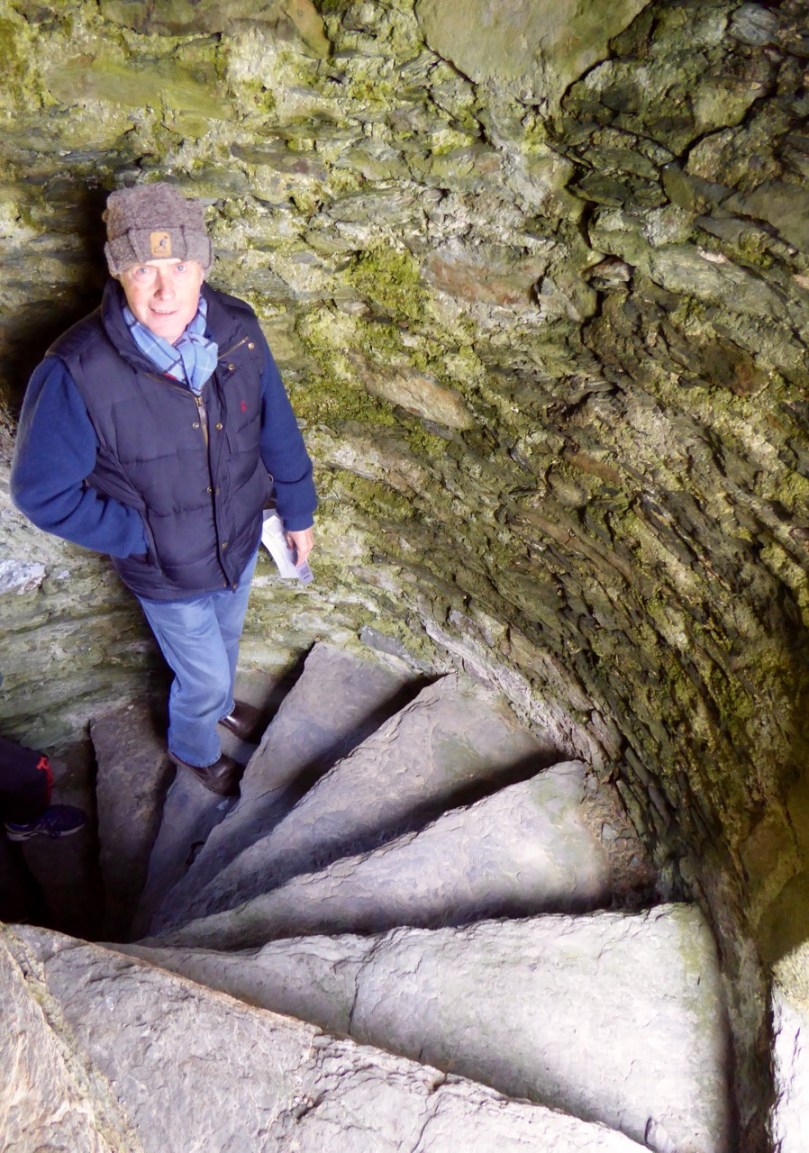
Stairs were both straight or spiral and some castles had both. A straight set of stairs didn’t need a very thick wall, but a spiral stairs needed either very thick walls or a corner tower or projection. Building a set of spiral stairs was a highly-skilled task and not just because of the inherent difficulty of working with intractable stone.

Castle Donovan spiral staircase

Castle Donovan spiral staircase

They were usually built so that you ascended them clockwise, thus presenting more of yourself to defenders above, who could hold onto the newel post with their left hand and wield a sword in their right. It was important to make the steps slightly uneven too, so that an ascending attacker could trip easily if he didn’t watch carefully.

Dunlough spiral staircase

Dunlough spiral staircase

Windows had to be inserted to light the way but these could only be slits, to be used as arrow or gun loops when necessary. A cross-shaped loop was called a crosslet.

This crosslet provides light for a spiral staircase and allows an archer to shoot from inside the castle

This crosslet provides light for a spiral staircase and allows a defender to shoot from inside the castle

spiral stairsOne of the most beautiful examples of a spiral staircase we have come across is at Kilcrea Castle, near Aherla in Cork. While all such staircases* are impressive, the one at Kilcrea is a work of art. All the wall and sill stones are dressed to conform to the shape of the spiral and the sinuous progression of the newel and the steps is a joy to behold.

Kilcrea spiral staircase

The beautifully constructed spiral staircase at Kilcrea Castle. All the stones are dressed to fit the contours of the circular stairwell

The walls hold other items of interest too. Mural chambers, for example, may have served a variety of purposes from storage to dressing – some have loops for lighting but many have not. Cupboards were built into the walls to hold lights and valuables – a mural cupboard is called an aumbry.

Two mural chambers: left is a rectangular chamber with two aumbries (cupboards) and right is an L-shaped chamber light by a loop

Garderobes (indoor toilets) are usually enclosed in a mural chamber for privacy (although not always!), with the garderobe chute extending down the wall to an external exit.

Dunmanus Garderobe chute
Upper: The garderobe at Ballinacarriga. Lower: Dunmanus Castle showing where the garderobe chute exits at the base of the castle

The lowest floor was often used for storage or for cattle and hence the floor was sometimes left in a natural state.

Castledonovan ground floor

Castle Donovan ground floor

The next floors were for administration and daily living activities of castle inhabitants and workers. Floors were wooden – corbels and beam sockets to support the floors show where the next level began.

Cullohill Castle - floor levels clearly visible, plus the addition of a later firepalce that obscures a window

Cullohill Castle – floor levels clearly visible, plus the addition of a later fireplace that obscures a window

Fenestration (the arrangement of windows) was organised to emphasise defence – small windows and loops on the lower floors, larger on the top floor or solar. This was the private living quarters of the lord and his family, and a place where the women of the household could enjoy privacy and peace.

A fireplace from Castledonovan

A fireplace from Castledonovan

It was sometimes the only room in the castle to have a fireplace and generally speaking was the most comfortable room and therefore also used for entertaining.

Top floor, Kilcrea - the only floor with sizeable windows and more finely finished than the lower floors

Top floor, Kilcrea – the only floor with sizeable windows and more finely finished than the lower floors

If this floor had more than one room, the other might be called the great hall and be the entertainment space.

The Great Hall at Ballinacarriga. But what are we all looking at?

The Great Hall at Ballinacarriga. But what are we all looking at?

Ballinacarriga is unique in West Cork in that there are several carved window embrasures.

From the solar a stairway led to the battlements and wall walk. The roof could be made of timber, slate, or even thatch. The wall walk at Kilcrea had specially designed weepers to carry water away from the roof.

The wall walk at Kilcrea - note the weepers

The wall walk at Kilcrea – note the weepers

So there you are – next time you wander around a deserted castle in Ireland (we specialise in them!) you will be able to rattle off the proper terms for everything you see. The more you know, the more you appreciate the genius of our Medieval castle-builders.

Ballinacarriga Great Hall

Ballinacarriga Great Hall

I’ve learned so much doing these posts on castle architecture I am tempted to move on to abbeys – what do you think?

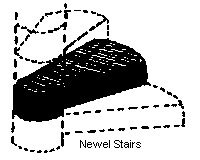
* The illustration of the newel stairs is from the Castles of Britain website. I believe it is from an Irish castle. That site also has an excellent glossary.