Wending the Boreens

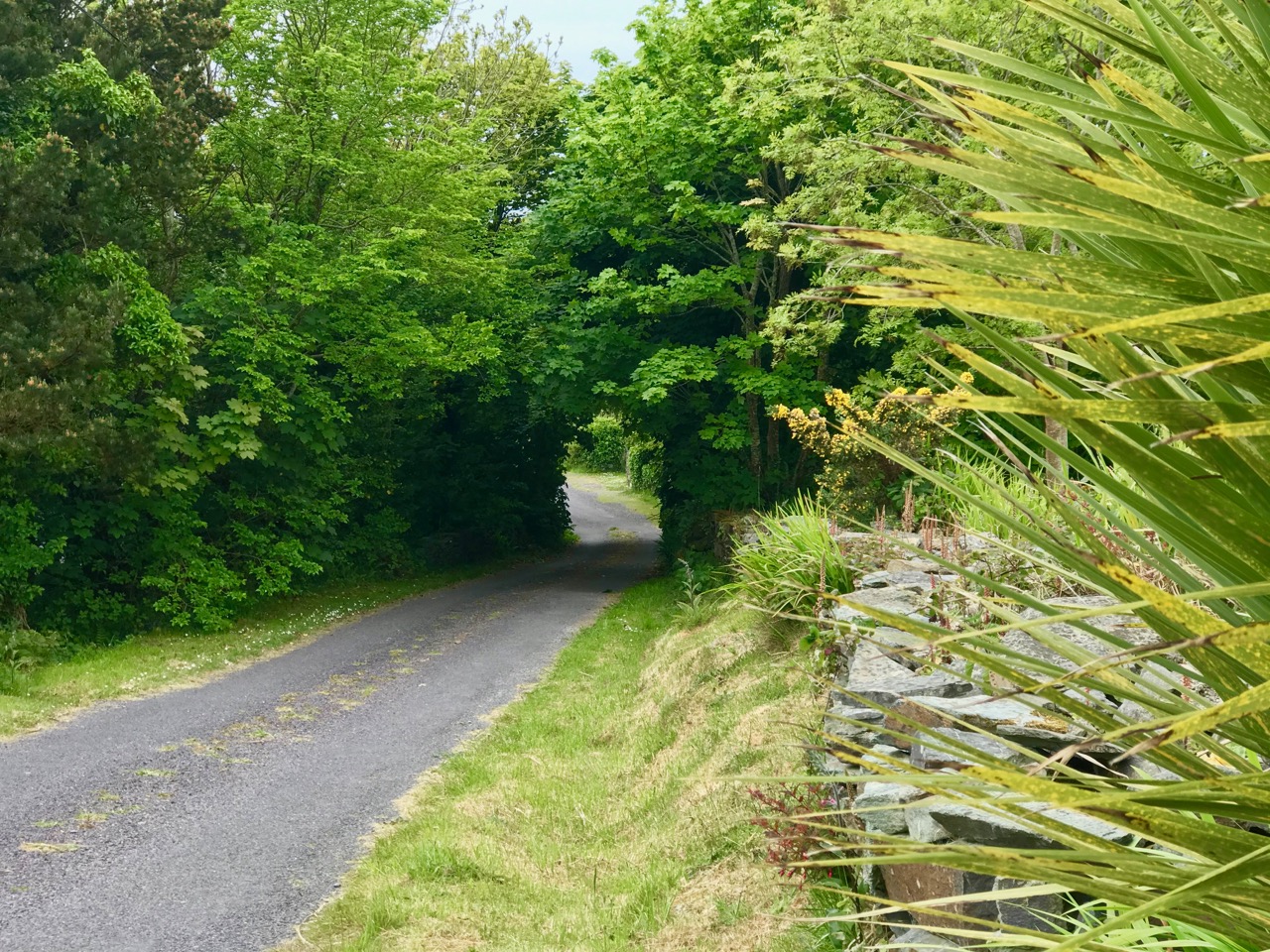
Only in Ireland can you wend your way along boreens. The Irish word is bóithrín, – a small bóthar (road). We are surrounded by them in our West Cork townlands. In these days of Covid19 restrictions, they are our whole world. With a maximum walk of 5 kilometres allowed, we can only ever be on boreens. But that’s no hardship – mostly they are beautiful (in fact they are all beautiful), and we enjoy every step we can take. So today’s post is simply a celebration of what is around us. But I have also combed the RWJ archives to look for boreens outside of our local area, for a bit of variety and comparison. Rest assured that any illustrations beyond our present limits were taken in other – normal – times!

Of course a ‘boreen’ or small road doesn’t have to be in a rural location, This fine boreen in Eyries, on the Beara Peninsula, is in fact a well used highway through the town, but you can’t deny that it is as atmospheric and picturesque as many of the rural byways shown here. It’s a moment in time captured for all time.

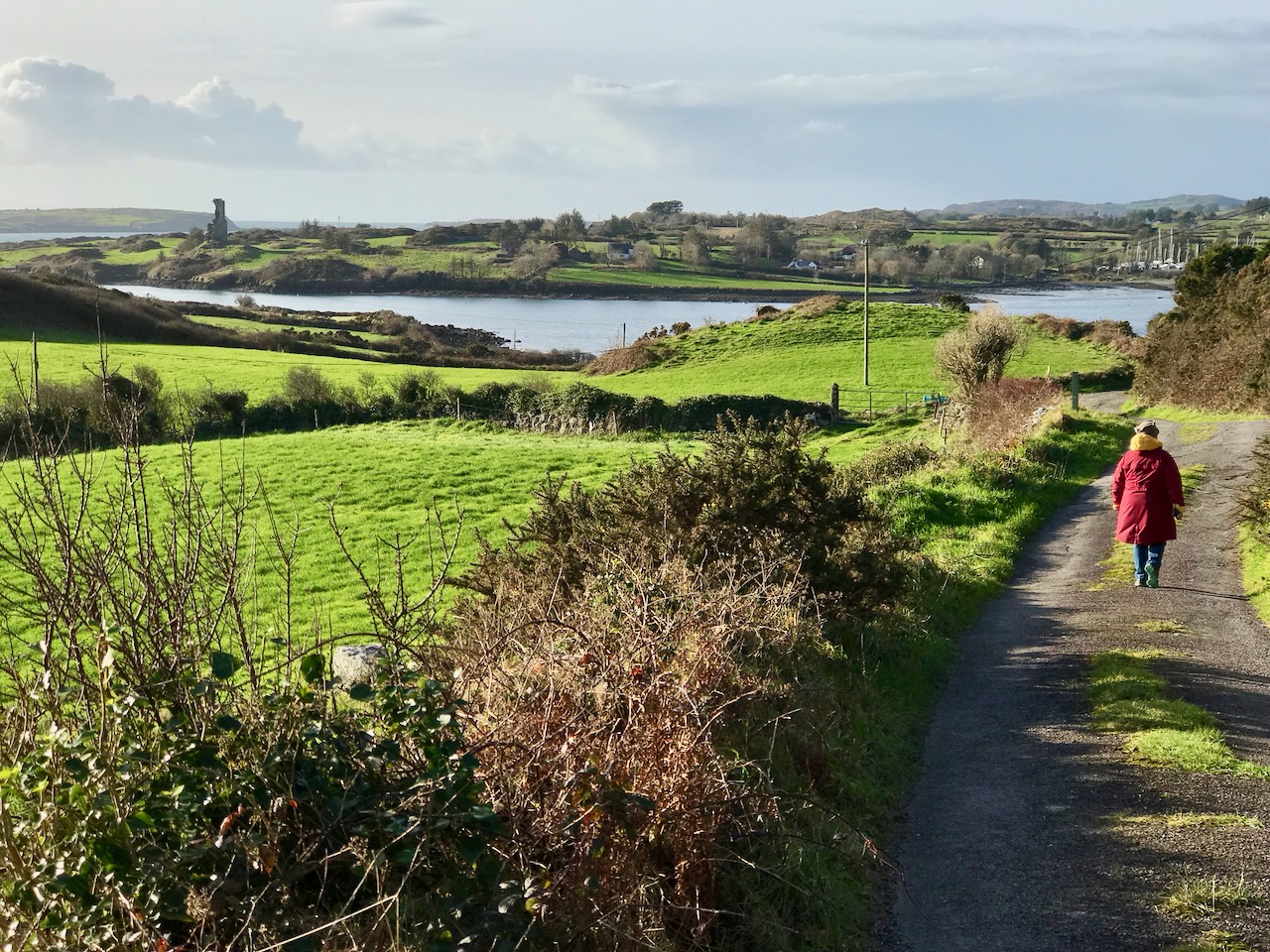
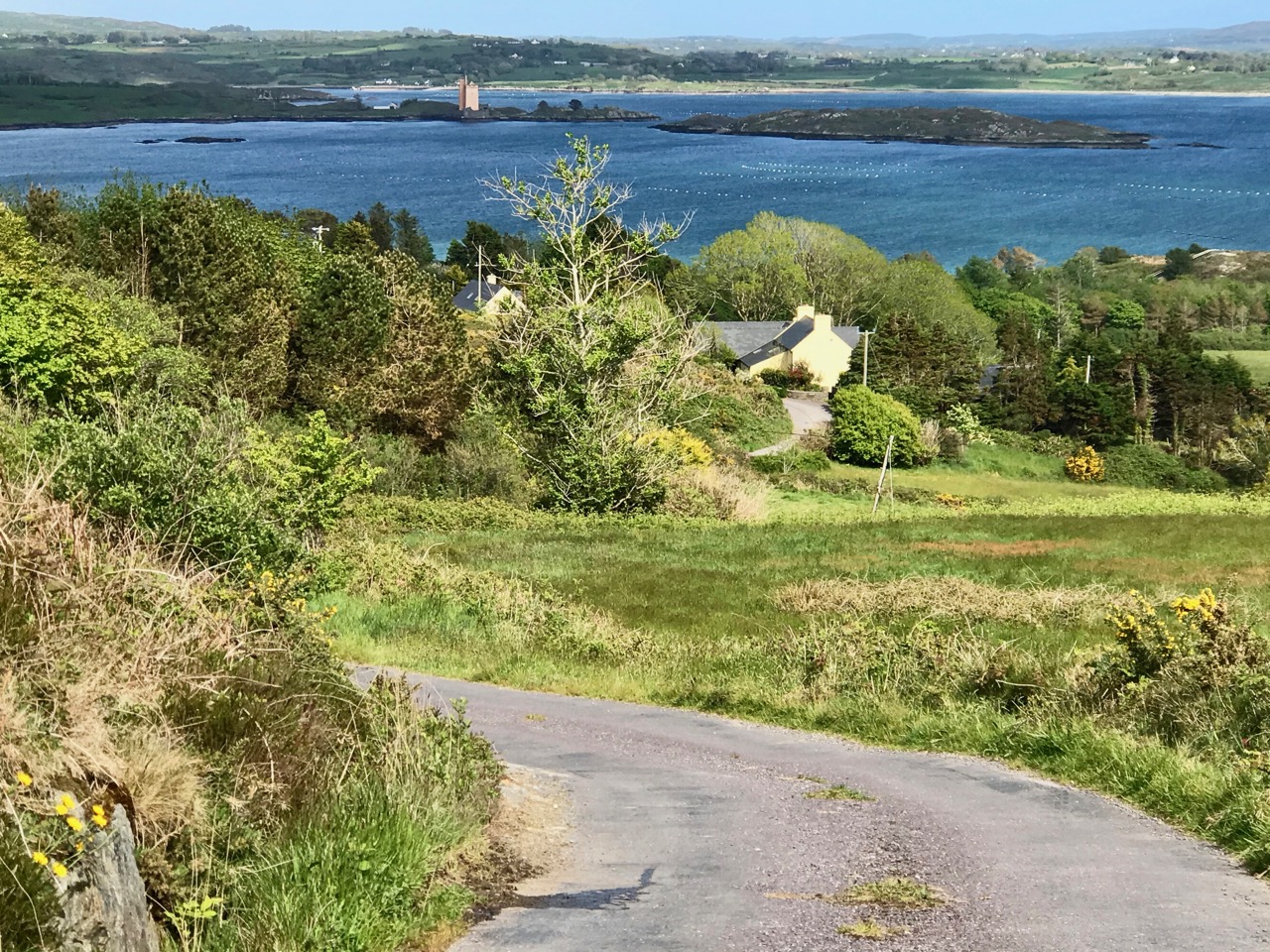
The photo at the top of the page is special for us: it’s the view we get when we turn out of Nead an Iolair, heading down towards Rossbrin Cove. And there (above) is our first glimpse of the sheltered harbour, overlooked by the medieval castle that was the home of Clan Chieftain Fininn O’Mahony in the 15th century. Not only do we have all the wonders of West Cork’s landscape on our doorstep, but we also have deep history as well…

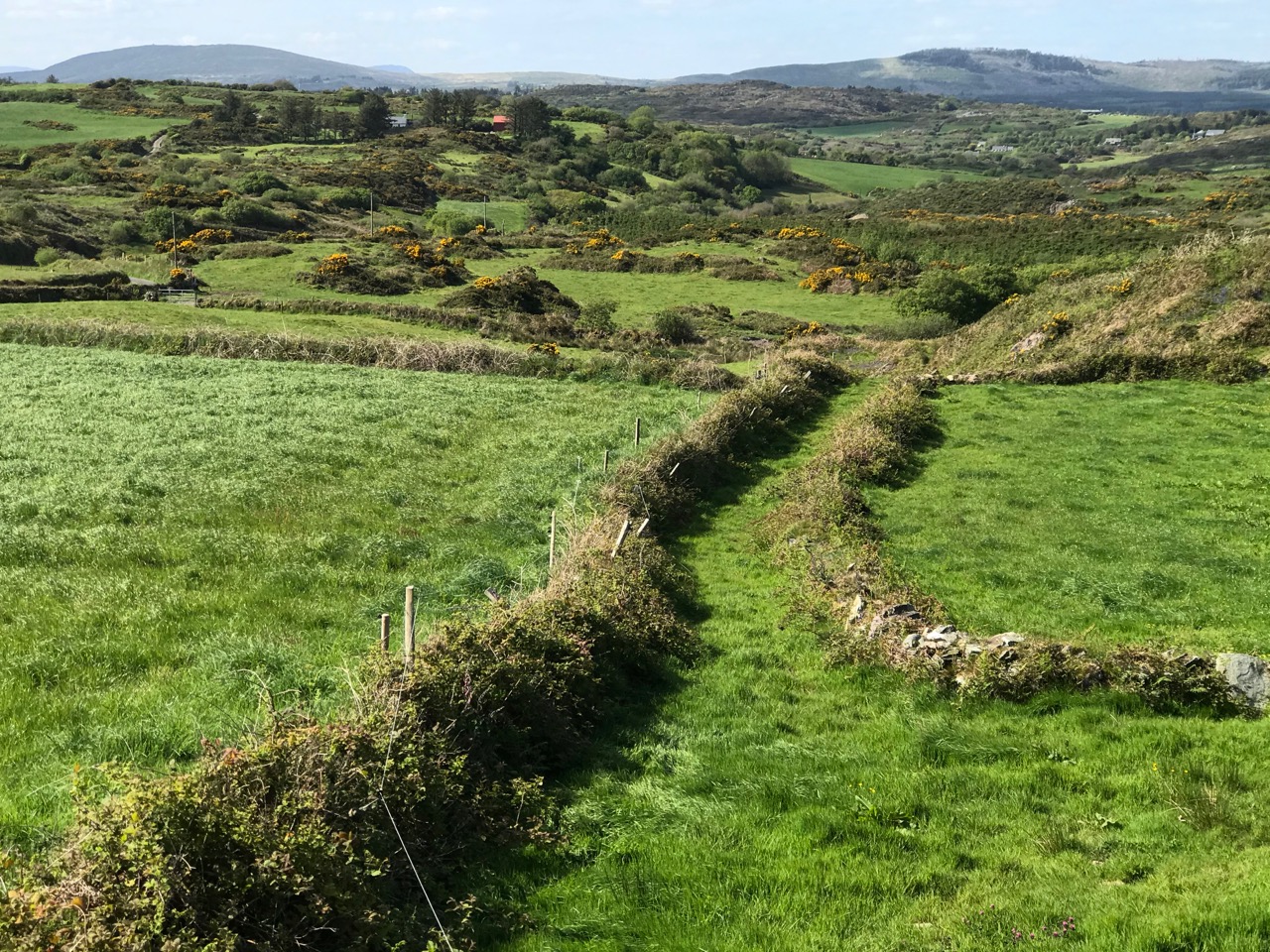
How much closer can you get to nature than this ‘green’ boreen just a short walk up the road from where we live in Cappaghglass? The stone hedge banks have become completely assimilated into the surroundings, and are a haven for so many native species of wildflowers, as Finola will readily point out to us!
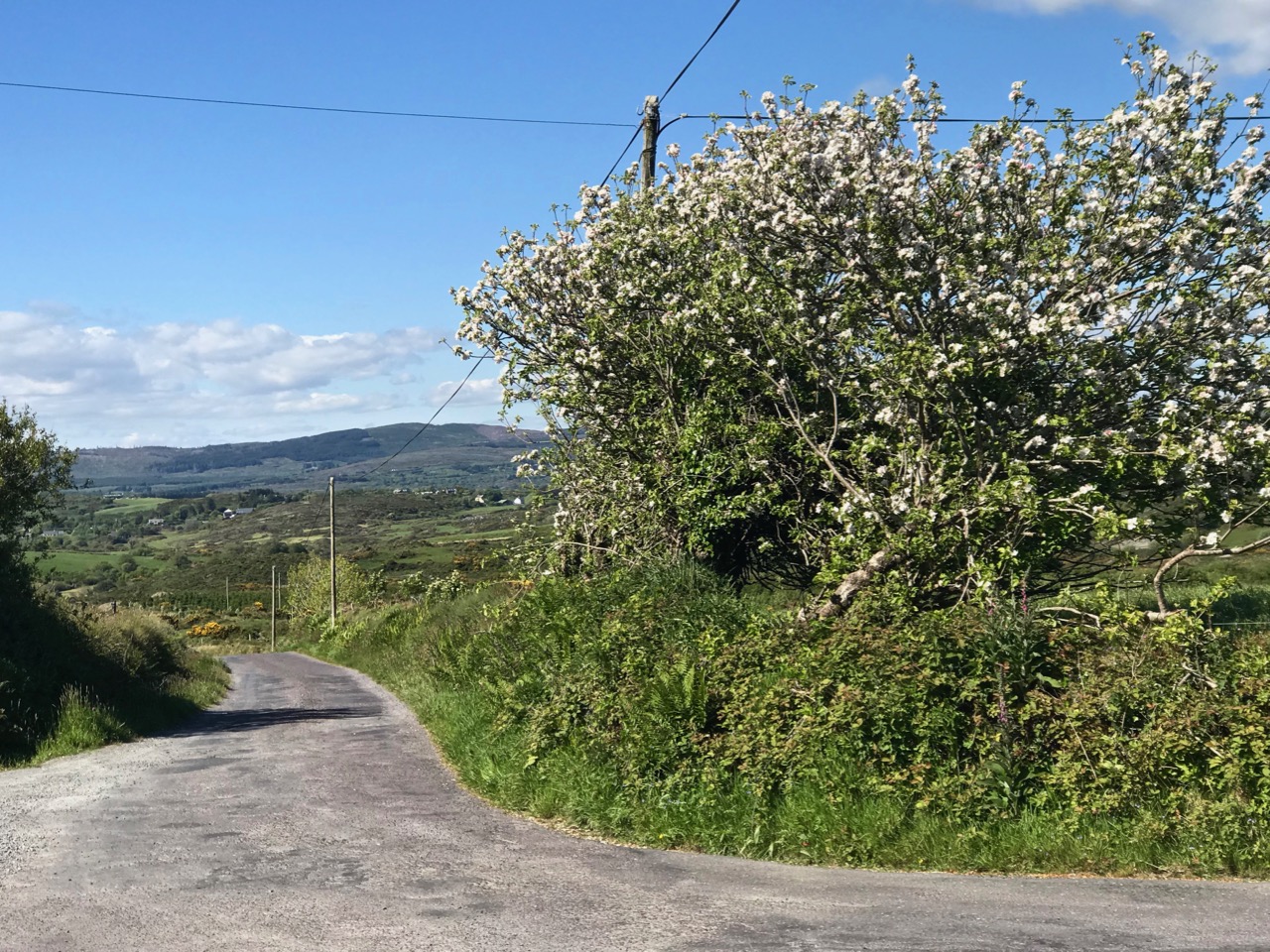
And just a few yards from that last green trackway is the boreen that takes us down into our village of Ballydehob. Those are apple trees flourishing as part of the natural hedgerow.

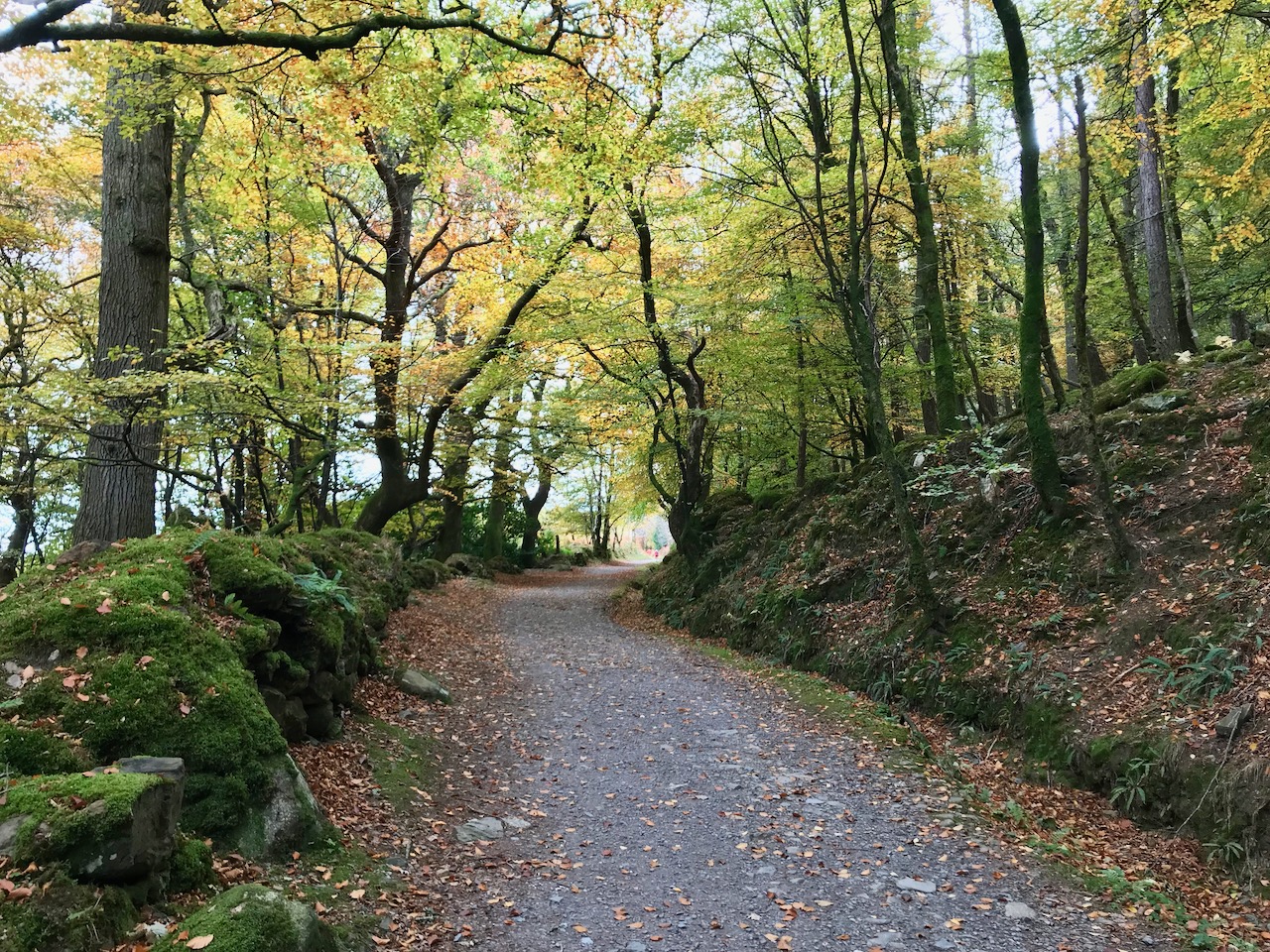
We have very little woodland around us here. This slightly mysterious tree-lined boreen was found on our travels near Glendalough, in County Wicklow, last year.

Close by the little harbour of Glandore (in Irish Cuan D’Ór – Harbour of Gold) in West Cork, we found a secluded boreen which pointed us towards an oddity: a pyramid in a graveyard – well worth a visit. Read about it in this post from two years ago.

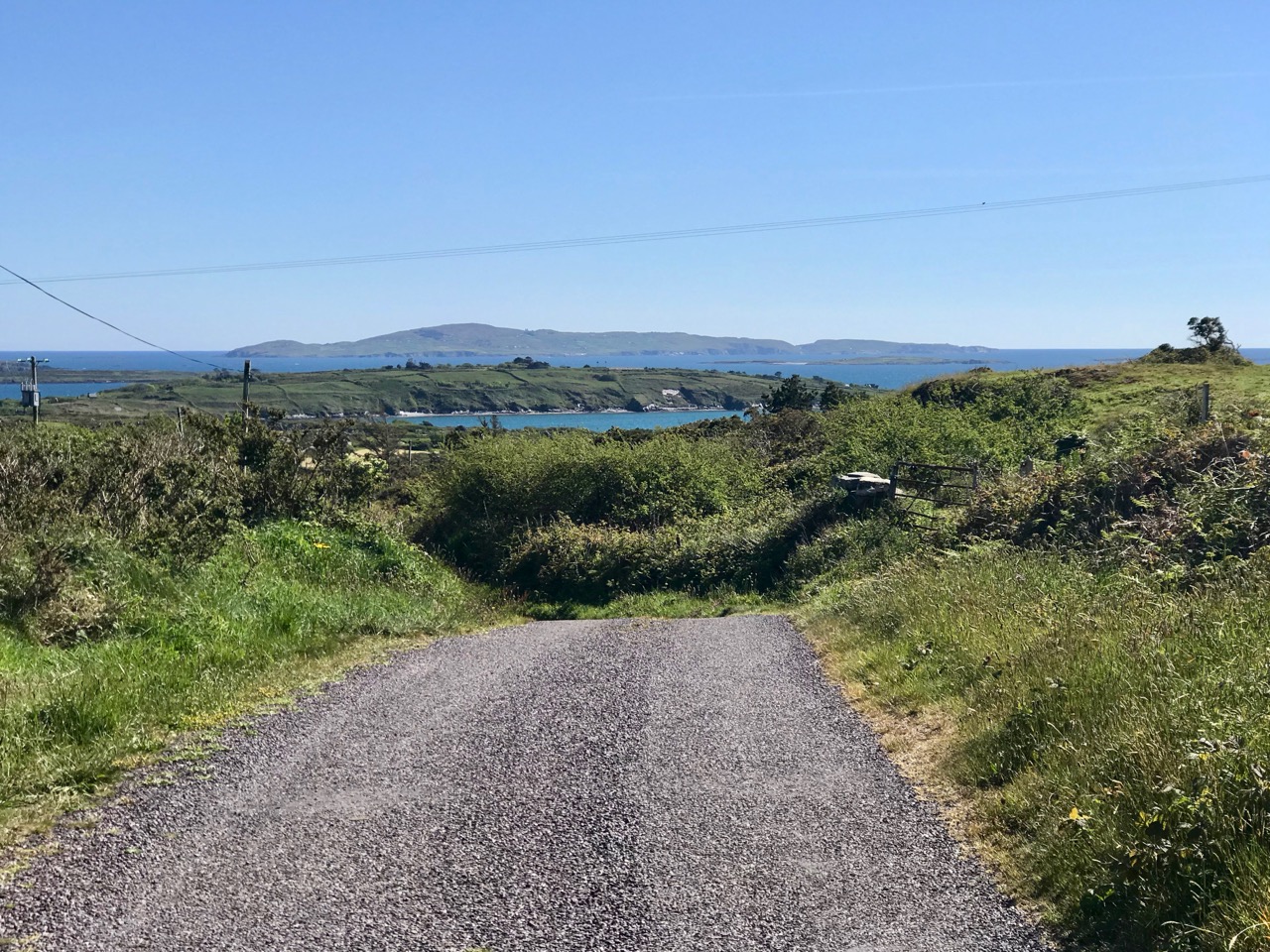
Returning to our own neighbourhood these two recent photos, taken only a couple of days ago, show how you can never quite know what you are going to find just around the corner or over the brow of the next hill. That’s Jeremy Irons’ Kilcoe Castle in the upper picture, and Cape Clear Island (on the horizon) in the lower one.

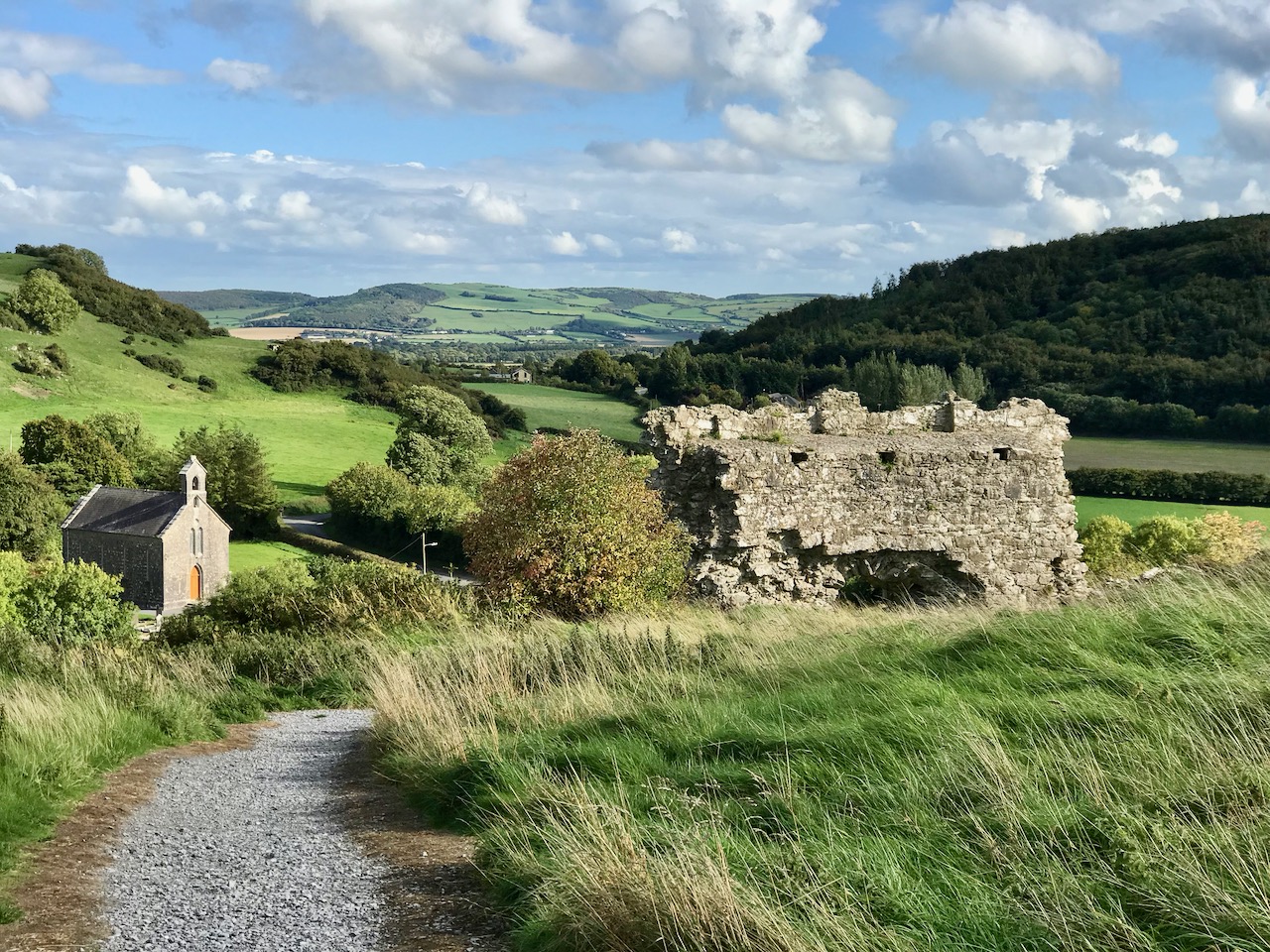
In contrast, here’s a little trackway that takes you up to the summit of the Rock of Dunamase in County Laois. This historic site with a view is associated with momentous events in the history of this country: in the painting by Daniel Maclise that hangs in the National Gallery of Ireland, The Marriage of Strongbow and Aoife is depicted as taking place at the now ruined Great Hall on the Rock. You can find the whole story of this most critical juncture in Ireland’s history in Finola’s post here.

Even further afield – in Ballymoney, Co Antrim – is this spectacular avenue of beech trees planted on the entrance driveway leading to an eighteenth century Georgian mansion, Gracehill House. This boreen – open to pedestrians – is known as the Dark Hedges, and we visited it when we explored the North of Ireland three years ago.

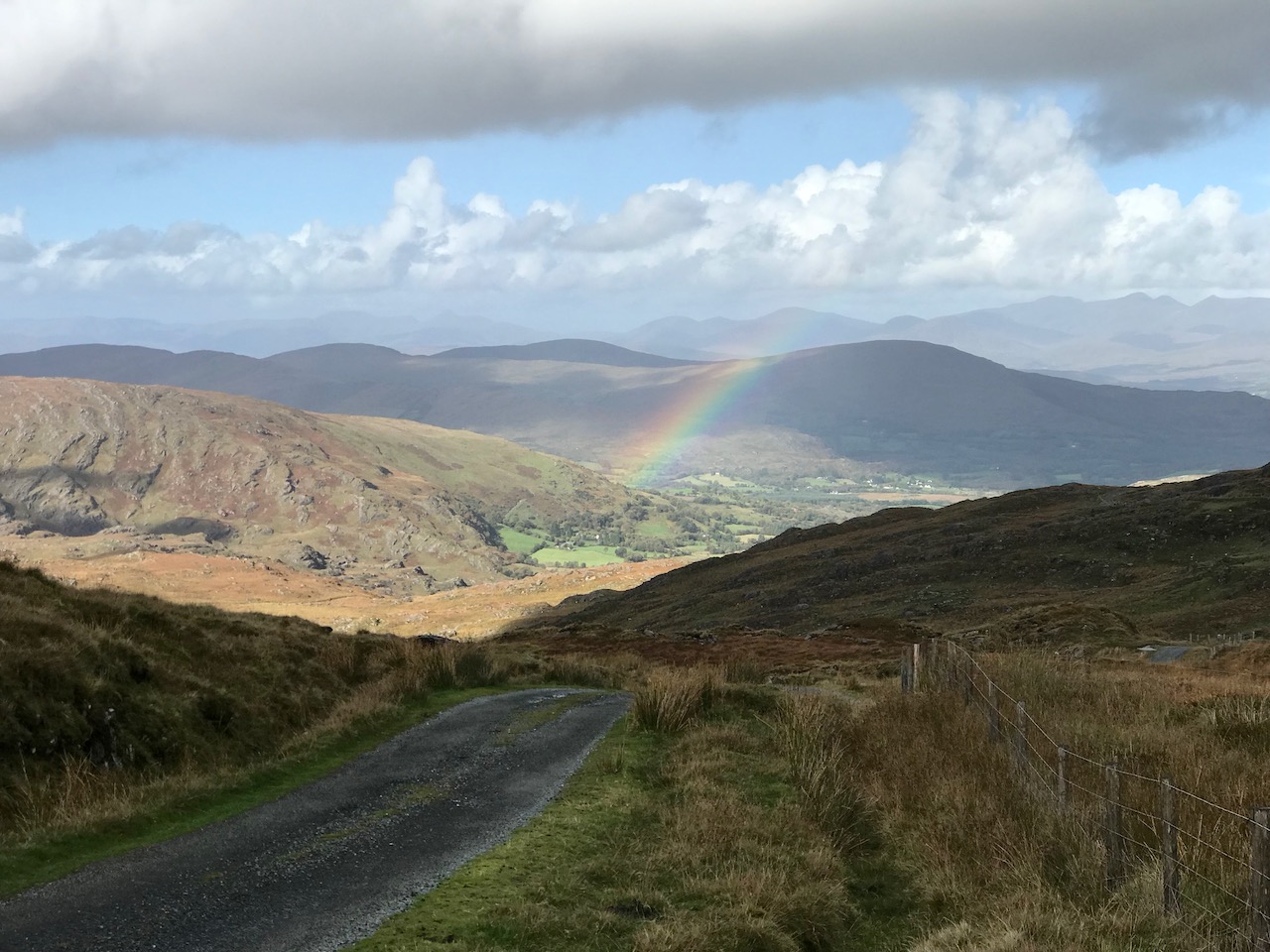
Although in normal times we travel a lot – on major roads and motorways, as well as boreens – the places we like the best are near to home. How could we not be impressed by the winding boreen that climbs to the top of Mount Gabriel, the highest point on the Mizen? Look at the spectacular views (above). The preacher Caeser Otway travelling in this area in 1822 wrote:

. . . On my way to Bantry I passed the dark and lofty Mount Gabriel and took my way over a dreary, comfortless tract of country. Let no one say after looking at these moors , studded over with cabins crowded with children, pigs, goats, cocks and hens that an Irishman is not an industrious creature . . . Men, women, boys and girls toiling up the mountainside with seaweed and sea sand in baskets on their backs . . . See them reclaiming from amidst rocks and bogs, patches of ground on which to cultivate their only food, the potato; and no one witnessing this struggle of human industry against nature, but must acknowledge that the Irish are a most industrious race . . .

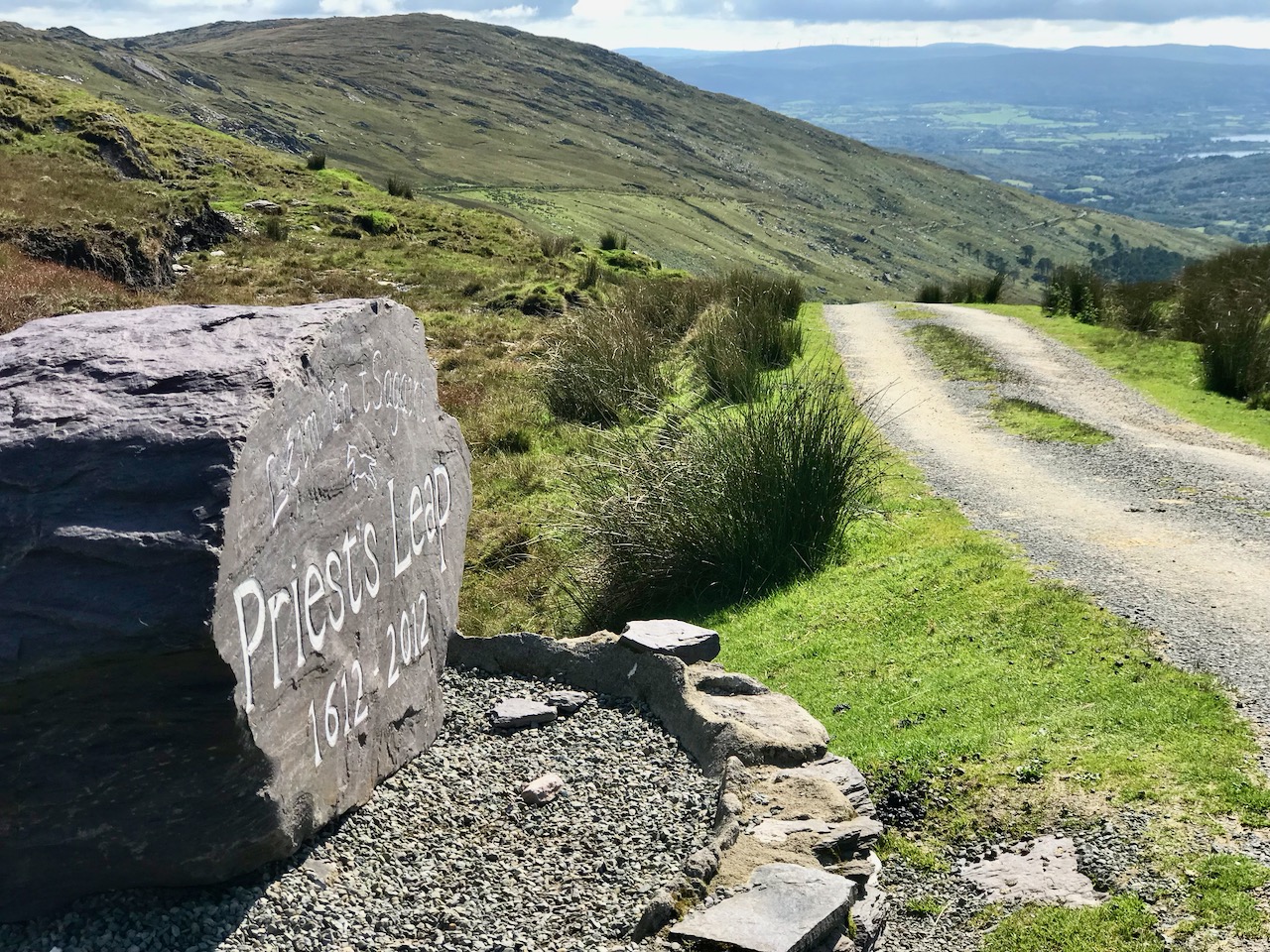
The 400 year old road that crosses the mountains from Cork into Kerry north of Bantry has to count as a boreen, as it’s single track for much of the way. The Priest’s Leap sign (above) marks the point at which the two counties meet. Although we have travelled all over Ireland in our explorations, this is still one of our favourite routes, and always will be. We so look forward to being able to go there again, when the present ‘lockdown’ is lifted.

Another glimpse of the Priest’s Leap ‘boreen’.

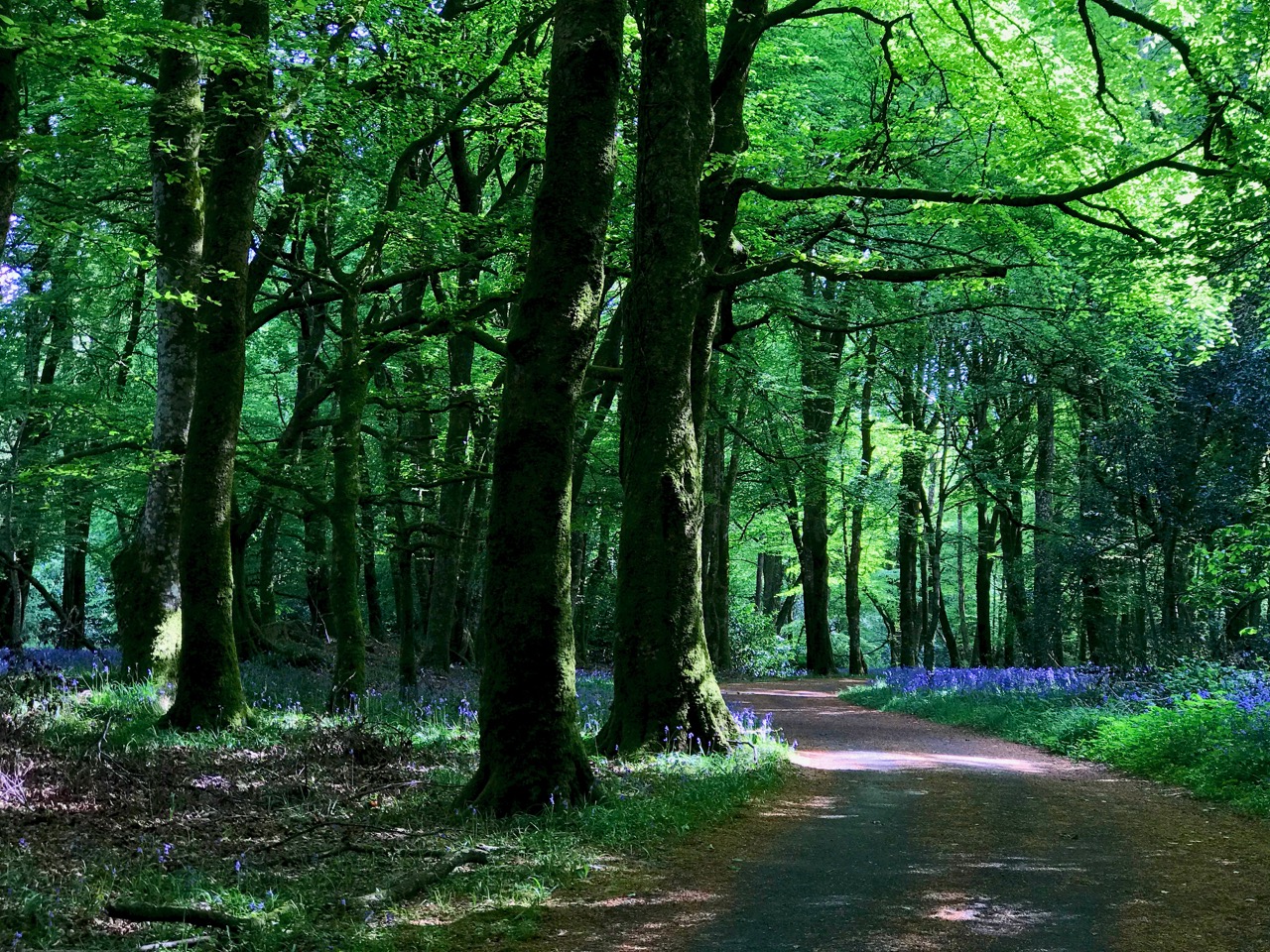
This elegant woodland boreen is a fine example of regency landscaping, being part of the Ballyfin Demesne in Co Laois. Like so many of Ireland’s fine luxury hotels, Ballyfin remains closed until the Covid19 restrictions are lifted.

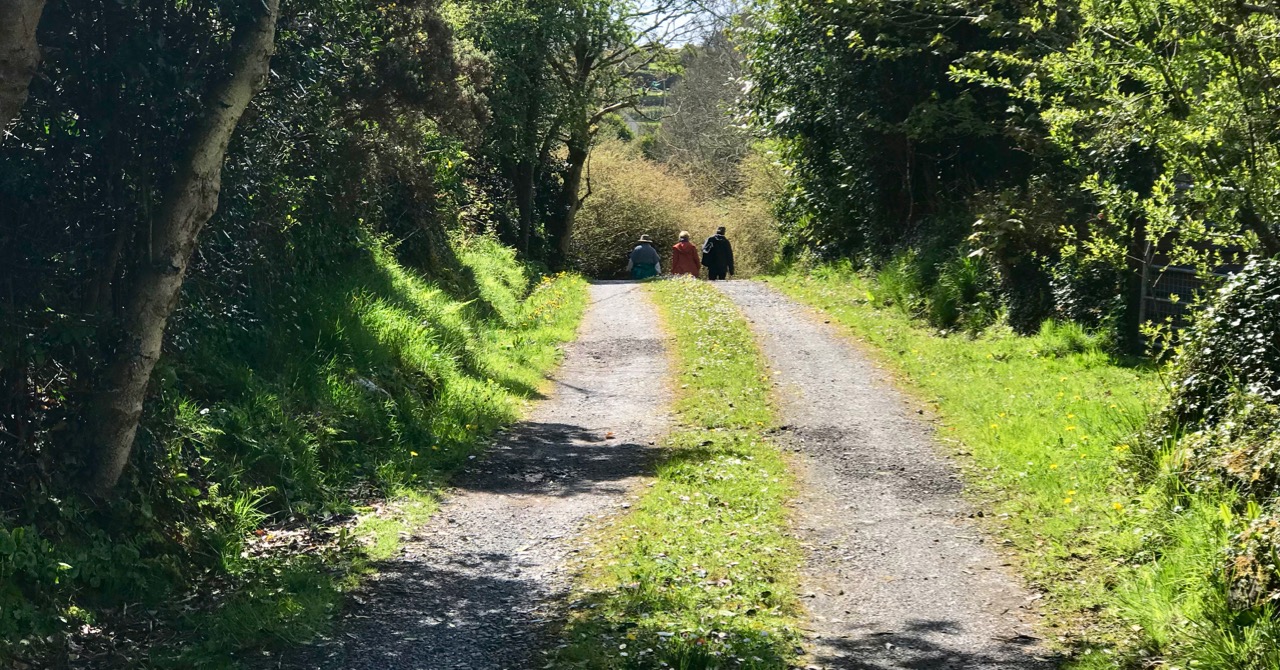
We’ll finish this post where we started – near to home in West Cork, with happy memories of unrestricted rambles with friends along the quietest and most beautiful of Ireland’s boreens . . .

April Flowers in the Magic Forest

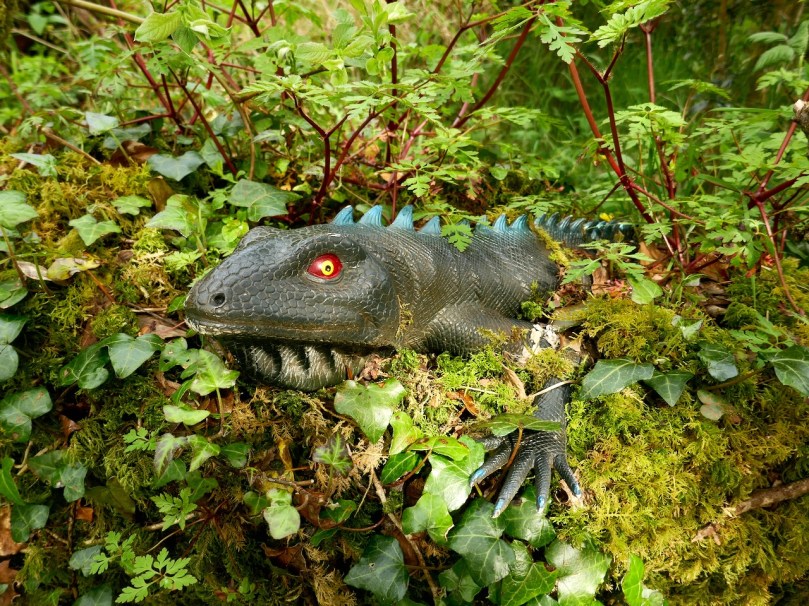
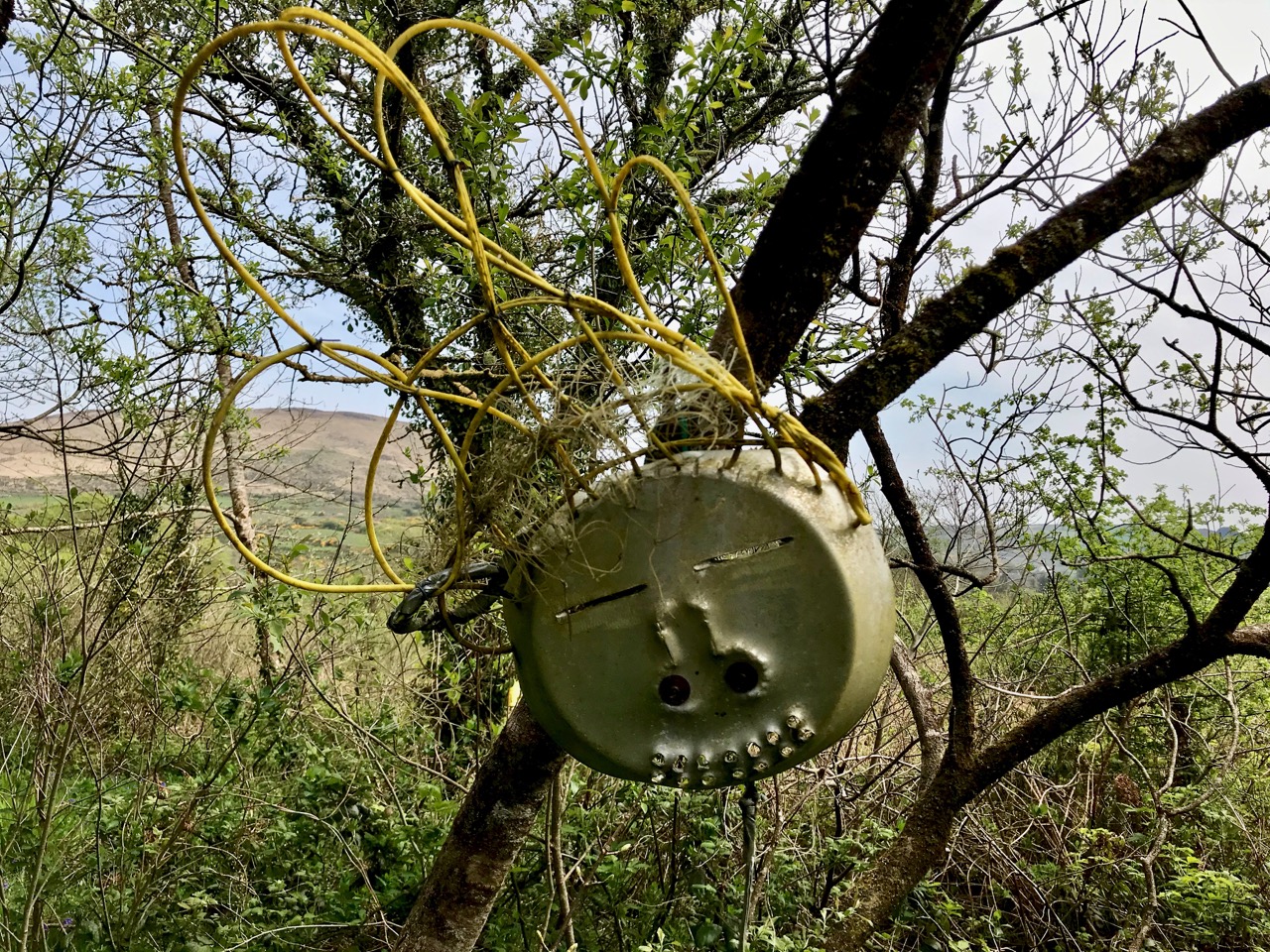
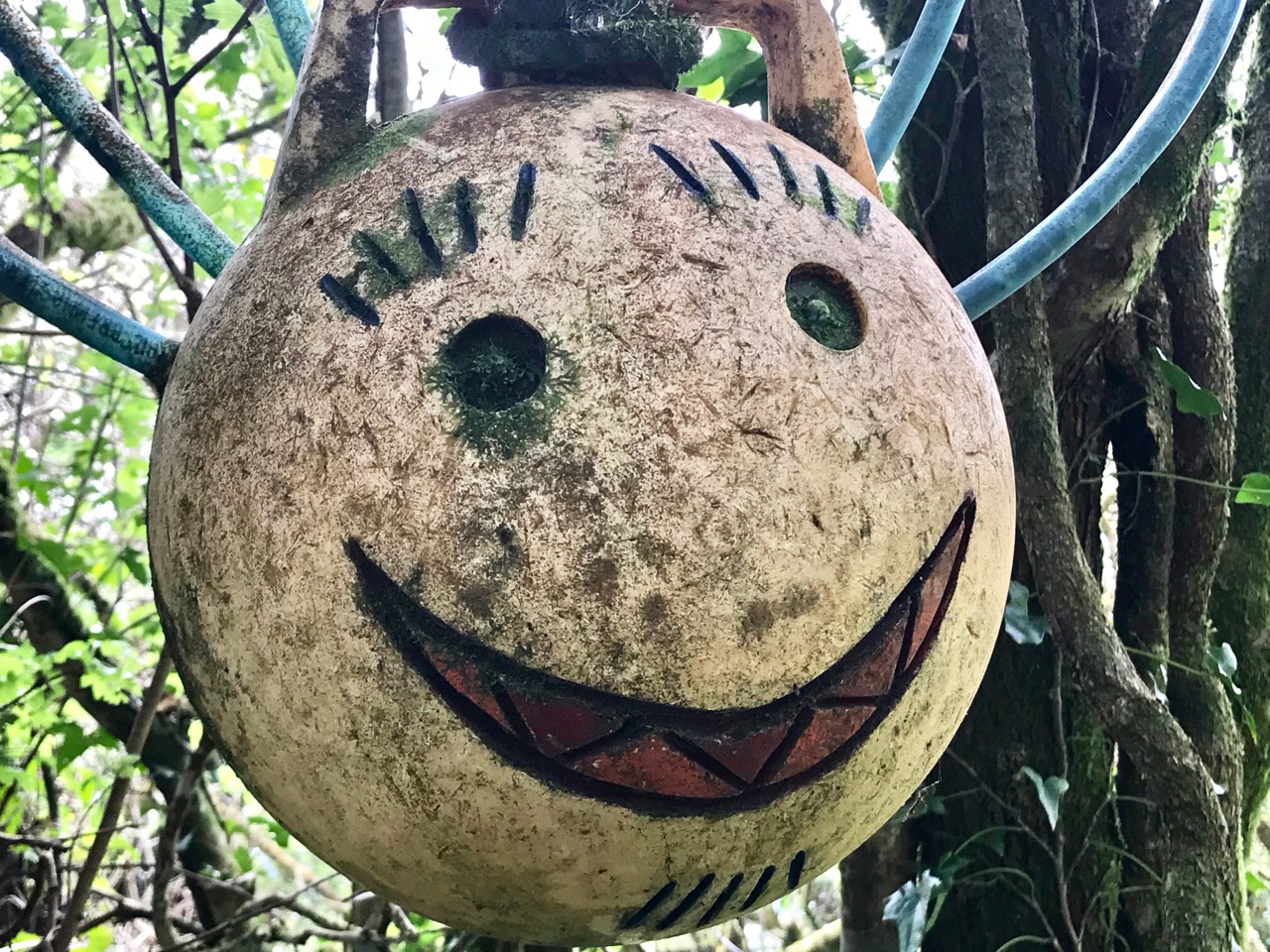
Enchanting – that’s the word that comes to me when I think of The Magic Forest. Although at first I was drawn to the quirky art installations (see our post from five years ago), as I’ve become more interested in wildflowers I like to photograph them there, since it’s such a special habitat. So here is a selection of early spring photographs from the Magic Forest, to illustrate what a diverse and attractive plant life it hosts.

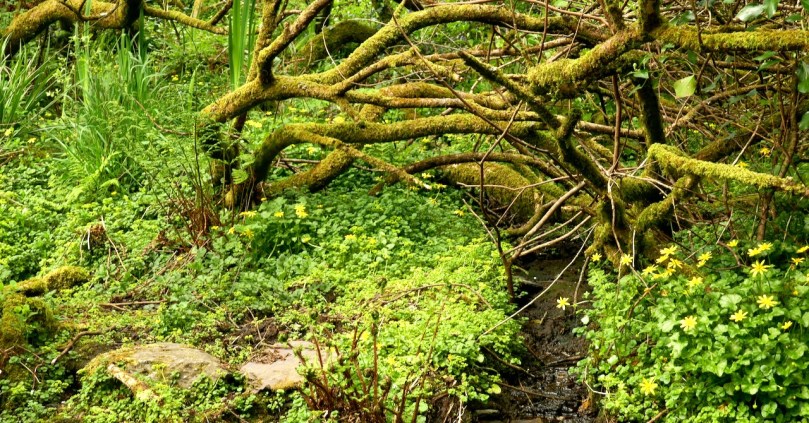
In their beautiful and comprehensive book, The Wild Flowers of Ireland: The Habitat Guide, Declan Dooge and Carsten Krieger describe what to expect in a native woodland. First and foremost, there are in fact very few native woodlands left in Ireland, of the kind of oak forests we might have seen in medieval times. However, the little woods that surround the Magic Forest fit their definition of an acid-soil natural woodland, with trees not so dense that light cannot penetrate, and lots of moisture underfoot giving ferns and mosses (below) a friendly environment. A visit to an undamaged native woodland, they state, is a remarkable experience.

While the Magic Forest is probably not as pristine and undamaged as it could be (it’s in the middle of farmed land, after all) it has been left to flourish intact for many years, thanks to the stewardship of Thomas Wiegandt, whose interventions have only added to the fairytale quality of the woods.

What we see inside is an excellent representation of an Irish woodland habitat in as unmanaged a situation as possible. Walking through it in early spring is an ethereal experience – I defy you not to be moved.

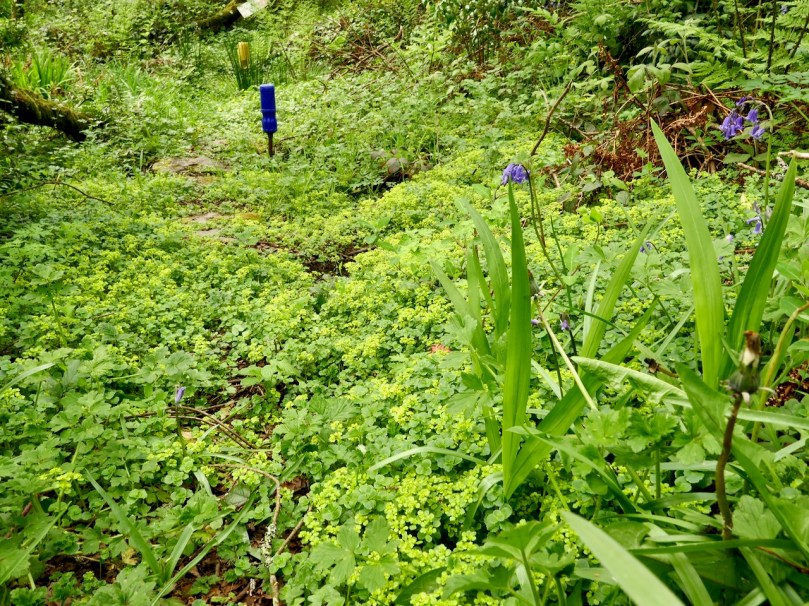
That is not to say that all the plants we find in it are all truly native – for example, the Yellow Archangel flower that flourishes here (above) is a garden escape that has naturalised widely across Ireland. There is a native Archangel, but we know this one is the introduced variety because of the silver markings on the leaves.

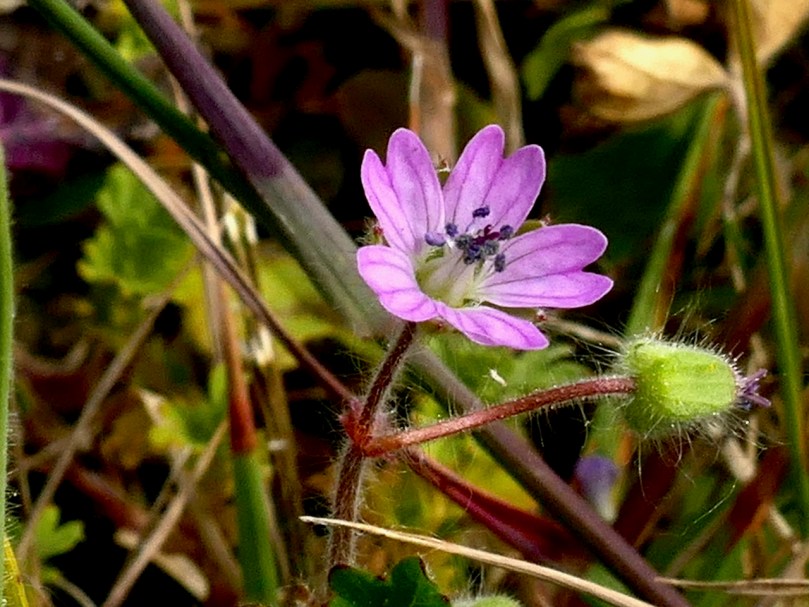
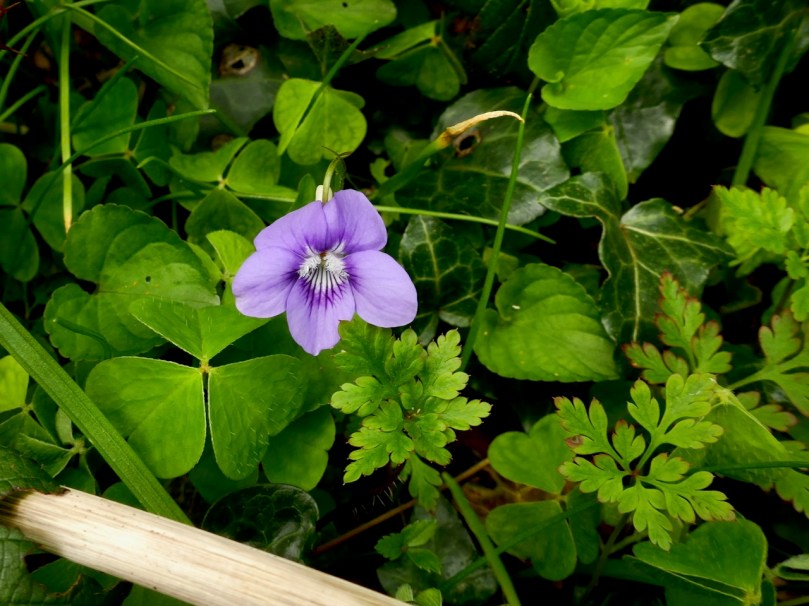
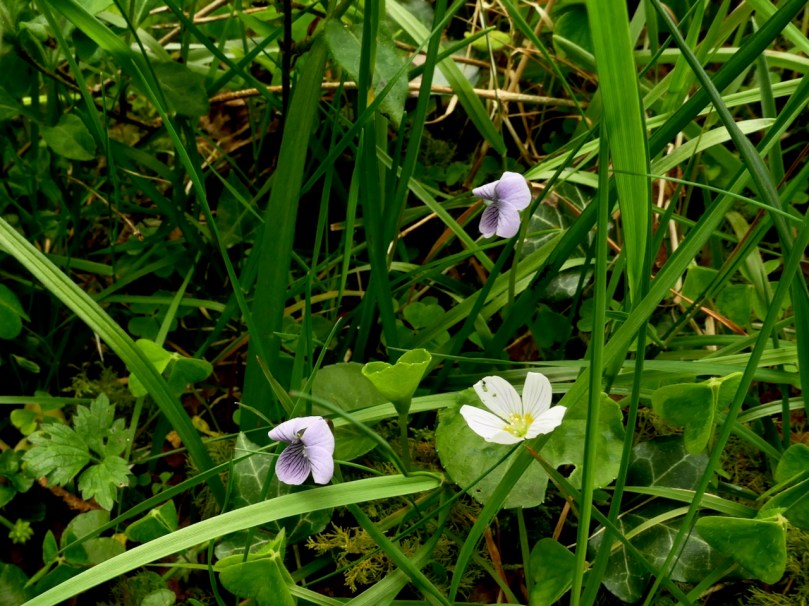
Dooge and Krieger point to the presence of Early Dog-violet (they call it Wood Violet) in woodland, but in fact what I have found in the Magic Forest are two types of violet – the Common Dog-violet (above) which is everywhere in West Cork right now, and the much less-seen Marsh Violet (below).

Because the Common Dog-violet can turn as it ages from its normal deep blue to the same pale lilac colour as the March Violet, you have to keep a sharp look-out for the differences, but once you see them together they are unmistakable.

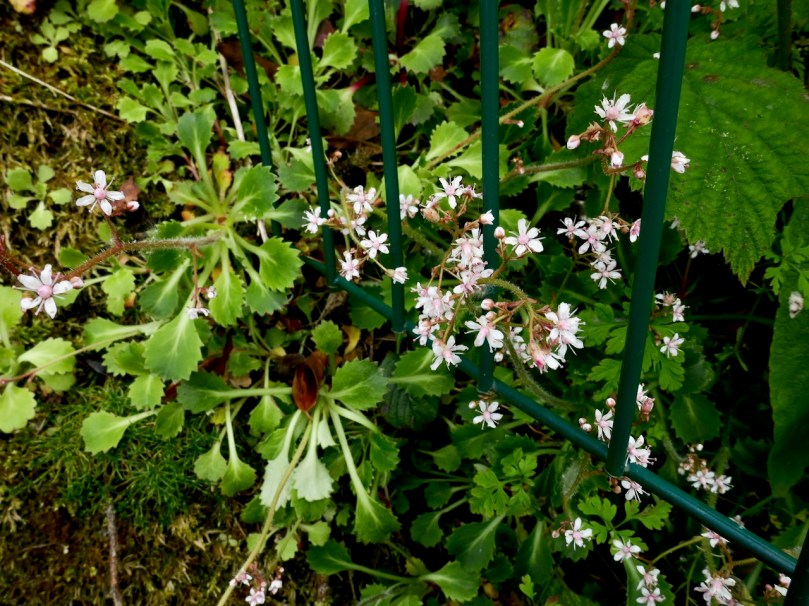
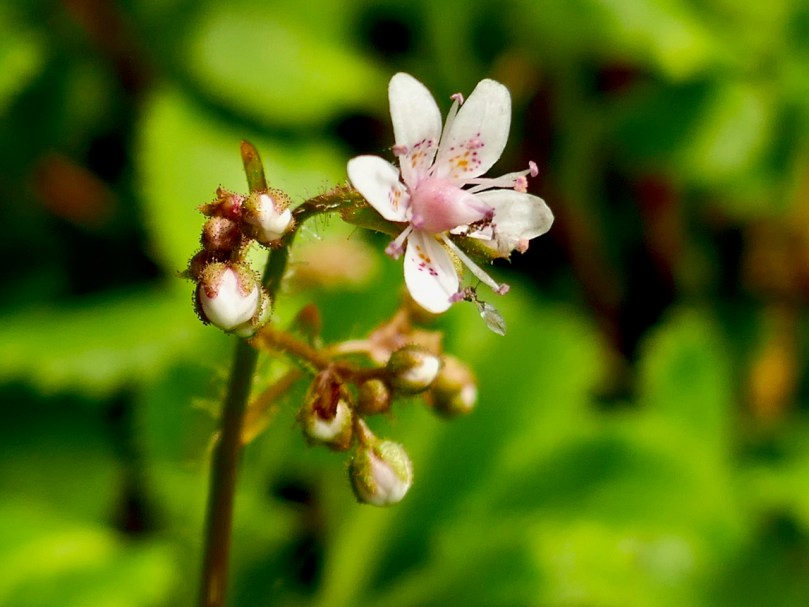
One of the nicest aspects of walking in woodland is the soft carpet underfoot. In The Magic Forest this tends to be a bed of Opposite-Leaved Golden-saxifrage (above), which loves damp dark places. This is an interesting flower in that it has no actual petals. The Sepals are bright green and unfold to reveal the stamens which are brown-tipped inside their little bed but shed the brown cover and turn bright yellow when fully open.

Getting right down on the forest floor (a little undignified and hard on clothing) is well worth it as all kinds of flowers are emerging up through the undergrowth. Celandines and Bluebells mingle above, while Celandines and Wood-sorrel cover the banks of a tiny stream (below).

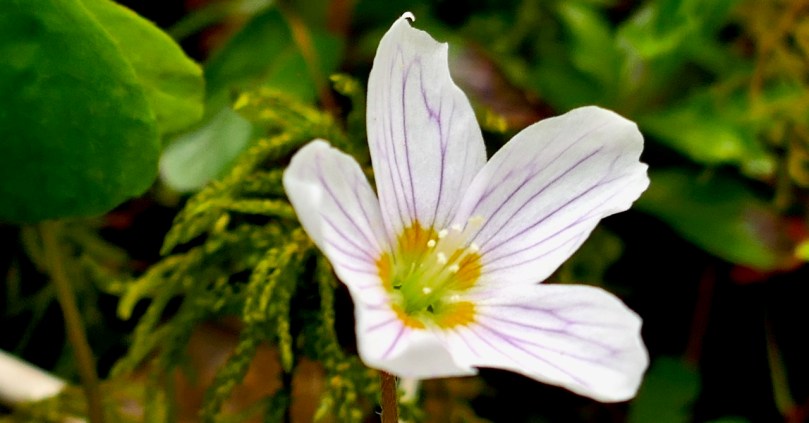
At this time of year, early spring, one of the most attractive species is Wood-sorrel, with its distinctive shamrock-shaped leaves. The delicate purple veining on the petals, leading down to a golden-yellow centre rewards close scrutiny.

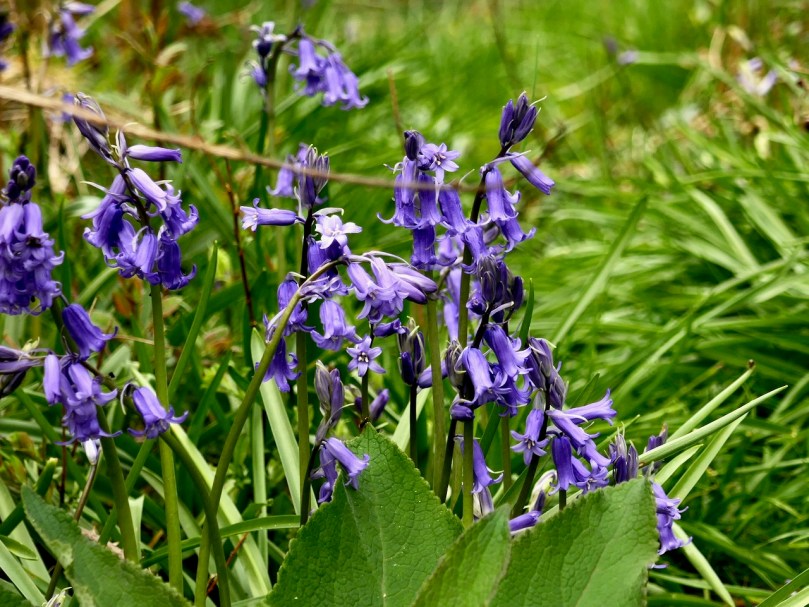
Of course, at this time of year, what we all love to go into woodland to see are the Bluebells and The Magic Forest abounds in native Bluebells. If you are wondering what the differences are between Native and non-Native (Spanish) Bluebells, here’s how to tell: we know these are native Bluebells because they have a lovely scent, their petals curl back, the flowers only grow on one side of the stem (the weight of which gives them that characteristic curve over), the anthers are white and the leaves are quite fine. All of these points can be observed in the photograph below – except for the scent! 

Bugle is another flower that loves this kind of environment, although it’s not quite as specialised as the Bluebell – I have seen it on hedgebanks as well where it might be getting moisture but not a lot of shade. Below, the two enjoy each other’s company.

Zoë Devlin, on her website Wildflowers of Ireland (my go-to resource, both print and online, and the best and easiest all round book to introduce you to Irish wildflowers) tells us, In his ‘Complete Herbal’ of 1653, Nicholas Culpeper wrote of Ajuga reptans [Bugle]: ‘if the virtues of it make you fall in love with it (as they will if you be wise) keep a syrup of it to take inwardly, and an ointment and plaster of it to use outwardly, always by you’.  A hand lens is a must for this flower – close up the tiny orchid-like flowers open wide to show their tonsils.

in Southwest Ireland we have a special group of plant species known as the Lusitanian Flora. Here’s a good explanation of what this means from Wikipedia:

The Lusitanian flora is a small assemblage of plants that show a restricted and specific distribution in that they are mostly only to be found in the Iberian Peninsula or southwest Ireland. Generally, the plants are not found in England or western France even though suitable habitat almost certainly exists in those regions. . . . This biogeographical puzzle has been a topic of academic debate since the middle of the 19th century. Conflicting, and as yet unresolved theories centre on whether the Irish populations are a relict, surviving from before the last ice age or whether they have been transported there in the last 10,000 years.

For a complete list of the Lusitanian species, take a look at my other favourite website – Irish Wildflowers by Jenny Seawright.

This is a longwinded way to introduce St Patrick’s Cabbage, the Lusitanian wildflower that crops up in The Magic Forest. The photos I have of it in the forest were taken just after it had started to bloom (above) so the flowers are yet sparse (below). You can see photographs of them in a more advanced phase in this post.

The final flower I want to highlight is the Cuckooflower, which is found in abundance in the fields all around the Magic Forest and to my surprise even inside it, although this is not typically a woodland flower. It likes the damp but it generally prefers open meadows. Besides being delightful, it is where the Orange-tip Butterfly likes to lay its eggs so look out for tiny orangey eggs on the stems. The flower varies in colour from almost pure white to a deep pink.

There is a LOT to see in the Magic Forest – once we are all able to travel again I highly recommend a walk in it (see our original post for directions) – at any time of year. You won’t be disappointed. And thank you, Thomas, for this gift to West Cork!

Robert chose to write about the Magic Forest too this week, but from quite a different perspective! Here’s his post, Mixed Magic Messages.


Mixed Magic Messages

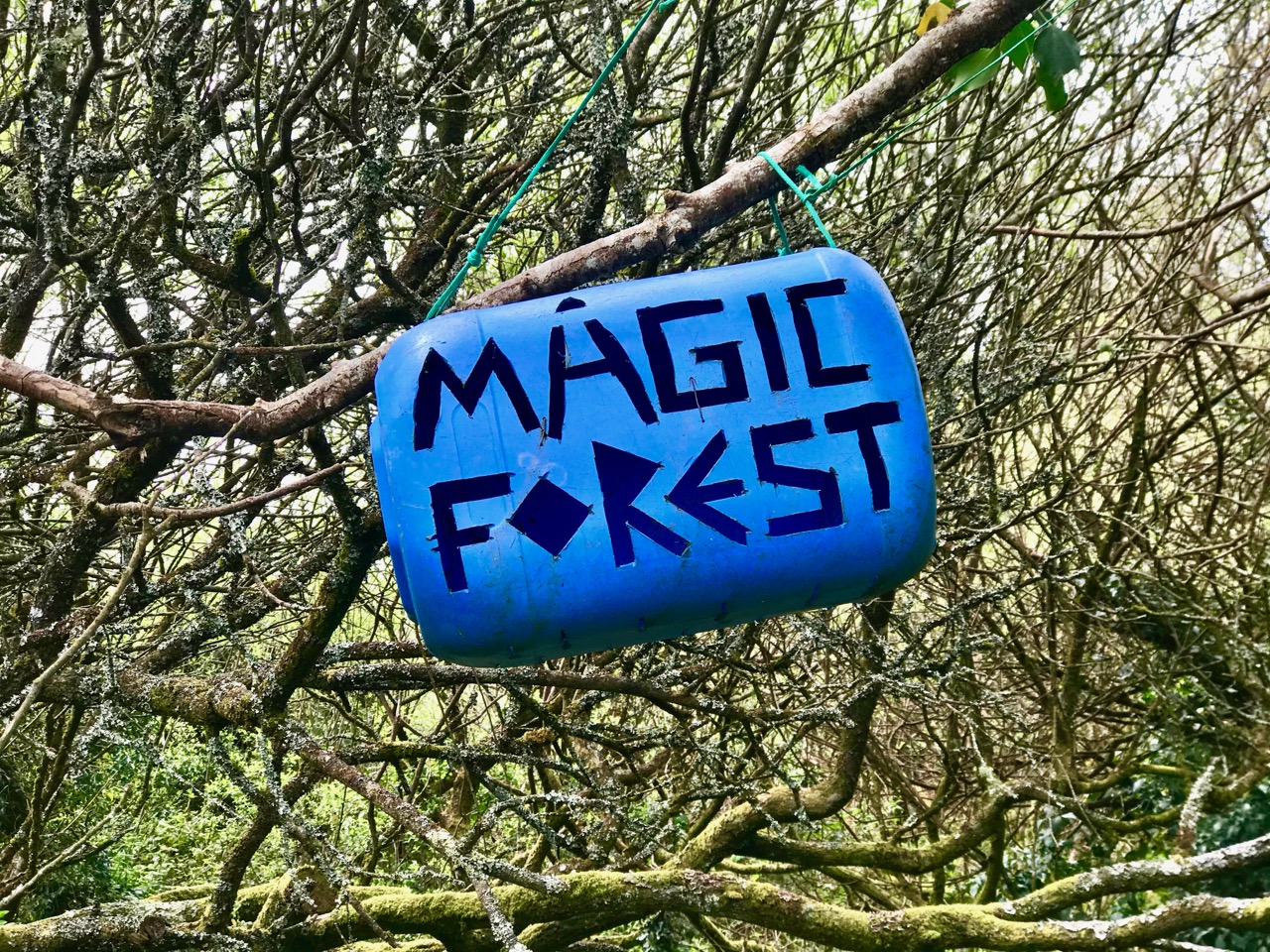
We first visited Thomas Wiegandt’s Magic Forest exactly five years ago. It’s just round the corner and over the hill from Ballydehob. As time has passed the walk has matured and mellowed: it’s the most picturesque and atmospheric place now – true magic! Thank you, Thomas, for creating this and for allowing anyone to access it (subject to lockdown limitations, of course)…

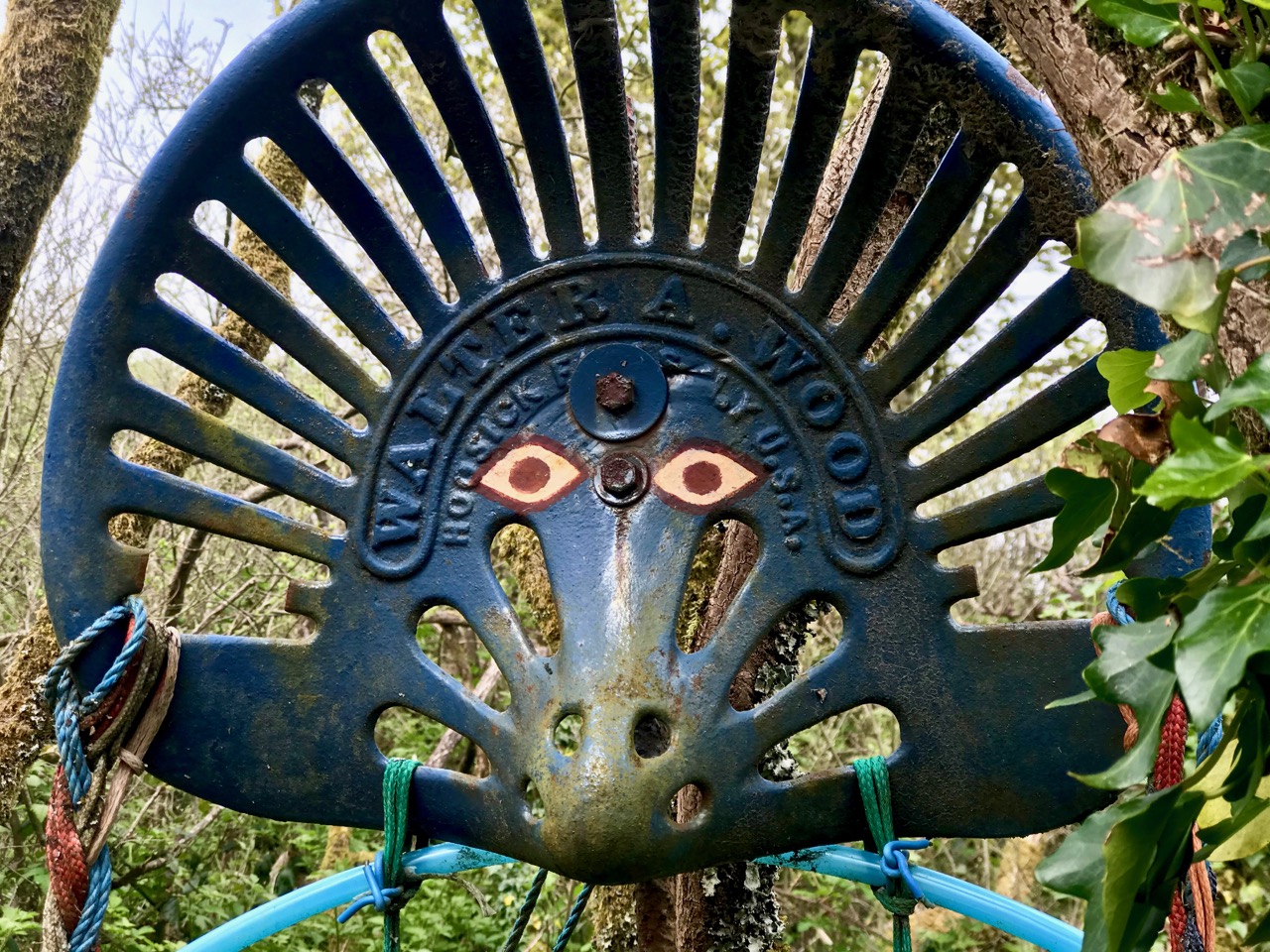
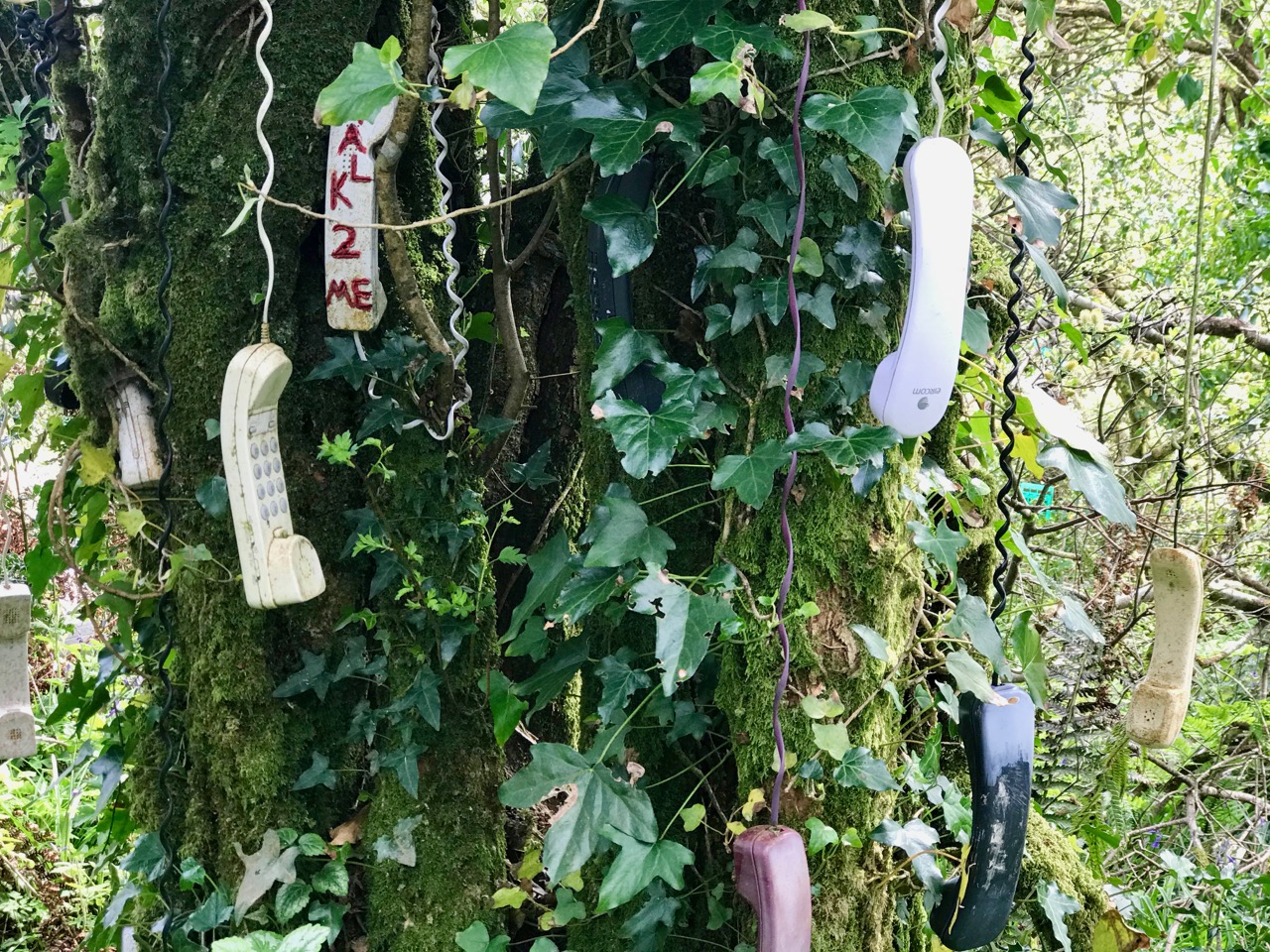
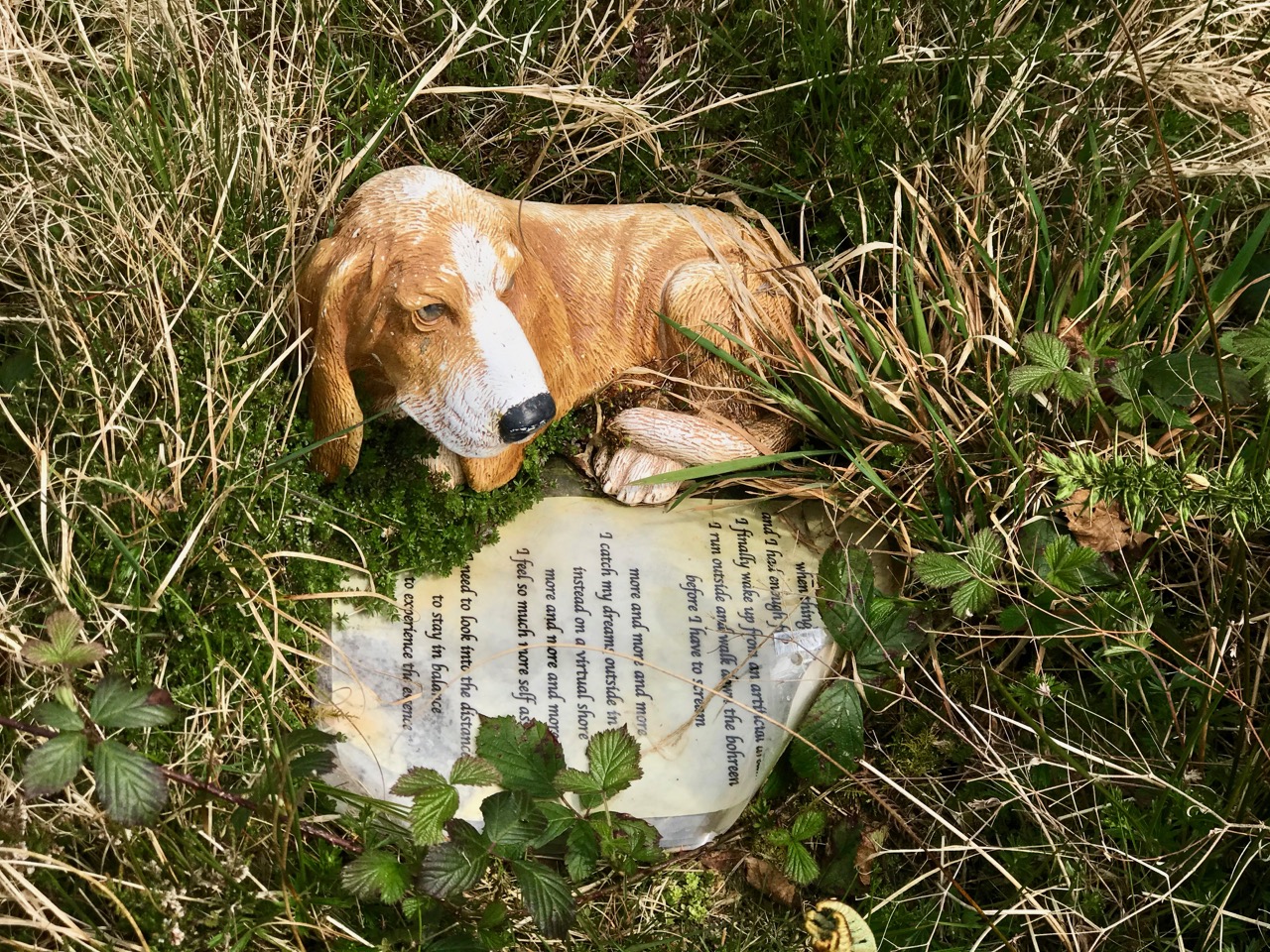
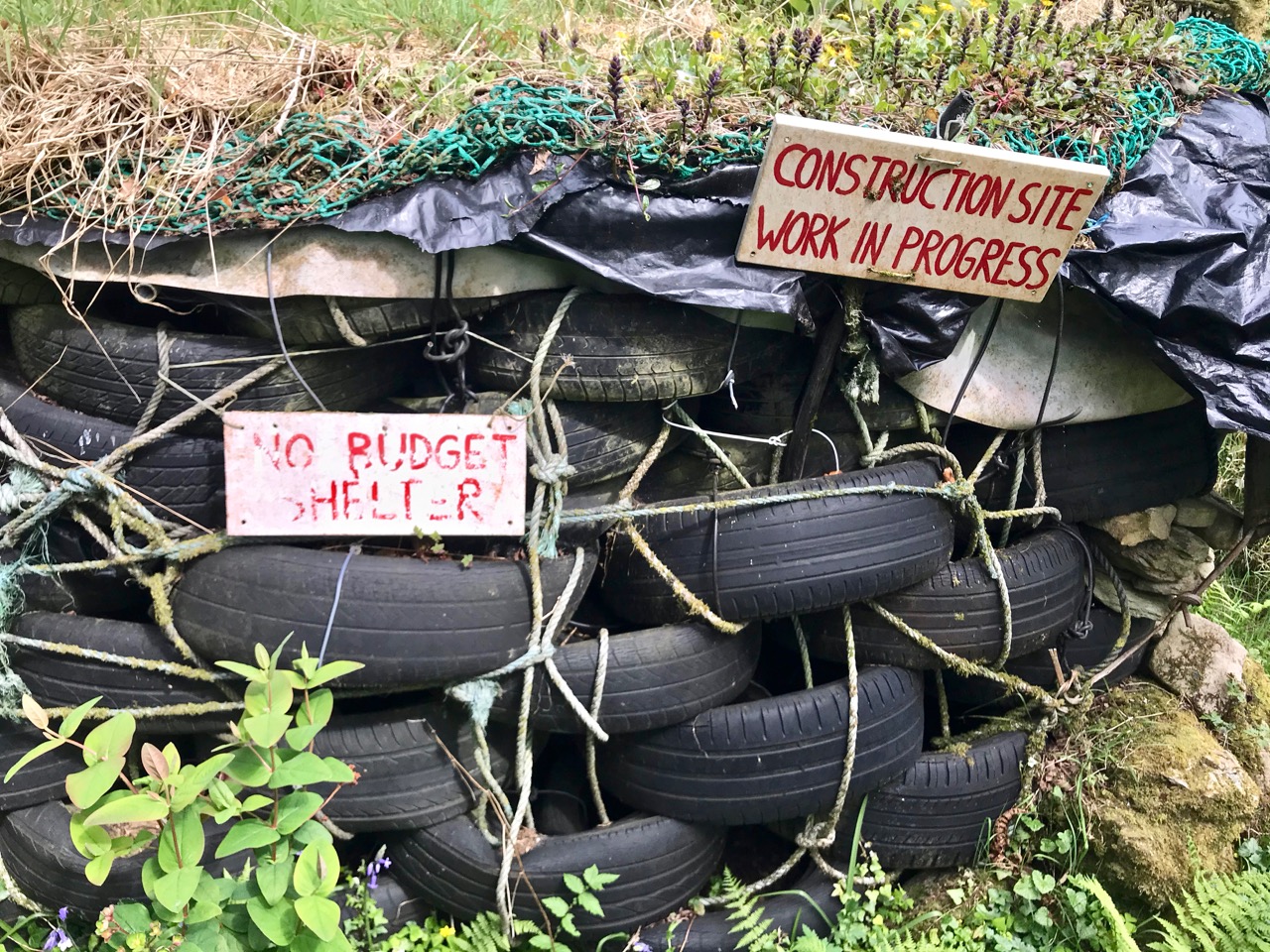
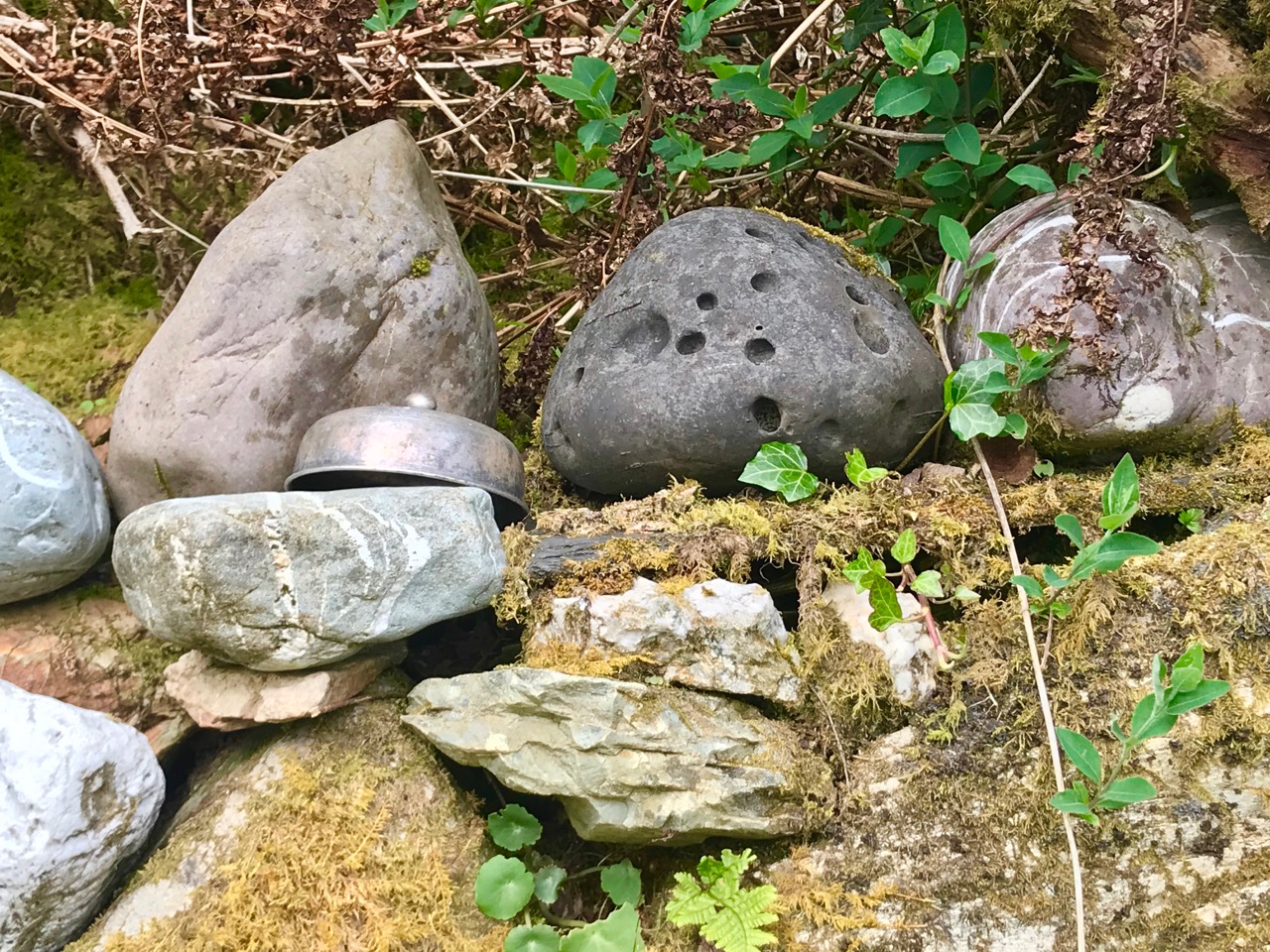
As a connoisseur of Irish signs and signage (have a look at my previous posts over the years), this walk is for me a delight and an abundant source of tangible examples from the world of human communication. There are explicit and comprehensible signs, enigmatic ones, symbolic messages, and allegories. It doesn’t matter whether we understand them, or even relate to them personally: it’s just all part of the magic of the forest.

Who are the messengers? That’s really up to you to decide. here are some that I can relate to:

Each time we visit the Magic Forest, we come back with a different set of images. It’s just that there is so much here, you take in what appeals to you at a particular time.

A pantheist might find Gods and Goddesses in this forest… Others might see relics of a fading industrial age. It all depends on your point of view.

The forest itself will take over in the end. It’s certainly the case that, through the years, nature is absorbing everything. But, surely, it’s not a battle – just a mutual enhancement. Finola is definitely on the side of the natural world.

A place to think, meditate – or make music!

The whole place is a collaboration between the arts and nature. Enjoy the journey!

Two Kilometres

That’s all we’re allowed during the Covid19 lockdown for ‘necessary exercise.’ But I have spent years now exploring the townlands around us and I like nothing better than to ramble out with my camera looking out for whatever comes my way, like Rossbrin Castle, above. Robert has done something similar this week – each of us with our own take on what life is like here right now.

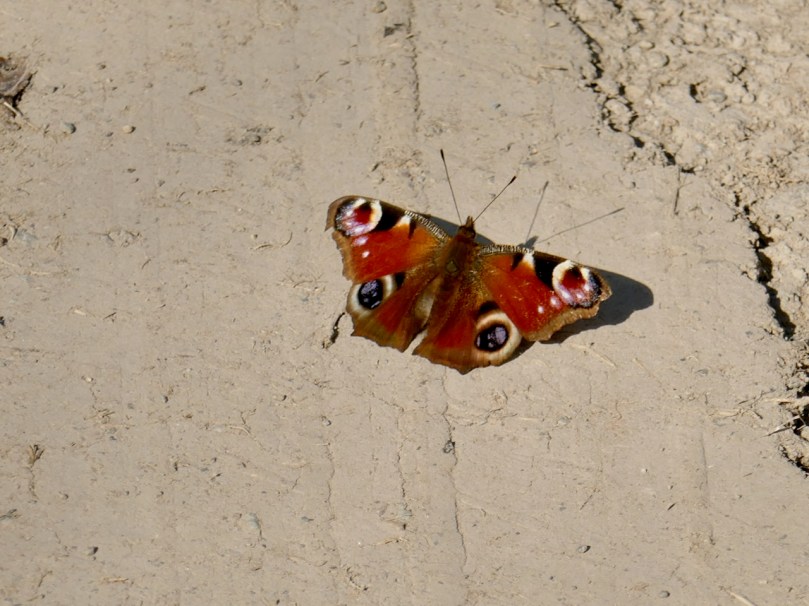
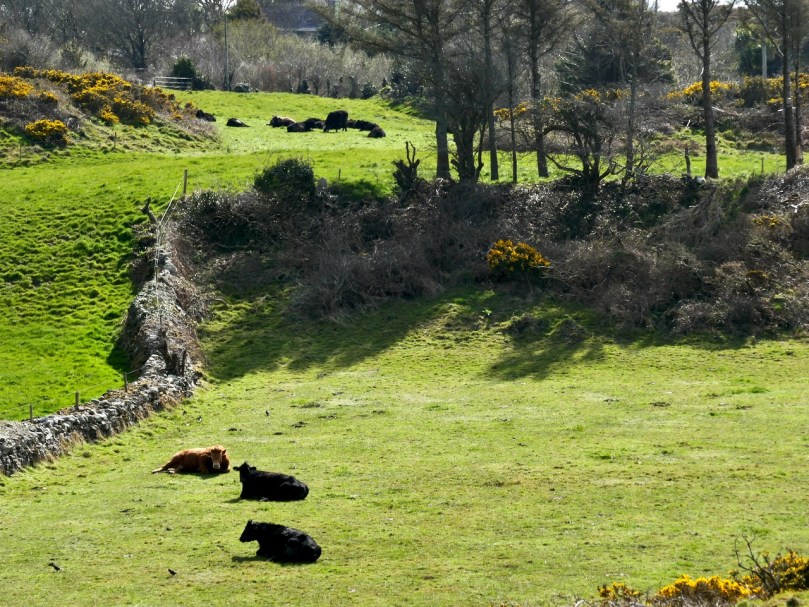
From the top: Seven-spot Ladybird; Peacock Butterfly; Mr Bull and his two cows observing social distancing

I’ve learned so much this way about the natural world. A lot of it has ended up as blog posts on Roaringwater Journal or as entries on my Wildflowers of West Cork Facebook Page.

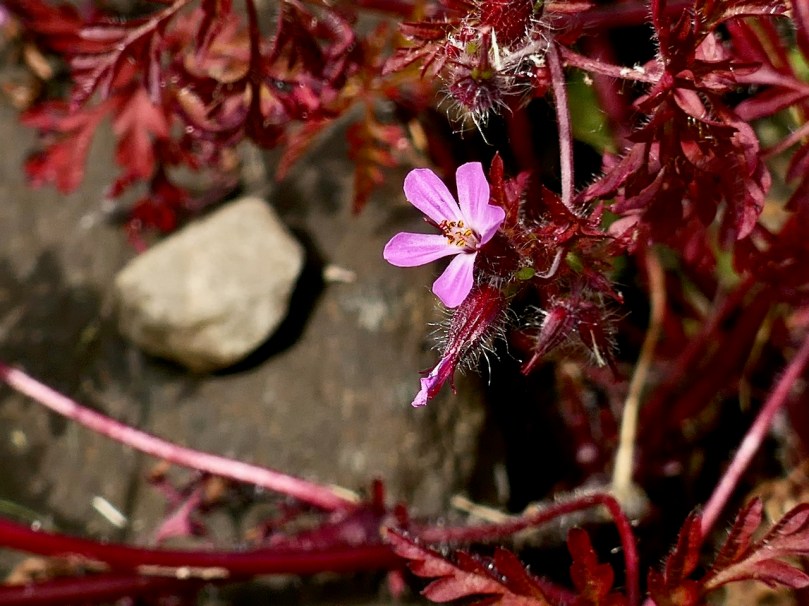
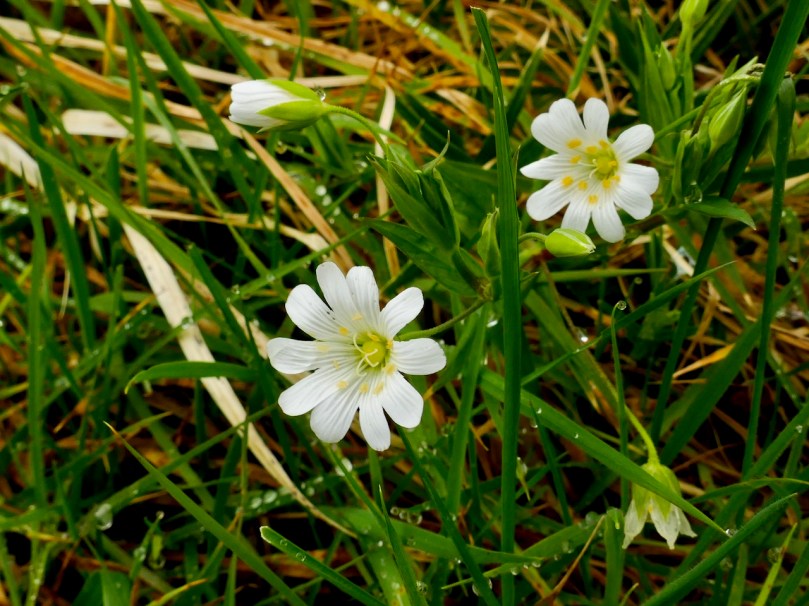
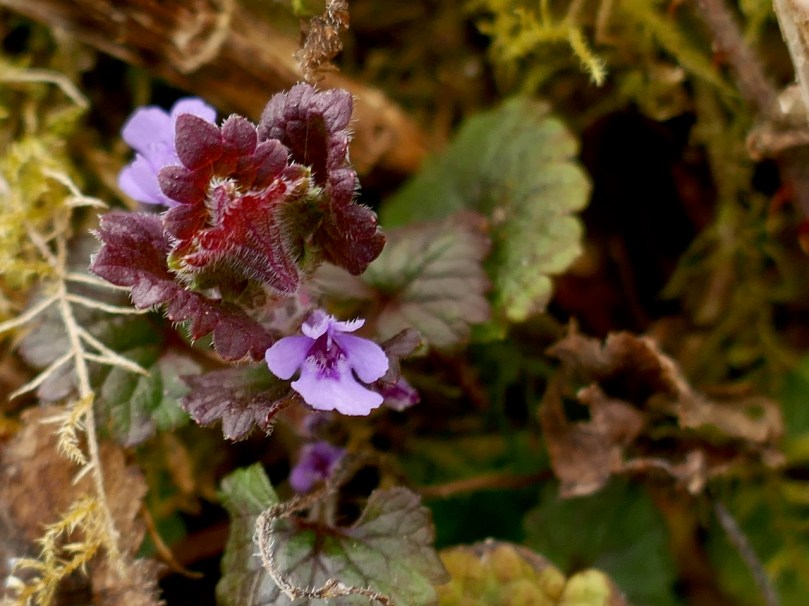
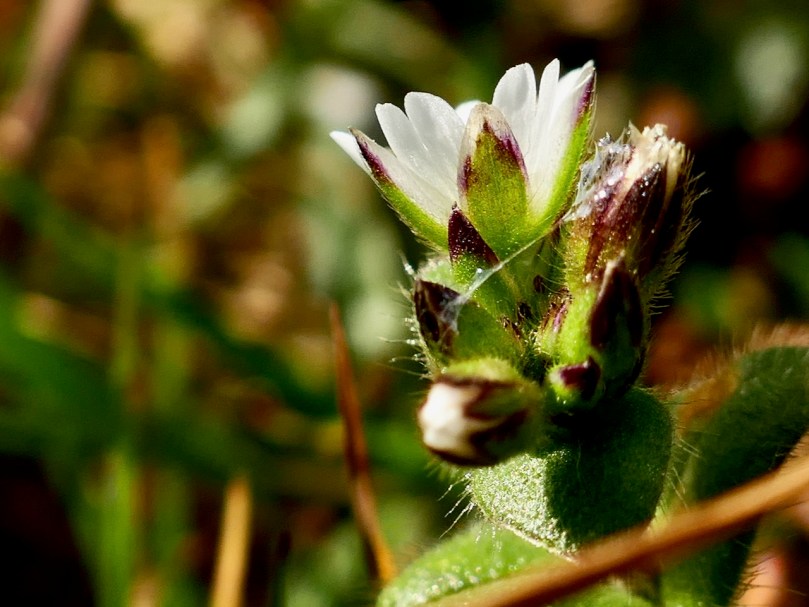
From the top: Herb Robert, Greater Stitchwort and Ground-ivy

There is archaeology and history all around us too, from a wedge tomb to a tower house, from mining complexes to ring forts and standing stones.

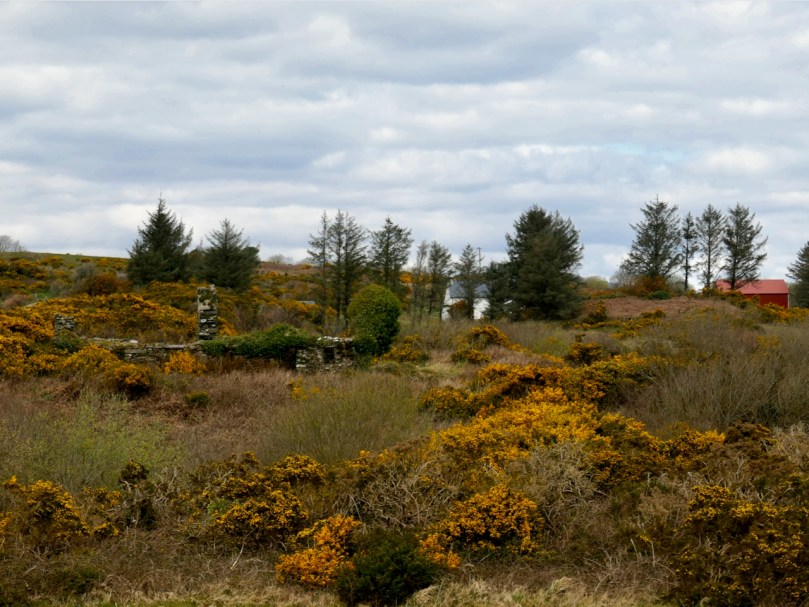
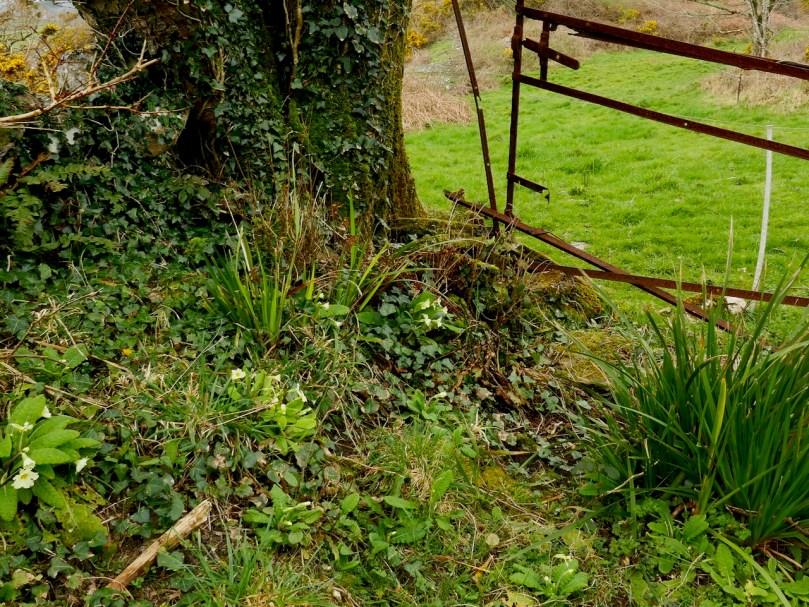
From the top: a ruined farmstead bears witness to population decline; Mount Gabriel looms over a pastoral scene; the old gate once led into a mine

We miss our friends, The Chat in Budds, our Irish lessons and conversation group, the Book Club and Art House Cinema and Talks at the Vaults and all the other events that get us out into the community and keep us curious and learning. We miss our long drives, our Holy Well and Stone Circle hunting trips – and our lattes!

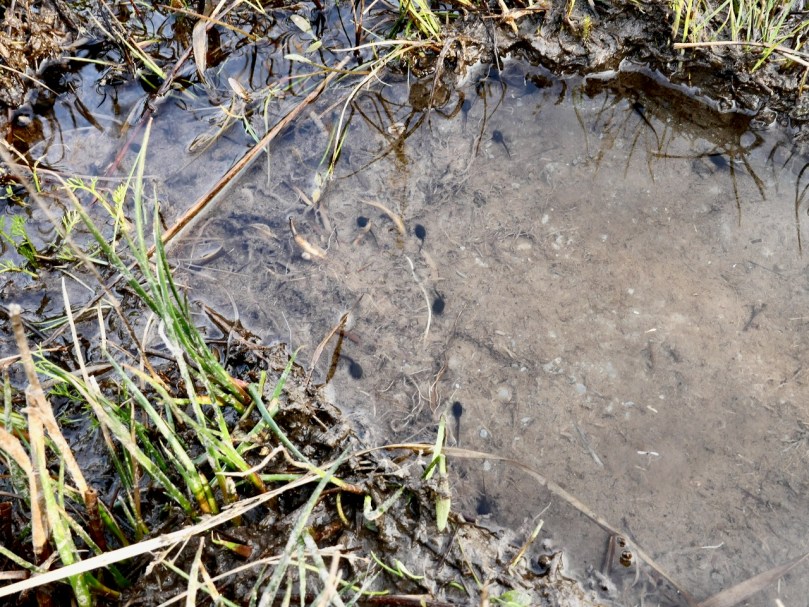
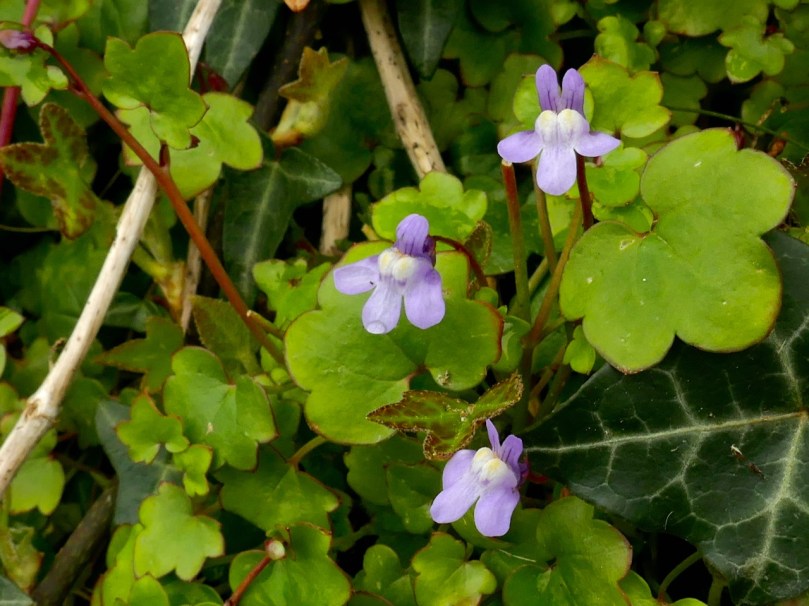
From the top: Tadpoles; Ivy-leaved Toadflax on an old stone wall

But these are small, first world, complaints and we do know how privileged we are to be well, to be able to buy groceries online, not to have small children to entertain and educate at home, and most of all to live in such incredible surroundings. It’s a good reminder not to take those privileges for granted.

I think I have barn envy

Meanwhile, we want to support everyone’s efforts to flatten the curve and we are in awe of the selfless dedication of so many people and desperately sympathetic to those who have lost income. The best way we know to do this is to be cooperative and follow the rules. And that’s what we are doing, mostly staying at home and when we go out keeping our walks to a 2km radius.

From the top: Contrasting textures – bark and barn; Distant view of Castle Island with the remaining castle wall and the abandoned farm houses

So herewith is a selection of what we’ve seen in the past few days as we walk several different 2km routes that present themselves from our front gate. Many of the wildflowers are tiny and only lots of practice enables me to spot them in the verges or the fields.

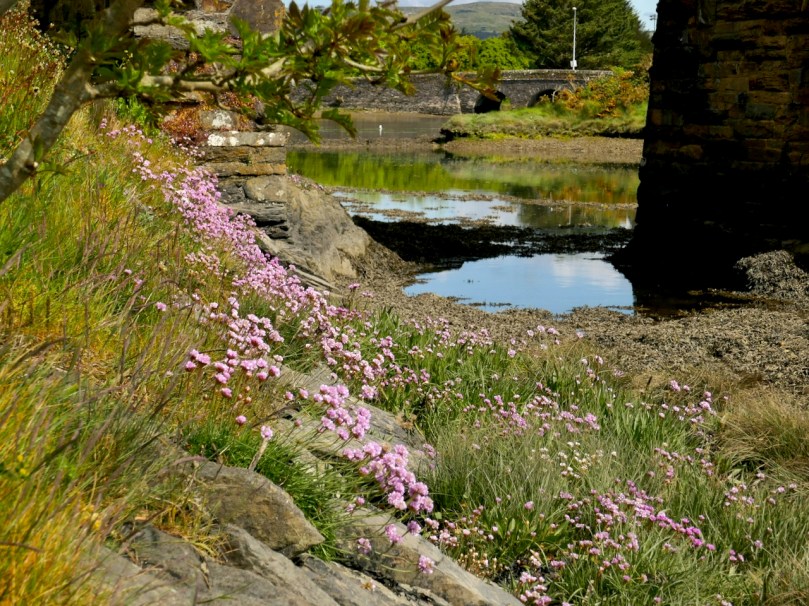
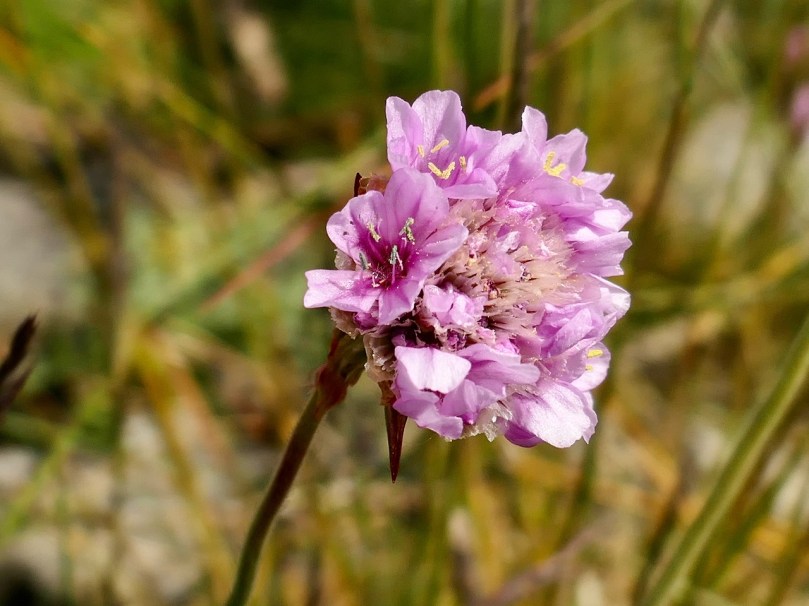
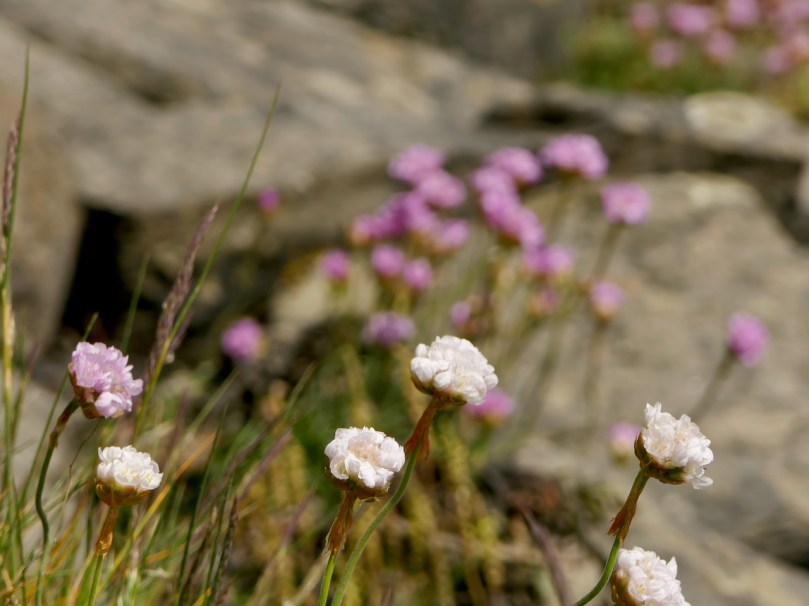
From the top: Dandelions and Celandine; Common Mouse-ear; Thrift and Scurvygrass 

It seems like spring has been slow to come this year although when I look back at previous years I see much the same assemblage of flowers for late March and early April. But beyond a golden day or two, it hasn’t warmed up yet so there is no sense of spring suddenly ‘bustin’ out all over’. Nevertheless the hedgebanks are slowly coming to life and I see something new every day.

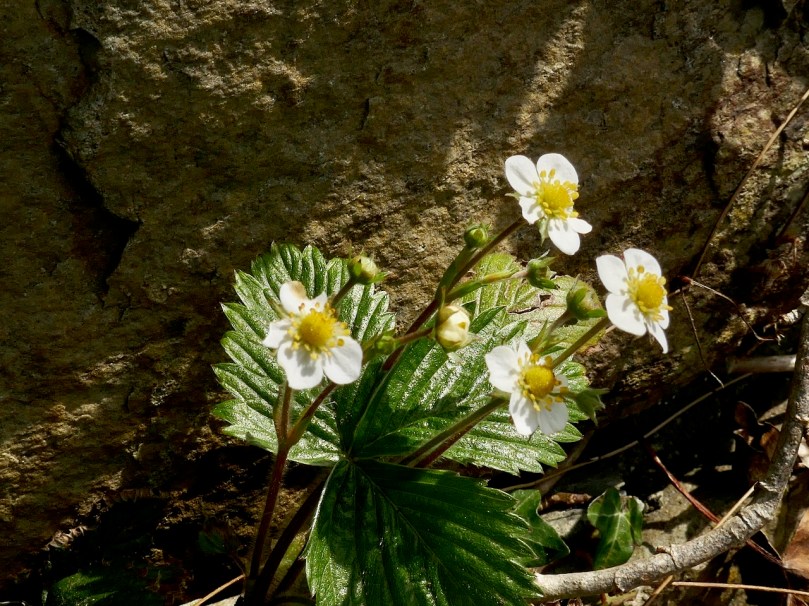
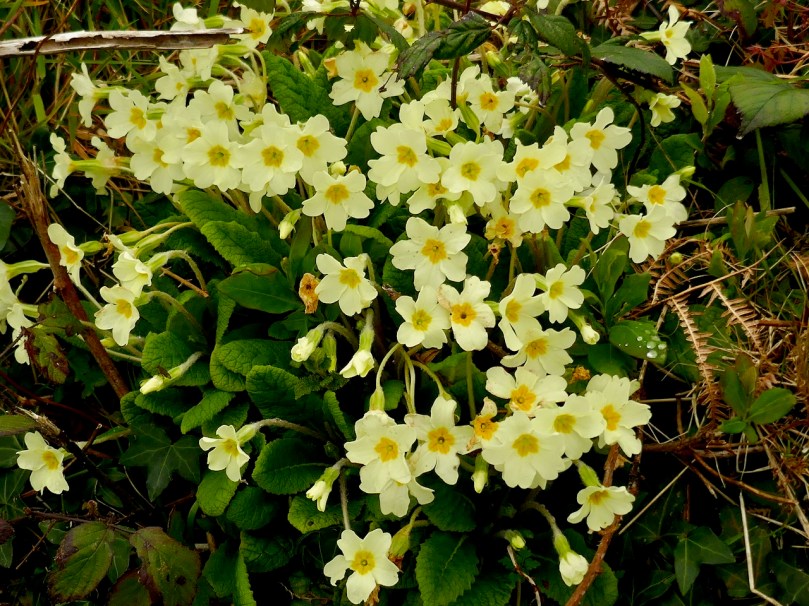
From the top: Wild Strawberry; Three-cornered Garlic (AKA Three-cornered Leek); Scarlet Pimpernel; Primrose

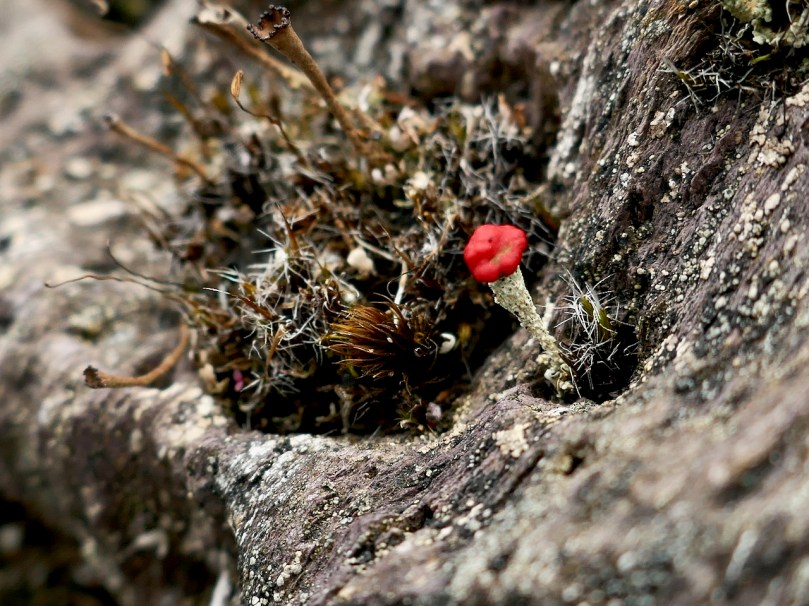
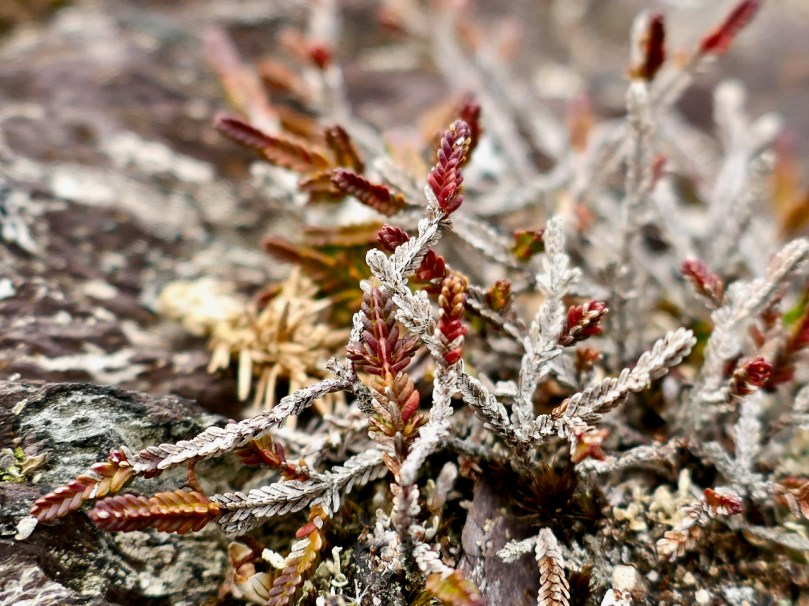
The rock faces at my favourite bog soak are always fascinating, although you have to lie flat with your face an inch from the surface to really grasp the miniature world that teems on its surface. I’m still determined to improve my knowledge of lichen and mosses, but I can’t pretend I’ve advanced much.

From the top: Devil’s Matchstick, a type of Cladonia lichen: I don’t know

How are you all doing out there? Leave a comment and let us know – we want all our dear readers to stay safe and well!


A Wildflower Year

2019 was a good year for the wildflower watcher. This January pine cone looks otherworldly, having lost the seeds along its length.

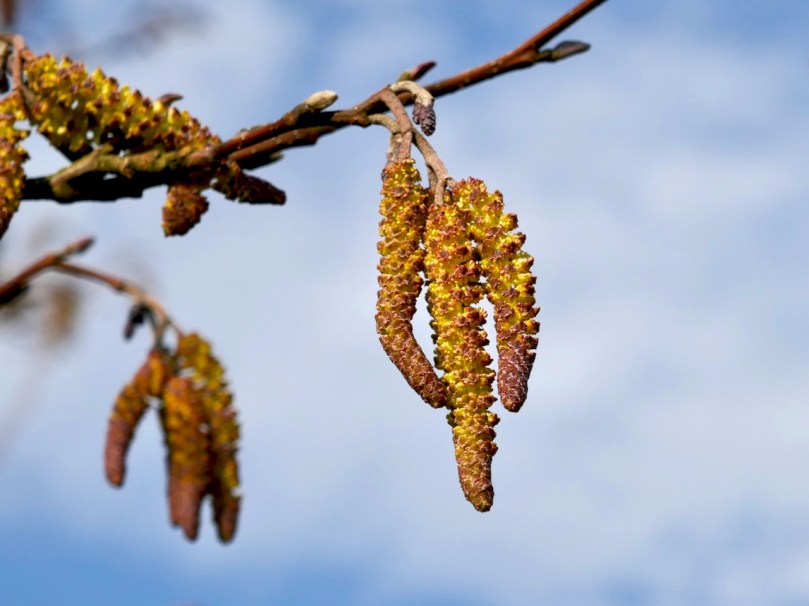
February – Alder Catkins

I run a Facebook Page called Wildflowers of West Cork. It’s on its winter break right now, but take a look at the photographs and you’ll see the amazing variety of flowers I have seen this year. For this post, I have chosen one photograph for each month that represents something for me about that month, or that brings back a memory of my year of wildflower observation. It’s a personal selection, a bit quirky perhaps.

January (first photo) and February (above) are all about the waiting, with hints of what’s to come peeping out every now and then.

March – Colt’s-foot

I was pleased to find these Colt’s-foot flowers in March, but not in West Cork. Although distribution maps show it as occurring here, I’ve actually not seen it here at all yet. Must look harder!

April – Early Dog-violet

I found this one in Kerry. You have to look closely to see the difference with the Common Dog-violet (which we have in abundance). Don’t worry – I didn’t pick it, I’m just holding it steady for the camera.

May – Yellow Rattle

I planted these myself from seeds ordered from Sandro Caffola at Design by Nature and I was thrilled to see them coming up, especially after a crowd of pigeons showed up to feast on the newly-sewn seeds. Yellow Rattle parasitises on grass, loosening the soil and creating bare patches. I’m trying to cultivate a wildflower meadow in one part of my garden and this is one of the recommended strategies for encouraging wild flowers to drift in and take root.

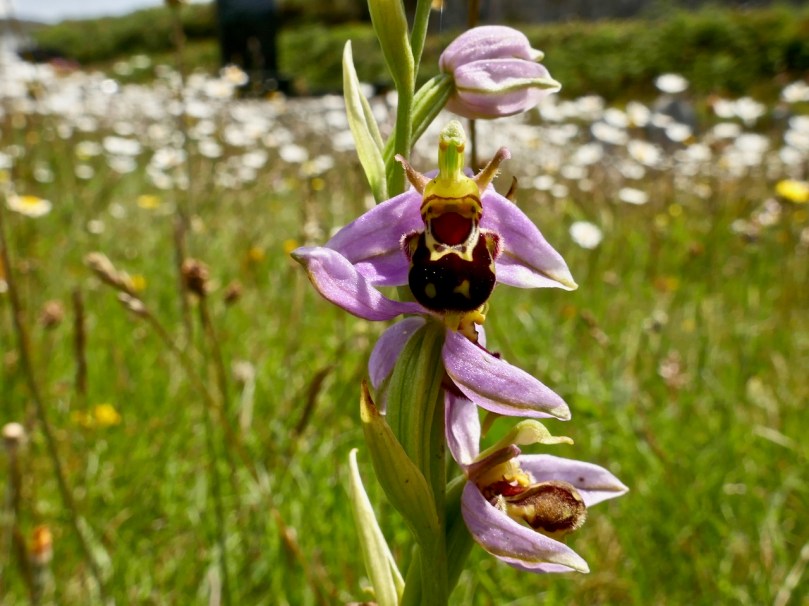
June – Bee Orchid

This is a spectacular and relatively rare native Orchid. Altar Church at Toormore on the Mizen was practising a Don’t Mow, Let it Grow philosophy in the spring and early summer, and all kinds of flowers were flourishing there, including this beauty.

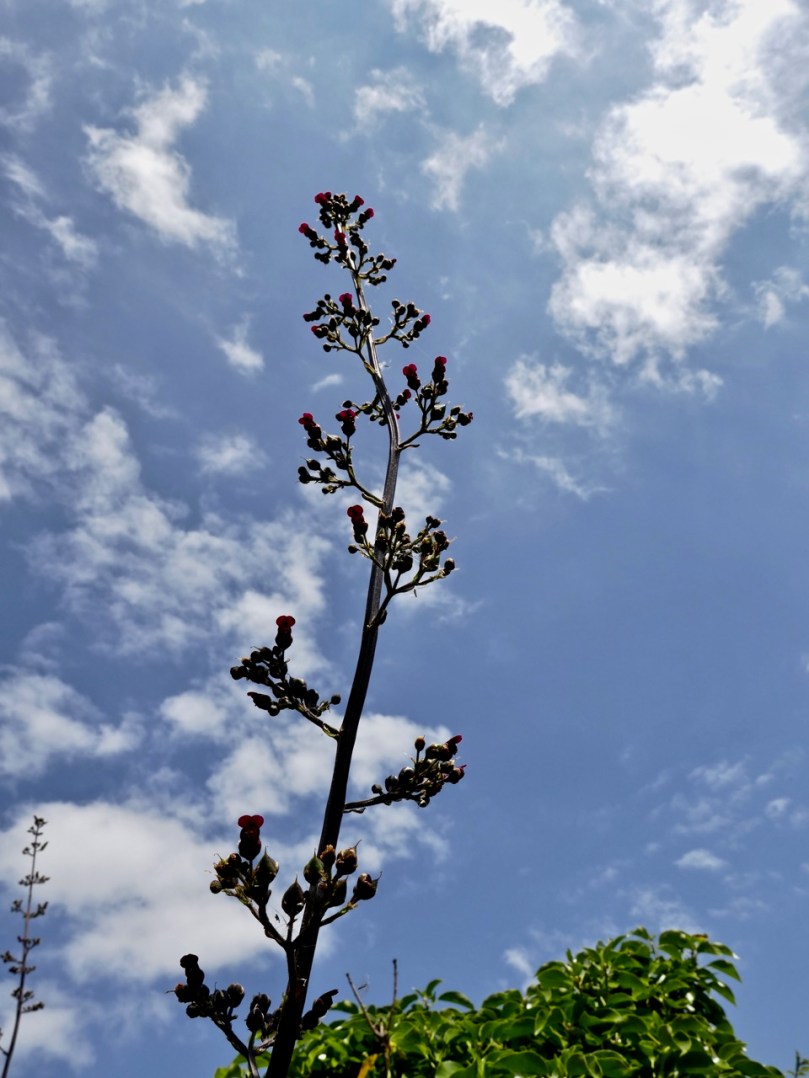
July – Figwort

This is such an easy-to-overlook plant – the red flower is tiny and unobtrusive and it’s only when you see it silhouetted against the sky like this that you realise how exotic it is. The tallest one I’ve seen towered over me.

August – Yellow-horned Poppy

I had a wonderful day on Long Island in August with my friend Damaris Lysaght, helping her do the annual count of this Poppy population. It grows on shingle beaches, but only in occasional locations around the coast, so it was a real privilege to be involved in monitoring such an important species. I had failed to find the Poppy in May when I took a reconnaissance trip to Long Island so I was thrilled to be with Damaris, the expert, on this occasion.

September – Wild Clary

Watching Damaris, I realised I had a lot to learn about counting wildflowers so I signed up for a day long monitoring workshop conducted by the botanist Paul Green for the Biodiversity Data Centre. It took place near Youghal and this was one of the flowers we counted. I really enjoyed the day – observing wildflowers is normally a very solitary activity for me so it was wonderful to hang out with simpatico folks and talk wildflowers all day.

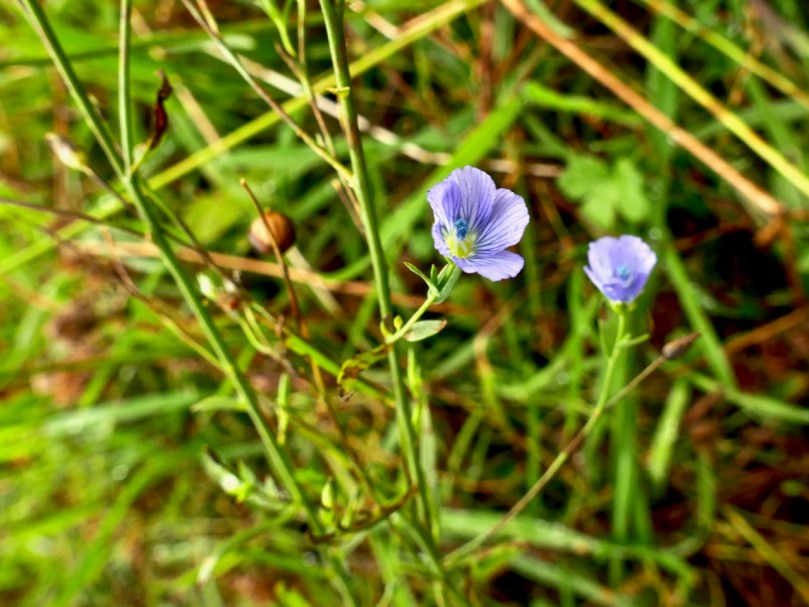
October – Flax

Once widely grown in Ireland for the linen industry, Flax now crops up here and there, often as a result of birds distributing seeds from feed mixes. We had walked cross-country to find a stone circle that day – I wasn’t expecting to see so much Flax in the final field, and wonder if it was sewn as part of a green manure mix.

November – Pixie-Cup Lichens

This was the year we discovered Lichens and Little Things in the Woods and ever since I’ve been keeping an eye out for them. I’ve discovered the rock faces in my own garden hosts quite a variety, including these tiny Cladonia that look like they’re ready for a fairy party.

December – Winter Heliotrope

Introduced into Ireland by Victorian beekeepers to provide winter nectar for bees, Winter Heliotrope has become invasive, covering the ground in large kidney-shaped leaves and leaving no room for native species. Nevertheless, they do introduce a welcome note of colour and scent in the depths of winter.

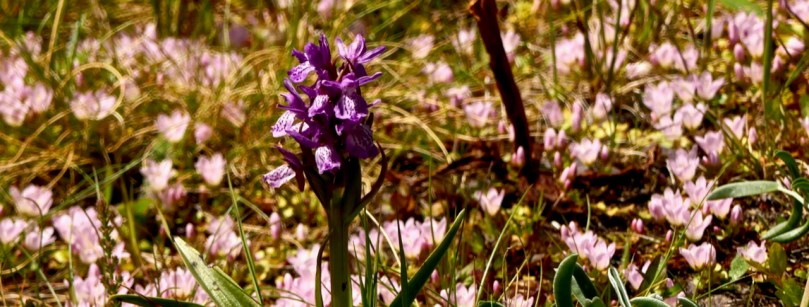
I leave you with another image from the Altar Graveyard – an Early Marsh Orchid (see comments below – I had mis-identified this as a Common Spotted Orchid – thanks, Paddy for, er, ‘spotting’ my error) growing in a sea of Bog Pimpernel. Here’s to another great year of Wildflower Watching!

Walking West Cork – Another of the Fastnet Trails

We’re well into November, yet clear, dry days abound and we are drawn out into the lanes of West Cork. There are so many to choose from, and all are quiet, although we will always find someone to share a chat along the way. Yesterday we donned our boots and followed another of the Fastnet Trails – the Ilen River Loop. In fact, the boots were unnecessary as the whole route is on virtually deserted paved roads. If that sounds unexciting, let me tell you it isn’t: wherever you go in West Cork you won’t be short of sweeping green landscapes, broad views – mostly over mountain or water – and fragments of engrossing history jumping out to meet you.

We started at the Lisheen trail head and covered the 8 kilometers in a bit over two hours. This did include some dawdling and chatting: in Ireland the latter is unavoidable, and applies to everyone you meet. With us were friends Amanda and Peter, and you’ll find Peter’s Hikelines account of the expedition here: his watercolour illustrations can only be described as ‘exquisite’.

Look carefully (above) at the line of sea on the horizon: just visible is the unmistakeable silhouette of the Fastnet Lighthouse, justifying this route as a part of the Fastnet Trails network. It’s a wonderful asset for locals and visitors. You could simply drive along these routes, of course, but you just won’t get to see the details and appreciate the beauty. On foot you can pause at every turn and on every brow to properly take in the delectable countryside. And the network of trails is expanding – new routes are being developed at the west end of the Mizen: here’s another of Peter’s posts.

There are views to the north as well, looking into Ballydehob Bay which Jeremy Irons’ ochre coloured Kilcoe Castle dominates. Above the water can be seen the islands of Roaringwater Bay and the ridges of the Mizen and Sheep’s Head, and even the high peaks of the Beara Peninsula beyond. But we must focus on the subject of this trail, which is the broad estuary of the Ilen River as it winds inland, feeding into the woods and pastures of West Cork, narrowing but remaining tidal right up to Skibbereen: schooners used once to berth on the five quays serving that town.

All along the coastline and river estuaries in West Cork are reminders of how important transport by water once was. Dozens of quays are still here, in good working order – there was a drive to revive and restore the more significant ones some years back. Also there are traces of more ancient ones which are slowly decaying into nature. All were put there to serve the isolated rural communities in the days when boreens were only narrow tracks, often impassable in the winter months. But on these western peninsulas no-one is more than a few miles from navigable water – and those quays were an invaluable asset.

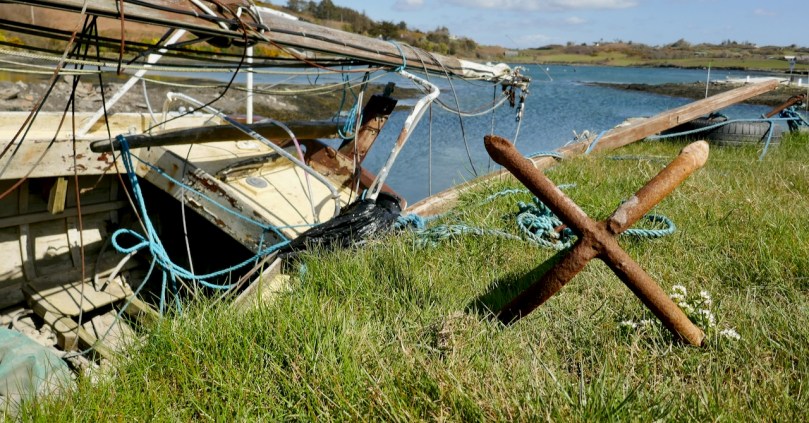
Our route passed right beside the Glebe Quay, where we came across the hull of an old fishing boat and – by chance – one of its former owners! Here we are, ‘at the chat’, above. This became a long ‘chat’ – as I was most intrigued to find out why this large vessel was sitting here in a deteriorating state – but we had to cut it short in the end as we were getting cold standing still! Our informant was Mike Williams, who Finola and I have met before: he lives on the shore of the Ilen River and has been involved in boats and boatbuilding for much of his life. He bought this former herring ring-netter some years ago with the intention of restoring her, but sold the vessel on to another enthusiast. The project did not succeed, however, and now the boat is on its way to the marine scrap yard – a sad but inevitable fate for many retired wooden craft.

I did a bit of internet delving and was pleased to turn up some historical information on this boat, which Mike told us was named Ribhinn Bhan. Ribhinn comes from the old Irish word rhigan meaning ‘maiden’, while bhan in Irish means ‘white’. This vessel started life with the name Ribhinn Donn – ‘brown-haired maiden’, and was built in Scotland by Nobles of Girvan in 1966. She was first registered in Scalpay Isle – Sgalpaigh na Hearadh in Gaelic, one of the Outer Hebrides, close to Harris – and carried the number SY 371. She was renamed in 1973 and reregistered as B23 in 1989. She arrived in Tarbert, Co Kerry, Ireland in 2004, and Mike bought her in 2006. I’m including these two not-so-good quality photos of Ribhinn Bhan, which I traced, for historical interest: the first is the vessel in Tarbert, and the second  follows her to West Cork; she is on the right, here, in the boatyard at Oldcourt, on the Ilen River, in 2007.

Moving on from the Ribhinn Bhan our path followed the line of the estuary, rising up to higher ground before turning back towards the trail head at Lisheen. There were many more sweeping views to be enjoyed, and the delight of being immersed in the simple ambience of rural life in West Cork, with all its unremarkable yet irresistibly attractive details. 

We passed the quite remote but still running Minihan’s Bar – an ideal refreshment point on summer evenings – but not open for us on this November afternoon. The also remote seeming Saint Comghall’s Church, built in 1832, marked the return to the trail head and the end of our walk. It was a most satisfying expedition on a remarkably golden late autumnal day.

Up-to-date information on all the Fastnet Trails – including this one – can be found on this website. Our Roaringwater Journal has also written up a few more of them. Give them a try, if you haven’t already done so . . . Enjoy!