Late Bloomers: Invasive, Naturalised and Native

Creeper on white cottage wall

This is my last wildflower post! You must be getting tired of my wildflower obsession by now. So, no more after this one. (Well, at least not in 2016.) The thing is, I had assumed that there was nothing left to see at this point. We are in October after all, and autumn is coming early this year after a cool and misty summer. But a walk today put flight to that notion.

Bee on Ivy Flower

Bracken undergrowthThe ivy flowers are alive with bees right now (above) and the bracken is putting on its winter coat

The predominant colour of the countryside is changing now as the brackens take on their winter amber-brown. The ivy is in full flower. Stand near a patch and you will be instantly aware of the hum. Our little black Irish bees are gathering while they still can and depend on this late flowering and ubiquitous plant for the last remaining nectar. Ivy honey is darker in colour and can smell a little rank, but it has a great reputation as a soothing cure for coughs and colds (especially if mixed with a little whiskey).

Bee on Ivy 2

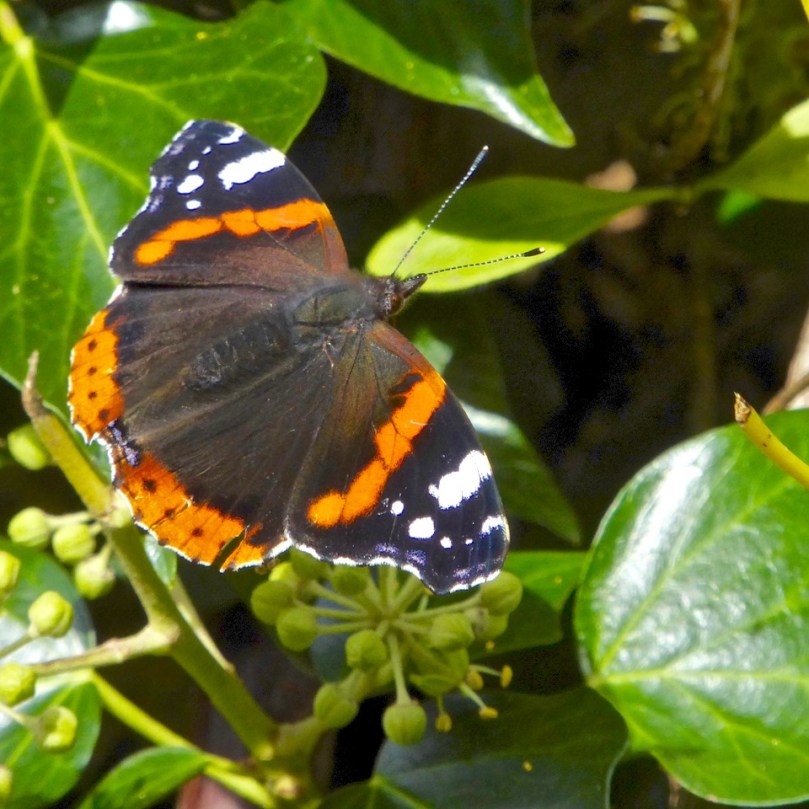
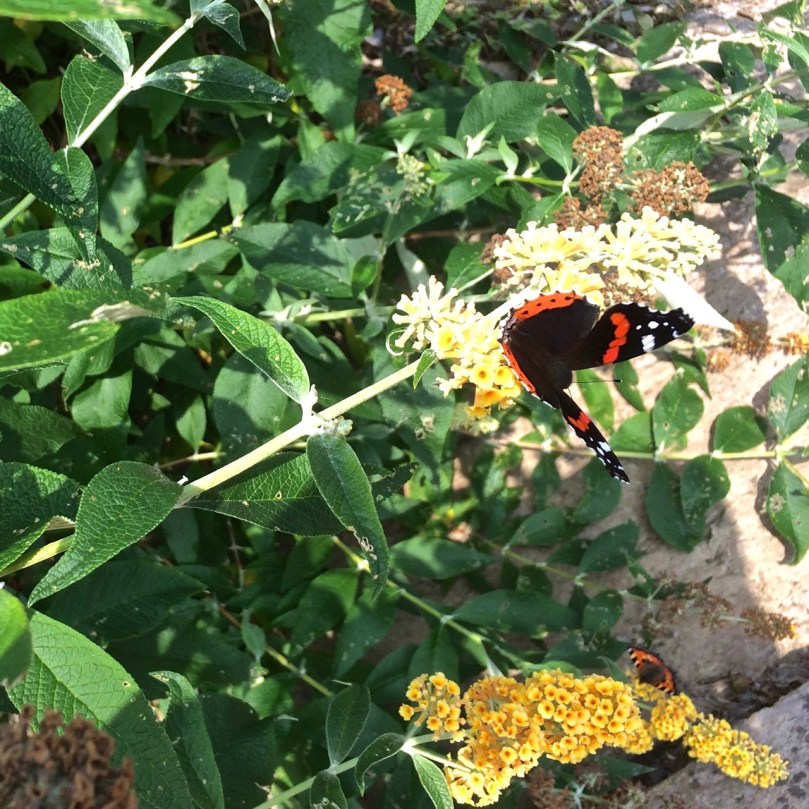
Red Admiral on IvyThe bees and the Red Admiral Butterflies depend on this late flowering ivy

The trees haven’t quite started to turn yet, but brambles and creepers are in brilliant autumn reds. On our walk today this white cottage wall with its scarlet creeper caught my eye.

Creeper on cottage wall

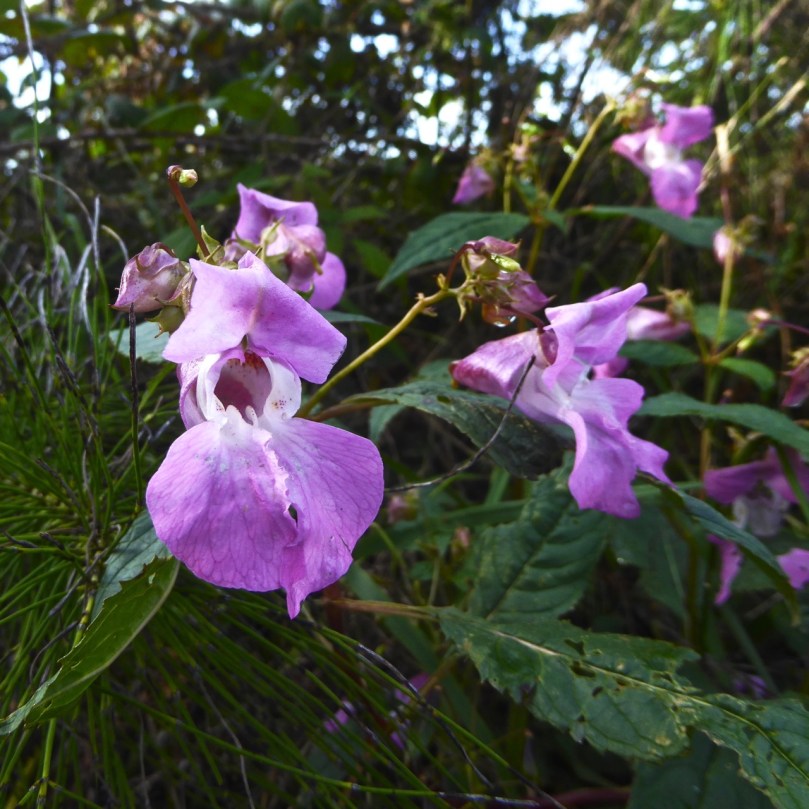
A couple of surprises awaited us today. The first one was to come across a stand of Indian Balsam. This alas, is an invasive species, introduced as far back at 200 years ago from the Himalayas. The distribution map at the Botanical Society of Britain and Ireland does not show it in West Cork, but I guess I can now say it’s here. In fact, I submitted a report to Invasive Species Ireland – anyone can do this via their Alien Watch Program. Although it is certainly beautiful, it’s a divil – read all about its negative impacts on the Invasive Species Ireland website. Among its other attributes, it has a explosive seedpod that can throw seed up to six metres!

Indian Balsam

Indian Balsam – Invasive Species Ireland lists it with Rhododendron, Japanese Knotweed and Giant Hogweed as the most damaging invasive species

So  what’s the difference between non-native plants that are labelled invasive versus this that are called simply naturalised? Although it can be a matter of debate and perception, in the main we use the term invasive for those non-native plants that spread to such a degree as to exclude native species from the habitat they favour, or cause damage to the environment or the economy. Happily, the only invasive species we encountered on our walk was the Indian Balsam. However, we did come across lots of non-native, naturalised flowers too.

Greater Periwinkle

The Greater Periwinkle – seen a few days ago on The Mizen

The first one (actually seen a few days ago) is this beautiful Greater Periwinkle. It’s not a native plant but has been here a long time. It’s supposed to have great medicinal properties, especially as a laxative and, in an ointment it’s good for, er, piles. According to Zoe Devlin’s Wildflowers of Ireland (my go-to guide) The 17th century herbalist, Nicholas Culpeper wrote ‘that the leaves eaten by man and wife together, cause love between them. Ooh – think I might head back to where I saw it…

Ivy-leaved Toadflax

Ivy-leaved Toadflax

Another non-native species is the Ivy-Leaved Toadflax – not an attractive name for a very pretty little creeper found commonly on rock walls. During the 1600s, wealthy Brits started to import Italian marble into England in the form of building material and statuary. The Toadflax came along for the ride and is now so completely naturalised that few people realise it’s not a native plant. They look wonderful on rock walls but it’s not usually necessary to plant them yourself. According to one source I read, seeds, complete with a starter-pack of organic growing medium, are usually delivered by birds.

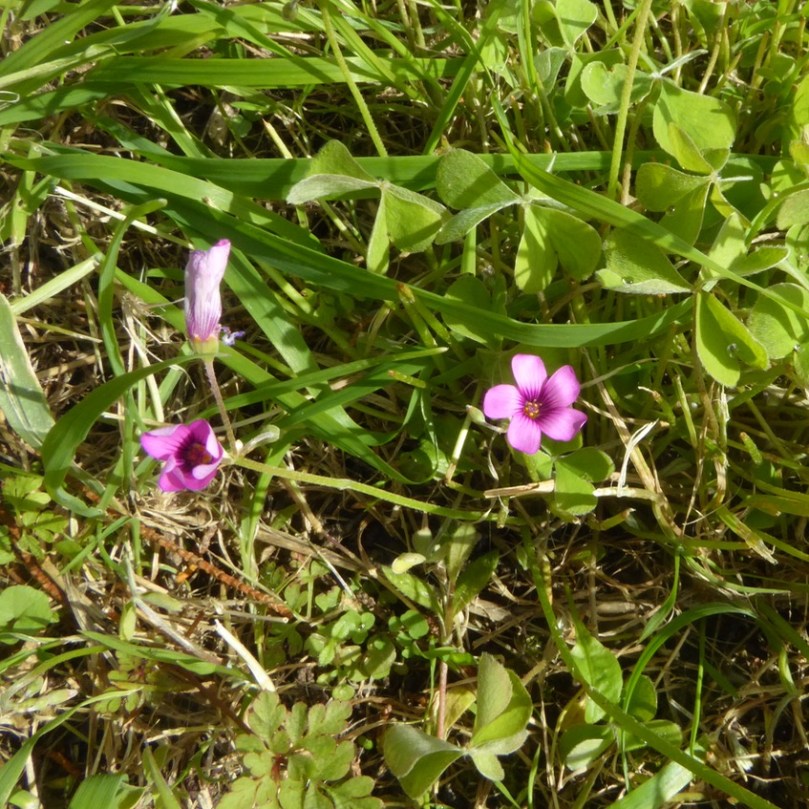
Pink Sorrel

Pink Sorrel

The final non-native flower we saw today was the pink sorrel. I thought at first it was Herb Robert, which is a native plant that grows everywhere and is still blooming, but closer examination revealed  a deeper pink, a more massed growth pattern and very different foliage. It’s a garden escape, now naturalised across the south and south east of Ireland.

Fuchsia on bare branches

Actually, I suppose I also have to add the fuchsia to the naturalised non-native list, even though we think of it as the quintessential West Cork flowering shrub. It’s still hanging in there, even though most of the leaves have dropped already.

Creeping Buttercup

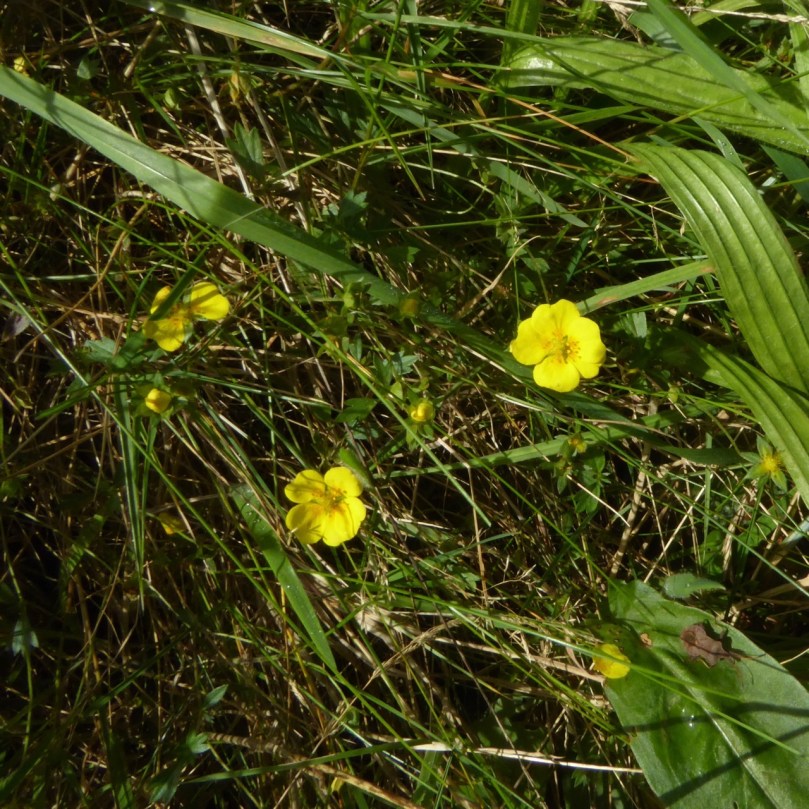
Tormentil

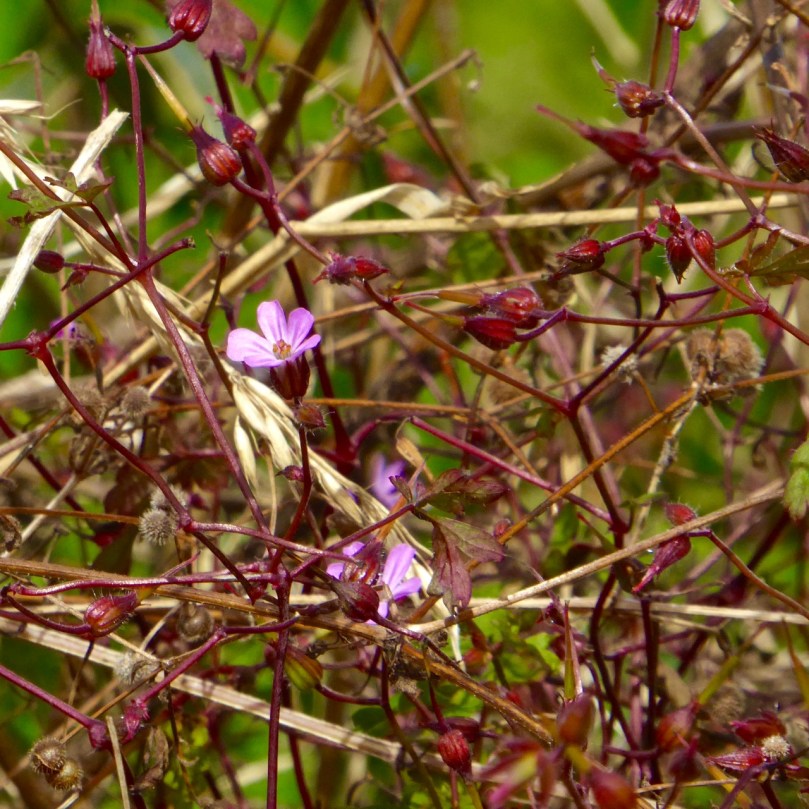
The native plants still bravely blooming to delight us tended to be tiny, but bright enough among the grasses, brambles and bracken to immediately catch the eye. We saw Herb Robert, Prickly Sowthistle, Tormentil and patches of what might be Sea Radish (or perhaps not). 

Prickly Sowthistle

Prickly Sowthistle

Herb Robert is such a hardy little flower – it seems to peep out and last longer than almost everything else in the hedgerows. Birds love the seeds of the Prickly Sowthistle – it has guaranteed its survival by appealing to them and providing food when other sources are fading.

Herb Robert

Sea Radish

Herb Robert (top) and possibly Sea Radish

As  a member of the cabbage family, the leaves of the Sea Radish are edible, if a little peppery. Interestingly, it normally finishes flowering in July, so the ones we found today must be in a particularly sheltered spot. But this also raises the possibility that this is a different plant. Can anyone help identify it?

Tormentil Patch

And finally the strangely named Tormentil – it sounds like it may cause pain but in fact it’s the opposite. There are all kinds of medicinal uses for this little flower and its parts, some of which relieve the ‘torment’ of pain. It also, according to this website,  imparts nourishment and support to the bowels and the fresh root, bruised, and applied to the throat and jaws was held to heal the King’s Evil. You heard it here first!

Ballycummisk Coppermine and Gabrial

Our walk today, along one of the Fastnet Trails, took us past the old Ballycummisk mine site and gave us distant views of Mount Gabriel

The Old Mine Road

to the castle

Exactly two years ago I wrote a piece for this Journal – A Moment in Time – remarking on the very specific changes that we become aware of at the end of the summer: the holiday homes being closed up and shuttered; the boats being taken off their moorings and stored away in the boatyard; the shorebirds returning to their winter quarters. I finished up by pointing out that our own summers never end: we enjoy living in Cappaghglass just as much in the darker, colder days at the turning of the year as we do when the sun is high in the heavens.

cove gray day

high road gray day

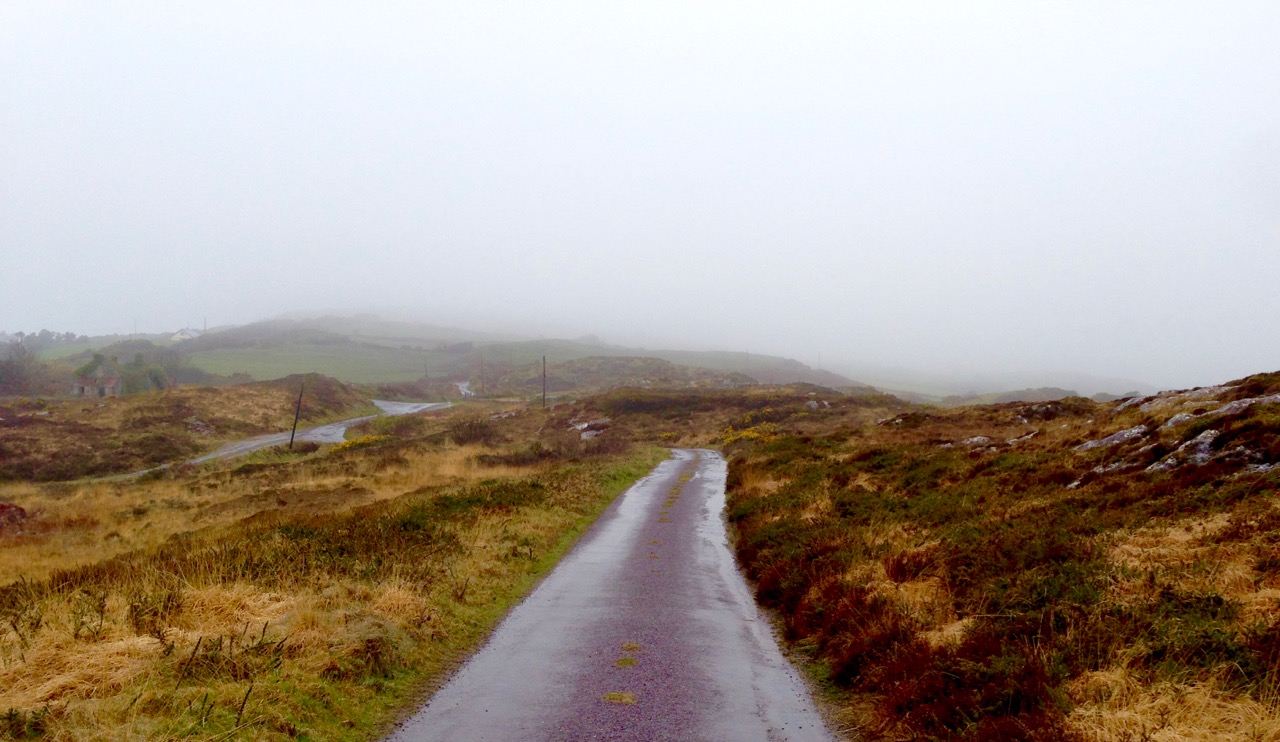
Top – starting point: Rossbrin Cove on a gray day. Bottom – The Old Mine Road wearing its raincoat

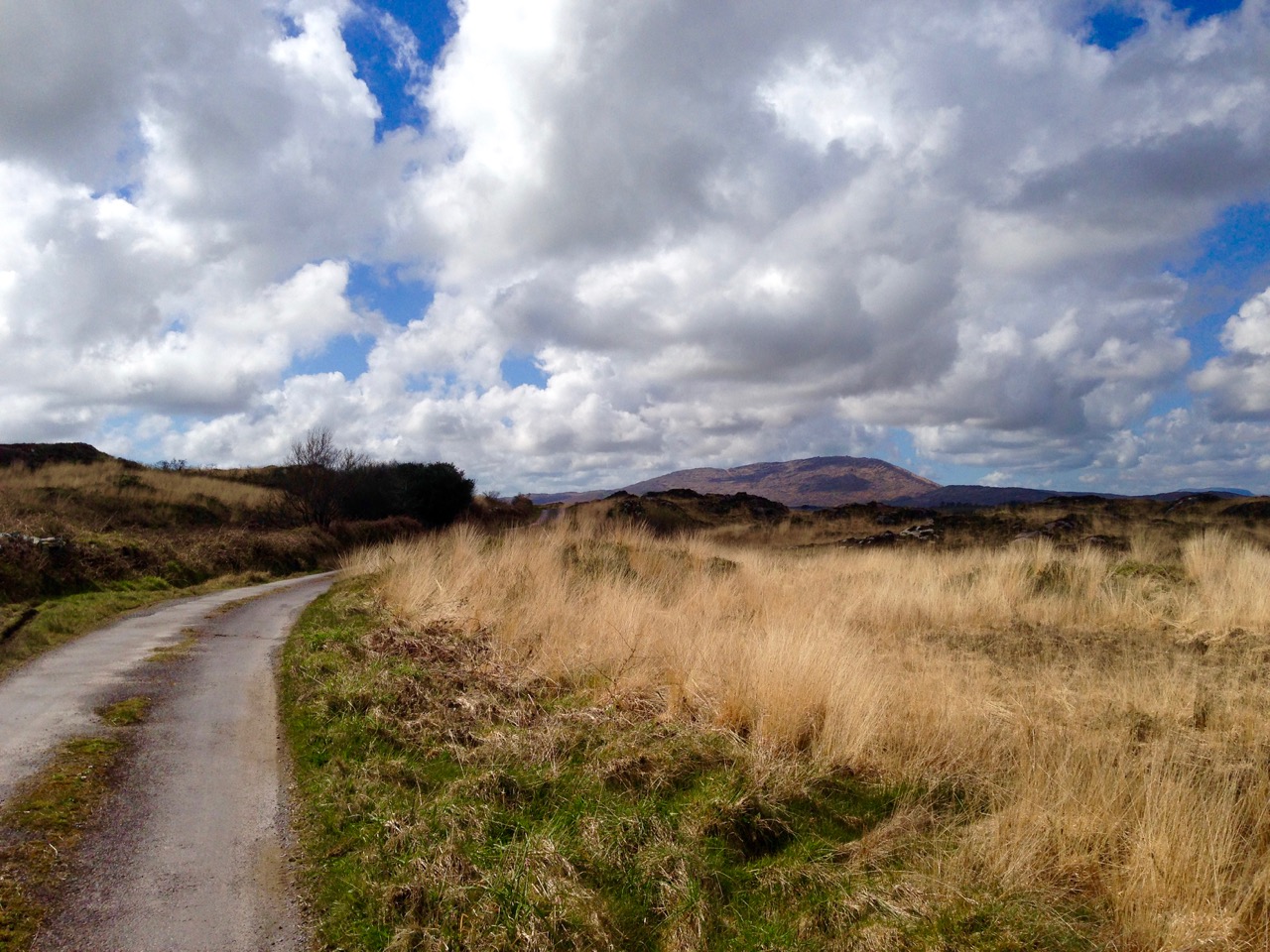
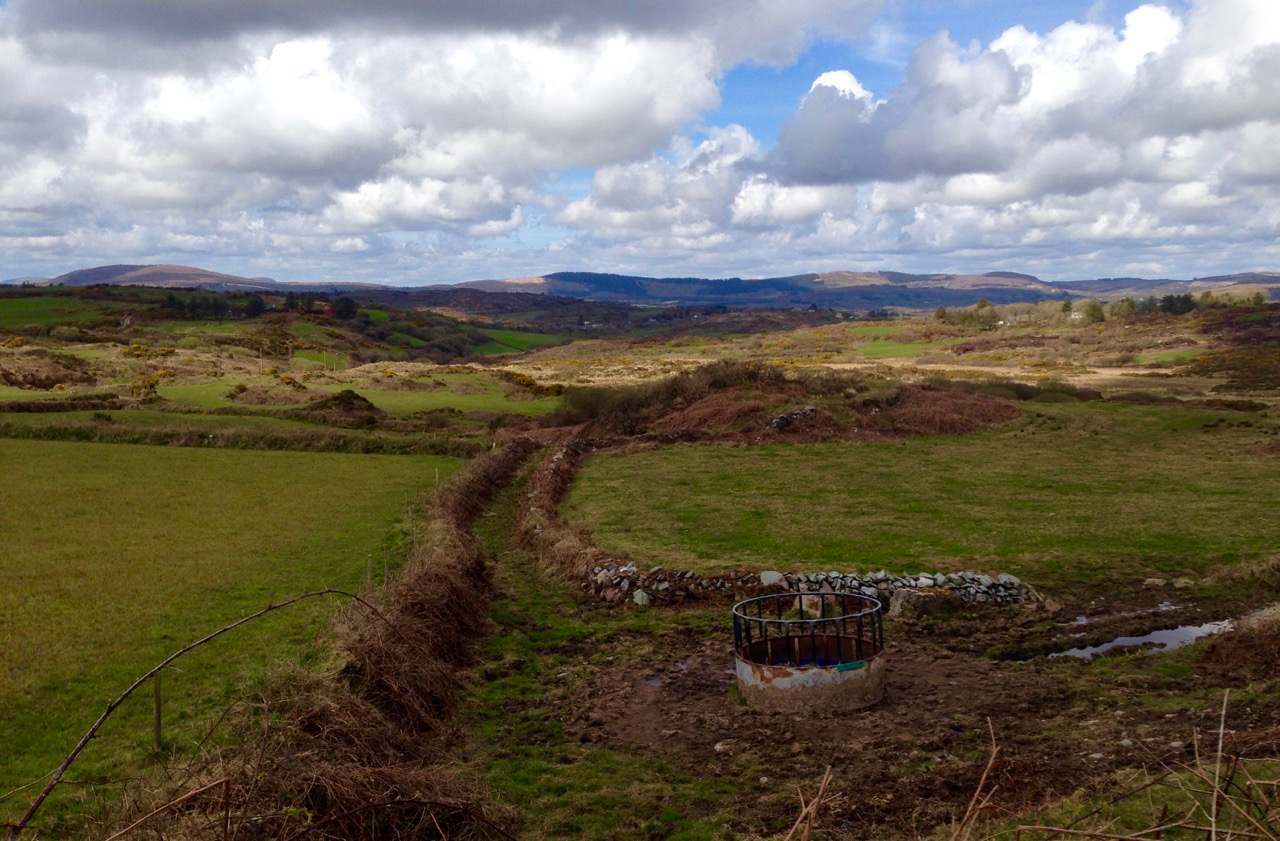
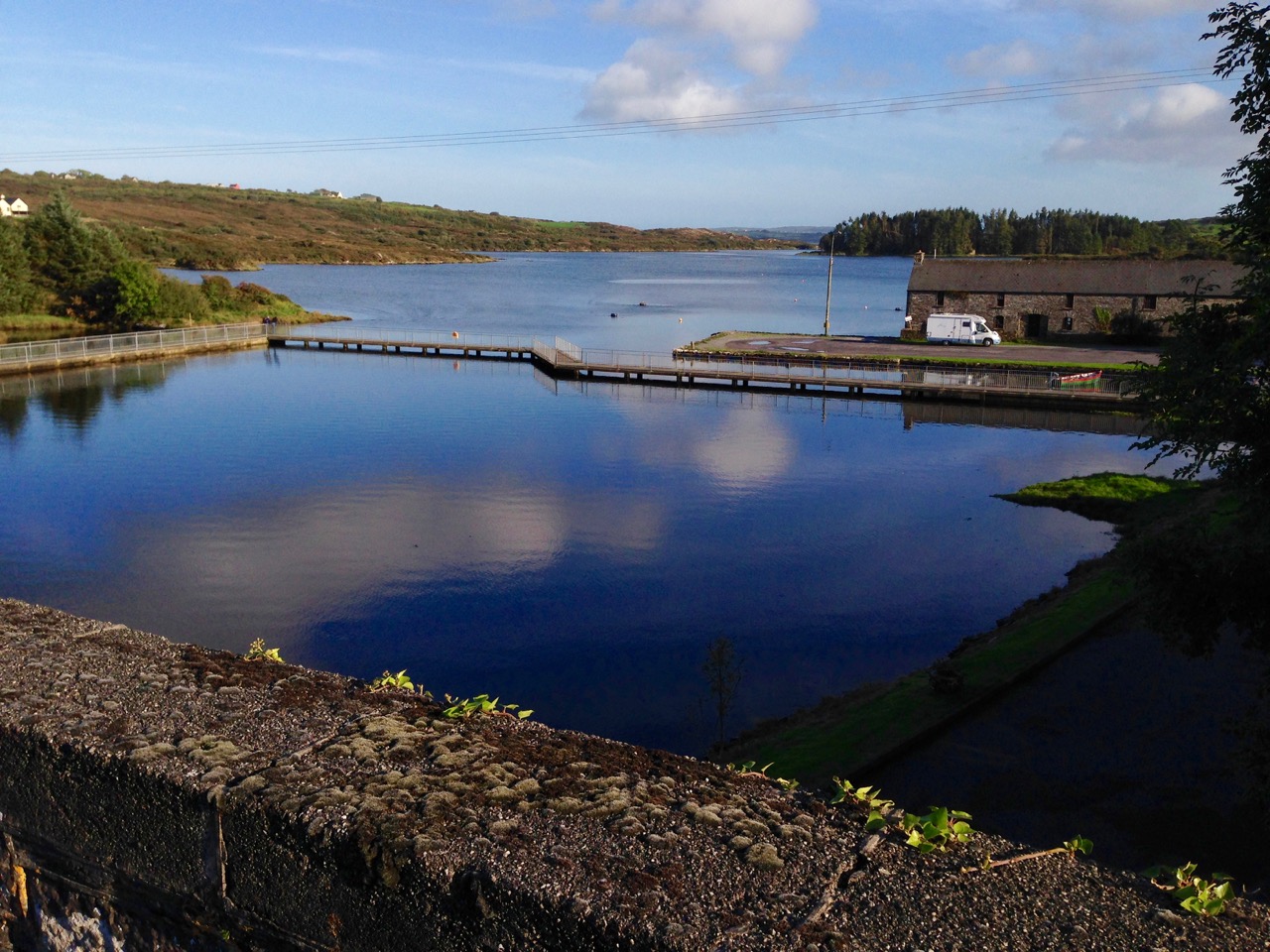
It is an idyllic life and we are privileged to have the quiet boreens to ourselves in all weathers. We have talked about Rossbrin Cove so often, in its many seasonal variations: for today’s post I’m taking the upward road through the townland, the route that I call The Old Mine Road. This road – or more accurately this series of lanes and byways – will take the traveller from the Cove into the little town of Ballydehob, and will pass through an old copper mining district which, two hundred years ago, saw heavy industry, intermittent employment, smoke, noise, pollution and desperate human working conditions where now ‘peace comes dropping slow’ with only the crying of the Choughs over an undisturbed backdrop of rock, heather and coarse grasses – and the occasional jumble of stones showing where there were once buildings, shafts and crumbling walls marking the old mine complex.

cappaghglass

captain's house sun

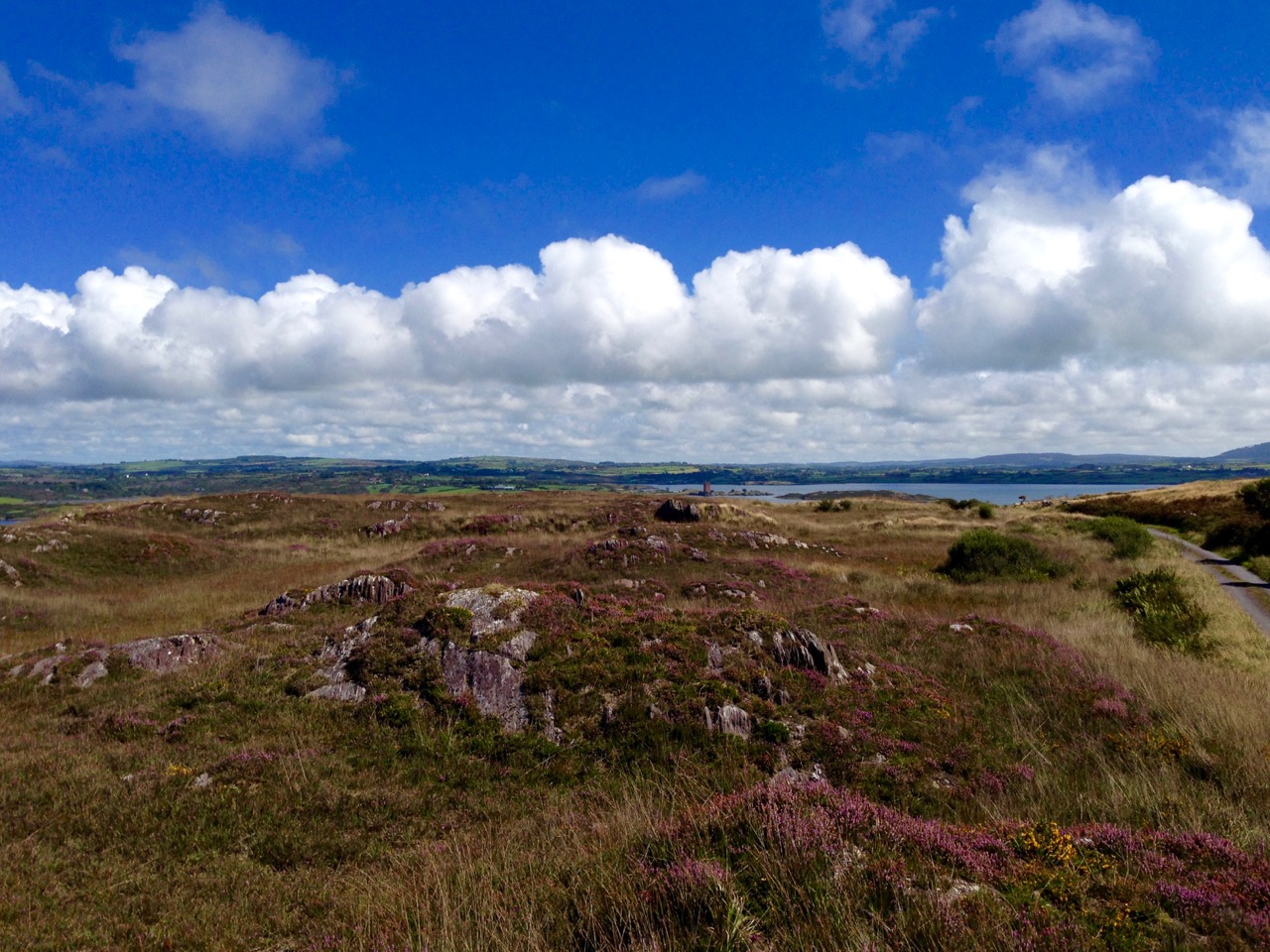
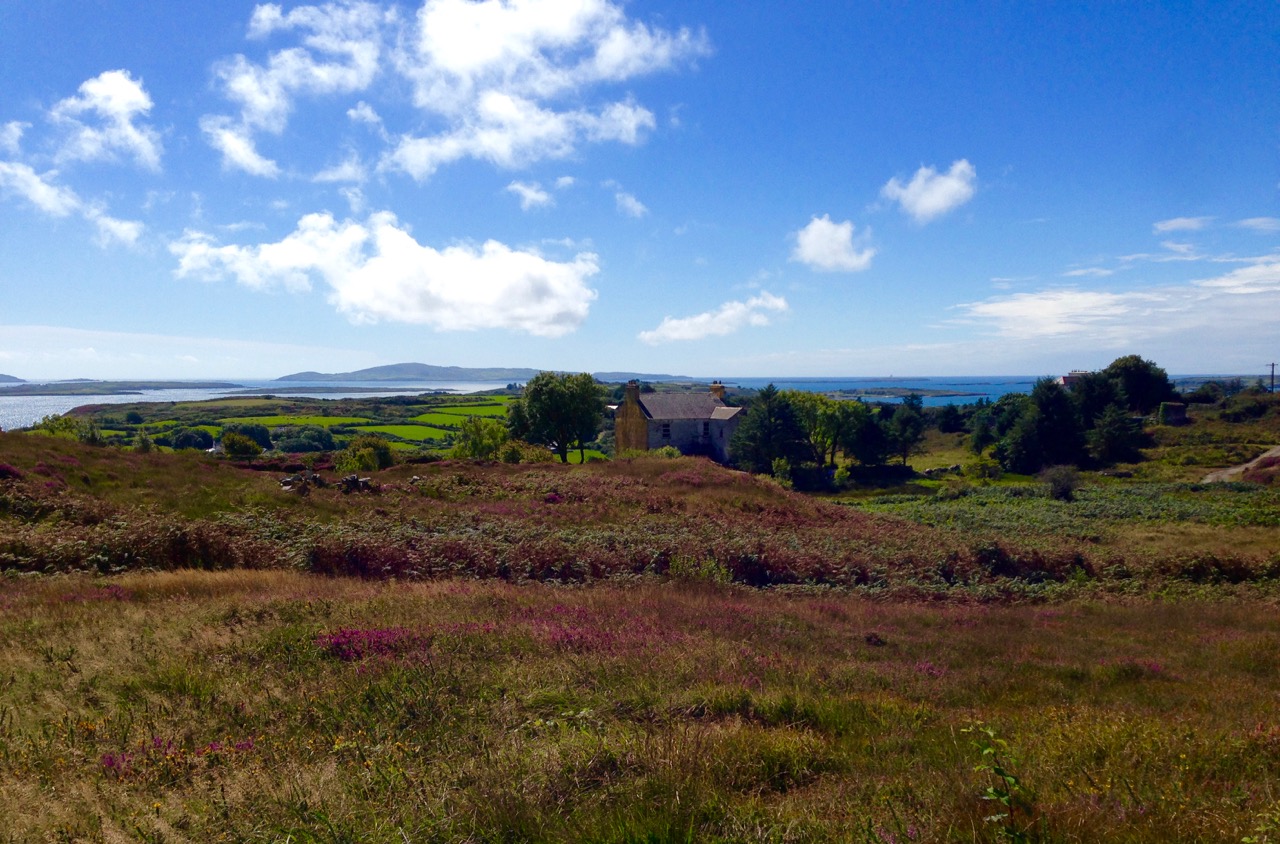
Top – the landscape of The Old Mine Road: Mount Gabriel dominates the horizon to the west. Bottom – looking from the road towards Roaringwater Bay: in the foreground is the site of old mine workings, now reclaimed by nature, with one of the two Mine Captain’s Houses in the centre and the stump of an old mine chimney on the right

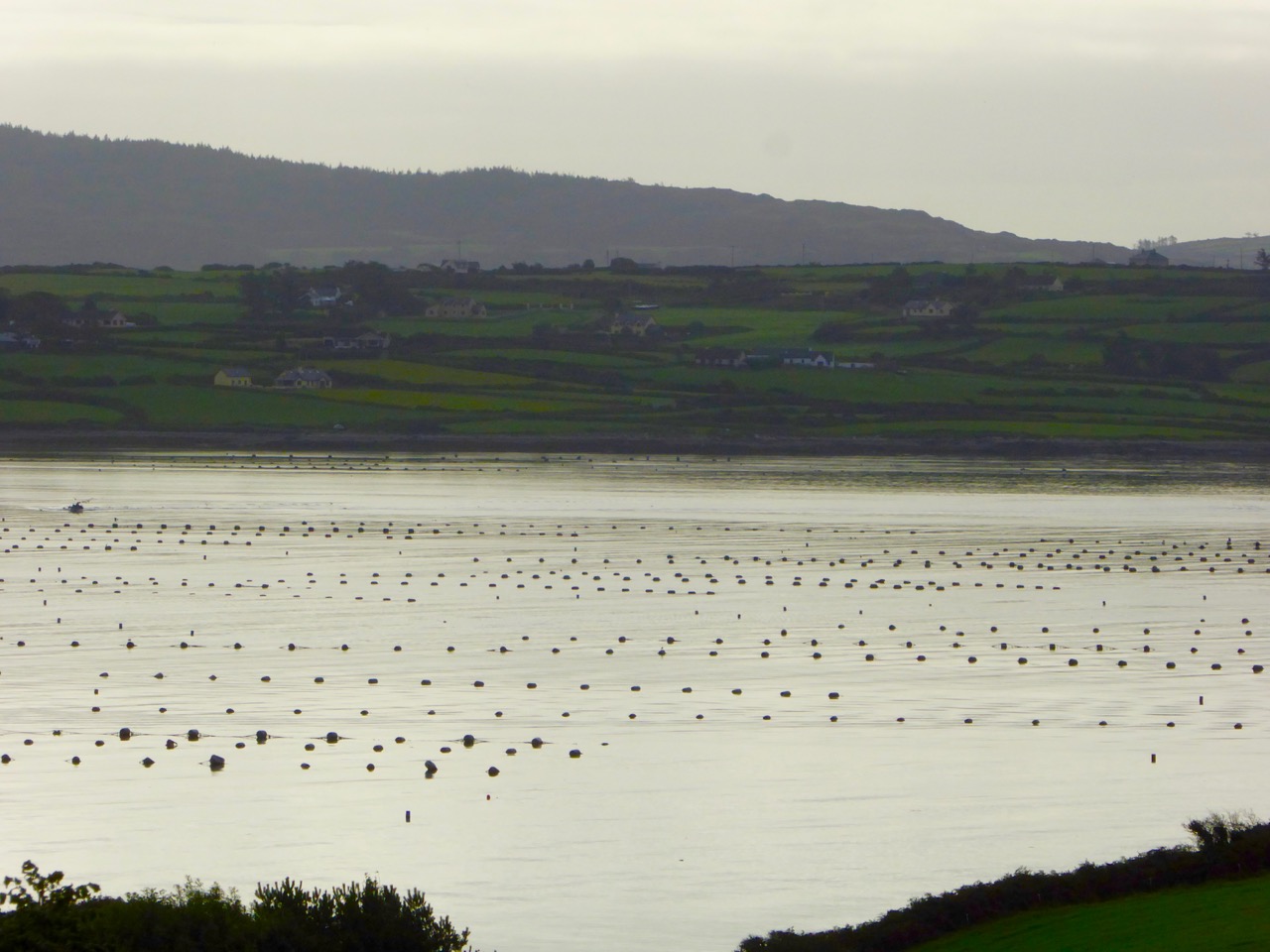
A walk along The Old Mine Road on a benign late September day will be rewarding because of the good air, the distant views to the Mounts Gabriel and Kidd, and with the bays of Roaringwater and Ballydehob below. You will find medieval history in the form of towerhouse castles, modern economy delineated by distinctive lines of mussel ropes spilling over the water and always alongside you the immediate wildness of a natural, undisturbed landscape. Views change as the way winds and dips – always interesting, always different, however many times you follow these routes.

mussel ropes

waving grass

mine buildings

Top – mussel ropes abundant in the Bay. Middle -waves of grass in the wild landscape to the north of the road. Bottom – ruins of old mine buildings can still be seen from the road

Autumn brings with it a certain melancholy. Time passes, our lives move relentlessly forward. We enjoy the changing of the seasons but we want to know that there will be so many more seasons to see. Each one will bring us unique experiences.

blue in the grass

from the road

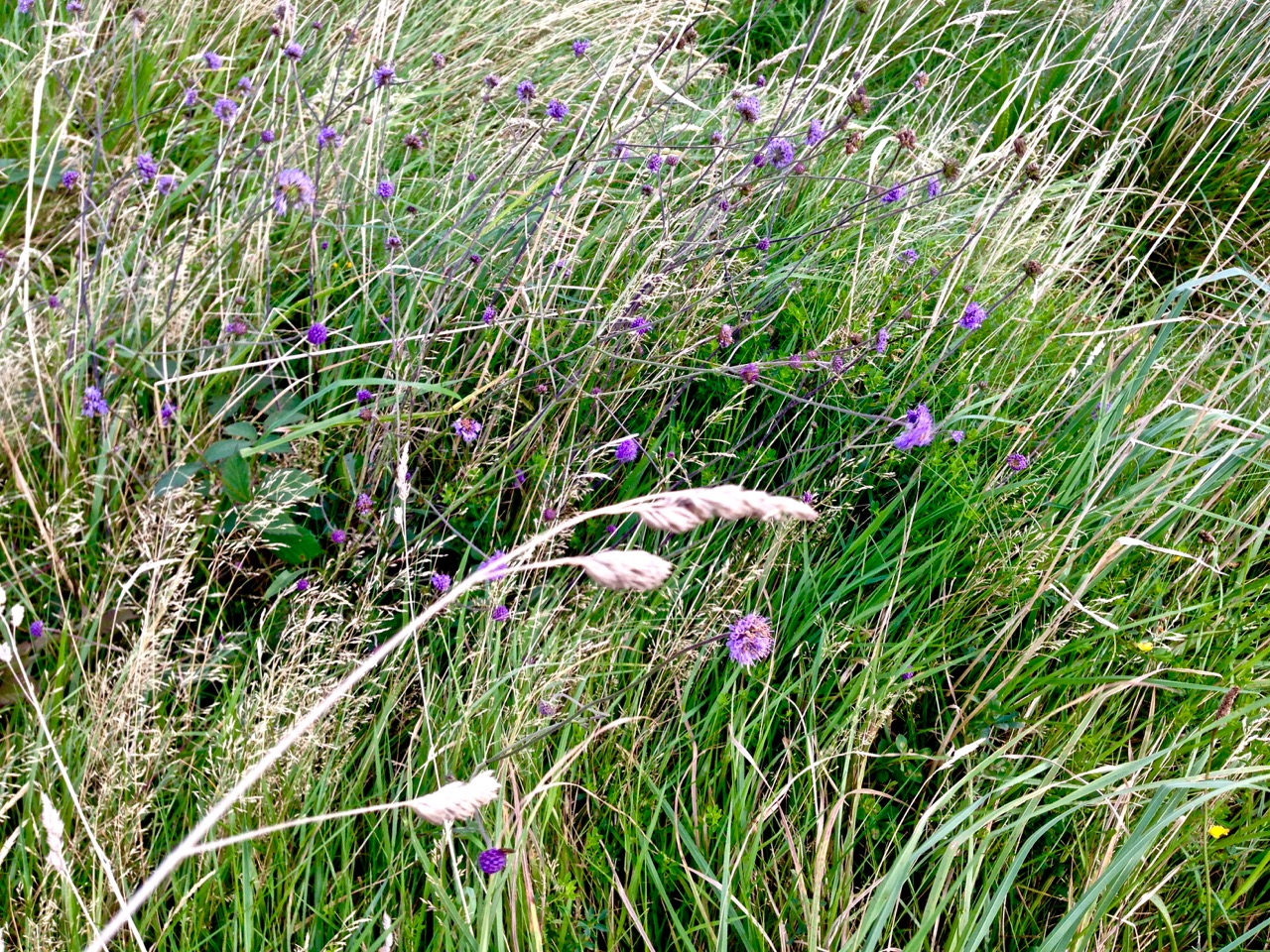
Top – wildflowers in abundance on the boreens of Cappaghglass. Bottom – signs of old workings in the fields below the road

As I walk the old road, I can’t help trying to picture the scenes there from other times. I wonder what feelings the hard working miners had – did they take in the changing light and the views? Did they see the way the grasses moved with the wind, creating waves on the landscape? Did they have any time to notice nature’s fine details – the incredible variety, colours and designs of the wild flowers? Or was theirs just a drudging commute from cottage to workplace at dawn and dusk?

ballydehob wharf

The end of the road: Ballydehob Wharf, which would have seen great activity (intermittedly) when the mines were in full swing. Cappagh Mine was operating between 1816 and 1873, with its maximum output of about 400 tons of ore being produced in 1827

The poet Seamus Heaney has much to say about the hardship – and order – of a physical working life; his own father had worked the land and the poet was infected with memories of his younger days. This poem – Postscript – has a different emphasis but strikes me as a similar commentary on encounters with the landscape, although it’s concerned with another geography:

…And some time make the time to drive out west
Into County Clare, along the Flaggy Shore,
In September or October, when the wind
And the light are working off each other
So that the ocean on one side is wild
With foam and glitter, and inland among stones
The surface of a slate-grey lake is lit
By the earthed lightning of a flock of swans,
Their feathers roughed and ruffling, white on white,
Their fully-grown headstrong-looking heads
Tucked or cresting or busy underwater.
Useless to think you’ll park or capture it
More thoroughly. You are neither here nor there,
A hurry through which known and strange things pass
As big soft buffetings come at the car sideways
And catch the heart off guard and blow it open…
wall and heather

Feed the Bugs

Bee in Fuchsia

Our walk in Glengarriff Woods opened my eyes to the challenges facing us in regards to ensuring the continuing biodiversity of Ireland. Loss of habitat, invasion of alien species, climate change, and modern farming practices all combine to present our insect life with increasing difficulty in obtaining what they need to thrive. Perhaps the best-known (although not the best understood) example currently is the enormous die-off of the bee population, known as colony collapse.

Hildegard's Shrub

With this in mind, I have been observing the bees, butterflies and bugs in our neighbourhood, and the role of flowers, both wild and cultivated, in supplying the food and the nectar they need. We have the advantage here that the hedgerows are rich in flowering plants, and that by regulation they must remain uncut until the end of August.

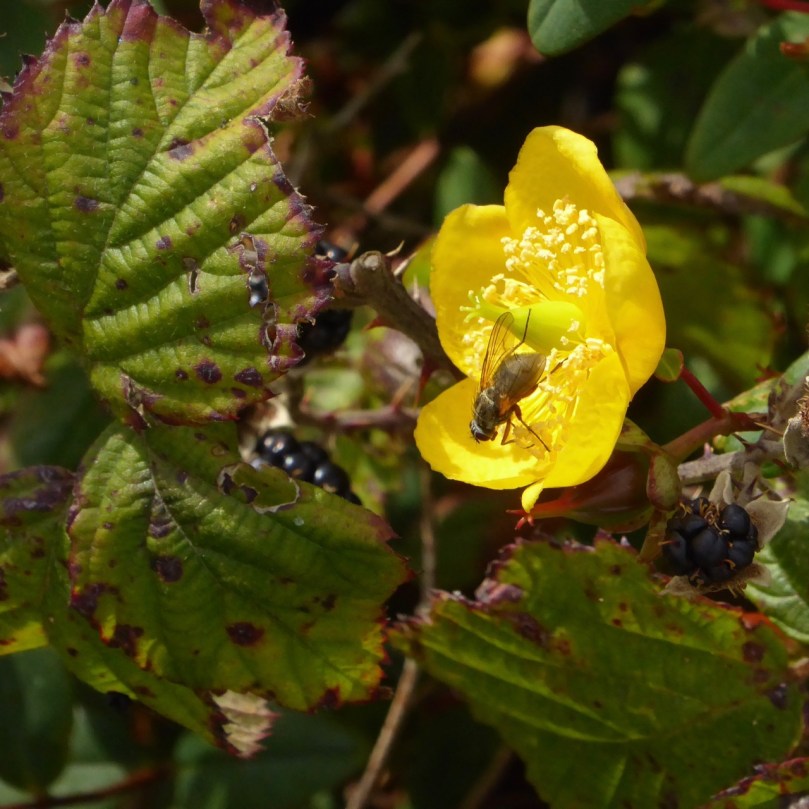
Fly on yellow flower

But this has been a short, cool summer and already the flowers that we saw last year in September have gone, to be replaced with the browning bracken. Our Budleia, for example, also known as the Butterfly Bush, was still attracting butterflies in September last year but this year it’s been flowerless since late August.

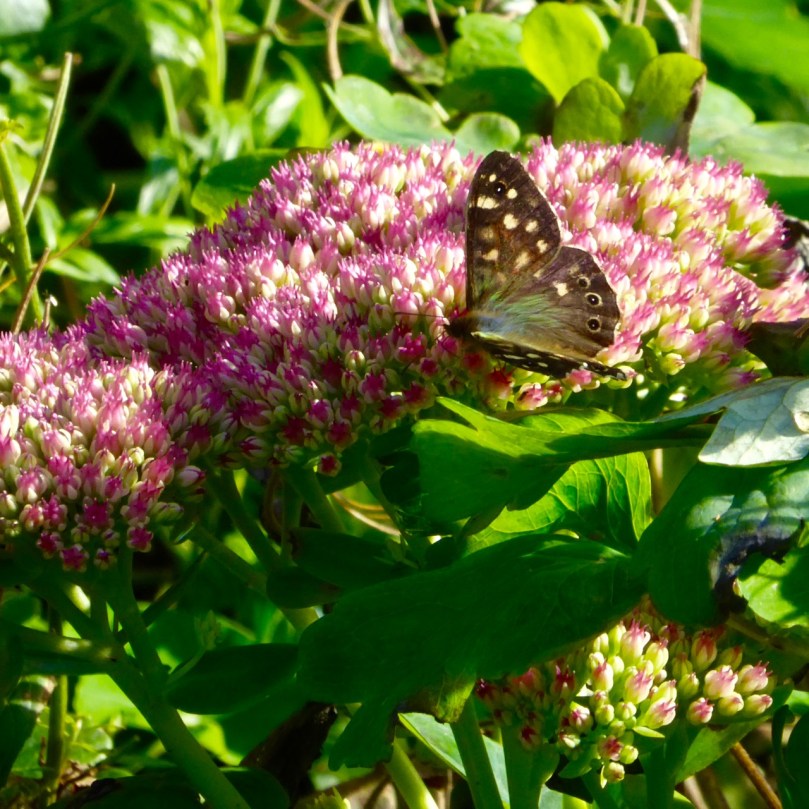
A speckled Wood Butterfly and a Hoverfly enjoy some blackberry time

On the upside, we’re enjoying a bumper blackberry crop, and lots of insect seem to love blackberries as much as we do. Because of the way blackberries grow, ripening at different times, some brambles are only flowering now, providing nectar for the bees.

Great Willowherb 2015

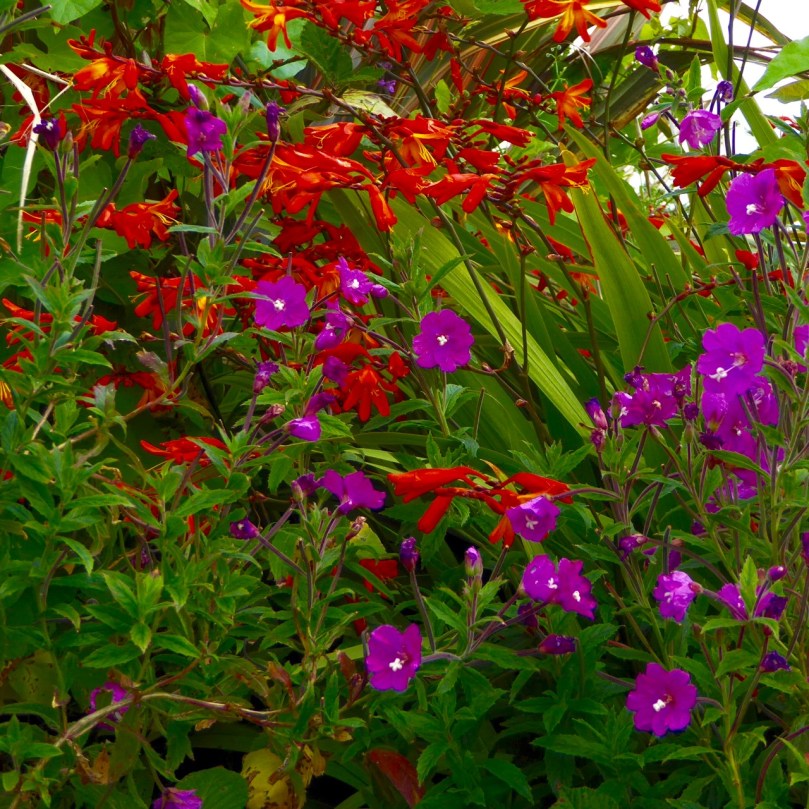
This photograph, showing a riotous mixture  of Great Willowherb and Montbretia (Crocosmia) was taken at this time in 2015: this year all these flowers have finished already.

holly close to flowering

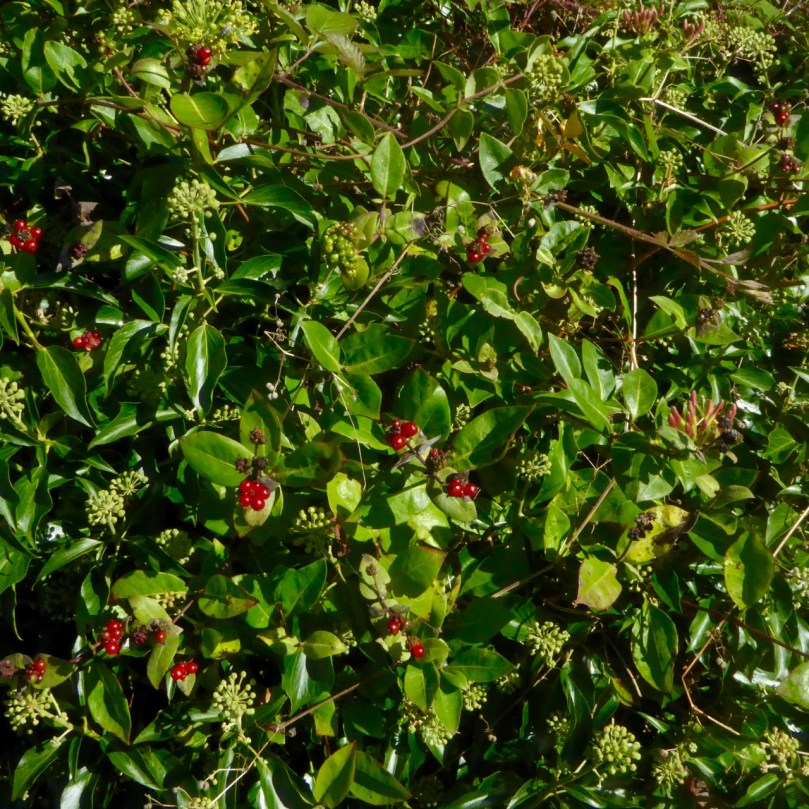
This year the holly flowers are abundant – here they are about to bloom. The berries are honeysuckle berries

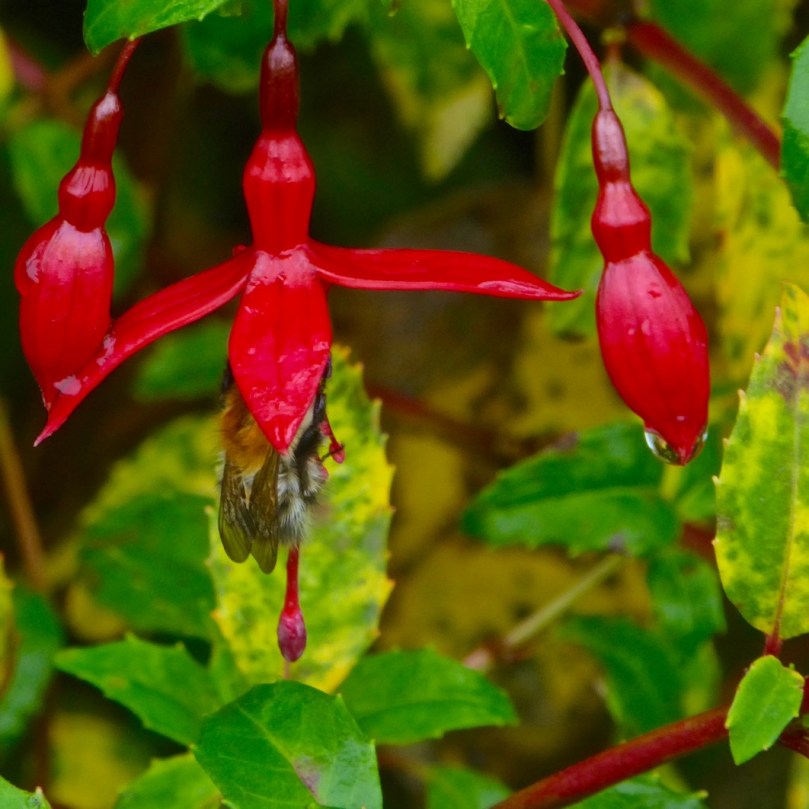
The fuchsia is still flowering, providing that gorgeous blush along the boreens that we love. One of the advantages of the fuchsia flower is that it is down-facing. This helps to keep it dry and preserve the nectar (see photo at beginning of post).

We have two types of bindweed here: hedge bindweed in the upper photo; a subspecies, the uncommon hedge bindweed ‘roseata’ is lower right ; lower left is sea bindweed, which grows along sandy shores

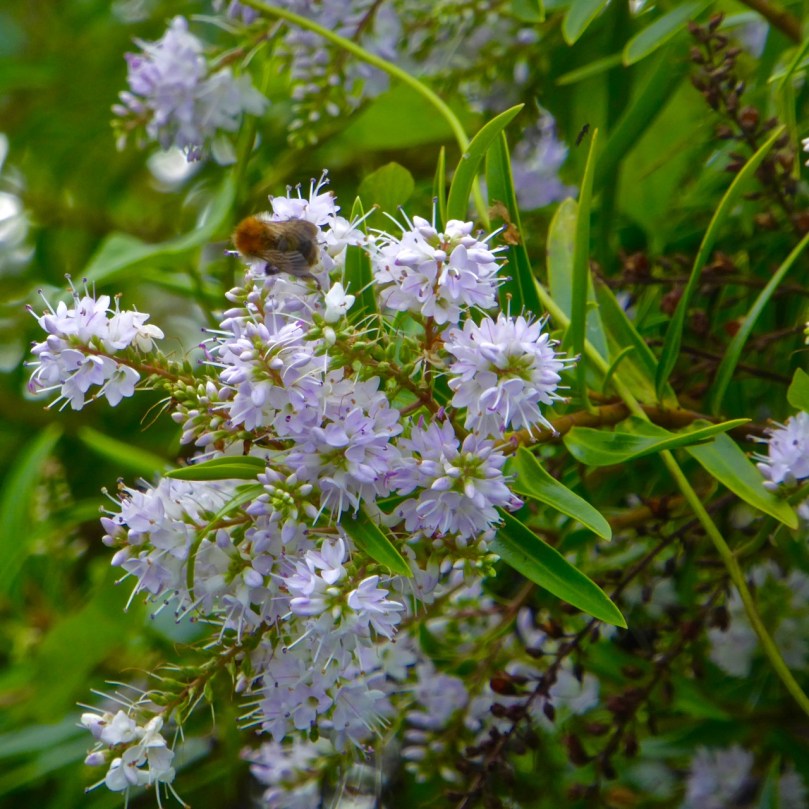
We might hate bindweed but it is an important flower for the bees. The hedge-bindweed we see around here has pretty pink and white stripes – apparently the white stripes act like a runway, guiding the insects into the heart of the flower.

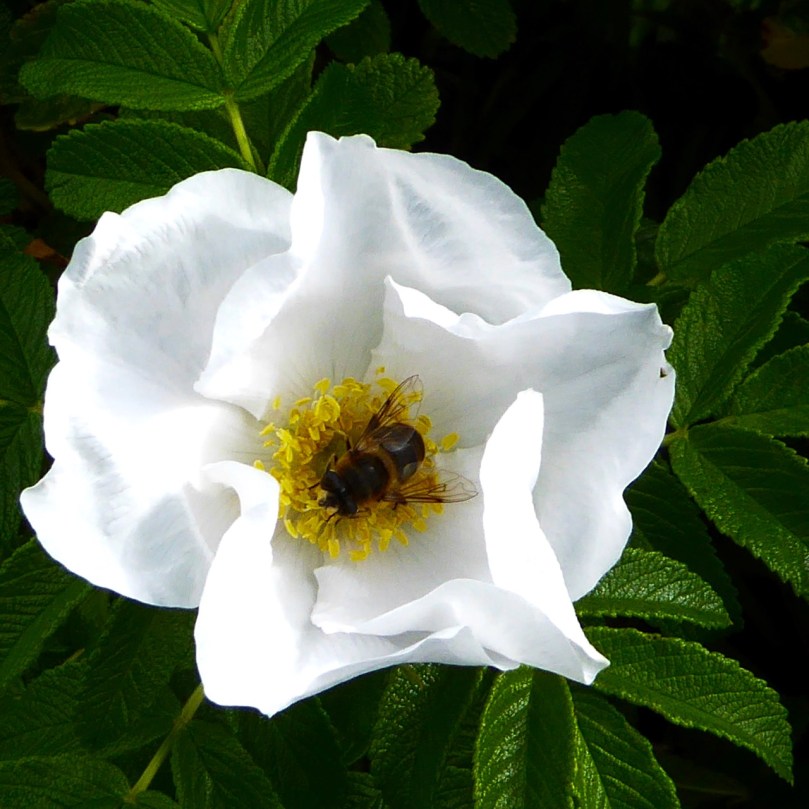
rose with bee

Wild and cultivated roses are still blooming, here and there. This little guy is appreciative.

Speckled Wood Butterfly on sedum

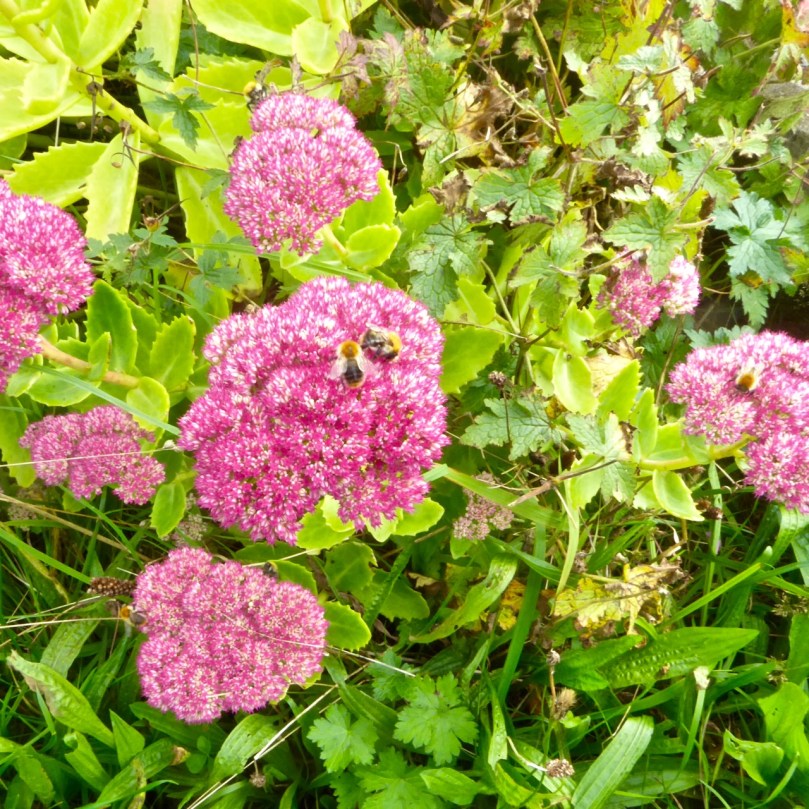
How many bees?Red admiral at Helen's GardenMy  friend Gill grows sedum (upper two photos) and the bees love it. You can hear the hum from ten feet away. Meanwhile, Helen and William’s garden (lower photo) attracts butterflies by the score. I saw my first Red Admiral there last year.

Small Tortoiseshell on oregano

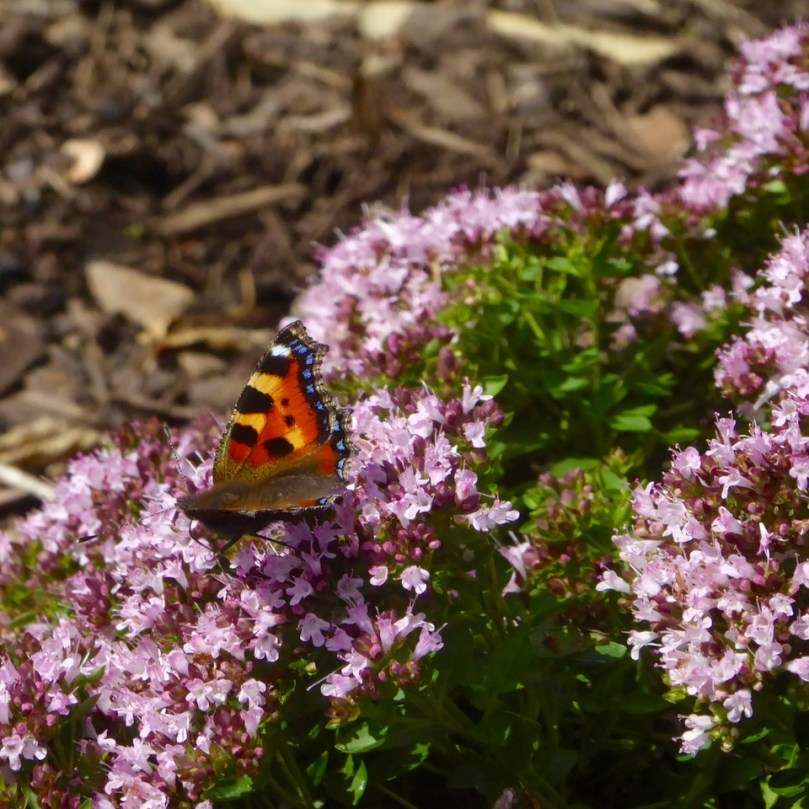
A Small Tortoiseshell Butterfly enjoys my Oregano, along with the bumbles bees

In my herb garden it seems to be the Oregano that is attractive to both bees and butterflies. It’s just finishing its flowering period now, but I still have to be careful when I pick a bunch, not to pick a bee as well.

Flies and spiders need the flowers too. Hoverflies are an important part of the ecosystem, helping to pollinate and preying on aphids and thrips. They (and the wasps!) seem to prefer my fennel. They also like the little pink Herb Roberts that are still to be seen in the hedgerows.

Honeysuckle

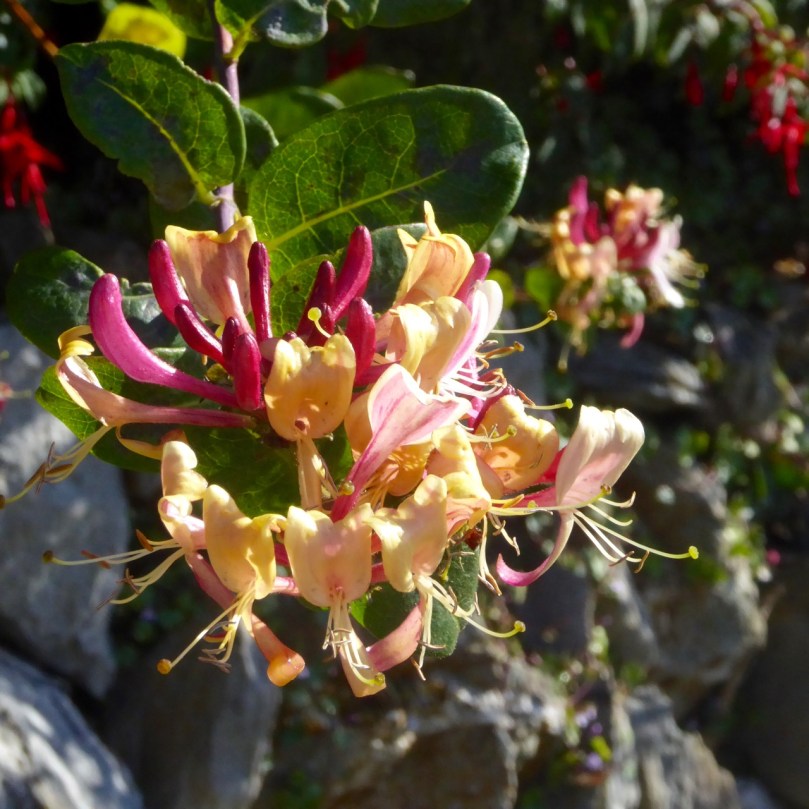
And what about the Honeysuckle? It’s abundant and beautiful, and with a name like that surely it’s a-buzz with bees? No – apparently the flower is too long and the bees can’t reach in far enough to gather the nectar. But the sweet scent, which gets even more intense towards the evening, calls in the moths who take their fill.

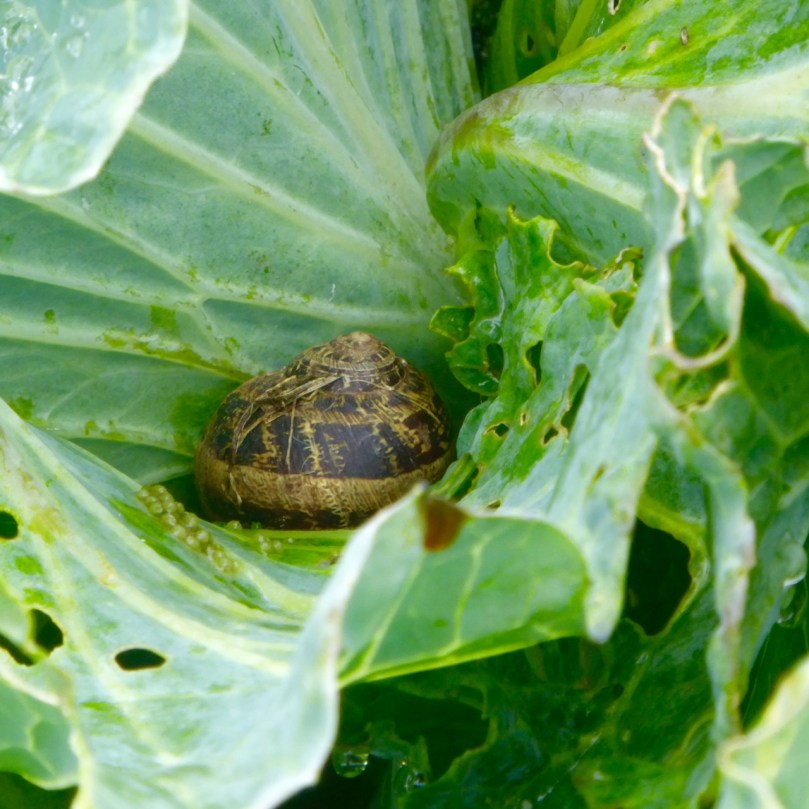
Snail on cabbage

Ah, but y’know – you can’t always welcome little critters to your plants. Sometimes, it’s us against them.

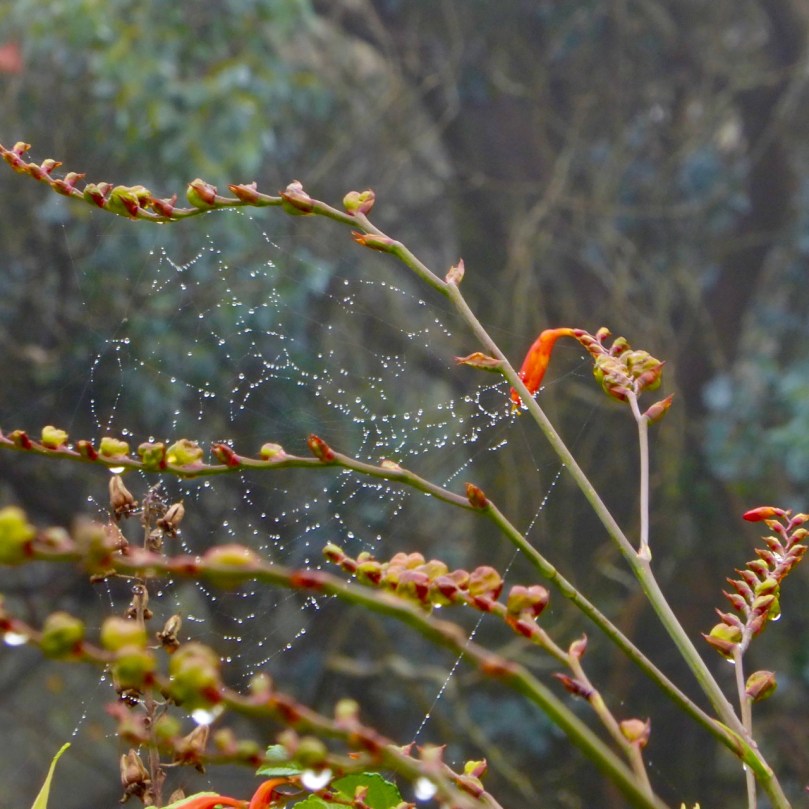
Cobweb on Montbretia

And of course, sometimes the plant isn’t so much food, as a means to an end…

Into the Woods

Pools

Glengarriff Woods – serene, beautiful and incredibly diverse

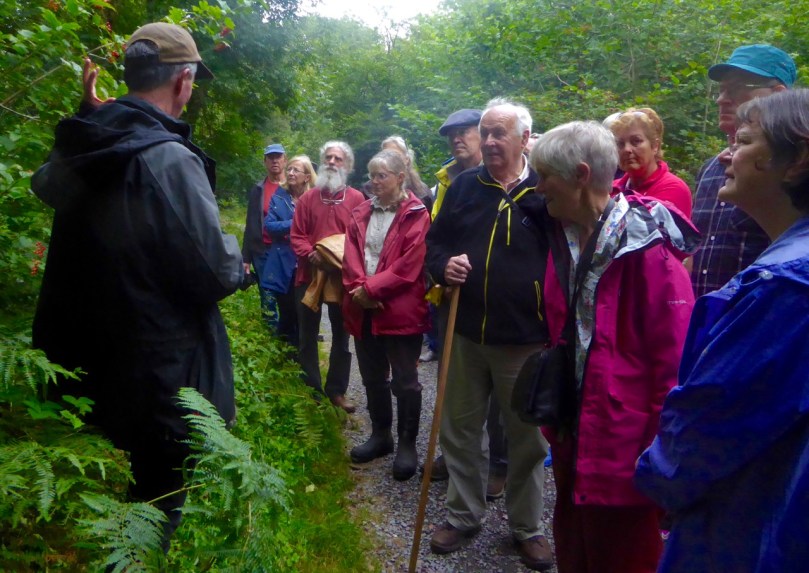
The second (now annual) Ellen Hutchins Festival has just concluded in West Cork. We wrote about this exciting new festival last year in the post Ellen Hutchins: The Short and Remarkable Life of Ireland’s First Female Botanist. This year there were all sorts of events and activities once again but we were able to participate only in one, a guided walk through Glengarriff Woods. Robert and I agree that we learned more about plants in that three hour walk than we had in most of our lives to date!

Teaching 2: Guelder Rose

Padraig pauses in front of the Guelder Rose (see below for more on this species)

Our guide and educator was Dr Padraig Whelan, a former Chief Scientist at the Charles Darwin Research Station on the Galapagos Islands, and now with the School of Bio, Earth and Env Sciences at UCC. Erudite and encyclopaedic in his understanding of individual species and in the interactions between the living organisms in the woods, Padraig’s talk was riveting. Nothing was above our heads, everything was explained in the simplest terms, but we came away with something approaching a profound appreciation for biodiversity. (Padraig is also camera-shy – I am honouring his request not to use full photographs of him.)

Howard Fox

Dr Howard Fox, the lichen expert

Along on the walk also, and contributing on the way, were Dr Howard Fox of the Office of Public Works, who had earlier given a sold-out two day workshop on Lichens, Algae, Fungi & Bryophytes (mosses and liverworts), as well as Clare Heardman, a Conservation Ranger with the National Parks and Wildlife Service, and Madeline Hutchins, great great grandniece and biographer of Ellen.

St Patrick’s Cabbage – there are three varieties of it here

The talk started with an outline of what makes Glengarriff Woods such a special habitat. It’s the rain, of course, combined with a mild climate, that leads to the perfect conditions for a temperate rain forest. We learned that these woods are home to many Lusitanian species that are mysteriously only found here, or on the Iberian Peninsula. One of these is St Patrick’s Cabbage, a member of the Saxifrage family. The attractive flowers had finished, but you can see what they look like here. In Irish they are called Cabáiste an Mhadra Rua, or Fox Cabbage. Nobody yet knows how plants that grow in Spain and Portugal managed to flourish in the south west of Ireland, skipping France and Britain entirely on their traverse, but it’s probable that they arrived after the last ice age.

Strawberry tree

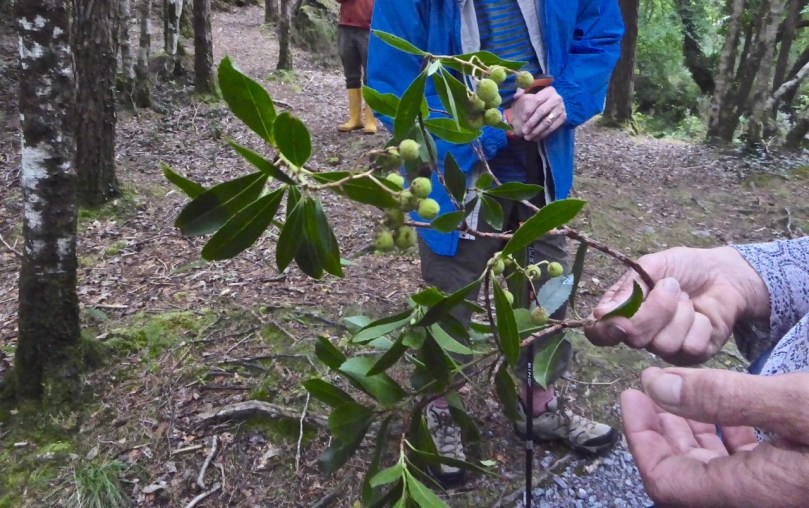
Another Lusitanian tree we encountered was the strawberry tree, which apparently is a member of the heather family, but grows to tree height in our West Cork climate. There was some discussion about the edibility of the fruit – it’s supposed to taste fig-like, but only one person present had tasted it and wasn’t recommending the experience. The examples we saw hadn’t ripened yet – it really does have the hue of a strawberry once fully ripe.

Walkers reflected

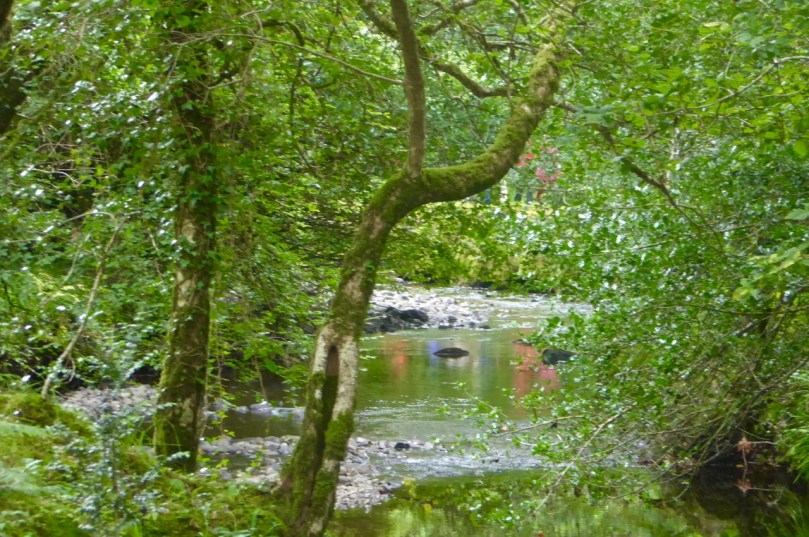
Walkers are reflected in the stream that flowed along our route

A second theme of the walk was ‘alien’ species – those non-native plants that have colonised the area as a result of importing activities. In this regard, the Glengarriff Woods are facing a double whammy – the botanic gardens at Garnish, and the arboretum at Ardnagashel, ironically started by the Hutchins family. Padraig pointed us to a young myrtle tree as an example of just such an alien intruder – they belong in Chile and Argentina, not in Ireland.

Myrtle grove

The Myrtle Grove at Ardnagashel

The culprit, of course, is the famous Myrtle Grove at Ardnagashel, which we visited last year and where myrtle trees imported by a Hutchins ancestor flourish. In Glengarriff it was threatening to take over all the available space for trees and measures had to be undertaken to limit them, as they create so much shade that little can grow underneath them. It was painstaking work, but there are now very few growing actively in the Woods and they can be eliminated more easily.

Bog Myrtle

Bog Myrtle

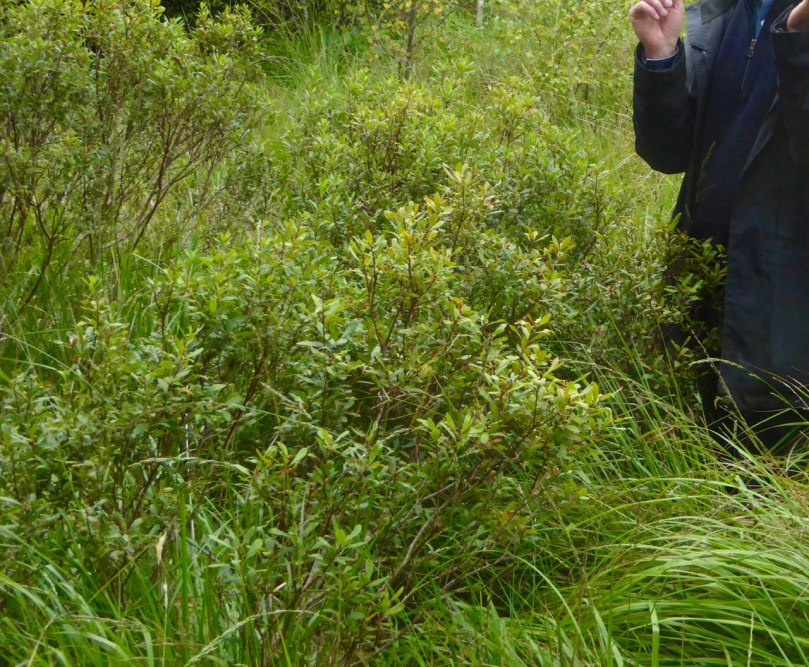
Interestingly, there is a native myrtle – the Bog Myrtle, an aromatic shrub. We passed around crushed leaves to inhale the woodsy scent. According to my favourite wildflower source, Bog Myrtle was used to flavour beer before the advent of hops.

Fuchsia Montbretia and blackberries

Fuchsia and Montbretia (or Crocosmia) flourish in the West Cork Hedgerows, but are actually alien species

Ironically also, the colourful and attractive wayside flowers that we think of as quintessentially West Cork, Fuchsia and Montbretia, are introduced species. Rhododendron was introduced in the 19th century and is considered a terrible threat to native species in Kerry. The same is true for Gunnera (that giant rhubarb disaster that has colonised vast tracts of Connemara), and Griselinia (ubiquitous for hedging). None of them would have been known to Ellen Hutchins. As Clare Heardman pointed out, Ellen recorded over a thousand plants, with no mention of them.

Holly Flowers

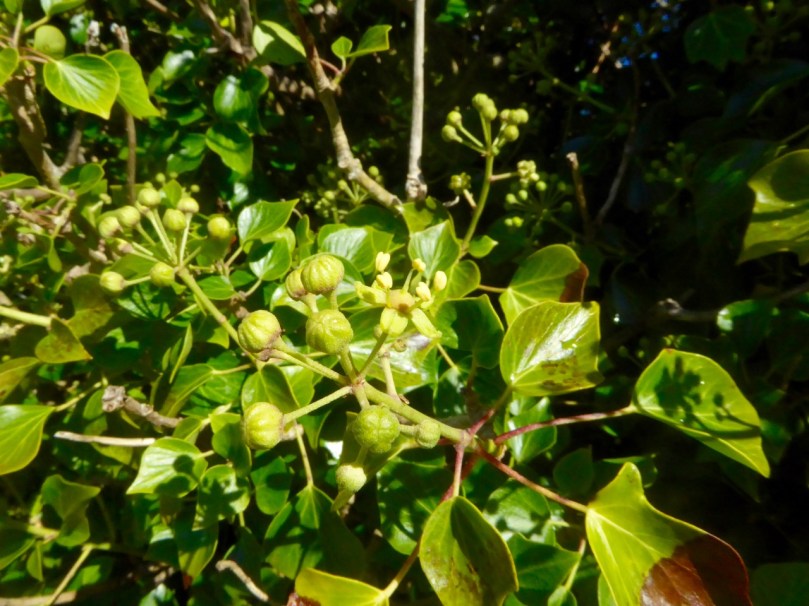
Ivy is just on the brink of flowering – we found one open bud after much searching

A third theme was the inter-dependence of species, both floral and faunal. About now, ivy starts to bloom, just as other flowers finish, and the ivy flower becomes an important food source for bees, moths, butterflies and other insects, such as hover flies. Unfortunately, ivy gets a bad rap for its habit of covering and damaging archaeological sites, such as medieval castles and churches and I wouldn’t have been sympathetic to it before our walk. Now I look at it in a whole new light. Pollinators also depend on holly, and the berries can also be a food source for field mice.

Royal Fern

The Royal Fern – an unusual native fern

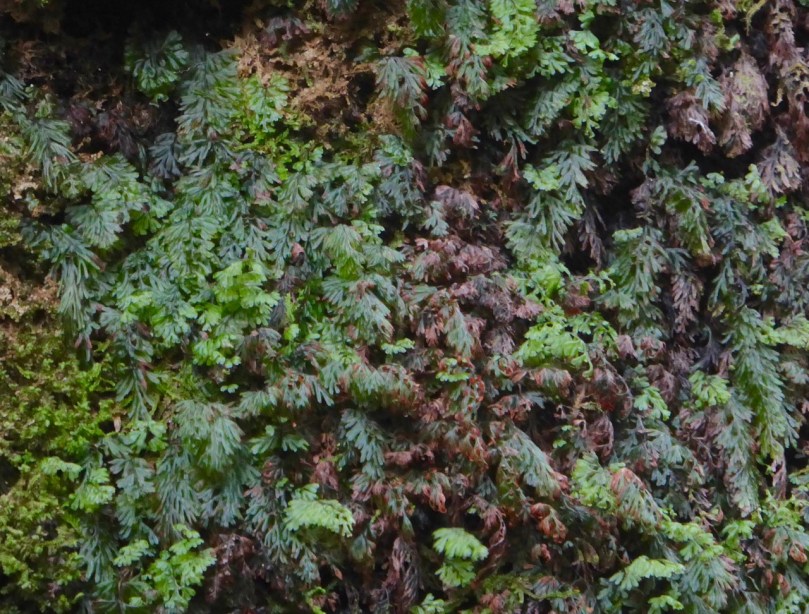
There are a huge number of native plant species in Glengarriff Wood, and the conservation work that goes on there is of national importance. Padraig pointed out the filmy ferns that grow here and are rarely found in the rest of Ireland. He also showed us the native Royal Fern, which is unusual in that the spores grow not on the underneath of the fronds but on separate stalks.

filmy ferns

Filmy Ferns

Howard introduced us to a macro-lichen that, because the underneath bears a resemblance to lung tissue, was once tried as a cure for breathing ailments. Lichens, of course, are normally microscopically tiny, so an enormous one like this is rare, and exciting to visiting lichen-specialists. Like ivy, I gained a new appreciation for lichens – up to now, my normal emotion in regards to lichen has been frustration, since it functions to obscure rock art and stone carvings.

Large lichens like this one are very unusual, but Glengarriff Woods provide perfect conditions for them

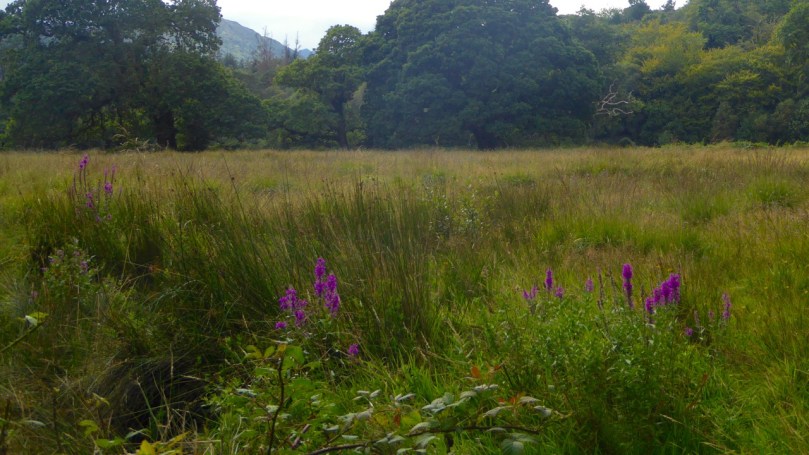
Glengarriff Woods has preserved meadowland as well as woods. Important species use this habitat, such as the hairy wood ant and frog species that may be specifically Irish.

Meadow

The meadow

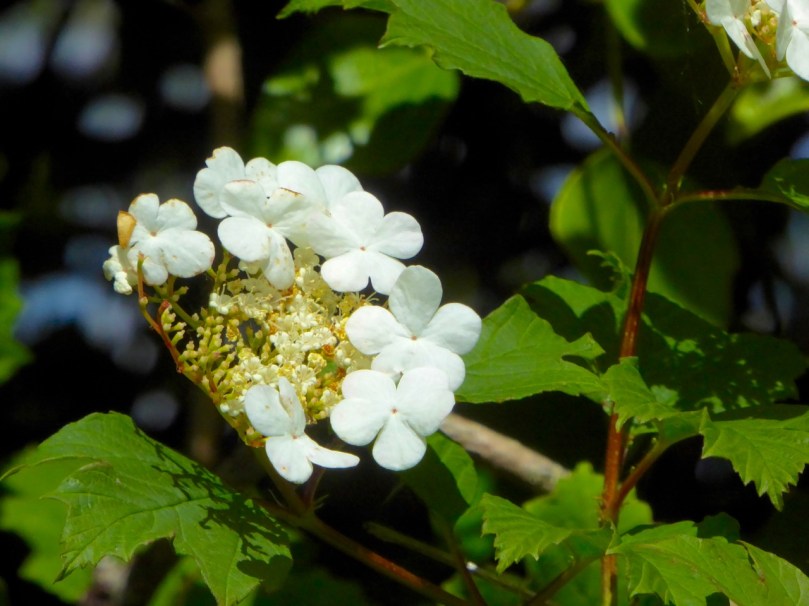
There was more, much more, but I will mention only one – the Guelder Rose tree. The dense and intensely red berries provide winter food for birds, but the flowers make it an attractive shrub in the early summer. There are some growing wild in the hedgerows just below us here along the Fastnet Trail Rossbrin Loop. I hadn’t been able to identify it until now. Pointing out that it would make a wonderful and ornamental garden plant, Padraig made a plea to us to insist on such native varieties when we develop our own gardens.

Guelder Rose Flower, June

A Guelder Rose tree found near our house in early summer

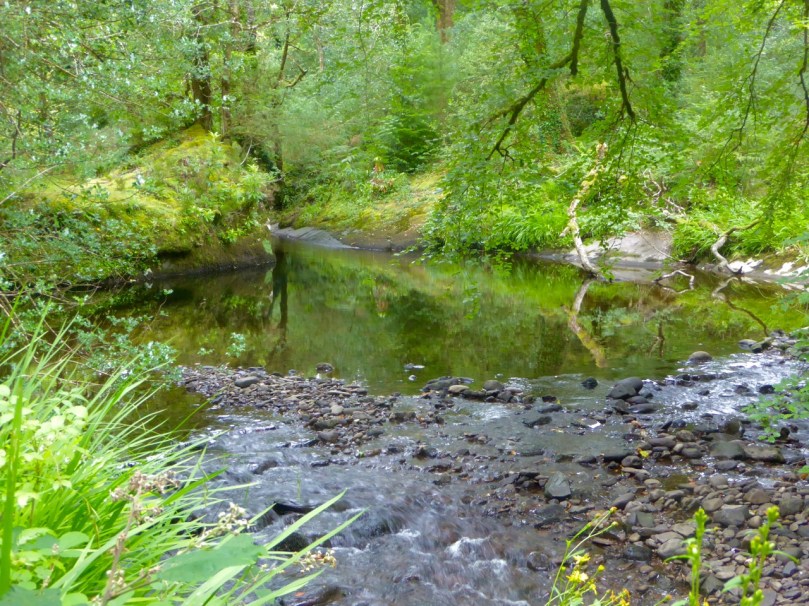
Throughout the walk, we meandered by the river that runs through these woods. It’s an important factor in the lush growth here, carrying high acidity levels from the bogland above. It’s also beautiful, serene and musical, adding immeasurably to the pleasure afforded by a walk in this woodland national treasure.

Still and Moving stream

Thank you to the Ellen Hutchins team for yet another fascinating botanical adventure!

By the stream

Foto Mizen!

Hydrangea and Montbretia

Montbretia and Hydrangea (Ava)

Sunday August 7th is The Mizen on a Sunday Project Day. The what? 

Robin

This young robin was curious about our activities in the woods

The organisers of the new Photo Mizen Festival, which launches next year in Schull, have come up with a great fundraising idea. Here it is: a photo book of life on the Mizen Peninsula during the 24-hour period of a single day, Sunday, August 7, 2016.

Stream

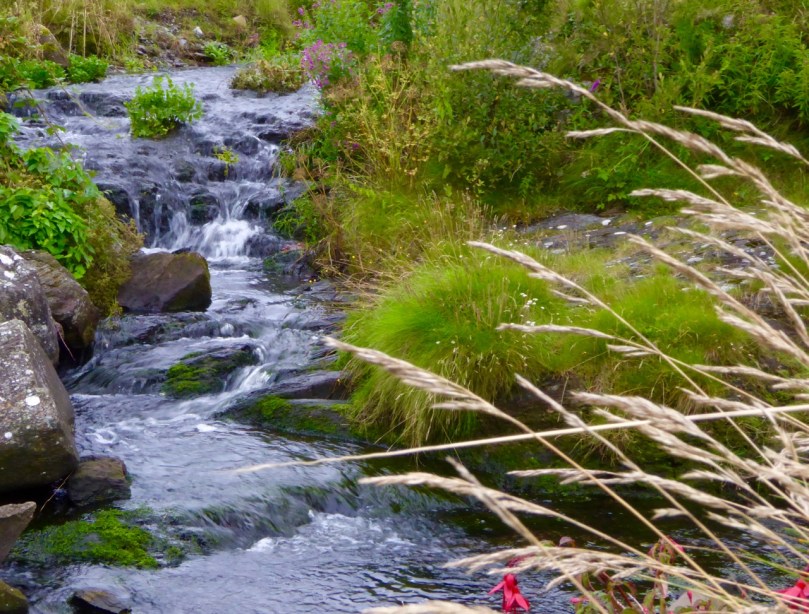
This little stream flows into the sea at Derreennatra

Derreenatra Bridge

The stream flows under this picturesque bridge (Ava)

My niece, Ava, and I decided to participate. Ava is almost 12 and she has a great eye and her parents’ camera. She and I rose at dawn this morning and set off to see what we could capture of life around us in Rossbrin.

My nephew Hugo, my sister Aoibhinn, and Marley, were happy to be photographed

Within three hours we had 250 images. Oh dear! We spent several hours deciding on the ones to submit to the Foto Mizen project and of course we had lots left over – we can only submit 5 each. So here is a selection of images that didn’t make the final cut.

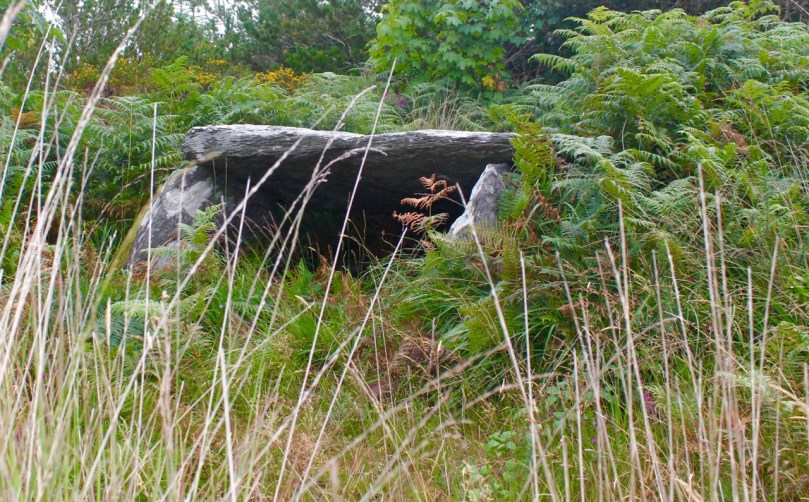
Kilbronogue Wedge Tomb

We walked up through the woods to the 3,000 year old wedge tomb at Kilbronogue (Ava)

The wildflowers were everywhere in abundance, some blowing in extravagant crowds and some tiny and hidden.

St John’s Wort, heather and gorse, and blackberry flowers

Ava took lots of photos but was a bit shy of having me take photos of her! Here she is doing her best imitation of a Jawa.

Ava the Jawa

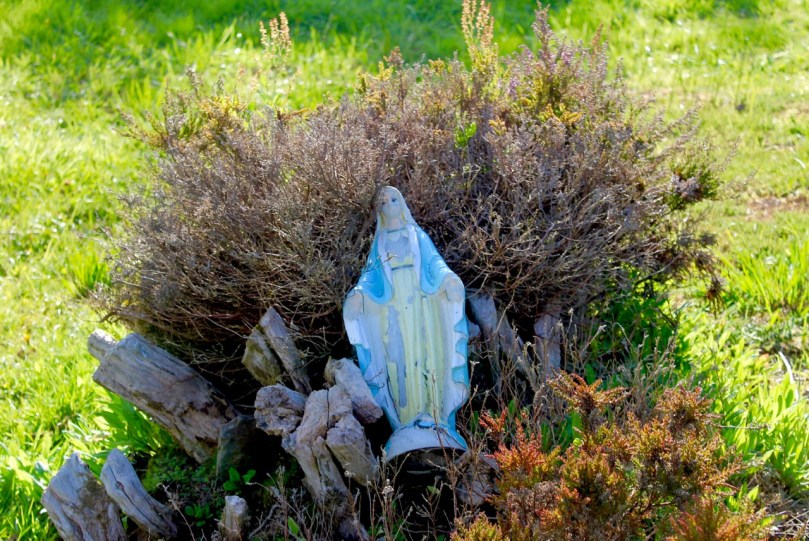
She was a little puzzled when I said our next stop was a graveyard, but got into the spirit of things right away when she found this statue.  She labelled it Creepy Mary, and I have to admit, those eyes are a little weird.

Creepy Mary

A tiny reminder from Stouke Graveyard that The Mizen is still a place where the past is sacred (Ava)

But she loved this little gate with its colourful postbox.

Gate and Post Box

And she took several photographs of the disused postbox at the old Rossbrin National School.

Rossbrin Post Box

It was a lovely way to spend time together, wandering companionably around the incredible Mizen countryside, snapping away at whatever took our fancy.

Rock wall with Montbretia

We didn’t have to go far – this is Ava’s picture of the little boreen outside our house 

Her younger brother, Hugo, got in on the act too, helping us to decide on our final five photos, which we will submit for the Photo Book Project. Turns out he has a great eye too – so next year there’ll be three of us roaming the hills of West Cork in the wee hours.

Fennel

Susan’s Burren

Valerian

Valerian provides a carpet of red in a Burren field

We want ‘A Susan Day’, we told her – and what a day we got! Readers may remember our visit (Showing off West Cork) from Susan Byron of Ireland’s Hidden Gems. We’ve been planning a return visit ever since, so that Susan could show us HER Burren. 

Fields of Stone

I’ve written about the Burren before – the unique karst limestone landscape full of heritage and wildflowers in West Clare. But this time we had the benefit of Susan’s intimate knowledge of the place – she lives there and has been exploring it for years. Since we only had one full day, she planned an outing that covered everything we love about this part of Ireland – you’ll see what I mean.

DESTINATION
Our destination: Turlough Hill

Leaving the car in a convenient spot, we set off up a long green road, Susan pointing out the wildflowers as we walked, here and throughout the day. We stopped at numerous places to admire features in the landscape: Corcomroe Abbey, for example, lay below us in all its medieval glory.

Corcomroe

Corcomroe – a wonderful site to visit if you’re in this area

Our first real stop was St Colman’s Holy Well. It’s a beauty, with all the remote wildness that lends such atmosphere to these ancient sacred spots. One of our blogging heroes, Ali Isaac of the wonderfully researched and entertaining site Aliisaacstoryteller had visited this same route a couple of weeks earlier. We were walking in her footsteps, although in reverse. She tells of her journey here and has extensive details about the holy well and St Colman here.

St Colman's well

St Colman's Well 2

Robert and Susan at Colman’s Well and a peek into the interior of the well

Ali had walked through the Burren in time to see the last of the electric blue Gentians that grow here and in the Alps. They were gone by the time we got there, but we were not disappointed in the wildflowers, which were everywhere underfoot in the most prodigal abundance.

Carpet of Orchids

Bloody Cranesbill, left, and a white orchid

Brilliant magenta Bloody Cranesbill jostled with delicate Orchids and tiny yellow Potentilla (or Cinquefoil), while Wild Thyme scented the air. One field was awash in Valerian. A rare Lesser Butterfly Orchid was spotted in the long grass and lovely Burnet Roses in a hedge.

Clockwise from top left: Burnet Rose, Lesser Butterfly Orchid, Mountain Avens and Spotted Orchid

Milkworth

Milkworth lurking in the grasses

Hiking up Turlough Hill was an excellent opportunity to see how the Burren is laid out. From below, it looks like bare rock, but as you ascend, you realise that the hills are stepped in a series of terraces, the evidence of retreating beach levels after the ice age. These terraces provide important forage for sheep and cattle, who, in turn, help in the regeneration of the plant life. The going isn’t easy – we didn’t stick to any defined path but simply clambered up the steep slopes. The flat parts had been deeply rutted by cattle hoofs – we had to be vigilant to prevent stumbles and ankle injuries.

Turlough Terraces

But the rewards were enormous – ever-increasing panoramas of North Clare, across Galway Bay and south into the hinterland.

Cattle enclosure?

We had an objective in mind. At the top of Turlough Hill, and most visible in arial photographs, is a prehistoric ‘village’ of over 150 hut sites and some larger enclosures. On the summit is an enormous cairn.

Turlough Hill

Turlough Hill 2

Hut site and cairn

From the top: An aerial image of the hut circles and cairn (look closely!)  from the National Monuments Service, a hut circle looking north to the sea, a hut circle looking towards the cairn

This mysterious site has been the subject of an initial investigation to establish the extent of it. The report had this to say:

Even though the hut sites, in a morphological sense, are domestic in character, it is very hard to see their role and function as primarily domestic, considering their location on this inaccessible and exposed hilltop. The activity that required the building of about 150 hut sites on this inaccessible and extremely windy summit, consisting mainly of bare bedrock, was most likely of a strong social and/or ritual character, with few direct links to secular way of life.

Susan on Cairn

This will give you a sense of how huge the cairn is

Earlier this year, Dr Stefan Bergh of UCG conducted a preliminary excavation within the hut-site concentration. You can read about that in this Irish Times piece. We saw the neatly back-filled trench, and look forward to his results.

Trench

Coming down, as all hikers know, is often more difficult than going up – the knees certainly protest! In this case, some chunks of it were accomplished by dint of sliding down on my butt and picking the thorns out afterwards. Oh – and the tick! Do check yourself after all walks in long grass where cattle and sheep have been grazing.

From the Cairn

The view from the cairn

We ended up at an early medieval site that quickly banished all thoughts of aching muscles – Oughtmama, of the Seven Churches. Meaning The Breast of the High Pass, there are actually only three churches at Oughtmama, but they pre-date the 12th century Cistercian foundation at Corcomroe, and as such they are excellent examples of early monastic structures in the Romanesque tradition.

Oughtmama Churches

There are several examples of churches built with ‘cyclopean’ masonry in Clare, and here at Oughtmama you can see the huge stones used in the courses of the outer walls that give it this name. Associated with St Colman (of the Holy Well) these churches probably fell into decline after Corcomroe was completed.

We hiked back to the car in the soft afternoon sunlight. It’s hard to believe that one day could be so packed with experiences. Thank you, Susan, for sharing YOUR Burren with us. We’ll be back – we’ll let you know when to put the kettle on again.

Wild Thyme

Wild Mountain Thyme