Fourknocks – the Little Giant

Interior

For our own Easter Monday celebration – while staying in Dublin – we took a trip out to Fourknocks. This is a decorated chambered cairn within the Boyne Valley complex, but very much a ‘little brother’ to the better known attractions of Newgrange, Knowth and Dowth.

key

Only in Ireland would you be instructed to travel a mile down the road to pick up the key to a 5,000 year old monument (leaving a 20 Euro deposit for its safe return) and let yourself in by unlocking a heavy steel door that guards the way into the passage… But don’t be put off: it’s so well worth the effort. With luck you will be the only visitors and you will have the place to yourself – apart from the sheep families who share the field with Fourknocks. The name probably means ‘The Cold Hills’ – that’s the translation of the Irish Fuair Cnoc

sheep

Fourknocks was unknown to archaeologists until a chance conversation in 1949, when a woman making a visit to Newgrange mentioned, “there are mounds like this on my uncle’s farm…” The site was then explored and excavated by Archaeologist P J (Paddy) Hartnett in the early 1950s. You can read the full excavation report* online, by signing on to JSTOR. Like all the Boyne Valley Neolithic monuments, the mound had collapsed inwards and the dig involved removing layers of earth and fallen stone, analysing the spoil material and working out how the original structure had been put together. It’s methodical, scientific – and pretty dry reading! However, I couldn’t help being completely entranced as I imagined spectacular carved stones gradually being revealed, unexpected artefacts being turned up, and the unusual dimensions of the central chamber being realised.

excavationdiagram

P J Hartnett’s excavation diagram – from his report published in 1957

This ‘pear shaped’ central chamber measures 41.92 sq metres in area, considerably bigger than those at Newgrange (16.50), Knowth (20.21) and Dowth (15.21). However, the mound itself is relatively small – a ‘pimple’ on the hillside with a diameter of only 19 metres (Newgrange has a diameter of 85 metres). Yet, when you stand on top of Fourknocks, you understand its significance – there are panoramic views in every direction over countryside, ocean and mountains. You might expect to see the other Boyne Valley monuments but in fact they are hidden by a ridge, so this one enjoys splendid isolation in every respect.

Pan 2

Pan 4

Pan 5

P1210637

Cardinal Points: panoramic views in all directions from the mound of Fourknocks

Something else that’s unusual about Fourknocks is the way it has been reconstructed. Restoration of Archaeological structures has often been controversial. In Ireland the most notable example is Newgrange itself: Professor Michael J O’Kelly, who was in charge of the works there from 1962 to 1975, imagined that large numbers of white quartz stones which were found in and around the collapsed mound could have been used to face the entrance wall and duly designed the reconstructed passage tomb around this premise. He was (and still is) criticised for this ‘leap of faith’ – but, for me, the result is entirely justified: whether or not the original structure did look like this is perhaps irrelevant, as it has bequeathed to us such a visually iconic and powerful symbol of Neolithic Ireland…

Above and left: the great passage grave of Newgrange before excavation, Right: the iconic face of the restored monument today (image courtesy of Our Irish Heritage)

At Fourknocks the excavations did not prove that the chamber was ever roofed over. Certainly there was stone corbelling to suggest that this might have been attempted, but it is unlikely that the large span of the central court could have been enclosed in this way with the available technology, and the weight of the number of stones. However, complete enclosure is likely to have been a necessity, and a central post hole – which would have accommodated a large timber pillar – was found: Hartnett suggests that the roof covering was completed using light timber rafters and thatch. Rather than simulate this, a solution has been employed which is entirely modern – but, in fact, as imaginative as O’Kelly’s ideas at Newgrange: a reinforced concrete shell roof has been cast completley around and above the excavated structure. So what we see today as the ‘mound’ is a concrete dome which has been turfed over.

Open Door: the entrance to Fourknocks chamber outside and inside

But this 1950s innovation is far cleverer than it might seem. Cast into the new shell are holes and slits which project limited shafts of daylight into the otherwise unlit chamber. Each shaft has been carefully orientated to cast natural light on to one of the spectacular examples of megalithic art which are the showstoppers of this monument.

zaggy

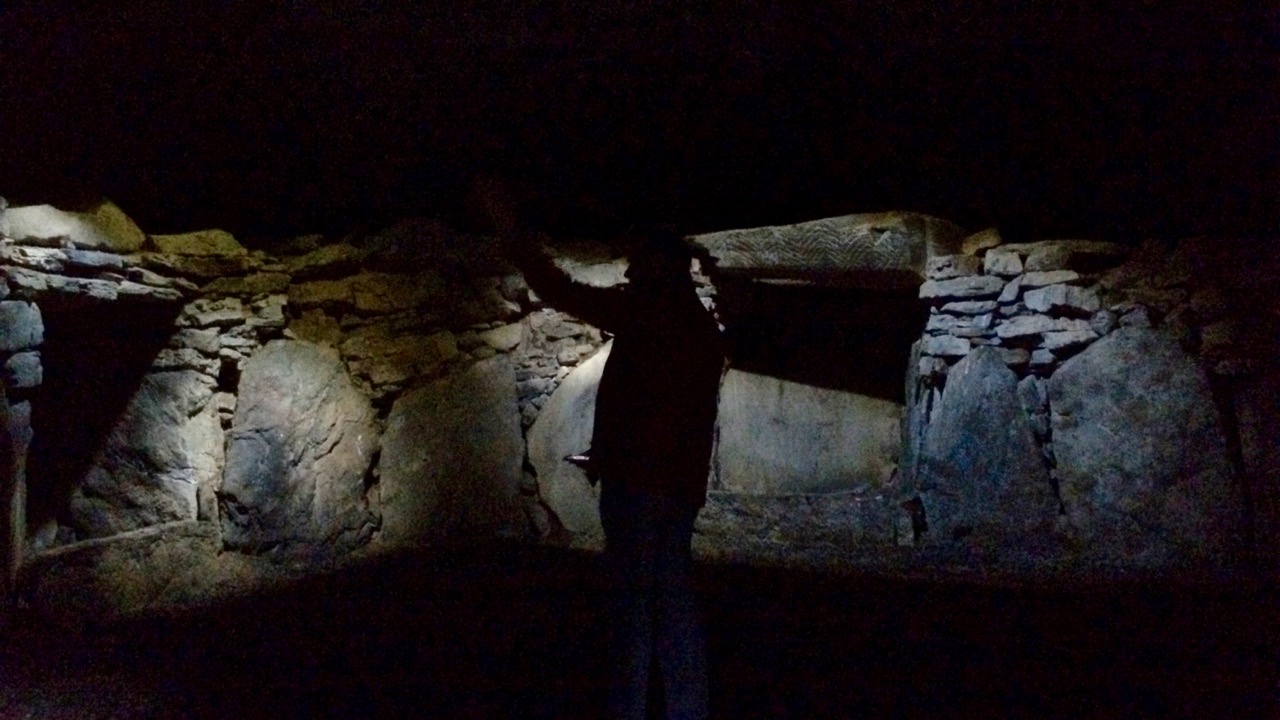
To properly experience the unique adventure of Fourknocks, go inside and – be brave – shut the heavy door behind you. Immediately you are in darkness, and disoriented. But wait: as your eyes adjust, the chamber comes alive.

zigs

The subtle shafts of daylight filtering through the roof perforations focus on their targets and, gradually, you realise that you have entered a gallery of startling images – images made by our ancestors thousands of years ago…

concentric

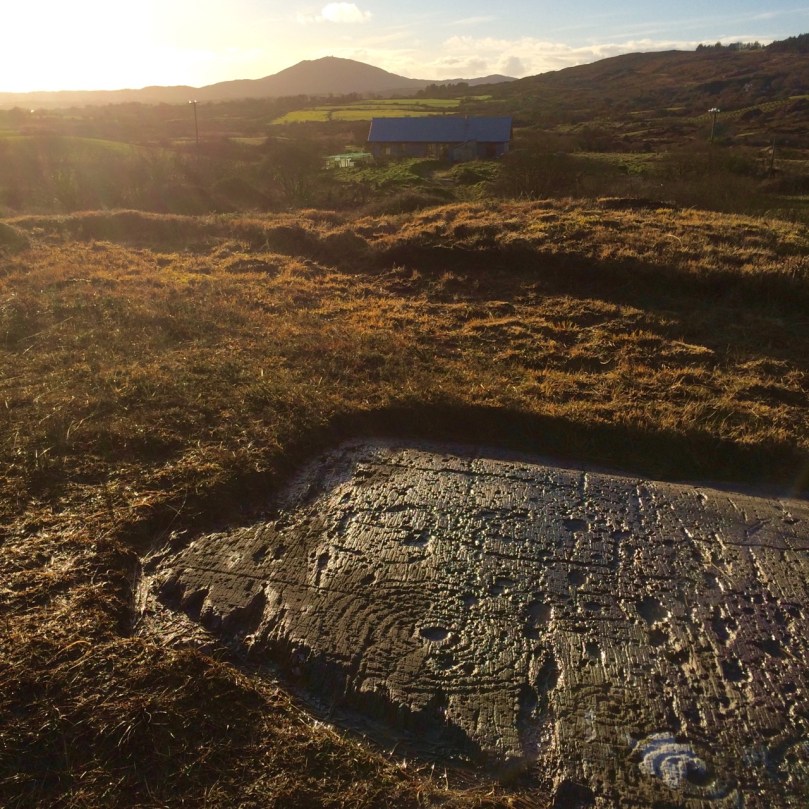
As Rock Art enthusiasts, our particular interests lie in the cupmarks, concentric circles and other carvings found on outcrops and boulders dispersed over the Irish (and British) landscape: it’s fascinating and intriguing – but should we call it Art? Perhaps those marks have been made as signposts, to define territory, or to provide information to passing visitors – we just don’t know. But, with the carvings at the Boyne Valley monuments there can be no doubt: their purpose is to startle, impress and delight – Art, with a capital A! Fourknocks is such a good example of megalithic or passage grave art, not because of its quantity or complexity (you’ll find far more elsewhere) – but because of the context: the fact that you can stand there on your own and be startled, impressed and delighted – without the intervention of artificial lights, interpretation centres or display boards. It’s just you and the Neolithic mind in there.
Chambers 3

Fourknocks, the Newgrange complex, Loughcrew, Carrowkeel: there is even a passage tomb in our view from Nead an Iolair – over on Cape Clear Island and it produced a fine example of megalithic art, now in the Cork Public Museum. What were they for? In spite of being sometimes called passage graves or passage tombs we can’t assume necessarily that interment was their primary purpose, although significant human remains were found at Fourknocks, including cremations, skulls and bone fragments. Many of these are dated much later than the main structure – Bronze Age rather than Neolithic – suggesting a continuing use of and respect for the monuments over long periods of time. I hope we always retain that respect: the risk of the unsupervised access that we can enjoy at Fourknocks is a vulnerability of the site. Sadly, there is graffiti apparent on some of the stones, although this may be historic.

two sided

I could find no trace of folklore, legends or stories relating to Fourknocks. This is unusual for an ancient site in Ireland. Perhaps it’s because the place was lost to all but very local human memory for so long. Apart from the restored mound there appears to be either two or three other disturbed earthworks close by but not accessible – could this be the origin of ‘four’ cnocs (hills)?
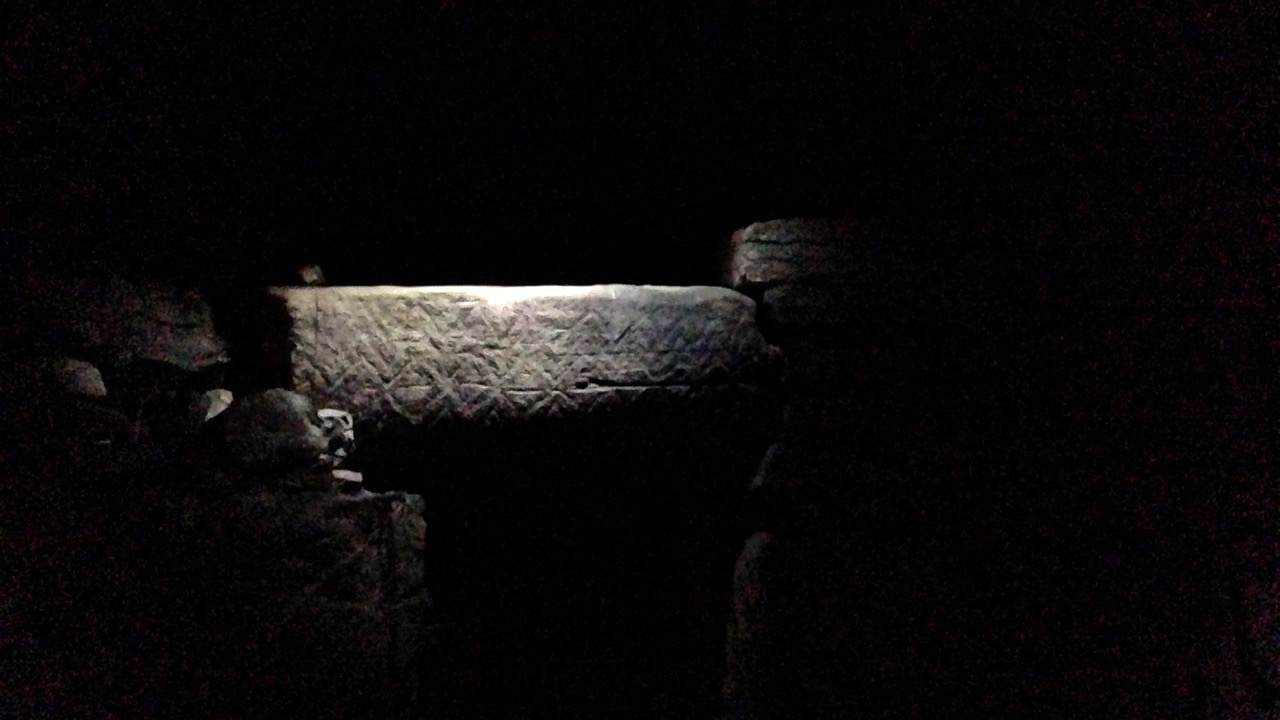
effect 1

not a face

For more excellent photographs of this monument have a look at Ken William’s work in Shadows and Stones. If you are passing this way – as we were – perhaps on your journey to see the marvels of Brú na Bóinne, don’t hesitate to look out this wonder of the megalithic world- it’s a little giant!

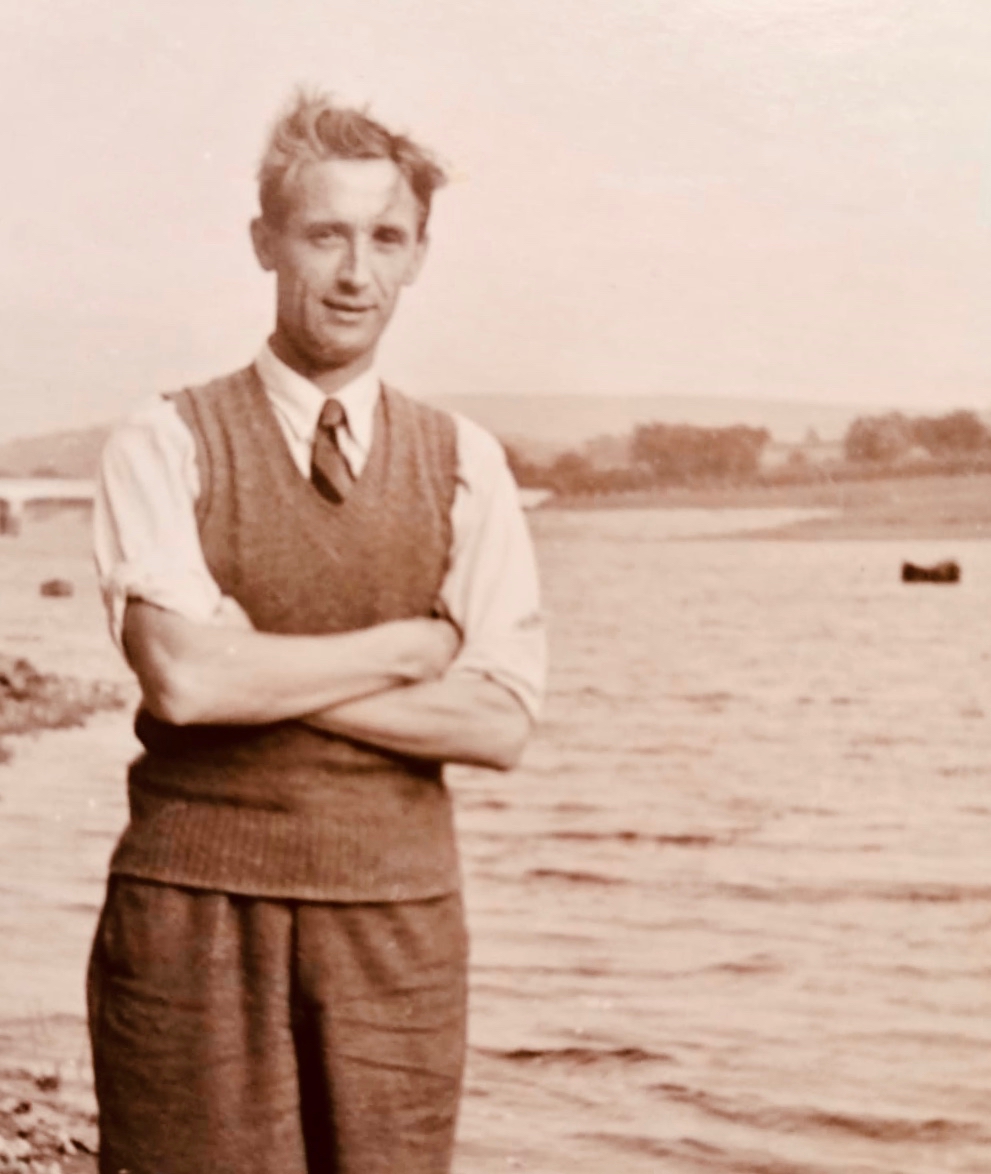
Below: P J Hartnett, a photograph taken at around the time of  the excavation of Fourknocks, 1950s. Many thanks to his grand-daughter, Dee McMahon, for providing this and further historical information
Excavation of a Passage Grave at Fourknocks, Co Meath: P J Hartnett – Proceedings of the Royal Irish Academy. Section C: Archaeology, Celtic Studies, History, Linguistics, Literature Vol 58 (1956/1957), pp 197-277
Launched!

A joint post by Finola and Robert

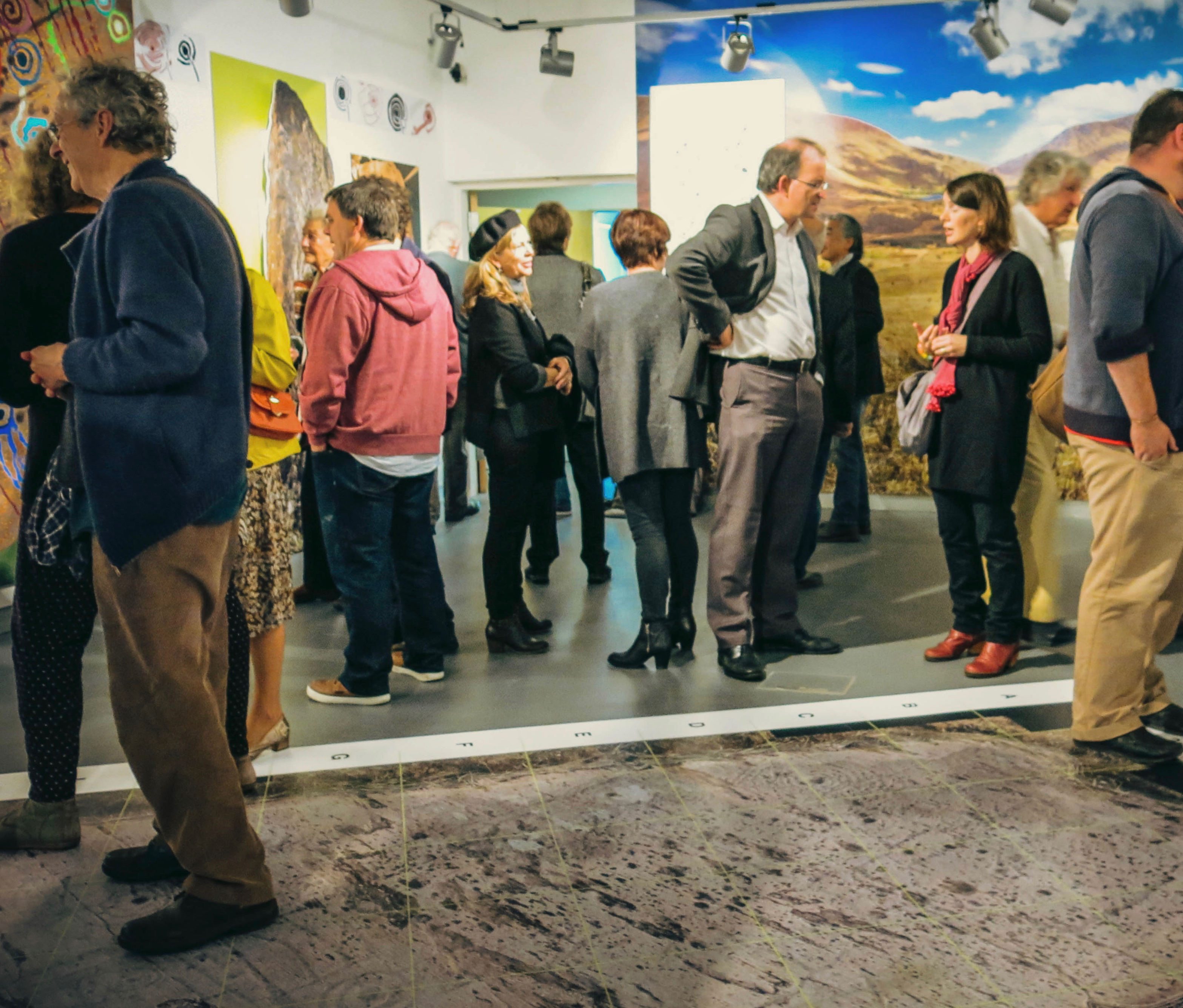
Mingling

Hallowe’en (All Hallows – Samhain) was the perfect day to launch our Prehistoric Rock Art Exhibition at the Cork Public Museum. As Finola said in her remarks at the opening, it’s a time when the veil between two worlds is at its thinnest: in this case, it’s the veil between an ancient time and the present day. We hope the exhibition emphasises the work of our distant ancestors who have inscribed the landscape and given us the enigma that is Rock Art.

Blank Canvass

Almost there
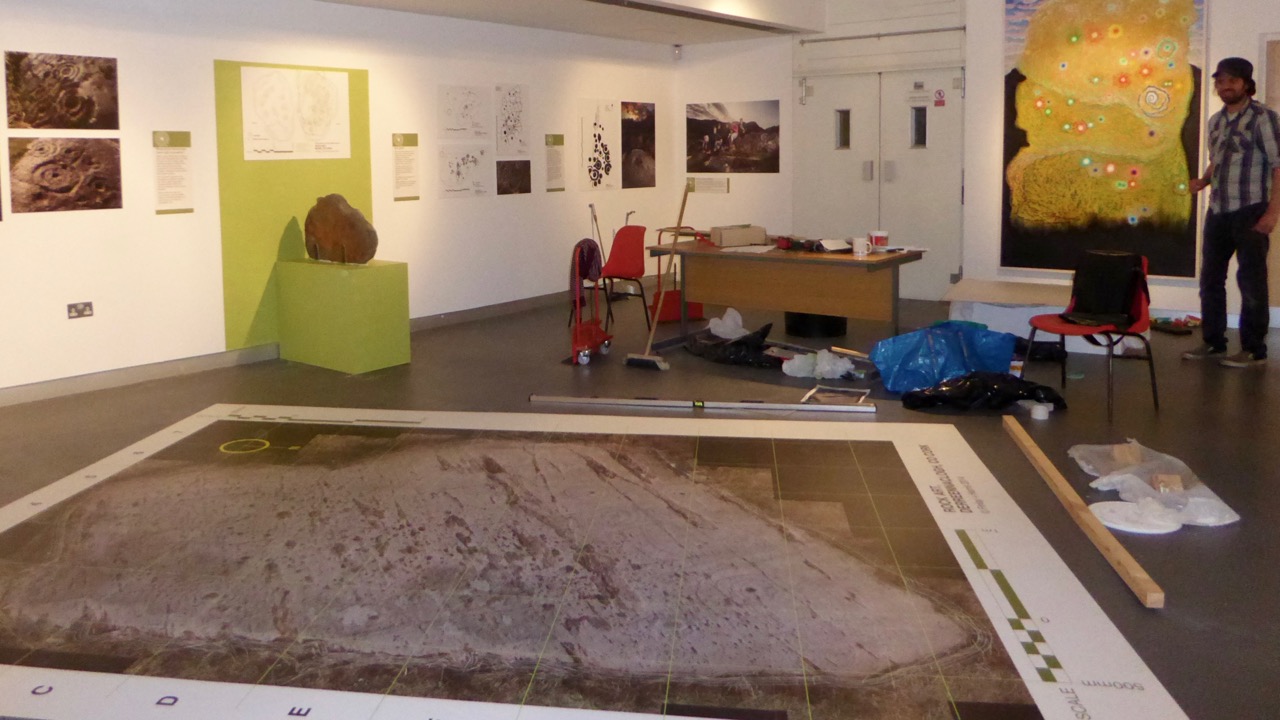
Before the Exhibition – Robert contemplates the blank canvas (top) and installation work in progress (below)

As our regular readers will know, the exhibition has been a very successful collaborative effort: Finola and Robert (providing drawings, explanations and the overall design); Keith Payne, a West Cork painter whose work is inspired by ancient art; Ken Williams, the excellent photographer of megaliths and monuments; the staff of Cork Public Museum, including intern Clare Busher O’Sullivan who came up with the idea and Dan Breen, Assistant Curator and his team, who made sure it all happened.

The Team

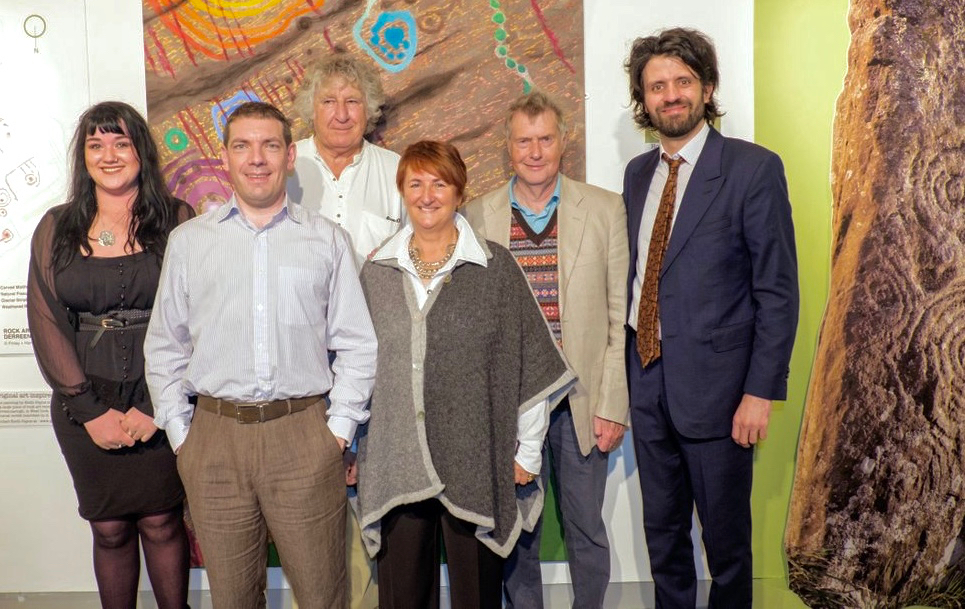
The Core Team: Clare Busher O’Sullivan, Ken Williams, Keith Payne, Finola Finlay, Robert Harris and Dan Breen

After some intensive days, on site and off, it has all come together and was launched yesterday. It was a grand launch: Firstly, William O’Brien – Professor of Archaeology at UCC – outlined a history of rock art studies and research which started back in the nineteenth century. He mentioned a predecessor in the department – Professor Michael J O’Kelly – who was born exactly 100 years ago and is best known for his excavations and restoration work at Newgrange, the Boyne Valley passage tomb: Finola worked on those excavations and it was Professor O’Kelly who suggested that she should carry out the research on rock art in Cork and Kerry which led to her Master’s thesis on the subject in 1973 – and, 42 years later, to the undertaking of this exhibition.

Professor Michael J O’Kelly (left) was renowned for his work at Newgrange (right)

Next up was Finola, who told us more about her expeditions back in the early 1970s. In those days when the boreens of rural Ireland were mostly populated by donkey carts her own travel was by means of her brother’s Honda 50 motorcycle, and we pictured her loaded down with compass, tapes, chains, chalk and tracing paper – a recording methodology now completely out of favour. But the result was a set of beautiful monochrome illustrations that form the core of the exhibition.

Coomasaharn

Rock Art: a detail of the picking technique (top left), and Finola’s drawings from 1973

In our modern days non-invasive recording methods have to be used: Ken Williams has developed a very effective method of photography using slave flash units to provide low angle lighting over the carved rocks, which brings the maximum level of detail out of the panels. The exhibition contains many fine examples of Ken’s work in this field.

Ken Williams in action: at the Bohonagh stone circle (left) and in the Derrynablaha townland, Kerry (right)

Finola also talked about Keith Payne’s work. He produces large and visually striking paintings based on particular rock art motifs. Two of these artworks are in the exhibition and will inevitably draw the eye, providing a good and colourful counterpart to Finola’s drawings.

Keith Payne at the hanging (left) and at the launch, in front of the remarkable Derreennaclogh stone (right)

The official launch was in the capable hands of Ann Lynch, now Chief Archaeologist at the Irish National Monuments Office. Ann and Finola were fellow students at UCC. Ann outlined the work of her department in recording Ireland’s monuments – and the difficulties involved in pursuing the preservation and protection of these monuments, including Rock Art – before formally declaring the exhibition open.

Ann declares it open

Ann Lynch, Chief Archaeologist at the National Monuments Office, declares the Exhibition open

Noteworthy exhibits include one piece of Rock Art – the Bluid Stone from County Cork – which is in the safe keeping of the Museum, and will remain on permanent display after the exhibition closes at the end of February next year. The Museum also houses an example of passage grave art from Cape Clear island (prominent in our own view from Nead an Iolair).

Tired

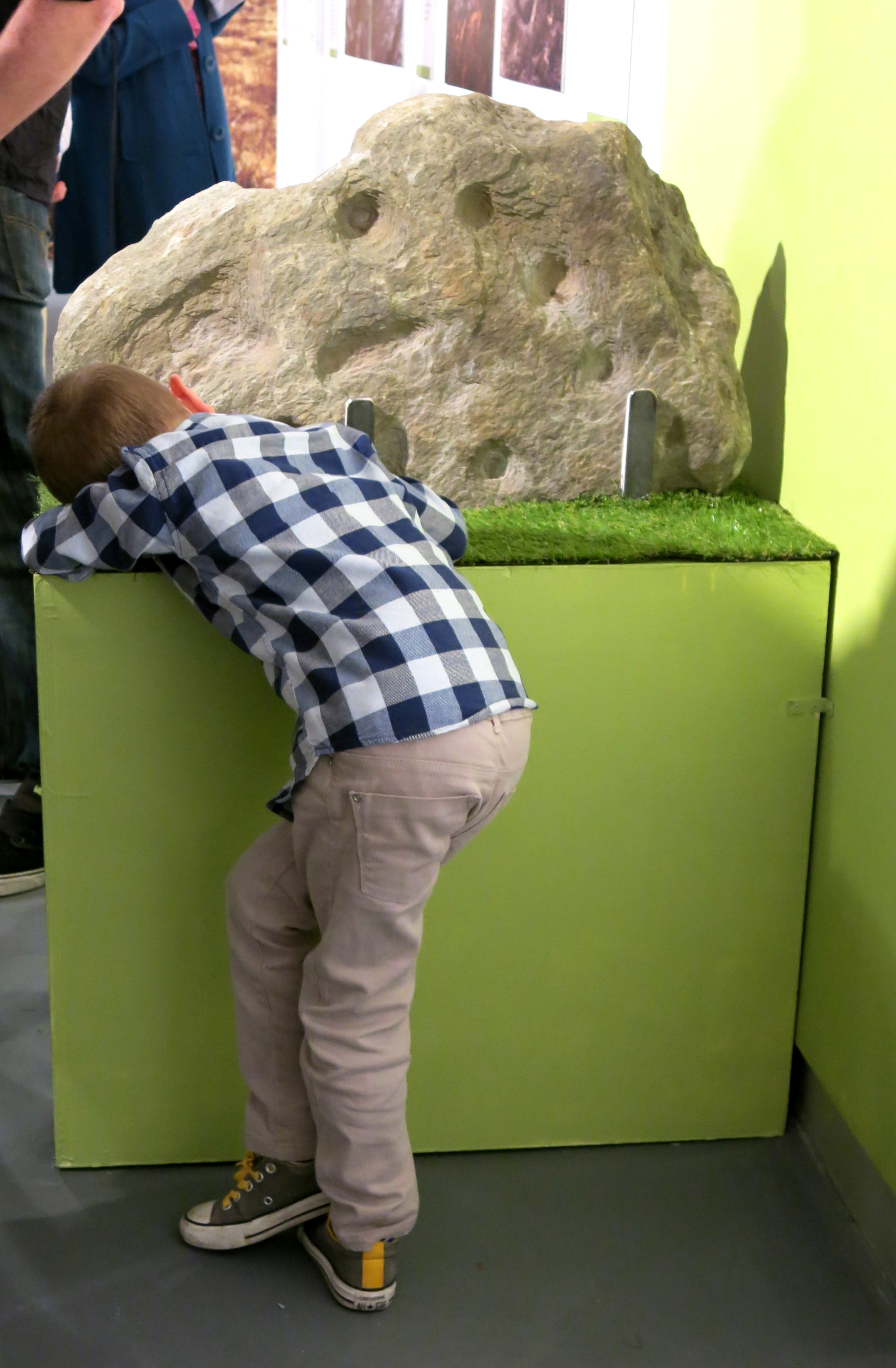
Fine Detail: the Bluid Stone under close inspection

Other exhibits include Ken’s superb photo of the iconic stone at Derrynablaha, Co Kerry, in its panoramic setting of a Neolithic landscape. This occupies the whole of the end wall – and is simply beautiful.

Gazing

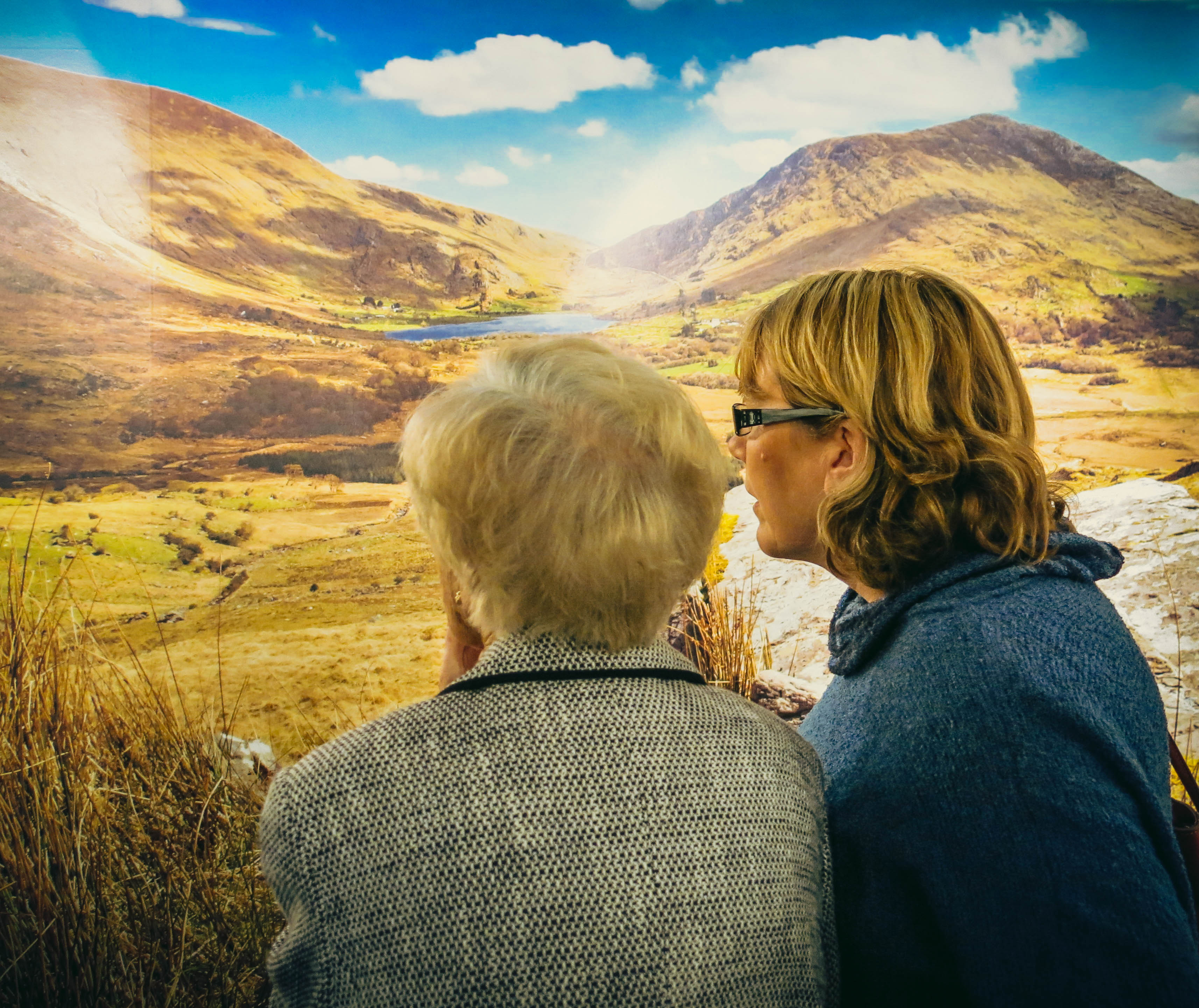
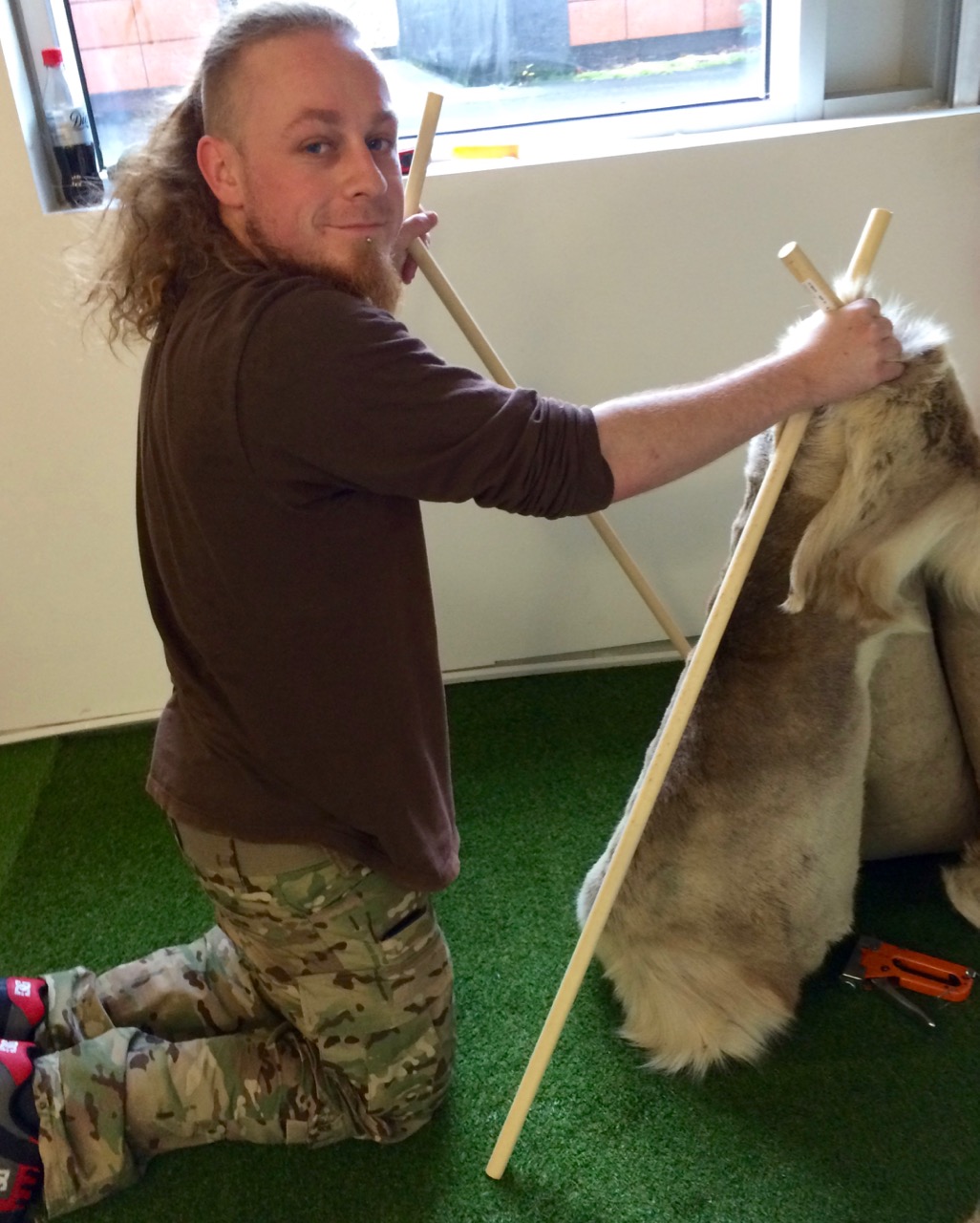
Visitors are surprised to see much of the floorspace taken up with a 70% life-sized image of the stone at Derreennaclogh: some hesitate to walk over it, but the printing is on hard-wearing vinyl, so feel free. The idea is to give you the feel of what it’s like to discover and explore the Rock Art out in the field. We have to mention how impressed we have been with the printing work carried out by Hacketts of Cork in the preparation of the exhibition – in particular, we were fascinated to watch the professionalism of their installation of the large items.

Yes – that floor can be walked on!

The timescale is set admirably by Alex Lee’s ‘Neolithic Settlement’ on the approach to the exhibition room. It’s well worth studying closely all the artefacts set out in this, and imagining what life must have been like for our artist ancestors in Ireland four or five thousand years ago.

Alex

Alex Lee at work on the Neolithic Settlement

We were delighted by how many of our friends from West Cork and beyond attended the opening, and gave us positive feedback. If you go during the next four months, please sign the visitors’ book. We are so grateful to our friends Amanda and Peter Clarke for being so supportive throughout – and for taking most of these photographs of the event: very many thanks.

Earnest discussions (left) and one of Ken’s superb photographs (right)

Our own day was rounded off by a visit to the Shandon Dragon festival, which processed through the centre of Cork in the evening – another unmissable event which reminds us of ancient times and long-held beliefs…

Shandon Dragon

Hallowe’en: The Shandon Dragon Procession makes its way through Cork City

Rock Art Exhibition – at the Cork Public Museum!

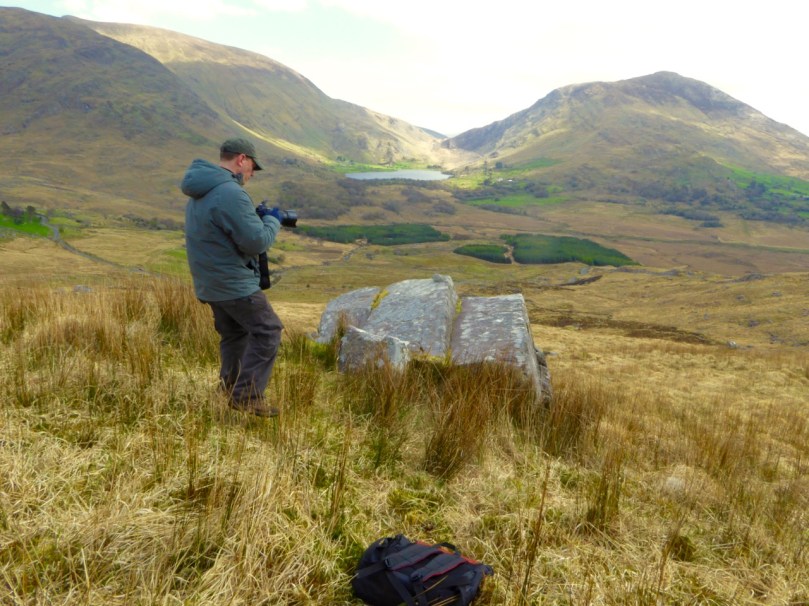
Rock Art from West Cork, Mount Gabriel in the background

Rock Art from West Cork, Mount Gabriel in the background

The Cork Public Museum has invited us to mount a Rock Art Exhibition and YOU are invited. Readers will remember the one we did last year in Ballydehob. Well, this one will be bigger and more comprehensive.

Ken and Robert photographing the Bohonagh Equinox Sunset

Ken and Robert photographing the Bohonagh Equinox Sunset

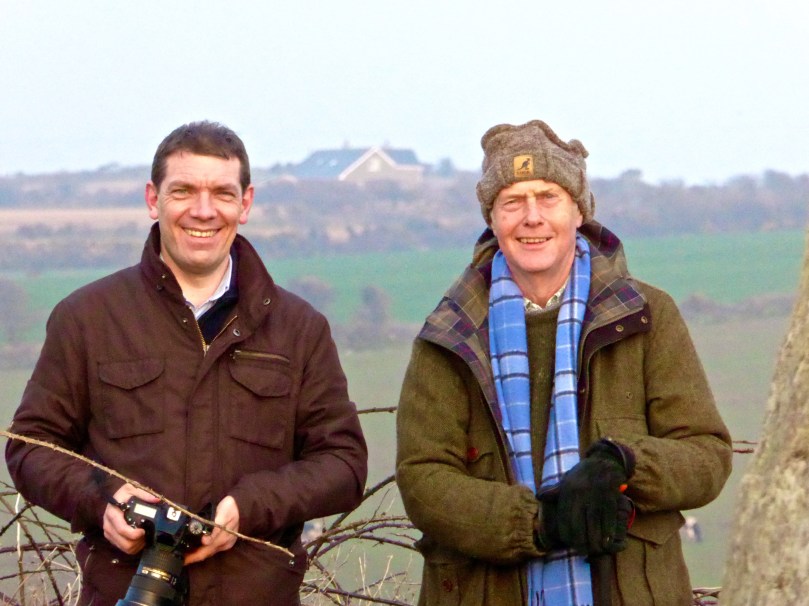
First of all, this time we have two partners. Ken Williams will be familiar to readers of this Journal – we profiled him in the post Shadows and Stone in Action, and he, and his photographs, figured largely in our famous Derrynablaha Expedition post. Ken is probably the foremost photographer of prehistoric monuments in Ireland, and certainly of prehistoric art. His website, Shadows and Stone is an invaluable resource of both images and information. He was recently profiled in The Irish Times Magazine – a wonderful two page spread.

Ken at work, Derrynablaha

Ken at work, Derrynablaha

Keith Payne has lived, painted and exhibited all over the world, including running his own gallery in France, but now he lives in West Cork.  He spent years travelling with the Rolling Stones creating stage sculptures and backdrops for their shows. 

Keith Payne

Keith has always been inspired by prehistoric art – cave paintings, aboriginal rock paintings, and all forms of petroglyphs. The paintings he has contributed to the exhibition are based on West Cork rock art pieces but the form, and the amazing colours, are all his own. We are thrilled that he is participating.

One of Keith's images inspired by cave Paintings

One of Keith’s images inspired by cave paintings

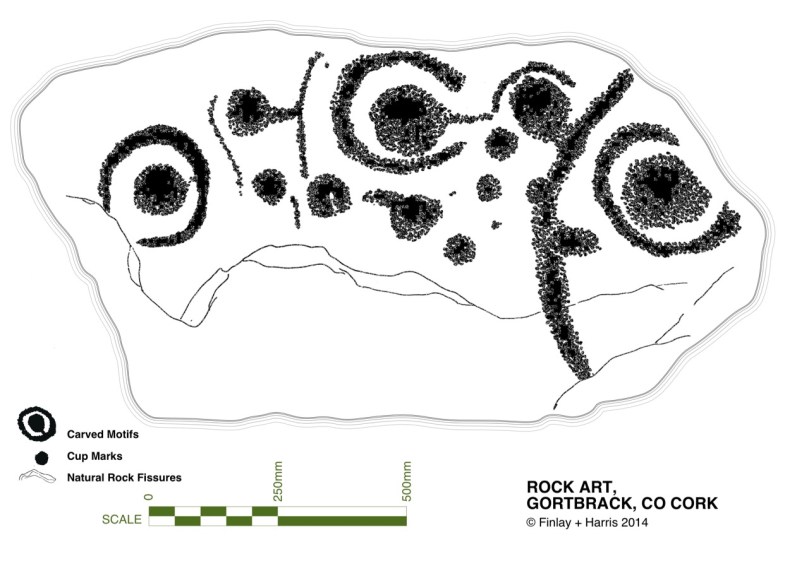
Besides Ken’s photographs and Keith’s paintings, the exhibition will include many of my rock art drawings and some of Robert’s more recent ones. There will also be ‘real’ rock art on display – an unusual stone from Bluid, near Castletownshend, and of course the Cape Clear Stone, which is on permanent exhibit in the Museum. It’s an example of passage grave art rather than rock art, but the comparisons are fascinating and important. A ten minute walk away, at University College Cork, are two further examples of rock art, one from County Cork and one from County Waterford.

Thi spiece of rock art is on display at University College Cork, a ten minute walk from the Museum

This piece of rock art is on display at University College Cork, a ten minute walk from the Museum

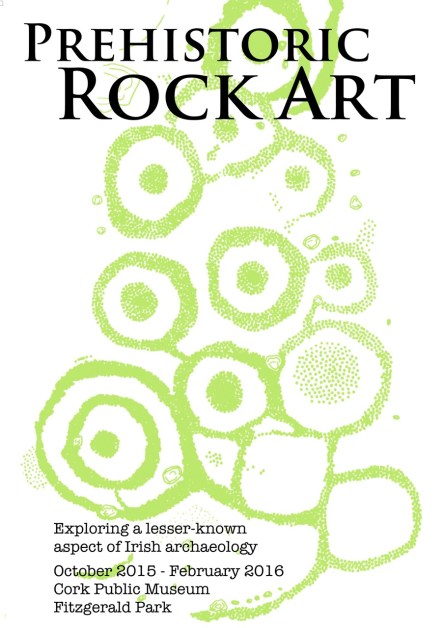
The Grand Opening will be at 2PM on Saturday October 31st. Please come if you can and say hello. But if you can’t make it, the exhibition will run until February 2016, so we hope you can drop by.

Exhibition Poster

Castle Haven

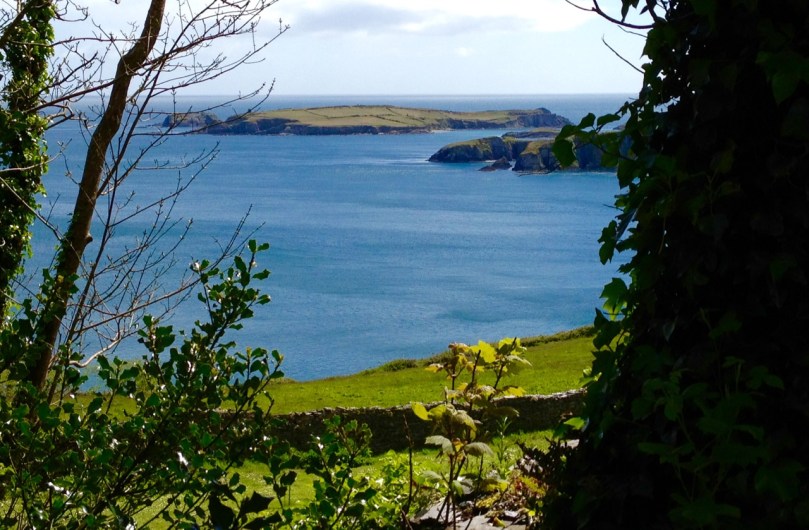
The entrance to Castle Haven. Horse Island is separated from the mainland by the charmingly named Flea Channel.

The entrance to Castle Haven. Horse Island is separated from the mainland by the charmingly named Flea Channel

South West of Skibbereen lies a deeply indented section of the coast known as Castle Haven. It is perhaps best known for the town that clings to the steep hill on its west side – Castletownshend. We have written much about Castletownshend itself, about Edith Somerviille and about the lovely St Barrahane’s Church and its Harry Clarke windows. But the whole inlet is an explorer’s paradise, yielding up its treasure to us on successive visits so this post will be about other things to see around the Haven.

Castle Haven

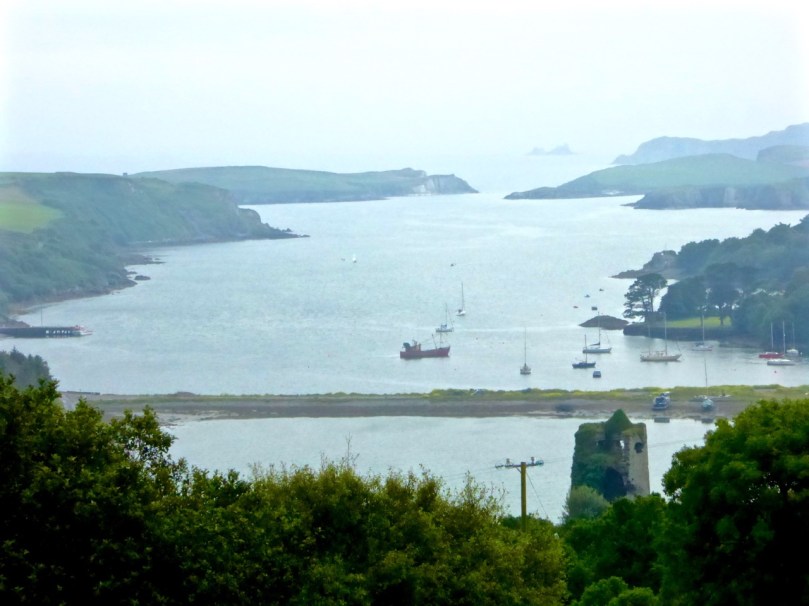
Catle Haven on a misty day. The inlet was guarded by two castles: this one at Raheen and another at the entrance to the Haven

The Haven is shallow at its top end, but up to the spit of land that runs across it near Reen Pier, it provides a deep and sheltered harbour for boats, and a popular sailing ground. We like to drive down the road that runs above the eastern side of the Haven. It’s twisty and a bit treacherous but at a certain point it presents a view of the whole inlet, dominated by Raheen Castle.

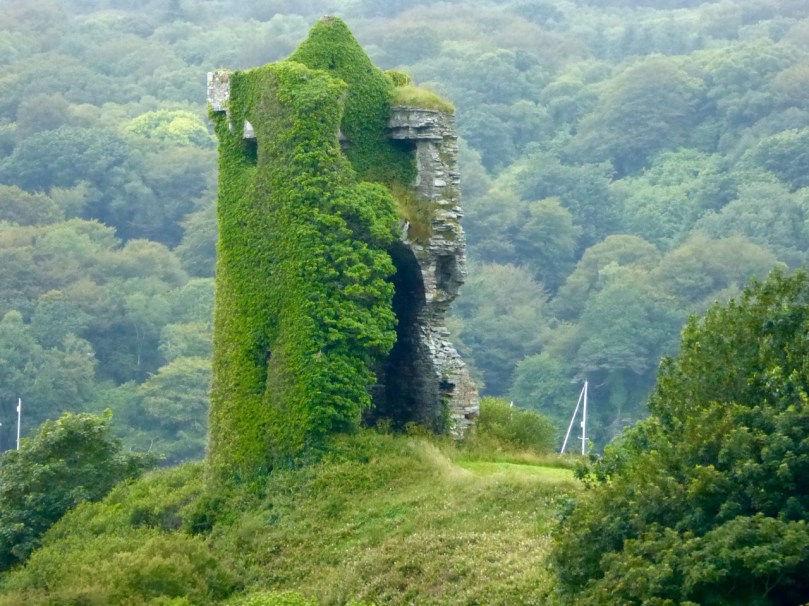
Raheen Castle

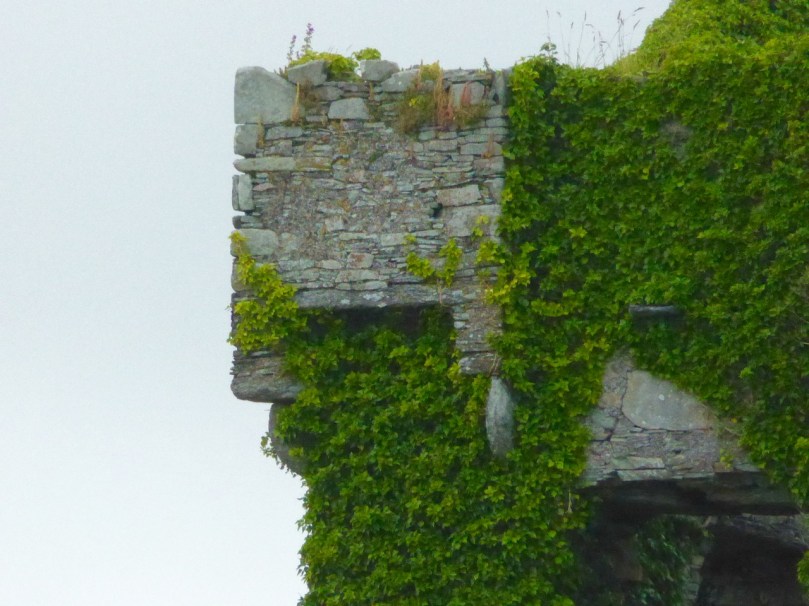
This was a castle of the O’Donovan clan, built in the late 16th or early 17th century. It didn’t last long – it was attacked by Cromwellian forces in 1649 and the collapsed upper stories may be the result of cannonball damage.

Raheen Corner machicolation

Continuing to the end of the east side brings you past Reen to the wonderful harbours of Myross and Squince, but that’s a post for another day. Now we’ll return to the west side of the inlet and visit two spectacular archaeological sites, Knockdrum Fort and the Gurranes Stone Row, before proceeding down into Castletownshend.

Knockdrum interior and views to north

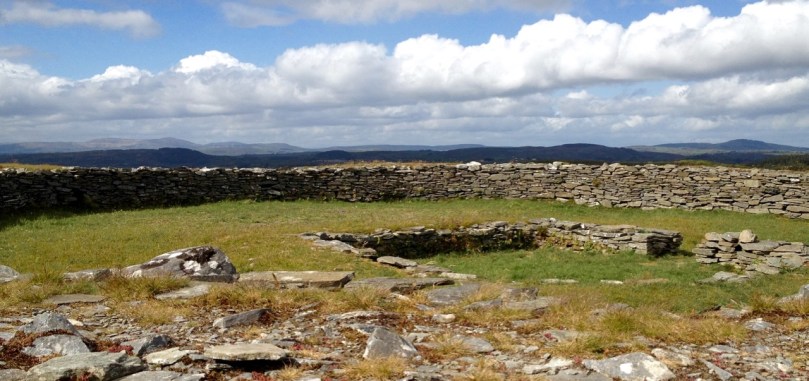
The interior of Knockdrum Stone Fort, with square hut site in the middle. The fort commands panoramic views across the countryside and out to sea

To get to Knockdrum Fort, you have to park at the large church about 2km before the village. Walk downhill about half a kilometre until you get to the signposted green road to the fort. A pleasant trudge brings you to a set of steps and these lead up to the site. This is an excellent example of an early medieval stone fort – the kind of fortified homestead that marked the residence of a family of high status before the Normans taught us how to build tower houses.  From this site there are striking views across Castle Haven.

Entrance to Knockdrum

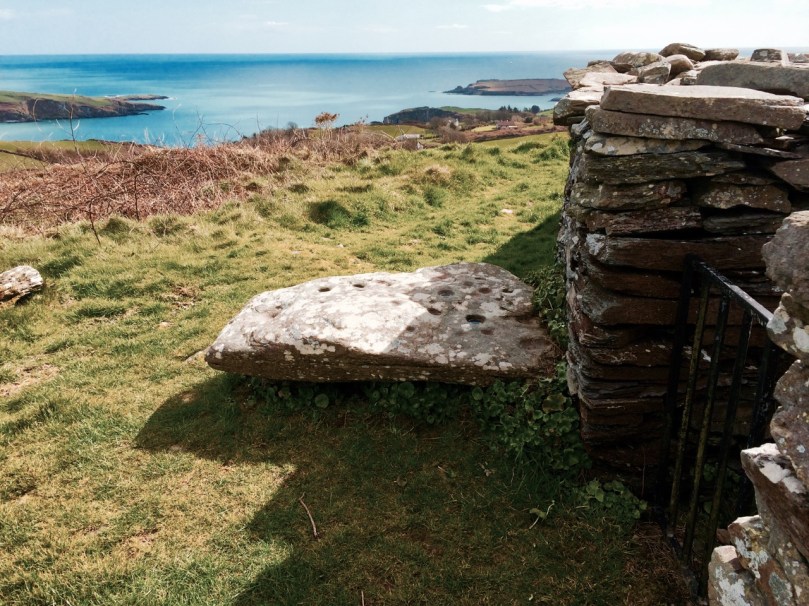
The entrance to Knockdrum Fort, looking towards the entrance to Castle Haven. Outisde the entrance is this large rock, covered in cup-and-ring art

But there’s more to this place than just the fort. There’s an early Medieval cross slab just inside the entrance, and a fine example of 4000 or 5000 year old rock art just outside it. There’s another piece, a cupmarked stone, inside the fort, lying on the ground. All three are here thanks to the activities of Boyle Somerville, a keen amateur archaeologist and brother of Edith Somerville who lived in Drishane House, just below the fort. Farmers who found such items would bring them to him and he placed them here for safekeeping. Also inside the fort you will see evidence of a souterrain – an underground passage used for storage when the fort was active.

Knockdrum cross slab

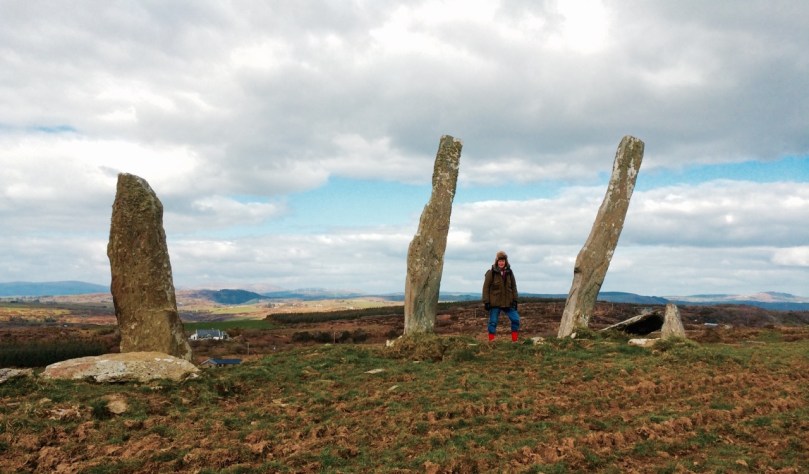
If you look north across the valley once at Knockdrum you will see a stone row on a nearby hill. These are the Garranes ‘Fingers’. (They are on private land so you should seek permission to visit and make sure there are no bulls in the fields.) The best way to access them is to tramp through the fields across the road from the entrance to Knockdrum. It’s well worth the effort – once you get up to them you will see that more uprights are now lying on the ground. This was originally an alignment of at least five stones, unusually tall and thin, positioned so that they would be visible on the skyline from many directions.

Gurranes Fingers

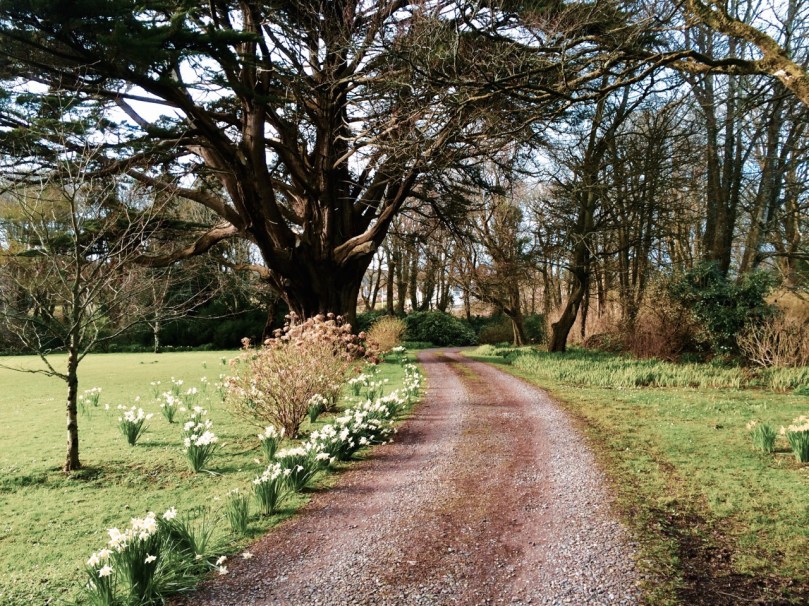
Drive down towards the village now, until you get to the entrance to Drishane House. To the right of the gate is a bench dedicated to Boyle Somerville. In 1936 he was shot dead by the IRA, who claimed he was recruiting local young men for the British Navy. He was liked and respected locally and, outraged by the deed, the people of Castletownshend raised money for this memorial. If the house is open (there will be a sign) this is a wonderful place to visit. For a small charge you can wander around the extensive grounds and visit the Edith Somerville Museum. We love to go in spring, when the bluebells provide a vivid carpet and a photographer’s paradise.

Drishane house driveway in spring

Drishane House driveway in the spring, with the giant macrocarpa (a Californian cypress tree)

Down to the village now and up to the church. But this time, instead of heading inside to see the Clarke windows, or behind the church to view the graves of Somerville and Ross, cross the graveyard until you find a gate at the far side and head east along the edge of the field towards the water. There you will find the remains of a structure labelled as a star-shaped fort on the OS map. Nowhere near as enormous as the massive star-shaped Charles Fort in Kinsale, nevertheless it is a reminder of a time when the sleepy village was not as peaceful as it is now. Dating to the 1650s, not a lot remains, just enough to confirm that this was a structure built for defence. Along the way you might also see a ruined square tower, known as Swift’s Tower. This was built as a belvedere, (a place to admire the view) and legend has it that Dean Swift visited and liked to write there.

Left is the remains of a bastioned fort, labelled as a ‘Star-Shaped Fort’ on the OS map. Right is the belvedere, where Swift is said to have written

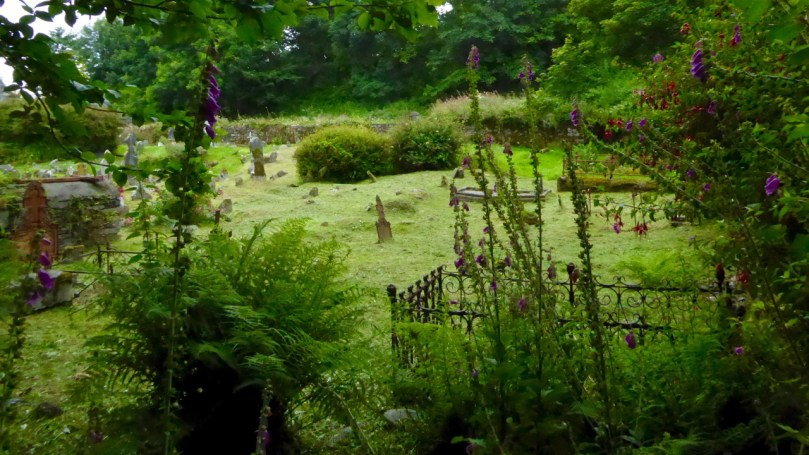
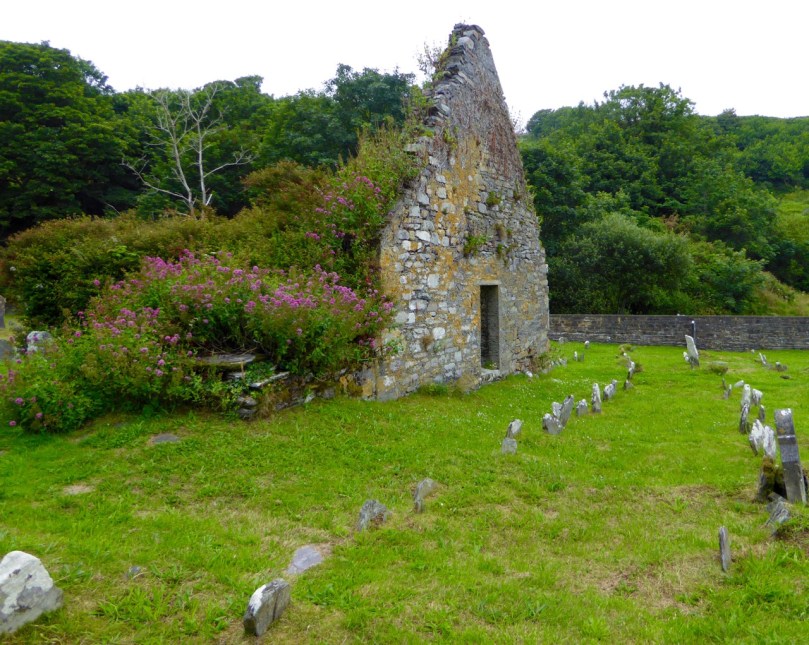
Drive back out of town now and take the left turn after the entrance to Drishane House. Follow this road for about a kilometre to a sharp left turn, just before a small crossroads and turn left down a narrow road that ends at the sea. A tower house used to guard this part of the Haven but nothing remains of it now except a stump covered in ivy and brambles. But wander around the graveyard and admire the picturesque siting of the old church, already in ruins by the mid-1600s. This is a good example of a classic West Cork graveyard. Most graves are marked by simple stones at the head and foot, with no inscriptions. 

Castlehaven Graveyard atmosphere

There are some family plots and some more elaborate memorials, including one for Ellen Buckley, second wife of O’Donovan Rossa (although his name, interestingly, does not appear on the headstone).

Castlehave graveyard, old church

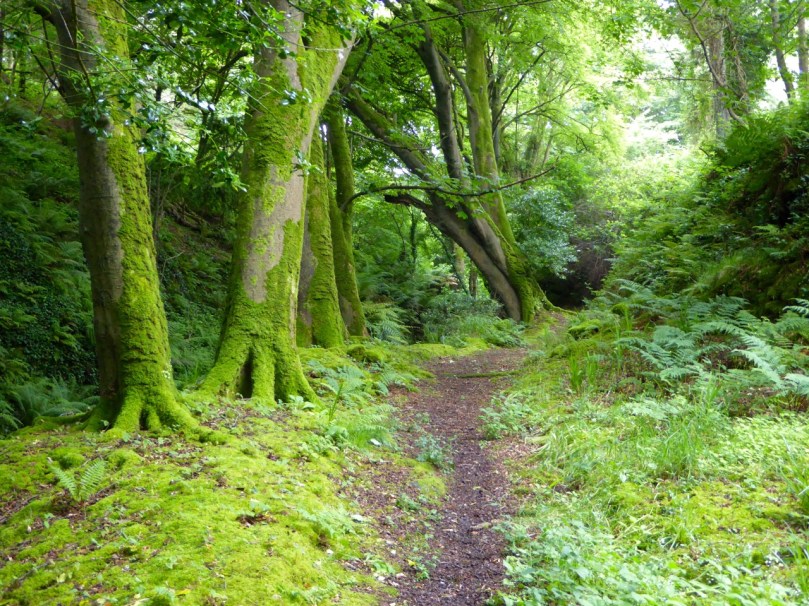
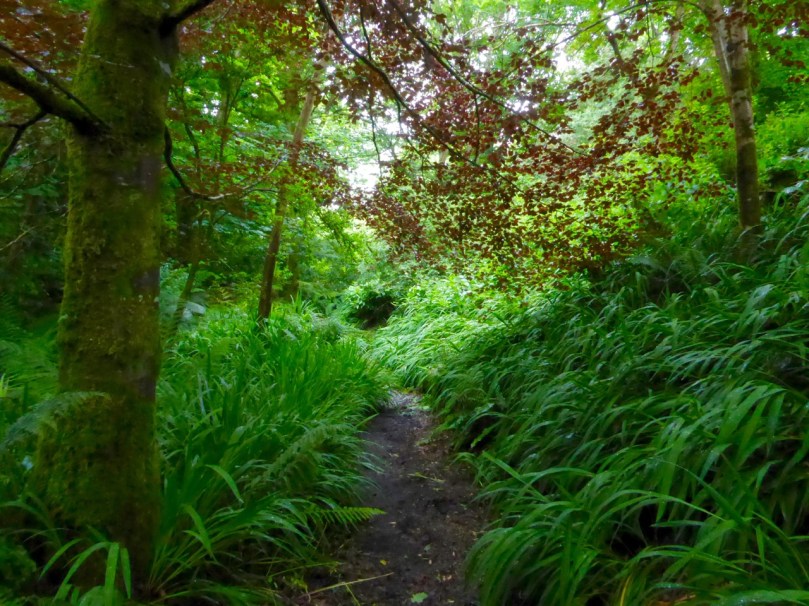
To the immediate left of the graveyard you will find a stile leading to a green path. Take this path and walk up though the luxuriant woods past a rushing stream until you come to a little wooden bridge.

Path by the stream

On the other side is a holy well, cut into the hillside and decorated with ribbons and fishing floats. Make a wish, or say a prayer – this is a special place and still visited and maintained by local people.

Take OS Discovery Map 89 with you. Most of the sites I describe are actually marked on it. But if you get lost, have fun, and let us know what you discovered!

Path through woods

Umha Aois

spearhead

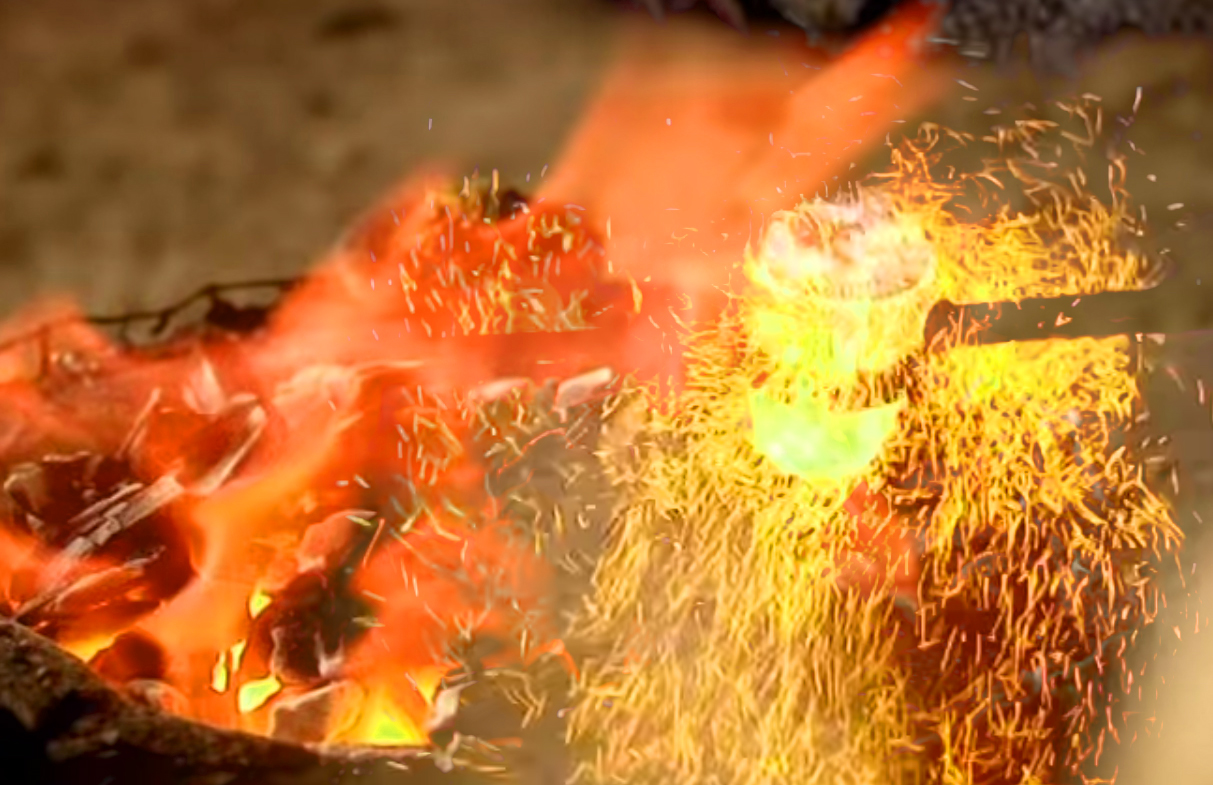
There’s a magic to the working of metal: you can pick this up when you are doing it, or when you are watching others do it. It could be the arcane transformation of rough nuggets of ore, first into liquid and then into beautiful solid objects that inspires that impression – or perhaps it’s because the senses are battered by the fierce heat, the molten rivulets, the streaming sparks, the incessant hammering, the sheer excitement… It’s no wonder that our ancestors embraced the emerging technologies hundreds of generation ago, and created spectacular objects which, today, we place in our museums and venerate.

sparking

Umha Aois are artists and sculptors working as ‘experimental archaeologists’ who have been in Skibbereen this week as part of the Skibberen Arts Festival. They use Bronze Age metal working techniques to produce replicas of ancient tools, weapons and musical instruments and also contemporary art objects. We went to their workshops set up in the grounds of Liss Ard House and met Holger Lönze – a locally based sculptor – James Hayes from Bray and their colleagues who are researching and using stone and clay moulds, ‘lost wax’ processes and charcoal pit-furnaces.

Robert holding a recently cast bronze bell, while Finola tries out an adze

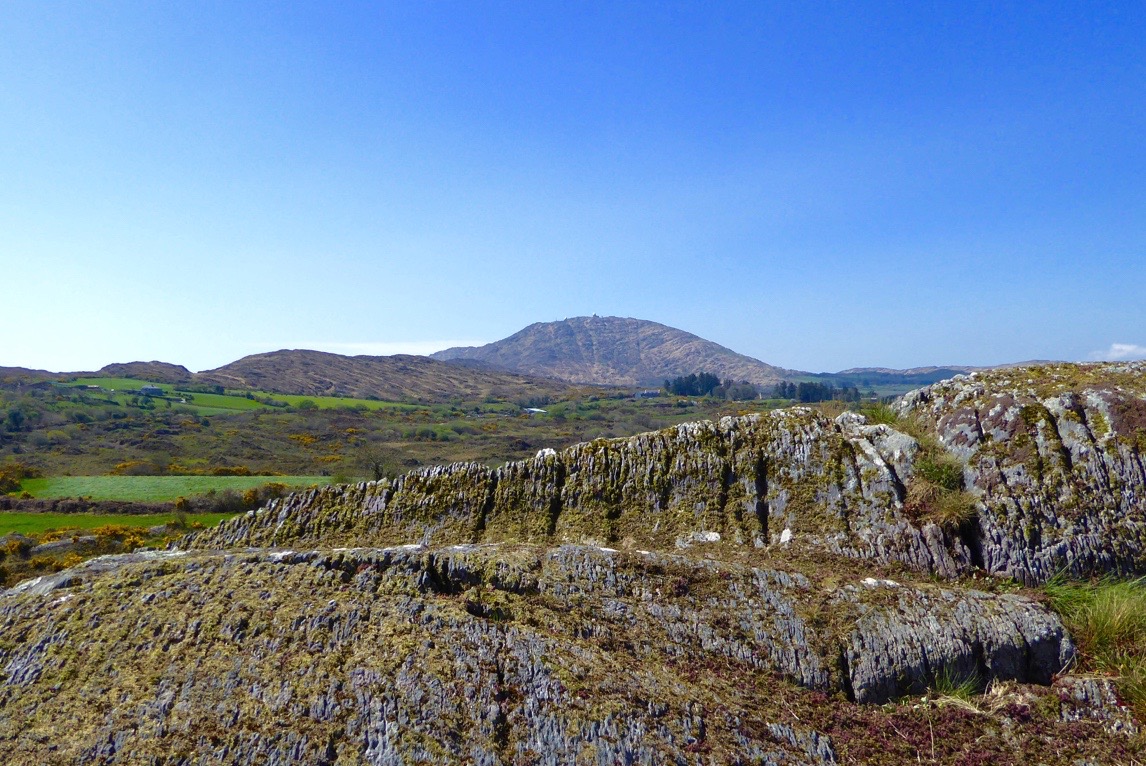
It’s very appropriate that we should be looking at Bronze Age metalwork in our own corner of West Cork as we are in the shadow of Mount Gabriel, site of substantial copper mine workings probably dating from some three and a half thousand years ago. A number of Bronze Age mines have been found on the Mizen Peninsula: it must have been a significant local activity and source of trade. It has of course continued almost up to the present day; our own townland of Cappaghglass saw considerable copper extraction during the nineteenth century.

copper mountain

Copper Mountain – on Mount Gabriel can be found the sites of 32 separate workings dating from 1700 – 1400 BC, but there is no evidence of smelting or metalworking in the same vicinity: perhaps the ‘magic’ of the process required it to be carried out in more secret places?

Back to the Umha Aois project (it’s pronounced oowah eesh and means Bronze Age): we saw pieces in various stages of production, including axe heads, adze heads and spear heads, cast from stone moulds. They are elegant objects, especially when they have been polished to a gleaming finish.

axe heads

Bronze axe head, showing the mould used to cast it

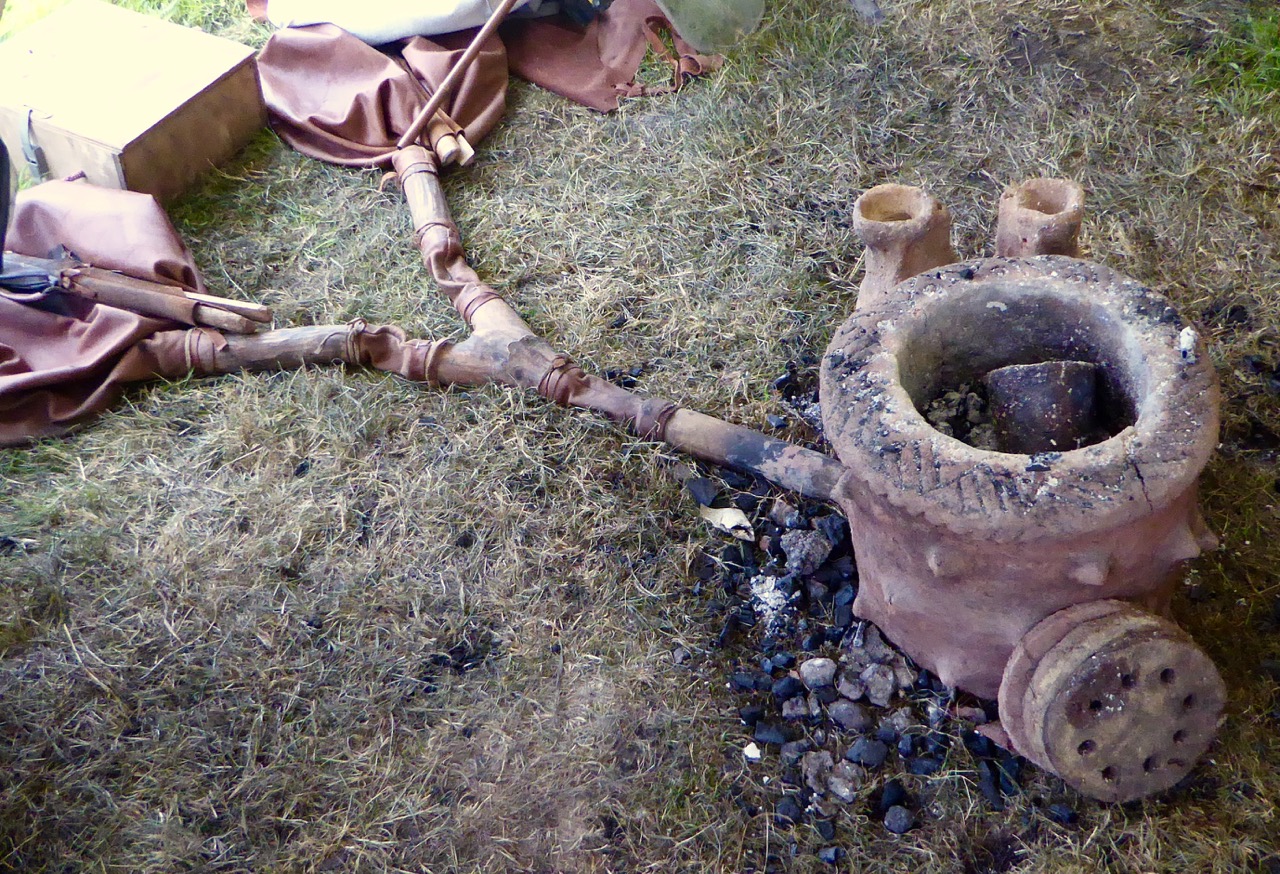
The group was using pit furnaces which they had constructed on site. These consisted of basin shaped depressions in the ground lined with clay, and pipework of clay running from two sets of bellows. The clay pits were filled with charcoal and fired to a high temperature to convert the ore in the crucibles to a molten state.

empty furnace

Top – the principle components of a Bronze Age pit furnace; below left – crucible being heated; below right – the bellows in action

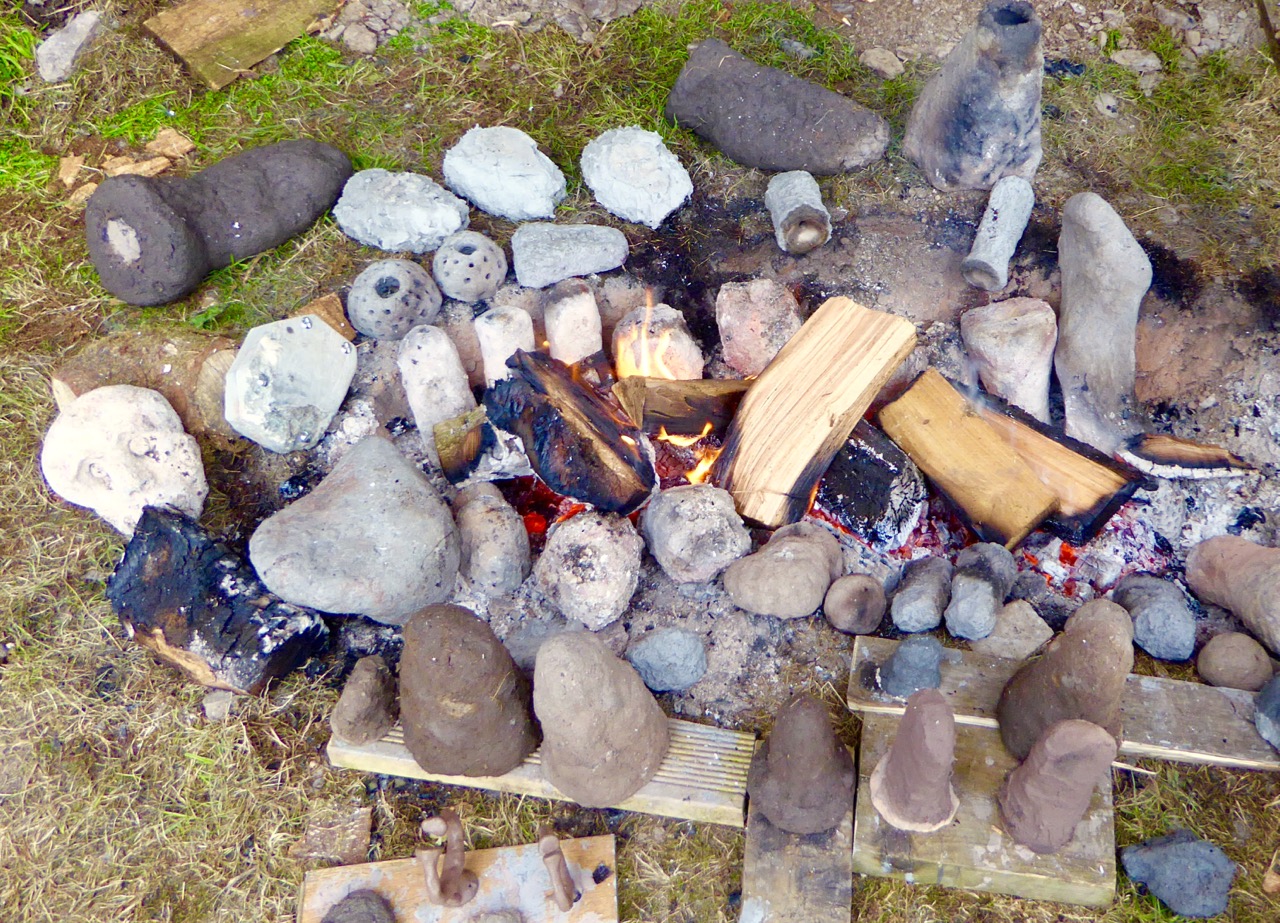
In another shelter we were also shown the ‘lost wax’ process: small objects were shaped in wax and then encased in clay. The wax was melted, leaving a mould in the clay cavity which was then filled with molten metal. Once hardened, the clay moulds are broken apart; the copper or bronze objects are then finished and polished. Here is a BBC video that demonstrates these techniques. There are incredible examples of this type of worked metal in the National Museum in Dublin, including some in gold – thousands of years old and yet so elegant and sophisticated.

melting out the waxClay moulds used in the ‘lost wax’ process

Holger has also made a Bronze Age musical instrument, which he demonstrated for us. The pattern is based on ‘trumpets’ which have been found in Europe, the finest being the Loughnashade trumpet, discovered during drainage works at the site of a former lake in County Armagh. Holger’s trumpet is a bronze cast: some finds have been made from curved and rivetted sheets of bronze. Here is a link to a recording of the sound made by a similar reconstructed instrument.

Holger Lönze conjuring up ancient music!

By exploring techniques, lifestyles and behaviour of our forebears through practical application, experimental archaeologists such as Umha Aois help us to understand that people who lived in the Bronze Age were not intellectually ‘primitive’ as was once thought; they have passed down to us their own aesthetic appreciation of art, music and their highly developed knowledge of sciences that enabled them to construct the complex megalithic monuments – and enigmatic Rock Art – which are yet beyond our own understanding.

Experimental archaeology in the walled garden at Liss Ard

Our ancestors left behind rugged stone monuments, landscapes which have shaped the pattern of our countryside, and sublimely beautiful objects: magic to our eyes and senses.

This Bronze Age gold disc – now in the National Museum, Dublin – was found at Sparrograda, Ballydehob:

sparrograda disc

Scratched Stone – Scratched Heads

stone scratches

Aultagh Ogham Stone

One thing always leads to another – that’s something you can be sure of when we are on our archaeological adventures. A case in point was a recent expedition to have a look at Ballynacarriga Castle (not far from Dunmanway, County Cork: 16th century – notable for having a Sheela-na-gig carving built high up into the outer masonry wall, and some unusual carved inscriptions on the internal stonework).

Ballynacarriga Castle (left) with its Sheela-na-gig (right)

Perhaps these various stone scribings turned our minds to the subject of Rock Art (easily done). Our excellent guide on that morning, Margaret Murphy of the Skibbereen Heritage Centre, offered to show us an Ogham stone not too far away, in the townland of Aultagh. How could we refuse?

finding the stone

Assistance required in finding the stone!

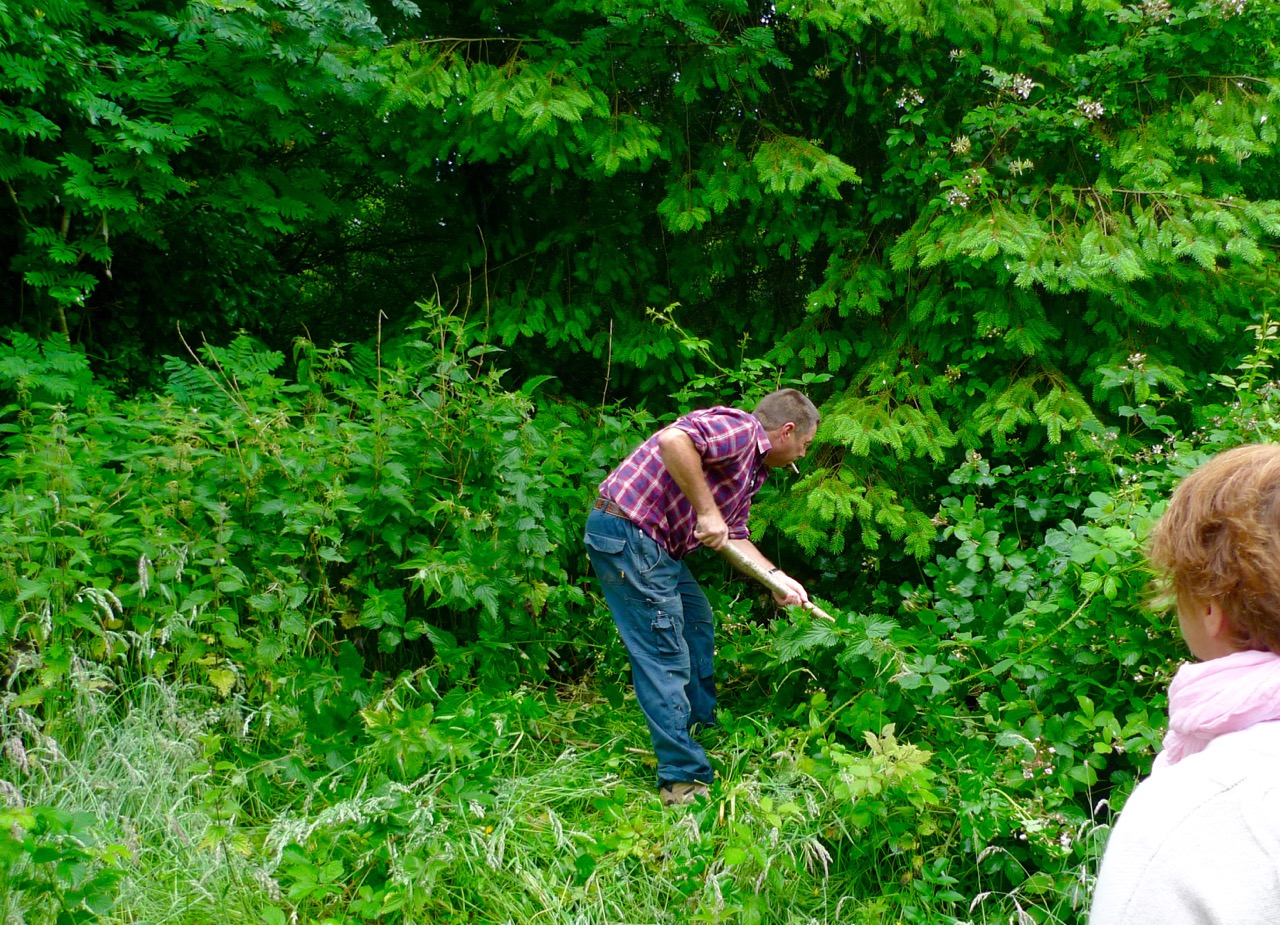
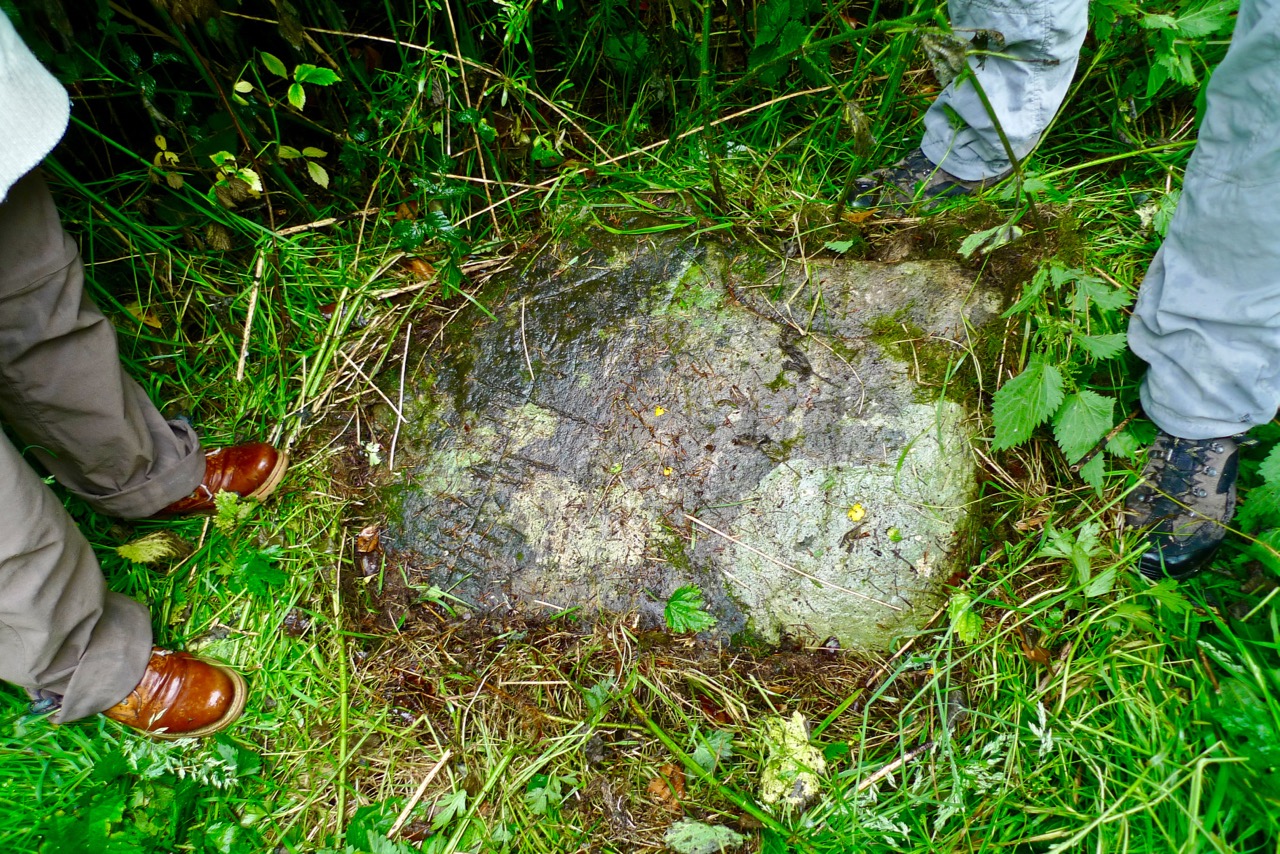
Our goal was beside an ancient track in Aultagh Wood (Coil an Ailtaigh), approached from a private driveway. Margaret knew the owner who readily gave us permission to have a look. In fact, he provided sterling service after we had searched in vain for the elusive rock – opportunely arriving with a pole to clear the thick undergrowth, and soon revealing this modest boulder to our eager gaze.

stone discovered

Stone uncovered…

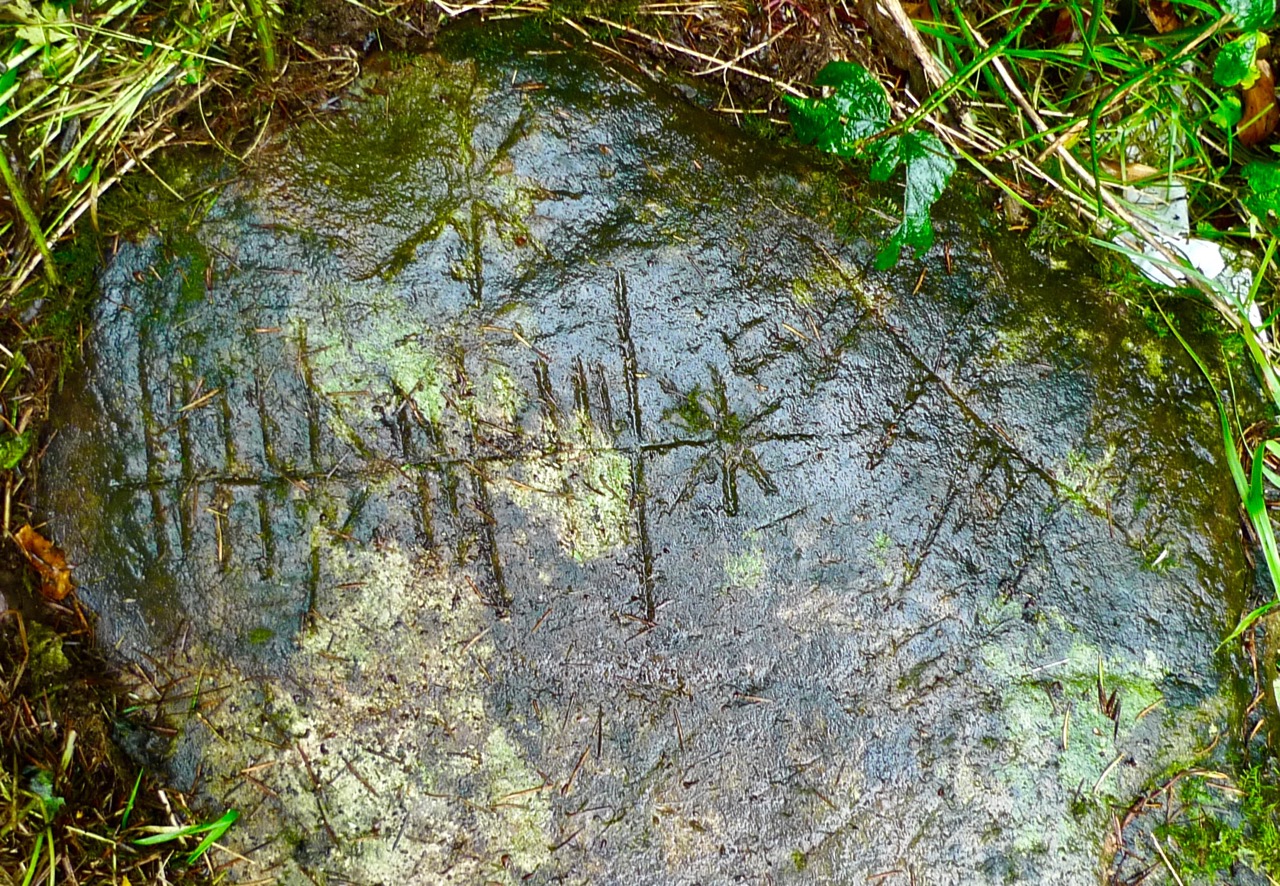
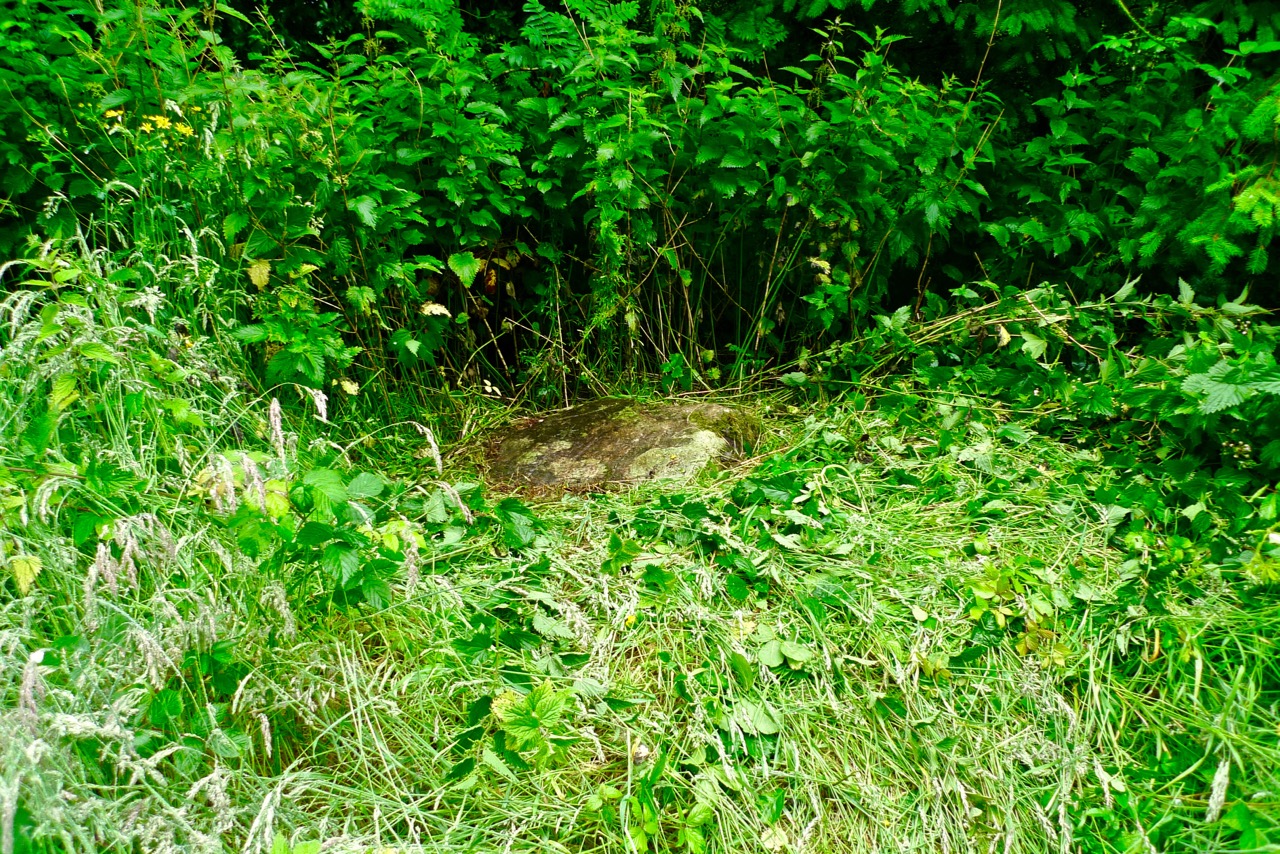
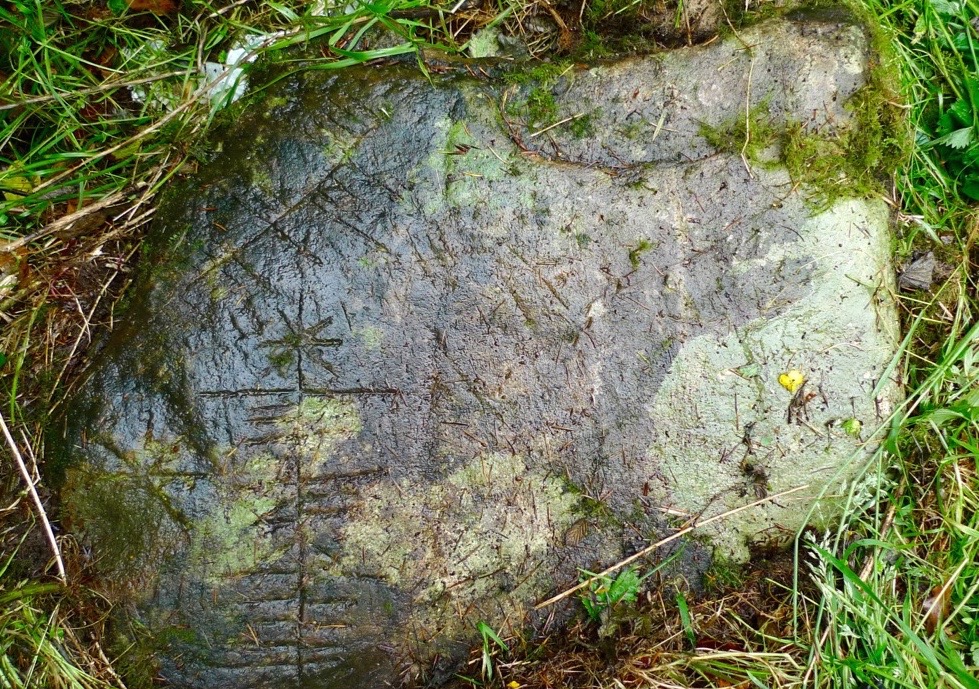
The stone lies close to a drainage ditch and has possibly arrived there from another location at some time in its history. In one area the surface of the rock has been damaged, affecting part of the scribings: it may be that it was once standing – now it is prone with carved marks clearly visible on the upper surface.

stone in context

The Aultagh Ogham Stone in context

The last time I wrote a post about ogham (here it is) I gave a very general overview of the subject. Ogham stones are concisely described by the Irish National Monuments Service as:

…upright monoliths or recumbent slabs, onto which ogham script has been incised. Ogham script consists of groups of 1-5 parallel lines and notches cut along the side or across the edge of a stone to represent the sounds of the Irish language. It is usually read up the left angle. The inscription gives a person’s name (usually male) and immediate antecedent/s or tribal ancestor. The stones may have functioned as memorials, grave markers or territorial markers and date from the late 4th to the early 8th century AD.
Fine examples of ogham stones in Ireland

Here’s the entry in the National Monuments Service records for our Aultagh stone:

Description: On a W-facing slope, in Aultagh Wood. Fallen stone (L 1.1m; 0.7m x 0.3m) with inscription on flat face. According to Macalister (1945, 75) ‘fashioned by an illiterate artificer, copying by rote from a wooden model cut for his guidance’ and reading UBEDABO ALTASI.

MacalisterThat’s quite a bald statement from Robert Alexander Stewart Macalister who was Professor of Celtic archaeology at University College Dublin from 1909 to 1943, during which time he compiled and edited the catalogue of all known ogham inscriptions from Britain and Ireland. Macalister’s theories on ogham are generally out of favour today (some commentators have claimed that his interpretations are gibberish) but he seems to accept the Aultagh stone as being within the early medieval ogham tradition. Yet it seems to me very different from many of the other stones we have seen: it is very sharply incised, obviously with a fine-tipped metal tool, whereas a majority of the traditional or ‘classic’ ogham stones are larger and more robustly carved.

Possible ogham stone at Maulinward, West Cork (left) and others from the Stone Corridor at UCC

When you begin to delve into modern literature on ogham you realise how very many varieties of examples there are, and also how many differing interpretations there are of how to ‘read’ the script. This was monumental writing, labour intensive and time consuming to undertake. For this reason it is generally supposed that ogham was ostensibly reserved for marking important graves or places, and that the inscriptions are all names.

Aultagh Inscribed completeAultagh Ogham Stone – ‘classic’, ‘scholastic’ – or ‘fake’?

There are suggestions that ogham inscriptions for more general – and less monumental – usage were once carved on wood, and might have been language primers for the bardic poets. Later inscriptions are sometimes termed ‘scholastic ogham’ deriving from the fact that the inscriptions are believed to have been inspired by manuscript sources, instead of being continuations of the original ‘monument’ tradition. Hallmarks of scholastic ogham are the median line and scribings being on the flat face of a stone (as at Aultagh) rather than on the edge. Ogham was occasionally used for notes in manuscripts down to the 16th century, and the burgeoning interest in all things antiquarian from the 18th century onwards led to  a popular ogham revival. A typical example, from the graveyard in Ahenny, Co Tipperary, has an English inscription dated 1802 and this in ogham: FA AN LIG SO NA LU ATA MARI NI DHIMUSA O MBALLI NA GCRANIBH, interpreted as ‘Under this stone lies Mary Dempsy from Ballycranna’. Macalister takes the view that this inscription, and others like it, were written “with much more zeal than discretion”, while some scholars have suggested that this more modern usage of the scribing should be termed ‘fake ogham’.

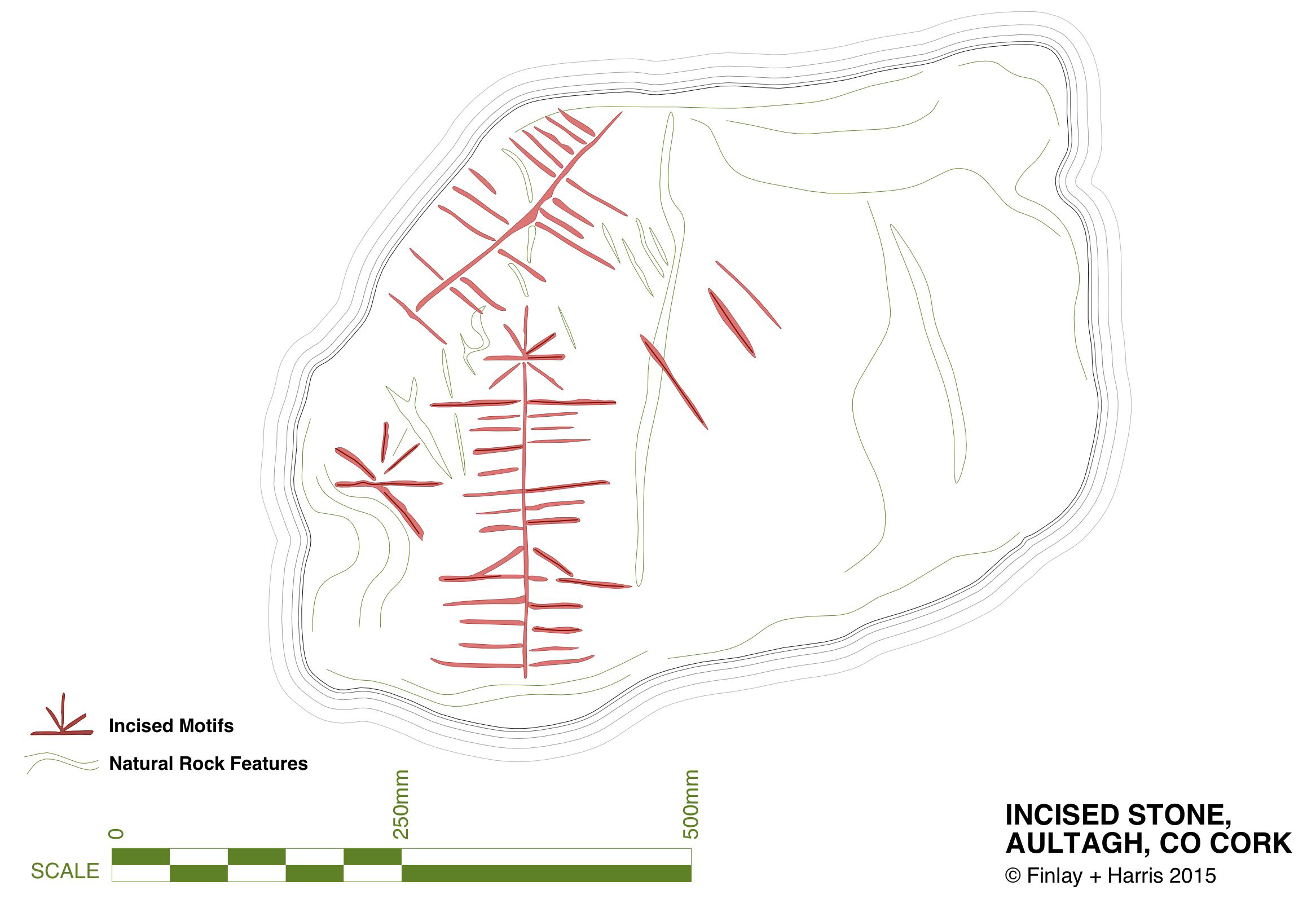
Aultagh Incised Stone

My own drawing of the Aultagh inscribed stone – traced from detailed photographs

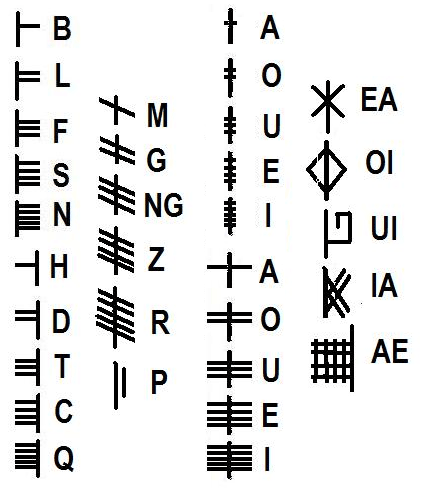
You may like to have a go at translating the inscription at Aultagh for yourself. Firstly you will need to select your decipherer: a quick internet search will show that there are many, and also a whole lot of inconsistencies. But perhaps this is all part of the head-scratching: and also part of the whole fascination of a historical subject where many of the elements can only be guessed at…

ogham-alphabet