Good Signs

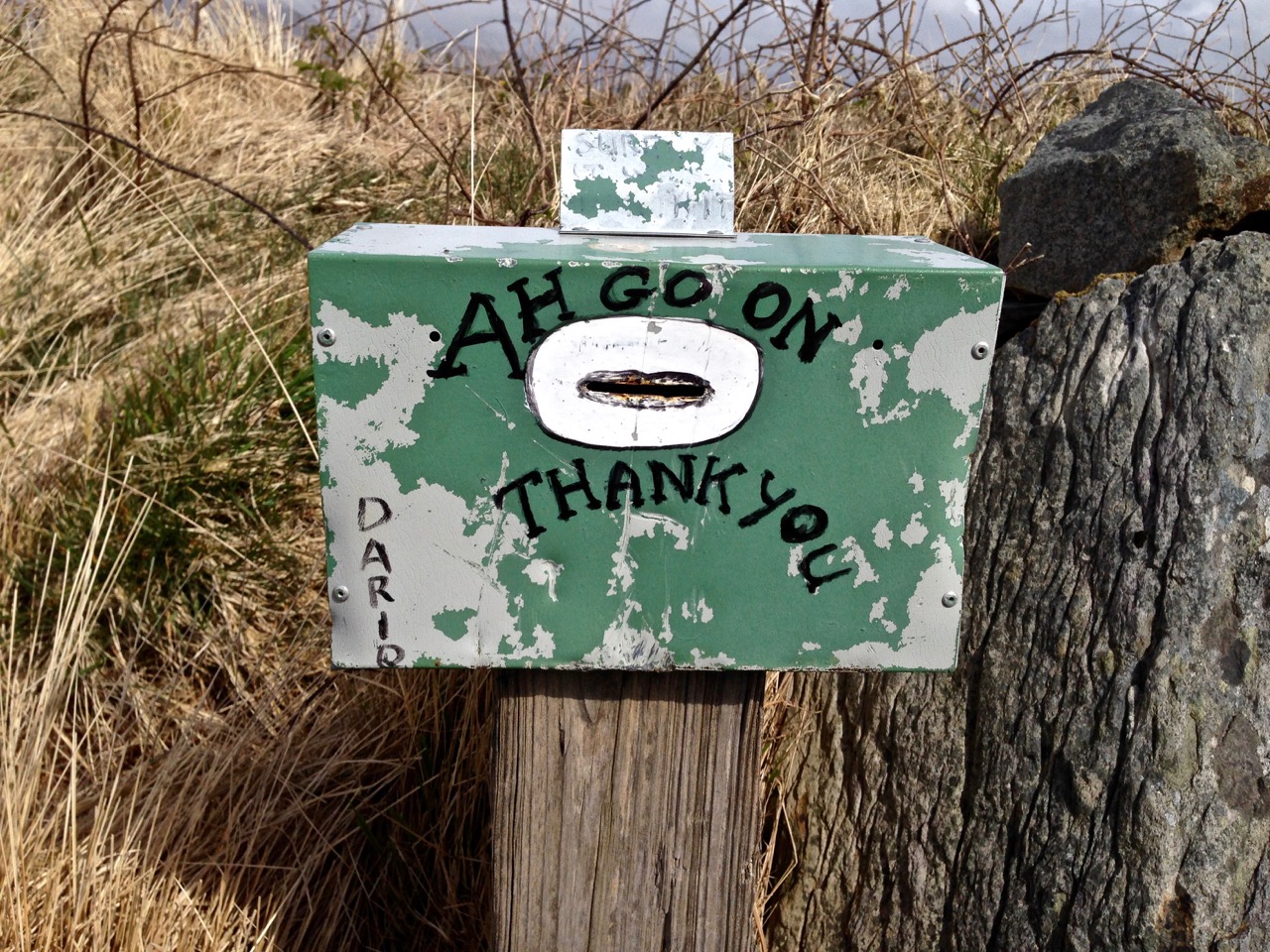
Ah go on...

A collection of words (mainly) seen on signs around and about west Cork (and occasionally further afield) in recent times. They need no explanation. Enjoy them!

I have my own favourites; I’m always directing my own children to digest this one…

children and fathers

…And, lest we err, there’s always something to remind us:

no drink

Discovering Carrowmore

stone and sky

At the heart of the Coolrea peninsula in County Sligo lies one of the greatest megalithic complexes of ancient Ireland, An Cheathrú Mhór or Carrowmore as we call it today: the Irish name means ‘The Great Quarter’. Spread over a plateau of some 150 acres and centred on the high point of Listoghil are thirty recognisable tomb sites but it is suggested that there were once at least a hundred monuments here.

Carrowmore 1

The Carrowmore monuments that we know today cover over 150 acres: it’s likely that there is much more to this site which has been lost, or which remains to be recovered

The changing landscape has taken its toll: from the 18th century onwards land clearance and quarrying have damaged and obliterated many of the remains and even as recently as 1983 Sligo County Council sought to place a municipal landfill dump adjacent to the known sites. Fortunately a few alert local residents objected and took the case to the High Court in Dublin. Initially their objections were overruled but in 1989 an appeal to the Supreme Court was successful and the very important landscape context of Carrowmore has been saved, hopefully for all time. In that same year the state commenced purchase of a part of the site and has developed a sensitively planned visitor facility now run by the Office of Public Works. Since then more of the surrounding site has been purchased and is in public ownership.

stone and skyscape

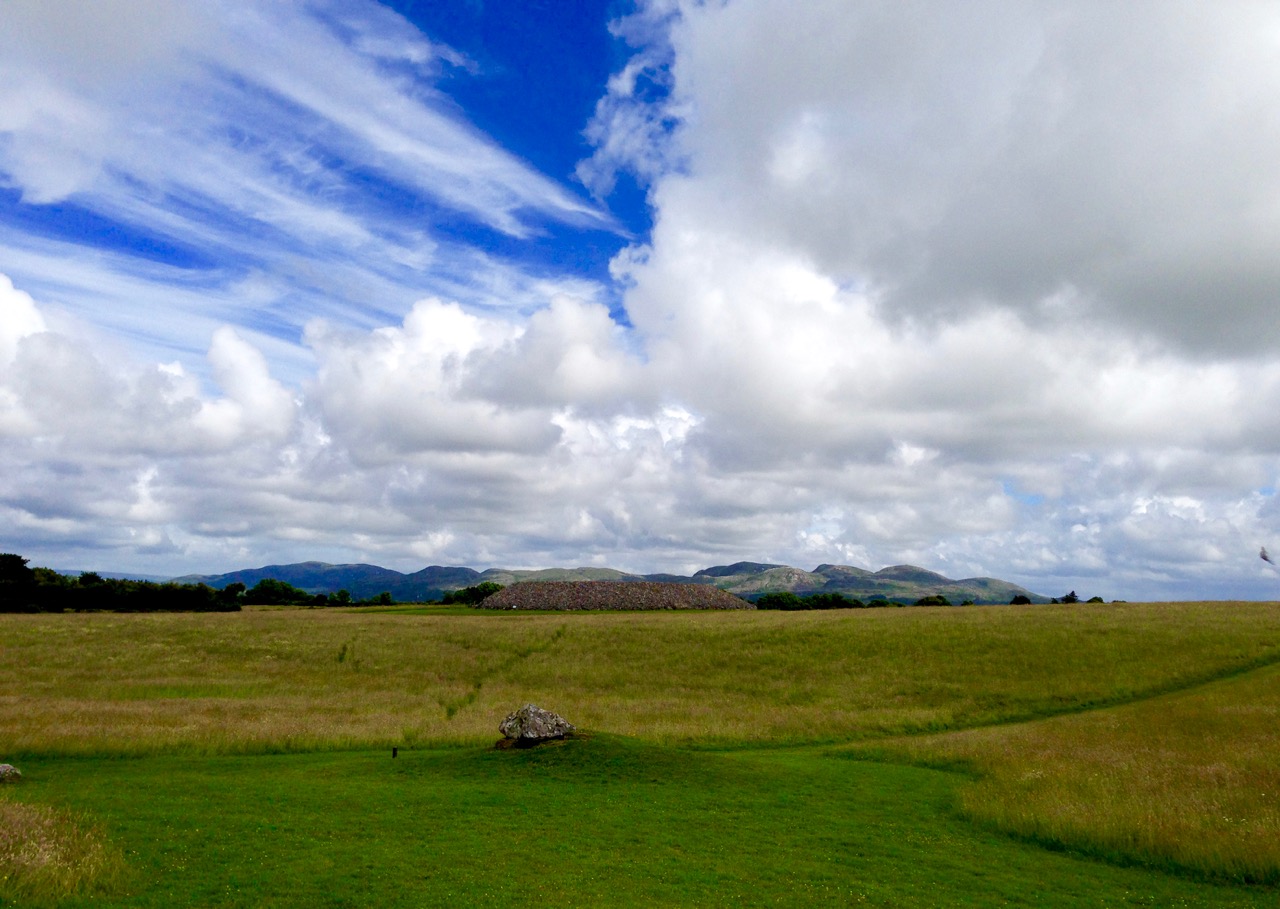
Carrowmore landscape: this view to the great central cairn on Listoghil shows the nature of the terrain and the context of the monuments which it is so important to preserve

It’s the integrity of the complex that is so special here. The monuments found at Carrowmore are called boulder circles, though several have central dolmens or rudimentary passages. Generally around 12 to 15 metres in diameter, the circles contain 30 to 40 boulders, usually of gneiss, the material of choice for the tombs. Sometimes an inner boulder circle is also present.They are considered to be an early type of chambered cairn, or passage grave, though in fact, they may be the ancestor of a few monument types. This is the view of local man Martin Byrne, historian, artist, musician and our tour guide for the day. He pointed out to us how the passage of each of the boulder groupings is oriented, not towards a solar or calendrical event but to Listoghil, where an enormous cairn encloses a box-like stone chamber with a large capstone.

Monument, mountain and sky

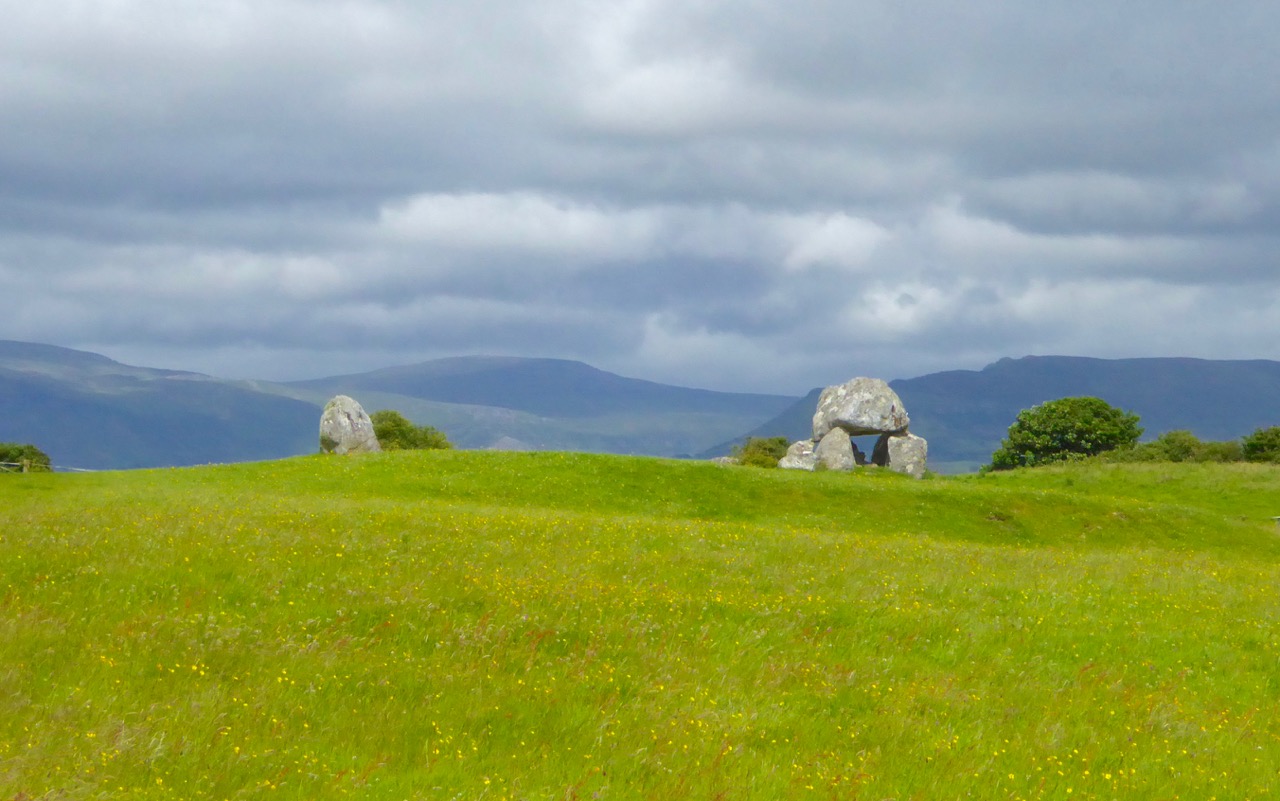
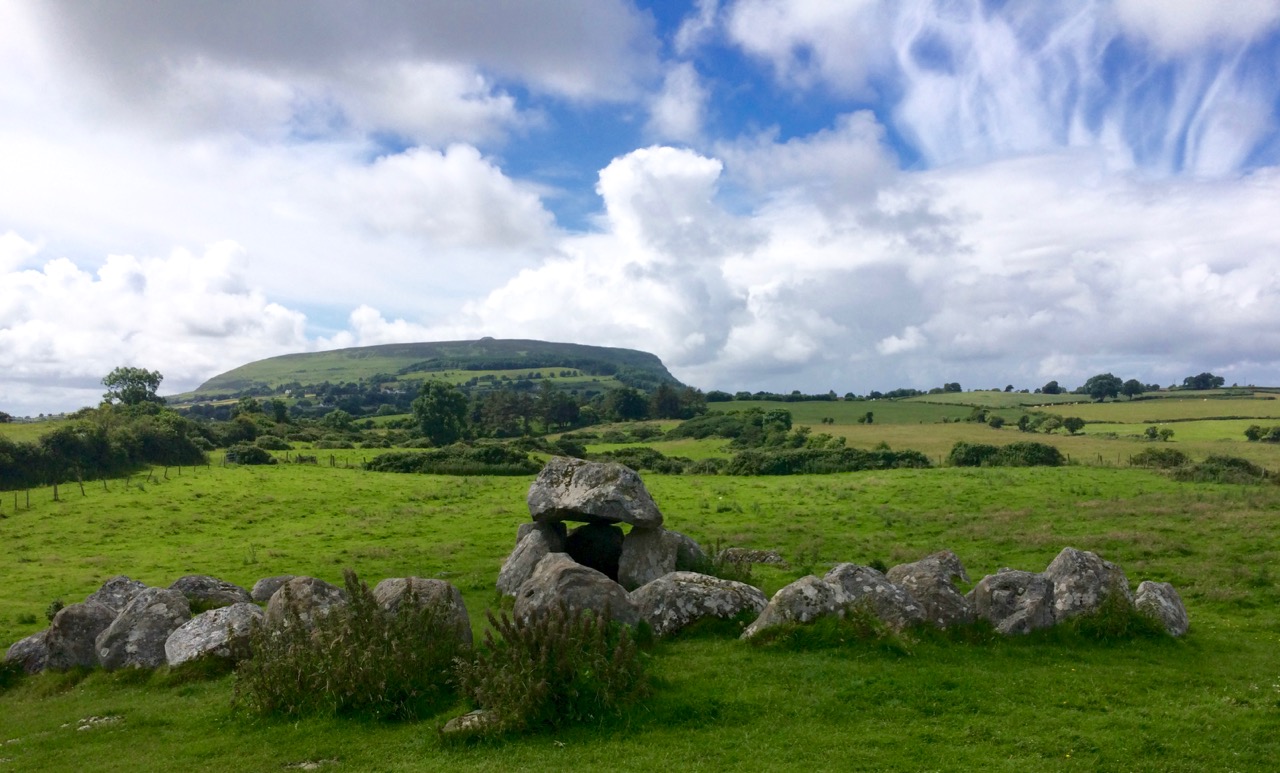
One of the boulder circles at Carrowmore with its central chambered tomb. This view is looking away from Listoghil and towards another significant landscape feature, Knocknarea, which is topped by the cairn known as Queen Maeve’s Tomb, 6 km to the west. There are 6 more mountain-top cairns on the peaks of the Ox Mountains to the south. The central focus of the Carrowmore complex is the cairn on Listoghil, although this is not as dramatically visible as many of the surrounding cairns

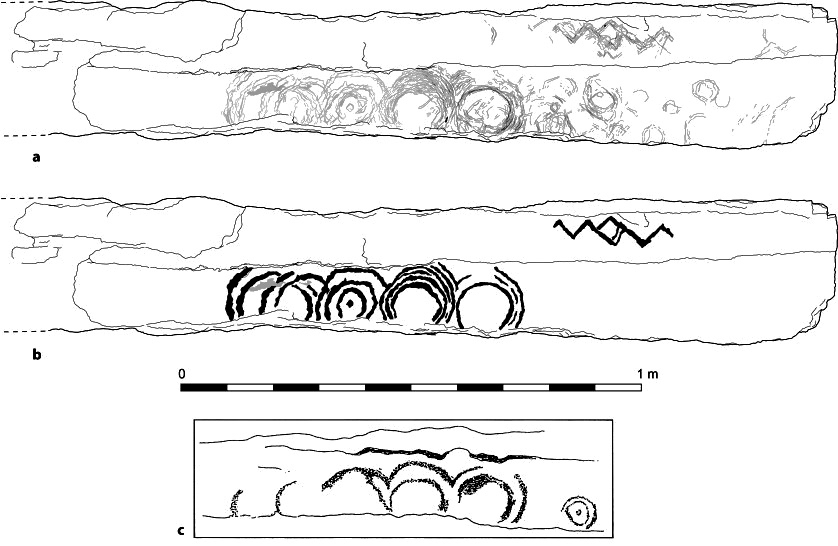
The chamber on Listoghil has been given a modern context, with the original cairn covering having been cut away to allow access. This chamber displays the only examples of rock art to be found so far within the Carrowmore complex. This is hard to see in normal lighting conditions, but successive observations have enabled these images to be made:

Listoghil carvings Guillaume Robin 1994

The formerly covered central chamber of the Listoghil cairn: top left is a photograph taken during excavations by Göran Burenhult in 1996-98 – this shows three boulders in front of the tomb which are said to have been an earlier Neolithic monument displaced by the tomb construction. Top right is the OPW interpretation board for the chamber and above are drawings of the rock art on the edge of the roof slab compiled by Guillaume Robin

It’s startling to discover that the Carrowmore complex could be over 6,000 years old: carbon dating from some of the finds has suggested this. If so, then it’s the earliest of the passage grave cemeteries in use in Ireland. Many cremated remains have been found over this site (spread over a long period of time), although unburnt human bones were also recovered in the Listoghil chamber. It could be speculated that the focal point of Listoghil must have been the resting place of a very important person – or dynasty; we will never know for sure. 

‘Accidental’ rock art and rock scribing noticed on monuments at Carrowmore: these boulders have natural markings on them but it is possible that the monument builders were attracted by these marks, which may themselves have inspired carvings

The Carrowmore complex has been visible enough historically to attract the attention of antiquarians – which is useful for later archaeologists, as some parts which are now lost have been historically recorded, albeit using methodology which would nowadays be considered inadequate. Gabriel Beranger, who was born in Rotterdam in 1725, settled in Dublin in 1760 and was a notable illustrator of antiquities in Ireland during a long lifetime; he visited and recorded Carrowmore. A local landlord, Roger Walker, carried out some excavations of the tombs in the 19th century but made no significant records; it is suggested that he was a treasure hunter. George Petrie surveyed the site and numbered the tombs in 1837 but it was another 50 years before archaeologist William Gregory Wood-Martin made the first methodically recorded excavations. William Wakeman produced some exquisite watercolour sketches in 1879. More recently Swedish archaeologist Göran Burenhult undertook detailed studies between 1977-1982 and 1994-1998 and this work included the excavation and subsequent reconstruction of the Listoghil cairn.

Upper Left: the work of Gabriel Beranger who visited the area in the 1700s – this shows Queen Maeve’s Tomb on Knocknarea. Upper right: William Wakeman’s watercolour of Tomb 4 in 1879 (Sligo County Library). Above: Listoghil chamber tomb today

Our guide Martin has studied the complexes at both Carrowmore and Carrowkeel (a future destination for us) for many years and is imbued with the archaeology and the landscape. He gently pointed us to the fact that relationships can perhaps be seen between the profiles of some of the boulders – particularly the capstones of the tombs – and the more distant landscape. I find this fascinating: I have always felt, as an architect, that there should be a conscious designed relationship between any building that is erected by human endeavour and the setting of that building within nature. Could these parallels that we might be seeing at Carrowmore be conscious?

Dolmen and Mountain

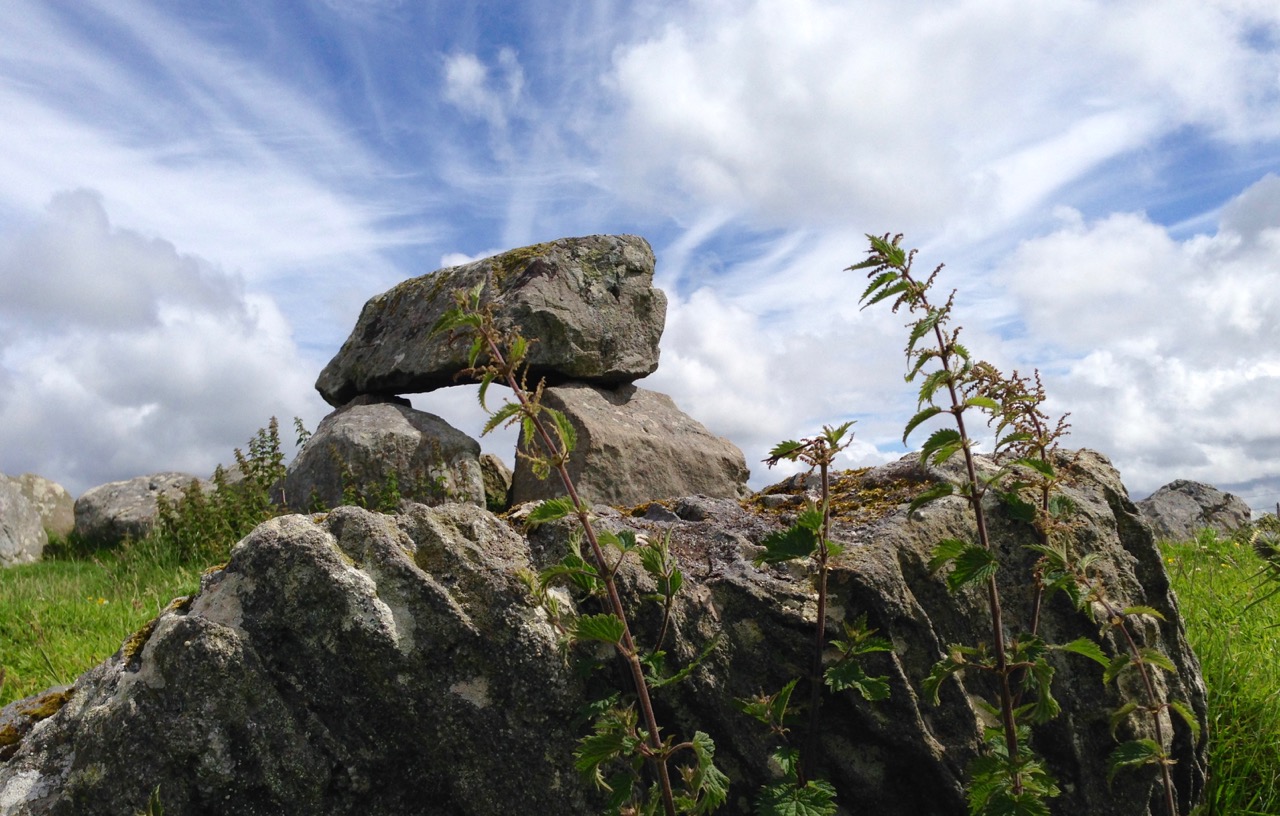
Rocks reflecting nature? Were the capstones chosen to specifically echo the landscape context? A debatable – and very subjective – notion…

My day was made when I discovered that Martin was a musician – as is Margaret, and I joined them in their colourful house for a little session!

martin + margaret

Susan’s Burren

Valerian

Valerian provides a carpet of red in a Burren field

We want ‘A Susan Day’, we told her – and what a day we got! Readers may remember our visit (Showing off West Cork) from Susan Byron of Ireland’s Hidden Gems. We’ve been planning a return visit ever since, so that Susan could show us HER Burren. 
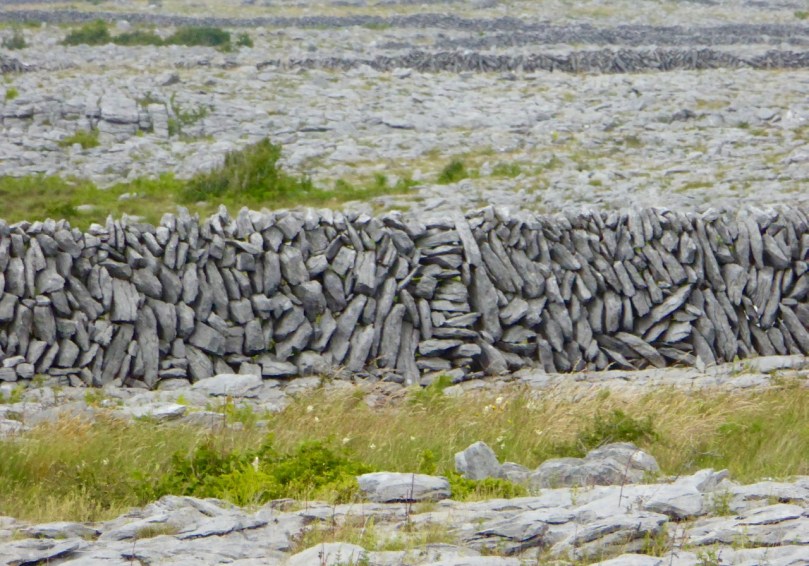
Fields of Stone

I’ve written about the Burren before – the unique karst limestone landscape full of heritage and wildflowers in West Clare. But this time we had the benefit of Susan’s intimate knowledge of the place – she lives there and has been exploring it for years. Since we only had one full day, she planned an outing that covered everything we love about this part of Ireland – you’ll see what I mean.
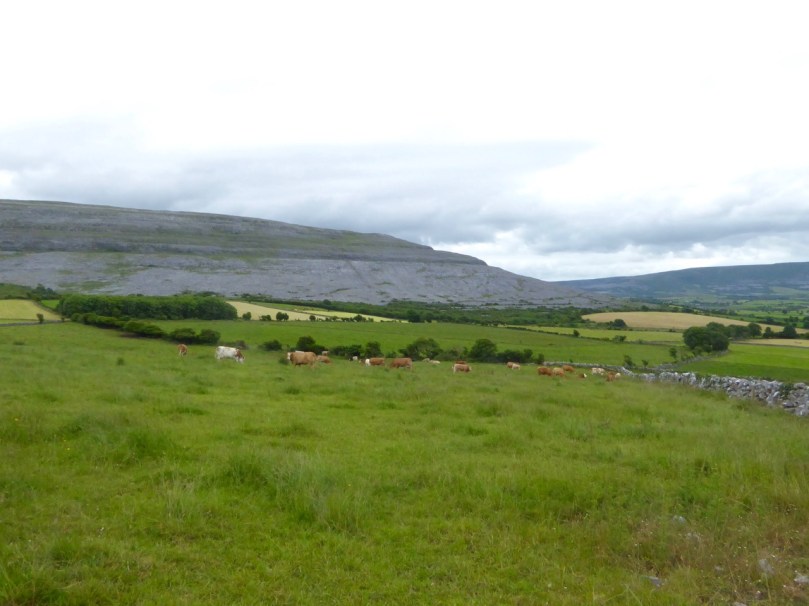
DESTINATION
Our destination: Turlough Hill

Leaving the car in a convenient spot, we set off up a long green road, Susan pointing out the wildflowers as we walked, here and throughout the day. We stopped at numerous places to admire features in the landscape: Corcomroe Abbey, for example, lay below us in all its medieval glory.

Corcomroe

Corcomroe – a wonderful site to visit if you’re in this area

Our first real stop was St Colman’s Holy Well. It’s a beauty, with all the remote wildness that lends such atmosphere to these ancient sacred spots. One of our blogging heroes, Ali Isaac of the wonderfully researched and entertaining site Aliisaacstoryteller had visited this same route a couple of weeks earlier. We were walking in her footsteps, although in reverse. She tells of her journey here and has extensive details about the holy well and St Colman here.

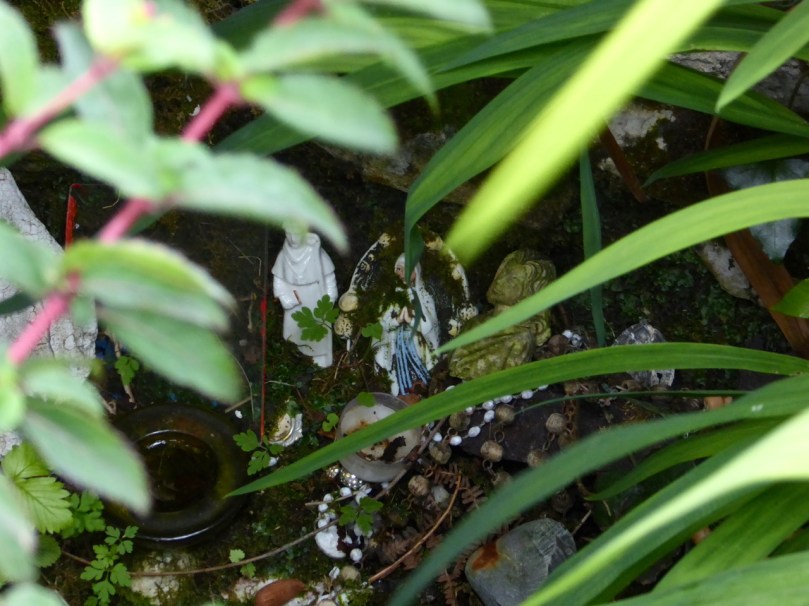
St Colman's well

St Colman's Well 2

Robert and Susan at Colman’s Well and a peek into the interior of the well

Ali had walked through the Burren in time to see the last of the electric blue Gentians that grow here and in the Alps. They were gone by the time we got there, but we were not disappointed in the wildflowers, which were everywhere underfoot in the most prodigal abundance.

Carpet of Orchids

Bloody Cranesbill, left, and a white orchid

Brilliant magenta Bloody Cranesbill jostled with delicate Orchids and tiny yellow Potentilla (or Cinquefoil), while Wild Thyme scented the air. One field was awash in Valerian. A rare Lesser Butterfly Orchid was spotted in the long grass and lovely Burnet Roses in a hedge.

Clockwise from top left: Burnet Rose, Lesser Butterfly Orchid, Mountain Avens and Spotted Orchid
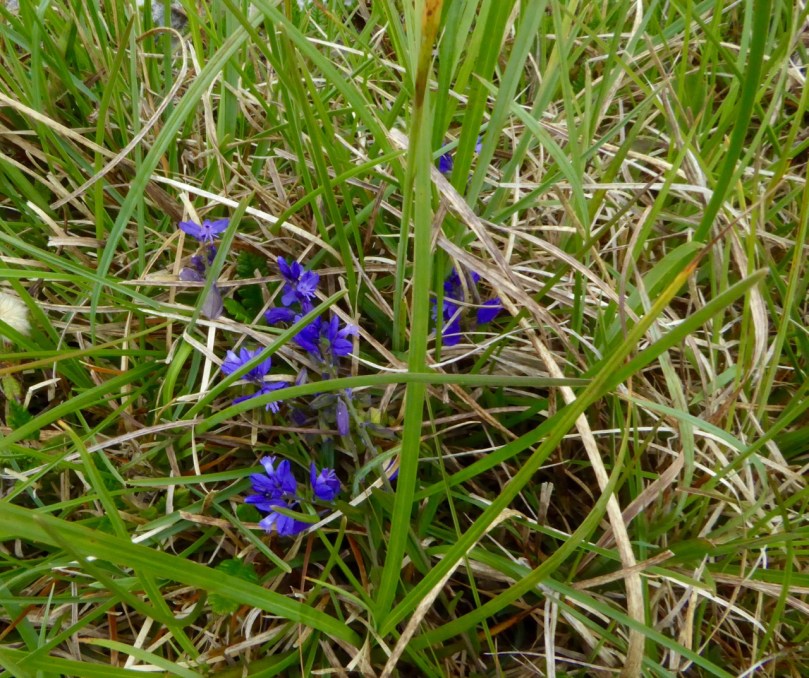
Milkworth

Milkworth lurking in the grasses

Hiking up Turlough Hill was an excellent opportunity to see how the Burren is laid out. From below, it looks like bare rock, but as you ascend, you realise that the hills are stepped in a series of terraces, the evidence of retreating beach levels after the ice age. These terraces provide important forage for sheep and cattle, who, in turn, help in the regeneration of the plant life. The going isn’t easy – we didn’t stick to any defined path but simply clambered up the steep slopes. The flat parts had been deeply rutted by cattle hoofs – we had to be vigilant to prevent stumbles and ankle injuries.
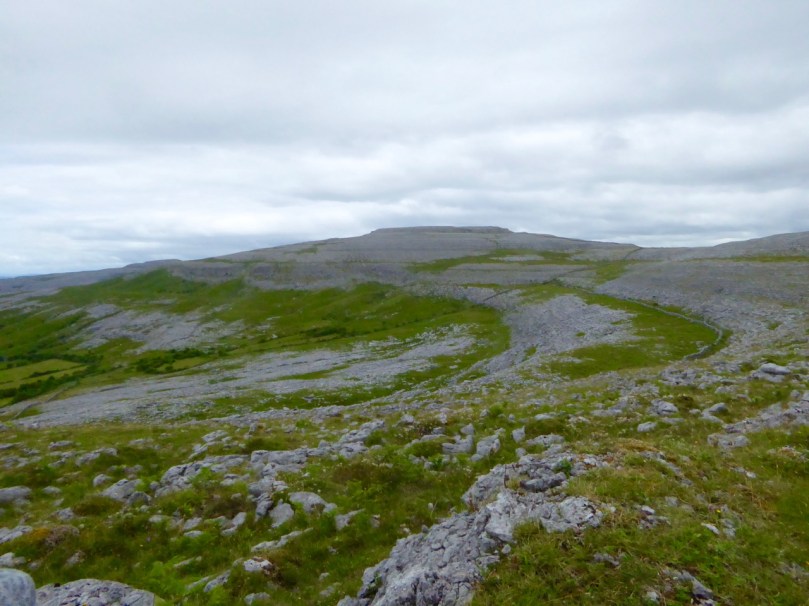
Turlough Terraces

But the rewards were enormous – ever-increasing panoramas of North Clare, across Galway Bay and south into the hinterland.
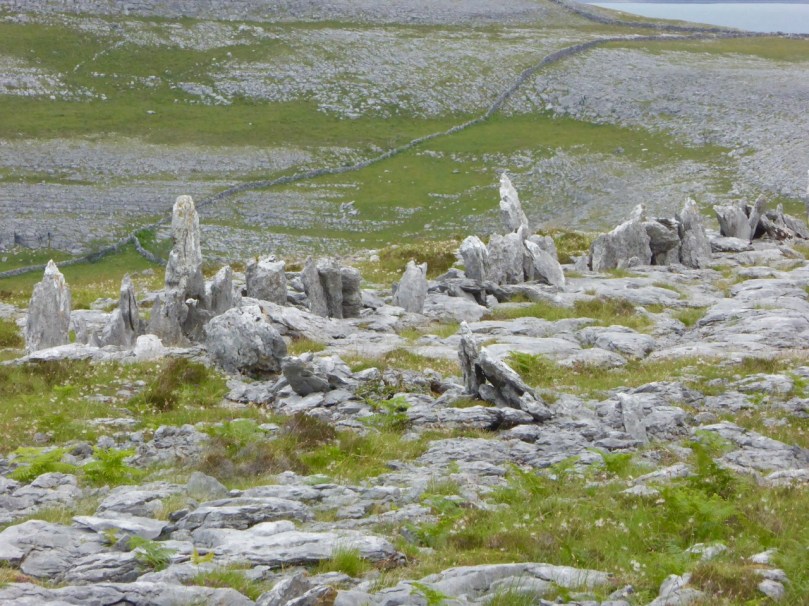
Cattle enclosure?

We had an objective in mind. At the top of Turlough Hill, and most visible in arial photographs, is a prehistoric ‘village’ of over 150 hut sites and some larger enclosures. On the summit is an enormous cairn.

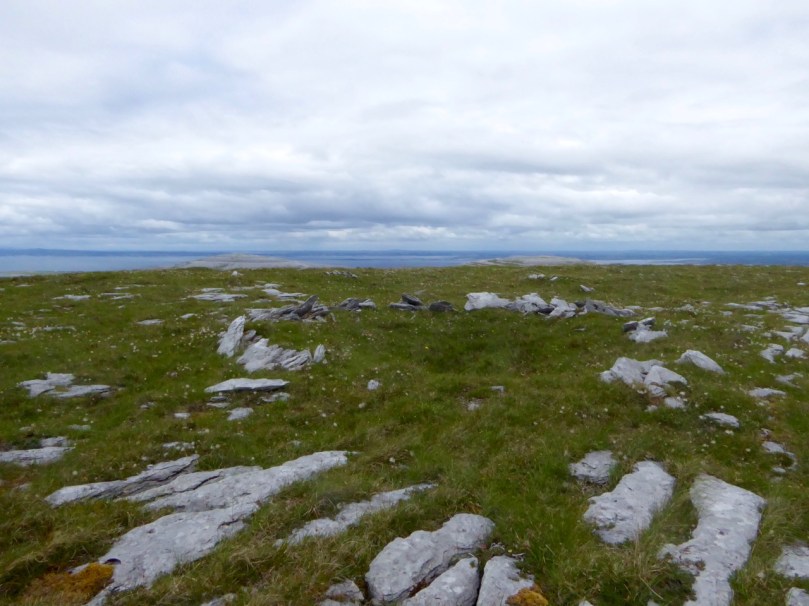
Turlough Hill

Turlough Hill 2

Hut site and cairn

From the top: An aerial image of the hut circles and cairn (look closely!)  from the National Monuments Service, a hut circle looking north to the sea, a hut circle looking towards the cairn

This mysterious site has been the subject of an initial investigation to establish the extent of it. The report had this to say:

Even though the hut sites, in a morphological sense, are domestic in character, it is very hard to see their role and function as primarily domestic, considering their location on this inaccessible and exposed hilltop. The activity that required the building of about 150 hut sites on this inaccessible and extremely windy summit, consisting mainly of bare bedrock, was most likely of a strong social and/or ritual character, with few direct links to secular way of life.
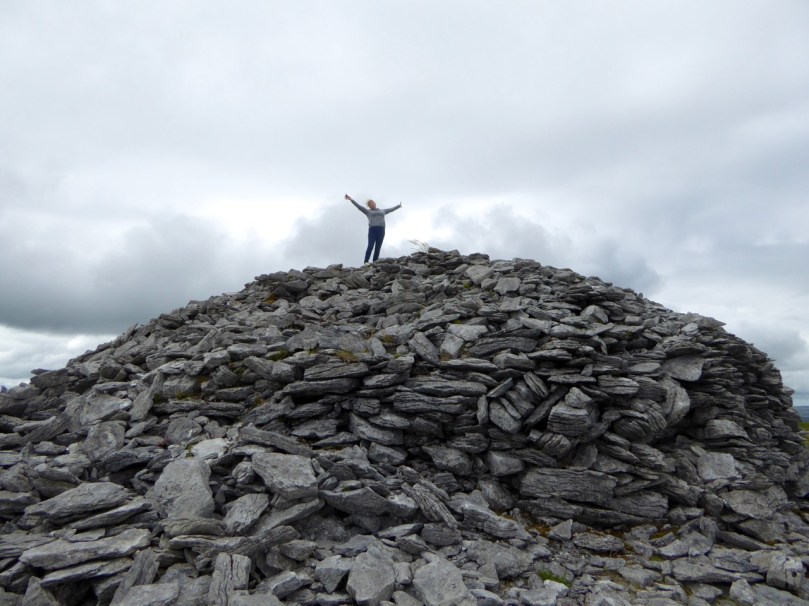
Susan on Cairn

This will give you a sense of how huge the cairn is

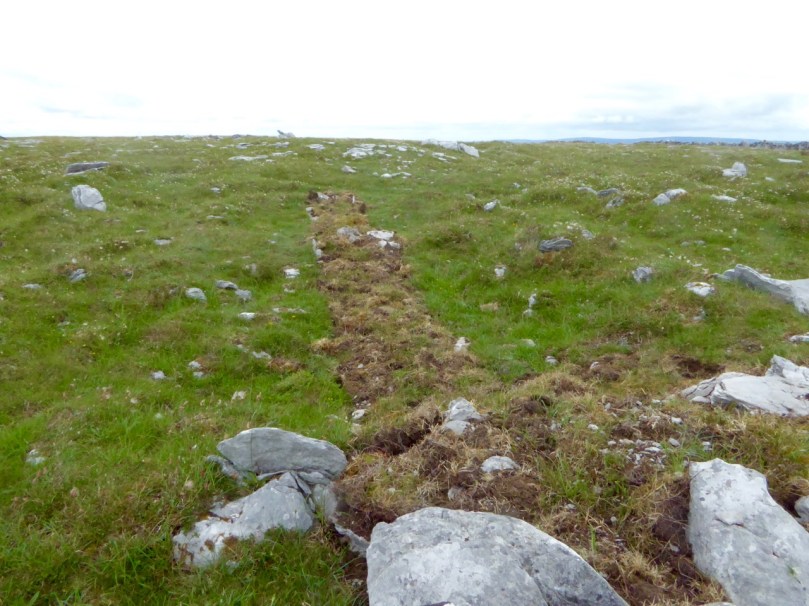
Earlier this year, Dr Stefan Bergh of UCG conducted a preliminary excavation within the hut-site concentration. You can read about that in this Irish Times piece. We saw the neatly back-filled trench, and look forward to his results.
Trench

Coming down, as all hikers know, is often more difficult than going up – the knees certainly protest! In this case, some chunks of it were accomplished by dint of sliding down on my butt and picking the thorns out afterwards. Oh – and the tick! Do check yourself after all walks in long grass where cattle and sheep have been grazing.

From the Cairn

The view from the cairn

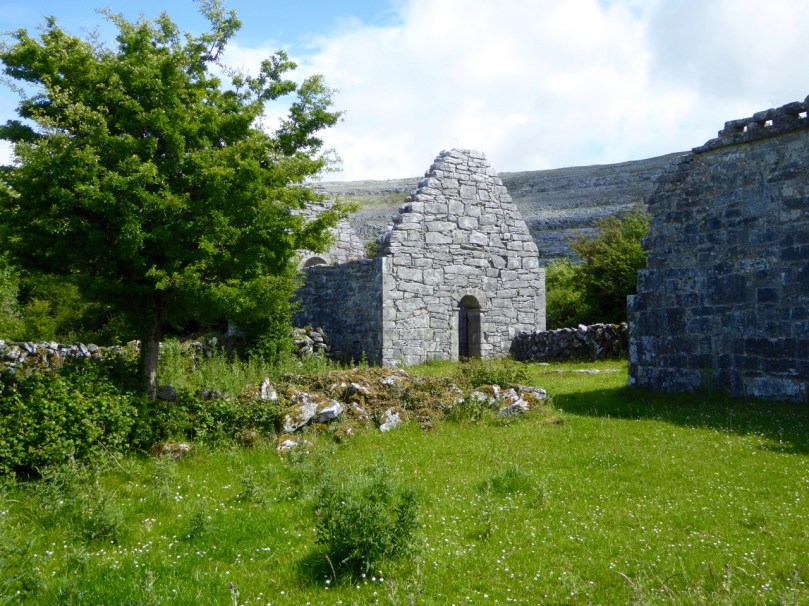
We ended up at an early medieval site that quickly banished all thoughts of aching muscles – Oughtmama, of the Seven Churches. Meaning The Breast of the High Pass, there are actually only three churches at Oughtmama, but they pre-date the 12th century Cistercian foundation at Corcomroe, and as such they are excellent examples of early monastic structures in the Romanesque tradition.
Oughtmama Churches

There are several examples of churches built with ‘cyclopean’ masonry in Clare, and here at Oughtmama you can see the huge stones used in the courses of the outer walls that give it this name. Associated with St Colman (of the Holy Well) these churches probably fell into decline after Corcomroe was completed.

We hiked back to the car in the soft afternoon sunlight. It’s hard to believe that one day could be so packed with experiences. Thank you, Susan, for sharing YOUR Burren with us. We’ll be back – we’ll let you know when to put the kettle on again.

Wild Thyme

Wild Mountain Thyme

Forge

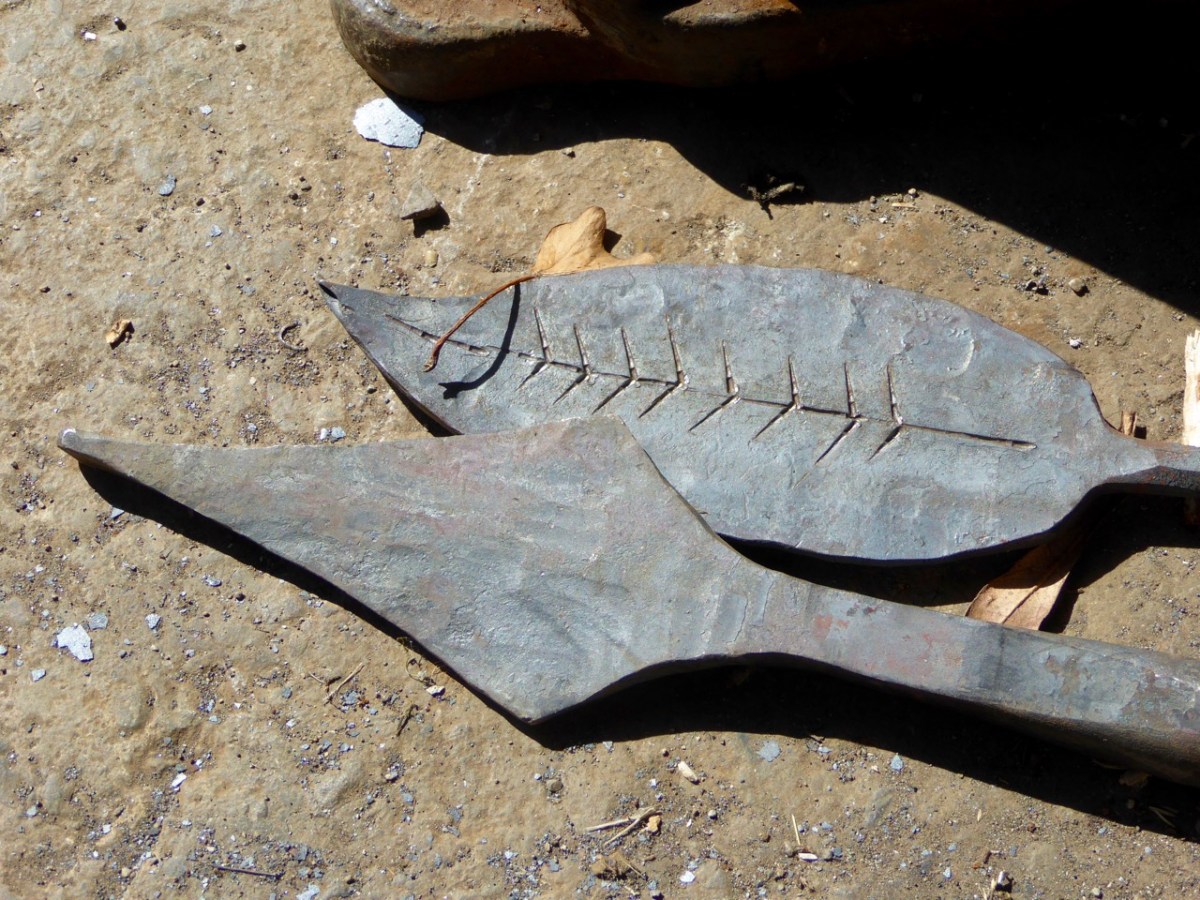
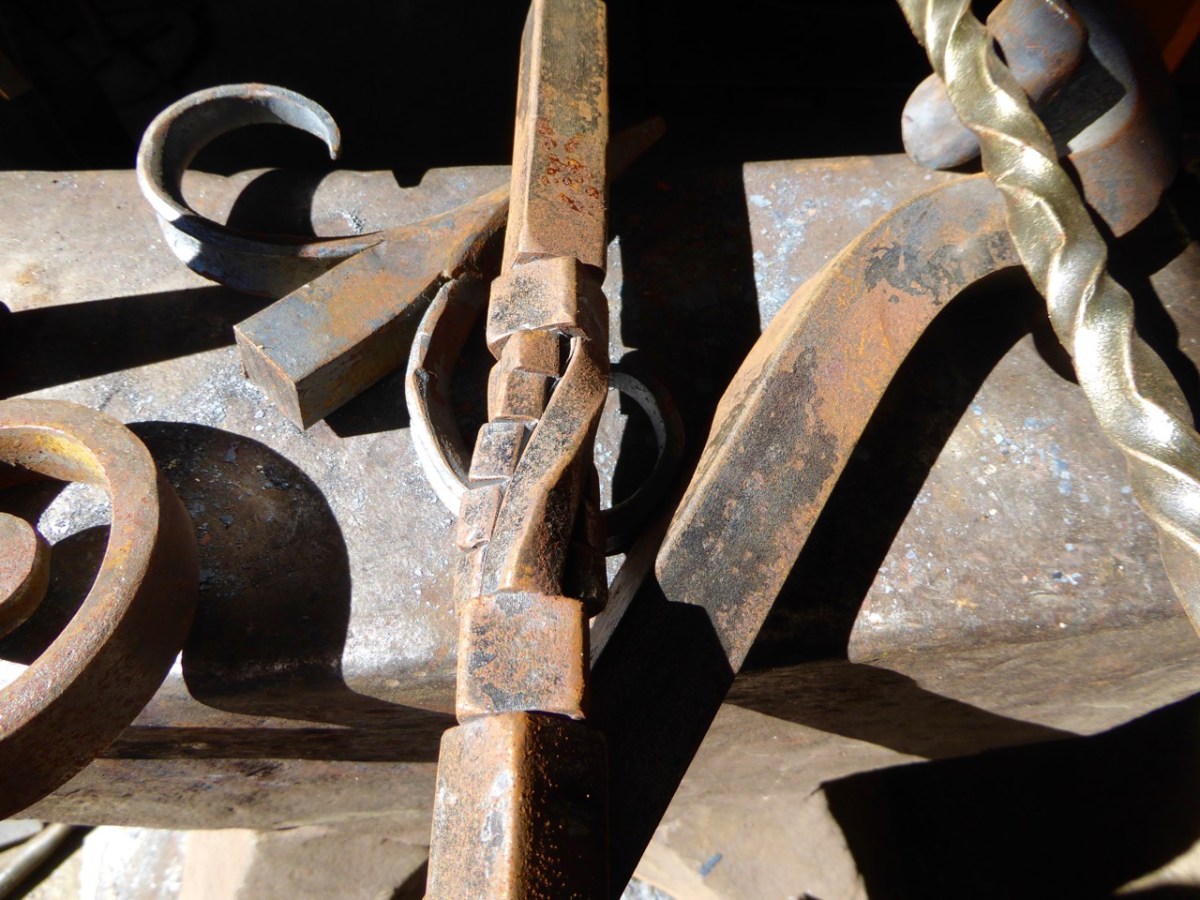
Many blacksmiths can still work in time-honoured ways in West Cork. In my quest to know more about old gates, I contacted Pat O’Driscoll of Ironworks Ireland, whose forge is in Drimoleague. Pat was extraordinarily generous with his time and expertise and has offered to take us one day on an old gates tour – so look out for that post at some point in the future.

Horses

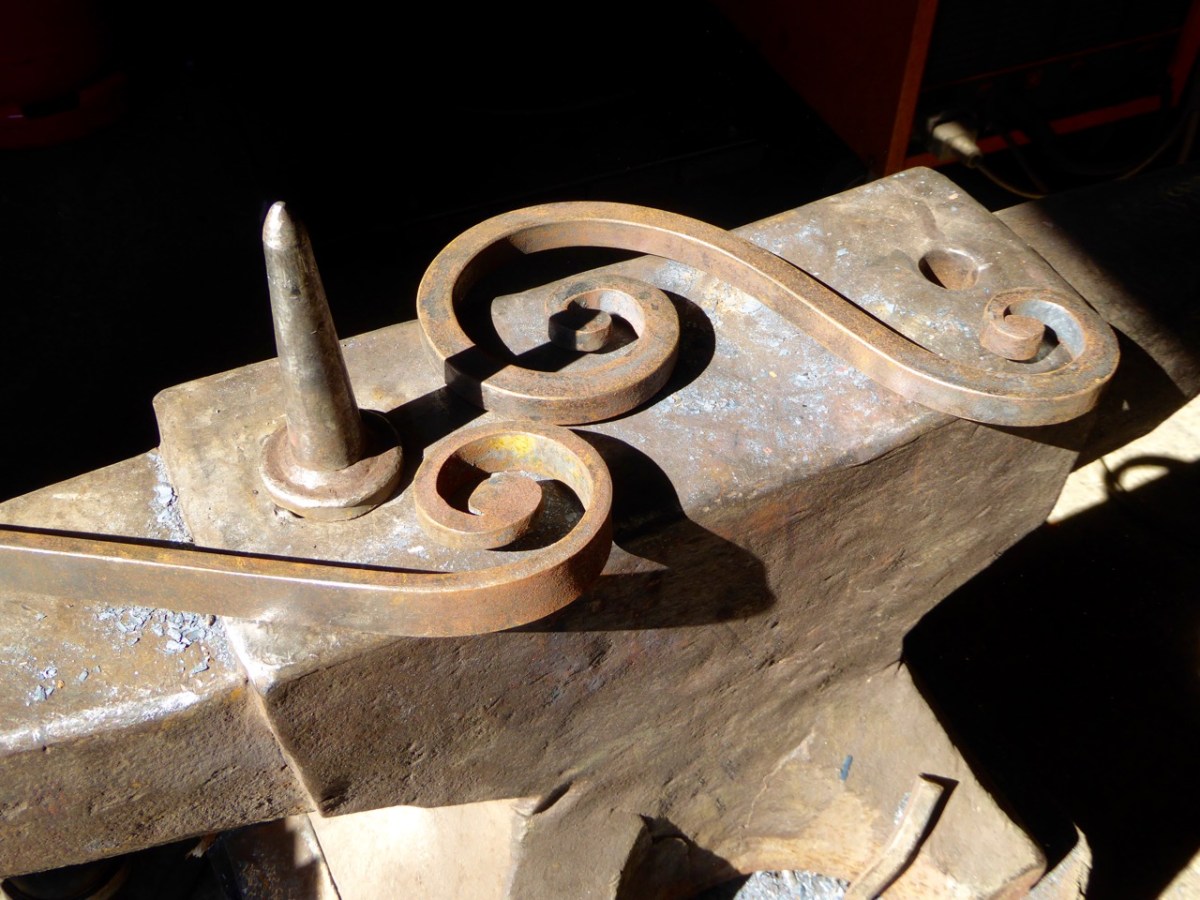
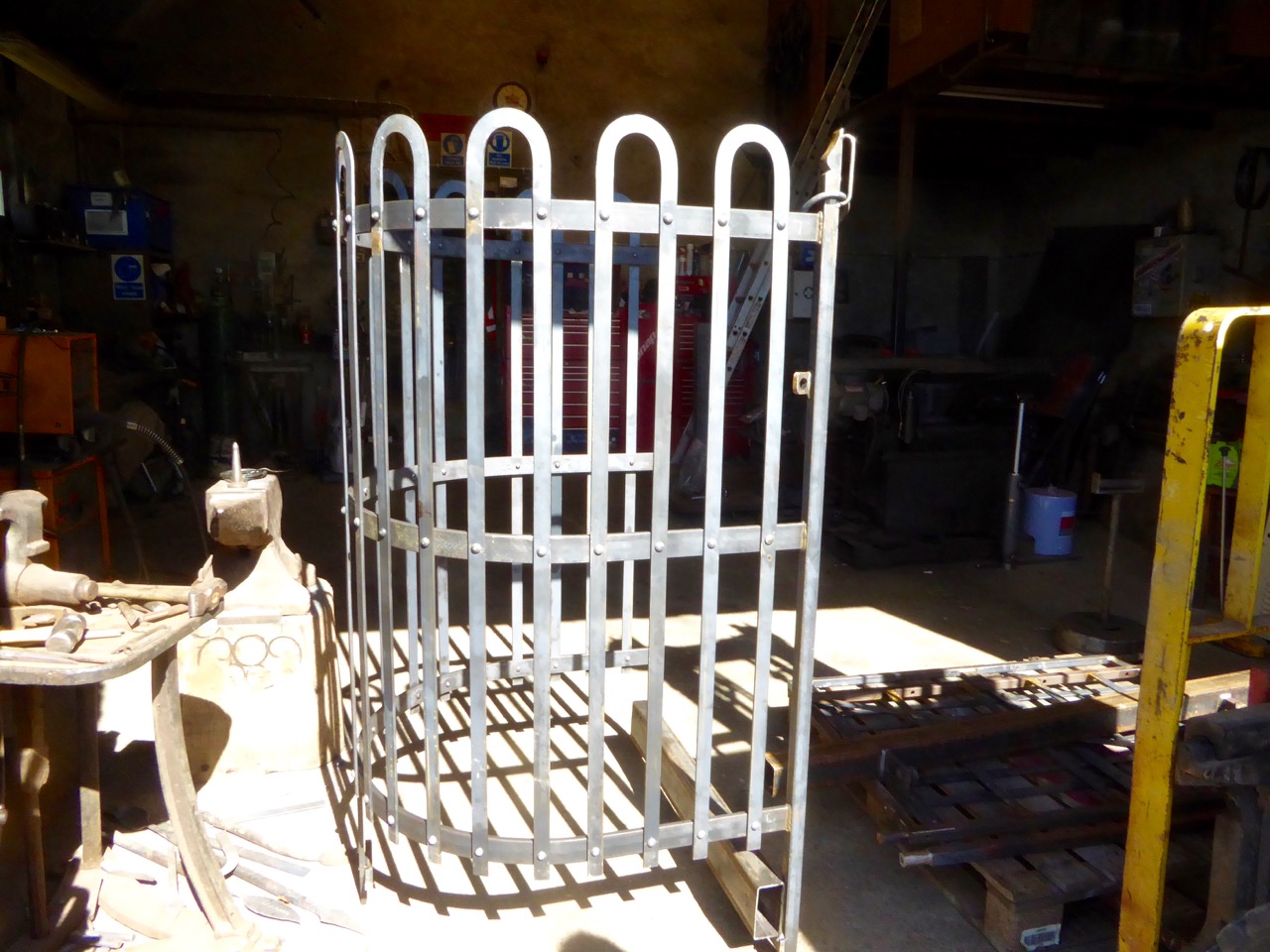
This post is really a photo essay. I was so entranced with the forge and with what seemed like the magical processes that Pat used that I really just want to share that with you. Although Pat has a fully modern ironworking facility he loves the traditional craft of forging, so his workshop is a treasure chest of examples of wrought iron.

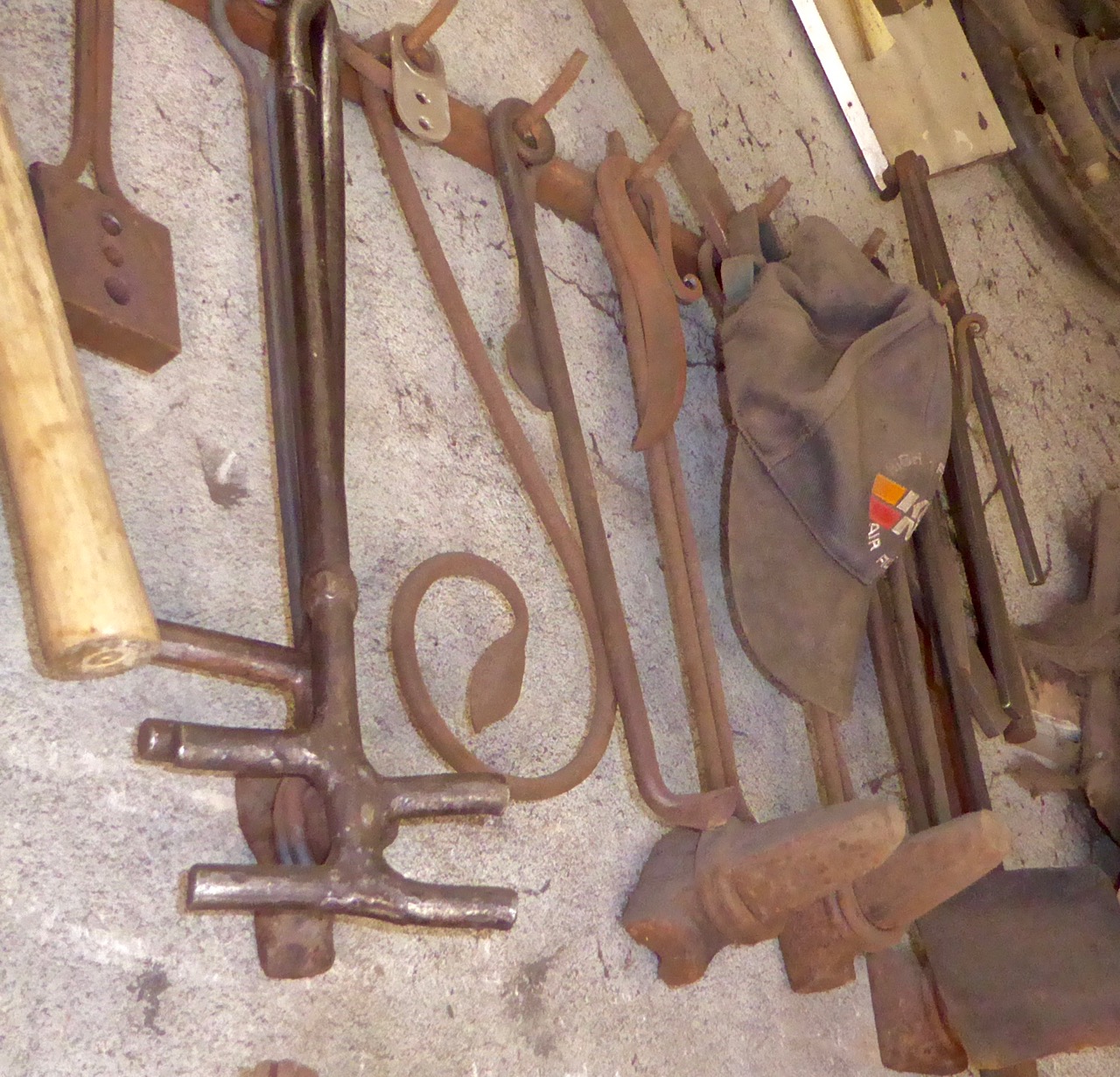
Forge tools
Forge tools 2

First – a series of photographs of tools and wrought iron pieces, old and new. The tools were mostly handmade by Pat himself.

Forge Tools Hammers
Kissing Gate 1

Second – a traditional kissing gate, just completed.

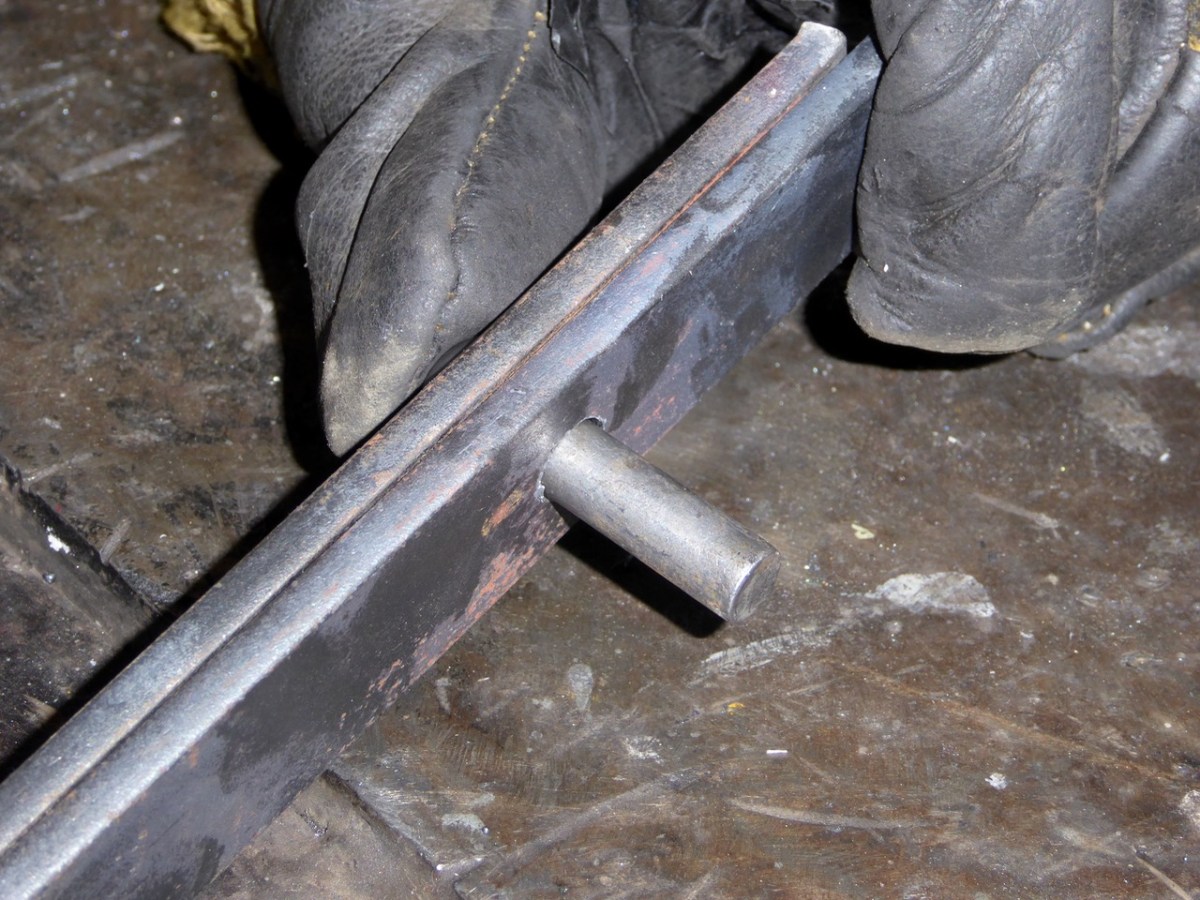
Notice the rivets on the kissing gate? Here’s how they’re made.

Rivet 3
Rivet 6

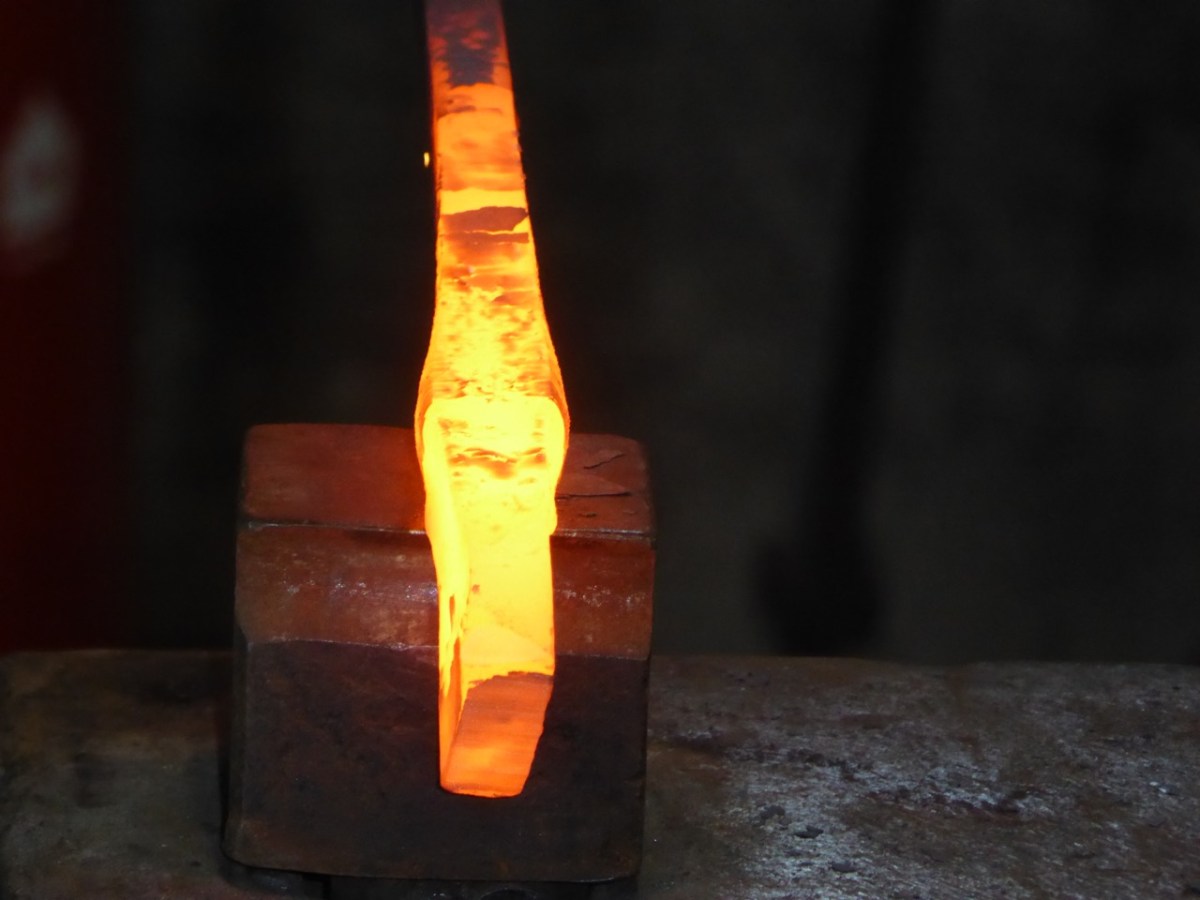
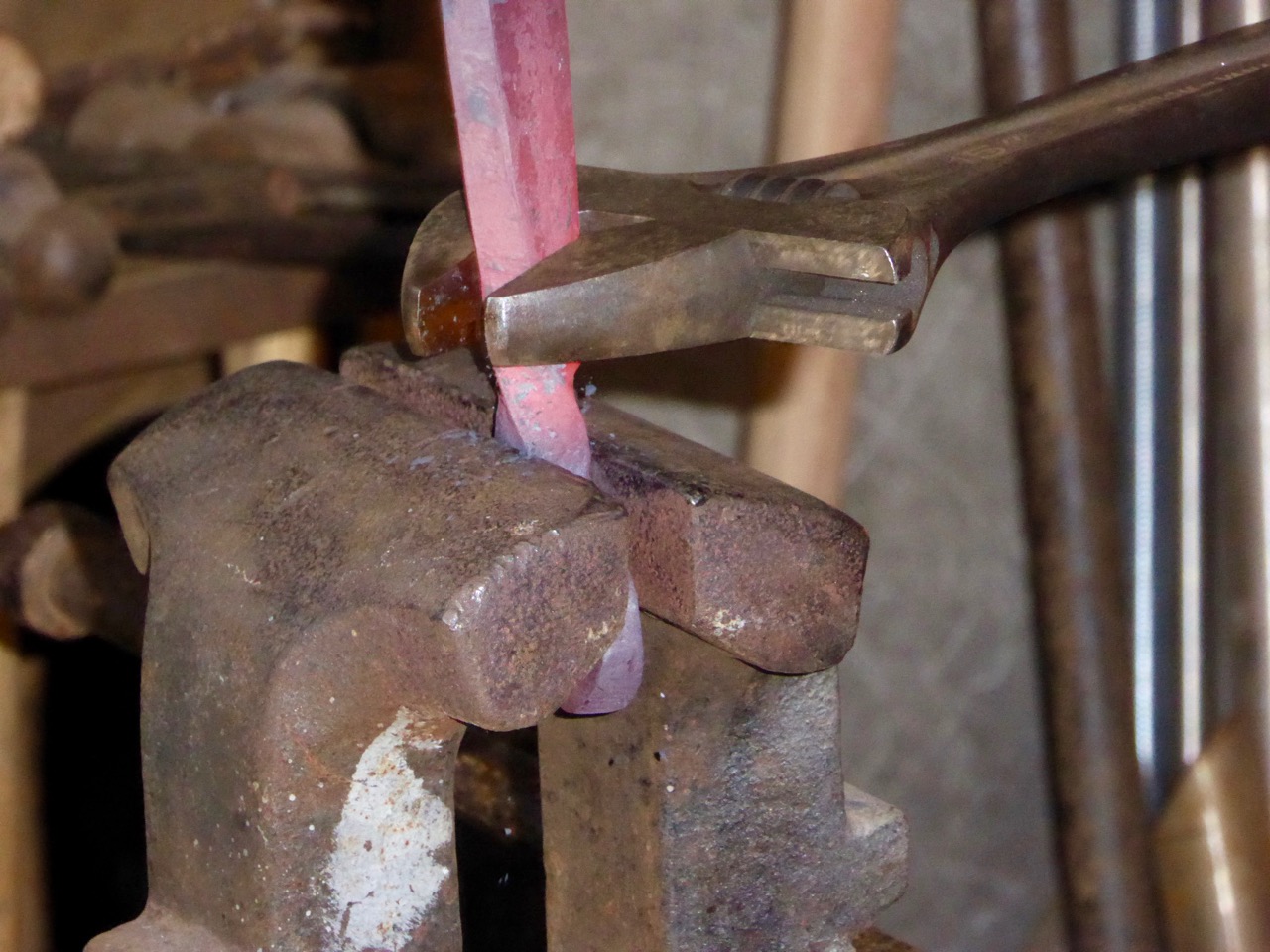
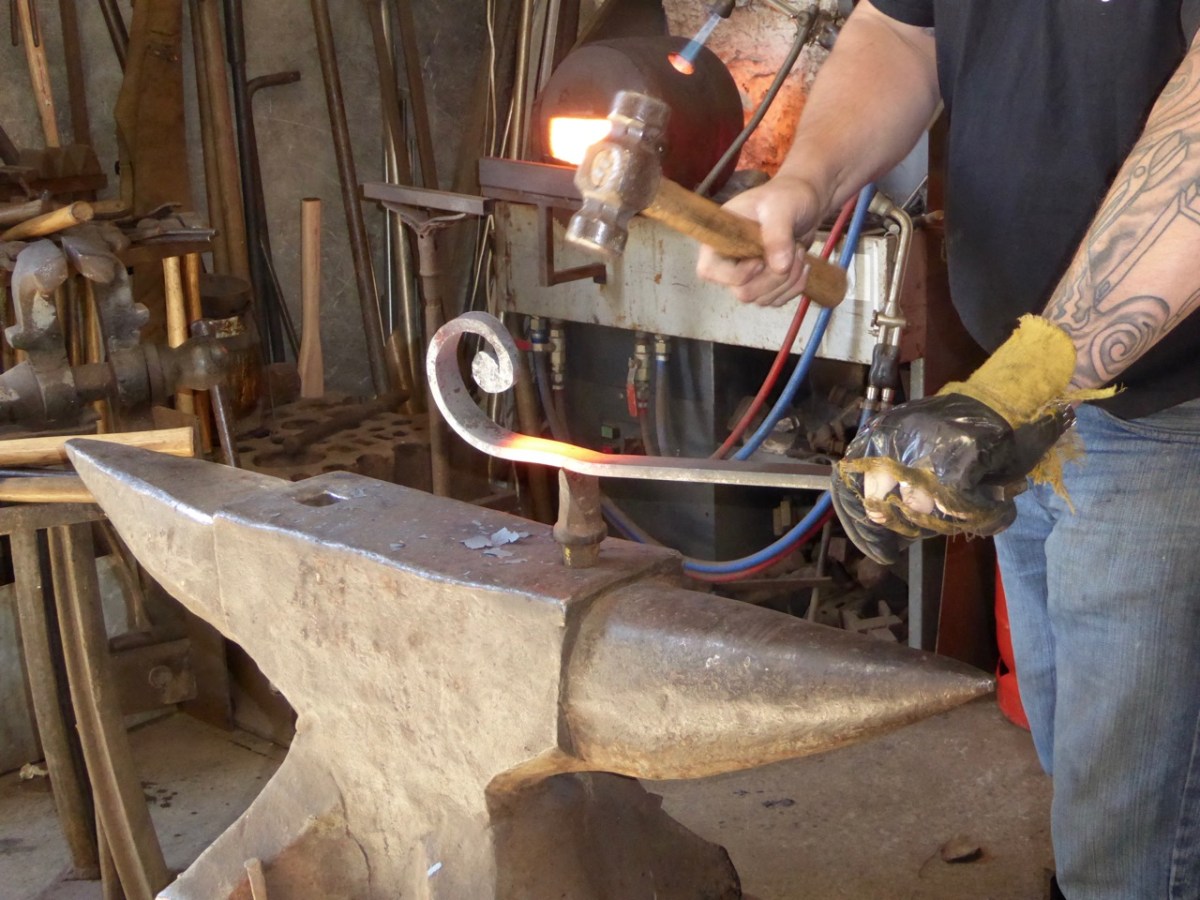
I expressed curiosity about decorative curls… Here’s what happened next.

Curl 1
Curl 4
Curl 9

And here’s our souvenir of a wonderful morning, installed on our mantlepiece.

Thank you, Pat, and see you again soon!

Pat

One last word… why was I reminded of Longfellow’s The Village Blacksmith, I wonder?

Under a spreading chestnut-tree
The village smithy stands;
The smith, a mighty man is he,
With large and sinewy hands;
And the muscles of his brawny arms
Are strong as iron bands.

Tattoo

A Bell for Bangor

Holg + Donagh 2

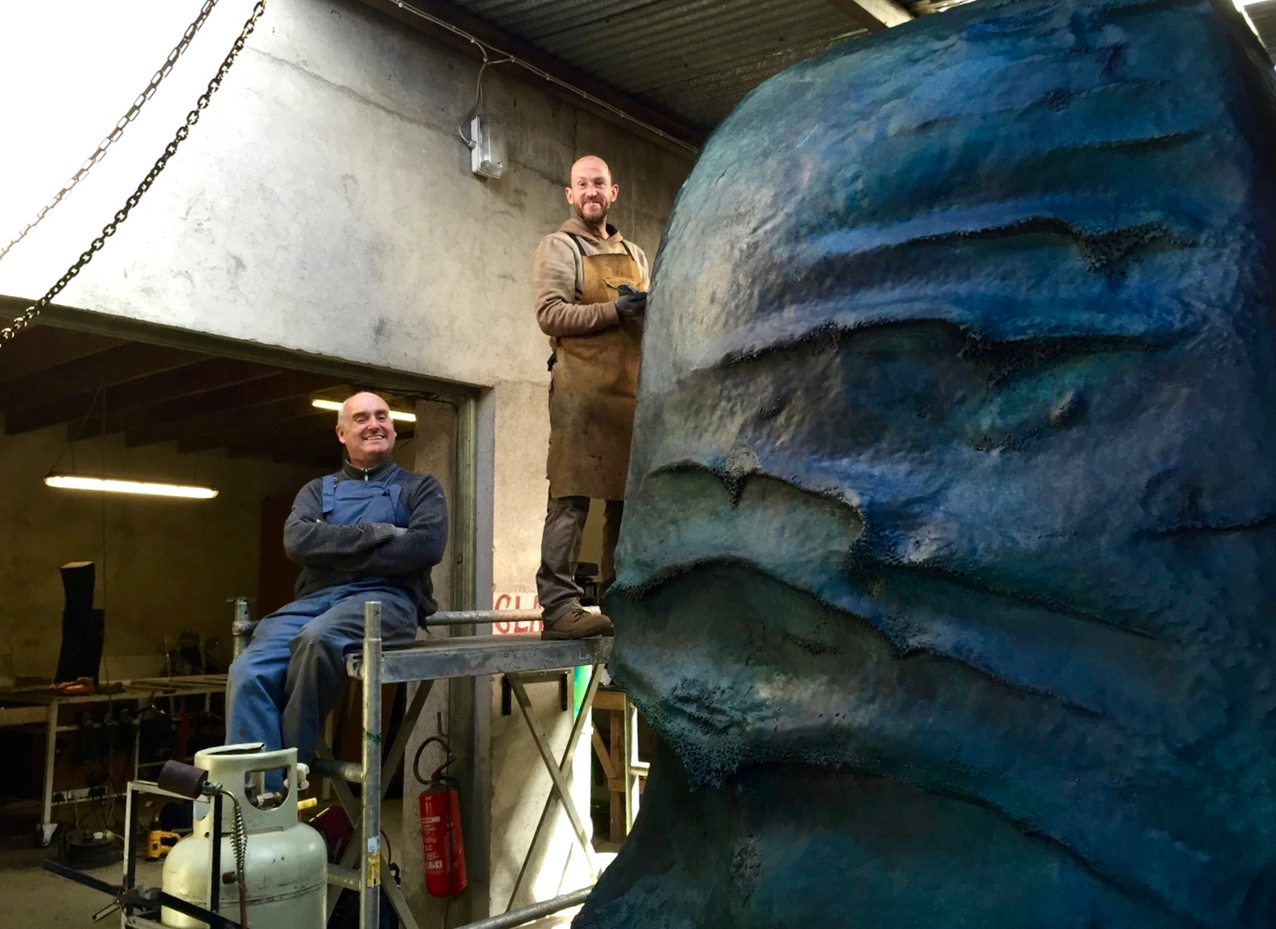
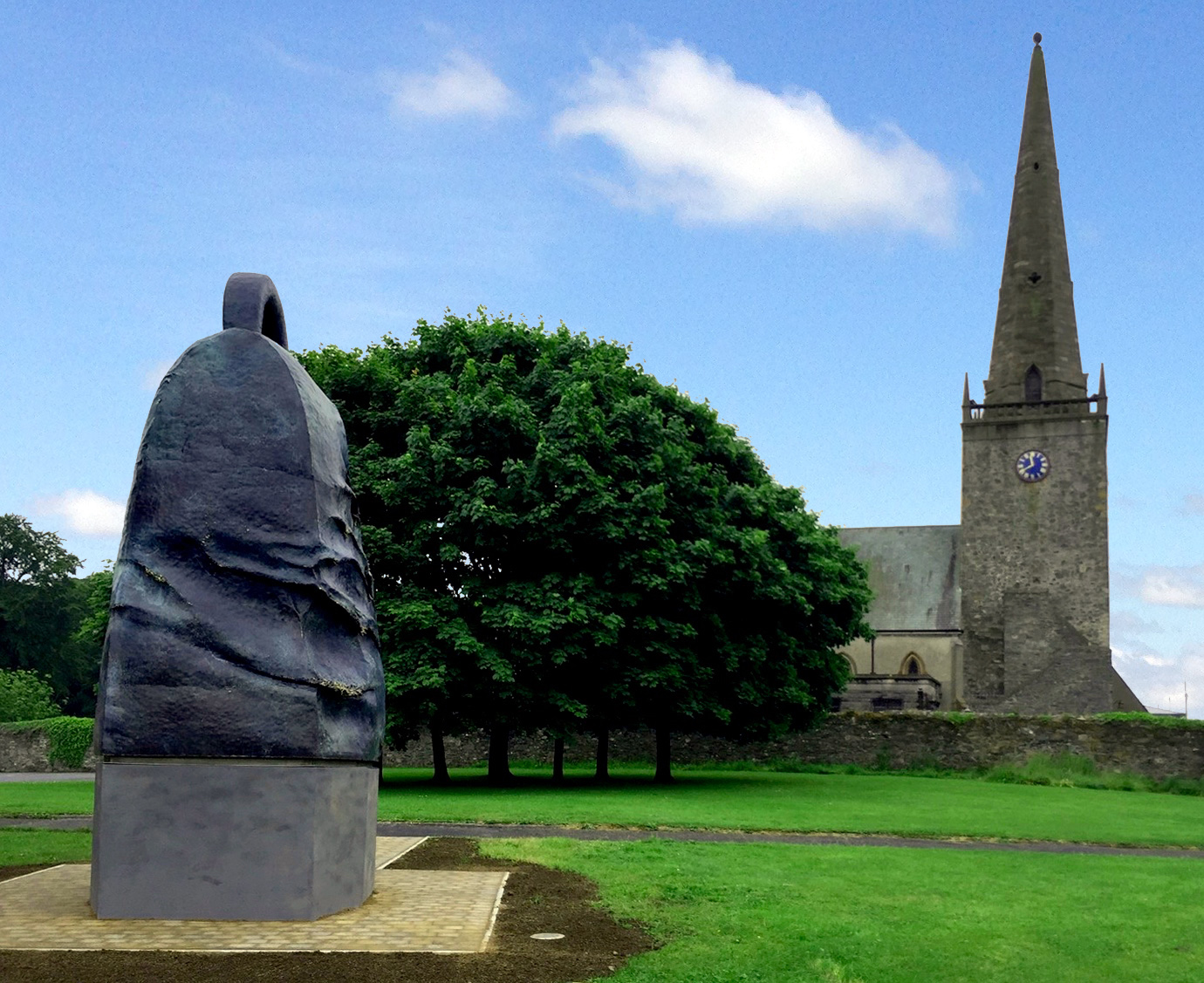
The man standing on the platform in the picture is Holger Lönze. You might remember him from Umha Aois, a post I put up last year about a group of artists and ‘experimental archaeologists’ who use Bronze Age metal working techniques to produce replicas of ancient tools, weapons and musical instruments. Holger – a sculptor – is a key member of that group: his workshop is in Schull and he has just completed a commission to make an enormous bell. You can see the project in progress on the right of the picture. On the left is Donagh Carey, another West Cork artist who worked on the casting.

Left: the original Bangor Bell – the inspiration for the new work – and, right: an early sketch design by Holger of the proposed bell sculpture

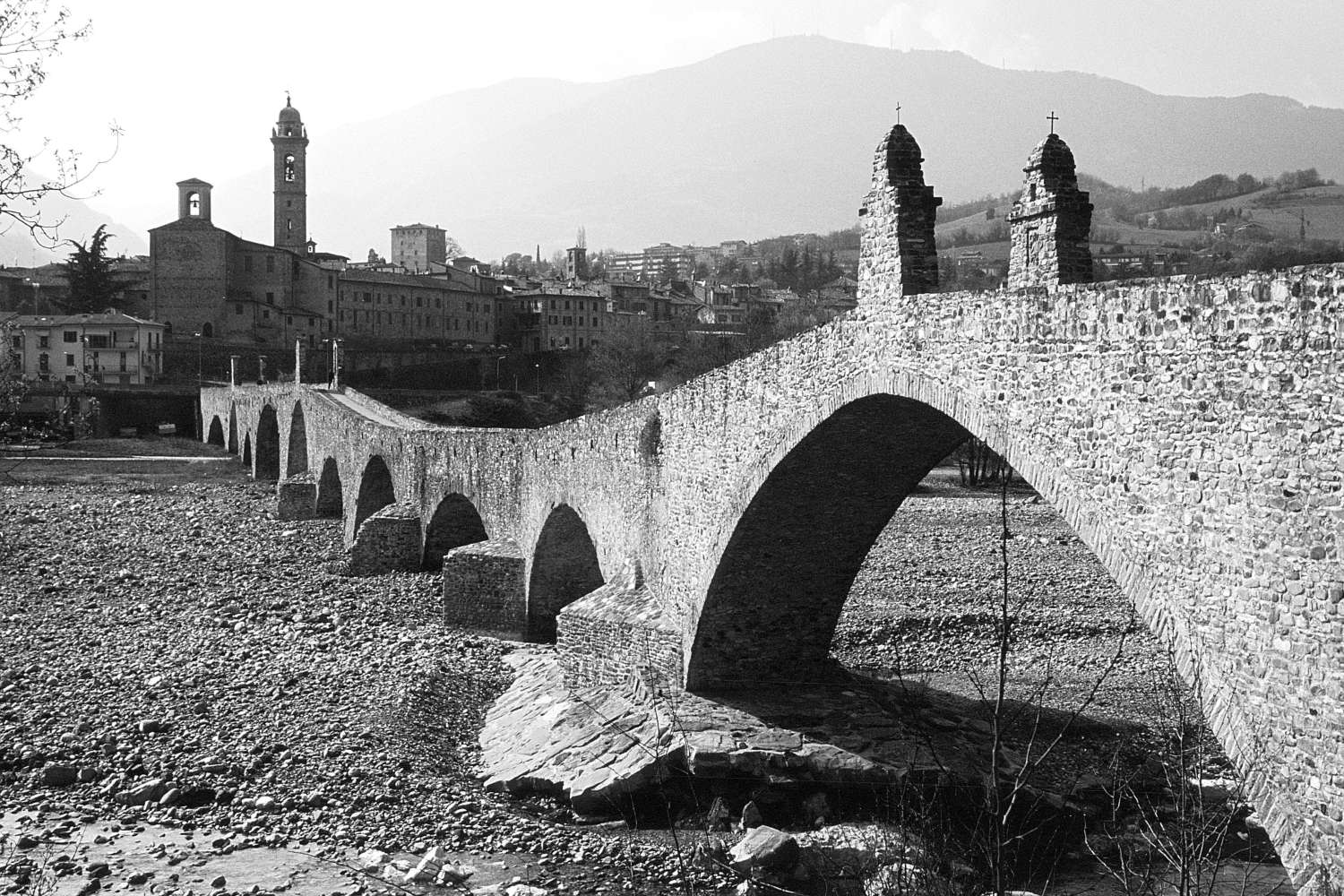
The story begins in the sixth century when Columbanus (the Latinised form of Columbán, meaning White Dove) was born in the Kingdom of Meath, now part of Leinster, Ireland, in 543. That’s about 50 years after the death (aged 120) of St Patrick. Patrick, of course, is the best known of the missionaries building up Christianity in Ireland, but he wasn’t Irish himself, having been born a Roman Briton. Columbanus was Irish, and he saw his mission as spreading Christianity from Ireland throughout the Continent of Europe. His mission was successful and St Columbanus is recognised in Europe as a founder of many monastic settlements during his travels in Gaul, Burgundy, the Alps and finally Italy where he established the great monastery at Bobbio, beside the River Trebbia. Columbanus died at Bobbio in 615 and his remains are buried in the crypt there.

Bobbio_bridge

The medieval bridge at Bobbio with St Columbanus’ great monastery beyond (photo by Herbert Ortner, Vienna, Austria)

There are great stories told about the life of Columbanus. When he walked in the woods, birds would land on his shoulders to be caressed, and squirrels ran down from the trees and nestled in the folds of his cowl. He is also said to have tamed a bear and trained it to pull the plough. Wolves would not harm him. He is usually depicted with a book and an Irish satchel, sometimes with sunbeams over his head. I’m not sure why but Columbanus is known as the patron saint of motorcyclists.

Saint Columbanus – left: depicted on a medieval fresco with book and sunbeams (note he is carrying a bell) and, right: sailing off to Europe with his companions

Getting back to West Cork and the bell: Columbanus travelled to Bangor, County Down – in the far north east of the island of Ireland – where he studied in the  Abbey until he was 40. A beautifully decorated bronze handbell was found near the Abbey by gravediggers in the 18th century; it is assumed to have been buried to keep it safe from Viking invaders in the 9th century. The Abbey is seen as the starting point for Columbanus’s missionary work in Europe and the bell (now in the North Down Museum) is associated with him, although unlikely to have been contemporary with his time there. Holger Lönze has always been fascinated by medieval bronze bells and has made replicas of many surviving examples. He cast a copy of the Bangor Abbey handbell using Medieval metalworking techniques in 2012, and the process is recorded in this video.

Holger’s full-sized replica of the Bangor Bell and (right) Holger in his studio explaining his techniques to Robert

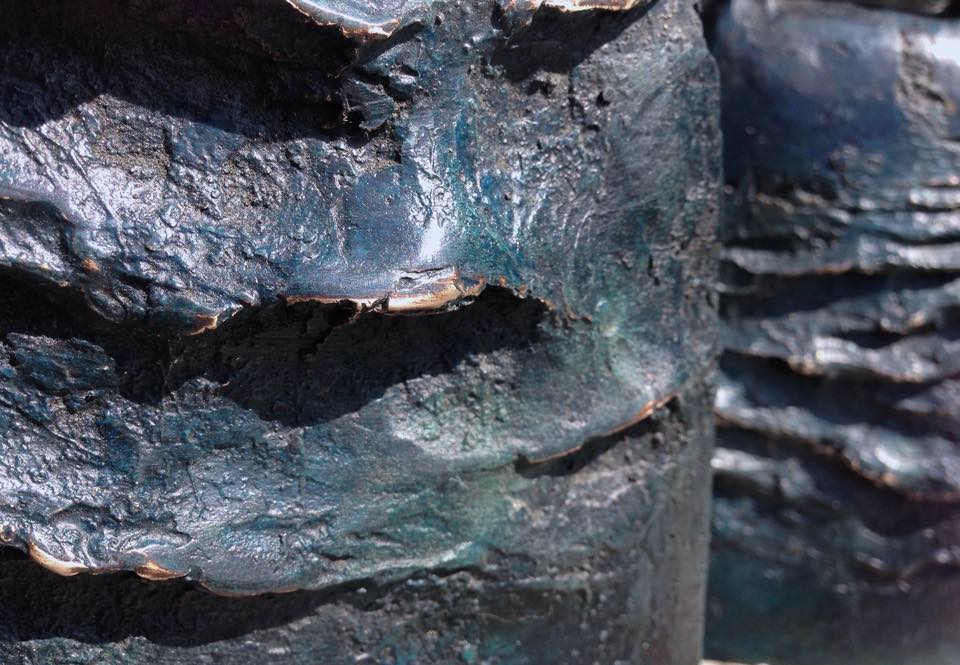
The new sculpture – titled Fluctus Angelorum (Wave of Angels) was commissioned by Ards and North Down Borough Council for Bangor Abbey  as one of a series of works inspired by the extraordinary achievements of Columbanus and his companions. Based on the proportions of the original bell, the surface of the sculpture is shaped like the surface of the ocean. The sea-blue patina and breaking waves are a metaphor for Columbanus’ remarkable sea voyage. The 4m high bell was fabricated in bronze plate in West Cork using the ancient repoussé process – by alternating annealing and hammering and finally welding. It took no less than 400,000 hammer blows to transform flat sheets of bronze into this piece of sculpture!

Bell surface

In the workshop: the surface of the 4m high bell reflects the surface of the ocean and (right) the inside of the great bell: it is mounted on a stone plinth and lit at night. Both bells and waves are striking metaphors to mark the Saint’s 1400 miles journey from Bangor to Bobbio – 1400 years ago

The medieval Bangor Bell didn’t have a clapper: it was carried around and hit with a hammer. Taking me back to my days as a percussionist, Holger allowed me to hit the giant bell… It made a mighty sound! From West Cork the bell travelled the whole length of Ireland, passing its 8th Century sister bells in Cashel, Co Meath and Bangor. It is now installed in the Abbey grounds and was formally unveiled on 13th June. The sculpture is not yet complete – Holger is making a number of smaller ‘satellite’ bells which will be set around it, but even on its own it is a most impressive sight: the largest bell ever made in Ireland.

holger with bell

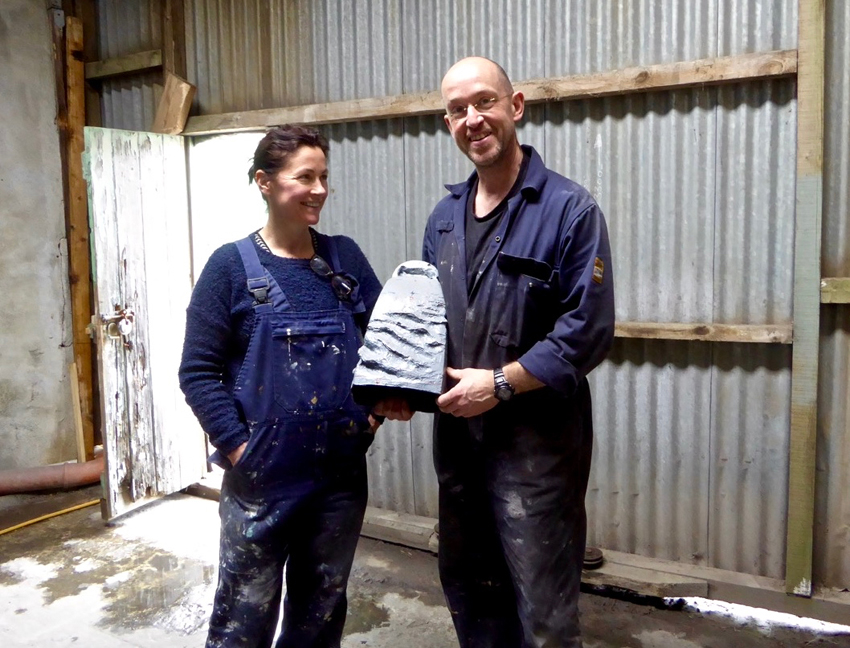
Artist Karen Hendy and Holger Lönze showing the maquette for the bell project in Schull and, below, the bell in its setting at Bangor Abbey

bangor context

I’m often repeating the message but there is no doubt that West Cork is the most creative place I have ever lived! All manner of culture flourishes here and we are privileged to live in a community where we can readily meet and appreciate the work of so many artists; and we have excellent galleries to showcase this work – The Blue House Gallery in Schull (next door to Holger’s workshop), Uillinn in Skibbereen, Catherine Hammond‘s excellent gallery, now also in Skibbereen and The Aisling Gallery in Ballydehob. We are spoiled!

With many thanks to Holger for allowing me to use some of his own images of the work progressing…

Learning from the Masters

matt + jackie

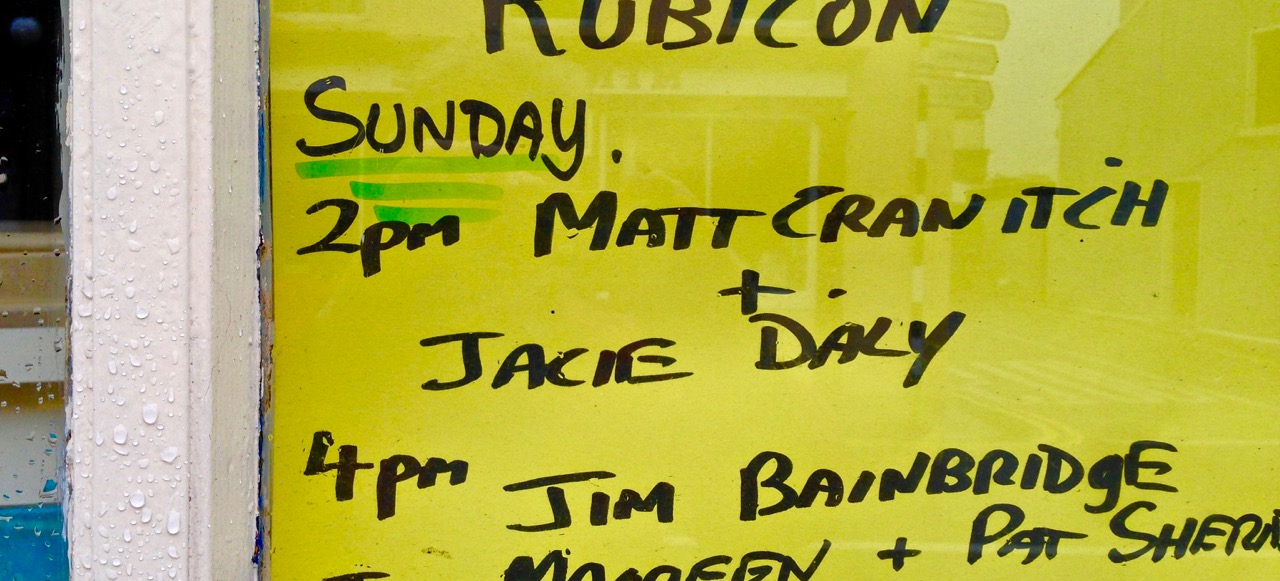
It’s midsummer – and time for the Fastnet Maritime and Folk Festival in Ballydehob. Amongst the distinguished guests this year are these two regulars: Matt Cranitch and Jackie Daly. They hail from the Sliabh Luachra on the Cork, Kerry and Limerick borders. I’ve made mention of this area before, particularly in Slides or Jigs and The City of Shrone: the name means ‘Rushy Mountains’. I can’t resist quoting from this anonymous and wry review of a book published in 2003:

…I’ve just come across a book which may interest serious Sliabh Luachra obsessives, though not those merely in search of new polkas and slides.  “Sliabh Luachra Milestones”, by Diarmuid Moynihan, is an attempt at the first general history of the area, and grew out of a thesis on early road development in Sliabh Luachra.  It covers, in outline at least, such topics as archaeology, Christianity (traces have been found, apparently), early descriptions by English invaders, historical events, settlement patterns, maps, and of course, roads…

rushy glen

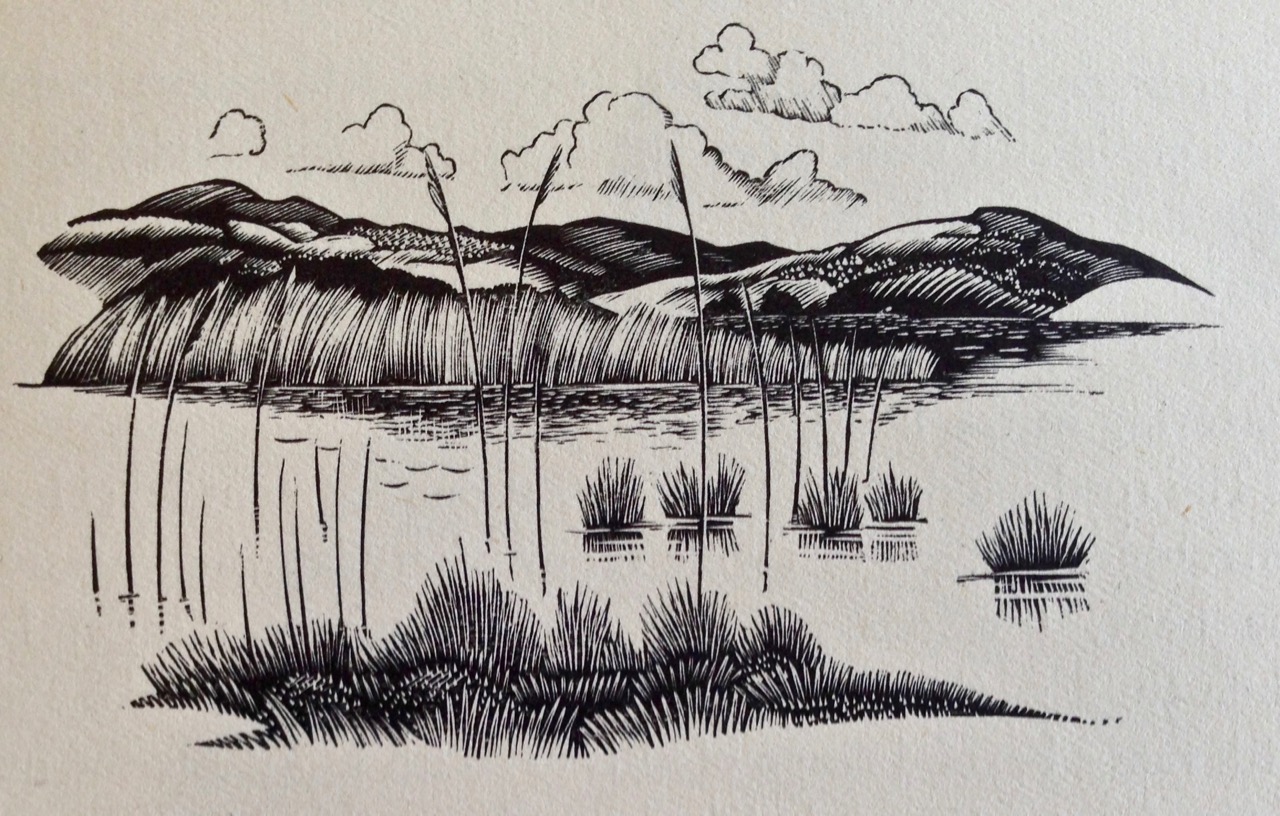
The rushy glens of Sliabh Luachra – from a woodcut by Robert Gibbings

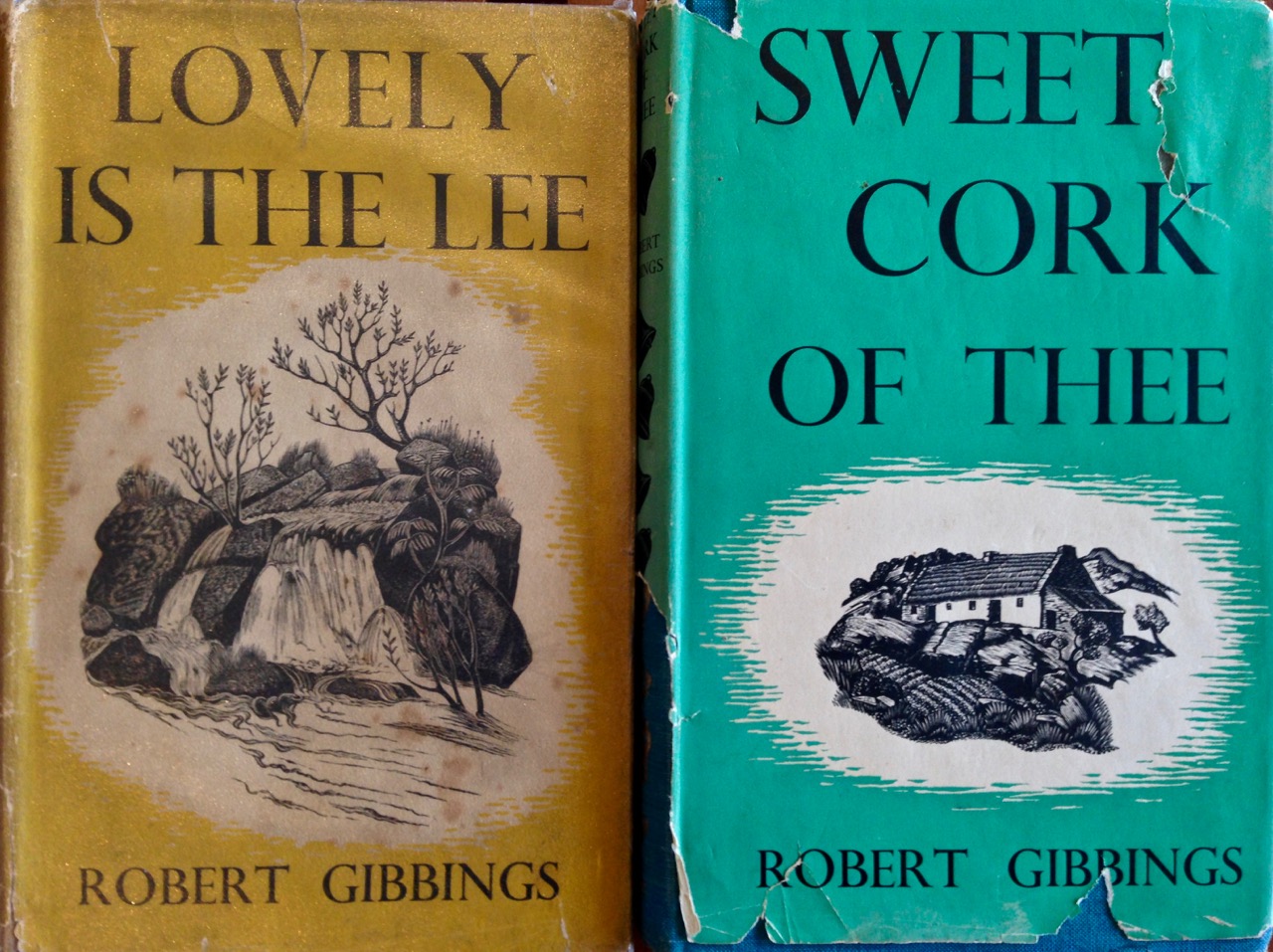
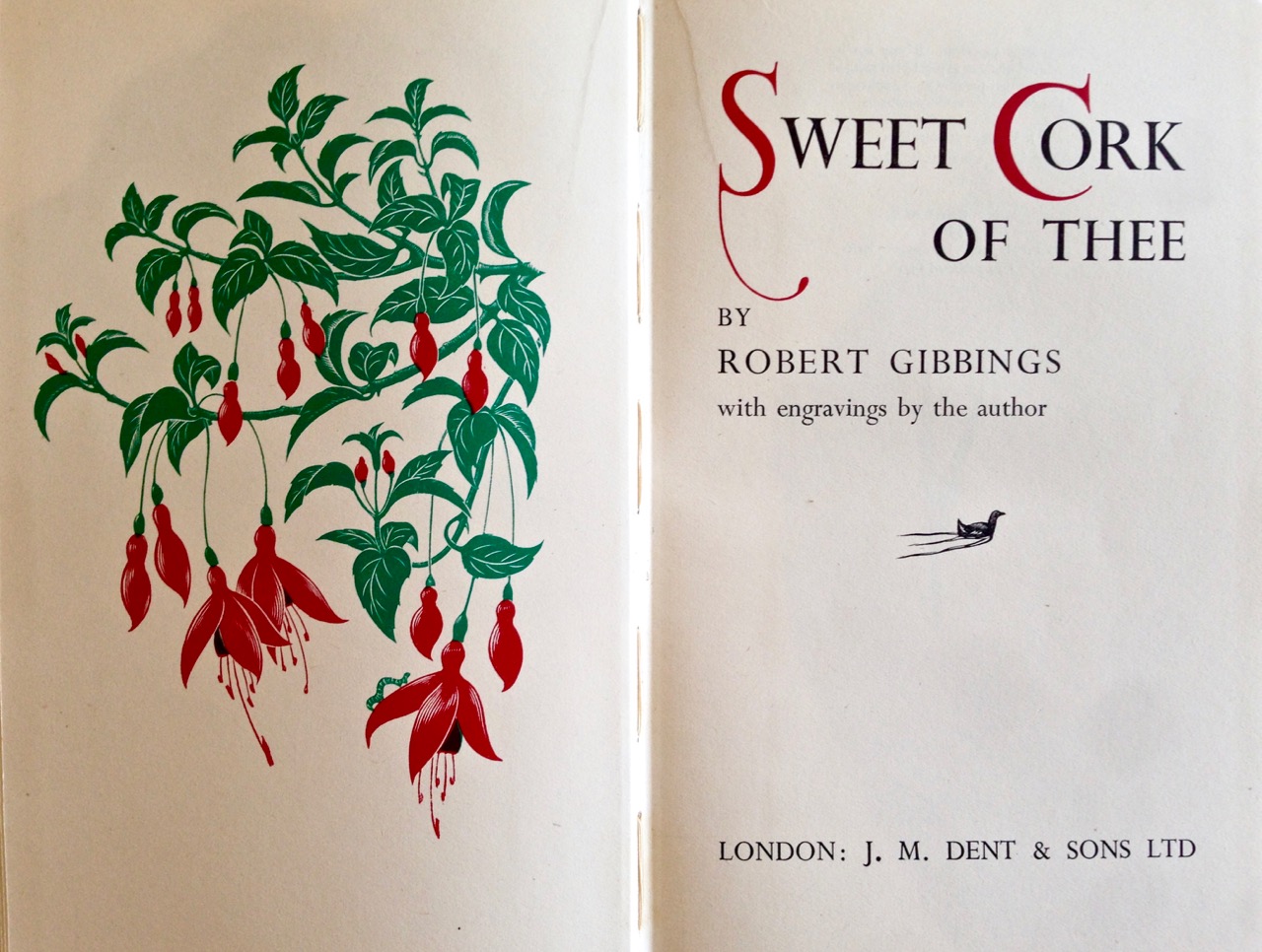
So, am I a Sliabh Luachra obsessive? I think I probably am… It all started in the 1970s when my good friend Danny gave me two books by Robert Gibbings – Lovely is the Lee (J M Dent 1945) and Sweet Cork of Thee (J M Dent 1951). They are my most treasured books in our extensive collection of Irish literature and both are set, in part, in the Sliabh Luachra – and it was these books that set me on a journey that – 40 years later – has brought me here to Nead an Iolair, and to the wealth of musical tradition that we enjoy.

Gibbings books

Sweet Cork title

Jackie Daly is only a year older than I am, yet I remember looking up to him as a master when I first started listening to Irish music half a century ago: I suppose we must both have been more youthful then! He grew up with the music of course: his father played the melodeon, and he played at local ‘crossroads dances’ with a neighbouring mentor Jim Keefe. I still have – and still play – the recordings of Sliabh Luachra musicians that I bought in the early 1970s (and which are still available from Topic Records). Matt Cranitch is a distinguished and respected fiddle player who has also has an academic career and has lectured widely on Irish traditional music.

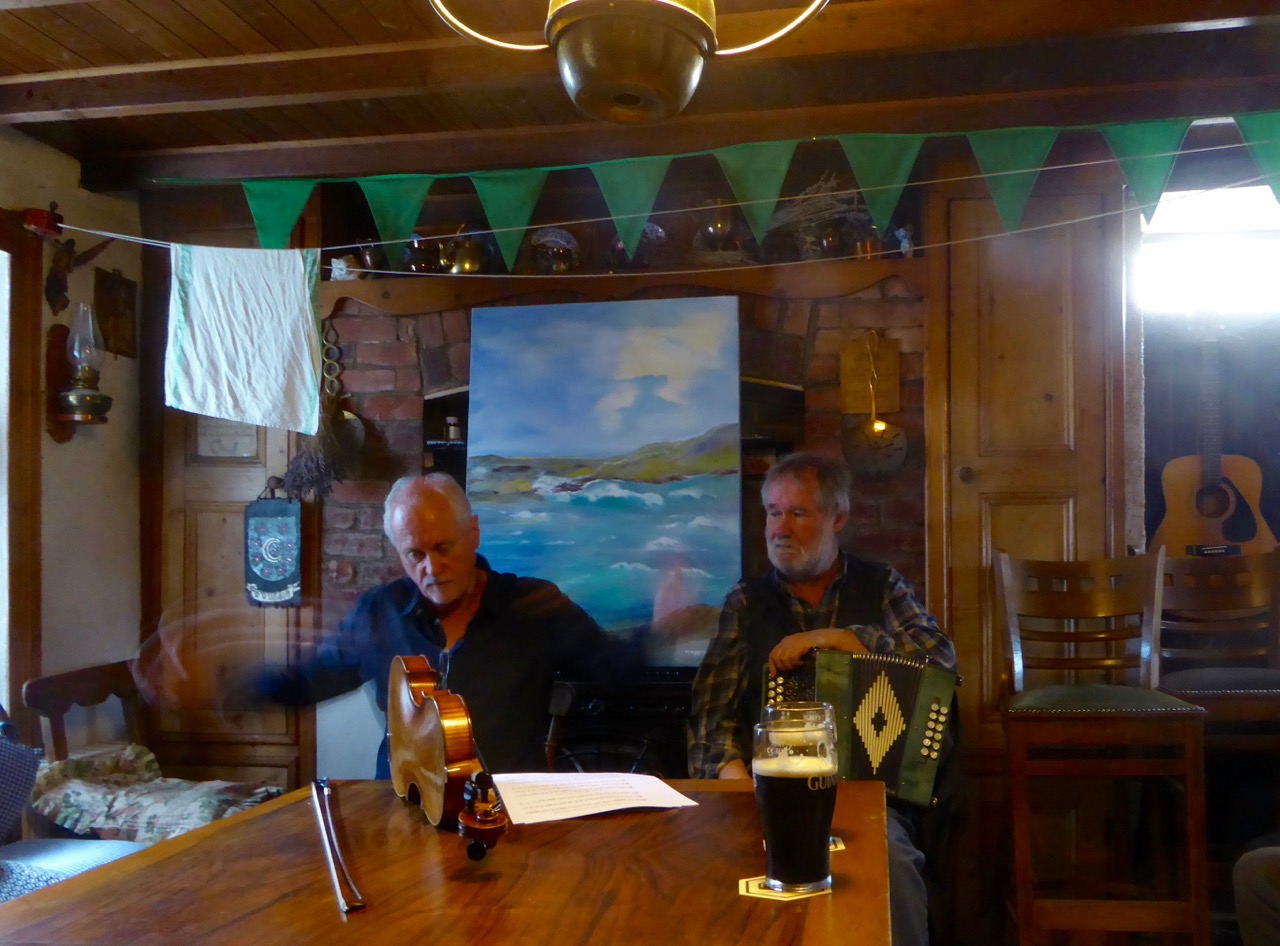
Here’s a taster from the Festival sessions – Matt, Jackie and friends finishing up a set of iconic Sliabh Lauchra slides in Rosie’s Bar

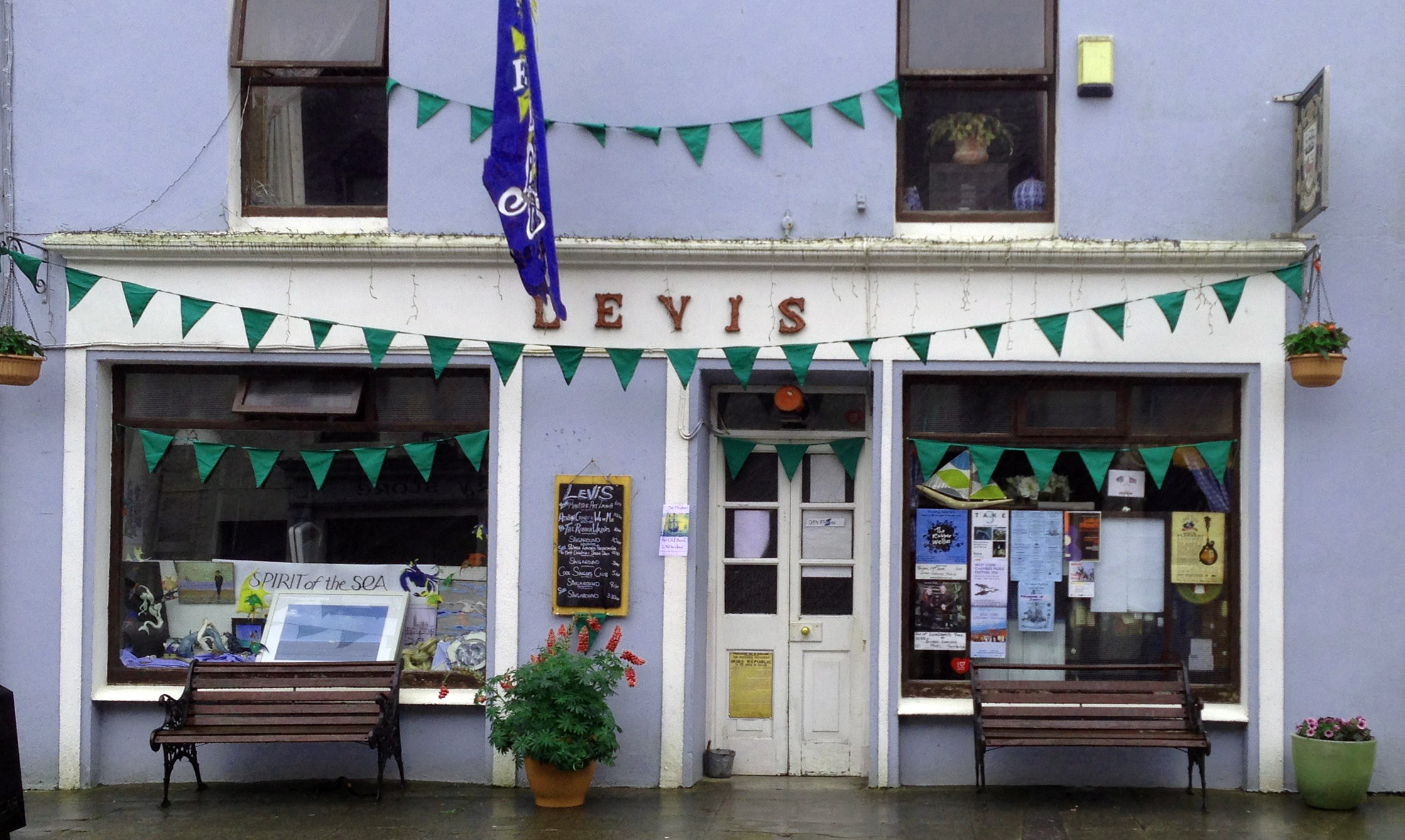
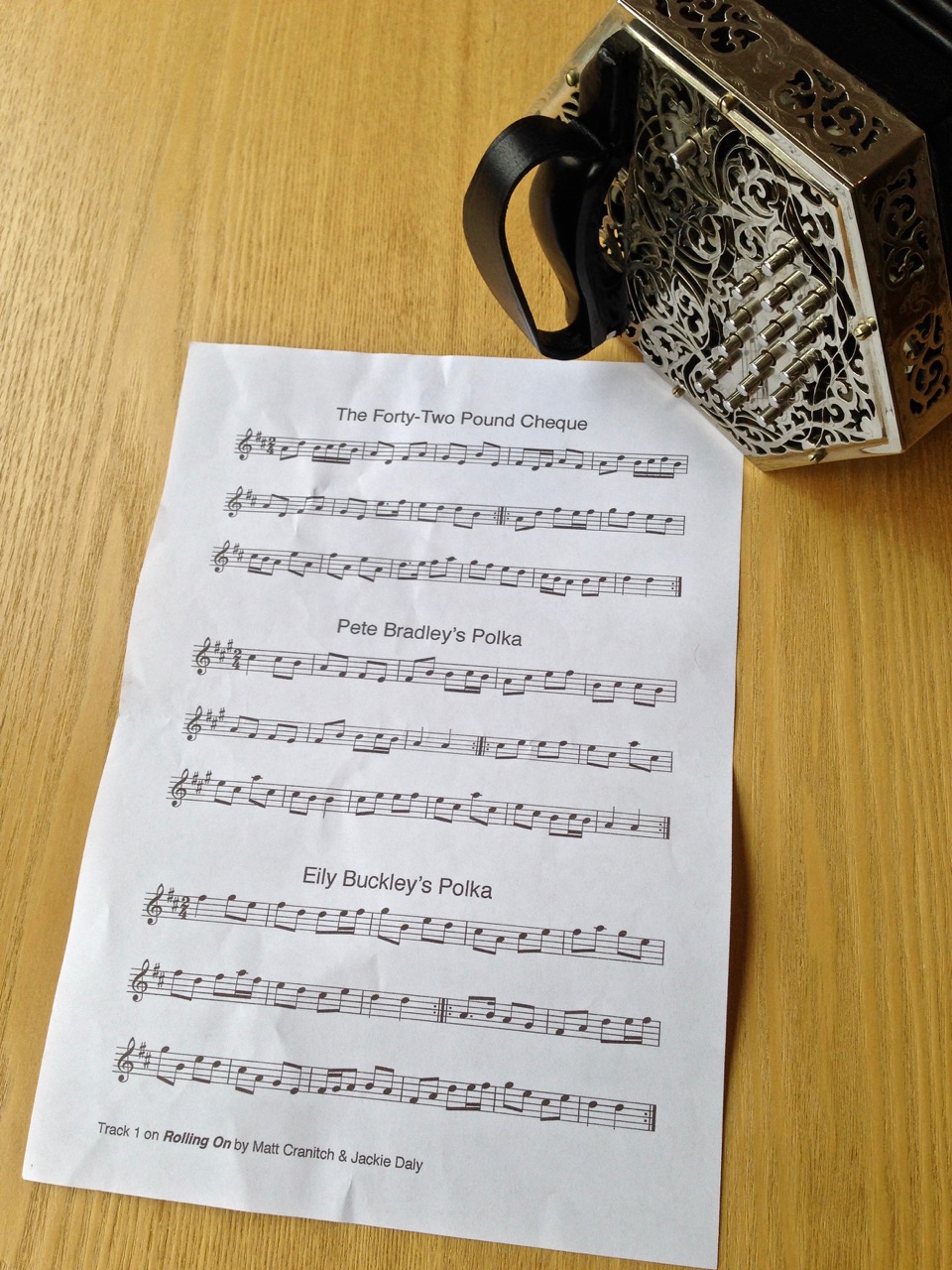
I was fortunate to attend a workshop with Matt and Jackie in Levis’s on Saturday. After a fascinating talk on their traditions we all ended up learning a set of polkas. Wonderful! Those without instruments were cajoled to sing the tunes, so it was a communal affair.

Here you’ll catch the end of a tale by Jackie and a few bars of a beautiful slow air (Maidin Ró-Mhoch) from Matt

The workshop took place in the intimate setting of the back parlour of Levis’s Corner House – on its way to becoming one of the top music venues in Ireland through the efforts of Joe and Caroline yet always keeping its distinctive character.

Levis midsummer day

It takes me a little while to pick up new tunes but the duo were good and patient teachers and we were doing quite well by the end of the session. I thoroughly recommend their latest CD Rolling On (2014), which includes Maidin Ró-Mhoch and many other fine Sliabh Luachra pieces.
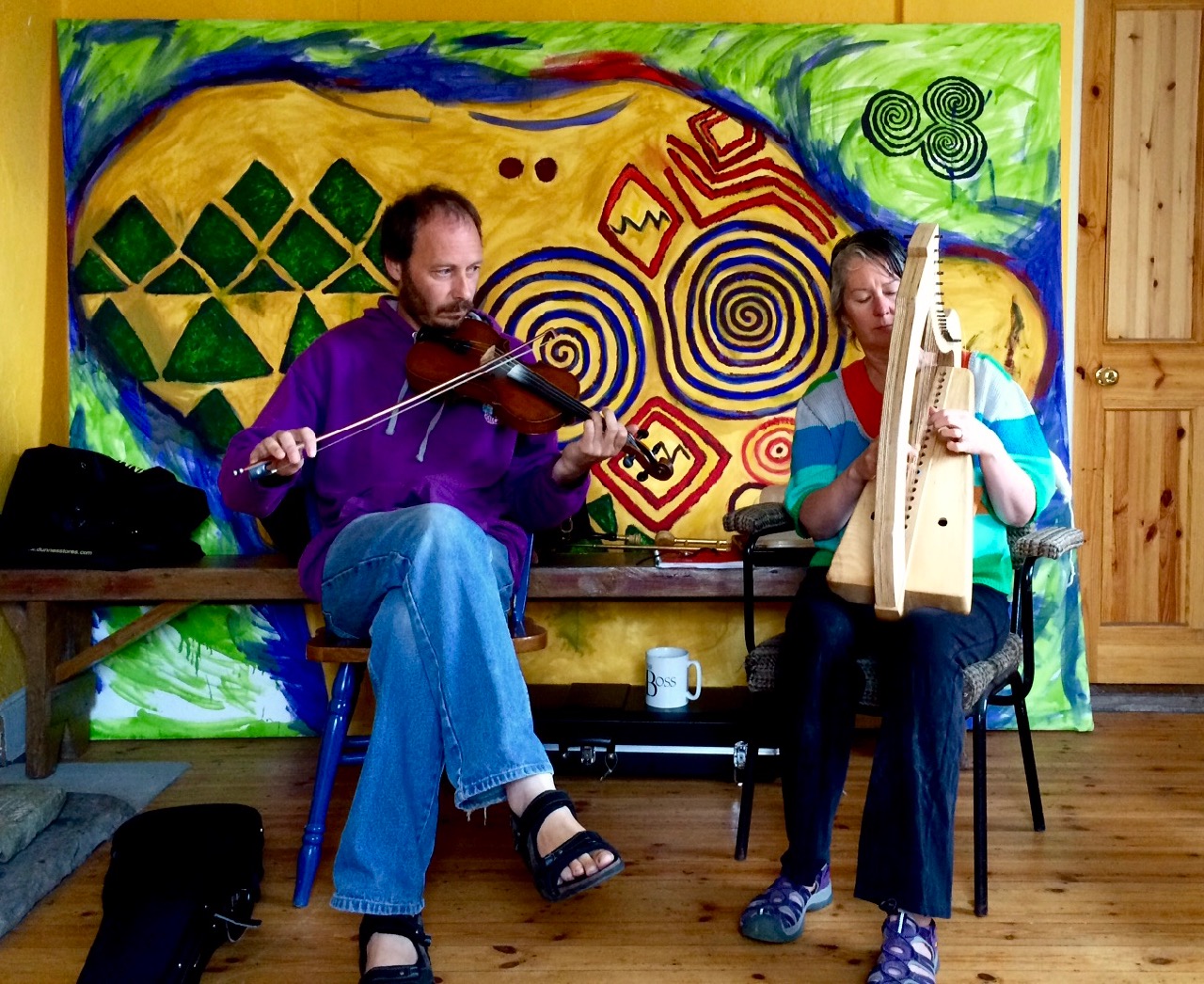
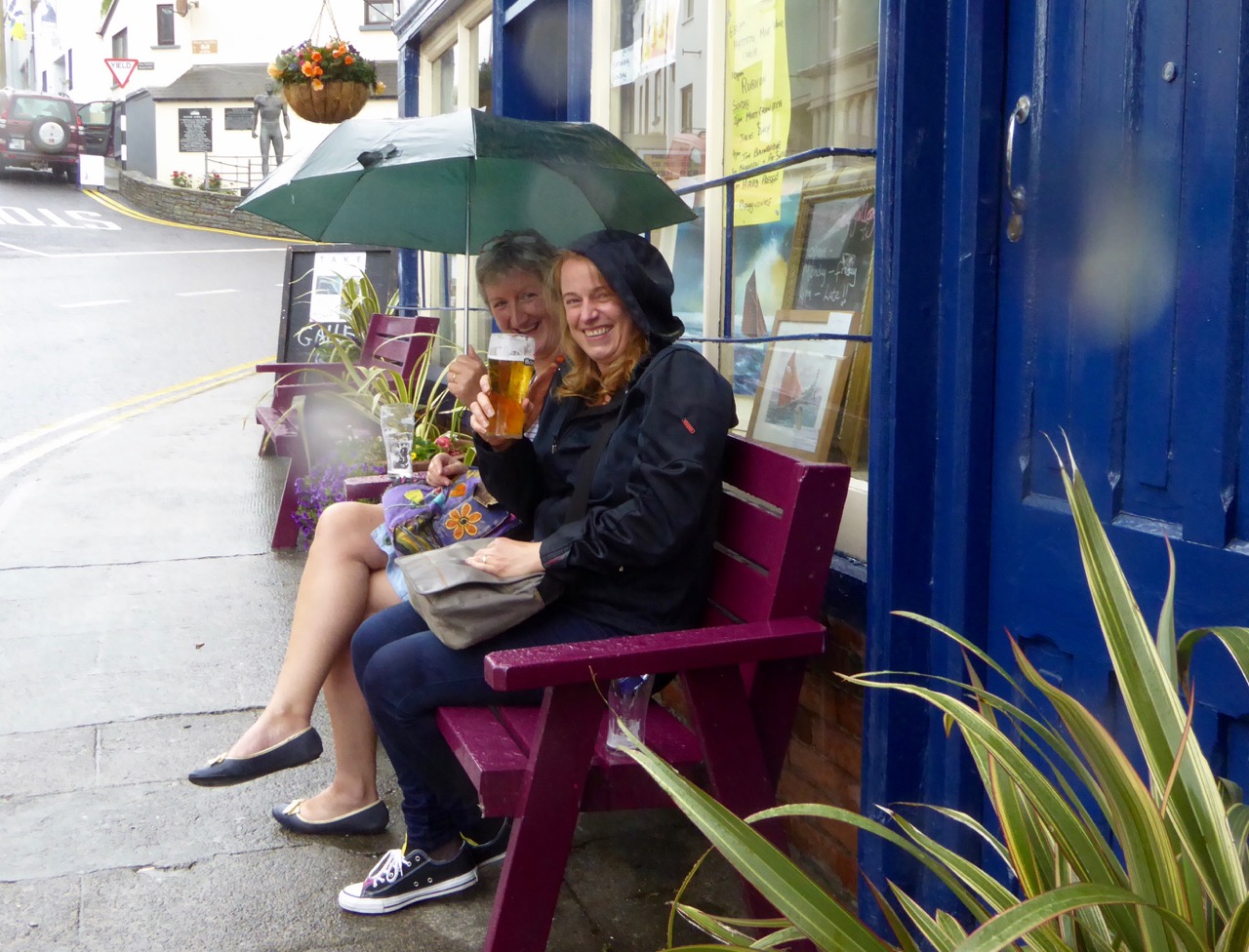
As usual, Ballydehob has embraced this festival – one of many through the summer – and the town is rocking in the rain… there are visitors from afar: Hyttetu – a maritime themed male voice choir from Norway, Swansea shantymen Baggyrinkle and very many others, including someone who has been at the forefront of the Irish folk music scene for many years, Andy Irvine.
yellow poster

festival time!

Festival time – midsummer’s day!

So many thanks to all the organisers, particularly Dick Miles and Cathy Cook, and the landlords of all our local hostelries: it wouldn’t happen without them. Now I’m off home to get dry and practice those tunes!

3 polkas