It’s one of my favourite things to do, as soon as the wildflowers in my garden start to bloom. These are the early ones – there will be a different set in June and July, although some, such as the Bird’s-foot Trefoil, will persist. All but one of one of these wildflowers is native to West Cork, all have volunteered in my garden, and all have been photographed in the last week. You have to lie down in the grass to see many of them (tiny!), or to see the detail on the flower – but I have done all the work for you so make a cup of tea, settle back, and just enjoy!
The music is by the incomparable, late Mícheál Ó Súilleabháin and is titled Turas Go Tír Na nÓg (Journey to the Land of Youth) – Go raibh maith agat, a Mhícheál, agus suaimhneas síoraí.
A plant list follows, in the order in which they are presented.
Ribwort Plantain (Title slide)
Creeping Buttercup X 2
Common Mouse-ear
Common Milkwort X 3
Common Milkwort, white form
Dandelion clock
Cat’s-ear X 3 (much more common in my garden than Dandelions)
Yellow Pimpernel X 2
Common Dog-violet X 2
Grasses
Daisies
Thyme-leaved Speedwell and Daisies X 2
Thyme-leaved Speedwell closeup
Daisies
Red Clover
White Clover
Herb-Robert
Cat’s-ear and Scarlet Pimpernel
Common Bird’s-foot-trefoil X 3
Keeled-fruited Cornsalad X 2
Common Sorrel X 3
Ivy-leaved Speedwell* X 2
Marsh Thistle X 2 (Why I don’t do this barefoot)
Lousewort
Common Vetch X 2
Ground-ivy X 2
Common Blue Butterfly
Speedwell (thyme-leaved?)
Cut-leaved Crane’s-bill X 2
*Ivy-leaved Speedwell is thought to be an introduced species
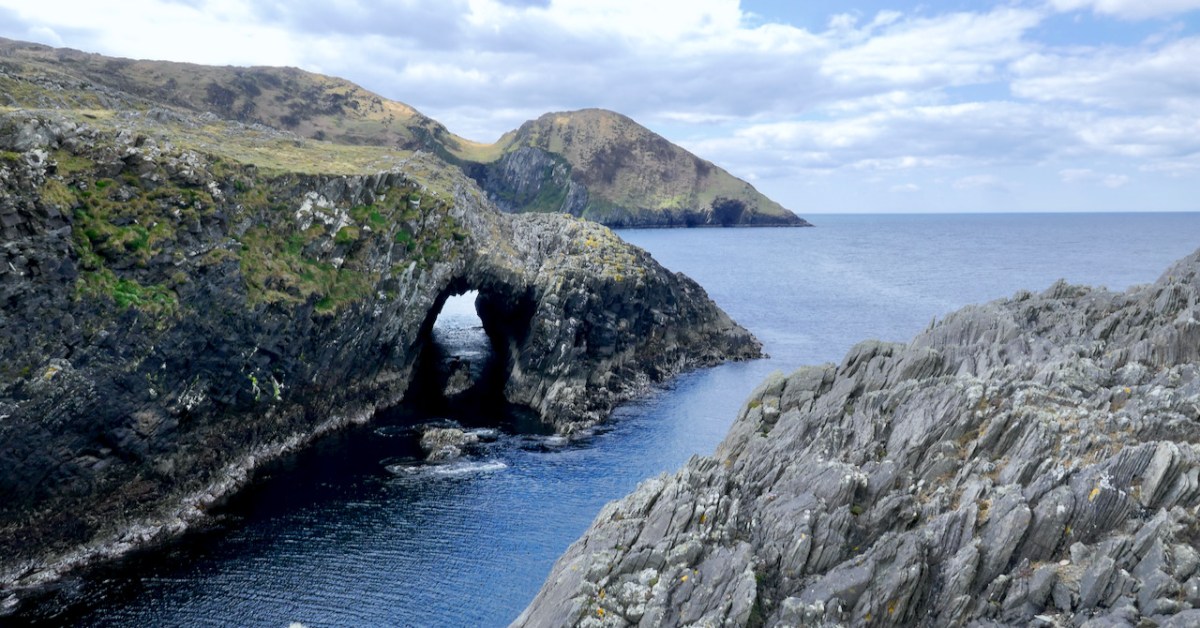
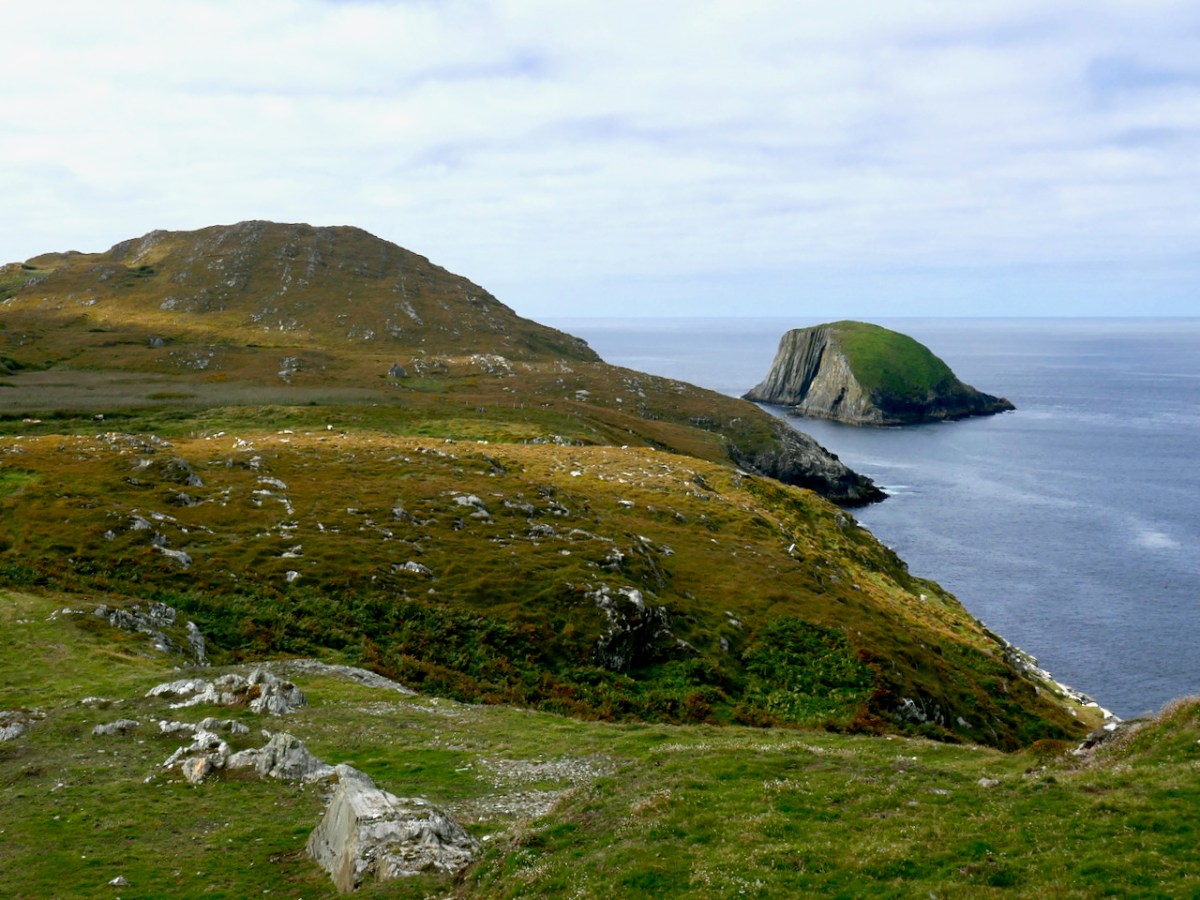
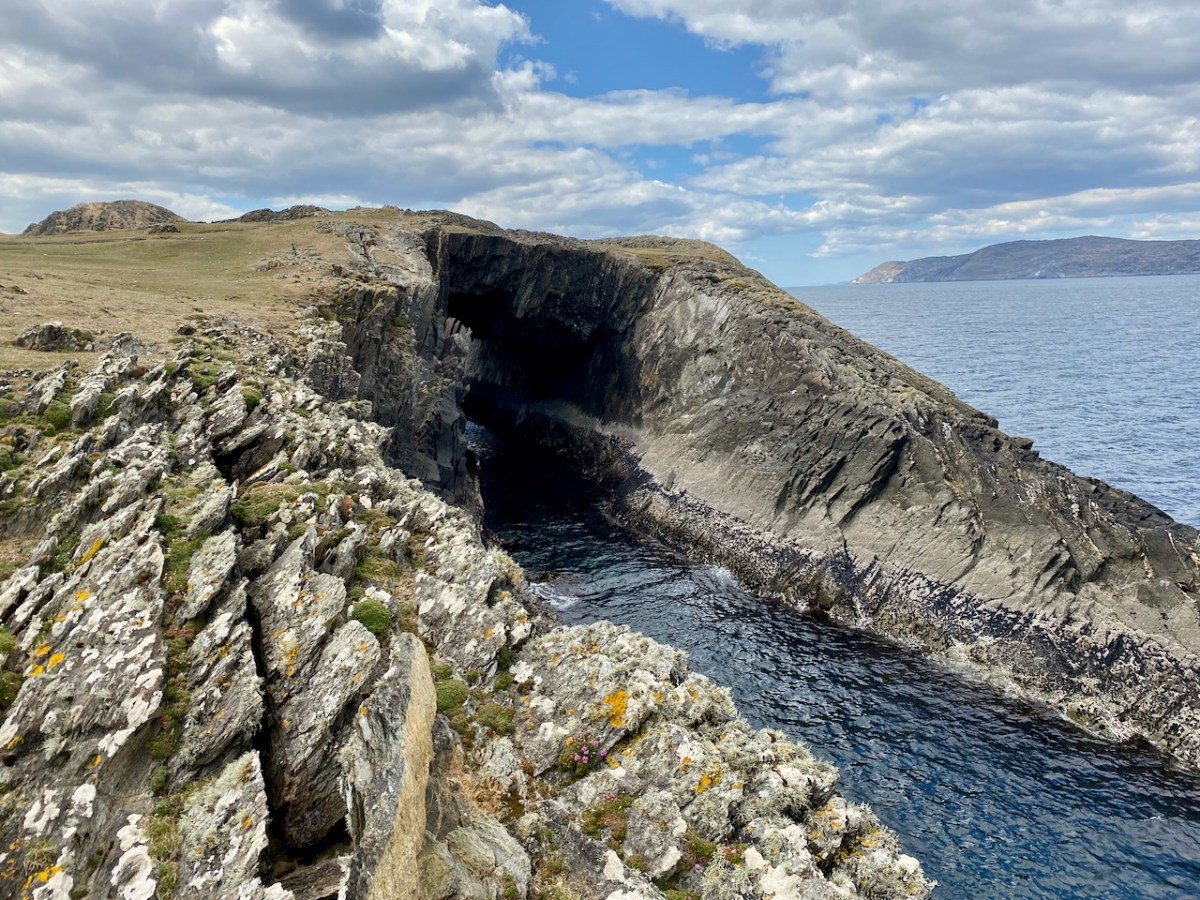
Drawn by the lure of sea-arches, we visited Lackavaun this week. Wild, remote and uninhabited now, but it wasn’t always so.
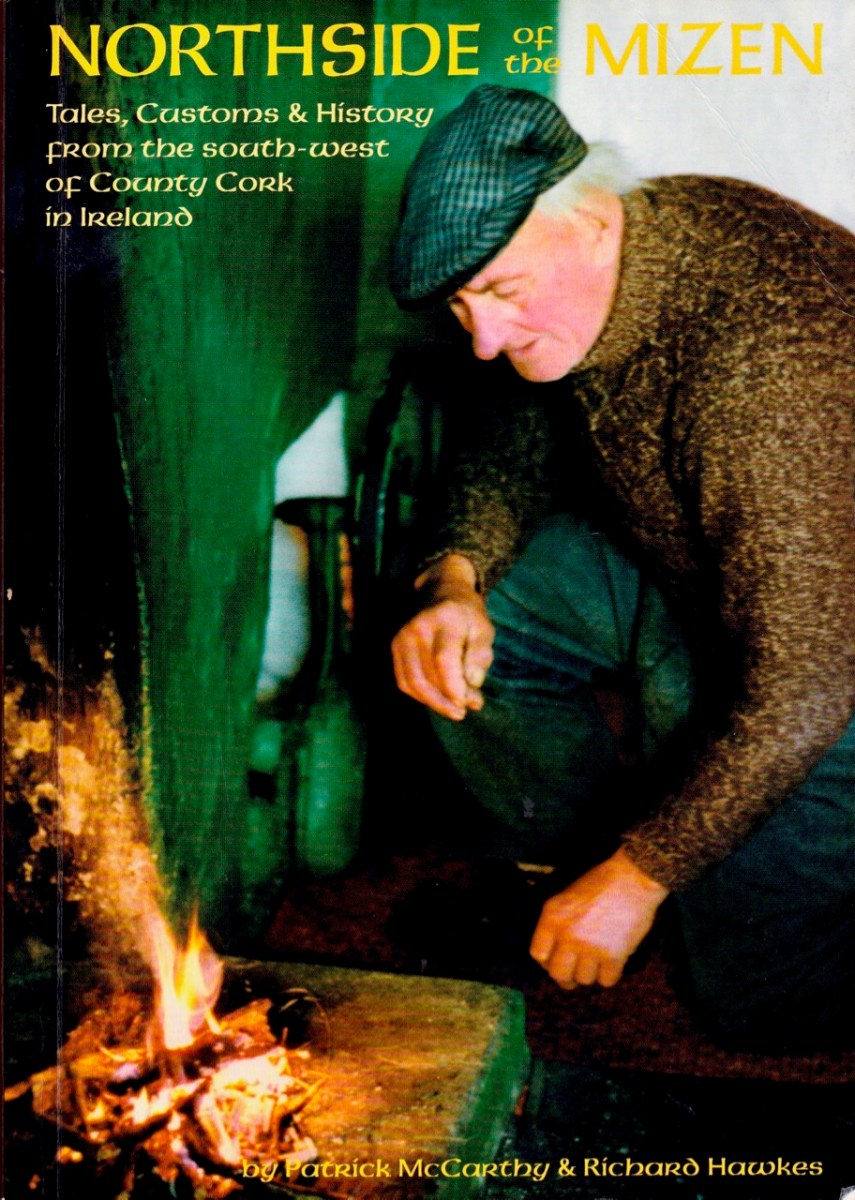
We’ve written before about Northside of the Mizen by Patrick McCarthy and Richard Hawkes, with illustrations by Thelma Ede. Published in 1999, it’s still available. I am drawing on this book for information about Lackavaun, with gratitude to the authors for all the work that went into this marvellous compendium of Tales, Customs and History.
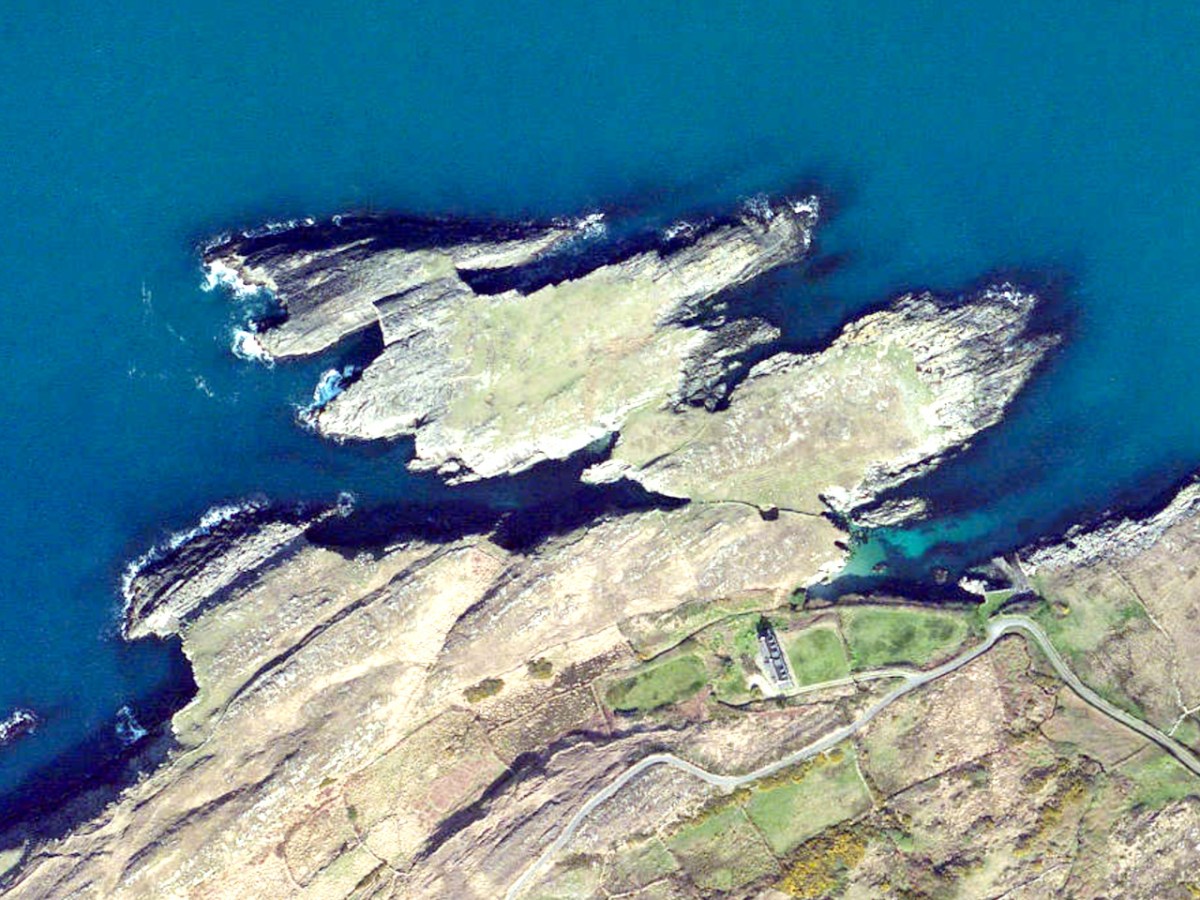
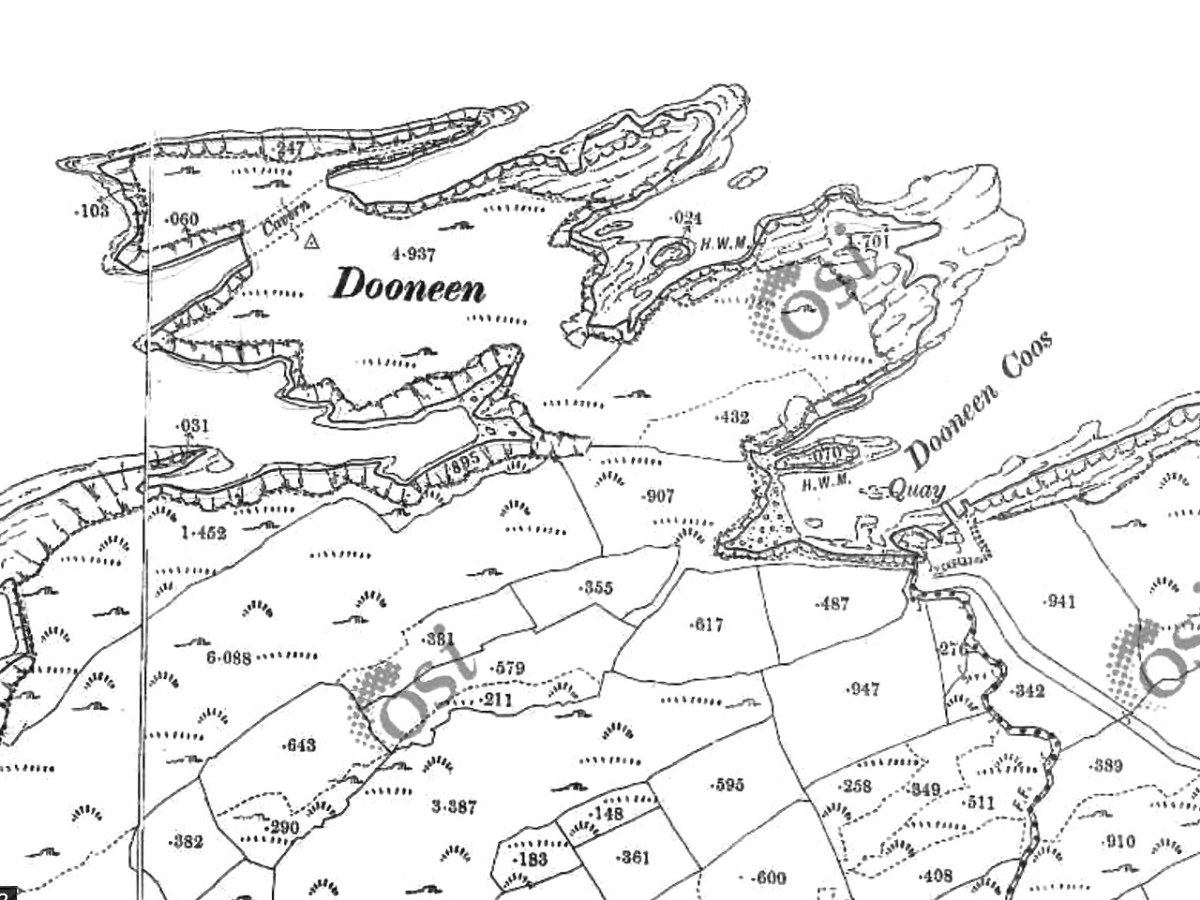
As you can see from the map, the main feature of Lackavain (leaca bhán – white slabs) is a rugged and bare peninsula. Not very promising, you might think. But see that sheltered spot on the south-eastern end – a grand place for a little quay. It was used for many purposes – fishing, of course, but also for getting to Bird Island. And even though there are no houses on the peninsula now, and none on the historic maps, we came across evidence of cultivation, in the form of potato ridges.
The peninsula we explored, with good friends Con and Una, was traditionally known as the Meallán (pronounced mal – awn, meaning a small knoll). It is also labelled Dooneen (Little Fort) on the historic 25inch map, and the harbour Dooneen Coos. This is rendered as Doonleen on the Historic 6inch map, which looks like it might be a misprint, since there isn’t a sensible translation. Northside doesn’t use either of those names.
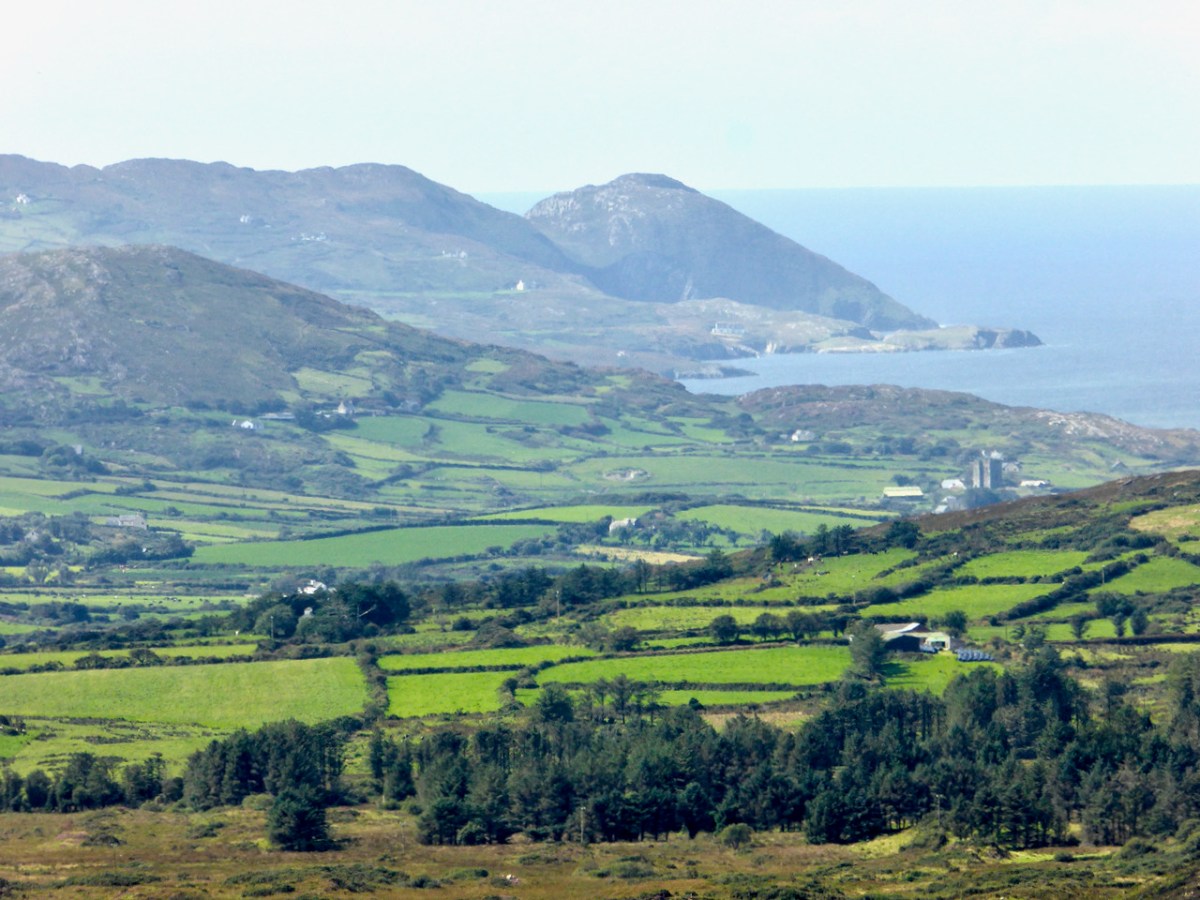
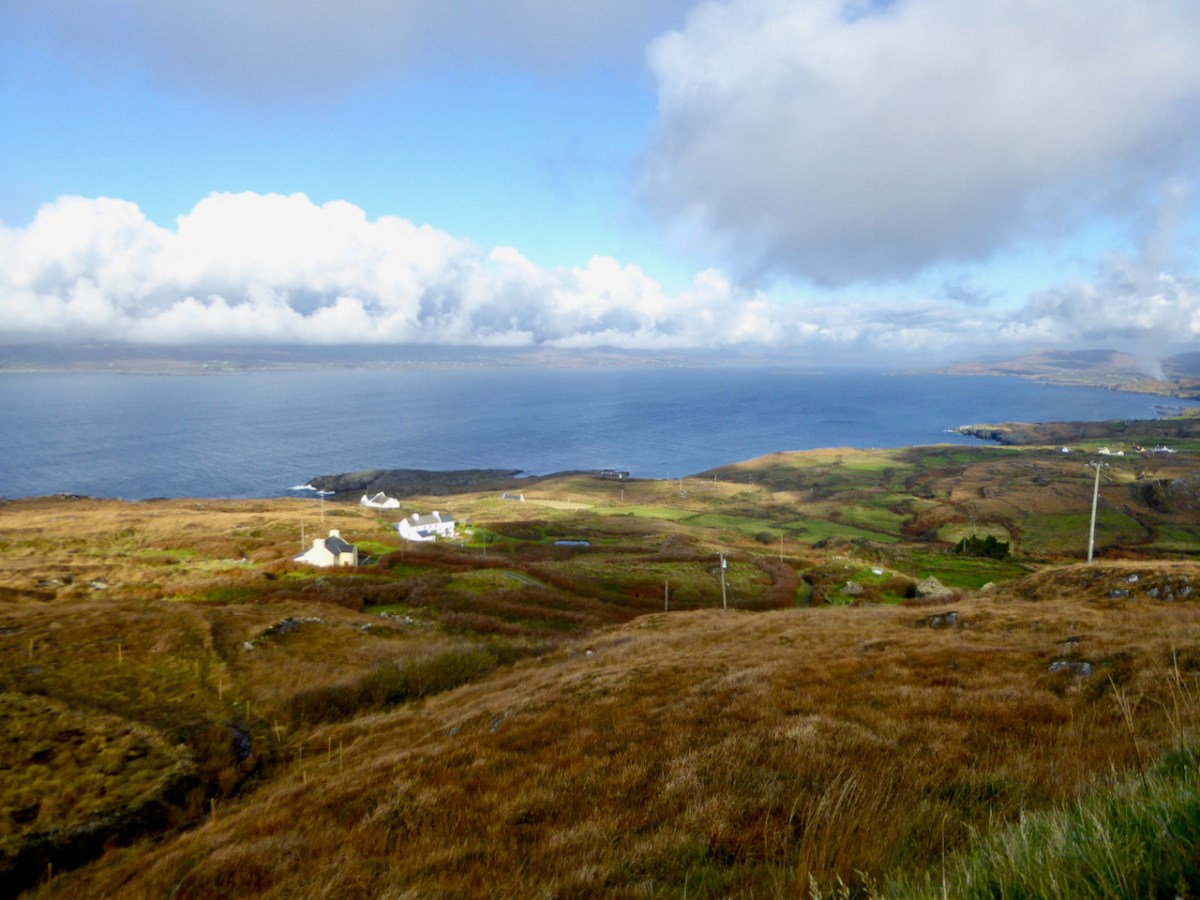
The photograph above was taken from Mount Gabriel. The peninsula we are visiting, The Meallán, in the townland of Lackavaun, is the land that projects into the sea at the top right. Can you make out the sea-arch?
The Northside of the Mizen says of this place:
The first settlers may well have been those from the Iron Age who developed the dun (promonotory fort) at Meallán in Lacakavun, the remains of which still exist. The name Dunkelly (Ceallach’s Fortress) may have derived from this fort and was the name for the whole of the Northside area in the past.
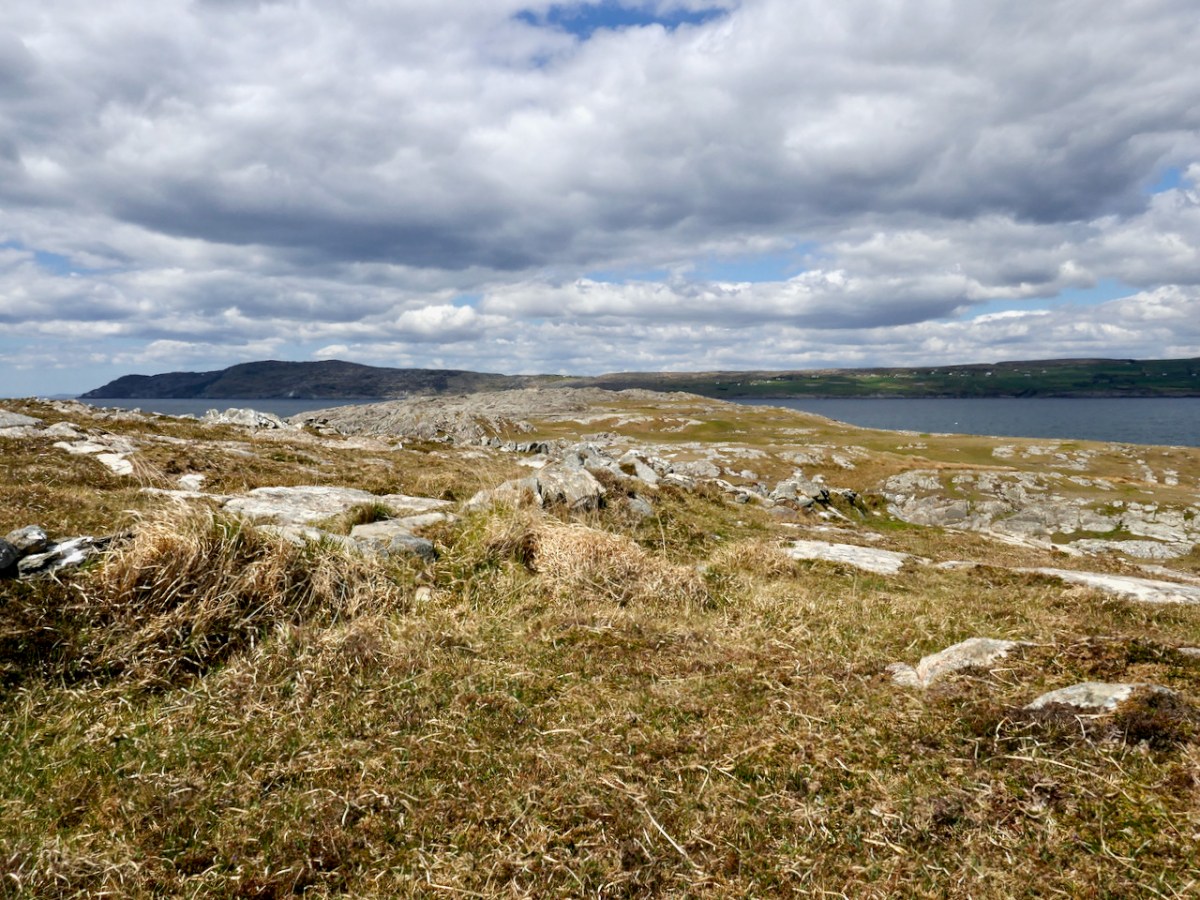
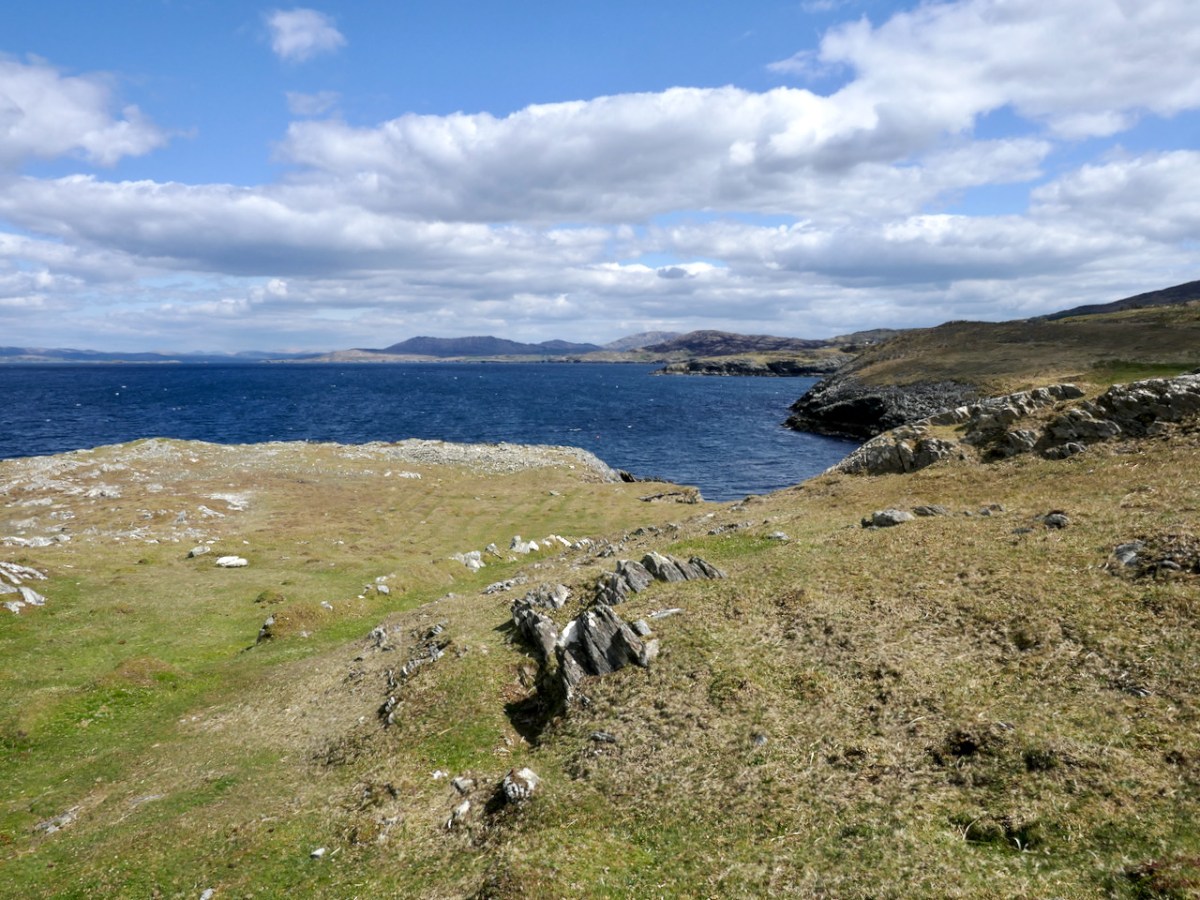
Looking out in to the Meallán – the knoll is straight ahead
This is intriguing! The name Dunkelly is nowadays reserved for two townlands to the east of Lackavaun. The Cailleach (a more usual spelling, pronounced a bit like Kye-lock) is of course the Old Woman, the Hag, the wise woman prominent in Irish folklore. This area, in fact the whole of the Mizen, is the ancestral territory of the O’Mahonys. Another family associated with this area is the Canty clan. Robert has written about Canty the Pirate and we did visit his Cove and his Pirate Steps on this occasion.
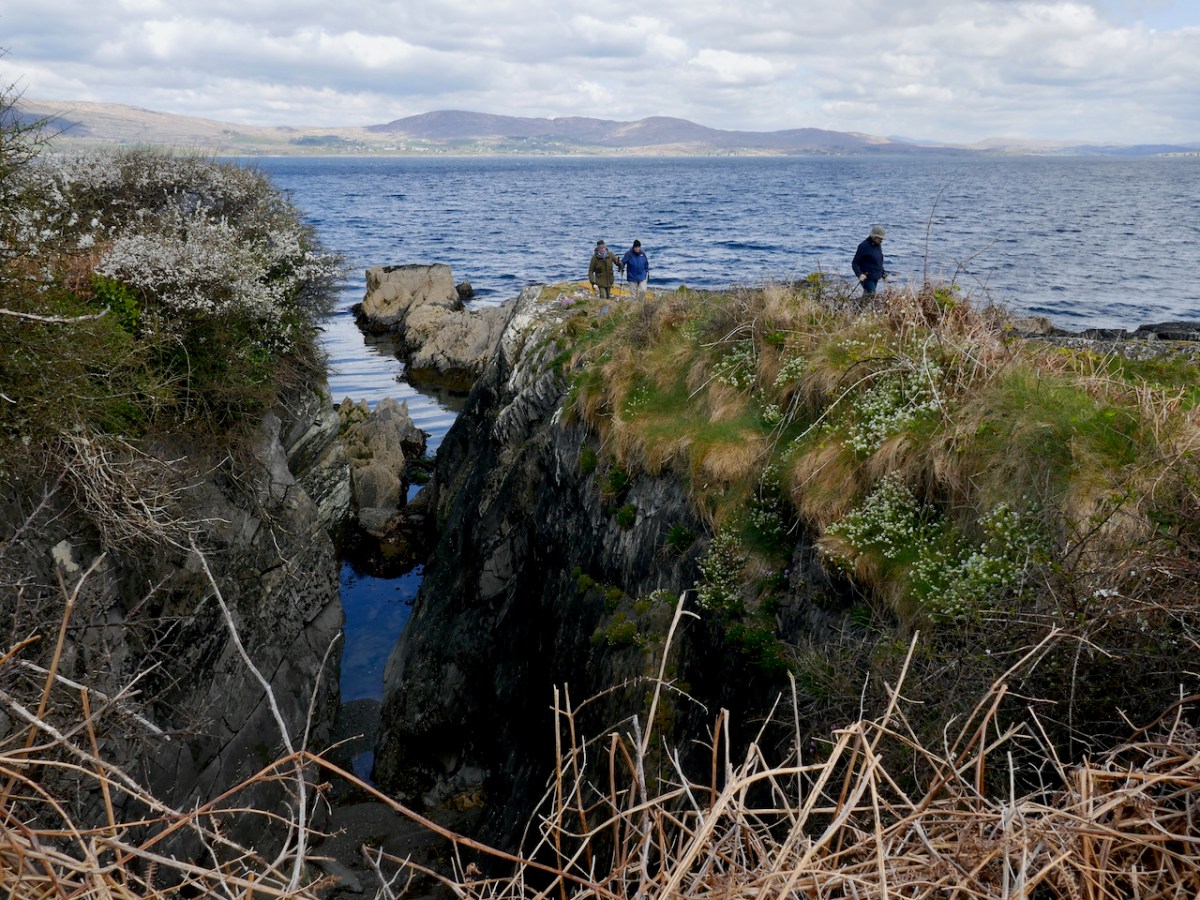
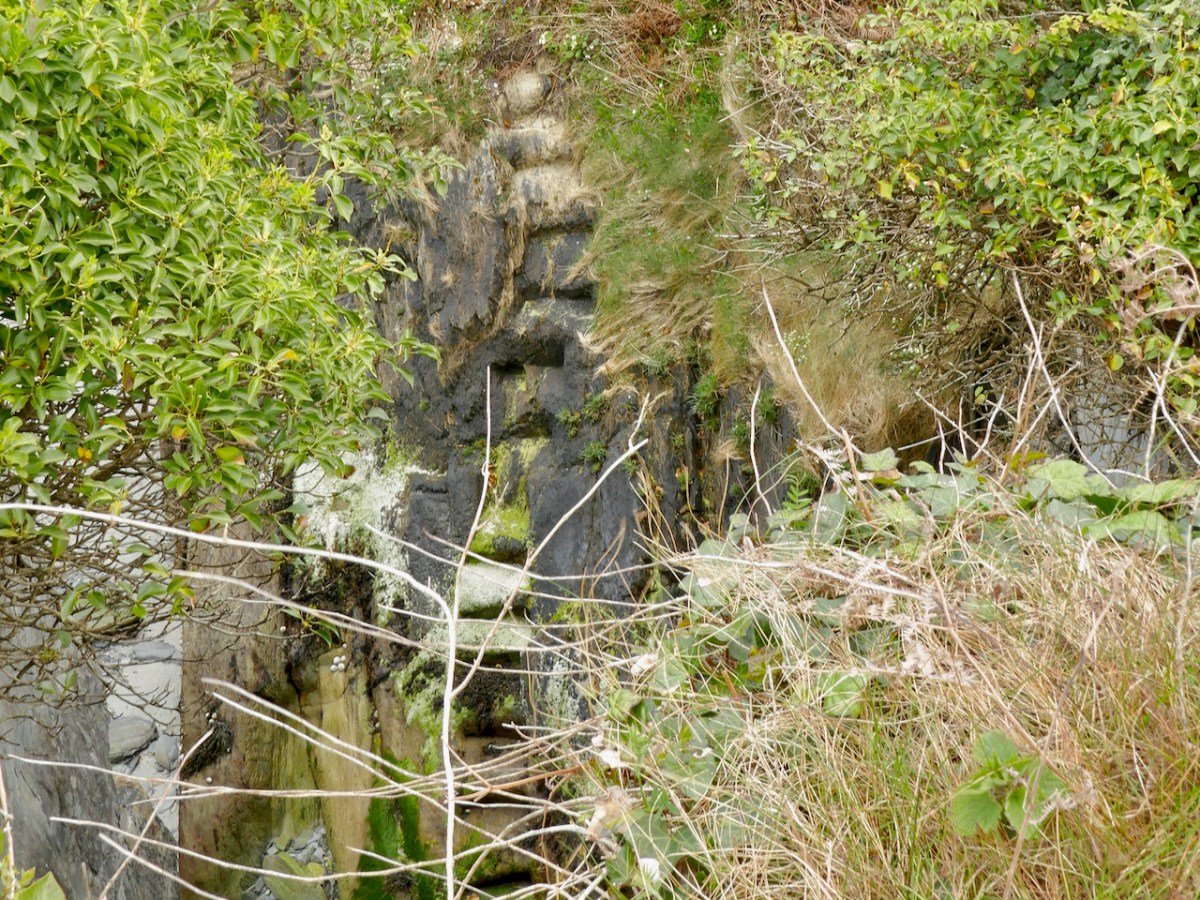
Finding the pirate steps again after a few years took a bit of searching and wandering around headlands but here they are, in all their slippery treacherous steepness
But Northside of the Mizen has another take on the Cantys:
In the early seventeenth century the Northside was recorded as being Dunkelly (Dunnekilly) and owned by the bardic O’Canty family, who were possibly bards to the O’Mahonys of Dunmanus Castle. The O’Canty’s took part in a rebellion in 1641, when they attacked Crookhaven and as a result their land was confiscated and granted to an Englishman, Sir William Petty.
Northside goes on to enumerate the population of the area – 11 in 1659, 635 in 1841, shrinking again to 291 people after the famine. By 1911 it was down to 169 souls. Very few people live there now – Northside poignantly estimates it at about the same number as three centuries ago – that is, about 11 people. Some of the houses are holiday homes and so the population rises somewhat over the summer.
Looking down on Lackavaun from the high ground to the south, it is obvious how depopulated it is now
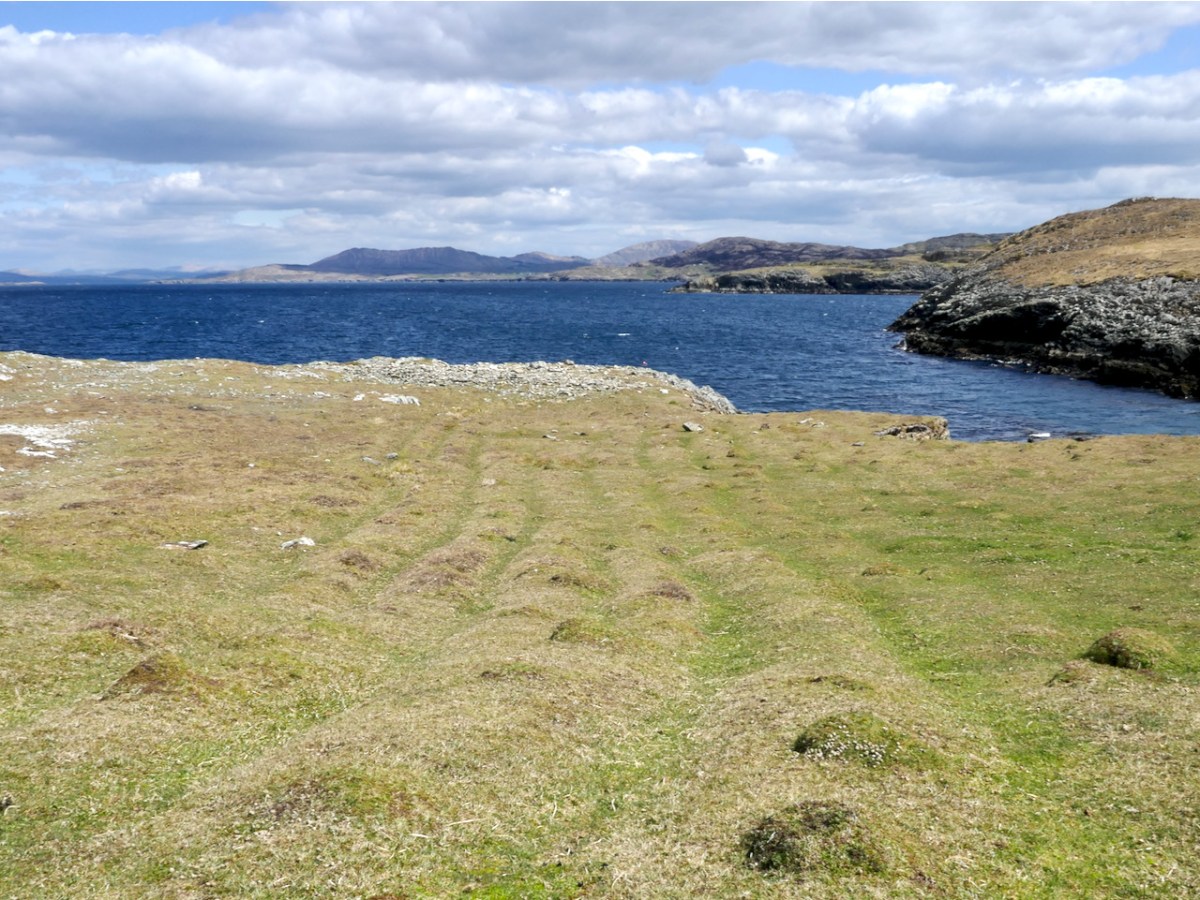
As we know, potatoes were the staple food of most people before the Famine, and this continued afterwards, when the crops recovered. We came across clear evidence of this on the Meallán, in the form of long disused lazy beds, the traditional method for cultivating potatoes in the West of Ireland. It’s impossible to know how recently these beds might have been abandoned. They could be pre-Famine but are more likely to be more recent than that. None of the historic maps show any dwellings on the Meallán itself, so this was a patch to which people came specifically for this purpose, probably building up the soil over generations with sand and seaweed.
The parallel ridges are the tell-tale sign of former potato ridges, known as lazy beds even though they were labour-intensive
Northside has much to say about the practices, and the vocabulary, of potato growing, beginning in February with the Ridge of Graf.
In the first week of February you would begin on ‘the Ridge of Graf’ lazy bed system using a dry, sunny and sloping ground to give an early crop of potatoes. The ‘Ridge of Graf’ system, although hard work, would give you up to 3 times more crop than setting potato seed in a drill. A good supply of manure was used and you would use stable manure (horse or donkey) as it was said it had a better ‘heat to it’ then yard (cow) manure. The stable manure was spread on to the grass and the seed potato placed on top. This was then covered with the sods, cut with a grafán to open a trench on each side, of 18 – 20 inches. This gave you a ridge of about three feet. Soil from the trench was then put up on the ridge. This was called ‘the first earth’. The last shovel of earth from the trench was put up against the edge of the ridge, and with a good pat from the back of the shovel the grua (side of the ridge) was made.
Each tool had its own name and function. The potato spade was inserted as deep as the bucán, or foot rest. The seed potatoes, or sprouters, were covered in earth using a farraheen to fill in the holes.
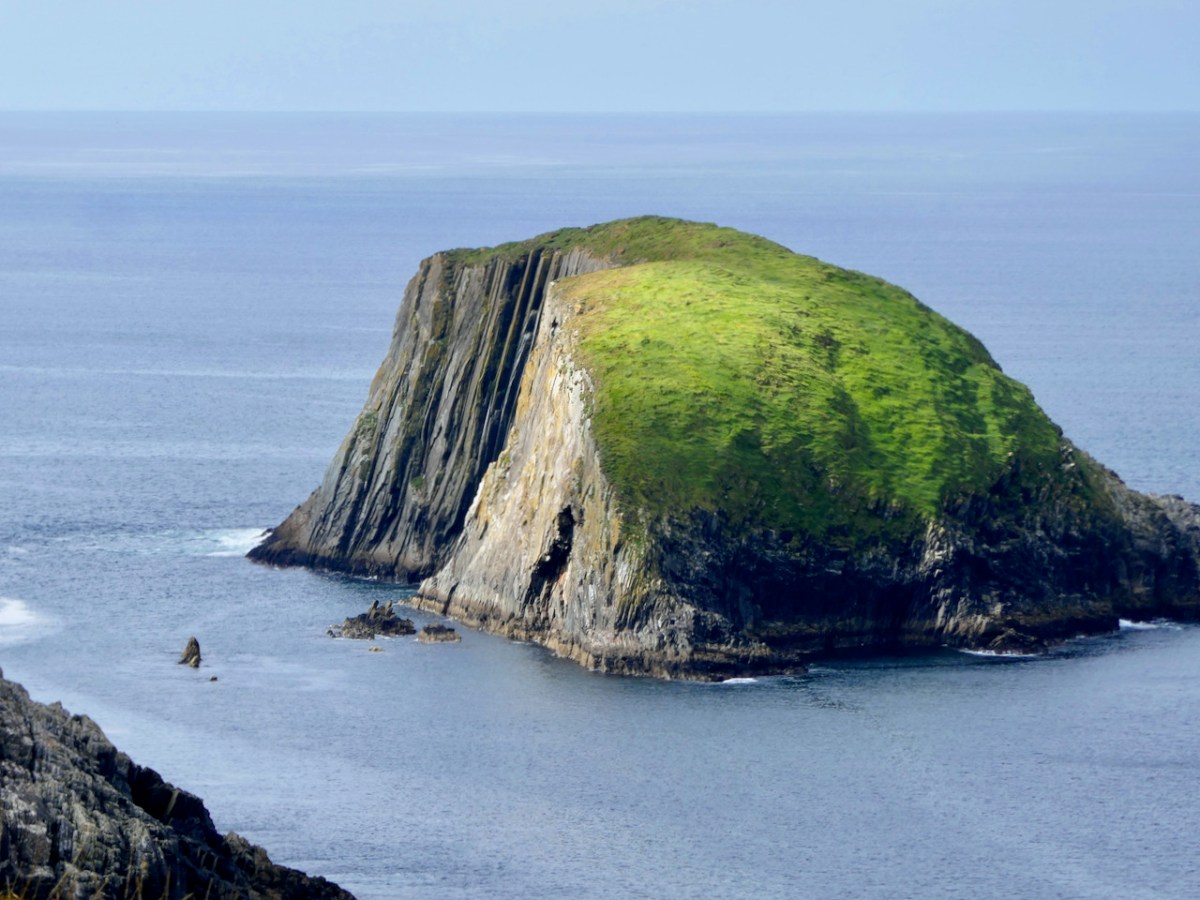
Around this time of year – the start of May – the little quay was put to good use and local boys and men took a trip to Bird Island.
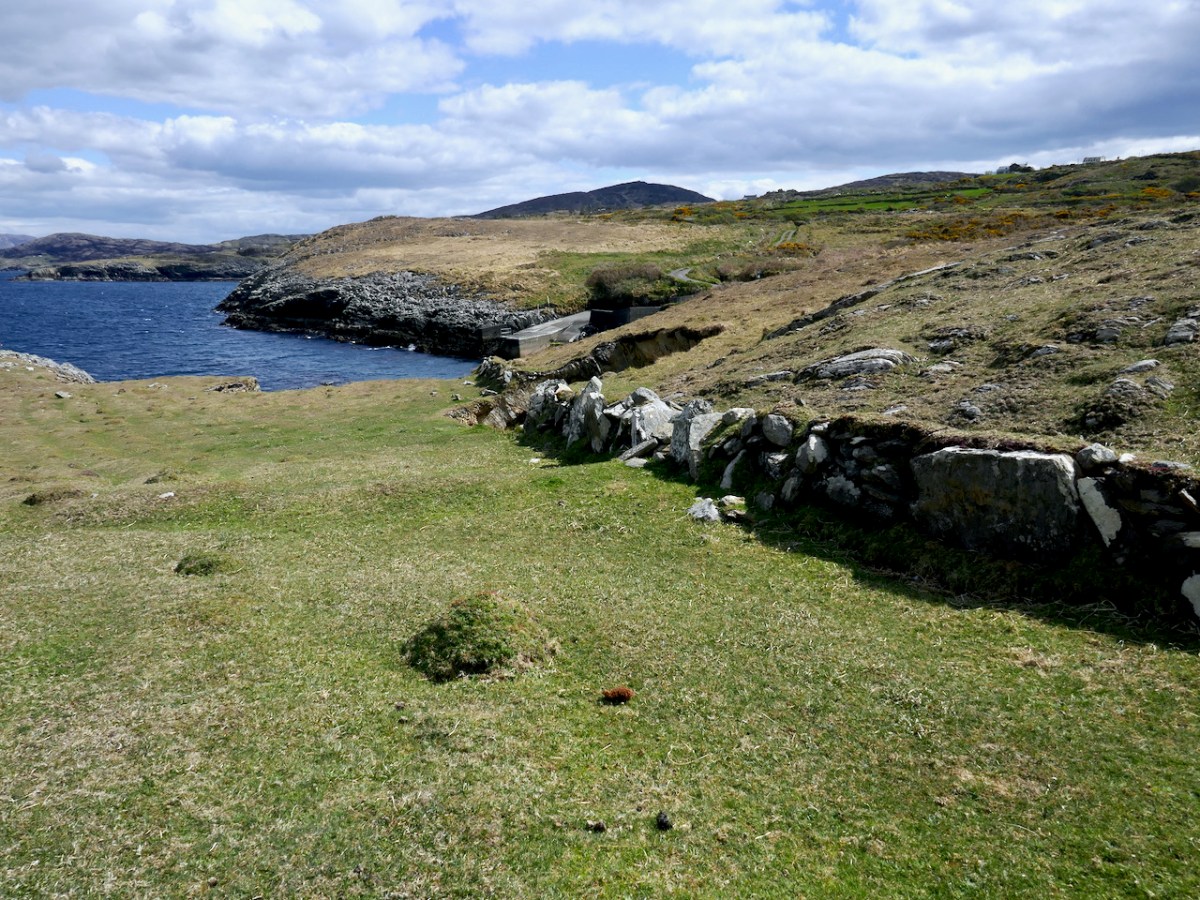
The quay, and an old field wall – impossible to say what period the wall belongs to
This was a tricky island to get on to, there was no landing place and it could only be attempted in calm weather. The first trip was to collect the eggs of the cóbach (the Black-backed Gull). Once ashore, the men attached ropes to iron bars which had been driven into the rock faces, and climbed down the cliffs to gather the eggs.
With the cóbach going mad, it was a tricky job to pull yourself back up with a hand basket and your pockets full of eggs, and often you would end up in a sticky situation!
I get vertigo just looking at the picture – can you imagine collecting eggs from those cliffs?
The second trip to Bird Island was to take sheep there for summer grazing. This happened once the Scairivín na gCuach was over – the ‘cold wind of the cuckoo’ that lasted a week or two (it’s happening as I write this) and was generally seen as the last gasp of winter. That’s Bird Island below, this time seen from the west.
It was a great day for the young and fit lads, and at least three would have to go. Fifteen sheep were taken from Canty’s Cove at Dunkelly or the pigeonholes (Cuasnacolúr) on the south side of Meallán. Getting off at the island was a different matter and you needed a still day, as to get up onto the island, even with a gentle heave, was anything but a joke without a landing place. Once you had a man up, a rope was used to haul up the sheep. In the passing of four months on Bird Island the sheep would be as fat as pigs and as wild as the sea around them. It was the very devil to get them off again. By the time you had a brehóg of sheep in the boat, you would be sweating buckets!
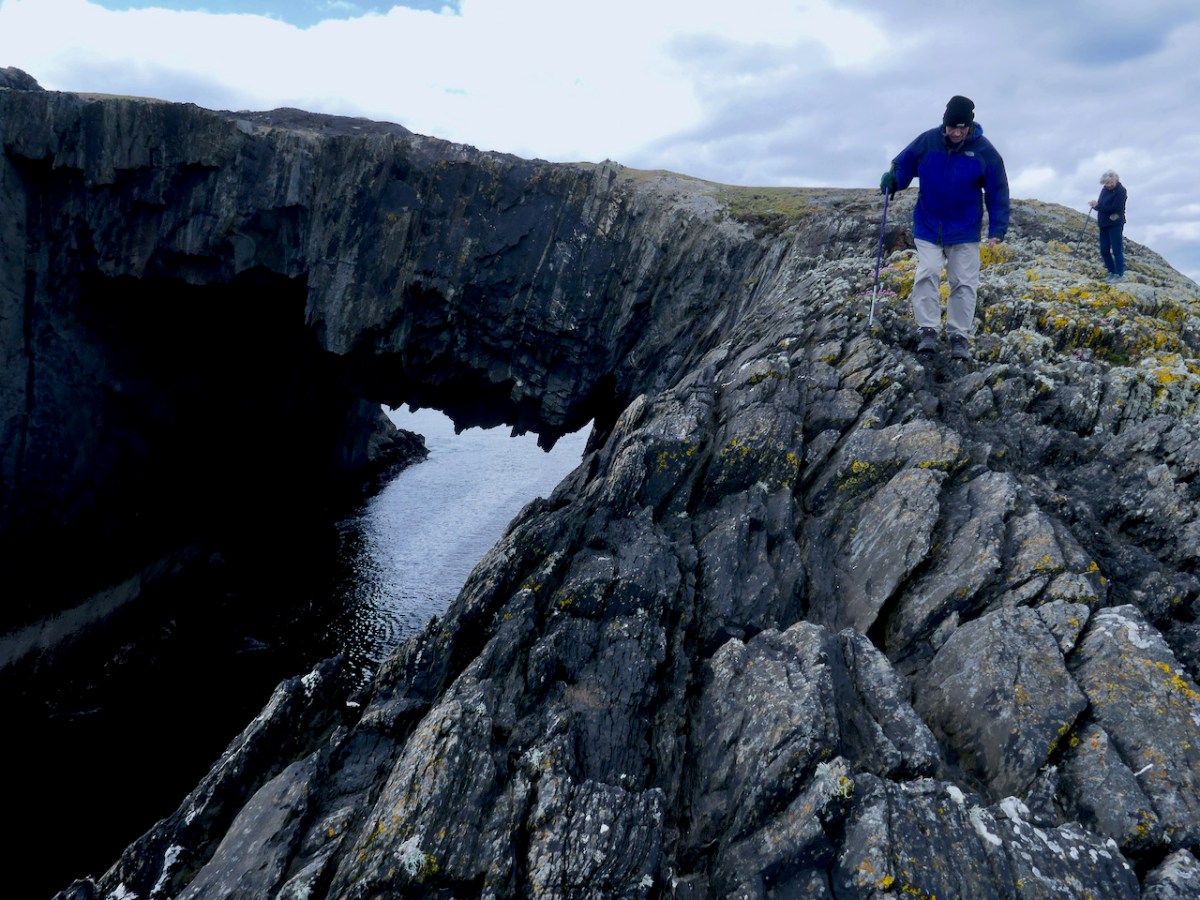
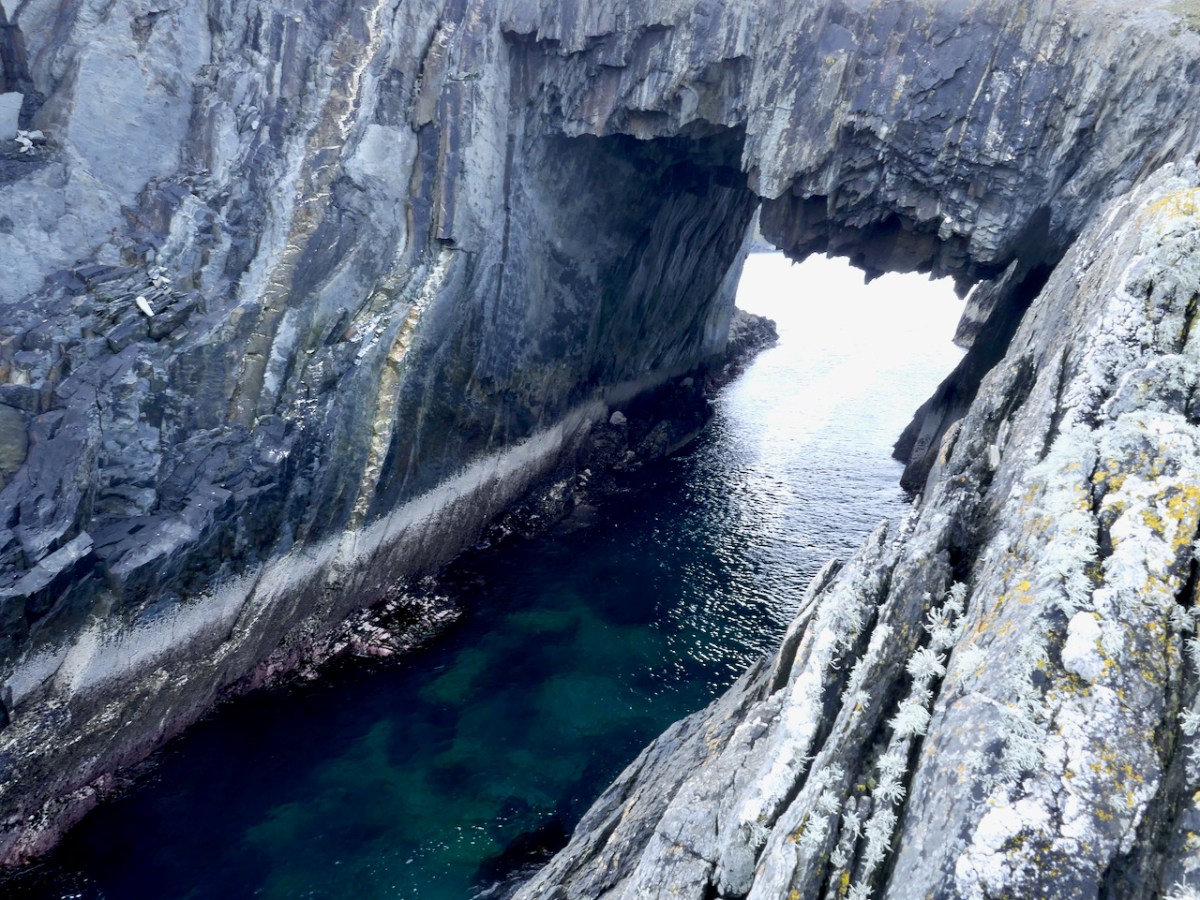
But what about the reason we went there in the first place – those sea-arches? It’s an indescribably eerie feeling to stand on one and see and feel the sea heaving below you.
Your head knows that the chances it will give way under you are minuscule, but it feels dangerous and thrilling nonetheless.
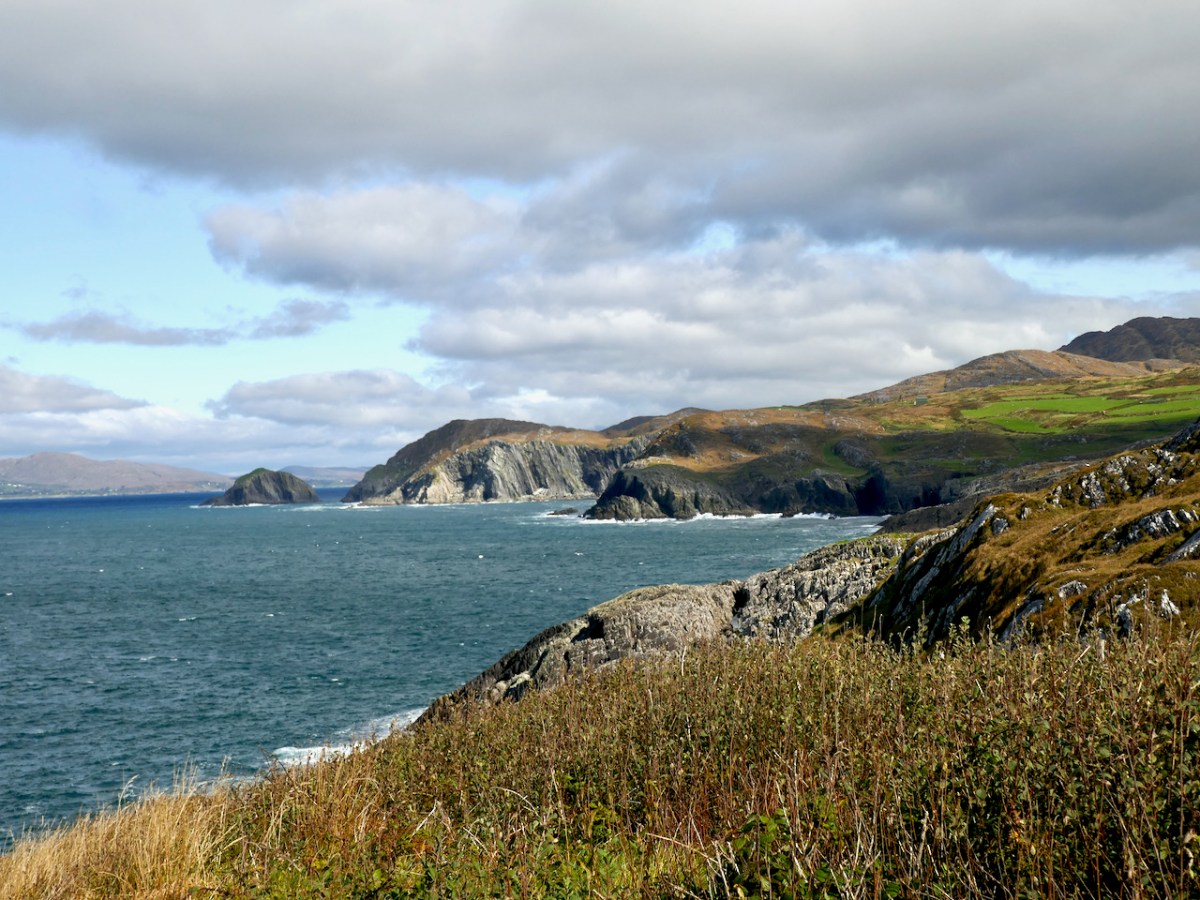
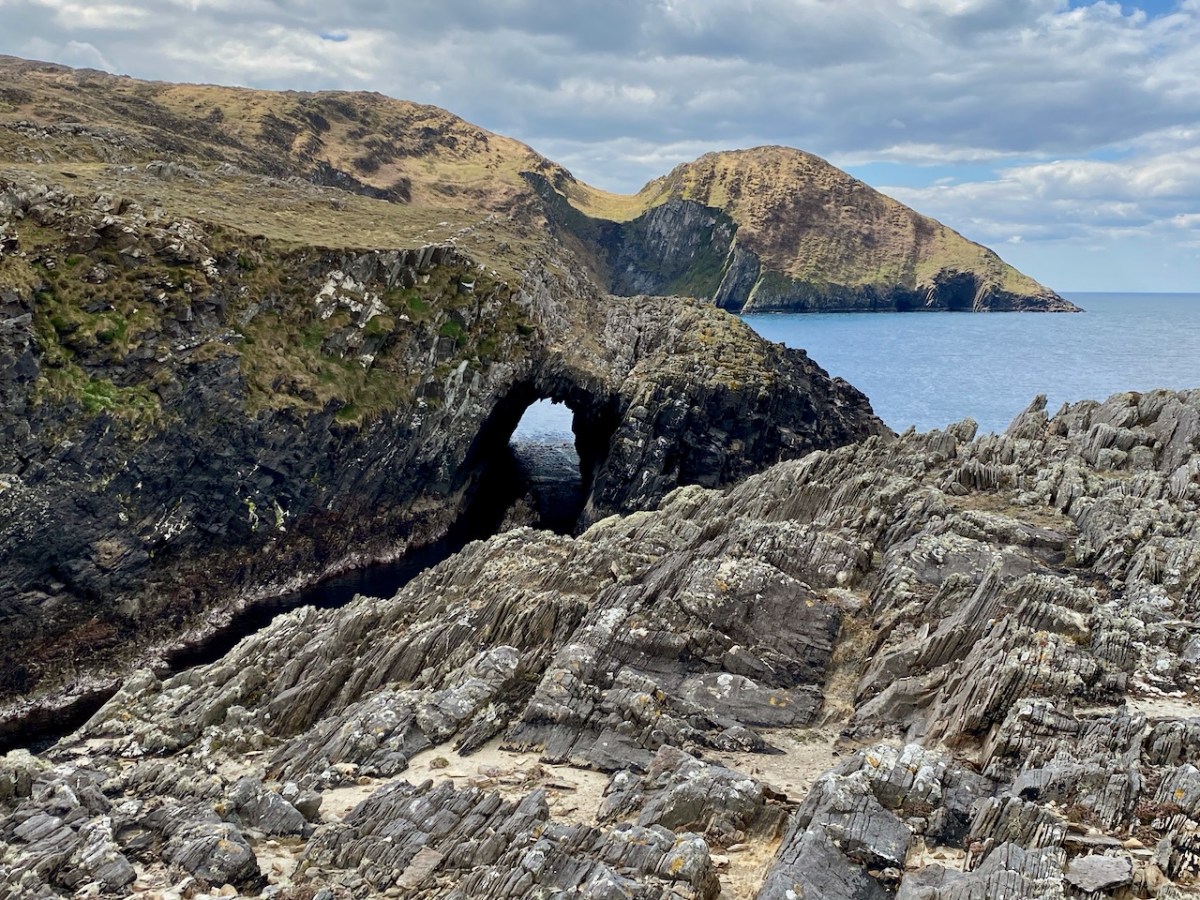
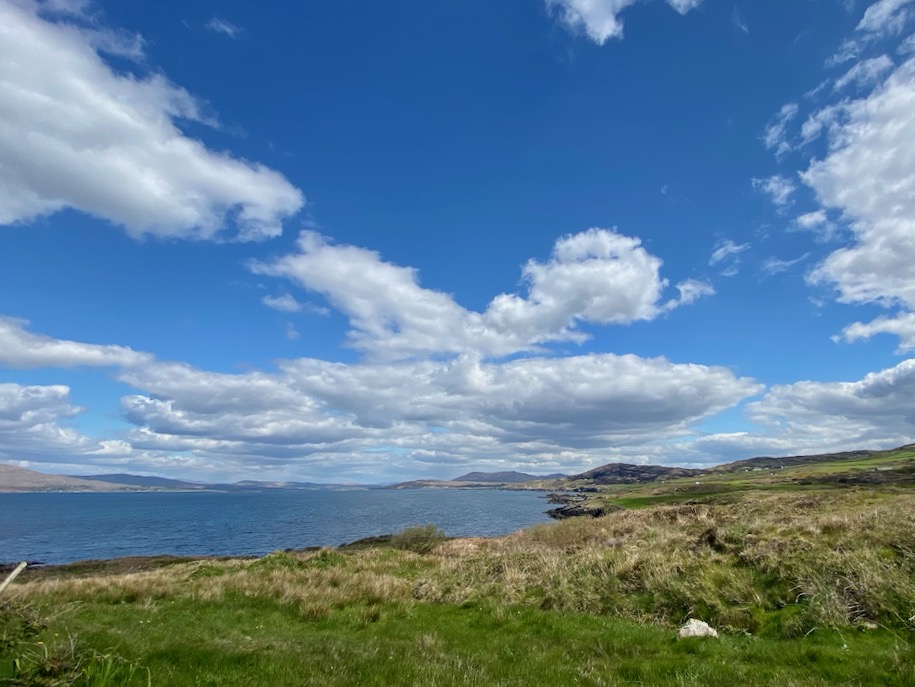
There’s a small sea arch of more recent vintage on the east end of The Meallán, near the lazy beds – you can see the land has collapsed relatively recently. And yet a third on the mainland just west of the Meallán – equally as spectacular as the one we crossed over (above, and the lead photograph). From all points there are amazing views up and down Dunmanus Bay and across to the Sheeps Head.
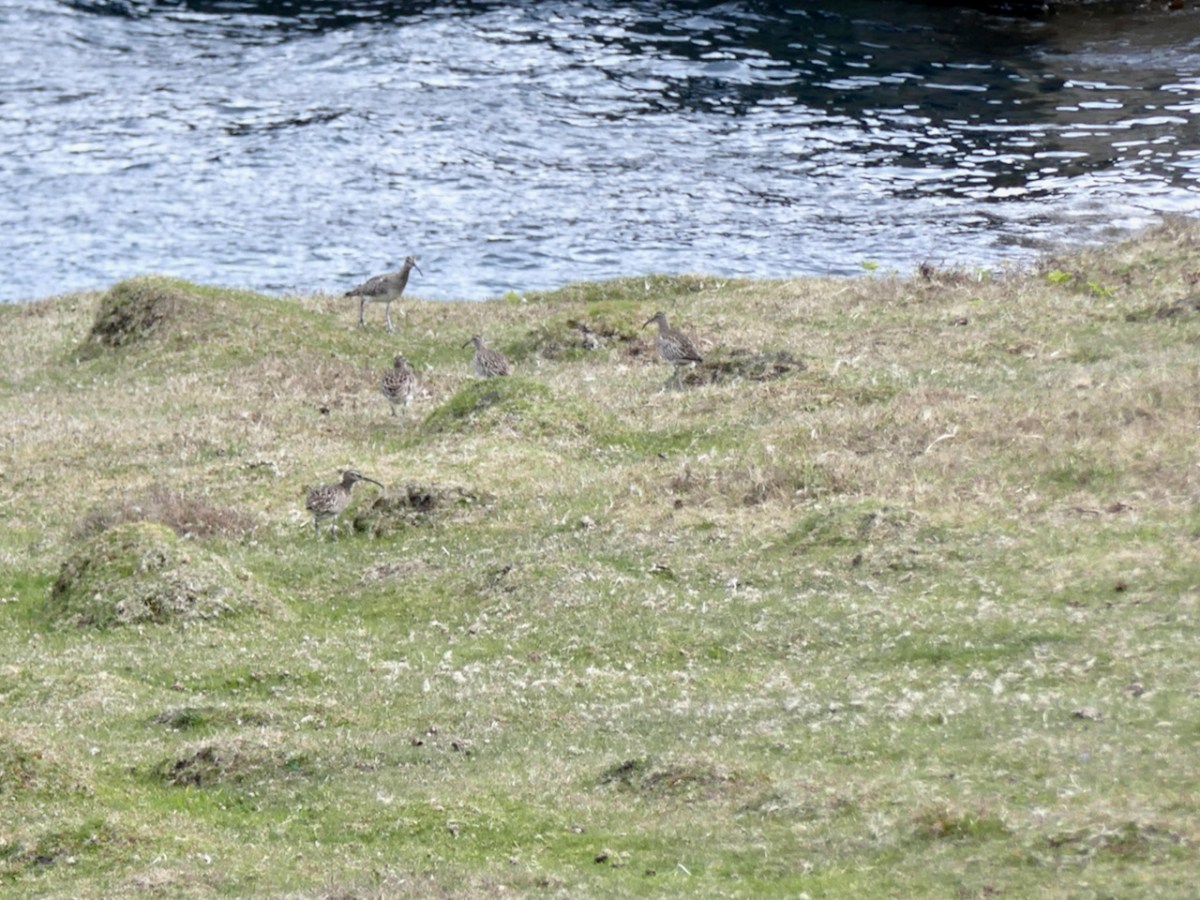
But perhaps the most special sight of all was Con’s discovery of a nest with three eggs. Una had spotted what we thought were curlews – they had flown up right in front of her as she rounded a ridge, and we reckoned there were six of them. They’re well disguised in the picture below. But – read on. . .
Ireland has lost over 80% of our curlew population since the 1970s and it felt apt, somehow, on this wild and uninhabited corner of the Mizen that they were trying to hang on. Una reported the sighting, but the expert opinion turned out to be that what we saw was actually the nest of an oystercatcher or whimbrel – much more common and not endangered at all. The ‘curlews’ in the photo above are also more likely to be whimbrels – curlews don’t flock in May but the similar whimbrels do. Disappointing!
The Meallán can’t be more than a few acres – but what a place!
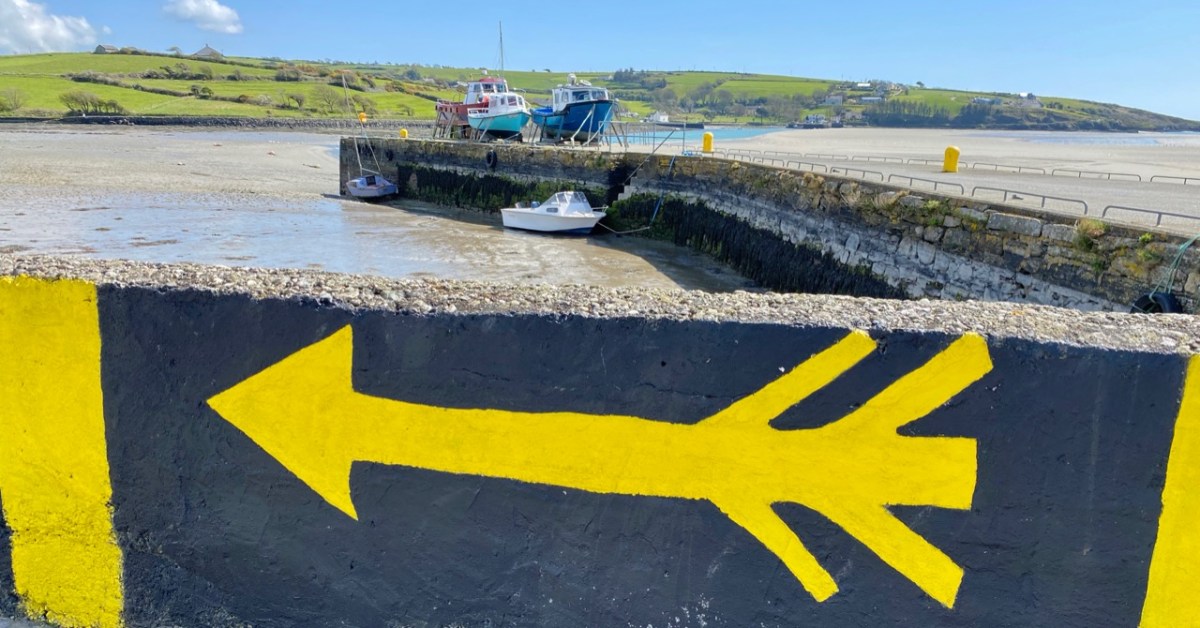
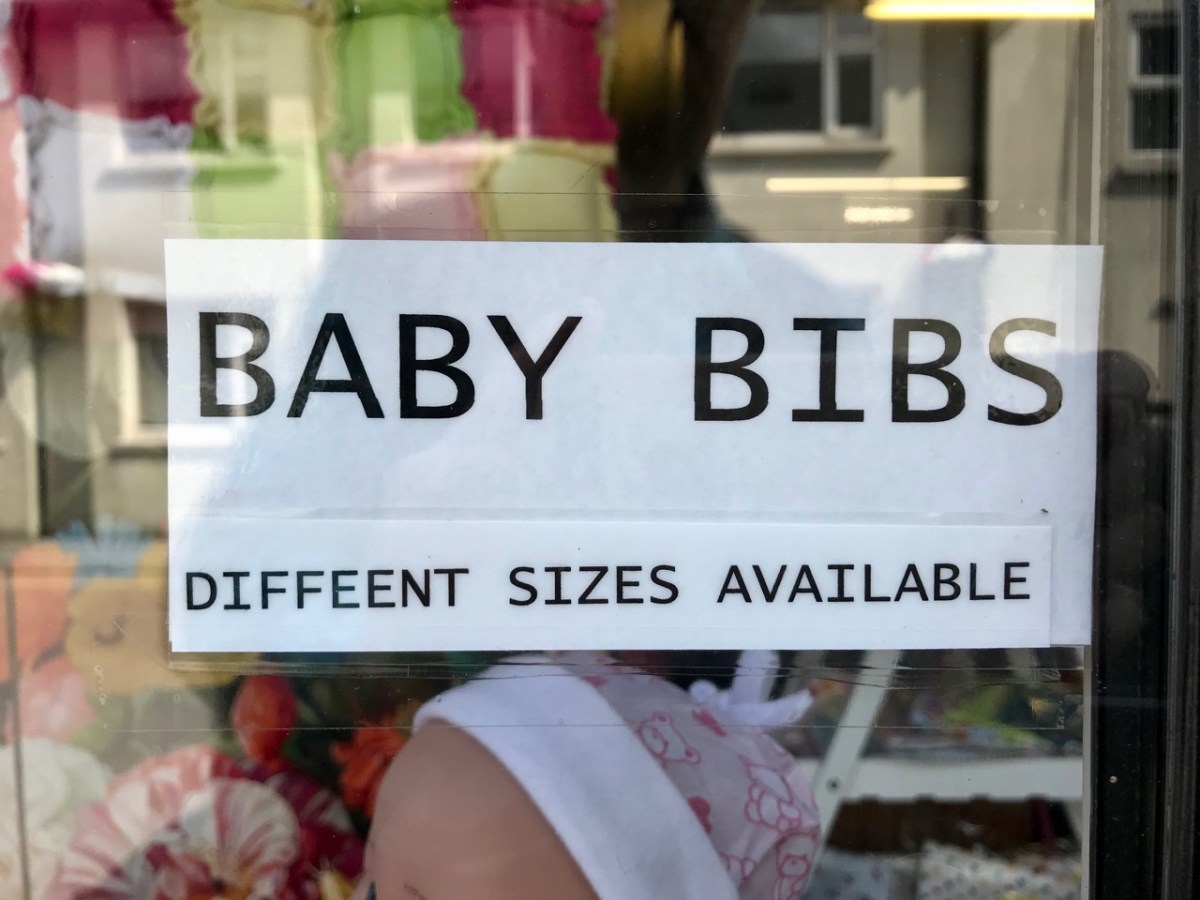
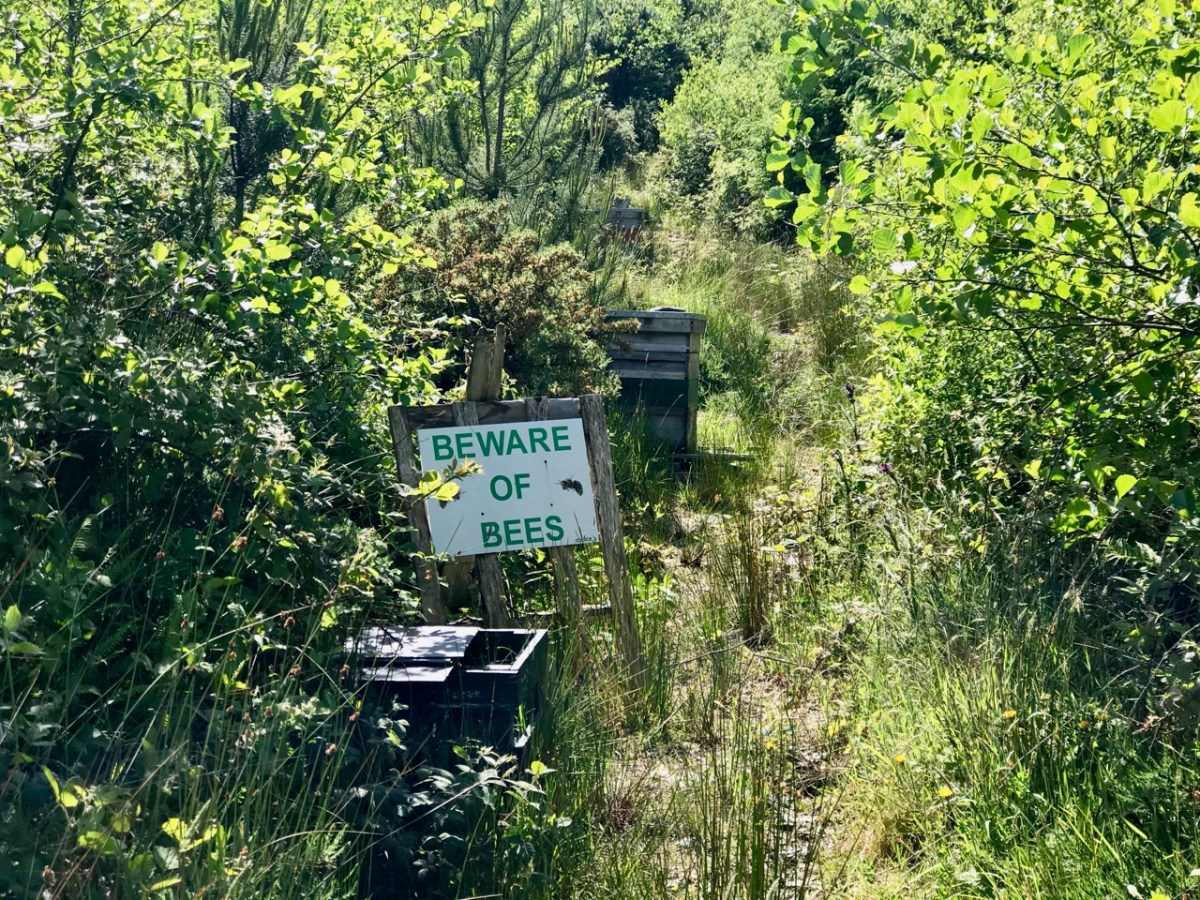
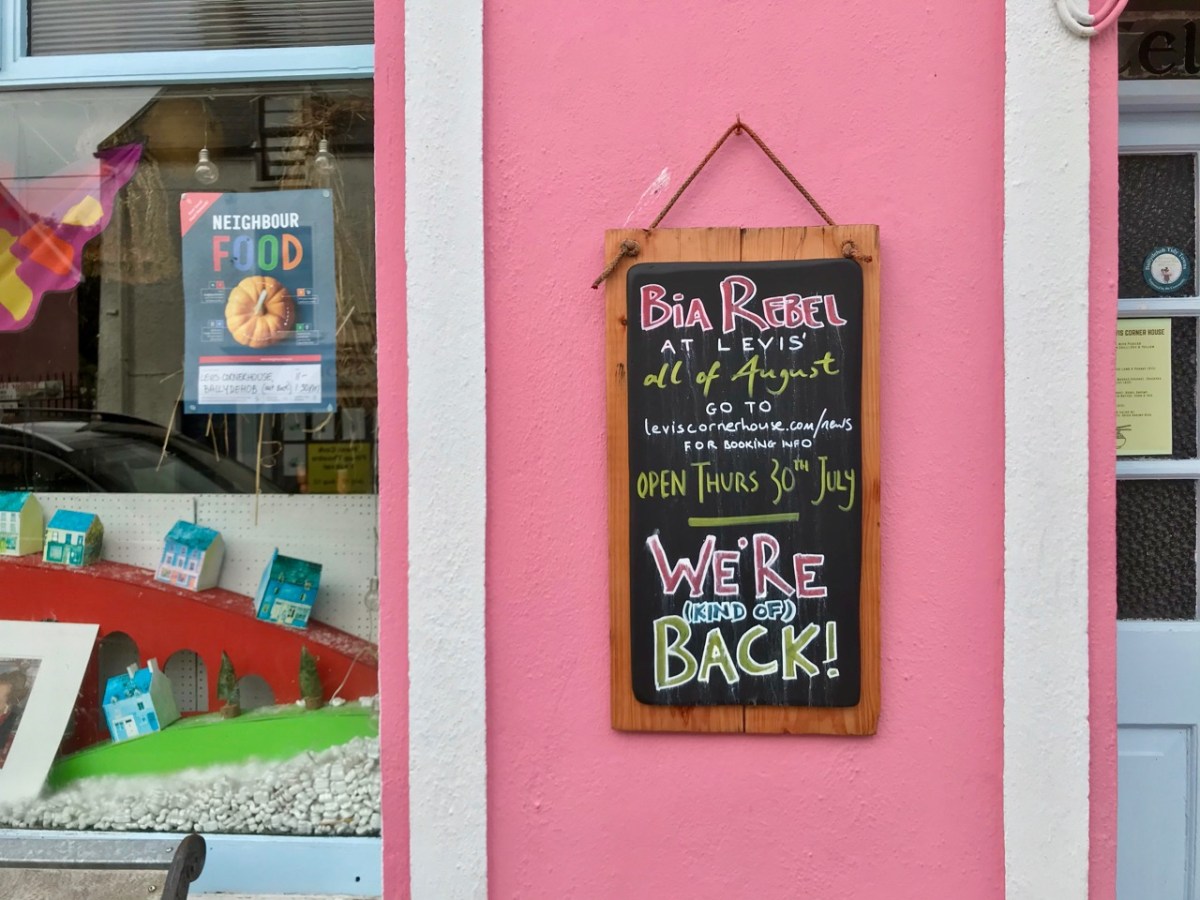
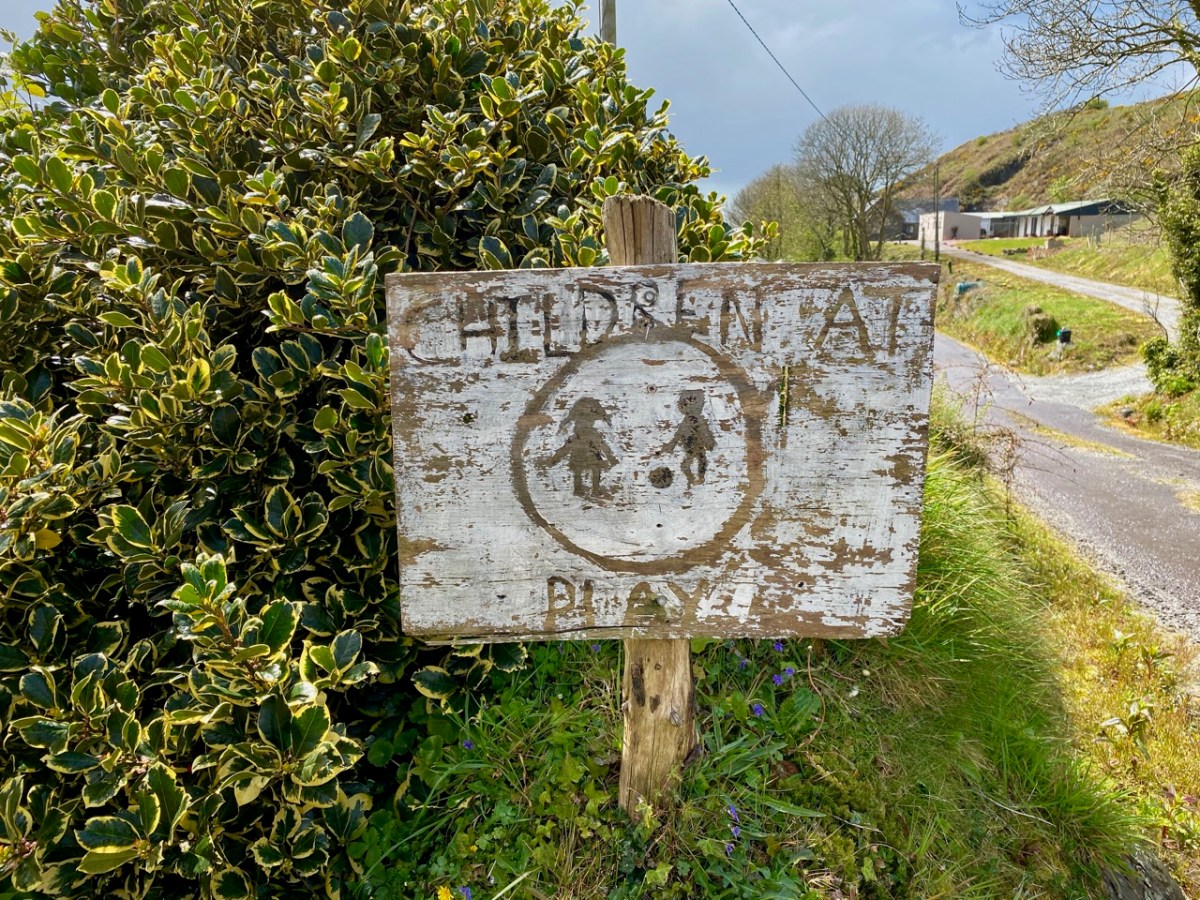
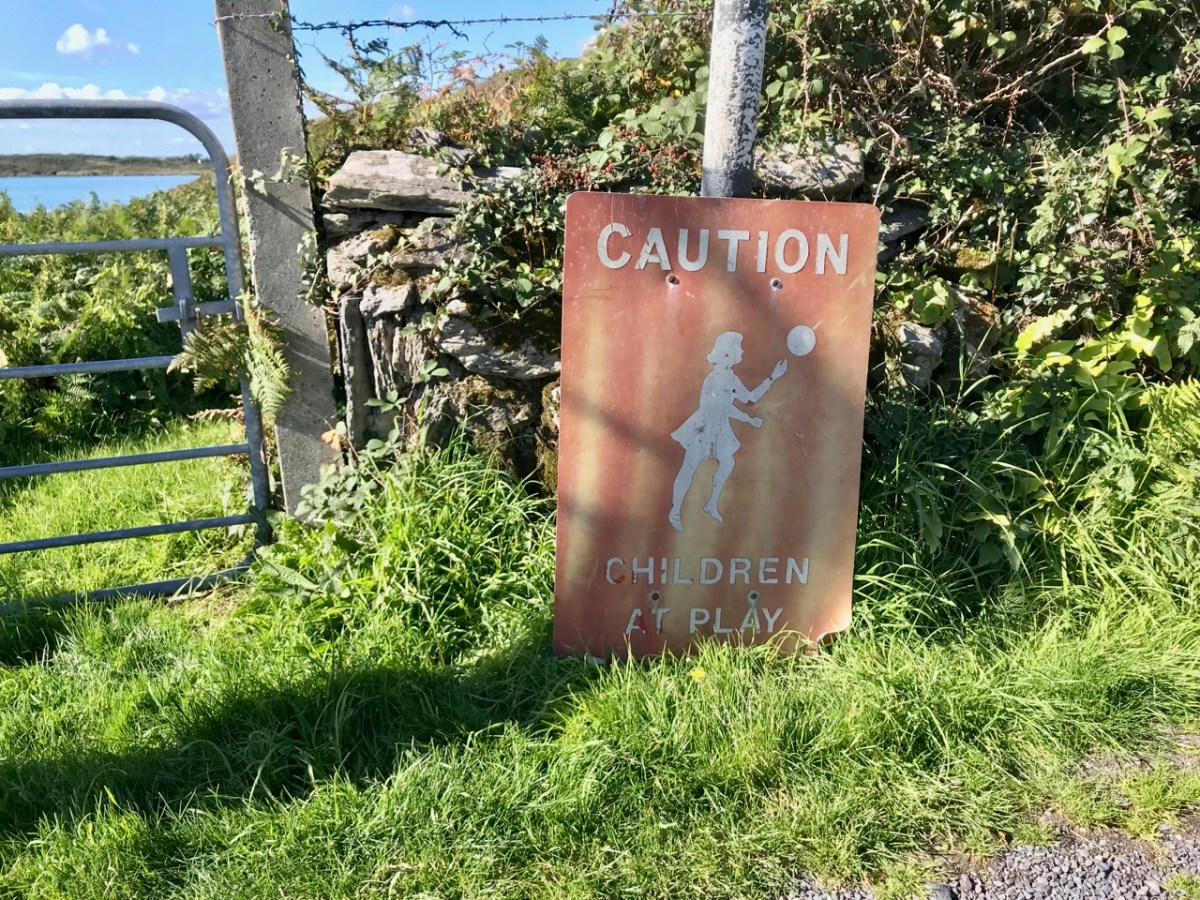
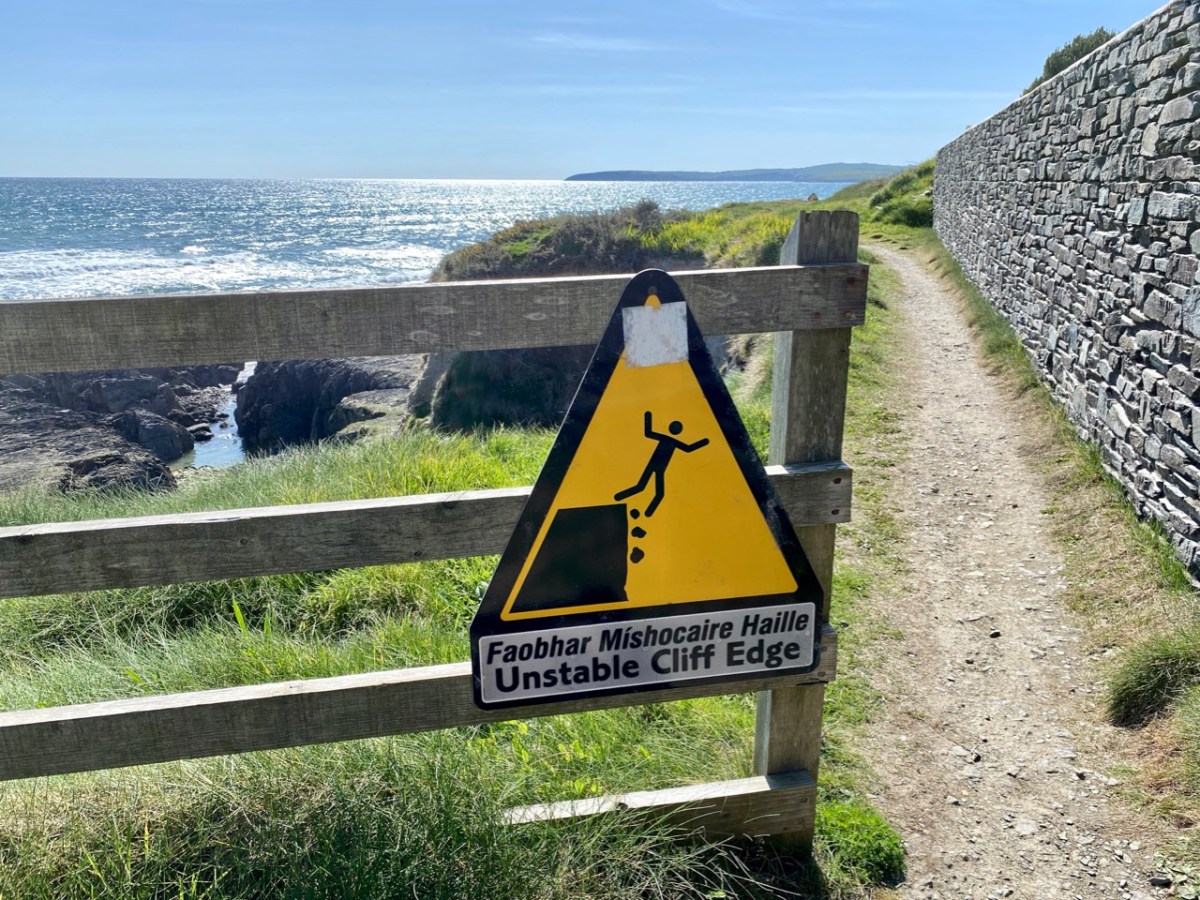
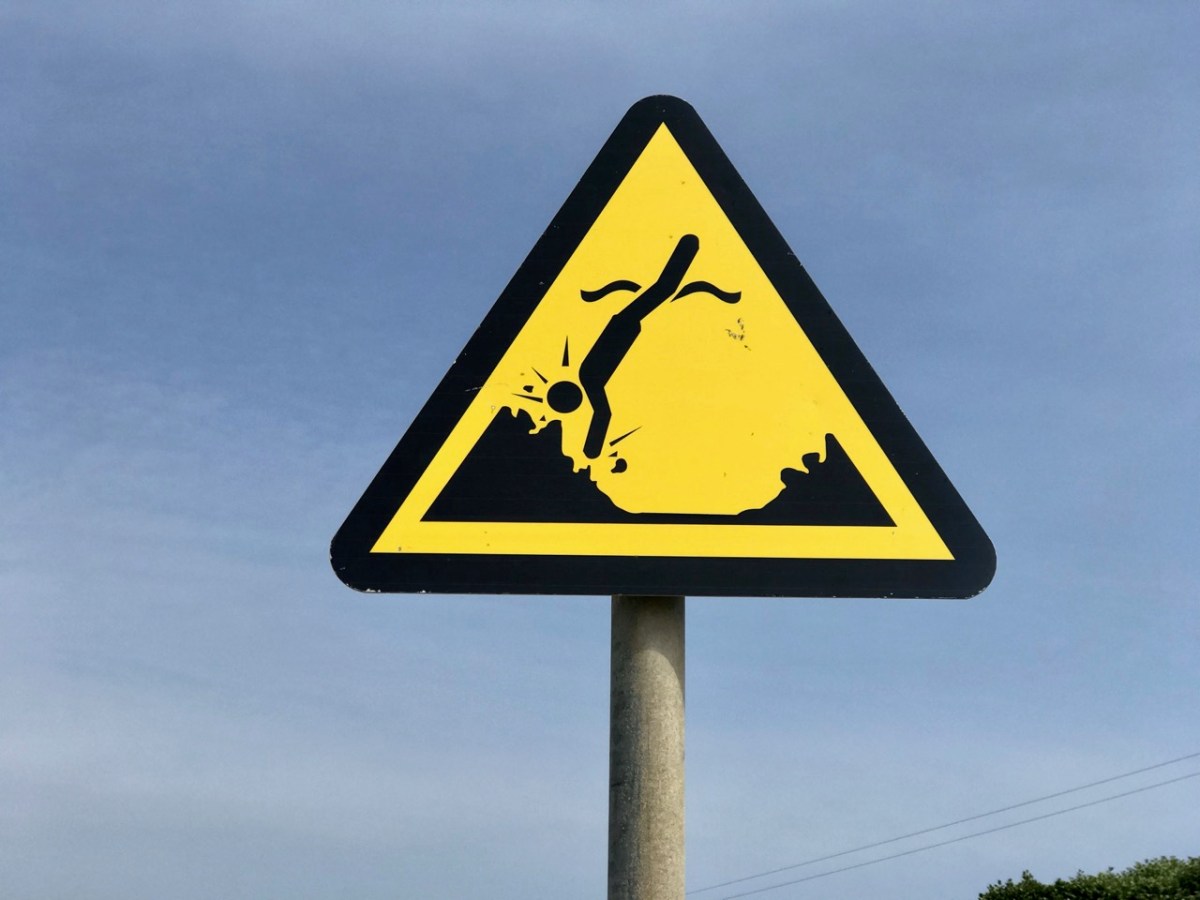
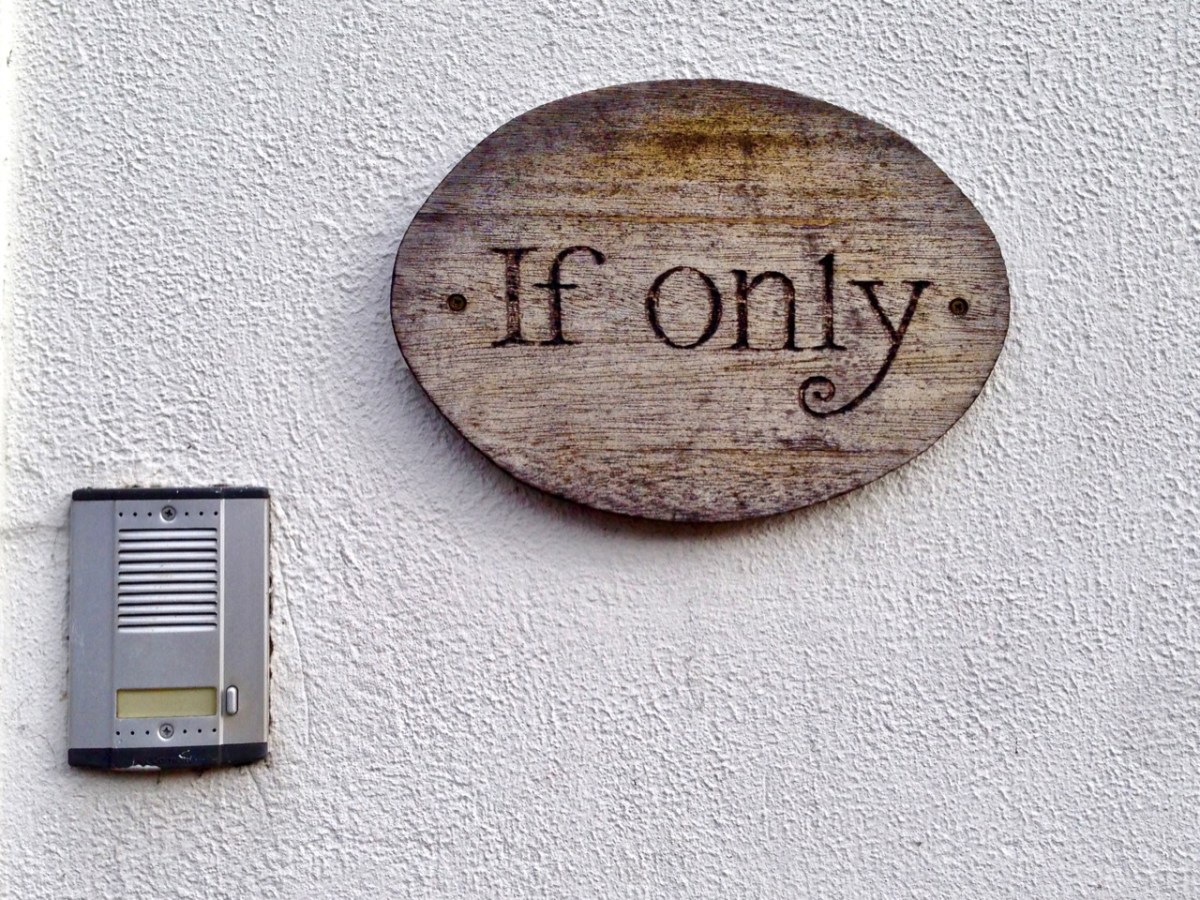
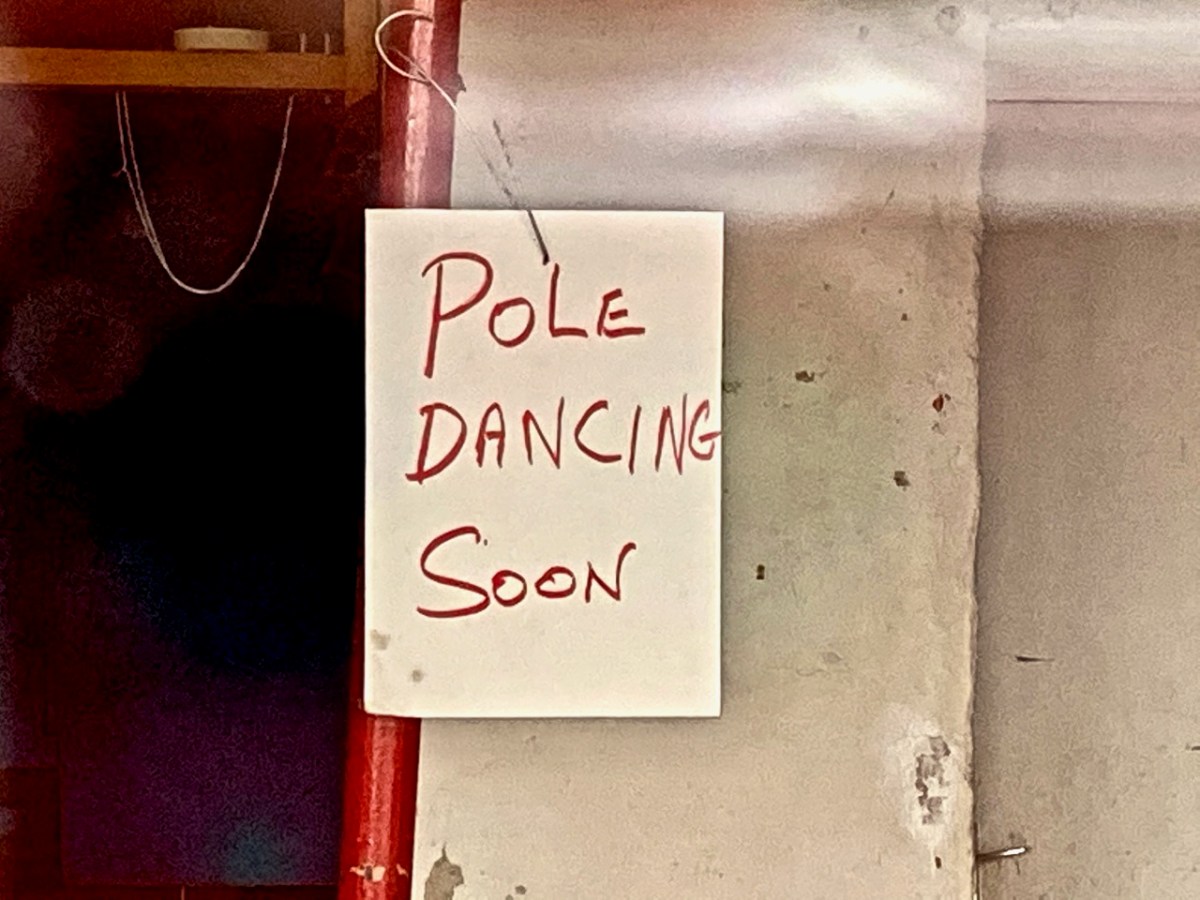
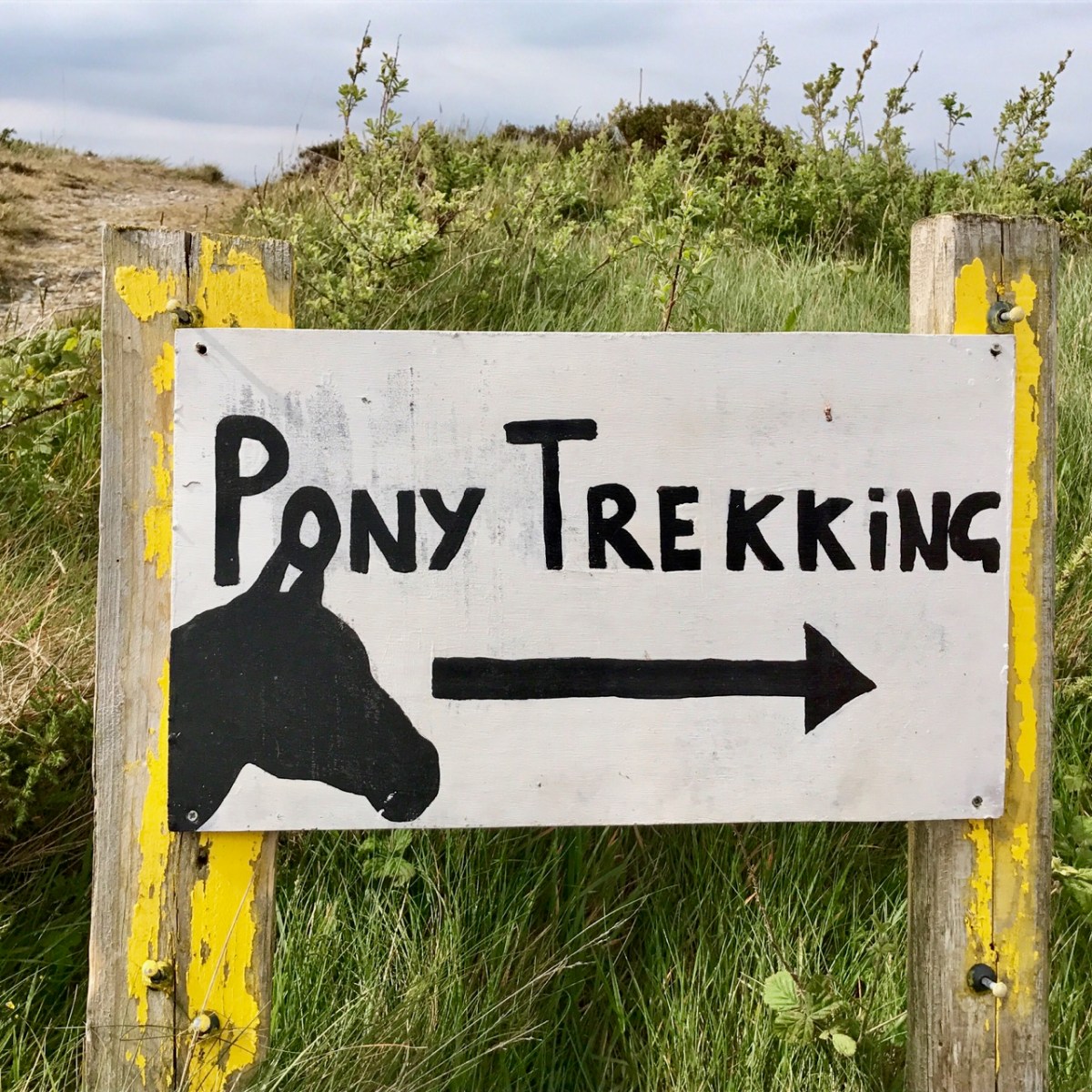
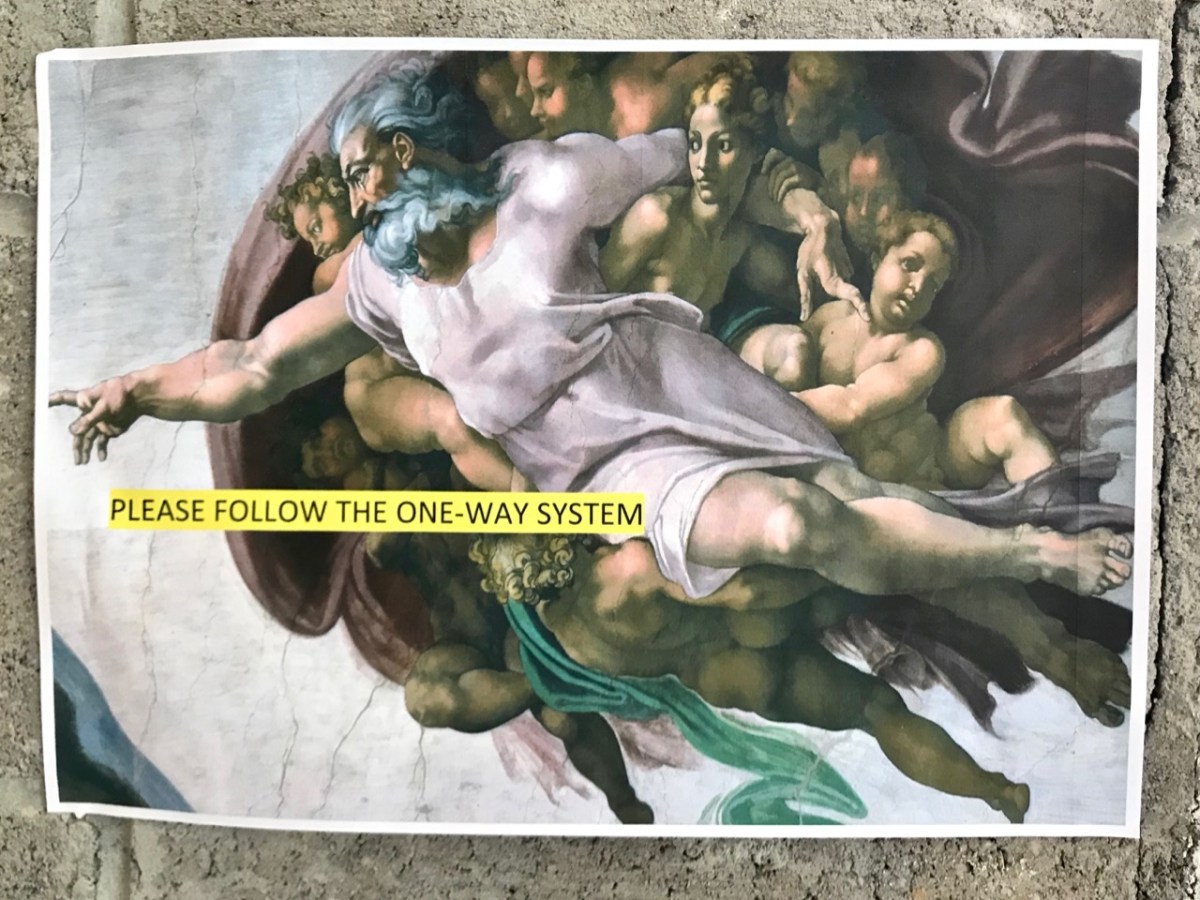
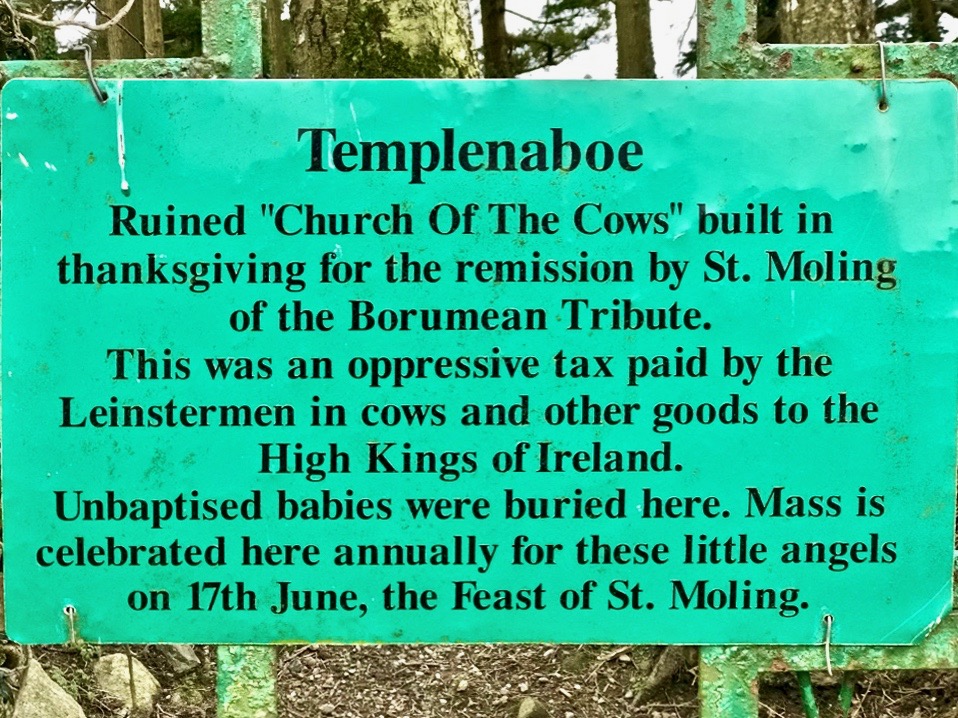
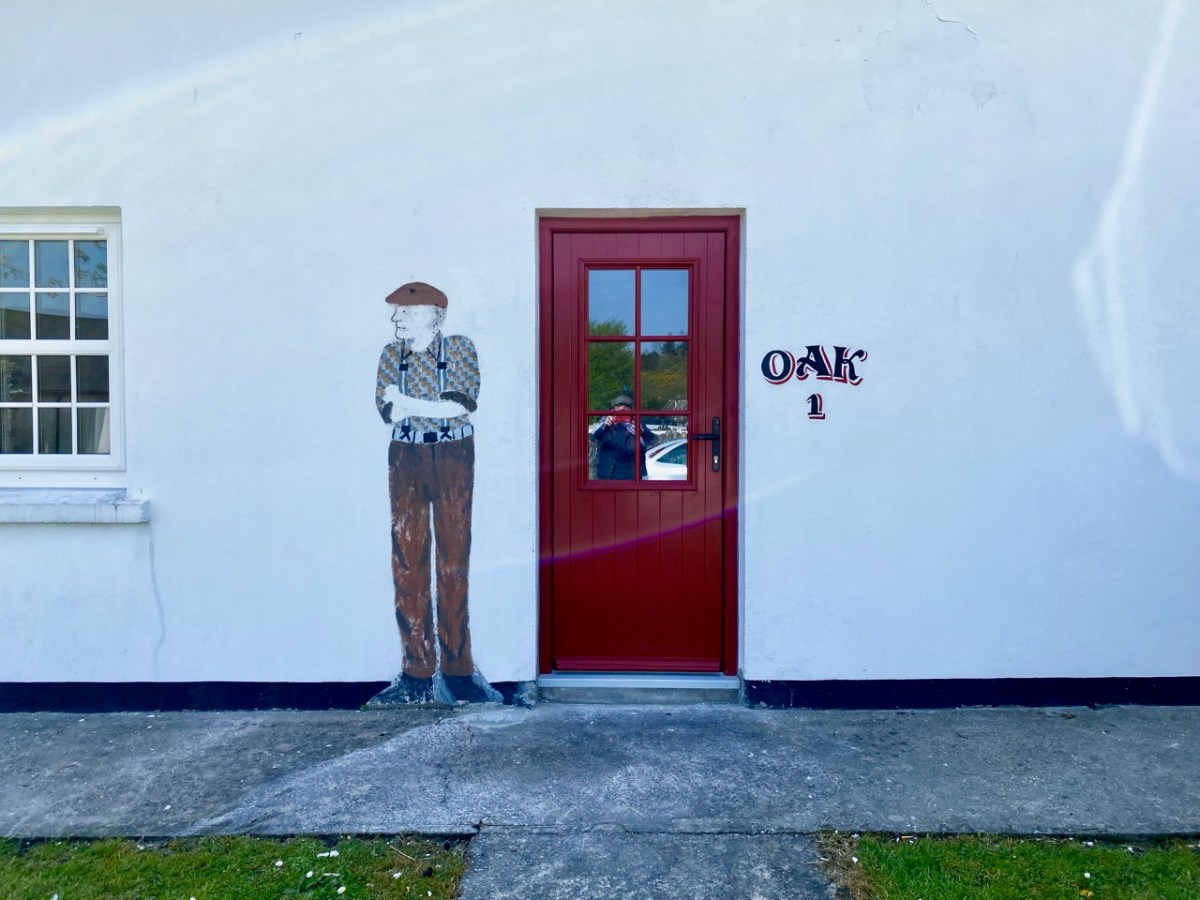
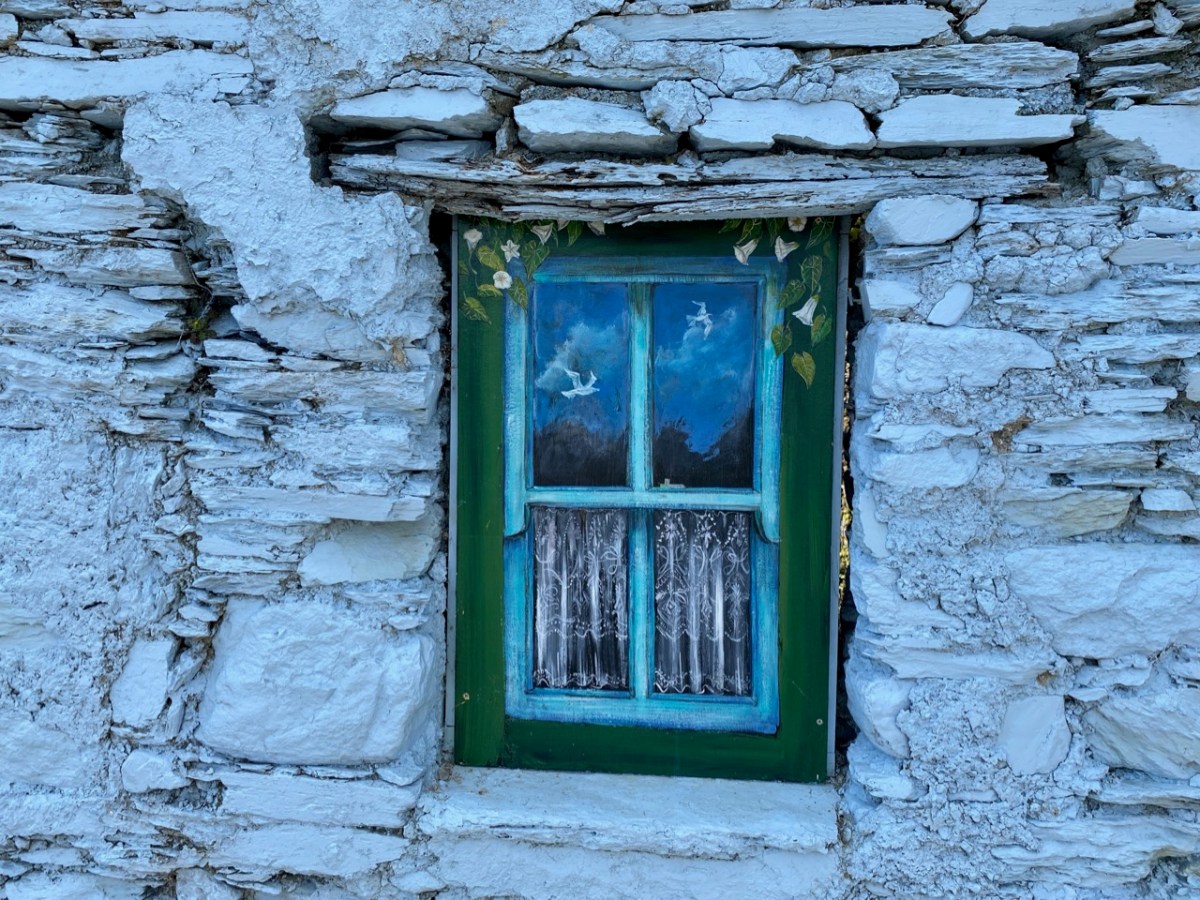
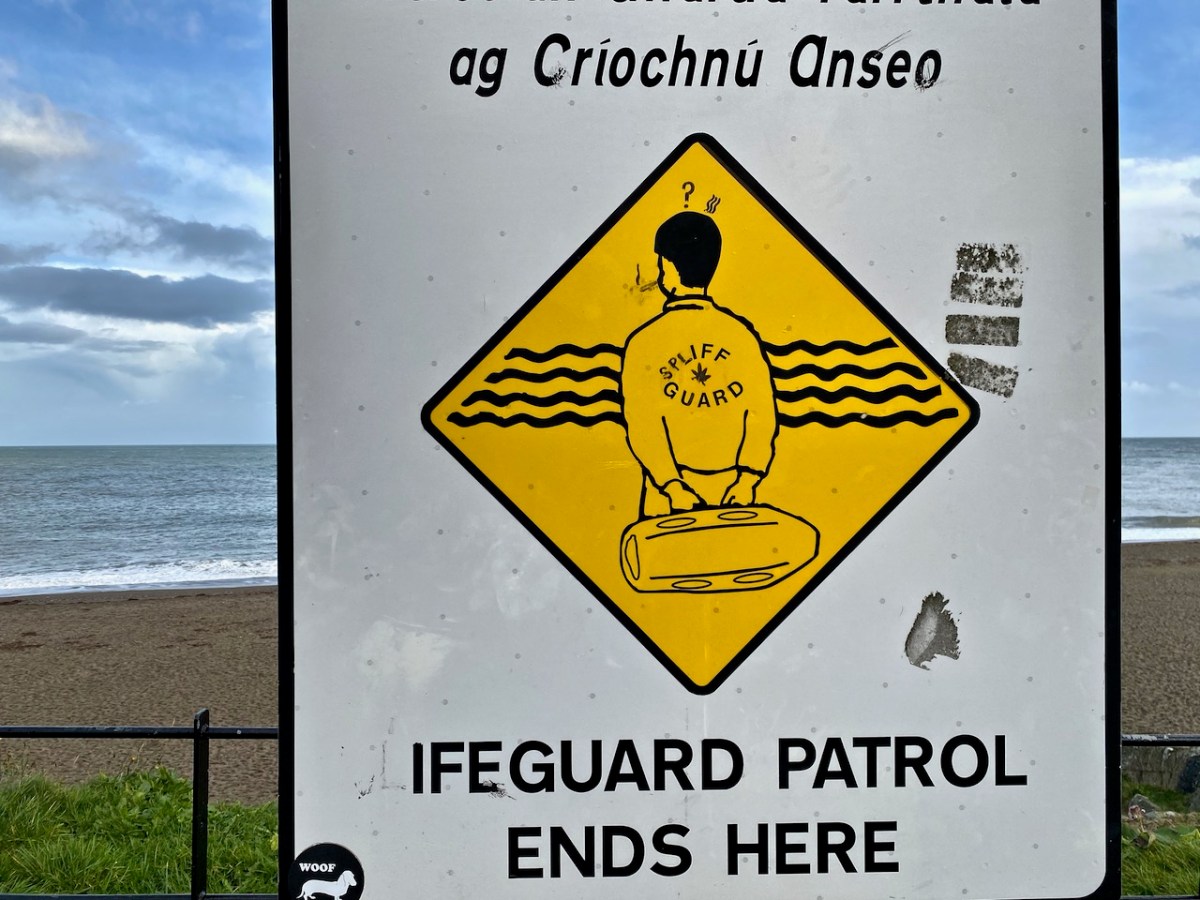
It’s been a while since I put up a post about ‘signs’ – I’m an avid collector of Irish ones. They have been a regular feature of Roaringwater Journal, but the last was 18 months ago (see it here). Wherever I go, I’m on the lookout: sometimes it’s just the little things that catch the eye – perhaps a spelling mistake – often it’s the sheer exuberance, like the one above guiding you around a corner at Ring.
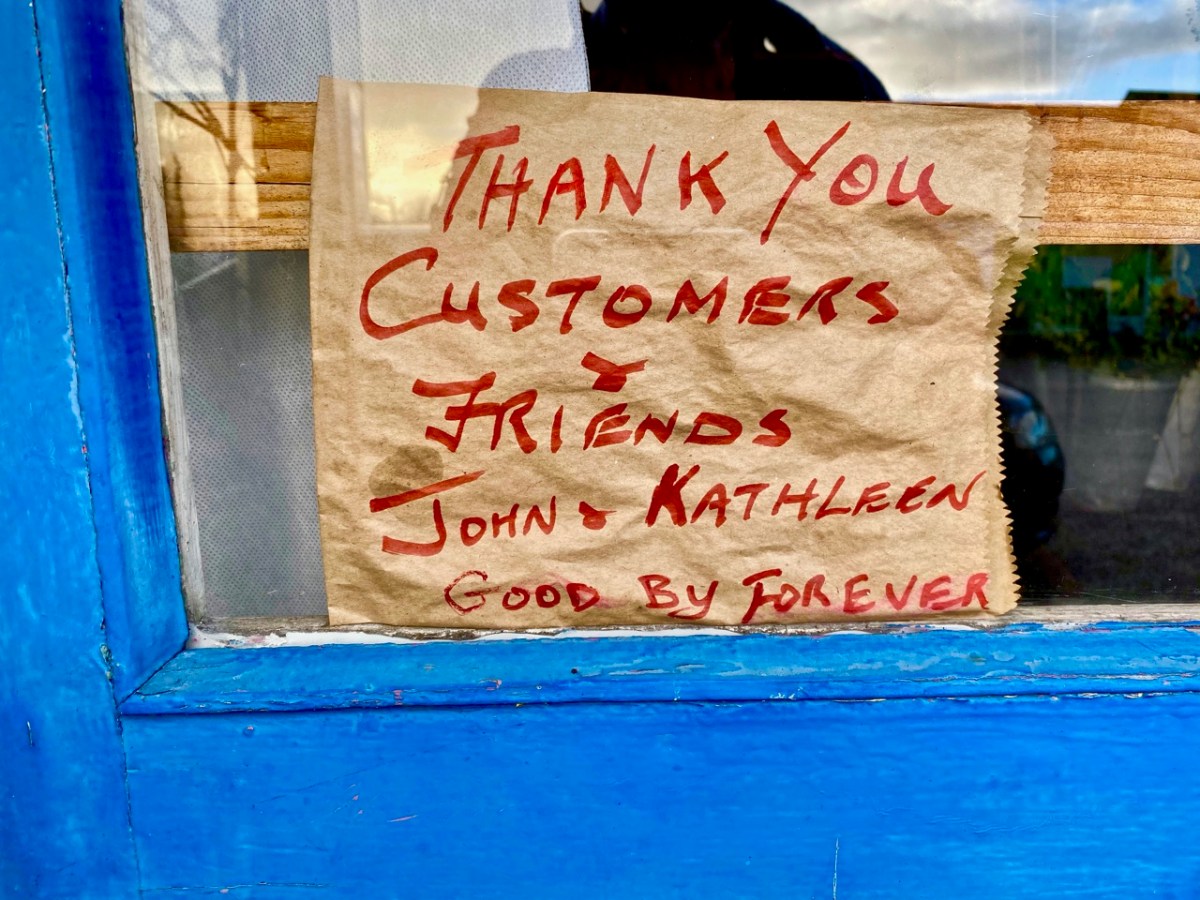
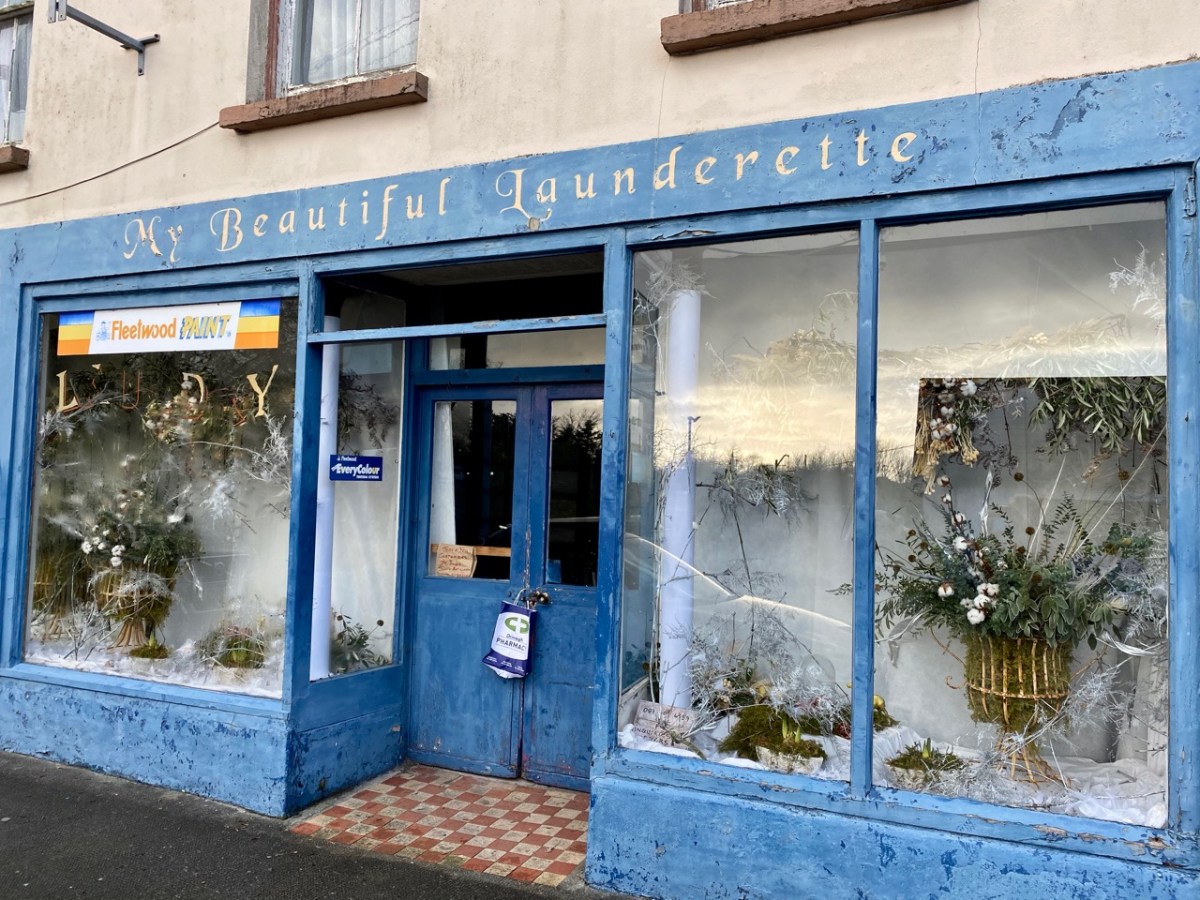
Very often there is intentional humour; occasionally there’s a poignancy – especially when the sign is faded and you know it has long lost its purpose. But there can also be a sense of history. Here’s one from Ballydehob earlier this year – My Beautiful Launderette, which provided us with clean bedding for a decade (and paint, all manner of screws, hammers and nails), finally closed on the retirement of Kathleen and John: we can only wish them well. The iconic shopfront has just this week been painted over. An institution, now, which is only a good memory.
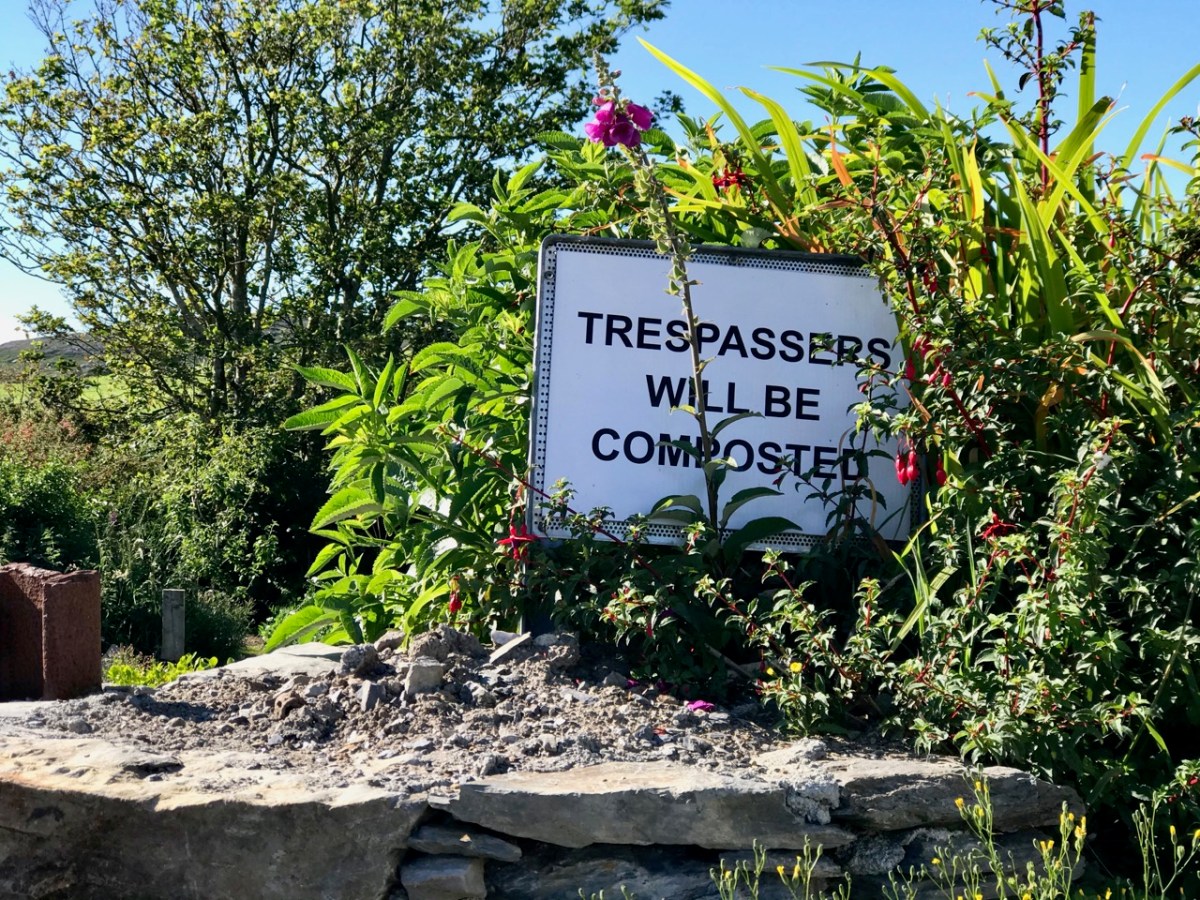
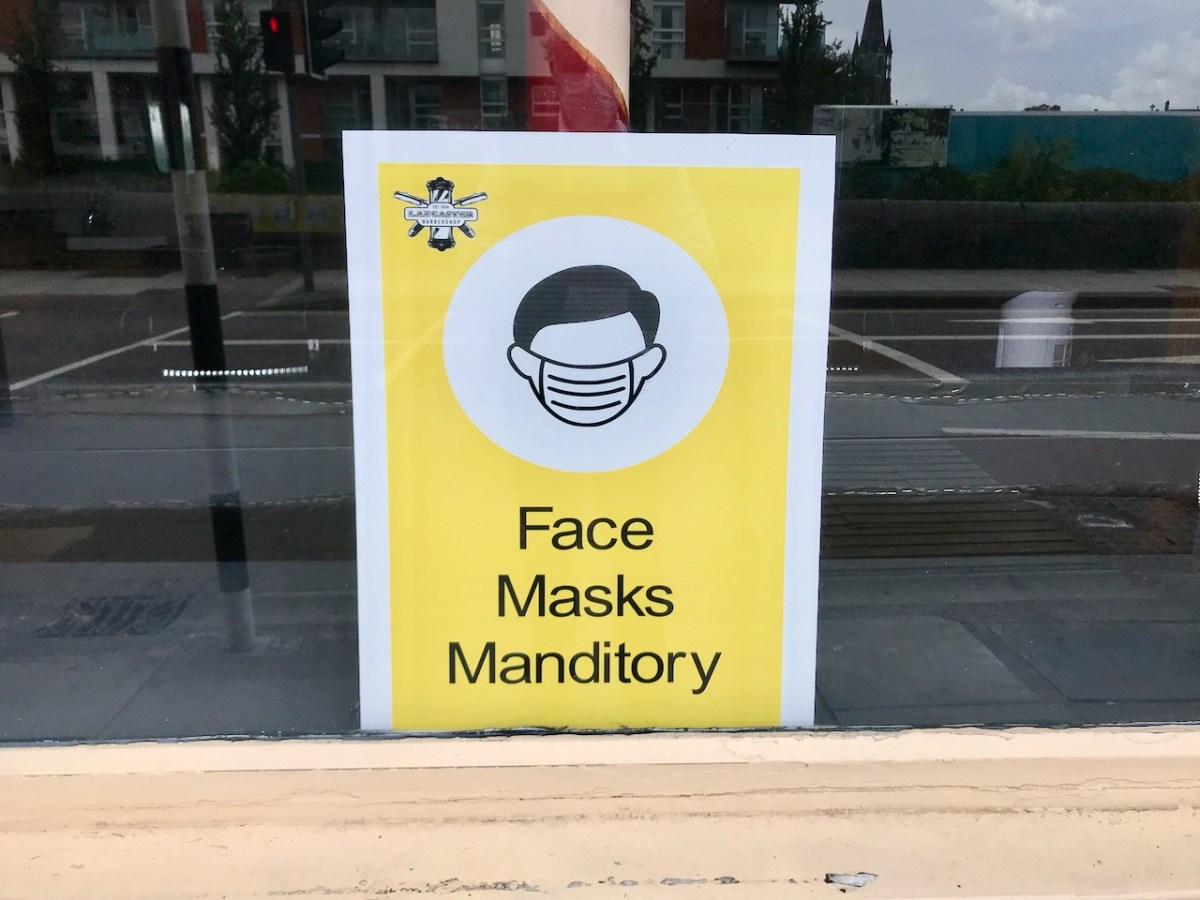
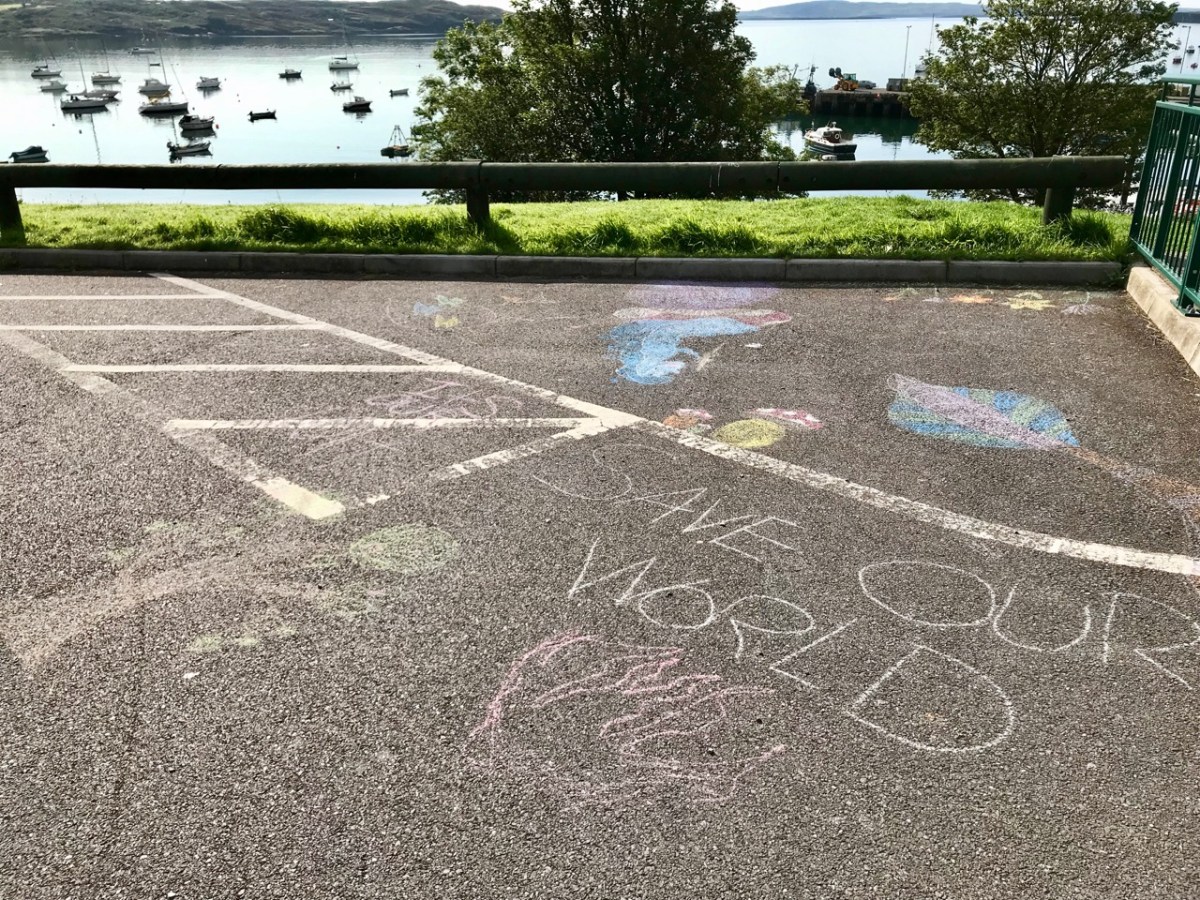
Most of the following signs speak for themselves. We will be familiar, of course, with the directives called for by the Covid19 pandemic. Here’s a variation, followed by a reminder of hopeful days back in the summer of 2020, and a message.
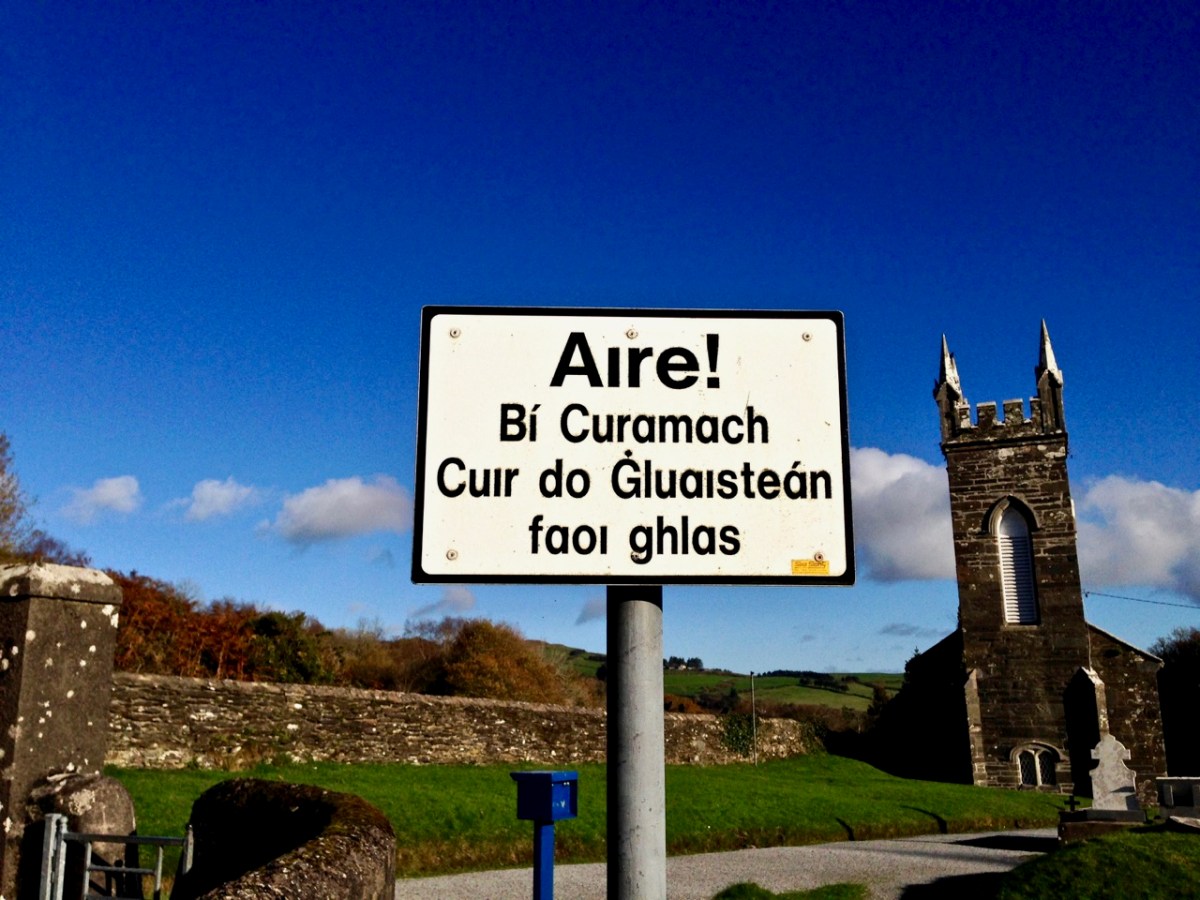
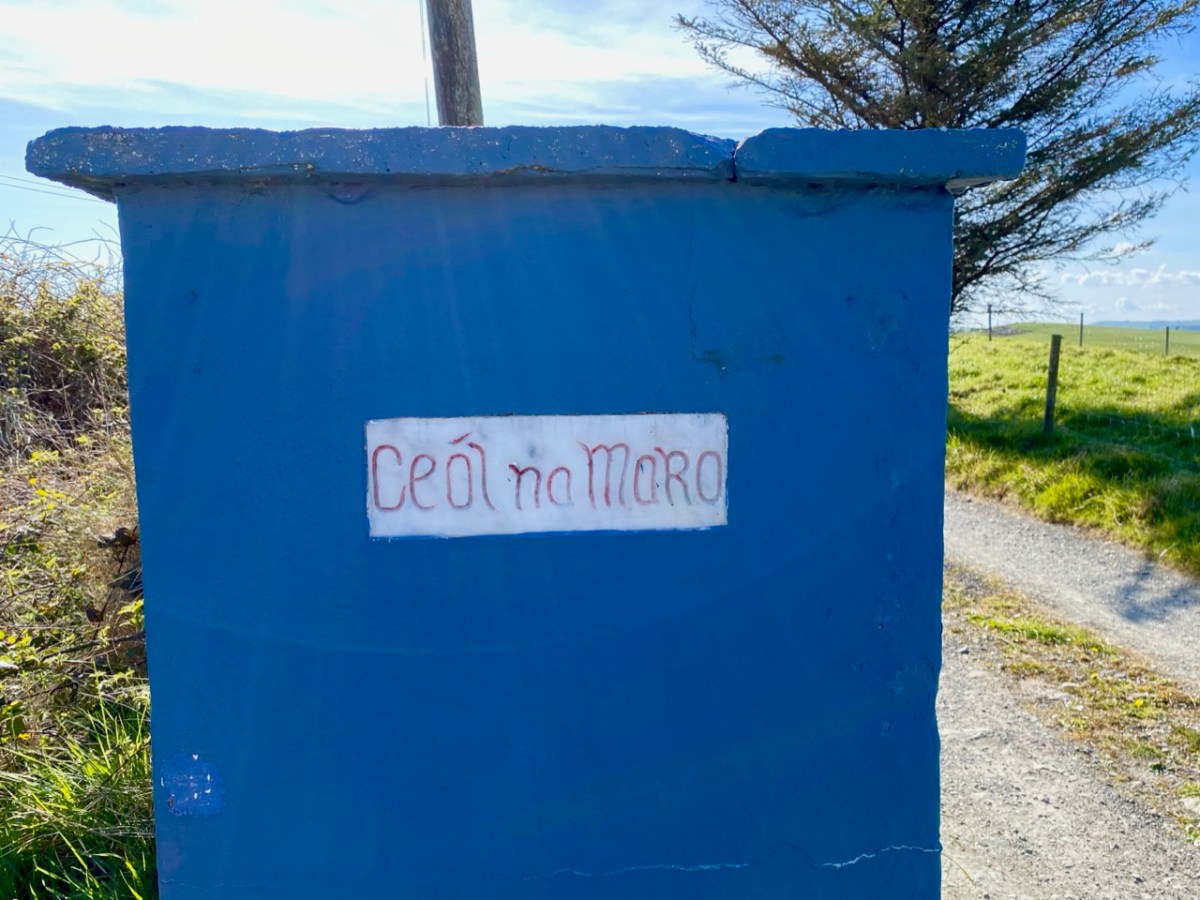
Most of the signs here come from West Cork; you’ll find others in past posts from all over Ireland. Official directives here have to be in Irish and English, except in Gaeltacht areas (where Irish is the first language). There, things can be quite disconcerting at times.
Even though I have taken some rudimentary lessons in the language, this one (above, in Ballyvourney) had me puzzled. But it’s simply telling you to be careful to lock your car.
I suppose if you missed either of the above signs, it might just be too late! If only you had noticed…
It means ‘Song (or Music) of the Sea’. I couldn’t resist recording this romantic house name, and wonder what view the occupants have? There is no shortage of information on Ireland’s wonderful history – an example below.
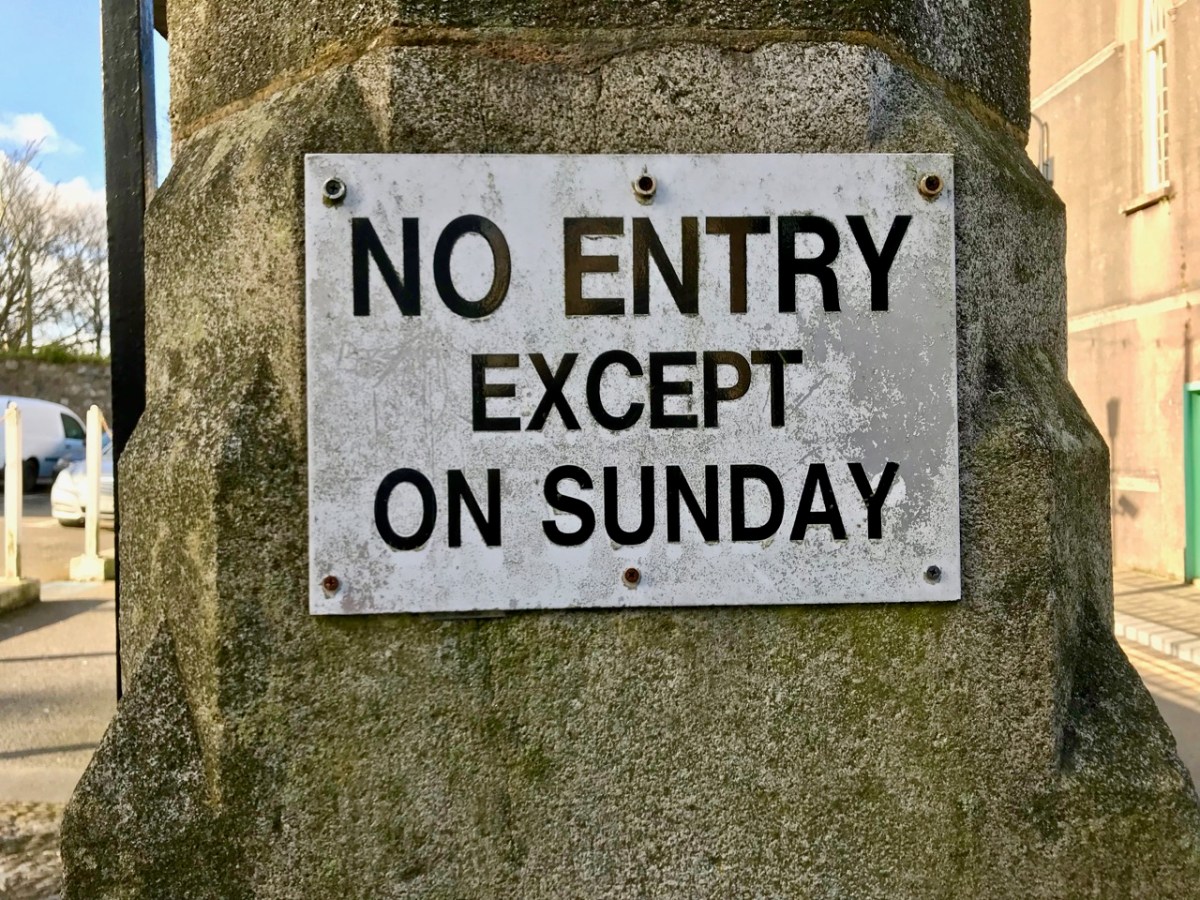
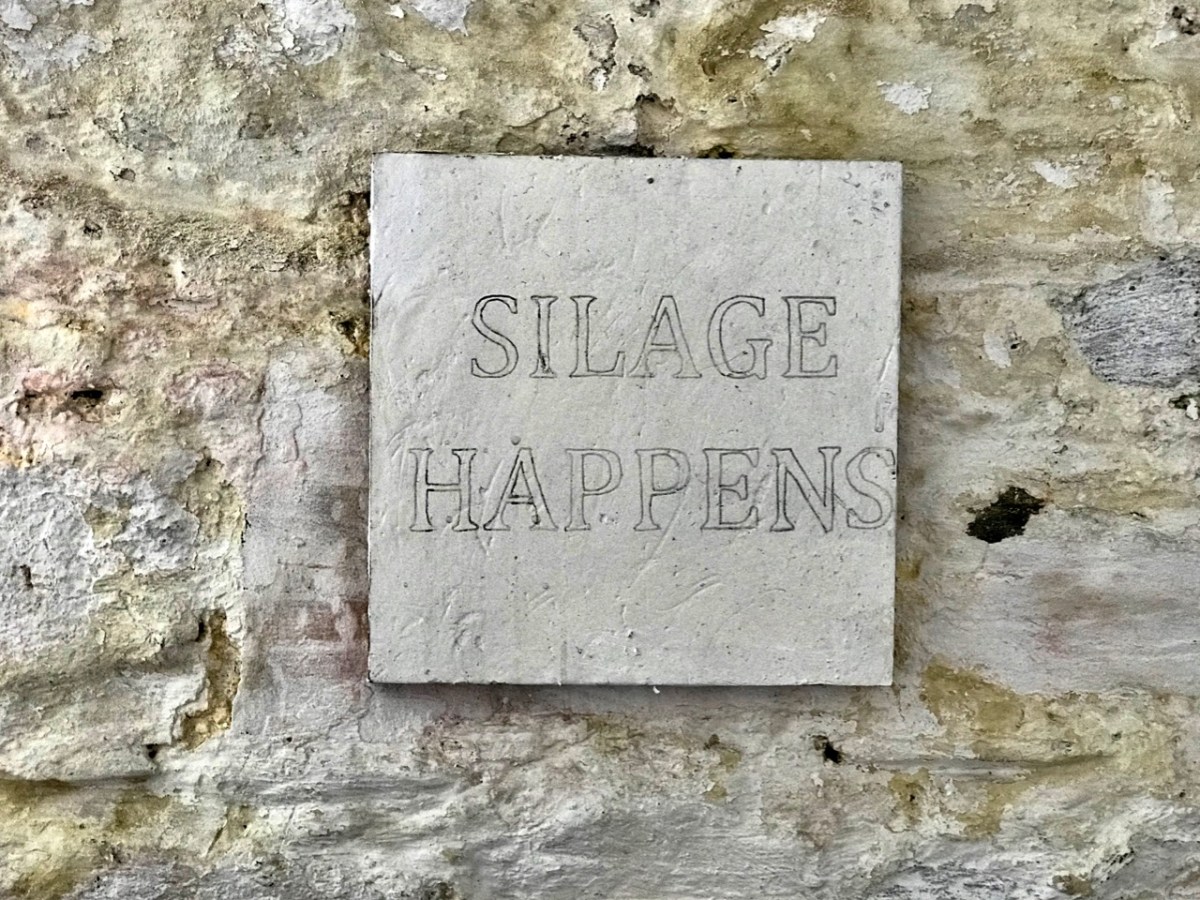
I can’t help wondering – why?
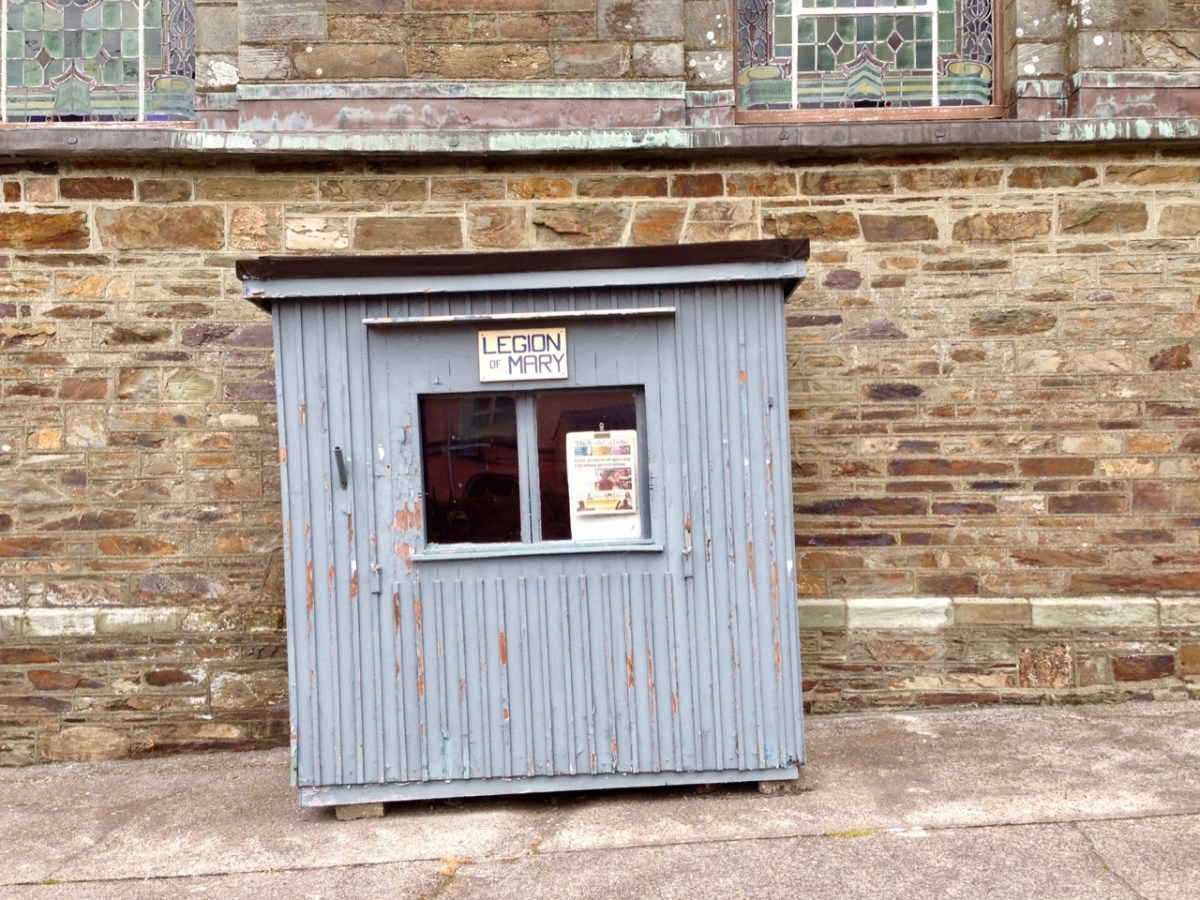
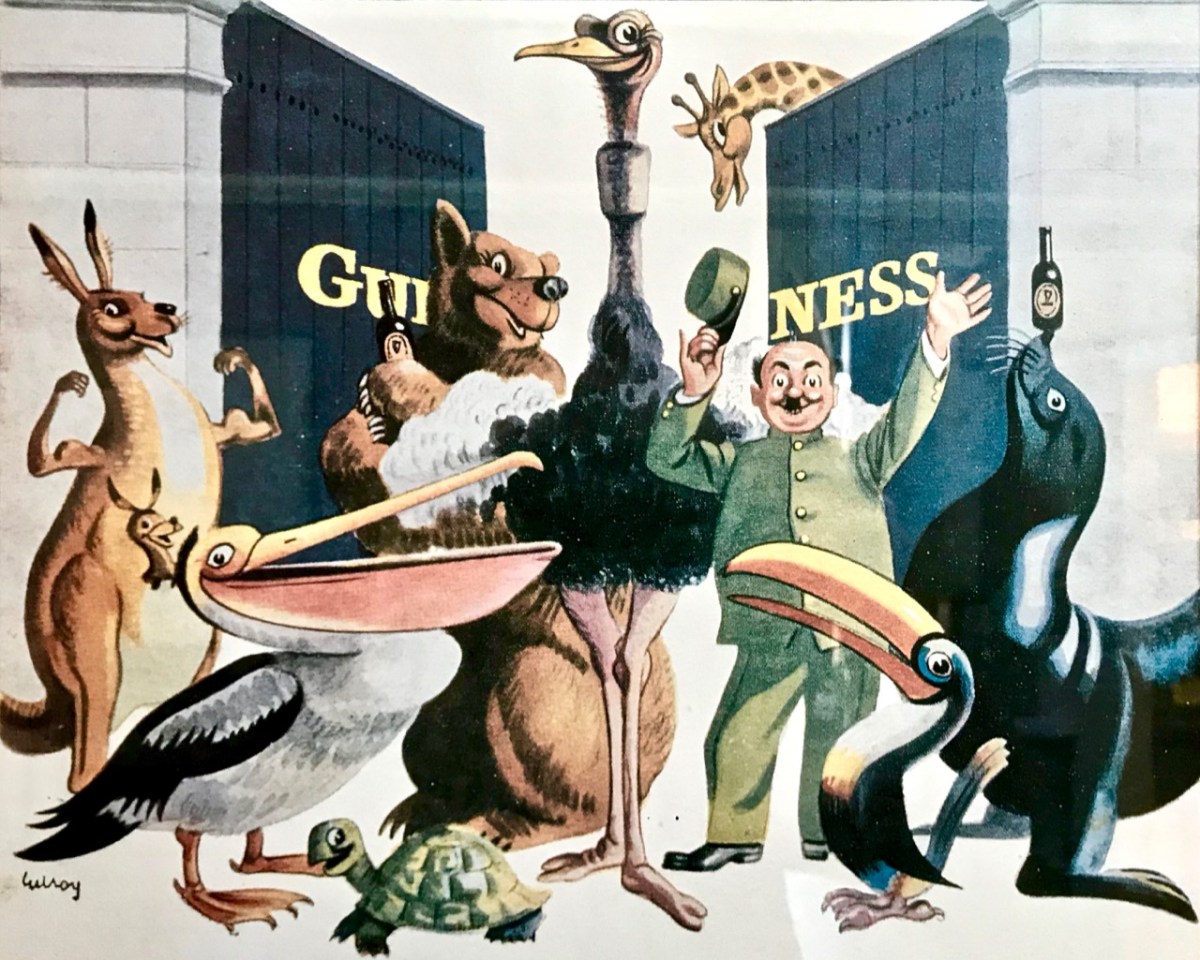
That’s not you that’s gone askew – it’s Mary’s kiosk on a bit of a slope! I’m always attracted by Guinness posters (there are plenty of old ones surviving here) – I learned to read from them in my younger days (below).
That’s quite enough for one day. Keep a lookout for yourself – and alert me to any good ones you encounter in your own travels!
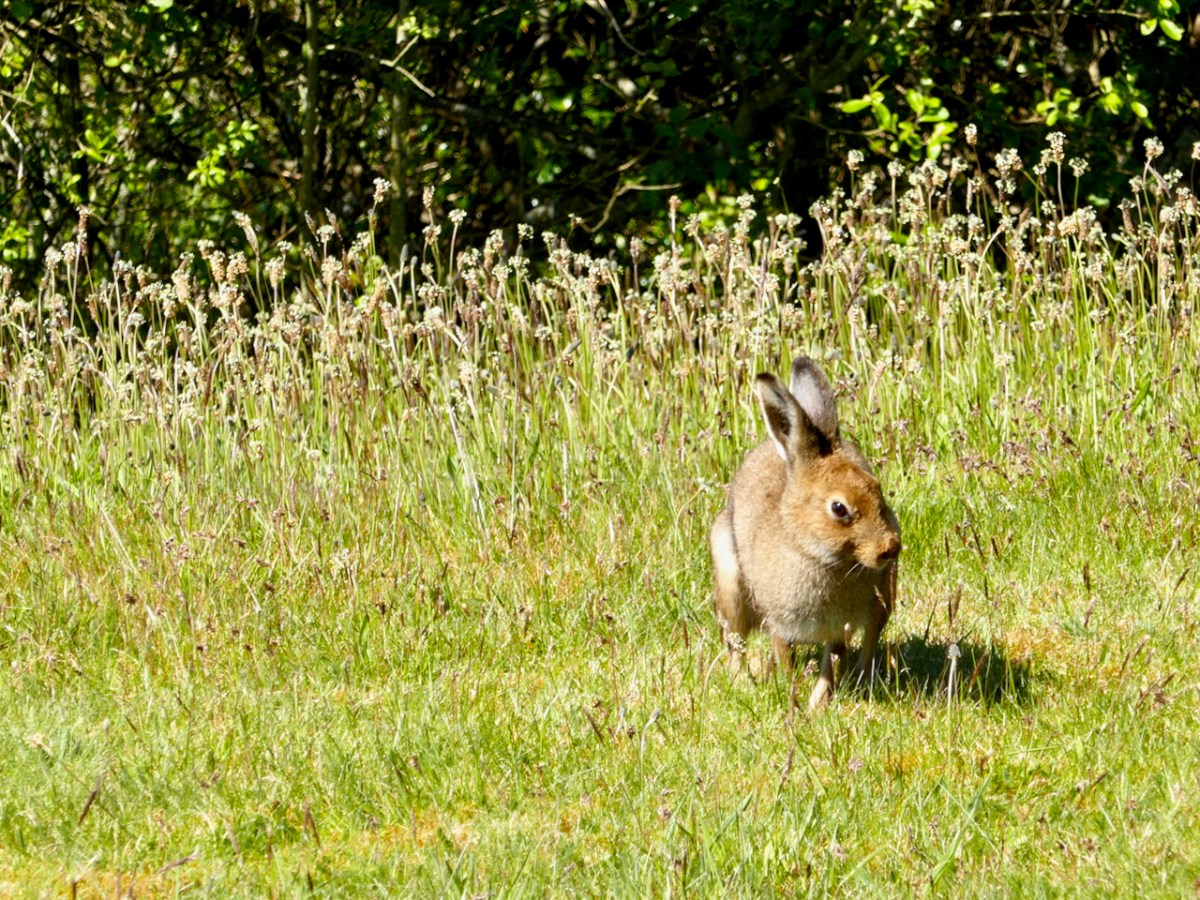
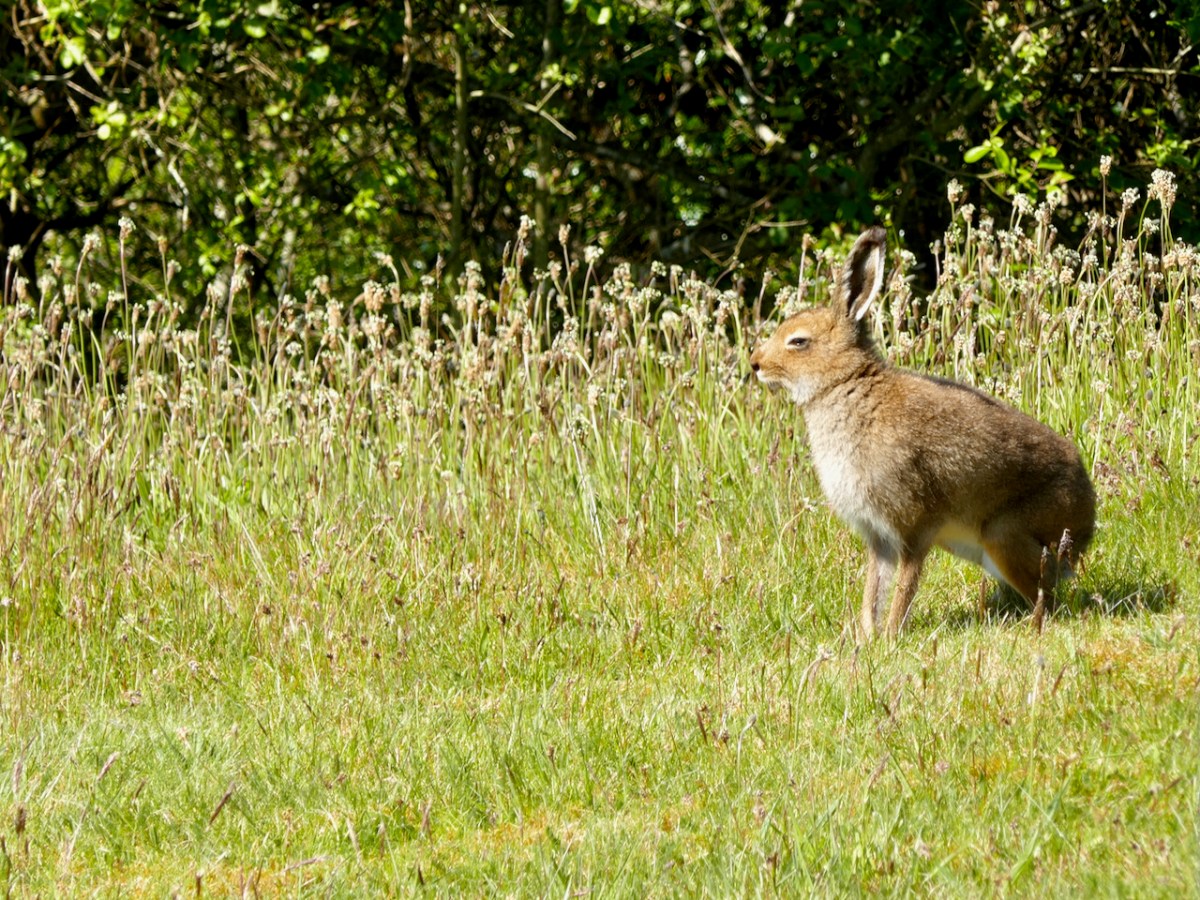
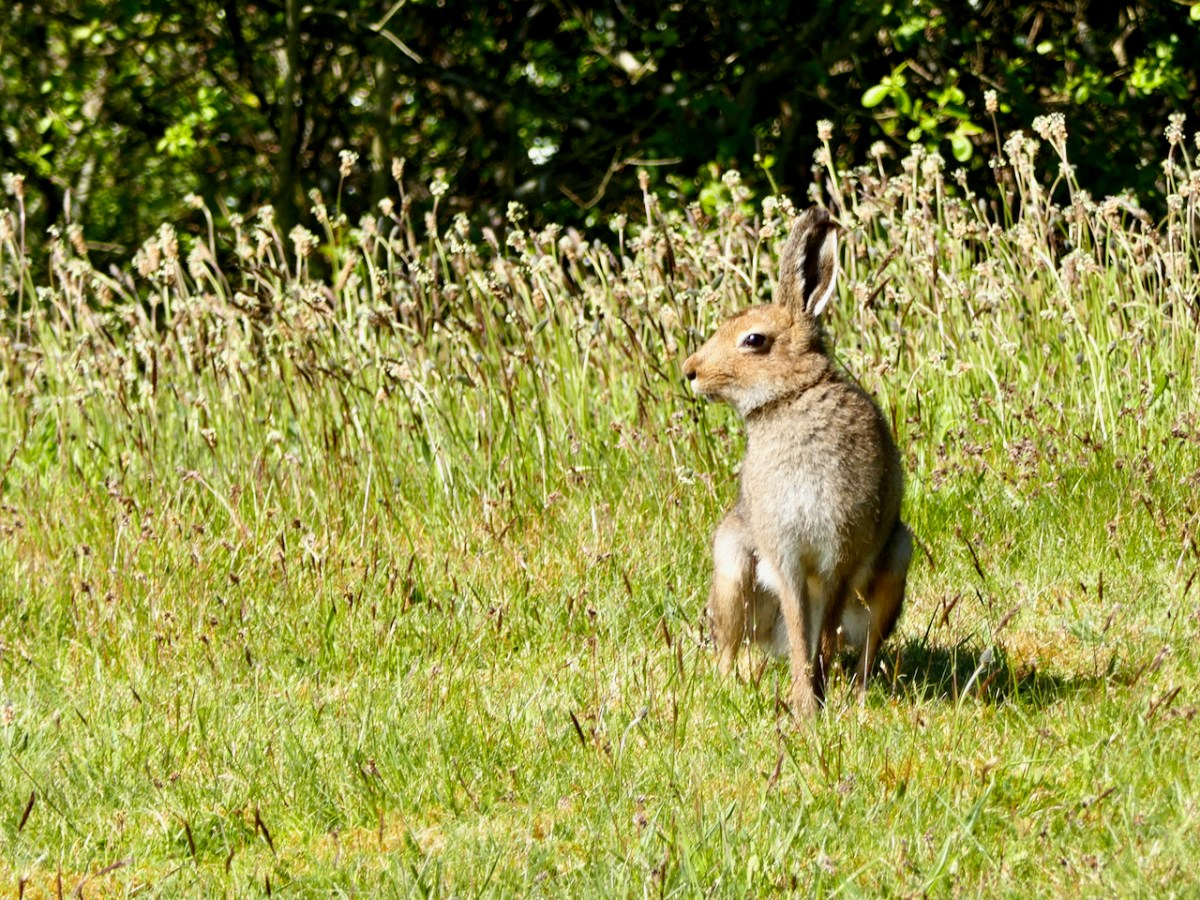
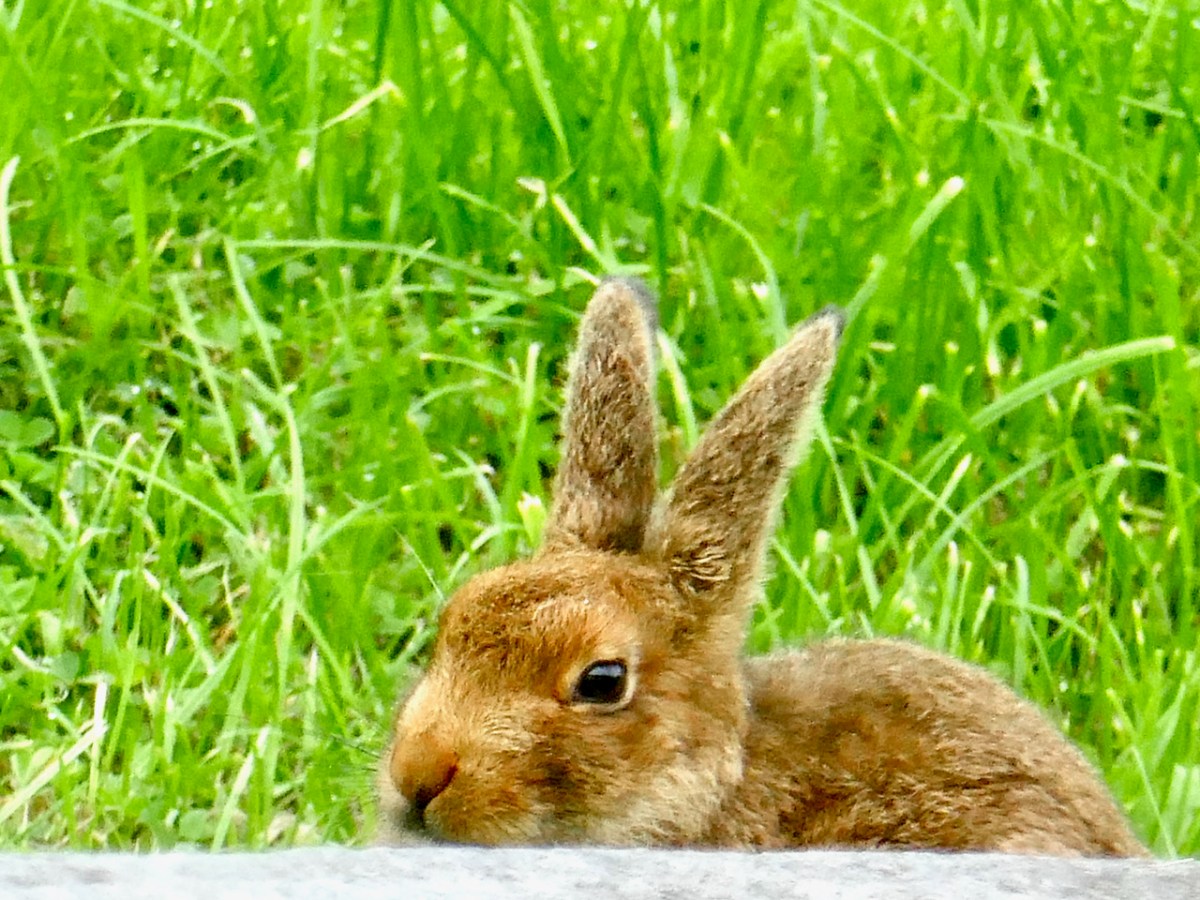
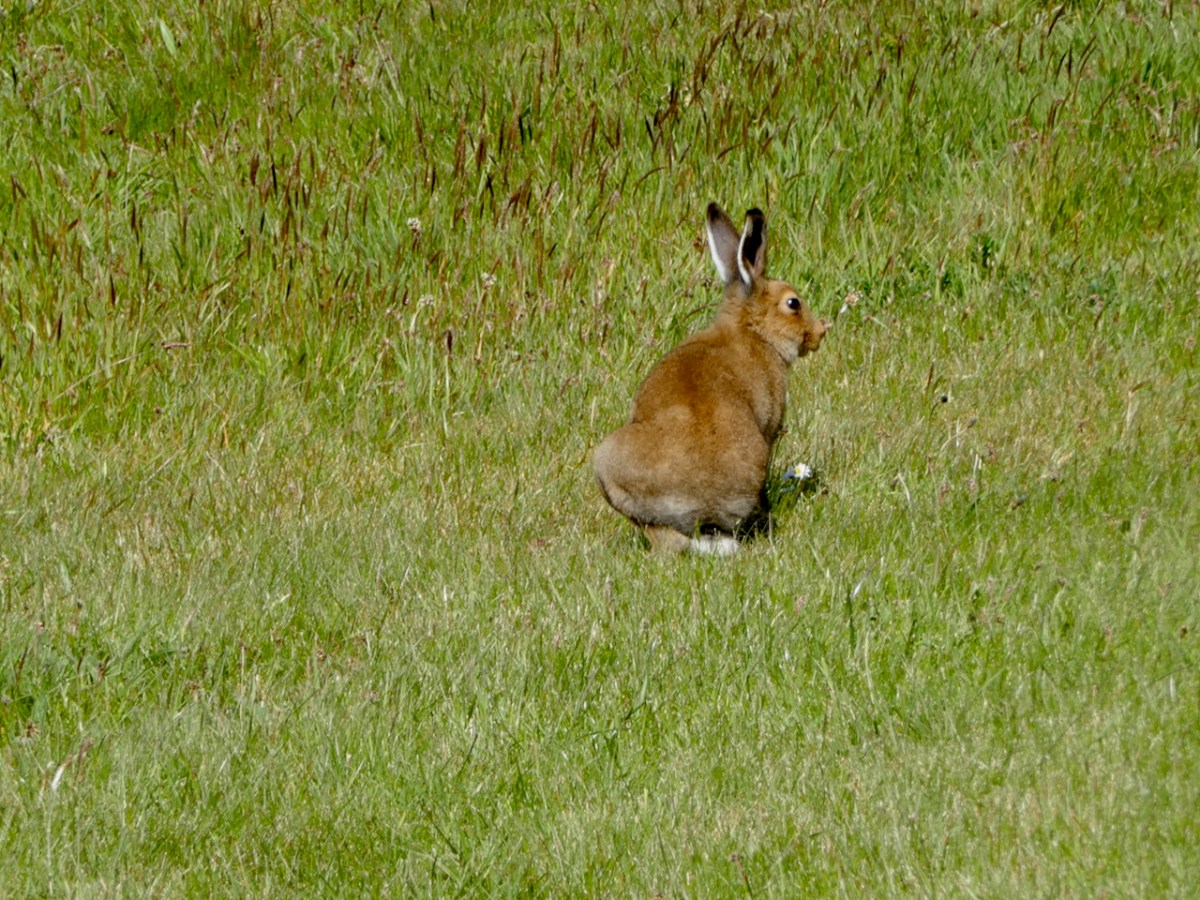
Every so often I have to come up with a post about hares – they are an obsession with me, and have been for as long as I can remember. So, when I looked out of the window this morning and saw a real, live Irish Hare foraging in our garden at Nead an Iolair I knew the time had arrived to pen another paean to this most beautiful and elusive of animals. Lepus timidus hibernicus is Ireland’s only native lagomorph; the other two are the Brown Hare and the Rabbit – both have come from elsewhere. But the Irish Hare has been here at least since the Pleistocene: that’s getting on for three million years ago, implying that the species is totally attuned to its habitat.
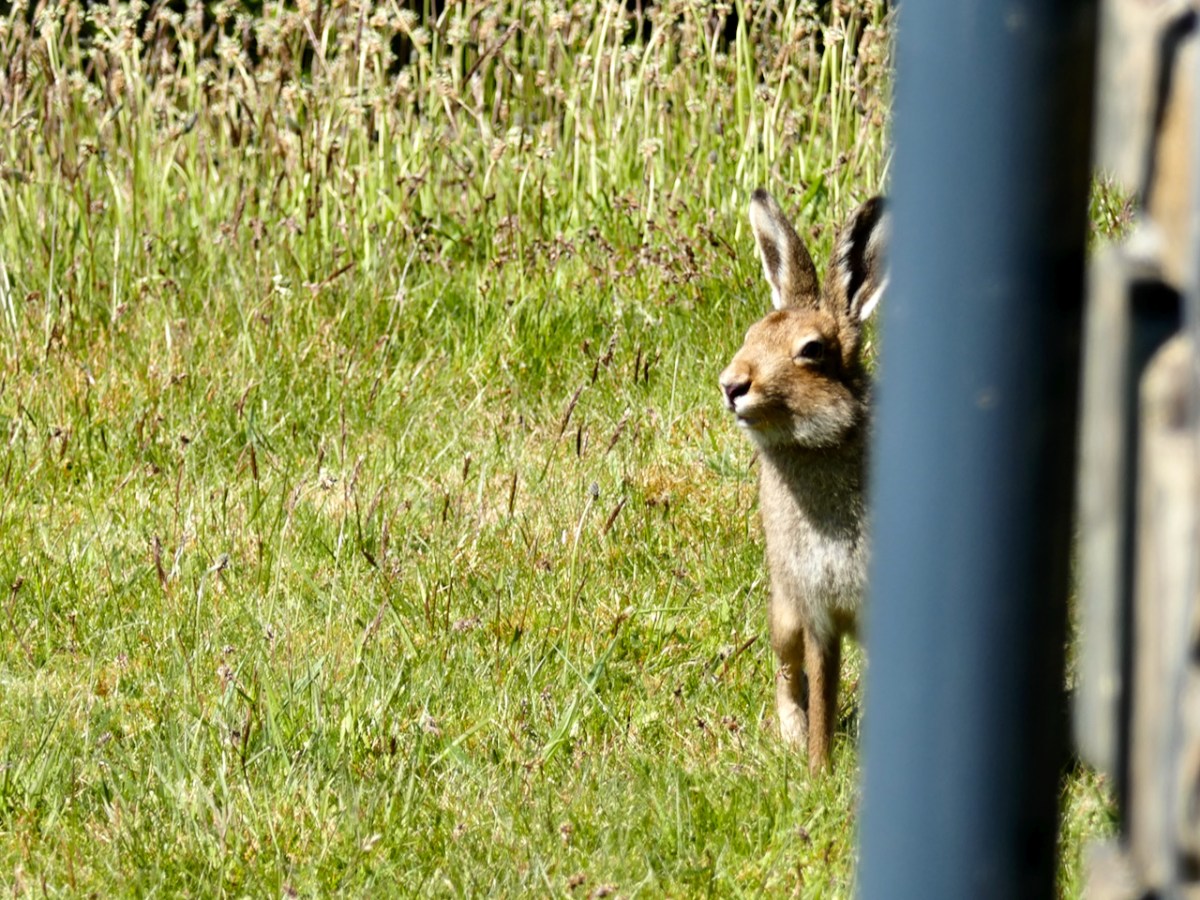
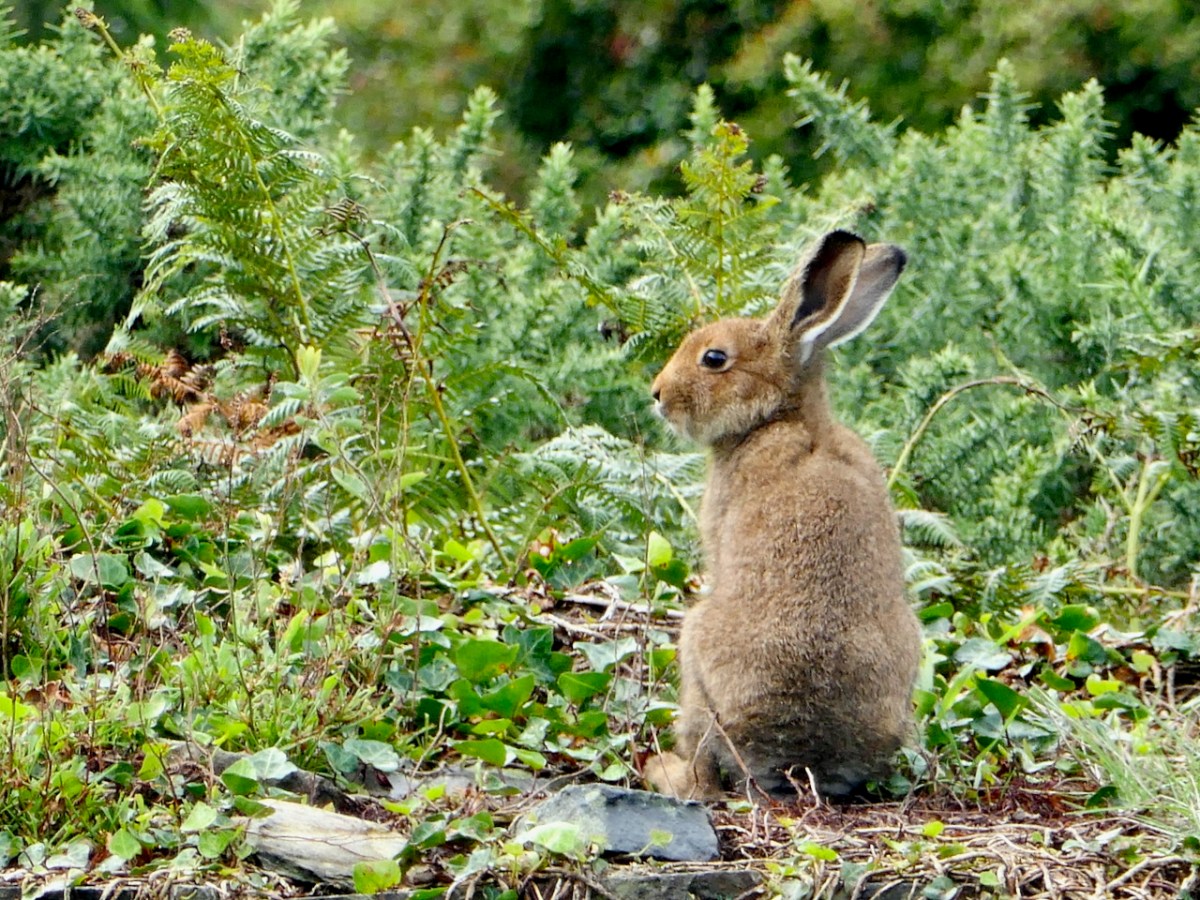
Here is the hare that arrived on our doorstep today. We know that this is an Irish Hare because of his ears – shorter than the length of his head: the Brown Hare species has ears which are longer than the head.
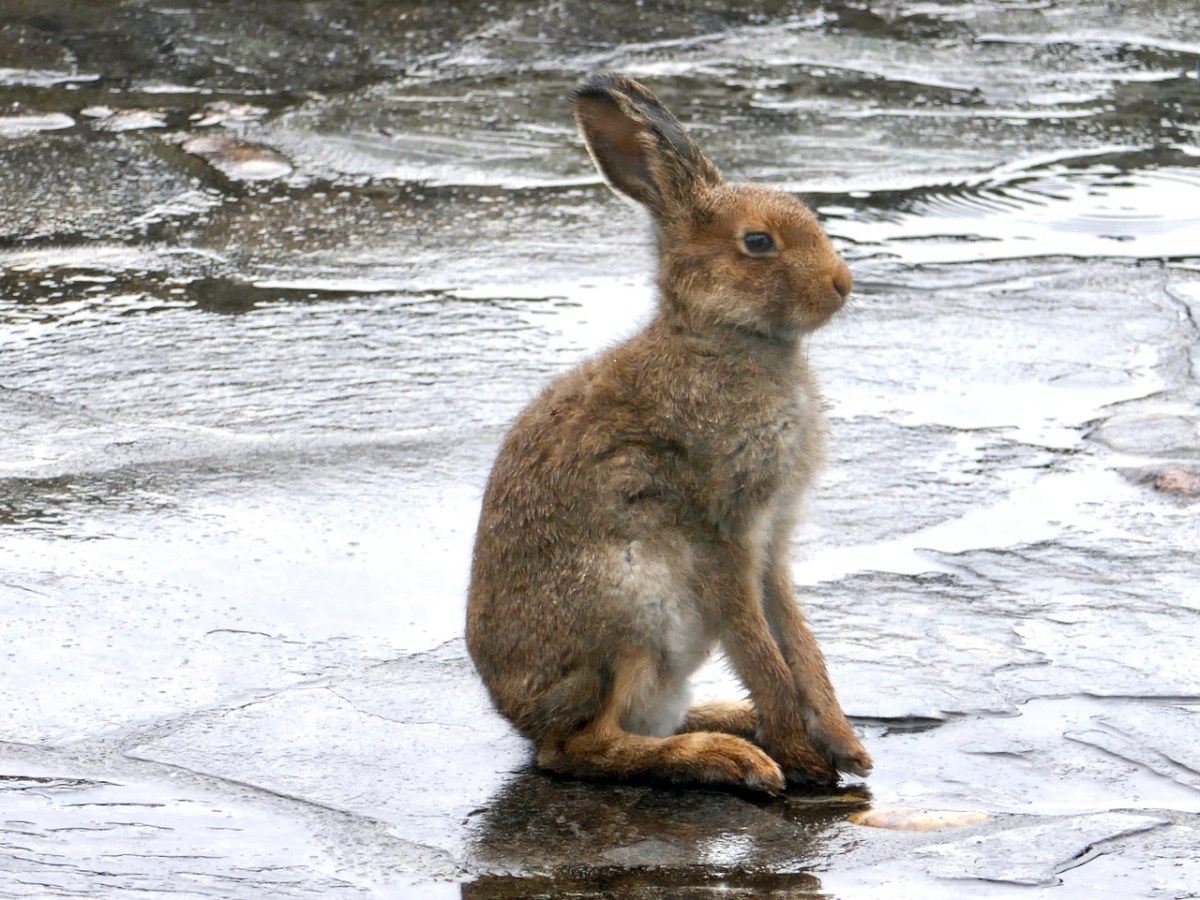
Before I came to live permanently in Ireland I frequently visited West Cork, and a hare sighting in the wild could be virtually guaranteed each time. Also, when we first came here in 2011, we would encounter a hare or hares once every few weeks. In the last couple of years, however, hares seemed to have disappeared completely, apart from a notable day in August 2018: it was the most soaking of wet Irish August days, and we found that we had the most bedraggled of Irish hares sitting forlornly on our terrace.
As you can see, it was a mere youth – no more than a slightly matured leveret. We invited him indoors for a dry off, but he wasn’t having any of that; however, he did hang around for three days, allowing us to get a few more pictures.
We named this little hare Berehert, after an Irish saint we were researching at the time, and wrote a post about him here. In fact, hares seldom stay in one place for very long – it’s part of their self-protection mechanism to be always on the move. And they do move: they are our fastest mammal and can outrun everything else. Since Berehert departed I always harboured a little fantasy (should we say conviction?) that he would one day call in again to let us know how he was getting on… Very nicely, thank you, would seem to be the order of the day if it is, indeed, Berehert who has come along to test out our lawn – this animal appears to be in fine condition.
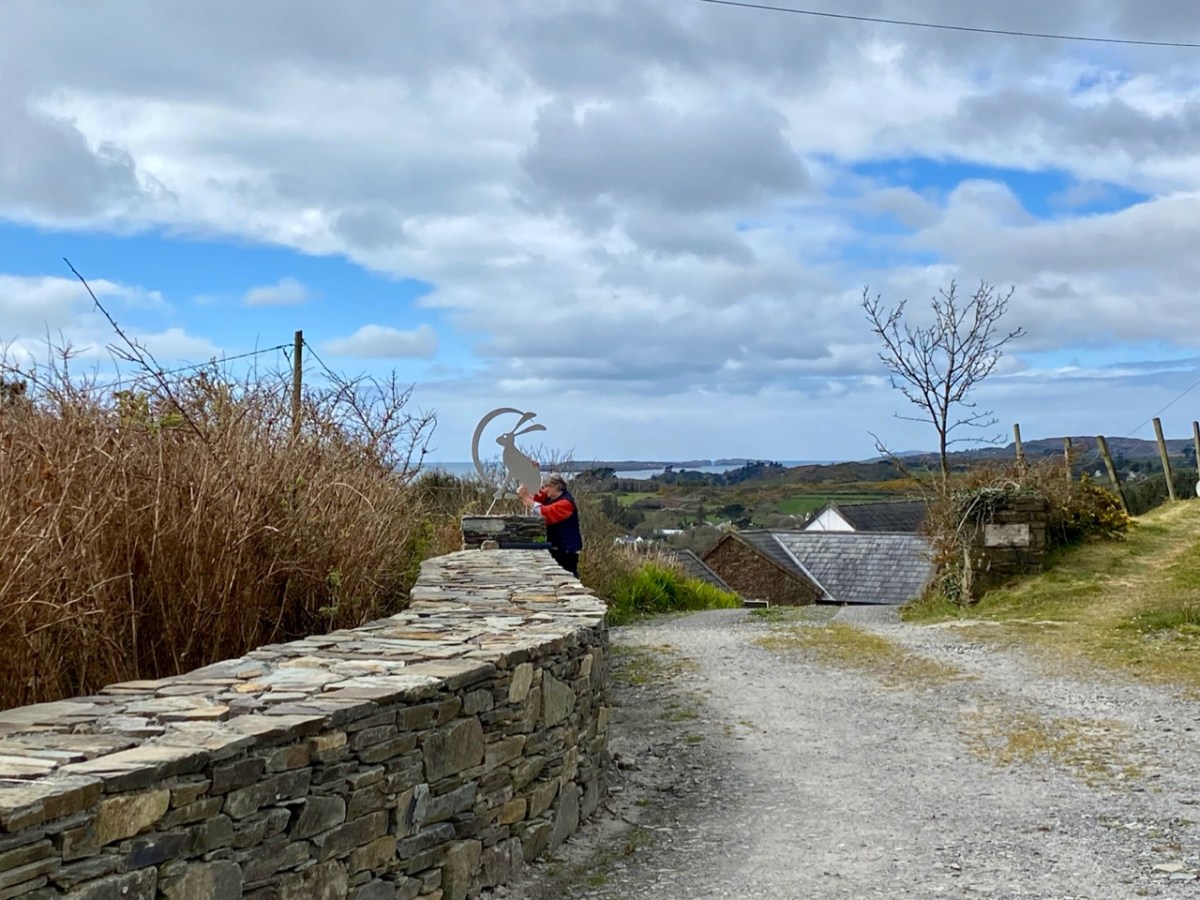
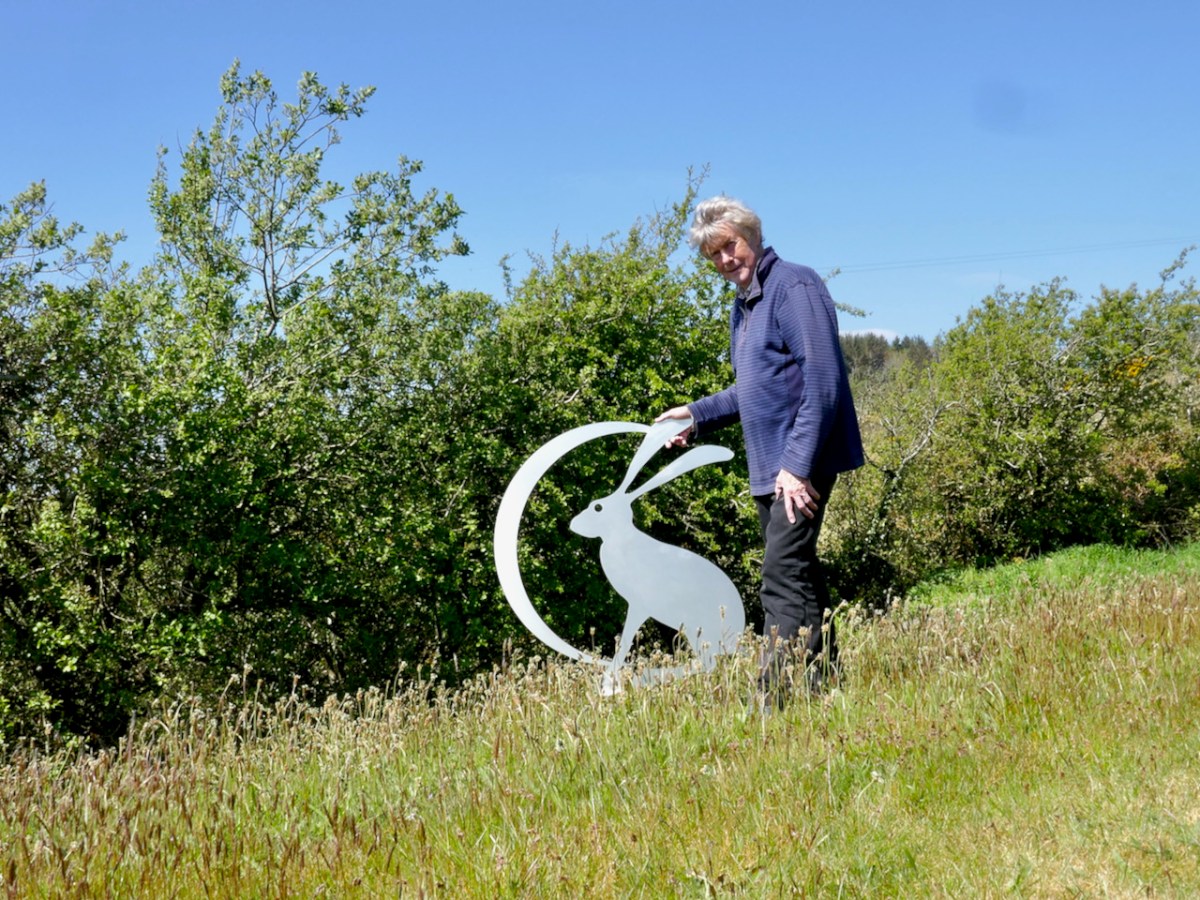
But maybe there’s another reason why this handsome hare has decided to honour us with his presence: could it be the new sculpture which has appeared in the garden? It is temporarily lodged down by the hedge (header picture) but it has been expertly laser cut from stainless steel (by Pre-Met Fabrications of Cork City) to grace our recently built stone gatepost at our entrance. My design for this hare incorporates the moon, because in folklore all around the world the hare is associated with the moon; it’s artistic licence that I have exaggerated the length of the ears (thereby making this a Brown Hare rather than an Irish one!) but the ears of hares are such defining features that they ought always to be fully celebrated.
Finola is giving you the scale of the new gatepost hare, above, and trying him out at his final location. The sculpture was a special birthday treat from Finola – an indulgence for which I am most grateful: she long ago banned me from bringing any more hare inspired accoutrements into the house, which currently harbours scores of them. I’m afraid that’s par for the course if you marry a hare fanatic!
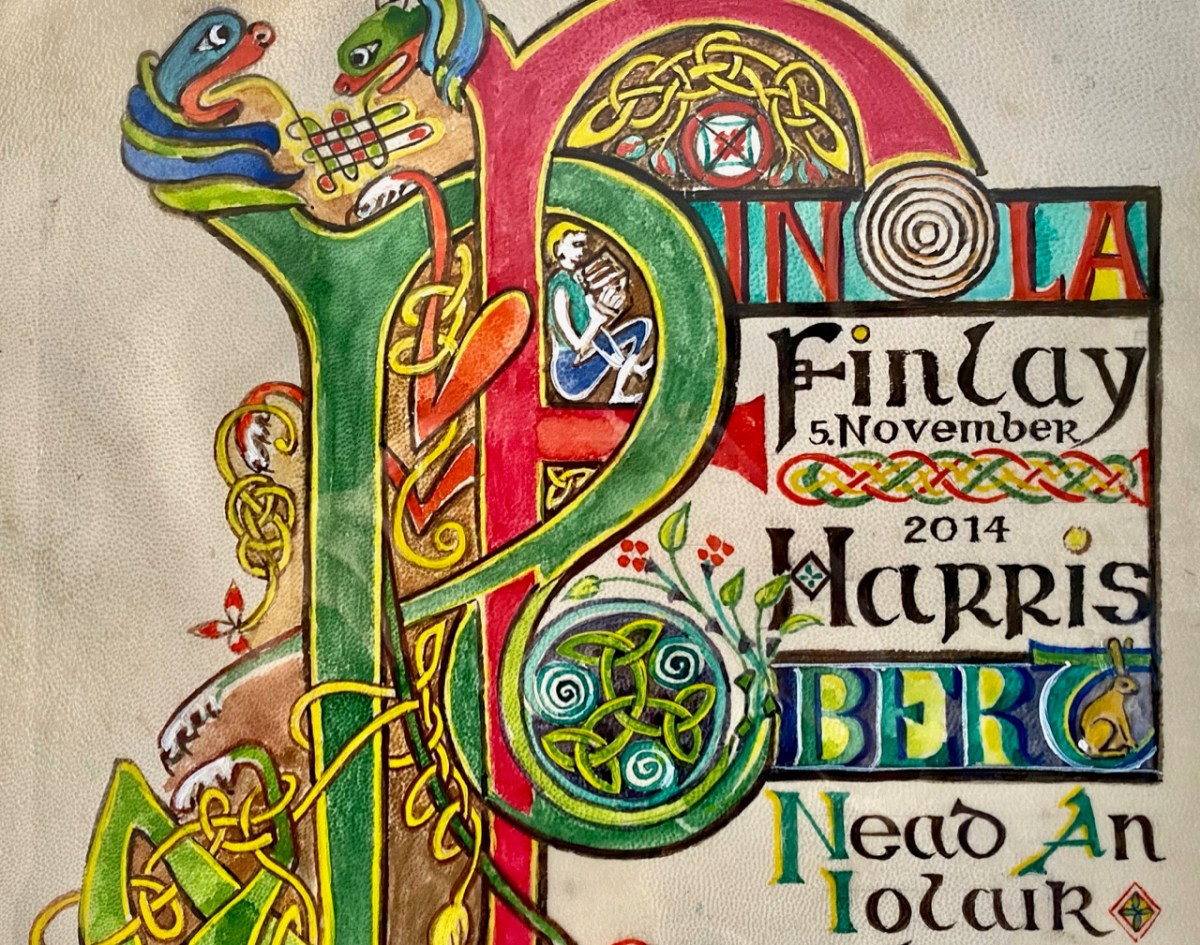
The very fine parchment scroll (above) which was made and presented to us by our neighbours Hildegard and Dietrich to celebrate our wedding has a little hare at the end of ‘Robert’!
You may remember that Finola’s stained glass window that was crafted for us by George Walsh incorporates a wonderful golden hare (at my request), flanked by my own concertina – playing the magical music of the Children of Lir – and a piece of rock art recorded by Finola in her days of yore.
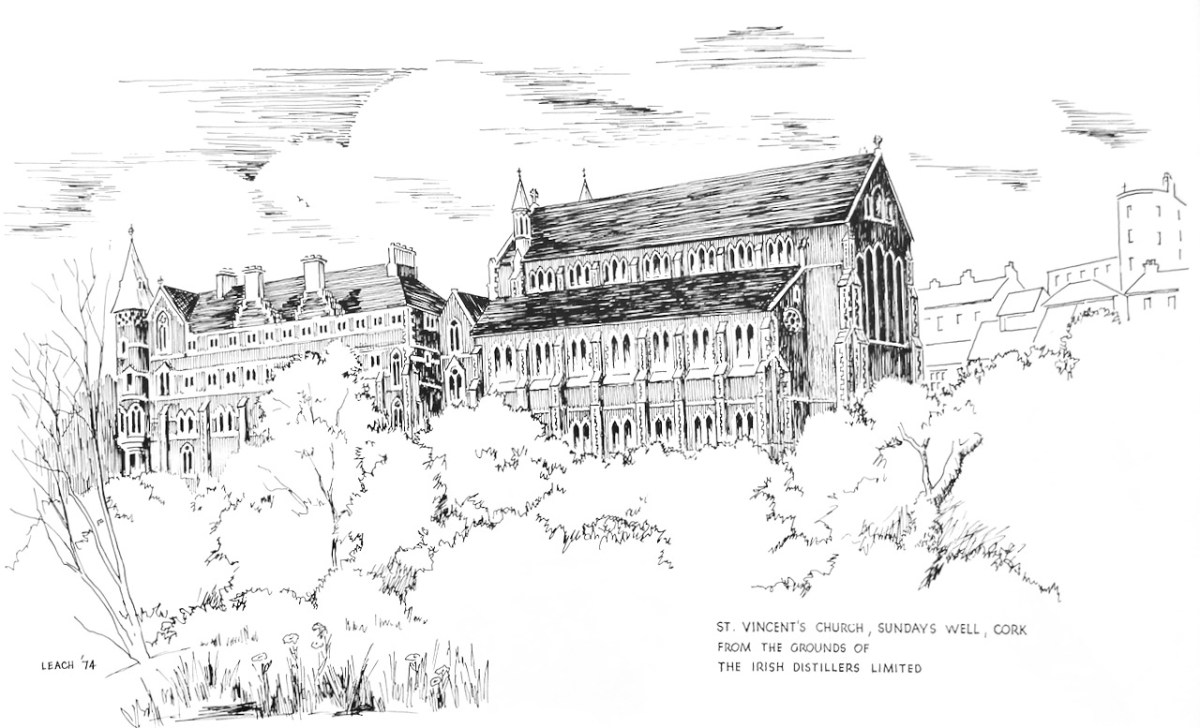
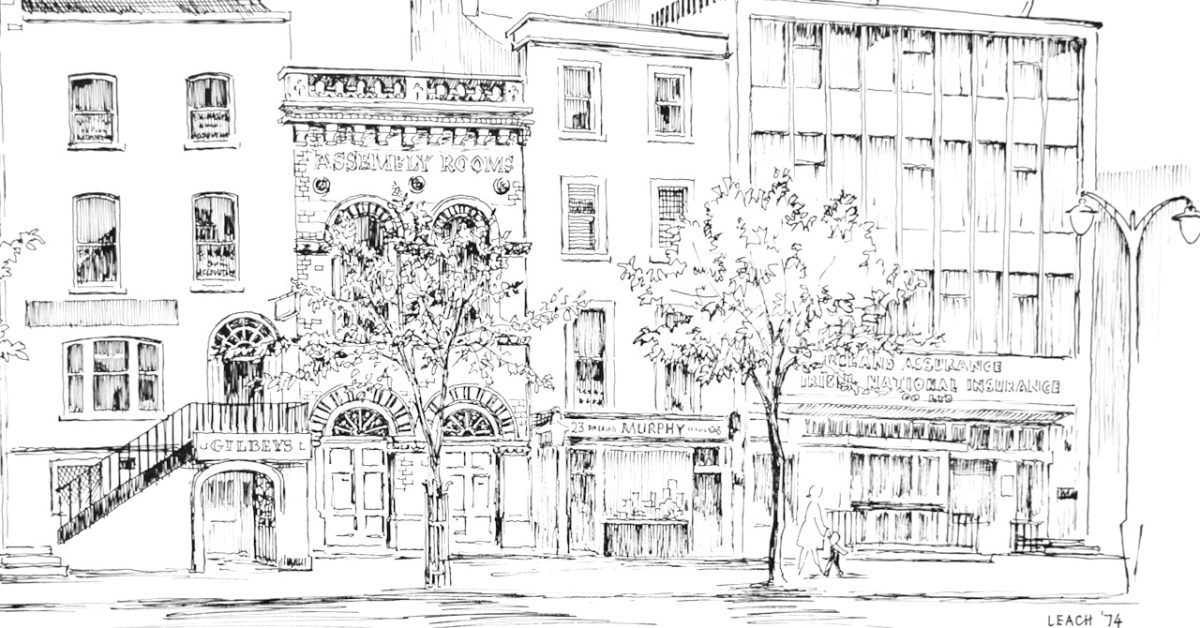
Gladys Leach was a beloved Cork artist who specialised in line drawings of gracious historic buildings. Her work once lined the walls of City Hall (it might still). In 1974 a limited edition book of her Cork drawings was produced, bound in blue. Called The Scenery and Character of Cork, it sold out in 16 days.
Sean Feehan re-published the book in 1978, bound in red to distinguish it from the 1974 edition. The drawings are accompanied by text by him and each description is full of fascinating snippets about specific buildings. I am not sure how many copies he published, but it too sold out quickly and nowadays the only way to find a copy of the first or second edition is through an antiquarian bookseller, such as our friends at Inanna Rare Books.
I have one! It was part of a box of treasures which has been languishing in my sister’s attic with my name on it for several years. It belonged to my parents – both of them lived in and loved Cork for several years, and a vague memory hints that it may have been a present from me.
During my master’s program at UCC I lived in a flat in St Lukes and my route took me past this church, built, according to Feehan’s notes, in 1889
Gladys Leach Hyde died in 2014, aged 97 – Peter Murray, then Director of the Crawford Art Gallery, in an admiring obituary in the Examiner, spoke of her “undeniable artistic talent.” He described a “quiet and undemonstrative” person whose work evoked a gracious past. Her framed sketches and card collections became, over time, hot collector’s items. People were enchanted by how she had captured their place and time as much as they were by her clever perspectives and her eye for line and detail.
That’s how I feel – enchanted, because this is my Cork. I lived there from 1966 to 1973 and it is exactly how I remember it. So this book is very special to me as a reminder of those golden student days at UCC (above).
We were all in love with Roger Moore. weren’t we? Here’s the trailer for that film. This is just before the cinema closed, to be reborn as a shopping arcade, having been operating since the 1930s, with an organist and ‘uniformed male attendants’
The Lee Maltings – Brian Lalor drew them too. In my day we played racquetball there. In his accompanying text Feehan wrote:
The Lee Malt House was built over a century ago. . . The old Malthouse was taken over by [UCC} and but for their foresight the days of this fine building would have been numbered. They went to great lengths to preserve it in its original state while at the same time making optimum use of its facilities through conversion to lecture halls, science laboratories, etc. Inside the building there is a little theatre known simply as The Maltings which has acquired a reputation for quality production over a short period. The work of the university authorities makes this building a perfect example of functional conversion.
Dominating the skyline north of the river, St Vincents was a powerful ecclesiastical centre in its day, with strong links to the Murphy family of Irish Distillers. More about it here.
If you would like your own Gladys Leach, her family still have prints available and you can contact them through the Gladys Leach Facebook Page. How fabulous a Christmas present that would make!
South Mall – still recognisable as a fascinating mix of the old and new
This is just a tiny selection of what’s inside this book. Gladys Leach deserves to be remembered and celebrated – and the 50th anniversary is approaching. How about it, Cork!
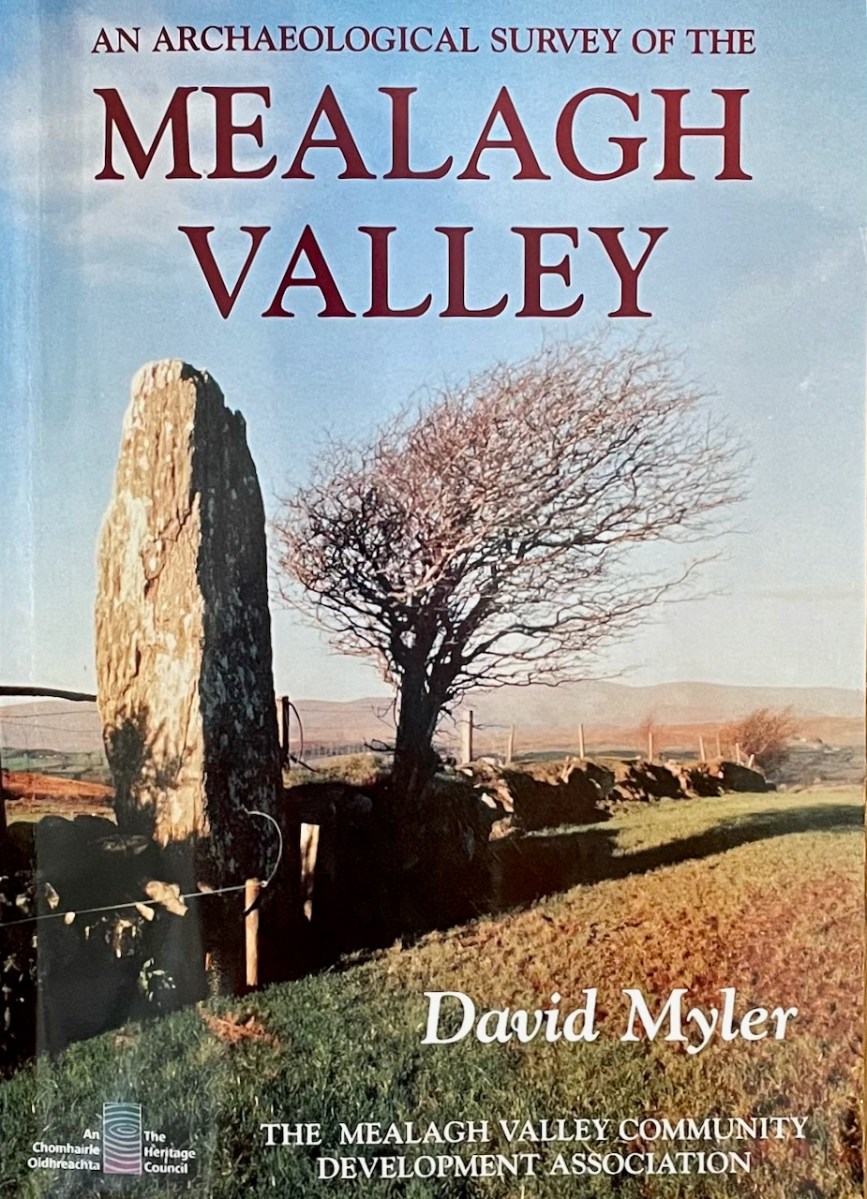
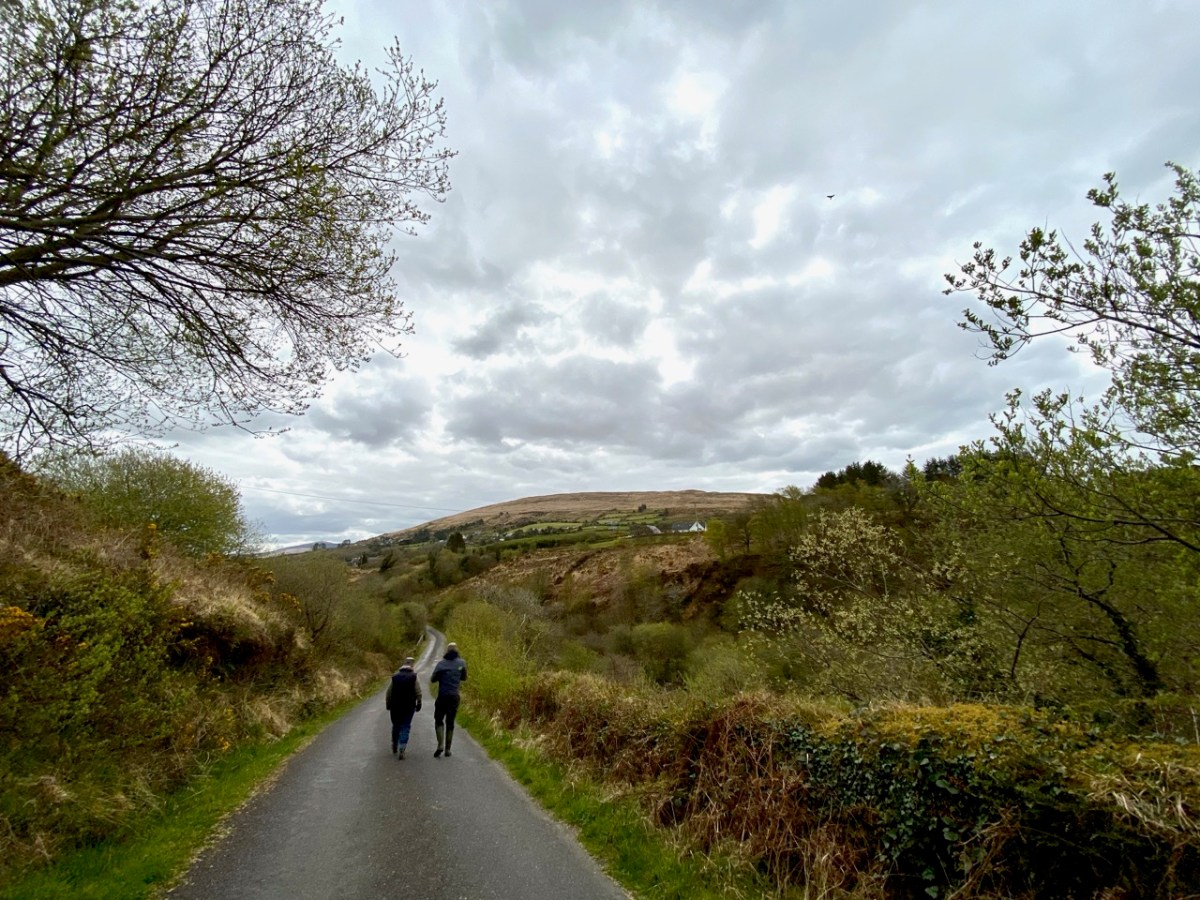
The Mealagh Valley (locals pronounce it Maylock) runs from Bantry Bay to the Maughanaclea (Maw-na-clay) hills and through this valley the Mealagh River flows from north east to south west. Along the valley are found numerous ancient monuments, evidence of occupation from the earliest times. David Myler, some years ago, with support from other local people, undertook to survey all the archaeological sites in the area and the result was this book. Sorry – it’s out of print and we are glad we managed to pick up a copy several years ago.
David and I have been in virtual touch for quite a while through social media, promising to meet up and explore when we got a chance – and that finally happened on Friday! Along the way we discovered family connections, so it was no wonder I felt an instant kinship when we met – we bonded over archaeology and shared family stories. David, a Dubliner originally, has been living here for decades and in that time has taken courses in archaeology and developed a passion for the heritage of this – his territory.
It was a joy to be taken on a field trip by the man who has, literally, written the book about the archaeology of the Mealagh Valley. It’s only the first of many, I hope, since we really only got to sample a few of the sites this time – although, as you will see, the places he took us were pretty spectacular!
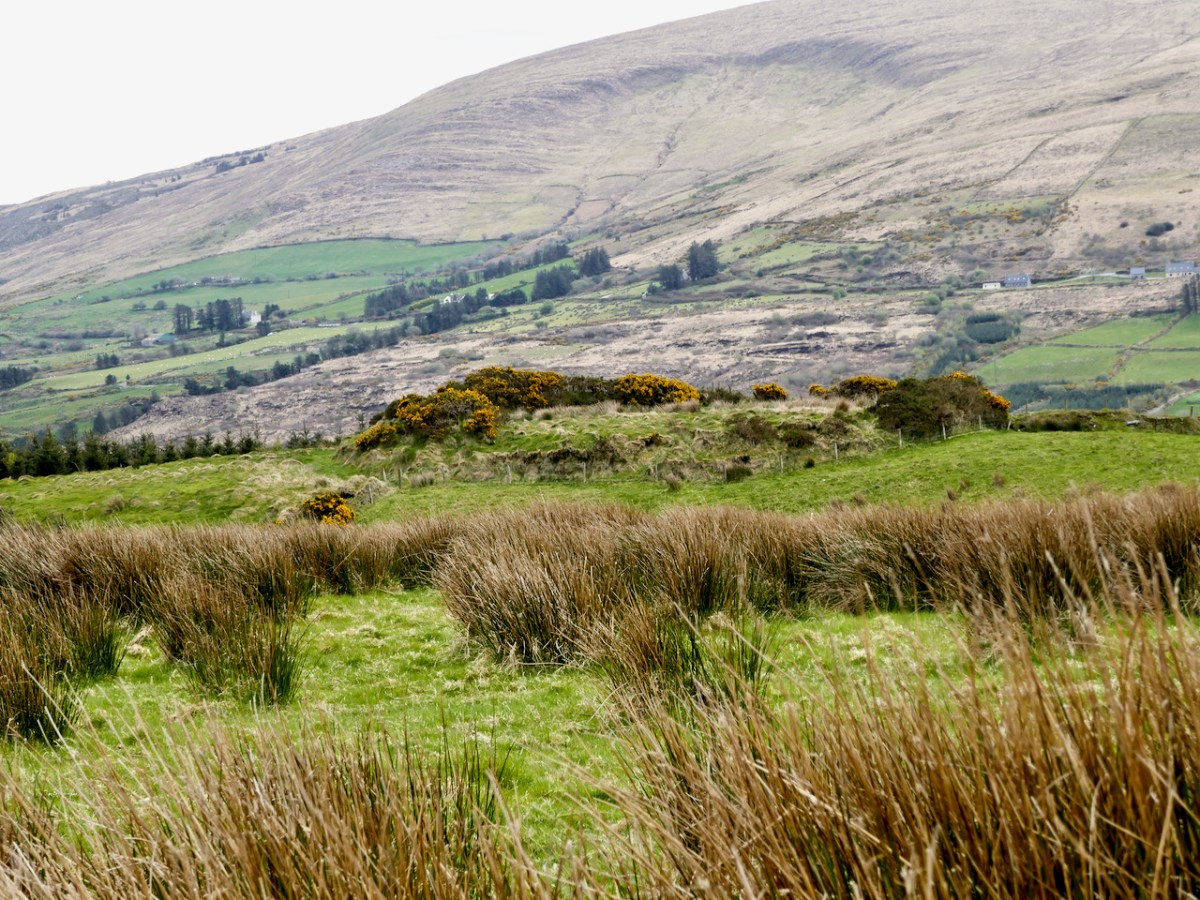
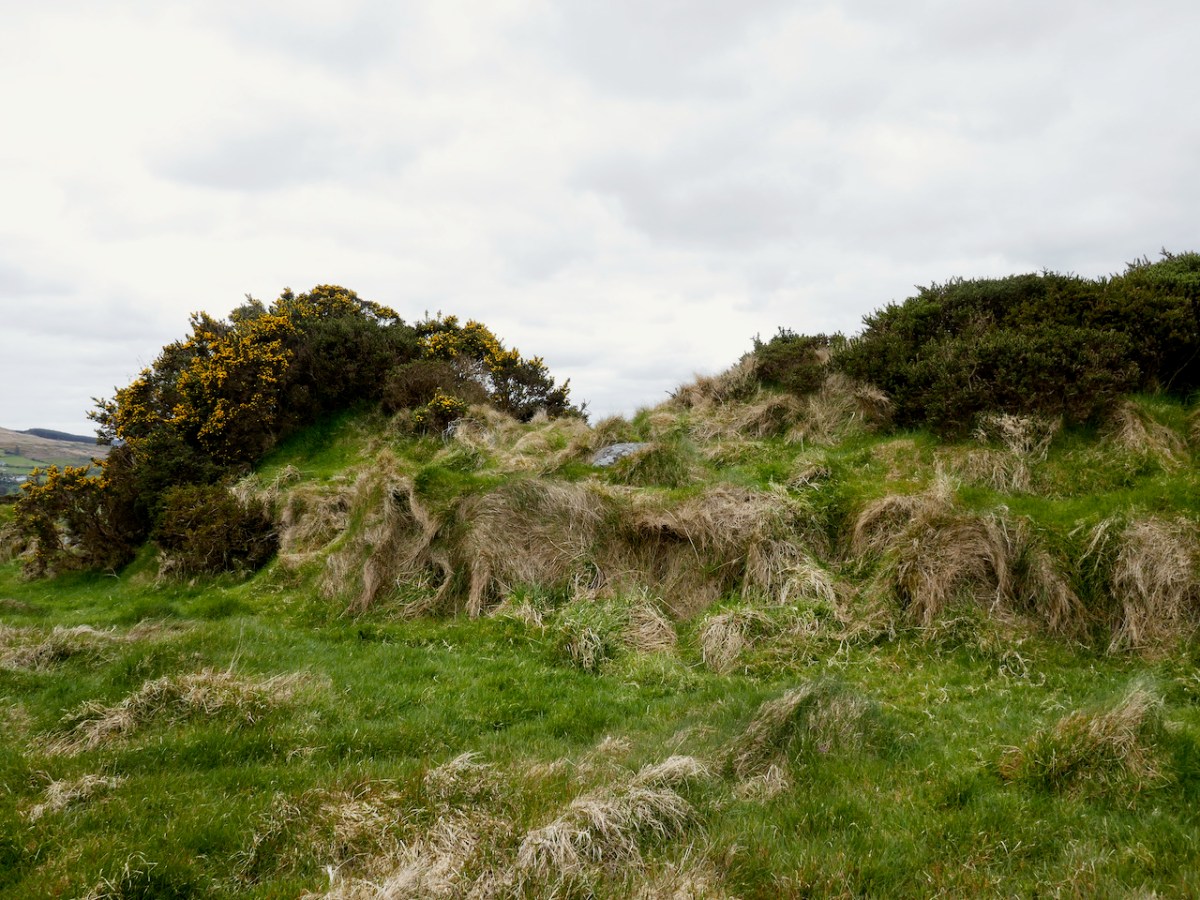
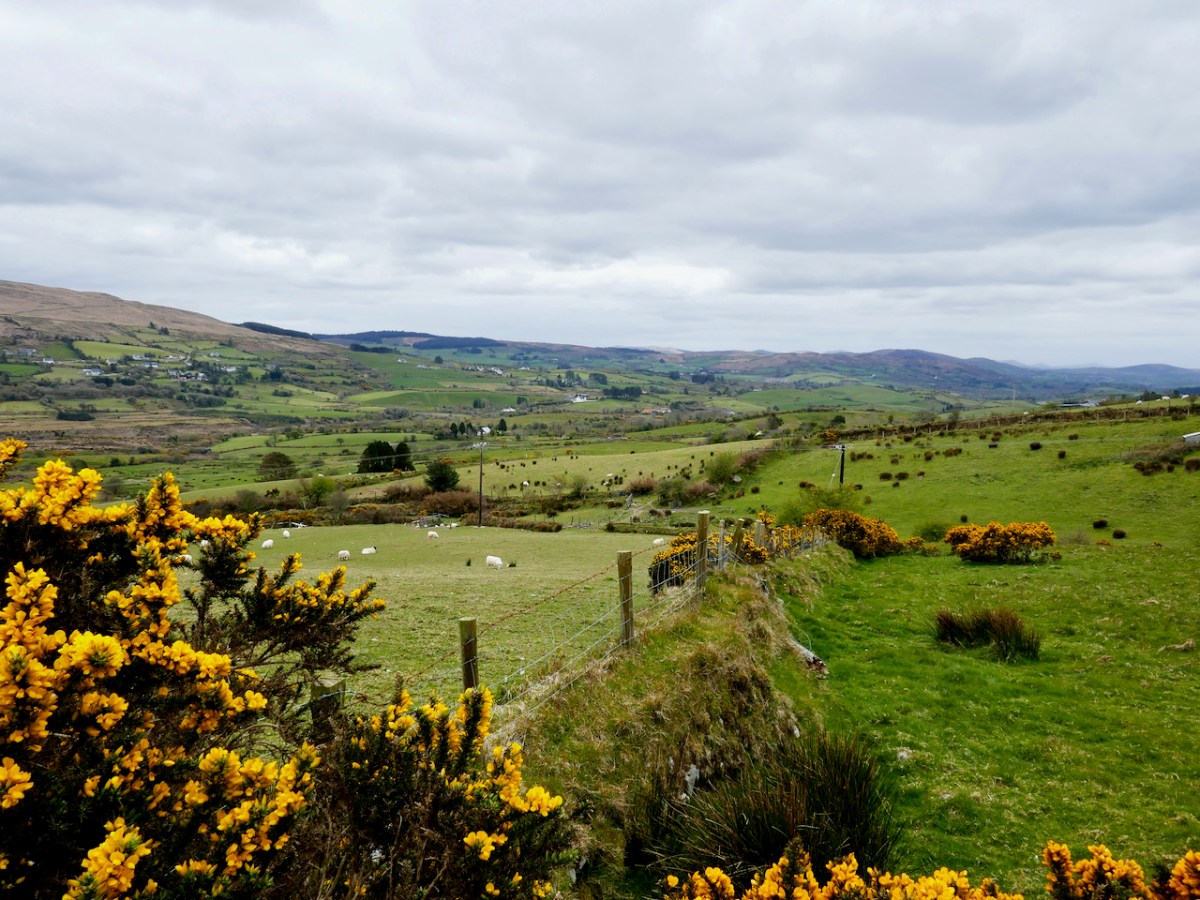
David had secured all the permissions we needed to visit the sites on private land. We started out in the townland of Ardrah (Árd Rath – high fort) with a ring fort (above) commanding panoramic views of the surrounding countryside. A ring fort (also called a rath, lios, dún, or cashel if made of stone) was the dwelling of a high-status individual in early medieval Ireland and examples like this probably date to 500 AD to 1,000 AD. The banks had traces of stone here and there so may well have been faced with stone, and the interior had been levelled.
There would have been a house and perhaps other buildings inside, and a wooden pallisade fence on top of the surrounding bank. There’s a good summary of what we know about ring forts in this engaging website about Irish mythology – I especially enjoy the writer’s comments on the use of ‘fairy fort’ to describe these structures.
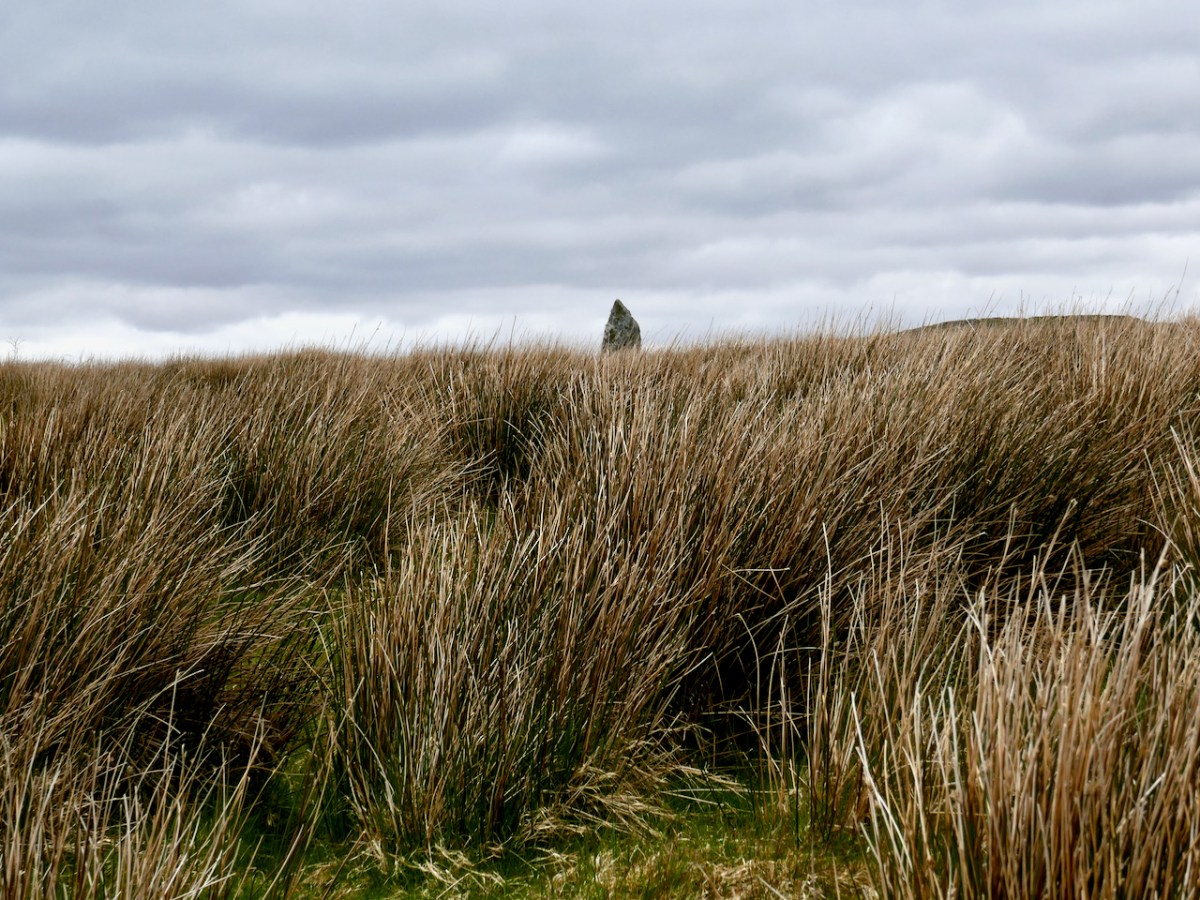
From there we climbed a couple of fences – the first of several fence-climbing incidents during the day and thanks to David for sacrificing his jacket to save us from the barbed wire – and trekked uphill. The monument started to reveal itself as we got higher – at first I thought it was a standing stone.
No – a stone pair?
What, there’s more?
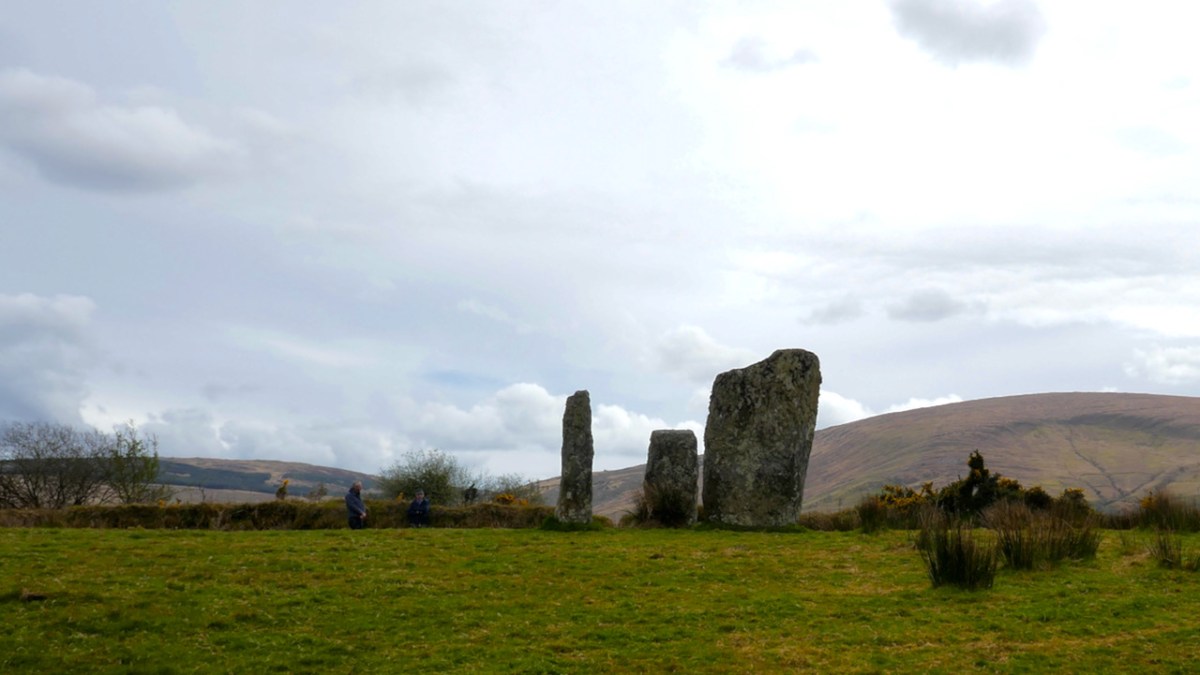
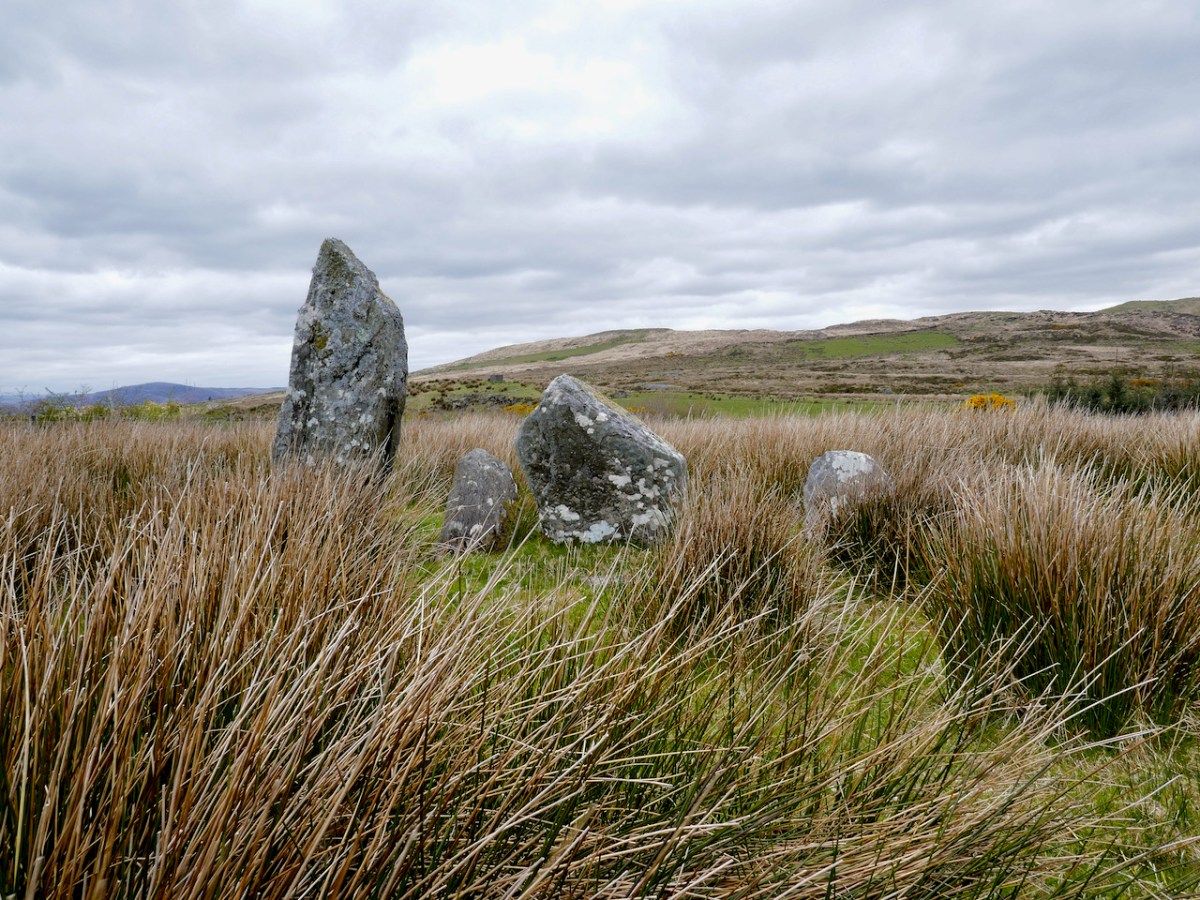
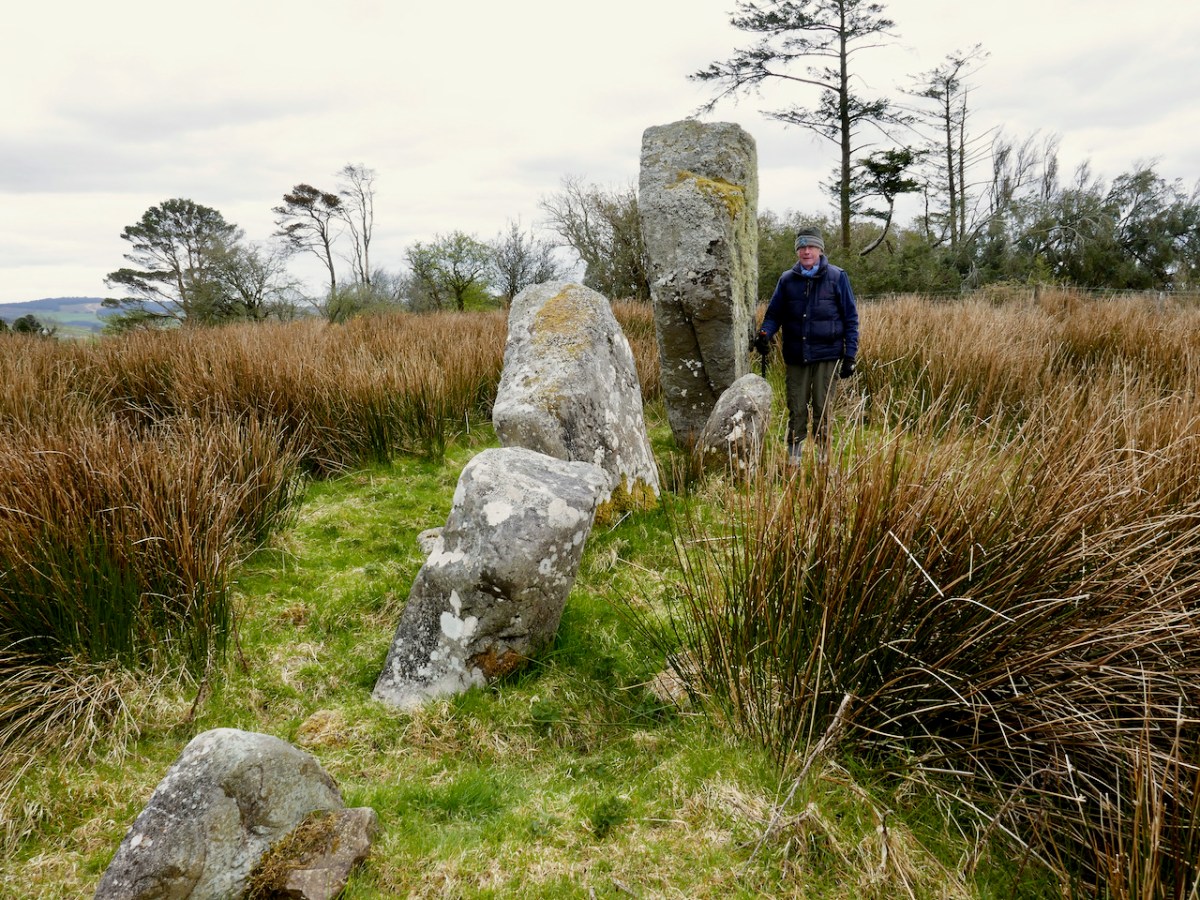
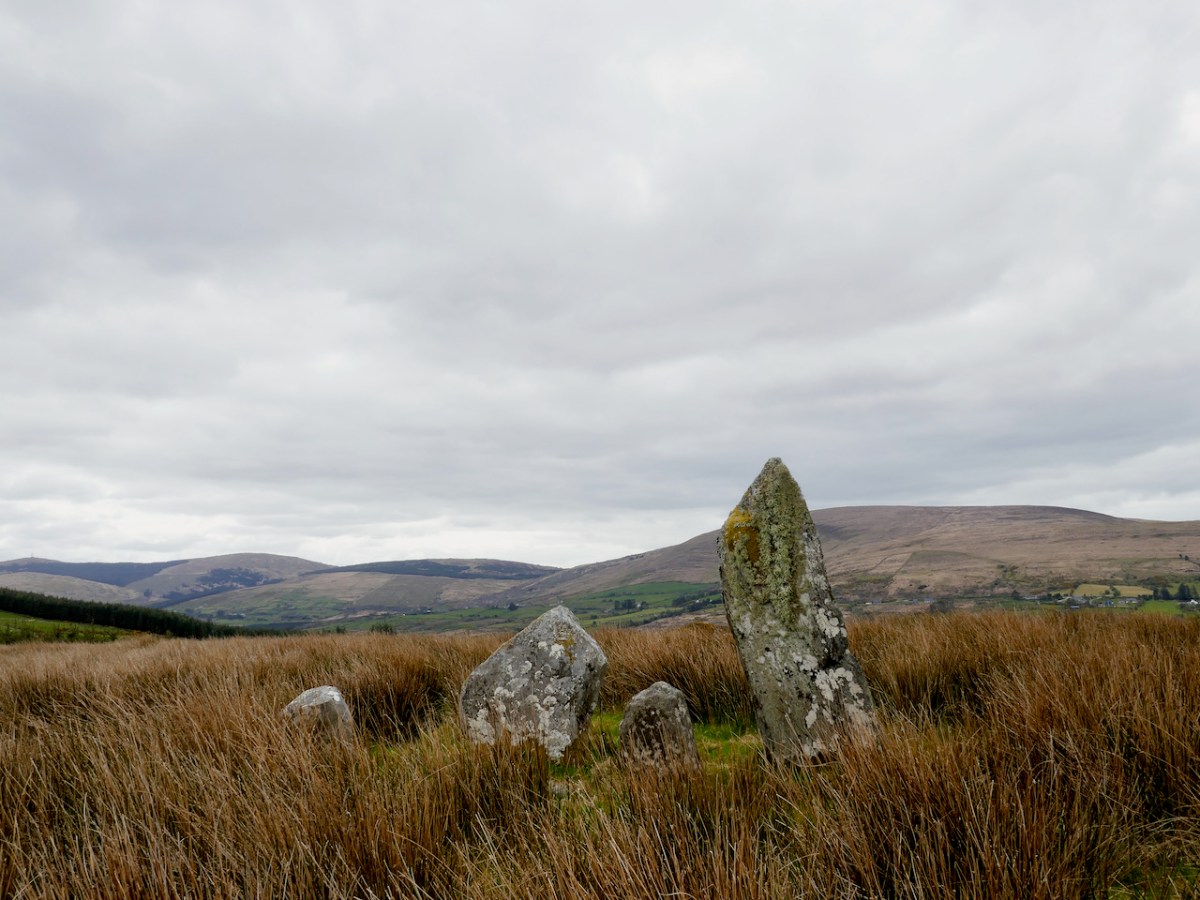
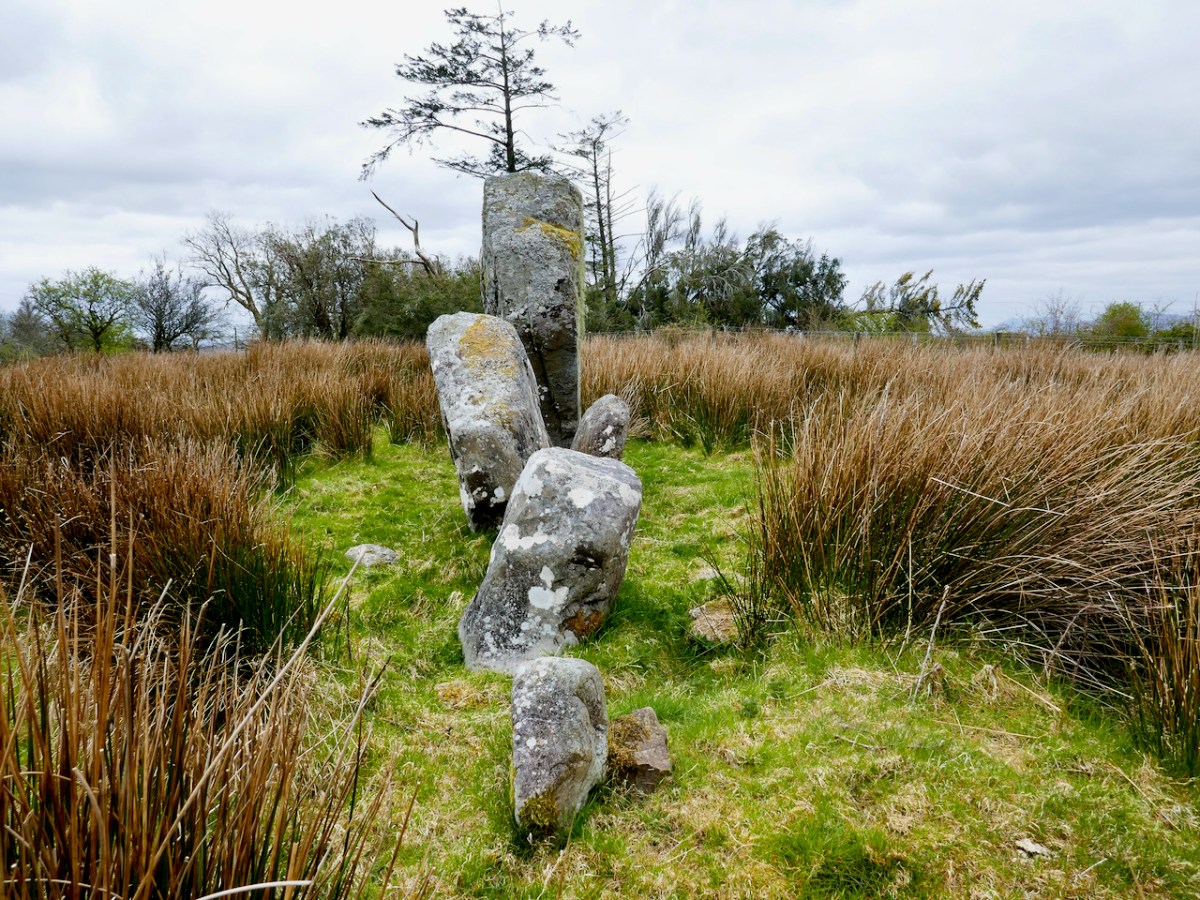
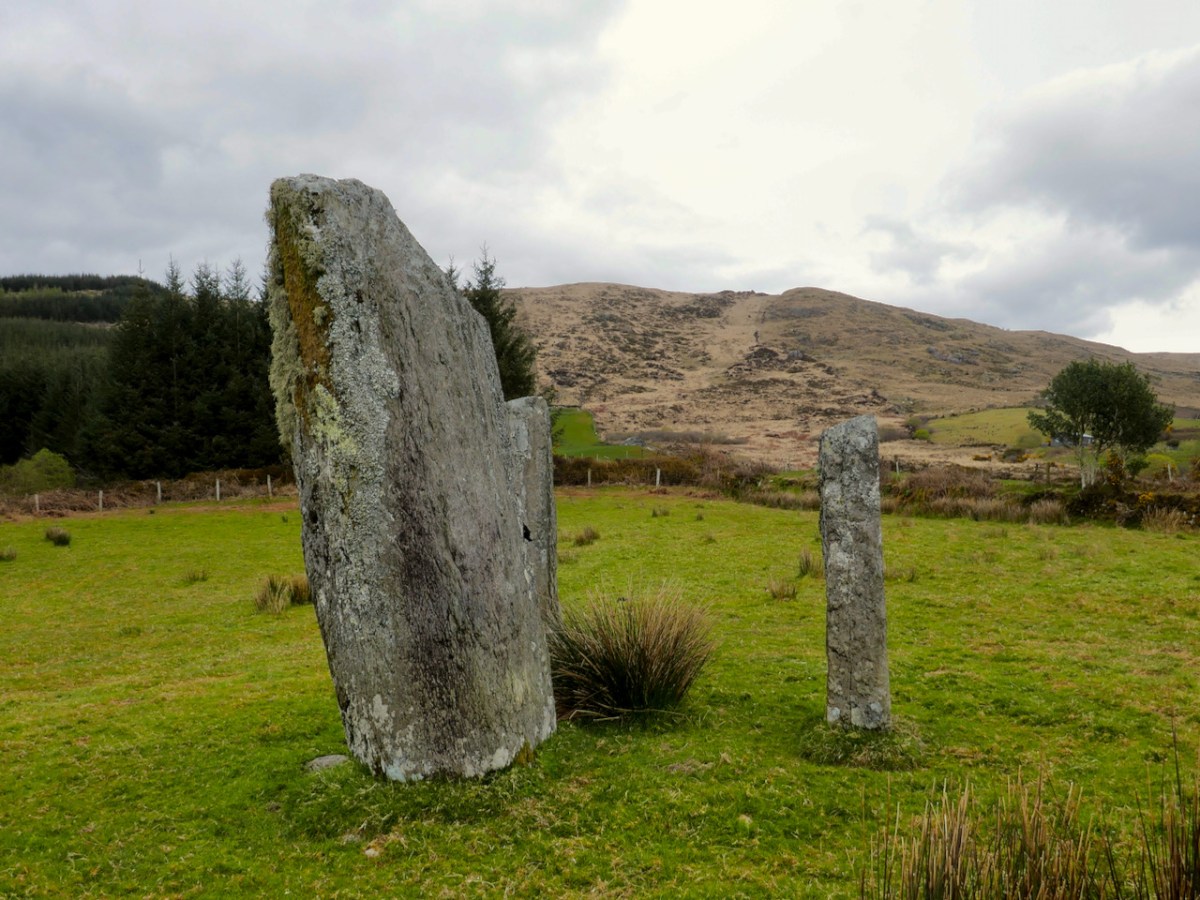
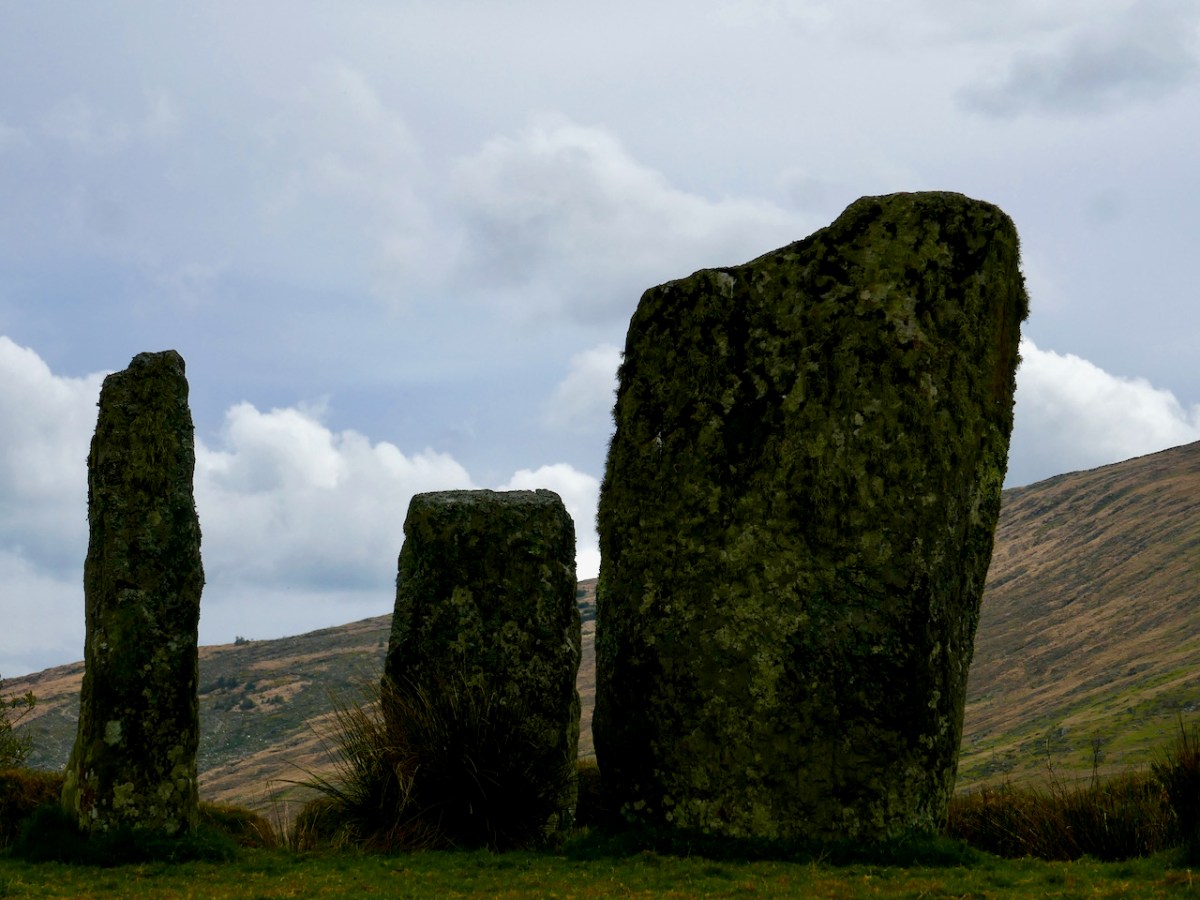
This is the Ardrah stone row, consisting of fours stones aligned ENE/WSW, a common alignment for stone pairs and rows. Take a quick trip over to Standing Stone Pairs: A Visit to Foherlagh for more about this kind of monument. You will see that this one is pretty typical – it has an orientation to the south west, consists of stones that could be interpreted as ‘male’ and ‘female’ and the stones rise in height towards the SW. The southernmost stone is enormous – Robert is providing the scale.
But wait, I hear you say – I see five stones, not four! And you are right. there are five stones, whereas originally there had been only four, and all the records state that this row consists of four stones. The photograph in David’s book, which dates to 1998, clearly shows four.
So – where did the fifth, and smallest, stone come from? It’s a head-scratcher and all we can do is point to the presence of the nearby fairy fort and speculate that the Other Crowd are messing with us.
And then it was on to the piece of prehistory that David discovered in the course of his survey. I should explain here that much of what the Mealagh Valley group was documenting was already known, since the whole county had been surveyed in the 1980s. But what the County Survey lists and what a local group like this looks at, will differ – for example, this group was interested in folklore and local stories about the monuments they visited and about items of interest beyond the remit of the county survey. Moreover, because they are local themselves, they are likely to be contacted if anyone spots an unusual rock or such like, and can be on the spot to examine new ‘finds’. Finally, a project like this generates appreciation and pride in, and a sense of ownership of, one’s heritage, and thus, hopefully, less likelihood of monuments being damaged.
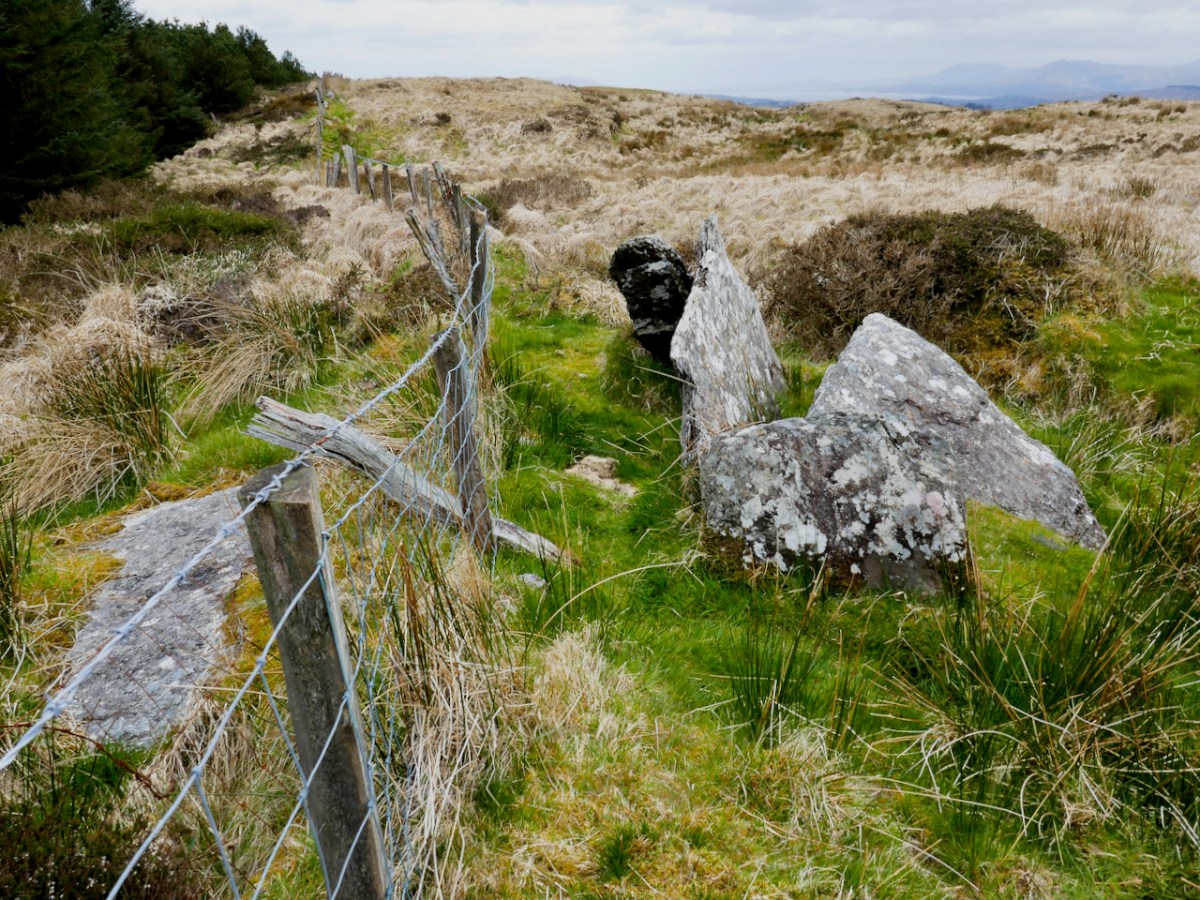
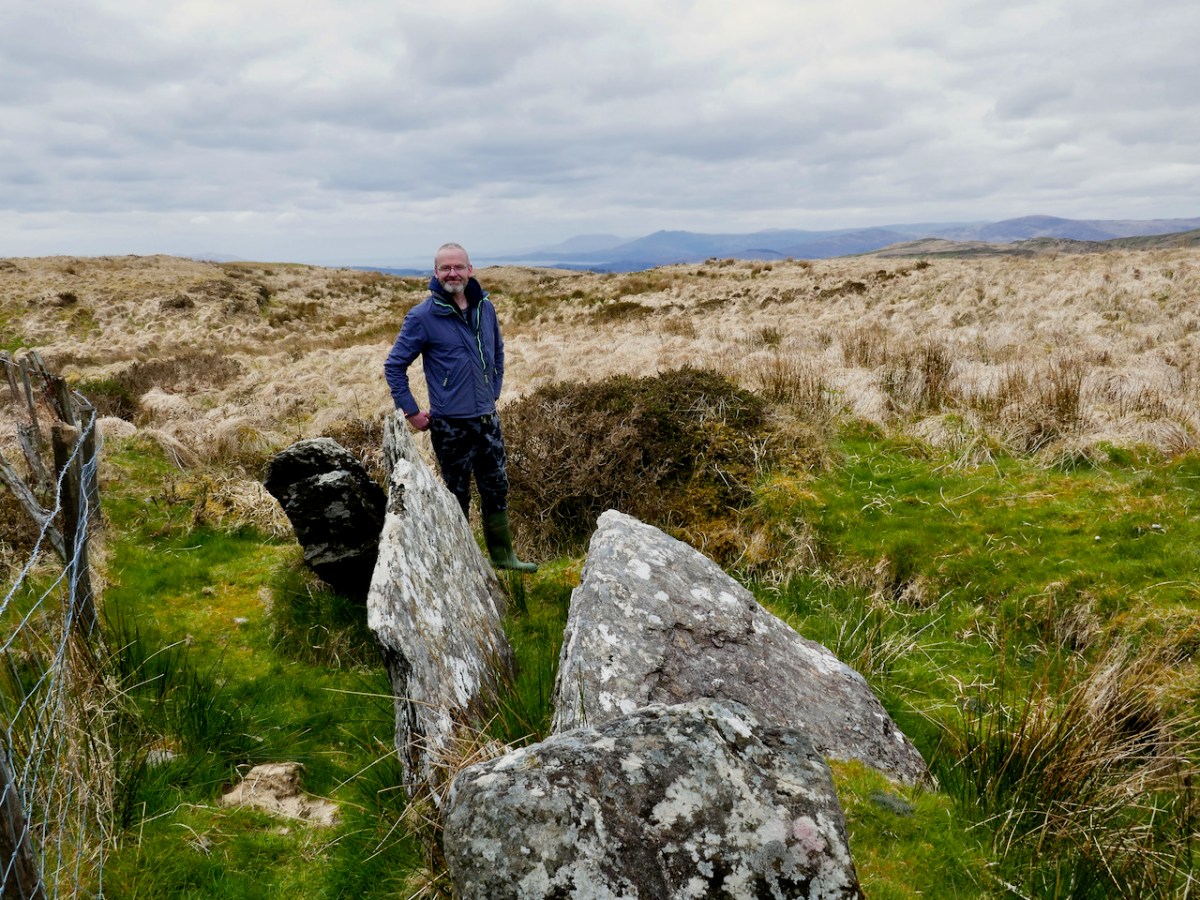
David had been alerted by a farmer to a ‘funny pile of stones’ on the boundaries of the townlands of Ardrah and Gortnacowly (Gort na Camhlaigh – field of the ruins), an area that had been impacted by forestry activity. It’s quite high up and the views are immense. As we walked up, it sent shivers down our spines as David related how he hunted around for what had been described to him, almost giving up, and finally stumbling upon the mangled remains of what he instantly recognised as a Bronze Age wedge tomb.
A digger clearing out a drainage ditch had inflicted damage but most of the stones were still lying around. One side of the tomb, and the back stone, were in situ. That’s probably the capstone, or one of them, on the other side of the fence.
As an archaeologist, it’s actually quite rare in Ireland to discover a previously unrecorded monument – having done so once or twice I know what a thrill it is. David’s wedge tomb is a classic of its type – see my post Wedge Tombs: Last of the Megaliths for more about them. That’s David above, showing us how to make sense of the stones, both those in situ and those which have been disturbed. He was able to ascertain that the workings in the area had turned up quartz pebbles – a feature of several West Cork wedge tombs.
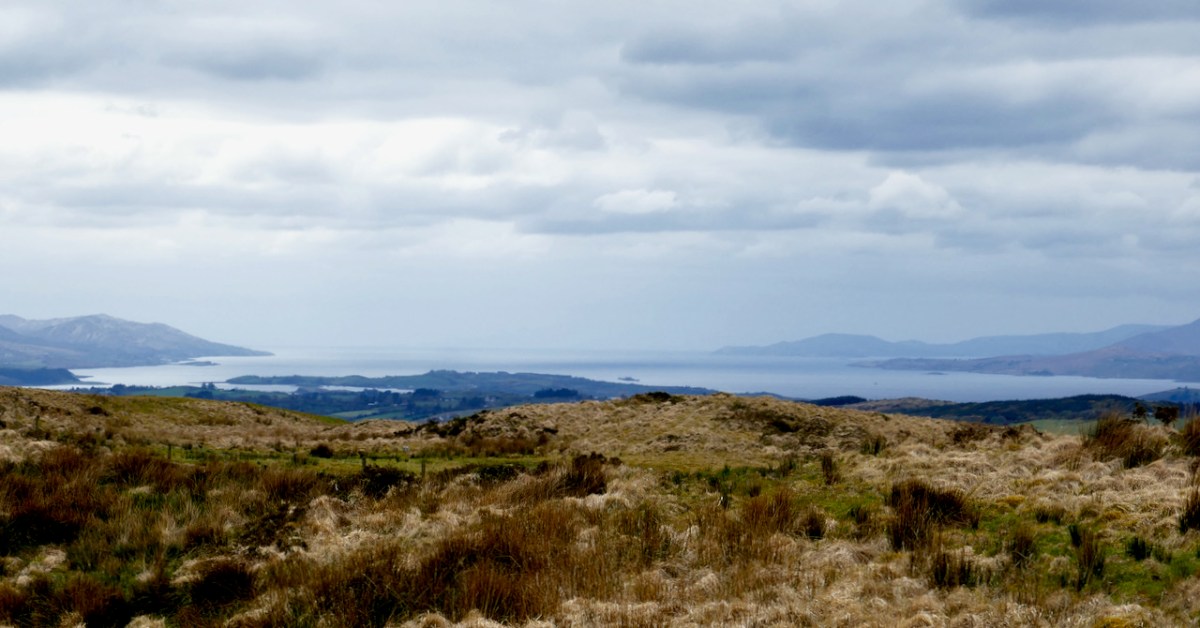
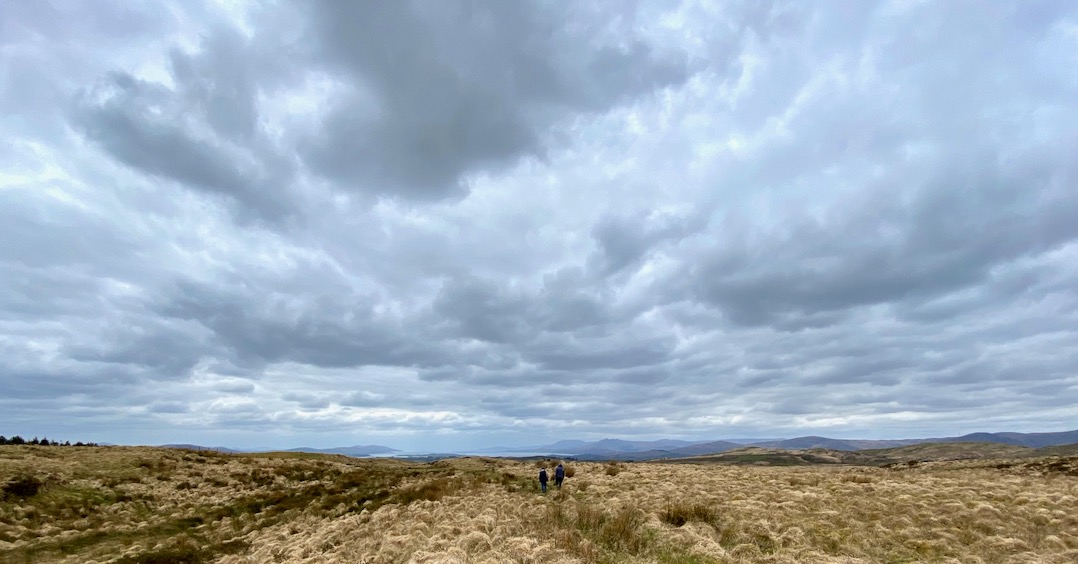
This one was, as expected, oriented towards the setting sun – but that doesn’t begin to describe the incredible sweep of the view from this point – the whole of Bantry Bay lay before us, with the Beara on one side and Sheep’s Head on the other.
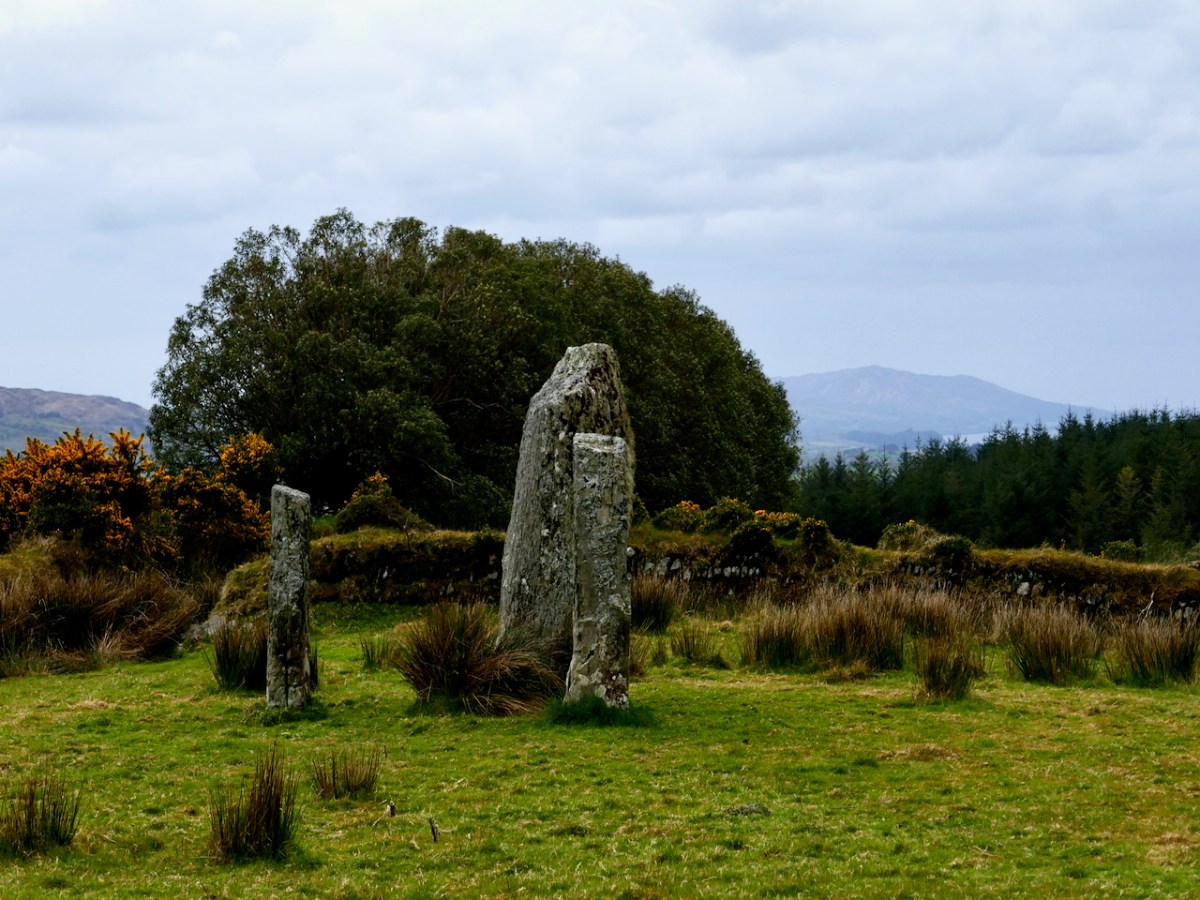
Our final visit of the day was to a type of monument I had never seen before – a ‘Four Poster’. That’s it, above, and note that there is a distant view of the sea, ten kilometres away, from it.
Only five four posters have been recorded in Ireland, one in Wexford, one in Kerry and the other four in West Cork. Here’s what the National Monuments site has to say about them: An arrangement of four upright stones standing at the corners of an irregular quadrilateral. The stones are usually graded in height with the tallest stone at either the south-west or north-east corner. Their closest counterparts are to be found in northern England and Scotland. These monuments are closely related to stone circles in date and function though they are much less numerous. These are dated to the Bronze Age (c. 2400-500 BC).
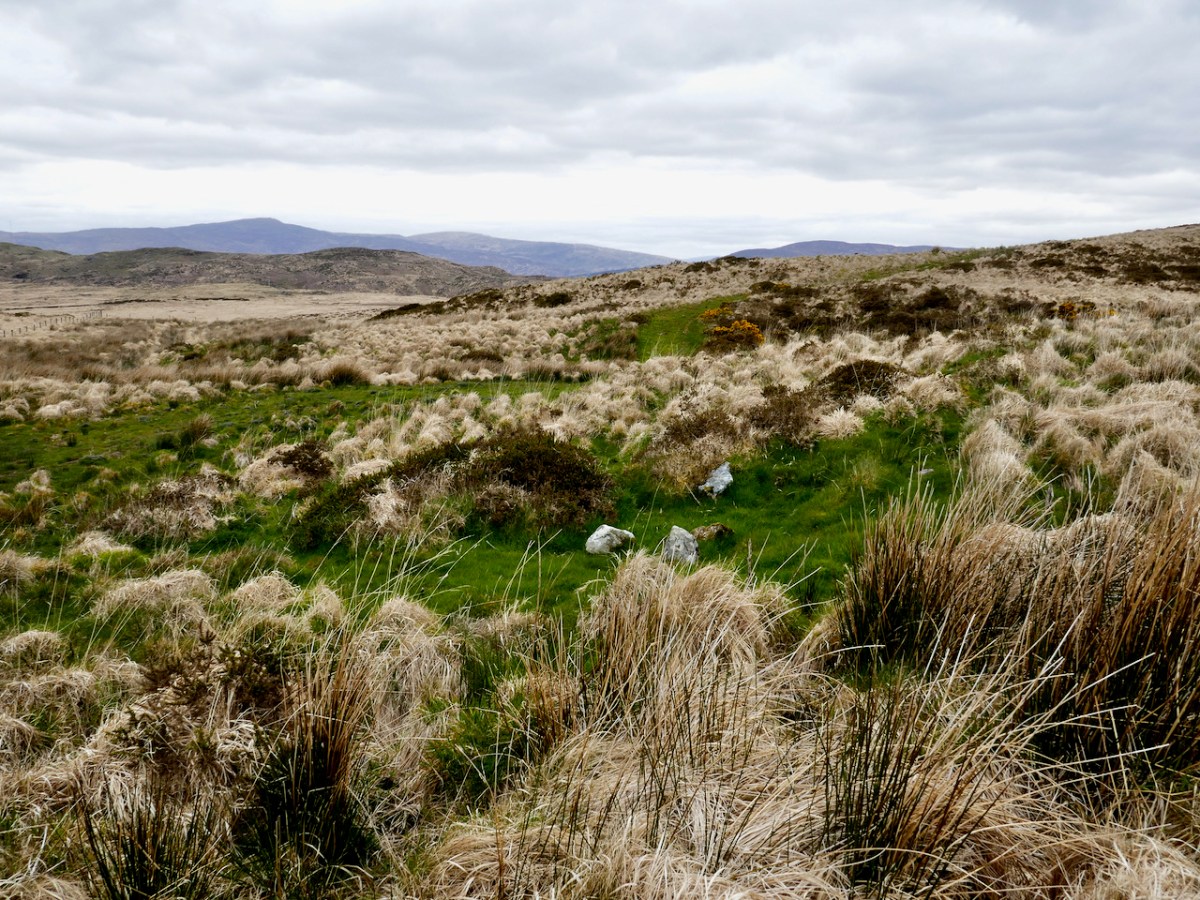
There are, in fact, only three stones remaining here. The largest stone is massive and of course there are all kind of alignment possibilities with arrangements like this. The closest counterpart to these four posters are to be found in Northern England and Scotland. There have been no excavations at four posters in Ireland but those few which have been dug in Britain yielded a Bronze Age range of dates.
We saw some other things along the way – a booley (above), a hedge school, a mass rock – and Robert wants to write in the future about one particular site, so I won’t deal with it here. The day was cold and crisp – but you hardly notice little things like freezing hands with a landscape like this to wander around in.
What a great day! Thank you, David, for being our tour guide and friend and we look forward to returning the favour soon.
Welcome to the UCD Library Cultural Heritage Collections blog. Discover and explore the historical treasures housed within our Archives, Special Collections, National Folklore Collection and Digital Library