The Down Survey

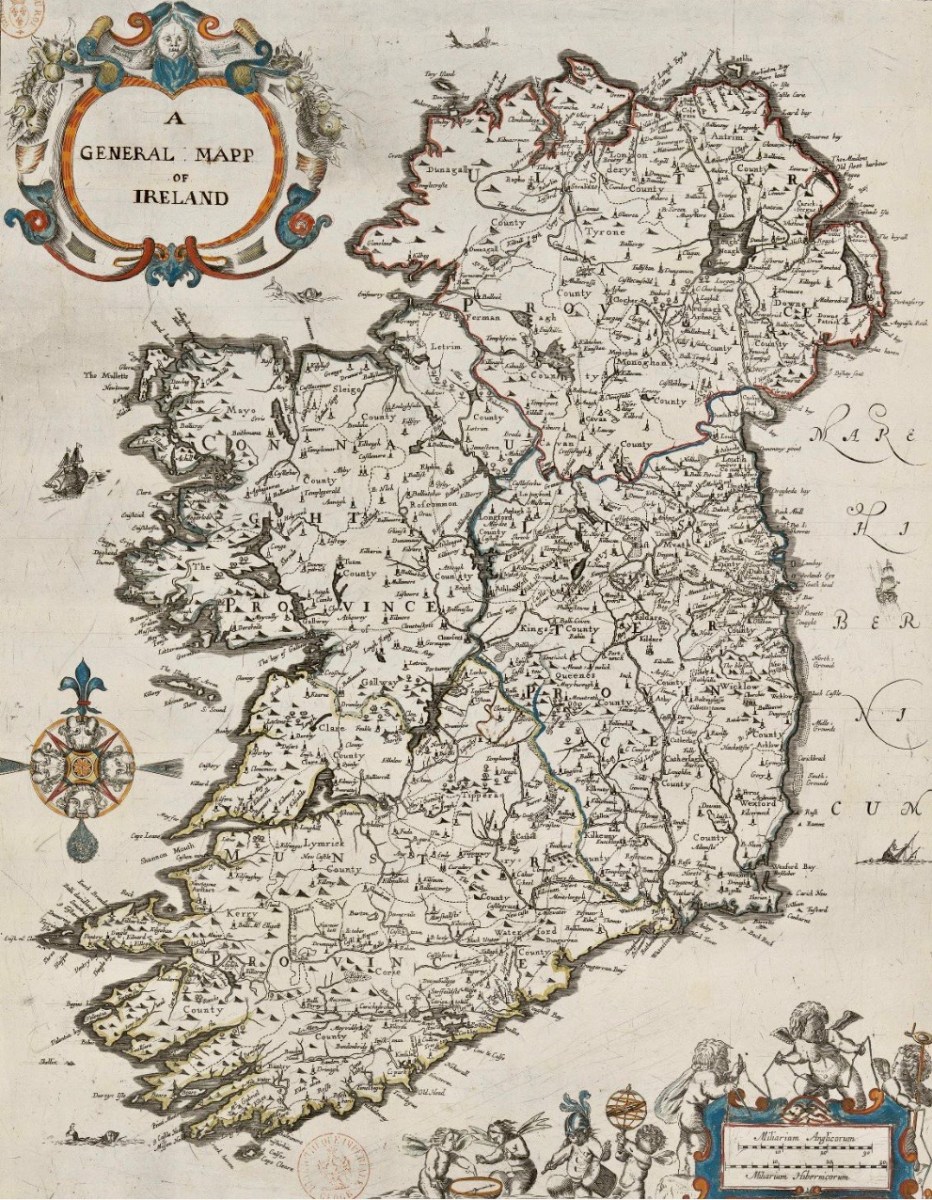
Here’s a fascinating title block. What are these cherubs doing? The couple on the left are excited about the operation of a magnetic compass; the little drummer is wearing a plumed helmet and has a decorated sash around his torso; cherub number 4 is bearing a spherical astrolabe, while the three on the right are actively engaged in surveying – using a Gunter’s Chain. This latter instrument – by the way – achieved, in the seventeenth century, something we seem to find tricky in our present day: the simple reconciling of imperial and metric measurements!

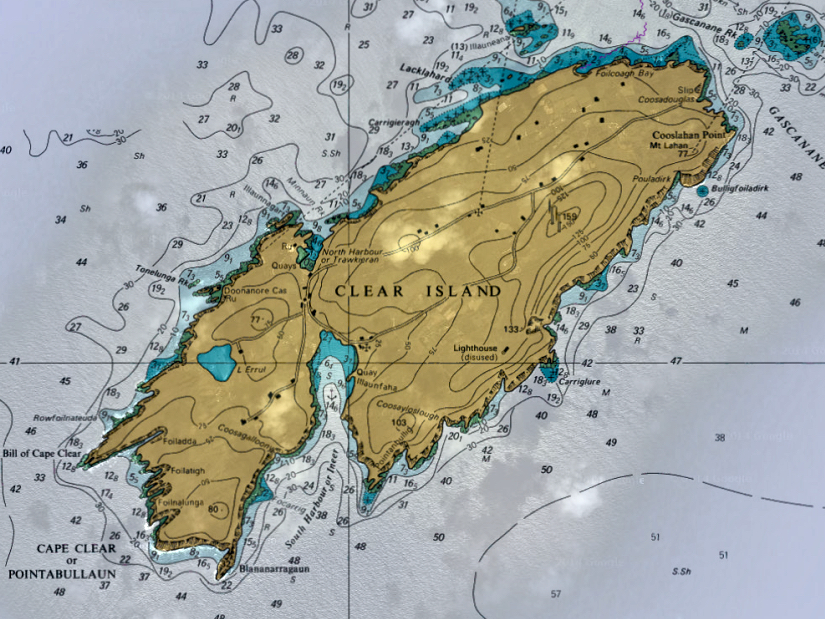
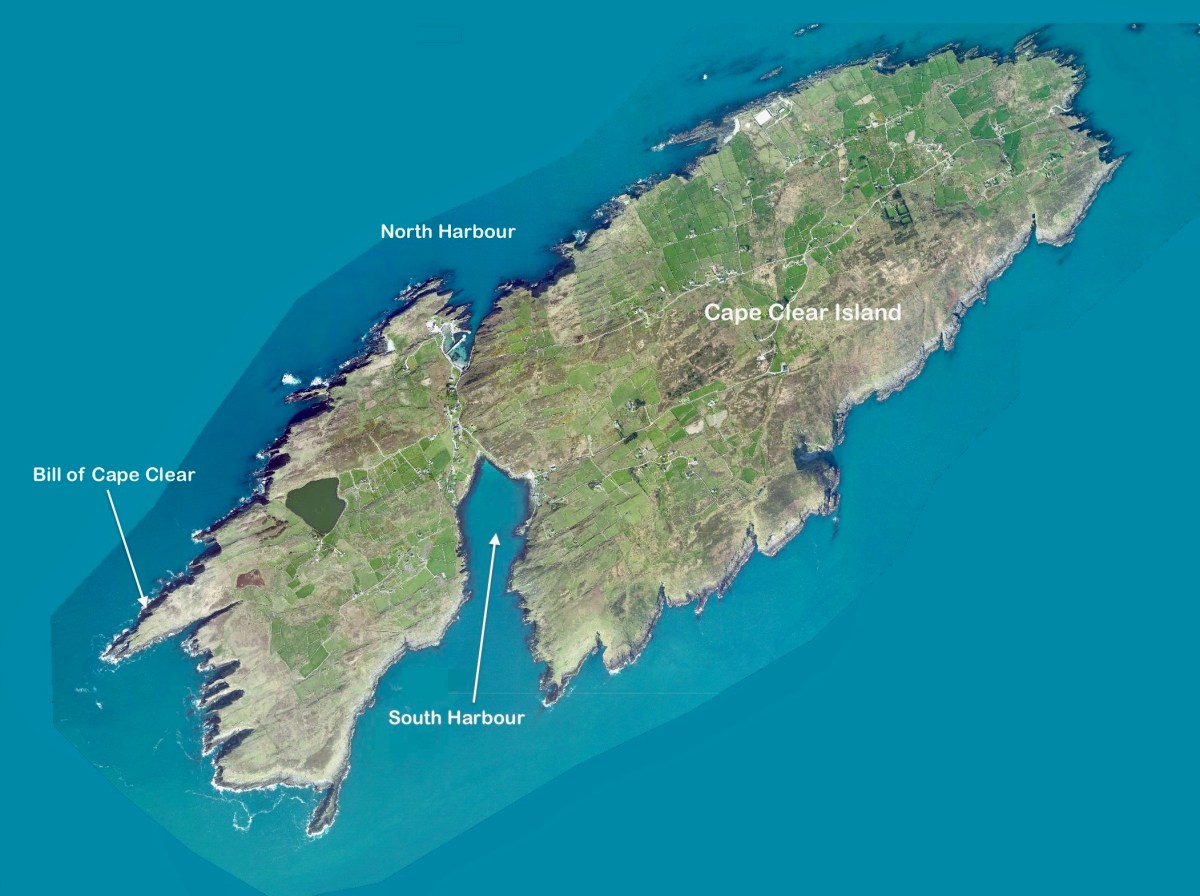
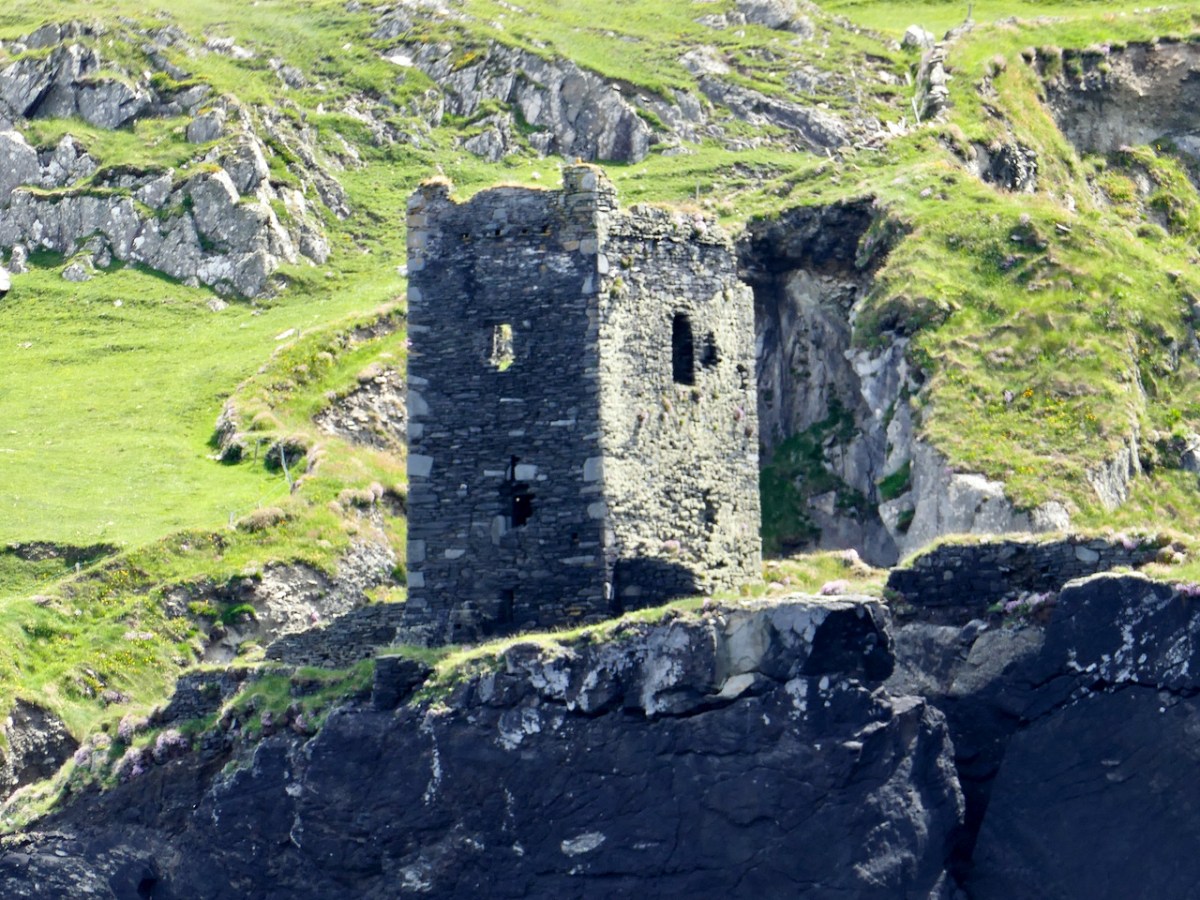
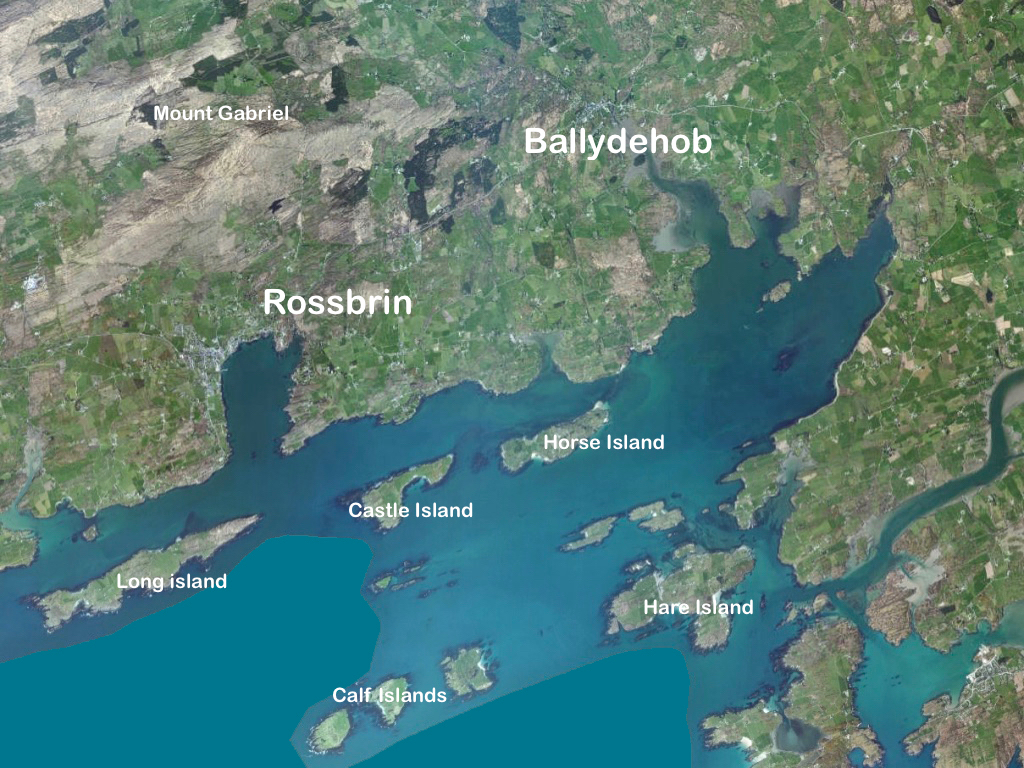
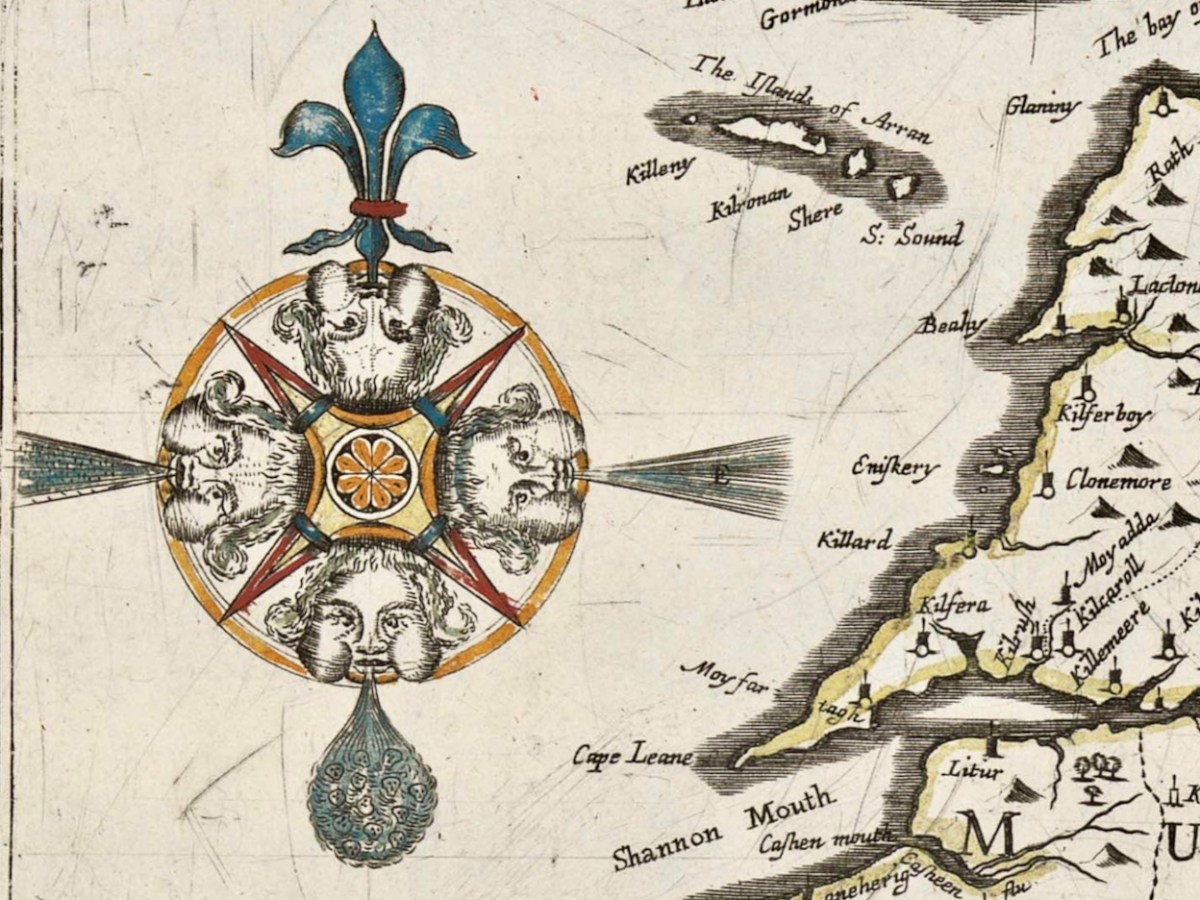
The cherub image, and the two above, adorn and decorate a remarkable document: the Down Survey map of Ireland. As this survey was ordered by Oliver Cromwell after an cogadh a chriochnaigh Éire (the war that finished Ireland) it seems strange that the north point of the compass is a fleur-de-lis: usually a symbol of the Virgin Mary. Cromwell himself was, of course, a Puritan and a Protestant and his actions in Ireland were aimed at subduing the rights and practices of Catholics, driving them ‘to Hell or Connaught’ – the poorest lands to the west of the Shannon river.

The decade following the Irish rebellion of 1641 witnessed a particularly turbulent period of warfare in Ireland between Catholic families and invaders from England, who were led by the dispossessed followers of the crown during the Civil War, which lasted through most of that period. The Act for the Settling of Ireland (1652) imposed penalties including death and land confiscation against Irish civilians and combatants after the Irish Rebellion and subsequent unrest. British historian John Morrill wrote that the Act and associated forced movements represented …perhaps the greatest exercise in ethnic cleansing in early modern Europe…

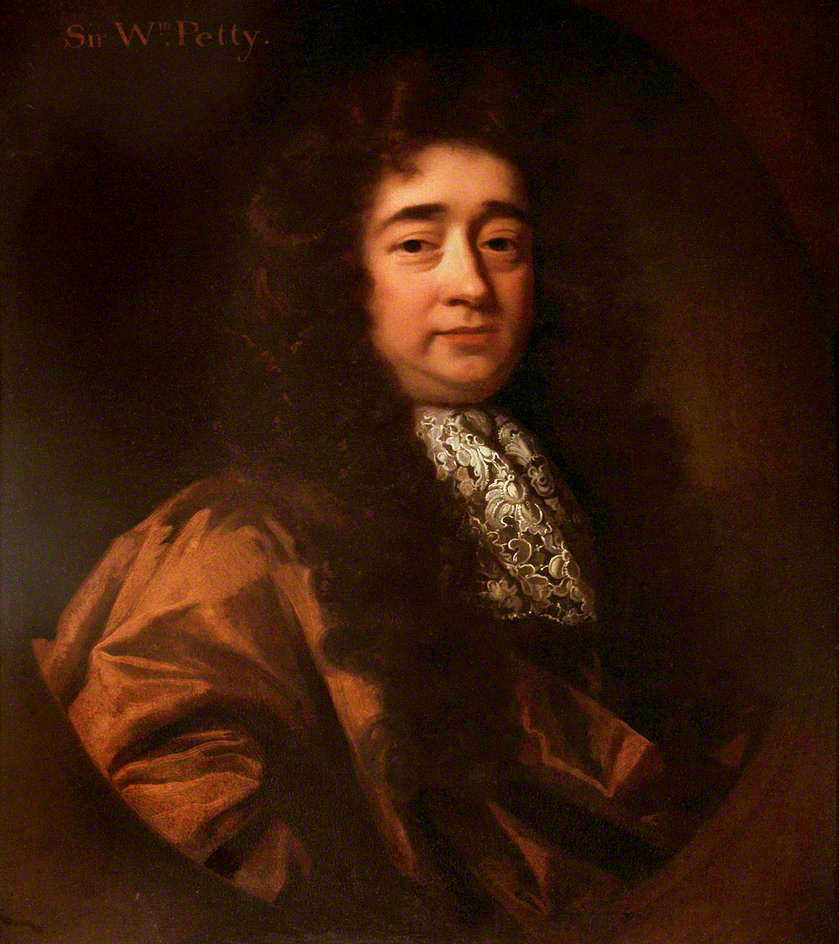
Sir William Petty – in charge of the Down Survey. Portrait by Godfrey Kneller, courtesy Romsey Town Council.
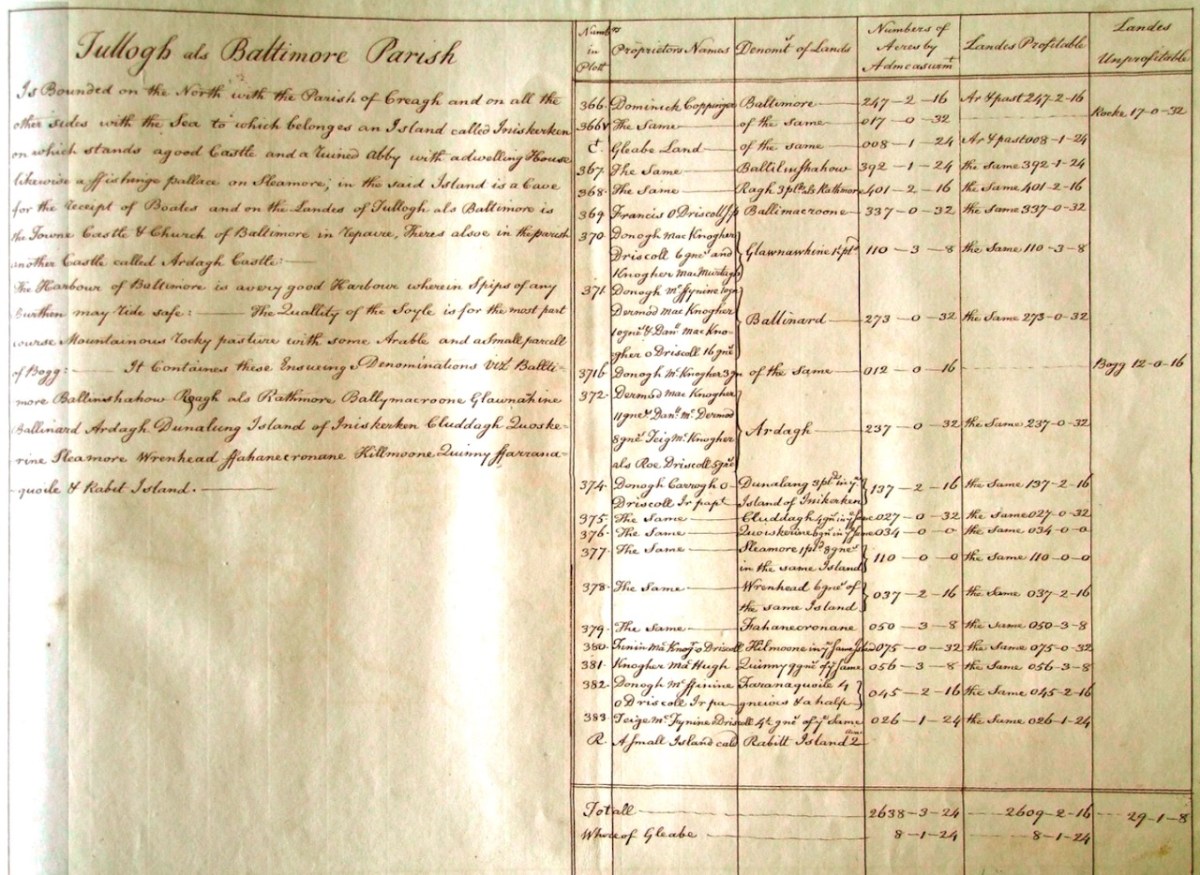
. . . Taken in the years 1656-1658, the Down Survey of Ireland is the first ever detailed land survey on a national scale anywhere in the world. The survey sought to measure all the land to be forfeited by the Catholic Irish in order to facilitate its redistribution to Merchant Adventurers and English soldiers. Copies of these maps have survived in dozens of libraries and archives throughout Ireland and Britain, as well as in the National Library of France. This Project has brought together for the first time in over 300 years all the surviving maps, digitised them and made them available as a public online resource . . .
http://downsurvey.tcd.ie/

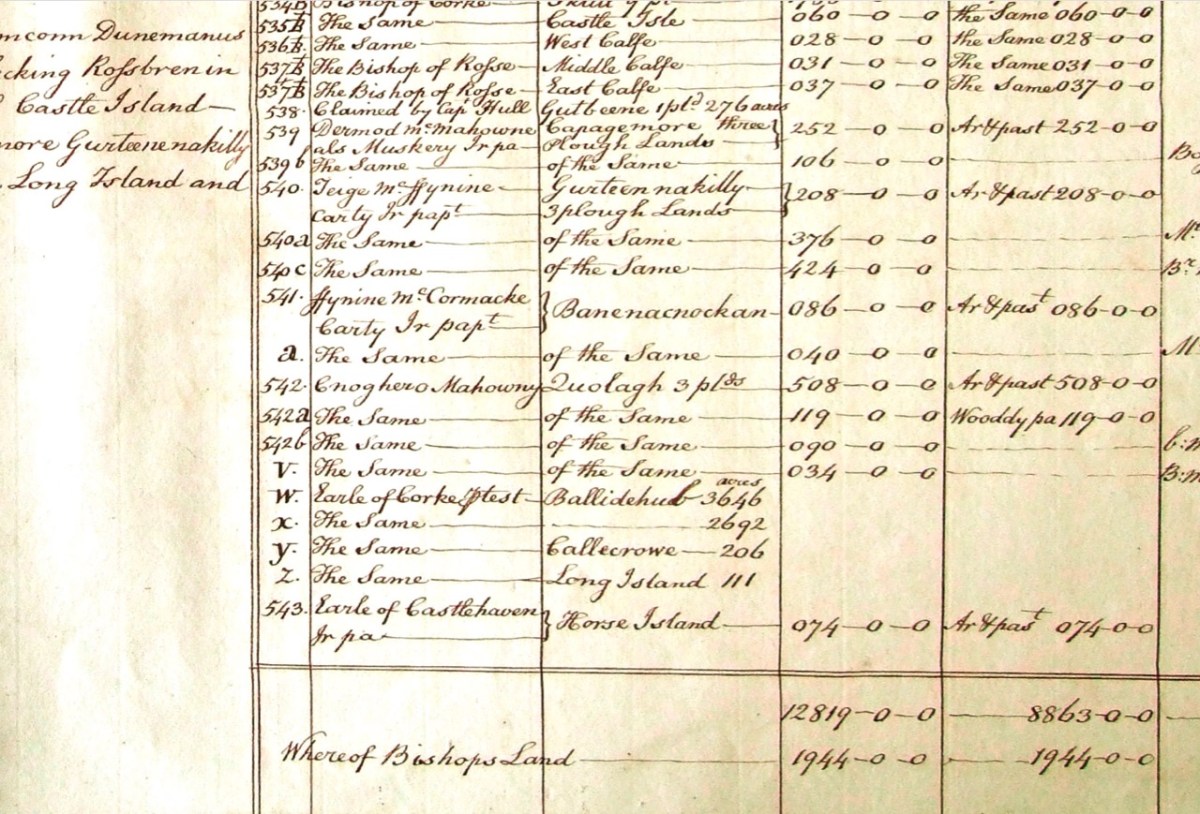
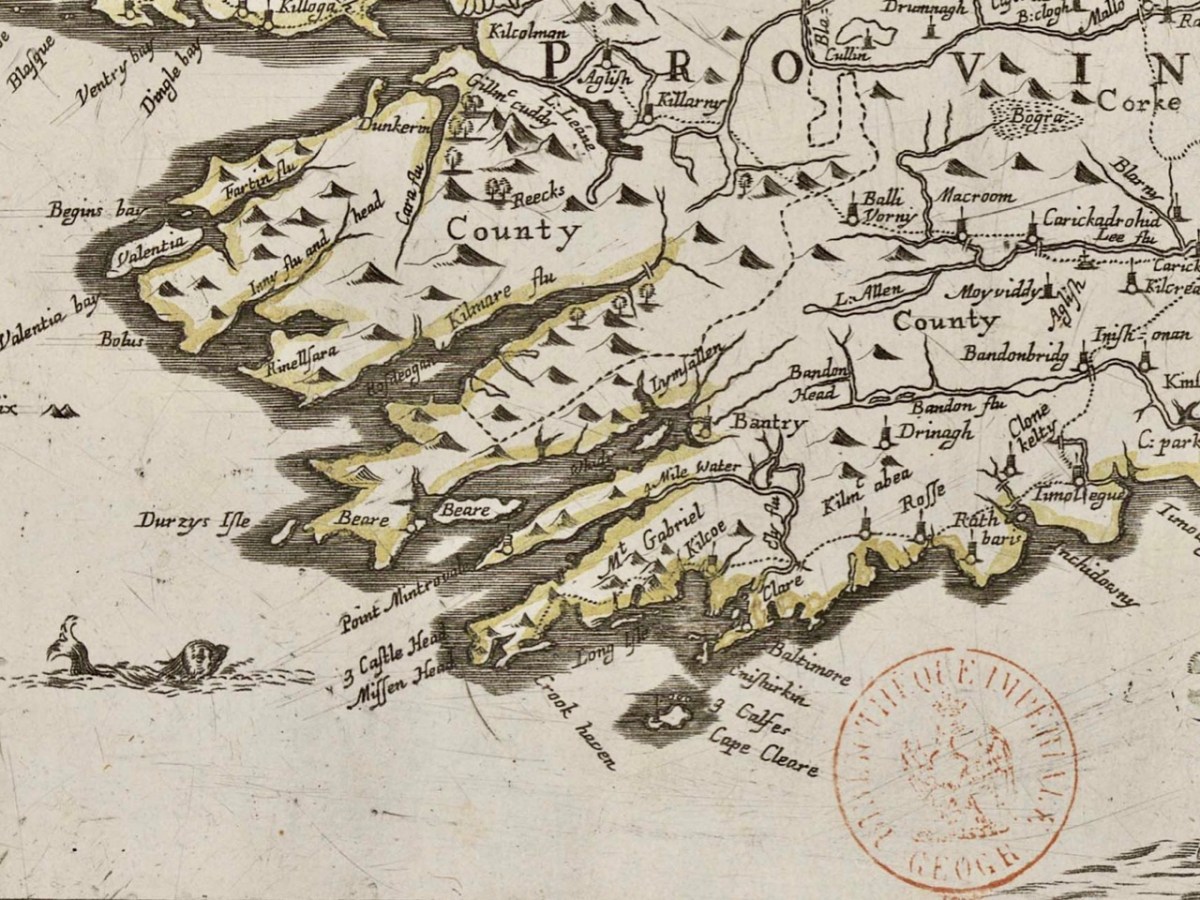
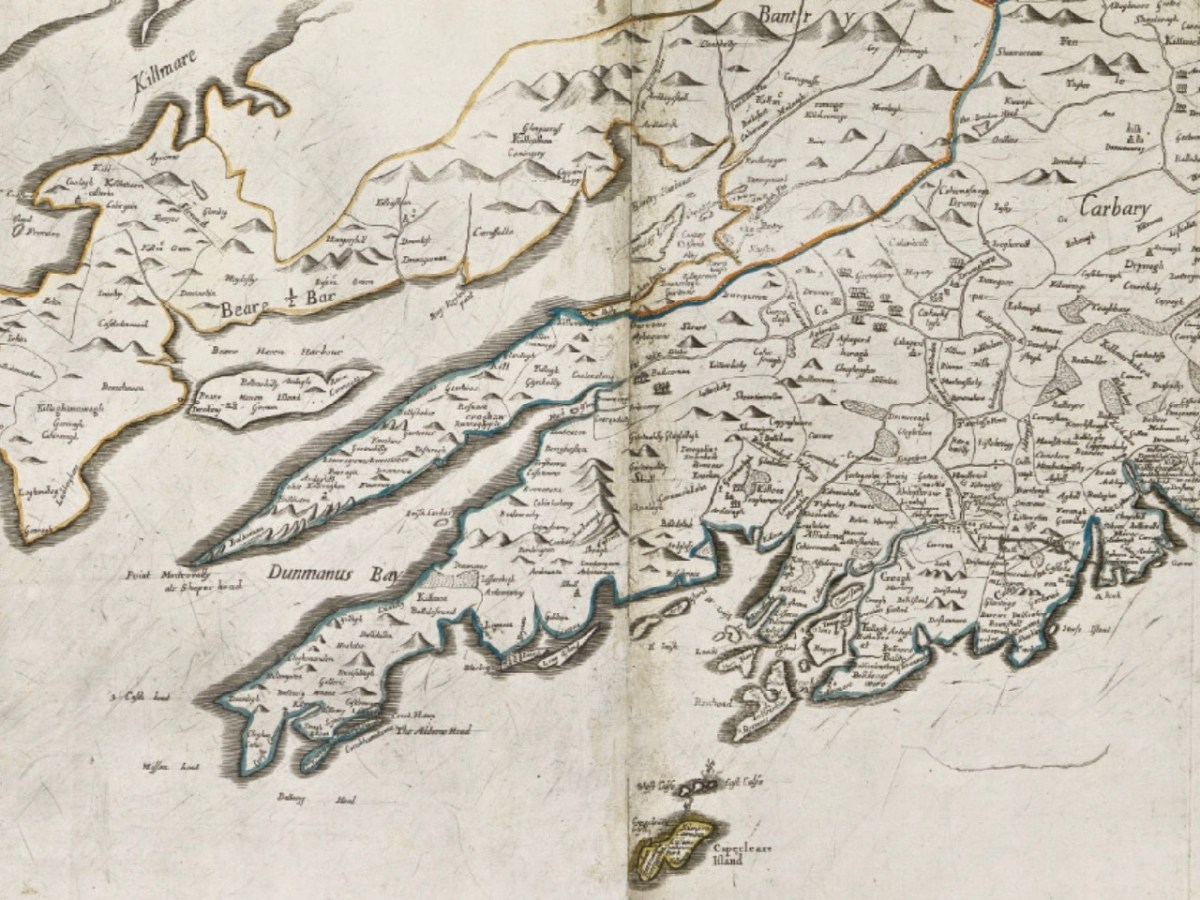
We are very fortunate to be able to freely access – through the internet – this website which contains all available copies of the surviving Down Survey maps, together with written descriptions (terriers) of each barony and parish that accompanied the original maps. These bring out for us very detailed information on what the surveyors recorded in Ireland three and a half centuries ago.

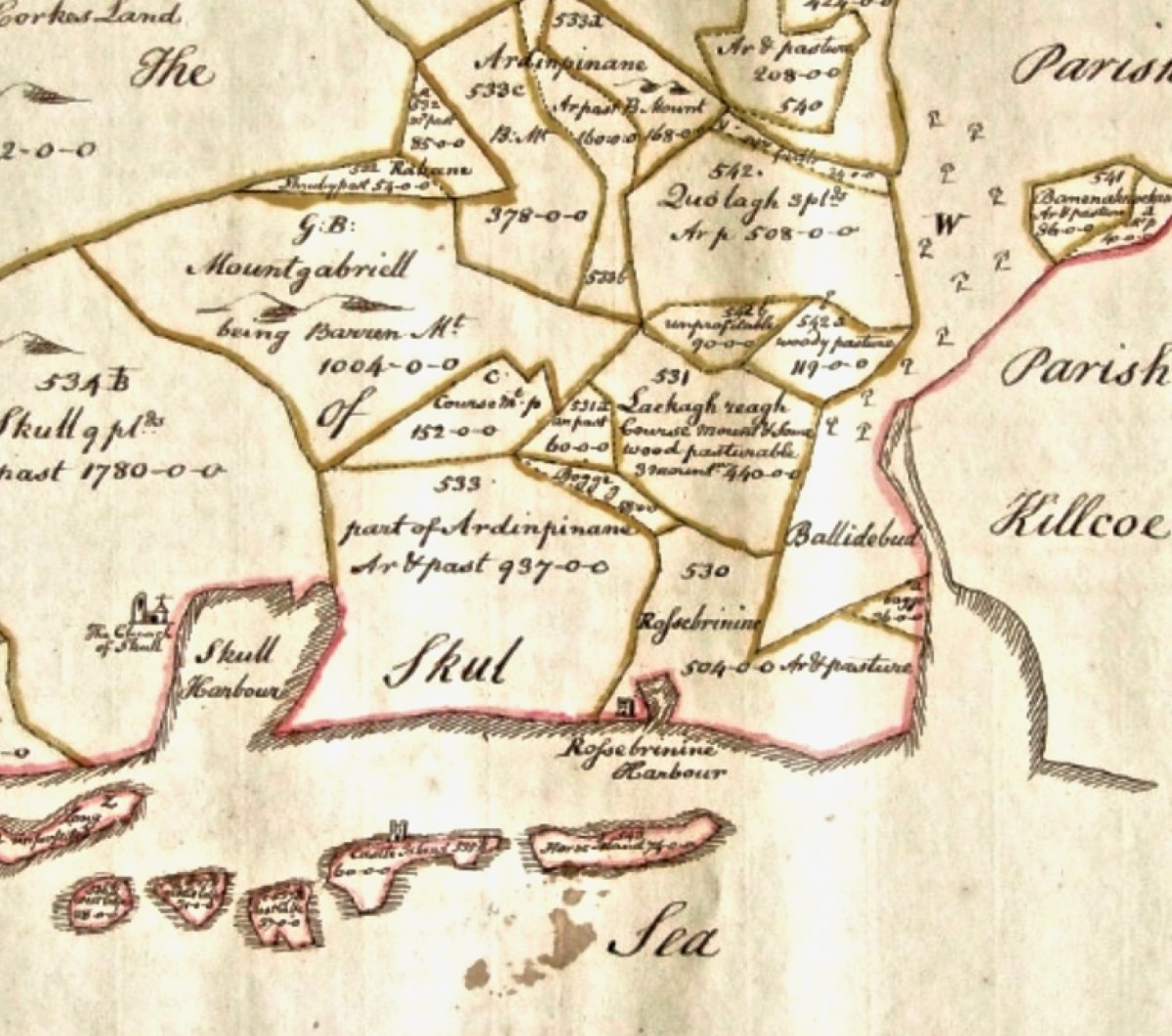
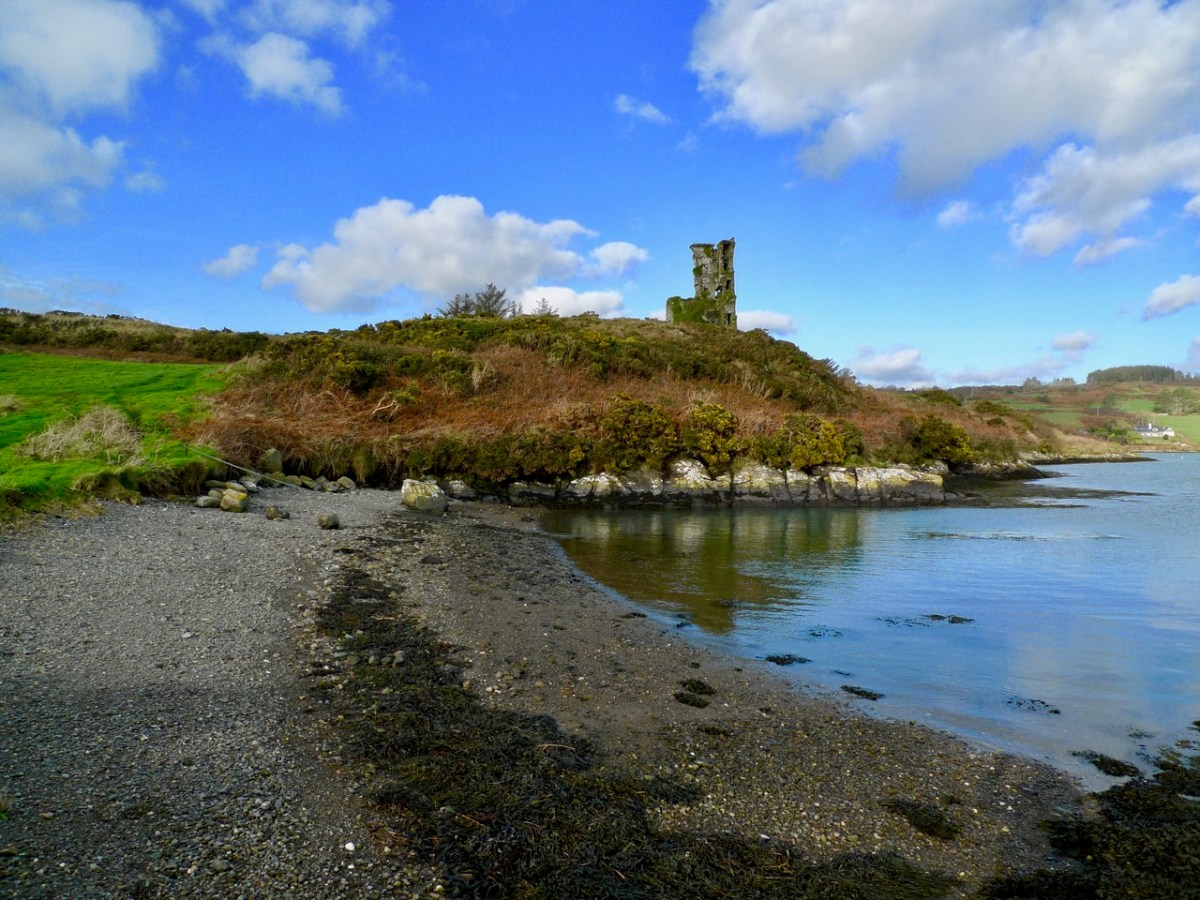
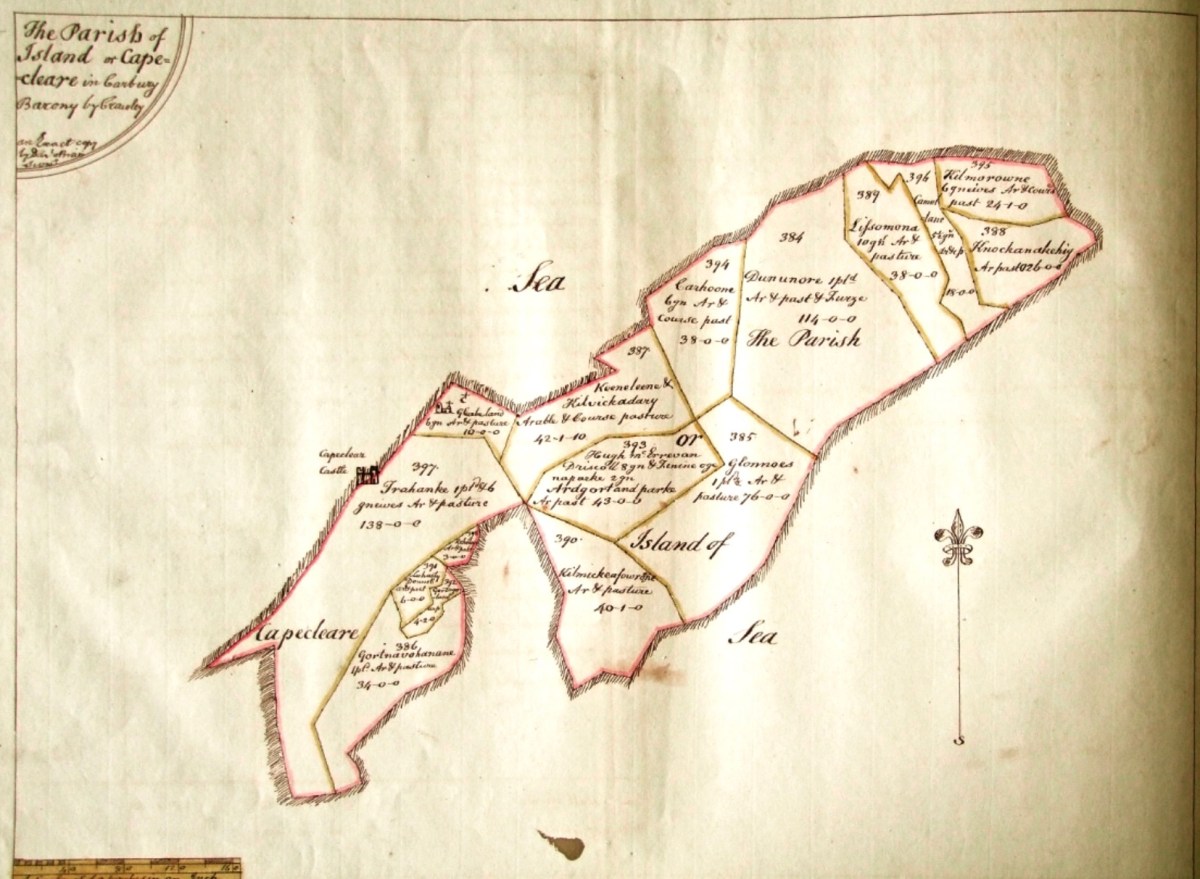
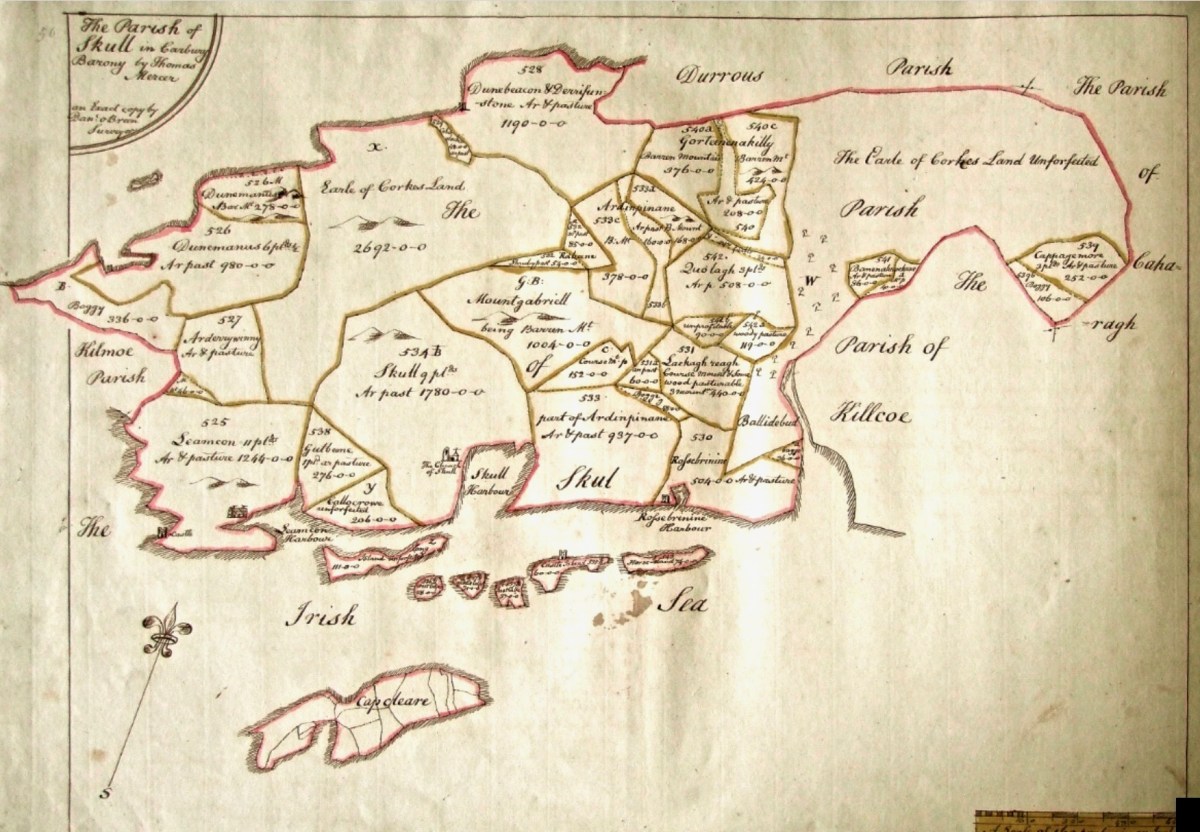
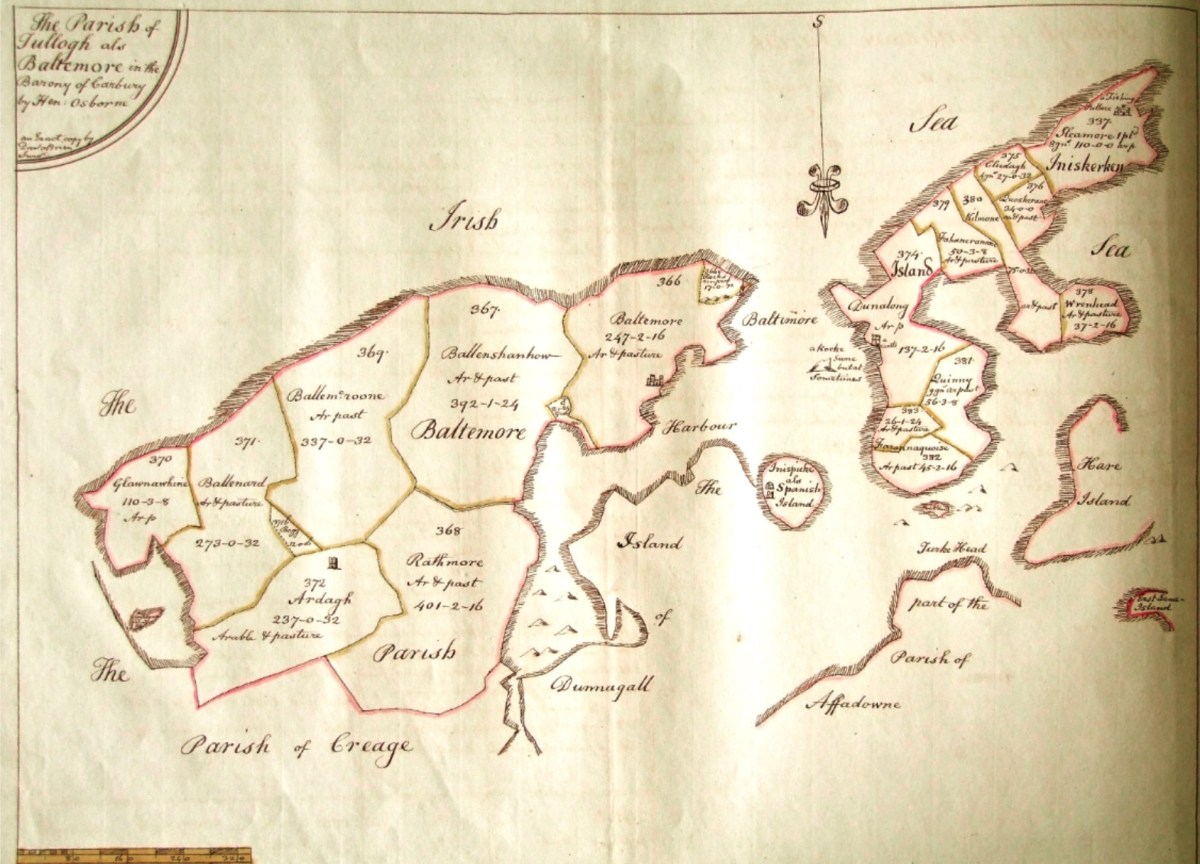
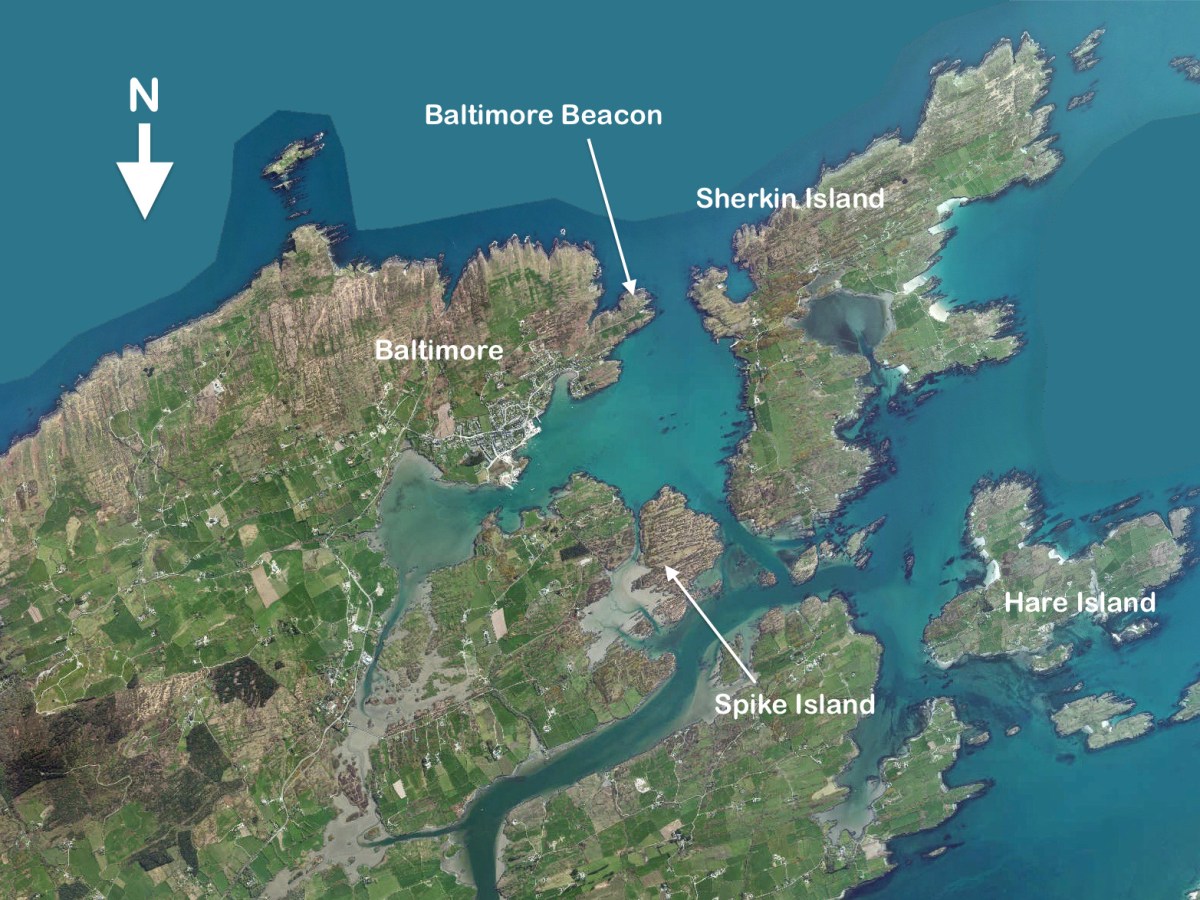
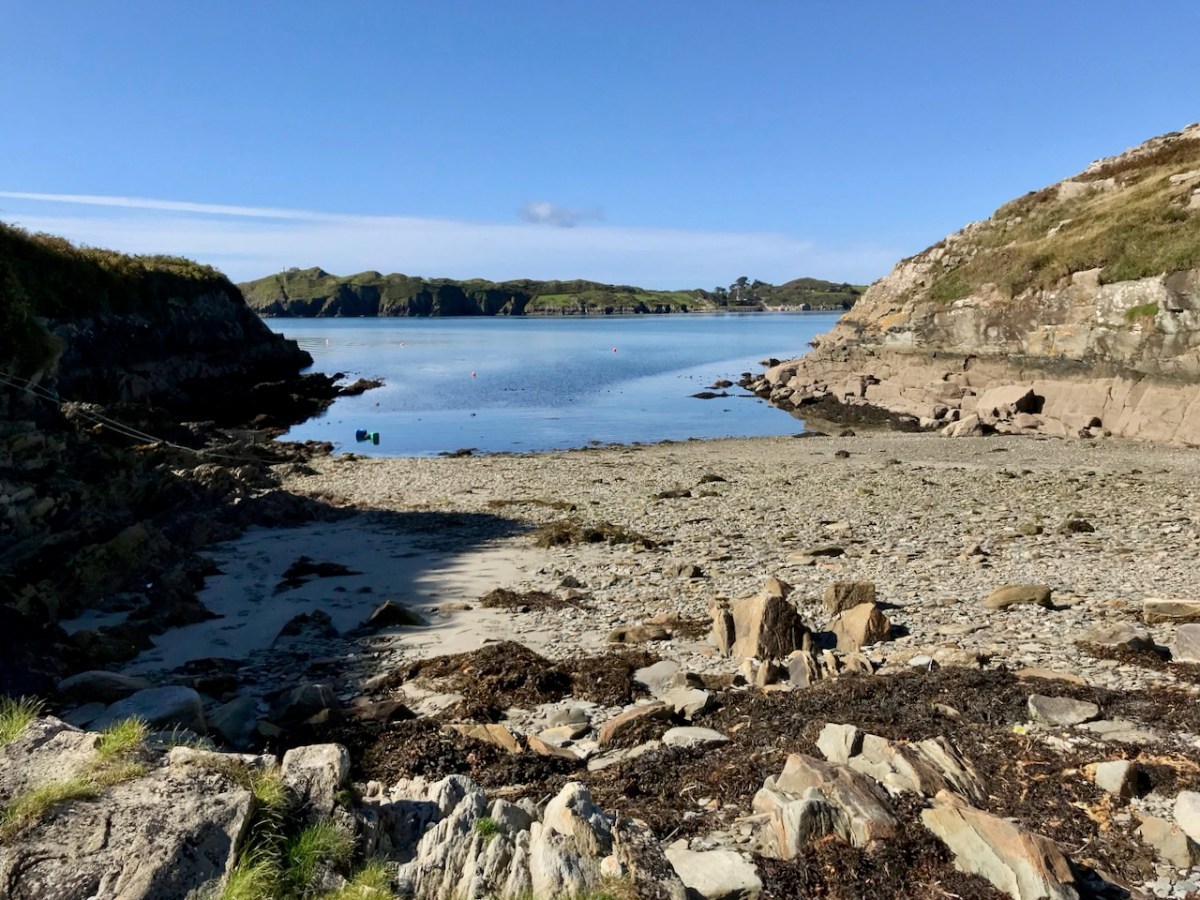
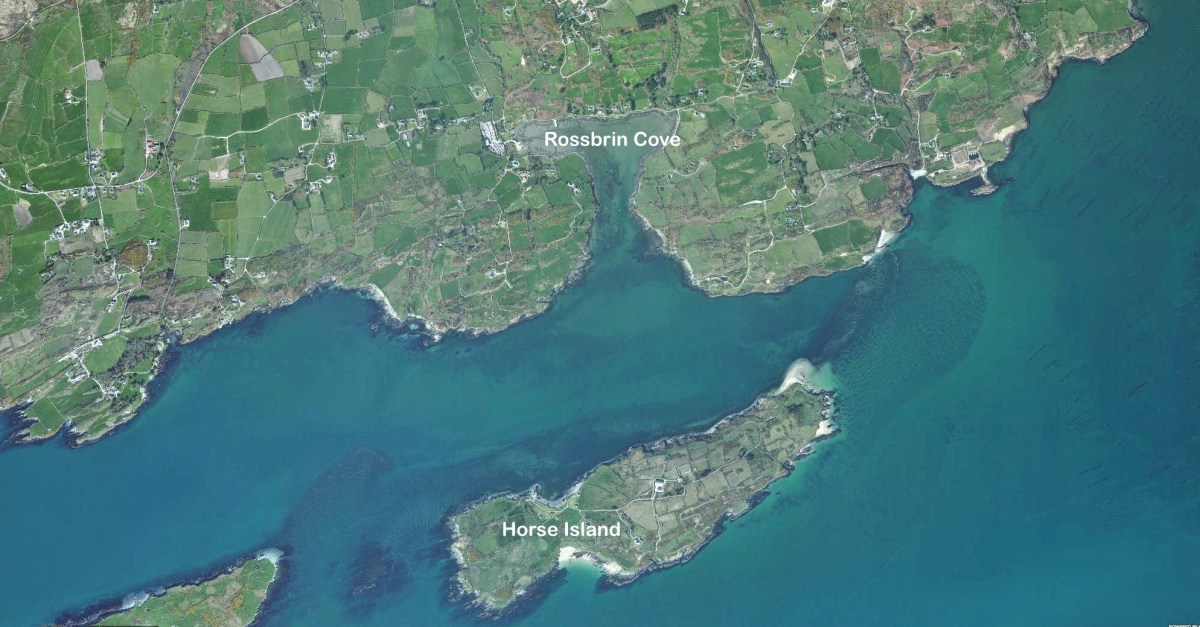
Examples from map extracts, showing the quality of reproduction which can be obtained from the site. These show our own West Cork, with local names that have a familiar ring: Ballidehub, Skull, Rofsbrinie, Affadonna. Having discovered this resource, we know this site will be invaluable in our history researches. Look out for my next post exploring the fine detail of the survey.

The Politics of Peat

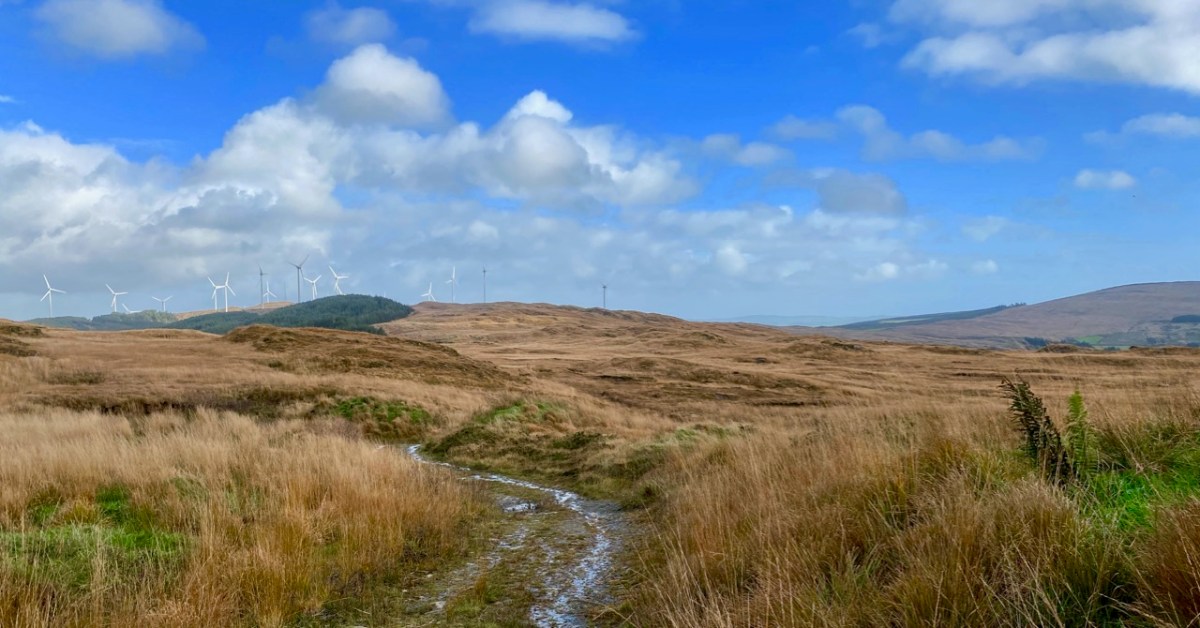
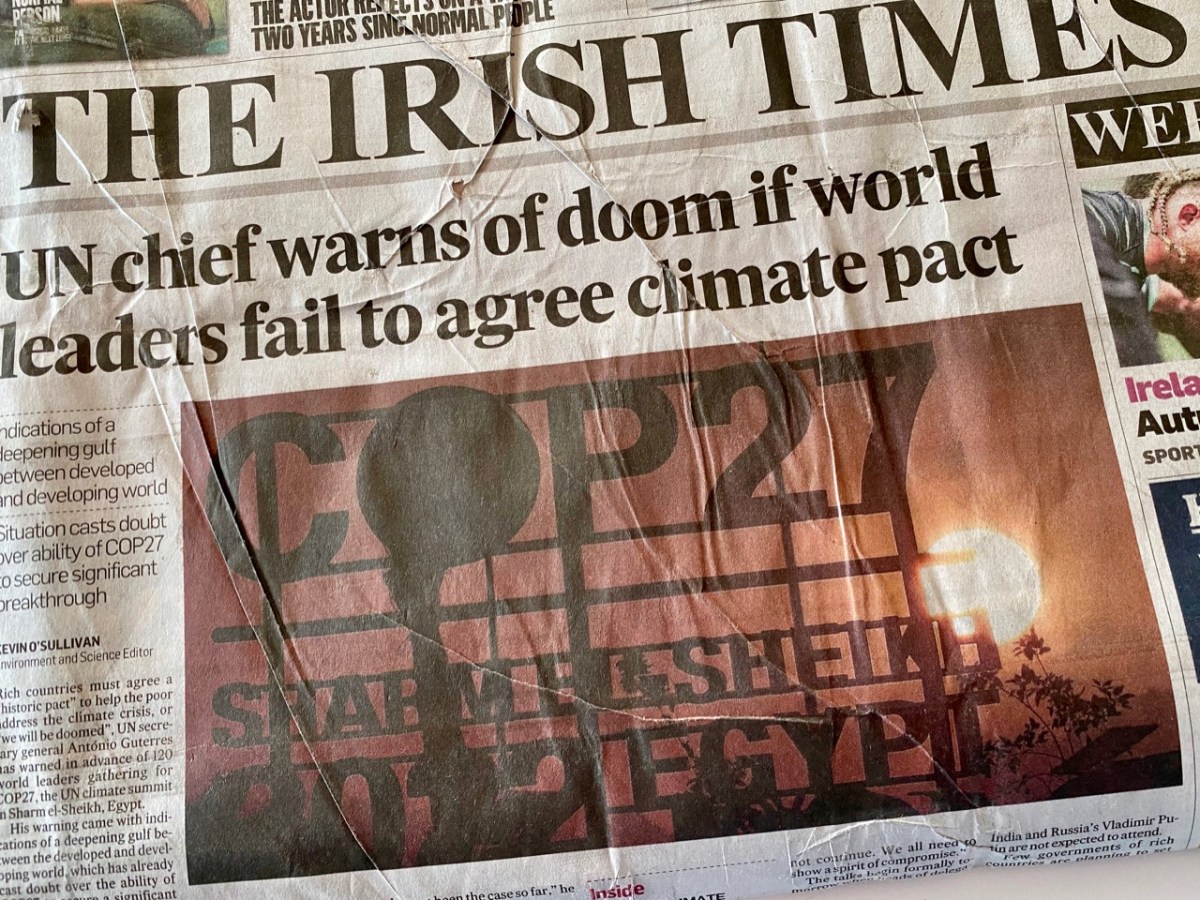
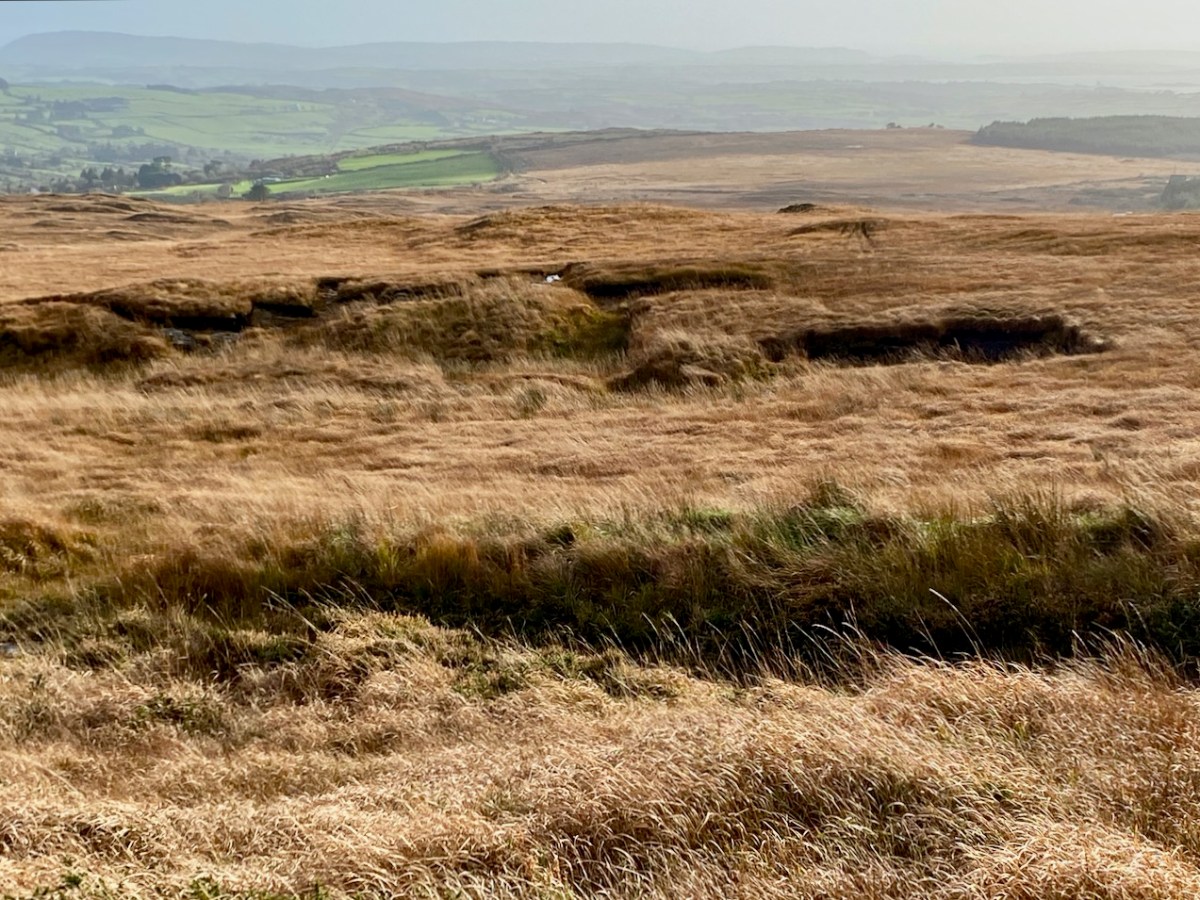
It’s a poignant juxtaposition, perhaps: the old turf road that leads into the peat cuttings at Letterlickey, here in West Cork, with – beyond – our newest energy technology lining the distant hills. On October 31st this year, the sale of turf, smoky coal, and wet wood in shops or online was banned in Ireland as part of the drive to improve our climate.

The move marks the loss of an ancient tradition in Ireland. ‘Turf’ – or peat – has been harvested from our bogs for countless generations. But it’s a resource that can’t be readily renewed. It’s also relatively inefficient: the gruelling labour required to cut, dry, store and transport turf on a domestic scale is hardly justified by the output of heat which it provides. However, such work has been deeply ingrained in family life for centuries by those who have always accessed the bogs. The word ‘bog’ derives from the Irish bógach, or “soft place,” and 17 percent of Ireland’s 27,000-square-mile national territory was originally covered in peatland. Commercial extraction, however, has significantly diminished this resource. What has been realised – in comparatively recent times – is that peatlands, including bogs, store twice as much carbon as all the world’s forests – if left intact.

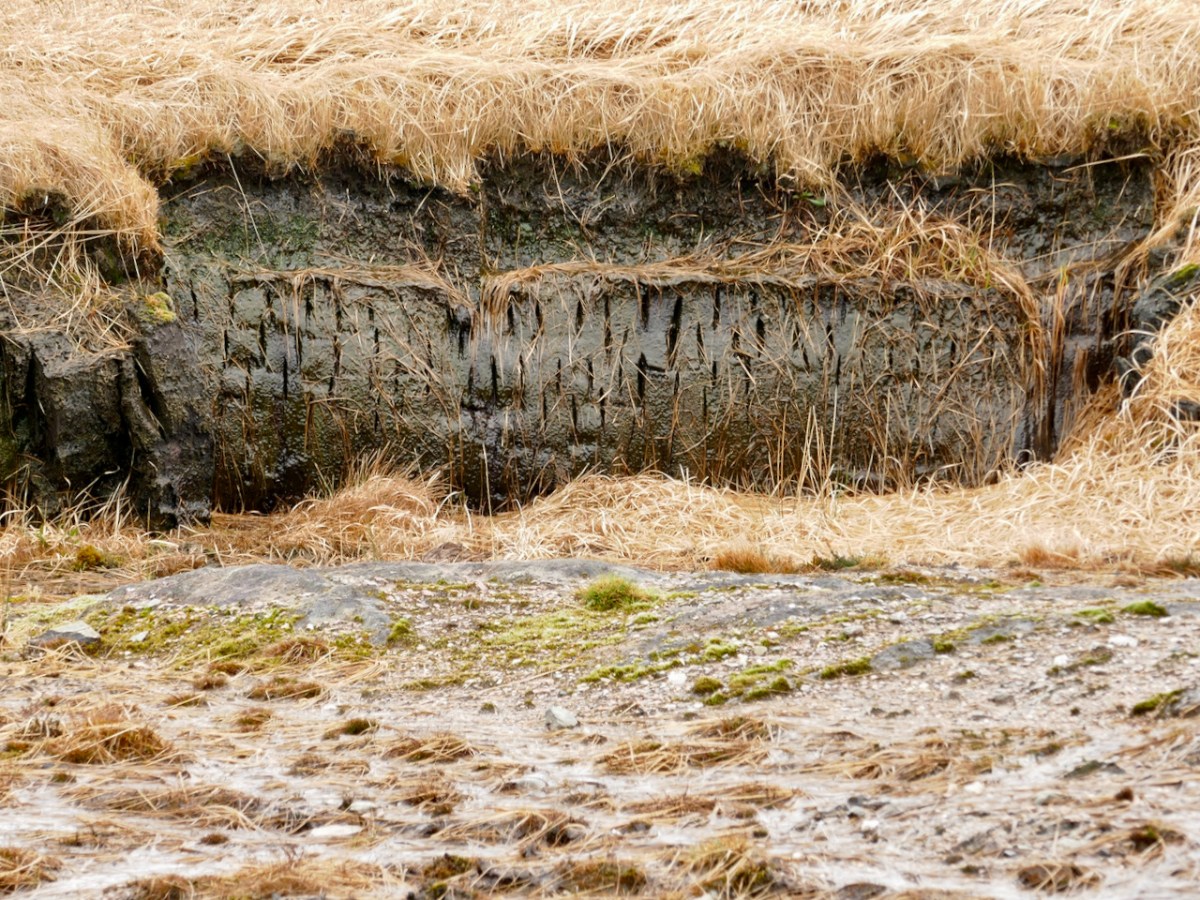
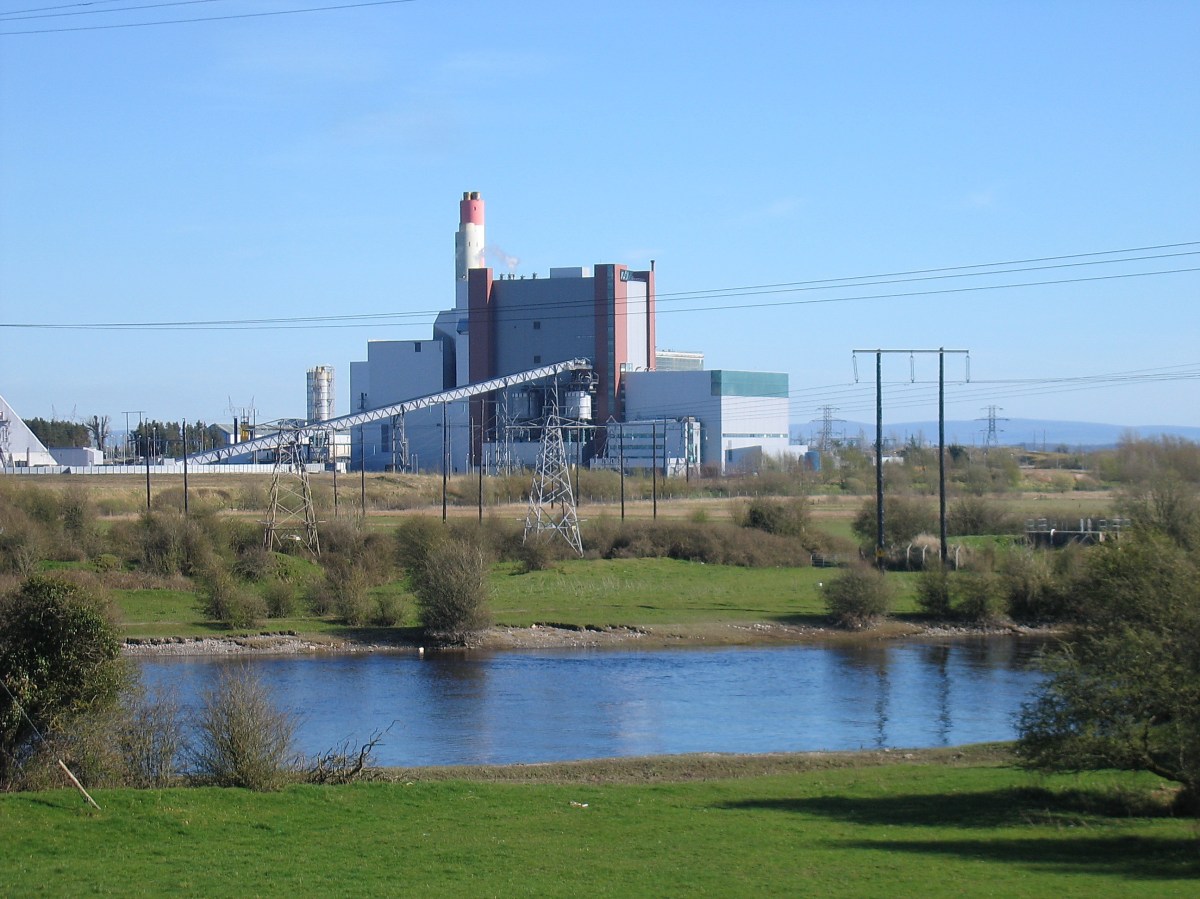
The turf workings at Letterlickey: the significant and ancient bog there has been in use in very recent times – perhaps it still is active. The new ban doesn’t prevent families who have always had turf-cutting rights from continuing to gather it for their own use. But all commercial peat extraction has now ended. It’s a sobering thought that electricity was generated by peat-fired power stations in Ireland for many years: ‘peat power’ peaked in the 1960s, providing 40% of Ireland’s electricity. But burning peat for electricity emits more carbon dioxide than coal, and nearly twice as much as natural gas. In 2016, peat generated nearly 8% of Ireland’s electricity, but was responsible for 20% of that sector’s carbon emissions. Today all of the peat-fired powers stations here have been closed. The West Offaly power station at Shannonbridge (below) was the largest in Ireland: it shut down in December 2020.

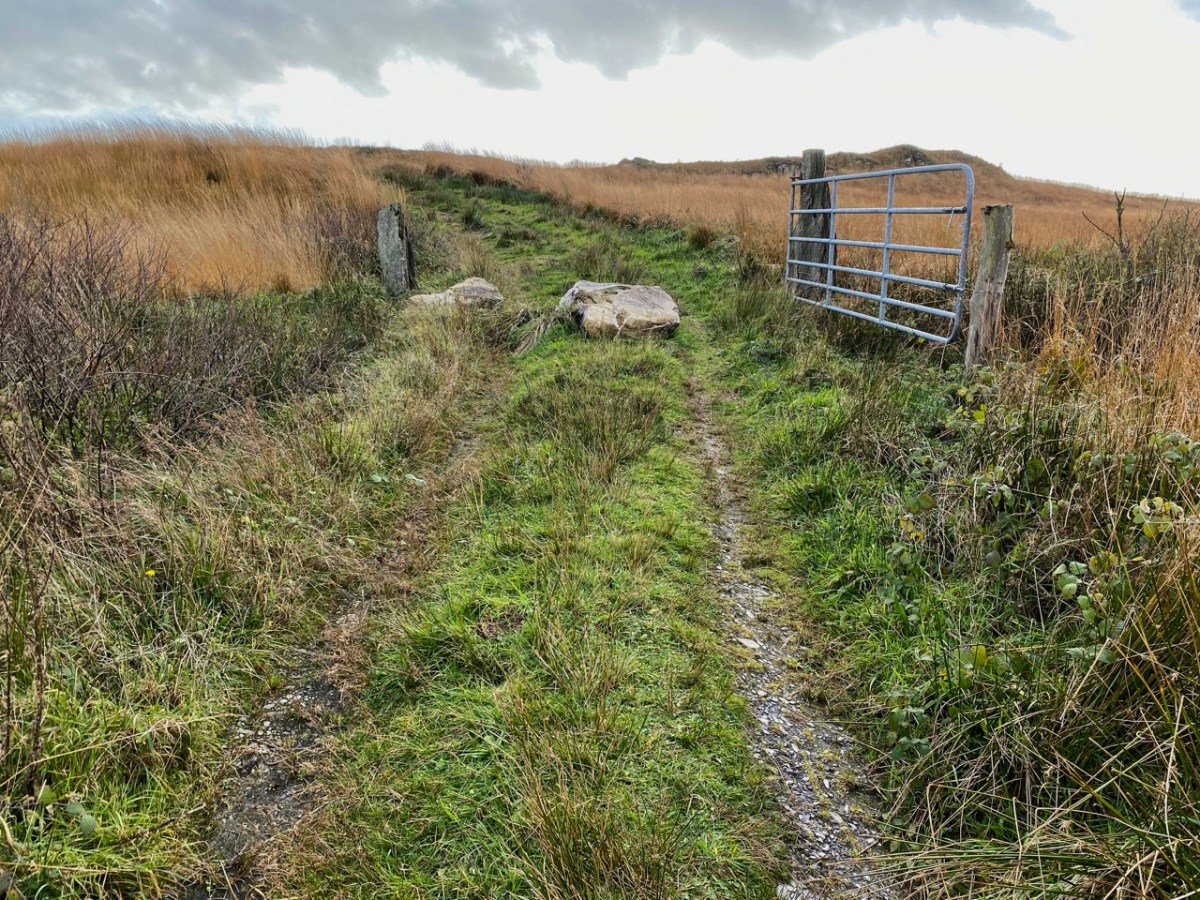
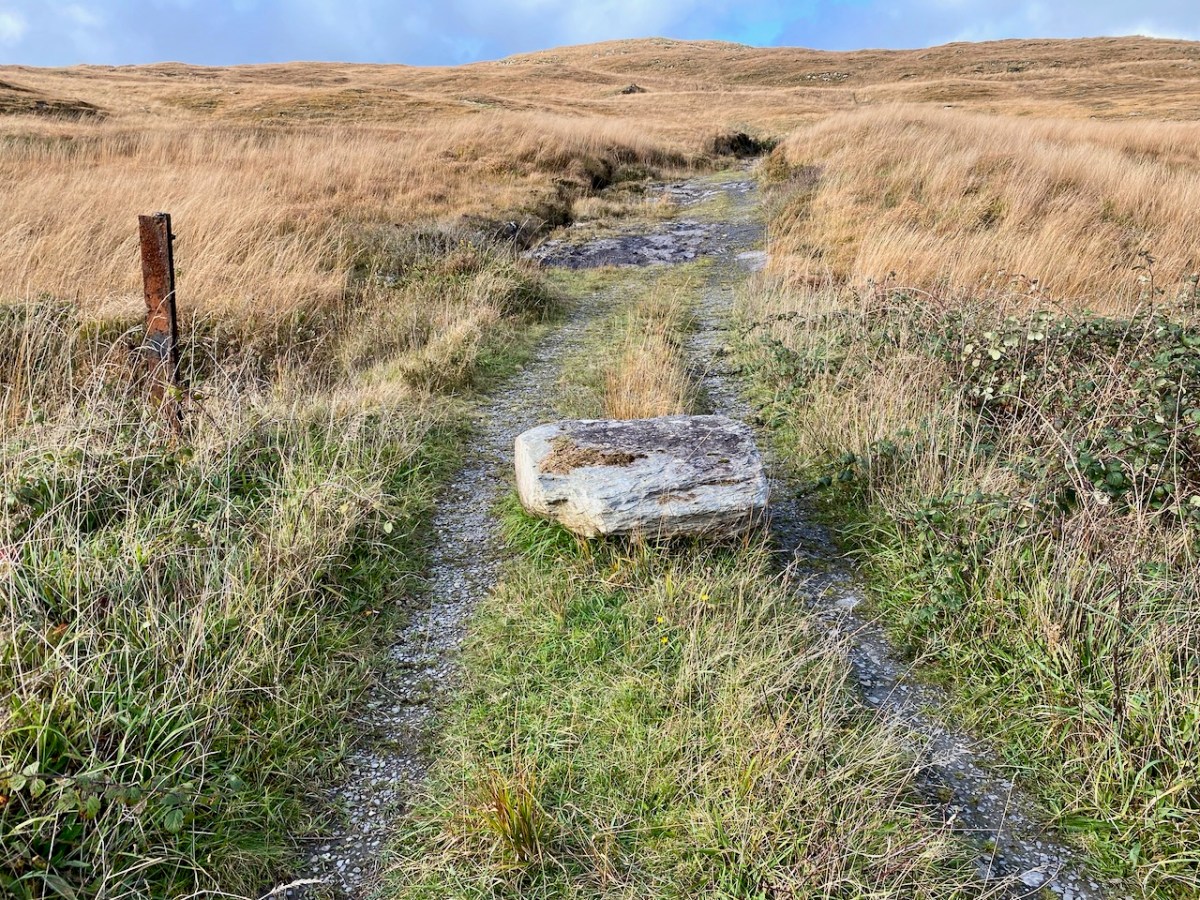
We are witnessing the end of an era here in Ireland. At the same time we are embracing the search for new technologies: we are harnessing the wind – that will never stop blowing! PV cells are now commonplace, and we know that it’s likely we will mostly be driving electric cars as the decade advances. Other ways forward are still waiting in the wings. We were interested to see – when we were walking the Letterlickey turf road yesterday – that the trackway has been deliberately blocked by large boulders:

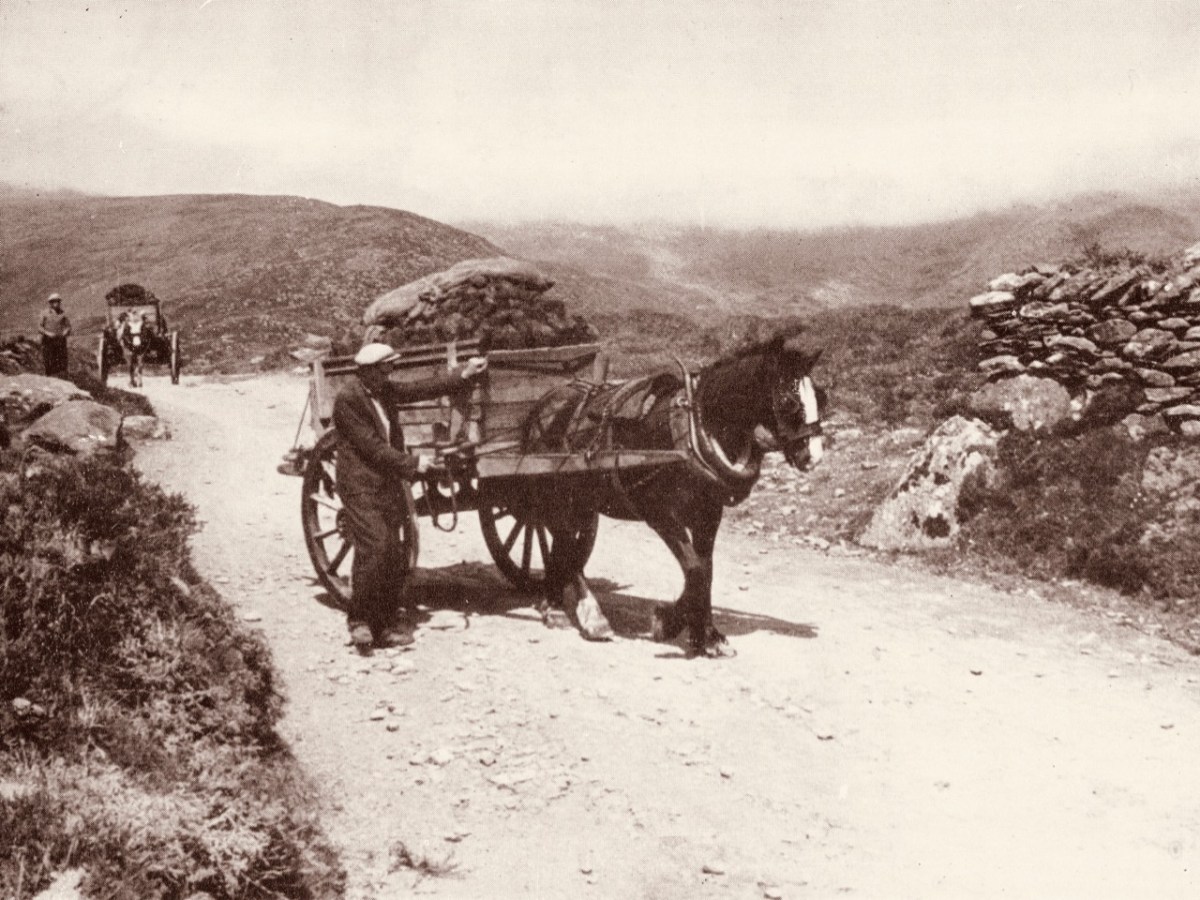
These blockages have been put in place since we last visited – and, probably, fairly recently. There could be local access issues: we don’t know. It could be to do with neighbours or trespassing, but it’s also possible that current political preoccupations are being practically addressed. It’s certainly interesting that significant moves are under way since the importance of peat bog preservation as carbon sinks has been fully understood. ‘Bringing home the turf’ will soon become a solely historical concept. The image below is by Tomás Ó Muircheartaigh:

“. . . Ireland has more than half the European Union’s remaining area of a type of peatland known as raised bog, one of the world’s rarest habitats and, scientists say, the most effective land form on earth for sequestering carbon . . .”

New York Times 04/10/2022

Spooky!

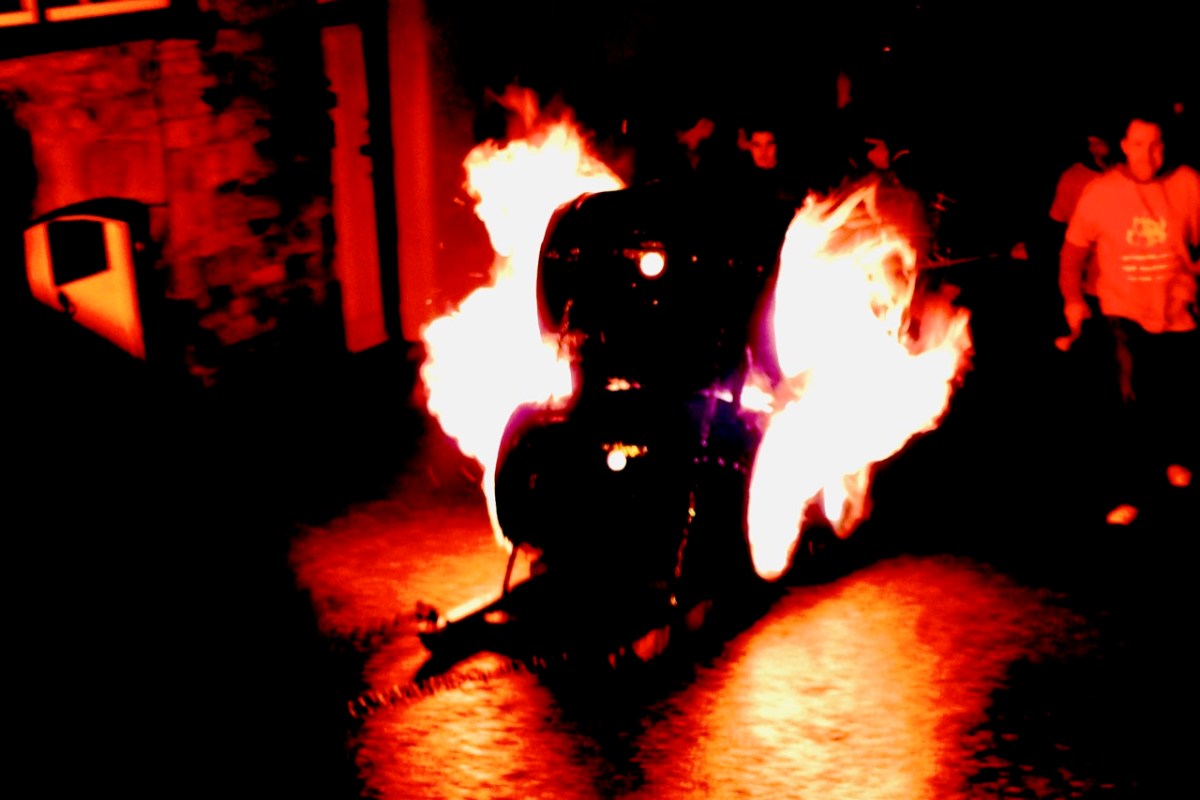
It’s Hallowe’en. When I lived in Devon, England, in my younger days, we didn’t know the meaning of the word. We certainly celebrated the coming of the dark time of the year, but there the story was all about Guy Fawkes, the ‘Gunpowder Plot’, bonfires and fireworks. Here’s a pic I retrieved from my old files: Hatherleigh, Devon, around the beginning of November. Huge barrels were soaked in tar, set alight, and pulled down the very steep hill that runs through the town at dawn and dusk. It was certainly scary – but not Spooky!

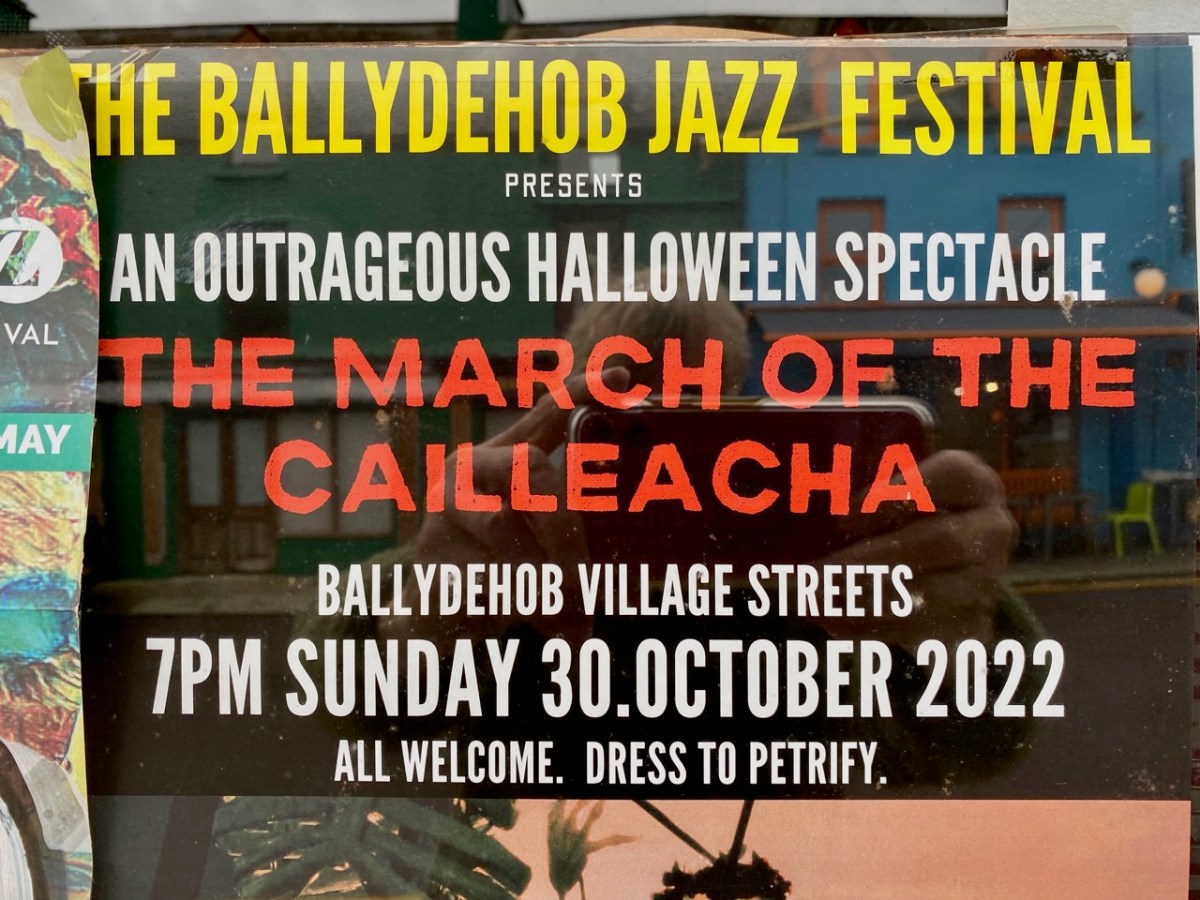
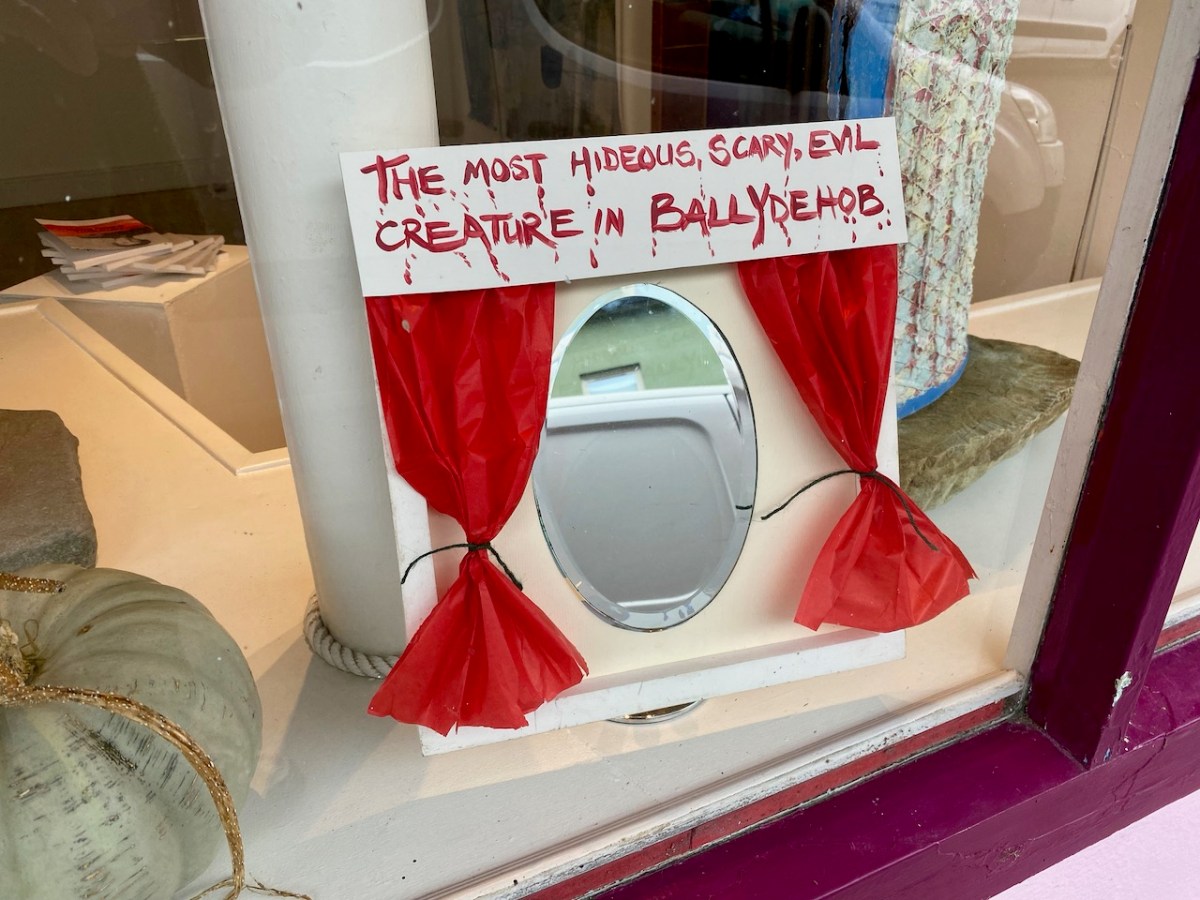
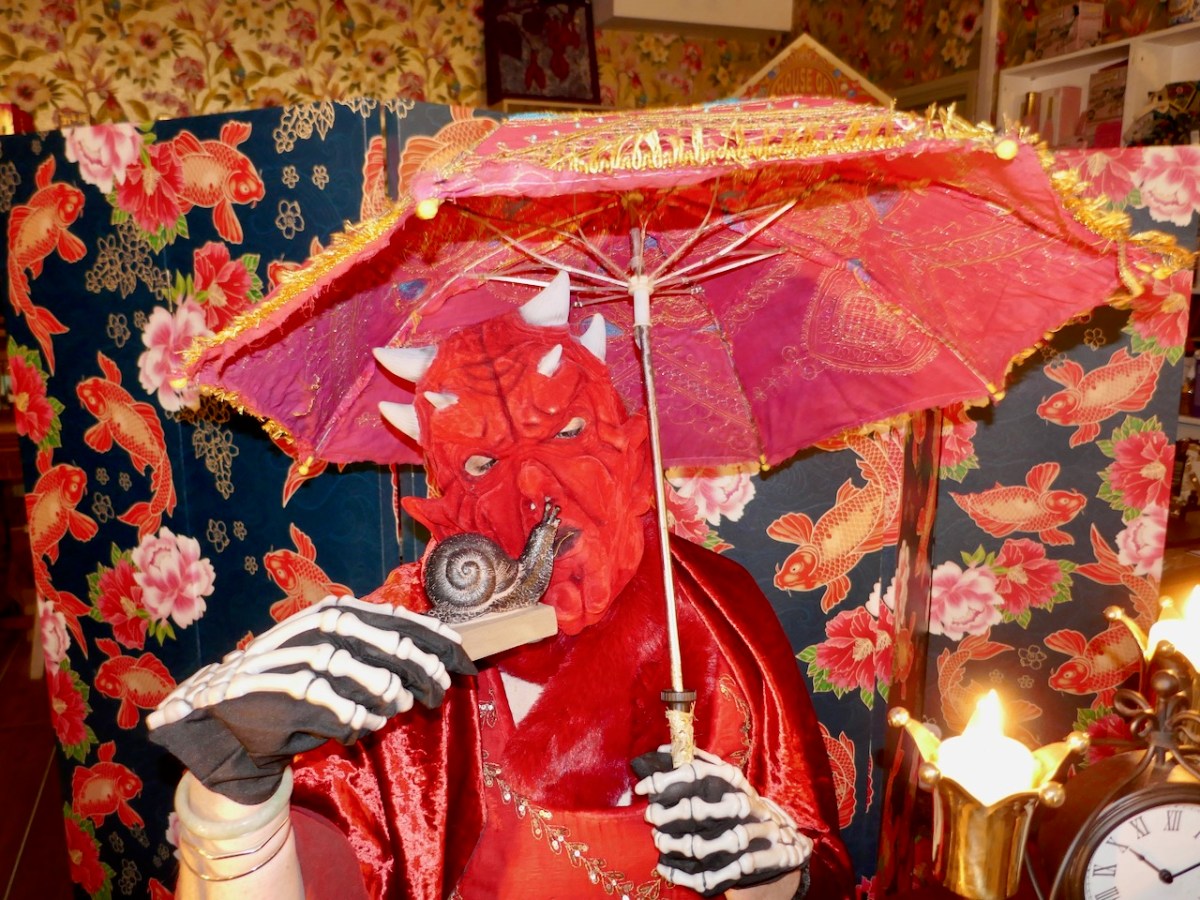
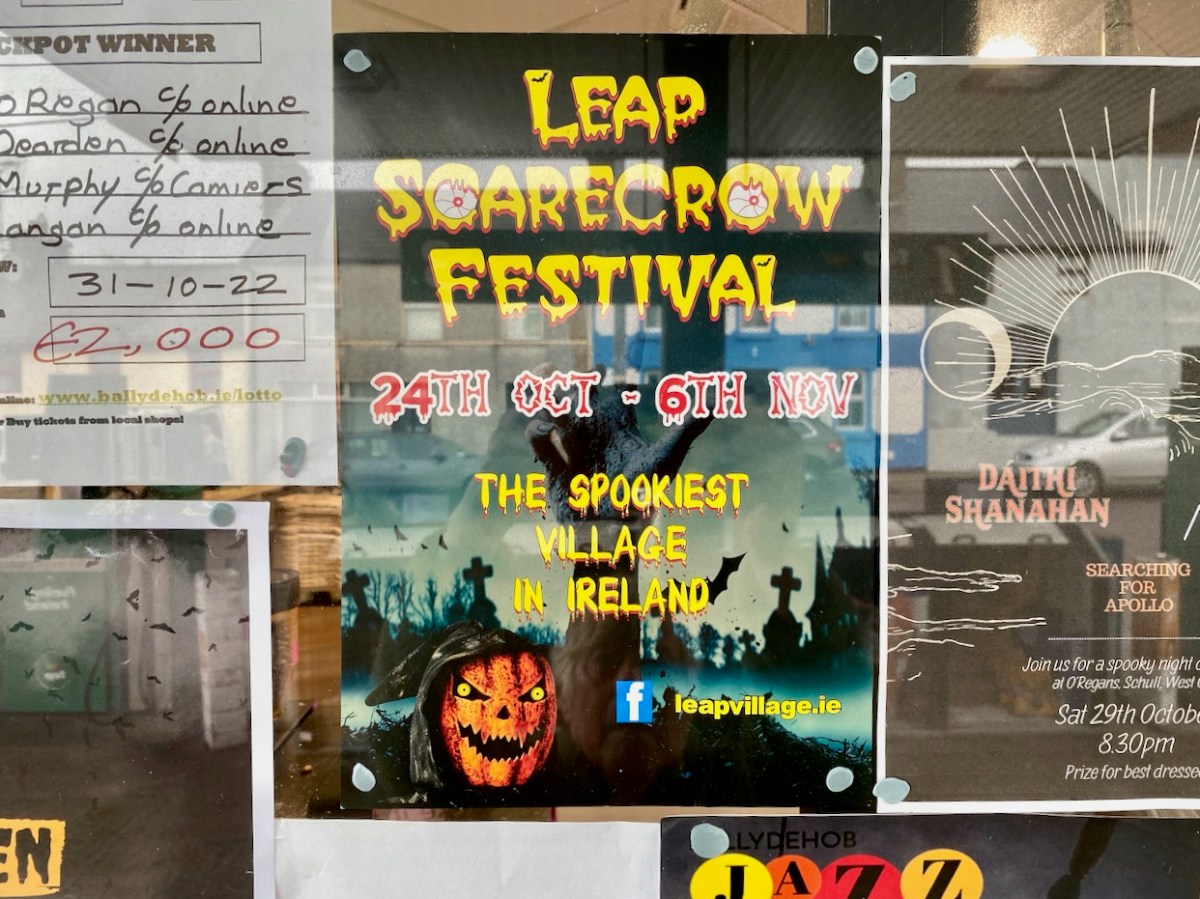
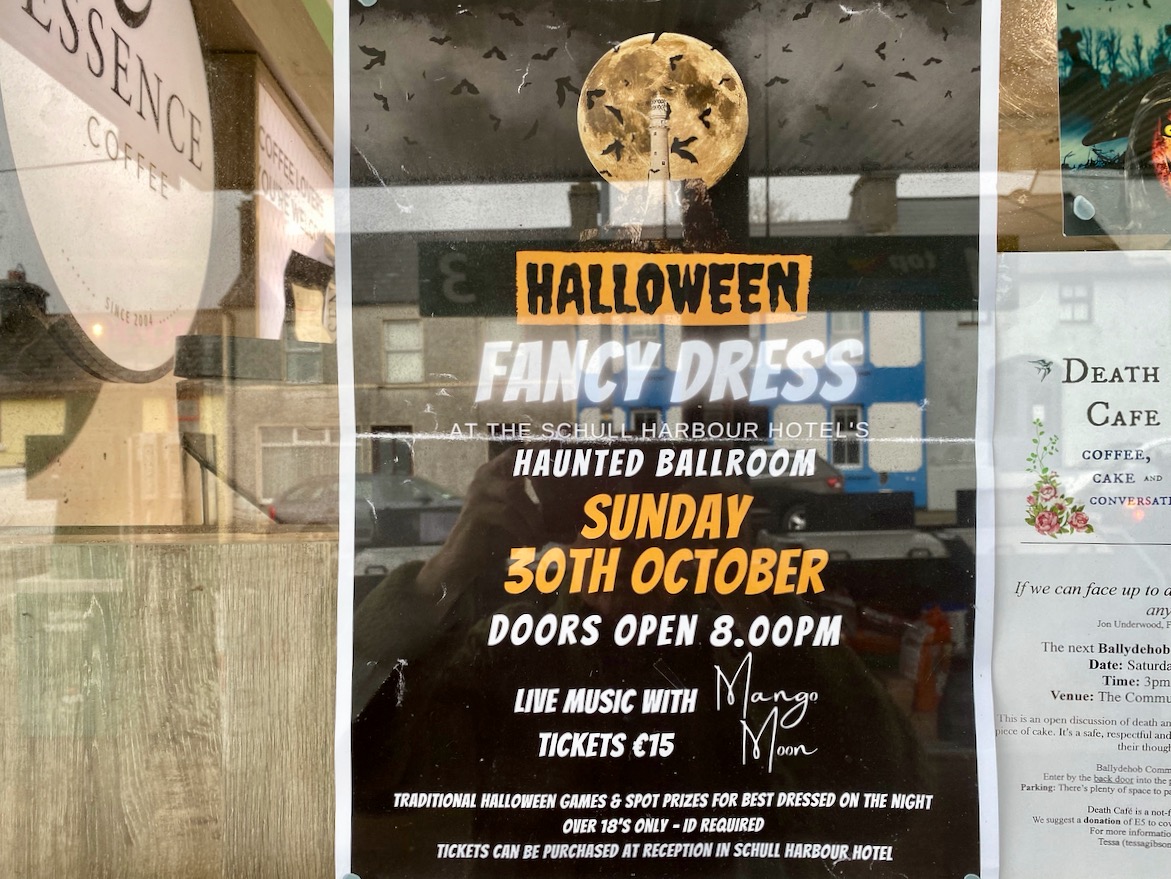
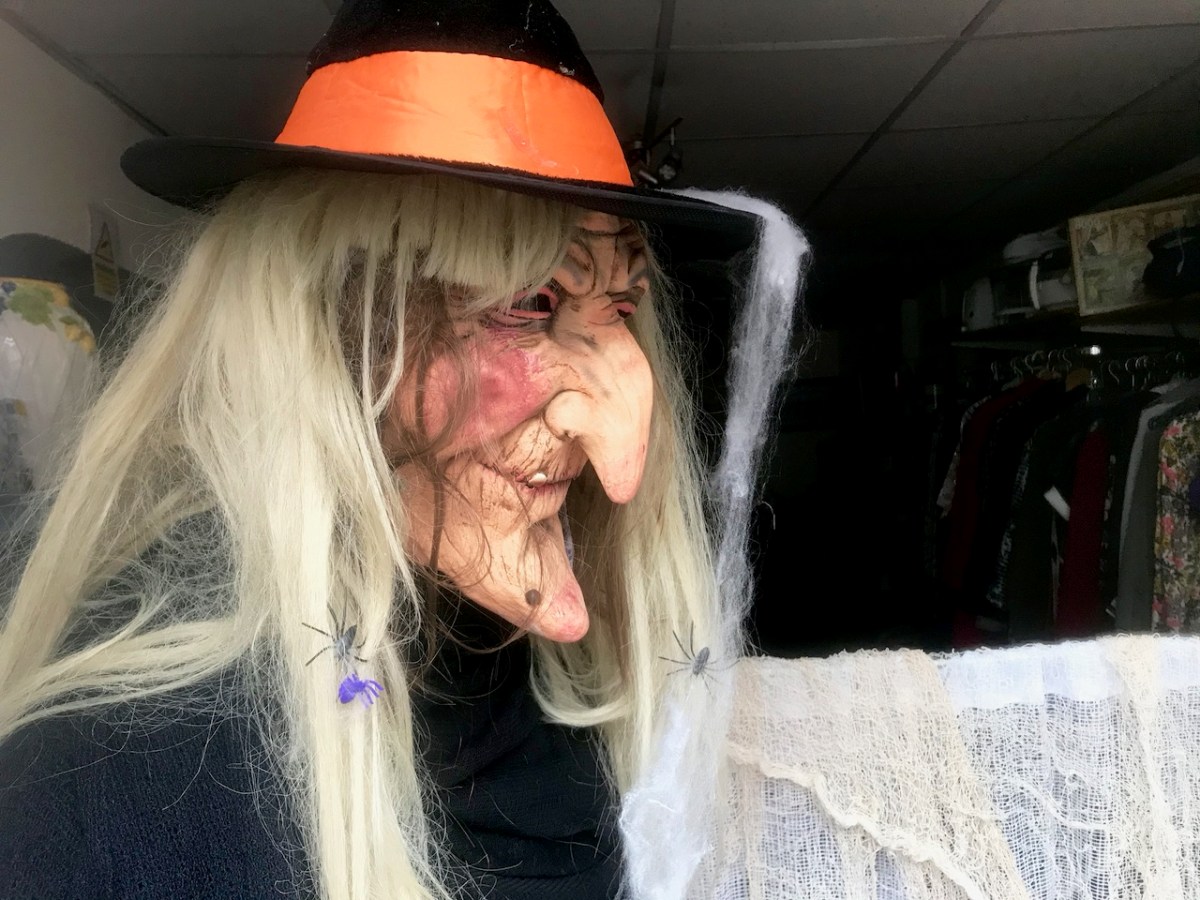
Here things are different. In Ballydehob we are preparing for our own celebration of the shadowy times. There will be a procession through the streets tonight. It will be scary, in a spooky way…

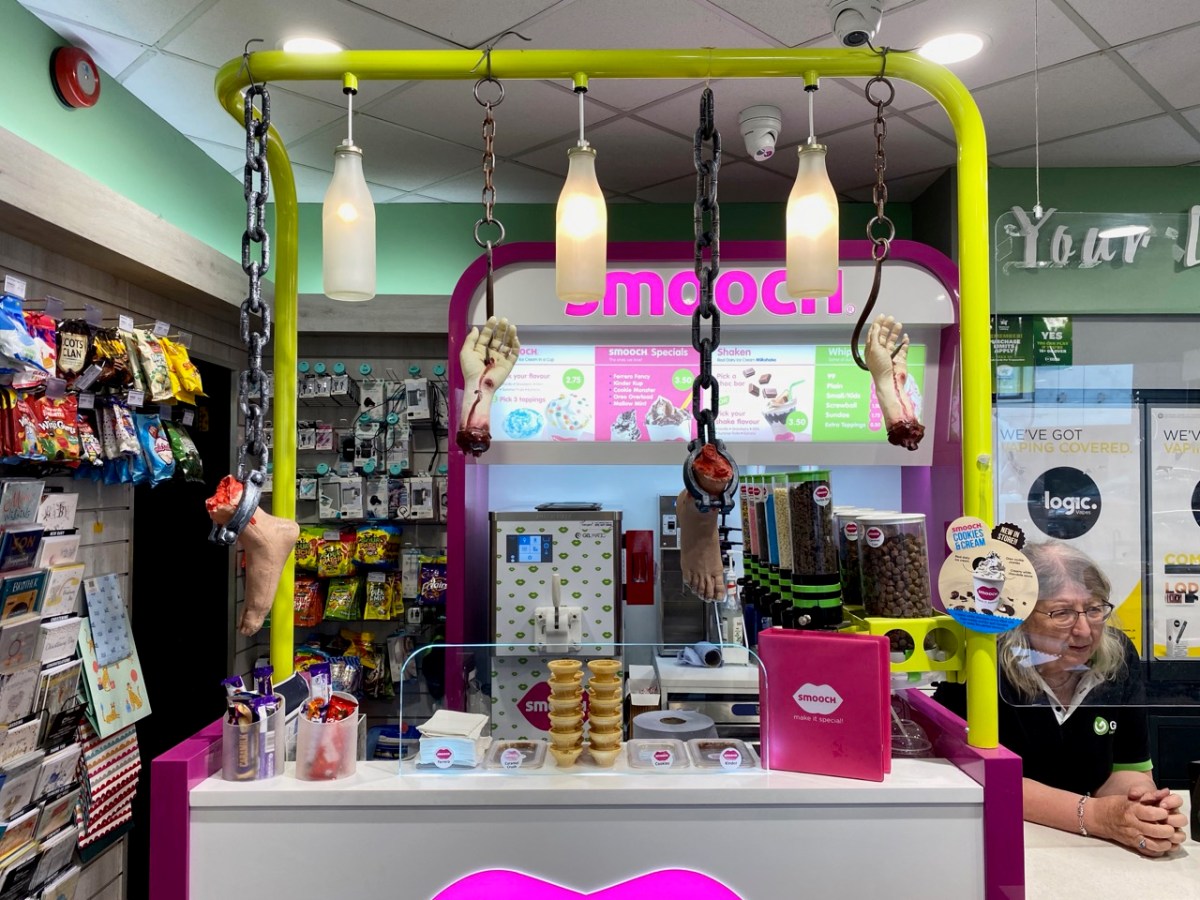
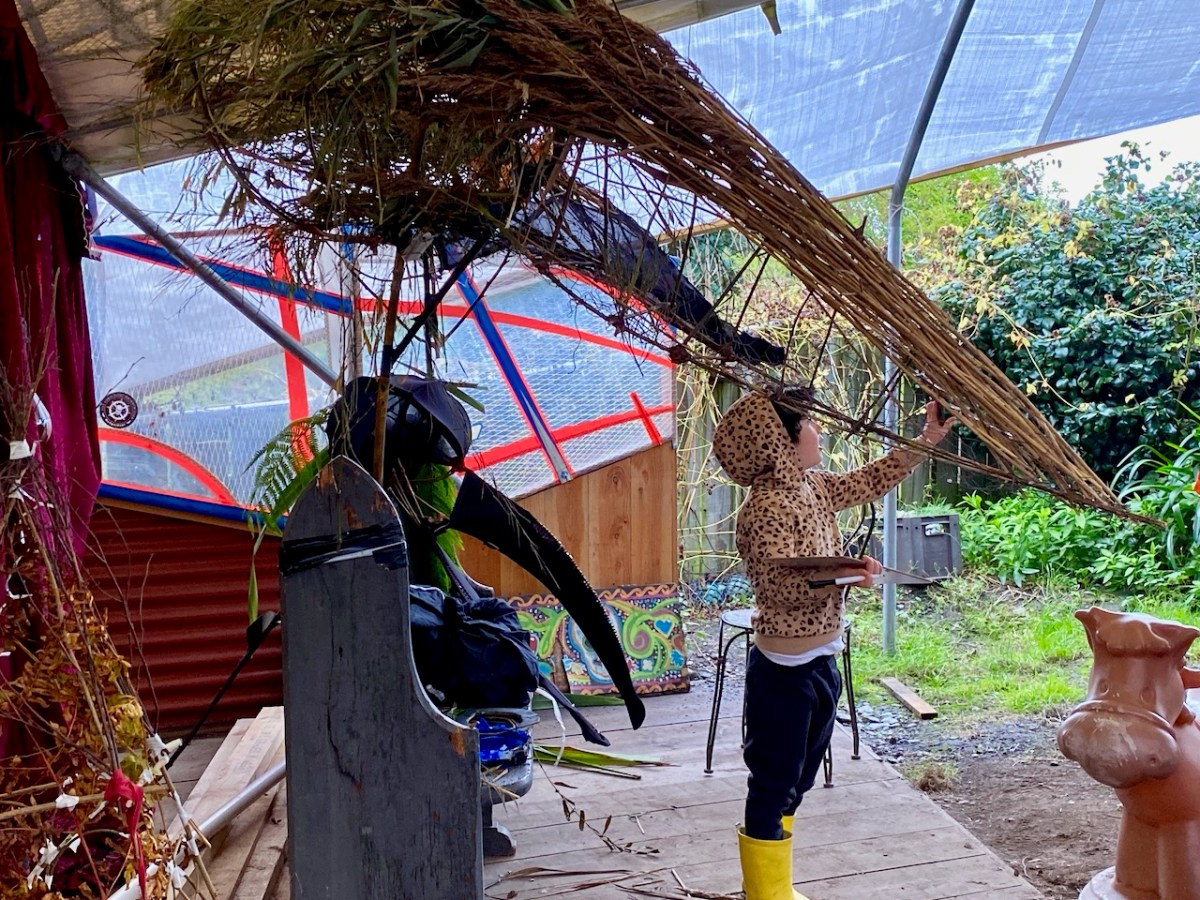
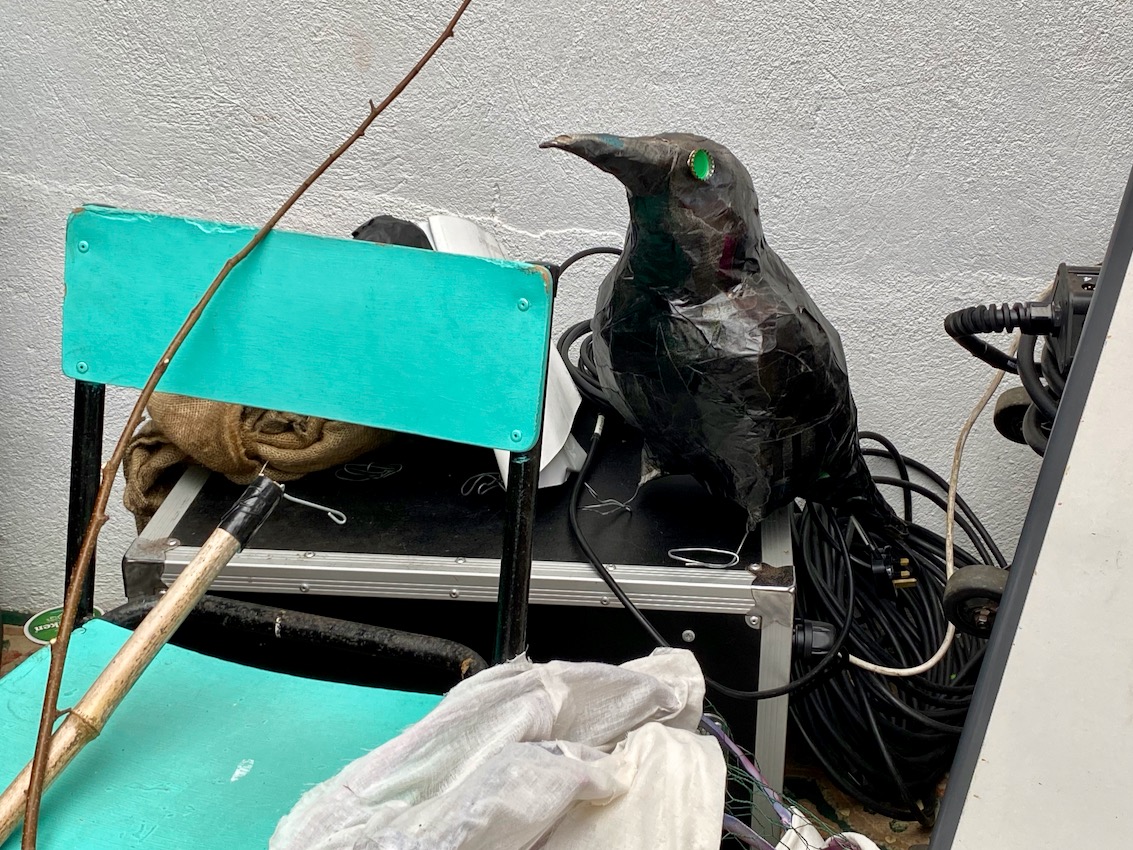
The whole town enters into the ‘spirit’ of things. This post sets out to look at the preparations for the night’s events. I particularly like the display – perhaps slightly understated – put on at the ice cream counter in Camier’s garage and shop at the bottom of the town:

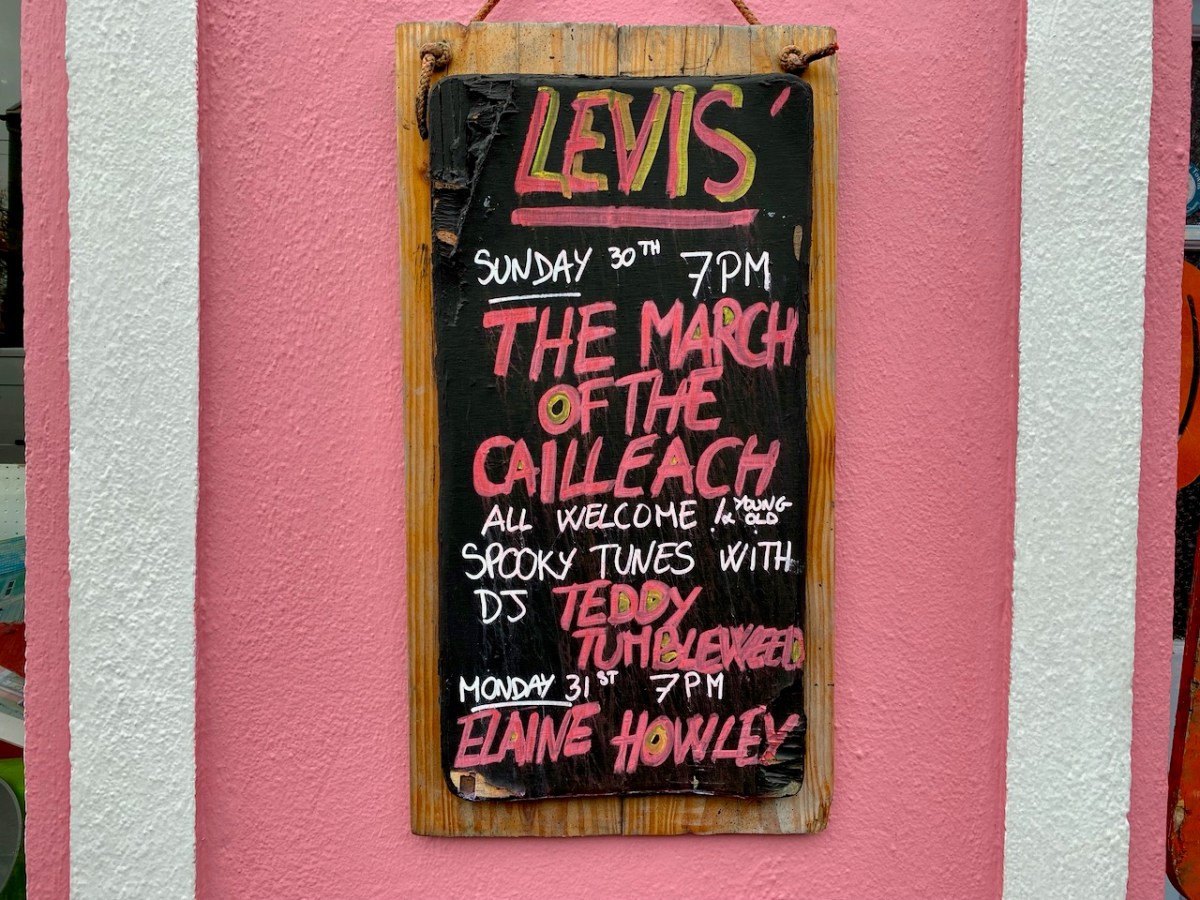
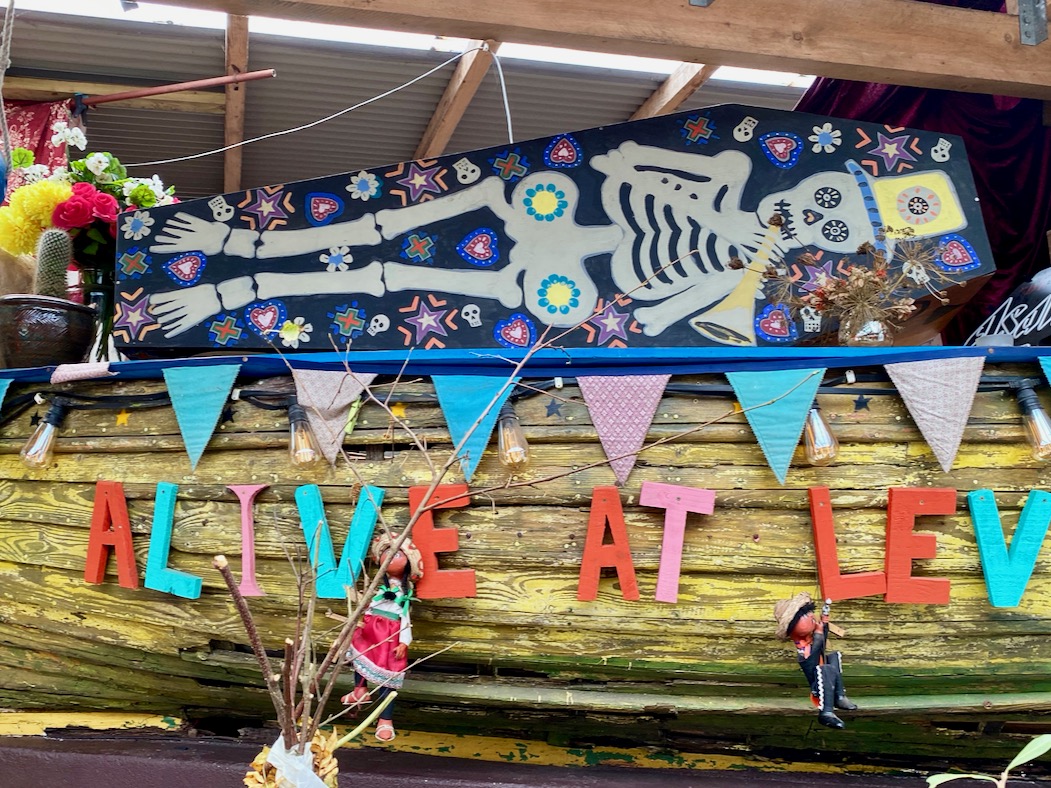
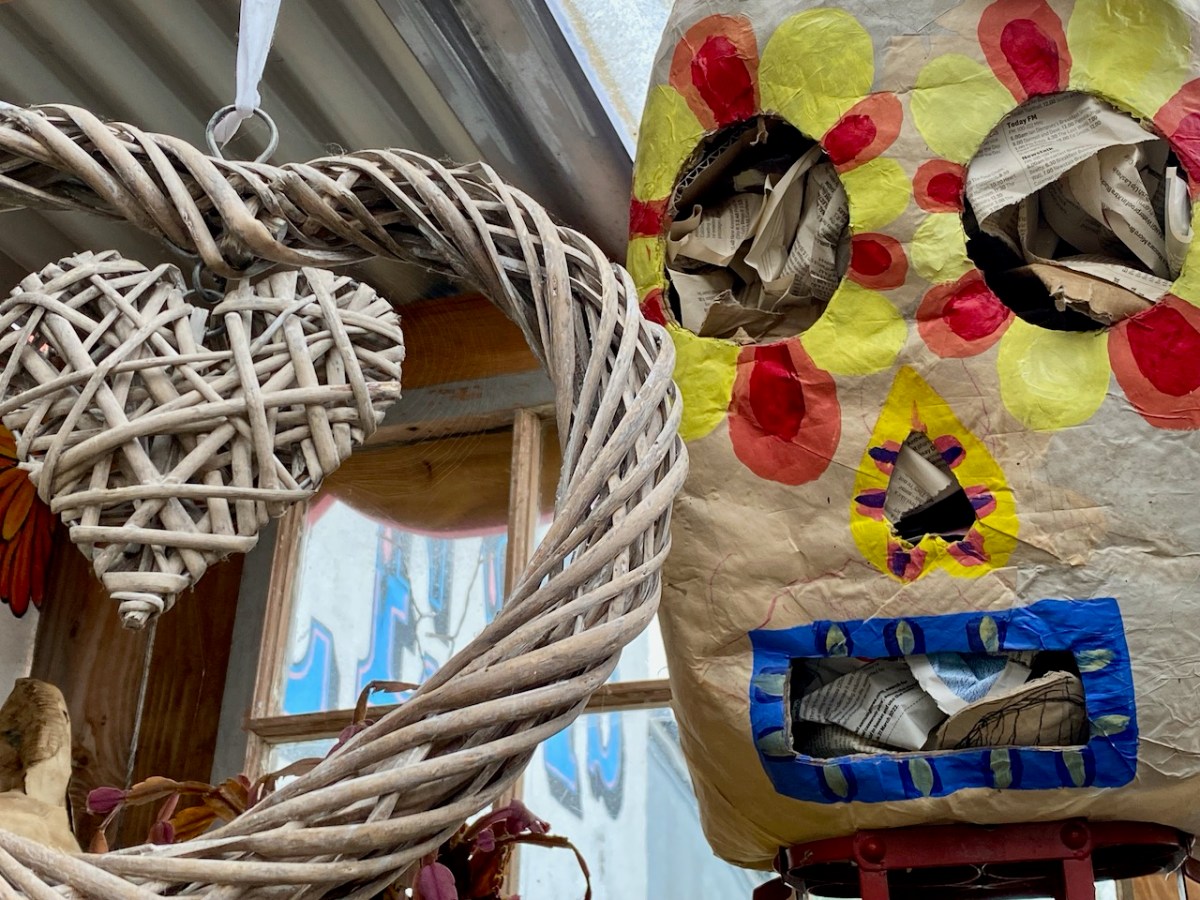
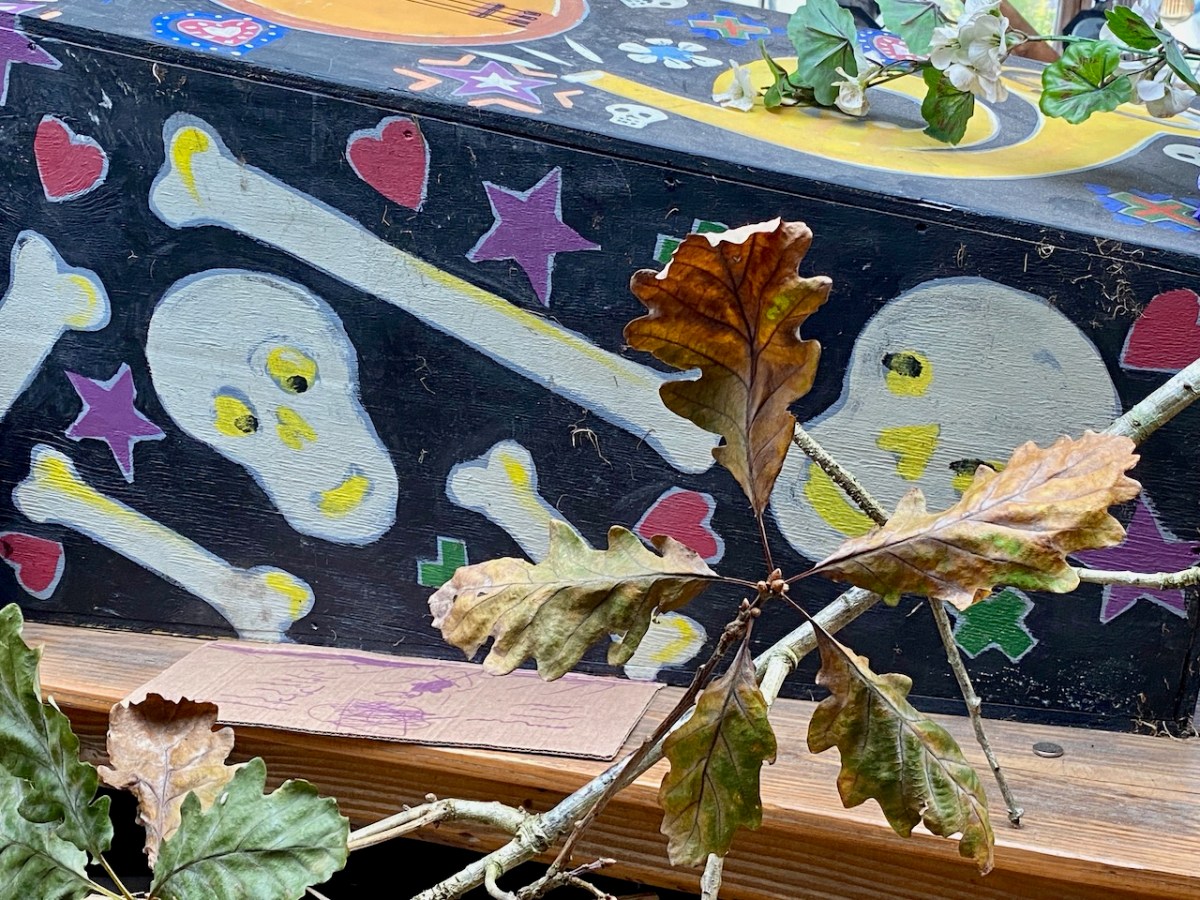
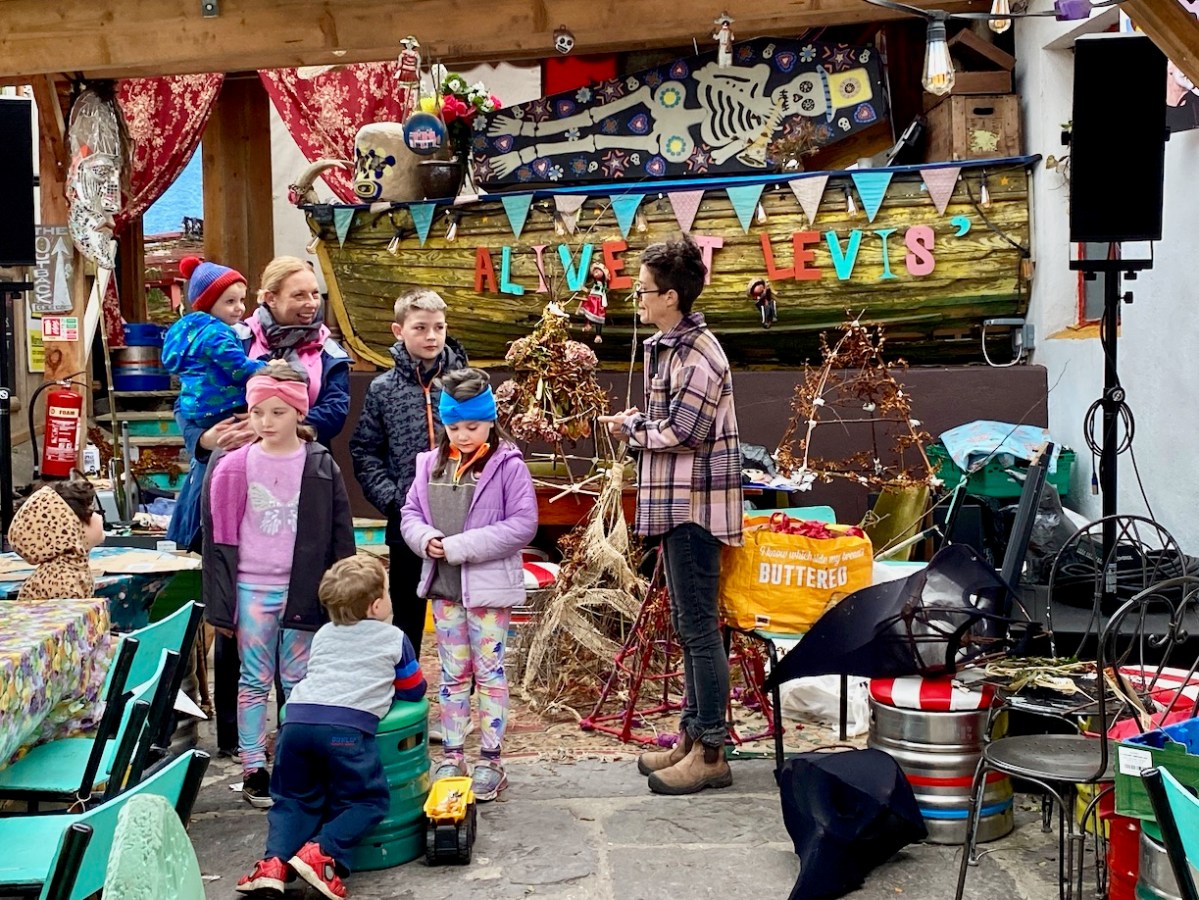
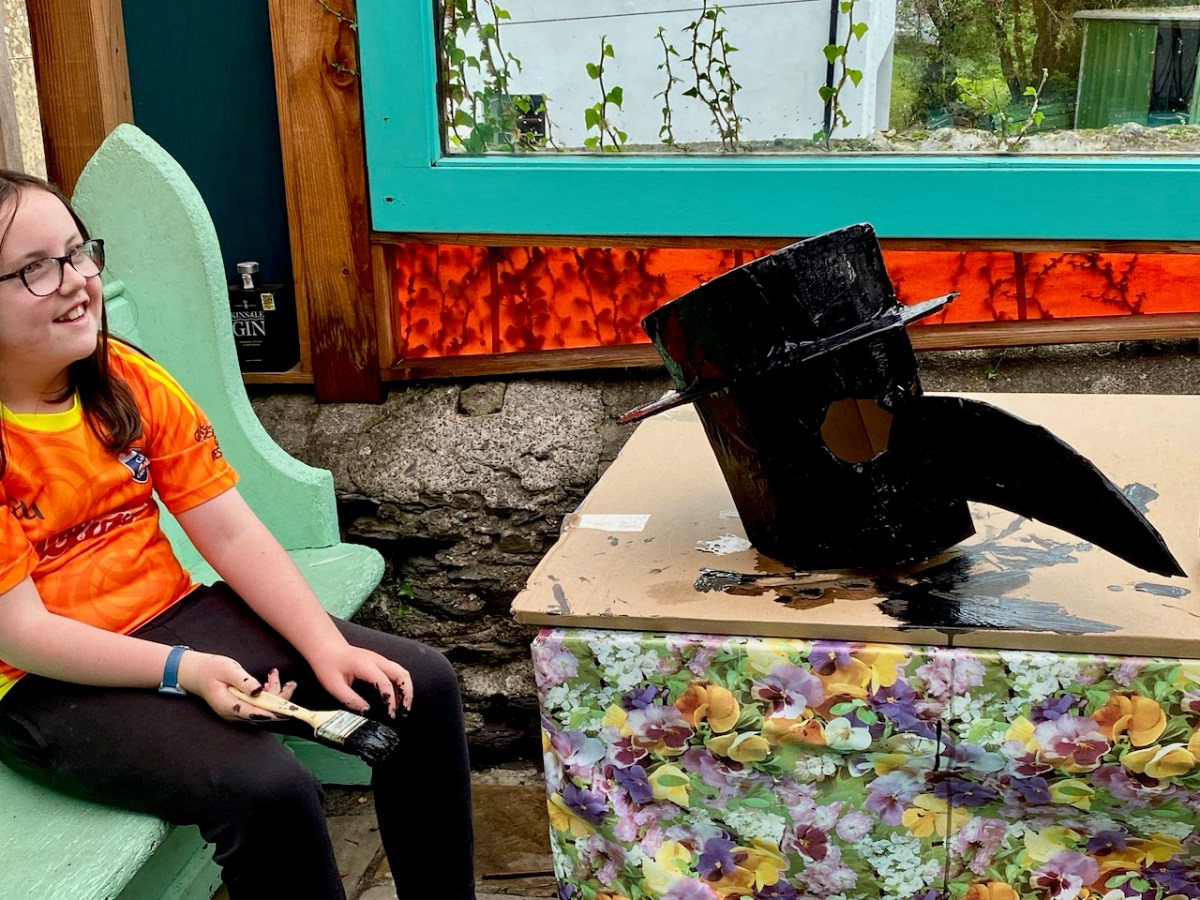
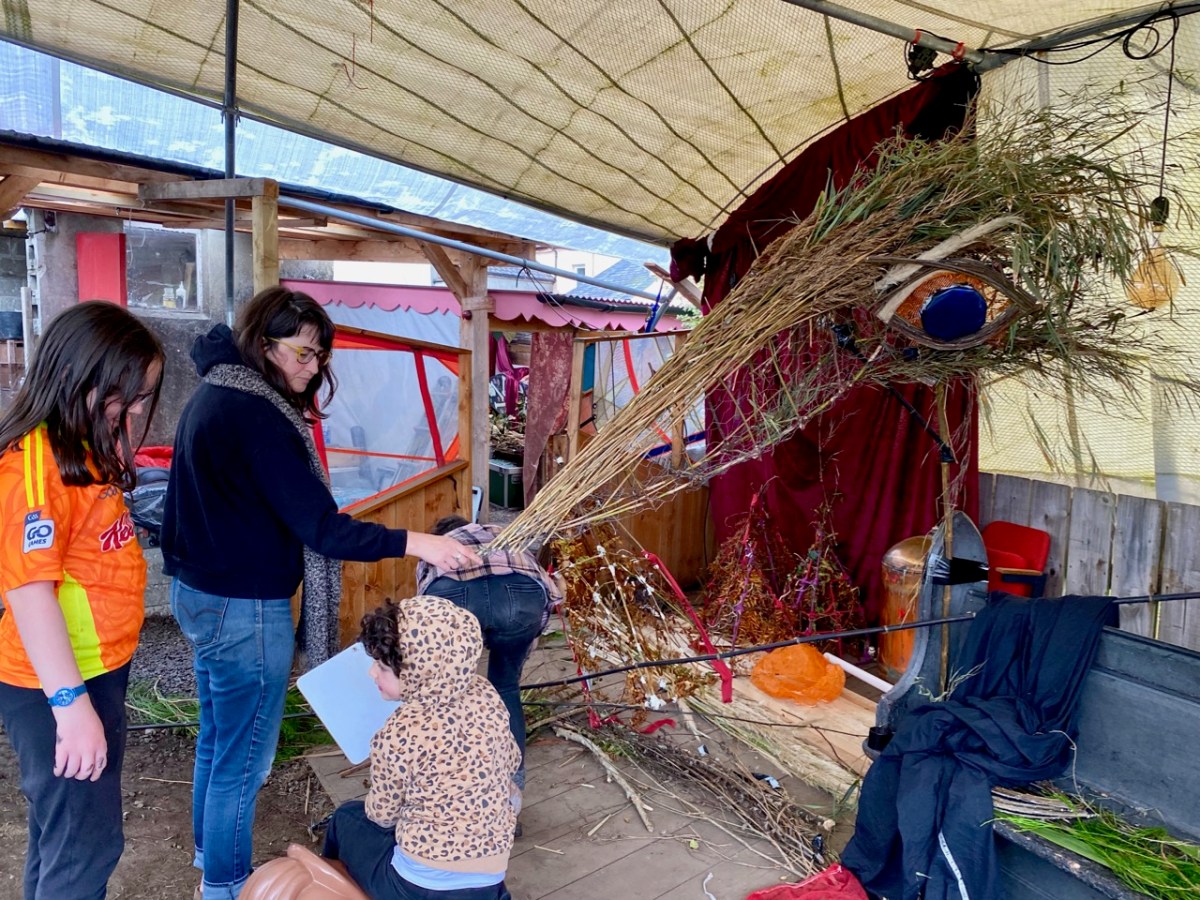
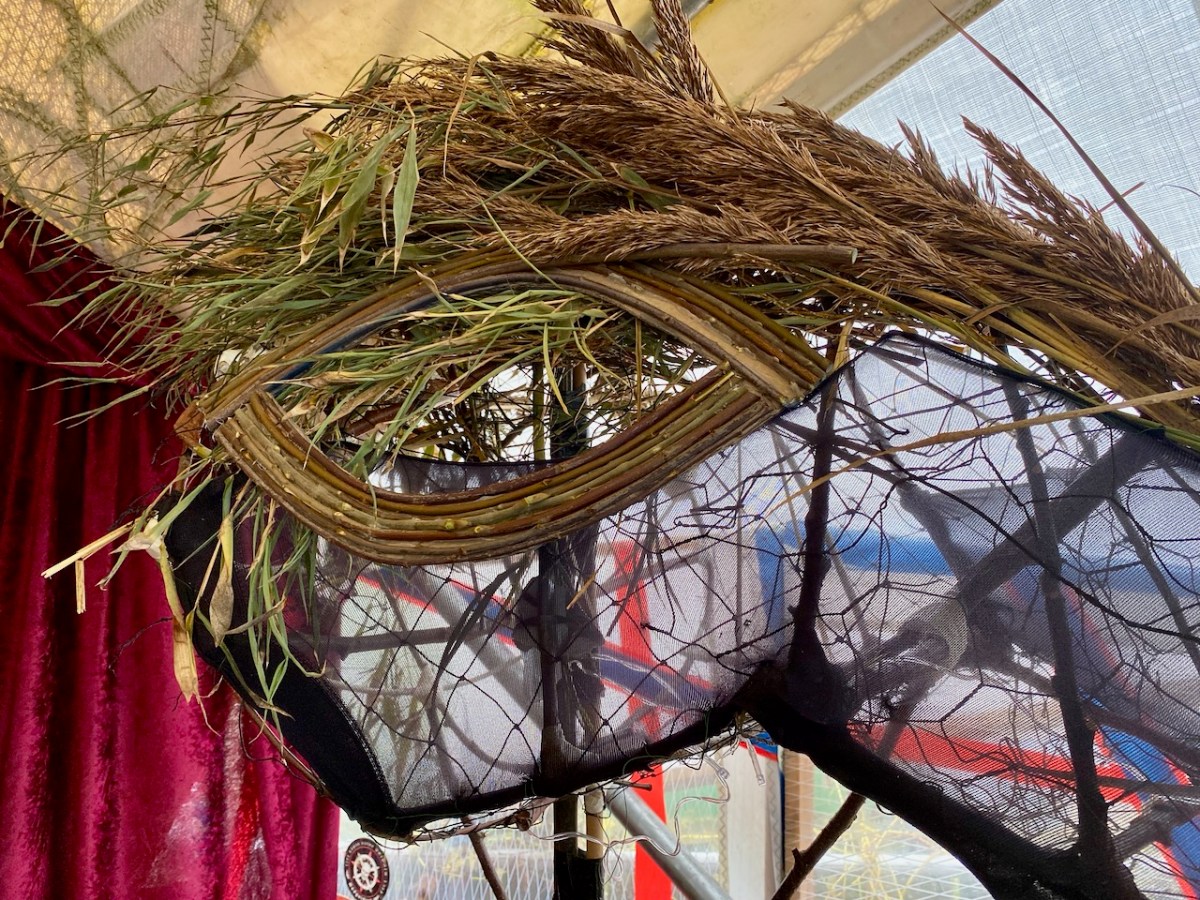
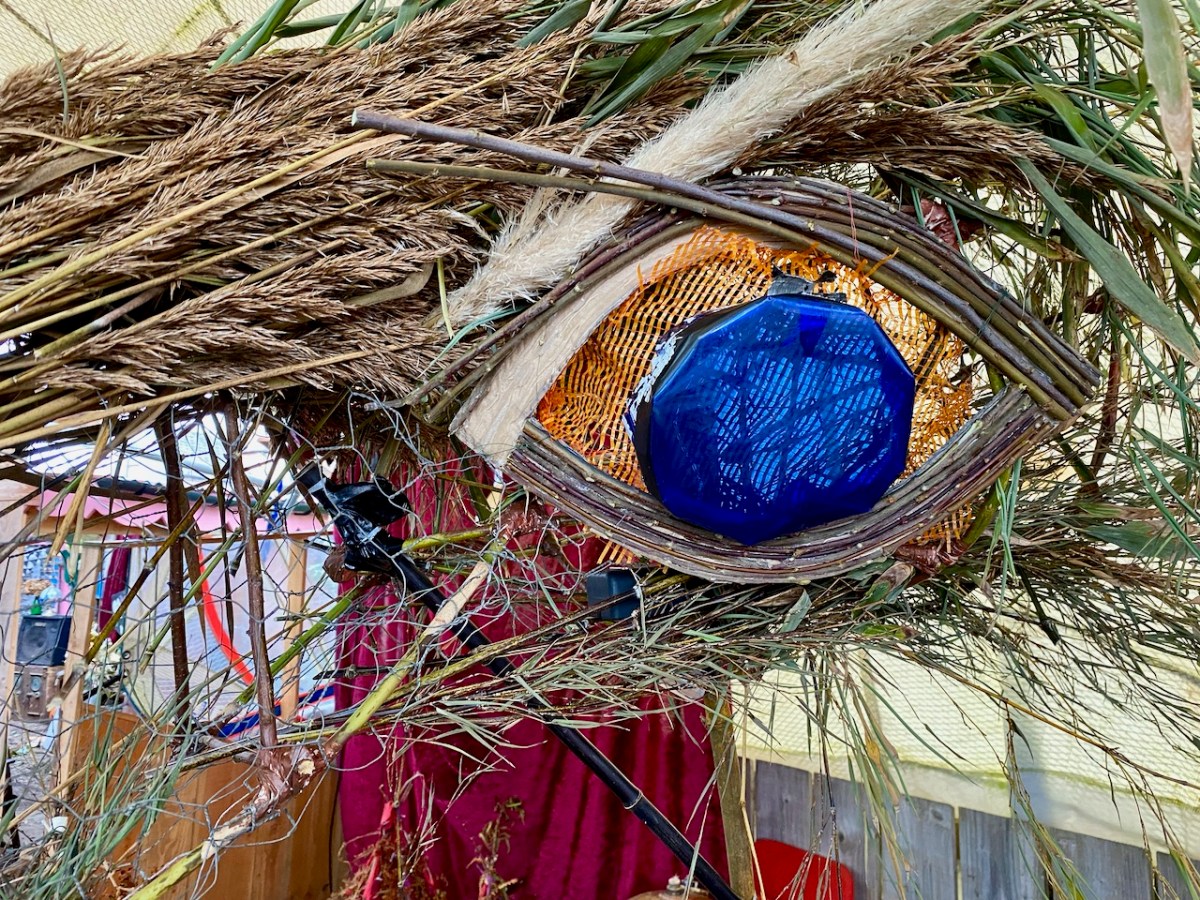
Levis’ Bar is at the centre of things, and I called in to see the workshops taking place to prepare for the evening’s events:

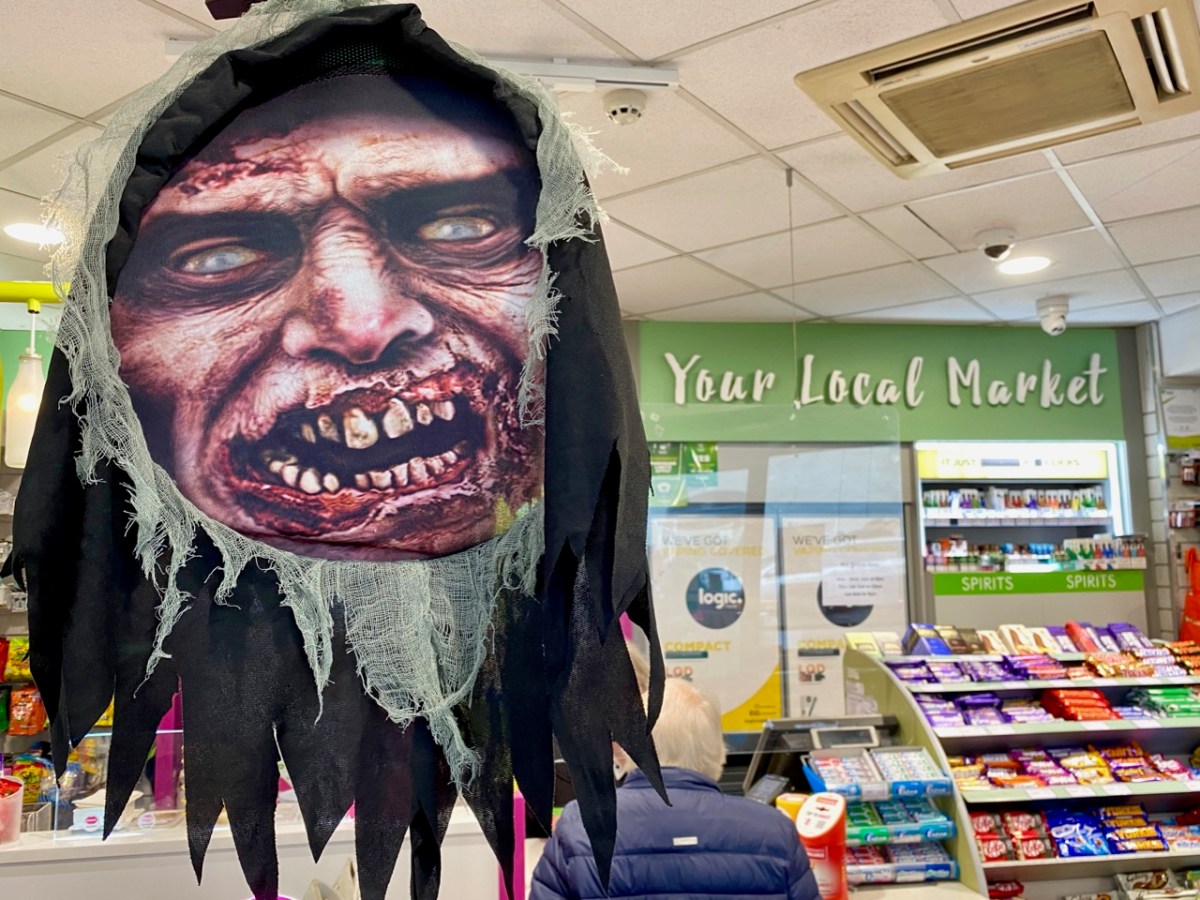
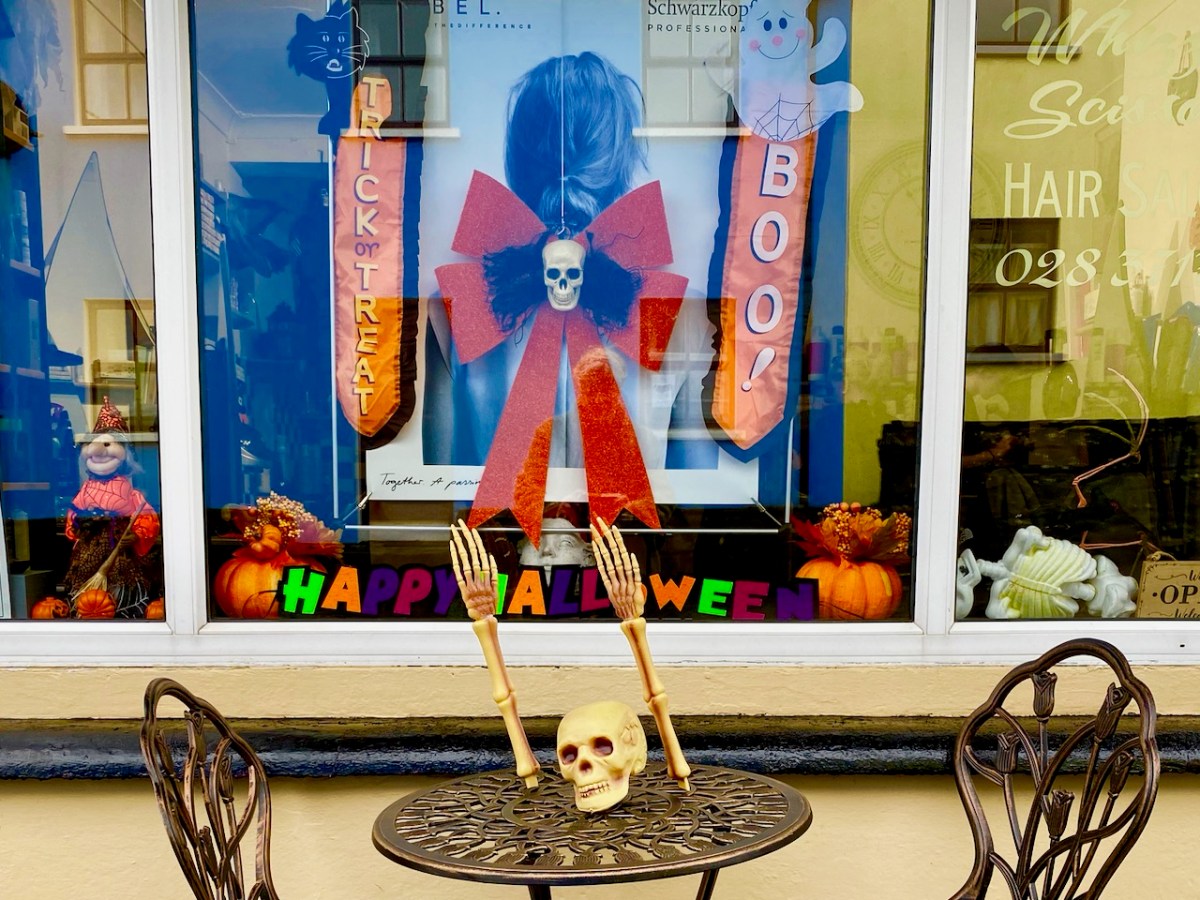
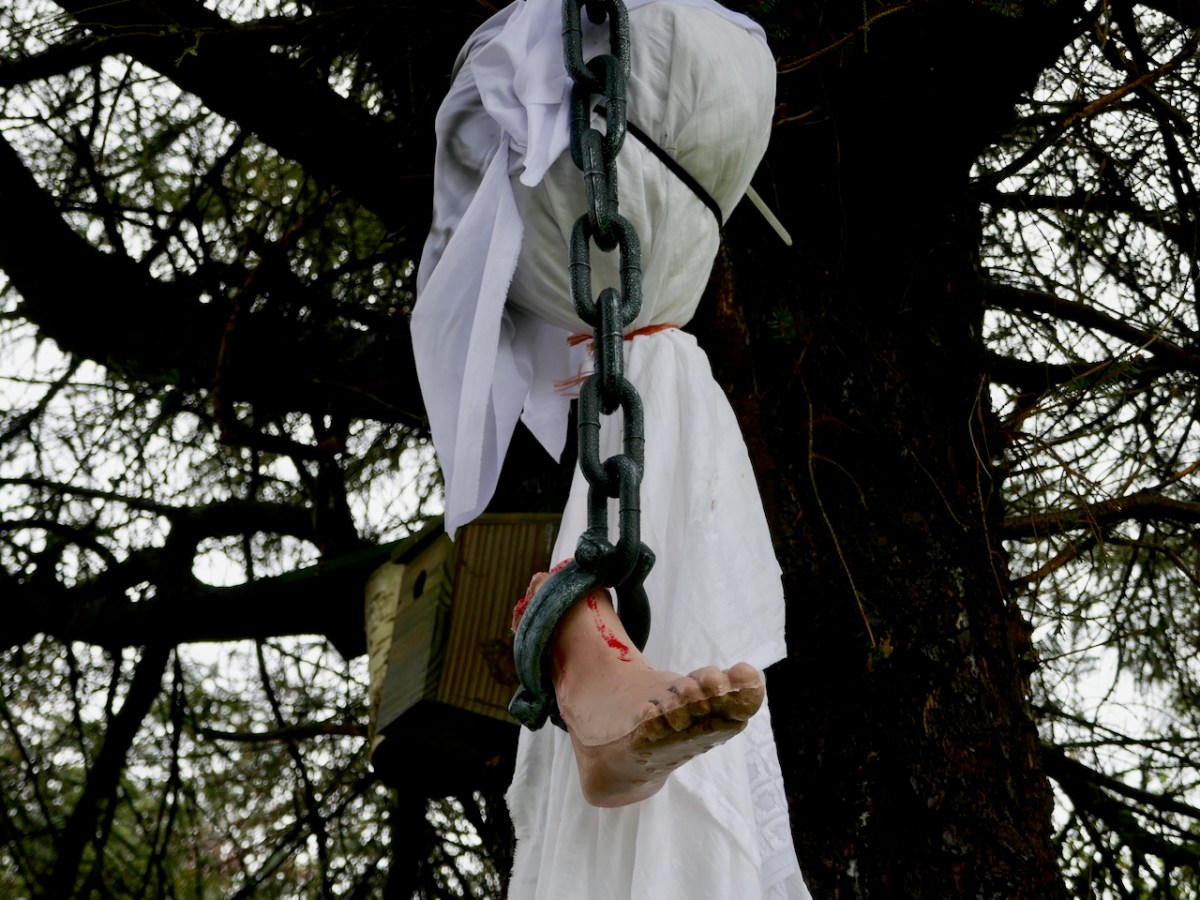
I think this evening’s activities are going to be spectacularly spooky! I will let you know. Elsewhere in our village of Ballydehob, everyone is getting into the right mood.

It’s never ‘half-measures’ in Ballydehob. Everyone joins in with complete enthusiasm. And there are plenty more celebrations of this spooky time going on around us in West Cork. Don’t stay at home!

Ten Years!

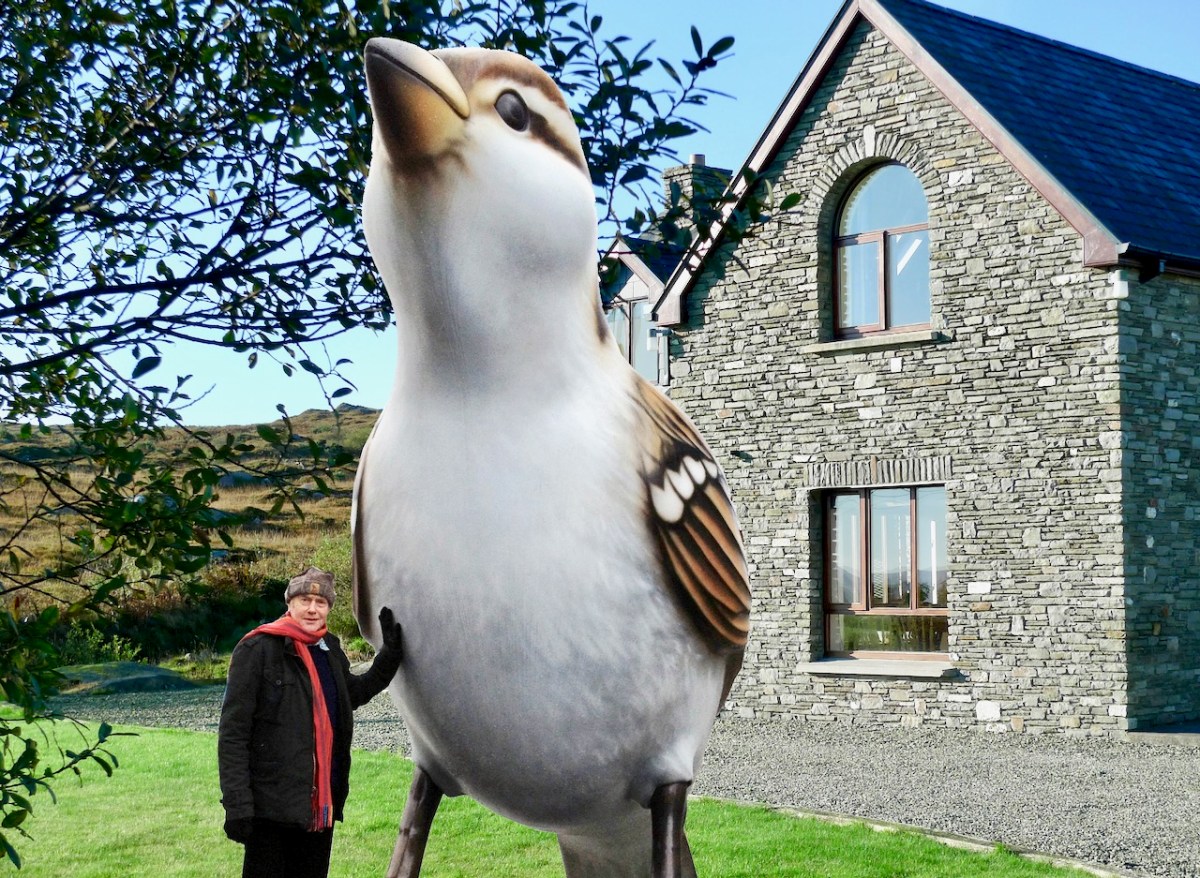
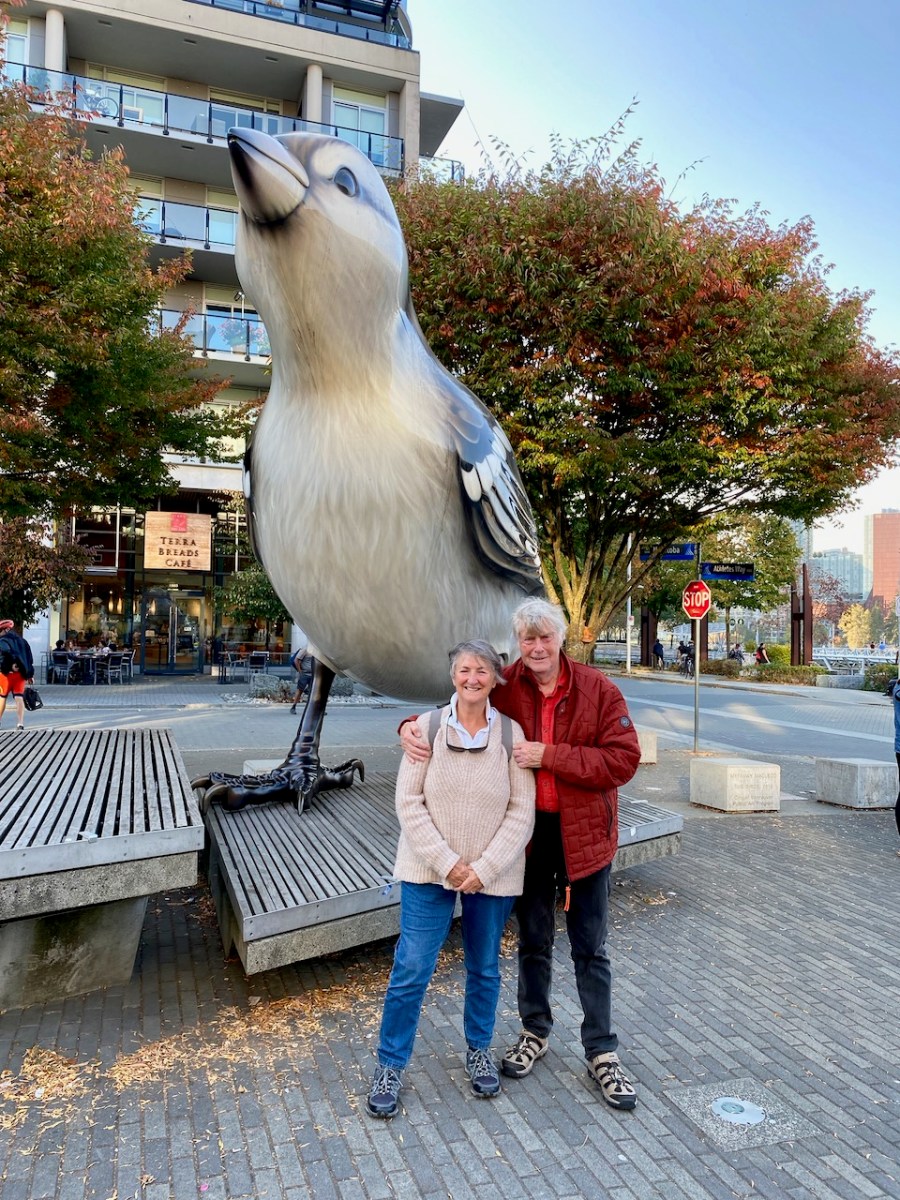
Why have we chosen this photograph to head up our ten year anniversary blogpost? That’s simple: the pic was taken on 15 October 2012. We had moved into Ard Glas – just outside Ballydehob – for a six-month rental to see how we liked West Cork!

But – what about the giant sparrow?

Wait a minute. We very obviously ended up liking West Cork so much that we bought a house in Cappaghglass (the townland next door to Ard Glas), and have stayed there ever since. As you can see, we have been thoroughly enjoying ourselves over the last decade:

Yes, but, that very large sparrow…?

Be patient! Believe it or not, we have kept the blog posts going, with hardly any interruption, ever since. This is Roaringwater Journal post number 968. In the last decade, our Journal has been viewed over 1.5 million times and we have acquired over 5,700 followers between our various platforms.

Our posts are all still there in the archives – and you can still read them. Search by using the three-bar icon on the home page and select All Pages-Navigation, or one of the other menus. Alternately, press the cog button under the Roaringwater Journal title at the top of the page, then scroll down to Archives. Roll down through all the months. Or enter a search term into the magnifying glass symbol next to the cog. That will show whether we have mentioned your chosen subject in any of our blogs. We warn you that some posts (especially the very early ones) haven’t survived the test of time perfectly: but we leave them in there because it’s all a bit of history.

Sparrow?

Hang on! Of course, things change a bit as the years go by (although we don’t*). We have varied the layout of the blog, and the header etc. We had thought of refreshing it all again to celebrate this milestone but… ah, well – perhaps for the twentieth anniversary.

Sp……..?

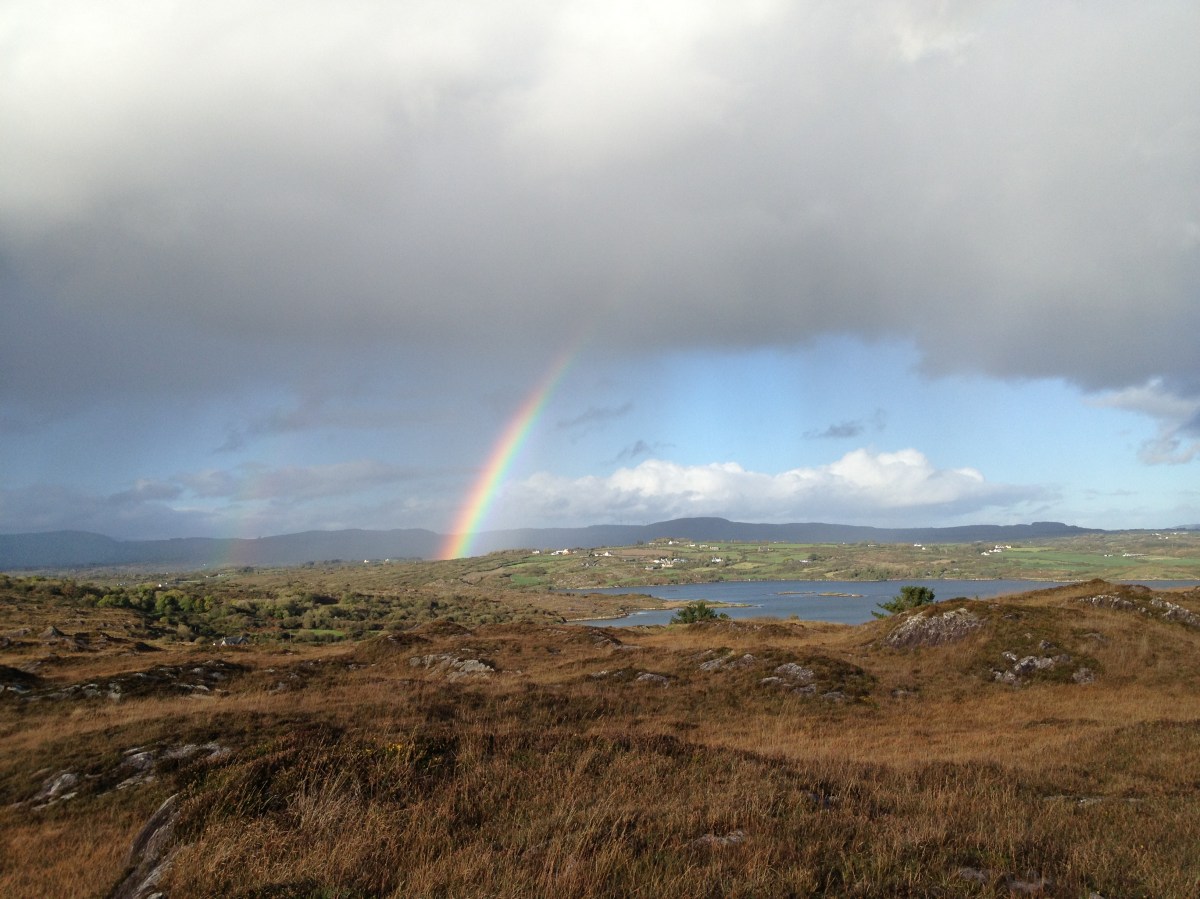
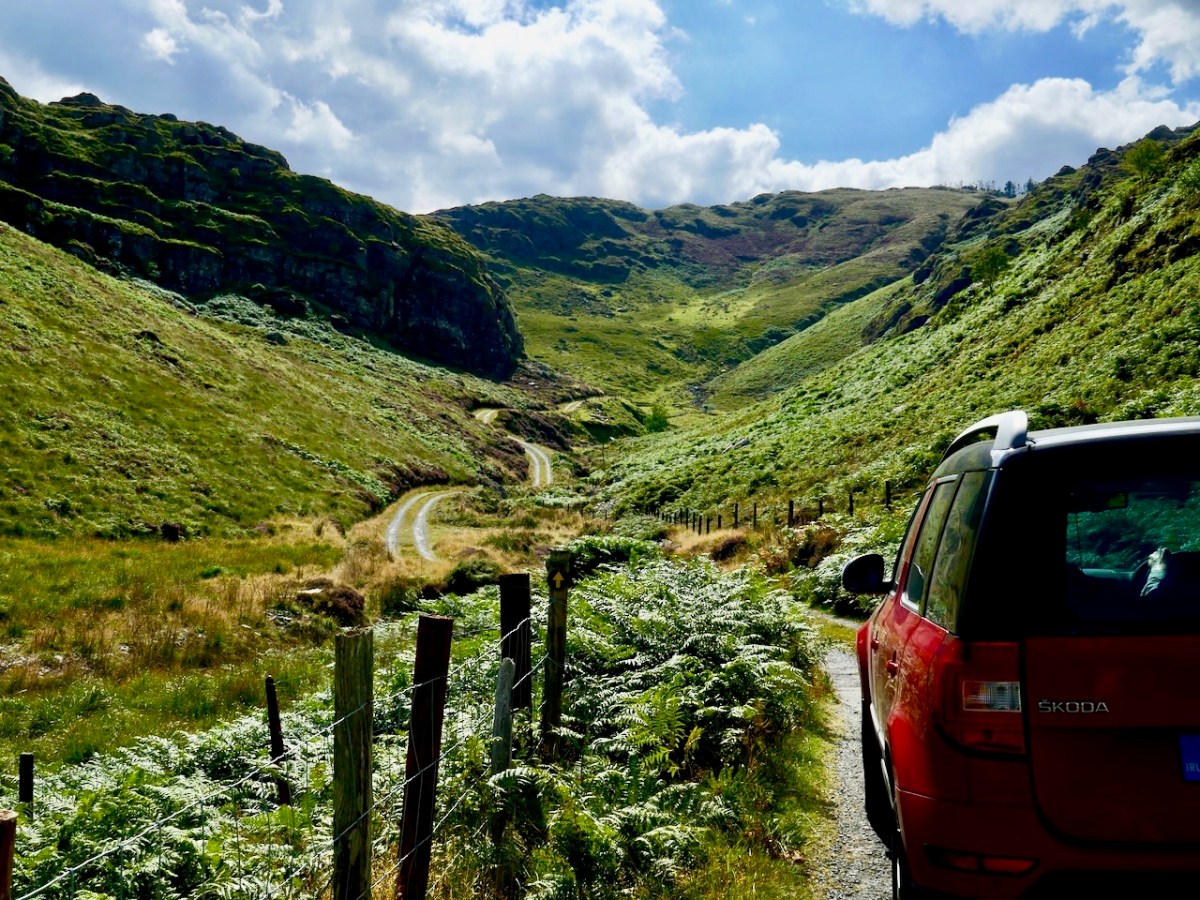
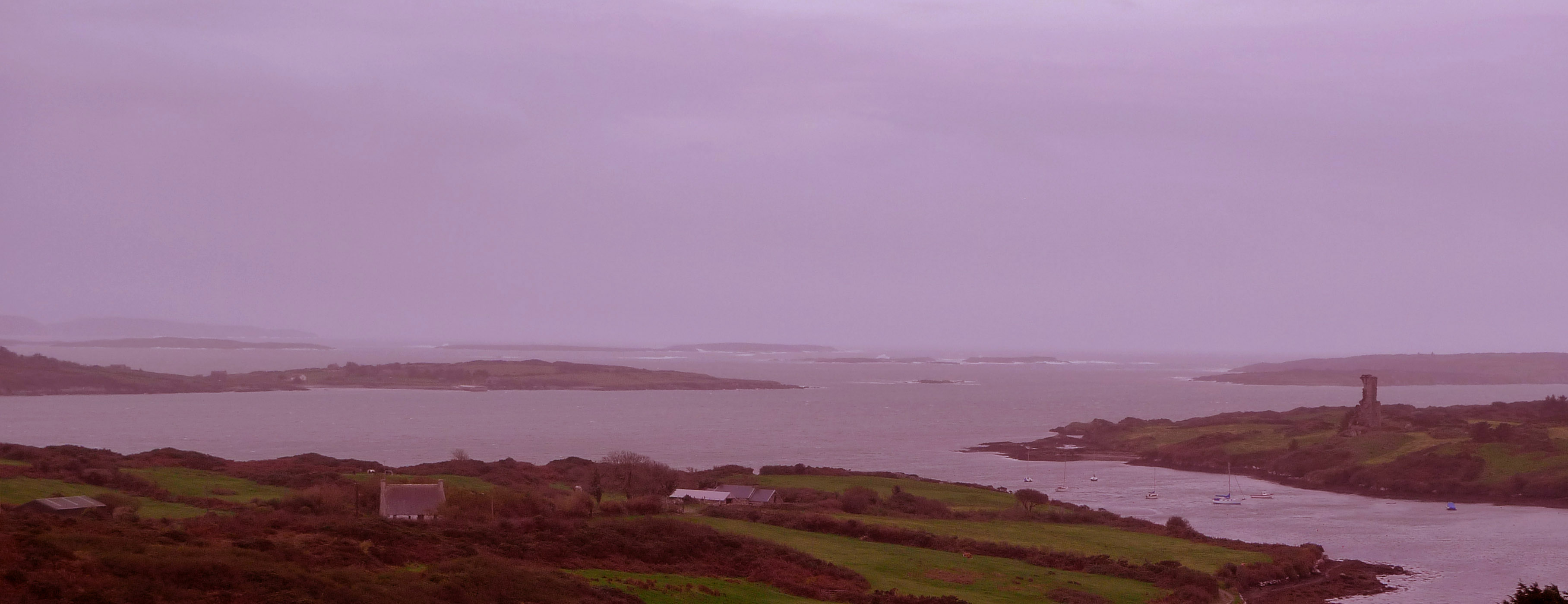
Another pic from 2012 (above) showing mixed weather conditions over Roaringwater Bay. It hasn’t always been sunshine here (have a look at this) but it always feels sunny to us – or just about to be sunny. One of our newest posts -here – shows us doing what we like the most, and always have: exploring remote and often forgotten West Cork byways.

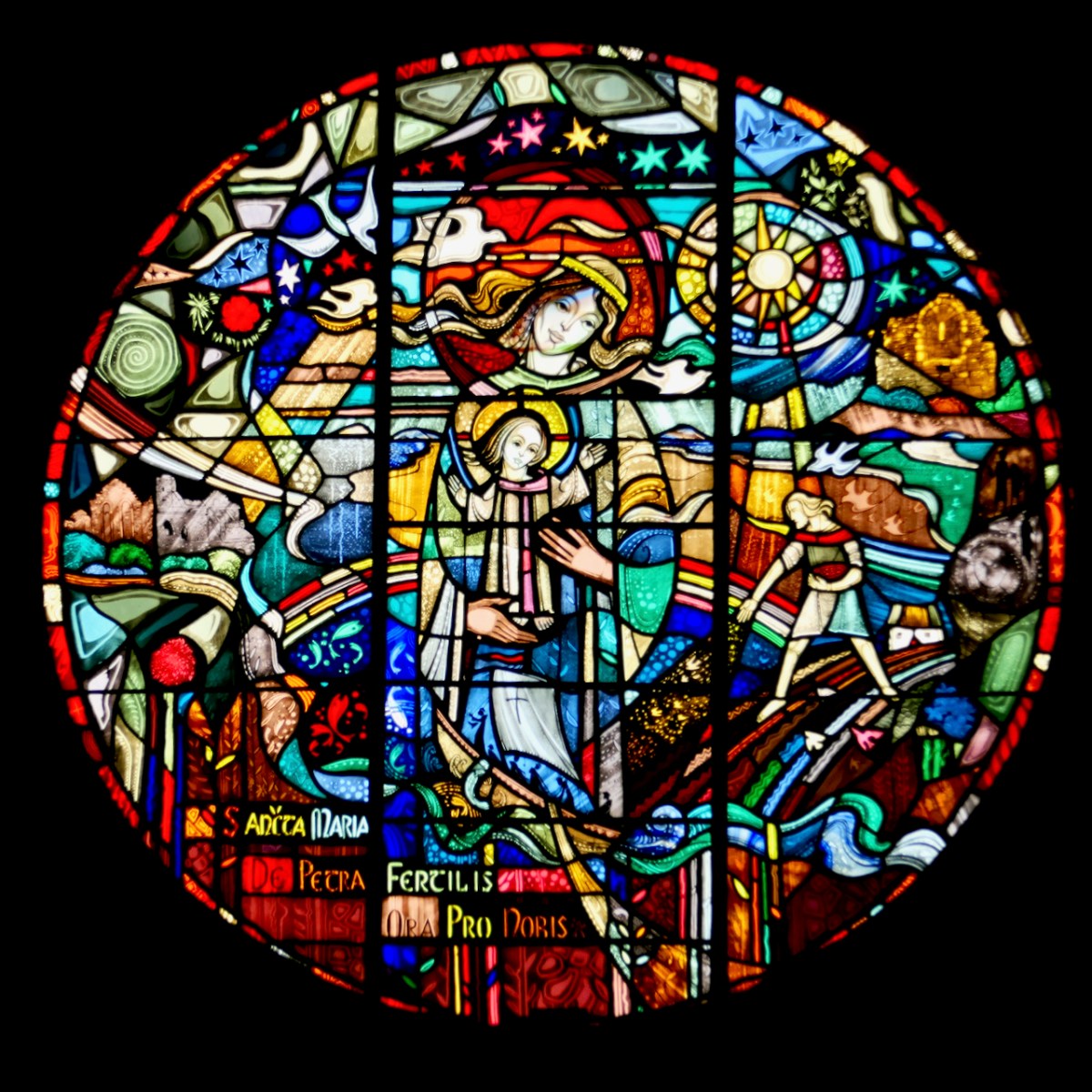
Our regular readers will know that, over ten years, we have developed our interests to take in history, archaeology, rock art, stained glass, architecture, topography, folklore, wildflowers, art and culture, landscape and language… and very much more. We share our adventures often with Amanda and Peter Clarke, our fellow bloggers and friends – see Holy Wells of Cork and Kerry and Hikelines.

What of the next ten years? Well, we are trying to be innovative. This week we have introduced a ‘guest post’ for the first time: this one, by our friend Brian O’Riordan, explores the exploits of an intrepid 79-year old woman who sailed solo across the Atlantic to Ireland in 1994 , which falls right into our own interests, and – hopefully – yours too.

S…………..?

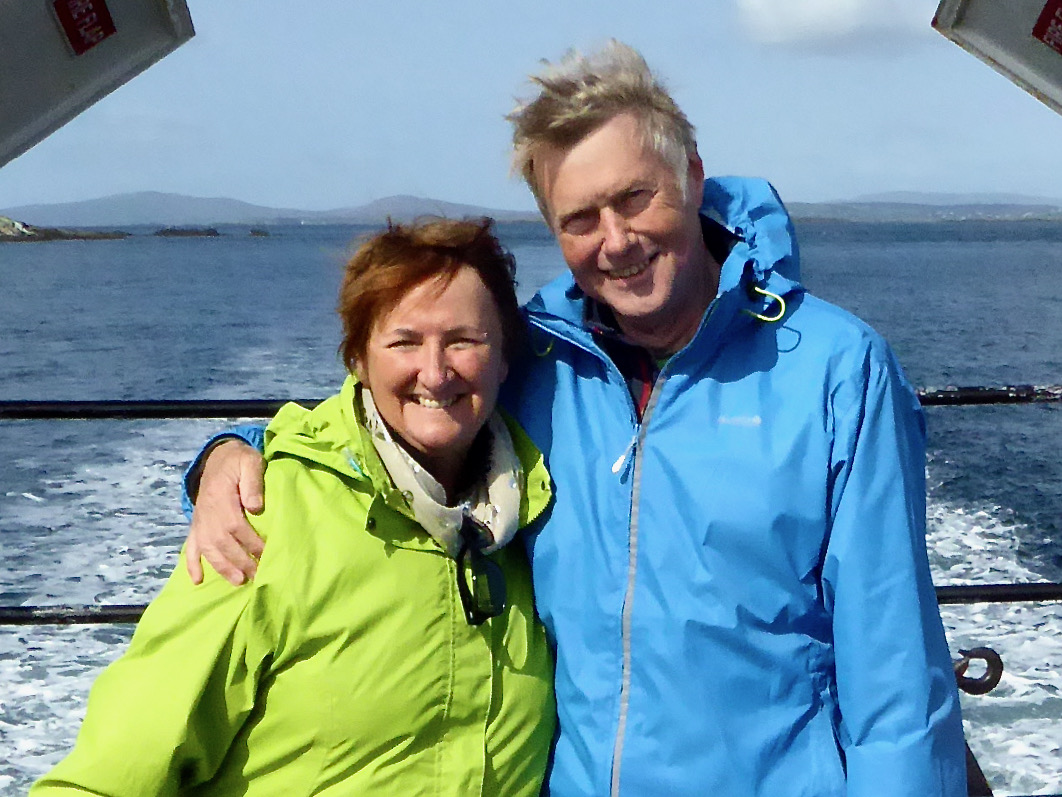
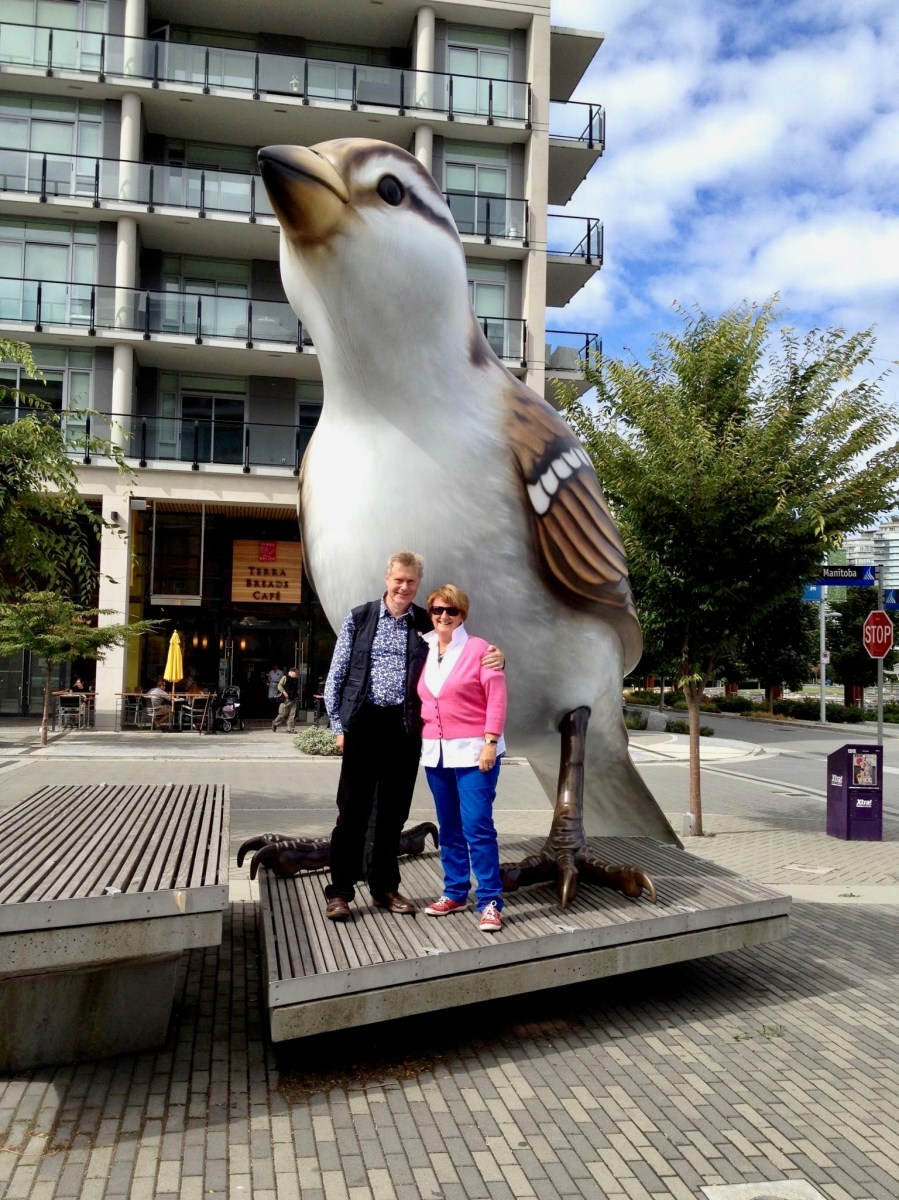
Ok – we have got the message! About the sparrow, that is. The original giant sparrow is one of two (a male and a female) which were created for the Olympic Park in Vancouver, Canada, in 2010 by the sculptor Myfanwy MacLeod. One was transported by our own photo magic to Ard Glas! Perhaps they are not relevant to West Cork, but they are meaningful to Finola and Robert, as we saw them together in Canada ten years ago – pic below. We have just recently returned from a visit to Canada, enjoying a long-awaited catch-up with Finola’s family there. We made sure to record our presence there with another photo-op (below the below).

* Hopefully this demonstrates how youthful we remain, imbibing as we do the stimulating West Cork air. Here’s to the next ten….!

Autumn Comes to Roaringwater (Nine Years Ago!)

leaves

This post was written in 2013 – nine years ago! It’s one of our West Cork blog posts from the earliest days . . .

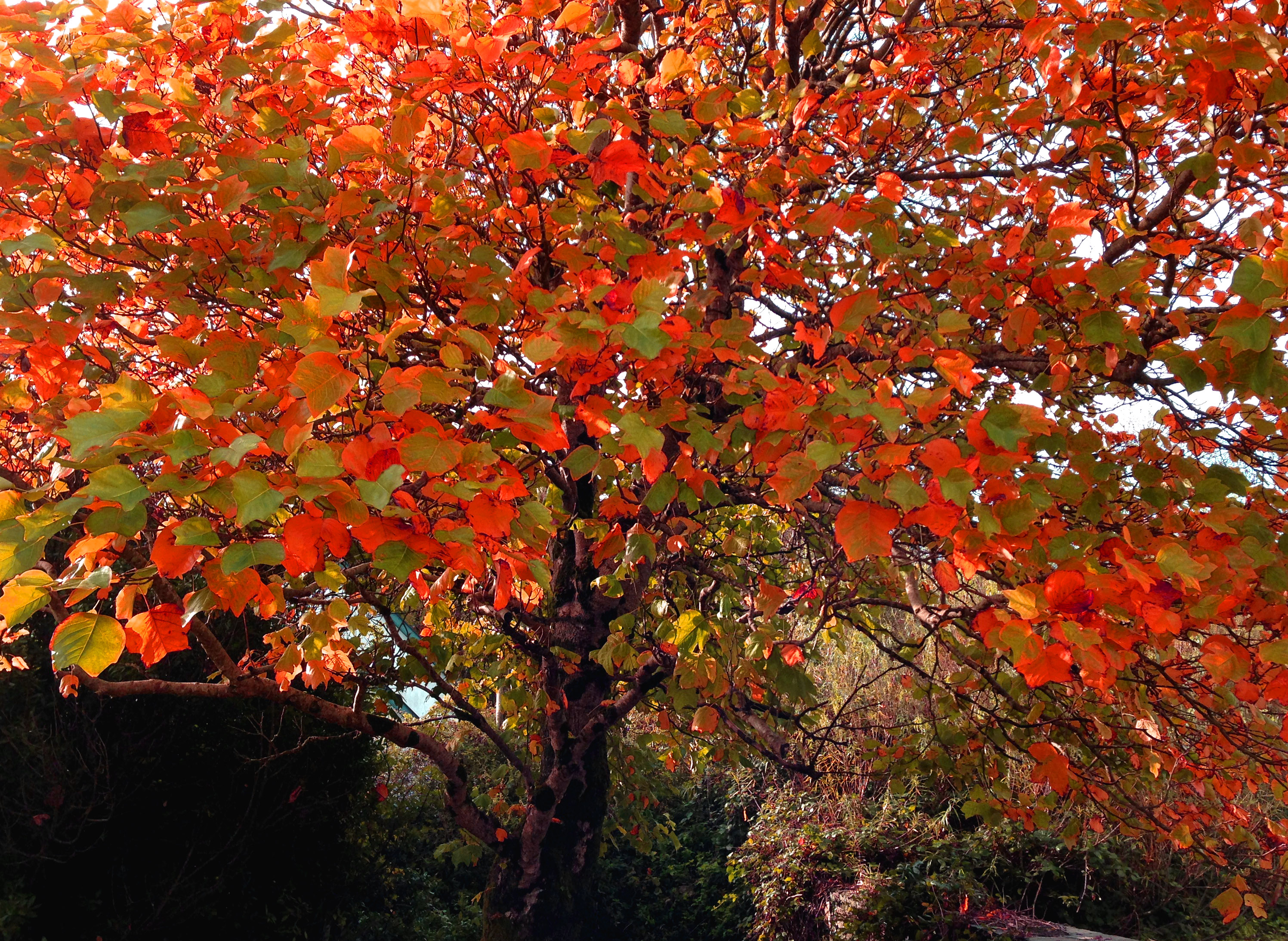
Just as the leaves begin to turn, the gales have come to tear them away and send them flying all over the Bay. Autumn is bringing angry seas with wild white horses, while the trees on our exposed acre are bending sideways. I admire the small birds who manage to find their way to our bird-table in the face of it all: we have just been visited by a whole flock of ravenous Goldfinches who hang on to the wildly swaying feeders in a determined frenzy to fatten themselves up for the coming winter and squabble noisily with any Great-tits, Chaffinches or Robins who try to get in on the act.

Byway in Ballydehob

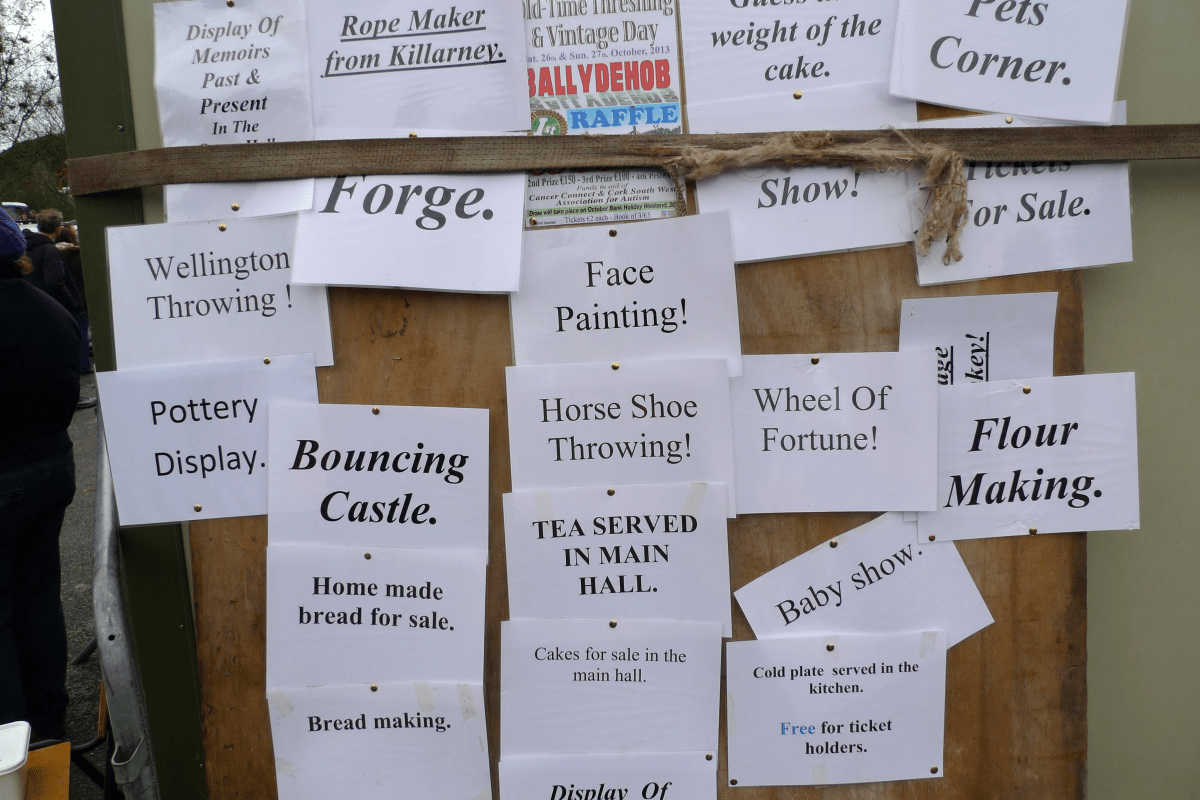
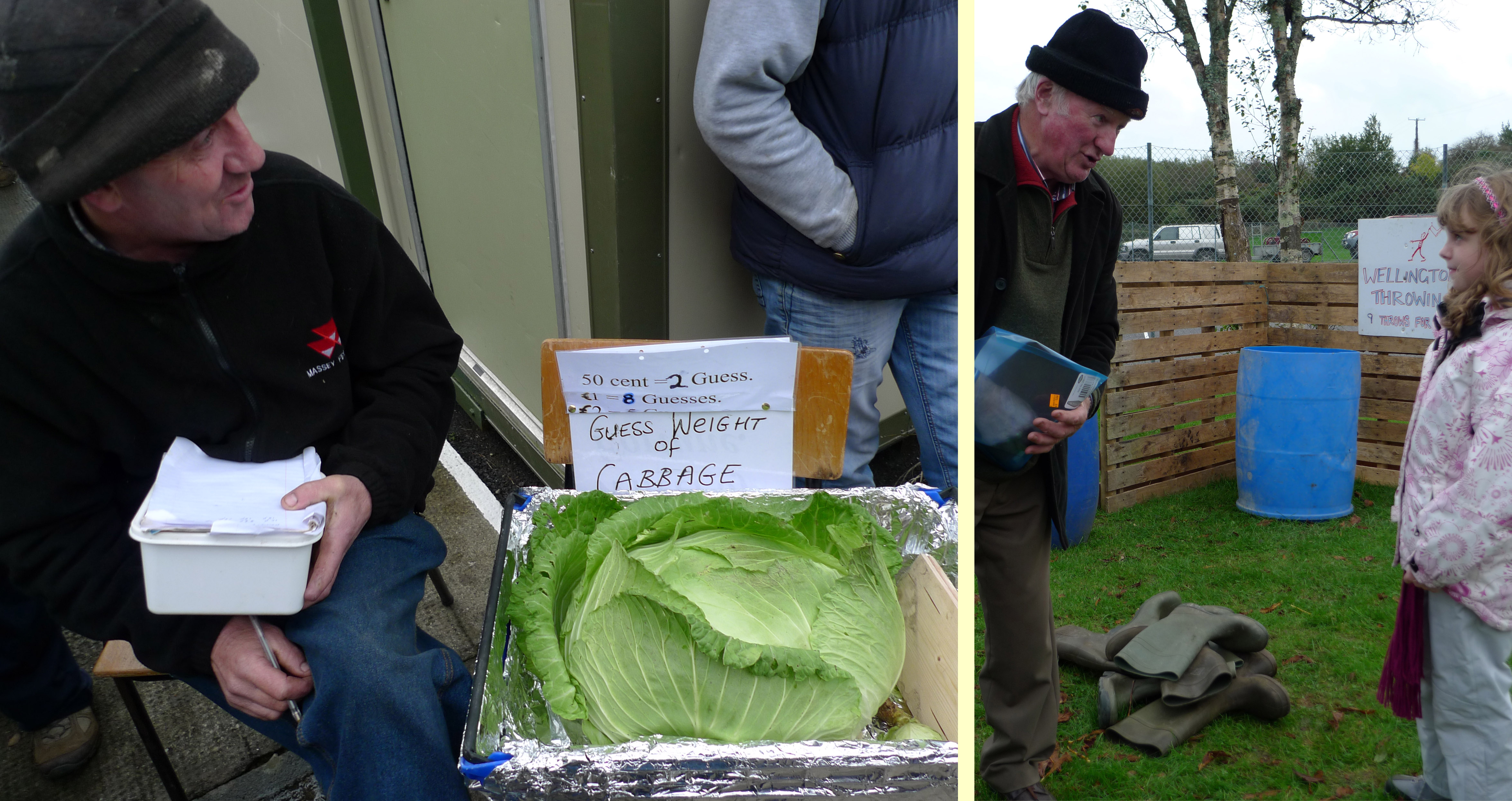
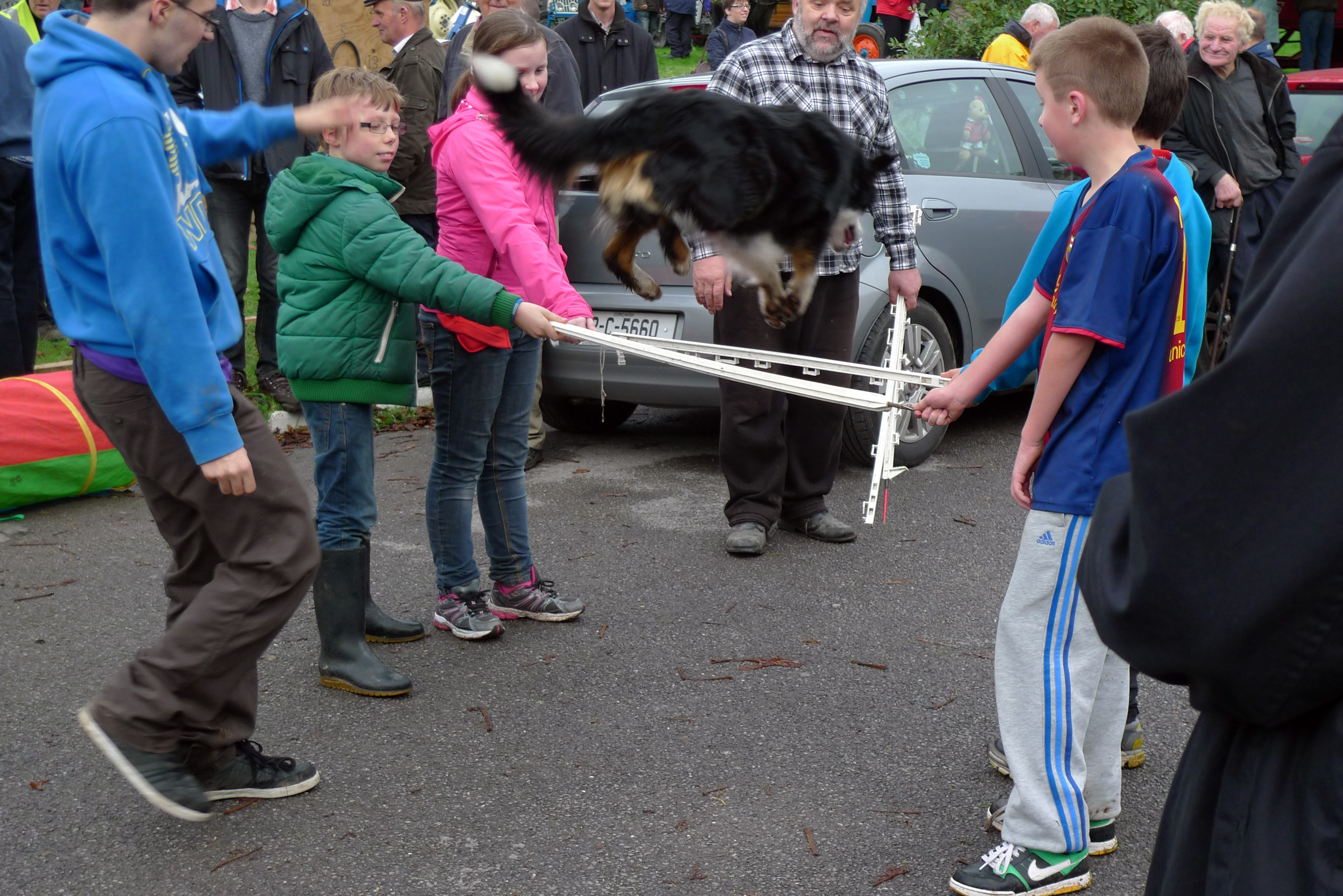
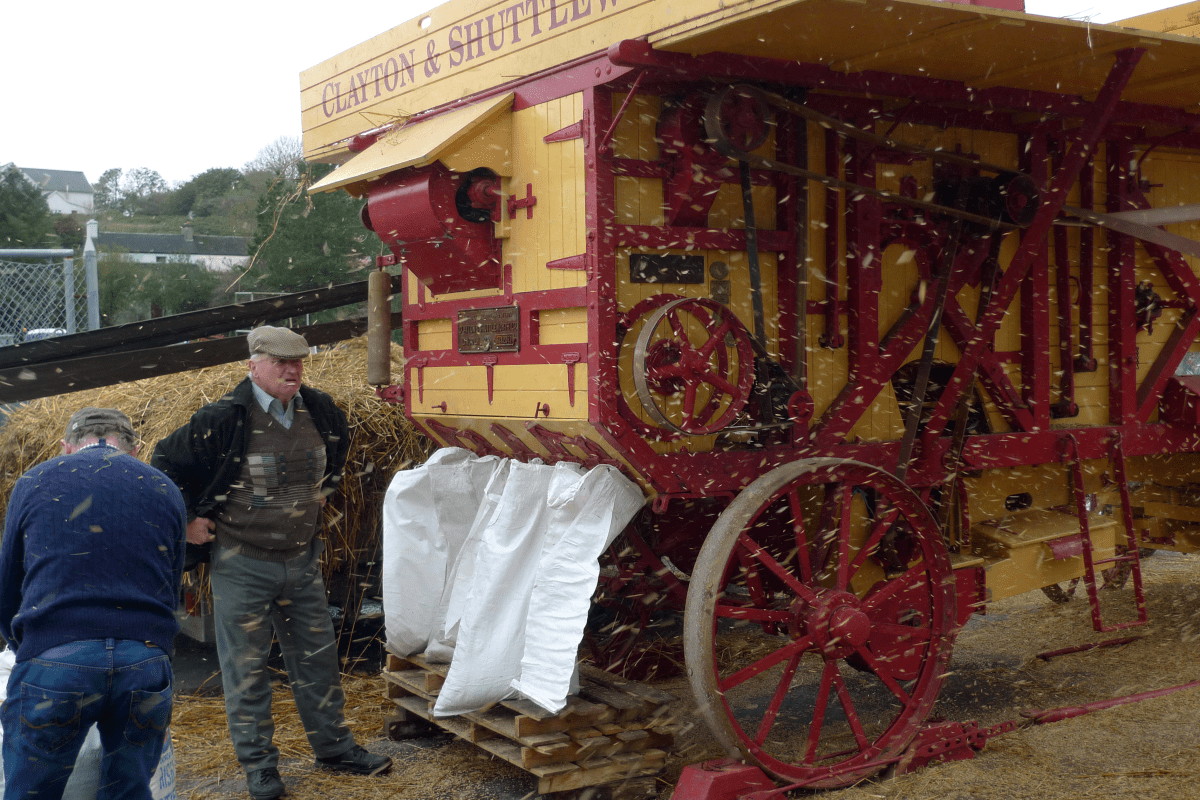
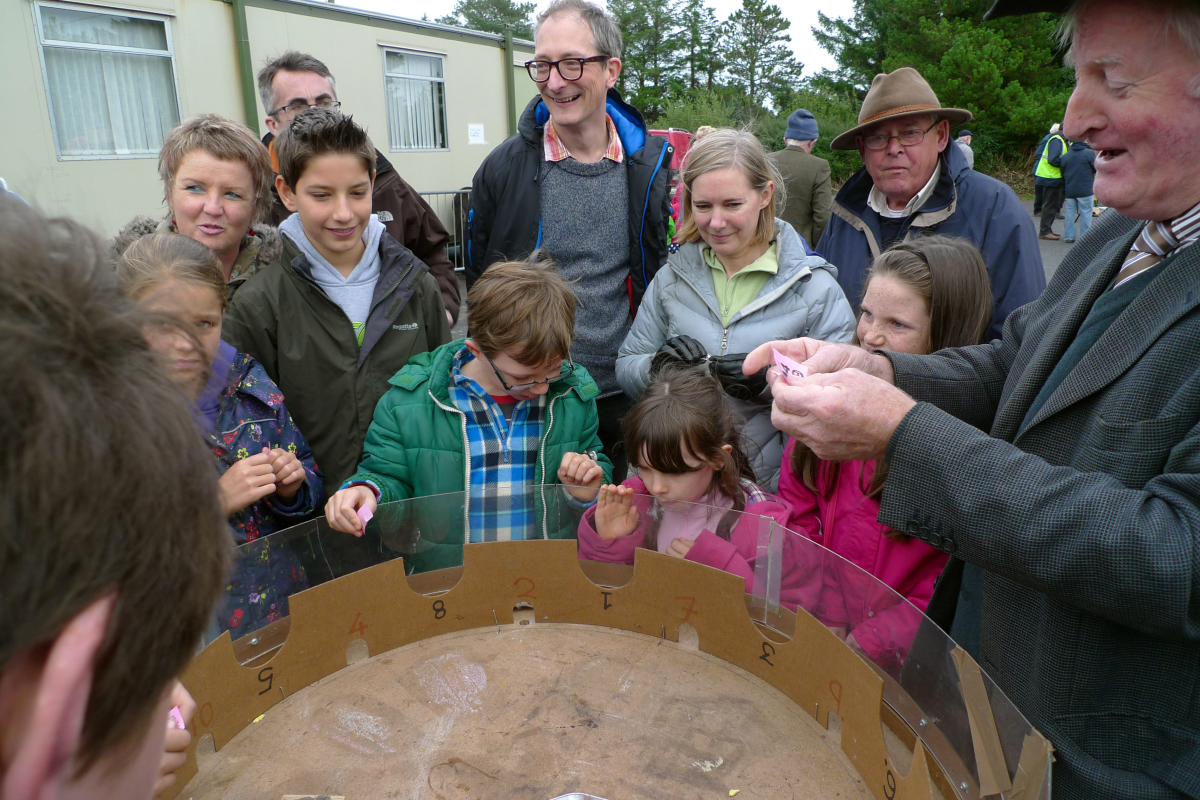
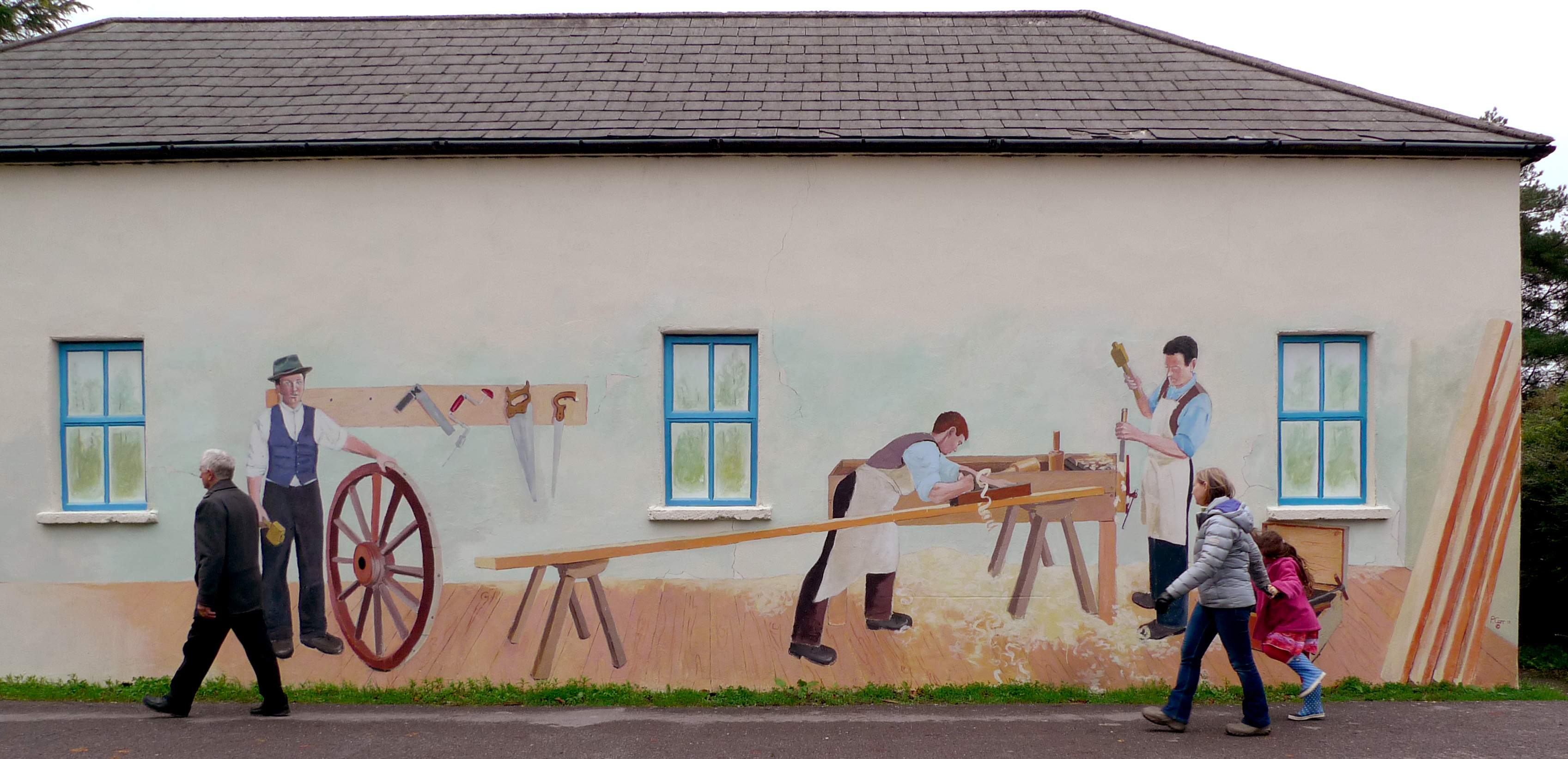
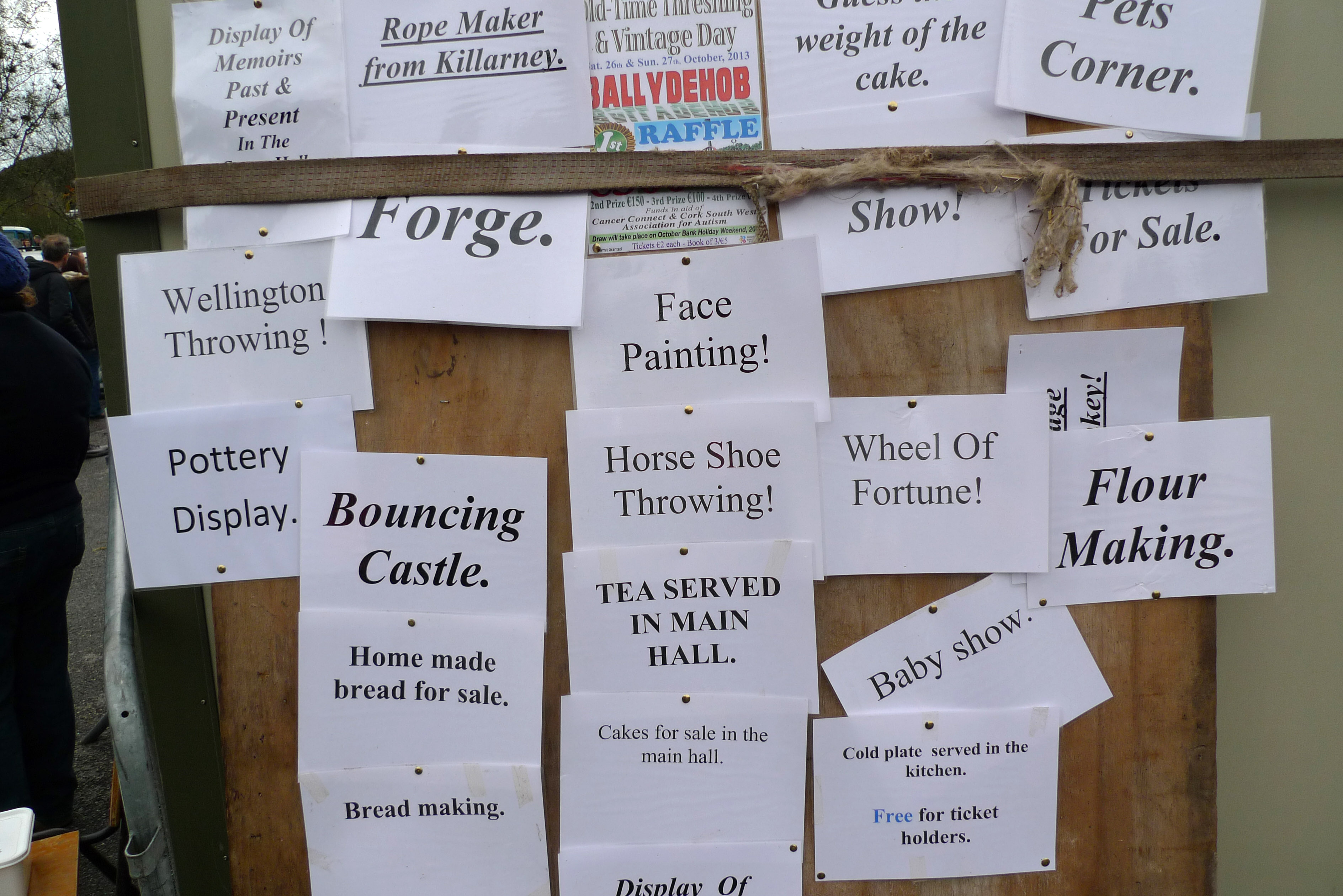
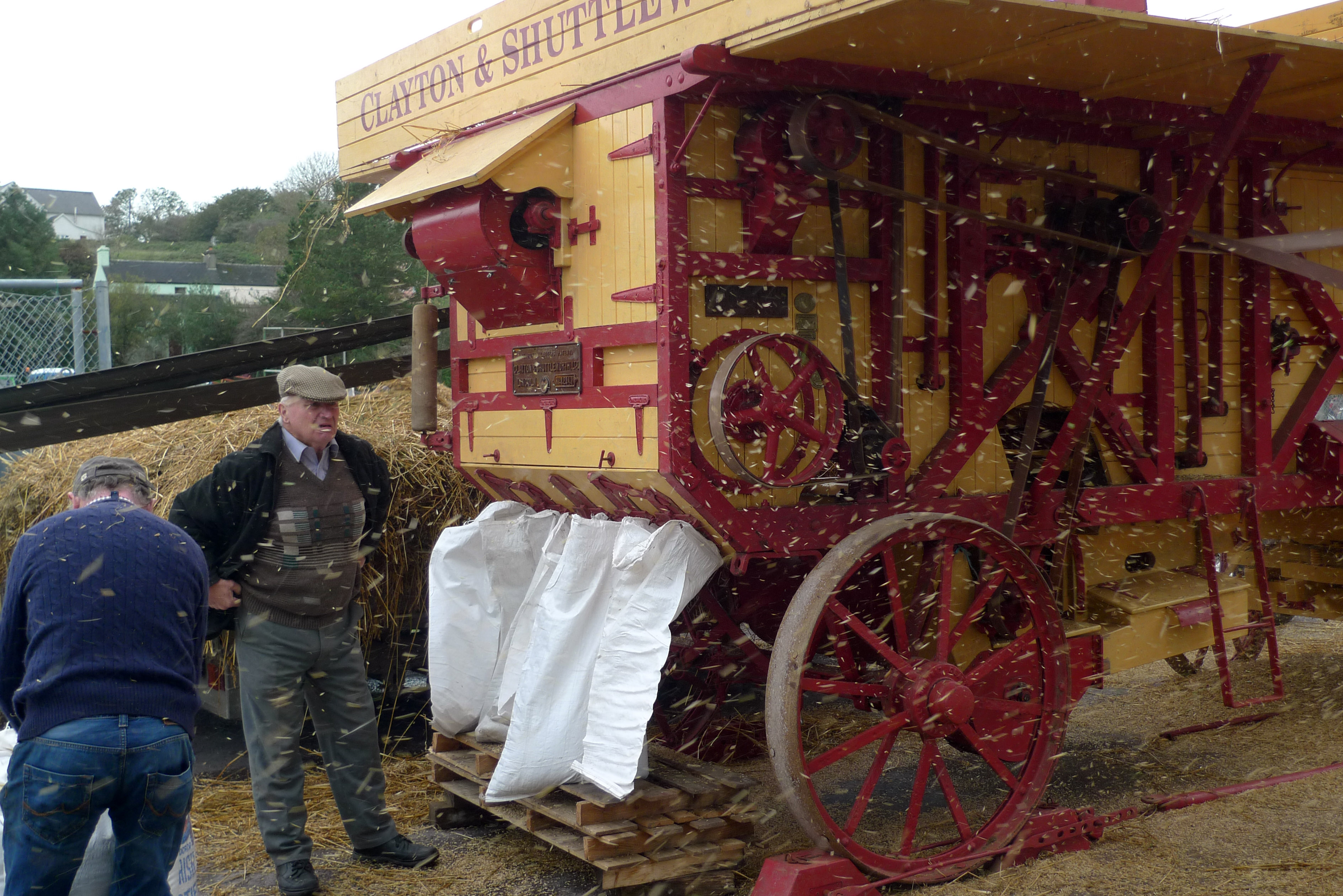
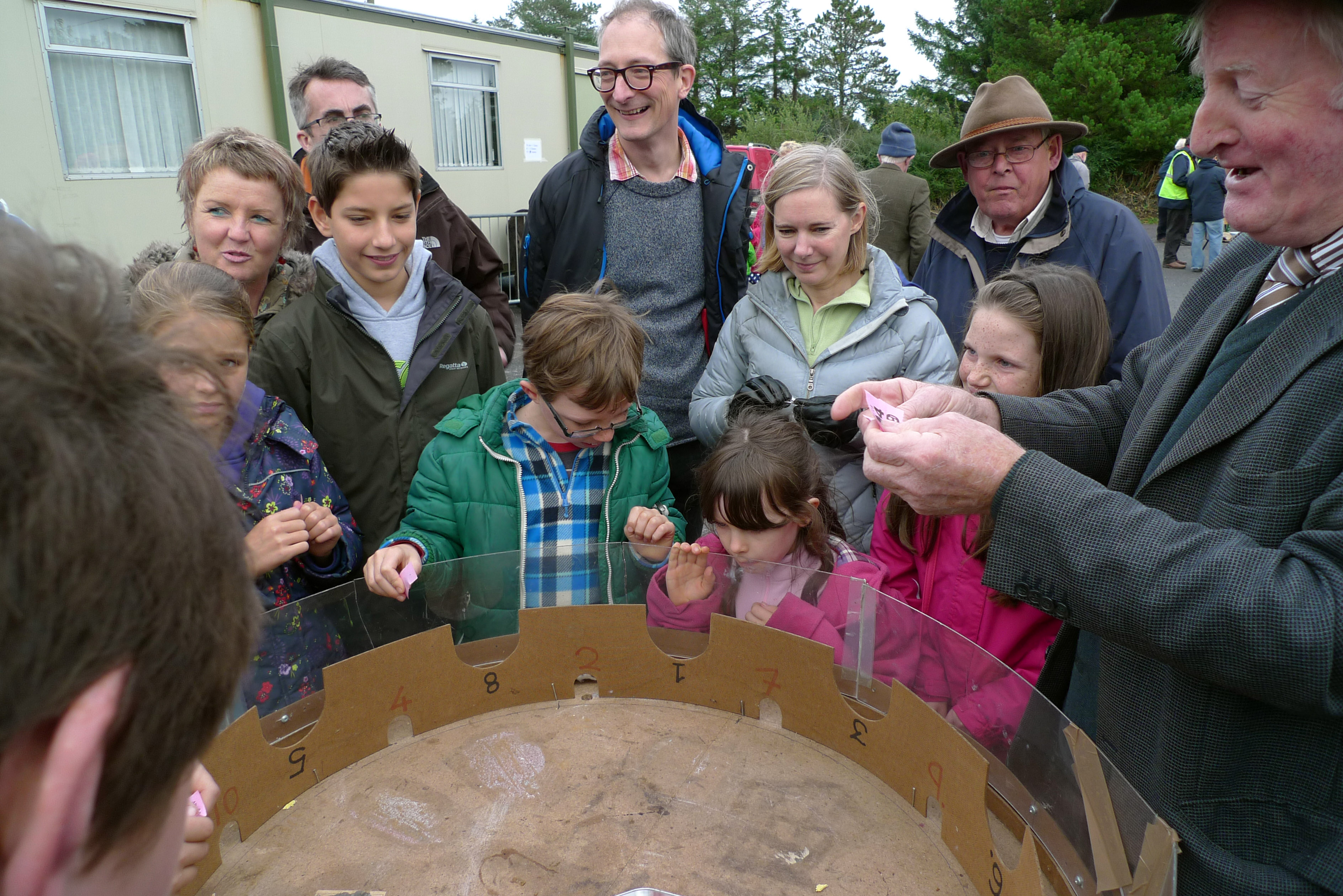
In Ballydehob (our local community) it’s time for the annual Thrashing. This event always takes place just before Hallowe’en, a festival which nowadays overlays the old Celtic Samhain (1 November) – when the souls of the departed are remembered. Here it’s a good time to bring in the threshing machine and lay up sacks of grain in the barn. It’s also a reason to hold a fair and show off vintage cars and tractors, to make butter, to watch performing dogs, to gamble on mouse racing – or just to chat over a cup of tea.

Byway in Ballydehob

Don’t miss it!

fair
dog

The Thrashing

Mouse Bookie

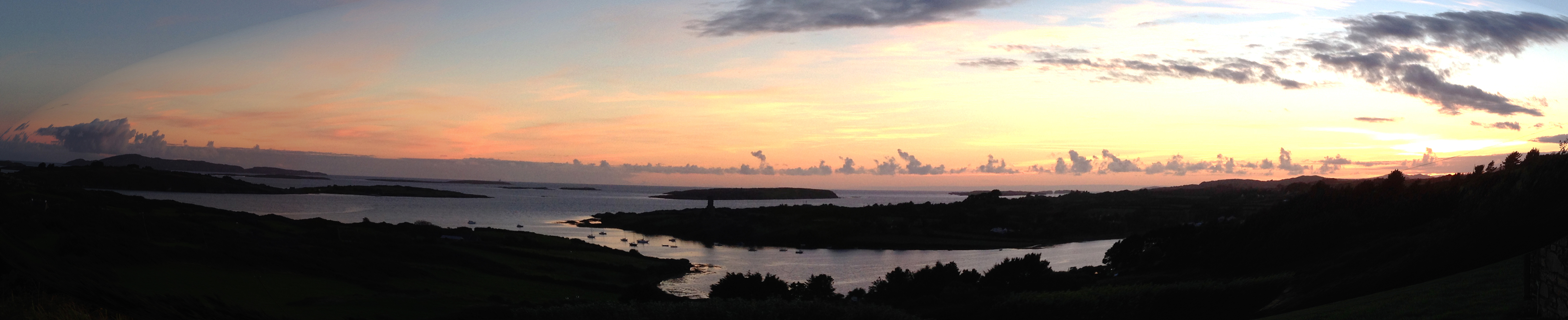
We look forward to the turning seasons: what we see from Nead an Iolair changes constantly, is never dull, and can’t be taken for granted. Skies can be steel grey – or still as gloriously blue as they were in the summer; and our sunsets can be even more beautiful.

rwpan

The Caol Stream Then and Now

Five years ago I wrote a piece about the incredible biodiversity that flourished along the Caol Stream, right in the middle of Skibbereen. At the time, the flood relief project was underway, and it wasn’t totally clear how much clearance of the vegetation would take place. I was optimistic, given the resilience of nature, that once things settled down, the wildflowers would once again creep in to populate the banks of the stream.

I am no longer optimistic that this will happen anytime soon, if at all. The photo above shows you what the same area is like now. So this post is an elegy for the missed opportunity that this project represented – the opportunity to balance the needs of the people of Skibbereen not to be flooded repeatedly, with the need to conserve our biodiversity.

Please click on this link to see the riches we have lost:

Down By The Old Caol Stream