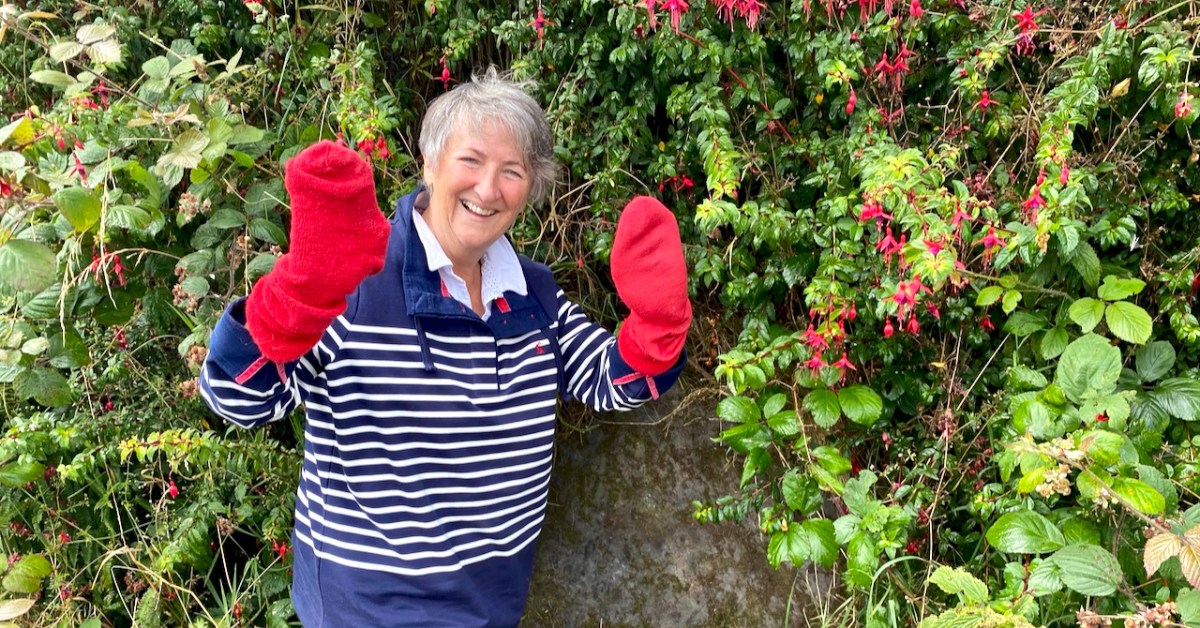
What do red socks have to do with rock art? Well, nothing really, but they turned out to be surprisingly useful this week.
It’s been ages since we talked about rock art, hasn’t it? Thinking about that, I decided to do some tidying up in our blog and I have created a special page for Rock Art, and another one for Mizen Magic, since this post also fits into the Mizen Magic series.
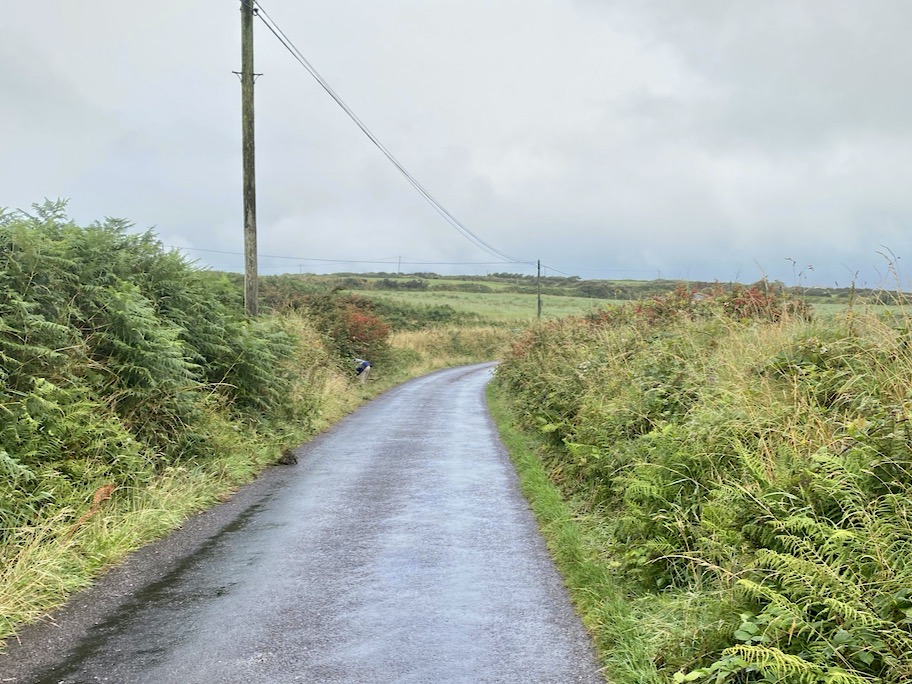
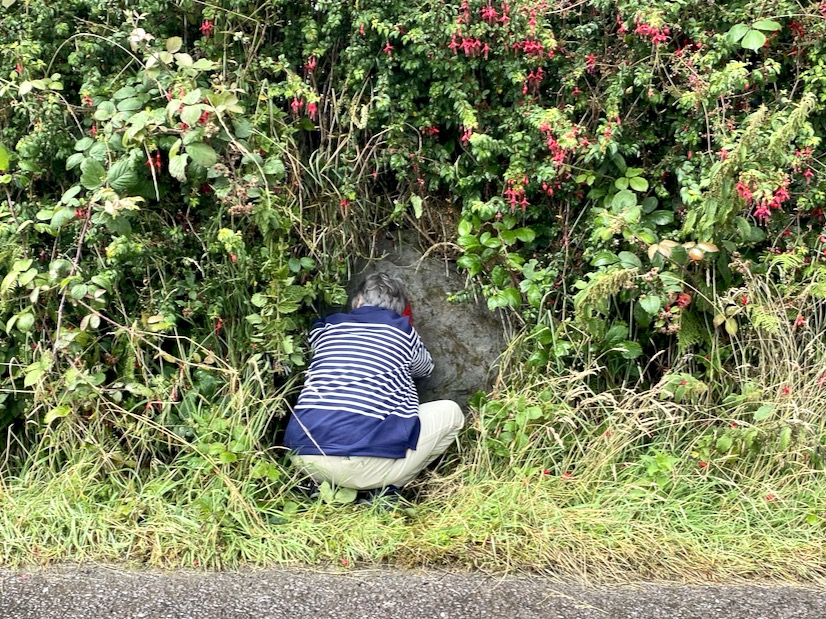
Robert and I set off to hunt down rock art we haven’t yet seen on the Mizen. The National Monuments site contains two records for Cupmarked Stones in the townland of Balteen, and both proved easy to find. (If you can’t remember what a Cupmarked Stone is, take a look at this post before reading on.) The first is along the road that leads from Barley Cove to the North Side. That’s my butt marking the location of the rock, above.
It’s built into the bank and we might not have been as quick to spot it as we were unless somebody else had already found it and cleared away some of the overgrowth – I suspect Rock Art Kerry, AKA Aoibheann Lambe had been there before us, perhaps a couple of years ago. We usually remember to bring a soft brush with us for a gentle cleaning of the rock surface (lots of moss on this one) but we had forgotten this time. The red socks came to the rescue.
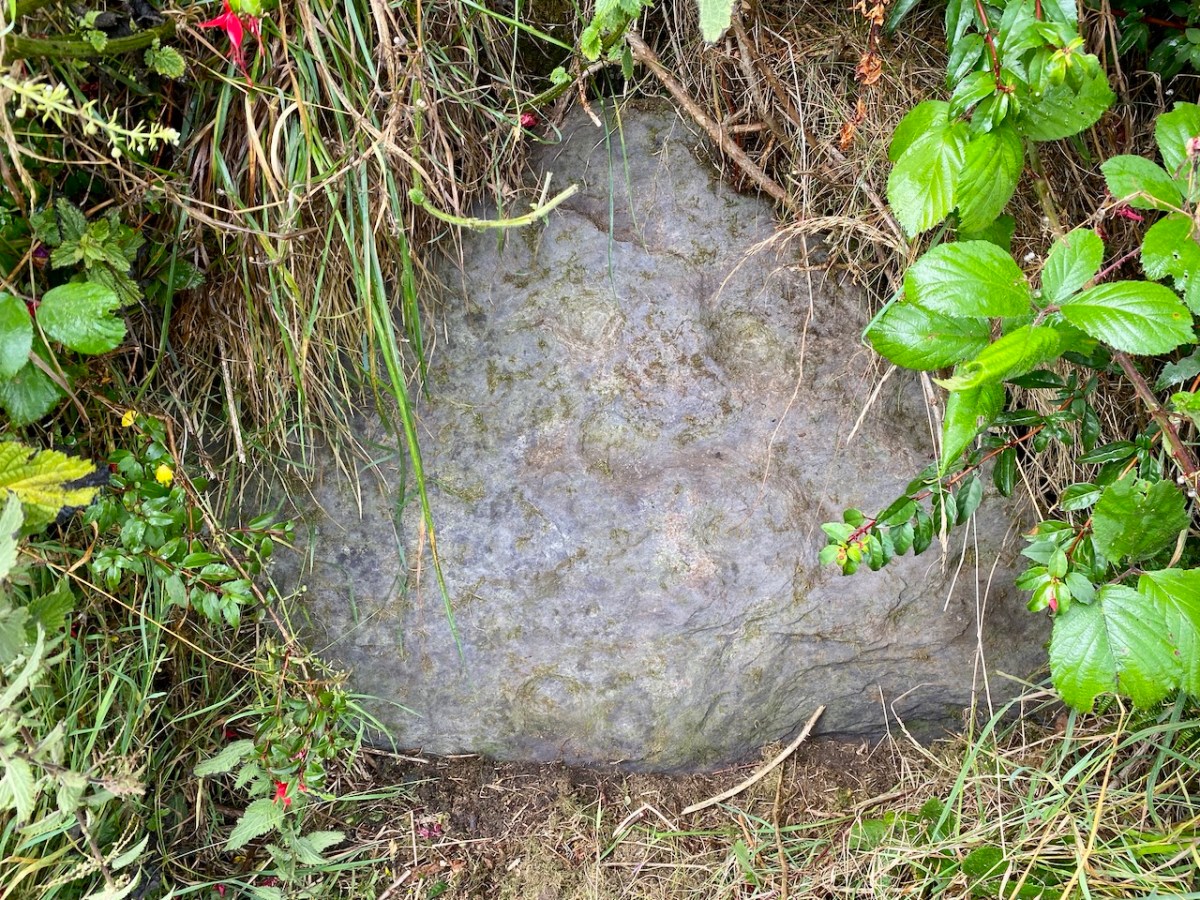
This is a lovely example of a cupmarked stone – although it’s possible there is more on it than cupmarks only. The central cupmark appears to have some carving around it that helps to mark it out and elevate it – not a complete circle but an arc that may end in an expanded finial. We have sent the photos off to UCC for a 3D rendering and this may clarify this aspect of the carving. Here’s a short video – see what you think about that arc.
Meanwhile, since it’s hard to make out what’s in the surface of a grey rock on a grey day, clever Robert has made a scaled drawing of it. We know that cupmarked stones like this can date anywhere from the Neolithic (about 5,000 years ago) up to the Bronze Age (ended about 2,500 years ago), and that the cupmarks were probably made by picking or bashing them out with a stone cobble, but we don’t know why they were done, or what meaning the cupmark itself may carry.
We also don’t know if this one is in its original position, but it’s likely that it is not. It is currently incorporated into the bank at the side of the road, leading us to suspect that it was found in the vicinity and built into the wall to give it a place where it would be visible to all passers-by.
The second one (above) was a surprise! First of all, it’s enormous! It looks like it may have been a capstone for a large structure, or perhaps a boulder burial. However, it’s difficult to determine if there is anything underneath and it may well be a glacial erratic that simply ended up here. This one is in the same townland but it’s on private property, so we are not pinpointing it on a map, at the request of the owners – but they are happy to give permission to see the stone and they welcomed us to take photos and tell them a little about rock art in general. There are nine cupmarks, from large to small and some appear to be arranged in a rough semi-circle – something we have observed on other cupmarked stones.
I am trying something a little new with this post – doing short videos to see if this helps to convey more than a photograph might. I’d be interested in your feedback on this. Note: You may have to play the videos on YouTube – sorry if this aspect isn’t working right for everyone!
Just when you think you have seen all the Mizen has to offer, it reveals yet more of its secrets!
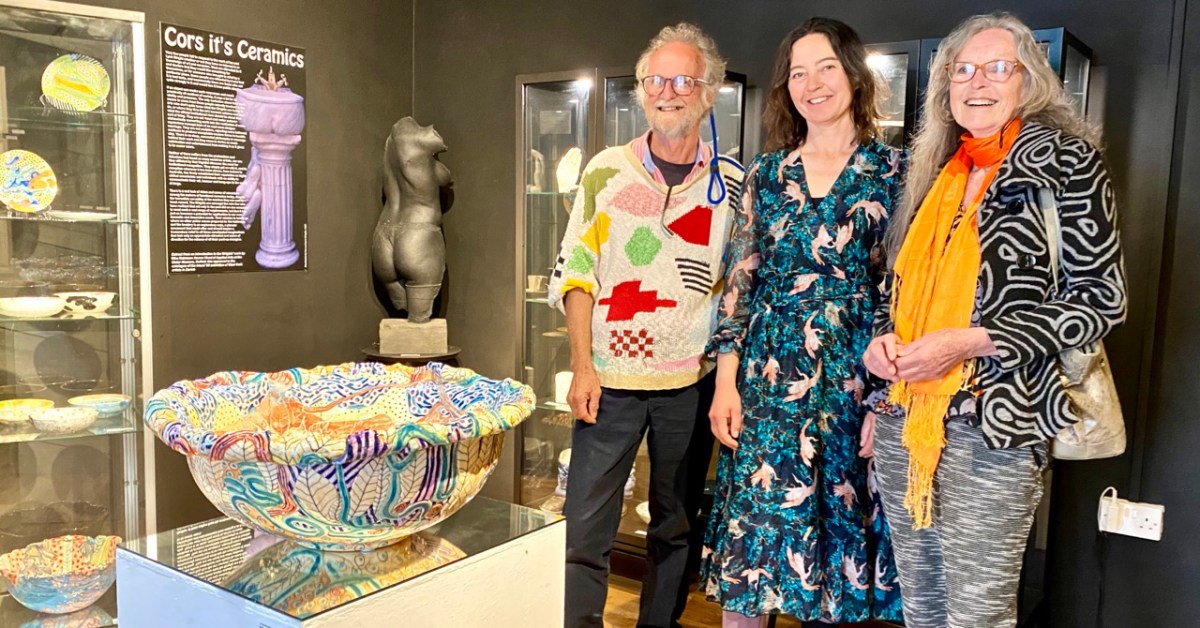
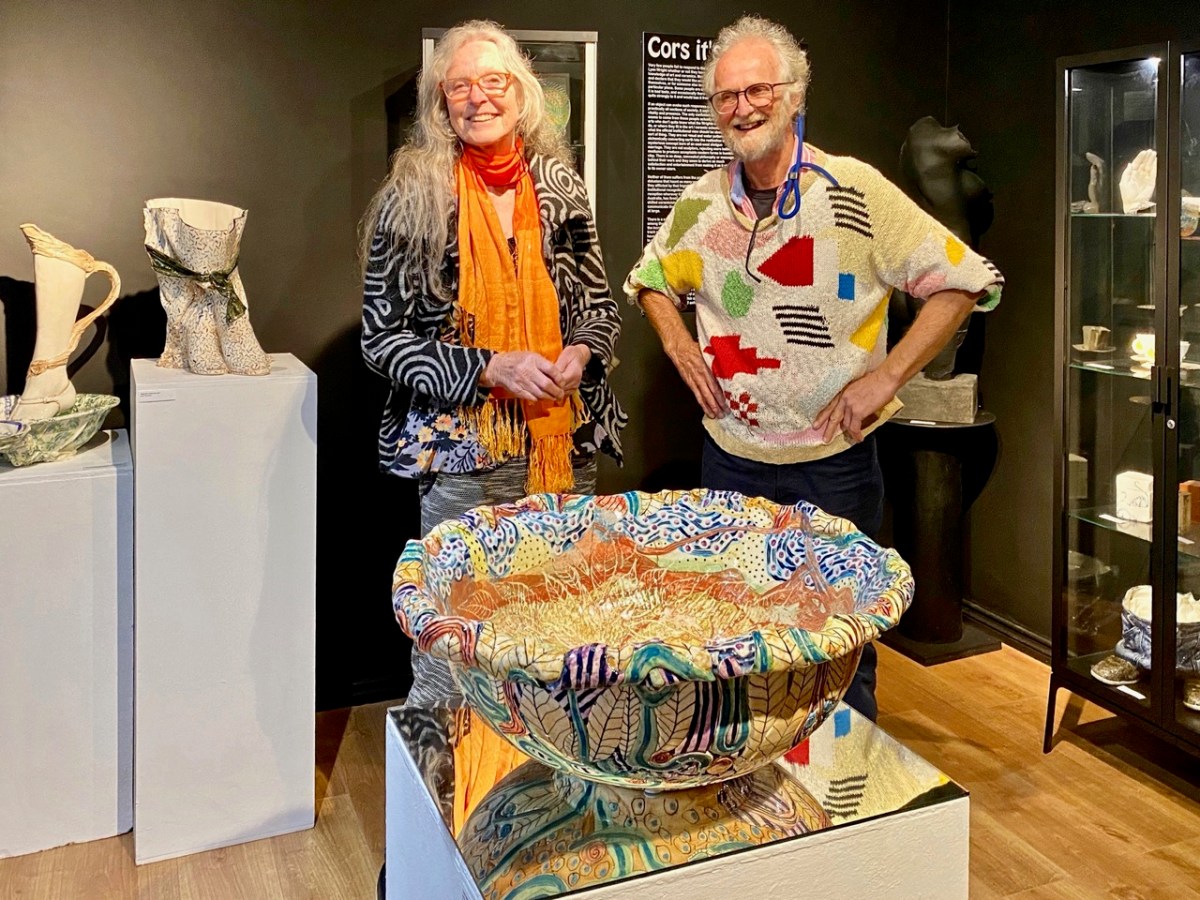
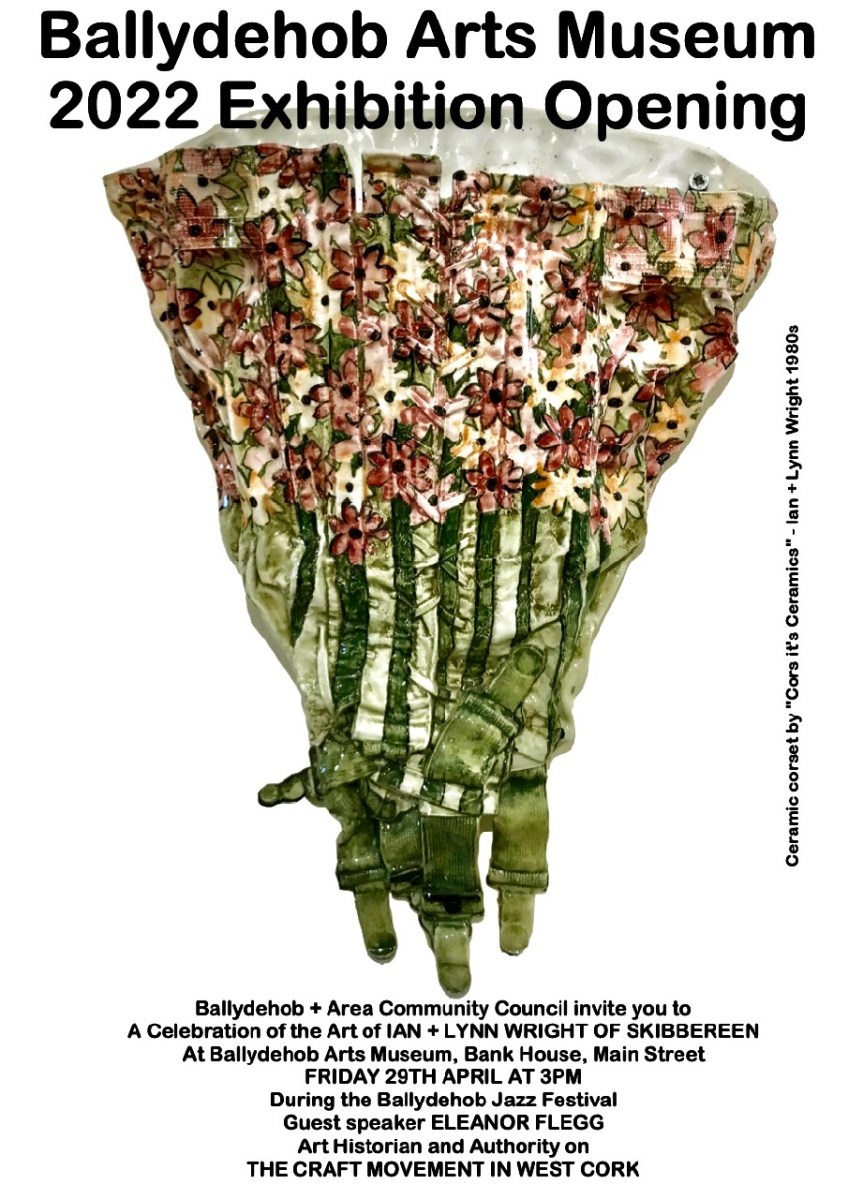
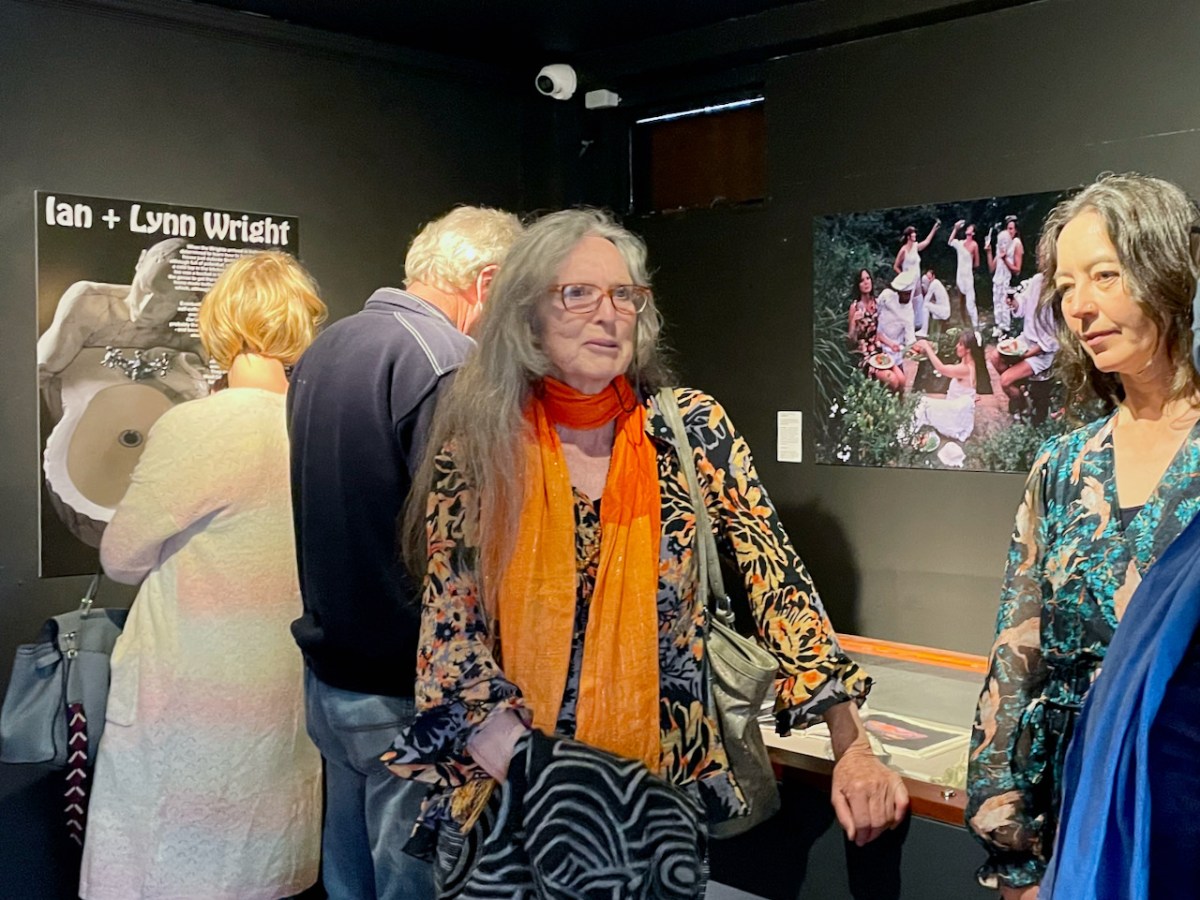
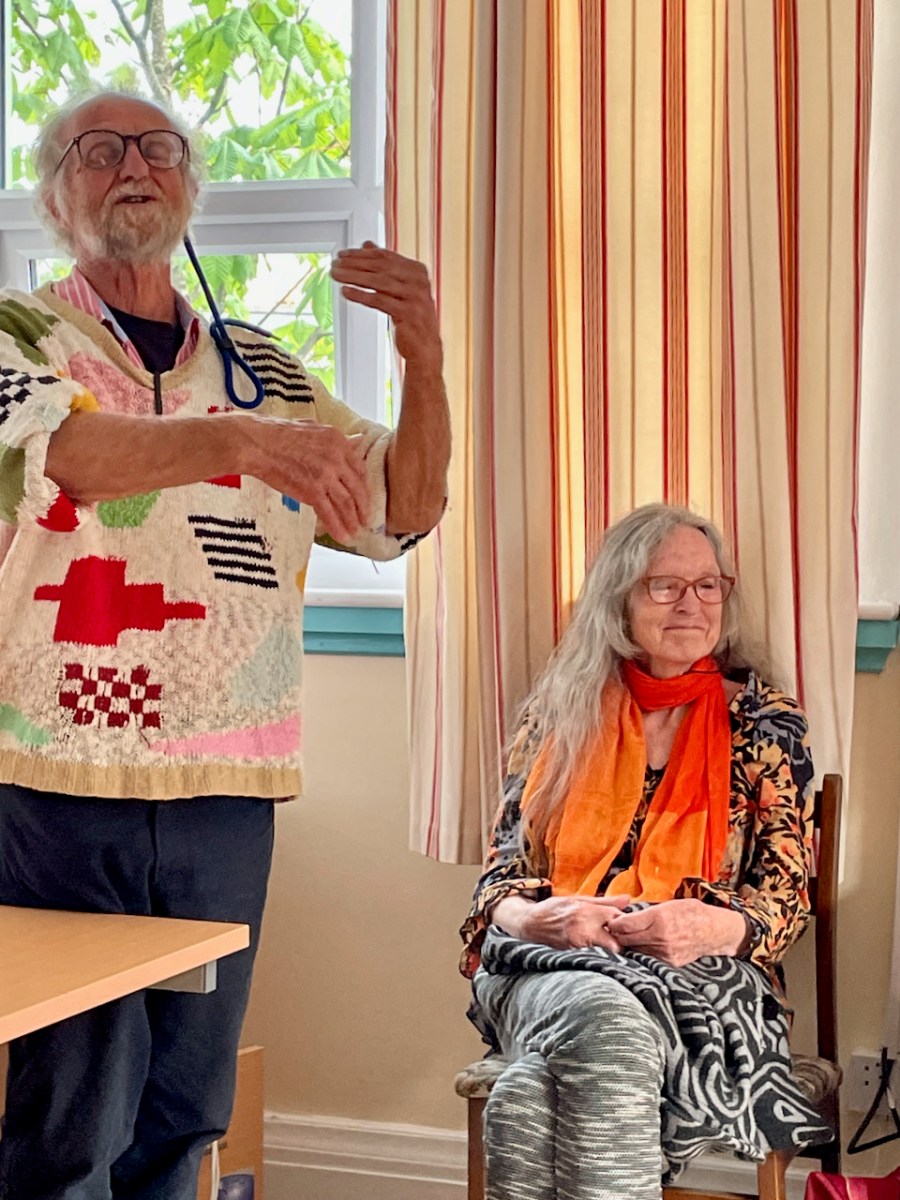
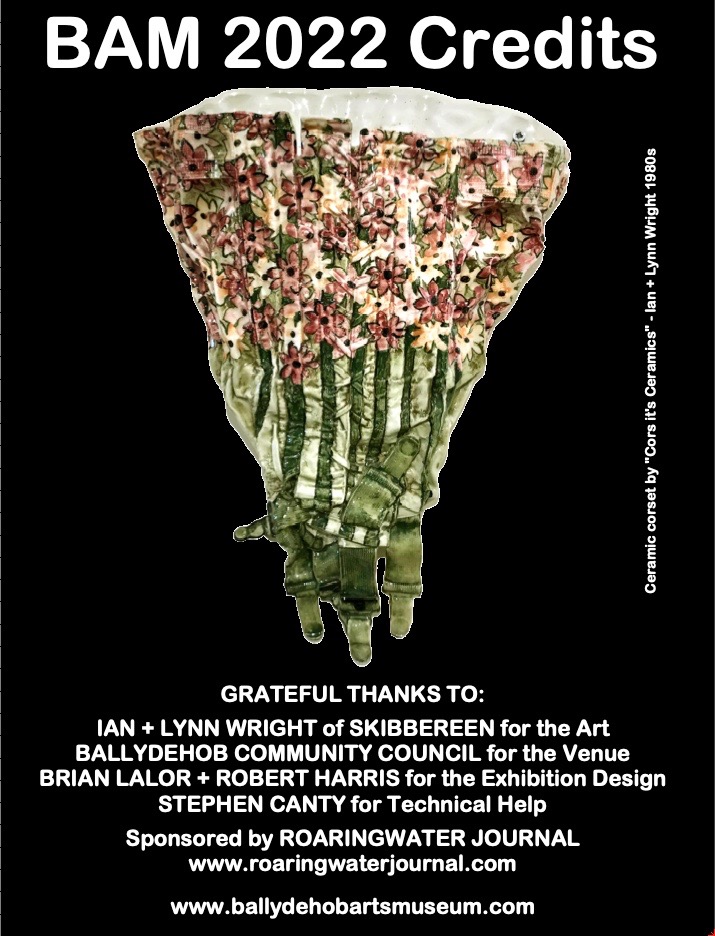
BAM – the Ballydehob Arts Museum – is open through the summer. Make sure you don’t miss the impressive exhibition that’s on at the moment. It shows the work of West Cork art creators Ian and Lynn Wright (shown above with Eleanor Flegg). They were part of the ‘invasion’ of artists who came to the Ballydehob area from the 1960s onwards, and who are now featured in what is perhaps Ireland’s smallest art gallery, situated in Bank House, the headquarters of the Ballydehob Community Council.
You will find out all about the Museum here and here. Curator Brian Lalor (who featured in last week’s post) and Director Robert Harris (that’s me!) have put together a new exhibition this summer, following two years of absence due to Covid.
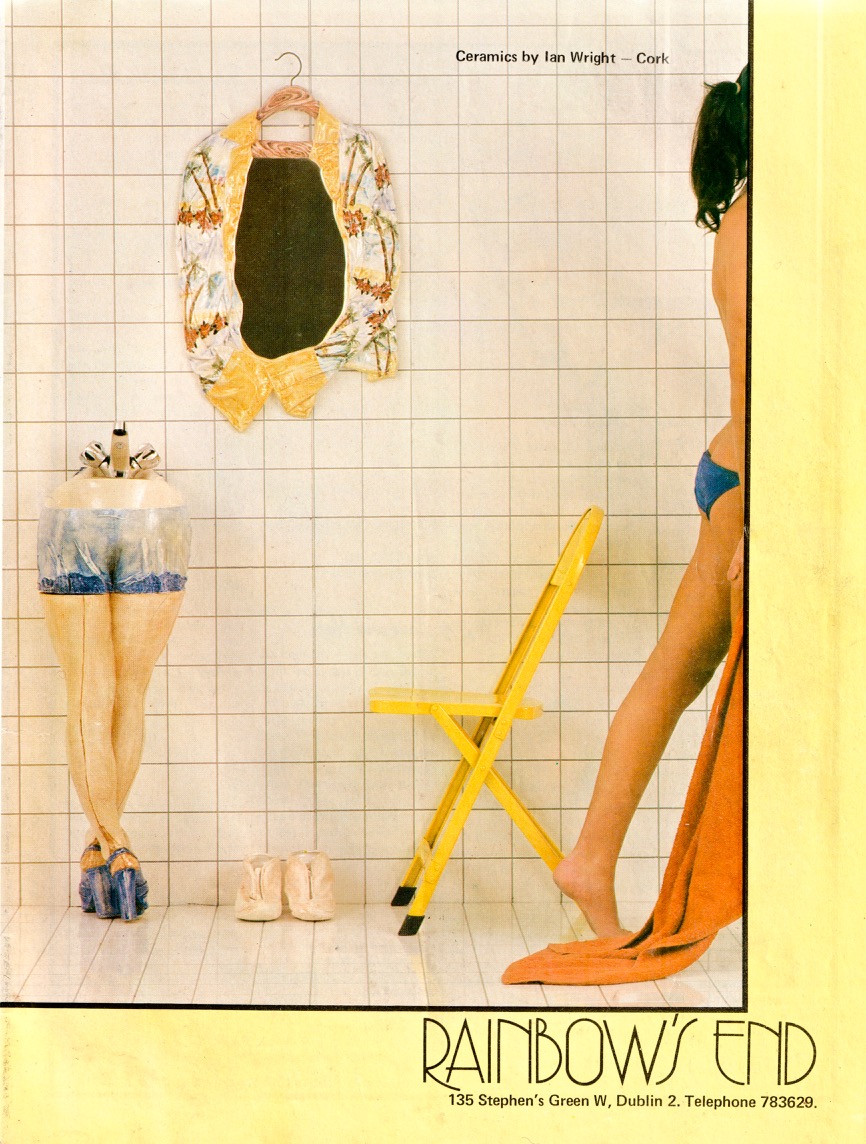
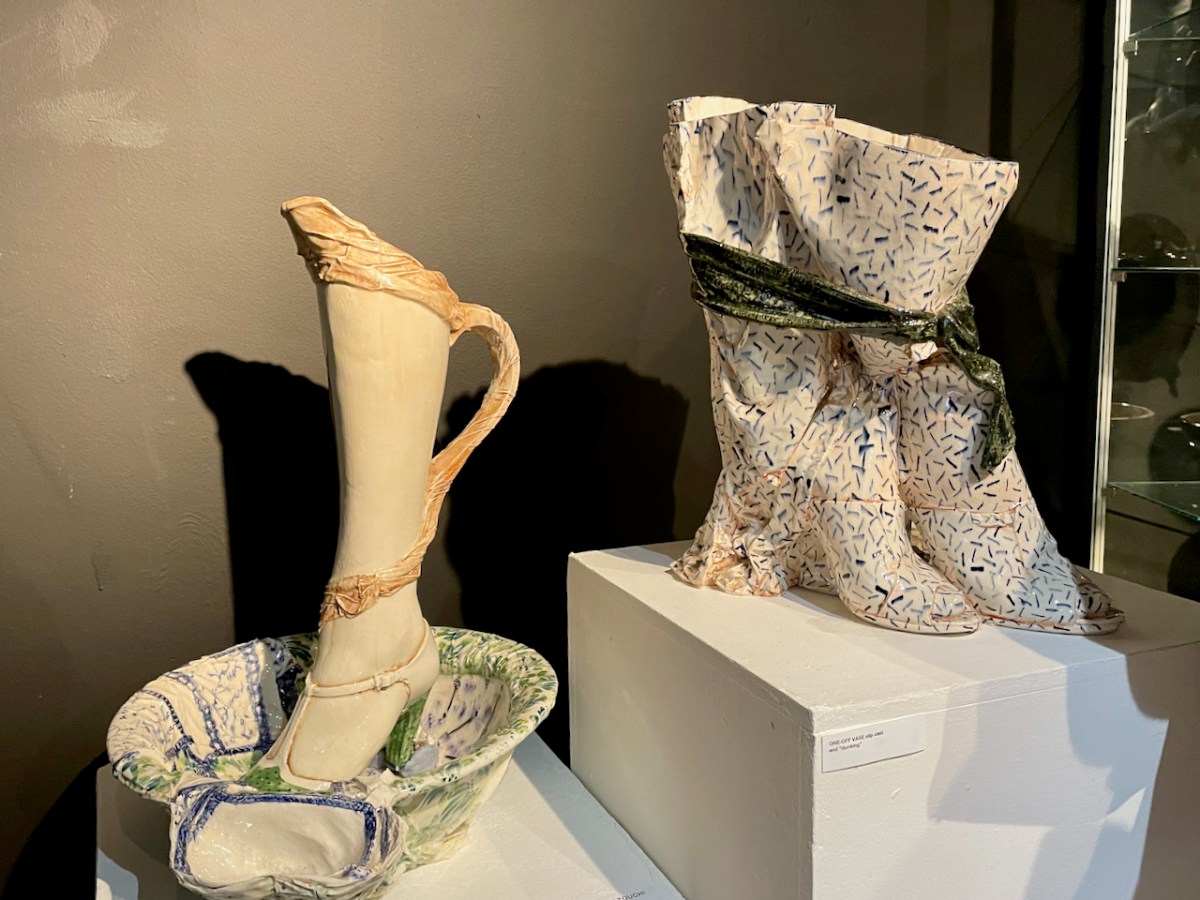
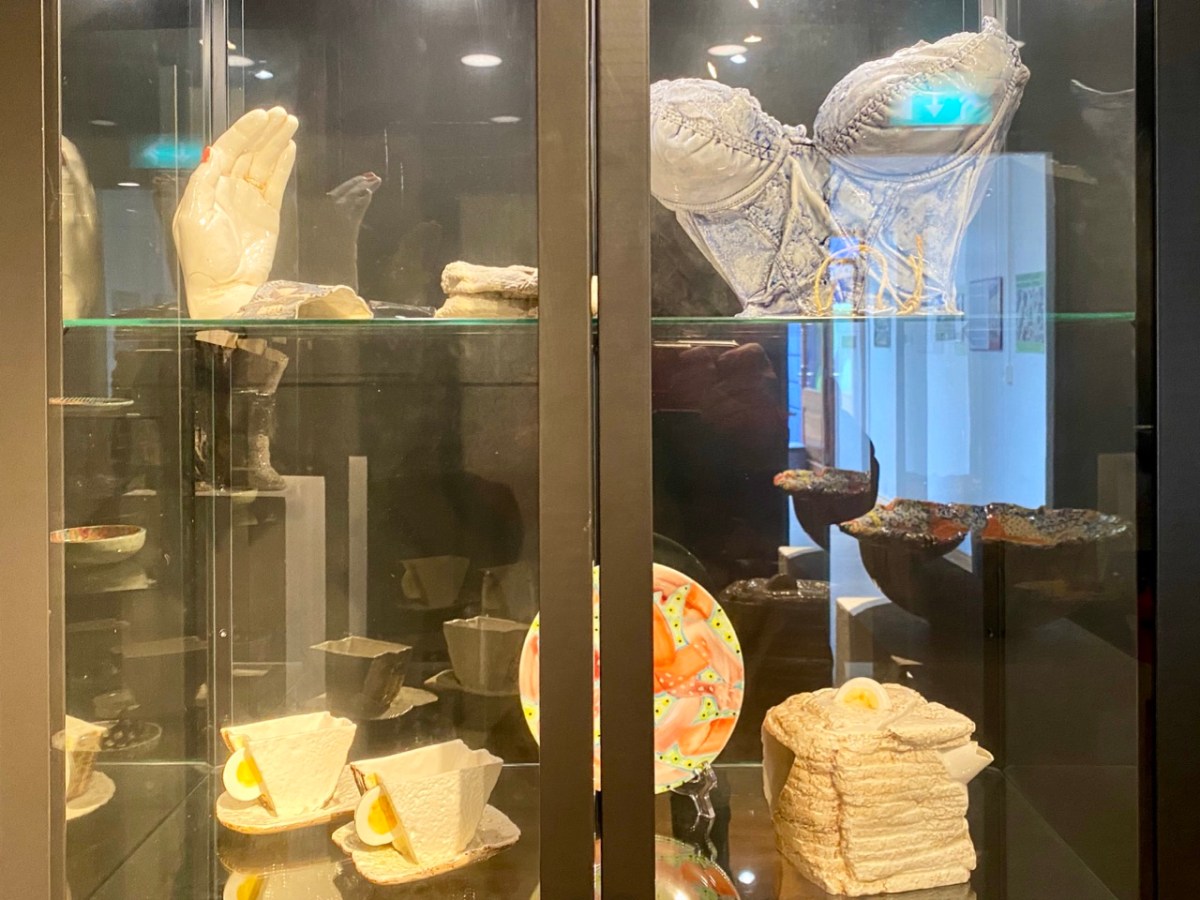
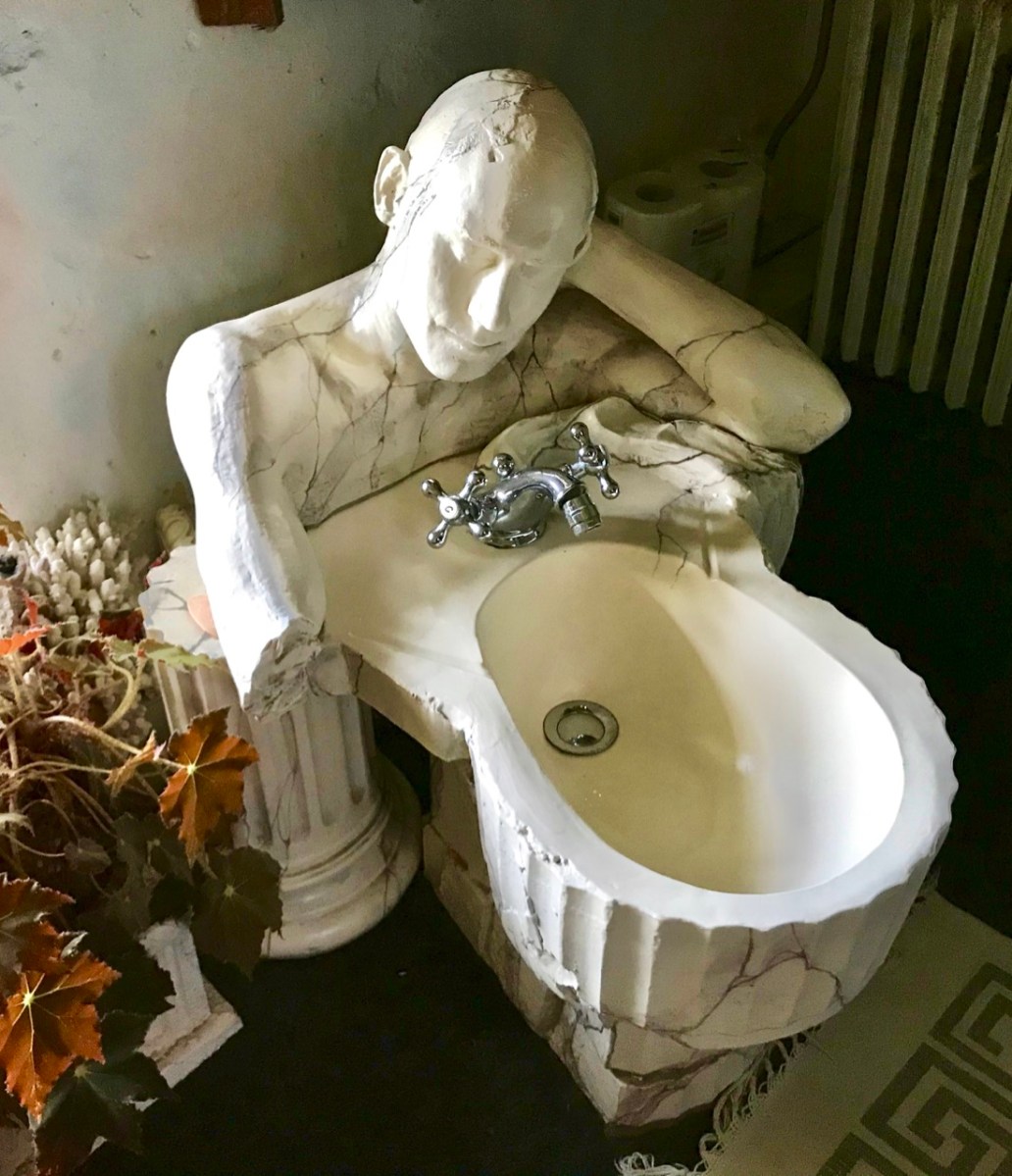
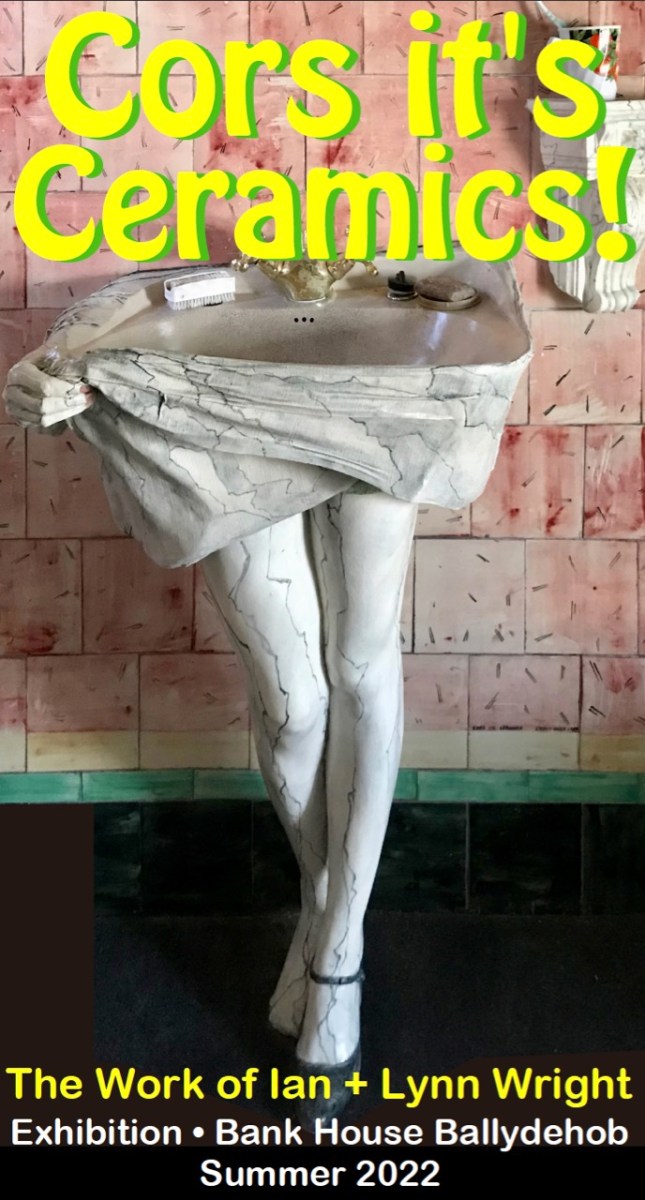
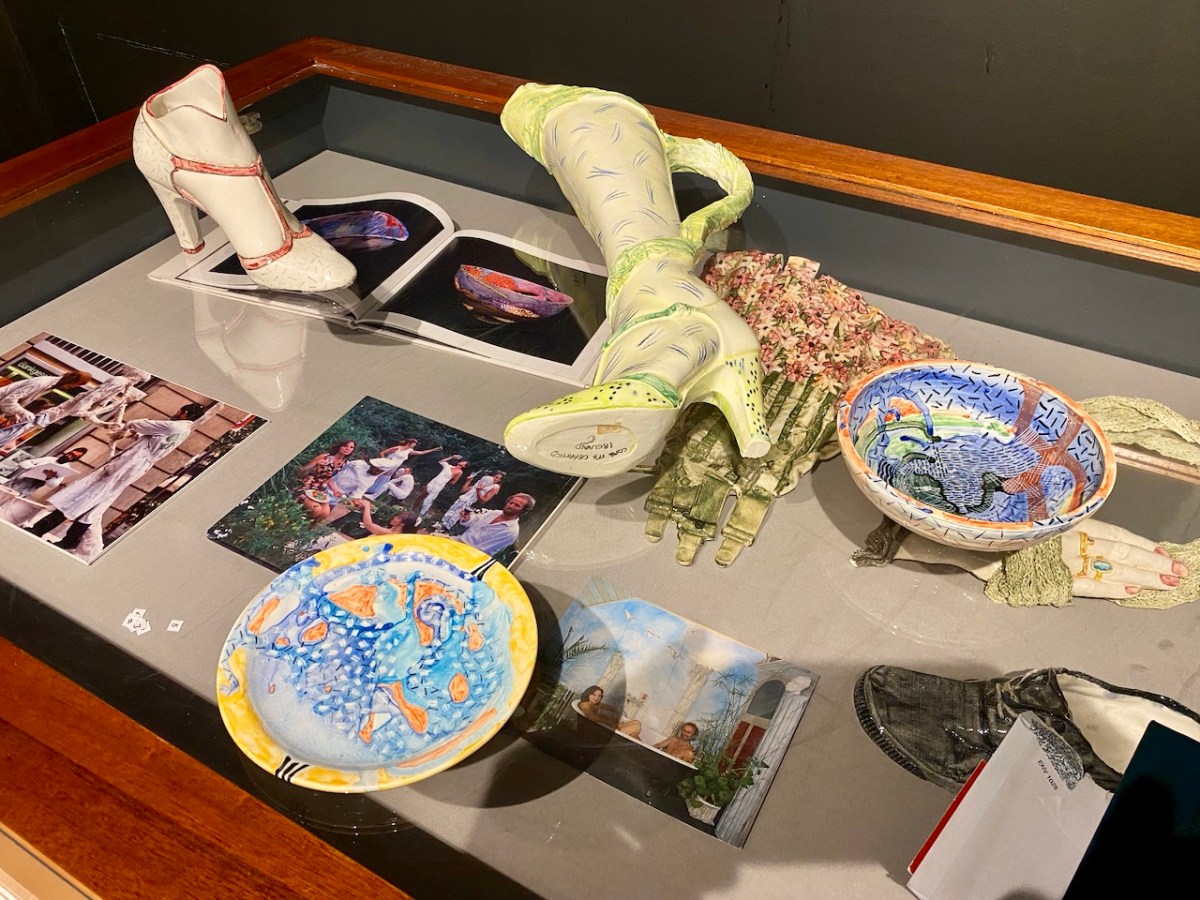
The ad above (from the early 1980s, I think) shows how Ian and Lynn’s work was being marketed at that time. They called themselves Cors it’s Ceramics, and they definitely projected a cheeky identity, making one-off ceramics – basins, bidets, loos and bathroom accessories: unique, appealing and often erotic. Their work was popular, and their production processes couldn’t keep up with demand! Today, the Wrights are producing more measured ceramics: Lynn produces beautiful large bowls, while Ian uses human body moulds to make impressive torso casts. Examples of all their working styles can be seen in the present Museum exhibition.
The Museum display is stunning. It brings together – probably for the first time ever – an eclectic extravaganza of the Wright’s output over half a century: examples of work small and large. There are no complete bathroom settings here: those that survive are still installed in the domestic settings for which they were commissioned. But we are fortunate that we have had access to the Wrights’ own collection of their work, which they have freely lent to the Museum. We do, of course, also have photographic records of other examples.
The Exhibition was formally opened earlier this year by Eleanor Flegg, and it can now be viewed for free whenever the Ballydehob Tourism Office is open. Through the summer this is usually from Monday to Saturday – 11am to 1pm, and from 2pm to 5pm. However, please check before visiting, as the office is staffed only by volunteers, and we can’t guarantee those hours at all times. It’s best to ring this number to confirm that it will be open: 028 25922.
A lot of effort has gone into making this exhibition. It’s on for the rest of this season, so please don’t miss it. It is the aim of the Ballydehob Arts Museum to celebrate the very special projects that have been carried out over decades to give the village its reputation as an artistic centre of excellence. Nowhere else can you find the full flavour of what has made this community so special.
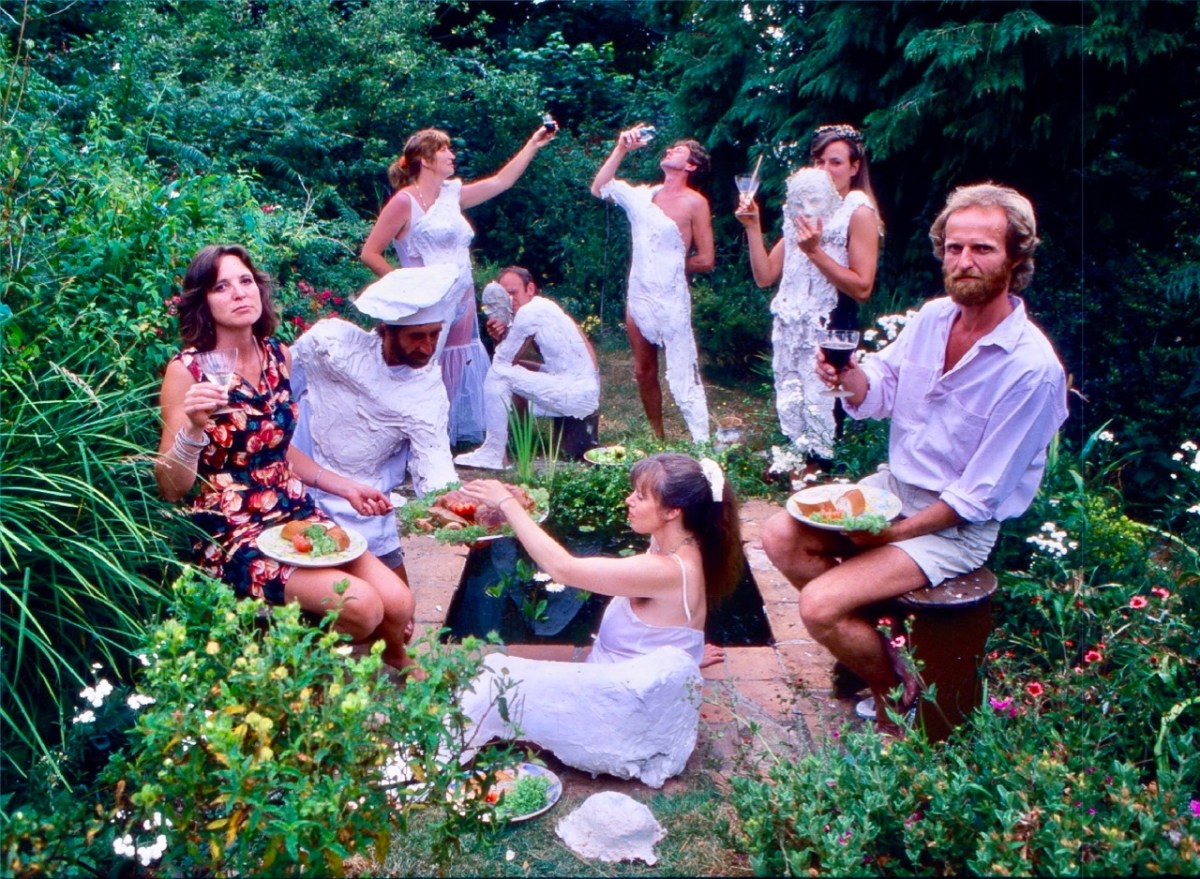
This photo (above) appeared in the Mail on Sunday newspaper in 1983. Lynn and Ian are on the left and right respectively. The occasion is a ‘body casting party’ in the Wright’s garden.
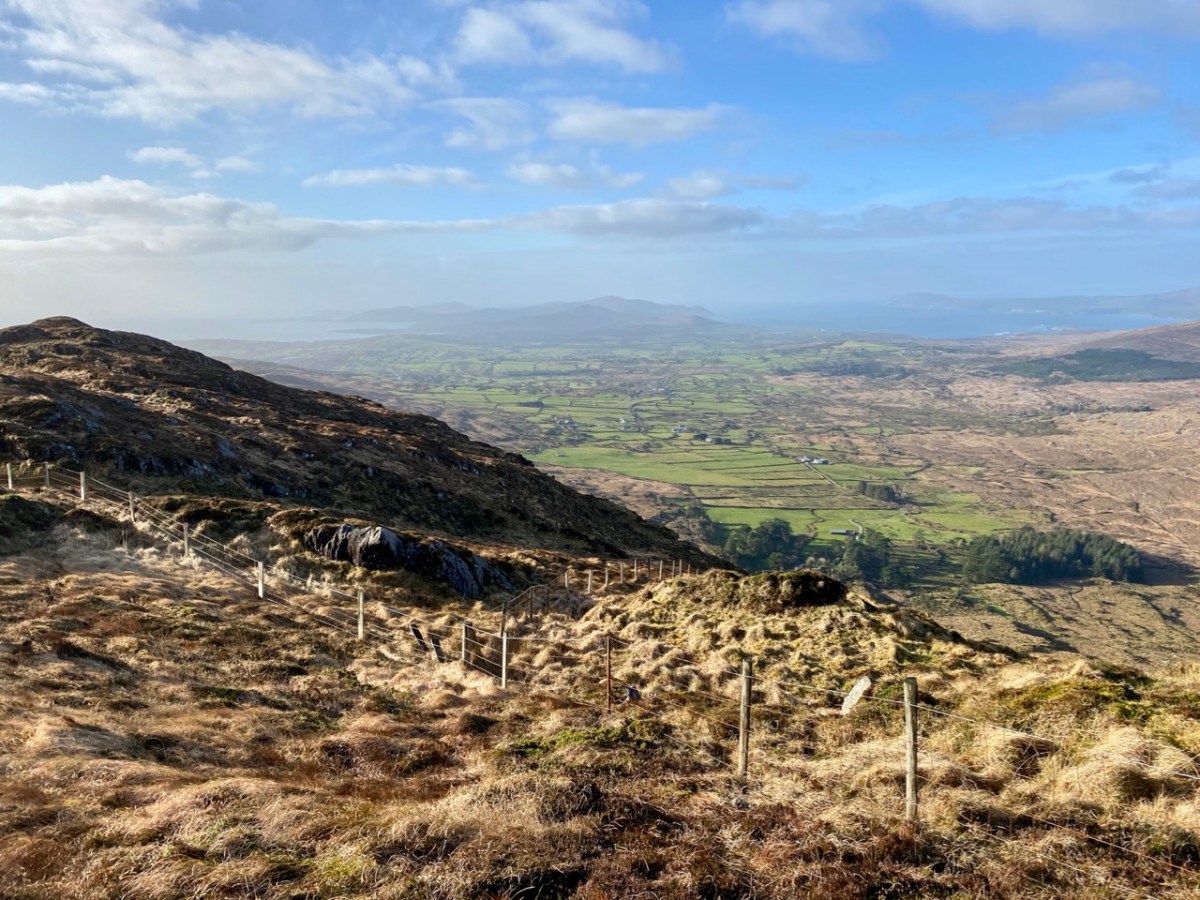
Mount Gabriel is, I believe, a rarely regarded topographical prominence on the Mizen. Yet it is impossible to ignore: the summit can be seen from most parts of this western peninsula. And, for those visitors who do notice it – and make the effort to scale its heights, it presents the most spectacular of views over rugged landscapes to the oceans beyond.
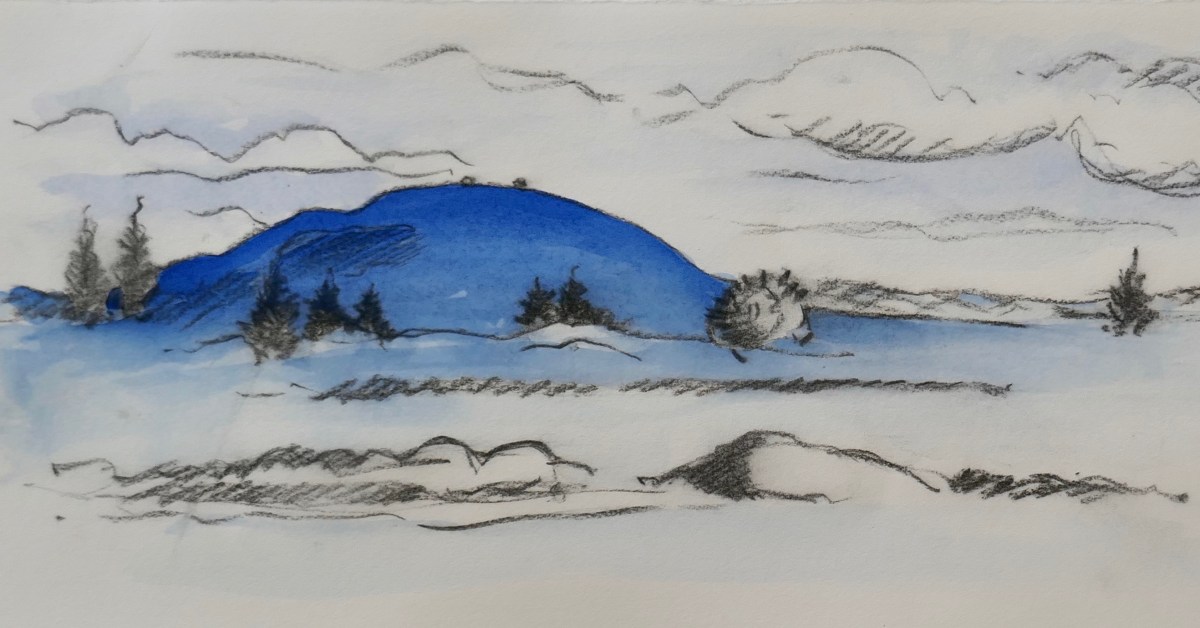
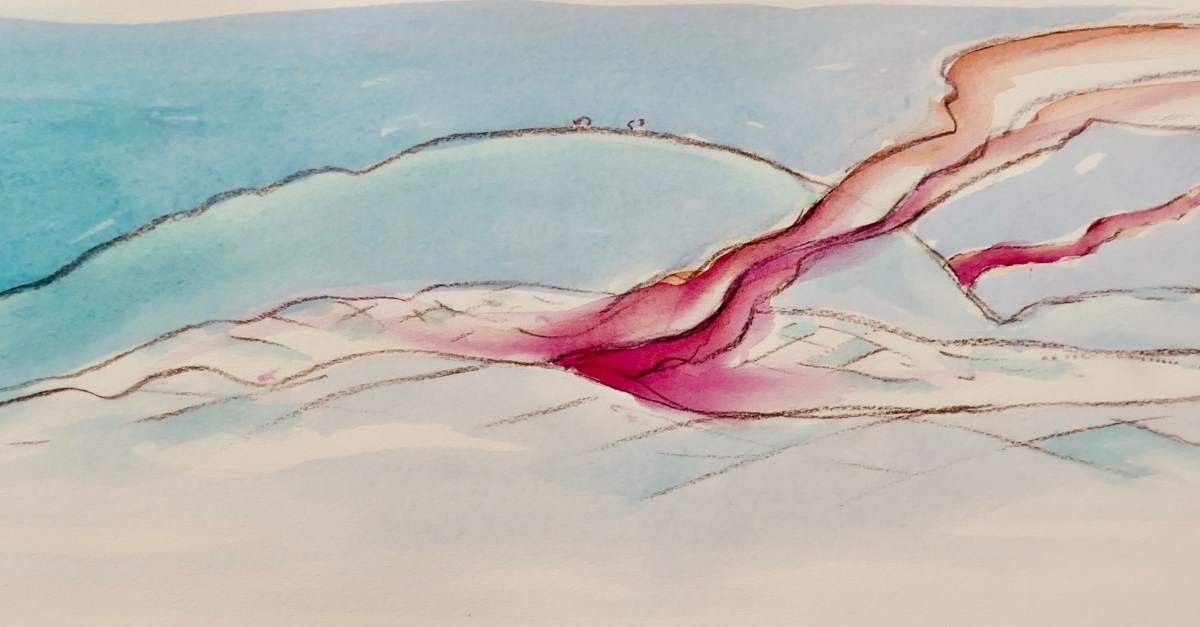
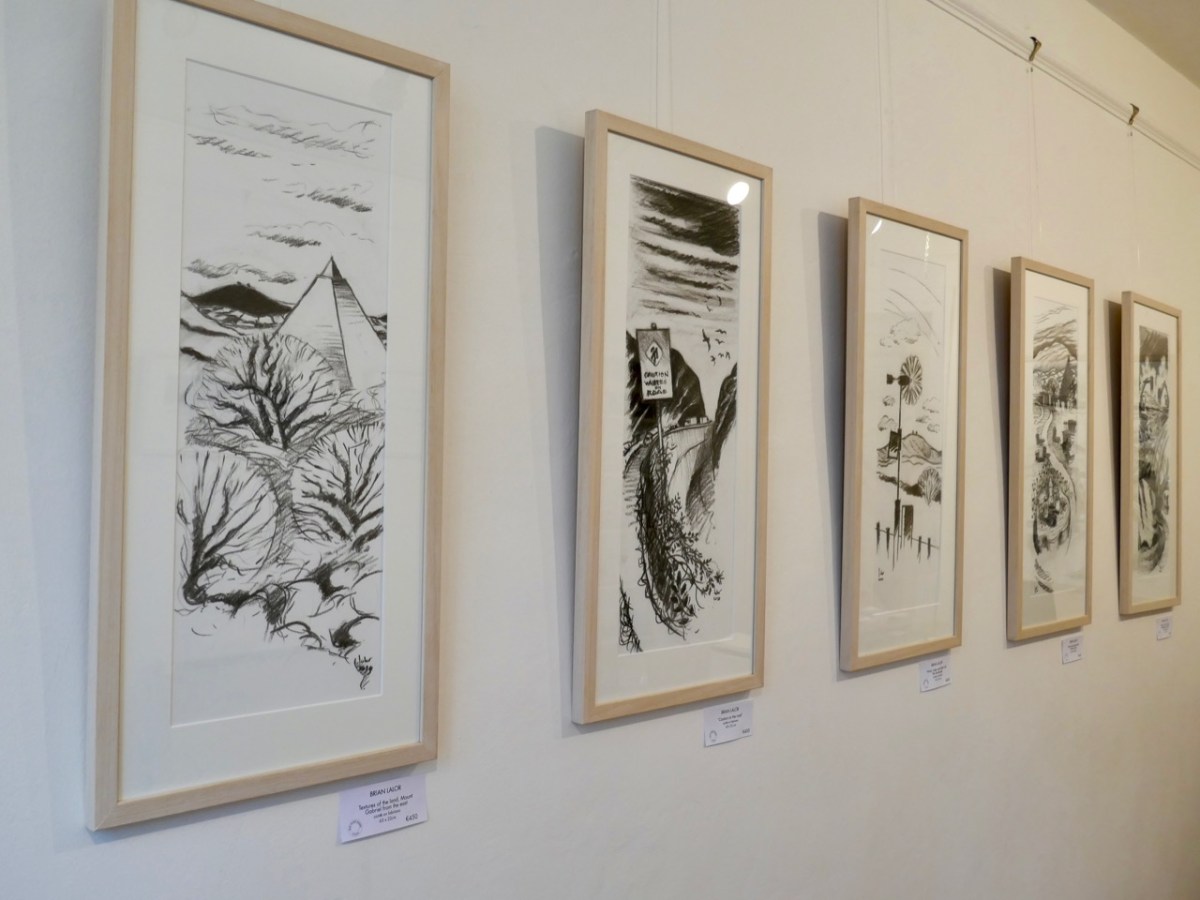
Brian Lalor has chosen to make this peak the centrepiece of his new exhibition, which opened in Schull’s Blue House Gallery at the weekend: Thirty-Six Views of Mount Gabriel. You have to see it. The works are for sale, so it will be impossible, probably, to assemble them as one entity ever again. (Unless, perhaps, in a hundred years time – if there is still an intellectual world in existence – Brian’s genius will be fully recognised and appreciated, and an astute curator will raid collections from all over the world in order to put this canon back together as a centenary project).
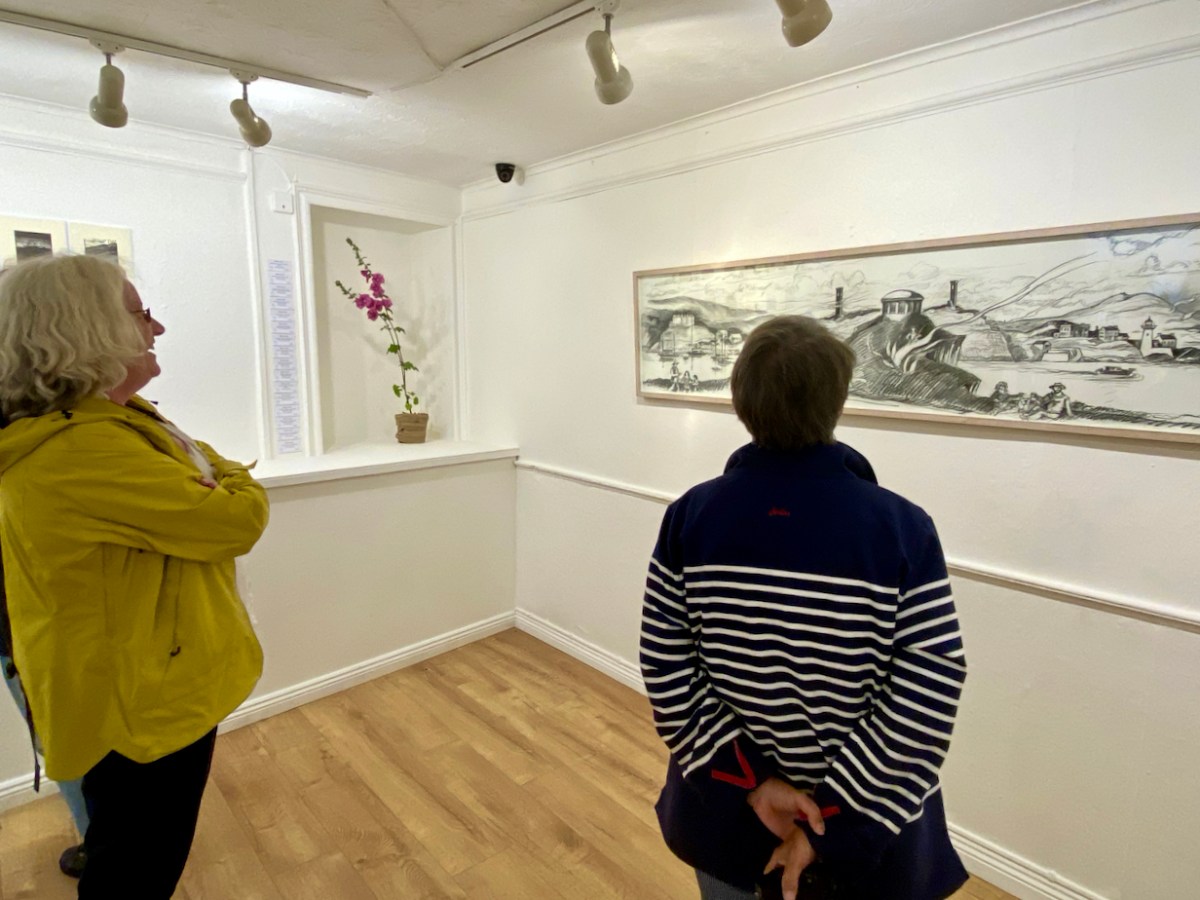
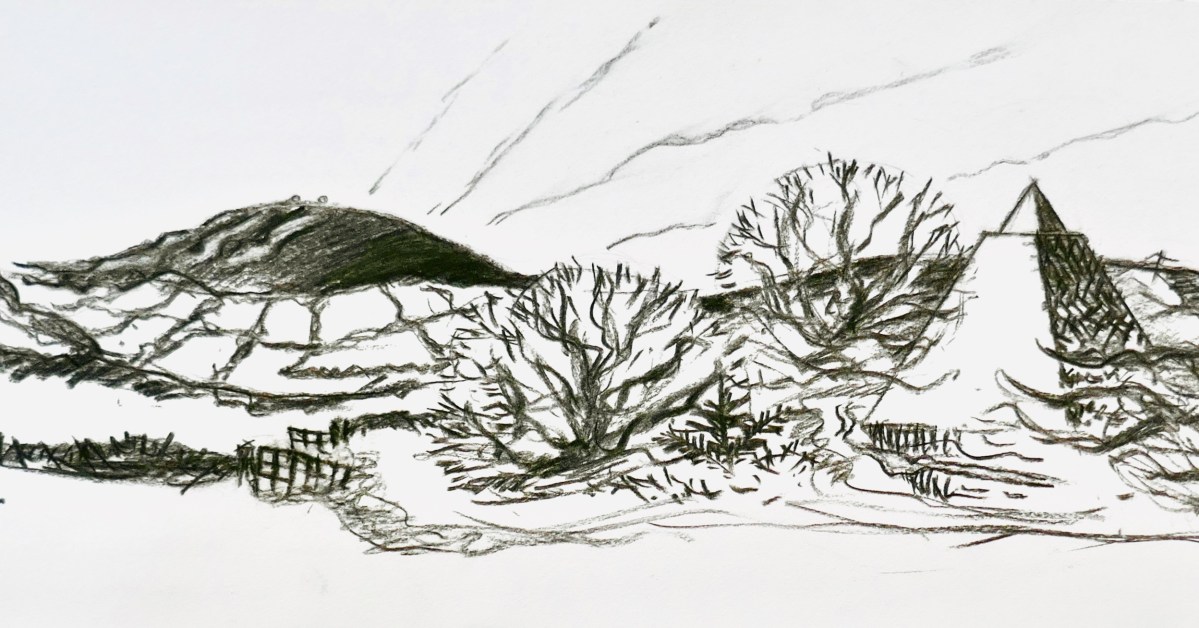
The works themselves draw attention to some of Brian’s many artistic talents: conté crayon drawings, exquisite watercolour sketches and linocut prints. They make an impressive whole on the walls of Schull’s eccentric gallery, which is a jumble of smallish rooms, a staircase and landing, with a minimalist shop-window frontage. Circumnavigating the spaces is a revealing and stimulating experience.
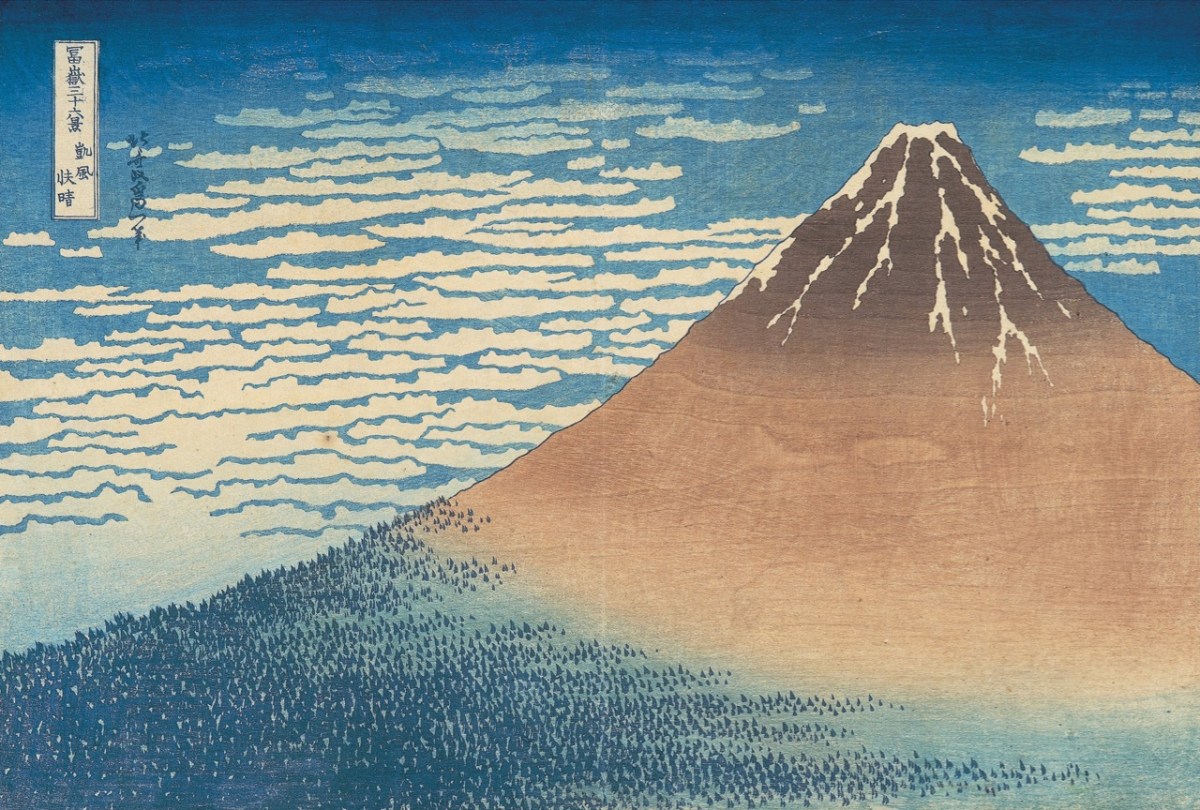
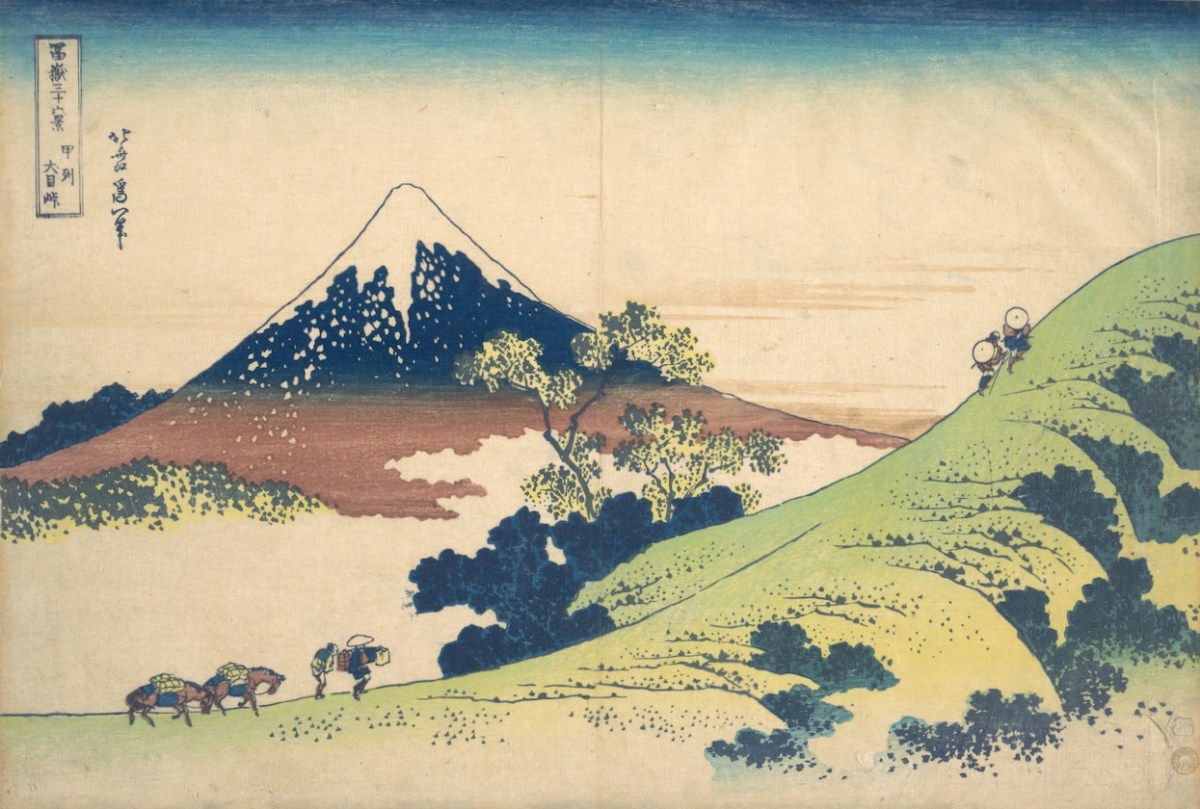
Returning to the subject matter of the work, Brian – General Editor of Gill & Macmillan’s mammoth 2003 volume The Encyclopaedia of Ireland – and considered a prime authority on Ireland’s art heritage and its place in world culture, is familiar with artists’ legacies from many other domains. He grew up in a household which contained significant pieces of Japanese art and was au fait from a young age with the concept of ukiyo-e – the floating world. His early awareness of the arts of Japan provided the source of inspiration for this exhibition: Katsushika Hokusai’s Thirty-Six Views of Mount Fuji, woodblock prints which date from the early 1830s. Here are Fine Wind, Clear Morning (upper) and Inume Pass (lower) from the series:
Fuji is one of Japan’s Holy Mountains. Brian’s juxtaposition is brilliant: our Mount Gabriel has to be a holy place. It is named after an Archangel, who is said to have descended to the mountain top to view the unsurpassed beauty of West Cork’s landscapes, the reputation of which had reached to Heaven even back in those days. In so doing he left behind his footprint, which is still to be seen on the summit.
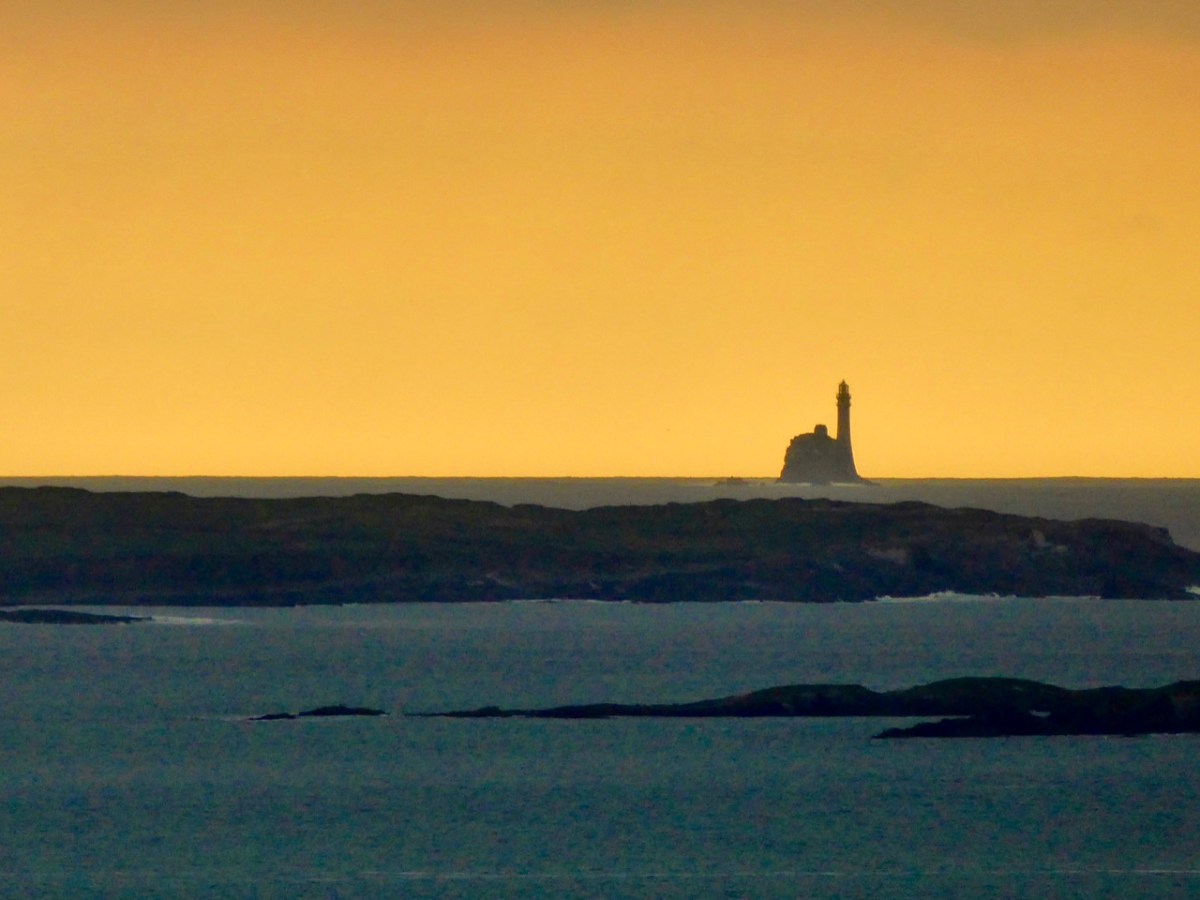
The Archangel was not the only biblical character to visit Gabriel: Satan himself touched down, but stumbled on a large rock. In a fit of temper he picked up the rock and threw it far off into the sea beyond. This caused such a hazard to shipping that we have had to erect a lighthouse on it. Here is Finola’s photographic view of The Fastnet, taken at sunset. For me, it has a suitably print-like quality . . .
Legends attached to Gabriel include many that attribute Irish heroes to activities on the summit. Finn MacCool, for example, is also credited with throwing large rocks from the mountain, including this fine boulder burial at Rathruane:
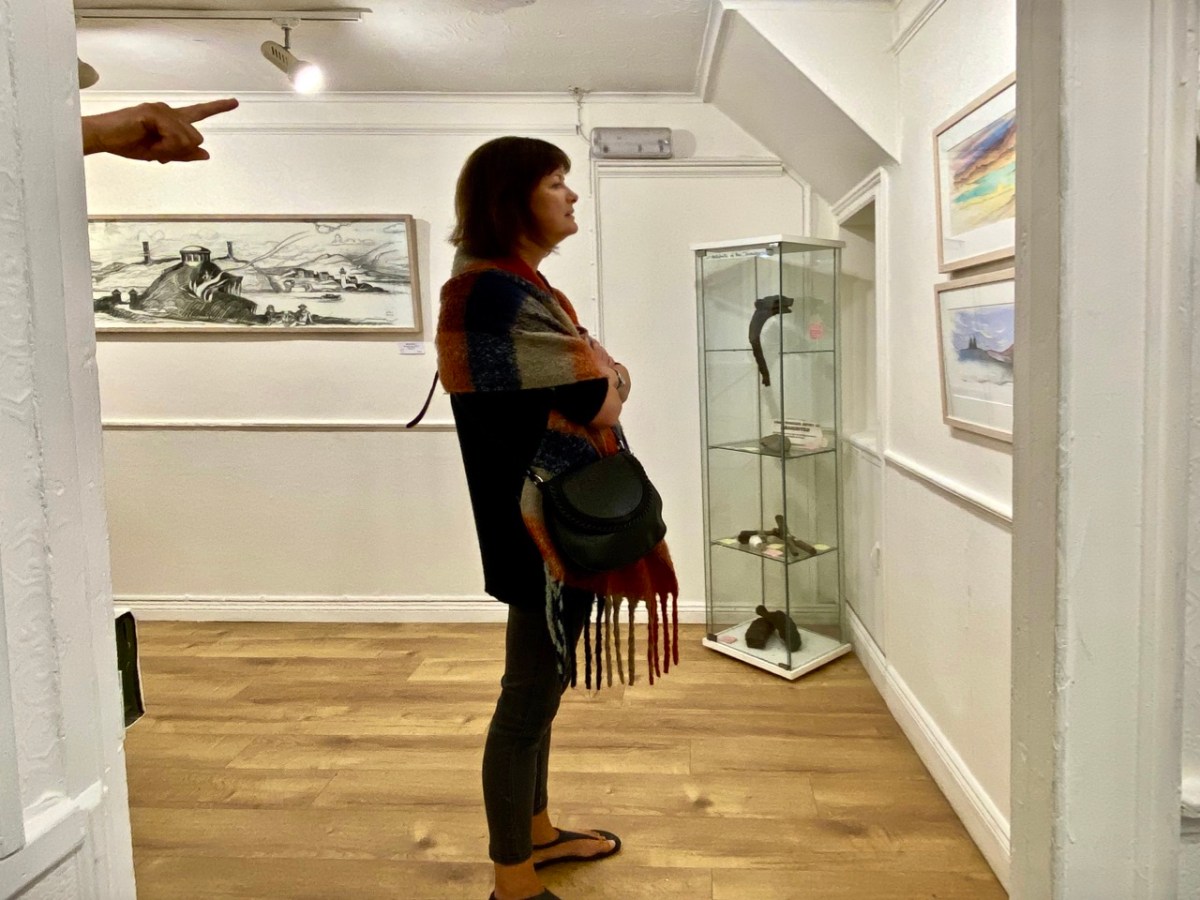
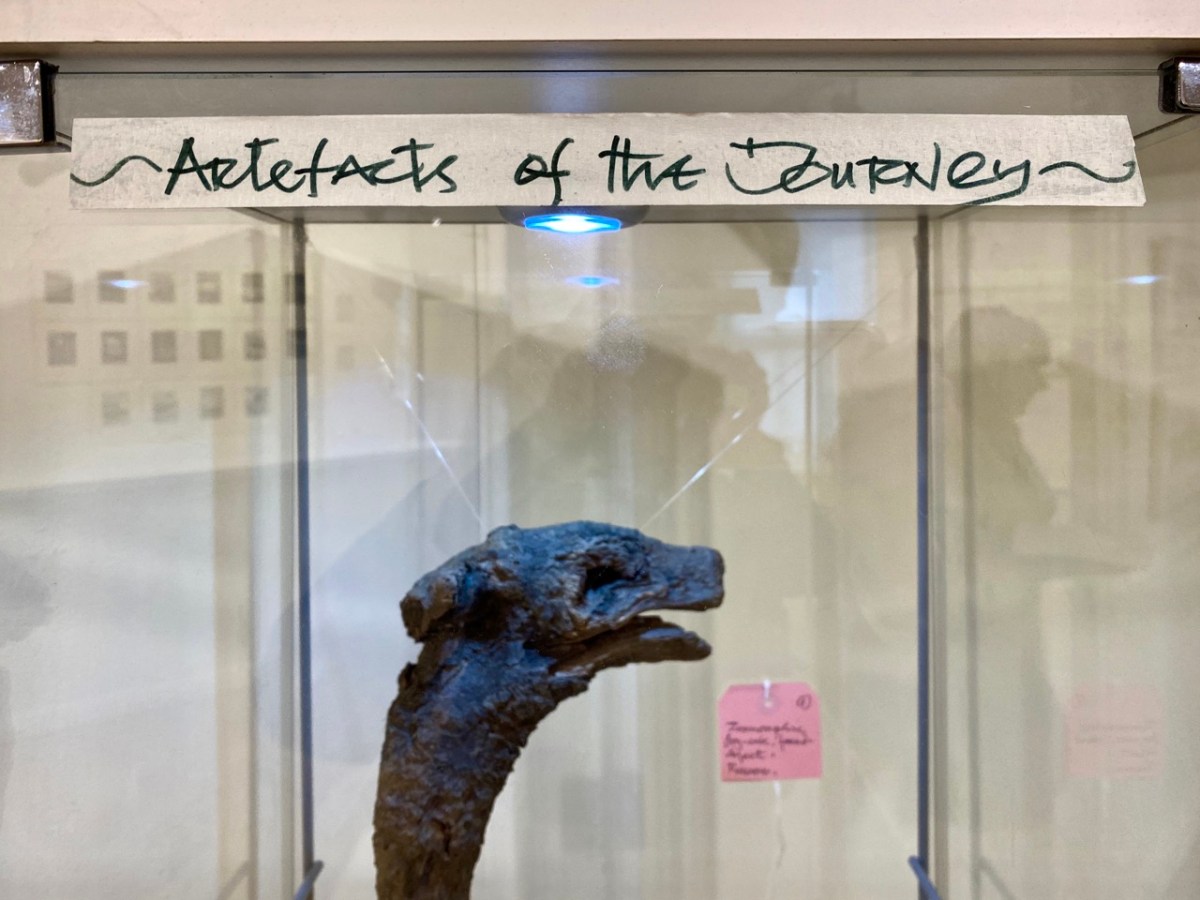
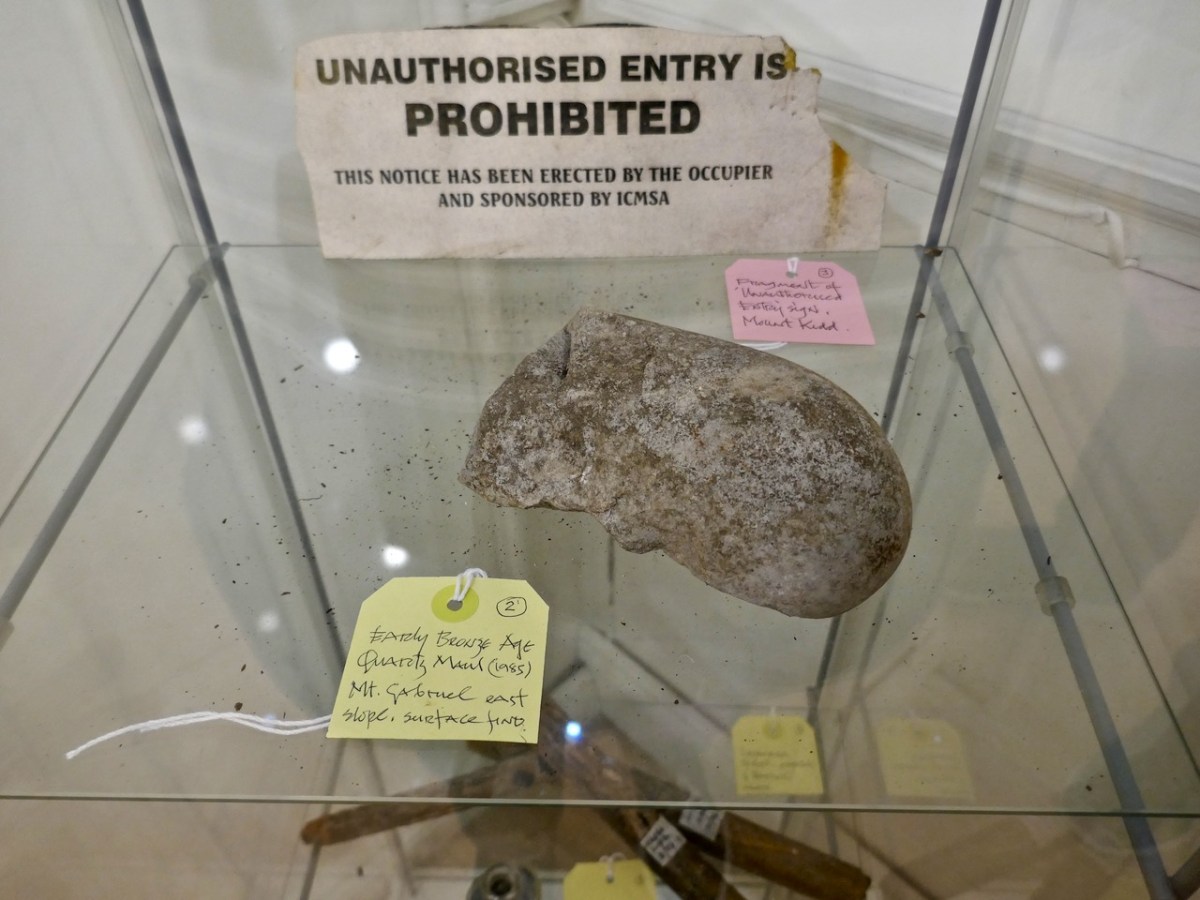
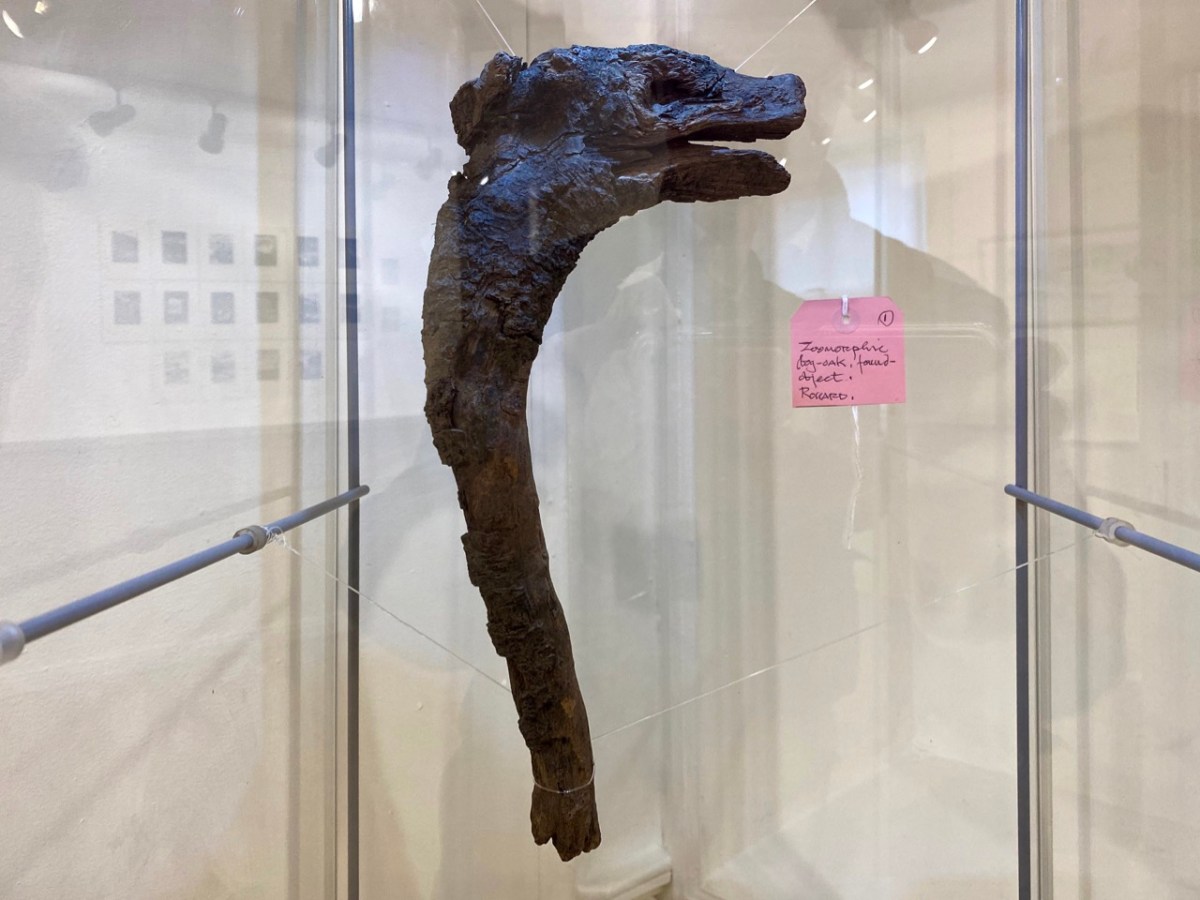
Brian’s observation and humour are not missing from this exhibition. He has included a cabinet of ‘artefacts’ distilled from his own explorations on the mountain. These make reference to the ancient history of the site and its connection with copper extraction in the Bronze Age and in medieval times, and also the twentieth century manifestations of air traffic control technology (known as ‘Gabriel’s Balls’) . . .
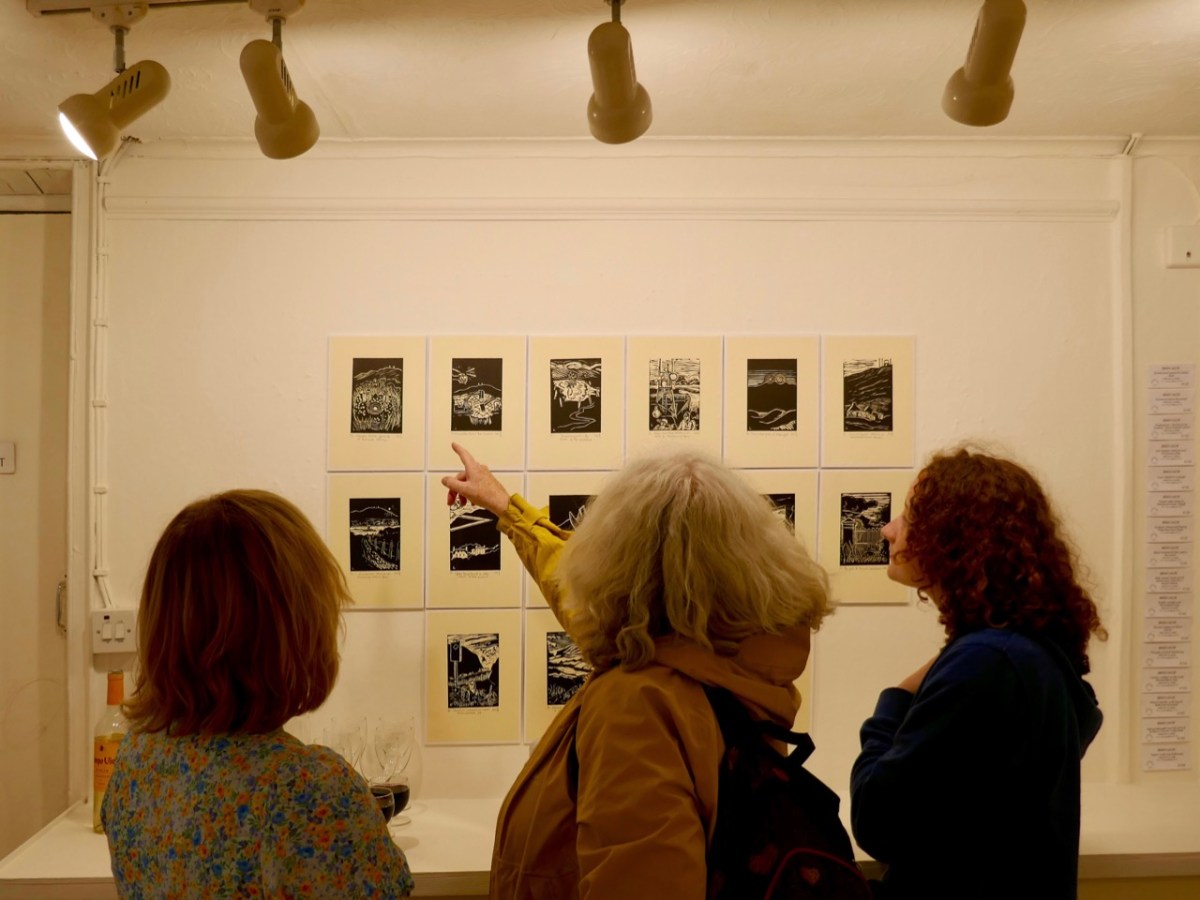
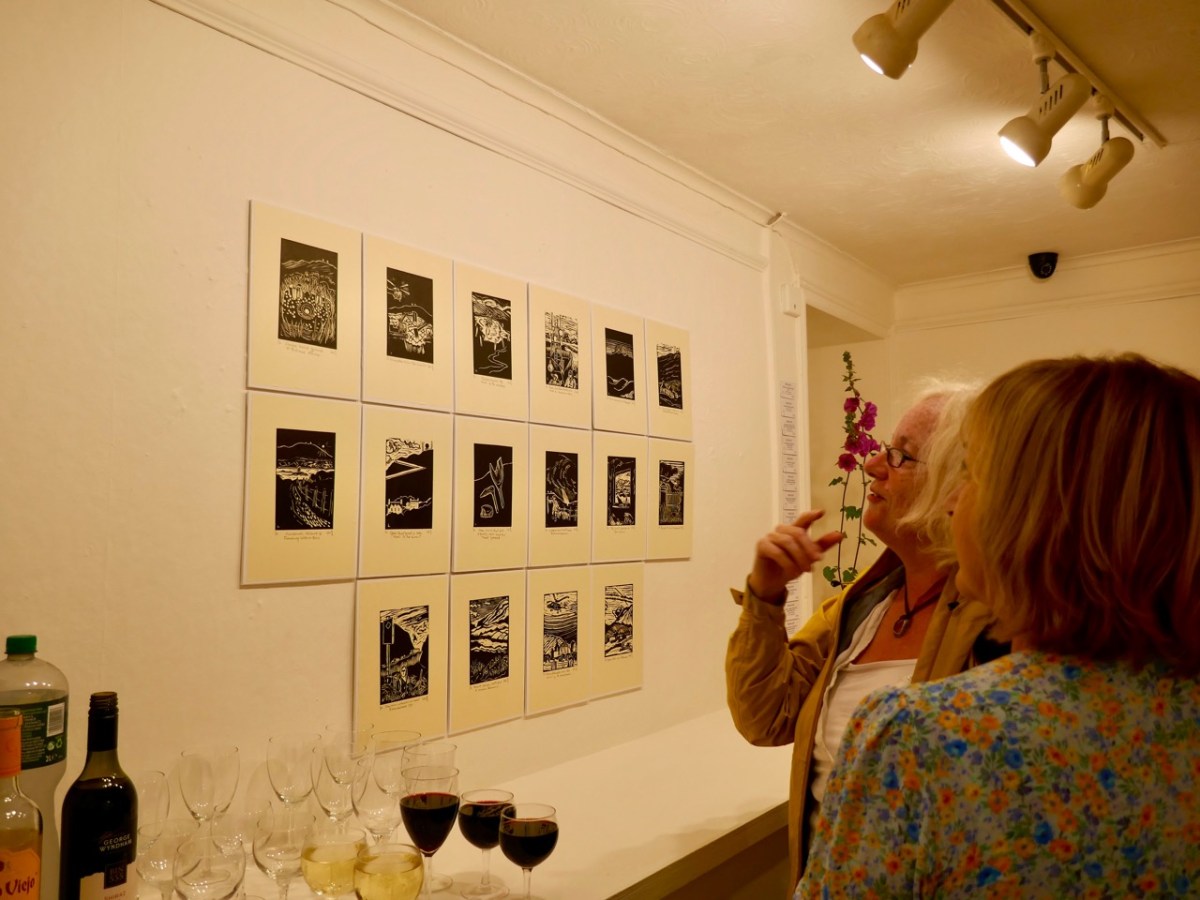
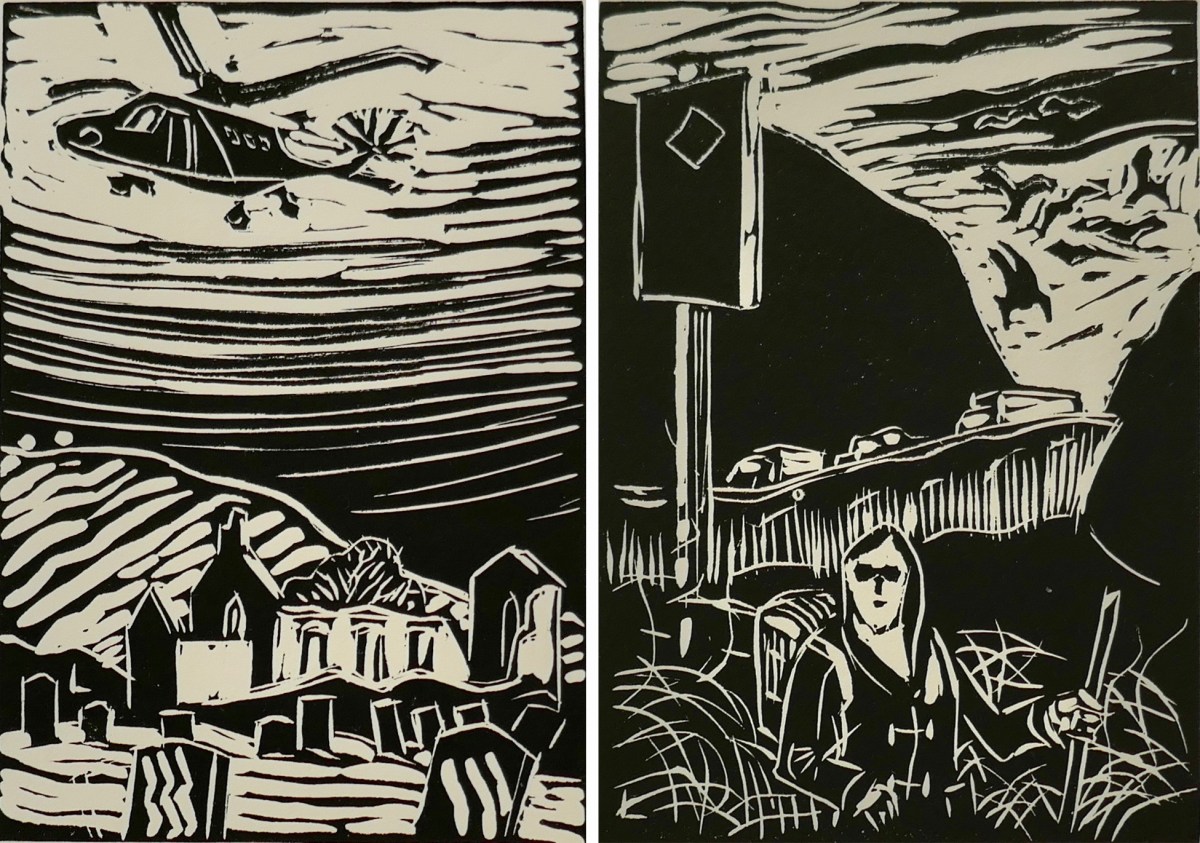
I am particularly taken with Brian’s linocut series – a limited edition of only ten of each print. They provide the ‘fine detail’ in the overall assemblage, and work so well together on the back wall of the largest room.
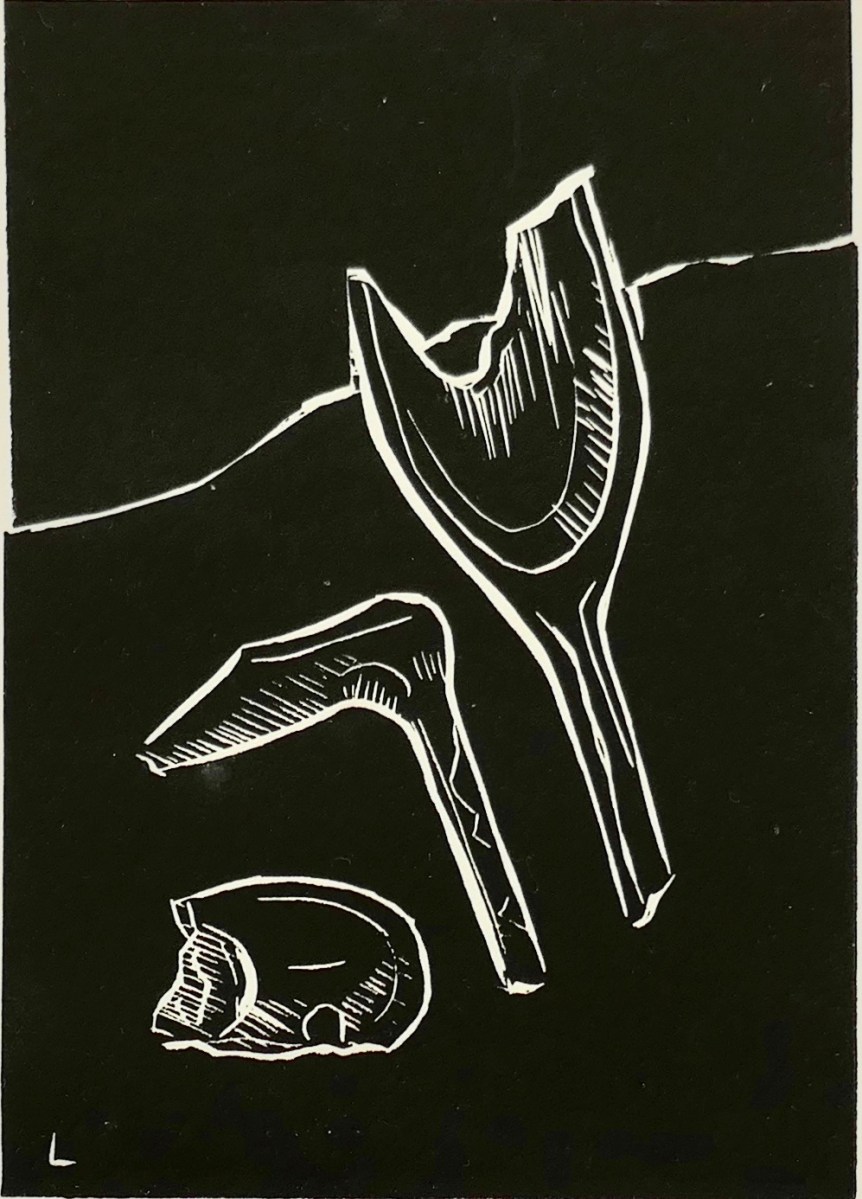
The detail print, above, shows Brian’s representation of archaeological finds connected with ancient copper mining which have been found during excavations on the mountain.
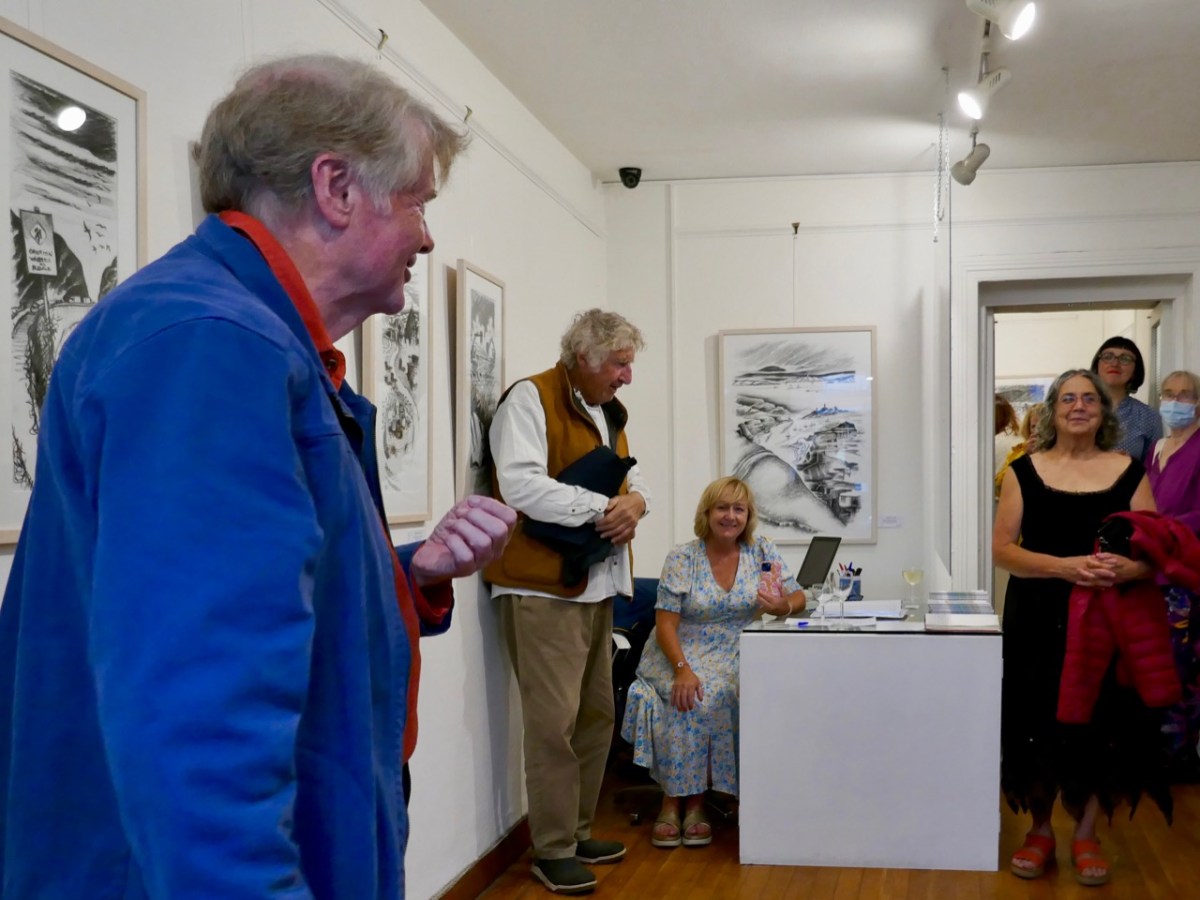
As ‘Guest Curator’ of this exhibition I was delighted to introduce it to an eager audience on the opening night in Schull (above). The show only runs until the 3rd of August, so please rush over in order not to miss it. It is (for me) the highlight of West Cork’s summer offerings!
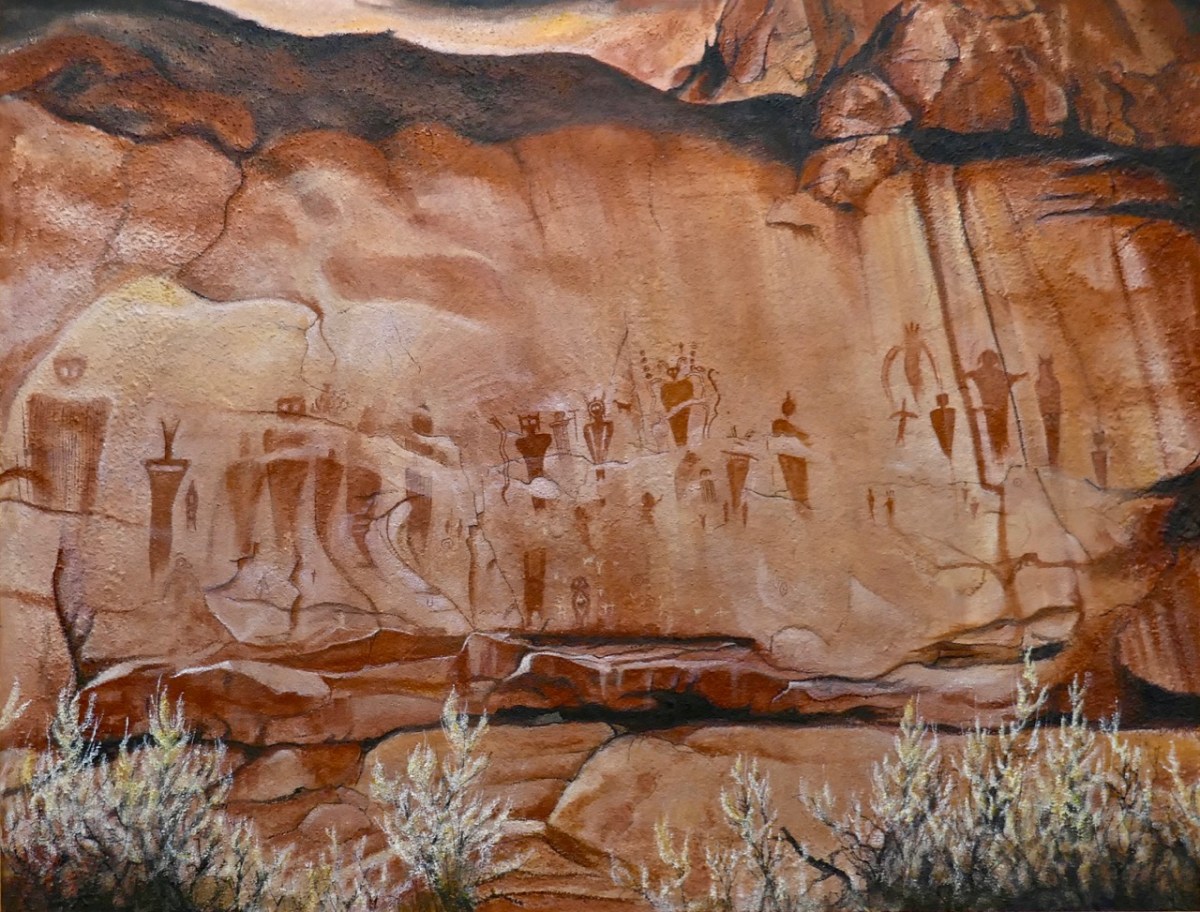
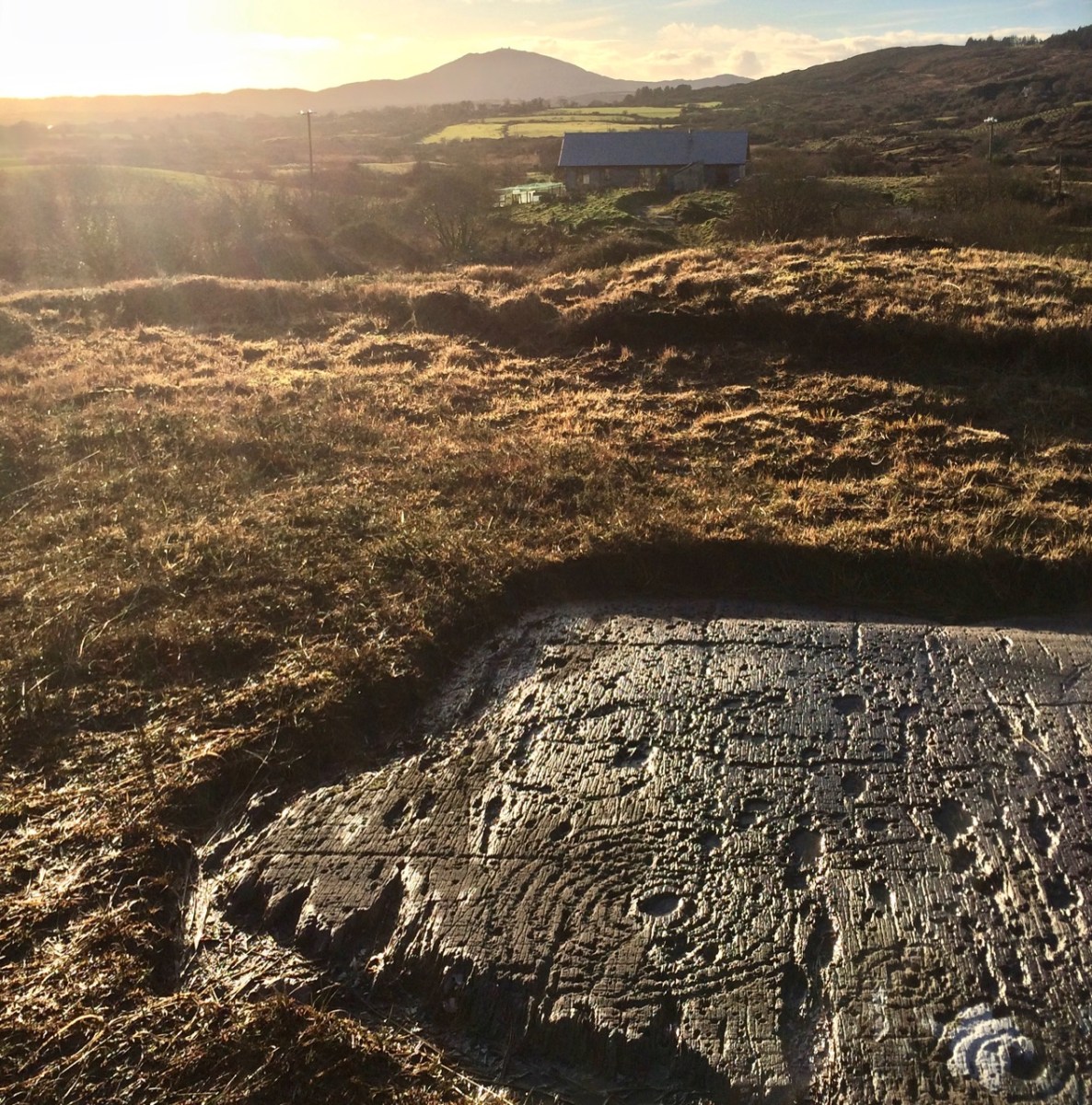
The gallery also has on show some work by other West Cork artists, well worth exploration, so don’t miss them when you go. I can’t resist finishing with one of them: this work (below) by Keith Payne – Sego Canyon. Keith has always been fascinated by ‘Rock Art’ in all parts of the world, and painted this based on his visit to a collection of petroglyphs on a cliff-face in Utah. It’s very apt, I think, to see this work in the context of the Brian Lalor exhibition. Below it is our own photograph of 5,000 year old Rock Art at Derreenaclough, West Cork – discovered only a few years ago. I am personally of the opinion that the siting of this rock in full view of ‘sacred’ Mount Gabriel is purely intentional!
A fully illustrated catalogue is available to purchase in the gallery
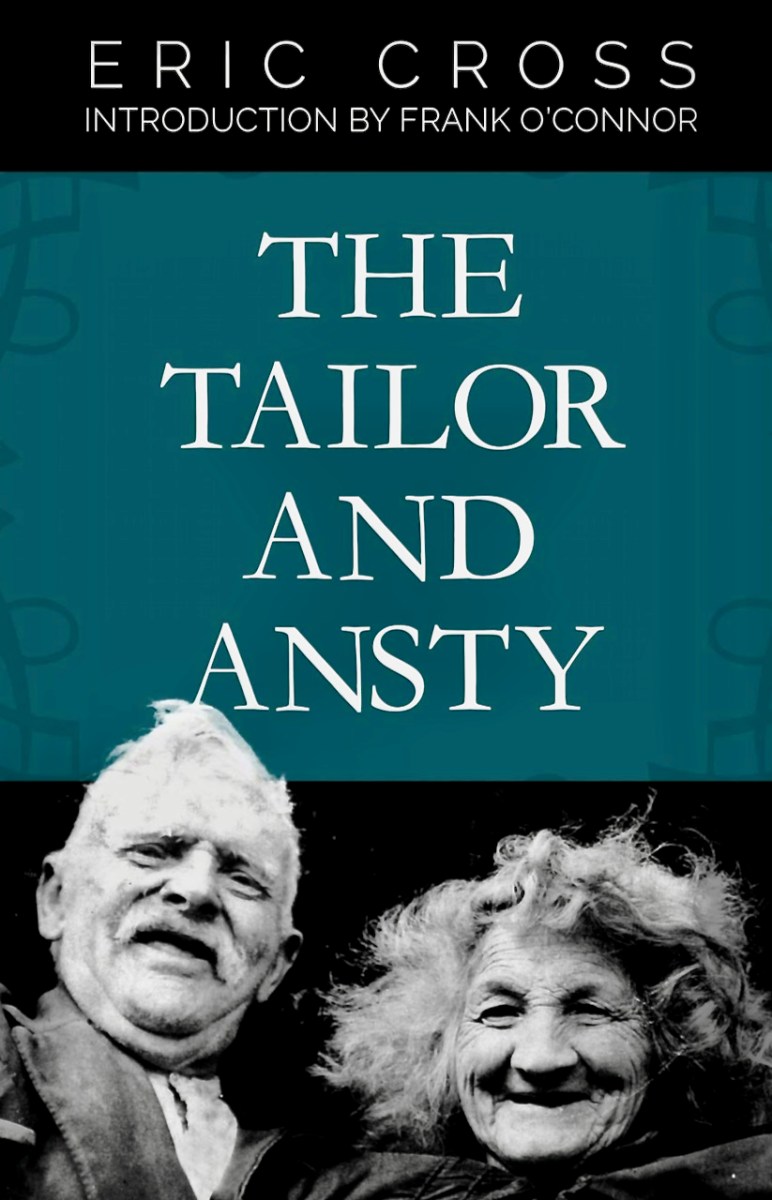
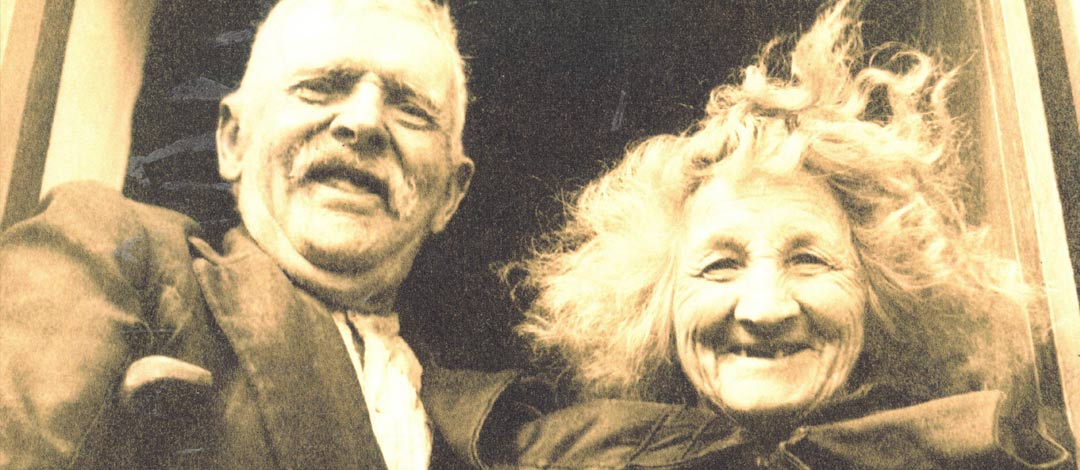
The Tailor and Ansty is a classic book by Eric Cross (below) – beautifully written, hilarious, and capturing the couple in all their humorous (Tailor), crotchety (Ansty) and big-hearted glory. The story didn’t have a happy ending (see Robert’s post) and Ireland will forever be ashamed of that episode in our priest-ridden history, but this post will concentrate on happier times.
People flocked to visit the Tailor and no matter who you were – neighbour, stranger or famous person – you were sure of a welcome, a cup of tea, and a taste of the Tailor’s way with stories and earthy humour. Among those who came were prominent artists of the day, including Nano Reid and Seamus Murphy. Nano, it is thought, would cycle all the way from Ardnagashel, where she was staying with her lifelong friend Patricia Hutchins (yes – the same family as our beloved Ellen Hutchins). This is her painting, only recently identified as depicting the Tailor – my sincere appreciation to David Britton for the image and all the information. David runs one of those pages that convince you that Facebook still has the power to be a force for good in the world.
As David pointed out to me, if there are any doubt as to who this is, Eric Cross’s description of the Tailor in his usual place by the fire should clinch it (look closely).
At one side of the fire is an upturned butter-box. This is the Tailor’s fireside seat. It is placed so that its opening is between his legs, and here he sits, never upon a chair.
Like everything else in the house it has a name. The Tailor refers to it always as ‘Cornucopia’ and explains that a long time ago a Greek king gave such a box to a ‘jolly cupper’, who gave him a drink when he was thirsty, telling her that whenever she was in the want of anything she had but to look inside and she would find it there. . . .
Whatever Amalthea’s horn held, the Tailor’s ‘Cornucopia’ almost rivals it for contents. Beneath the axe with the insecure head, with which he chops wood upon the hearthstone, and the goose-wing with which he sweeps up the ashes, there is a collection of bits of cloth, cords, tins, bits of tools and such like things, out of which he can always find a makeshift for almost anything. . .
Behind ‘Cornucopia’, against the wall, is the settle. In the corner of this, directly behind the Tailor, is the office. This is his accumulation of correspondence over the years. There are letters, photos, postcards from all over the world, stacked up into a pile. Here, too, is his box of cuttings from papers. There are paragraphs cut from newspapers relating to people he knows mixed up with accounts of freak calves and suchlike wonders. Between the arms of the settle and the wall are his pipes. Each pipe, each letter and each photo recalls a friend.
Seamus Murphy was counted as a special friend and came often to visit. At this time (1936) Seamus was making a name for himself as one of Ireland’s foremost sculptors. Here he is in 1934, courtesy of his family who maintain the site https://seamusmurphysculptor.com/wp/
Seamus proposed to do a bust (or busht, as Ansty called it) of the Tailor’s head and the Tailor was immediately agreeable. Chapter fourteen of The Tailor and Ansty relates what fun he had with this project.
‘Dammit, man, it was ever said that two heads are better than one, and the one I have now I have had for 75 years and it is getting the worse for wear. Of course I’ll have a new one’.
All the apparatus and materials were assembled, and the Tailor inspected them with the interest of a fellow craftsman. Ansty ignored the business in the beginning. Her only interest in it was her resentment of the invasion of the Room – ‘with all the old clay and mortar to make a new devil’ – and making fresh disorder of her disorder.
The Room at last justified the Tailor’s name for it, and did become for a while ‘The Studio.’ For an hour or so each day he posed and talked and commented. The measurements interested him and he linked this part of the business with his own craft.
‘Many’s the time that I have measured a man’s body for a new suit of clothes, but I never thought that the day would come when I would be measured myself for a new head.’
‘I think that we will have a rest for a while,’ suggested Seamus during one session.
‘The devil a rest do I need. Do you know that I feel it less than I did the time the whole of my body was making before I was born. There is a considerable improvement in this method. A man can smoke and take it easy and chat away for himself.’
The Tailor is visited by his friend the Sheep, a man given to worry, who wonders if it is an unlucky thing for a man to have his image made and asks how it is to be done. The Tailor explains the process:
‘Yerra, manalive. It’s easy enough. You stick your head into a pot of stirabout, and when it is cold you pull out your head and melt the metal and pour it into the hold your head made. Then you eat up the stirabout and you find your new head inside the pot.’
The exchange with his friend, Dan Bedam, captures all the wit and divilment of the Tailor. Having assured Dan Bedam that there’s a new method of making people because the young people are failing at the job, and the population of the country is going down he responds to Dan’s wonderment.
‘Dam, I was thinking, Tailor, will you be able to use it? Will you be able to talk and smoke and see with it?’
‘Thon amon dieul! What the hell do you think that I am having it made for? Do you think that I want to become a dummy? I tell you that when I have this head I will be a different man. You have often heard tell that you cannot put a young head on old shoulders. Well, this is what it is. I was thinking of having it done the other way at first. Of having a new body fitted to my old head, but the expense for the bronze was too much, so I am starting with the head first. Then I thought that the new brains would not be so good as the old ones. Then I thought that the old ones had done a power of thinking in their time and it would be better after all to make a start with the head.’
Dan was lost in wonderment for awhile.
‘Bedam, but Seamus Murphy must be a clever man.’
‘Clever! I should think he is. He is as good as Daniel O’Connell and Owen Roe put together. They were good enough in the old-fashioned way, but before he’s finished he’ll have the whole of Ireland populated again. It’s a much quicker way than the way you had of going about the business, Dan.’
Eric Cross gives an account of the unveiling, with the whole valley there to see it and The Saint (Fr Traynor) giving a speech. The image, of the busht, above, is from the marvellous Catalogue of Seamus’s work published by the Crawford Gallery.
It was a great night. The drink flowed and the tongues were loosened. The Tailor sang and everyone sang and soon the busht was forgotten. But the Tailor keeps in touch with it still. He has cuttings from the papers relating to it, and he follows it round from exhibition to exhibition in the newspapers.
Nor has Ansty forgotten. Now and again she contemplates the Tailor for a moment or two and wonders, and then expresses her thoughts, ‘and to think that Seamus made a busht of that old devil as though he was a saint in a church. The man must be half cracked. As cracked as himself. Glory be! and to think that he wouldn’t settle the leak in the chimney for me, and he with the good mortar and plaster, making a busht’.
Seamus was a friend to the end – he made the marvellous tombstone that can be seen in the graveyard at Gougane Barra. On it he carved the words A Star Danced and Under That Was I Born.
By the way, if you want to see how one of the casts looks in situ, here is a marvellous post by Don Ross, a Guide at Farmleigh House in the Phoenix Park. Thank you Don – you were one of the inspirations for this post, along with a recent conversations with Seamus’s daughter Orla and her husband, Ted.
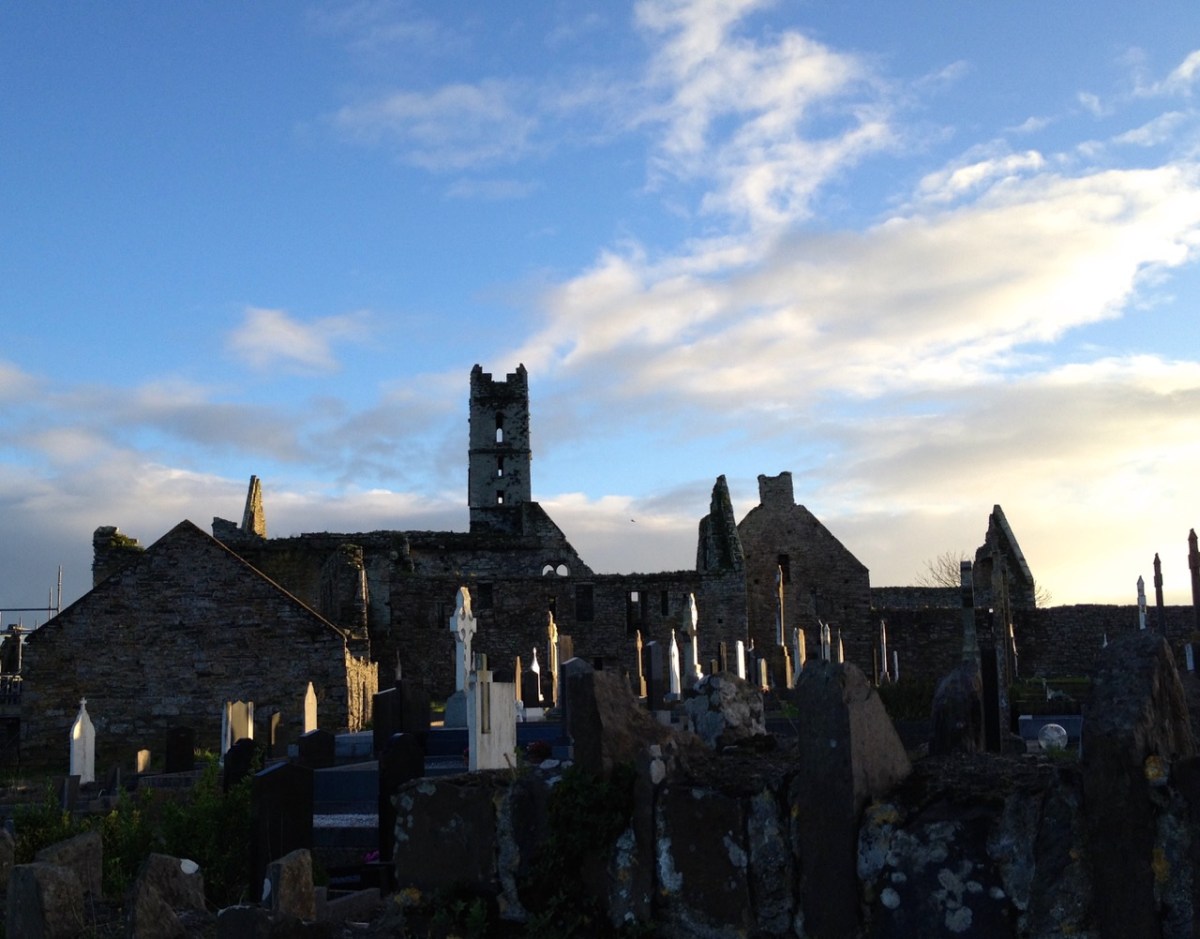
We had a great afternoon yesterday, exploring aspects of the history of Timoleague, in West Cork. Our Finola Finlay (above) was involved in an event organised by the Glass Society of Ireland. . . a professional all-island, non-profit association that opens a window onto the contemporary Irish Glass Community . . . The day’s proceedings were centred around the ecclesiastical buildings in the town, the earliest of which is the Franciscan Friary, now a substantial ruin beside the Argideen River.
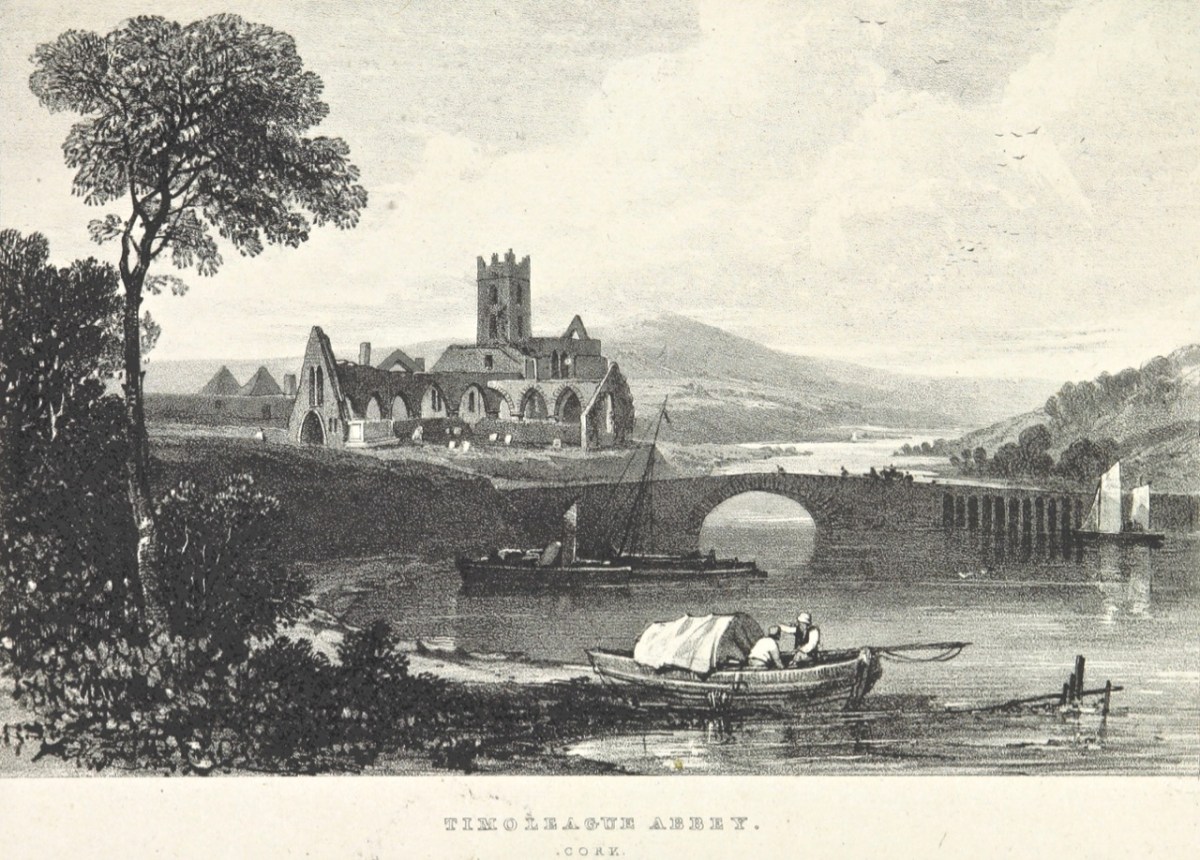
This view of the ruined ‘abbey’, above, dates from 1830. It is located on the site of an early Christian monastic settlement founded by Saint Molaga, from whom the town of Timoleague derives its name. A story that I heard for the first time yesterday was told by local historian Donal Whooley: the Saint was trying to found his community back in the sixth century, but everything that he and his followers built fell down the following day. According to legend, it was originally to be built a mile west of Timoleague, but all work done on that site by day would fall down by morning. Interpreting this as God’s wish that the church should be built elsewhere, Molaga fixed a blessed candle on a sheaf of corn, and floated it down the Argideen river, siting his settlement on the spot that it came ashore, on the big bend in the waterway where the Friary ruins can be found today. Here is a view from the great three-light window which looks out to the east over the river. Finola told us that, in its heyday, this window would have been filled with beautiful medieval glass, bringing light and colour into the substantial nave of the church.
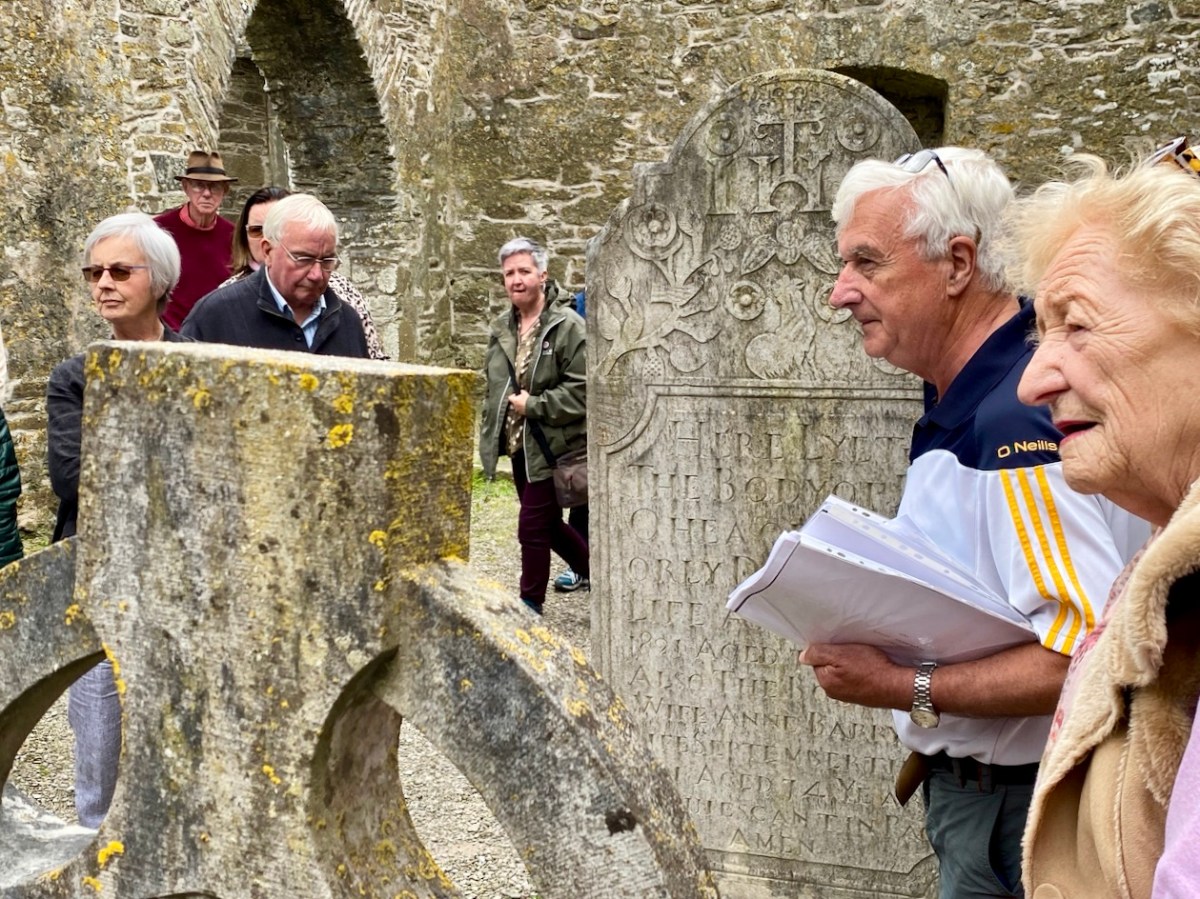
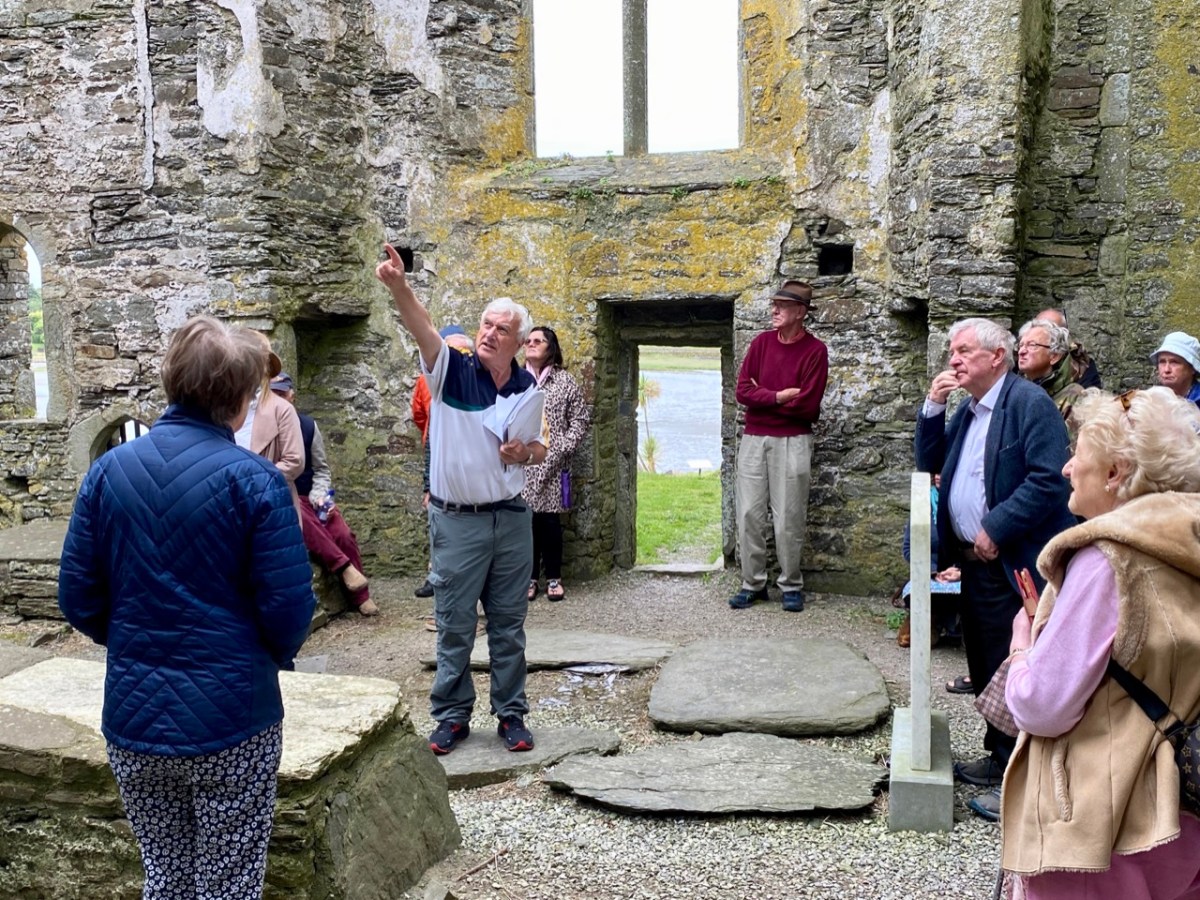
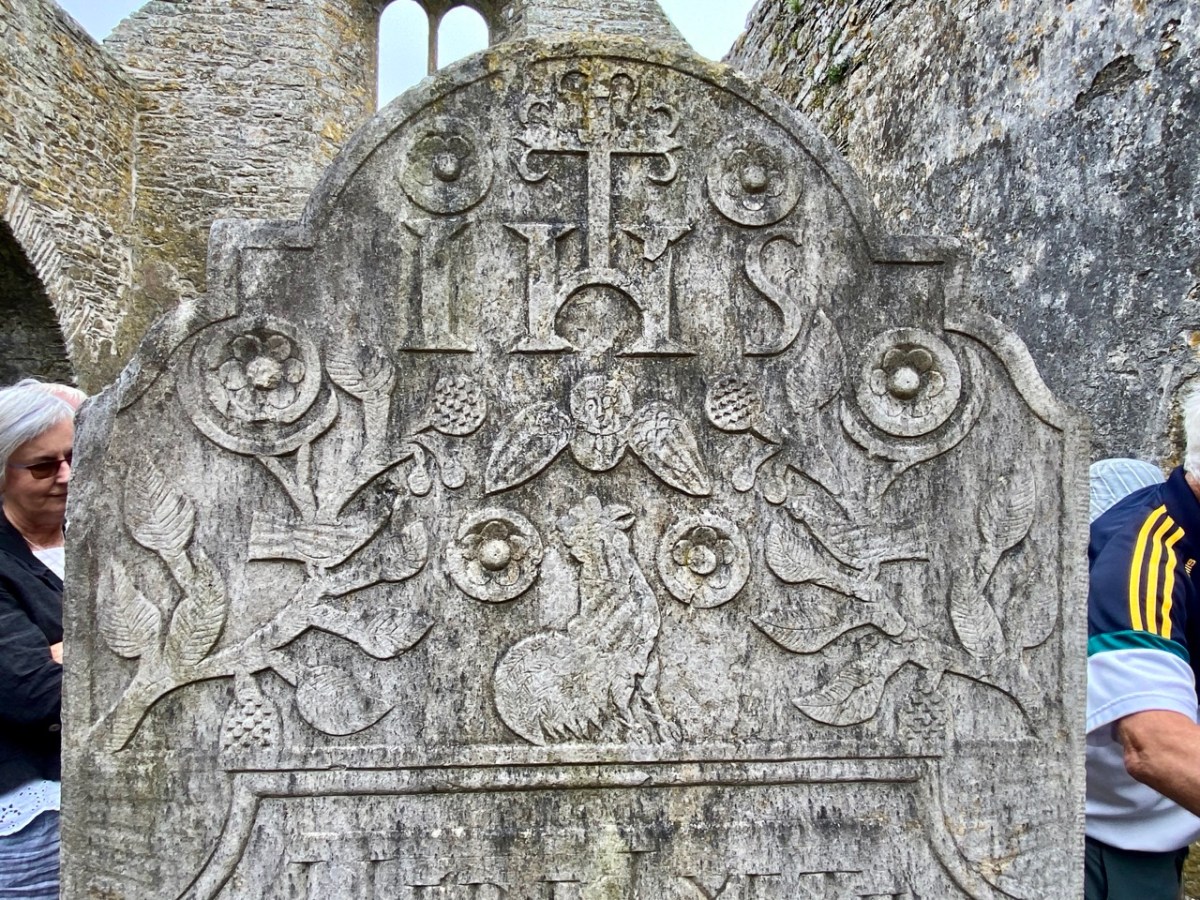
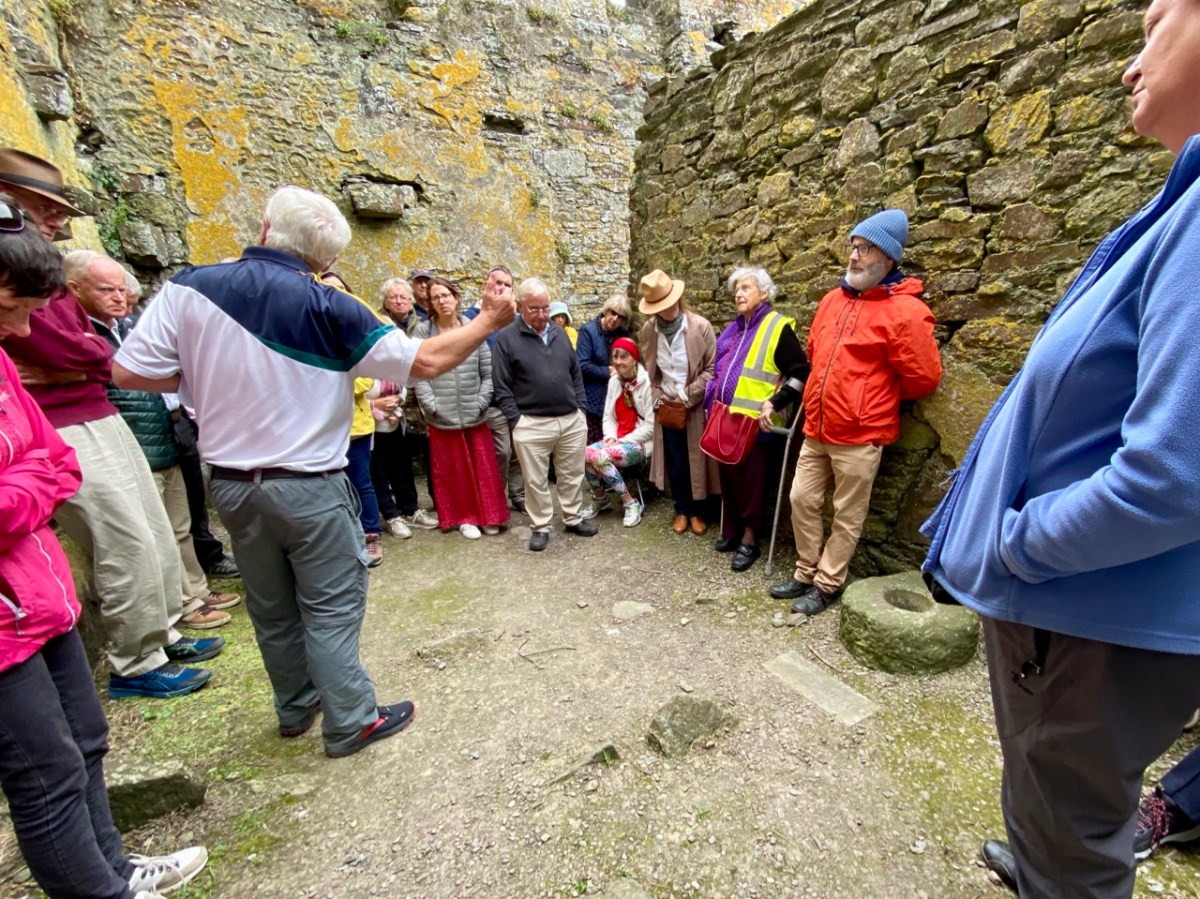
That’s Donal, above, leading our group of almost fifty keenly attentive people who shared an interest in the town and its history. To the right (in a blue jacket) is Father Patrick Hickey. He told us of the symbolism of the cockerel you can see on the large headstone in the nave (below), dating from 1821. Evidently some of the disciples were standing together while Christ was being crucified: nearby stood a pot in which a rooster was being boiled for supper. Judas reportedly said: do you think there’s any chance that our Lord will rise again? Mrs Judas retorted: there’s about as much chance of that as there is of that rooster jumping out of the pot and crowing! At which point – of course – the cockerel did just that!
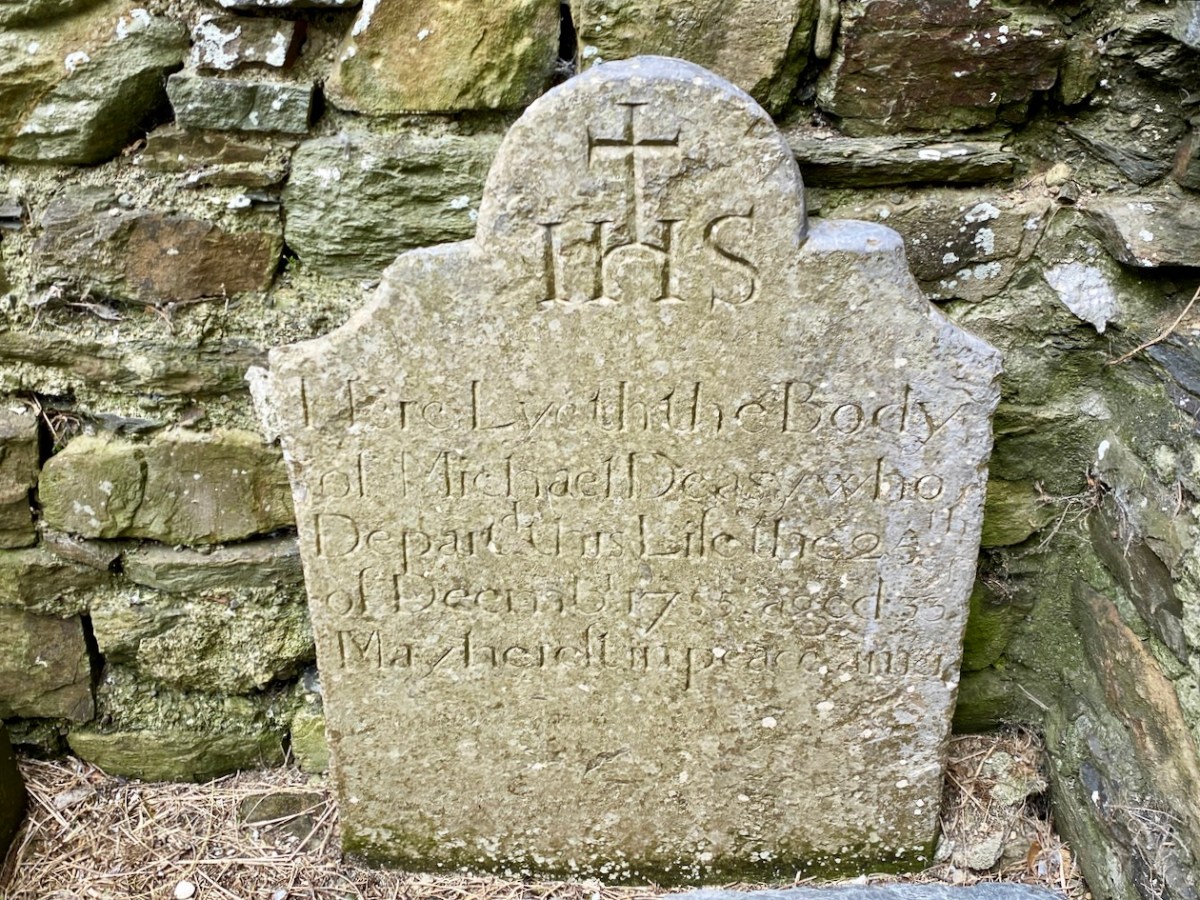
It was the custom to place burials in ruined church buildings. Here’s another fine headstone in Timoleague Abbey, to Michael Deasy, ” . . . who departed this life on the 23 December 1755, aged 33. May he rest in peace. Amen . . . “
Lively discussions ensued on the efficacy of wart wells, and Donal suggested that this repurposed bullaun stone, above could be the oldest human element on the whole site!
Here’s an aerial overview of the geography of Timoleague. The Friary ruin is only one of many historic sites of interest which caught our interest yesterday. It was Finola’s task to introduce us (or those of us who had never seen it) to the little Church of the Ascension.
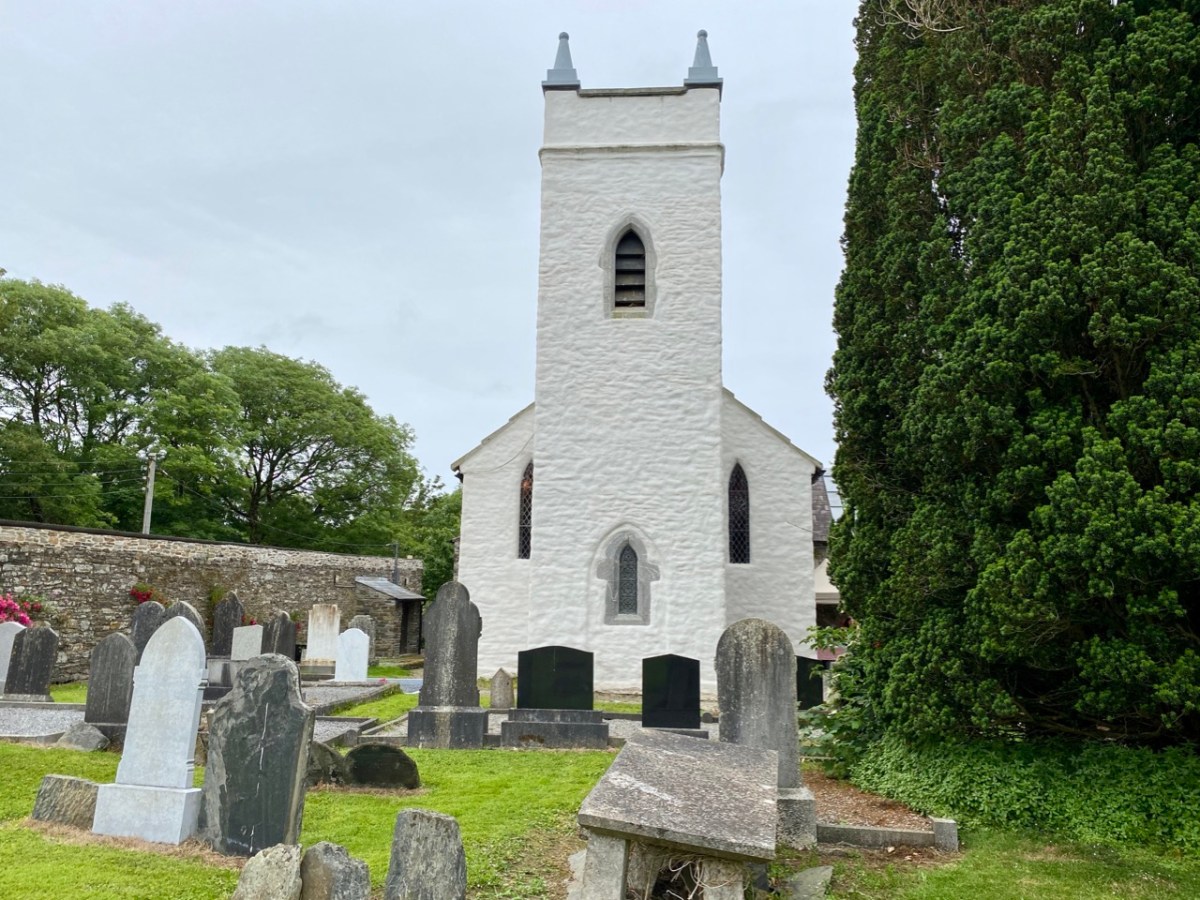
This building is currently undergoing major improvement works: the lime rendered tower has created a striking landmark in the town. This work has become necessary by water penetration through the stonework leading to deterioration of the fabric. The conservation project is led by a hard-working Parish committee who also served us delicious tea and cakes since the tour was a fund-raiser for their efforts.
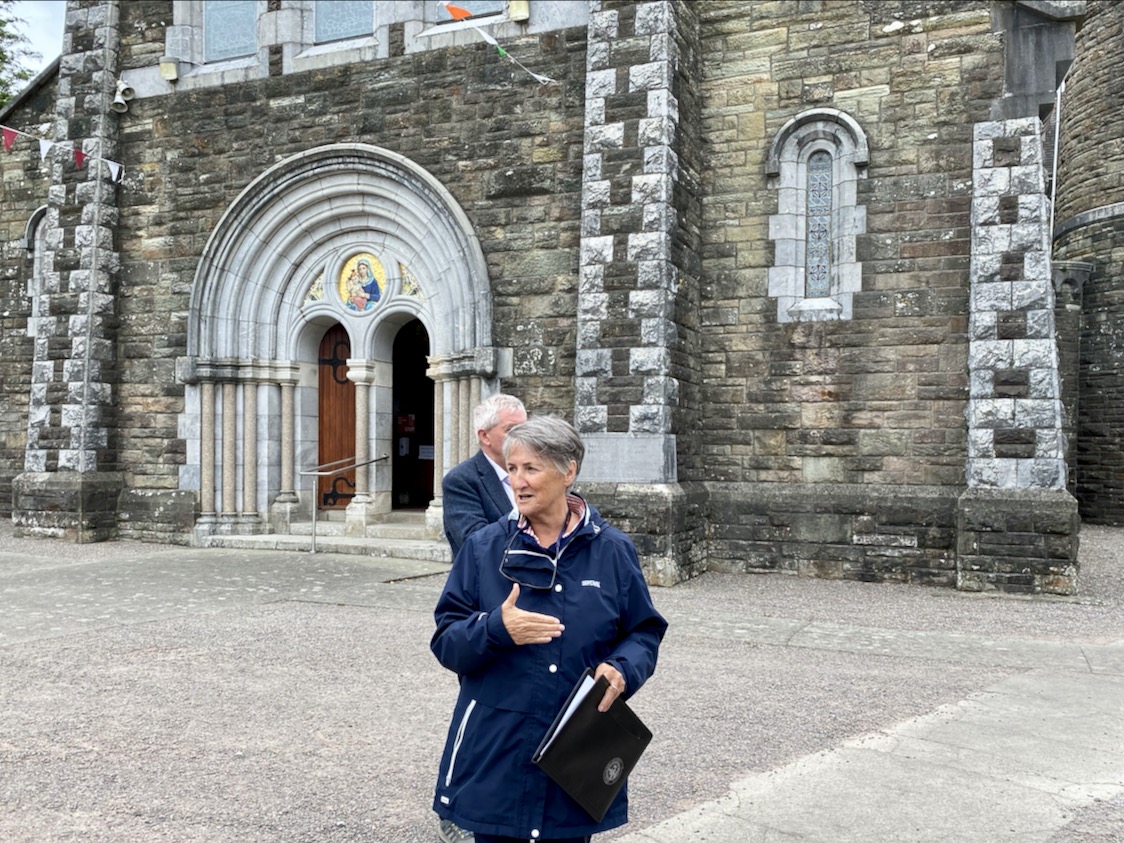
The early OS map extracts, above, give further context to the town’s history. The top map dates from the 1830s and comparison of the plan forms of the Church and Chapel buildings with those in the lower map, which dates from c1900, and then the present day aerial view (higher up the page) shows the degree of change which has taken place. We finished our town tour in the Church of the Nativity of the Blessed Virgin Mary. Here’s Finola standing outside it, below, prior to giving us an introduction to the history of the building, and its windows.
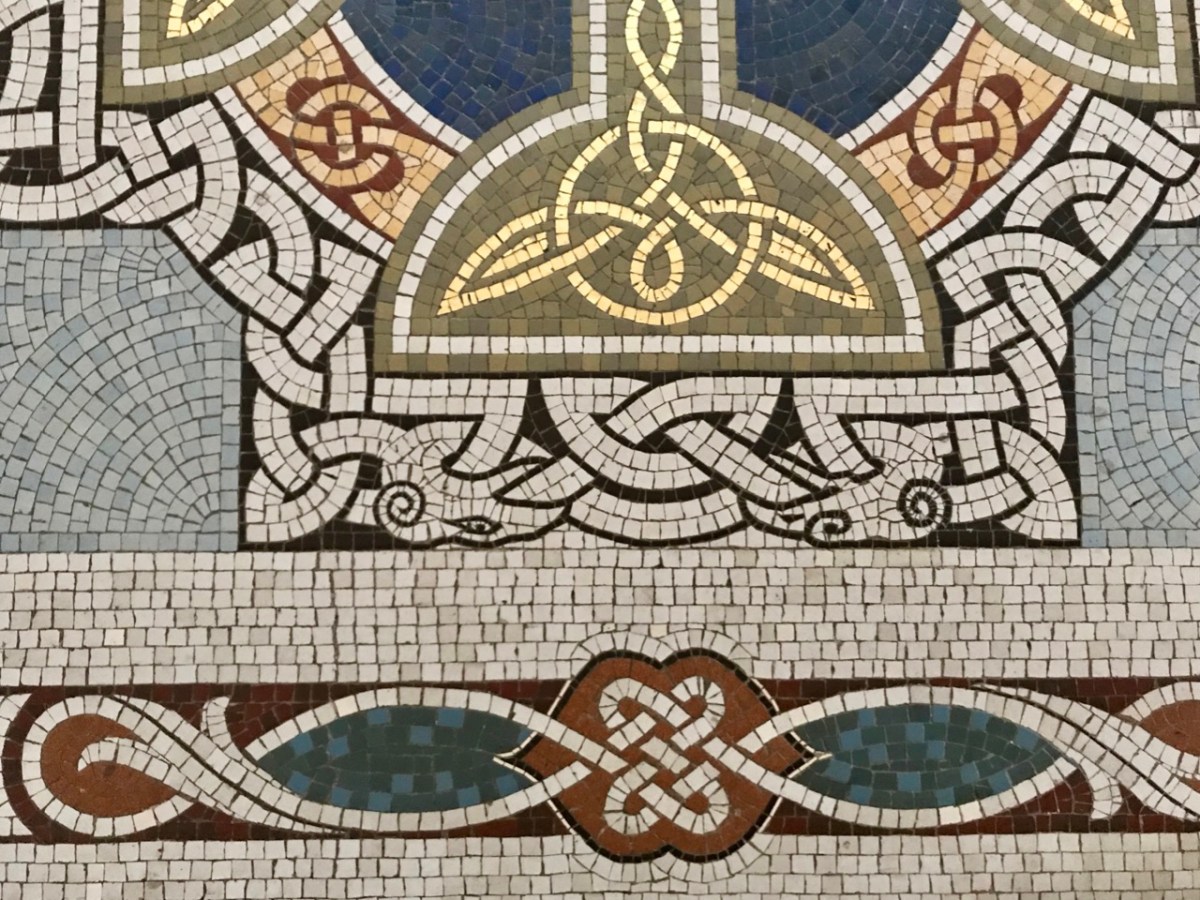
The fine Harry Clarke Studio window (one panel of which is shown in the upper picture) is a ‘must-see’, as is the mosaic work from the same church. The building work for this Catholic church, replacing an earlier chapel, dates from 1912.
Father Patrick Hickey nicely rounded off our day of Timoleague history by showing us the replica of the ‘Timoleague Chalice’ (above). The replica is kept in this Catholic church. According to Fr Hickey, ‘back in the penal days’ three monks were found floating in an open boat just off the island of Cape Clear. They had with them a box, or trunk. They were brought ashore but two of them died. The other asked that the box be kept on the island – but unopened – until he could return to retrieve it. He never returned, and in later years another visiting Priest said it could be opened. Inside was a gold chalice – blackened with age – and some liturgical vestments. The vestments fell to dust immediately, but the chalice was sent away for inspection, and was confirmed as coming from the Friary at Timoleague, where the replica is now kept.
Here is another ‘souvenir’ of Timoleague – it’s an extract from a poem written in Irish: The Mourner’s Soliloquy in the Ruined Abbey of Timoleague. The poet, Seághan Ó Coileáin, ” . . . was a Gaelic-language poet born in County Cork, in a time of faded Irish glory. He lived as a village schoolmaster, with a large family and no patron . . . “
Abroad one night in loneliness I stroll’d, Along the wave-worn beach my footpath lay; Struggling the while with sorrows yet untold, Yielding to cares that wore my strength away: On as I mov’d, my wayward musings ran O’er the strange turns that mark the fleeting life of man.
The little stars shone sweetly in the sky; Not one faint murmur rose from sea or shore; The wind with silent wing went slowly by, As tho’ some secret on its path it bore: All, all was calm, — tree, flower, and shrub stood still, And the soft moonlight slept on valley and on hill.
Here’s a little burst from our traditional session in Rosie’s, Ballydehob, last Friday, with a great crowd of players and singers filling the pub with Irish music, as they do every week through the year. Sometimes the session takes place at a different venue in the village, but you will soon find it, between seven and nine on a Friday evening. The music is to remind us that the The 9th Fastnet Maritime and Folk Festival will be held from the 17th – 19th June this year, after an enforced ‘Covid’ break. Hopefully it will be ‘just like old times’. There is a great programme to look forward to – don’t miss it! To get you into the spirit here’s Festival regular Matt Cranitch leading a rendering of the beautiful air Sliabh na mBan.
There’s a tale attached to all good songs, and Sliabh na mBan is no exception. This is from the Dúchas Schools Folklore Collection 1936 . . .
. . . Finn mac Cumail, having come of age, took upon himself the task of choosing a wife. A public man like him had to cater to the popular expectations and he was in sore straits fearing to give hurt to any of the noble families wishing to link their daughter with Finn in the bonds of Holy Matrimony. Having tasted of the Salmon of Knowledge, he was all wise, so he hit upon a good plan. A race would decide who to wed him. He sat on the top of Slievenamon, (Sliabh na mBan – Mountain of the Women). All the ladies were to race from the Anner and the first up was to become his wife. Then the gathering began – old, young, fair, dark, ugly, beautiful, sprightly and lame all came to try and become Finn’s wife. “They’re off!” – what a view as all the maidens of Munster set off on the race. The beautiful girls began well, but soon got tired and as some old hag would limp past them she’d sneer “Fair and go easy goes far in a day”. On they went, the latter tripping the former – three remained to do the east climb – two beautiful girls and a worn, old hag: up, still up – who’ll win what? Wait! the fair girl has fallen, now just a dark-haired caílin and the old woman. Oh look, she’s down – the girl hurts her ankle and tries to creep along, but faints. Now the old hag has an open field. Finn must marry her – But no, up the slope comes a lovely girl and reaches Finn first and like all nice stories, they were married and lived happily ever afterwards. (Nobody knew that Finn had instructed his lady love to run over to Boherbee where the mountain is low and go along the gradual slope, instead of trying to climb the steep precipitous mountain face) . . .
Schools Folklore Collection – Miss H Noonan Aged 70 – Cloneen, Co Tipperary
A reminder of pre-Covid days (above, in Levis’ Bar) – folk legend Martin McCarthy (now aged 81) was a regular at the Ballydehob Festival. There’s some good ‘new blood’ there this year, and the launch of an album of the best Sliabh Luachra music from Pat Flemingwith Maria Cotter, Tim Browne, Gary O’Brien and Timmy O’Connor. A special event will take place in Bank House in the main street at 7.15 on Thursday 16th June: festival organiser Dick Miles will give a talk on the ‘folk revival’ – (A musical journey from England to Ireland). There will be plenty of opportunities for all musicians to participate over the weekend, starting with the regular Friday folk session in Rosie’s at 5pm (note the earlier-than-usual time) on the 17th.
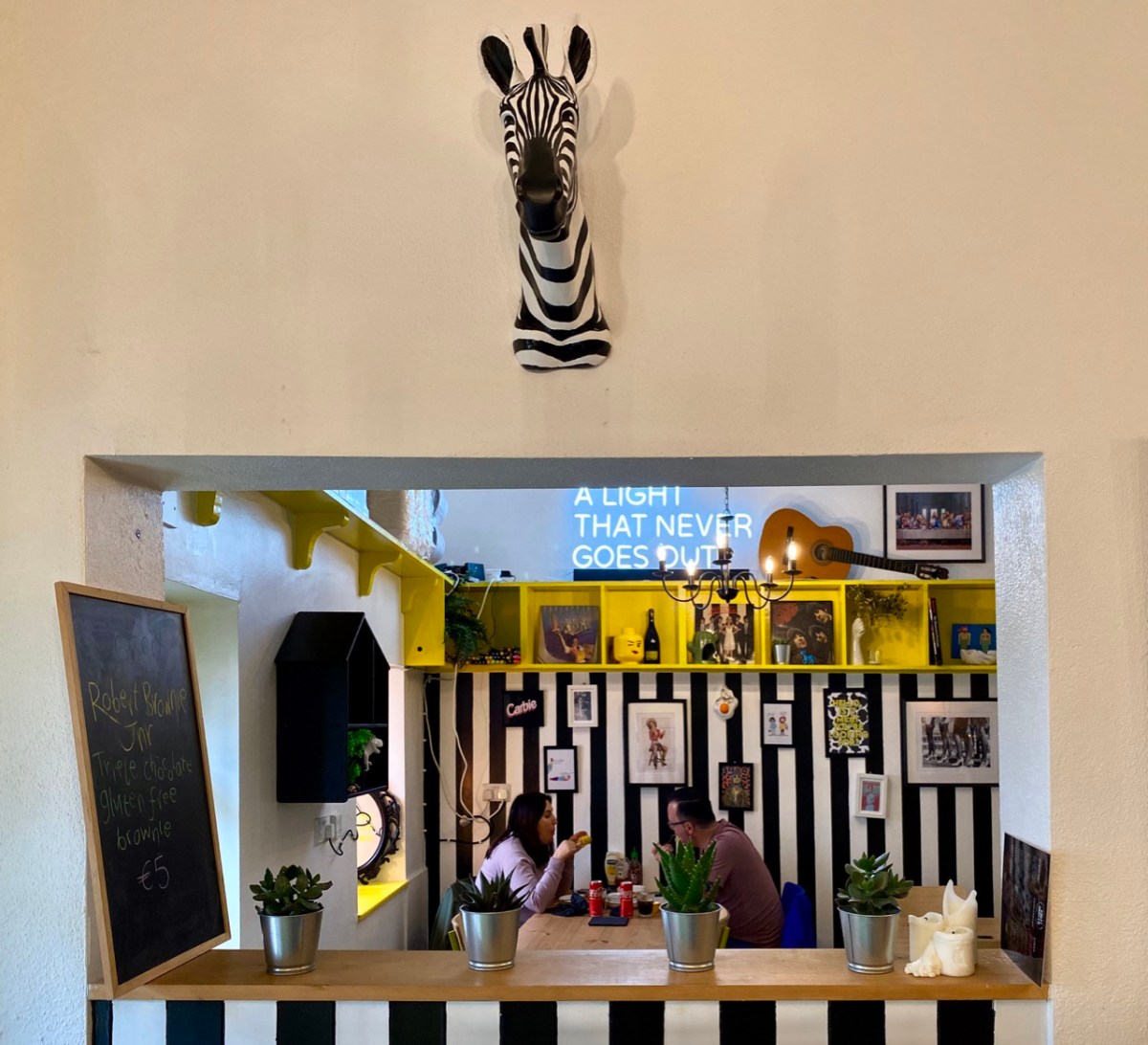
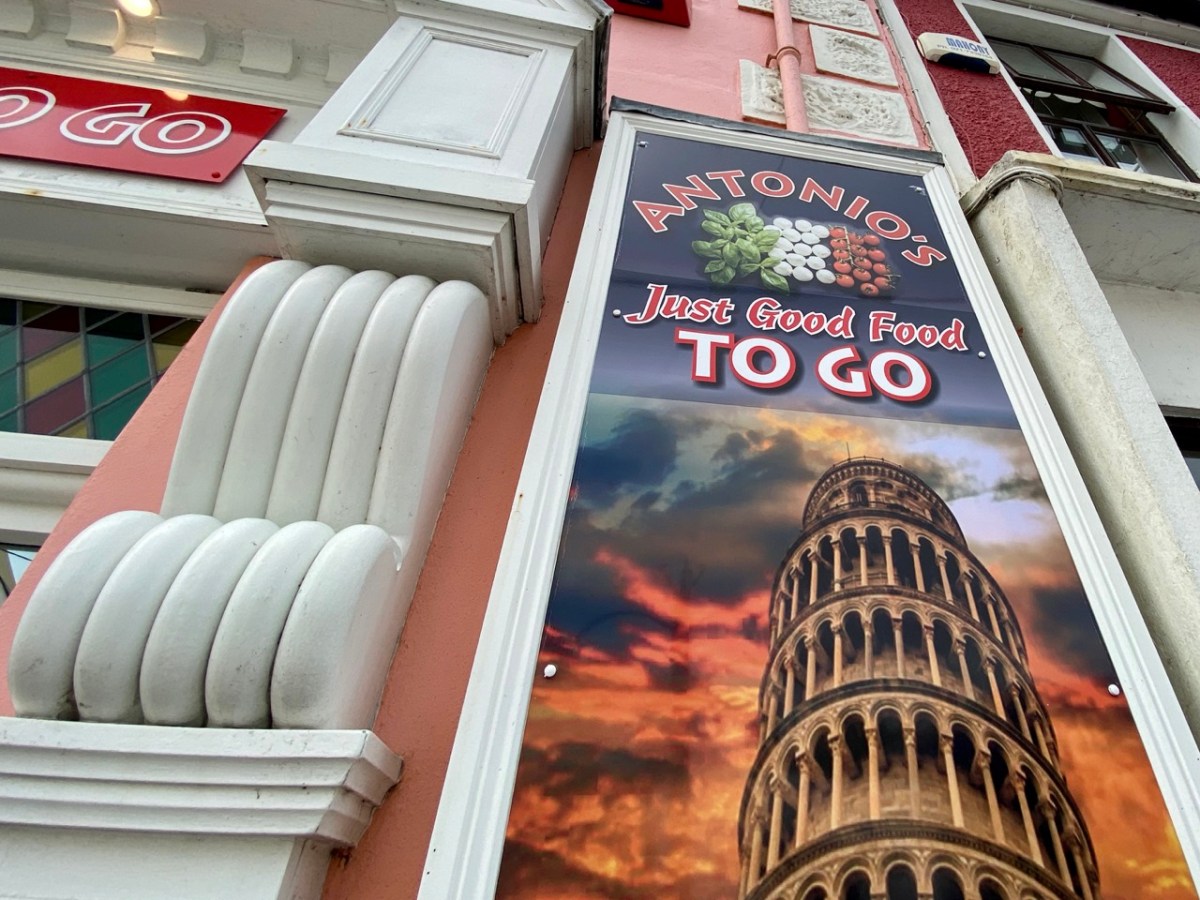
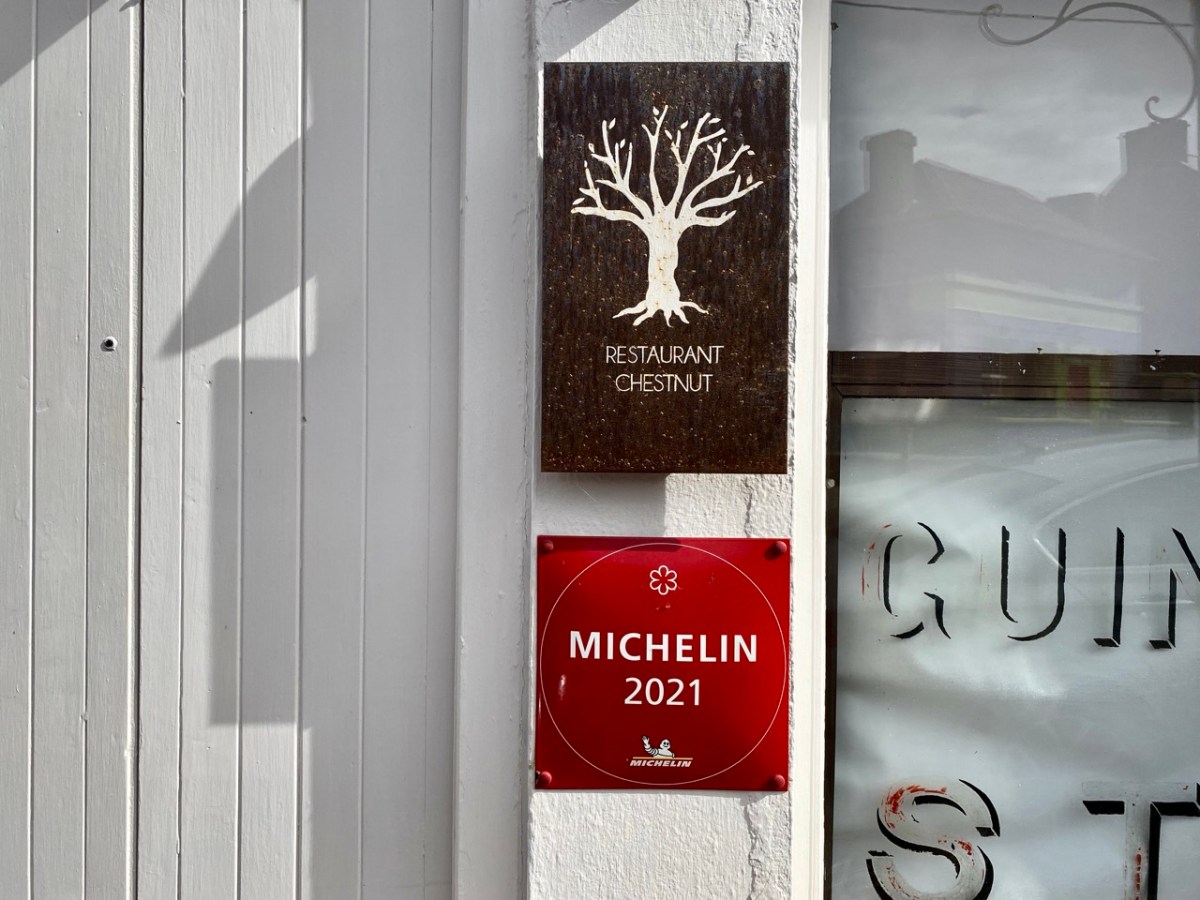
There are plenty of good food opportunities in Ballydehob: all will be available over the Festival weekend: the wonderful Yay Burger (top), Budds (above) and Bally Bia (below). Don’t forget Antonio’s and – if you want Michelin Star (why wouldn’t you?) there’s the Chestnut.
But the festival is – first and foremost – all about the music. We hope to see you there over this coming weekend. We’ll finish with more Sliabh Luachra tunes from Jackie Daly and Matt Cranitch, who will be there to serenade us. Enjoy!
Welcome to the UCD Library Cultural Heritage Collections blog. Discover and explore the historical treasures housed within our Archives, Special Collections, National Folklore Collection and Digital Library