Sweet Ilen – Part 3

Here is the third instalment of our wanderings along the Ilen – one of West Cork’s most significant rivers. Once a commercial highway connecting the merchants of Skibbereen with the coastal ports and scattered islands, it now plies its way from the summit of Mullagmesha Mountain taking a lazy and often secret course through lush valleys and pastures, showing itself to us only at a few crossing points until, boosted by many tributaries, it becomes a wide tidal waterway heading for Baltimore and the wild Atlantic.
Our explorations so far have taken us from Newcourt upstream to Ballyhilty Bridge. We have yet to ‘top and tail’ the river: that will be done, but only when restrictions and conditions permit. I doubt that we will be searching for the source in the mountains until next spring at the earliest, as those high paths are closed for safety at present. But, back in November, we were able to continue north from Hollybrook Demense and Maulbrack townland.
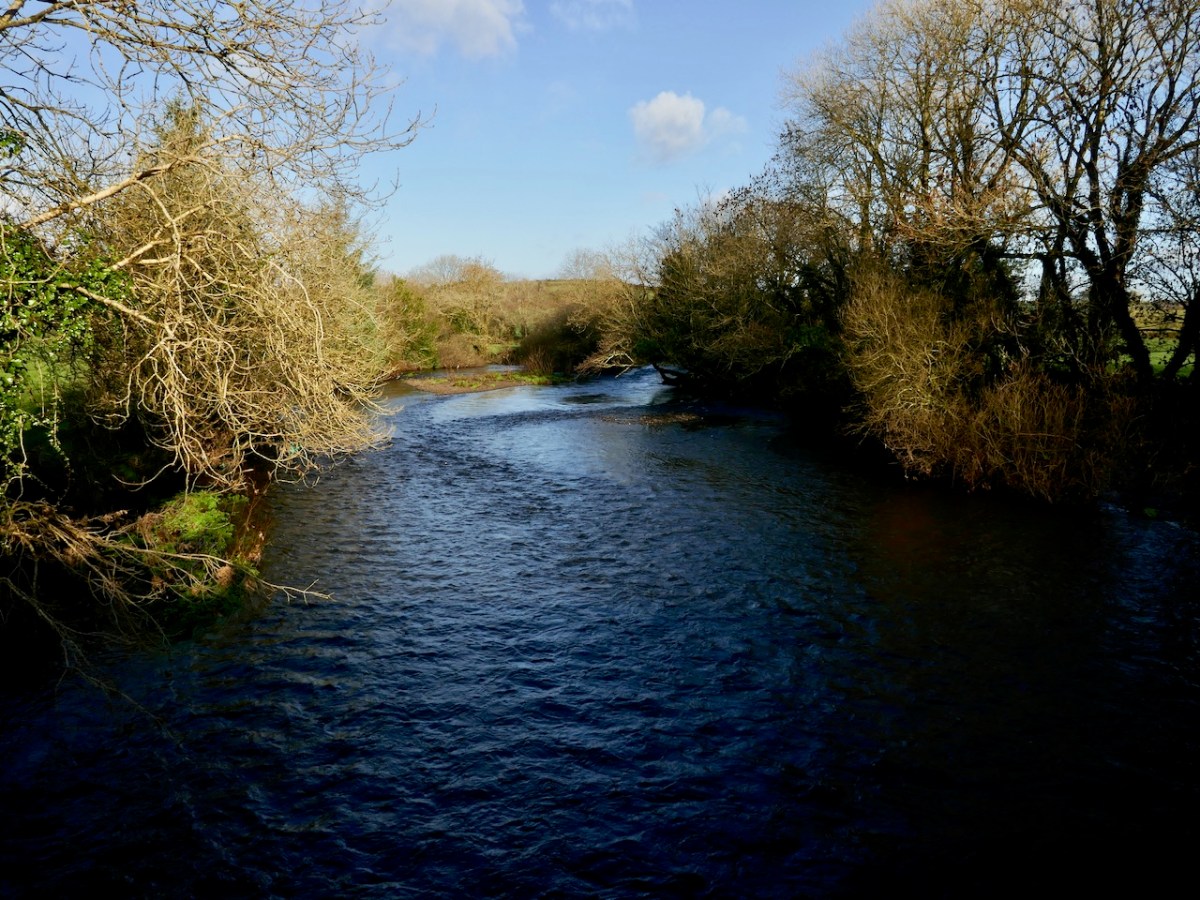
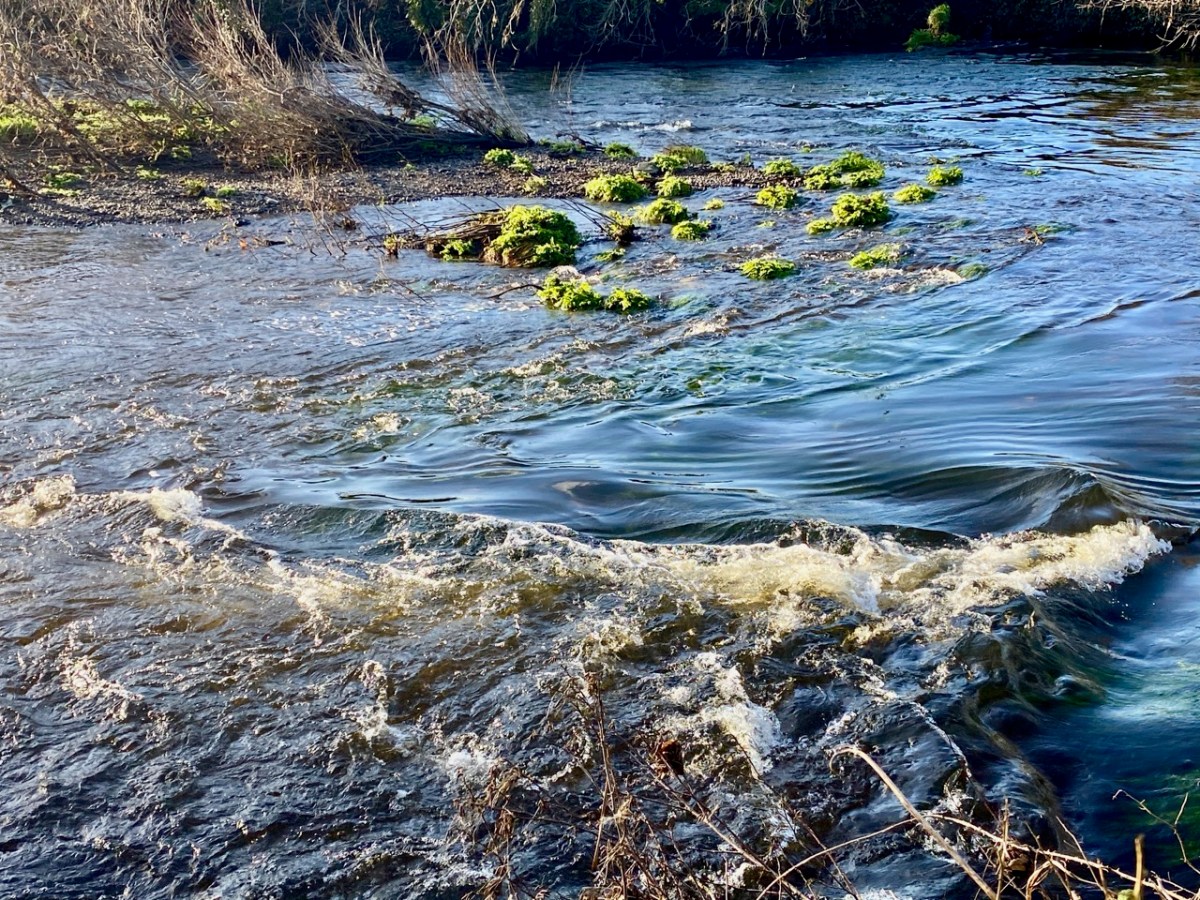
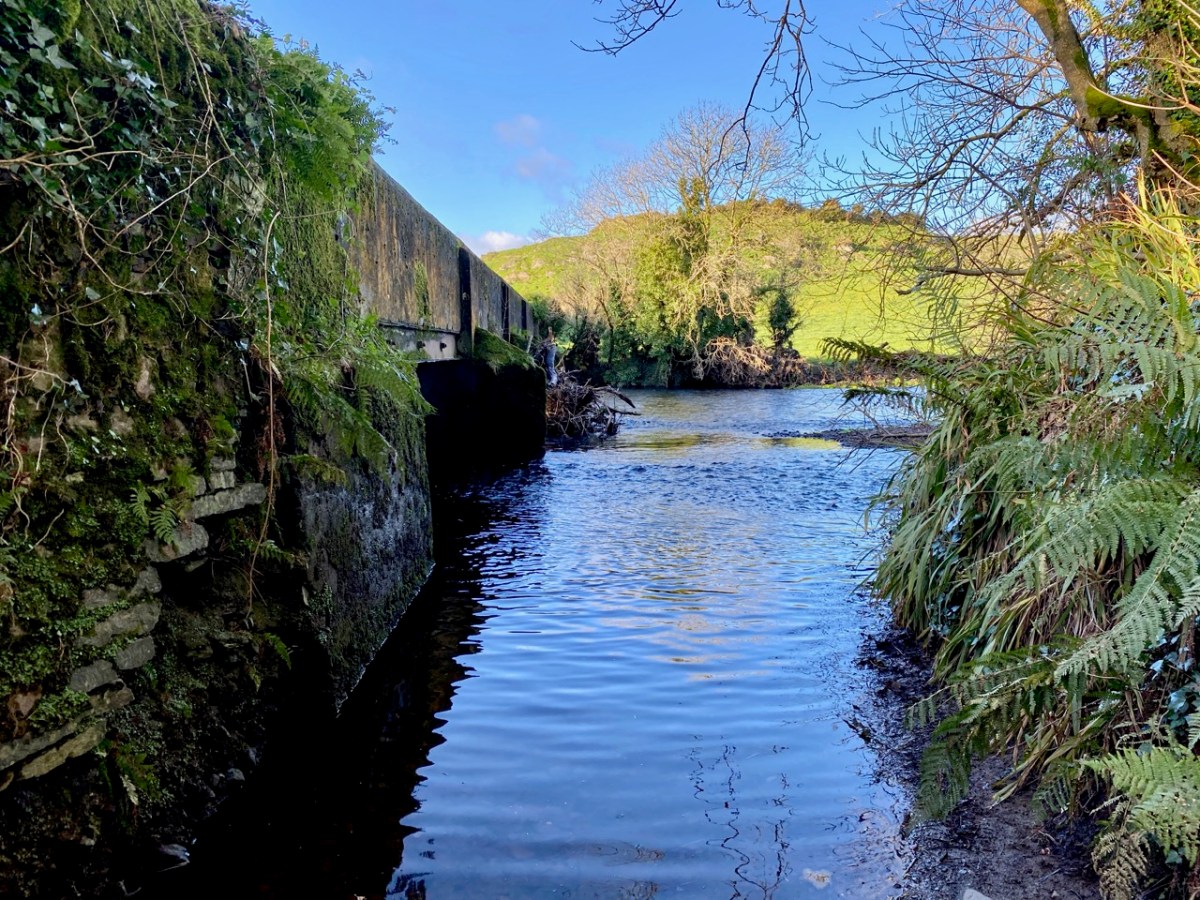
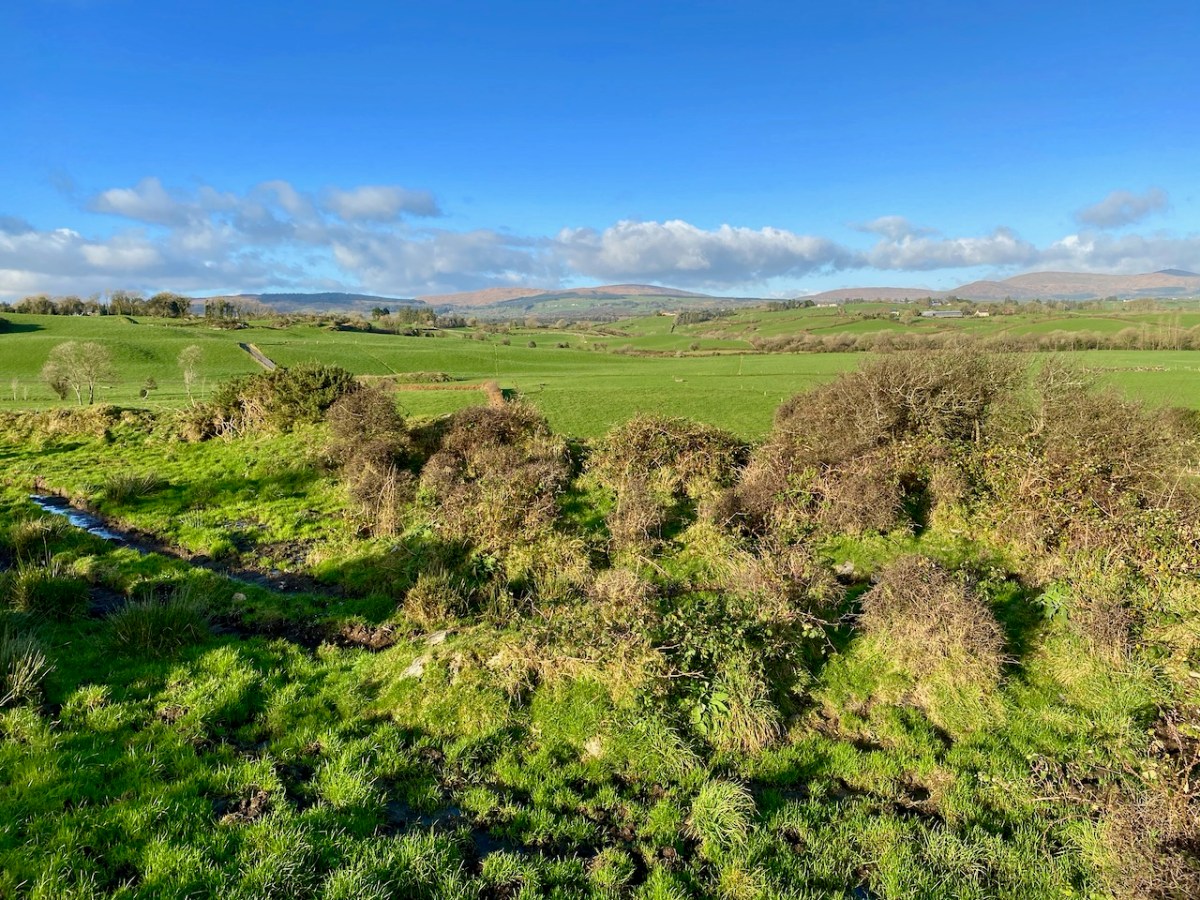
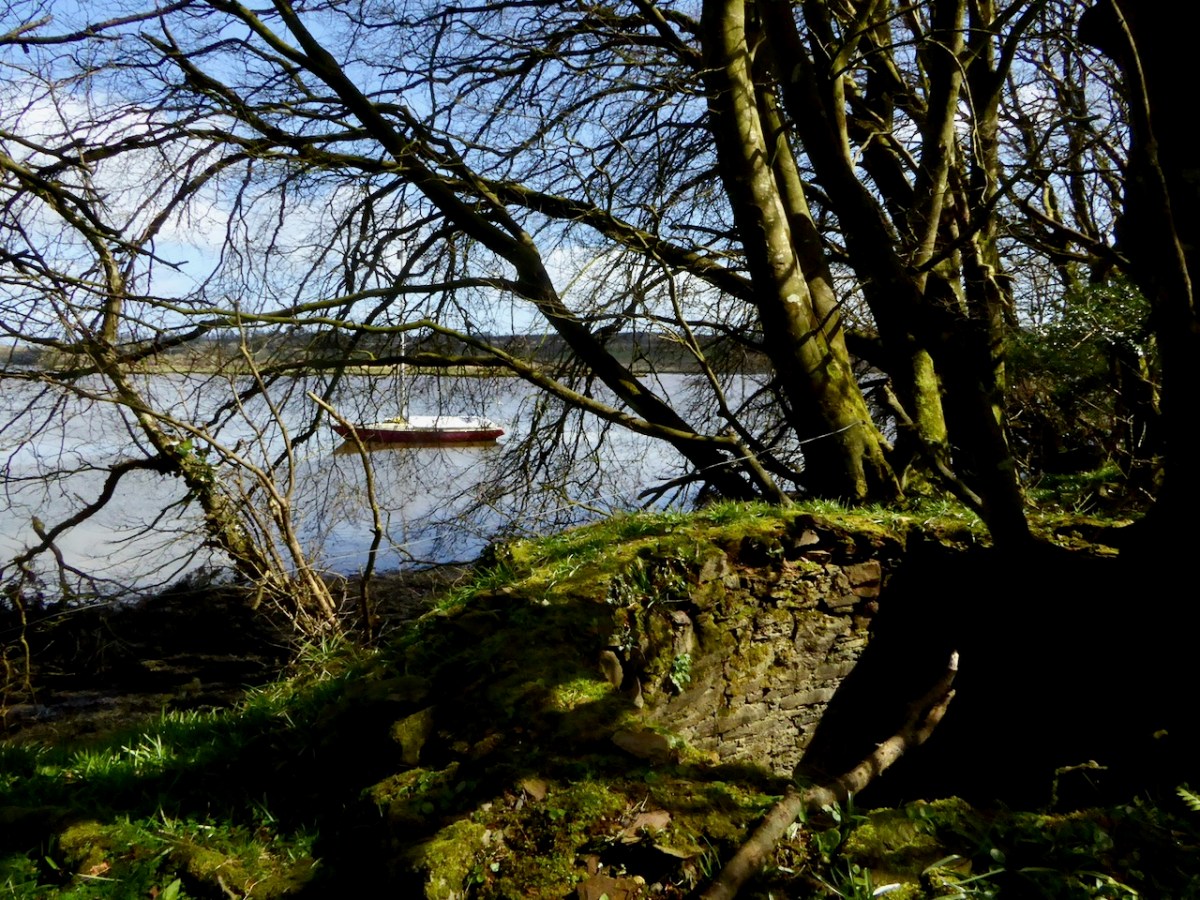
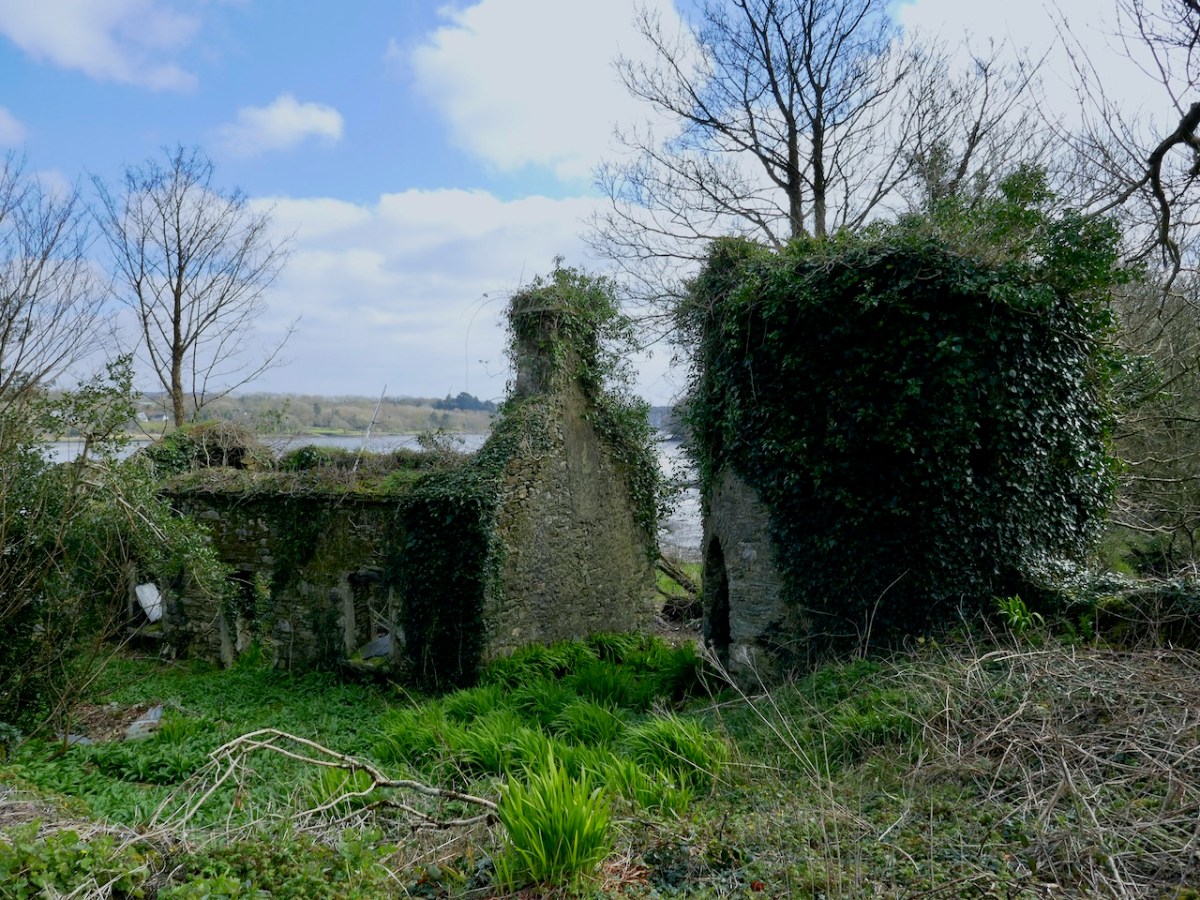
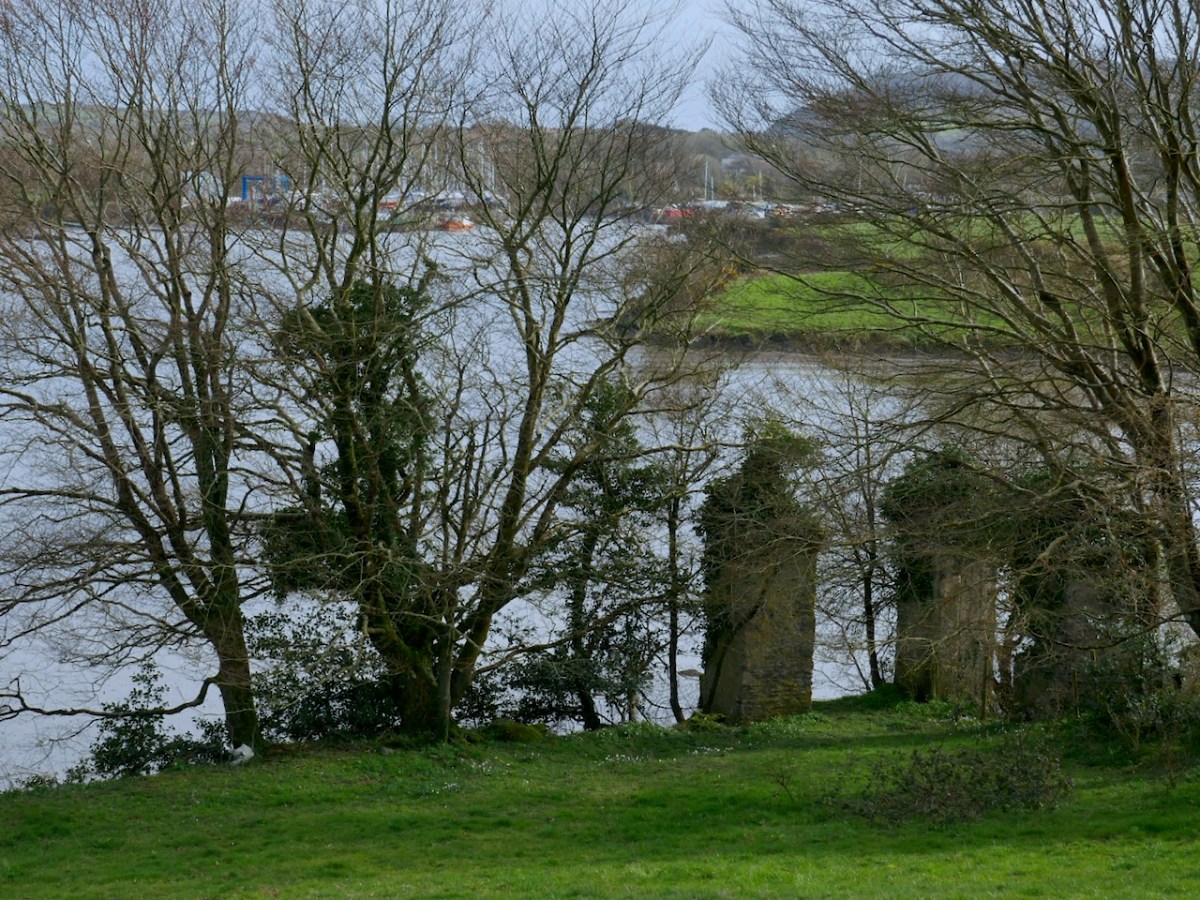
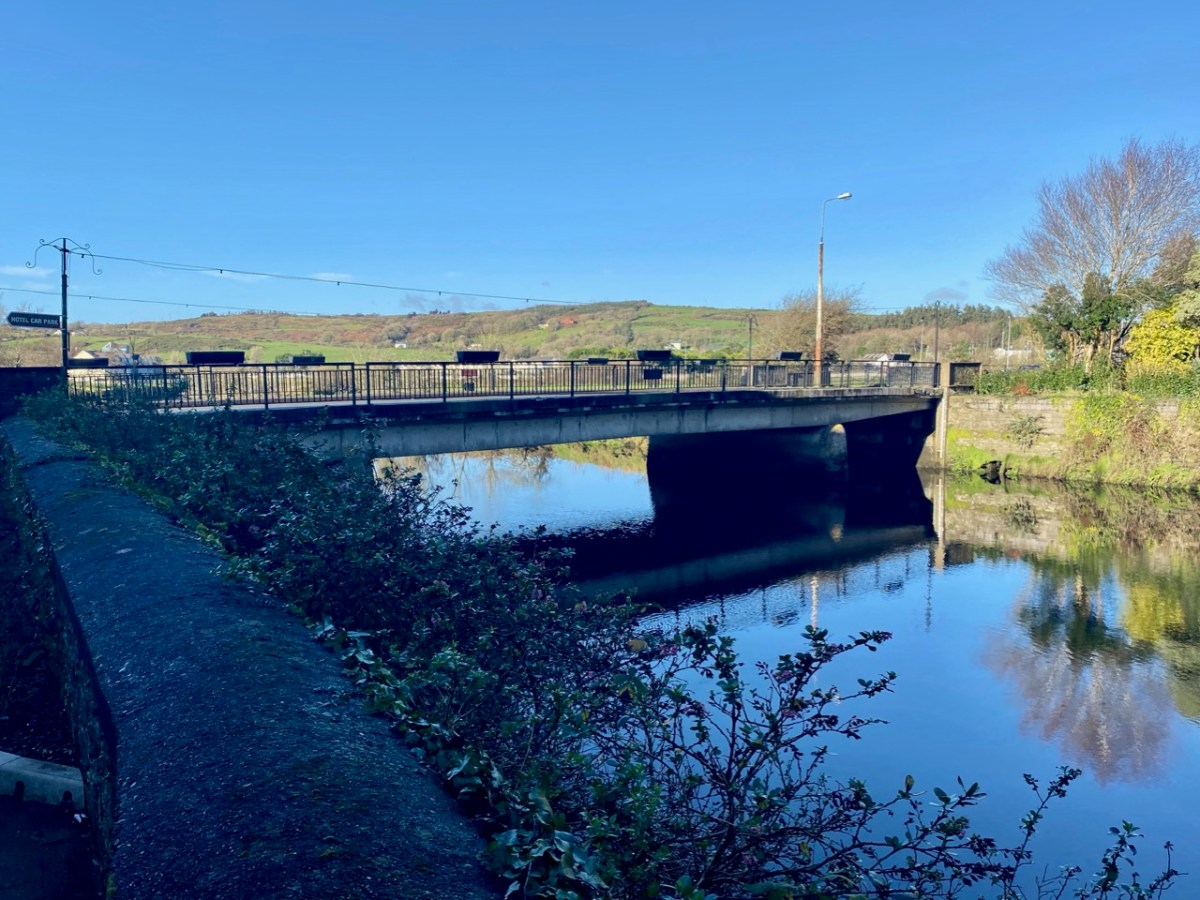
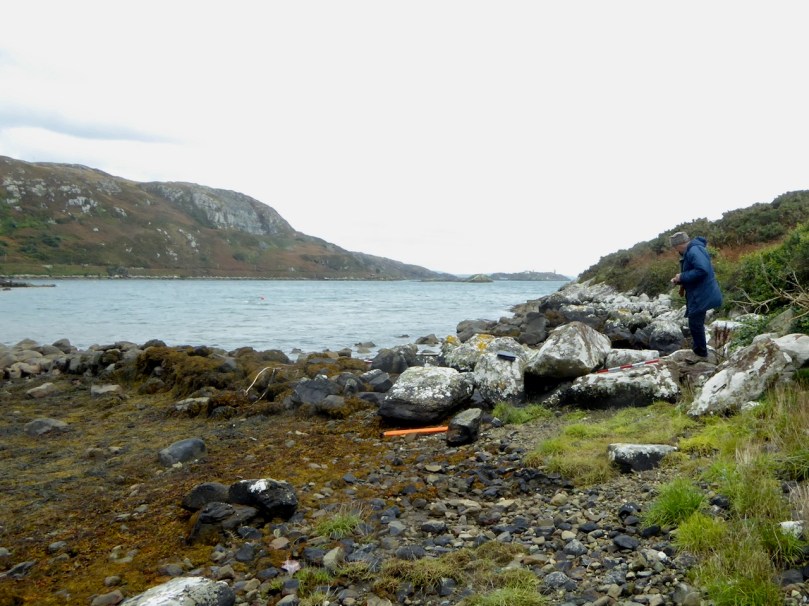
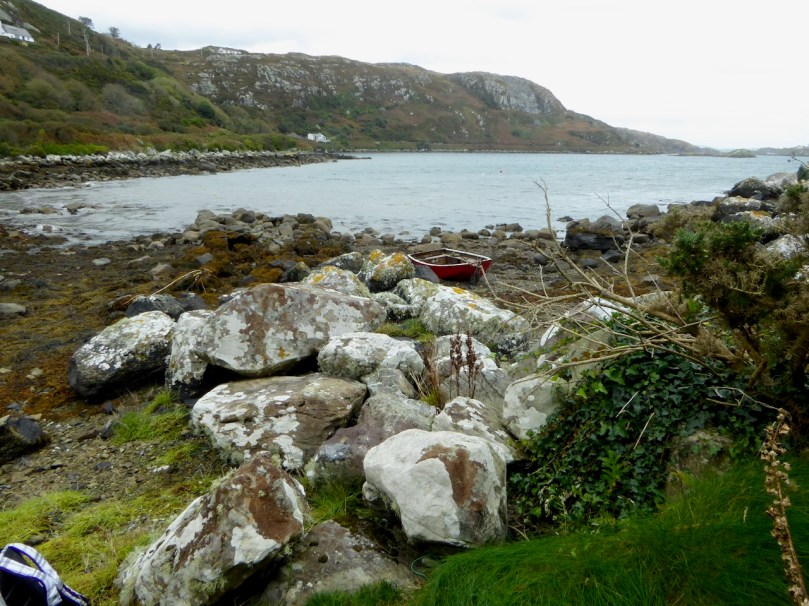
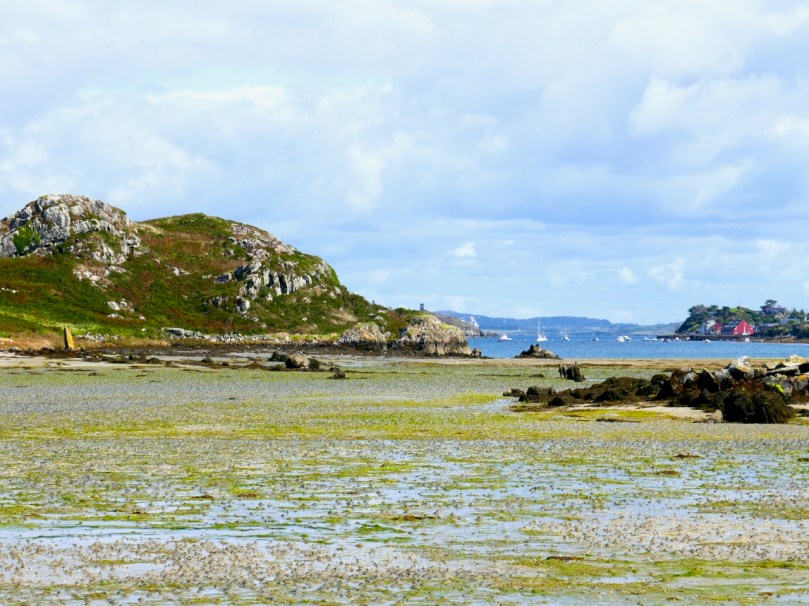
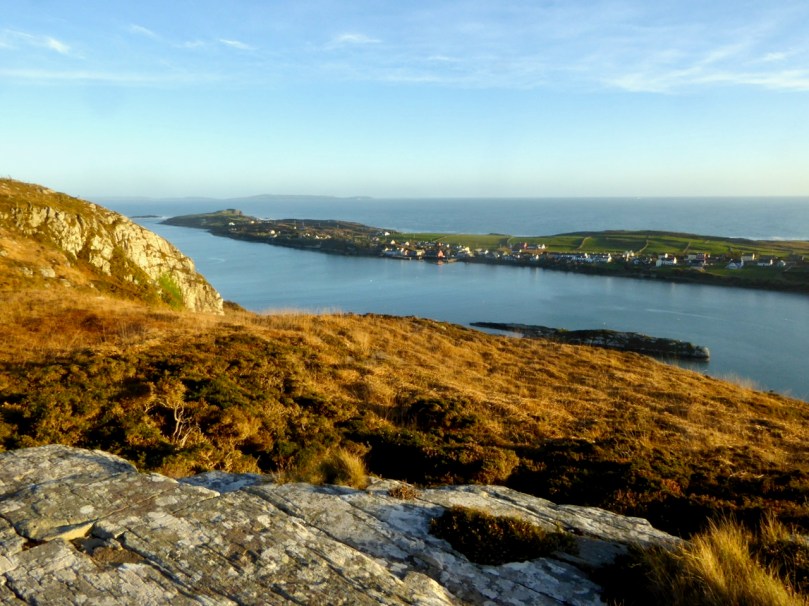
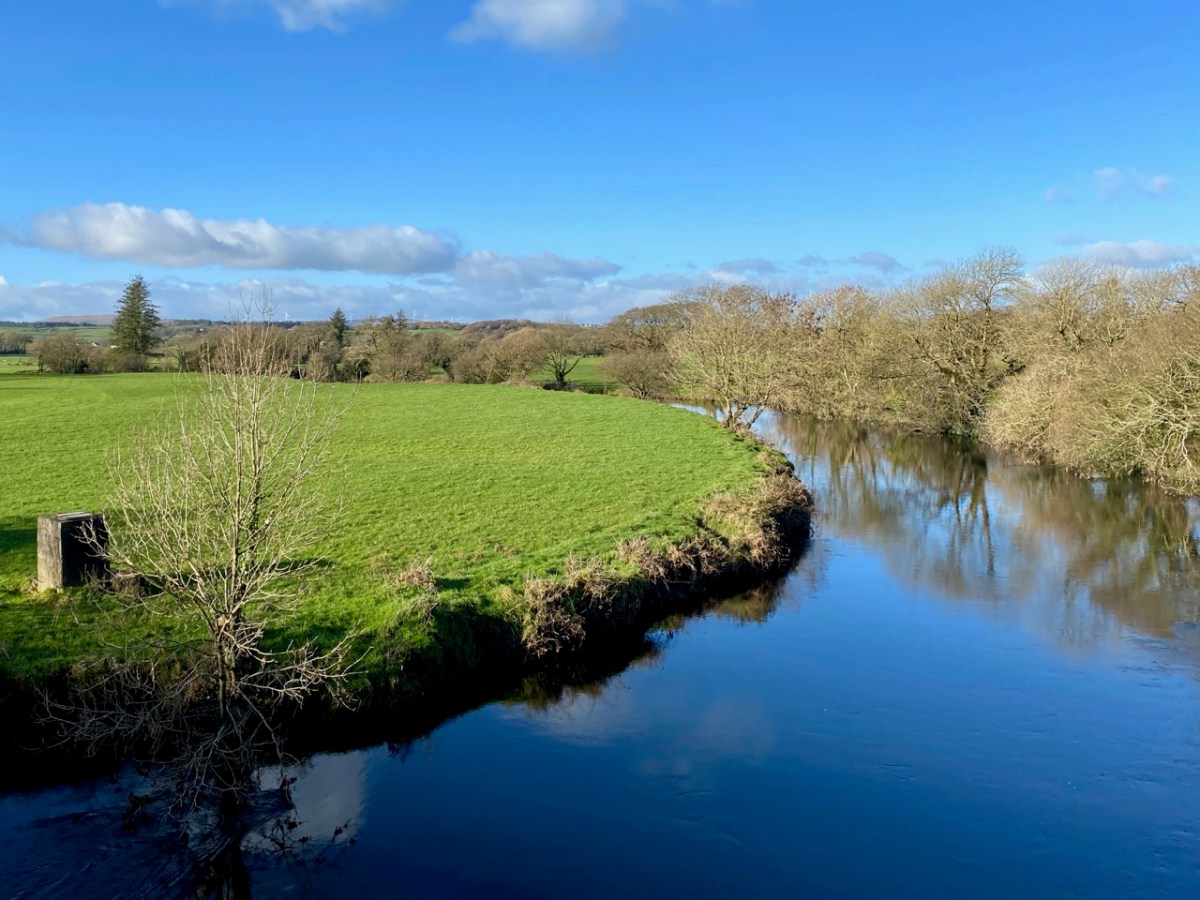
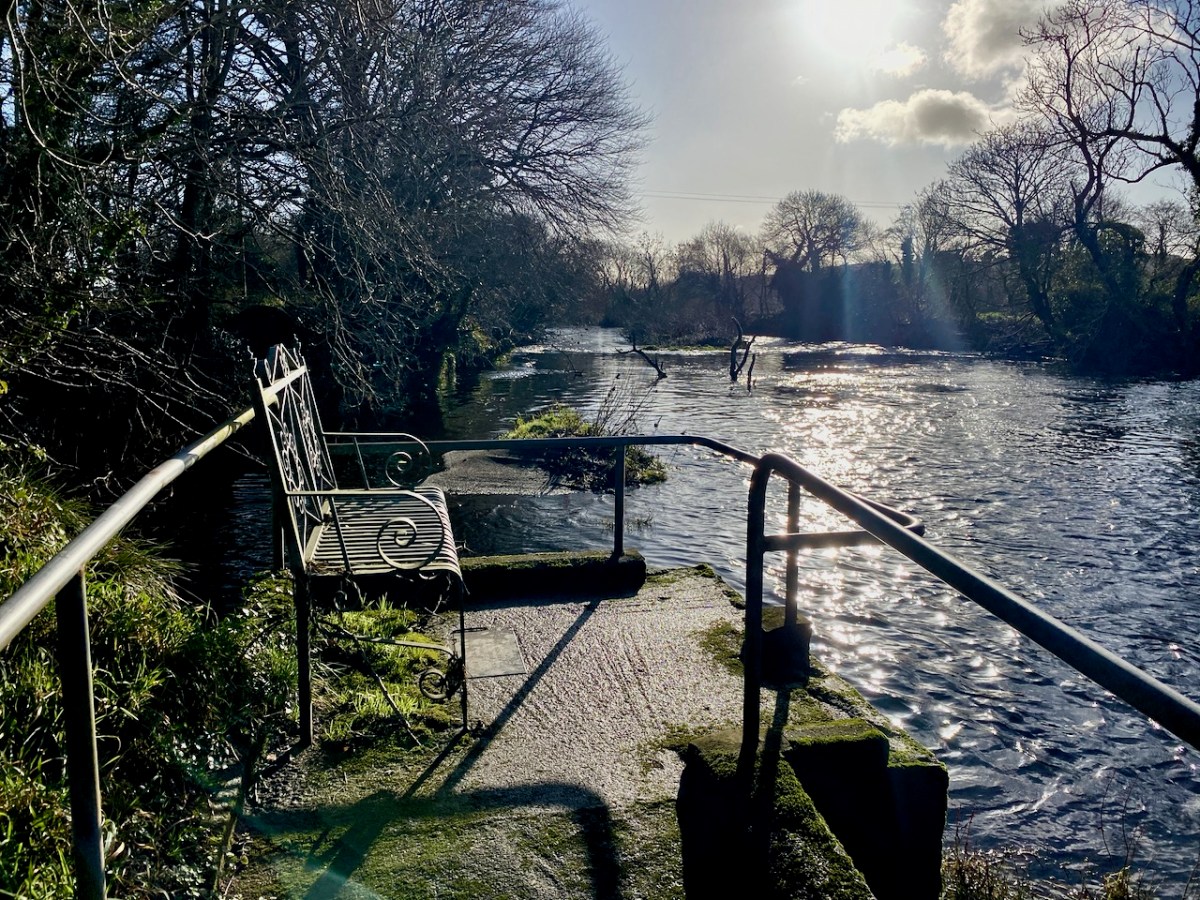
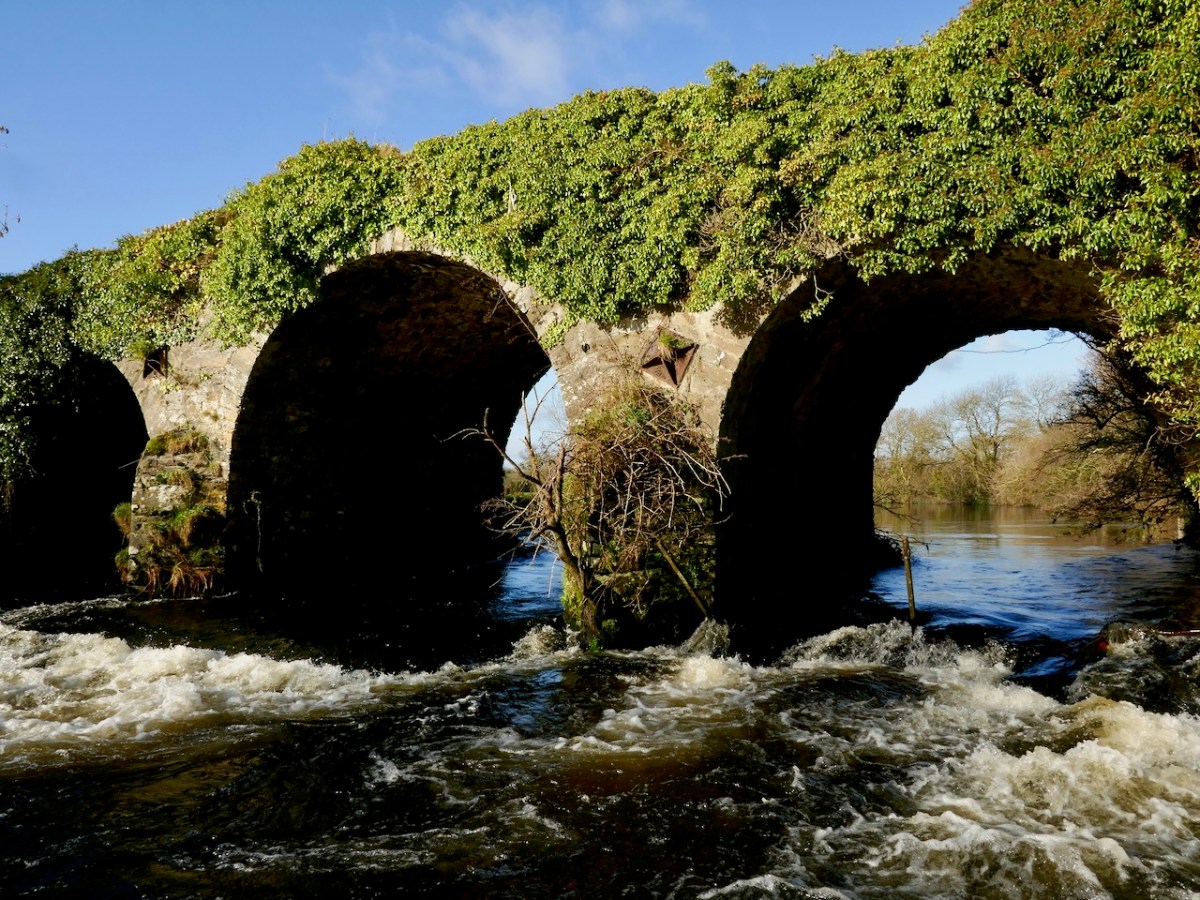
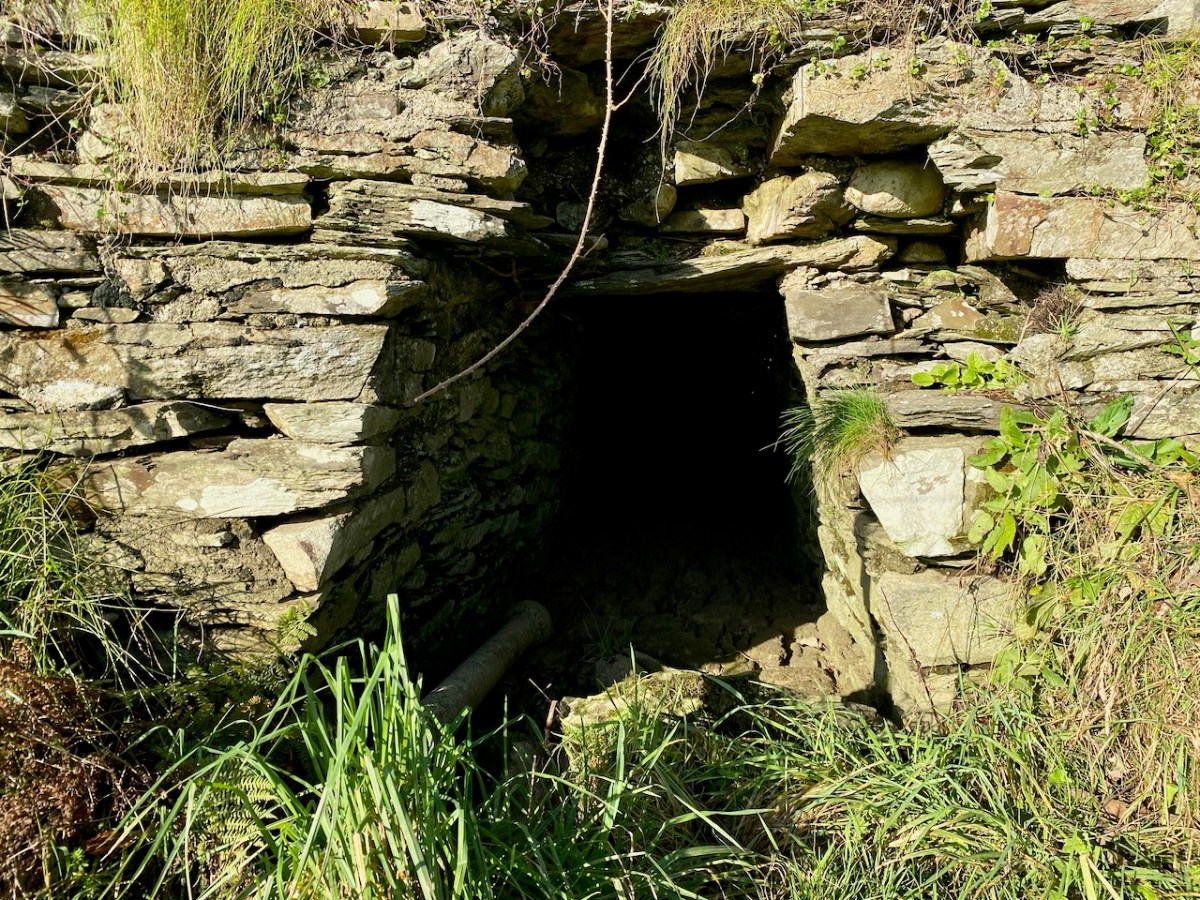
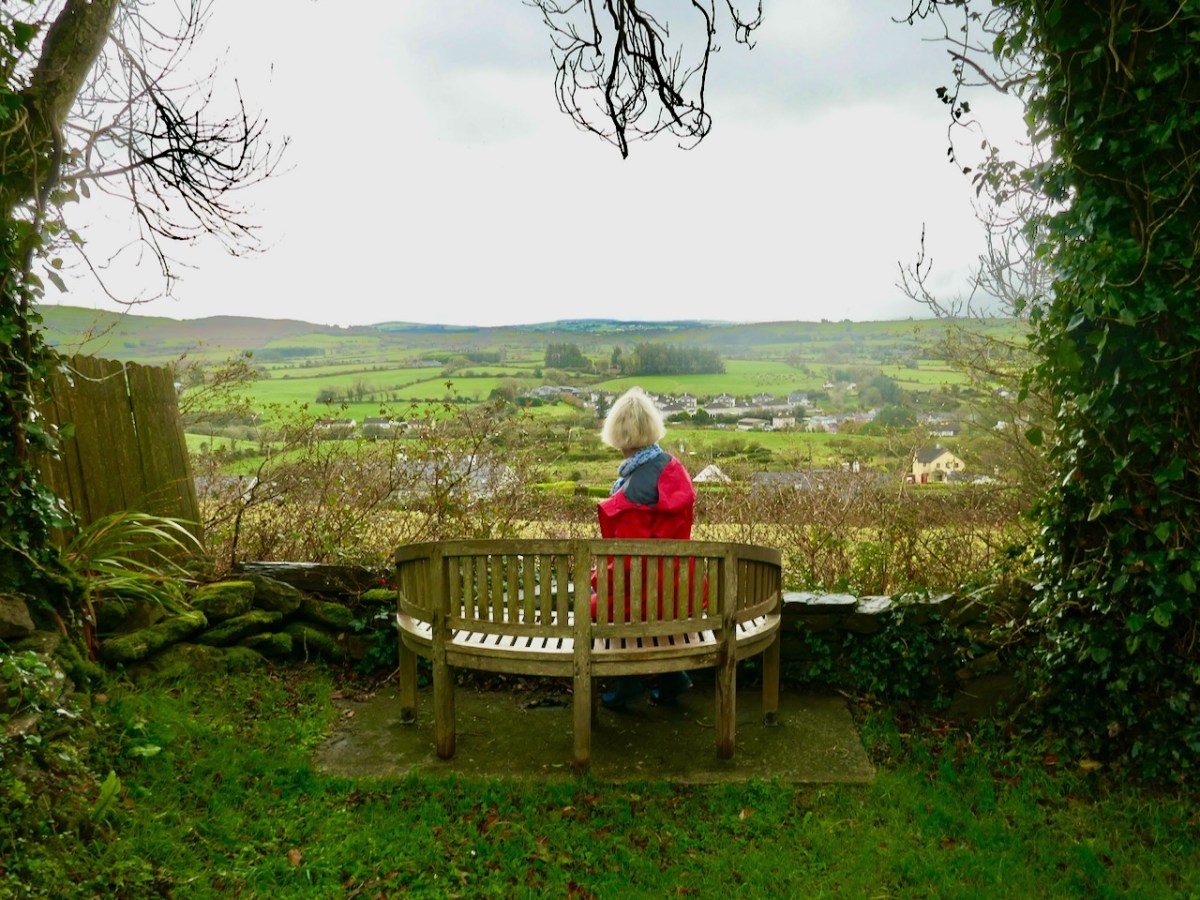
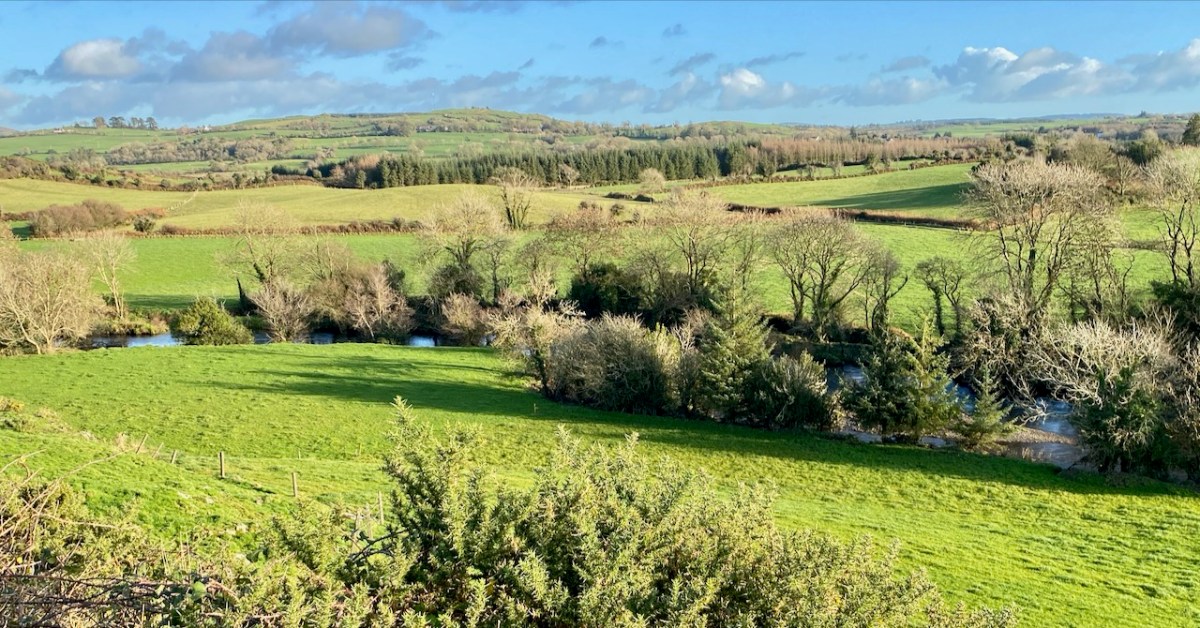
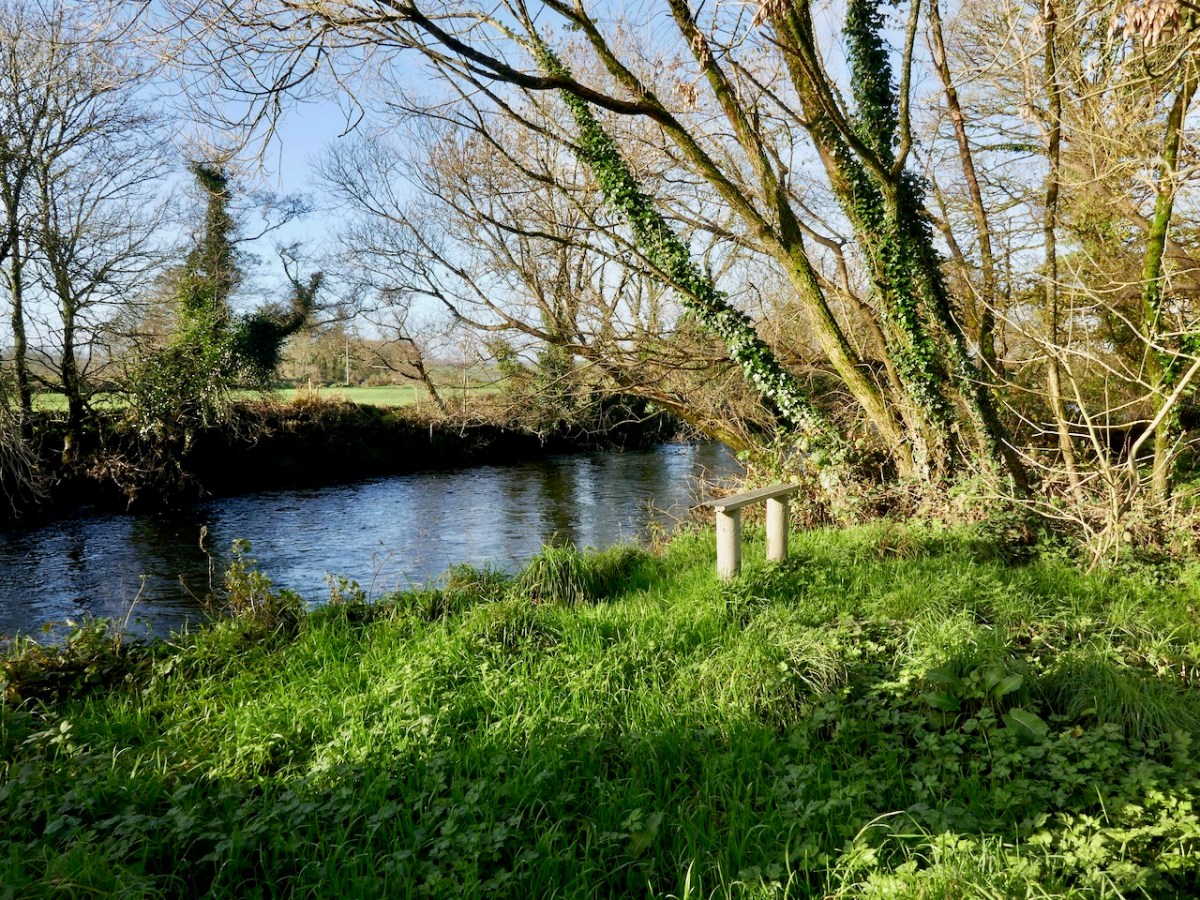
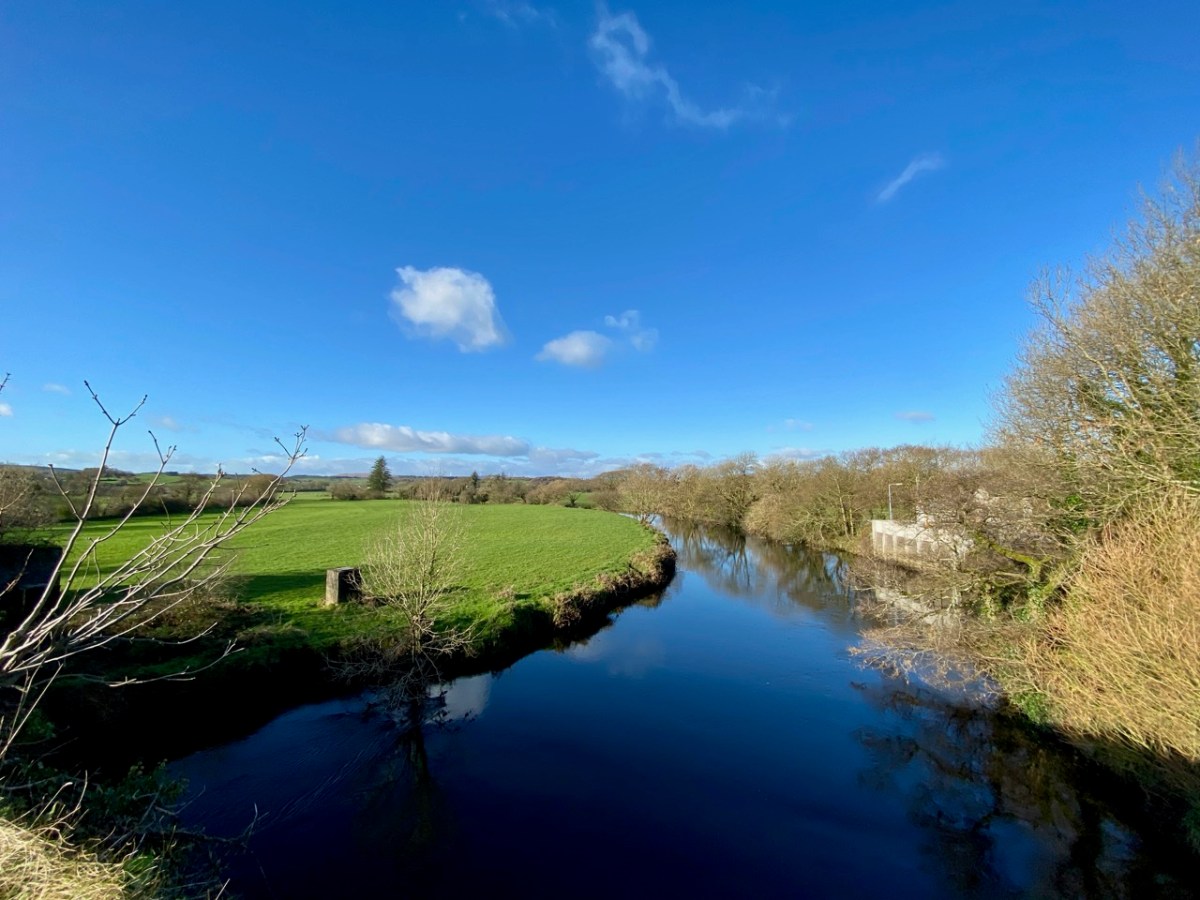
Images from top include the header showing the river at Caheragh with the distant mountains to the north; an anglers’ seat at Ballyhilty; and the broad river just upstream of Ballyhilty Bridge. The river is still wide as we follow it, but becomes shallower and is interrupted by rapids mixing with contemplative, deep pools (above).
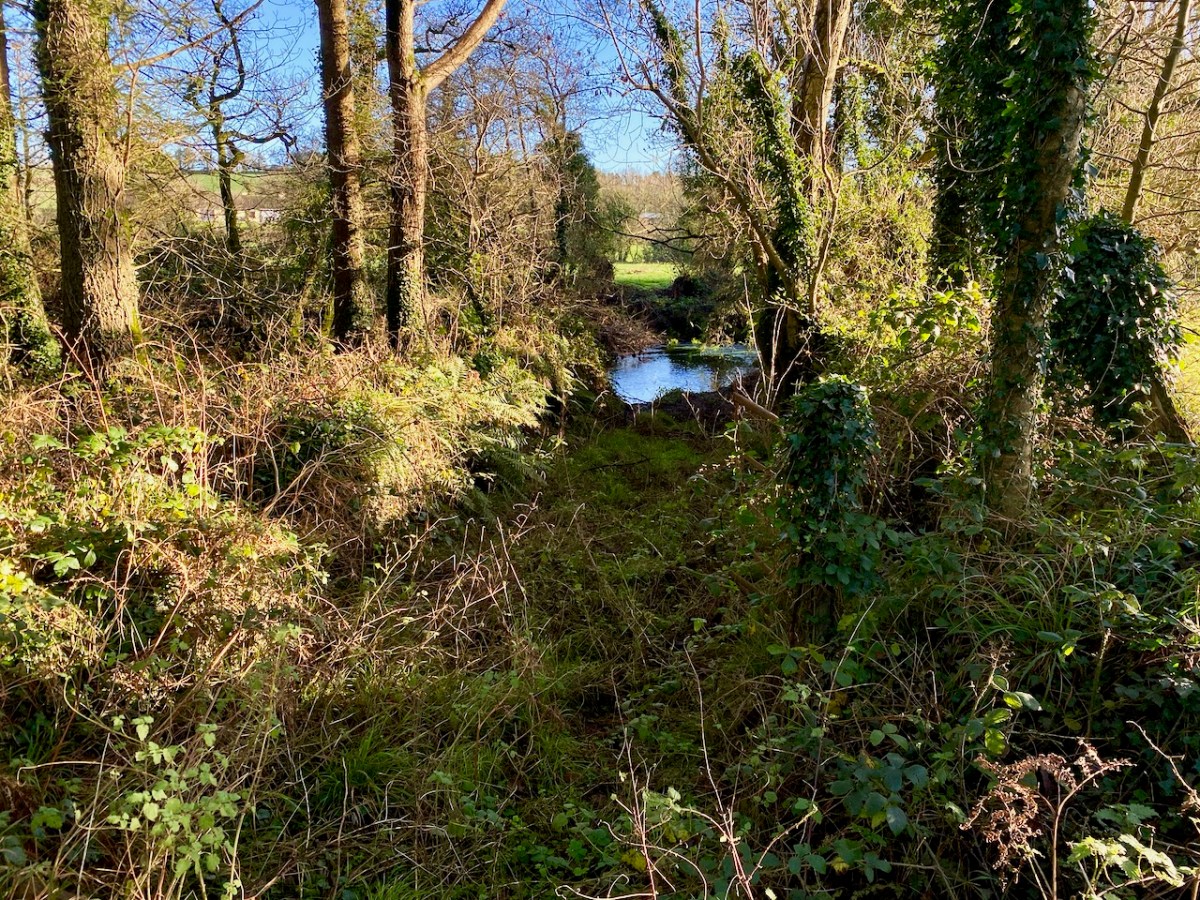
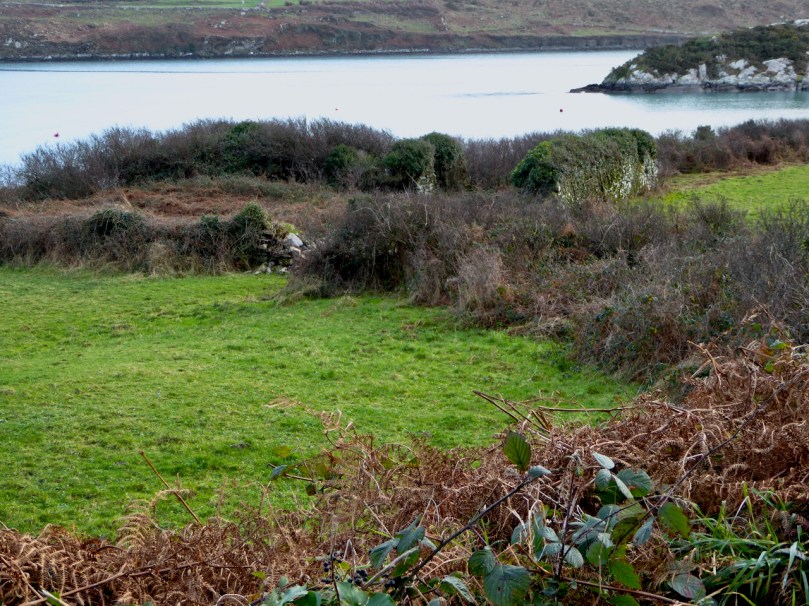
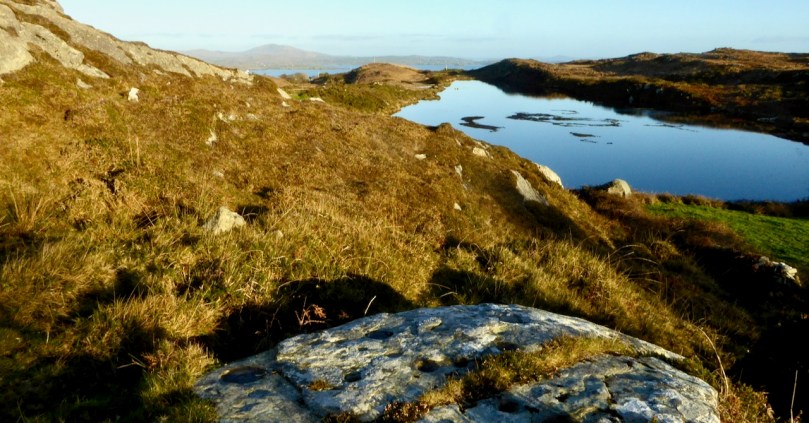
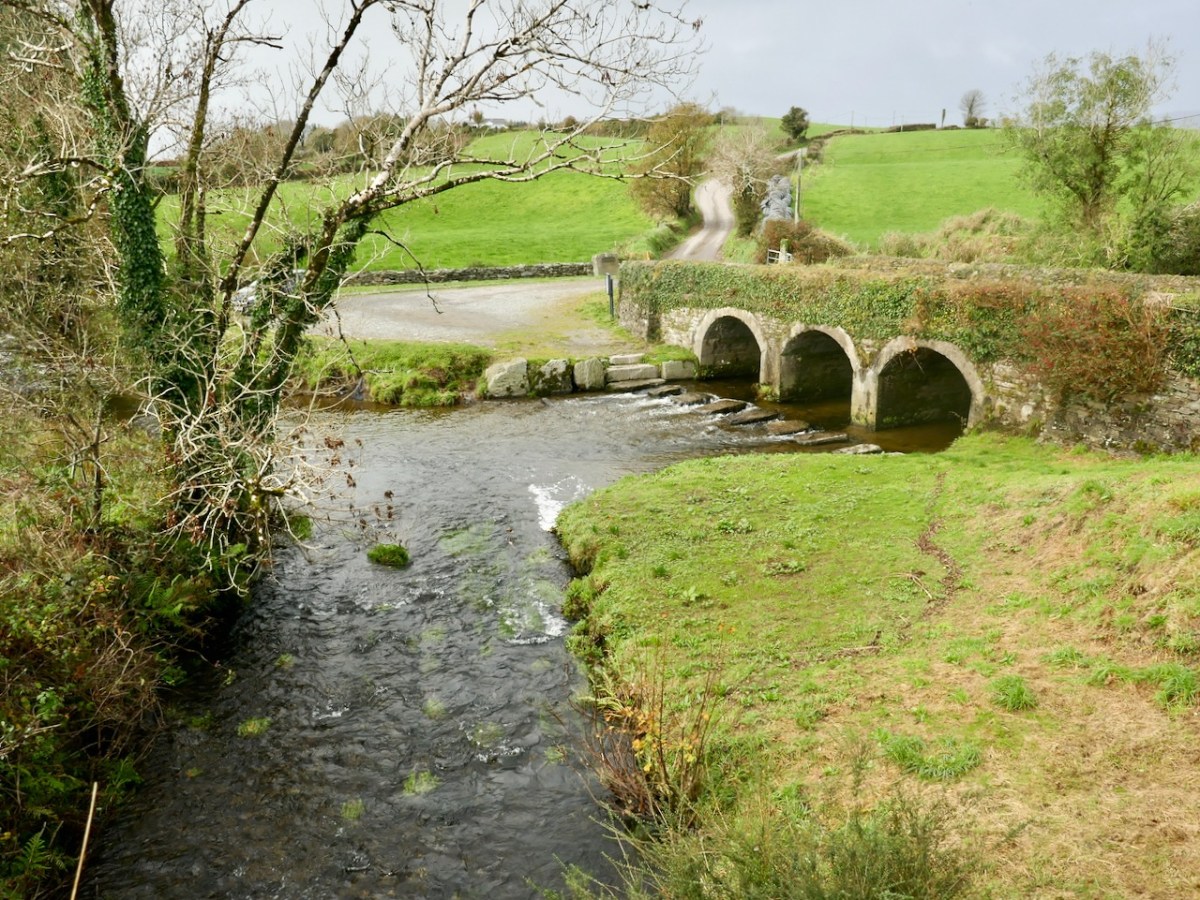
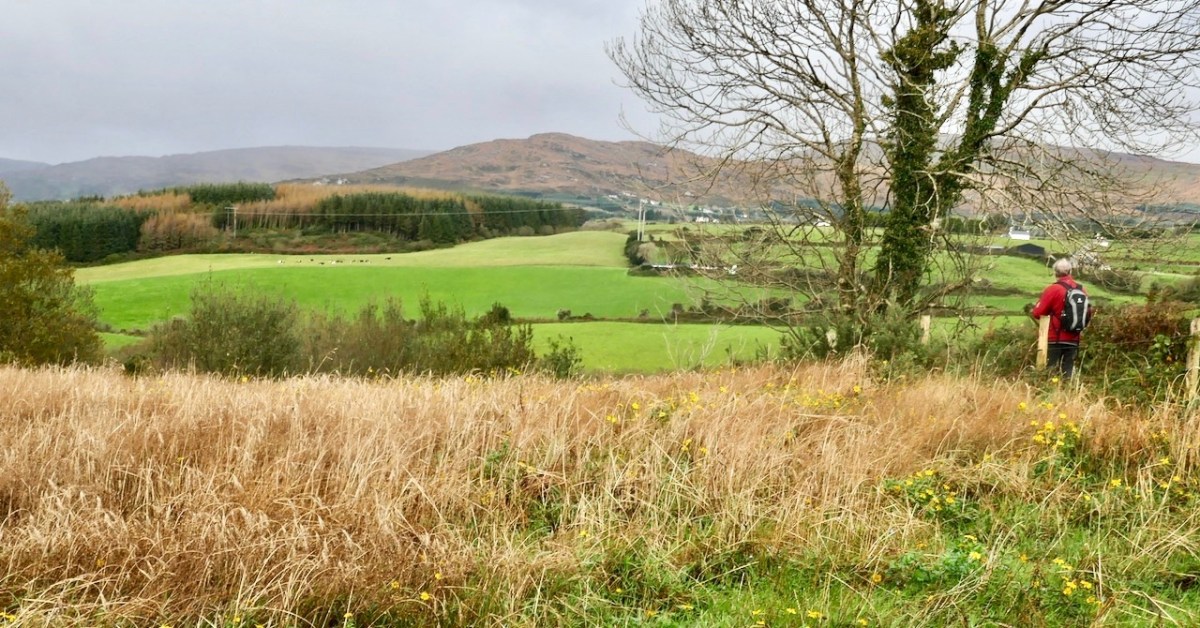
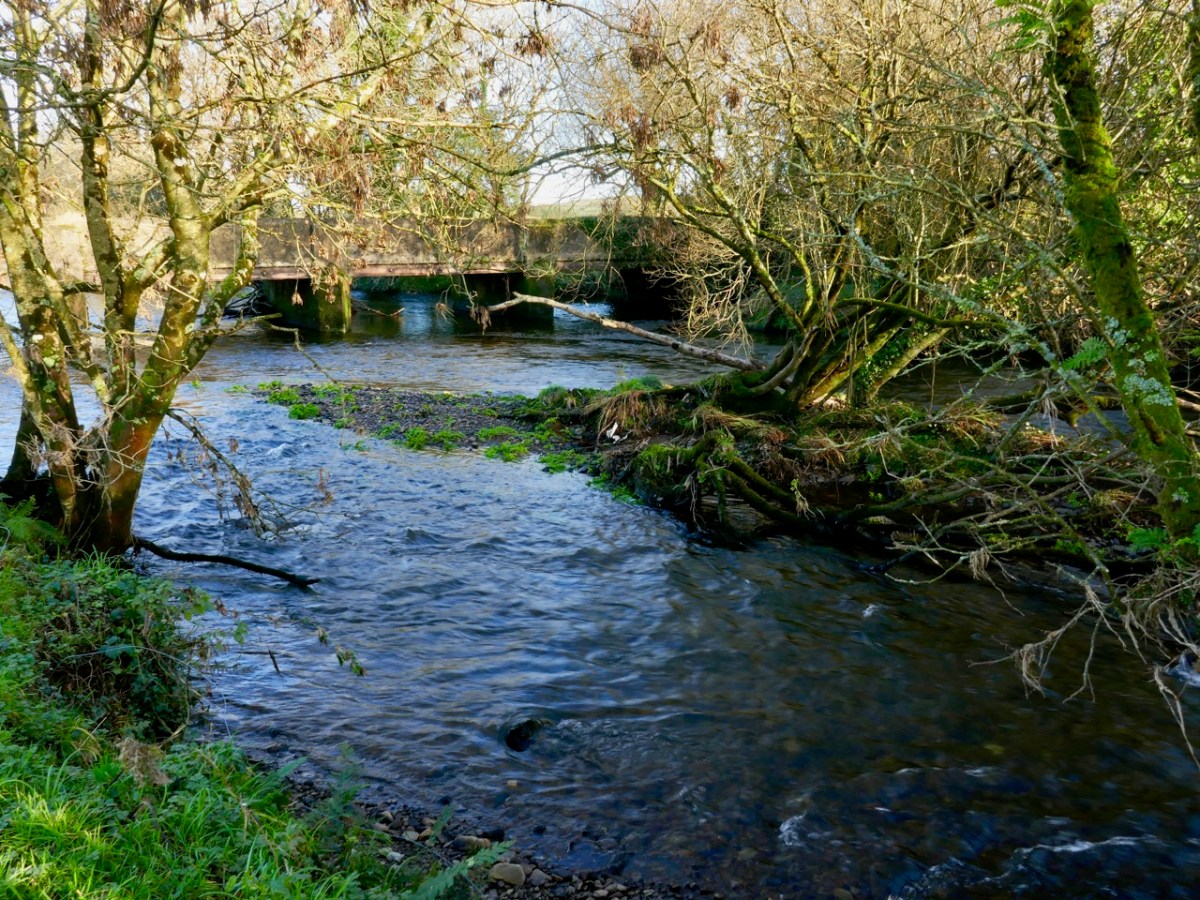
Large parts of the river here are lost in the hinterland. We try to follow every small trackway that might take us close to it – and which certainly take us to the back of beyond – and catch the occasional glimpse such as this one (above), which is probably an ancient ford.
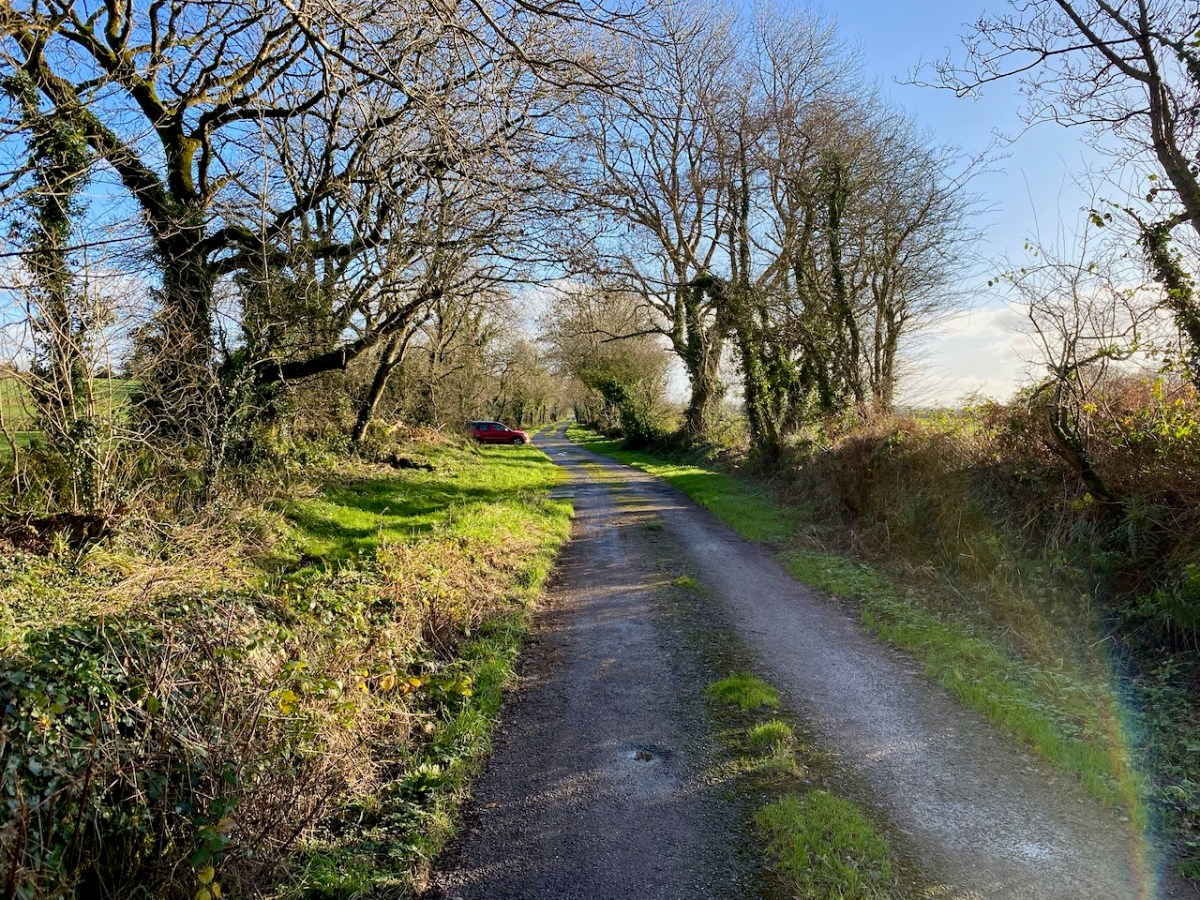
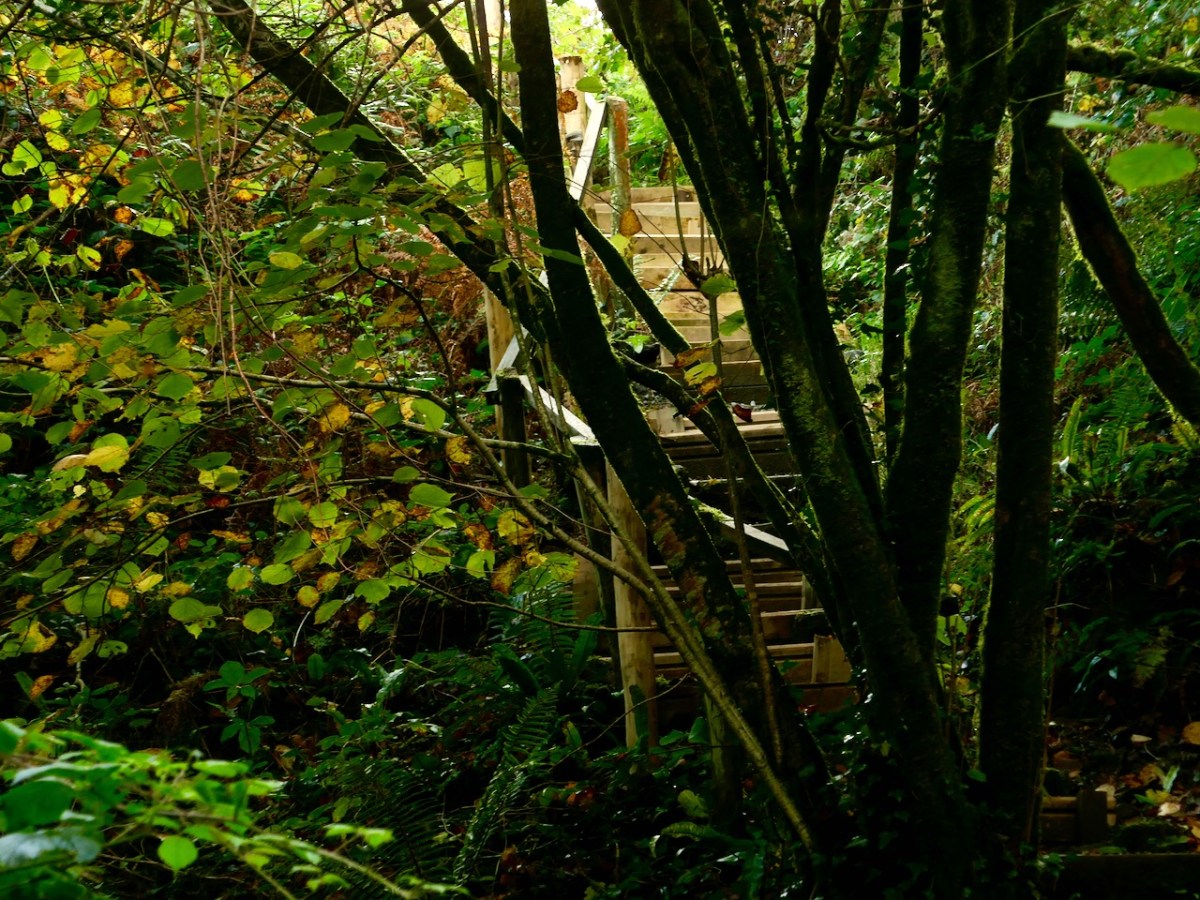
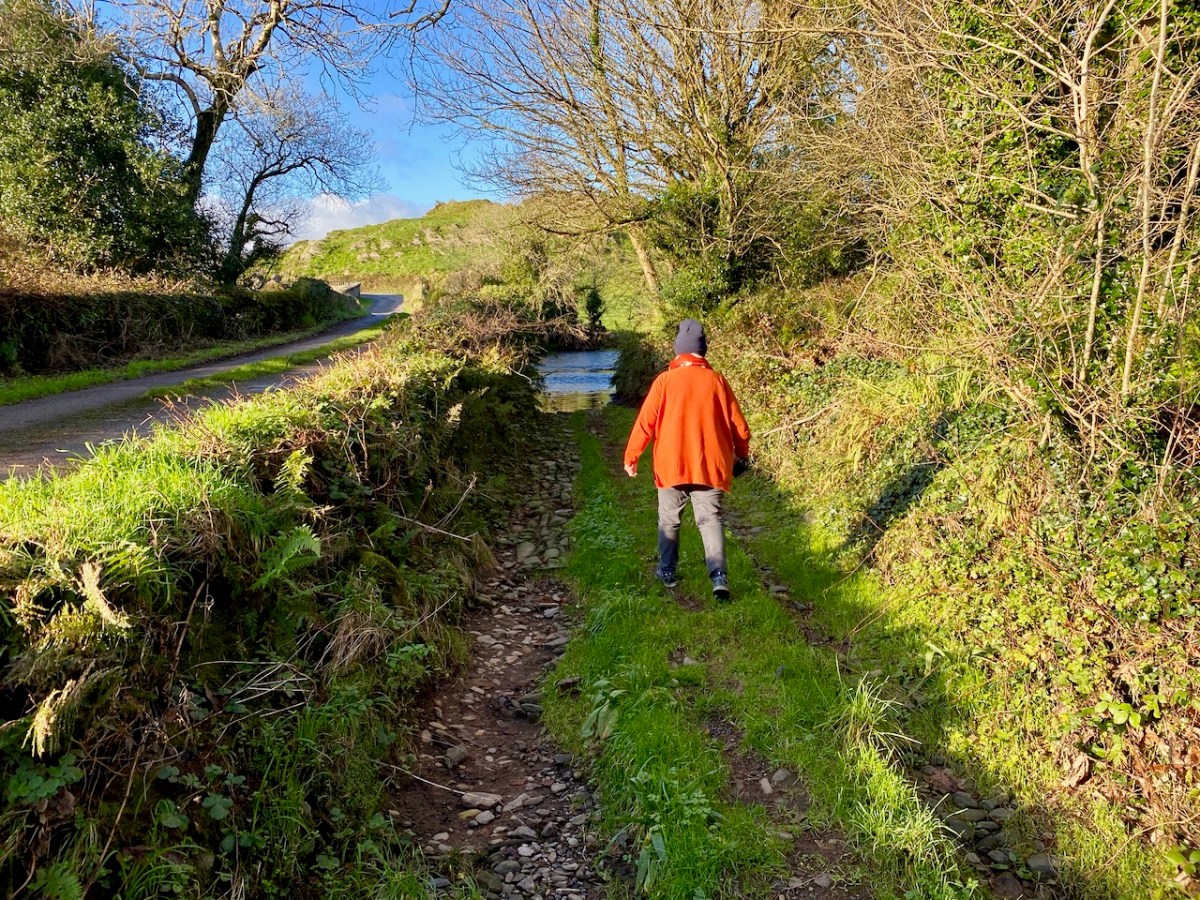
We delight in travelling the tiniest of boreens, which invariably open up new vistas for us, and make us feel so happy to be living in such a beautiful part of our world! This little used lane (above) takes us to the next crossing point – romantically named, as far as I can ascertain, Graveyard Bridge.
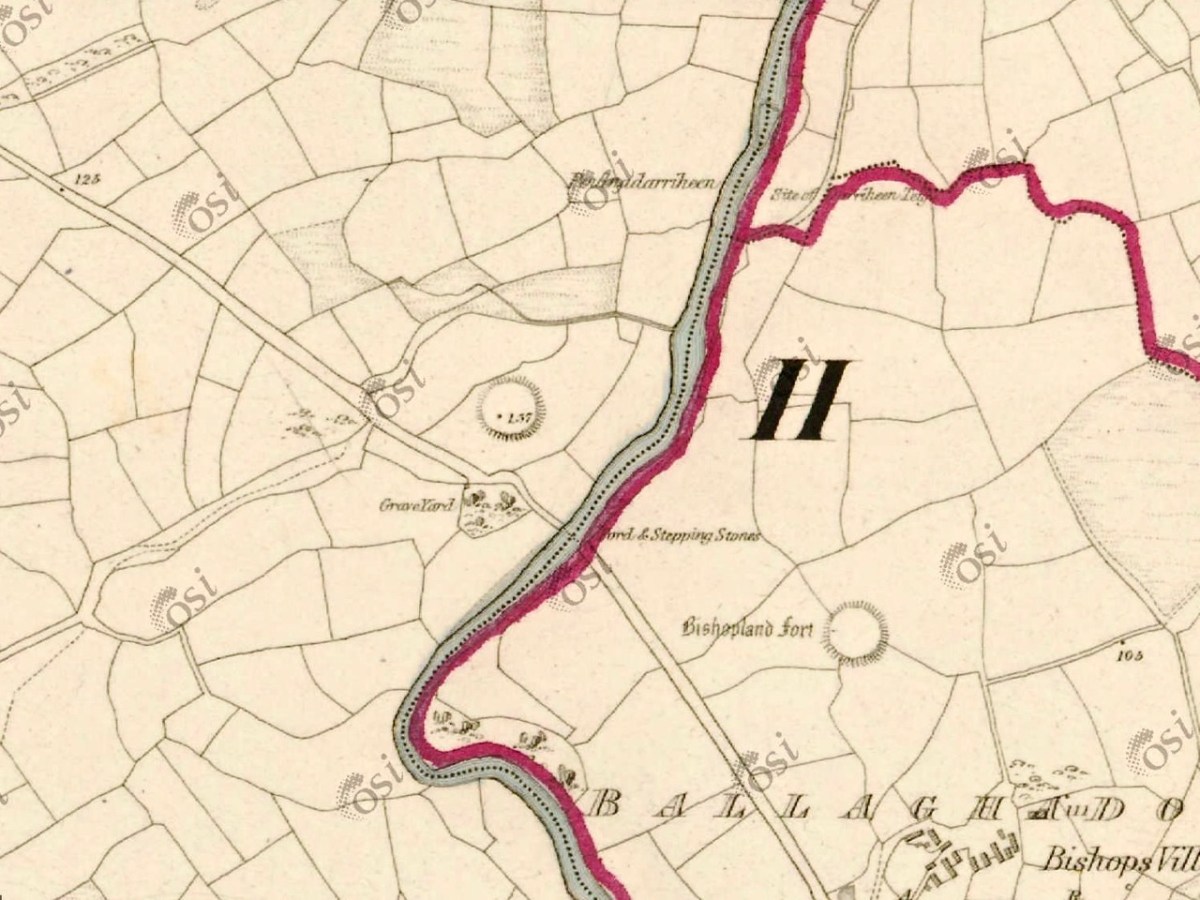
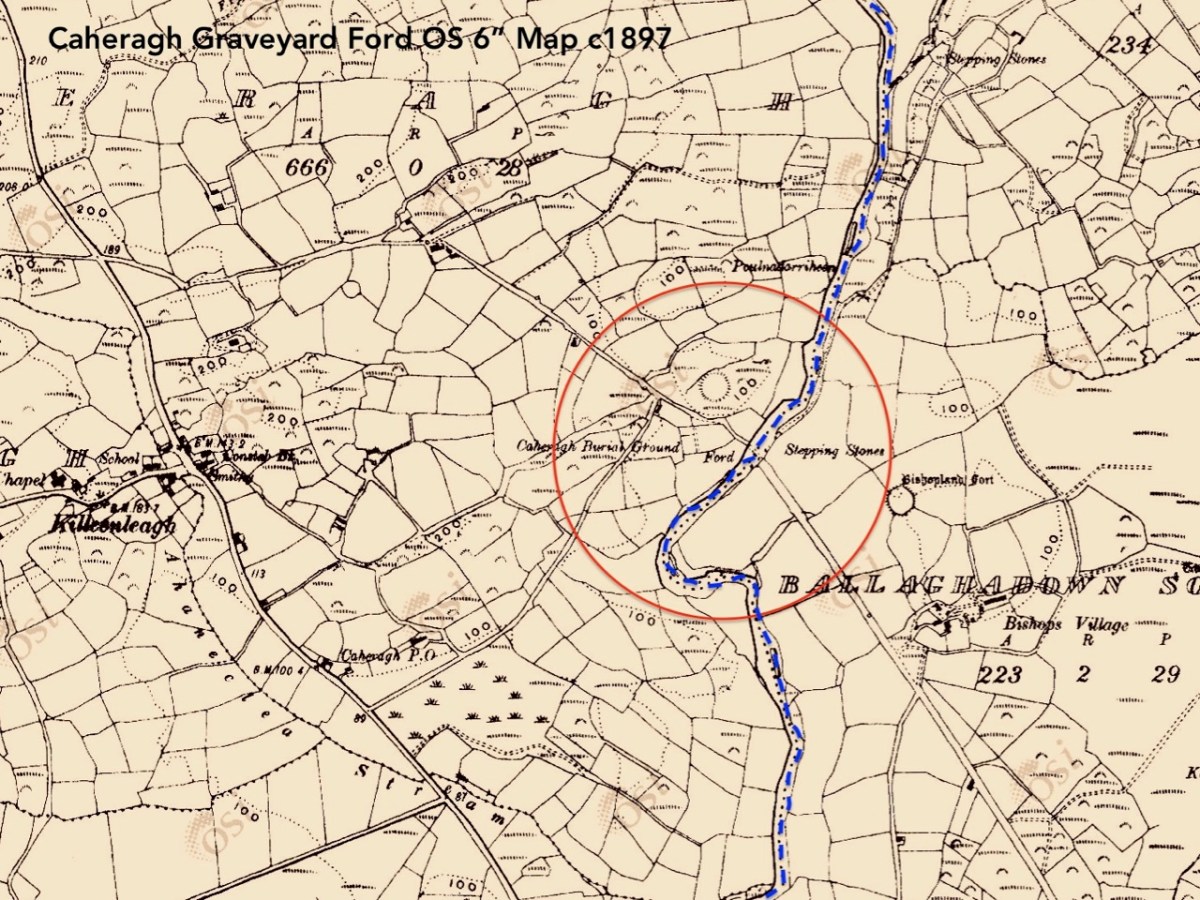
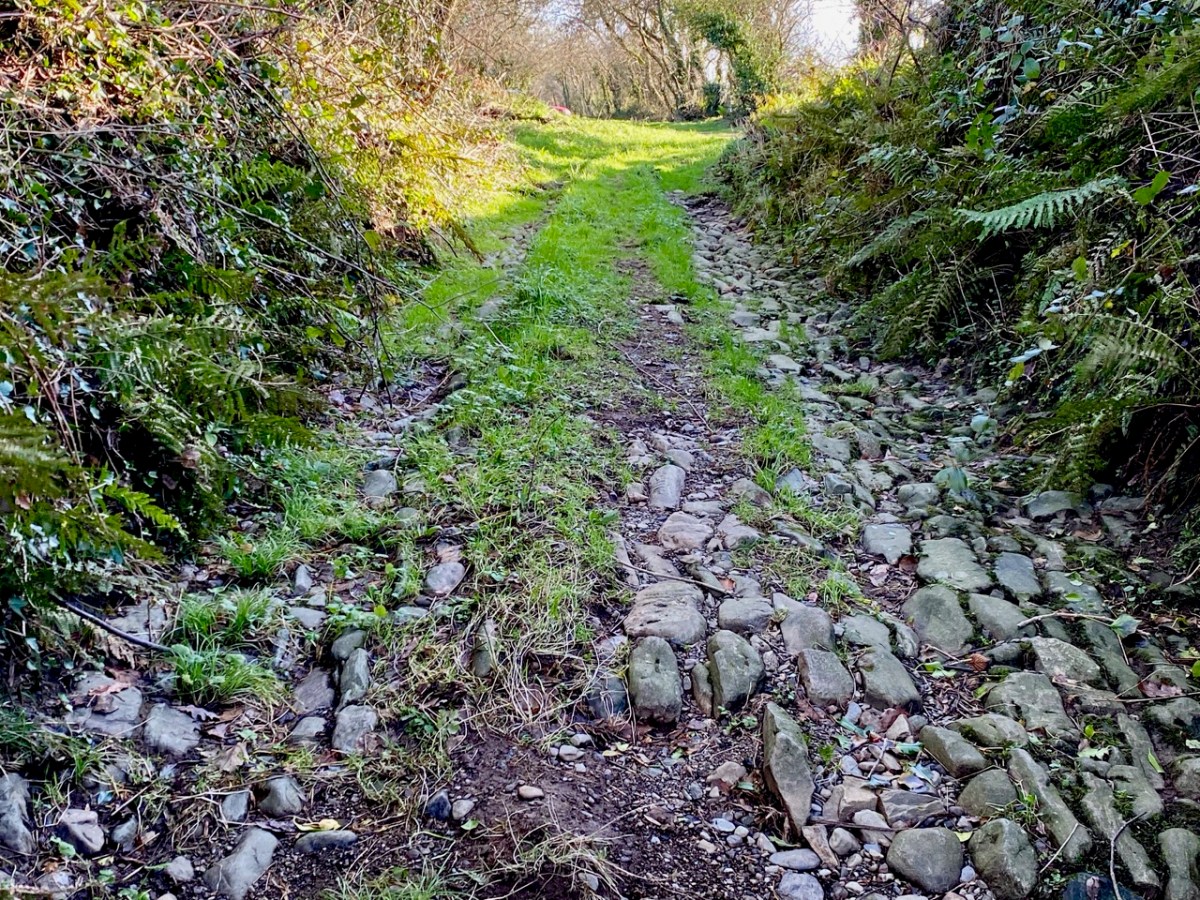
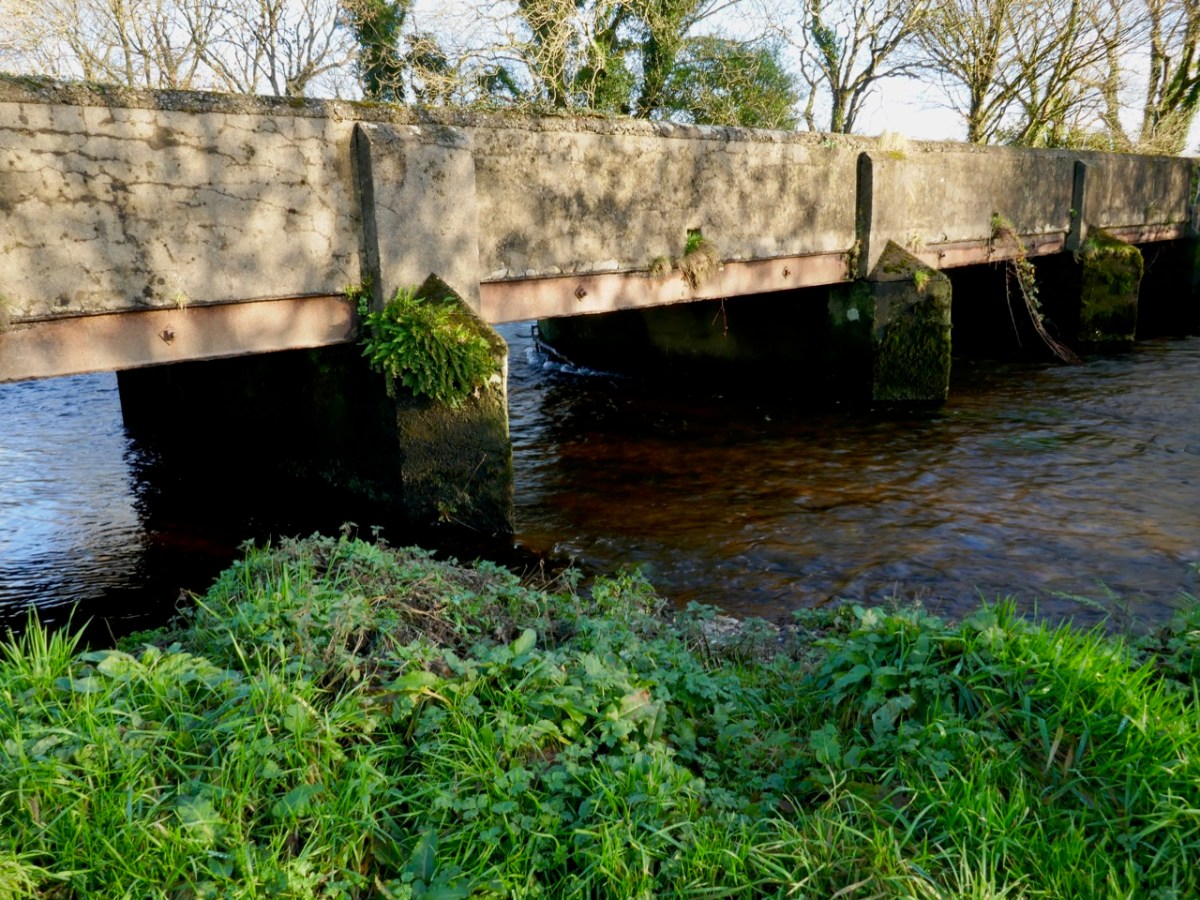
Two extracts from the OS maps of c1840 (upper) and c1897 (lower) show the site on the border of Ballaghdown South and Caheragh townlands, where an ancient road crosses the Ilen River. Both maps show a ford and stepping stones at this point. Today we found a bridge there dating (we believe) from the early twentieth century. We also found the remains of the old ford: large cobbles providing a trackway down the the waters’ edge: Finola is following the original line of the lane (below).
This river crossing was of significance in Medieval times. ‘Blessed Mary de Caheragh’ was a monastic site, said to be situated on the hilltop commanding the view above the graveyard. It was no doubt founded here because of the proximity of the watercourse.

1317 December 28, Geoffrey Fitz John de Cogan is presented by the King (by mandate to the Bishop of Cork), to the church of the Blessed Mary de Catheragh, in the King’s gift, by reason of his wardship of the lands and heir of John de Cogan

Tuckey’s Cork Remembrancer, from Durrus History

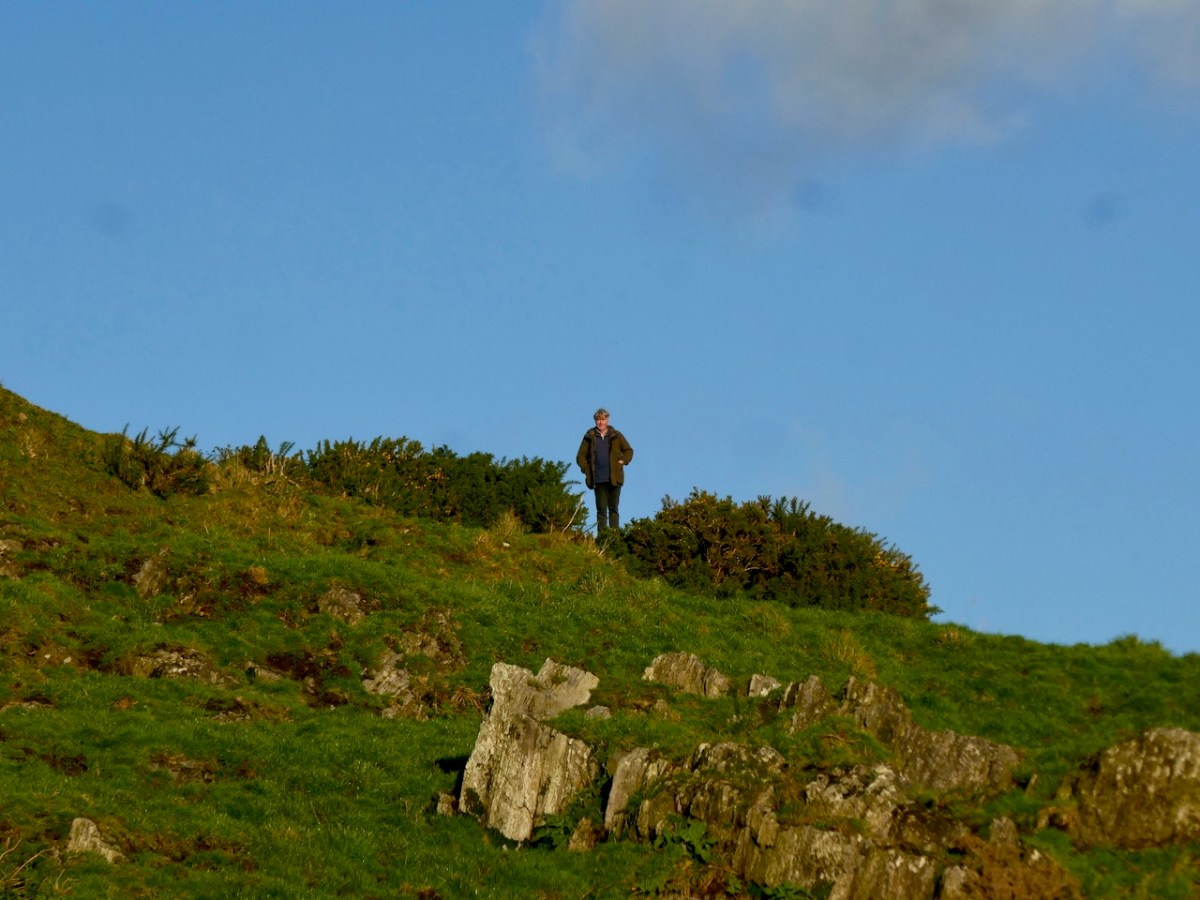
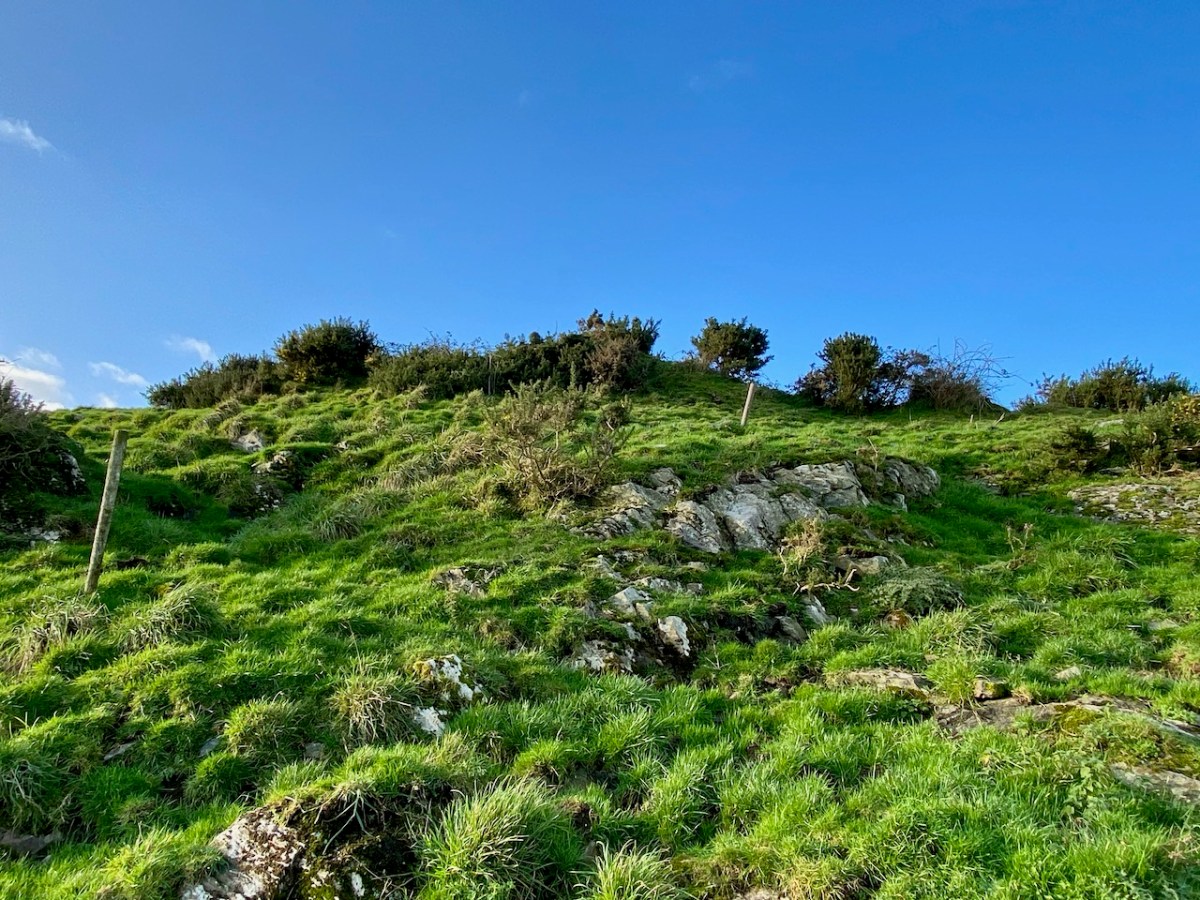
There are certainly earthworks, embankments and (reputedly) a souterrain on the high ground which overlooks the river, the ford site and the adjacent burial ground connected to Caheragh village. The Historic Environment Viewer suggest that this site (shown on both maps above) is a ringfort and makes no mention of an ecclesiastical settlement. I braved fierce cows and barbed wire to make the steep climb: it was well worth the effort (and the risk) for the views across the old fort ramparts which opened up to the distant mountains. There is no sign, today, of anything remotely monastic up there on the hill. There is another ‘ringfort’ a short distance to the south – enigmatically named ‘Bishopland’. Nowhere can I find any records or accounts of the fort or the small settlement to the south of it named Bishops Village: this confirms that there is still so much early history to be unravelled in the Irish landscape.
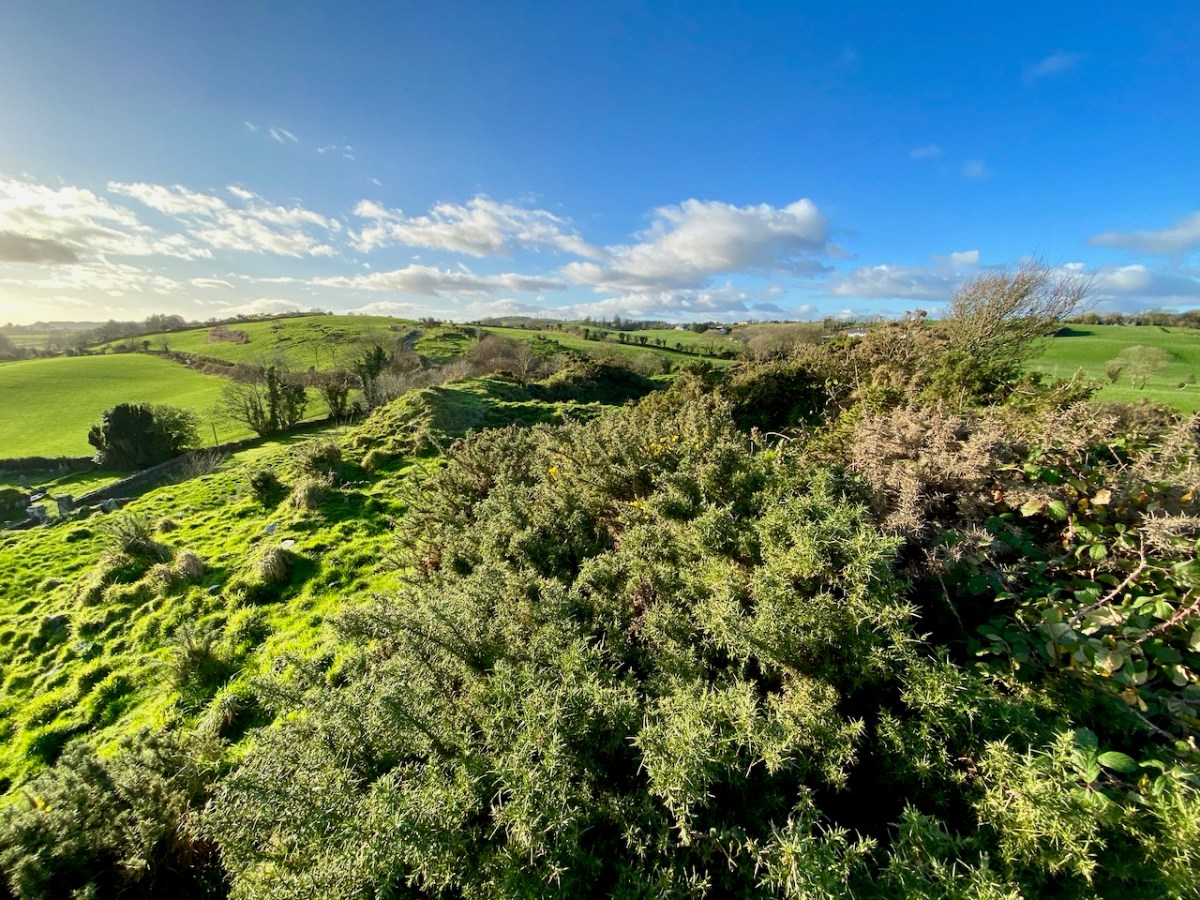
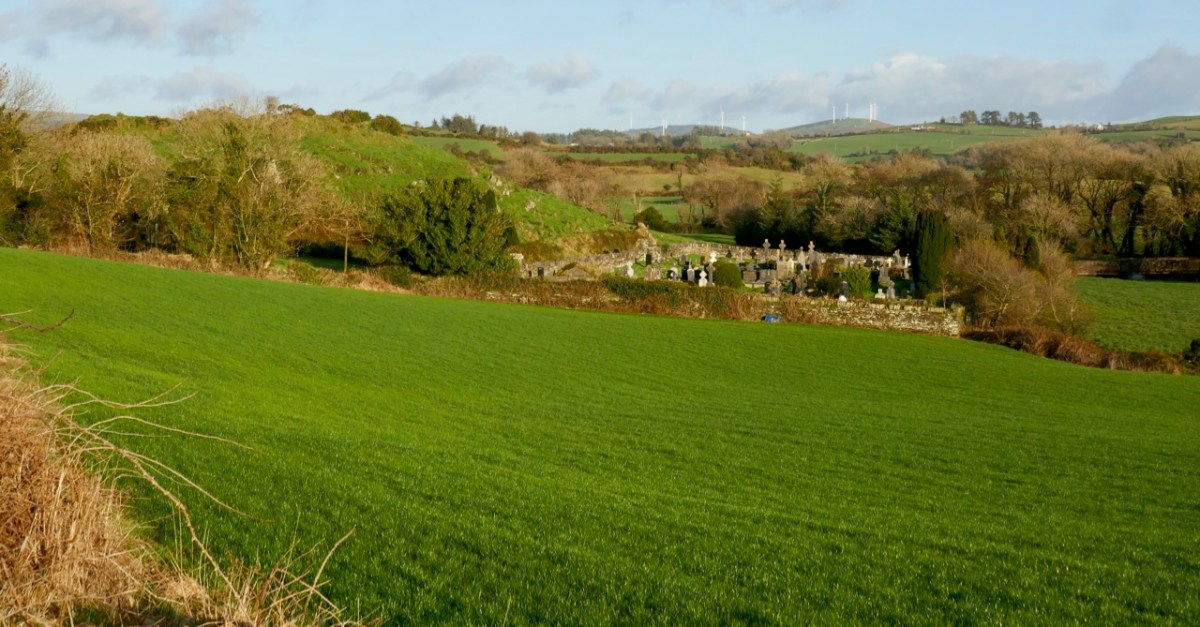
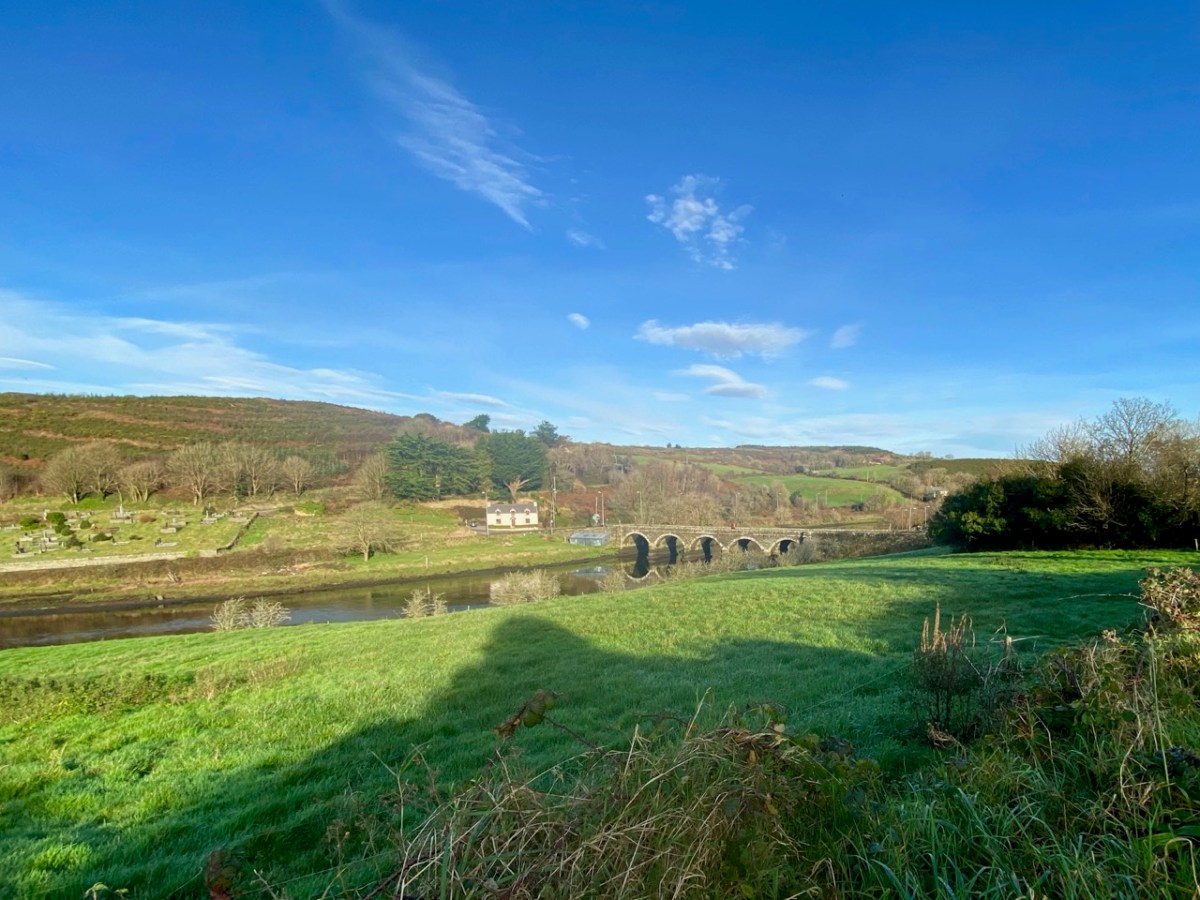
Caheragh Graveyard is located beside the Ilen here and it is also well worth making the time to explore. The village and present day church at Caheragh (which has some fine stained glass) are some way off to the west. You can see the spire on the skyline in this view from the graveyard itself (below).
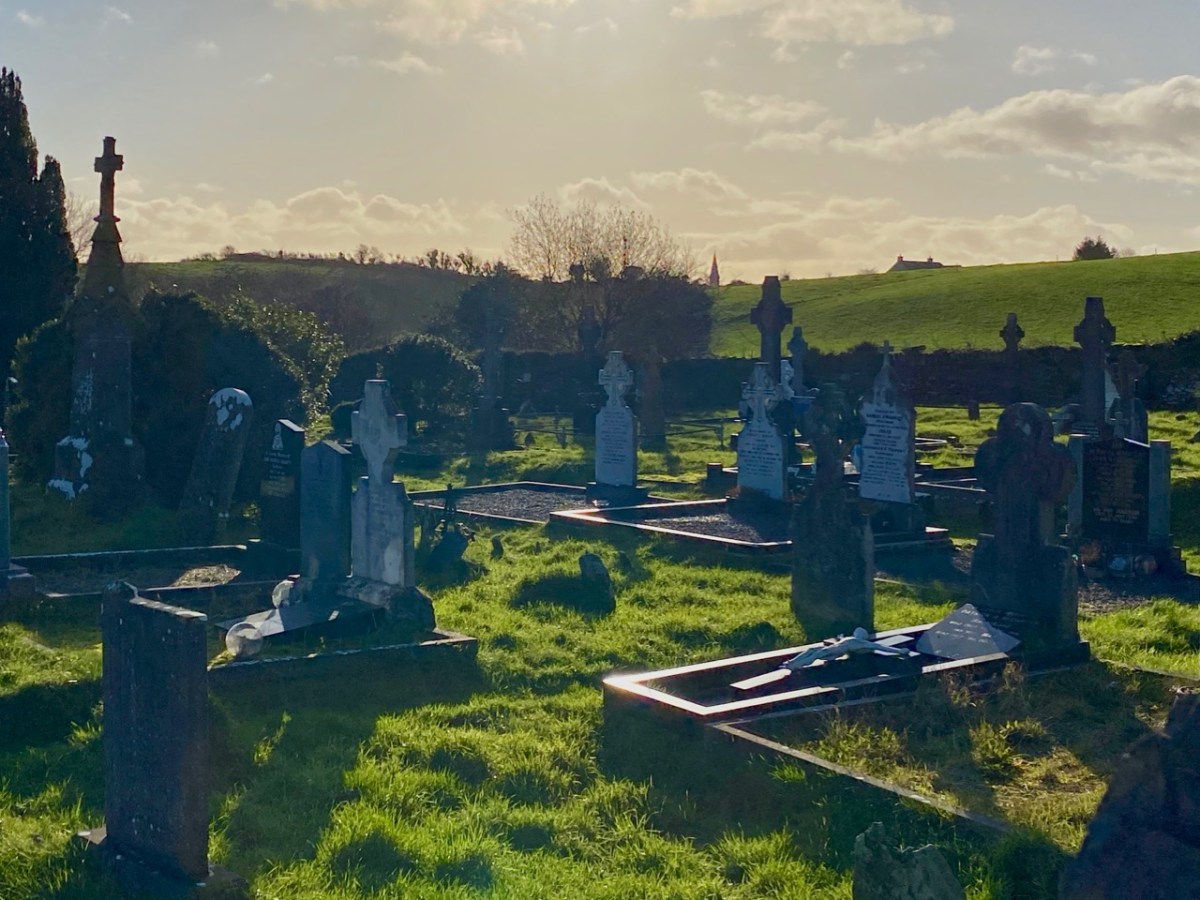
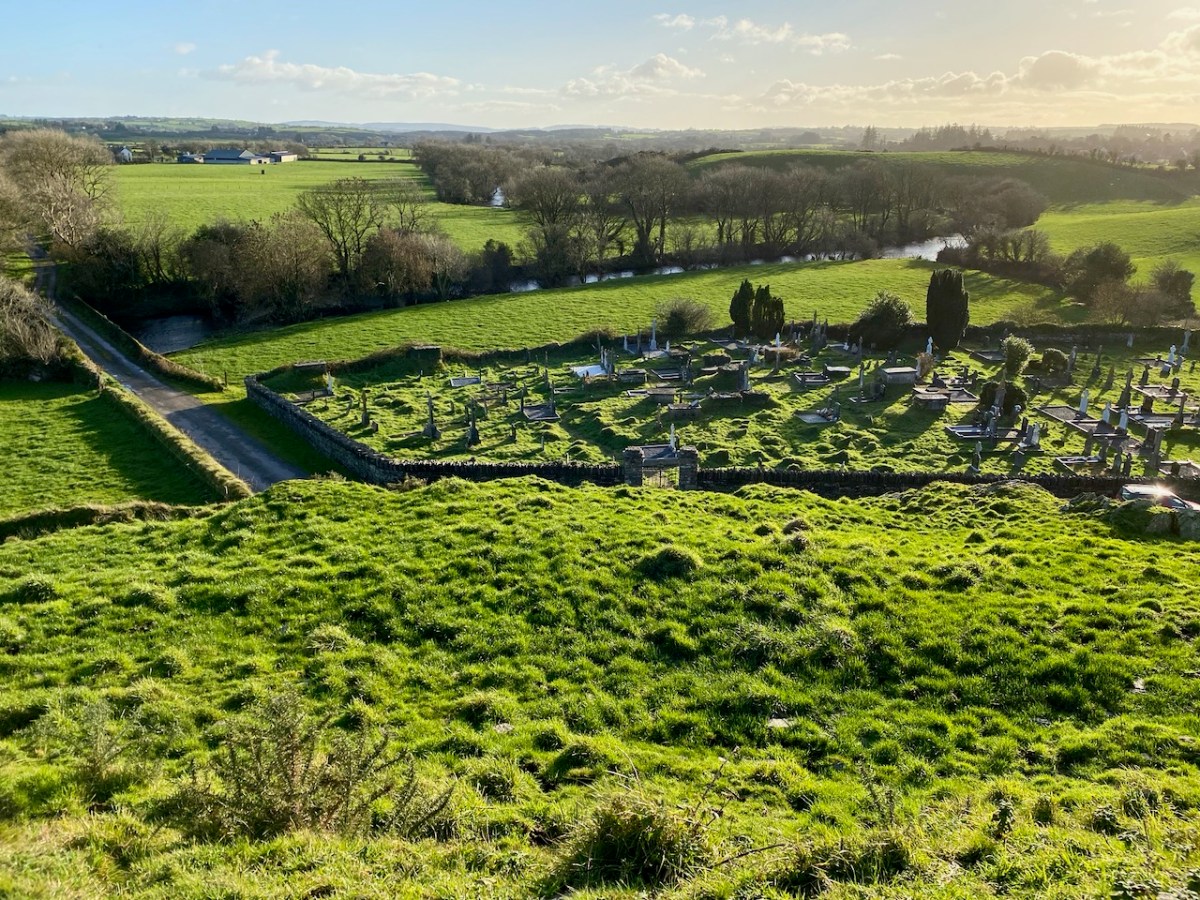
The extensive Caheragh graveyard (above) – a view from the ringfort (and possible medieval site) looking across the river. The ford, roadway and later bridge are on the far left of the picture. Burial grounds are always a magnet for us, and we spent significant time exploring. The Skibbereen Heritage Centre has done sterling work researching this and many other West Cork graveyards: you will find information online here, and more in the Centre itself, which merits many visits. One grave which was important for me is that of the parents of Captain Francis O’Neill, the Chicago Police Chief who came from West Cork and collected thousands of Irish traditional dance tunes and songs which he gathered from the many Irish settlers in Chicago and who had kept the tradition alive far away from their birthplaces. I wrote about Chief O’Neill a few years ago. The ‘Celtic Cross’ memorial below was commissioned by Francis during a visit home in 1906.
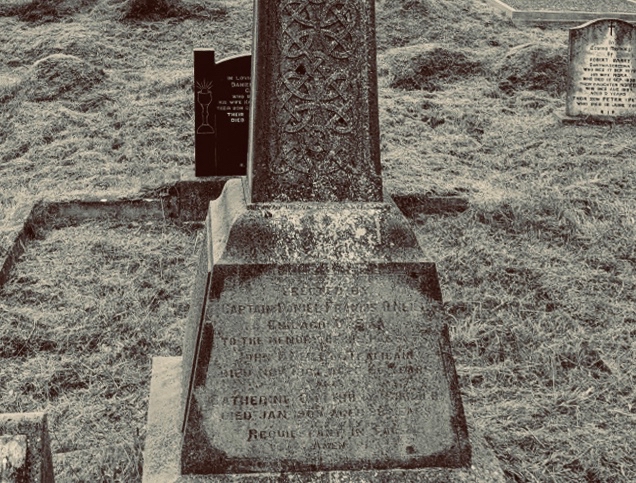
Erected By Captain Francis O’Neill

Chicago, USA To the Memory of his Parents

John O’Neill of Tralibane

Died Nov 1867 Aged 66 Years

And Catherine O’Mahoney

Died 1900 Aged 88 Years

Requiescant in Pace

Amen

inscription in Caheragh Graveyard, West Cork
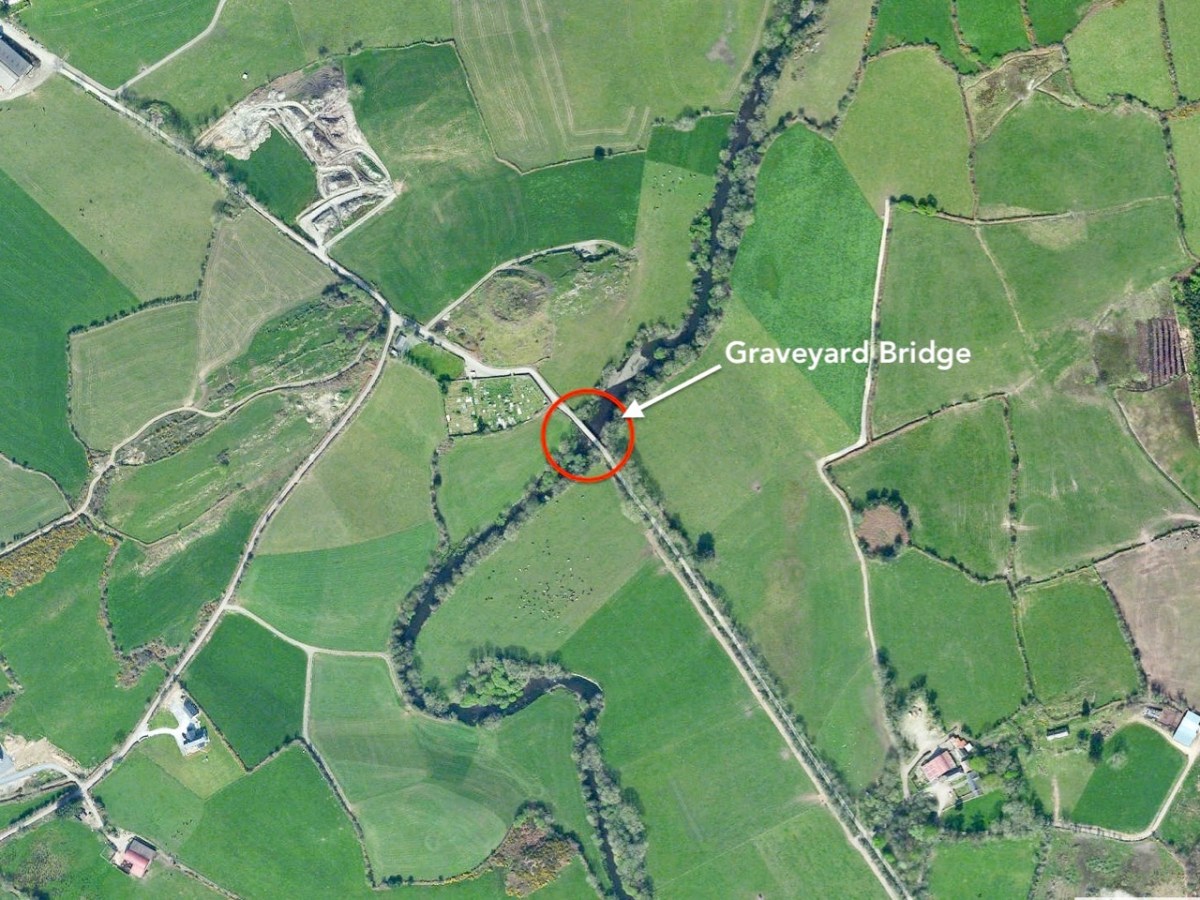
This aerial view above clearly shows the bridge that has replaced the old ford and stepping stones at this site. You can also see the ‘fort’ on the hilltop above it. The bridge should not be dismissed because it is relatively modern: it’s an example of practical civil engineering in Ireland, possibly in the early years of the Free State, and is functional rather than elegant, serving the purpose of helping to open up some of the remoter regions of the west of Ireland.
Here are the previous episodes in this series: Sweet Ilen and Sweet Ilen – Part 2
Sweet Ilen – Part 2
Last week our first exploration of Sweet Ilen – our West Cork river – began in Skibbereen town from whence we travelled north, as far as Ballyhilty Bridge. Today, we return to the town and unearth some further history on the way downstream.

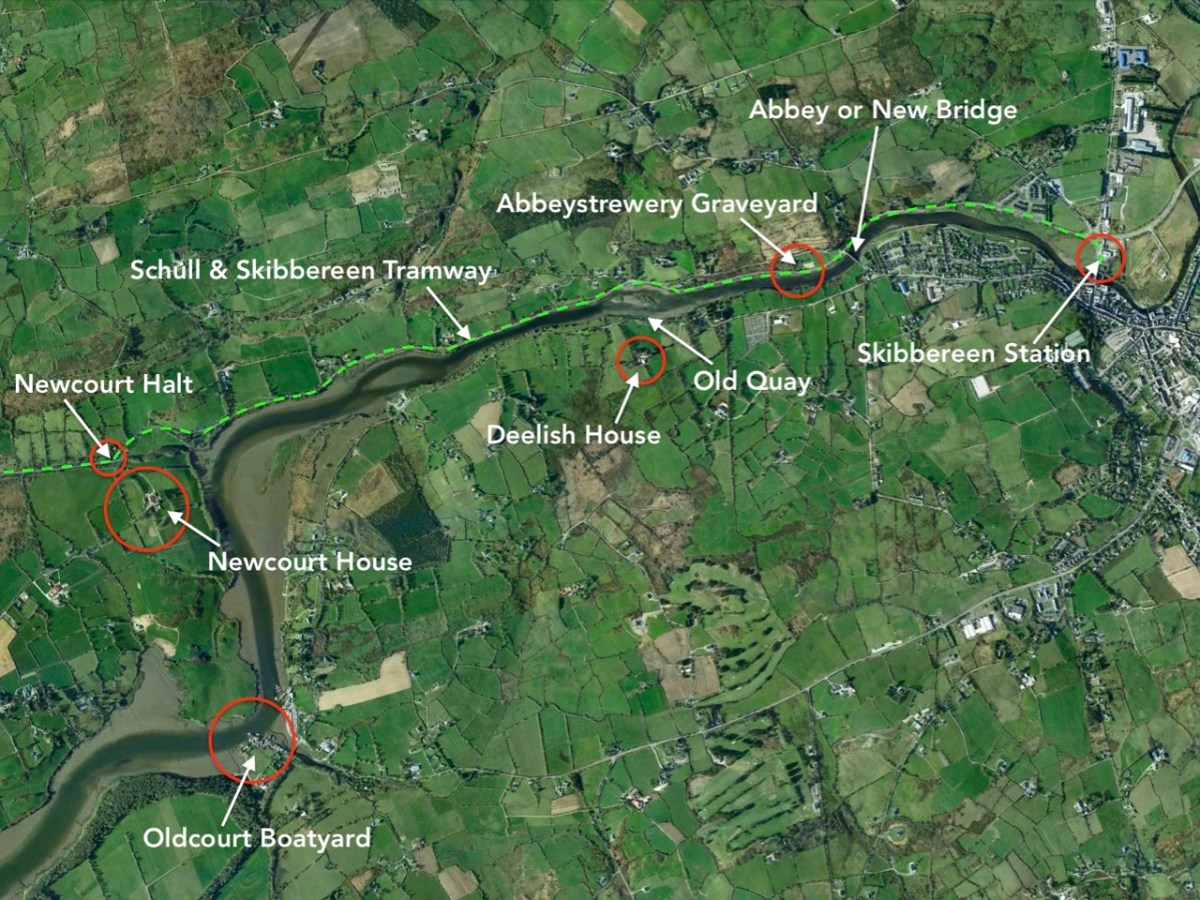
On the aerial view of the Ilen flowing south-west from Skibbereen (above) I have marked some significant locations. Abbey or ‘New’ Bridge is the first crossing point and the limit of navigation for large craft. The Old Quay shown to the north of Deelish House was the offloading point for ships arriving from the south; barges or lighters carried the goods further into the town. The narrow gauge Schull & Skibbereen Tramway (as it was originally named) left Skibbereen Station and followed the Ilen as far as Newcourt Halt, alongside the main road.

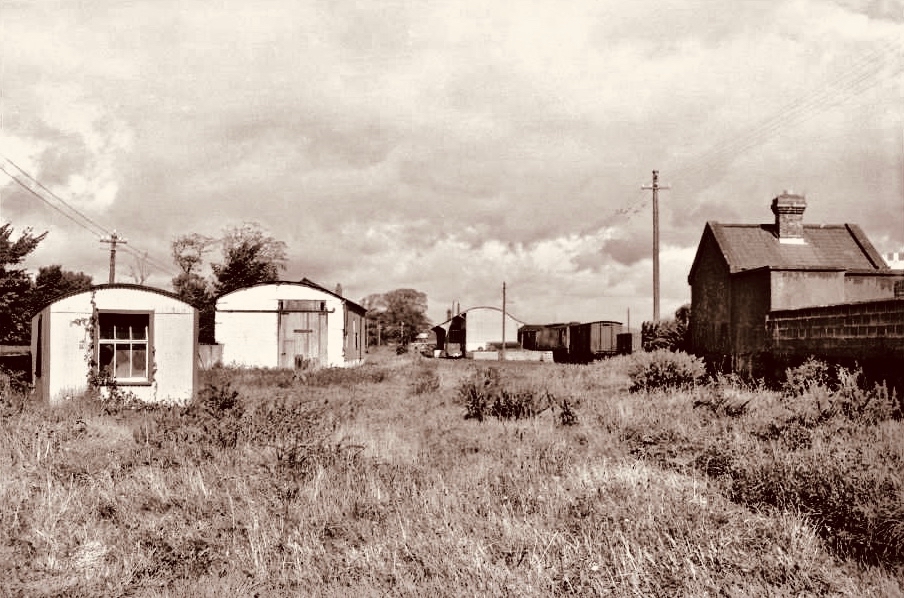
The Ilen Valley Railway, which brought the regular gauge railway into Skibbereen from Bandon and Cork, shared its station at Skibbereen from 1886 with the 3ft gauge line going to Schull. This picture (above) of Skibb Station in 1960 (courtesy Roger Joanes) shows the main line on the right and the remains of the narrow gauge terminus on the left.

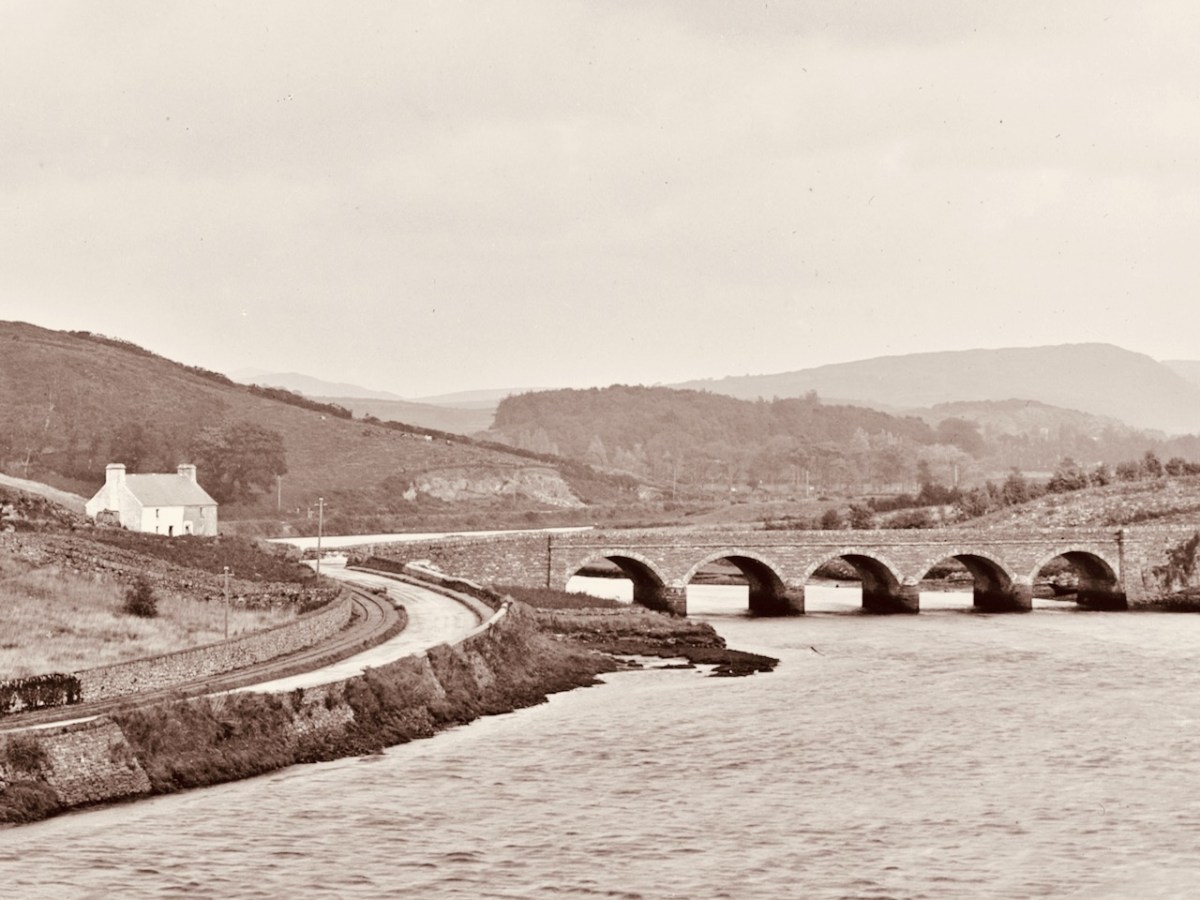
The header picture shows Abbey or ‘New’ Bridge as it is today. The upper picture above, with an enlarged section of it underneath is fascinating for our study: it was taken in around 1893 by Robert French for the Lawrence Collection and is reproduced here with the permission of the National Library of Ireland. It shows the bridge – which was built in 1822 – with the road to Skibbereen running to the left, as it does today. But it also shows the tracks of the tramway on the left hand side of the road. Also in the main picture is a white building below the Abbeystrewery Graveyard. That marks the point at which the entrance to the graveyard adjoins the road, and is in fact a level-crossing keeper’s cottage, now gone.
Marked on this extract from the OS 25″ survey (late nineteenth century) is New Bridge on the right, the Graveyard with its level-crossing and the quay above Deelish House

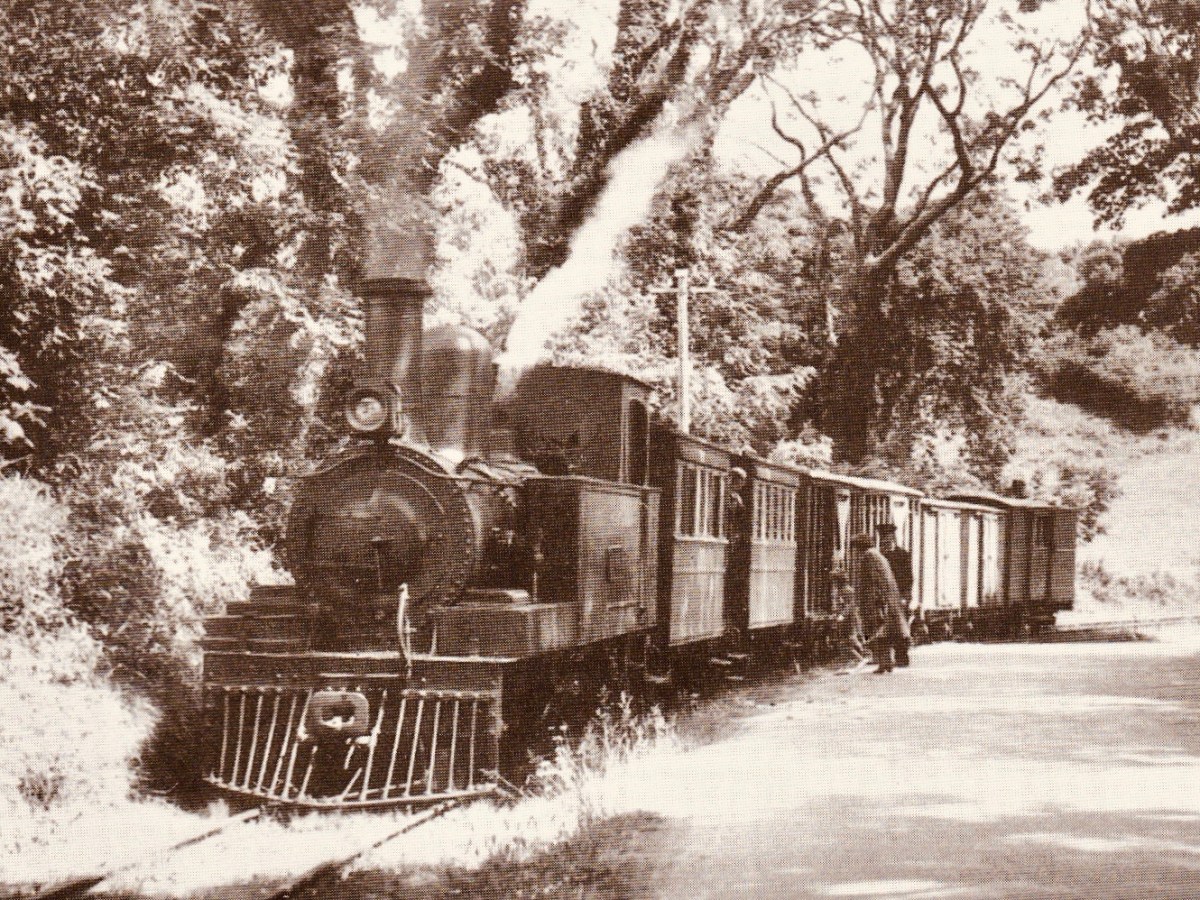
The first halt on the tramway travelling from Skibbereen was at Newcourt. Here is a ‘sylvan scene’ of a train at that halt in 1939 (courtesy of W A Camwell, taken from the invaluable volume The Schull & Skibbereen Railway by James I C Boyd, published in 1999 following over 40 years of research):

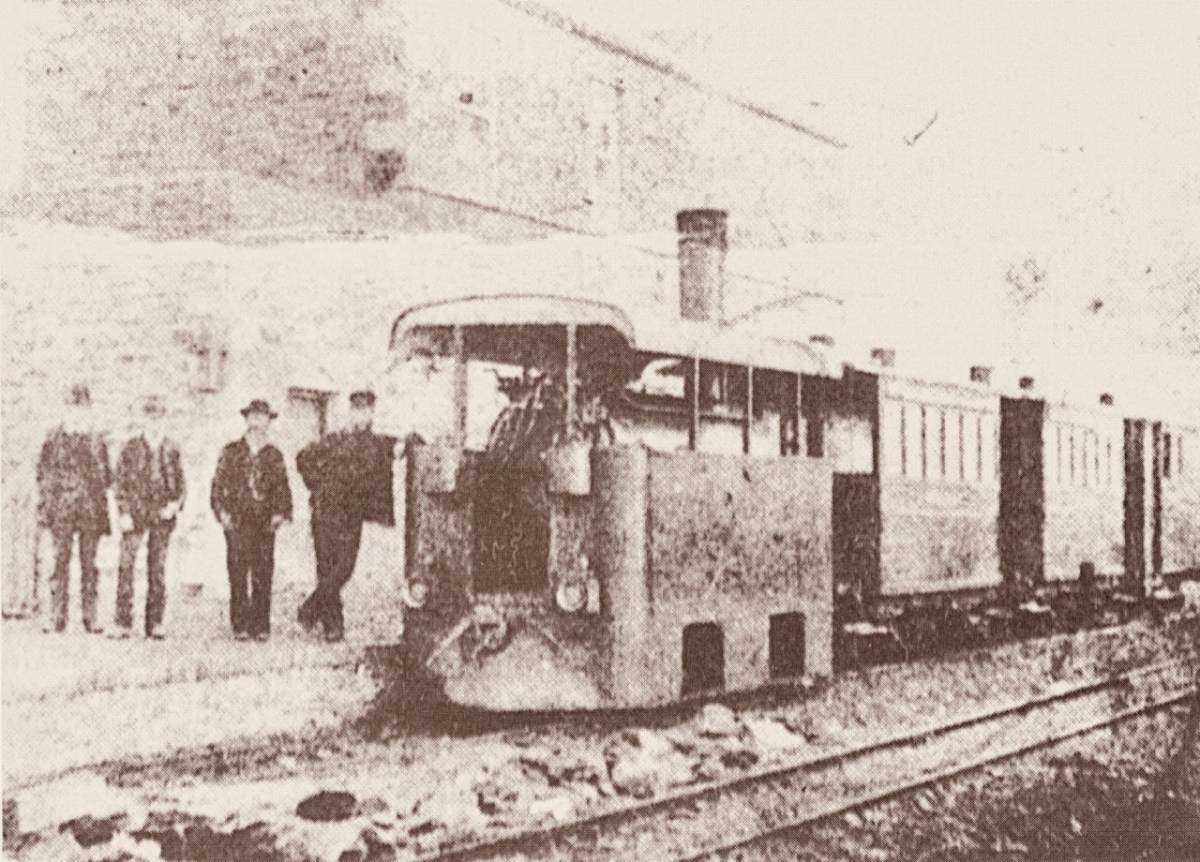
If that doesn’t bring a nostalgic tear to your eye – for those apparently idyllic days of leisurely rural life in Ireland – I don’t know what will. But the little railway had its ups and downs (before vanishing altogether in 1947). Its association with the Ilen River was there at the beginning: the very first locomotive was named ‘Ilen’ and here it is (below), having just pulled a passenger train into Schull Station, probably in the 1880s (photo from the collection of Mrs E McCarthy):

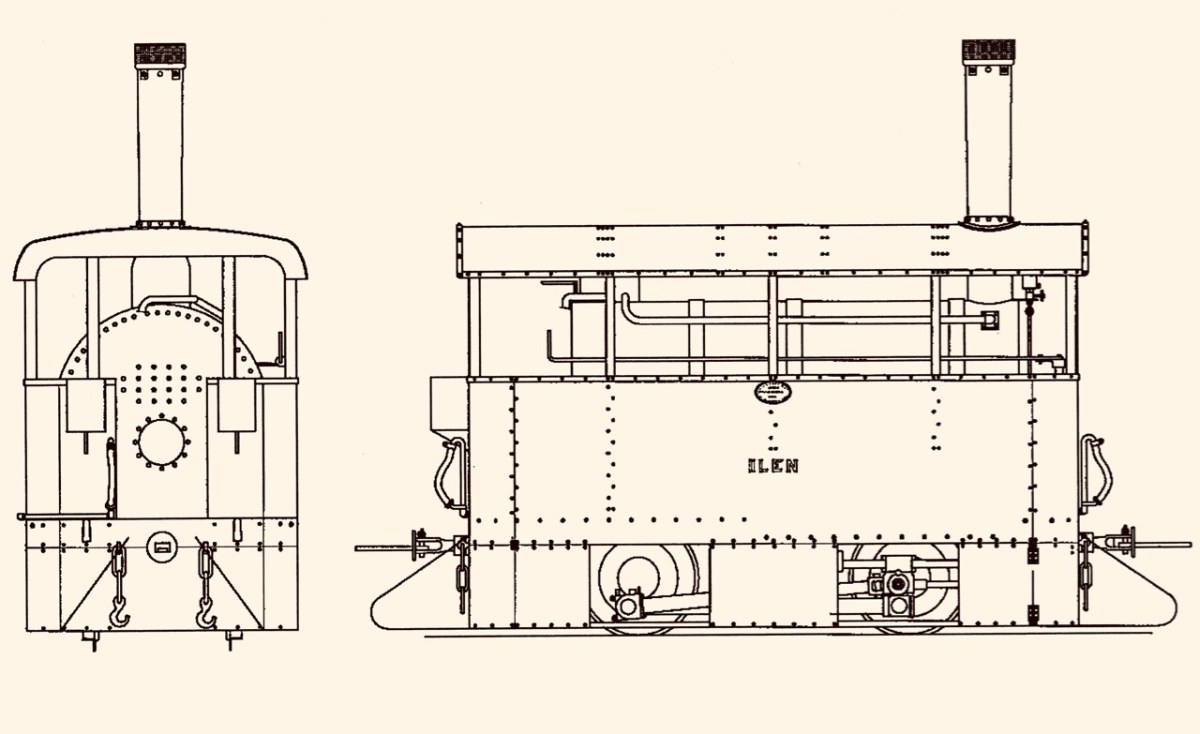
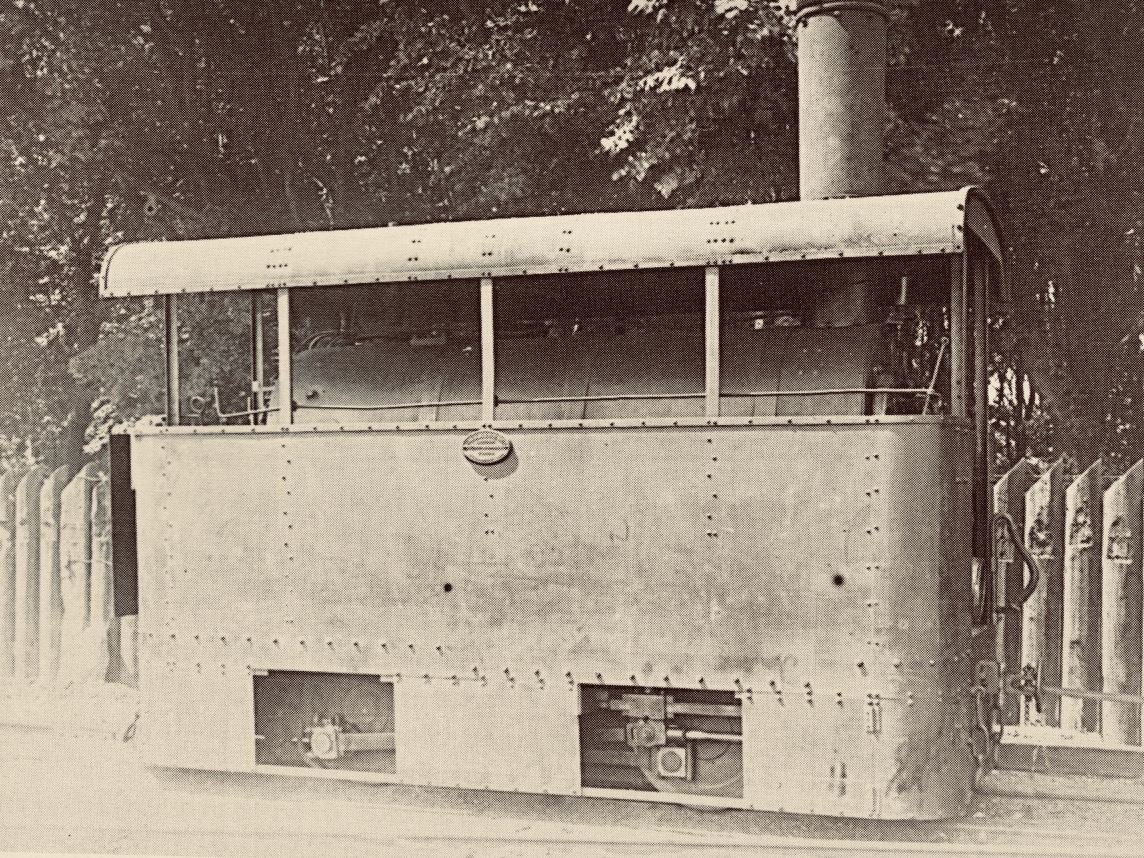
Why is it so strangely shaped? Because the line was conceived as a tramway or ‘light railway’ to comply with the conditions of The Tramways of Ireland Act 1862, which allowed tramways to be built along public roads, thereby reducing costs. Because of this, locomotives were treated in the same way as city trams – where very low slung bodywork supposedly prevented serious injury if they struck pedestrians or animals sharing the roads – something that could be echoed on West Cork’s boreens where donkeys and cows were quite likely to be encountered.

. . . To comply with regulations sheet-steel skirting was taken down to a level approximately 3 inches above the rails; the rolling and pitching of the engine probably produced shrieks of protest as it scraped the rails . . . An impressively tall chimney was surmounted by a ‘chip-pan’ spark-arrester . . .

James I C Boyd 1999
Tram Engine Ilen at Skibbereen in 1906 – photo by H Fayle

It’s a shame, but this unique piece of machinery failed because it lacked sufficient sustained power to climb the relatively steep inclines on the tramway, and its later replacements were more conventional engines (such as the one pictured at Newcourt) fitted with cow-catchers.

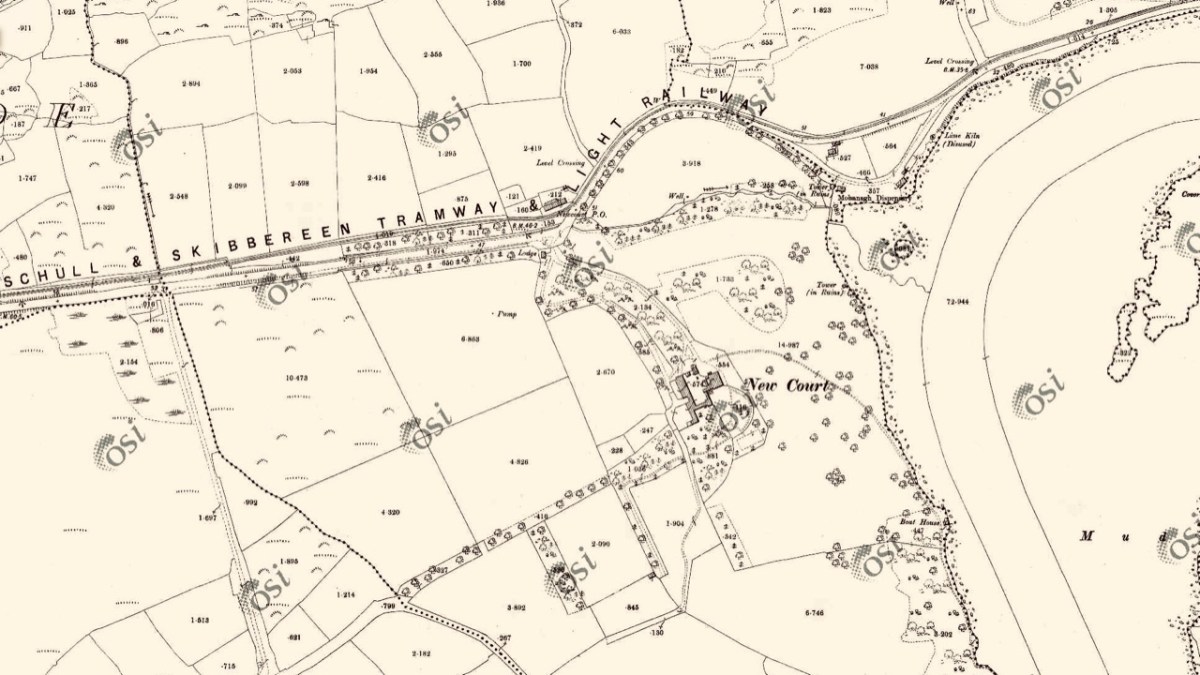
OS 25″ survey extract, late nineteenth century. It shows the tramway diverging from the road just north of the entrance gate to Newcourt: there was evidently an ornamental avenue along that stretch of road leading to the gate, with arches over. Also on this map is located Newcourt Post Office (by the tramway halt), Mohanagh Dispensary and various landscape features belonging to the demesne

The Ilen River is broad and magnificent as it passes by Newcourt. You do see large boats on that stretch sometimes, but also many skiffs and small craft from the Skibbereen Rowing Club. The grand house – New Court – is gone now, but the ‘designed landscape’ can be traced through the survival of ruined towers, gazebos and water-gates.

Ilen River frontage on the Newcourt Demense: from upper – the base of an ornamental tower fronts the constructed river wall; Mohanagh Dispensary ruin and another tower; prospect towards Skibbereen from the estate; substantial pillars which were part of a water gate on the south of the site – in the distance is the boatyard at Oldcourt

Finola has written previously about Newcourt, and there tells the story of another ‘water-gate’ which will be seen today by anyone travelling towards Skibbereen from the main road. We now return to Skibbereen ourselves to finish off this second episode of the series. This (below) was the bridge which took the road into the town over the Ilen prior to the present one: built in 1877, it was condemned as unsafe for heavy loads in 1953, but it took another ten years to replace it.

Above is Kennedy Bridge, Skibbereen, that was opened with due ceremony on Monday 15 June 1964 and named in honour of American President John F Kennedy. It has a centre span of 22 metres and two side spans each of 8 metres. First to cross the bridge on that day was Richard Burchill of Tragumna on a horse and cart! Information about these events – and much more – can be seen in the excellent displays in the Skibbereen Heritage Centre: formerly the town’s gasworks buildings and sited appropriately enough alongside the Ilen River!

Look out next time for more adventures exploring the further northern reaches of the Ilen!

Here is the first episode in this series: Sweet Ilen

Mizen Magic 22: Crookhaven Harbour

It’s just the day for a Sunday drive, so come along with us as we explore the shore around Crookhaven Harbour. It’s turned cold all of a sudden, so we won’t do too much hiking or climbing today, just some gentle pottering around some spectacular scenery, with a hearty lunch in the middle of it all.

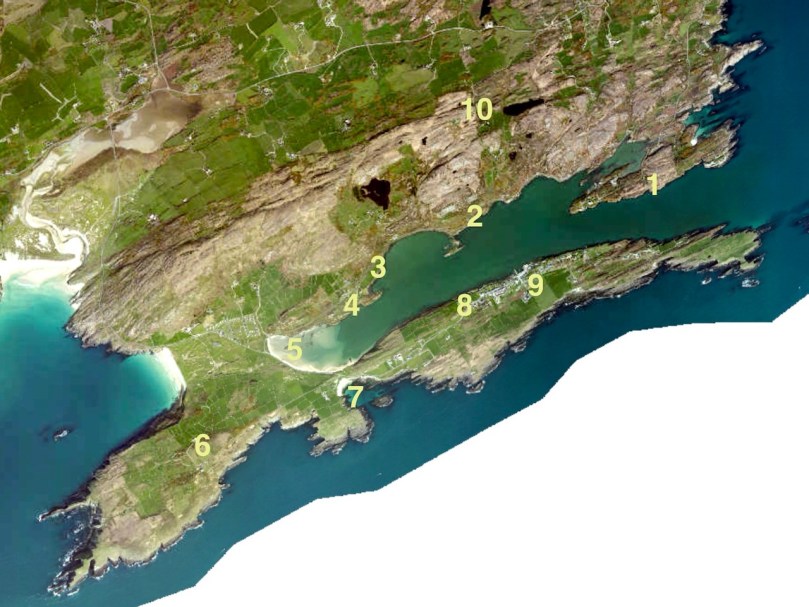
We’ve provided a map but you probably won’t need it as it’s a relatively small area and easy to see where you are at all times.

We’re starting off at Rock Island (1 on the map) – you remember what an interesting day we had there with Aidan Power? You can read that post as you wander around the island, either by car or on foot, and it will help to orient you to where you are. 

Driving off the island we turn left, along the road that hugs the water. We pass several sites along the way that date from various times in Crookhaven’s history. The first is the stone quarry that Robert wrote about in Industrial Archaeology in Crookhaven (2). It’s impossible to miss, looming above the road like an abandoned fortress wall. When he researched it, he drew a blank but one of our readers, John d’Alton from Schull, wrote to tell us of the background to the  Granite Company Lt. 

Once you’ve passed the old quarry workings, keep an eye on some small field coming up on the sea side. You will make out the ruins,(3) much overgrown, of some buildings near the water’s edge. This is all that’s left of a fish palace, originally built in 1616 by Richard Boyle, Great Earl of Cork, and his business partner in this area, the notorious Sir William Hull – read all about it in Robert’s post, Pilchards and Palaces.

The next site is on private land and not really visible from the road so here we are letting you into a little secret. At 4 on the map there’s what seems to be an old quay. There are really only a few rocks left, but one of those rocks is a piece of archaeology – a cupmarked stone. The cupmarks were probably hammered out thousands of years ago and the rock was probably transported here from close by to help build the quay. If you’re not too sure what a cupmarked stone is, take a look at this post, The Complex Cupmark. That’s Robert, below, taking a photo of the cupmarked stone.

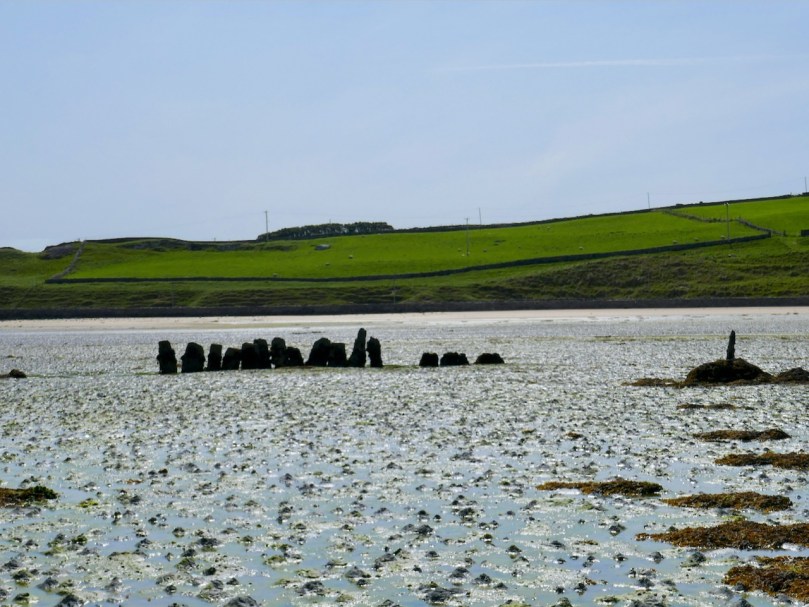
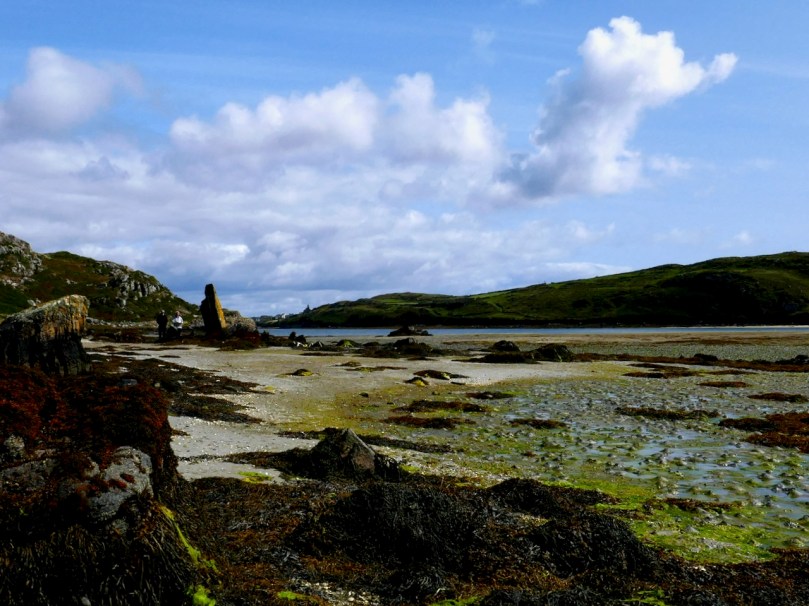
We’ve arrived at the long beach at the head of the Harbour and we’re going to leave the car here and, because the tide’s out, walk on the white strand out towards a curious row of stones sticking out of the sand (5).

The Dúchas Folklore Schools Collection tells us these were known locally as The Blacks, and it was believed that some black sailors who drowned at sea were buried there. Indeed they do look like grave markers, but in fact they are part of an ancient field wall system that dates to when the tide was lower. 

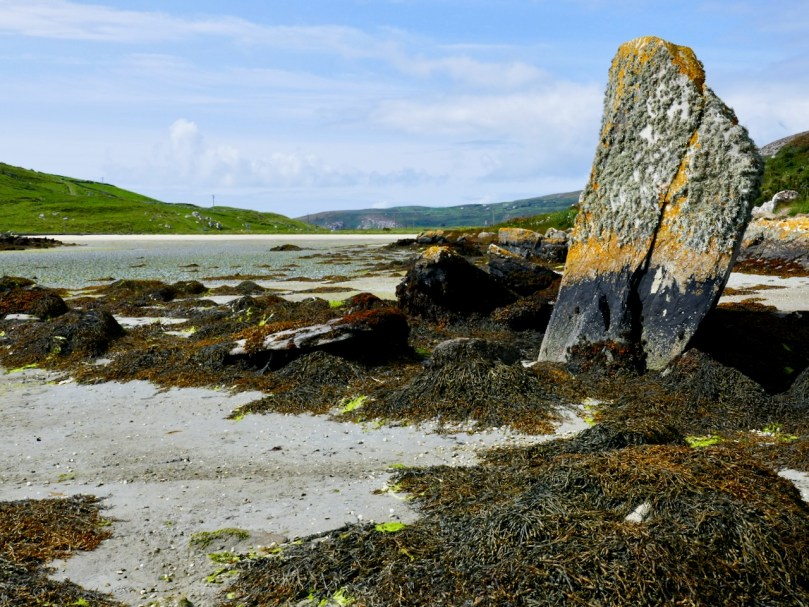
There’s an enormous upright stone here too – tempting to think that it may be a standing stone, deliberately erected, but archaeologists think this is a natural feature. In fact, it may have landed in this position after tumbling from the hill above, or perhaps it’s a left-over glacial erratic.

There are wonderful views from here back to Rock Island and across to Crookhaven, but let’s make our way back to the road now and wander down to Galley Cove. If you’ve a mind to, walk or drive up the road to Brow Head a little way (6), just for the incredible views across the whole of the Harbour and all the way to Mount Gabriel. We’ve written about Brow Head before, way back in 2014, and you can take a look at that post now, although it really deserves an update (one of these days).

Back down at the small parking lot at the base of the Head, you’ll find yourself at the beautiful Galley Cove (7). Since it’s December, you’ll have it all to yourself.

Linger to read the plaques that go along with the statue of Marconi (see Robert’s post on him here). There are several statues of Marconi around the world, and this one may be the quirkiest. It’s actually a witty take on the Washington DC statue – a mixture of the head of Marconi and the female figure of electricity  – take a look here to see what I am talking about.

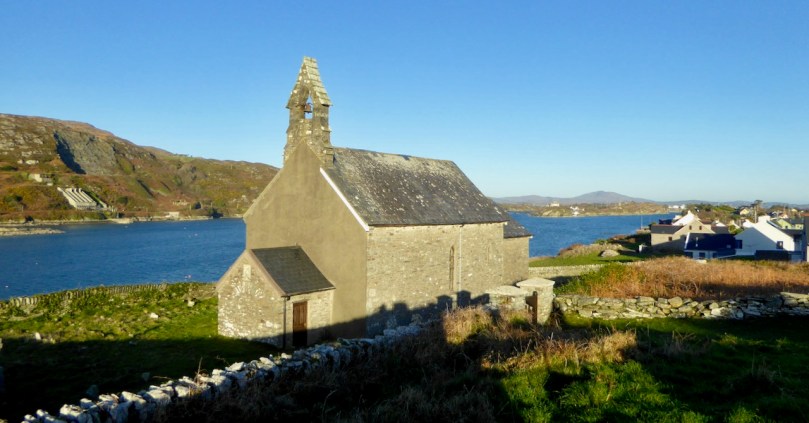
Are you gasping for lunch? Could you, as they say around here, murder a crab sandwich and a pint (or a coffee, since you’re driving)? You are in luck, as you WILL find O’Sullivan’s pub open and they do the best crab sandwiches on the Mizen. On the way, take a look at St Brendan’s Church of Ireland (8), possibly the only old church in the area that still doesn’t have electricity. Nobody quite knows how old it is, but there has been a church on this spot since at least the 1600s. 

Don’t be surprised to find O’Sullivan’s (9) heaving – this is a very popular spot and we have never been there when it’s not busy. If possible, have your lunch sitting outside. In summer, you’ll be fighting for a table and surrounded by folk in sailing gear.

Have a meander around the village and see what else you can find (hint – the Mizen Goldsmith ’s jewellery is beautiful and would make a wonderful Christmas gift, although you might have to make an appointment at this time of year.)

Time to head for home, with one last little detour on the way, through Castlemehegan.  As you drive back the way you came, take a road that angles off to the left at number 4 on the map. It will take you back to Goleen over the hills and you’ll be wowed by the views from up there (10).

Did you have a good day?

Sweet Ilen

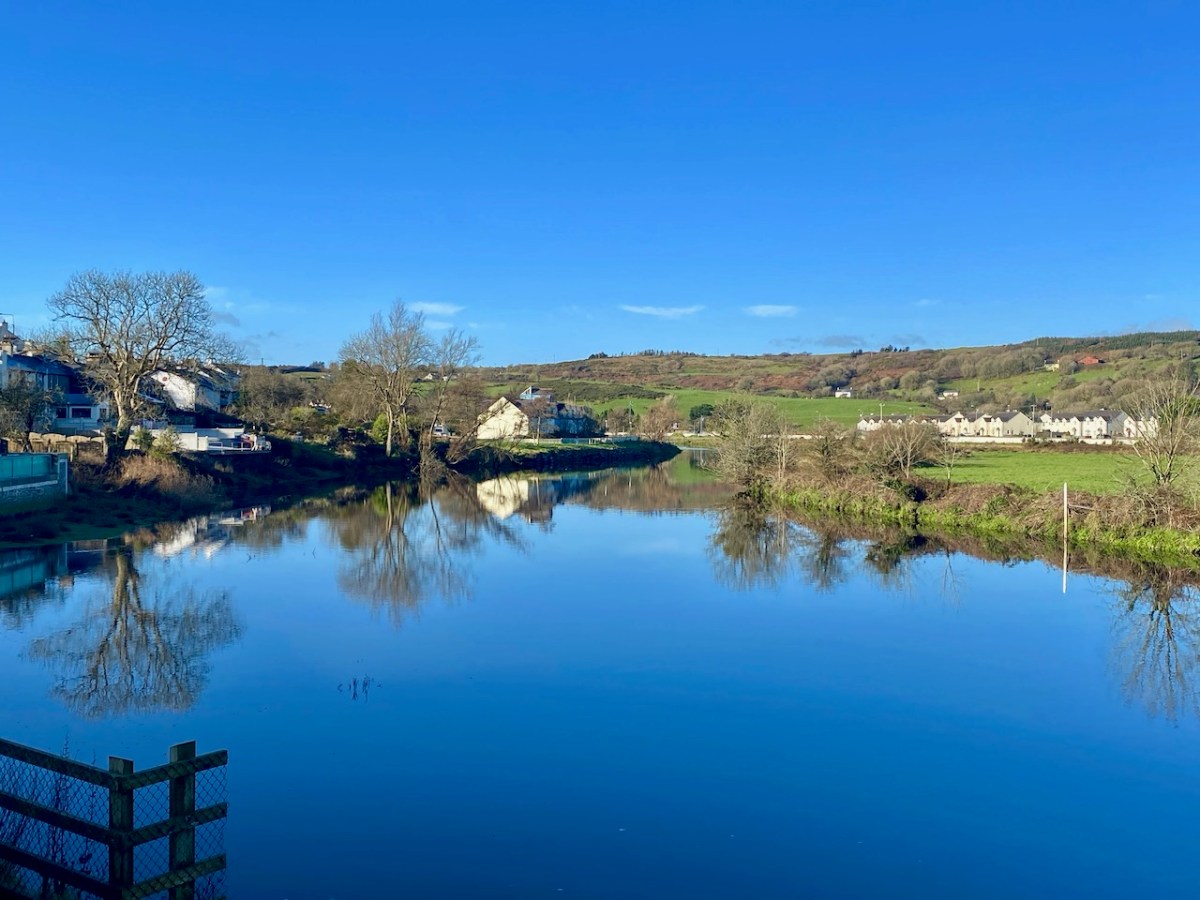
I wanted to explore the Ilen River: that’s pronounced eye-len, and it comes from the Gaelic An Aighlinn. ‘Aighlinn’ is an Irish name, the equivalent of Eileen in English, but it is also said to have a meaning when it relates to water: ‘the way that moonlight reflects on water . . .‘ We’ll keep a lookout for the moonlight, but our first expedition was carried out on a glorious late November day, absolutely calm and with clear, deep blue skies: the morning reflections were perfect.

The header and the picture above are both taken in Skibbereen, as good a place as any to begin our wanderings. The town is built on the river and was once a water transport hub: in the early 19th century boats of up to 200 tons could navigate to Oldcourt, within two miles of the town centre. From there goods were transferred into ‘lighters’ (unpowered barges) and then brought into the town where there were no less than five quays, warehouses and a Customs House. Unfortunately, low bridges now prevent navigation.

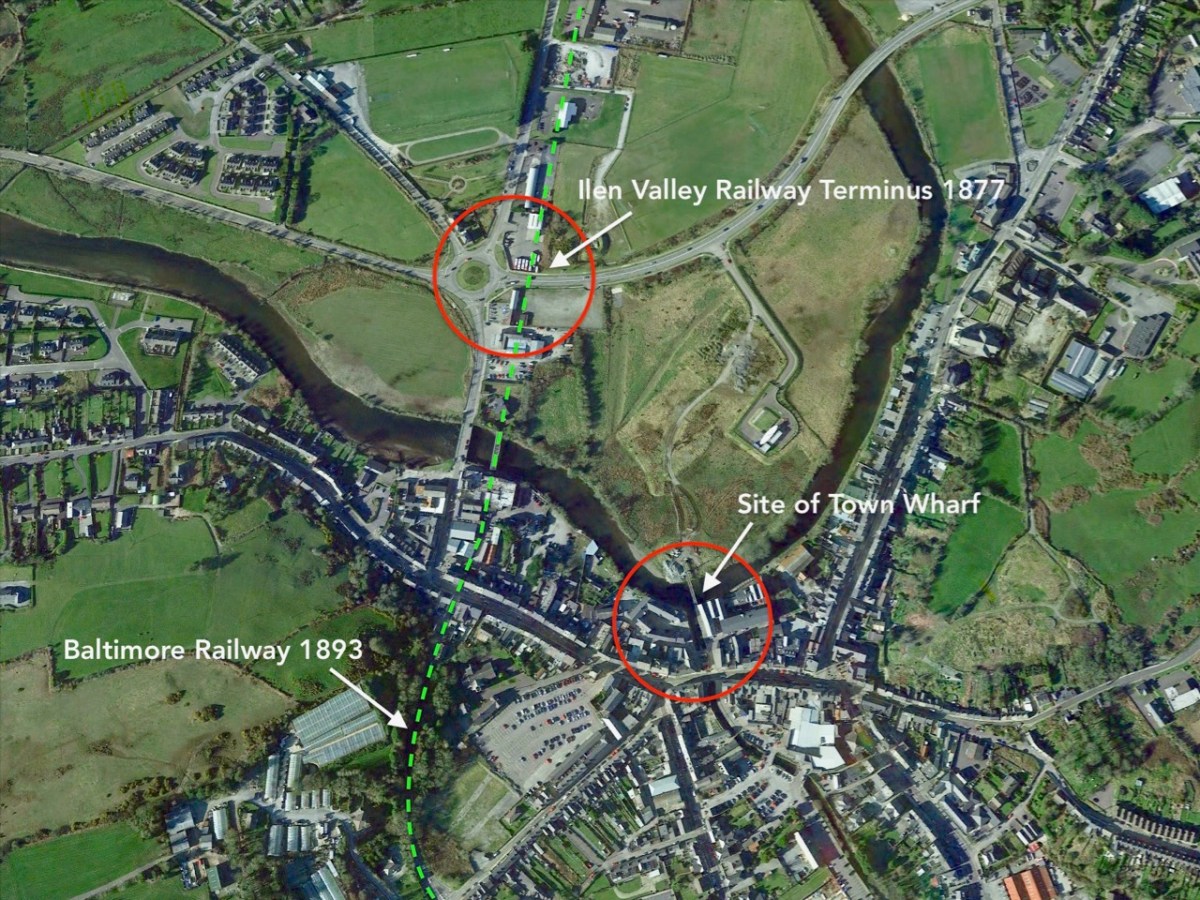
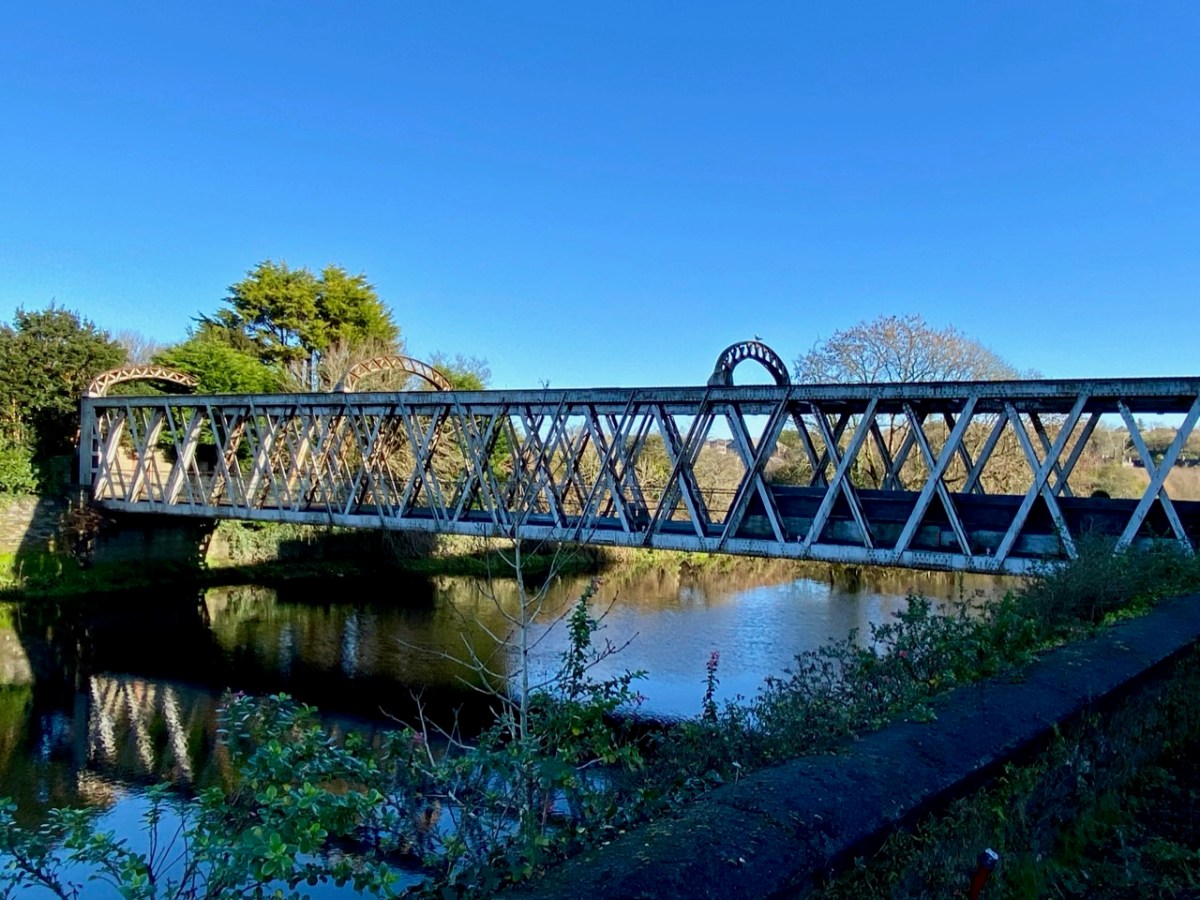
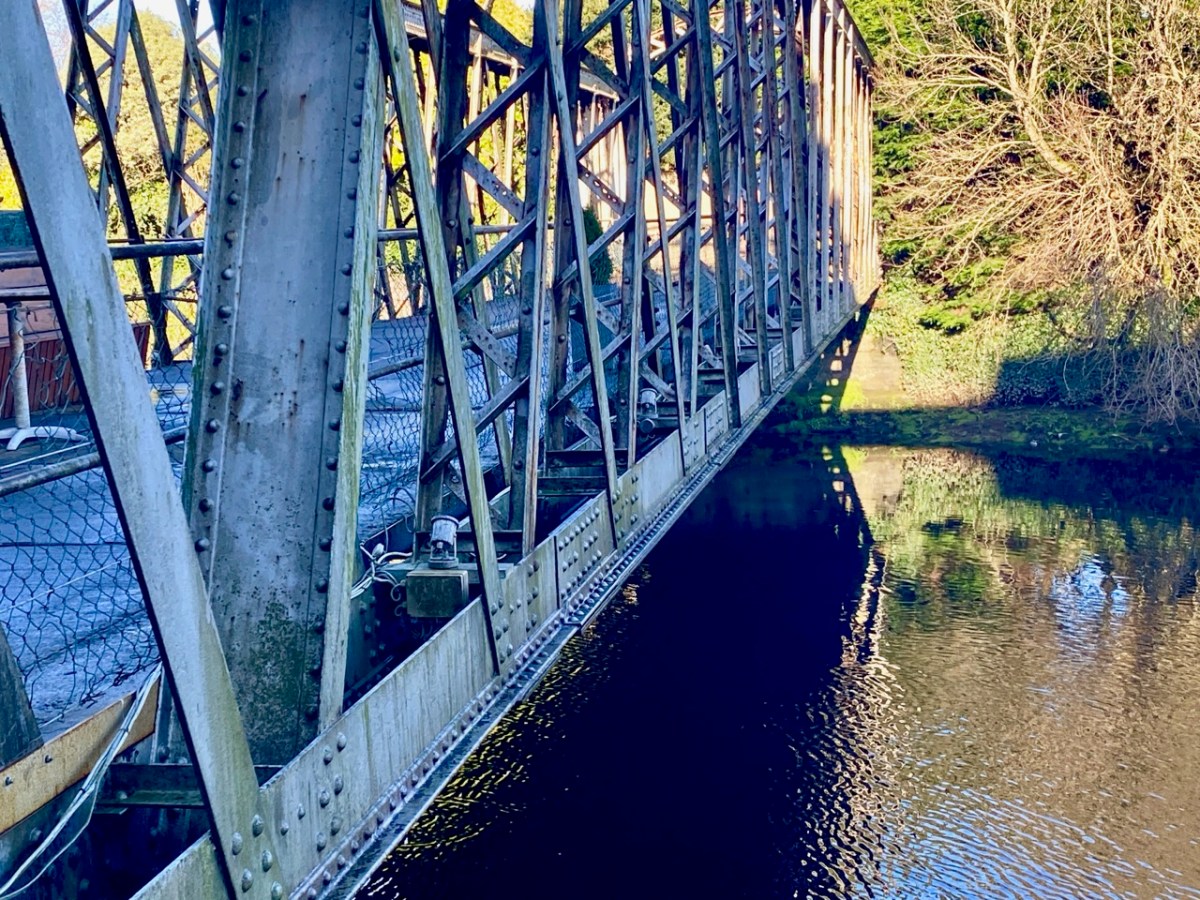
This aerial photograph dates from a few years ago, but it’s useful to show how Skibbereen has developed along the south bank of the river. At the Town Wharf, or Levis’ Quay, you can still see old stone steps leading down to the water’s edge, once a hive of activity with lighters loading and unloading. The nineteenth century brought engineering advances, with railway connection to Dunmanway, Bandon and Cork. The station – marked above as the ‘Ilen Valley Railway Terminus’ opened in 1877. Later, the Baltimore Extension Line continued south over a smart new steel bridge, built in 1892.

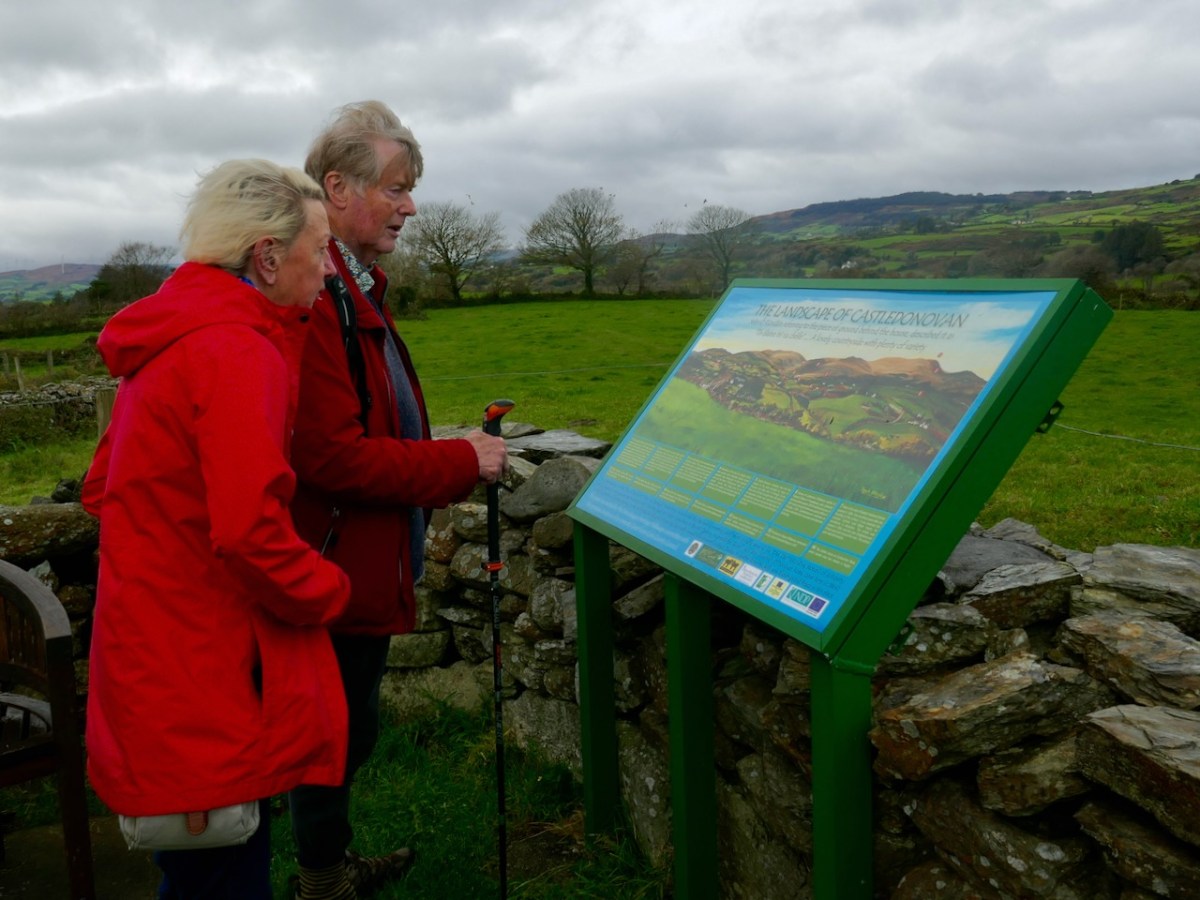
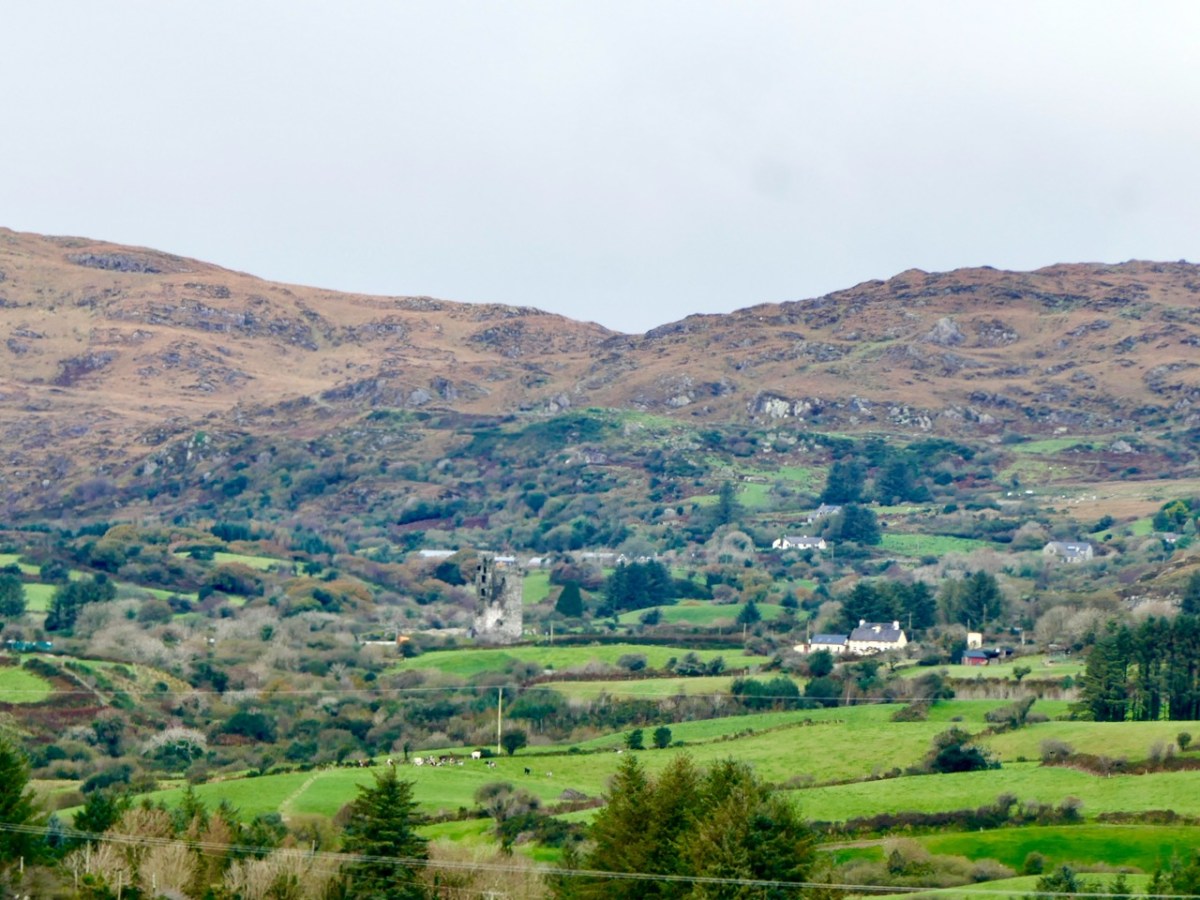
From Skibbereen there is plenty of the river to explore both south (to the estuary) and north. It’s our ambition – when travel restrictions ease – to find the source of the river on Mullaghmesha Mountain, which we could see in the far distance beyond Castle Donovan on our walk last week. That might have to wait anyway, as climbing that mountain is not recommended in the winter months because of rough conditions underfoot, but keep watching – we will get there!

The dancing of a mountain stream may be as entrancing as a ballet, but the quiet of an age-old river is like the slow turning of pages in a well-loved book . . .

Robert Gibbings – TILL I END MY SONG

One of our great heroes is Cork-born writer and illustrator Robert Gibbings. He was an explorer of rivers, making books of Cork’s River Lee, the Welsh Wye and – most famously – Sweet Thames Run Softly. In homage to him I’m calling these posts Sweet Ilen: I don’t think he will mind. Sadly, I haven’t his artistic talents but I’ll do my best with words and photographs.

The upper picture looks from the West Cork Hotel upstream towards the town: the Town Wharf is just around the corner; the steps in the foreground mark the beginning of the Ilen River Blueway – you will embark here if you take a kayak trip down to Baltimore. Leaving Skibbereen behind, we soon realised that the Ilen is a secretive waterway: much of its course is hidden away and runs in quiet backwaters distant from habitation and modern life. It’s only at the crossing points like the one above, near Hollybrook, that the river briefly reveals itself to us, although anglers have private pathways known only to themselves: we caught tantalising glimpses of their occupancy through the tree cover on some remoter banks.

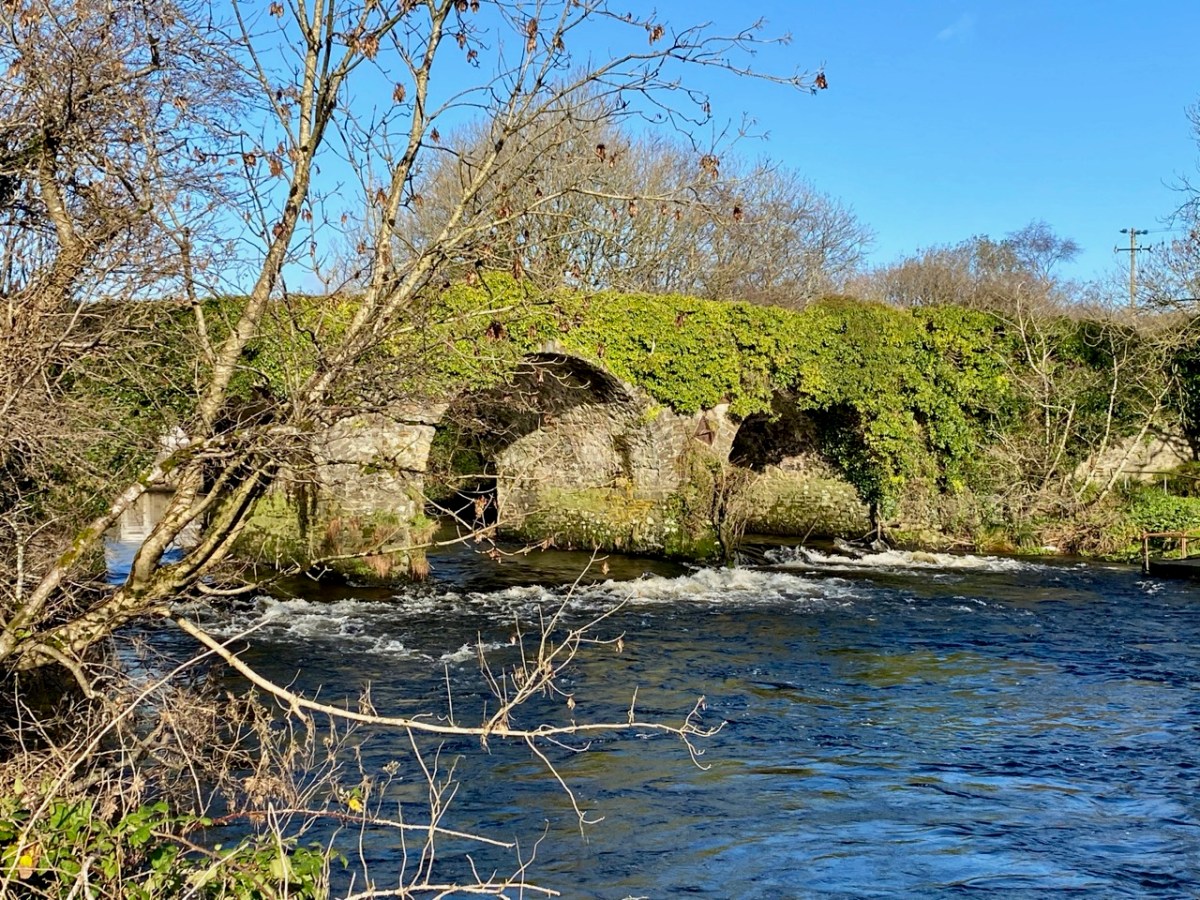
A well-placed seat with a view (upper picture) on the angler’s path below Ballyhilty Bridge. Close by (lower picture) is a small farm accommodation bridge which is also giving anglers access to the further bank. Ballyhilty bridge itself is a real discovery. It’s easy to drive over it without realising the substantial structure which carries the road:

The only description I could find of this substantial structure is a record in the Archaeology Ireland National Monuments site which describes it as ‘a hump back three-arch road bridge over the Ilen River in the townland of Gortnamucklagh’. The parallel entry in the National Inventory of Architectural Heritage describes it as ‘bridge 1760 – 1800’, and says no more. But I think it worthy of detailed consideration: it’s a massive, dressed stone structure which has been reinforced with iron plates. The central opening is raised to a height which would almost lead us to think that it was once a navigation arch, although there are no records to support this. On the west side are some flood relief culverts of unusual construction:

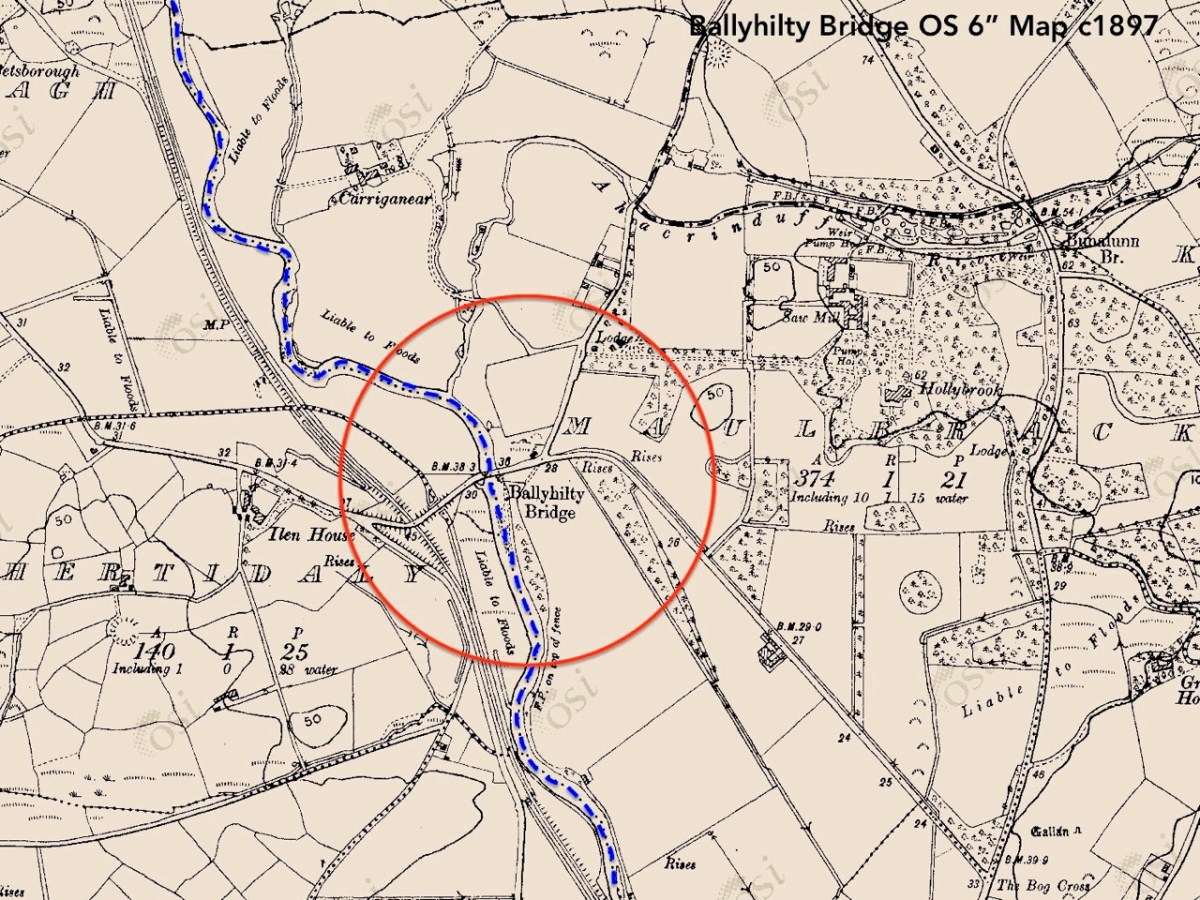
The form of these remind me of a bridge we encountered on the Fastnet Trails close to Toormore in 2018: here’s the post. At that time I pondered on how old the Toormore structure was likely to be. I’m asking myself the same question on this one. The early OS map might give us a clue:

This is from the late 19th century 25″ map: you can see the railway line on the west heading out of Skibbereen towards Drimoleague, where it met with the Cork, Bandon and Bantry lines. But on the east side of the river is a very large estate: Hollybrook, in the townland of Maulbrack. Hollybrook House has a long history, encompassing families such as The O’Donovan, Bechers and Townsends. Nowhere can I find a date for the original house (now replaced), but I have found this:

At the time of Griffith’s Valuation, John Beecher held two substantial properties in fee at Maulbrack. They were purchased in 1703 by Henry Beecher from the trustees for forfeited estates . . .

NUI GALWAY – CONNACHT AND MUNSTER LANDED ESTATES DATABASE

These properties were therefore in existence before 1703: it would be reasonable to assume their date could be well before this. I would suggest that the bridge at Ballyhilty was built in the 1600s, to ensure good access to the estate at Maulbrack. This would make it a truly historic structure, worthy of prominent commentary and protection.

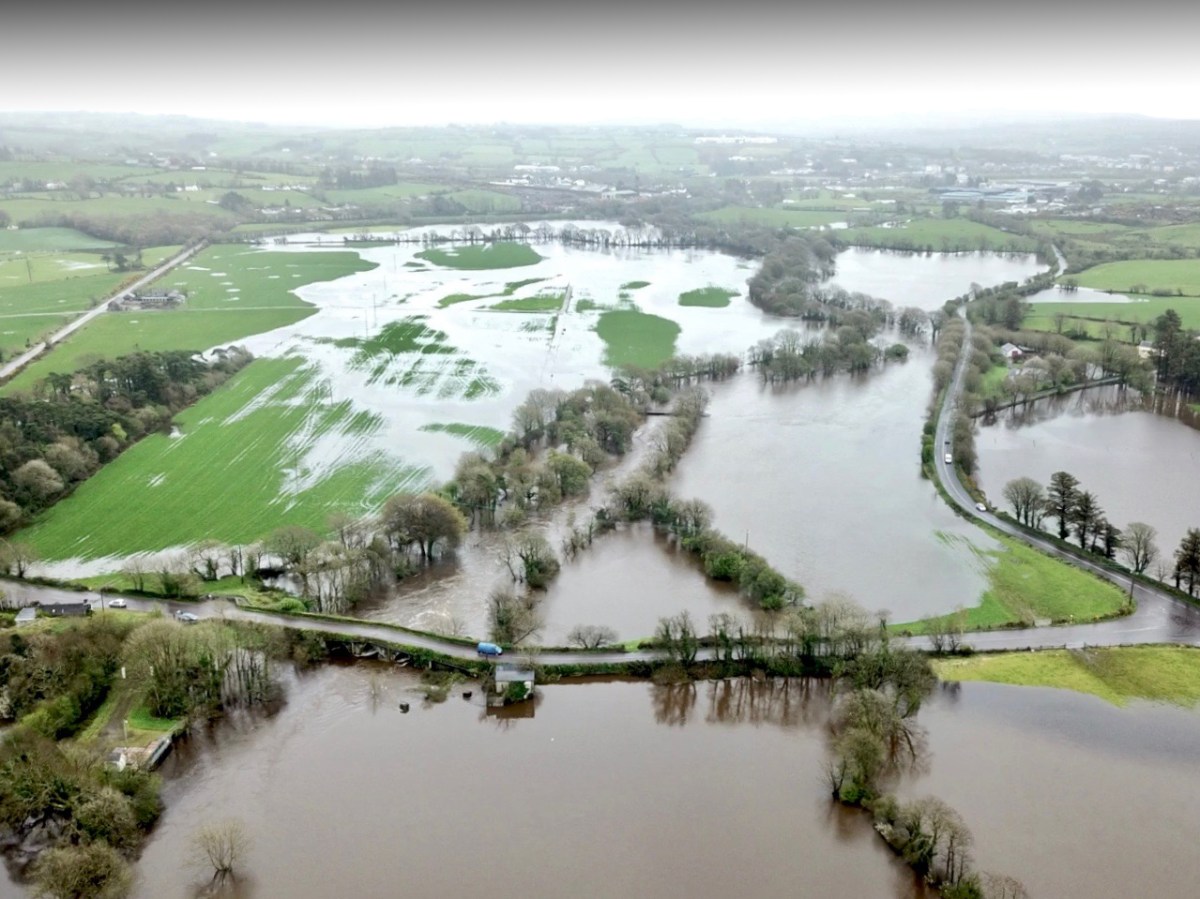
On such idyllic days for exploration it’s not always easy to remind ourselves of the power of this river: it’s no humble stream. Here’s a screenshot of a drone video by Garry Minihane Photography which shows this same stretch – at Ballyhilty – in full flood: the adjacent roads are set just high enough to be clear of all but the fiercest of deluges! Skibbereen is in the distance.

I’m thinking that the journey so far is sufficient for this week’s post; next time we will travel further north, penetrating even more into the uplands of the Ilen as we set our path towards the source. It’s not a huge river, only 34 km in total. It’s instructive for us that our West Cork terrain is quite small scale: within that 30-odd kilometres we have the contrast of a mountain stream falling from the high places and gathering enough tributaries to feed the tidal reaches which we also have yet to discover on our coasts.

Walking West Cork – Top of the Rock

When we could still walk within the boundary of our own county – and in company – we went with our friends Peter and Amanda in the footsteps of a saint! The walk from Drimoleague to the Top of The Rock – and beyond – is one which has been on our ‘to do’ list for a long time, not least because the first person to do it was our own Saint Finnbarr, founder (in 606AD) and patron saint of Cork city. The motto of University College, Cork is Ionad Bairre Sgoil na Mumhan which means ‘Where Finbarr taught let Munster learn’.

Finbarr is also famous for establishing a monastic site at Gougane Barra in the sixth century, and today you can follow St Finnbarr’s Way all the way from the Top of The Rock to that magical lake in the mountains where you can find an oratory and chapel dedicated to the saint: the full walk is 37km. Our own walk was a mere 3.5km but rewarding nevertheless.

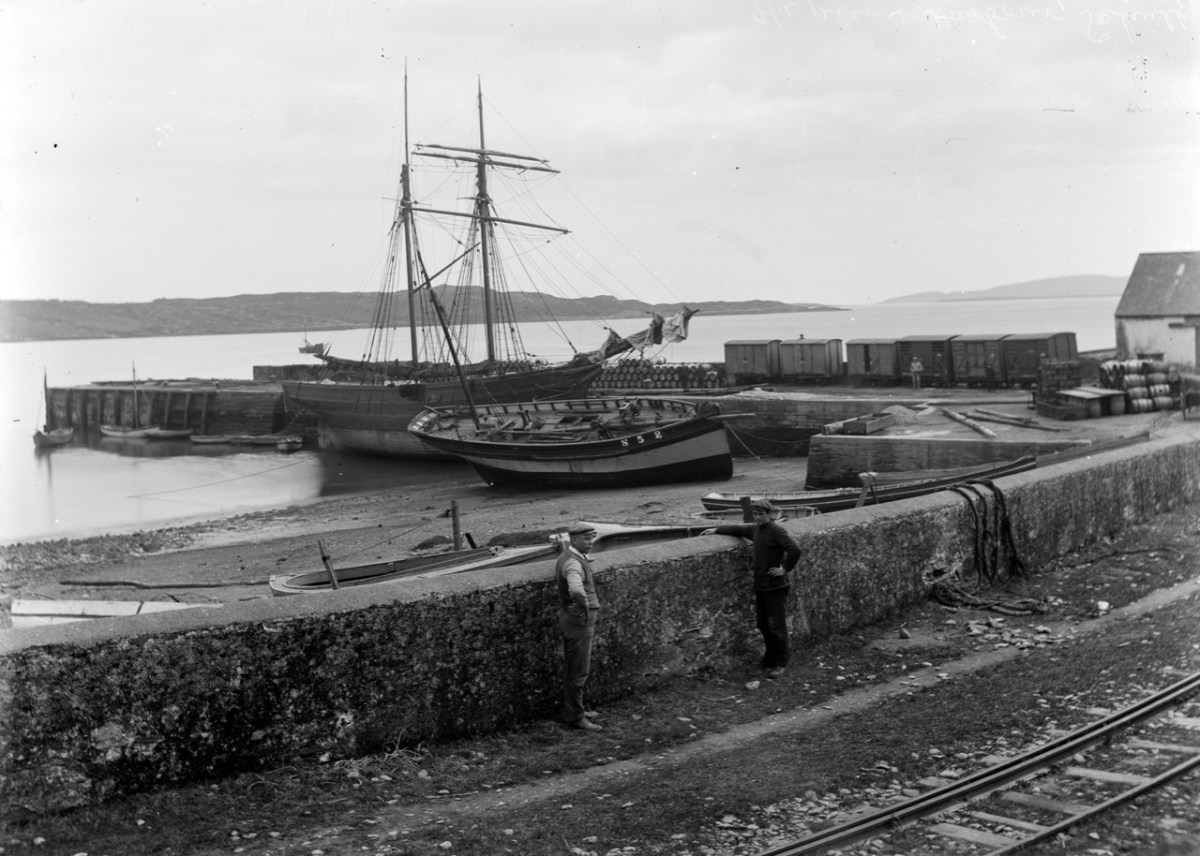
Our walk started at the former Drimoleague railway station. The line opened in 1877, connecting Dunmanway with Skibbereen, and subsequently extension lines went in all directions: to Cork, Bantry, Bandon, Courtmacsherry and – via our own narrow gauge line – from Skibbereen through Ballydehob to Schull. Sadly, all lines coming south west out of Cork have closed, some of the routes surviving until the 1960s. The picture below, dating from 1898, shows the track at Schull Harbour, the most south westerly point on any railway line in Ireland.

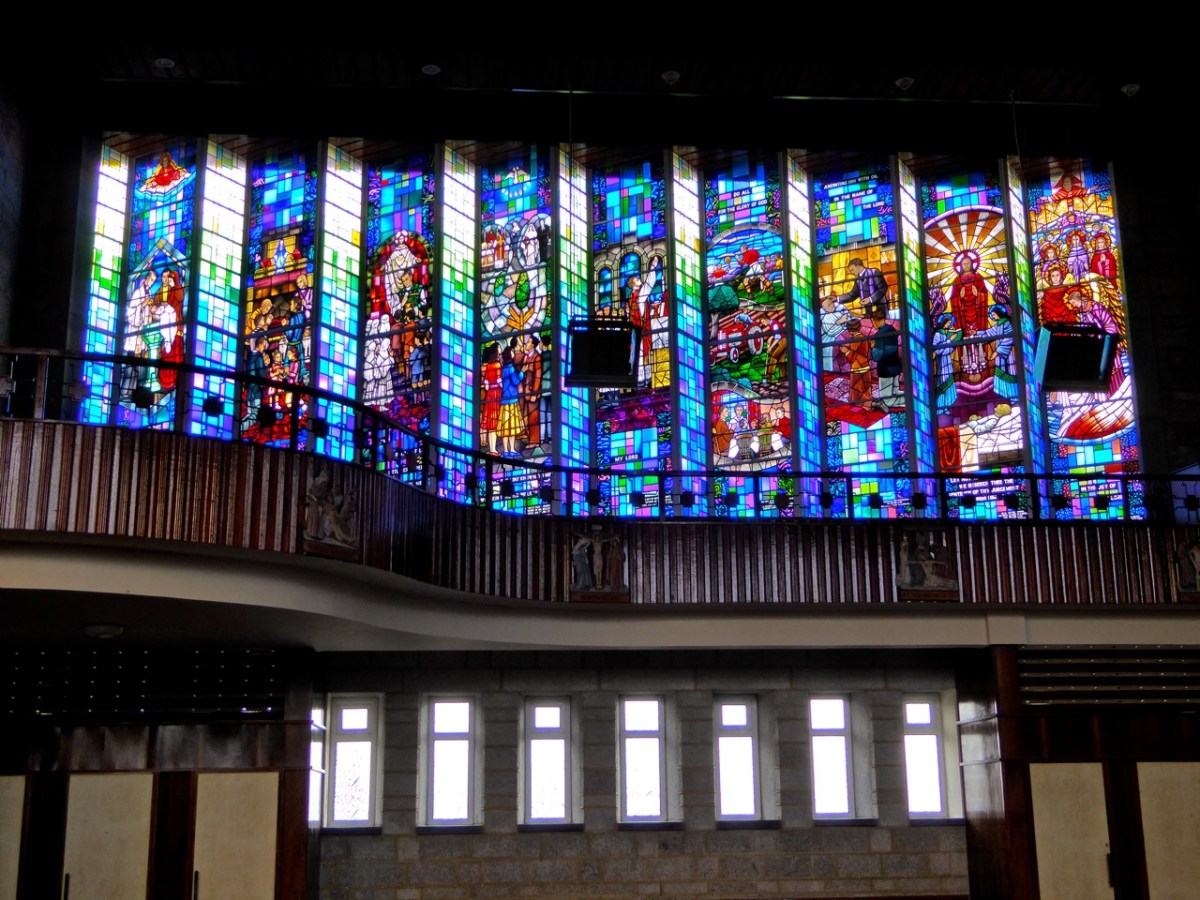
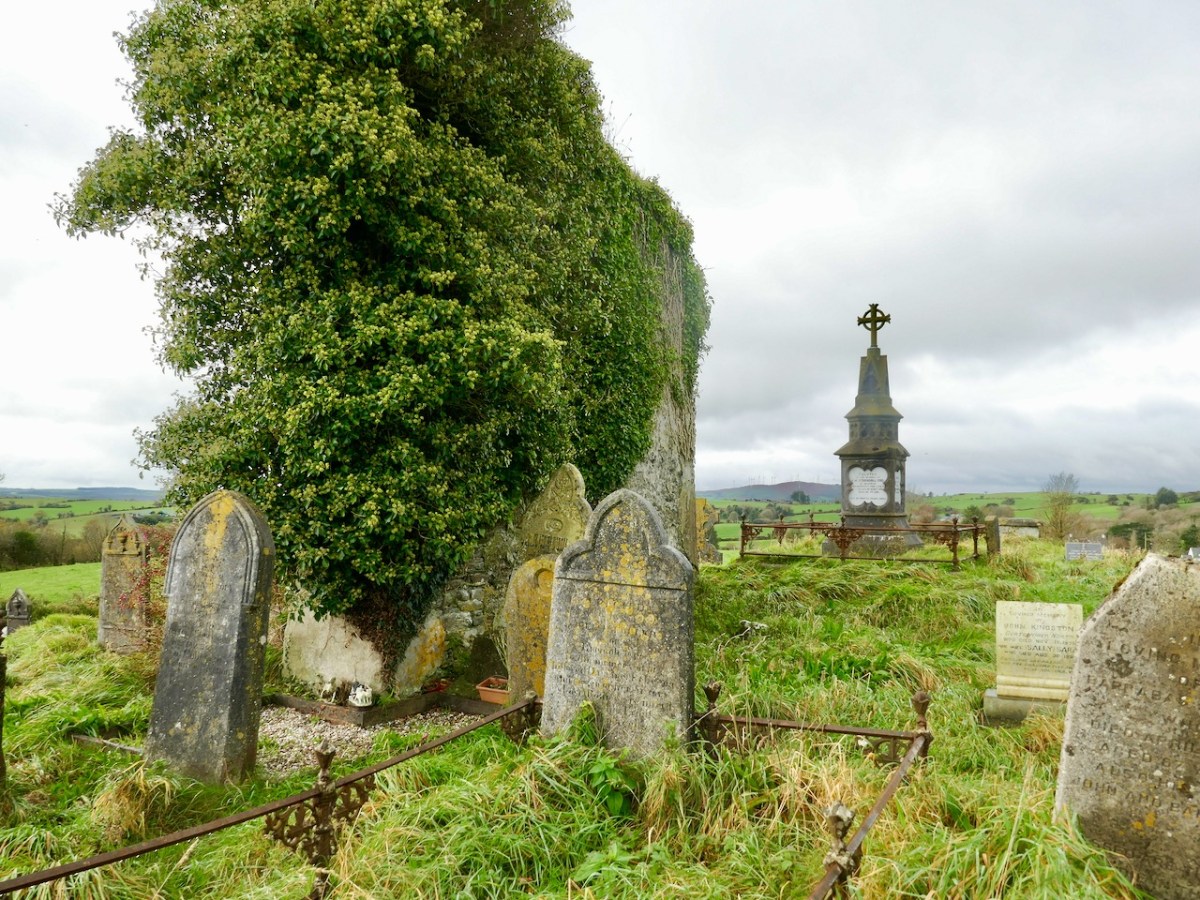
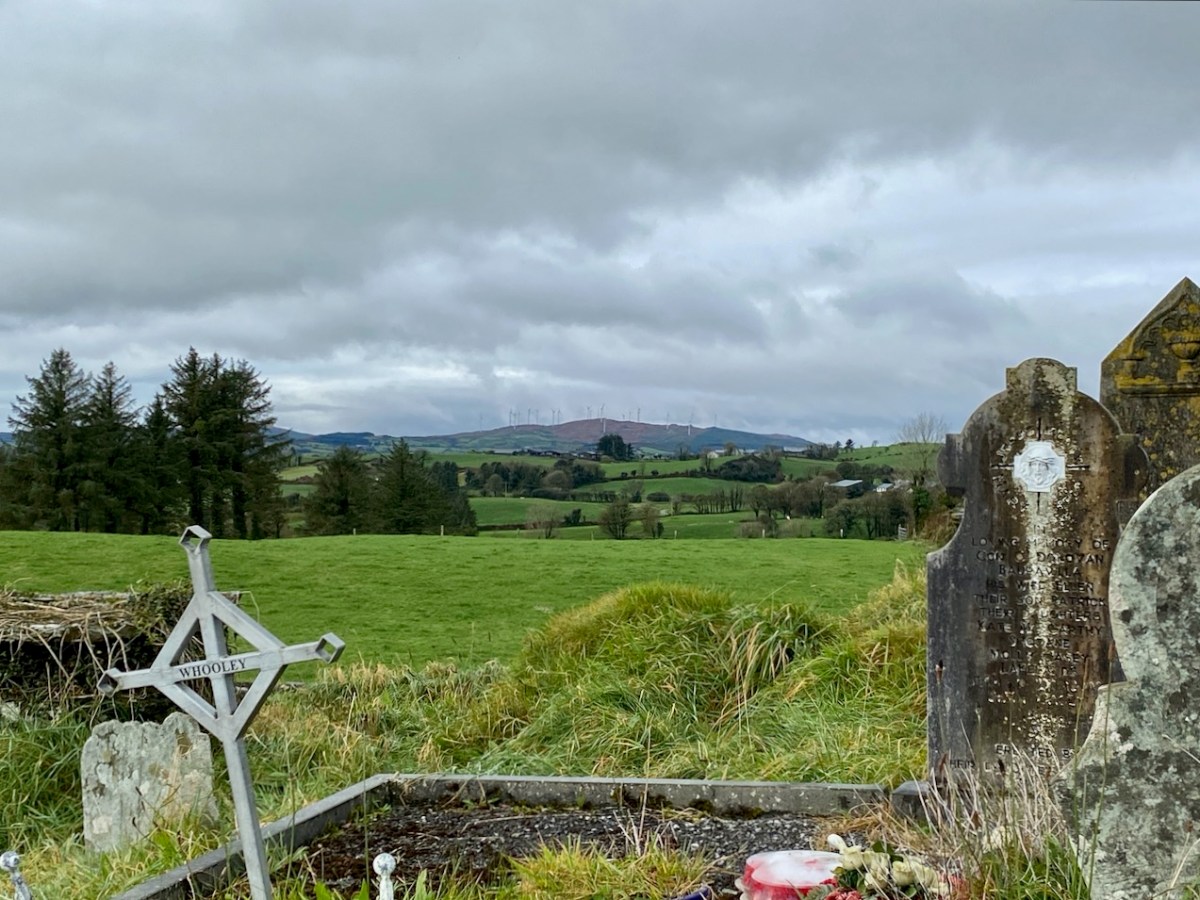
Leaving the old station at Drimoleague the path follows the road going north past the architecturally intriguing All Saint’s church, built in 1956. Finola has written about the building and its unusual stained glass (above) – it’s well worth a look inside. Beyond the modern church is the ruins of an ancient one, surrounded by a burial ground which is full of history (below):

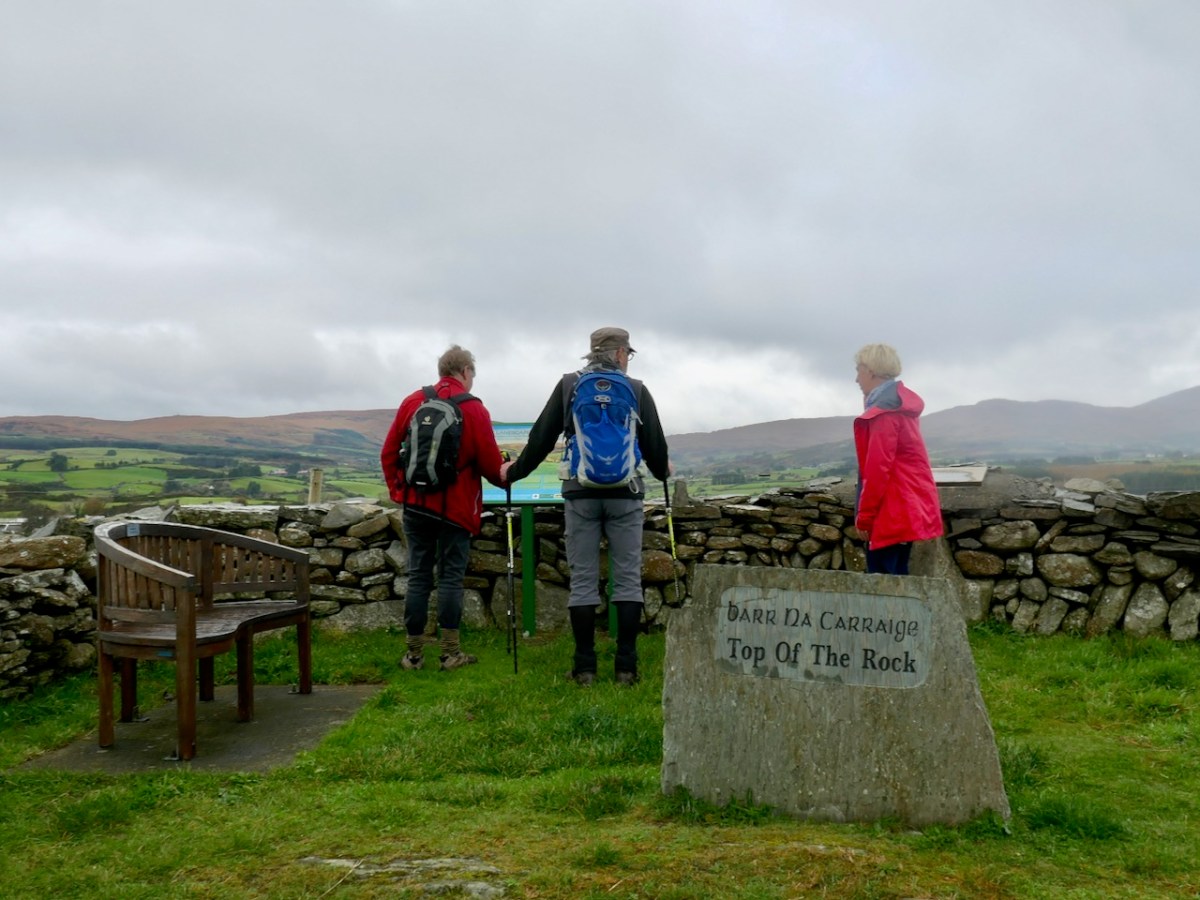
After a steep climb we reached our highest point: Barr na Carraige – which translates literally as Top of the Rock. Evidently the first settlement of Drimoleague was established up here and only moved downhill to be more convenient when the railway arrived. At the ‘Top’ we were fortunate to meet David Ross (below) who owns the farm and ‘Pod Park’ here, and has also masterminded the establishment of these walking routes. Great chat was had, and David suggested our best routes for the day as storms had affected some pathways: work is in hand to restore these. We couldn’t leave the ‘Top’ until we had fully appreciated the long views across to Castle Donovan: our own way then headed downwards and along the Ilen River.

Descending from Top of the Rock we were mainly ‘off-road’ on dedicated footpaths. We first met the Ilen River at Ahanfunsion Bridge, a place which has seen a lot of action historically. The name means ‘Bridge of the Ash Trees’. There was a battle here in ancient times and it is said that the victors planted trees at the ford to commemorate the event. The bridge was built originally in 1830 but was blown up in the War of Independence and subsequently reconstructed. It’s a great spot for a picnic and everyone has a good time crossing the stepping stones, hopefully while keeping their feet dry.

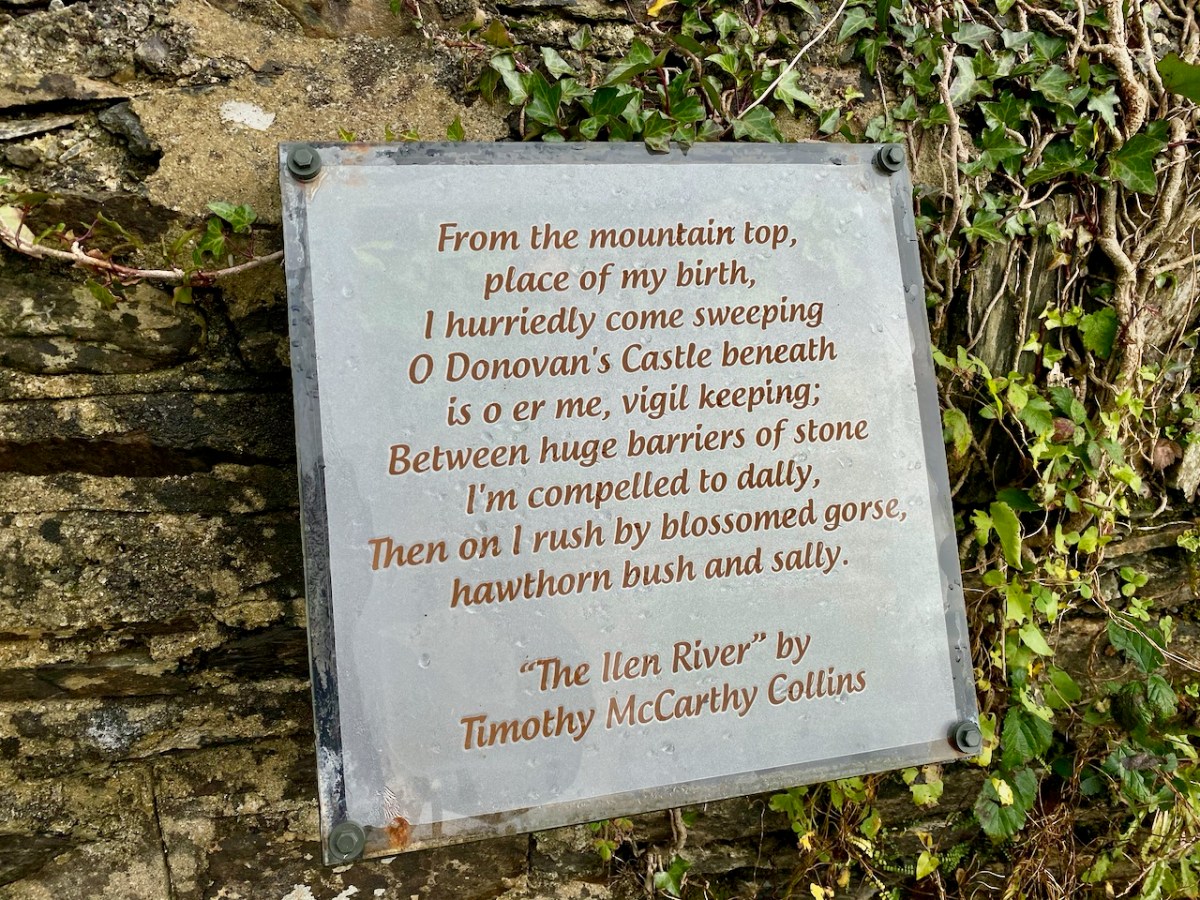
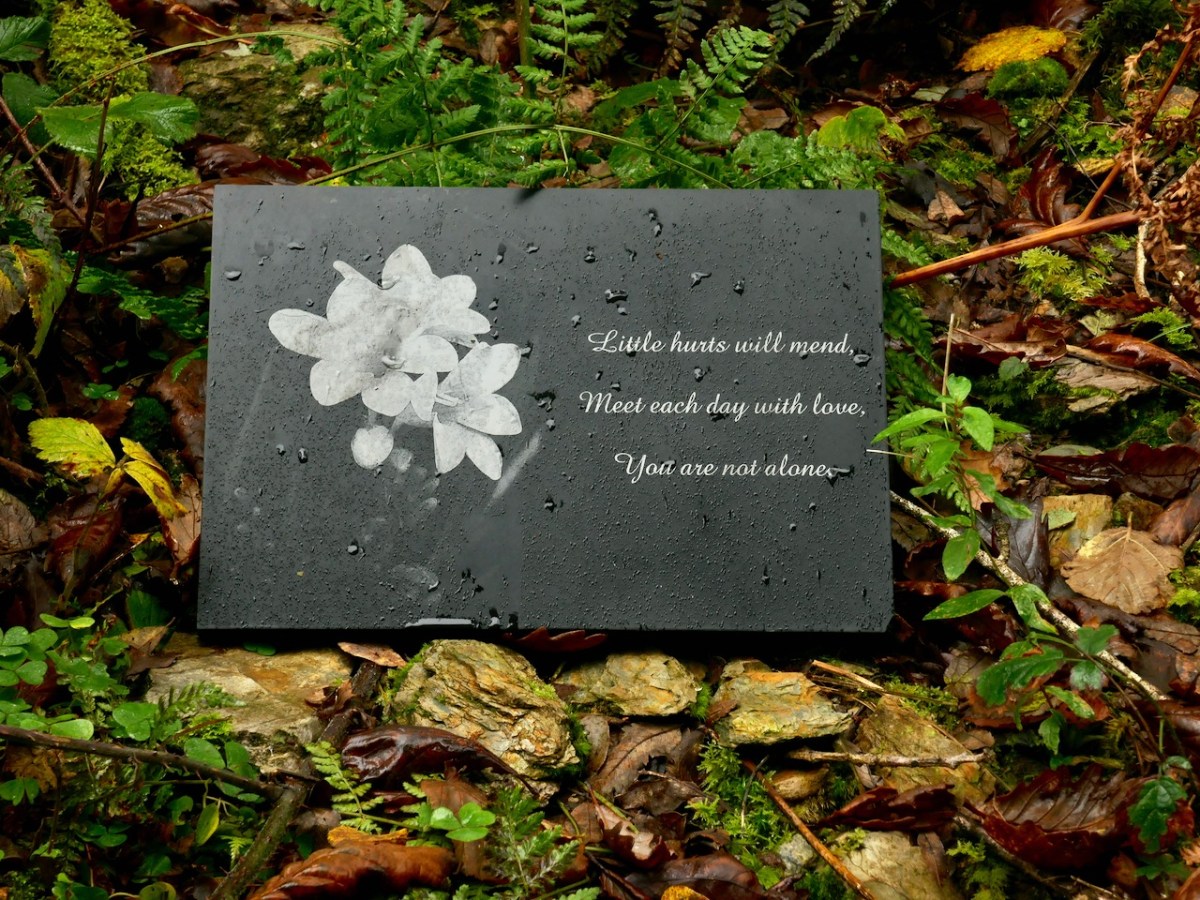
David and his team have worked hard to create and maintain these paths. They have also embellished them with discrete but apposite plaques which include local information and poetry. The work has also involved bridging the river in places to maintain a continuous footpath. We have to commend and appreciate the work they have done and the legacy they are leaving to future generations.

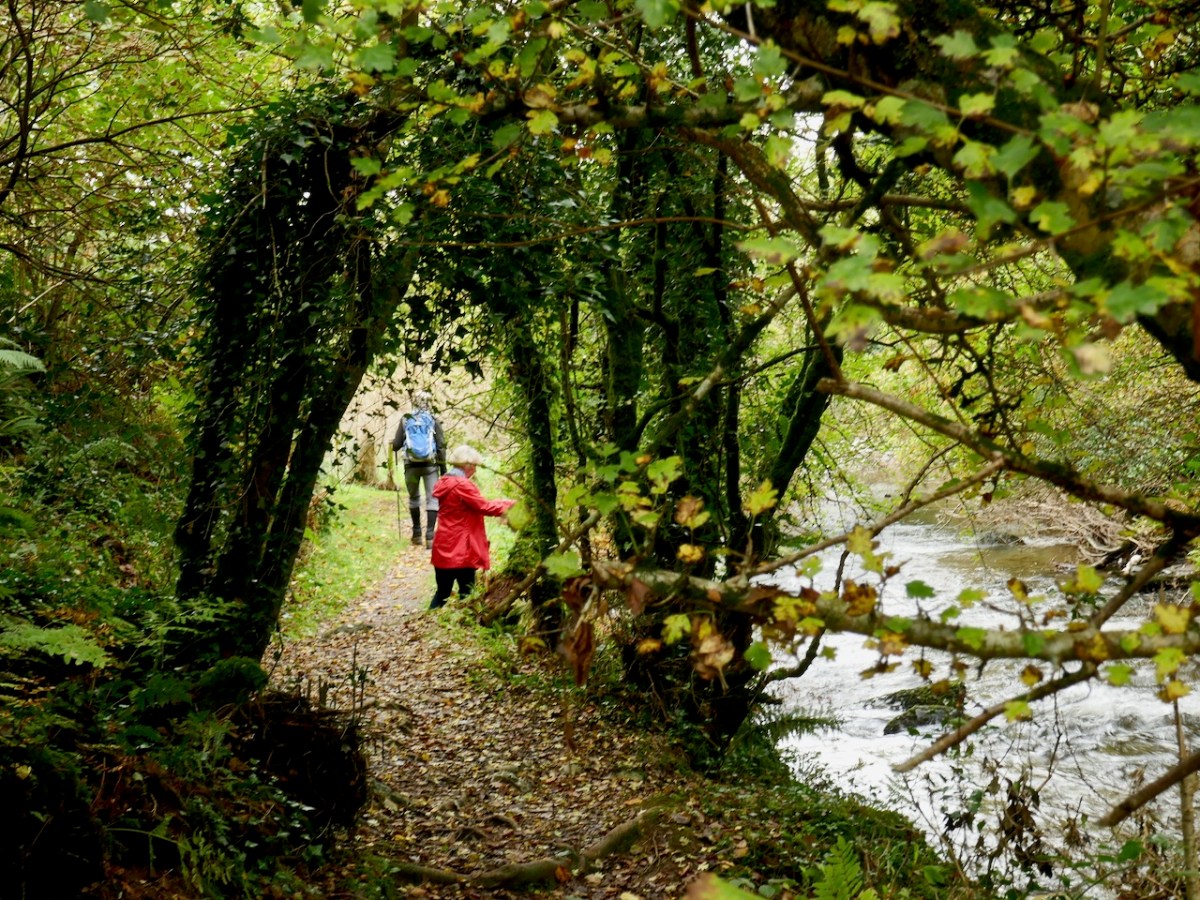
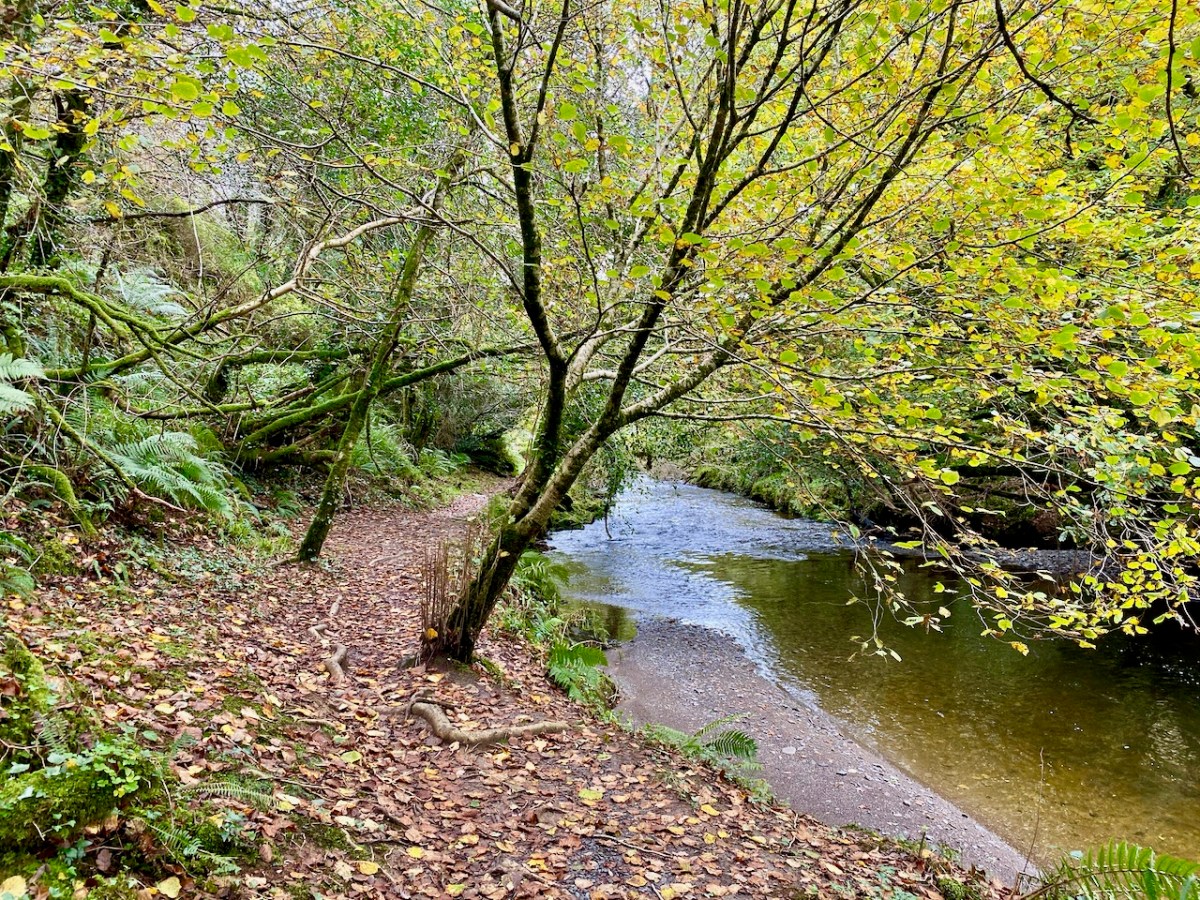
The river walk is truly beautiful, and the wooded valley is quite unusual terrain for West Cork, which is more often high, craggy and dramatic. Wildlife and wildflowers abound, in season. All too soon we came to the boreen which would take us back to our starting point. We are determined to return and follow the network of pathways further when our current restrictions are lifted. We promise we will report back!

Our Lockdown Mascot

Will we need a reminder in years to come of the lockdown we are living through now? If so, he arrived this week – Finbarr, the Bug Hotel and Lockdown Mascot.

You may remember our post about Kloë and Adam, the Two Green Shoots, who have established their edible Garden of Reimagination on the Glengarriff to Kenmare Road. When we visited I saw their own ‘Glen’ and noted that they could make them for others. It didn’t take long for us to decide that this is what our garden needed to feel complete.

We wanted to call him Finbarr. Regular readers will know I have a soft spot for Finbarrs – see this post about Finbarr the Pheasant, and this one about St Finbarr and his serpent. He’s Cork’s Patron Saint, after all, and associated with so many Cork places and stories. The name Fionn Barr means fair head, so of course my request was for a figure with lots of blond hair.

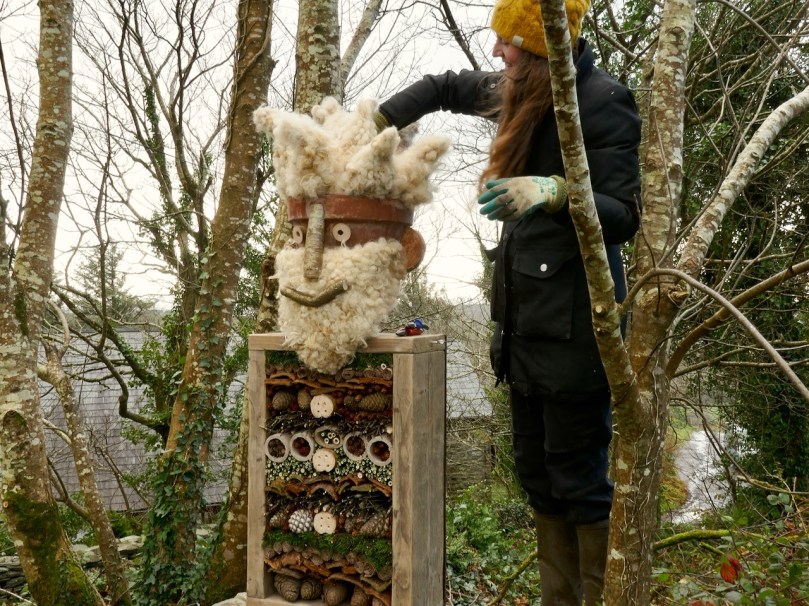
Kloë and Adam arrived this week to instal Finbarr.  They are classed as essential workers and we were all mindful of socially distancing as I photographed the process. It was quite a job, involving digging a hole through unforgiving rocky ground for a large stake to secure him from the back, then building up the wall to support him from underneath. 

Finbarr’s body is filled with insect-attracting spaces and materials, arranged to create a colourful centrepiece, with buttons down the front. Once his body was in place and secure, Kloë attached the arms and legs, which had been pre-organised as a series of rounds each drilled with various sizes of holes for different insect.

His hair is his crowning glory! It’s made of fleece (it took two and a half fleeces!) which birds will discover in time and use as nesting material. Kloë left us a repair kit of fleece to fill in the gaps as he becomes a little threadbare over time. 

We chose a site right beside the road so everyone who passes can wave at Finbarr. We hope especially that kids will like him. It’s also one of the few relatively sheltered spots on our land, and that’s important when the winter storms hit. 

So if you’re in the neighbourhood, swing by and say hello to Finbarr.