Murphy Devitt in Cork, Part 2

In Murphy Devitt in Cork Part 1 I introduced you to the main players in the Studio – Johnny Murphy, Róisín Dowd-Murphy and Des Devitt. Together they set about doing something entirely new and different in stained glass in Ireland, bringing with them their art training, their modern aesthetic sensibilities, and their deep knowledge of and commitment to their craft.

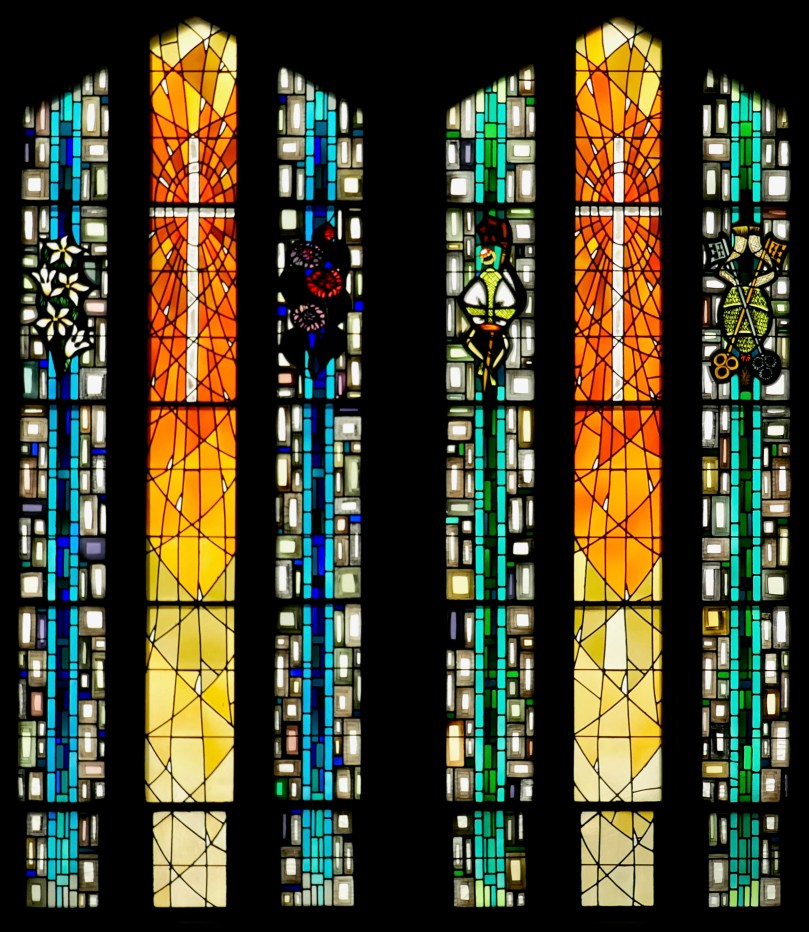
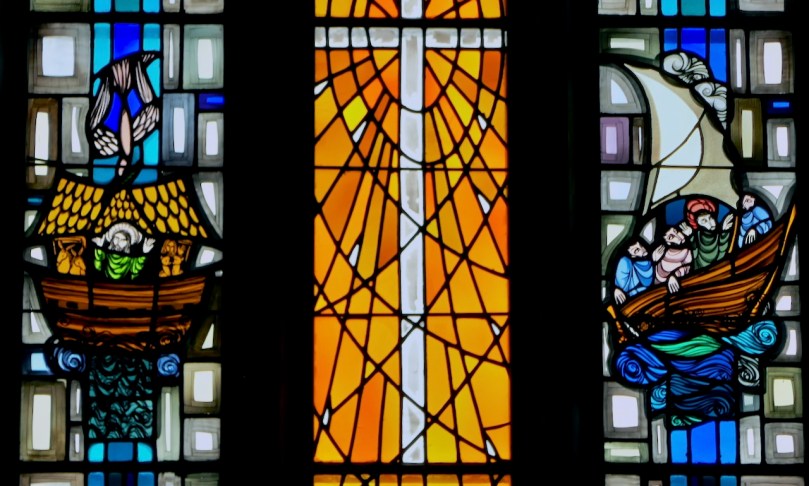
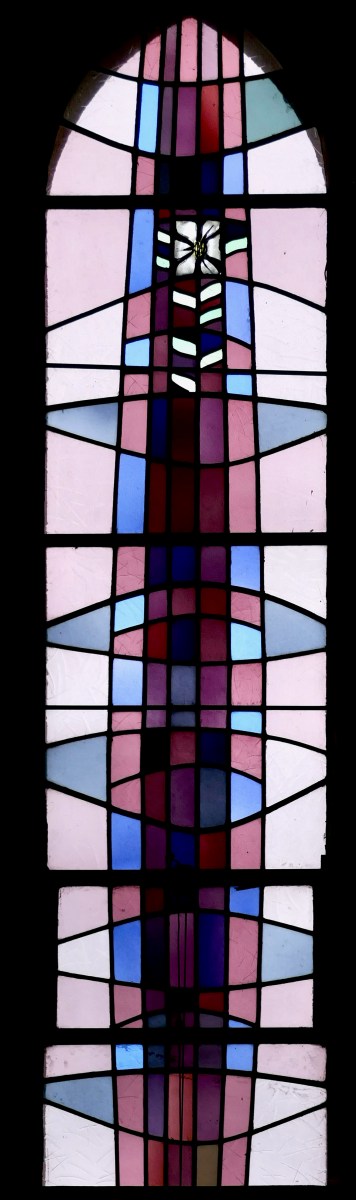
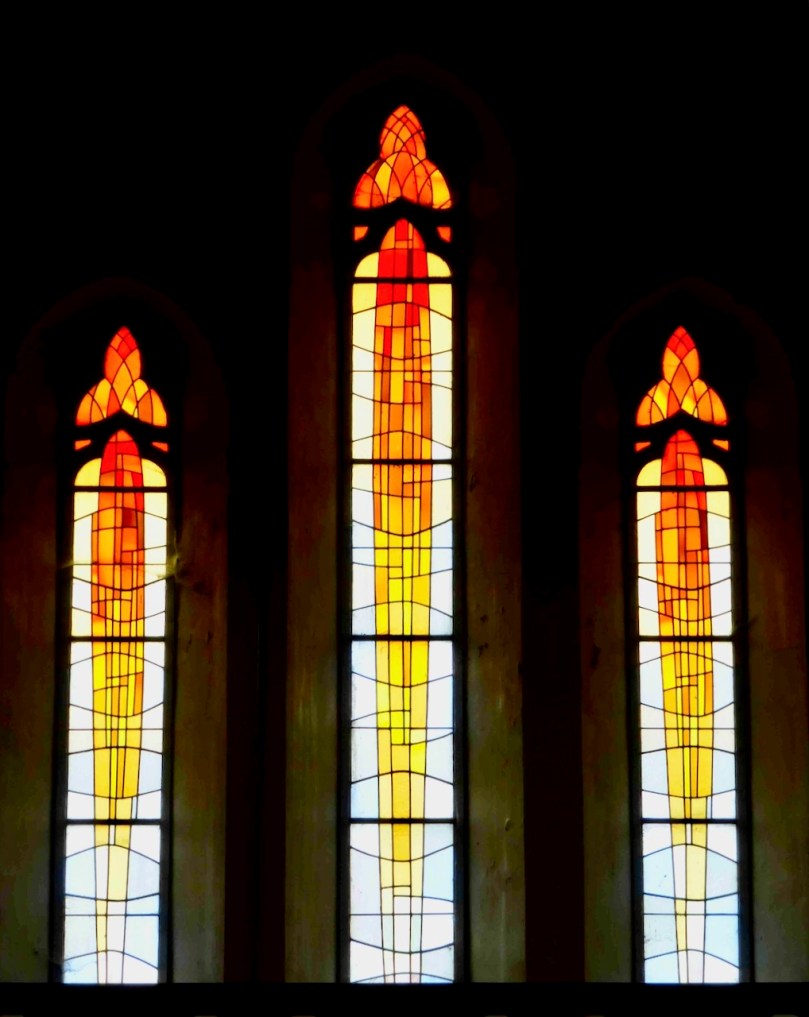
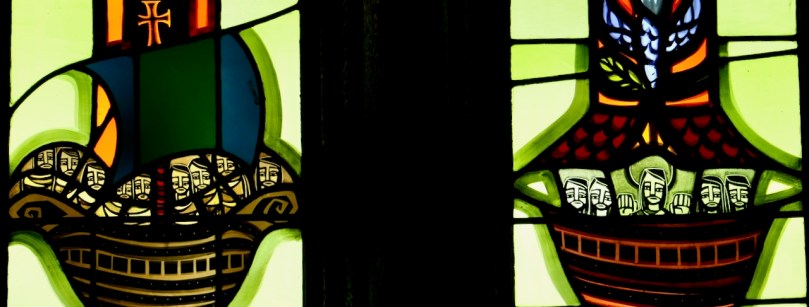
Both photographs above are from the Church of St Michael, Blackrock, Cork. The windows comprise large areas of breakouts with small images placed in the top half. A close up of the pictures chosen for this window reveal Noah’s Ark and Christ Calming the Waters (Contrast this with our final photograph in this post, which is in Caheragh)

Although the Studio was dissolved as a business in 1985, the three continued to work together in a loose arrangement, often under the heading of Des Devitt and Associates. This creative partnership went on for over 50 years: it was so finely attuned that Johnny could describe his vision over the phone and Des knew how to actualise it.

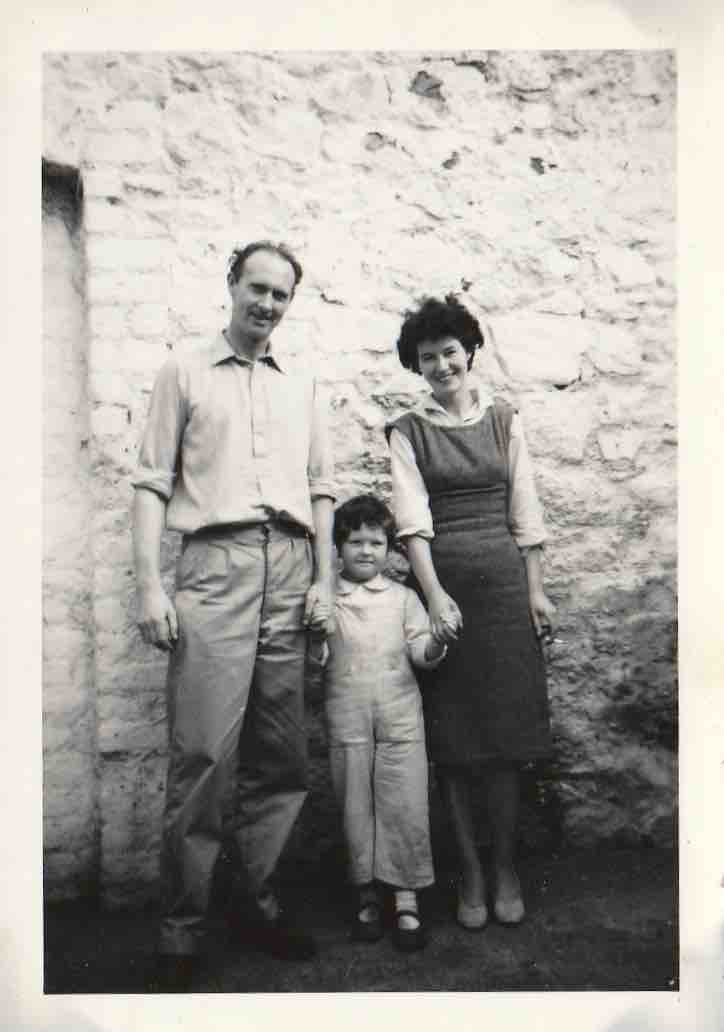
Johnny, Réiltín and Róisín – Réiltín was already a fixture in the Studio at this age

Everyone was pulled into the slipstream – Réiltín Murphy had to stand on a box to reach the drawing table when she started out first. Anthony Devitt* was just a kid when Des warned him not to fall off the scaffolding or his mother would kill him. They all loved it, as did the endless stream of students from the National College of Art, where Johnny was now teaching, who came to help in the summer or to learn how to paint on glass or assemble windows. Other artists came to help when the pressure of work got too much – Terry Corcoran, Rosaline Murphy (not related) Celia Harriss, Paul Britton, Ann Fitzgibbon, Michael Biggs, Michael Timlin to name some.

The only different window at Blackrock is this one, and it’s pure Roisín. There was a fire in the church and this window was rescued and re-installed in a side room once all the new windows were installed by Murphy Devitt Studios. We don’t know what the original ones were like, apart from this one

Johnny was the main designer, hugely respected by Róisín, Des and everyone in his orbit. His was the overall vision for a whole scheme for a church or for a one-off window. Róisín was happiest left to paint, either from Johnny’s designs or from her own – she was a painter at heart and exhibited into her 70s.

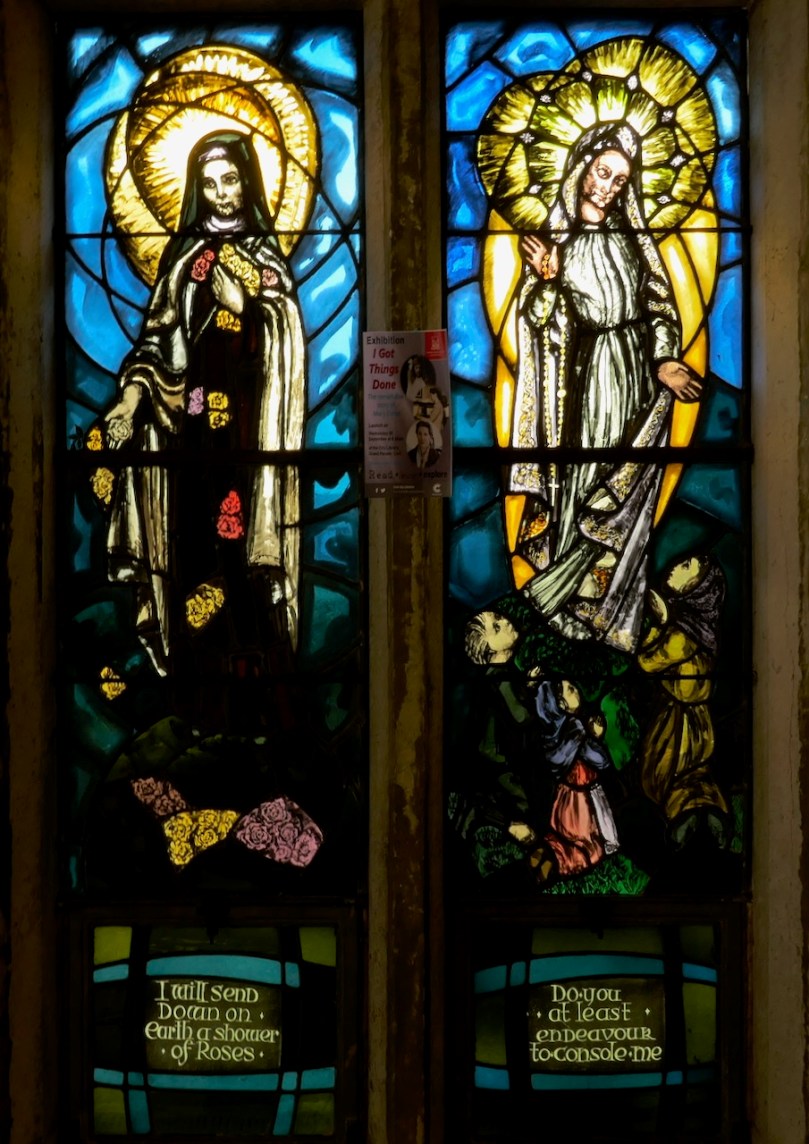
This window is a whole family project. It dates from 1974: Róisín painted the figure, Johnny did the little scene of Gougane Barra and Réiltín did the lettering. It’s in a convent chapel in Crosshaven, now closed and inaccessible. The photograph is published with the permission of the Presentation Order. 

Des had a couple of years of art college under his belt too but his genius lay in management and in translating Johnny’s designs (or sometimes just thoughts) into finished windows. He pitched for business, kept the budget under control, delivered work on time and ran the Studio in a completely non-hierarchical way that would be the envy of many a modern management guru. All of them read voraciously, educated themselves in progressive art theories and in how the spiritual could be expressed in glass. Perhaps this isn’t so difficult when the subject is the Passion, or the Life of Christ, or a particular saint like Francis. But many churches requested non-figurative windows, whether for budgetary reason or out of preference. Here the challenge became creating a space that suggested the transcendent, without the aid of obvious imagery.

In the same chapel are many windows that are either entirely non-figurative or with small hints of symbolism. This one looks like the lilies often carried by St Joseph

These mostly or entirely non-figurative windows became one of the hallmarks of Murphy Devitt Studios, instantly recognisable, and capable all by themselves of creating an atmosphere of drama or tranquility. An oval becomes the window to the soul, a series of them leads the eye upwards, thus capturing the notion of the elevation of thoughts and prayers. A sunburst denotes the glory of creation, light falling from heaven.

Ballyhooly Church has all non-figurative windows. This photograph is courtesy C Cashman and R Gem

Some have small elements within them that are complete pictures, mostly Christian symbols, sometimes mere hints. There were favourites – I’ve seen similar ones crop up here and there, although their context leads to fresh treatments. Some churches are a mixture of figurative and non-figurative. Although it’s not in my remit for these posts, if you are near Dun Laoghaire visit St Michael’s church and marvel that expanses of ‘coloured glass’ can create such a calm and devotional atmosphere.

Caheragh Church has a mixture of figurative, non-figurative and non-figurative-with-symbols. This window is one of the latter

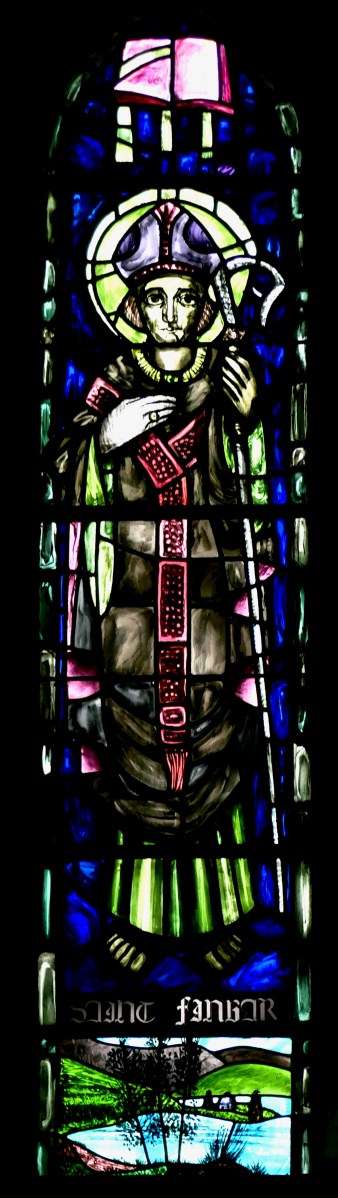
Anyone who visits Irish churches knows that what we want in them are our own saints – Patrick and Brigid certainly, but after that they must be local. So along with every other stained glass artist who ever worked in Ireland, Johnny had to study the hagiographies of our obscure legendary saints and satisfy a demanding congregation familiar with the stories.

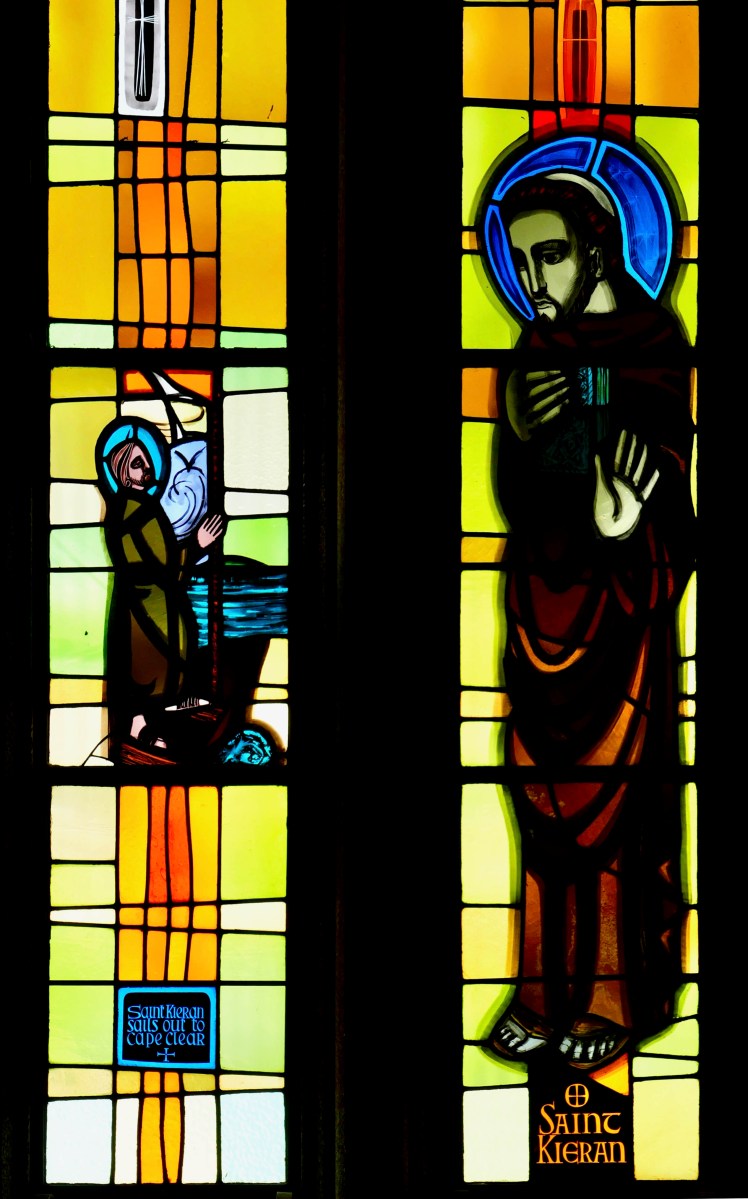
St Kieran of Cape Clear is one of our treasured West Cork saints

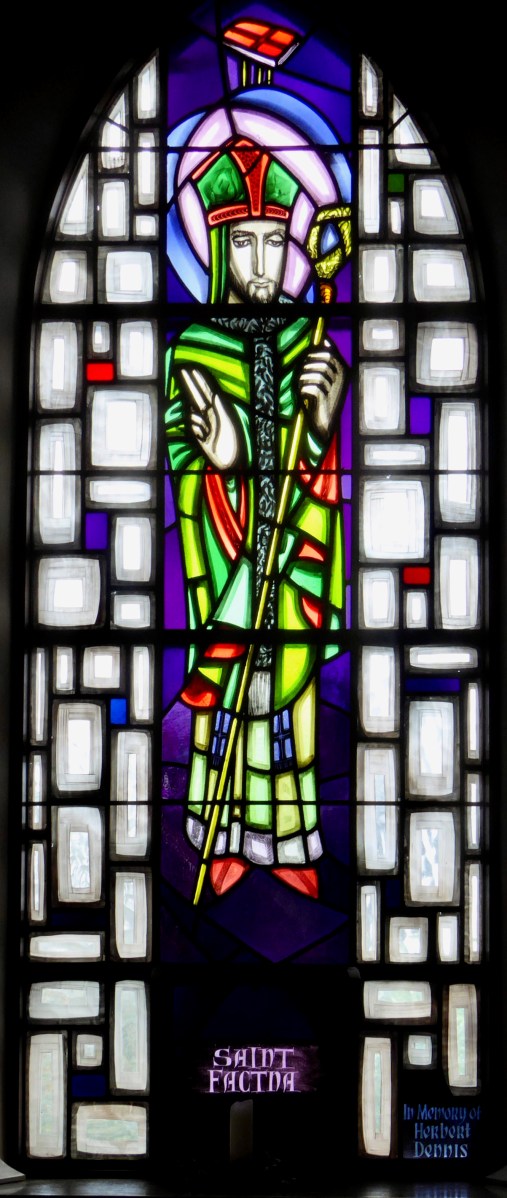
At Caheragh (north of Skibbereen) and Rath (just outside Baltimore) in West Cork two small rural churches demonstrate how well he succeeded. The windows in each are quite different, although both were completed in 1963. In Caheragh the figures are situated in the lovely wavy-lined breakouts that we saw Murphy Devitt use to such effect in Mayfield, in tones of red and yellow.

And here is St Facthna of Rosscarbery

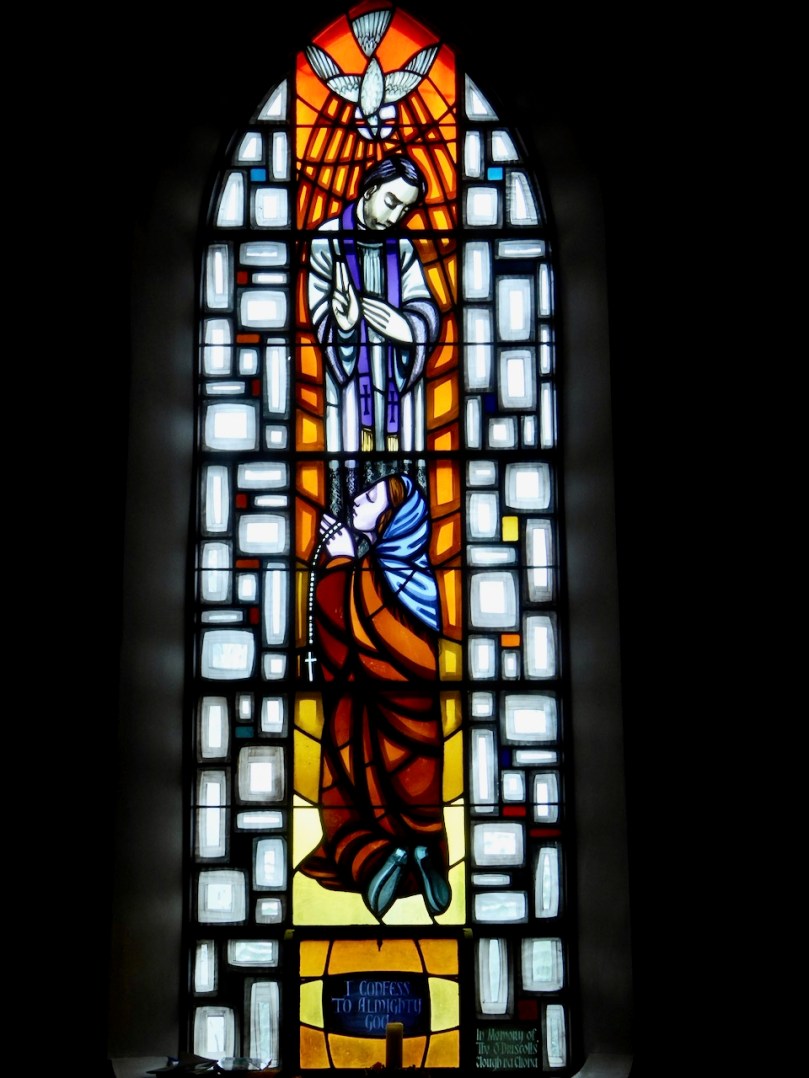
In Rath we see the introduction of a new breakout design, the square or rectangle with grey shadow around the edge, seeming like a solid glass brick. It’s another Murphy Devitt innovation, used to great effect in many of their windows. They used it again the following year in Blackrock (see above).

The Sacrament of Confession gets the Murphy Devitt treatment in Rath

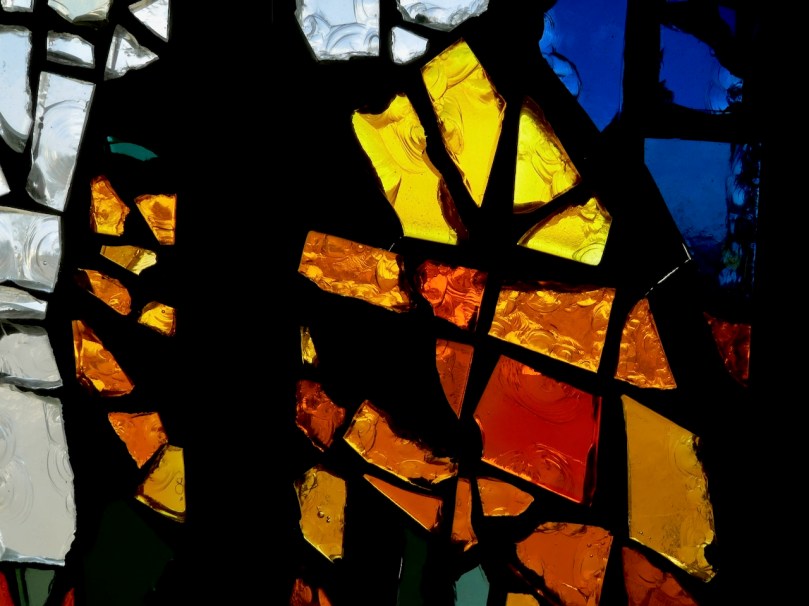
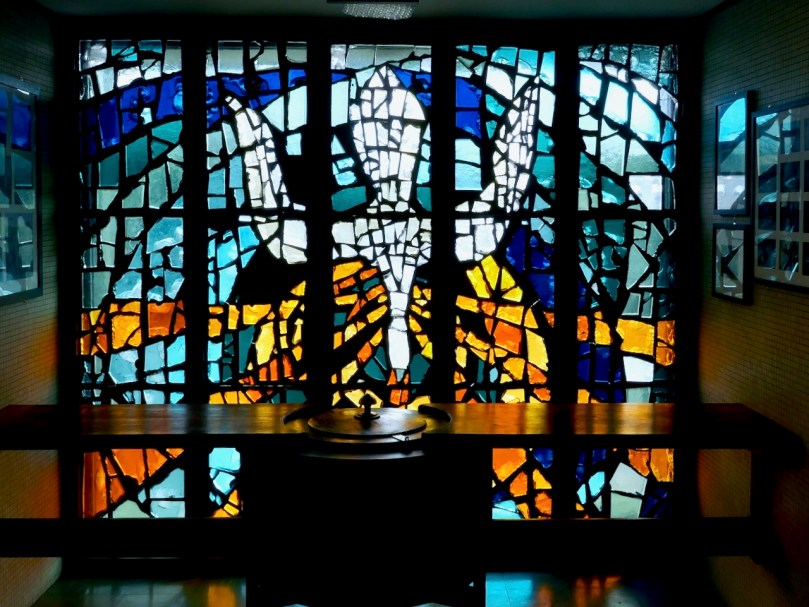
A stained glass technique that was introduced to Ireland in the 60s was that of Dal de Verre. Blocks of coloured glass were faceted to increase their reflectivity (this was done by knocking spalls of glass from the edges and surface of the blocks) and then cemented together with resin, and sometimes concrete. Dal de Verre enabled actual walls of glass to take the place of masonry and to create dramatic expanses of colour as an integral part of construction, rather than as windows.

Chunks of coloured glass, faceted for additional refraction, float in a bed of resin. This is a detail from the Lowertown window below

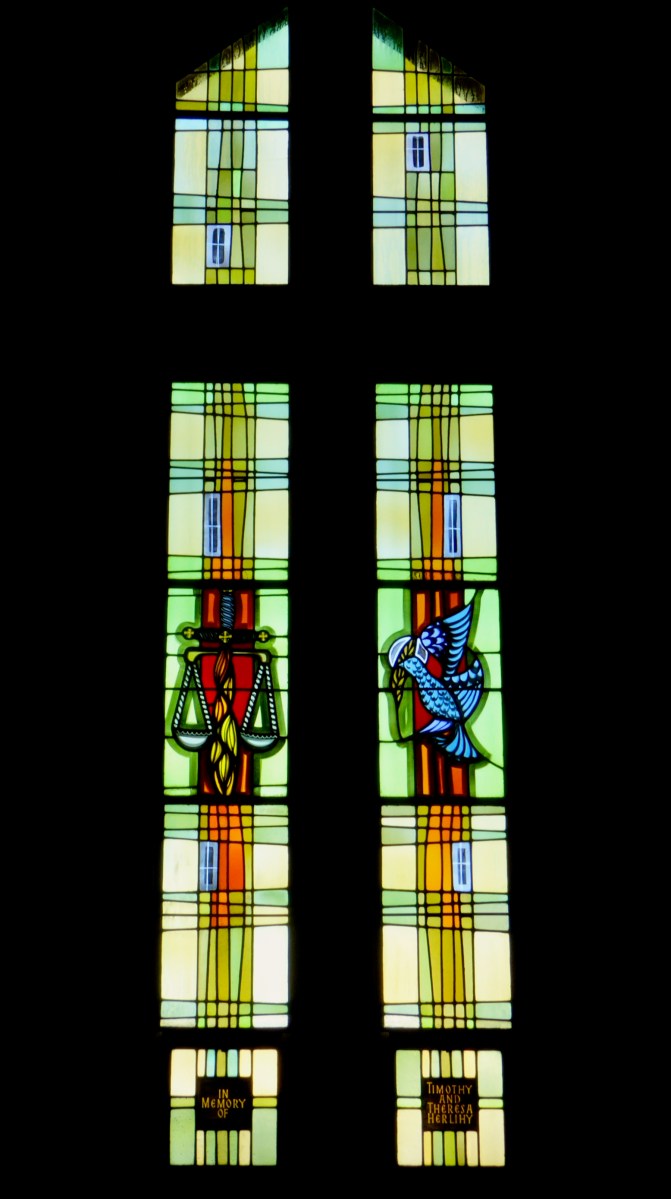
Murphy Devitt were early adopters and we have one of their examples in Cork, at Lowertown, just outside Schull. It’s a dove of peace/Holy Spirit creating a glowing corner in the baptistry.

I still have two churches to tell you about, in Rochestown and in Mallow. They deserve their own post, and that will conclude this series. See you next week.

From Caheragh, across a two-light window, an image of Christ calming the storm. Traditionally, Christ is shown in one boat with the 12 apostles. However, Rembrandt famously included himself in his depiction of this scene, so I am tempted to think that Johnny is in there somewhere, since there are thirteen apostles in the boats

Part 3 is here.

*This post benefitted greatly from information generously shared by Anthony Devitt.

Getting Into the Art!

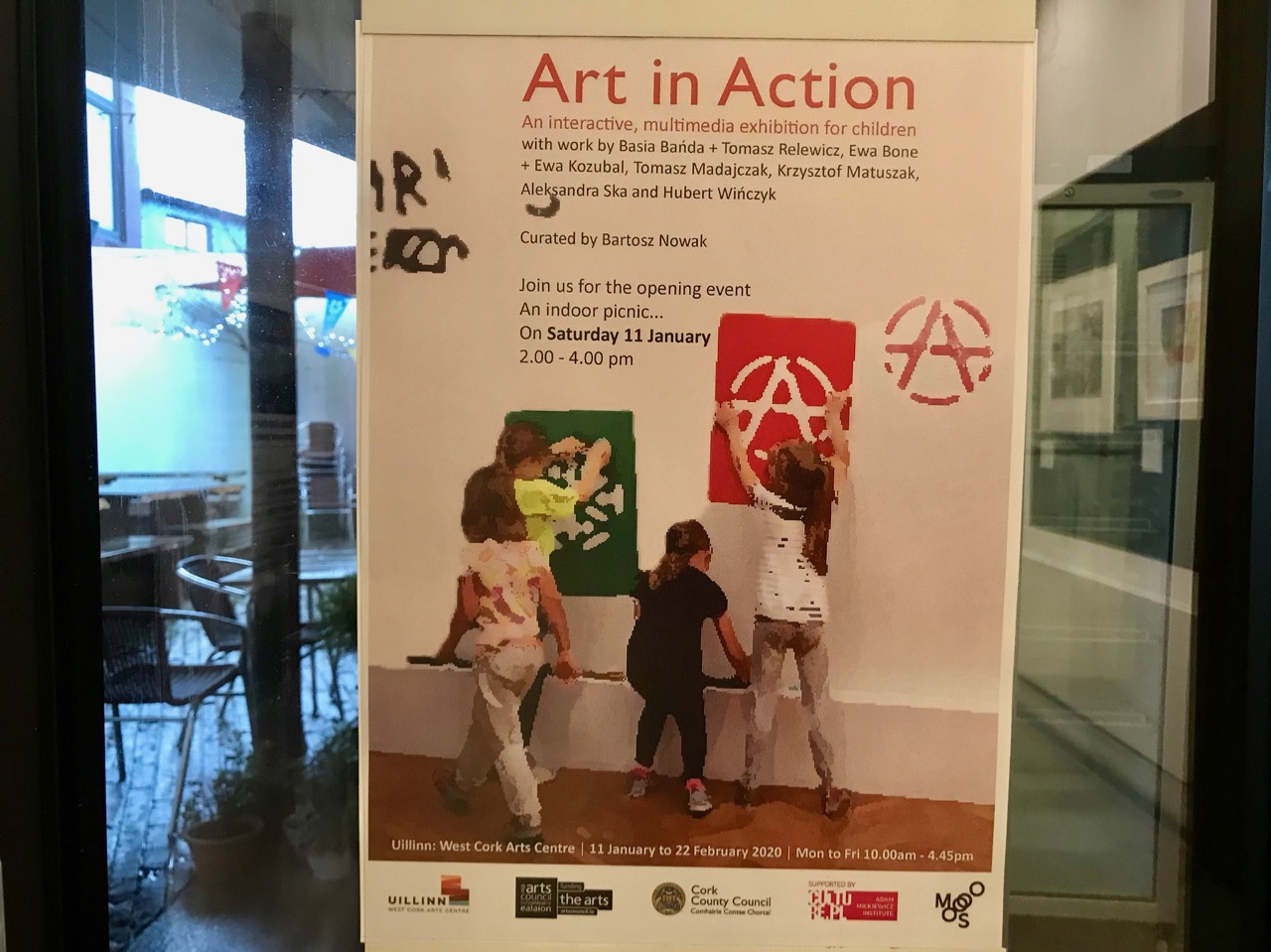
Uillinn – the West Cork Arts Centre gallery in Skibbereen – has just opened its first exhibition of 2020. It’s a riot! I have seldom seen such enthusiasm in an art show from the lively crowd who had gathered for the launch event, billed as an indoor picnic.

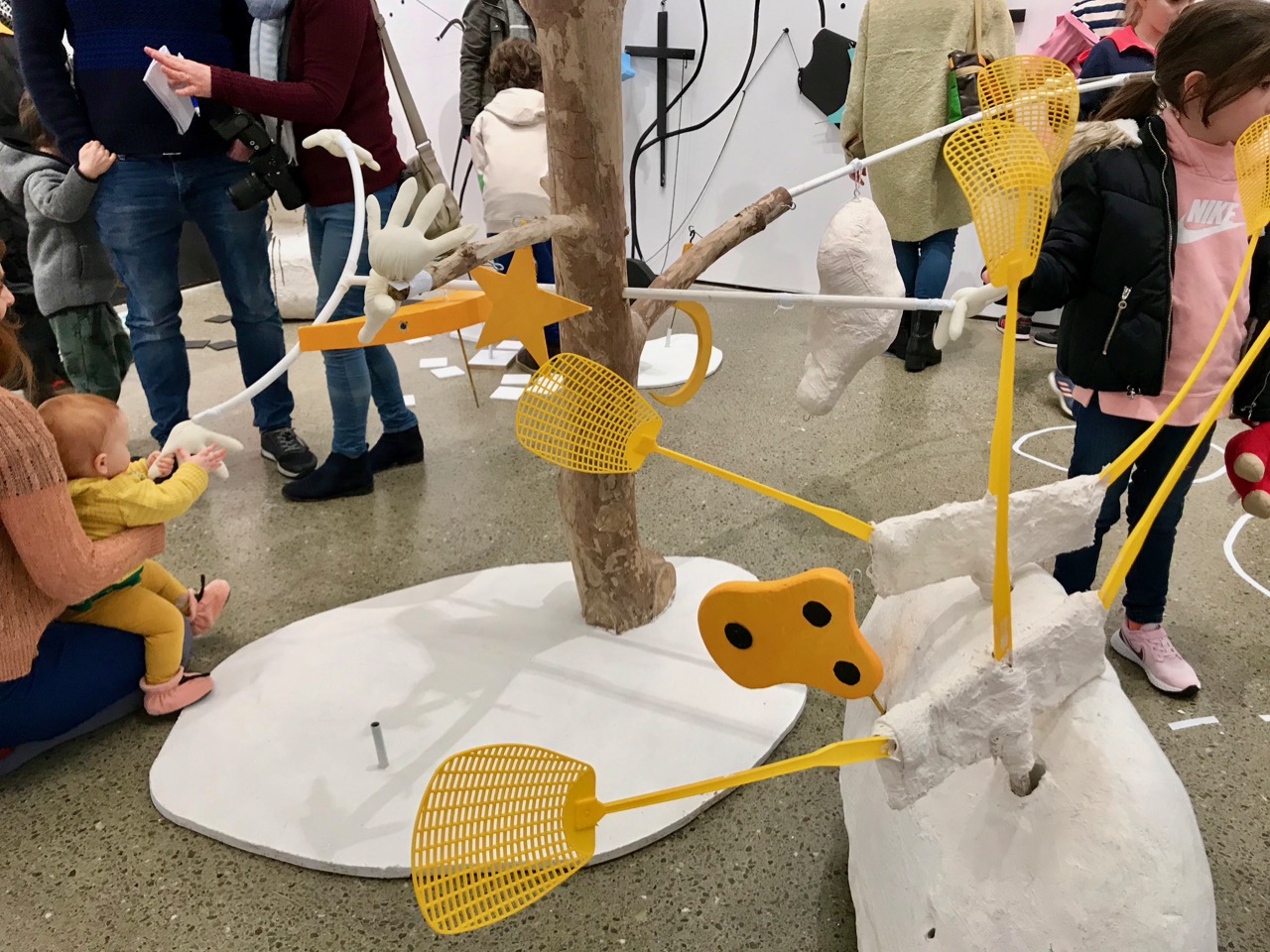
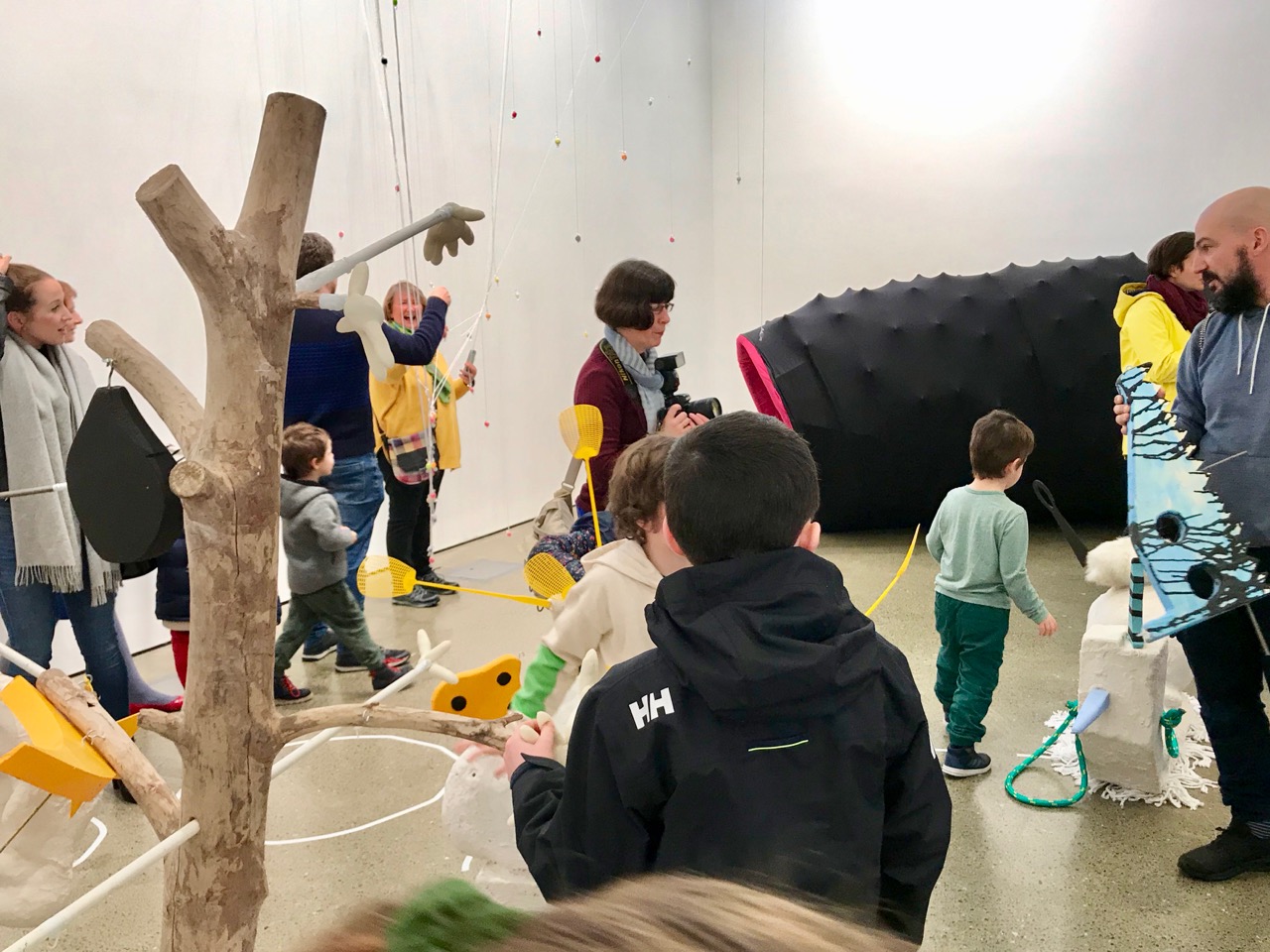
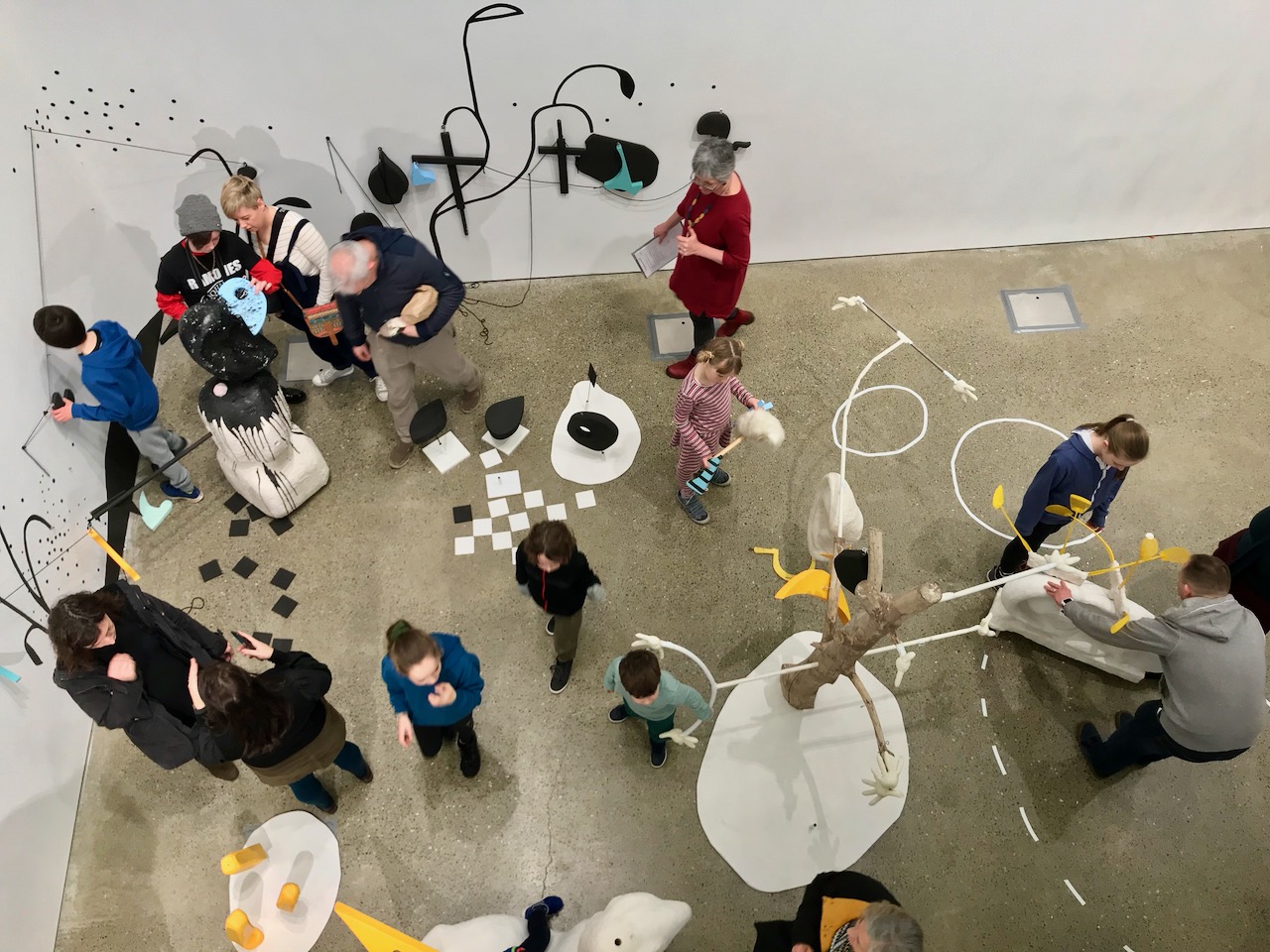
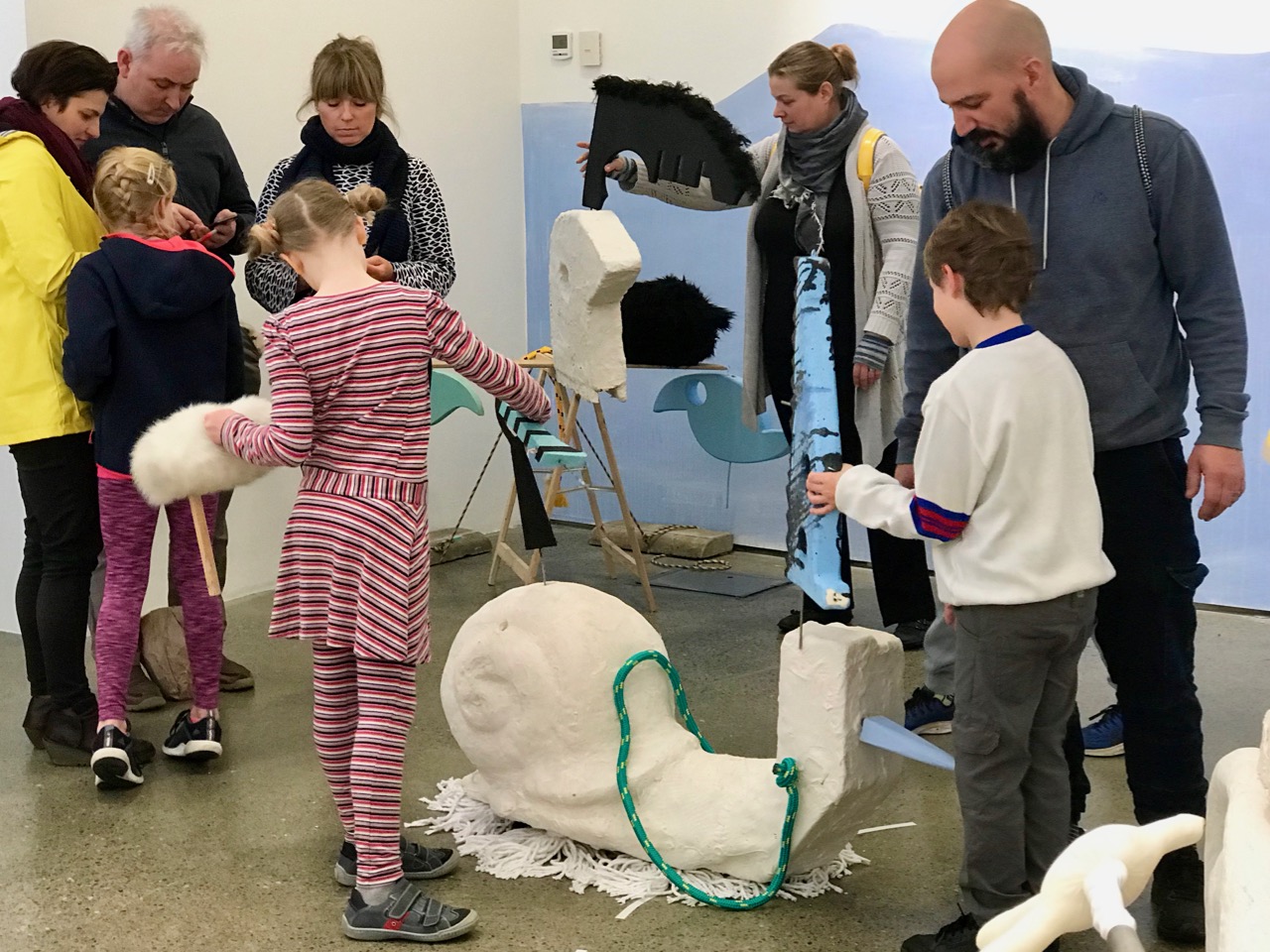
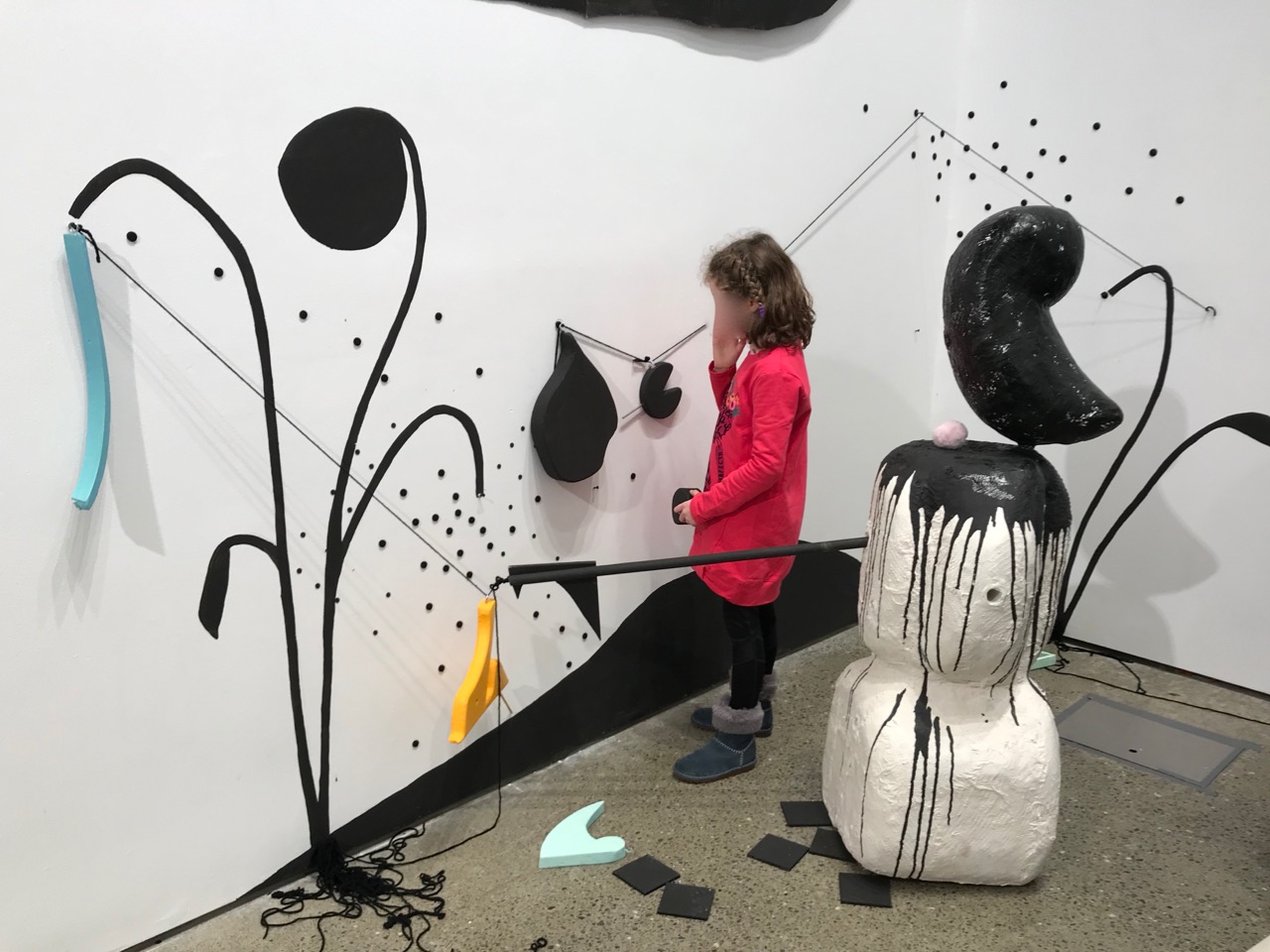
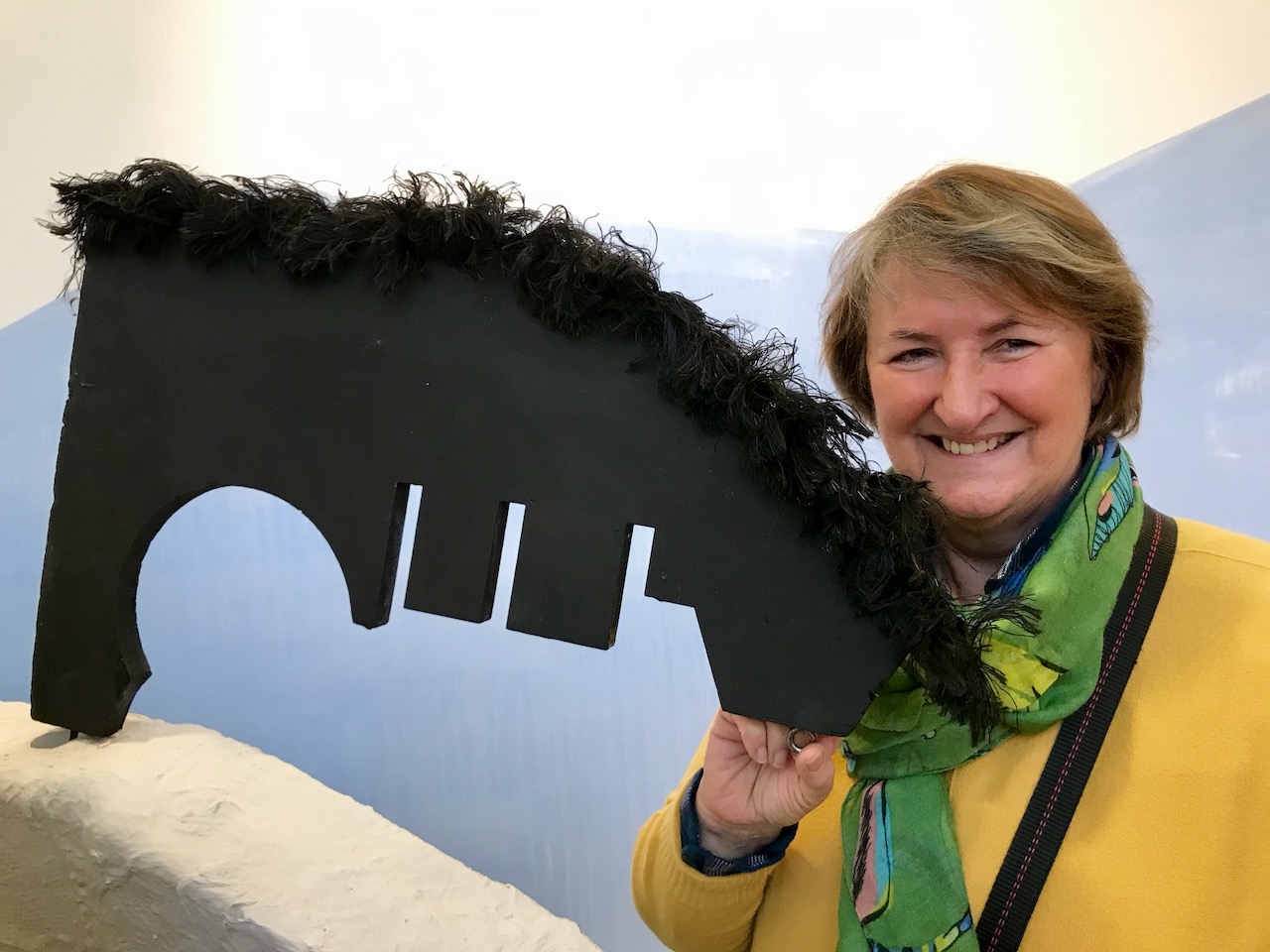
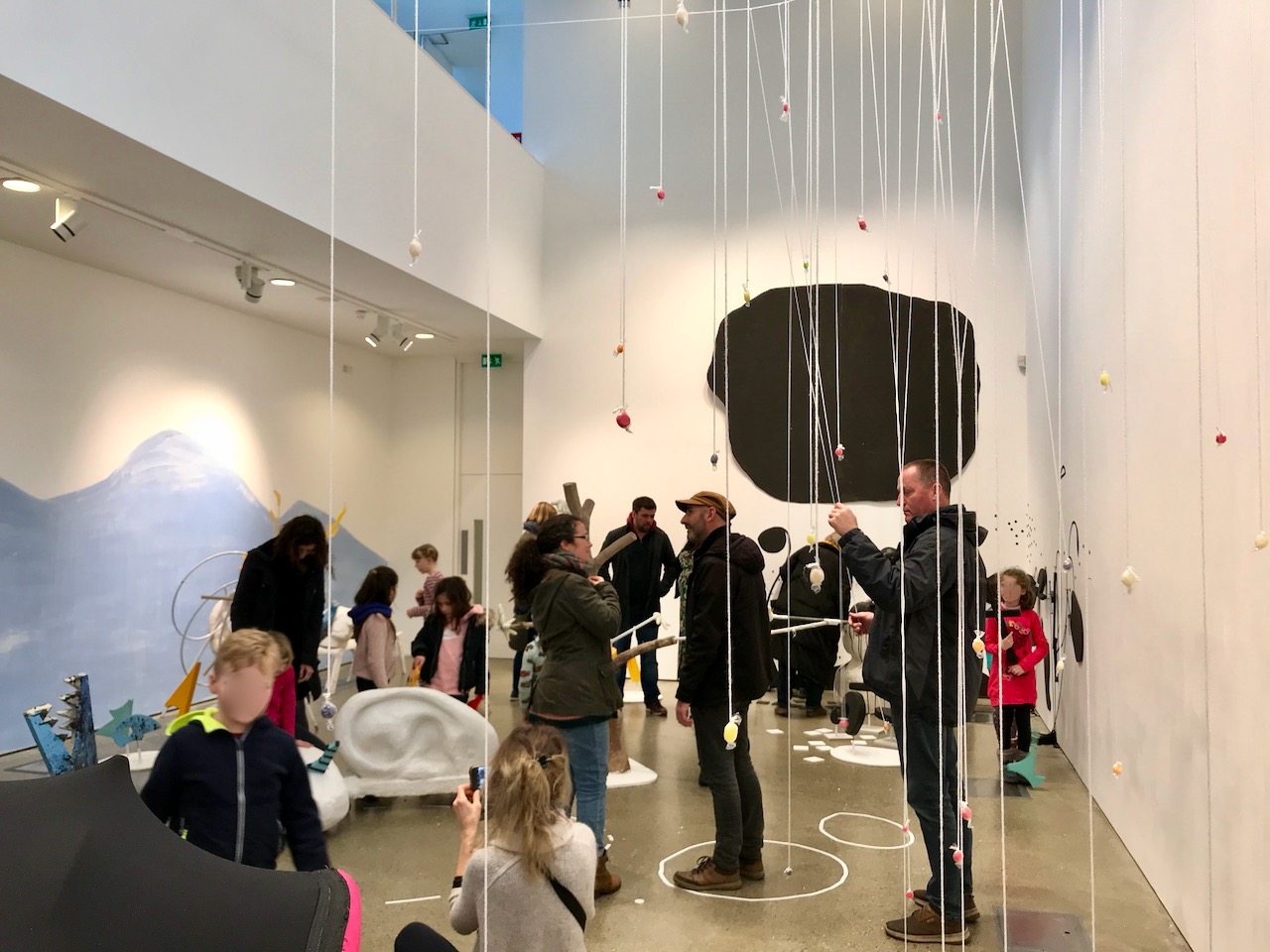
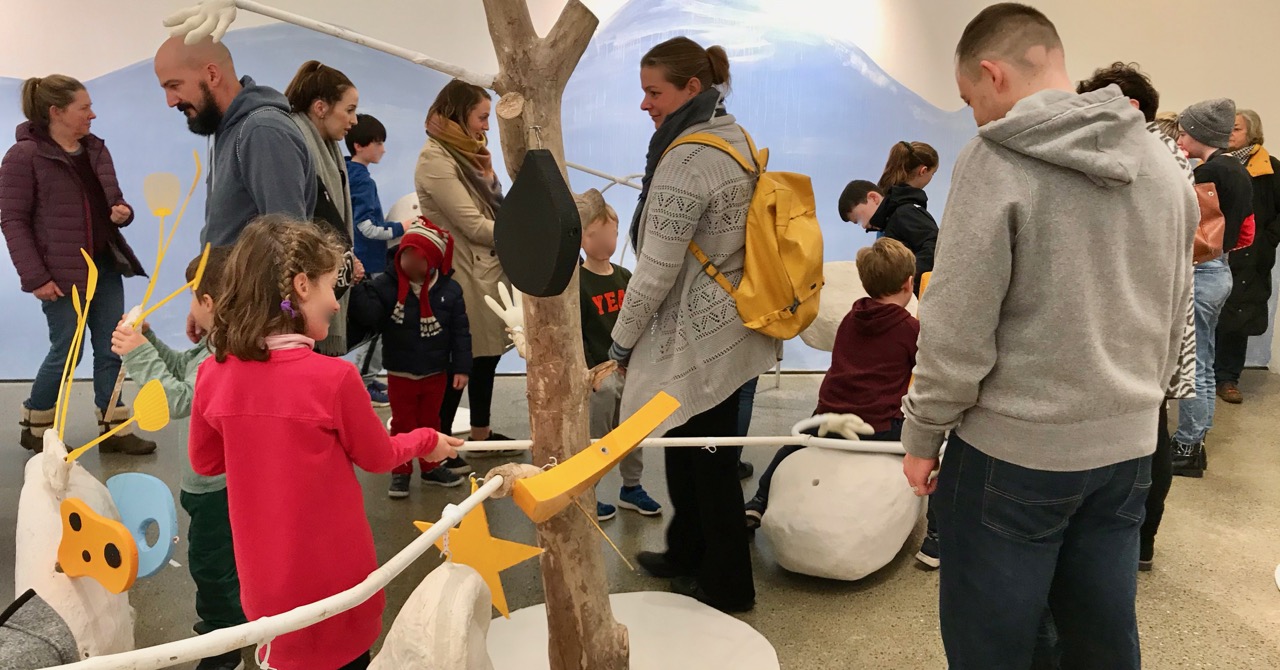
We went along, and were delighted. It’s advertised as an exhibition for children: take no notice of that! Just go and join in the fray – we all have a child in us. And it is a fray, in that it’s totally participatory. You can’t avoid taking apart everything you see, and putting it all back together however you want to. How amazing, to be encouraged – no, commanded – to get involved and act out the child. I wish I could show you the expressions of delight on the faces of all the ‘real’ children who were there, but today’s privacy laws mean that we can’t publish those. Instead, through some skilful juxtaposing and a little bit of PhotoShop, we hope that we can get across the sheer exuberance of all the activity.

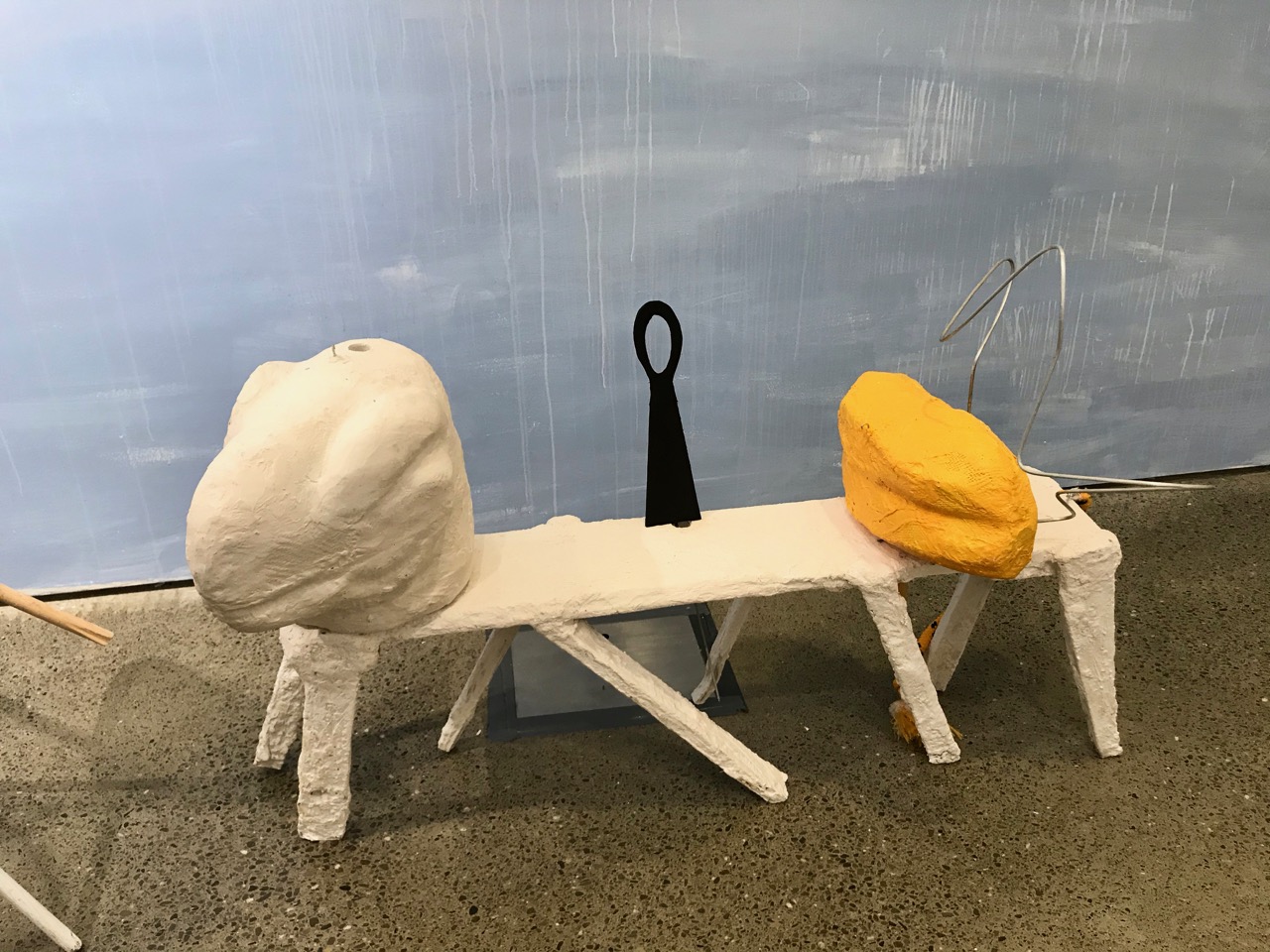
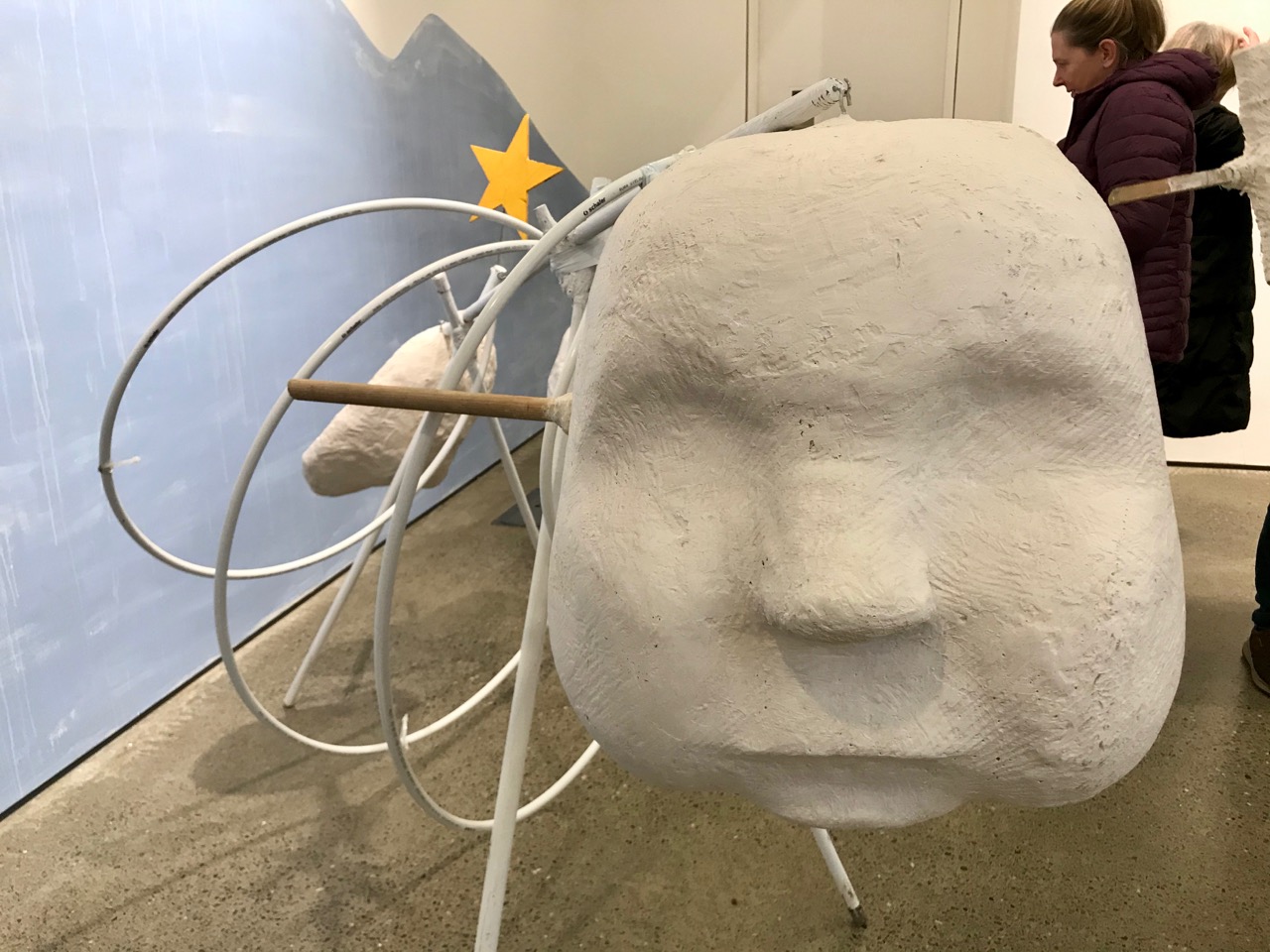
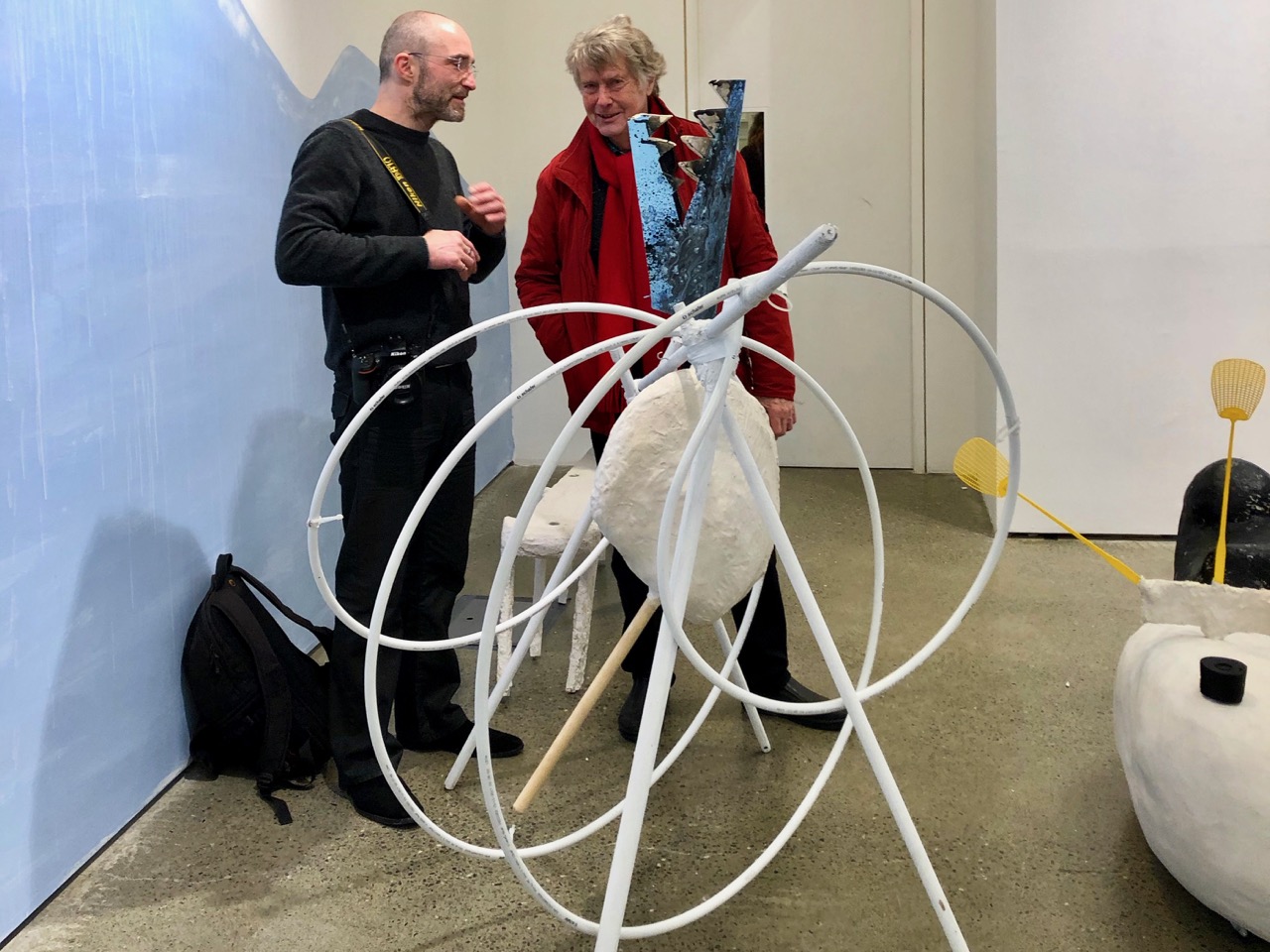
The ground floor gallery was full of shapes – many recognisable, some abstract – all brightly coloured, attractive and tactile. Each one could easily be a piece of ‘modern art’. The fun comes when you realise they can all be taken apart and put back together in unlimited combinations. There are no restrictions: everything has hooks, slots, sockets. This is your chance – everybody’s chance – to build sculptures, make murals, hang things on walls (or on each other!). There’s not a single Do Not Touch sign anywhere . . . Imagine the excitement!
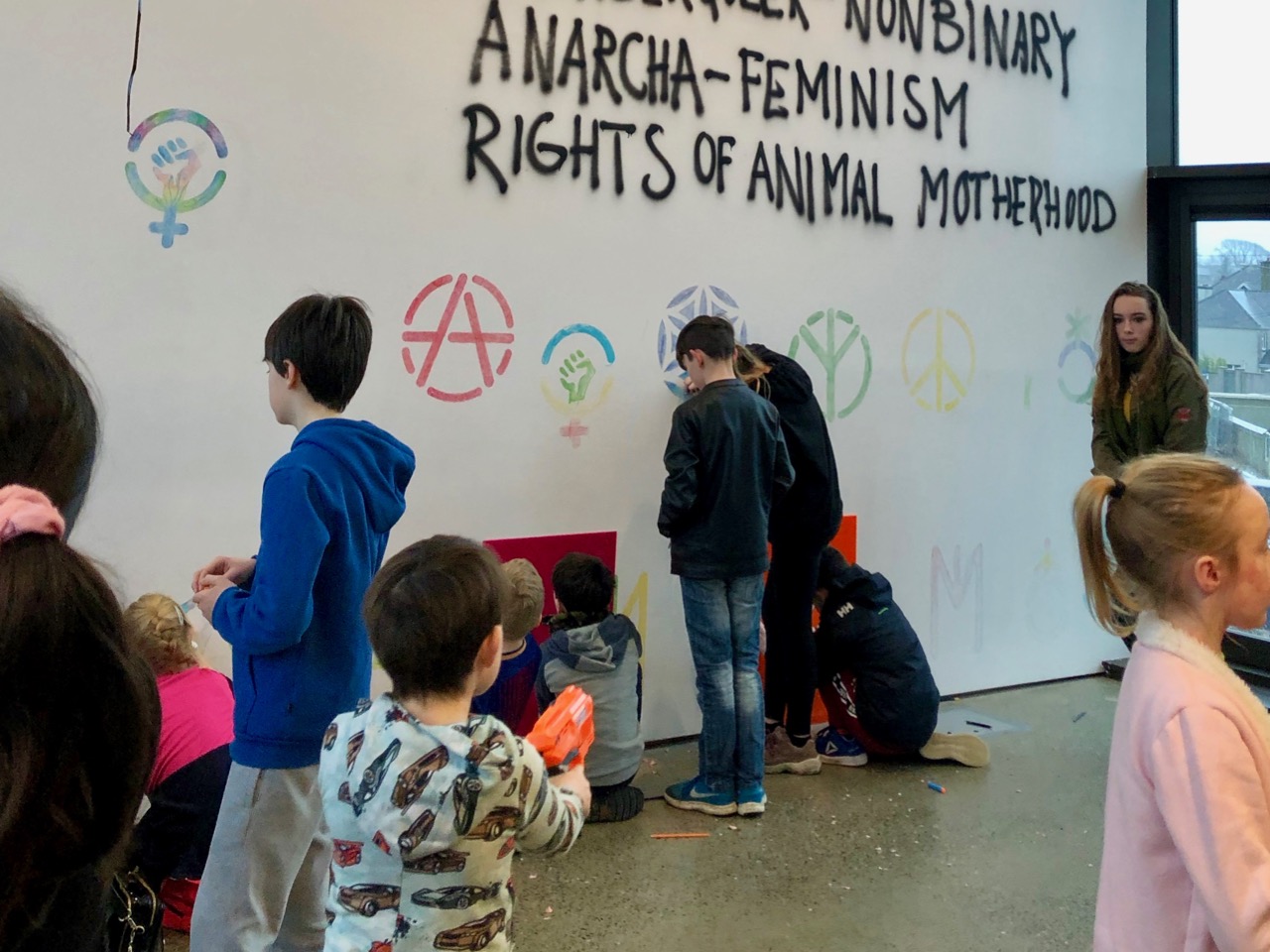
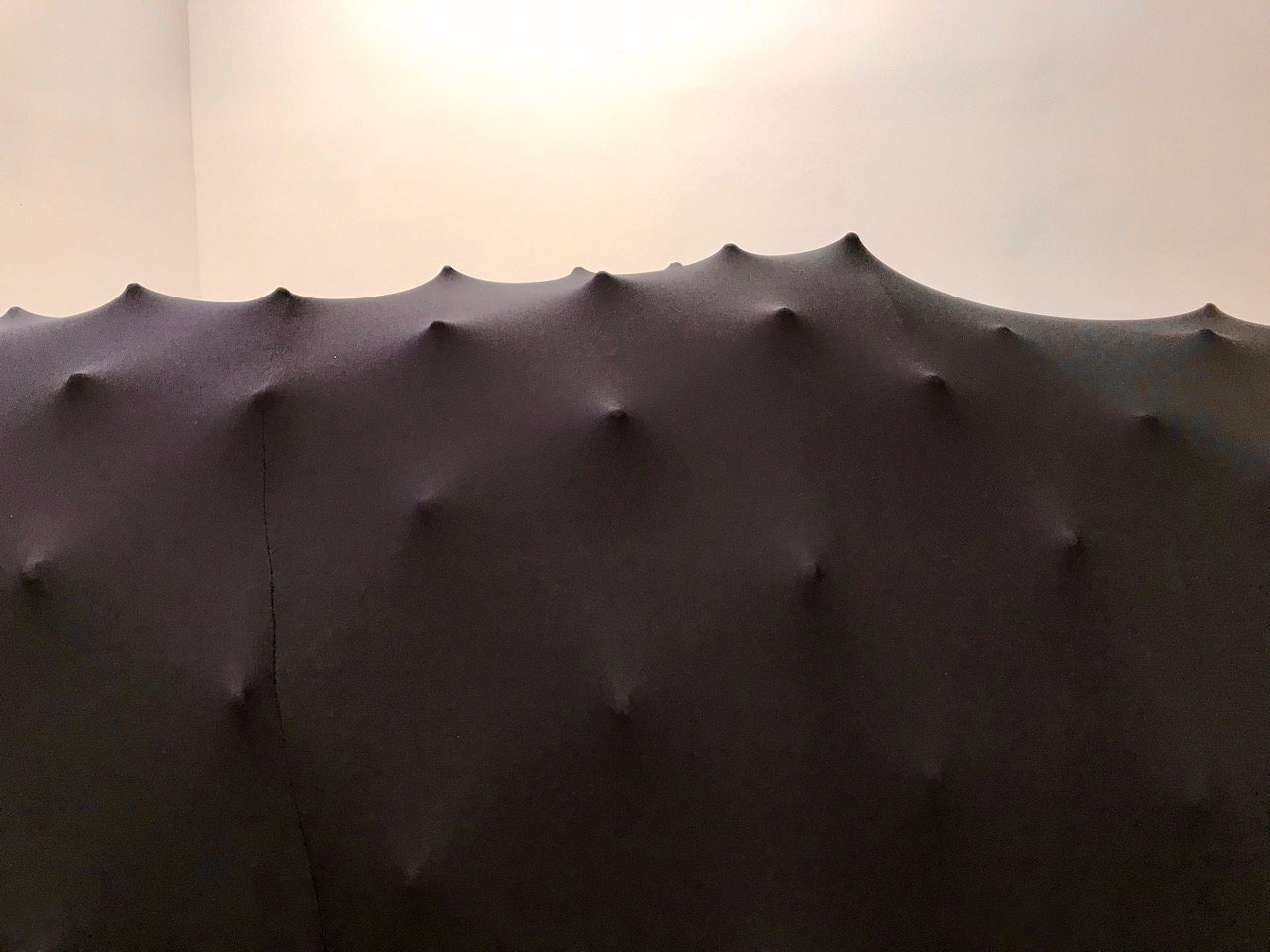
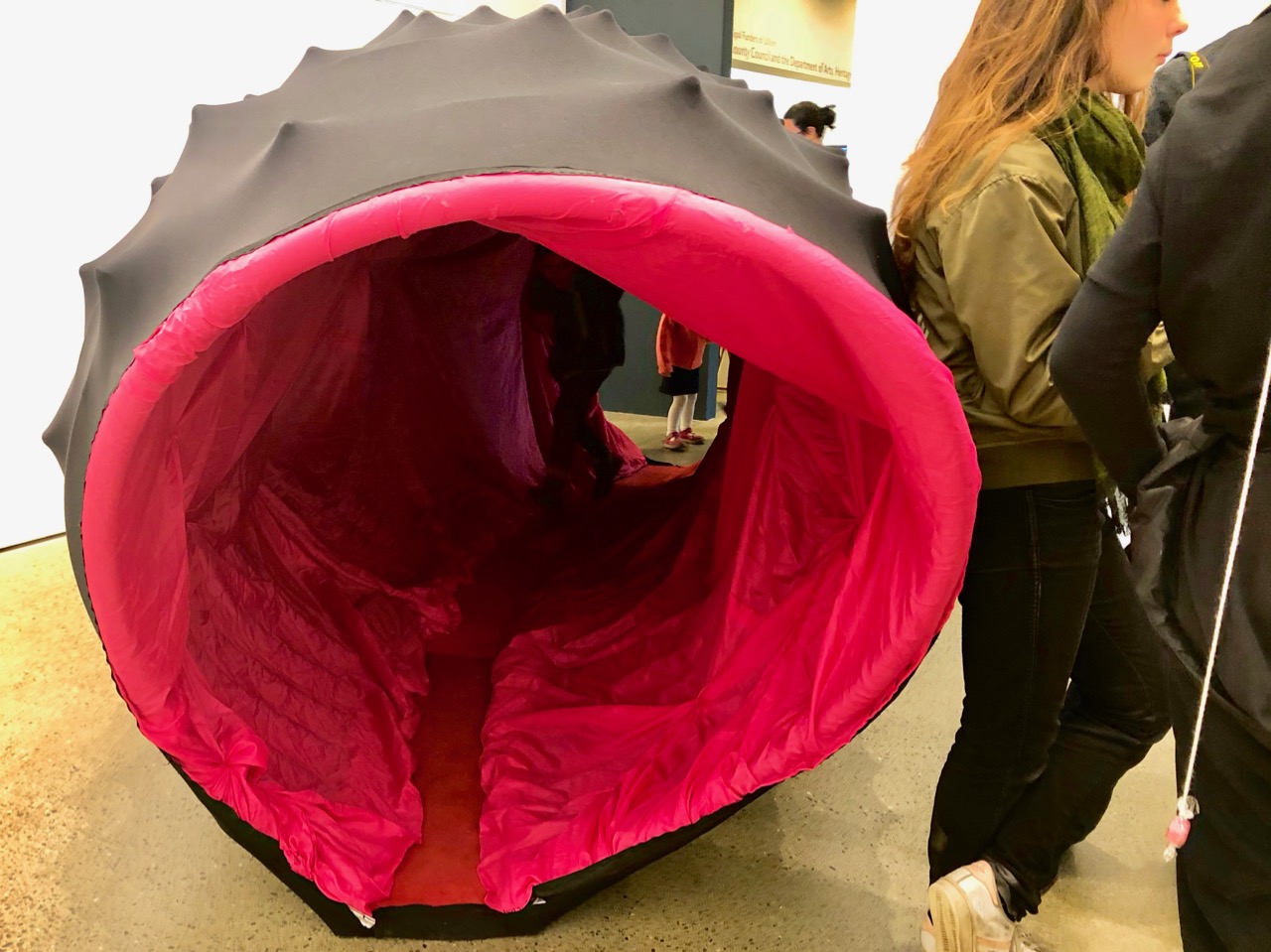
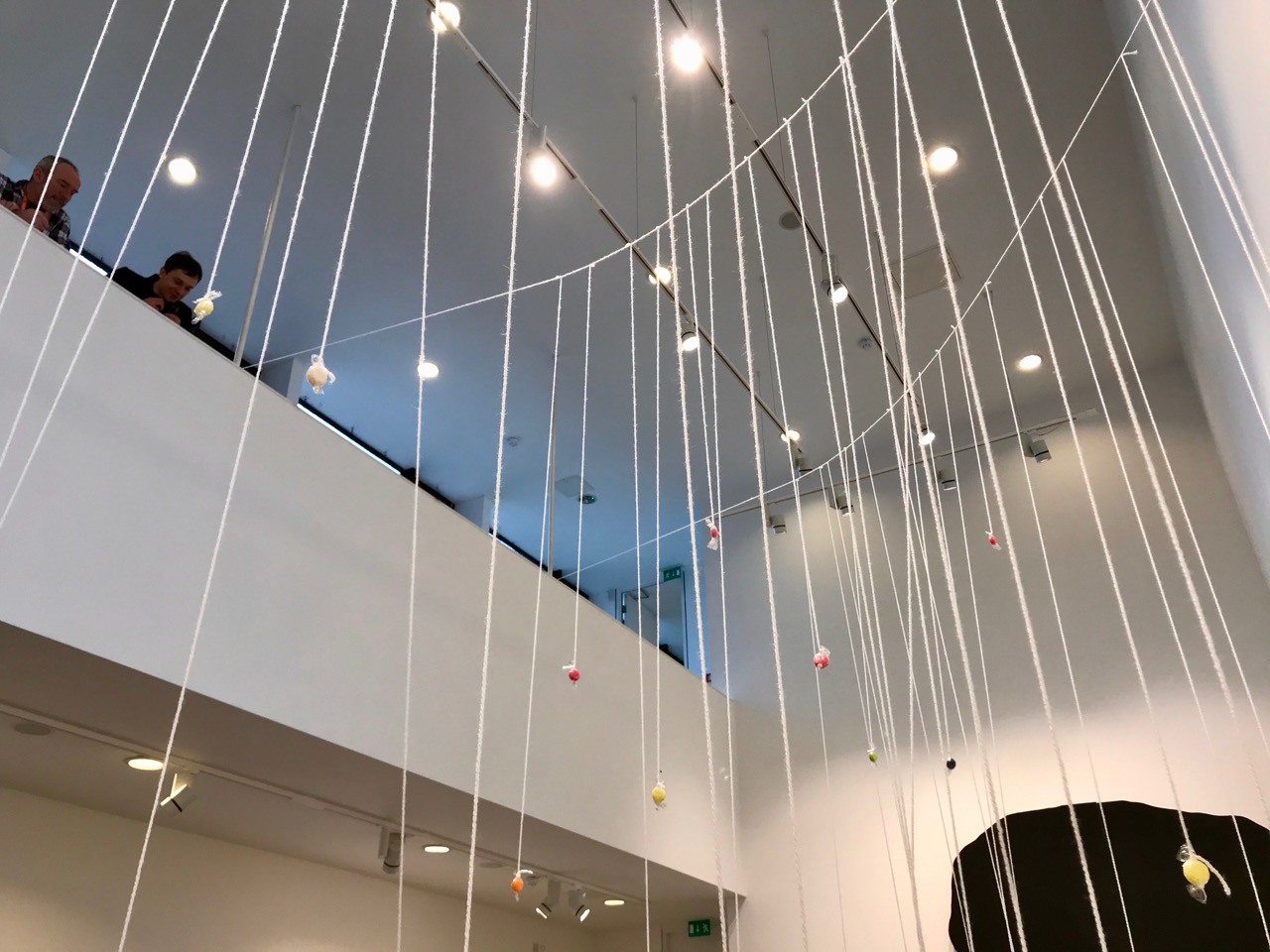
If you wanted to, you could enter the exhibition through a tunnel – it looked invitingly organic, if not somewhat anatomical. You were disgorged into a forest of sweets hanging on strings. Towards the end of the afternoon there were lots of empty strings and very few sweets. But, surely, that’s what it’s all about: consuming the art; embracing it, encountering it, making of it what you will.

It was interesting for us to note tidy-minded adults busily untangling the hanging strings, while their offspring revelled in getting them as muddled as possible. Meanwhile, we overheard a fraught parent exclaiming “I can’t believe you just ate the art!”

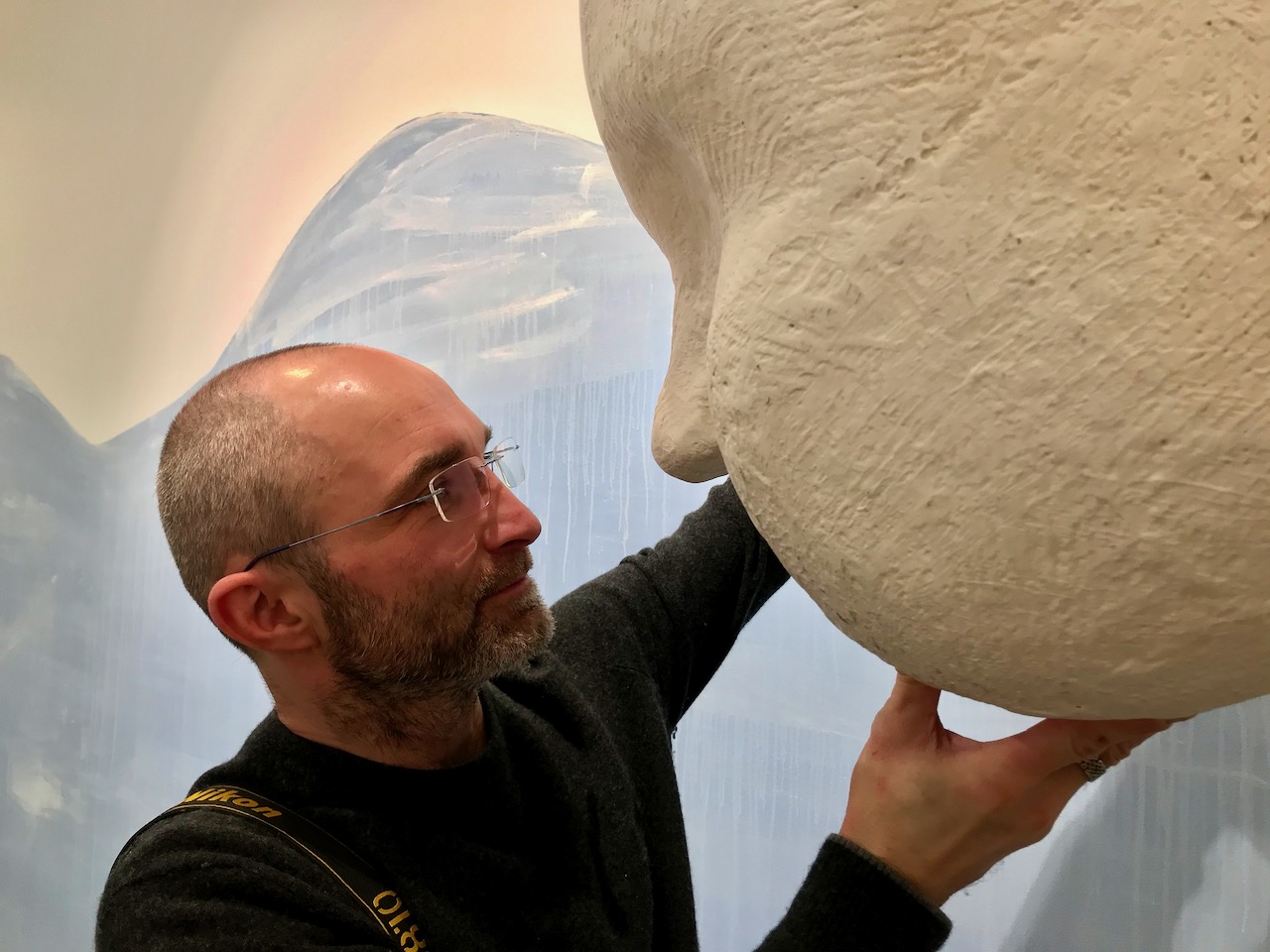
Art in Action is the brainchild of a group of Polish artists, and was first curated at the Municipal Art Center, Pomorska, Gorzów in 2019, with the intention of travelling on to Skibbereen. One of those artists, Tomasz Madajczak, has been based in Ireland since 2003, and has contributed to previous exhibitions at Uillinn. He provided the liaison between the two arts centres which resulted in this collaboration. He seemed completely at home among the exhibits:

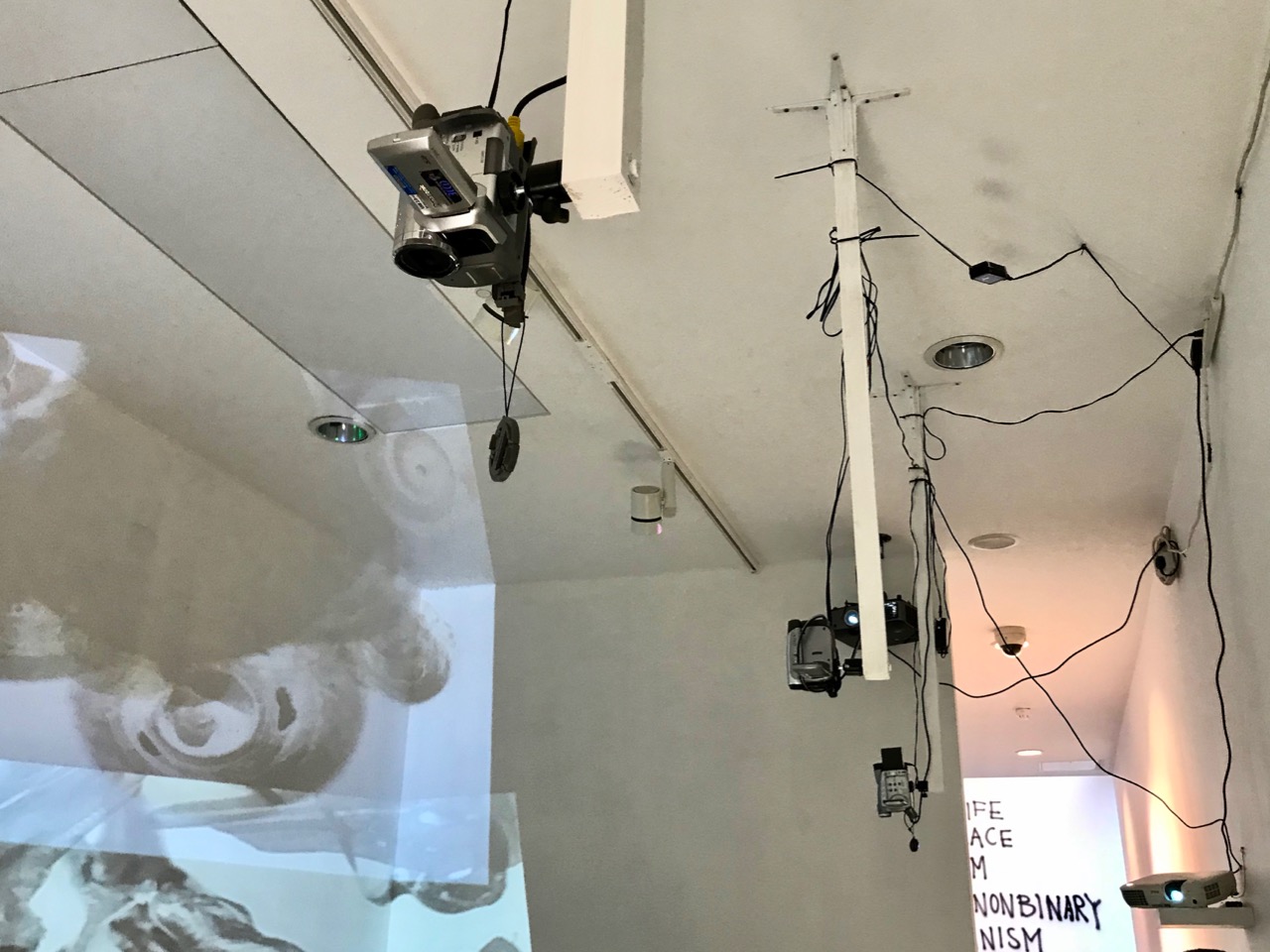
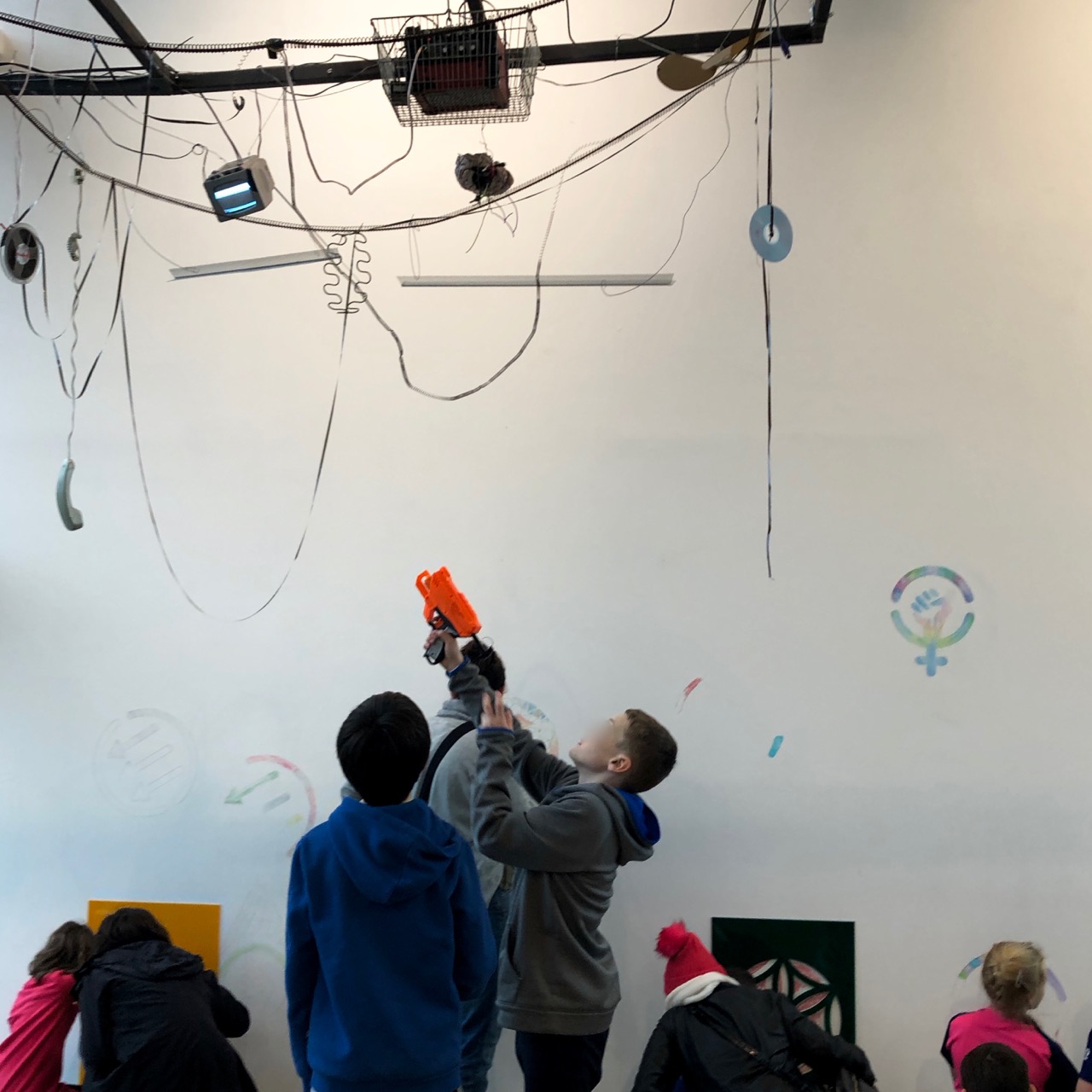
I need to persuade you all to visit this exhibition, so I won’t give away too much in this little preview. I will just mention the upstairs galleries, where some ingenious devices are available to ensure full interaction between art and spectators, including a modern take on the epidiascope (remember those? – you will if you are anywhere near my age!), pop guns for shooting down technological detritus, and over-aweing human voice amplification. Here are some further images to whet your appetites . . .
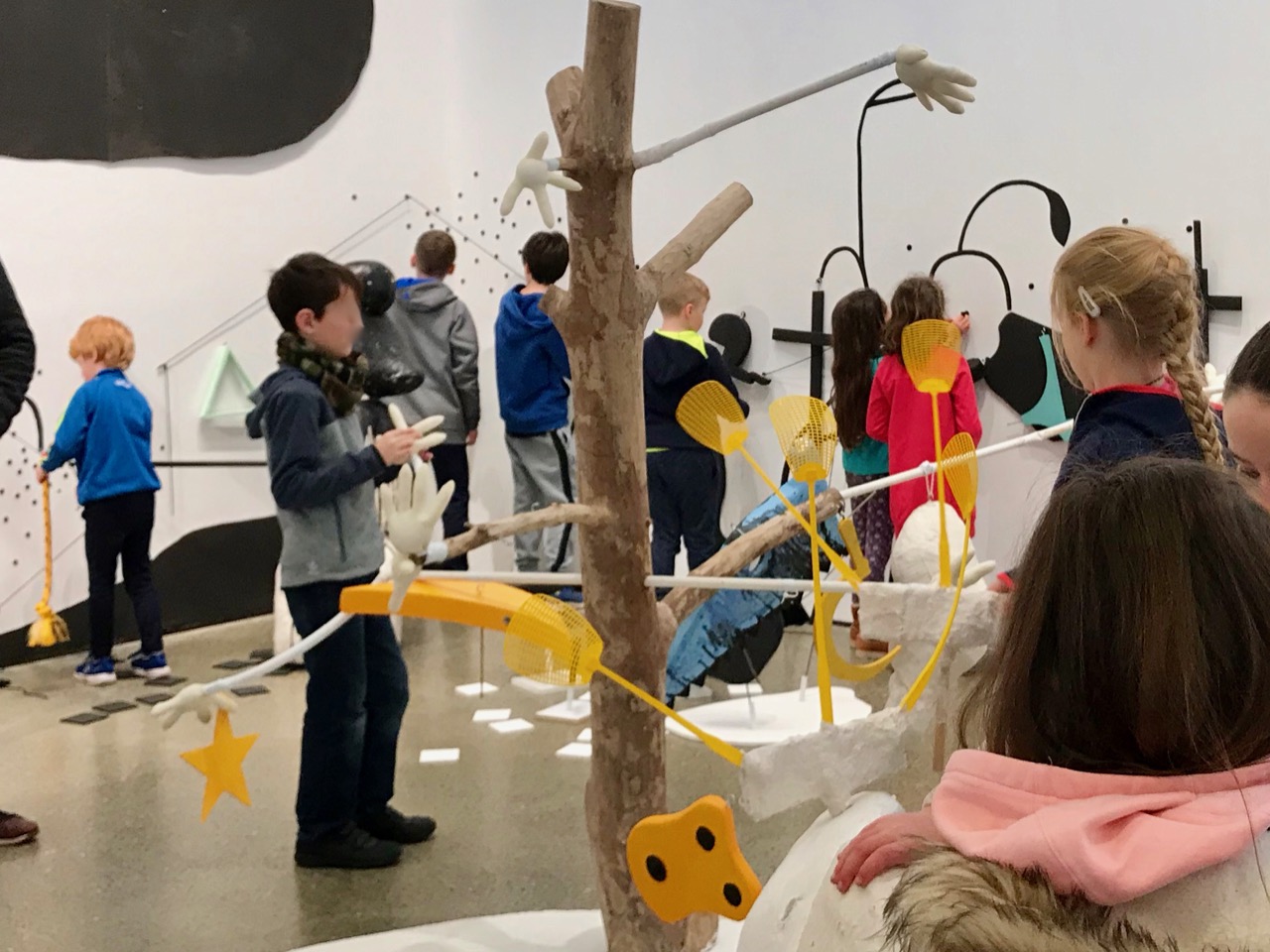
Don’t be shy about coming into this show and being part of the action! That’s exactly what it’s there for. All the better if you can bring along a group of children – or aim to be there when there are children in the gallery: the Arts Centre has a continuing programme of involving schools and other community groups. It’s the children, particularly, who will show you what being uninhibited means.

Art in Action is on at Uillinn, Skibbereen until 22 February 2020. It is curated by Bartosz Nowak, with work by Basia Bańda + Tomasz Relewicz, Ewa Bone + Ewa Kozubal, Tomasz Madajczak, Krzysztof Matuszak, Aleksandra Ska and Hubert Wińczyk. Open Monday to Saturday, 10.00am to 4.45pm daily. Special thanks must go to Uillinn’s Director, Ann Davoran, and her technical team for bringing this show to fruition, with special mention to Ballydehob’s Stephen Canty – who solves every problem! Uillinn receives financial support from the Arts Council and Cork County Council.

Fingal Mummers

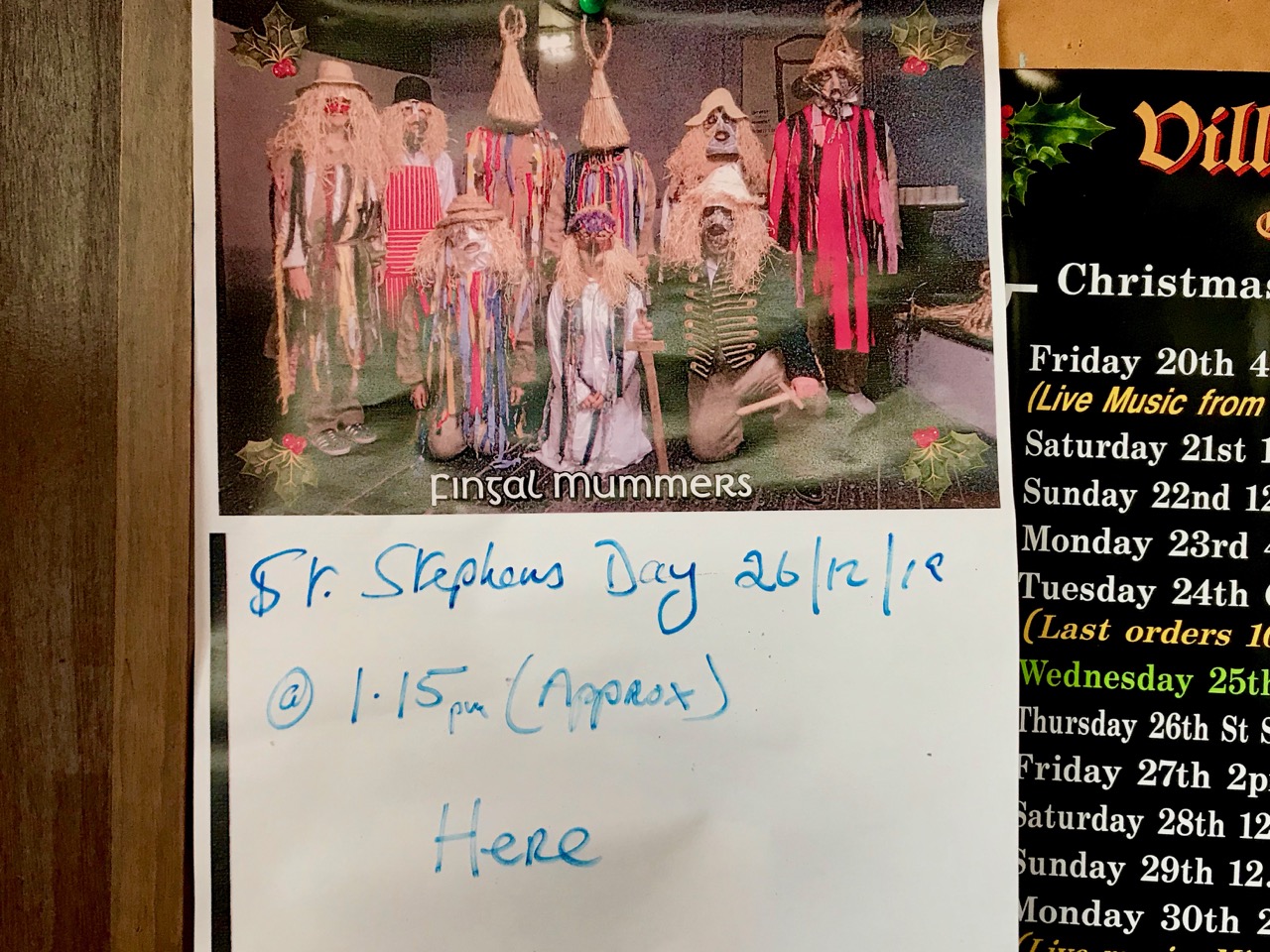
On Stephen’s Day we went up to Fingal County to see the Mummers – it’s a mere hare’s leap from Nead an Iolair. Until 1994 there was no county of Fingal: the area was part of Greater Dublin. Since that time this county has recorded the highest birth rate and population increase of any community in Ireland. Why? I would like to suggest that it’s because Fingal has , for countless generations, been the home of a Mummers tradition.

On our new green last evening here was presented the drollest piece of mummery I ever saw in or out of Ireland. There was St George and St Dennis and St Patrick in their buffle coats and the Turks likewise and Oliver Cromwell and a doctor and an old woman who made rare sport till Beelzebub  came in with a frying pan upon his shoulder and a great flail in his hand threshing about him on friends and foes, and at last running away with the bold usurper whom he tweaked by his gilded nose – – and then came a little Devil with a broom to gather up the money that was thrown to the Mummers for their sport. It is an ancient pastime they tell me of the citizens . . .
This account of Mummers in Cork is supposed to date from 1685, and is found in a manuscript collection in the Library of Trinity College Dublin, lodged by Thomas Crofton Croker in the 1840s. It is probably the earliest recorded portrayal of the custom in Ireland or Britain. Three hundred and thirty four years after this description of ‘an ancient pastime’ was written down, recognisably the same ‘mummery’ is happening every year across these islands around midwinter.

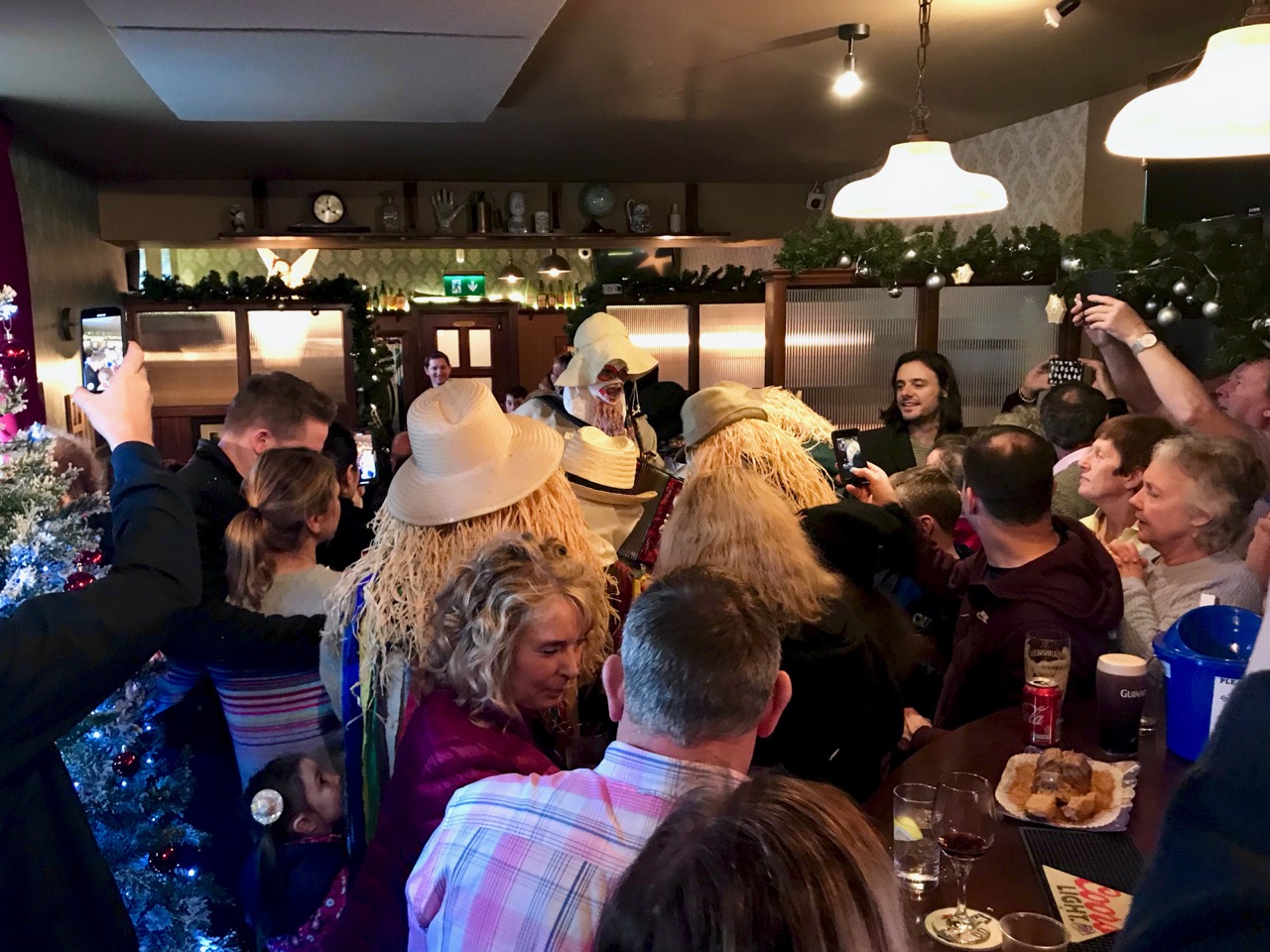
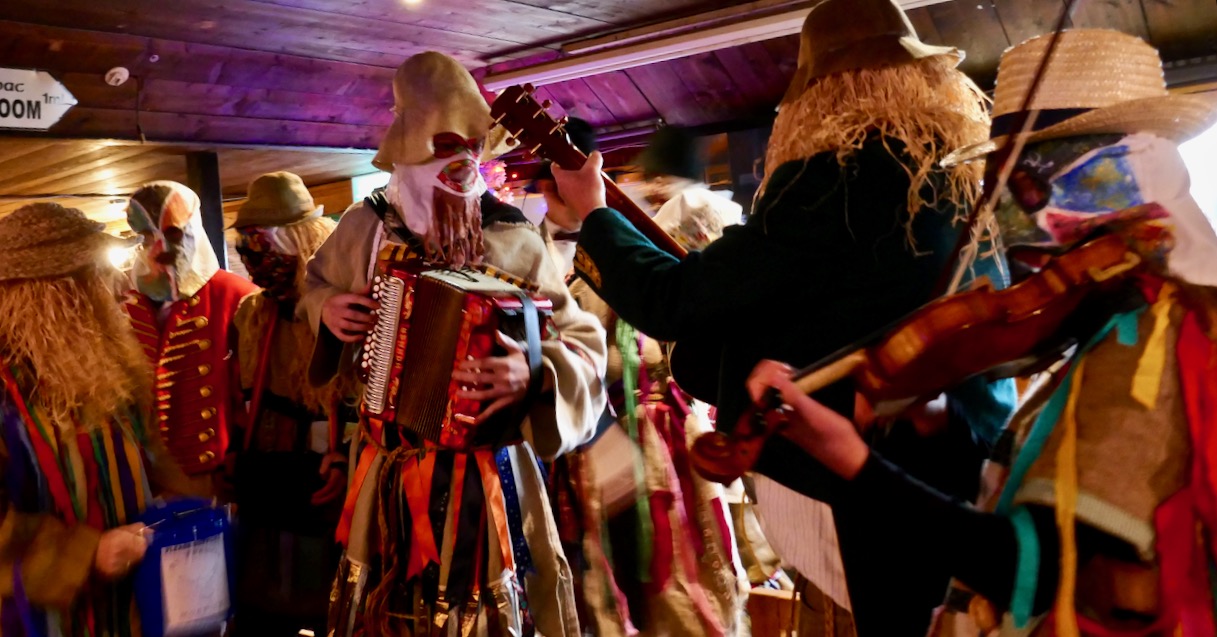
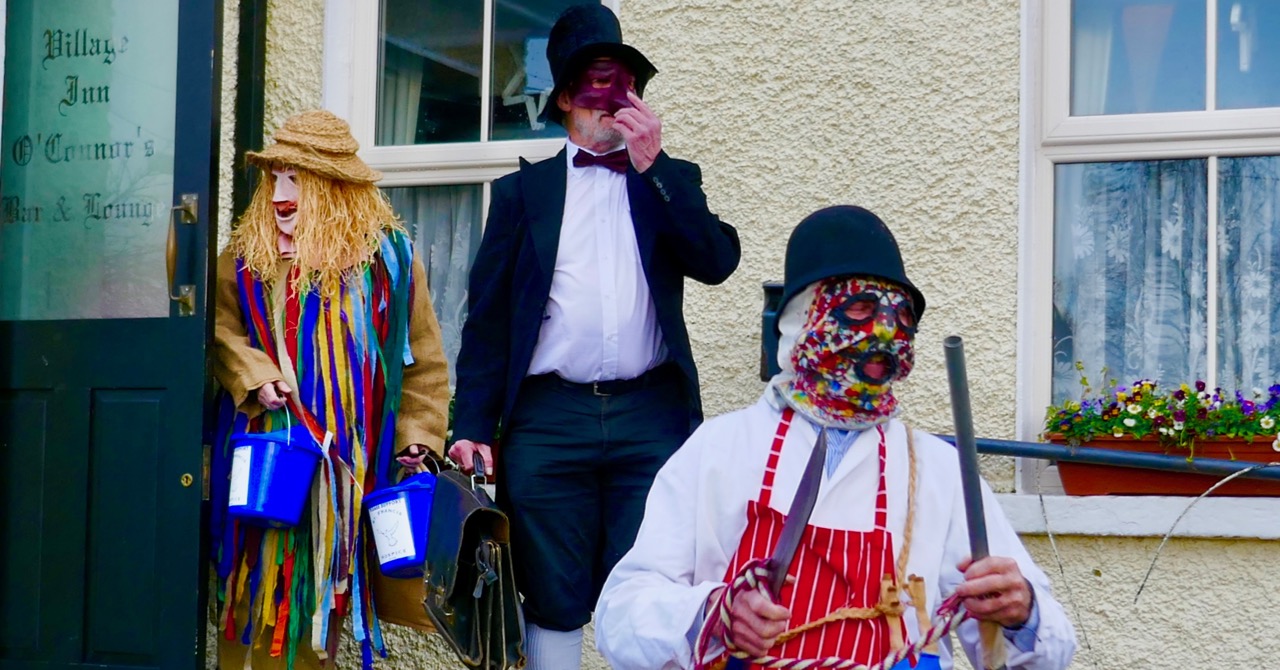
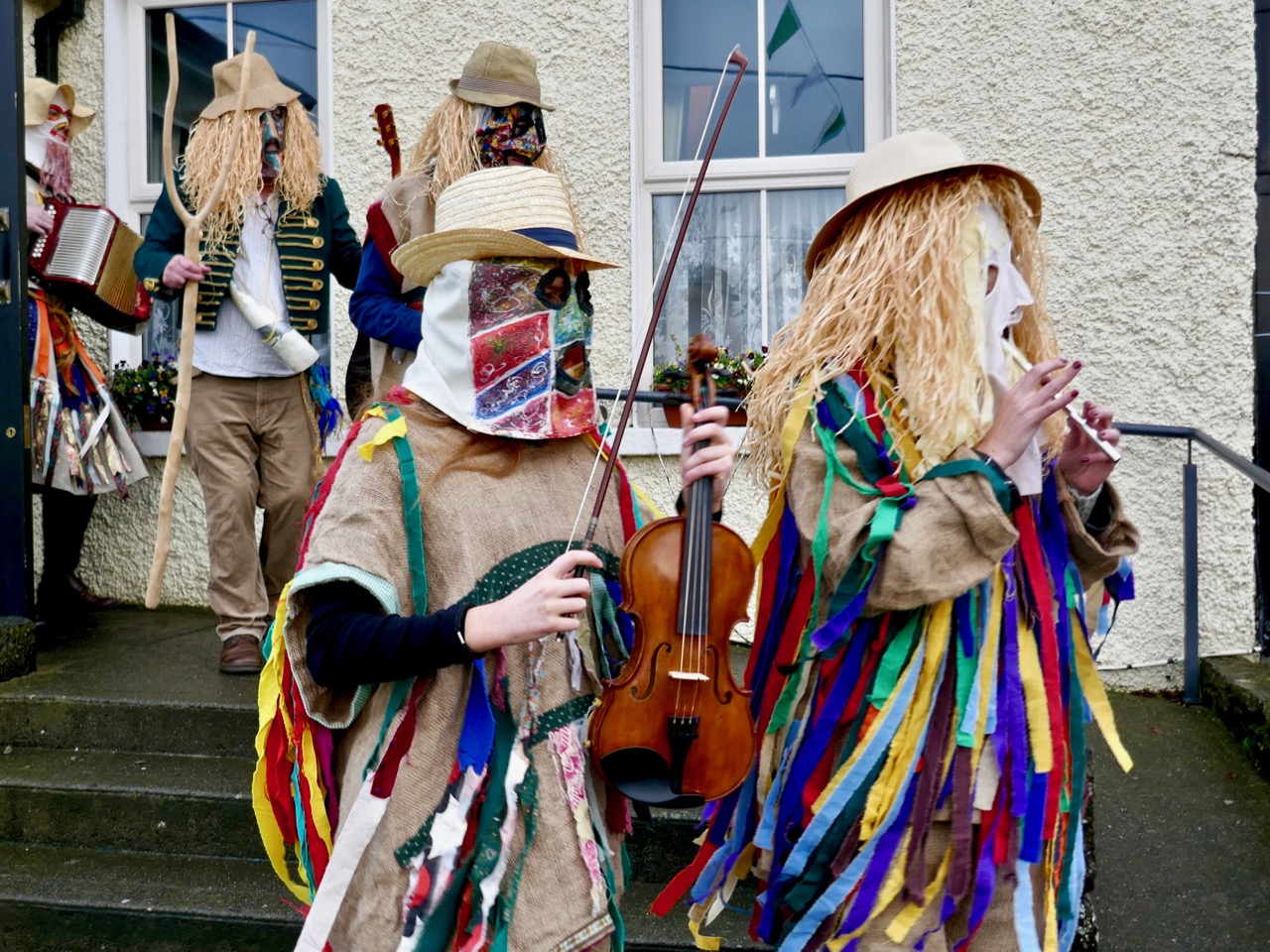
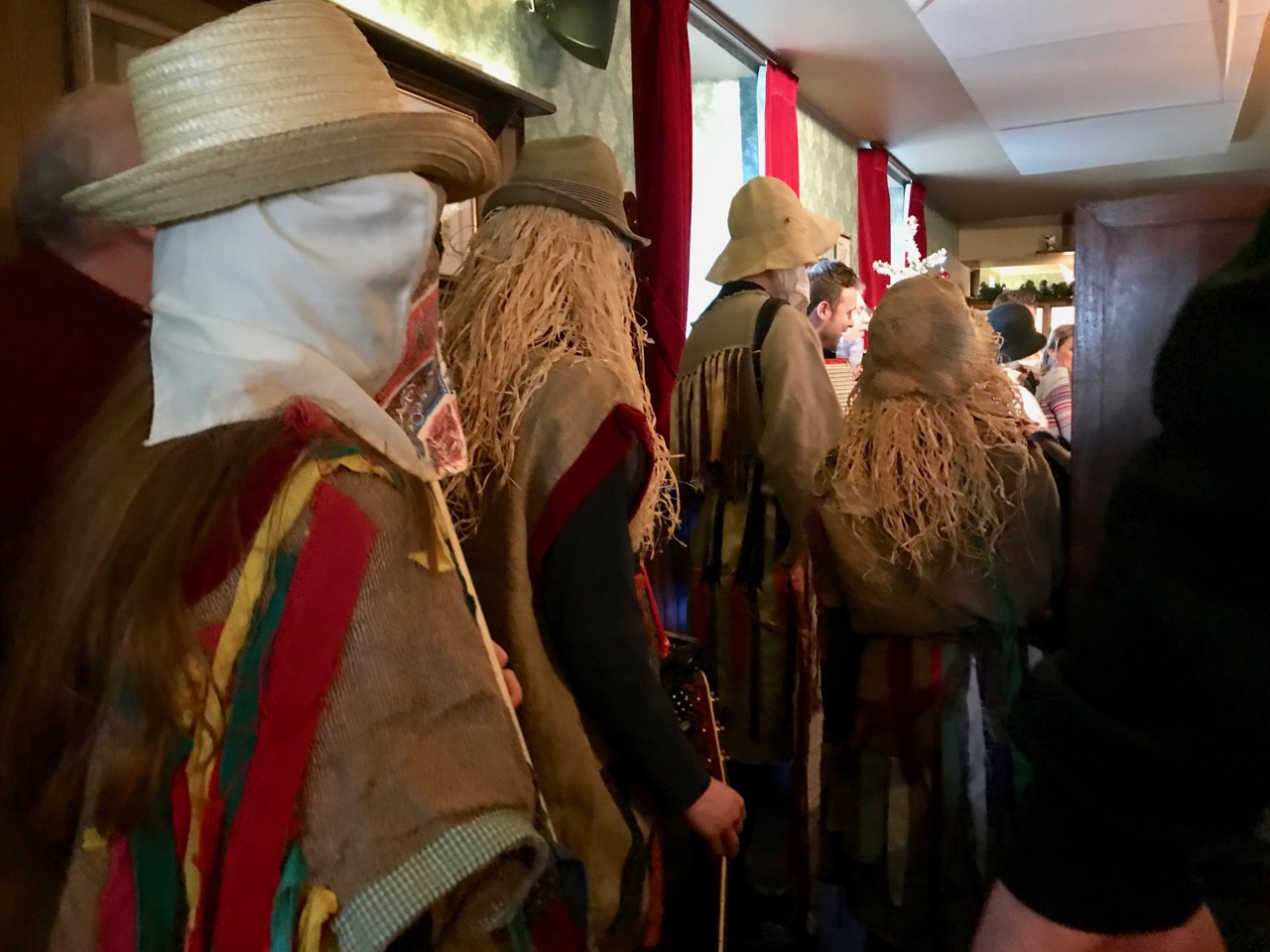
The Fingal Mummers ‘entering in’ (above). Following a revival in the 1950s, this group travels around several towns and villages on Stephen’s Day, performing their play to crowds who gather to see them. We tracked them down to their starting point, O ‘Connors Inn, Ballyboughal, which seemed a quiet little settlement until we walked through the door of the pub and realised that every resident of the village – and quite a contingent of visitors – was crammed inside waiting expectantly for the visiting players. The excitement was tangible, and everyone was in good spirit, enjoying the Christmas cakes, puddings and treats that were being freely handed around.

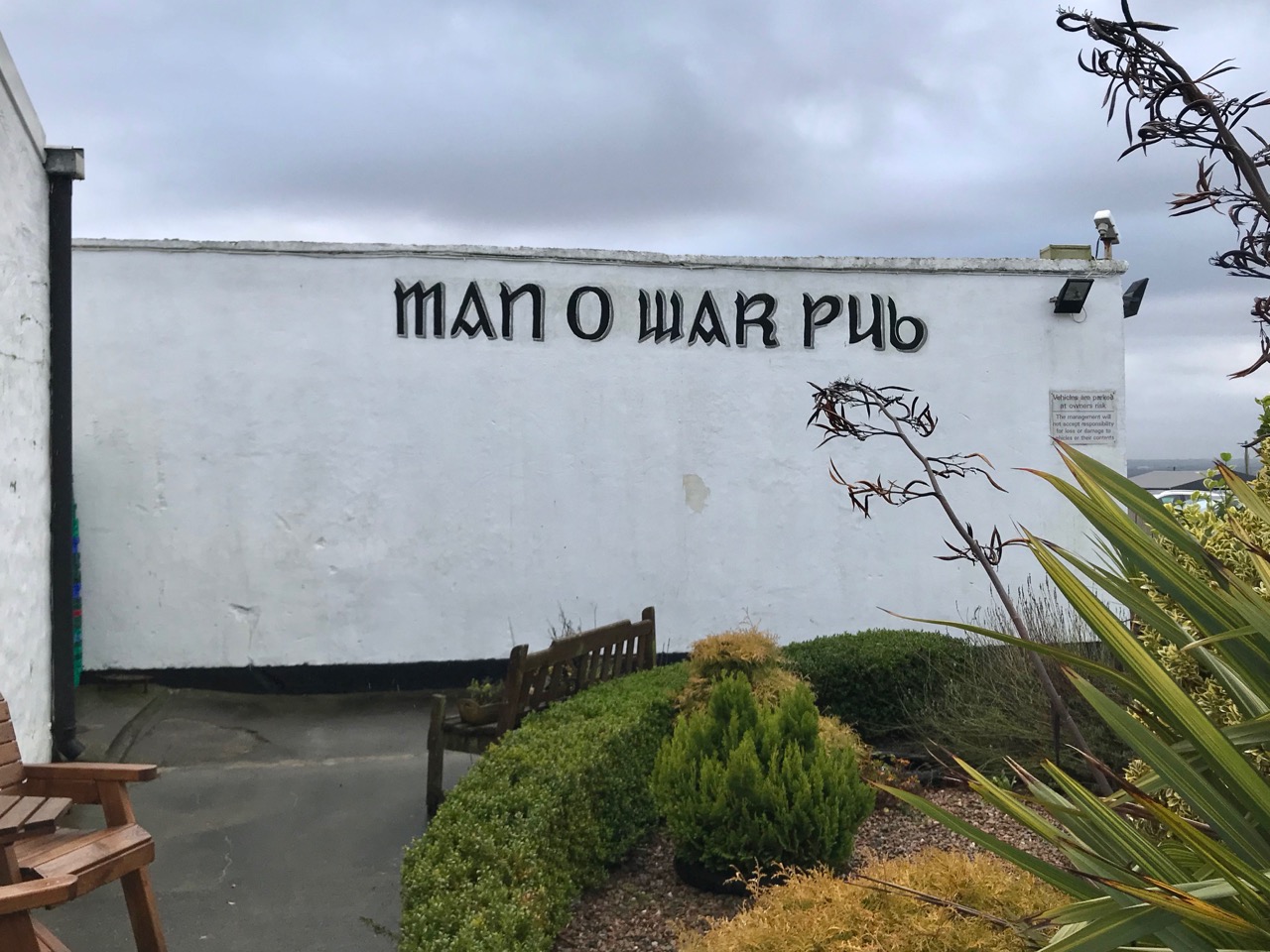
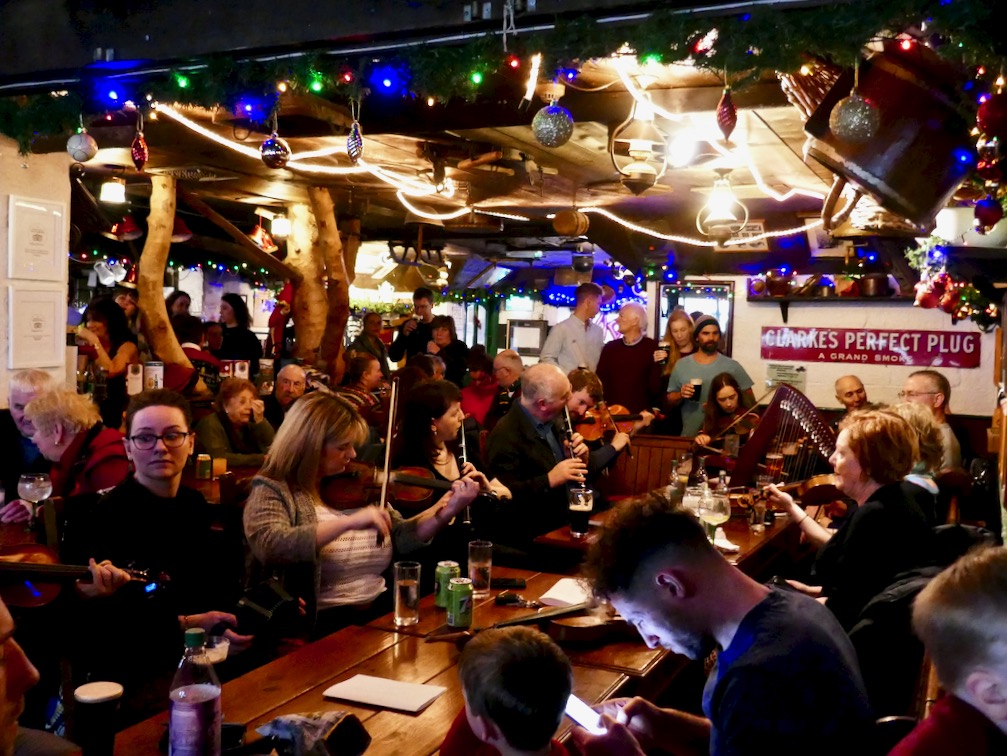
It seemed that the visit to O’Connors was a purely ritual appearance, as the crowds and the noise were too overbearing to permit a performance of the play. There was music and singing, but the group eventually moved on – with us following – to the next venue: Man O’War! This bar, which also gave its name to the scattering of houses around it, was evidently established in 1595 and became a toll point on the turnpike section of the main Dublin to Belfast road in the 1700s. The road has long since been superseded and is now a quiet lane. The pub, however, has grown in size and reputation and, on Stephen’s Day was packed: a large number of musicians was seated around an enormous table, and post-Christmas festivities were in full swing, with an air of expectancy leading up to the arrival of the Mummers.

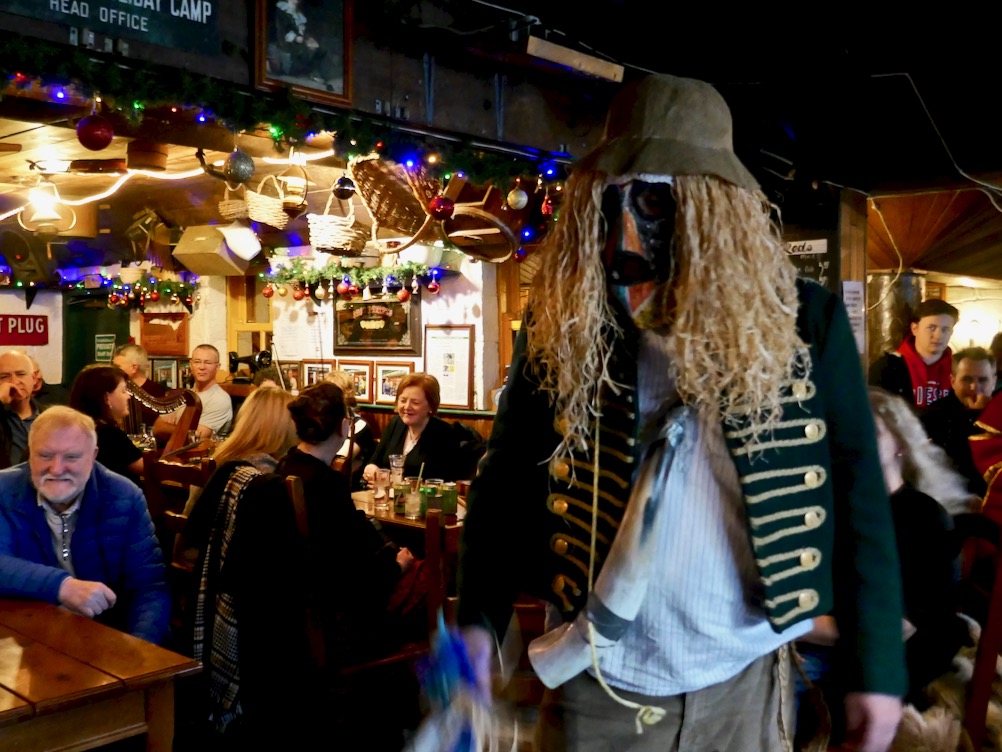
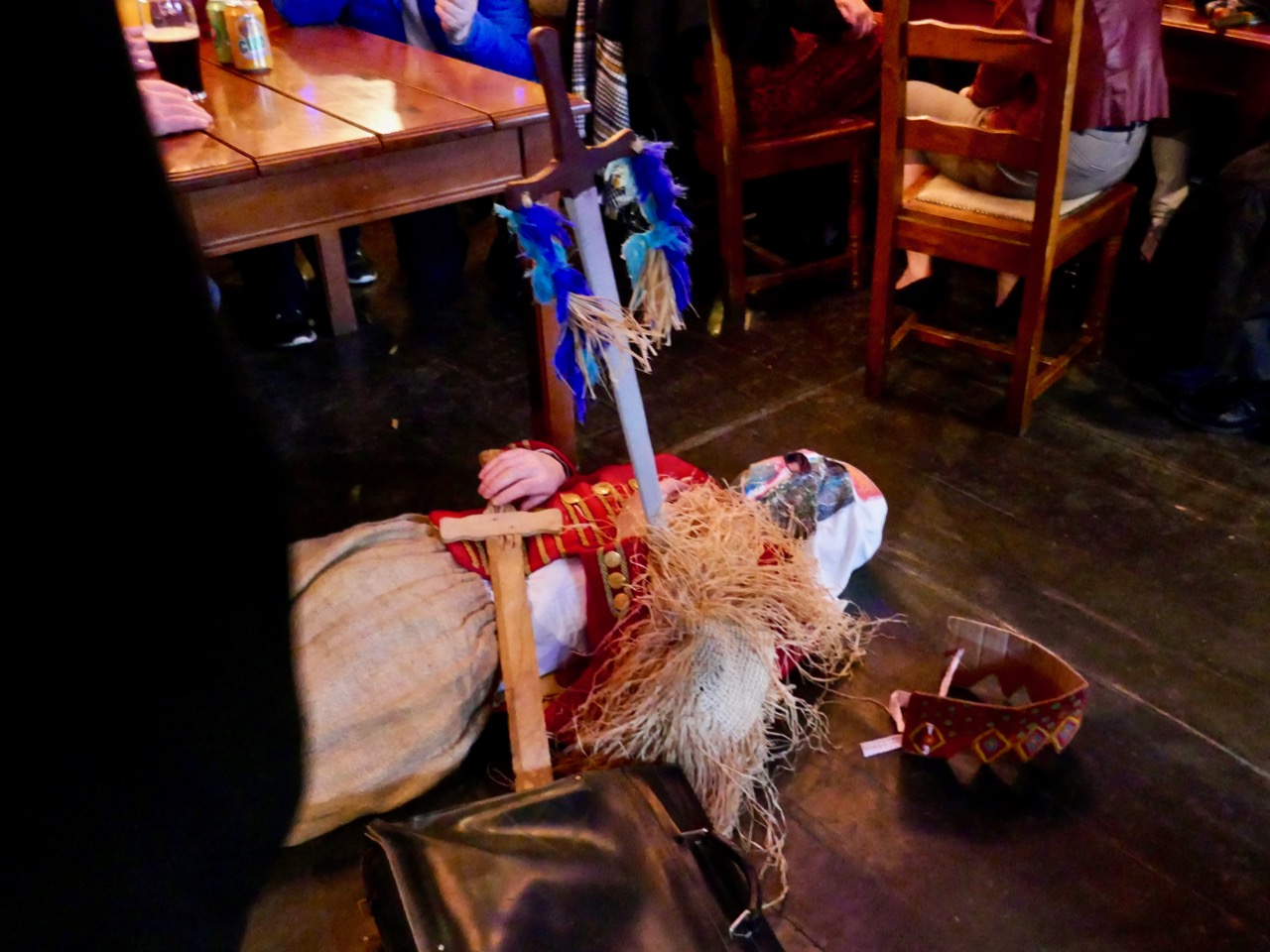
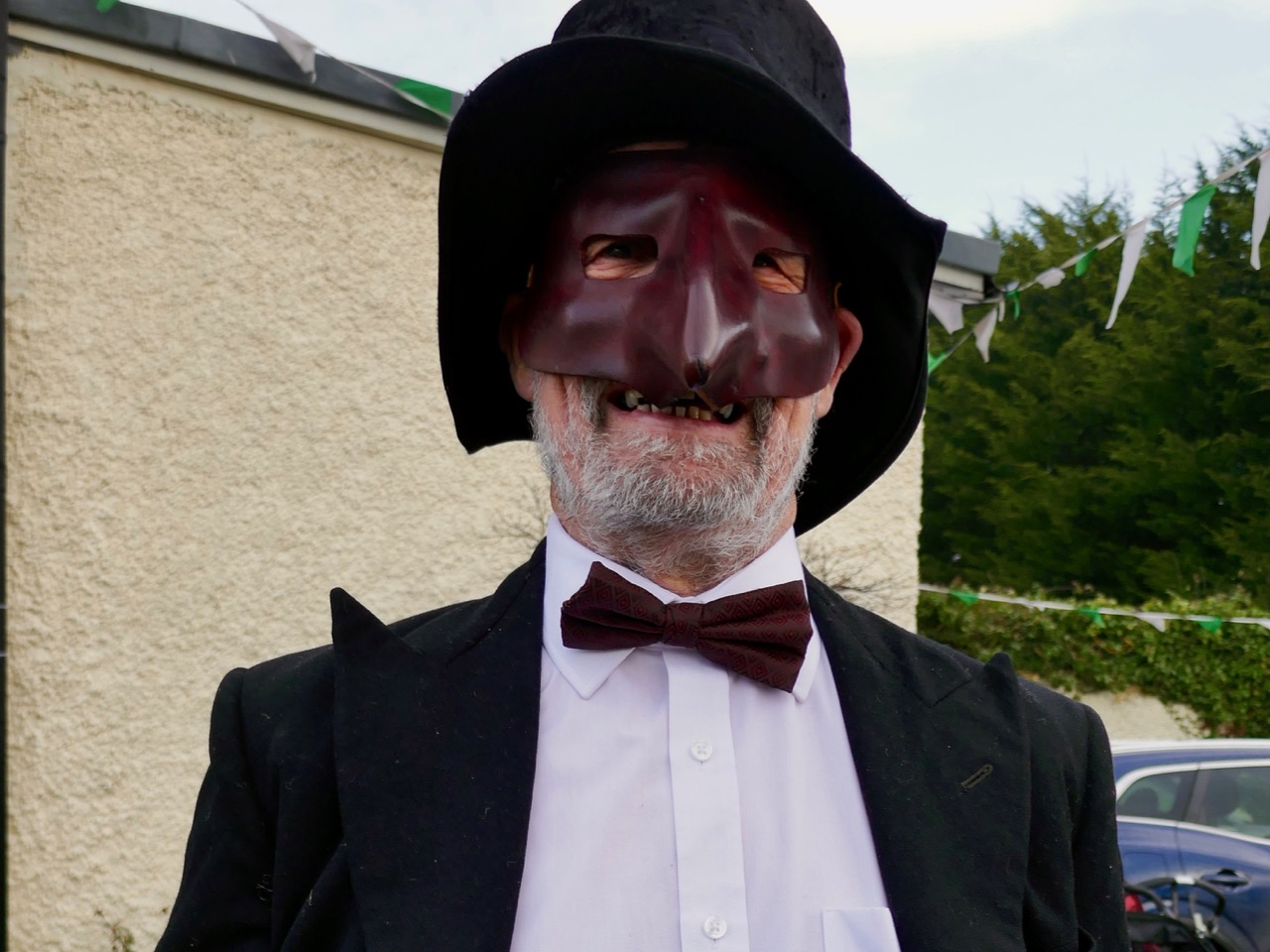
It was at Man O’War that we saw the Fingal play performed. There are around a dozen characters, which include St Patrick, Prince George, The Doctor, The Butcher, Jenny Wren and Beelzebub. The main protagonists, Patrick and George, fight with swords until the former kills the latter (obviously!). A quack doctor is brought in and raises George to fight another day. There is considerable humour, innuendo and – always – music and dance. A most important aspect, however, is the appearance towards the end of the play of a character – Slick-Slack – who carries a large family on his back (usually dolls and teddy bears).

From upper picture – heroes Patrick and George, fiercesome Doctor and musicians

For me, it was just slipping back to old times: from when I could barely walk we attended the Mummers play at Crookham Village in Hampshire, England, every Boxing Day, and I absorbed the tradition into the rhythm of 1950s life. Here are the Crookham Village Mummers around that time:

A mid 20th century photograph of the Crookham Mummers, Hampshire: could the little boy on the right be me? The characters in this play, left to right – Roomer, Slasher, Trim Tram, Doctor, Turkish Knight, King George, Old Father Christmas

Into adulthood I never questioned the existence of the Mummers: they were just an essential part of Christmas – like carols, bells and reindeer. As soon as I was able, I joined the Mummers myself and now, after decades of performing it, carry the complete play in my head (the Hampshire version of it, anyway). It was only when my interest in folklore became academic that I asked myself: what is all this about? And then I became aware of the significance of mummery in the traditional cultures of northern Europe, Scandinavia – and beyond – and saw its place and relevance to the season when the sun gets to its lowest point and then has to be encouraged back again: cold and darkness have to be replaced in the natural cycle with light, warmth and regeneration. The old spirit of winter has to be supplanted by the young fertility character who carries his wife and (large) family on his back. In Fingal that is Slick-Slack; in Hampshire it is Trim-Tram who rounds off the performance:

In comes I, Trim-Tram, left hand press gang: press all you bold fellows to sea to fight the French and Spanish. Although my name be Jolly Jack, wife and family on my back – although my family be but small, I thinks myself best man of all . . .
Trim-Tram fights with Old Father Christmas and kills him, causing some consternation to younger members of the audience. Trim-Tram concludes:

Ladies and gentlemen, see what I have done: killed my poor old Father Christmas, just like the setting sun. So, while I sits and takes my ease, good people – give us what you please . . .

At which point the hat is passed around, giving the watching crowd a chance to partake of the ‘luck’ which the Mummers bring to the communities they visit.

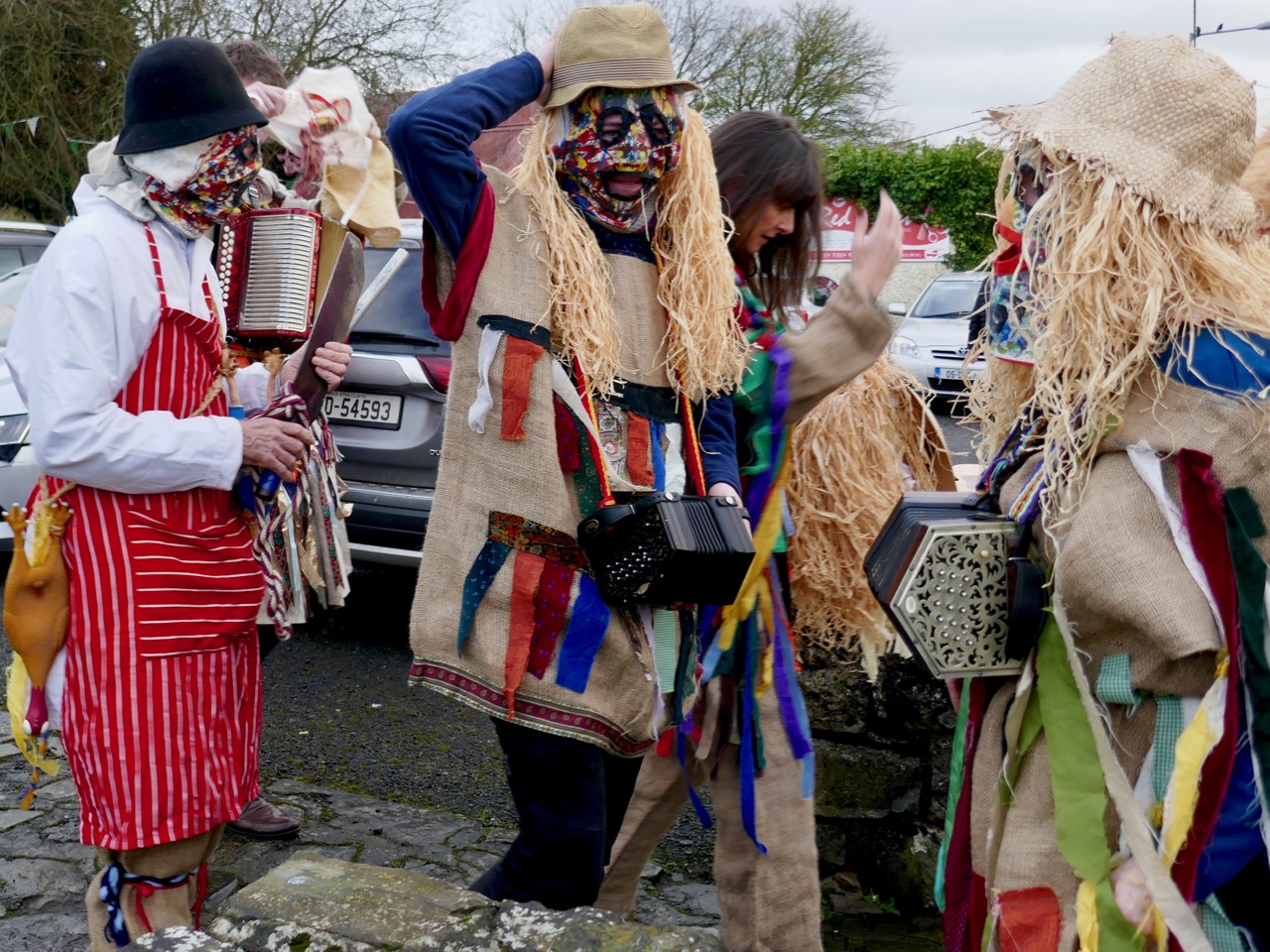
The Butcher is on the left – replete with carving knife and turkey!

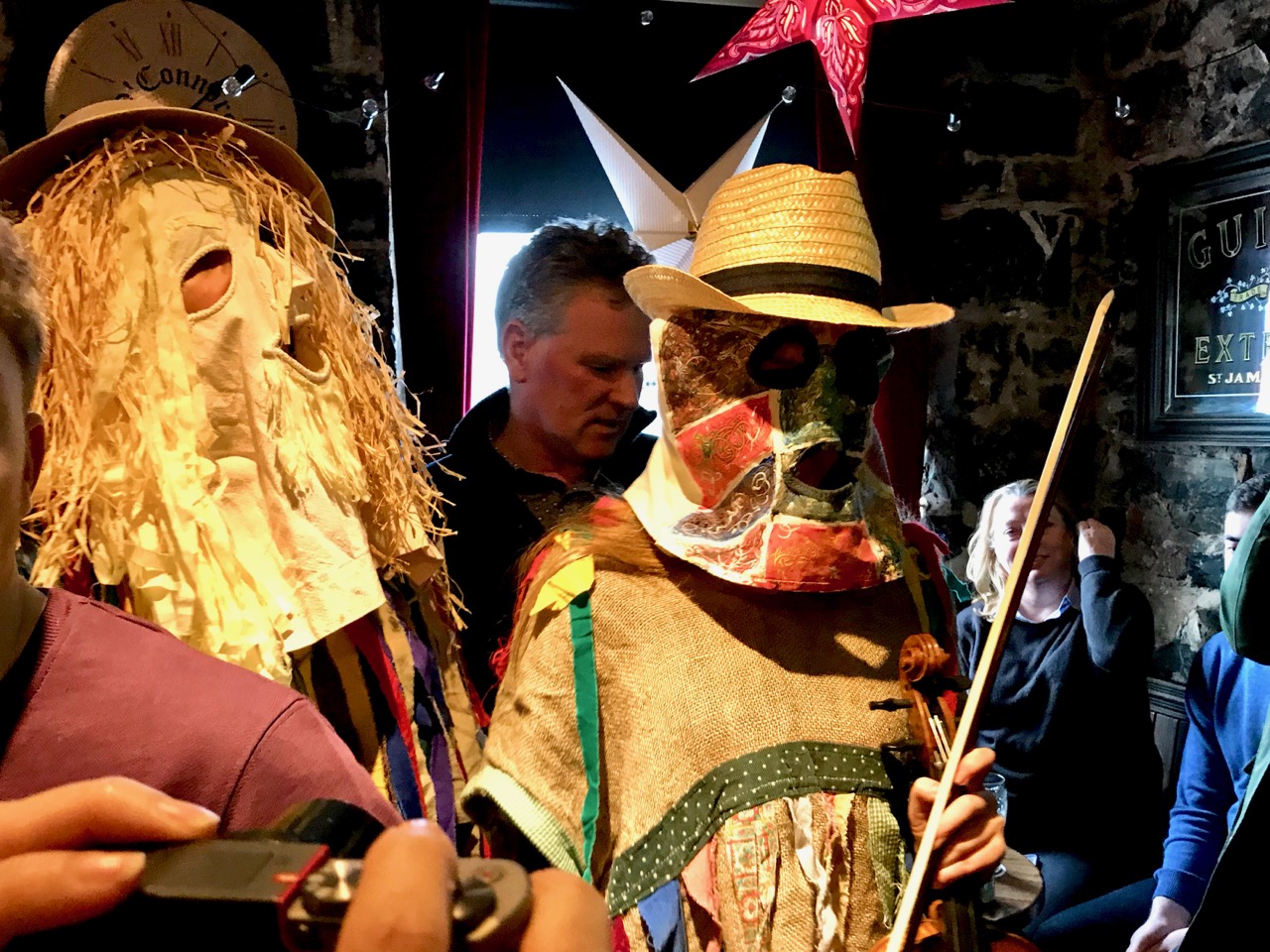
Masks and straw headpieces are common in the Irish Stephen’s Day traditions. Remember the workshop we had in Ballydehob a few weeks ago? That was in preparation for a Wranning there this Christmas just gone. Unfortunately, we couldn’t magic ourselves to be in two places at once on the day, so we will have to wait for next year’s event. Meanwhile we were very happy to have the Fingal experience. Long may that county continue to hold on to the luck, and perpetuate its fecundity!

Our Top 20 West Cork Photos of 2019

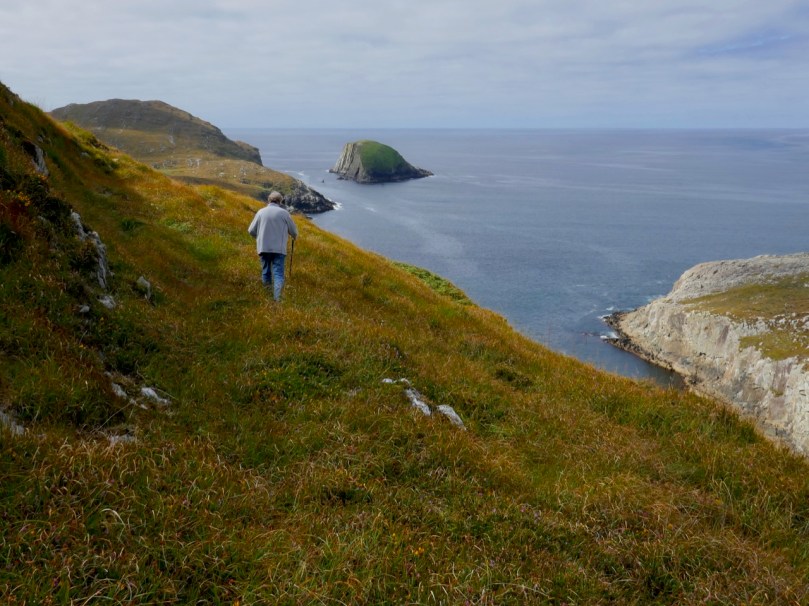
As ever, at the end of each year, we publish some favourite photos from our West Cork wanderings, like the one above from a memorable day on Long Island. We will caption each photo but apart from that, this post will be text-free. Enjoy!

A pilgrim touches the Sheela-na-Gig, part of the rituals observed during the rounds on St Gobnait’s Day in February

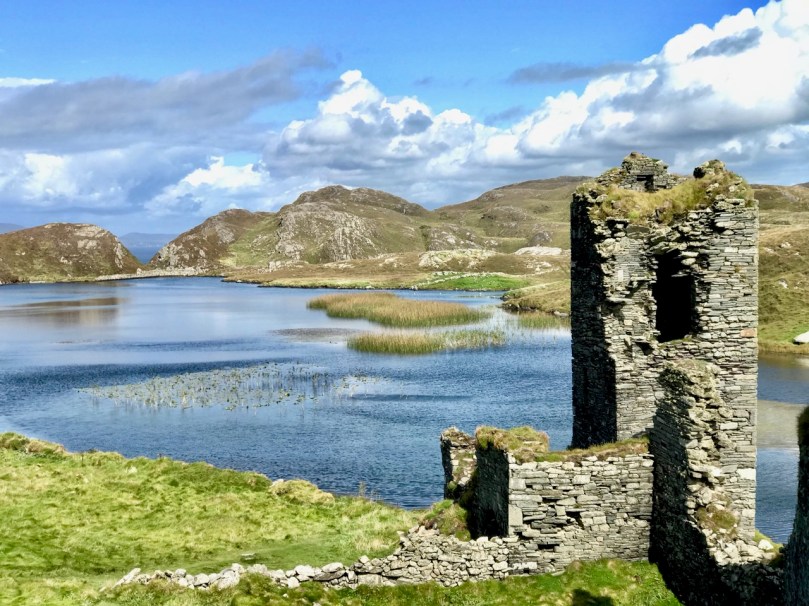
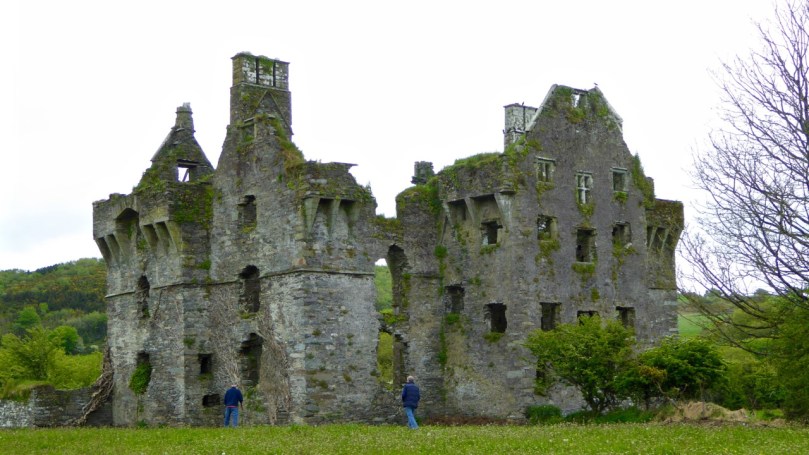
Three Castle Head on a glorious day

The ‘Tate’ – an installation in John Kelly’s Sculpture Garden, Reen Farm, taken during a high summer concert

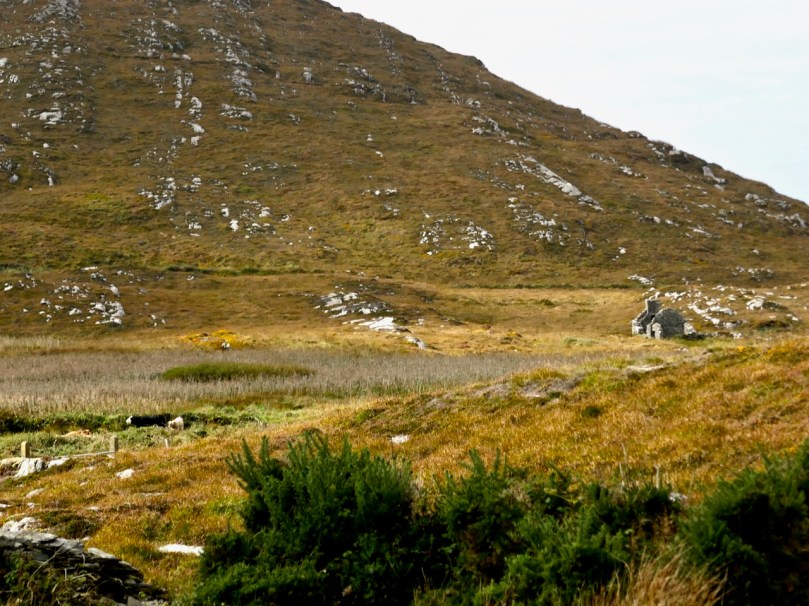
Lonely ruined cottage near an abandoned mine on the Mizen

These stones at Cashelkeelty on the Beara, part of what was a stone circle, seem to mirror the landscape behind them

The Opium Poppy, a garden escape flourishing as a wild flower along a West Cork boreen

Hungry Hill on the Beara

This Neo-Gothic gate lodge is in Coolkelure

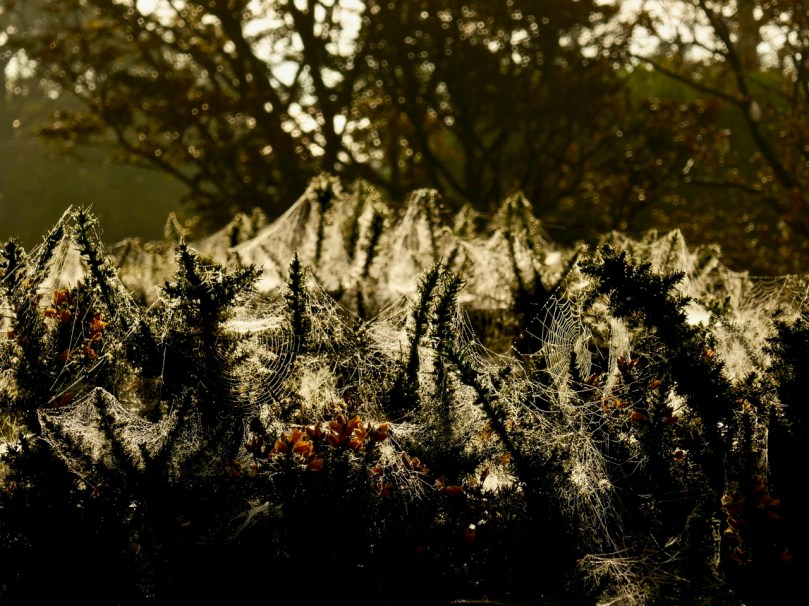
Cobwebs on gorse on a misty morning

The Ballydehob International Turnip Race is off to a good start

We made new friends on one of our island walks

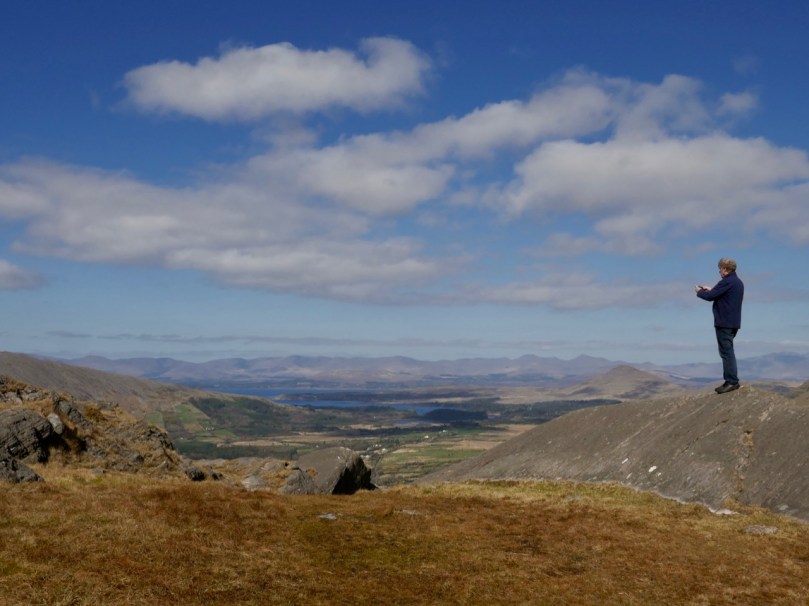
On top of the world, at the Healy Pass, Beara Peninsula

A zen moment at Derreenatra, on the Mizen

Dhurode, with Bird Island, the Mizen

Crookhaven from across the water

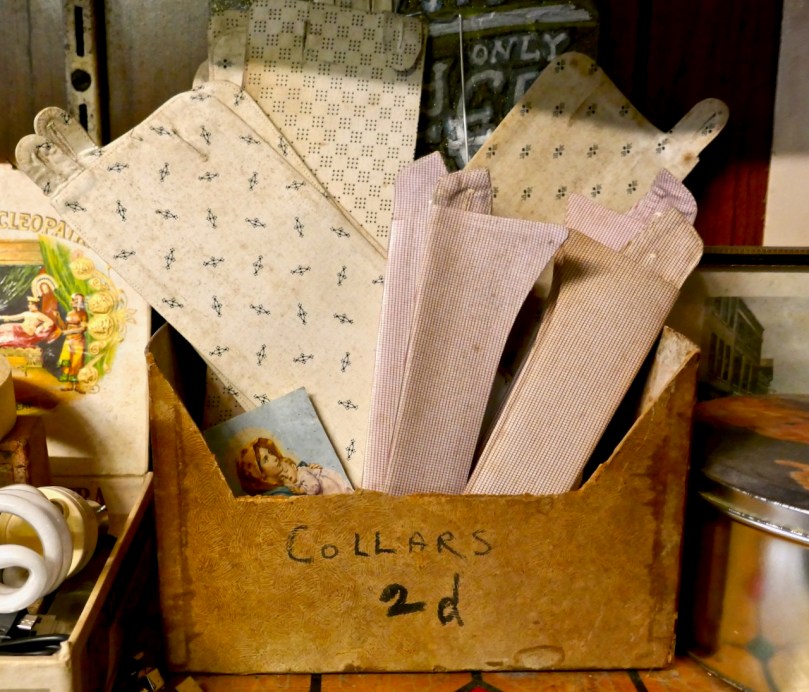
From a bygone era, still to be found behind the shop counter at Levis’s in Ballydehob

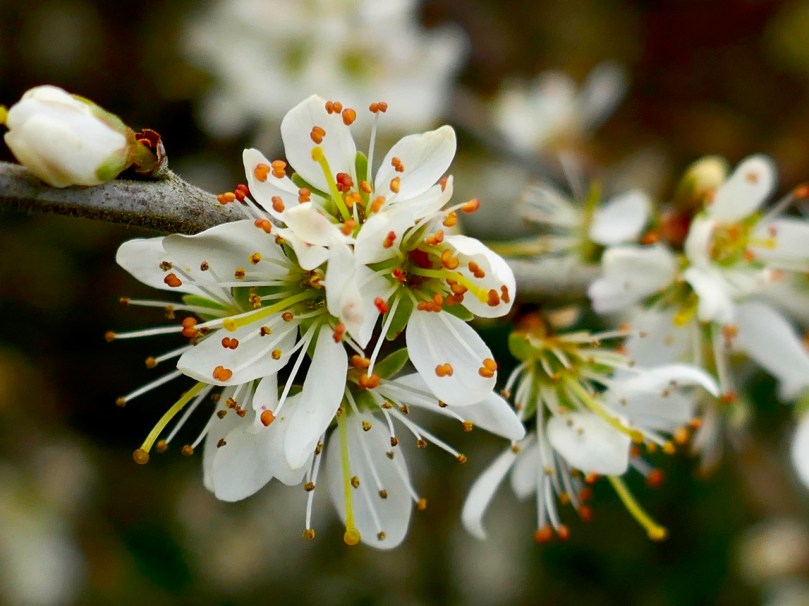
Blackthorn blossoms, always a welcome sign of spring

Barley Lake is glimpsed as we return over the Caha Pass between Cork and Kerry

Our favourite view during a spectacular winter sunset

Looking forward to a New Year of blogging and picture taking. See you all in 2020!

Fortified Manor Houses in West Cork – a Tudor Status Symbol

Coppinger's Court, Ballyvireeen, near Rosscarbery

Fortified houses are a distinctly Irish phenomenon. The Tudor period in Britain ushered in a great era of manor house building with many distinctive features. But England was a peaceful place – the owners of these great houses did not expect to be attacked. Tudor Ireland was a very different environment: life was still dangerous and conflict between the native Irish and the planter class, or between Irish clans, was common.

Machicolations at Coppinger's Court

Fortifications at Coppinger’s Court – projecting machicolations

Up to the end of the 16th century the castle/tower house was the residence of choice of the powerful – a tall stone keep mainly focused on defensive features and horribly uncomfortable to live in. (See Illustrating the Tower House for a complete run-down on tower houses.) The new manor houses emphasised the horizontal rather than the vertical, and were built with comfort in mind. However, they incorporated some of the defensive features of the tower houses – they were “fashionable but defendable.”

Mullioned windows

While tower house windows were notoriously tiny, they became much larger in the new manor houses

In Ireland they represented

a public display of power and wealth…[and] a long-term investment in their owner’s regional future and were monuments to an aspiration for an English and Continental house style suited to local Irish conditions. On a basic level the construction of a fortified house represented the owners’ desire to modernise and Anglicize.

This quote and much of the information that follows are taken from The Fortified Houses of County Cork: Origin, Fabric, Form, Function and Social Use of Space, by Joe Nunan, who has generously made it and related material available on his website.

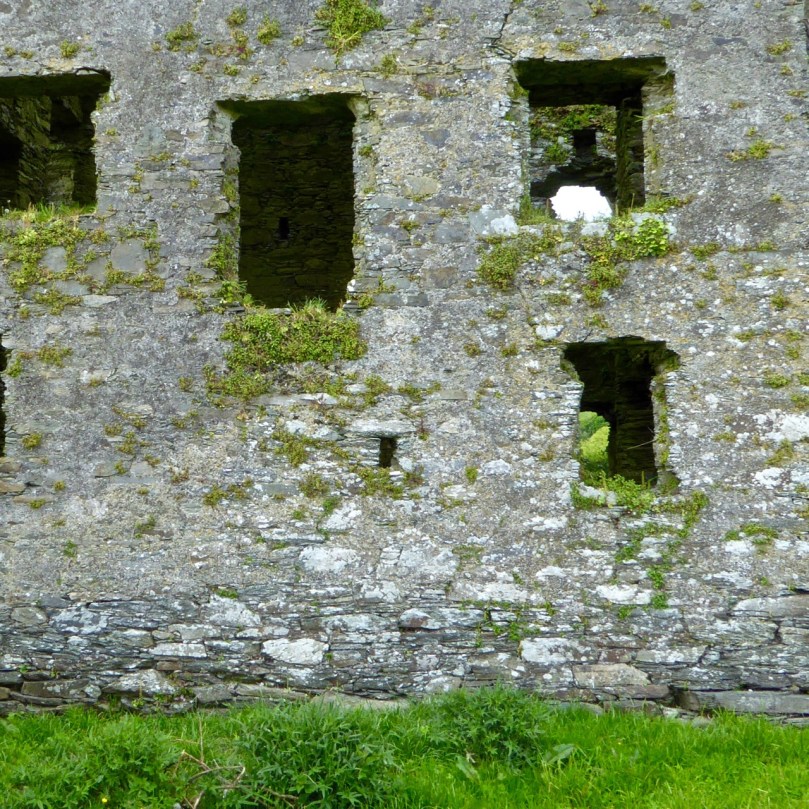
Gun loop at ground floor level, Coppinger's Court

At Coppinger’s Court, a small gun loop in the wall among the large windows

Fortified houses were built of stone but unlike tower houses all internal floors, stairs and partitions were of wood. Defensive features included machicolations, bartizans, wall walks, gun loops, corner towers or wings to provide for flanking fire. They were built starting about 1580 up to about 1650, in a style generally known as Elizabethan.

Coppinger’s Court marooned among the fields and modern houses, near Rosscarbery. Walter Coppinger had a vision of a large settlement along the Roury River here, but it never came to fruition

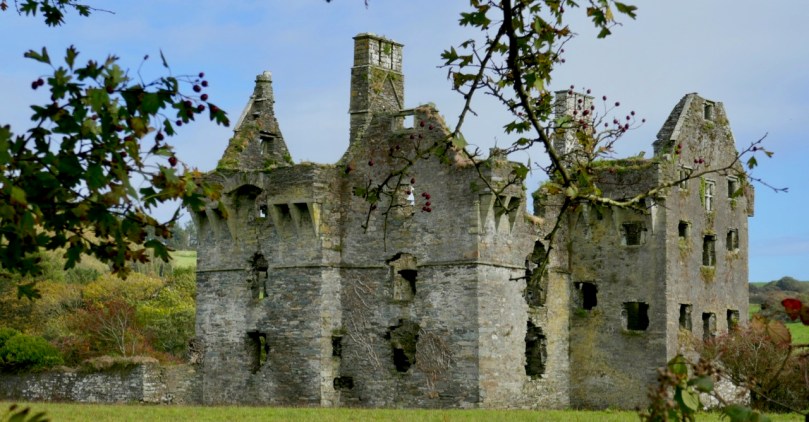
There are four surviving fortified houses in West Cork (although Joe Nunan would include Baltimore Castle as well). The most impressive is Coppinger’s Court, in Ballyvireen townland near Roscarbery: indeed it is one of the most magnificent examples of this type of dwelling in Ireland. Some of the mullions remain in upper windows, and a sharp eye will spot gun loops in the outer walls. The machicolations are particularly fine, with impressive cut stone supports. This was the home of the infamous Sir Walter Coppinger, whose plan was to build a complete settlement around him in this lovely spot on the banks of the Roury River. He was a despot who got rich through clever manipulations of mortgage documents and he was said to hang his enemies from one of his windows.

The chimney on top of this wall has fallen - note the pile of stones on the ground.

The pile of stones in the foreground is the remains of a fallen chimney

The house was so awe-inspiring in its time that the legend developed that it had a window for every day of the year, a chimney for every week and a door for every month. The house was eventually attacked and ransacked in 1641 and has sat in ruins ever since. Sadly, one of the magnificent chimneys fell down in the storms of early 2014. Evidence of a bawn wall remains, with possible outdoor cooking areas.

Gearhameen - a U shaped plan

Geerhameen Fortified House, also known as Coolnalong. This view shows the U-shape design

The fortified house at Gearhameen near Durrus, built by the MacCarthy Muclaghs, provides evidence of the comfort that these new ‘castles’ provided. The household work was done on the ground floor – large kitchens contained huge fireplaces, and in this house we can see the main kitchen fireplace had a bread oven to one side and a slop hole for sweeping out leftovers to the pigs (see below), who must have been in an attached pen (the smell!).

Large ground floor fireplace with bread oven

The first and second floors have large fireplaces, with magnificent herringbone chimneys still intact (and hosting nesting choughs).

Rather than the machicolations we see at Coppinger’s Court, corbels on the outside walls probably supported wooden or stone platforms.

Corbels supported a platform for defenders

Like Coppinger’s Court, the outer walls still stand to their full height, but the loss of a keystone above one arch, and the consequent development of a large crack above it (below), bodes ill for that section of the wall.

Missing keystone

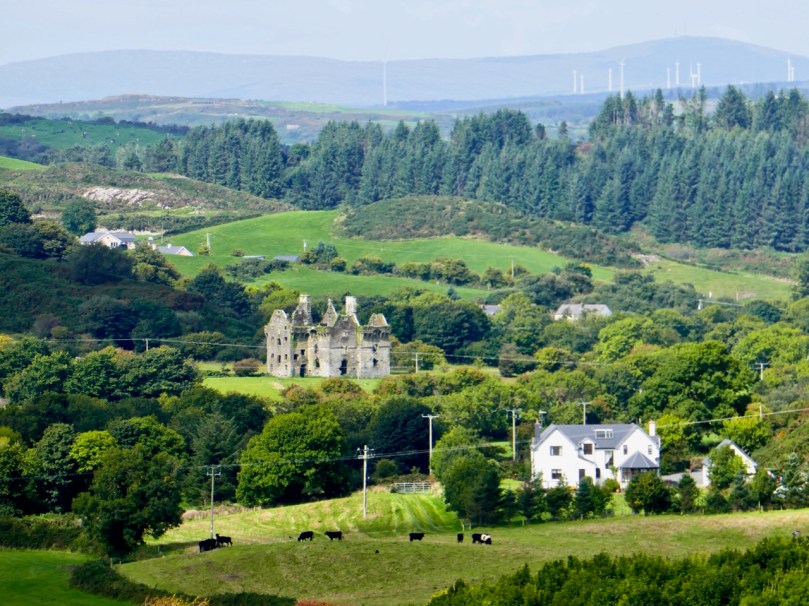
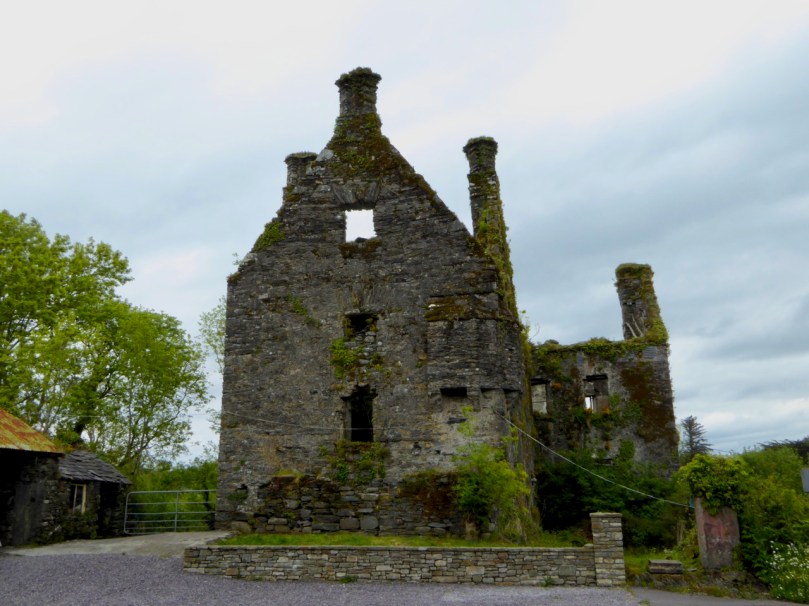
The house at Reenadisert, near Ballylickey, (below) has been built onto and within over the centuries, serving as a modified dwelling place and as farm buildings. It was the stronghold of an O’Sullivan.

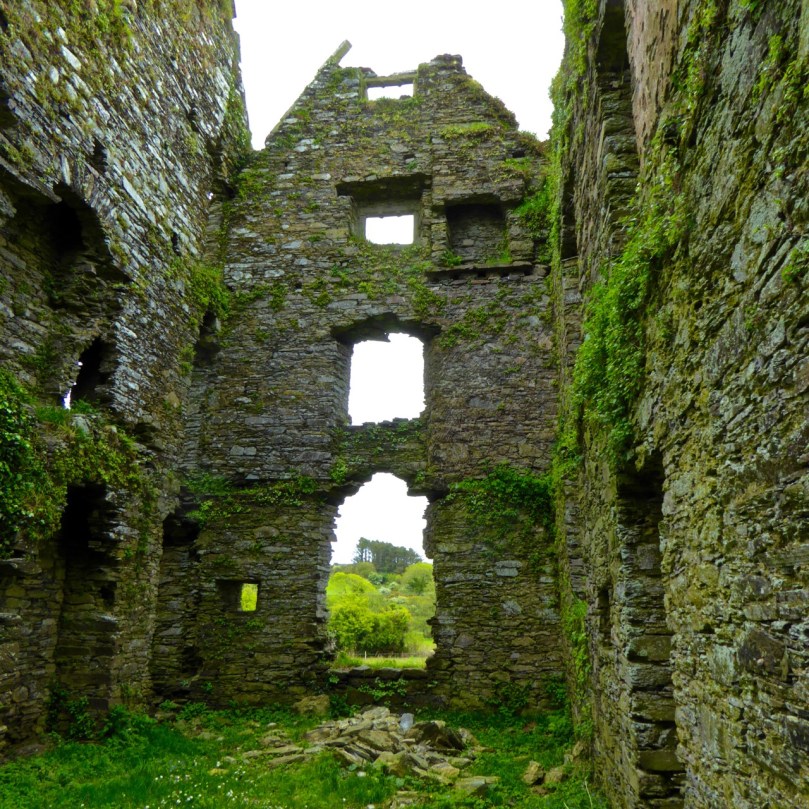
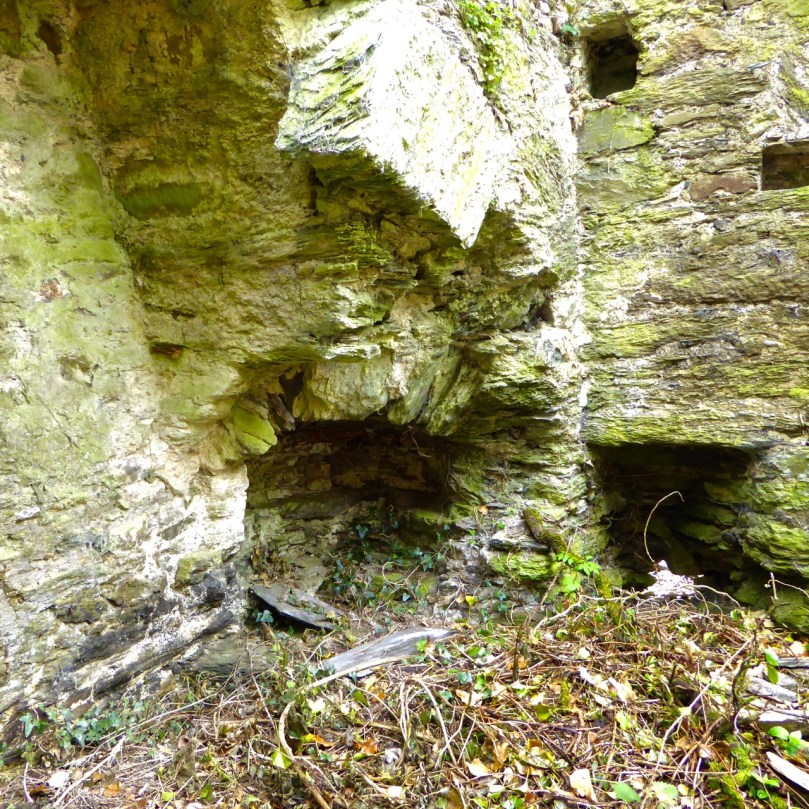
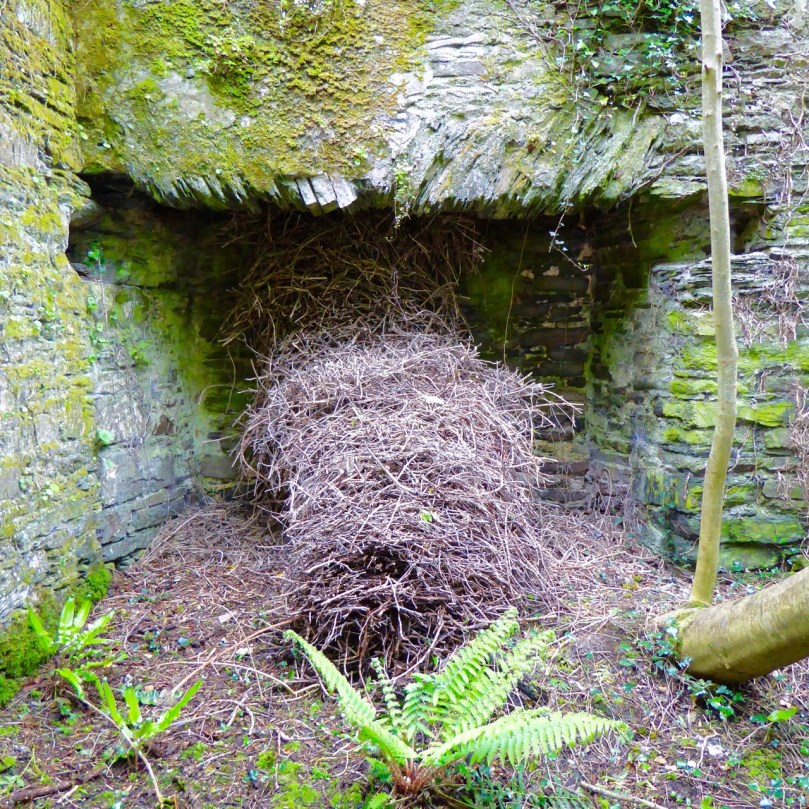
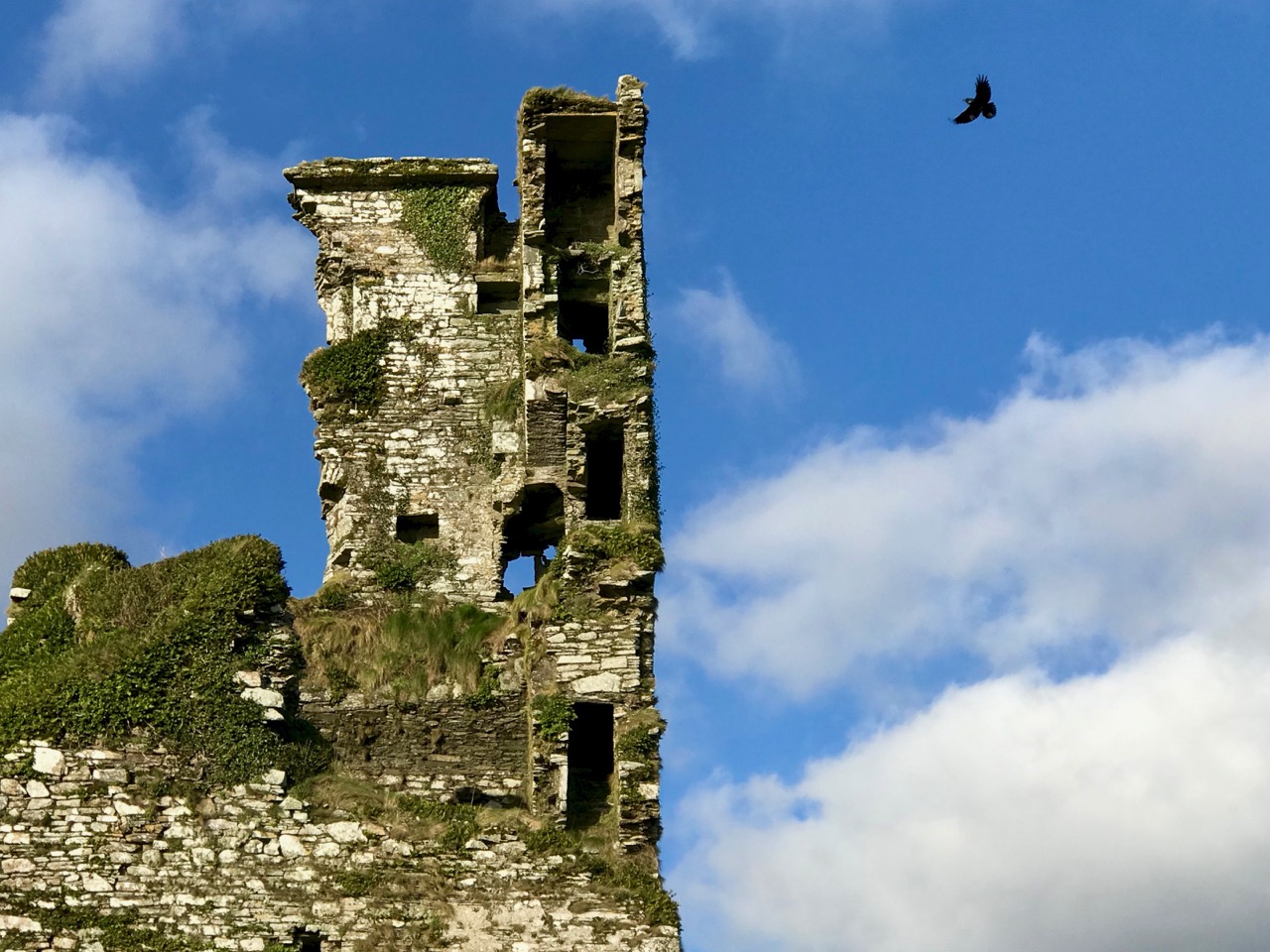
It is in a very ruinous state inside – the eeriness is enhanced by an enormous crows’ nest that has fallen from inside one of the chimneys to rest on the ground. There is evidence of a basement but this cannot be accessed.

Fallen nest

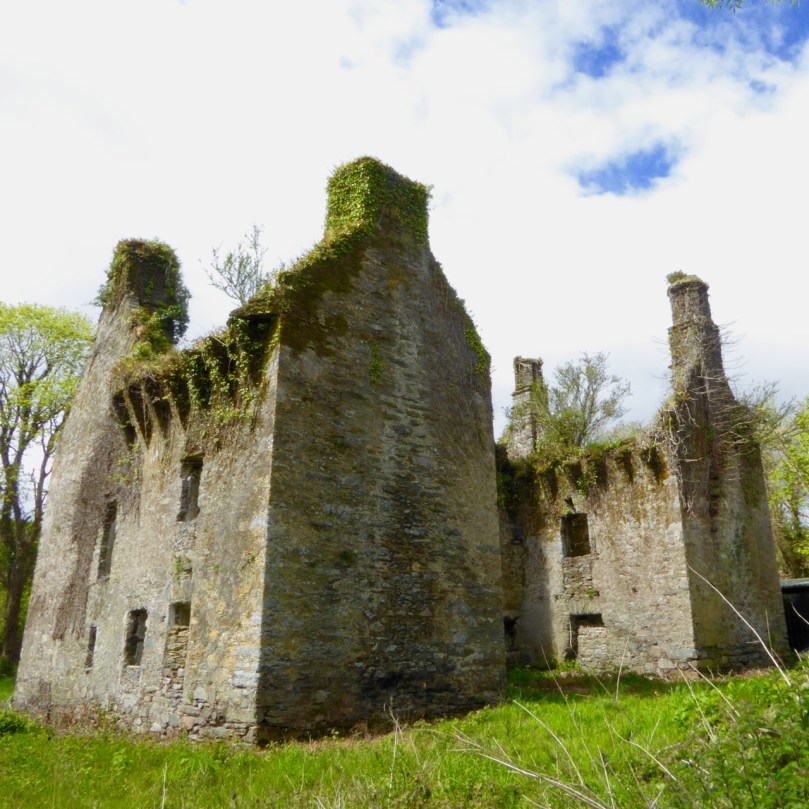
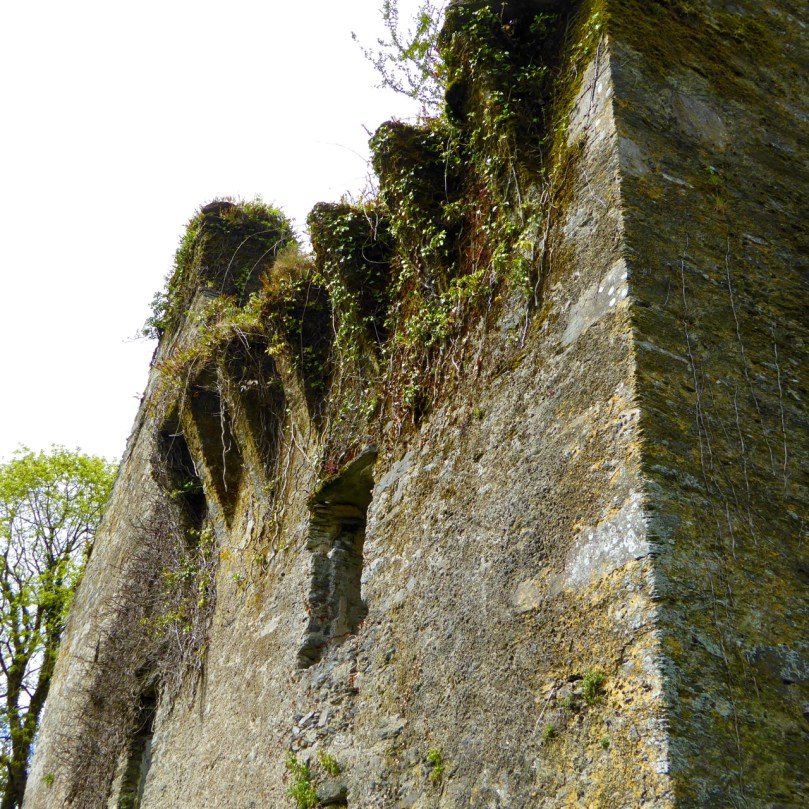
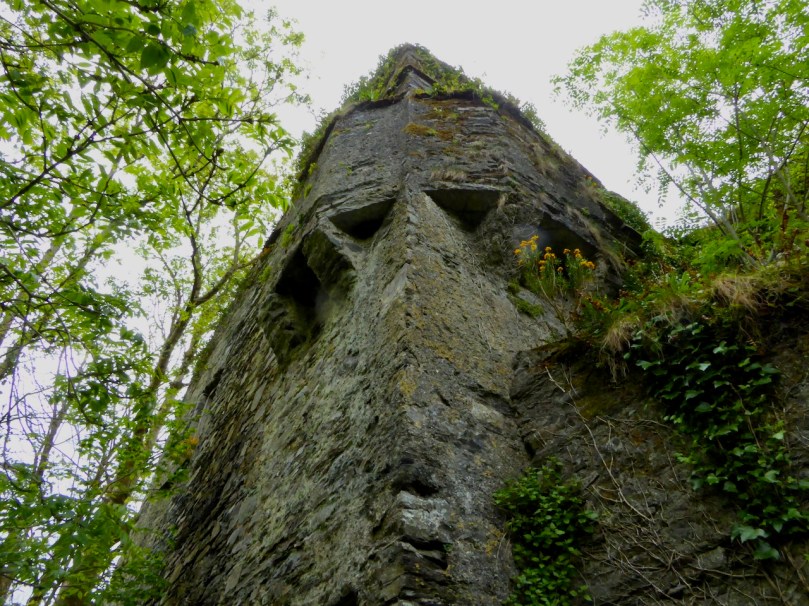
A corner tower sports an impressive bartizan (corner machicolation).

That this house is still standing is something of a miracle. It is on the same land as a ruined hotel and Celtic Tiger-era abandoned housing project and I cannot find out any information about its ownership or future.

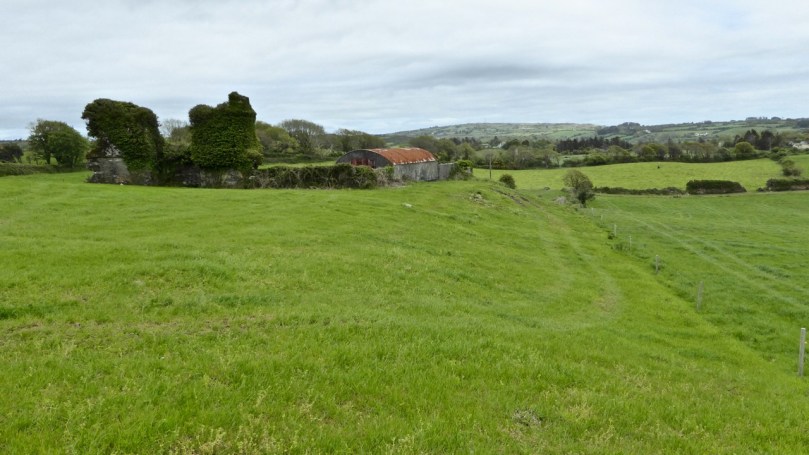
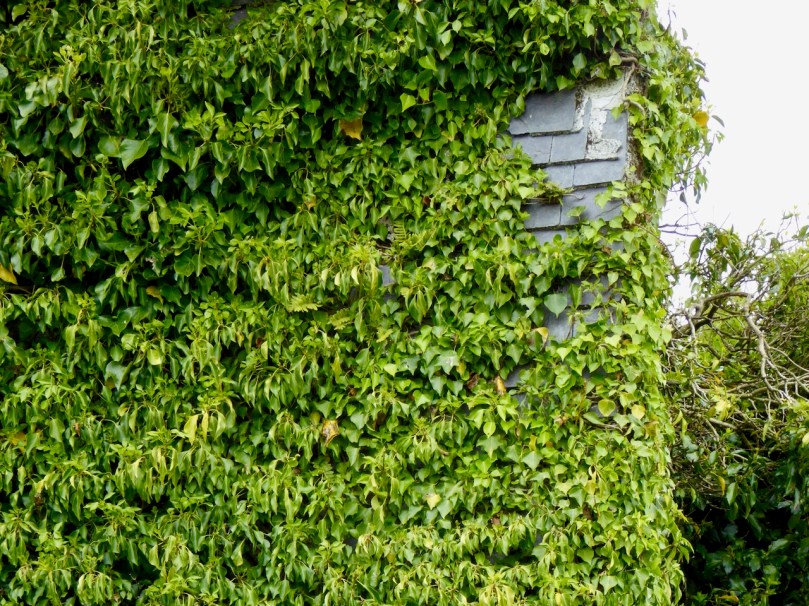
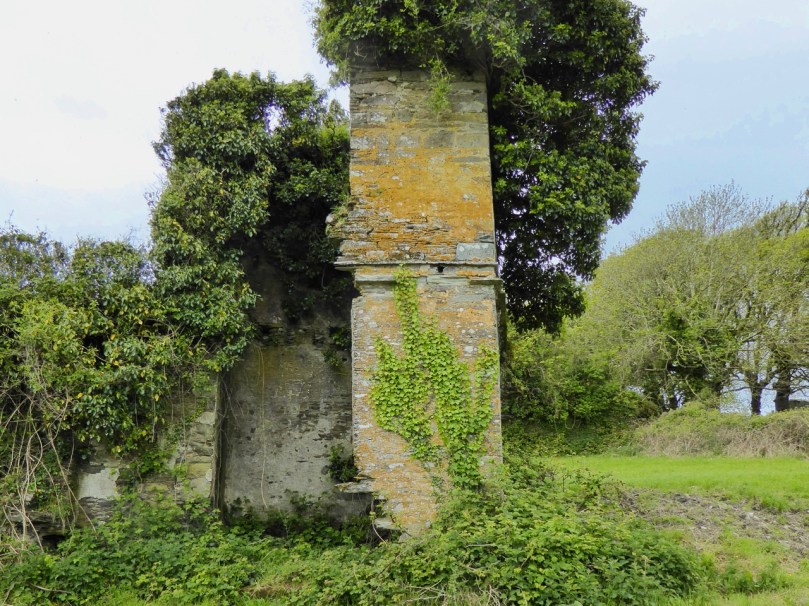
The final house (below) is at Aghadown, once home to the Becher family, and consists only of one wall with attached towers. Ivy has threatened to take over most of it – I love Leask’s description of ivy – “destructive green mantle beloved of the sentimentalist.” The house occupies high ground and once had a commanding view. Nearby are the remains of a belvedere and pleasure garden that once formed part of the demesne. Have a look at Capturing the View: Belvederes in West Cork for more on this feature of Aughadown House

Aghadown Fortified house occupies high ground with a commanding view

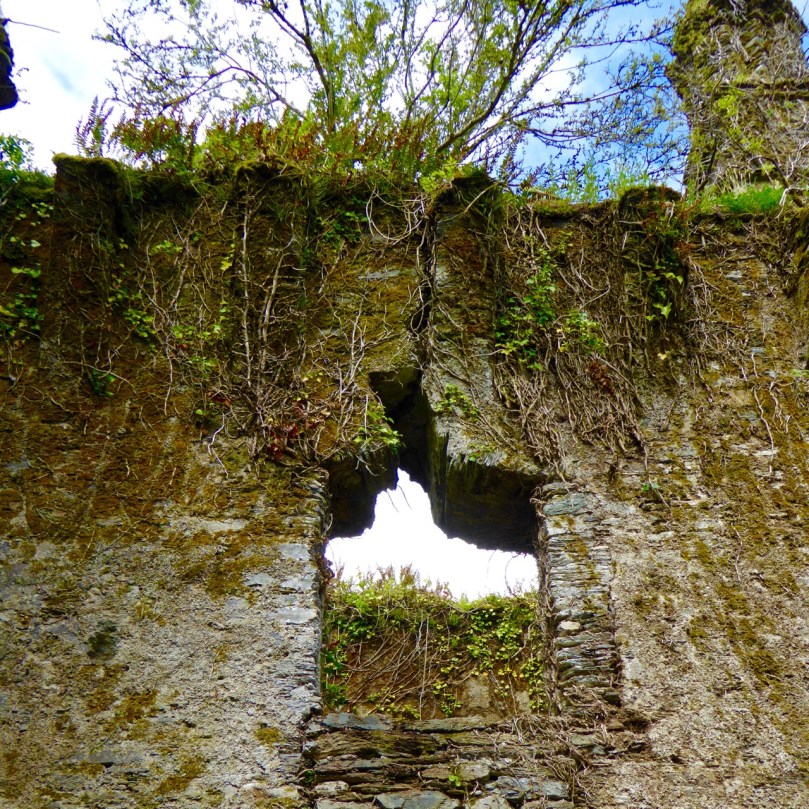
Through all that ivy one can make out traces of the slate that once hung on the wall above the ground floor, the outline of corbels at roof level, and a string course between the ground and first floor.

One of the Fastnet Trails goes past Aughadown House now, and there is a neat little plaque giving more information about the house and the Bechers.

Joe Nunan provides useful summations of Irish fortified houses. Among other points, he says the following:

The fortified houses built in Co. Cork had a unique Irish architectural quality and a distinct southern English look and feel; the result of contacts built up between both regions, politically through plantation-immigration and economically, through trade with the port and fishing towns of Waterford, Cork, Kinsale, Youghal and Baltimore. The social changes that took place in Tudor England were reflected in architectural form by the elites in that society and it was the latter who spearheaded the Munster plantations. They were noblemen who viewed Munster as another region within a larger England and it was through these individuals that the initial architectural influence of the many gabled, oblong country manors with circular, square, rectangular and hexagonal corner-towers was introduced into Co. Cork.

We are lucky to have these fine examples of  fortified houses in West Cork still. However, all of them  are in a perilous state of dereliction. Gearhameen’s owner has tried to stabilise the building and stave off collapse but all of them may eventually succumb to the natural ravages of time. That’s a sad thought.

An earlier version of this post was written in 2015, now edited and updated.

Heir Island Bread School – Revisited

A version of this post was originally written way back in 2013 but guess what? Patrick and Laura are still running their bread school on Heir Island, and are about to add a new one in Wicklow too. This is a live-in-the-memory experience and I heartily recommend it to anyone. Makes a great Christmas present! Check out The Firehouse website for more details and to register your interest – these course sell out fast! The bakery/cafe is now based in Delgany, Co Wicklow, and is a superb, and award-winning, spot for coffee or lunch.

What follows now is the post from 2103, but edited and updated. Apologies for the photo quality, these were my pre-proper camera days. But Robert and I, you will not be surprised to hear, don’t look a day older. Right?

January 2013: We got the most incredible Christmas present from Noah, Robert’s son! It was a day of learning to bake bread at the Firehouse Bakery on Heir Island, about a 20 minutes drive from Ard Glas. While Robert had some experience of baking with yeast, I had none, and considered myself yeast-phobic.

Our day started at 10:00AM with the short ferry ride to the  Island. (For more on Heir Island, see our post Heir Island – a Modern Paradise). We were picked up by Laura Moore who drove us back to the house/school/bakery and plied us with coffee and brownies to get us in the mood. The baker/instructor is Patrick Ryan, who ran his own bakery in Bath, England, and has written the inspirational The Bread Revolution with his bakery partner. He plunged us right into the process by introducing his four students to our bowl of sourdough, explaining what is was and how it worked. Patrick is passionate about sourdough and making real bread and feels many wheat and gluten intolerances (other than Coeliac Disease, of course) may be related to modern mass-baking methods.

Then it was all mixing and kneading and scraping until we had a loose ball of dough which was set aside to prove while we got on with the next project – in my case a granary ‘bloomer’ and pull-apart buns and in Robert’s some baguettes.

We moved on from there to muffins, flowerpot bread, orange cake, brownies, cookies and soda bread. I thought I was on more solid ground with whole wheat soda bread but this was soda with a twist – each of us made a different version. We made thyme, mustard and cheddar; apple and cider with caraway; honey, blue cheese and walnuts; and roast butternut squash and cheddar and each version took different shapes, including mini-muffin shapes.

All our bread was baked in Patrick’s custom-built outdoor oven, heated by burning logs inside it. At the end of the day we sat around a table eating Laura’s excellent soup and pasta – she had been cooking away all day as we were baking – with samples of our own bread. We divided all the bread between the four of us and headed back to the ferry. We have a freezer full of bread, a fistful of recipes, directions for sourdough starter, a sense of accomplishment, and memories of a warm and friendly learning atmosphere. What I don’t have? Yeast-phobia!