Looking for Patrick

Patrick lights the Paschal Fire on the Hill of Slane. Richard King window, Church of St Peter and Paul, Athlone

A joint post – text by Robert, images by Finola

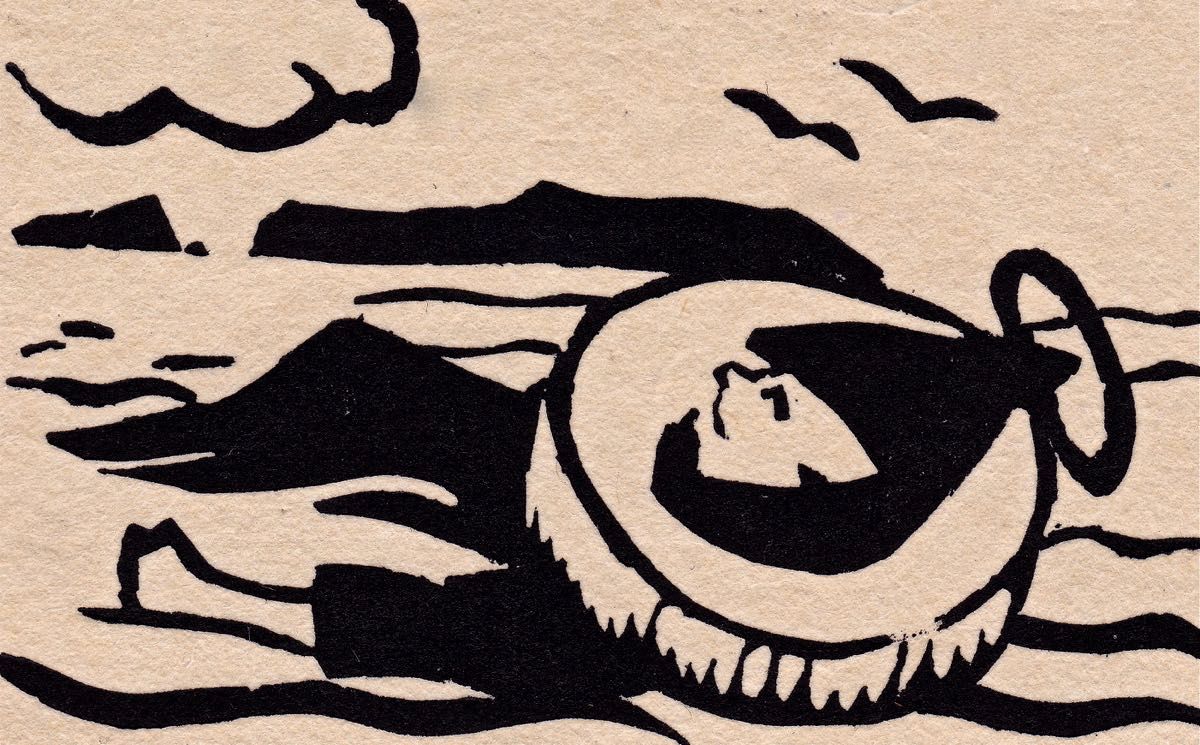
Last week we talked about Ireland’s very first saint – Ciarán (or Piran), who was born on Cape Clear. His aim in life was to convert the heathen Irish to Christianity, but they were having none of it: they tied him to a millstone and hoisted him over the edge of a cliff. Fortunately – and miraculously – the wondrous millstone floated him over to Cornwall where he became their Patron Saint and is celebrated with great acclaim on March 5th every year.

A typical representation of Patrick, older and bearded, in bishop’s robe, holding a shamrock in one hand and a crozier on the other. Skibbereen Cathedral

To return the favour of gaining an important saint from Ireland, the British have given Ireland their special saint – Patrick – and he is being celebrated this week in similar fashion. So here’s the story of Saint Patrick, seen through the eyes of an Englishman (albeit one with Cornish connections) and illustrated by Finola with a series of images from her collection.
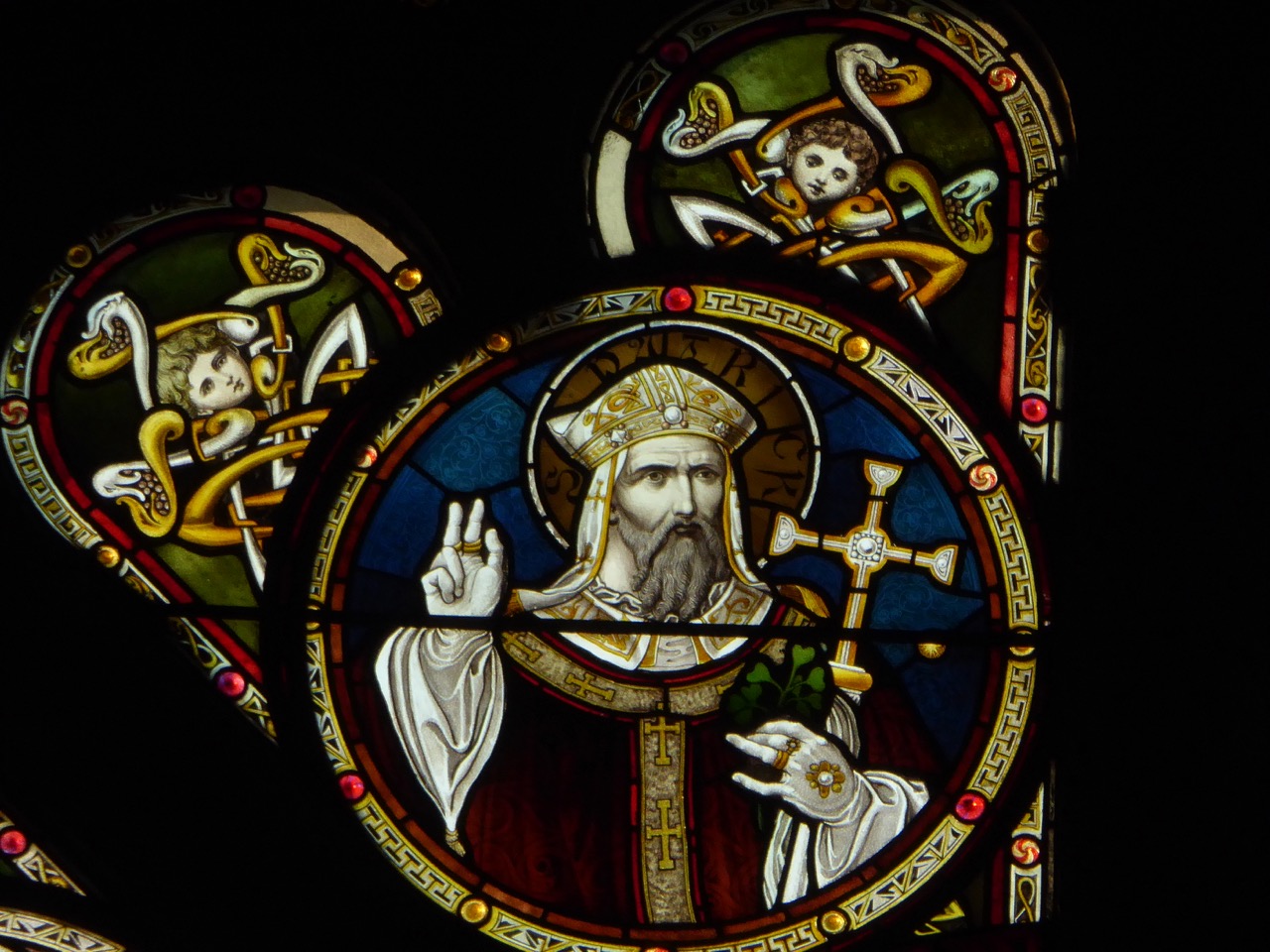
Still traditional – looking fierce – but this one has beautiful detailing, including the interlacing surrounding the cherubs. St Carthage Cathedral, Lismore

Of course, there’s the real Patrick – the one we know through his own Confessio. The best summary we’ve come across of what can be deduced from the historical documents is the audio book Six Years a Slave, which can be downloaded from Abarta Heritage, and which is highly recommended (be warned – no snakes!). But what you’re going to get from me today is the good old-fashioned Patrick, with all his glamour and colour and centuries of accrued stories – just as he’s shown in Finola’s images.
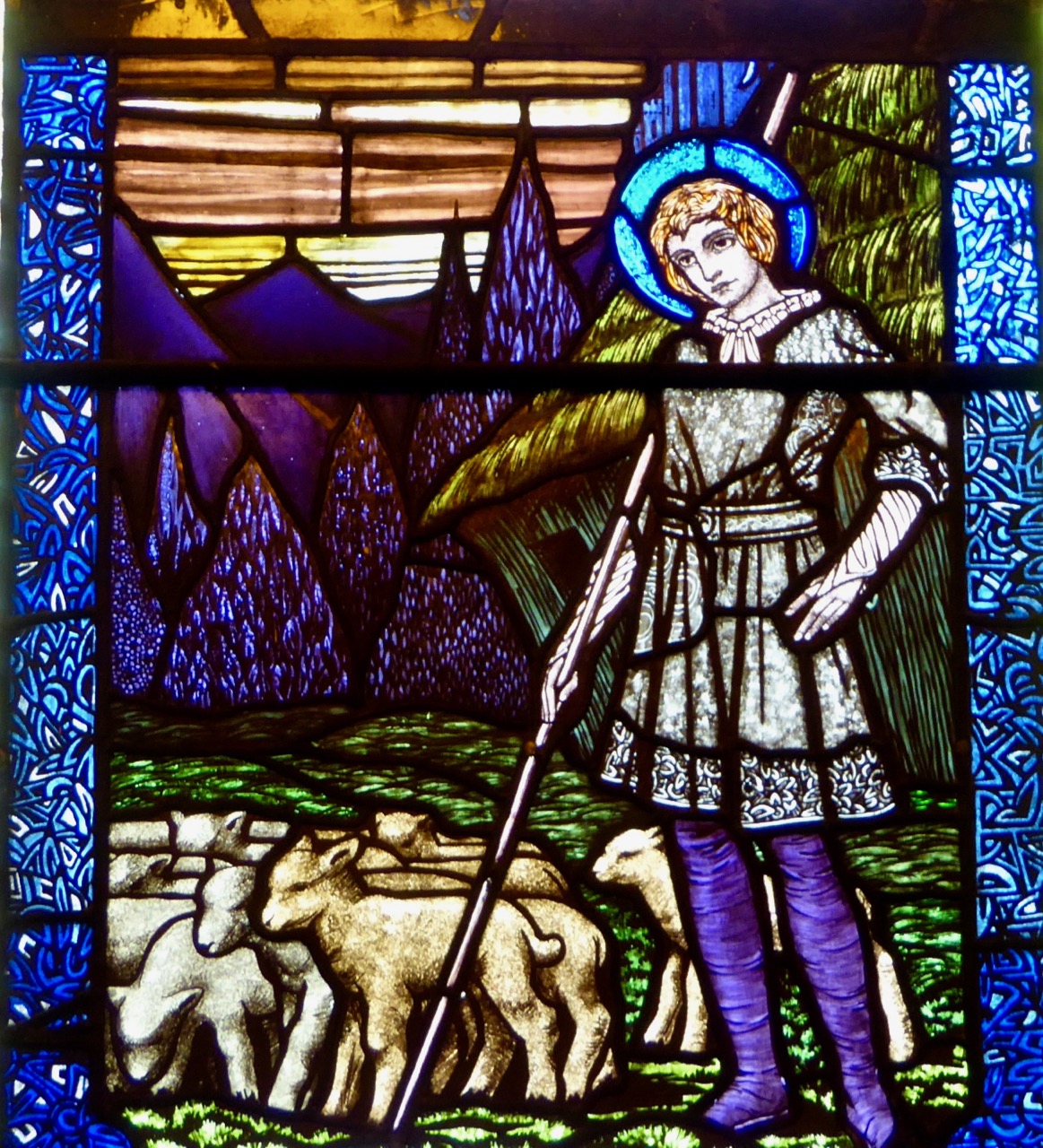
Six Years a Slave – this Harry Clarke window in the Church of The Assumption, Tullamore, seems to depict Patrick tending sheep during the period of his captivity

Patrick was born and brought up somewhere in the north west of Britain. He was of Romano British descent: his father was a a decurion, one of the ‘long-suffering, overtaxed rural gentry of the provinces’, and his grandfather was a priest – the family was, therefore, Christian. In his own writings Patrick describes himself as rustic, simple and unlearnèd.  When still a boy, Patrick was captured by Irish pirates and taken to be a slave in Ireland. He was put to work on a farm somewhere in the west and spent the long, lonely hours out in the fields thinking about the Christian stories and principles he had been taught back home.

Patrick is visited by a vision – the people of Ireland are calling to him to come back and bring Christianity to him. Richard King window, Church of St Peter and Paul, Athlone.  Read more about Richard King and the Athlone windows in Discovering Richard King

After six years he escaped from his bondage and made his way back to Britain – apparently by hitching a lift on a fishing boat. Because he had thought so much about Christianity during those years away, he decided to become a bishop which, after a few years of application, he did. Although he had hated his enforced capture he was aware that Ireland – as the most westerly outpost of any kind of civilisation – was one of the only places in the known world that remained ‘heathen’, and he was nagged by his conscience to become a missionary there and make it his life’s work to convert every Irish pagan.

Detail from Patrick window by Harry Clarke in Ballinasloe

When you see Patrick depicted in religious imagery he always looks serious and, perhaps, severe. You can’t imagine him playing the fiddle in a session or dancing a wild jig at the crossroads. In fact he was well know for his long sermons: on one occasion he stuck his wooden crozier into the ground while he was preaching and, by the time he had finished, it had taken root and sprouted into a tree!

Patrick with his hand raised in a blessing, accompanied by his symbols of the Paschal Fire and the shamrock. Harry Clarke Studio window, Bantry

Perhaps it was his severity that caused him to be respected: while giving another sermon (at the Rock of Cashel) he accidentally and unwittingly put the point of his crozier through the foot of the King of Munster. The King waited patiently until Patrick had finished sermonising then asked if it could be removed. Patrick was horrified at what he’d done, but the King said he’d assumed it was all part of the initiation ritual!
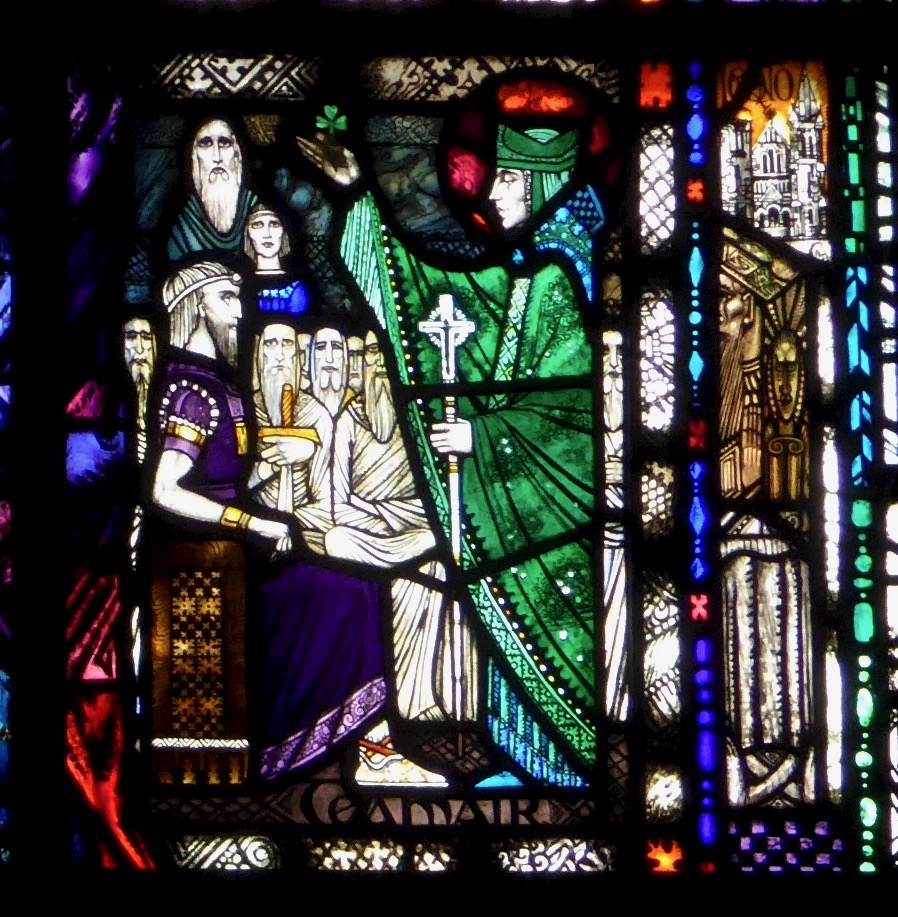
In Richard King’s enormous Patrick window in Athlone, the saint is depicted as youthful and clean-shaven. Here he is using the shamrock to illustrate the concept of the Trinity

Patrick first landed on the shores of Ireland just before Easter in 432 AD and established himself on the Hill of Slane – close to the residence of the High King. In those days the rule was that only the King himself was to light the Bealtaine Fire to celebrate the spring festival, but Patrick pre-empted this by lighting his own Paschal Fire on the top of the hill, thus establishing his authority over that of the High King (see the first image in this post). Somehow, he got away with it – and the fire has been lit on the top of the Hill of Slane every Easter from that day to this.

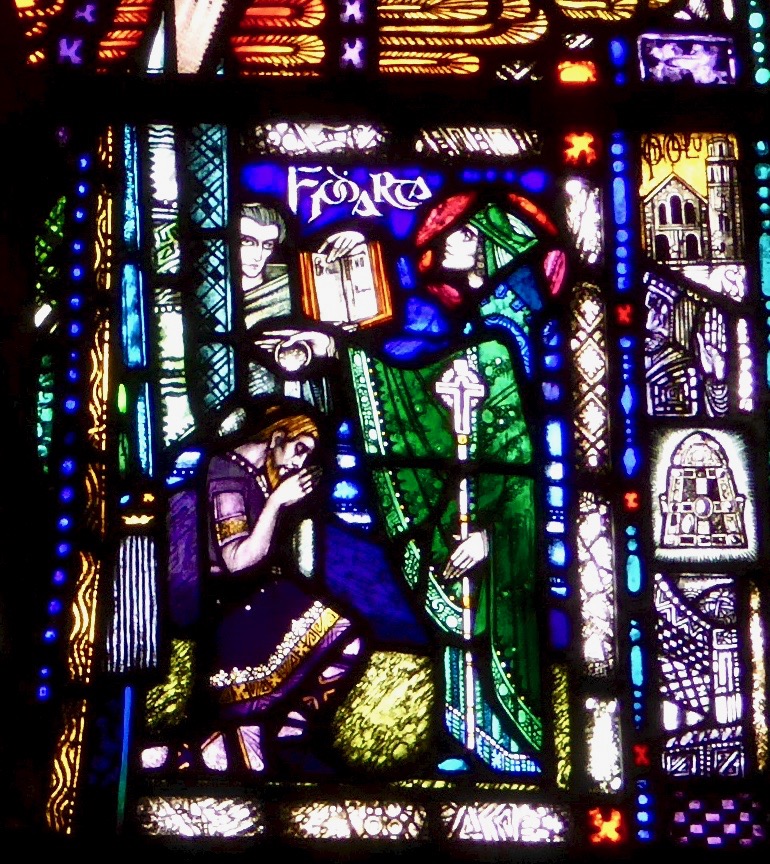
Another panel from the Richard King window – Eithne and Fidelma receive communion from Patrick. They were daughters of the King of Connaught; Eithne was fair-haired and Fidelma a redhead, and they were baptized at the Well of Clebach beside Cruachan

St Patrick seems to have been everywhere in Ireland: there are Patrick’s Wells, Patrick’s Chairs (one of which in Co Mayo – the Boheh Stone – displays some fine examples of Rock Art), Patrick’s Beds and – on an island in Lough Dergh – a Patrick’s Cave (or ‘Purgatory’) where Jesus showed the saint a vision of the punishments of hell.

Patrick blesses St Mainchin of Limerick. Detail from the Mainchin window in the Honan Chapel, by Catherine O’Brien for An Túr Gloinne

The place which has the most significant associations with Patrick, perhaps, is Croagh Patrick – the Holy Mountain in County Mayo, on the summit of which the saint spent 40 days and 40 nights fasting and praying, before casting all the snakes out of Ireland from the top of the hill – an impressive feat. To this day, of course, there are no snakes in Ireland – or are there? See my post Snakes Alive for musings on this topic (it includes a most impressive window from Glastonbury!)

Like many Patrick windows, this one, By Harry Clarke in Tullamore, shows Patrick banishing the snakes. This one has all the gorgeous detailing we expect from Clarke, including bejewelled snakes

When Patrick considered that he’d finished his task, and the people of Ireland were successfully and completely converted, he returned to Britain and spent his retirement in the Abbey of Glastonbury – there’s a beautiful little chapel there dedicated to him.
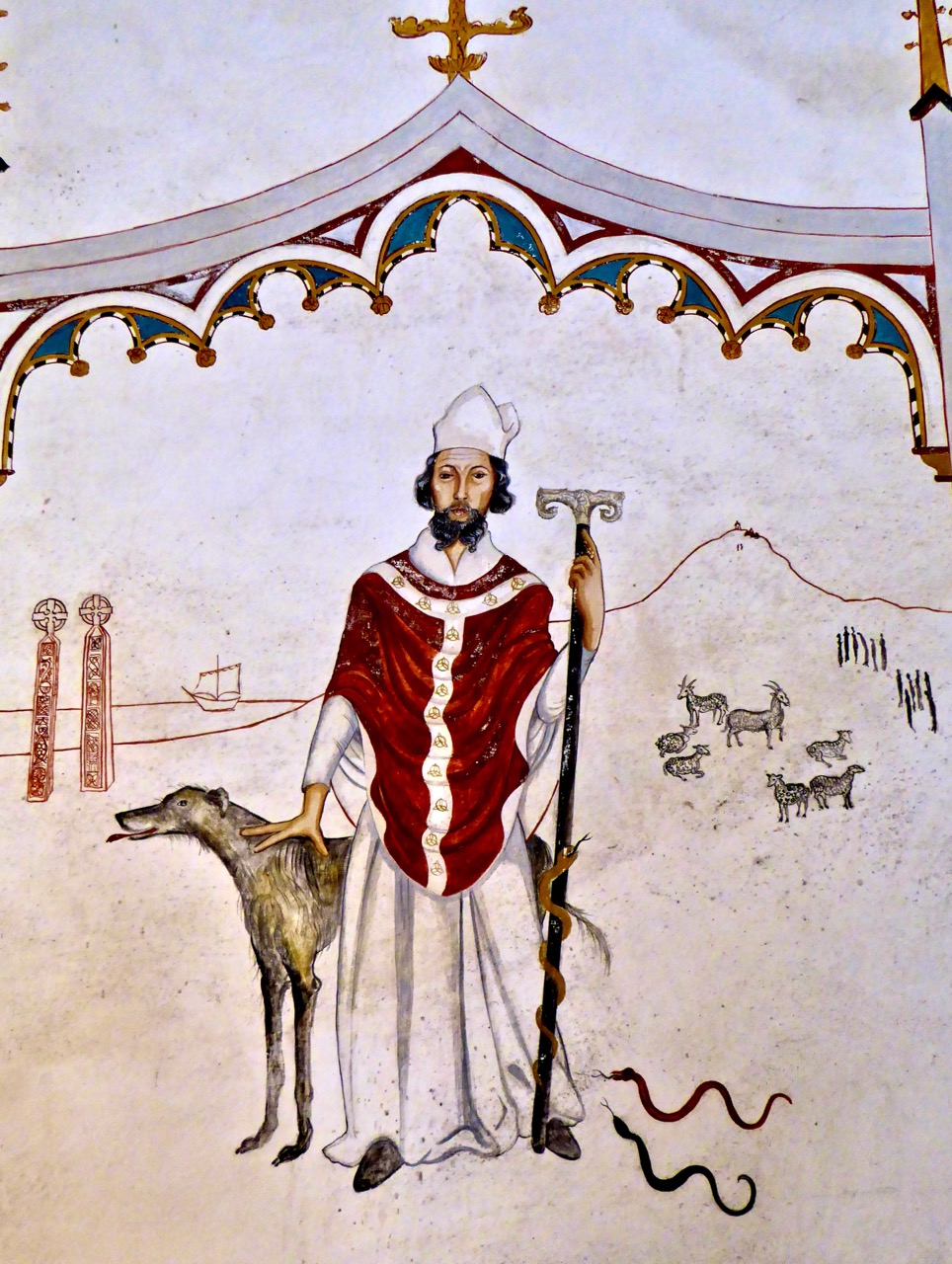
This depiction of Patrick on the wall of his Glastonbury chapel shows him with familiar symbols but also several unusual symbols – an Irish wolfhound, high crosses, and Croagh Patrick, the holy mountain

It’s logical he should have chosen that spot to end his days as it must be the most blessed piece of ground in these islands, having been walked upon by Jesus himself who was taken there as a boy by his tin-trading uncle, Joseph of Arimathea. St Bridget joined Patrick there in retirement and they are both buried in the Abbey grounds, along with the BVM who had preceded them to that place a few centuries earlier.
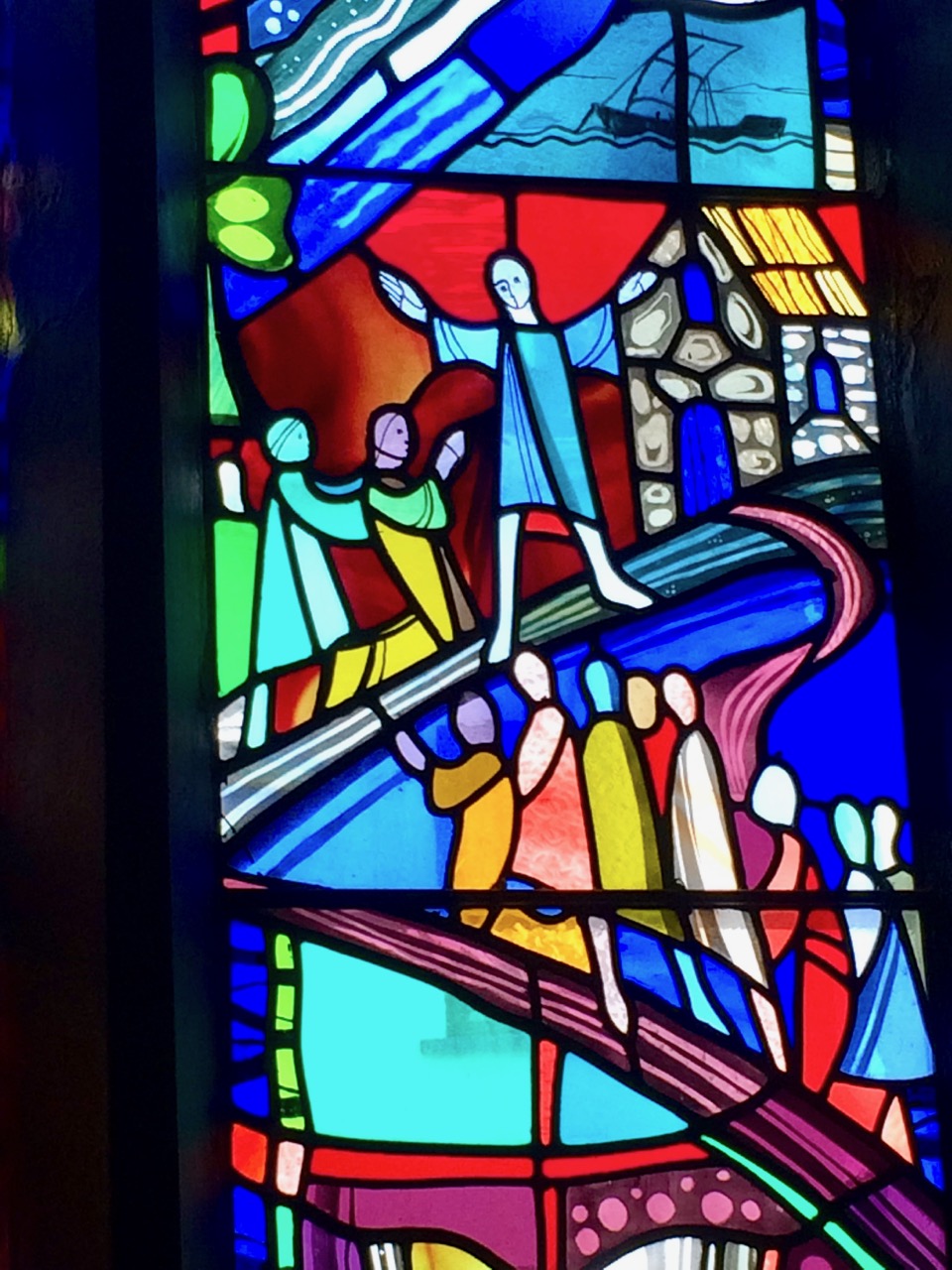
From the George Walsh window in Eyeries, Patrick returns to convert the Irish

A depiction of Patrick below comes from St Barrahane’s Church of Ireland in Castletownsend where he is shown alongside St George. The window dates from before Irish independence and is an attempt to show the unity of Britain and Ireland through their respective patron saints. Perhaps meant to represent friendship between the countries, nevertheless nowadays it seems to display a colonial overtone that is an uncomfortable echo of past mores.
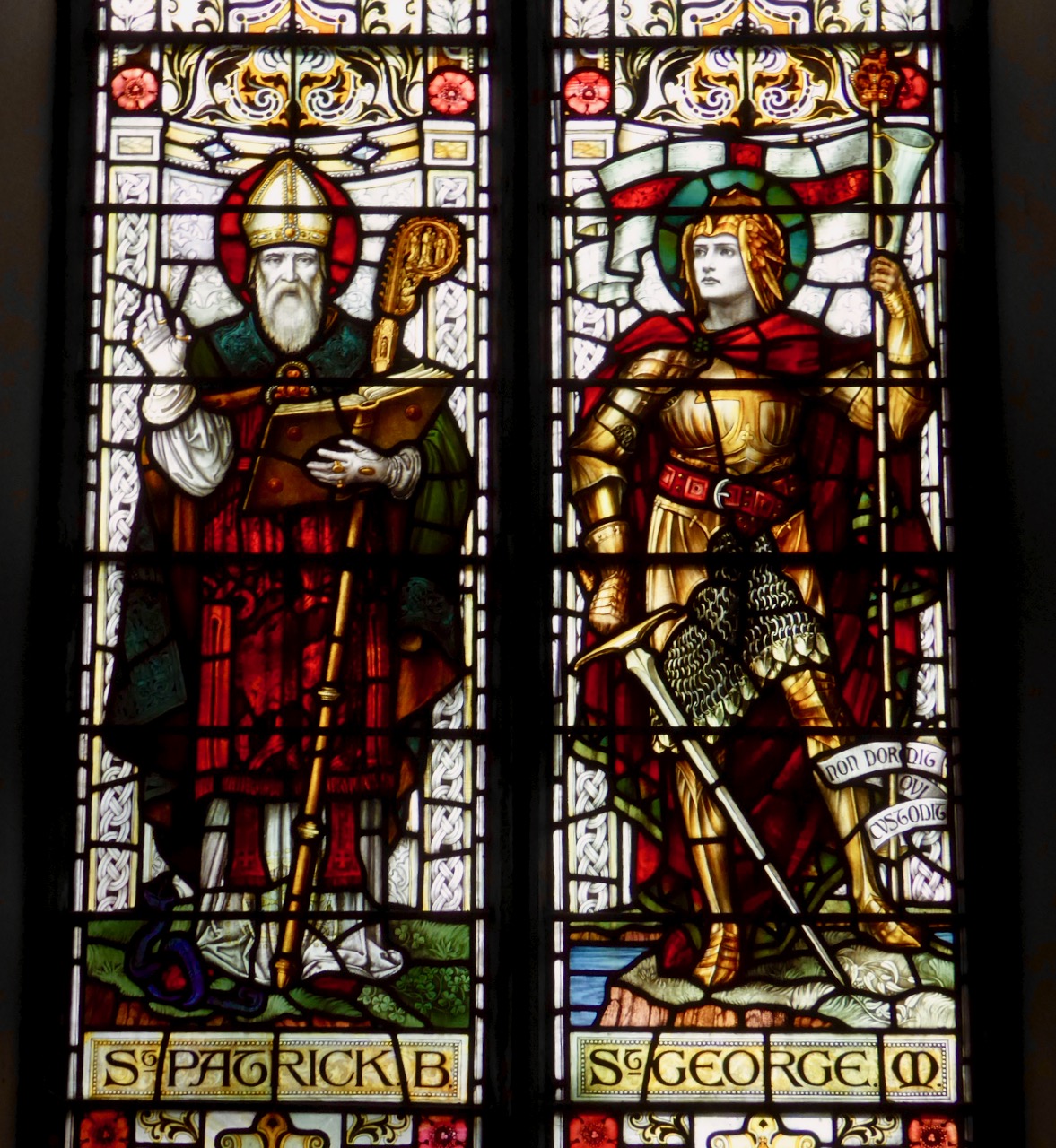
The window is by Powells of London and dates to 1906

So let’s leave Patrick doing what he came back to do – a last panel from the Richard King window in Athlone shows him performing his saintly task of converting the Irish – one chieftain at a time.
Purple and Pink – and Everything in Between

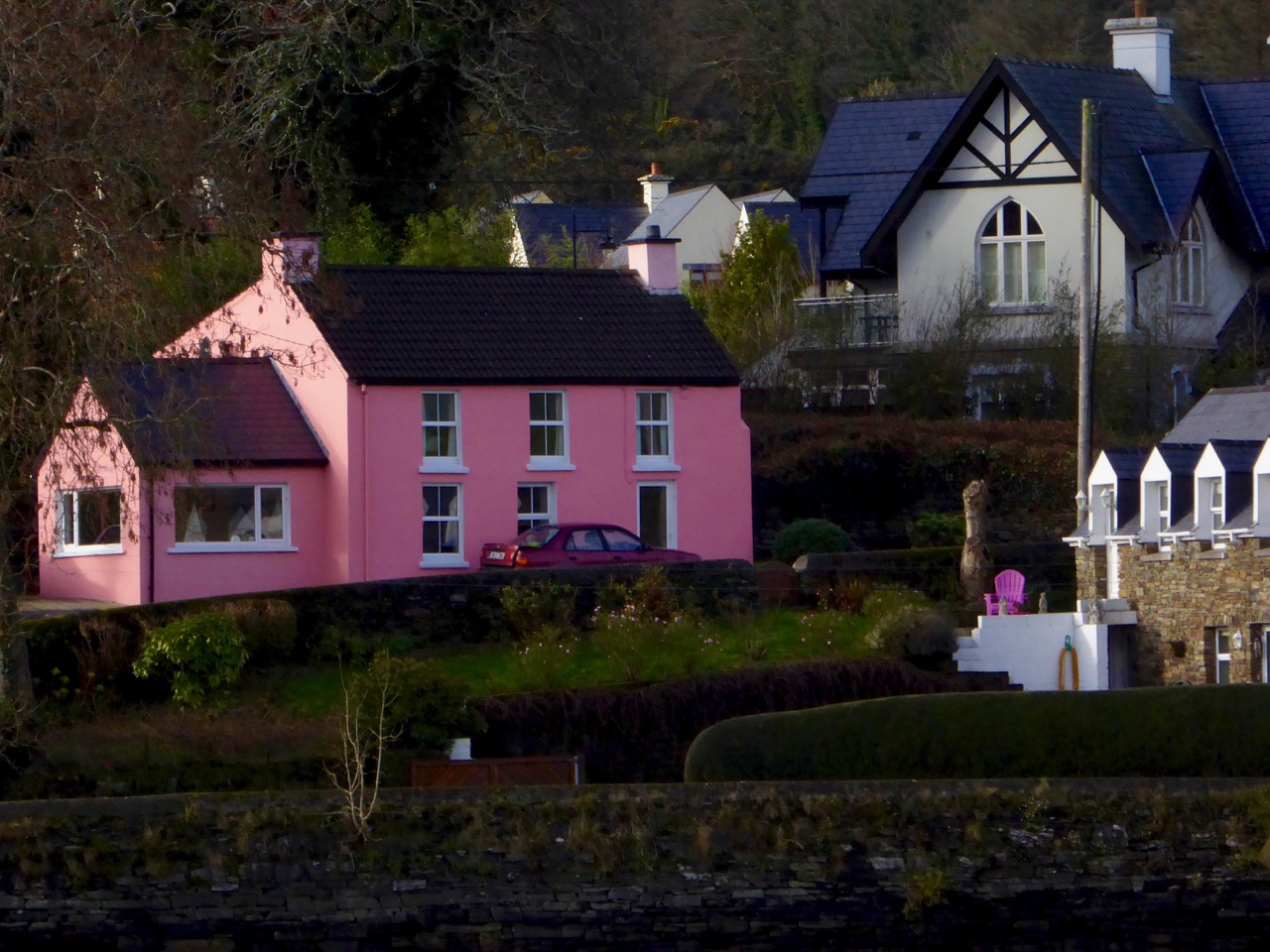
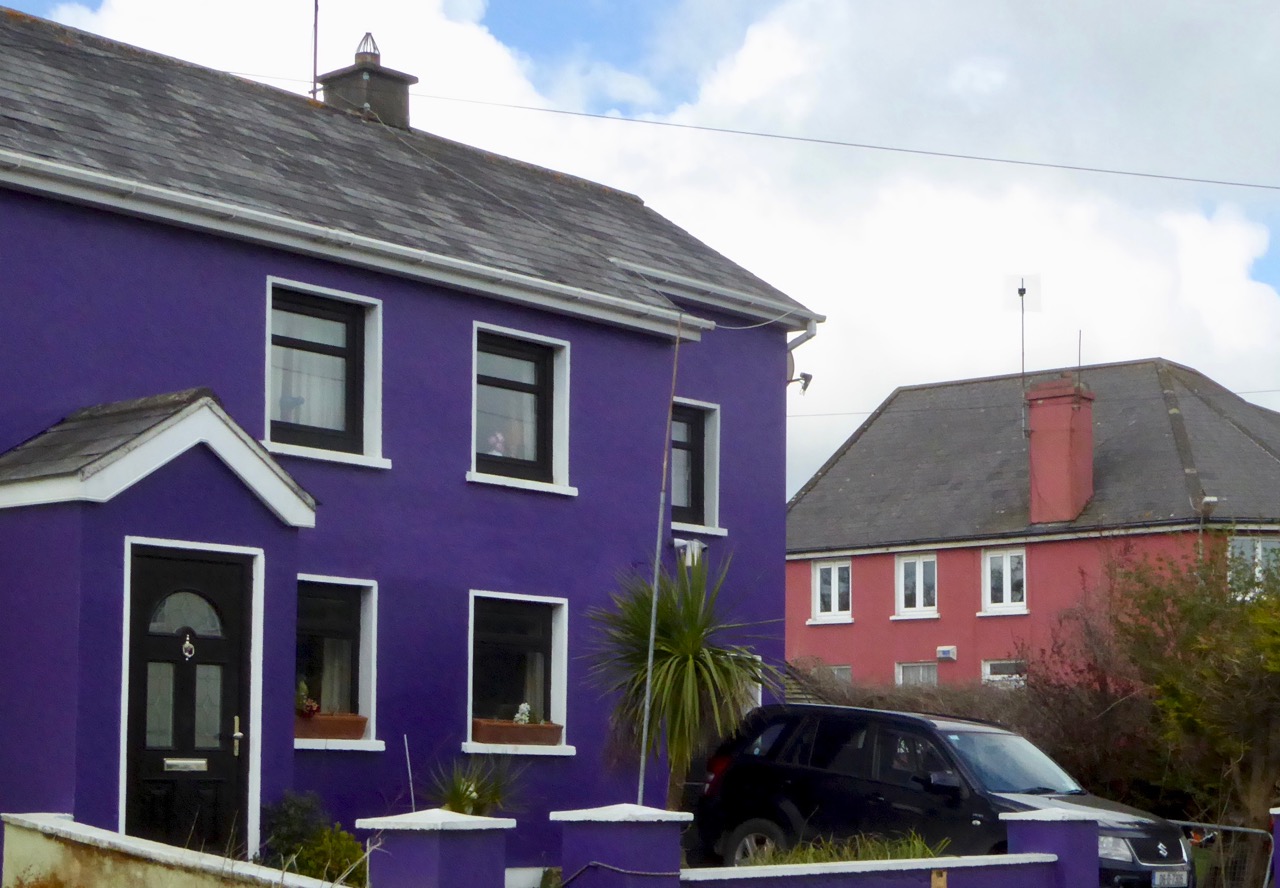
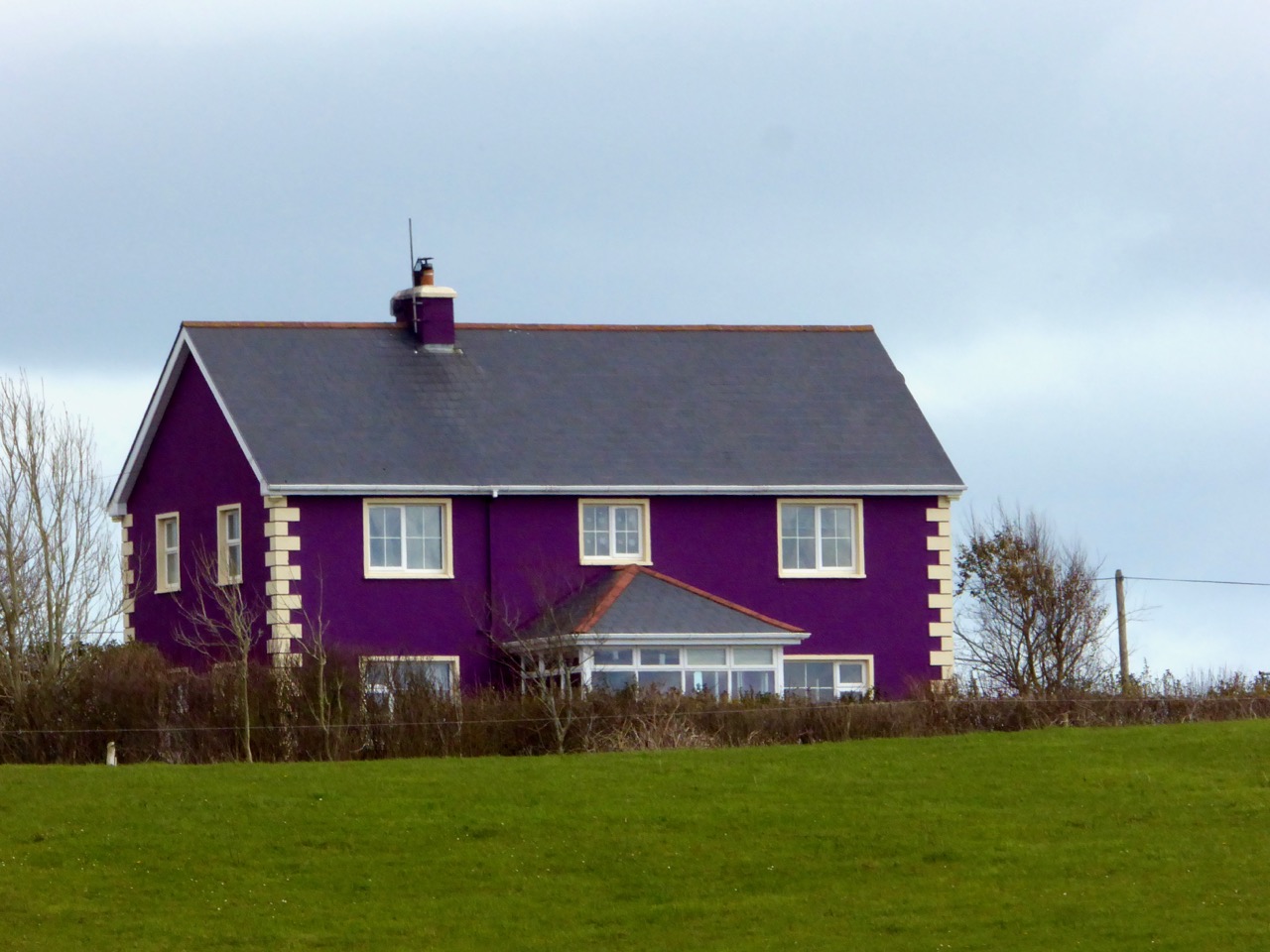
Purple house, colourful

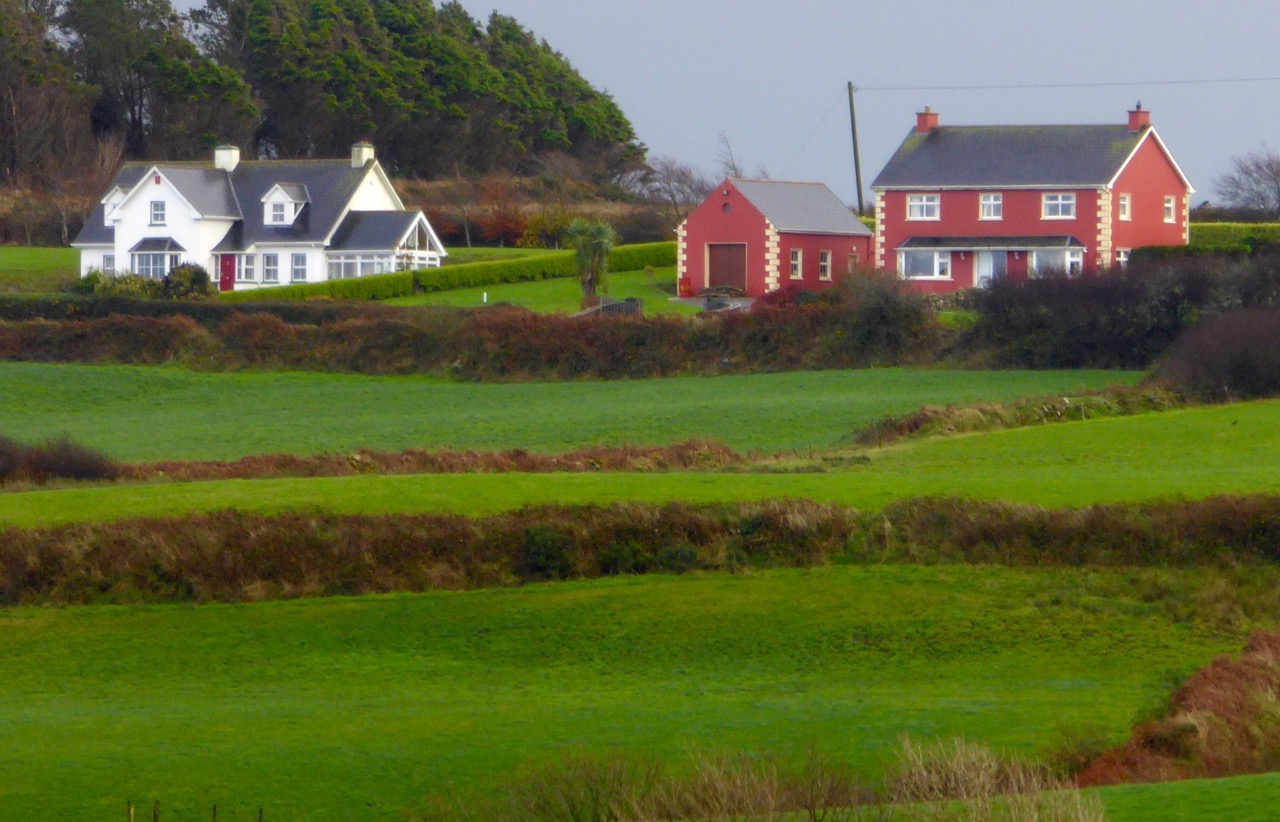
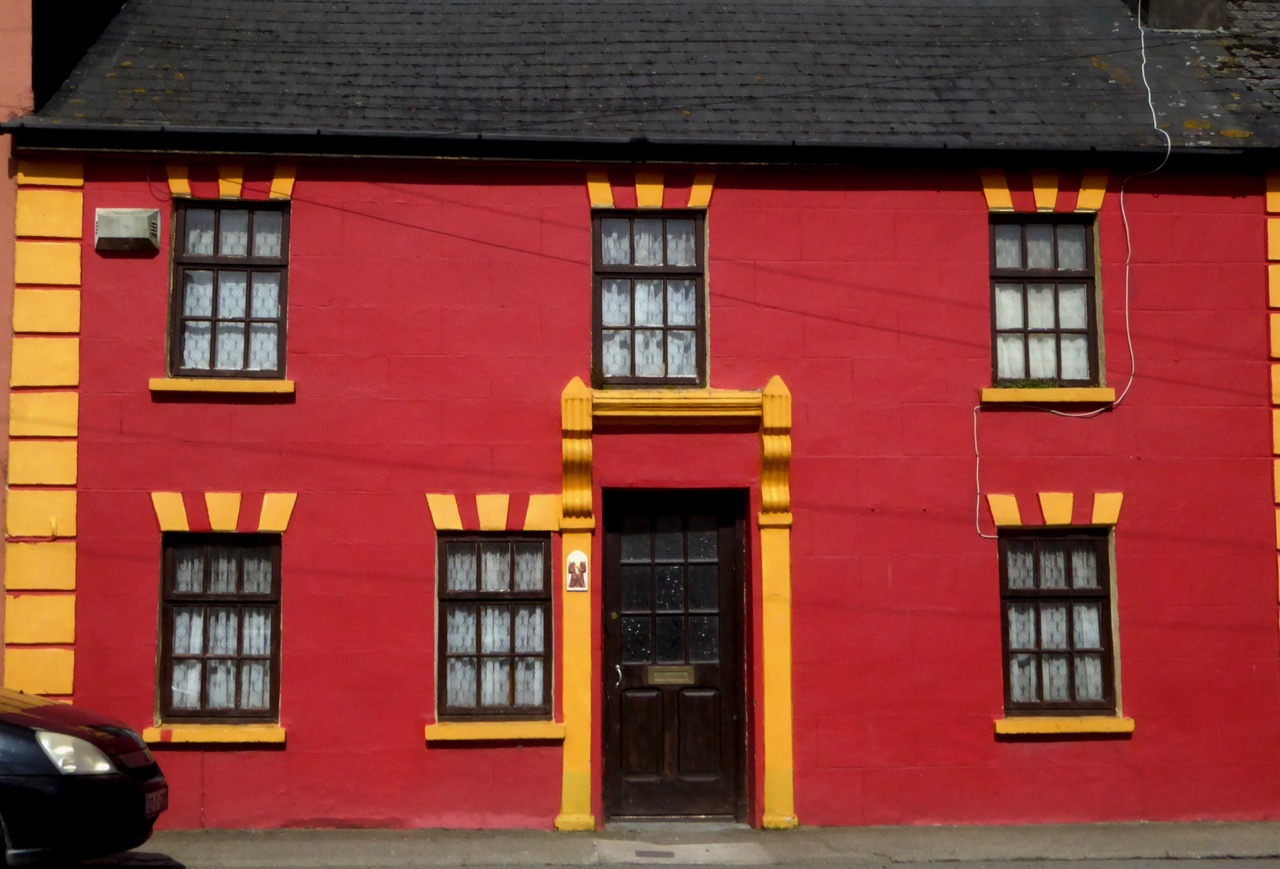
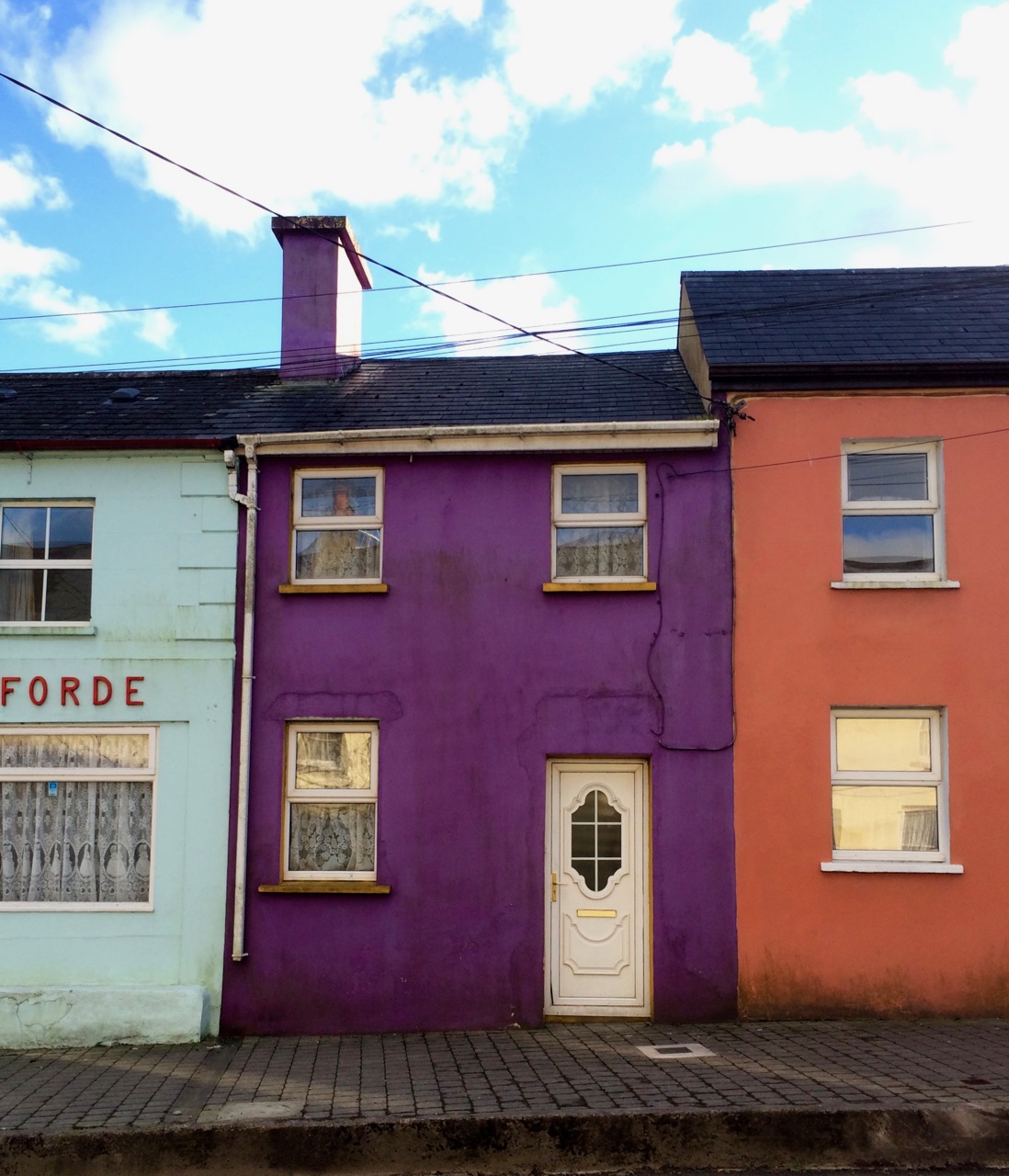
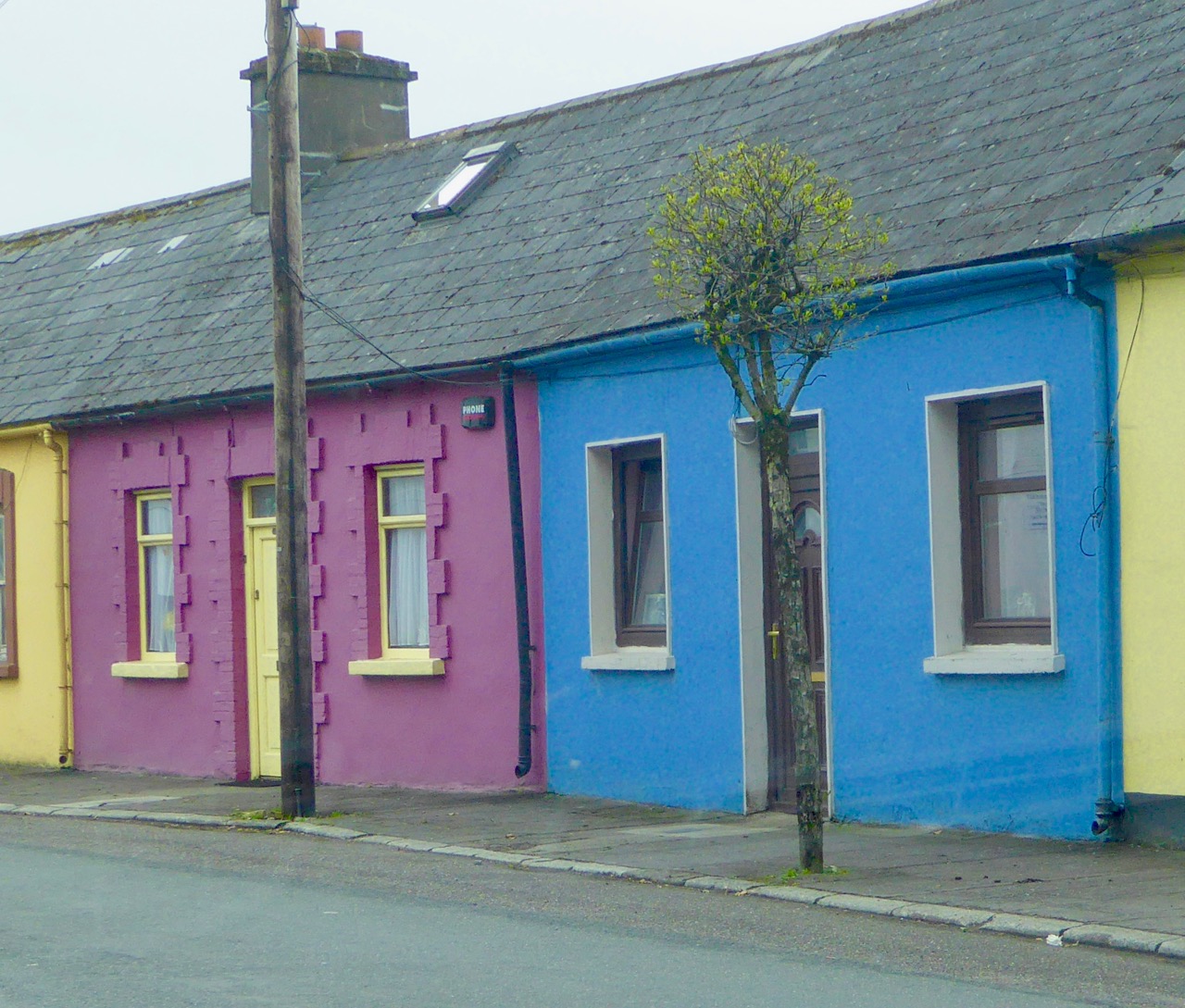
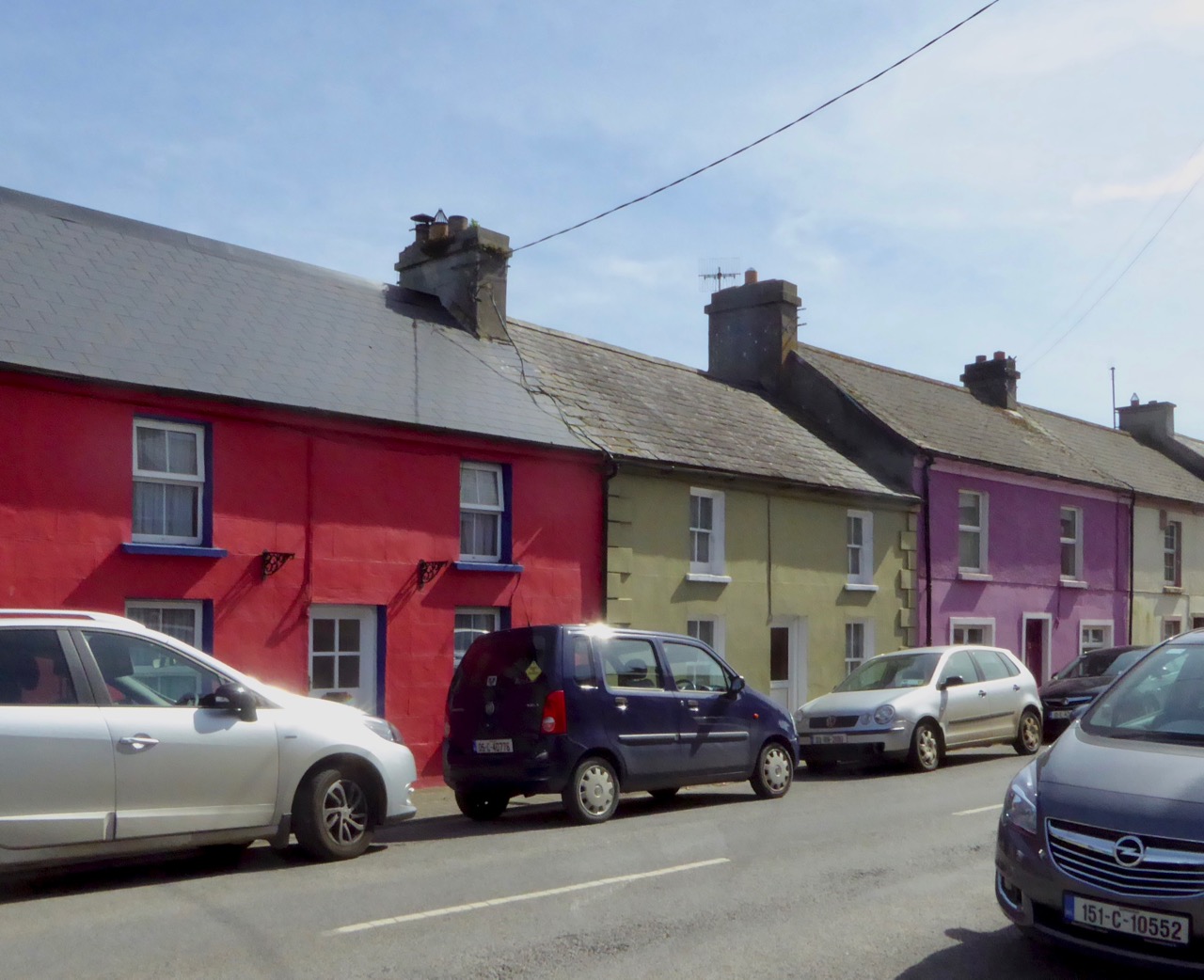
You all know of my fascination with the colourful houses that dot the Irish countryside. It’s been a while since I posted about them so for new readers, check out A Lick of Paint and An Extra Lick of Paint and All the Trimmings.

Union Hall Pink

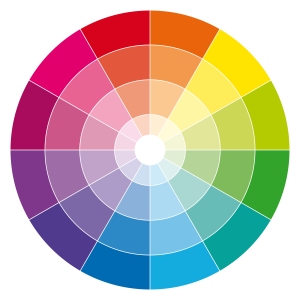
colour-wheelToday I am concentrating on the red side of the colour wheel – from purple to pink. We’ll stop where it shades into blue at one end and orange on the other. This gives us a vast range to choose from and, because it’s all diametrically opposite the greens of the Irish countryside, guarantees that the house will stand out in the countryside.

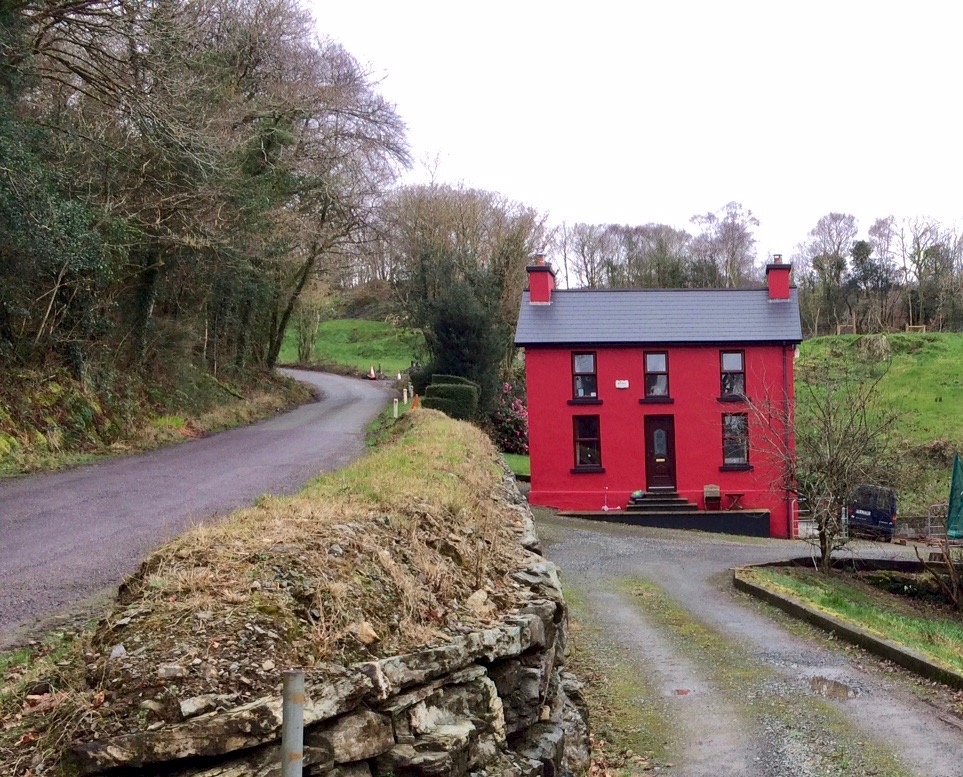
It’s always a wonderful surprise to come around a corner on a tiny boreen and discover something like this…

Red, Mill Little

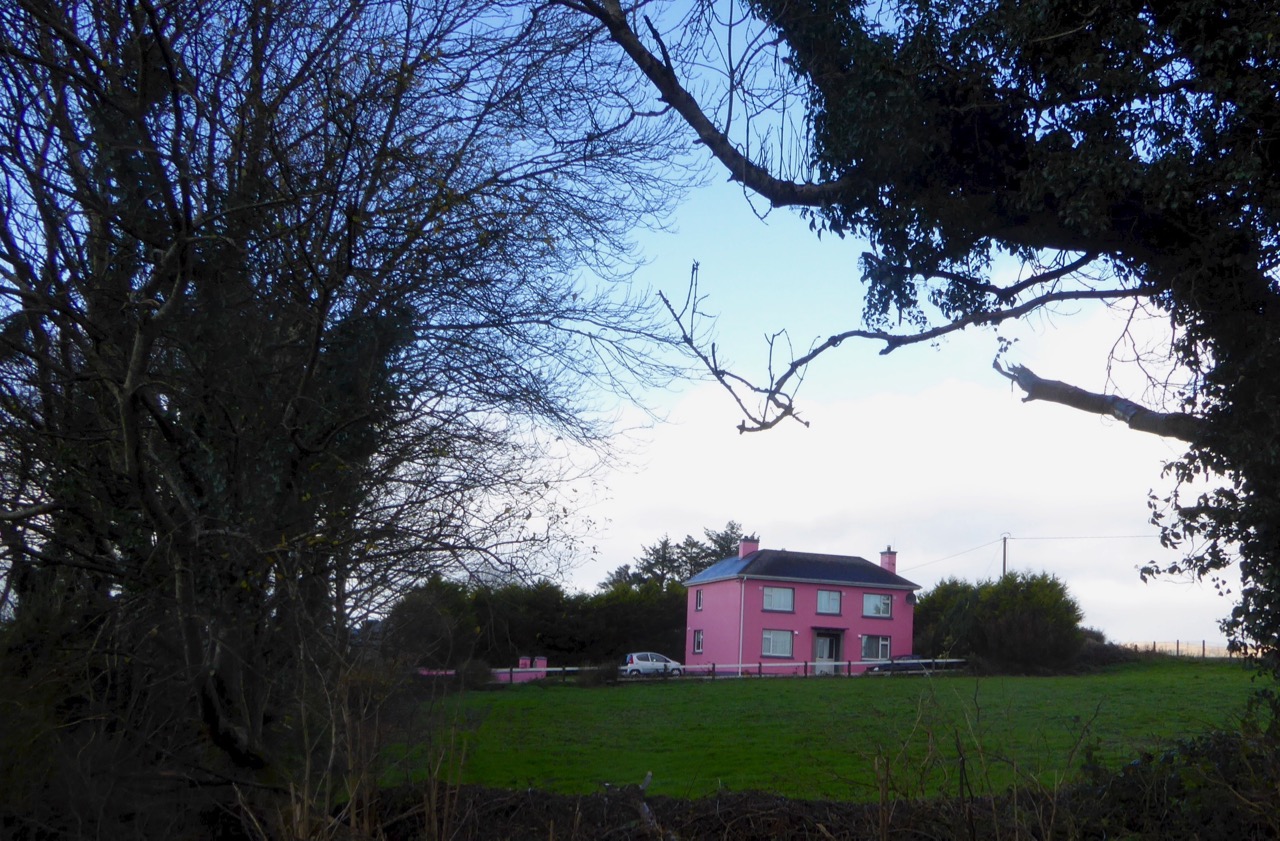
Or this…

Pink, North of Skibb

Or this.

colourful, north of Skibb

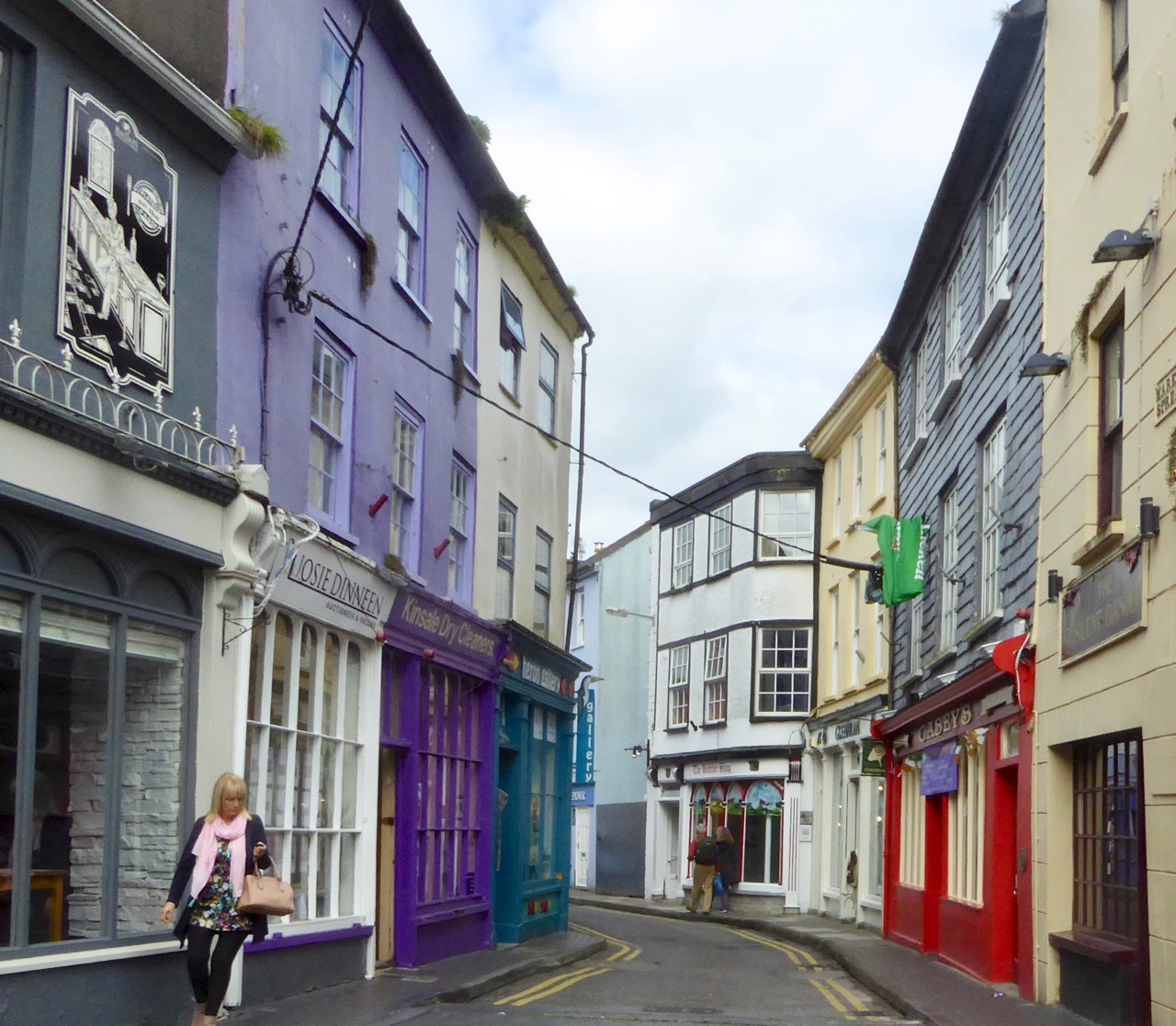
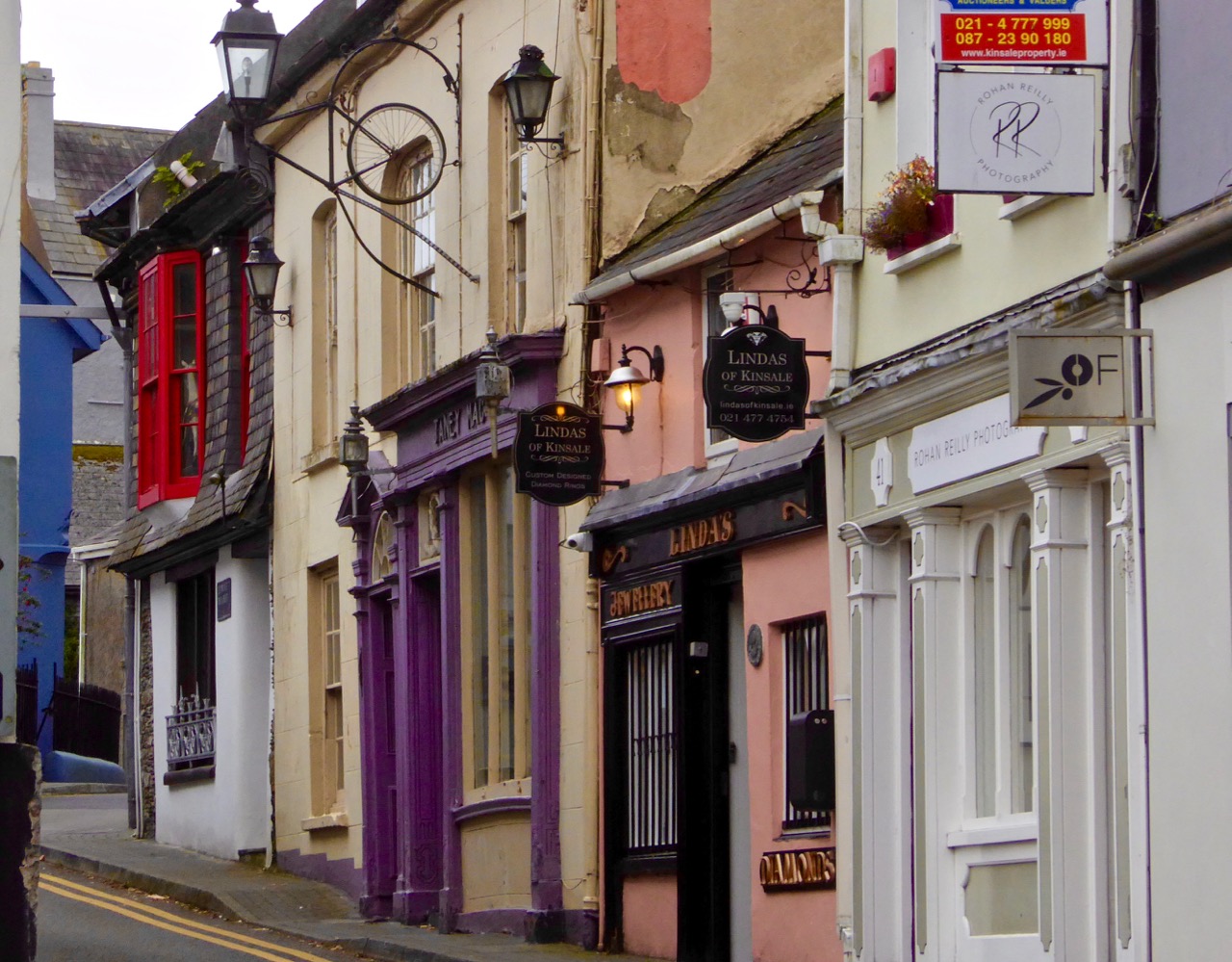
I’ve included a few shops as well, because – Kinsale! Located on the southernmost extent of the Wild Atlantic Way, it’s one of the most colourful of all Irish towns and a delight to stroll around.

Purple in Kinsale

Janey Mac Purple in Kinsale

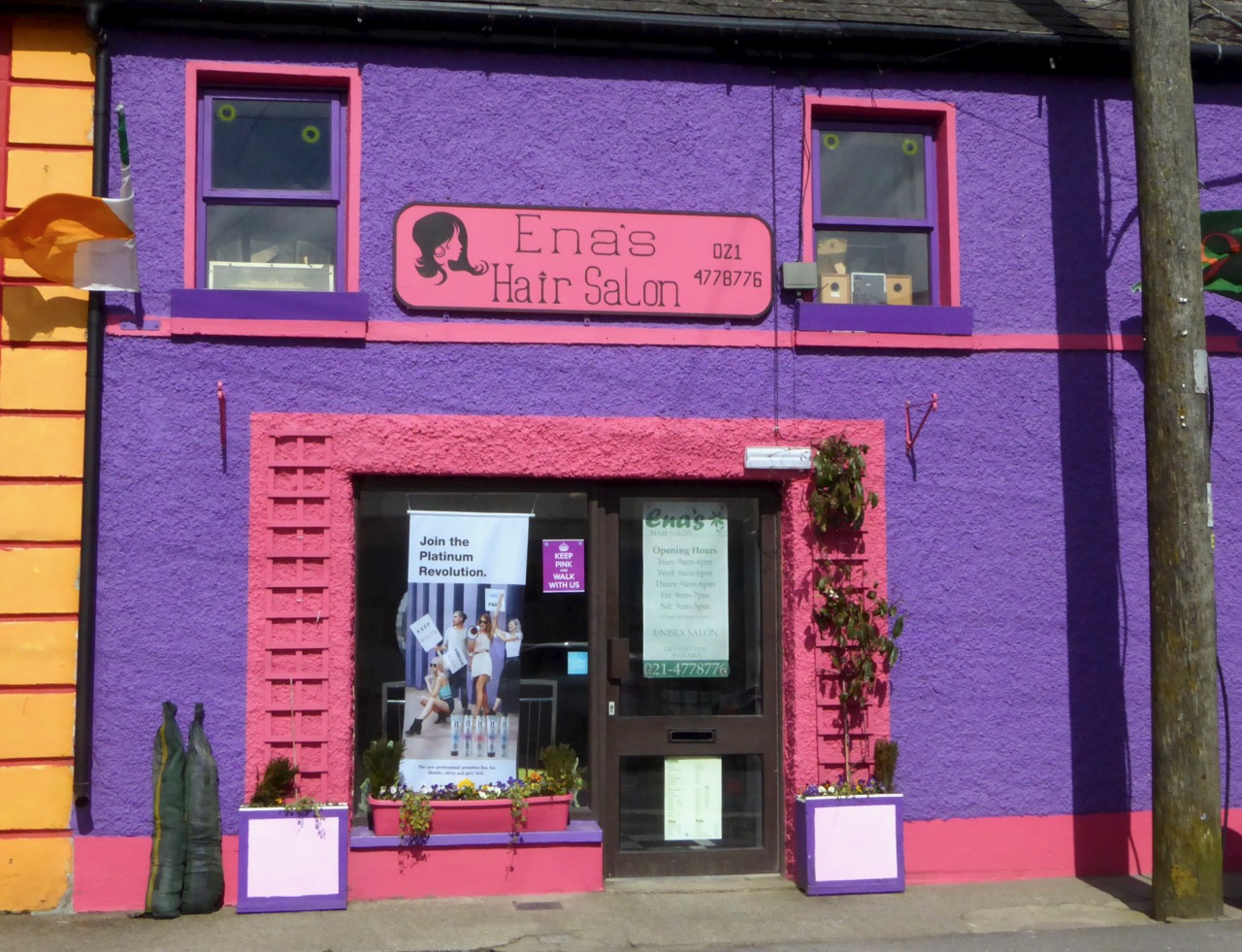
But it’s by no means the only colourful village – lots of other examples here too. Ballinspittle, for example – home of the famous grotto of the moving statue – is a kaleidoscope of colour.

Ena's, Ballinspittal

Ballinspittal red and yellow

Humble terraced cottages can assert their individuality through subtle architectural variations, or through one huge difference – colour!

Kilbrittain Purple

colourful in Millstreet

The main streets of towns and villages are enlivened with splashes of bold colour that catch the eye and brighten your day.

Red and Lilac Timoleague

Purple and red, Ballinspittal

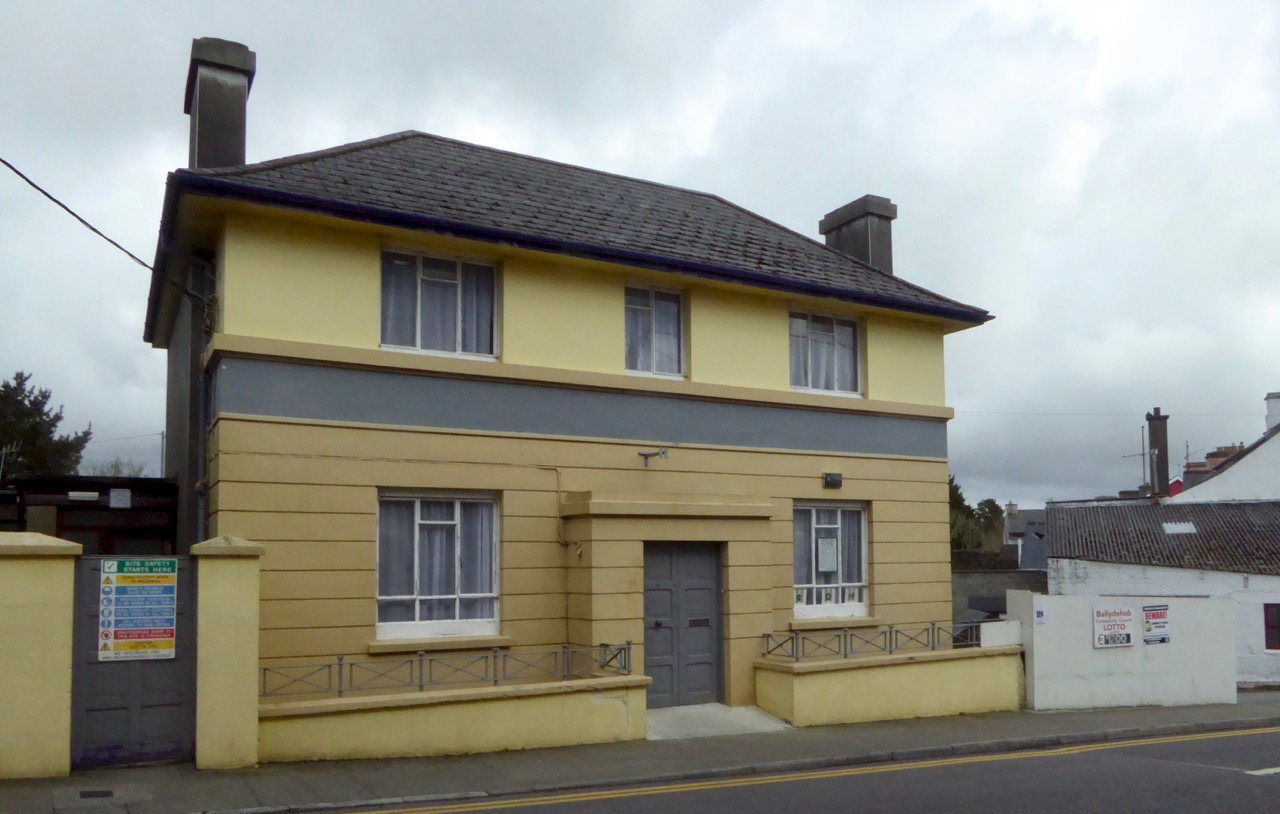
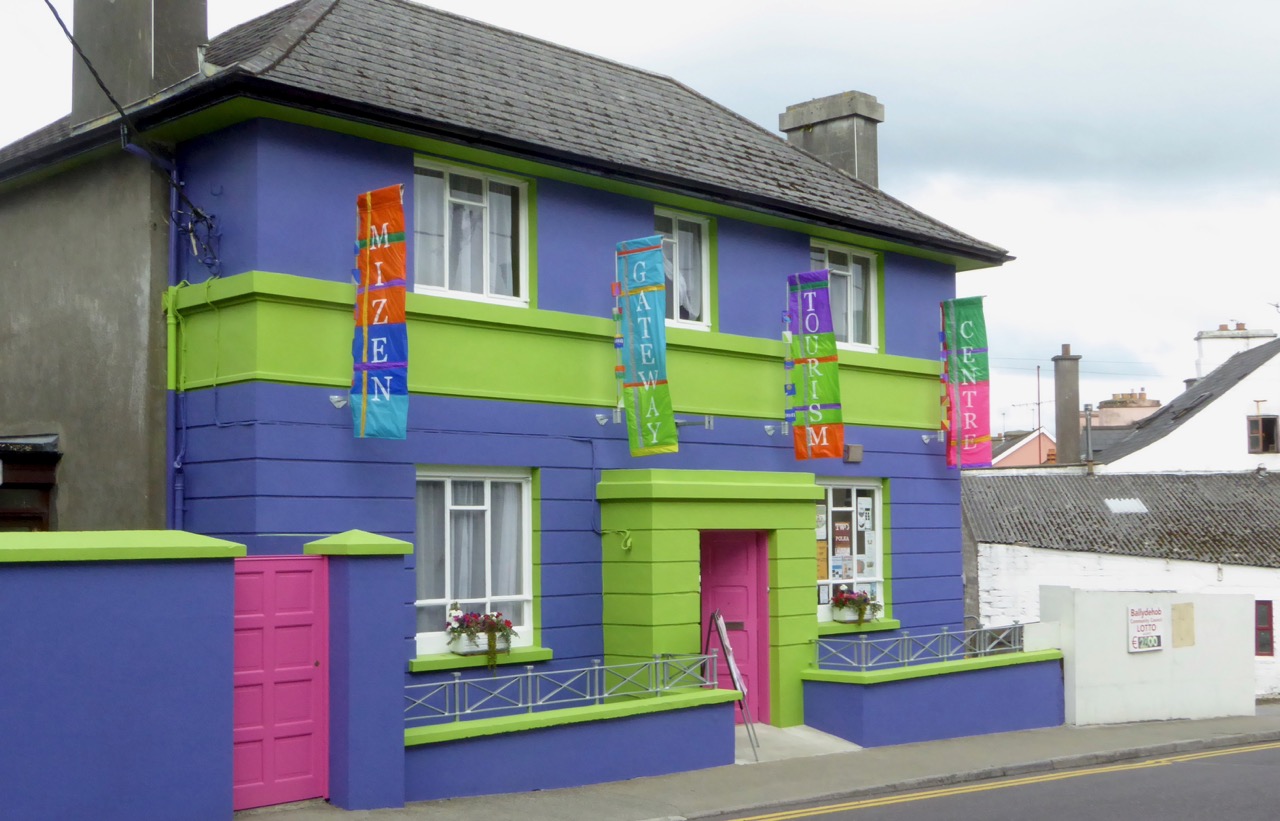
Perhaps one of the best examples I’ve seen of how a building can be transformed by colour comes from our own Ballydehob. Here is the old bank building, abandoned and unloved.

Bank House Before

And here it is now – our vibrant Bank House, home to the Tourist Information Centre and all kinds of events and occasions. As I said – purple and pink display to excellent advantage when contrasted with green!

Bank House from above

Next time we’ll wander over to a different area of the colour wheel. I’ve seen some mighty oranges and limes lately!

A Saint’s Day – Ciarán and Piran

Horse and Cape Clear

I was born in the first half of the last century. Early memories of the 1950s include the regular journeys my brother and I made as small boys on the mighty Atlantic Coast Express via Okehampton to visit, first, our sets of cousins on Dartmoor, and then beyond – via the even mightier Great Western Railway – to our cousins in the depths of Cornwall. The latter visits were particularly idyllic: the cousins (generations older than us) had a small farm and a herd of cows which they milked twice a day – by hand. Following this they cooled the milk in a big steel drum by stirring it with a propellor (we were allowed to do this) before pouring the precious liquid into bottles which were then sealed with silver caps using a rubber device which impressed on them the name ‘Cove Farm’. Then, together, we set out  on bicycles to deliver the bottles to the doorsteps of every dwelling in the small village of Perran-ar-worthal.

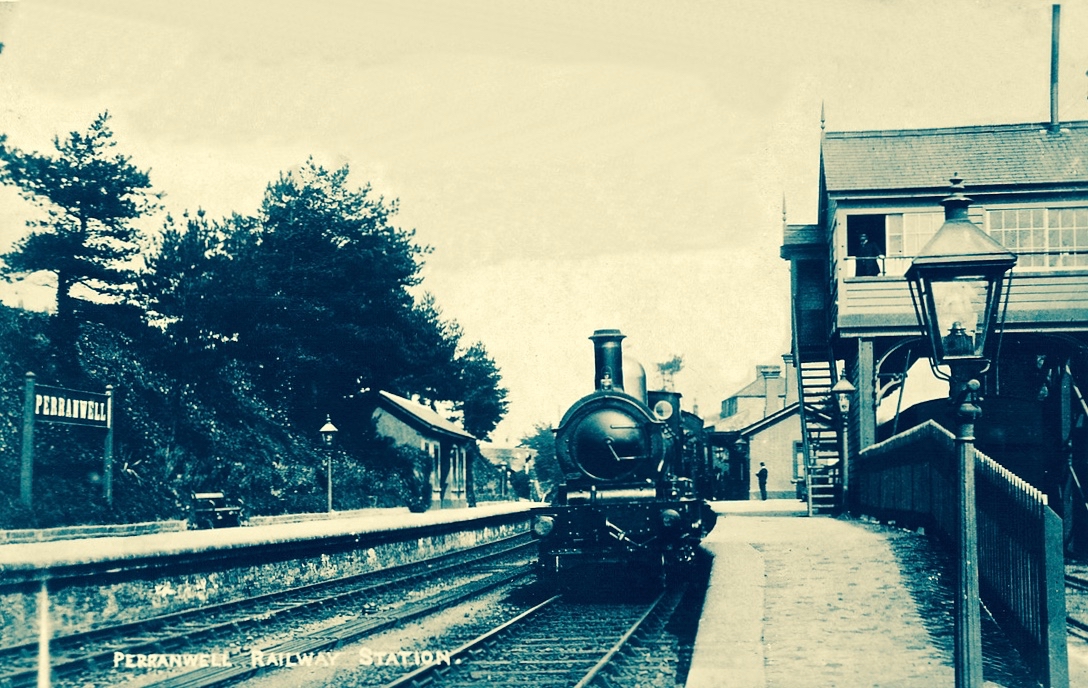
Perranwell Station 1950s
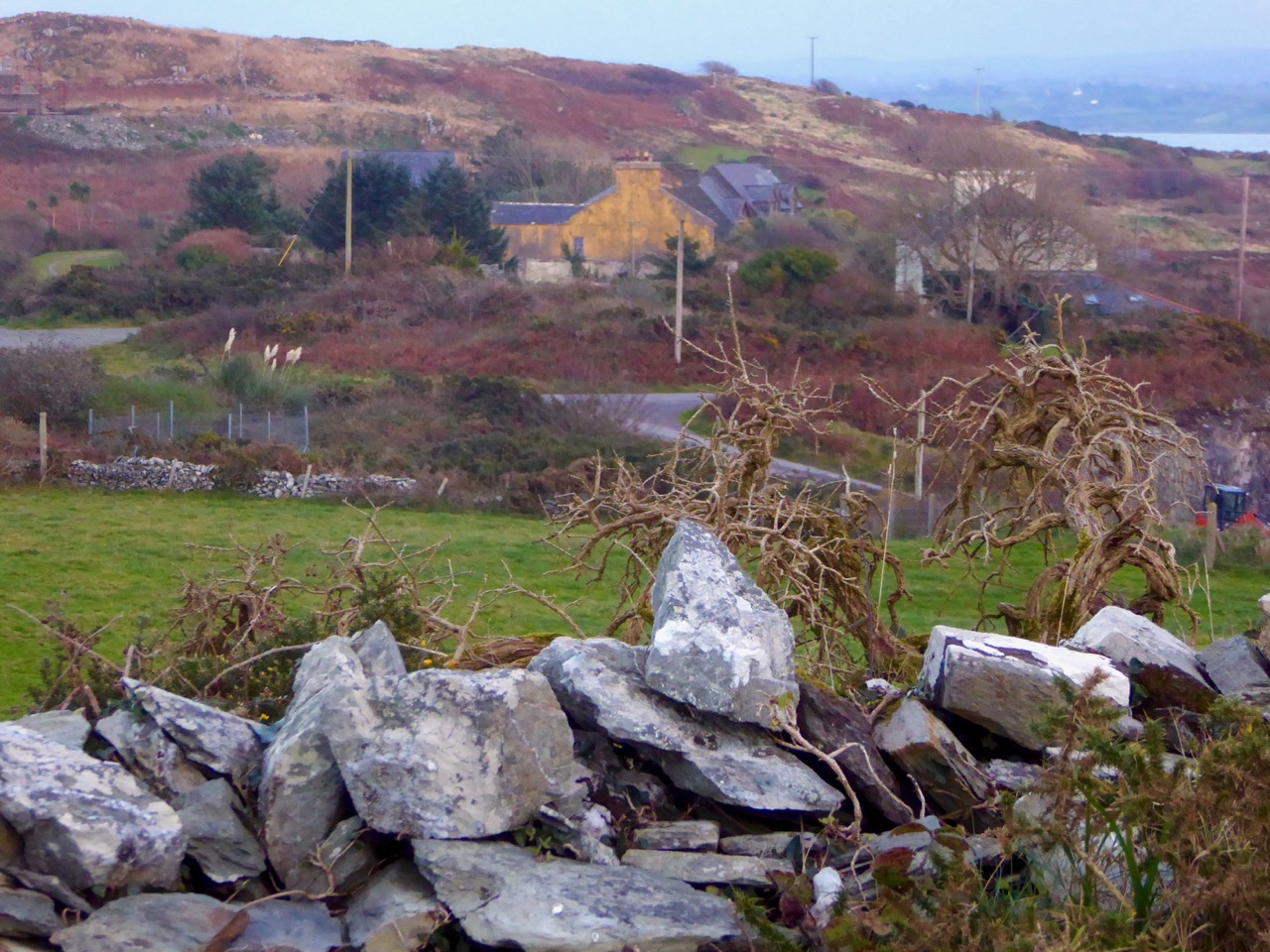
Perranwell Station 1950s – disemabark here for Perran-ar-Worthal and Cove Farm! The header picture is a view of Cape Clear seen beyond Horse Island, taken from our own Rossbrin Cove

Perran-ar-Worthal (in Cornish Peran ar Wodhel) means ‘St Piran’s village by the creek’. Who is St Piran? He is the Patron Saint of Cornwall and we’ve met him before, briefly, in my account of St Ciarán, who was born on Cape Clear, and was known as ‘The First Saint of Ireland’. Even before St Patrick arrived to start his missionary work in 432 AD, St Ciarán (according to some records born in 352 AD) had been at work converting the ‘heathen Irish’. Unfortunately, his efforts were not always appreciated and Ciarán was despatched from the top of a tall cliff with a millstone tied around his neck! The story is elaborated by Robert Hunt FRS in his Popular Romances of the West of England first published in 1908. I have the third, 1923 edition on my bookshelves.

Robert Hunt Popular Romances 1923

On a boisterous day, a crowd of the lawless Irish assembled on the brow of a beetling cliff, with Ciarán in chains. By great labour they had rolled a huge millstone to the top of the hill, and Ciarán was chained to it. At a signal from one of the kings, the stone and the saint were rolled, to the edge of and suddenly over, the cliff into the Atlantic. The winds were blowing tempestuously, the heavens were dark with clouds, and the waves white with crested foam. No sooner was Ciarán and the millstone launched into space, than the sun shone out brightly, casting the full lustre of its beams on the holy man, who sat tranquilly on the descending stone. The winds died away, and the waves became smooth as a mirror. The moment the millstone touched the water, hundreds were converted to Christianity who saw this miracle. St Ciarán floated on safely to Cornwall; he landed on the 5th of March on the sands which bear his name. He lived amongst the Cornish men until he attained the age of 206 years…

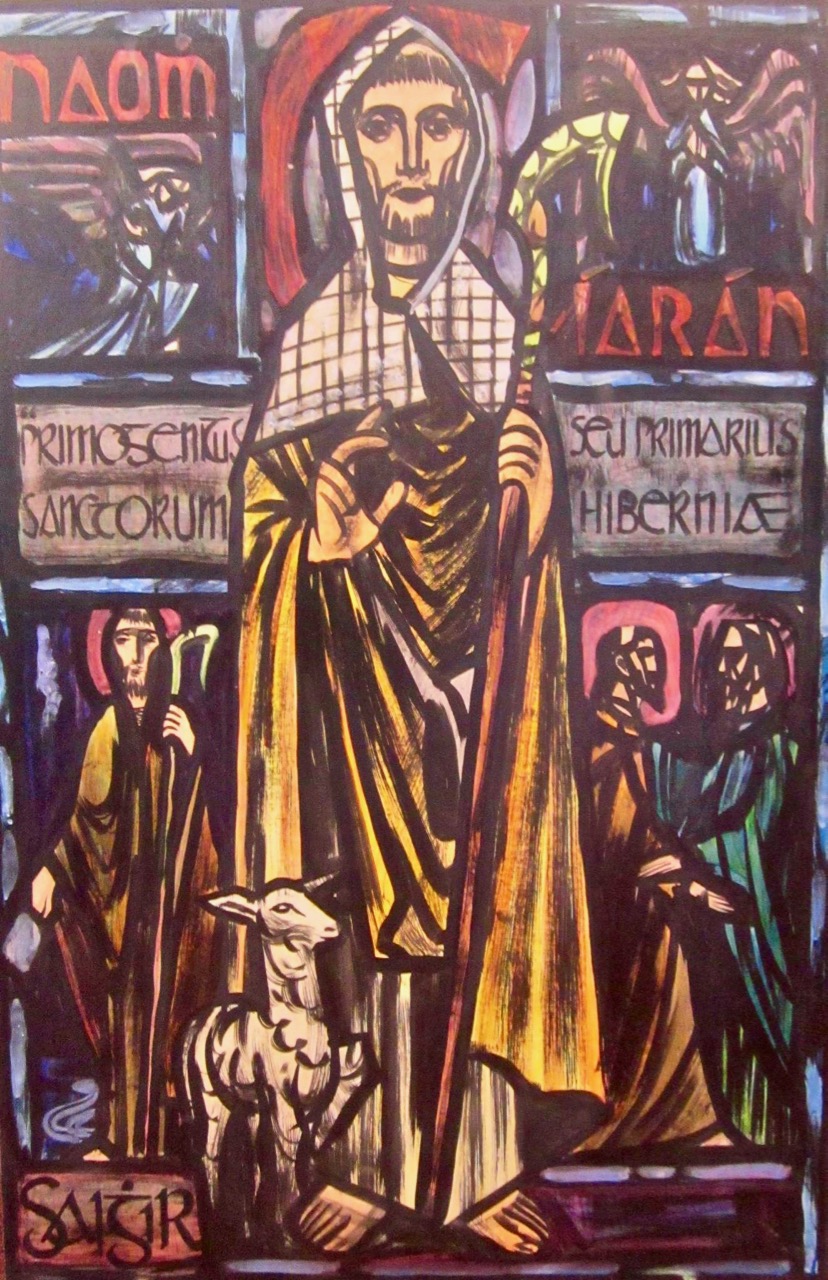
Left – St Ciarán celebrated in modern stained glass, in the church at Caheragh, West Cork; centre – Ciarán at Rath church, near Baltimore, and right – St Piran is the top figure (with church and bell) in this window panel from Truro Cathedral, Cornwall

So, what is the connection between Saints Ciarán and Piran? Apparently, they are the same person! Charles Lethbridge Kingsford reporting in the Dictionary of National Biography 1885 – 1900 (a 63 volume work!) states:

…PIRAN or PIRANUS, Saint, is commonly identified with Saint Ciaran of Saigir. The names Piran and Ciaran or Kieran are identical—p in Britain being the equivalent of the Irish k. The history of the two saints is in the main features the same, though the Irish lives of St Ciaran do not record his migration to Cornwall…

Many writers make the same assertion about the orthophony of the name but – to be fair – others, including some saintly hagiographers, do not agree, suggesting we are talking about two different saints. As someone who has a birthday on 5th March (today) – the Saint’s Day for both Ciarán and Piran – I have no doubts about the matter. Here’s another source that concurs with the view that they are one and the same saint – The Irish Ecclesiastical Record, Volume X (1874):

The labours of St Kieran were not confined to Ireland. He passed several years on the western coast of Britain, and, as we learn from Blight’s “Churches in West Cornwall,” his memory is still cherished there. Four ancient Cornish parochial churches bear his name : these are Perran-zabuloe, or St Piran-in-the-sand; Perran-arworthal; Perran-uthnoe, situated near the coast opposite St Michael’s Mount, and St Kevern, or Pieran, which in Domesday-book is called Lanachebran. St Kieran’s holy well is also pointed out on the northern coast of Perran-zabuloe. The parish church of St Keverne stands in the district called Meneage, which terminates at the Lizard Point, the southernmost land of England. The name Meneage is supposed to mean, in the old Cornish dialect, “the deaf stone”, and the reason given for it is that, though there are several mineral veins or lodes in the district, on trial they have been found to be of no value, and hence are called deaf or useless. Tradition tells that St Kieran inflicted on the inhabitants, as a punishment for their irreligion, that the mineral veins of the district would be un-productive, and the old proverb is still handed down, “No metal will run within the sound of St Kieran’s bell”…

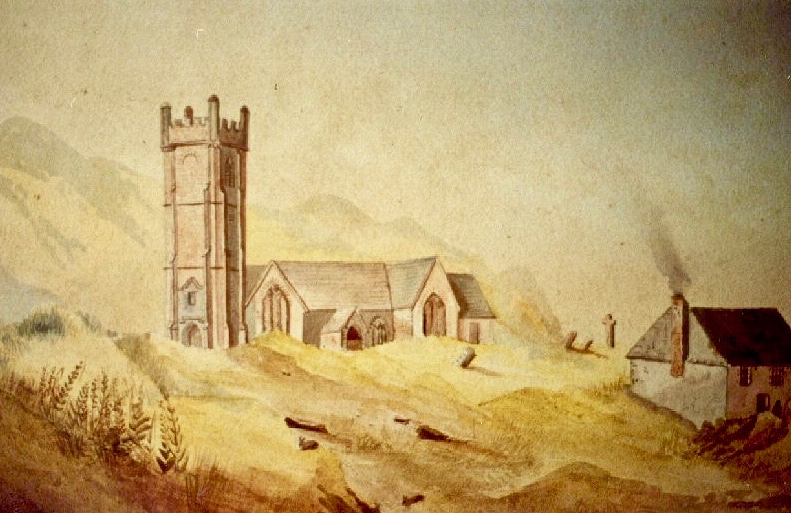
St Piran's Church, Perran SandsAn image of St Piran’s Church which was built in the 12th century on the dunes at Penhale Sands, Perranzabuloe Parish, to replace the Saint’s original oratory which was buried by the shifting sands. The sands encroached on this church, too (the sands can be seen in the picture), and it was dismantled around 1800 and stone from the site was then used to build another new church two miles inland which was dedicated to St Piran in July 1805

To complement that little story of the saint in Cornwall, we have to visit Ossory, an Irish diocese which encompasses parts of Kilkenny, Laois and Offaly. There they also celebrate St Ciarán of Saigir on March the fifth: he is said to have returned from Rome after years of study, firstly visiting his native Cape Clear, then commencing his travels through Ireland until his bell rang of its own accord – this happened at a small hamlet in County Offaly, now known as Seir Kieran. There he set up a foundation, the remains of which are still visible – as is a holy well, a holy bush (bedecked with clouties) the base of a round tower, the base of an ancient high cross (now holding water which has curative powers) and a holy rock which was once said to have displayed the hand print and knee prints of the saint, now completely obscured.

barry-cotrell-st-piran

St Piran’s journey to Cornwall: “The millstone kept our man afloat” from The Discovery of Tin – a collection illustrated by Barry Cottrell

One of my favourite stories about St Piran tells of how he discovered tin smelting. He used as his hearth a piece of local stone; when he lit a fire on the hearth the veins of tin ore in the stone melted and a stream of silver ran out across the black rock, in the form of a cross. From that day to this the flag of Cornwall is a white cross on a black background, and Piran is the patron saint of tin and tinners.

marching-and-flags

Just about now in Cornwall a great celebration is going on in honour of the saint. There will be a procession to the original oratory buried in the sands, led by the Grand Bard of the Cornish Gorsedd. Cornish flags – and the Cornish tartan – will be very much in evidence. The Cornish people have a great nationalistic spirit and have called for the 5th March to be an official public holiday. In a recent debate on Cornwall some interesting views were expressed on the place of Cornwall in a post-Brexit world, and the attributes of St Piran were symbolic of this – his inventiveness, his love of nature, and his belief in the inclusivity of all peoples in an international community.

Left – Geevor Mine, in West Penwith, one of Cornwall’s last working tin mines, now a museum of mining; right – an incarnation of the saint: Cornish author Colin Retallick stands in front of St Piran’s ancient cross on the saint’s day

St Piran lived to a great age. They say in Cornwall that he was ‘fond of the drink’ and met his end by falling into a well when walking home from a party. I hope it was a holy well! Today, seventeen centuries after St Ciarán / Piran was thrown from the cliffs of Cape Clear I am looking out to that island: …the winds are blowing tempestuously, the heavens are dark with clouds, and the waves are white with crested foam… There have been so many links between Cornwall and West Cork, ever since the Bronze Age, when Cornish tin traders brought their metal to mix with copper mined above us here on Mount Gabriel. Watch out for more posts about these links, and mark your diaries for an exhibition coming up in June in Uillinn, West Cork’s fine new gallery, of the work of artists from Cornwall. This will be followed next year by an exhibition in a Cornish gallery of the work of artists from West Cork. West meets West will forge new and lasting links between the two communities: links which would have warmed the heart of our shared saint!

Below – St Ciarán by Richard King, painted for the Capuchin Annual in the 1950s

Richard King Ciaran

Licking the Lizard – or The World Turned Upside Down

…Nothing was more natural than the desire to have a ‘last fling’ just before the beginning of Lent. On the Continent of Europe this became a public, communal revel, the carnival, but generally in Ireland the Shrove Tuesday celebration was a household festival with the family and their friends gathered about the fire-side, when the surplus eggs, milk and butter were used up in making pancakes, and even the most thrifty housewife did not object, as otherwise these perishable foodstuffs might go to waste. Some people kept the Christmas holly for the fire which baked the pancakes…

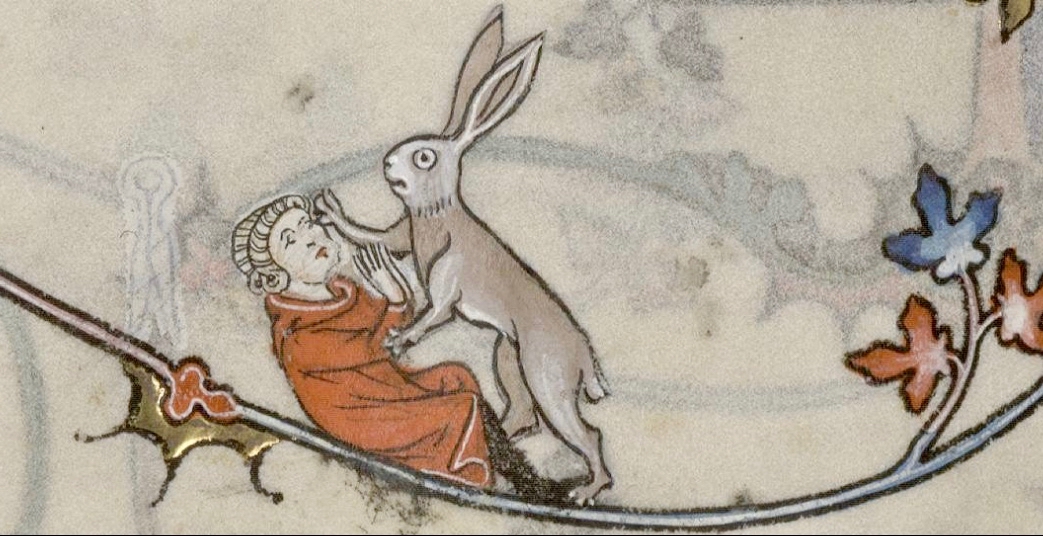
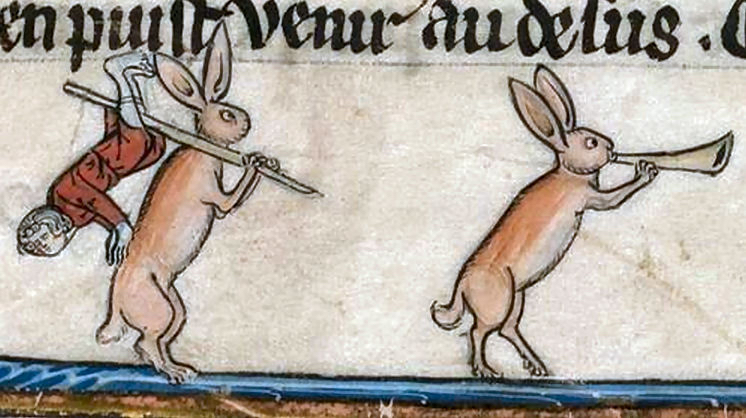
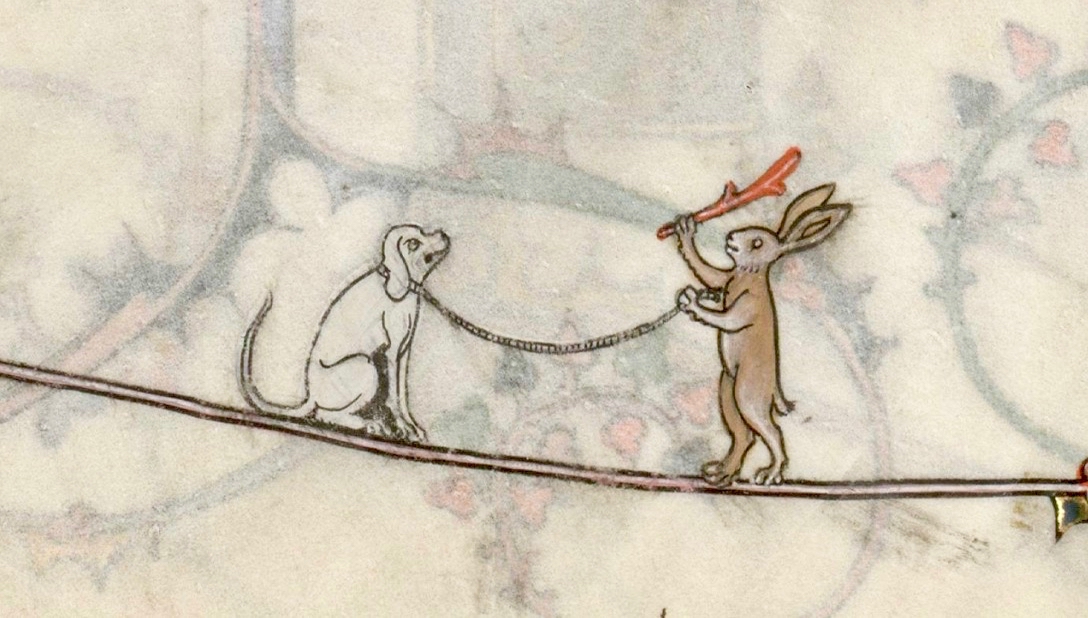
That’s my old friend Kevin Danaher again, reporting on the seasonal customs which we will be celebrating this week, described in The Year in Ireland Mercier Press, 1972. As he points out, the ‘last fling’ in Ireland is tame by comparison with Carnival in other countries, where it really can be the case of A World Turned Upside Down – authority is despatched to the sidelines while fools, mock kings, mock abbots and ‘Lords of Misrule’ conduct the proceedings. Hence the illustrations above, where malevolent hares get their own back on human hunters – and men lay eggs! Both of these are from the marginalia of thirteenth century manuscripts which are teeming with such anarchic visions.

Above – role reversal, a popular feature of carnival customs – and contemporary political upheaval which seems carnivalesque

An 18th century chapbook carries a remarkable and wonderful series of illustrations: The World Turned Upside Down or The Folly of Man, Exemplified in Twelve Comical Relations upon Uncommon Subjects. Here we find ‘the cart before the horse’, ‘children caring for their parents’ and many other thought-provoking reversals.

Back to Danaher:

…In Skibbereen, County Cork, after the fall of darkness on Shrove Tuesday evening the boys of the town amuse themselves by discharging home-made firecrackers. These were made by wrapping gunpowder in paper with a short fuse attached and enclosing the packet in a tight covering of the lead-foil lining of tea chests. Some, even more dangerous, were made from a short length of lead pipe stuffed with powder. These miniature bombs were thrown about the streets, at groups of people, when the sight of the glowing fuse flying through the air was the signal to scatter and run. The bang from these fireworks is said to have been very loud and when thrown at a belated wedding cavalcade, usually caused the horses to bolt, much to the public danger. Towards the end of the last century this custom was finally suppressed by an active police official… (ibid)

amorous hare

John Dunton, an English writer and bookseller, visited Ireland and described various customs he encountered, in Teague Land: or A Merry Ramble to the Wild Irish (1698). Here’s one he observed in Naas, Co Kildare:

…The inhabitants of this place and the neighbourhood have a custom (how begun I could not learn) on Shrove Tuesday to meet on horseback in the fields, and wherever they spy a hare in her form, they make as wide a circle as the company can and the ground will permit, and someone is sent in to start poor puss, who cannot turn herself any way but she is repulsed with loud cries and so frightened that she falls dead in the magical circle, though sometimes she breaks through and escapes; if a greyhound or any other dog be found in the field, it is a thousand to one she loses her life; and thus after they have shouted two or three hares to death they disperse…

Hardly surprising, then, that the hares in the 13th century manuscript marginalia should want to get their revenge… And, unhappily, an evolution of this same barbarous sport, now under the name of ‘hare coursing’ is still permitted in Ireland! We live in a topsy turvy world, indeed.

better hunting hares

Amhlaoibh Ó Suilleabháin, the schoolmaster of Callan, Co Kilkenny reported a similarly unsavoury Shrove Tuesday custom in  1831:

…To-day is the day when cocks were pelted. It was a barbarous trick. The poor cock was tied to a post or a stone by a hard hemp cod, and sticks were thrown at it. He who killed it became owner of it. A penny was wagered on every shot. Recently this custom has receeded. I have not seen it for thirty years. It was an English custom…

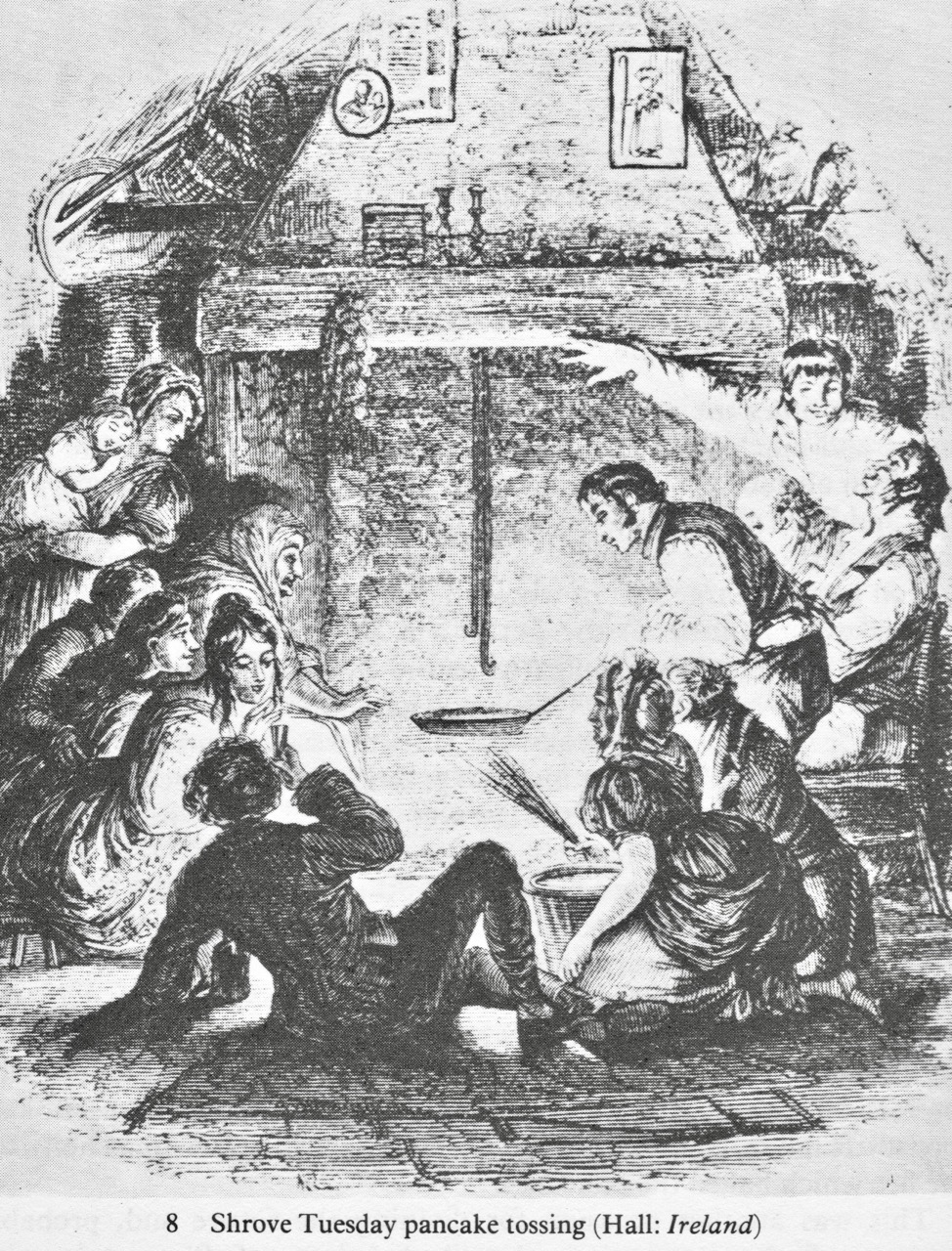
Good to know that we can at least blame the English for that! Cock-throwing was also noted in the three volume Guide to Ireland published between 1841-1843 by Samuel Carter Hall (1800-1889), and his wife Anna Maria (1800-1881) …The day for this sport was Shrove Tuesday, a day which is still dedicated to games and amusements far less cruel and irrational… They went on to describe and illustrate pastimes more familiar to us.

hall's shrove tuesday

…The family group – and the “boys and girls” of the neighbours – gather round the fireside; and each in turn tries his or her skill in tossing the pancake. The tossing of the first is always alloted to the eldest unmarried daughter of the host, who performs the task not altogether without trepidation, for much of her “luck” during the year is supposed to depend on her good or ill success on the occasion. She tosses it, and usually so cleverly as to receive it back again on its surface, on its reverse, in the pan. Congratulations upon her fortune go round, and another makes the effort: perhaps this is a sad mischance; the pancake is either not turned or falls among the turf ashes; the unhappy maiden is then doomed – she can have no chance of marrying for a year at least – while the girl who has been lucky is destined to have her “pick of the boys” as soon as she likes…

We had better finish off with a pancake recipe – and who better than Monica Sheridan to provide a traditional Irish one?

Oh! Do I hear you asking where Licking the Lizard comes into all this? Here is Kevin Danaher to round things off:

…There was a common belief that to lick a lizard endowed the tongue with a cure for burns and scalds; this was especially effective if the lizard was licked on Shrove Tuesday…

hare with dog

Lost Landmark

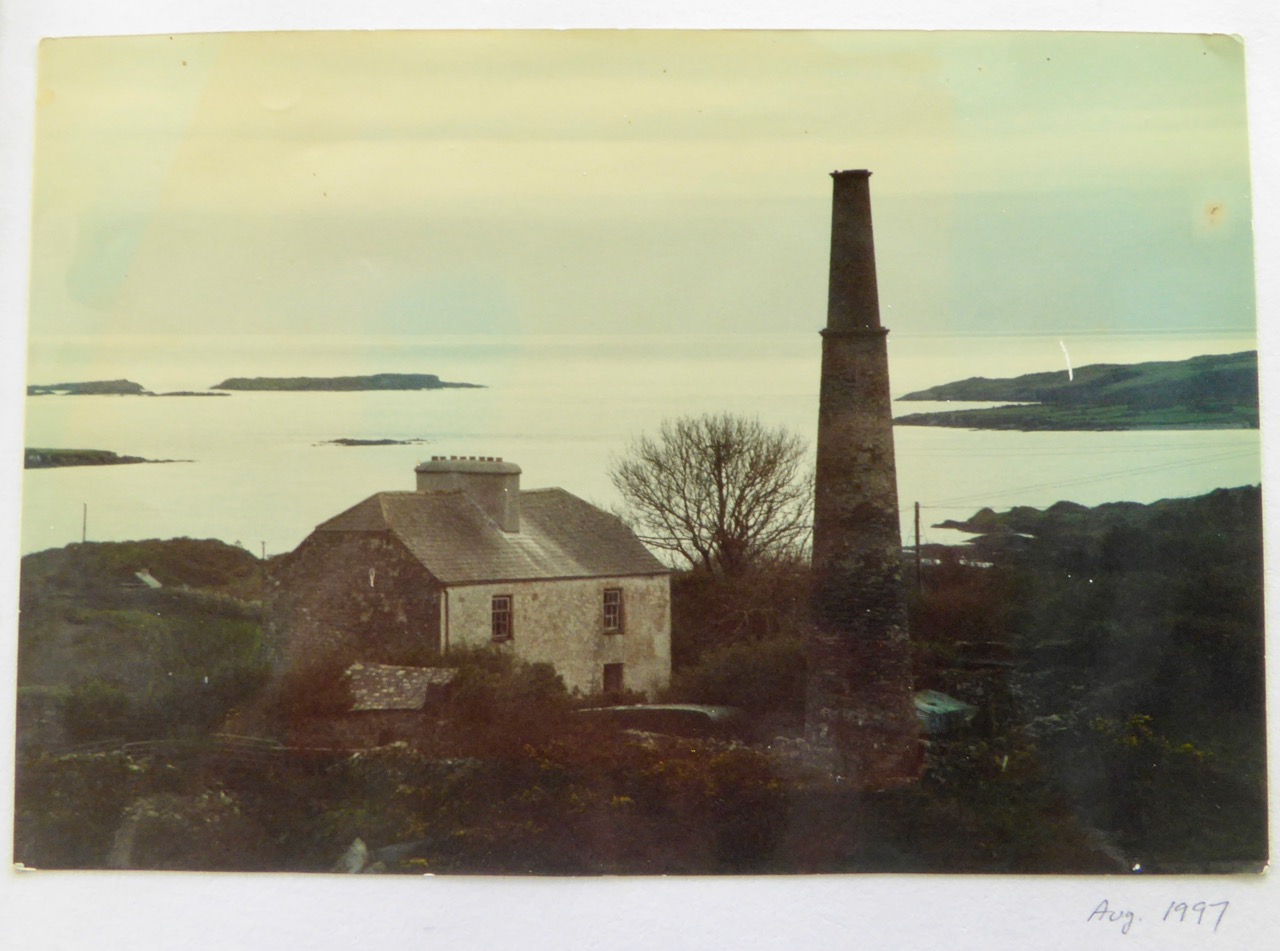
Photo 97It’s a sad thing to lose an iconic landmark. You know the kind I mean – the one that’s in every photo of the place, the one that helps to define it, the instantly recognisable image. In the case of West Cork, that would include the Mizen Bridge, the Galley Head Lighthouse, Ballydehob’s Twelve Arch Bridge, the castles at Three Castle Head, Bantry House, the Baltimore Beacon and of course the Fastnet Rock.

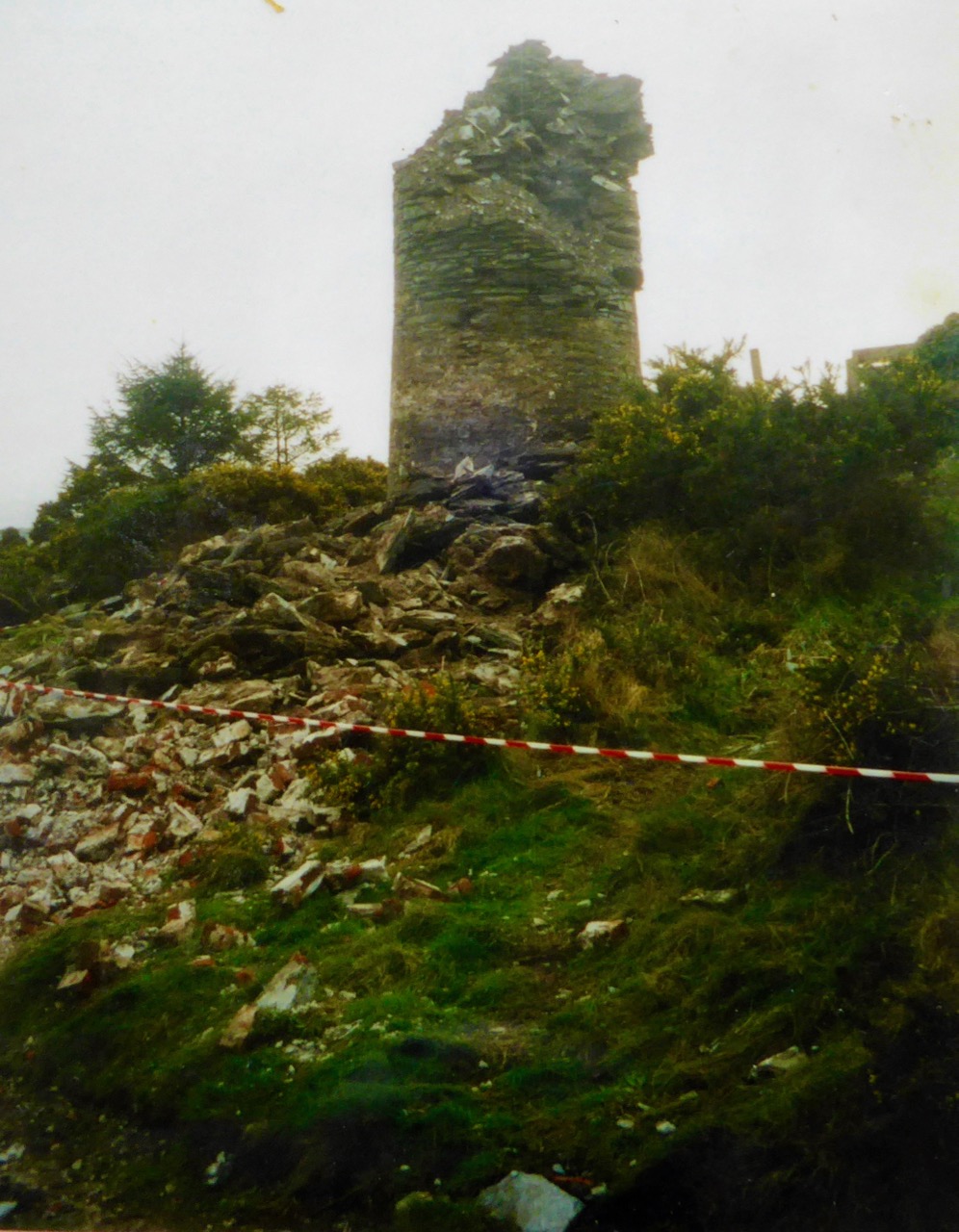
The morning after the lightening strike

The Cappaghglass Mine Chimney the morning after the lightning strike

But we used to have another one, until it was hit by lightning and came down in 2002, 15 years ago this month. The mine chimney at Cappaghglass stood tall on the crest of the hill, visible for miles around from Mount Gabriel to Cape Clear, from Long Island to Baltimore.

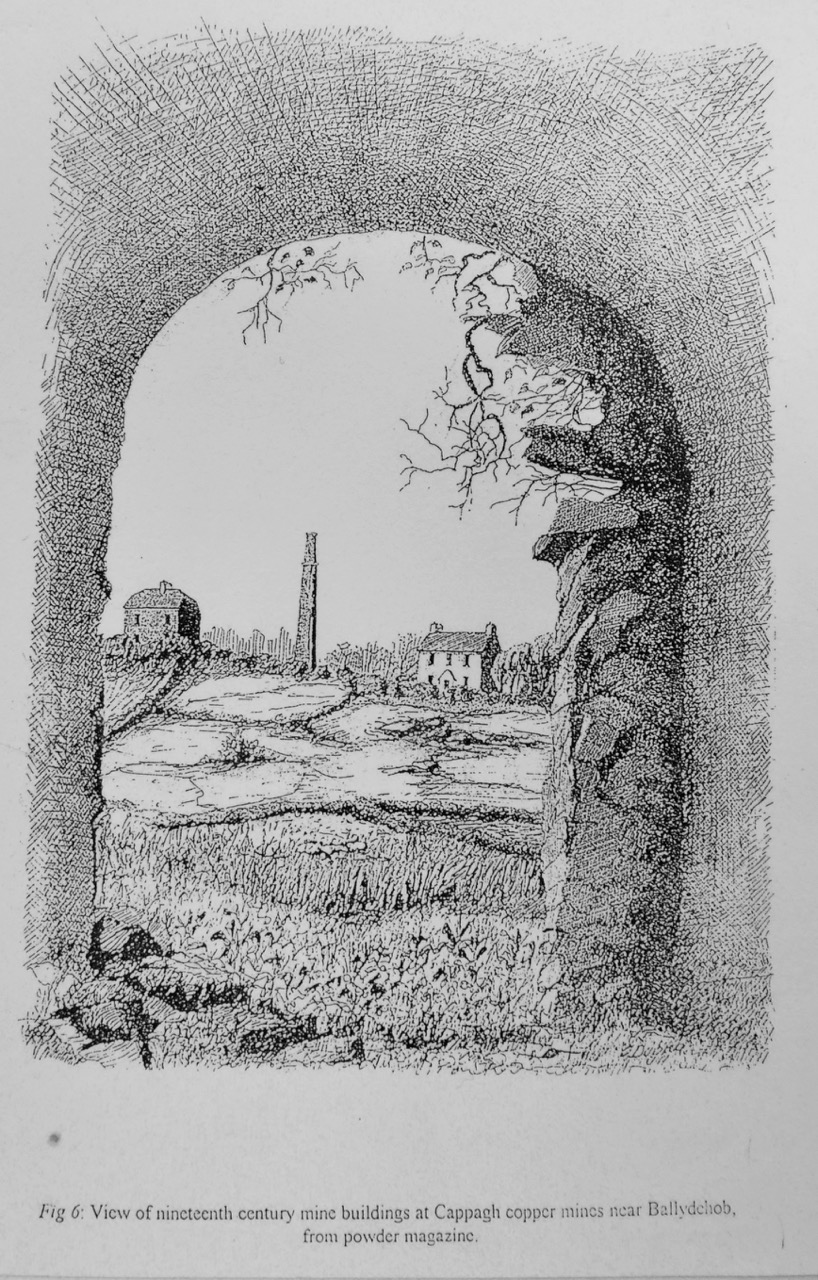
View from magazine

I don’t know the origin of this drawing. It’s a view of both mine captain houses and the chimney, taken from the south near Audley Cove

It was the most visible manifestation of the industrial past that has vanished so completely from this area. When it was built (to replace an even older one) in 1862 it was to vent steam from the engine that powered crushing machinery. Robert has written about the mining industry here – take a look at his post, Copper Country. At its height, hundreds of people were employed, above and below ground in the Cappagh Mine and what is now a lonely stretch of heathery hilltop was once a populous place.

Fastnet Trail sign

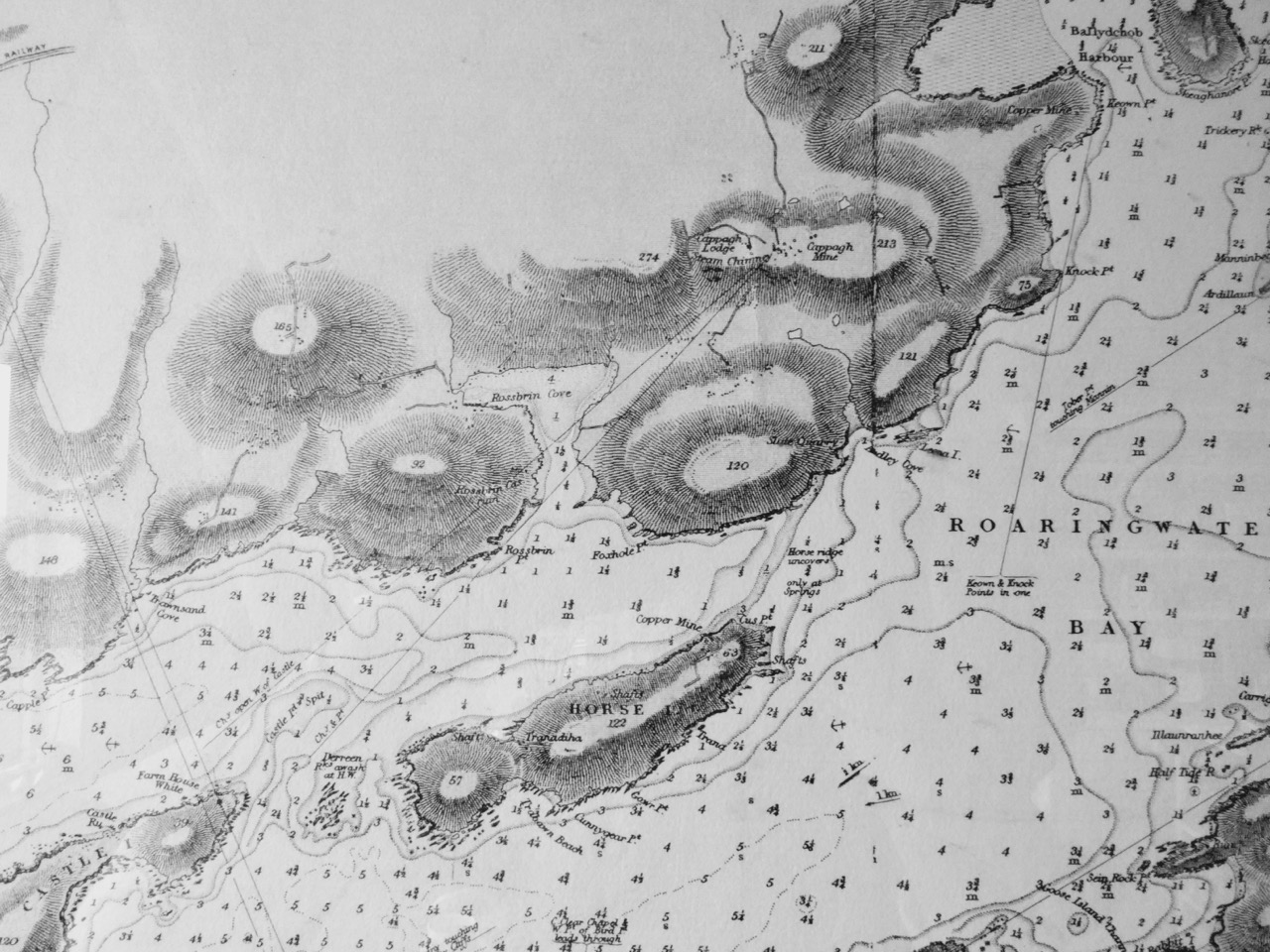
The chimney was so conspicuous on the landscape that it was used by the Admiralty to provide a reference point for mariners and by travellers to orient themselves in West Cork.

Admiralty Chart

Admiralty chart showing the ‘Steam Chimney’ as a reference point

As many landmarks are, it was also a favourite spot with locals – a place to walk out to on a fine summer’s evening or to bring your visitors to so they could admire the panoramic views over Roaringwater Bay and listen to tales of a grandfather’s backbreaking labour in the mines.

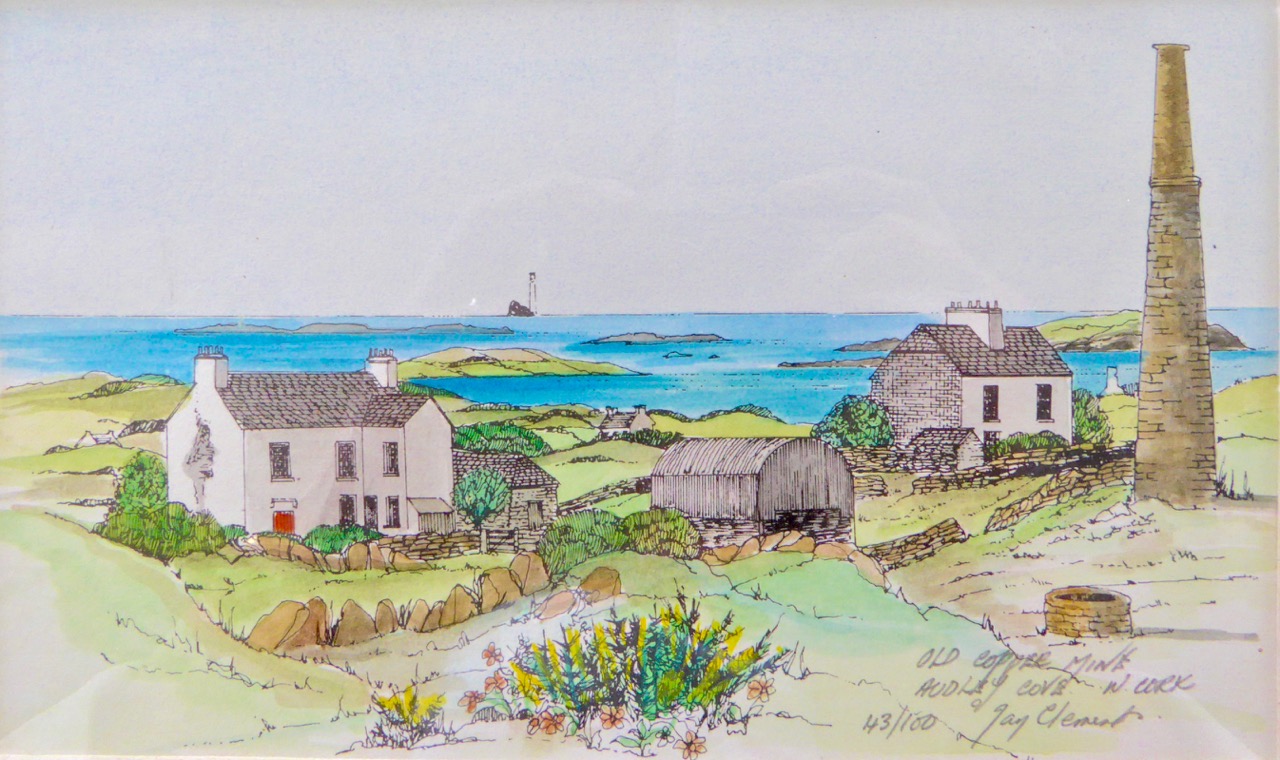
Jan Clement print

The storm that roared in on the afternoon of February 9 in 2002 came with no warning. It slammed into Cappaghglass with a noise like a jet engine. The first lightning strike killed several cows on an adjacent field, the next brought down the chimney and one after that hit the telephone wires causing a powerful surge to explode into the old Mine Captain’s House, by then the comfortable and modernised home of Terri and Mark O’Mahony and their family. The impact was devastating (we’ve seen the pictures) – the house was ruined and everyone inside was incredibly lucky to escape with relatively minor injuries.

Chimney stump

The chimney stump today

The O’Mahonys have rebuilt the Mine Captain’s House, but all that remains of the chimney is a stump. There was talk of reconstructing it but this never happened. In circumstances like this, all we have are the images that we can gather together to remind us of what an iconic structure this was. Fortunately, there are photographs and works of art extant that bear witness to how it dominated the landscape and that help us understand how it became such a beloved feature of the countryside.

Photo 97 to SW

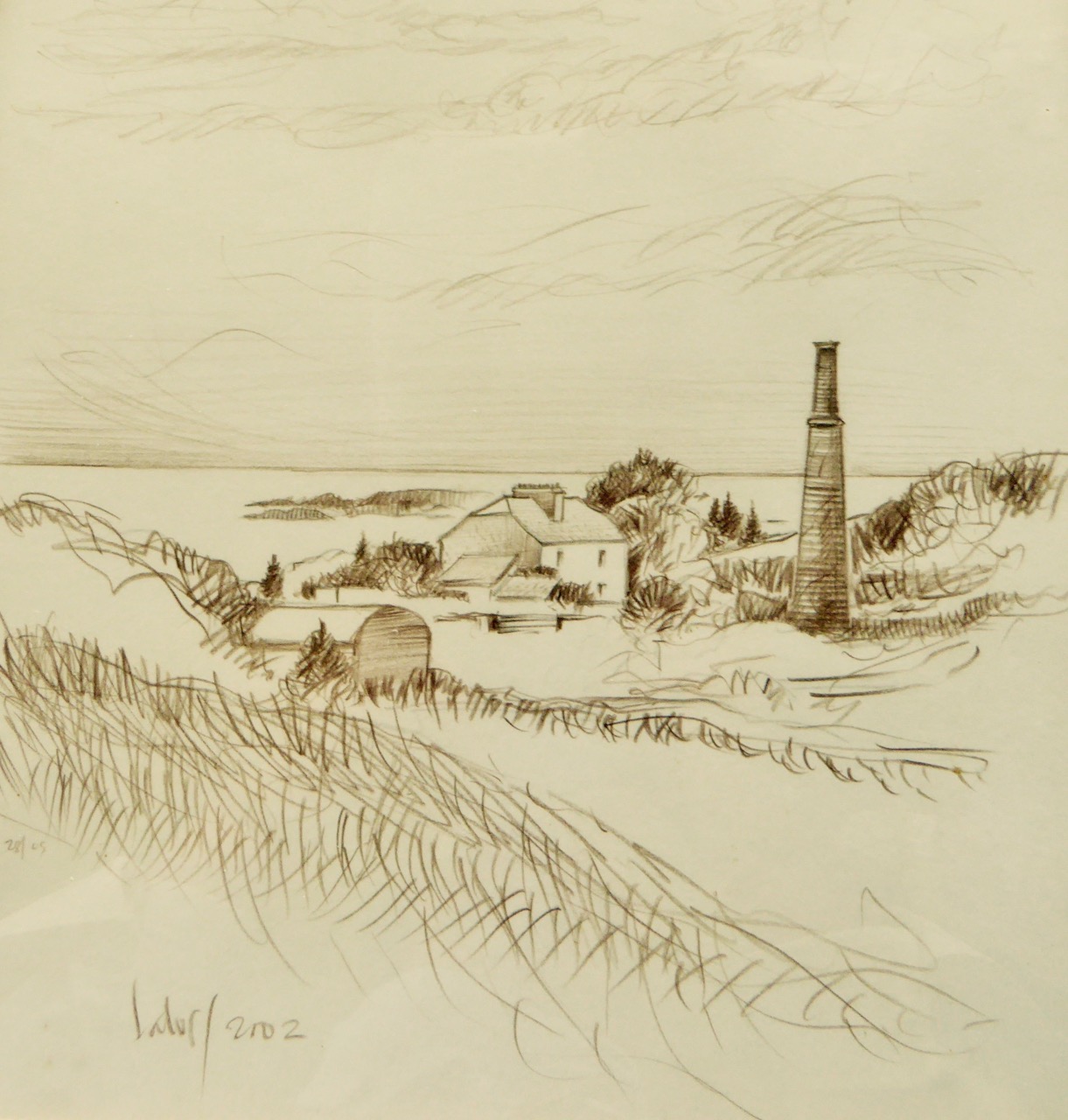
Among the images that remain is a charming drawing by Brian Lalor (yes, he of Brian’s Sketchbook fame), commissioned by friends to celebrate Mark O’Mahony’s birthday. It shows the chimney and the house and since it was done in 2002 it must have been just before the lightning strike.

Lalor 2002 sketch

But last week a new image emerged – Brian came across a pen and ink drawing he did in 1974 and he has allowed me to use it in this post. Because Brian unites the eye of the artist with the training of the architect and archaeologist, this is an important new piece of documentary evidence, as well as being a work of art. Thus we can see that the lower two-thirds of the chimney were made of stone, with render still clinging to the outside in patches. The top third is brick, separated from the stone by a corbeled course of expertly laid brick – a feature that is repeated at the top of the chimney also.

Lalor Cappaghglass Chimney – closeup

In Brian’s drawing the chimney stands splendidly on the hill like a round tower and its medieval resonance is echoed by the distant castle across the water.

Lalor Cappaglass Coppermine

My thanks to Mark and Terri O’Mahony for allowing me to use their photographs and drawings in this post, and to Brian Lalor for giving me a copy of his sketch. It’s lovely to have this evidence – but of course I can’t help regretting that the chimney is gone forever.

Mining area

Cappaghglass now

Sliding into Kerry

view from the road

My musical acquaintances might think that this post is all about Kerry slides – lively tunes which get aired sometimes at our session: here are some fine examples played by Éamonn O’Riordan, Tony O’Connell, Brian Mooney and Gearóid Ó Duinnín…

But they would be mistaken: this is the tale of a little wintry but sunlit exploration which Finola and I undertook on the eve of St Gobnait’s feast day. It involved crossing the border into Kerry, something which is not lightly done by Corkonians because of traditional rivalries (mainly on the Hurling and Gaelic Football fields). So we had to ‘slide’ over into the Kingdom and hope that none of our friends noticed our temporary absence.

Sheep flock on road

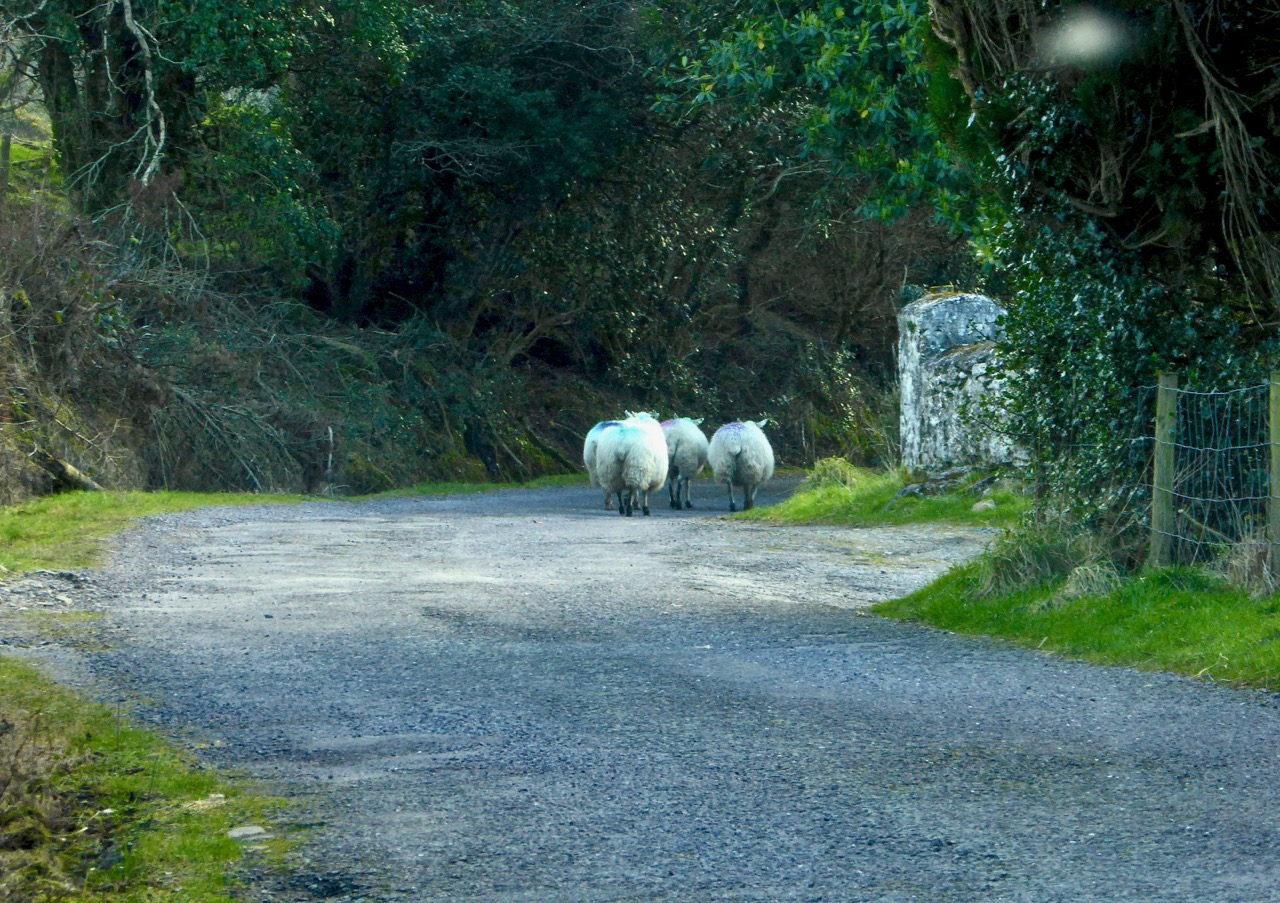
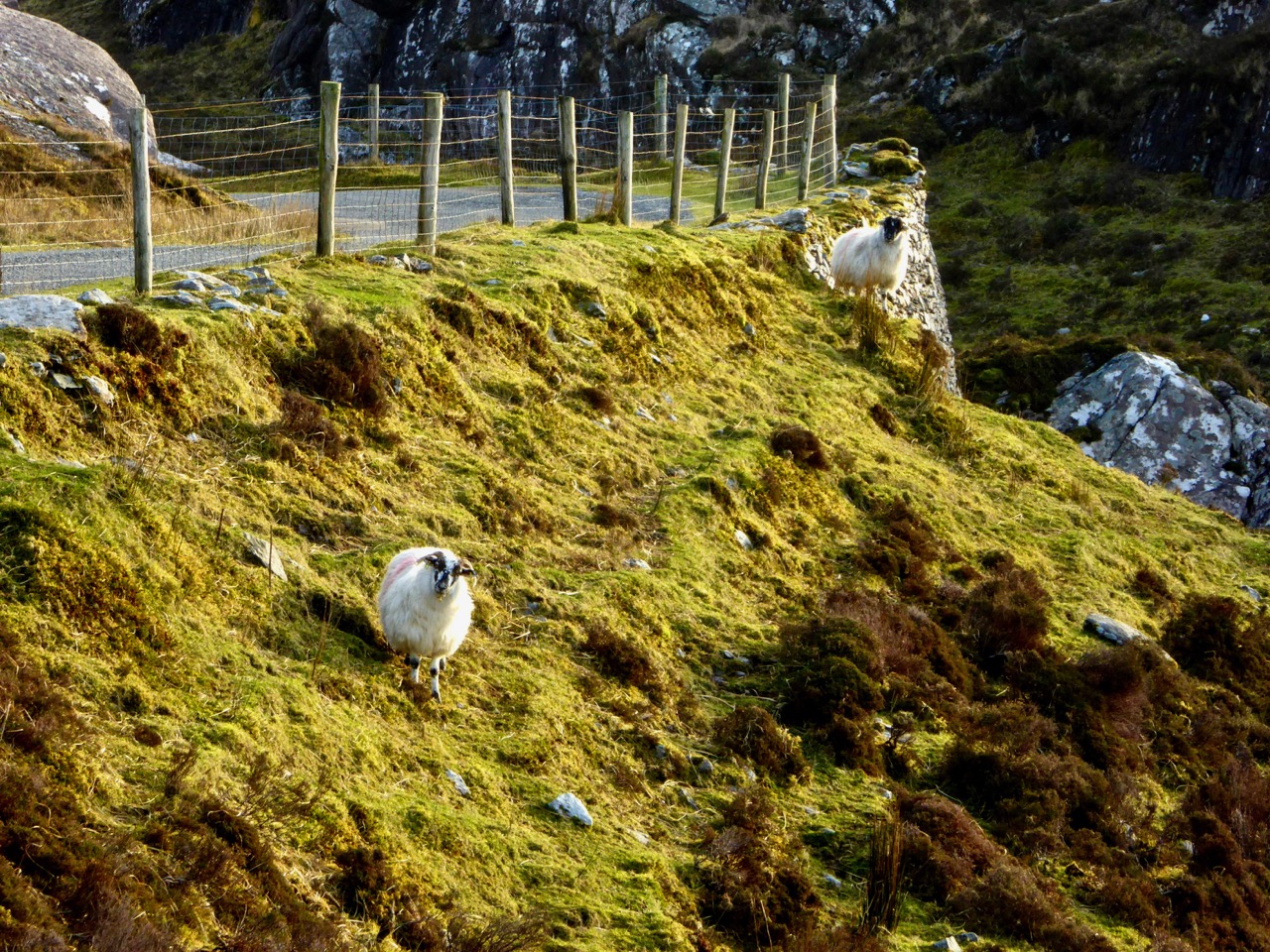
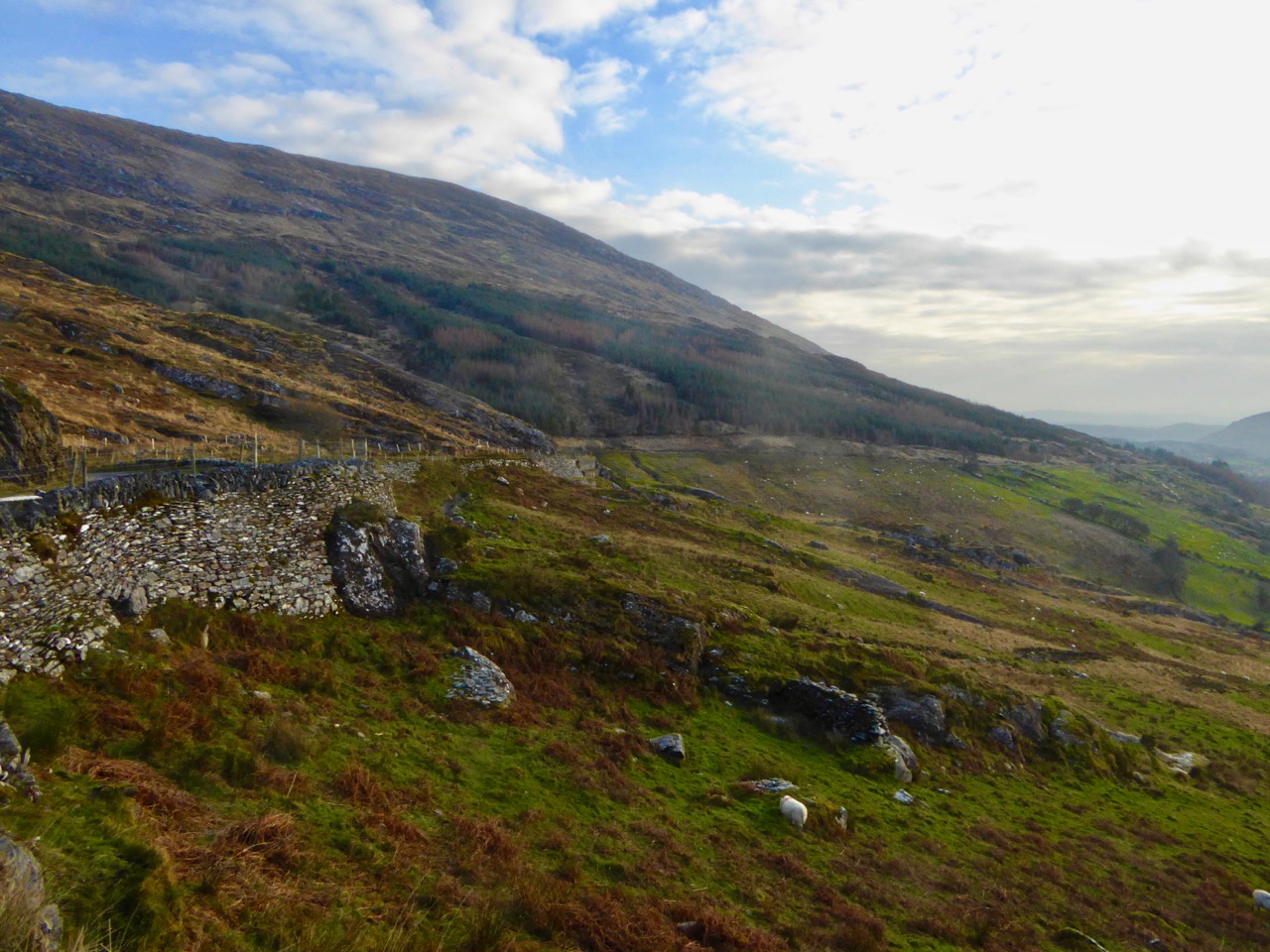
We had things to do in Kenmare (have a look at Finola’s post), but afterwards we took to the byways. We knew there is a remote, lonely and very beautiful road winding up over the mountains, shared only by a few wandering sheep, and determined that would be our way home. We headed off to the tiny settlement of Kilgarvan and there saw a signpost that said Bantry 25: we turned on to the boreen that follows the Roughty and Slaheny Rivers and immediately entered another world.

Macaura's Grave signpost

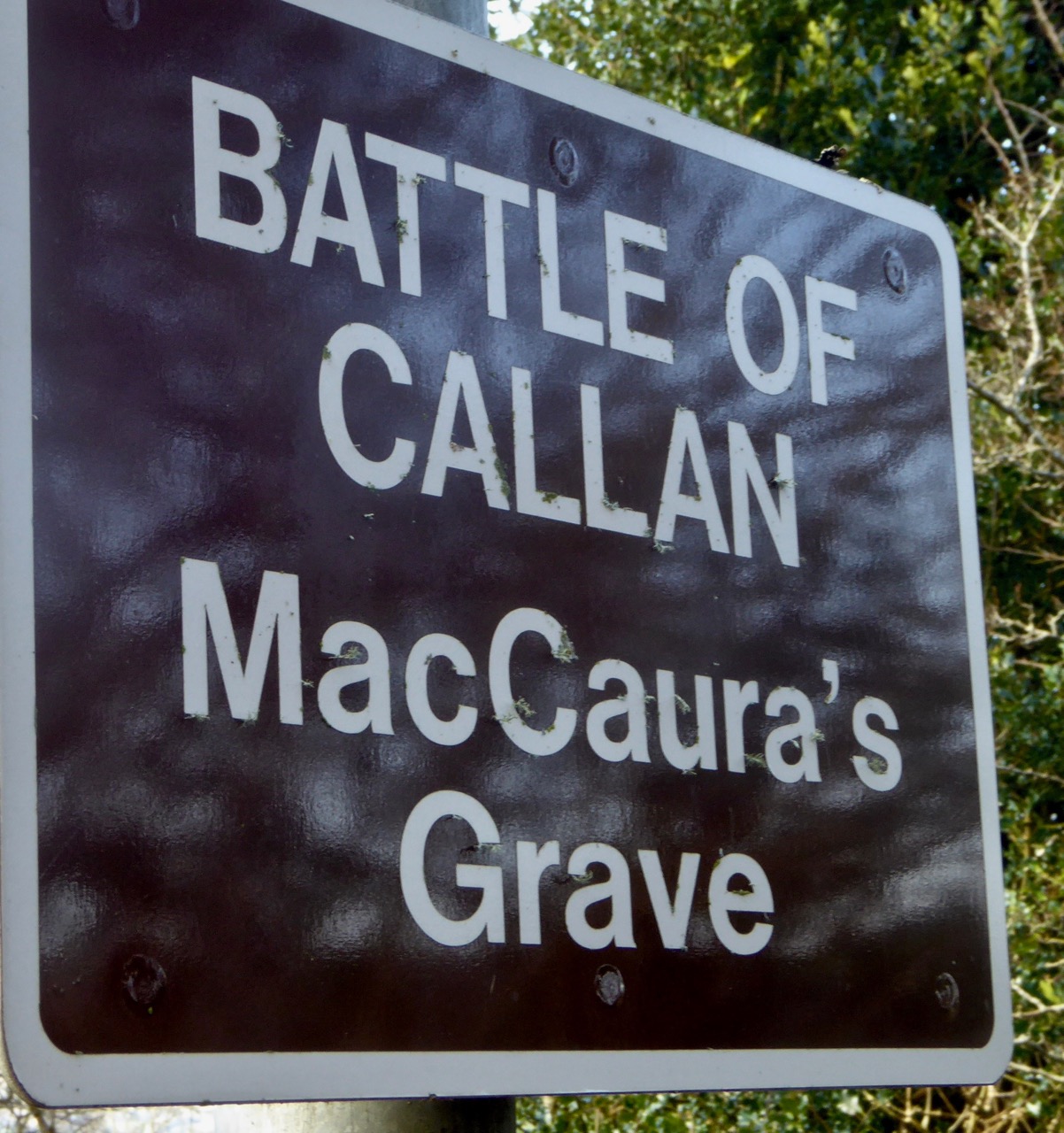
We hadn’t gone very far along the road before we were intrigued by a brown signpost – beckoning us along an even smaller boreen. Macaura’s Grave: neither of us had any idea who Macaura was, so we had to go and investigate. After about ten minutes of twisting and turning and trying to guess which of the unmarked and unsigned lanes to take whenever we came to a junction, we found ourselves back on the road we had just left! By now we were determined that Macaura was not going to get the better of us, so we flagged down a young lad who was in charge of a fine red tractor. He was very forthcoming, and told us that the grave was well worth a visit, then proceeded to give us a set of instructions that involved turning this way and that – signifying to the air which ways these were. Not a little confused, we drove off again.

View from near grave

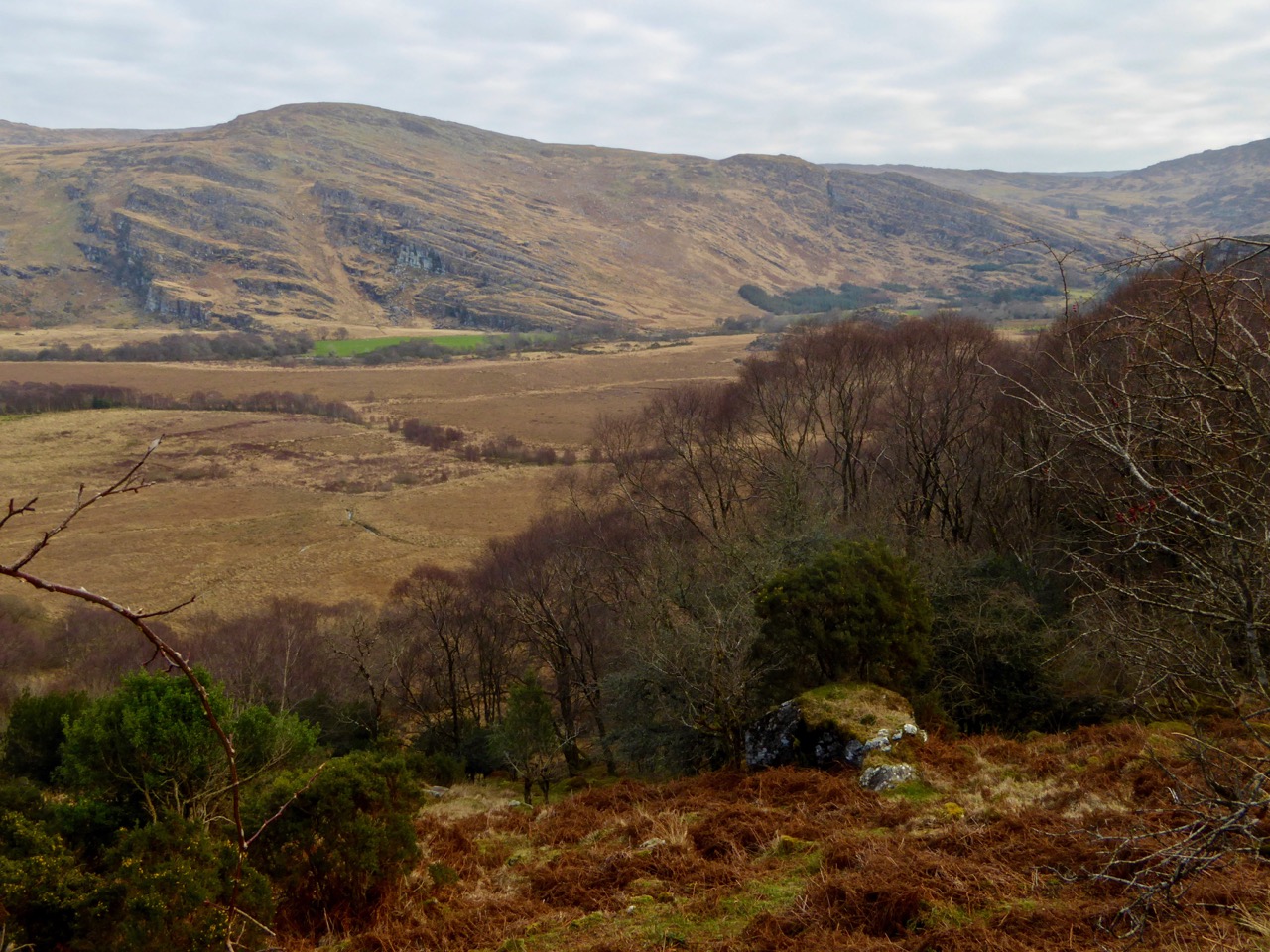
It was no hardship to be exploring the magnificent countryside in south Kerry: the views were breathtaking and the variety of colours on the mountains in sunlight and shadow this early spring day was astonishing. A bit more head scratching and a few more twists and turns down a stony trackway and we were there!

Modern sign

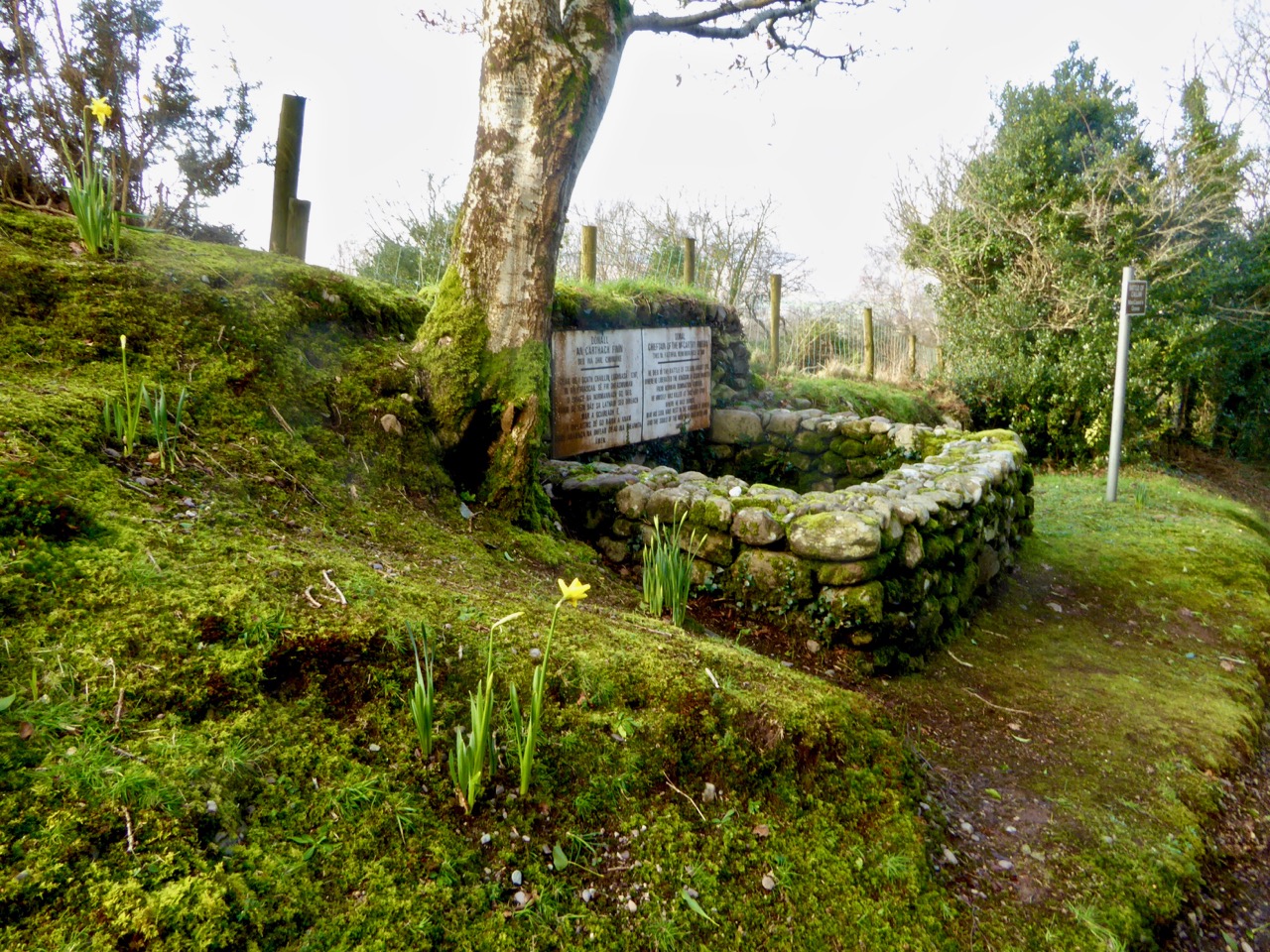
Now we knew. Not only had we found the grave of Macaura – that’s the old Irish way of saying McCarthy – but we had come across the site of one of the most significant battles in Irish history! The Irish chieftain, Finín McCarthy (named as the ‘King’ of Kerry – and that’s why Kerry is known as The Kingdom), joined up with the O’Sullivan Beare from West Cork and the O’Donoghues from Ross Castle to rout the Normans, who were led by Sir John Fitzgerald. This battle took place in 1261. 1261! Over eight hundred years ago… This confirms my thesis that you can’t go anywhere in Ireland without stumbling over history. The Anglo-Normans had claimed their stake in Ireland from 1169 when Strongbow (Richard de Clare) arrived with the blessing of Henry II (and the Pope – who saw the Irish church charting its own course and not following Rome!). Reasonably, the Irish chieftains objected to the Norman invaders, hence this confrontation.

Grave Inscription

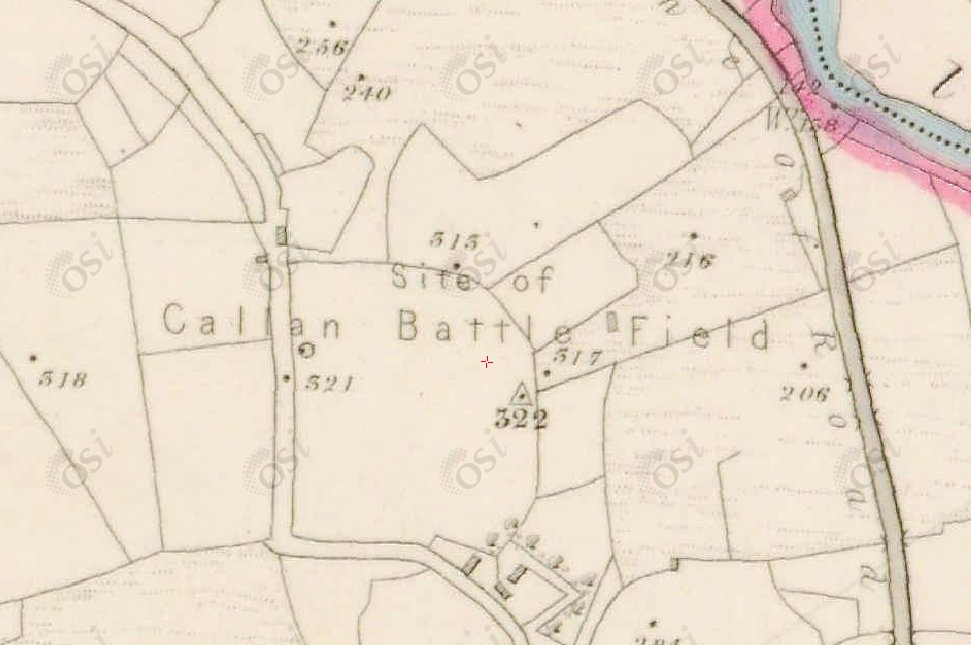
In the Journal of the Cork Historical and Archaeological Society, 1961, Volume 66, there is a comprehensive – but not entirely enlightening – article by Diarmud Ó Murchadha on The Battle of Callan:

…Finghin Mac Carthy had learned much from his opponents during his years of conflict, while he had the added advantage of knowing intimately the territory over which he fought. At Callann he chose his battleground, at a spot where a mountainy river called the Slaheny joins the Ruachtach, close by the castle of Ardtully. No doubt he reckoned that here the heavily-armoured cavalry of the invader could be used to the least advantage. Battle was then joined and Finghin mac Domhnaill mic Charthaigh emerged victorious… Unfortunately no details of the conflict – apart from the names of those slain – are available. Incidentally, the fullest account of the battle is given, not by the Munster annals, but by the Annals of Loch Ce and Annals of Connacht:

AD 1261 – A great war was waged, and numerous injuries were committed in this year by Finghin, son of Domhnall Mac Carthaigh, and his brothers, against the foreigners.There was a great hosting by the Geraldines into Desmond, to attack Mac Carthy, but it was Mac Carthy attacked them, and defeated them…

The Annals go on to record the fact that Finghin followed up his victory at Callan by attacking and destroying every Norman castle and stronghold in Munster. As the sign over Macaura’s Grave tells us: …he liberated the Kingdom of South Munster from Norman domination forever…

battle-of-callan-site

But who is it that the Macaura Grave celebrates? ‘Donal, Chieftain of the McCarthy Fineens’… Presumably this is not the Finghin, who, according to the Annals, went on after the battle to rout the Normans out of Munster: the Finghin who is known as mac Domhnaill mic Charthaigh – ‘son of Domhnaill MacCarthy’. Could it be his father (Donal is an Anglicisation of Domhnaill)? In which case it was the clan chieftain who died in the battle and his son who went on to clear the Normans out of Kerry. There are a few accounts of the battle, but none of them clarify this. It all happened a long time ago, of course, and memories fade. In fact this site was all but lost: an article in The Kerryman takes up the story, illustrated by this photograph:

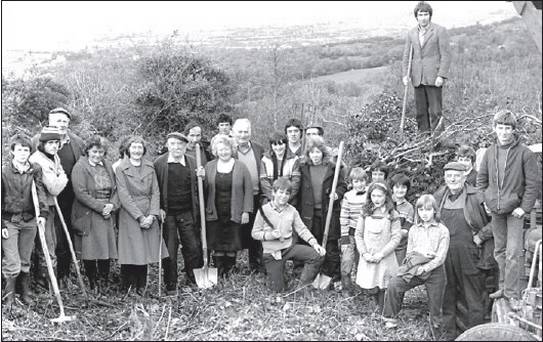
1981-clearing-the-site-of-the-grave

…The men of Kilgarvan were busy in November 1981 – making a road fit for a king! The king in question is Finín McCarthy who died in 1261 after being the first Irish king to defeat the Normans, thus giving Kerry the name of the Kingdom… Legend has it that after the battle, McCarthy stood on a ditch to survey the battlefield, when a dying Norman killed him with an arrow. McCarthy was buried on the spot, and a large slab was used as a headstone. The grave now lies on a narrow little road in Callan beside Tom Healy’s farm. When retired Dublin civil servant Frank Shanley spent a recent holiday in Kilgarvan he went looking for the grave, which was buried by shrubs and bushes… He decided to organise a meeting of the local men to try and get them to improve the grave and access to it…. It was Dan O’Sullivan, Down, Tom O’Donoghue and Michael Teehan, who were slaving away widening the roadway from eight feet wide to 16 feet, when he visited in November 1981… Apart from the narrow roadway and the briars and trees, there was also a steady stream of water running over the grave, but the men got the pipes to divert the water in another direction. There was no actual inscription on the grave that the men could read, but there were a series of lines and crosses on it, which they hope will be examined by an expert…. They hope that when they have the roadway to the grave cleared, they can erect signposts to the grave, and notices around the grave telling the history of McCarthy’s death in the battle of Callan…

Macaura's Grave

So we have the ‘men of Kilgarvan’ – back in the 80s – to thank for leading us to this now tranquil but historically turmoiled and fascinating spot. There is still the puzzle of which McCarthy is commemorated: perhaps we’ll never know for sure. But it’s not bad to have access to a story which has survived for the best part of nine hundred years – just about within living memory by Irish standards! After this excitement we continued our journey over the spectacular Coomhola road through the mountains towards Ballylickey and gently slid back into West Cork. If you can cope with very narrow roads (it’s not so bad – we only saw two other vehicles, both local farmers, in the whole 25 kilometres!) it’s one of the great road trips of Ireland – with the added bonus of a history lesson to be taken in.

Beyond the tunnel

Sheep on the edge

The Winding Road