Three Pilgrims in West Cork

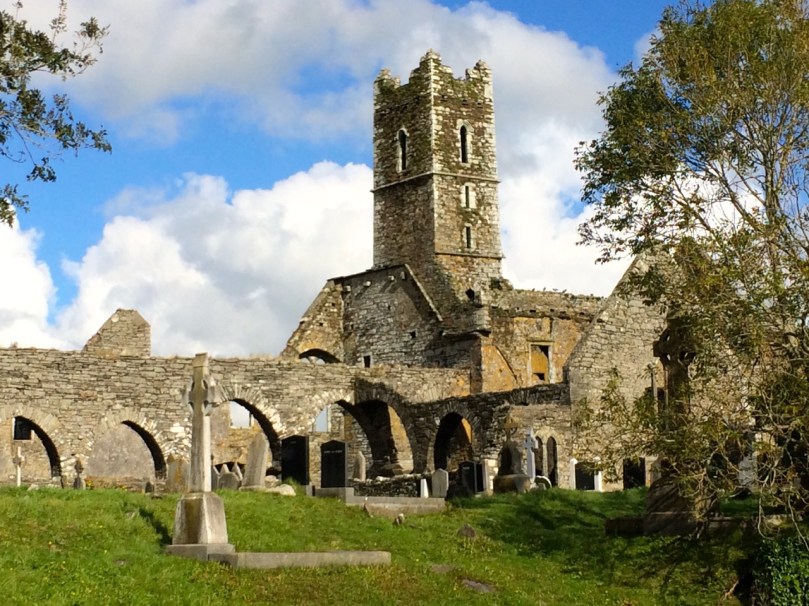
Glebe Church, on the Ilen River

Glebe Church, on the Ilen River

The guest speaker at this Thursday’s Skibbereen Historical Society meeting was Louise Nugent, speaking on the topic of Pilgrimage in Medieval Ireland. We became familiar with Louise’s work though her blog of the same title – a blog which manages to be consistently erudite and down-to-earth and entertaining all at once – and suggested her as a speaker. This also gave us the opportunity to meet Louise in person (she is as engaging and as knowledgeable as her blog) and, the next day, show her a little bit of our part of West Cork.

One of the great delights of following Louise’s blog is realising that the concept of pilgrimage – a spiritual journey undertaken for a variety of purposes – is still very much alive in Ireland. Local veneration of shrines, relics and holy wells is common and often involves a mass or prayers on special days. The “journey” involves going to the shrine, and sometimes moving around it in a set pattern or round. Larger scale pilgrimages, such as the annual trek up Croagh Patrick or a stay at Lough Derg in Donegal or a Novena at Holy Cross Abbey, transcend the local and attract pilgrims from around Ireland. In her talk, Louise also described the popularity of pilgrimage in Medieval times to holy sites outside Ireland such as York, Santiago de Compostela, Rome, or Jerusalem. Those who completed the Santiago Camino wore scallop shells to signify their pilgrim status, an image we had just seen the previous weekend in Cork in the Cathedral of St Mary and St Anne, where we came across a shrine to Blessed Thaddeus McCarthy. There was a statue, a painting, scrolls, but most fascinating of all a reliquary containing a leg bone! Blessed Thaddeus lived in the 15th Century and was appointed a bishop twice but was never able to take up his see because of the activities of the rival clan O’Driscoll.

On our day with Louise we concentrated on the area around Skibbereen. We started off by visiting the 18th Century Church at Glebe, on the banks of the River Ilen. The church and graveyard enjoy a picturesque and peaceful setting and a wander around the graveyard yielded interesting headstones.
Holy Rosary Church at Aughadown, window detail

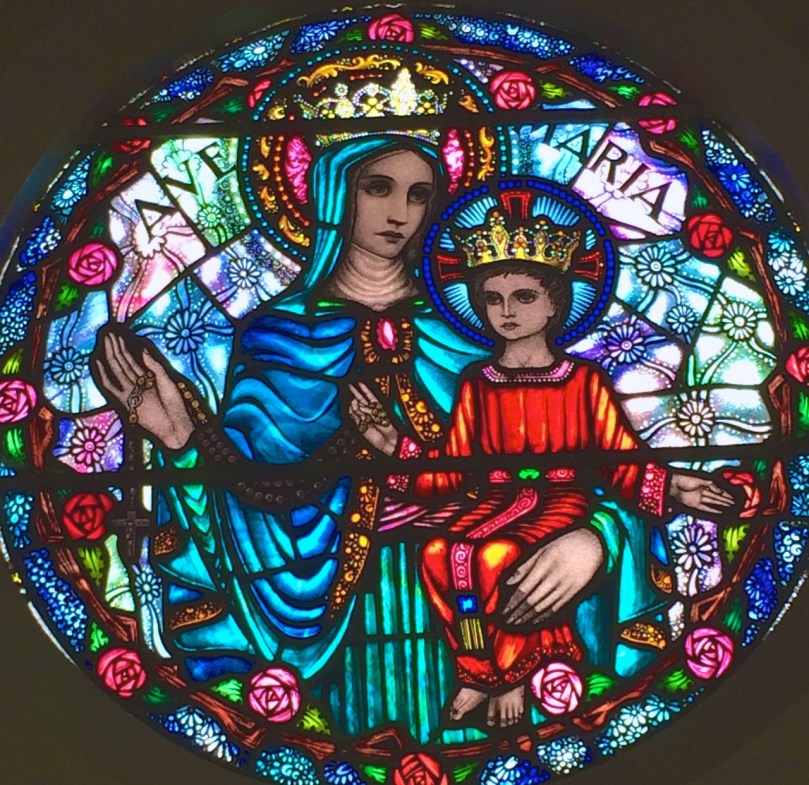
Holy Rosary Church at Aughadown, window detail

From there we went to the ruined medieval church at Kilcoe, stopping for a quick peak at the notable windows in the Church of the Most Holy Rosary at Aughadown. They deserve a fuller description at a future date, so for now I will include a detail from the rose window at the back of the church, designed and executed by the Harry Clarke studios in 1941.

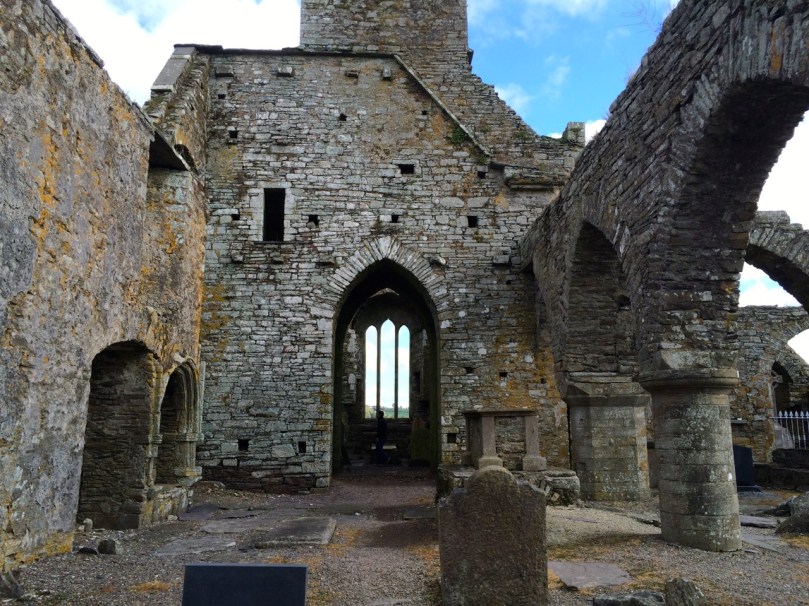
The church at the tip of the Kilcoe Peninsula was already a ruin in the early 17th century. Although a simple rectangular structure, the pointed arched doorway and the tiny ogival windows mark it as medieval, perhaps as early as 14th or 15th century. Romantic and atmospheric as it is, it has the added advantage of a clear view of Kilcoe Castle, famously restored by Jeremy Irons and gently glowing in the afternoon light as we were there.
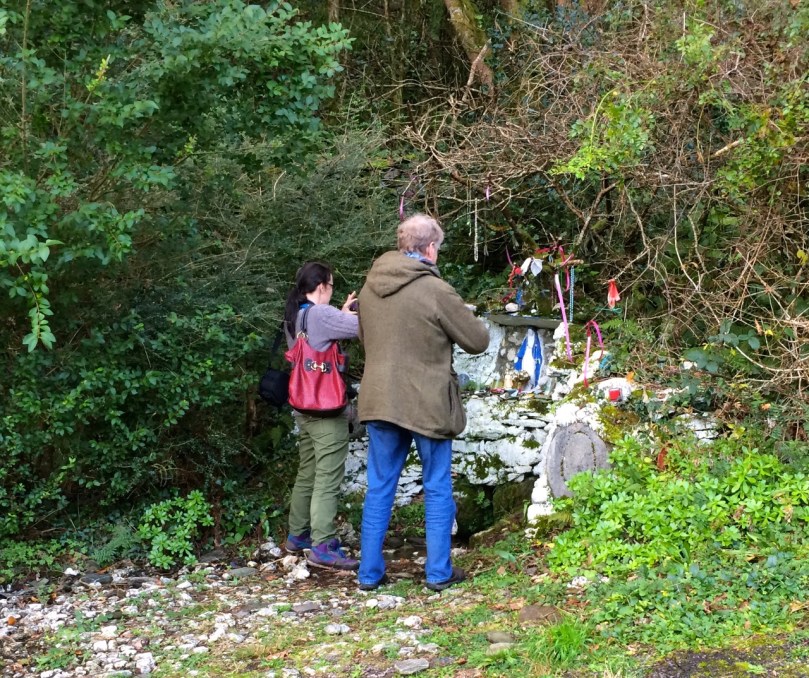
Two of the three pilgrims at a holy well

Two of the three pilgrims at a holy well

Louise’s special interest is in holy wells and several audience members the night before had come forward with information about local wells and the practices and beliefs associated with them. Two of the best known and most beloved local wells are situated close to each other at Lough Hyne. Robert is writing about these wells this week so I will leave the detailed description to him.

Our final stop was the village of Castletownshend and the Church of St Barrahane, filling two different functions. First, Louise had been to visit a holy well dedicated to St. Martin of Tours in Clare, and we wanted to show her the Harry Clarke window that Robert had described in his Martinmas post. Second, a trip to St Barrahane’s is always a pilgrimage of a different sort for me, as it is the final resting place of three of my heroes. The first two, of course, are the writing team of Somerville and Ross – more about them in this post. The third is Vice-Admiral Boyle Somerville, brother of Edith and a keen amateur archaeologist worthy of a post to himself in the future.
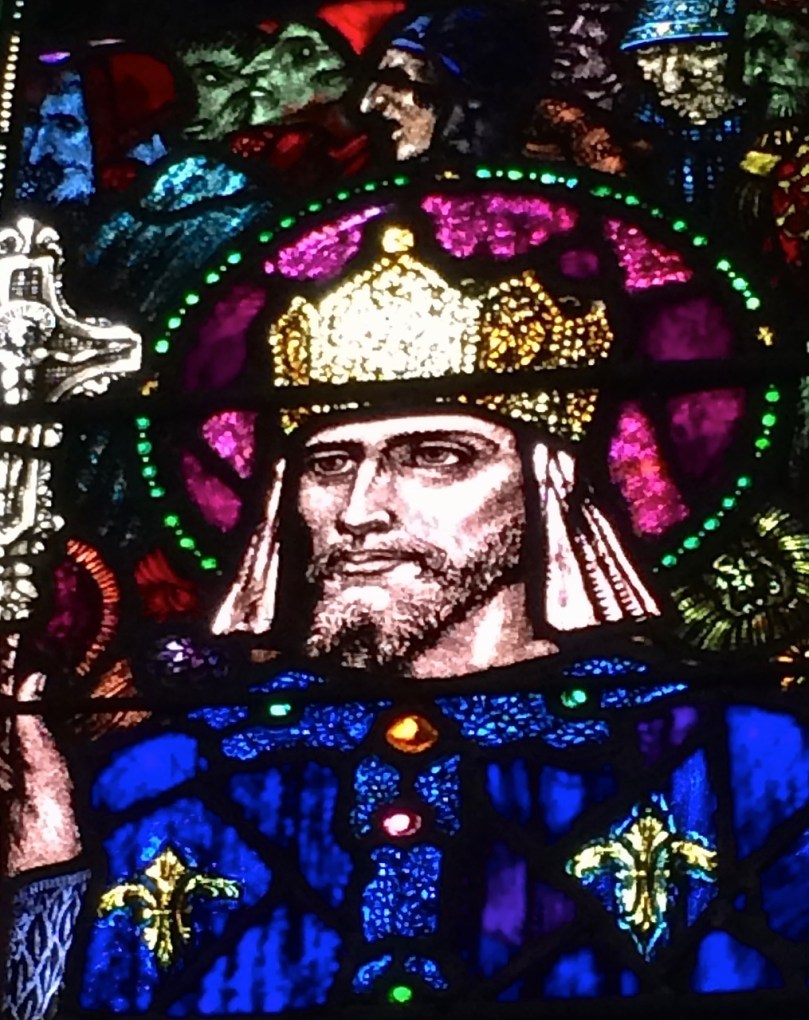
St Louis: detail of Harry Clarke window in St Barrahanes, Castletownshend

St Louis: detail of Harry Clarke window in St Barrahanes, Castletownshend

Come back soon, Louise – these two pilgrims have lots more to show you!
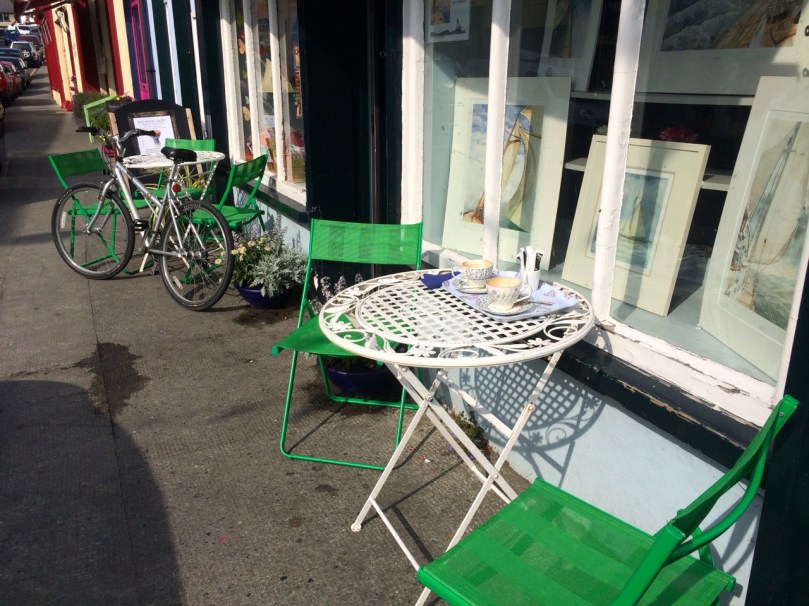
Whyte Books/Now AnnaB’s Bookshop

How inviting is this!

So inviting!

Since this post was published, Whyte Books has changed name and ownership. It is now AnnaB’s Bookshop – and we are happy to report it is as charming and wonderful as ever under its new owner, Katarina.

Do you have a favourite bookshop?

Of course you do! We all have one – THAT bookshop where you feel welcomed; where it never matters how long you browse or if you actually buy something; where knowledgeable staff can recommend a good book for your father or your grandchild; where you can sit with a nice cup of tea and a slice of something delicious as you browse through book reviews or escape from the rain; where they can order stuff for you and the process doesn’t feel like a soulless internet transaction.

Sheila

Herself

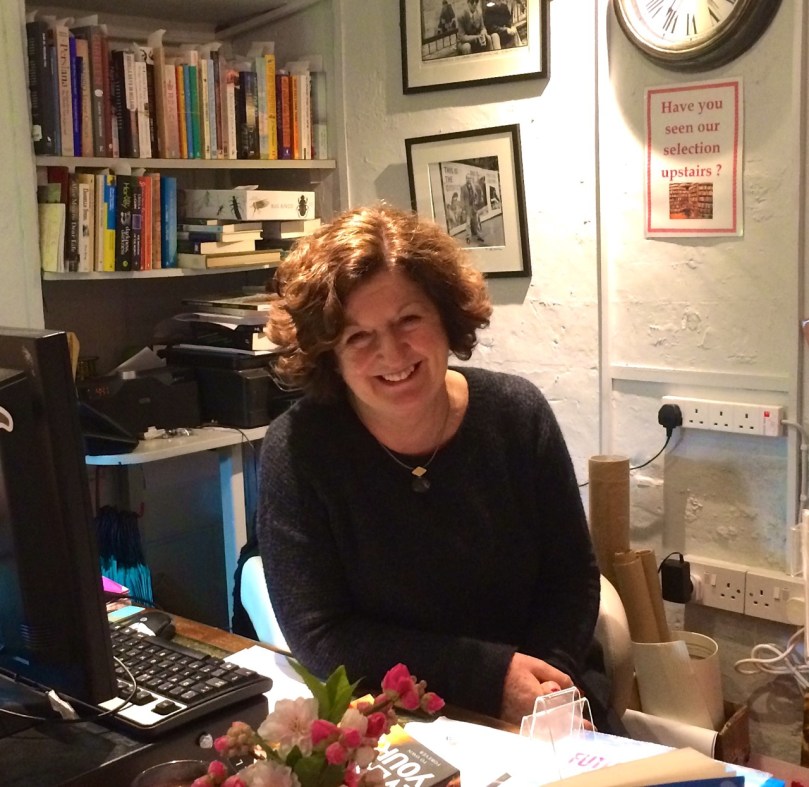
We have THAT bookshop, here in Schull. It’s called Whyte Books, presided over by the charming and cultivated Sheila Whyte. Sheila is typical of many of us who have made West Cork our home. She grew up in Dublin but spent most of her adult life in Australia. She fell in love with Schull on a holiday here, she fell in love with bookstores wherever she travelled, and when the time came to put it all together, well, we were the winners.

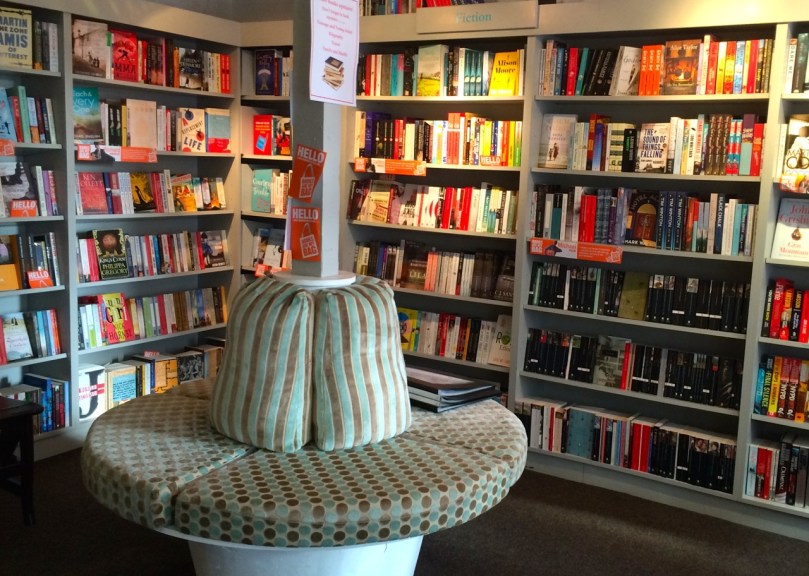
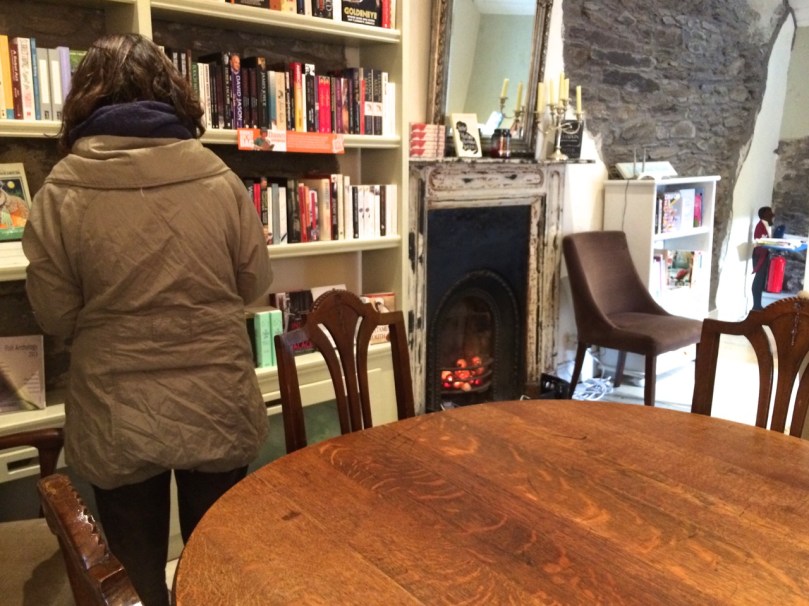
Sheila had a vision of what she wanted – a place that would become a hub of reading and intellectual activity in the area and she has worked hard to create just that. There’s a nook for kids and a space for young adults, besides all the little corners and seating areas where you can while away a pleasant hour with your nose in a book and your hand curled round a cuppa. She holds poetry readings, promotes and launches local books (a recent example is Gubbeen by Giana Ferguson) and hosts a monthly book club.

This week Whyte Books hosted the first ever session of The Moth in the South West. The Moth is new to Ireland although story telling is definitely not! A cultural phenomenon, The Moth got started in New York but is based on the idea of neighbours getting together on the porch to tell stories after it gets dark and the moths come out. Stories must be first person narratives, true, told not read, and last no more than ten minutes. About 20 of us gathered upstairs: there were candles and wine and laughter and stories and a promise to make it into a regular event. All the ingredients, in fact, that make Schull such a vibrant community and locate Whyte Books at the beating heart of that community.

books and books

books and books

We are so lucky to have a great bookshop here! It’s a tough business these days, so take a break from buying online – go buy the latest Must Read at your local bookshop. At Whyte Books, I can guarantee that if it’s not on the shelves they can get it for you. And while you’re at it, have a coffee…and maybe one of those yummy little chocolate thingies.

Browsing upstairs

Browsing upstairs

By the way, I’m not the only one who loves this shop. It’s been voted Best Bookshop in Munster, featured in a beautiful video,  and even people who happen by rave about it

Shopping for Memories

Miss Clerke

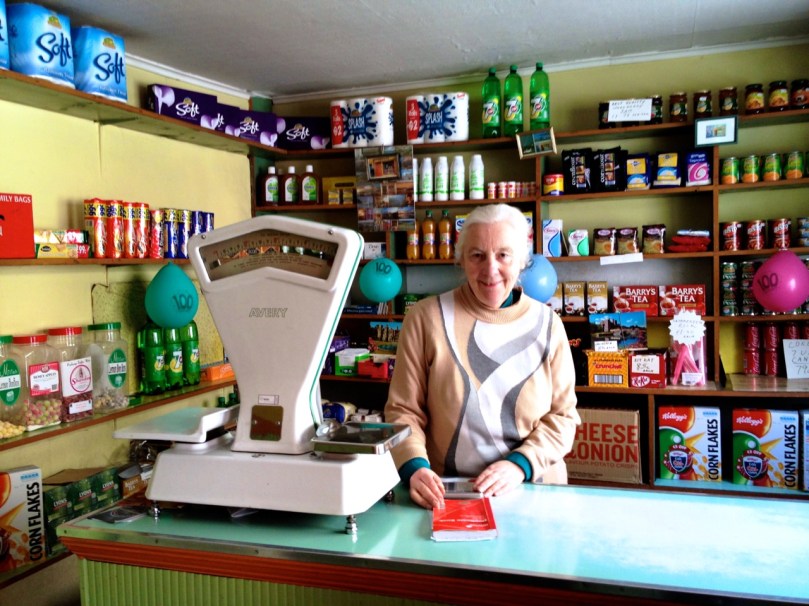
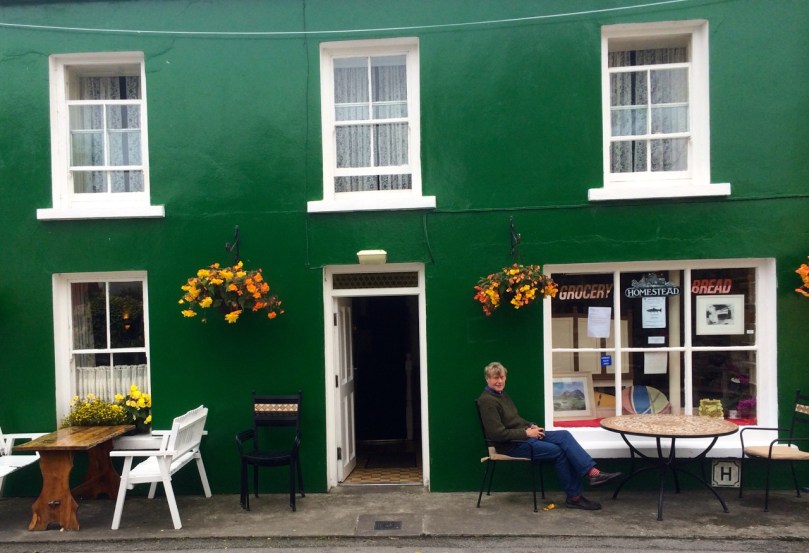
In my post Going for the Messages I told you about rediscovering the shops of my childhood here in West Cork. Since then, Miss Clerke’s shop, lightly photoshopped but totally recognisable, graced the front page of the Irish Times Magazine as their illustration for their Ireland’s Best Shops competition. So it’s not just me, then. I’m not the only one with a nostalgia for the old-time shopping experience.

Evans of Bantry

In that spirit, I am revisiting a few of my favourites traditional shops. I have discovered two more shops like Miss Clerkes. First, there’s Evans, In Bantry. Proudly run by Miss Evans, it has the same look and feel of a place unchanged since the 50’s, although perhaps the pinkness of it all might be more modern. It has a lovely atmosphere – when I was in there a couple of kids were trying to decide how to spend their pocket money on sweets from the big glass jars.

MIss Murphy in her traditional shop

MIss Murphy in her traditional shop, Eyeries


Lunch is served outside

Lunch is served outside

On the Beara Peninsula we stopped for lunch at Miss Murphy’s store in Eyries and chatted with her about my Great Uncle who had married an Eyries woman. Since I couldn’t remember her name Miss Murphy was unable to help, but she tried, and she made us a delicious basket of sandwiches.

Some shops are a little puzzling – for example, P. Cronin Carpenter in Skibbereen. I’ve never seen it open and I’m not sure what it would sell if it did open its doors. The photo of the interior was taken through the window.

In Bantry one of the Undertaking establishments has a shop. At first I found this idea a little startling, but it makes a lot of sense once you come to appreciate Irish graveyard traditions, including how often people visit graves and leave tokens at them.

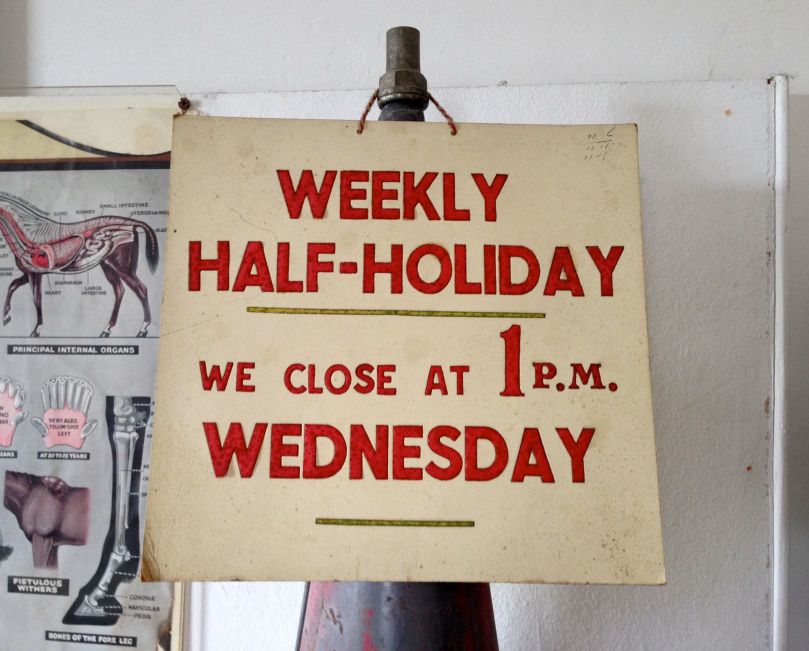
half holiday

Shops in Irish country towns follow traditional opening hours. They invariably close for lunch (1PM to 2PM) and generally follow a five-day-a-week opening schedule. This can mean they are closed, besides on Sundays, on Mondays – but other days are possibilities too. None nowadays follows the old tradition of the half day. Remember that? 

messenger bike

And remember how the groceries would be delivered – by a young lad on a messenger boy bike? You can still get delivery but now the messages come in a van.

Levis's Pub in Ballydehob: the traditional grocery section is still intact

Levis’s Pub in Ballydehob: the traditional grocery section is still intact

Of course, one of the traditions we remember about country towns was that of pubs also selling groceries or dry goods – whatever people needed. You went in for a pair of wellies and a dozen eggs, and took your ease with a pint on the bar stool, or a whiskey in the snug, before you left. Levis’s Corner House in Ballydehob has preserved the grocery counter. You can hear Joseph talking about it, and about the great history of this historic pub in the excellent radio documentary “Keeping the Door Open.” It’s about far more than just this one pub – it’s about a whole way of life in rural Ireland. A way of life that still lingers in West Cork…so far.

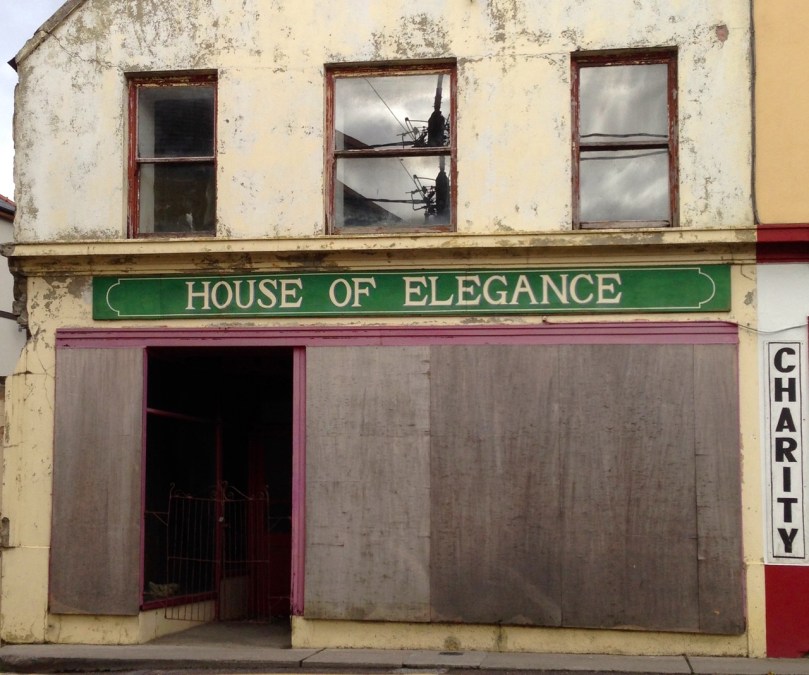
elegance

Mizen Magic 4: The Beaches

Barley Cove Beach from Brow Head

Barley Cove Beach from Brow Head

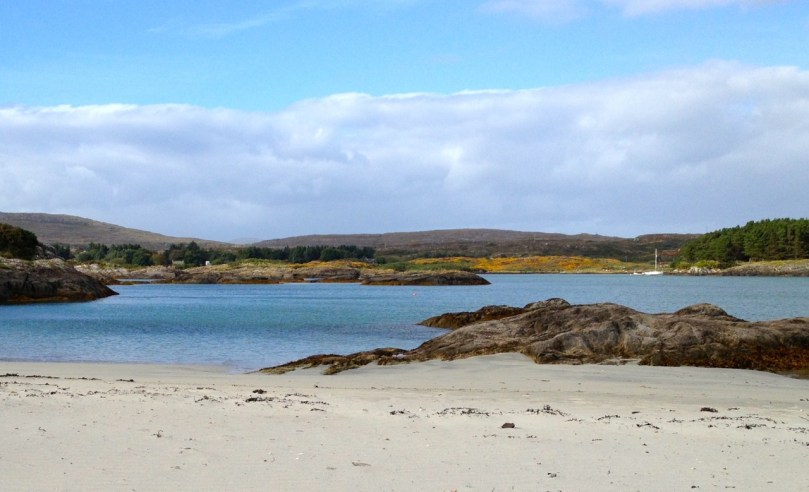
If you’re not familiar with West Cork, you may be surpised to hear that we have some of the best beaches in Ireland. And no – they are not just to look at, and yes, people do swim here in the summer. In fact a surprising number of the people we know were still swimming well into October. The autumn weather was glorious, and they claimed the sea was still warm enough to be enjoyable. In fact, they raved about how delicious it was to be bobbing around in the stuff. (You know who you are.)

A little further east of us there are good surfing beaches but here on the Mizen our beaches feature the golden sand and the dunes of the classic swimming beaches. The most popular with holiday-makers is the incredible expanse at Barley Cove. These photos were taken in February – so we aren’t swimming, but we have the place almost to ourselves, apart from the horses, and we are loving it!

Around the corner from Barley Cove are the beaches of Galley Cove and the White Strand. When the sun goes down on one, you can just move to the next one.

Ballyrisode

Ballyrisode

A local favourite is the beach at Ballyrisode, near Toormore. We strolled along it on a fine day in September, with nary another soul in sight.

Shelly Beach

Shelly Beach

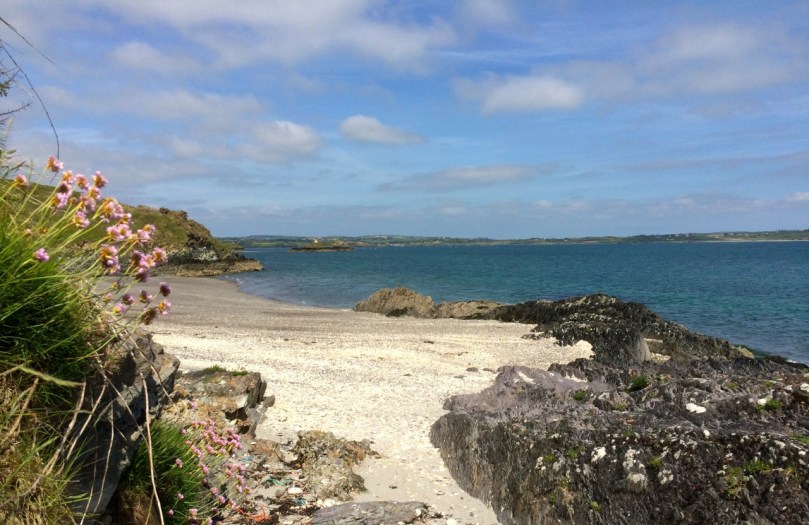
But of course we have our own little secret beach nearby. Those in the know call it Shelly Beach – for the reasons you might imagine. You can’t drive there – it’s only accessible on foot down boreens and over the fields – and it’s a beautiful, peaceful spot, perfect for that wind-in-the-hair, sun-in-the-face, contemplative experience.

Inchydoney Beach

Inchydoney Beach

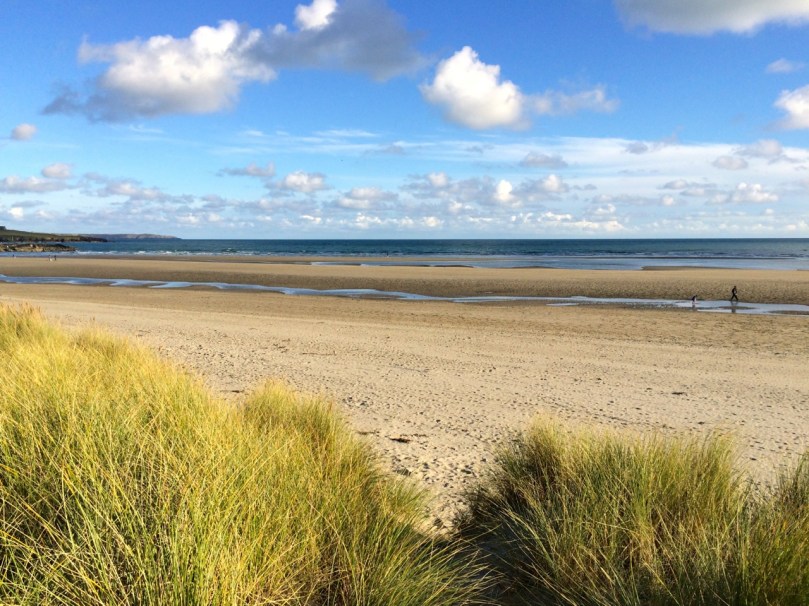
The last photo wasn’t taken on the Mizen, but it’s only a few miles to the east, so perhaps it’s not totally cheating to include it here. It was taken on a fabulous sunny day half way through October, and the beach was alive with activity.

Glebe Gardens

Glebe Gardens in the autumn

Glebe Gardens in the autumn

We’ve been to the Glebe Gardens in Baltimore on numerous occasions, for a delicious lunch in their restaurant, or to attend a concert in their amphitheatre. Until this autumn, however, I had never really been around the gardens themselves. I was fortunate, during the Taste of West Cork Food Festival, to be able to sign up for a tour with Master Gardener Jean Perry. Jean and her husband Peter started and manage the gardens, now with their daughters actively involved as well. It’s been an enormous amount of work over many years but in that time it has become a beloved West Cork institution.

Jean Perry, our tour Guide

Jean Perry, our tour guide

I had never heard of No Dig Gardening, the philosophy underlying this garden, until I heard about it from Jean. Vegetables are, for the most part, grown in deep beds and the soil is left as undisturbed as possible. When one crop comes out, another goes in. Fertilising and soil rebuilding is accomplished with organic compost, with occasional additions of seaweed pellets. They start the seeds in a protected place and plant them out once they’re big enough. They grow module plants – for example, lettuce in the spring, beetroot in the summer, brassicas in the fall – and get two and sometimes three crops a year. Besides the outdoor crops there are greenhouses loaded with tomatoes, peppers – and grapes!

Raised beds

Raised beds

The vegetables grown here are used in the restaurant. You can tell – everything tastes fresh and homemade. But flowers also make an appearance in this garden. Even though it was late in the year we were treated to a feast of colour in the herbaceous border.

This slideshow requires JavaScript.

The gardens include a stretch of canal that was once the railway cutting. A winding path leads down over a wooden bridge and eventually to the amphitheatre.

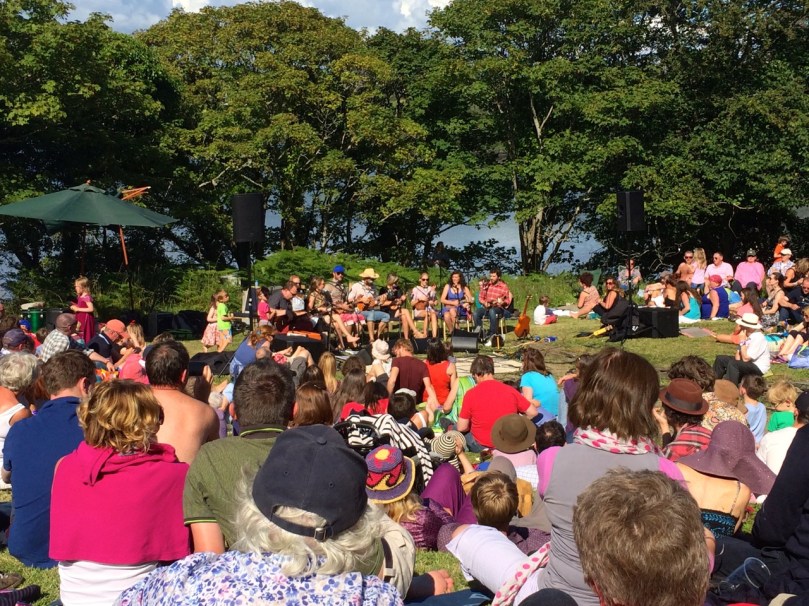
The amphitheatre was an inspired addition to the garden – in a tricky climate it’s always a nerve-wracking watch to see what the weather will do when you’ve scheduled an outdoor concert. The gods have smiled on it, though – very few concerts have been affected by bad weather.

Summer concert at the amphitheatre - the West Cork Ukelele Band

Summer concert at the amphitheatre – the West Cork Ukelele Band

Next it was up to visit the hens and goats – where Robert made a new friend – and then on to the greenhouses to see a truly impressive variety of tomatoes and to sneak a grape or two.

kiss kiss

kiss kiss

The tour finished with a tomato-tasting session and an impromptu lesson from Jean on which ones were best for what dishes. Robert and I stayed for lunch in the restaurant and a chat with fellow-tourists.

Glebe Gardens open from March to September, and occasionally for special events during the winter. Next time you’re in Baltimore, pop by for lunch.

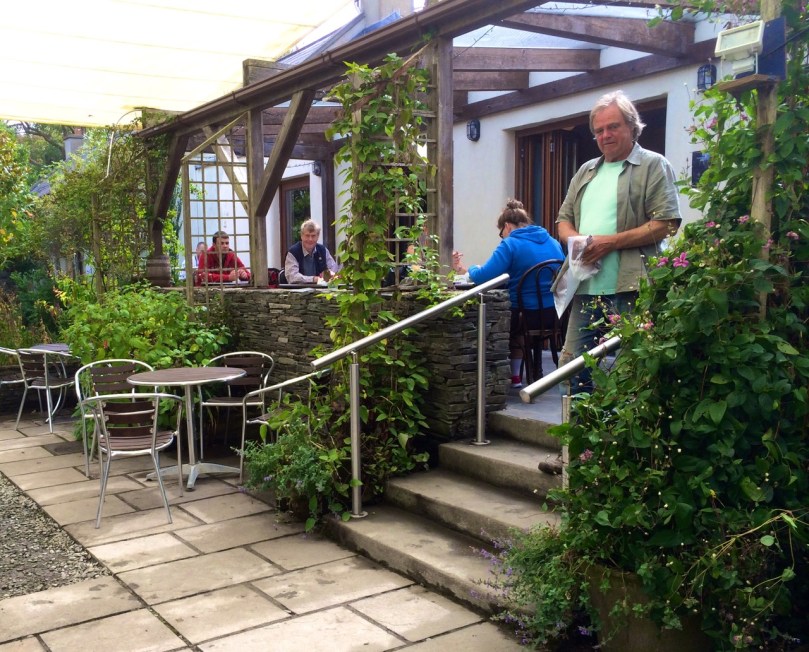
Waiting for lunch

Waiting for lunch

And after that final excellent latte, take a stroll through the gardens. Or make it part of your West Cork Garden Trail next year, along with Carraig Abhainn and the Heron Gallery, or any of our other wonderful gardens. Spoiled for choice, we are!

pond

Timoleague Friary

Timoleague Friary

If you take the coast road from West Cork to Cork City, you go through Timoleague, a beautiful village at the top of Courtmacsherry Bay. This little town has a main street of colourful houses and shops, a large and imposing Catholic church with notable stained glass windows, a medieval bridge spanning the inlet, and lovely walkways by the Arigideen River.

Looking across the river to the Friary

Looking across the river to the Friary

What makes us stop, though, no matter how often we have visited it before, is the Friary. Perched on a knoll overlooking the river, this Franciscan establishment was built in the 13th or 14th Century, and subsequently enlarged and extended. It somehow managed to survive the reformation but was finally abandoned when it was burned in 1642.

The Franciscans first arrived in Ireland about 1230. The order spread quickly and in time there were many Franciscan houses in Ireland. Followers of the Rule of St. Francis, they lived in fellowship in the friary, but went out every day to work among the people. Unlike monks in abbeys or monasteries, they did not shut themselves away to follow a strict regimen of prayer and work. Instead, the friars depended upon their parishioners for sustenance, devoted themselves to their flock during the day and returned to the friary for their simple meals and prayers.

The Cloisters

The Cloisters

Despite this avowed simplicity, the friary is large and imposing. The remains of the cloisters give evidence of the daily meditation and recitation of the Divine Office. Their living quarters included a chapter room, refectory and infirmary.

Nave and choir

Nave and choir

The church would have been impressive in its day, with large and elaborate windows, a long nave and a sizeable transept. The columns between the nave and the transept are massive: the cut stone demonstrates the high quality of masonry that went into the building of the Friary.

A wander through the ruins is a delight. There is a wart well, old gravestones (while away half an hour deciphering some inscriptions!) and niches that would have held the tombstones of dignitaries. Lichen of every colour clings to the stones while low archways appear around every corner, with inviting vistas of further corners to explore.

Timoleague is named for St Molaga, who is also associated with other locations in Ireland. Many stories are told of St Molaga. Here is one, recorded by Colonel James Grove White and provided online by Cork City Librarians.

Close to Temple Molaga is a copious spring well, which was always held sacred by the people and should be used only for drinking and curative purposes; but on one occasion, the lady of the manor, an unbeliever, would insist on cooking her husband’s dinner in the water of the sacred spring. When the water had time to boil, the cook remarked it was icy cold; more logs were placed on the fire, still to no effect. The logs were still being piled on, the fire blazed, but when the dinner hour arrived, the water was still as cold as ever. The lord waxed hungry, and, like other mortals, became angry; he rushed into the kitchen to ascertain for himself the cause of the delay, had the cover lifted off the huge pot, and, although the fire was crackling and blazing high about it, he felt the water was quite cold; but what astonished him more was to behold a beautiful trout swimming about in it, without apparently suffering the least inconvenience. He became wonder-stricken, and had his advisers called in. They told him to take the water back to the well without delay and pour it in. This being done, the trout again became invisible, and is since rarely seen, except by certain votaries.

In the district it is a common saying when water is slow to boil, “perhaps the Molaga trout is in it.”

Timoleague Friary, as the largest medieval religious ruin in West Cork, is a unique and special part of the West Cork landscape.

friary silhouette