The Splendour of Cobh

My favourite sea voyage was on the (alas now defunct) Swansea to Cork Ferry. I travelled this route very many times while living in Devon and Cornwall, and most enjoyed the last leg of the journey to Ireland, when the ship entered the Lee estuary and made its way upriver to Ringaskiddy. In all weathers I was out on deck to watch the slowly changing scenery that welcomed my arrival in to Cork, knowing that it was surely the best place in all the world to be going!
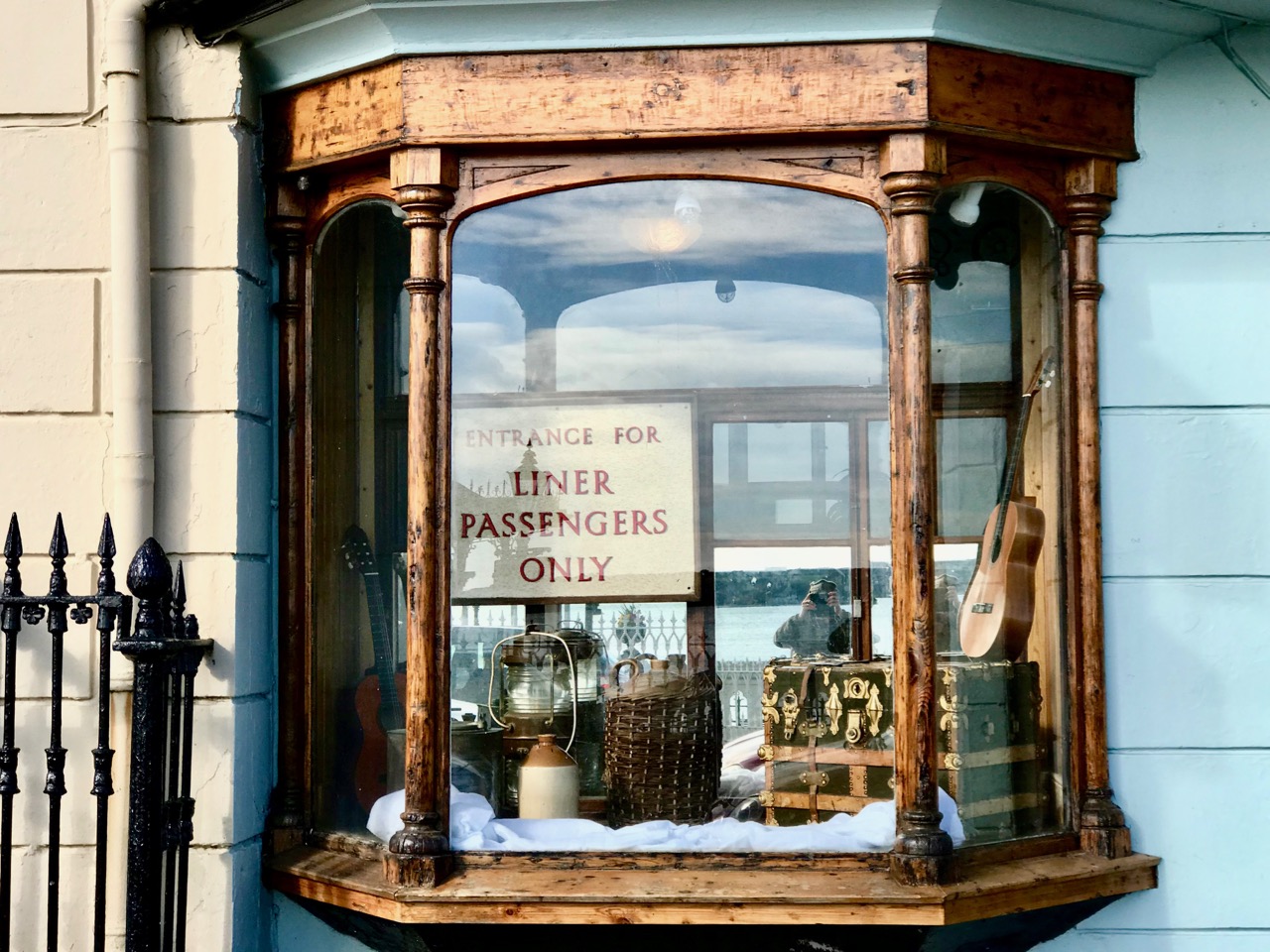
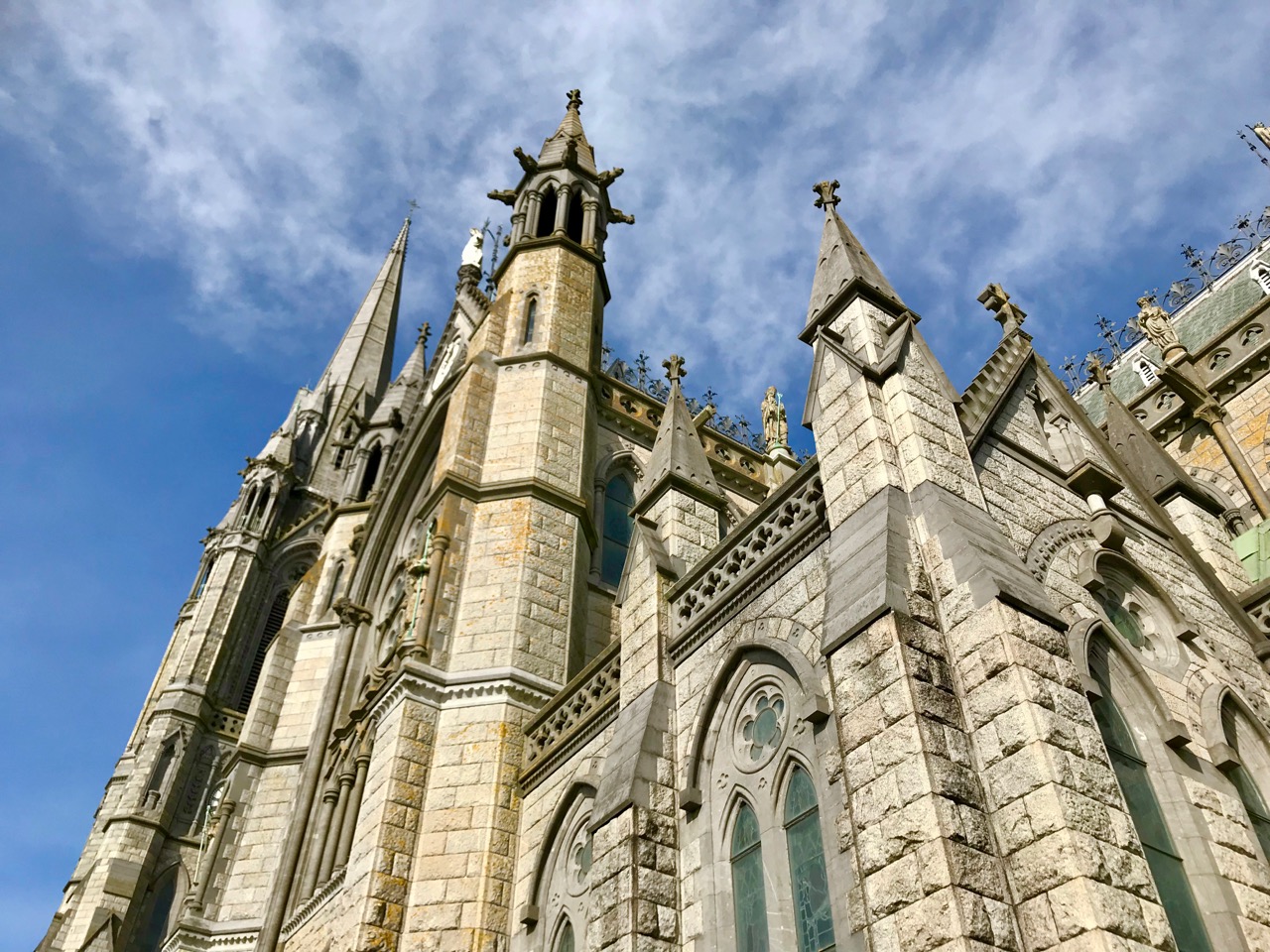
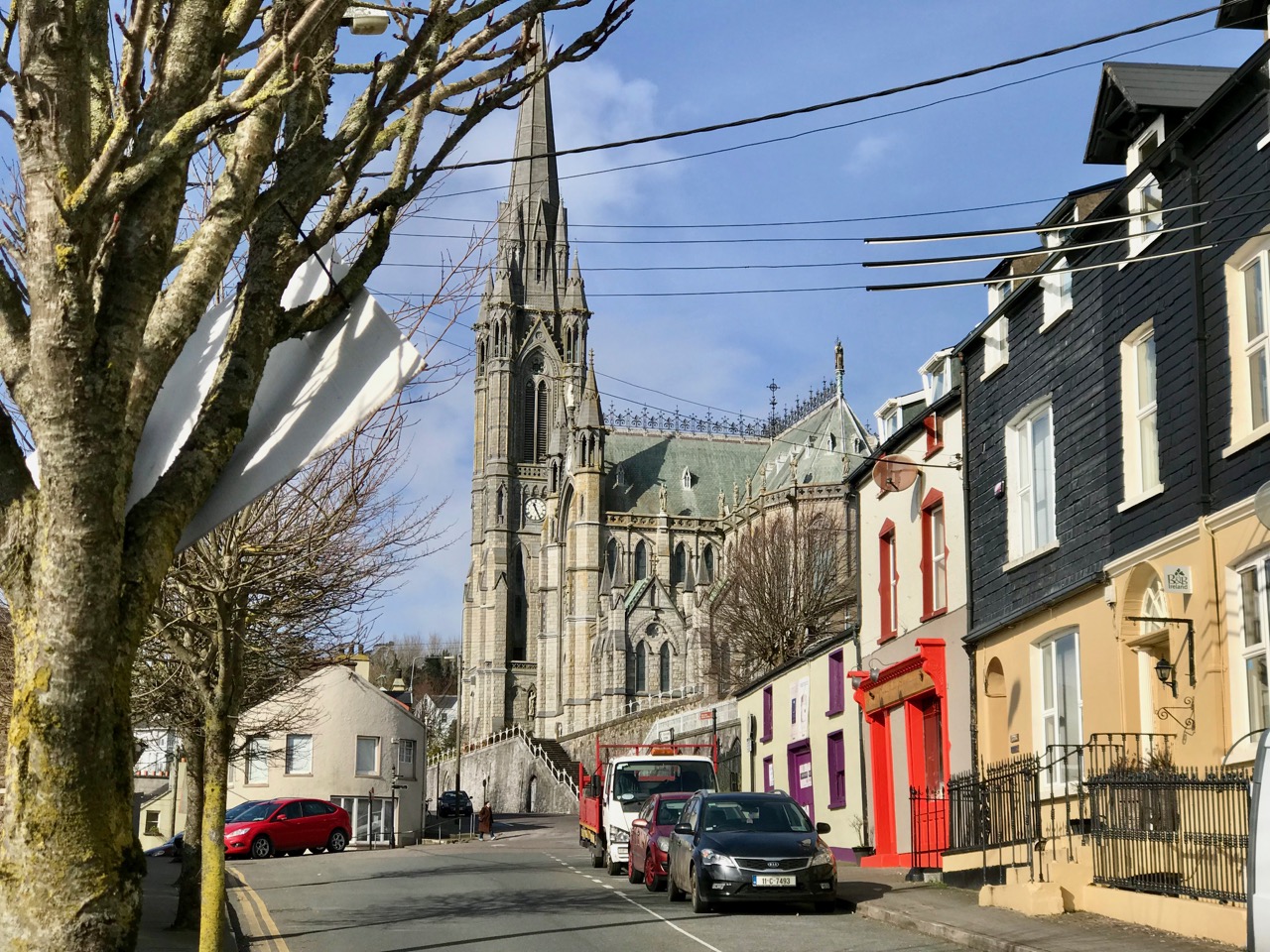
The excitement mounted when we steamed past the port town of Cobh, as the ferry terminal was then just around the corner. From afar I admired the way this settlement embraced the water with its long, colourful terraces lined up the steep hillside on which it was built, crowned atop by the magnificent Victorian edifice which I now know to be probably the finest architectural work of Edward Welby Pugin in Ireland: St Colman’s Cathedral.
I am almost ashamed to confess, then, that I had never called in on Cobh until last week – and the visit was a relevation. First, let me clear up some possible confusions: the name is pronounced ‘Cove’ – and the word in fact comes from the English, but has been Gaelicised to Cobh, (Irish An Cóbh), the location having allegedly been known since around 1750 as ‘The Cove of Cork’. The name was changed to ‘Queenstown’ after a visit from Queen Victoria in 1849, and was then changed back to Cobh after the founding of the Irish Free State in 1922. Or – have I just contributed to the confusion? One thing is for sure: the strategic waterside location in the great natural harbour of Cork is the raison d’être of this grand town.
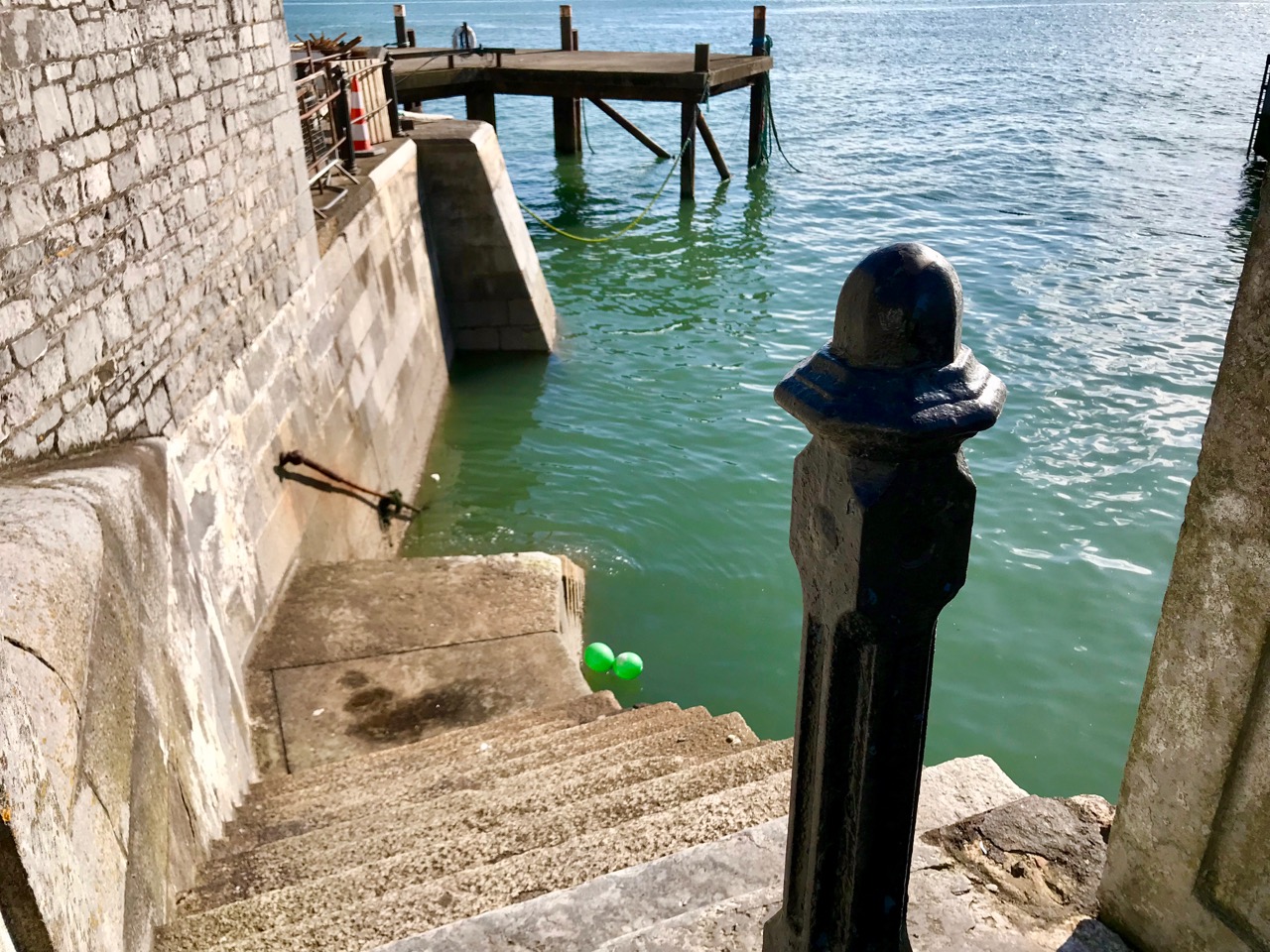
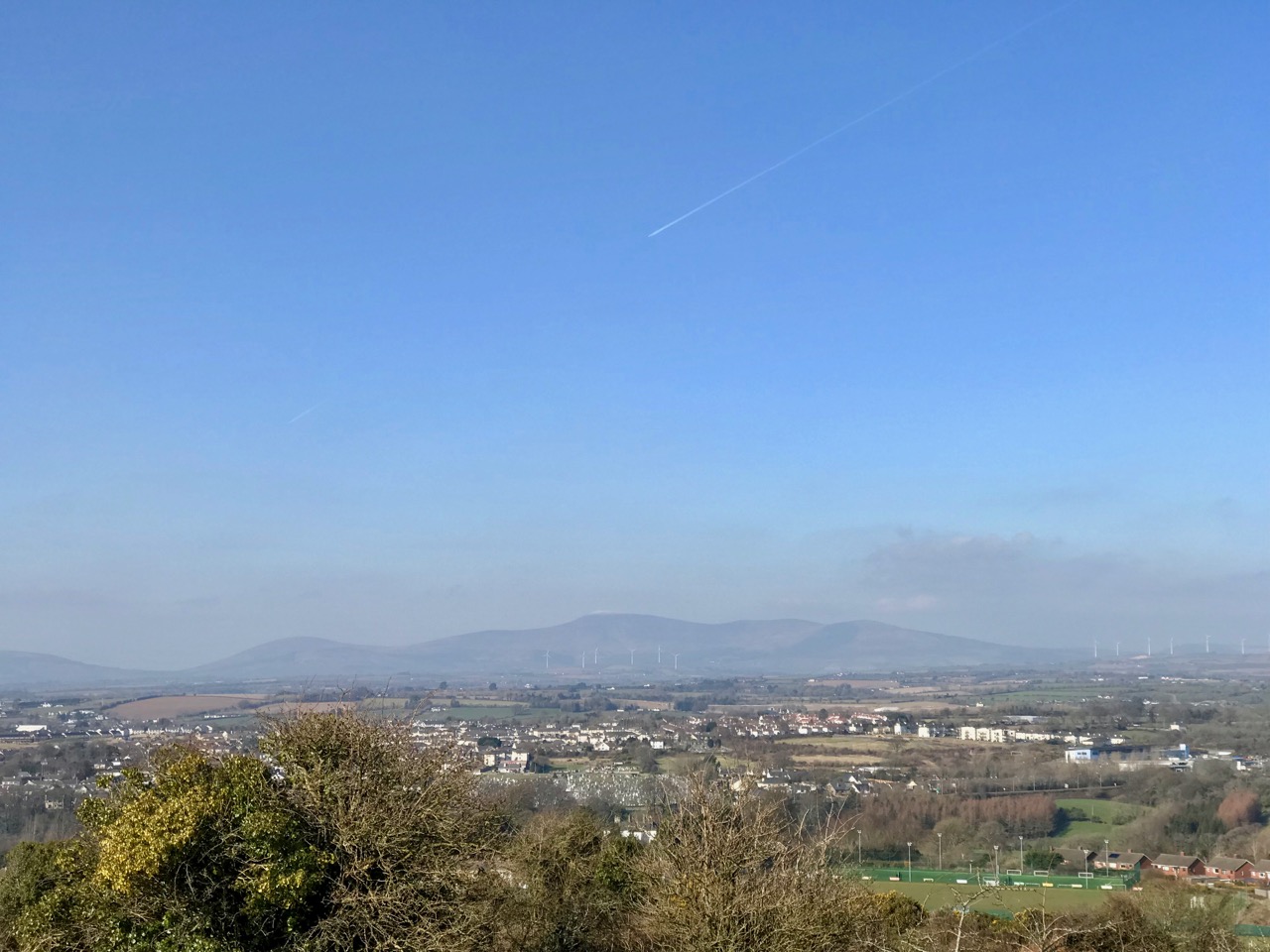
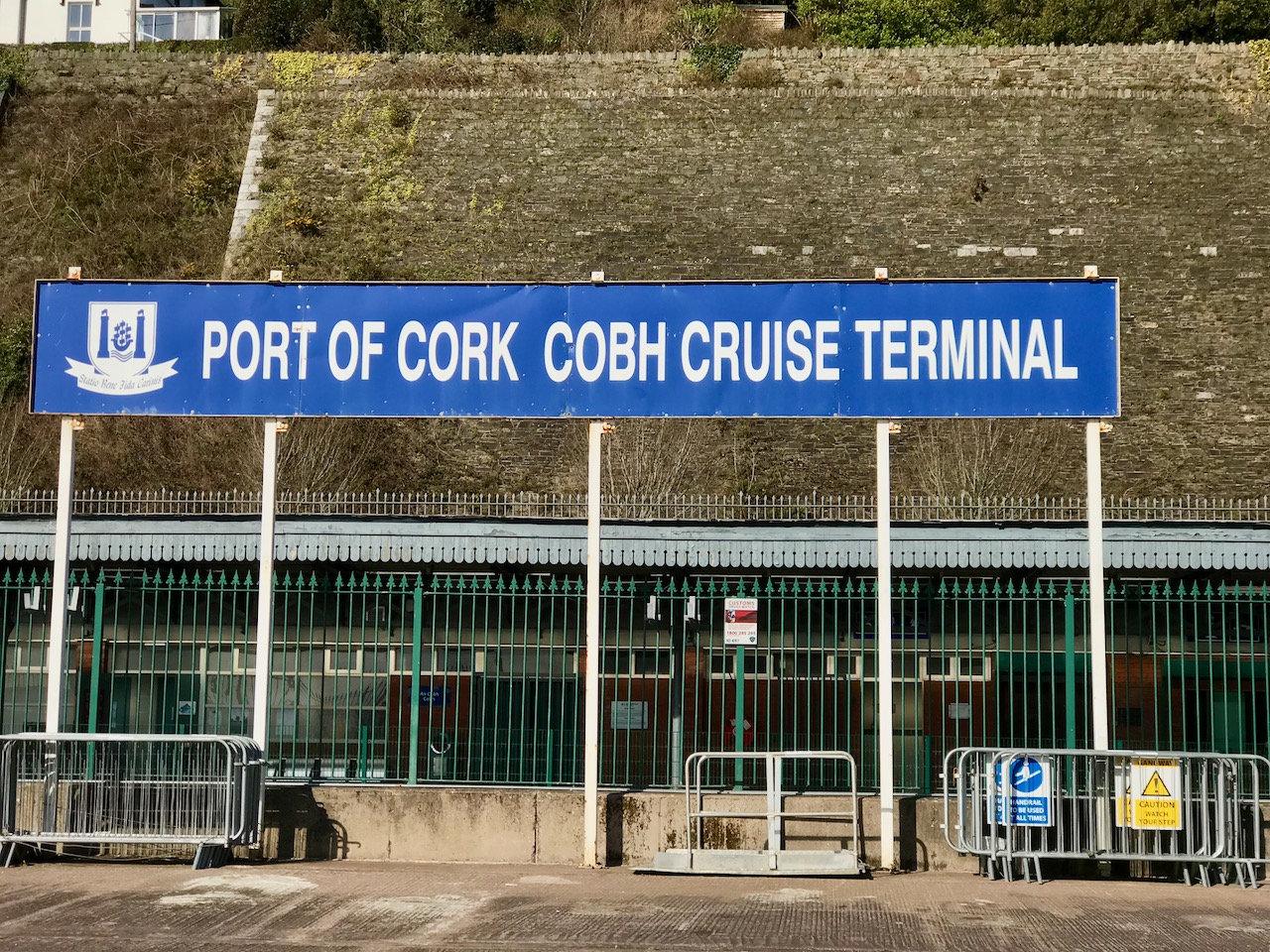
Yes, it’s all about the water, and the fact that it is located beside the “second largest natural harbour in the world by navigational area” (a claim also made, incidentally, by Halifax Harbour in Canada and Poole Harbour in the UK – the undisputed nomination for largest harbour is Port Jackson, Sydney, Australia). Cobh faces the wonderfully named Haulbowline Island and Spike Island, both of which have been established as defensive fortifications, and the former as an important naval dockyard since before Napoleonic times. Today, Cobh has the only dedicated cruise ship berth in Ireland.
Do you remember my telling of the story of Cessair and the first human footsteps on Irish soil in our own Bantry Bay? The story is recounted in the 11th century Lebor Gabála Érenn (The Book of the Invasions of Ireland). The same book tells us about Neimheadh and his followers the Muintir Neimhidh  – People of Nemed – who arrived soon after Cessair around 2000 BC, but in Cork Harbour and settled the islands there: Neimheadh, like Cessair, shared his genealogy with Noah and is said to be buried in a mound on Great Island, overlooking present-day Cobh.

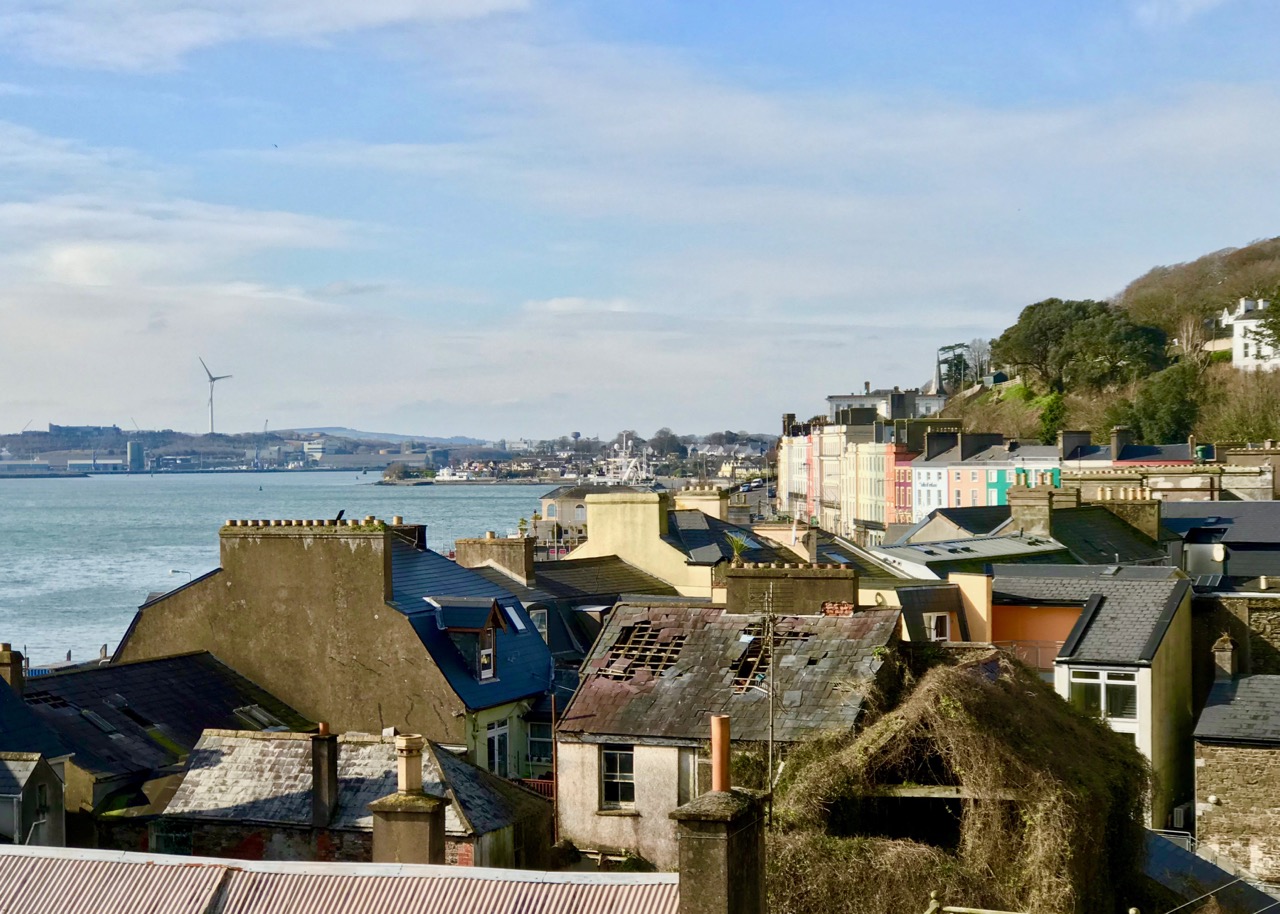
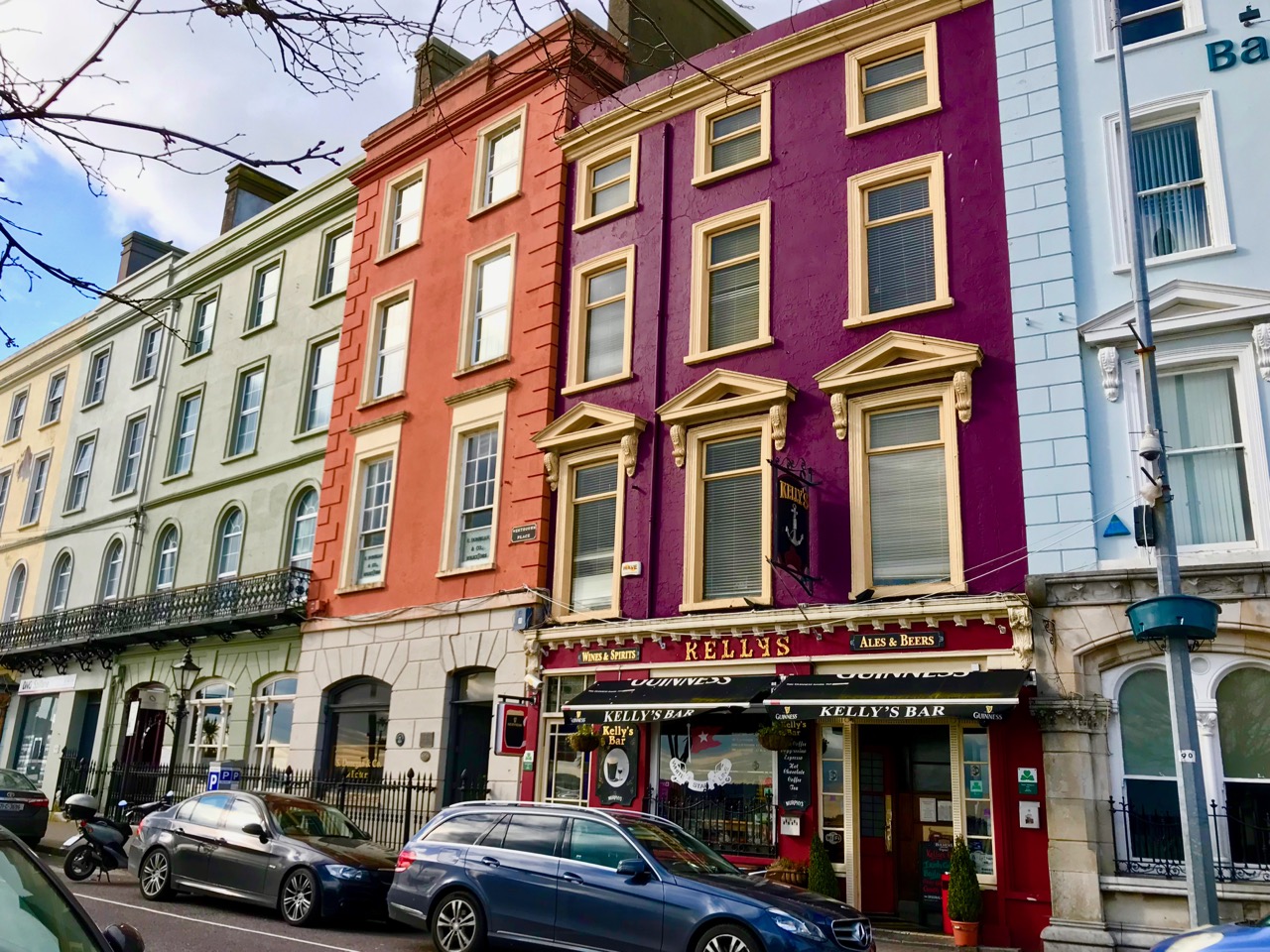
So why am I so impressed by Cobh? Perhaps it’s because – as an architect – I find the streetscapes so elegant, and quirky. For me it’s a cross between the horizontal graceful manners of Georgian Bath and the higgledy-piggledy uphill habitation of the steep lanes of Newlyn in Cornwall, where I lived for many years.
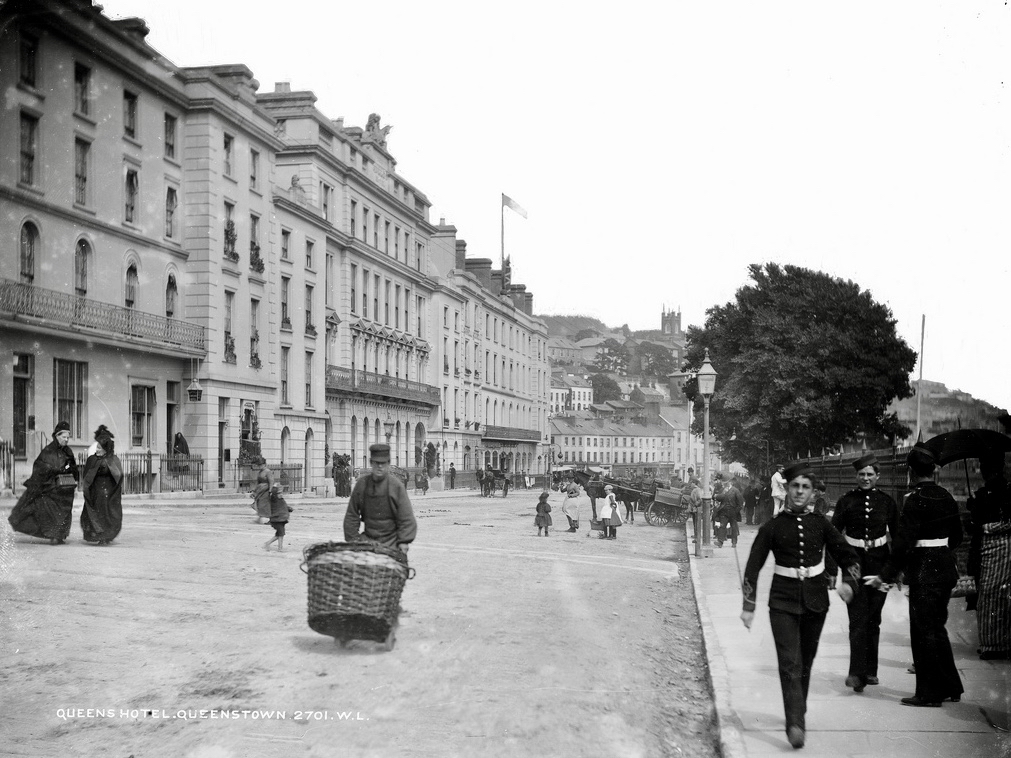
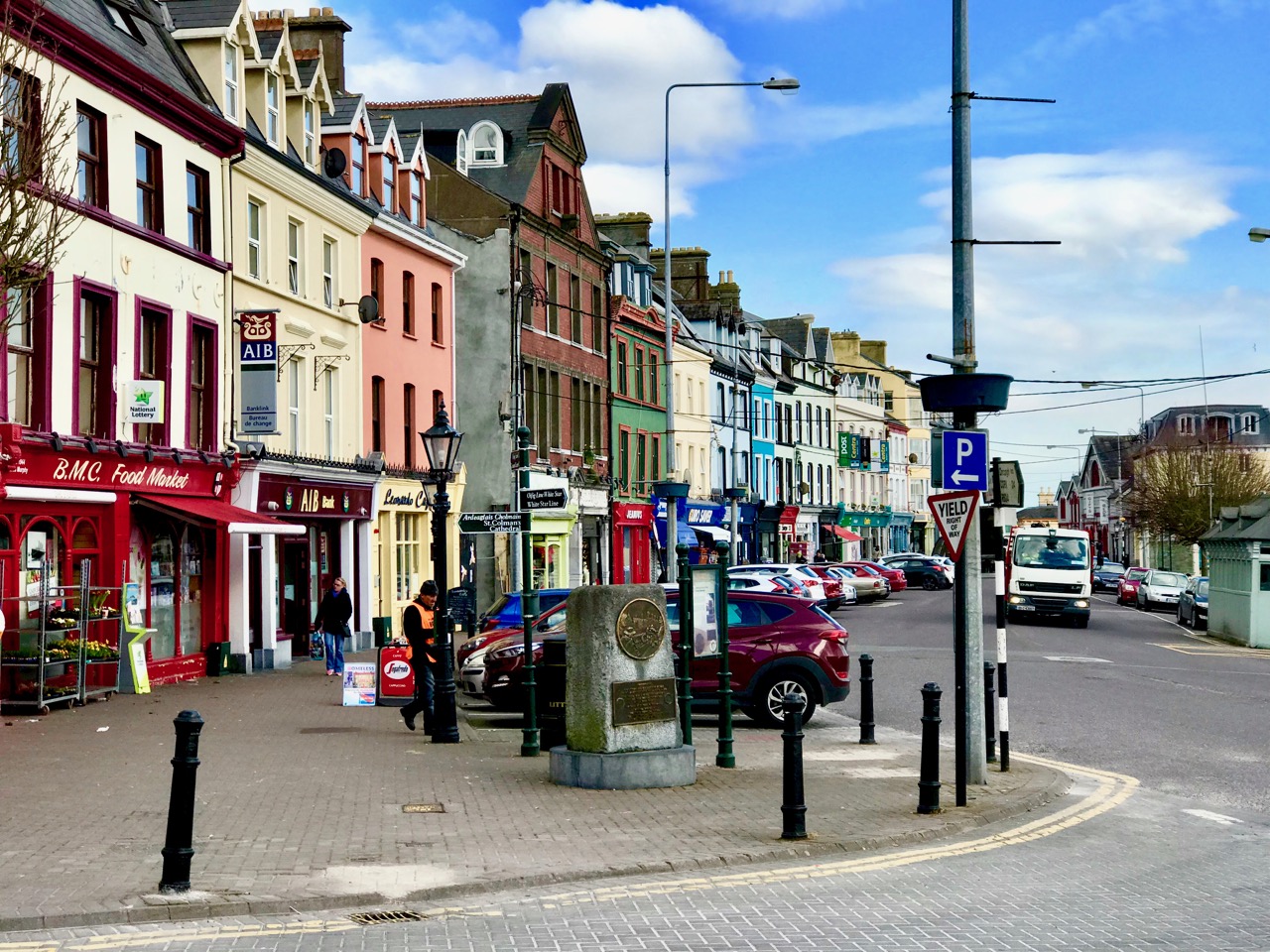
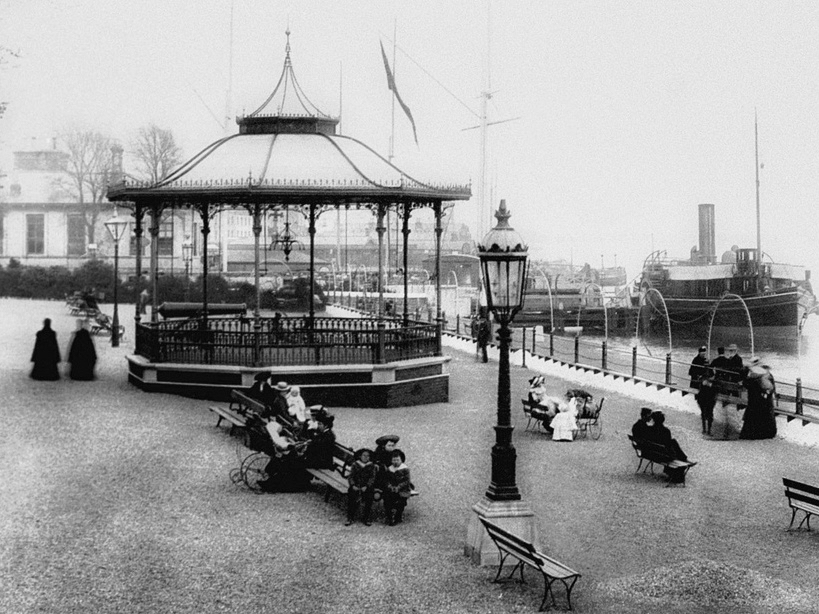
Above – Cobh yesterday and today, showing the elegance of the development of the town in the nineteenth century. Below – another side of Cobh: the steeply descending streets with some remarkable and picturesque terraces, crowned always by the glory of the Cathedral, which took half a century to build. Construction began in 1867.

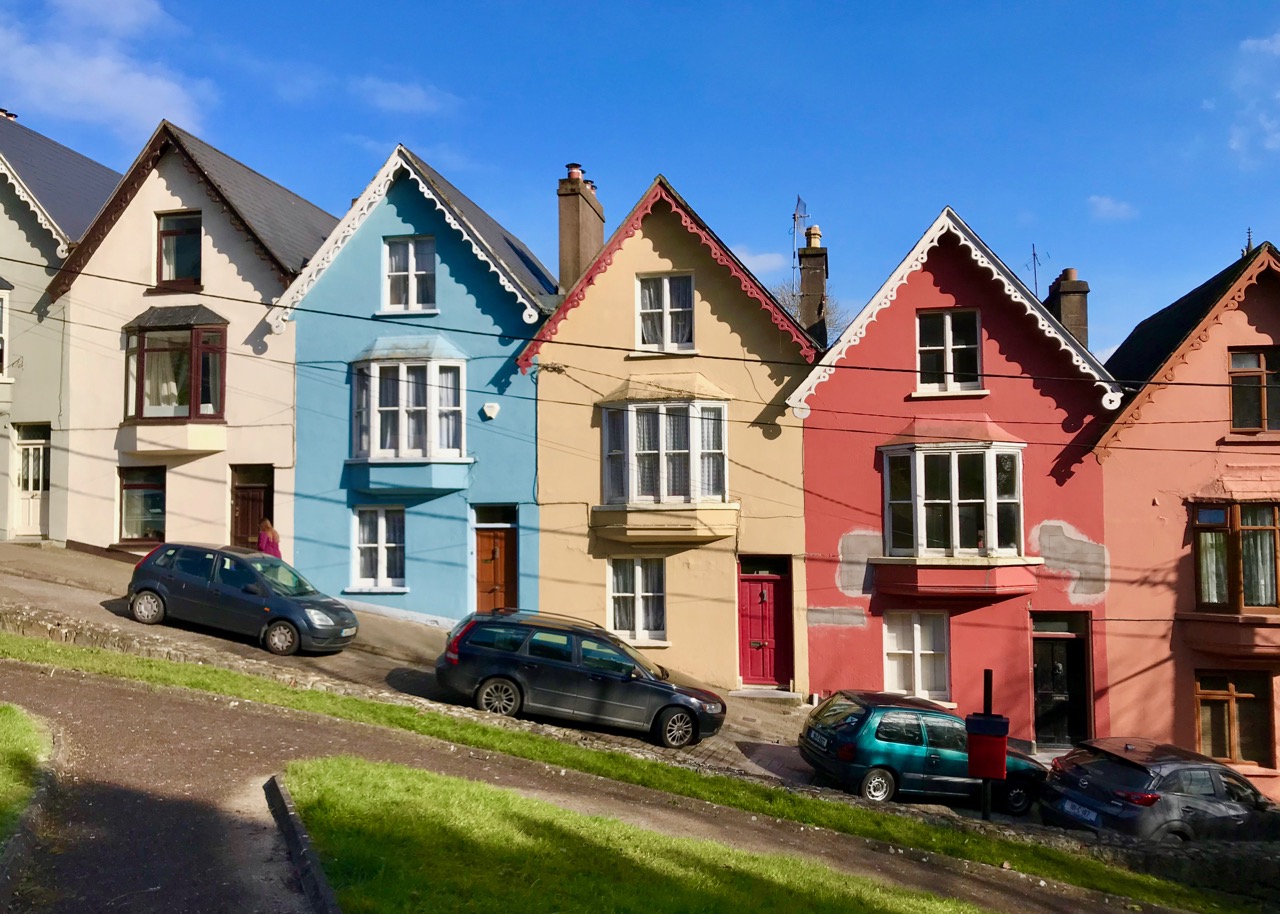
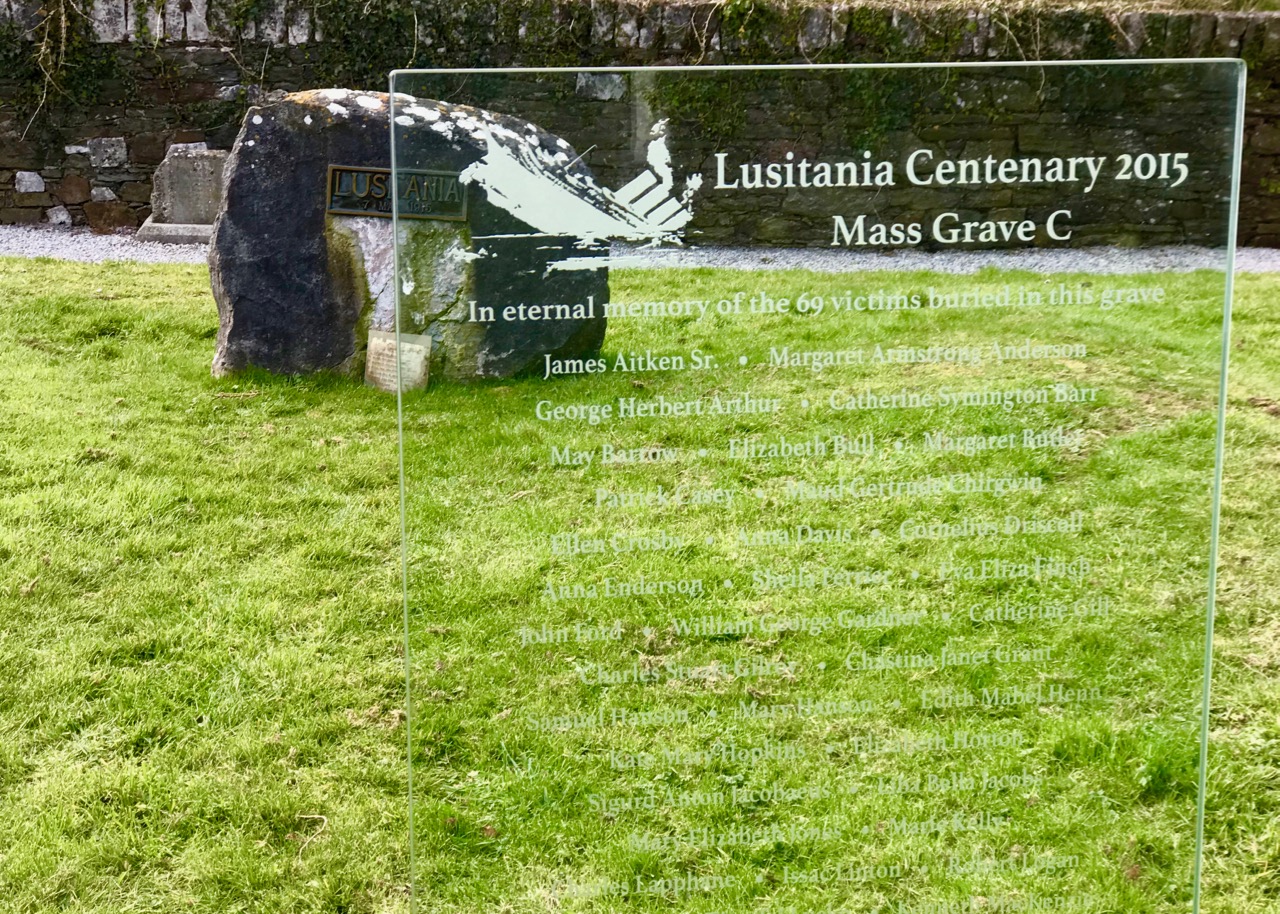
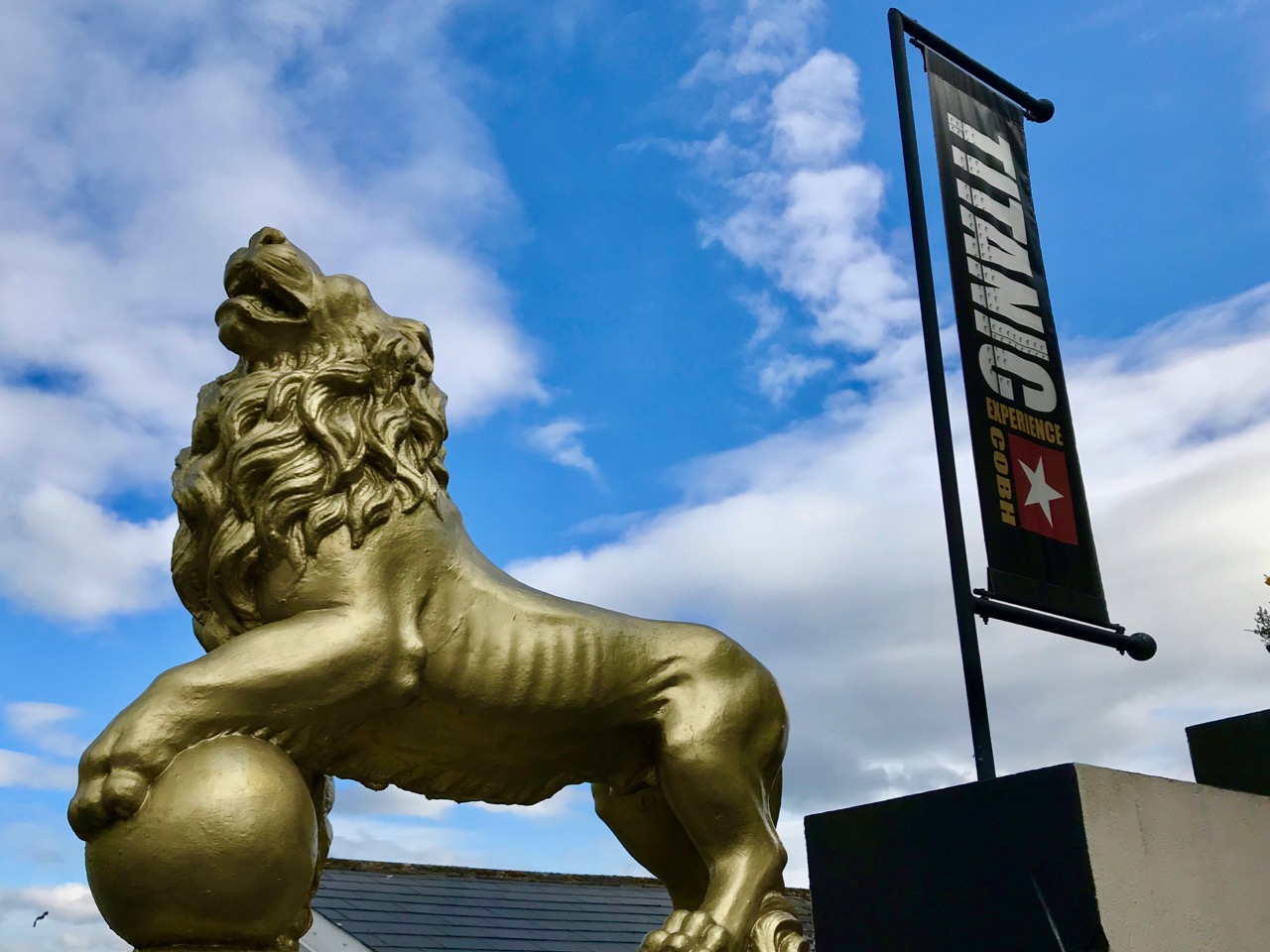
Cobh is such an attractive town to walk around: it should be the jewel on County Cork’s tourist trail. This post is a fairly minimalist photographic essay of what caught my eye on the day we visited. There is a lot more to explore: we never made it to the Heritage Centre, nor to the Titanic Experience, which has brought particular fame to the place in recent times: it was the final embarkation point on the ship’s fateful maiden voyage. All for another day. But we did get up to Cobh’s Old Church Cemetery, high on the hill, where the victims of the Lusitania sinking were buried in mass graves in 1915: a poignant place.

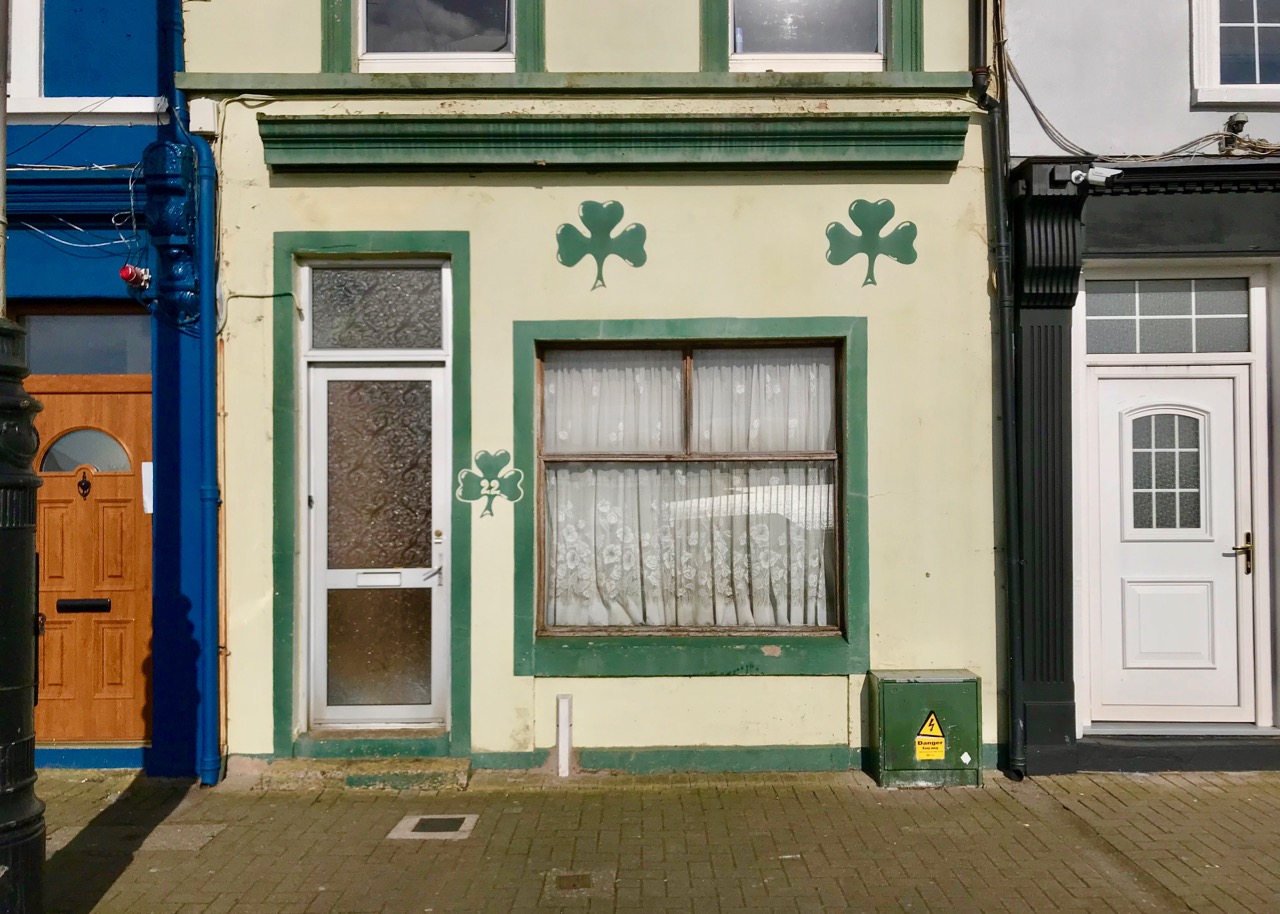
But it was the architecture that had me absorbed: well proportioned and detailed buildings – often simple – that may be overlooked except for the way in which they come together into such a dignified whole. And – such an exploration of colour!

There’s much more to tell of the story of Cobh, and – certainly – so much more to see. I will follow up this post in the coming weeks; the magnificent Cathedral can justify an article on its own. Hopefully you will visit yourself if you have not already done so: your eyes will be opened . . . Look out for the small details!

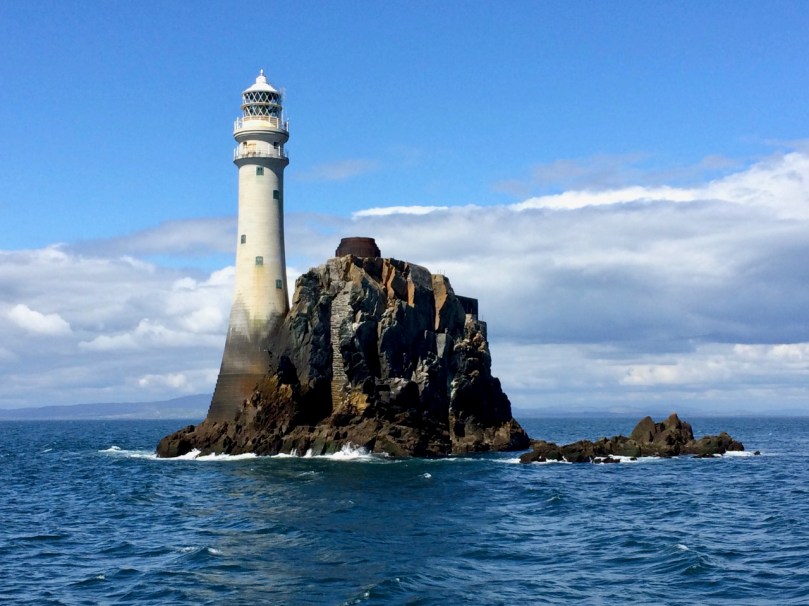
 

A Change to The Fastnet Lighthouse

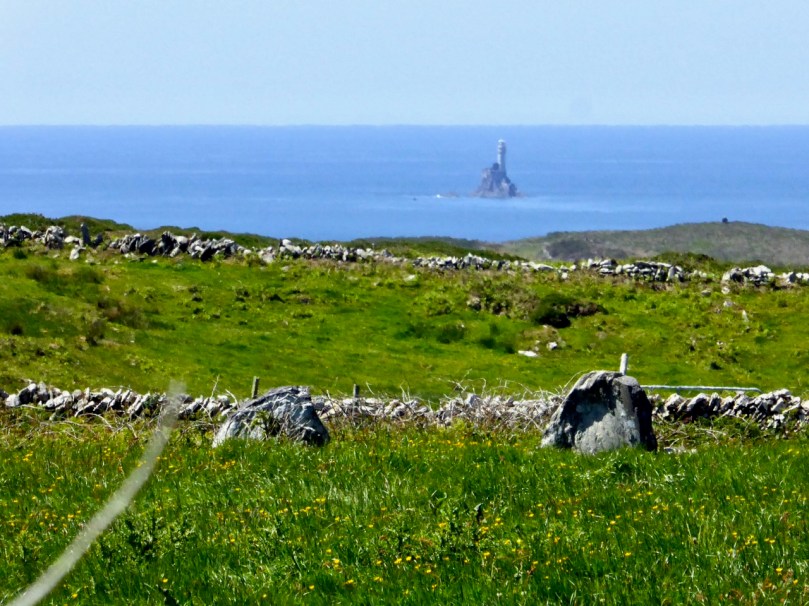
Way back in 2014 I wrote about An Carraig Aonair: The Fastnet Rock and I have decided to repost that today, but with some updated information and photographs, because of an upcoming change announced by Irish Lights. Depending on the story, this is either a relatively benign but majorly cost-saving switch to LED lighting, or a change we must be vigilant about to make sure the Fastnet is left “intact and unharmed”.

Irish Lights tells us that structural repairs. . .are necessary to ensure the metal lantern room is properly secured to the granite tower and modernisation of the light source to an energy efficient rotating LED lantern. When these works are completed the outward appearance of Fastnet will be unchanged. The work will improve our environmental impact by significantly reducing the need for diesel and generators and by removing all mercury from the station. The range of the light will reduce from 27 to 18 Nautical miles.

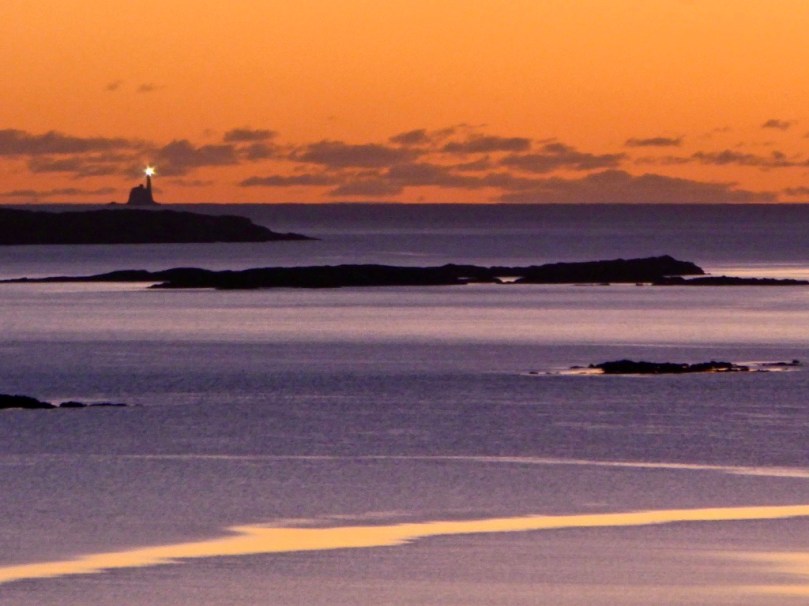
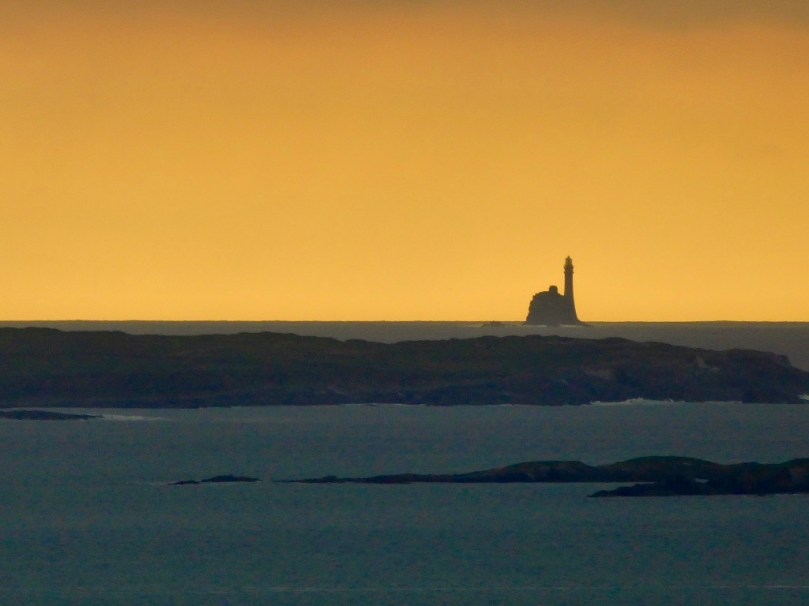
This photo was taken from our house, 12 miles (or 10.4 nautical miles) away

While this seems like a sensible and inevitable modernisation, with (according to this letter to the Irish Times) a very significant saving of €100,000 per year, those of us who live around Roaringwater Bay want more information: we want to be sure that the change does not negatively impact on the safety of our sailors and fisherfolk, and does not rob us of the iconic flash that is so much part of our lived experience in West Cork. There will be a meeting on Monday (March 5, 2018) at the Schull Sailing Club to discuss it all.

What follows now is the text of my post from June of 2014, lightly edited and with some newer photographs inserted.

Robert has written about our field trip to Cape Clear Island and I can now reveal that the journey also included a thrilling sail around An Charraig Aonair (Karrig Ane-er, The Lone Rock) better known as the Fastnet Rock; or to thousands of emigrants for whom it was the last sight of their home country, Ireland’s Teardrop.

We had been looking forward with great anticipation to visiting the rock close up. We can see it from our home, a far away mystical crag abounding with lore and legend. We have been awestruck by the waves crashing over the lighthouse in winter storms and wondered at the lives of the lightkeepers who once manned that treacherous outpost. We watched through our telescope as enormous yachts rounded the rock in the biennial Fastnet Race last summer, following the progress of the race on a special iPhone app. I have written elsewhere about the awful tragedy of the 1979 race, in which Gerard Butler and his fellow lightkeepers on the Fastnet played a crucial role in monitoring the participating yachts in the mountainous sea conditions. 

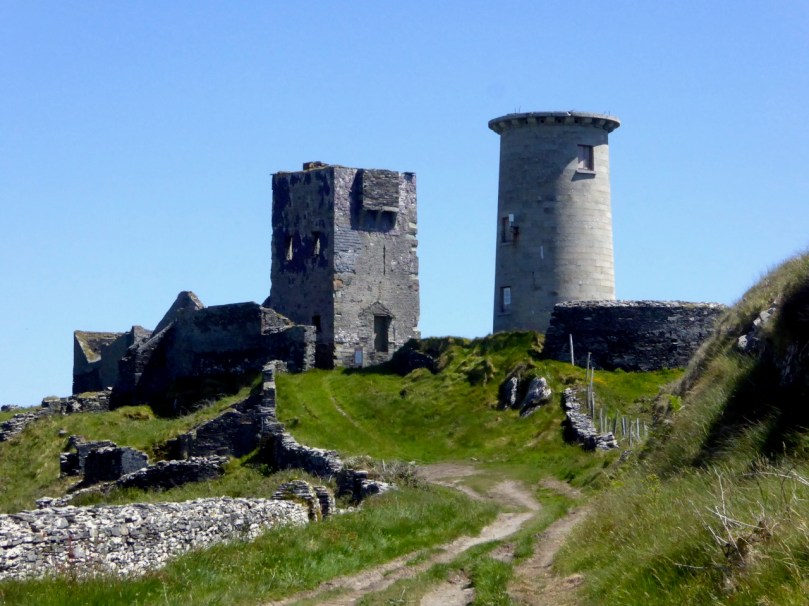
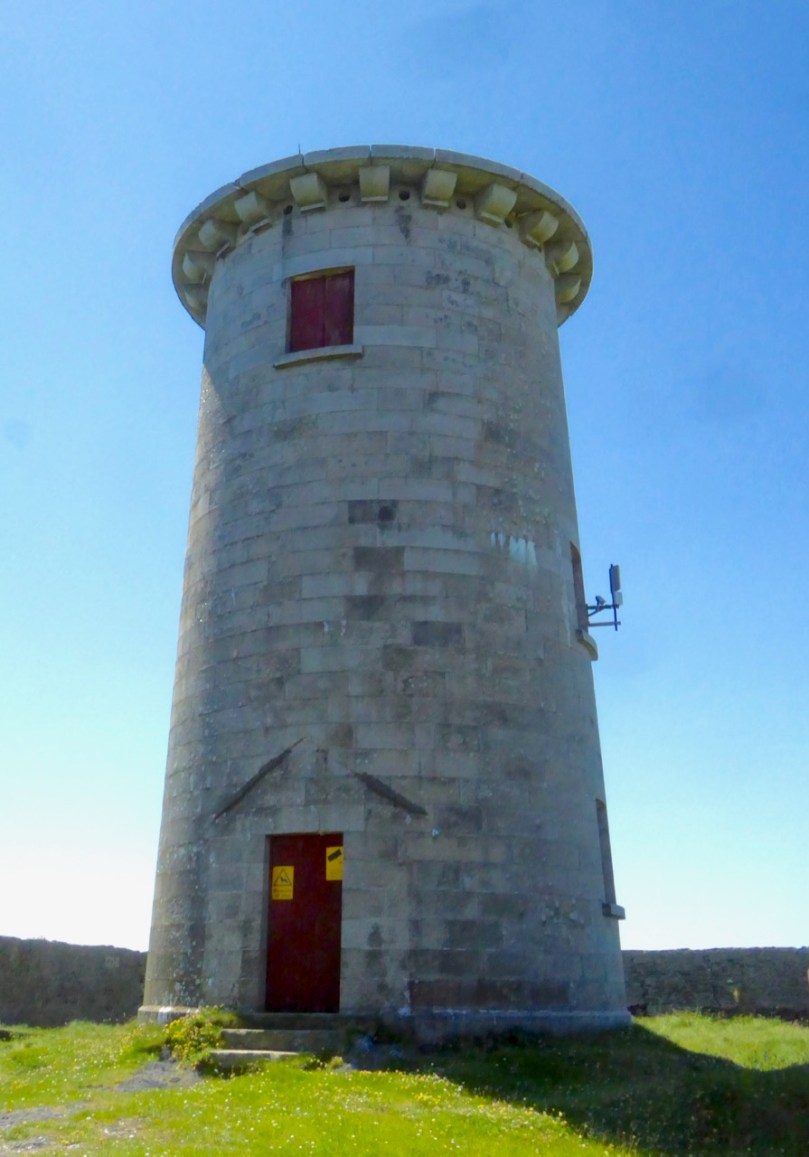
The signal station and the first lighthouse, on Cape Clear Island

The Fastnet was built to avoid such tragedies. Its first iteration was in 1818 as a lighthouse tower on a high point on nearby Cape Clear Island, beside the Napoleonic-era signal tower. However, the light was frequently obscured by fog and after the wreck of the Stephen Whitney in 1847 with 92 souls lost, it became clear that the best place for a lighthouse was on the Fastnet Rock. 

The great era of lighthouse building in Ireland got underway in the mid-nineteenth century. The engineering, design and construction expertise necessary to build lighthouses are impressive enough. Add to this the logistics of building on a tiny and inhospitable rock in a heaving sea on the edge of the Atlantic, and the sheer accomplishment of the objective is  staggering. The first attempt, started in 1849, was of steel and needed constant repair.

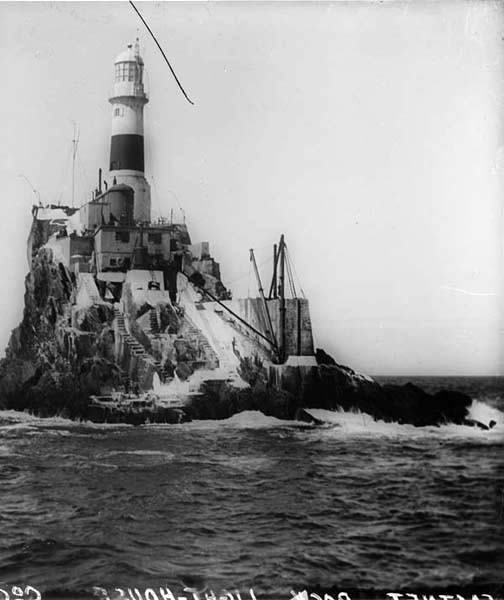
The first lighthouse on the rock – it was made of steel and didn’t last

It was decided to replace it with a structure of Cornish granite and the current lighthouse first cast its beam over the waters in 1904. Eamon Lankford in his book Fastnet Rock: An Charraig Aonair describes the building process and provides old photographs illustrating how the granite blocks were ‘floated’ and hoisted on to the islet, having been first assembled and tested in Cornwall. The website Digital Irish Lighthouse Experience by Sandra Michler has an animated sequence showing how this was accomplished. it took eight years.

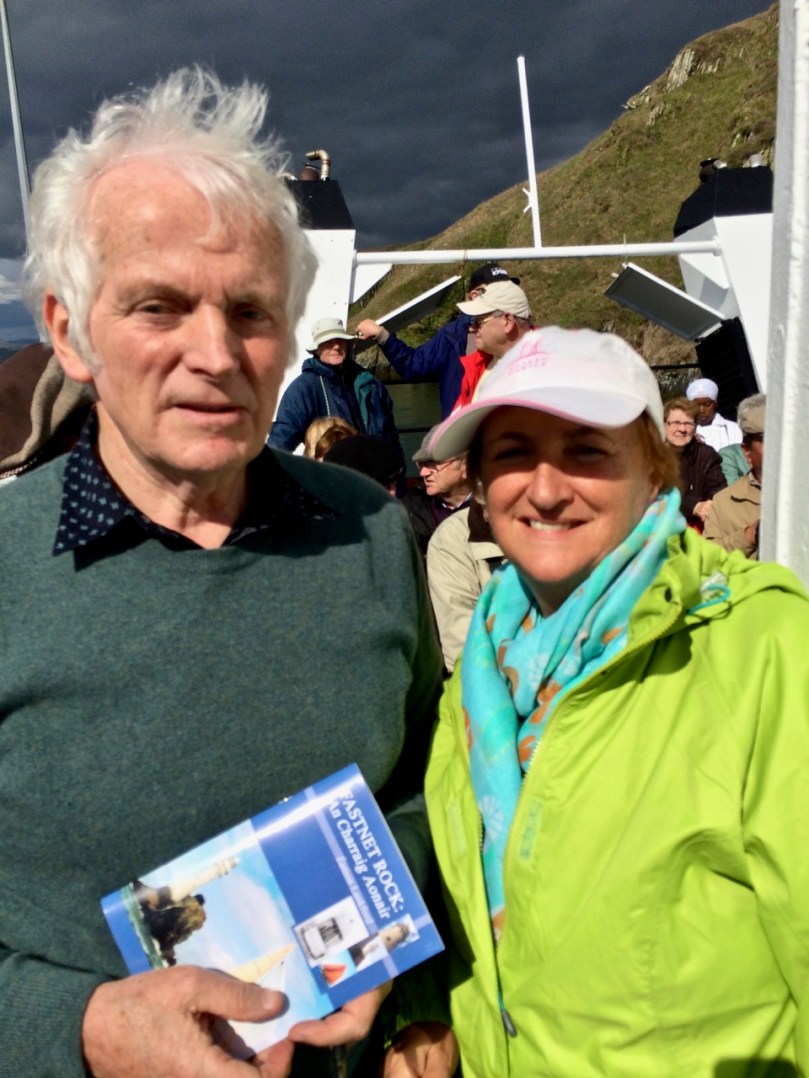
We were fortunate to have Eamon Lankford as one of our guides on our trip to the Fastnet

One of the best accounts of the building of the lighthouse was in a 2008 article in The Economist called Light on a Lonely Rock. The piece gives fascinating details into the dedications and hardships of the builders and calls the lighthouse “a monument of man’s gift to mankind.” I don’t know who wrote it, but it’s a terrific essay.

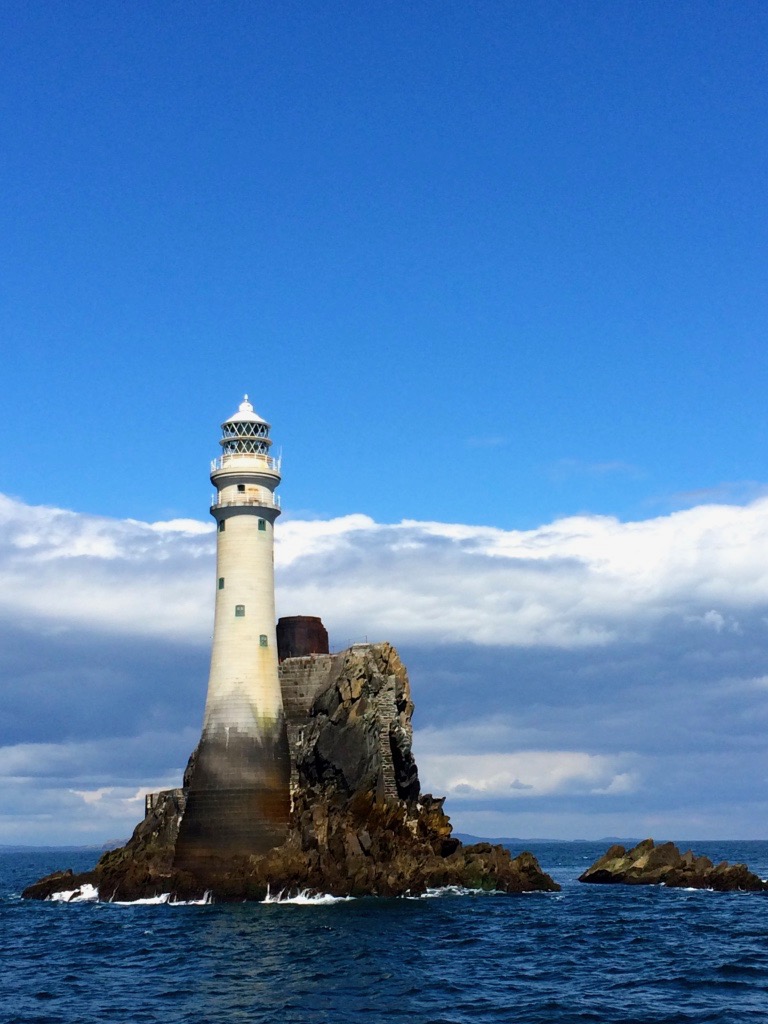
According to the Irish Lights website, Fastnet is the tallest and widest rock lighthouse tower in Ireland and Great Britain and was a monumental achievement when completed in 1904. Each of the granite stones of the tower is dovetailed into those around it, bonding the structure into a virtual monolith. This webpage also has several excellent photographs of the lighthouse from the air. What all photographs of the rock also reveal is that the lighthouse is a thing of beauty. Tall, slender and elegant and boasting two balconies, it personifies form and function in the most admirable fashion possible. (Take a look, for example, at Dennis Horgan’s website – he’s an acclaimed aerial photographer and his photograph of the lighthouse is probably the most iconic shot of them all.) Today the Fastnet is fully automated but in The Lightkeeper Gerard Butler describes what it was like to live on the rock in fair weather, when he fished and swam from the steps, and foul, when the seas crashed and roared over the lighthouse as it quivered and shook all night. 

The lighthouse showing the full extent of the Cornish granite and the stub of the old steel tower

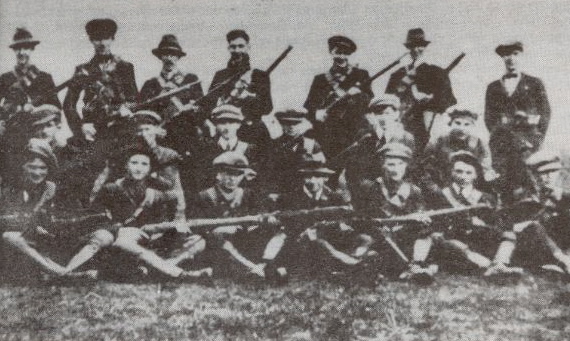
One of the stories we heard from Eamon concerned  a daring midnight raid on the lighthouse carried out by an IRA ‘Flying Column’ (experts in guerilla warfare) in 1921 during the Irish War of Independence. They were after the explosives used on the Fastnet to power the foghorn. [EDIT: I have some errors here – please see Finbarr O’Driscoll’s correct information about the raiding party in the comments section.] In researching this story further, I found an article in the 1999 Mizen Journal (no longer in print) by Frank Lannin, based on the eyewitness statement of Sean O’Driscoll.*

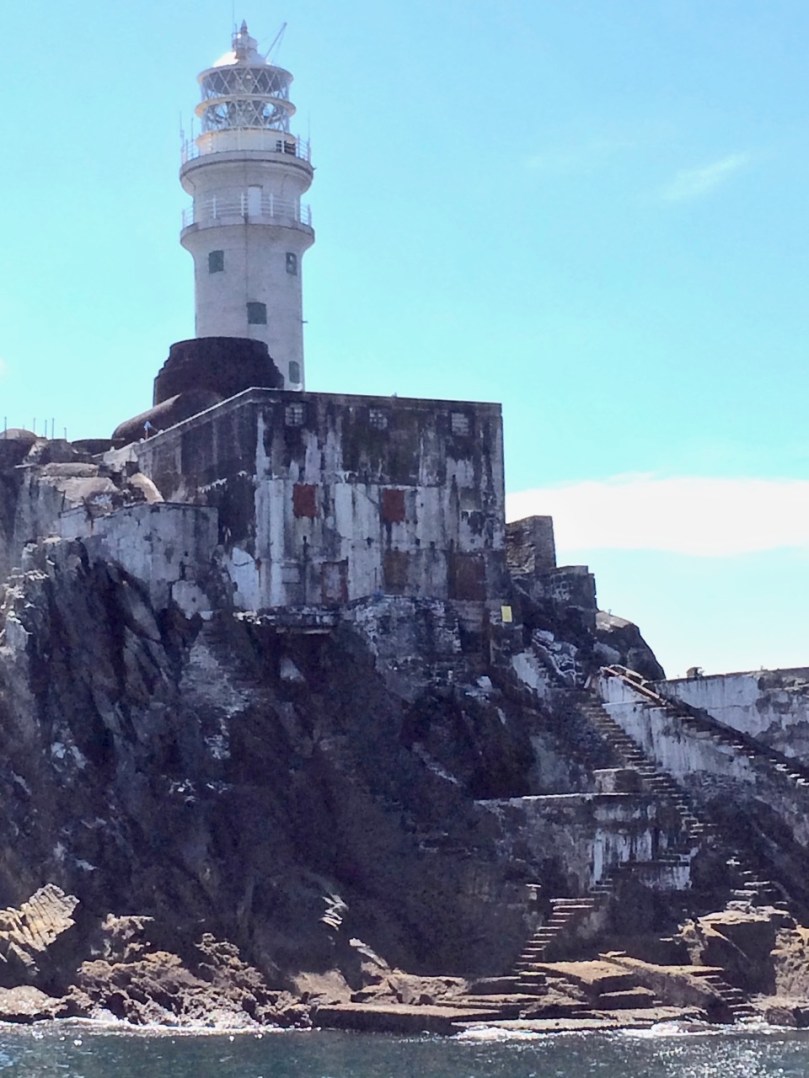
The Rock, showing the landing platform, steps and store

Here is part of Lannin’s account:

The breeze had freshened and caused the usual swell around the Rock and there was a rise and fall of several feet. The anchor was let out and the boat moved slowly to the landing place. Positioned on the bow was John O’Regan, a rope tied around his waist, a revolver in his pocket and balancing himself with the rise and fall of the boat. He would have to select the right moment to jump on the Rock and catch the iron ring which was fixed to the Rock. He knew where the ring was fixed, but to grasp it in total darkness was a feat that few would attempt. His vast experience as a seaman was now to be put to the test. As a wave was rising he jumped. It was a tense moment. As the wave covered him he grasped the ring with both hands. (It was an occasion for handclapping, but not tonight.) In seconds he had made the boat fast and the rest of the raiding party were landing on the platform. The huge steel door of the lighthouse was not locked. John was first up the spiral stairway leading to the room where the Lightkeeper was on duty. He put up no resistance and as a precaution the wireless was dismantled. Seventeen boxes of gun cotton and three boxes of detonators and primers were loaded on to the “Maire Cait” by means of the lighthouse derrick. in all, the spoils weighed but one ton. The daring mission was accomplished.

A Flying Column (this one from Tipperary)

The fog signal, together with the light, was an important aid to navigation for ocean going vessels. It was only in 2011 that the Fastnet foghorn was permanently discontinued, as modern navigation equipment rendered it unnecessary. All around the world people are missing the haunting sound of foghorns now, a sound so many of us grew up with. But at least we can see the light from Carraig Aonair every night and count its ‘character’ – one two three four FLASH…one two three four FLASH – and know that it’s doing its part to keep our mariners safe on the seas that roll outside Roaringwater Bay.

*See pages 18 to 20 of Sean O’Driscoll’s statement for his dramatic story of the raid.


Mizen Magic 9: Rossbrin to Schull

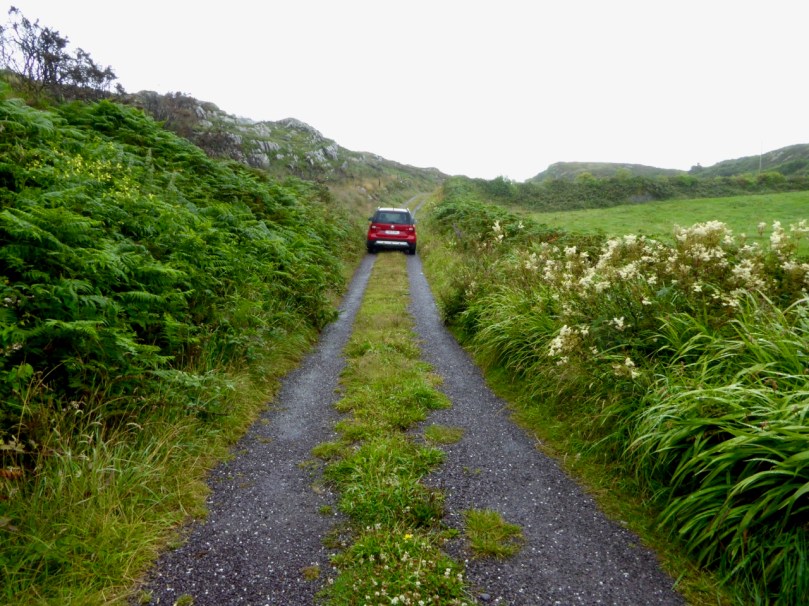
There’s a main road between Ballydehob and Schull, and then there’s a back road – a road that meanders through farmland and down half-forgotten boreens, a road lined with wildflowers and dotted with the remains of past history, a road that looks over once-inhabited islands. South of this road lies Mizen Magic 9.

Along the back road in early summer

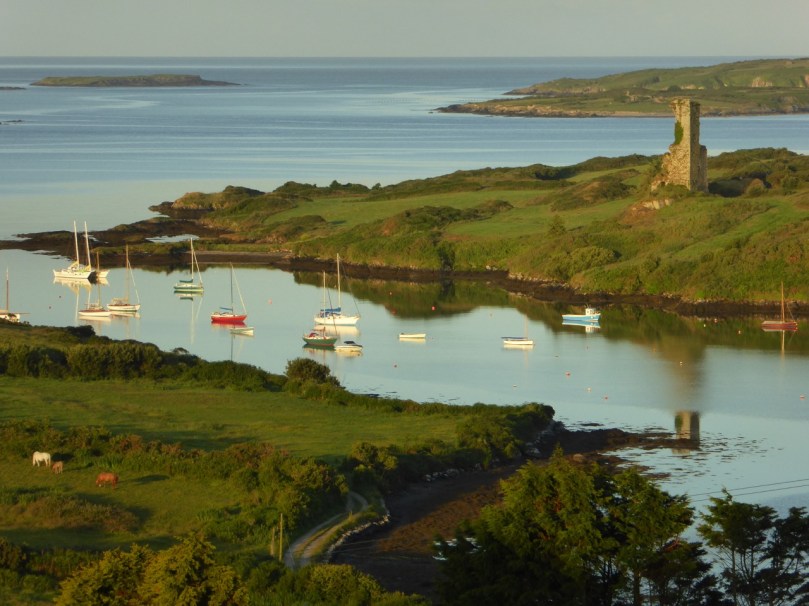
We’ll start at Rossbrin Cove – a place that Robert has written about over and over, like any writer with his own ‘territory.’ This was the home, in the 15th century, of Fineen O’Mahony, the Scholar Prince of Rossbrin.

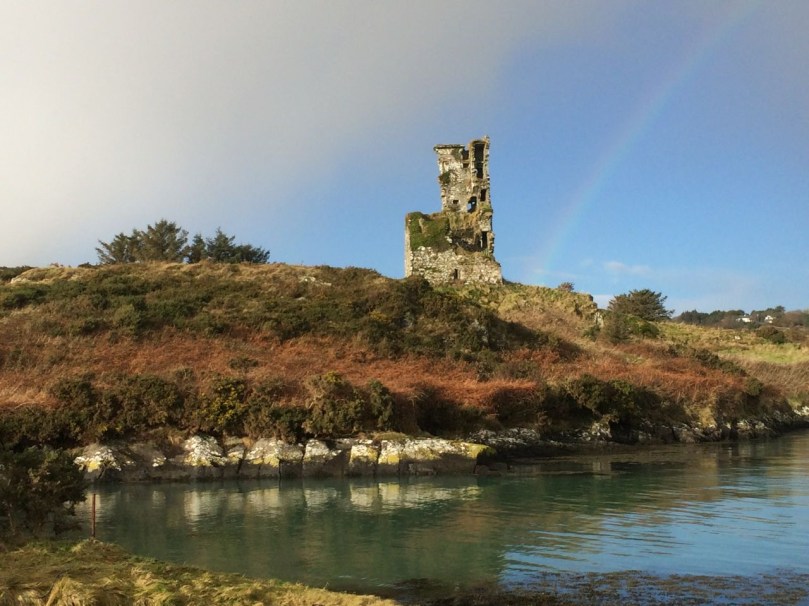
Looking down now on what’s left of his castle, it’s hard to imagine that this was a place teeming with life and learning – a mini-university where scribes and poets and translators transcribed to vellum (and to paper – a first in Ireland) psalters, medical tracts and even the travels of Sir John Mandeville. The castle has been in ruins since the 1600s, and we live in fear that the next storm will bring the last of it down.

Rossbrin Castle from the sea

The road runs through the townlands of Rossbrin, Ballycummisk, Kilbronogue, Derreennatra and Coosheen. Ballycummisk has a wedge tomb from the Bronze Age and a ring fort from the Early Medieval period – just to remind you that you are far from the first to want to settle in this place. In more recent times, and like Horse Island, it was once the centre of a thriving mining industry, but a spoil heap and stone pillars are all that remain.

Large ring fort, and the remains of mining activity, in Ballycummisk

Two islands dominate the views of Roaringwater Bay along this road. The first is Horse Island, owned now by one family, with its industrial past a distant memory. There have been various plans for Horse Island in recent years – a resort, a distillery – but so far it has resisted development.

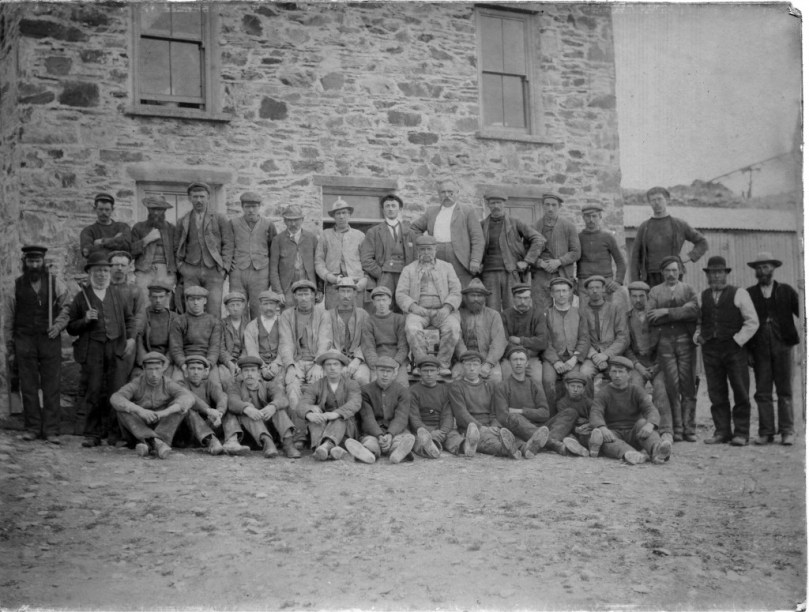
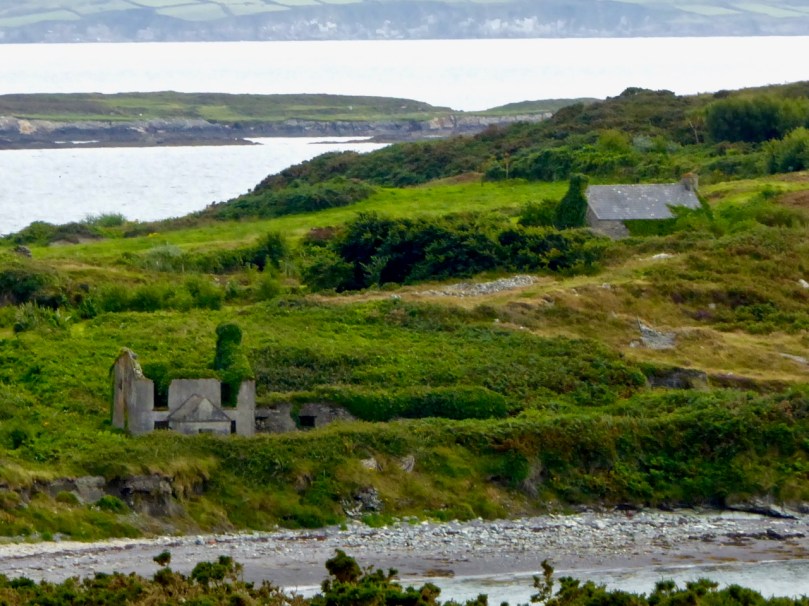
Horse Island Miners in 1898 and the ruins of miners’ dwellings

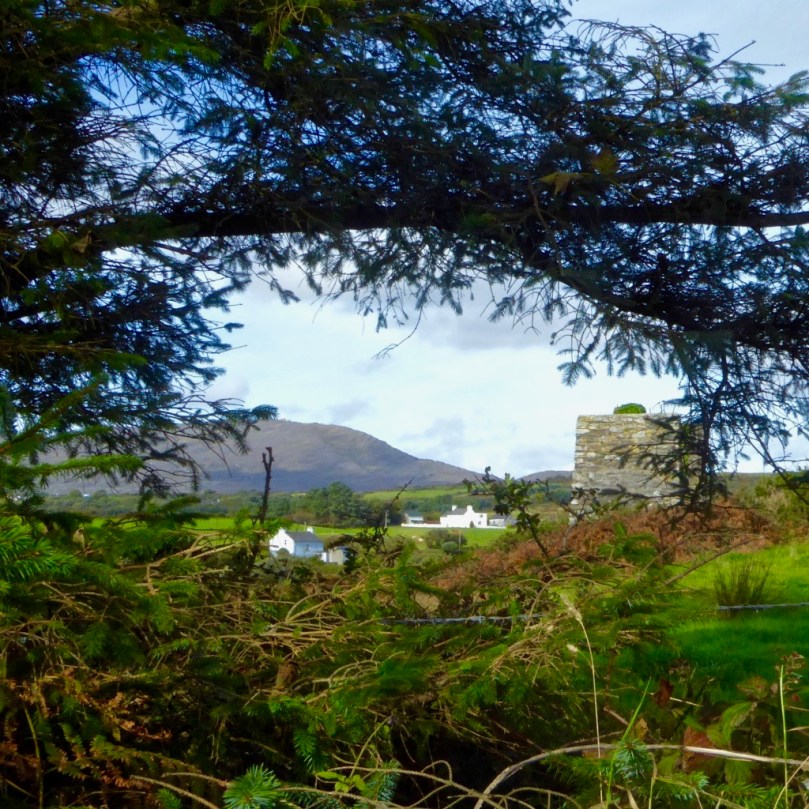
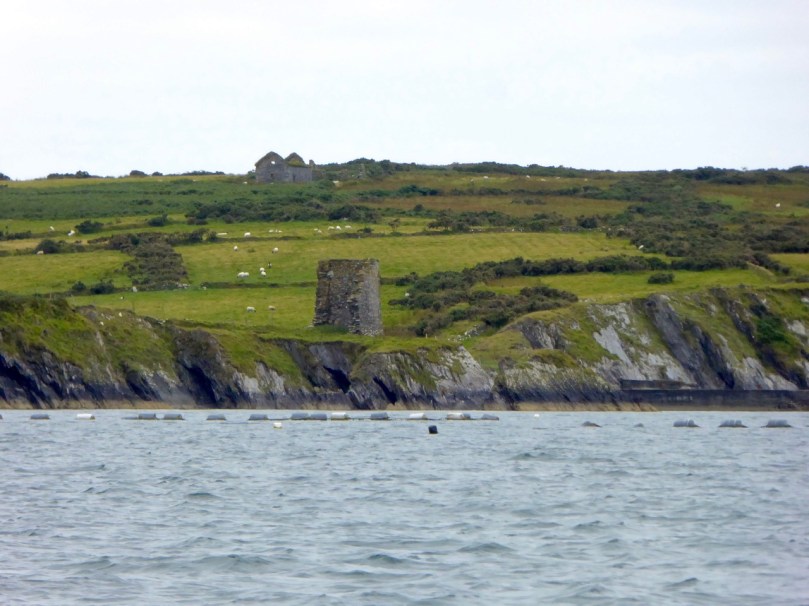
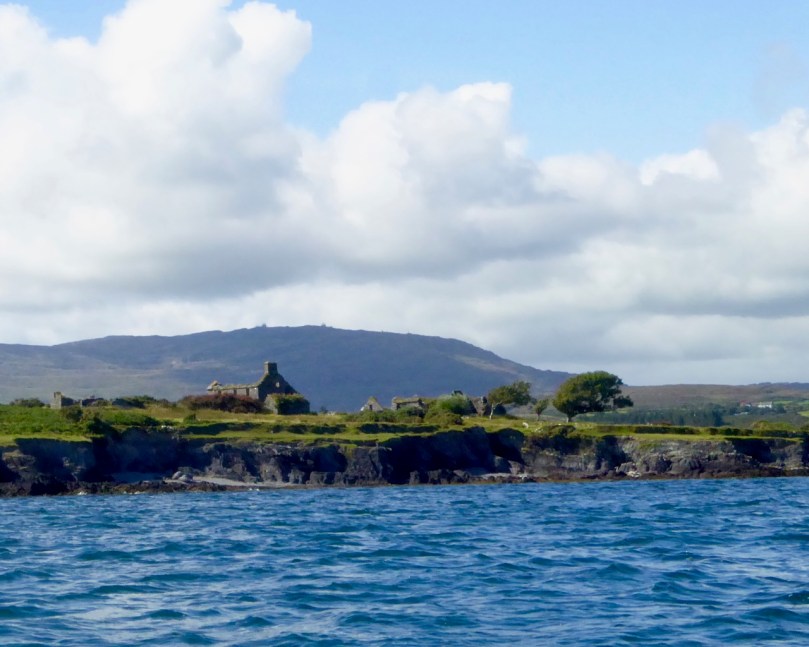
The other is Castle Island, home to yet another vestigial O’Mahony Castle – one of a string along the coastline, all within sight of each other and sited strategically to control the waters of Roaringwater Bay and their abundant resources.

There’s not much left of the castle on Castle Island

The O’Mahonys became fabulously wealthy in their day, charging for access to fishing and fish processing facilities and for supplies and fresh water. They also forged strong alliances with the Spanish and French fishermen and visitors who plied those waters – a friendship that was to cause great concern to the English crown and that was to spell, in part, their eventual downfall.

Ruined farm houses on Castle Island. The photograph was taken from a boat – that’s Mount Gabriel in the background

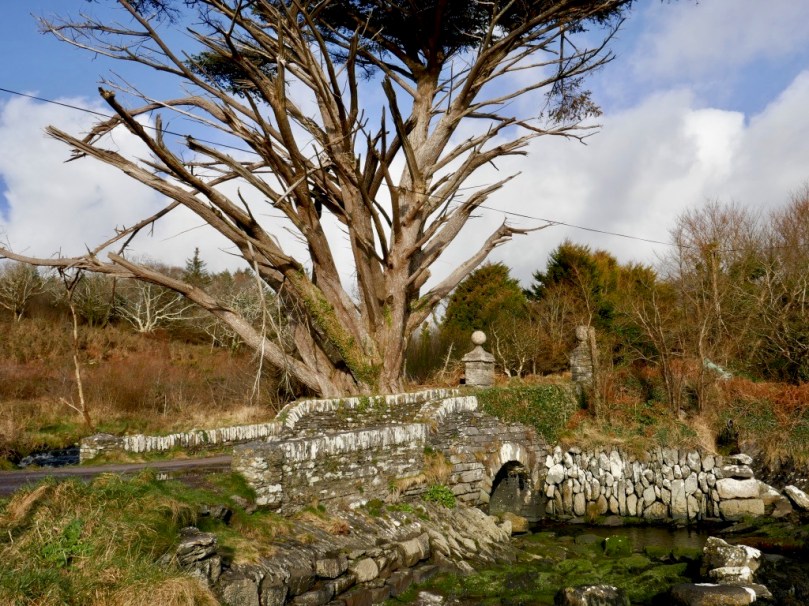
The closest spot to Castle Island (also uninhabited) is the beautiful little pier at Derreennatra. There is a large house up behind the pier, now inaccessible but once run as a guest house and famous for its hospitality. A curious bridge once gave access to the demesne and it remains a striking landscape feature, with its pillars and giant Macrocarpa tree.

Derreennatra Bridge

Continuing towards Schull we come to the last of the O’Mahony castles and the best preserved in this area. This is Ardintenant (probably Árd an Tinnean – Height of the Beacon – possibly referring to a function of the castle to alert others to the presence of foreign vessels) and it was the home of the Taoiseach, or Chief, of this O’Mahony sept.

Two ‘beacons,’ ancient and modern – Ardintenant or White Castle below and above it the signal stations on Mount Gabriel

The castle, or tower house, still has a discernible bawn with stretches of the wall and a corner tower still standing. If you want to learn more about our West Cork tower houses, see the posts When is a Castle..?; Illustrating the Tower House; and Tower House Tutorial, Part 1 and Part 2.

Ardintenant is also known as White Castle, a reference to the fact that it was once lime-washed and stood out (like a beacon!) to be visible for miles around. It appears to have been built on top of an earlier large ring-fort which in its own day was the Taoiseach’s residence before the fashion for tower house building.

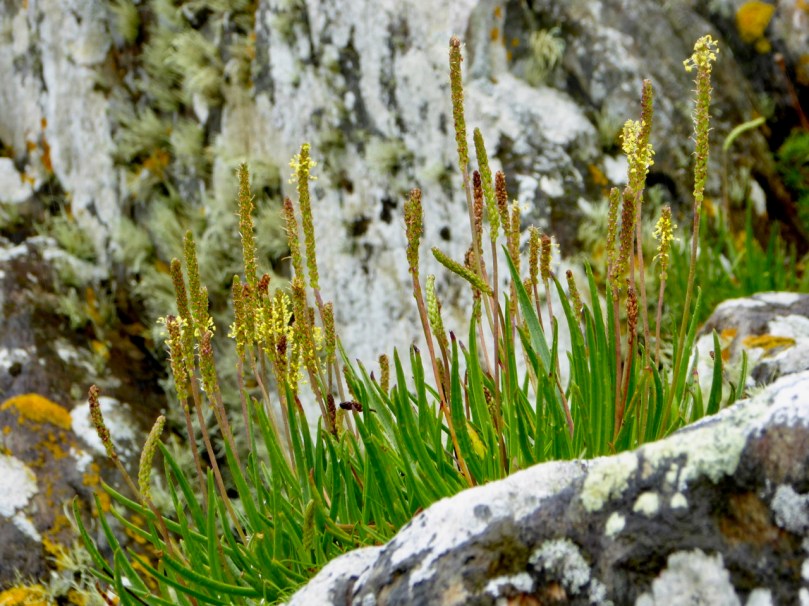
Sea Plantain at Coosheen

From Ardintenant we head south to Coosheen, a picturesque pebble beach known only to locals. It’s one of my favourite places to go to look for marine-adapted wildflowers. On a rainy day last August I saw Sea-kale, Sea-holly, Sea Plantain and Thrift, and drove back on a boreen lined with Meadowsweet and Wood Sage and past a standing stone whose purpose has been long-forgotten but that continues its vigil through the centuries.

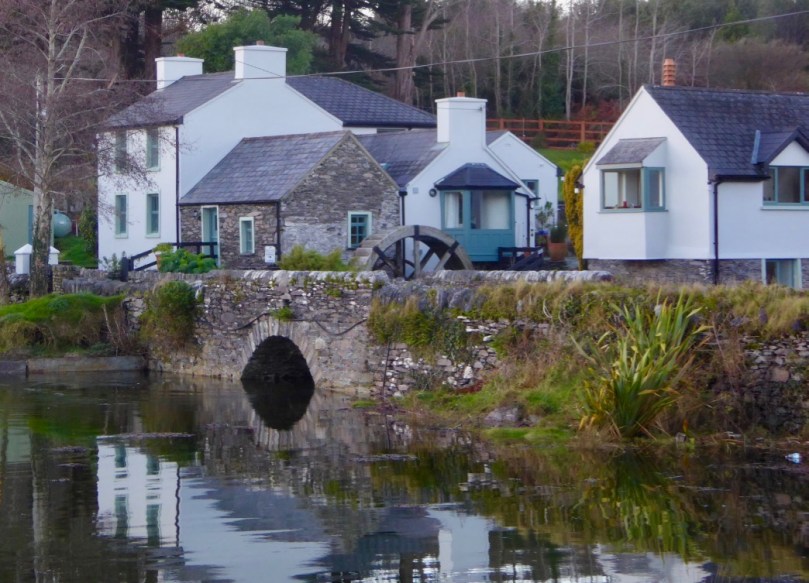
Our final spot in Coosheen is Sheena Jolley’s mill house, now the gallery of this award-winning wildlife photographer. She has restored it beautifully and the gardens are a work-in-progress that manage to capitalise on, rather than overwhelm, the mill stream and the rocky site. This is also the starting point for the Butter Road walk – but that deserves a new post one of these days, a post in the Mizen Magic series. We have written one but it was a long time ago.

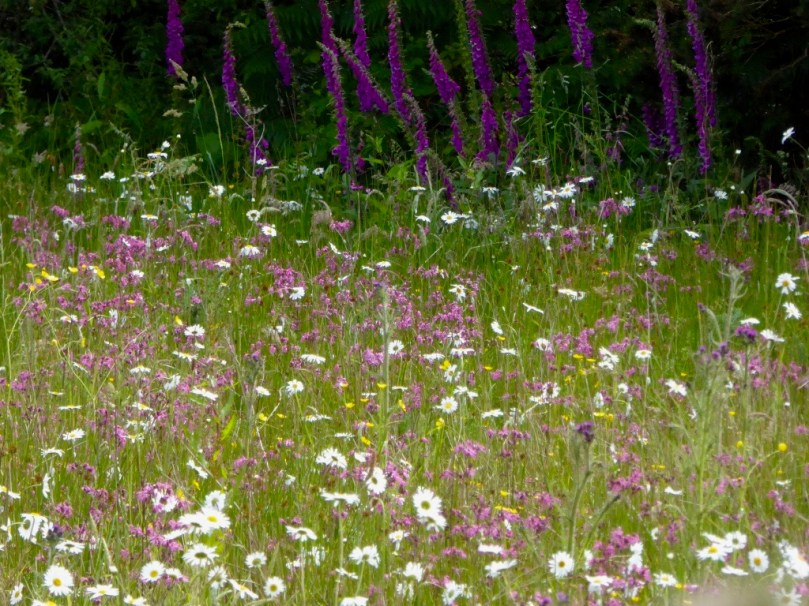
Take a walk, or a drive, down any part of this road – do it in summer when the boreens are heady with wildflowers, or do it in winter when the colours of the countryside are at their most vivid. Heck, do it any time!


Vinegar Hill

Recent travels took us to County Wexford, and we immediately immersed ourselves in the locality. For years I have played the tune usually known as Boolavogue, without fully understanding the significance of the piece – and its place – in Irish history. Firstly, here’s a masterful rendering of this most heartrending of airs  by Davy Spillane and Aly Bain (from the Transatlantic Sessions) – enjoy the beauty:

That’s the instrumental but, according to the history books, the tune was originally called Eochaill (Youghal Harbour), used as the melody for a song written in 1898 by Patrick Joseph McCall to commemorate the centenary of the Irish Rebellion: the song was known as Fr Murphy of the County Wexford, and became ‘Boolavogue’ in more recent times. Here is Eochaill beautifully played by Paul Davies who I met on my first visit to Ireland back in the 1970s: he took me on a musical trail around County Clare where I met and heard some of the then ‘greats’ of Irish Traditional Music, including concertina player Paddy Murphy. Sadly, both Paddy and Paul have passed away now, but it’s good to keep their memories alive.

It may not be immediately obvious that Eochaill and what we now know as Boolavogue are the same melody, but comparison of the tunes is a good exercise in the study of evolution in musical traditions. What’s more important to our subject is the words of the song, and the reasons for the writing of it.

At Boolavogue as the sun was setting
O’er the bright May meadows of Shelmalier
A rebel hand set the heather blazing
and brought the neighbours from far and near
Then Father Murphy from old Kilcormack
Spurred up the rock with a warning cry:
“Arm! Arm!” he cried, “For I’ve come to lead you
for Ireland’s freedom we’ll fight or die!”

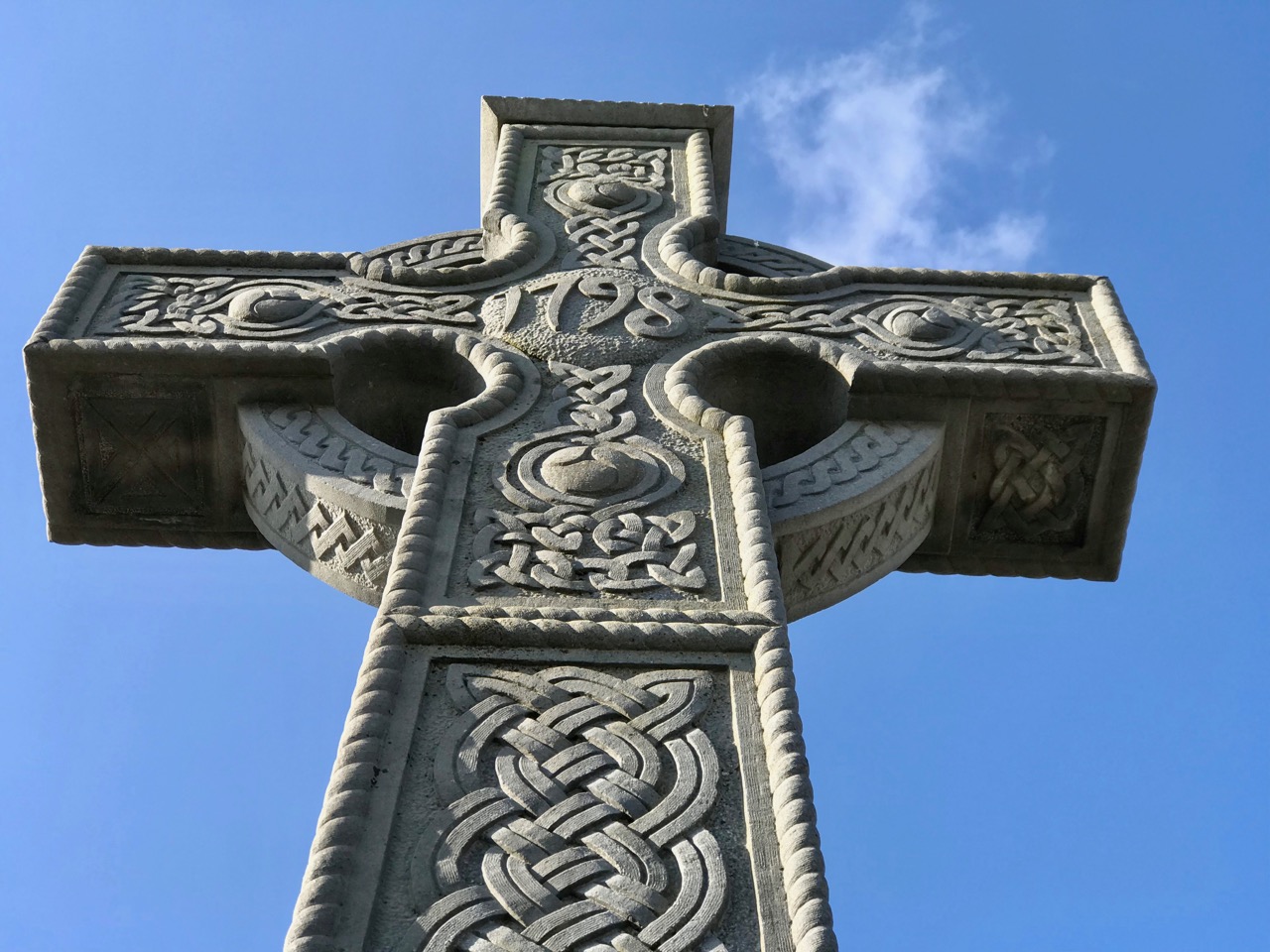
The header picture is a view from the top of Vinegar Hill, just outside the town of Enniscorthy, Co Wexford. Above is a view of the summit of the hill: it’s peaceful in the wintry sunlight. In 1798, however, it was a scene of carnage, as the United Irishmen, led by Father John Murphy, gathered to meet the British forces. George Cruikshank, the British caricaturist, produced illustrations for a history of the Irish Rebellion written by William Maxwell in 1845: he was not kind to the Irish cause but his drawings are probably accurate in their depiction of mayhem, slaughter and atrocities which were reportedly committed by both sides.

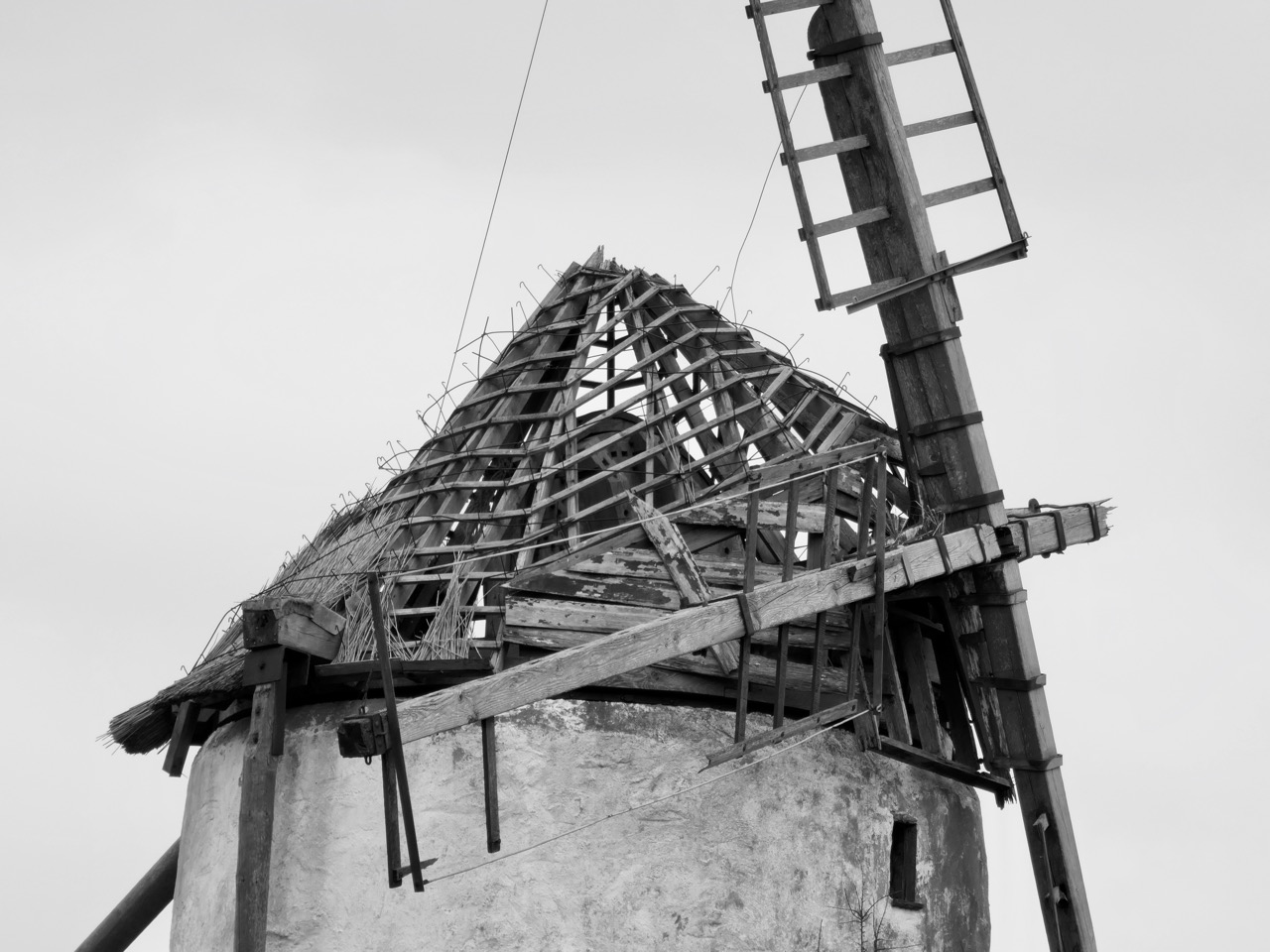
Cruikshank’s first drawing shows the Irish encampment on the summit of Vinegar Hill: women and children are evident. The windmill, which became the rebel command centre, dates from the 1600s and can still be seen on the hill today (shown in the photograph above). Disused probably since the time of the Rebellion, it fell into serious disrepair in the 1960s and a notice was affixed to it:

“Vinegar Hill, scene of glorious battle in 1798 between Insurgents and British Crown Forces. Carefully maintained by British Government from 1803 to 1922. Abandoned by the Irish Office of Public Works when freedom obtained. Only historic monument in the care of Irish Government in Enniscorthy area. Thank God for it.”

In our travels we chanced upon the ruins of another old windmill not too far away from Enniscorthy – in Tagoat. Today it’s in poor shape (but surely worthy of conservation) – we were unable to get close to it, but Finola managed to take this view:

Cruikshank’s imagining of the Battle of Vinegar Hill (above) could be a fair depiction. The engagement took place on Midsummer’s Day in 1798 and saw a rebel army of up to 20,000 – mainly armed with pikes – pitched against military forces of 13,000. Further military forces attacked nearby Enniscorthy.

He lead us on against the coming soldiers
And the cowardly Yeomen we put to flight
‘Twas at the Harrow the boys of Wexford
Showed Bookey’s regiment how men could fight

Look out for hirelings, King George of England
Search every kingdom where breathes a slave
For Father Murphy of County Wexford
Sweeps o’er the land like a mighty wave

Father Murphy is remembered everywhere in Wexford. He has a fine memorial in Ferns (above), and a centre dedicated to him at his former home near Boolavogue. No lives were spared by the British at Vinegar Hill; rebels who escaped marched to the midlands but dissipated after failing to garner enough support to continue the uprising. Father Murphy and a companion were captured but not recognised. Even when mercilessly tortured neither man revealed their identity. Both were hanged in the market square in Tullow. The yeomen cut off Father Murphy’s head, put it on display on a spike and burned his body in a barrel of pitch.

At Vinegar Hill, O’er the pleasant Slaney
Our heroes vainly stood back to back
and the Yeos at Tullow took Father Murphy
and burnt his body upon a rack

God grant you glory, brave Father Murphy
And open Heaven to all your men
the cause that called you may call tomorrow
in another fight for the Green again

There’s a 1798 Centre in Enniscorthy, but it was closed on the day we visited. We also looked for the Father Murphy Centre at Boolavogue, but the fine iron gates leading down to it were locked up for the winter. This Irish Rebellion deserves more exposure in this Journal – something we will address in the not-too-distant future. But I am pleased to have gained a greater insight into one of my favourite Irish airs: Boolavogue. Here’s an interesting rendering of P J McCall’s version, by ‘Flying Column’ dating from 1972: it’s preceded by Seamus Heaney’s sonnet Requiem for the Croppies, inspired by these same events.


Viking Traces

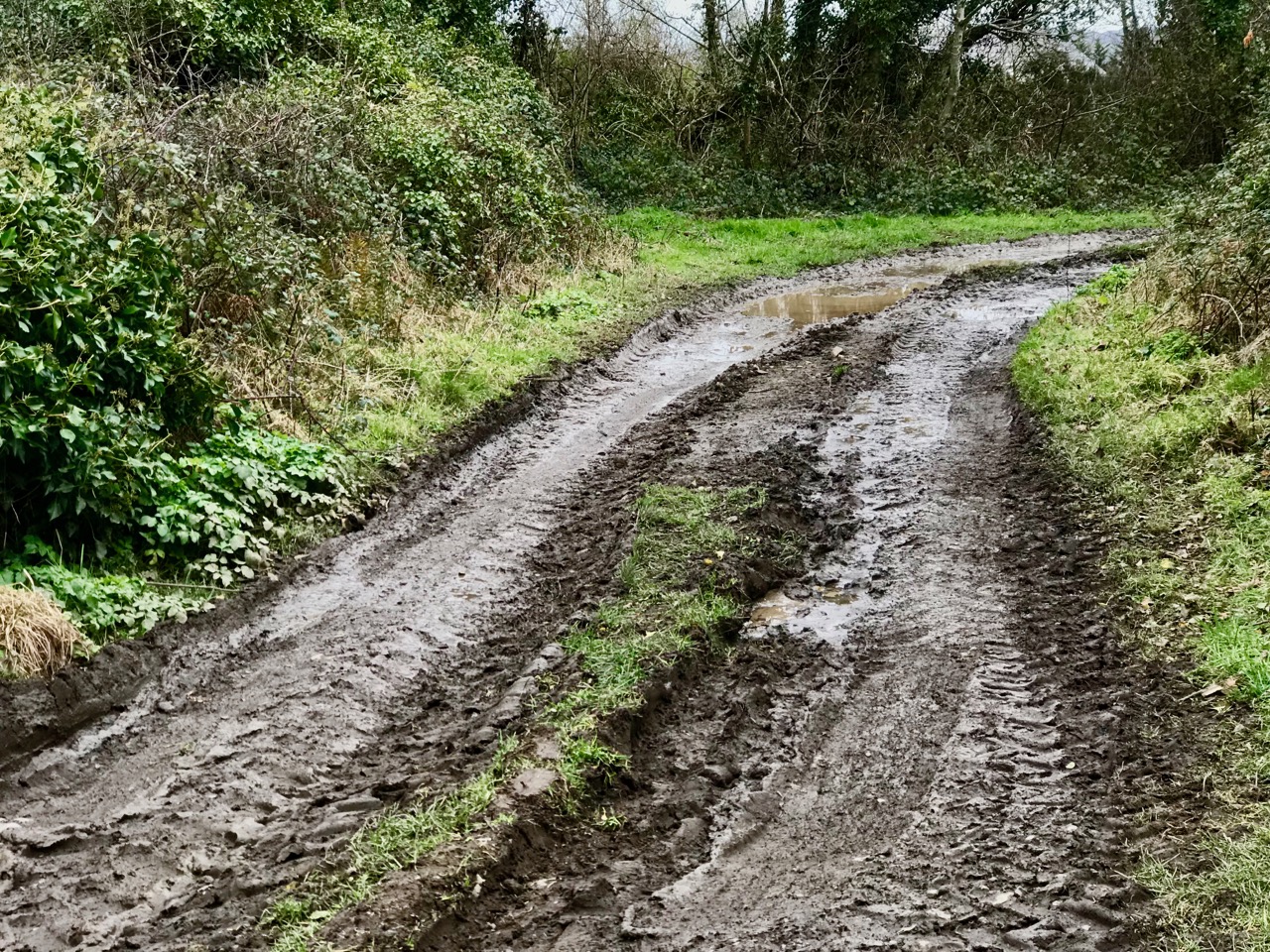
If you want to find some remote Irish history which is a long way off the beaten track, try the city of Dublin! Just a few minutes’ drive from the edge of this bustling metropolis (and down a long, rough and muddy farm track) is a collection of carved stones which have their roots in the time of the Vikings.

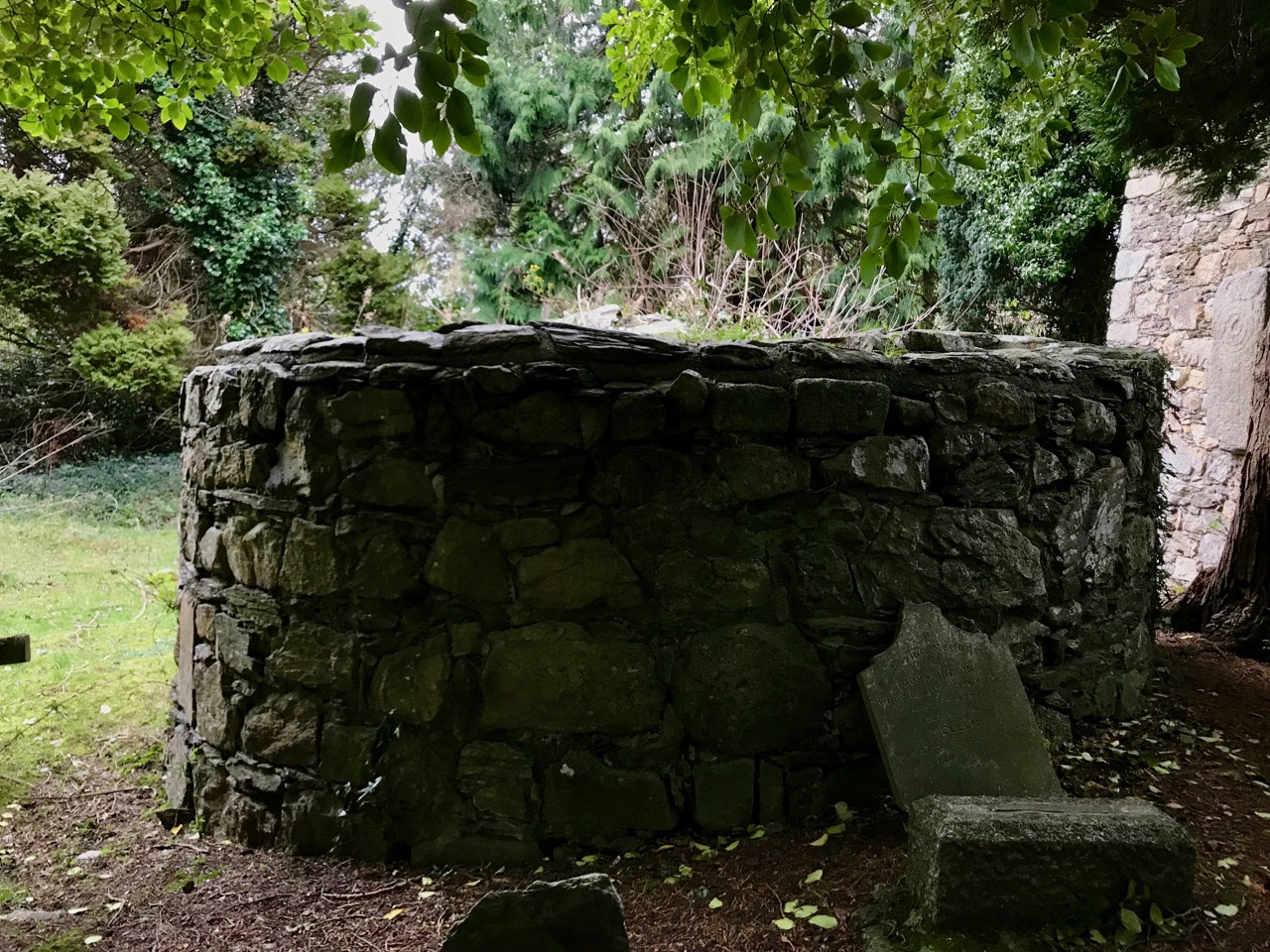
Here, in the barony of Rathdown, the remains of a small ruined church date from the twelfth century, but a monastic settlement was set up long before that by St Comgall of Bangor, who lived from 520 to about 600 AD. There is the stump of a round tower here, known locally as the Skull Hole, as bones from the surrounding graveyard were thrown in here. Some say, also, that it is actually the entrance to an underground tunnel going down to the coast: furthermore, a piper was once seen to enter the tunnel playing his pipes – but was never seen again!

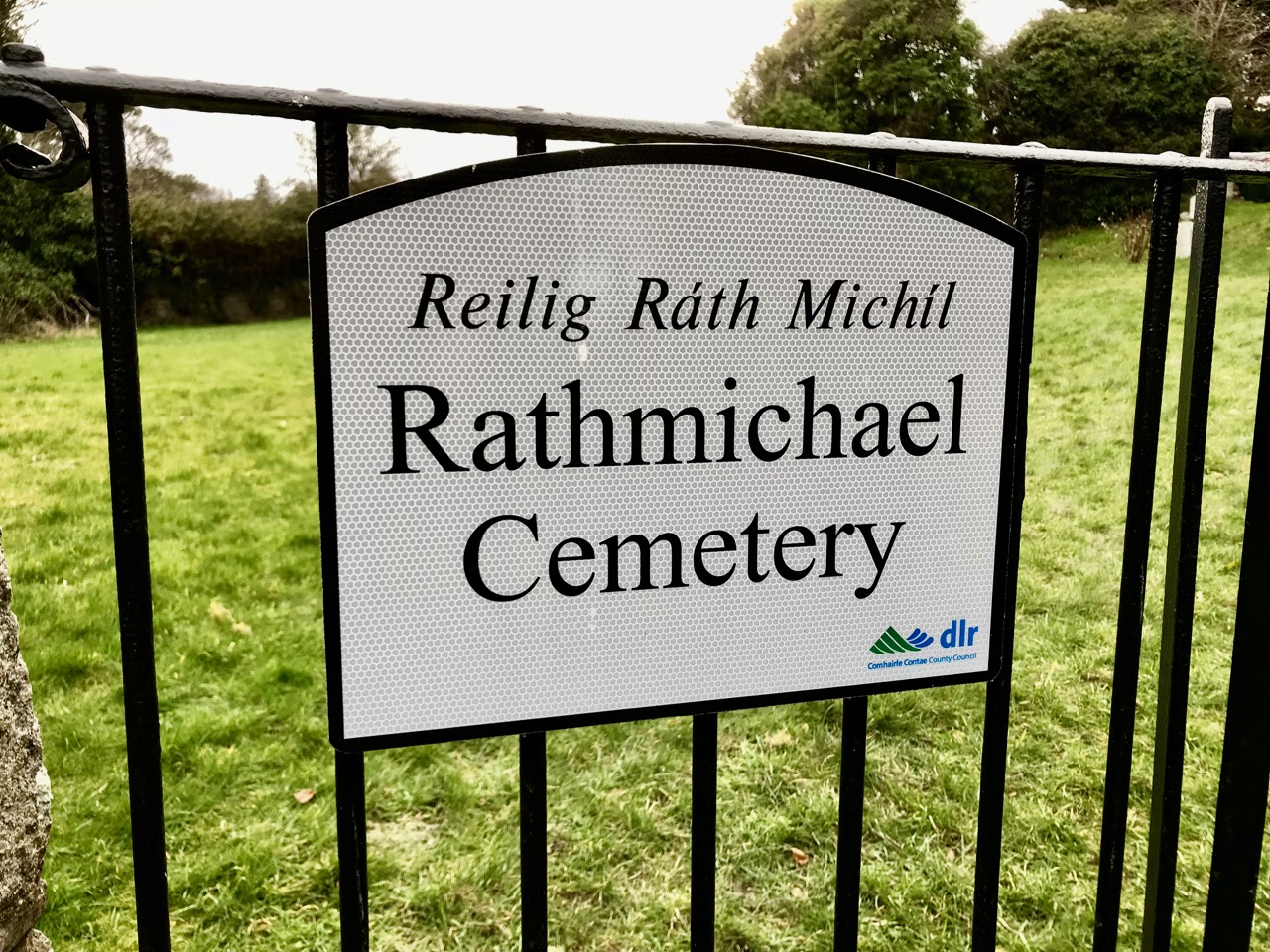
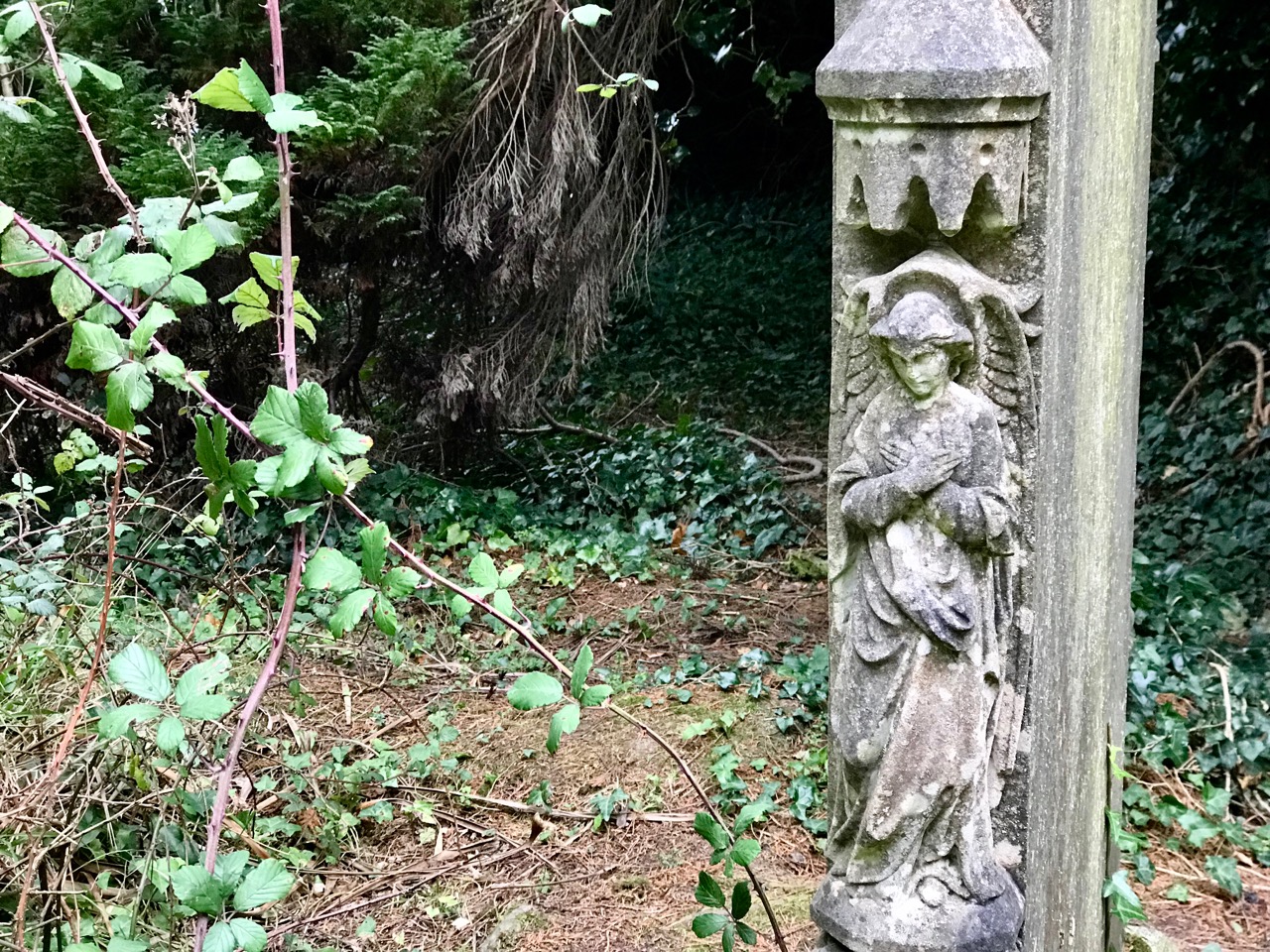
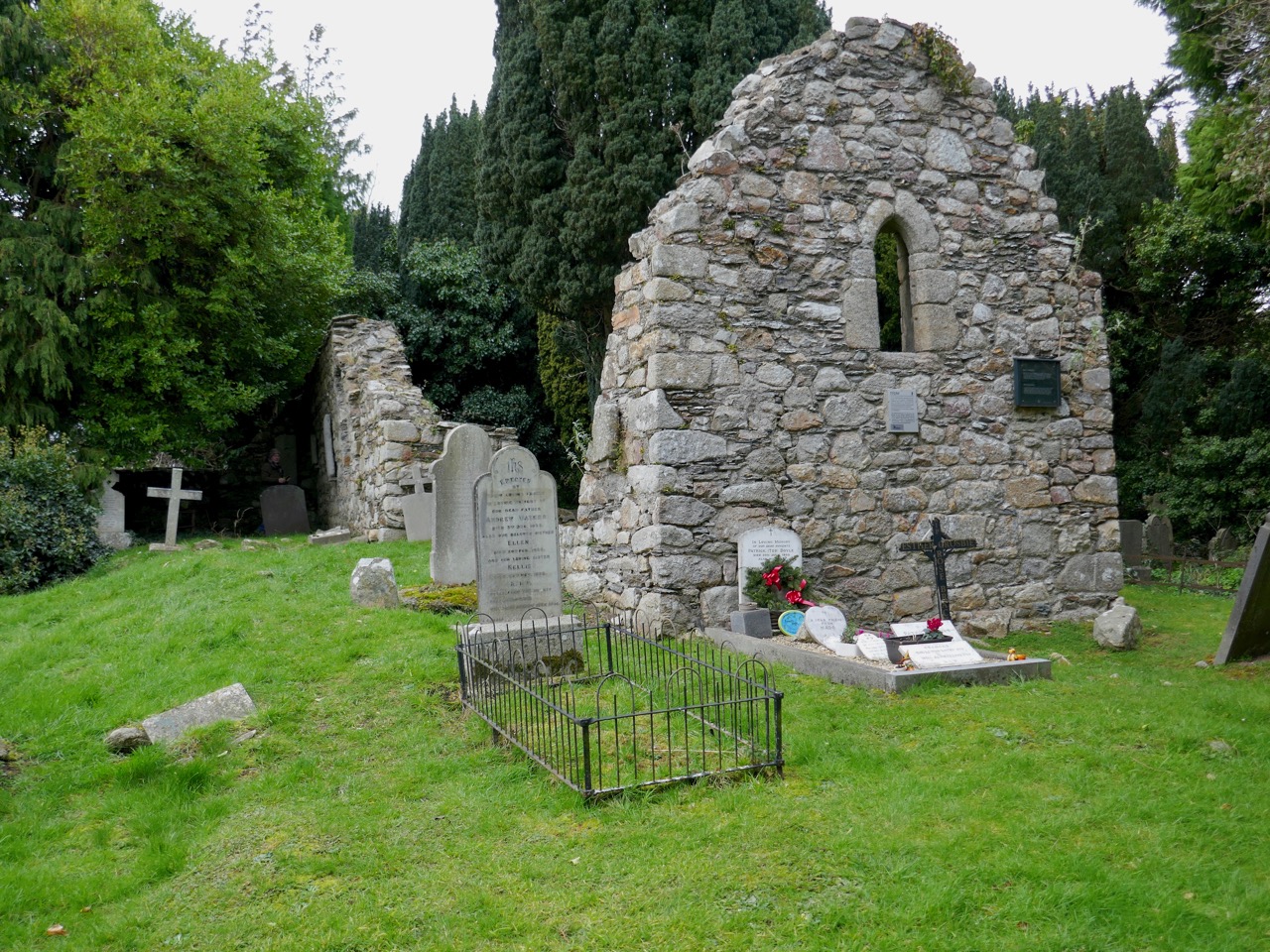
There is another piping tale connected with a nearby site: Puck’s Castle. A fairy piper is often seen jumping from rock to rock while also playing his pipes. We watched and listened, but in vain . . . Here are some of the noteworthy ‘modern’ gravestones in the cemetery at Rathmichael:

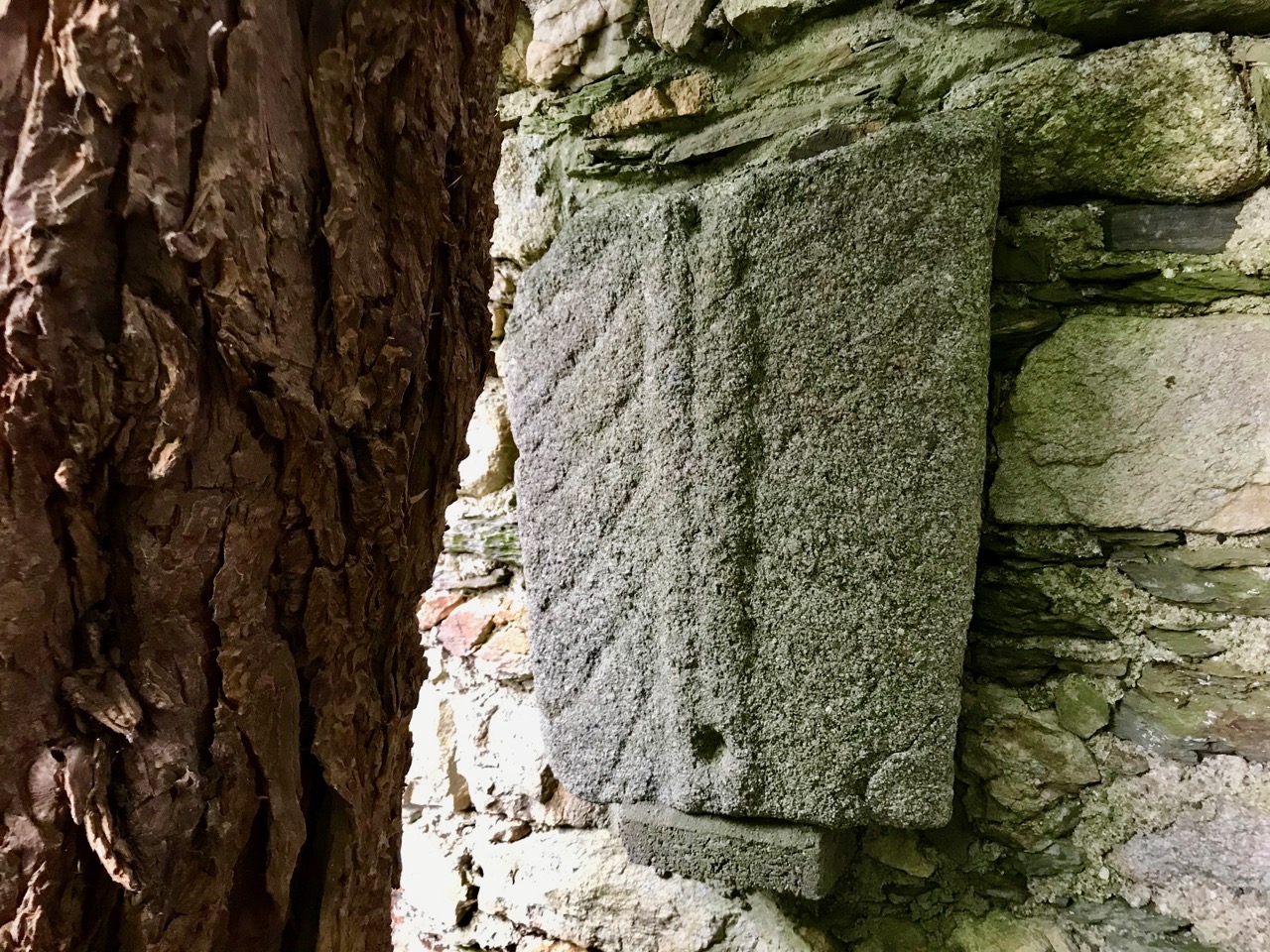
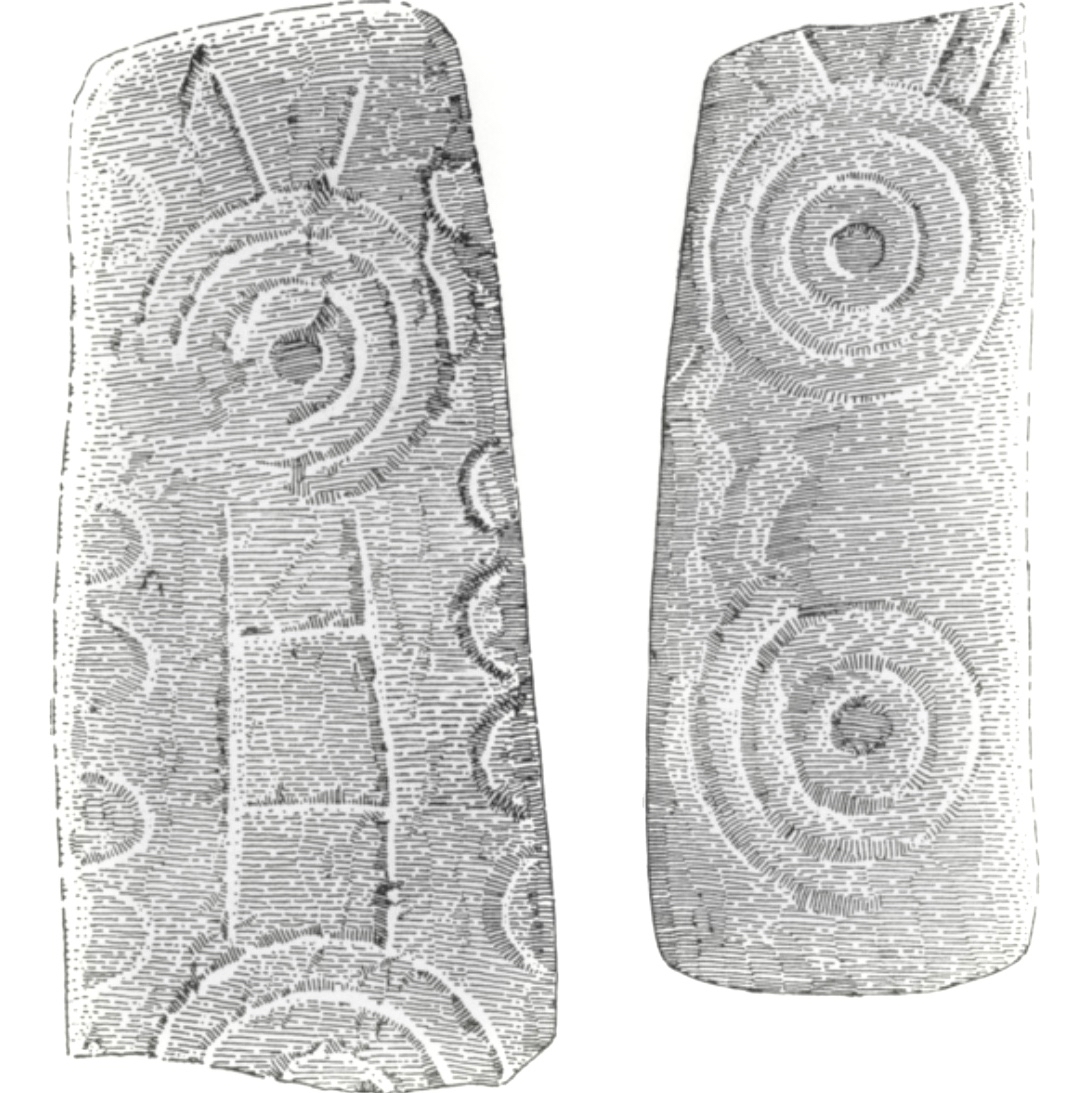
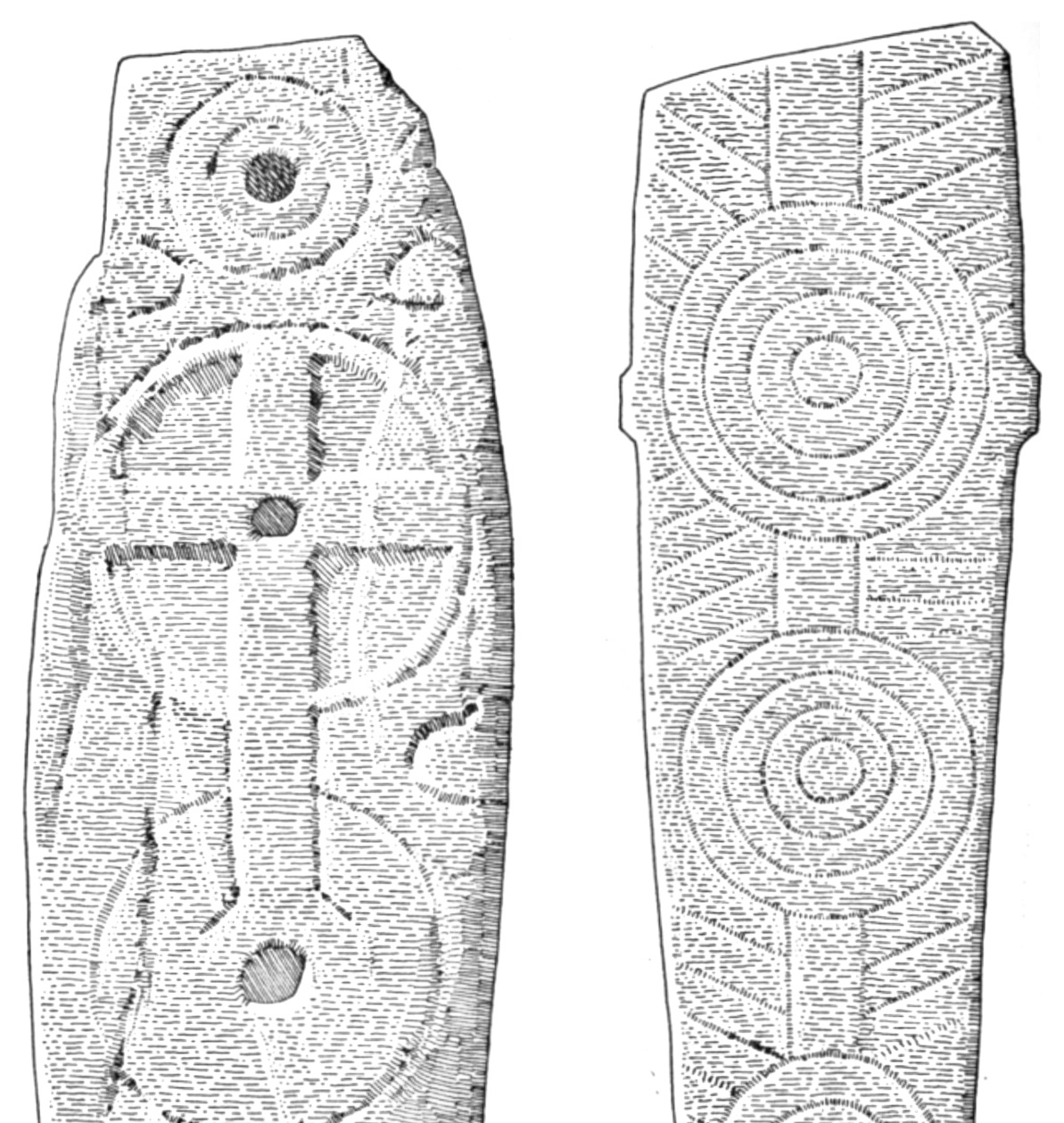
But the real treasure of the place are the carved stones which date from Viking times, and which are probably early Christian grave markers. They are generally known as The Rathdown Slabs. Some of these we would classify as ‘Cross Slabs’, even though, on some, the cup marks and concentric circles make us think of Prehistoric Rock Art. Well worn by time and weather we can still make out the various motifs – and we are fortunate to have good drawn records of these stones dating from a study carried out by Pádraig Ó hÉailidhe, a member of the Society of Antiquaries of Ireland, and published in volume 87 of the Journal of that Society in 1957.

Rathdown Slabs (top to bottom): 1 and 2; 8 and 9; 3 and 4 – as classified by P Ó hÉailidhe in his 1957 study

From around 850 AD we find mention of Norse names: Amláib (Olaf the White) arrived in Dublin in 853 and ruled jointly with Ímar (Norse Ívarr inn beinlausi – ‘Ivar the Boneless’). Amhláib was a Norwegian but Ímar may have been a Dane. Ímar is mentioned as ‘king of all the foreigners in Ireland’ at his death in 873. The grave slabs at Rathmichael probably date from the time when Viking settlements were established in the Dublin area, and – although we tend to think of the Vikings as plunderers of monasteries – it seems that they began to follow Christian practices once they settled in Ireland. 

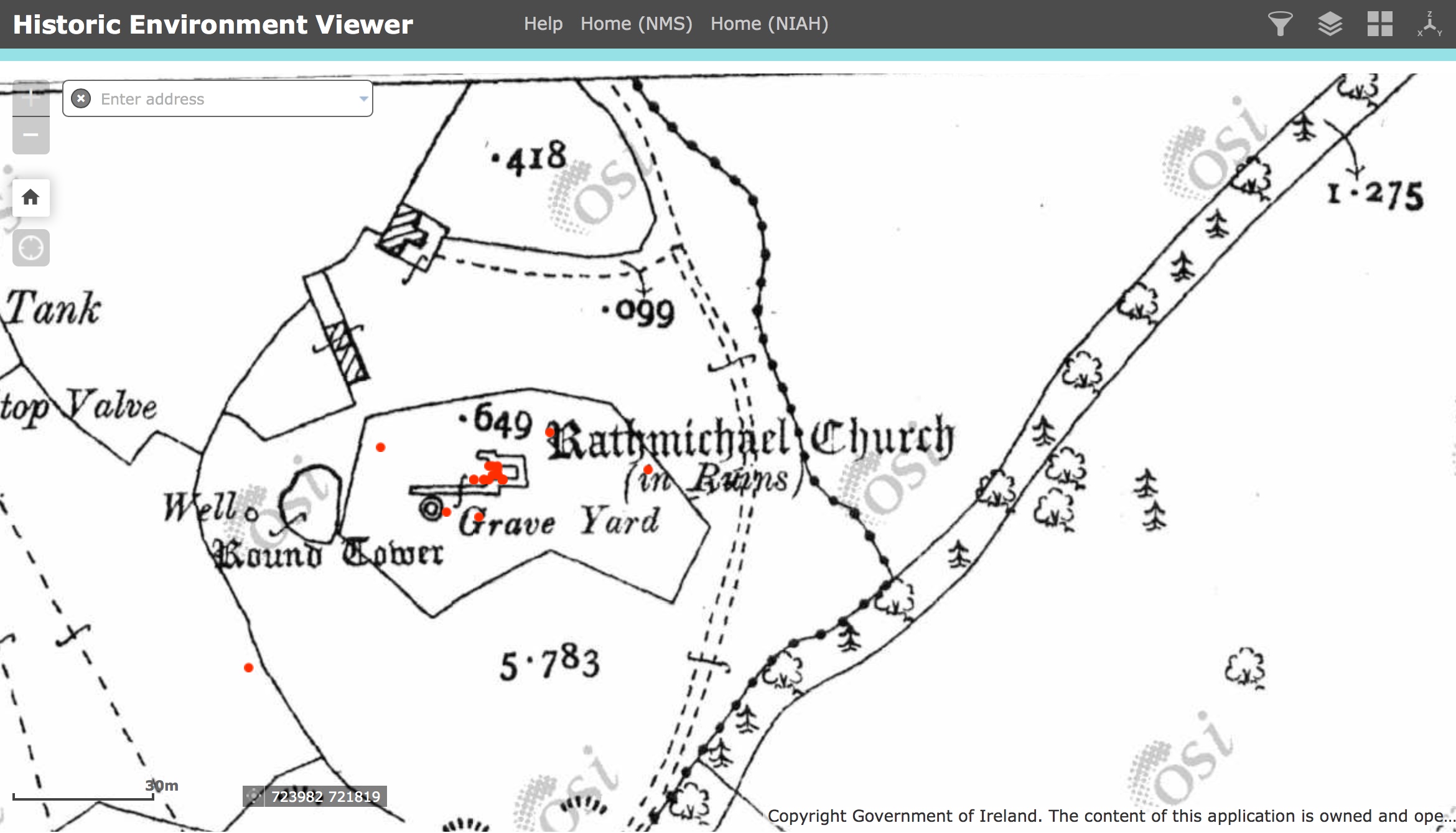
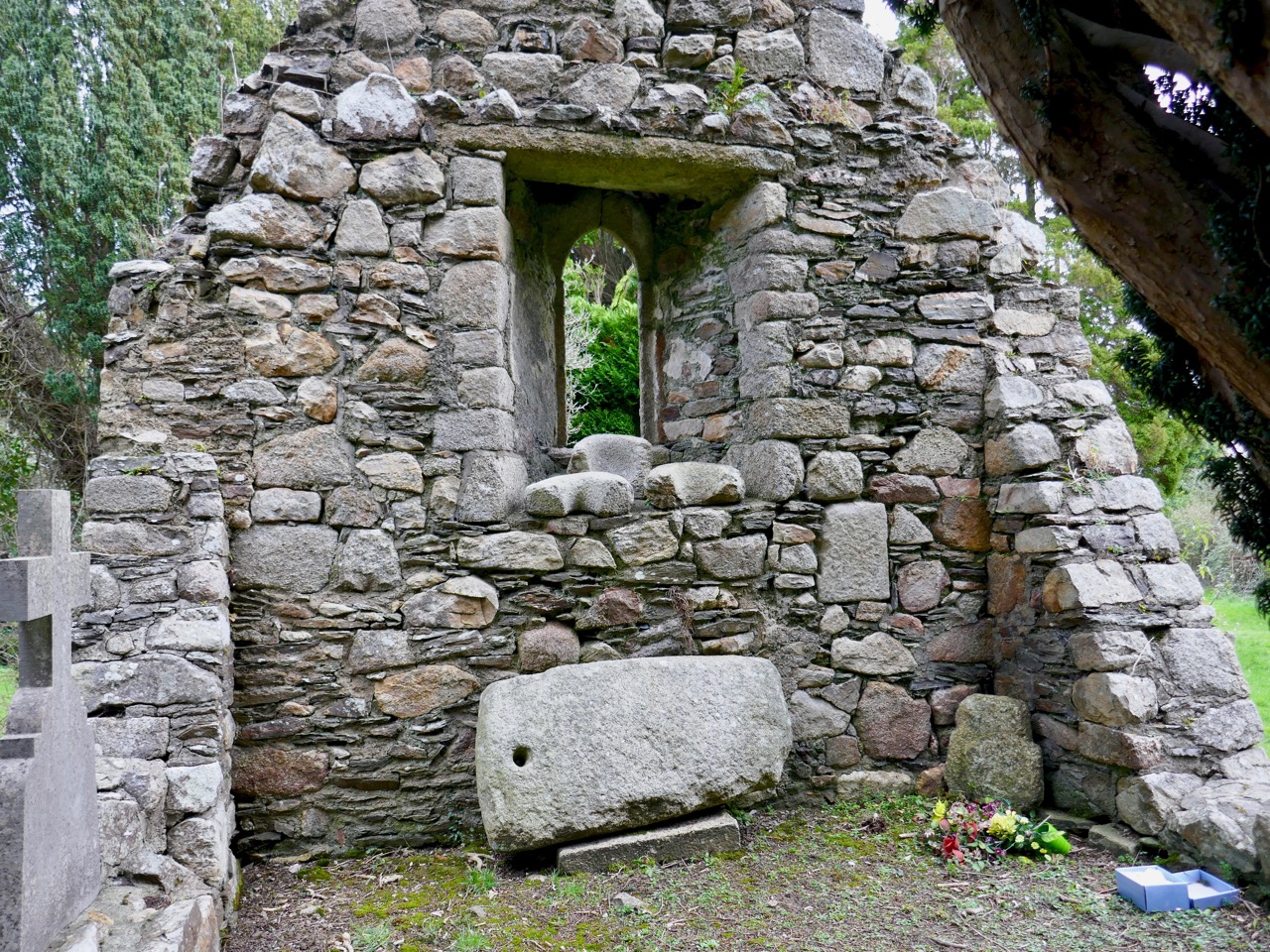
Top – Rathmichael Church with its round tower and Viking graves was established on an ancient Rath or fort, in fact one of the largest in the locality: you can see the probable circular outline of the fort in this extract from the National Monuments Service Archaeological Survey Database; middle – ruins of the medieval church at Rathmichael and, lower – fragments of Bullaun Stones at the church site

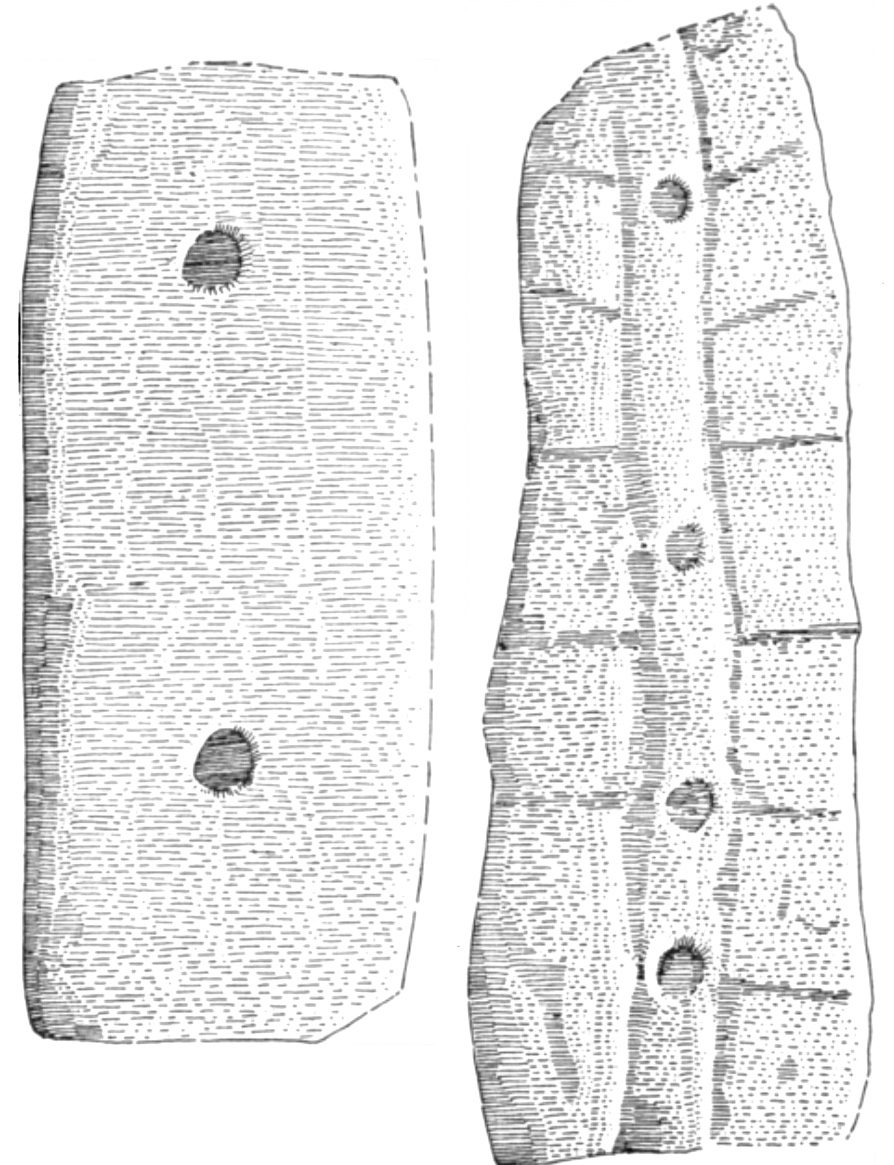
Other – probably related – inscribed slabs from the wider area are recorded by Pádraig Ó hÉailidhe (below): Dalkey Castle Heritage Centre displays one of the finest of them all (left), while the Tully Slab (right) is assumed to have come from another remote church ruin close by – however I cannot find any record of its current whereabouts. If anyone can throw light on this, please let us know.

Dalkey and Tully grave slabs – drawn by Pádraig Ó hÉailidhe, 1950s

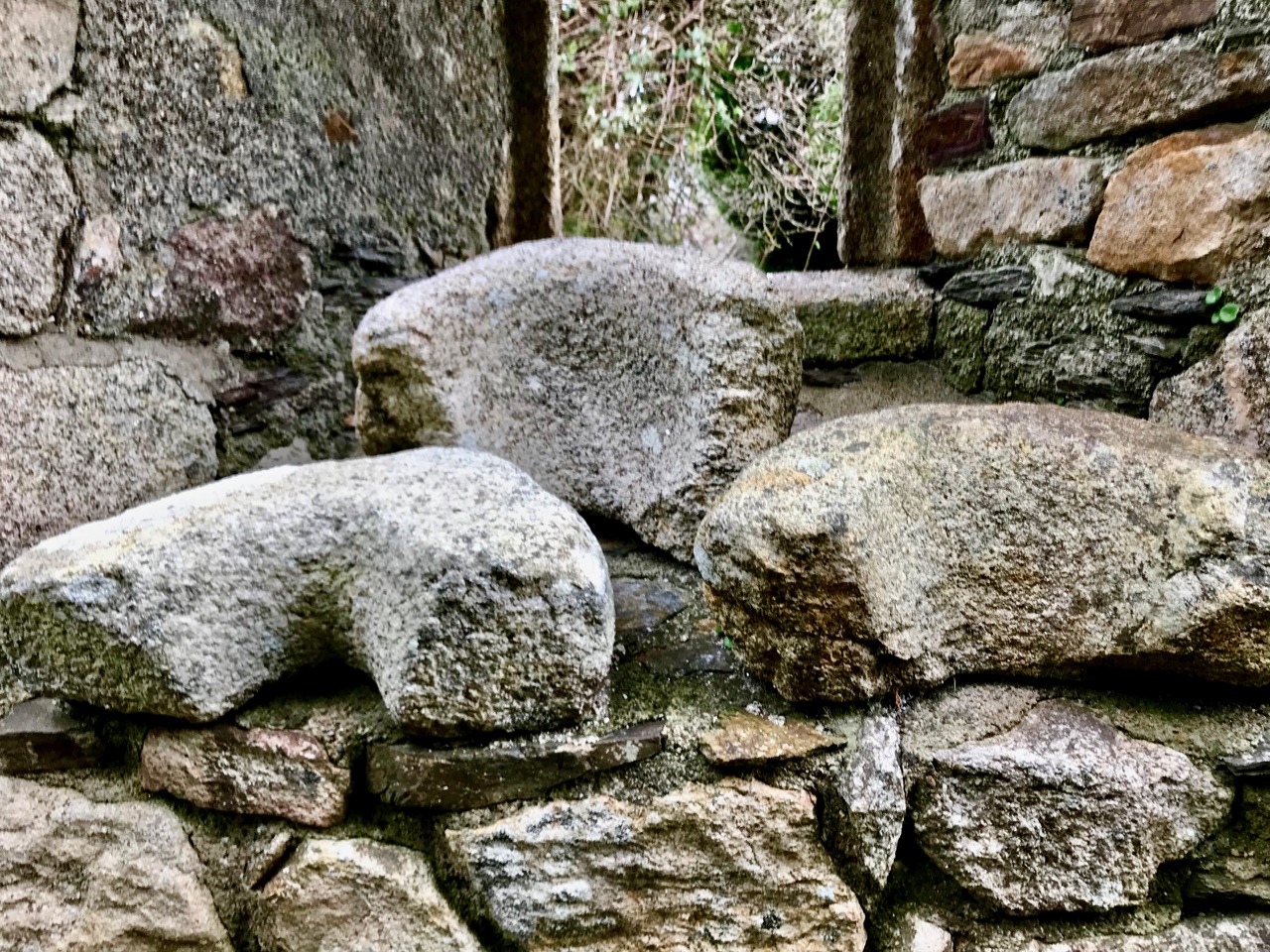
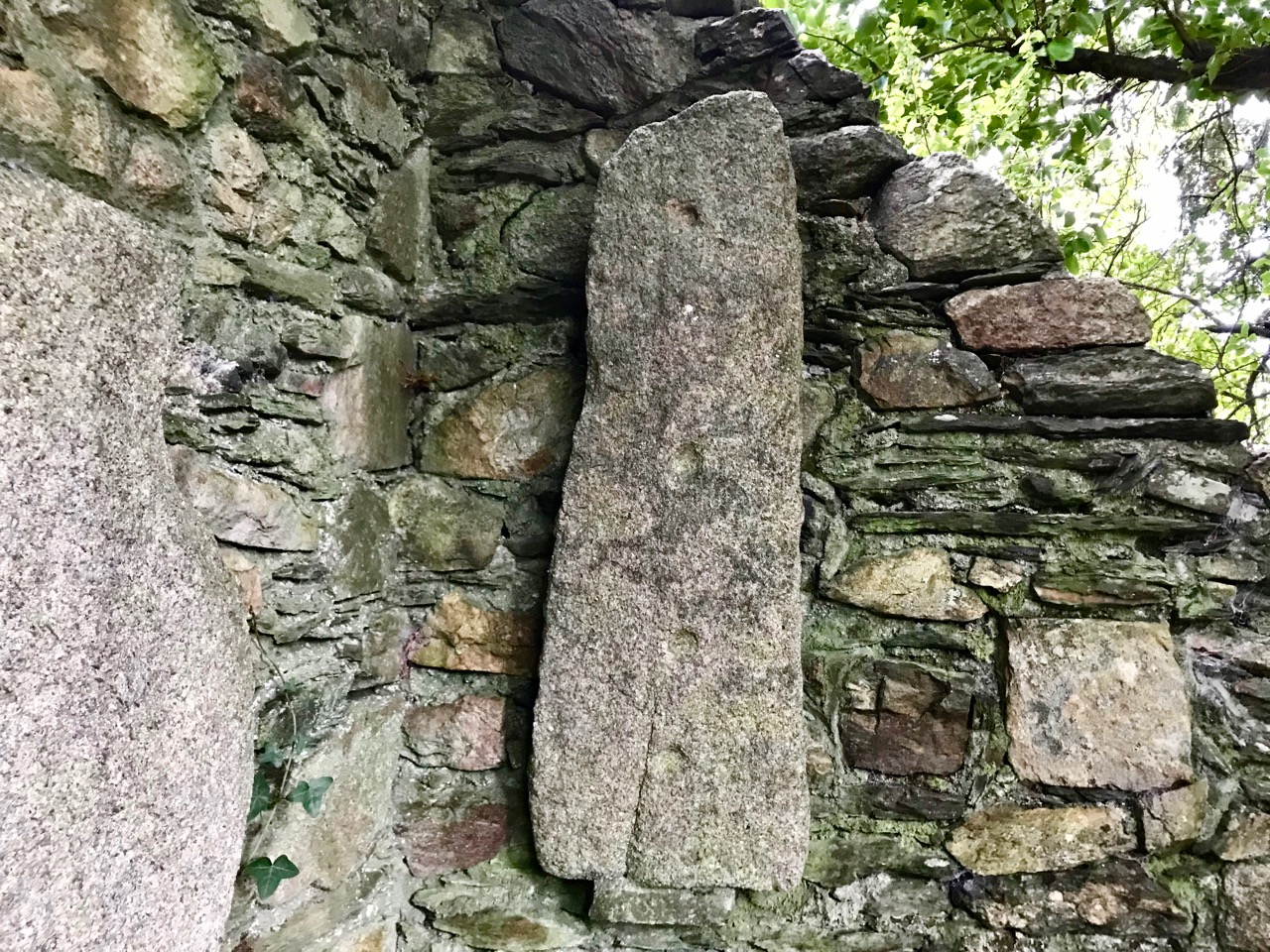
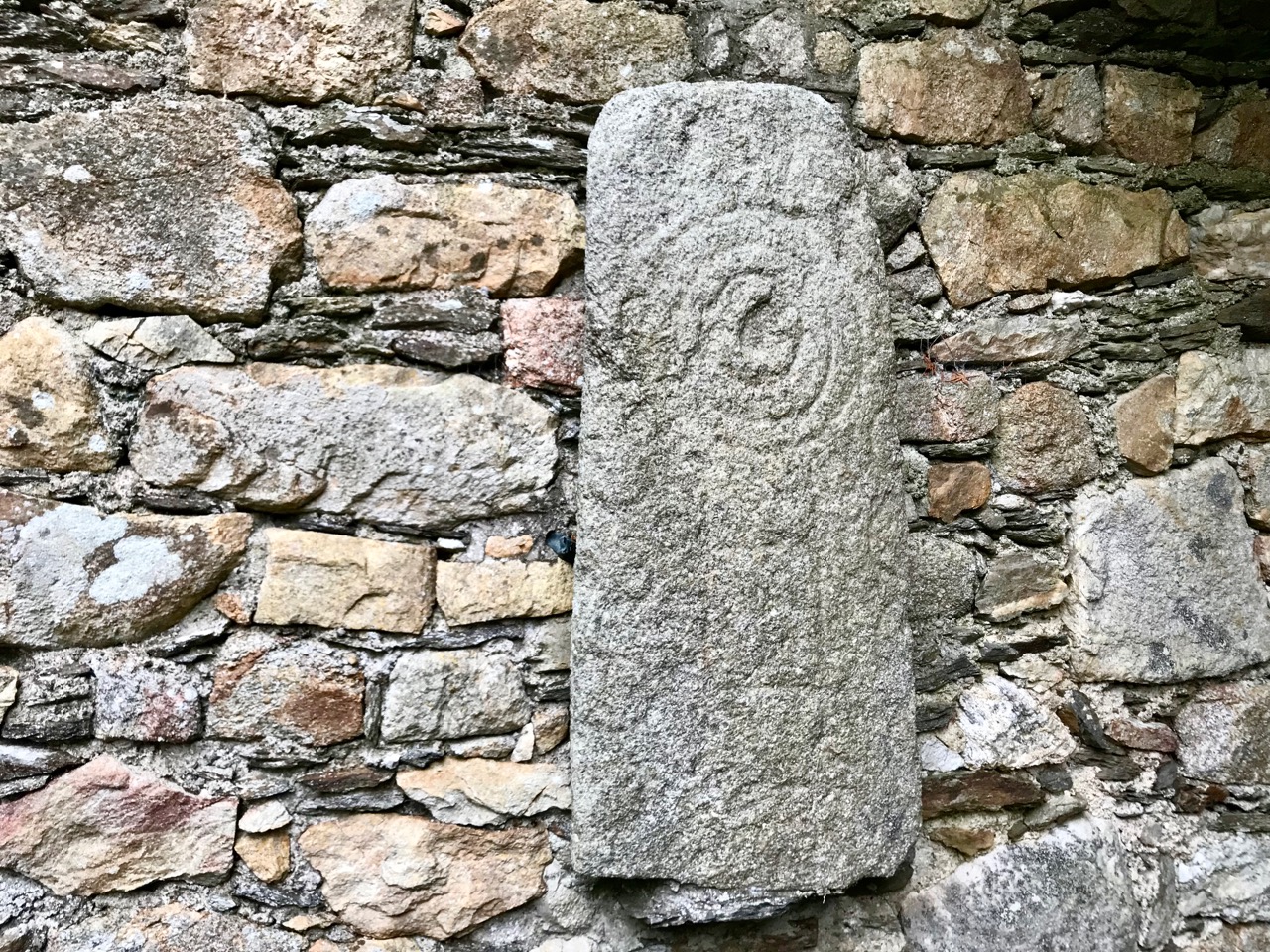
I have used the drawings by Ó hÉailidhe because they are so clear: we visited the Rathmichael site this week and were struck by how faded much of the inscription seems to be. It could be that we were not seeing the carvings in a good, clear light. Worryingly, it may also be that the stones are suffering from accelerated weathering (much as our unprotected medieval high crosses appear to be) due to acid rain and pollution. You can see for yourselves by comparing the drawings above with our own photographs, a selection of which form the tailpiece of this post.

Nicola Gordon Bowe, 1948 – 2018

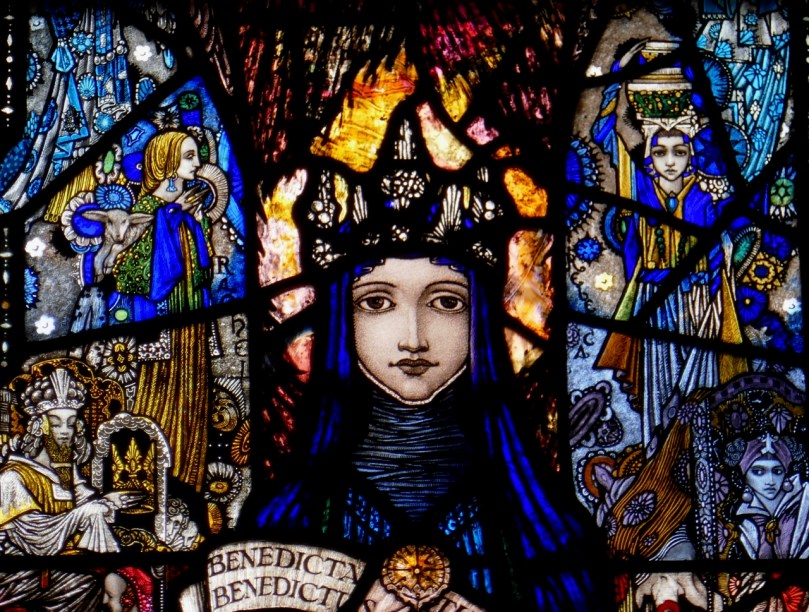
Harry Clarke’s The Coronation of the Virgin, from his Terenure windows. Nicole Gordon Bowe revealed him to the world.

The Irish art world sustained a terrible loss earlier this year with the death of Nicola Gordon Bowe, or Nikki, as she was universally known to her friends. In a very small way, I feel immensely grateful to have been counted among those friends. Although we only met once, we carried on a happy correspondence and were to have seen each other again this summer. But there are probably a thousand people like me, who have lovely memories of this wonderful woman, because Nikki had that rare gift of making each individual feel seen and heard and encouraged.

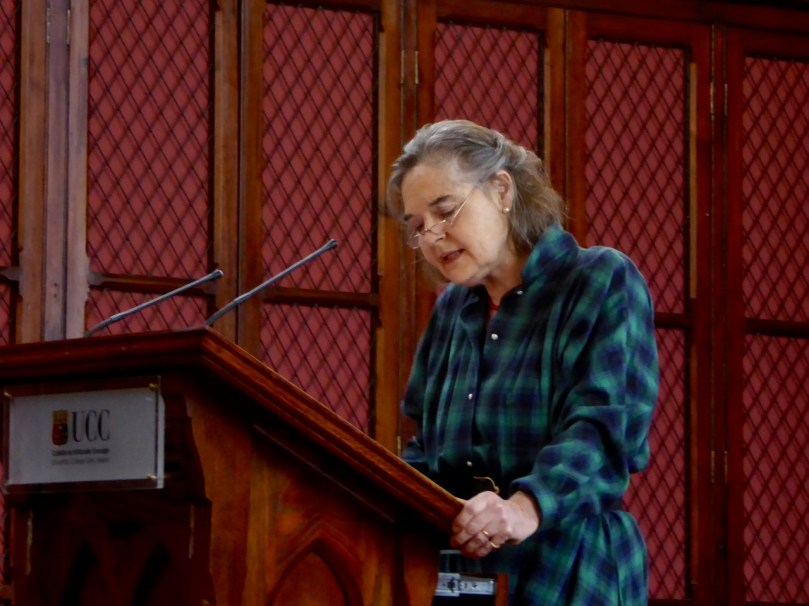
Nikki at the day-long symposium on the Honan Chapel, in Cork. Obviously in pain, she nevertheless gave a brilliant summary of Harry Clarke’s famous windows

Reading comments on various obit pages, from a generation of students, colleagues and friends, clear themes emerge of formidable scholarship, wide-ranging erudition, and passion for her subject. She was, as Alistair Rowan who spoke at her memorial service emphasised, the world expert on the Irish Arts and Crafts movement and on Irish stained glass.

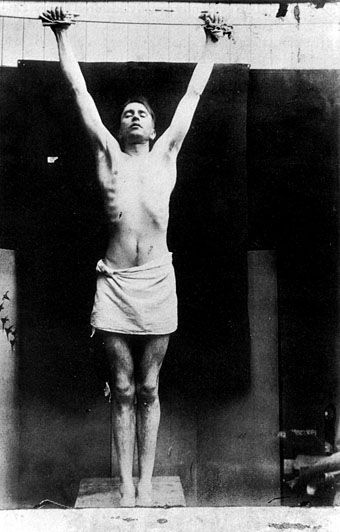
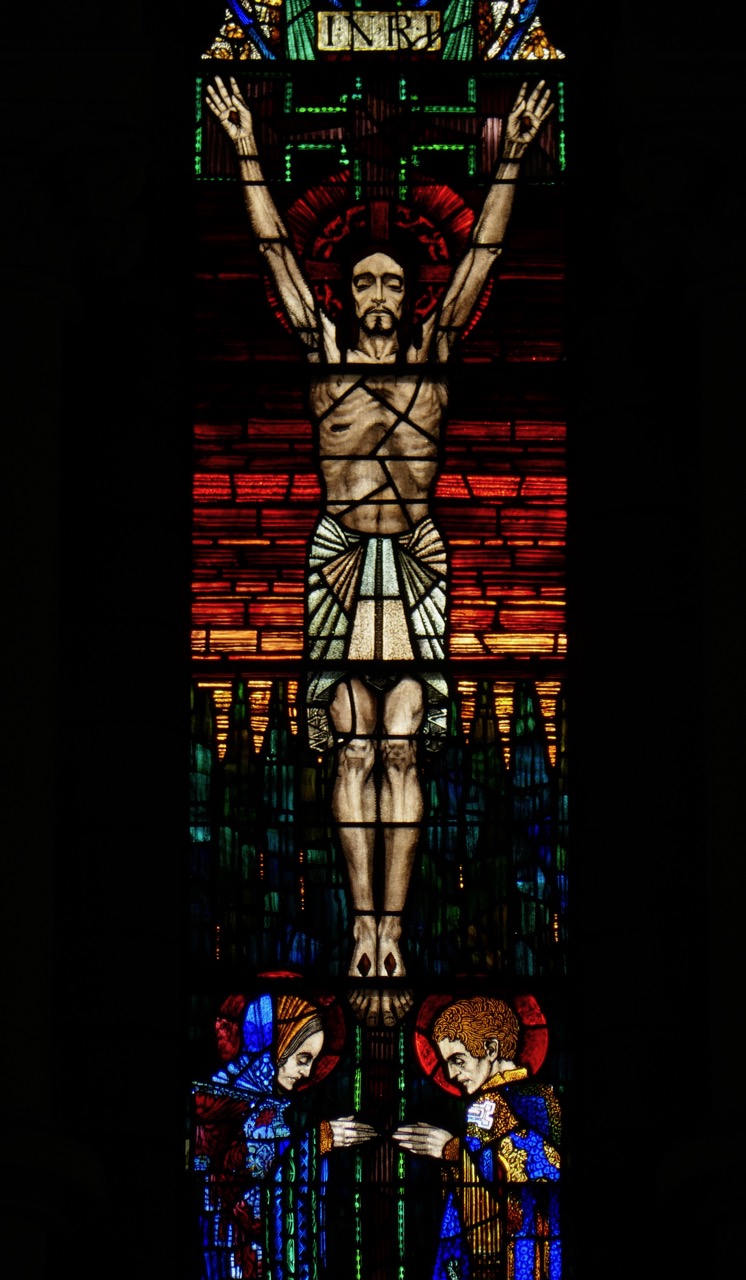
In her book, The Life and Work of Harry Clarke, Nikki traced Clarke’s influences and training. He often used himself as a model – in this instance for the crucified Christ in the Terenure windows

But the other theme was that of friendship, of a wonderful sense of humour and a ready smile, of her encouragement to junior researchers, her collaboration, nationally and internationally with other scholars in her field, and the boundless generosity with which she shared her knowledge.

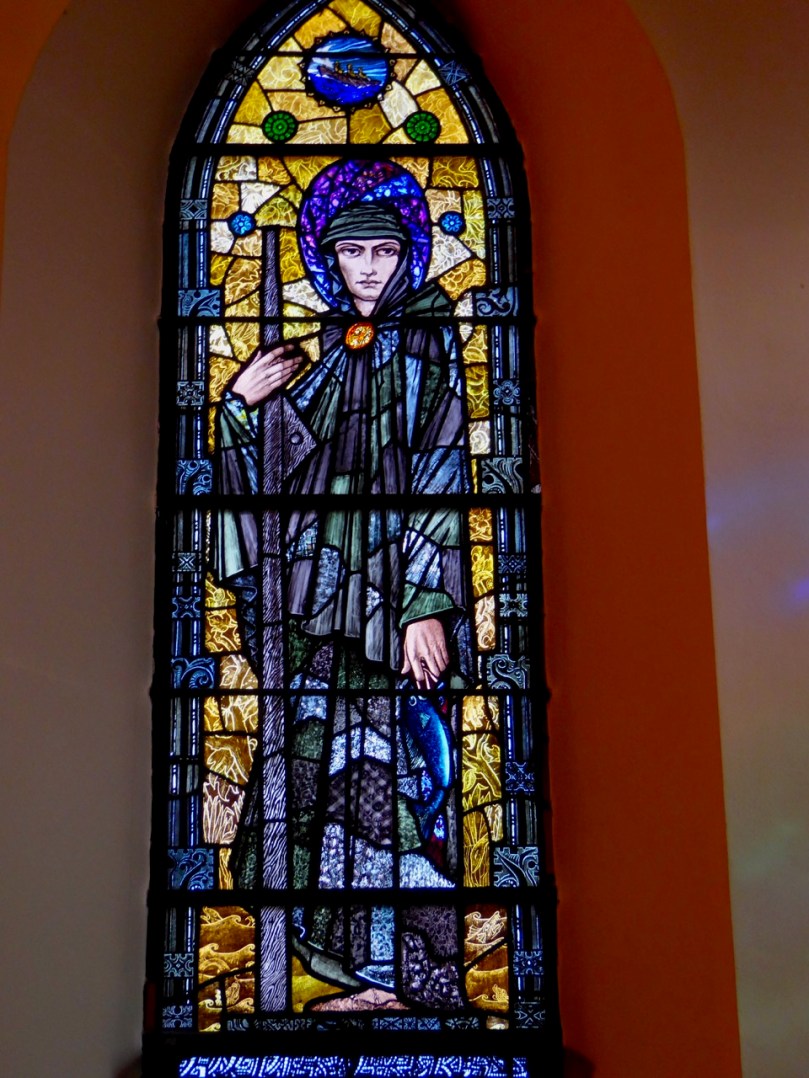
St Brendan, Nikki pointed out (as true for this window in Tullamore as for the Honan windows she was discussing) does not look like the kind of muscular saint that could navigate the Atlantic. ‘Effete’ was the word she used.

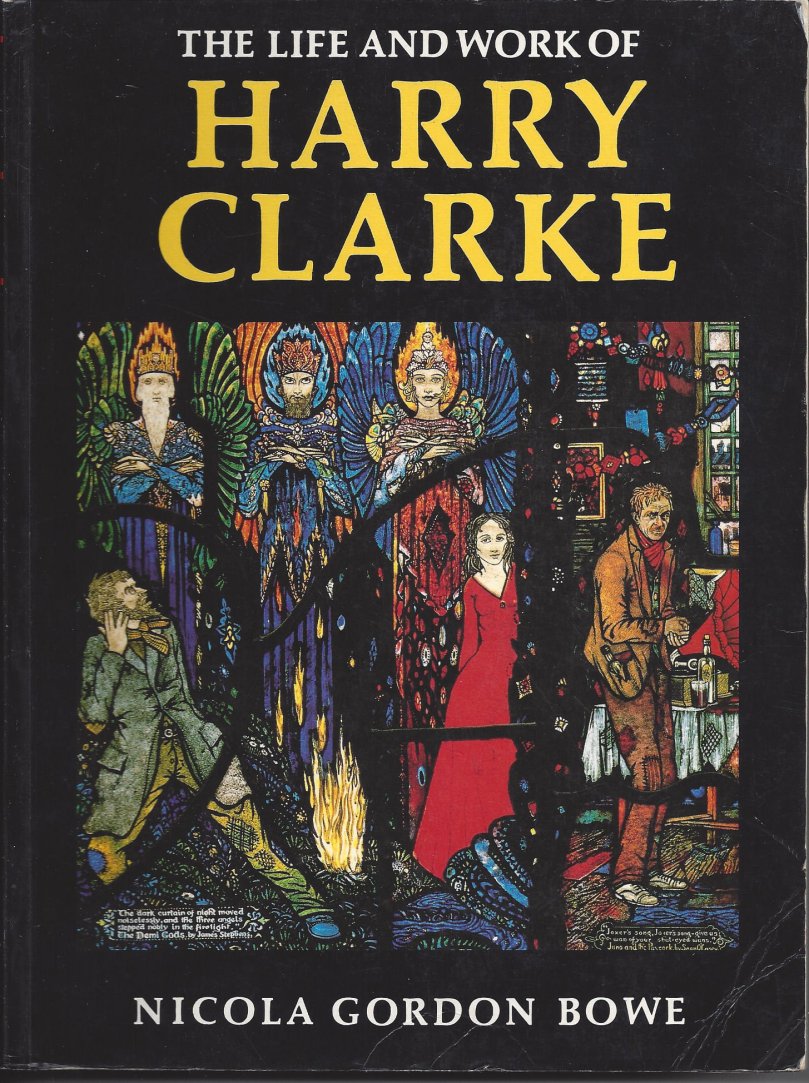
Nikki’s book on Harry Clarke has been my bible for all the posts I have written about this genius of Irish stained glass. Last year her second magnum opus was published, on the life and work of Wilhelmina Geddes. I haven’t read it yet – a future pleasure – but it was widely considered the finest Irish art book of the year, perhaps the finest book of the year.

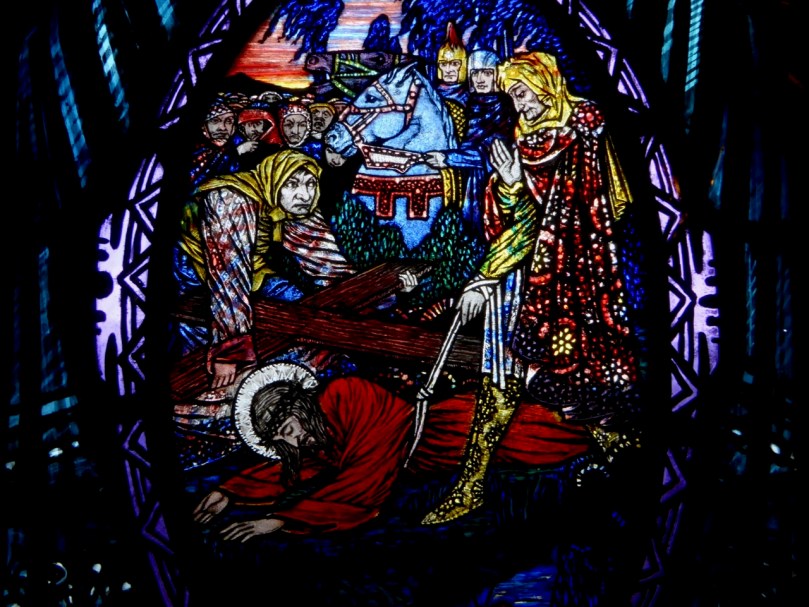
Jesus Falls for the Third Time: one of the medallions that form the Stations of the Cross in Lough Derg. Nikki’s research indicated that these were mostly executed by his apprentices during a period of illness, although  they were designed by him.

She also wrote for the Irish Arts Review, the Dublin Review of Books and contributed essays to edited collections – the busy life of an established and disciplined scholar. At the time of her death she was working on what was to be a definitive study of the Irish Arts and Crafts Movement.

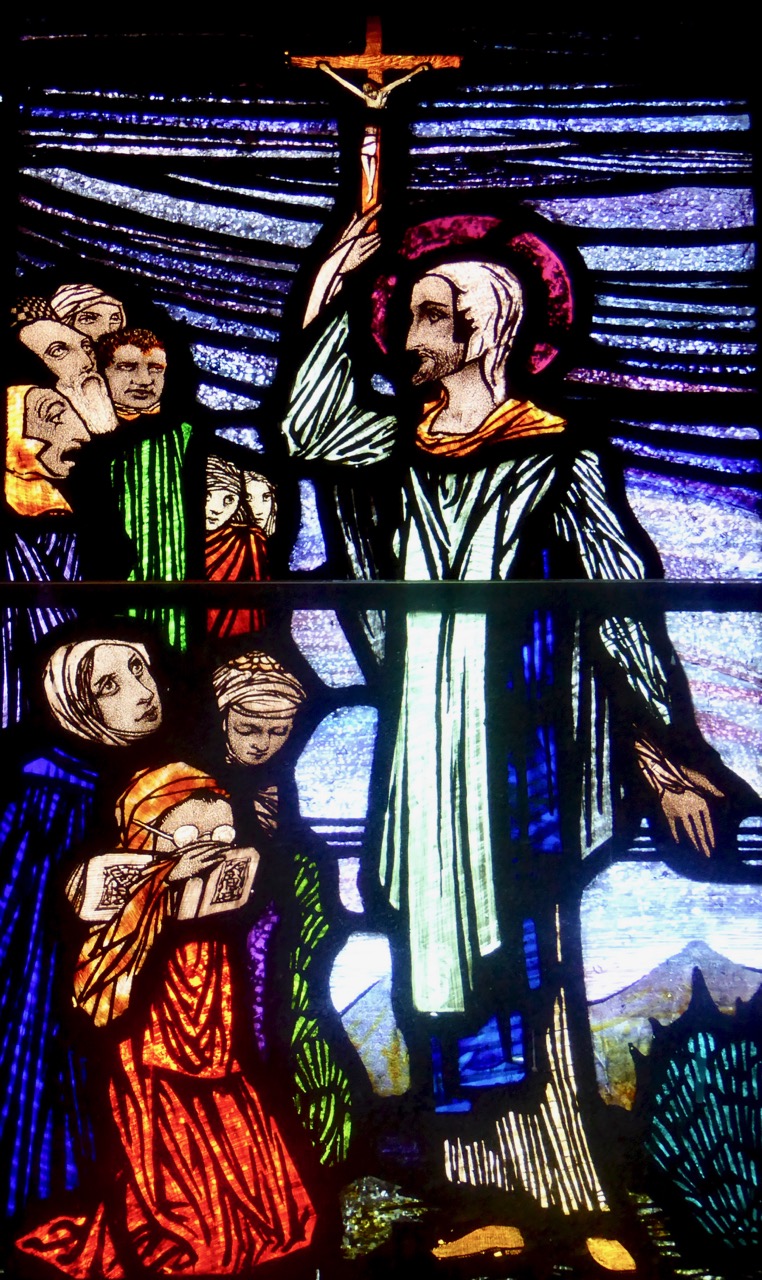
St Fechin, from the Ballinrobe windows: Harry Clarke loved to populate his scenes with a host of figures – now who is that small one with the glasses?

Nicola Gordon Bowe, more than any other person, was responsible for rescuing Irish Arts and Crafts from obscurity and establishing the reputation as artists of its major practitioners, none more so than Harry Clarke. She was impatient of those who dismissed stained glass as mere craft and who failed to see how the medium of glass both compounded the difficulty and enhanced the impact of the work of Harry Clarke and others. In the newly refurbished and finally open National Gallery of Ireland there is now a Stained Glass Room full of breathtaking pieces – it is no stretch to say that we can thank Nikki for that.

The Song of the Mad Prince, an exquisite small panel in the new National Gallery Stained Glass Room

I have chosen to illustrate this post with photographs of Harry Clarke windows and details, as a tribute to Nikki. She was his great and ardent champion and now the world knows what a true legacy of masterpieces we have been left by him. Nikki’s legacy is also secure – her works will be consulted for generations to come, and her memory kept warm by all who were privileged to know her.

From the Eve of St Agnes, in the Dublin City (Hugh Lane) Gallery

For obituaries, see here and here and here. Rest in peace, Nikki.

The Annunciation Angel from the Terenure Annunciation window