‘Auf der Walz’ – The Journeymen

on the summit

I am always happy to find longstanding customs and traditions still going strong, especially when they are as relevant today as they have been over countless generations. This summer we chanced upon two strangers from Germany who passed through Ballydehob. They were journeymen blacksmiths: lads who had completed their apprenticeships at home and were now ‘Auf der Walz’ (on the road) – gaining experience in the wider world.

inese-journeymen

Here are the two Journeymen who travelled the west of Ireland’captured’ by photographer Inese MJ – she came across them in her local supermarket! I am very grateful to Inese for allowing me to use her excellent photograph which comes from her own blog, here.

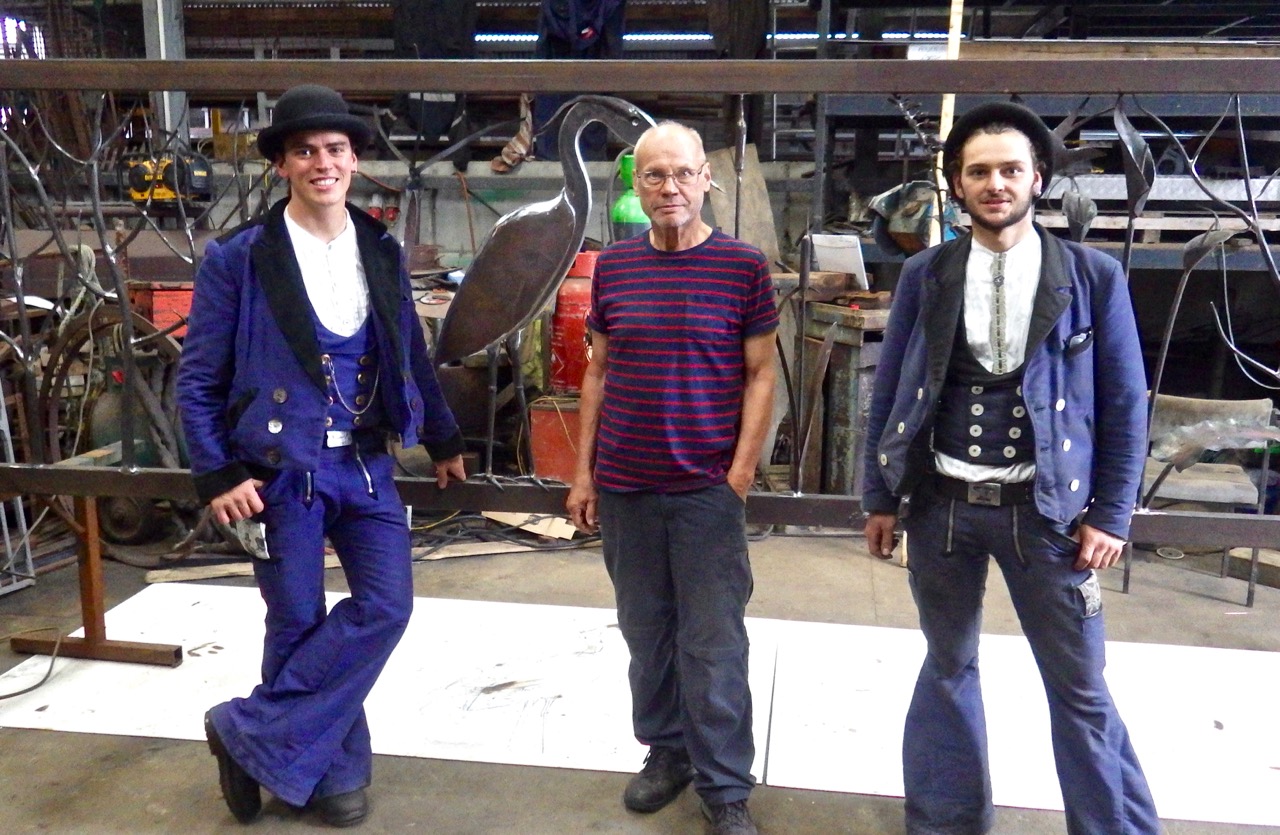
The tradition of the Journeyman Brotherhood is centuries old, originating in the Craftsmen Guilds of Europe during the Middle Ages and it is still practiced. In the past every young craftsperson who aspired to be a Master was, following his apprenticeship, required to leave home and not return for three years and a day. They had to stay at least 50 km away, but the journeys of the more adventurous candidates involved crossing oceans and continents. Simon and Benjamin – seen in the top picture after an exploratory climb to the summit of Hungry Hill on the Beara Peninsula – are from Munich and Frankfurt. They are wearing the uniform of their trade, known as the Kluft: this is how they are required to dress during their travels. The number of buttons on their waistcoats show the number of hours in a day they expect to work – in this case eight. When they leave home they have only a token sum of money each, and they must return with the same sum, no more. The purpose of the journey is not to seek their fortune, but to improve their knowledge and skills and give them a rich life experience, preparing them for becoming masters of their craft. It is a prerequisite that Journeymen cannot set out unless they are unmarried, childless and debt-free.

Left – a typical Charlottenburger used to carry the Journeyman’s possessions. Right – group of three in Germany looking for their preferred mode of transport

Other traditions which have to be observed by the true Journeymen include carrying only the most basic possessions with them: clothes to work in and the tools of their trade. These are wrapped in a small blanket, 80 cm square, known as a Charlottenburger. They also often carry a crooked walking stick, called a Stenz, which they have made themselves. Mobile phones are not allowed! Notably, Journeymen usually have gold bracelets and earrings: these may be pawned or sold, but only in cases of dire emergency… I learned that the earring tradition refers back to a time when each apprentice had a nail hammered through his earlobe to mark that he had reached the stage of his apprenticeship which allowed him to go out into the world and remain a stranger until he had completed his journey. Some sources suggest that the term Journeyman comes from the French Journée, meaning ‘journey’ – but this is not correct. Journée means ‘day’ in modern French, but its medieval root is the latin diurnata, which in fact means ‘a day’s work’ or ‘a day’s travel’.

Journeymen surrounded by the tools of their trade in the forge at Lowertown

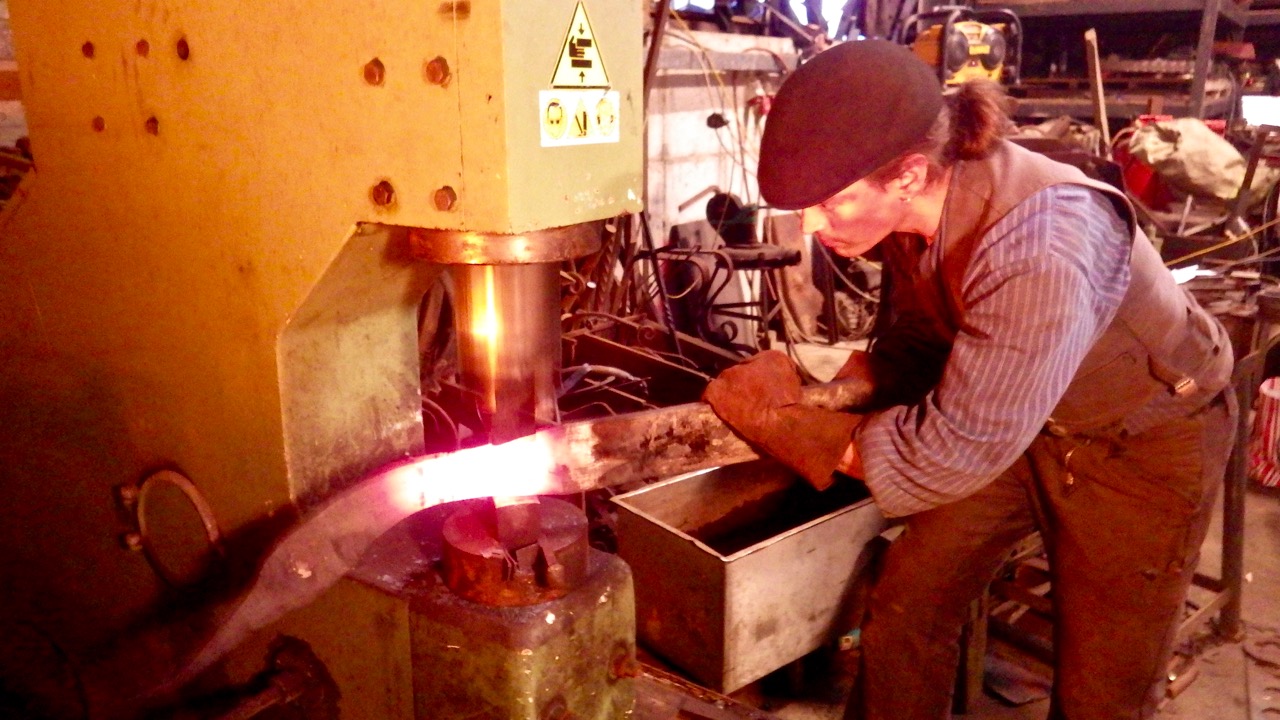
Simon and Benjamin were fortunate that in Ballydehob they bumped into our neighbour Dietrich: although he and Hildegard have lived here for much of their working lives they were brought up in Germany and were aware of the Journeyman tradition. They immediately found a project for the two young blacksmiths: constructing a new gate for their entrance. John Joe Bowen of the local forge at Lowertown was very helpful in allowing a space in his workshops for the boys to set to work.

blank canvas

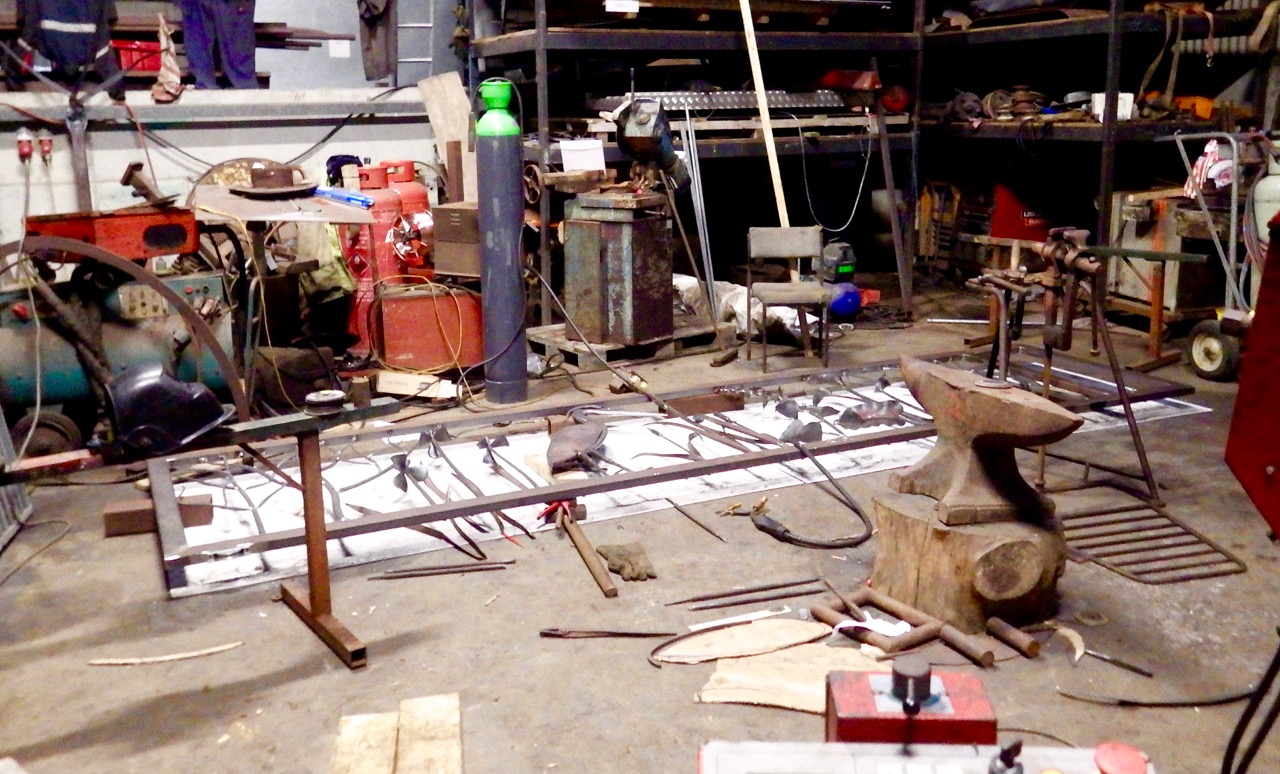
The process. Top – blank canvas: laying the full-size design out on the workshop floor. Above – learning from real life: how to fabricate a metal foxglove

We followed reports of the gate-making process with great interest, but were not allowed to see the completed design until the ‘official unveiling’. Dietrich and Hildegard recorded the various stages and have most kindly allowed me to use their photographs of the construction process (and the hike up Hungry Hill) reproduced here.

hammering

making the heron

From design to reality. Top left – Hildegard supervising the assembly and – top right – her design concept drawings. Above – a metal heron takes shape

The gate is a masterpiece. Made in West Cork, it reflects the environment of the place. It’s elegant, and unique. Although it appears complex, it is very understated: I think Dietrich and Hildegard have perfectly summed up the zeitgeist of our own time here in our small townland. Its inspiration is in nature, yet it is a technologically up-to-date piece of fine engineering.

piecing it together

on the floor

sanding the gate

dietrich, journeymen and gate

The construction process, and Dietrich and ‘The Boys’

We were privileged to be at the ‘launch party’. I have never been to a formal gate opening before! Dietrich cut the ribbon and then revealed the finished product to our eager eyes. This work must surely have been the highlight of the travels of these Journeyman from afar: they learned so much about observation and the translation of ideas into practical form.

the gate

Benjamin and Simon were not at the ‘launch’; they were already far away, continuing with their travels and their education. But they must carry with them good memories of the West of Ireland. Good luck to them both!
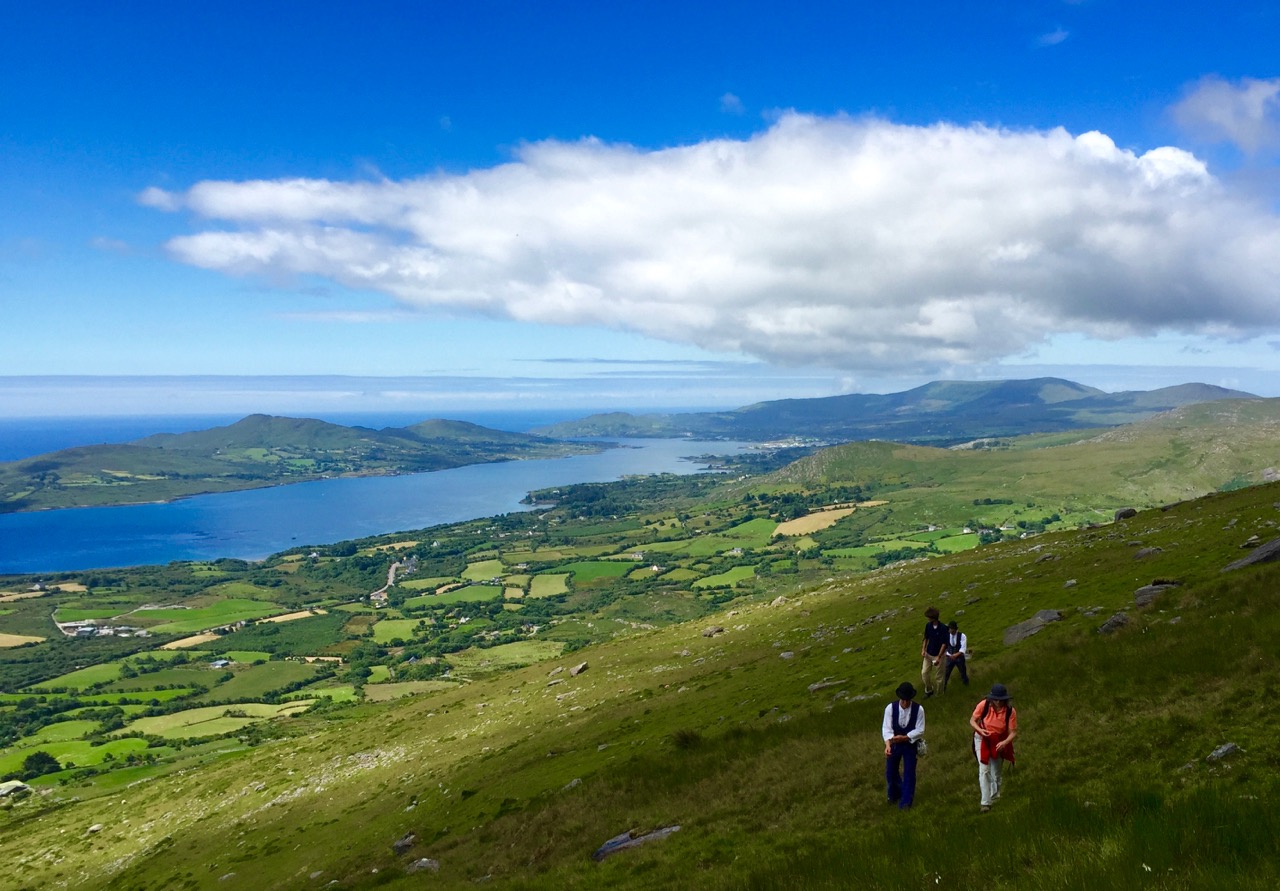
on hungry hill

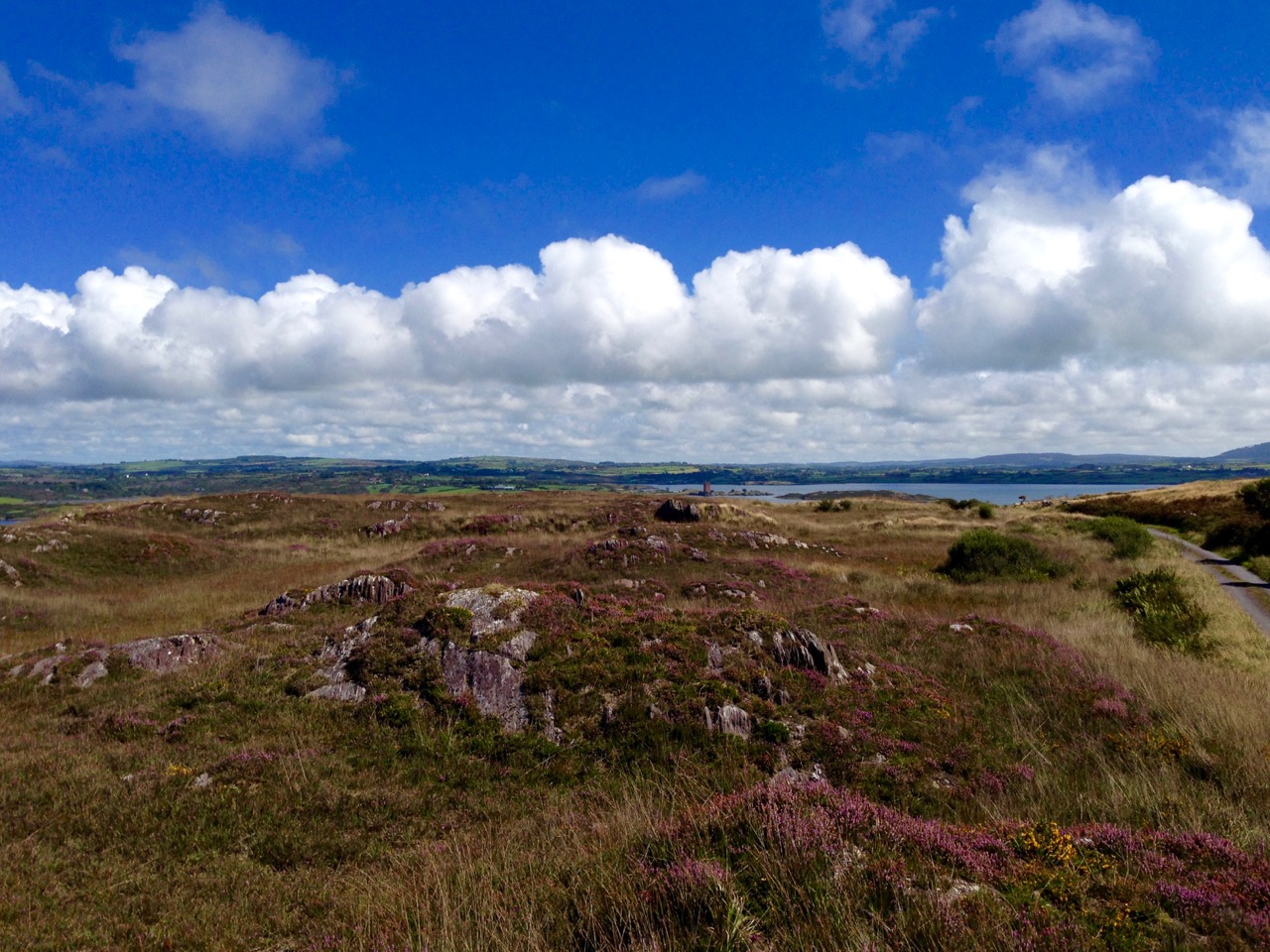
Experiencing beautiful West Cork – the Beara Peninsula, summer 2016

The Old Mine Road

to the castle

Exactly two years ago I wrote a piece for this Journal – A Moment in Time – remarking on the very specific changes that we become aware of at the end of the summer: the holiday homes being closed up and shuttered; the boats being taken off their moorings and stored away in the boatyard; the shorebirds returning to their winter quarters. I finished up by pointing out that our own summers never end: we enjoy living in Cappaghglass just as much in the darker, colder days at the turning of the year as we do when the sun is high in the heavens.

cove gray day

high road gray day

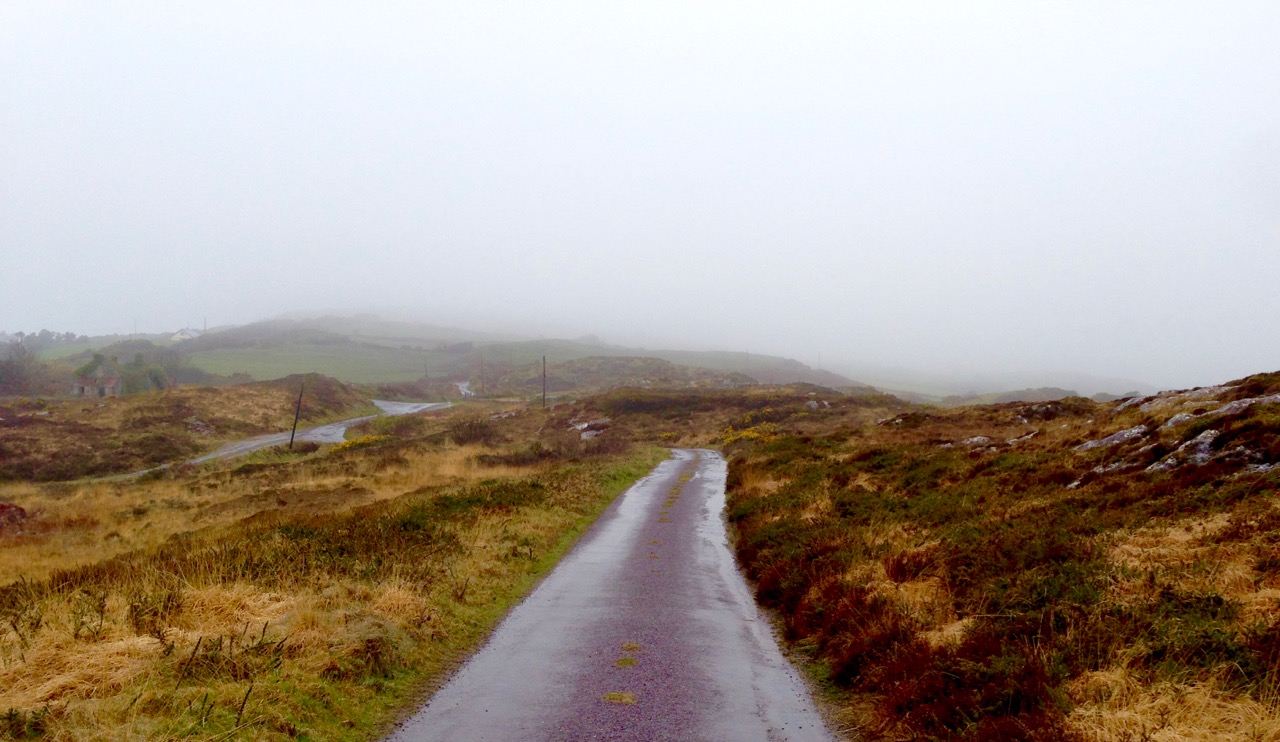
Top – starting point: Rossbrin Cove on a gray day. Bottom – The Old Mine Road wearing its raincoat

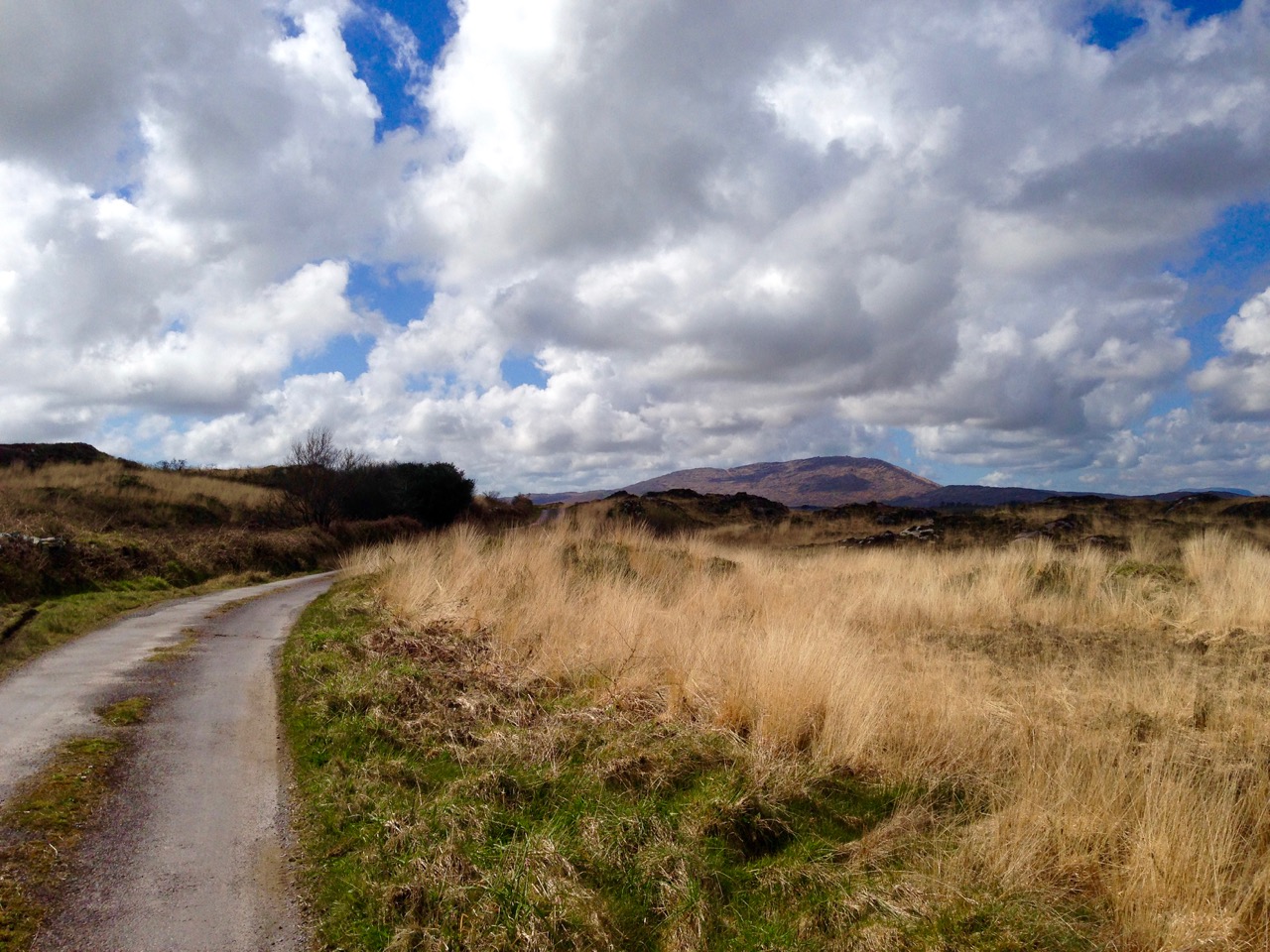
It is an idyllic life and we are privileged to have the quiet boreens to ourselves in all weathers. We have talked about Rossbrin Cove so often, in its many seasonal variations: for today’s post I’m taking the upward road through the townland, the route that I call The Old Mine Road. This road – or more accurately this series of lanes and byways – will take the traveller from the Cove into the little town of Ballydehob, and will pass through an old copper mining district which, two hundred years ago, saw heavy industry, intermittent employment, smoke, noise, pollution and desperate human working conditions where now ‘peace comes dropping slow’ with only the crying of the Choughs over an undisturbed backdrop of rock, heather and coarse grasses – and the occasional jumble of stones showing where there were once buildings, shafts and crumbling walls marking the old mine complex.

cappaghglass

captain's house sun

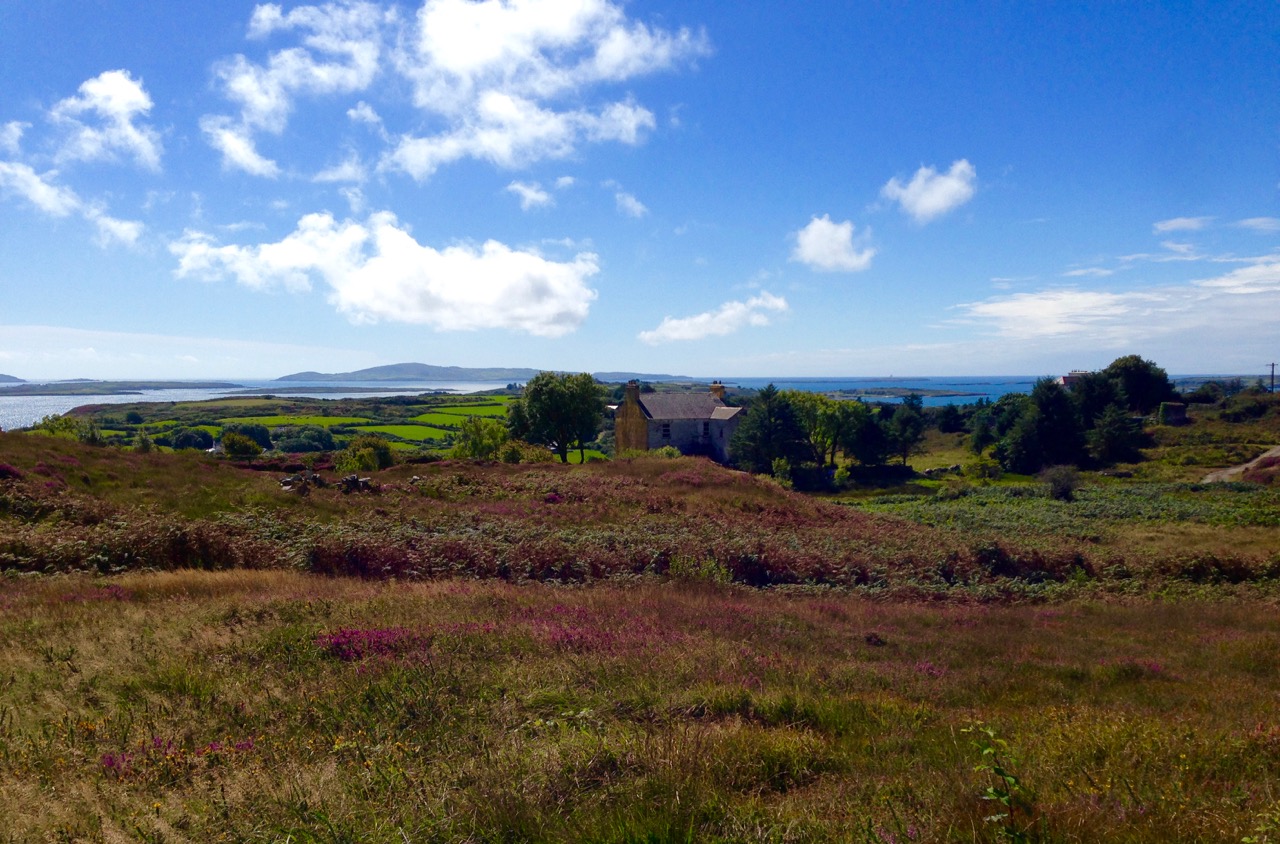
Top – the landscape of The Old Mine Road: Mount Gabriel dominates the horizon to the west. Bottom – looking from the road towards Roaringwater Bay: in the foreground is the site of old mine workings, now reclaimed by nature, with one of the two Mine Captain’s Houses in the centre and the stump of an old mine chimney on the right

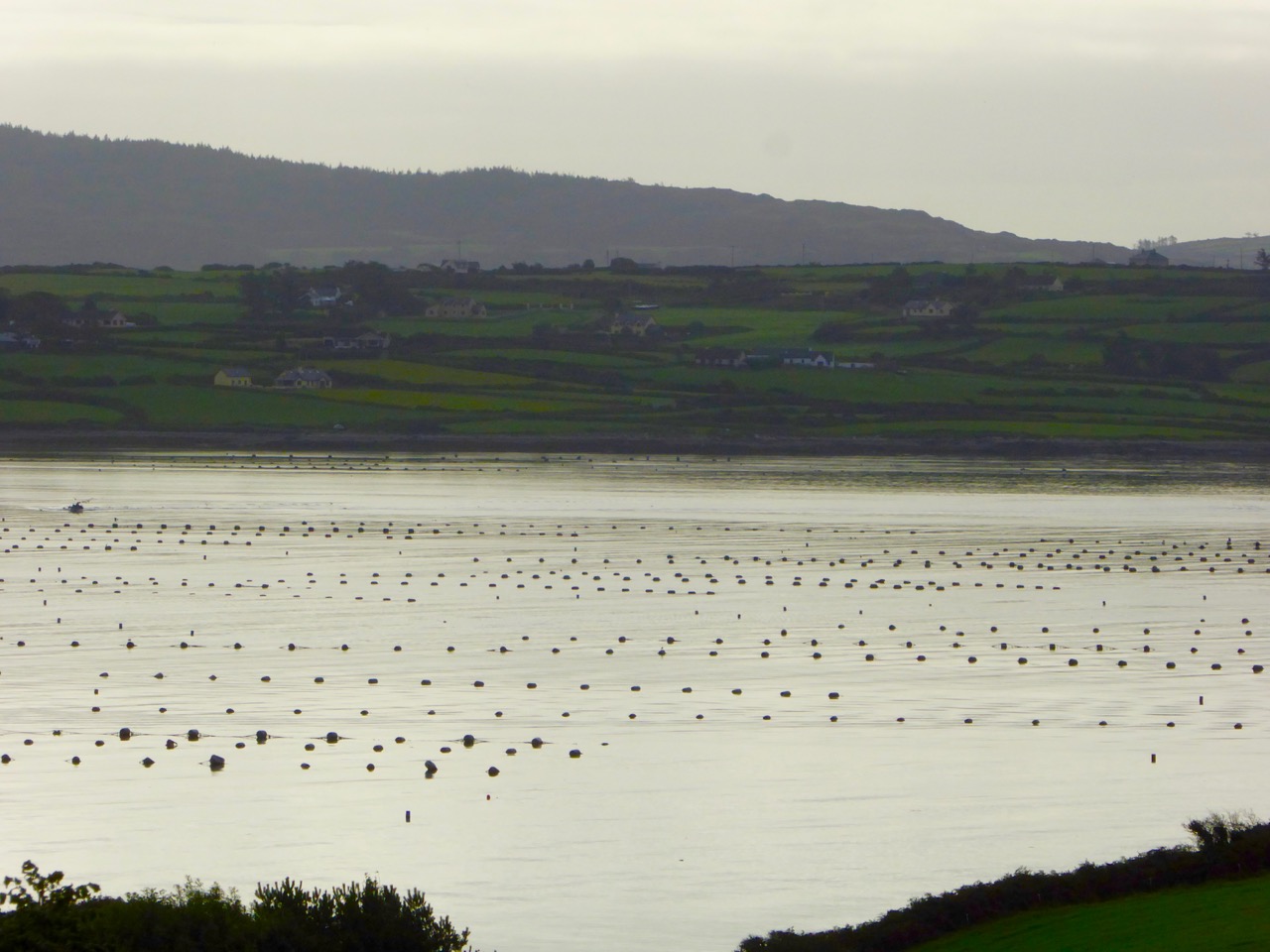
A walk along The Old Mine Road on a benign late September day will be rewarding because of the good air, the distant views to the Mounts Gabriel and Kidd, and with the bays of Roaringwater and Ballydehob below. You will find medieval history in the form of towerhouse castles, modern economy delineated by distinctive lines of mussel ropes spilling over the water and always alongside you the immediate wildness of a natural, undisturbed landscape. Views change as the way winds and dips – always interesting, always different, however many times you follow these routes.

mussel ropes

waving grass

mine buildings

Top – mussel ropes abundant in the Bay. Middle -waves of grass in the wild landscape to the north of the road. Bottom – ruins of old mine buildings can still be seen from the road

Autumn brings with it a certain melancholy. Time passes, our lives move relentlessly forward. We enjoy the changing of the seasons but we want to know that there will be so many more seasons to see. Each one will bring us unique experiences.

blue in the grass

from the road

Top – wildflowers in abundance on the boreens of Cappaghglass. Bottom – signs of old workings in the fields below the road

As I walk the old road, I can’t help trying to picture the scenes there from other times. I wonder what feelings the hard working miners had – did they take in the changing light and the views? Did they see the way the grasses moved with the wind, creating waves on the landscape? Did they have any time to notice nature’s fine details – the incredible variety, colours and designs of the wild flowers? Or was theirs just a drudging commute from cottage to workplace at dawn and dusk?

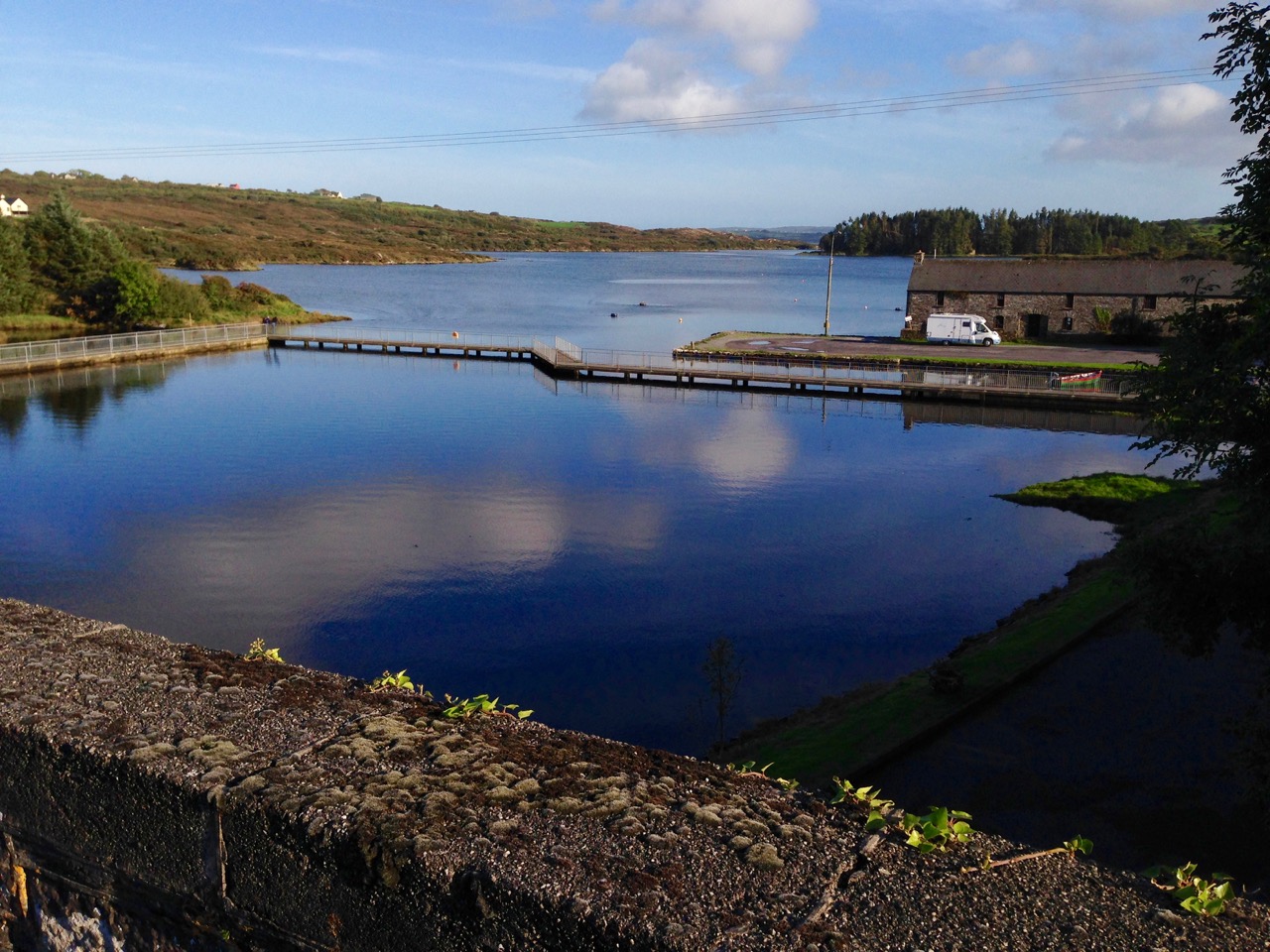
ballydehob wharf

The end of the road: Ballydehob Wharf, which would have seen great activity (intermittedly) when the mines were in full swing. Cappagh Mine was operating between 1816 and 1873, with its maximum output of about 400 tons of ore being produced in 1827

The poet Seamus Heaney has much to say about the hardship – and order – of a physical working life; his own father had worked the land and the poet was infected with memories of his younger days. This poem – Postscript – has a different emphasis but strikes me as a similar commentary on encounters with the landscape, although it’s concerned with another geography:

…And some time make the time to drive out west
Into County Clare, along the Flaggy Shore,
In September or October, when the wind
And the light are working off each other
So that the ocean on one side is wild
With foam and glitter, and inland among stones
The surface of a slate-grey lake is lit
By the earthed lightning of a flock of swans,
Their feathers roughed and ruffling, white on white,
Their fully-grown headstrong-looking heads
Tucked or cresting or busy underwater.
Useless to think you’ll park or capture it
More thoroughly. You are neither here nor there,
A hurry through which known and strange things pass
As big soft buffetings come at the car sideways
And catch the heart off guard and blow it open…
wall and heather

Feed the Bugs

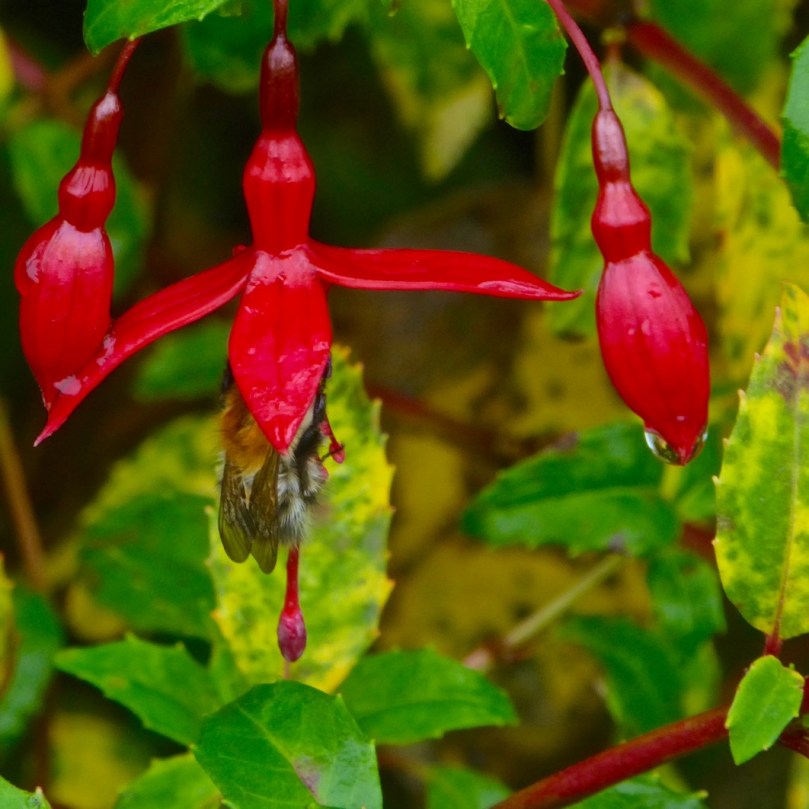
Bee in Fuchsia

Our walk in Glengarriff Woods opened my eyes to the challenges facing us in regards to ensuring the continuing biodiversity of Ireland. Loss of habitat, invasion of alien species, climate change, and modern farming practices all combine to present our insect life with increasing difficulty in obtaining what they need to thrive. Perhaps the best-known (although not the best understood) example currently is the enormous die-off of the bee population, known as colony collapse.

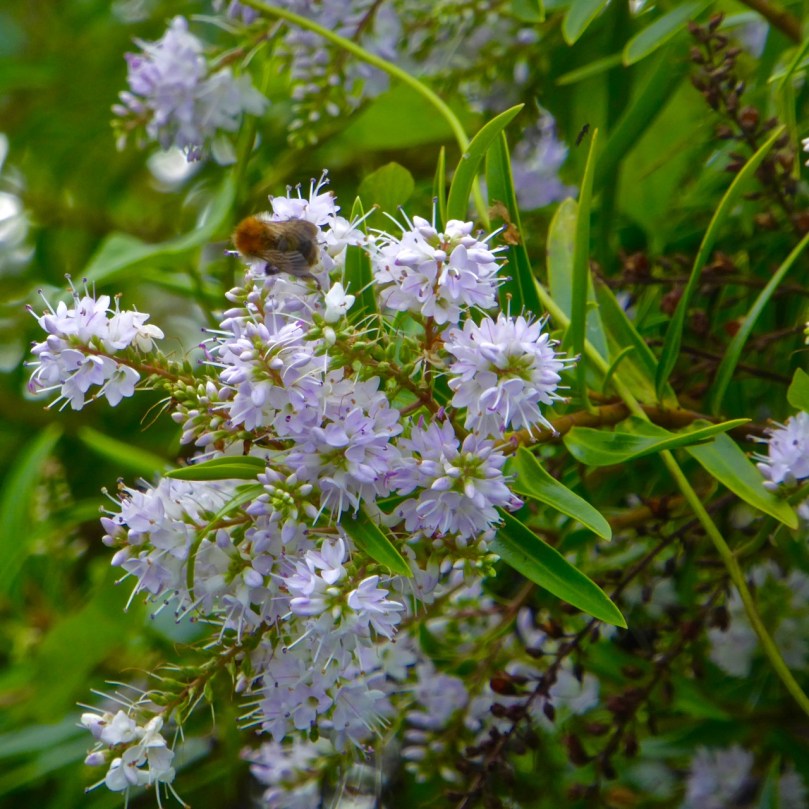
Hildegard's Shrub

With this in mind, I have been observing the bees, butterflies and bugs in our neighbourhood, and the role of flowers, both wild and cultivated, in supplying the food and the nectar they need. We have the advantage here that the hedgerows are rich in flowering plants, and that by regulation they must remain uncut until the end of August.

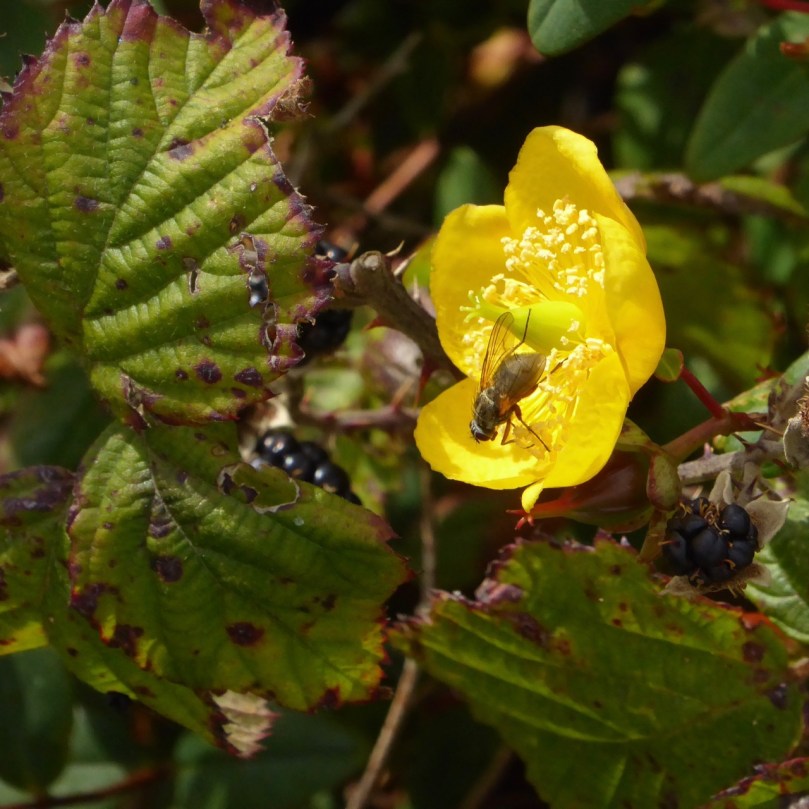
Fly on yellow flower

But this has been a short, cool summer and already the flowers that we saw last year in September have gone, to be replaced with the browning bracken. Our Budleia, for example, also known as the Butterfly Bush, was still attracting butterflies in September last year but this year it’s been flowerless since late August.

A speckled Wood Butterfly and a Hoverfly enjoy some blackberry time

On the upside, we’re enjoying a bumper blackberry crop, and lots of insect seem to love blackberries as much as we do. Because of the way blackberries grow, ripening at different times, some brambles are only flowering now, providing nectar for the bees.

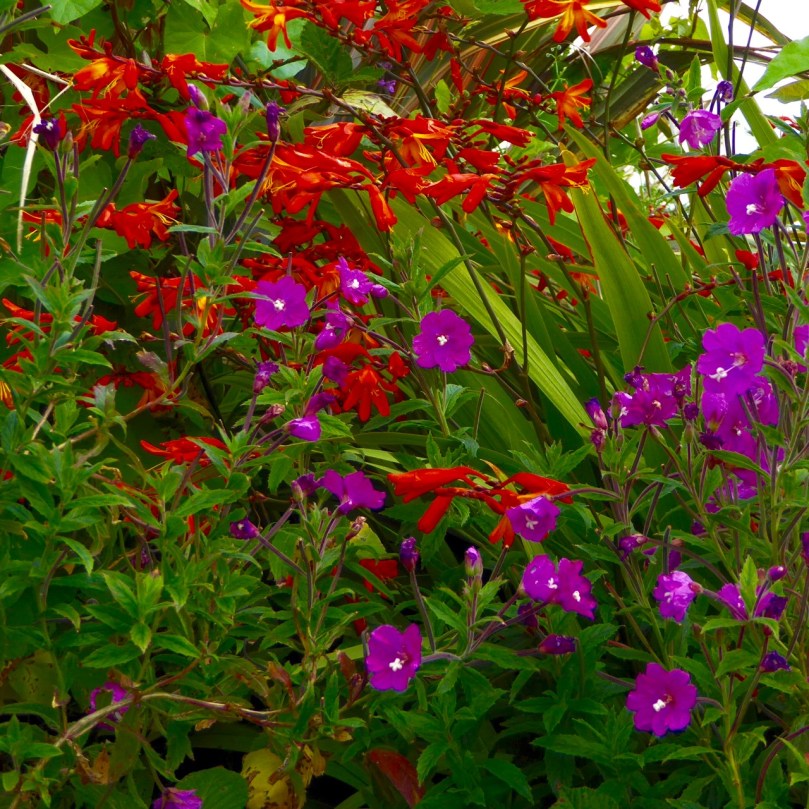
Great Willowherb 2015

This photograph, showing a riotous mixture  of Great Willowherb and Montbretia (Crocosmia) was taken at this time in 2015: this year all these flowers have finished already.

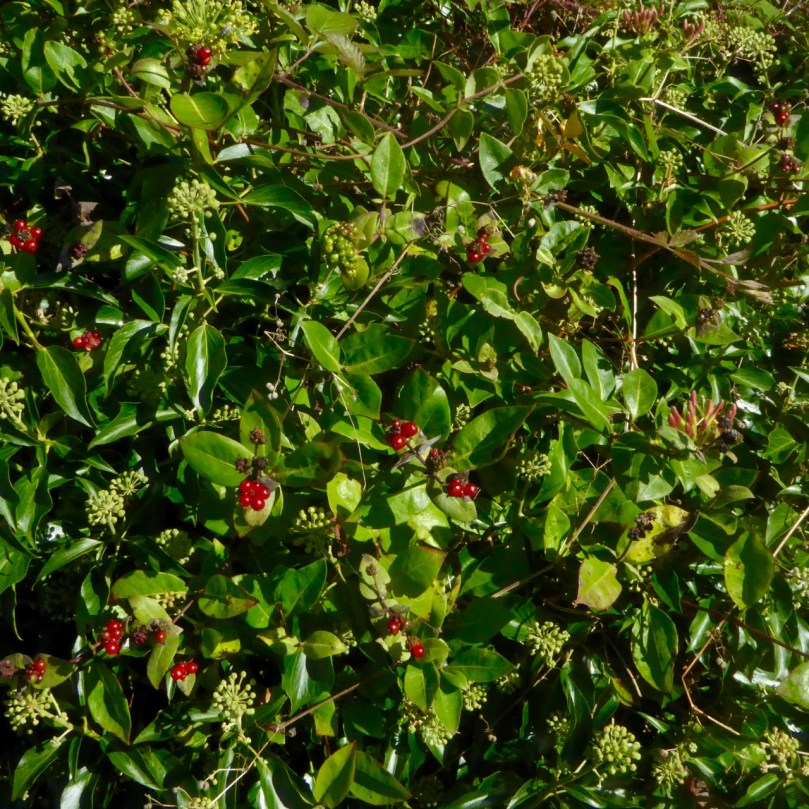
holly close to flowering

This year the holly flowers are abundant – here they are about to bloom. The berries are honeysuckle berries

The fuchsia is still flowering, providing that gorgeous blush along the boreens that we love. One of the advantages of the fuchsia flower is that it is down-facing. This helps to keep it dry and preserve the nectar (see photo at beginning of post).

We have two types of bindweed here: hedge bindweed in the upper photo; a subspecies, the uncommon hedge bindweed ‘roseata’ is lower right ; lower left is sea bindweed, which grows along sandy shores

We might hate bindweed but it is an important flower for the bees. The hedge-bindweed we see around here has pretty pink and white stripes – apparently the white stripes act like a runway, guiding the insects into the heart of the flower.

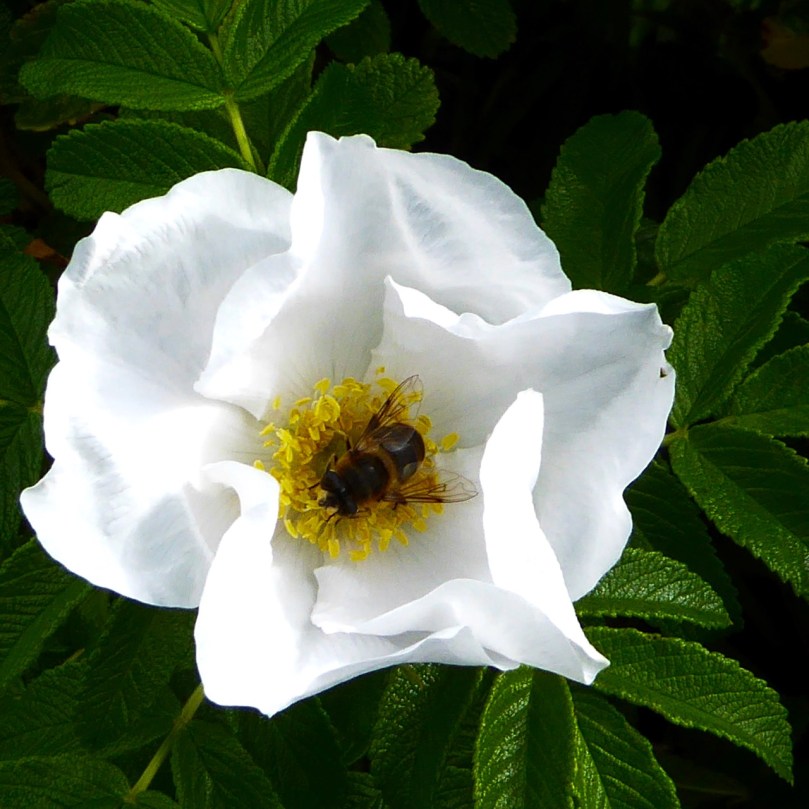
rose with bee

Wild and cultivated roses are still blooming, here and there. This little guy is appreciative.

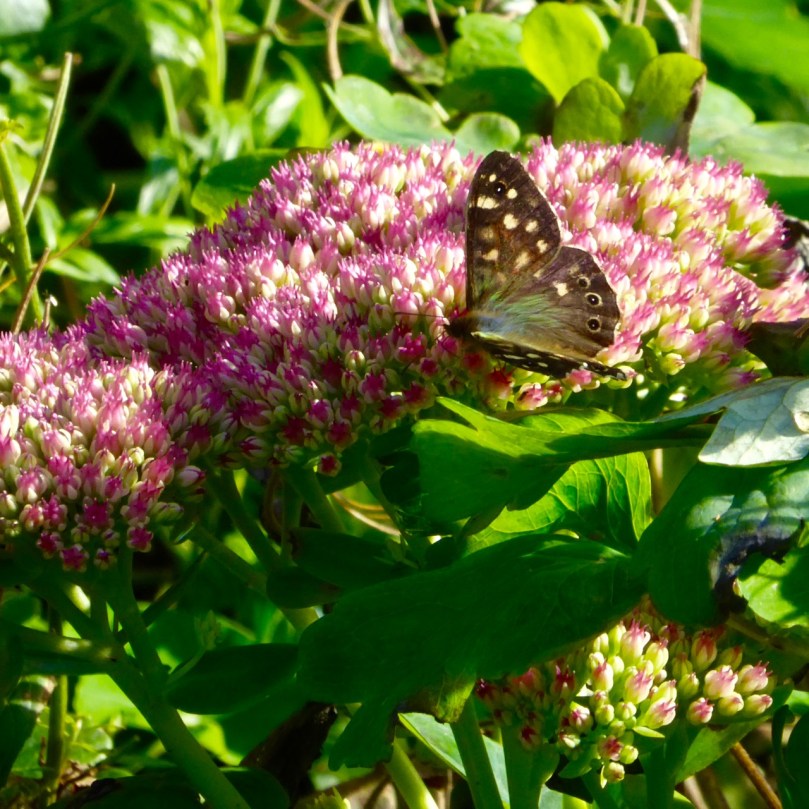
Speckled Wood Butterfly on sedum

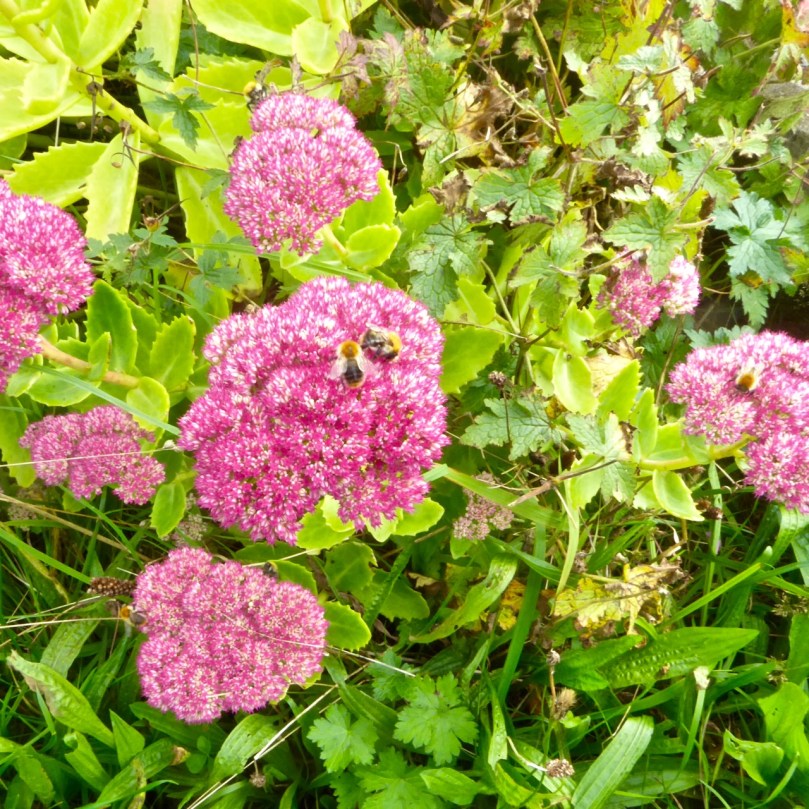
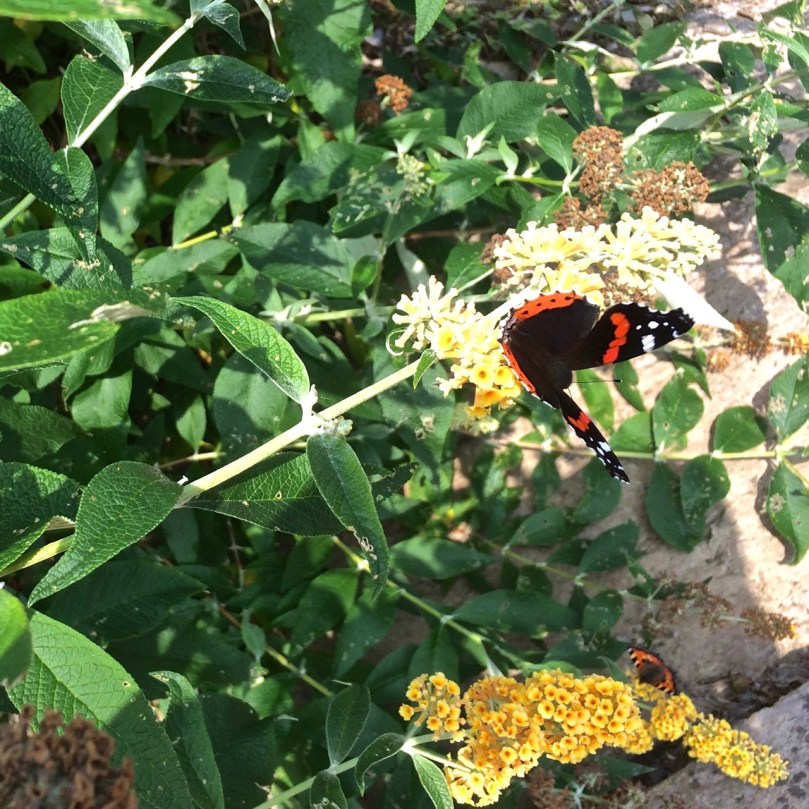
How many bees?Red admiral at Helen's GardenMy  friend Gill grows sedum (upper two photos) and the bees love it. You can hear the hum from ten feet away. Meanwhile, Helen and William’s garden (lower photo) attracts butterflies by the score. I saw my first Red Admiral there last year.

Small Tortoiseshell on oregano

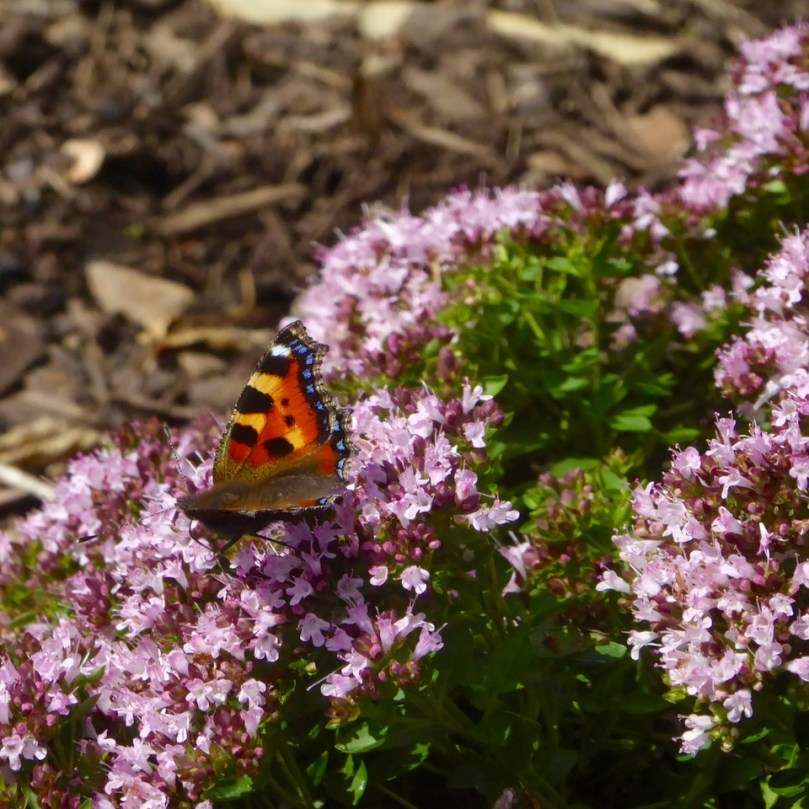
A Small Tortoiseshell Butterfly enjoys my Oregano, along with the bumbles bees

In my herb garden it seems to be the Oregano that is attractive to both bees and butterflies. It’s just finishing its flowering period now, but I still have to be careful when I pick a bunch, not to pick a bee as well.

Flies and spiders need the flowers too. Hoverflies are an important part of the ecosystem, helping to pollinate and preying on aphids and thrips. They (and the wasps!) seem to prefer my fennel. They also like the little pink Herb Roberts that are still to be seen in the hedgerows.

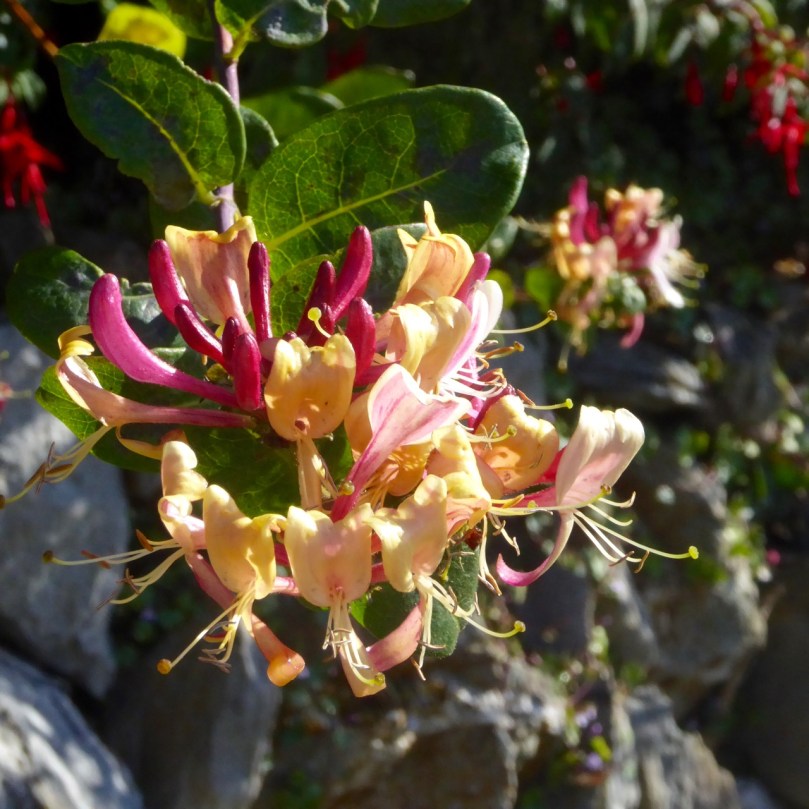
Honeysuckle

And what about the Honeysuckle? It’s abundant and beautiful, and with a name like that surely it’s a-buzz with bees? No – apparently the flower is too long and the bees can’t reach in far enough to gather the nectar. But the sweet scent, which gets even more intense towards the evening, calls in the moths who take their fill.

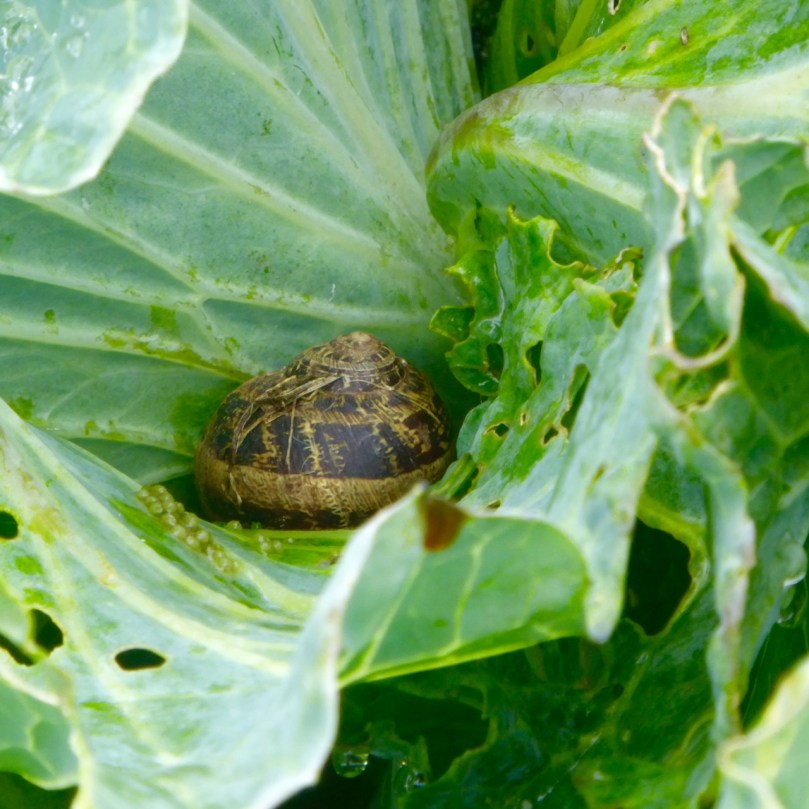
Snail on cabbage

Ah, but y’know – you can’t always welcome little critters to your plants. Sometimes, it’s us against them.

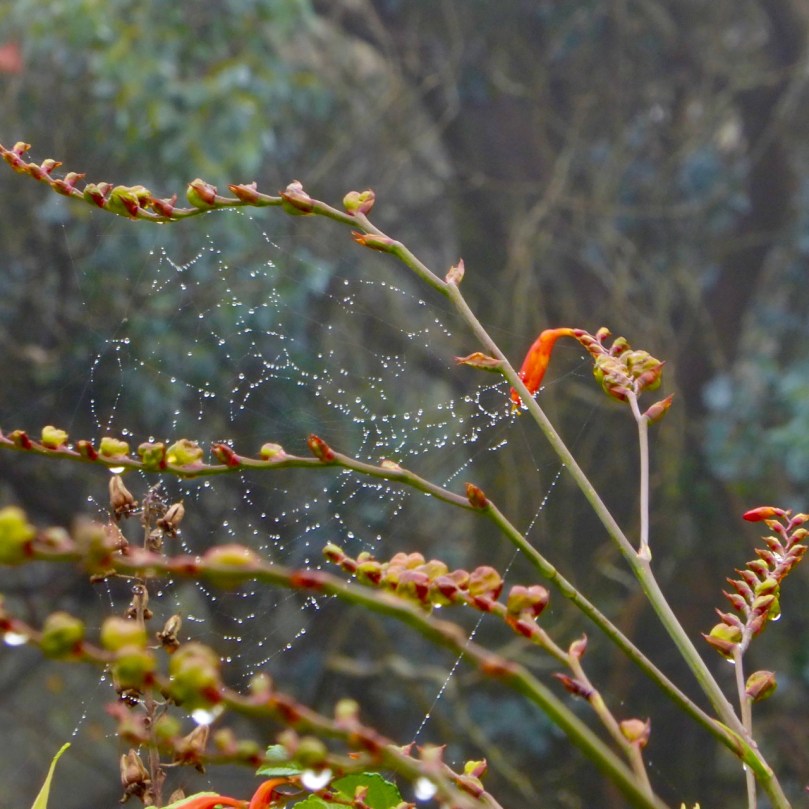
Cobweb on Montbretia

And of course, sometimes the plant isn’t so much food, as a means to an end…

Presenting Rock Art

A joint post by Finola and Robert

keith's dnc

On  Friday, the Blue House Gallery in Schull launched The Rock Art Show. It included everything that was in the exhibition at the Cork Public Museum, but with more of Ken William’s extraordinary photographs, and with the addition of some exquisite drypoint engravings from Brian Lalor.

The opening night was lovely. It was great to celebrate with friends and the community and to see their reactions to the show.*

Once the show was completely installed we were struck immediately by the way art and archaeology intersected on the walls. It’s designed partly as a museum exhibit, in which you walk around the panels, reading the information and digesting the accompanying illustrations. However, in this iteration, it is much more than that, and has truly turned into a show not just about the rock art per se, but about the power of these ancient and mysterious carvings to inspire an artistic response in others.

Some examples of what we mean…

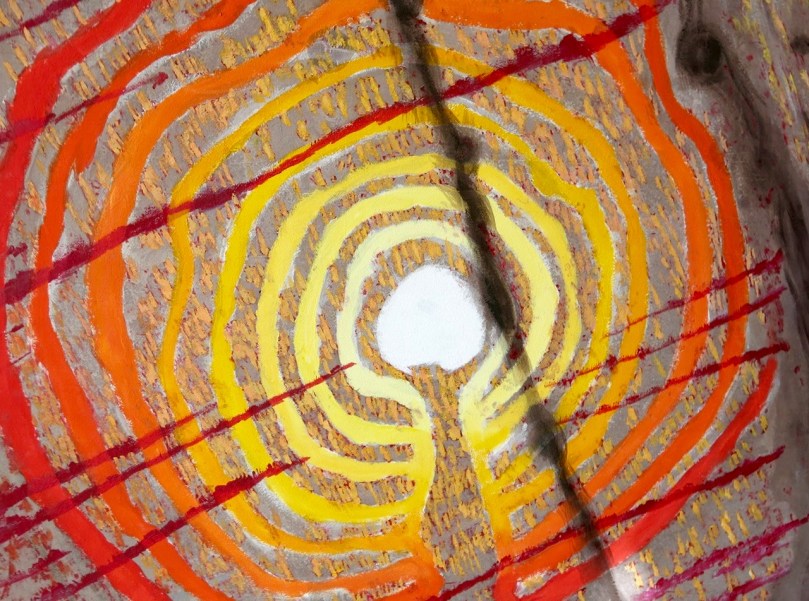
dnc kp

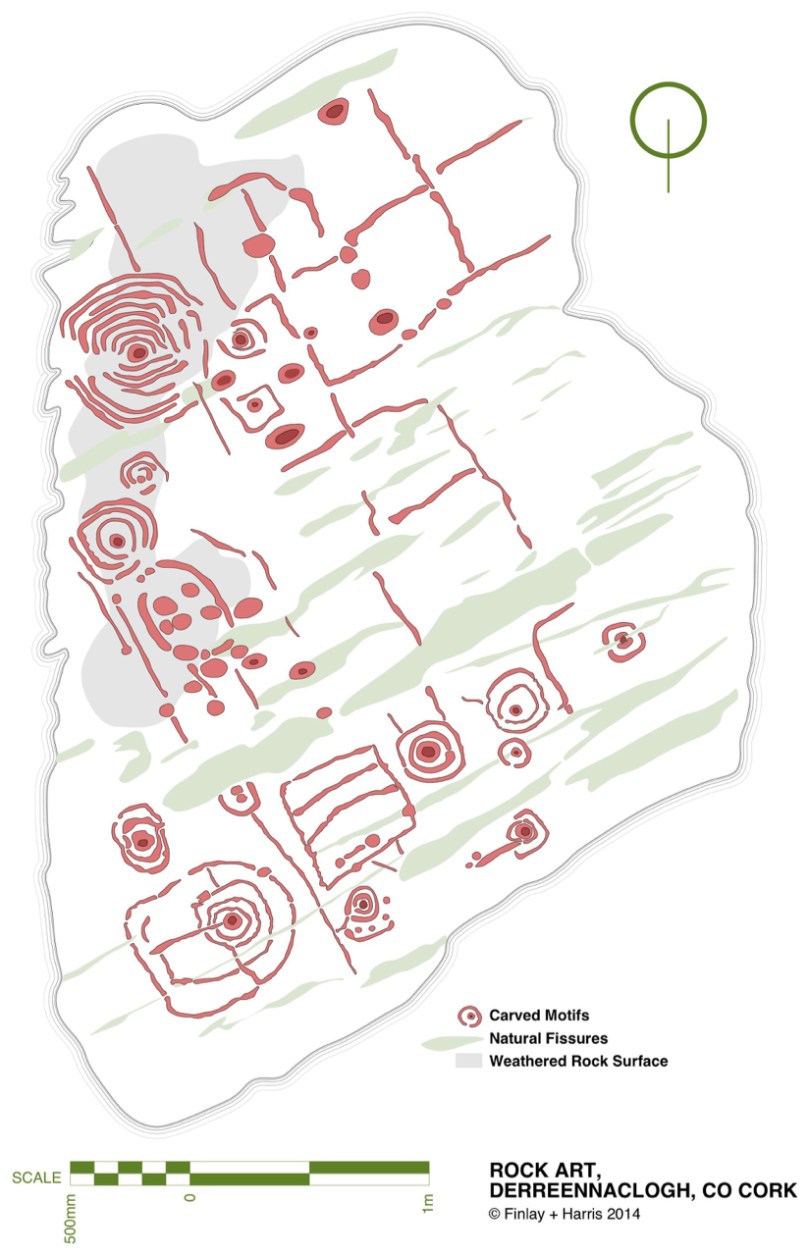
derreennaclogh rhKeith Payne’s wildly colourful painting contrasts with Robert’s sober CAD drawing

gort

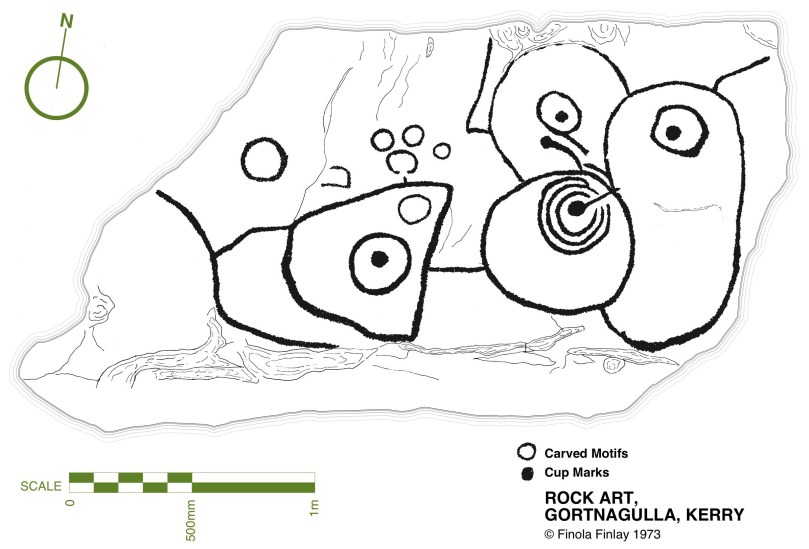
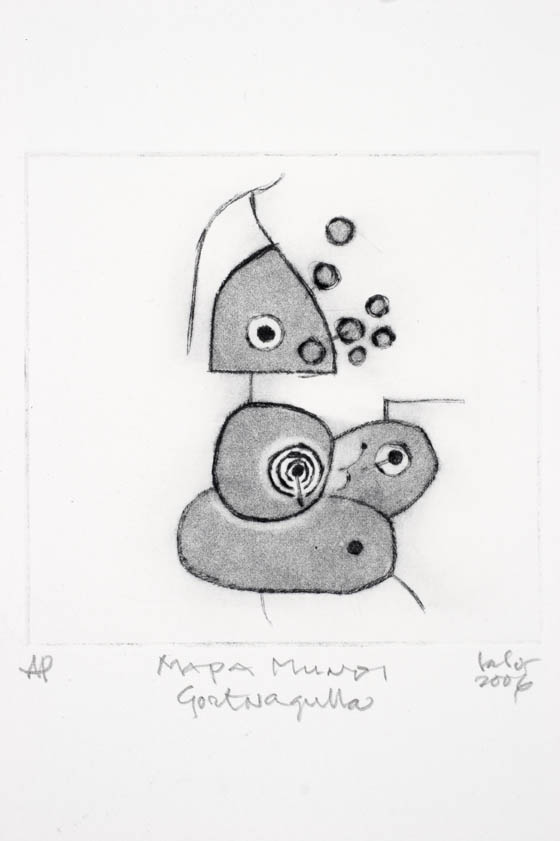
gortnagulla-lalorThe first drawing of the Gortnagulla stone was done 40 years ago by Finola, using a tracing technique no longer approved. Brian Lalor’s engraving is of the same piece
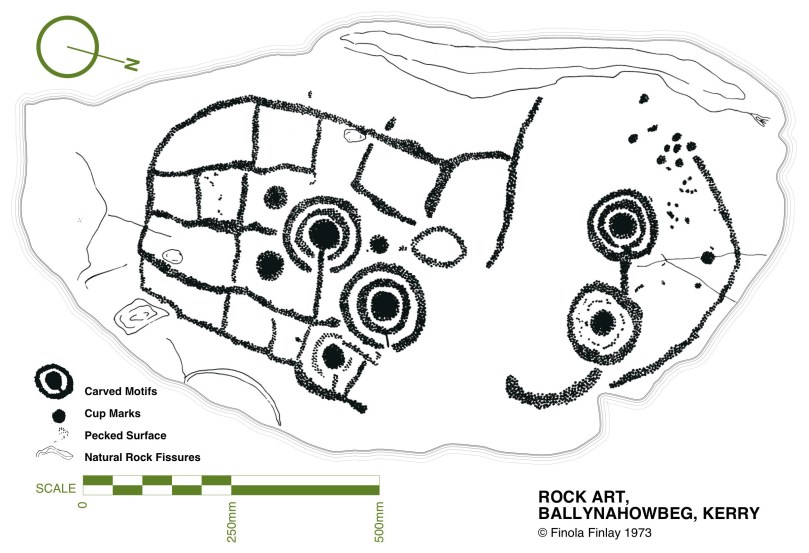
ballynahowbeg kw
ballynahowbeg ff
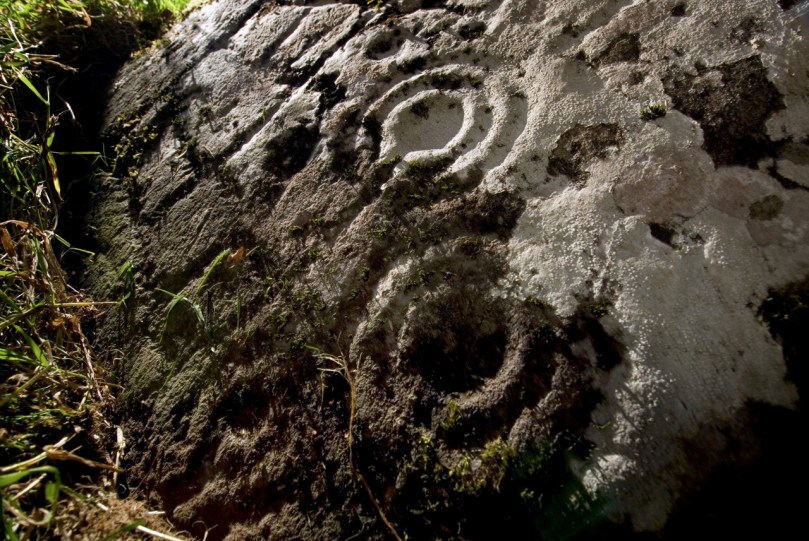
Can you recognise the same stone in Ken William’s photograph and Finola’s drawing?

But in the end, images on a wall will only go so far in helping us to appreciate rock art. Ultimately, you have to get out into the countryside and see the rocks in their landscape.

magheranaul kw

One of Ken’s superb photographs showing how this particular stone sits in its landscape  

Only then will you realise how hard they can be to see if the lighting is not good, to how difficult it can be to distinguish between natural and human markings on a rock surface, or how they all seem to be located in beautiful places with panoramic views. Or – to have an experience like this one, in which we made a breathtaking and unexpected discovery about one of our favourite rock art panels, and quite by accident recorded it all on video.

Derreennaclogh equinox circles

So  if you’re in West Cork before the end of September, drop by the gallery. We’d love to see you.

*With grateful acknowledgement of additional photographs of the opening night by Peter Clarke, Amanda Clarke and Miranda Payne.

Gary, Paul, and Nana’s Soup

Rowers Return

Two local lads, from Lisheen down the road, have stolen the hearts of everyone in West Cork. Everyone in Ireland, actually, and beyond.

On the stand

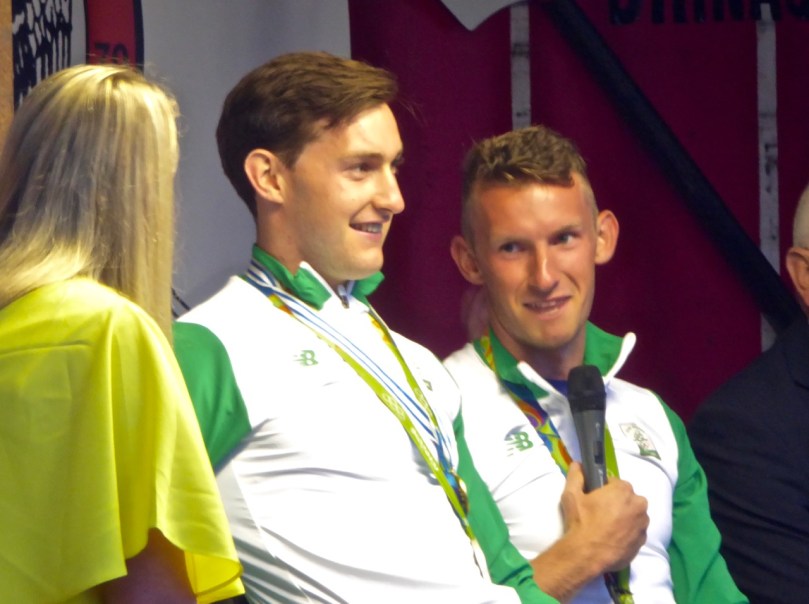
Gary and Paul rode the open-topped bus into Skibbereen on Monday night and then spoke from the stage at Fairfield

Gary and Paul O’Donovan won a silver medal in Rio in their rowing pairs class. They row for the Skibbereen Rowing Club, a local club that punches way above its weight in national and international competitions. The coach credited with that is the brilliant, but mono-syllabic, Dominic Casey. Taking Gary and Paul under his wing, he turned them into the hard-working athletes they are.

MUM AND NANA

In  the window on the left, the boys’ mother, Trish O’Donovan, and their grandmother (Nana), Mary Doab

Their parents’ devotion was sterling. Eoghan Harris’s Independent interview with their Mother, Trish, is perhaps one of the most revealing pieces of journalism about the O’Donovan Brothers phenomenon and what it takes to support an Olympian.

Waiting for the Open-Topped Bus

Gary and Paul are also dream interviewees – every sentence is a sound bite, delivered in pure West Cork accents, with artless but articulate insouciance. Their interviews are now the stuff of legend – but if you haven’t already seen them, take a look at this one done before the final race. What shines through, and makes them so endearing, is that they take their training, but not themselves, seriously.

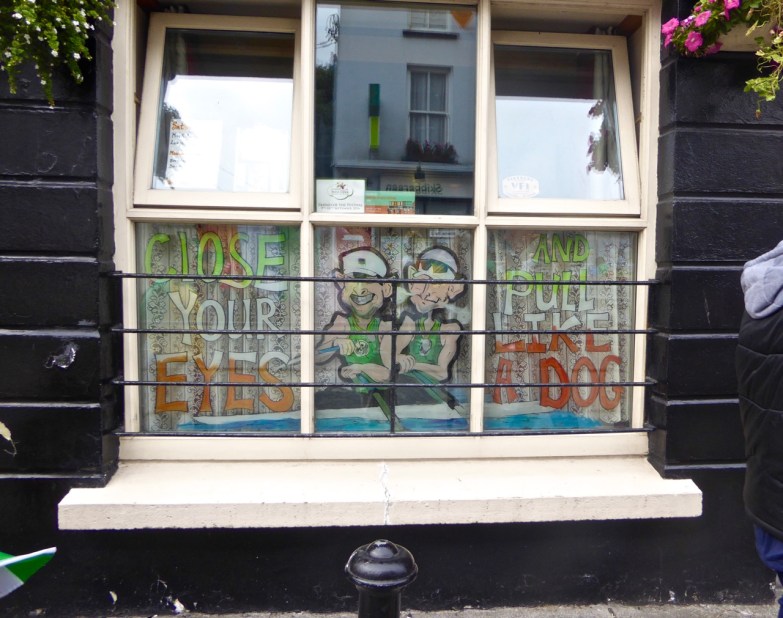
Pub Window

Above: Left, Stella and Hugh sporting their ‘occasion wear’; Right, this young man let me take his photo in his Shteak and Spuds shirt. Below: Many of the Skibbereen merchants had decorated their windows

The classic quotes have already been immortalised and the T-shirts have been selling like hot cakes in Skibbereen. The night of their homecoming it seemed like the whole of West Cork turned up to welcome them, including us! It was great fun to be there, in the streets, waiting for the open-topped bus, and then to see them on the stage, with Dominic Casey, so obviously having the time of their lives.

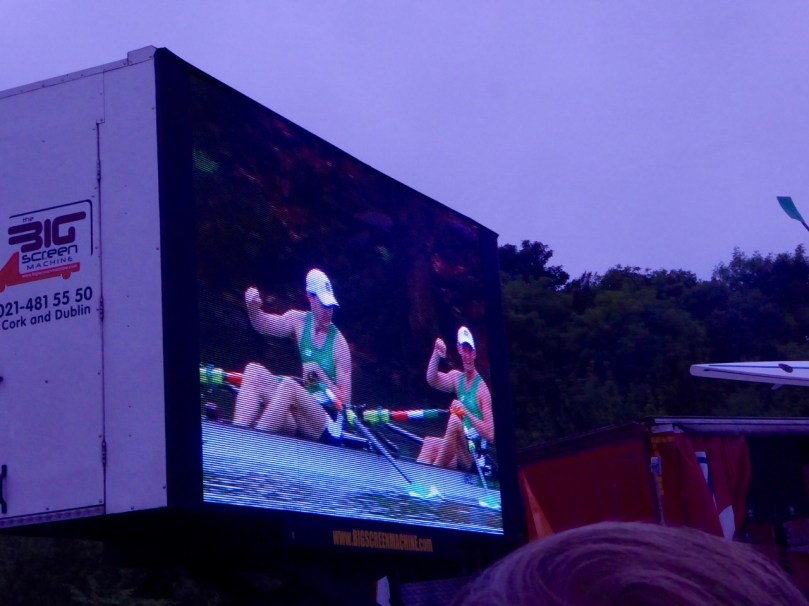
Replay

We, thousands of us, re-lived their big moment on an enormous screen in the Skibbereen Fairfield

Someone who came in for special praise in one of their interviews was the boys’ grandmother – their Nana (the first of the interviews on this page). Coming in cold and hungry from rowing, they gratefully wolfed down her home-made soup and ‘brown cake.’ Here in West Cork when we talk about a ‘cake of bread’ – what we mean is that solid round mass of white or brown home-made soda bread that is one of the staples of our diets, and that tourists have come to love.

Following the Bus

It  seemed like the whole of West Cork turned out to greet them

In honour of Gary and Paul and their Nana, and using only locally grown and organic vegetables purchased at Levis’s of Ballydehob Wednesday Farmers’ Market, here is my recipe for Nana’s Soup. It’s vegetarian and gluten-free – and totally delicious! Serve with a wedge of brown bread if gluten is OK for you. (I’ve become more sensitised to gluten issues recently as a dear little niece has been diagnosed with coeliac disease.) 

Levis market

Local growers sell their fresh vegetables at Levis’s pub in Ballydehob on Wednesday mornings

NANA’S SOUP: THE RECIPE

Vegetables: I used kabocha squash, onions, carrots, parsnips, potatoes and green beans, but you can use any robust vegetables that are in season.

Other ingredients: 1 can organic tomatoes, tapioca starch, vegetable stock (I used Marigold Swiss Veg Bouillon, but Knorr Veg Stock Pot is also gluten-free)), fresh or dried herbs.

Cut the squash in half, scoop out the seeds and roast in a hot oven for about 20 minutes. Leave to cool. Once cool, scoop out the flesh of the squash and chop roughly.

Peel and roughly chop the onions, potatoes, carrots and parsnips. Top and tail the green beans and cut in half or thirds. Chop the herbs (I used parsley sage, oregano and fennel from my garden, but any combination that suits you is fine).

Sweat the onions over medium heat in butter or olive oil until translucent. Over the onions, scatter about 2tbs of tapioca starch (this make it gluten-free, but if gluten is not a problem, just use flour) and stir until well mixed and starting to thicken. Pour in a can of organic tomatoes, the herbs, and a cup or two of vegetable stock. Stir until well mixed, then add all the vegetables. Bring to a boil, then turn down and simmer for at least an hour, preferably two or even three.

Soup and brown cake

After a bowl of this, you too can Pull Like a Dog!

Gary and Paul aren’t intimidated by a ‘bit of wind’. This is why – Skibbereen Rowing Club is on the beautiful , and breezy, Ilen River

Betjeman in Ireland – Poet and Spy?

1970s st enodoc

I remember well the day they buried Sir John Betjeman. The graveyard of St Enodoc’s Church (above, from a 1970s postcard), is close to the Cornish village of Trebetherick – his home for many years. On that day in May 1984 there was a downpour of torrential proportions, and all that could be seen when they laid him to rest was a sea of black umbrellas. The poet himself would have loved the very English spectacle of it.

Left – the larger than life 2007 bronze statue of John Betjeman at St Pancras Station, London: the sculpture is by Martin Jennings (photo Christoph Braun). Betjeman was a founding member of theVictorian Society and a passionate defender of Victorian architecture: his campaigning was responsible for saving the Station and the Chambers from demolition in the 1960’s. Right – the headstone of Betjeman’s grave in Cornwall

The poet is well known for his accessible and, often, highly amusing writing: perhaps less well-known are his Irish connections. During the Second World War (or ‘the Emergency’ in Ireland), John Betjeman was posted to Dublin, ostensibly as a press attache in the British embassy, tasked with planting British propaganda in newspapers and trying to counter the activities of Deutsche Nachtrichten Büro – the German Press Agency which, in 1939, appointed its own official representative in Ireland, Dr Carlheinz Petersen. As the war got under way British media were swamped with propaganda stories against Irish neutrality: for example, it was suggested that German submarine crews were being entertained in remote villages in the west of Ireland, and that wireless transmitters up in the mountains were at the heart of a vast espionage system against Britain. When Ireland refused to lease back its ports to Britain during the Battle of the Atlantic, the idea began to take hold in Britain that ‘neutralit’y was a wilful act of hostility against the allies. John Betjeman was drafted in to the Ministry of Information to help calm the situation. Betjeman’s job was to rein in these anti-Irish fantasies. Luckily for future Anglo-Irish relations, he managed to put a stop to a Ministry plan to disseminate propaganda leaflets in packets of tea, soap and toilet paper. Betjeman recommended “the stopping of anti-Irish articles and cartoons”. Instead, propaganda should concentrate on backing De Valera “and showing the tightrope he is walking”. Although De Valera was convinced Germany would win the war, the poet said: “There is no doubt that he and most of his ministers feel that the better interests of Eire will best be served by a British victory. For this reason Mr de Valera is Britain’s best friend in Ireland.”

Betjeman and family Dublin

A surviving photograph of John Betjeman (left) in Dublin during the war years – note the two pipers; the context is unknown

It’s hard to know whether Betjeman was actually a spy – even his biographer can’t clarify that. But the IRA thought so, and dispatched two men to permanently put him out of action. Diarmuid Brennan was the IRA army council’s head of civilian intelligence in 1941, and he was approached by two gunmen from the second battalion of the Dublin IRA who were looking for a photograph of …a fellow called Betjeman… These second battalion types were known to us as the Edward-Gees of the IRA, after Edward G Robinson… 26 years later Brennan wrote to John Betjeman telling him about the plot: …I got communications describing you as ‘dangerous’ and a person of menace to all of us. In short, you were depicted in the blackest of colours…

However, Brennan was interested to know more about this condemned man and began to read his poetry. The story goes that Brennan was swayed by reading Continual Dew, a 1937 volume that contains several poems about Ireland and another about Oscar Wilde, as well as Slough, in which he implored the Luftwaffe: 

…Come friendly bombs and fall on Slough!
It isn’t fit for humans now,
There isn’t grass to graze a cow…

Brennan decided that someone who was as passionate about poetry as Betjeman should be given the benefit of the doubt and aborted the assassination. There’s no doubt that Betjeman liked Ireland – and had some appreciation of the Irish outlook on life, in particular the love of literature. He was a lifelong friend of the poet Louis MacNeice and also of Patrick Kavanagh, who wrote a poem for Candida – Betjeman’s daughter – in celebration of her first birthday in 1942:NPG x78423; Candida Lycett-Green; Sir John Betjeman; Penelope (nÈe Chetwode), Lady Betjeman; Paul Betjeman by Bassano

Candida is one to-day,
What is there that one can say?
One is where the race begins
Or the sum that counts our sins;
But the mark time makes to-morrow
Shapes the cross of joy or sorrow.

Candida is one to-day,
What is there for me to say?
On the day that she was one
There were apples in the sun
And the fields long wet with rain
Crumply in dry winds again.

Candida is one and I
Wish her lots and lots of joy.
She the nursling of September
Like a war she won't remember.
Candida is one to-day
And there's nothing more to say.
The Betjeman family: John, Candida, Paul and Penelope 1948 (Bassano)

Betjeman is also particularly remembered for the part he played in bringing Laurence Olivier to Ireland to film Henry V on the Powerscourt Estate. This film, itself a piece of wartime propaganda, brought a short period of prosperity to County Wicklow in 1943. The doughty yeomen who faced the French in the Agincourt battle scenes were actually Irish farmers: these ‘extras’ each received an additional pound if they brought along their own horse!

Photo_ENsemble_1.202222324_large-1

Battle scene – Agincourt in Ireland, Powerscourt, Co Wicklow

The small towns of Ireland by bards are neglected,
They stand there, all lonesome, on hilltop and plain.
The Protestant glebe house by beech trees protected
Sits close to the gates of his Lordship’s demesne.

But where is his Lordship, who once in a phaeton
Drove out twixt his lodges and into the town?
Oh his tragic misfortunes I will not dilate on;
His mansion’s a ruin, his woods are cut down…

(from The Small Towns of Ireland, John Betjeman)