West Cork Speak: Lessons 5 to 7. And PRIZES!

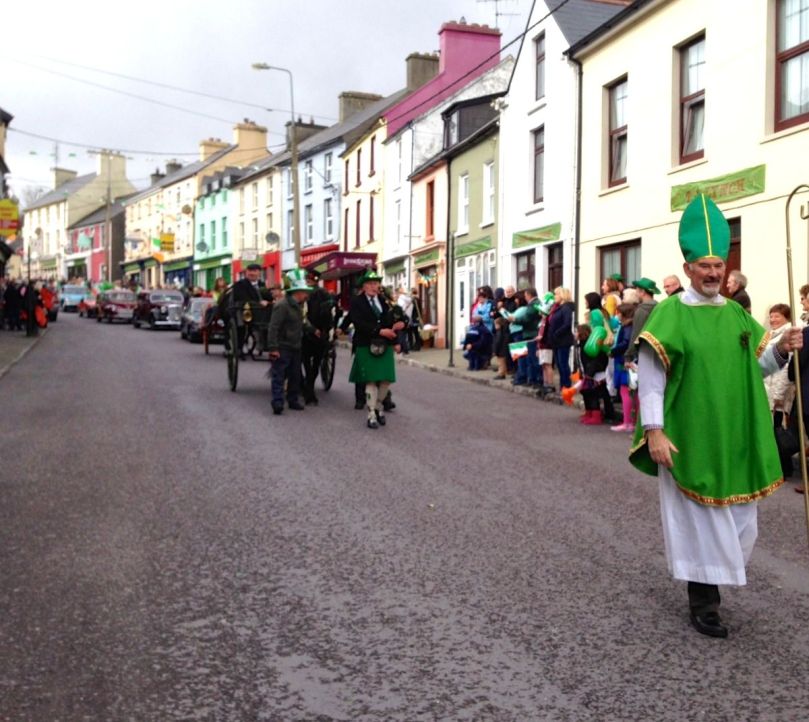
Here comes himself at the head of the parade

Here comes himself at the head of the parade

Time for the next lesson in how to sound like you’re from West Cork! In Lessons 1 and 2 we covered like and grand, now and so – versatile words that will take you a long way in any conversation around here. Then in Lessons 3 and 4 we looked at how you would frame your sentences in the conditional tense, and how to use the pronouns ye, and himself, herself and yourself. I hope you have been practising, in preparation for your visit. You ARE coming, right? Good – well so, you would need to be moving along to the next important steps in your language development. And to help you see where you’re coming, I will illustrate these lessons with pictures of the St Patrick’s Day parade last Monday in Ballydehob.

Vintage tractors galore

Vintage tractors galore

Lesson 5: In Fairness

Nothing distinguishes the West Cork denizen like the phrase in fairness. Occasionally rendered as in fairness, like or even to be fair, it is tacked on to the end of sentences with total abandon, whether it matches with the sense of what’s been said or not. If you meet someone on your walk, don’t be surprised to hear him say “’Tis a grand evening, in fairness like.” It’s as if it’s important to give God His due – He’s sent us lots of storms lately and endless days of rain, but sure, He’s doing His best to make it up to us now, isn’t He?

Sometimes you are left wondering about what’s not being said. If you hear “She’s a terrific dancer, in fairness,” you might wonder if there’s another part to the sentence, that has been left out – “even though she can’t sing,” maybe. But no, it’s probably just been added for some kind of emphasis, or to round out the sentence in some way. So go ahead, just drop it in here and there, and you’ll be grand.
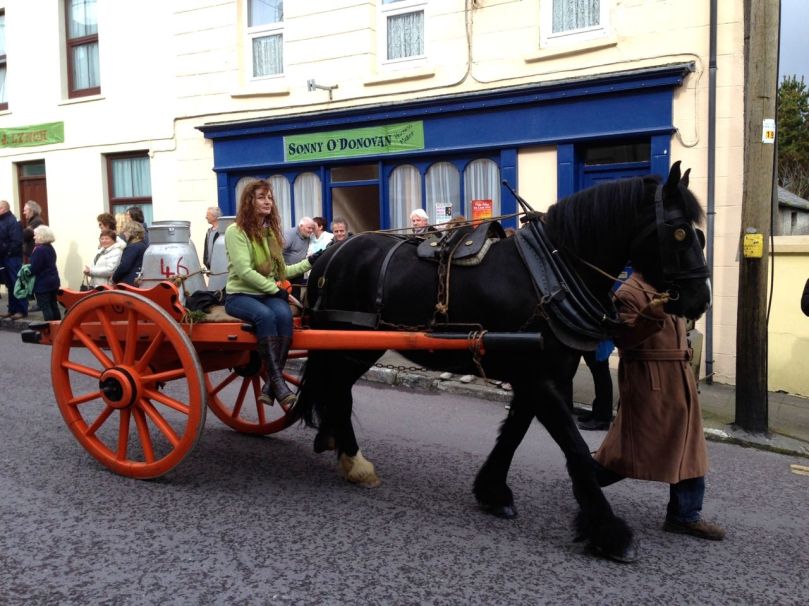
Going to the creamery

Going to the creamery

Lesson 6: Modifiers

Nobody in West Cork is very happy – no, we are happy out. And why wouldn’t we be, living in this beautiful place? We might also, if we have a lot to do, be busy out. If we badly need a pint, we might be thirsty out.

If using out as a modifier doesn’t trip off your tongue, try altogether instead. Or entirely.

We saw a good movie the other night. “It was great fun altogether.”

A recent story in The Examiner tells of a local hero, a student who found a toddler wandering late at night and made sure he was safe. Since the story is told mostly in dialogue, it’s an excellent example of Irish speech.

And the student, I think you will find yourself saying, “Wasn’t he a fine lad entirely?”
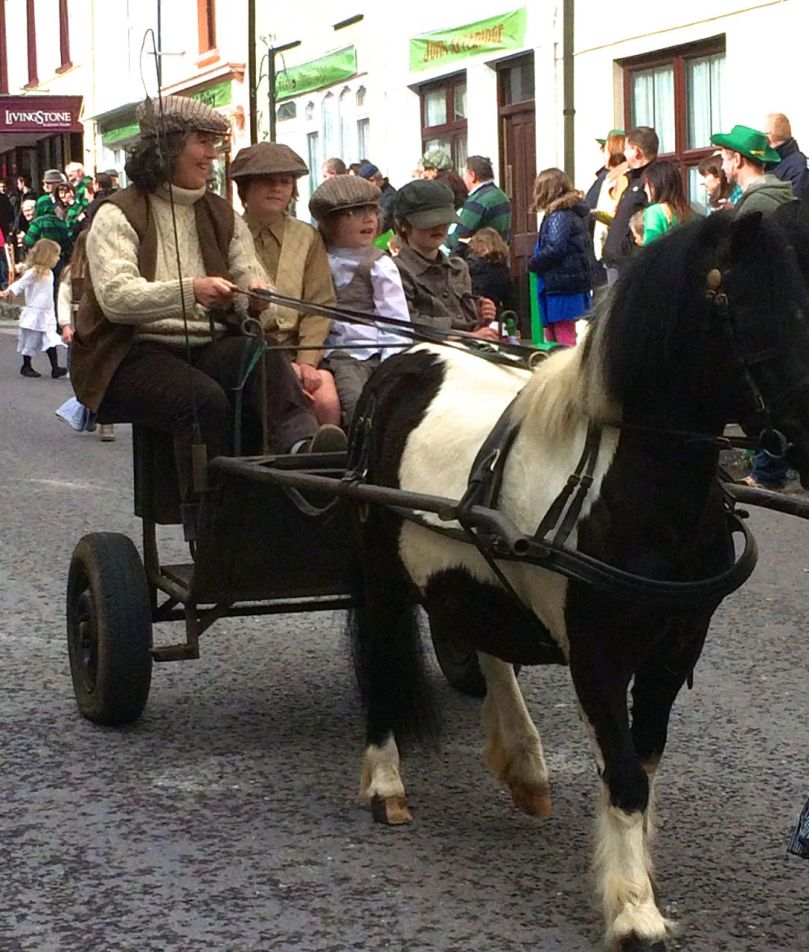
Don't they look happy out?

Don’t they look happy out?

Lesson 7: The diminutive

In Irish, the diminutive is formed by putting –ín (pronounced een) at the end of a word. We tell people that we live down a boreen (Irish word for road is a bothar, pronounced bo-her, and a bothairín is a small road). I’ve written about the children’s graveyards here: a cillín, pronounced killeen, actually means a small cill or church.

Some West Cork people routinely add -een to the end of a word to convey a sense of its size. Our landscaper asked if he should put the tools in our shedeen. Our neighbour, when I asked him about a certain piece of land said it was “nothing but a fieldeen.” You may well be asked by a waitress if you’d like a biteen more coffee.

Isn't that a grand careen?

Isn’t that a grand careen?

Now so – there you are! I think you might be ready to put all of that into practice.

Announcing our second ever COMPETITION (the first one was about place names). Your task, Dear Reader, is to construct a short conversation between two individuals. They are driving in opposite directions, but meeting on the boreen they roll down their windows to pass the time of day. The big topic of the moment is the St Patrick’s Day parade in the village and this, therefore, is the subject of their conversation. Reconstruct the chat, using what you’ve learned in the seven lessons so far, and your own imagination. An astute panel of judge will pick the winners and excellent prizes will be dispatched. Actually, prize-eens, in fairness. Good luck!
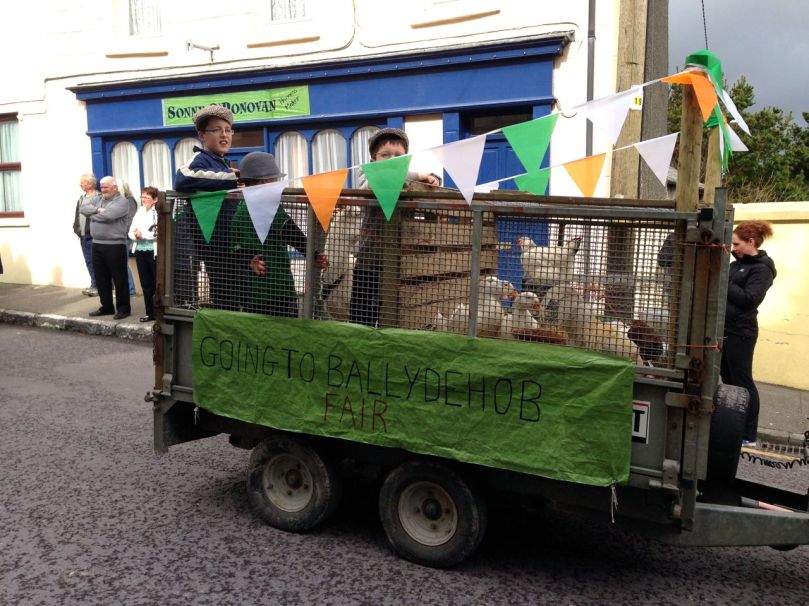
'Tis a lovely float, in fairness, like

‘Tis a lovely float, in fairness, like

Equinox at Bohonagh

Sunset over the recumbent, Spring Equinox 2014

Sunset over the recumbent, Spring Equinox 2014

We don’t normally post midweek, so this is a special edition, coming to you courtesy of the spring equinox. In my post Ancient Calendars, I explained about the orientation of the stone circles of West Cork. Bohonagh, just outside Rosscarbery, is oriented east-west. On the spring equinox, if you stand behind the recumbent, you will see the sun rise between the portal stones. If you stand behind the portal stones you will see the sun set behind the recumbent.

Around here, there is no guarantee that sunrise or sunset will be visible, due to the variable weather conditions, so you have to watch the forecast carefully. This week, sunshine was forecast only for Tuesday the 18th, so that is the day these photographs were taken. Curiously, this is also the day, according to my calendar, when sunset and sunrise divide the day into two equal halves. The official equinox, however, happens today: March 20th 2014.

Equinoctial sky

Equinoctial sky

The top photograph shows the moment when the sun set across the valley, sinking down directly above the recumbent as seen from between the portal stones. The second photo is taken from further down the hill, after the sun had disappeared. Silhouetted are the stone circle, especially the tall portal stones, and to the left, the boulder burial. Finally, I have included an image showing the east-west oriention.

east-west orientation

east-west orientation

We felt very privileged to be witnessing this event, thousands of years after the builders had planned it. With us earler in the day were Amanda and Peter, and you can see Amanda’s description of the site here.

Copper Country

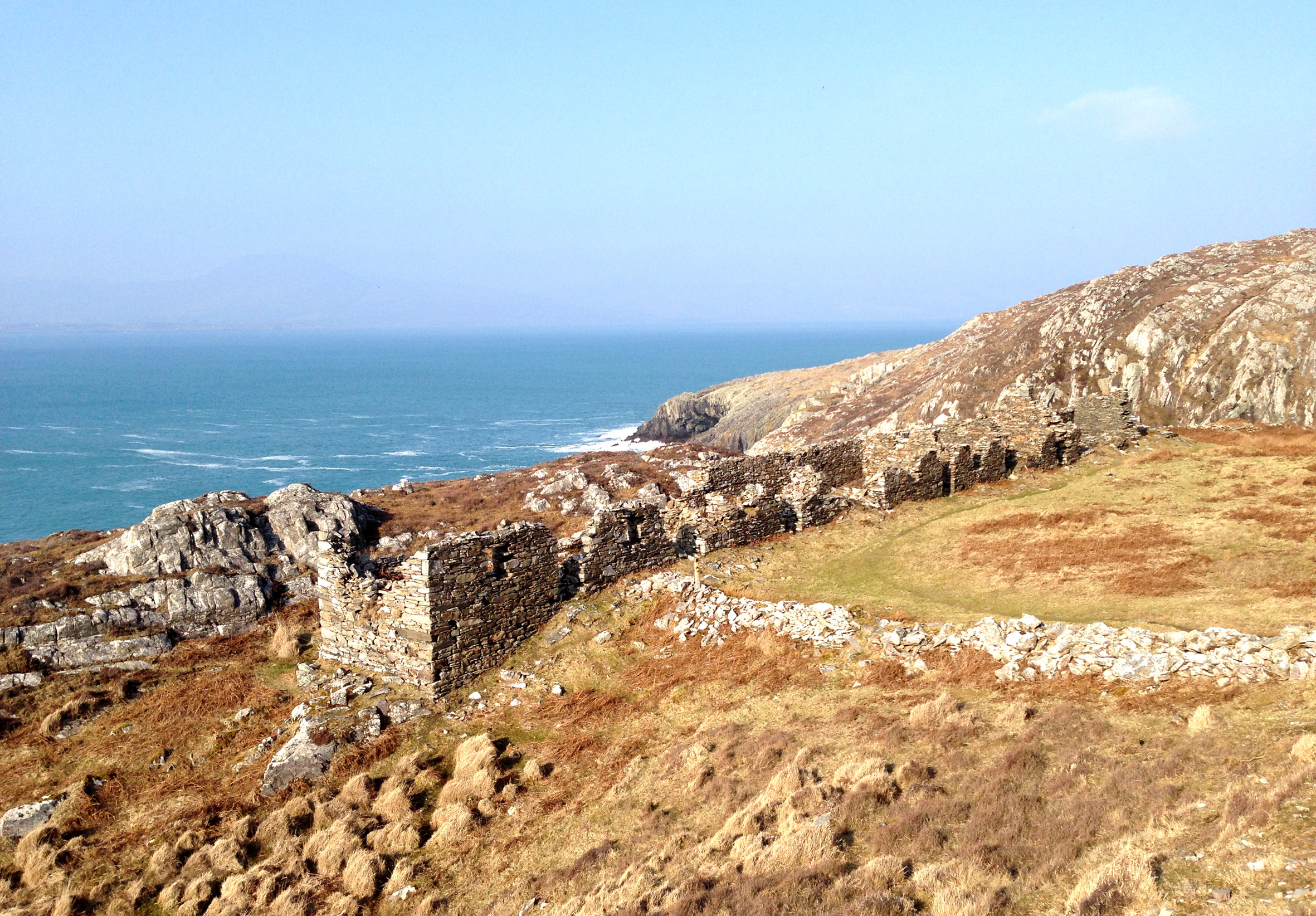
Sheep's Head Copper Mine: Cornish mineworkers' cottages

Gortavallig Copper Mine, Sheep’s Head: Cornish mineworkers’ cottages

We live in the townland of Cappaghglass. I would love to say that the name derives from the metal that makes up much of its geology – copper, but Finola tells me that way of looking at it comes from my English accent: the Irish word for copper is Copair, while Cappa actually means meadow. Glas or glass means green so – prosaically speaking – we live in ‘Green Meadow’. However, as in so many cases, the history of this little bit of Ireland is writ clearly on the landscape and Cappaghglass is very much ‘copper country’.

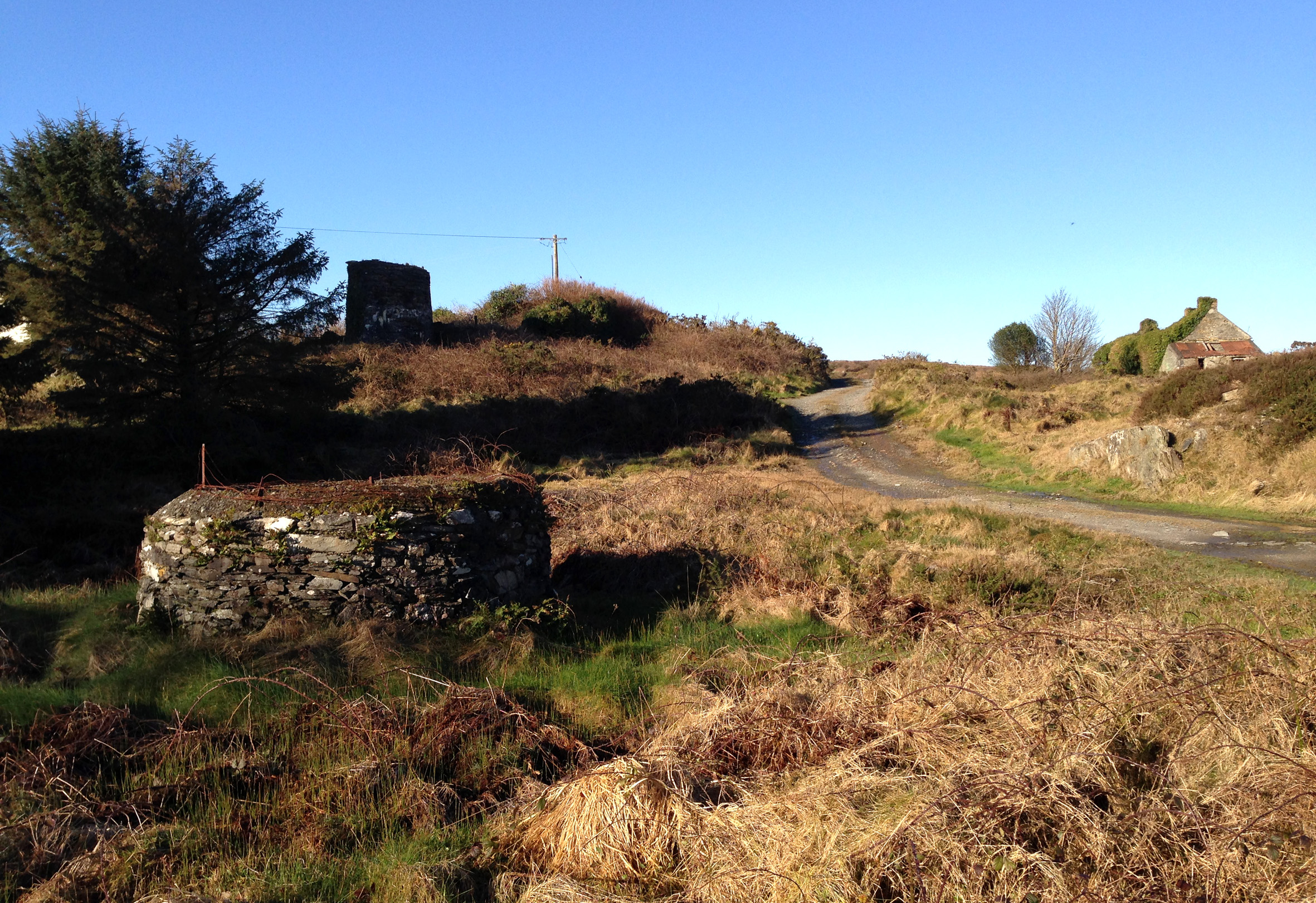
Stub of 9th century Irish round tower? - No: 19th century copper mine workings in Cappaghglass. In front is the head of a shaft, behind is the remains of the mine chimney that fell in 2002; to the right are the old mine cottages

Stub of 9th century Irish round tower? – No: 19th century copper mine workings in Cappaghglass. In front is the head of a shaft, behind is the remains of the mine chimney that fell in 2002; to the right are the old mine cottages

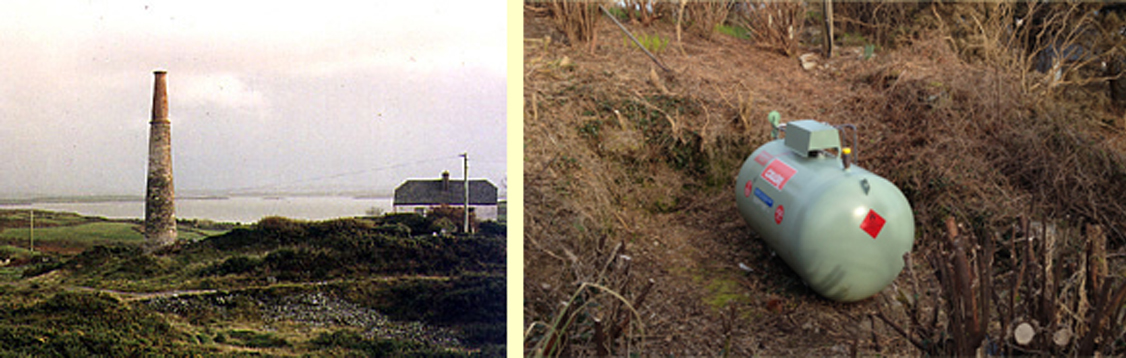
Our own house, Nead an Iolair, is built on territory that was once owned by a nineteenth century copper mine, and legend has it that our Calor gas tank is placed over an old mine shaft! We look out to Horse Island – one of Carbery’s Hundred Islands in Roaringwater Bay: it once supported a copper mine of the same period. Look at the photograph of the number of workers employed there at this time. Now there are merely a few holiday homes on the island.

Mineworkers on Horse Island: 19th century

Mineworkers on Horse Island: 19th century

Among the quiet fields and peaceful boreens our townland is strewn with evidence of the industry that once was here: old spoil heaps, barbed-wire protected shafts, supports for overhead ropeways and the base of a famous local landmark: the 20m tall Cappagh Mine chimney which came down in a lightning strike in 2002 which also severely damaged the Mine Captain’s House adjacent to it. Mining here commenced in 1820 and works ceased in 1874. Its best years were the decade 1863 to 1873, when 877 tons of bornite copper ore were produced.

cappamap2

Cappagh Mine: cross section, mine chimney (pre 2002) and our own mine shaft!

Cappagh Mine: cross section, mine chimney (pre 2002) and our own mine shaft!

***

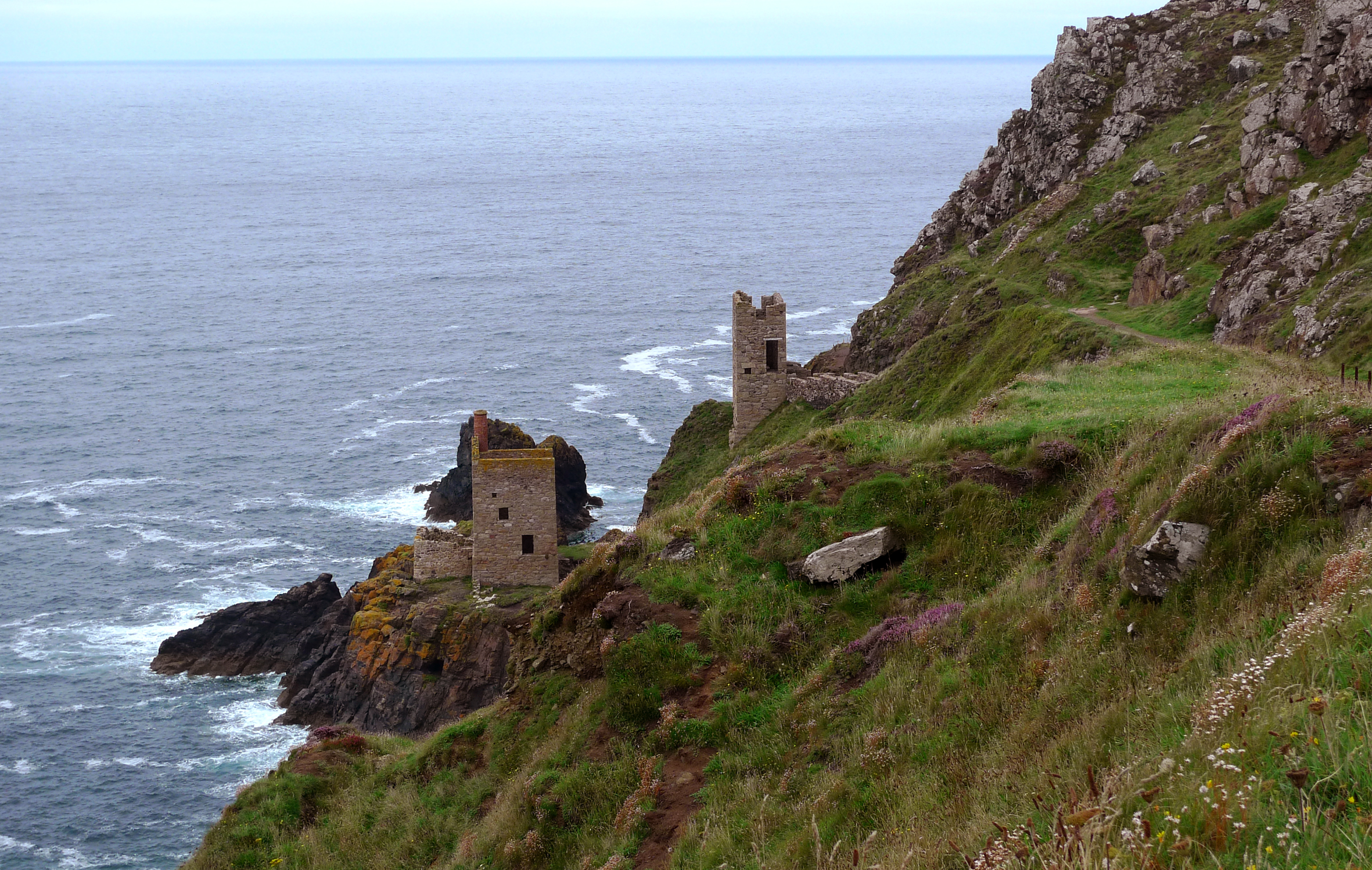
We went off to the Sheep’s Head last week – in idyllic weather – and were shown the Copper Trail by friends Peter and Amanda. It feels so remote out there, yet the place was a hive of industry when mining was at its height during the Victorian age. I was fascinated by the row of Cornish miners’ cottages there, and the similarity between this site and the cliff-edge setting of some of the mines in West Cornwall, Botallack in particular. When exploring these pieces of industrial archaeology in Cornwall I was always struck by the incongruity of the incredibly beauty of the places – set against the blue background of the Atlantic – with the hardship and danger of the working conditions that must have prevailed. Here in West Cork, as there in Cornwall, shafts and galleries extended out under the sea bed and the men toiled away in cramped and perilous conditions with the sound of the booming waters above them, while on the surface women (bal maidens) and children worked equally hard preparing the ore for crushing and smelting.

botallack

Botallack Tin Mine, West Cornwall - romantic site now, but less benign in earlier days

Botallack Tin Mine, West Cornwall – a romantic site now, but less benign in earlier days

Far longer ago than the nineteenth century, West Cork was being worked for copper ore. On the steep sides of our local Mount Gabriel there is evidence of copper mining dating back 3500 years to the Bronze Age. UCC Professor of Archaeology William O’Brien carried out research and excavations during the 1980s and traced a number of mine workings from this time. The extraction was a well organised process: a supply of  good roundwood had to be stockpiled and fires were lit against the rock face where traces of ore were apparent. A hot fire was kept burning for several hours followed by dousing in cold water (of which a good supply was also needed), causing the rock surface to fracture, and this disturbed face was hacked off with stone mauls allowing the accumulation of small quantities of  malachite. Constant working on good seams led to excavation into the mountain side, and some shafts have been found extending to several metres. Water ingress was a problem and it seems likely that a system of bailing or pumping was necessary. Eventually the drowned shafts were abandoned and, over time, they became filled with a type of blanket bog. This helped to preserve some of the wooden implements used and – presumably – discarded in them: hammer handles, wedges, picks and shovels as well as planks and ladders; also pine chips apparently used for illumination.

Bronze Age industrial landscape

Copper Country: Mount Gabriel – once the haunt of Wolves and miners

There’s a whole lot more to be said – about why metal was so important in the Bronze Age (wealth, in one word) and the whole context of distribution, trade and the technology of bronze itself: bronze production is only possible by combining copper ore with tin, and this was not available locally. In all probability our Cornish and Iberian cousins were making contact with Ireland’s metallurgists thousands of years ago. Interesting that the Rock Art we find in these same hillsides – and which could date from the same period – also has parallels in Britain, Brittany and Iberia.

Bronze Age industrial landscape?

Bronze Age industrial landscape?

Driving Home the Point

Another grand road

Another grand road

In my two previous posts about driving in Ireland, I chronicled the bureaucracy involved in registering our car and in applying for an Irish driving licence. Since Ireland and Canada do not have a mutual recognition agreement I had to take the theory test, a series of 12 mandatory lessons, and then take the road test. The good news is that I passed – I am now a fully qualified Irish driver! More good news – we got a €50 rebate on our car insurance. And best of all – having never even sat in a tractor in my life, I am now licensed to drive one. This is particularly pleasing since it is the vehicle of choice for the farmer visiting the pub at night in country villages, so you never know when I might be called upon to use this facility.

I can park my tractor in town now if I want.

I can park my tractor in town now if I want.

The bad news is that, between all the fees and the mandatory lessons, I spent a LOT more than the €50 I saved. It also cost me several months in which I was unable to drive on my own, and the aggravation of being trapped in an inflexible bureaucracy that refused to acknowledge my 40 years of safe driving.

I've learned to be alert for road signs

I’ve learned to be alert for road signs

However, all that paled when it came to the frustrations of learning to drive in a whole new style. As my friend Danny puts it, if someone tries to teach you how to walk (place this foot here, now lift this one) you will fall down. It just messes with your head to have to unlearn a sequence of actions that is as familiar as breathing, and relearn them a different way. This is not to do with being a better driver (although I think I am a better driver now), but with passing the test by demonstrating the correct procedures in the approved sequence.

You MUST not stop or park in a box junction

You MUST not stop or park in a box junction

Some examples might help to demonstrate. Shoulder checking is a huge thing in Canada – looking over your right and left shoulder before moving off, changing road position, turning a corner, etc. It’s because of the danger of not seeing a cyclist in the car’s blind spot. In Ireland, they want you to do a quick glance, no more. Here, you MUST check your mirrors before signalling, and after – there’s a strict sequence to follow. In Canada they teach you to take one hand off the steering wheel so that you can turn around and look out the back window when reversing – here they want both hands on the wheel at all times. You WILL be asked to reverse around a corner (you would not be asked to do that in a Canadian test) and you WON”T be asked to parallel park (a Canadian right of passage). None of these things are matters of life and death – they are all stylistic, but this is what you will be tested on. The national pass rate for the test is only 56% so there is a very real possibility of failing, no matter how well prepared you think you are.

No parking where there are zigzag lines. Or double yellow lines. Or both.

No parking where there are zigzag lines. Or double yellow lines. Or both.

Meanwhile, all around you, you will see Irish drivers doing the most appalling things and routinely flouting the rules of the road. This can be put down to the lax driving standards of the past, and so it is encouraging that it is now more difficult to get a license and that the expectations for skill and safety have been elevated. (See an interesting discussion on this here.)

Don't drive too close behind the slurry tank

Don’t drive too close behind the slurry tank

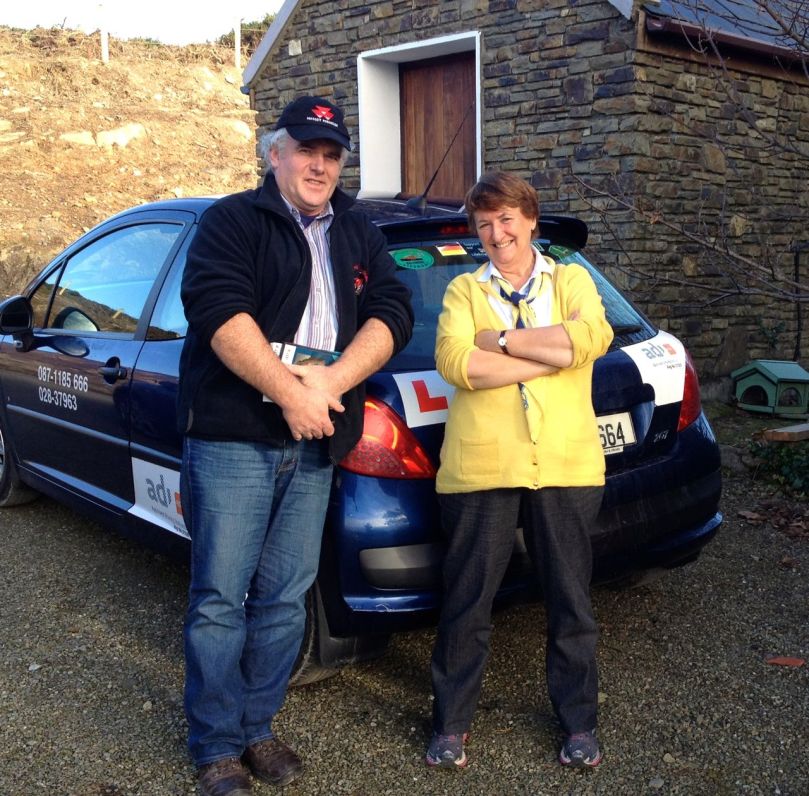
There was one bright spot in all of this – my driving instructor, Frank O’Driscoll. Having spent years driving big rigs all over Europe, and huge buses around the tiny West Cork roads, there’s nothing about driving that Frank hasn’t seen or done. Sympathising with my plight, he nevertheless gently prodded me through the lessons in sequence and encouraged me to just get on with it. An hour and a half in the car with Frank wasn’t just about driving, though. He has a great tenor voice and on the long straight stretches we roared our way through Come By The Hills or The Fields of Athenry, punctuated by snatches of poetry or by snippets of local history. Back at the house Robert put the kettle on and we settled down to tea and laughter as Frank filled in the log book and entertained us with his West Cork wit and stories.

Frank – if you’re reading this – I almost miss my driving lessons!

Frank O'Driscoll - instructor par excellence

Frank O’Driscoll – instructor par excellence

A Week in Clare

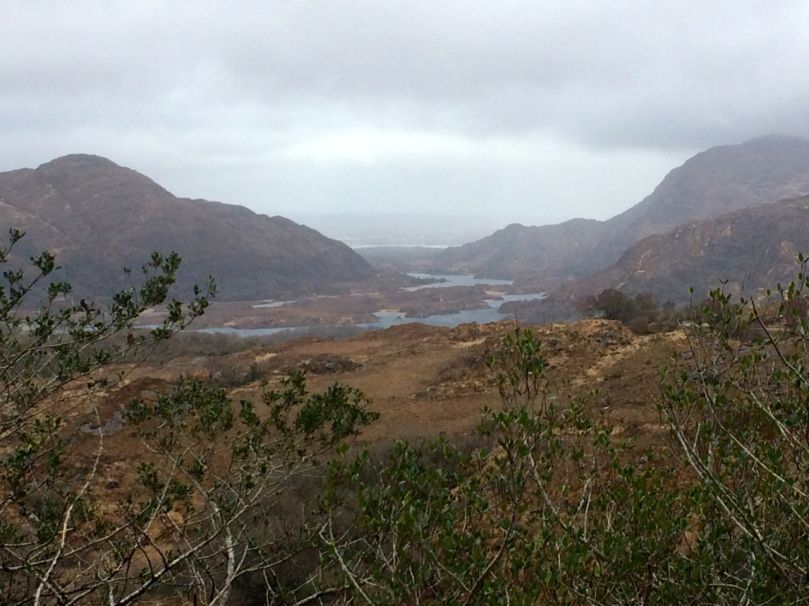
Even on a cloudy day, the Lakes of Killarney are breathtaking

Even on a cloudy day, the Lakes of Killarney are breathtaking

From West Cork, the whole of the southwest of Ireland is within easy reach. Killarney is an hour and half straight north, through magnificent mountain scenery. Another hour brings you to Tarbert, on the banks of the Shannon Estuary. Take the ferry across to Killimer, and you’re in County Clare. For the trip last week, our lodging was a beautiful holiday home in Liscannor, owned by a generous friend. It’s about half way up the County, right beside the famous Cliffs of Moher – an ideal base for exploring Clare.

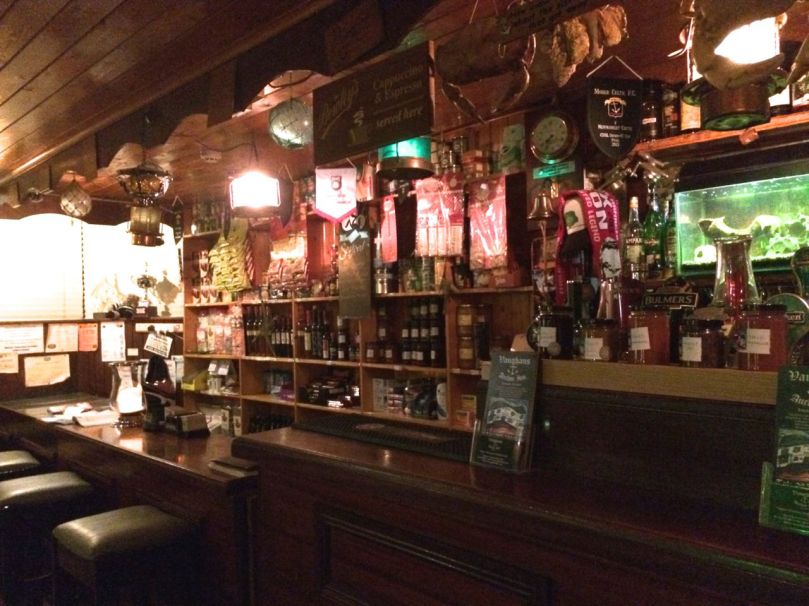
Anchor Inn, Liscannor. Best food in Clare!

Anchor Inn, Liscannor. Best food in Clare! This is the bar/grocery section.

While Robert attended the annual Noel Hill Concertina School I became a tourist. Clare is an astoundingly fertile area for geography, history, archaeology and culture and a wonderful place to spend time exploring with a map and guide book. I highly recommend The Burren and the Aran Islands: Exploring the Archaeology, by Carleton Jones – one of the best guides of its kind I have ever used. I was also lucky to have met a new friend online recently, Susan Byron, and in Clare I met her in person. The brains behind Ireland’s Hidden Gems, she gave me all kinds of great advice, along with lashings of tea and apple pie, about how to spend my time here.

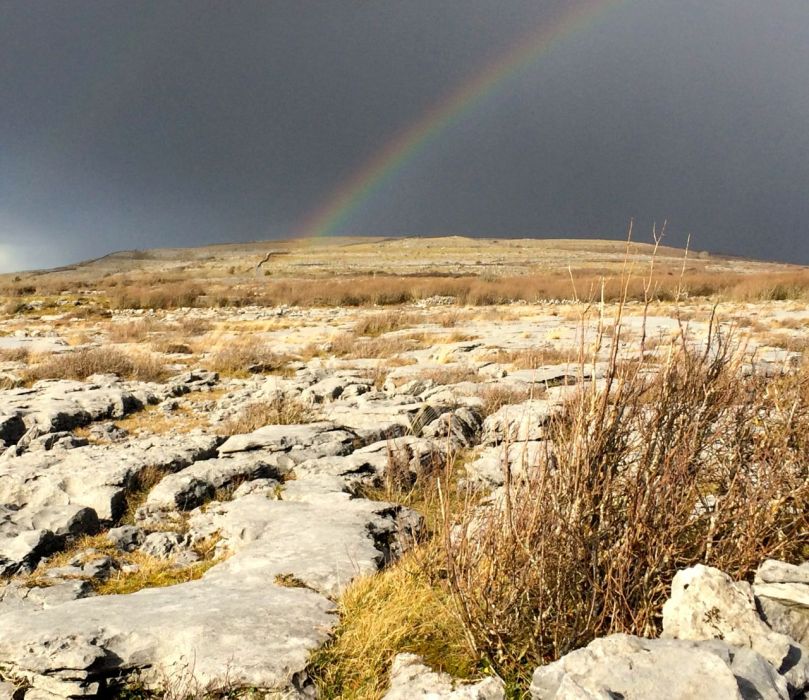
Burren Landscape

Burren Landscape

For this visit, I confined my travels more or less to the area known as The Burren, which occupies the northern third of the county. It is a striking landscape of bare limestone hills – a karst formation full of caves and limestone ‘pavements’ and home to many species of rare and colourful wildflowers. No flowers yet – it’s still too cold. Too cold for other tourists too, so I had most places to myself. It rained and it hailed and the winds blew mightily, but in between the sun shone enough to imagine it was really spring. And if I got too cold, well, I retreated to the nearest friendly pub with a roaring fire and a pot of tea.

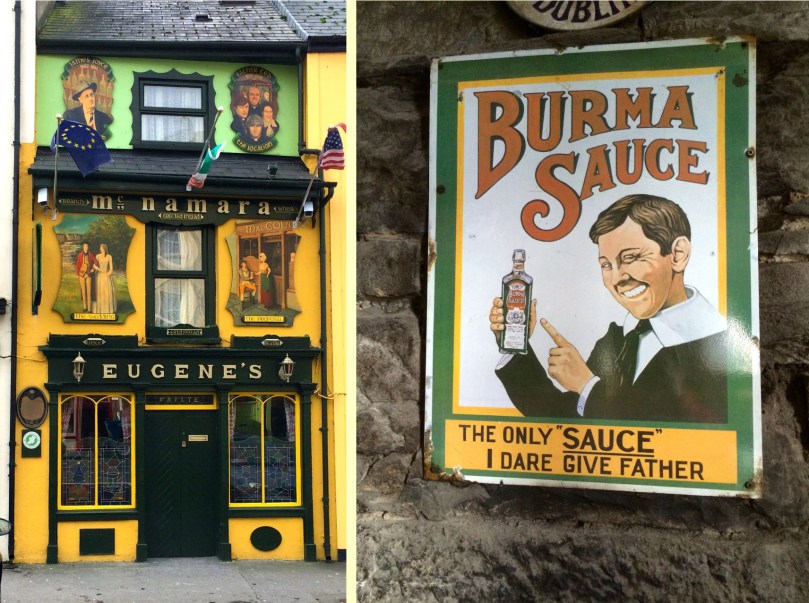
Eugene's Pub in Ennistymon/old ad in Valughan's in Kilfenora

Eugene’s Pub in Ennistymon/old ad in Vaughan’s in Kilfenora

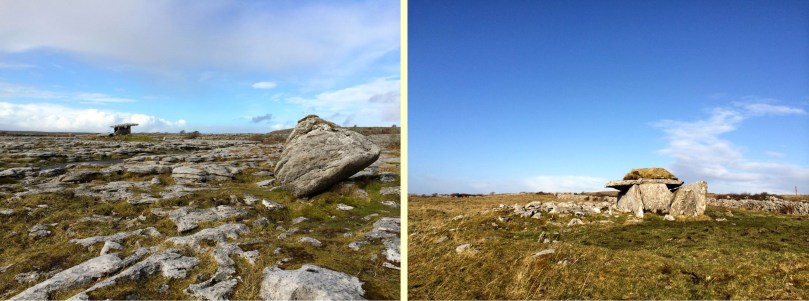
The photographs I have chosen are a small selection of the sites I visited. One of the most iconic of all irish prehistoric sites is Poulnabrone portal tomb (what used to be called a dolmen). I don’t think it’s possible to take a bad photograph of it. Not too far away is Parknabinnia wedge tomb, another example of a neolithic stone monument. In researching this one on the internet I came across a recording on the excellent Voices From the Dawn site of an interview with 88 year old Paul Keane. Mr Keane’s story, familiar to us all over Ireland, illustrates how the beliefs of country people have kept these sites safe from depredation over many centuries.

Poulnabrone and Parknabinnia

Poulnabrone and Parknabinnia

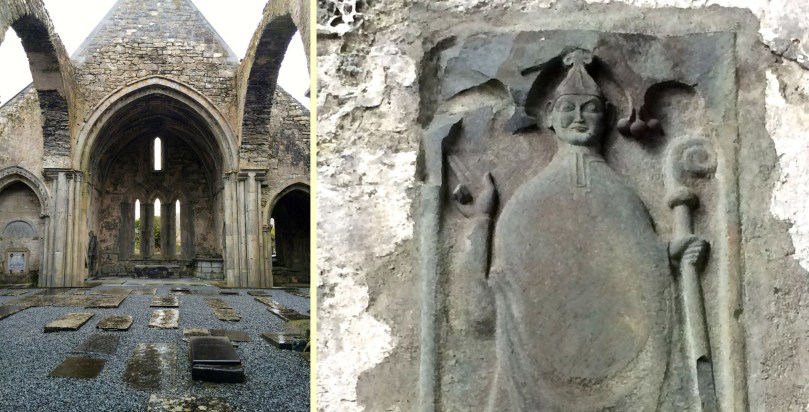
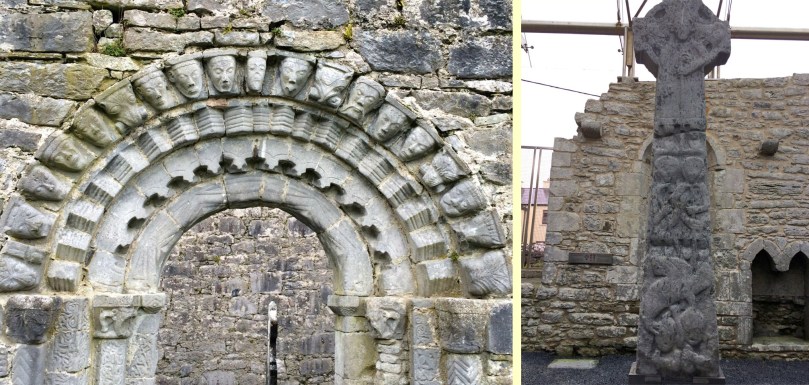
Medieval ruins abound in Clare. I went twice to Corcomroe to admire the stonework, to Dysert O’Dea (one of the most impressive Hiberno-Romanesque doorways I have ever seen, ruined abbey, round tower, an unusual high cross and 15th century castle) and Kilfenora, where the crosses are stored in the ruined church under a glass roof.

Corcomroe Abbey. 13th Century Cistercian Monastery

Corcomroe Abbey, 13th Century Cistercian Monastery

I also took in, although I have not illustrated, a church in Killinaboys with a sheelenagig (more on sheelanagigs in an upcoming post) and one in Noughaval to view the ‘cyclopean’ masonry. I spent a fruitless couple of hours, as the light was fading, trying to find a way to visit a particular stone cashel but had to give up – there’s lots to see but not everything is signposted, close to a road, or down a grassy boreen.

Dysert O'Dea and Kilfenora

Dysert O’Dea and Kilfenora

Robert has written about the incredible music scene we were part of in Clare, something that is also accessible to anyone who visits. The wonders of Ireland- no matter where you go, there’s so much to do and see! If you’re coming, try to fit in some time in Clare.

Finally – a piece of whimsy. Indulge me….

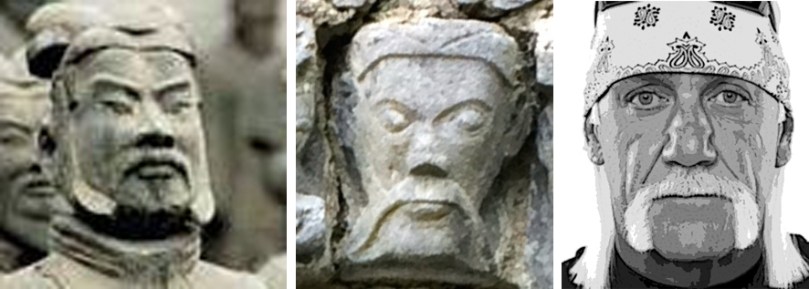
First century BC Chinese head from the Terracotta Warriers; 12th Century Irish head from the Dysert O’Dea Romanesque doorway; 21st Century American head from Wrestlemania.

Just sayin’…

Dysert Fu1

The Clare Trumpet

The Clareman's Trumpet - two fine modern concertinas, by Wim Wakker (left) and Colin Dipper (right)

Two fine modern concertinas, by Wim Wakker (left) and Colin Dipper (right)

We went to Ballyvaghan, County Clare so that I could take part in the Concertina School run by Maestro of that instrument – and Clare man – Noel Hill. I have played concertinas for over 40 years but never in the ‘Irish’ style: here I am in Ireland so – in my seventh decade – it’s back to school for me! The concertina – a small squeezebox – has a long history in Clare, and in Ireland. It was pioneered by an Englishman, Charles Wheatstone, in the 1800s. Wheatstone’s real fame came as co-inventor – with William Cooke – of the electric telegraph which was arguably the forerunner of all our present day telecommunication systems (so thank you, Wheatstone, for my iPhone) but he was also prolific in his invention and improvement of many other devices, including musical ones. He took the Mundharmoniker – a German metal-reeded mouth blown instrument and turned it into the mouth-organ we know today; he then used the metal reeds and leather bellows to develop the concertina itself, a very portable instrument which has a tone and range similar to the violin. High quality concertinas bearing the Wheatstone name are still being made, as are many others, but it was the ability to mass produce these instruments at a low cost (far lower than the fiddle) which ensured their popularity in Victorian drawing rooms and in ale houses, dance halls and kitchens.

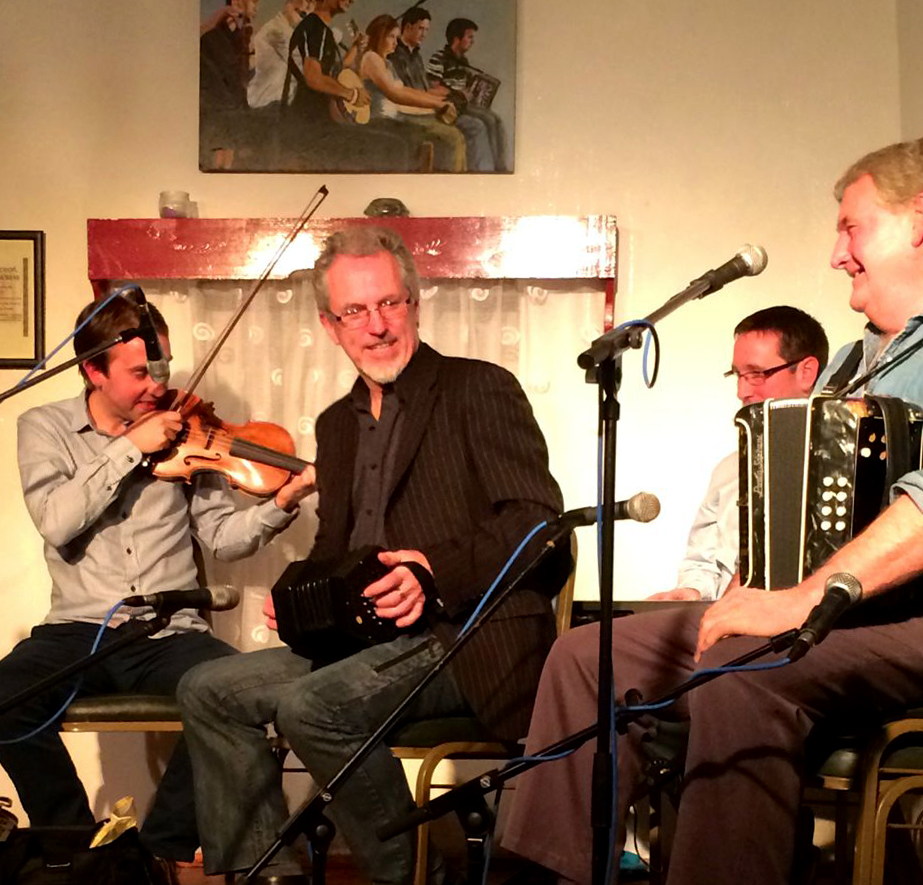
Noel Hill and Seamus Begley give a rousing finale to the Corofin Festival in Clare 2014

Noel Hill and Seamus Begley give a rousing finale to the Corofin Festival in Clare 2014

The concertina can be loud: the smaller the area of the bellows on a squeezebox, the more powerful the pressure that can be exerted on the steel reeds. Consequently the instrument has a very bright tone which carries above most others and is therefore ideal for accompanying dances in noisy rooms – or certainly was, before the days of amplification. Imagine a flag-stoned floor in a parlour or outhouse with a lively Irish set in full swing: the sound must have been fairly overwhelming, and it needed a loud instrument to be heard above the melee. Clare was and is a musical county, and gatherings for dancing (and socialising and matchmaking) were a major past-time in rural districts. The concertina was a boon on these occasions and is now an instrument forever associated with the area and its musicians. Because of its volume and its strident possibilities, the concertina has become known as ‘the Clareman’s Trumpet’.

old bog road music

I could write a whole post on the many varieties of concertina which have been developed since Charles Wheatstone took out his patent in 1829. Suffice it to say that you are likely to encounter only two types in your normal travels: the English Concertina – where each button plays the same note regardless of which direction you are moving the bellows – and the Anglo Concertina – where each button gives you two different notes: one on the push and another on the pull – similar in principle to the modern mouth organ. My instrument is the Anglo, and this is also the one most commonly (but not exclusively) found today in Irish Traditional Music.

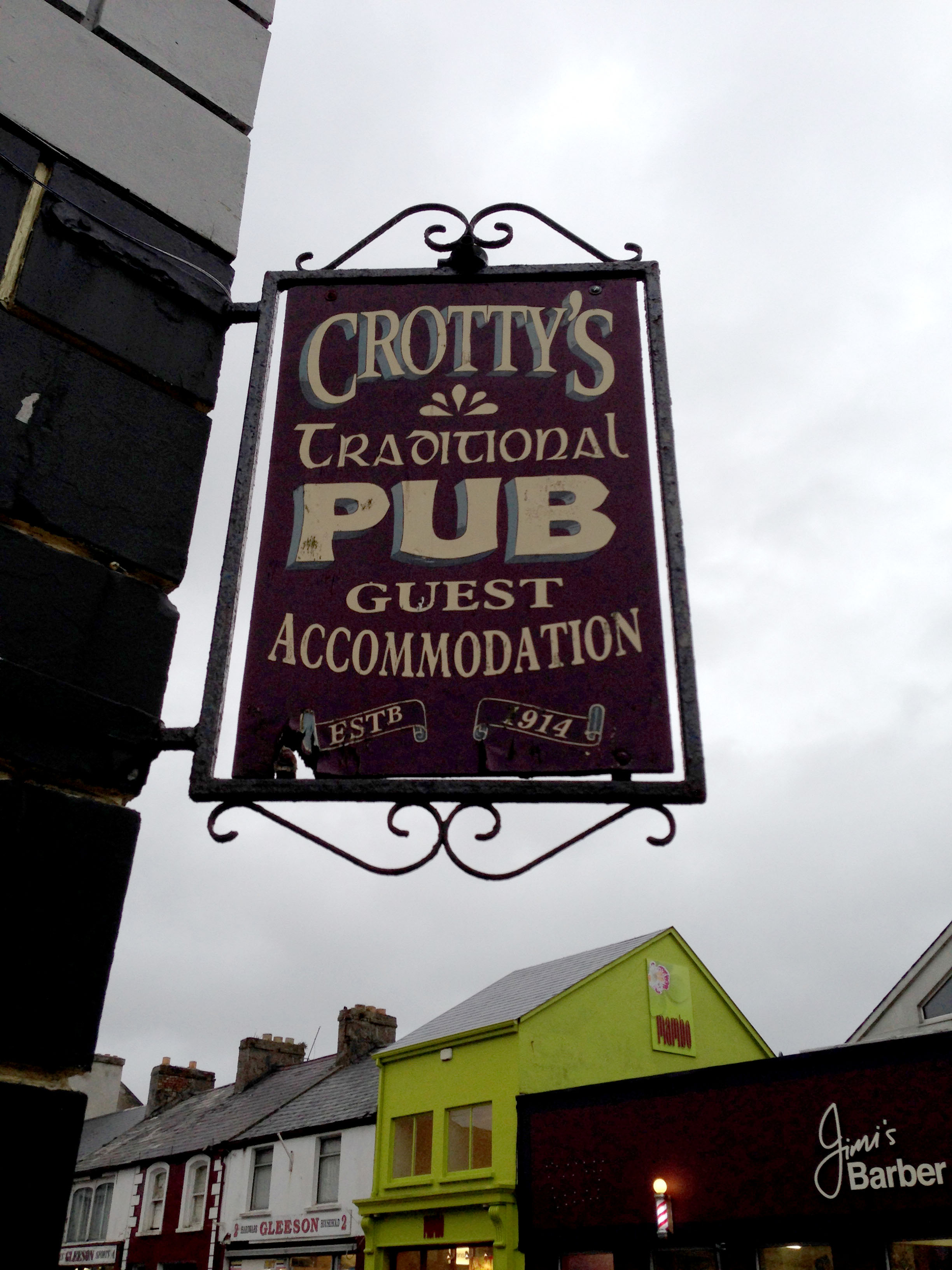
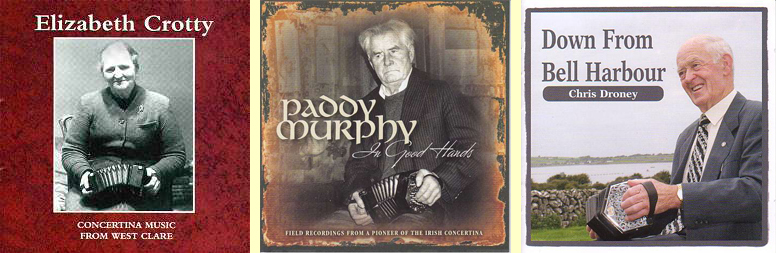
pub signNo mention of the concertina in Clare would be complete without a note on Mrs Elizabeth Crotty of Kilrush. She lived between 1885 and 1960 and was famous in her day as an Anglo player. Crotty’s pub is still there in Kilrush, and still in the family. I went there on my first visit to Ireland almost exactly 40 years ago. Mrs Crotty’s memory had not faded then. I played in the pub on that visit and was told (by her daughter) that this was the first music that had been heard in the pub since the First Lady of the Concertina had died. It’s a different matter today: there is live traditional music most nights in Crotty’s, and in so many other establishments all over the county. More Clare concertina names include Paddy Murphy (who I was fortunate enough to meet and hear at a wild and remote session on that first visit), Chris Droney of Bell Harbour, still playing in his eighties, and many another.

cds

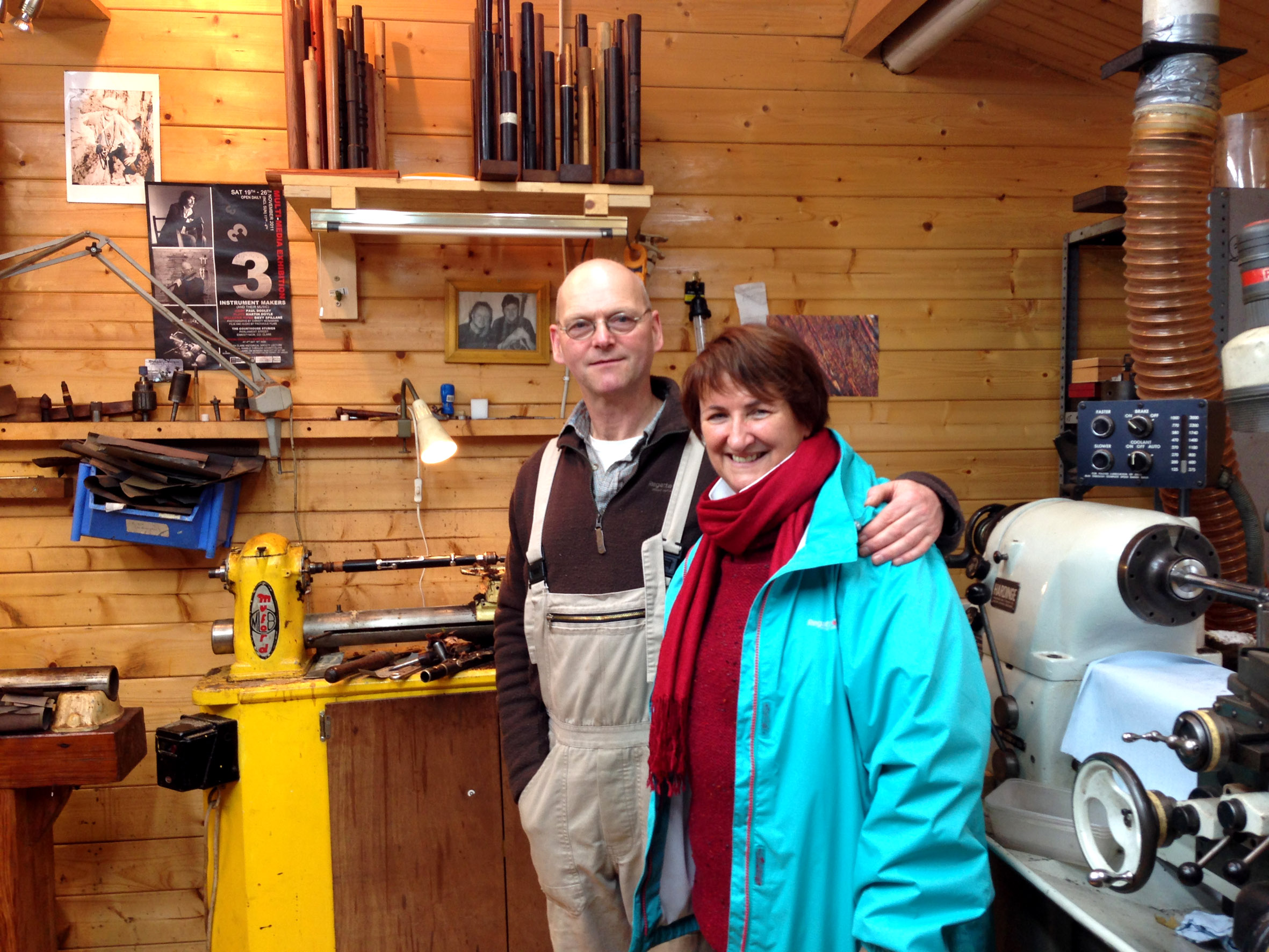
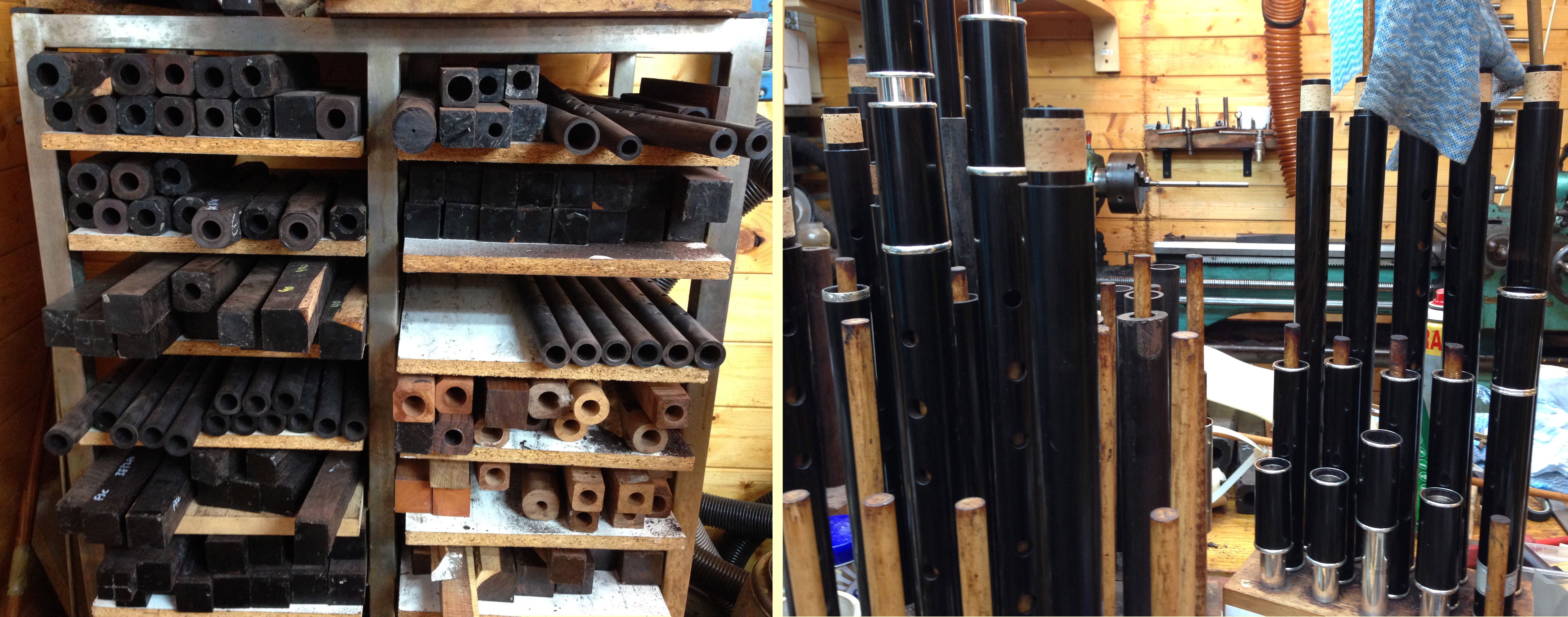
But Clare’s musical connections are not limited to the concertina: as we travelled around we became very aware of how important is music in all its varieties in this windswept, largely treeless but peculiarly beautiful part of the island. There are instrument makers: Finola grew up with Martin Doyle in Bray: he’s now one of the top producers of hand-made wooden flutes in the world! We visited his workshop – a well-equipped timber shed on the edge of the Burren. It was a great reunion: while the stories were in full flow in walked Christy Barry, renowned traditional flute player – also a Clare native, to join the chat.

Friends from school: Clare flutemaker Martin Doyle with Finola

Friends from childhood: Clare flutemaker Martin Doyle with Finola

Raw material - and traditional Irish flutes in the making

Raw material – and traditional Irish flutes in the making

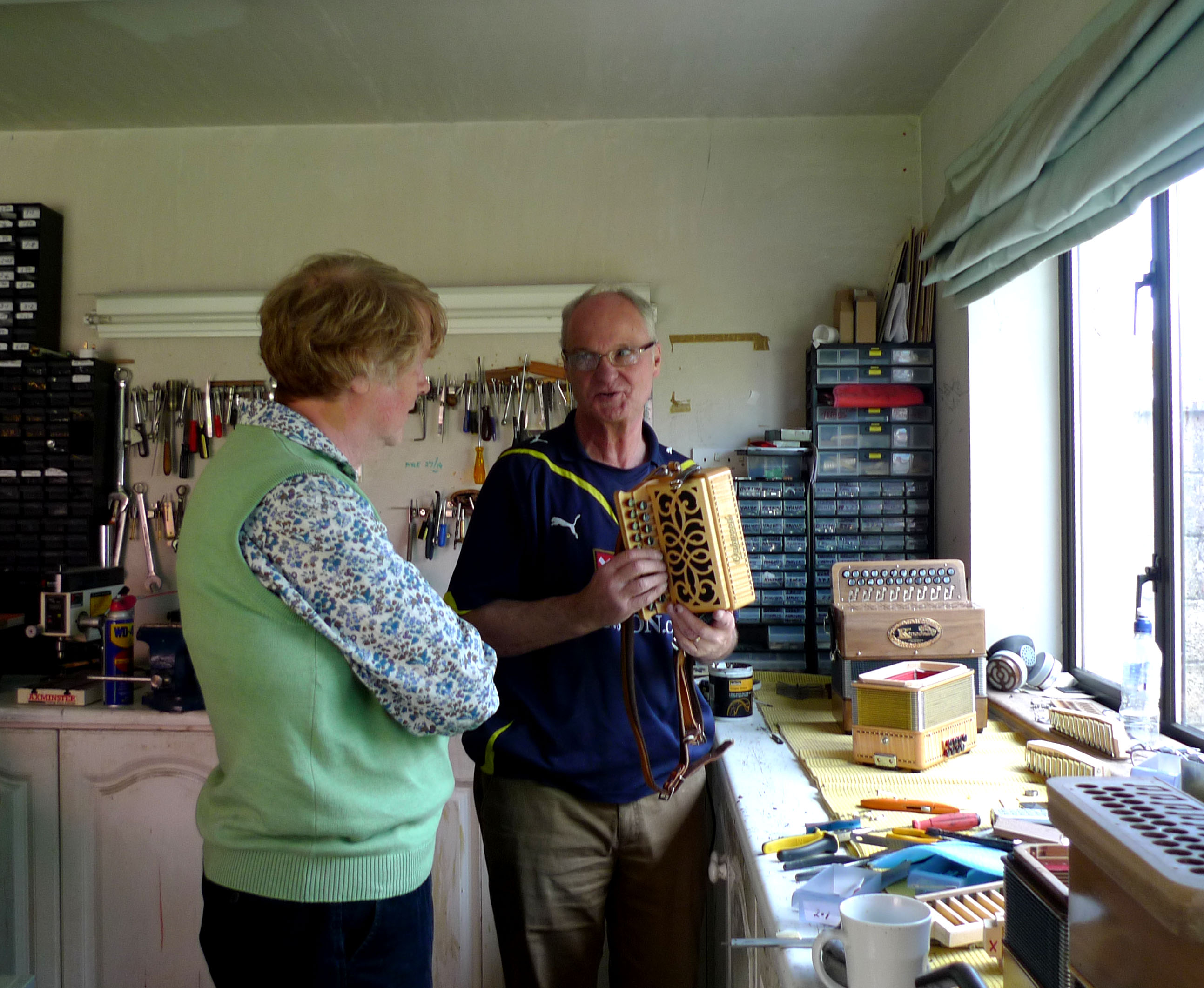
I mustn’t forget Martin Connolly, first class button accordion maker from Ennis, nor my all-time Irish music hero Martin Hayes (perhaps there’s something about the name Martin?) renowned fiddler and Director of the Masters of Tradition Festival every year down here in West Cork: he hales from East Clare.

Martin Connolloy - Clare accordion maker

Martin Connolloy – Clare accordion maker

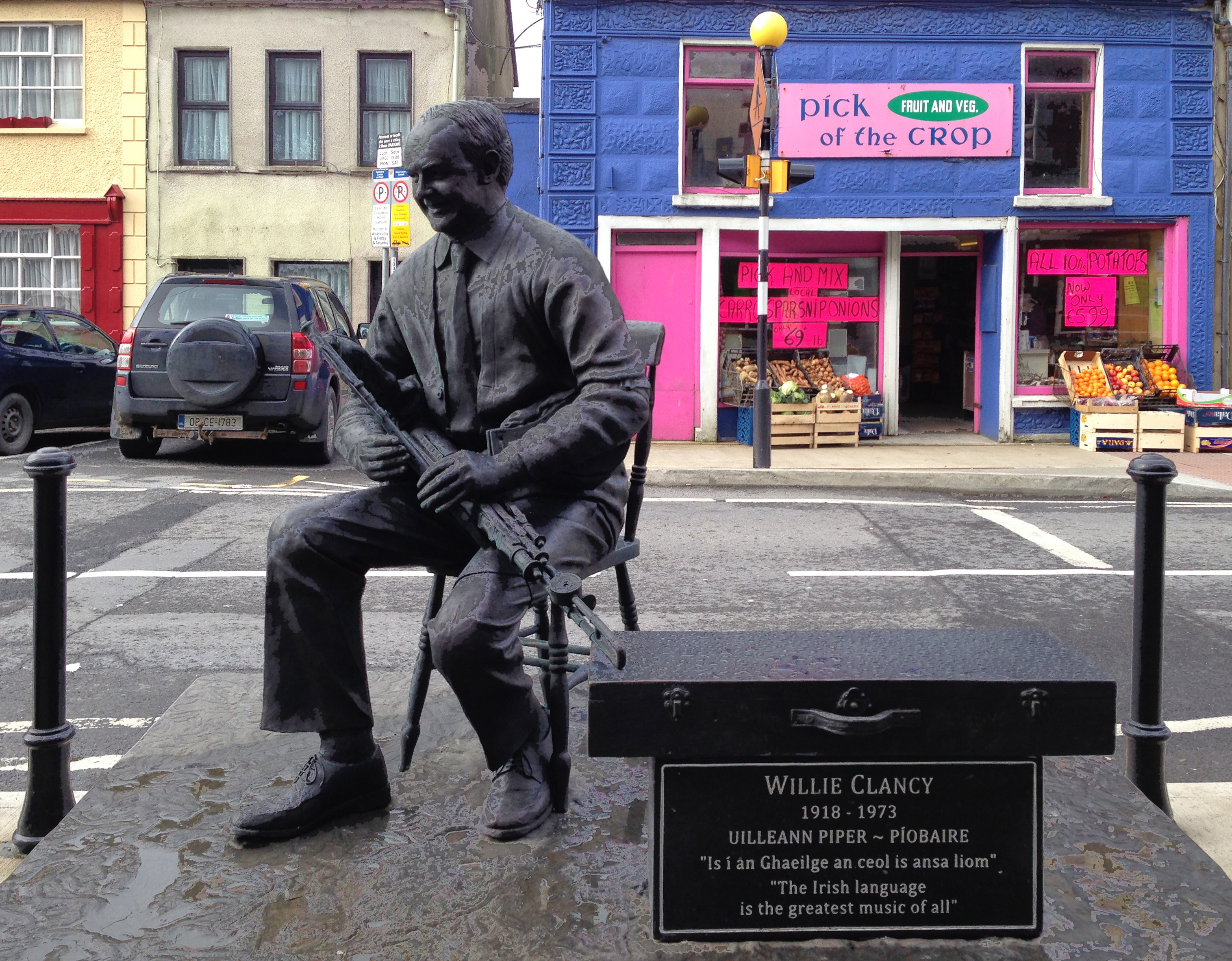
The roll call is endless, but perhaps pride of place (for now) should go to Willie Clancy, not a concertina player but a master of the Uillean Pipes. He has made famous the name of his home town, Milltown Malbay, where they have honoured him with a fine bronze statue. Every year in July around 10,000 people descend on the small West Clare town and swell its normal population tenfold. There are workshops, classes and concerts but, most of all, there is just constant music – in pubs and cafes, and on every street corner: the craic is mighty!

willie