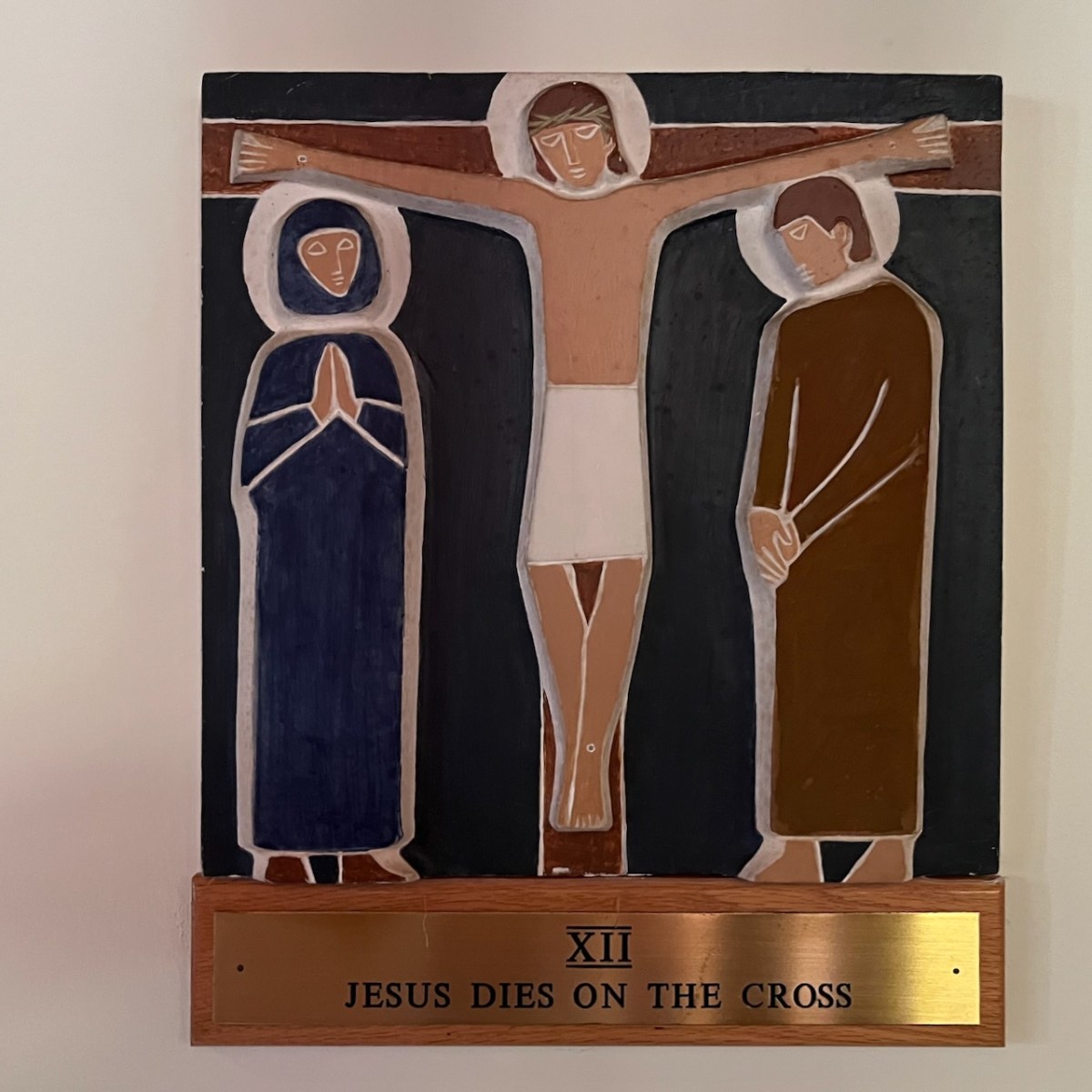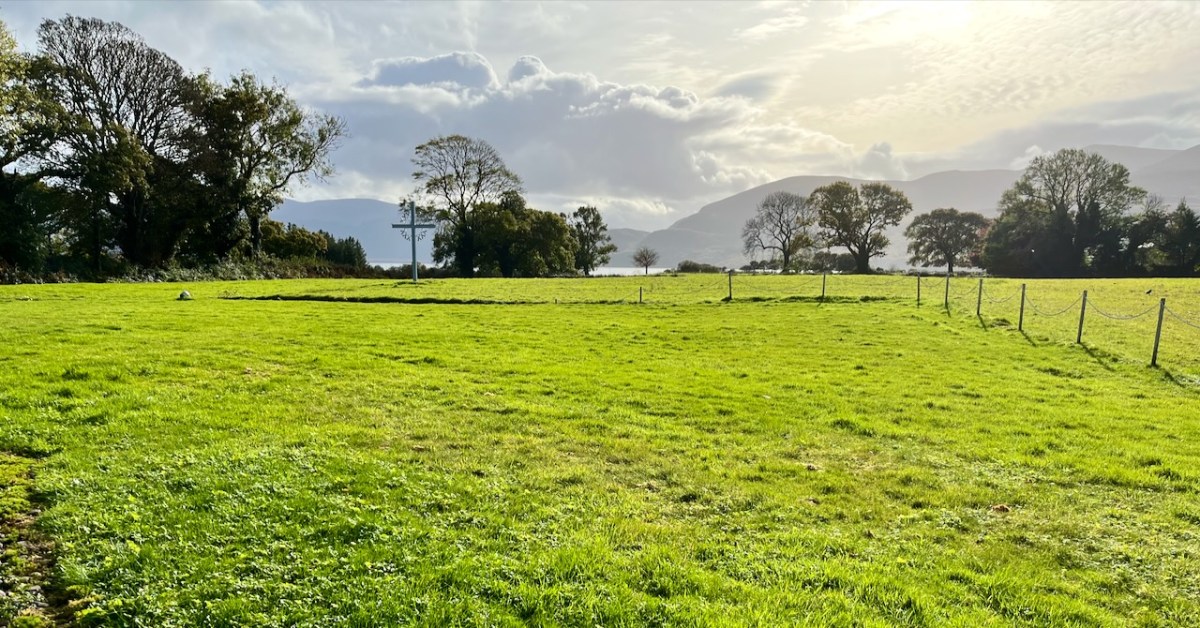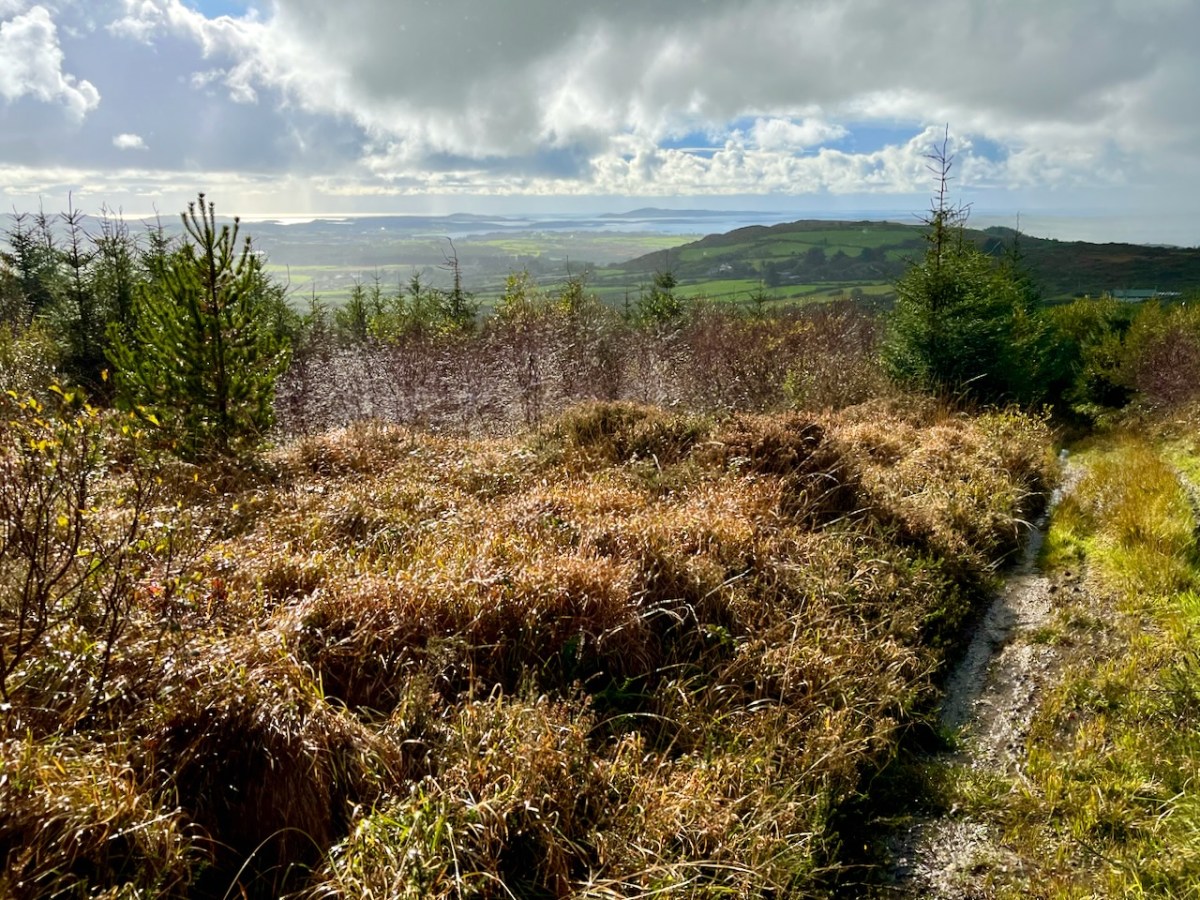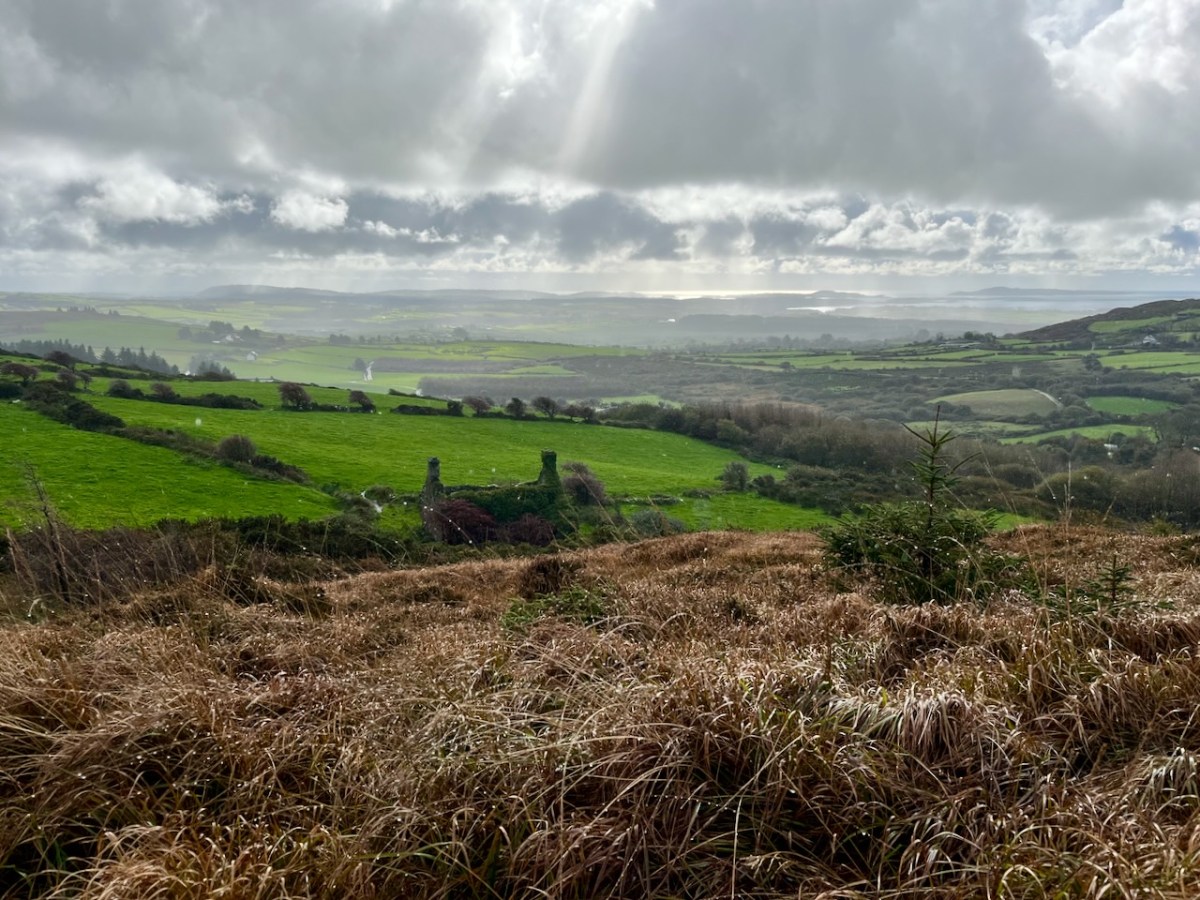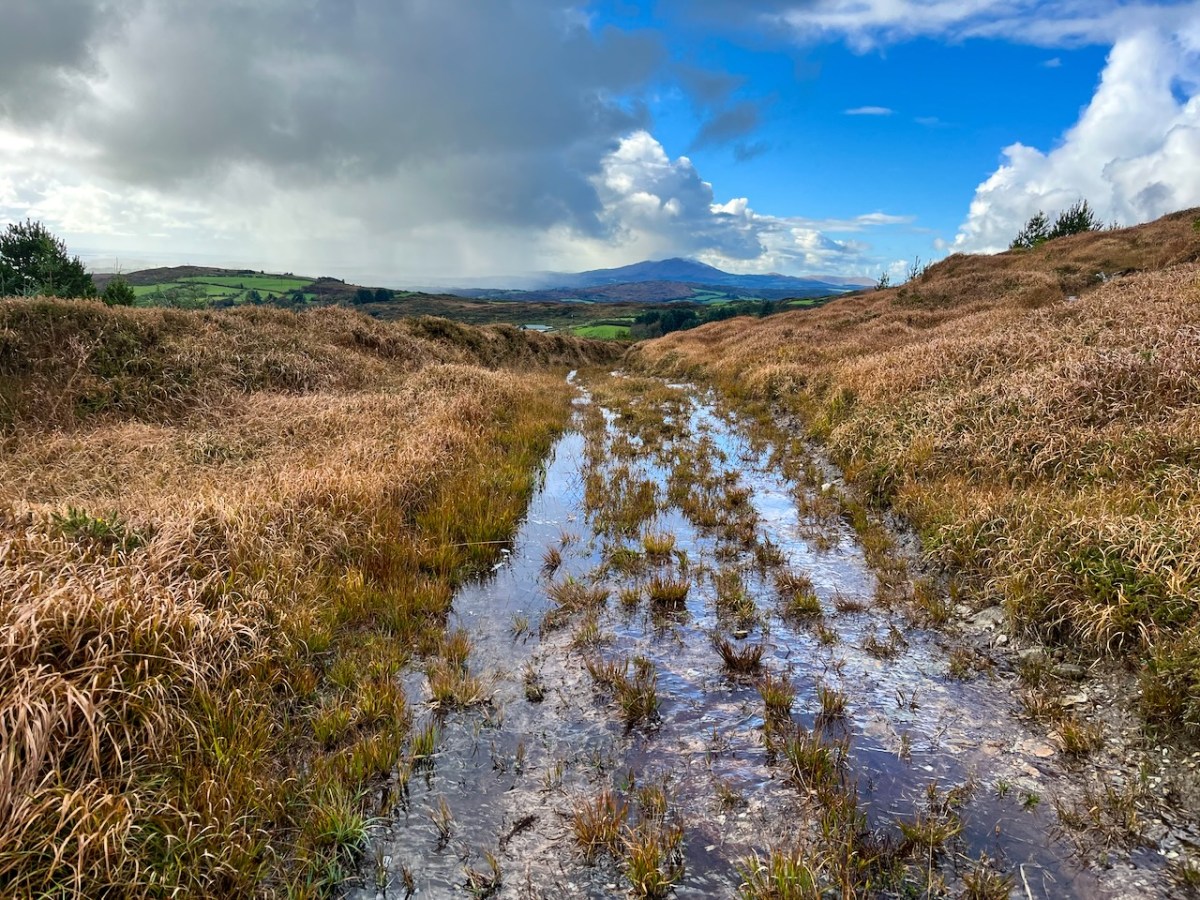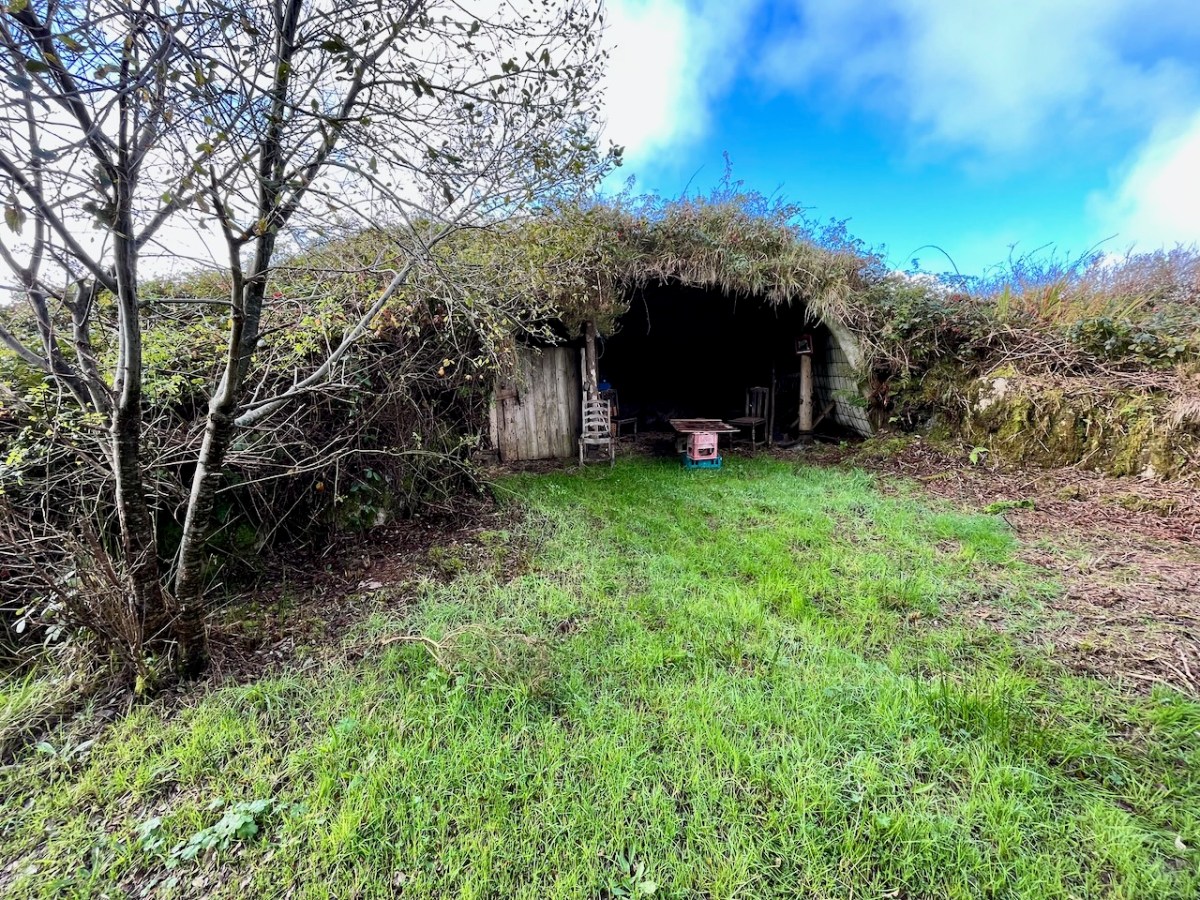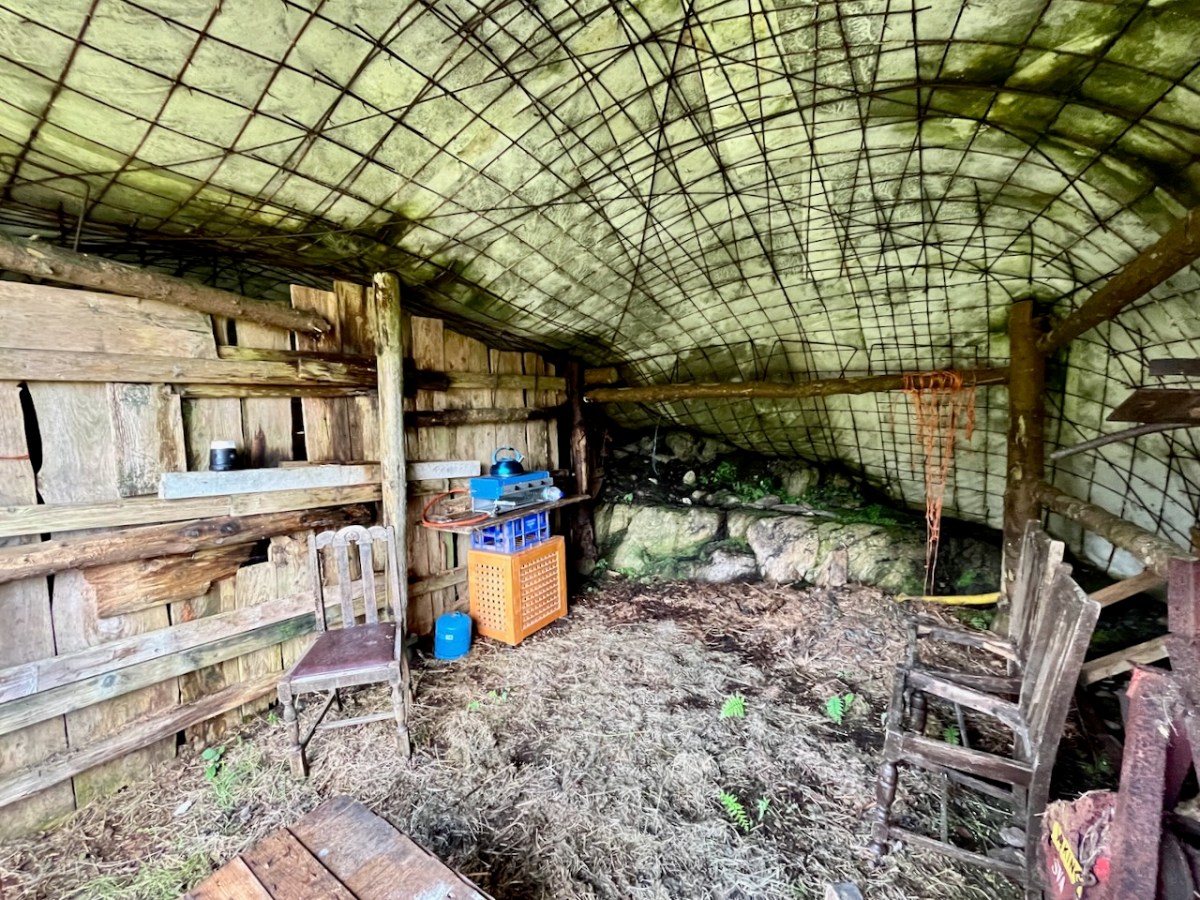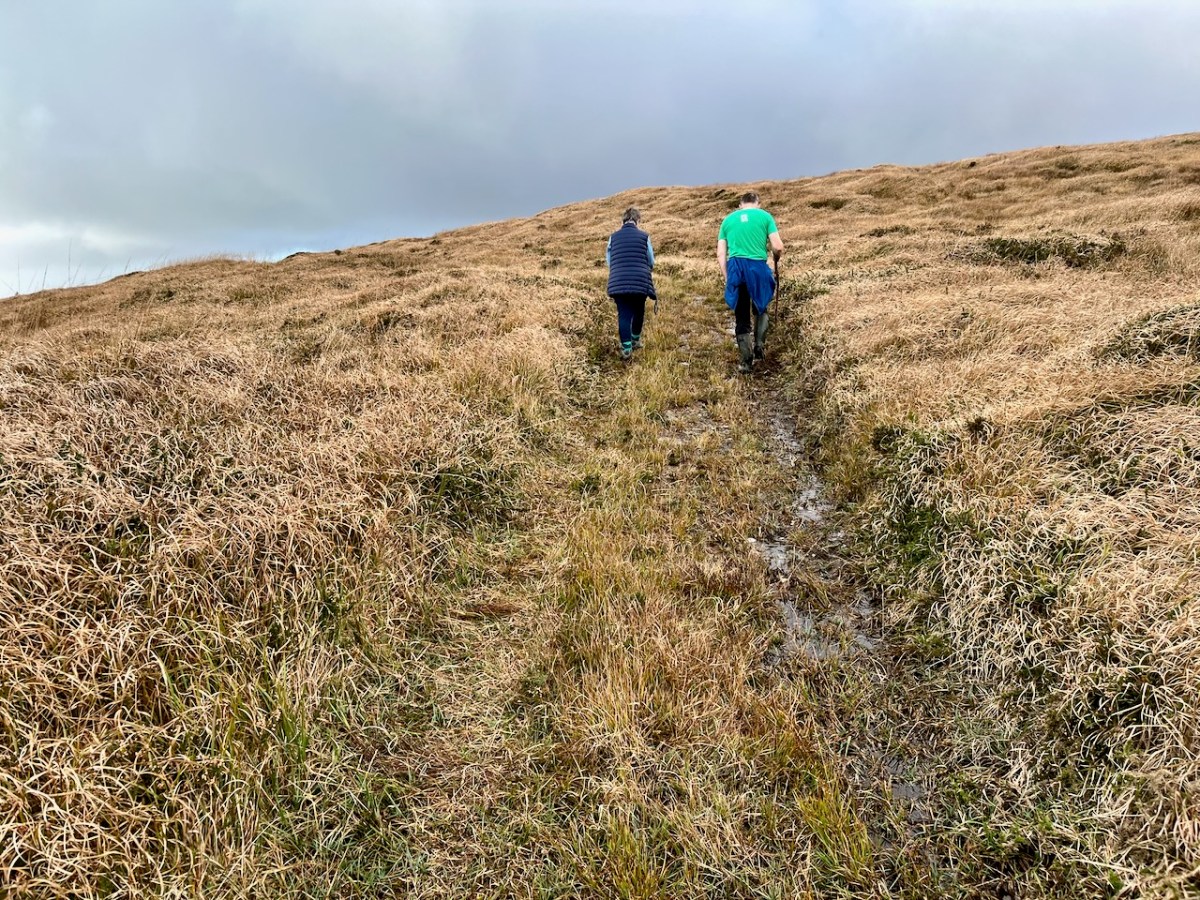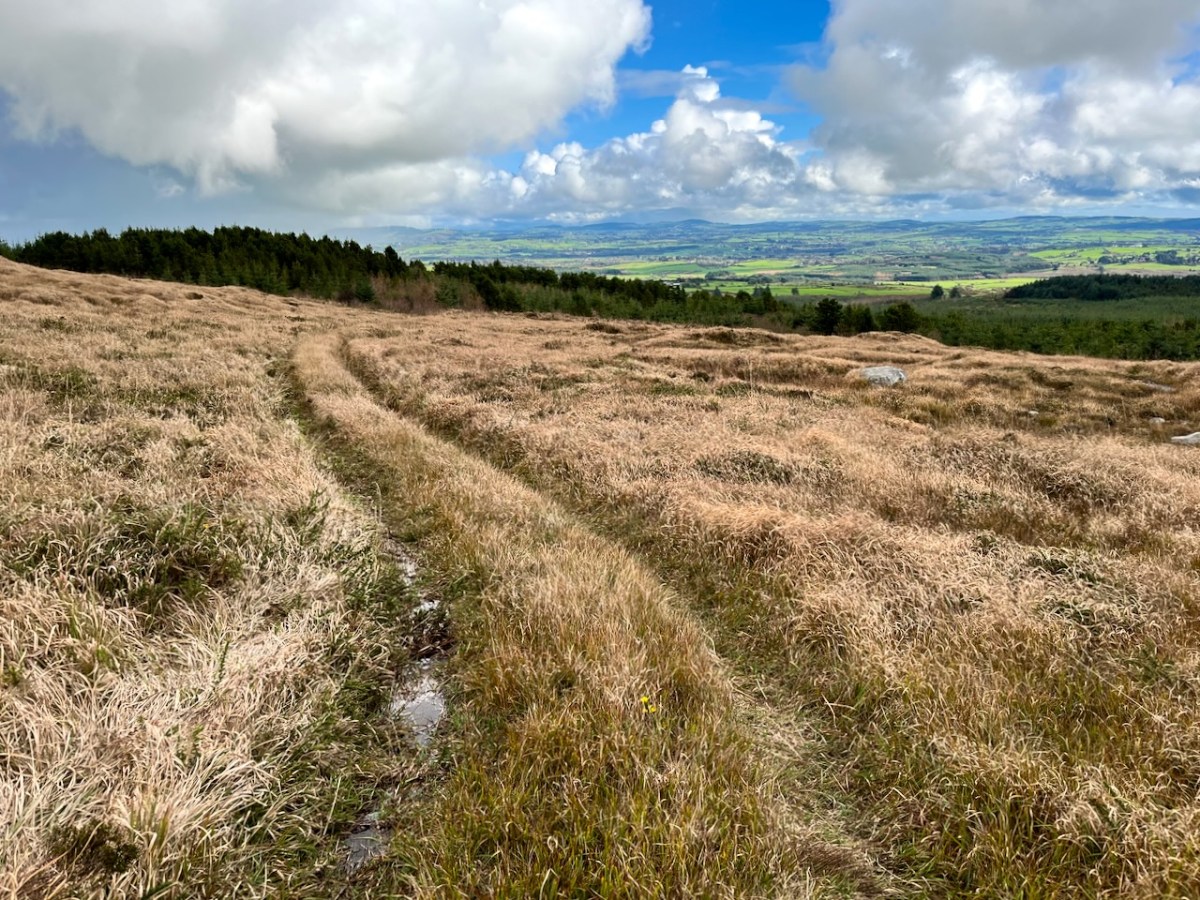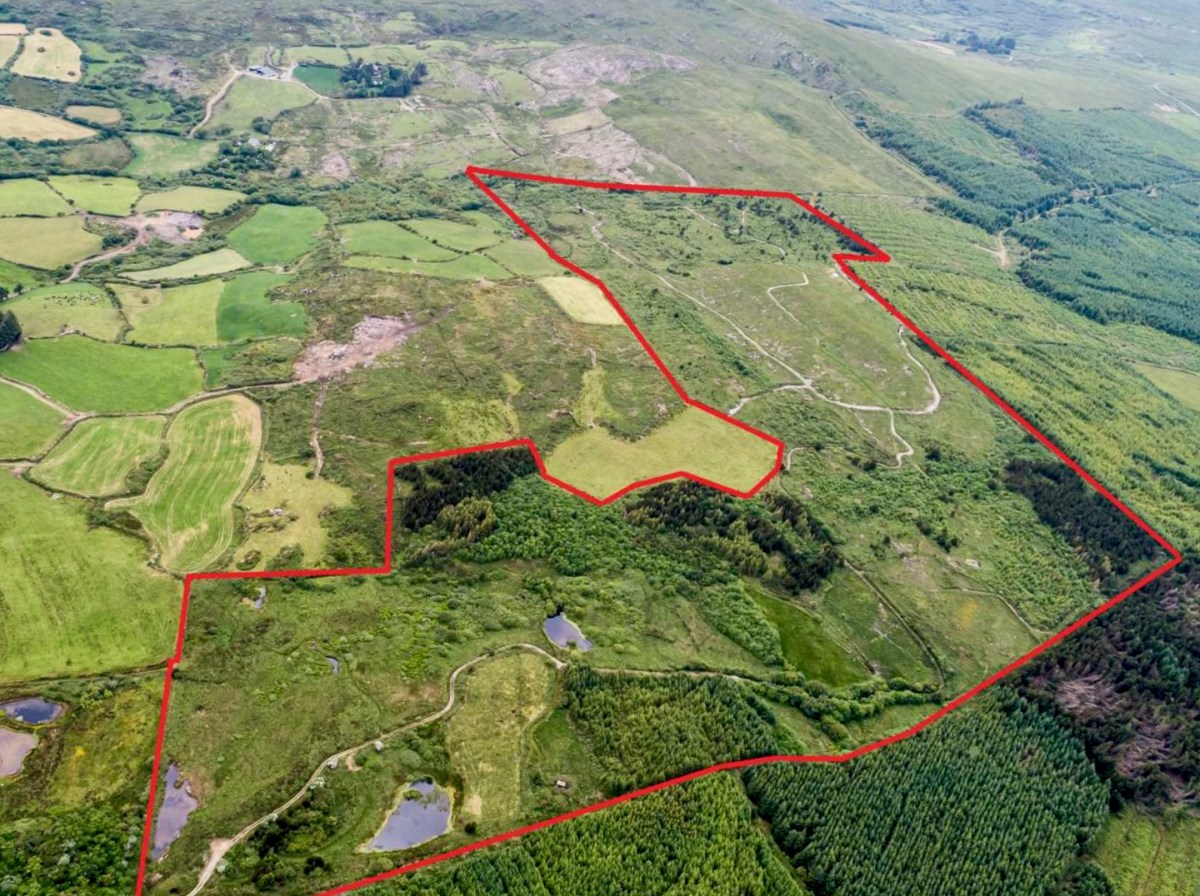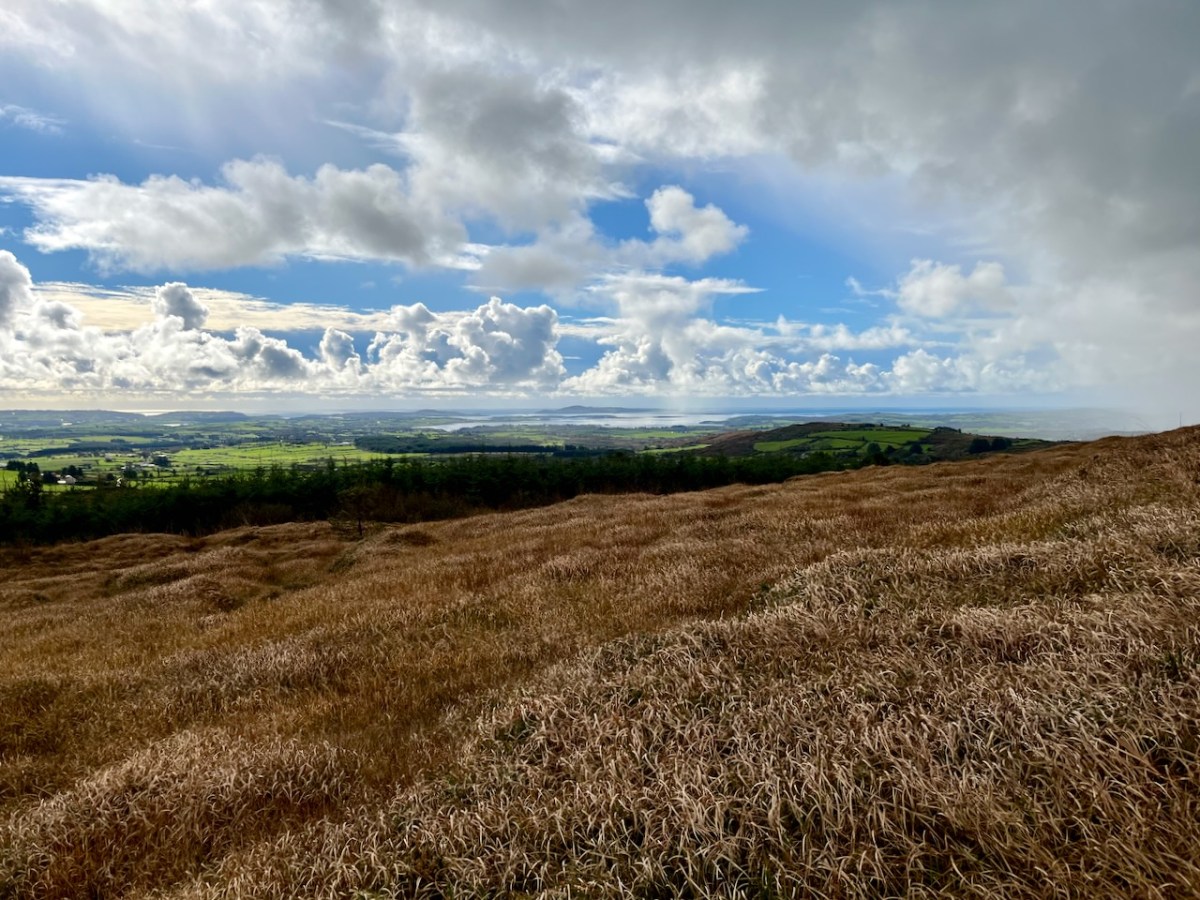
During the Ballydehob Summer Festival this year the organisers scheduled a Walk to the Wedge Tomb. A lovely group signed up and we made our way up the newly-cleared path.
This wedge tomb, in the townland of Kilbronogue, is close to where we live. We were introduced to it way back in 2015 by the owner of the land, Stevie Lynch – see this post for an account of that meeting, and for more about wedge tombs in general. At that time, Stevie also brought us to a previously-unrecorded cupmarked stone on his land (below), which we subsequently submitted to the National Monuments records.
Stevie’s attitude to the monuments on his land was exemplary. He promised that no harm would ever come to them while he was alive. “These ancient monuments don’t belong to me,” he told us, “they belong to everyone.” In that instant he became our Heritage Hero, and we loved seeing him at the Ballydehob Talks at the Vaults, which dealt with all aspects of local heritage.
Sadly, Stevie passed away earlier this year. So this Walk to the Wedge Tomb was an opportunity for all of us to honour the memory of the man who had treasured this megalith and designed a path to it for everyone.
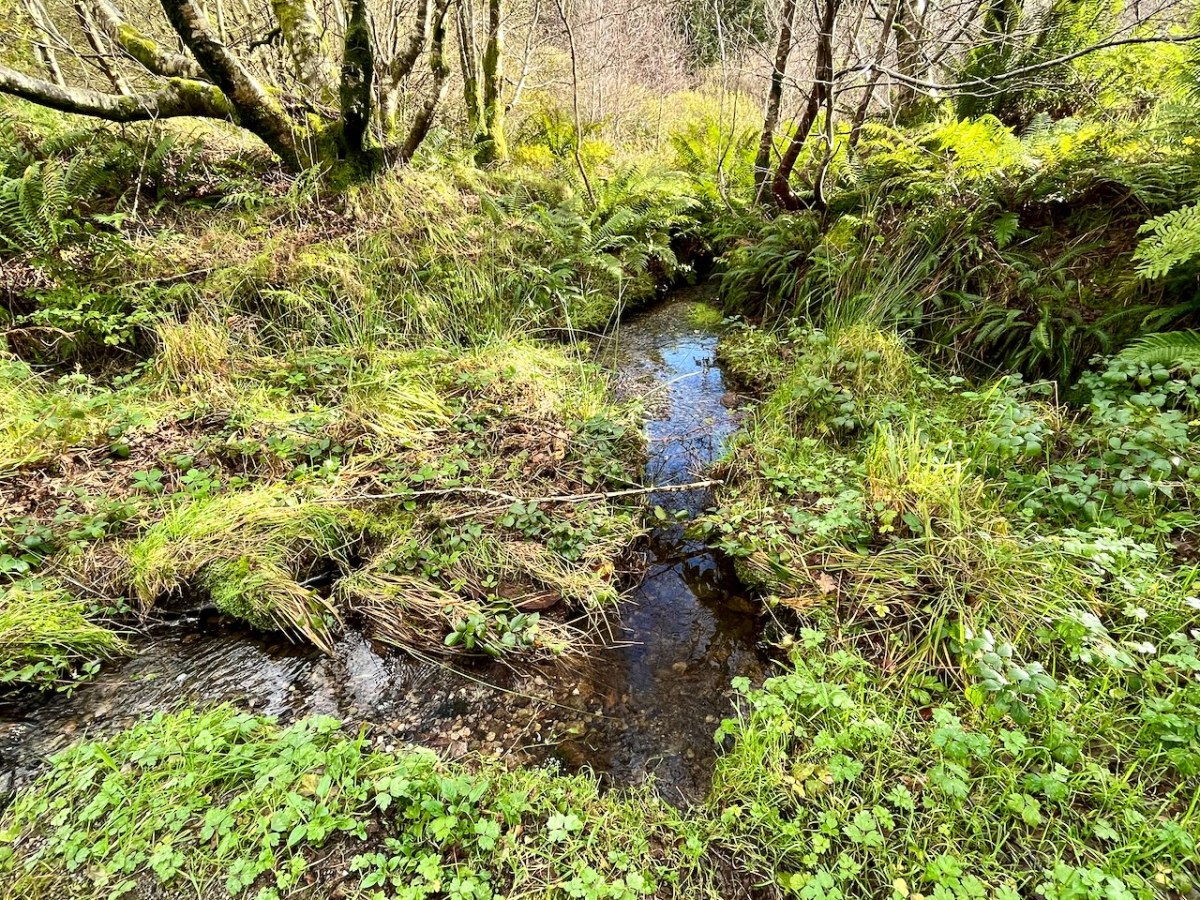
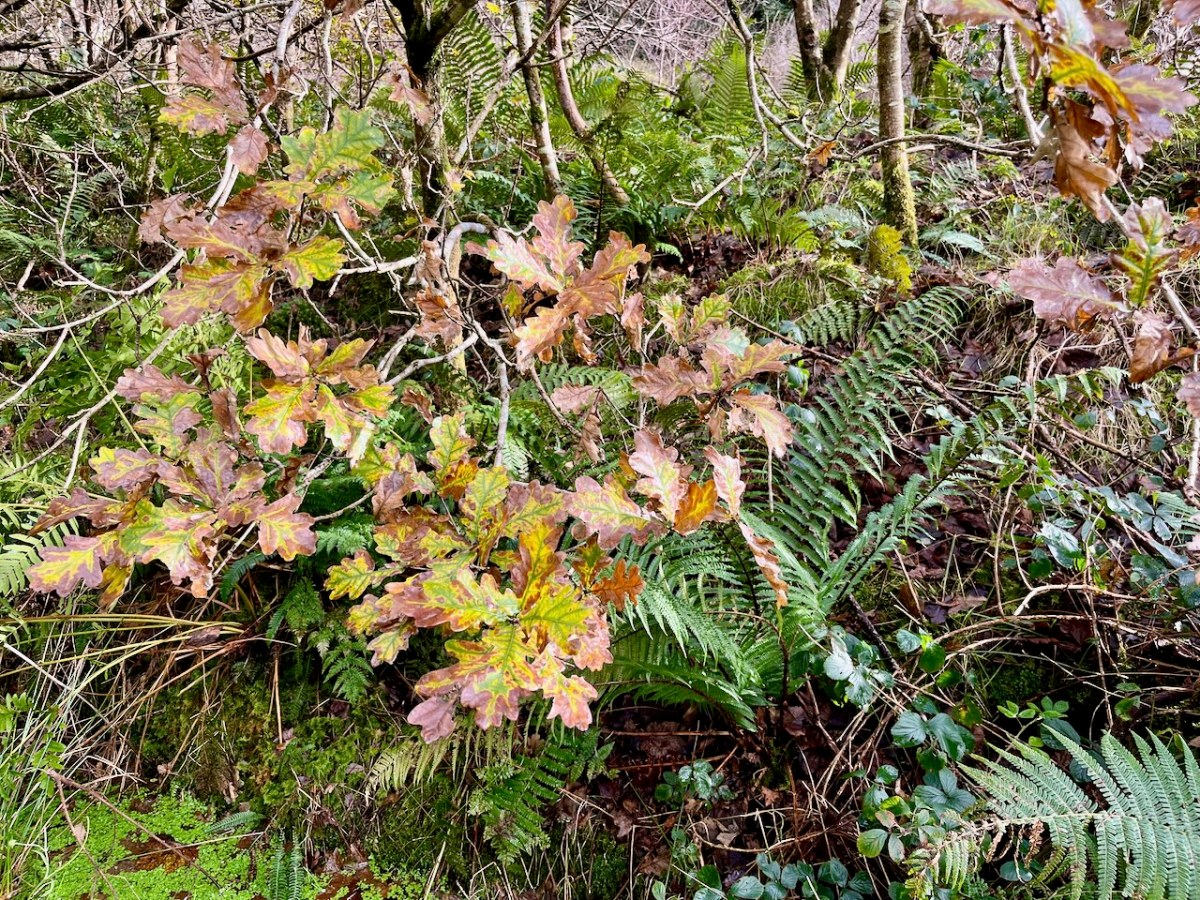
The walk up through Stevie’s plantation of native trees is beautiful. It can get quite overgrown in the summer (above), which only enhances the atmosphere, and it’s actually quite awe-inspiring to emerge at the top to the site of the tomb, sitting in a small glade.
Kilbronogue is a classic wedge tomb, higher and broader at the opening, west, end, and oriented to the west. Some trees have come down, I think, in the last few years, because now there is a clear view to Mount Gabriel from the tomb. I suspect that there is also a view down the Peninsula to the Mizen Peak, although I can’t verify that due to the trees that surround it.
There’s a rock outcrop right behind the tomb (above) and it was probably the source of the stones that built it. Wedges are small megaliths and we can imagine them as the work of a local community or even family group.
The burial rite was cremation, and they generally date to the Early Bronze Age, the time when Mount Gabriel was a source of copper for these early metal workers and farmers.
There is some folklore about it – here’s an extract from the Schools’ Folklore Collection:
There is a Dolmon also in Kielbronogue in a hill which belongs to John ORegan. There is a very big stone on top of three other stones. It weighs one ton. It is said that men lifted it. Some people say that Mass has been celebrated there, and others say a great chieftain of old was buried there.
One of the findings at wedge tomb excavations is that white quartz often features as votive offerings, sometimes in the tomb and often in front of it. We had brought along a bag of white quartz pebbles, and each of us laid a pebble on the tomb as our own small thank you to Stevie, our Heritage Hero.
Castlehaven. – an important record of what the castle looked like before it fell down
In last week’s post, which I called a Trailer, I introduced this Early Irish Photographer. Congrats to Elizabeth and Sean who knew the identity of the mystery man. The photographer was Sir John Joscelyn Coghill, 4th Baronet, uncle to Edith Somerville (Adelaide, Coghill’s sister, was her mother) and father of Neville and Egerton Coghill. Neville was to die a hero’s death at the Battle of Isandlwana during the Zulu wars, and Egerton was to marry his first cousin, Edith’s sister Hildegard.
JJC (as he often styled himself) moved to Castletownsend in 1860, bringing with him a large family and several good-looking sisters, including Adelaide. Edith described him as my Uncle, Sir Joscelyn Coghill, leader of the second wave of invasion, with a photographic camera (the first ever seen in West Carbery) and a tripod. He used all his friends and relations as subjects, including himself (above).
Glen Barahane, originally called Laputa, in honour of Dean Swift who had once visited Castletownshend
By this time he was already an established photographer, although this was only one of his many avocations. He came from a wealthy family and had grown up in Belvedere House, Drumcondra in Dublin. According to his entry in the Dictionary of Irish Biography (DIB):
Coghill . . . took a special interest in photography in the early 1850s, when wet-plate photography and a number of photographic paper processes became available to amateur photographers. He was present at the inaugural meeting of the Dublin Photographic Society (1854–8) on 1 November 1854 and was elected honorary secretary. He served a term as president and three terms as vice-president. In May 1858 the DPS changed its name to the Photographic Society of Ireland and amalgamated with the fine arts section of the RDS.
JJC travelled widely on the continent, writing about his photography trips and offering advice to others (e.g. Seek official permission to photograph public buildings, and, if crowds gather when a camera is taken out, do not show irritation, but encourage them to be your ally rather than your enemy.) He was a staunch defender of photography as art – a hard sell with many traditionalists. From the DIB:
In May 1858 Henry McManus, RHA, headmaster of the school of art in the RDS, delivered a lecture on art in which he pointed out that the artist’s craft could not be superseded by mechanical means. The artist’s hand required the guidance of intelligence, McManus said, and this action could not be imitated by the use of machinery, however ingeniously contrived. Coghill differed with McManus on this occasion, and later in the year (November), when he replied more fully in a lecture at the RDS, Coghill described how photographers should study and reflect on art principles and not be mere servile copyists. He believed that photographers should use their intellect, taste, and judgement on the subject matter in front of the camera lens and so raise their photographic work from the mechanical to the sphere of art.
JJC was an immediate favourite in Castletownshend, along with his brother, Kendal, with whom he was close. They brought with them an interest in spiritualism and infected everyone with it.
Her Coghill uncles Joscelyn and Kendall thrilled her by their psychic feats. On 3 April 1878 she records: “Mother heard from Uncle Jos (Sir Joscelyn Coghill Bart, the head of the family) who was at a grand seance and was levitated, chair and all, until he could touch the ceiling.’ Professor Neville Coghill his grandson has informed me of the tradition that the Baronet signed his name on the ceiling in pencil.
Somerville and Ross, A Biography by Maurice Collis, Faber and Faber 1968
JJC’s daughter, Ethel, Edith’s first cousin and Castletownshend ‘twin’ wrote this about her father:
He was a real peter pan – a boy who never grew up in many ways, full of enthusiasms of all kinds, whether it were yachting, music, painting, writing, acting, photography, spiritualism, speculation – all had their turn and he flung himself into each and all with a fervour that lasted at fever heat for a time. At one time after my mother’s death [1881] he and his brother Kendal took a house in London for some months. To it they brought a considerable amount of the family plate and a presentation set of gold belonging to my uncle, as well as my grandfather’s medals and other valuable things. They left the house for some weeks in charge of two maids, who promptly brought in their young men, cleared the house of nearly all the valuables and had the cheek to order a sumptuous luncheon in my father’s name and a landau in which they went to [the races]. My father was in Ireland when the telegram came to inform him of what had happened. I did not see him for some time afterwards. By then, he had come to look on the thing as a huge joke. Nothing was ever recovered, but he felt as though he had been part of a Sherlock Holmes mystery, and this compensated him for everything he had lost.
Edith Somerville, A Biography by Gifford Lewis. Four Courts Press .2005
The Coghills lived in Glenn Barrahane (no longer there) and the house was the centre of many activities – amateur theatricals, singing, séances, painting expeditions. The Somervilles, his nieces and nephews, adored him and his brother Kendal. He must have had a good relationship also with their father, his brother-in-law, Henry Thomas Somerville, as he often cast him in ‘character studies.’ – Henry, in turn, must have been good-humoured and patient.
But tragedy struck too – Neville was only 26 when he died at Isandlwana in 1879. He was awarded the Victoria Cross posthumously, in 1907. When he died his younger brother, Egerton, became the heir. Originally wealthy, the family’s fortunes suffered several setbacks and most of their fortune was wiped out by bad investments. As Maurice Collis puts it, On 29 November, 1905, at the age of 79, sir Joscelyn Coghill died, and life changed dramatically for Hildegard and Egerton, who inherited the baronetcy and a load of troubles.
Egerton and Hildegard were so hard up they had to wait seven years before they could marry. Egerton died suddenly in London in 1921, and Ireland (and especially West Cork) was in such upheaval that it was many months before his body could be taken home. Read more about Egerton in my Post Harry Clarke, Egerton Coghill and the St Luke Window in Castletownshend. And more about jolly Uncle Kendal inThe Gift of Harry Clarke.
Although far removed from Dublin, JCC chaired “the photographic committee of the Dublin International Exhibition (1865) [and] was credited with the success of the photographic section” (DIB). He continued to exhibit up to the mid-1870s, winning prizes for his photographs. I have included in this post photographs taken by JJC in and around West Cork. They constitute an invaluable record of people and places, taken between 1860 and his death in 1905.
For example, the photo above, detail below, is of a “Squatter’s Hut, in Rineen (the same bridge I featured last week). It’s a fascinating and important image, as it is the only photograph I have ever seen of one of the miserable cabins (known as fourth-class housing), made of sod, in which many of the poorest people lived in West Cork before the Famine.
I am not sure how these photographs arrived into the Getty Museum in Los Angeles, but many of the images are now freely available on their website, copyright-free, and we are grateful for that. You can browse the whole collection for yourself. You can also visit St Barrahane’s Church in Castletownshend and see the fine windows for yourself, including this one by Powells of London, dedicated to JJC and his son, Neville. Can you spot the Victoria Cross?
There are other memorials to JJC in that church too – take a look next time you’re there. I will leave you for now with one of JJC’s landscape photos, of a Glengarriff waterfall – a masterful shot for what was, at that time, quite a difficult subject to capture, moving water.
The importance of West Cork in world history was emphasised today at the Ballydehob Cruinniú na mBád (Meeting of the Boats). This annual event reminds us how busy our quay was back in the day when all the commerce of the village was based on the tidal waters. Finola wrote about the gathering in 2017. But today – 19 August 2023 – I had my eye out for a very particular vessel: Fionnbara.
There she is – above – leaving Rossbrin Harbour today, bound for Ballydehob. And here she is being launched early this morning, using the boatyard’s lifting gear. Many thanks to Jack O’Keeffe – her Skipper – and Anne O’Keeffe for the great photos.
Above: ‘End of the Irish Invasion’ or ‘The Destruction of the French Armada’ by James Gilray 1797 (courtesy of the British Museum)
The boat is a replica – one of many around the world – of a craft which found its way to the shores of Bere Island – in West Cork – in 1796, after a disastrous escapade by the French navy, under the encouragement of Theobald Wolfe Tone of the Society of United Irishmen. A fleet of 43 vessels carrying 14,000 men headed for Bantry Bay intending to invade Ireland and declare it independent from Britain. Severe storms threw the ships off course and into disarray, and the opportunity was lost. During the chaos one of the French ships – La Résolue – lost her masts in a collision. Lt Proteau was sent in a ‘barge’ to find another ship to tow the frigate to safety, but instead he and his crew were driven ashore and captured. The ‘barge’ was taken as a prize of war and handed to the local Irish militia commander, Richard White of Bantry House. There it remained – gently rotting – for 148 years. In 1944 it was despatched to the National Maritime Museum in Dún Laoghaire and – after conservation – is now displayed at the Collins Barracks Museum. The ‘Bantry Bay Boat’, ‘Bantry Skiff’ or ‘Bantry Yole’, as the unusual craft is variously known, has attracted considerable attention and has inspired many boatbuilders to produce copies.
Below: upper – the Bantry Boat being transported from Bantry Railway Station to Dún Laoghaire in 1944; centre – plans of the original craft drawn by Paul Kerrington in 1977; lower – the original Bantry Bay Boat on display in the Collins Barracks Museum today (courtesy History Ireland – article by Lar Joye July/August 2018)
One of these copies is the Fionbarra, which arrived in Ballydehob today. The original was 11.64 metres long, 2.05 metres in beam, and a very fast boat. It was powered by ten oars or three sails, and could carry around ten passengers as well as the crew.
Ballydehob Bay today, 19th August 2023. The small boats are beginning to approach the old quay. With thanks to Finola for many of these photographs.
Building of the Fionbarra began in Waterford and was transferred to Meitheal Mara, a community boatbuilding venture based in Cork city. Construction was completed in 2008. We really appreciated the work of the team who transported her to West Cork and sailed her up the estuary today.
You may wonder why I have put in a header pic from across the Atlantic? This is to demonstrate the influence that the West Cork ‘Bantry Yole’ has had on the boating community all around the world. Atlantic Challenge International was founded in 1984 as a maritime training trust, and its activities are largely based on replicas of the 1796 Bantry craft. As a consequence there are relatives of the Fionbarra in many countries. I understand that there are currently at least 80 such replicas, spread over four continents, in the present day.
This is the inlet at Castlehaven, looking towards Castletownshend. It’s a peaceful scene. Finola and I were in the village at the weekend, showing groups around the church and the graveyard: it was a West Cork History Festival event. Very recently, I came across a reference to a structure that used to stand looking over this inlet: it was known as Nelson’s Arch. Here’s a watercolour print dating from the early nineteenth century . . .
It looks like part of a ruined building. In fact, this is how it appeared when built! It’s a folly, but with a purpose. It commemorated the death of Britain’s Admiral Nelson, and the defeat of the French fleet at the Battle of trafalgar in 1805. Dennis Kennedy researched the arch and wrote an article about it for History Ireland, in January 2016. here’s a brief extract:
This arch . . . was the first monument erected anywhere in the world to the victor of Trafalgar, Admiral Lord Nelson. It was completed twenty days after the battle, and less than a week after the first news of it reached these islands. The artist, and the builder, was Captain Joshua Rowley Watson RN, then stationed in Castletownshend as the naval officer in command of a large force of Irish Sea Fencibles defending that section of the west Cork coastline against possible French invasion. On hearing of the victory at Trafalgar and the death of Nelson, Captain Watson designed and built, in one day, the rough stone arch . . .
Dennis kennedy, History Ireland Issue 1, Volume 24
I can’t tell you for sure where this arch was constructed, only that it ‘looked out over the harbour at Castletownshend’. I am speculating that the site was where I have indicated in the above aerial view. My reason for suggesting this is that is an old archaeological record shown on the earliest Ordnance Survey maps states that ‘a structure’ existed at this spot. Evidently a plaque (now lost) was placed on the ‘structure’ setting out its origin:
. . . This arch, the first monument erected to the memory of Nelson after the battle of Trafalgar, was sketched and planned by Captain Joshua Rowley Watson RN, and built by him and twelve hundred of the Sea Fencibles then under his command (assisted by eight masons). It was erected in five hours on the 10th of November 1805 . . .
Dennis kennedy, History Ireland Issue 1, Volume 24
The idea of twelve hundred men – and eight masons – building this structure is hard to ponder. The Battle of Trafalgar took place on 21 October 1805. Subsequently, of course, two further notable monuments to Nelson were erected: the column in Trafalgar Square, London, was completed in 1843 to a design by the architect William Railton at a cost of £47,000. It’s still standing, guarded by its four bronze lions, which were added by Sir Edward Landseer in 1867. Its height (to the tip of Nelson’s hat!) is 51.59 metres. But Dublin City Centre also had a Nelson’s ‘column’:
This structure in today’s O’Connell Street was made by Cork sculptor Thomas Kirk. From its opening on 29 October 1809 the 40.9 metre high Pillar was a popular visitor attraction, as it contained a staircase which could be climbed by the public, and which provided a wide view over the city centre. The London column – built from Dartmoor granite – was never provided with a staircase, but it’s a ‘must-see’ tourist destination. It’s actually the only extant monument to Nelson: having survived the rising on Easter Monday, 24 April 1916 – when the nearby General Post Office was reduced to a burnt-out shell, (below) – Dublin’s Pillar succumbed to an attack – probably by dissident volunteers – on 8 March 1966 . . .
In the early hours of a Tuesday morning, a powerful explosion destroyed the upper portion of the Pillar and brought Nelson’s statue crashing to the ground amid hundreds of tons of rubble. An IRA spokesman denied involvement, stating that they had no interest in demolishing mere symbols of foreign domination: “We are interested in the destruction of the domination itself” (quote from the Irish Independent newspaper). According to Kennedy’s History Ireland article, our Nelson’s Arch at Castletownshend suffered a similar fate only a few days later, in March 1966. There must be many West Cork residents who remember the arch when it stood (and when it fell). I have only managed to find the photograph that Kennedy used in his piece:
Compare this with the watercolour sketch: it obviously survived virtually unchanged during its lifetime of 161 years. To my knowledge no-one has laid claim to destroying the structure. But the motivation – disgruntlement at a brazen symbol of British imperialism – was undoubtedly the same as the Dublin Pillar destruction. If anyone is able to provide further information on the life and death of Nelson’s Arch, Castletownshend, we would be delighted to add it here.
I’ve come across a treasure trove (copyright-free) of the photographs of one of Ireland’s earliest photographers. The best part is that he lived in West Cork. Here he is with his wife – she seems to be ignoring him, intent on her embroidery. Is he saying – “That’s good, stay nice and still” or maybe “Would it kill you to smile at the camera?”
Do you know who it is? Answers on a postcard, please. This is a very brief post as Robert and I are immersed in the West Cork History Festival this weekend – a full post about this photographic collection and the man who took them will follow, so this is just to whet your appetite.
My lead photograph was of the mystery photographer’s version of Rineen Bridge, just west of Union Hall. Above is my photograph of this picturesque bridge, and below is Robert French’s photo from the Lawrence Collection, taken around the 1880s of the same bridge.
I’ll finish, for now, with a place most of you may know well – here’s Bantry House as it looked in the 1860’s, 160 years ago.
The wonderful Kilcoe Studios also organised an innovative series of events titled The Fibre of Our Being, “exploring contemporary textiles which draw on tradition to reinvigorate their process” and involving several different artists, including our friend and neighbour Liadain Aiken – see here for our post on Robert’s sweater.
August started with the 10 Hands Exhibition at the Working Artists Studios. 10 Hands is the brainchild of Angela Brady, architect, film maker and craft historian. This year, the ten artists and makers have been joined by 6 more from the Working Artists Studios team, and the result is very impressive. Lots of variety here, and an exceptionally high calibre of vision and execution. I am craving one of the incredible standards lamps by Ania Surazynska – here’s one example. This artist is new to me, but I see a very, er, bright future for her. You heard it here first.
While we weren’t able to get to the opening last night, we are planning a trip out to Union Hall tomorrow for the annual and always-outstanding West Cork Creates Exhibition. This show has now moved to a marvellous new establishment, the Cnoc Buí Arts Centre. We visited last month and were delighted by the exhibition we found there, of sculptures, paintings and books by Nathalie Vessié-Hodges. Here she is signing one of her books for me (it was published by the Louvre!). A fairly recent blow-in to West Cork, I predict we will be seeing more of Nathalie.
Also on our list for tomorrow is the West Cork Rare Book Fair – we attended last year at the lush Inish Beg Estate and this year it is being held at the home of Innana Rare Books just outside Skibbereen. Doesn’t this look inviting? (It’s a screenshot from the Innana website – thank you, Holger and Nicola!)
And then it’s right into the West Cork History Festival. Robert and I have organised the field trips, and we are looking forward to our own contribution to those – a tour of the historic Church of St Barrahane in Castletownshend. There are several other options – including walks and swims with Gormú, a walking tour of Ballydehob (oops -sold out!) and an historical Kayak trip through Castlehaven. The Program of Talks features leading academics and writers, and there’s a hot rumour that Micheál Martin will do the opening honours. I’m particularly looking forward to Friday night’s opening session with writer Glenn Patterson who will be in conversation about his latest book The Last Irish Question: Will Six into Twenty Six Ever Go? followed by a panel ruminating on what we have learned from the Decade of Centenaries about our past and our future.
For history buffs, you just can’t beat this Festival, this year in the magical surroundings of Inish Beg Estate. As soon as it’s over I will be hot-footing it to the events of the Ellen Hutchins Festival – a feast of delights for anyone even vaguely interested in the natural world, inspired by the life and work of Ireland’s first female botanist. I’ve signed up for several events – lots of them are free and many are suitable for children.
And once all that is over, I might just have to retire. Wait, what? I AM retired, I hear you say? Ah – so no excuse needed to do more of this – having leisurely lunches overlooking Roaringwater Bay?
Oh – you have another question? What’s Graham Norton doing in the top photo? That’s easy – he lives part time in Ahakista on the Sheep’s Head, and there he is, doing his stint as Quizmaster at the annual Ahakista Festival this weekend. We attended one year and it was predictably hilarious.
Welcome to the UCD Library Cultural Heritage Collections blog. Discover and explore the historical treasures housed within our Archives, Special Collections, National Folklore Collection and Digital Library