Dunmanus Castle 2: The Castle

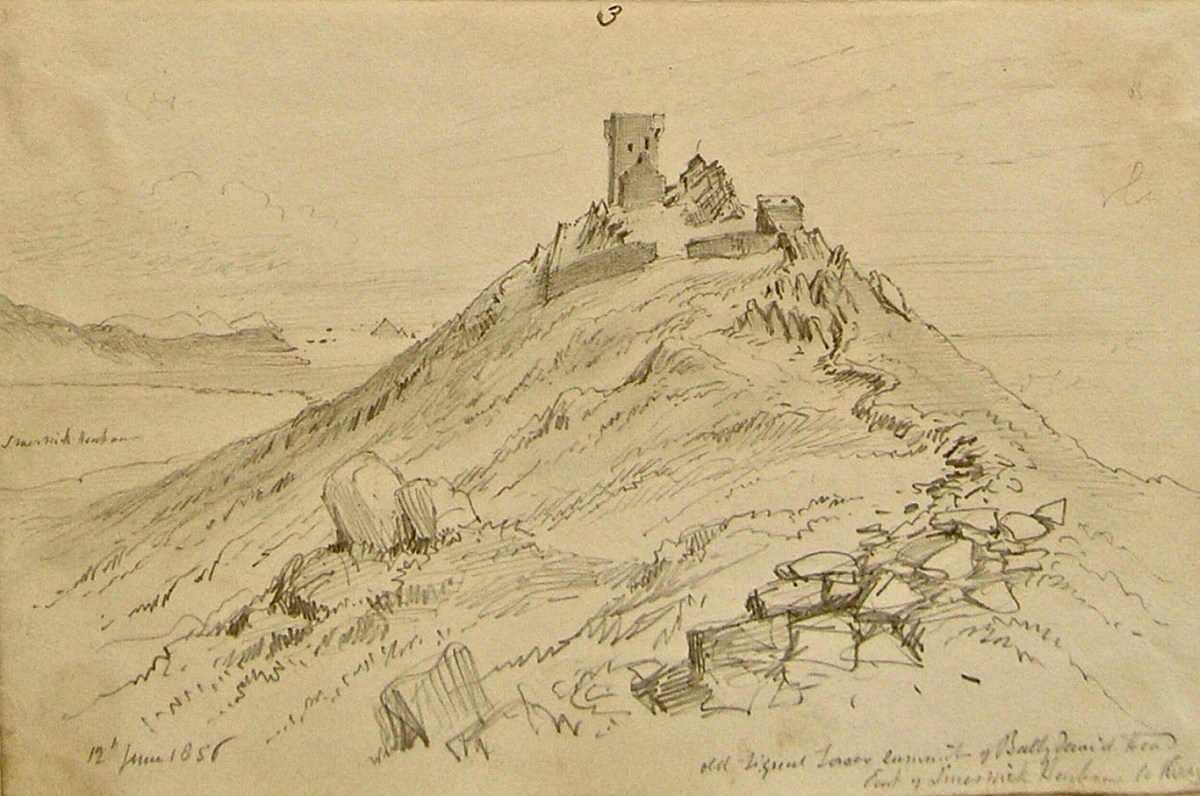
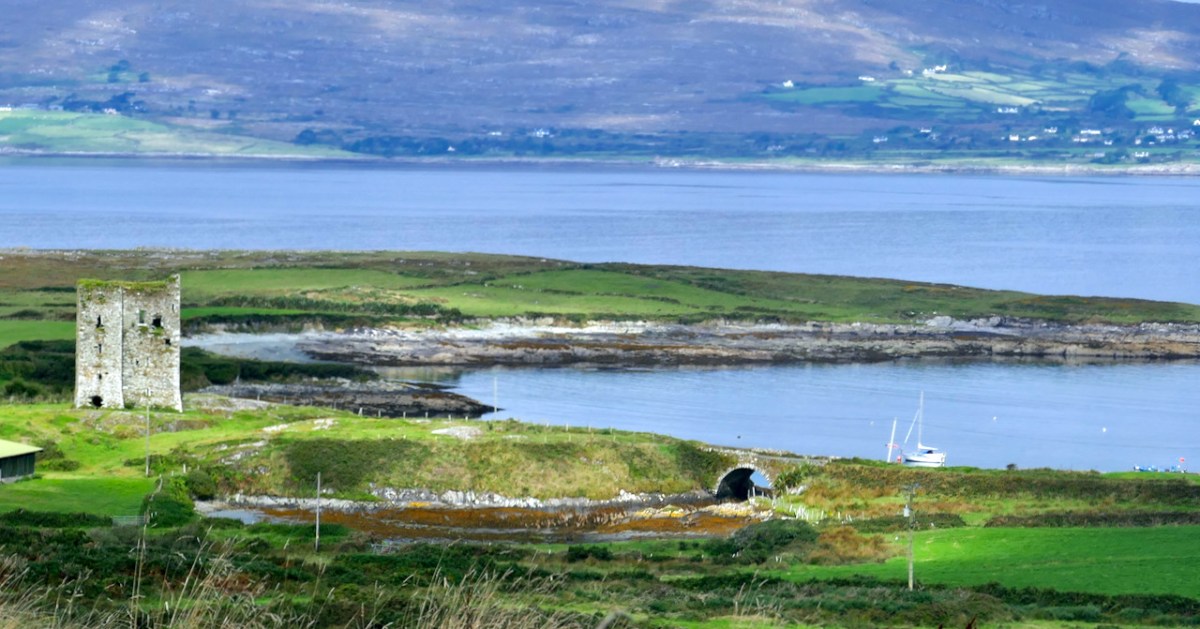
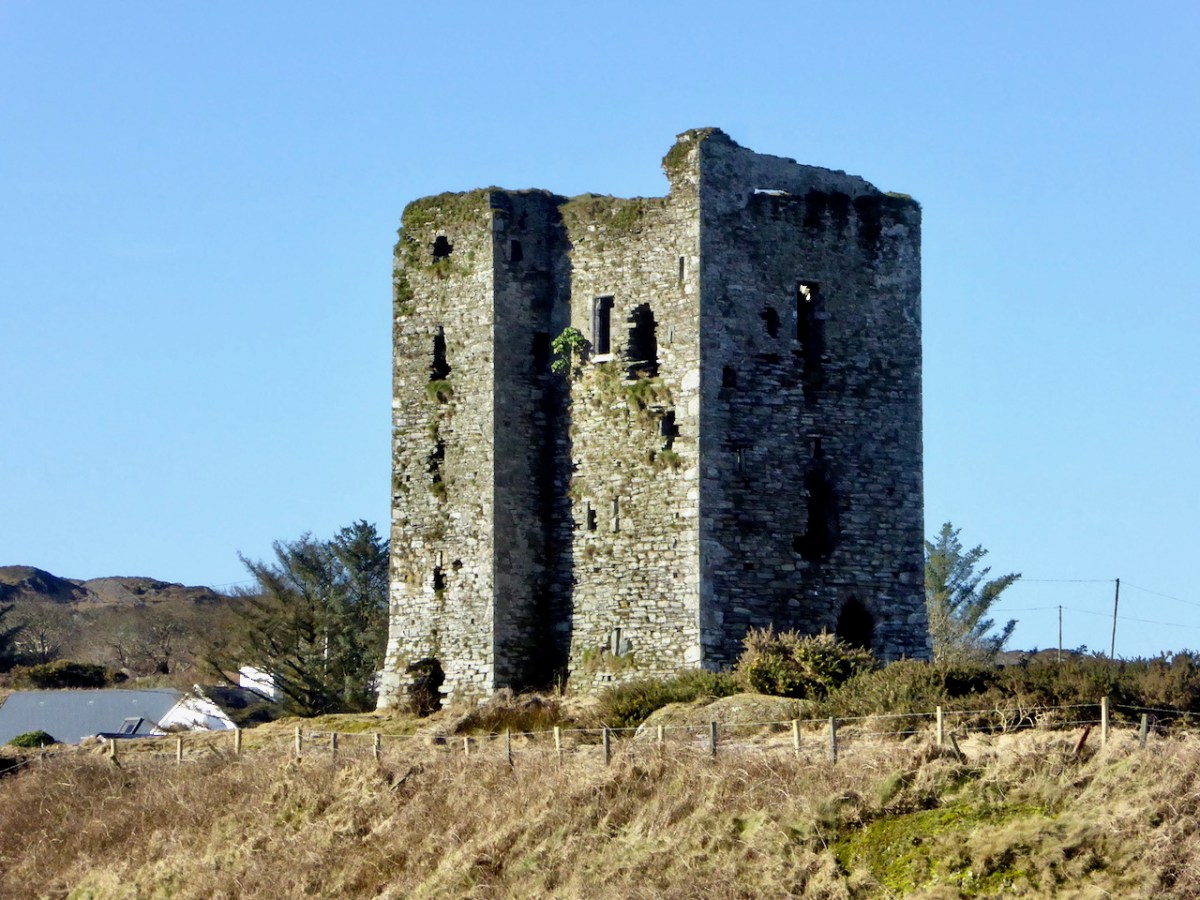
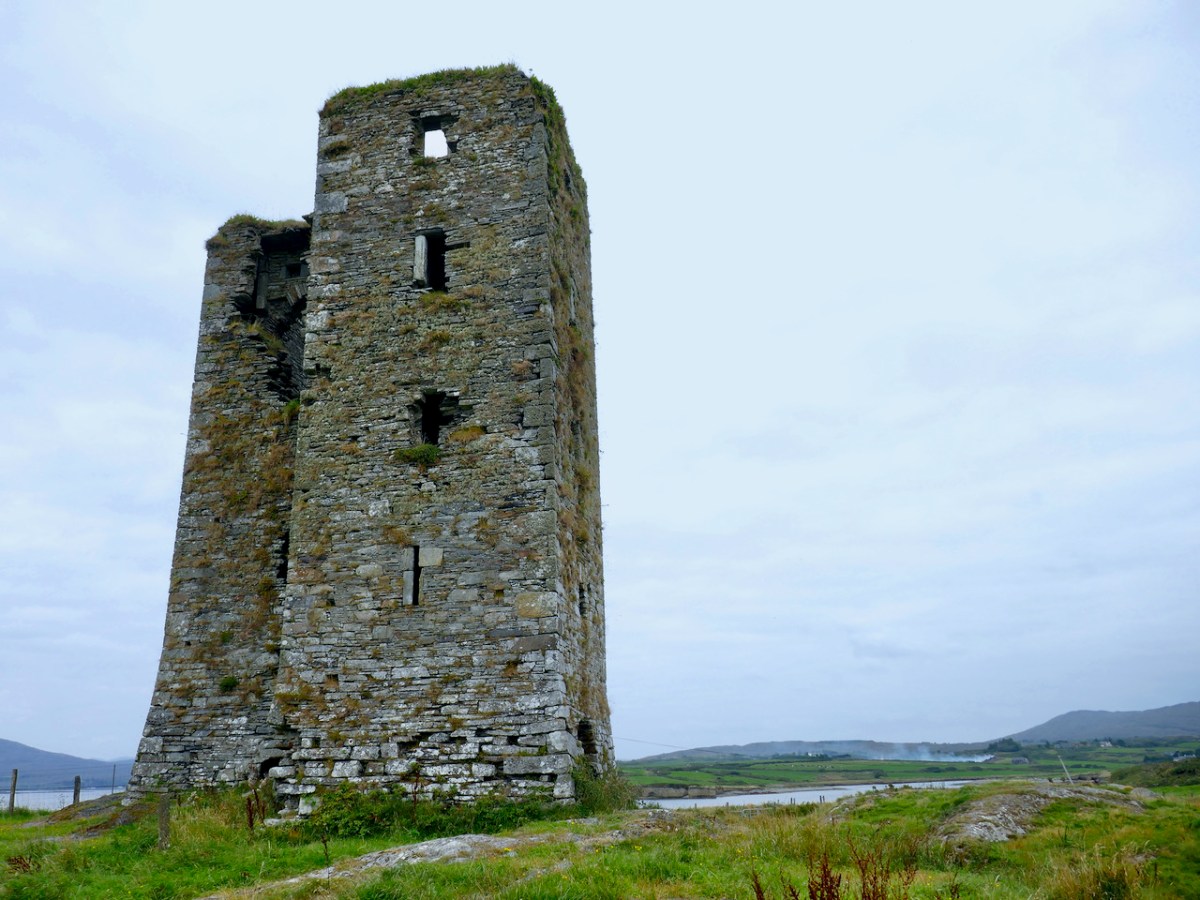
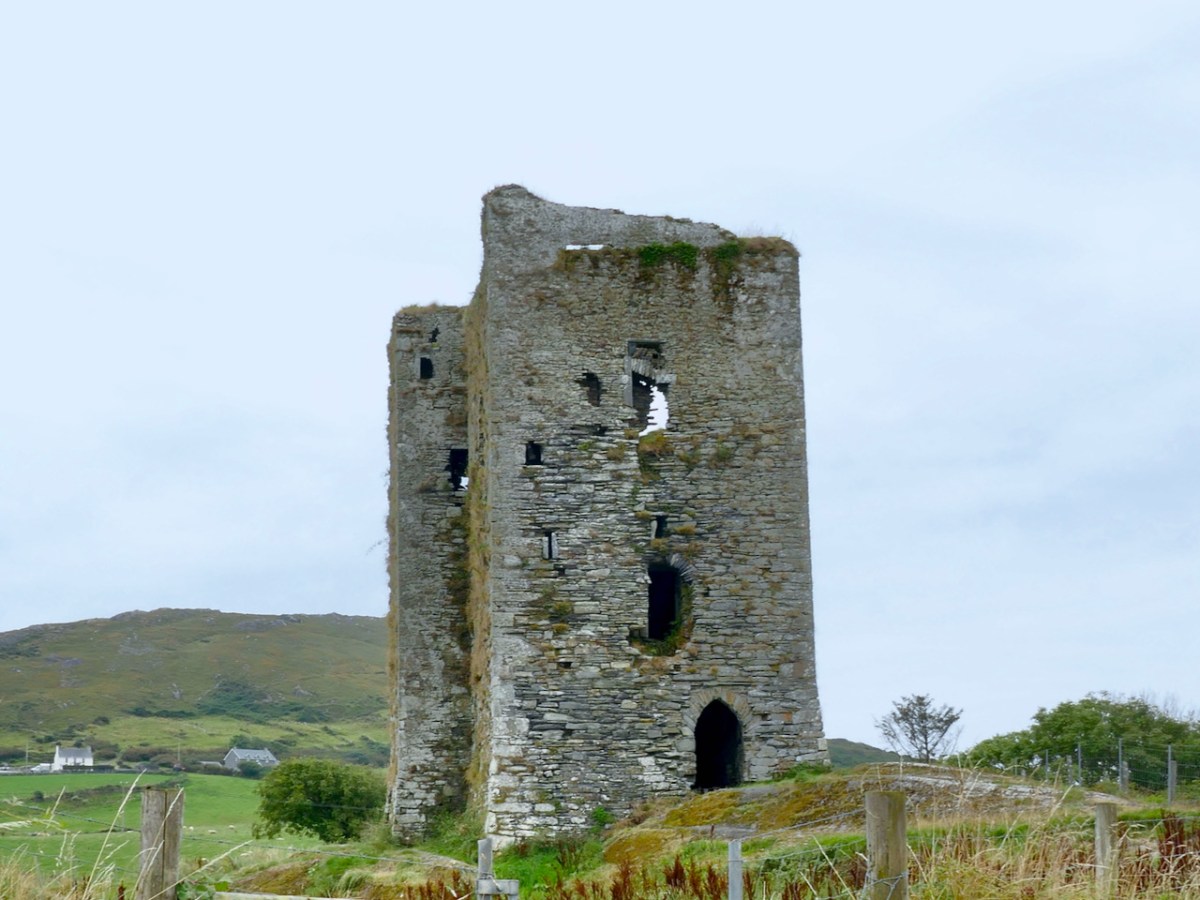
Dunmanus Castle stands guard over a natural harbour on the north side of The Mizen Peninsula and is one of the largest of the still-standing Castles of Ivaha.

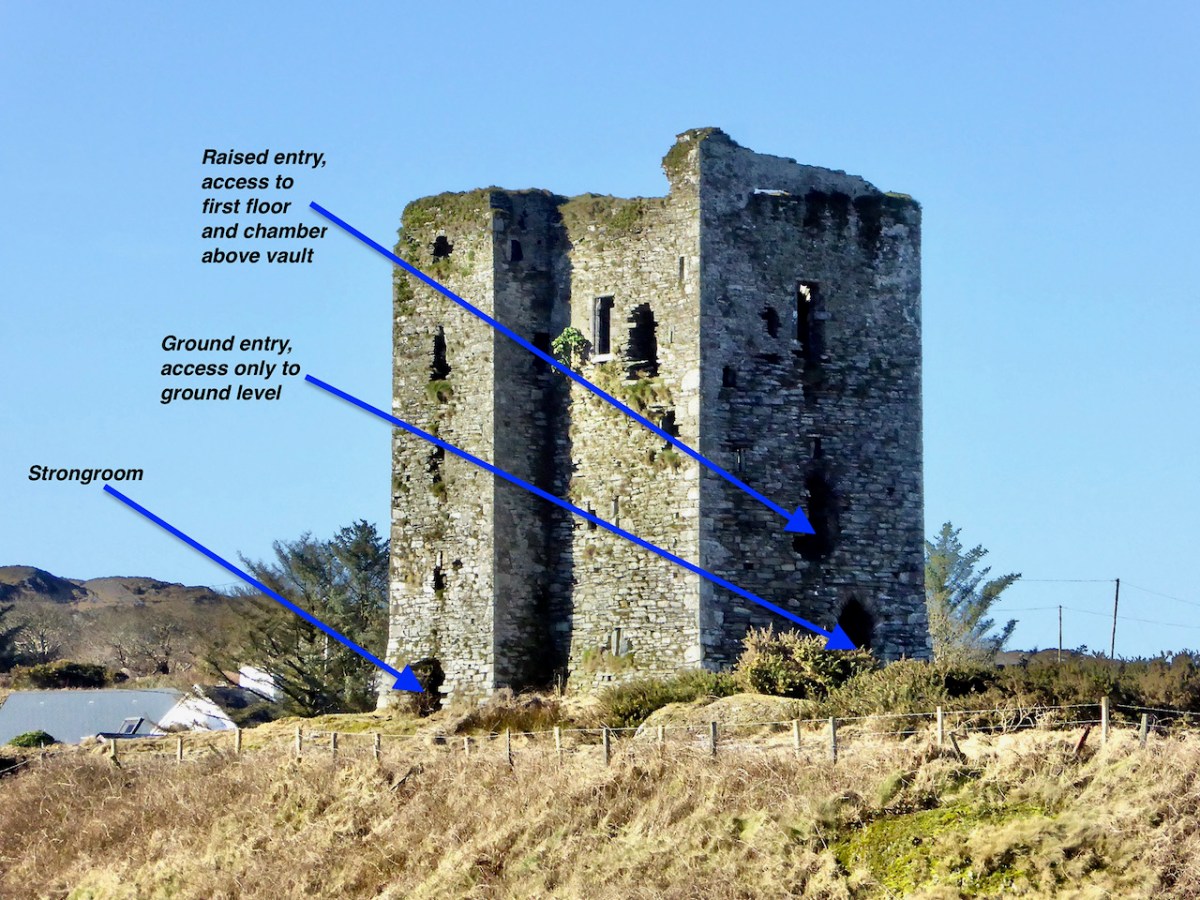
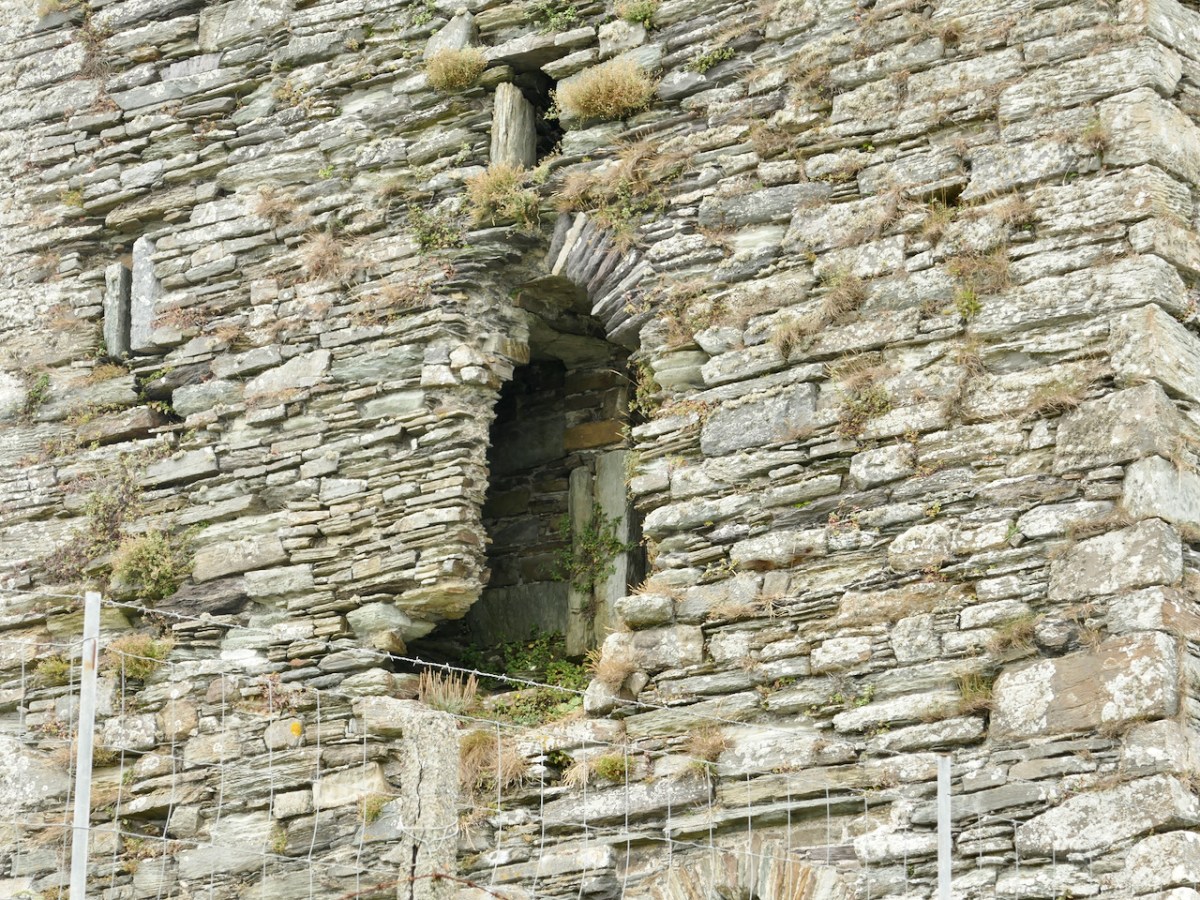
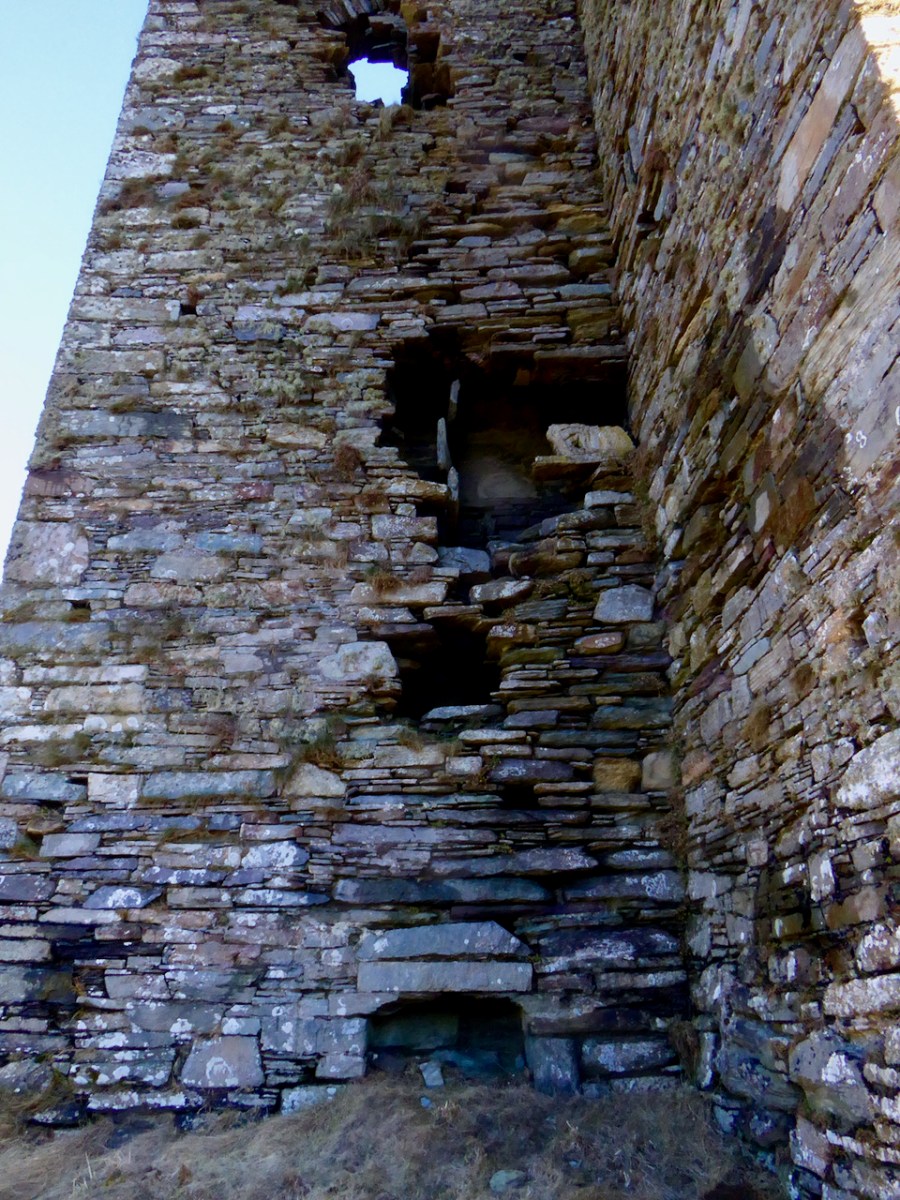
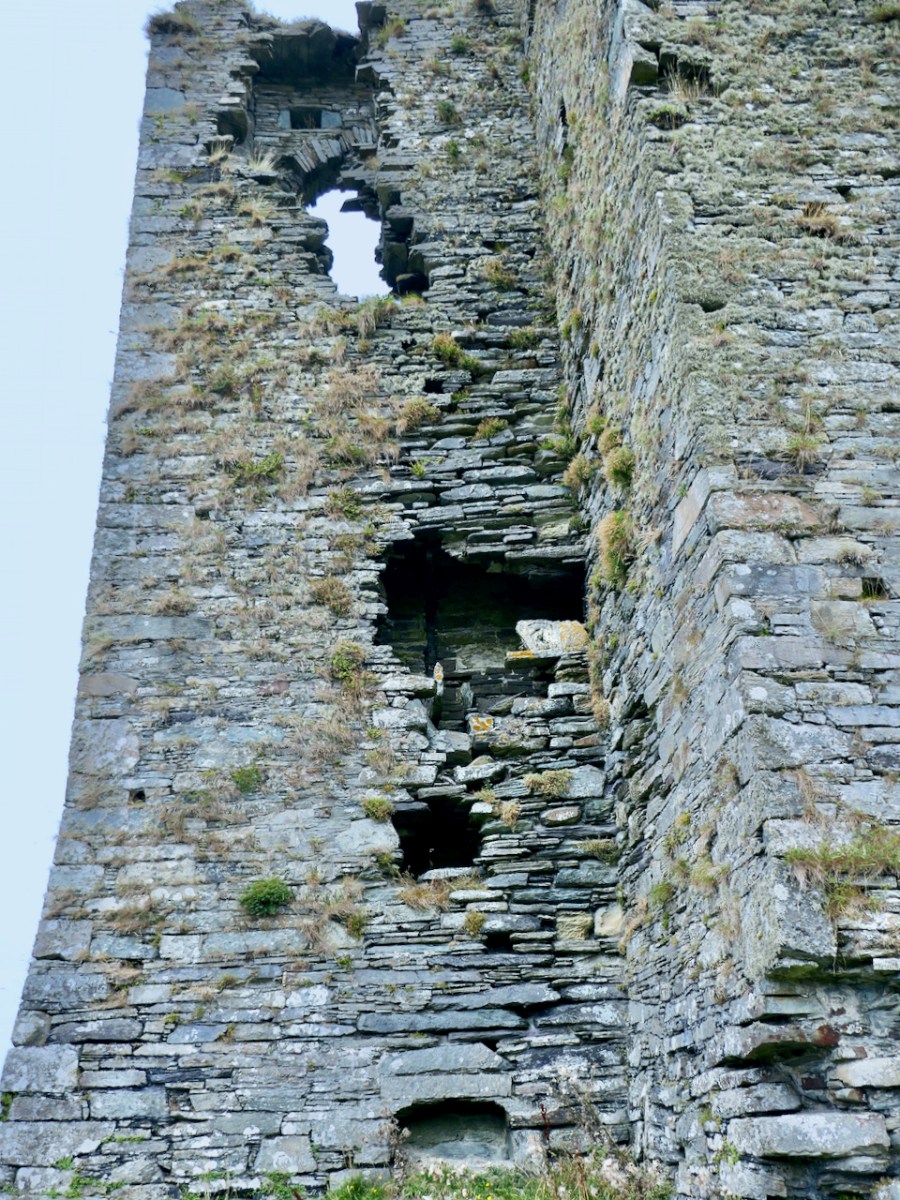
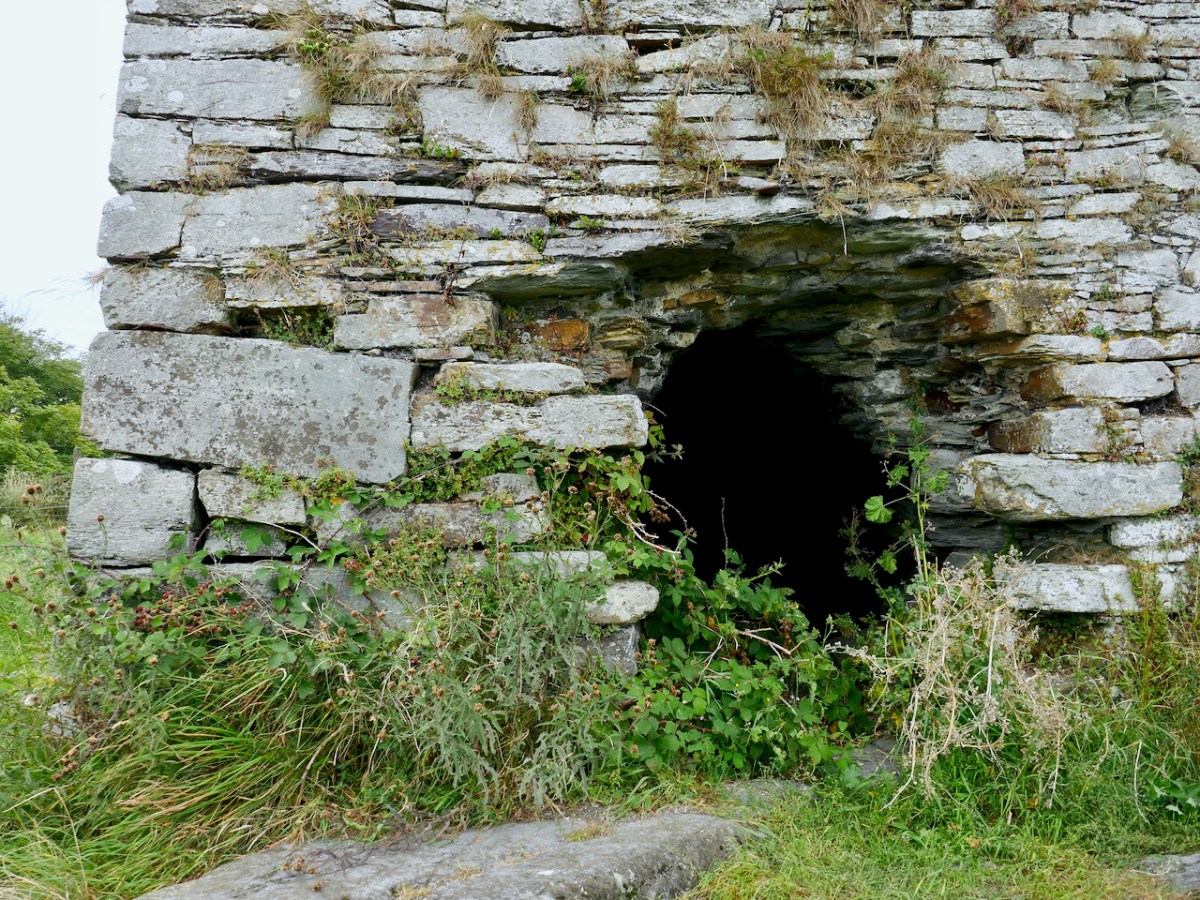
All of the O’Mahony castles (or tower houses as the archaeologists prefer to call them) were the raised entry type, where the door that gave access to the living quarters of the chief was on the first, rather than the ground floor. There is an entrance on the ground floor, but it allowed access only to the lowest level. While at some of the castles of Ivaha, the raised entry was immediately above the ground-floor entry, at Dunmanus, it is above and to the left of the ground-floor entry: this offset placement probably allowed easier access to the lower entrance.

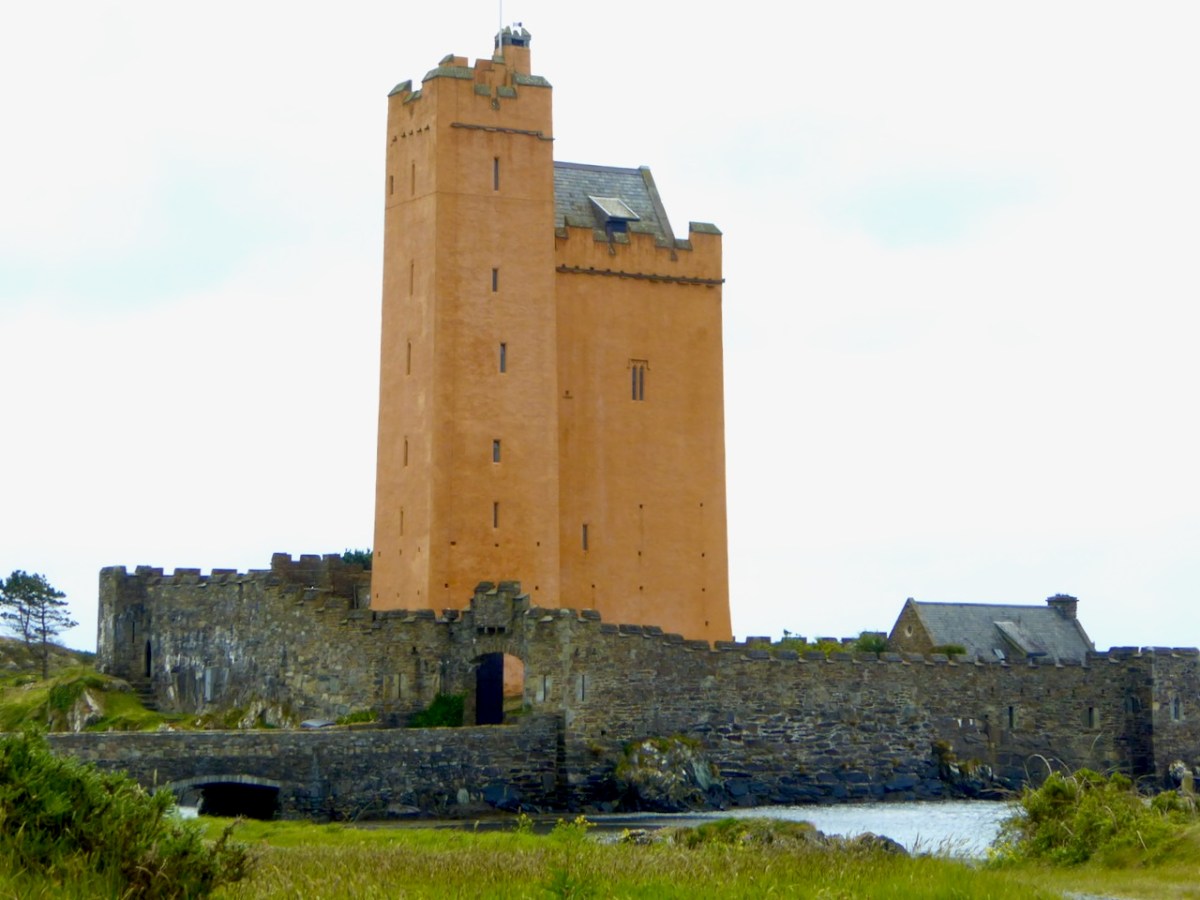
Dunmanus is the only O’Mahony Castle (as far as we know – several have disappeared) to have an additional turret, this one located at the south west corner. In fact the only other castle like it in this part of West Cork is Kilcoe Castle – see my post about its Magnificent Reconstruction. Jeremy Irons’ restoration also allows us to see what Dunmanus Caste would have looked like in its heyday. 

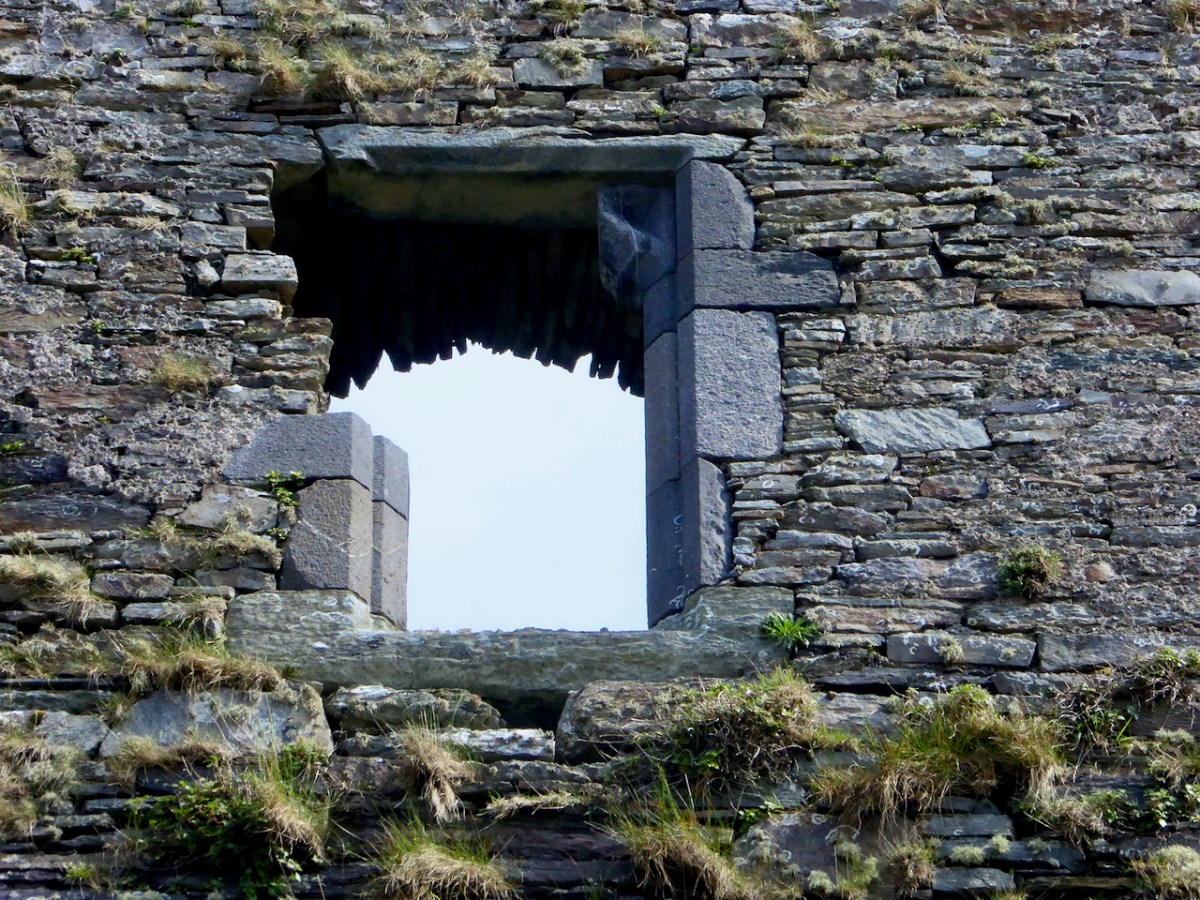
After the false start at Knockeens (see Dunmanus Castle 1: The Cliff-Edge Fort) the tower house was constructed on the site of an earlier fortification probably called Dún Manus, or the Fort of Manus. It was built by Donagh Mór, a chief of the O’Mahony Fionn (the Fair-Haired) sept, sometime in the 15th century. Donagh Mór had been elected Táiniste (next in line to become Taoiseach, or Chief) but he had to wait over 40 years, until 1473, for his brother to die before he succeeded, and then he only lived two more years. This timeframe fits with the architecture of the castle, which is firmly fifteenth century gothic – the window style below is typical.

Like all the O’Mahonys at this time he was very wealthy, riches that came from his control of both the fisheries in Dunmanus Bay and the resources of the hinterland behind his castle. He could therefore afford to indulge his taste for a high-status residence. While the castle may not have been warm or bright (no fireplaces and small windows) it was certainly a statement in the landscape, designed to impress upon all who saw it that this was the centre of power in this part of the world.

The Castle originally had two floors (ground and first) and a mezzanine under a vault in the main tower. Above this was the principle chamber and above that were the roof and battlements. The floors of the turret (foreground, above) did not line up with the floors of the main tower, but were offset and reached by a series of stairs.

The ground floor was probably used for storage and perhaps public business. It had a wooden ceiling that formed the floor of the room above it (first floor). You can also see the corbels that supported the beams that formed the base for the floor, as well as the large sockets into which the beams were set. If this castle followed the pattern of others, there was no access from the ground floor to any floor above it – no stairway or ladder.

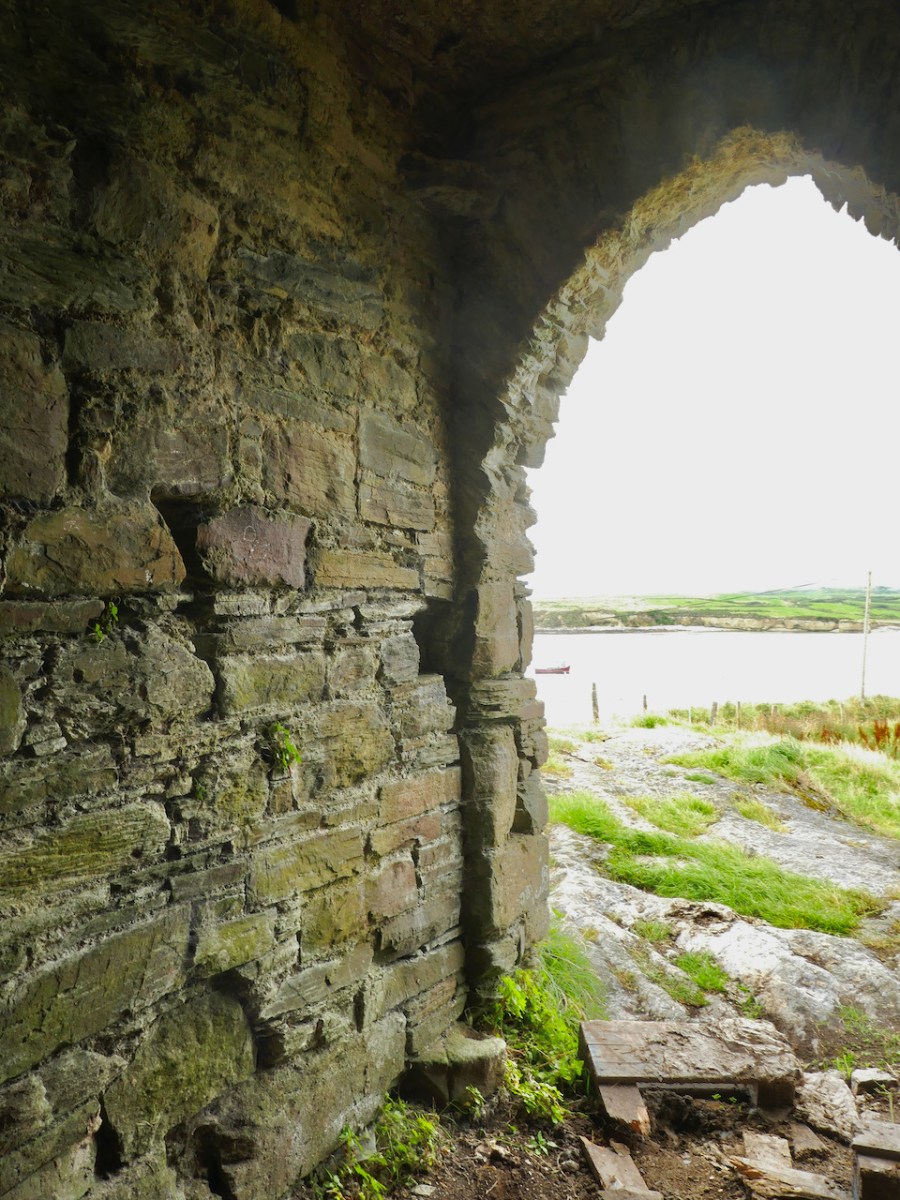
Still visible are the bar holes for the door as well as the spud stone and hanging eye – this was how the door was hung and how it turned. Can you make them out just to the left of the arch above – the spud stone is close to the ground and the hanging eye is level with the top of the arch.

The first floor was a more complex room and it had a mezzanine (you can see the corbels for it) under the vault. From the outside, a set of steps ascended to the raised entry and once you were at this door you could go straight ahead into the first floor room, or turn left and ascend a mural staircase to the floor above the vault. That staircase became spiral further up.

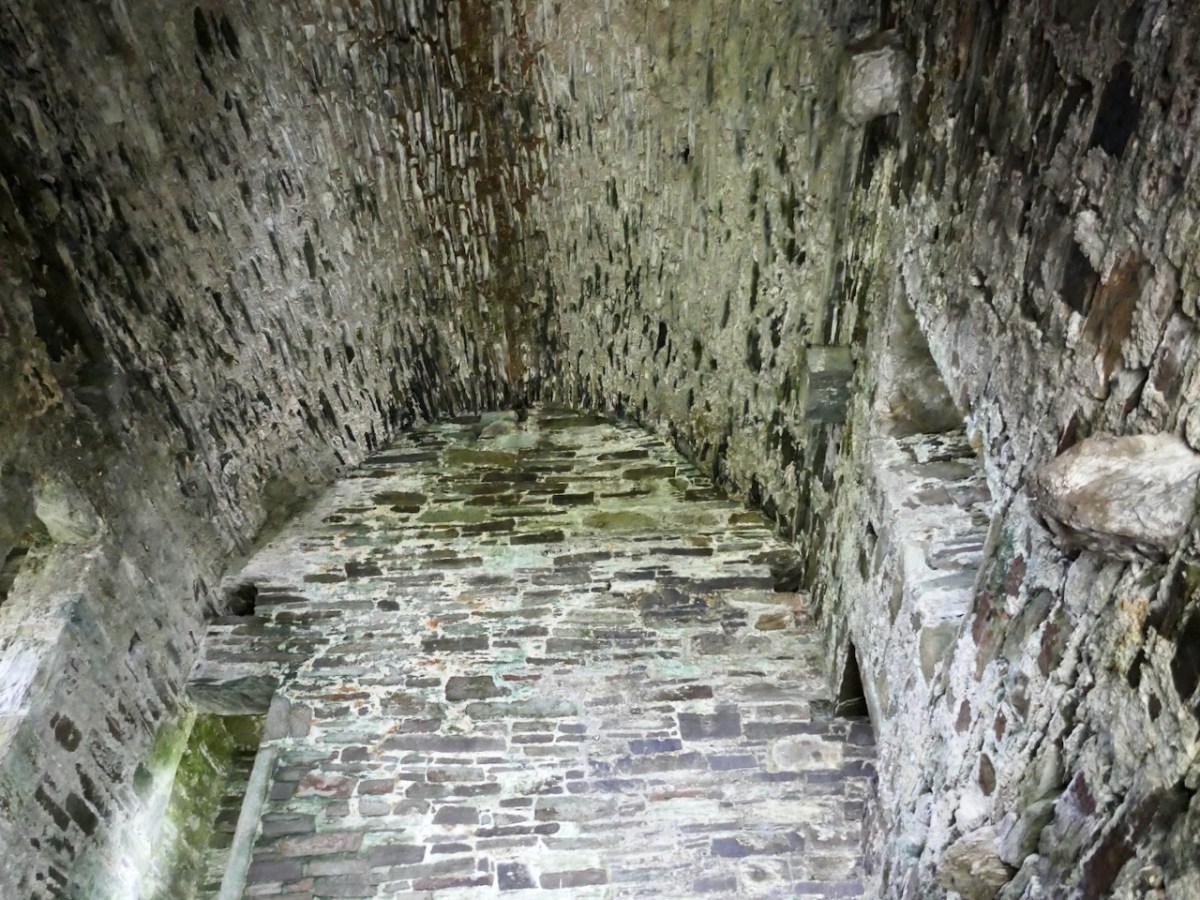
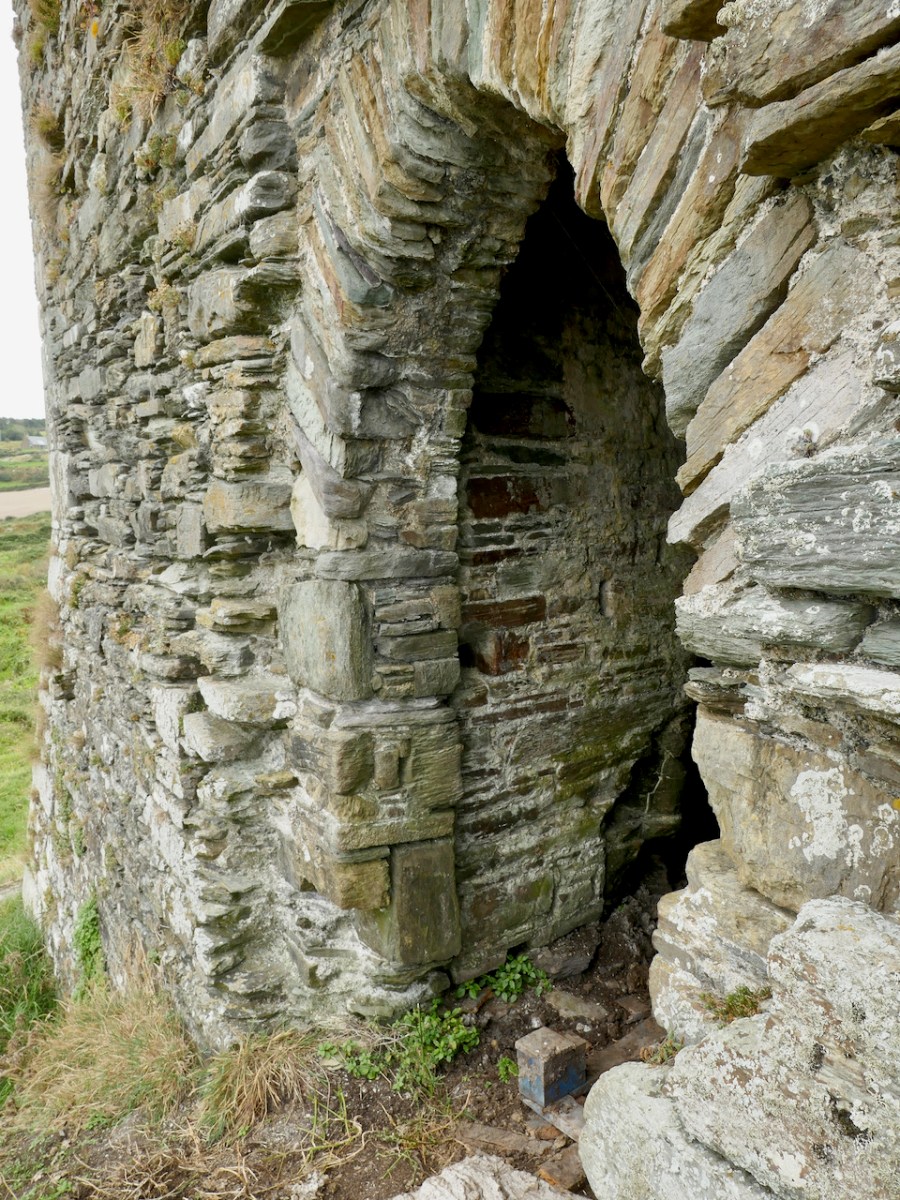
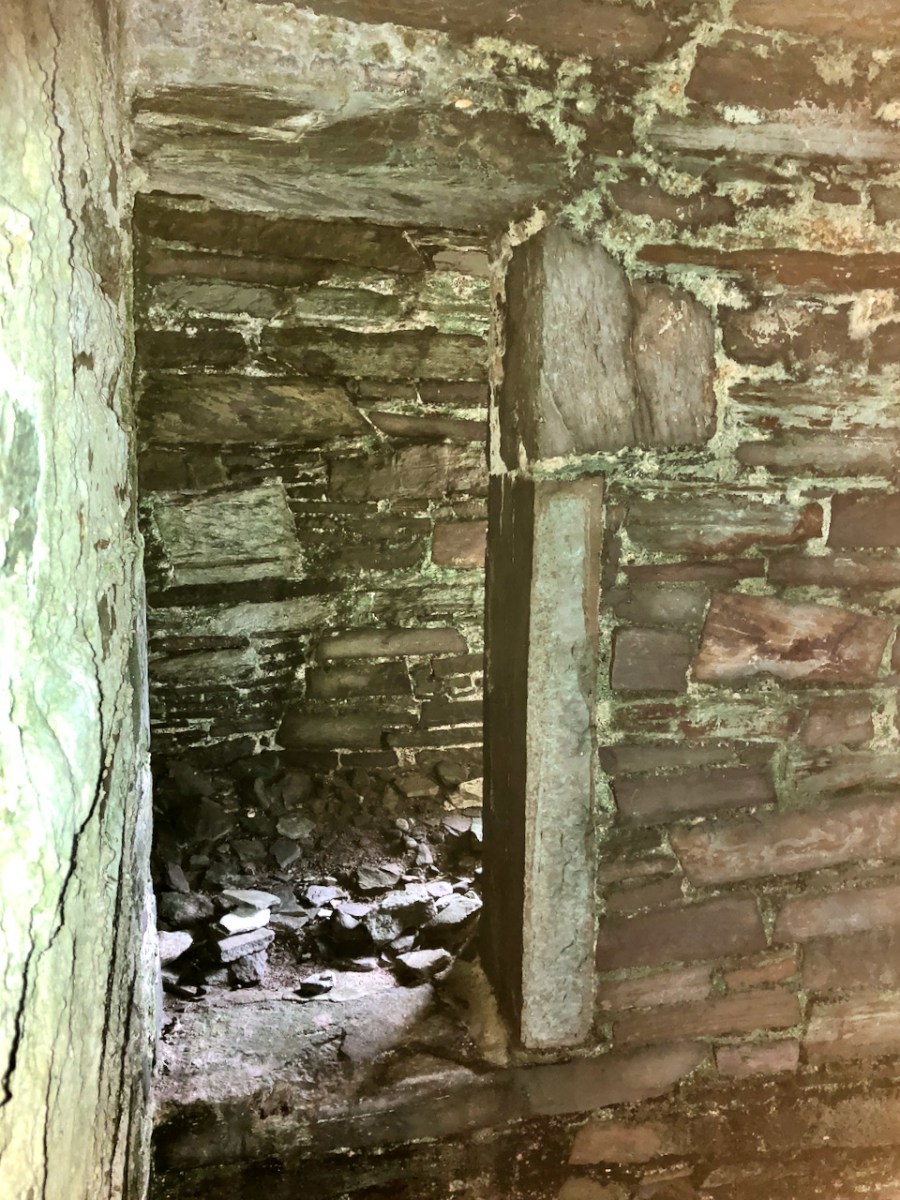
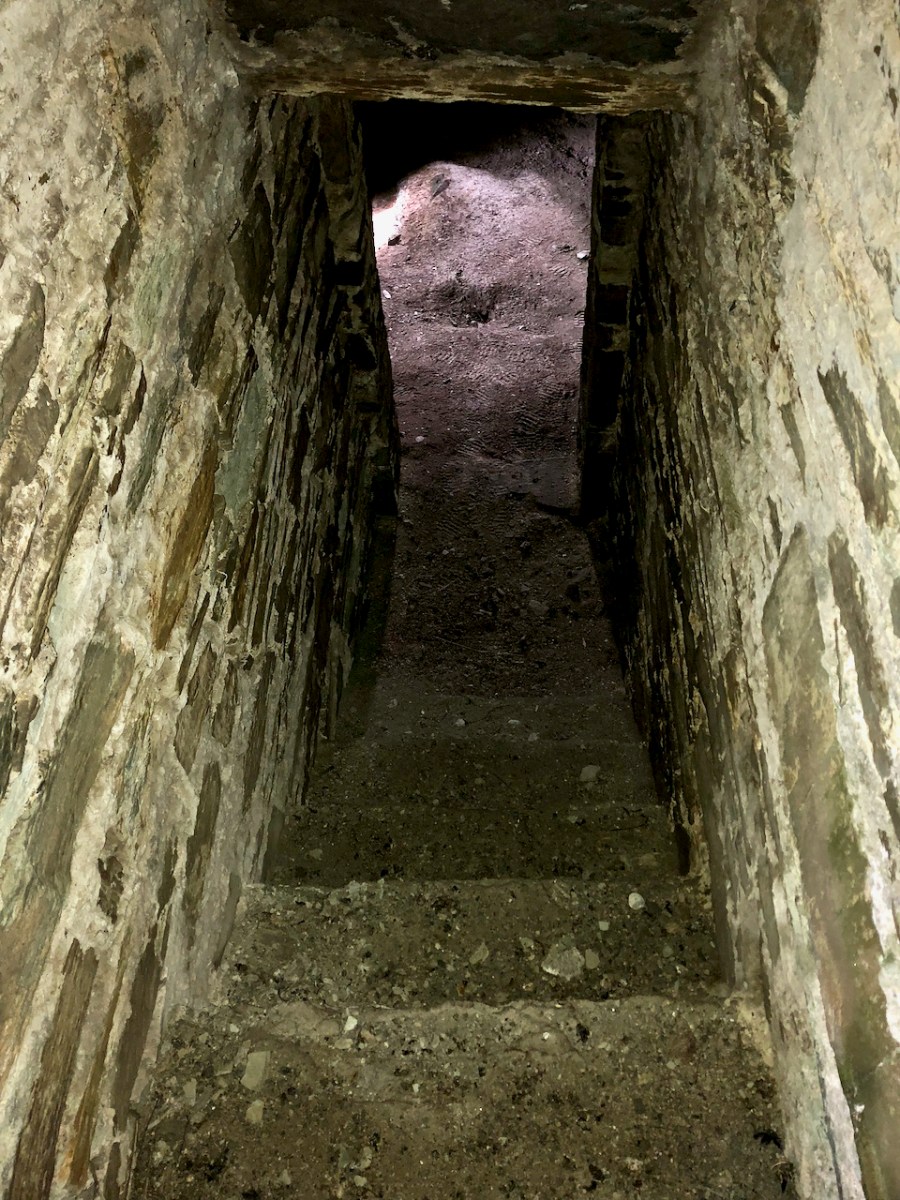
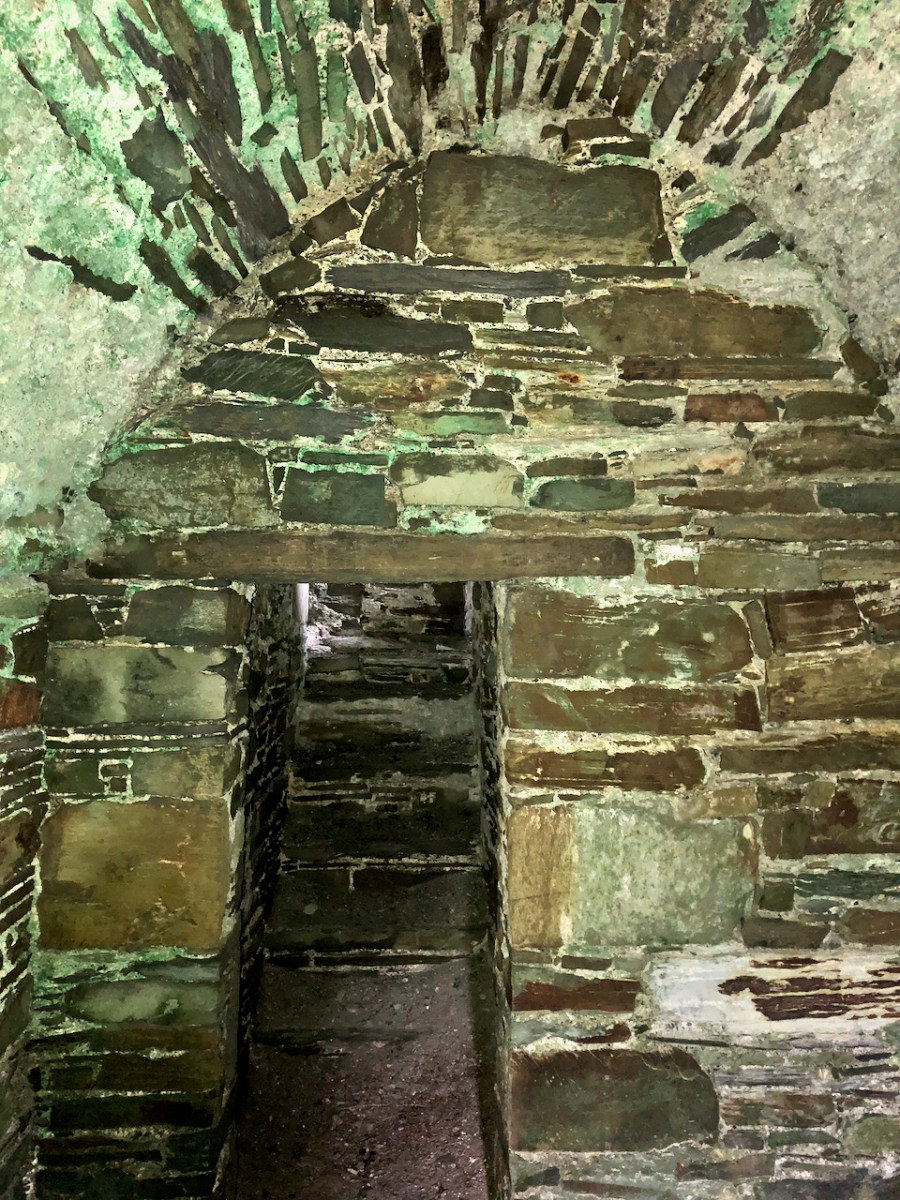
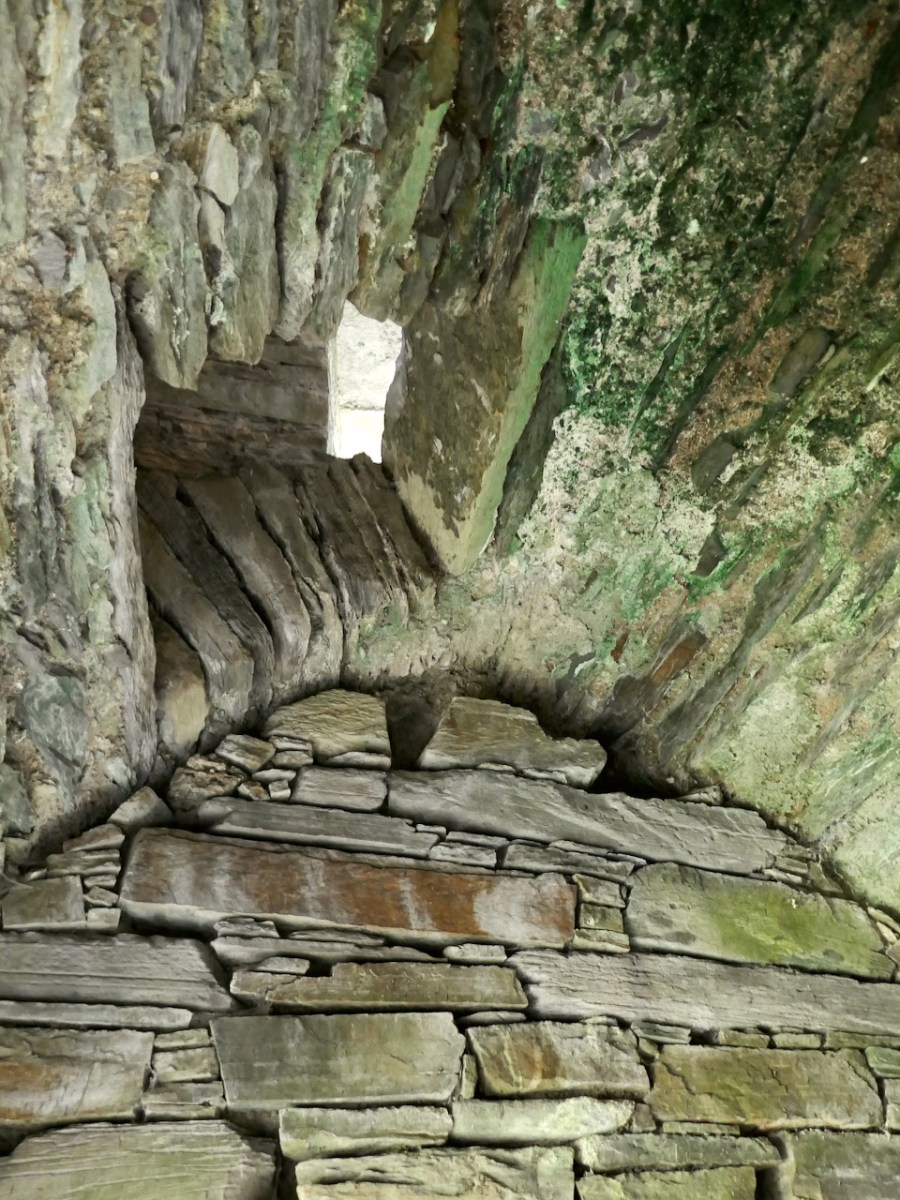
In this first floor room were two other doorways. The first (above), on the west side, was to a mural chamber that included the first floor garderobe or toilet (fifteenth century indoor plumbing!) – more on that later. The second (below) gave onto a short flight of steps leading downward to a vaulted chamber in the turret.* 

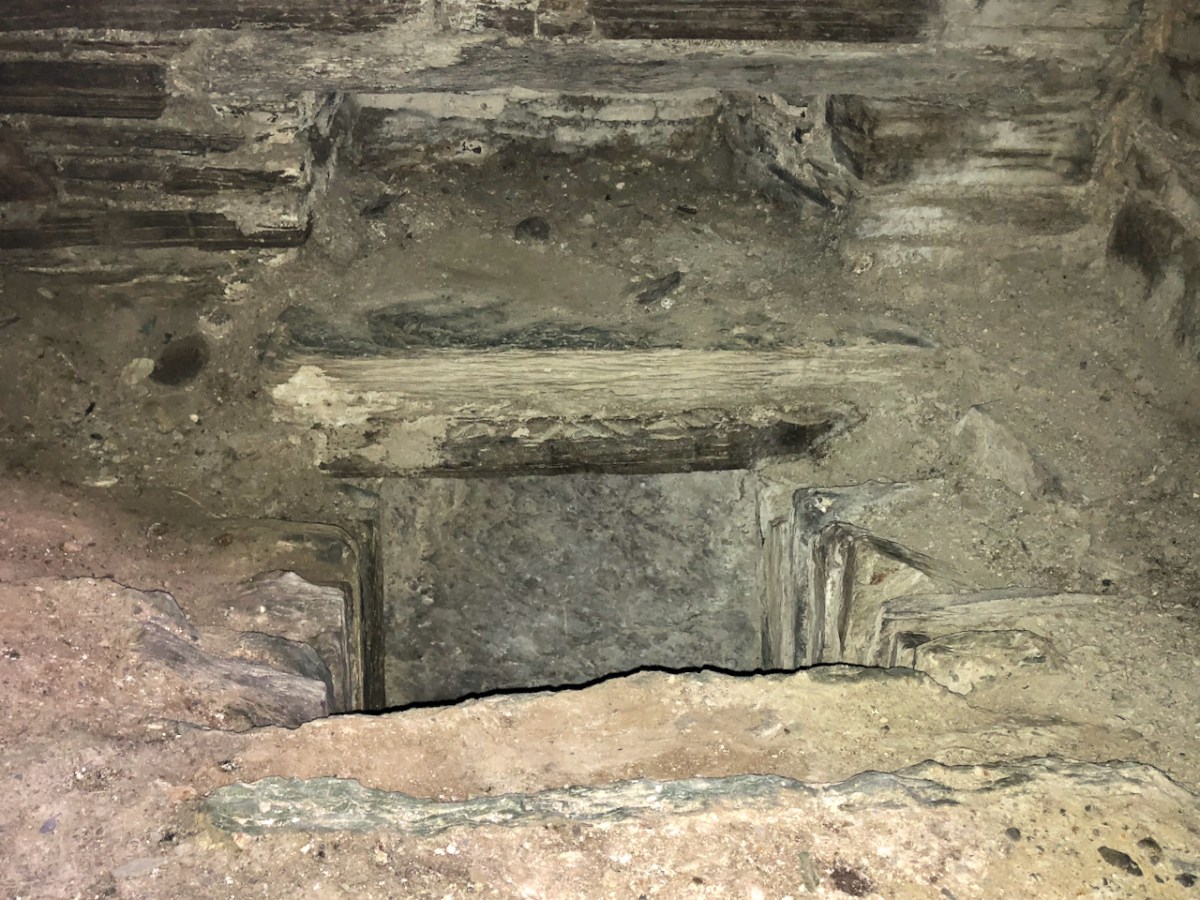
This chamber is one of the most interesting features of Dunmanus Castle, because in the floor is a hatch or trap-door which is the only access to yet another small, vaulted windowless cell below.

We know about this cell because there’s a hole in the wall that allows us to see into it – and even go into it. 

Once you’re inside, you realise that originally you would have been in the pitch black and that the only way in or out was the trapdoor in the ceiling. Was this a dungeon? An oubliette? It certainly could have functioned as such, and there are historic accounts of prisoners being confined in such spaces in Irish castles. 

But there are other possible explanations. Mark Samuels, in his Tower Houses of West Cork, speculates that this is in fact a cistern, fed from below, filled in over the years with debris so that it is now impossible to see how deep it went. There are identical features, he says, at Kilcoe and Monteen tower houses. It would have been a significant advantage, especially during a siege, to have a source for water.

However, the best evidence for the use of rooms like this comes from the excavations of Barryscourt Castle, near Carrigtwohill, east of Cork City. Here’s what the authors of this section of the report, Dave Pollock and Conleth Manning conclude about its function.

The ground floor, originally accessed only through a trapdoor in its vault, has in the past been regarded as a prison or dungeon. The more likely explanation is that it was a safe vault or basement strongroom, where cash and records were kept securely, and could be accessed with the aid of a ladder when required. The room above this, referred to variously in other cases as the accounting room or counting house, was where an officer of the Manor called the receiver or cofferer worked. He documented all produce and commodities coming into the castle and made payments as necessary. At Barryscourt this room was only accessible through a small external doorway . . . It is interesting that good examples of accounting rooms with basement strong rooms under them, accessed through trap doors, are found in some late 14th century great towers in England such as Bolton Castle and Warkworth Castle.


Barryscourt Castle Co Cork, Archaeology, History and Architecture, Dave Pollock, ED.
Published by the National Monuments Service, 2017,

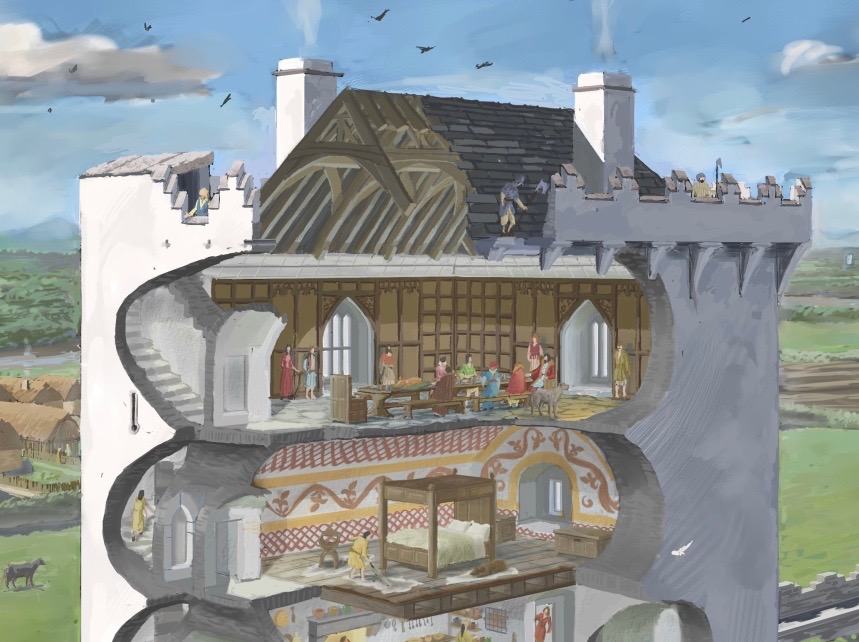
There is, of course, no access nowadays to the upper floors of Dunmanus Castle, but we know that the top floor was the ‘solar’ – the largest and most commodious chamber reserved for the Chief and his family. It was also where he entertained, and there are accounts of the lavishness with which guests were received. Take a look at my post, Illustrating the Tower House: A Guest Blog (sort of) to see how the brilliant artist JG O’Donoghue, has managed to show us the internal layout of a tower house. Here is his image of the upper floors and wall walk.

From that chamber, a set of stair led up to the battlements, where a wall walk would have surrounded the pitched roof. The wall walk was protected by a set of stepped merlons and crenels in the style known as Irish Crenellations – Kilcoe gets these exactly right.

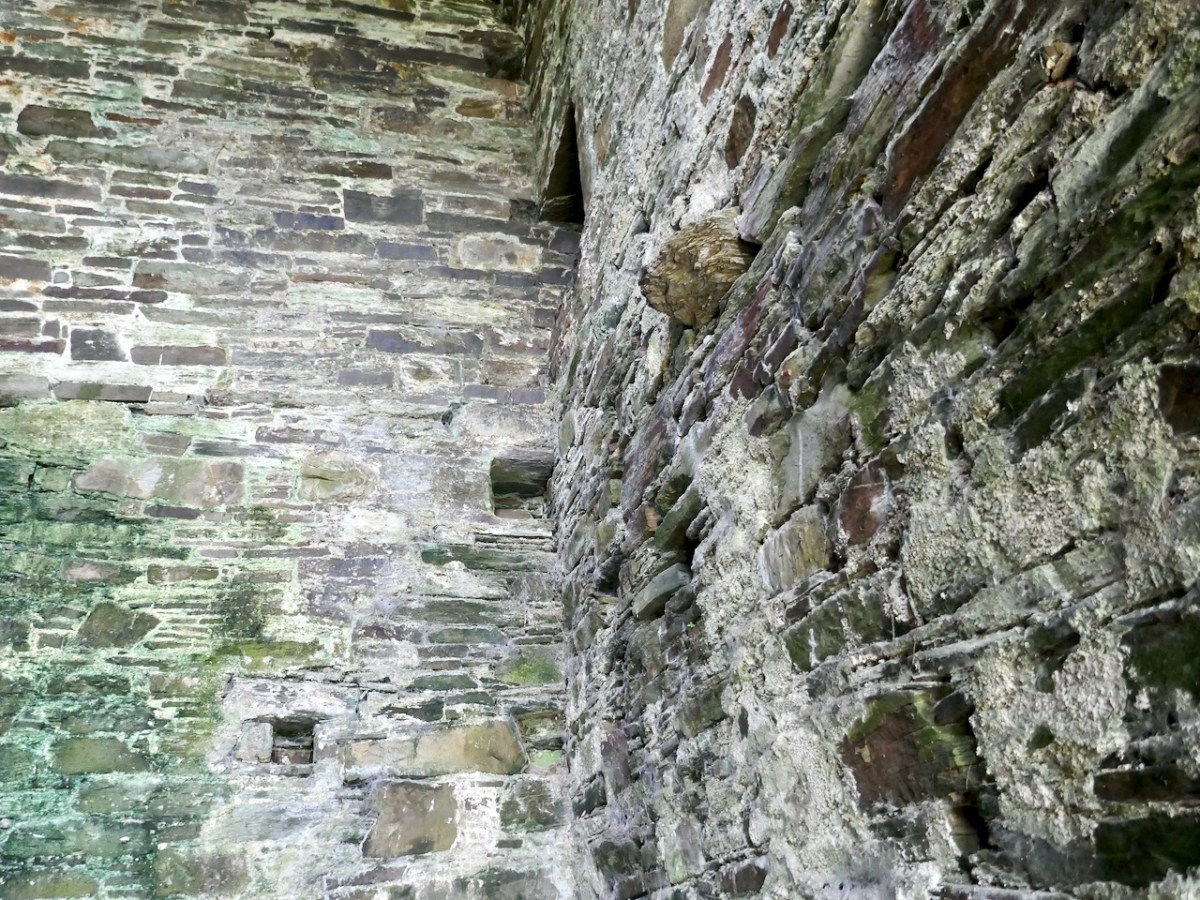
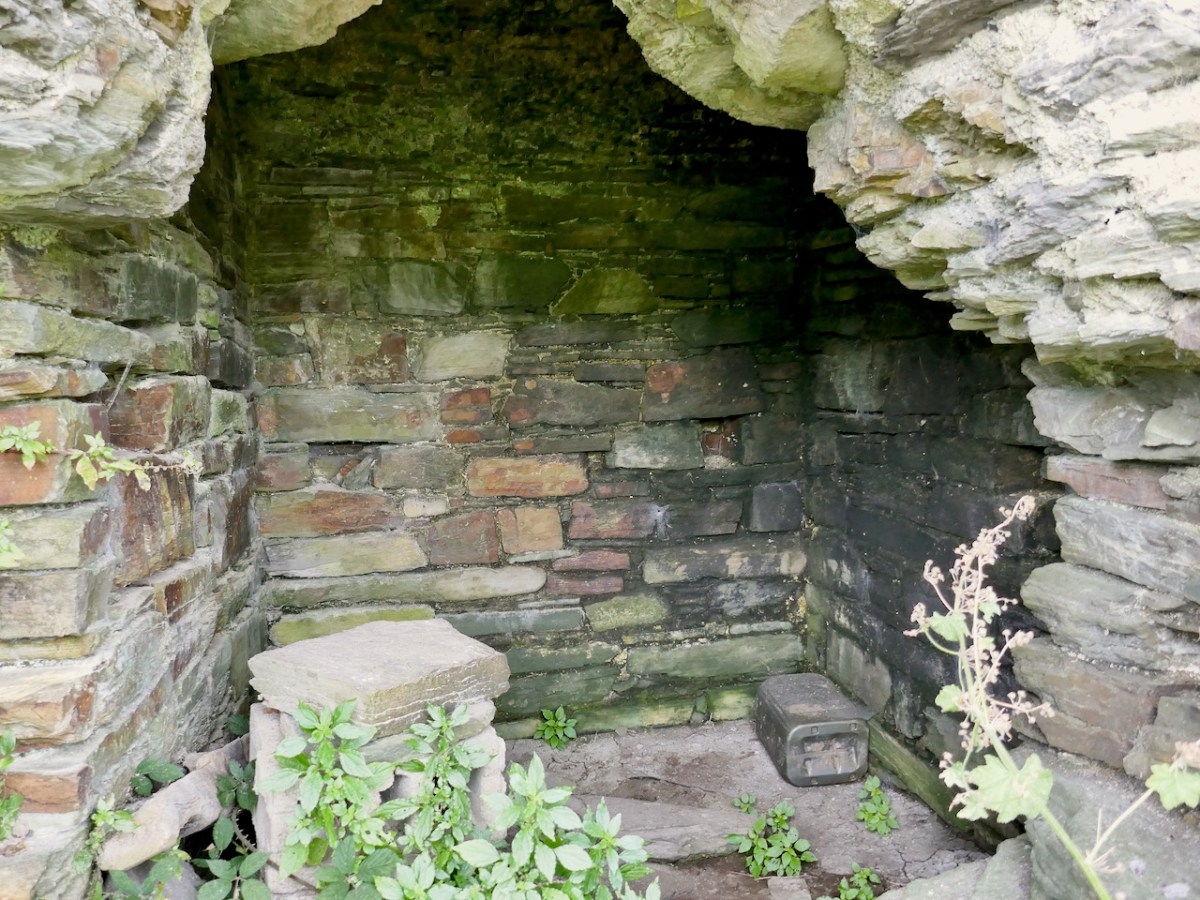
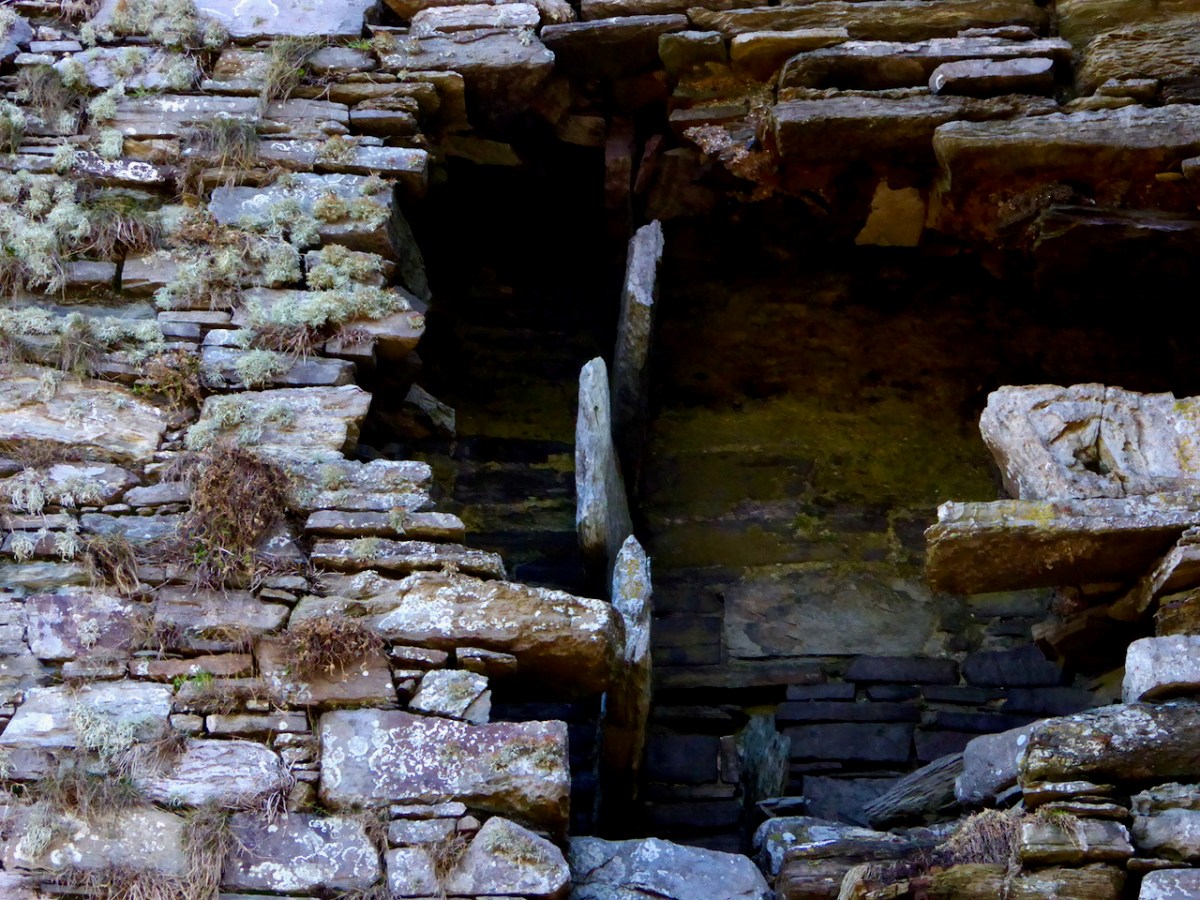
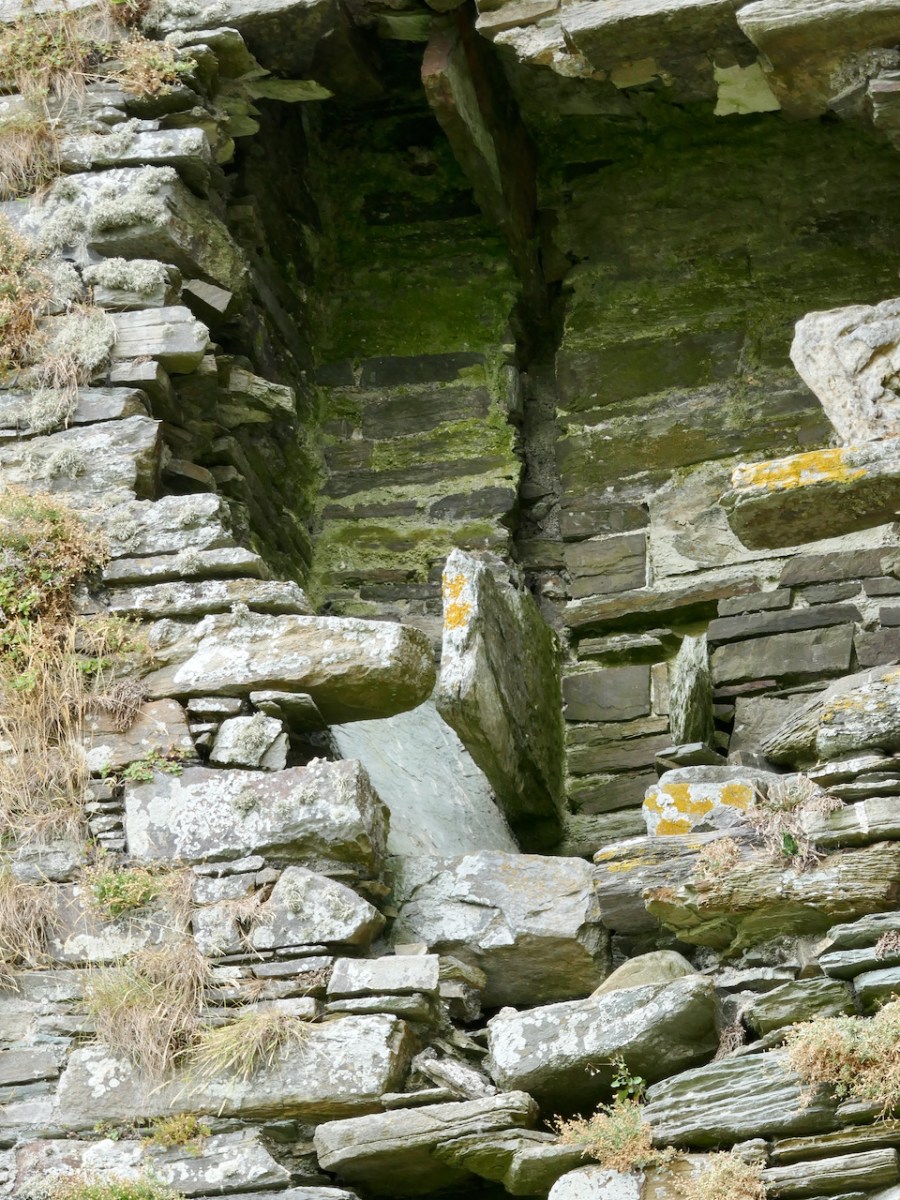
My final note is on the garderobe, or rather, garderobes, since there was one off the first floor and another at the level of the solar. The chute which served both of them, was divided down the middle by a set of perpendicular slabs set into the inner wall (above and below). 

When I photographed Dunmanus in 2016 these perpendicular slabs were in place. However, as you can see below, by five years later two of them have fallen.

While these particular slabs may not be integral to the cohesion of the building, every stone that falls or slips weakens the overall structure and is another step towards ruination. It would be very sad indeed if Dunmanus Castle is not here in its current state for future generations.

*I am grateful to a friend who shall remain nameless (but who is a relative of Spiderman) for the photographs of the turret room and staircase. Do not attempt to access these spaces.

Fabulous Five-Minute Blackberry Jam

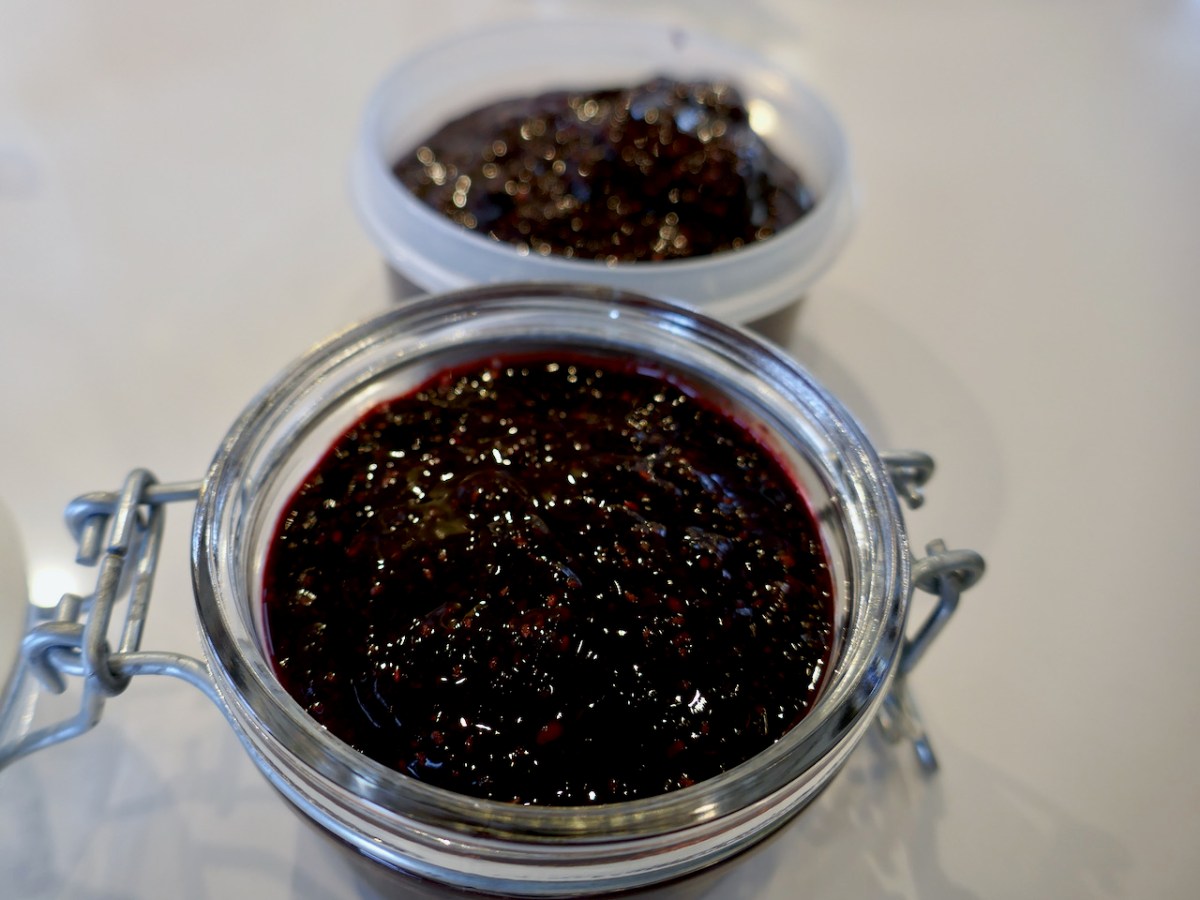
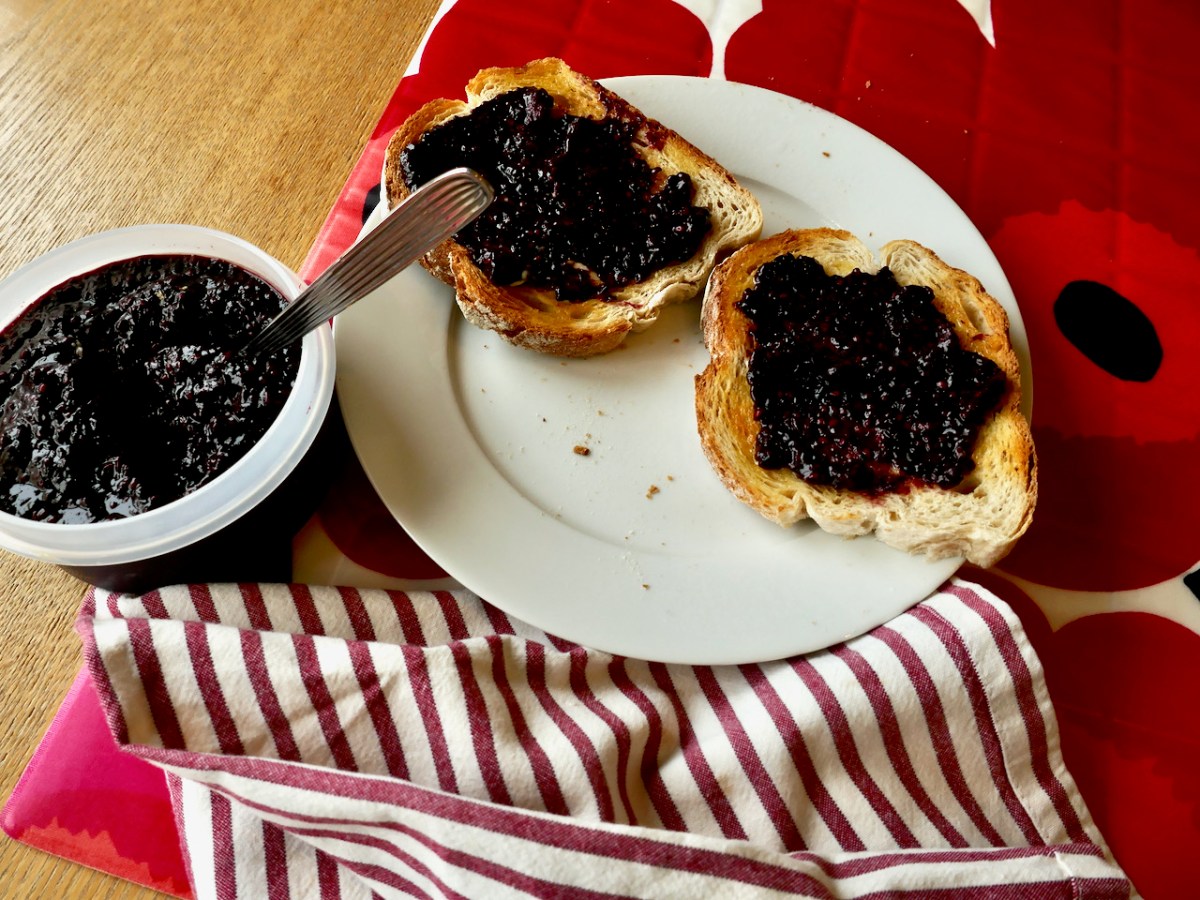
This is my go-to recipe for blackberry jam. I’ve made ‘real’ jam – which takes all day and leaves you hot and bothered – and then wondered how to get through a dozen jars of jam and ended up pressing them on friends and neighbours. This is so much easier!

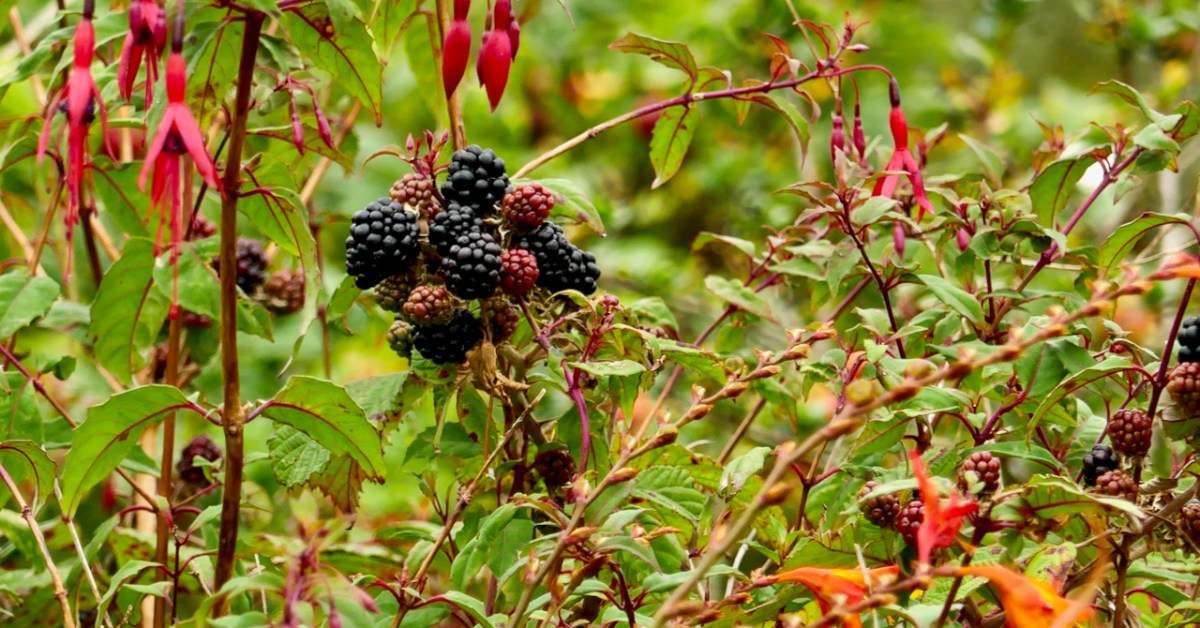
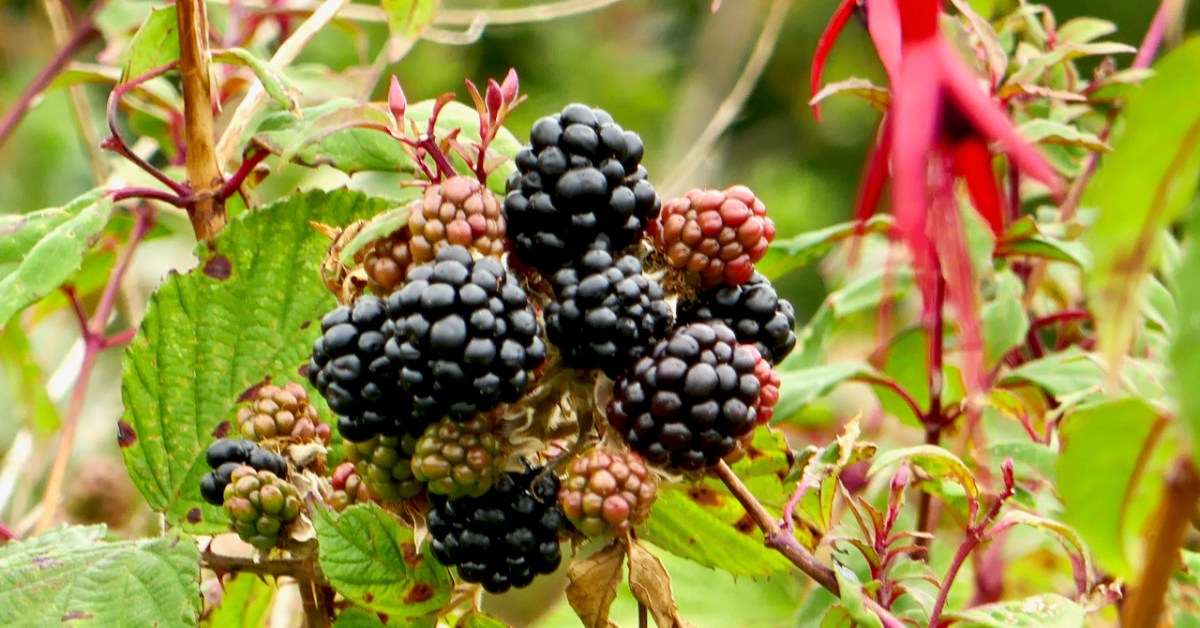
Blackberries are early and abundant this year. They’re everywhere and they’re free for the picking – all the best chefs are out there, adding them to the ‘foraged’ list on their menus. They’re also incredibly good for you! Although some of the claims made for them are probably fanciful, it’s true that they are packed with fibre, Vitamin C, potassium and antioxidants. If you’re picking them with gusto, a few drops of your own blood adds some additional flavour.

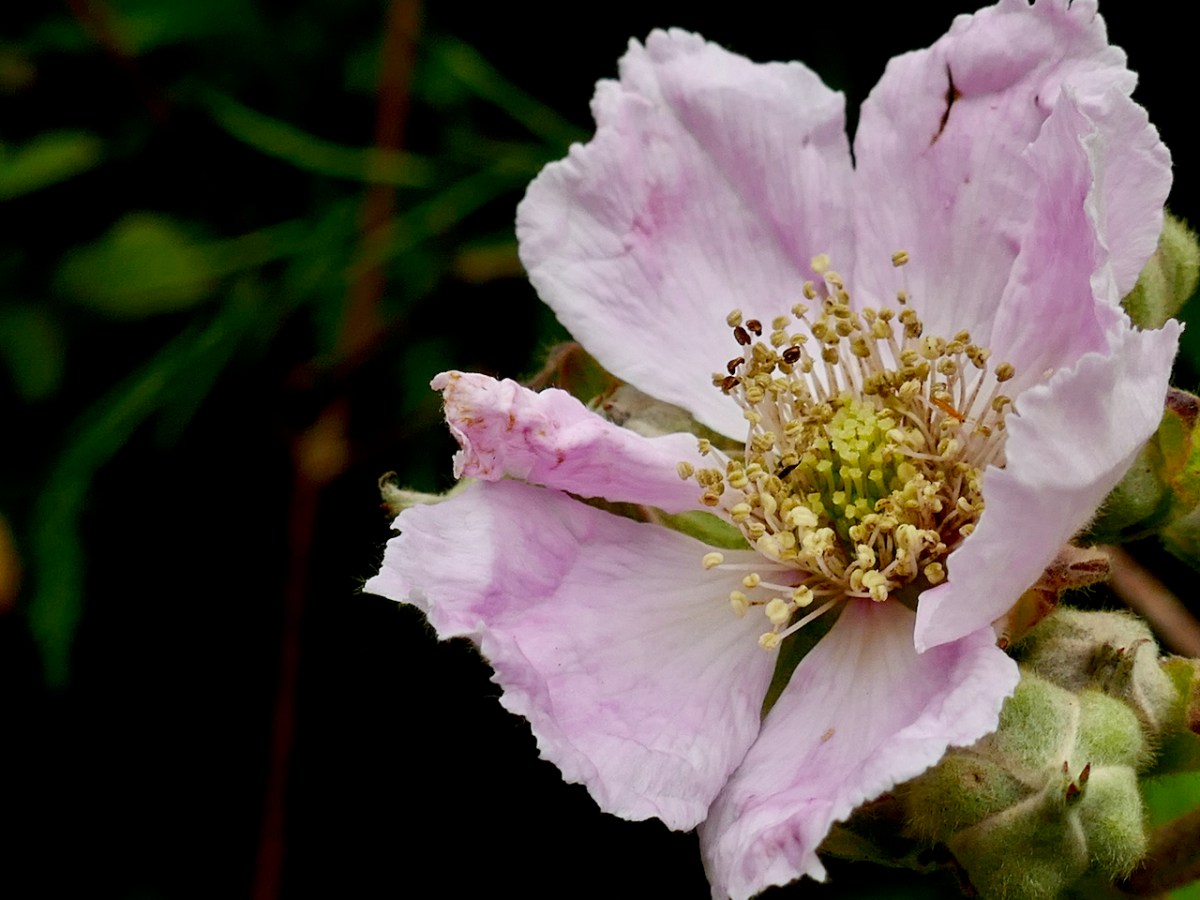
Although they can be a pain for gardeners, blackberries are marvellous for pollinators. The flowers contain huge amount of nectar and pollen and it’s one of the plants that can really make a difference for bees. They may become a medicinal crop too – a student from Cork, Simon Meehan, won the Young Scientist of the Year award in 2018 with his discovery of an antibiotic contained in blackberry brambles.

So what about that jam recipe? And can it really take only five minutes? Yes! Collecting the fruit, in my own garden, took me about ten minutes (mainly because I kept eating the berries as I was picking) but the jam itself took less than five minutes to make. I used two cups (about a pint, or 500ml).
The secret is Chia Seeds – those tiny little black seeds that swell up and jellify when you add moisture. They, like the blackberries, are also very good for you, being full of B Vitamins and minerals.

If you’re concerned about the calories in honey, or want to keep it vegan, leave out the honey (it will just be a little more tart) or use maple syrup or a sugar substitute. Scale up in ratio – that is, for two cups, just double everything, etc.

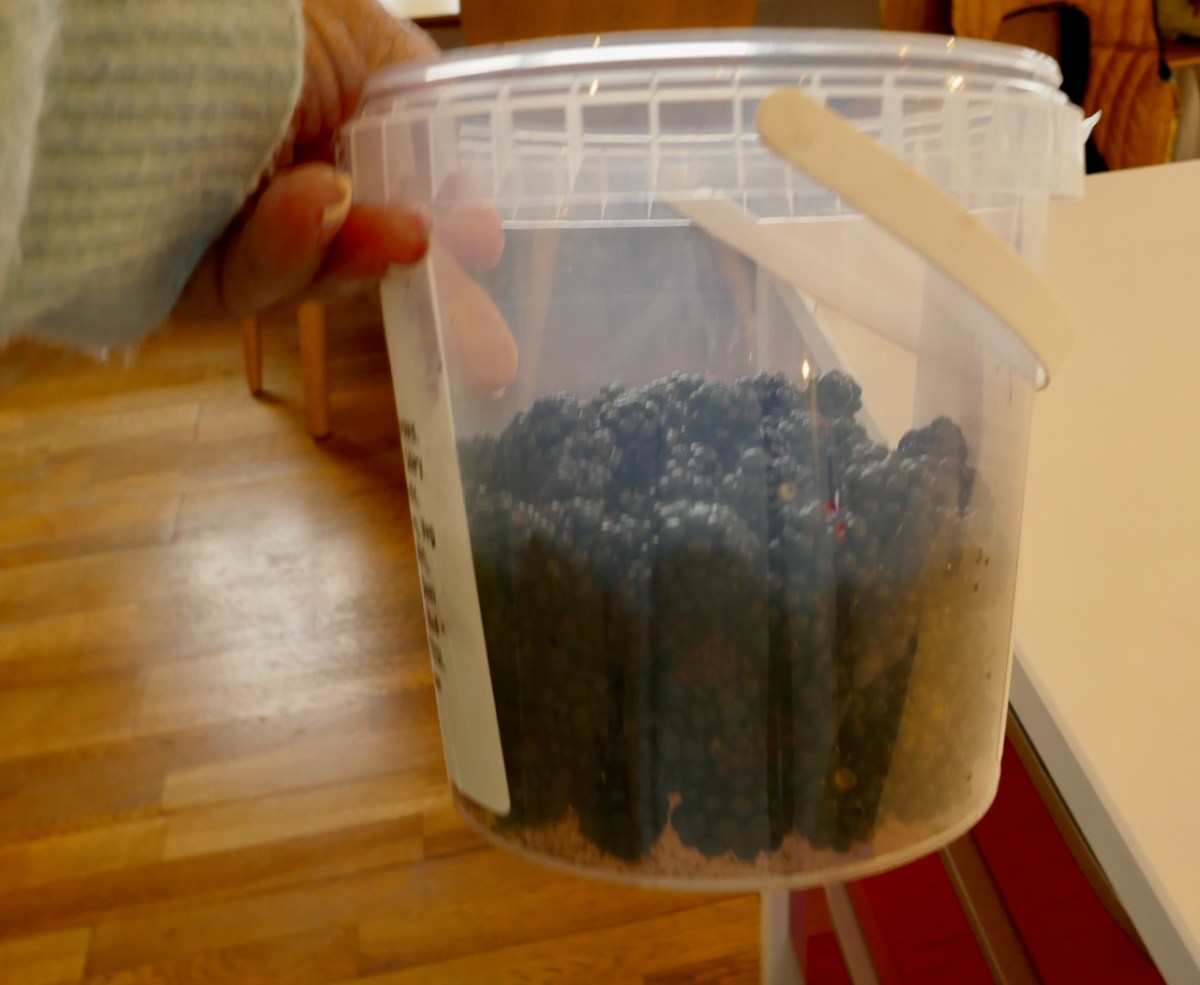
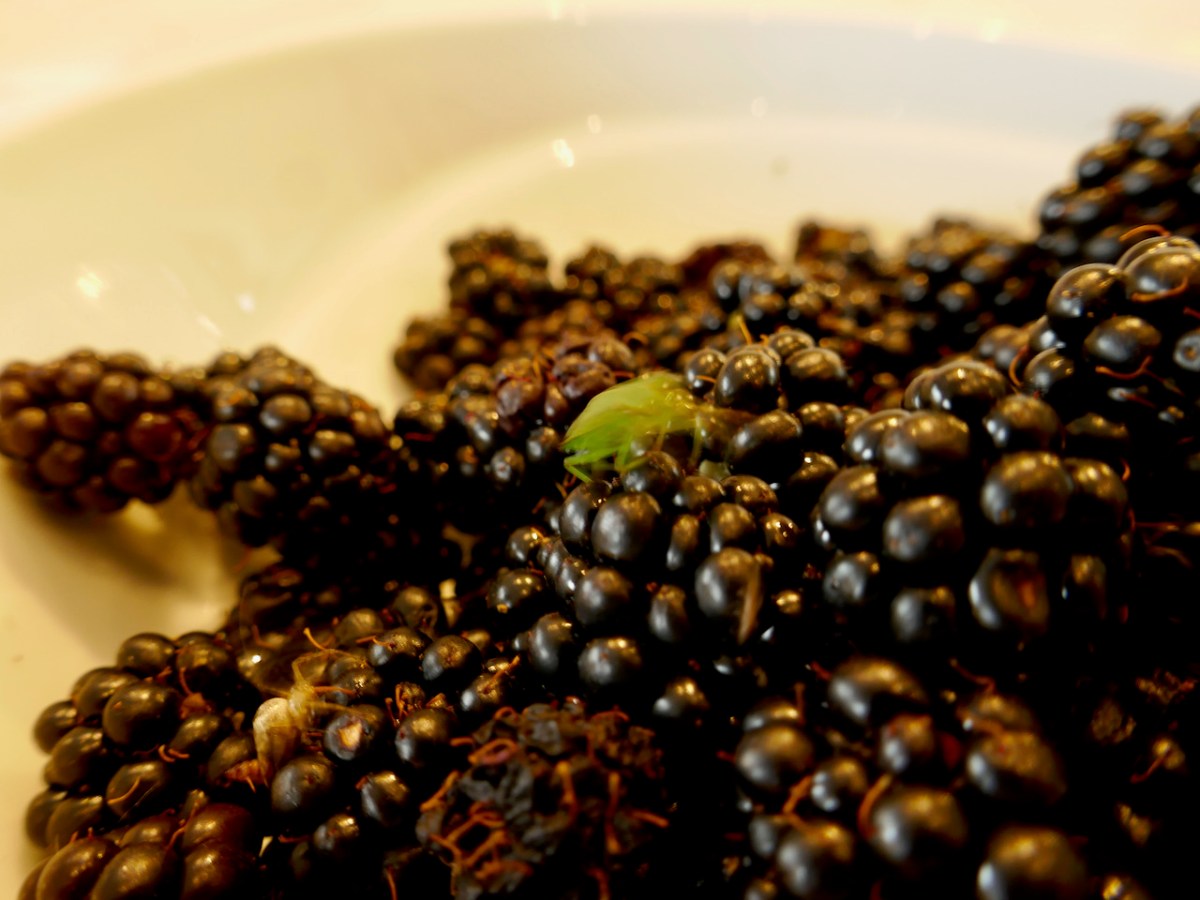
Pick through them well!
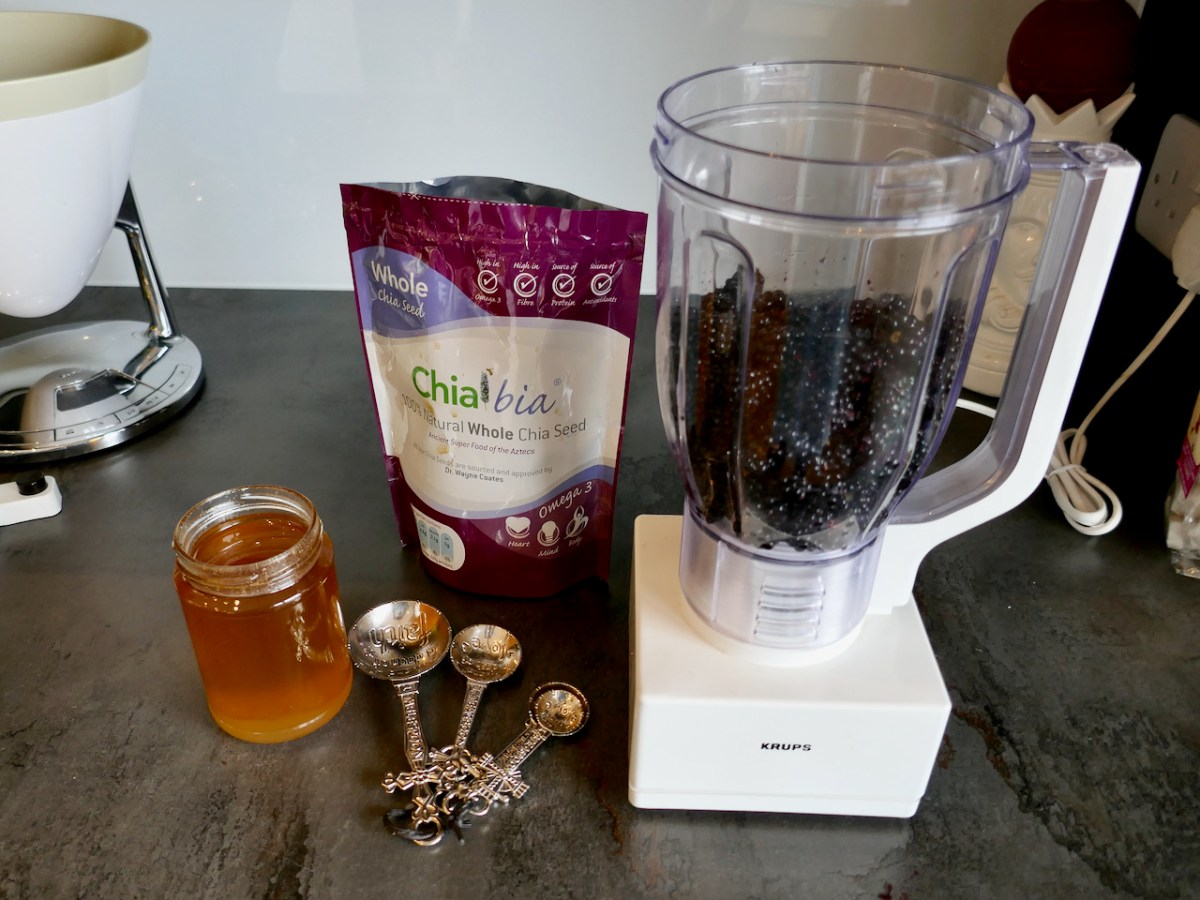
Ingredients

1 cup blackberries

1Tbs Warm water

1 Tbs Honey

1 Tbs Chia Seeds

Method

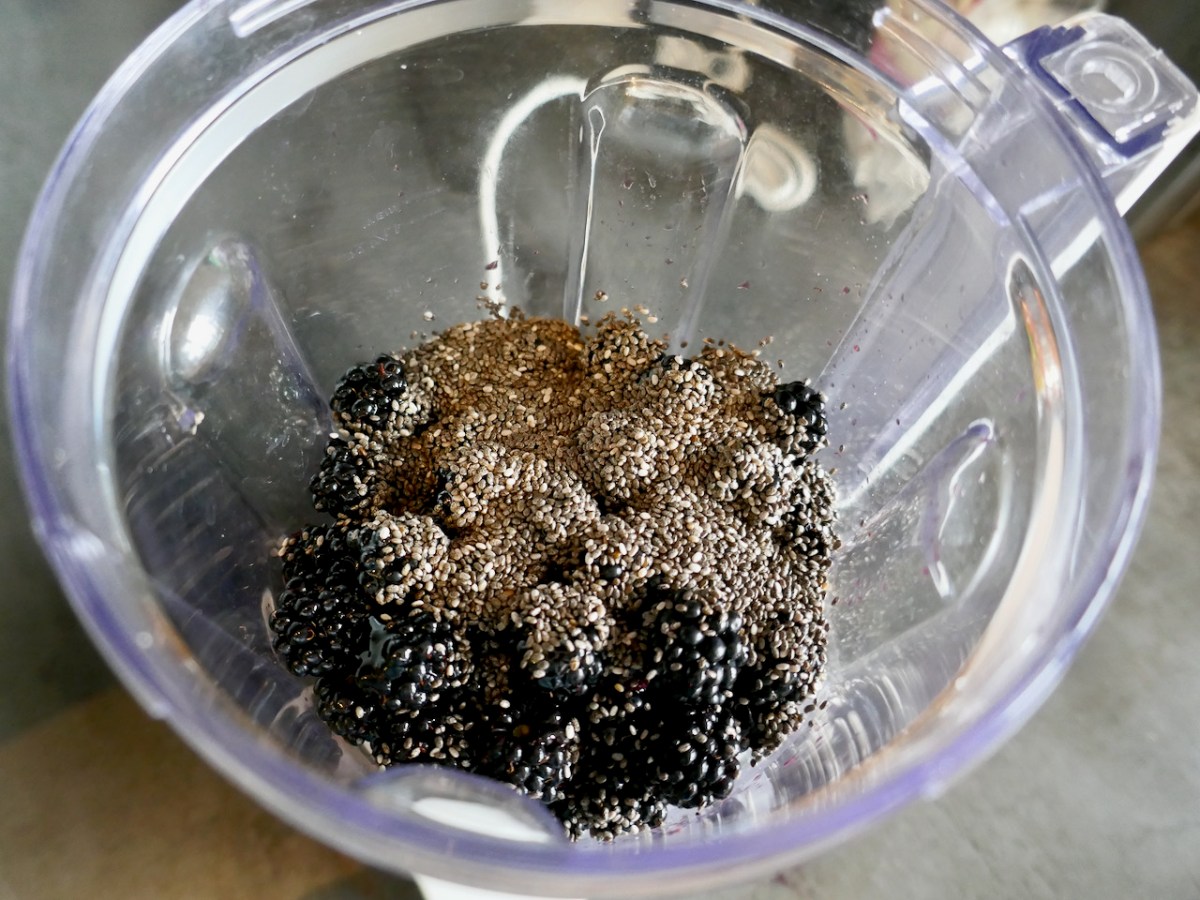
Pick through the blackberries to remove any sticks or bugs. but don’t wash them. Put all ingredients in a blender and blend until mushified (technical term), or use a hand blender, or just mash everything together really well with a fork. Pour it all into a clean jar (or glass, or yogurt pot) and store in the fridge.

Because this isn’t cooked, you have to keep it in the fridge but it will last for a couple of weeks there. You can also freeze it.

Yum!

Coomhola Country Revisited

Lines 1

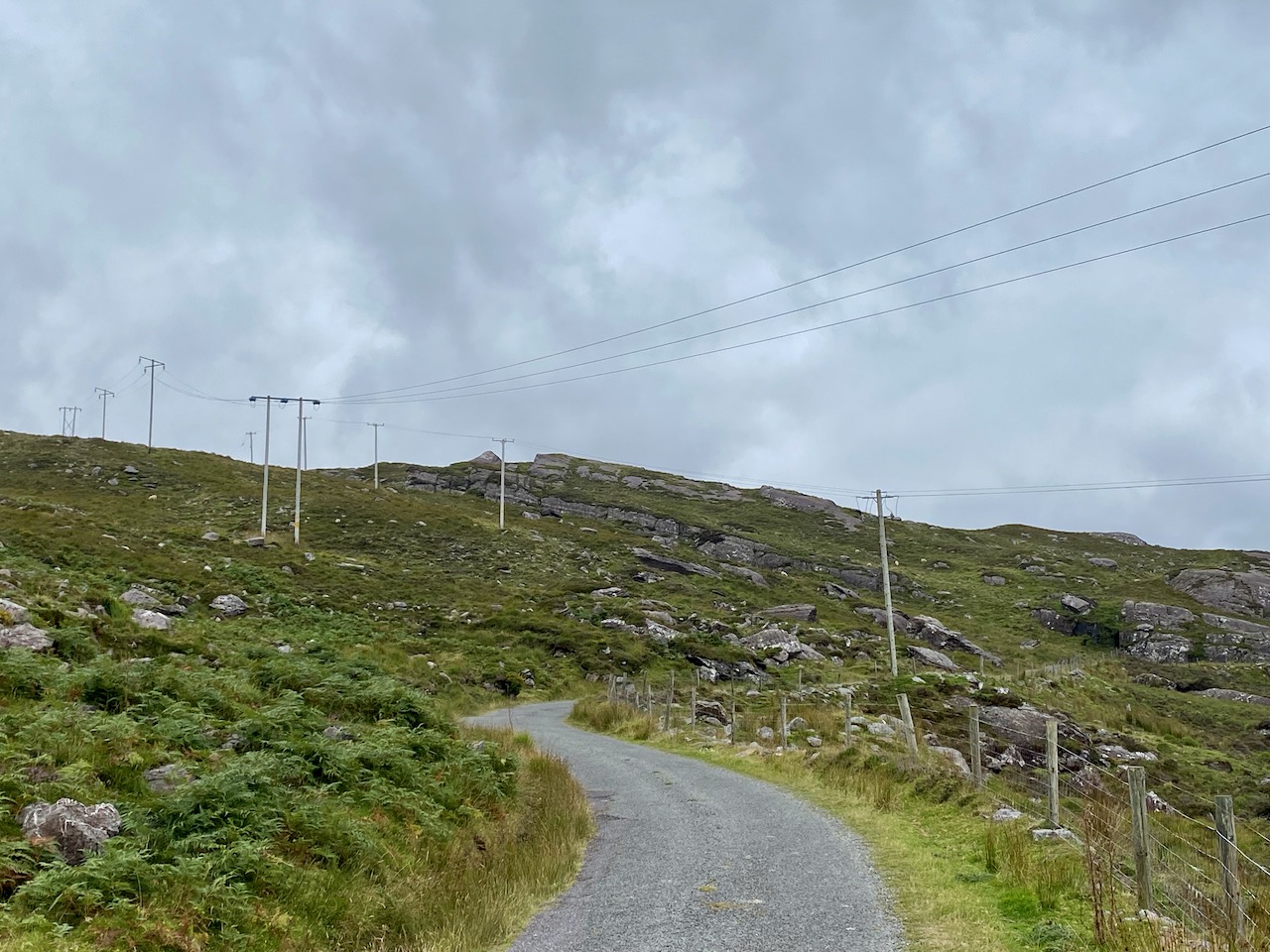
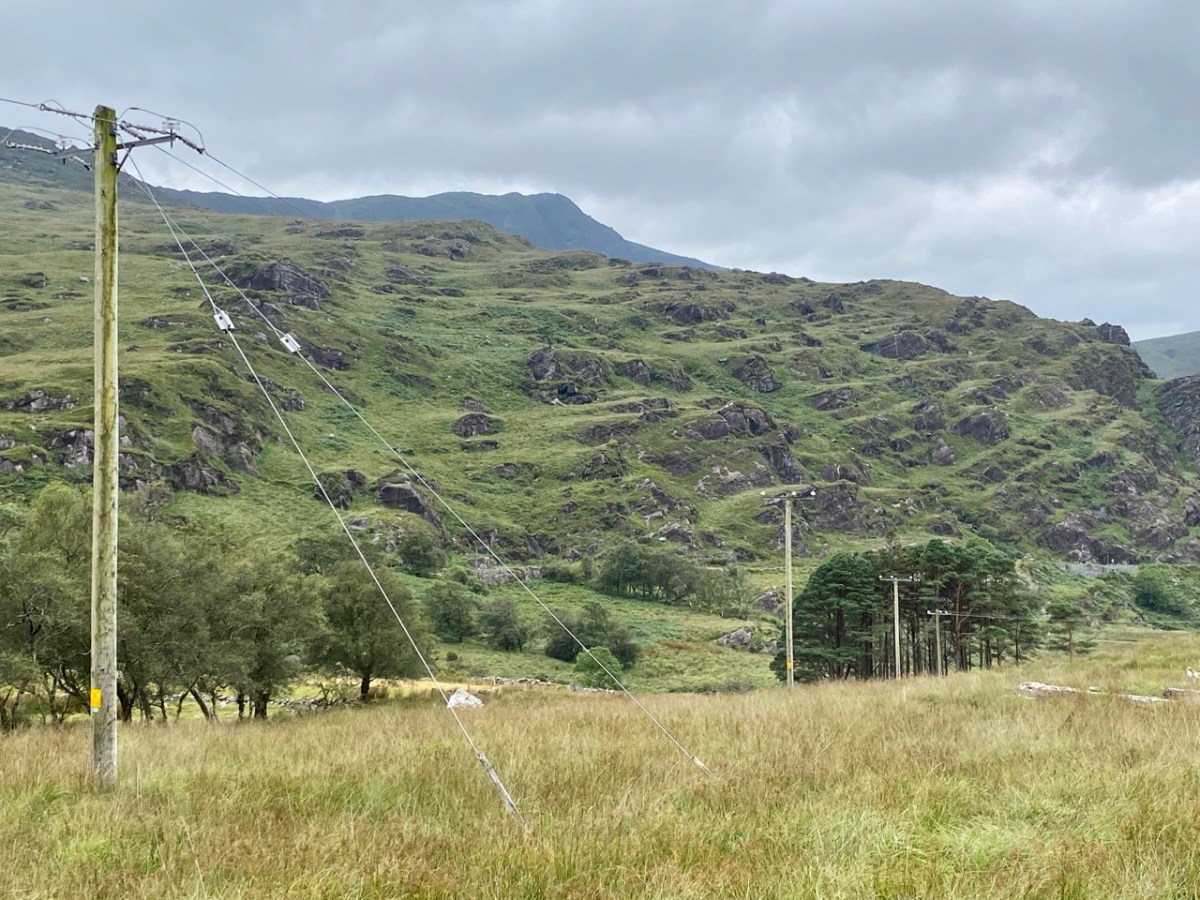
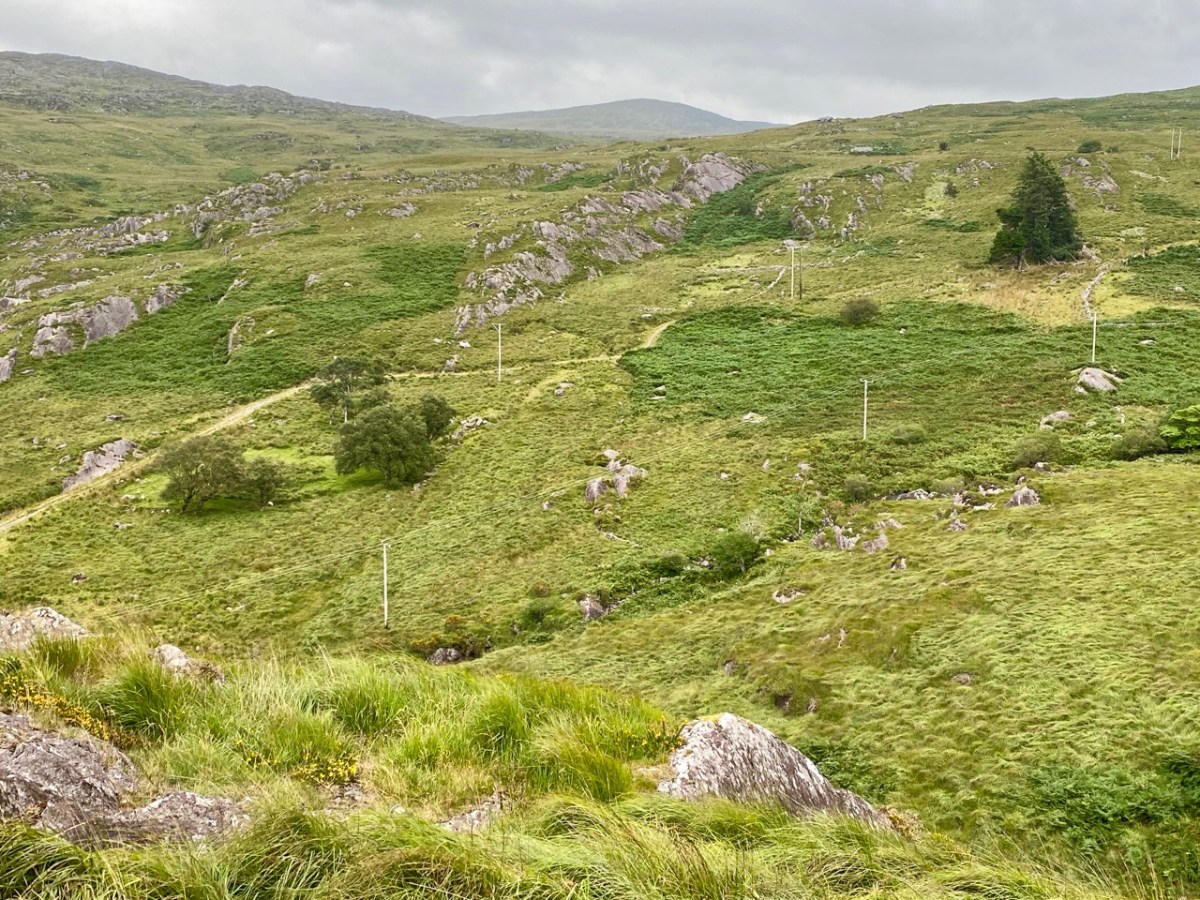
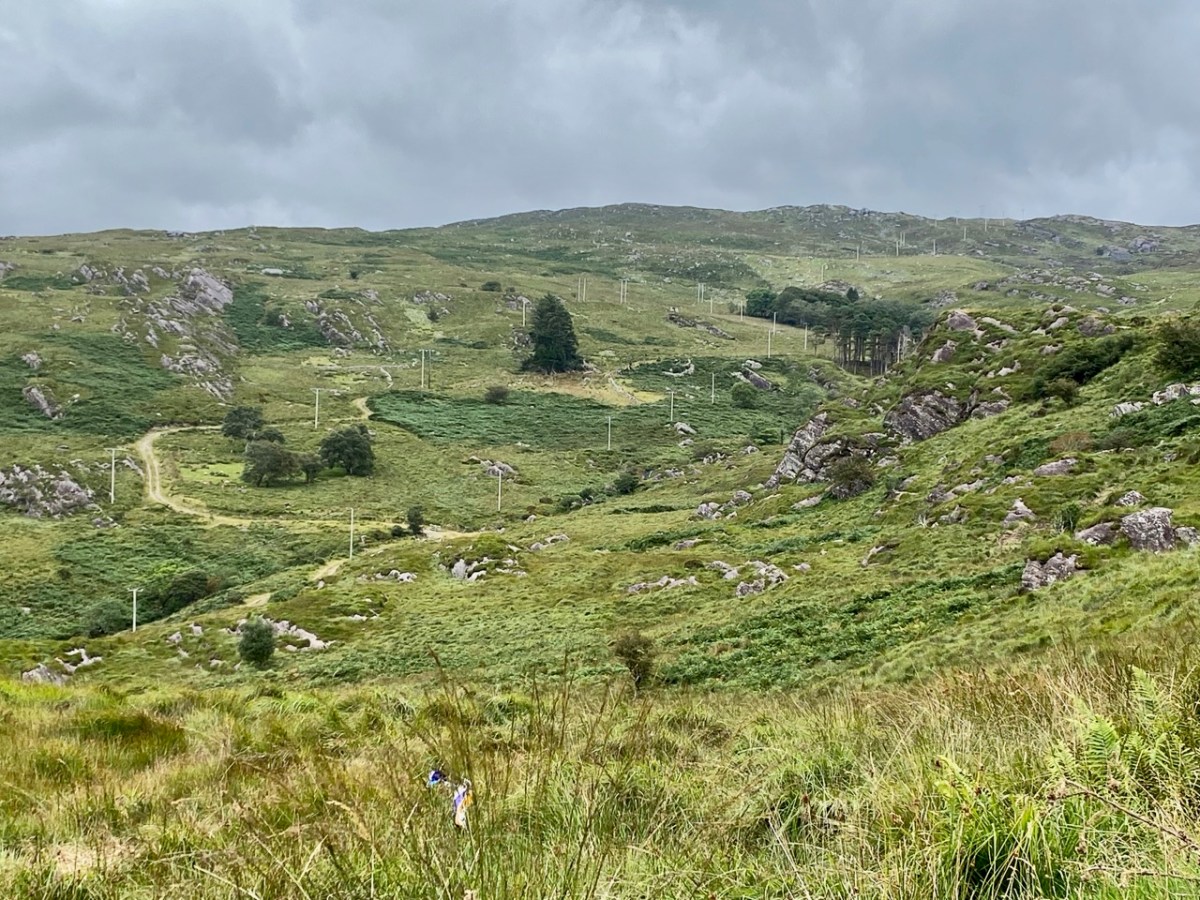
Here’s a post I published in June last year – only 15 months ago. Many of you will remember it. I’m repeating it in order to remind you of the beauty of this particularly remote corner of West Cork and Kerry. We travelled this byway again last week, and were surprised to notice how ‘raw’ the landscape seemed in places. This is partly because a new roadway has been made down through the valley to serve local property. But also I was struck by the number of power lines which go through the area.

These lines were part of a programme to improve and extend the Eirgrid of Ireland – the remit of the ESB.

The distribution system delivers electricity from the transmission system to 2.3 million customers in Ireland, operating at 110kV in the Dublin area, and at 38kV, 20kV, 10kV and low voltage (LV) nationwide. In serving Ireland’s large rural population, the network length per capita is four times the European average and overhead lines outnumber underground cables 6 : 1 . . .

ESB Networks IE

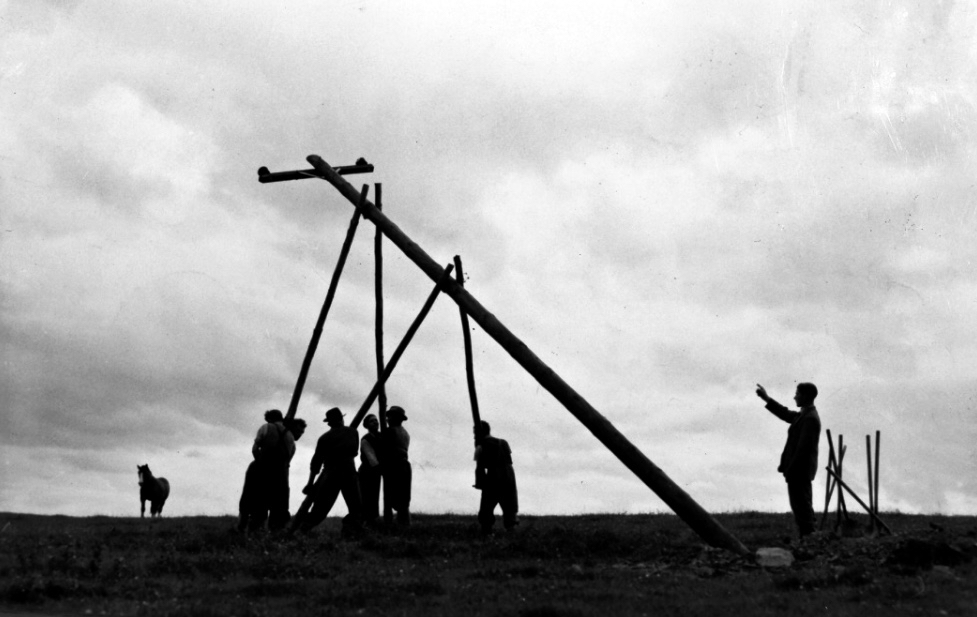
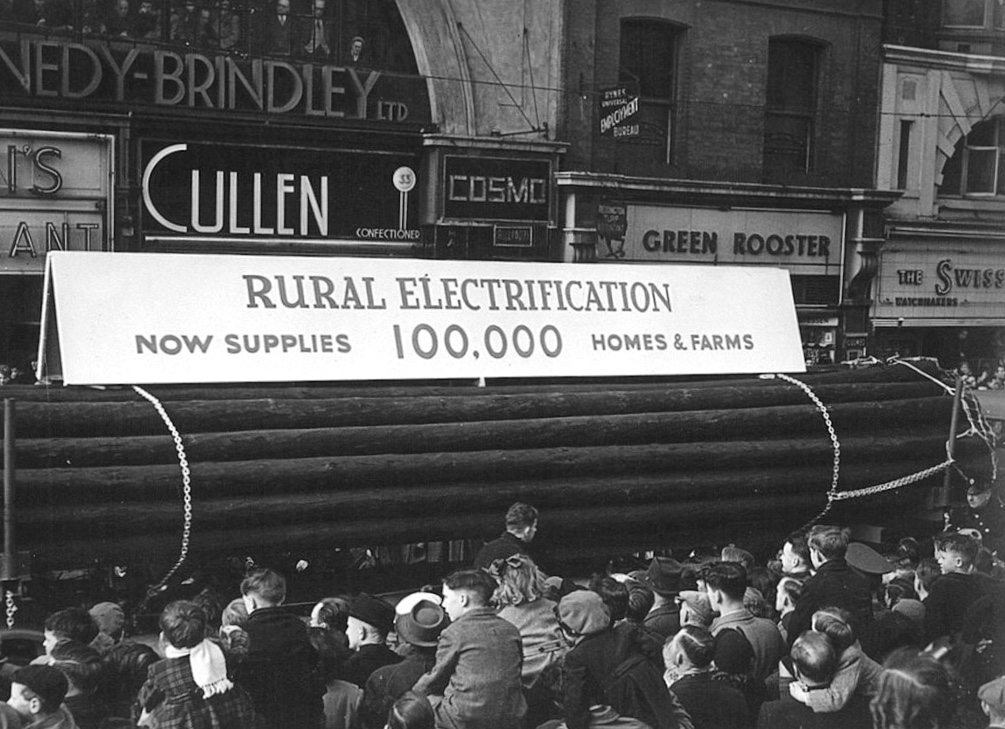
Statistics are remarkable: 2.1 million wooden poles and 150,000 km of overhead line have been used to date, along with 22,000 km of underground supply cable. Due to the Rural Electrification Scheme led by ESB, by the 1960s 80% of rural households had electricity in their homes. Now, most households are connected to the grid, and works are in progress to upgrade the system across the country. In the image below the very first pole is being erected in 1944, while under that is a photo of a PR event ten years later (both are from the ESB Archives).

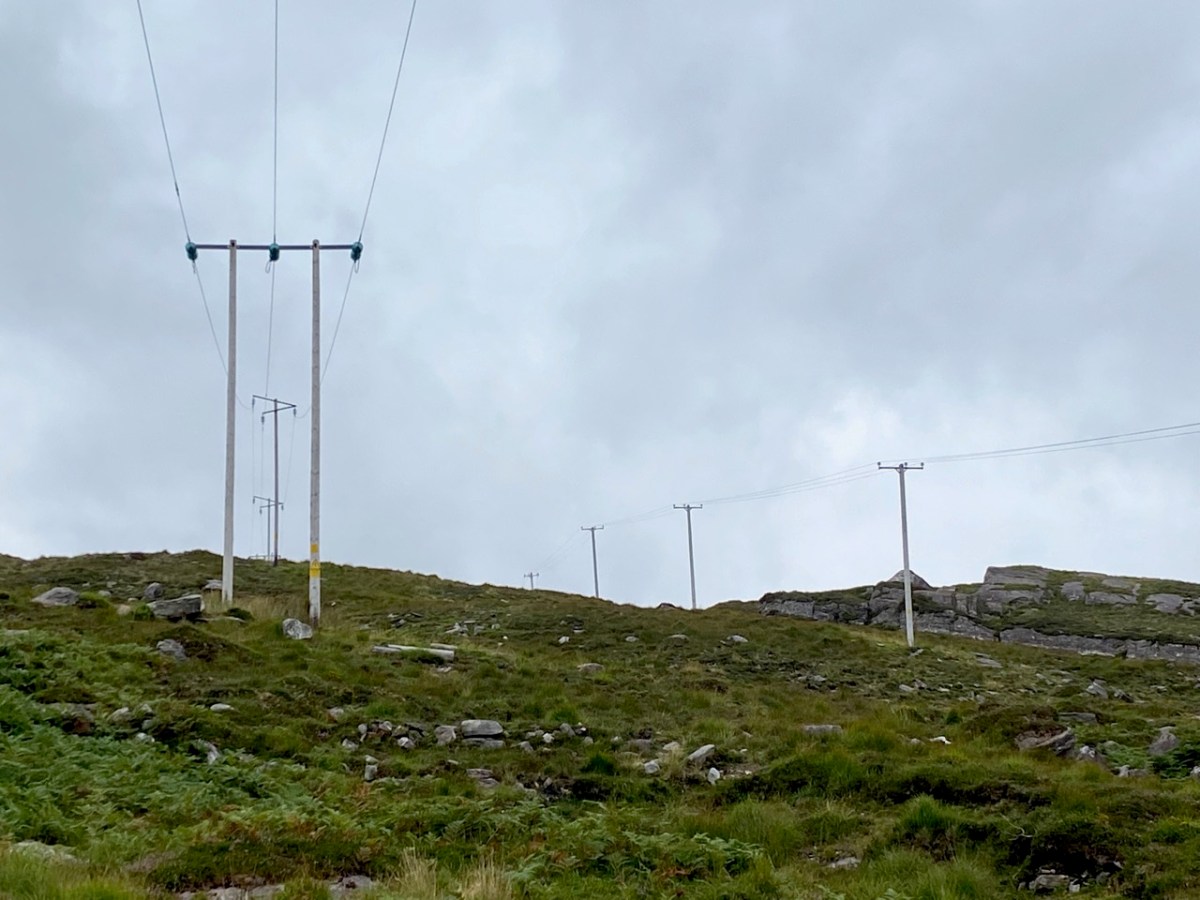
Emotions are mixed as we travel through this wild country and see how power lines can affect the rural areas, while obviously also providing essential services. We were surprised that so many lines – and poles – were required to get the supply over these particular hills. A correspondent has given us the full details (thank you Justin Cremin).

. . . The bigger line on the left is a 38kv line, it goes to Kikgarvan 38kv station and originates at Ballylickey 110kv station. This supplies all of the Beara peninsula with the Kilgarvan line as an alternative “just in case”. It was built in the 1950’s at a guess and would have primarily blasted by gelignite and the poles stood manually.The line on the right is called the Hydro line. It runs over the hill to Slaheny to a small hydro and originated in Bantry 38kv where it picks up another 3 small hydro stations along the way. This Borlin leg was stood in the very early 00’s/ very late 90’s . . .

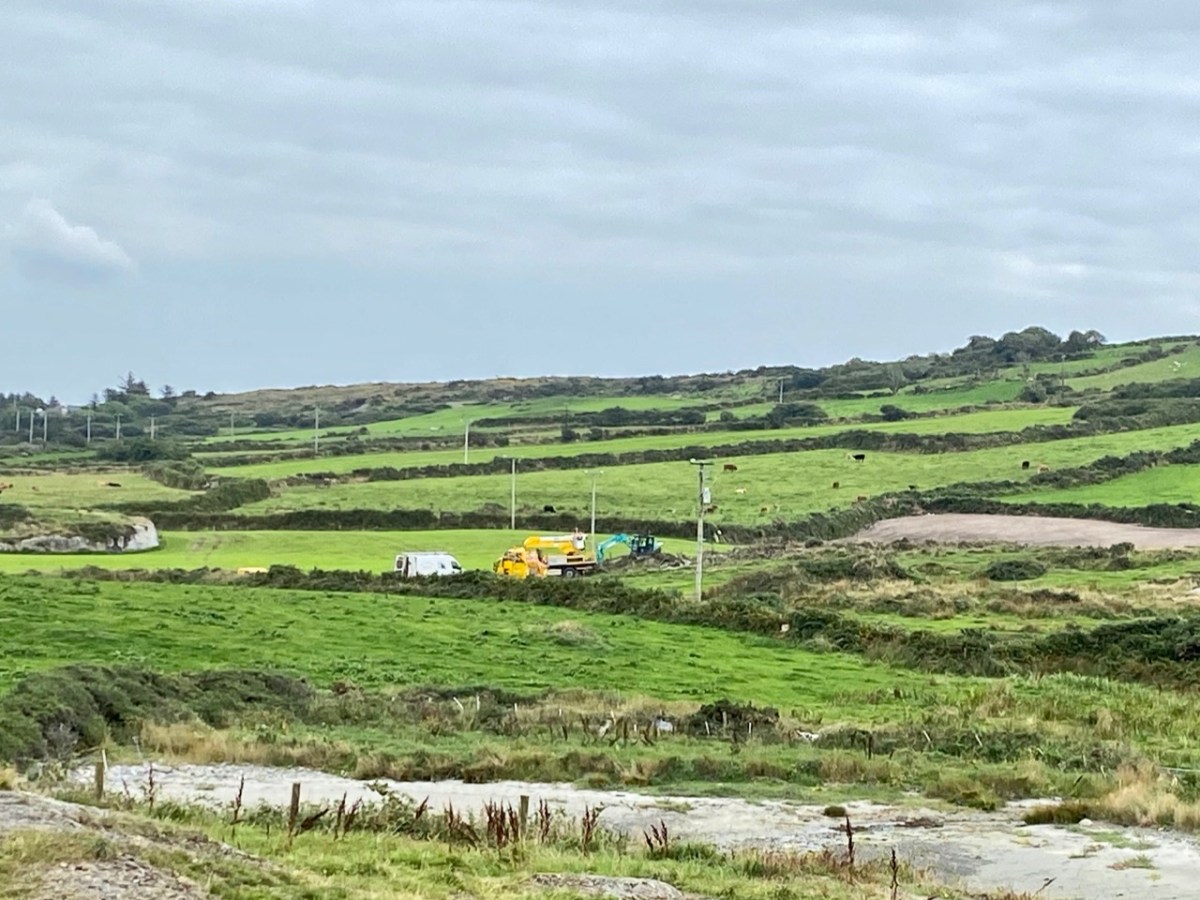
We came across further grid improvement works currently in progress on a recent trip to the environs of Dunmanus Castle:

So here – to remind you – is the Coomhola and Borlin landscape as we discovered it, and recorded it, in our post of 2020:

As the Coomhola River tumbles from Borlin to the sea, gathering tributaries, it forms many pools amongst the riffles and glides. These pools, in summer, provide leafy shelters for salmon and trout. To anyone who has fished or walked the river, each pool has its own character, and each its own name . . .

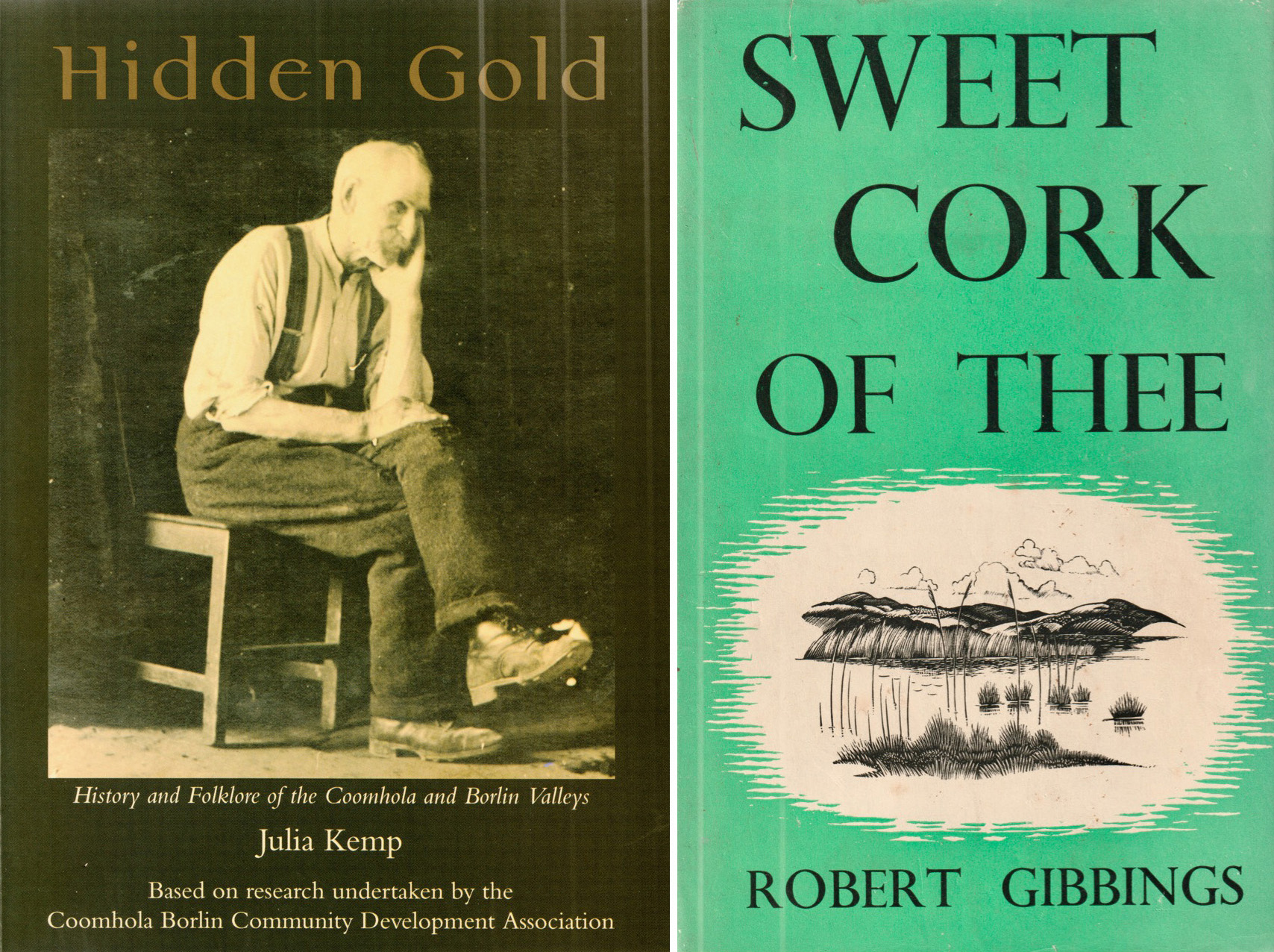
[From Hidden Gold, History and Folklore of the Coomhola and Borlin Valleys Julia Kemp: Coomhola Borlin Community Development Association 1998]

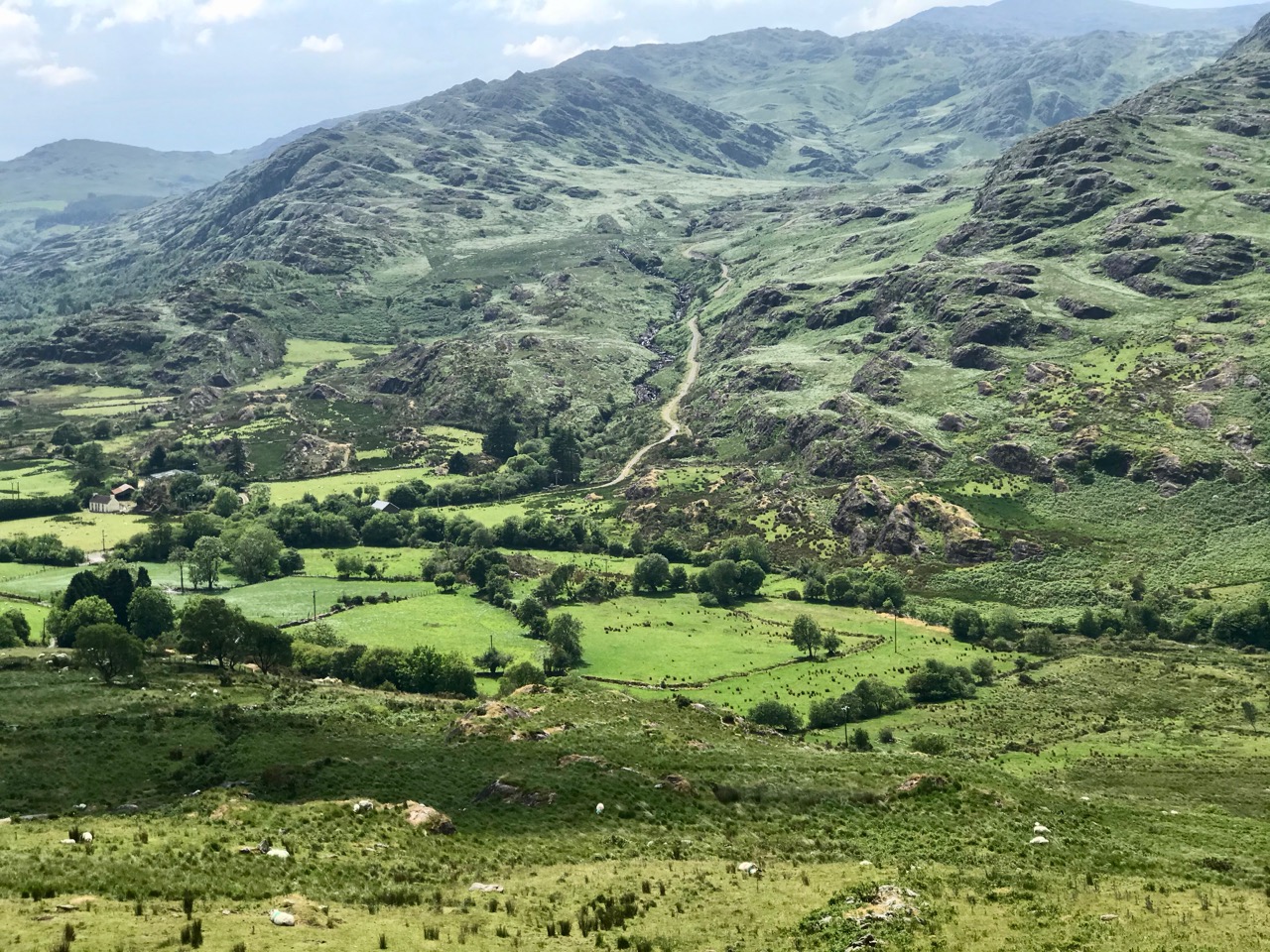
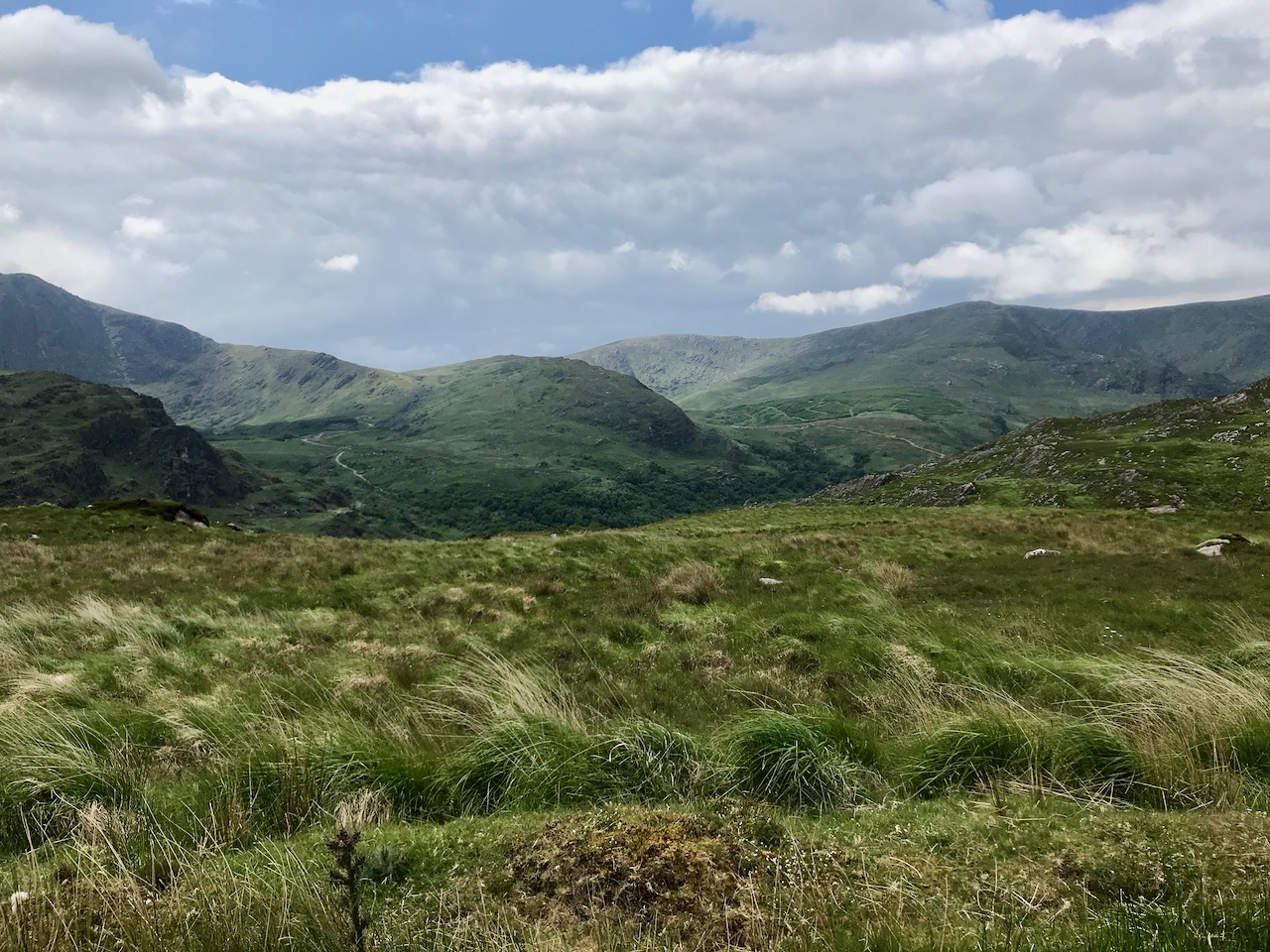
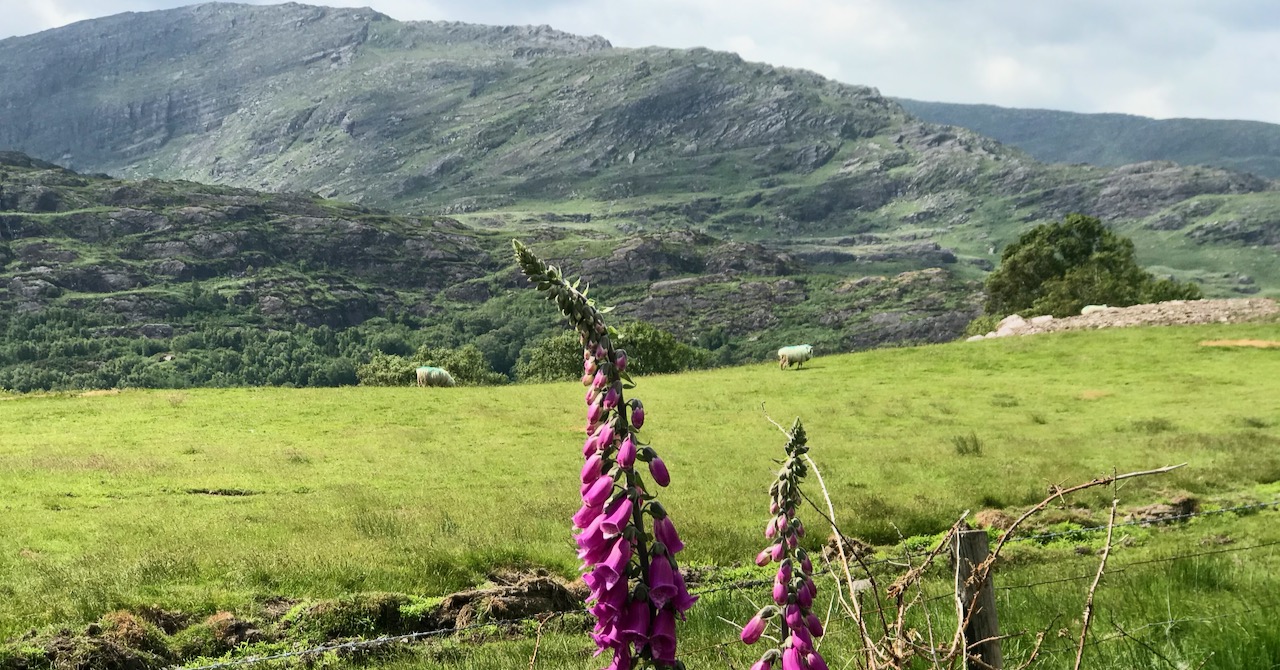
On the header is the spectacular view from Borlin, looking down the great glen where the Coomhola River finds its way through a country formed by glaciers in the Midlandian period, about 10,000 years ago. The rugged Shehy mountain range (Cnoic na Seithe in Irish, meaning Hills of the Animal Hides) with its peaks of Knockboy, Caoinkeen and Kinkeen provides some of the most dramatic scenery in West Cork, its scarred outcrops clearly showing the downward progress of the ice sheets. The contrast between the barren high land and the lush pastoral meadows laid out below evoke a beauty which is hard to match – anywhere in the world!

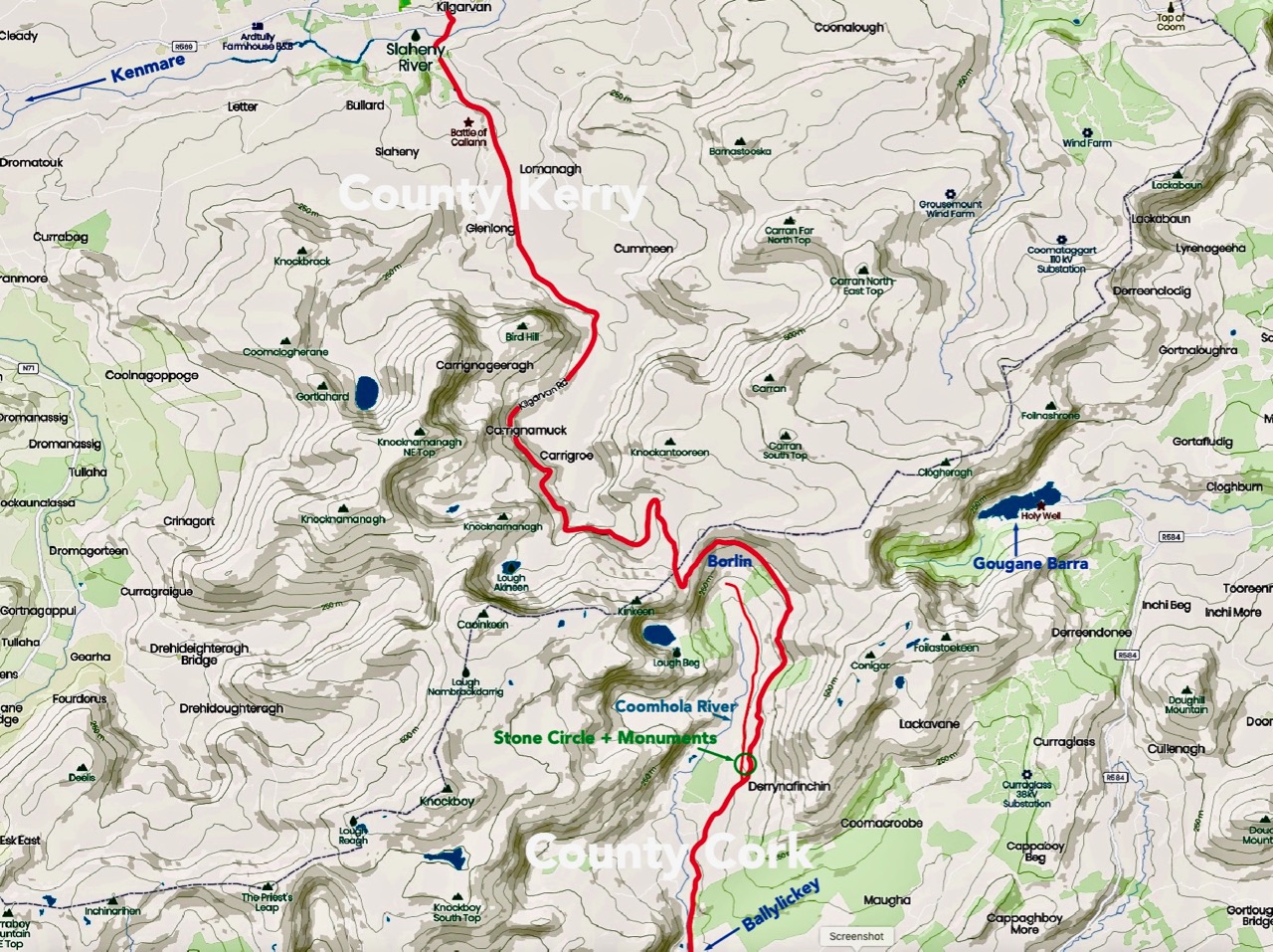
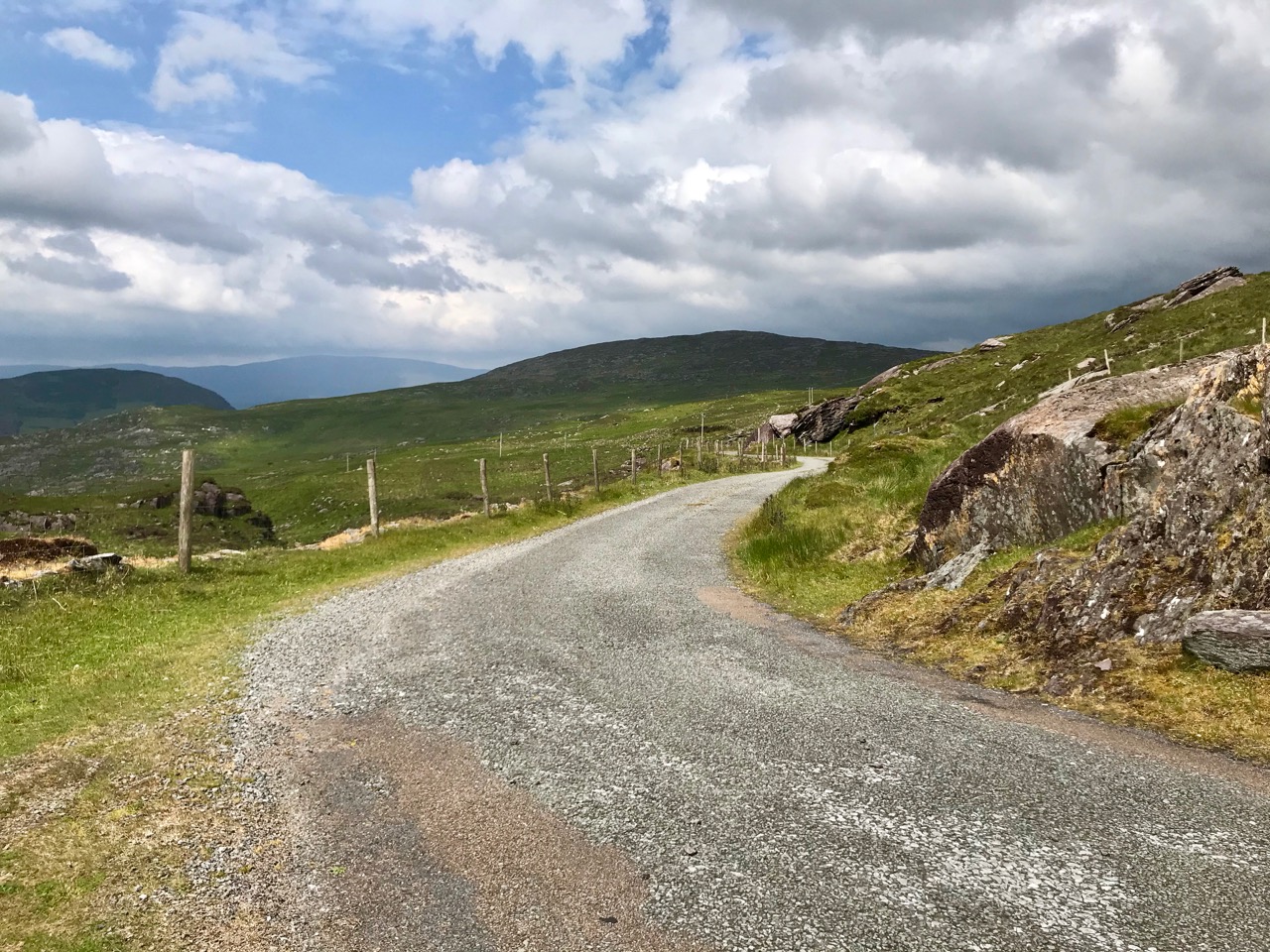
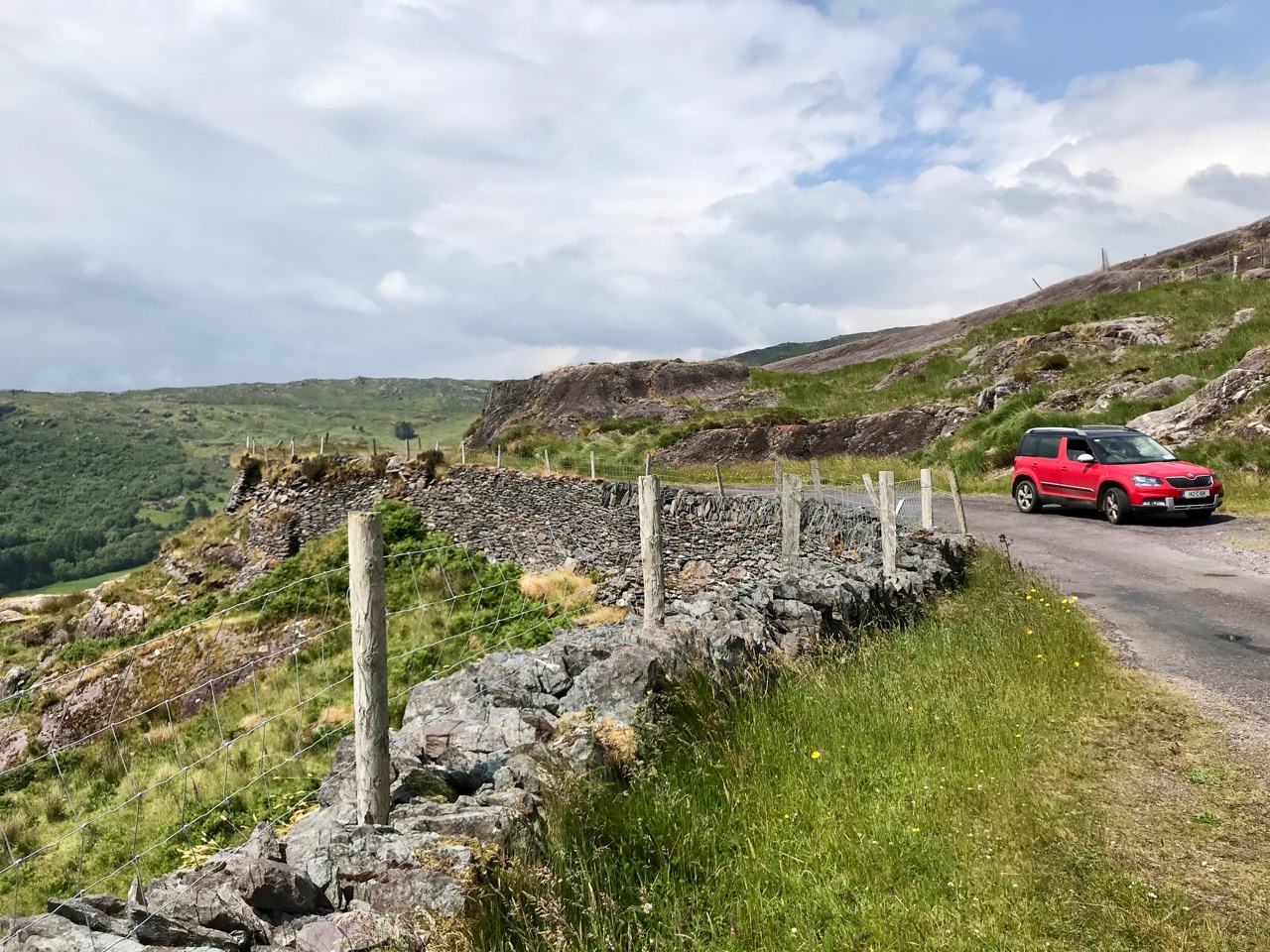
The Kilgarvan (Co Kerry) to Ballylickey (Co Cork) road is one of the unsung feats of Irish engineering. Until the middle of the nineteenth century it was no more than a system of ‘nearways’, providing rough, narrow access tracks to remote mountain dwellings and hard-won field systems. A famine improvement project c1846, involving metalling, a tunnel, cuttings and stone retaining walls, transformed it to the ‘through road’ which exists today – although it may seem to us no more than a boreen. It’s there for all to travel on, and will provide a breathtaking experience – but be aware that it could also deliver some hair-raising reversing episodes on the rare occasions when a vehicle is encountered coming the other way. The upper photo shows the road ‘clinging on’ to the face of a mountain outcrop, while the map gives a good idea of the circuitous route that the way takes to keep as far as possible to a level contour on its journey.

This is the country of St Finnbar. If you follow the County border east from the top of the Borlin Glen (off-road) you will very soon come to the site of his sixth century monastic settlement at Gougane Barra. This whole area was loved by the Cork born writer and illustrator Robert Gibbings, whose book Sweet Cork of Thee tells of a seven month sojourn in this mountainous region in 1949, beautifully illustrated by his woodcuts.

Mountain Road by Robert Gibbings, woodcut from Sweet Cork of Thee, published 1951

As we drove along the road beside the Inchigeelagh lakes, we could see moorhens gathering material for their nests among the taselled reeds and swans on islets, piling up dead rushes in readiness for their eggs. A corncrake was calling from a meadow. Celandines and kingcups outshone the gorse.

Mick said to me: ‘My father’s sister lived a mile to the north of us here. She married a man by the name of Scanlan. His mother came from Gougane and ’twas one evening when she was travelling west by the lake – there was no road there then, only a little bit of a track – she looked in the lake and what did she see but fields of corn and sheep and every sort of land and crop and stock. She was an old woman at the time and she knew well enough ’twas a kind of enchantment must be on the lake, so she says to herself, if I can keep an eye on it all and throw a bit of iron at it the spell will be broken. So she kept her eyes fixed on the fields and the cattle and the pigs and the hens, and all the time she was thinking where would she get a bit of iron. And the only bit she could think of was in the heel of her shoe. ‘Twould be worth it to throw in the shoe, says she. But when she went to unrip the lace wasn’t it tangled in a knot, and for the glint of a second she took her eye off the land. When she looked again ’twas all disappeared and the lake was there the same as ever.’

Our road turned south, through a wilderness of rock and bog and lilied pools . . .

[Robert Gibbings Sweet Cork of Thee, J M Dent & Sons 1951]

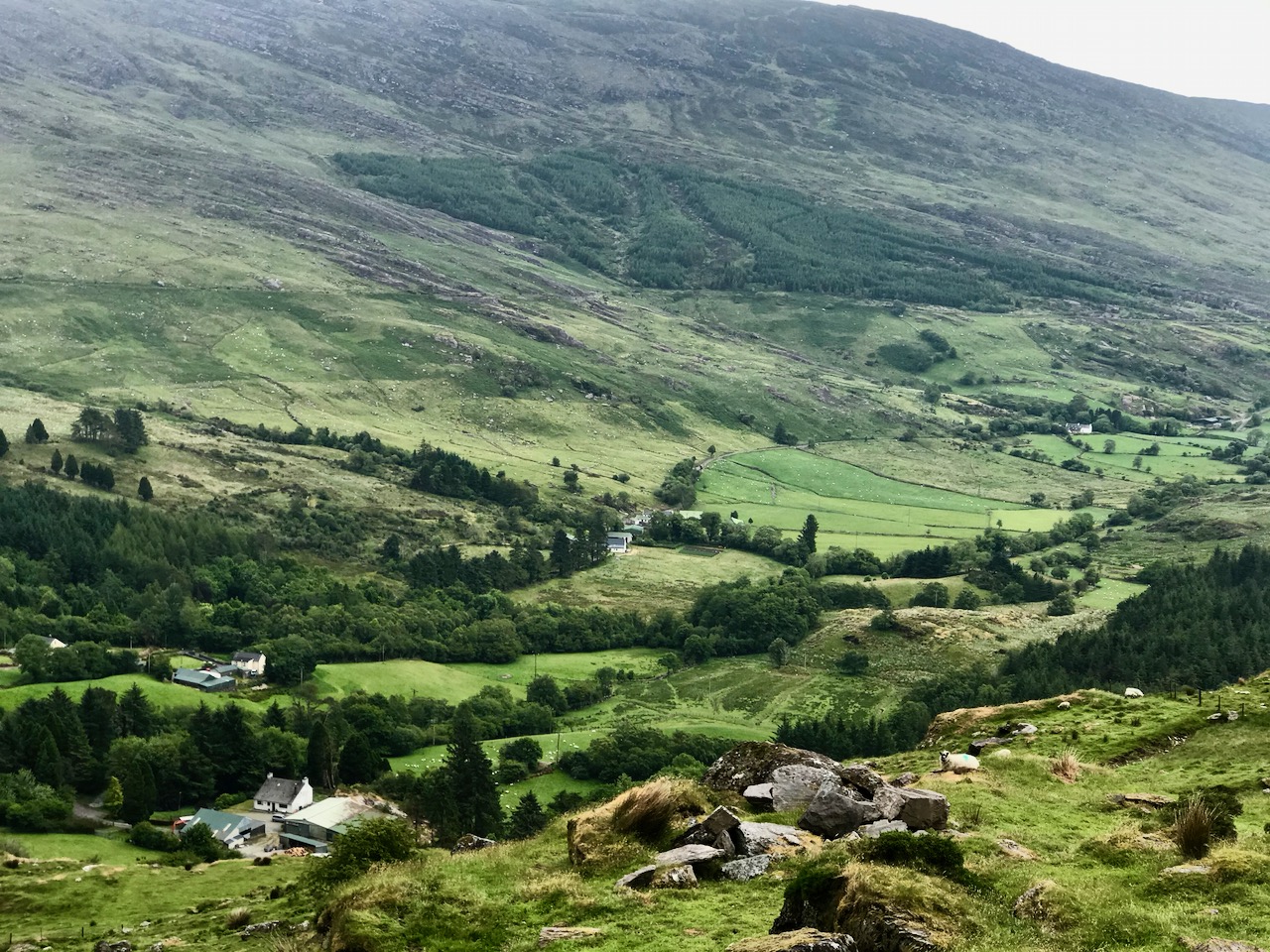
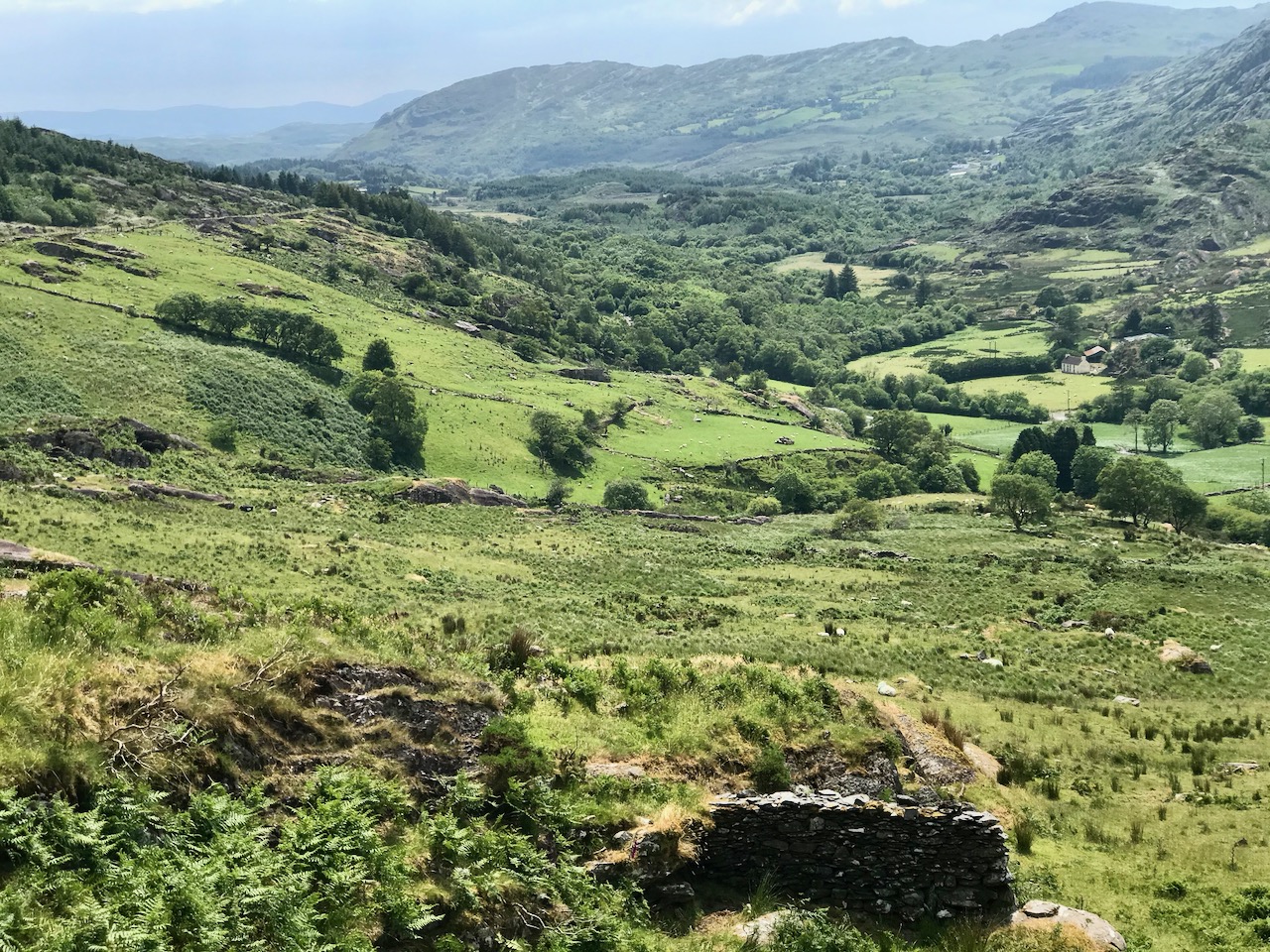
From the highest rim of Borlin Glen (upper picture), the Comhoola River valley is laid out below. Home to sheep and ravens, the scattered farmsteads emerge from rock and forest and provide a living – as they have for countless generations – to a hardy people.

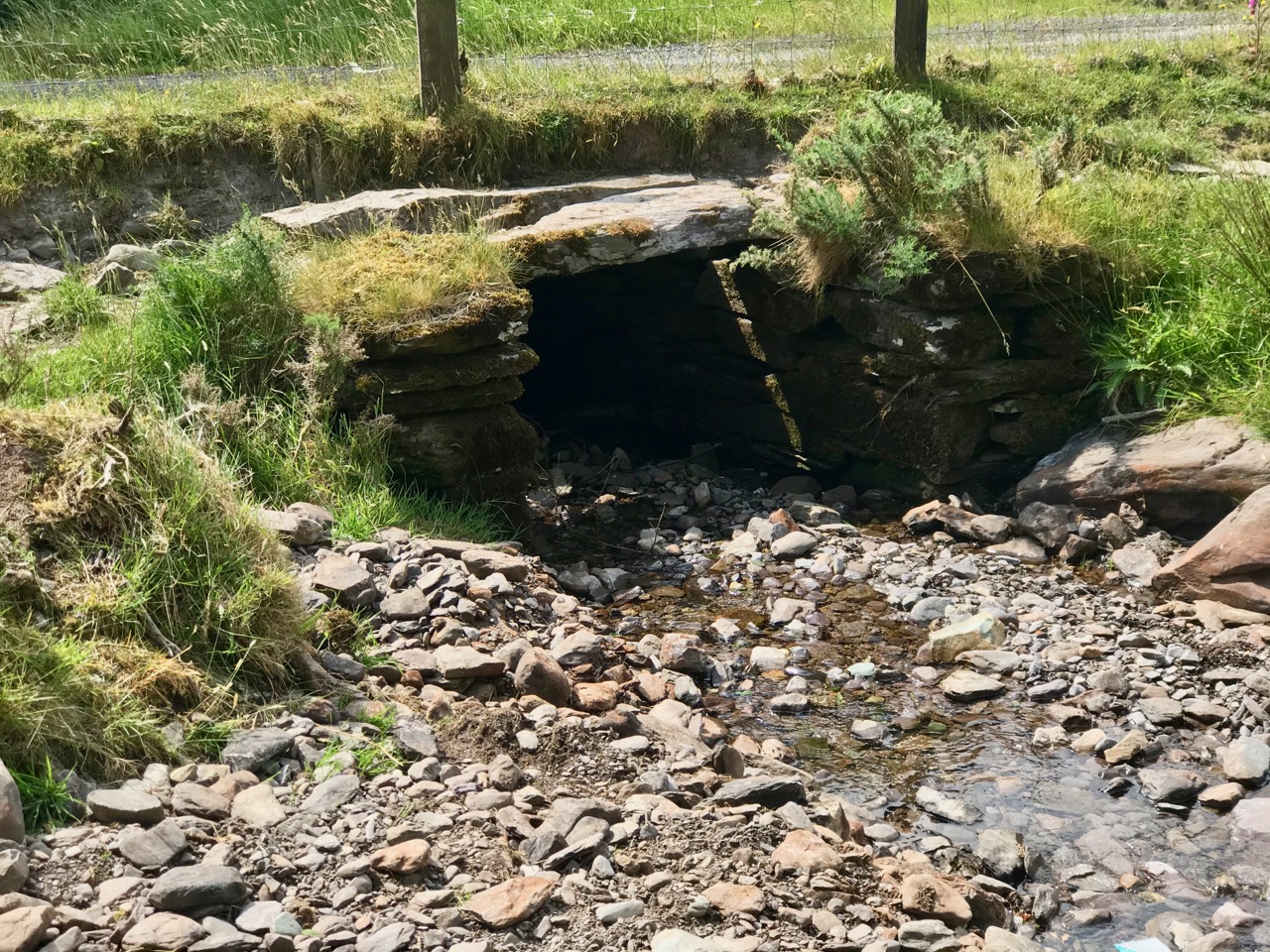
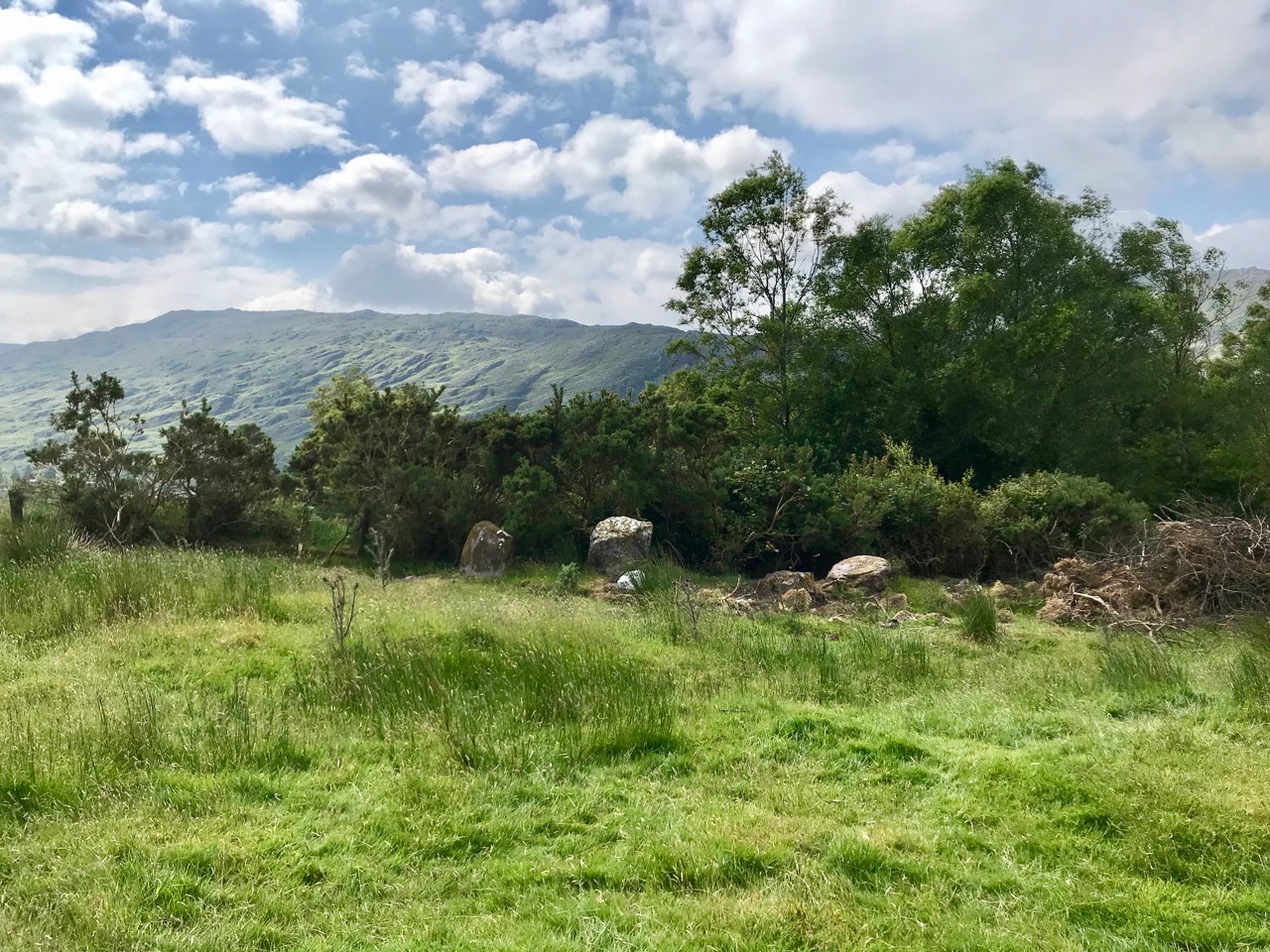
On the lush valley floor are signs of ancient activity and occupation. A stream flows through a meadow dotted with whitethorn trees (upper), while an old stone clapper bridge has been superseded by the modern boreen taking its way up to the Borlin Valley settlements (centre). Lower – a fascinating stone circle and mass rock site is interrupted by the field fence. Here, too, is a bullaun stone and cupmarked rock (below).

Let us give the last word to Johnny O’Driscoll from Snave, recorded by his grandson Sean O’Driscoll in the 1930s and featured in Julia Kemp’s Hidden Gold:

There is little gold in this area, but there is one place where it is said a crock of gold is buried. It is about a hundred yards from the Glaslough, between Coorycomade and Ardnatrush, about a mile and a half from Coomhola National School.

There is a bush growing at the exact location, and beneath the bush is a large stone which covers the hidden treasure. It belongs to a tiny dwarf, and anybody who visits the place at midnight can see this little creature on the bush above the gold.

People did go on one occasion in search of the gold, but they were unsuccessful. A little bright light is visible about midnight above the bush. I have seen it myself on several occasions . . .

West Cork Villages and Towns – Bantry

. . . The town is situated at the northern extremity of the bay to which it gives its name, in a small valley encircled by lofty mountains, which attracting the clouds in their passage over the Atlantic, involve it in almost continual rains. The streets are indifferently paved, and not lighted; the inhabitants are supplied with water from numerous springs. The approaches are steep and incommodious, and are lined with cabins of very inferior description. Little improvement has been made in the town, except by the erection of some very extensive stores by Mr O’Connell and Mr Corkery, merchants of the place, and the enlargement of the principal hotel, which now affords ample accommodation to the numerous tourists who, during the summer season, frequent the place on their way to Glengariff and the lakes . . .

Lewis Topographical Dictionary of Ireland 1837

. . . This bay was known to the ancients by the name of Inber Sceine. It is a noble sheet of water, landlocked by beautiful mountains. The scenery is picturesque, bold, and grand, and equals, if it yet not surpass, the best to be found in these kingdoms . . .


Early Irish History and Antiquities and the History of West Cork
W O’Halloran 1916

Bantry . . . a miserable poor place, hardly worth the name of a town, consisting of seven or eight small houses, and some mean little cottages . . .

Jacobite army officer and author John Stevens, 1689

Well, here we have some contrasting descriptions of the town of Bantry, the earliest (above) dating from over 330 years ago! That one is a bit unfair, in truth, as it seems to be almost an ‘aside’ within Stevens’ ill-tempered account of his own involvement in the Williamite War (1689 – 1691). Bantry was a landing place for the Jacobite army which then marched through Cork and engaged in the Battles of the Boyne and Aughrim, and the Siege of Limerick (which is celebrated to this day in a traditional country dance!). None of this needs to detain us further from pursuing our contemporary account of Bantry town.

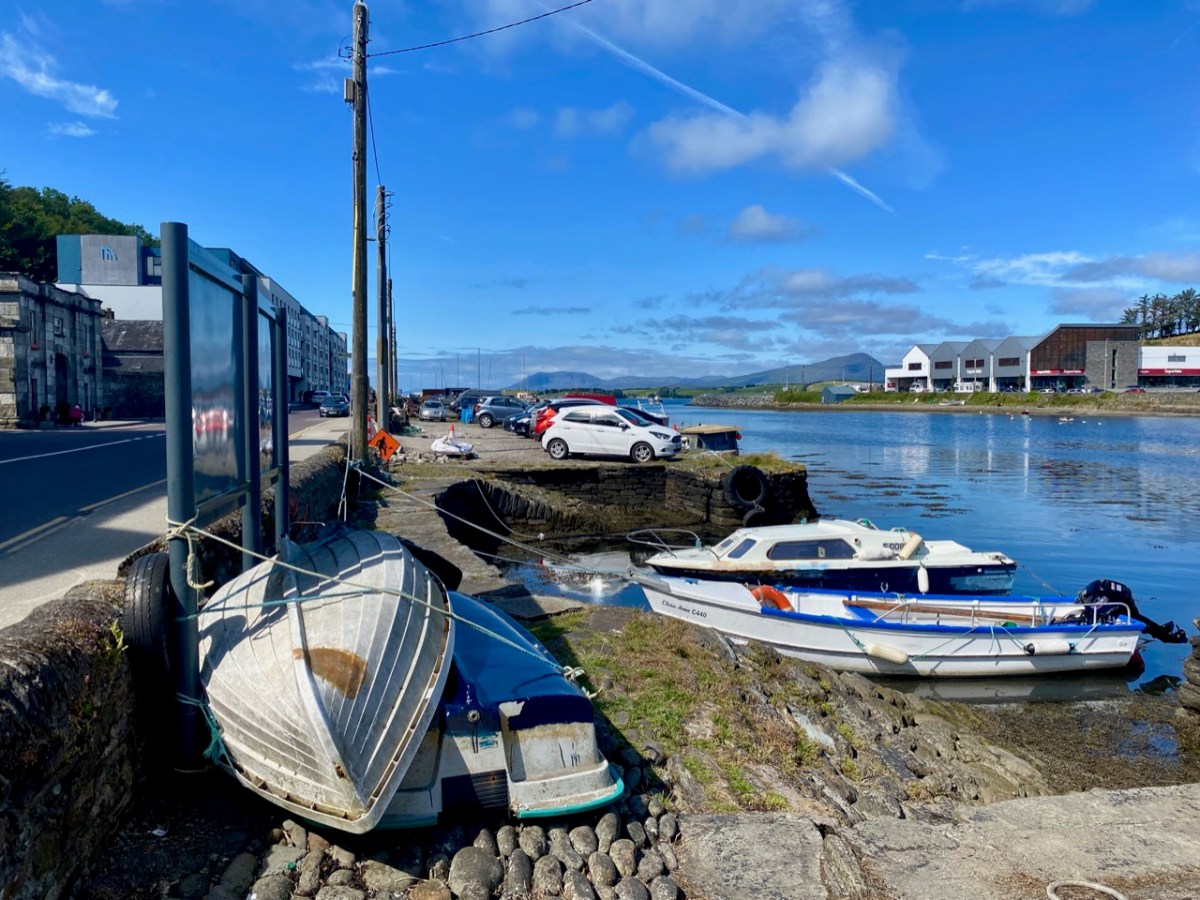
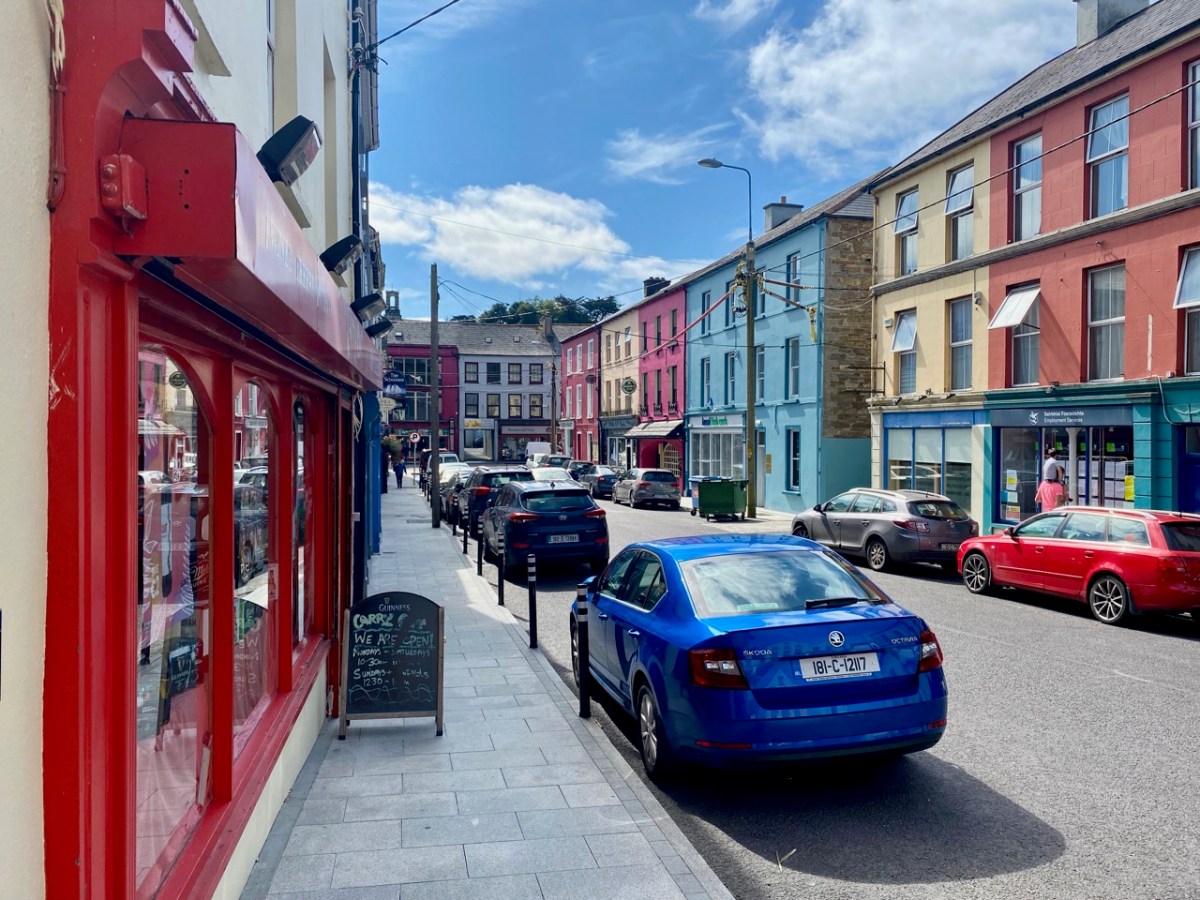
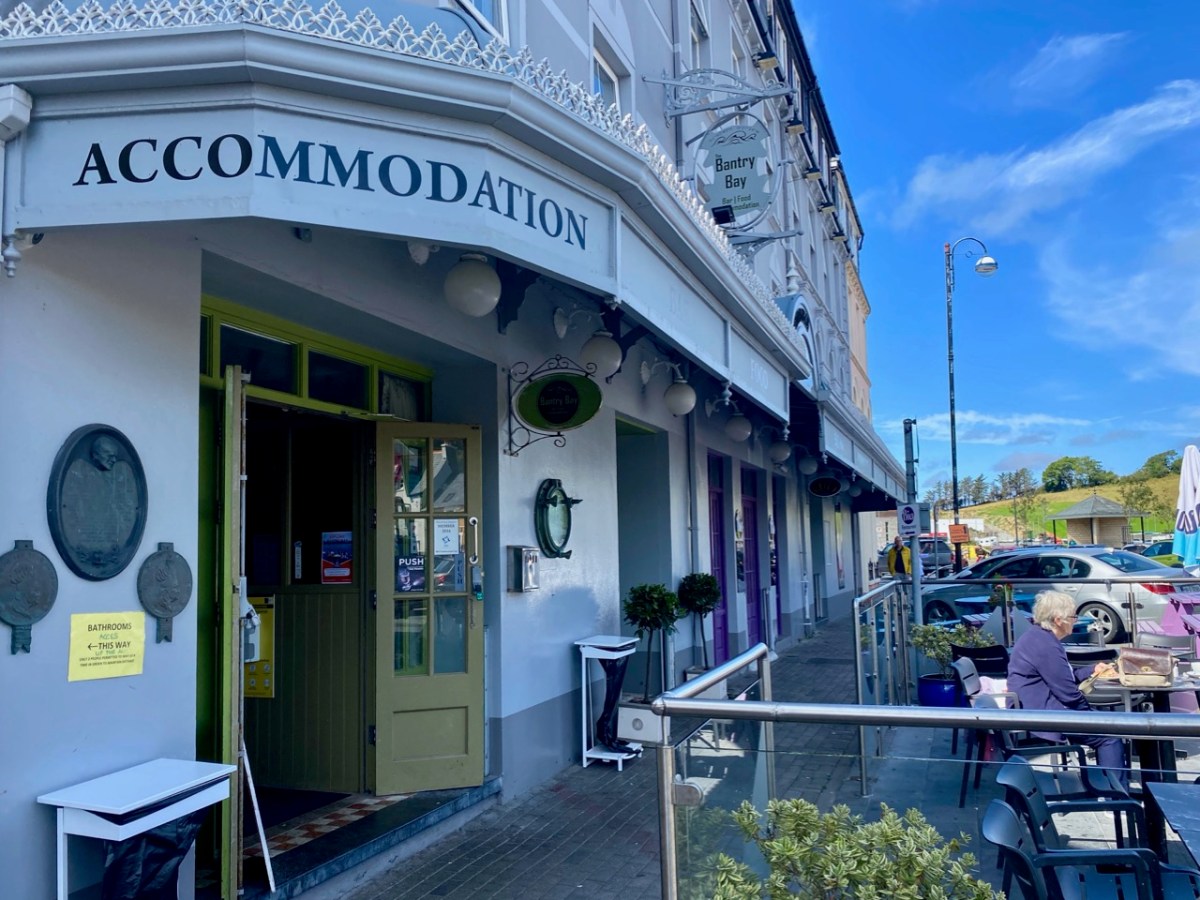
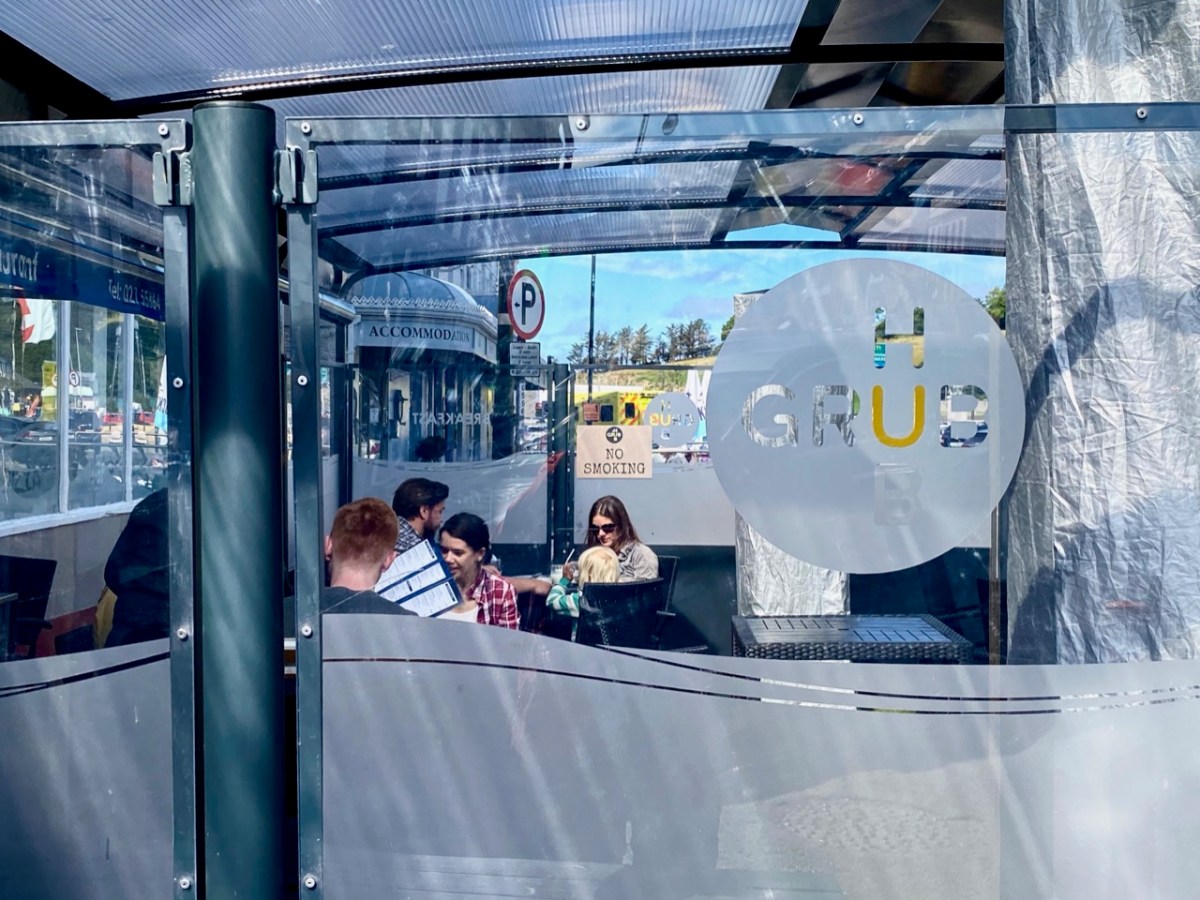
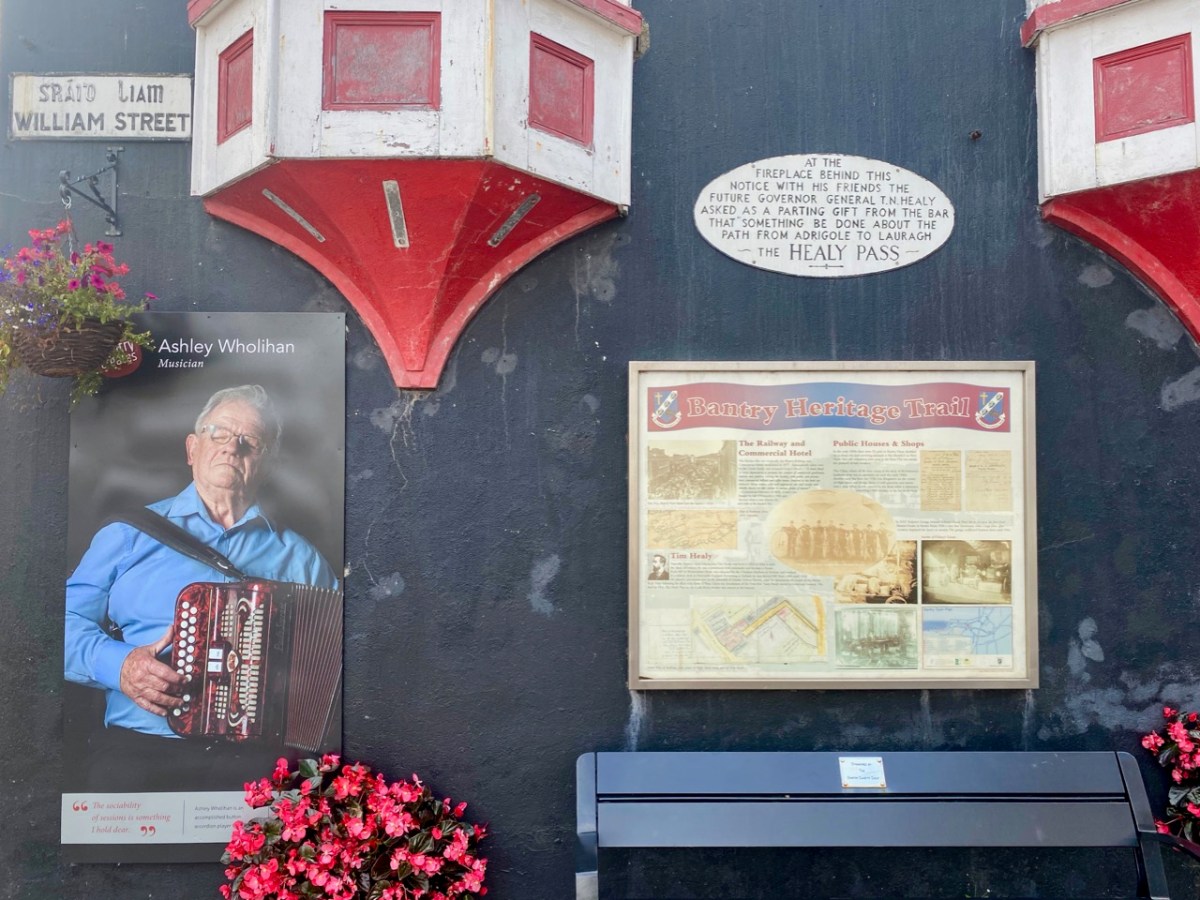
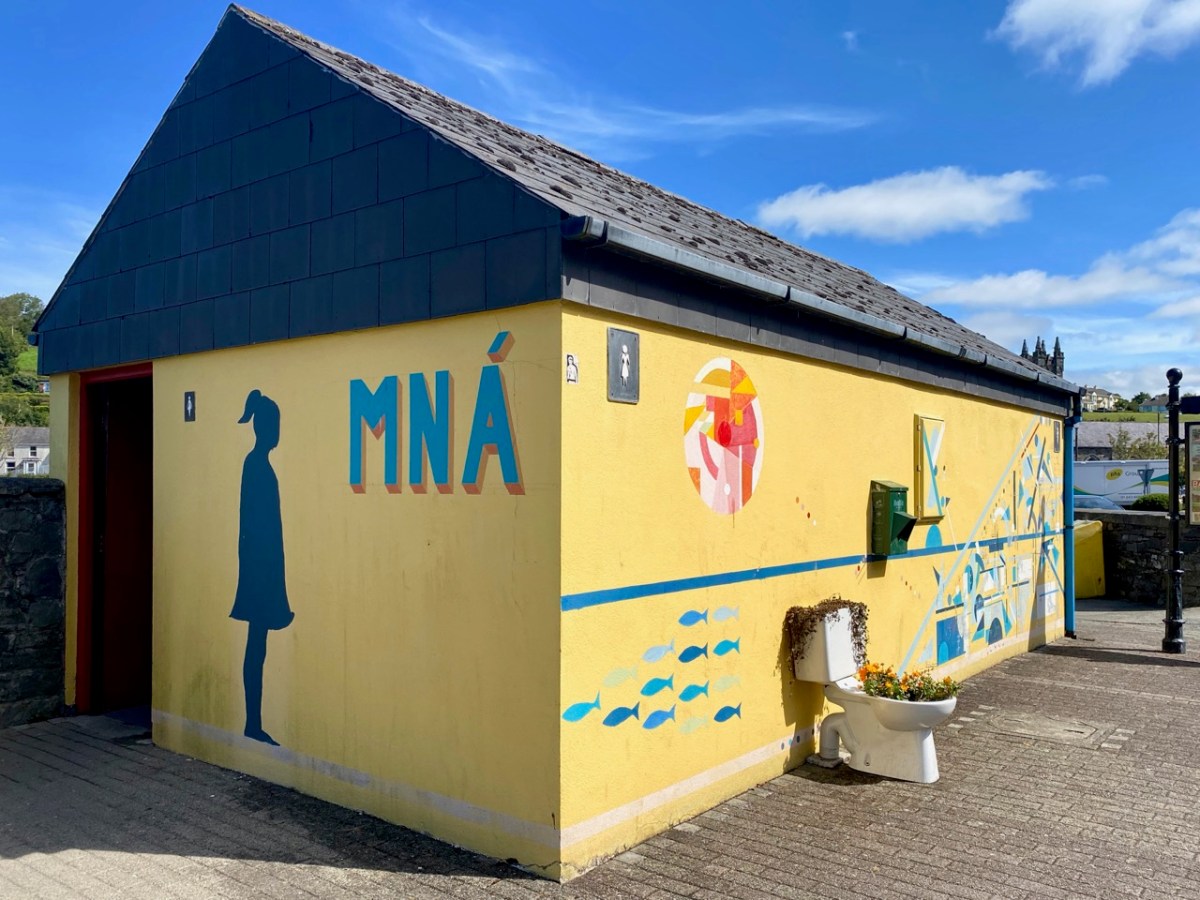
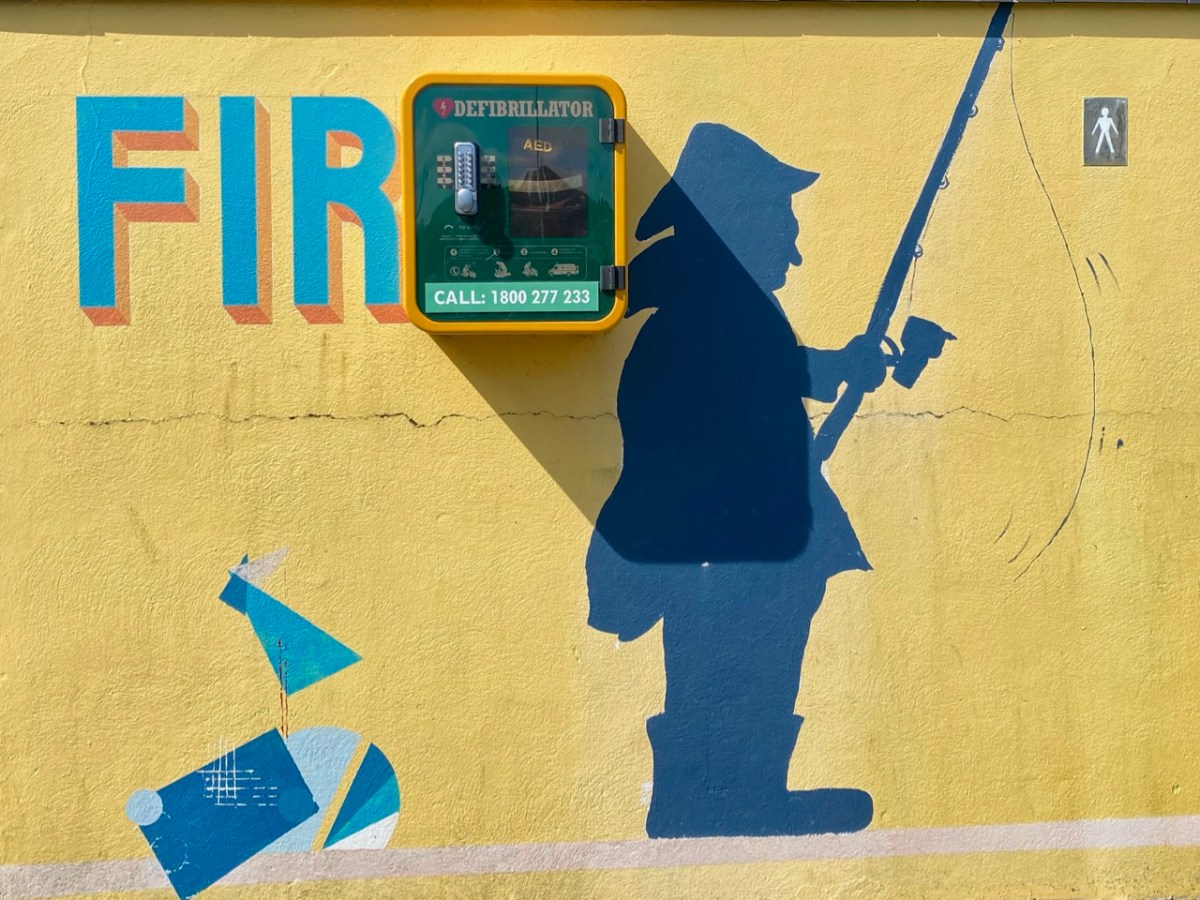
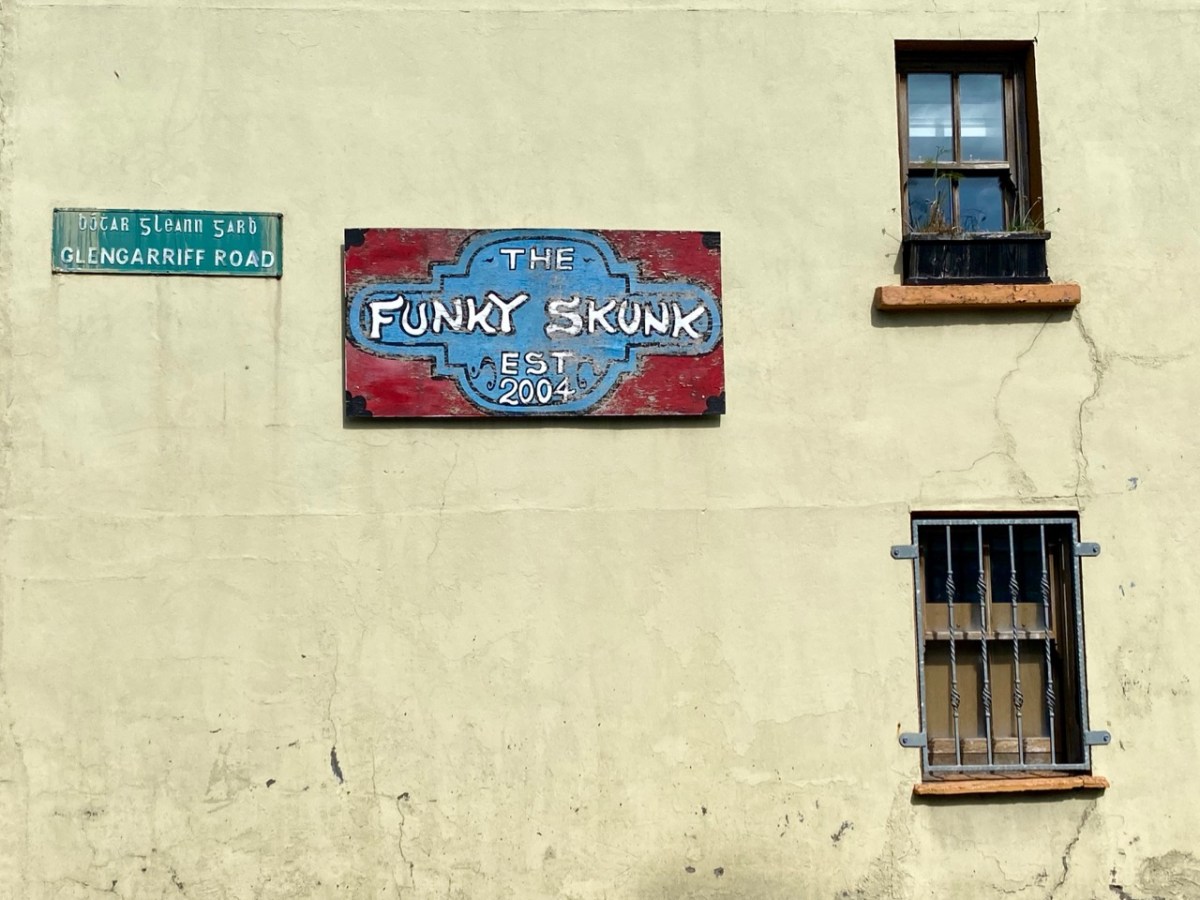
Bantry in the time of Covid . . . As with our exploration of Schull, the first in this series, we capture a moment in time: all the photographs are taken in one summer’s day, and show the norms of daily life. We deliberately did not choose Market Day (every Friday throughout the year), as on that day the population of the place appears to double in size. This is an average weekday and it is busy enough, with holiday makers swelling the ranks and helping to populate the many outdoor facilities.

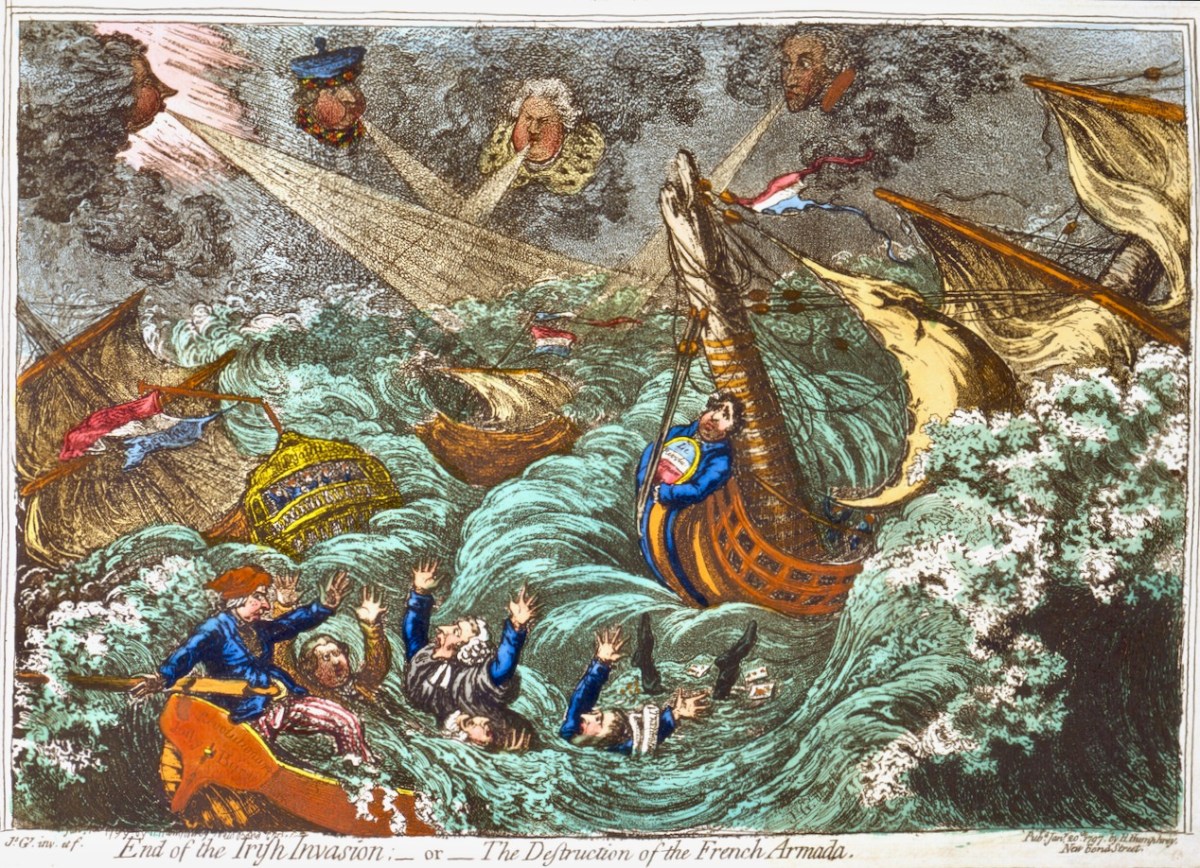
Bantry has made its mark in the history of Ireland’s independence. An attempted landing by the French Fleet in Bantry Bay on 22 December 1796 was partly precipitated by Theobald Wolfe Tone – one of the founding members of the United Irishmen. The mission was unsuccessful due to severe gales. A political cartoon of the time (below) satirises the venture:

. . . On the French expedition to Bantry Bay, at the end of 1796: Pitt, Dundas, Grenville, and Windham are the four winds which blow up the storm to destroy the invaders. FFox, as the carved figure at the head of the Revolution, is represented as influencing the United Irishmen. The crew of the jolly-boat are Sheridan, Liberty Hall, Erskine, M A Taylor, and Thelwall, who, it is insinuated, were all approvers, at least, of the Irish rebellion . . .

Historical and Descriptive Account of the Caricatures of James Gillray, 1851

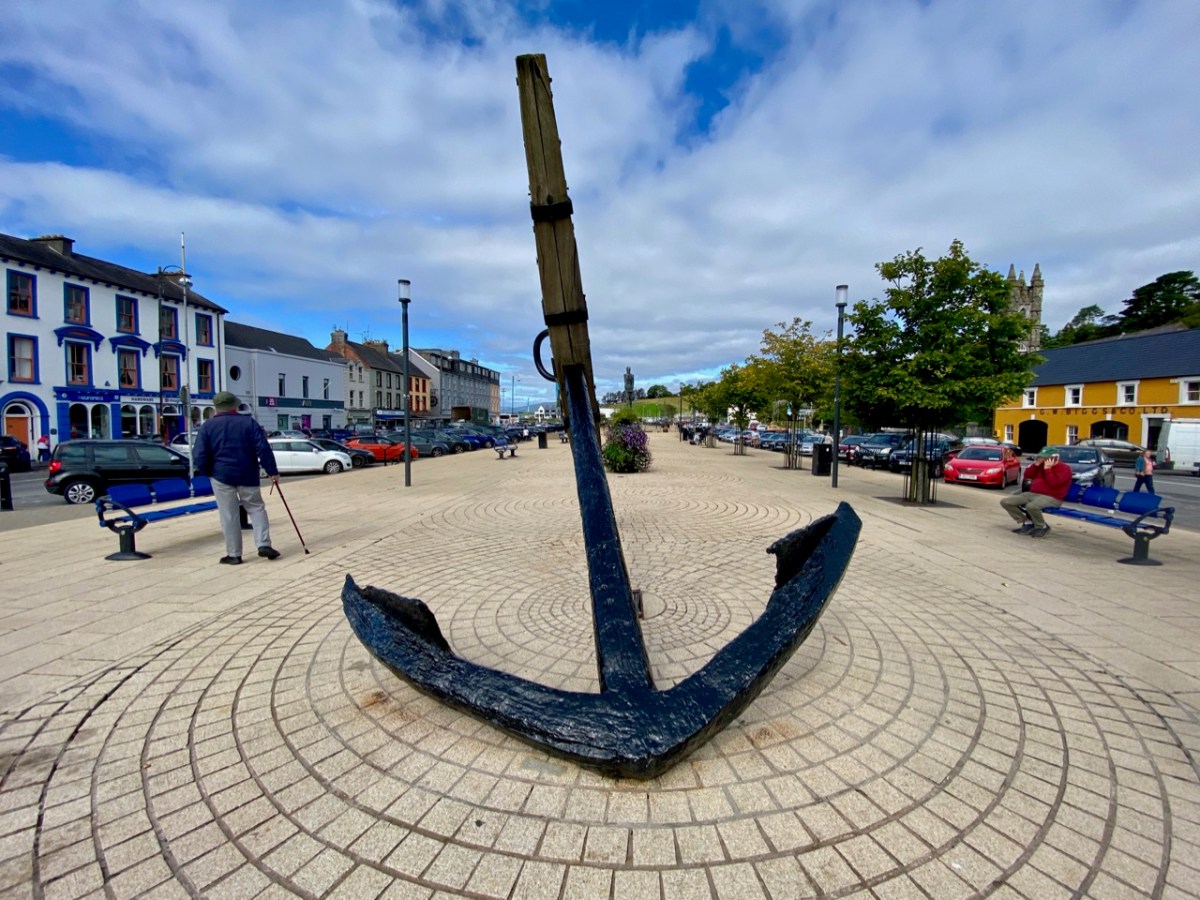
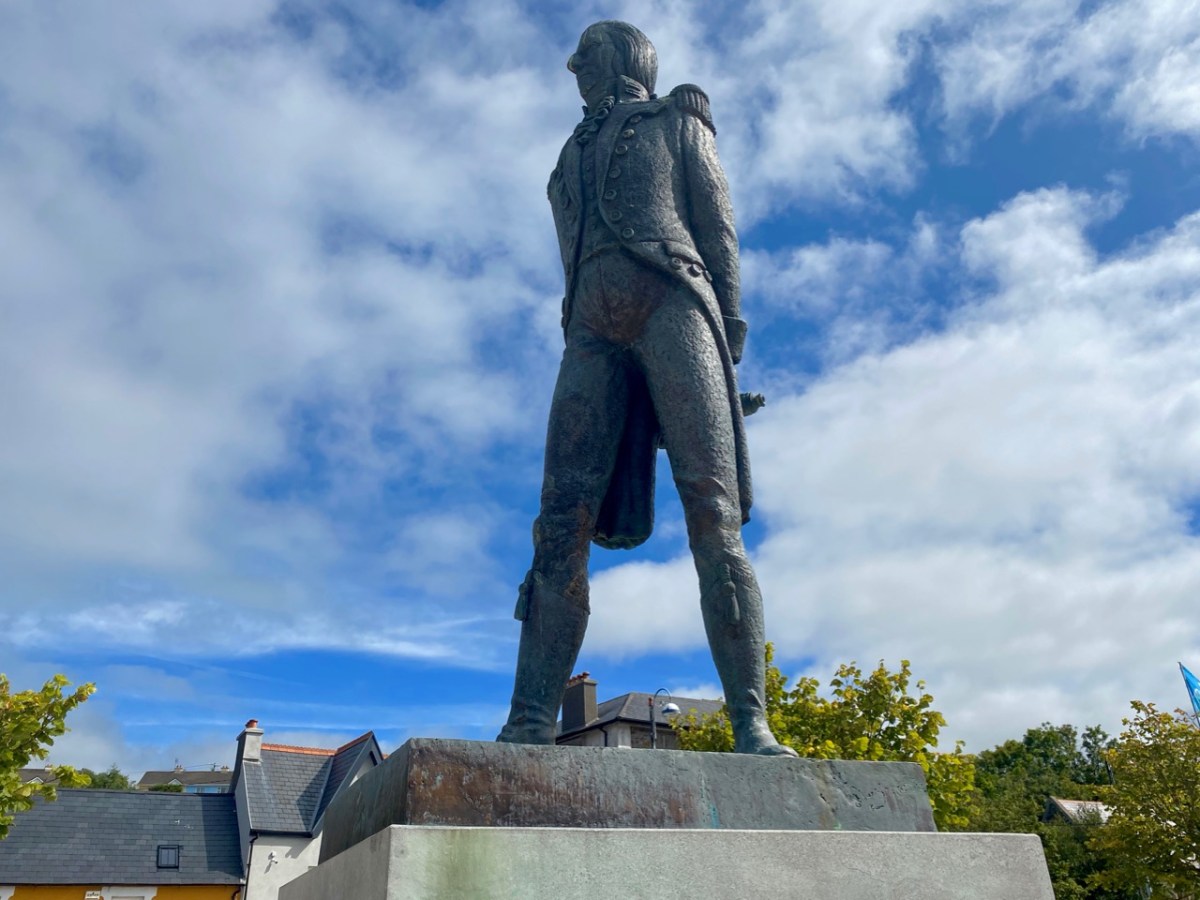
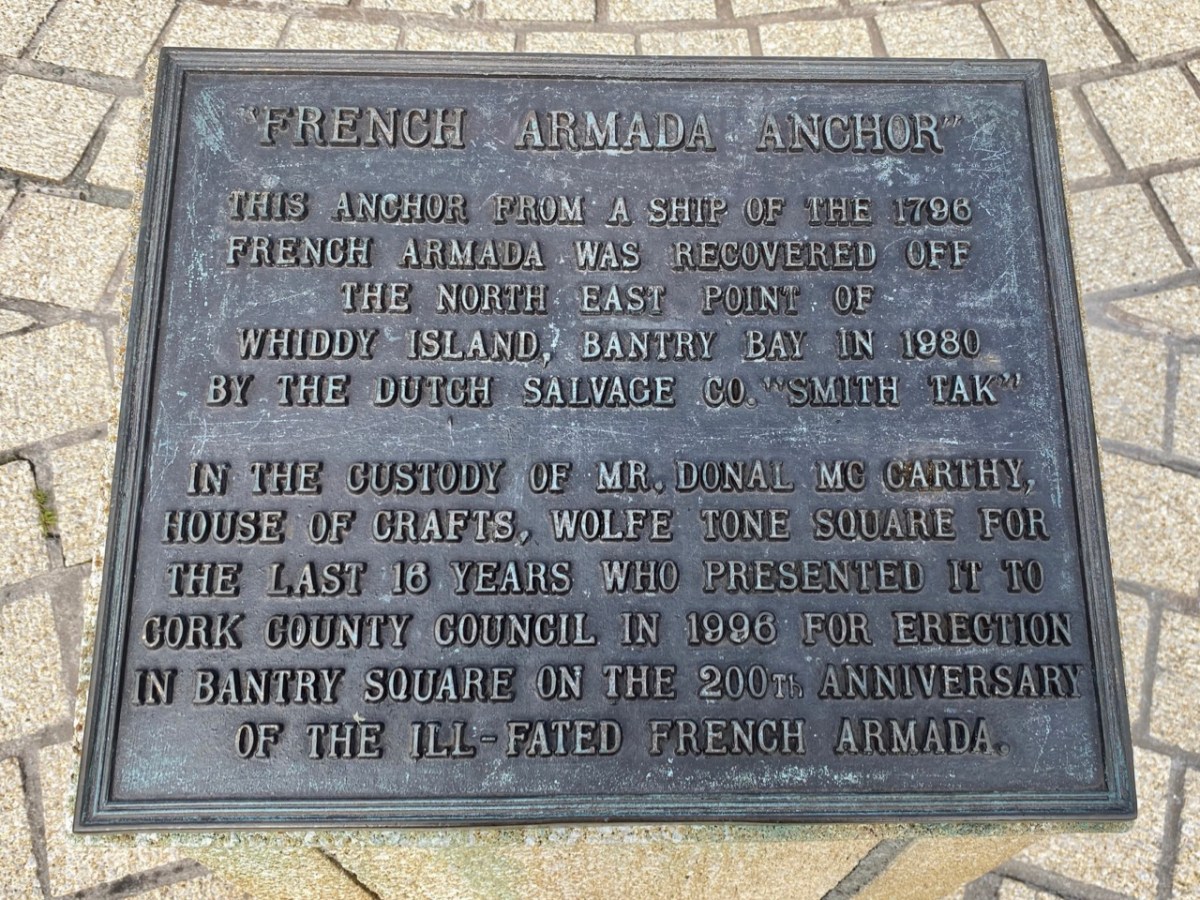
Wolfe Tone’s statue looks down over the square which bears his name in Bantry today: it was sculpted by Jeanne Rynhart in 2000. Close by is an anchor from the ‘French Armada’ found off Whiddy Island. The square was known formerly as Egerton Square – named after a descendant of the Earls of Bantry (have a look at this post). In 1899 the Irish Nationalist MP James Gilhooly oversaw the renaming. Also on the present-day square (much of which is on reclaimed land) is the notable statue of Saint Brendan by Imogen Stuart.

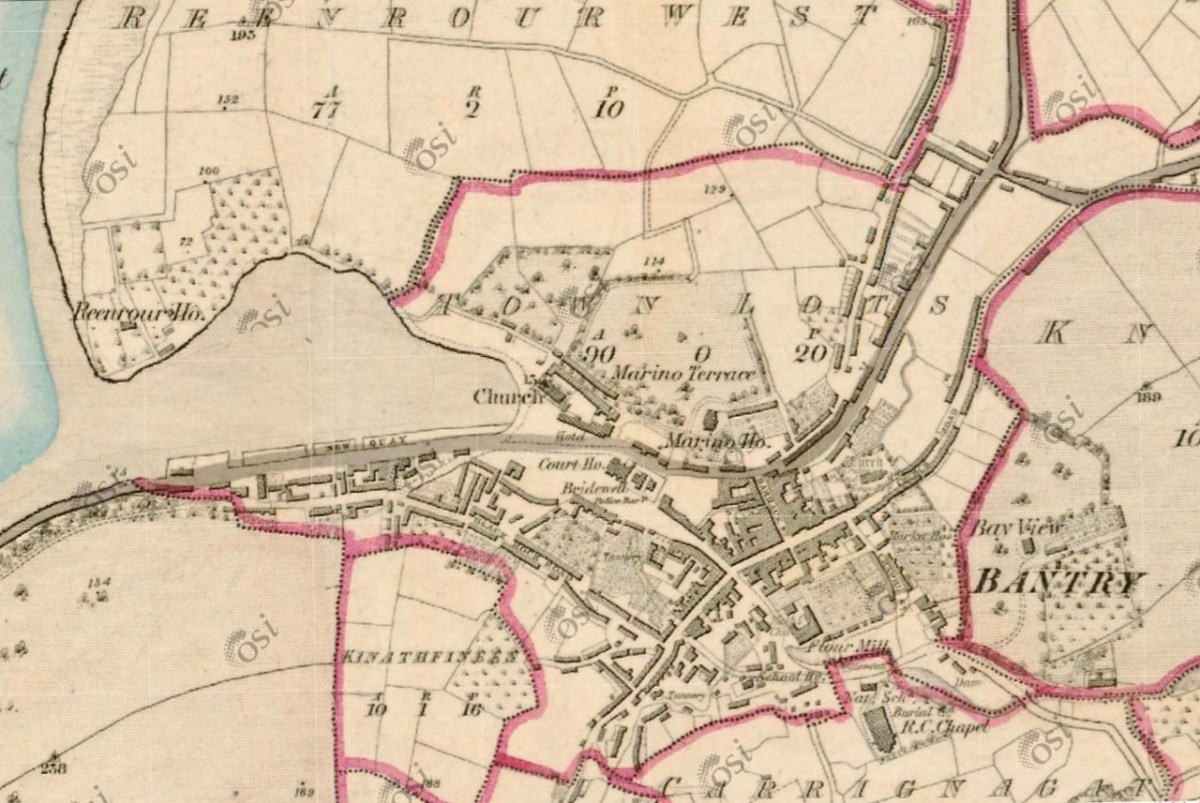
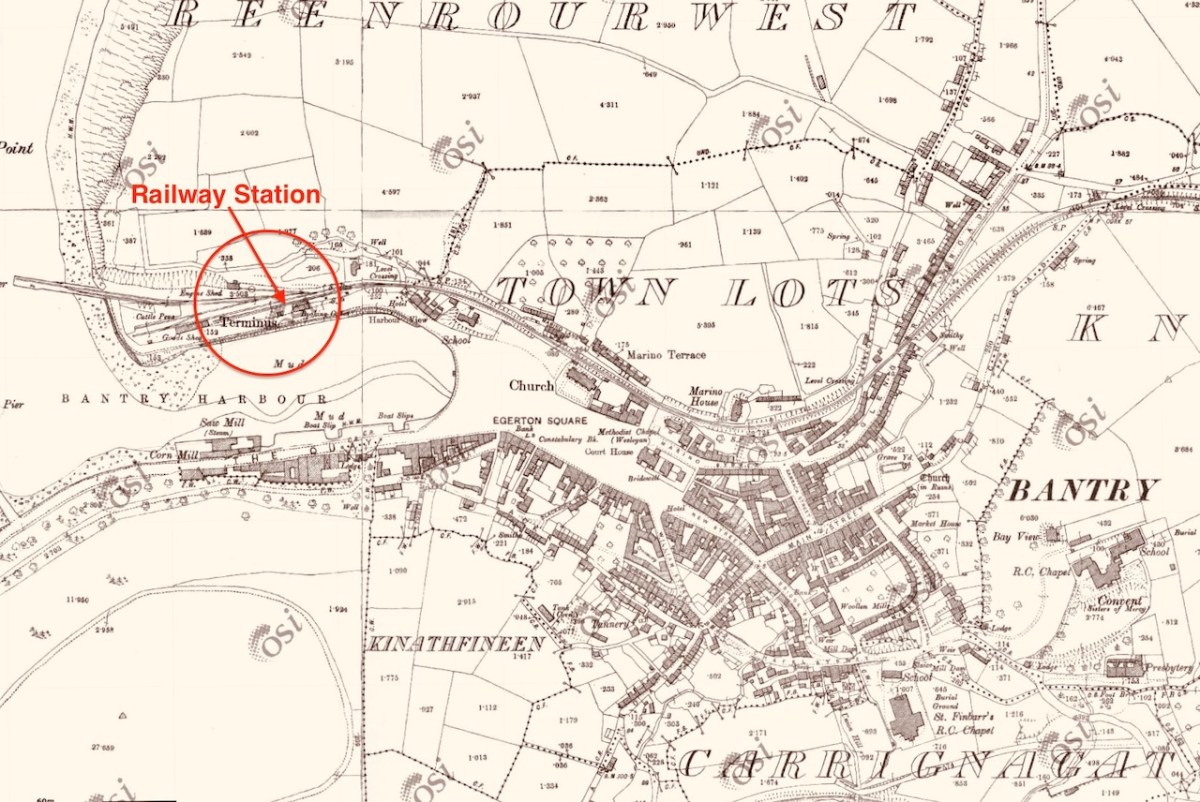
The aerial image, above, shows how the town has evolved along the original river valley. Comparing this view with the earliest 6″ OS map – dating from around 1840 (below – upper) – and the 25″ OS edition c1900 (below, lower), you can see clearly how the Square has encroached on the original natural harbour. You can also see that the terminus of the Cork, Bandon and South Coast Railway was carried on an extended pier to the west, enabling goods to be shipped in and out of the town. Interestingly, prior to the railway’s arrival in 1892, and continuing into the early 20th century, there was a regular steamship service from Bantry to Castletownbere on the Beara Peninsula. This also served Glengarriff and Adrigole.

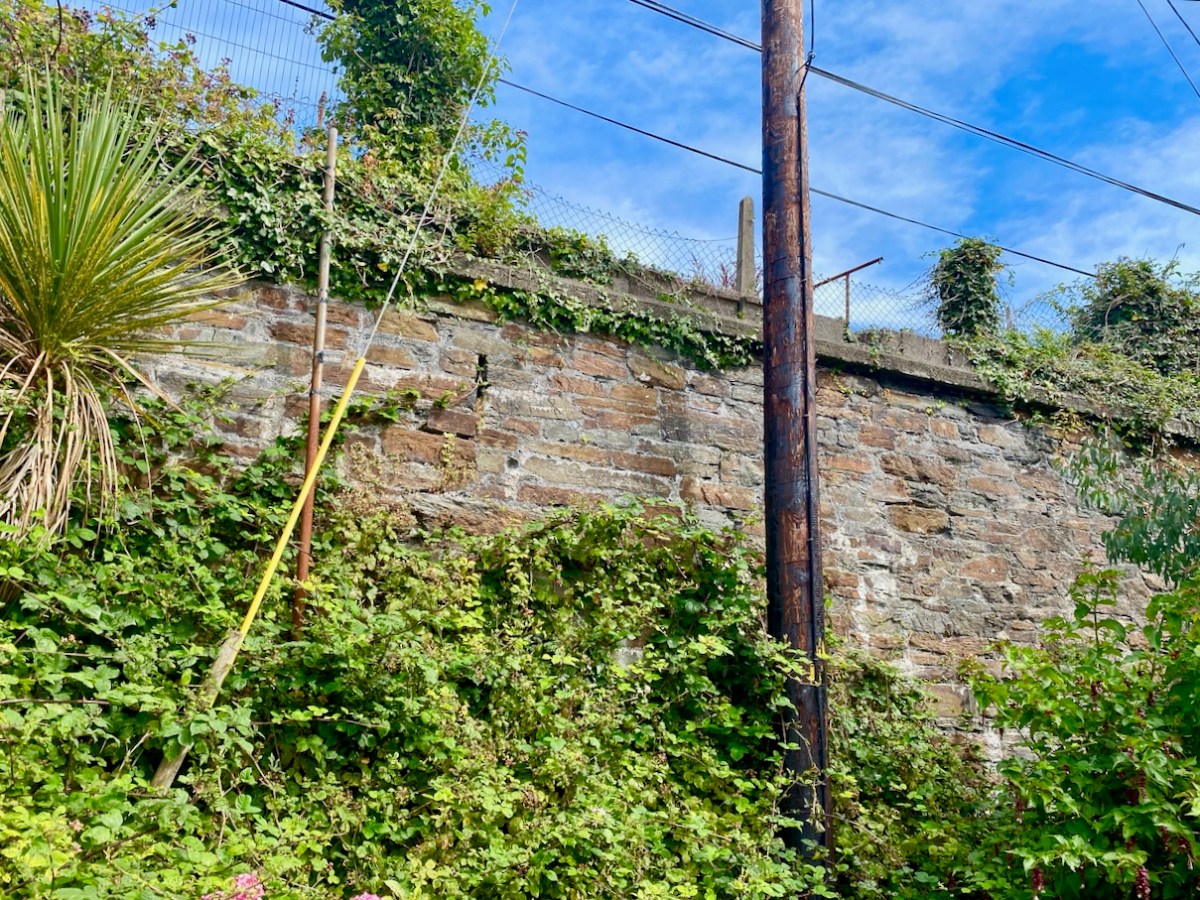
In spite of local opposition the railway was closed on 1 April 1961, and the station building was demolished. We do fortunately still have some vestiges of the line clearly visible in the town.

I have only touched on the briefest aspects of the history of this significant West Cork town. There is considerably more recorded in a recent opus compiled by distinguished historian and international scholar Colum Hourihane, who hales from Bantry. We were recently at the launch of his latest book Bantry Through the Centuries, Bantry Historical Press, 2021 and were treated to an illustrated talk, given by the author. Colum is at pains to point out that this is not a general history of Bantry, but that its core is the streets of the town” . . . It’s an effort to understand how the town developed over the centuries in relation to its people . . . “ The book is a first-class resource: a 490-page review of local lore and garnered knowledge illustrated with almost 140 additional pages of historic photographs. This must surely be the most comprehensive volume ever published on this town.

Let’s finish with some more of the photos taken on our day’s exploration: an attempt to capture the essence of this significant West Cork settlement. I hope it will encourage you to visit, if you don’t already know it.

You can read much more about Bantry in Roaringwater Journal. Here are just a few links:

The Golden Hour

Masters of Tradition Festival

Ireland’s First Inhabitants

Dunmanus Castle 1: The Cliff-Edge Fort

There is a strong local tradition on the Mizen, or Ivaha as I prefer to call it, that Dunmanus Castle is not the original. No – the first site for Donagh Mór O’Mahony’s Castle, the stories say, was in Knockeens, across Dunmanus Harbour from the present site. We set out to investigate.

This is the site, directly across the bay from Dunmanus Castle, and it’s what is labelled in the National Monuments records as a Cliff-Edge Fort. According to their definition that’s A penannular enclosure which utilises a cliff-edge to form one or more sides as an enclosing element. They date from the late Bronze Age up to the medieval period (c. 1800 BC – 16th century AD).

Perhaps the best known cliff-edge fort in Ireland is Dun Aonghasa on the Aran Islands (above) – it’s certainly the most spectacular. (Photo courtesy of Heritage Ireland) There are 20 examples of cliff-edge forts in Cork, of which only 6 are coastal, the rest are on ridges or steep slopes above rivers.

The problem is that some of these may genuinely be a specific type of fortification that uses the cliff-edge as an impregnable barrier – as promontory forts do, for example. Some of them, however, and this may apply to Knockeens, may have been circular ring forts, built on prominent locations to command views of land and sea, but which may have been eroded by sea-action until what is left is clinging on to the edge of a cliff. In the photo above, you can see the obvious erosion at Knockeens. Instead of a circular ring fort, what remains looks D-shaped.

In the 25″ OS map, done in the late 1800s, the site shows ‘Castle in Ruins’

There is plenty of evidence that the Irish clan chieftains built their castles on the sites of their former strongholds – ring forts, cashels and promontory forts (see my post on Three Castle Head, for example). If there was indeed a castle at Knockeens, there is not much evidence of it now, although there are tell-tale signs of some kind of masonry construction.

But whatever Knockeens was – a cliff-edge fort or a ring fort – it’s unusual and impressive. It consists now of a raised platform of earth, probably originally circular, and an outer wall (above). There may have been a radial wall once (see the map below), but it has been ploughed out and is no longer visible on the surface, although it shows up faintly in aerial photographs. There may have been a fosse, or ditch around the outer wall also – slight traces of this also remain.

The raised platform is an imposing spectacle. We approached it from the landward side and were unprepared for how tall it is. The interior sits high above the surrounding land – an extraordinary feat of engineering and one which could only be accomplished by a chieftain with the ability to command the labour of many people. 

If indeed most of it has been swept away by the sea, it is now, of course, only a portion of what it once was. It certainly accomplished several objectives: commanding the entrance to the sheltered harbour, allowing visibility up Dunmanus Bay, and being a dominating force on the landscape – in other words a high-status statement residence and fortification. 

The outer wall appears to have been stone-built or stone-lined (see image below), and it, or the raised platform may have had a palisade around the top – these were common in ring forts. 

Although we could not find a way to get at it from the stony beach below the cliff edge, we could just about make out, from Dunmanus Pier across the bay, a cross-section of stone wall where the platform meets the cliff. In one of the older maps, this is marked as a “Castle in Ruins” although all that is shown is a portion of wall. So there may well be a solid basis for the belief that this was the original site of Dunmanus Castle. 

Michael Healy tells it this way:

It is related locally that before he finally decided on Dunmanus as a site for his castle, Donagh Mór O’Mahony, early in the 15th century, had selected a site on the other side of the inlet and had set his men to work. While they were working a stranger came by and said that they should not build a castle in that place as the sea would come and wash it away. They did not see him again but the project was abandoned and Dunmanus was built on its present site.

The Castles of County Cork,

Michael J Carroll in repeats the assertion that this was intended as the site of the castle but introduces a nuance:

The workmen  noted, however, that the heavy winter seas rose up over the site. The project was abandoned and the stones removed for use in Dunmanus.

The Castles and Fortified Houses of West Cork,

I said at the beginning that there is a ‘strong local tradition’ that this was the original site. What we have learned to do in these cases is go to the Dúchas Folklore Collection, for the stories collected by schoolchildren in the 1930s – and there it was, written by an anonymous students in Kilcomane School (possibly Bridie Kennedy of Lissacaha). Here’s what she wrote:

When O’Mahoney was building his castles he had one for each of his sons. When he was building Dunmanus castle it was in the Knockeen’s side he laid the foundation. There is a part of it still remaining. It goes by the name of the old castle. A half fool one day was passing by and he saw them at work. He told O’Mahoney it was a foolish place to build a castle, that the swells of the ocean and the river from the mountain would eat the foundation from it.

O’Mahoney then asked him where would he build it and the fool showed him a rock at the opposite side of the river called the mount. Then O’Mahoney considered himself and found he had a mistake made, so he took the fool’s advice and built the biggest castle of all the rest on the mount.

https://www.duchas.ie/en/cbes/4921594/4882831/5147738

The sea stack above shows clear evidence of the amount of erosion that has happened over the centuries as well some kind of stone construction at the top level of the stack.

What are Amanda and Peter looking at? It’s a blow hole! Further evidence of how the sea can rage against this cliff.

So there you go – O’Mahony took the advice and built his castle where we see it today – the subject of a future post.

Please note that this site is on private land, used for cattle, and we were granted access by the kind permission of the owner. Our grateful thanks to him.

Fresh From Sea and Land

Would you like some pollock? It was a friendly fisherman on a West Cork pier we happened to stop on. He had just landed with some friends and family and they had caught a lot of fish, mostly pollock. They couldn’t eat them all, Billy said, just help yourself. A little overcome with such generosity, we selected two lovely fish, and asked for his advice on how to cook them.

Just keep it simple, was his advice, with some dry potatoes and cream. Dry, it turned out, was his term for floury potatoes, and we knew just where to get those. Our neighbour, Donal, keeps a fresh vegetable stall nearby. He digs up or cuts the vegetables in the morning, and puts them in a little stall he built himself. You have to get there early if you want the pick of the crop.

Donal’s new potatoes are legendary. I was chatting with a friend who lives nearby recently and we were talking about the best way to lose the Covid weight. It’s all about the carbs, I said – pasta, rice, flour, sugar, potatoes … A look of horror came over her face. “But not Donal’s new potatoes!” We agreed that they couldn’t possibly be anything but healthy and whatever list of Bad Carbs we made, Donal’s New Potatoes could not be on it.

So on the way home from the pier, we dropped by the stall for the potatoes. While I was at it I picked up some carrots, courgettes (Zucchini to this ex-Canadian) and onions. 

I don’t know about you, but I have never actually gutted, cleaned and filleted a fish before. In fact, I have been awestruck by the expertise of the women at the fish stall in the Skibbereen market and their skill with that long, thin-bladed filleting knife. Where to start? YouTube, of course!

So with the computer propped up beside me, and Robert sharpening the knife and encouraging me every step of the messy way, I managed it. I will spare you most of the gory details and include this one that actually looks like I know what I am doing.

Although I probably left good meat behind, at last I had a lovely set of fillets, free of bones. 

After that, it was a question of cutting some vegetable into small pieces – I used carrots, shallots, broccoli, green beans, mushrooms, cherry tomatoes, and garlic. 

I piled them all onto a big sheet of buttered tinfoil, along with herbs from my little herb patch, and then laid the fillets on top. 

I poured lots of lemon juice over it all, along with zest, and dotted everything with more butter. Then I wrapped it up, and into the oven it went at 190C for 20 minutes.

The potatoes were simply boiled with some mint from my garden. I chopped more mint to scatter on top once they were cooked.

The results? Delicious!
In West Cork we have access to a lot of very fresh food and we eat well. There are markets in all the towns and villages near us (see this post from a few years ago), and Neighbourfood does a great job of keeping us going all year round. 

But there’s something extra special in a meal like this – straight from the ocean or the ground and onto a plate with very little intervention. 

Mmmmmm…