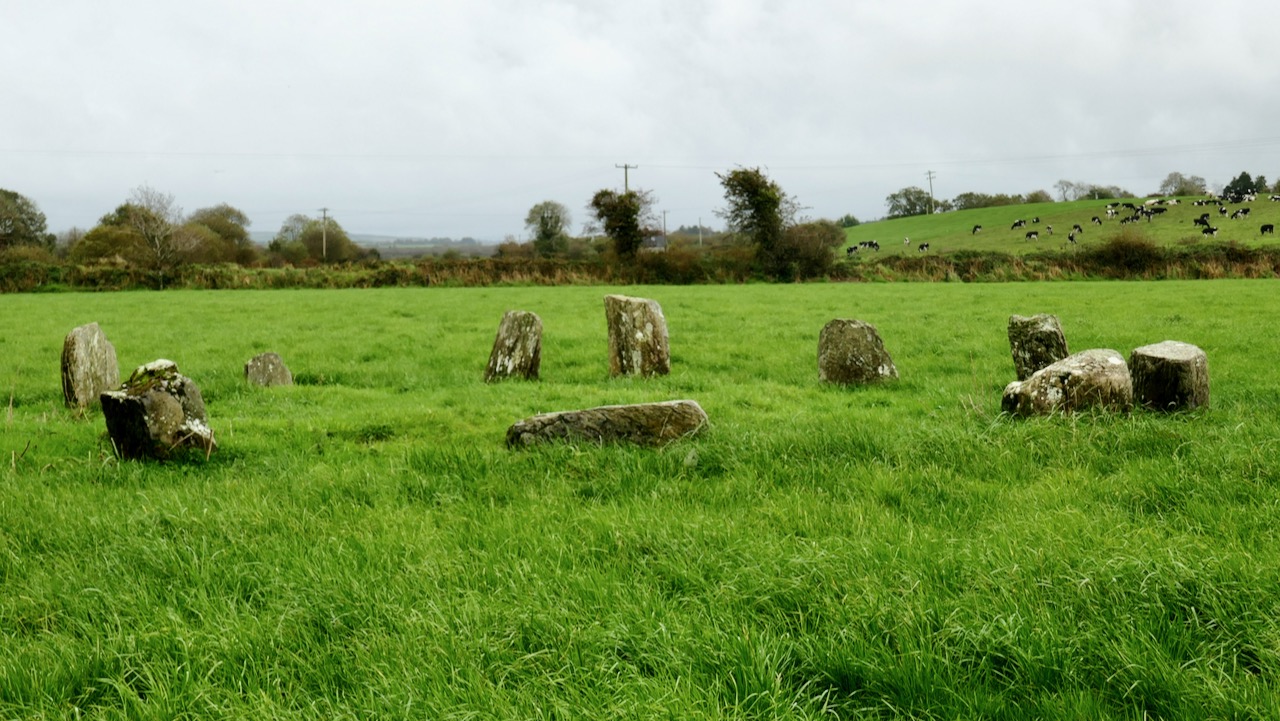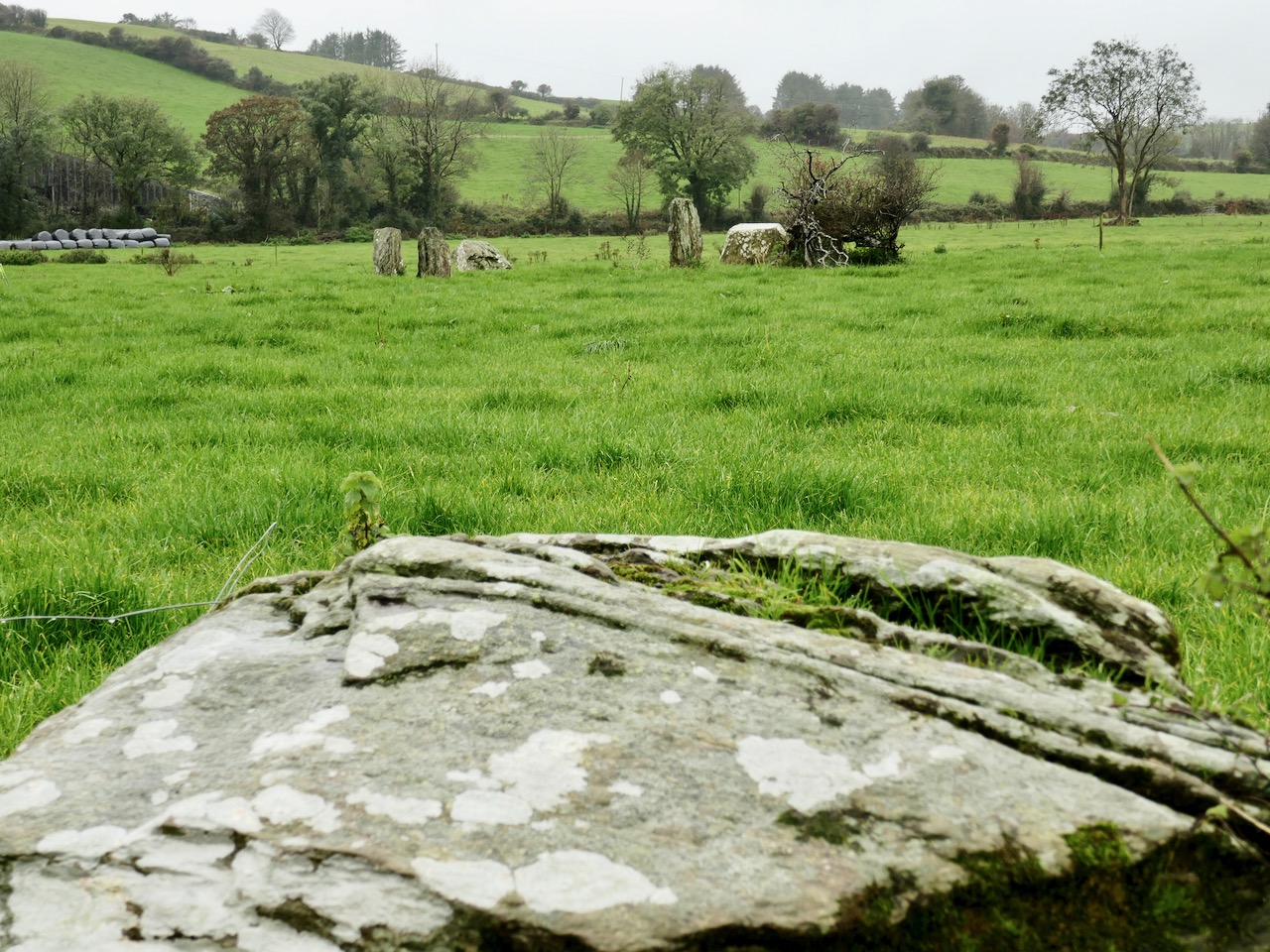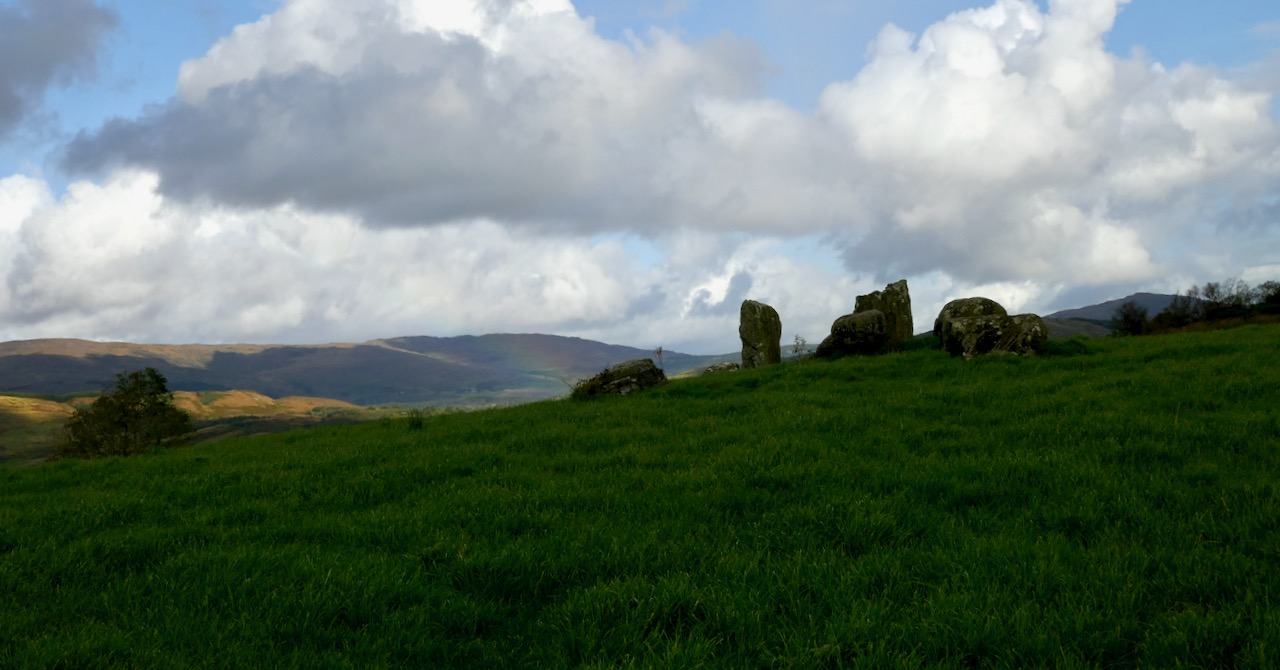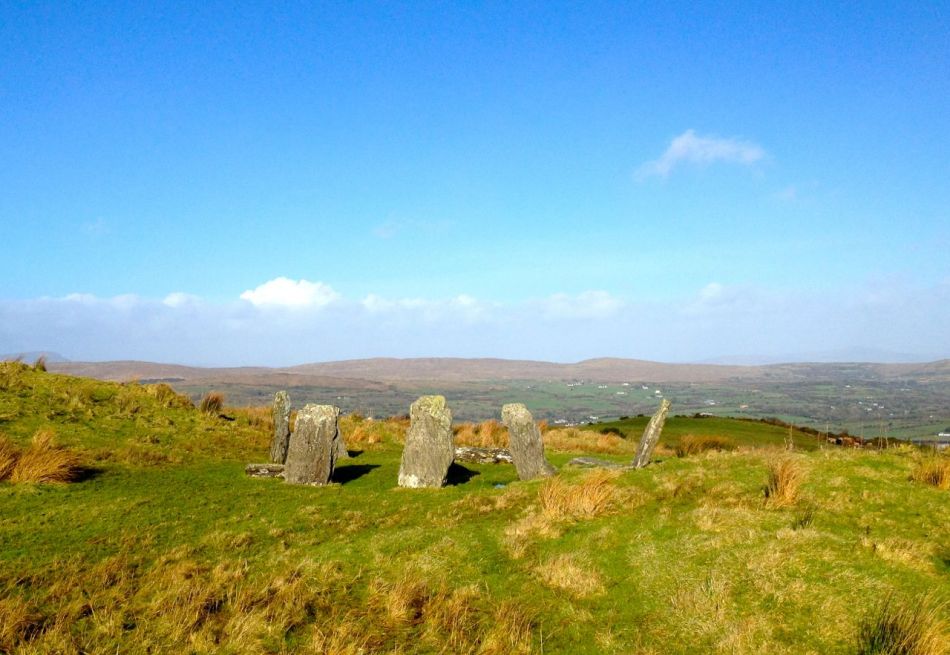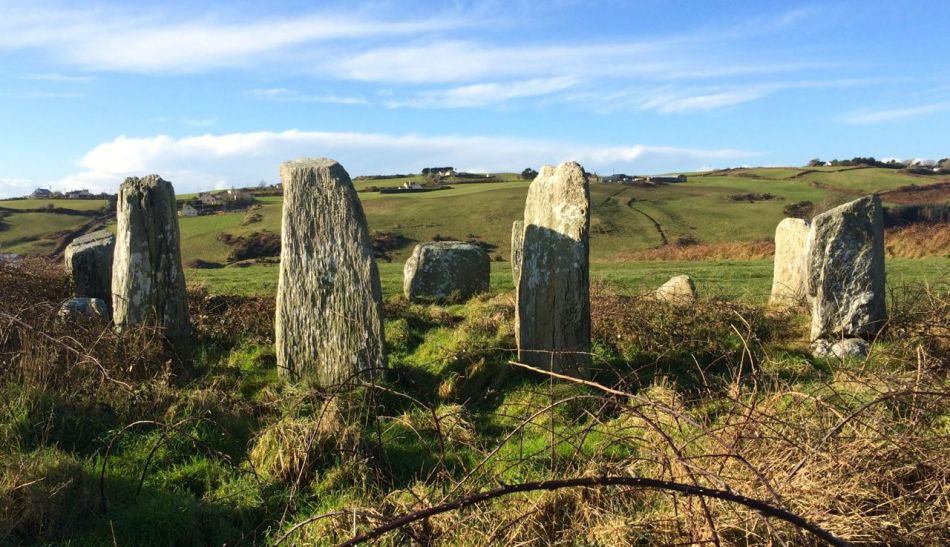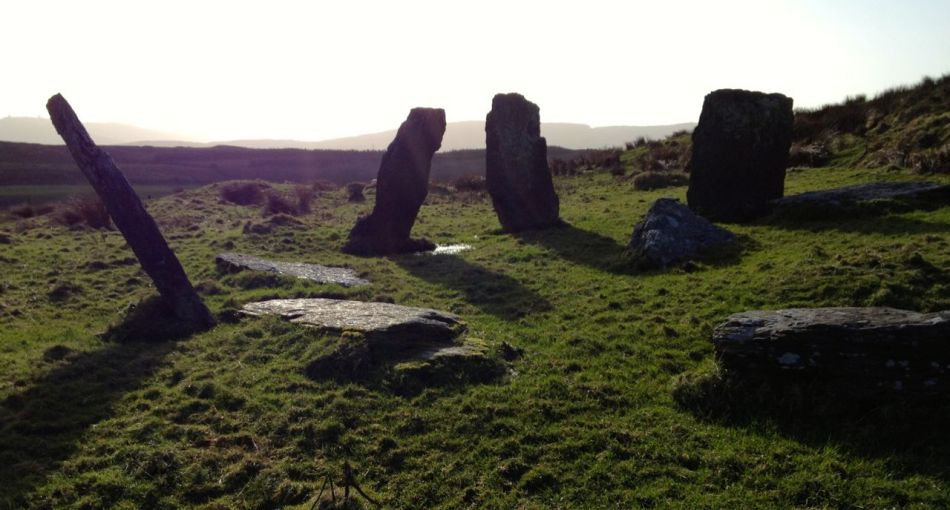
Sheep’s Head Stone Circle Revived!

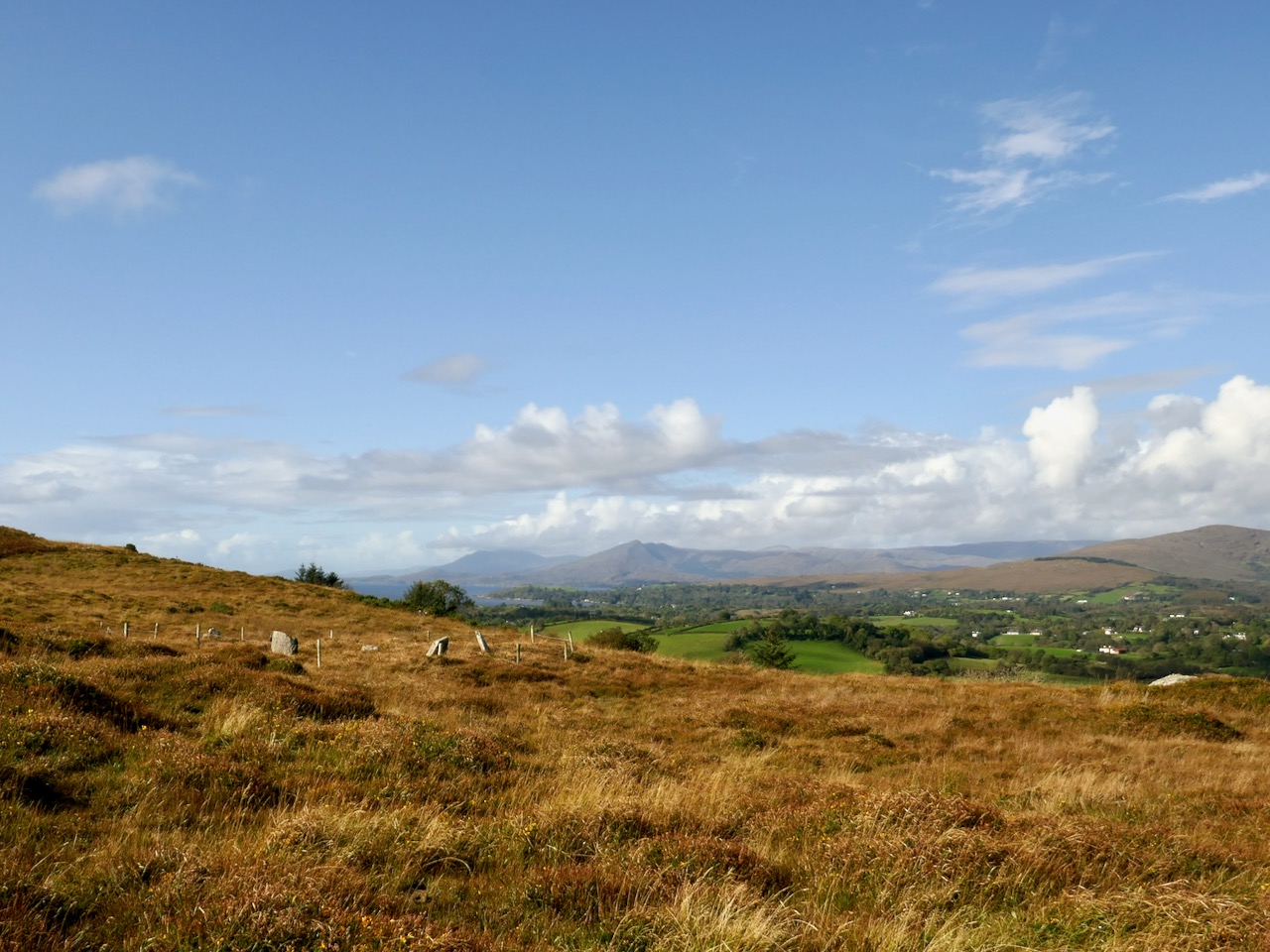
Gorteanish Stone Circle, near Ahakista on the Sheep’s Head Peninsula, is singular because it lacks ancient history. It doesn’t appear on the early Ordnance Survey maps and – to the best of my knowledge – no local stories or folklore have been recorded about it. It is a Bronze Age archaeological site, but it has apparently been overlooked until comparatively recent times.

It’s a short walk to the west out of Ahakista to the site of the stone circle. The way is marked by the stone above. Atha Tomais means ‘Tomais’s Place, and refers to Tom Whitty from Philadelphia, who settled on the Sheep’s Head in the 1980’s with his wife Suzanne and family. He is credited with having come up with the idea of establishing The Sheep’s Head Way – a series of footpaths covering the peninsula, and the project was put in hand by Tom and a local farmer, James O’Mahony, completed in (remarkably) just 18 months and formally opened by President of Ireland Mary Robinson in July 1996. During clearance work for the Ahakista footpath the remains of the stone circle at Gorteanish were discovered. It has since been suggested that there were stories of ‘old stones’ being hidden in the undergrowth. A footpath giving access to the stones from the nearby lane was duly completed and opened, and the inscribed stone marks this occasion.

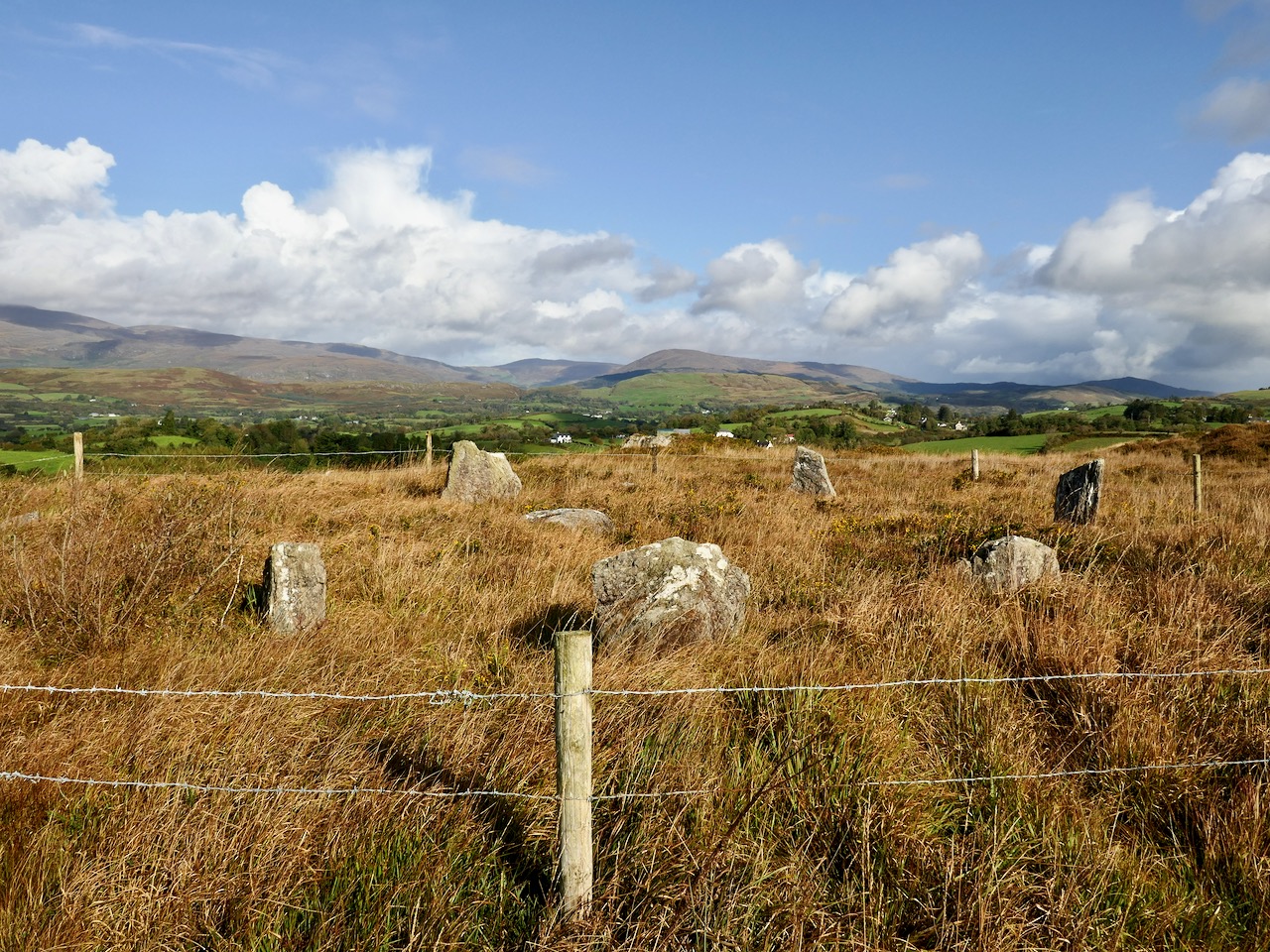
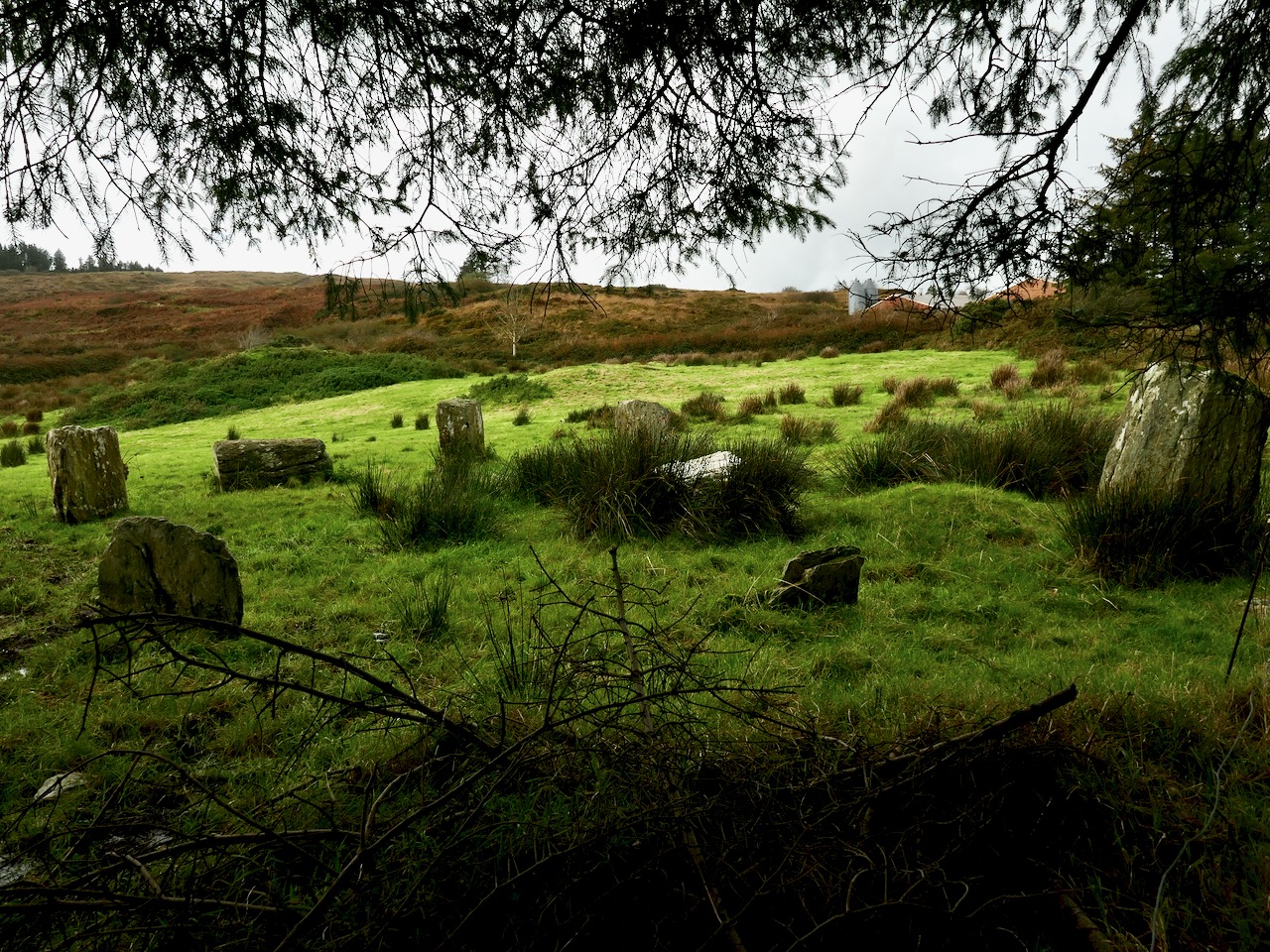
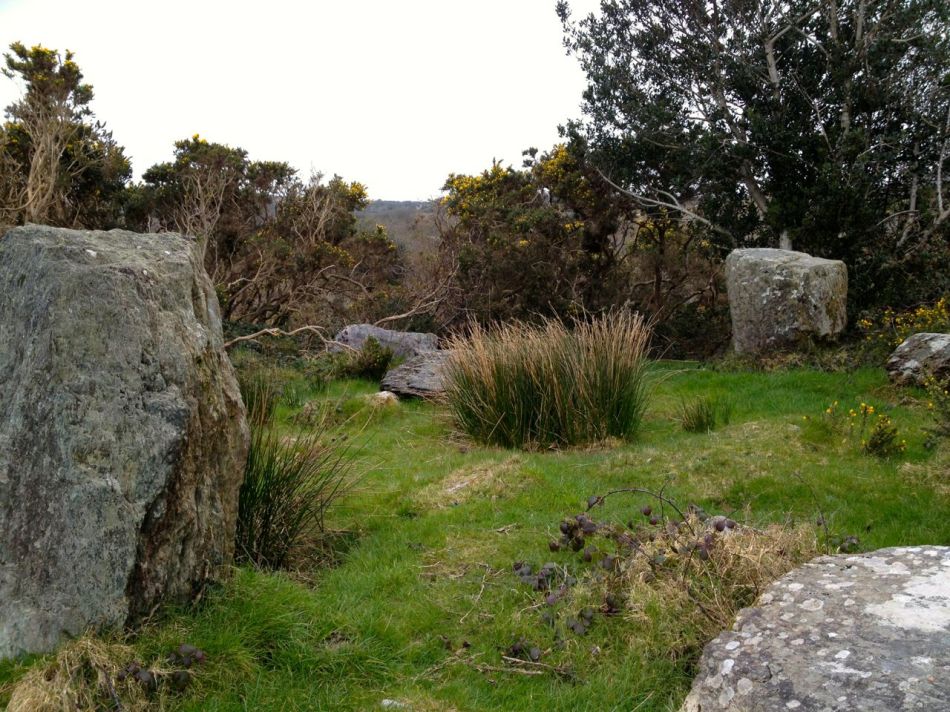
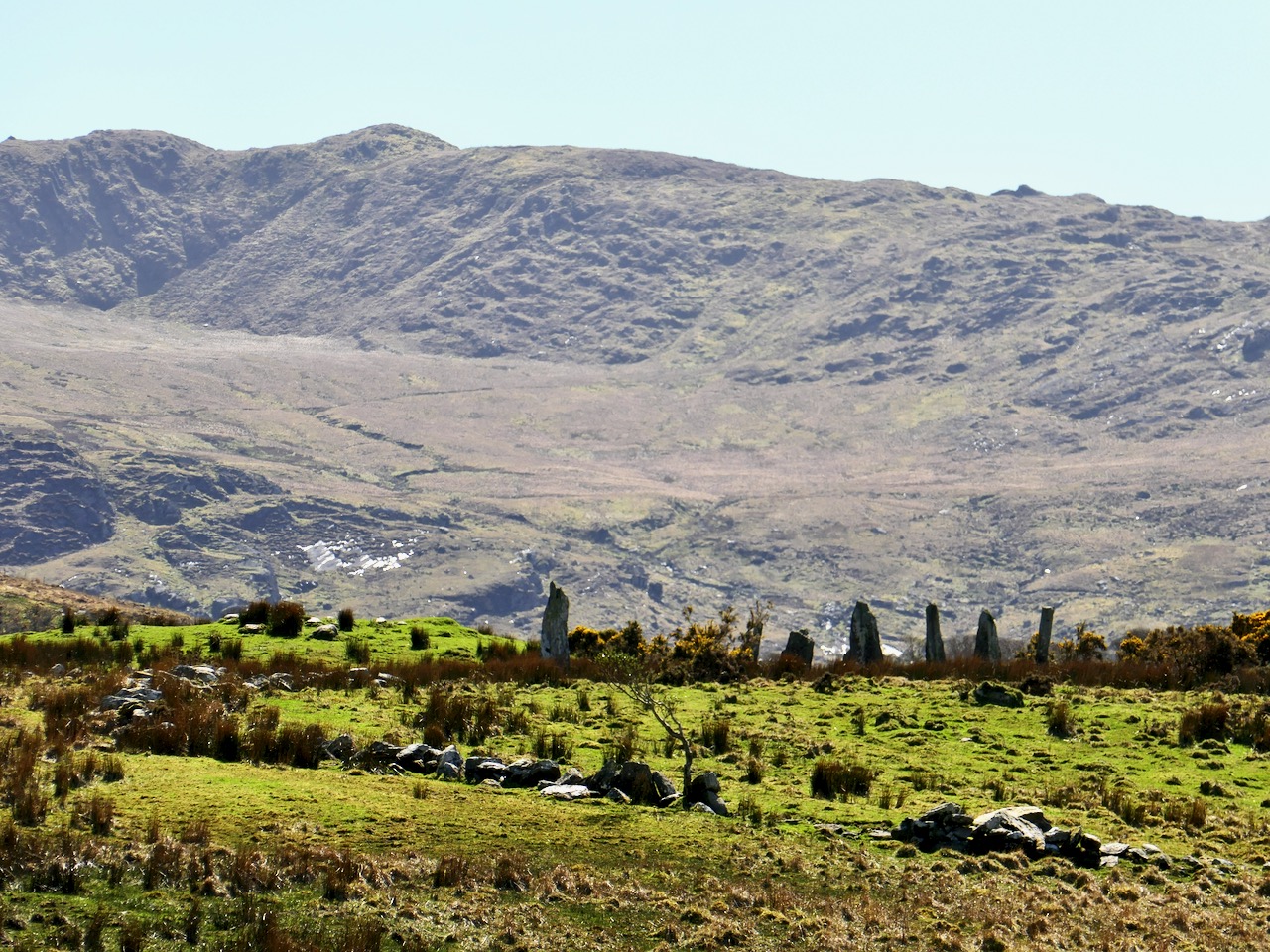
This photograph shows the circle more or less as it was found in the 1990s. Four stones are standing, and others are lying prostrate.
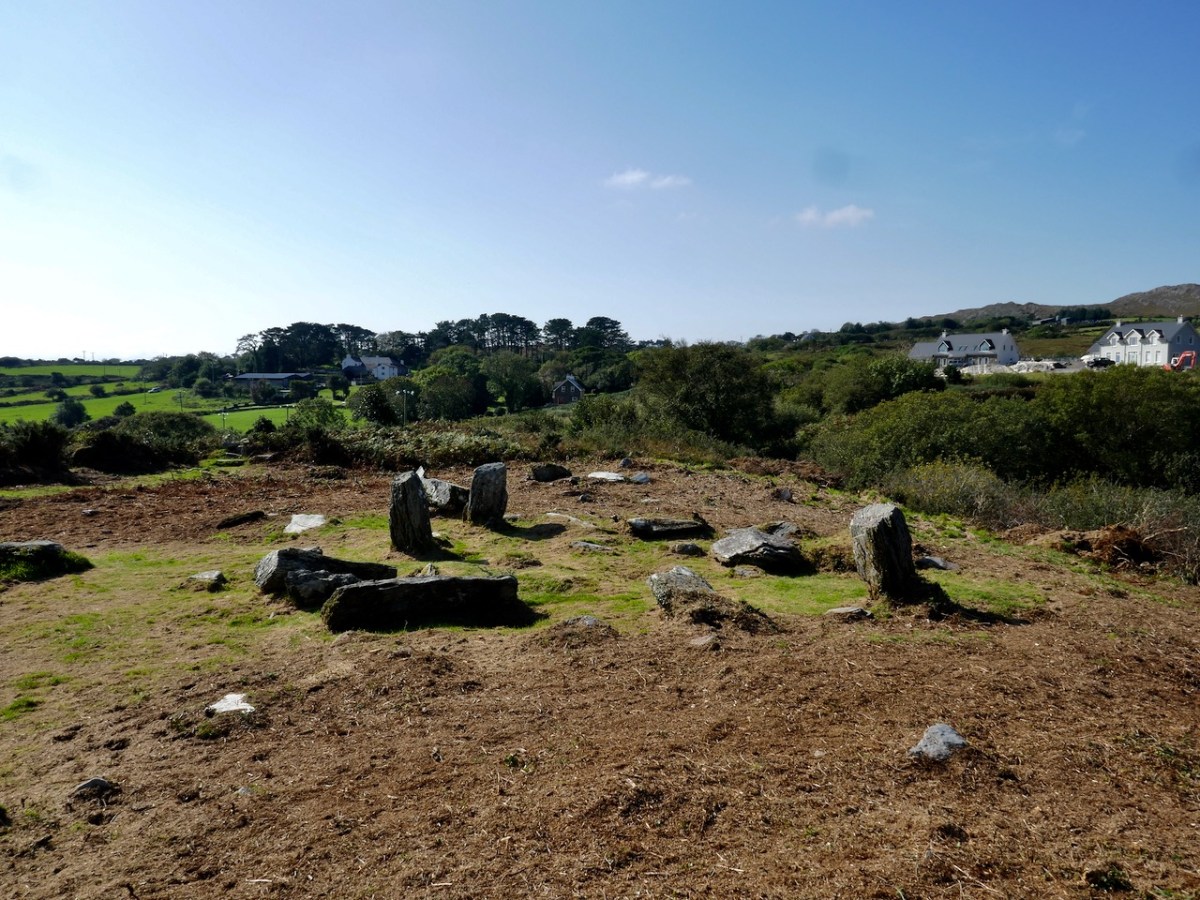
Earlier this year, the decision was taken by Professor of Archaeology at University College Cork, William O’Brien, together with a group of students, to extensively study the site at Gorteanish. Their mission was to excavate the site where necessary to establish which of the stones had been standing and to see how feasible it might be to restore these standing stones in their original sockets, using only traditional methodology. A significant area around the whole site would also be examined to search out any evidence of human occupation and activity – and hopefully to provide a reasonably accurate dating for the circle.
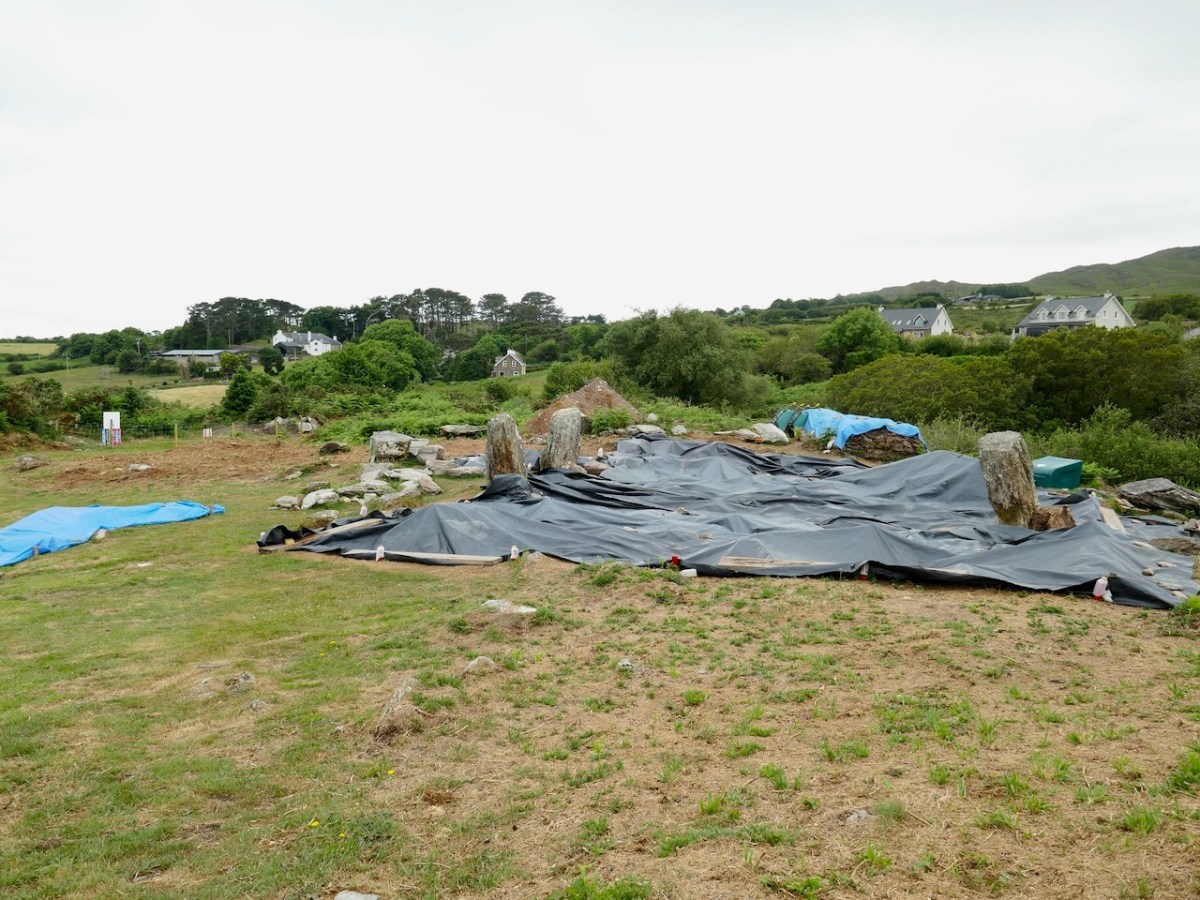
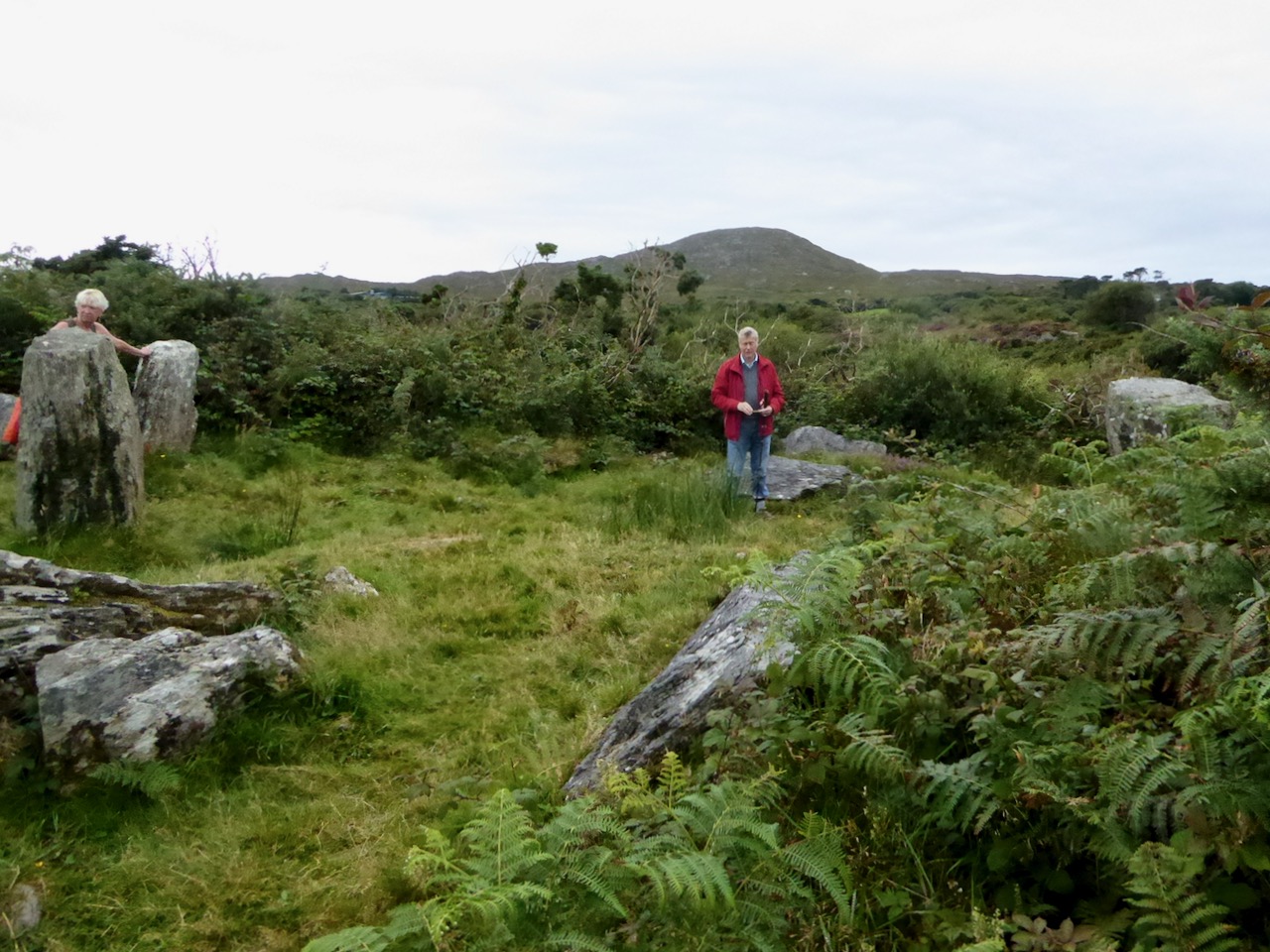
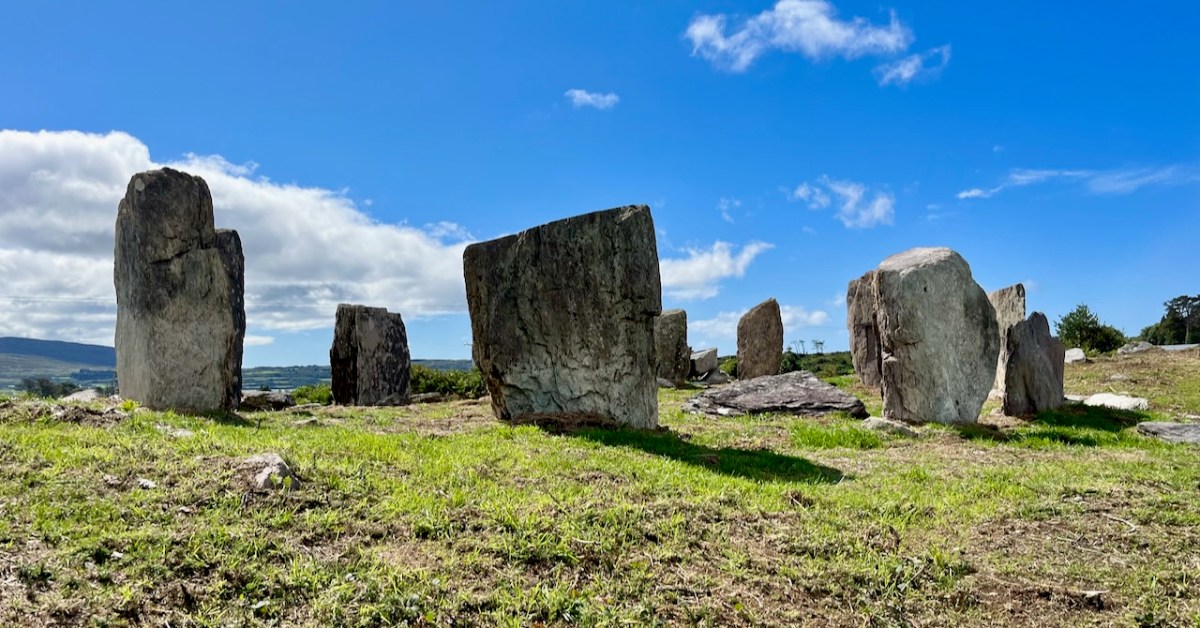
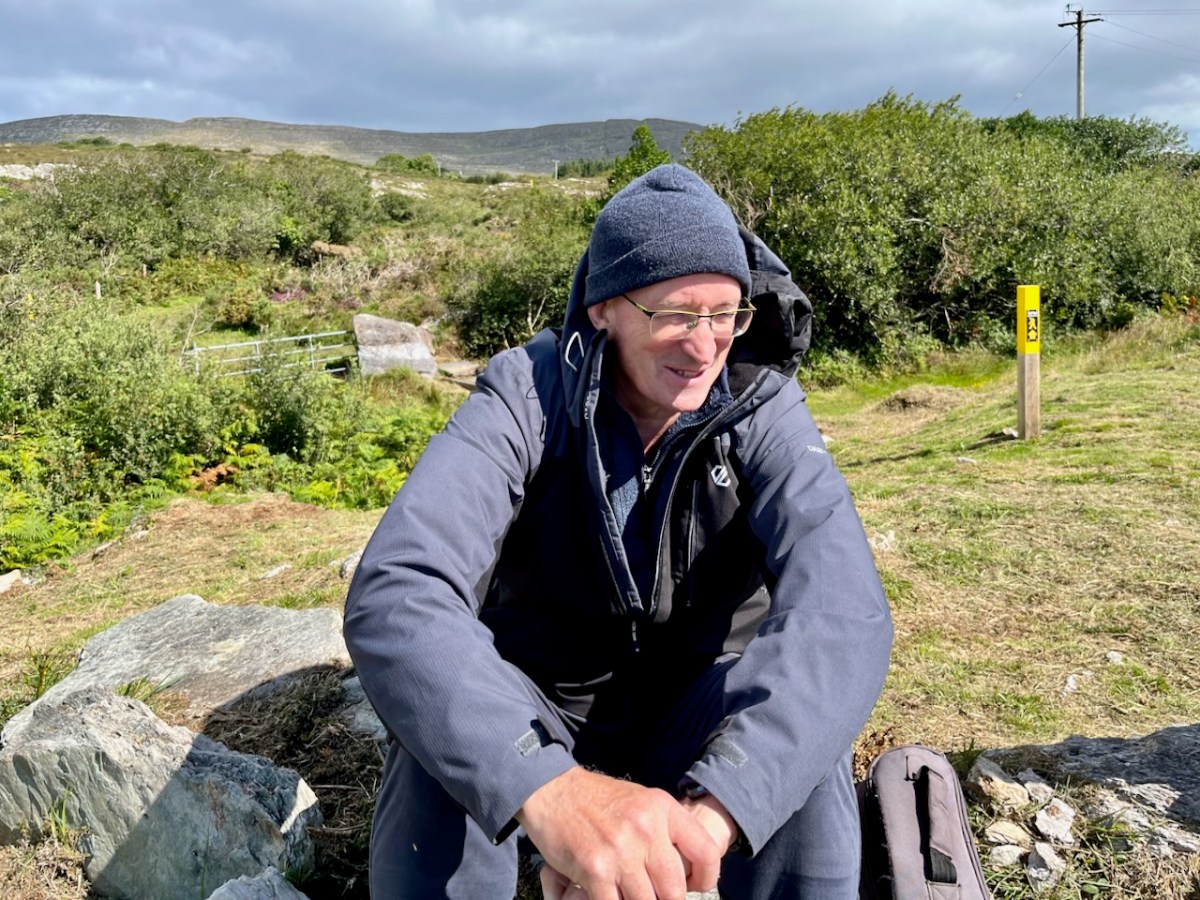
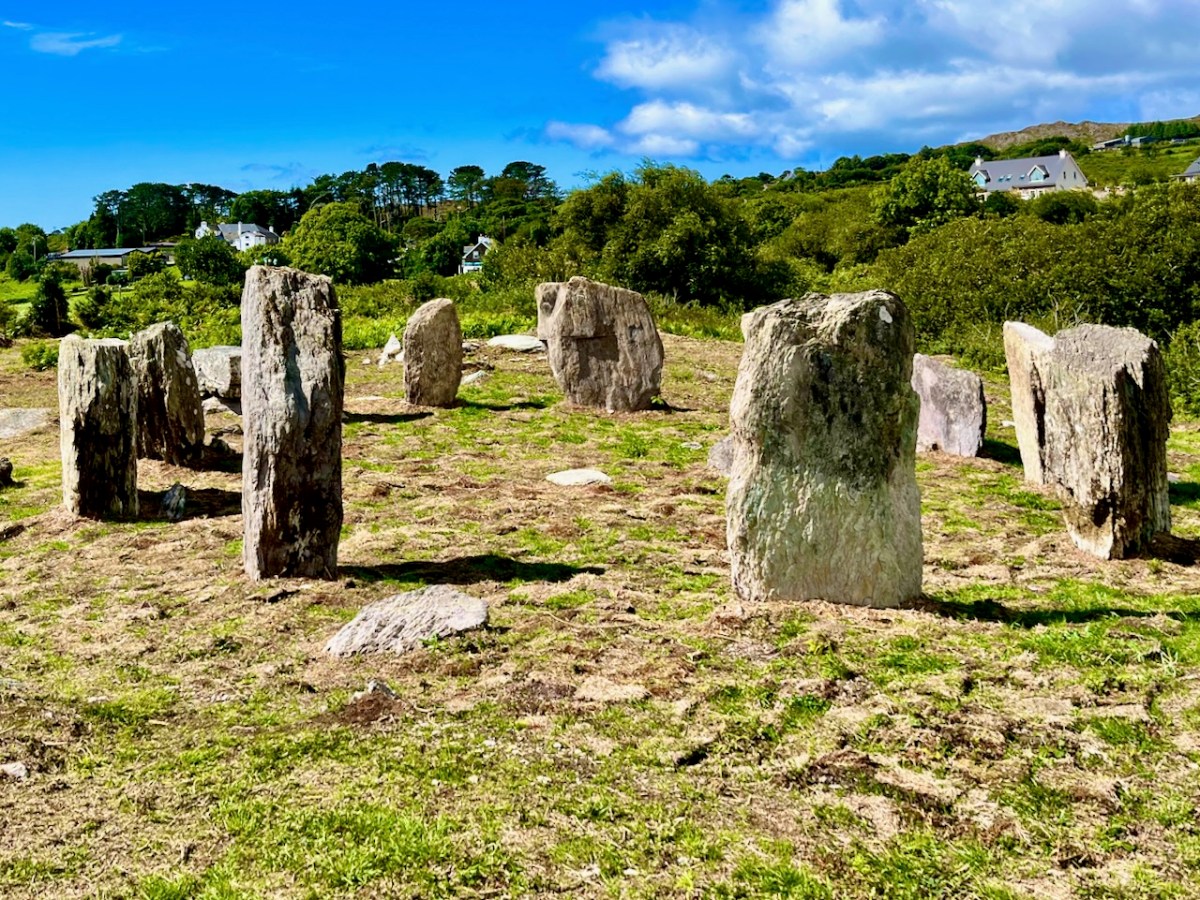
Finola and I visited the site while the archaeological works were progressing (above). Yesterday (5 August 2023) Billy O’Brien (below) was on hand to give a detailed talk on the excavation and restoration work, and we could see, for the first time in many generations, the circle restored to its complete state: it now has all eleven stones standing.
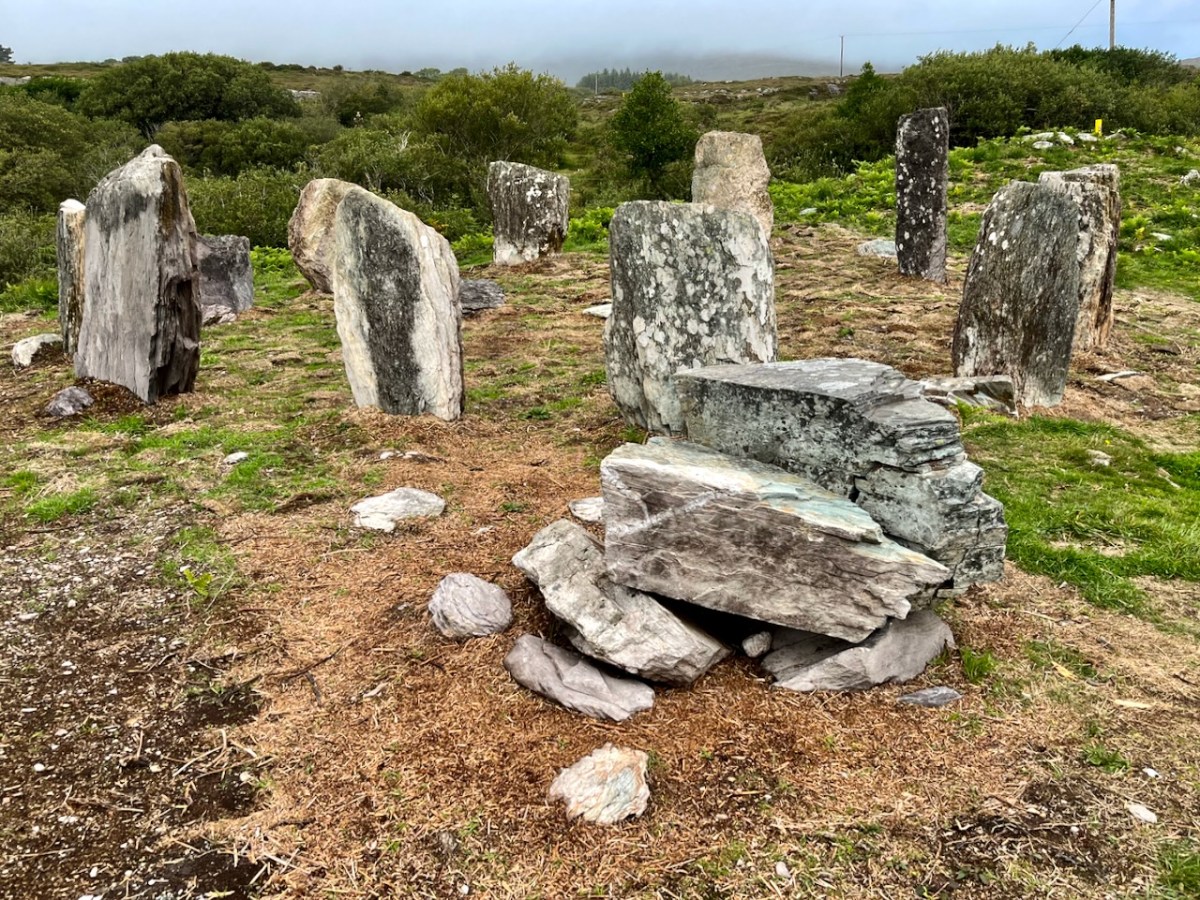
The view above shows a boulder burial monument situated to the south-west of the main circle. This has always been a visible feature of the site. A boulder burial (once called a boulder dolmen) is peculiar to Ireland. In fact it is found only in Counties Cork and Kerry. Finola has written comprehensively on this subject, here. It is usually a substantial raised stone supported on a bed of smaller stones:

. . . Boulder-burials are a group of prehistoric stone monuments of megalithic proportions, whose distribution is largely confined to south-west Ireland. Some 84 examples have been identified, 72 of these in Co Cork and the remainder in Co Kerry, where they occur both singly or in small groups of between two and four. They consist of a large boulder erratic supported by an arrangement of smaller stones, with no covering cairn or tumulus. Several examples are known which are centrally placed within stone circles . . .


Boulder-burials: A Later Bronze Age Megalithic Tradition in South-West Ireland
William O’Brien Dept of Archaeology, UCG 1992

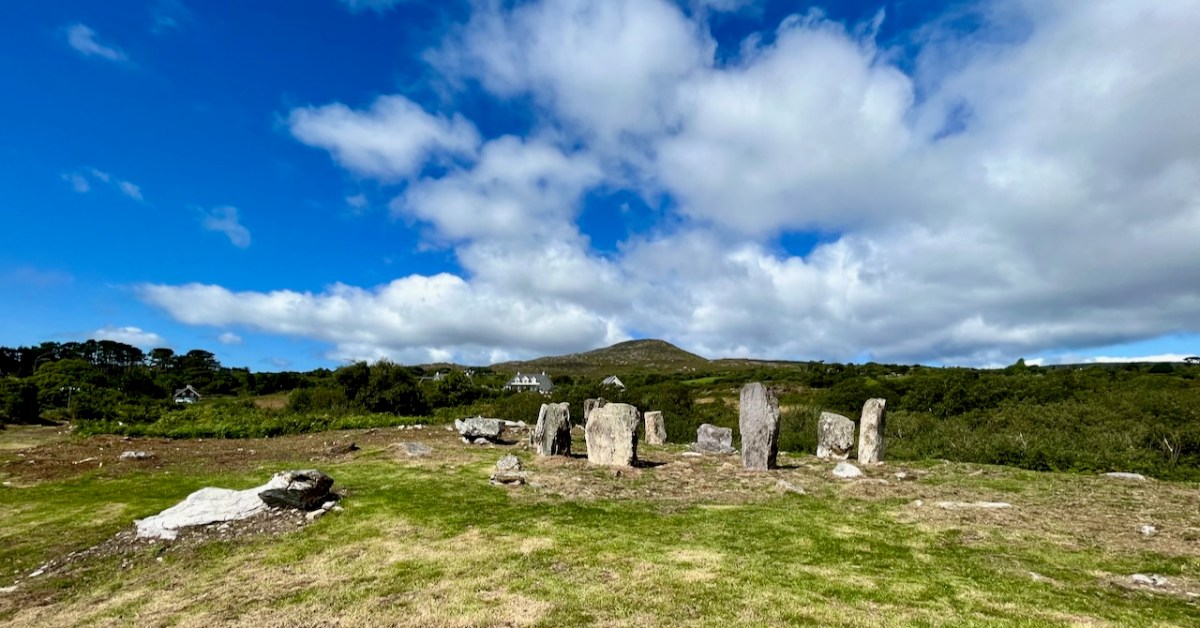
A closer view of the boulder-burial at Gorteanish: it can be seen that the main ‘boulder’ element has split in two through the ravages of time. In the main circle, all the standing stones have been restored to their original (relatively shallow) sockets, and fixed using rammed small stones, following the evidence gained during excavation.

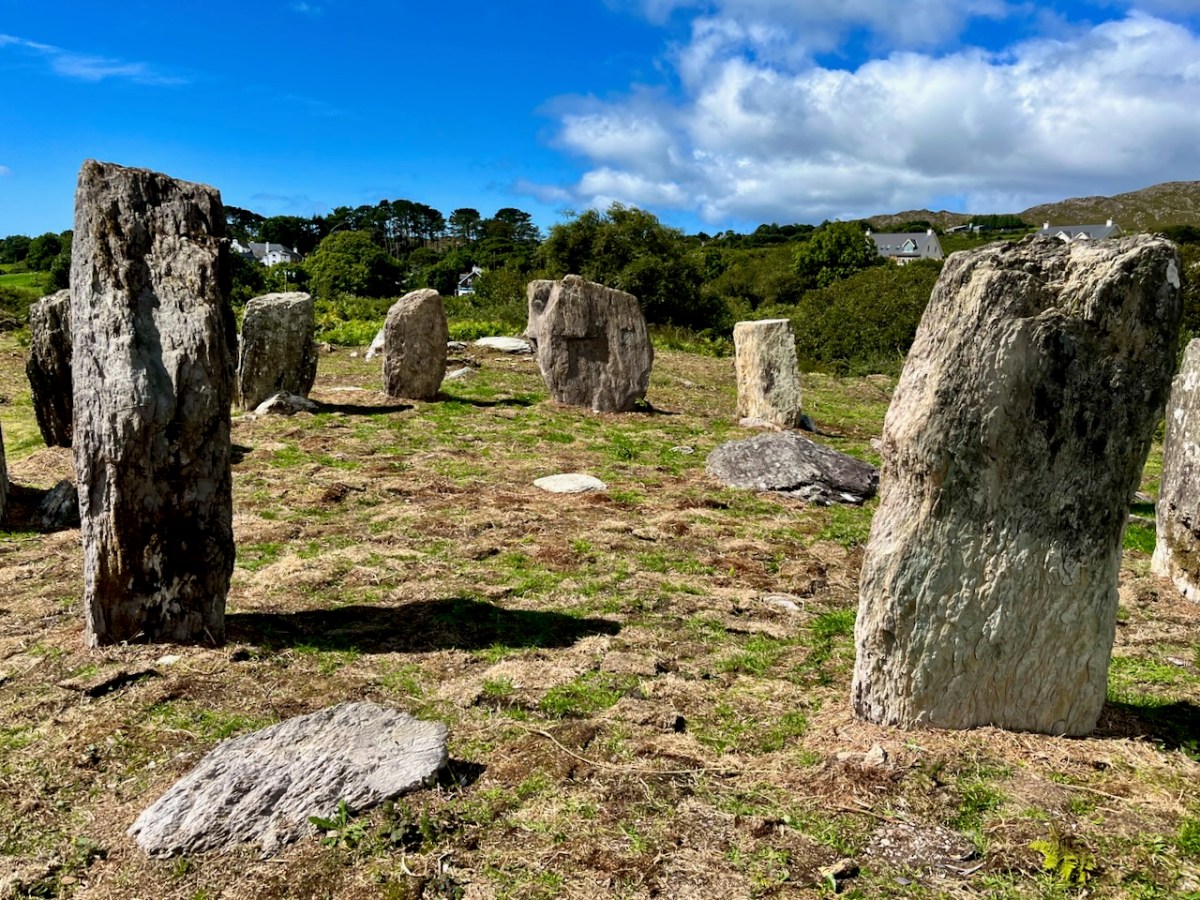
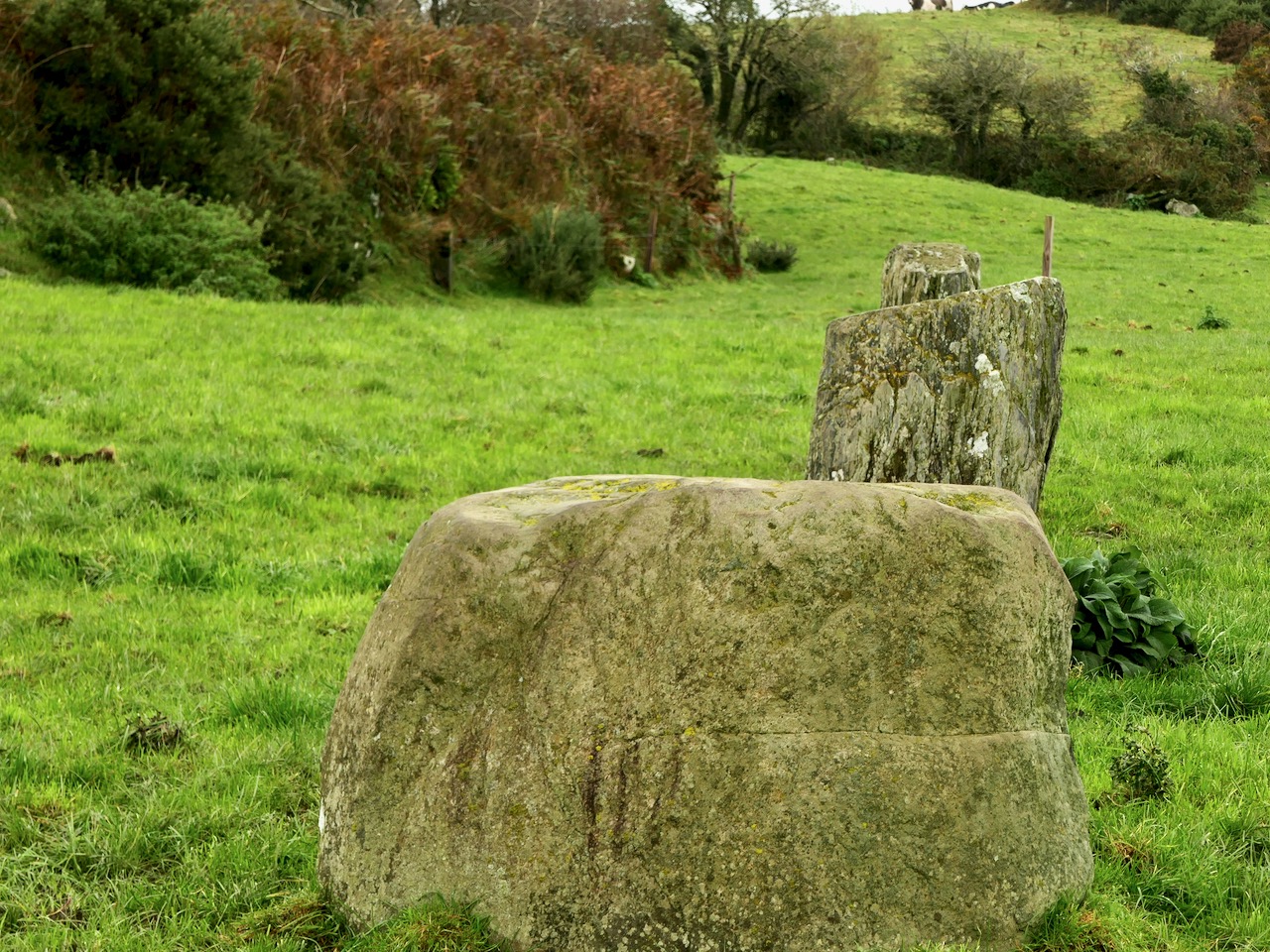
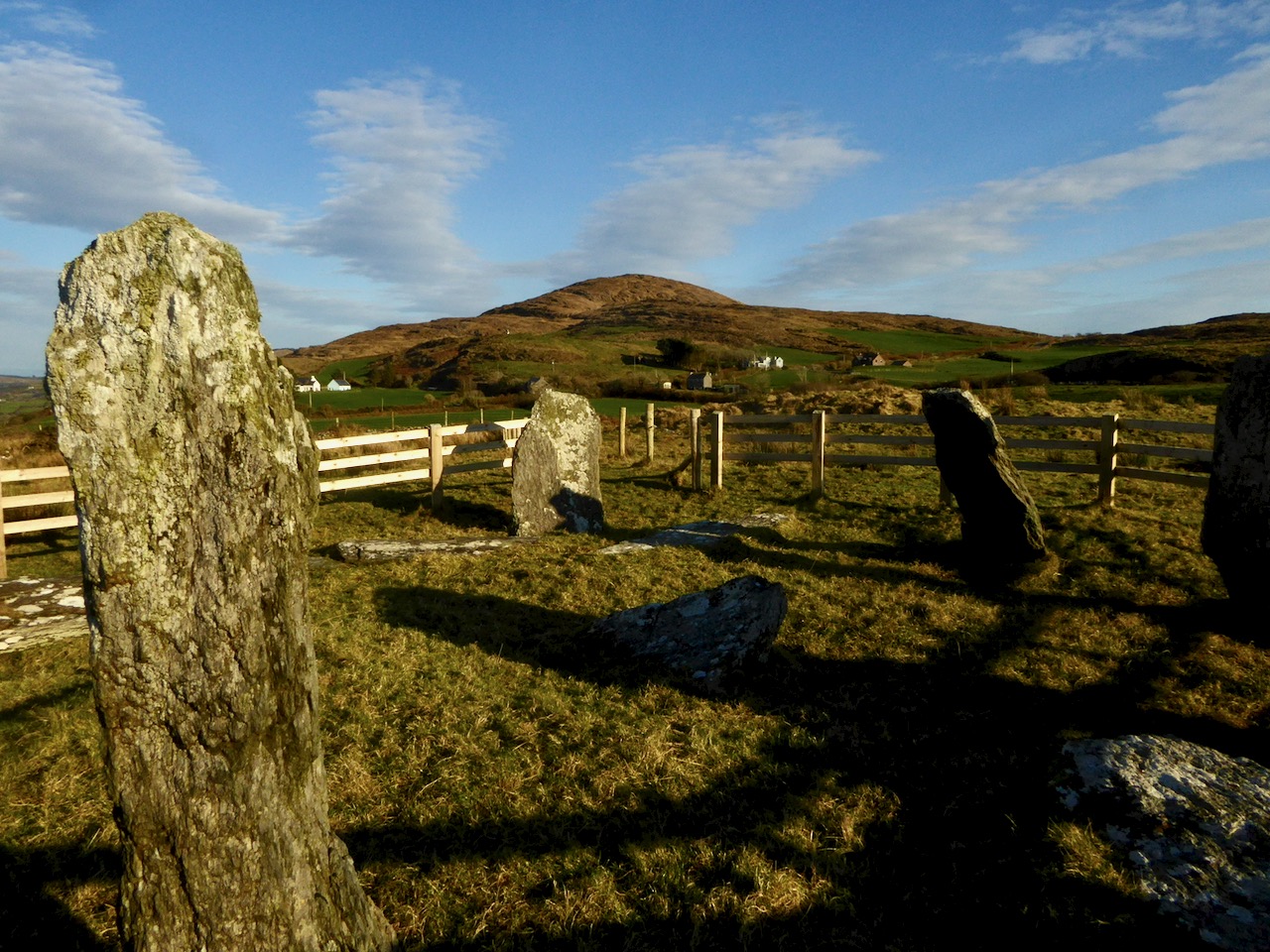
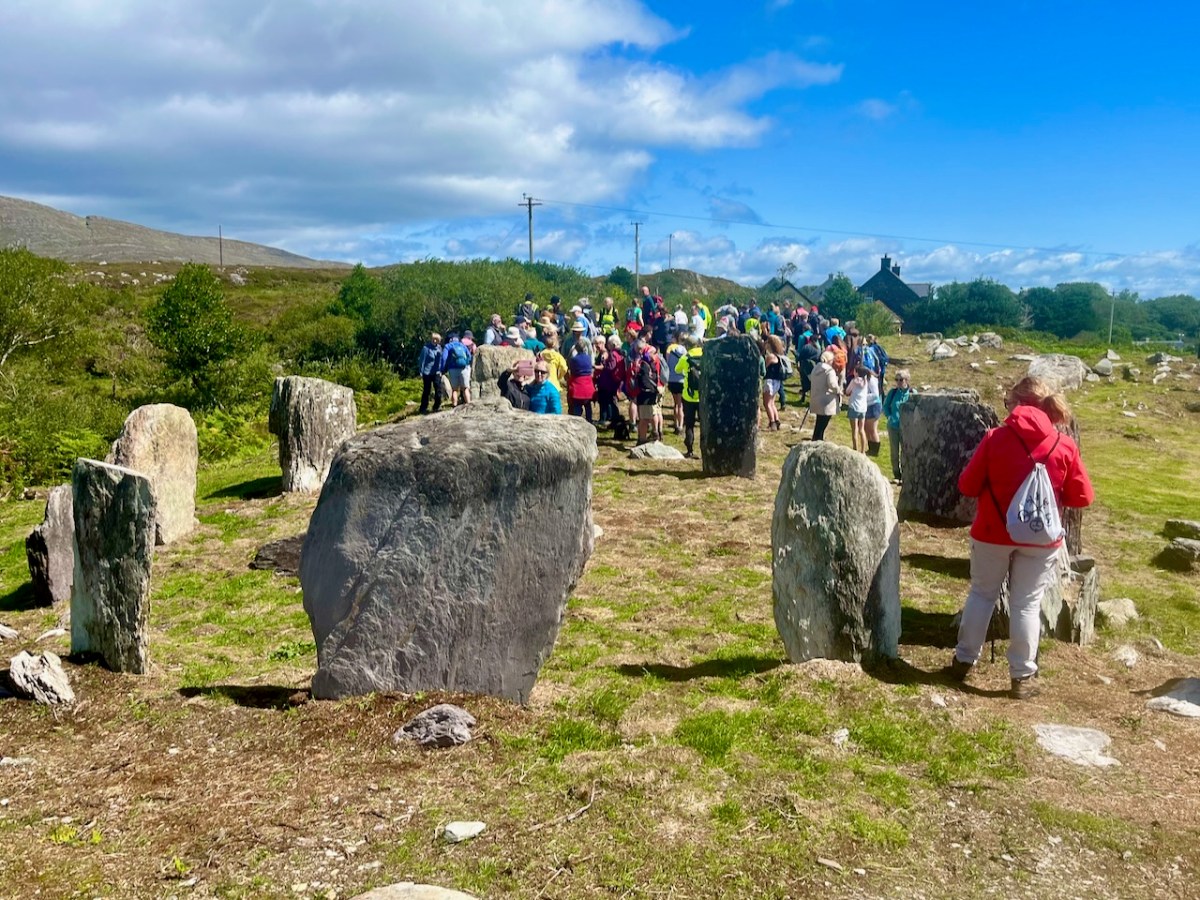
Most stone circles have a specific orientation. This can be seen by the shaping of the stones around the circle. In this case there are two clear ‘portal stones’ on the east side, directly opposite an axial stone on the far side (above). More usually, the stone opposite the portals is flatter, when it is known as the ‘recumbent’. In this case it is a substantial stone with a shaped top (detail, below).Perhaps this points to a feature on the horizon? Our calculations show that the orientation of this circle is towards the winter solstice sunset – just as at Drombeg Circle, not too far from here.

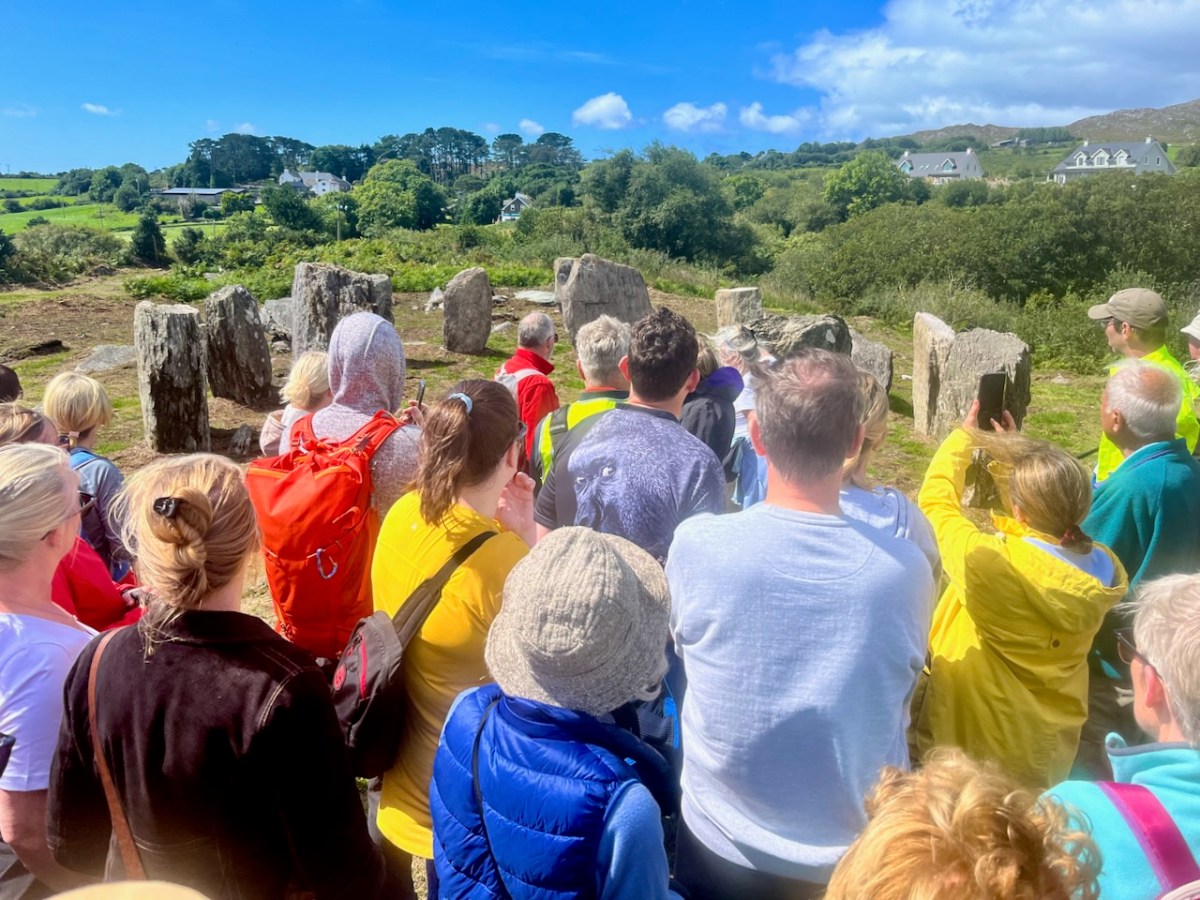
Yesterday’s event attracted a substantial crowd, eager to hear Professor O’Brien talking about this project. Many were no doubt surprised to see the site returned so faithfully to its original state. But – with stones standing – it has now become an iconic piece of archaeology. We are delighted that it is on our doorstep. If you want to read a deeper discussion on stone circles and their historical contexts, look at Finola’s post here – one of many that include the subject.

Another thing that Billy pointed out was the significant ancient stone wall that runs across the site; you can see traces of this above. In this view you can also see an elongated large rock apparently lying on its side. Some local commentators have suggested that this was once a very tall standing stone. If so, at about nine metres, it would have been spectacular! But the excavation confirmed O’Brien’s view that it was never standing, and has always been part of the landscape in its current position.
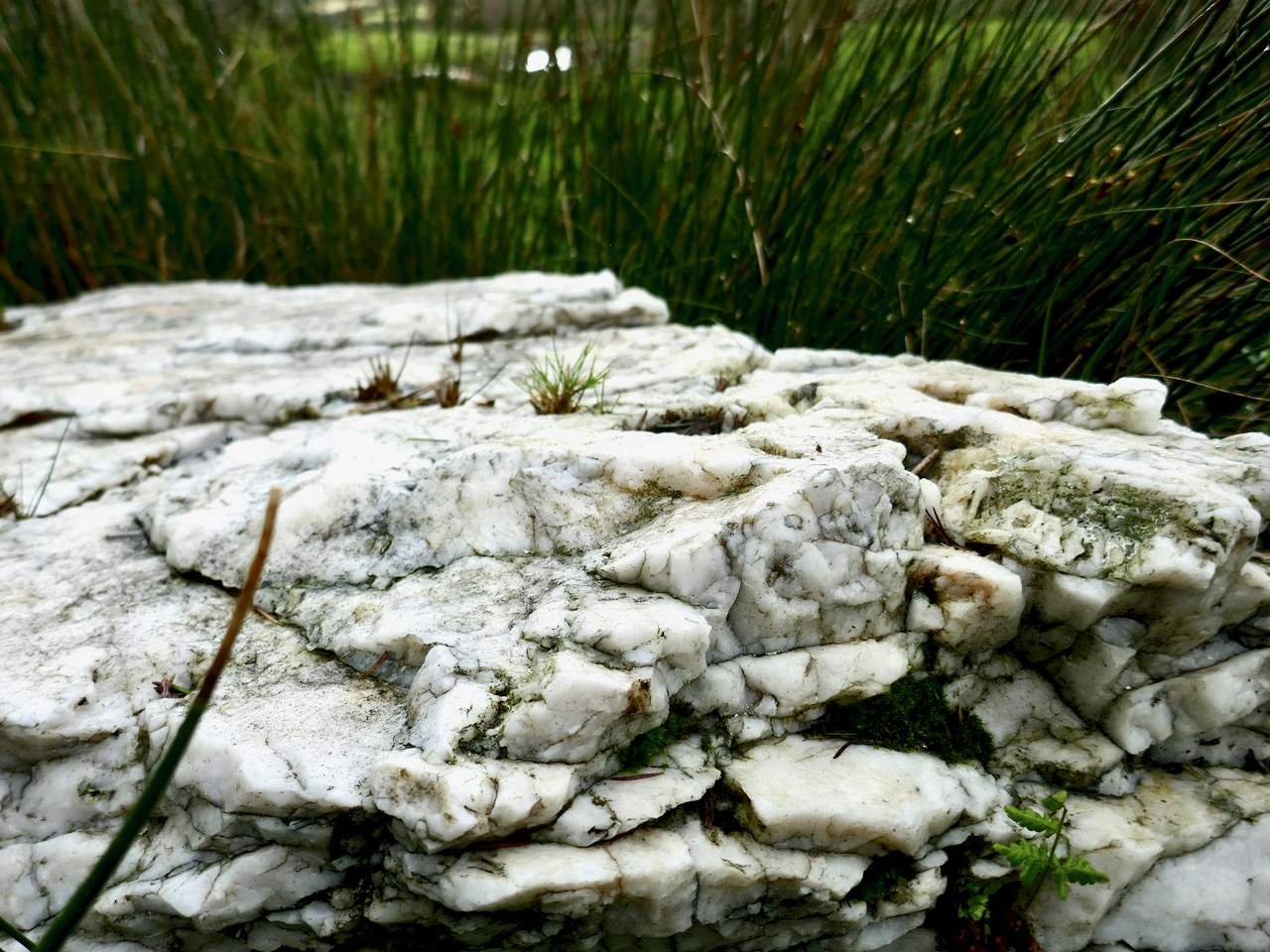
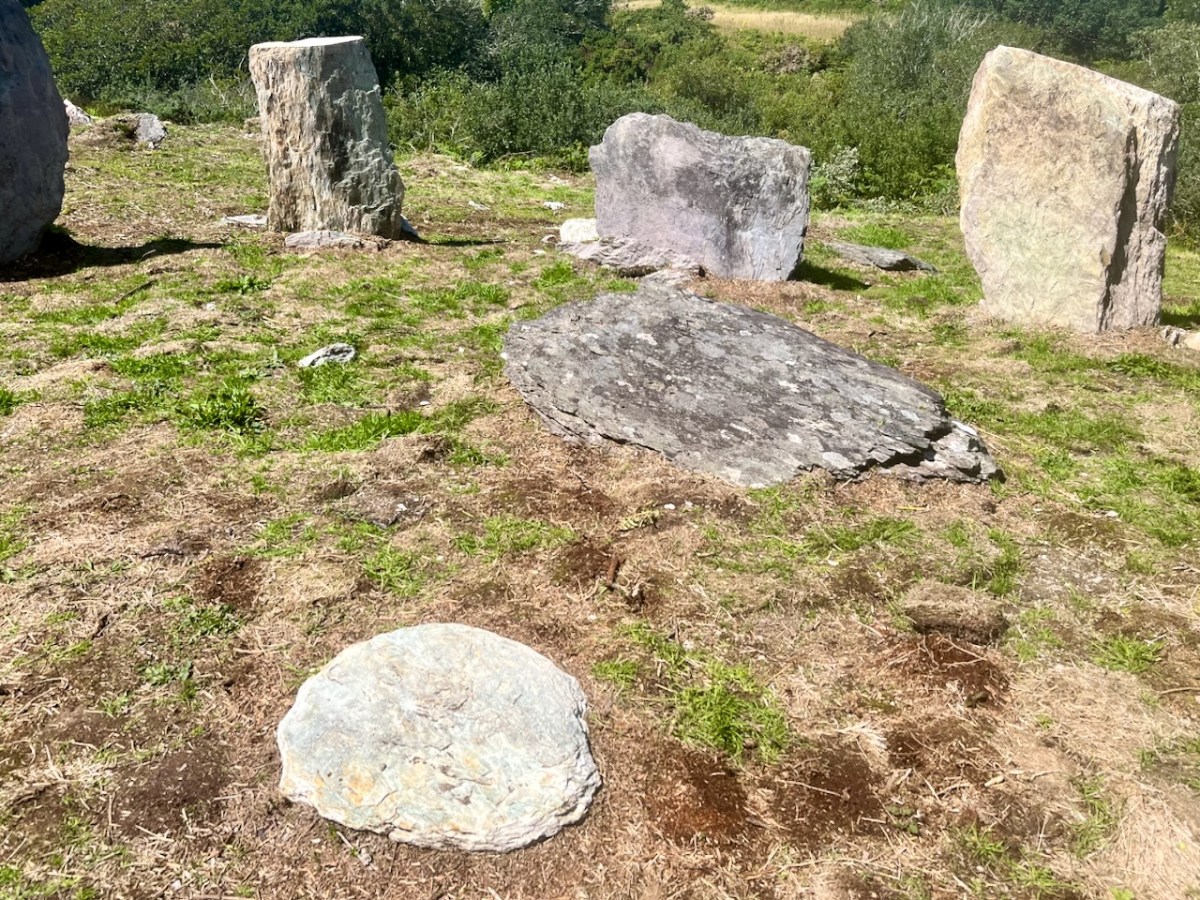
Also, an area of flat ground to the east above the site was closely examined, in case it revealed traces of any human use, but none was found. In fact, there were no signs of any notable human activity. However, one point that I found particularly interesting was that, in the centre of the circle, is a pit containing quartz stones. Quartz, that glinting reflective material that faces the much older main chamber at Newgrange (you can see a pic of it in this post), certainly catches the attention; it’s fascinating that the Gorteanish people – whoever they were – gave it an aura of importance by burying it at the focal point of this circle. The quartz has been replaced in the pit, after the excavation. Its position is marked by the only ‘alien’ element that has been introduce here – a pale coloured flat stone:
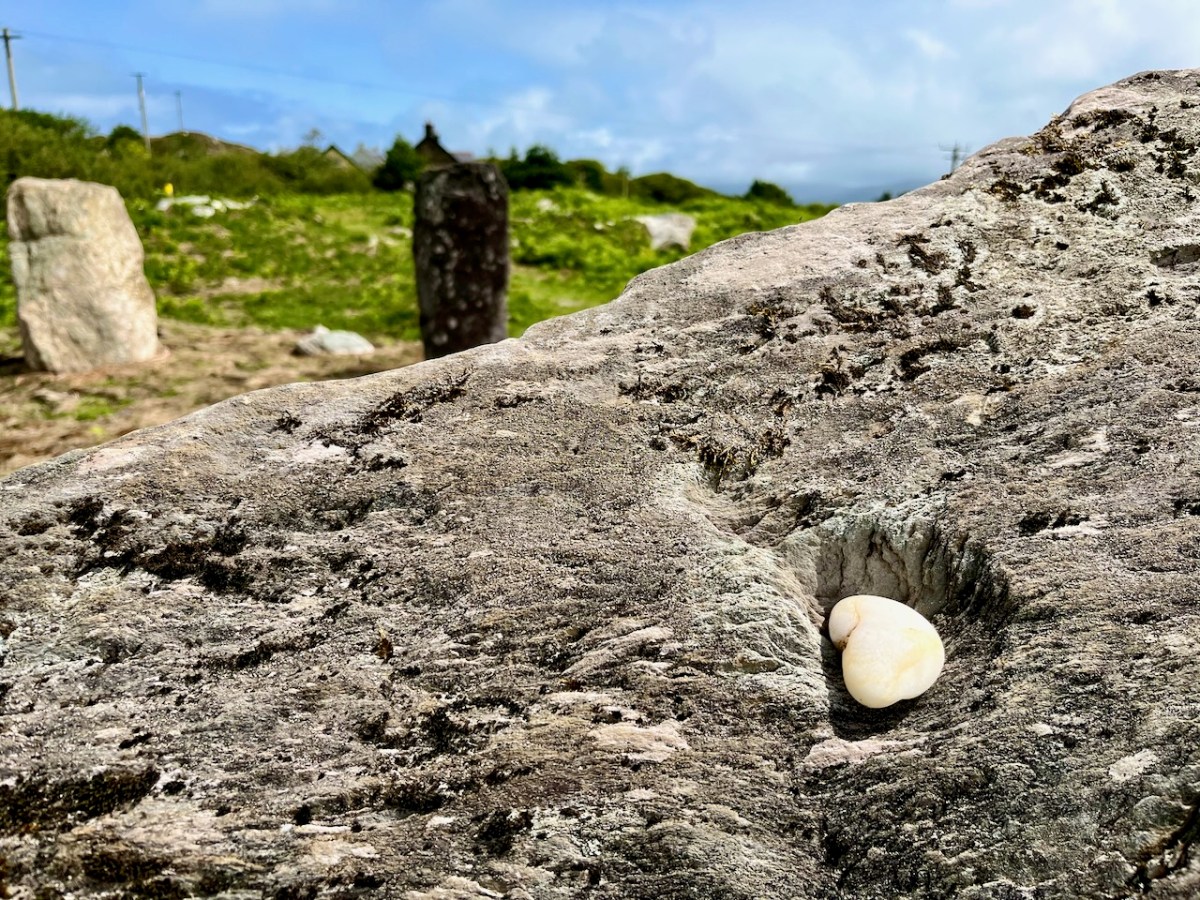
The larger earth-fast stone beyond this new addition has always been there: the site might have been constructed around it. It’s always interesting to see how people are going to react to a circle like this – here is someone’s recent contribution, also giving importance to the ‘magical’ quartz:
All in all, our day was exciting. It’s pretty special to see something ancient faithfully restored – and open for all to access. The seven fallen stones probably collapsed because of cattle rubbing up against them over centuries. That has been prevented now. We hope you will all appreciate – and enjoy – this new West Cork experience.
Microgeneration – Rural Electrification 2023

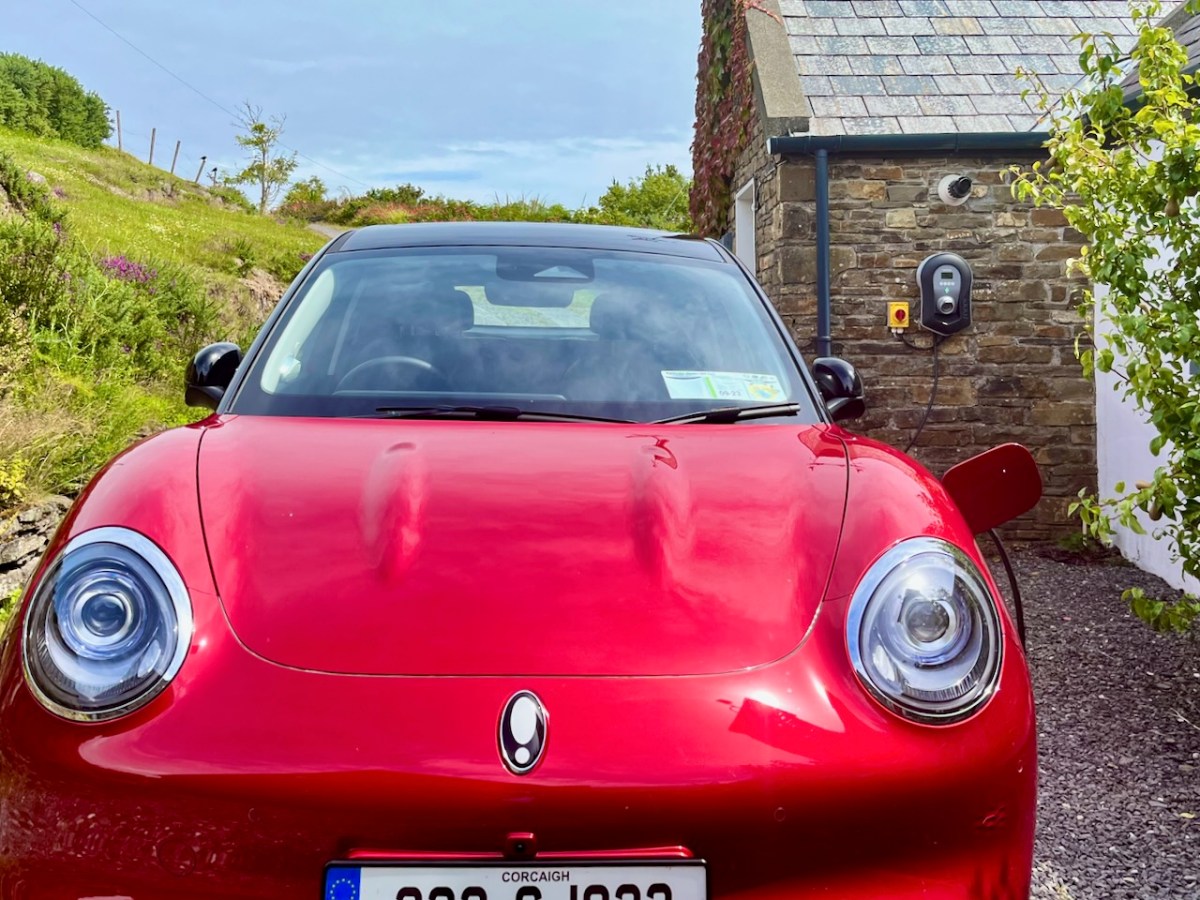
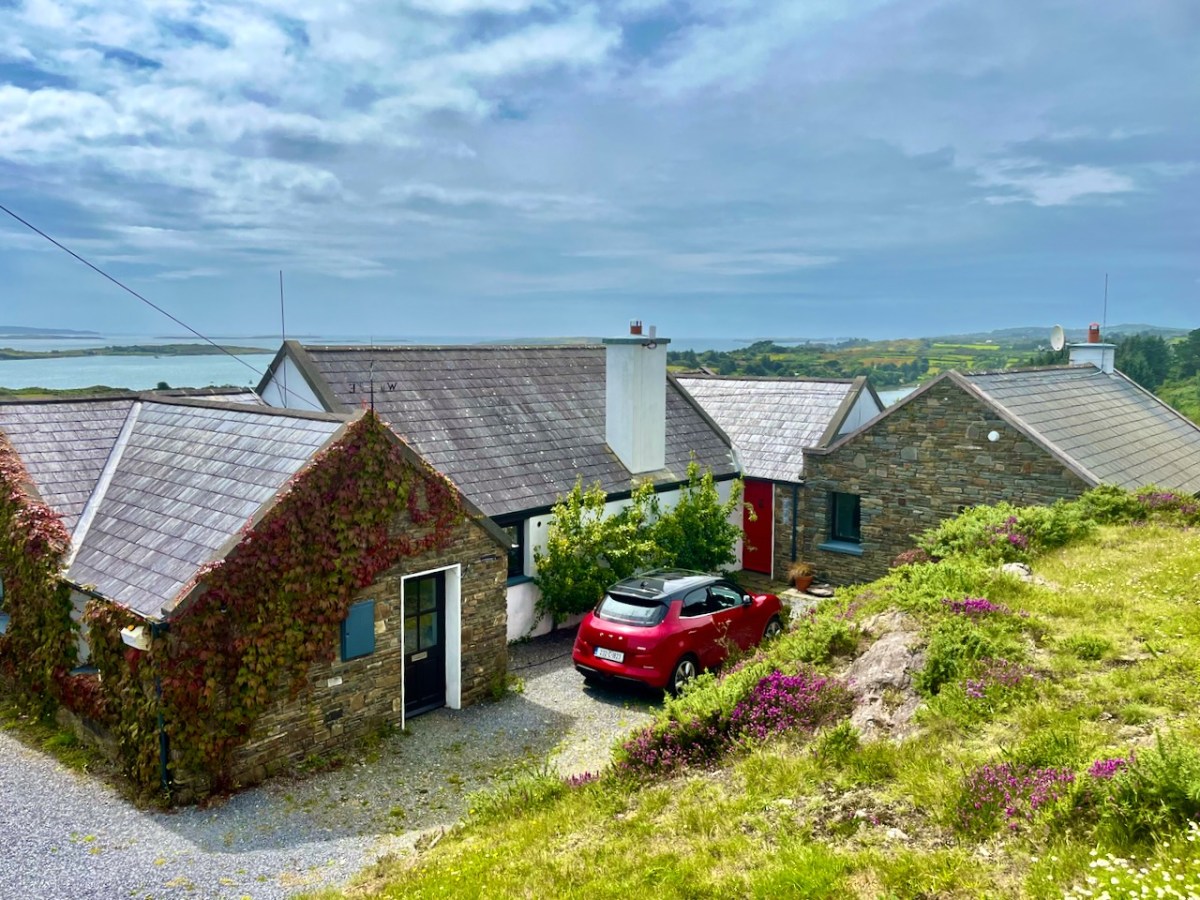
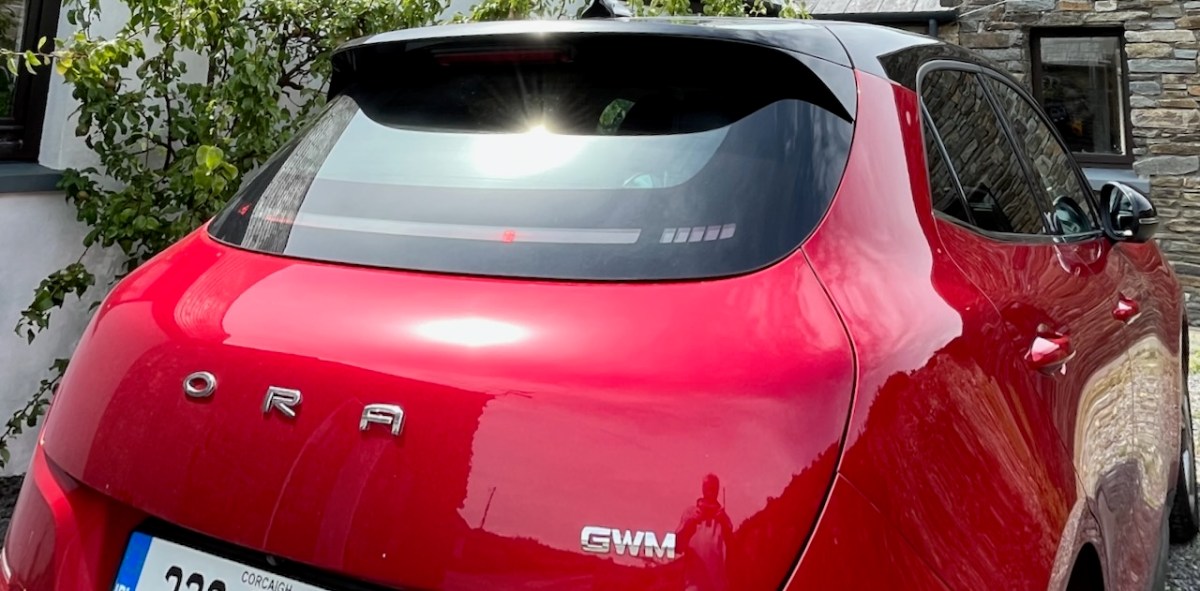
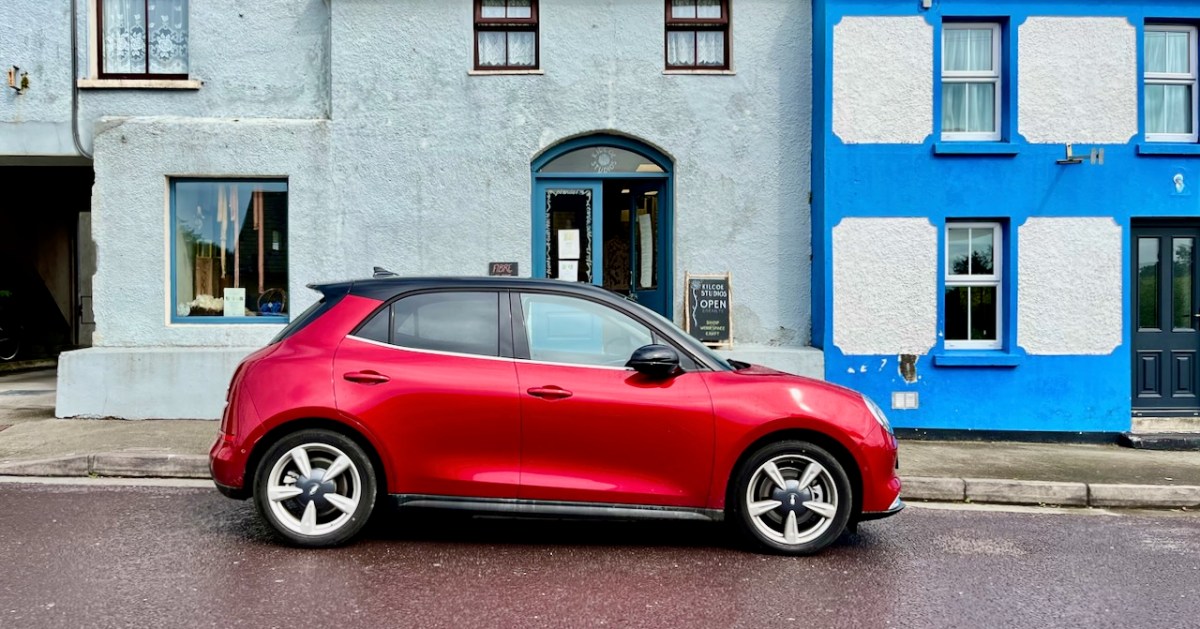
That’s our new car, sitting in Ballydehob a day or two ago. It’s given me the chance to revisit my posts about the history of Rural Electrification in Ireland – and to bring the subject right up to date! The word Microgeneration is new to my vocabulary. Here’s where I first saw it:

What that means is that our supplier – Electric Ireland – is paying us! We are contributing to electricity generation here in West Cork because we have tapped in to the sunshine!

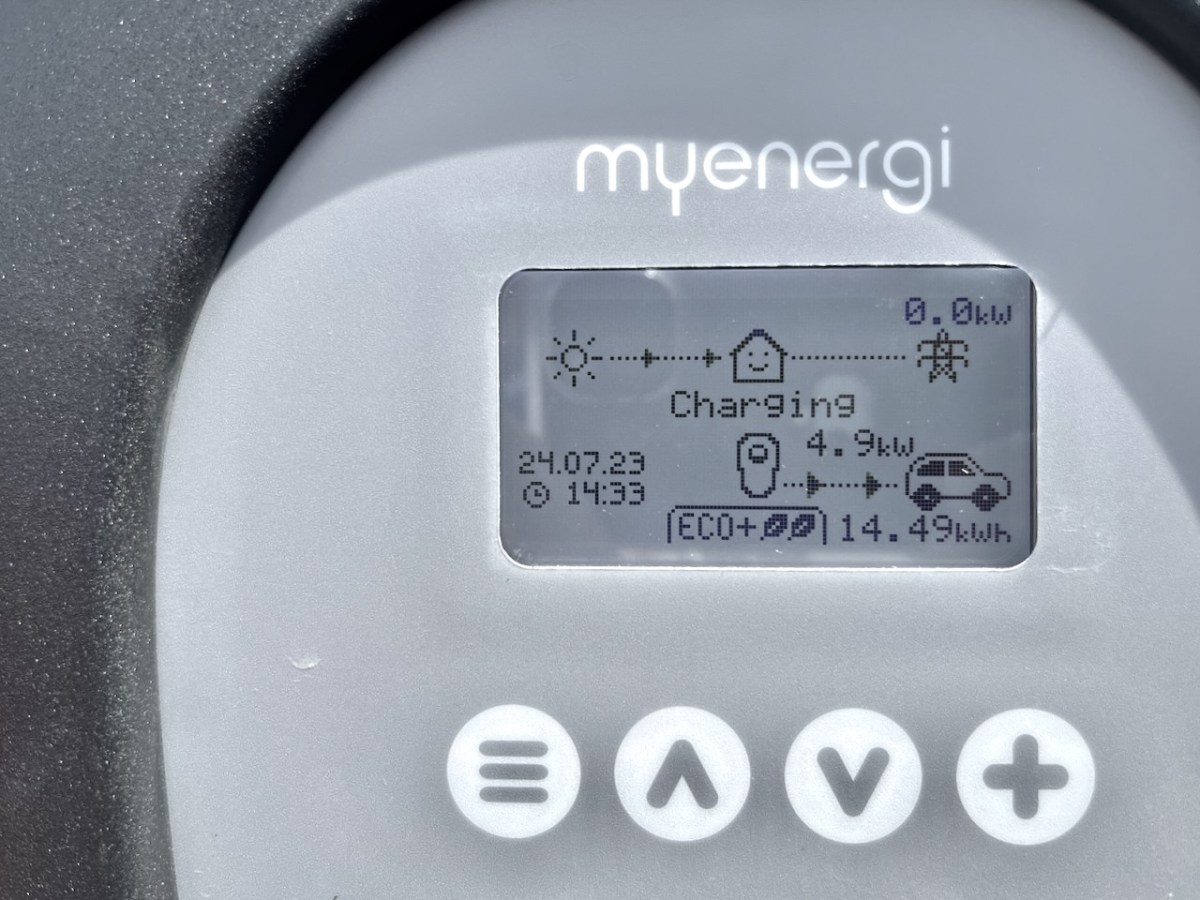
Since we collected our Ora Funky Cat from Blackwater Motors in Cork, two weeks ago, all our fuel costs have been free! As you can see from the display on our car charger, every watt is coming from solar gain, and feeding into the Funky Cat’s battery. If we get the timing right, we will never have to pay fuel costs again, unless we travel away from home.

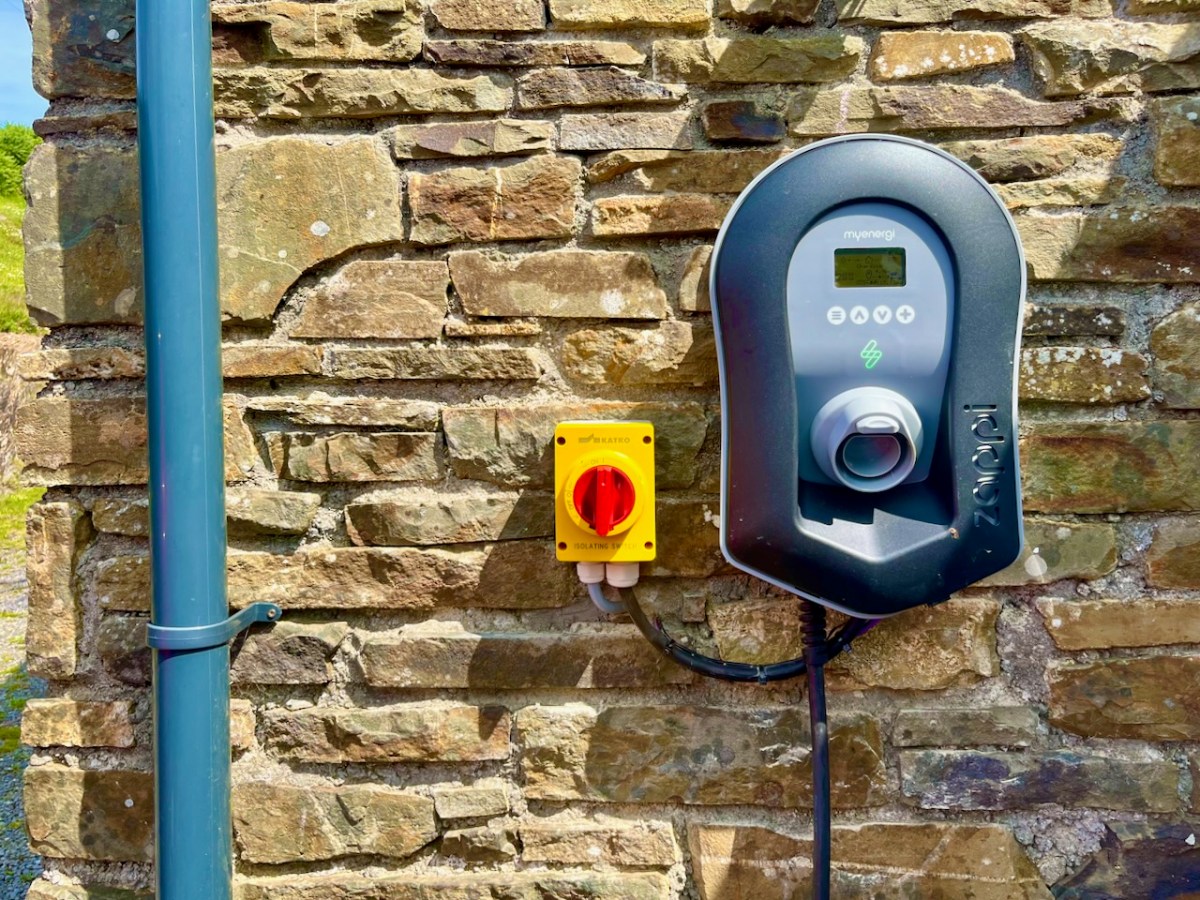
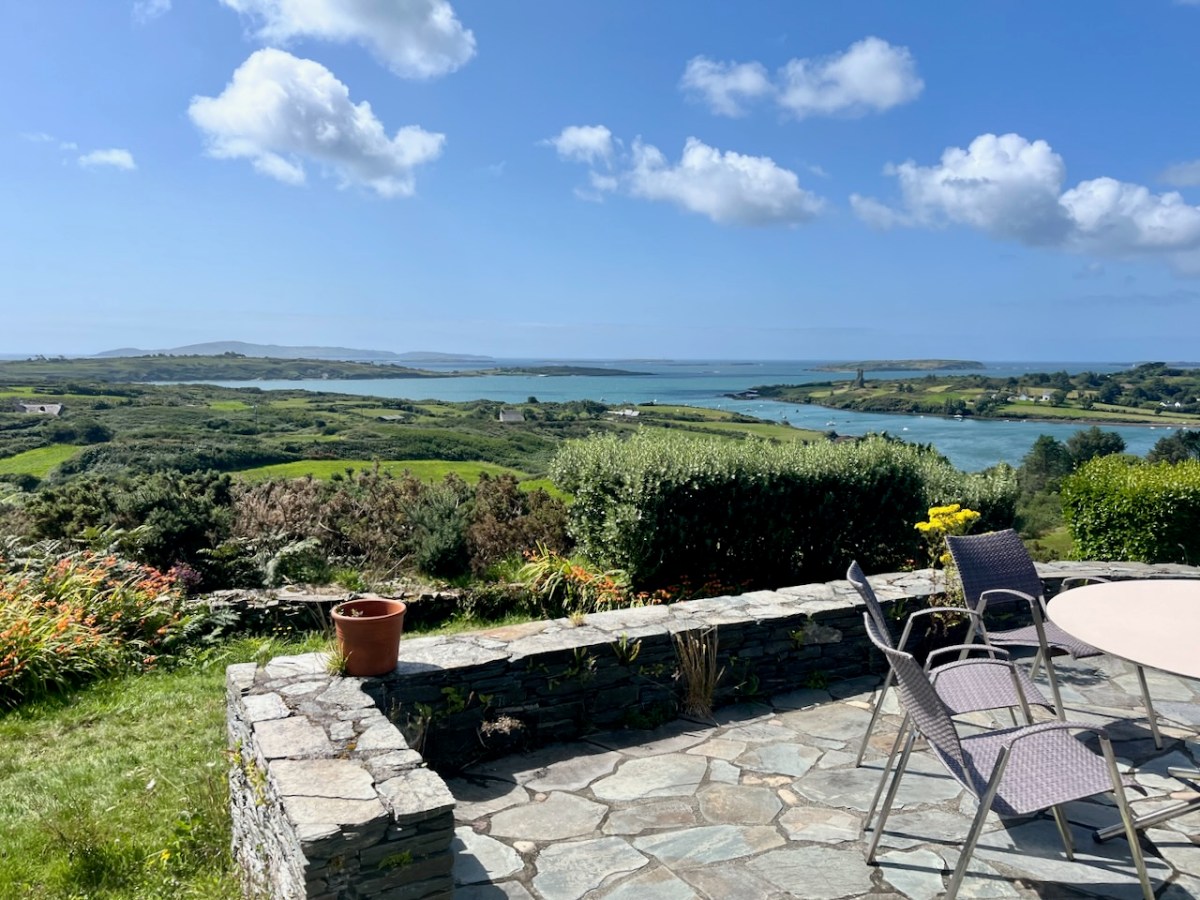
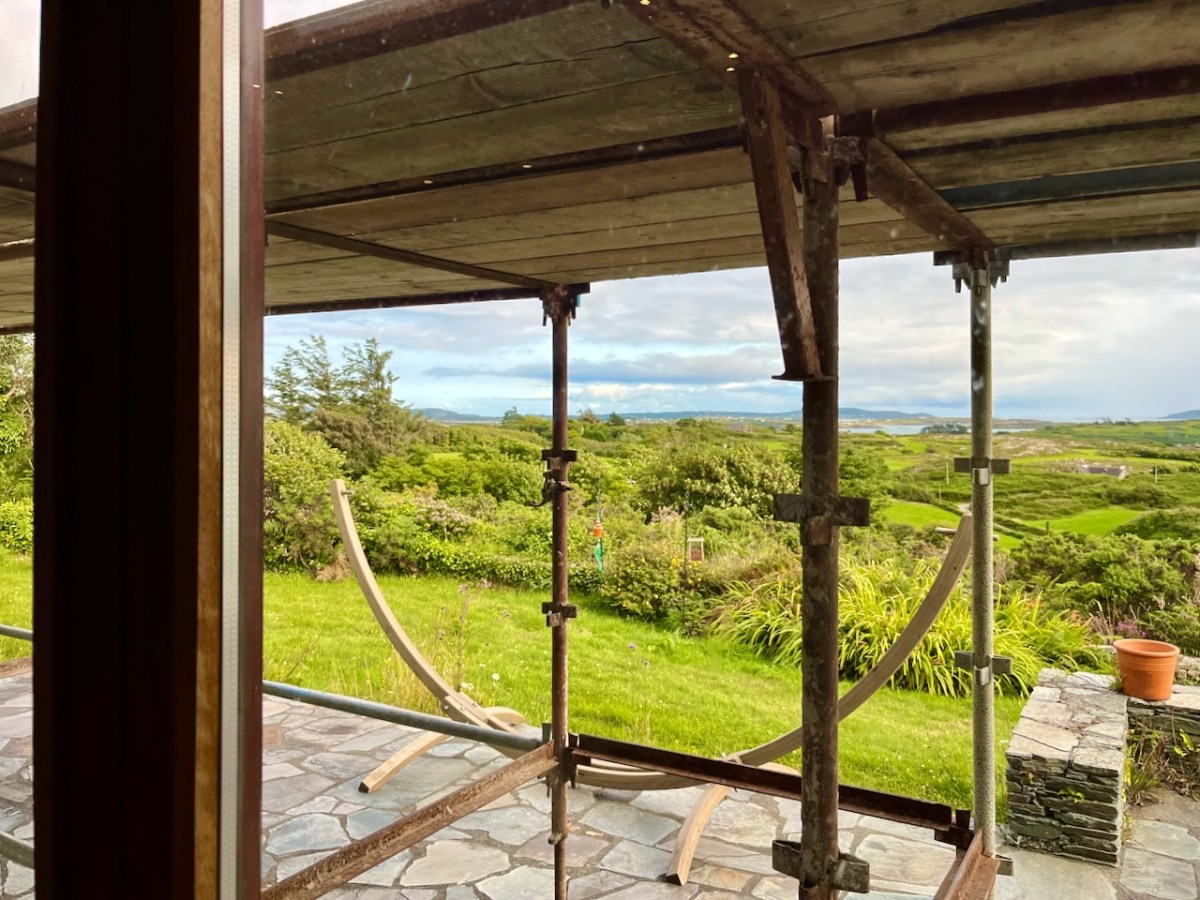
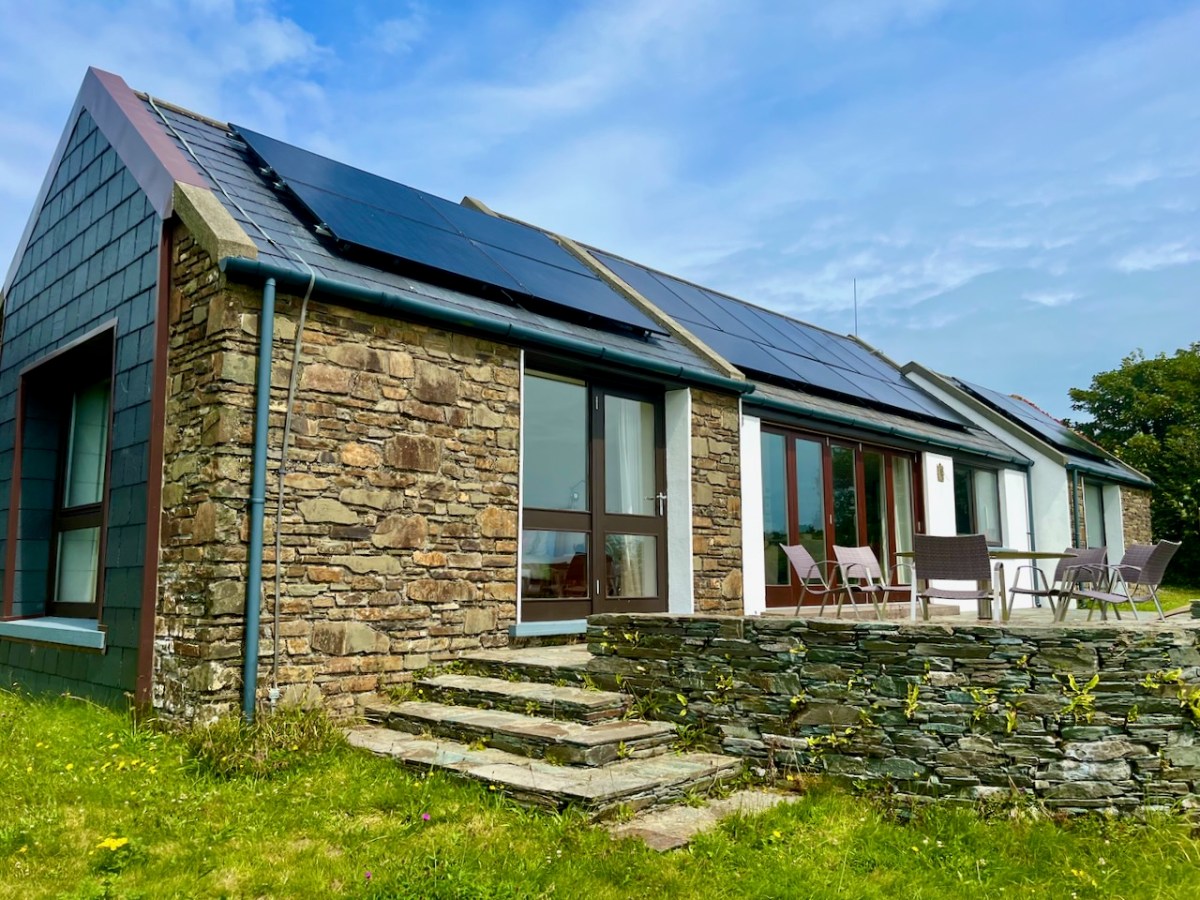
That’s our Zappi car charger, above. We made the decision to install photovoltaic (PV) panels on the roof of our house. We face south – looking out over Roaringwater Bay – in a location that’s ideal for harvesting solar energy.

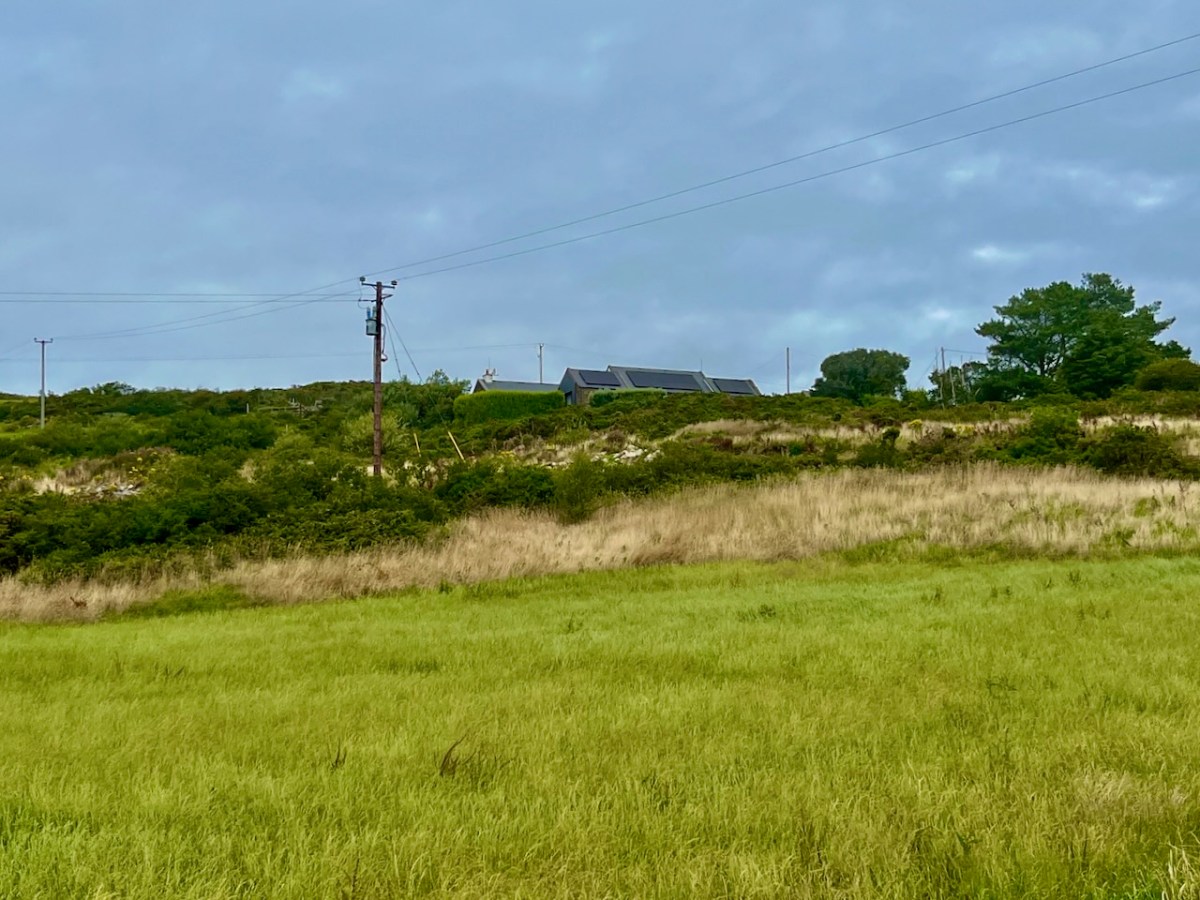
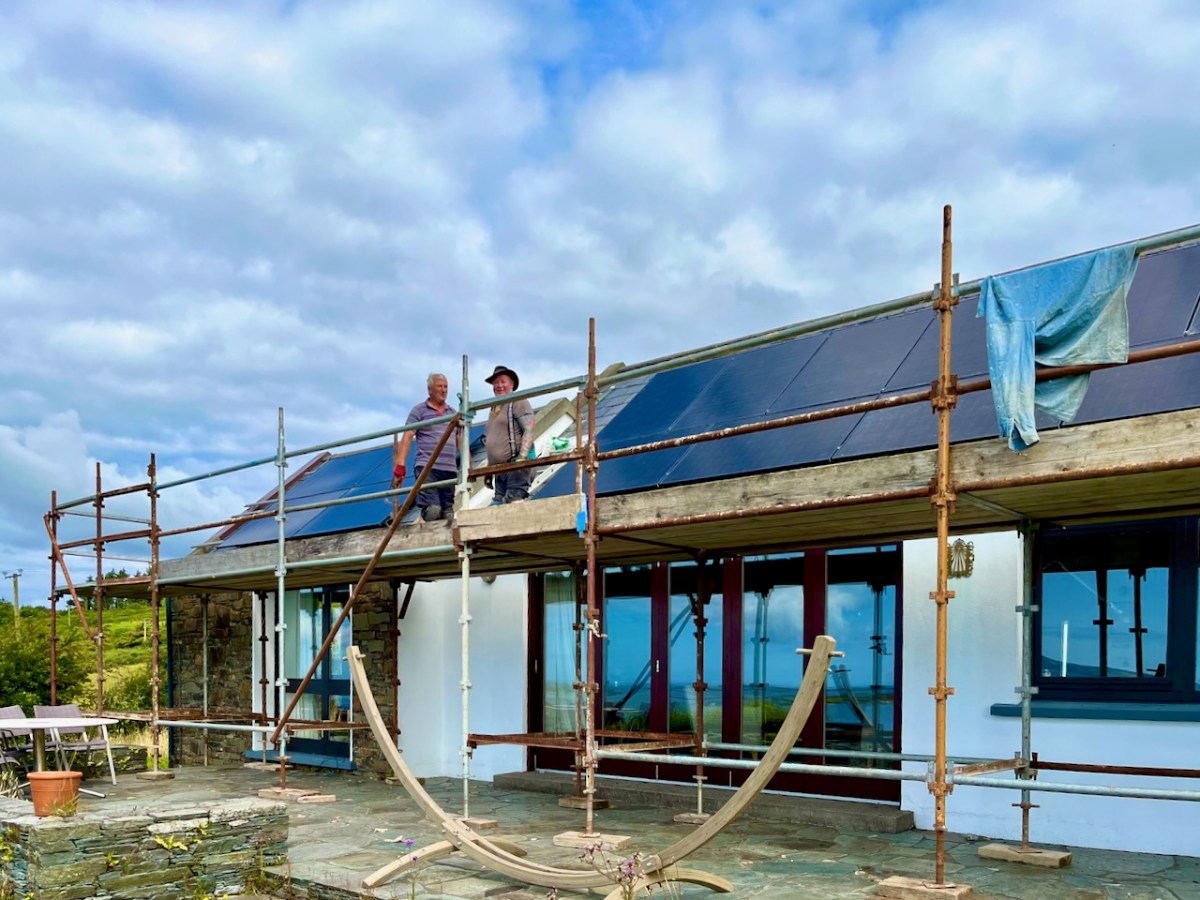
Our house from the fields below: you can see a few stages of rural electrification in this picture, conventional supply posts and wires, and the new panels on our roof. (Below) Fergus and Kevin are well on with the installation:

It’s been well worth the disruption, which was actually shortlived – and everyone who worked on it was cheerful. Why wouldn’t they be? They were bringing the most up-to-date electric technology to our doorstep. We are now being credited for anything we generate that goes into the grid (that’s the default mode). But we are going to use our own power as much as possible in Nead an Iolair. We have had a battery fitted, and a diverter which powers another circuit if there’s anything to spare once we’ve charged the car.

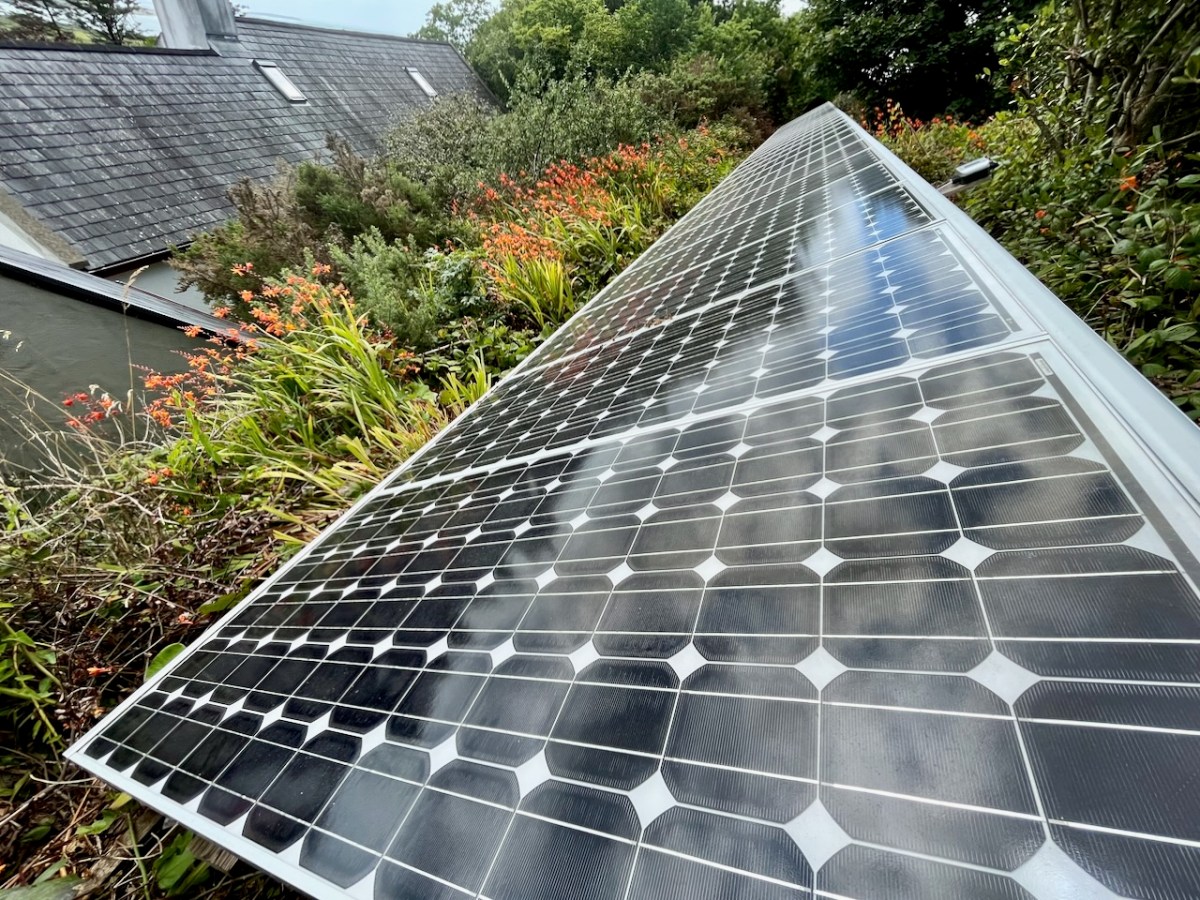
We are fortunate in that our house has extensive south-facing roof slopes – ideal for the installation of eighteen PV panels (above). Properties which don’t have roofs facing the right way can consider panels mounted on freestanding frames. Here’s one set up by neighbours of ours:

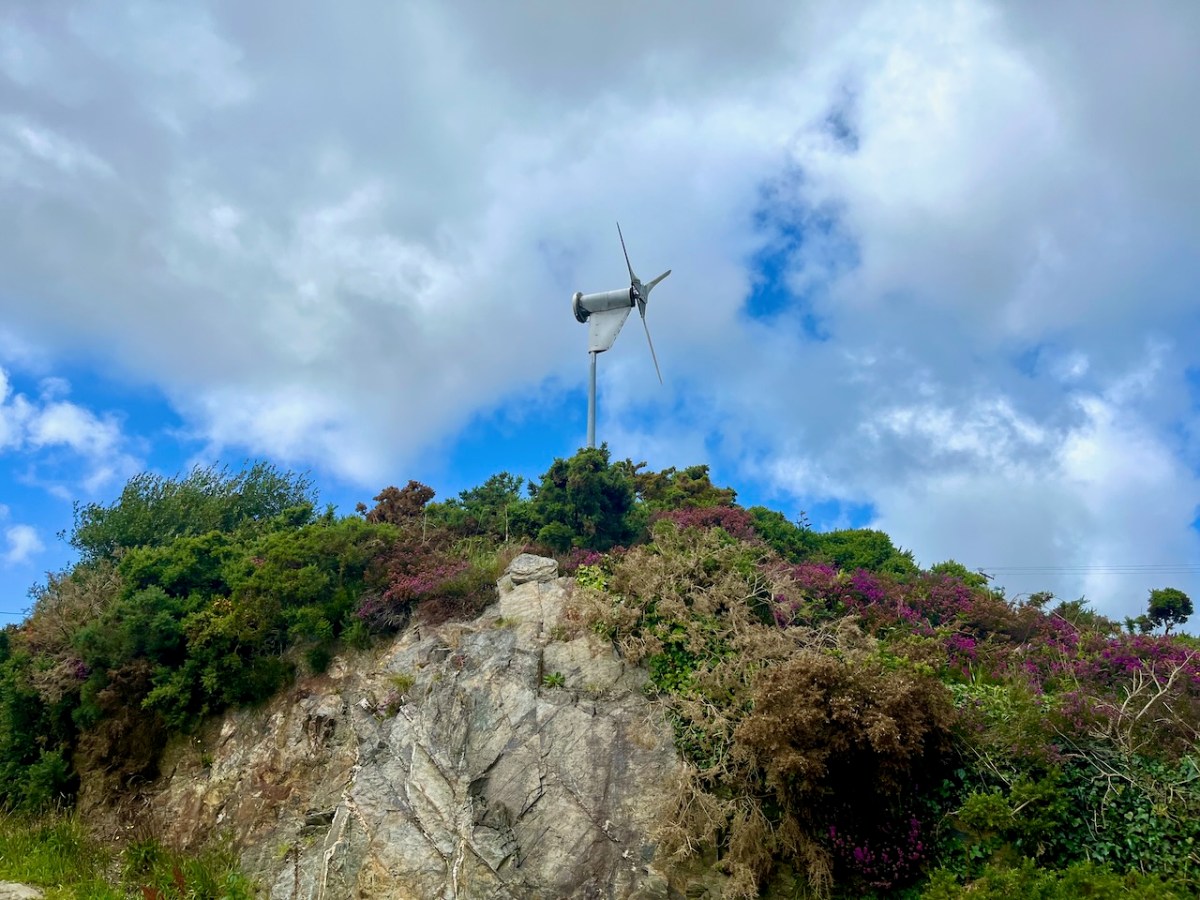
The same neighbours have also been tapping into wind energy for many years (above). They are significant contributors to ‘rural electrification’ here in West Cork!

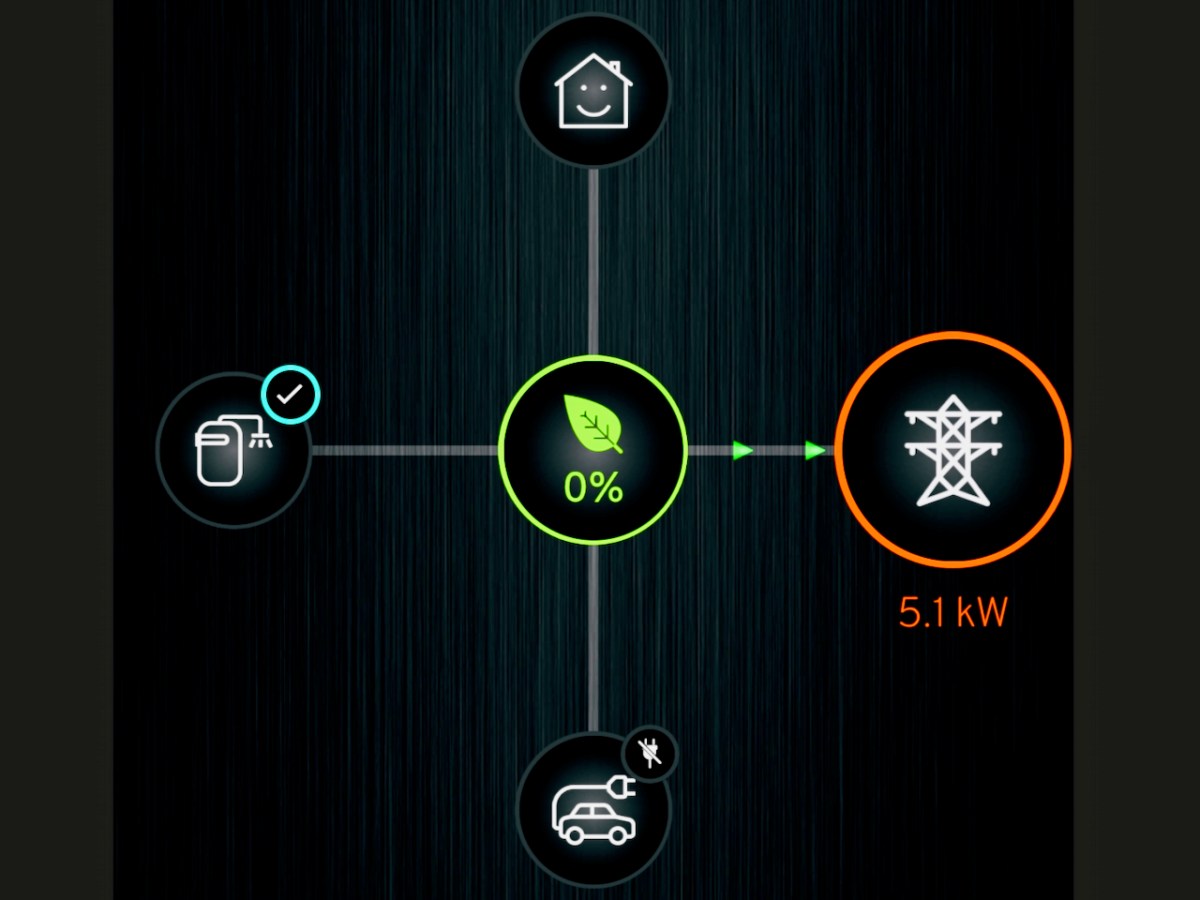
There’s a phone app for everything! Mine is telling me how our system is performing. It’s Saturday afternoon and the day is relatively dull. There is no sun shining on the panels, but the solar gain from the overcast sky is still generating (or ‘microgenerating’ as the ESB would have it). The battery in the system (on the left) is full, the car (bottom image) is unplugged. The PV (centre) is pushing 5.1kW into the grid! No wonder our ‘house’ is smiling.

Finally, this week – in our electric car – we visited the impressive re-erected Gorteanish stone circle near Ahakista on the Sheep’s Head. I wonder: could this have been a forward-looking experiment by Bronze Age West Cork dwellers into harvesting solar energy?

Thinking of a carbon emission reduced future yourself? It would be worth speaking to our contractor: https://www.toolenpv.ie/

And, if you like the look of the Funky Cat, don’t forget to connect with Blackwater Motors, our Cork dealer. Incidentally, if you are wondering about the name, Great Wall Motors (GWM) is one of the largest car manufacturers in China, where cats are considered lucky: all GWM Ora products have ‘Cat’ in the name. Examples – Good Cat, Ballet Cat, Lighting Cat, Grand Cat… And Funky, of course!

Further information on the Electrification of Ireland can be found in these posts:

Night’s Candles are Burnt Out

Electrifying West Cork

Rural Electrification – Process and Effect

The Electrification of Ireland – A Medieval Diversion

Ardnacrusha

The Stone Circles of West Cork: Multiple Stone Circles

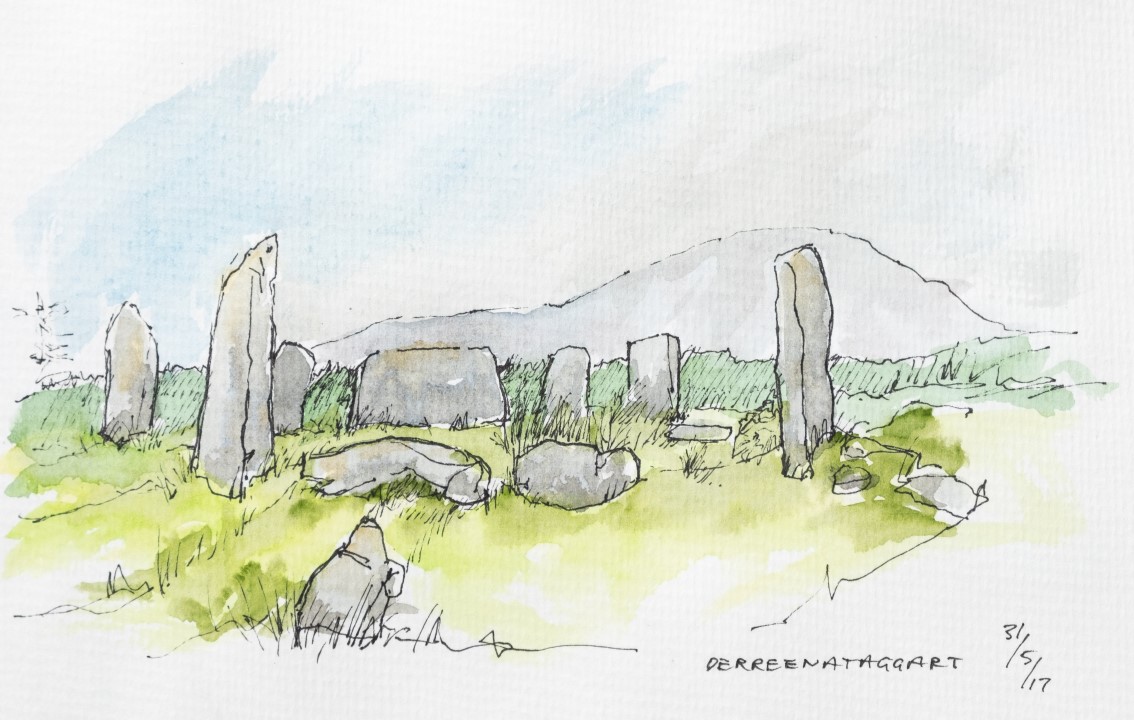
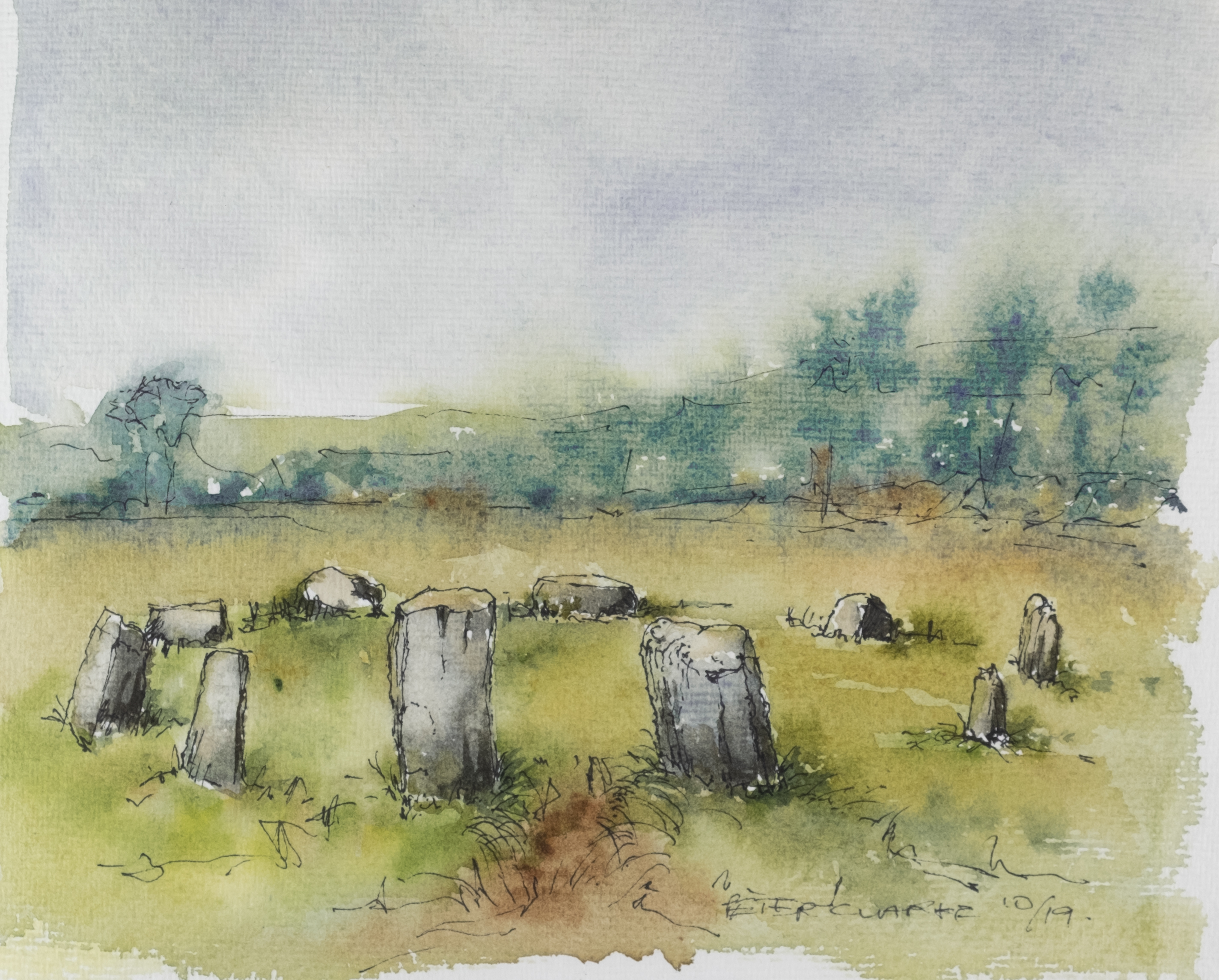
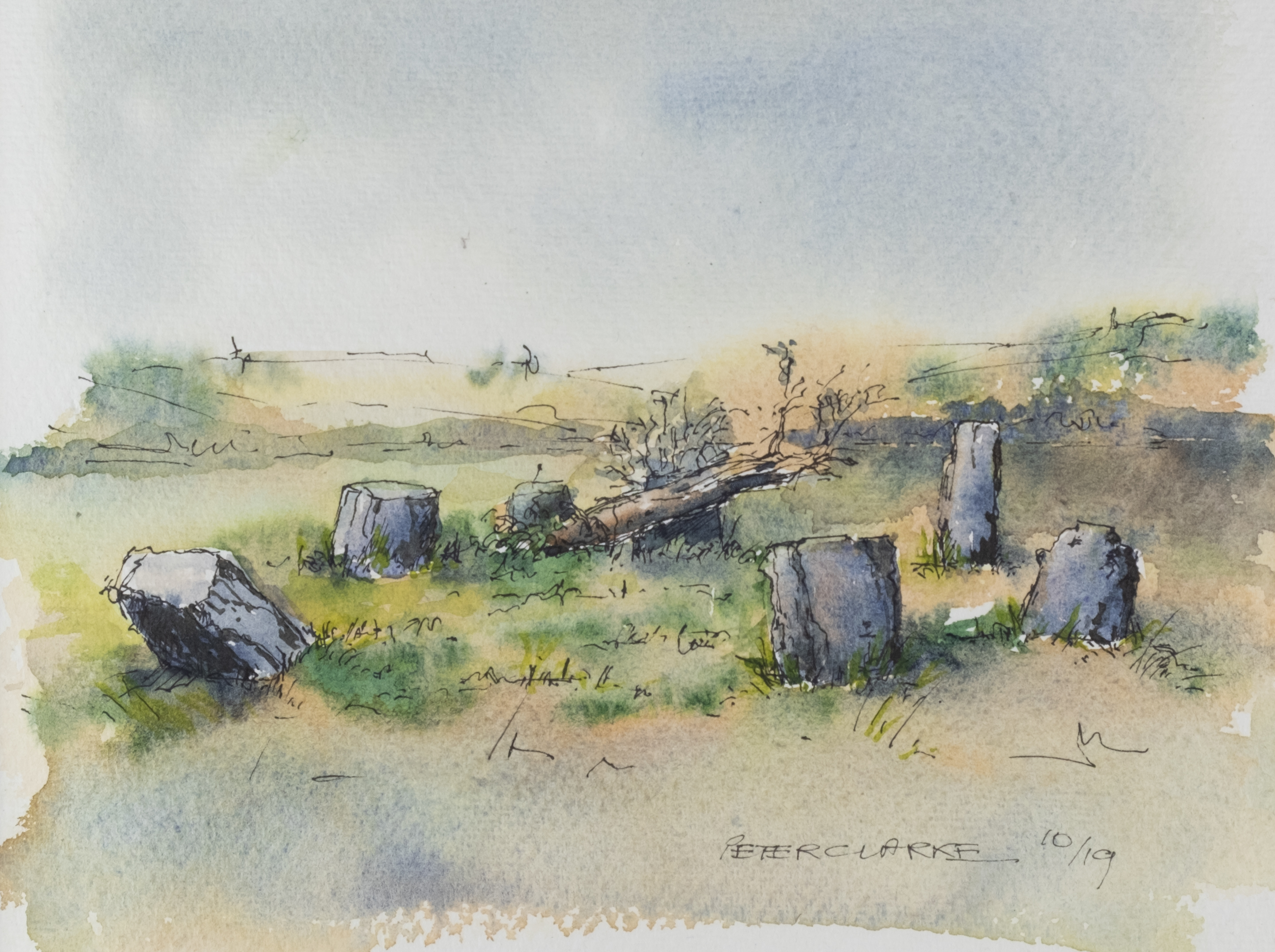
West Cork is home to a great concentration of prehistoric stone circles. While all of them share certain characteristics, there is a clear division between those containing only five stones and the multiples stone circles that contain seven or more, such as the Derreenataggart stone circle on the Beara, sketched by Peter Clarke, above. This post is about the multiple stone circles – I am leaving the five stone circles until next time. If you haven’t yet read The Stone Circles of West Cork: An Introduction, you might like to do that now before reading further.

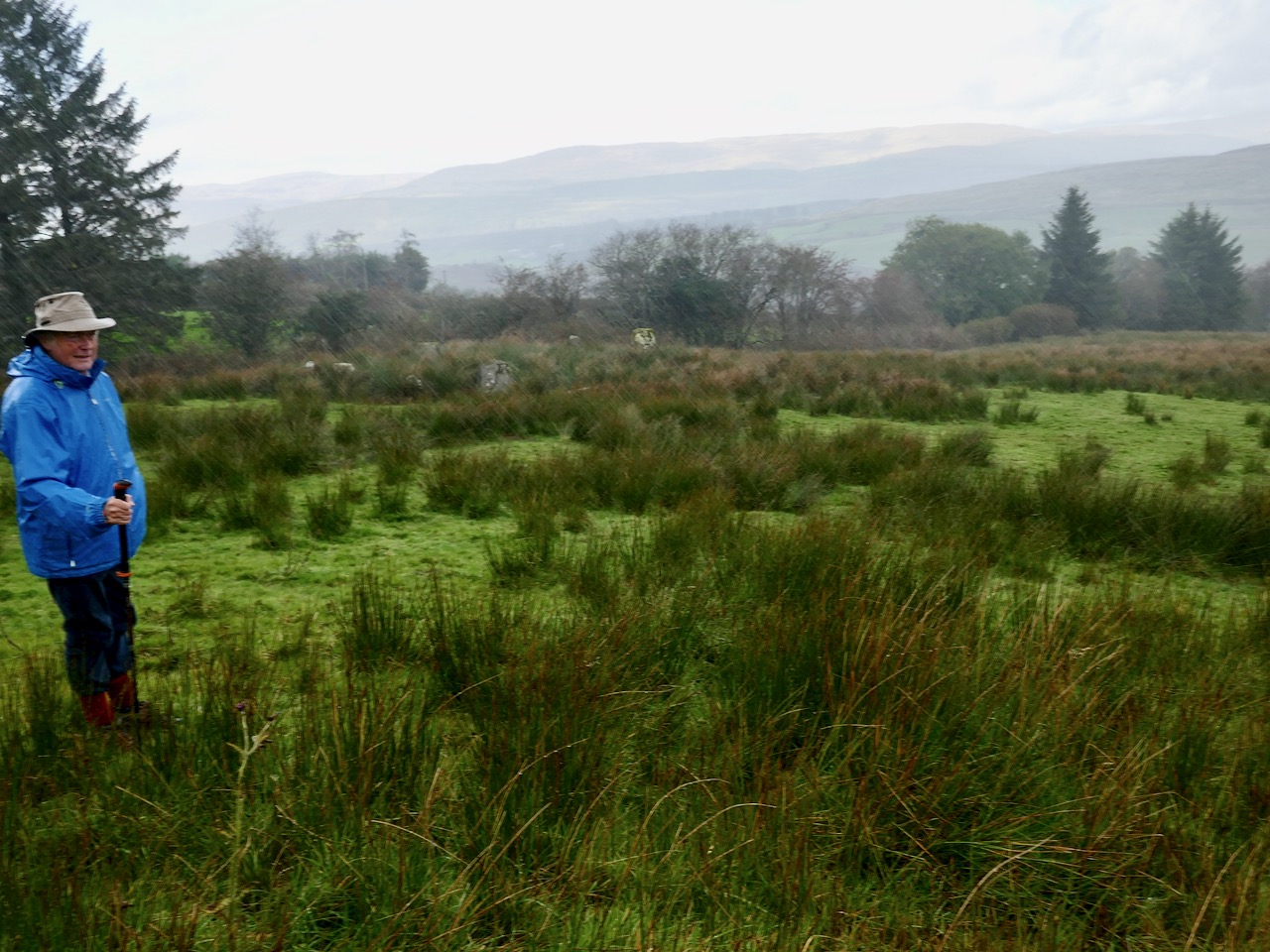
Although we love getting out in the field and visiting ancient monuments, such as this stone circle at Maughnaclea, we have to confess that the sun doesn’t always shine

Although this post covers some of the same ground as the Introduction, my aim here is to concentrate on the larger circles and show you what they actually look like on the ground*. An online search for ‘West Cork Stone Circles’ will bring you to many pages of information about Drombeg but precious little else. Drombeg is a marvellous site and its excavation yielded much-needed information about stone circles, but it’s only one site – the one with the signposts and car park.

How about this one, for example, at Cappanaboule – it’s a bit of a hike and there’s no car park – but what a place!

Multiple stone circles in West Cork all fall under the heading of recumbent or axial circles, in which two portal stones (usually the tallest in the circle) stand opposite a recumbent and the line that passes through the portals and over the recumbent is considered to be the axis of the circles. However, within this predominant design, there are variations in how the builders decided to construct their circles.

A closer look at the Cappanaboule stone circle: ten of the original thirteen stones are still there and there’s a boulder burial in the middle

The most noticeable variation, of course, is the size of the circle and the number of stones it contains, from seven to an estimated nineteen. We don’t know why the builders made these choices, although as with most construction, size can be equated with wealth: building a stone circle was an arduous undertaking necessitating the ability to commandeer a significant labour force. Perhaps also a larger circle with more stones permitted finer gradations of alignments, if this was the purpose of the circle, or more expansive ceremonials within the boundary of the circle.

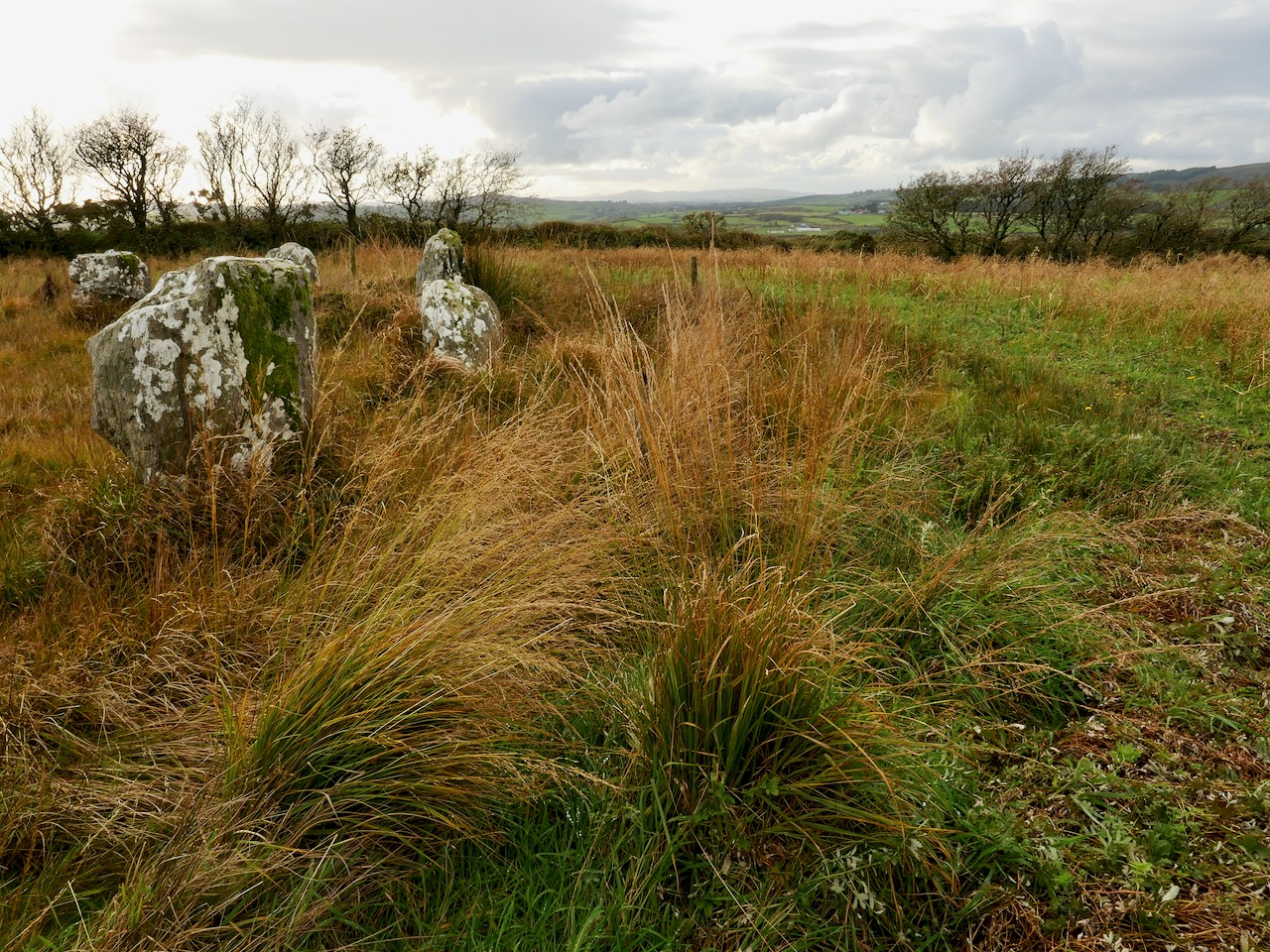
This is Gorteanish stone circle on the Sheep’s Head, only discovered in the 1990s when the Sheep’s Head Way trail was being cut. It’s hard to see what’s here because it’s so overgrown but it probably included 11 stones, four of which are still standing and two possible boulder burials, one inside and one outside the circle

The portals are normally the tallest stones in the circle but occasionally they are also set radially, or edge-on, to give the impression of a natural entrance.

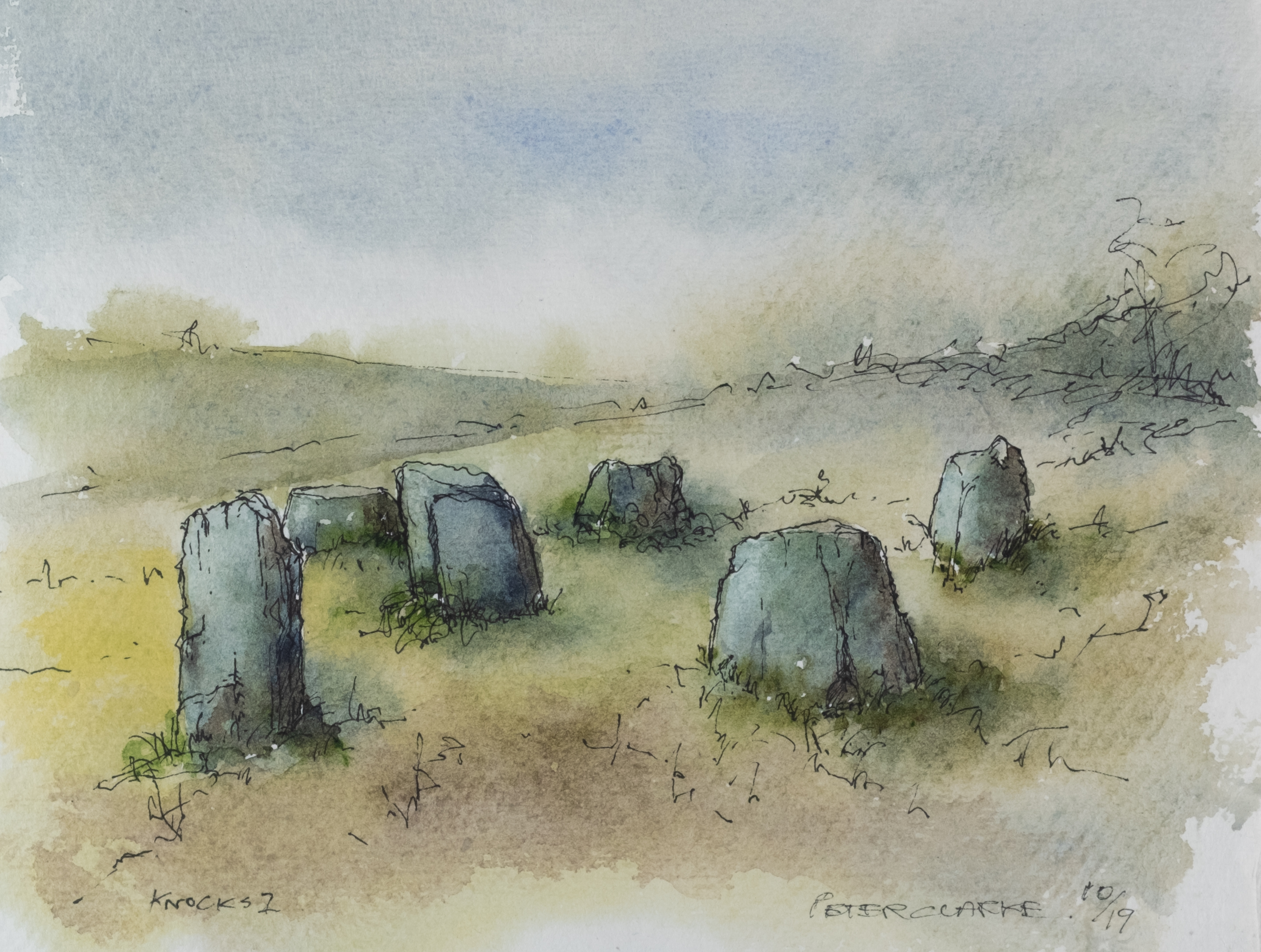
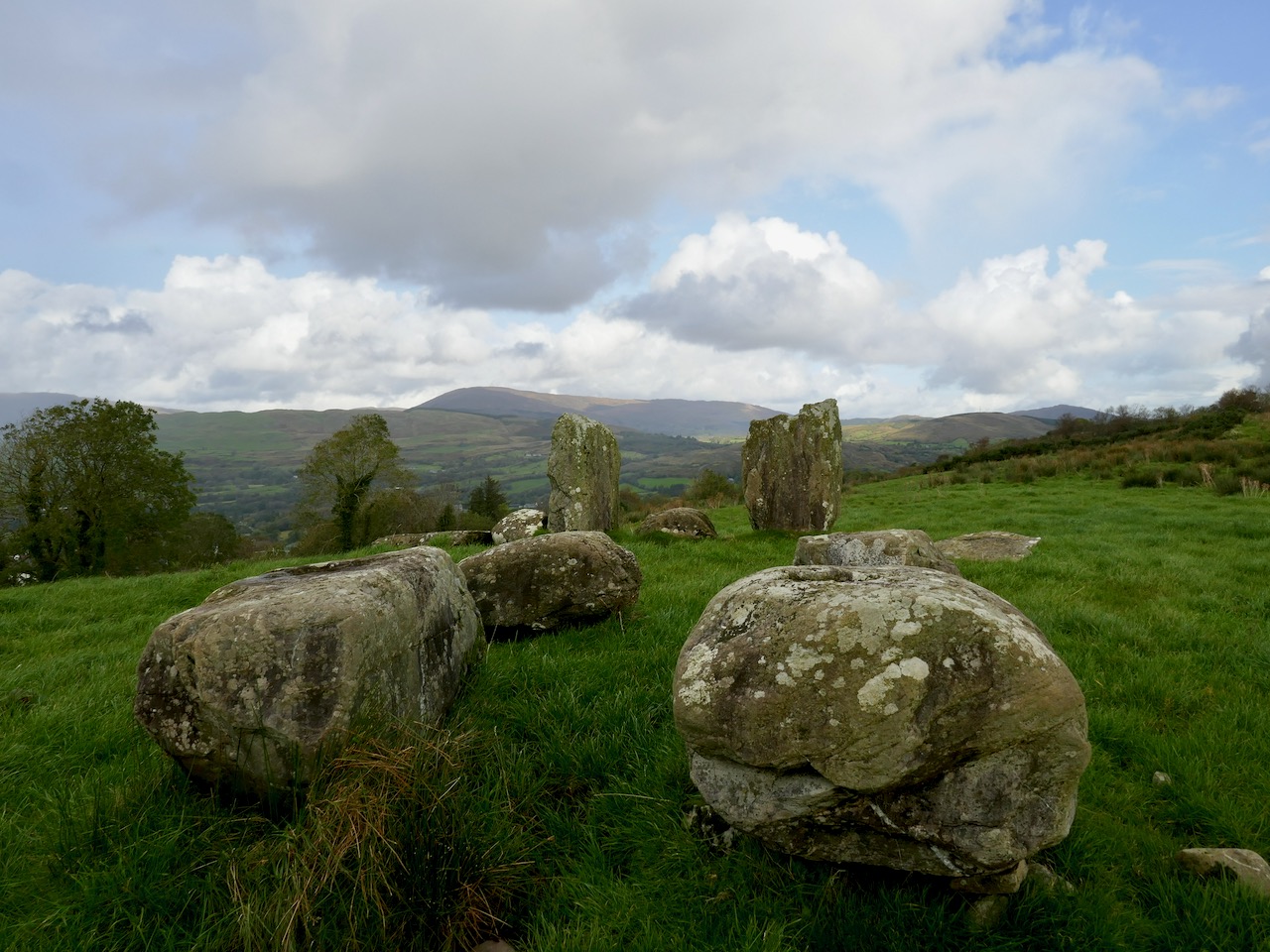
This is one of the two stone circles in the townland of Knocks. It illustrates well the portal stones being radially set and being the tallest stones in the circle. In my photograph you are looking across the recumbent to the portals and in Peter’s sketch you are doing the opposite

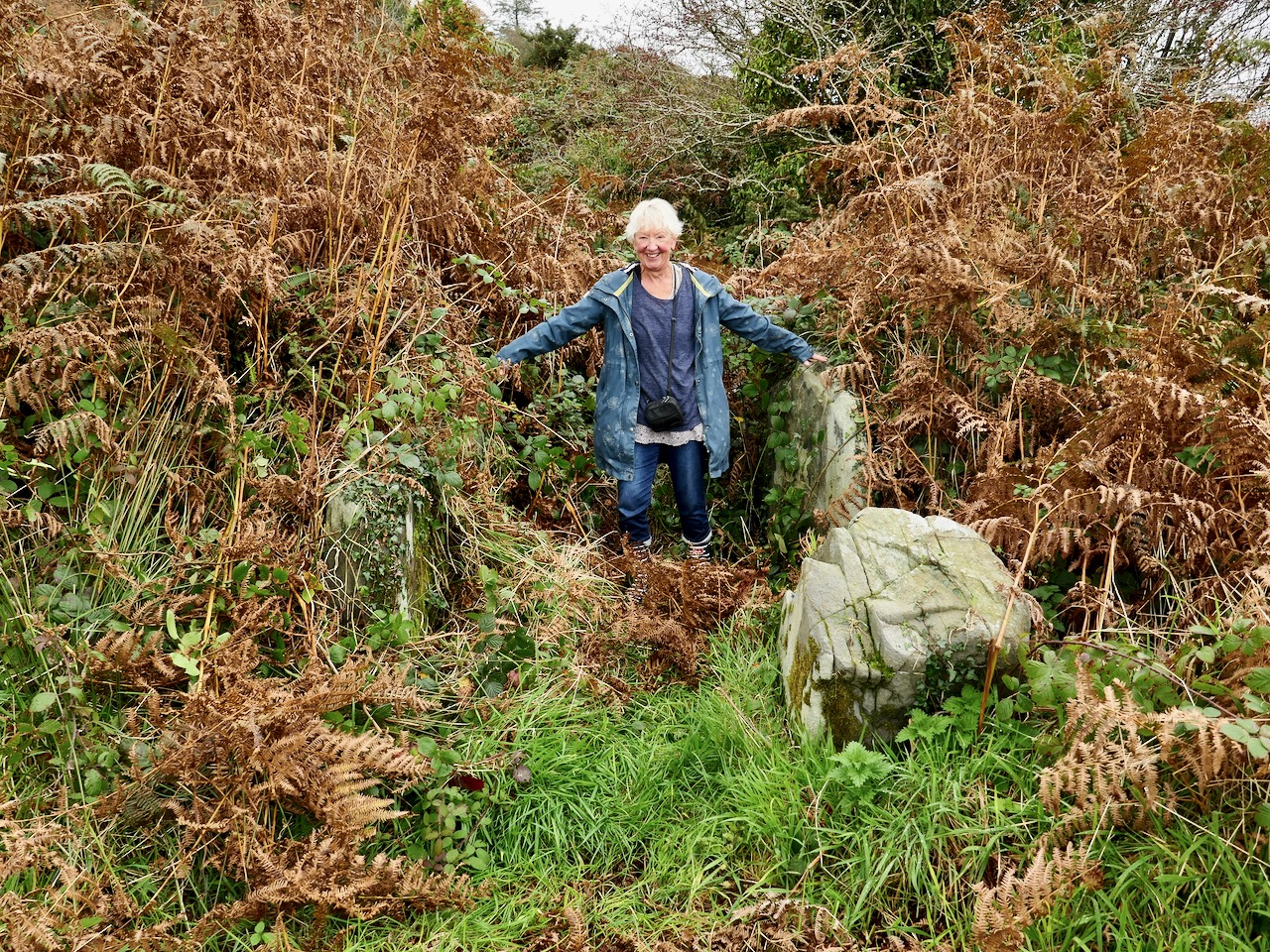
In only three cases an extra pair of stones helps to emphasise the entry point by creating a short passage. One example of this is Carrigagrenane, which is also one of the largest circles at nineteen stones.

Carrigagrenane stone circle has double portals, creating a funnel or passage into the circle. This site is very overgrown and hard to locate so a lot of bracken-bashing was necessary to get this shot. Amanda is standing between the two outer portals

Conversely, the recumbent or axial stone is normally the lowest stone in the circle and the broadest (since it is set with its long axis parallel to the ground) but even here variation occurs. The axial stone at Ardgroom Outward, for example, is a pillar stone. Indeed, it can sometimes be difficult to decide where the axis line of the circle runs, if stones have fallen or are missing.

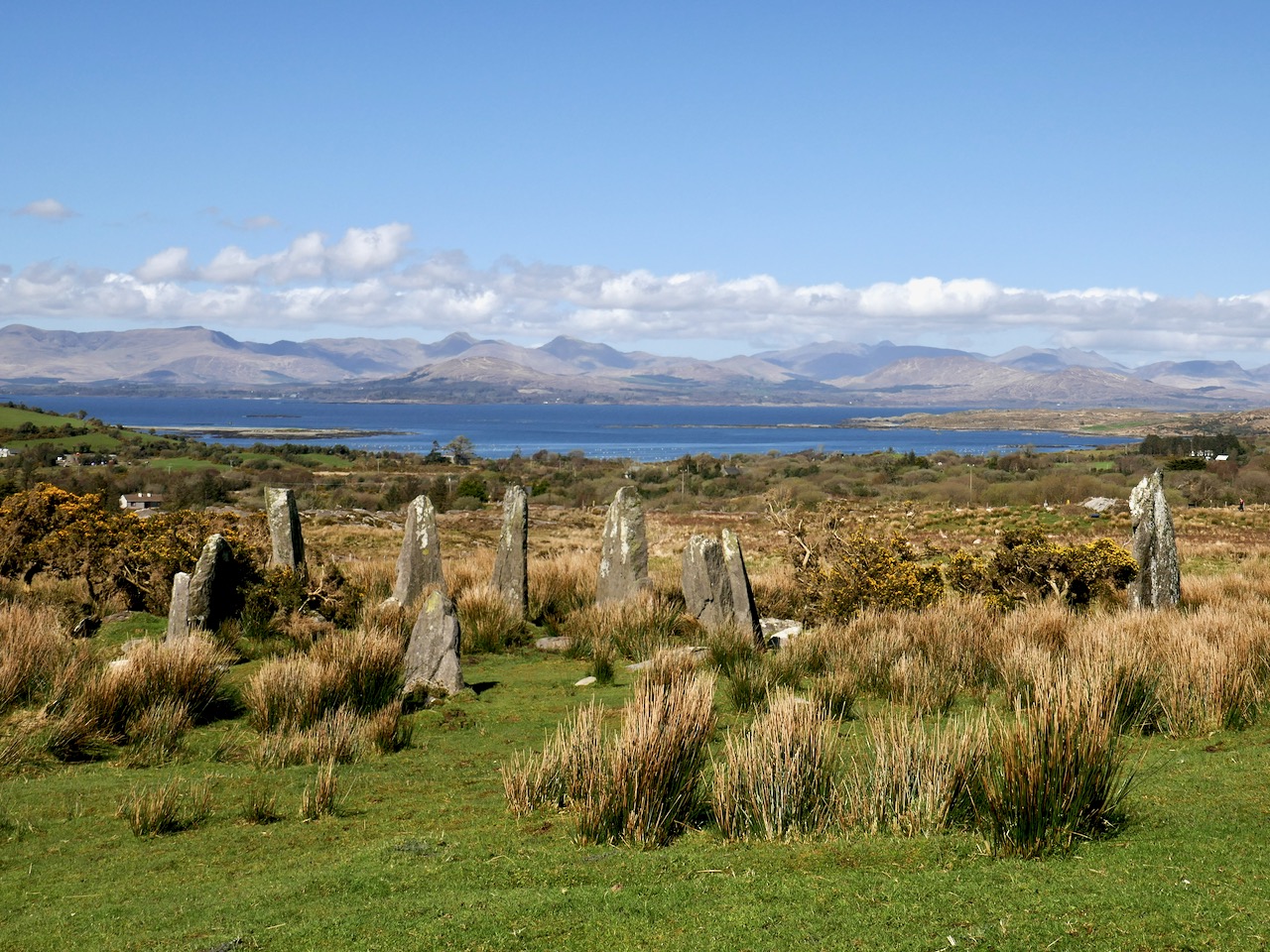
Ardgroom Outward stone circle, on the Beara is spectacularly sited. The axial stone, along with all the others in the circle, is a pillar stone rather than a recumbent. Note also the large monolith outside the circle to the right. The natural view-lines are to the north

Monoliths (single standing stones or blocks set on the ground) are present at some sites, either inside or outside the circle (as at Ardgroom Outward, above). Where they are inside they are placed off-centre. Where they are outside, they can be close to the circle or some way off but visible from it. These are usually called outliers.

This is the second stone circle in the townland of Knocks, the more southerly of the two. My photograph illustrates the line of sight over the recumbent, across a slightly off-centre monolith, to a radially set portal. Peter’s sketch illustrates the whole circle

Quartz is a stone of choice for some of these monoliths but it is interesting that quartz is never in use as a circle orthostat. 

The stone circle at Maulatanvally includes a large quartz conglomerate block within the circle. I was struck by how it was gleaming on a dull day

Standing stone pairs can also function as outliers to a multiple stone circle. At Dunbeacon this outlier pair is almost half a kilometre from the circle across the valley, but each is clearly visible from the other. Originally a third standing stone also stood within 50 metres of the standing stone pair, but it has now disappeared.

Dunbeacon stone circle, recently corralled inside a wooden fence. The natural view-line from this circle is to Mount Corrin to the east, rather than the south or west. The standing stone pair in Coolcoulaghta are located in front of the furthest house to the left in the photograph.
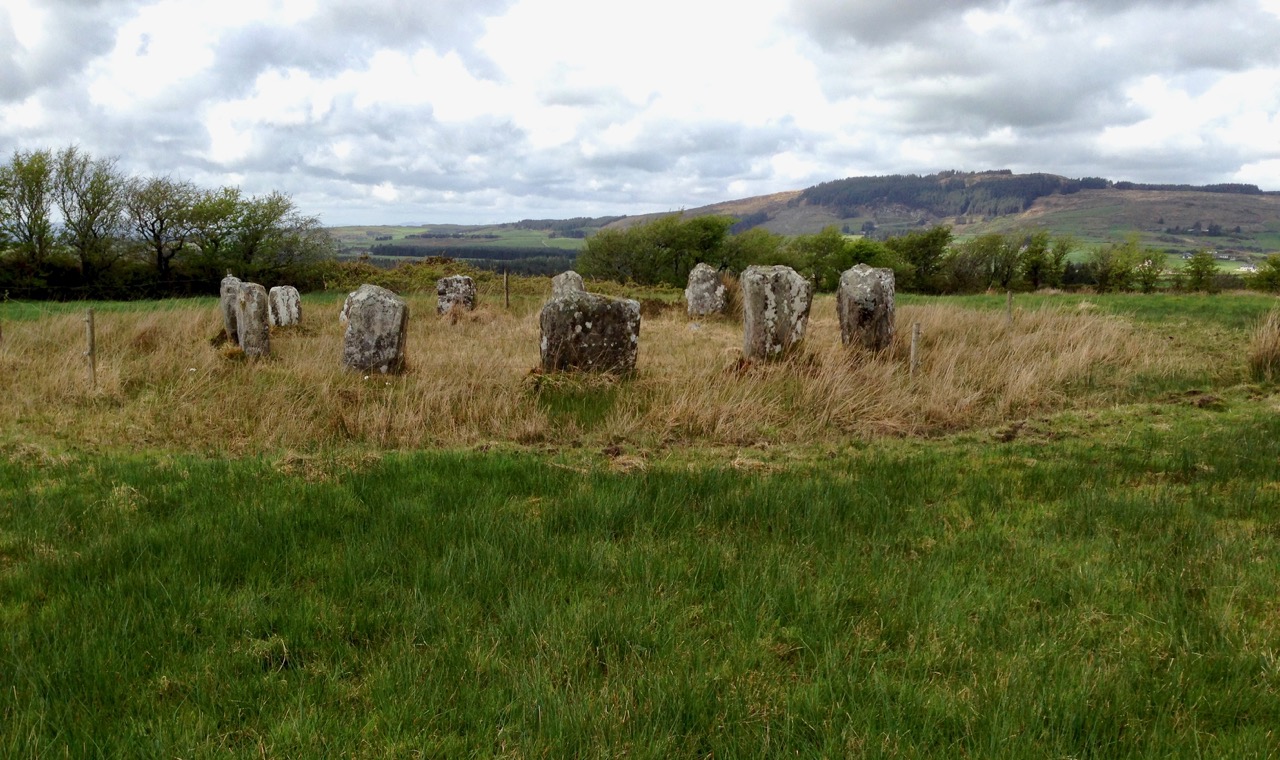
Another association is with boulder burials, sometimes found outside the circle, as in Bohonagh (see An Introduction) where the boulder burial capstone is quartz and contains cupmarks. At Ballyvacky (below) a boulder burial stands about 50 metres from the circle and a standing stone once stood beside it.

My photograph is taken from the Ballyvacky boulder burial, looking across to the stone circle. Peter’s sketch shows what is still standing – seven of the original nine stones. You can see that the remaining portal is radially set and that the recumbent is the largest stone in the circle
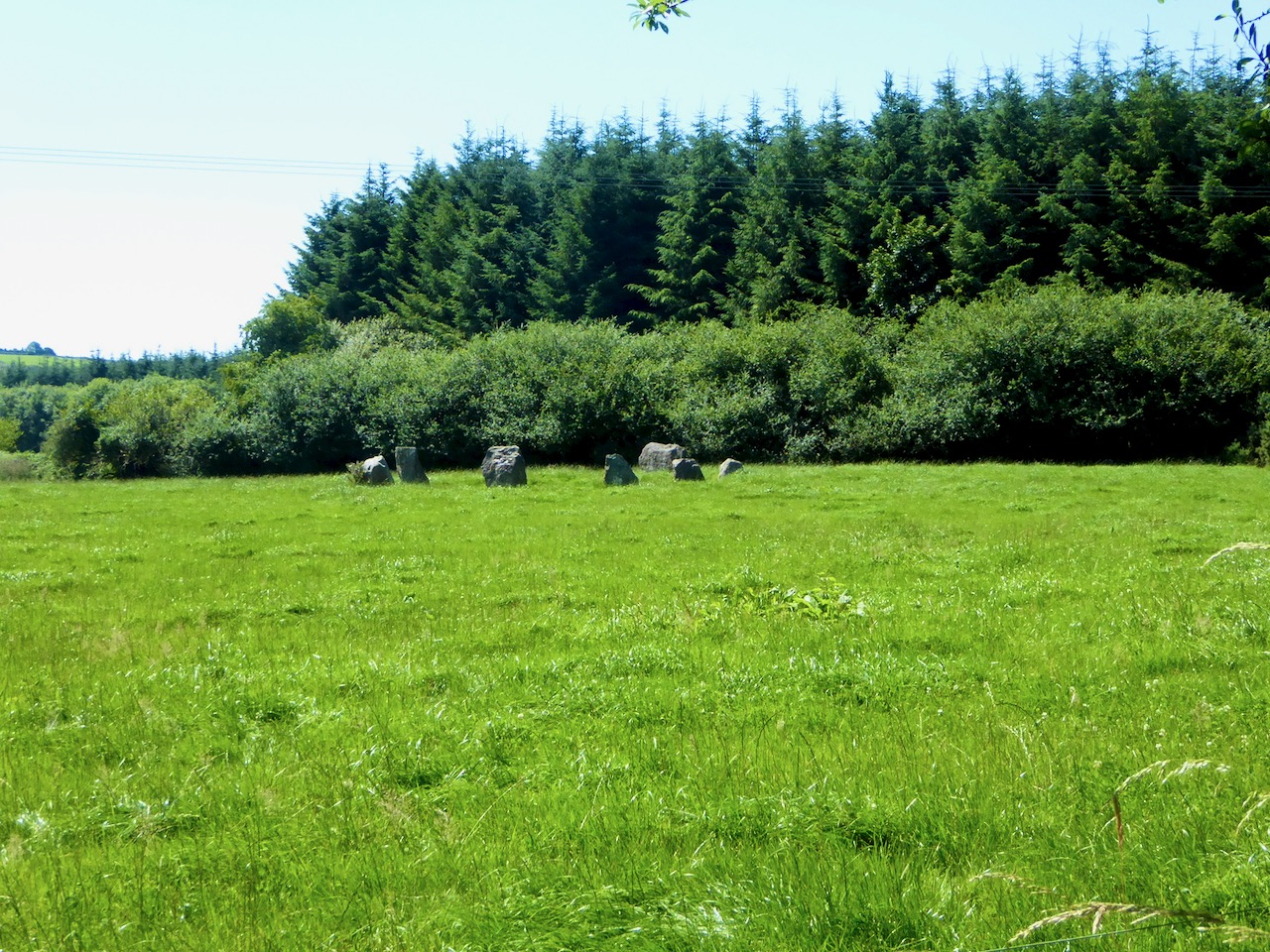
Boulder burials, as we have seen, are also found inside the circle: one of the most spectacular examples of this is at Breeny More (below) where a group of four boulder burial are set in a square within a large circle from which most of the stones are missing.

Finally, occasional stone circles will be surrounded by a fosse or shallow ditch. The most striking example is at Reenascreena, below.

Visiting stone circles, I am struck by features which appear to be similar at all or most of the sites. Many are situated on elevated sites with expansive views to the south and west. While this has been well documented by archaeologists, it’s one thing to read about it and yet another to visit several circles on one day and find yourself expecting a certain set of circumstances as you tune in to patterns in the sites themselves. What the orientation descriptions don’t mention, for example, is that the choice of location often features rising ground behind the circles which obscures the horizon to the north.

The rising ground behind Dunbeacon stone circle cuts off the view of Dunmanus Bay and concentrates the view-lines towards the east and south-east

Occasionally the higher ground obscuring the horizon is not to the north at all, but to the south or south-west – confounding our expectations that the obvious view-lines will be to the south and west. Cappanaboule is strikingly situated thus, as is Ardgroom Outward.

And then we have examples in fairly flat country with no really obvious view-lines. This can be complicated by surrounding forestry, as at Knockaneirk (above) where, if there was an obvious orientation over the recumbent it has long been hidden by tall tree.

Ardgroom Outward stone circle is dramatically silhouetted against the mountains of the Beara peninsula as you walk up the track towards it

Next time I will write about the five stone circles – there are as many of them as there are the multiple stone circles and while they share most of the same features they have their own special character.

*Most of these photographs (like the one of Breeny More, above) were taken last year or in previous year, and many of them in the company of Amanda (Holy Wells of Cork and Kerry) and Peter (Hikelines) Clarke. I am indebted to Peter for the sketches. Not being able to get out into the field to visit and photograph more circles has been frustrated this year by Covid19 travel restrictions, so I have decided to go ahead and use what I have, rather than wait to add to my collection. 

Ancient Calendars

One of West Cork's ancient calendars

One of West Cork’s ancient calendars

We’ve been catching up on our rock art project this week and it’s brought us out into the field. On Saturday the weather was spectacular – crisp, but with a totally blue sky and vibrant colours. See Amanda’s photo of the day here. We spent most of the day just east of Rosscarbery, a picturesque settlement above the water at Rosscarbery Bay, where the birdlife viewing is always a delight.

One of the sites we visited was Bohonagh. Not only does it boast cupmarked stones, but a very fine boulder burial and a stone circle.

Bohonagh Stone Circle

Bohonagh Stone Circle

West Cork is particularly rich in 3000 year old Bronze Age stone circles and most of them are of the ‘axial’ or ‘recumbent’ type. This means that the circle is laid out on an axis that is oriented in a particular direction. On one side of the circle is a stone laid longways – the recumbent stone. Across from the recumbent are the portals: two tall stones that appear to create a doorway into the circle. Sometimes the stones rise in height from the recumbent to the portals, and the portal stones may be set ‘end-on’ to the circle. There are always, therefore, an uneven number of stones – up to 17 have been recorded, although many circles are incomplete, with fallen or missing stones. The purpose of the axis was to provide a line of sight on a sunrise or sunset (and perhaps even moonrise and moonset) at important calendrical points such as solstices and equinoxes.

The portal stones at Bohonagh

The portal stones at Bohonagh

Bohonagh quartz

Quartz at Bohonagh

A feature of these circles is that many of them include quartz rocks: sometimes as one of the circle stones, sometimes as an additional rock in the interior or exterior of the circle, and sometimes on a nearby monument such as a boulder burial. At Bohonagh there were several quartz rocks, including one lying outside the circle and two supporting the boulder burial. In one case, at Ballycommane, we have seen an enormous quartz rock function as the capstone of a boulder burial – quite awe-inspiring in its visual impact. Interestingly, this same phenomenon occurs in a stone circle in Cornwall – Boscawen-Un in the West Penwith Peninsula, not that far from West Cork! As we watched the quartz under the boulder burial glisten in the sun (impossible to capture on a photograph) we knew it had to be seen as a very special stone to the builders of these circles.

Brooding stones at Dunbeacon

Brooding stones at Dunbeacon

Stone circles often command sweeping views of the surrounding countryside. This makes them well worth visiting, even if a goodly hike is involved. Because they are invariably located on private land, it is good practice to try to track down the landowner and request permission, and of course to always close gates and observe good field etiquette on a visit. Don’t be surprised to find that many are no longer intact: the centuries have taken their toll and many of the stones have fallen or disappeared over time. On the upside, this adds to the romantic wildness of the scene.

Gorteanish Stone Circle, re-discovered in the laying out of  the Sheep's Head Way

Gorteanish Stone Circle, re-discovered in the laying out of the Sheep’s Head Way

One of the most famous of the West Cork stone circles is Drombeg, near Glandore. Here, people gather on the winter and summer solstices to witness sunrise and sunset.

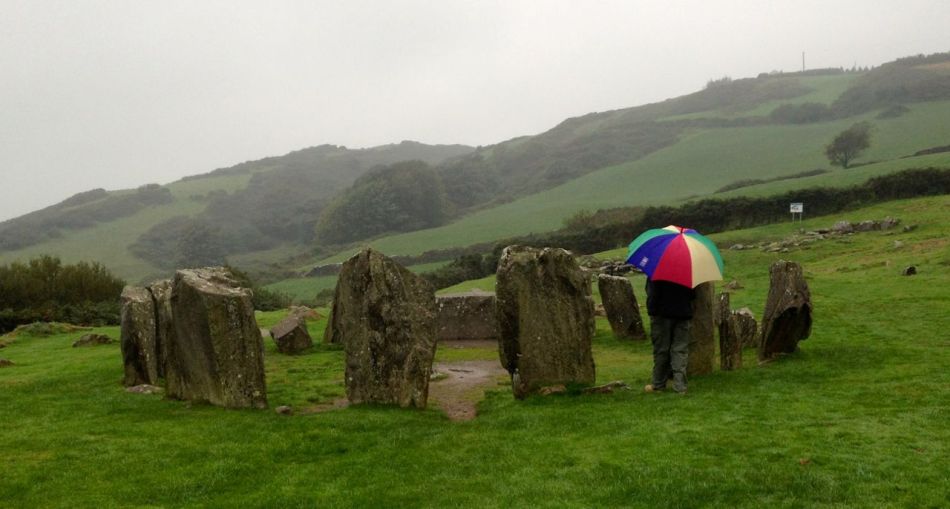
Drombeg on a wet day

Drombeg on a wet day

At Bohonagh, the alignment is to the spring equinox sunrise and sunset, due east and west. We plan to be there!