Templebryan – complex and compelling

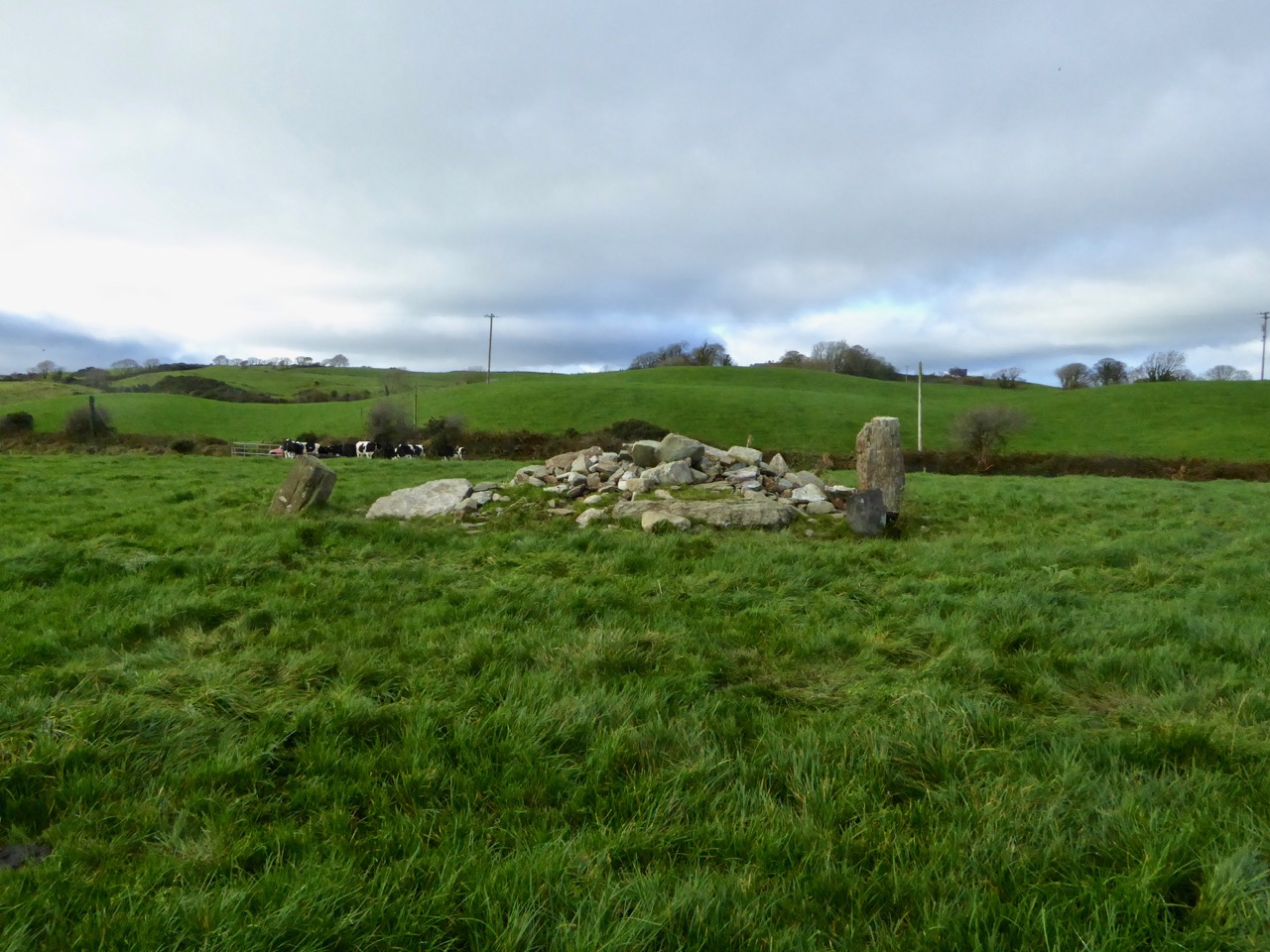
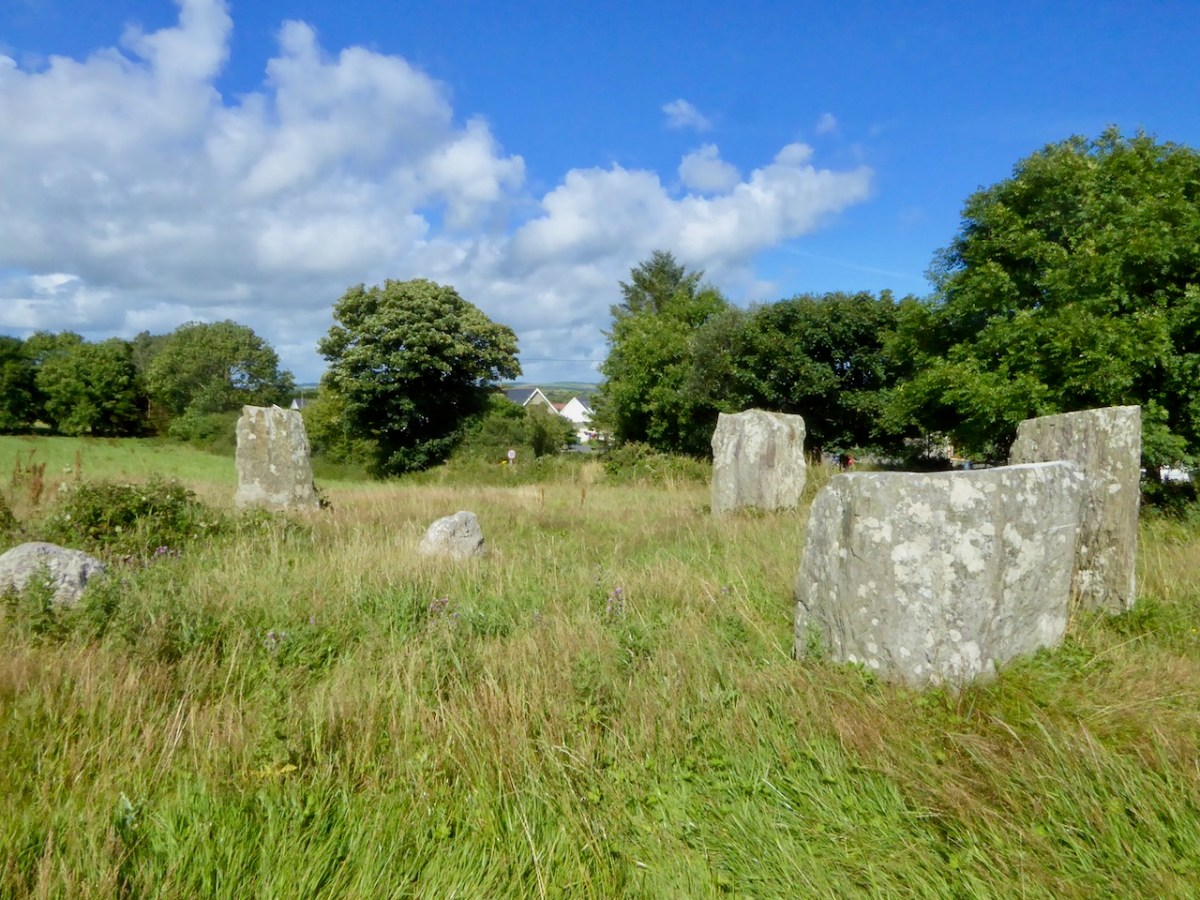
One of the most fascinating archaeological sites in West Cork is Templebryan, close to Shannonvale, a complex that includes a multiple stone circle and an early ecclesiastical site with a large pillar stone that may be contemporary with either of those sites. The location was likely a focus of activity from the Bronze Age to the present day.
Before we explore the site itself, and because I haven’t written this kind of post for a while, you might like to (re)familiarise yourself with both stone circles and ecclesiastical sites.  For the stone circles, go to Stone Circles of West Cork: an Introduction. At the bottom of the post under ‘Related” you will find links to the other three posts (Multiple Stone Circles, Five-Stone Circles and the Discussion). There are very few of the Templebryan type of ecclesiastical sites in West Cork but one I have written about is at Croagh Cove – it will give you an excellent idea of this type of site. I am inserting here one of the illustrations from that post. 
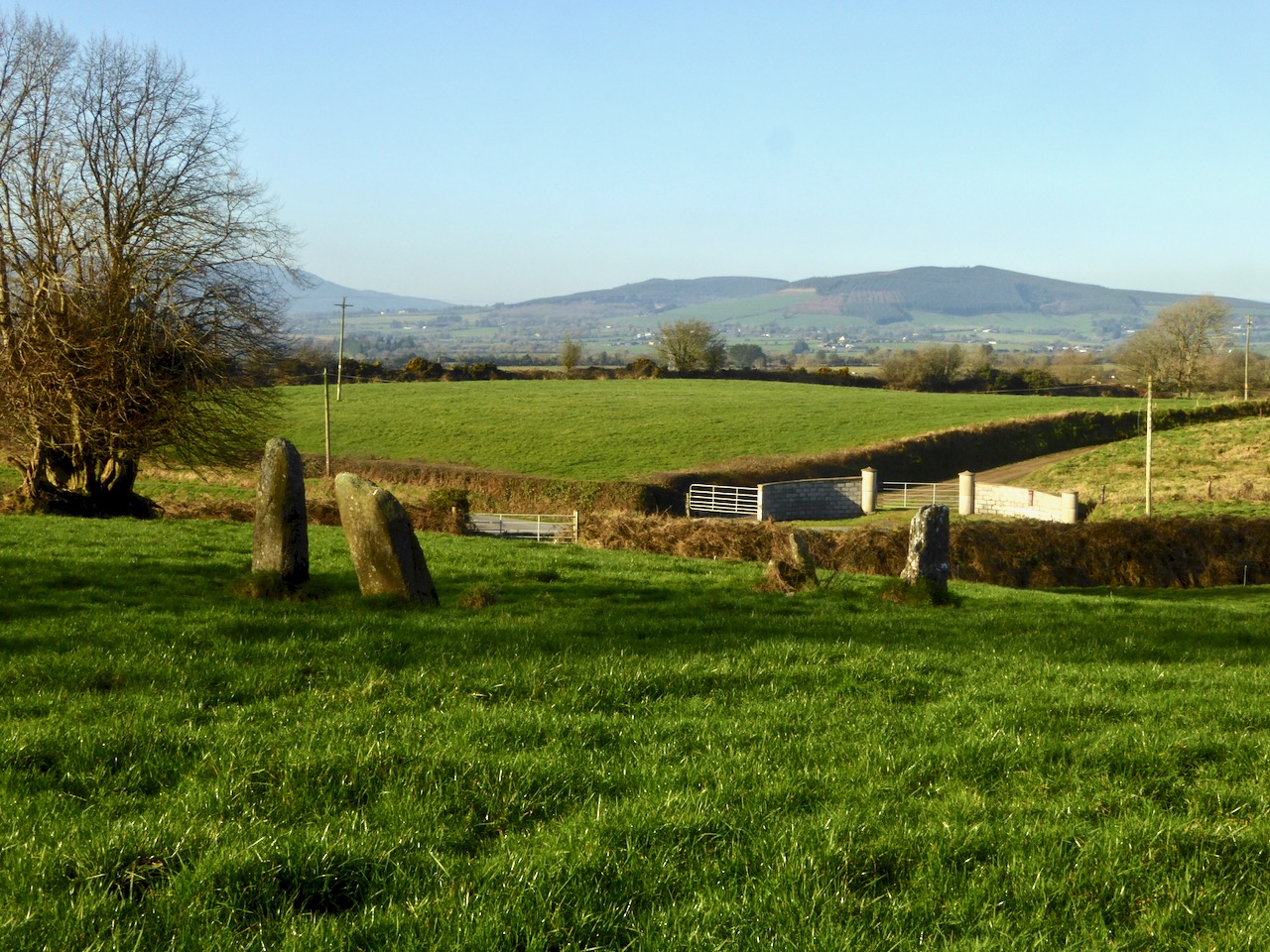
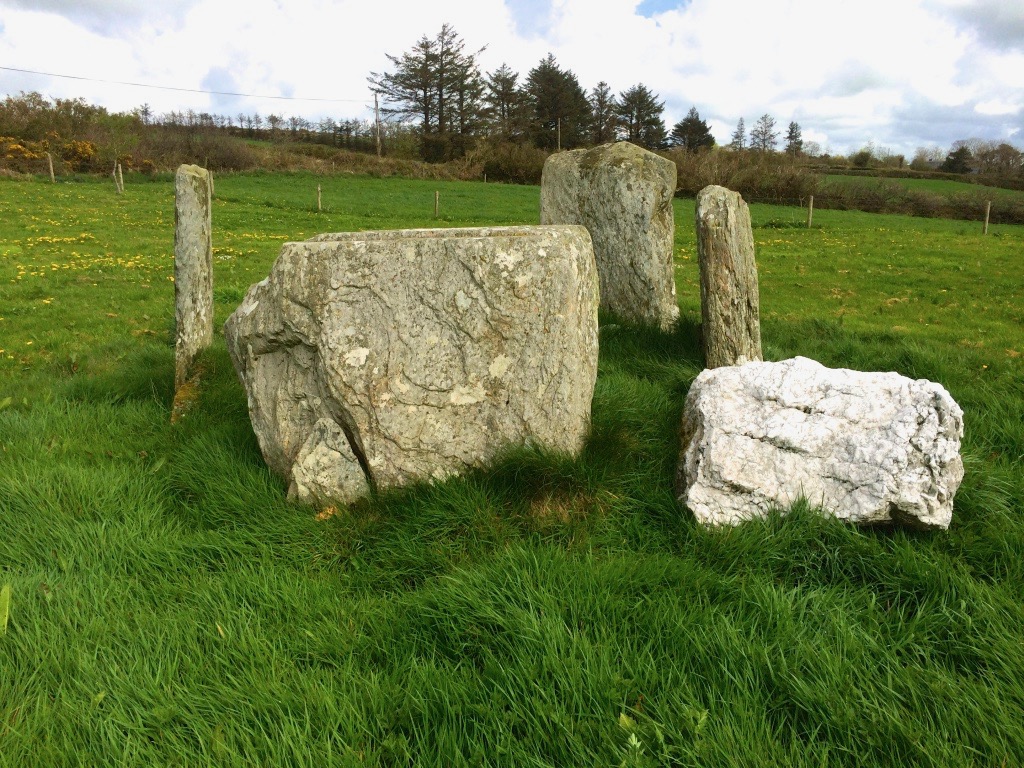
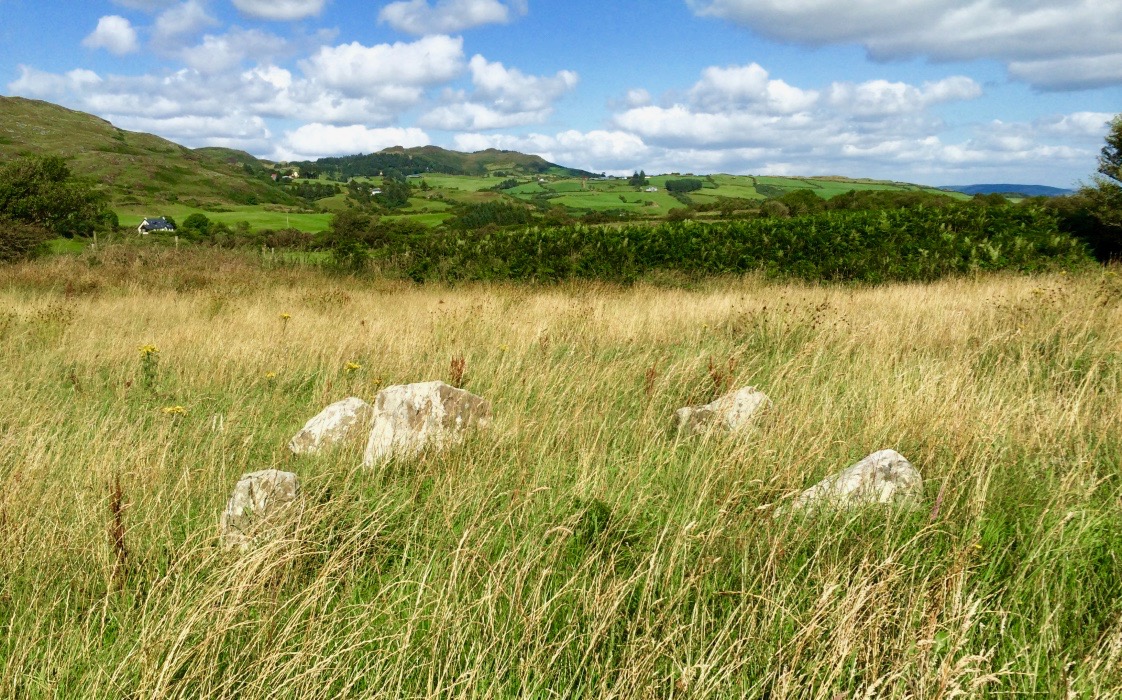
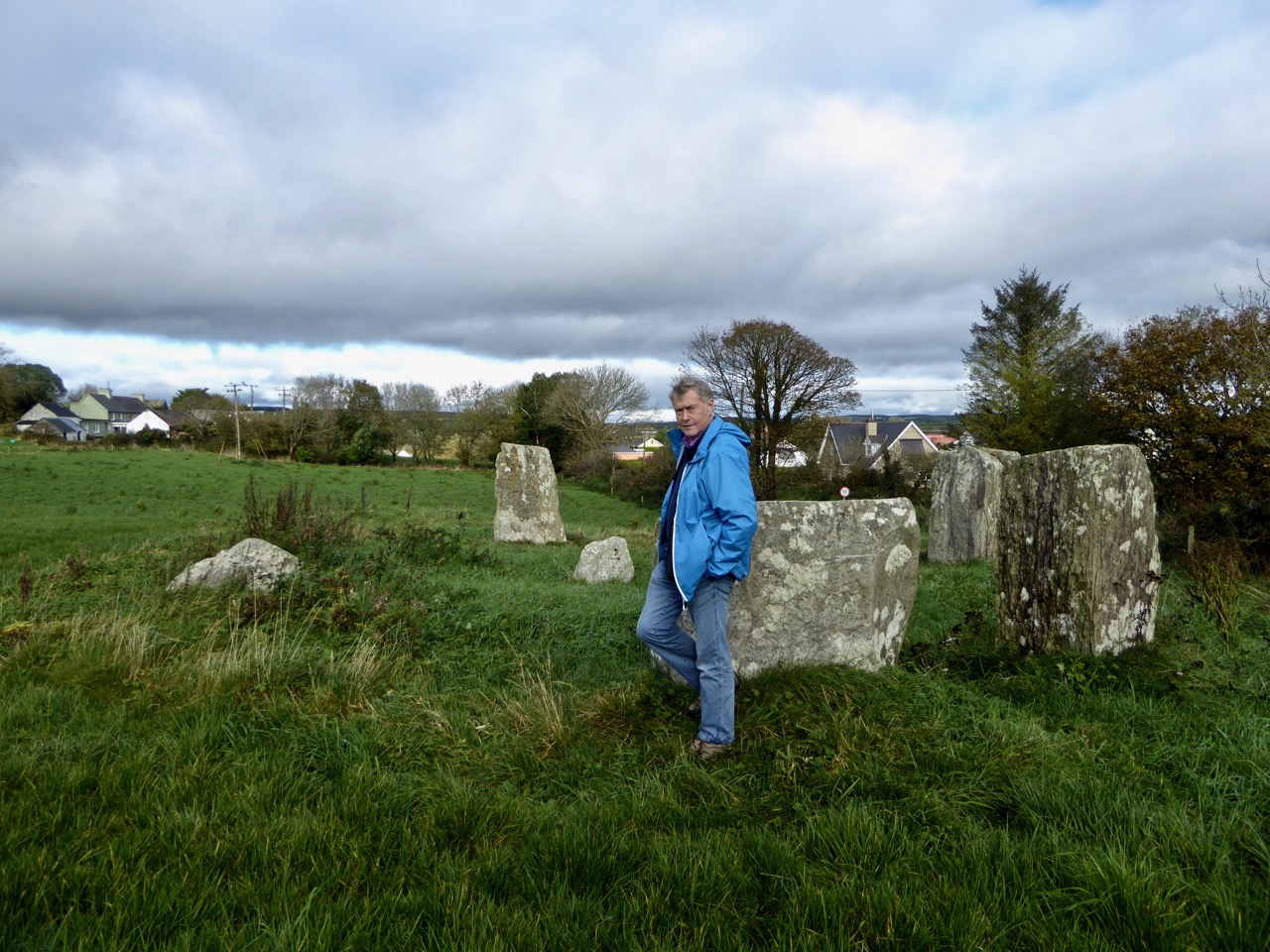
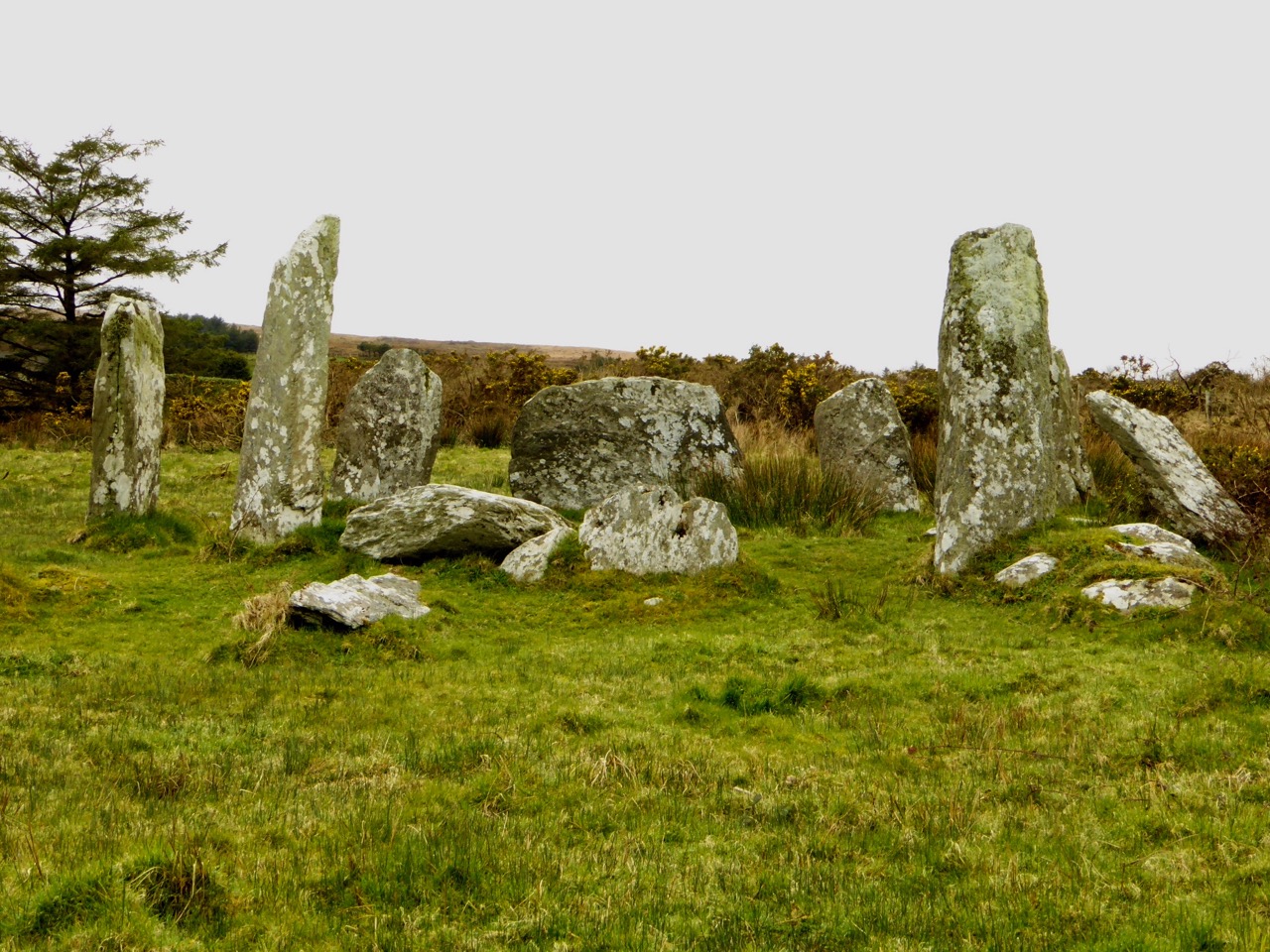
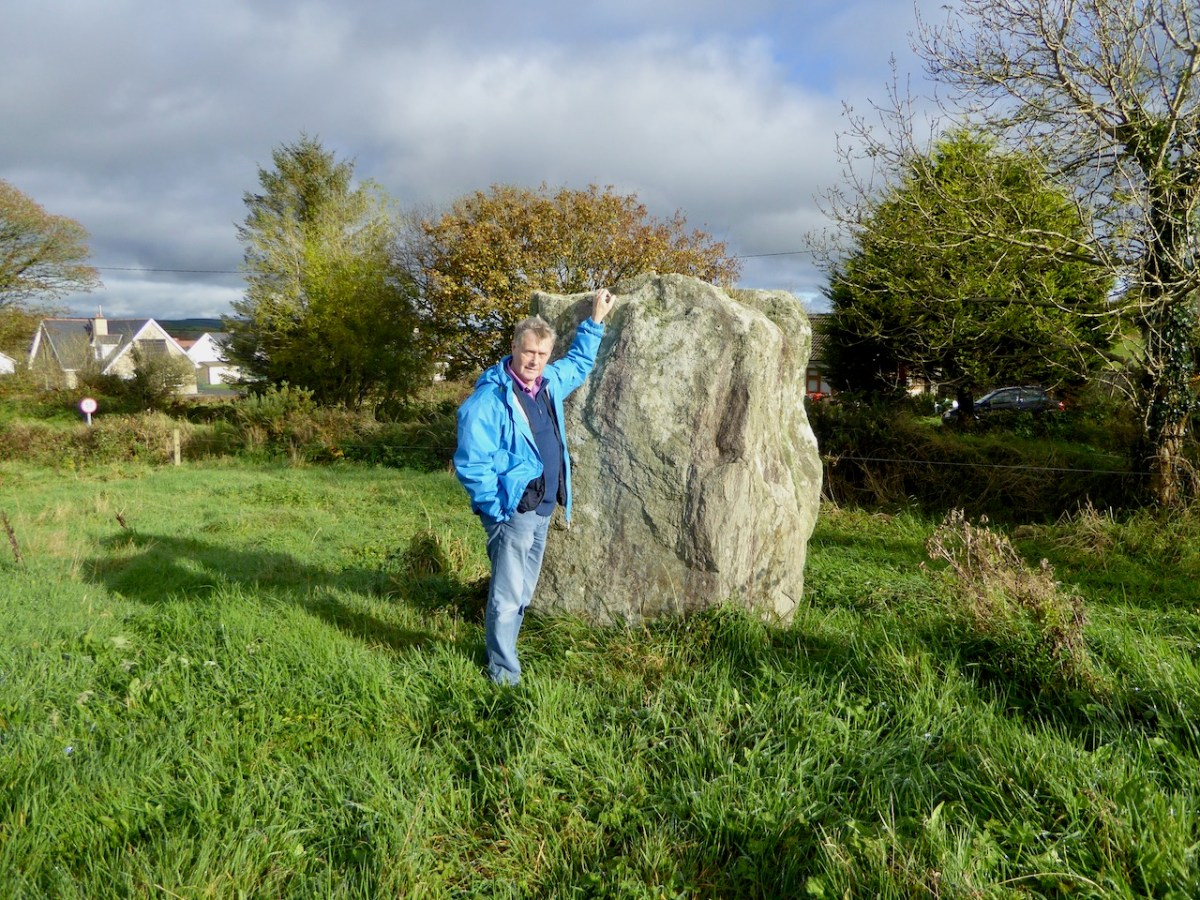
Since it’s the older, let’s start with the stone circle. This is a multiple stone circle. Although only 5 stones remain (one fallen), there were originally 9 stones in the circle. What’s unusual about this circle is the presence of a near-centrally placed quartz boulder. There are several other stone circles with such internal monoliths and all seem to be deliberately off-centre.
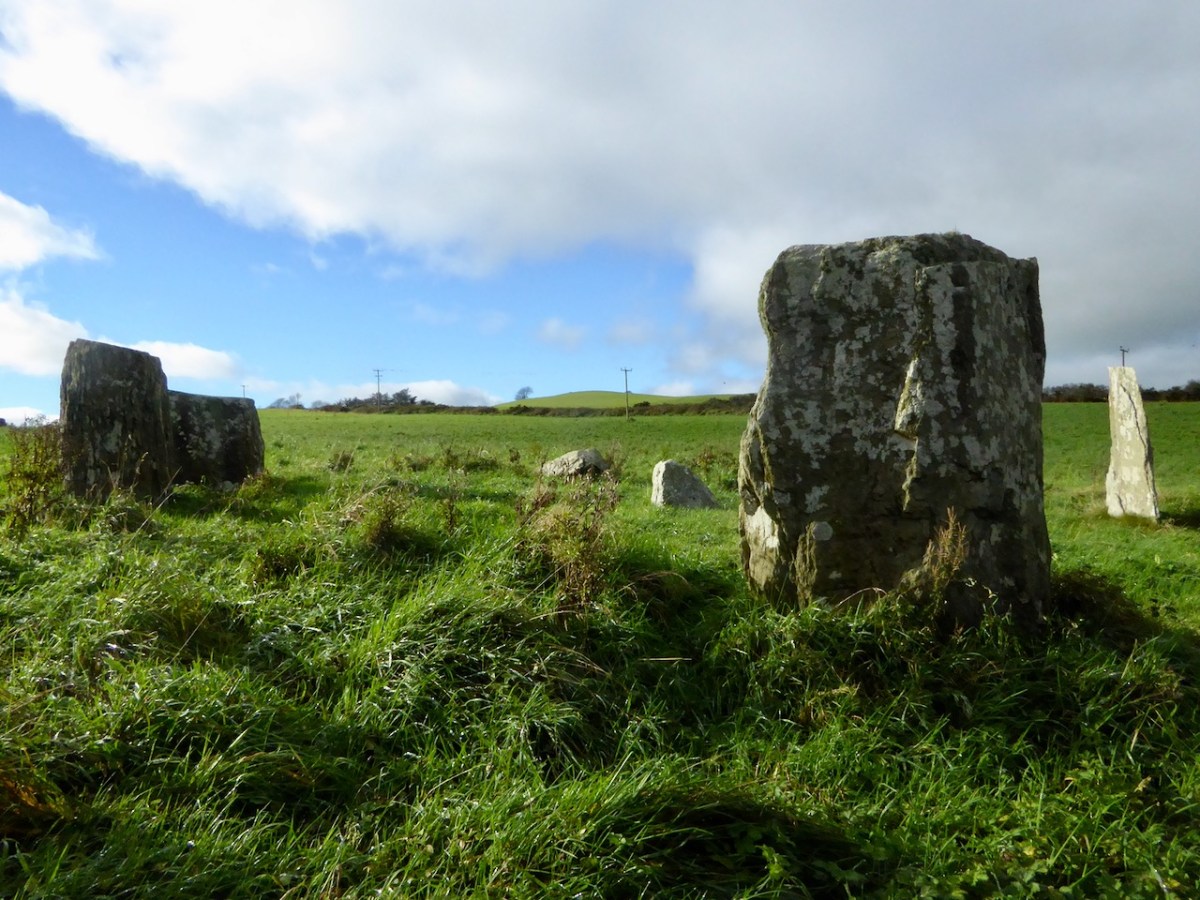
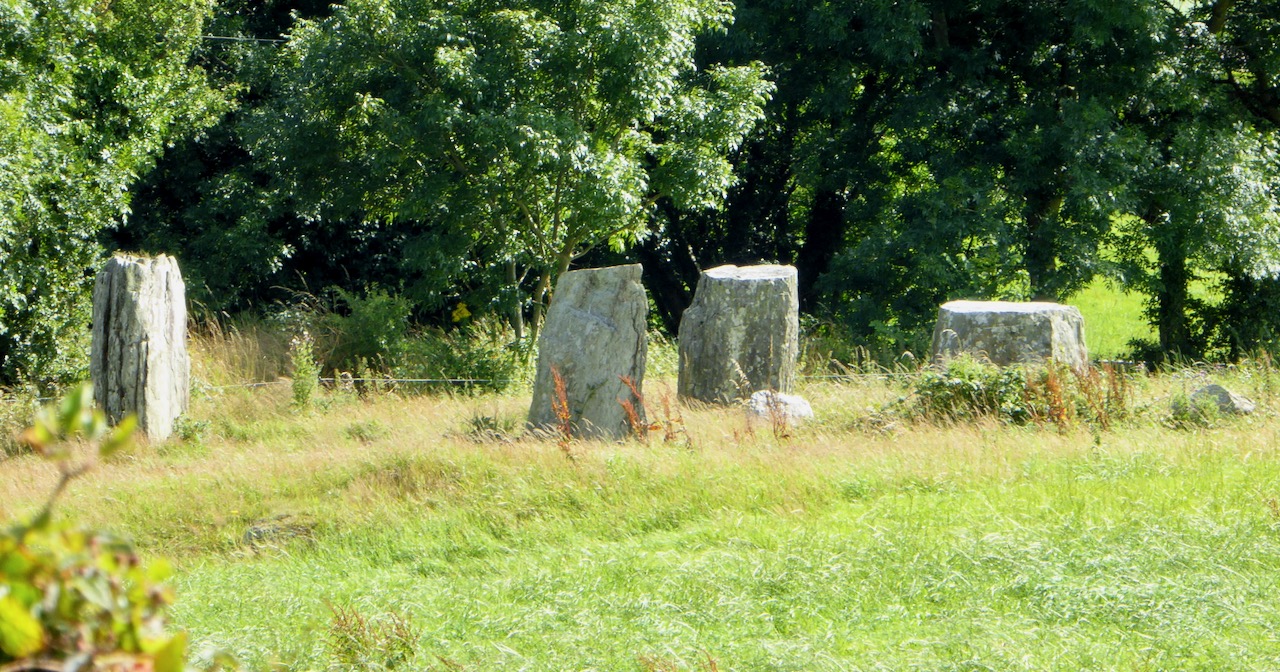
The other feature that’s noticeable here is that most of the stones still standing have flat tops – that seems to be a deliberate choice and can be observed in some other stone circles too.
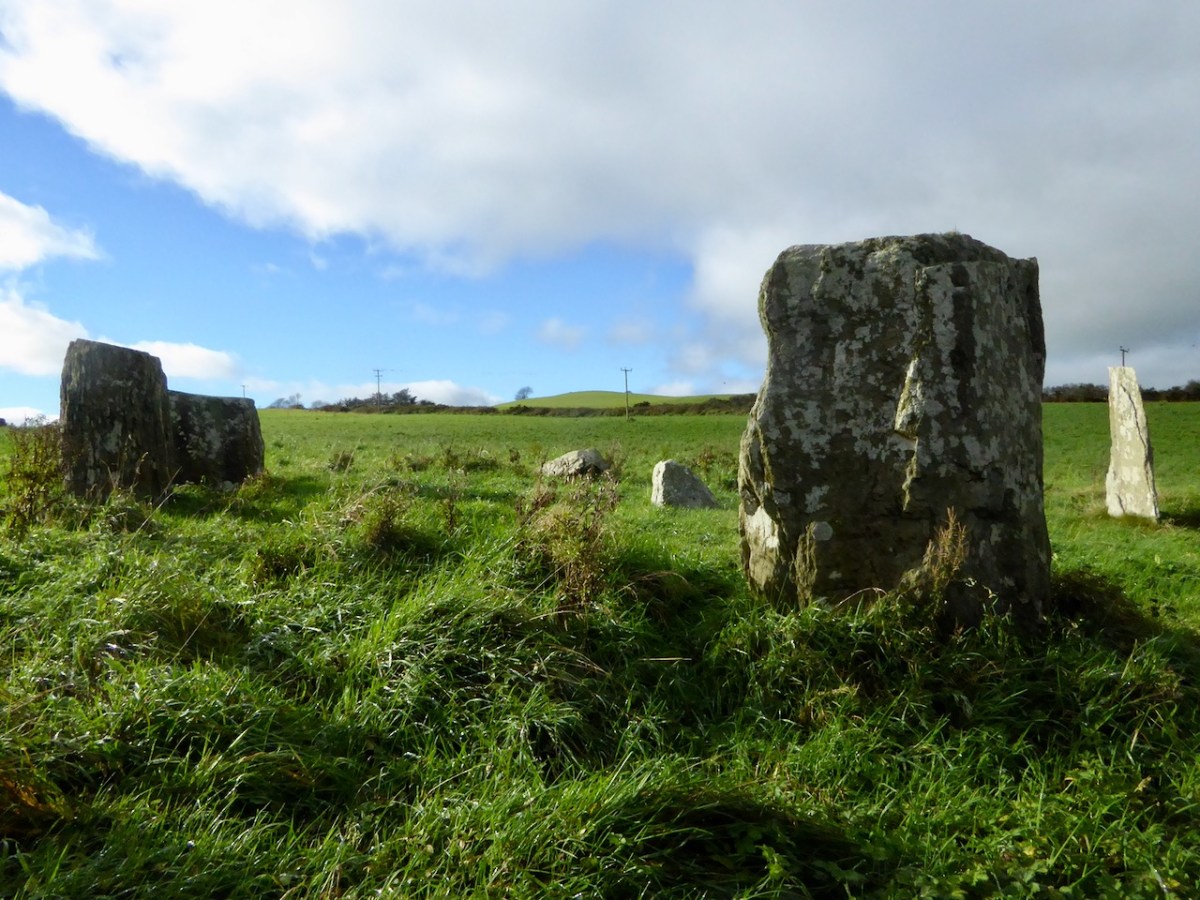
The probable alignment is, like Drombeg, to the winter solstice. However, Mike Wilson in his Mega-What site, also traces lunar alignments. 
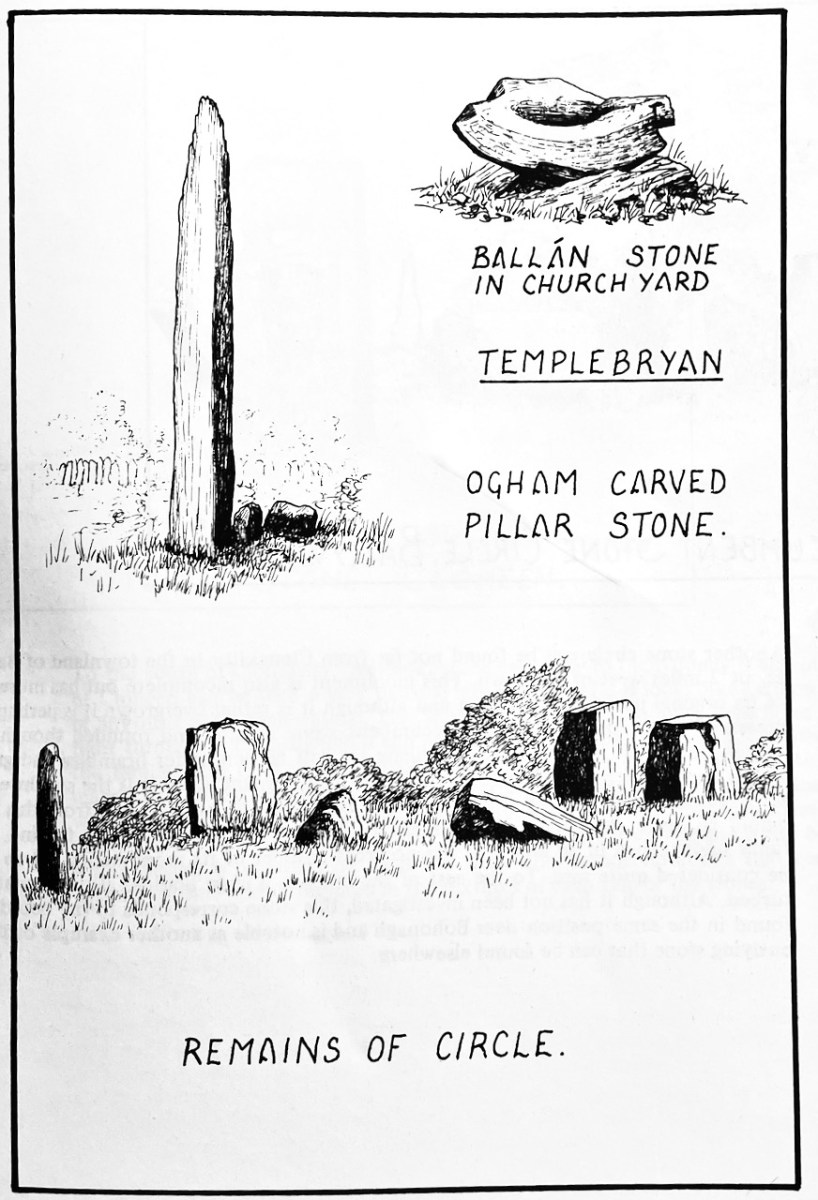
Outliers – standing stones close to or at some distance from the circle, are an accepted feature of some stone circles, and some antiquarians have posited that the pillar stone in the ecclesiastical enclosure may have been one of them, later adapted and christianised for use by the monks. Since it has not been excavated we cannot know if this is so. The late great Jack Roberts thought it was possible – here is one of his marvellous illustrations of the various things to be found at Templebryan.
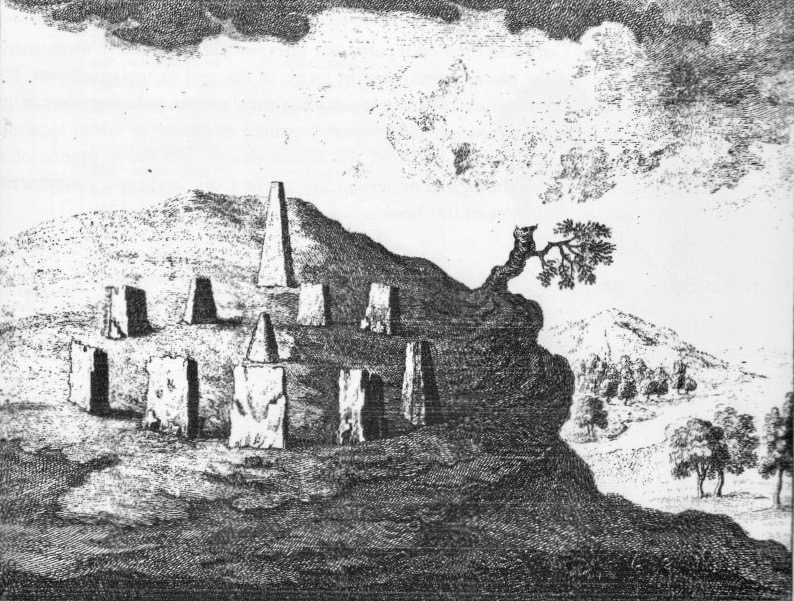
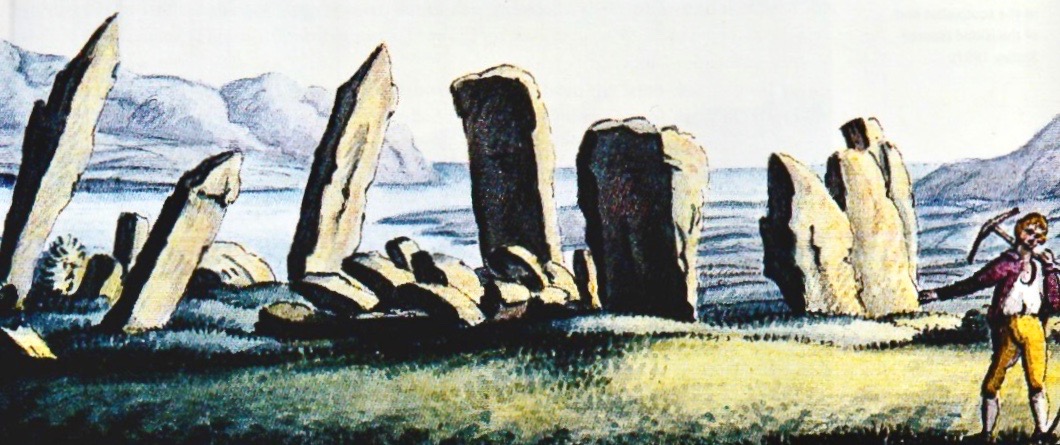
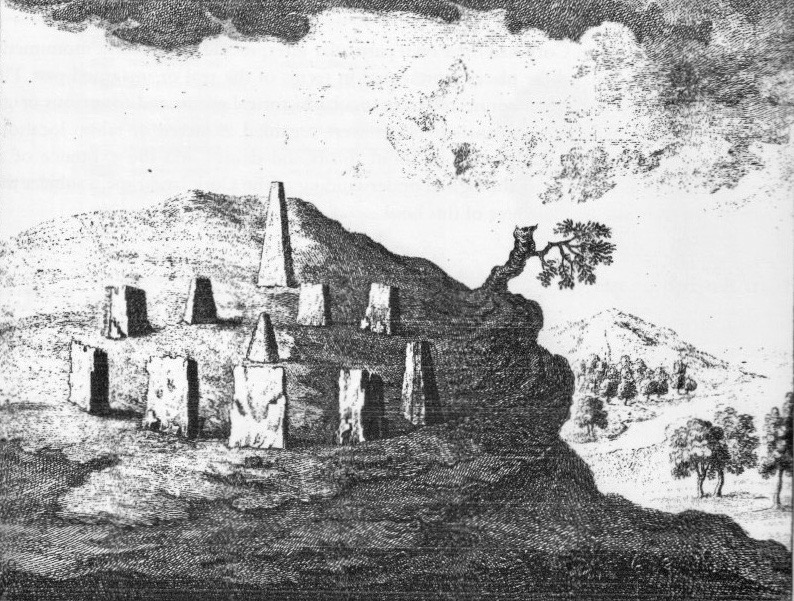
Templebryan was of great interest to antiquarians and Marian O’Leary, in a wonderful essay in the Clonakilty Journal, has looked at their often fantastical renderings of the stone circle. This is one of her illustrations, dating from 1742!
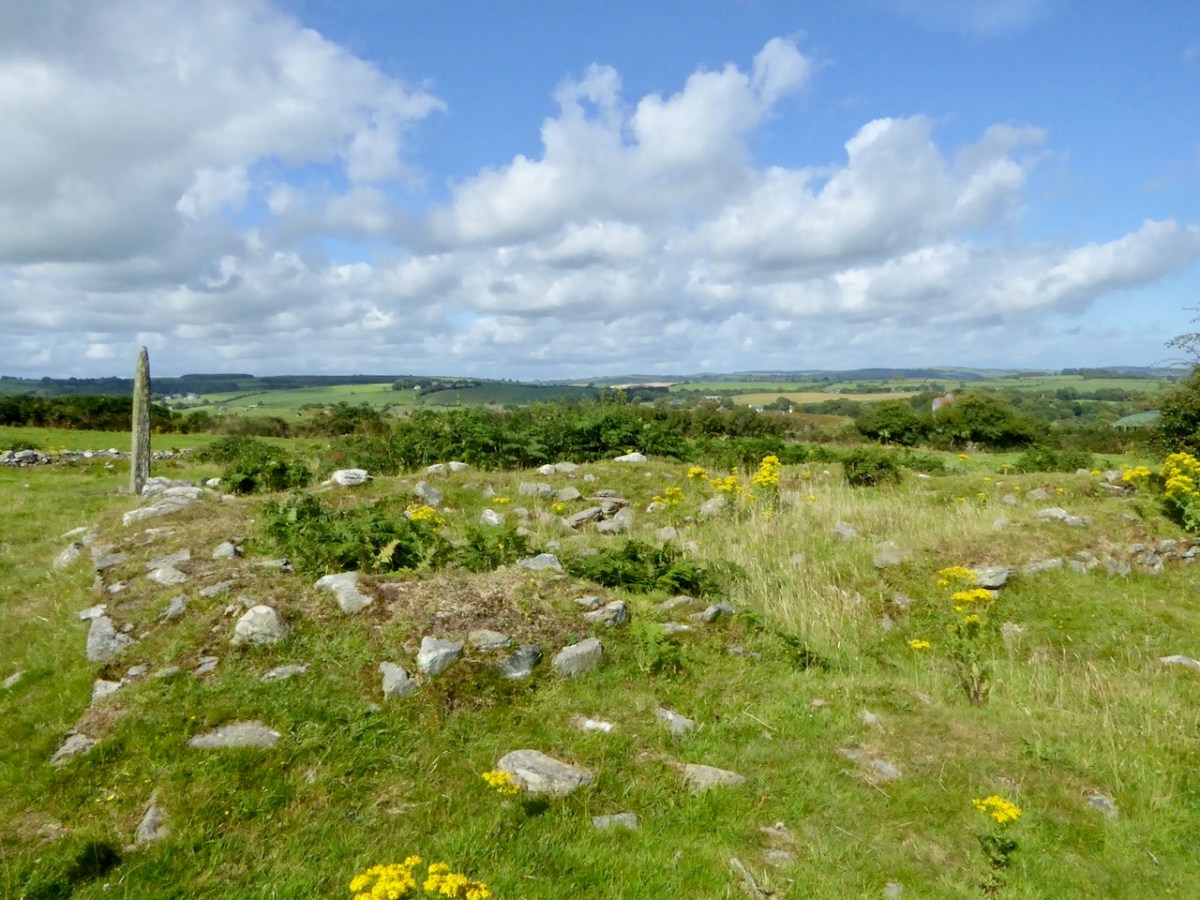
The ecclesiastical site is located a field over to the northwest. We don’t have  a secure date, but it fits the pattern of such foundations from the early medieval period with a likely date between the 600s to the 900s. 
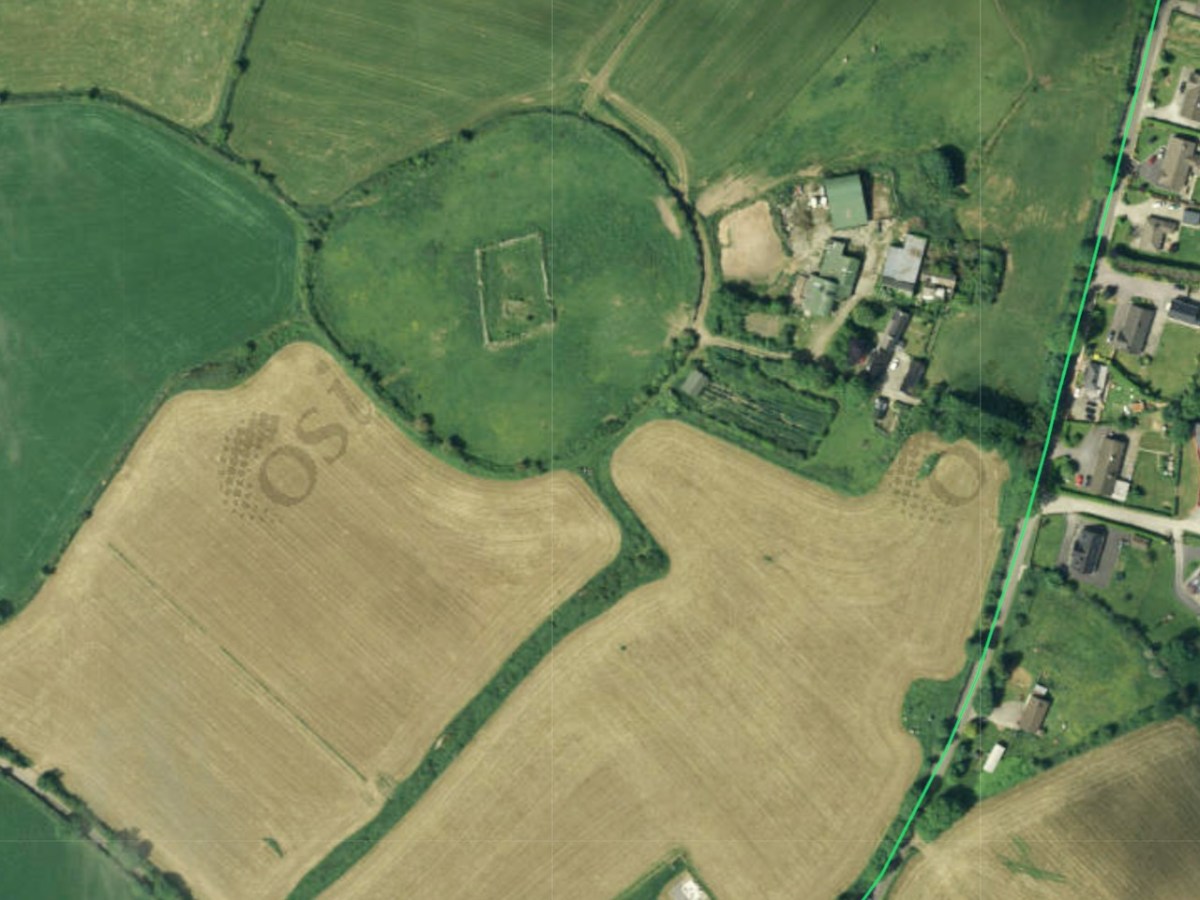
The aerial photos and the maps confirm that the central church was a rectangular building and it sat within a circular enclosure which now forms the field boundary.
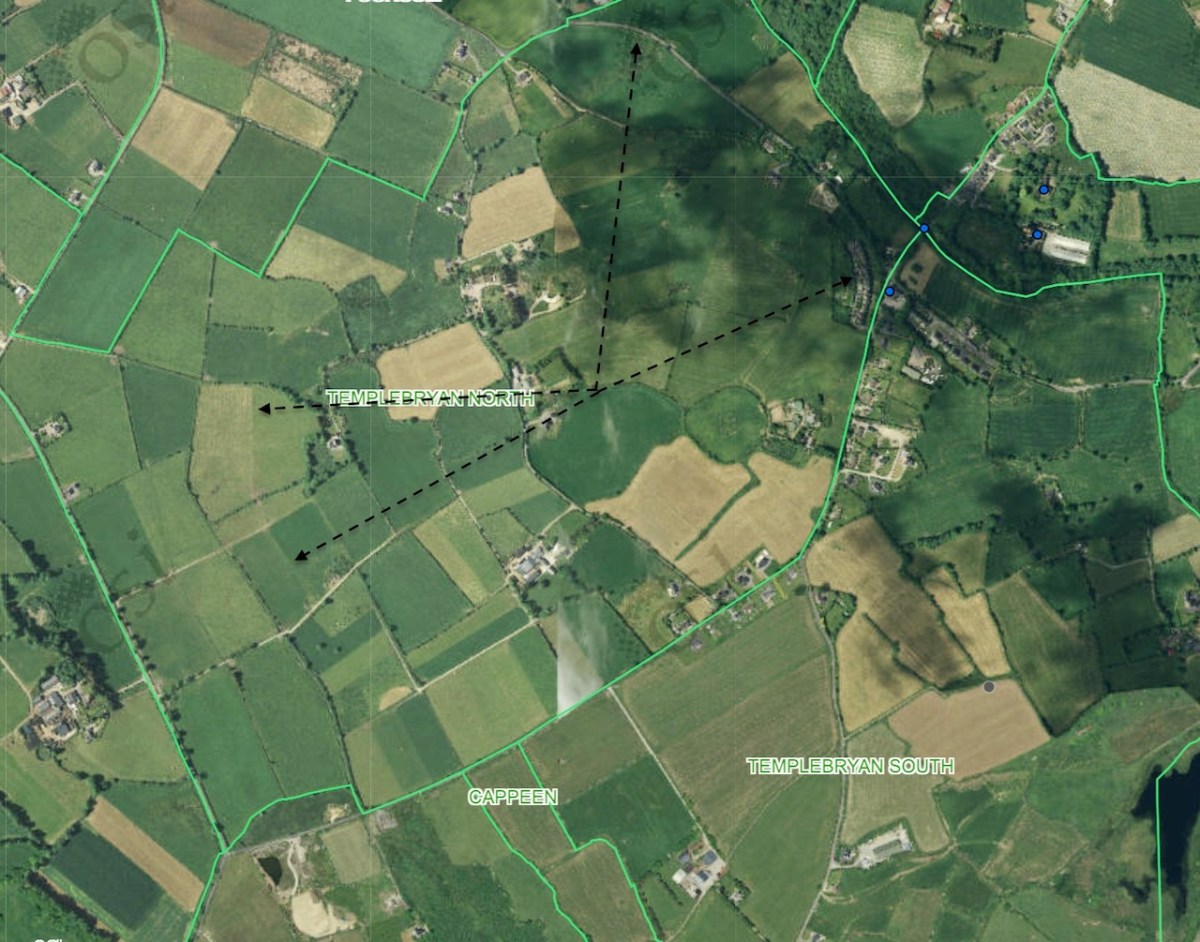
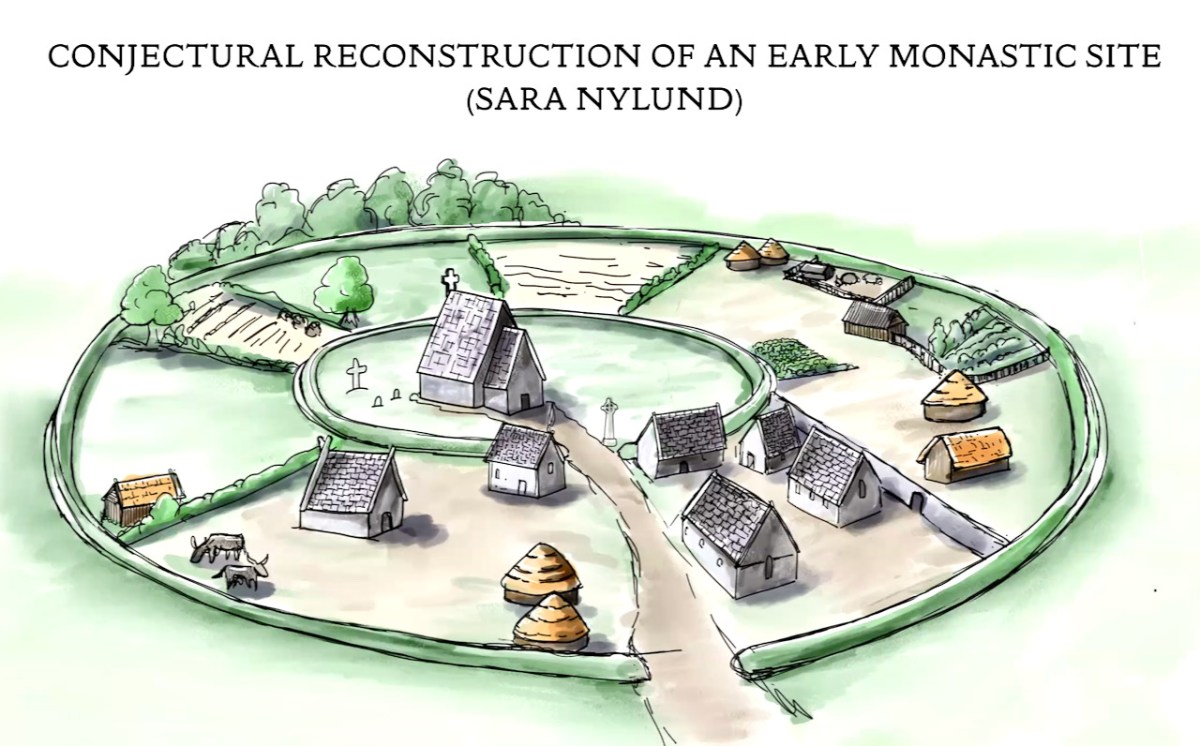
These early sites often had an outer circular boundary as well, and traces of this can be found still – I had a close look at the aerial photo and my arrows (above) point to where the line of the outer circle might be. But that’s mostly speculation, or perhaps wishful thinking on my part – what do you think?
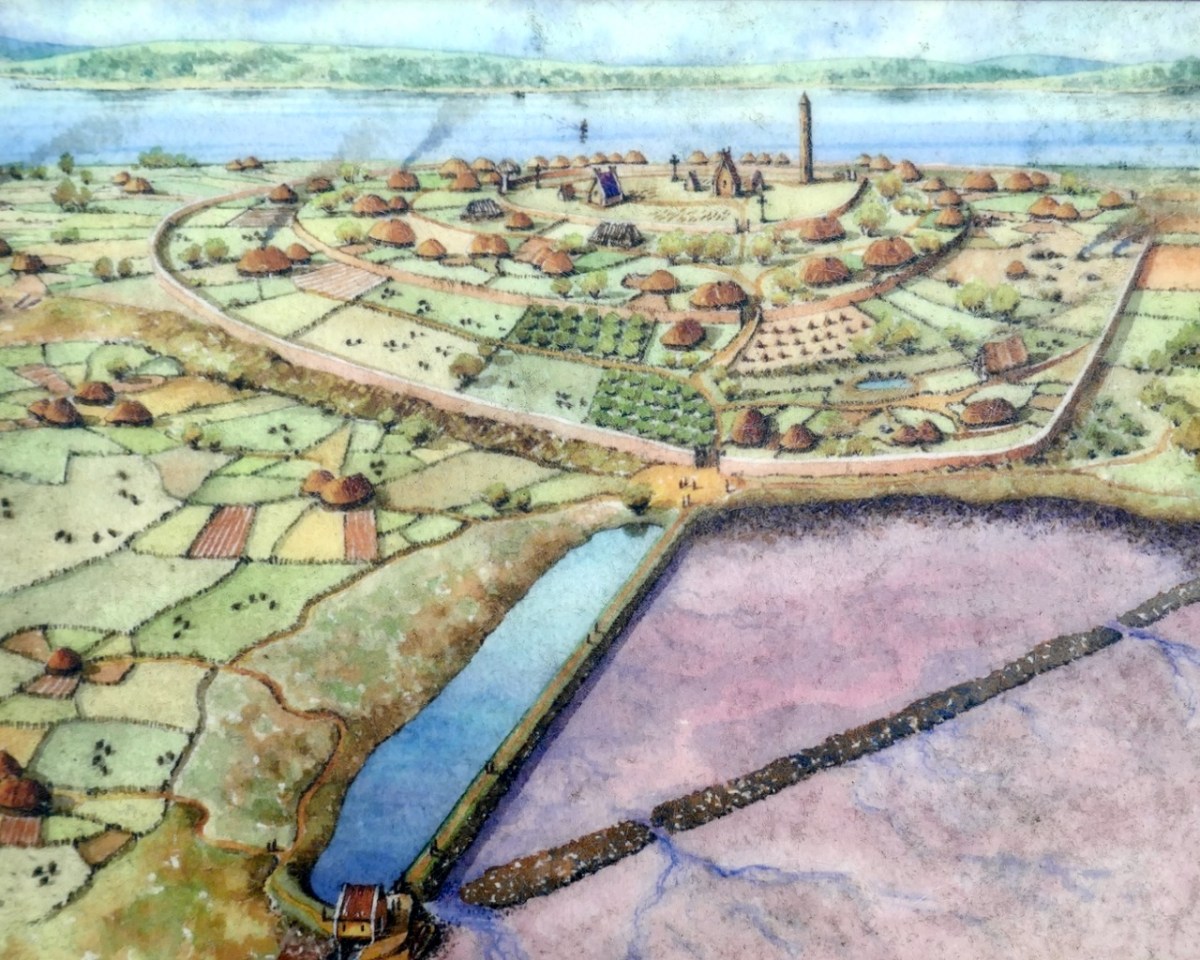
The Nendrum site shown in the Croagh Cove post is a good example of this outer and inner enclosure pattern for early Irish monastic foundations. Above is an illustration of what that might have looked like, taken from the information board at Nendrum, which we visited in 2022.
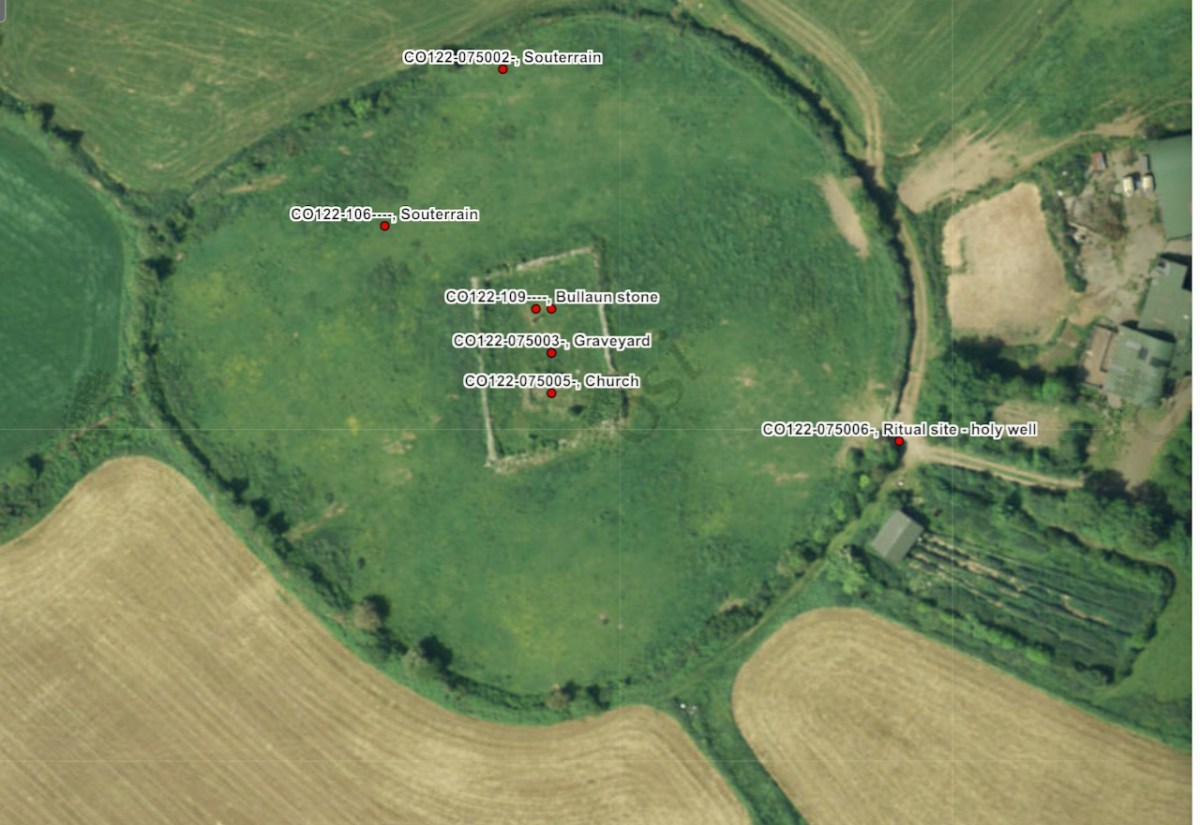
The ogham stone and a bullaun stone lie inside the enclosure. Bullaun stones are commonly found at ecclesiastical sites – abbeys, monasteries, old churches. Although they may be far older and have been used in some kind of food processing (such as grinding acorns) it seems that their obvious affinity to fonts has caused them to be brought to religious sites over the centuries. Read Robert’s post The Enigmatic Bullaun for the variety of beliefs (from blessings to cursings) that have accrued to bullaun stones.
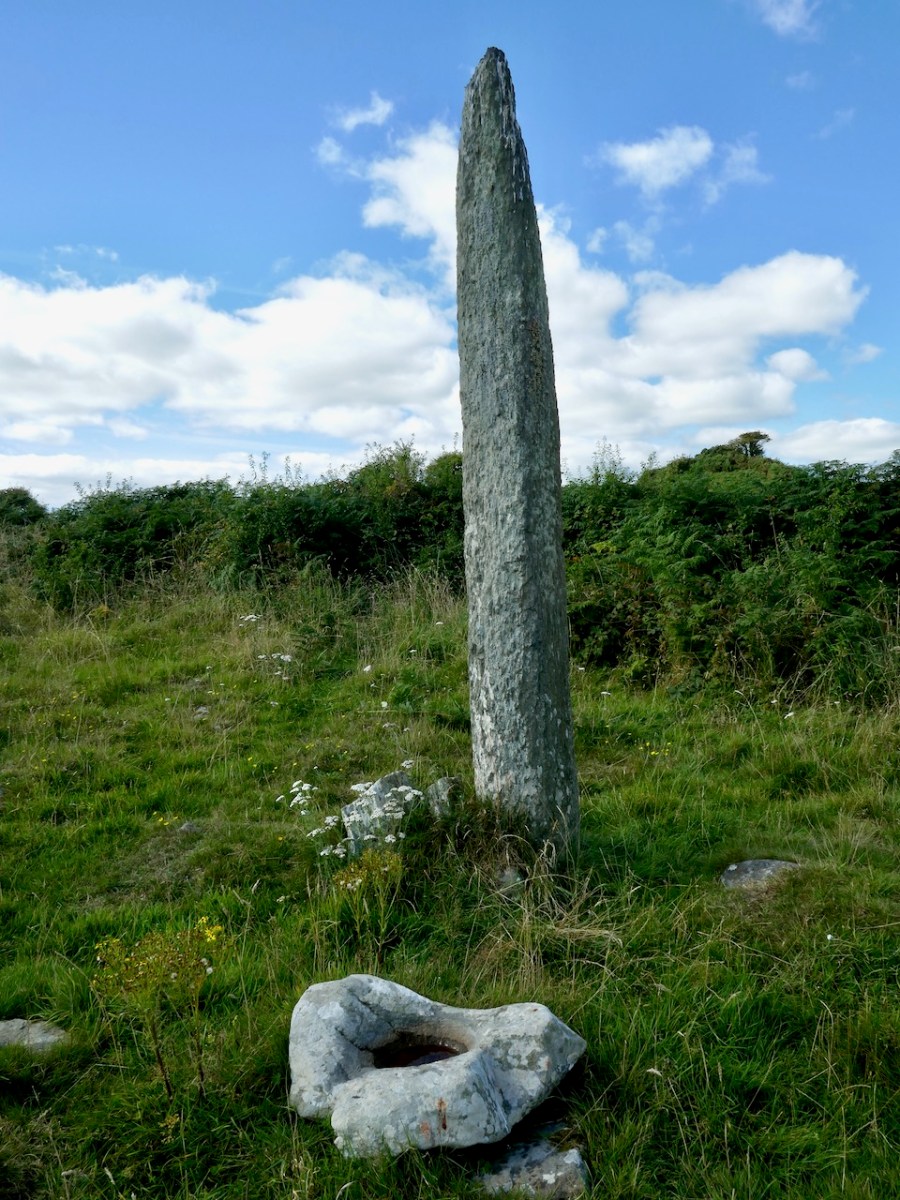
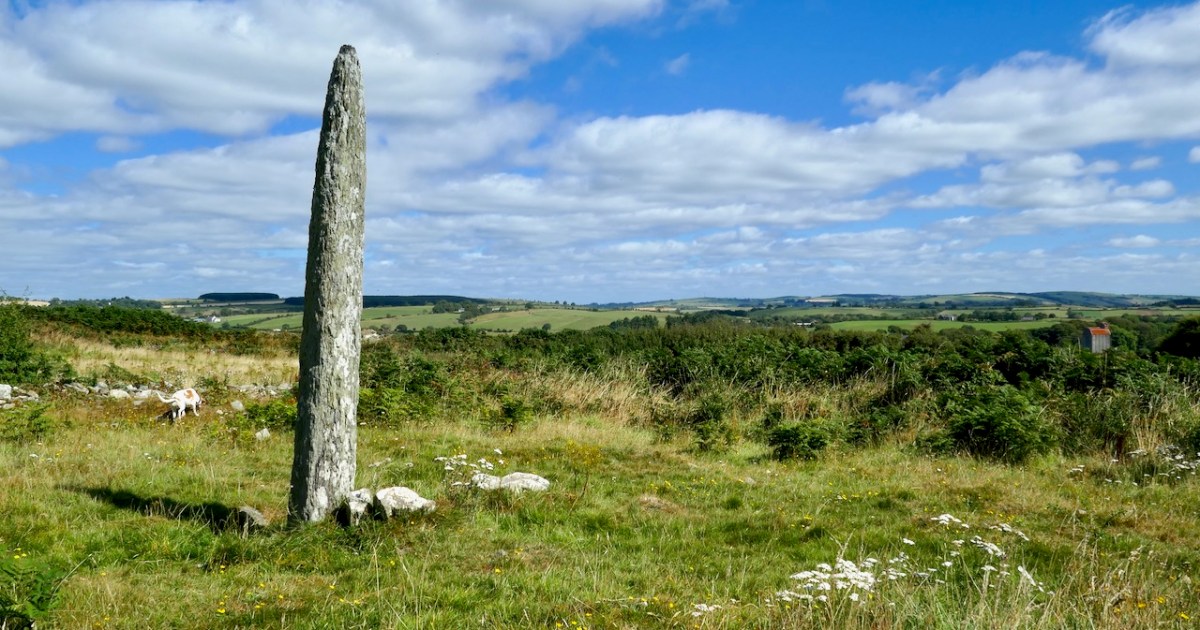
The ogham stone is a tall pointed pillar and it has both an inscribed cross and ogham writing on it. However, it is impossible to make them out. The only mark I saw that looked like a cross was this one. Not very convincing. 
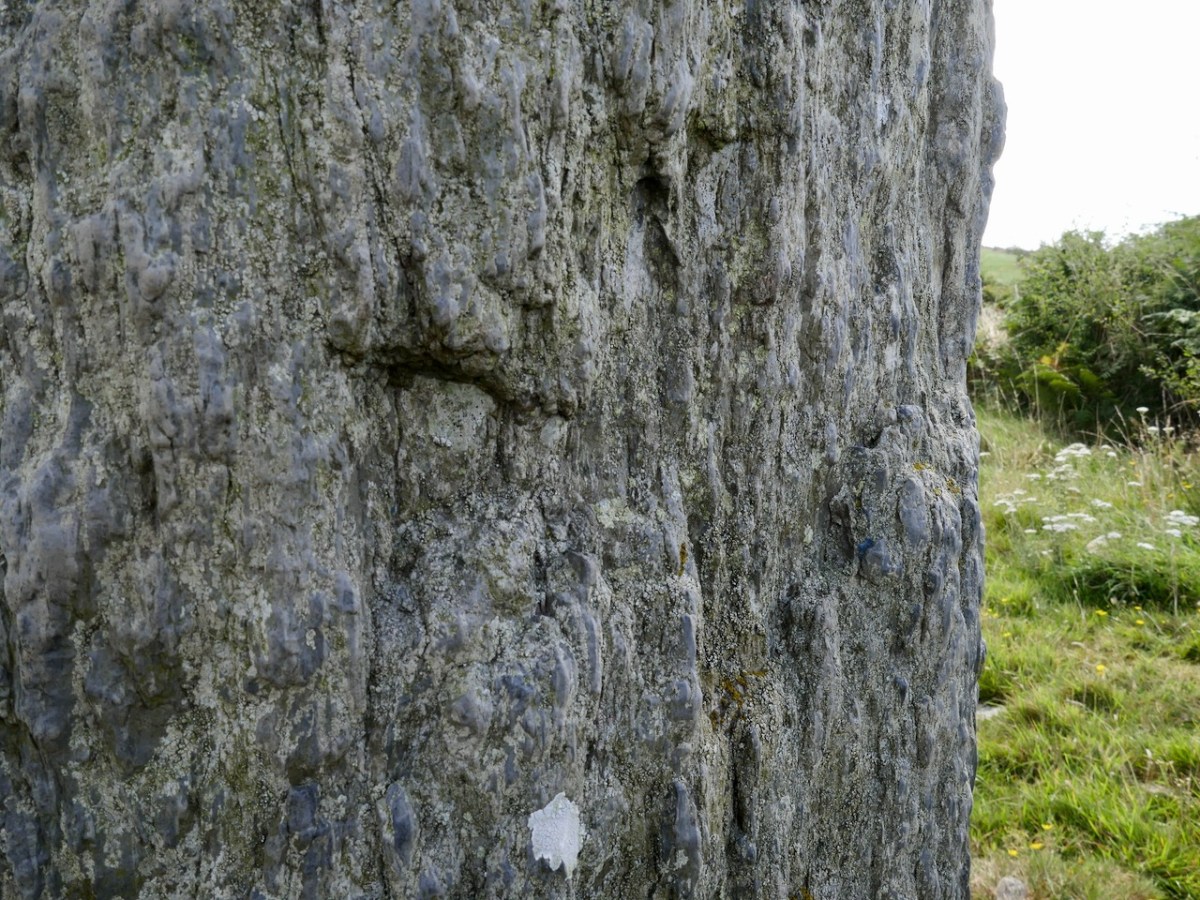
And the ogham is just as hard to see. According to the National Monuments listing it was read by Macalister in 1945 as ANM TENAS MACI V. While Macalister was a giant in the field of ogham research, he has been criticised for erroneous readings. If he was correct this would read (pray for?) The soul of Tenas, son of V. 
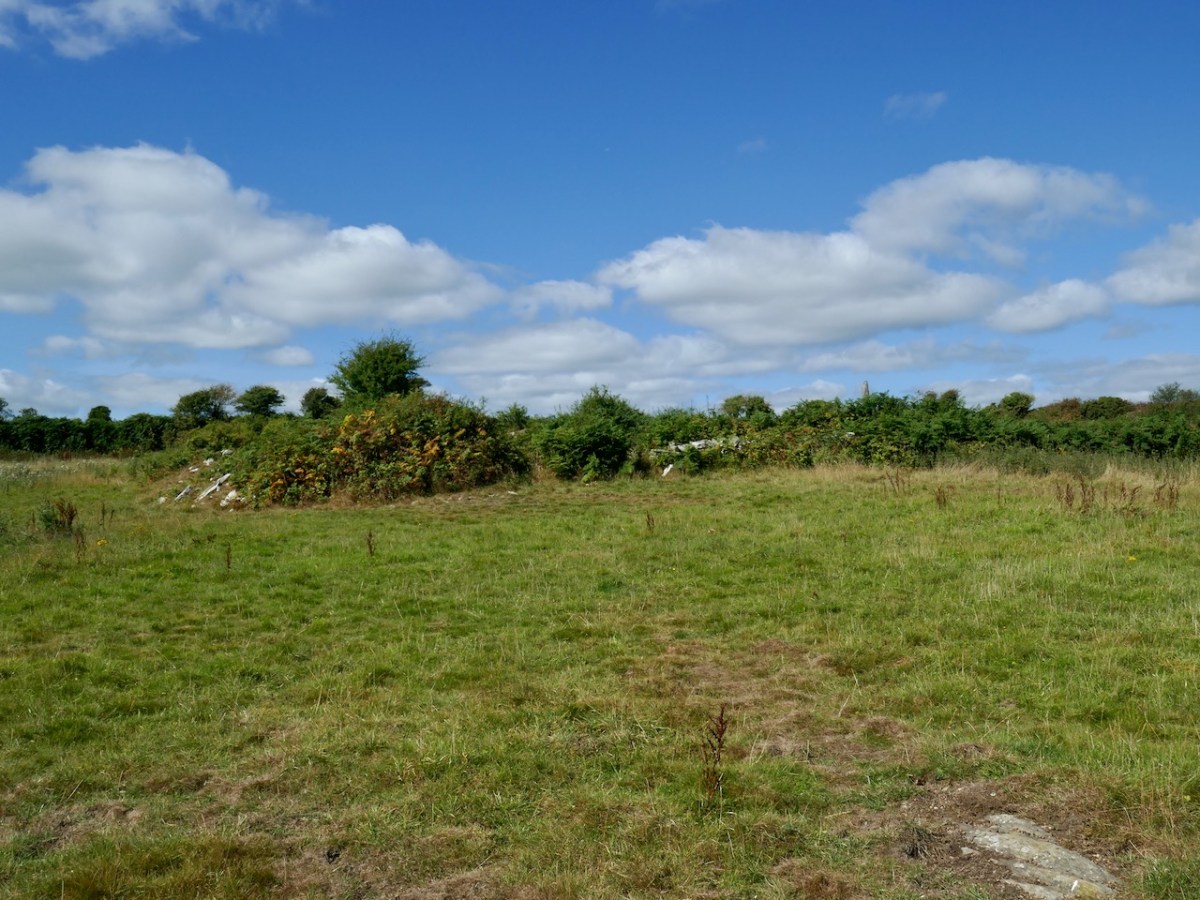
There are two souterrains in the enclosure, neither of which are accessible now. One of them was investigated in 1974 and consisted of three earth-cut chambers joined by creepways. 
Finally, we have a holy well. And of course I have visited it in the company of Ms Holy Wells herself, Amanda Clarke.
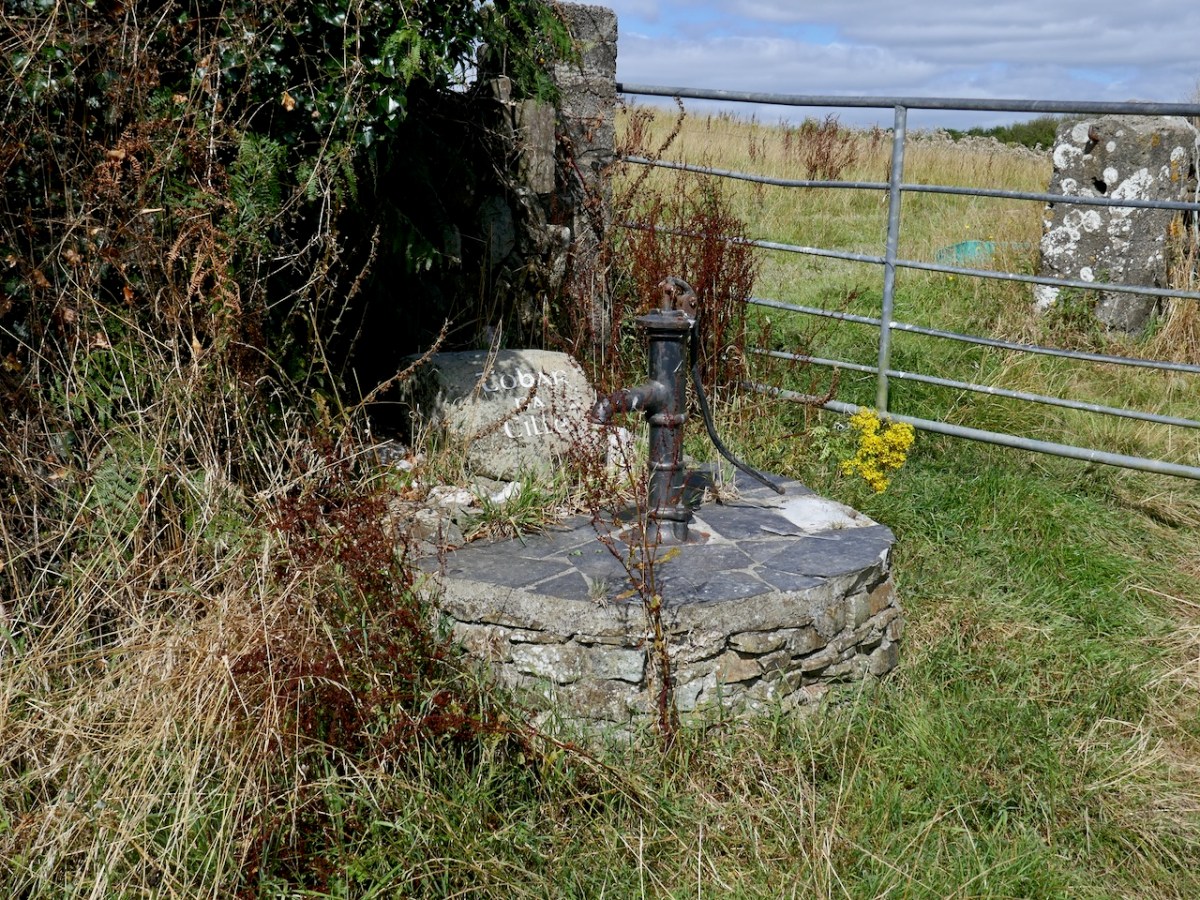
See her account of the well and our visit here. In it she refers to frisky horses and she wasn’t kidding. 
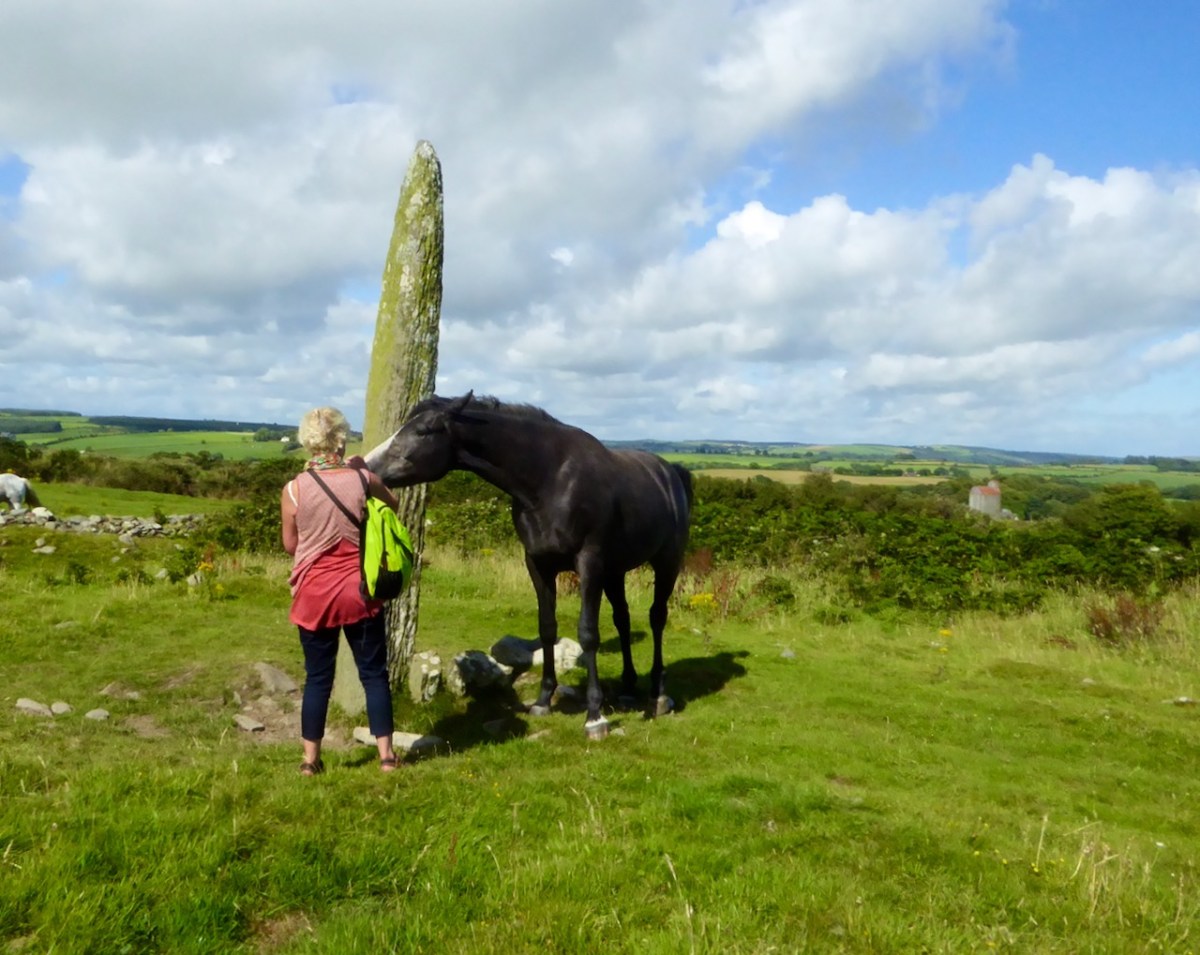
The same horse later showed us how useful he found the ogham stone for those much-needed scratches. Heaven!
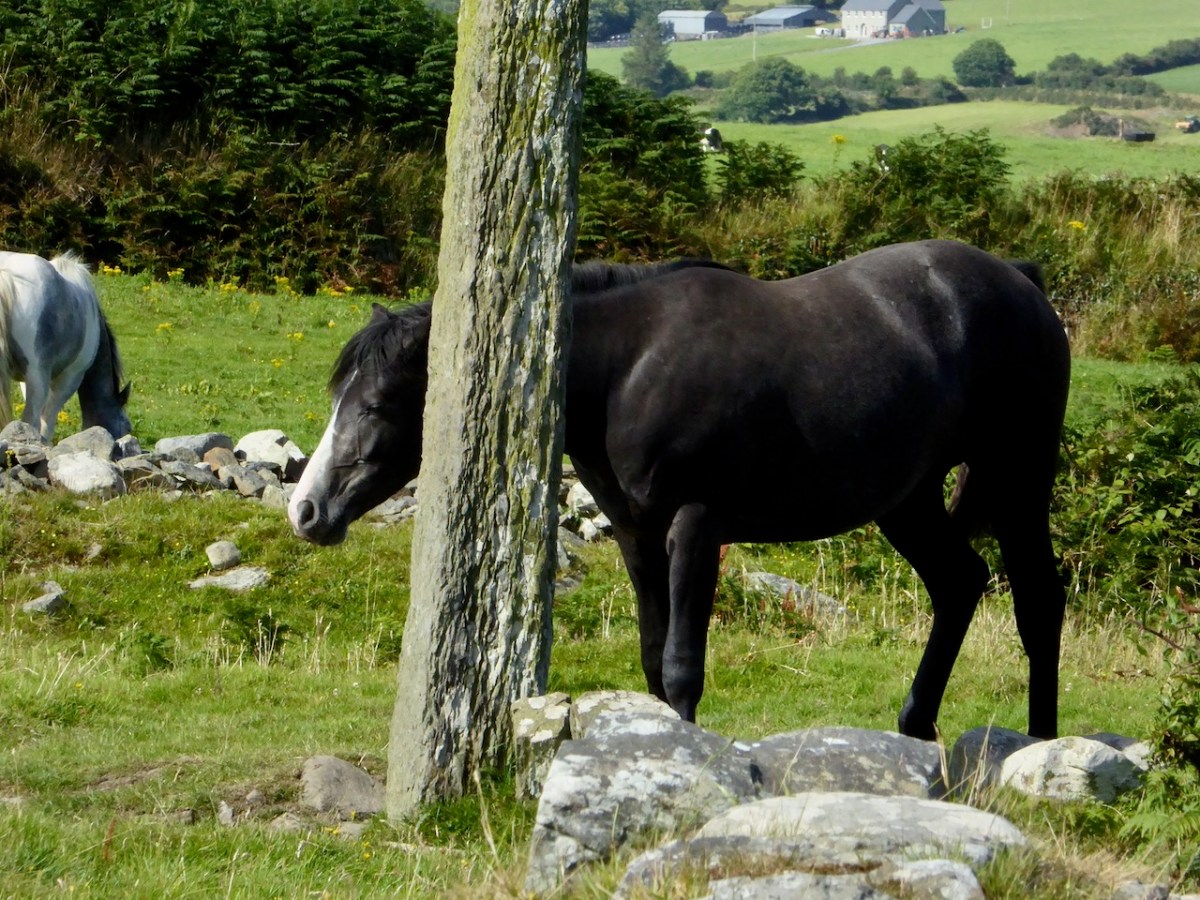
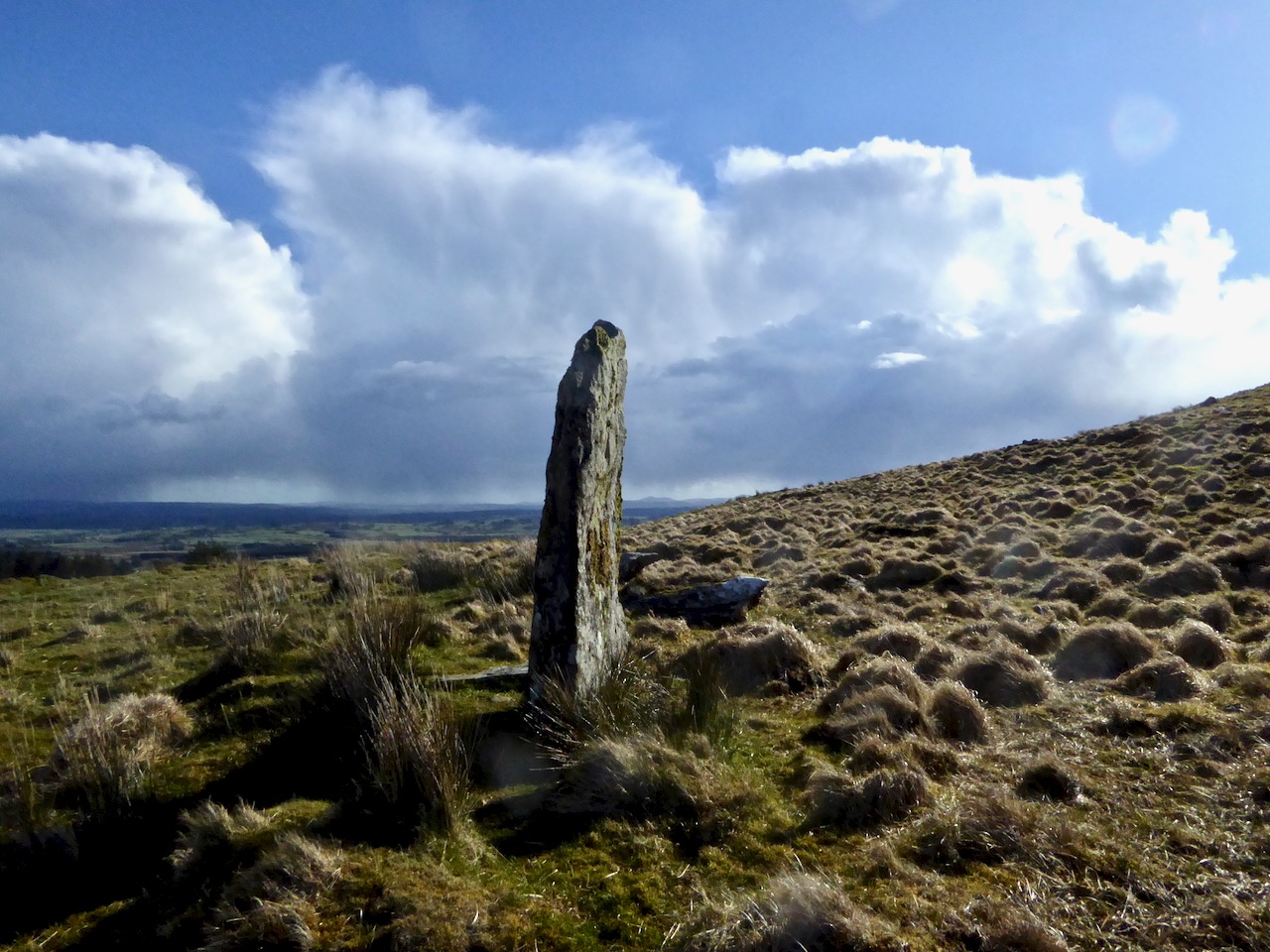
Templebryan is a great site if you get a chance to visit. Just please be aware that the ecclesiastical part it is on private land and it is always proper to knock in the farmhouse door and ask for permission. The stone circle is accessible from the road.
The Stone Circles of West Cork: An Introduction

Southwest Munster, and West Cork in particular, is home to the greatest concentration in Ireland of stone circles. There are two main kinds recorded in the National Monuments website, each making up about half the total number of circles – the multiple-stone circle and the five-stone circle. (There are also a small number of enigmatic monuments called ‘four posters’ which share some features with stone circles, but I will write about them some other time.) 

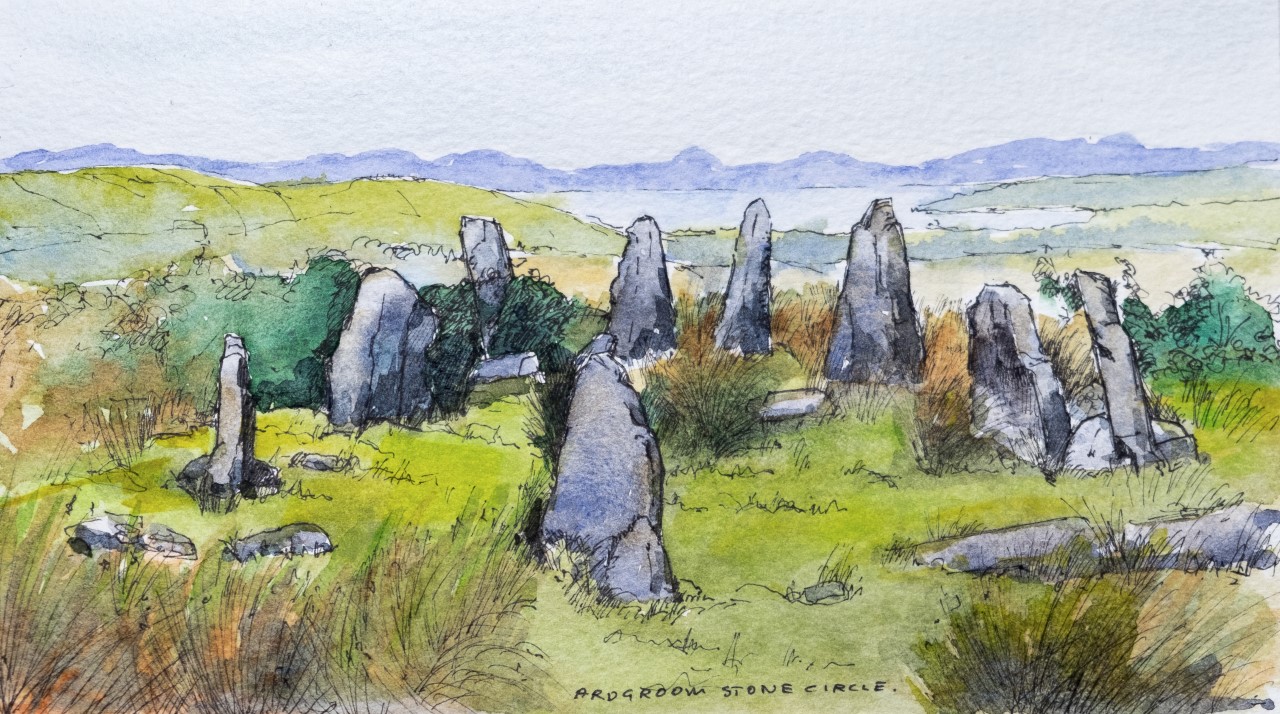
Peter Clarke’s illustration of the Ardgroom Stone Circle on the Beara, from his online journal, Hikelines

The division based on the number of stones is somewhat arbitrary, since both share most other features. Both have uneven numbers of stones – five in the case of the five-stone circle, and seven or more (up to 19) in the multiple-stone circles.

Our old friend Du Noyer loved to illustrate antiquities. We’re  not quite sure which stone circle this one is**

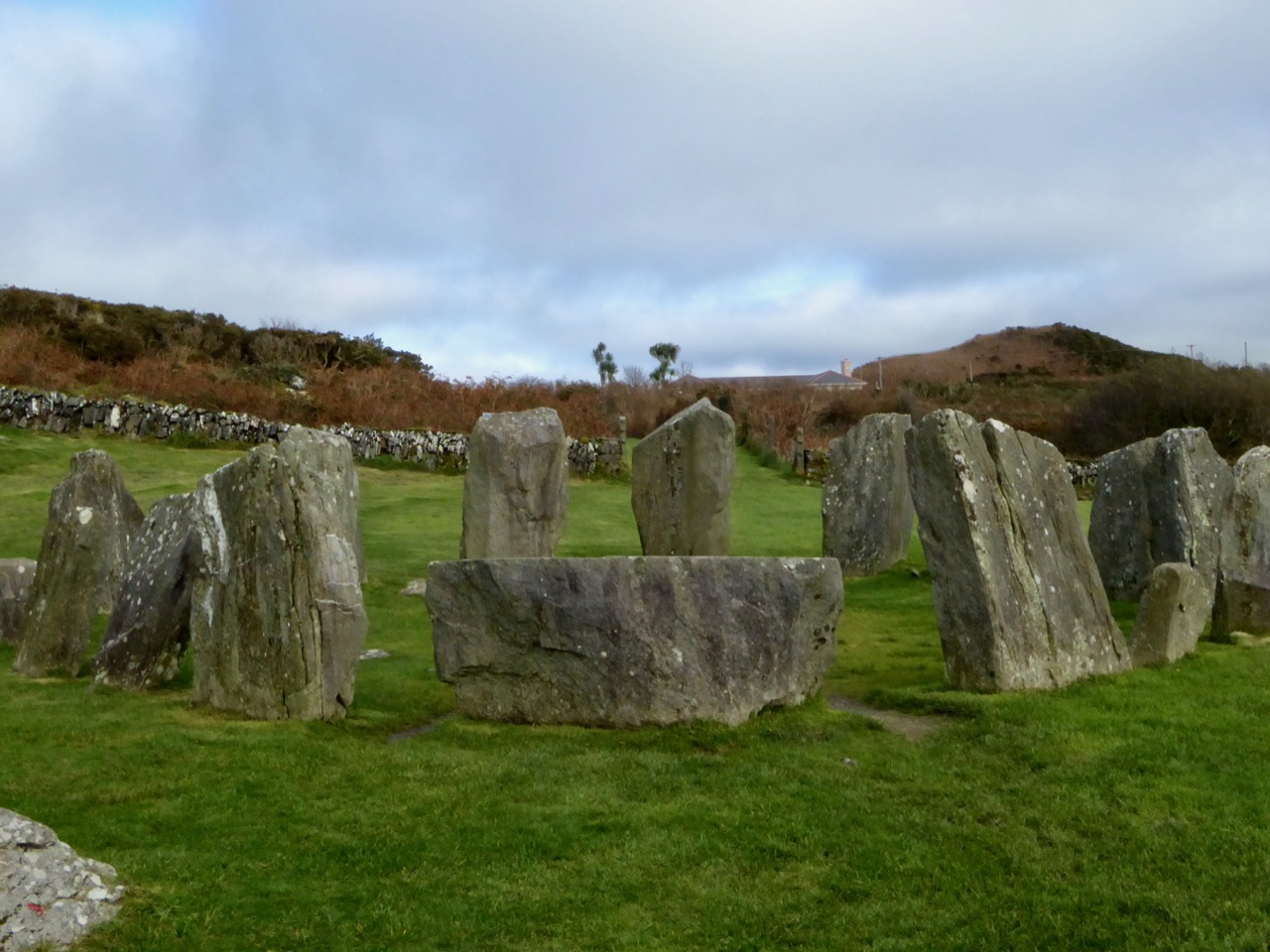
Both types are axial or recumbent stone circles. The name recumbent comes from the lowest stone in the circle, the only stone set on its side, with its long axis parallel to the ground. All the other stones are set upright and they often increase in size from the recumbent to the portal stones. The portals appear to form an entrance into the circles and are sometimes set end-on to the circle. An axis drawn from the point between the portals to the middle of the recumbent bisects the circle – hence the name axial stone circle. All these features can be seen in the photograph of Drombeg Stone Circle (below).

While the multiple-stones circles appear roughly circular, they may have been laid out using more complicated geometry than the string-marking-out-a-circle technique. Some are more elliptical than truly circular. The five-stone circles, given the dominance of the recumbent, are actually D-shaped.

The five-stone circle which is part of the Kealkill complex

Many of our stone circles have disappeared over time, with only folkloric memory indicating that here was once a circle of stones. Some have lost stones over time, while in others uprights have collapsed. Whole monuments have vanished into forests or dense undergrowth. Even where we still have partial circles it can be difficult to make out which are the portals and which the recumbent.

Upper: Labbamolaga – we think this was a stone circle but so few stones remain that it’s hard to be definitive. Lower: This sad little heap of stones is all that remains of the Ahagilla Stone Circle. The recumbent is to the left and a portal to the right.

The circles are constructed from local stone and in some cases it is easy to see where they have been quarried from nearby rock outcrops. There is no evidence of the builders transporting the stones from elsewhere, with the exception, perhaps of the quartz blocks which are found occasionally either as uprights or associated with the circle inside or outside it. Although quartz is found in abundance in West Cork a large block of it may have been especially prized and reserved for such a situation.

This sizeable quartz block lies beside the Lettergorman Five-Stone Circle

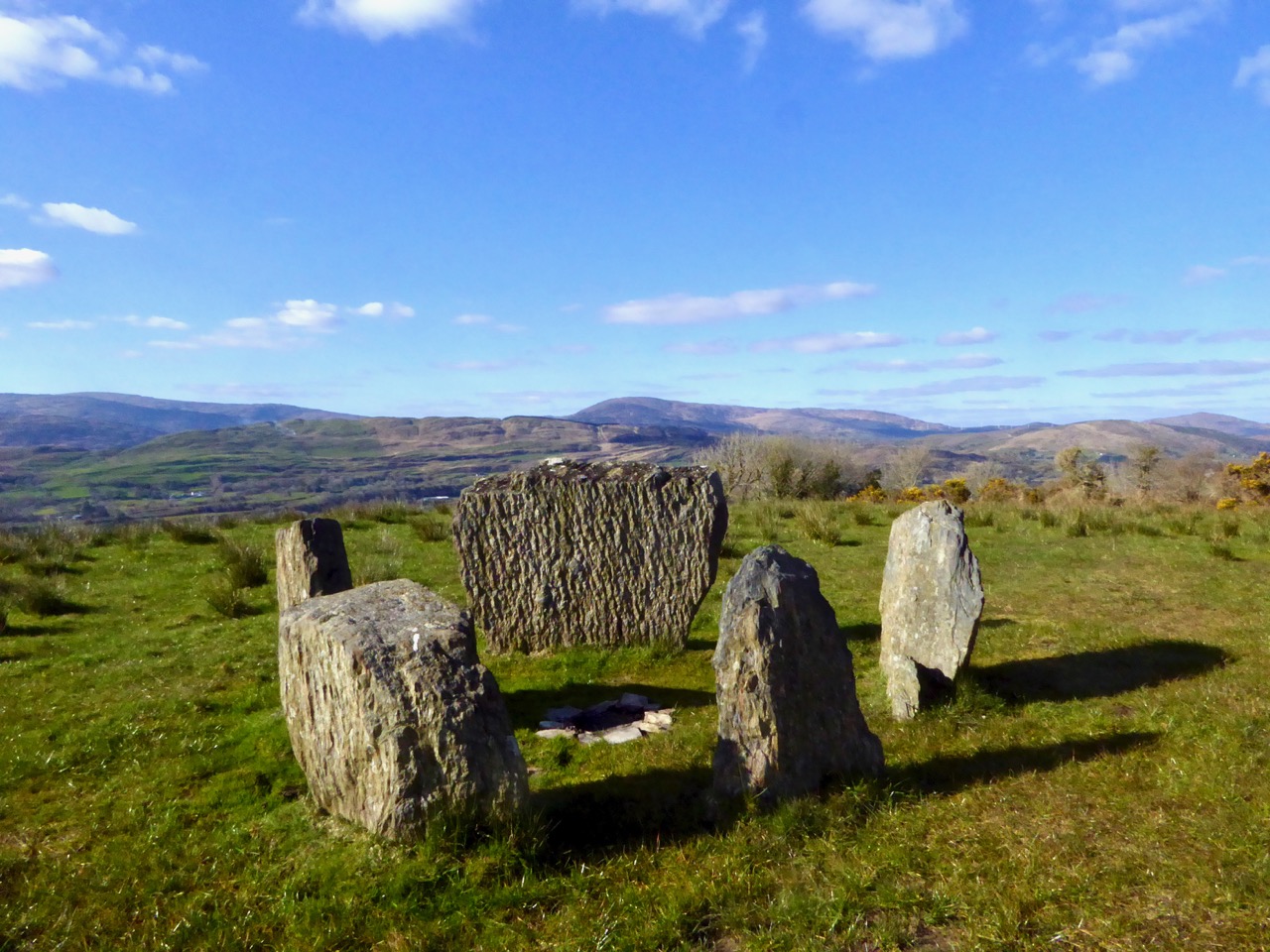
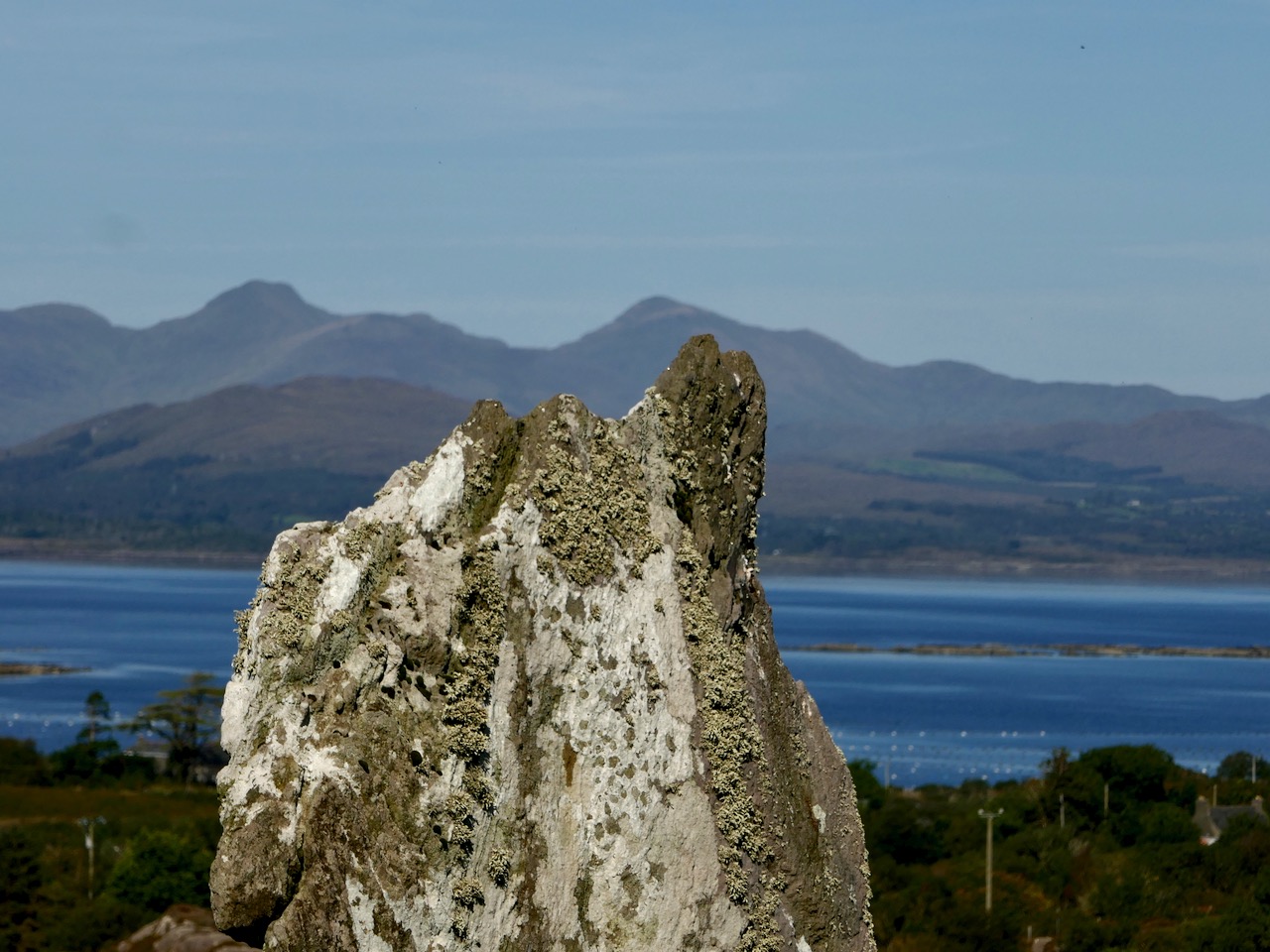
The circles were carefully and deliberately constructed: Fahy’s excavations at Drombeg and Reenascreena shows that the ground was levelled.  Stones were, it seems, selected for shape as well as size. The recumbent is usually flat on top, which may indicate the side closest to the parent rock from which it was split. Some may well have been deliberately shaped by knocking or splitting off sections – we often notice, for example, how well certain uprights mirror the landscape behind them, like the one at Ardgroom, below.

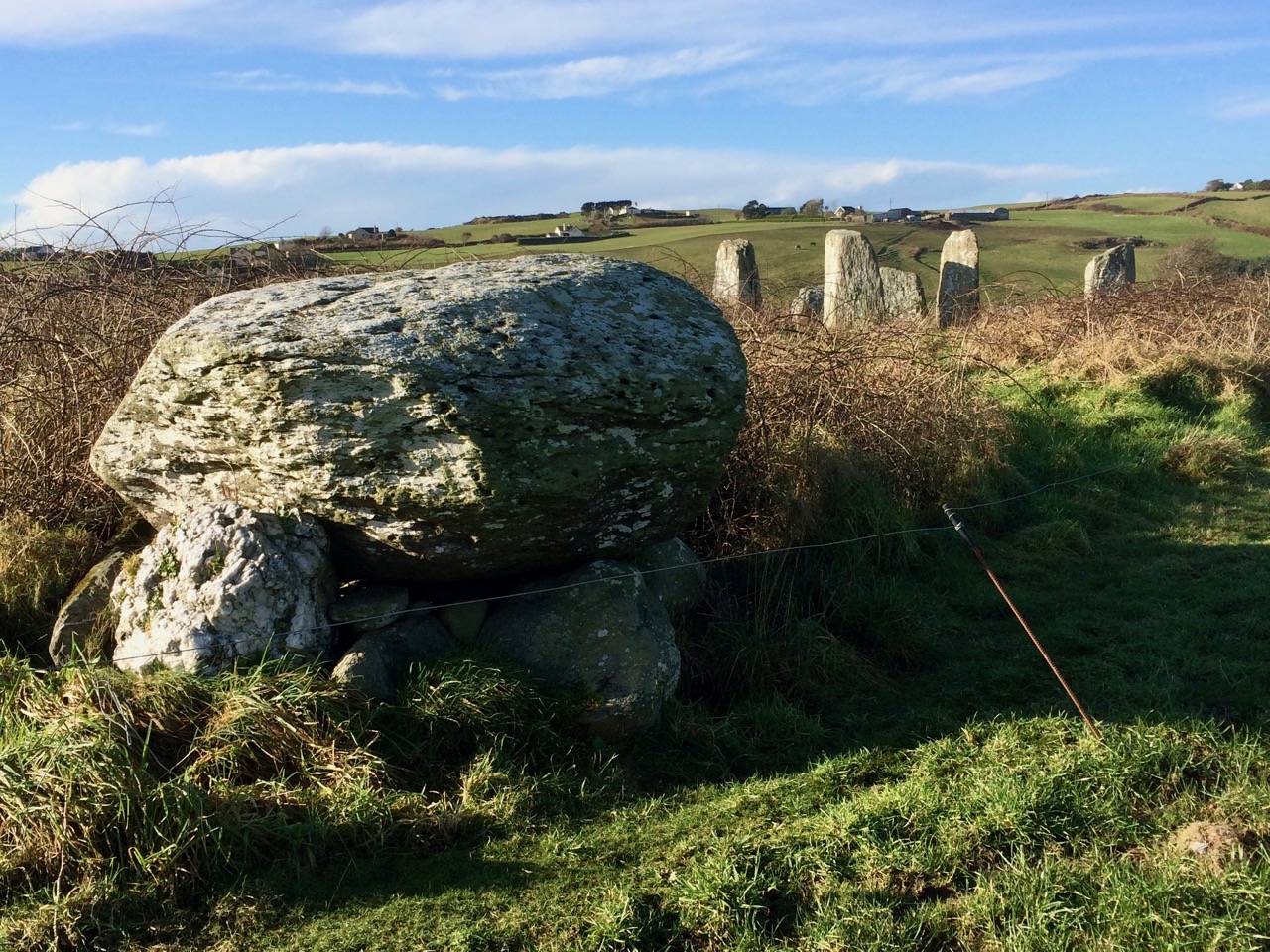
Stone circles are often associated with other monuments, most commonly boulder burials and standing stones, and at least two have radial stone cairns beside them. Some of the standing stones appear to function as outliers to the circle, extending alignments towards solar or lunar orientations (more of that next time).

Upper: This boulder burial is part of a complex of monuments at Bohonagh which also includes a stone circle (visible behind the boulder burial), a cupmarked stone and a standing stone which is no longer to be found. Lower: A standing stone pair (one fallen) at Knocknakilla with (behind it) a five-stone circle (recently fallen over) and a  radial stone cairn – of all the elements of this complex only this standing stone is really visible in the landscape

West Cork stone circles, from the sparse excavation evidence, date from the middle to late Bronze Age (about 1500 to 600BC). They are commonly found on elevated ground with a clear and expansive view southwards, but stretching from the northeast to the southwest – that portion of the sky in which both the sun and the moon rise and set.

This tiny monument is a five-stone circle at Inchybegga. When the grass grows tall enough you can’t see it at all

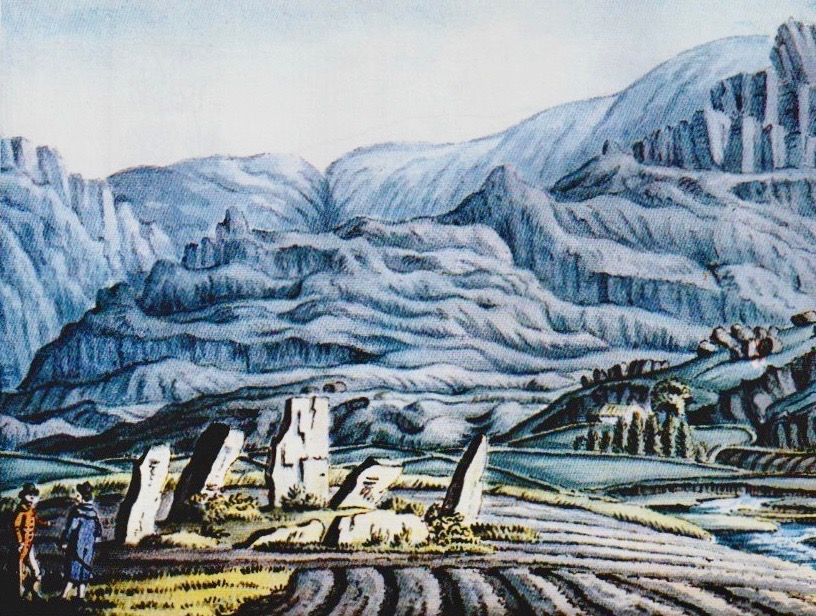
Our stone circles have always fascinated antiquarians, happy to label them ‘druidic temples’ or make outlandish claims about their construction by visiting Egyptians. Some of the older illustration owe more to the imagination than to accurate depictions.

Templebryan Stone Circle as it actually is (lower) and as depicted by the antiquarian, Clayton, in 1742 (upper). The illustration for Clayton, done by Ann la Bush, shows the fashionable preoccupation at the time for Egyptian-type obelisks. Nevertheless it is important in that it shows that there were more stones in the circle than there are now. Note the central block of quartz

In more recent times, they have been the subject of a great deal of new-age speculation about long-distance ley lines, mystical ‘energies,’ extra-terrestrial builders, associations with pagan goddess cults and the like. As an archaeologist, I think this is a pity, in the sense that these stone circles are fascinating enough as they are – they embody so much that we need to understand about the scientific knowledge, advanced construction technology, and social organisation of the builders. The belief systems that underlie their reasons for constructing these monuments are equally important and more difficult to discern after the passage of millennia, but should be based on close and serious study of the monuments themselves.

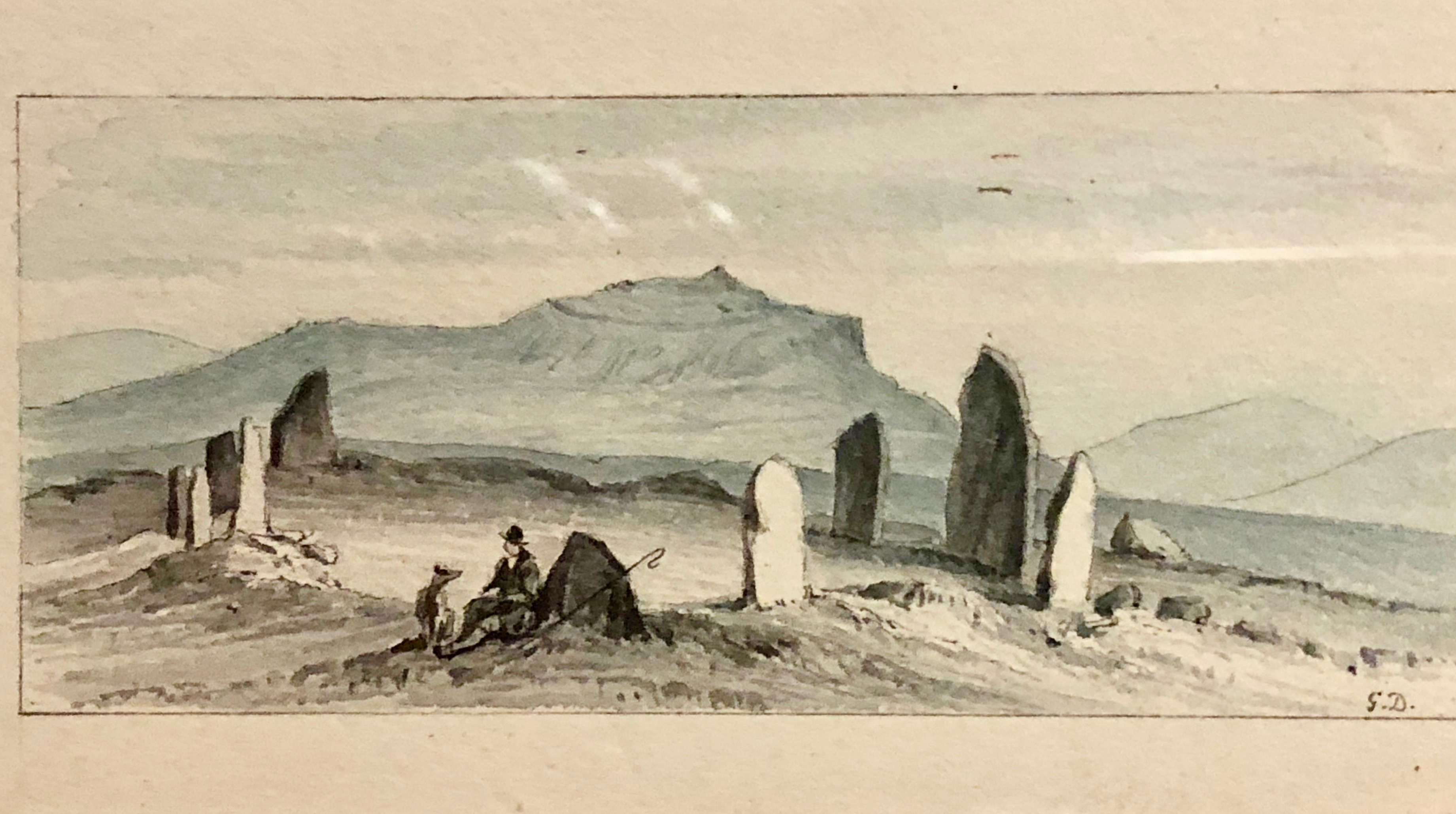
Above is the Derreenataggart Stone Circle on the Beara, and below is a much more romantic and monumental rendering of it from Francis Grose’s Antiquities of Ireland (1790s), illustrated by Daniel Grose. My lead image is also a Daniel Grose illustration, this time of a stone circle that once stood on the slopes of Hungry Hill, but which has since disappeared*

The next post in this series will be about the multiple-stone circles.

*The two illustrations by Daniel Gross are from Daniel Grose (c.1766-1838). The Antiquities of Ireland, a supplement to Francis Grose, by Roger Stalley, Irish Architectural Archive 1991
**I now know that this is almost certainly not a West Cork example but Boleycarrigeen in Wicklow (thanks to Ken Williams for the ID)