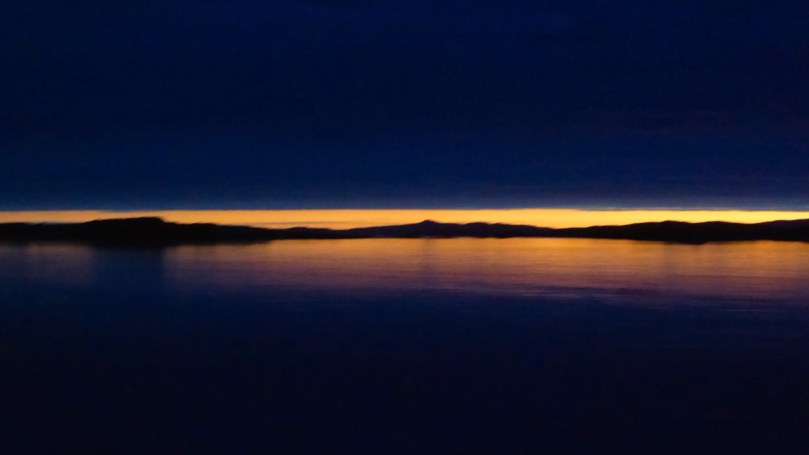
We were heading home from Hare Island after a Fit Up Theatre Performance, when this happened
Many of our top Facebook photographs this year were from the Mizen, but not all. You also liked and shared photographs that captured the essence of other parts of West Cork.
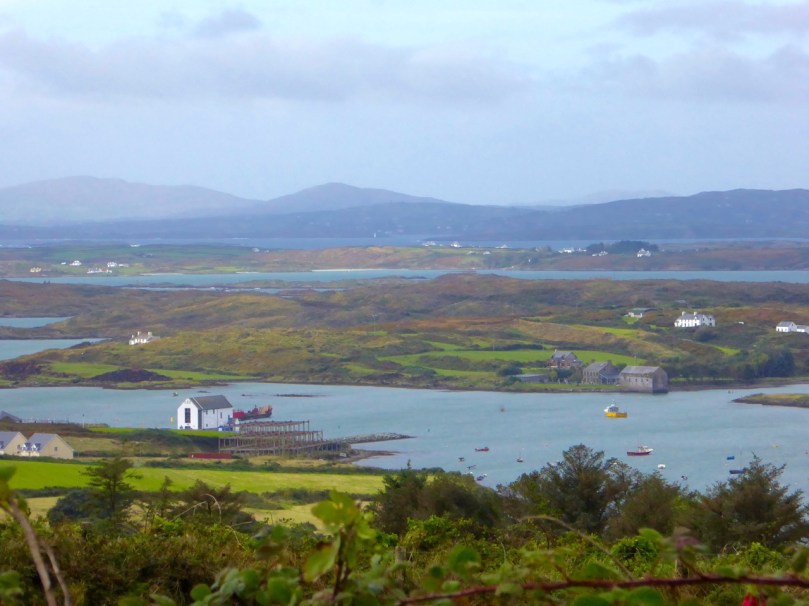
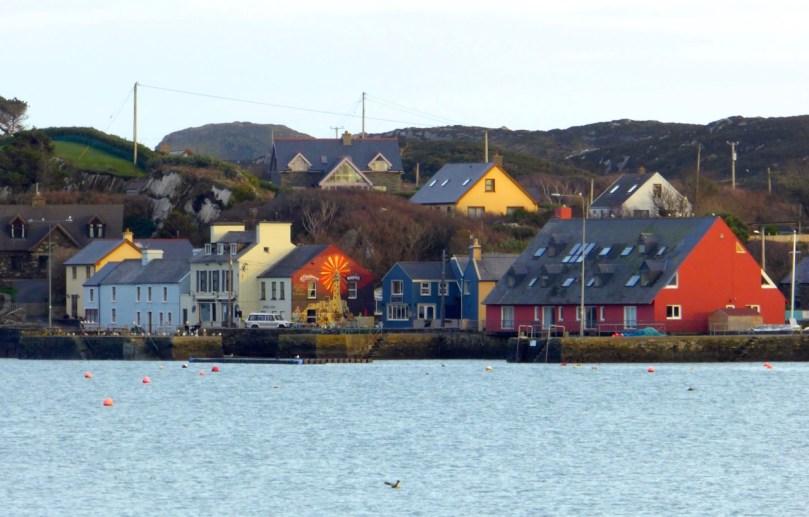
Baltimore Bay and Ringarogy Island
I think the Baltimore Bay one was so popular because the colours are SO west Cork. When you get blue sky and clouds, the sea turns this amazing Caribbean blue and the contrast with the green fields and wilder high ground is gorgeous.
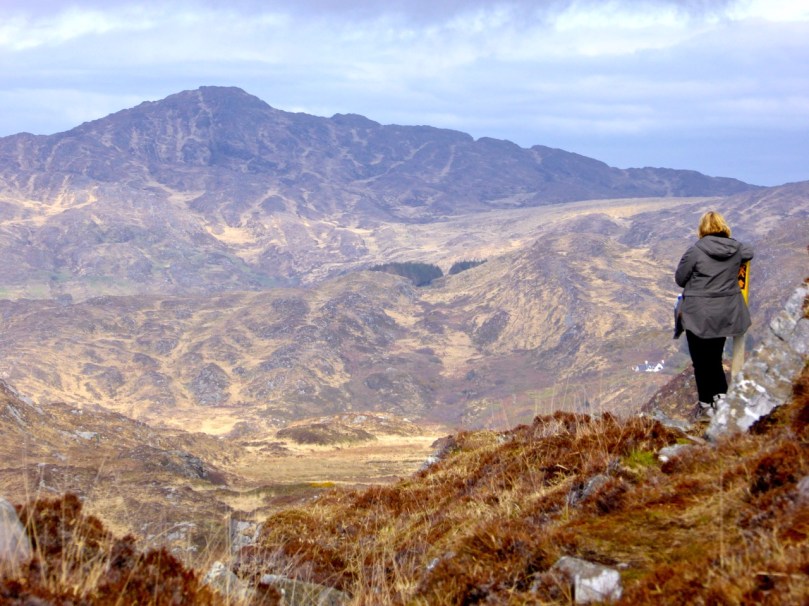
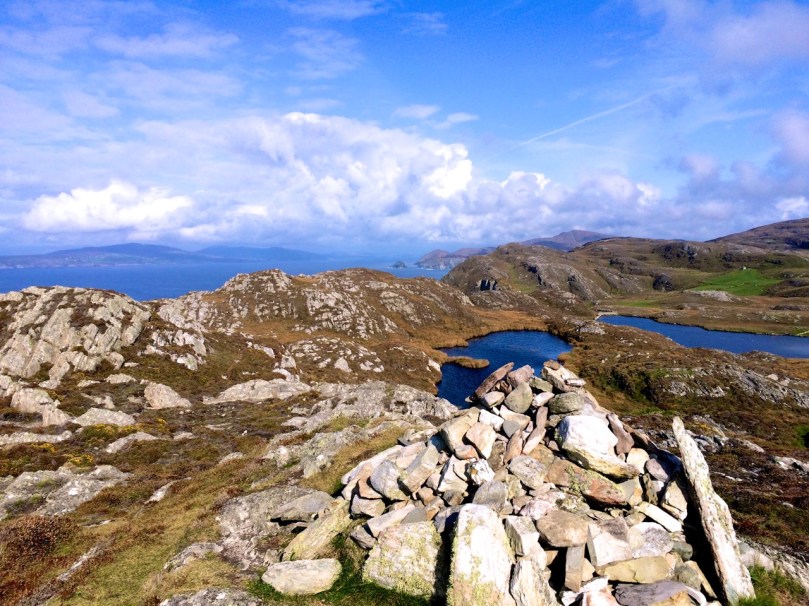
Lighthouse Loop, Sheep’s Head
This photograph of our friend Susan Byron of Ireland’s Hidden Gems is one of my favourites this year because of the impression it creates of sheer wildness.
Sparrowhawk
Robin on gorse
Ferdia
Occasionally we get lucky with the local wildlife. Ferdia, the fox, used to be a regular around our place but has forsaken us recently for neighbours with higher quality leftovers.
Bantry House
It’s possible to get good shots of Bantry House in winter, when the trees don’t obscure it from view.
Kilcoe Castle
Kilcoe Castle is such an icon on the landscape. This photograph shows the neighbourly way it interacts with the other houses around it.
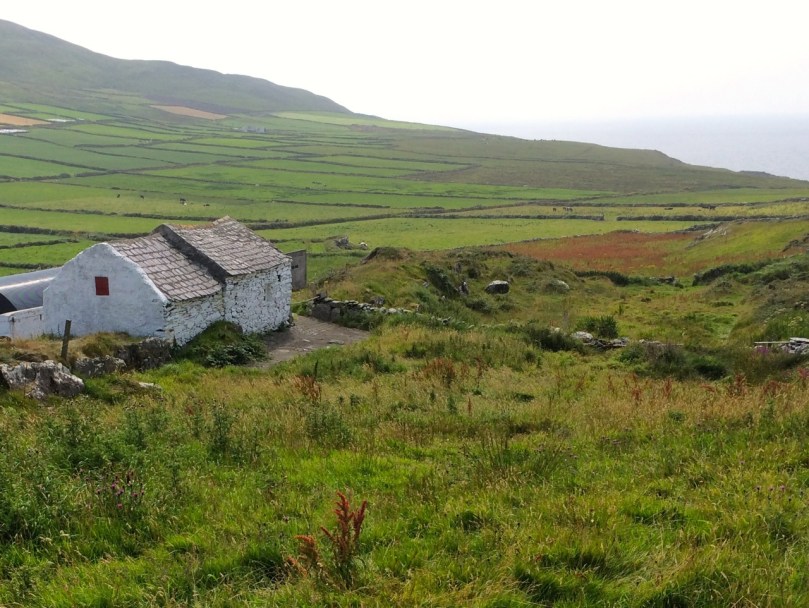
Bardic School Loop Walk, Sheep’s Head
This tiny abandoned cottage may have been part of the 17th Century Bardic School near Lake Faranamanagh on the Sheep’s Head. We’re looking across at the Mizen in this shot.
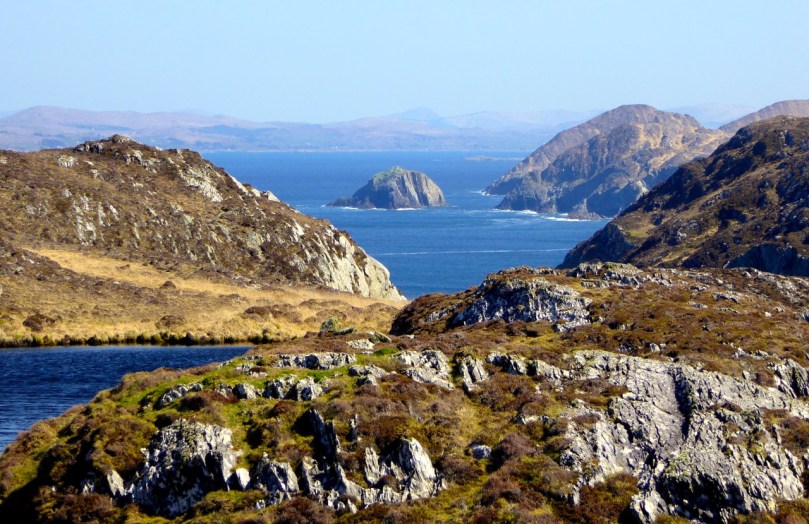
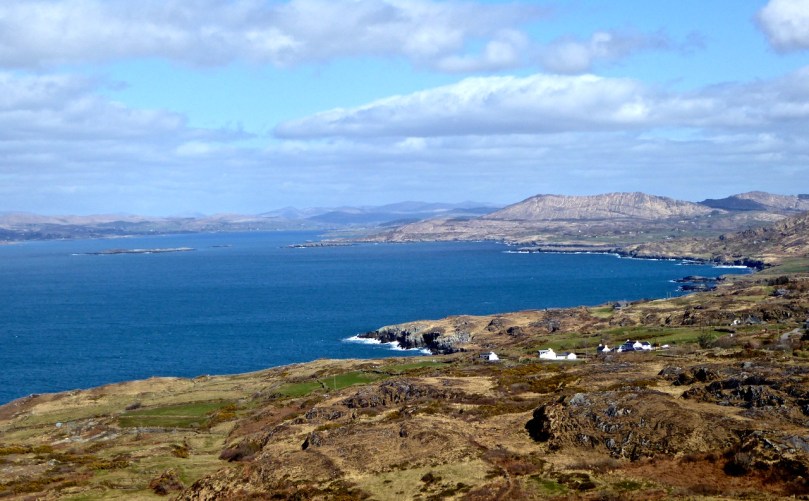
The Beara, from the Sheep’s Head
And here’s the view from the other side of the Sheep’s Head, across to the Beara Peninsula, with the instantly-recognisable bulk of Hungry Hill to the far right.
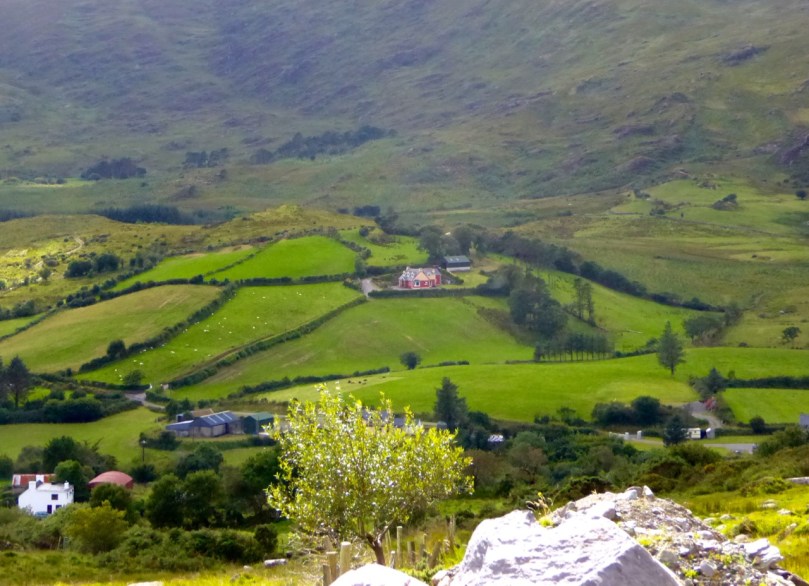
Priest’s Leap Valley
The long climb up to Priest’s Leap starts near Ballylickey and ends at a high mountain pass that separates Cork and Kerry. The views are spectacular from the top, but this shot of a colourful house and farms in the valley on the way up seemed to express something typical of West Cork.
Farm, Sheep’s Head
This farm appears to be carved out of the mountain land behind it.
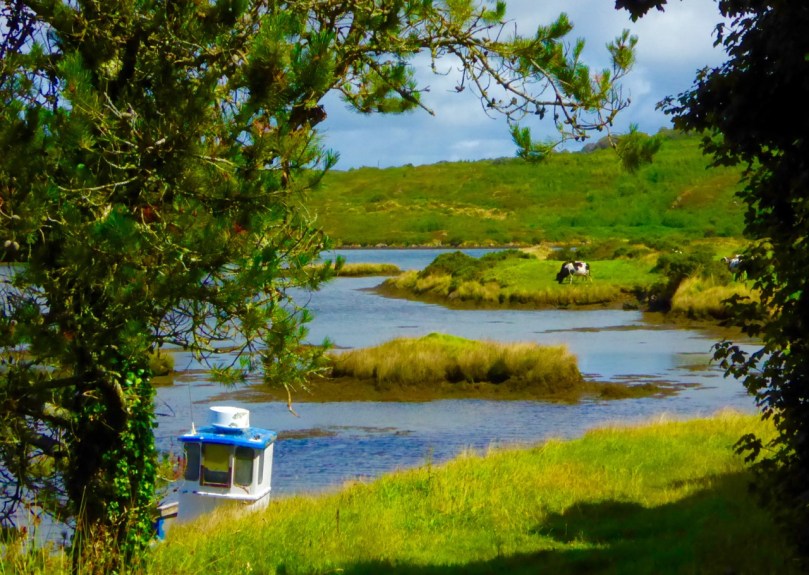
Barloge Bay, at the entrance to Lough Hyne
This was taken in November. I love the contrast of the turquoise water with the autumn colours of the bracken-covered hillside.
A final sunset to end this post. This was taken last February from the lay-by overlooking Roaringwater Bay on the N71. The light was extraordinary – a once in a blue moon kind of shot. The mussel beds make the water look like floating ice packs.
A big thanks to Celia Bartlett for helping us improve our photographic skills this year. We loved our workshop with her.
You love the Mizen! That’s all we can conclude when we look at which of our Facebook photographs resonated most with our readers and followers this year.
Cairn on Dunlough Head, looking east along the Mizen and Dunmanus Bay
We post a couple of photographs each week on our Facebook page and we are always delighted when they are liked and shared. The vast majority of these images are from West Cork, and many are from our own Peninsula, the Mizen.
The tiny quay at Greenmount, outside Ballydehob. You pass this on the Rossbrin Loop Trail
So, as we look back over 2015, here are your top picks from the Mizen Peninsula, beginning with the most liked/shared. Next week, we will post the top West Cork (non-Mizen) Facebook photographs.
Near Dunlough Bay, on the way to Three Castle Head
Not much text to plough through this week. Consider that your Christmas present from us!
Goleen Village looks so colourful and inviting in the summer
There’s nothing we like better than wandering around West Cork with our cameras – it’s an endless feast. Enjoy – and tell us which is your personal favourite!
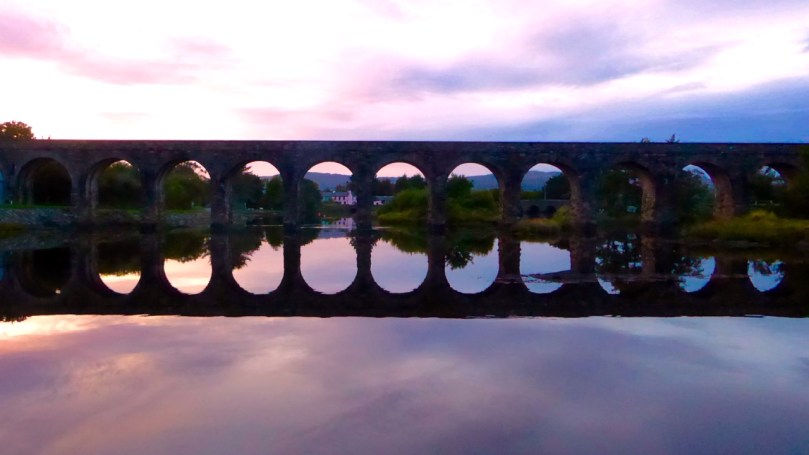
The famous 12 Arch Bridge at Ballydehob
The Magnificent Mizen!
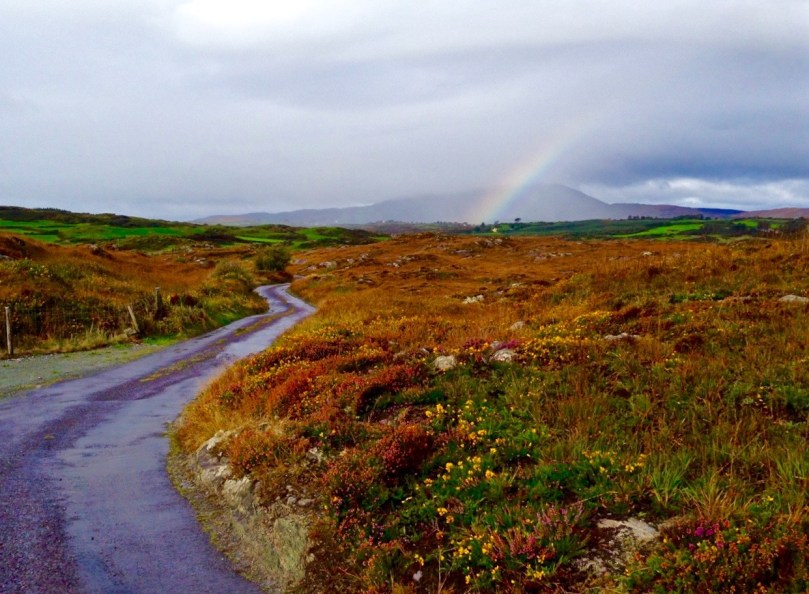
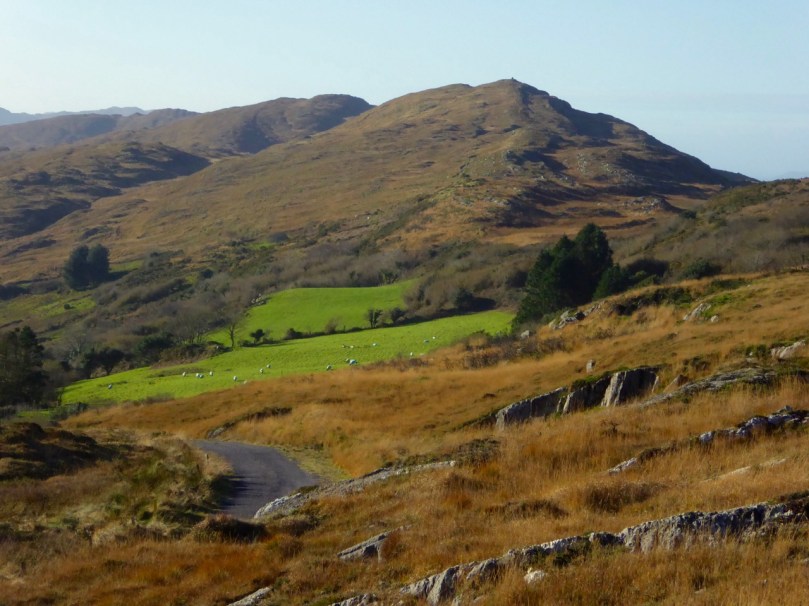
The Winding Road…the Cappaghglass high road in autumn
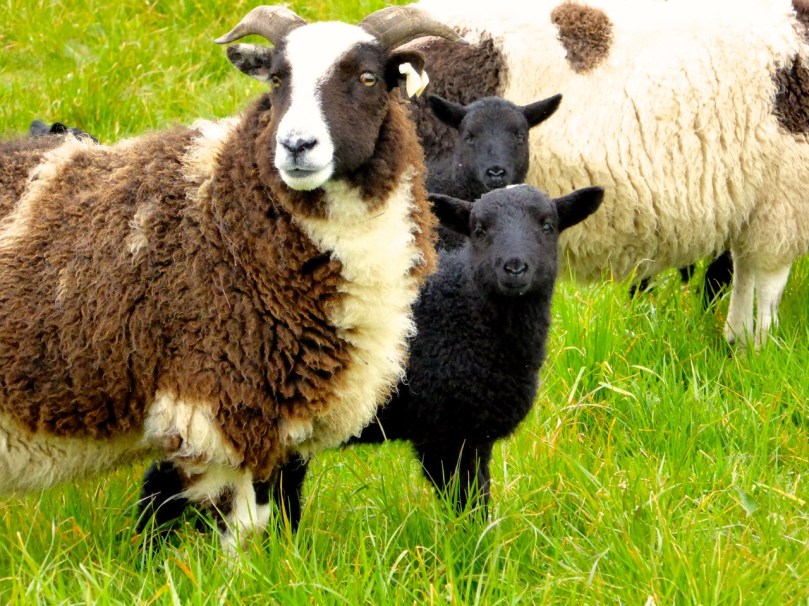
We saw these Jacob sheep on the slopes of Mount Corrin
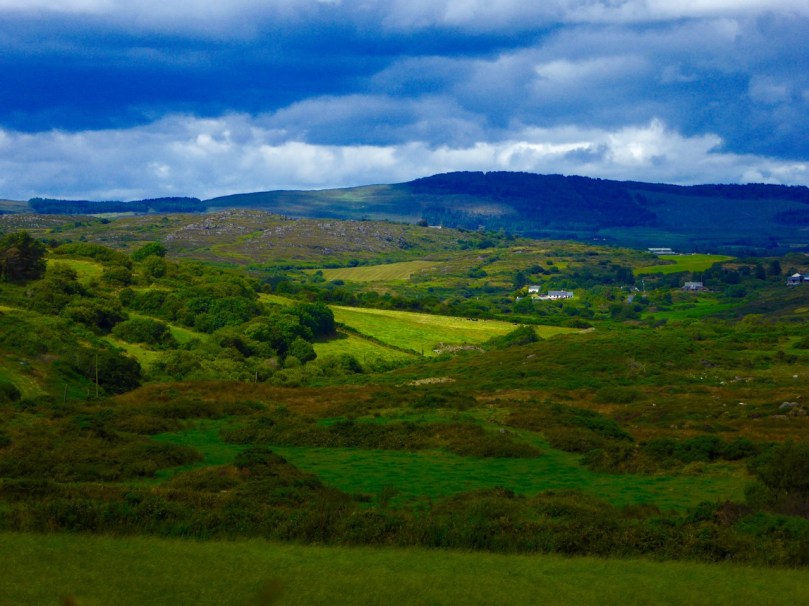
Sun and shadow – the quintessential West Cork lighting conditions
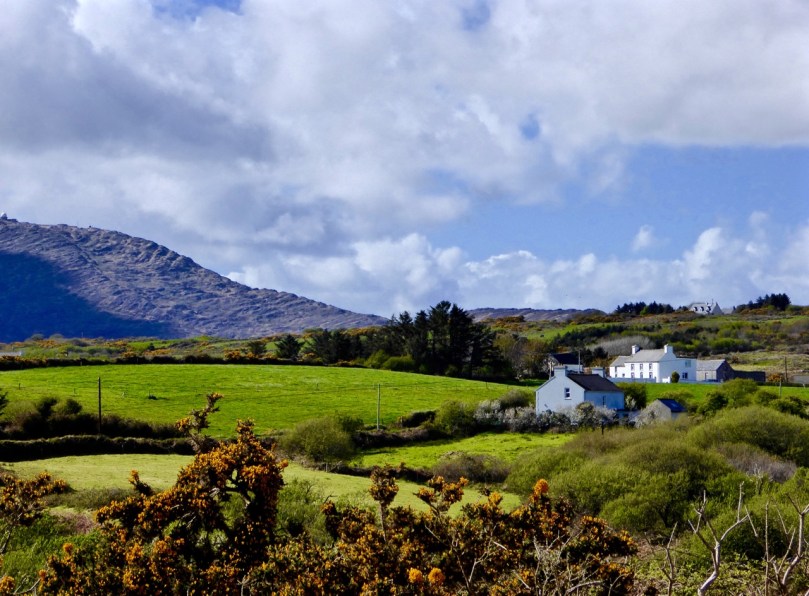
Farmhouses in the shadow of Mount Gabriel
Ballydehob Bay. This one was taken close to the same place as The Winding Road, but facing the opposite direction, towards Foilnamuck
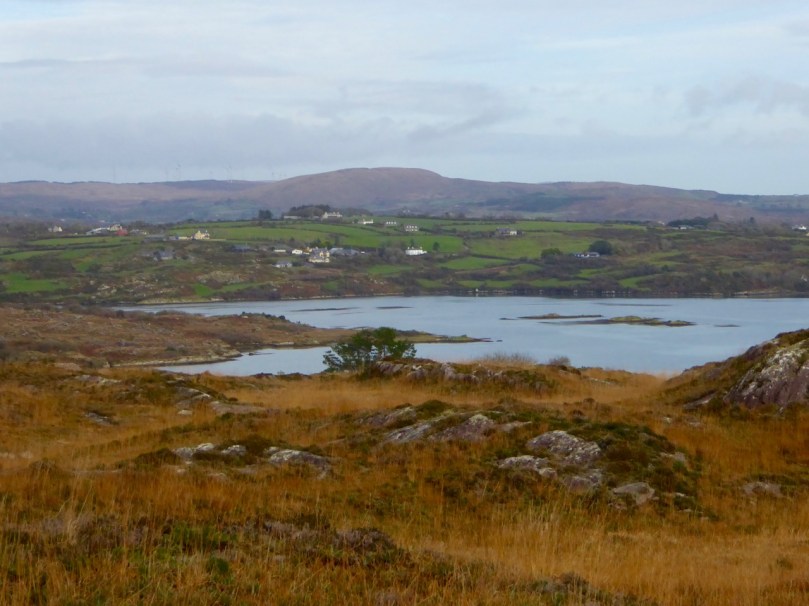
The North Side of the Mizen – so beautiful and so few people
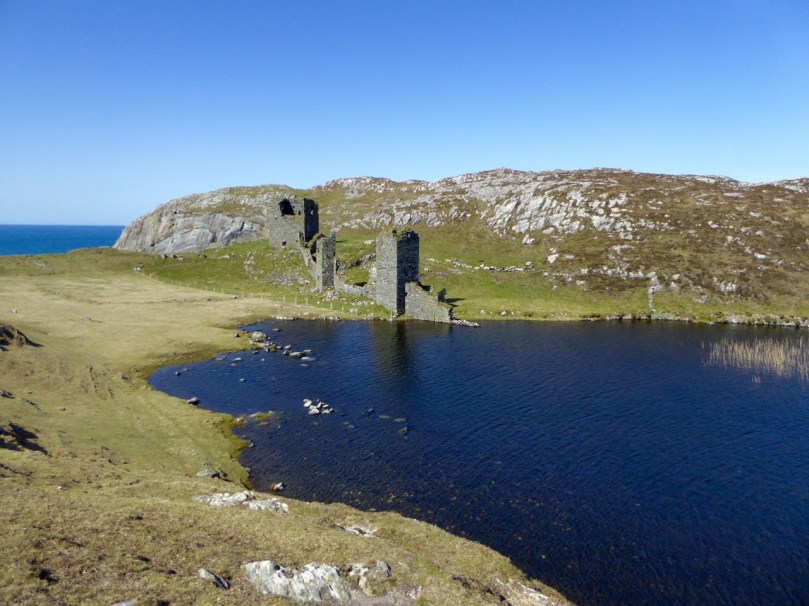
The Three Castles, from the lake. No Mizen post would be complete without at least one view of this iconic place
The Coomkeen Loop Walk on the Sheep’s Head is one of the most richly satisfying walks in West Cork. And that’s saying something, in this land of jaw-dropping vistas and absorbing heritage.
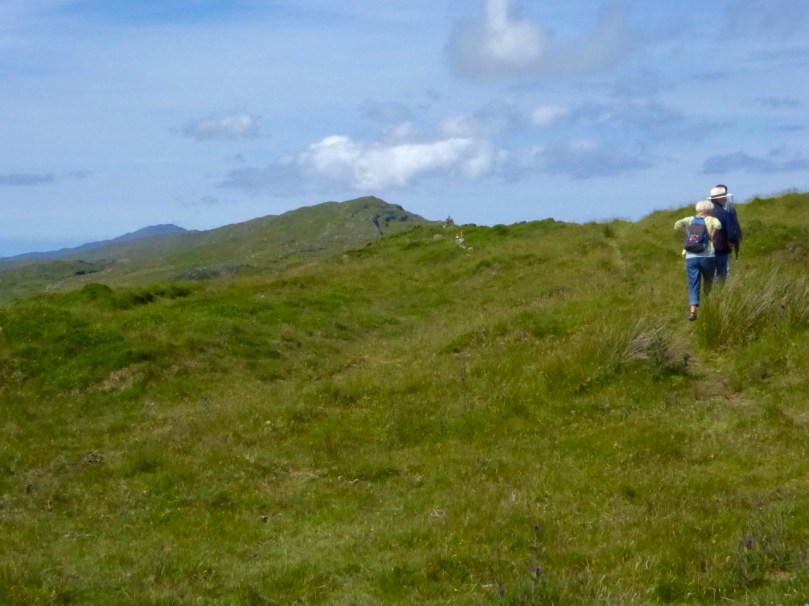
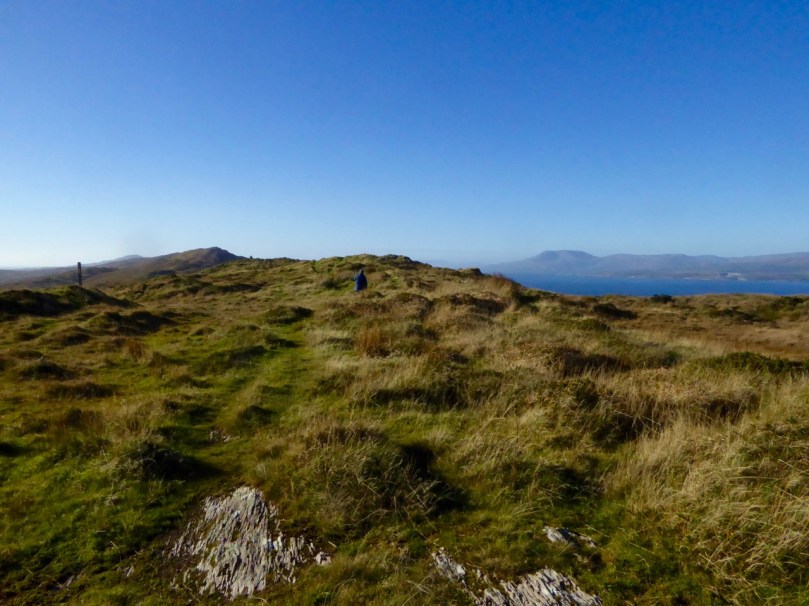
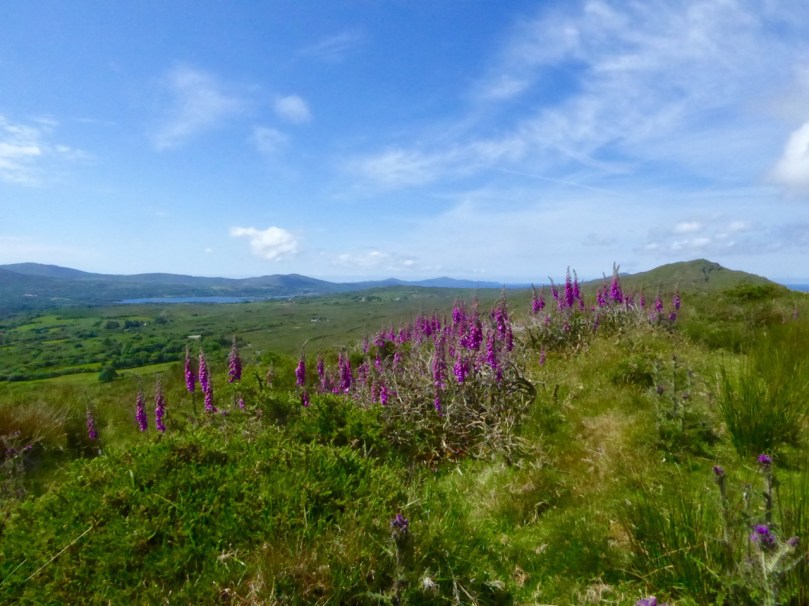
The start of the trail in June
We walked it in June with our friends Amanda and Peter and again in November with our friend John. We had extraordinary days on both occasions. While the November day was cloudless, the one in June provided enough scattered cloud to supply that variation in light and shade that lends such atmosphere to the West Cork landscape.
And in November
To reach the start of the Coomkeen trail, drive from Durrus towards Ahakista and turn right at the Church of Ireland (before you get to the pier). Ascend to the top of that road and you will find a parking spot and the clearly marked trailhead. There are various ways you can do this walk. The complete loop is a 7km walk that brings you along the spine of the peninsula before you drop down onto tracks and then the road back up to the parking place. Our own favourite option is to walk until you reach the little lake and then retrace your steps along the ridge. Lough na Fuilla, Lake of Blood, is so called, the story goes, because thirst-crazed cattle found it dry and attacked each other in their frenzy.
Either way is fairly easy, although the complete loop presents a long steep climb back to the starting point. As with all Sheep’s Head walks, be prepared for any weather, wear good boots, bring a camera and leave the dog at home. If you want more information, consult the section on the Durrus Trailhead in Walking the Sheep’s Head Way.
Winter fields on Bantry Bay
Perhaps you think that it sounds fine to go for a mountain hike in June – but November? Yes, it was a little cooler and a lot windier, but the November hike was just as spectacular as the June one had been. Most striking of course, is the change in colour.
In summer the foxgloves are everywhere
Because this is a ridge walk, the views are immense. To the north is Bantry Bay and Whiddy Island with its huge oil tanks. Beyond that are the mountains of the Beara, looking as wild and remote as, in fact, they are. To the south is Dunmanus Bay and the Mizen Peninsula.
The Summit
Amanda and Peter were able to show us an enormous standing stone on our June trip, although we missed it in November.
But we did visit the same ruin of a small farmhouse on the north side of the ridge. Incredible to think that someone eked out a living so high up. Although only a few broken down walls remain, the poignancy of the site comes from what was once a garden by the house, with thorn trees still bravely clinging on.
Further on are the remains of booleys – small huts used by the young people sent to mind the cattle on the high ground during the summer. Perhaps the little farmhouse was part of that endeavour.
Robert and John inspect the little ruined farmhouse
Running along the ridge and crisscrossing the mountain are the remains of old stone walls. Impossible to tell how long ago they may have been first built, or how recently they functioned to separate pastures.
In November the dominant colours are the blond of the grasses (called fionán, pronounced fyuh-nawn) and the amber, brown and honey tones of the bracken and heather, interspersed with the greenery of gorse and pasture. Although visually stunning, the predominance of the fionán (properly called Purple Moor Grass) and bracken have a less positive underlying meaning. They take hold where the hillside has been set on fire time and again. The fires that we often see here are supposedly to control the gorse and increase grazing for sheep, but in fact according to Birdwatch Ireland, repeat burning “has led to a loss of cover (protection) for Red Grouse…depletes moorland fauna, and can lead to soil acidification, leaching and thus soil degradation.”
In summer, it’s all green but the wild flowers provide bursts of colour.
Bog cotton
sundews
wild orchid
In November, the only wild colour to be found came from a yellow brain fungus on a dead gorse trunk. Yes, it’s really called that, and is normally yellow but darkens after dry weather. It’s not feeding on the gorse, apparently, but on other fungus that is feeding on the wood. Charming.
Do the walk, any time of year. Then show the photos to your friends and watch them make plans for a trip to West Cork. Or should we just keep this our secret?
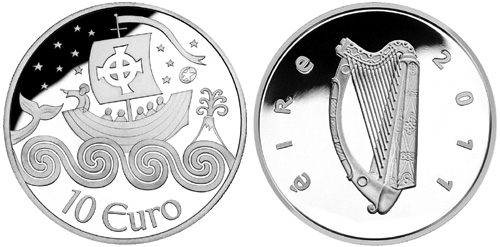
When St Brendan of Clonfert set out to discover America in 512 he and his fellow monks had to face the enormity of the Atlantic Ocean in tiny boats built out of wood and oxhides, sealed with animal fat. Up here in Nead an Iolair our view out to the islands of Roaringwater Bay and beyond is dominated by that same ocean and – sometimes – we feel just as small. This year the winter gales have started early, and spates of fierce westerlies have been throwing the Atlantic straight at our windows. The tiles rattle alarmingly while we are tucked up in bed at night. At these times I think of the Saint and what he had to face. But, like Brendan, we always survive the storms, and often wake up in the morning to a calm, clear day – except that you can hear the constant ‘roaring’ of the open sea out over the bay.
On their way to the New World – Saint Brendan and his companions take advantage of a passing Atlantic denizen to celebrate Mass…
The Atlantic has shaped Ireland. The sea is omnipresent: poets have written about it, storytellers have woven tales around it, and composers have tried to capture its spirit in music. Here’s a small section from the impressive ‘Brendan Voyage’ written by Shaun Davey for orchestra and Uillinn pipes – it’s the haunting second movement, played by Liam O’Flynn with the Irish National Youth Orchestra, at a performance in Cork City Hall. It makes me think of the wonderful sunrise on that calm day after the storm…
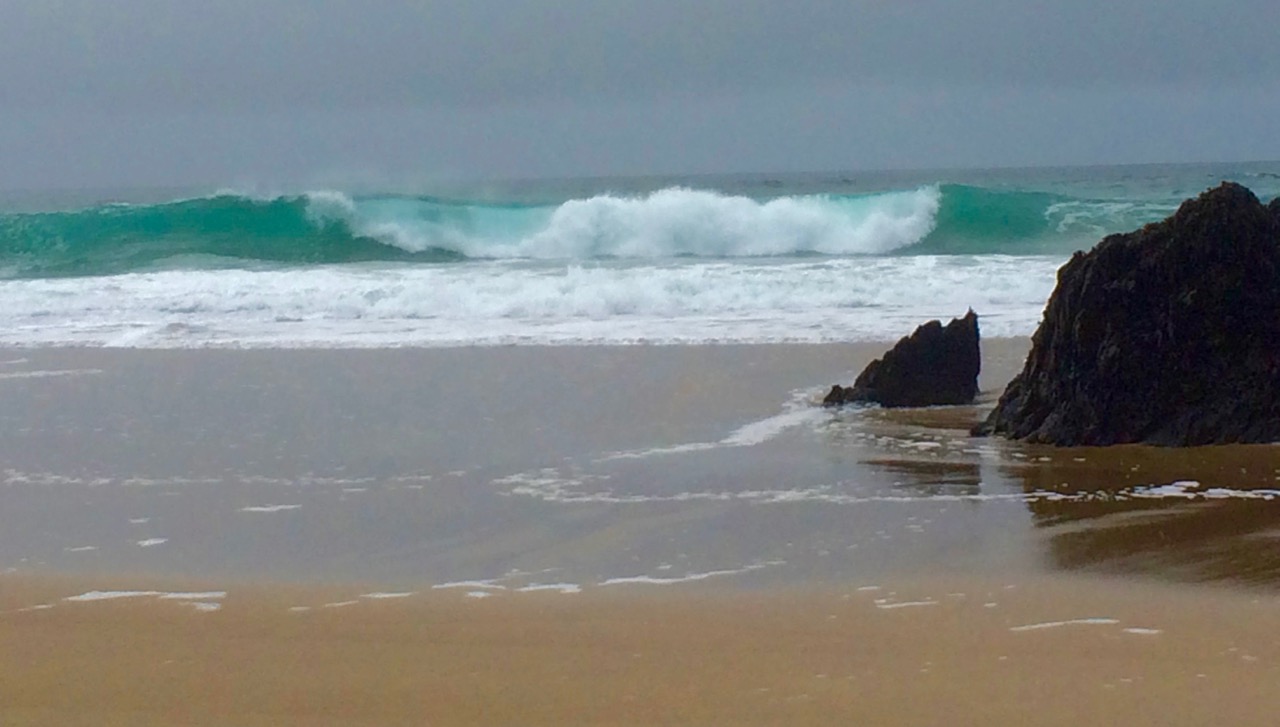
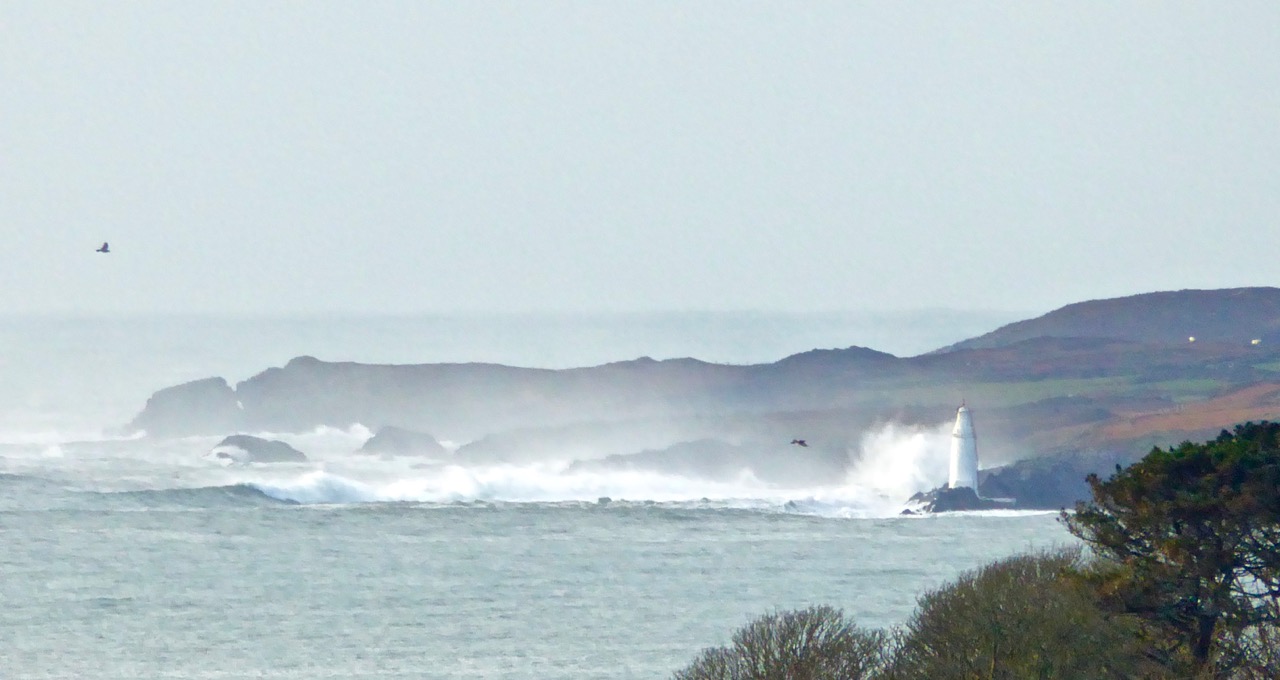
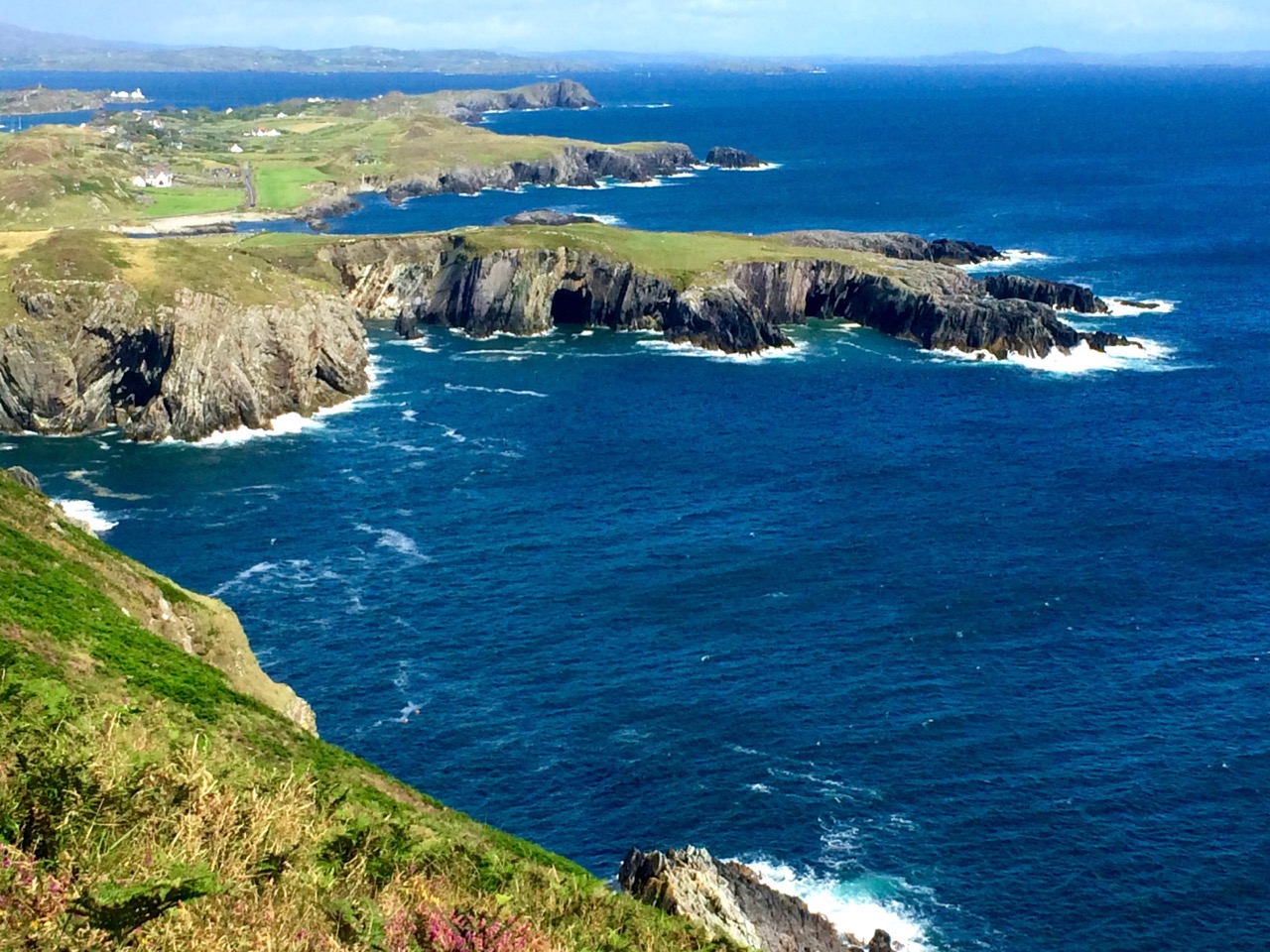
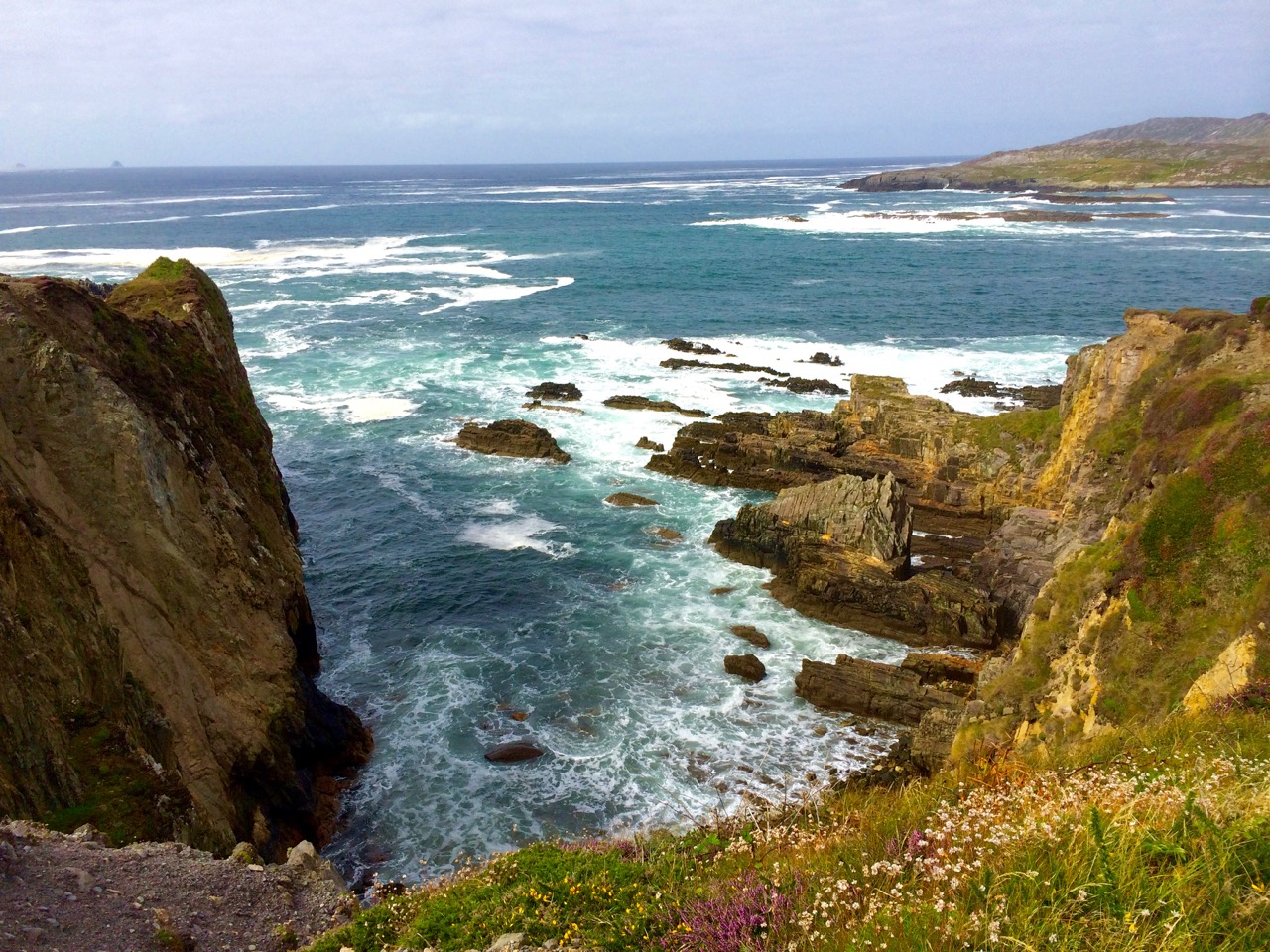
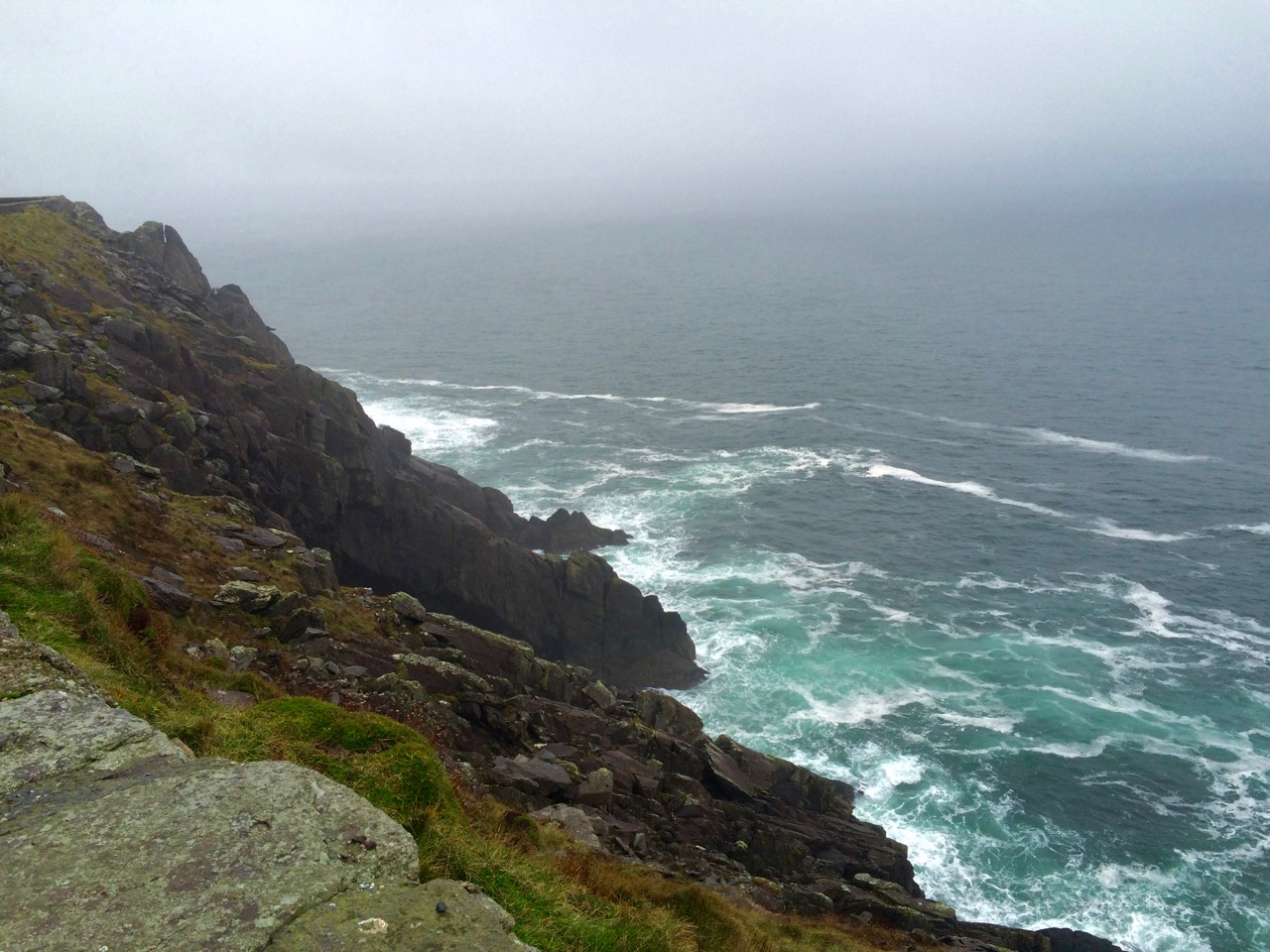
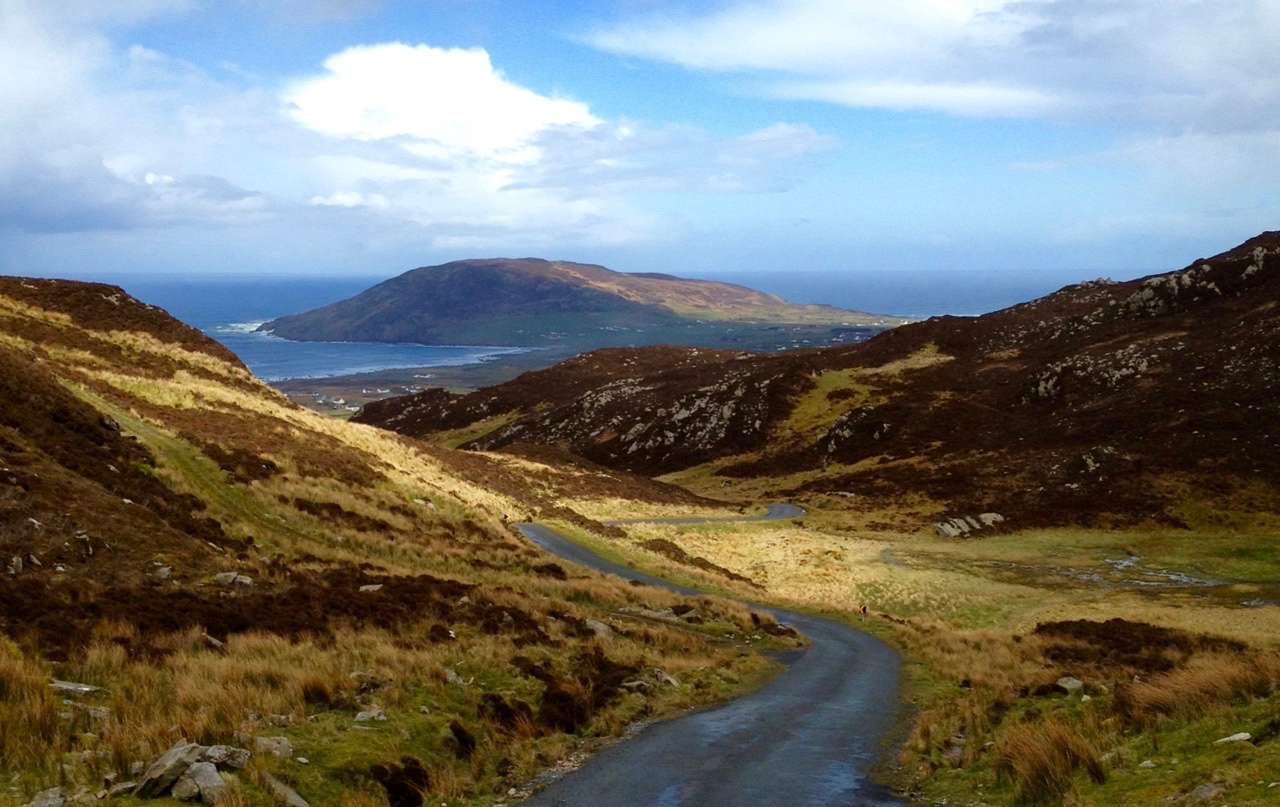
Our own Atlantic: telescopic view of a storm battering Long Island, taken from our garden at Nead an Iolair (top), Brow Head, near Crookhaven (centre), and the impressive land and seascape at Mizen Head – Ireland’s most south-westerly point (lower picture). At the head of this page you can see the huge rollers that come into Dingle Bay, Co Kerry
Dogger, Rockall, Malin, Irish Sea: Green, swift upsurges, North Atlantic flux Conjured by that strong gale-warning voice, Collapse into a sibilant penumbra. Midnight and closedown. Sirens of the tundra, Of eel-road, seal-road, keel-road, whale-road, raise Their wind-compounded keen behind the baize And drive the trawlers to the lee of Wicklow. L’Etoile, Le Guillemot, La Belle Hélène Nursed their bright names this morning in the bay That toiled like mortar. It was marvellous And actual, I said out loud, “A haven,” The word deepening, clearing, like the sky Elsewhere on Minches, Cromarty, The Faroes.
Glanmore Sonnets VII, taken from Field Work by Seamus Heaney, published by Faber and Faber Ltd
Seamus Heaney was deeply affected by the seascape of his native Ireland. Anyone who works on or beside the sea is aware of the resonant names from the Shipping Forecasts, and the poet has used those names here to introduce his word-picture of the elemental Atlantic.
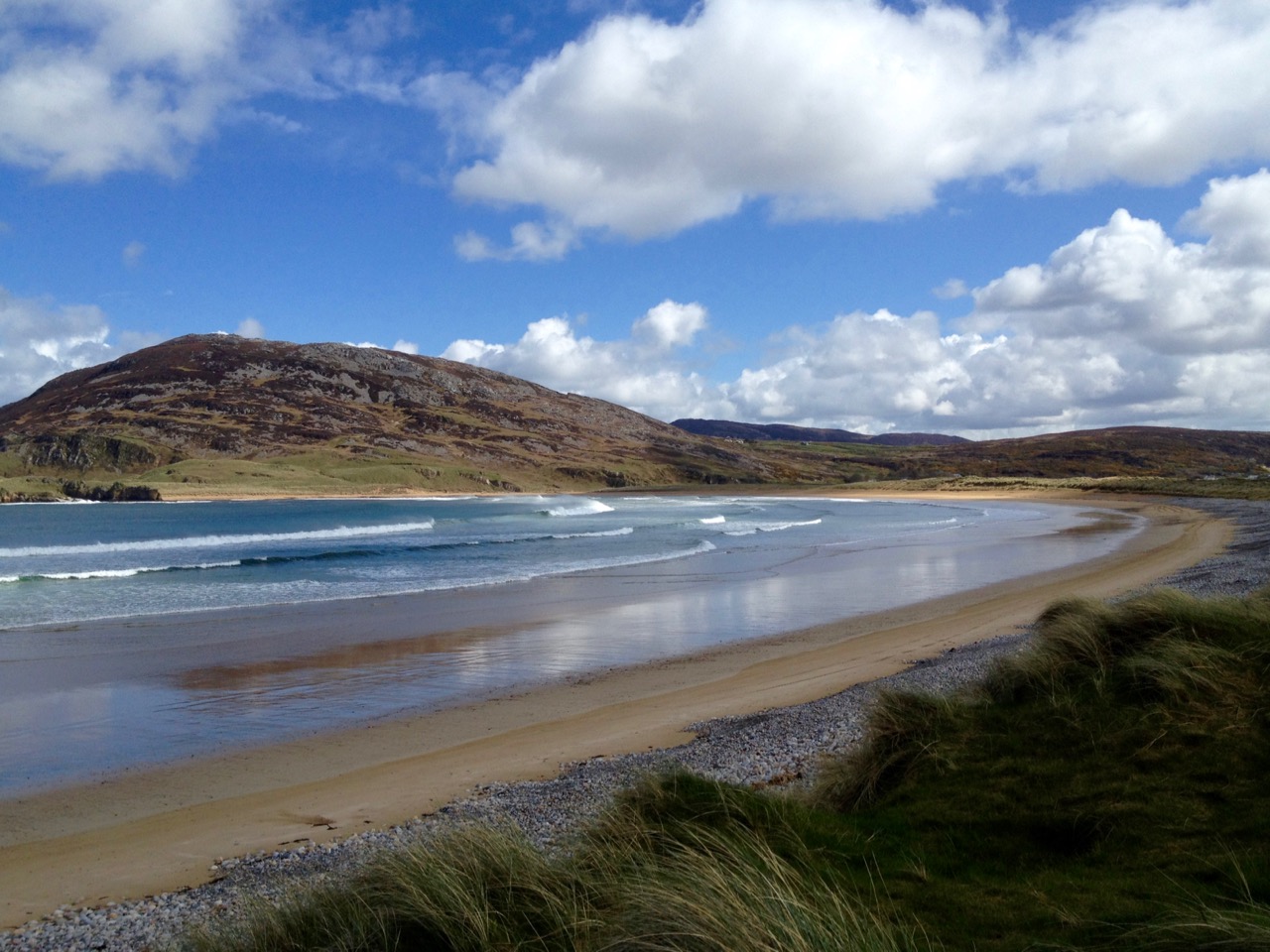
Atlantic contrasts from Mizen to Malin: near Malin Head – Ireland’s most northerly point (top), off the Beara (centre) and a beach in Donegal (lower)
A later traveller over the Atlantic waters was Chistopher Columbus in the 15th century. On the way he looked out for St Brendan’s Isle, a spectral island situated in the North Atlantic somewhere off the coast of Africa. It appeared on numerous maps in Columbus’ time, often referred to as La isla de Samborombón. The first mention of the island was in the ninth-century Latin text Navigatio Sancti Brendani Abatis (Voyage of Saint Brendan the Abbot), from whence it became firmly implanted into Irish mythology. St Brendan took a little party of monks to the island to say Mass: when they returned after a few days to the rest of the flotilla, they were told that they had been away for a year! The phantom island was seen on and off by mariners for years until in 1723 a priest performed the rite of exorcism towards it during one of its apparitions behind low cloud… You can see St Brendan’s Isle for yourselves, above the wonderful giant fish in the second picture down.
Dingle peninsula (top), and Coast Road in Donegal (lower)
I was pleased to find this Irish Times video made by Peter Cox when he was fundraising for his book Atlantic Light: spectacular photographs of the coastline on Ireland’s Wild Atlantic Way. The excellent aerial views in this film are all taken by a drone… Look out for places you will have seen in our blogs!
We are privileged that the Atlantic Ocean is the abiding but ever-changing feature in our daily lives. It must affect us in unknown ways: I do know that, wherever I go in this world, I will – like Saint Brendan – always be drawn back here to our wonderful safe haven…
Romping home! Dirty Dick Murphy winning the Salthill Fiesta, Galway, in June 1977 (photograph Connacht Tribune)
In the All-Ireland Name Stakes we’ve always known that Murphy is the front runner. In fact it’s the most popular surname, significantly outnumbering the next in line: Kelly. This was the case in 1890 – when the Registrar General of Births, Marriages and Deaths, Robert Matheson, compiled the first comprehensive analysis of names for the whole of Ireland. Then, there were 62,600 Murphys and 55,900 Kellys in a population of 4.7 million. More recently the phone network company Eircom published A Survey of Irish Surnames 1992-97 compiled by Sean J Murphy from telephone directory records in the Republic and Northern Ireland (making it comparable to the 1890 study): this showed 70,900 Murphys and 59,800 Kellys in a total population of 5.3 million.
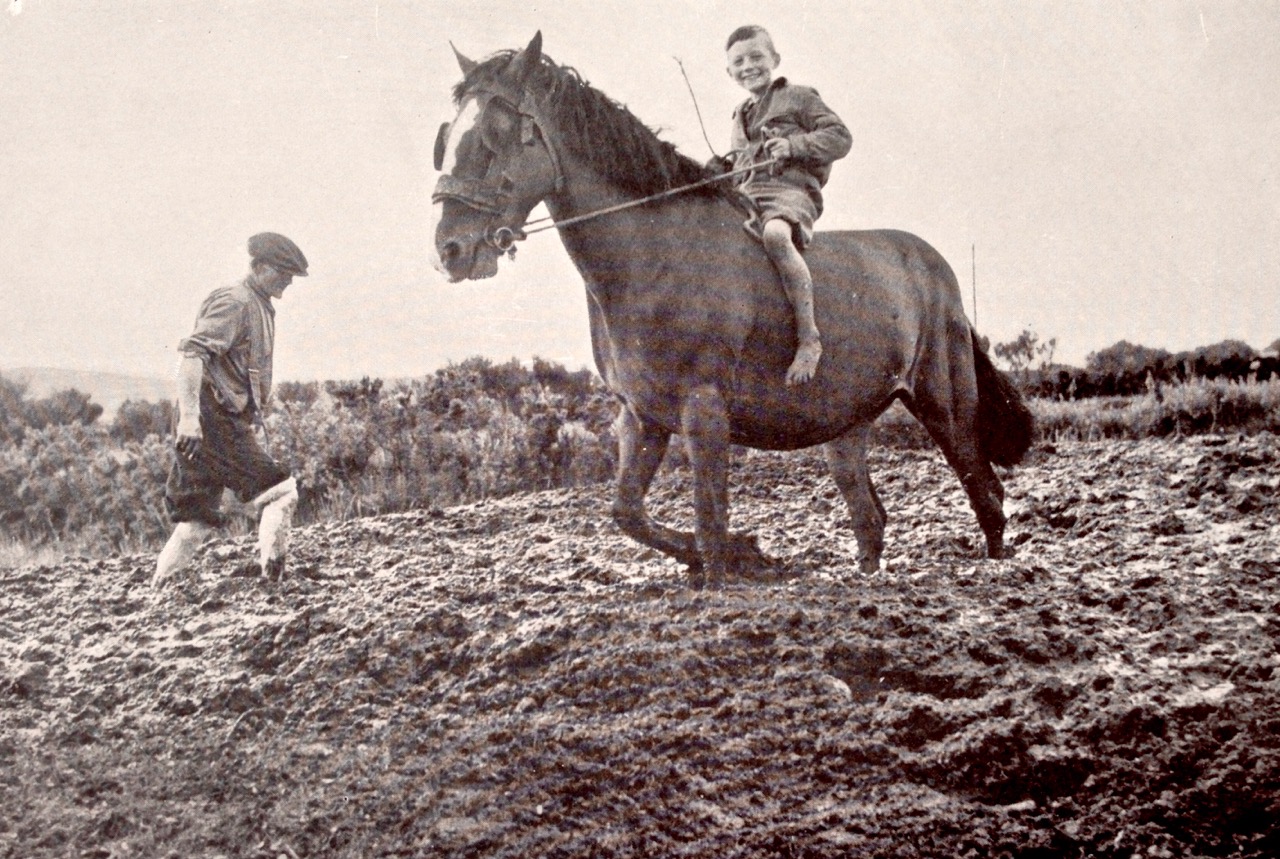
Runner-up! A Kelly, perhaps… from the collection of photographer Tomás Ó Muircheartaigh, who documented life in rural Ireland between the 1930s and the 1950s
So Murphy wins – by a margin. Let’s have look at the name: Ó Murchadha (or in modern Irish Ó Murchú) means ‘sea warrior’ (Irish Medieval History gives Murchú as ‘hound of the sea’). Most of the Murphys are evidently here in County Cork, with Counties Wexford and Kilkenny next up. There are O’Murphys – mainly confined to Ulster, where the family were part of the tribe claiming descent from Eoghan, son of Niall of the Nine Hostages, who was responsible for kidnapping St Patrick and bringing him to Ireland. Otherwise the Murphys usually trace their ancestry back to Diarmait Mac Murchadha – King of Uí Cheinnsealaig and King of Laigin (Leinster) who lived in the twelfth century and was himself descended from the High King Brian Boru through his father’s grandmother.
Key players in Murphy geneaology and Irish history: Brian Boru, Diarmait Mac Murchadha and Henry II
Diarmait Mac Murchadha was deprived of his titles by the then High King of Ireland, Ruaidrí Ua Conchobair, and asked the English King, Henry II, to help him retrieve them. In return, Mac Murchada pledged an oath of allegiance to Henry, who sent troops in support. As a further thanks for his reinstatement, Mac Murchada’s daughter Aoife was married to Richard de Clare, the second Earl of Pembroke, popularly known as ‘Strongbow‘. The result of all this was that the Normans came to Ireland – and stayed – and it’s all thanks to the Murphys!
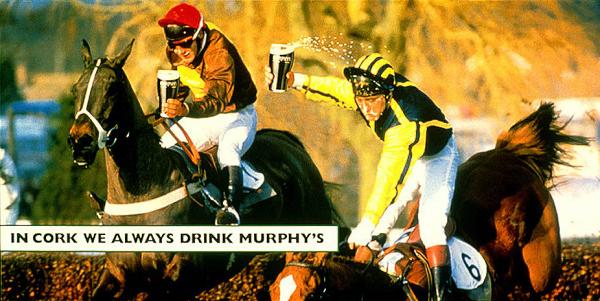
We mustn’t forget Murphy’s Irish Stout! (advertisement by BBH London)
Now let’s look at some famous Murphys. Father John Murphy – an Irish freedom fighter – is immortalised in the ballad Boolavogue. Fr John was born in 1753 and studied for the priesthood in Seville as this was the time of the Penal Laws when Catholics were persecuted in Ireland. He returned to his homeland in 1785 and there he was only known as ‘Mister Murphy’: Irish priests were not styled as ‘Father’ until the 1860s. John Murphy led a group of rebels against English forces in the 1798 uprising. He was captured, tortured and brutally executed at Tullow, Co Carlow. Here is a rendering of the beautiful elegy Boolavogue composed by Patrick Joseph McCall in 1898, the centenary of the Rebellion, played on the pipes by Davy Spillane, with Aly Bain on fiddle:
Boolavogue is a town in Co Wexford where the rebels secured their first victory before they were captured. Here are the words to the ballad:
At Boolavogue, as the sun was setting
O’er the bright May meadows of Shelmalier,
A rebel hand set the heather blazing
And brought the neighbours from far and near.
Then Father Murphy, from old Kilcormack,
Spurred up the rocks with a warning cry;
“Arm! Arm!” he cried, “For I’ve come to lead you,
For Ireland’s freedom we fight or die.”
He led us on against the coming soldiers,
And the cowardly Yeomen we put to flight;
‘Twas at the Harrow the boys of Wexford
Showed Booky’s Regiment how men could fight.
Look out for hirelings, King George of England,
Search ev’ry kingdom where breathes a slave,
For Father Murphy of the County Wexford
Sweeps o’er the land like a mighty wave.
We took Camolin and Enniscorthy,
And Wexford storming drove out our foes;
‘Twas at Sliabh Coillte our pikes were reeking
With the crimson stream of the beaten Yeos.
At Tubberneering and Ballyellis
Full many a Hessian lay in his gore;
Ah, Father Murphy, had aid come over
The green flag floated from shore to shore!
At Vinegar Hill, o’er the pleasant Slaney,
Our heroes vainly stood back to back,
And the Yeos at Tullow took Father Murphy
And burned his body upon the rack.
God grant you glory, brave Father Murphy
And open heaven to all your men;
The cause that called you may call tomorrow
In another fight for the Green again.
Two of my Murphy heroes are musicians: Denis Murphy (1912 – 1974) was a great fiddle player from the Sliabh Luachra area of Cork and Kerry. There were so many Murphy families in that area that Denis’s father Bill was always known as ‘Bill the Waiver’ because his people had been weavers of flax in olden times. I have Denis in my collection of Irish music cd’s but was never able to hear him playing live. I did meet my other hero, however, on my first visit to Ireland back in 1975. That’s Paddy Murphy (1913 – 1992), the renowned concertina player from Co Clare. I was privileged to be taken out to a private session in a remote townland somewhere north of Kilmihil. There, in a bar which seemed like someone’s front parlour, I heard Paddy play and talk of his family history and his very individual virtuoso style of playing an instrument which I have been trying to master for the last 50 years!
Noted traditional musicians: Denis Murphy (left) from the Sliabh Luachra and Paddy Murphy (right) from County Clare
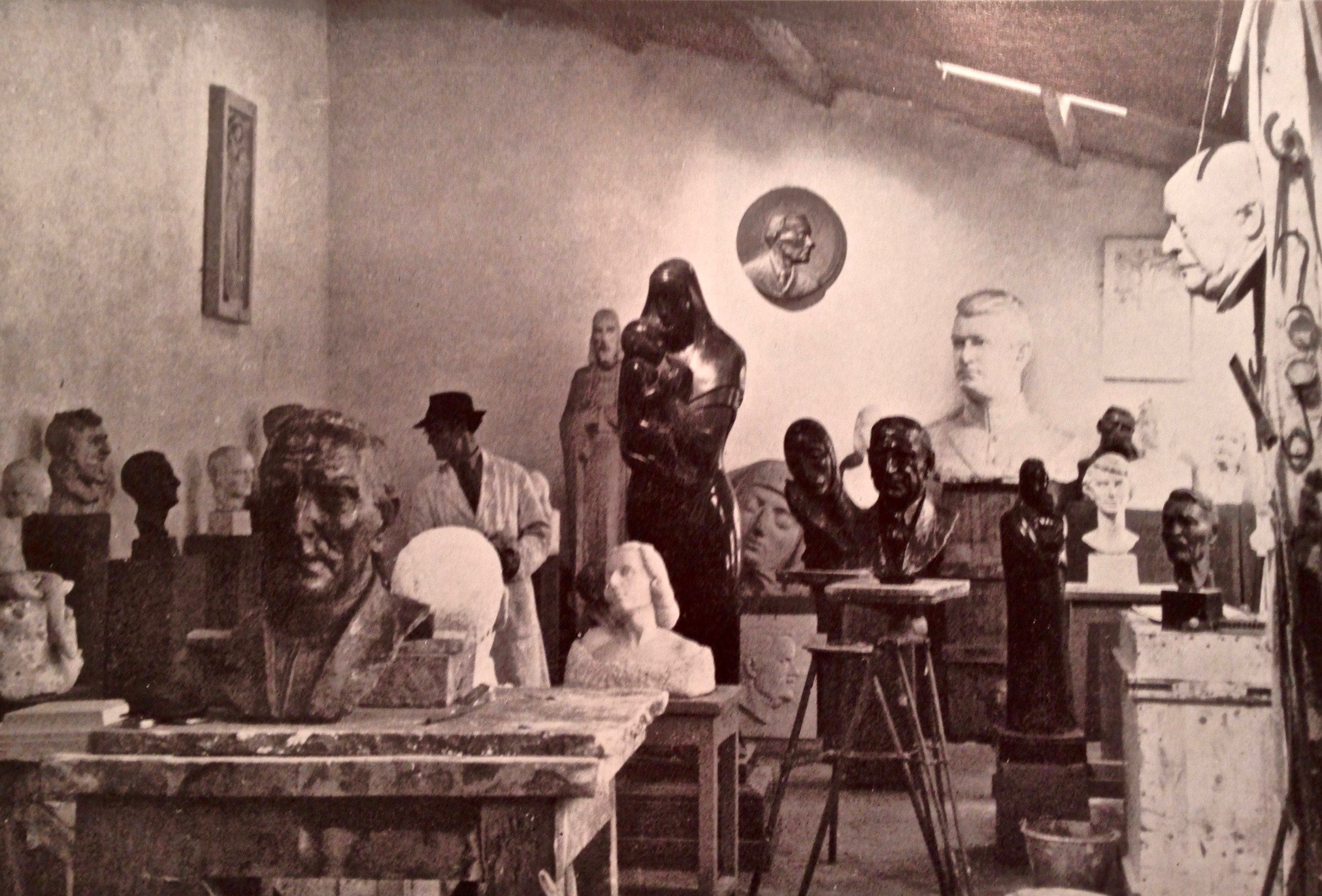
Next is someone we have met before, in our posts on Saint Gobnait and The Tailor and Ansty: that’s the sculptor Seamus Murphy (1907 – 1975). This Murphy, from Burnfort near Mallow, Co Cork, became Professor of Sculpture at the Royal Hibernian Academy. He is also known for his book, Stone Mad, which was published in 1950.
Seamus Murphy in his studio: pictures top and lower left are from the collection of photographer Tomás Ó Muircheartaigh, who documented life in rural Ireland between the 1930s and the 1950s
The last Murphy that I want to mention (and there could be so many) is, perhaps, an unexpected one – she is Marie-Louise O’Murphy, who lived from 1737 to 1814. Although she was born and died in France she was of Irish extraction: her grandfather Daniel, a former army officer, had left his home in Cork for Rouen, where he worked as a master shoe-maker. When just in her teens, the physical features of young Mlle O’Murphy were spotted by Giacomo Casanova, who recommended her to King Louis XV. As a result she became the King’s Petite maîtresse – little mistress (or, rather, one of them) and bore him a daughter. However, the King’s favourite, Madame de Pompadour, decided that Marie-Louise’s presence in the royal household was too challenging and she was sent off to the country to marry a nobleman – and also received a handsome dowry for life. Marie-Louise O’Murphy (who was given the name of Marie-Louise Morphy de Boisfailly – possibly to raise her status in Versailles) is familiar to us as the artist’s model for François Boucher’s Resting Girl, painted in 1751. The canvas is now in the Wallraf Richartz Museum, Cologne.
A colourful note on which to end our survey on the Murphys of Ireland (and beyond), perhaps. We apologise to all the thousands of Murphys who we have not mentioned, but we’d like to hear from any of them…
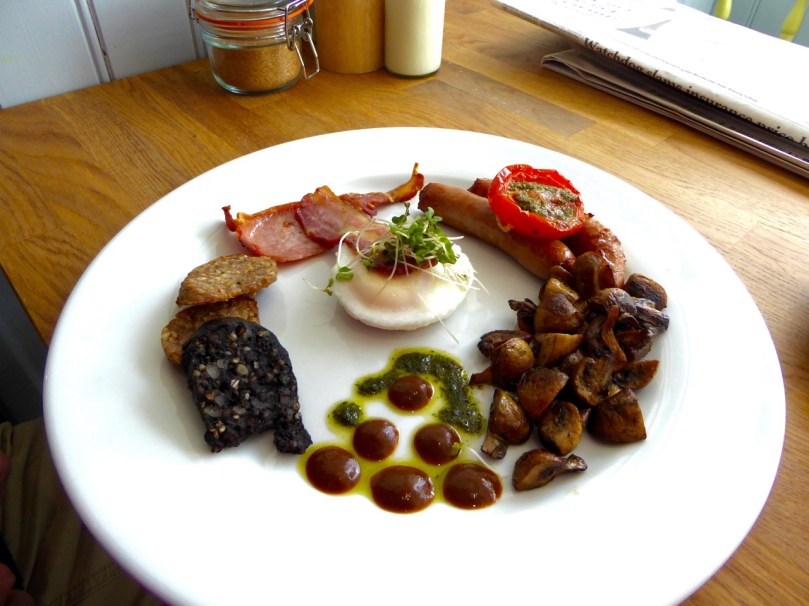
Black pudding (a blood sausage) was always a popular breakfast staple in Ireland – served in all decent bed-and-breakfasts on a ‘Full Irish’ plate along with white pudding, sausages, rashers and eggs, and sometimes tomatoes and mushrooms, accompanied by homemade brown soda bread. I never liked it – “Please, no black pudding on mine.”
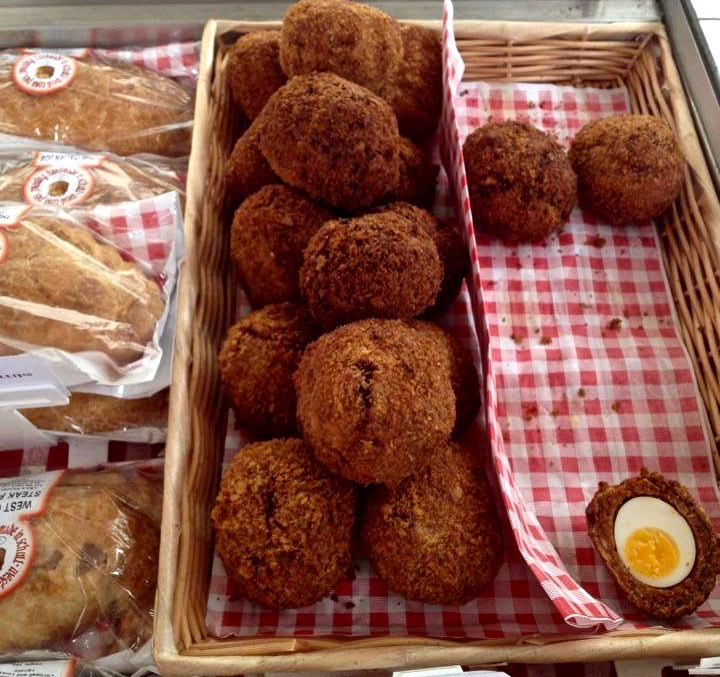
West Cork Pies‘ Black Pudding ‘Brunch’ Scotch Eggs, at the Skibbereen Market
But somewhere in the last ten years black pudding has been transformed into the gourmet must-have ingredient du jour: added to scallops or crab, used to lend interest to staid sausage rolls and scotch eggs, served as canapés with the requisite goat’s cheese and caramelised onions.
And it’s delicious! Artisan butchers and food producers all over the country have been developing their own recipes and flavours, although the basic ingredients (pig’s blood and oatmeal) have remained the same. Some credit Clonakilty Black Pudding with leading the charge. They use beef rather than pork and their exact formula is a closely guarded secret. Their website has lots of recipes and the history page features a video on how the pudding is made. This has become such a celebrated West Cork product that there has been talk of a Black Pudding Visitor Centre!
Nowadays, every supermarket meat section will sport an array of artisan black and white puddings. Here in West Cork we find local varieties such as McCarthy’s of Kanturk, Putóg De Róiste (an Irish-speaking black pudding from the Ballyvourney Gaeltacht), Hodgins of Michelstown, as well as Rudd’s from County Offaly, further afield. There are mass-produced varieties too, and supermarket chain generic puddings, all of which have their fans.
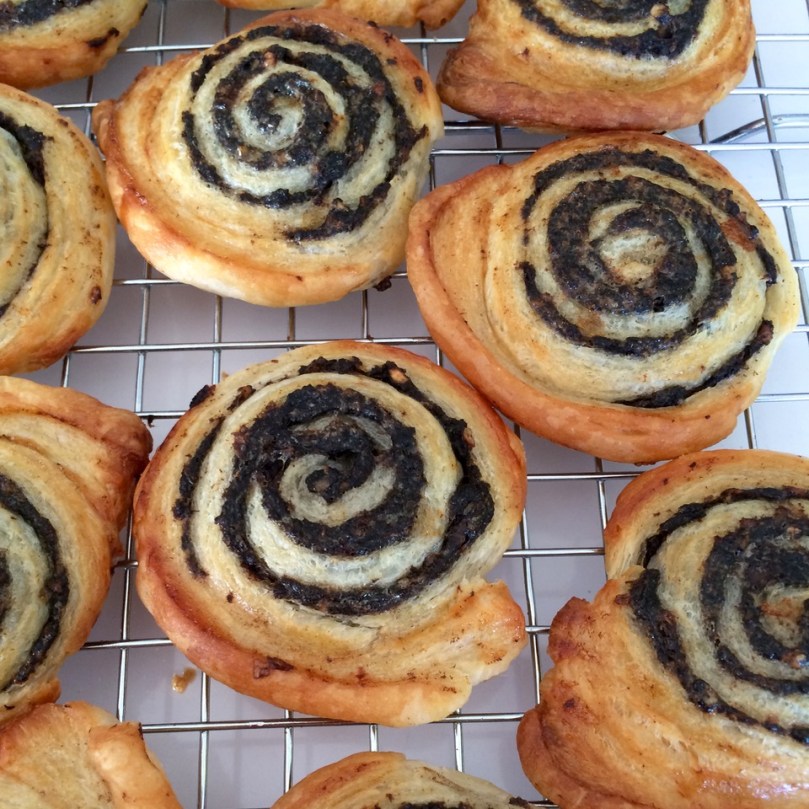
Avril Allshire at a function in Rosscarbery, handing around her black pudding swirls – our first taste of them; The Rosscarbery Recipes range of products on sale at Fields
My own favourite is made by Rosscarbery Recipes. This is totally attributable to Avril Allshire, the cheerful producer whom I have met on numerous occasions demonstrating ways to eat their black pudding or serving it up at events. She’s always up for a chat and she loves to share her enthusiasm and her recipes. She and husband Willy and two sons run Caherbeg Free Range pig farm (the Facebook page is full of adorable piggy pics), as well as the Rosscarbery Recipes food range and are totally committed to food quality, to provenance control, and to traditional curing methods that result in delicious pork products. They’ve even developed a gluten-free black pudding!
The Allshire Family with awards for their food products. Avril, William and the two boys are totally involved in all aspects of the business
Avril’s Black Pudding Swirls have become my go-to appetiser recipe and I am sharing it at the end of the post, taken directly from her website but adapted for our non-West Cork readers.
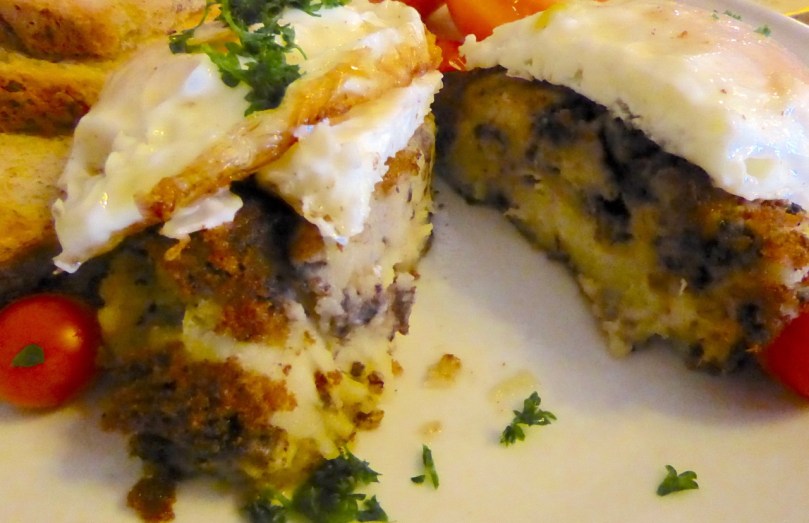
An Chístín Beag’s black pudding potato cakes
The other way I have come to love black pudding is in potato cakes. As served by the fabulous An Chístín Beag (The Little Kitchen) in Skibbereen, this is a way to start your day off right, especially if you’re planning a hike! According to Pauline, you simply add chopped up black pudding to mashed potato, shape it into cakes, and fry. There’s got to be more to it than that, I insist – egg? flour? But no, that’s it. I think it helps if you leave them in the fridge to chill and firm up a bit before you cook them.
The choir Christmas get-together at Rosie’s Pub. My contribution was the black pudding swirls, recipe below
What about you and black pudding? Love it? Hate it? Got a favourite? Figured out how to get hold of it outside Ireland or the UK?
Making the swirls
Rosscarbery Recipes’ Black Pudding Swirls
By Avrill Allshire (additional notes by Roaringwater Journal)
Ingredients:
1 pack of Field’s Puff Pastry; (any ready-to-bake puff pastry will do, 500g or 1lb)
1 Rosscarbery Recipes Black Pudding; (Any good-quality black pudding can be substituted, 300g or 11oz)
1 large egg.
Method:
About an hour beforehand, take the puff pastry and the black pudding from the fridge and allow to come to room temperature.
Preheat the oven to 200°C/ 400°F/Gas Mark 6.
Whip the egg.
Roughly chop the black pudding and blitz in the food processor with half the whipped egg. If you don’t have a food processor, use a fork or wooden spoon. The idea is to get it to a spreadable consistency.
Dust your rolling surface with flour and roll the puff pastry into a large rectangle. Lay the Black Pudding mixture on the puff pastry. Spread it out evenly but not to the edge of one long side which should be brushed with a little of the whipped egg. Roll from the other side. Finish the roll by pressing gently onto the whipped egg end. Slice in 1cm slices and place on a sheet of greaseproof paper on a baking sheet. Brush each slice with the whipped egg.
Put in the oven and bake until a golden brown. This will take anywhere from 12 to 15 mins, so keep an eye on it.
Welcome to the UCD Library Cultural Heritage Collections blog. Discover and explore the historical treasures housed within our Archives, Special Collections, National Folklore Collection and Digital Library























 Roaringwater Journal