Our Top 20 West Cork Photos of 2019

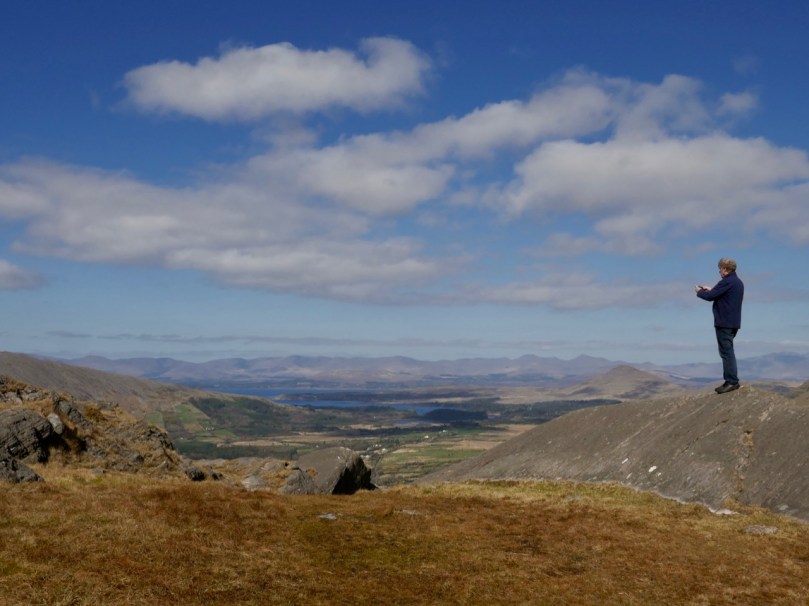
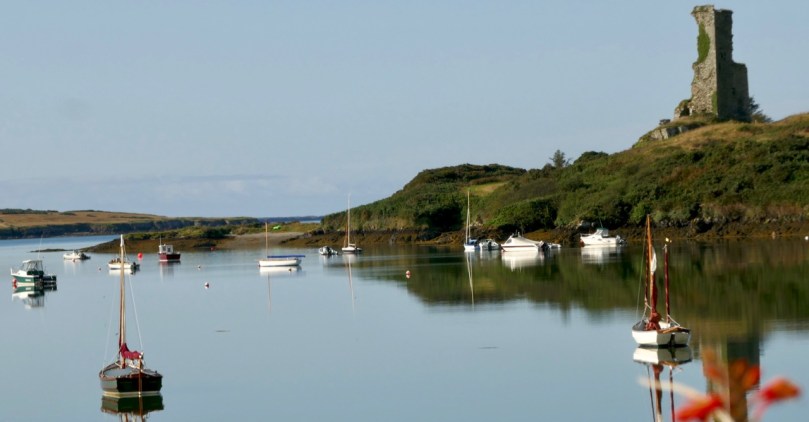
As ever, at the end of each year, we publish some favourite photos from our West Cork wanderings, like the one above from a memorable day on Long Island. We will caption each photo but apart from that, this post will be text-free. Enjoy!

A pilgrim touches the Sheela-na-Gig, part of the rituals observed during the rounds on St Gobnait’s Day in February

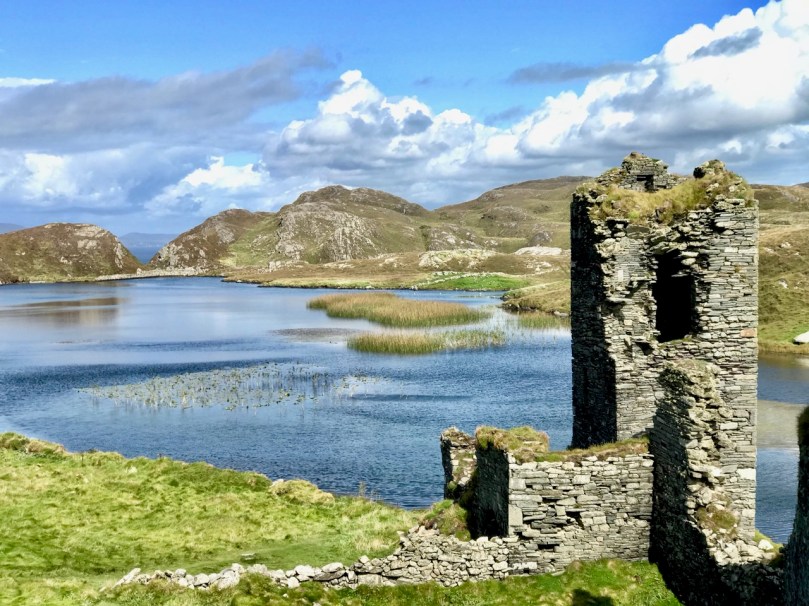
Three Castle Head on a glorious day

The ‘Tate’ – an installation in John Kelly’s Sculpture Garden, Reen Farm, taken during a high summer concert

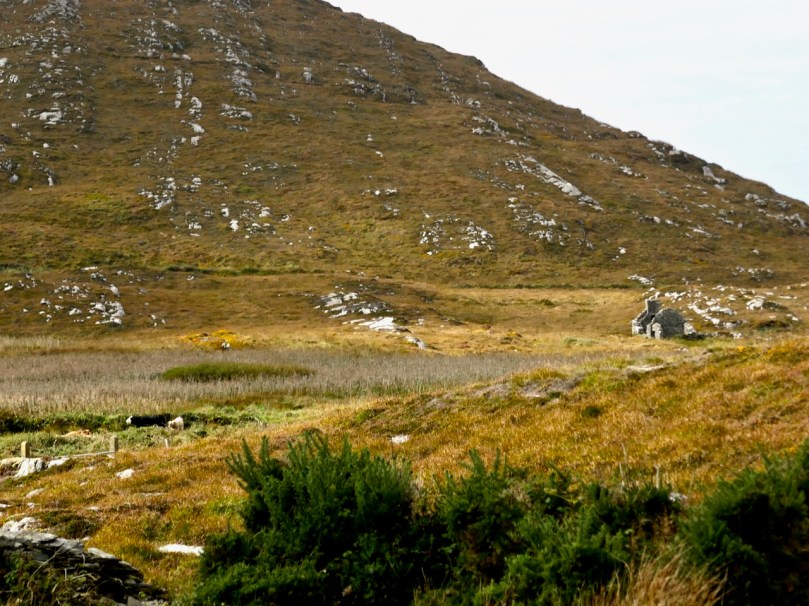
Lonely ruined cottage near an abandoned mine on the Mizen

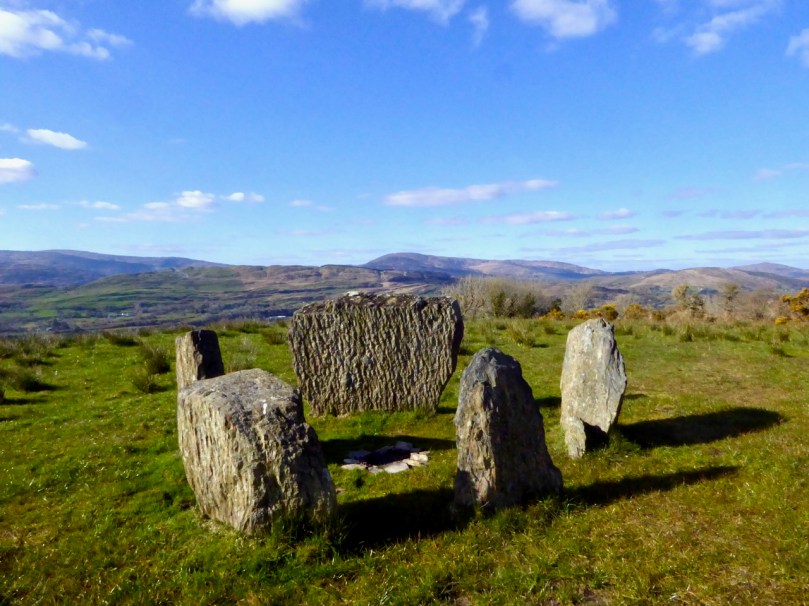
These stones at Cashelkeelty on the Beara, part of what was a stone circle, seem to mirror the landscape behind them

The Opium Poppy, a garden escape flourishing as a wild flower along a West Cork boreen

Hungry Hill on the Beara

This Neo-Gothic gate lodge is in Coolkelure

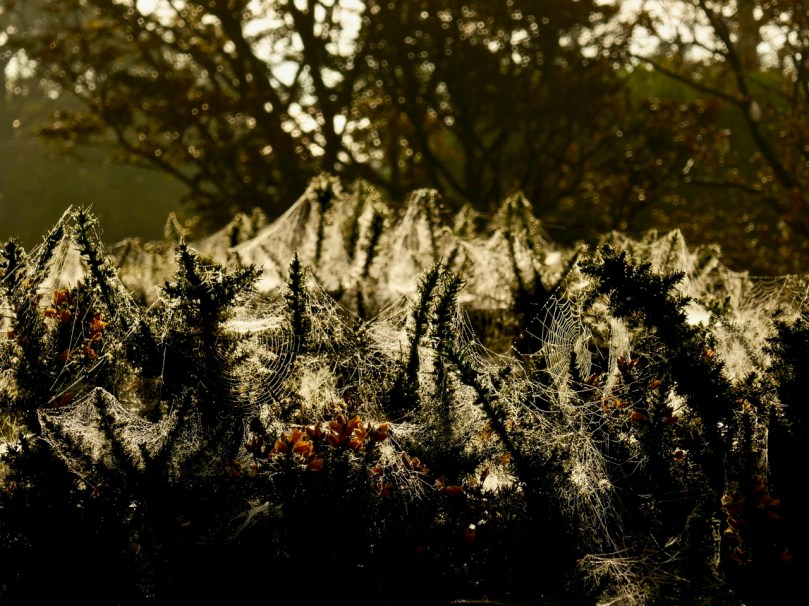
Cobwebs on gorse on a misty morning

The Ballydehob International Turnip Race is off to a good start

We made new friends on one of our island walks

On top of the world, at the Healy Pass, Beara Peninsula

A zen moment at Derreenatra, on the Mizen

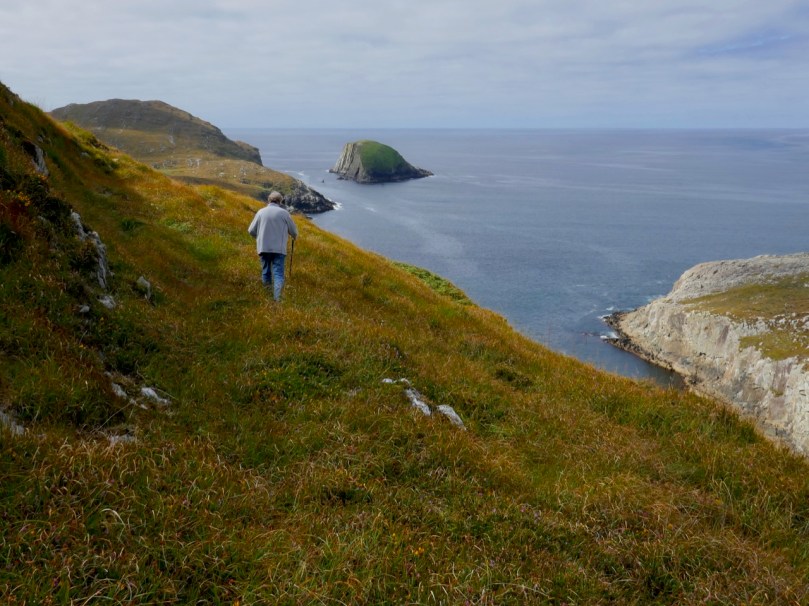
Dhurode, with Bird Island, the Mizen

Crookhaven from across the water

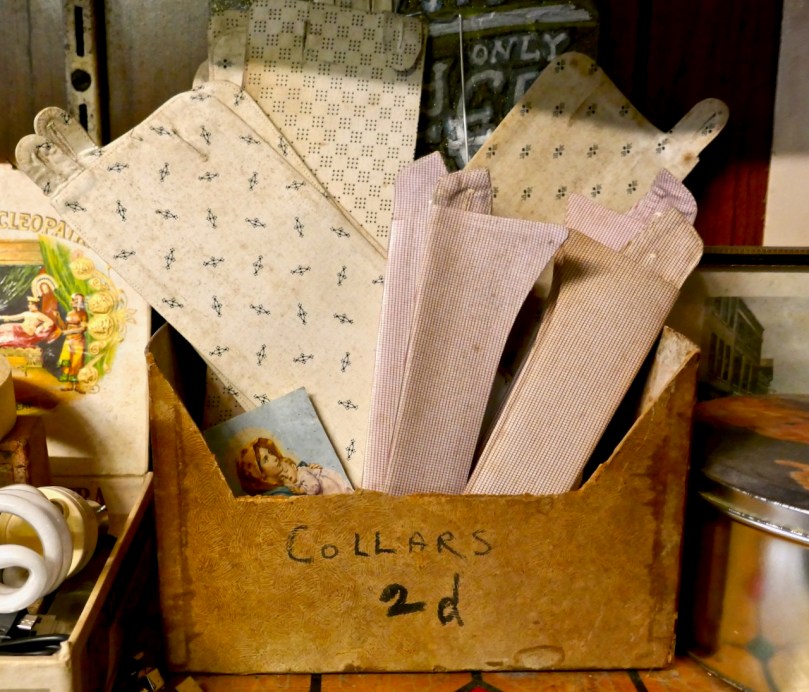
From a bygone era, still to be found behind the shop counter at Levis’s in Ballydehob

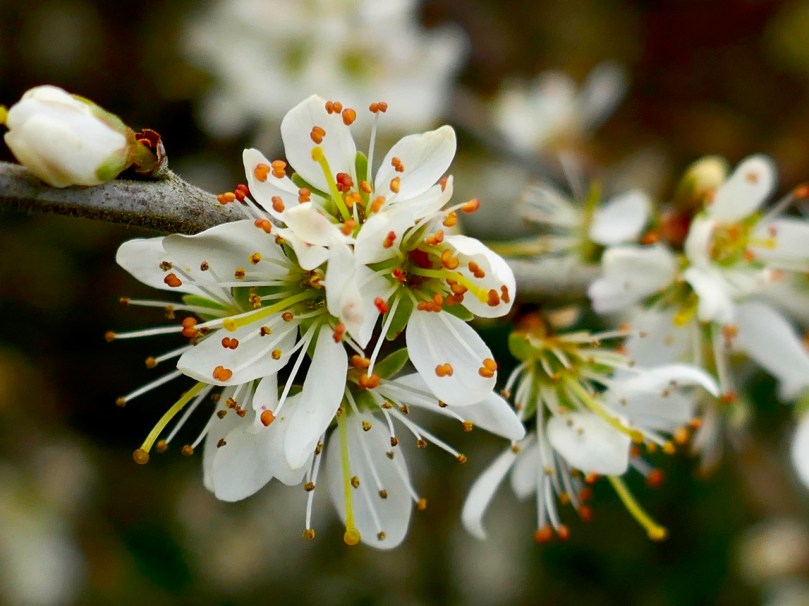
Blackthorn blossoms, always a welcome sign of spring

Barley Lake is glimpsed as we return over the Caha Pass between Cork and Kerry

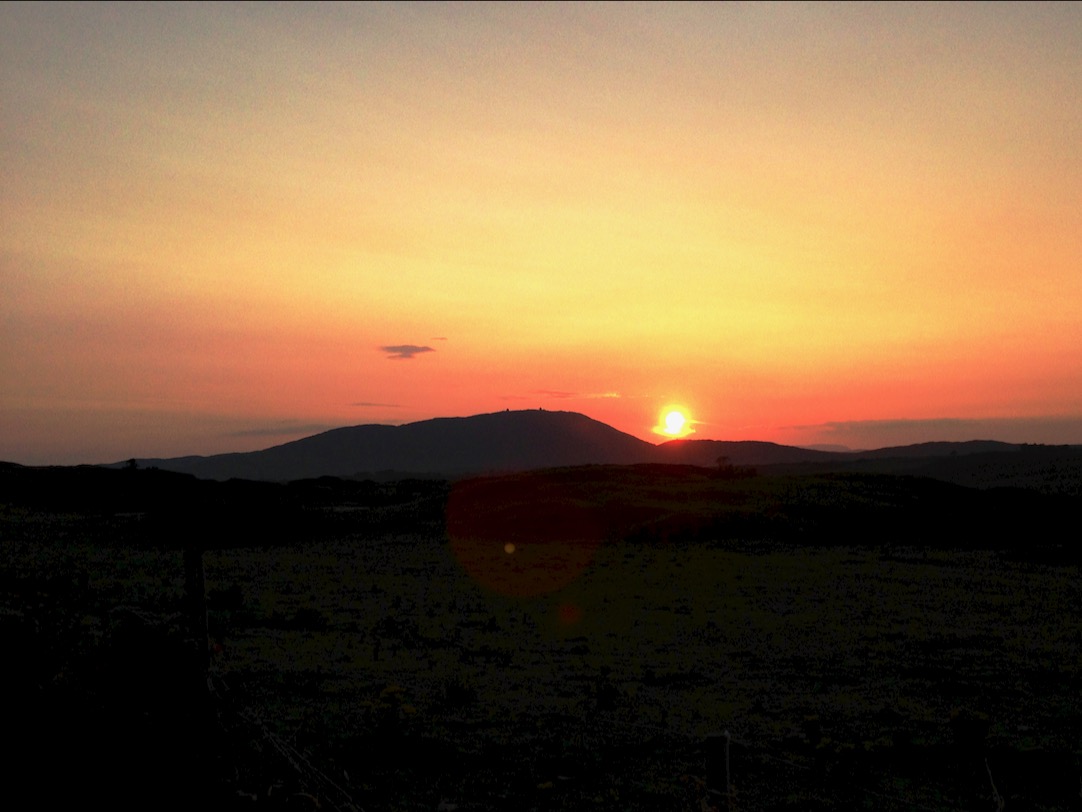
Our favourite view during a spectacular winter sunset

Looking forward to a New Year of blogging and picture taking. See you all in 2020!

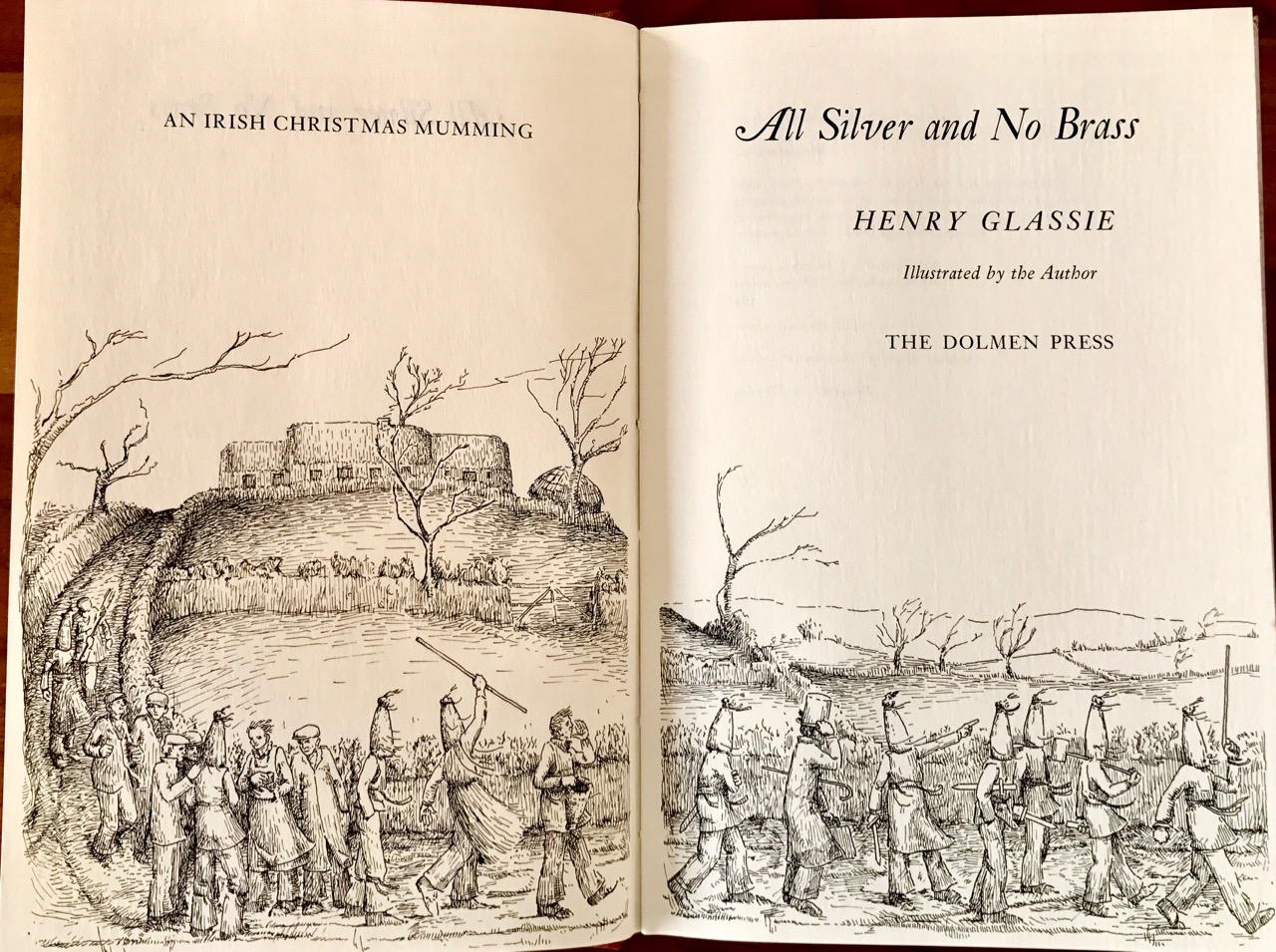
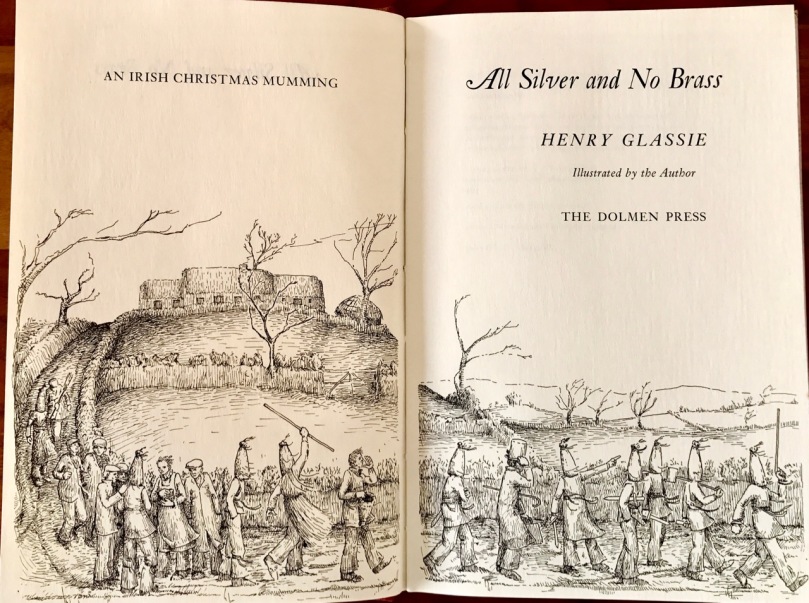
All Silver and No Brass

title page full

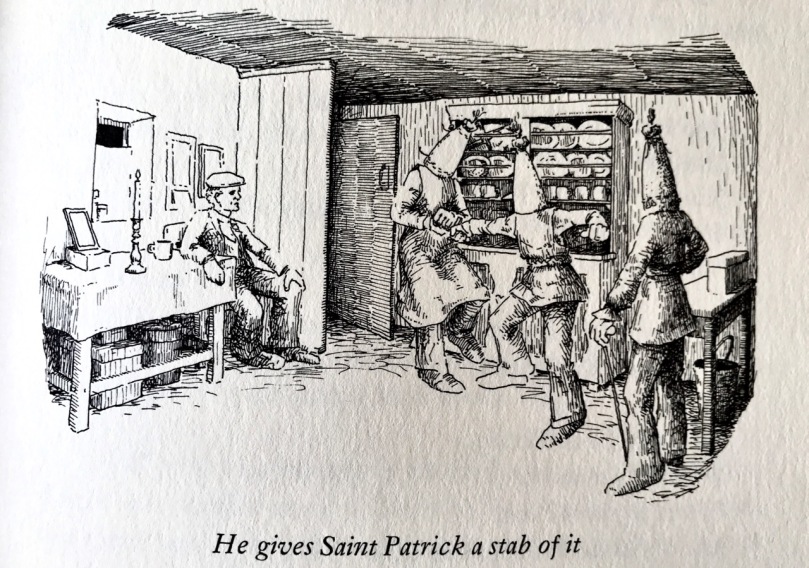
To celebrate St Stephen’s Day, I’m republishing this post from a couple of years ago. Both Mumming and Hunting the Wren were (and still are) traditional activities which take place on the day after Christmas in many parts of Ireland. I was pleased to find Henry Glassie’s volume on the Mumming Tradition in Northern Ireland in my younger days: as a Mummer myself, I was eager to search out any material on this then neglected subject, and was pleased to find this volume. It is written and illustrated by Henry Glassie, a Professor of Folklore at Indiana University Bloomington, and is the product of an extended field trip to County Fermanagh in the early 1970s. The title comes from the Mummers’ plea for the audience to put money in their hat or box – preferably silver coins!

Henry Glassie – born 1941 – has written many books about life and traditions in Ireland. His first was All Silver and no Brass, published by The Dolmen Press in 1976

…Winter nights in Ireland are black and long. A sharp wet wind often rises through them. Midwinter is a time to sit by the fire, safe in the family’s circle, waiting for the days to lengthen and warm. It is no time for venturing out into cold darkness. The ground is hard, the winds bitter. But for two and a half centuries, and possibly for many years before them, young men braved the chilly lanes, rambling as mummers from house to house, brightening country kitchens at Christmas with a comical drama. Their play, compact, poetical, and musical, introduced an antic crew and carried one character through death and resurrection…

(From the Preface to All Silver and no Brass by Henry Glassie)
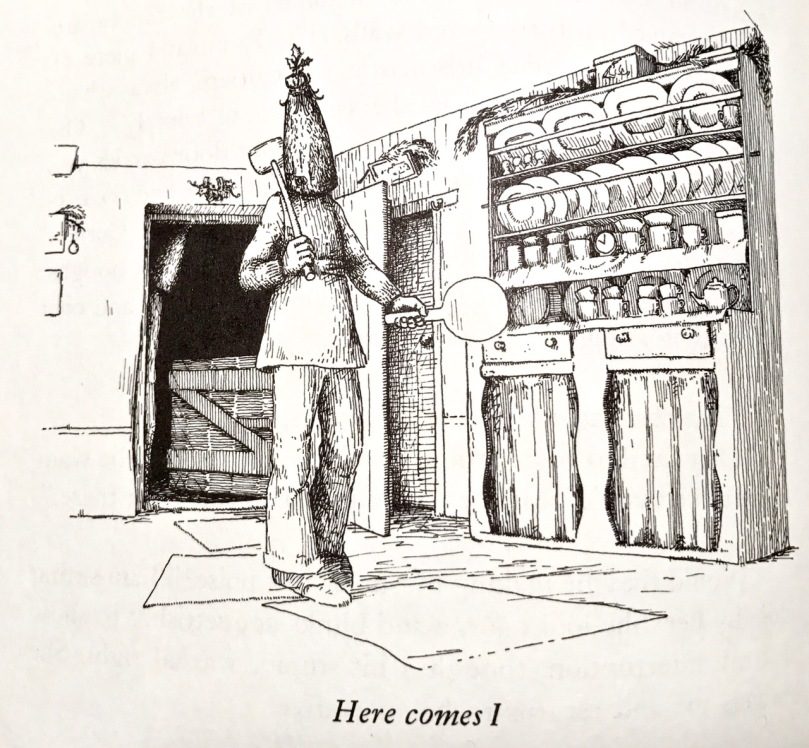
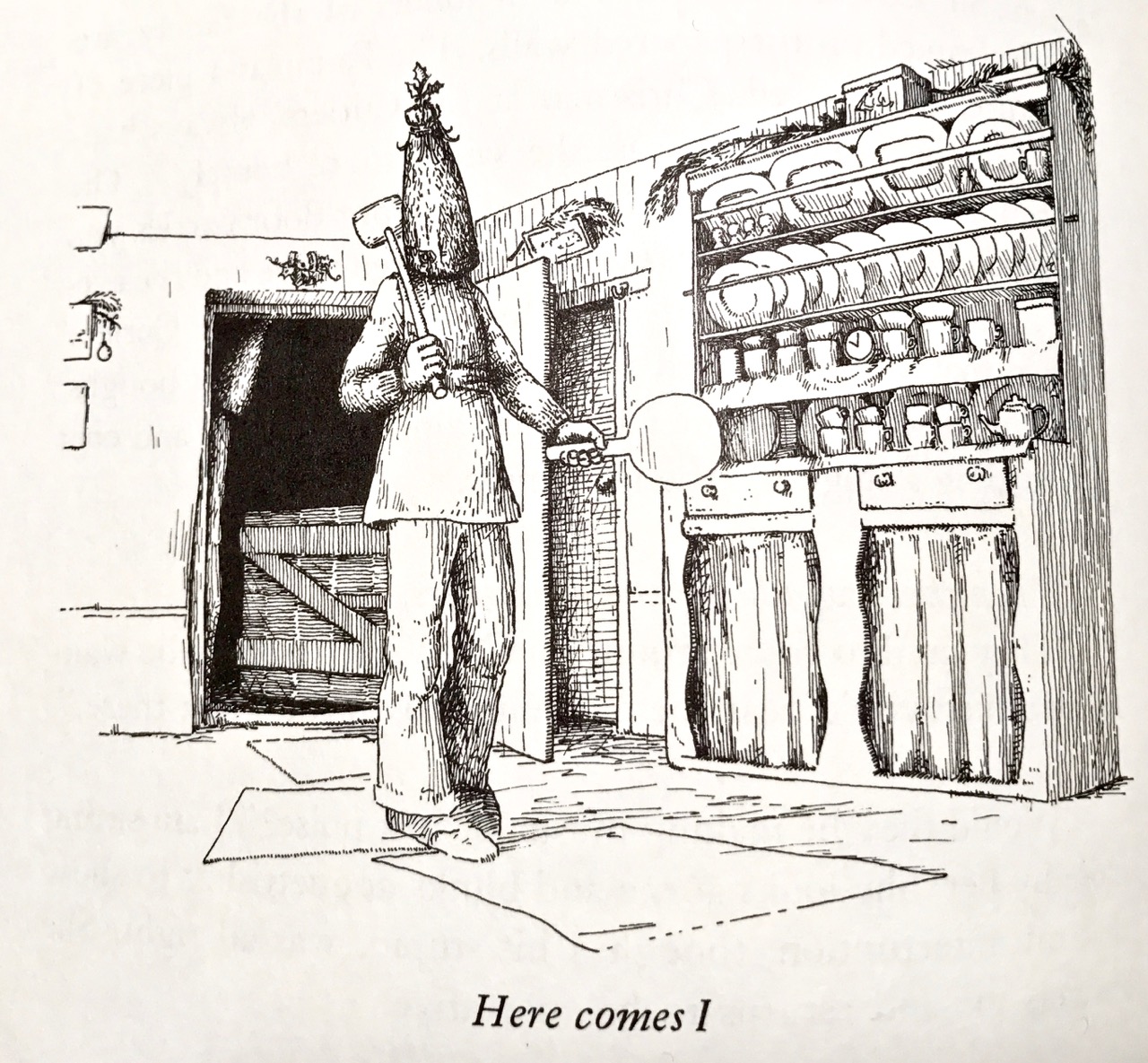
here comes I

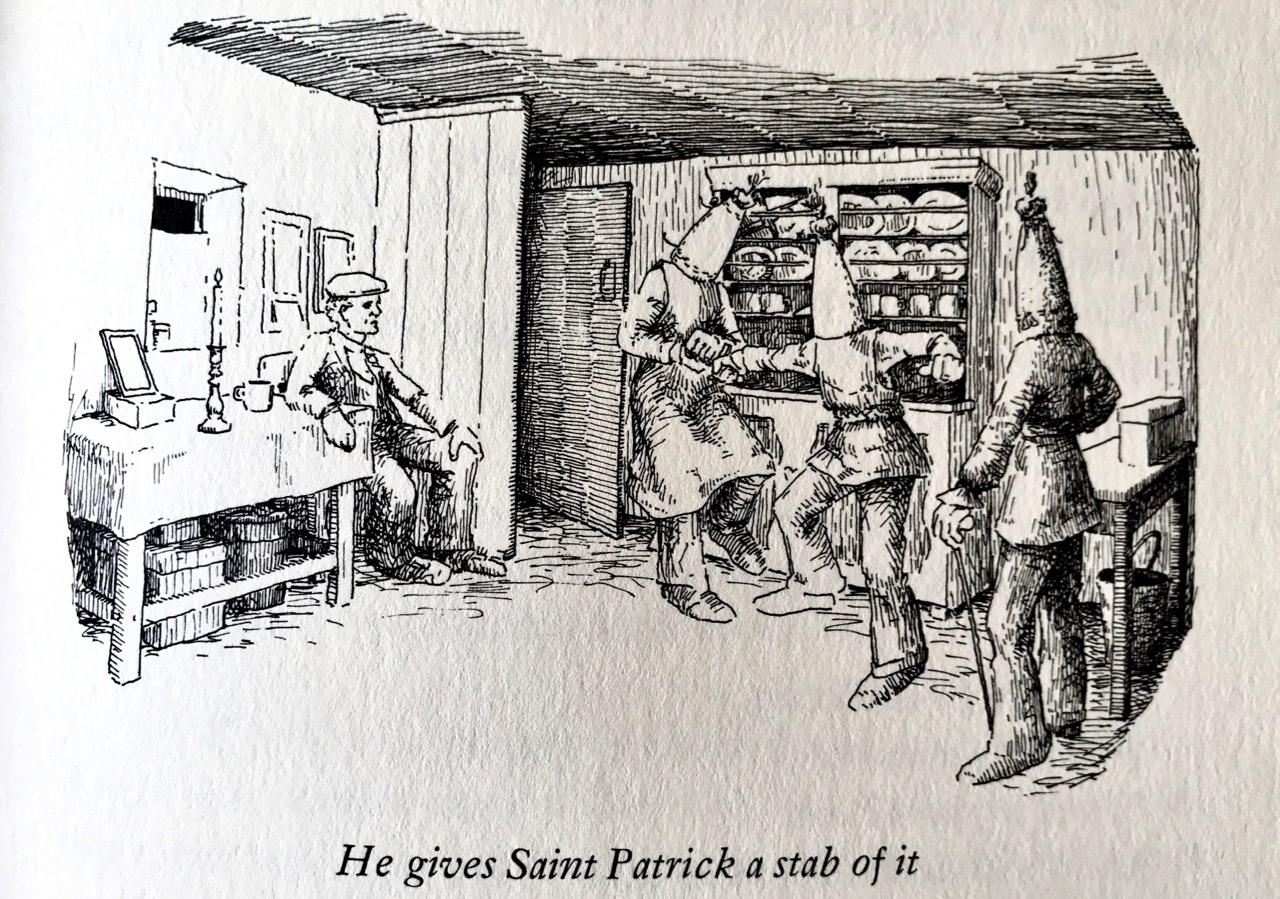
saint patrick

Glassie stayed in Ireland during the Troubles, and deliberately chose a community that was close to the upheavals of those days.

…Mumming was neither my project nor my goal. My project was the creation of an existentially grounded ethnography of people in trouble… We settled next to the barbed-wire bound barracks in the southwest Ulster town of Enniskillen, in the County Fermanagh, about twelve miles north and east of the burning border. I began quickly, luxuriously conducting my study on foot. I came to know every dog, bog, path and field in a small area south of the town, lying west of Upper Lough Erne, its waters as bright, its isles as green as promised in the old ballad of the Inniskilling Dragoon…

Enniskillen, from a photograph dated 1900, and Henry Glassie’s illustration of the mummers ‘Doin the Town’ as remembered in the 1970s

I like the way the book is set out. One section transcribes a number of conversations that Glassie has with people who remembered – and had been involved with – the mumming tradition.

…Most of the kitchens at the centers of those white houses were opened willingly, generously to me. My Americanness set me outside the local social categories, so I got on well with people of opposed political and religious persuasions. More of the people were Catholics than Protestants, more were men than women, more were old than young. Almost all had made courageous adaptations within the terrors that frame our lives. That was what interested me most: how daily life passed sanely, even artfully, despite armored cars hurtling down the country lanes, despite bombs that cracked the air and rattled the windows. I had forgotten all about mumming. Then one evening Mrs Cutler and I were chatting about Christmas and she mentioned the mummers’ arrival as the season’s high point. Suddenly excited, I asked if any of the play’s performers were still alive, and she listed people I knew well. All of them were men in their sixties and seventies who had begun to stand out in my thinking as exceptionally energetic, outgoing, and articulate. From that time on, I asked many questions about the drama, its performance, meaning, and purpose. I learned that the memory of mumming is cherished…
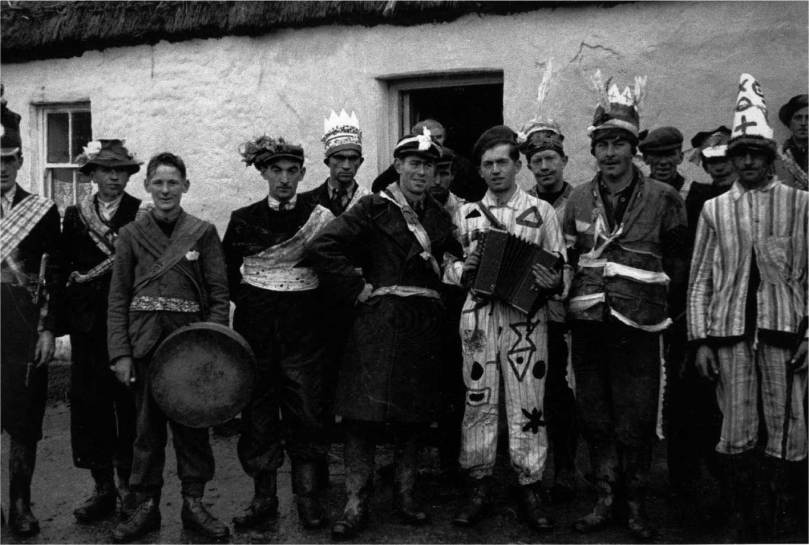
wren-boys

Upper picture – Wrenboys from Athea, Co Limerick, 1946 and below – ‘Mummers hunting the wren’ in Macroom, Co Cork, around 1950

Glassie talks at length to two brothers, Peter and Joseph Flanagan, who have very clear memories of taking part in the mumming.

“…We’d just take every house that we faced, whether we’d be admitted or not. We’d just take every house that we’d face. Of course, there was people on the other hand that wouldn’t admit them because it might frighten the youngsters, you see, or cause some confusion. That’s the way. That’s the way it goes now. So, You all stood at the door and…”

He twists and rapidly knocks five times on the table.

“…’who’s there?’

“…’Captain Mummer. Any admission?’ Yes, aye, or no: that was the way. ‘Any admittance for Captain Mummer and his men?’

“and if the person was pleased to admit you, well, they’d open the door. Throw it wide open for you.

“And Captain Mummer walked in.”

Peter moves quickly from his seat and down the kitchen. His heavy boots sound sharp on the floor. He closes the front door behind him, raps on it thrice, and re-enters. He strides ten feet into the kitchen and stands to deliver his lines, turning his torso to project to the audience assembled in a semi circle that runs from the front table past the hearth to the back table. Joe and I are fixed upon him…

“Here comes I, Captain Mummer and all me men.

Room, room, gallant room, gimmee room to rhyme,

Till I show you some diversion round these Christmas times.

Act of young, and act of age, the like of this were never acted on a stage.

If you don’t believe in what I say, enter in Beelzebub and he will clear the way.”

Frowning, Peter returns to his stool. It has been years since he has thought of the rhymes. “Let me see now,” he says, and sits repeating the speeches of Beelzebub and Prince George under his breath. Joe picks up the large turf out of the fire with the tongs and sets them at the front of the hearth. He sweeps the thick ashes off the iron to his side with a besom, places new turf against the backstone, and arranges the old coals next to them. The smoke and glow increase as the new turf ignite. Joe, too, went mumming, but he went out less often than Peter and cannot remember the part he played. He sits back as Peter starts in again…

Henry Glassie’s drawing of ‘how a mummer’s hat is made’ together with two examples from more recent times

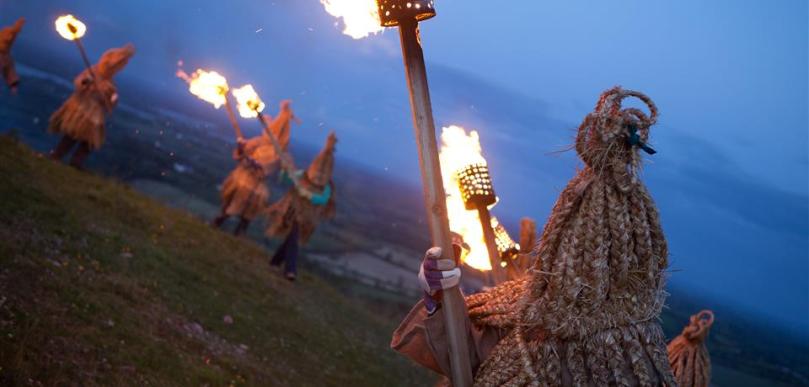
Glassie’s writing goes on to describe the recollections of the play from those who undertook the performances. It is an invaluable record: his informants have now passed away. They would probably be surprised to know that their plays have not been lost: a new generation is performing in the north – and elsewhere on the island of Ireland. They would be even more surprised, perhaps, to learn that their own play breathes again: there is a Mummers Centre in Derrylin and the Aughakillymaude Community Mummers (Aughakillymaude translates as the wooden field of the wild dog) perform regularly in the area around Christmas time once more, while at other times they travel across Europe keeping the spirit of mumming in Ireland very much alive:
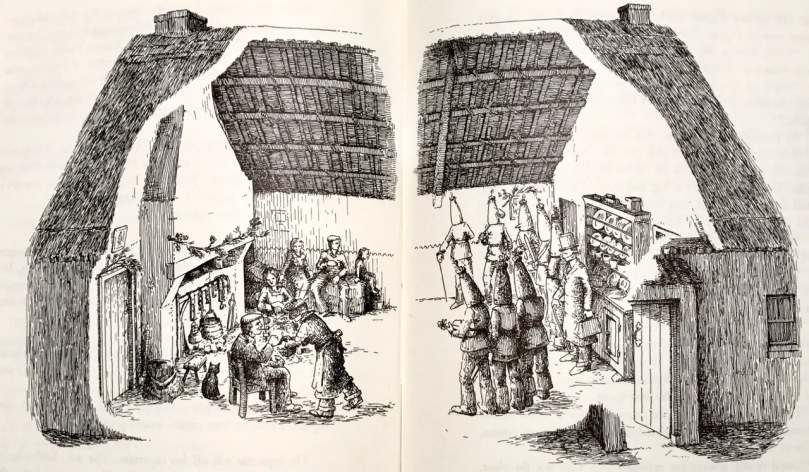
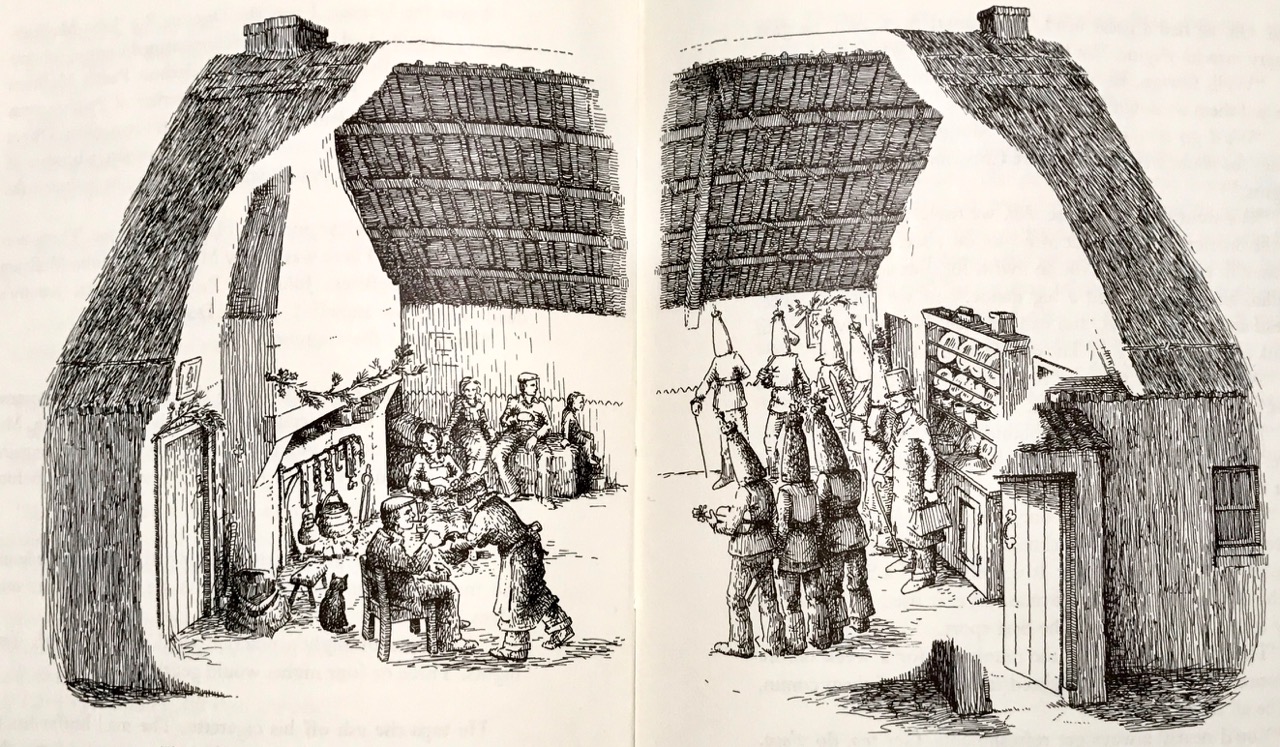
the performance

Henry Glassie’s reconstruction of the performance before the hearth – above. Below – Aughakillymaude Community Mummers in full cry
aughakillymaude-mummers

Aughakillymaude Community Mummers in full cry (above)  and (below) Henry Glassie’s reconstruction of the performance before the hearth

Recalling 2019 – The Roaringwater Journal Review!

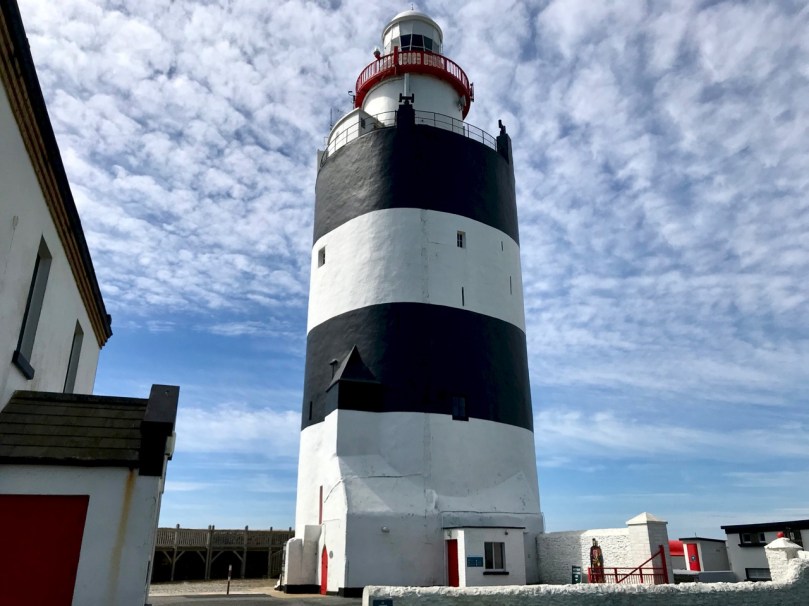
The year is drawing to a close. It’s been a roller-coaster twelve months in terms of politics and world problems. But (we believe) things have gone pretty well with Roaringwater Journal. We each continue to publish a post every week: that’s over 100 posts in the whole year. Today we have each chosen five of our favourite 2019 posts, and written a little overview of each, with a live link and a photograph. We hope you might while away a few of those spare moments we all have over the Christmas holidays reminding yourself of what you perhaps enjoyed (like Robert’s piece about Hook Head and The Oldest Lighthouse in the World, above).

Finola’s Selection

When I look back on what I’ve written this year it seems pretty eclectic, but with a definite emphasis on archaeology (like the cupmarked stone Robert discovered at Inish Beg Estate, above) , history, stained glass and wild flowers. Quelle surprise! It’s been a very difficult exercise to pick my five favourites, but here goes…

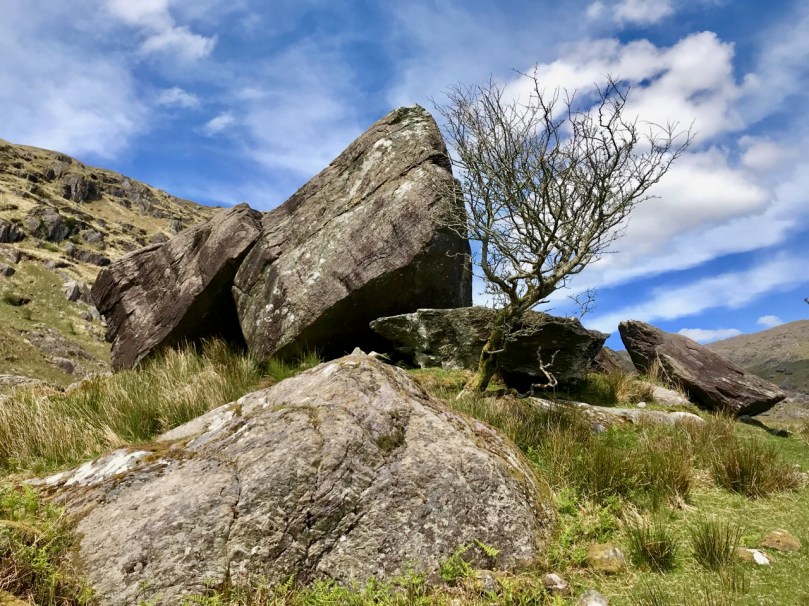
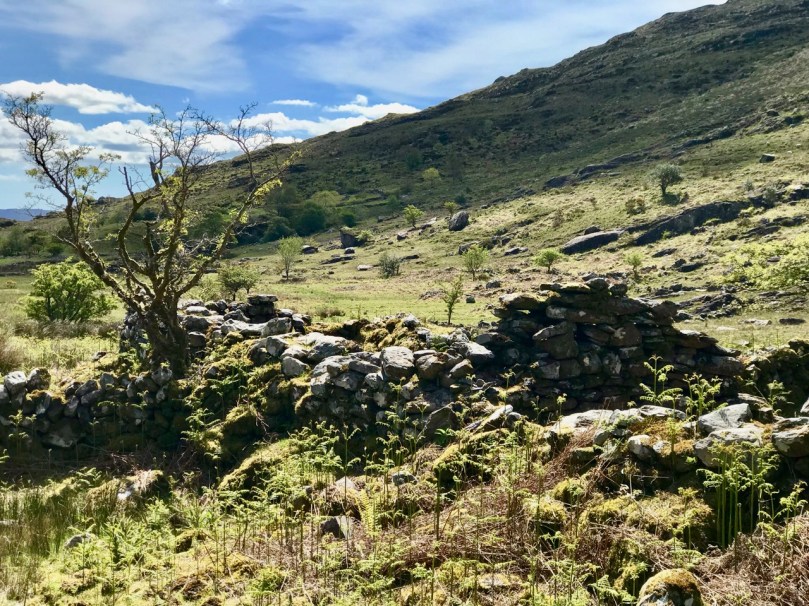
The post I enjoyed writing most this year was Witches Marks and Lovelorn Shepherds: Inscribed Rock Art in a Remote Valley. When I re-read it it brings me back both to my rock art research when I was twenty-two and travelling the back roads of Cork and Kerry on my brother’s Honda 50, and to a beautiful day in May this year when Robert and I set out to re-find the ‘cave’ (above) with the mysterious rock scribings. Hiking through a remote valley filled with wild flowers and the remains of abandoned settlements, it felt like we were the only people in a lost world. While my own post concentrated on the archaeology, Robert wrote about the walk and the valley in Coolenlemane – a Walk into History.

Regular readers know that I have become a student of stained glass and a huge highlight for me this year was helping to open George Walsh’s exhibition in Dublin – see Celebrating George Walsh. It was a happy occasion for everyone involved and it coincided with the publication of my piece on George’s art in the Irish Arts Review.

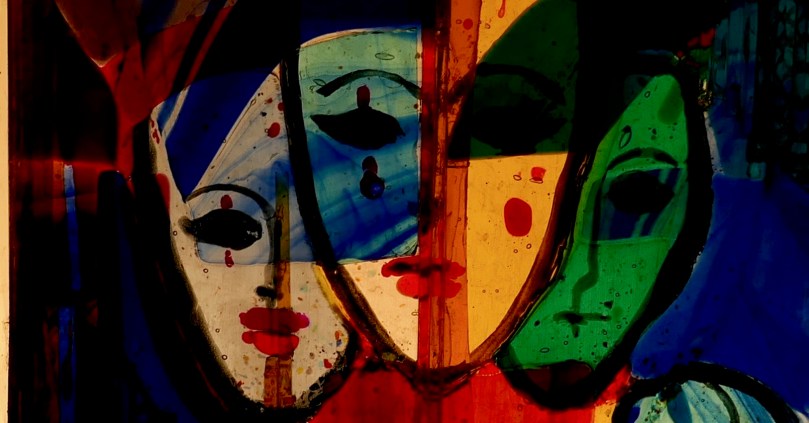
Venetian masks by George Walsh, above and detail from the Finola Window, below

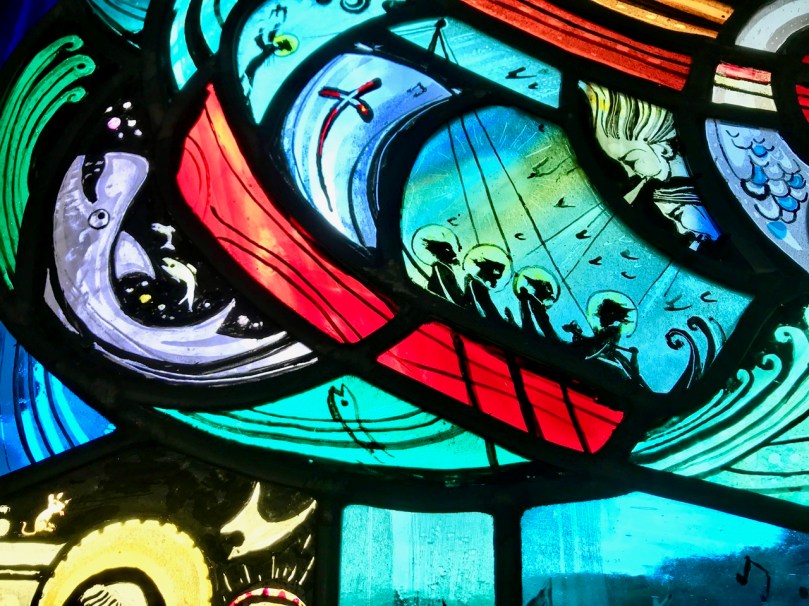
Unbeknownst to me, Robert commissioned George to make a stained glass window for our home  The Finola Window (detail below). I look at it every day, and feel all the care and thought and talent that went into this precious gift.

I am planning a multi-part post on the Stone Circles of West Cork, but so far have only written the Introduction. Why? Well, when you write about stone circles it’s important to visit them, so you really start to appreciate their commonalities as well as their unique features, how they sit in their landscapes, what their orientations are and the folklore that sometimes surrounds them. All of this takes time.

Kealkill Five-Stone Circle, one element of a complex site

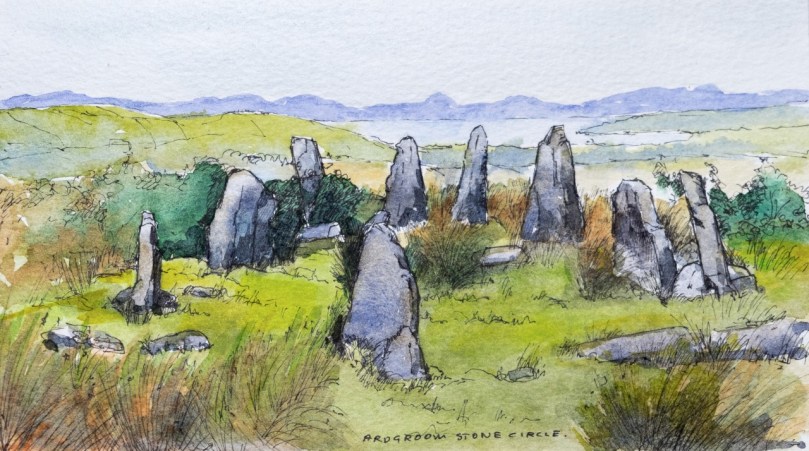
Planning and going on field trips to stone circles has been great fun, especially when we do it in the company of our buddies, Amanda and Pater Clarke. In return, Amanda includes us in many of her Holy Well adventures, now expanded to Kerry, and Peter shares his wonderful sketches from his Hikelines blog, like the one of the Ardgroom Stone Circle on the Beara (below). So – look out for the rest of the Stone Circles series coming up in 2020.

The Mizen is our beat and we love to write about all its nooks and crannies, valleys, beaches, islands, antiquities. In 2018 we were privileged to spend a day with Aidan Power, who had written a book about Rock Island. The post generated a lot of comment and interest – and amazing connections! This year, my post Cousins Find Each Other – Through Roaringwater Journal! related how the Burchills and their Nicholls and Wilkinson cousins connected through the Rock Island post.

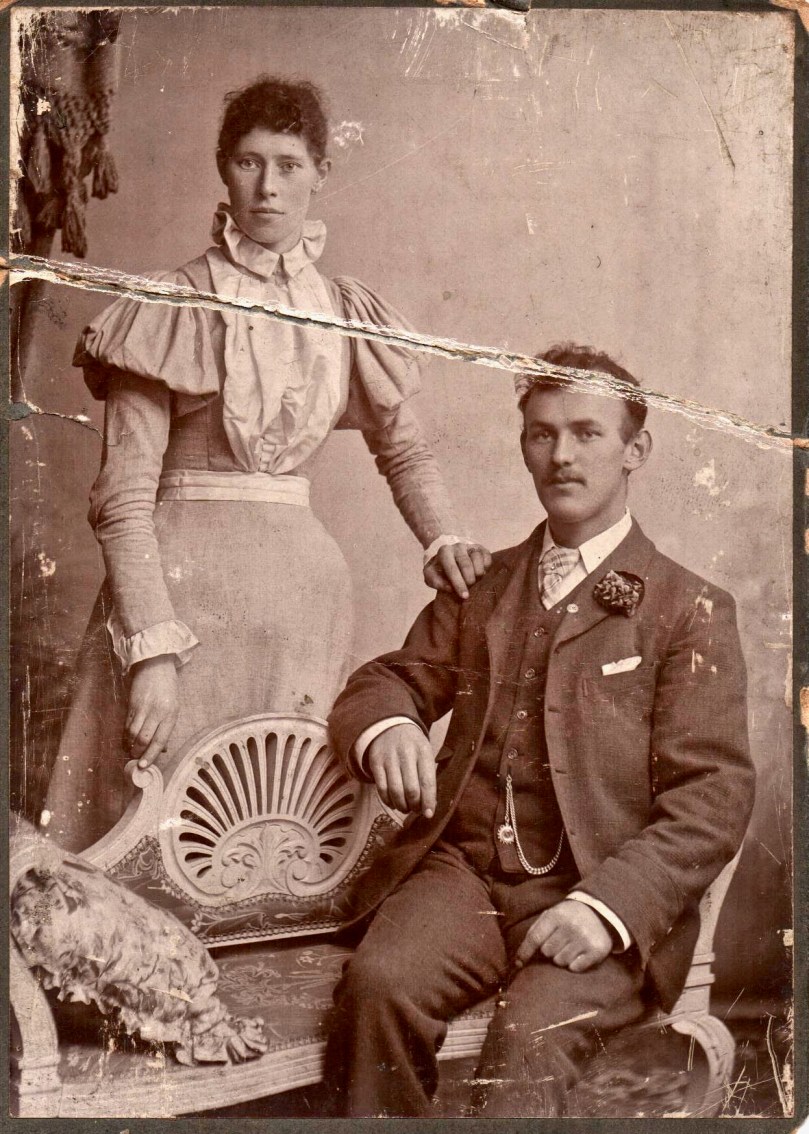
Charles and Elizabeth Nicholls – what a wonderful photograph to have in your family archive

Even after Cousins Find Each Other was published more relatives stumbled on to the page and discovered their common past. What I loved about this story was how deeply the family narratives were embedded in the history of West Cork and the building of the iconic Fastnet Lighthouse.

Finally, I have chosen Barley Cove: A Special Area of Conservation. Barley Cove is not just a popular beach but has a complex set of dunes and wetlands as well (below) which I explored in my post, along with the wildflowers that flourish in that special habitat. 
We are so fortunate in West Cork to still have a relative abundance of wild flowers around us, but even here that is under threat as the relentless conversion of wild land into monoculture fields seems to go on day and night. I run a Facebook Page called Wild Flowers of West Cork with the simple objective of saying – Look what we have here! We need to value and preserve this heritage not because the wild flowers are beautiful, although they are, but because without them and the pollinators who depend on them, we may all be doomed to a difficult future.

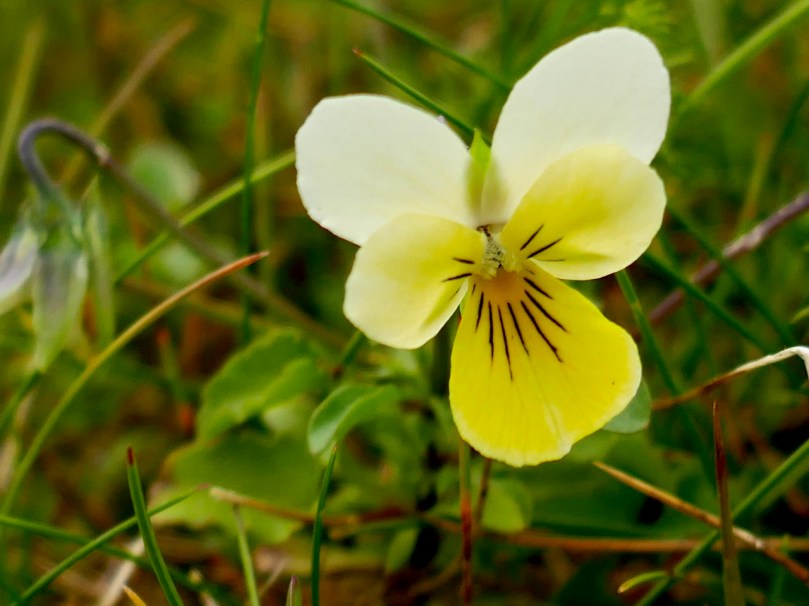
The Sand Pansy, found in the dunes of Barley Cove

Robert’s Selection

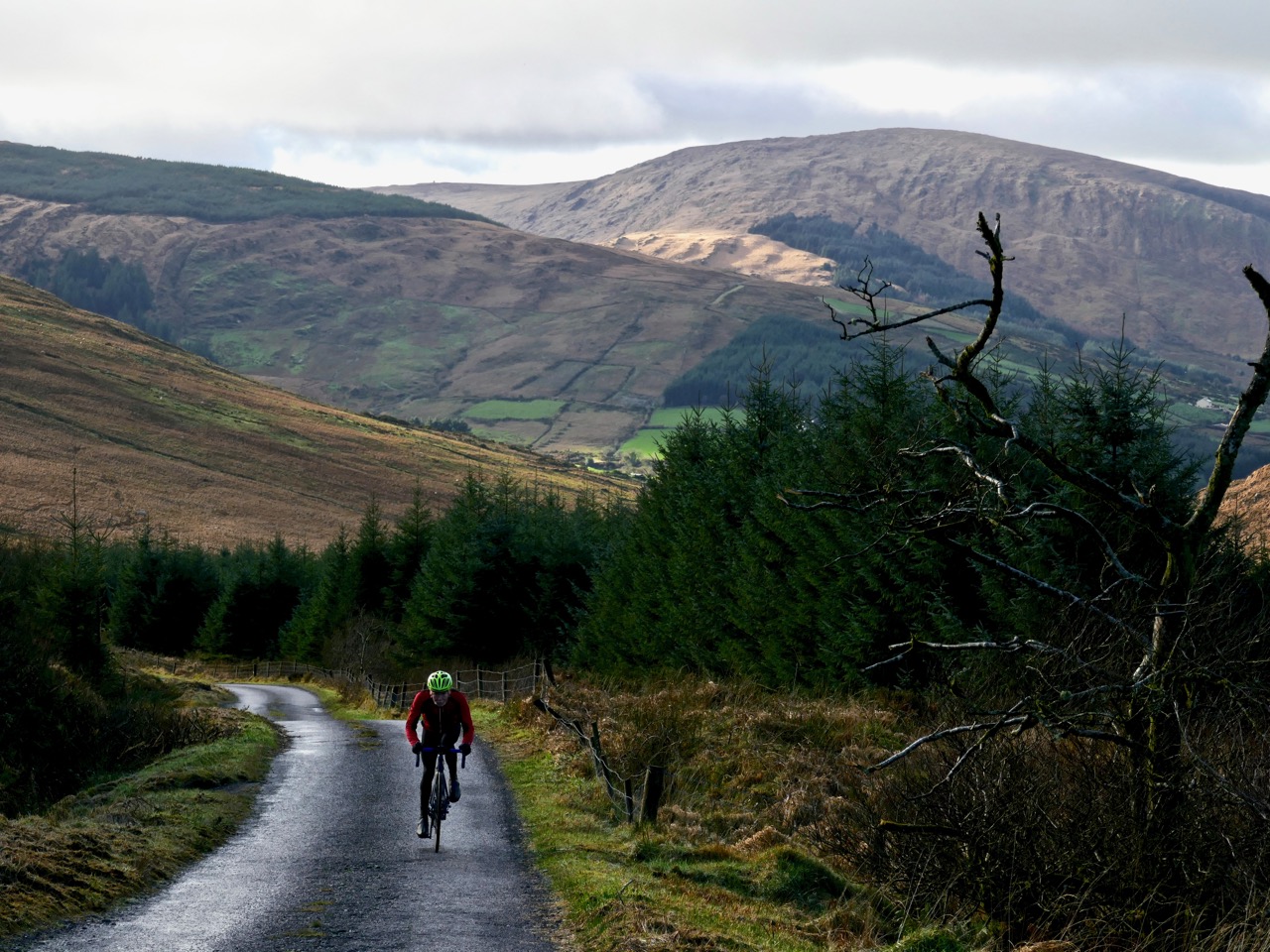
And now it’s down to me (Robert) to make my choices. One of my favourite pastimes (or is it just a way of life?) is exploring off the well-worn track in West Cork. Early in the year we headed for the hills to the north-east of Bantry, partly because I was attracted by a name on a map. Here is ‘Through the Yellow Gap’. And here is our friend Tim whom we encountered, by chance, on one of his epic cycle rides along this road.

Another name that jumped out from a map was Abhainn na Seangán – which means ‘River of the Ants’. I couldn’t overlook that one so off we went again, in February, and as a result I wrote this post, which takes in archaeology, traditional music and much more of the beautiful scenery which West Cork has to offer. Here’s a sample: looking across the water meadows to the distinctive gaunt ruin of Castle Donovan, fortunately relatively safe as it is in state care.

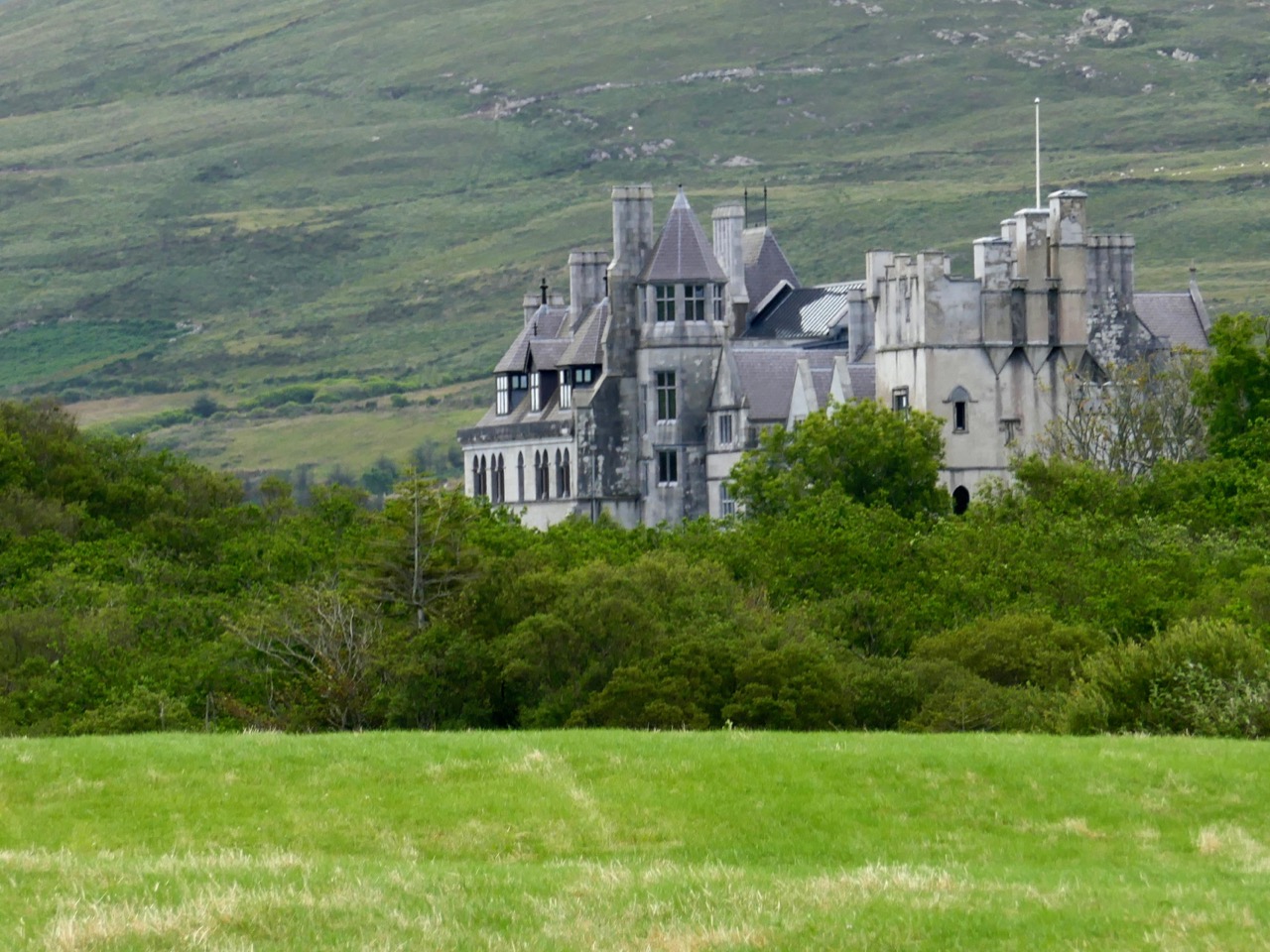
There’s nothing we like better than unearthing history as we explore the byways of Ireland. In July we set out for the Beara Peninsula (it’s not too far away from Nead an Iolair) specifically to discover more about Donal Cam O’Sullivan Beare (1561 – 1618) and his connections with Dunboy Castle, over by Castletown-Bearhaven. It was a fascinating journey and included a visit to a doomed Celtic Tiger project: the building of Ireland’s first 6 star hotel, Puxley Manor, a 21st century incarnation of the huge neo-gothic family mansion which was created by the Puxley family who were largely responsible for running the copper mining industry at Allihies. Daphne du Maurier’s novel Hungry Hill was based on the real-life Puxleys. Here’s the link to the post. And here is our photo of the manor after its destruction by the IRA in the 1920s with, below it, a view of the property today after its cycle of restoration and abandonment.

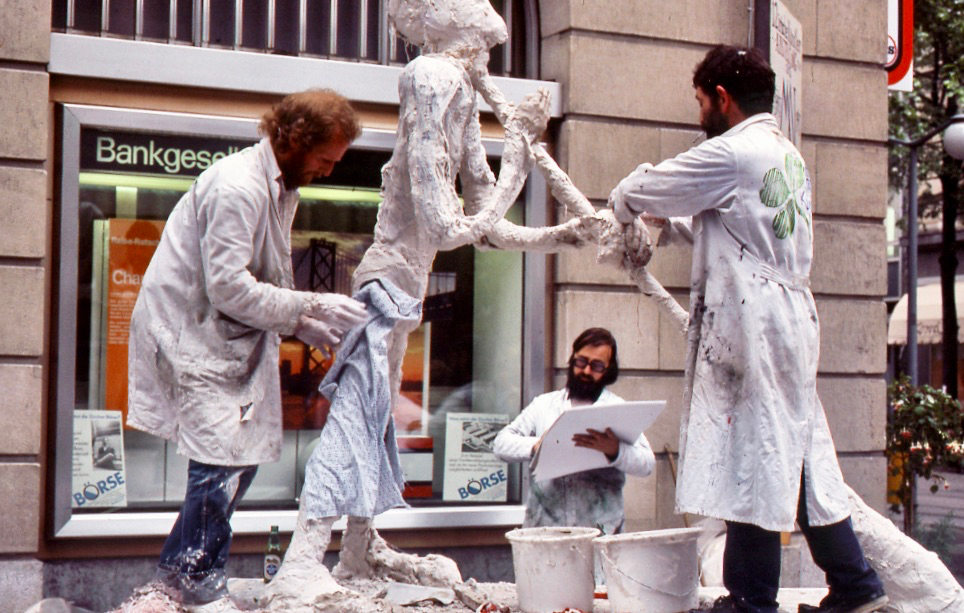
This year I was pleased to be further involved in the development of the Ballydehob Arts Museum. This – which must be one of Ireland’s smallest museums – celebrates Ballydehob’s place in history as an artists’ colony in the second half of the last century. I assisted the Museum Curator – Brian Lalor – in mounting two new exhibitions on aspects of the artwork, and also put together a dedicated website for BAM. Read all about the exhibitions here, and have a look at the BAM website here. And, in case you are not convinced, here are Ian Wright, Brian Lalor and Pat Connor publicising the work of the Ballydehob artists on the streets of Zurich, Switzerland, in May 1985!

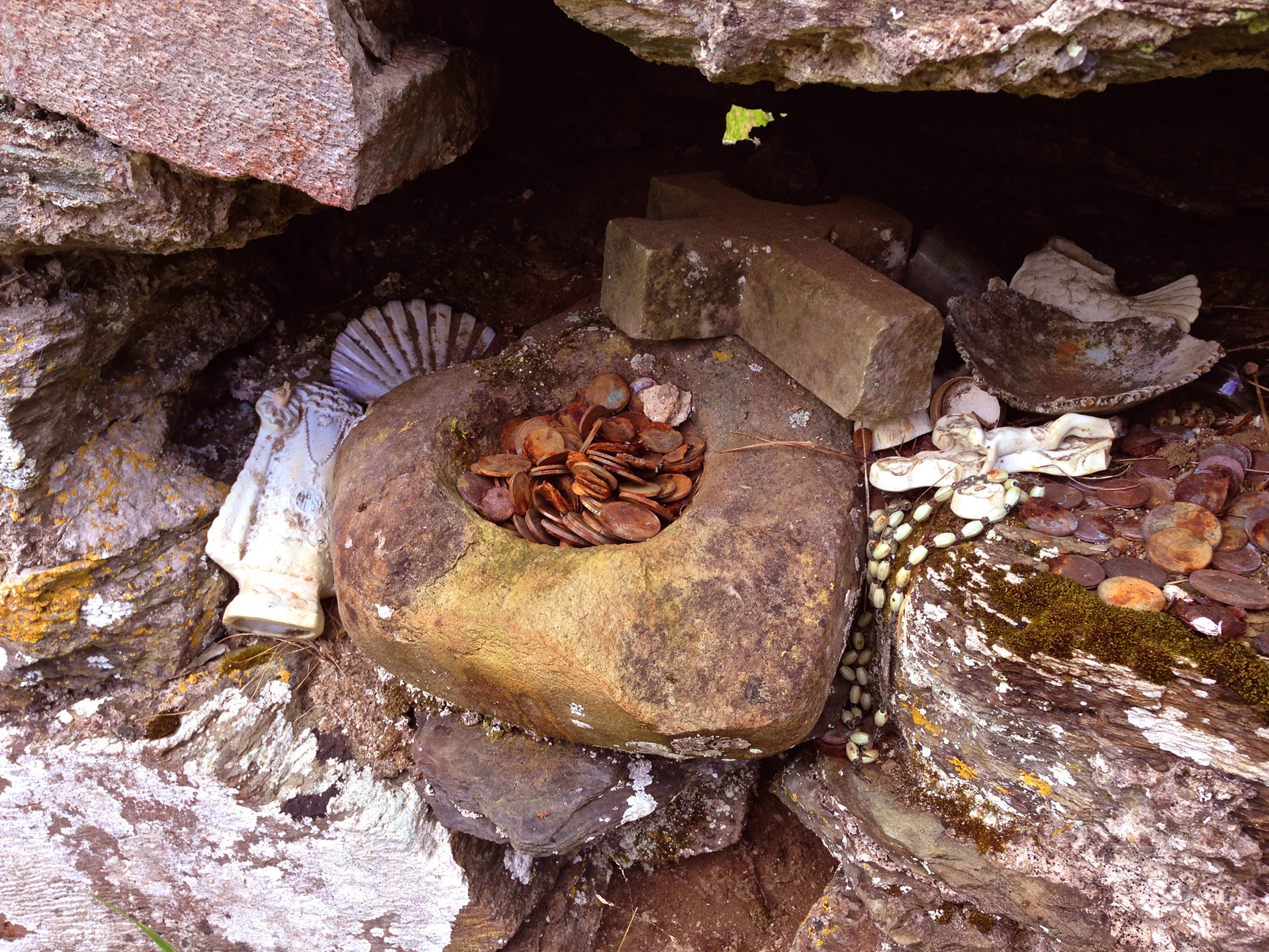
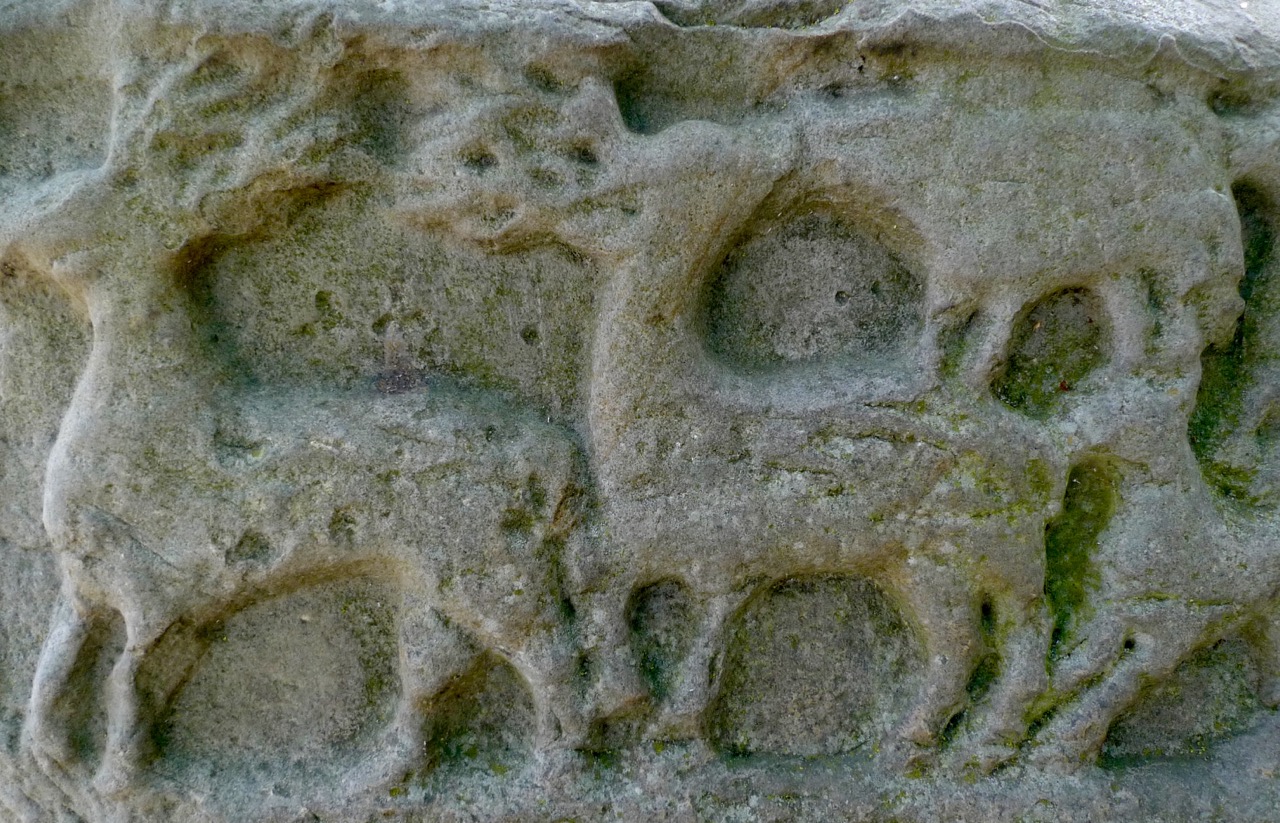
Although it’s a recent post, published at the beginning of December, I think I have to mention The Enigmatic Bullaun, as it has been our most popular article ever published. Bullaun stones are aspects of archaeology which defy explanation – a bit like rock art – although we can make educated guesses as to what their original use might have been. My little review discussed these, and seems to have captured the imagination of our readers. It all goes to show that you can never predict your audience! Here’s a bullaun stone associated with the ecclesiastical site at Maulinward over the hill from Ballydehob, not very far from Durrus. You can see that it has been used – even in recent times – as a receptacle for offerings.

OK, so we cheated a bit and included more than five each – but it’s been a great year! We hope you enjoyed it as much as we did and that it motivated you to come visit us in West Cork, or get out and explore your own part of the world. Thanks so much for all your comments and support in 2019 and here’s to another banner year in 2020!

And just to add – these are our favourites, but we’d love to hear what yours were!

Experimental Archaeology – Oliver’s Cupmark

As a student of rock art I am often asked whether a cupmark, the central motif of all Irish rock art, could be just idle ‘doodling’. In response I have usually asserted that making a cupmark is quite a lot of work and therefore unlikely to be the result of simply whiling away time. But I must admit I based that answer on my own guesswork about of the time and difficulty involved, rather than on solid evidence. Well, no more! The scientific evidence is in – read on to see what we found.

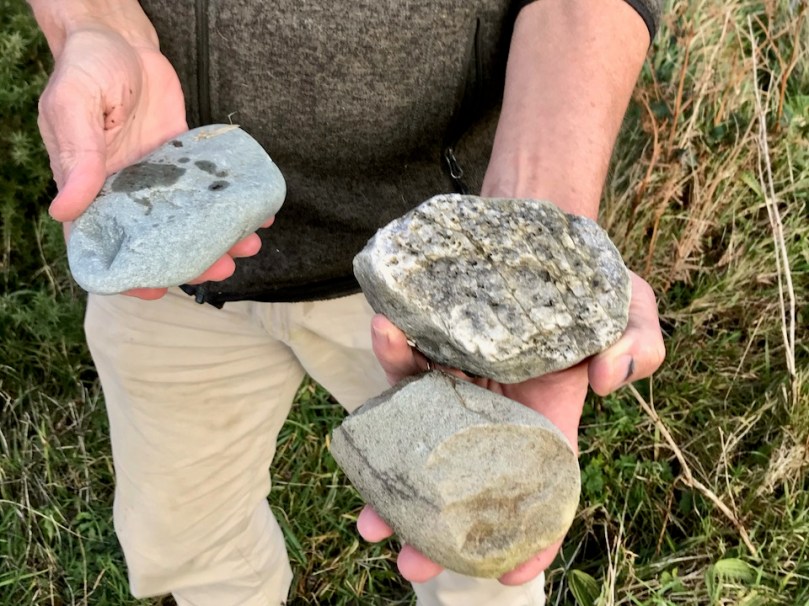
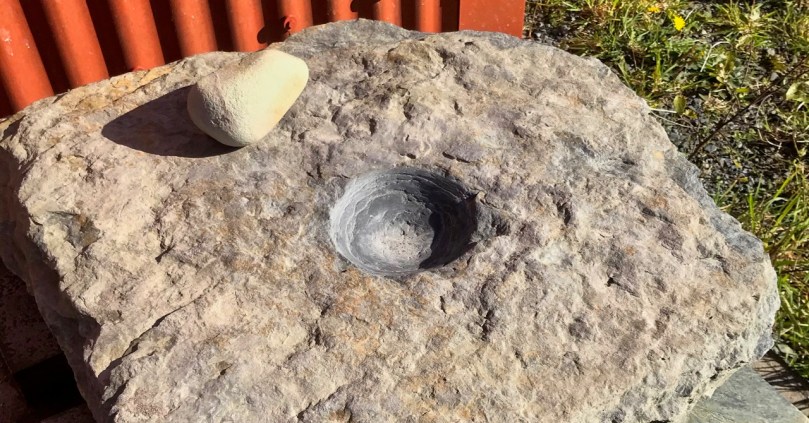
Before he started – Oliver chose a piece of local sandstone and a variety of water-rolled cobbles as picks

First of all, let’s recap what a cupmark actually is. It’s a semi-hemispherical indentation on a rock surface which has been made by a human in the past. In Ireland it’s the most common motif found in prehistoric rock art, often on its own, and also associated with one or more concentric rings, lines extending from the cupmark through the rings, and other lines and grids. It’s usually circular in outline, sometimes perfectly so and sometimes rough and approximate. For a thorough discussion of Irish cupmarked stones, take a look at our post The Complex Cupmark, which has lots of illustrations of cupmarks, both on their own and with cup-and-ring marks. It’s a good introduction to what we are talking about and where they are sited in the Irish landscape.

Oliver found that the first part was the hardest – almost, he said, as if there was a skin you had to break through

Grand so – now you know all about cupmarks except for how, really, they were made. Our friend Oliver Nares became interested in this topic having read our blog posts, and decided that this question should be answered once and for all. In doing so, he has provided a real service to science.

Once through the ‘skin’ things went a little faster and the hammering action raised lots of dust. In some ethnographic studies of cultures that carve cupmarks it appeared that the dust was one of the desired outcomes and played a part in whatever rituals were involved

Believing that he should replicate as closely as possible local conditions, Oliver selected a piece of local sandstone as his base. The technique used to carve is often described as ‘picking’ – that is, repeated taps on the surface of the rock by a stone ‘pick’. No metal was used: the cupmark tradition, although it persisted in time well into the Bronze Age, started in the Neolithic before the invention of metal tools. Copper or bronze would not have been strong enough anyway.

Oliver started with a quartz pick, reasoning that, as one of the hardest local minerals, this would be the ideal stone. However, he soon realised that the quartz stones he could find were not large enough to make a serious impact on the sandstone surface.

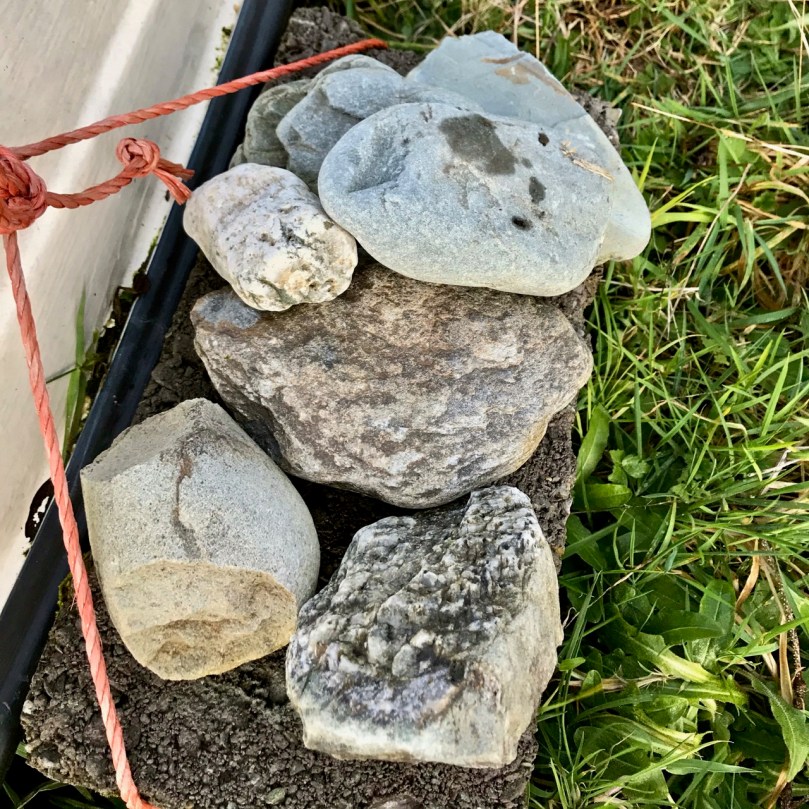
He gathered a variety of water-rolled cobbles from a local beach and worked away until they became too chipped, or until they broke. In this way he went through at least a dozen cobbles, perhaps as many as twenty.

On one visit to watch progress I took a turn. What I found hard was maintaining the round shape – as you can see my hammering was turning Oliver’s lovely circle into an egg-shape

A pick is generally a pointed tool – a bit like a hammer but with a pointed tip that allows a geologist, say, to split rock to take samples. Modern picks are made of very hard steel. In practice, it is almost impossible to find a stone that will mirror the pointy-ness and the hardness of a steel pick. Oliver found that hammering or bashing with a cobble was actually the only way he could make headway on carving out the cupmark. Perhaps picking, in fact, is not quite the right was to describe the technique. 

Once the cupmark was as deep and round as he wished, his next step was to smoothen the inside. We have noted this as a feature of cupmarks – when you run your fingers around the inside they do feel more smooth than rough. In fact, a rough surface is often an indication that the ‘cupmark’ is actually a naturally occurring geological anomaly or solution pitting rather than the product of human labour.

At first Oliver used only water to grind away at the surface (above), but soon added beach sand (below) and saw an immediate improvement. His finished product – a cupmark 12cm across and 3.5 com deep – was nice and smooth inside. In terms of size, this cupmark falls well within the normal range of variation in the cupmarks we have seen. 

So, how much time did this actually take, and how much work was it? Oliver estimates that he put between 20 and 25 hours into making this cupmark. Despite being tall and strong, he couldn’t work on it for too long at a stretch because, as is obvious in the videos, repetitive strain and muscle damage was a real hazard.

The other thing that smoothing did was bring out the dark colour of the rock under the surface

What Oliver has shown is that nobody would carve a cupmark unless they were deeply motivated to do so. It must have been an important activity associated with some aspect of the culture that required the kind of labour involved. Perhaps long practice enabled prehistoric carvers to make a cupmark in less than the time that Oliver took but there’s no denying that even for an expert this is a significant undertaking.

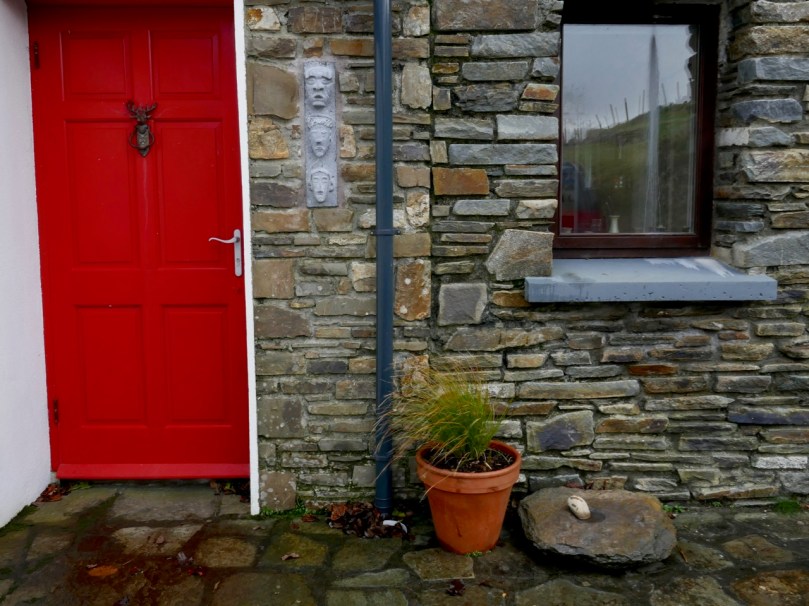
Thank you, Oliver, for all that effort! And thank you too for the cupmarked stone itself, now occupying a space outside our door. it looks great – but more than that it is a constant reminder of both your generous donation of your time in the cause of science and the age-old tradition of cupmark carving and the mysteries that lie at its heart.

Copper Craft

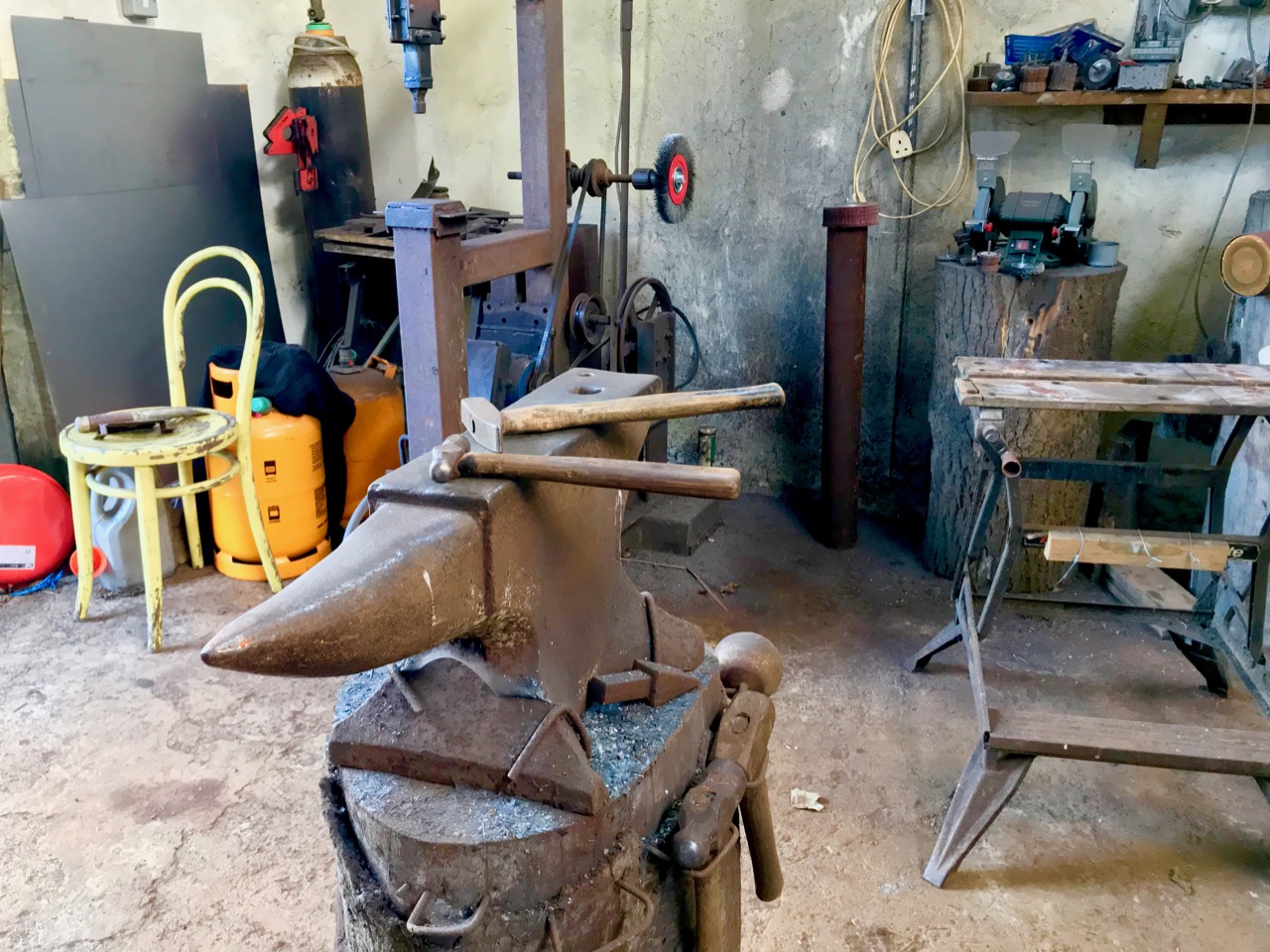
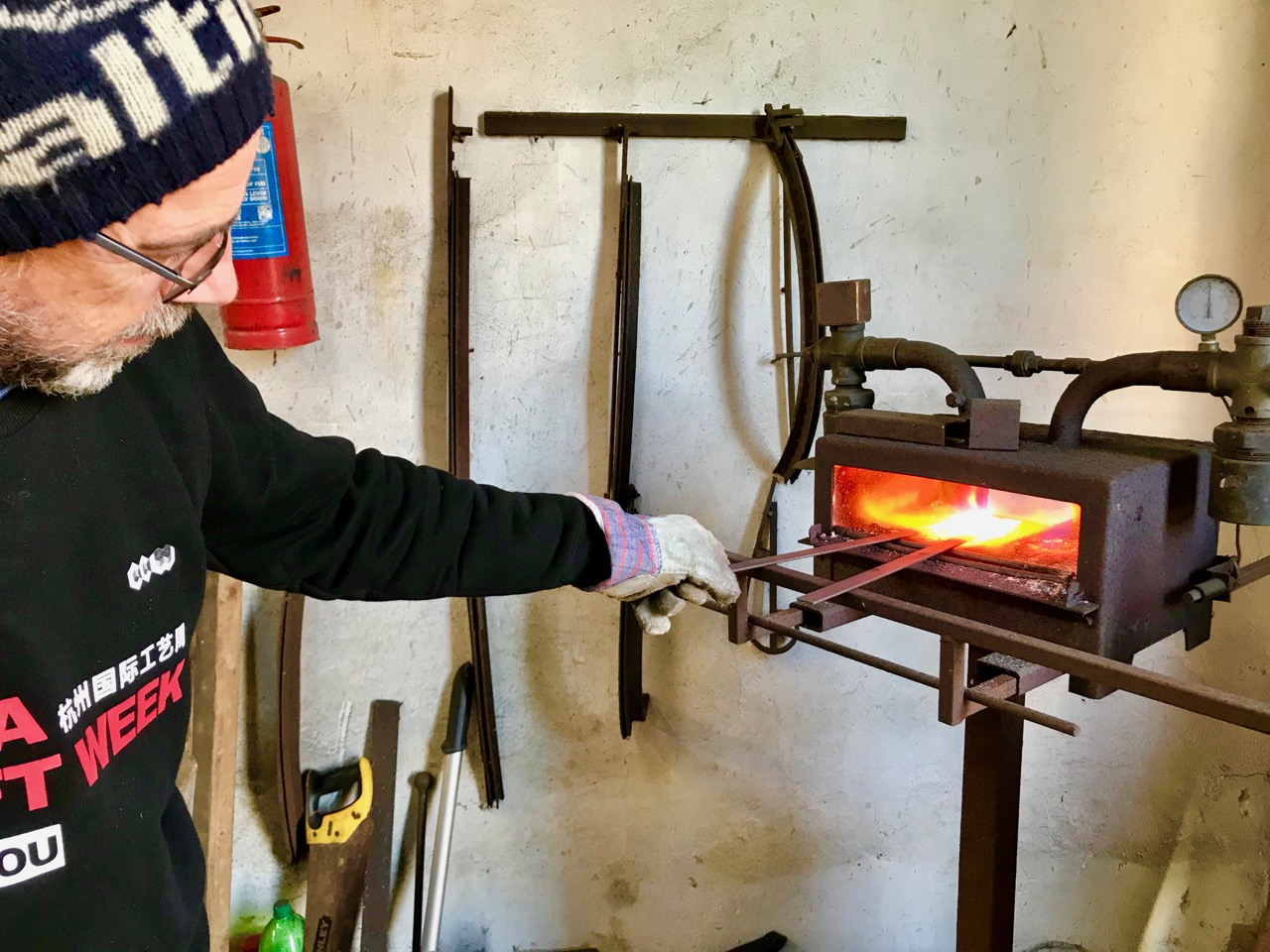
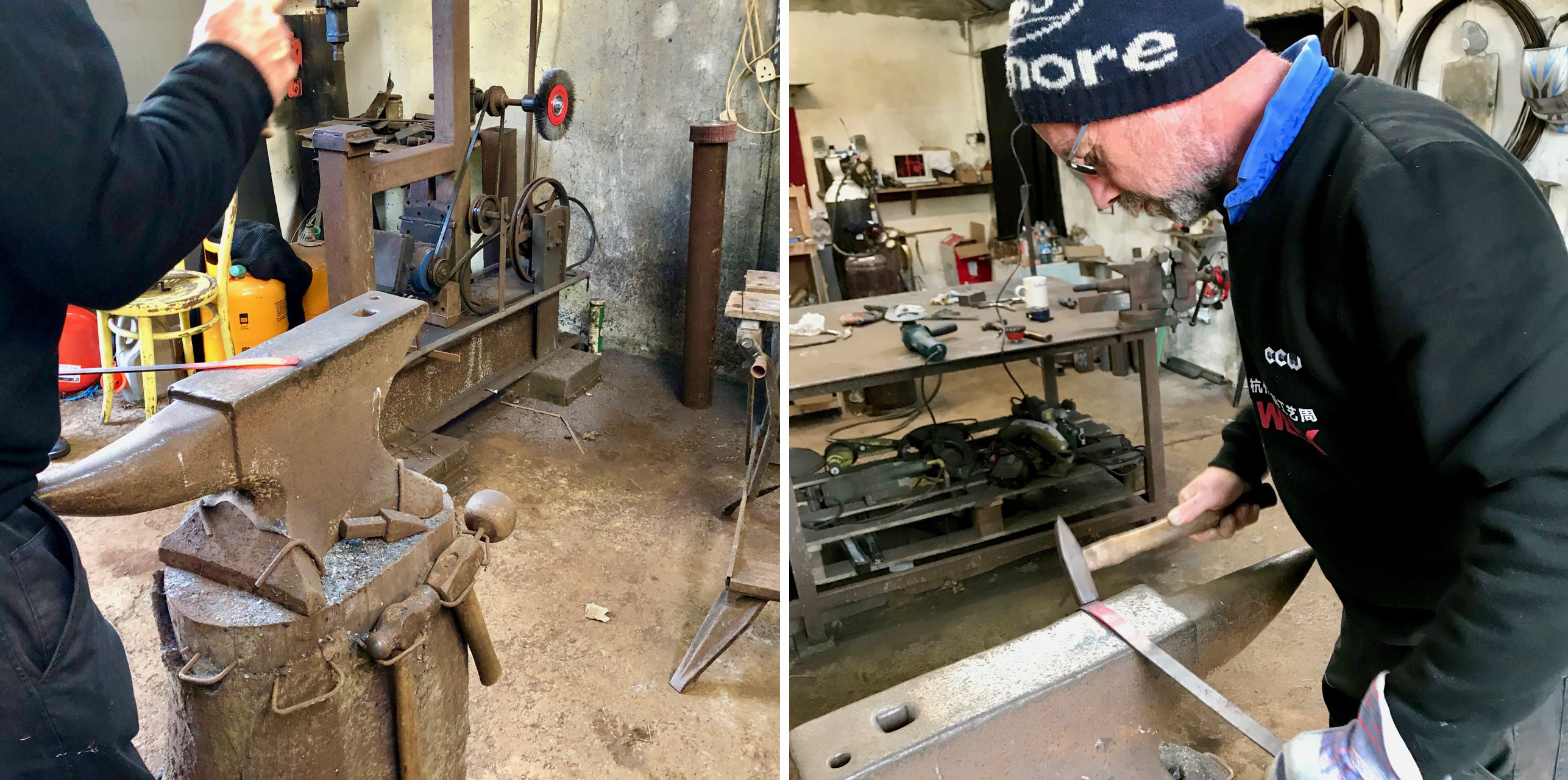
I admire workshops. And I admire the creativity that goes on in them. Here’s one that’s not too far away from us in West Cork: it’s just outside Skibbereen, on the road to Lough Hyne. It belongs to Paddy McCormack, who is a metalworker producing functional and decorative items. His preferred material is copper, and that comes with a historical connection that puts him right back with some of the earliest craftspeople who dwelled in this western part of the land thousands of years ago!

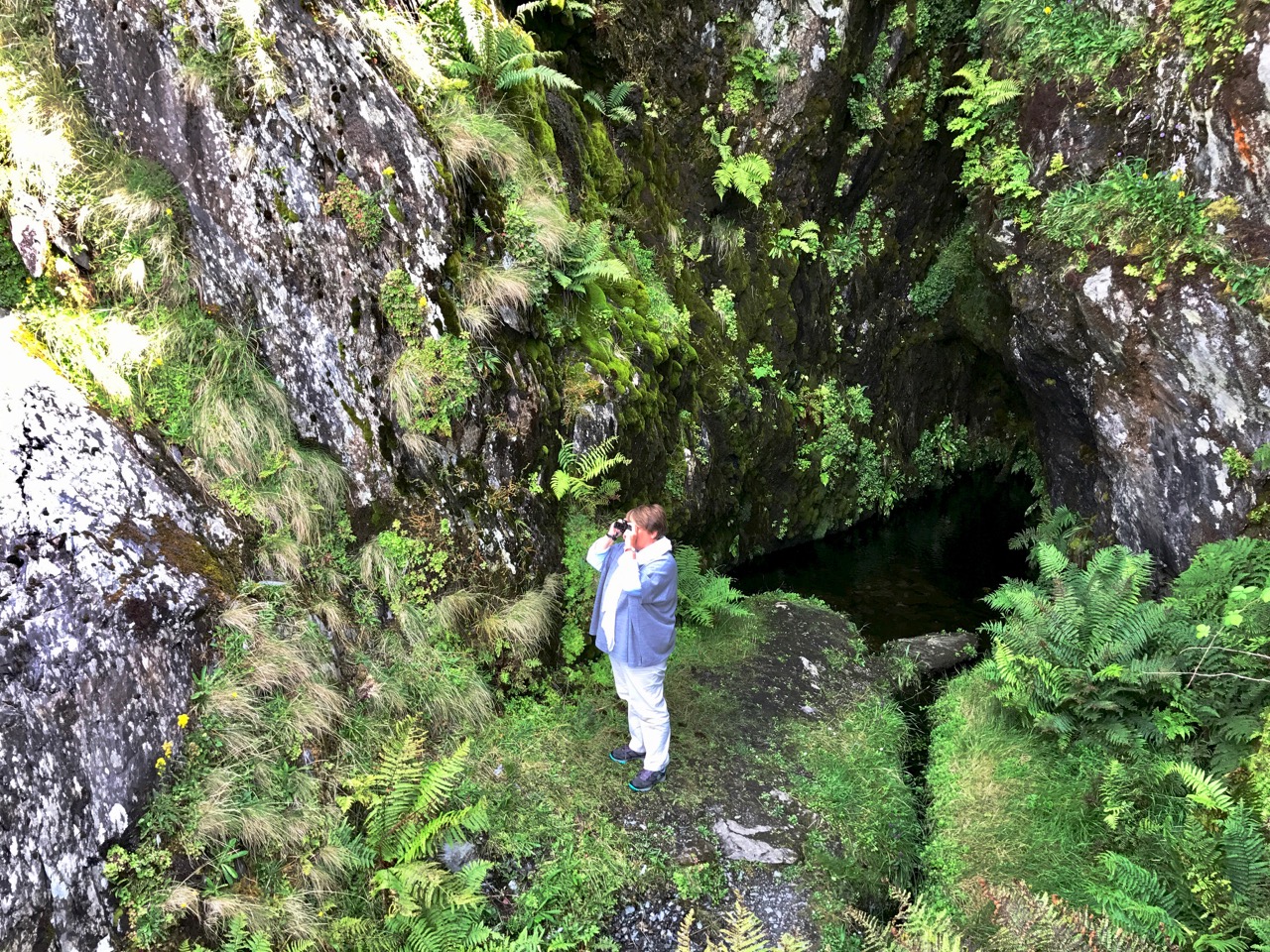
Mount Gabriel, the Mizen’s highest outcrop of land, silhouetted against a copper-coloured winter sky (upper picture) is the site of ancient copper mines dating from the Bronze Age. In the lower pic, Finola is standing at the entrance to an old mine adit driven into the side of this mountain. If you want to see the techniques used by the early metalworkers, have a look at this post which I wrote back in 2015. You’ll find that the methods dating from three and a half millennia ago are recognisable today. Here’s Paddy continuing the tradition:

We first came across Paddy at the 7 Hands Exhibition held in London, Dublin, Cork and Ballydehob. In this post written by Finola at the time you’ll see him with one of his unique pieces, a chess set, but it was at another exhibition this year that we became aware of his beautiful, hand-beaten copper bowls. Once seen , never forgotten: we asked Paddy if it would be possible to produce a large bowl for us, more the size of the now much sought-after copper ‘chargers’ produced by the Newlyn artists colony in West Cornwall during the late 19th and early 20th century. I lived in Newlyn before coming here to the west of Ireland and much admired the copper work from that time.

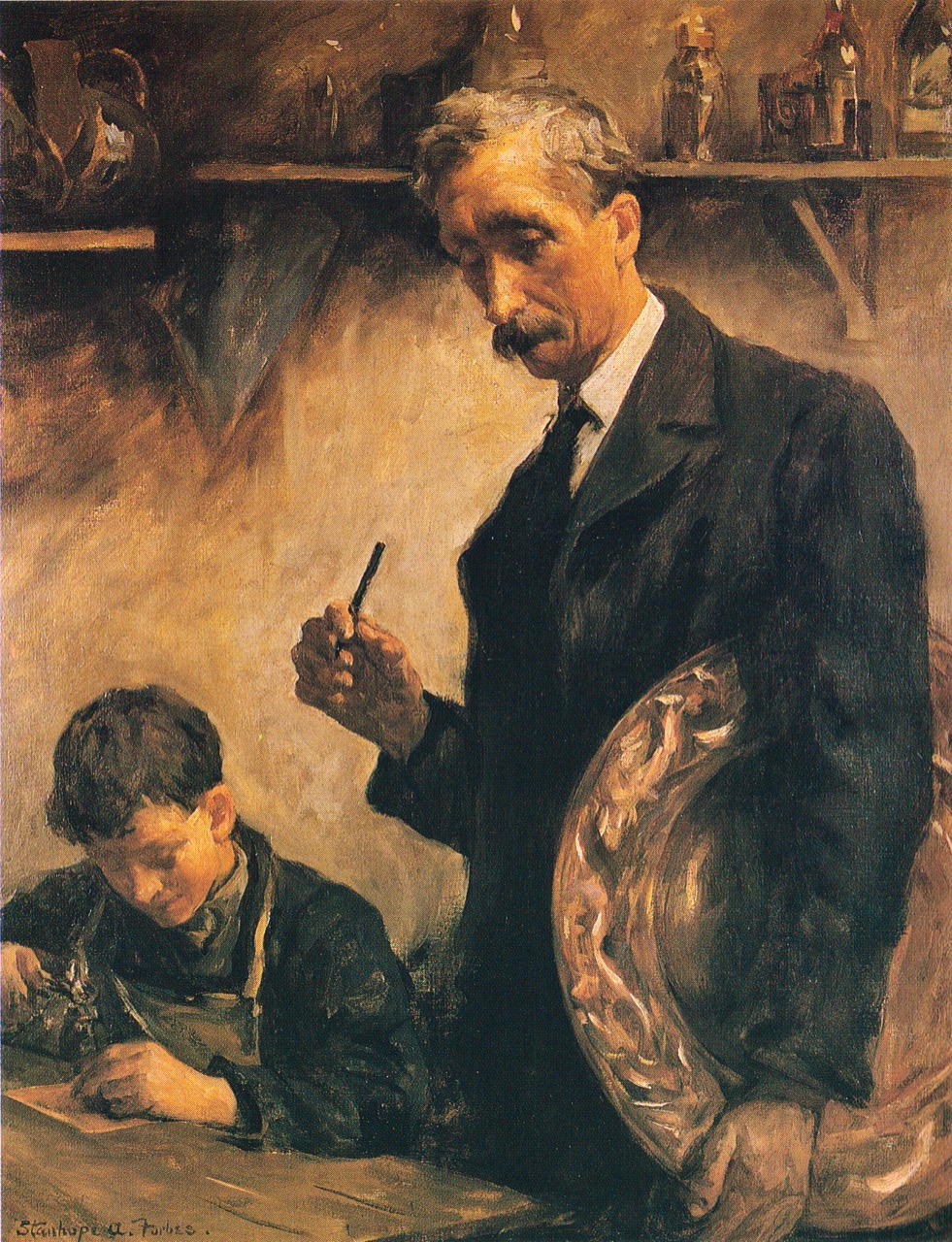
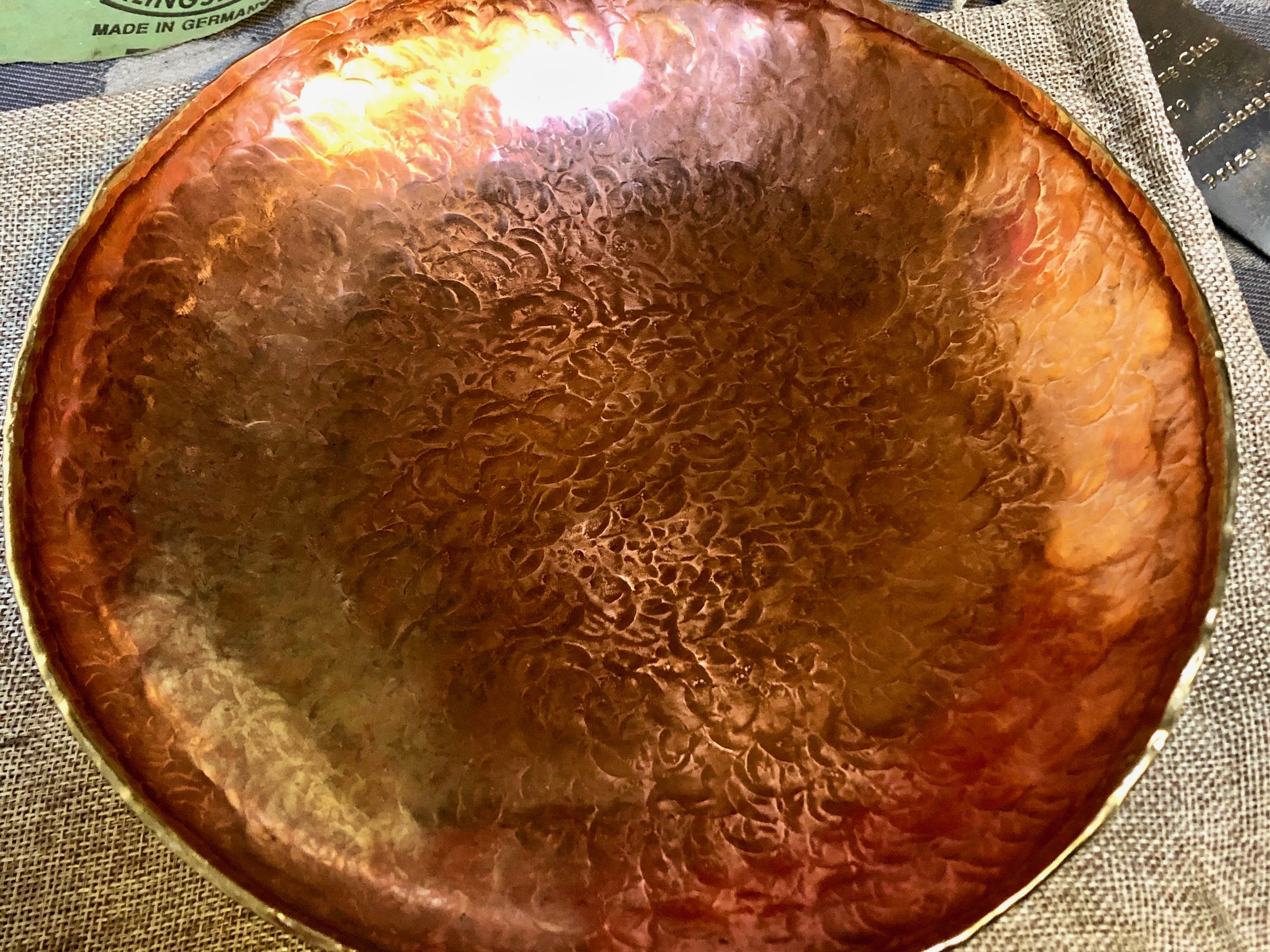
The Young Apprentice a painting by the Irish-born founder of the Newlyn School, Stanhope Alexander Forbes (above). The painting dates from 1908. There is still a copper works in Newlyn today. First established in the fishing village in 1890, copperware production gave us some of the most outstanding work created in the Arts and Crafts tradition of its day. One of the things that impresses us about Paddy’s work is his own way of working the metal surface, creating organic textures and colours which are exquisite.

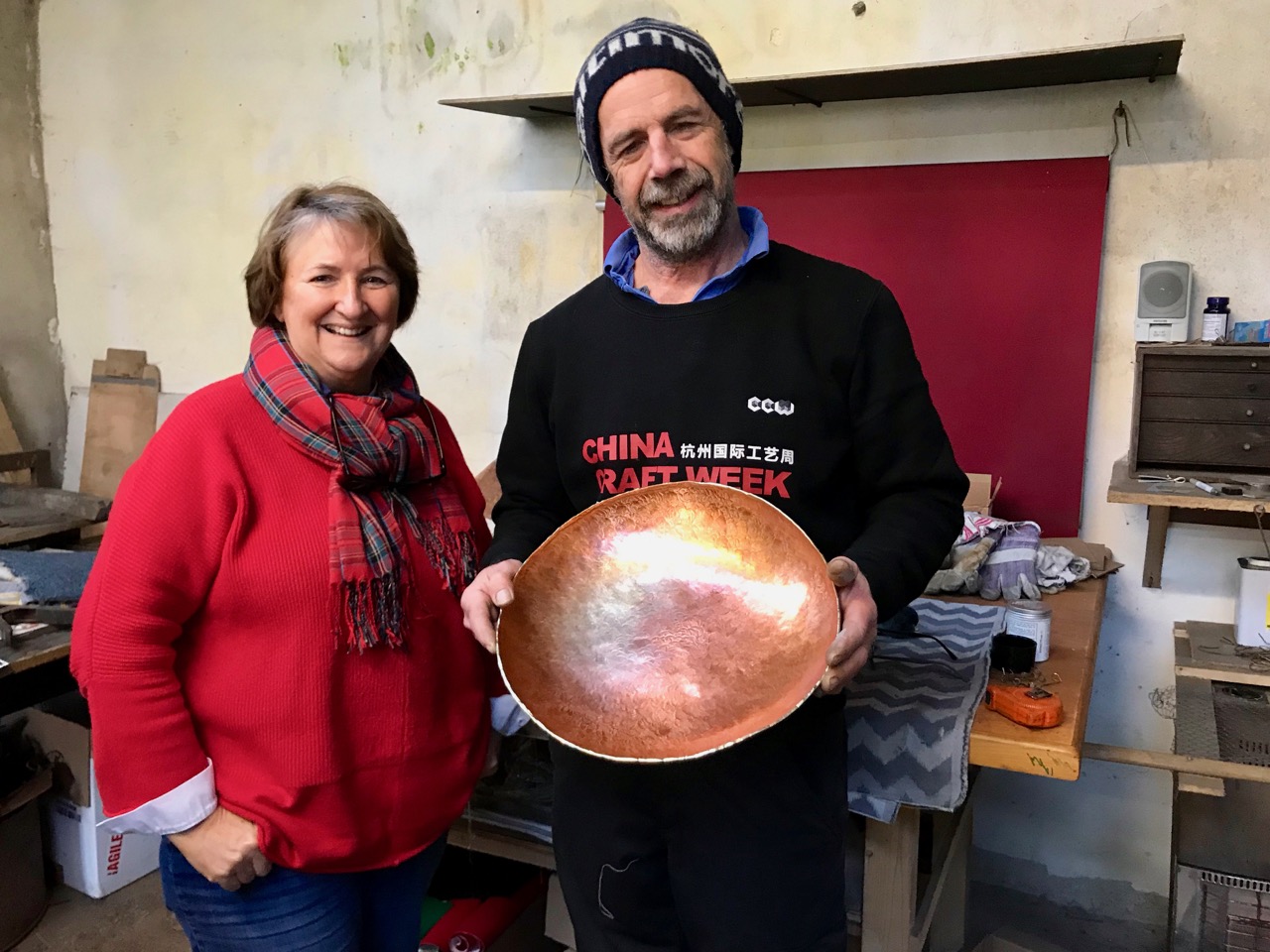
Paddy presenting us with the large bowl which we commissioned. It is elegant and unique, and we are delighted! The richly textured surface shows the marks of the copper being worked and provides an organic finish which will evolve and change colour over time. Paddy has developed his own design for his bowls, with a double skin and welted rim.

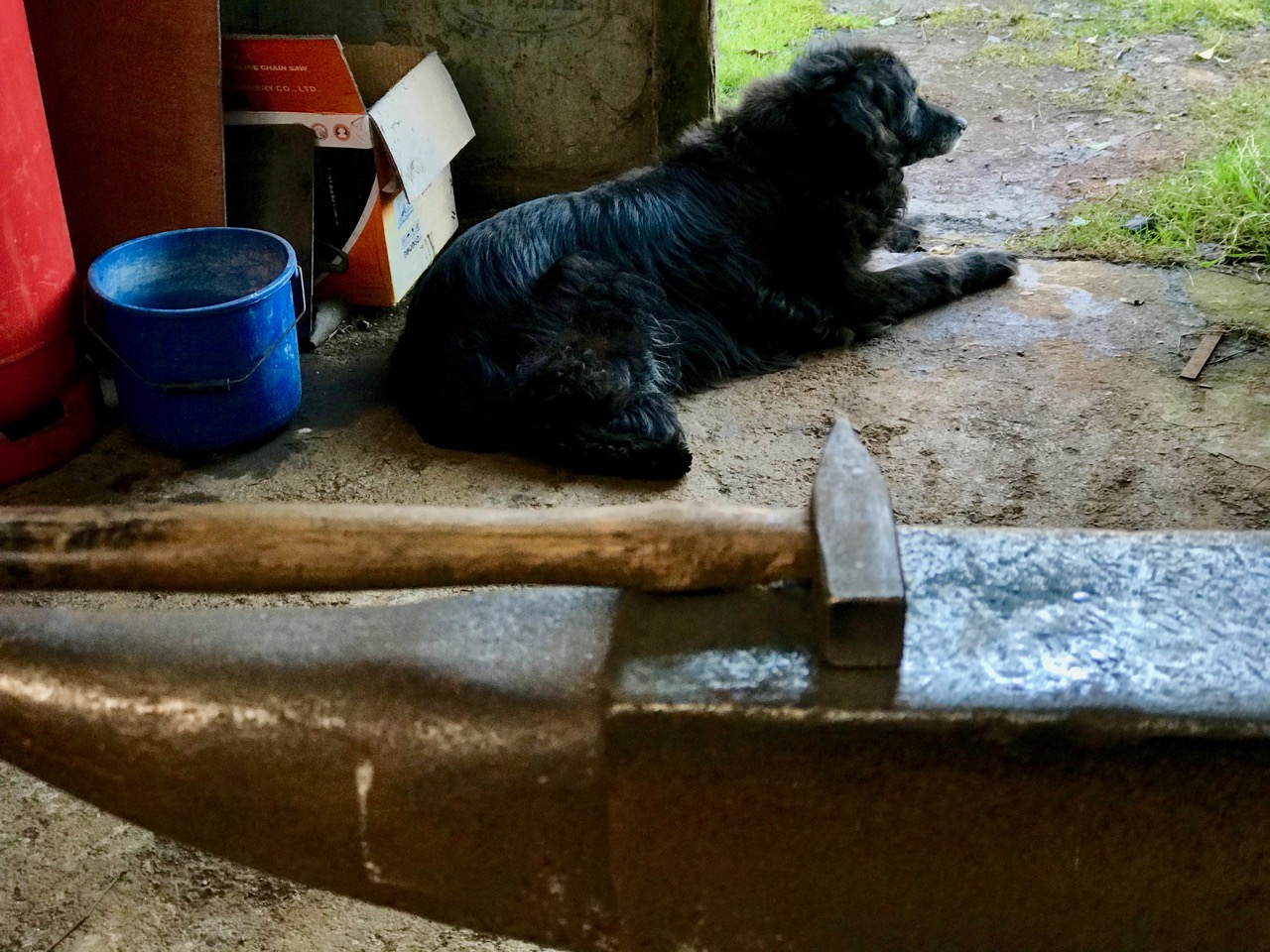
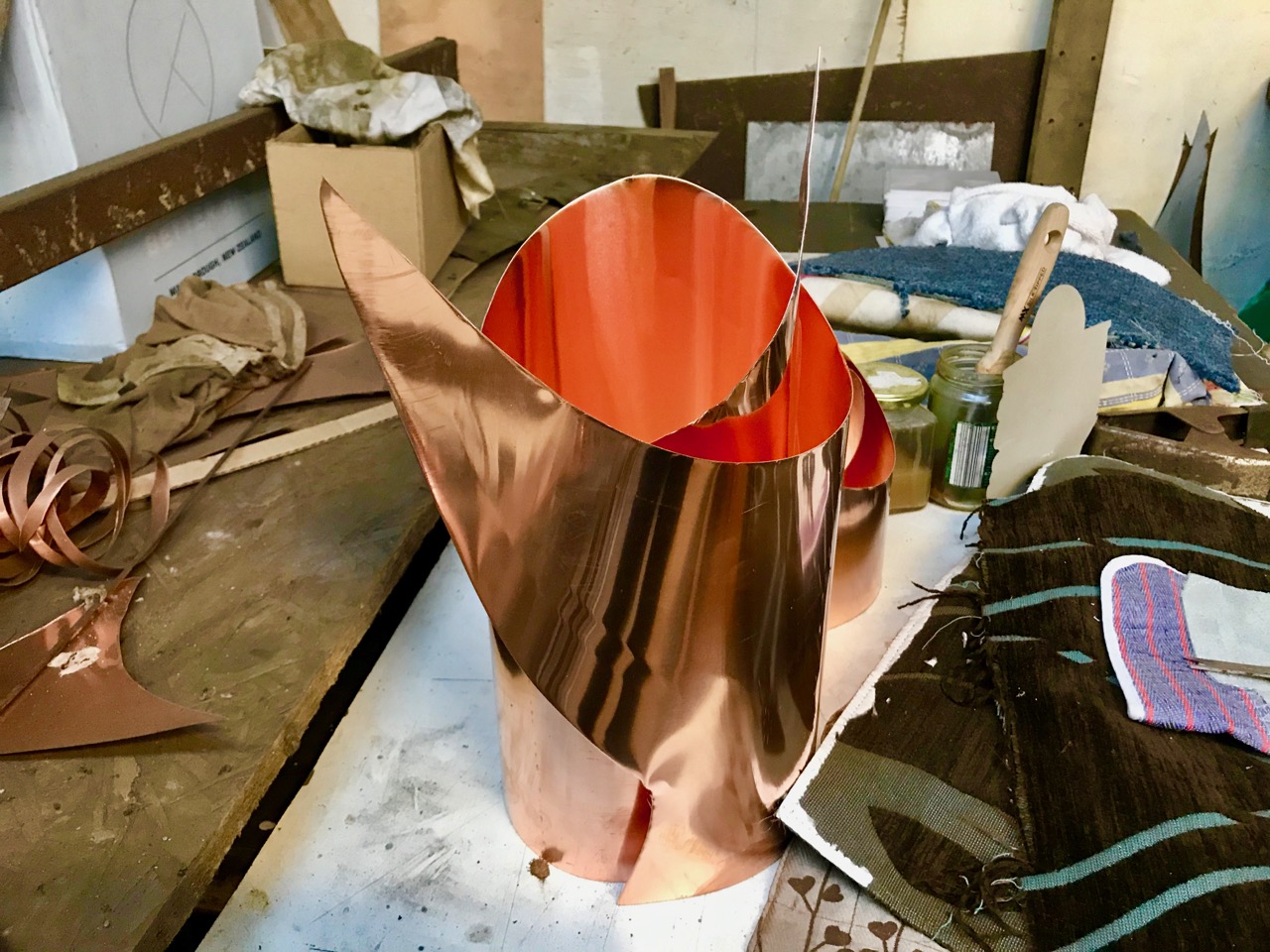
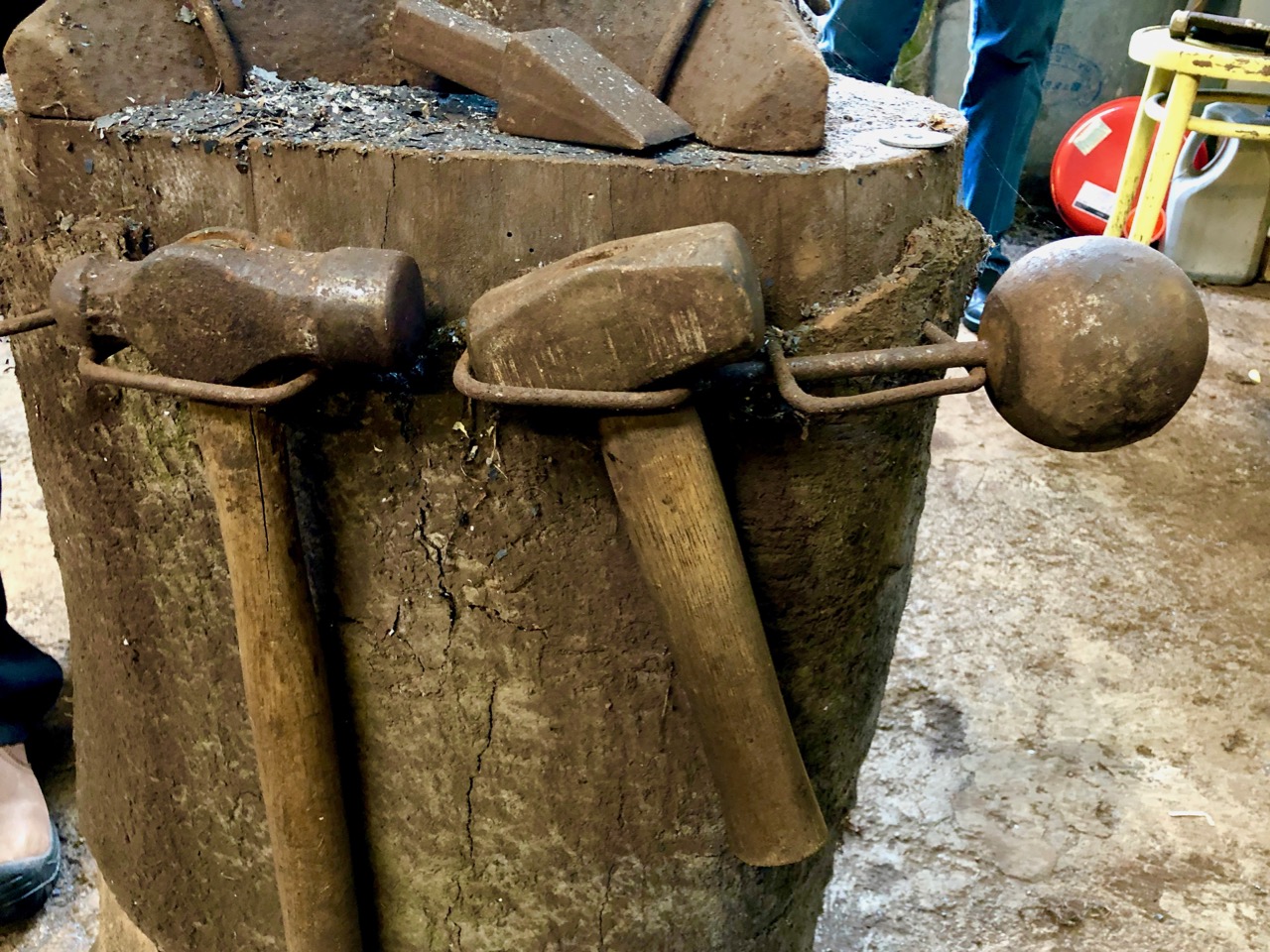
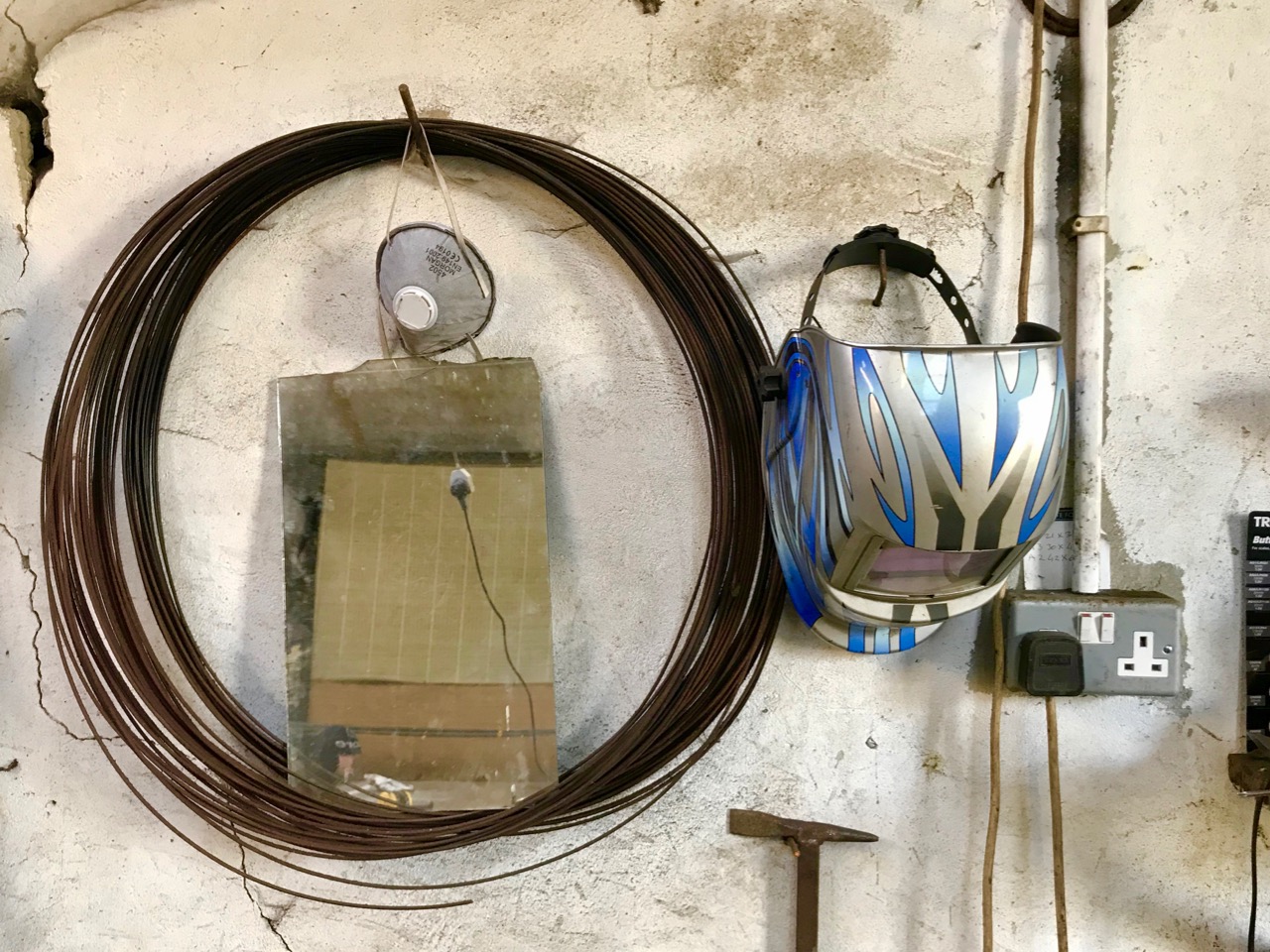
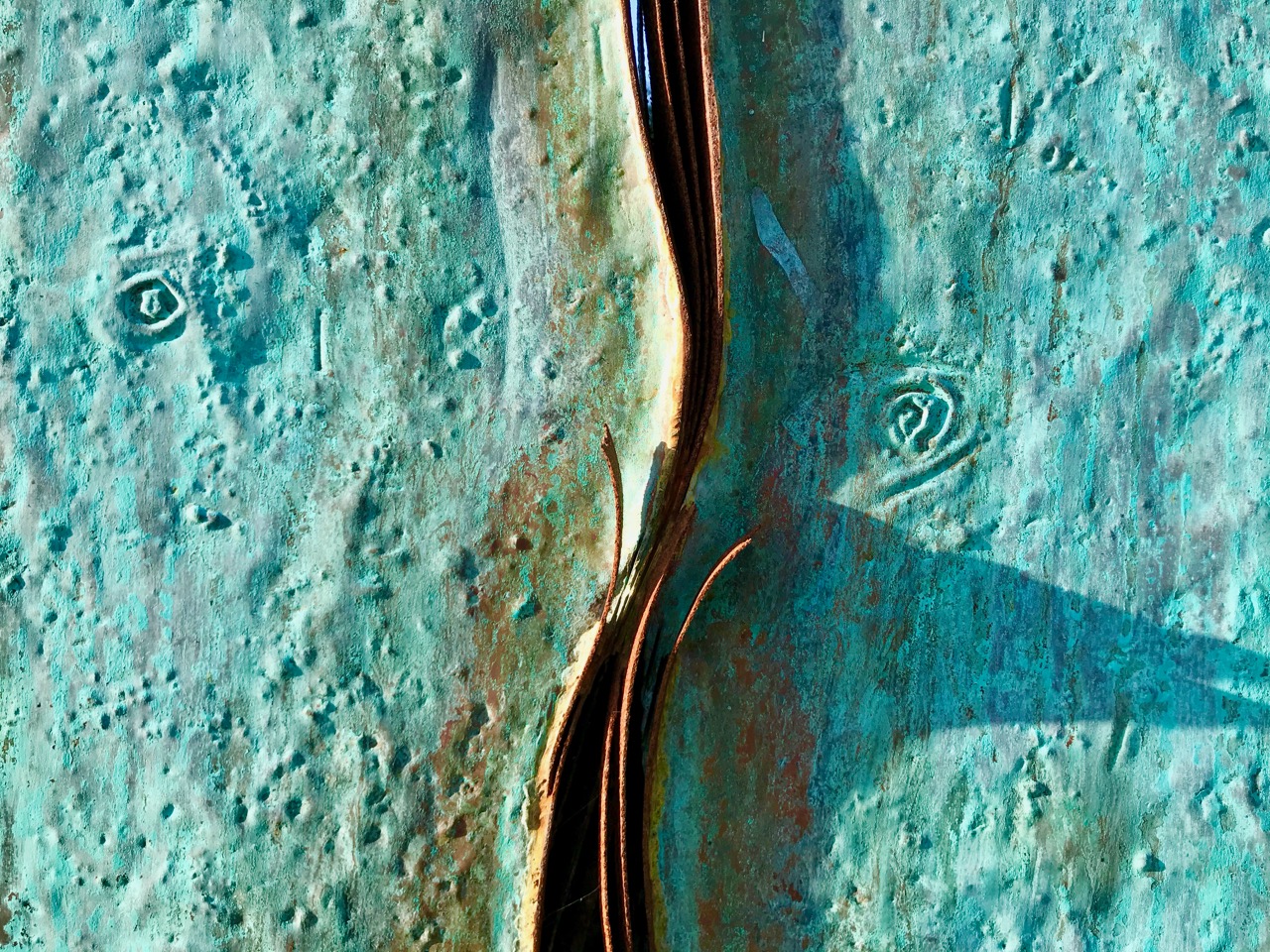
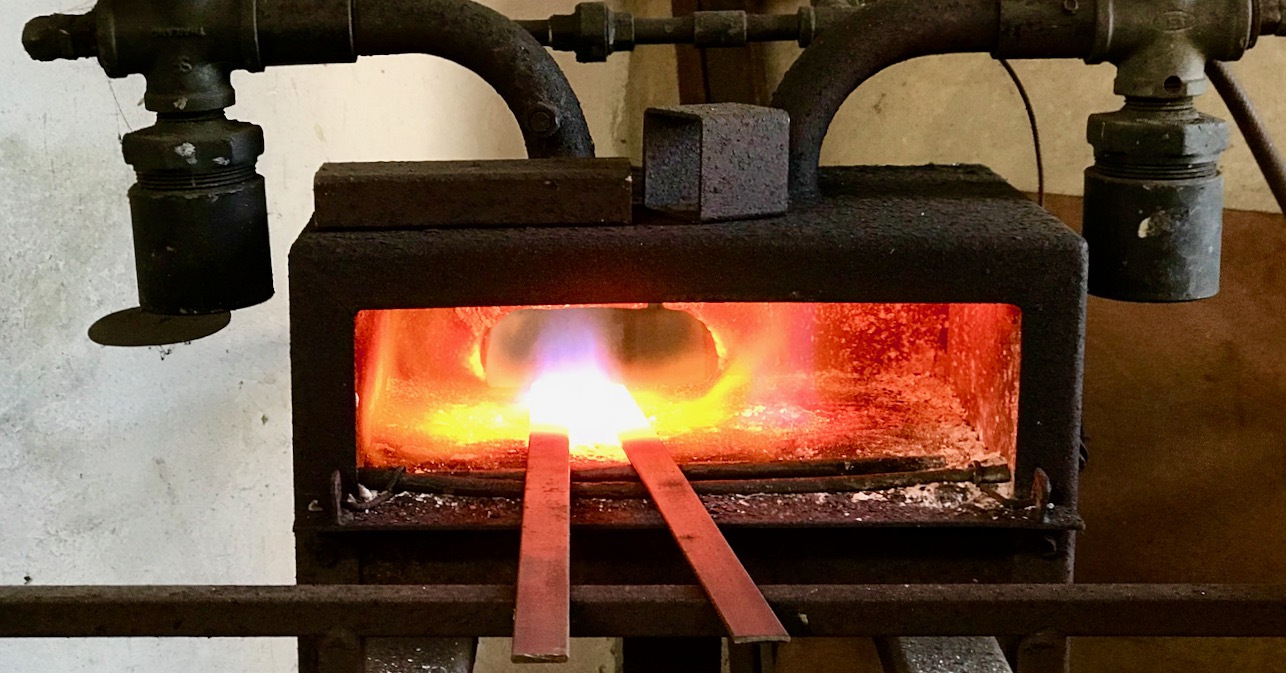
Raw materials and the tools of his trade form Paddy’s working environment. He is comfortable within these surroundings. We felt privileged to meet him in this environment, and could sense his ability to transform his visions into reality through complete mastery of his chosen medium. Examples of his work in the open air show the distinctive patina that develops on copper when exposed to the elements.

Paddy markets his bowls and decorative copper work through craft outlets and fairs. He recently travelled to China with a group of locally based fellow artists and craftspersons. It’s a small world when a master artist / craftsman from rural West Cork is in demand on the other side of the planet!

Ireland’s Santa Claus!

You may remember my excitement when – a few years ago now – I found out that the real St Valentine is interred in the Carmelite Church in Dublin. But here’s a palpable marvel: at Jerpoint, Co Kilkenny,  the bones of St Nicholas are reputed to be buried.  Yes – the Santa Claus St Nicholas! Tradition has it that a band of Irish Norman knights from Kilkenny went to the Holy Land to take part in the Crusades. As they headed home to Ireland, they ‘seized’ St Nicholas’ remains, bringing them back to Jerpoint, where the bones were buried – some say – under the floor of the Abbey (others say they repose nearby at the old church of St Nicholas).

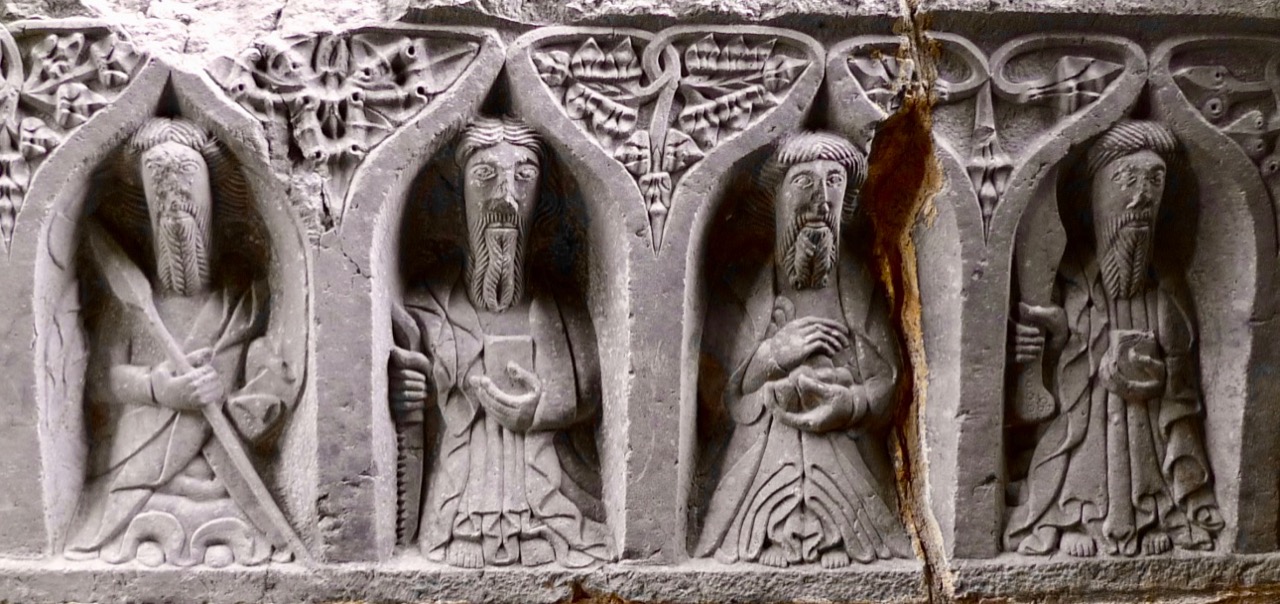
We first visited Jerpoint back in 2015, on a trip that took us to County Meath where we explored the monastic city of Kells (the famed book was written and illustrated there) and also where we found the medieval image of Santa’s reindeer in the header of this post! It is carved on to the base of the town’s Market Cross. We also visited Kells Augustinian Priory – a different Kells but in County Kilkenny  – and Jerpoint Abbey itself, a Cistercian monastery rife with carved figures, some up to 900 years old. Look at the ‘Weepers’, above, carved by members of the O’Tunney family – sculptors from Callan who worked in the 15th and 16th centuries. These four represent saints and show how they were martyred: St Thomas with a lance (left), St Simon with a saw, St Bartholomew holding a skin (he was flayed to death) and St Paul with a sword.

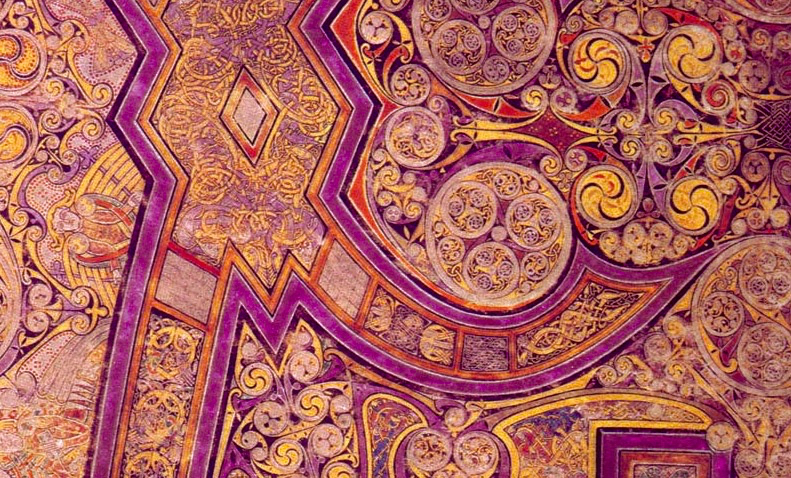
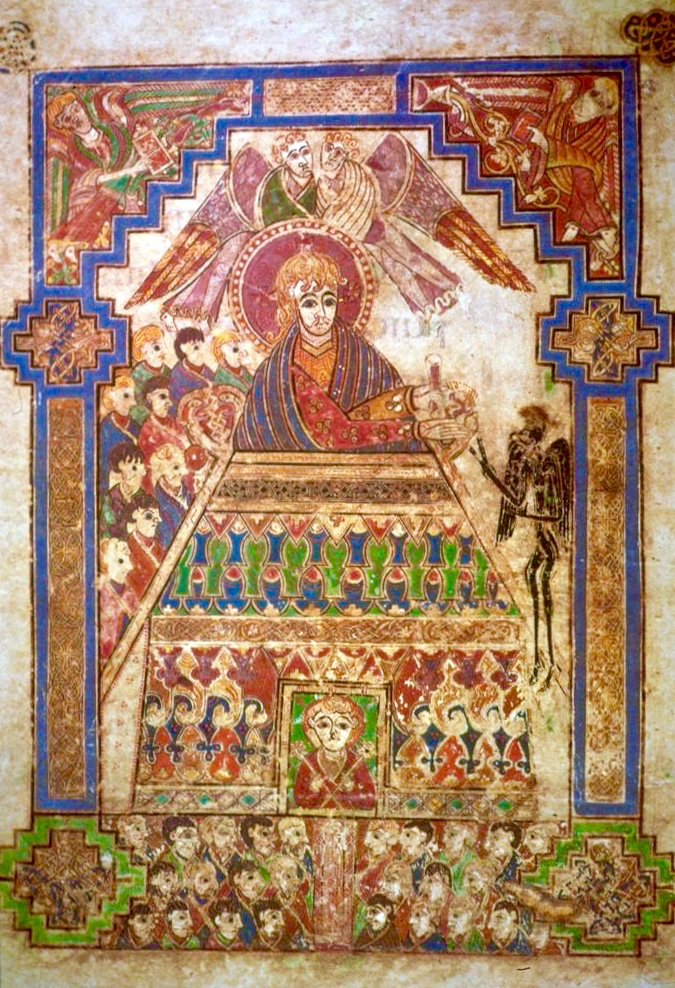
The Book of Kells is worth more than a passing mention, especially as some commentators have likened the medieval carvings at Jerpoint and other contemporary monastic foundations in Ireland to ‘illuminated manuscripts cast in stone’, because of the richness of the characters, the decoration and the detail. The Book (that’s just one example of the incredibly detailed capitals on a single page, above) probably dates from the 8th or 9th centuries and may either have been written in its entirety in Kells, or started by St Columba’s community in Iona and completed in the Scriptorium in Kells. That building still exists! In fact it (or something very like it) is illustrated in the book. It’s known as St Colmcille’s House – we went to have a look at it, and were fortunate to have a tour by its guardian.

Here is the ancient stone roofed oratory of St Colmcille’s House (above), supposedly the place where the Book of Kells was written – or, perhaps, completed. The upper floor of the building has a small window oriented to focus sunlight on the writing table. St Colmcille’s bed was also kept here – a large and heavy stone slab – until it was stolen in the 1950s! A few hundred years earlier (in 1007)  the Book itself was stolen from Kells and eventually found in a nearby bog. It stayed in Kells until 1654, when it was sent to Dublin for safekeeping: it is now on permanent display in Trinity College.

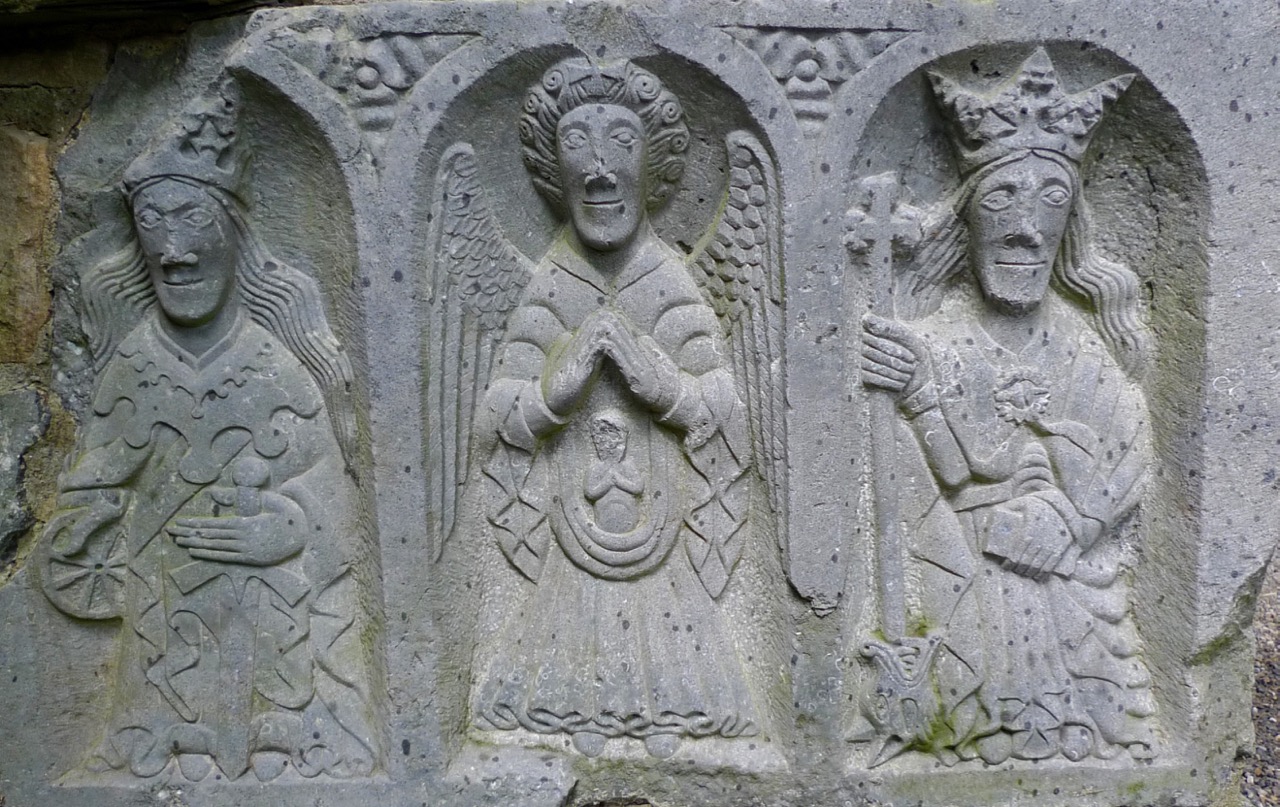
(Above) another page from the Book of Kells, which may be an illustration of the Scriptorium at Kells, and – perhaps – a self-portrait of the writer: see him sitting in the doorway to the house working away with his quill pens. Back to the medieval feast at Jerpoint: the trio below, from Jerpoint, are St Catherine – with her wheel, Michael the Archangel and St Margaret of Antioch – who is conquering a Dragon.

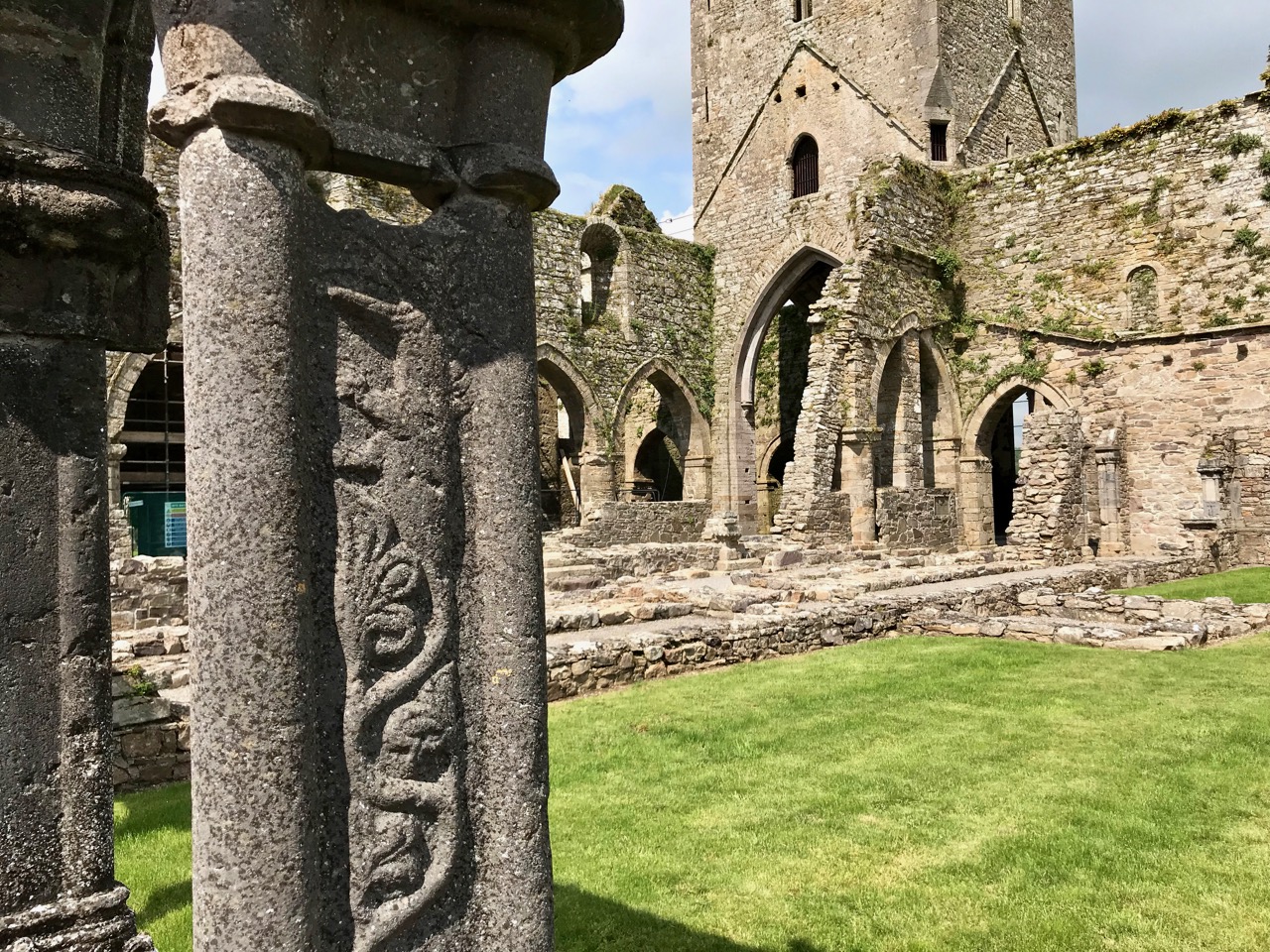
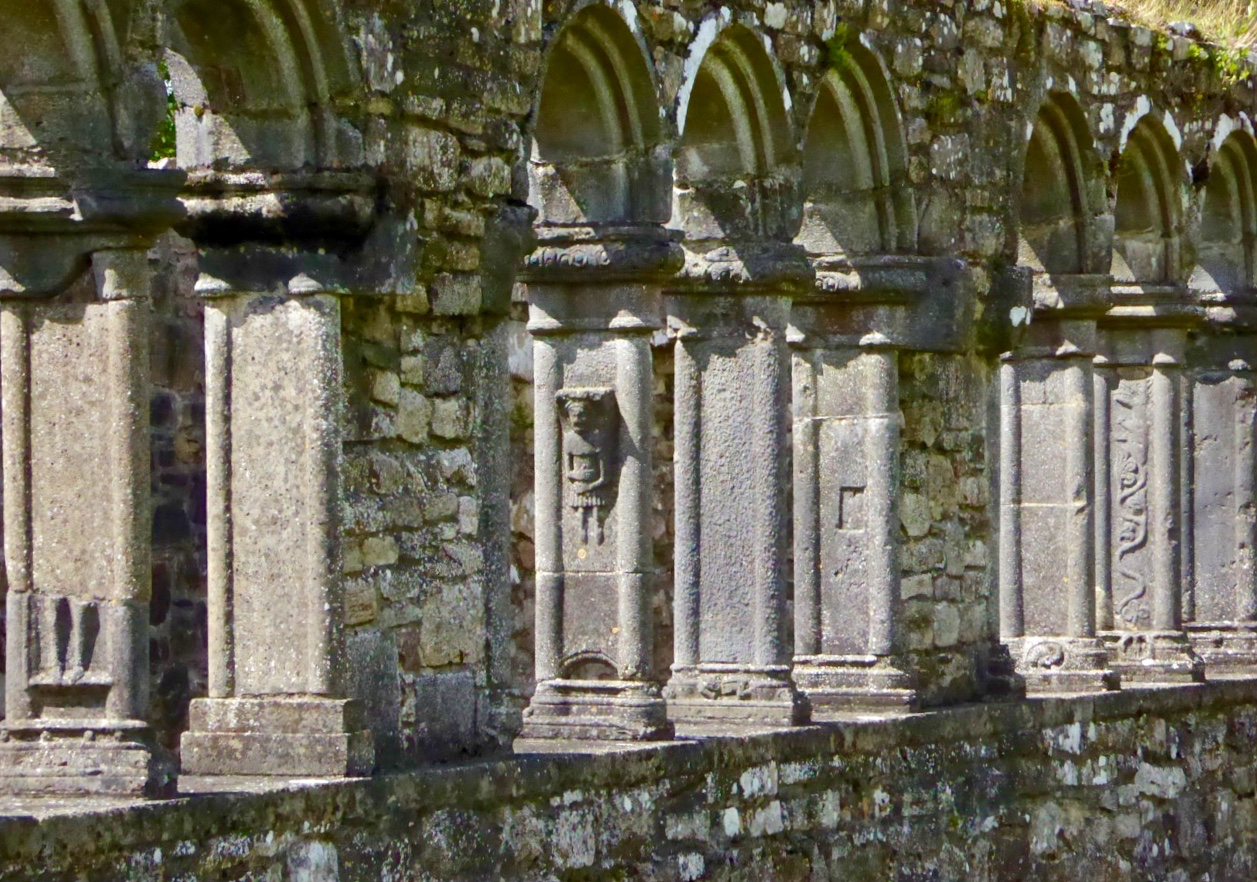
At Jerpoint it’s not just the tombs and the Weepers which fascinate: there is a 15th century cloister which, in its heyday, displayed a riot of carvings both saintly and secular. Some of these are in situ; some are partially destroyed and others have been recovered during archaeological excavations, and placed on display in a little museum. Among them we identified knights, ladies, animals fantastic and real, and ‘ordinary folk’ – including a man with stomach ache!

‘The Bones of Santa Claus’ (Author Bill Watkins)

Where lie the bones of Santa Claus, to what holy spot each pilgrim draws
Which crypt conceals his pious remains, safe from the wild wind, snows and rains?

It’s not in Rome his body lies, or under Egypt’s azure skies
Constantinople or Madrid, his reliquary and bones are hid.

That saint protector of the child, whose relics pure lie undefiled
His casket safe within its shrine, where the shamrocks grow and rose entwine.

Devout wayfarer, cease your search, for in Kilkenny’s ancient church
Saint Nicholas’ sepulchre is found, enshrined in Ireland’s holy ground.

So traveller rest and pray a while, to the patron saint of orphaned child
Whose bones were brought to Ireland’s shore, safe from the Vandal, Hun and Moor.

Here lie the bones of Santa Claus, secure beneath these marble floors
So gentle pilgrim, hear the call, and may Saint Nicholas bless you all!

I hope this topical little foray into some of our archives demonstrates once more how easy it is to find history (and legend) wherever you go in this special land. In fact, it’s very difficult to travel far here without tripping over the past. It’s often fairly low-key. Most sites are protected as scheduled monuments; some are in the good care of the Office of Public Works and have guides and visitor centres. Many are remote, open to the wind, rain and sunshine and free for us all to visit: very often you will have the history all to yourself.