The Broken Stone – Update

This post was originally written in 2017. I have provided an update at the end.

All the names in this story have been changed. However, it is a true account of how we came to lose one of our ancient monuments – at once a family and a national tragedy.

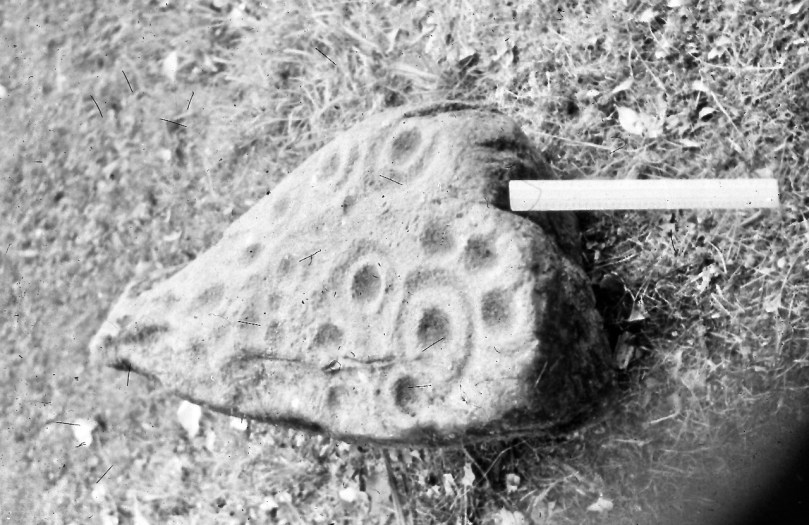
This is my drawing. It shows an excellent example of Irish rock art, a classic cup-and-ring design, deeply carved – a thing of beauty, antiquity and intrigue. I know it now as The Broken Stone.

The drawing was done in 1972, while I was recording all the known examples of rock art in Cork and Kerry, travelling on a Honda 50 with with my equipment in a backpack. The sun shone every day that summer. Everywhere I went I was received with kindness and friendship, nowhere more so than at the big farm house owned by Tim and Clair Flynn. The stone was in their garden, having been found in a bog a short distance away and brought to the house in Tim’s grandfather’s time.

Tim ran the farm, and Clair looked after everything else, including three small children. They were lovely people – they took me in, fed me, took a great interest in the research. I felt I had made friends. On a second visit I observed Clair giving two of the children antibiotics and asked why. She explained that two of the three, Niamh and Shane, although not the youngest, Ciara, had a genetic disorder called Cystic Fibrosis. I had never heard of it, and Clair explained that both parents had to carry the gene, that it primarily affected the lungs, and that it was eventually life-limiting. In fact, at that time, life expectancy for those with the disease was about 20.

Through 40 years, mostly spent in Canada and in arenas far removed from Irish archaeology, I never forgot the Flynns or their wonderful stone. It was a happy memory, coloured by the sadness of the inevitability of the progression of the children’s’ disease.

When Robert and I re-engaged with rock art again in the last few years, I knew that sooner or later we would work our way from Cork to Kerry and I would have an opportunity to go again to Flynn’s farmhouse. In anticipation of this, I went to the National Monuments record, to remind myself of the details. To my surprise, I found a record that stated: There are no visible remains of any cup-marked stone here. It was set between two rocks in a prominent position in the garden but was subsequently broken. Its present location is not known. This made no sense to me: a stone like that, which could not be mistaken for anything except an ancient and significant artefact, could not just disappear. Perhaps it was simply not located by the surveyors. Perhaps it had been moved for some logical reason – it was less than a metre long and it was moveable. If it had been ‘broken’ that would make it more moveable yet.

Then, recently, I met Alison McQueen, tasked with updating the rock art records, and asked her about the stone. Since it had disappeared, it was not on her list to visit, but it turned out that she herself had visited the Flynns years before, although her interest was not in the rock art, but in the trough that was also located on the yard. It was a medieval basin that had been brought, over a hundred years before, from Mount Brandon to be presented to Tim’s Great-Grandfather in recognition for his political work and his support for causes such as Catholic Emancipation and land reform. Alison was able to tell me that the Flynns, ageing, and with Tim no longer able to farm, had sold the house and moved a short distance away, taking the trough with them. Of course! They must have taken the stone too, I realised, and that’s where I would find it.

And so, on a recent trip to Kerry, we travelled to the farm. There was nobody home (and a quick snoop around the garden confirmed there was no stone) so we knocked on a neighbour’s door and were kindly directed to the new house, where we were told, Tim and Clair’s daughter-in-law lived, who would be able to help us.

This is how we met Ciara, the surviving member of the Flynn family, and came to hear the story of the stone. Ciara just happened to be there, that day, spending time with her brother’s children. Her brother, Shane, despite all the health challenges he faced, had defied all predictions and only passed away last year. He was, by her accounts, an adventurous and determined man who lived every moment to the fullest and fought the good fight as long as he could, including undergoing a double-lung transplant. He worked and travelled and married – his two children were bright and curious and charming. His widow was not there when we called.

It has taken Ciara a long time to come to terms with the story of the stone – many many years – but she finally felt ready to tell it. She loved it as a child. She and her brother and sister didn’t know how old it was exactly, or anything about rock art, but they made it the centre of many imaginative games, as children the world over do with special features in their surroundings.

As an adult Ciara moved away in the course of her work. During this time, her sister, Niamh, became a staunch member of a Christian Fellowship church. Gradually, Niamh became convinced that the stone represented something evil. It worked on her mind until she was certain that blood sacrifices had been performed there in pagan rituals, and that it continued to exert some kind of malign influence, and in this she was supported by her church. She determined that it must be destroyed. Her parents were aghast, and refused to countenance this plan. However, by this time, Tim was ill and unable to participate in any real decision-making. Niamh launched a campaign to convince her mother. It was relentless and highly charged and Clair, in desperation, finally gave in.

A neighbour with a large digger agreed to destroy the stone. When I asked Ciara if anything was left, she said, she had never been able to find any remains and had been told by her family that it had been ‘reduced to dust.’

When Ciara returned from a term in Belfast shortly thereafter to discover what had happened, she was heartbroken: so distraught, in fact, that it caused a rift with her family for a time. Over the next few years, however, loss piled upon loss, as she lost her parents, her sister, and finally her brother. (In a typically Irish twist to the story, the neighbour who had crushed the stone was himself killed in an accident.)

In the face of grief the issue of the stone receded to the background but was never forgotten. Ciara has brooded over it in the intervening years and when we knocked on the door that morning, she decided she was finally ready to let go of the secret of what had really happened to the stone. I applaud her grace and courage, and I have immense sympathy for the Flynn family and the difficult path they have travelled.

As far as I know, this drawing is the only record we have of The Broken Stone. One of the questions we face as we study rock art is – Is it safe? The answer is complicated: while most of it has enjoyed a measure of protection due to its remote location and relative anonymity, there are many real threats that can negatively impact on rock art in the field, from weather to overgrowth, land clearance, forestry and outright vandalism. But I could never have written a script like this, or predicted that a fundamentalist form of Christian belief would be responsible for the destruction of a beautiful and iconic piece of rock art.

UPDATE

As regular readers know we bought our house in West Cork in 2012. However, I continued to have a base in Canada and had not fully moved over all my possessions until several years later, after I had written this piece. Among the boxes were a lot of slides (remember those?) dating mostly from my life in Canada. They sat, waiting for me to go through them, in a corner of the study until recently, when I could put the task off no longer (and yes, all you organised people, I can hear you silently judging me).  One of the boxes contained old black and white slides from the early 70 and my heart beat a little more quickly as I realised that it might contain a photograph of the Broken Stone – and it did! I have had the old slide digitised and here it is. The stone may be gone, but at least we have the drawing – and now the photograph.
For more on the topic of Irish Rock Art, see our Navigation Page, Section C2

Castle Island Explored – Part 1

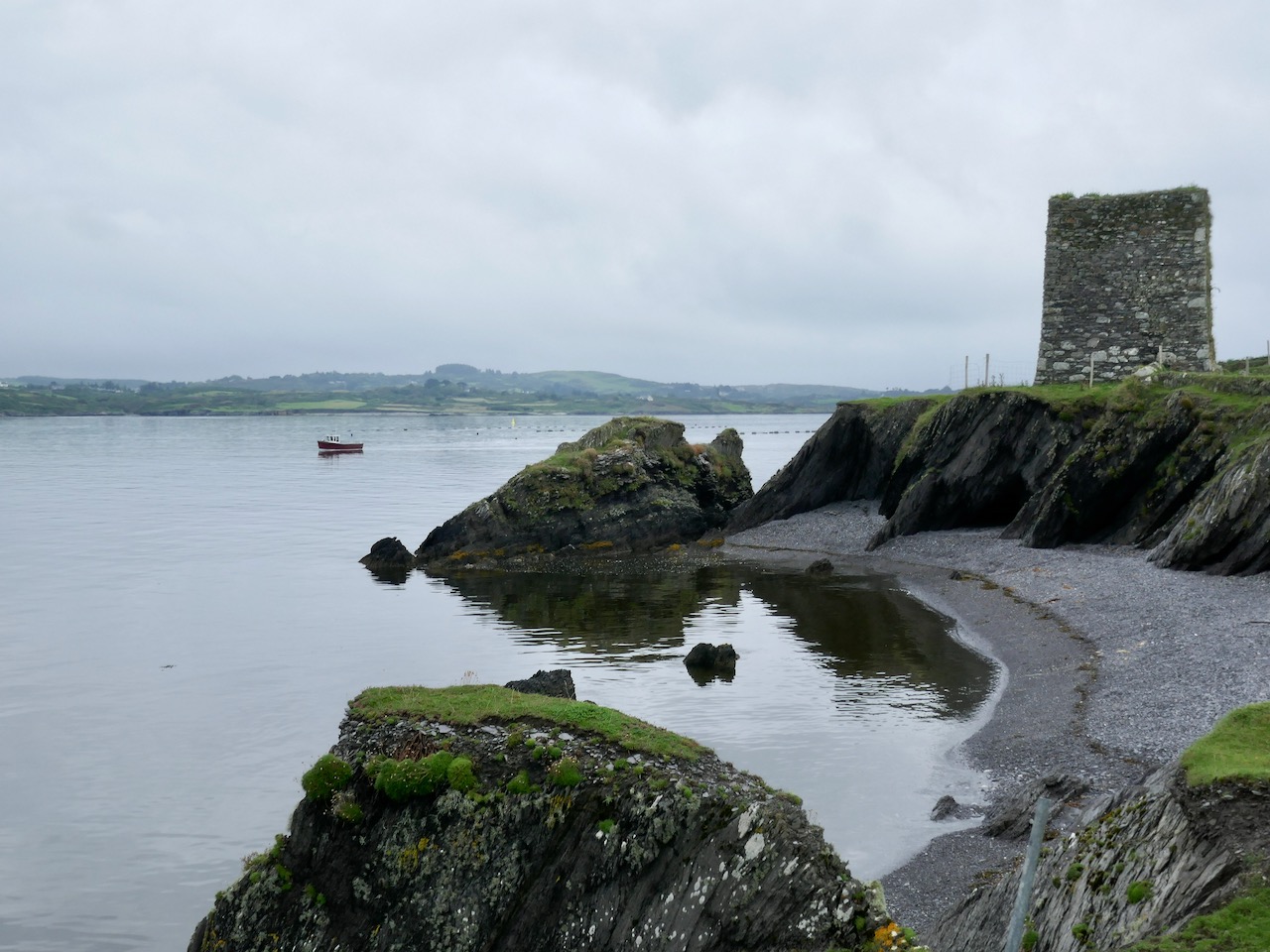
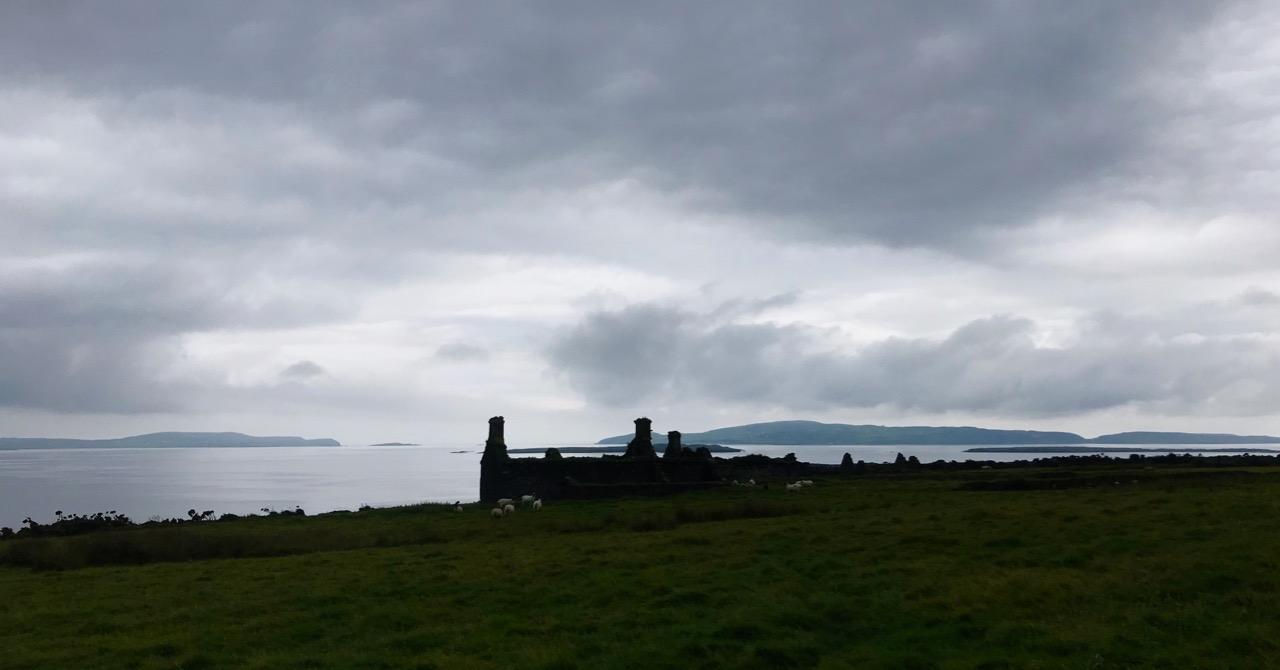
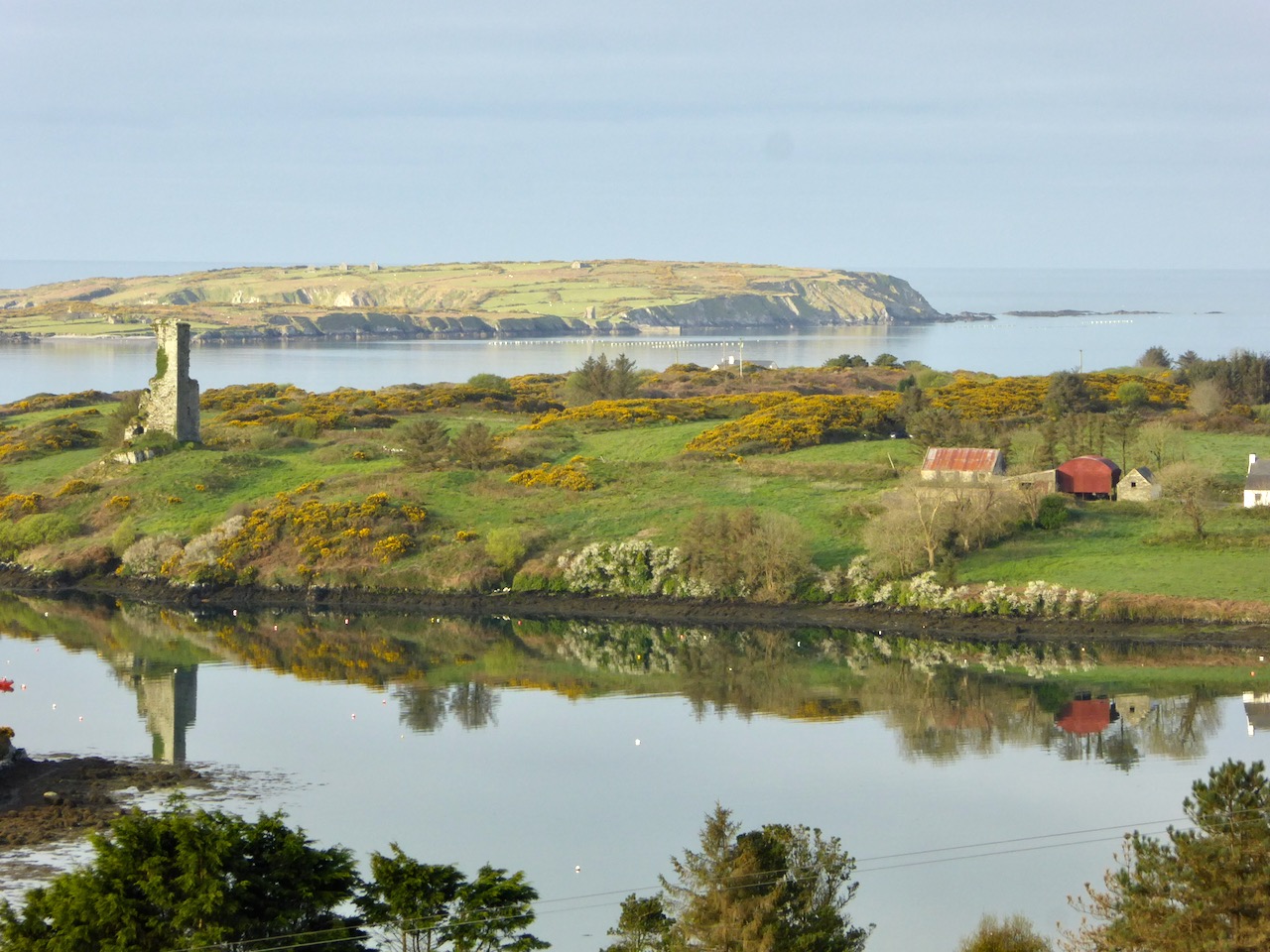
In this early spring photograph, taken from our Eyrie at Nead an Iolair, you can see Rossbrin Castle in the foreground. Beyond it lies Castle Island, uninhabited and slightly mysterious, but with clear traces of former occupation including a medieval tower house, a substantial quay and several abandoned dwellings. As we look over this island every day, we have long held an ambition to visit it, recently fulfilled when we were offered a lift out there on our good friend and neighbour’s fishing boat.

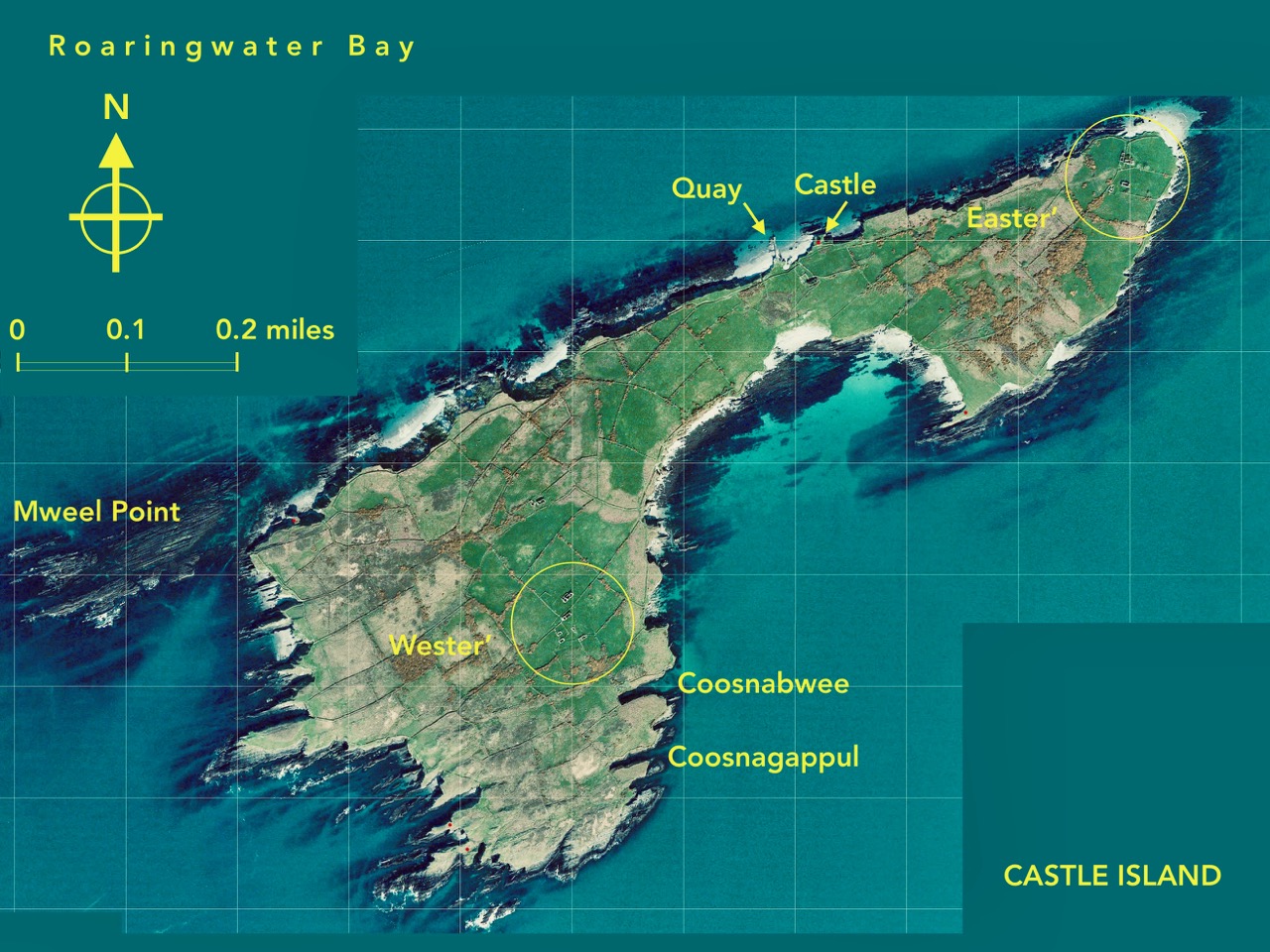
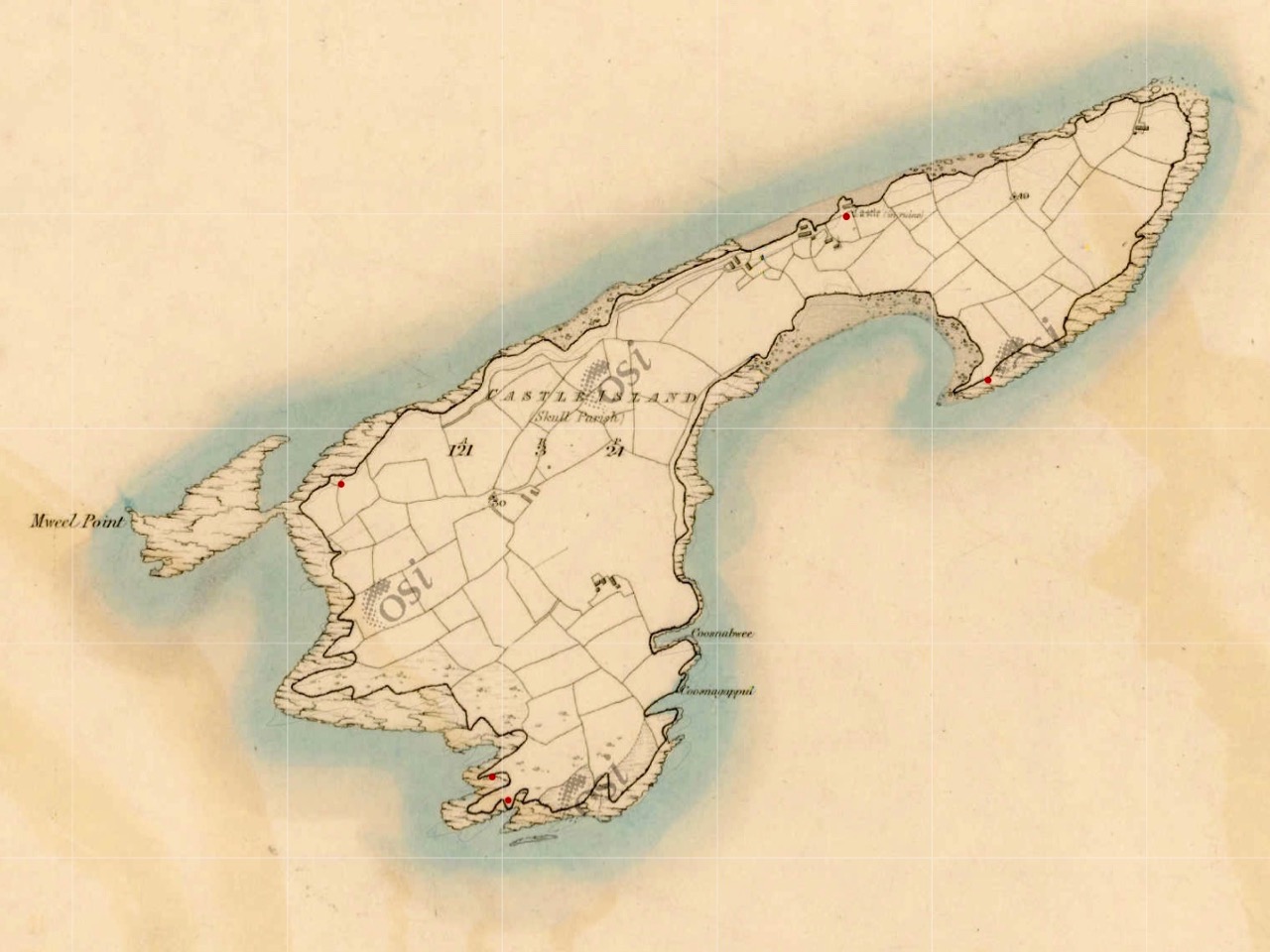
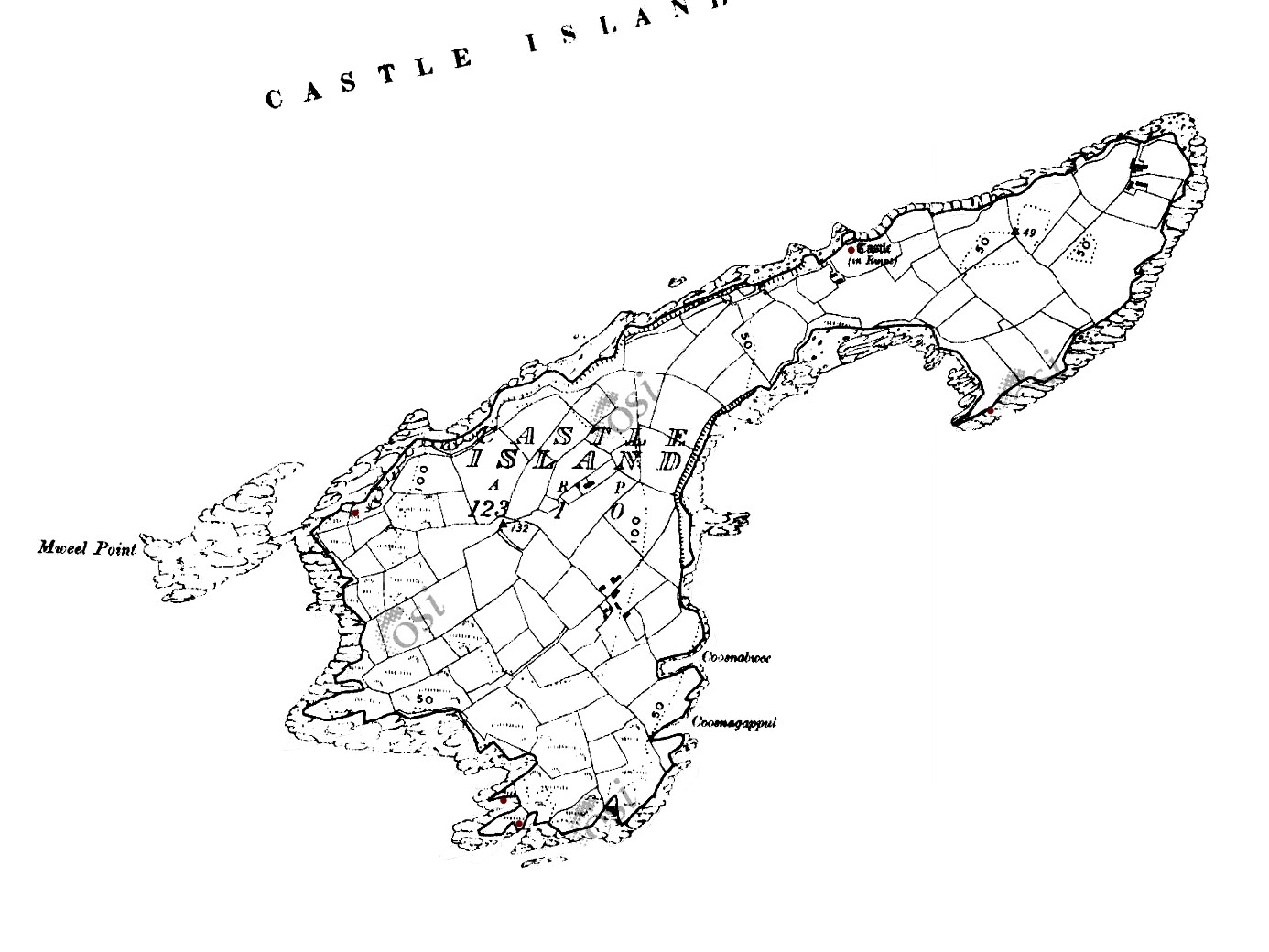
This map shows the scale of the island – just under a mile in length, and occupying 123 acres of mixed land. The main settlements – of Wester’ and Easter’ – are shown, as are the Quay and the Castle. It’s interesting to compare the two Ordnance Survey plans (below): the first 6″ edition was drawn up between 1829 and 1841, and the second one is the 25″ edition, drawn between 1888 and 1913. You can clearly see how the fields have changed, with new boundaries created in the later survey. Presumably this was due to an increase in population resulting in more clearances of rough land.

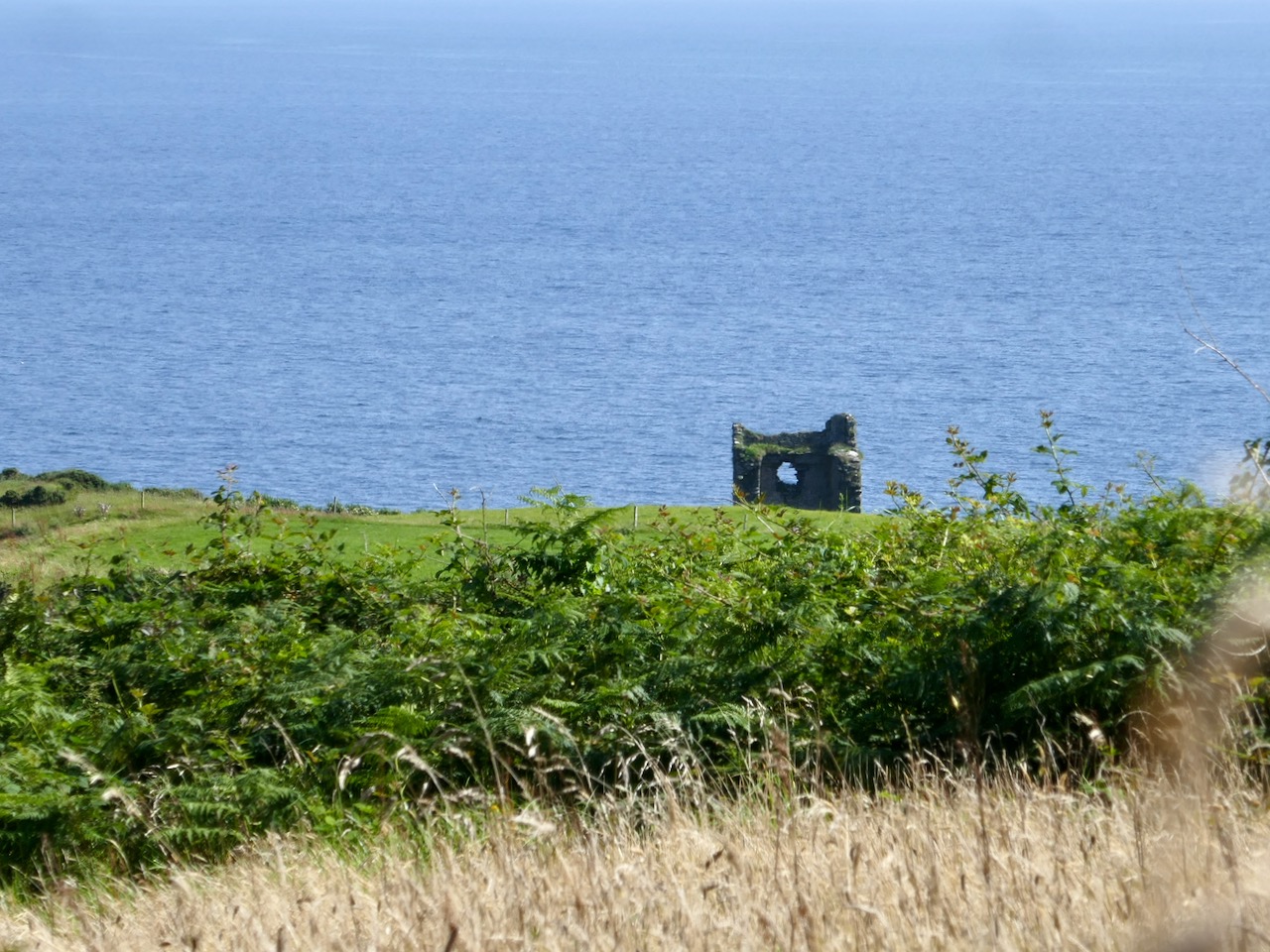
Both these maps show the Castle – said to date from the 15th century and one of the chain of O’Mahony fortresses that are strategically situated around this most south-westerly part of the Mizen. Of that clan we can find the following written by W O’Halloran in 1916:

Dr Smith says – these Mahowns derive their pedigree from Kean Mc Moyle More, who marrid Sarah, daughter to Brian Boru, by whom he had Mahown, the ancestor of all the sept. It is from this Kean the village of Iniskeen, in Carbery, has its name, and from this sept the Bandon is sometimes called Droghid Mahon. Mahon was the ancestor of the Mahonys, or O’Mahonys . . . The O’Mahonys, whose stronghlad was in the neighbourhood of Bandon (Drohid Mahon), were the first to encroach on the territory of the O’Driscolls. This occurred long before the Anglo-Norman invasion. They possessed themselves of the western portion of Corca Laidhe called Ivahah, which comprised the parishes of Kilmoe, Schull, Durrus, Kilcrohane, Kilmacougue, and Caheragh. They had fourteen strongly built castles . . .
Early Irish History and Antiquities and the History of West Cork, W O’Halloran

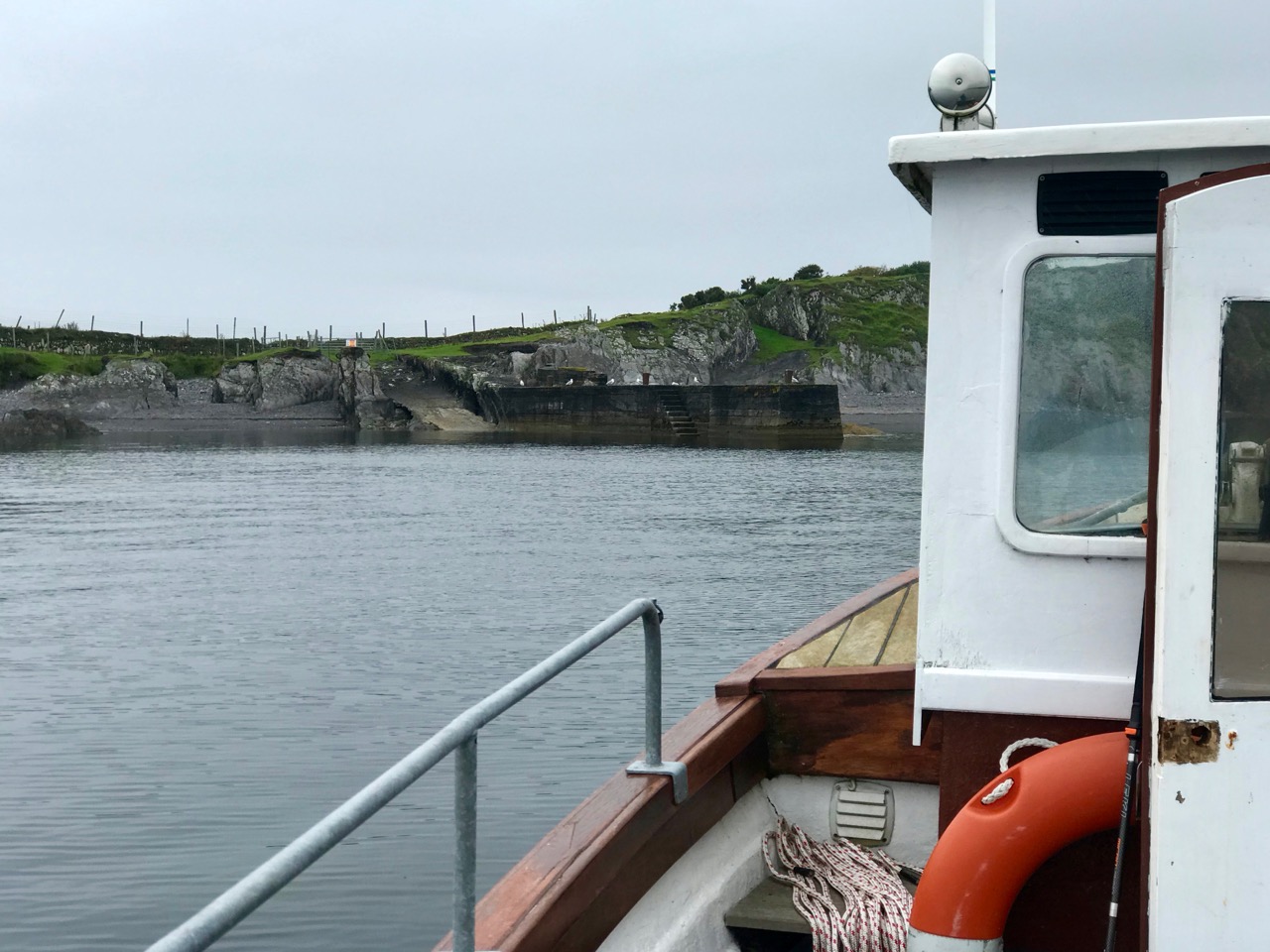
The M V Barracuda approaches Castle Island on an atmospherically damp day in late August. The quay itself seems to have been constructed  during the time of the Congested Districts Board from 1892 to 1922. It is a substantial structure and the investment in that time suggests that there was a significant community living and working on the island to justify it. However, a number of sources assert that Castle Island was “. . . home to a community of approximately 15 families who were last resident on the island up to the year 1870 . . .” Our own observations of the abandoned dwellings on the island led us to the conclusion that, although now significantly deteriorating, these habitations must have been in use more recently than this.

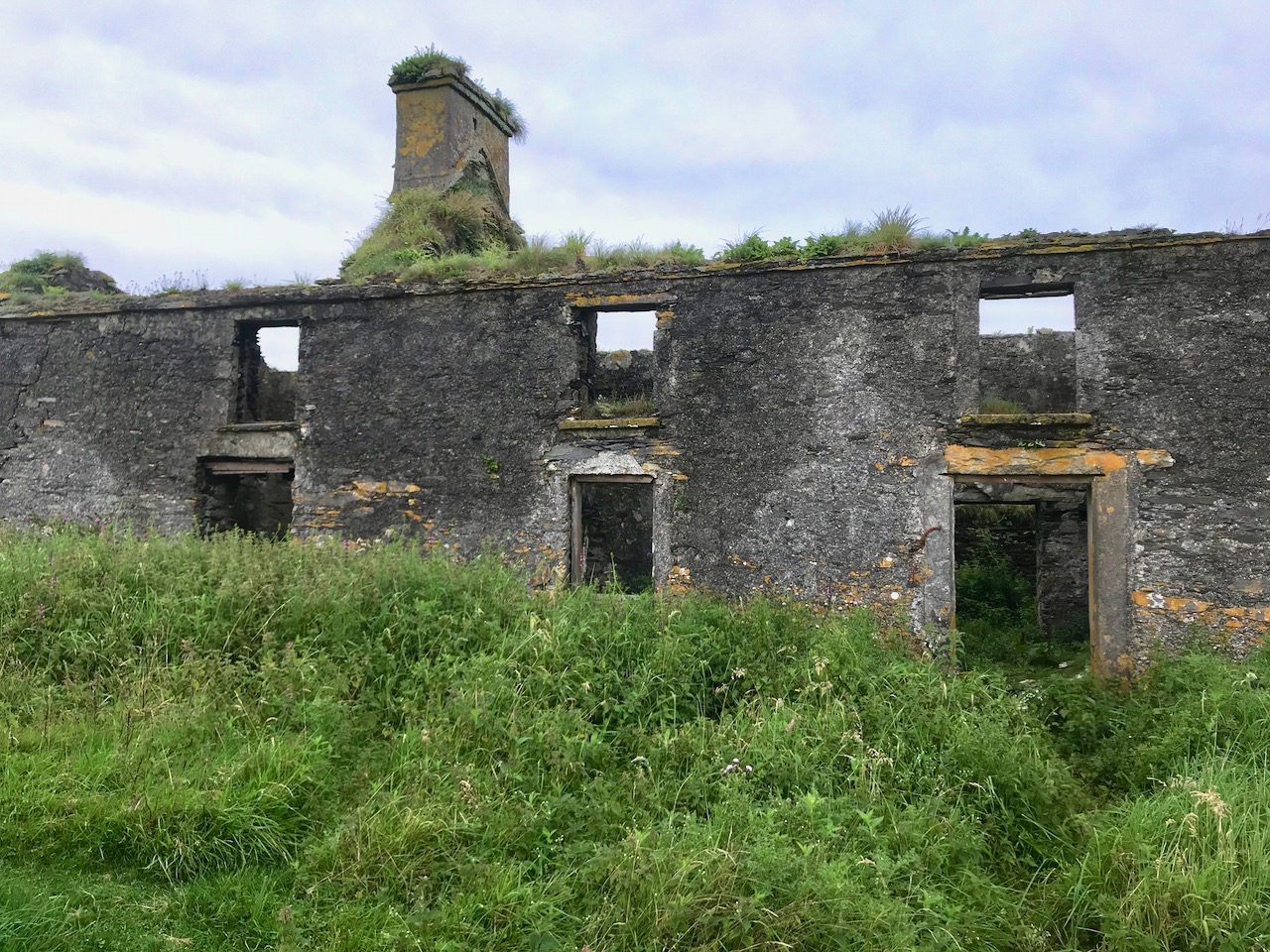
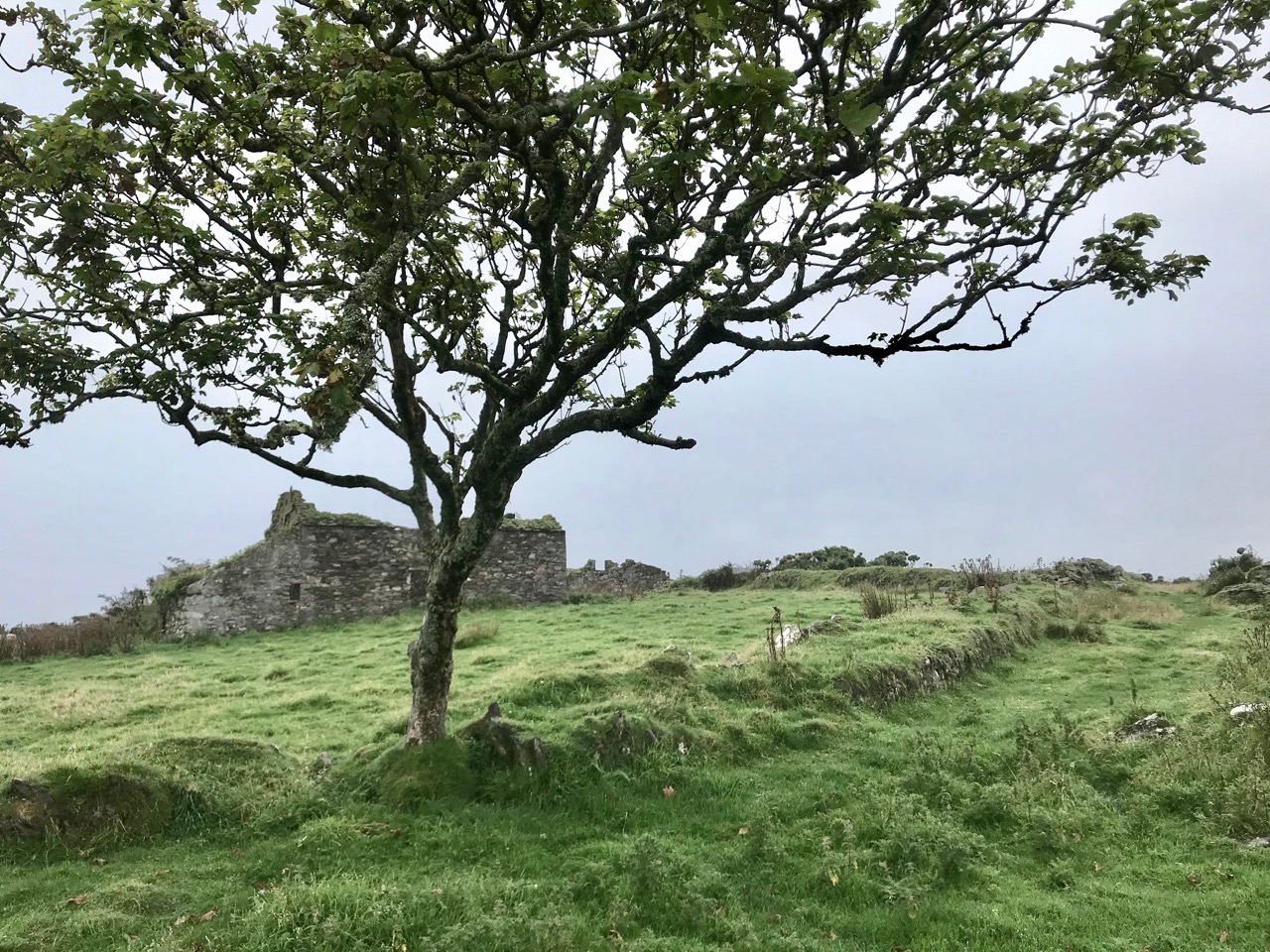
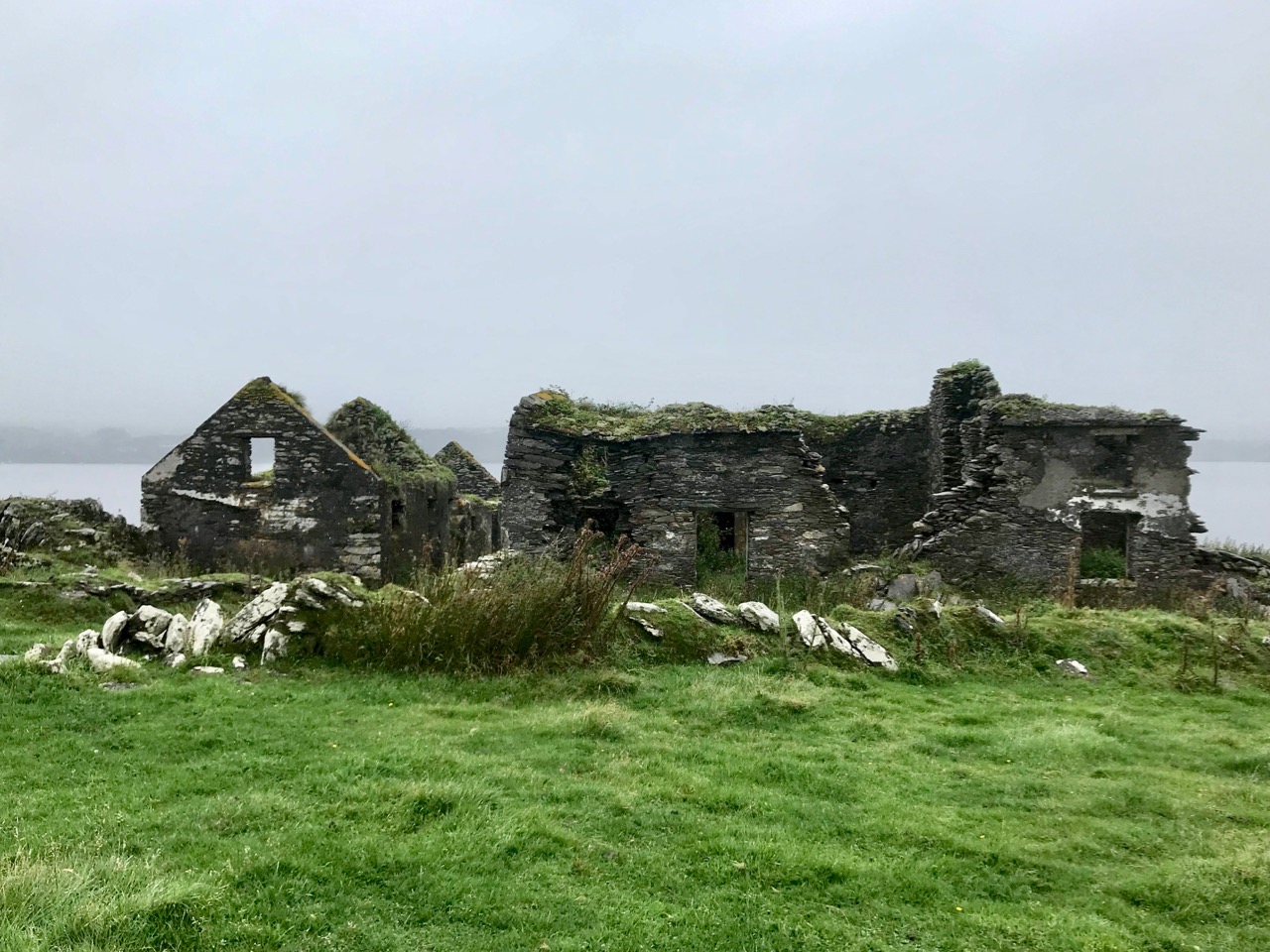
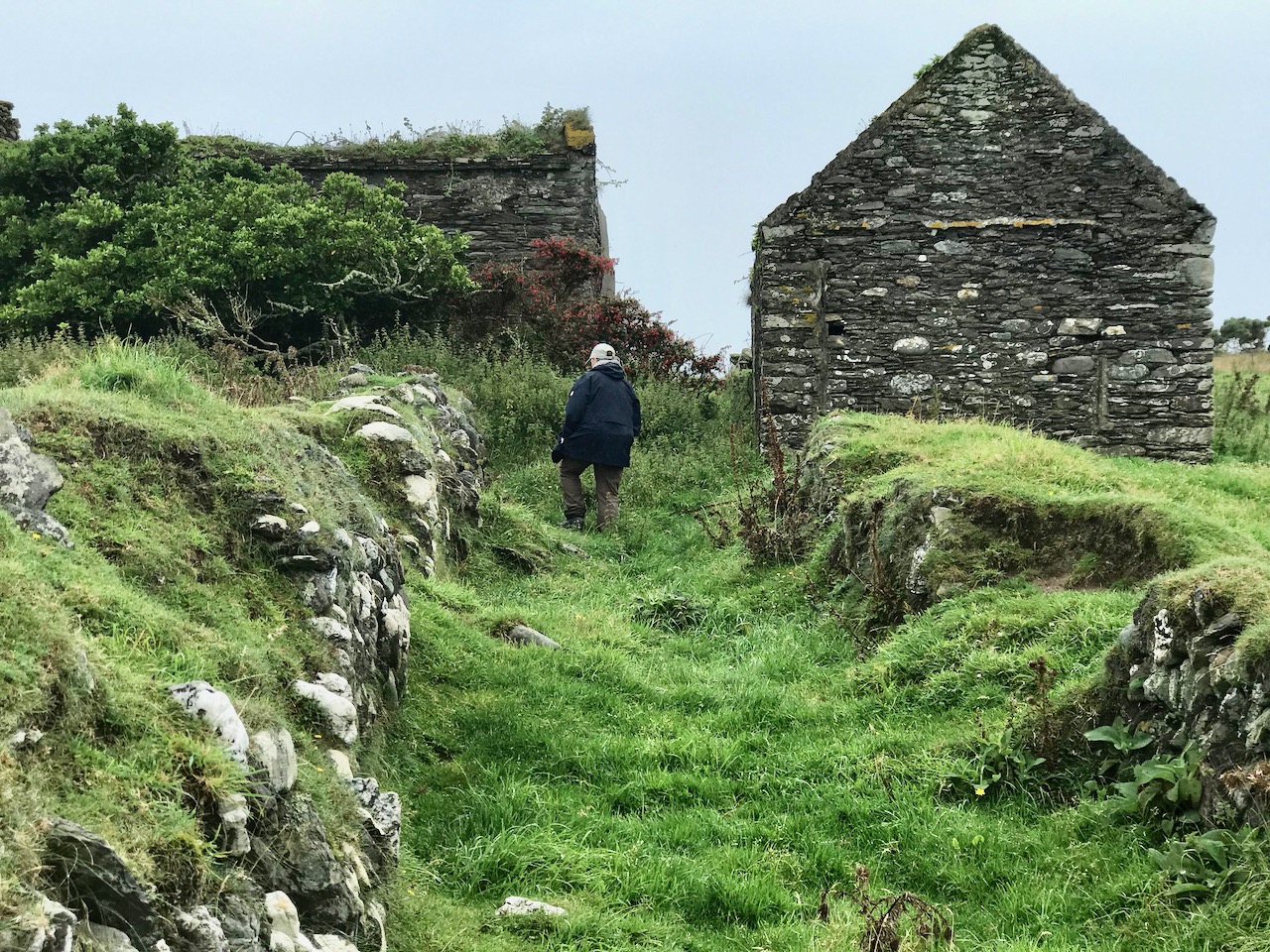
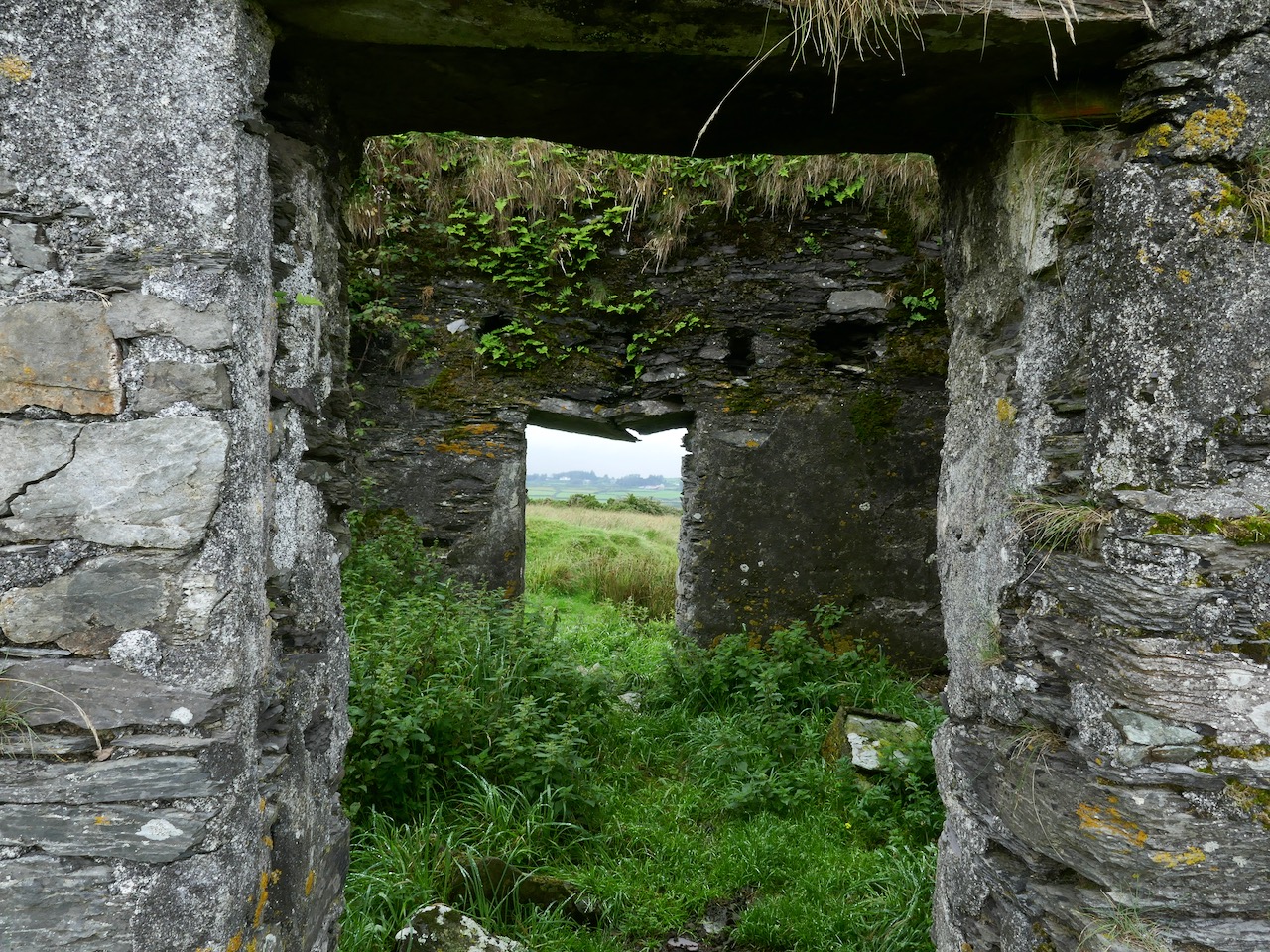
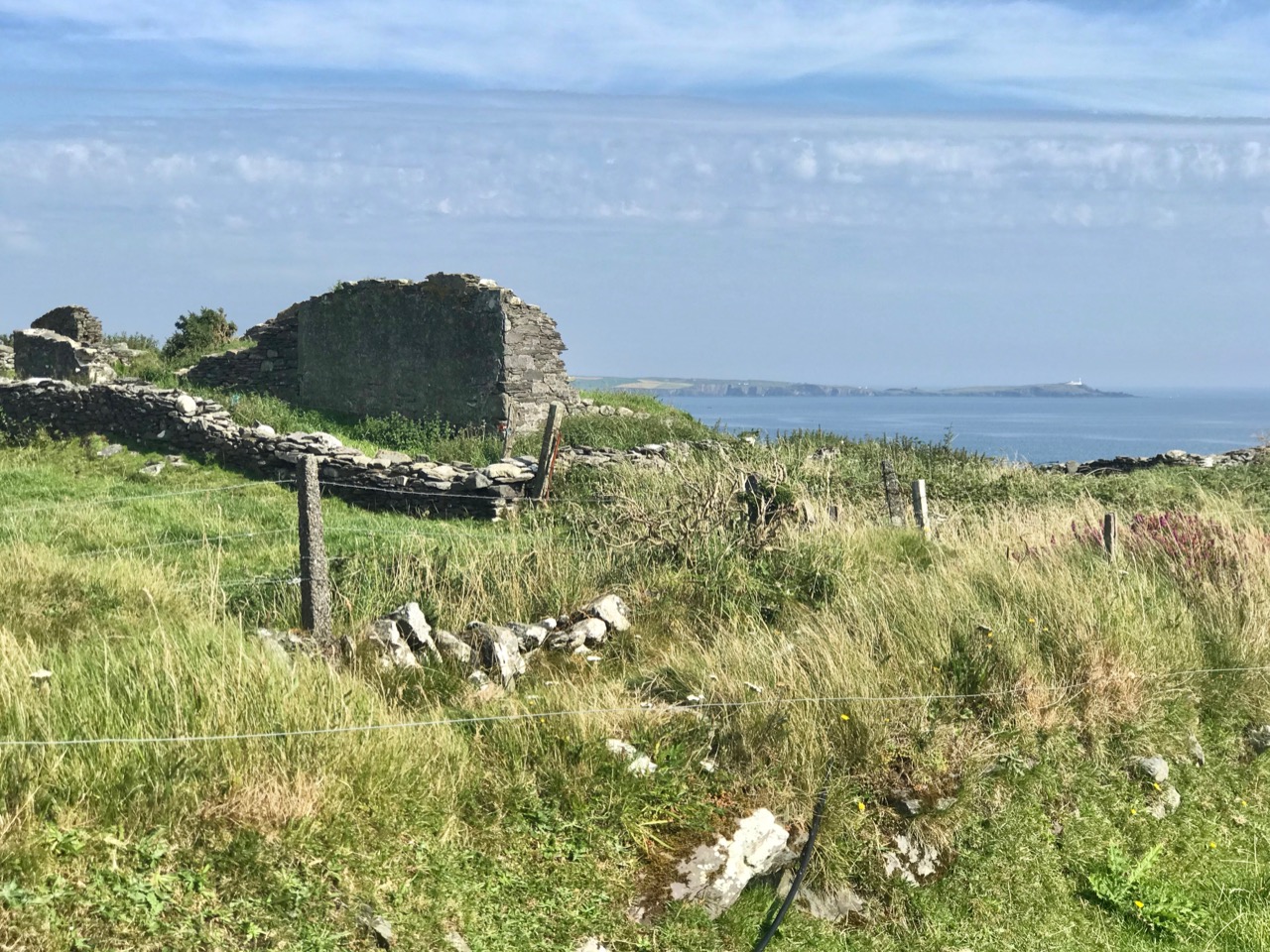
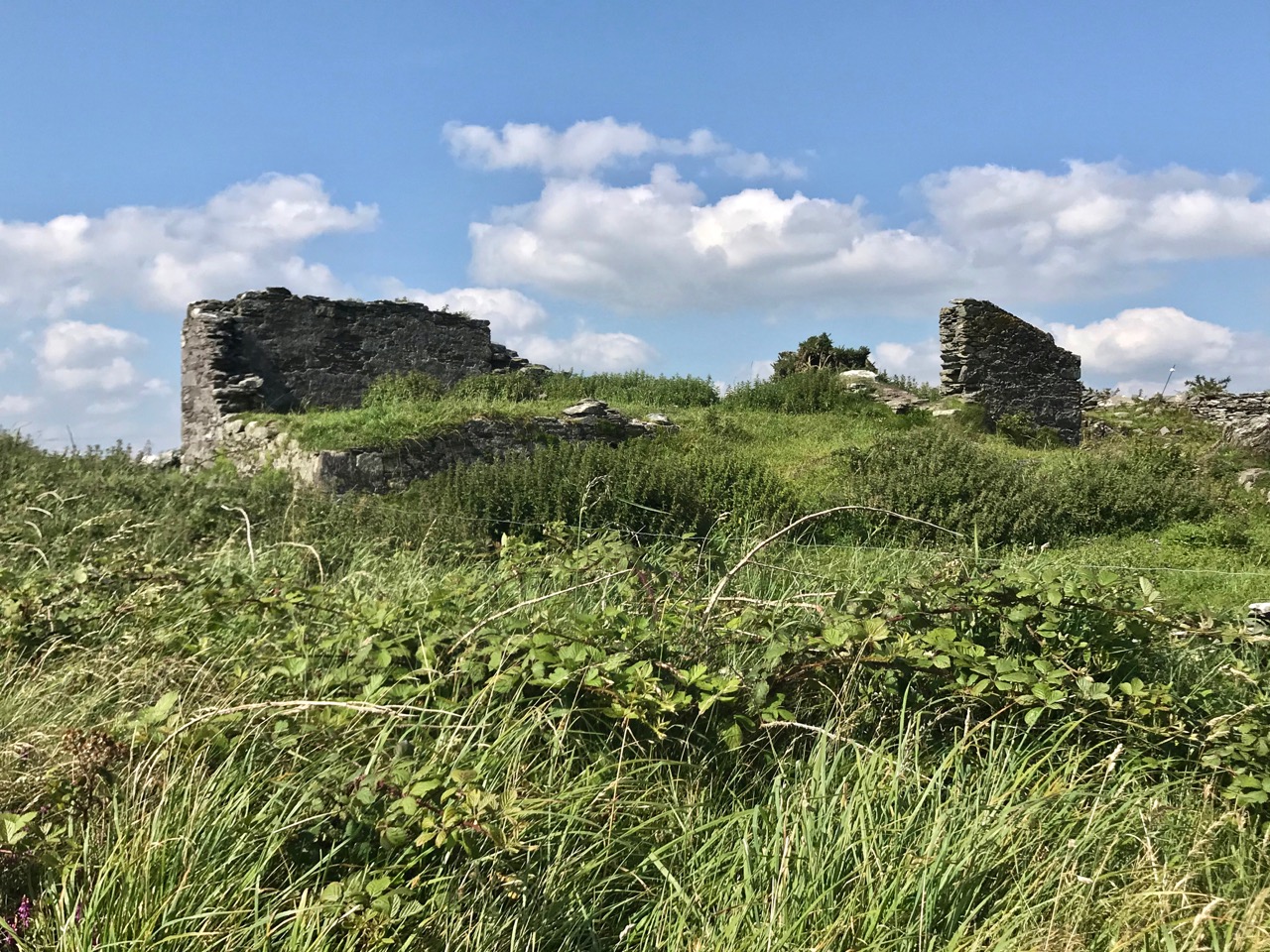
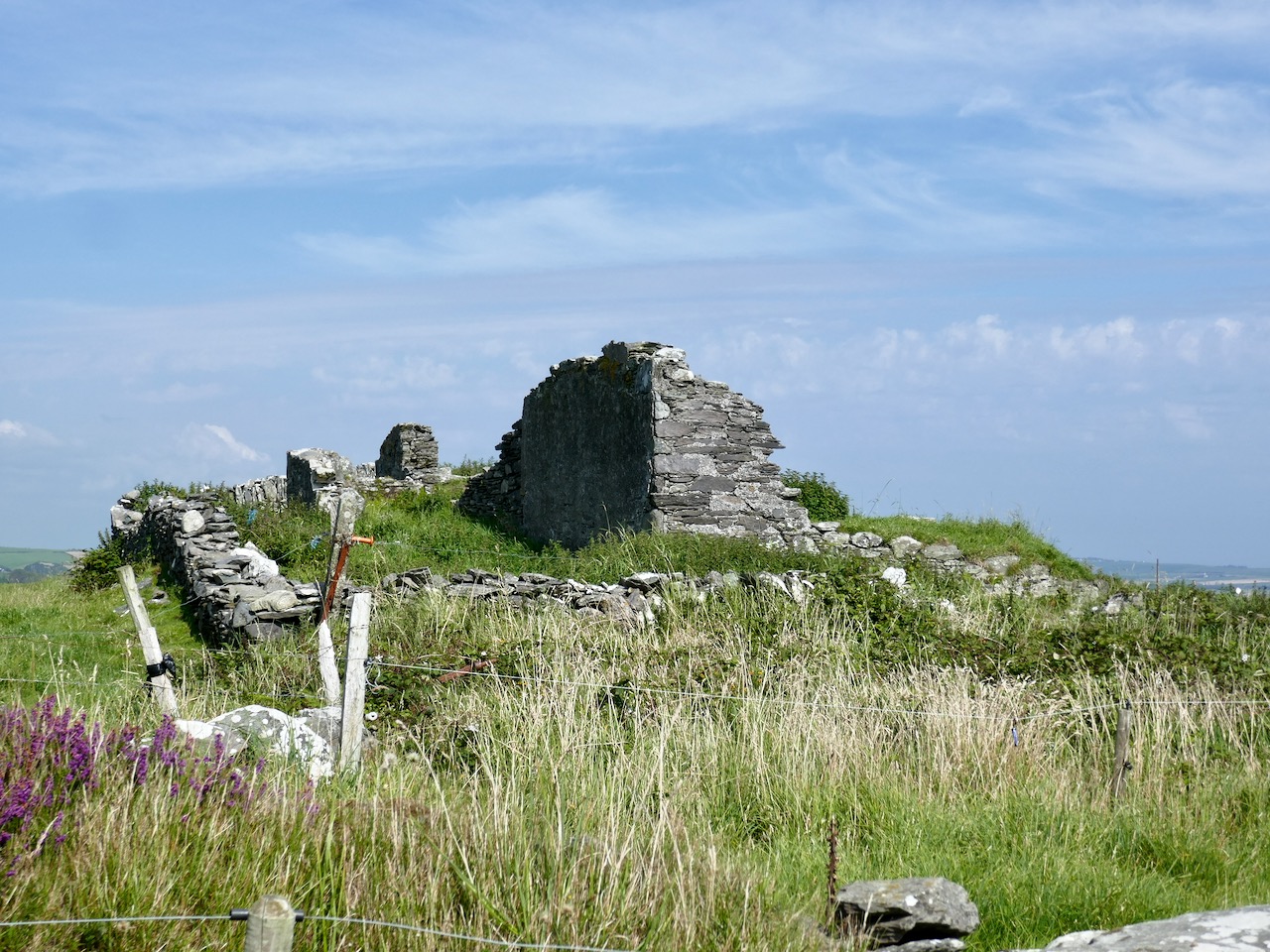
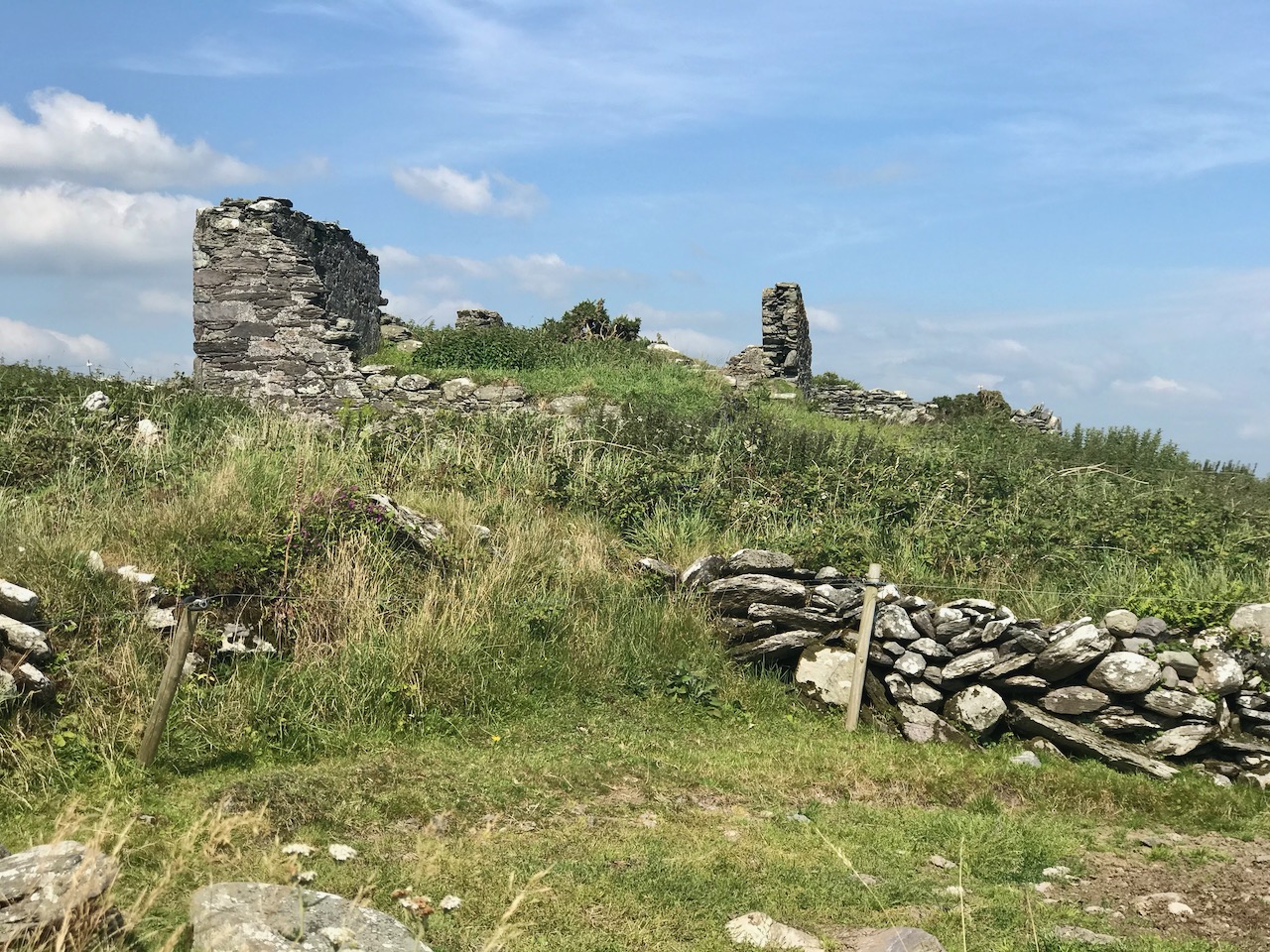
Examples of now-ruined houses, barns and boreens on Castle Island. These are not ‘cabins’ or even cottages, but significant homesteads. Some – including the large residence in the upper picture – have the vestigial remnants of timber door and window frames, unlikely to have survived in place in this harsh environment for 150 years.

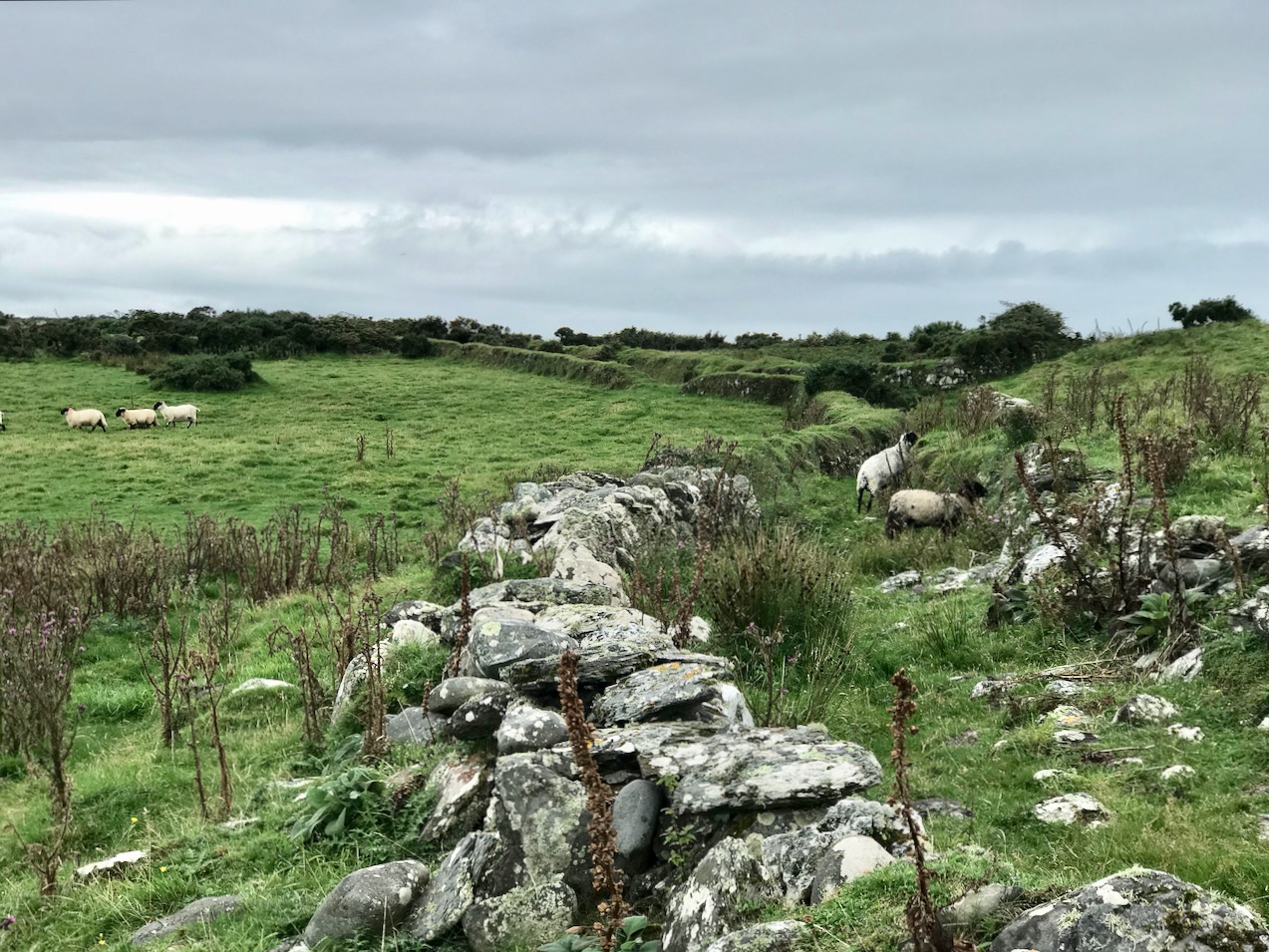
A community of sheep roams unhampered by fences or boundaries, and Finola absorbed how nature has taken over and populated the landscape in spite of wild winters and lack of shelter: we counted precisely two and a bit trees on the whole island!

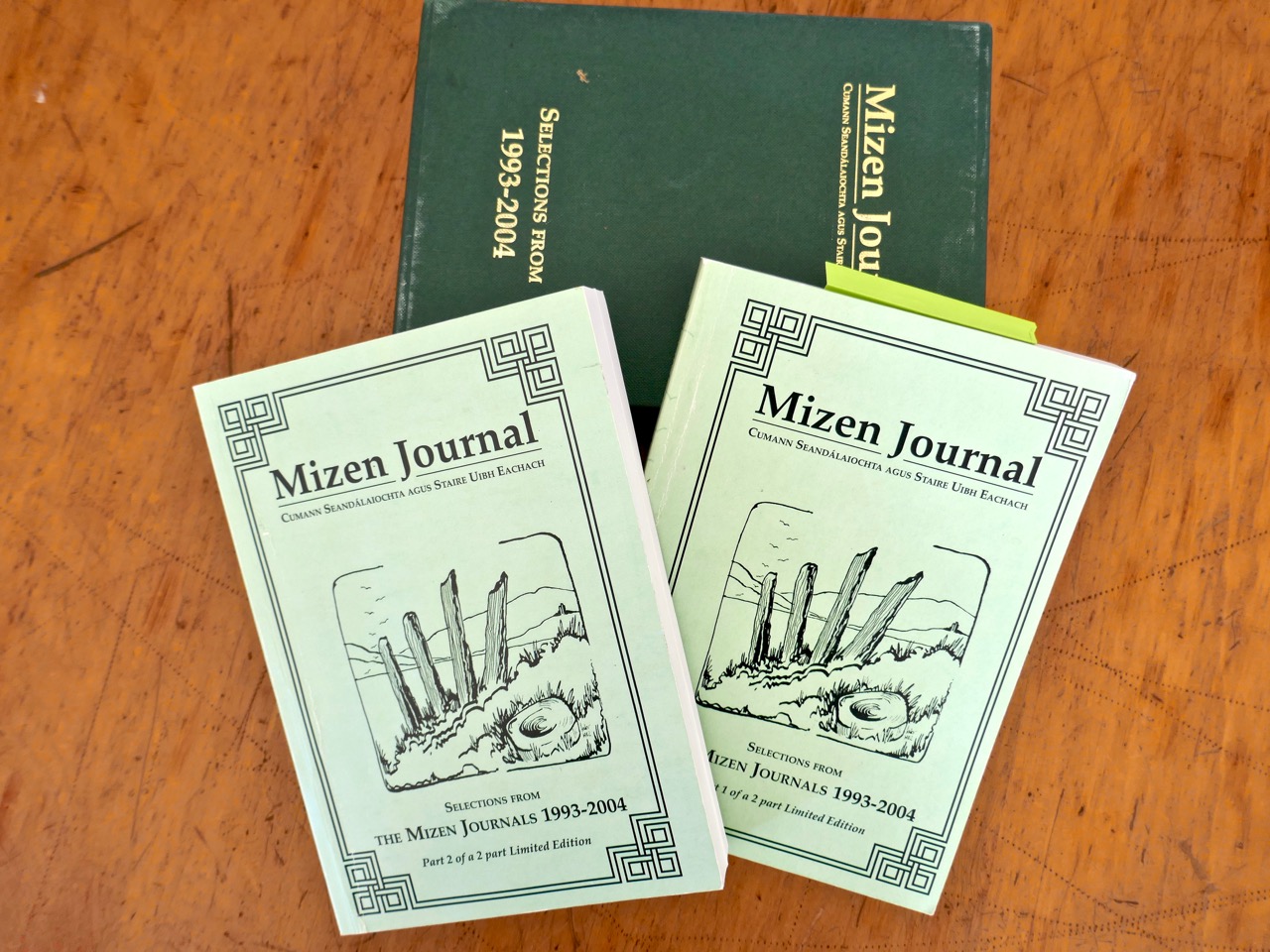
The story of this island is somewhat overlooked generally – one of the reasons we were so keen to visit. In our library, however, we are fortunate enough to have some copies of the Journals of the Mizen Archaelogical and Historical Society – now out of print. That Society was active for thirty years between 1979 and 2010, and produced a dozen journals gathering important historical research by mainly local people. Here’s a post we put together when our good friend Lee Snodgrass – a leading light in that organisation – passed away recently.

In that Journal we have found two articles about Castle Island. One – by Anthony Beese – explores the local placenames, and the other – by Liam O’Regan – speaks of The Castle Island Evictions 1889 – 90. This latter clearly shows that the island was inhabited in the late nineteenth century (apparently contrary to current popular thinking). Also, following those evictions, many of the tenants returned later and it seems very possible that some islanders remained in situ into the twentieth century. Both Journal articles have stories which need to be told, and I will attempt to do that in a later Roaringwater Journal post. For now, however, you will have to be content with . . . the story so far . . . which tells of our voyage of discovery to the island on an overcast day in the summer.

A Signal Success in Irish Engineering – Part 5: Downeen

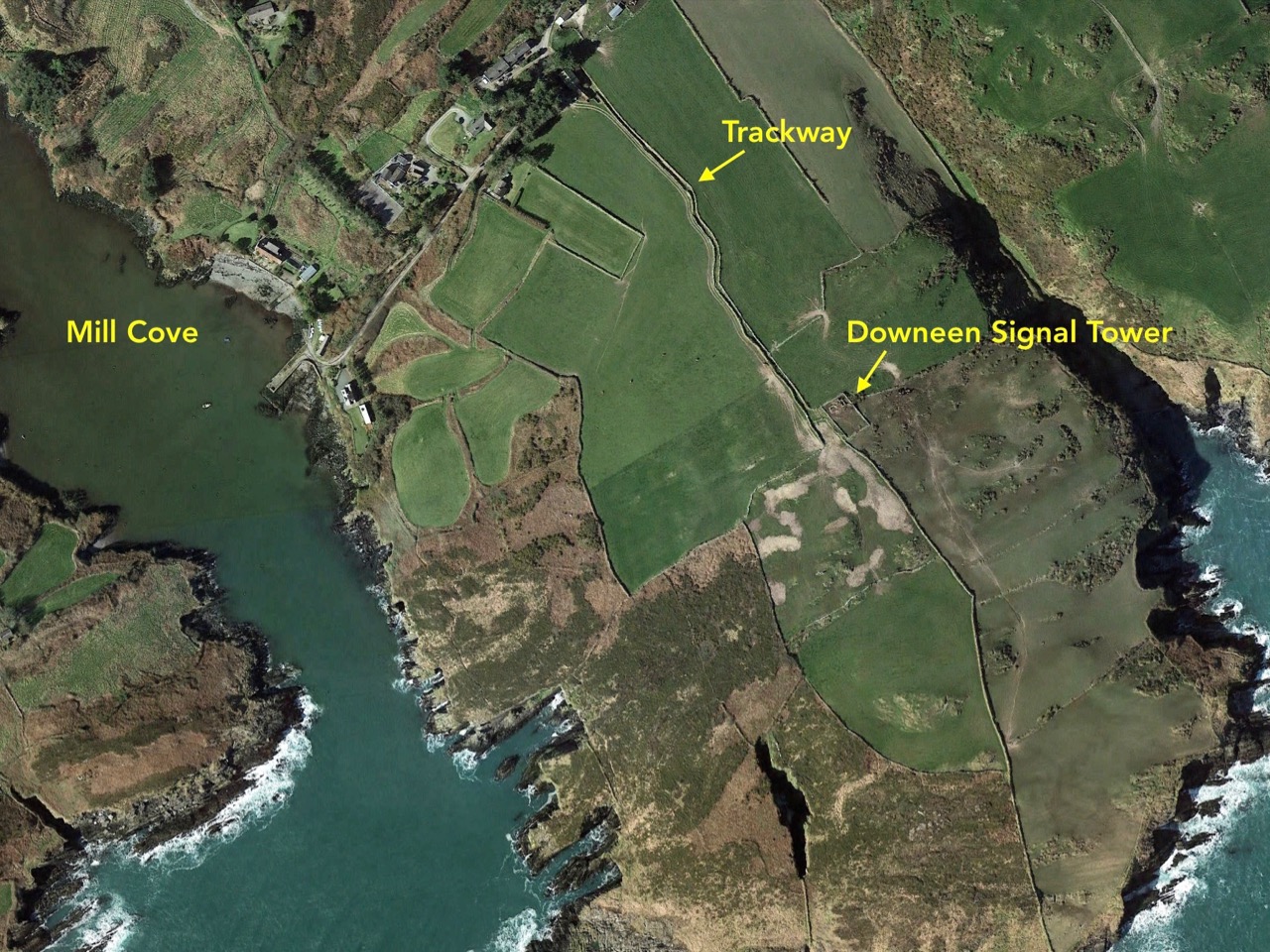
County Cork is well-endowed with the sites of Napoleonic-era signal towers. By my calculations there are 20 sites in this county, almost a quarter of the generally accepted number of sites around the whole island. For a map of the 81 locations identified by Bill Clements in 2013 have a look at part 2 of this series – Ballyroon Mountain. Today’s subject is Downeen Signal Tower, close to picturesque Mill Cove, a naturally sheltered quay around which a small settlement can be found, most active in the summer months.

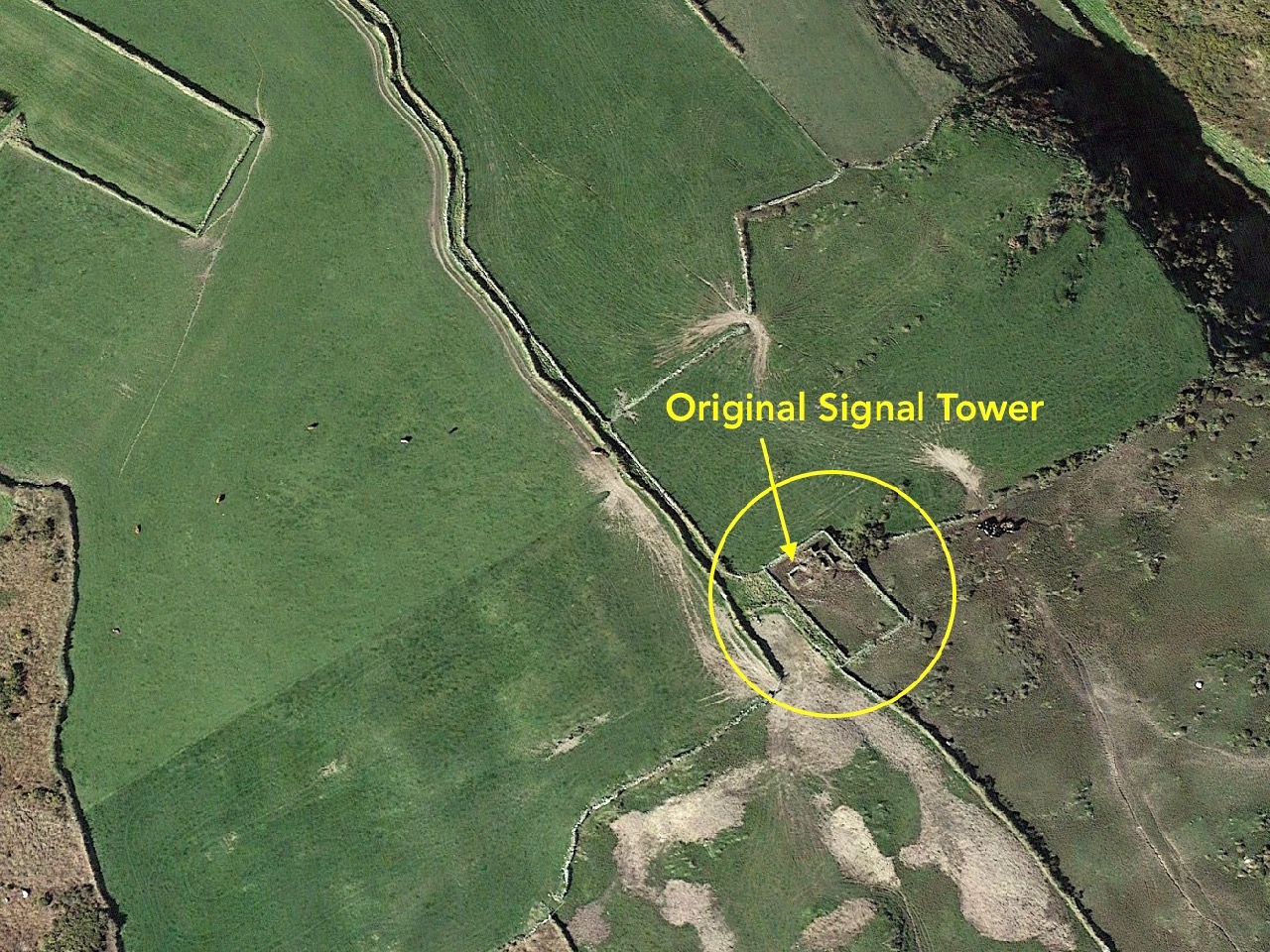
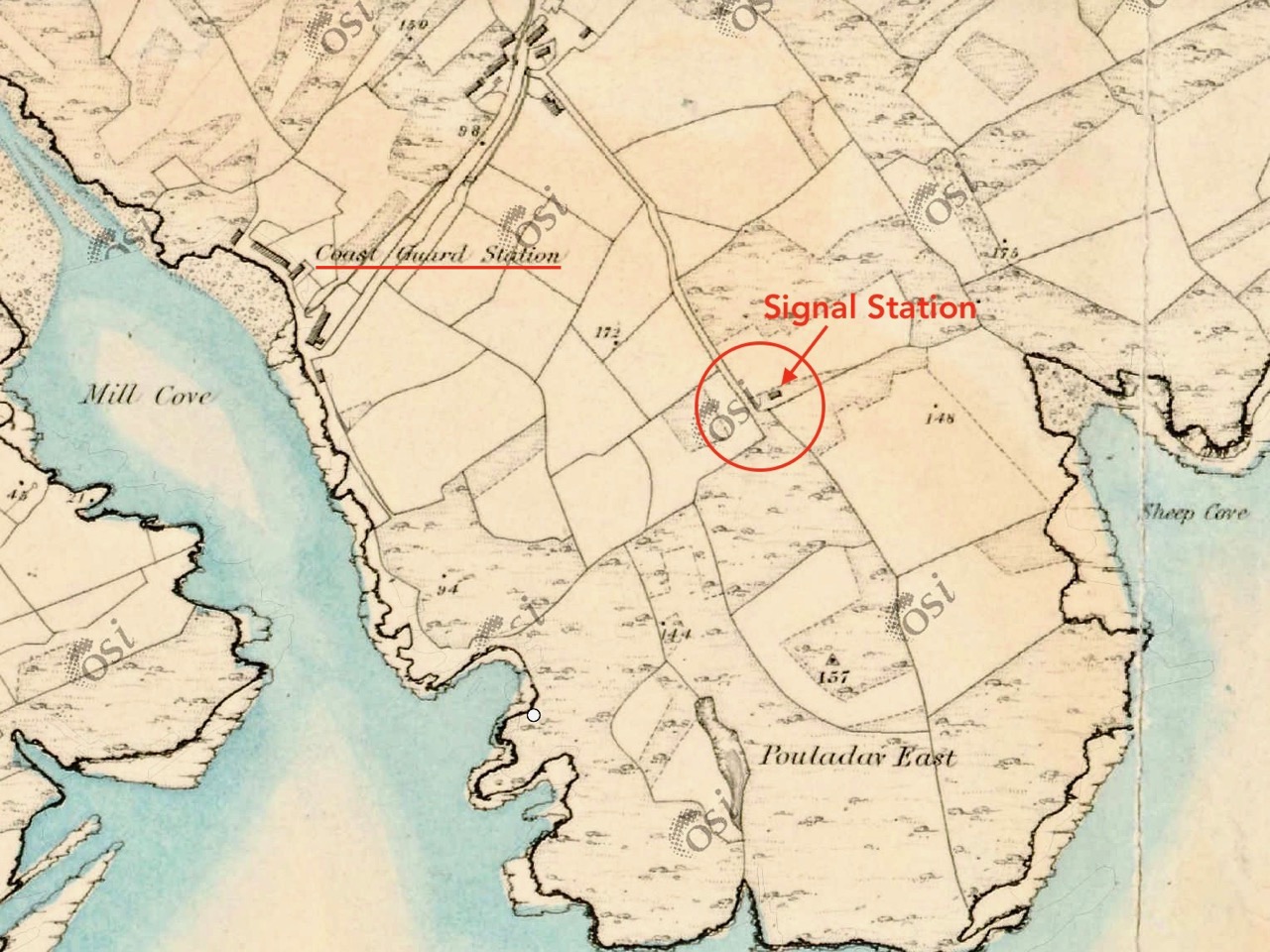
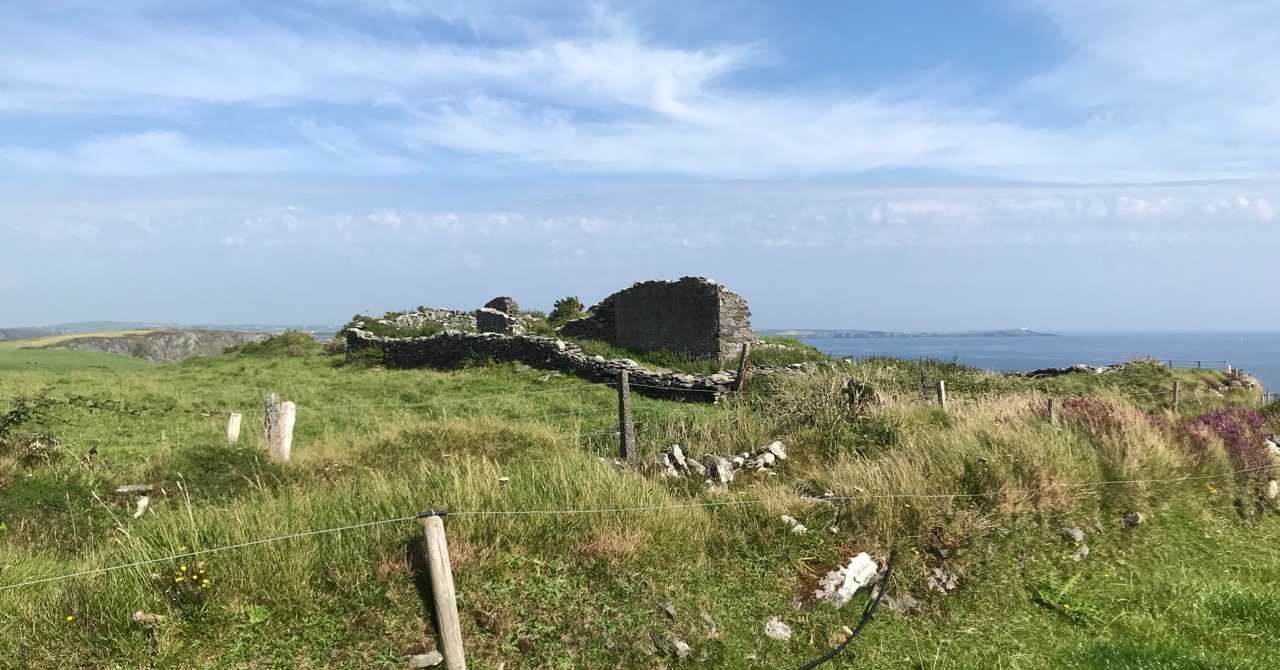
The header picture shows all that remains of the buildings of Downeen signal tower today. In the distance you can see Galley Head with its lighthouse. There was no signal station on Galley Head itself, the next in line to the east being at Dunnycove, in the townland of Ballyluck – this will be the subject of a future post. The aerial views above show the Downeen site: note the well-defined access trackway, a feature of all the locations we have visited to date. This signal tower has been changed and extended over the years, as can be seen by comparing the two OS maps below:

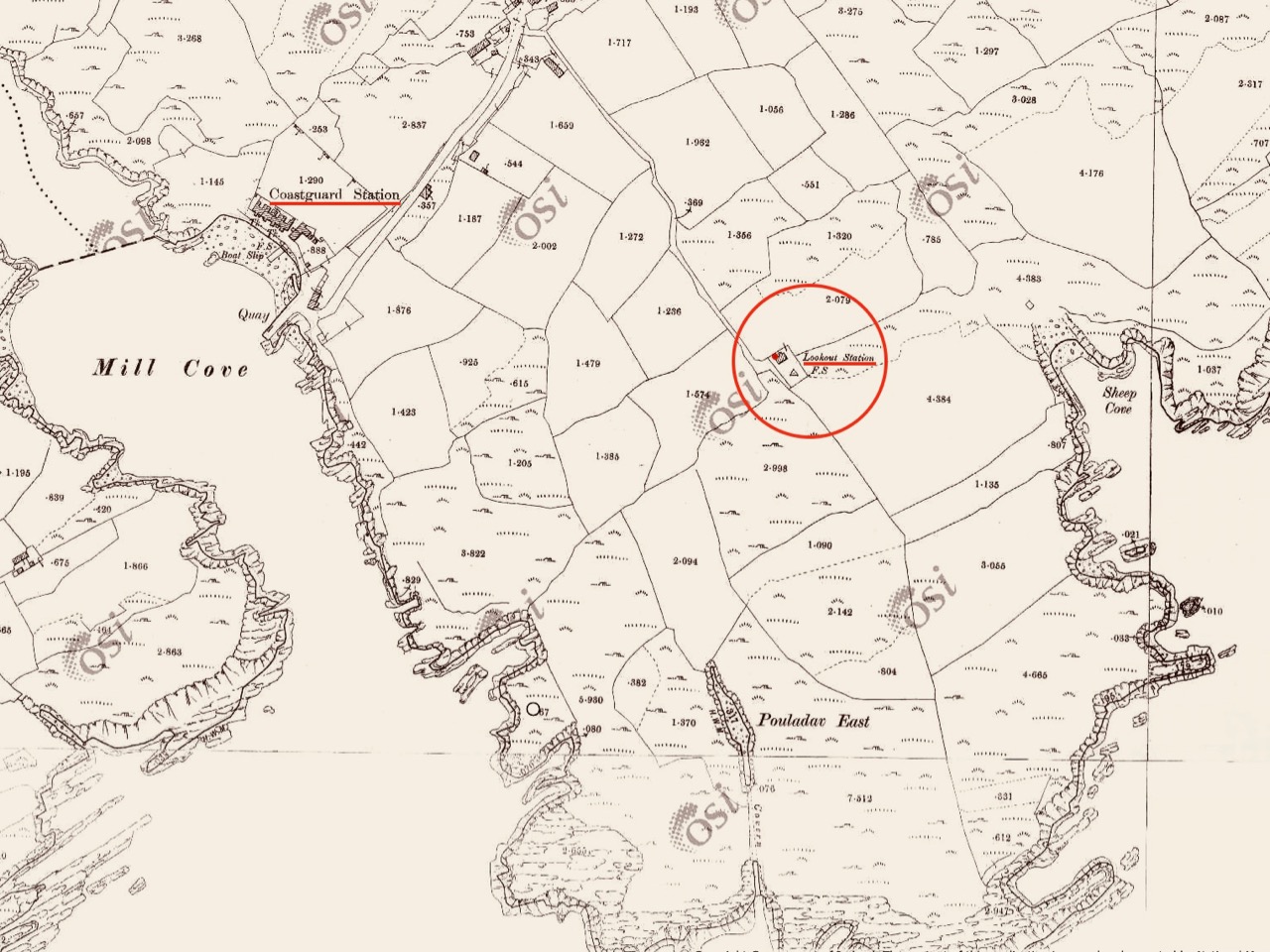
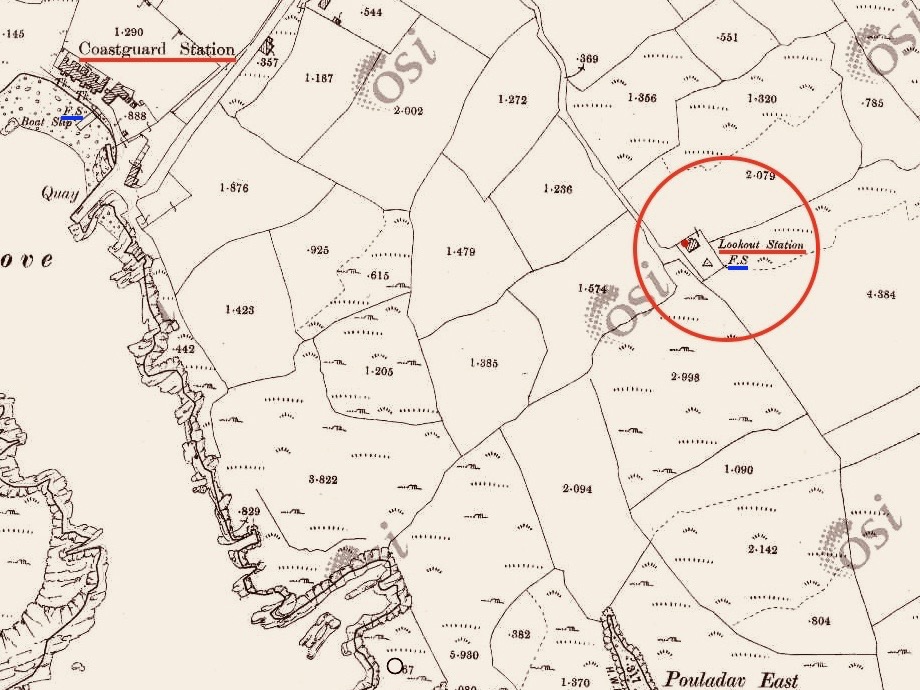
The upper map is based on the earliest 6″ survey which the Ordnace Survey carried out between 1829 and 1841. By that time, of course, the signal towers would have become redundant and this map shows a simple building and the trackway, with no label. The lower map is from the Historic 25″ survey, produced between 1888 and 1913. Here we see the site extended and the buildings altered, more in keeping with the present day aerial views. On this OS map the building is labelled as a ‘Lookout Station’ and there is also ‘F.S.’ shown, which I assume to indicate ‘Flag Staff’. This comparison exercise shows us how invaluable the Ordance Survey can be to historians in providing information often not documented elsewhere. Both maps show a ‘Coast Guard Station’ as the main feature of Mill Cove itself and this gives us the clue to the further incarnations of the original signal tower at Downeen. Here is an enlarged section from the 25″ map:

On this extract I have also underlined the two ‘F.S.’ indicators, which I take to mean flagstaffs – one at the Lookout Station, and the other at the ‘Coastguard Station’. Based on this I am putting forward the opinion that the original signal tower was taken over, extended or rebuilt for the use of the Coast Guards. I don’t have any other supporting evidence for this at Downeen, but at other stations I know this has definitely happened (either from written evidence or – more importantly – direct contact with local recollections). It certainly makes sense, as the towers were generally placed at the highest and best vantage points in the landscape – and had good access, verified by the surviving trackways.

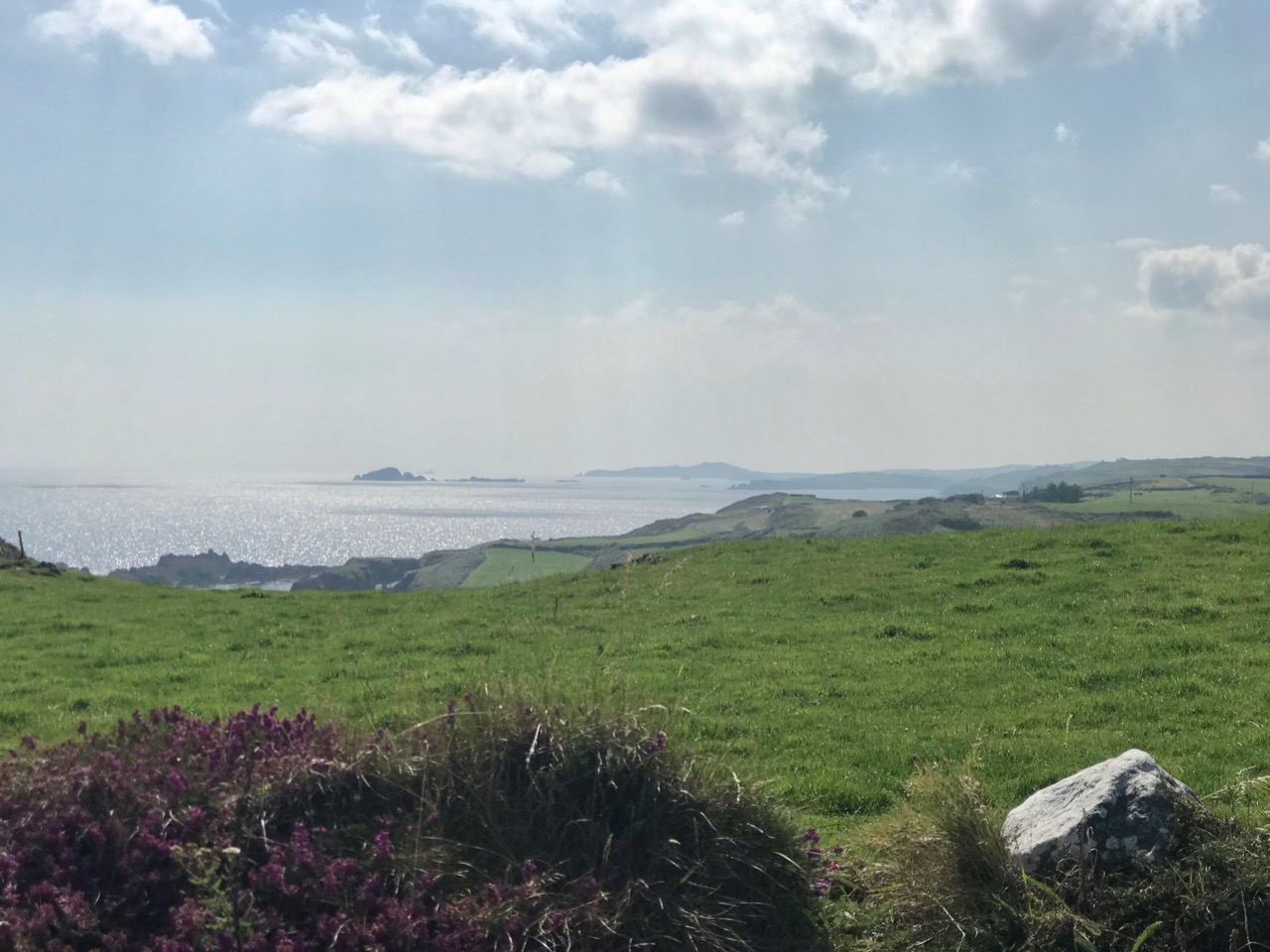
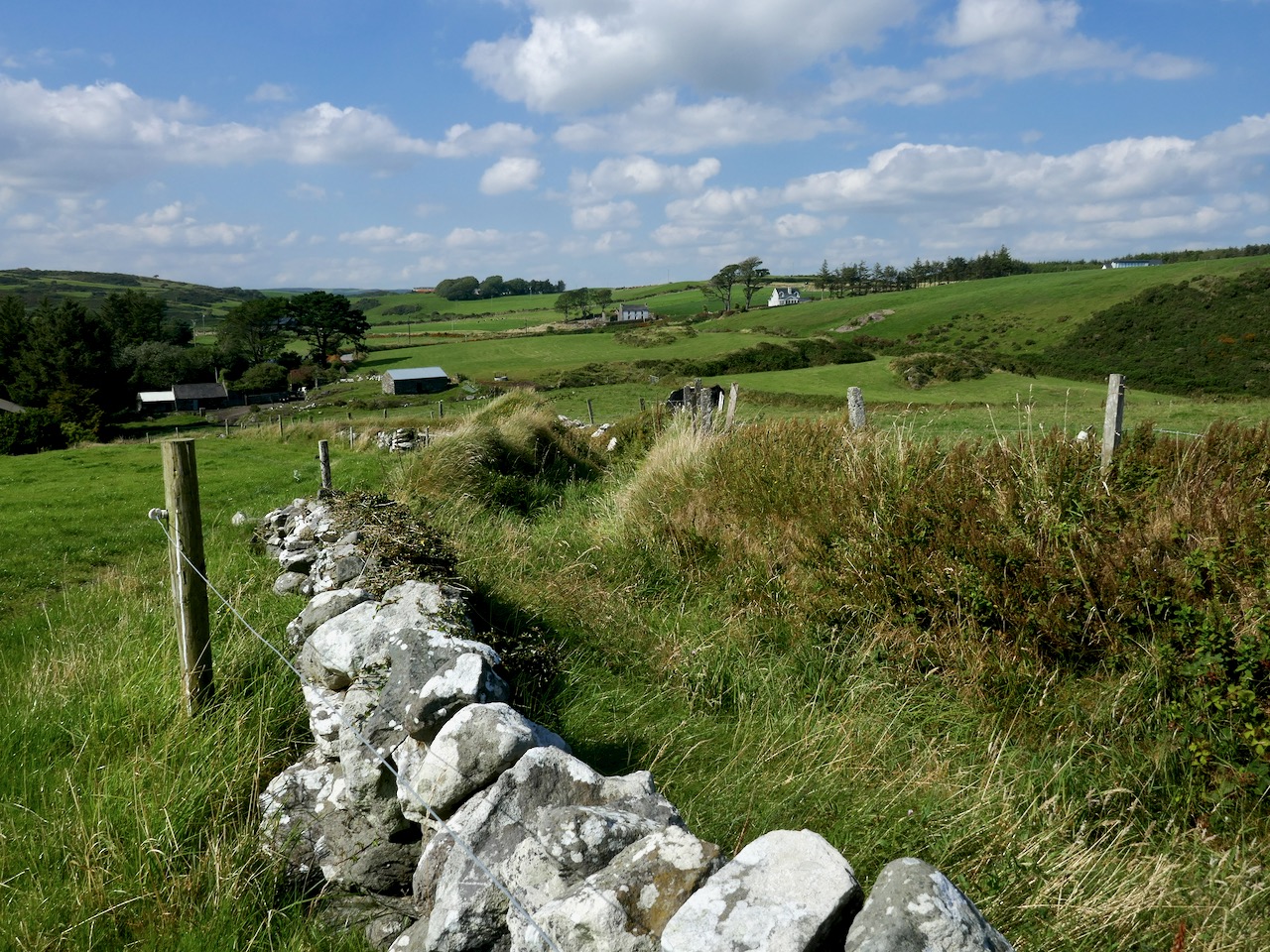
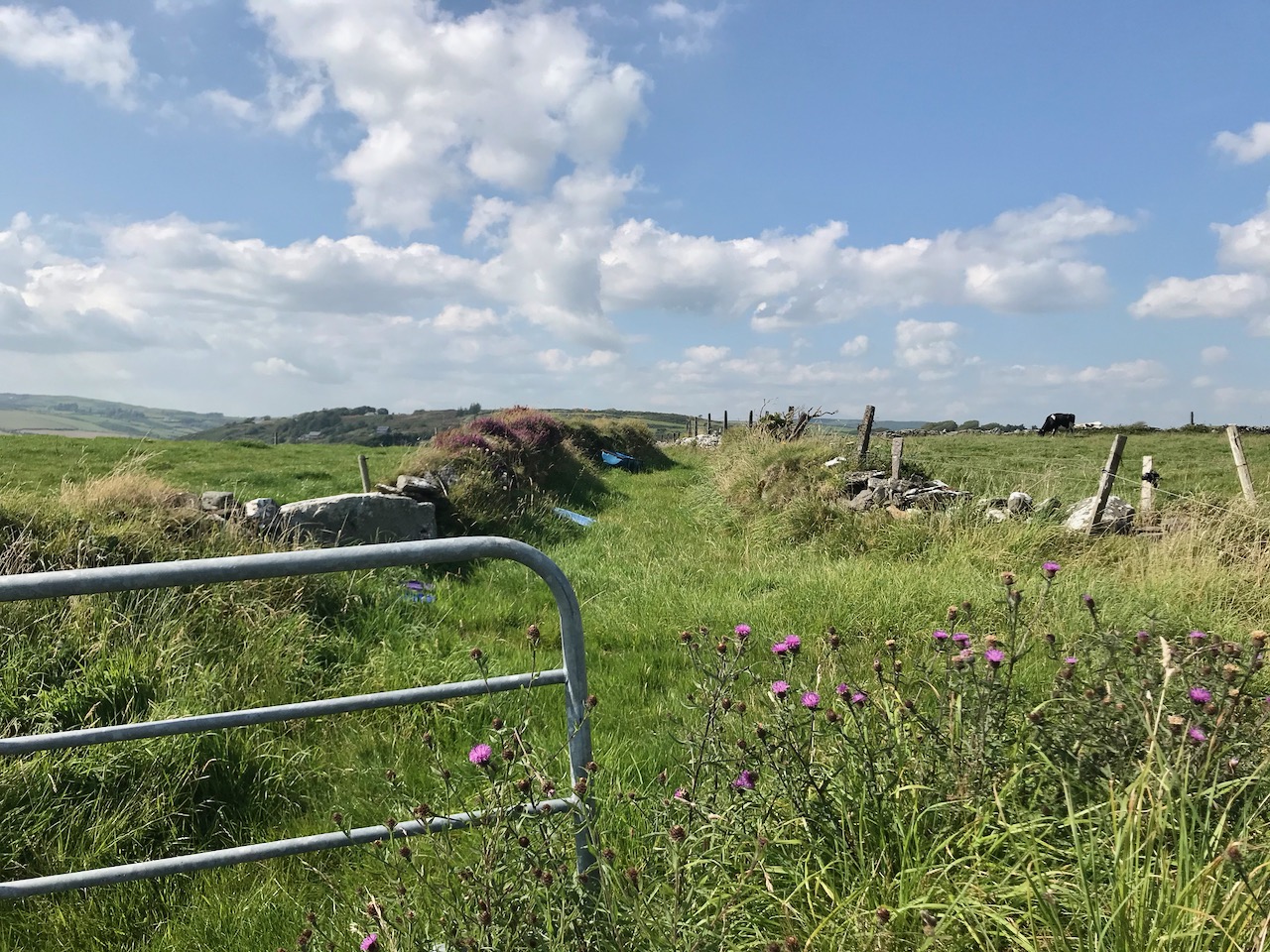
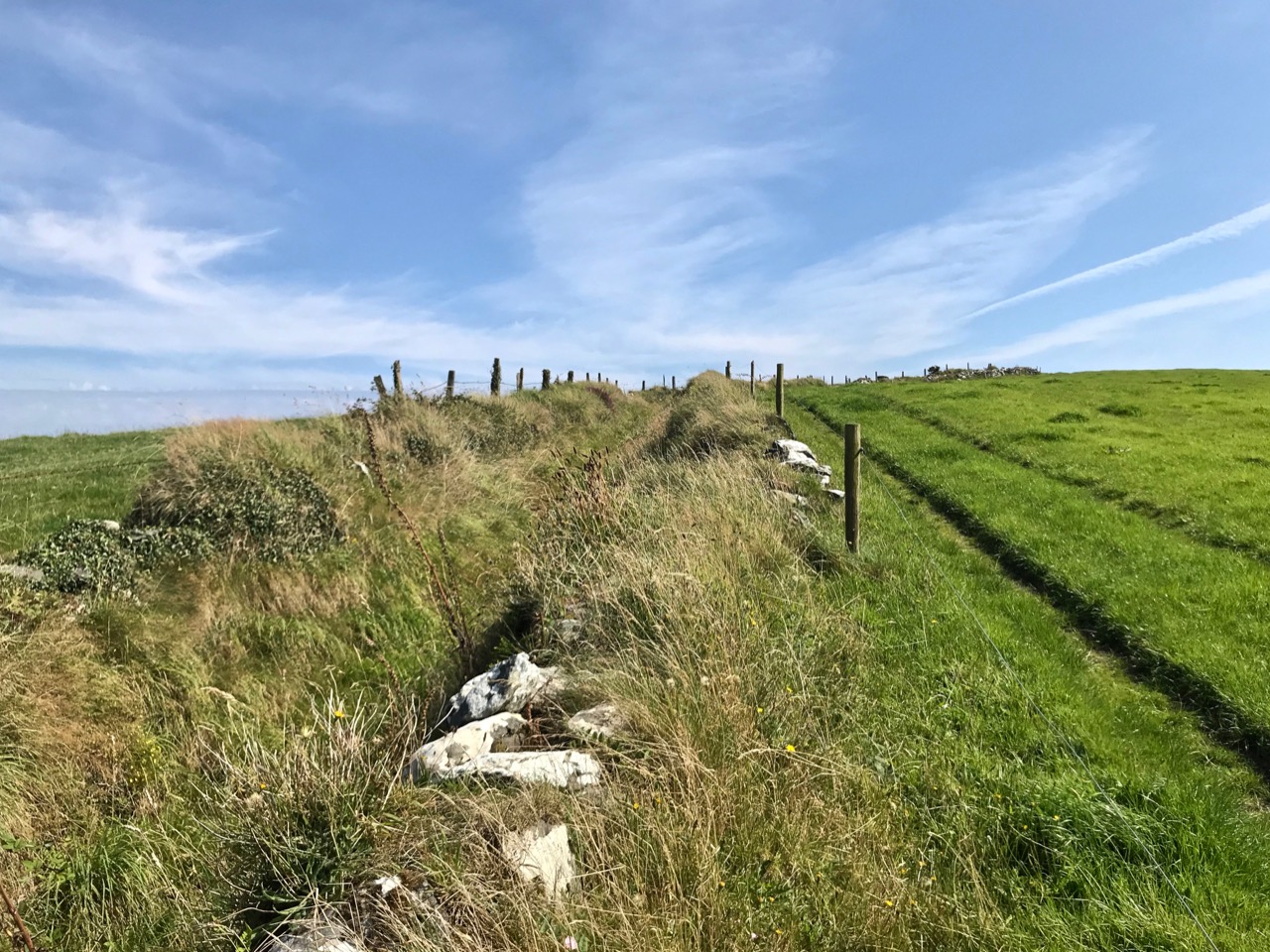
The upper picture is taken from the Downeen signal station looking west – the sweeping vista is commanding. Two views of the access trackway show that it remains well defined by continuous masonry walls, but overgrown. Our only companions on our exploration regarded us with benign curiosity! Attempts to uncover a comprehensive history of Coast Guards and Coastguard stations here have not been rewarded so far – except to establish that, in Ireland, we should correctly refer to them as Coast Guards – not Coastguards. This information is taken from the Irish Government website (gov.ie):

In 1809  the “Water Guard” was formed. Also known as the Preventative Boat Service. The Waterguard was the sea-based arm of revenue enforcement who patrolled the shore. The Waterguard was initially based in Watch Houses around the coast, and boat crews patrolled the coast each night. It was under Navy control from 1816 to 1822, when it and riding officers were amalgamated under the control of the Board of Customs . . . in 1856 control of the Coast Guard passed to the Admiralty . . . In 1921, after Independence, the Coast Life Saving Service was established in Ireland . . . The duties formerly performed by His Majesty’s Coastguard (HMCG) were taken over by Saorstát Eireann (Irish Free State) and the Coast Lifesaving Service (CLSS) was established . . . In 1925 the UK Coastguard Act passed, formally defining its powers and responsibilities. This inadvertently used the single word ‘Coastguard’ for the first time, and affected all crown dominions . . . In 2000 Ireland re-established the Coast Guard as the original two-word variant . . .

It’s fairly logical that the signal towers built between the 1790s and early 1800s to frustrate a French invasion of Ireland were still intact at the time of the Waterguard, and would have been ideal for the general purpose of watching the coast. (Above) – the ruins of the buildings at Downeen signal tower cum Coastguard lookout station as seen today. They enjoy the conceptual protection of being classified as a scheduled monument, but are unlikely ever to be more than crumbling vestigial stone walls. In their decay they command a poignant respect, and our imaginations can recreate the activities they may have witnessed. Here’s another quote, from the engrossing forum Coastguards of Yesteryear:

Nineteenth-century coastguards must have formed a close-knit group. Mostly ex-naval men, they presumably shared a sense of camaraderie . Often stationed as coastguards in remote spots, moved every few years to prevent them becoming too friendly with the locals, and often viewed with suspicion by those many locals with smuggling sympathies, coastguards were presumably drawn to marrying each others’ daughters. The more generous notion that “every nice girl loves a sailor” was only to develop later in the general population!

Notwithstanding the slight vestiges of its signal tower, Downeen has significantly more to offer in the way of history – worth a mention as it has led to some confusion in the story of this particular site.

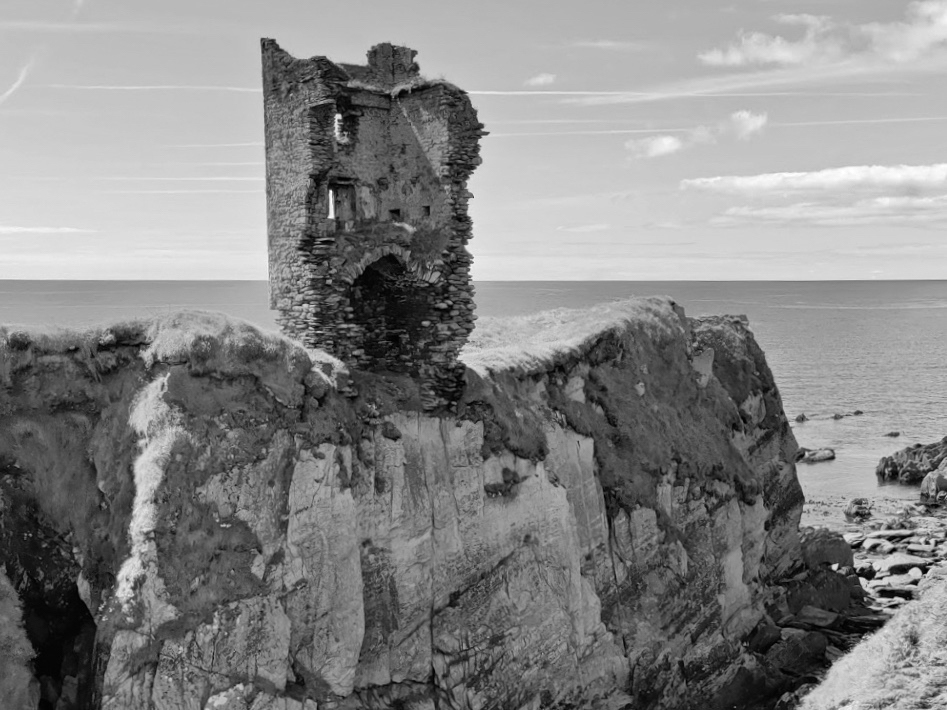
We came across these two further ‘towers’ not too far away from the signal station site – also in Downeen. The first (upper) is classified as designed landscape – a belvedere. The second is a most intriguing tower house, a seemingly impossibly surviving clifftop ruin. On the day we visited, we were unable to get really close to either of these structures, but I was able to find a bit more about them on the internet, including a reference to the belvedere on the National Inventory of Architectural Heritage, where it is described as a ‘Signal Tower’ dating from between 1780 and 1820! In fact, further research has shown that this is a mis-attribution. Both these structures are connected to Castle Downeen. The tower house is described as possibly an O’Cowhig castle taken by crown forces in 1602 and approached by “a little drawbridge of wood”.

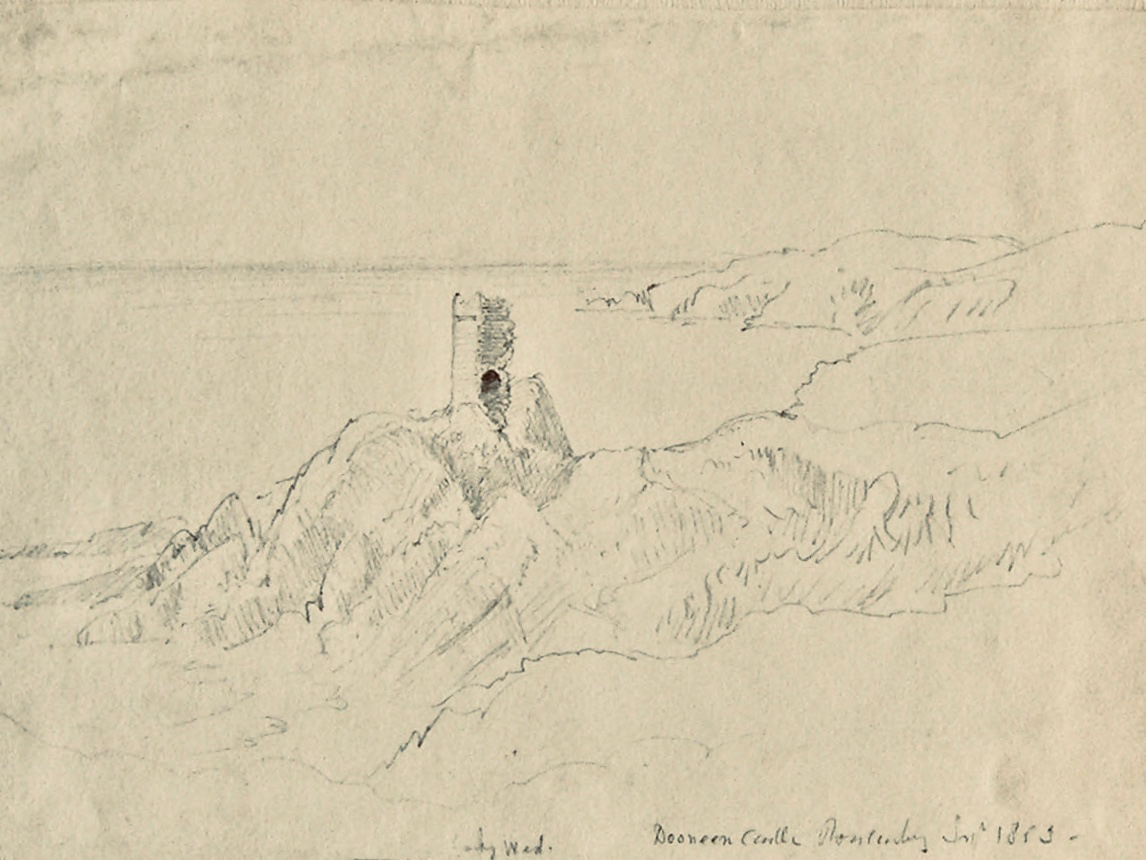
Here is the remarkably poised tower house at Downeen. The upper picture is courtesy of rowler21 via Google, 2020. I was delighted to find this small sketch (lower) by George du Noyer, titled Dooneen Castle, Rosscarbery, Sept 1853. Although almost 170 years have passed since du Noyer visited this part of West Cork – possibly in connection with his work for the Ordnance Survey – not much appears to have changed: perhaps the loss of part of the parapet. The ruin was apparently as precariously balanced then as it is now.

Downeen, with its lush valleys, old stone built settlement, former Coastguard station and this trackway serving a site formerly of great importance in the history of communications in Ireland is worth further exploration. As well as the 16th century tower house there are the abandoned and heavily overgrown remains of an 18th century ‘Country house’. This had a walled garden and the belvedere appears to be part of this. We are always surprised – and delighted – by the sheer volume of history that can be found in these out-of-the-way places, and remember – it is always worth talking to local people if you want to get under the skin of that history!

The previous posts in this series can be found through these links:

Part 1: Kedge Point, Co Cork

Part 2: Ballyroon Mountain, Co Cork

Part 3: Old Head of Kinsale, Co Cork

Part 4: Robert’s Head, Co Cork

A Signal Success in Irish Engineering – Part 4: Robert’s Head

I suppose this – our fourth venture into the world of Irish signal towers from the Napoleonic era – has a distinctive resonance with me! Of the 84 signalling sites around Ireland, only five bear a personal name: John’s Point, Co Donegal; Brandon Head (Brendan), Co Kerry, Sybil Head, Co Kerry; Barry’s Head, Co Cork; and this one – Robert’s Head, Co Cork.

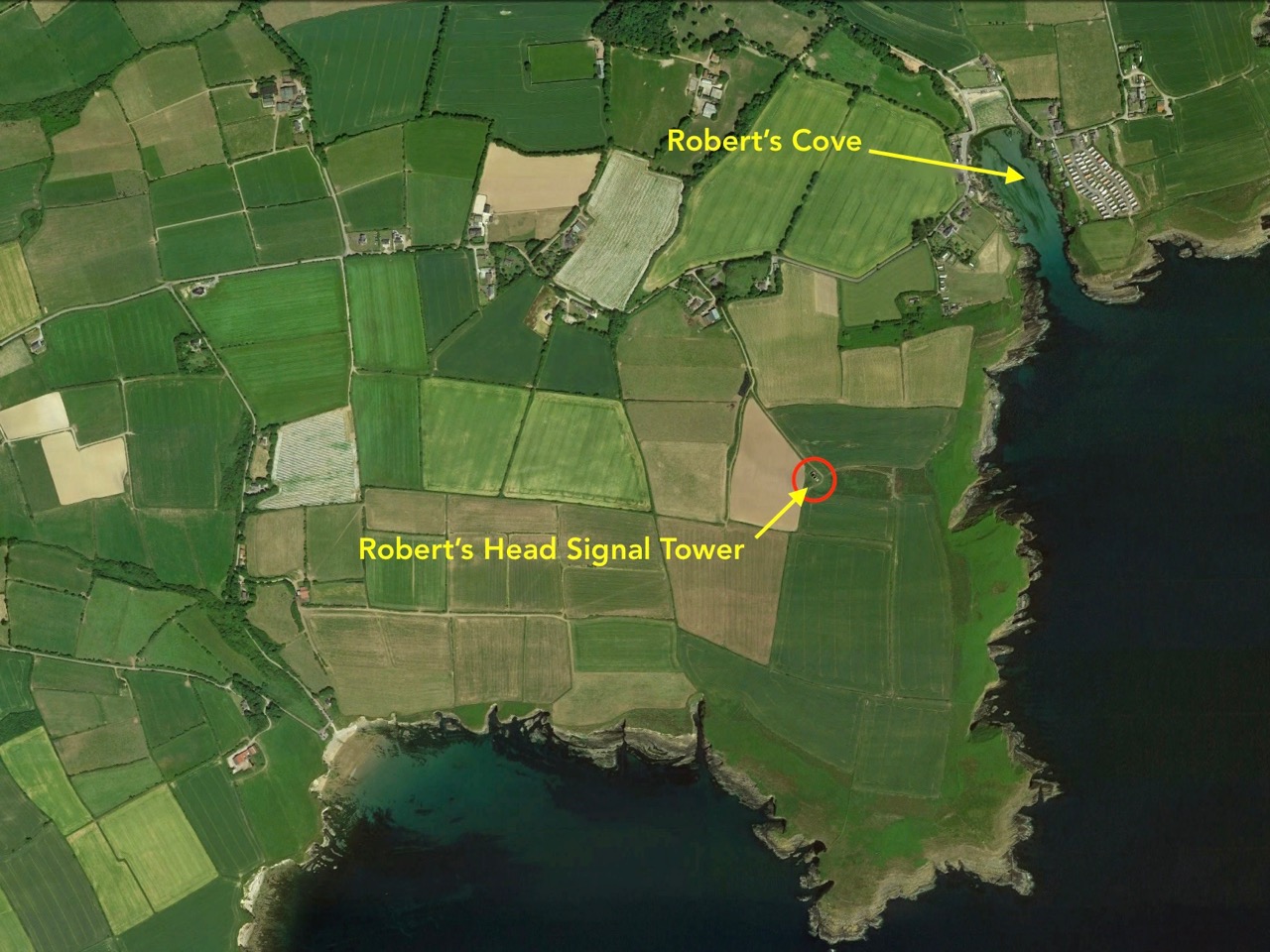
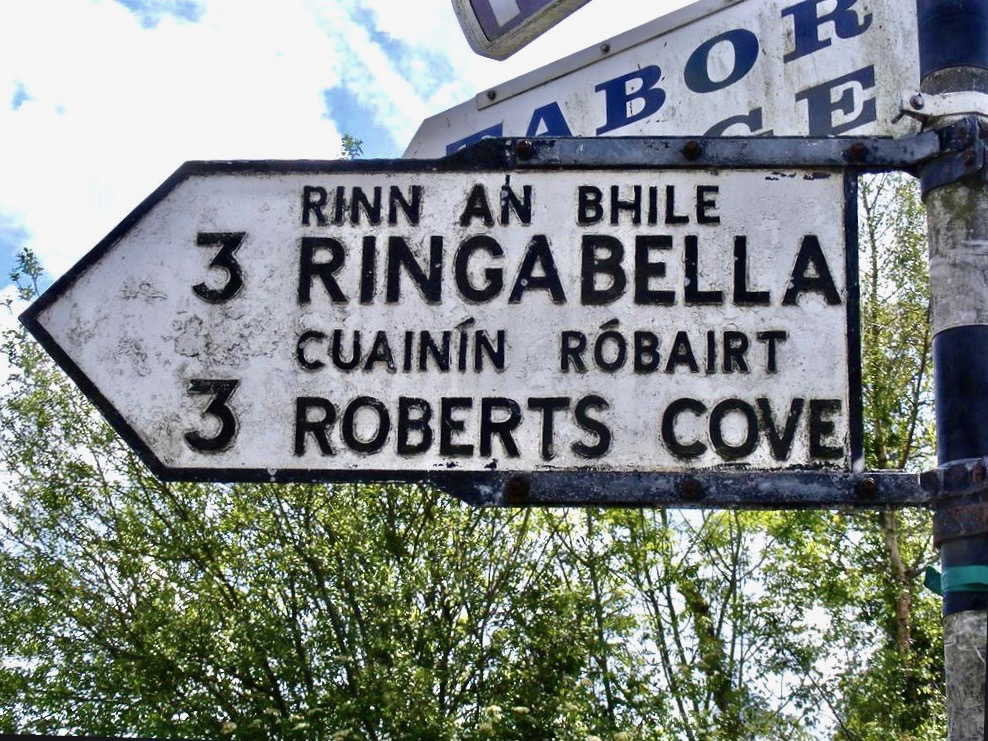
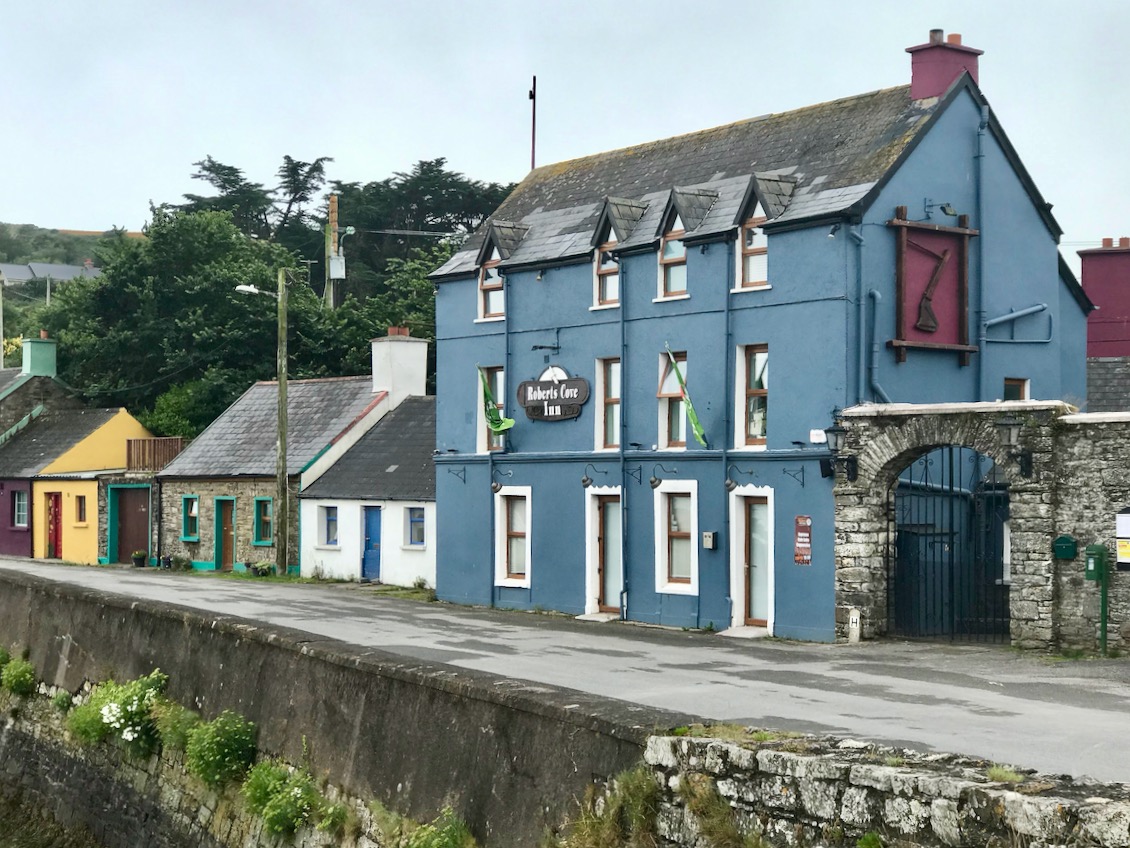
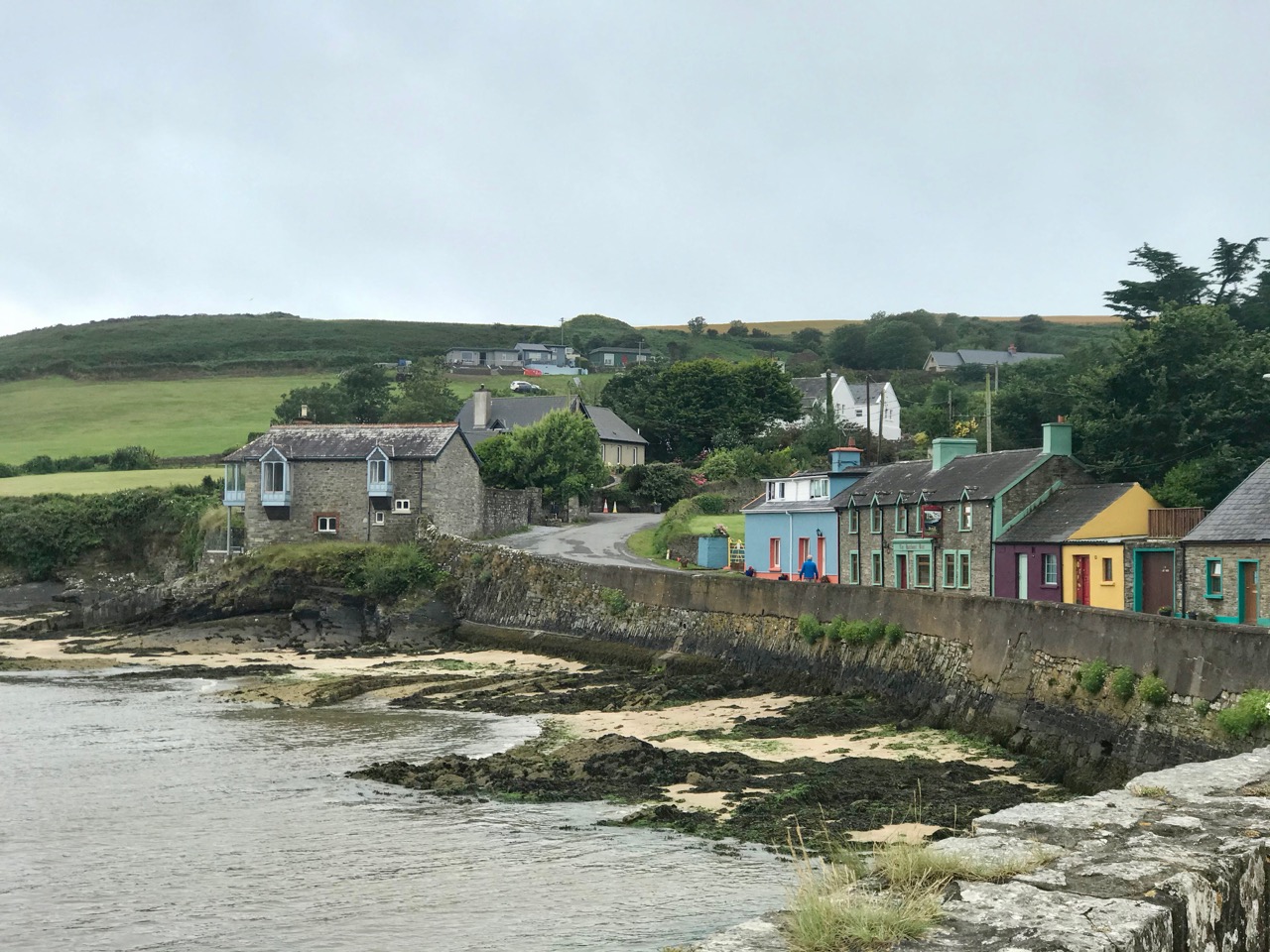
As you can see on this aerial view, the headland on which the signal tower stands is named after Robert’s Cove – Cuainín Riobaird – close by. The Cove, a small village, is a popular weekend escape and holiday destination which has two pubs and a former coastguard station, possibly dating from 1863.

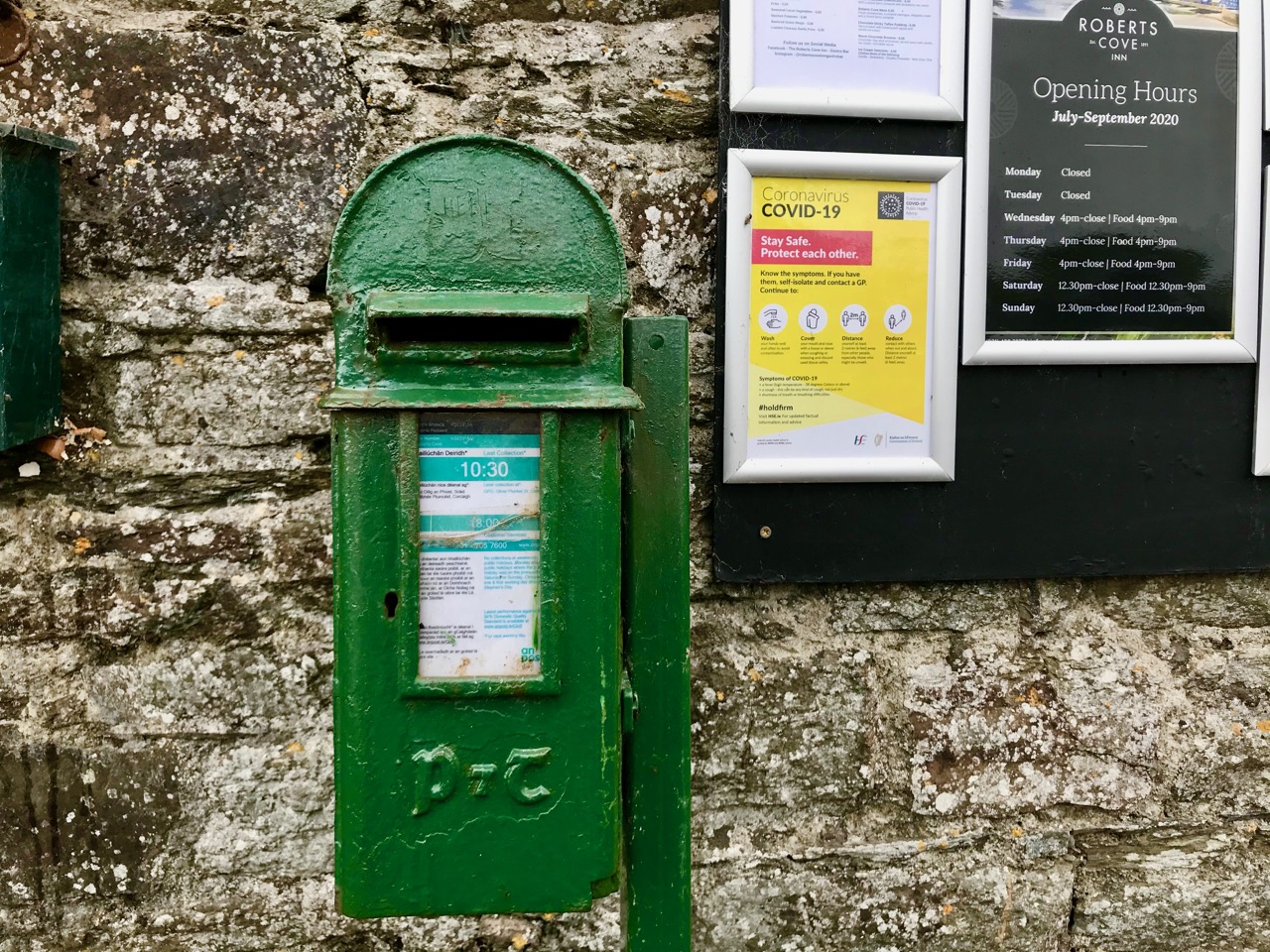
Highlights of Robert’s Cove: the old milepost on the top is non-committal about the apostrophe! The former Coastguard Station (now a private residence) is the building on the left in this picture, above

I wondered how this cove got its name, and was rewarded by a search in A Topographical Dictionary of Ireland by Samuel Lewis, 1837:

Ballyfoil, a parish, in the barony of Kinnalea, county of Cork, and province of Munster, 10 miles from Kinsale; containing 1291 inhabitants . . . comprises 1304 statute acres, as applotted under the tithe act. The soil is fertile, and about one-half of the land is under tillage; the remainder is in dairy farms. The system of agriculture is improved; the only manure is sea-sand, which is brought into Rocky Bay and Roberts’ Cove, two small coves in the parish, in large boats, of which several are employed in this trade. At Roberts’ Cove is a valuable slate quarry, belonging to Sir Thomas Roberts, Bart., but it is not worked to any considerable extent. Britfieldstown, the seat of Sir Thomas Roberts, Bart., is pleasantly situated in a secluded spot above Roberts’ Cove . . . The Cove affords a commodious shelter for vessels of 200 tons’ burden, which occasionally arrive laden with coal, and return with cargoes of slate. The coast-guard station here is the most westerly of the eight stations that constitute the district of Cove. A little to the west, on the summit of Roberts’ Head, is a ruined signal tower, from which is an interesting and extensive prospect. It is an impropriate curacy, in the diocese of Cork, and is part of the union of Tracton, where the Protestant inhabitants attend divine worship . . . The tithes amount to £109. 4. 6. . . The church has long been a ruin . . . there is also a hedge school in the parish . . .

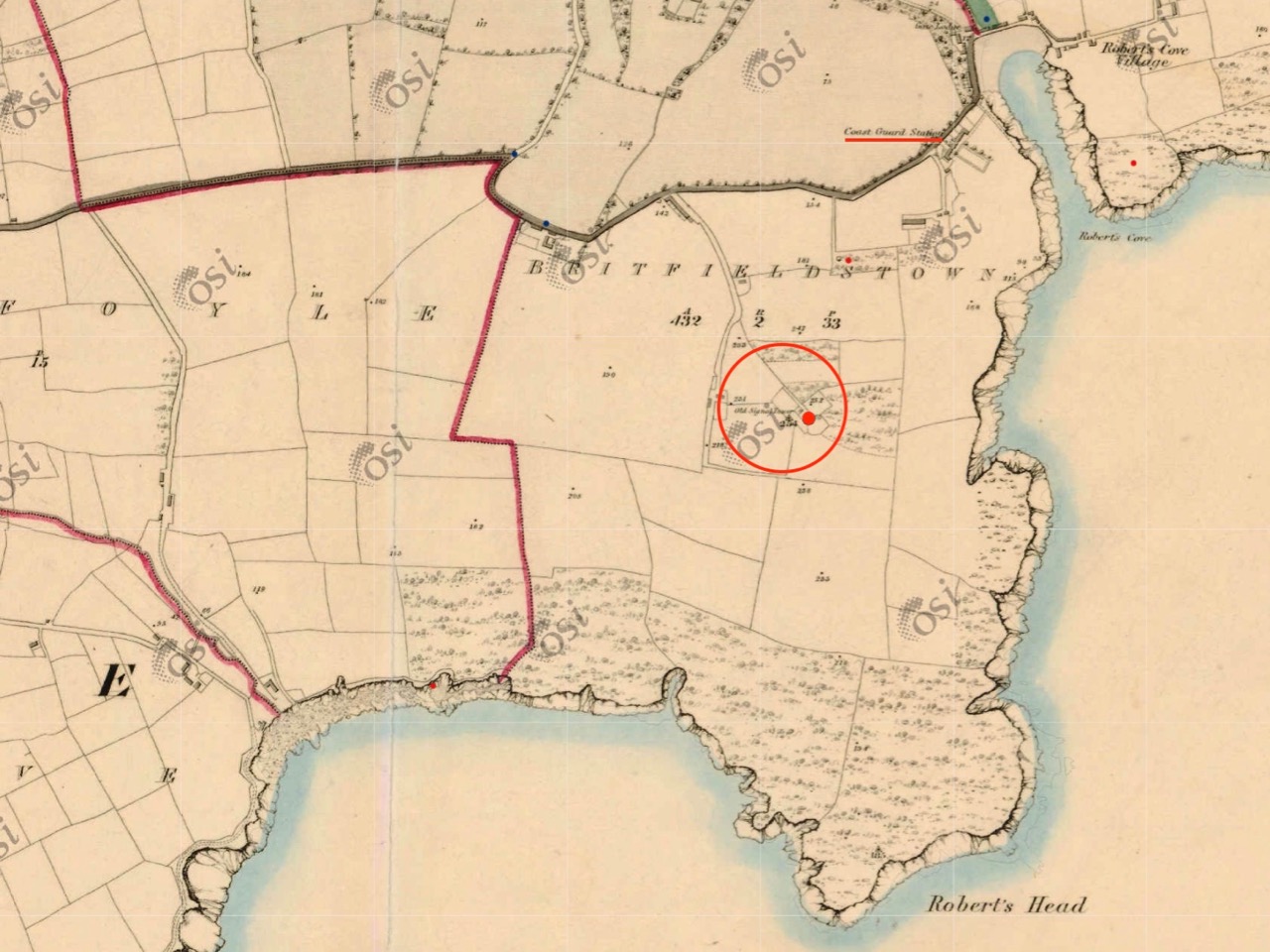
In this 1842 Ordnance Survey map of the area, the site of the signal station is marked. Britfieldstown House, the seat of the Roberts family, was situated further to the north. In 1851 the estate was sold on behalf of Sir Thomas Howland Roberts, ‘…an insolvent debtor…’ It became derelict in the 1970s and the only survivals now are remnants of a walled garden and a derelict gate lodge. It’s interesting that the apostrophe has been changed – on this map – to indicate a singular ‘Robert’ rather than the ‘Roberts’ family, whereas the 1837 Topographical Dictionary entry clearly implies the naming as ‘Roberts’. 
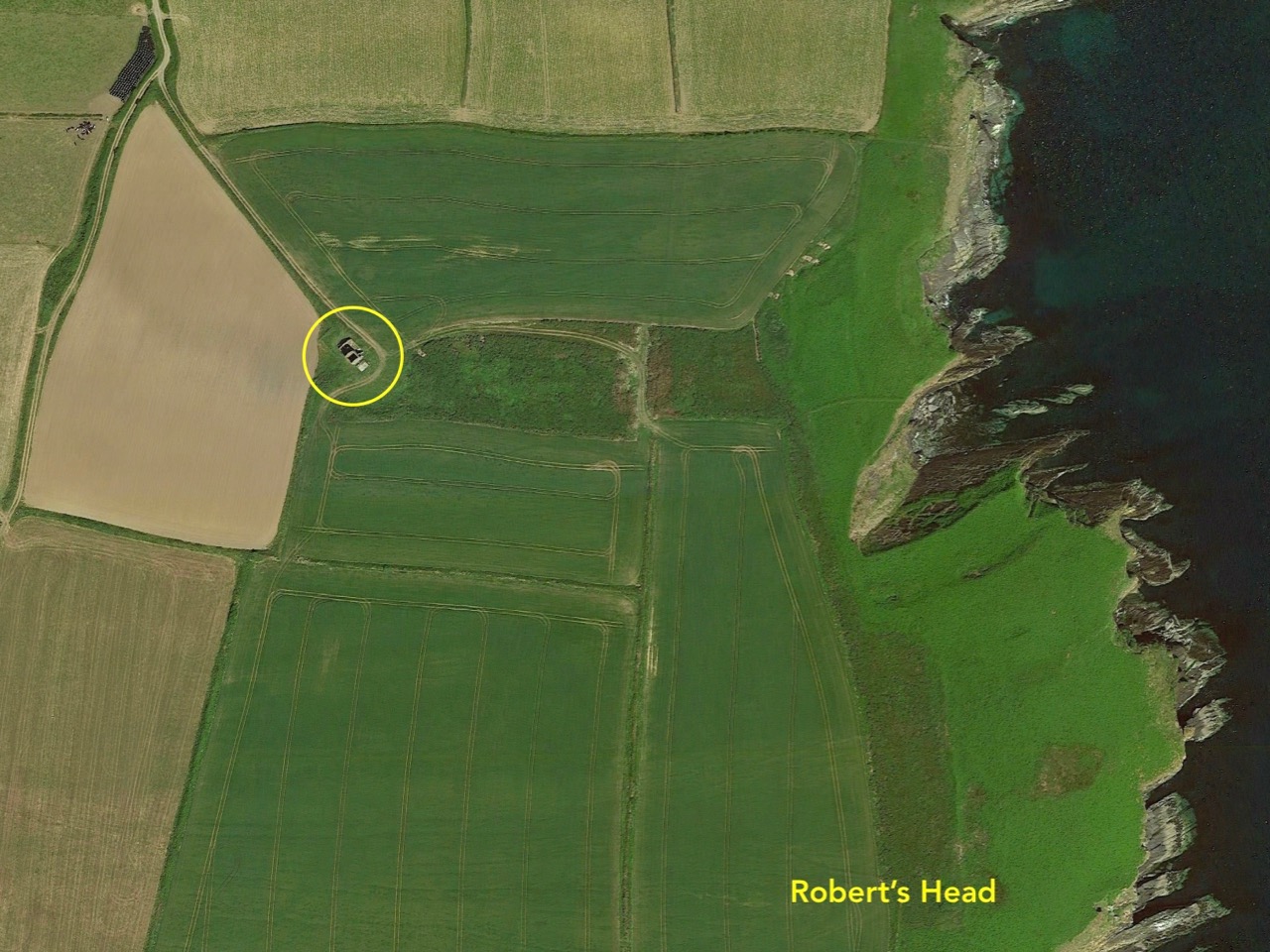
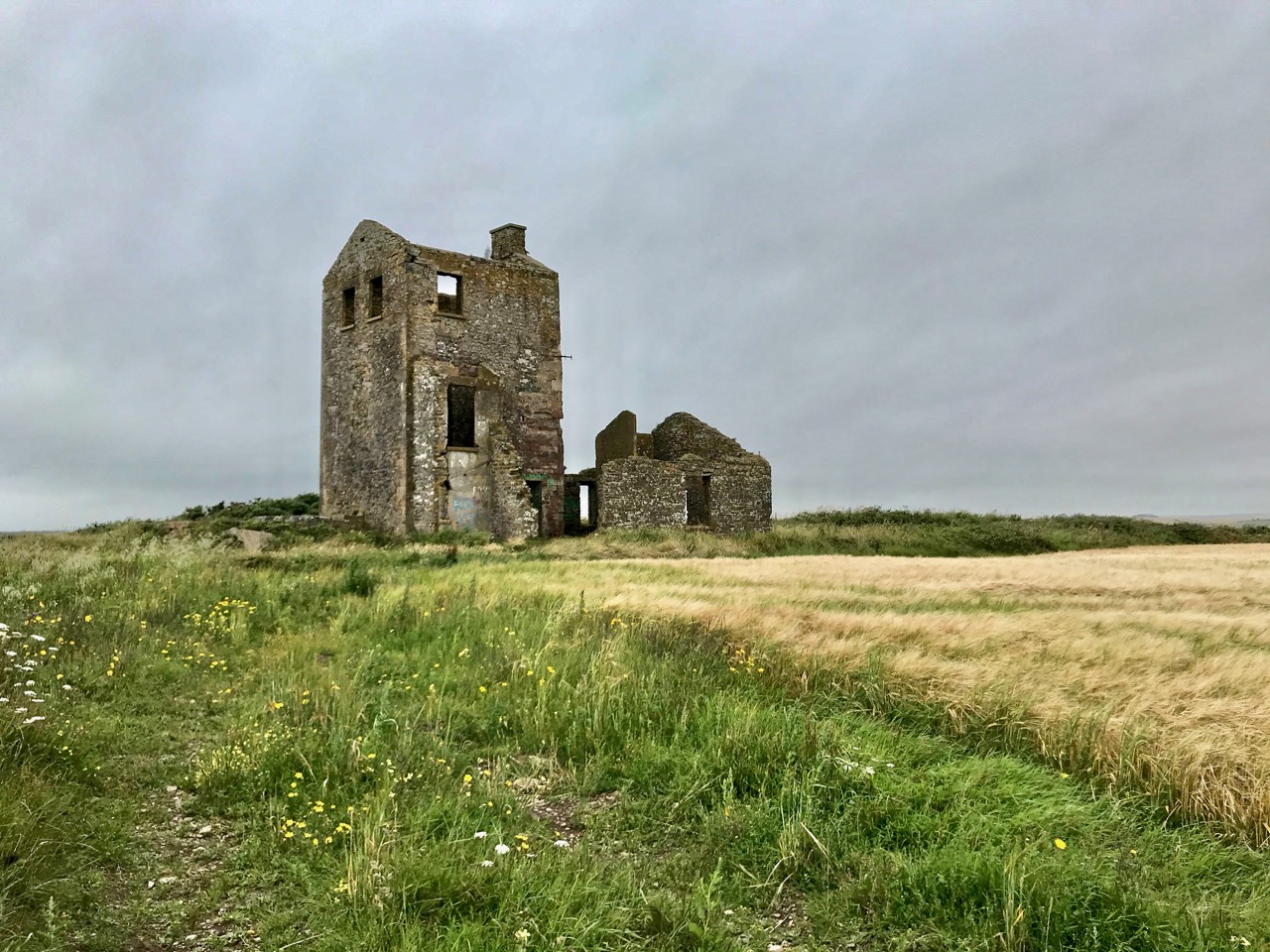
A closer aerial view of the signal tower clearly shows the extent of the remaining buildings, although all ruinous

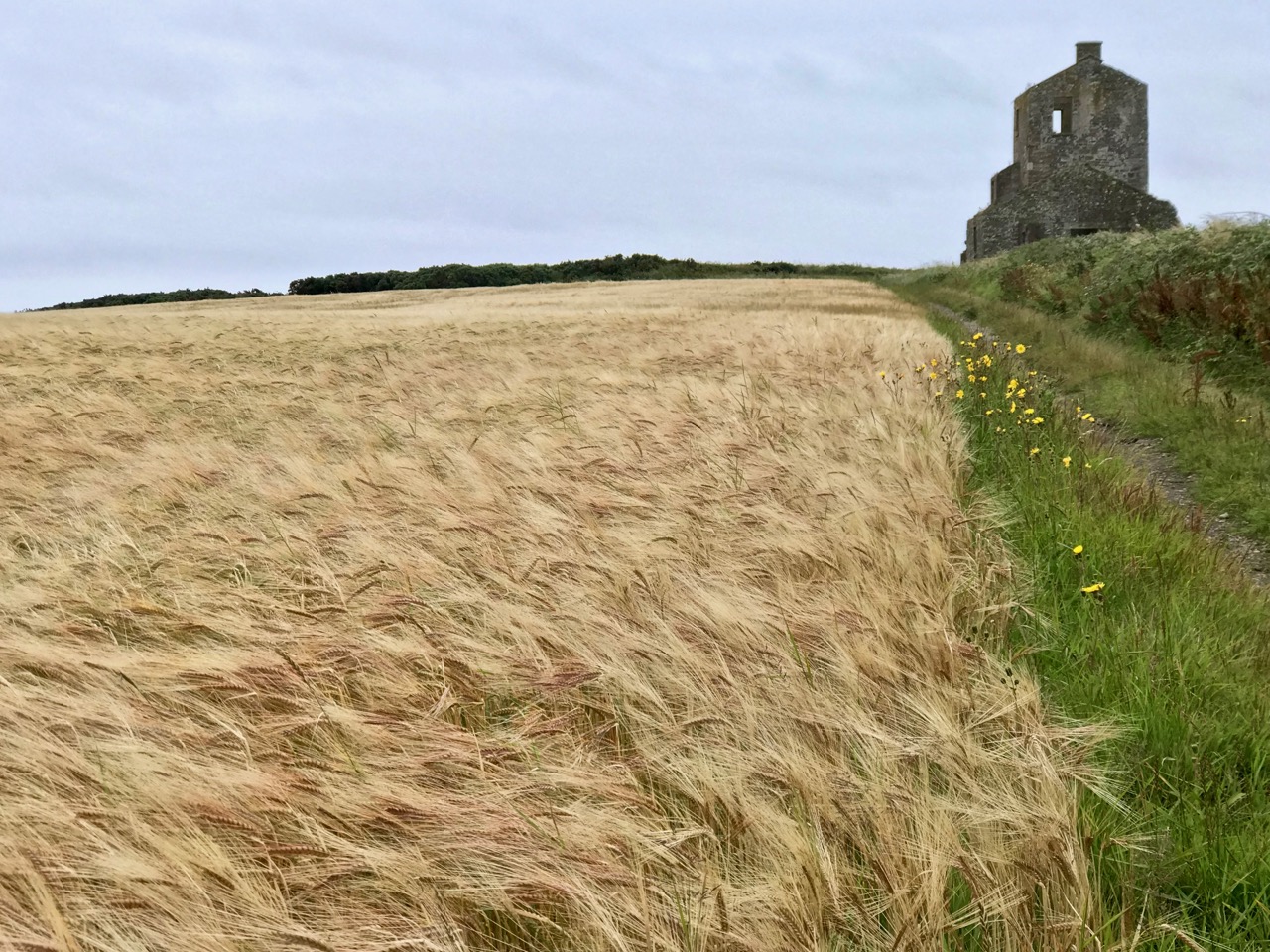
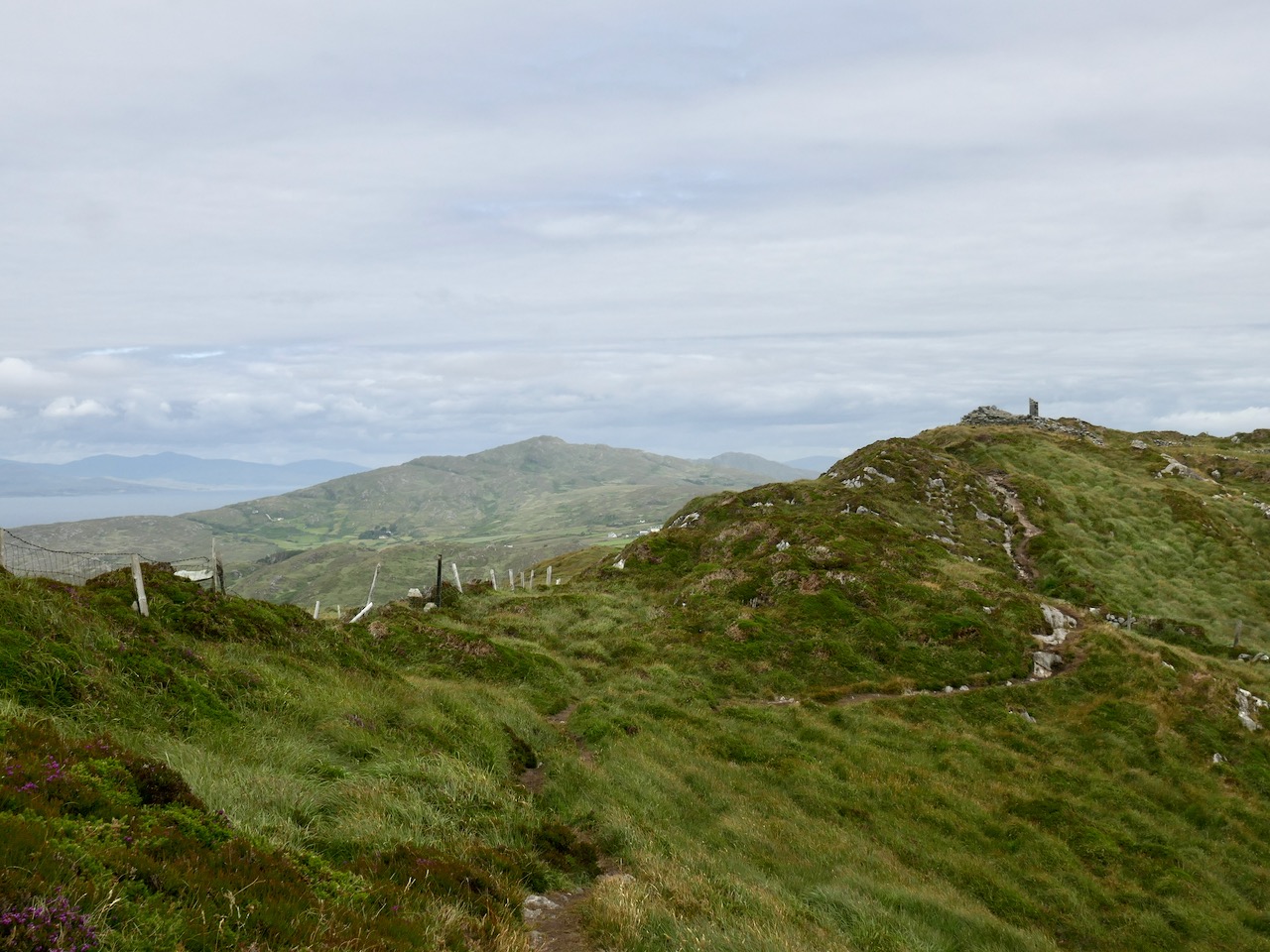
The visible buildings on the signal tower site are extensive, and imply that this station was in use beyond the time of the Napoleonic invasion threat: many of the other stations were stood down around 1810 and became derelict soon after, mainly due to their remote exposed locations and the ravages of the weather. Interestingly they do not generally appear to have suffered from stone ‘robbing’ in the same way that medieval tower houses did.

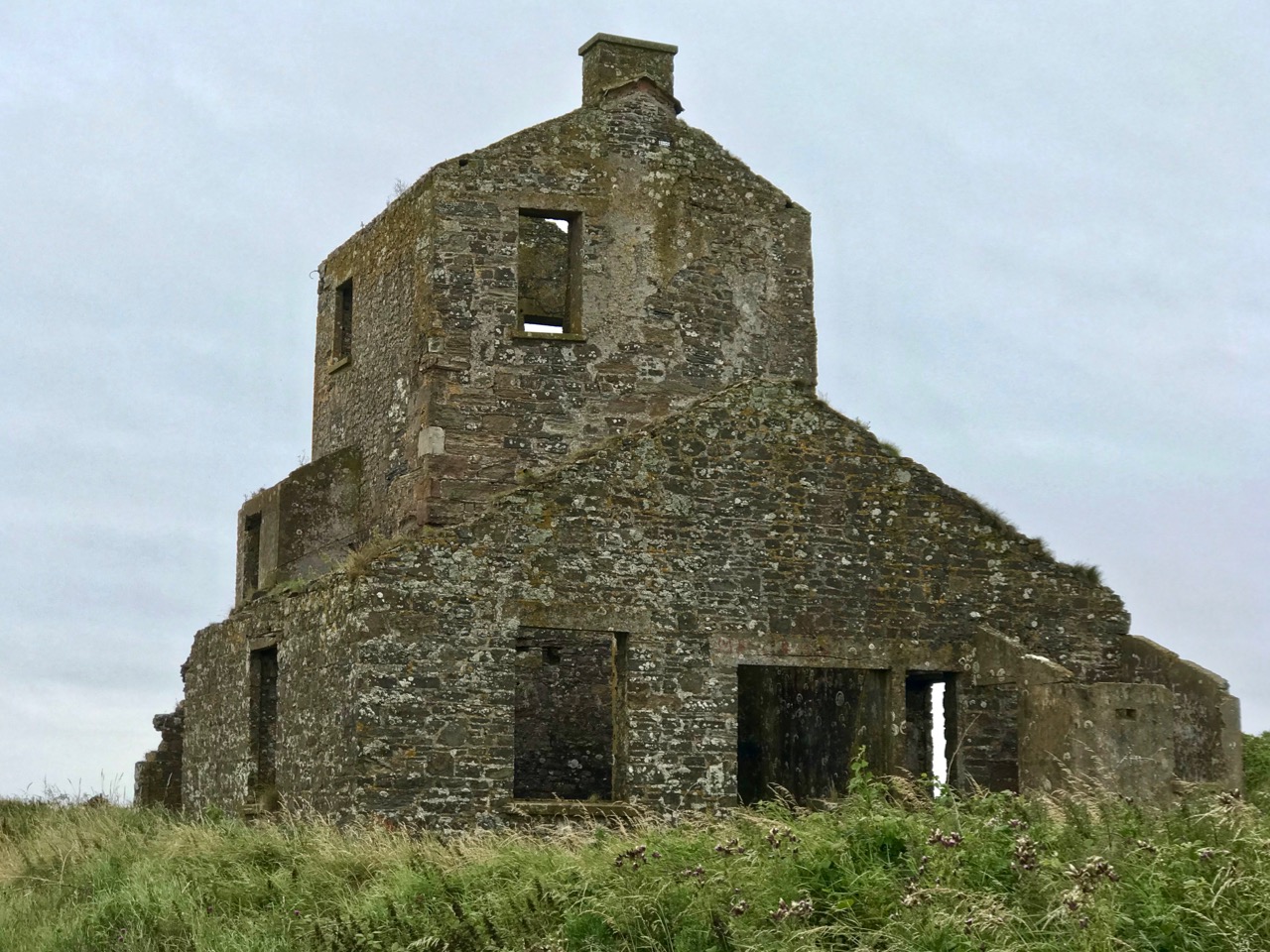
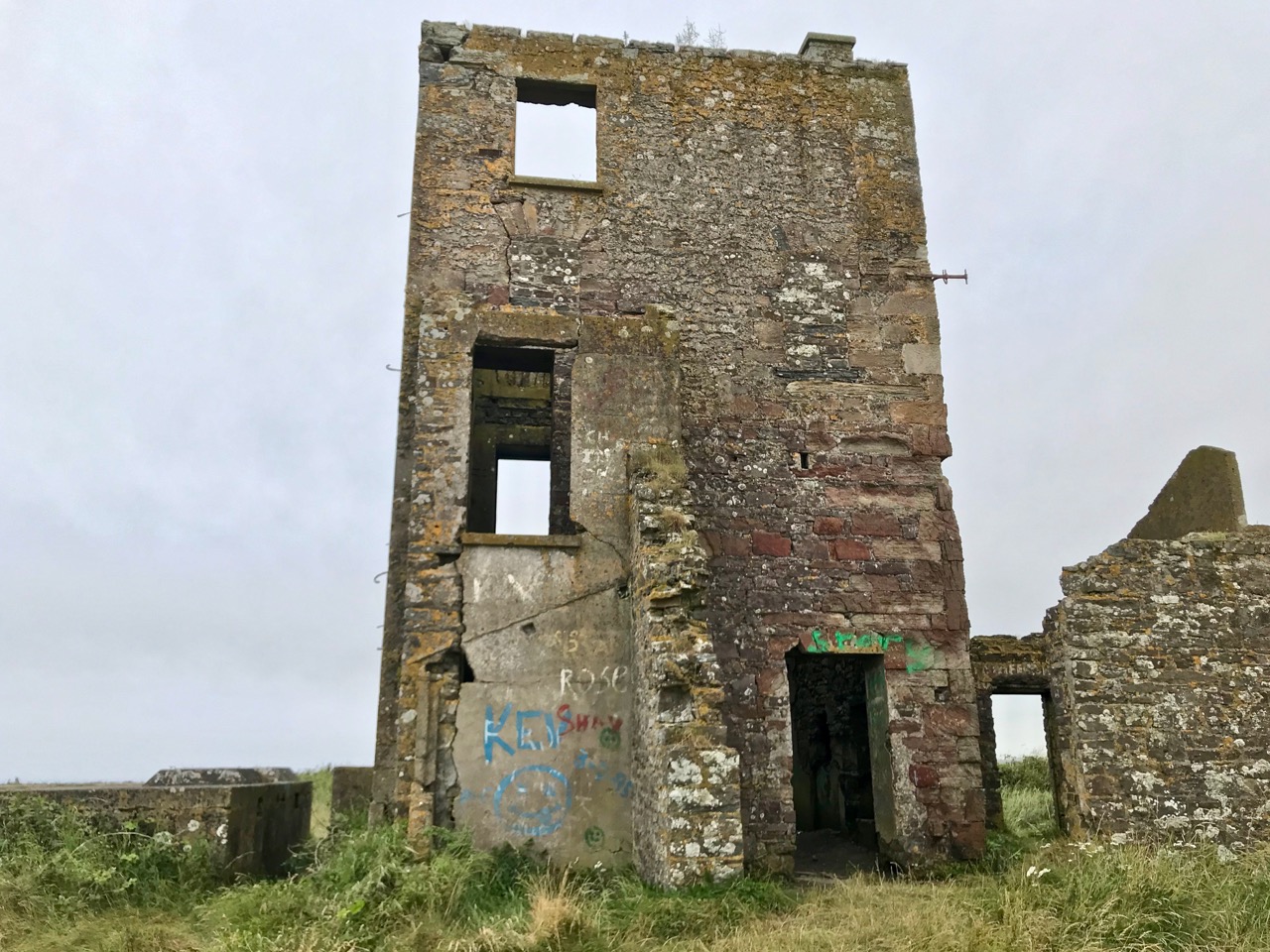
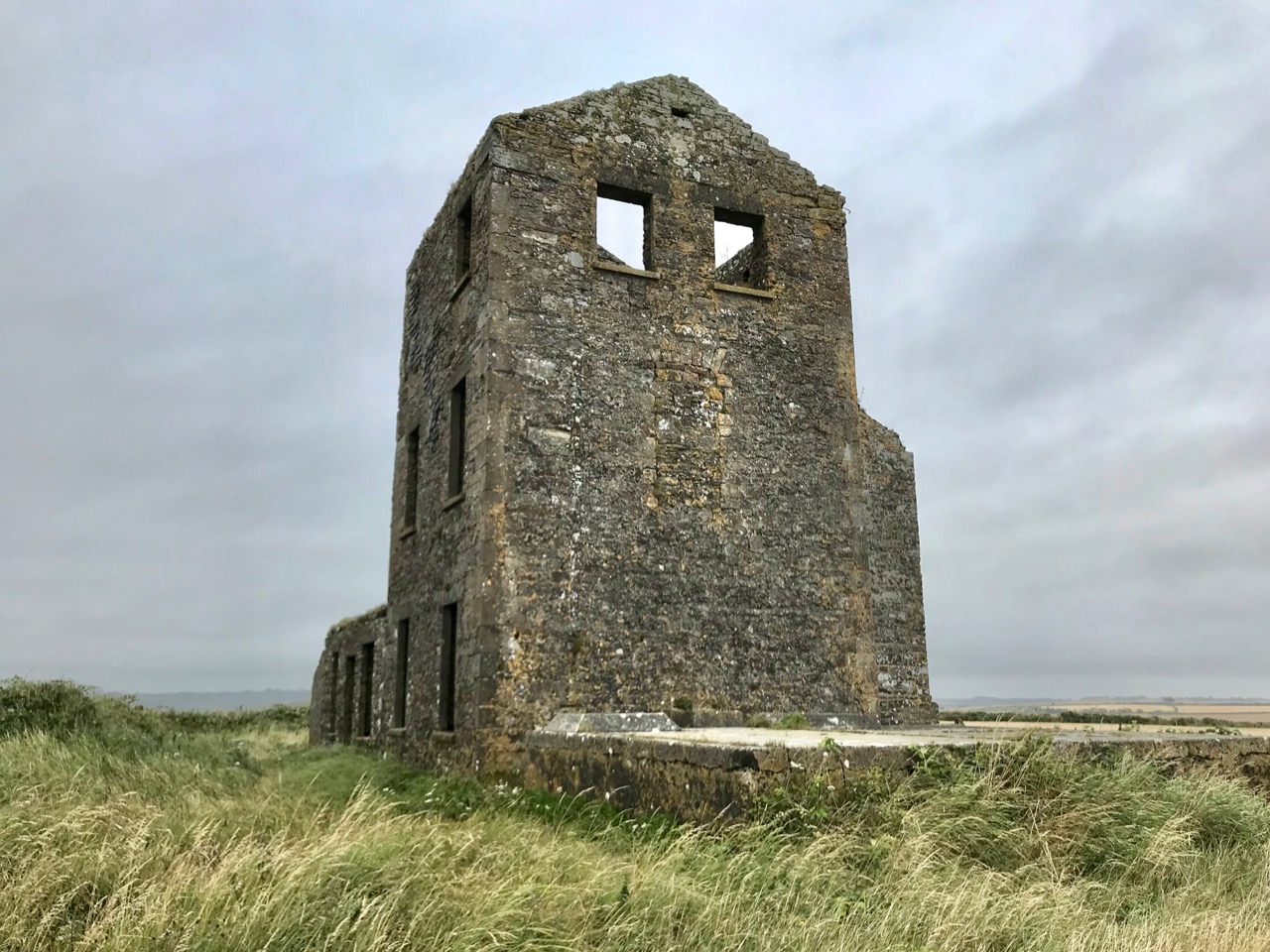
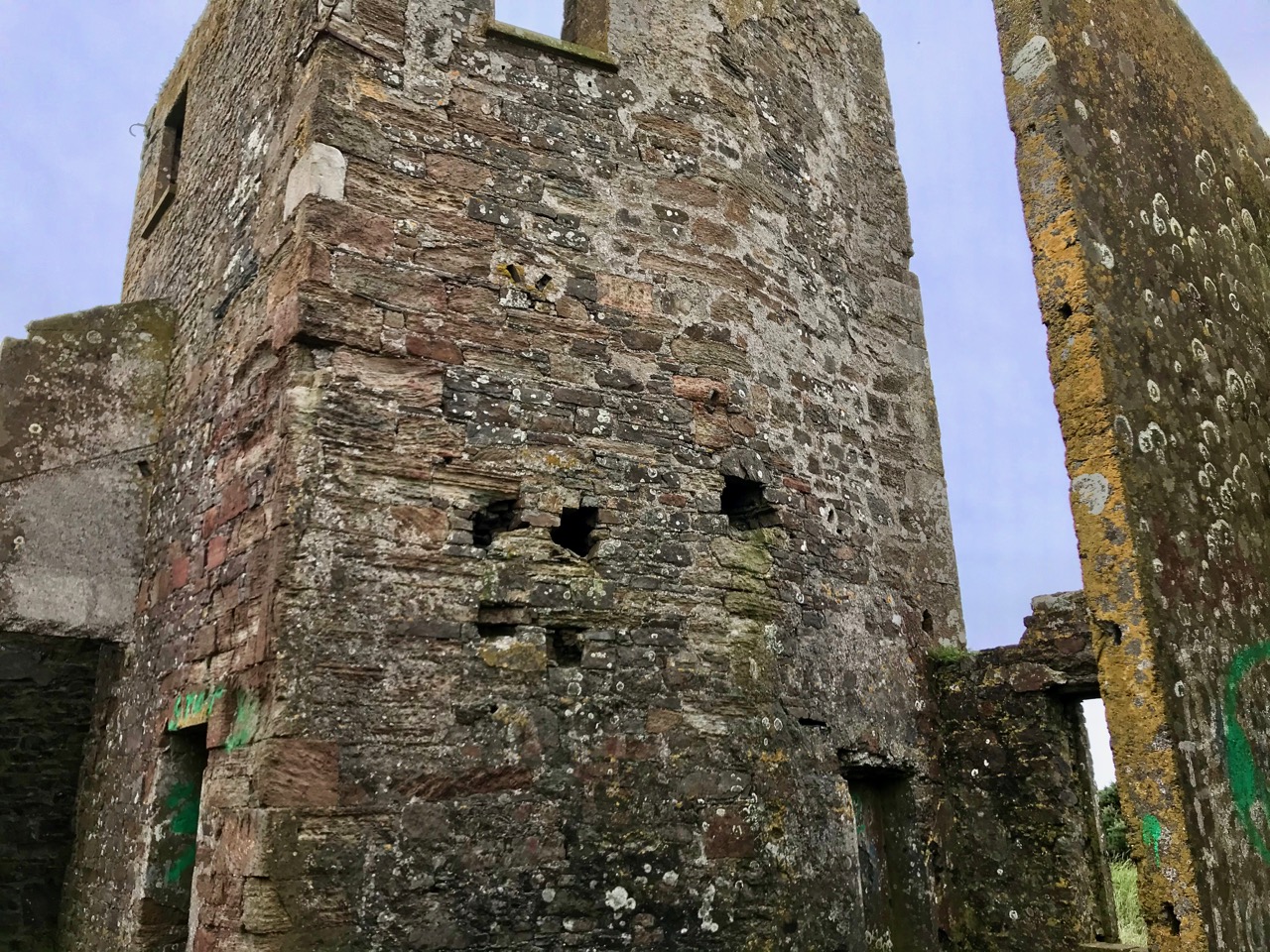
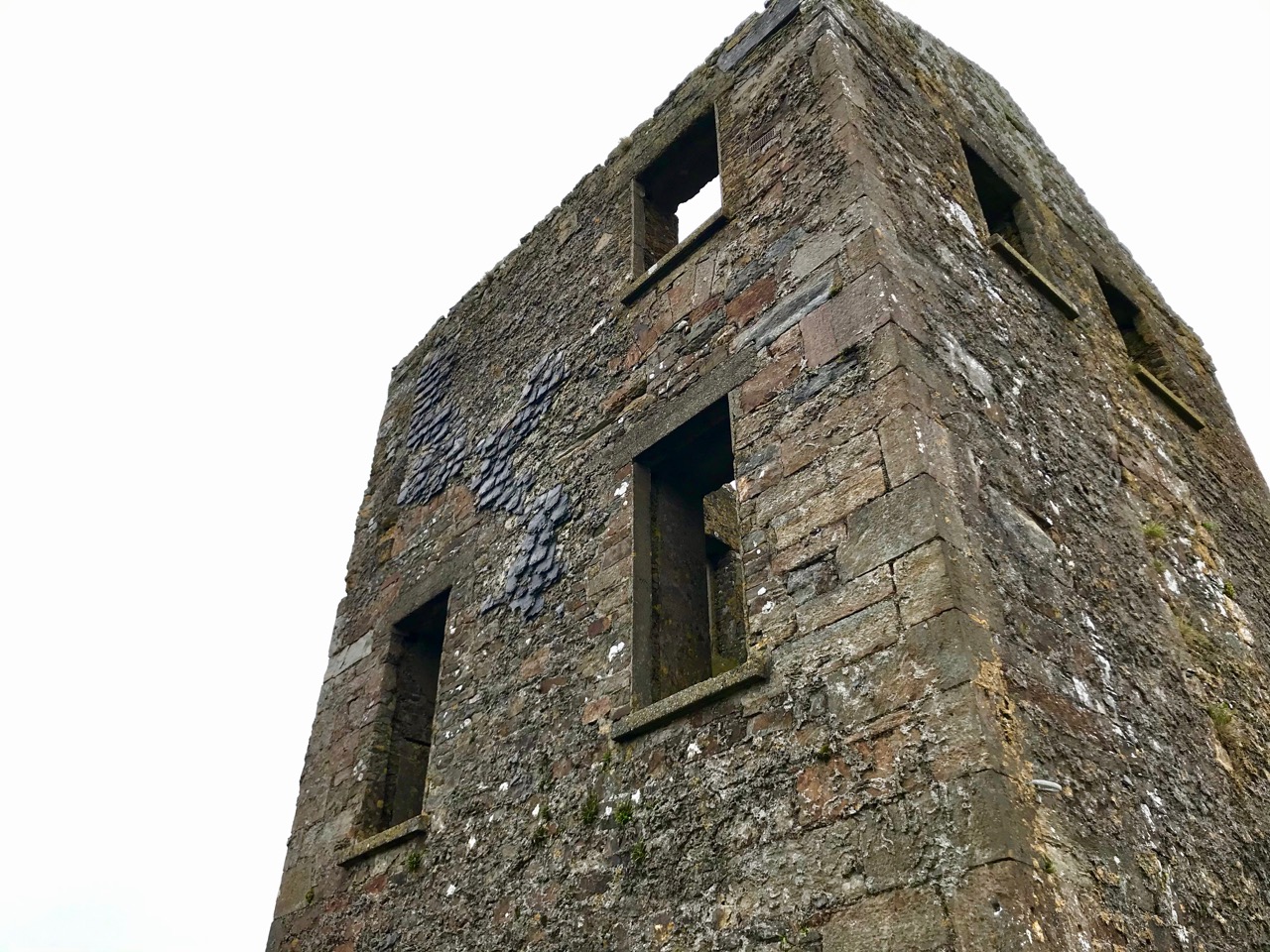
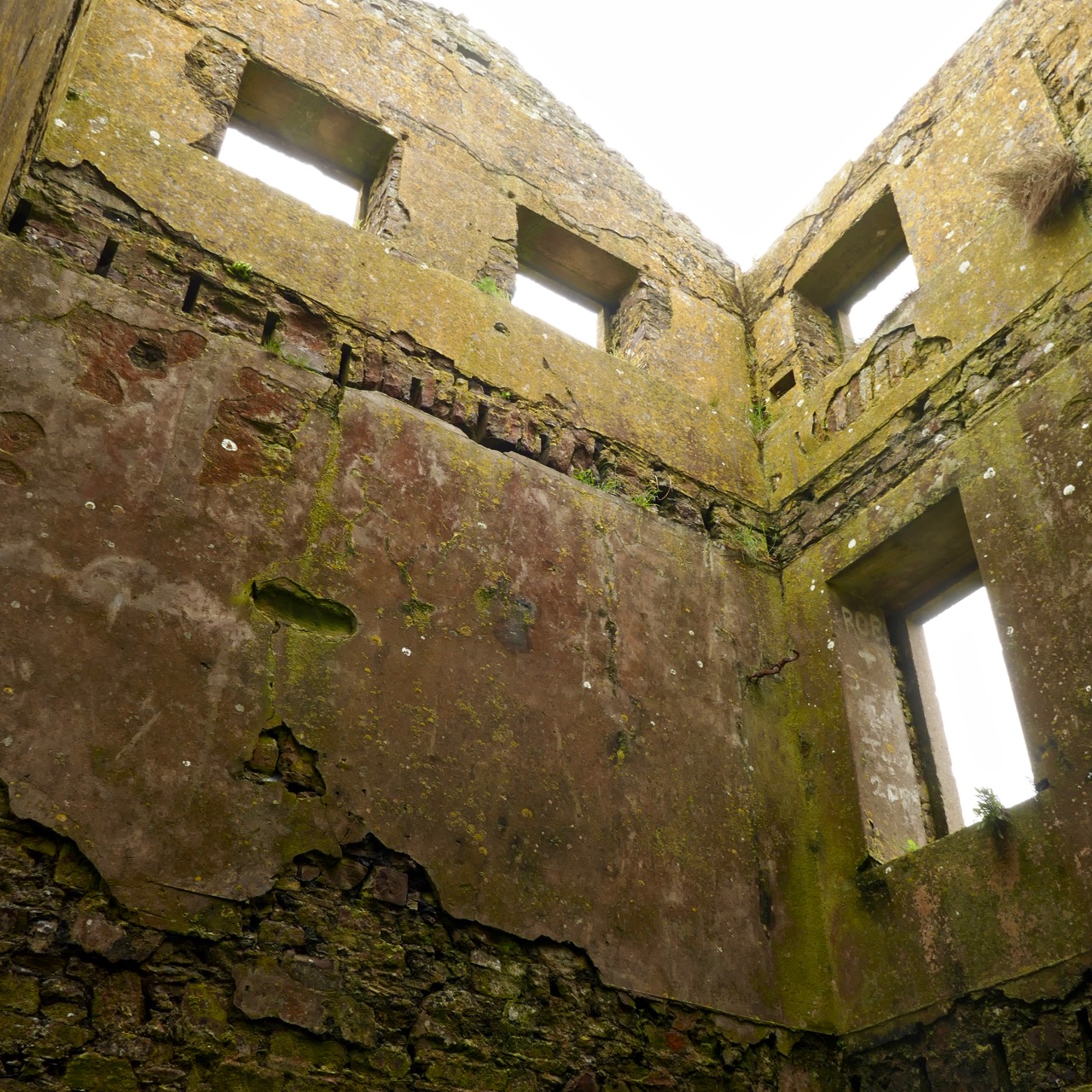
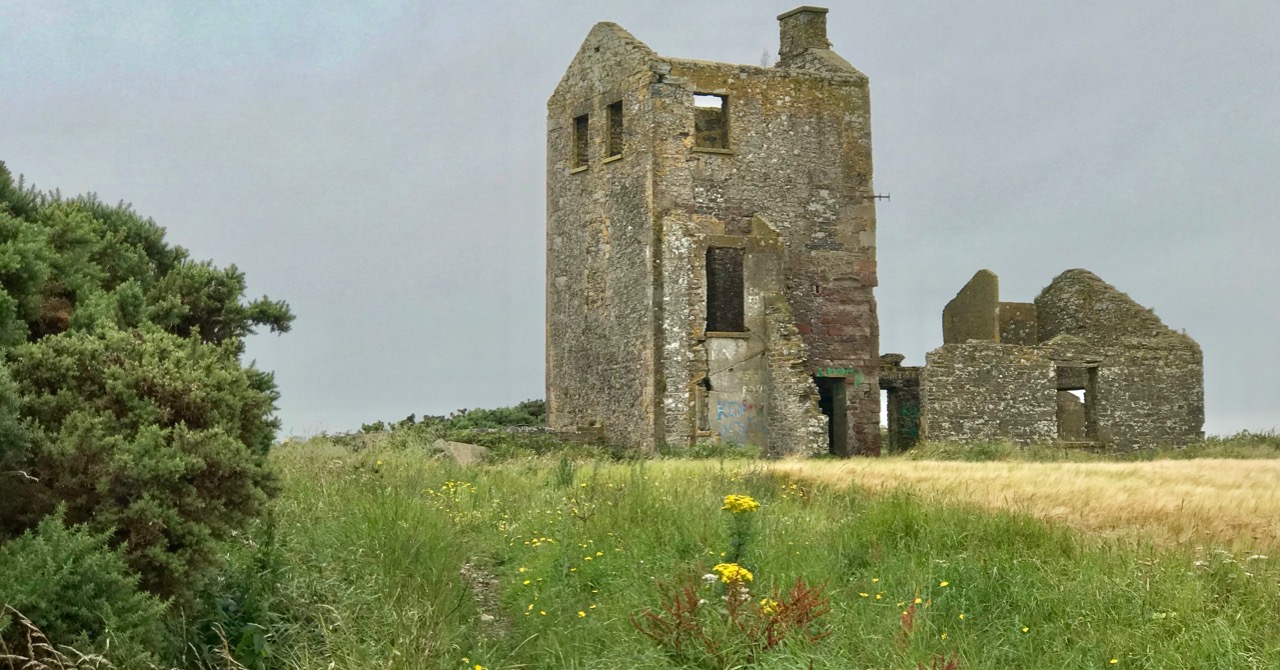
The complex of buildings on the Robert’s Head site showing (from upper picture) north-west, north-east, south-east and south-west elevations. I think it’s very likely that the highest part of the structure is based on the original signal tower, and contains much of that early structure: the raised entrance (north-east elevation) follows the general pattern, but there are no bartizans or machiolations. These could well have been replaced in later reconstructions, when a pitched roof was added. Clues that much of the original masonry has been retained lie in the back wall – thickened at the centre to incorporate a chimney flue – and remnants of external vertical slate-hanging, a method of weatherproofing evident in many other towers.

I can provide no answers as to why the extensions were added: it has been suggested that these are late 19th or early 20th century works. But the resulting building is substantial – now just a gaunt shell on a windy hill. It’s possible that the station was used as a lookout by the coast-guards based down in Robert’s Cove. Stuart Rathbone (Irish Signal Stations), writing about the Mizen Head station, observes:

The enclosed signal station at Mizen Head, County Cork, features a well preserved three storey building that is now believed to be a replacement for the original signal tower. The building is very similar to the example at Robert’s Head, County Cork. It has tall gabled walls and a large single storey building wrapping around the south east and north east sides . . .

In the early years of the 20th century a fog signal station had been established at Mizen Head, Co Cork, and was probably based on the original signal tower building there; the project also involved building accommodation for the additional crew members required at that time. It is possible that the enlargement of the earlier buildings at Robert’s Head happened in the same period, and for a similar purpose: establishing a signalling and communications base connected to the local coast-guard activities. Those works appear to have included accommodation, office and workshop space, with stores, a toilet and a large concrete water cistern adjacent to the south east wall.

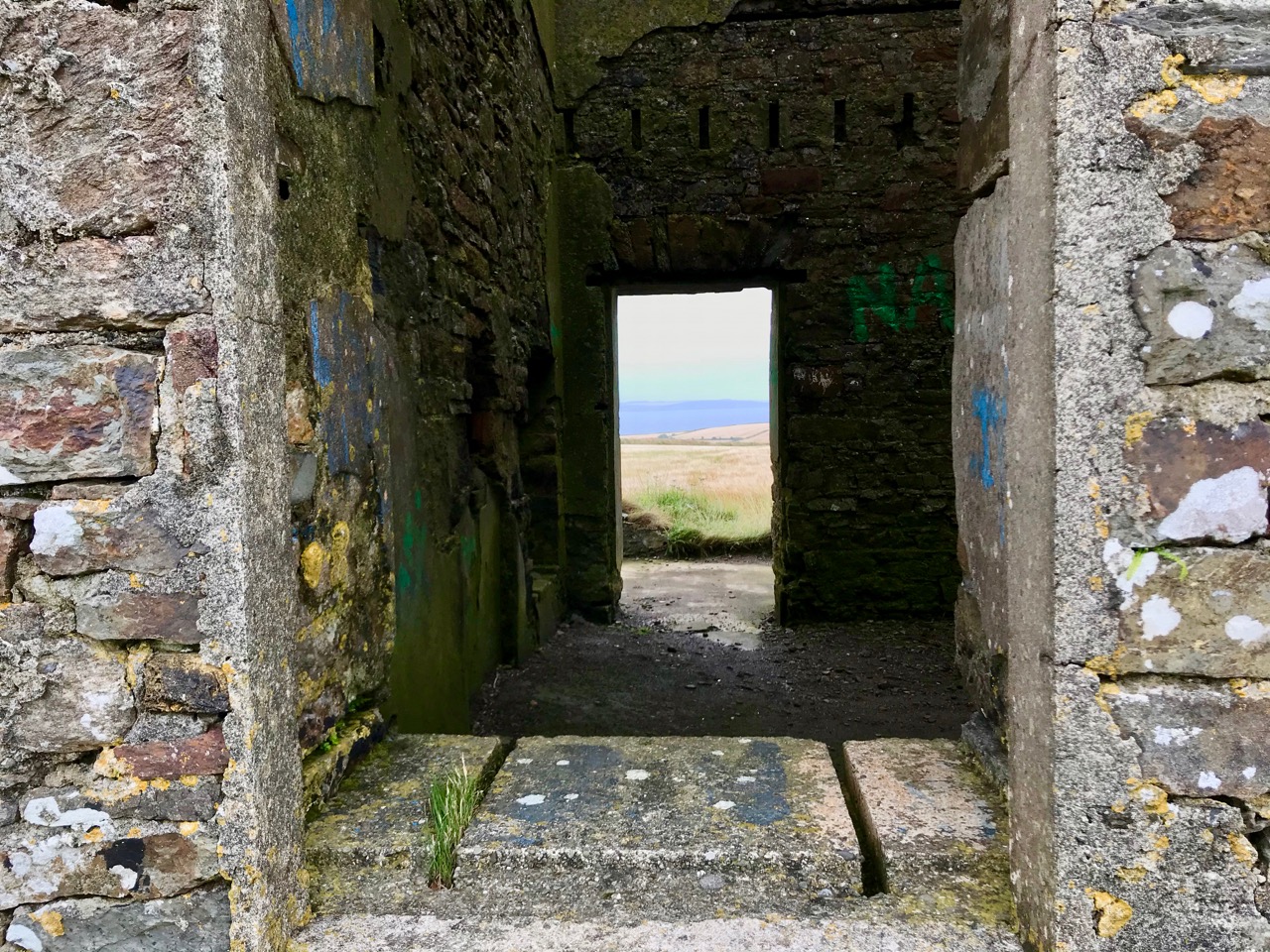
Amenities established in the later reconstruction: a probable outside ‘privvy’ (upper) and ‘shovelling out hatch’ (middle), with large water cistern (lower)

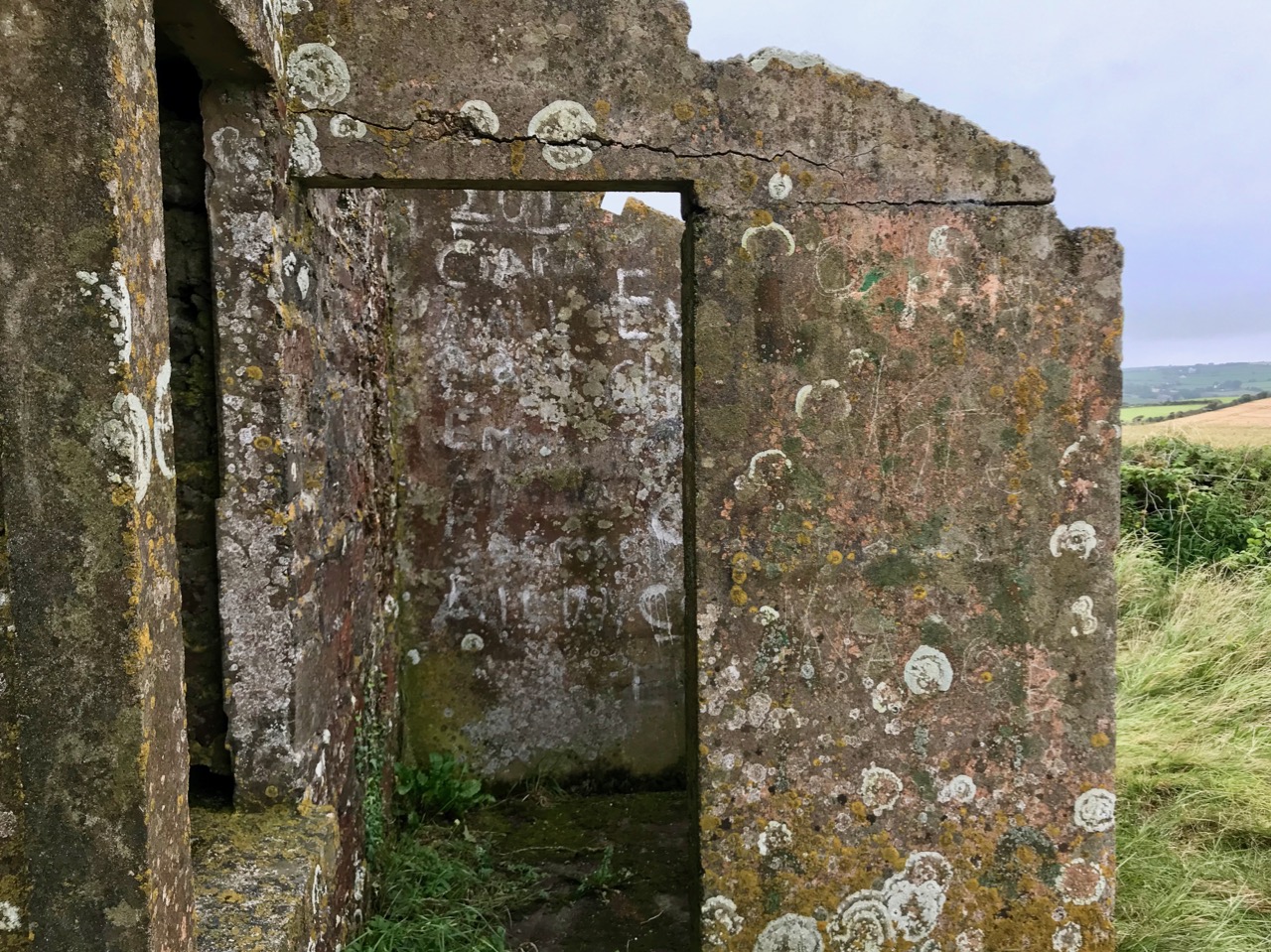
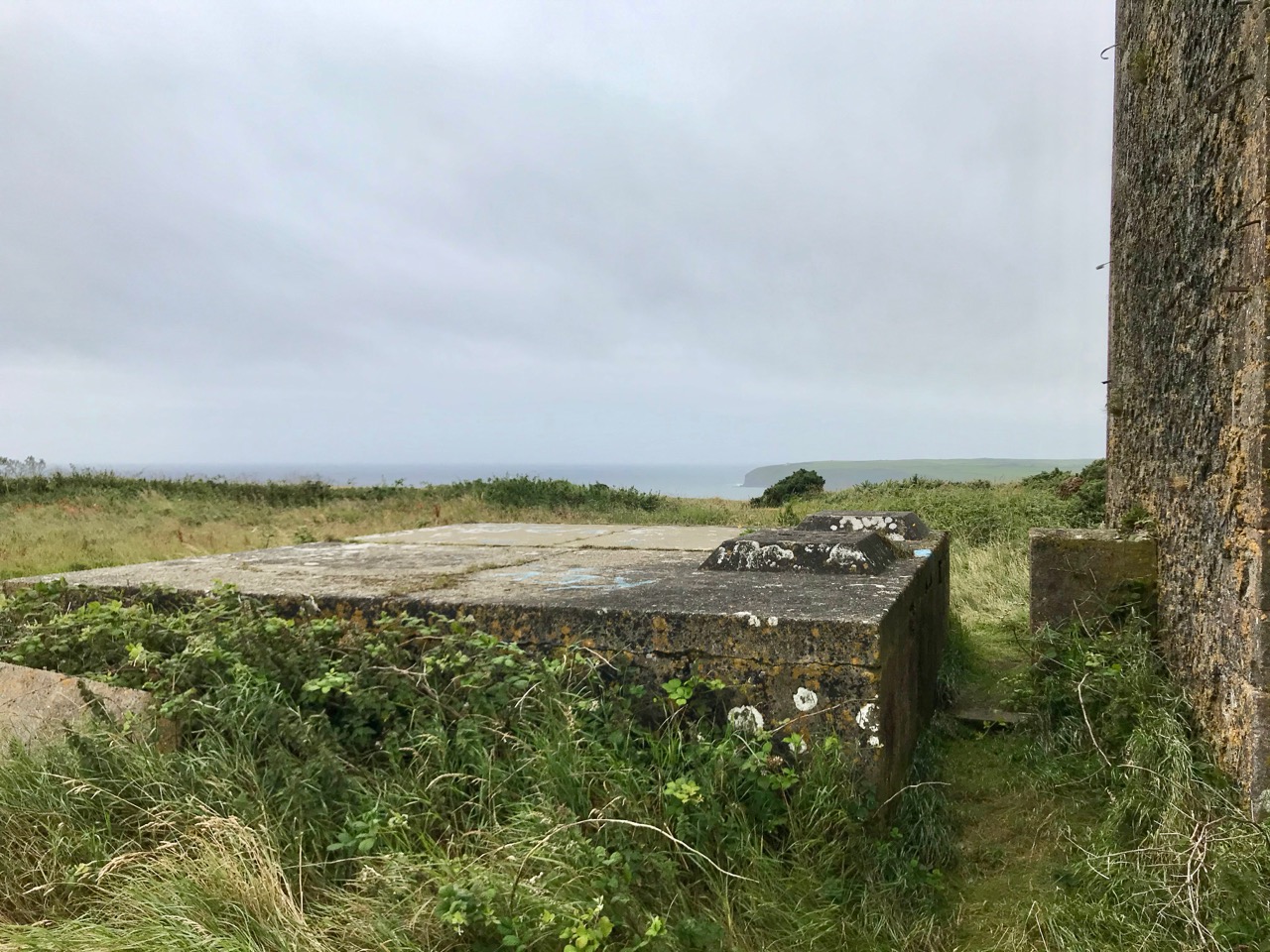
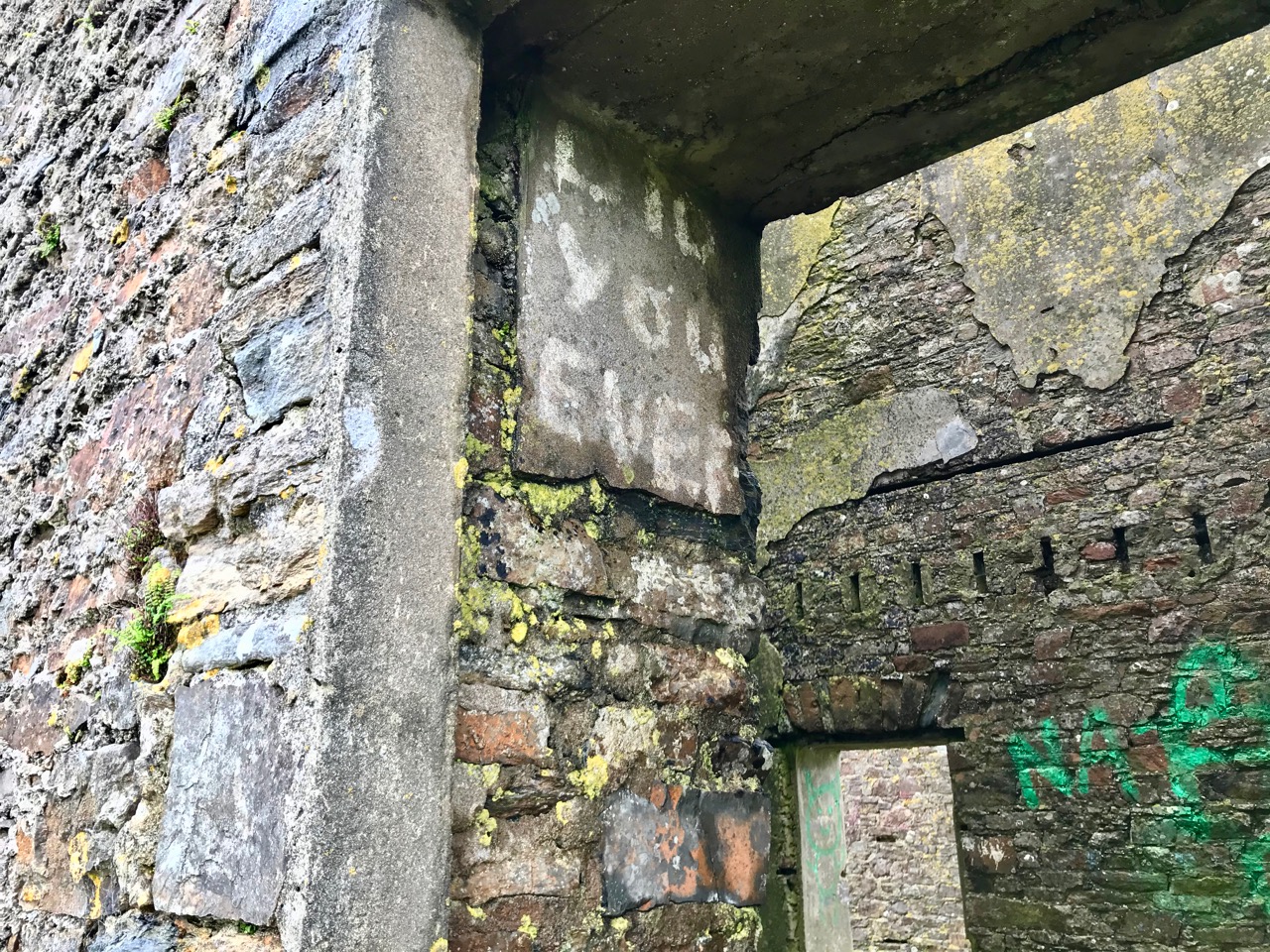
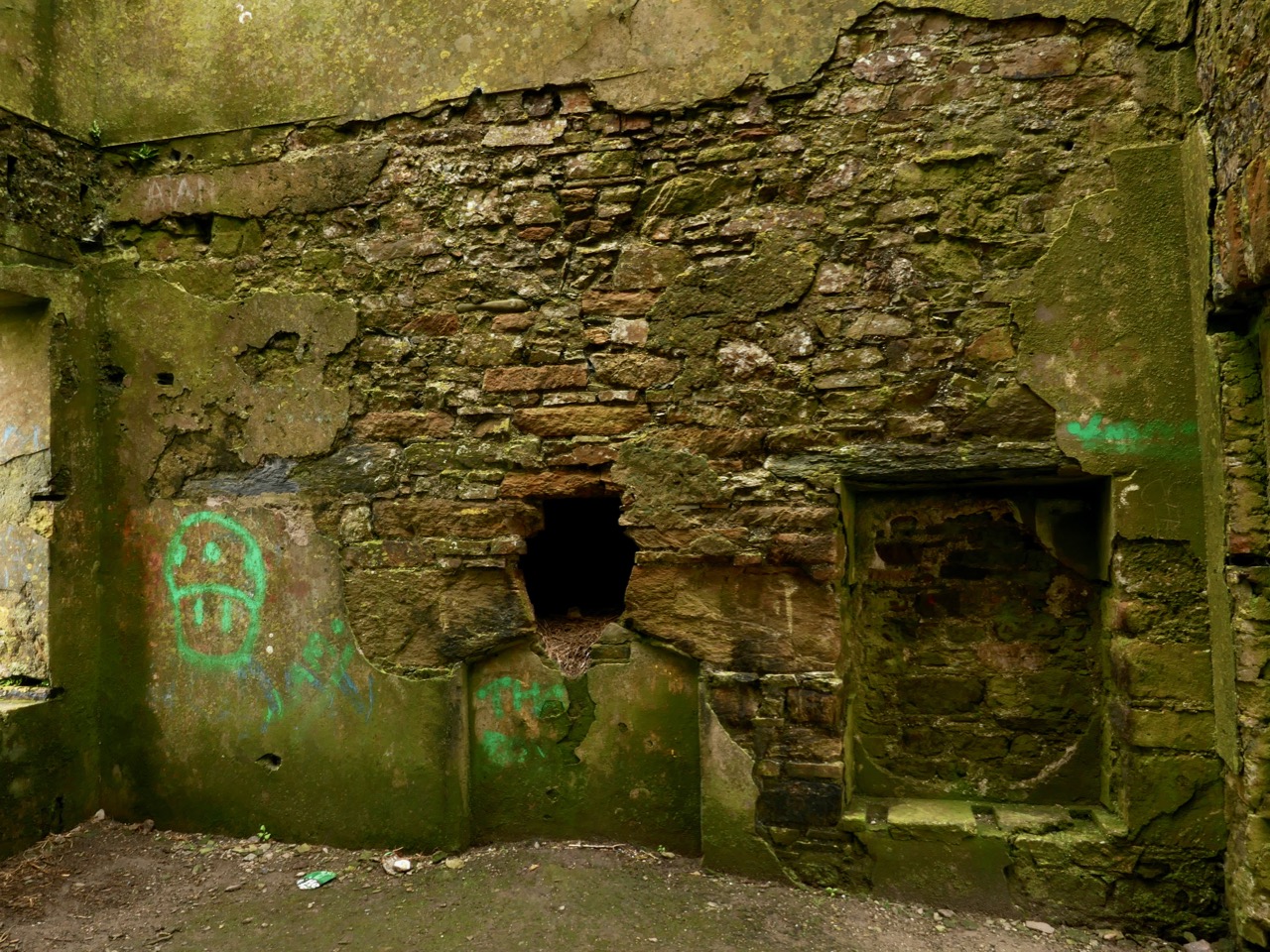
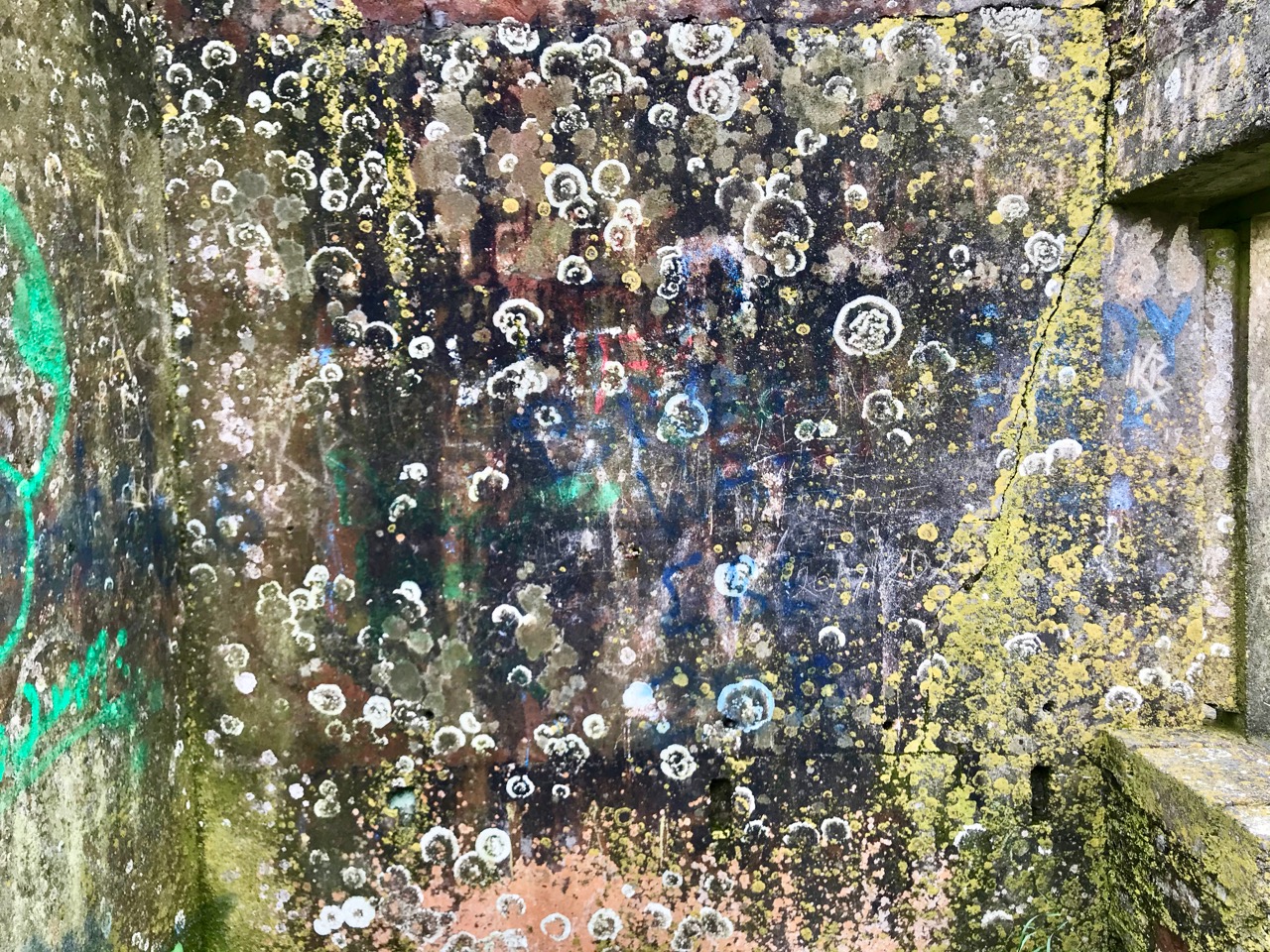
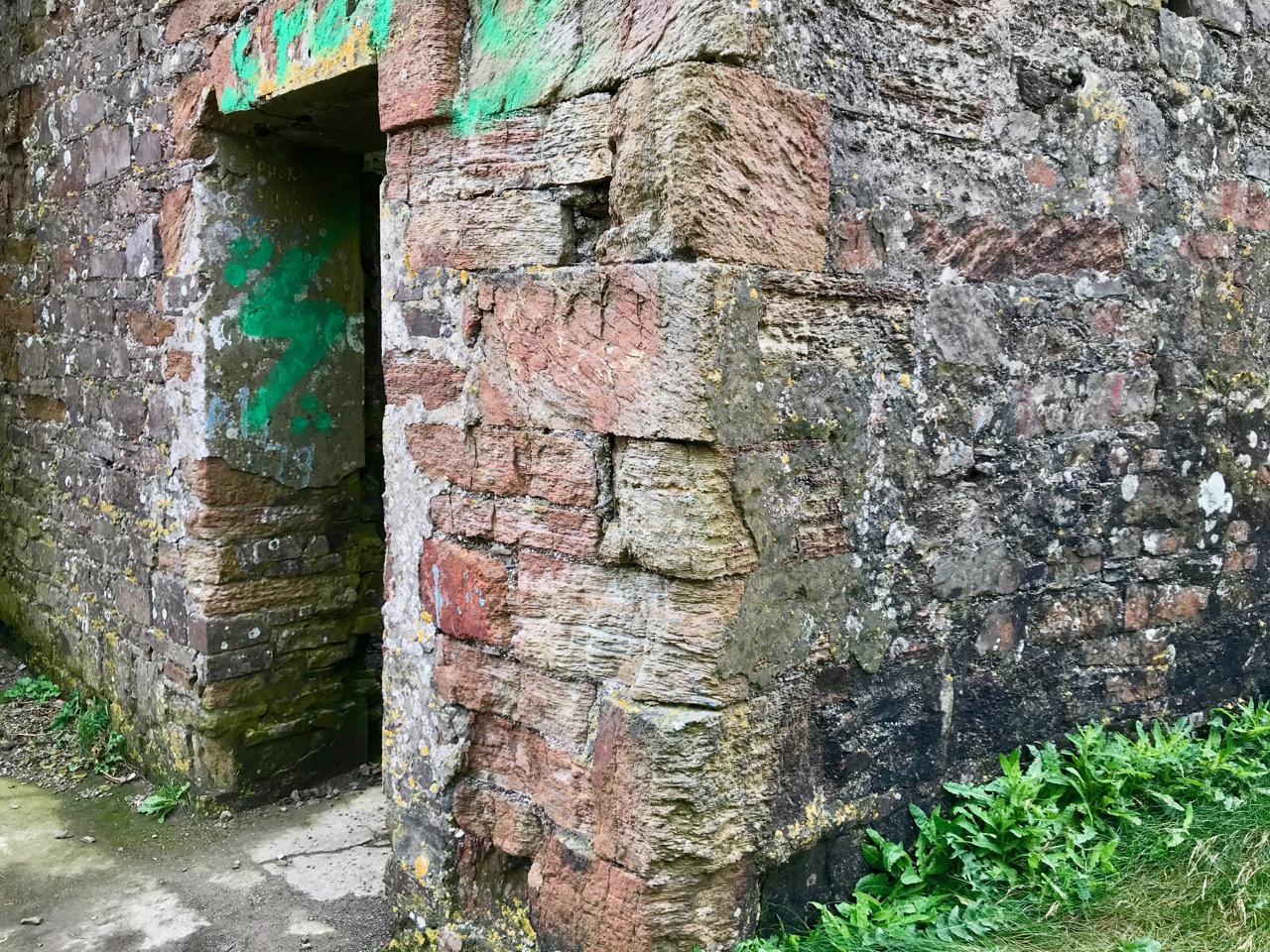
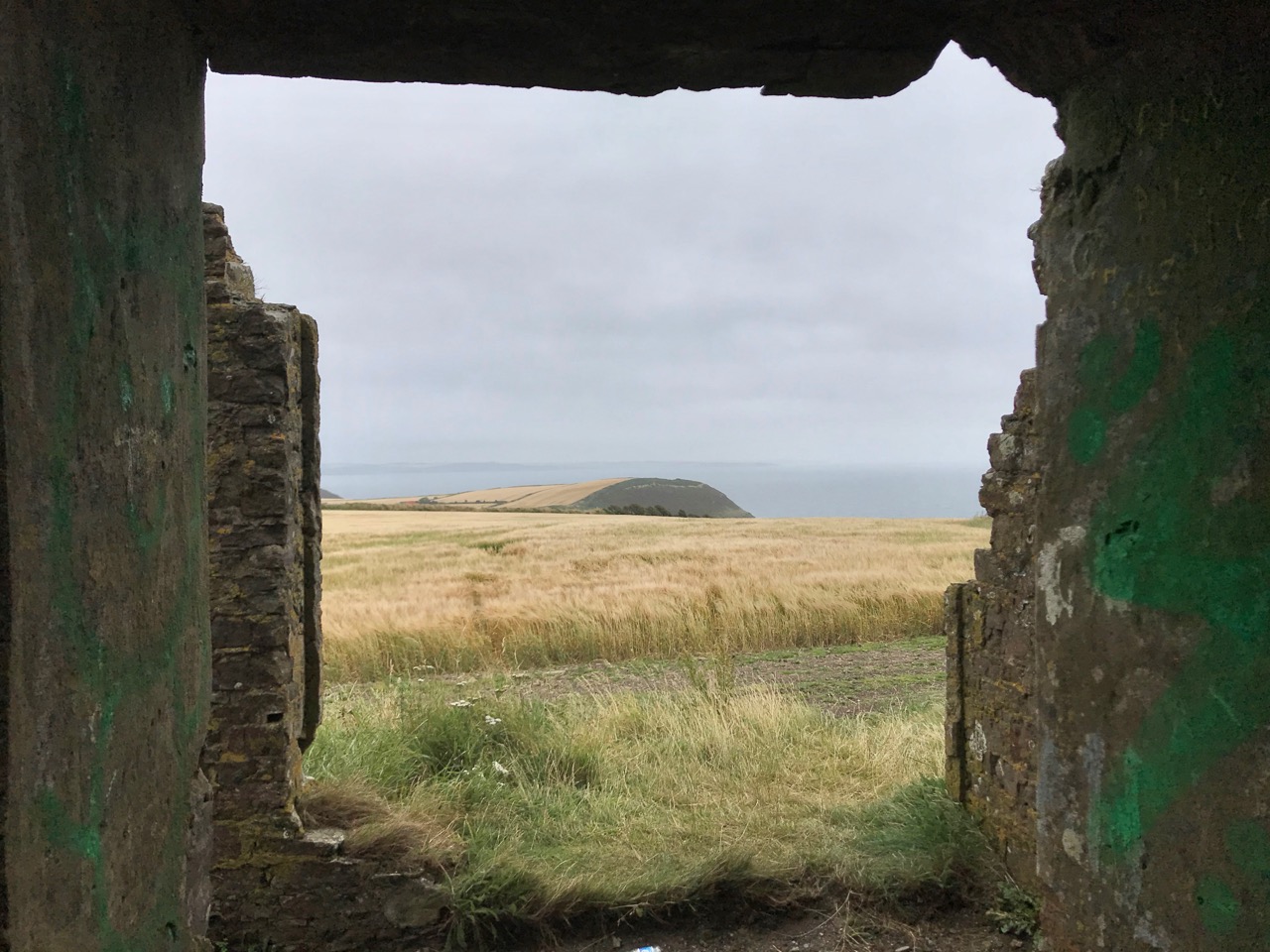
Internal features are difficult to describe definitively, but in likelihood include a hearth / cooking range, living and sleeping quarters with rendered walls providing a level of comfort above that found in the early signal towers. Now, after years of abandonment, the surfaces have been embellished with graffiti and lichen growth, all imparting a compelling visual patina: the place is alive with its own decay. Even the texture of the masonry itself is evolving in a compulsively fascinating way as centuries of abrasive winter gales take their toll.

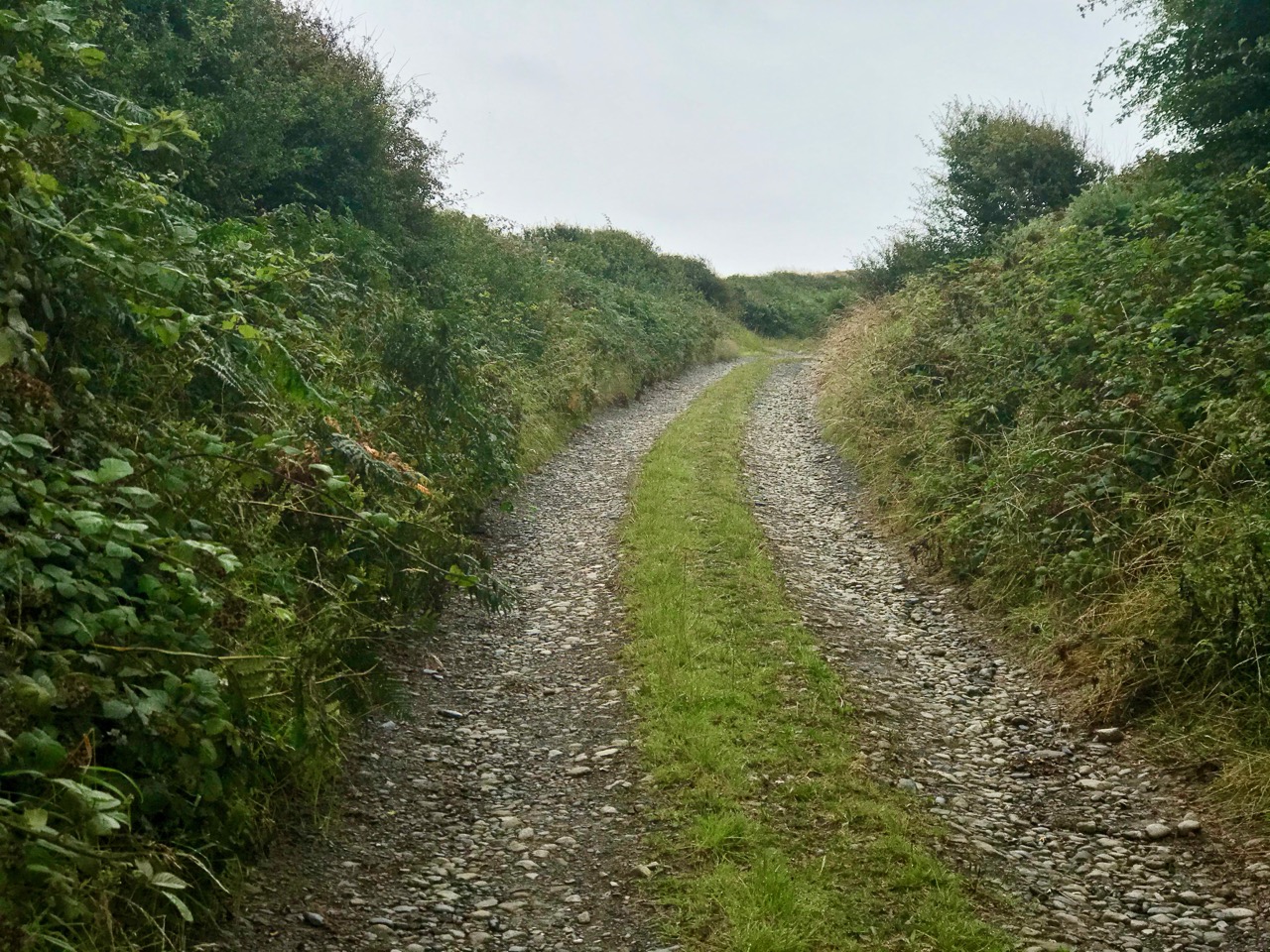
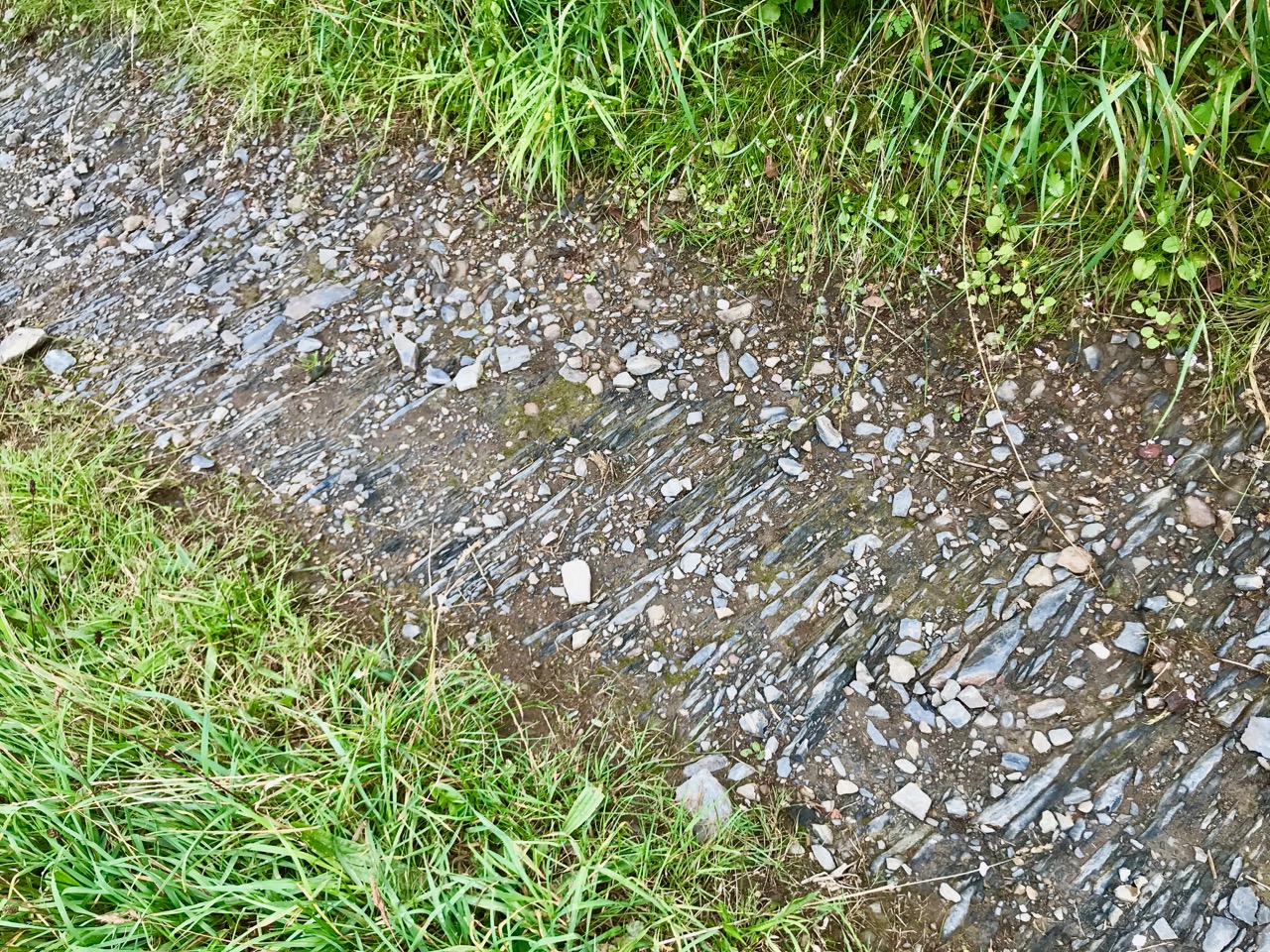
Access to the site is along farm tracks – don’t forget to seek permission if you intend to visit. With all of the towers we have explored so far, the roadways leading to them have survived intact, and have been well made and metalled – in this case solidly crafted with slate probably quarried in Robert’s Cove.

I feel we have been privileged to explore an actively disintegrating artefact of Ireland’s engineering history. More than most, perhaps, this signal tower has absorbed the lives of those it sheltered, and we can meet them there, in our imaginations. It’s a raw place, and it won’t be there forever. In time it will be no more than the scattered piles of stone that we saw at Ballyroon. But in our brief lifetimes, through tempest and contagion, it will continue its slow decline into the dust of the earth largely unseen and unmourned.

The previous posts in this series can be found through these links:

Part 1: Kedge Point, Co Cork

Part 2: Ballyroon Mountain, Co Cork

Part 3: Old Head of Kinsale, Co Cork

A Signal Success in Irish Engineering – Part 3: Old Head of Kinsale

Don’t you wish, sometimes, that you could just walk into history? I have felt that, often, when visiting historic sites: you see the remnants of something – a stone circle, rock art, an ancient dwelling, a battle site – and you just want to be able to go back in time and talk to the people who made them, or who visited them. You want to ask, of course, why the most enigmatic monuments were built – and what was it like to be there in those days?

In my posts of the last two weeks we have visited some 19th century signal tower sites in West Cork. The first example, at Kedge Point near Baltimore, is a shell but there is sufficient of it to see exactly what it looked like, set high up on its lonely perch looking out over the cliffs. Last week we walked towards the westernmost end of the Sheep’s Head Peninsula to find scant ruins of a tower there, but with very fine vistas in all directions.

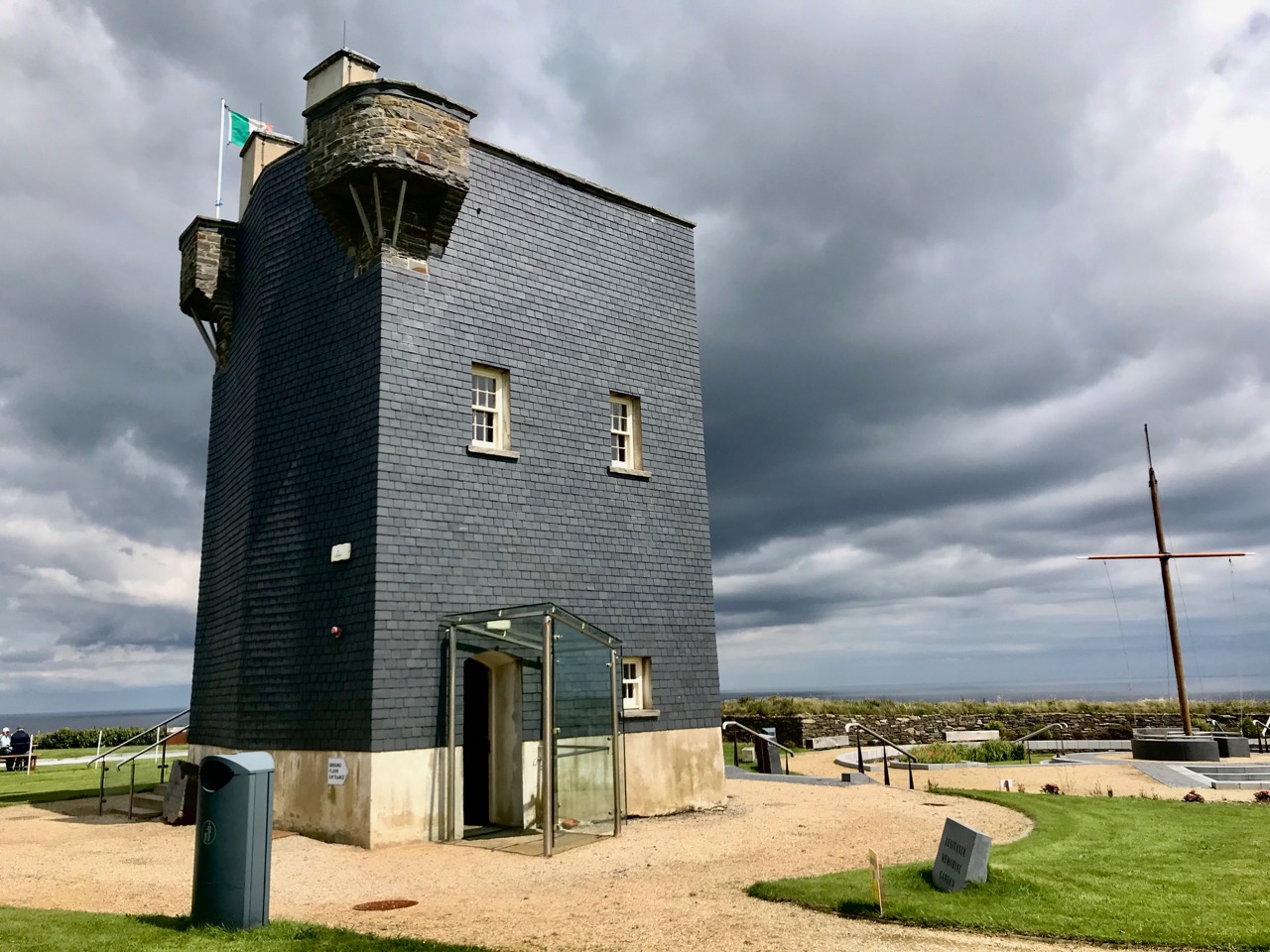
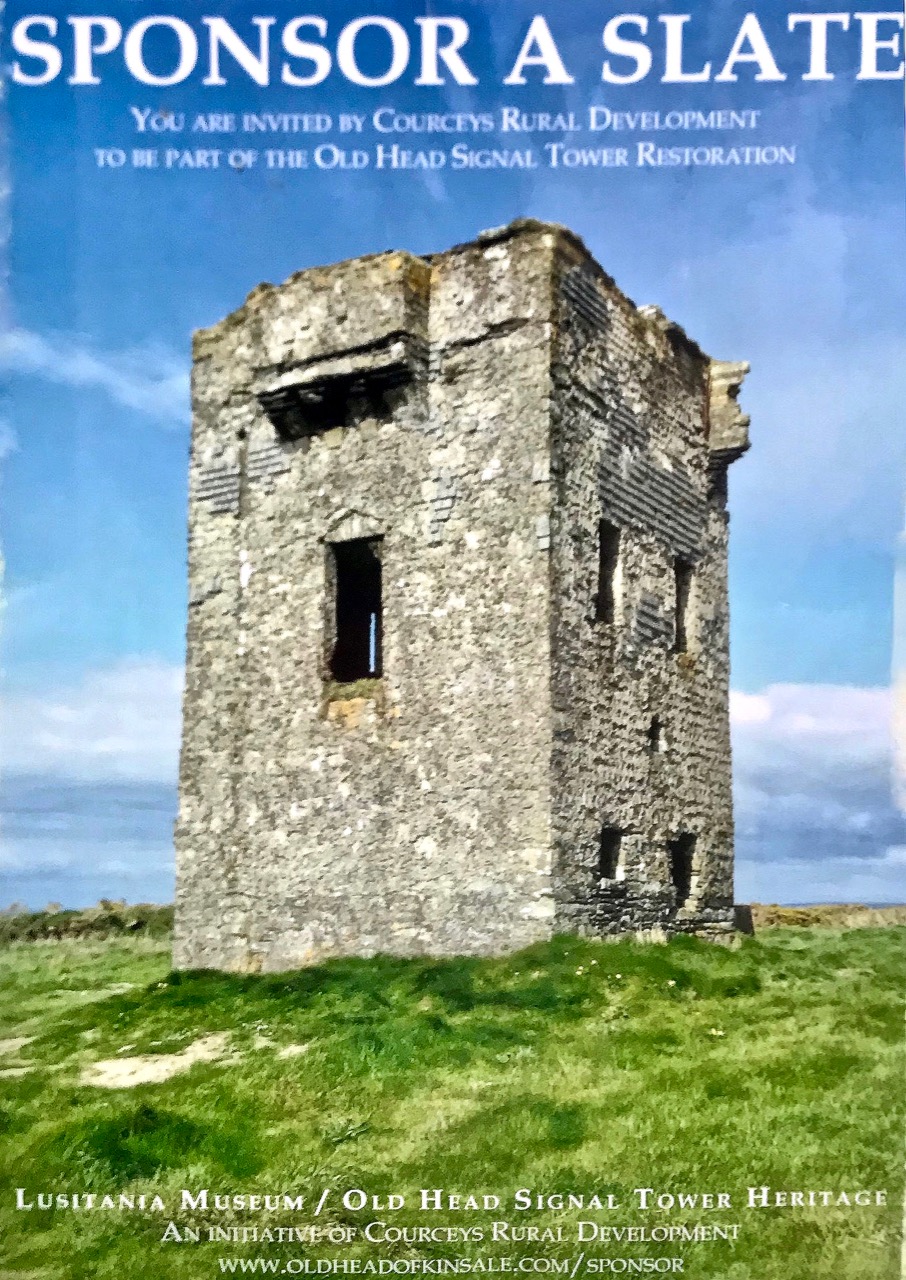
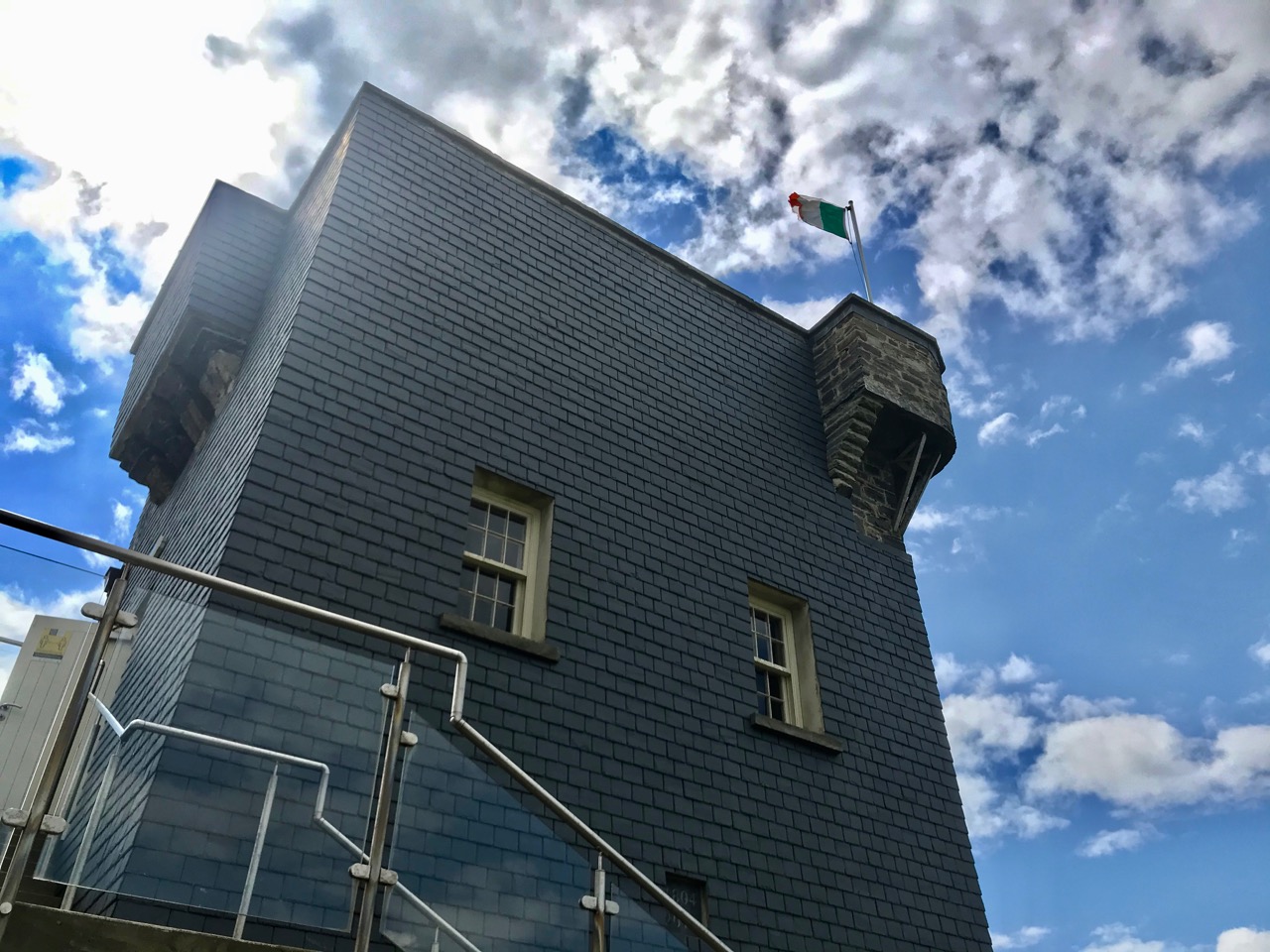
This time we are looking at another signal tower – on the Old Head of Kinsale – but it’s not a ruin. It has been fully reconstructed so that it is exactly as it was in its heyday. At the Old Head we truly can walk into history!

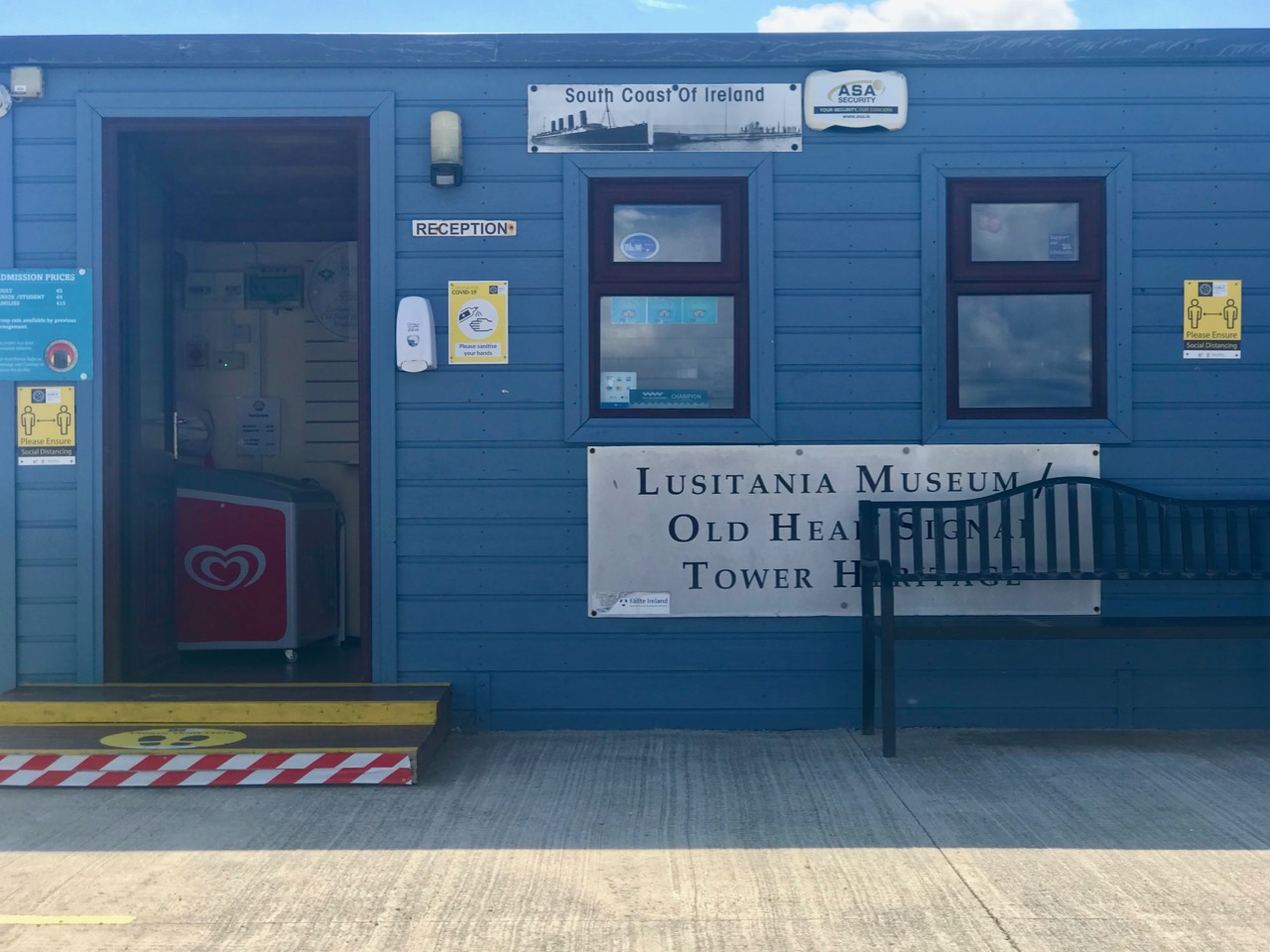
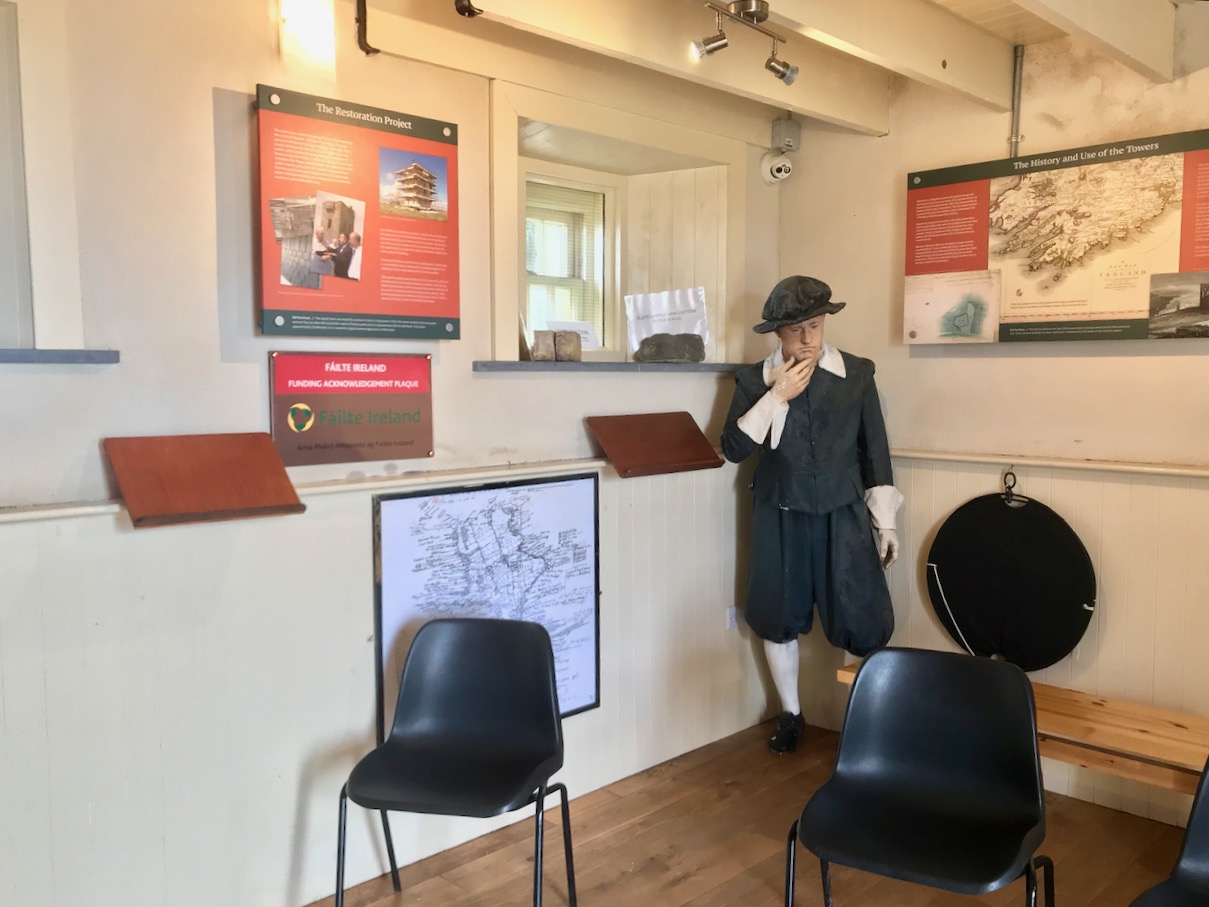
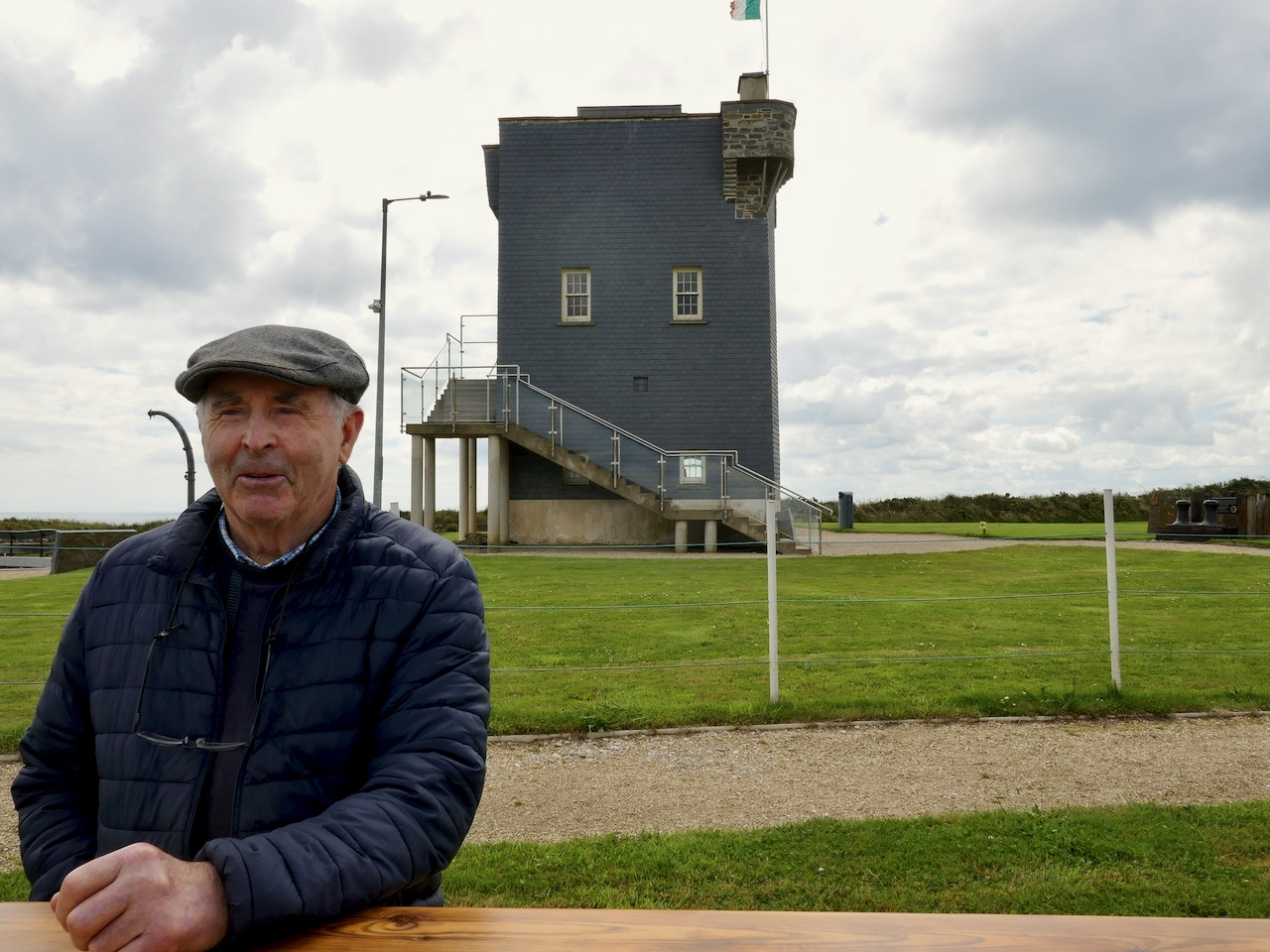
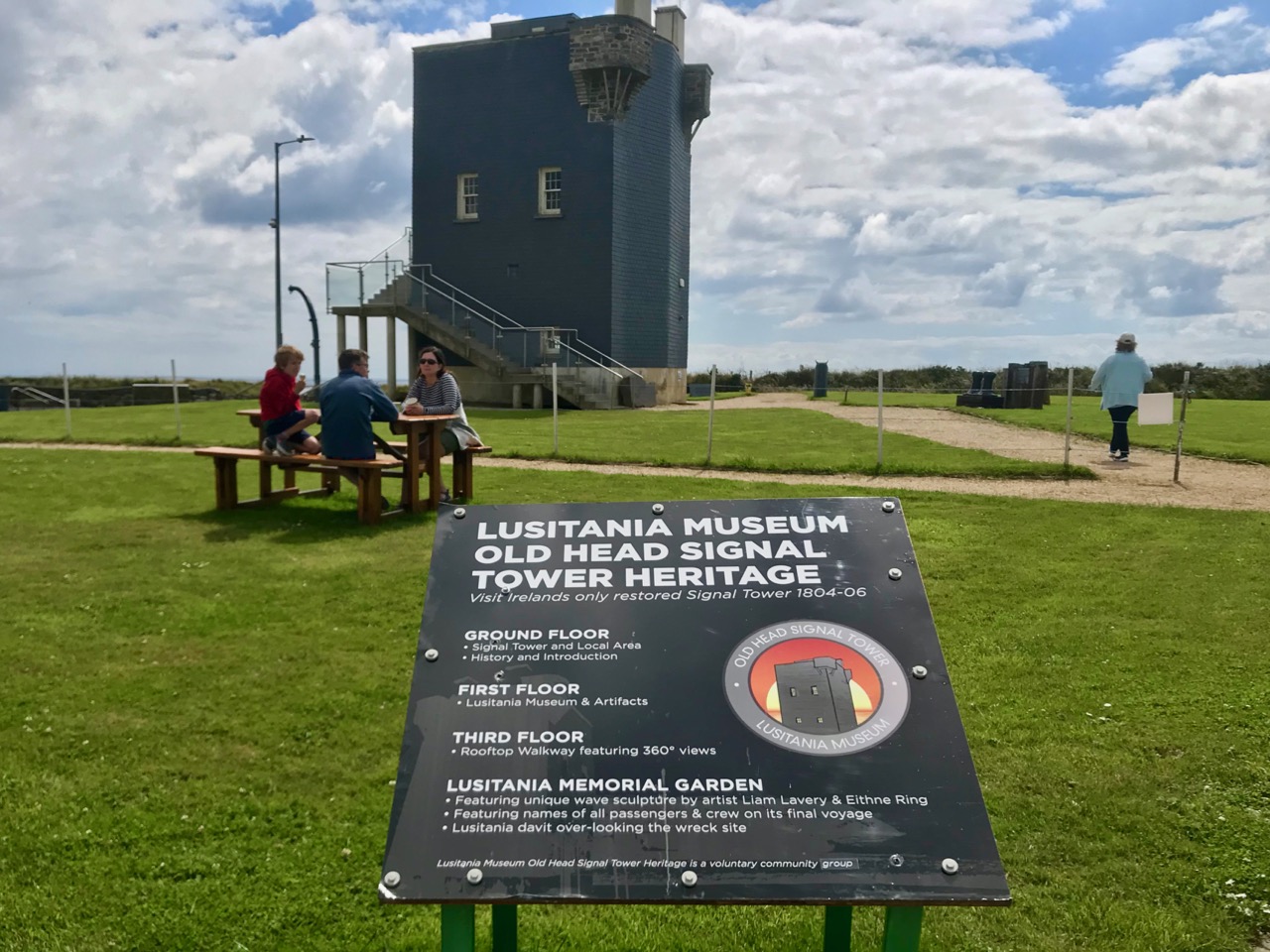
I think I’m probably safe in saying that there isn’t another museum dedicated to the Irish signal towers anywhere in the whole world! And it’s pretty special that the museum has been created by restoring an existing signal tower. And – when we visited – we were lucky enough to meet JJ who – it can reasonably be said – was the driving force behind the whole project.

James Joseph Hayes at the Old Head of Kinsale signal tower, July 2020

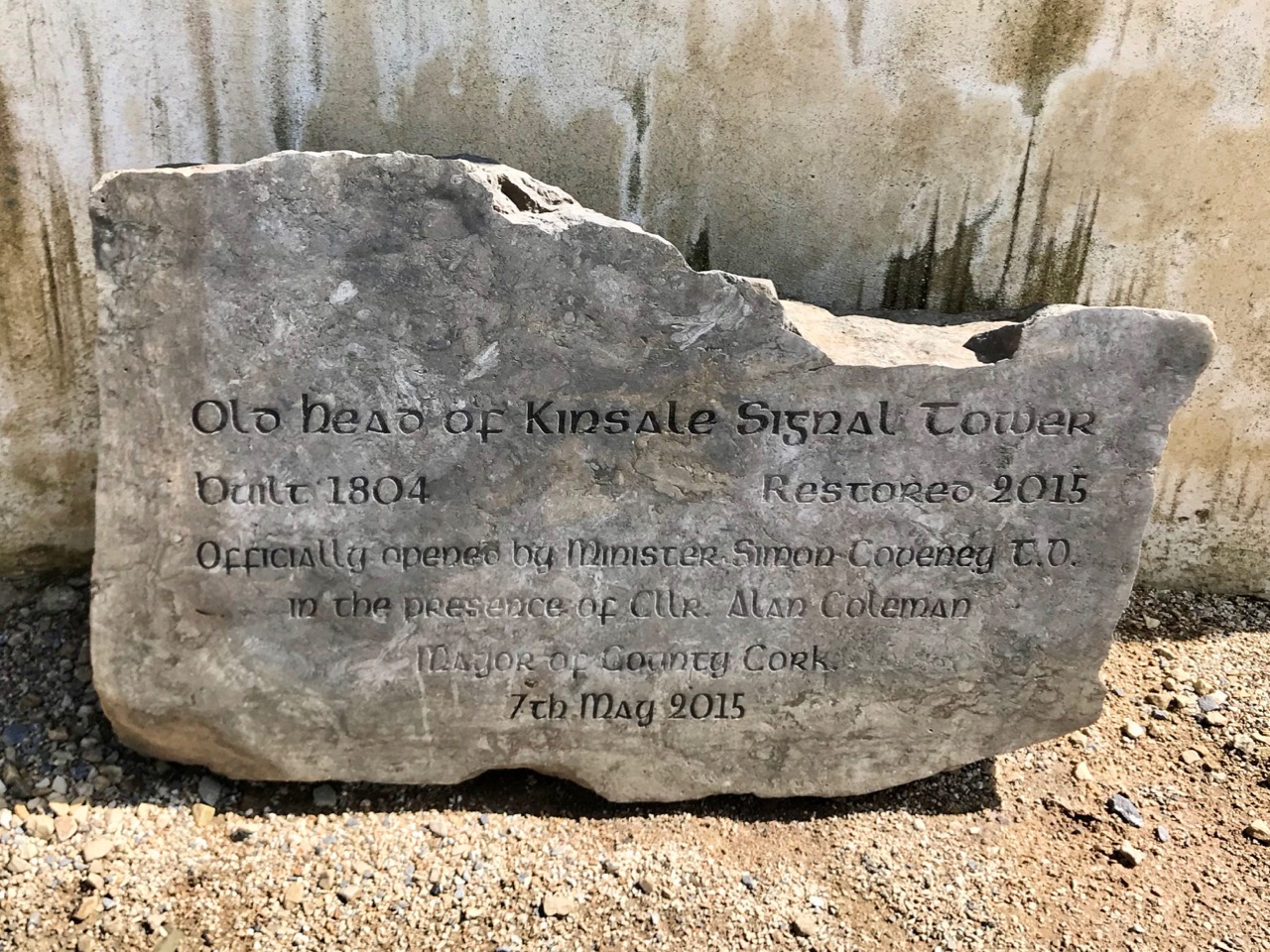
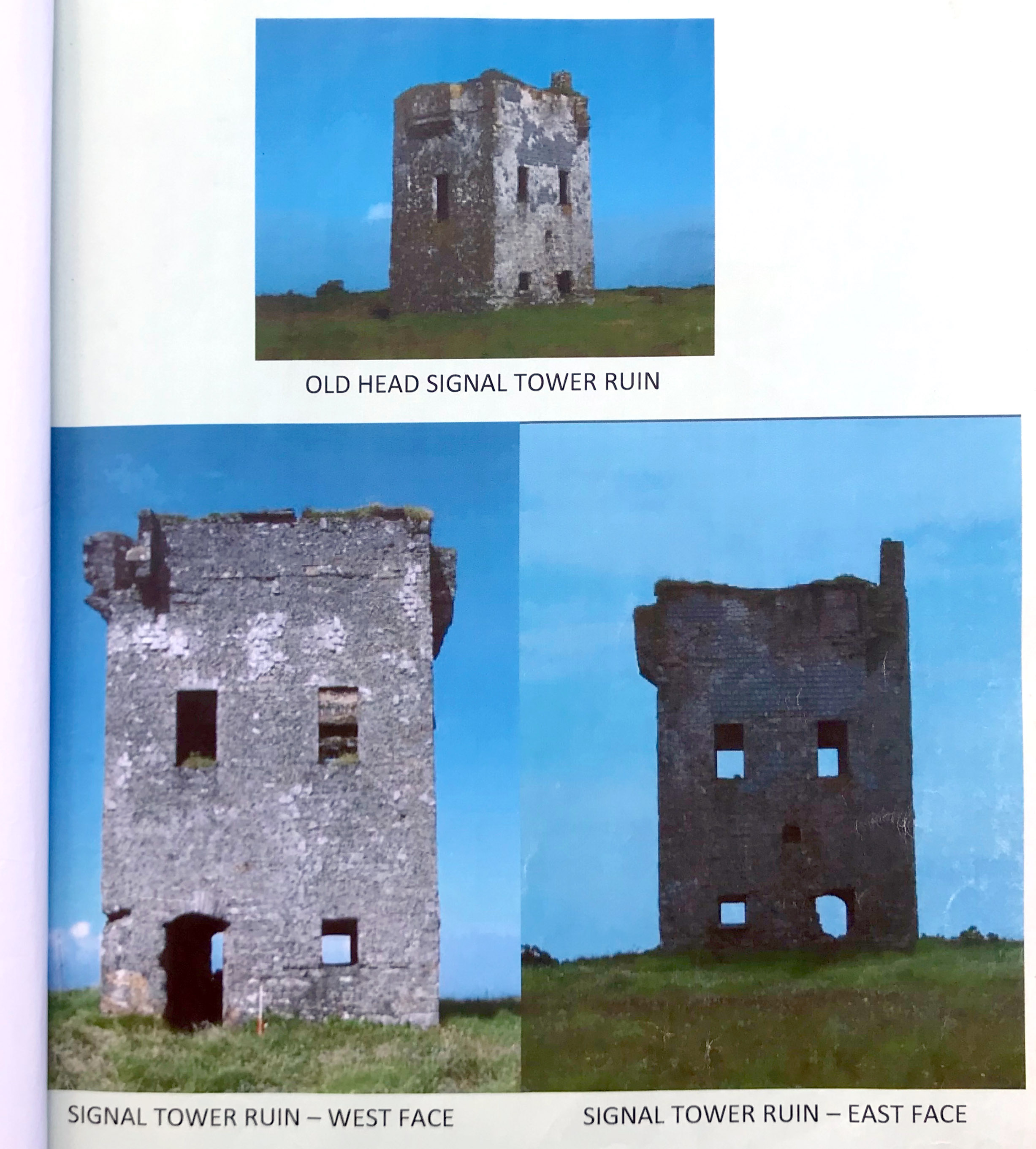
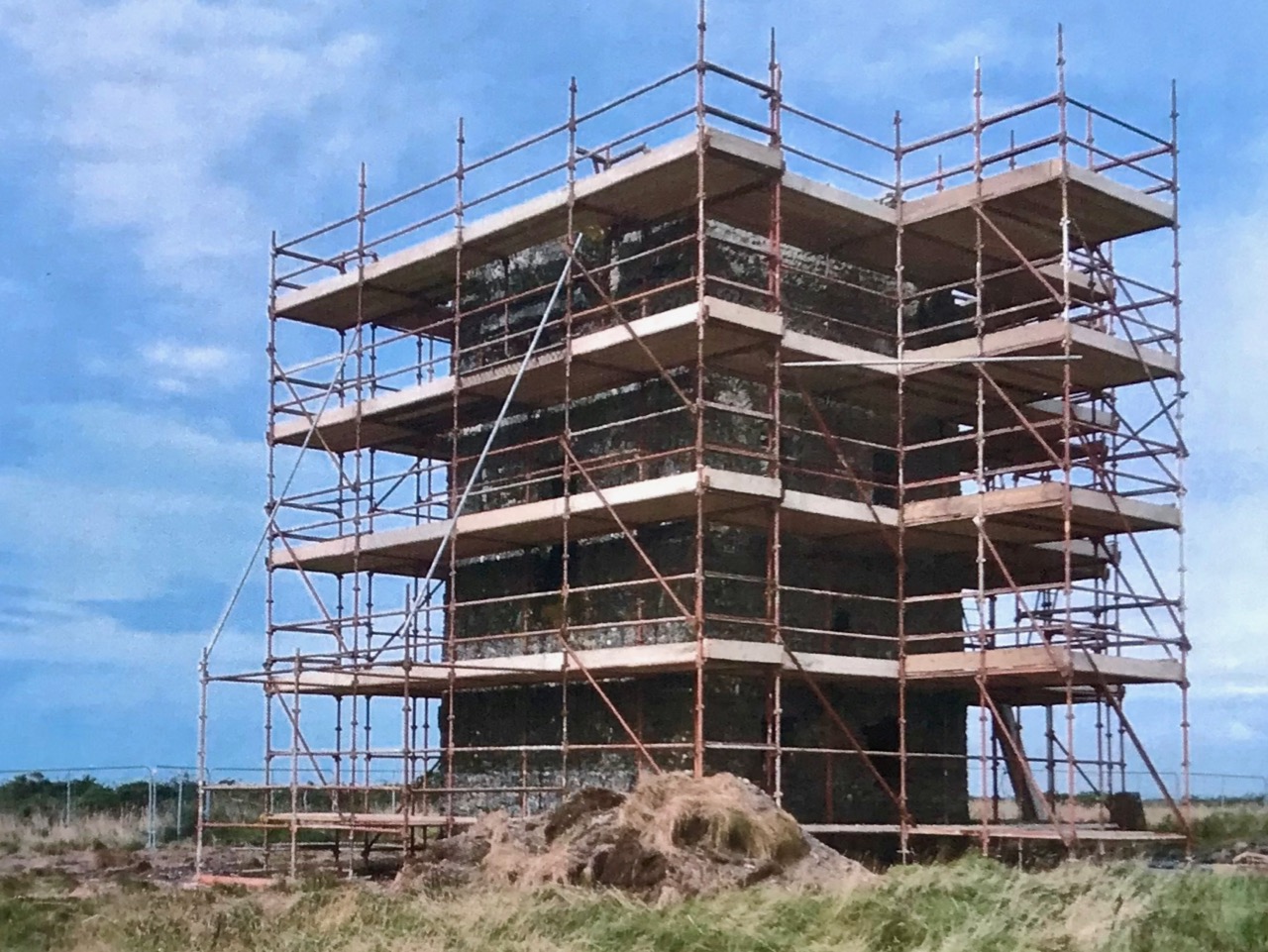
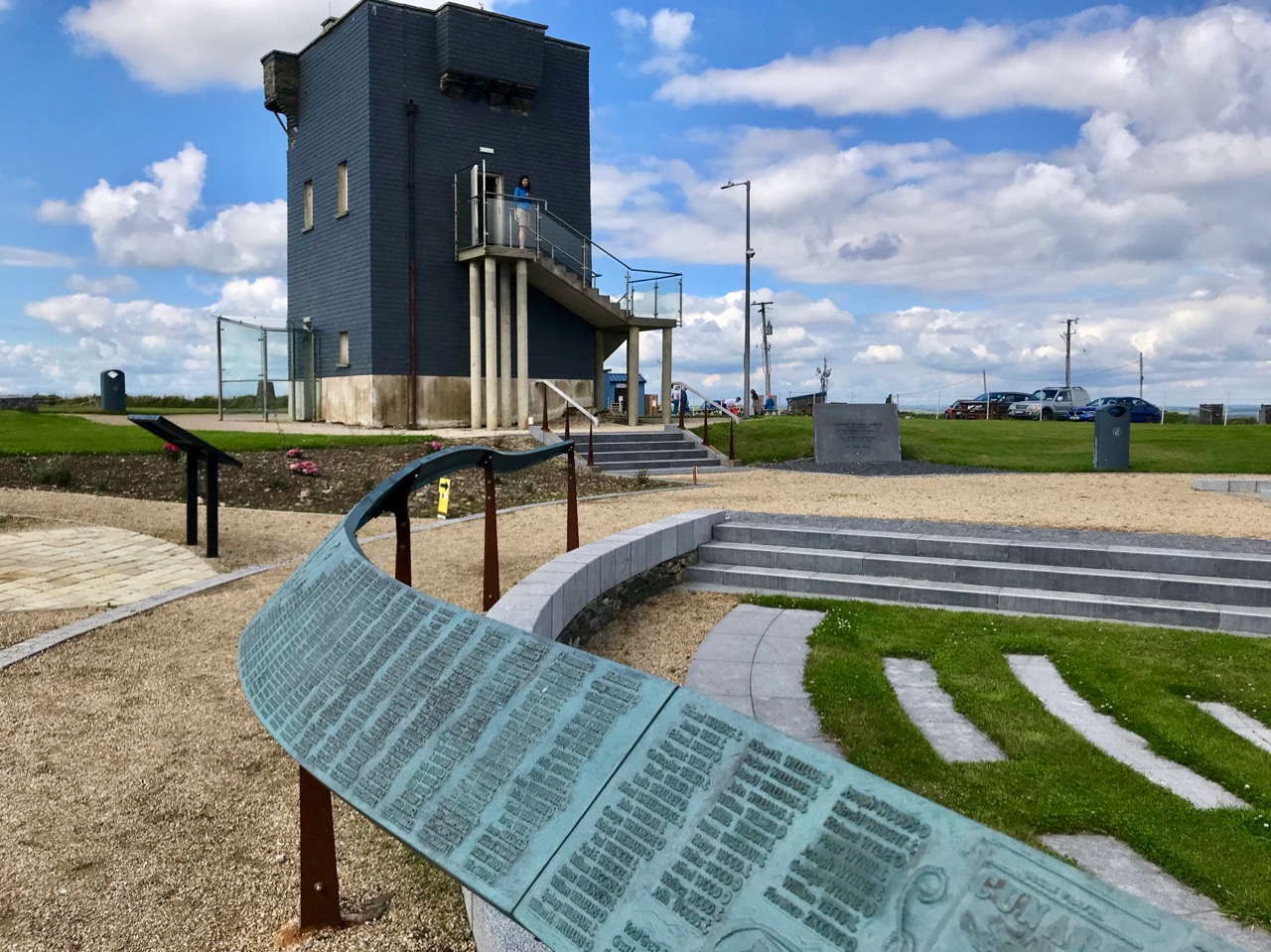
Ten years ago West Cork development Partnership were looking for projects which would benefit the area, encourage economic activity and attract visitors. JJ gained support from enthusiasts locally and proposed establishing a heritage centre at the site of the old signal tower, which was at that time a substantial ruin. As the Old Head is also the closest point to the wreck of the RMS Lusitania, which was sunk by a German torpedo in May 1915, the idea was also advanced that the heritage centre could also encompass the story of that tragedy. The whole idea caught the public imagination and, after five years of hard work, came to fruition. The fully restored building was opened in time to commemorate the centenary of the Lusitania’s sinking.

Evolution of a ruined tower, and the birth of a significant memorial to a WW I tragedy through the celebration of a little known aspect of Irish engineering in the Napoleonic era

JJ Hayes and the team he gathered around him have to be congratulated on their aspirations, and on their tenacity in realising their dreams in such a professional manner. They have brought the signal tower back to life using sound and sustainable construction techniques which are completely appropriate to the building type and will ensure that it will survive long into the future. In this video you can watch a first hand account of the restoration work, narrated by the construction Project Manager, Brandon Duarte:

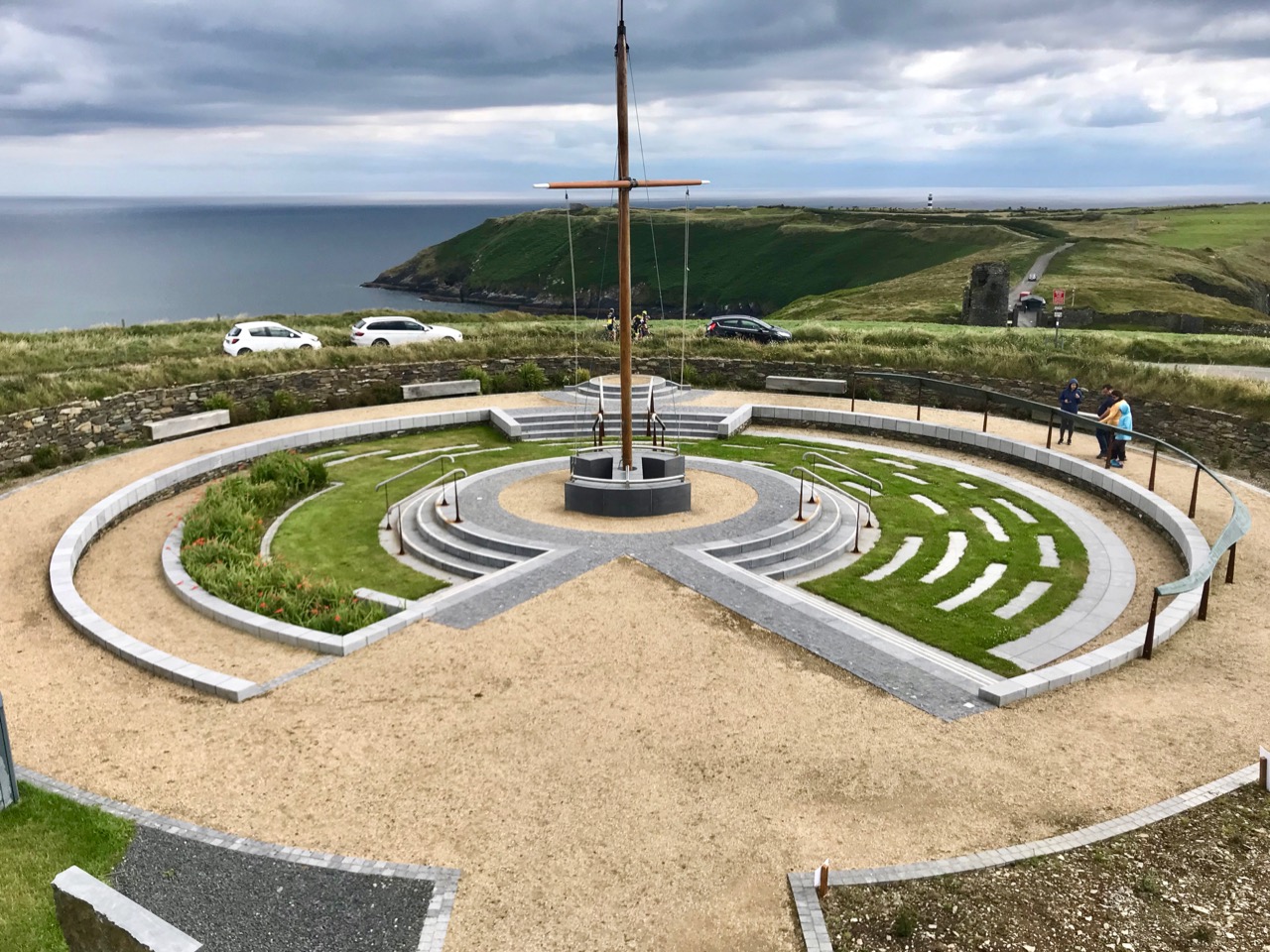
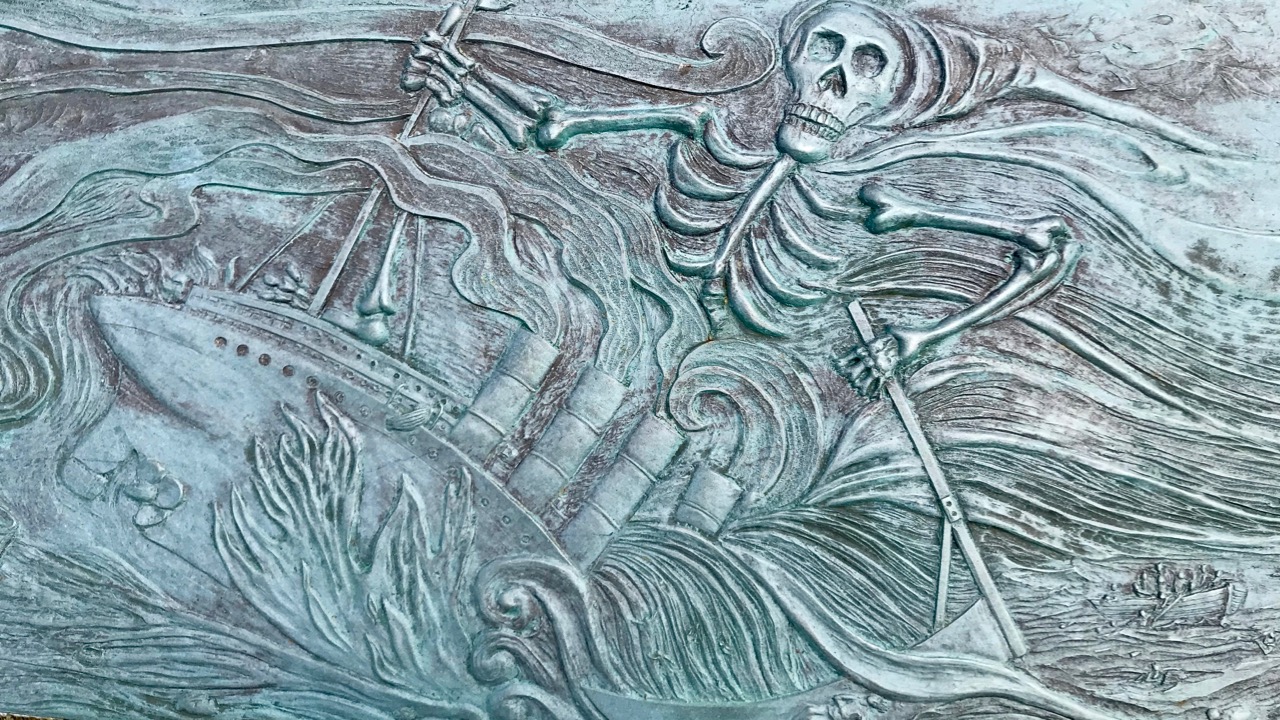
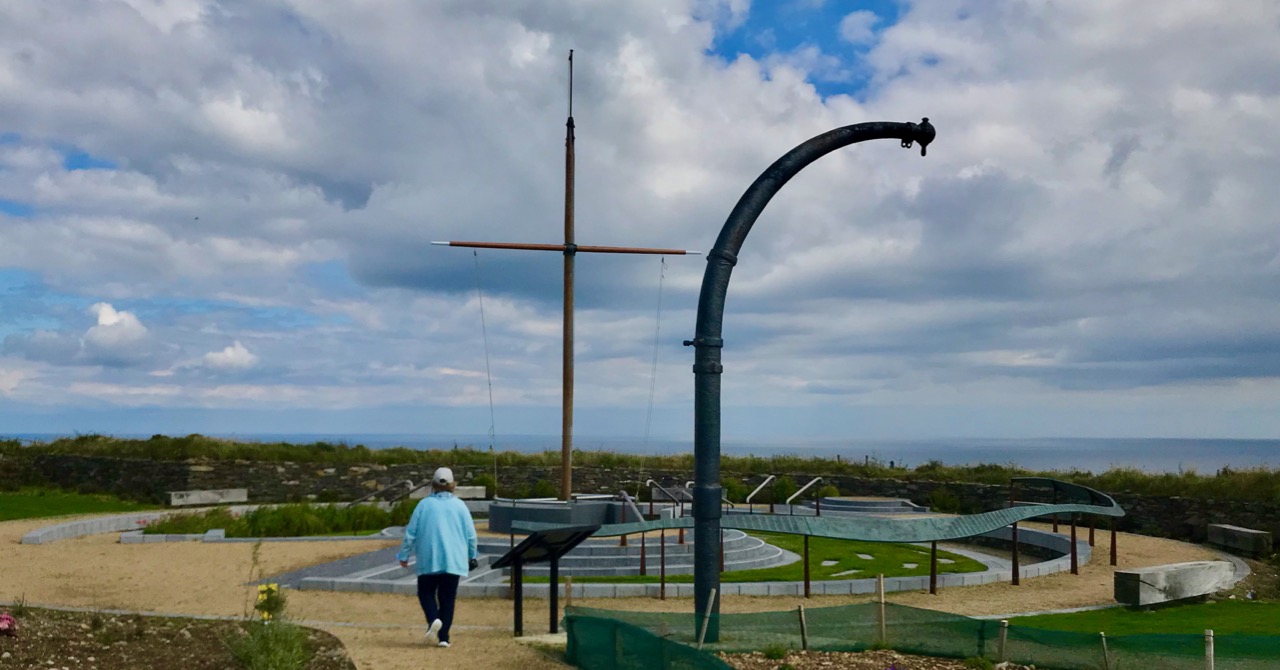
There are so many creative elements to this project: beyond the building a Lusitania Memorial Garden has been laid out as a contemporary work of art, the centrepiece of which is a 20 metre long bronze sculpture by artists Liam Lavery and Eithne Ring. We featured another example of their work earlier this year. This work contains the names of all the one thousand nine hundred and sixty two passengers and crew who were on board the ship on that fateful day. Twelve hundred perished.

Lusitania Memorial Garden, with Sculpted artwork commemorating the victims of the sinking

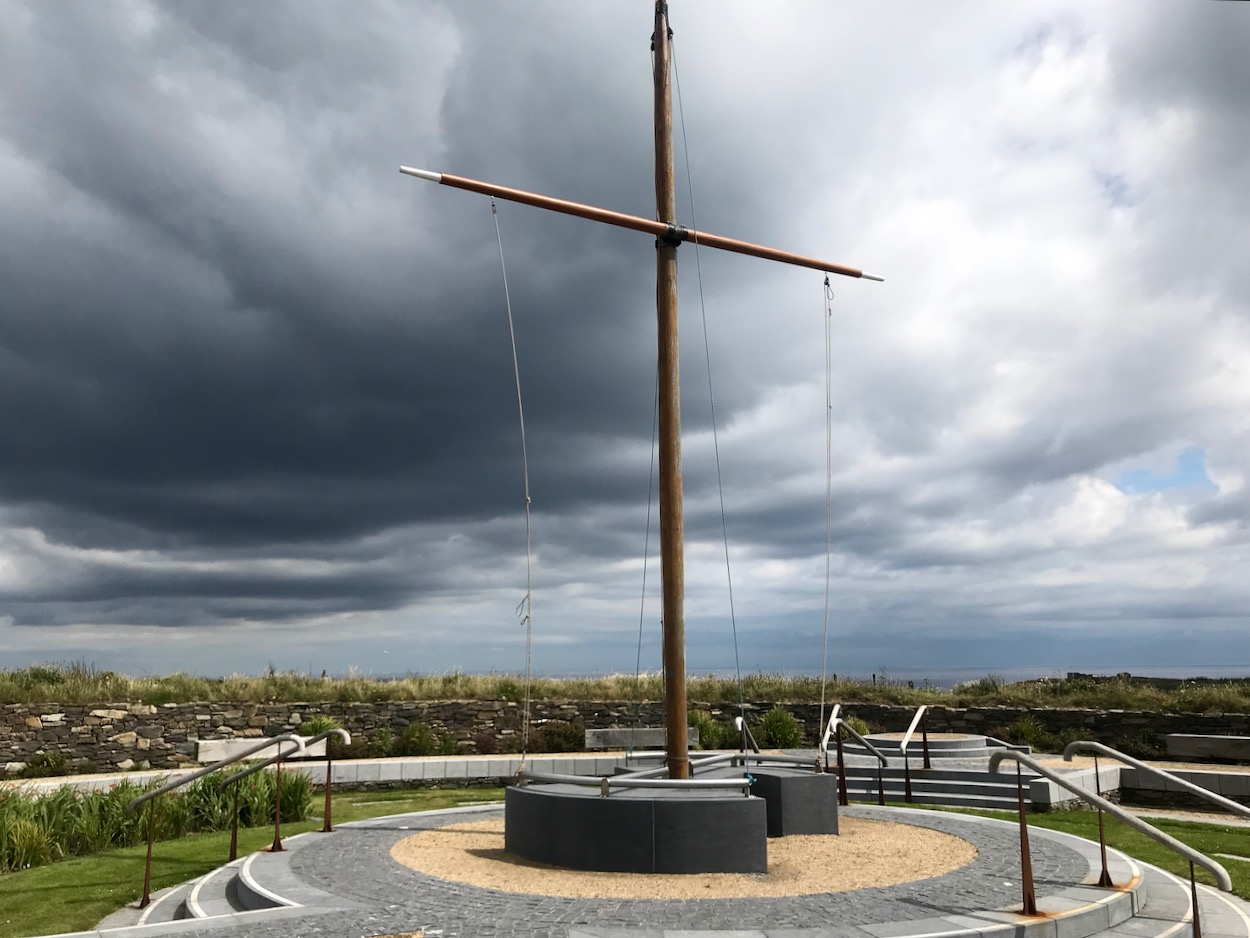
The centrepiece of the Memorial Garden is a rigged ship’s mast. This is placed roughly where the original signal mast associated with this tower would have been – the focal point for sending and receiving signals over two hundred years ago. This mast is from the Sail Training Vessel Astrid – a 42 metre long tall ship which started life in the Netherlands in 1918 but sadly ended by foundering just outside Kinsale Harbour on 24 July 2013. Fortunately, in this case, all on board were rescued. It is apposite, perhaps that these many nautical links are brought together at this centre as all the signal towers are believed to have been manned by sailors or retired sailors who relied in their day on good systems of communication – systems which evolved rapidly through history.

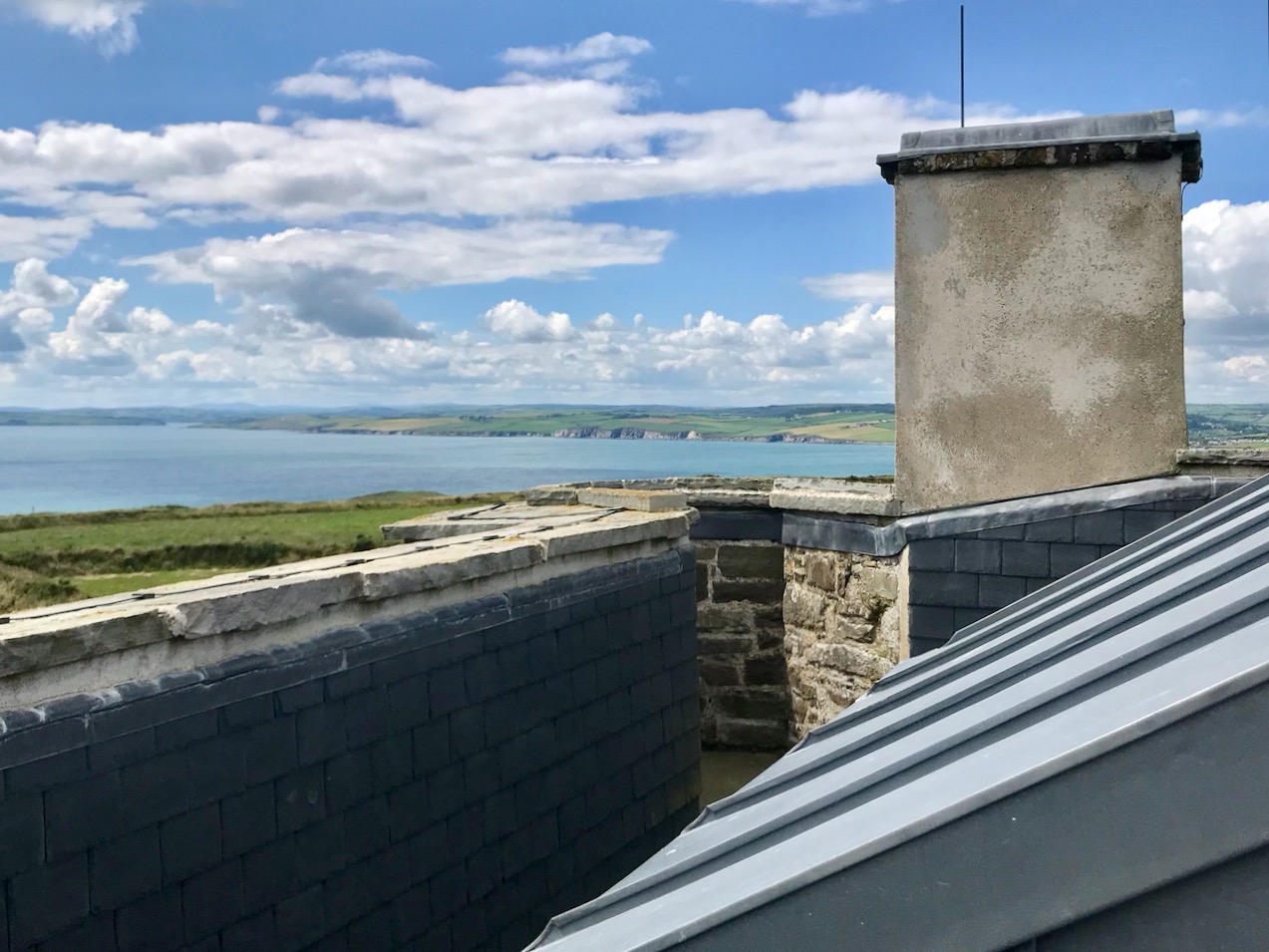
From the Old Head of Kinsale Tower, which is number 25 of the 81 that were built around the coast of Ireland you can see tower number 26, which is on the Seven Heads peninsula, 13 kilometres to the south west (above and view from the tower parapet, below). Again, we can only admire the quality of the optical devices used to see and clearly read the flag and ball signals at such a distance. In fact, the whole subject of signalling and communication – particularly in association with these Irish stations – is worthy of a future post of its own. Keep watching out!

The Old Head of Kinsale Signal Tower and Lusitania Museum has opened for the summer season following closure during the Covid19 lockdown. Systems are in place to ensure health and safety and social distancing. Follow the link to this website for full information on opening hours and directions

A Signal Success in Irish Engineering – Part 2: Ballyroon Mountain

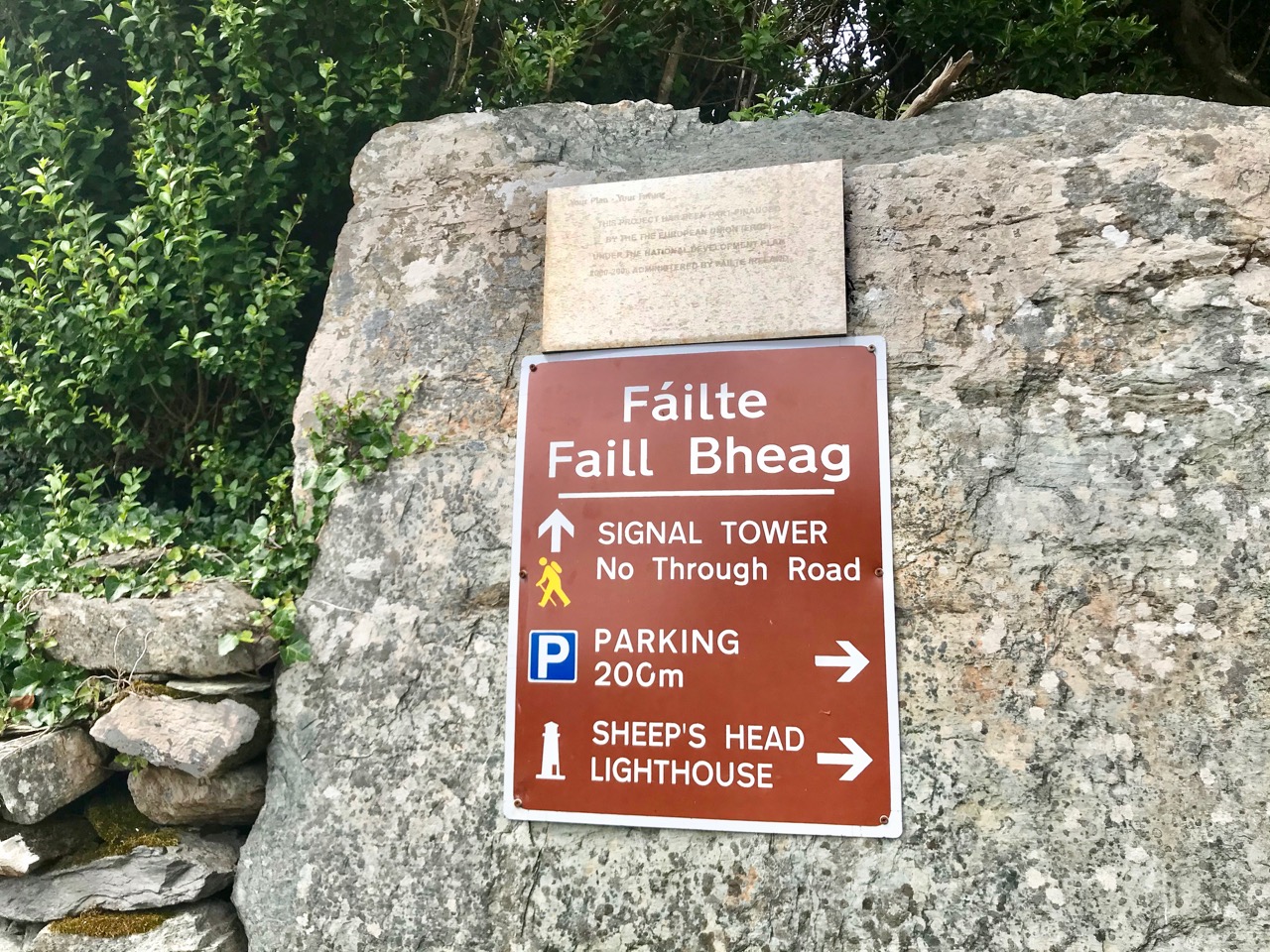
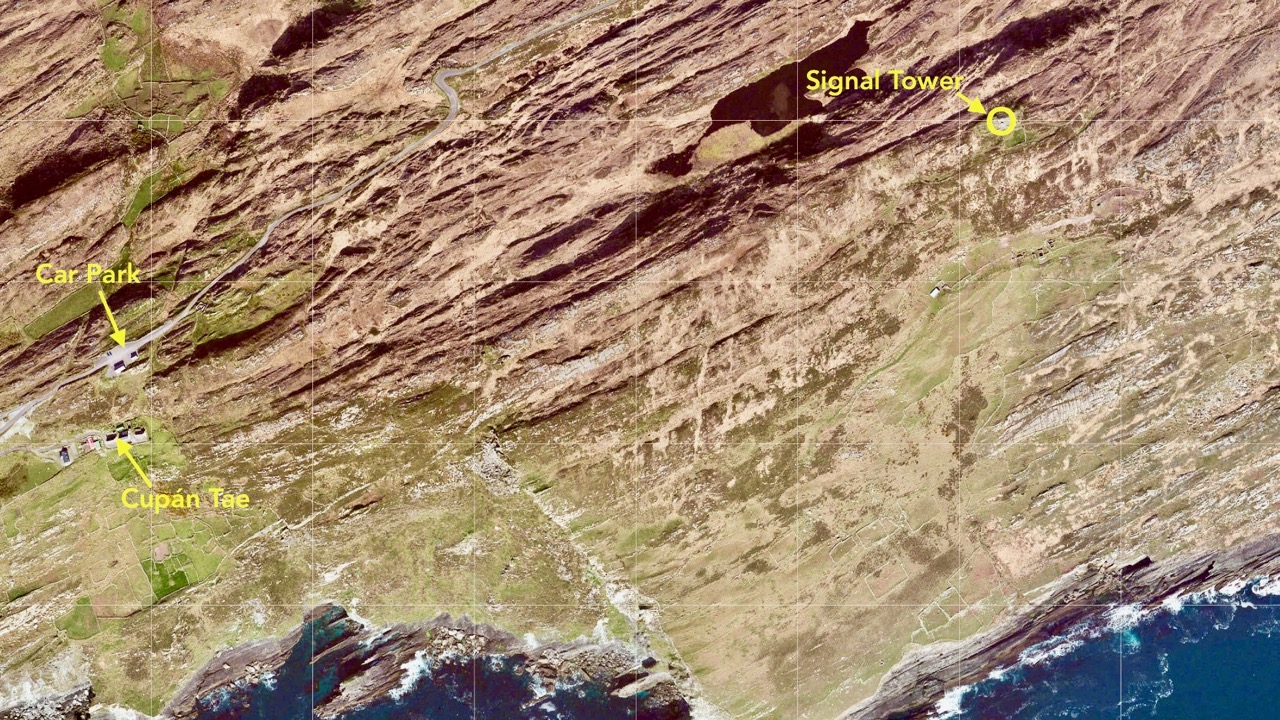
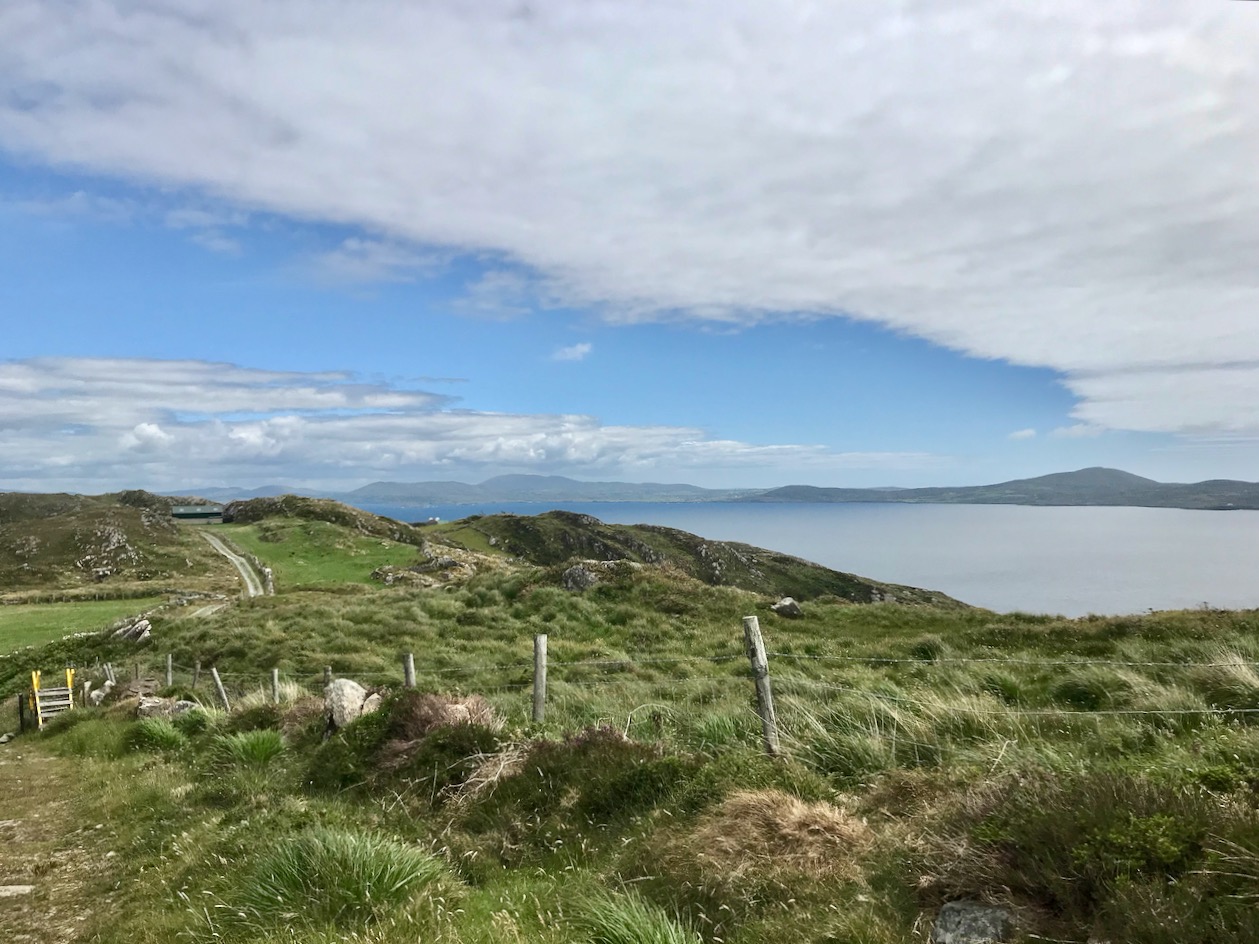
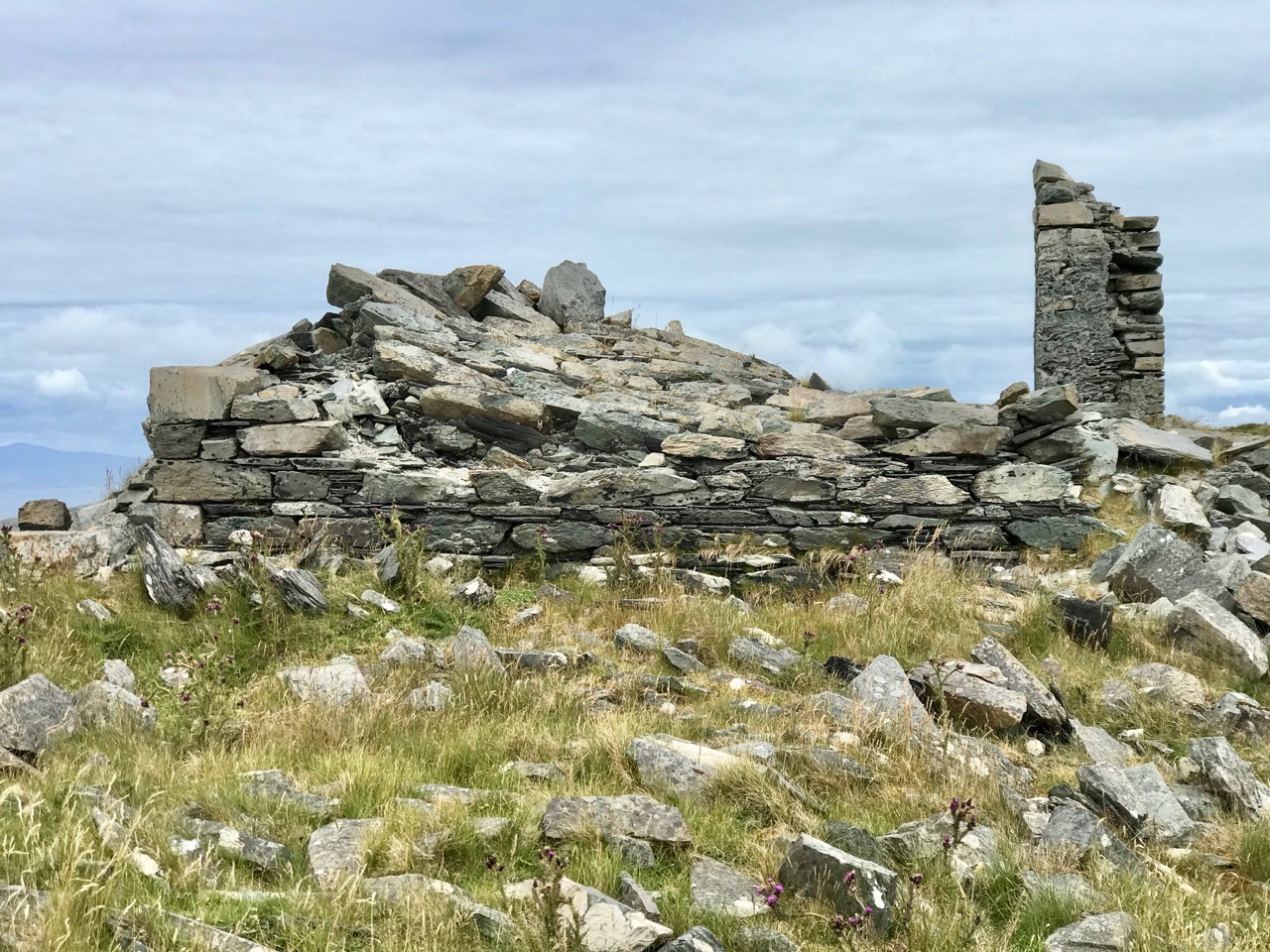
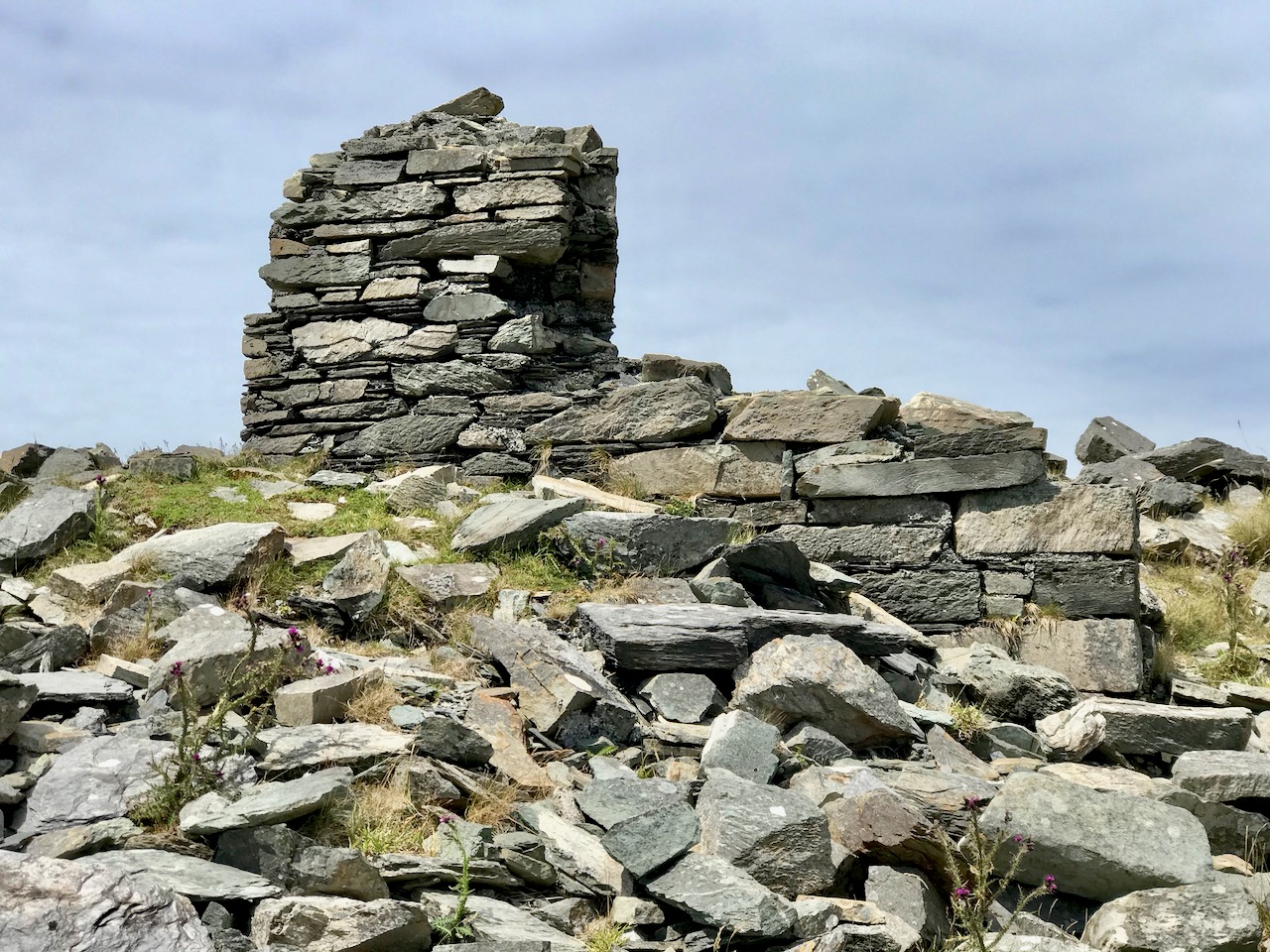
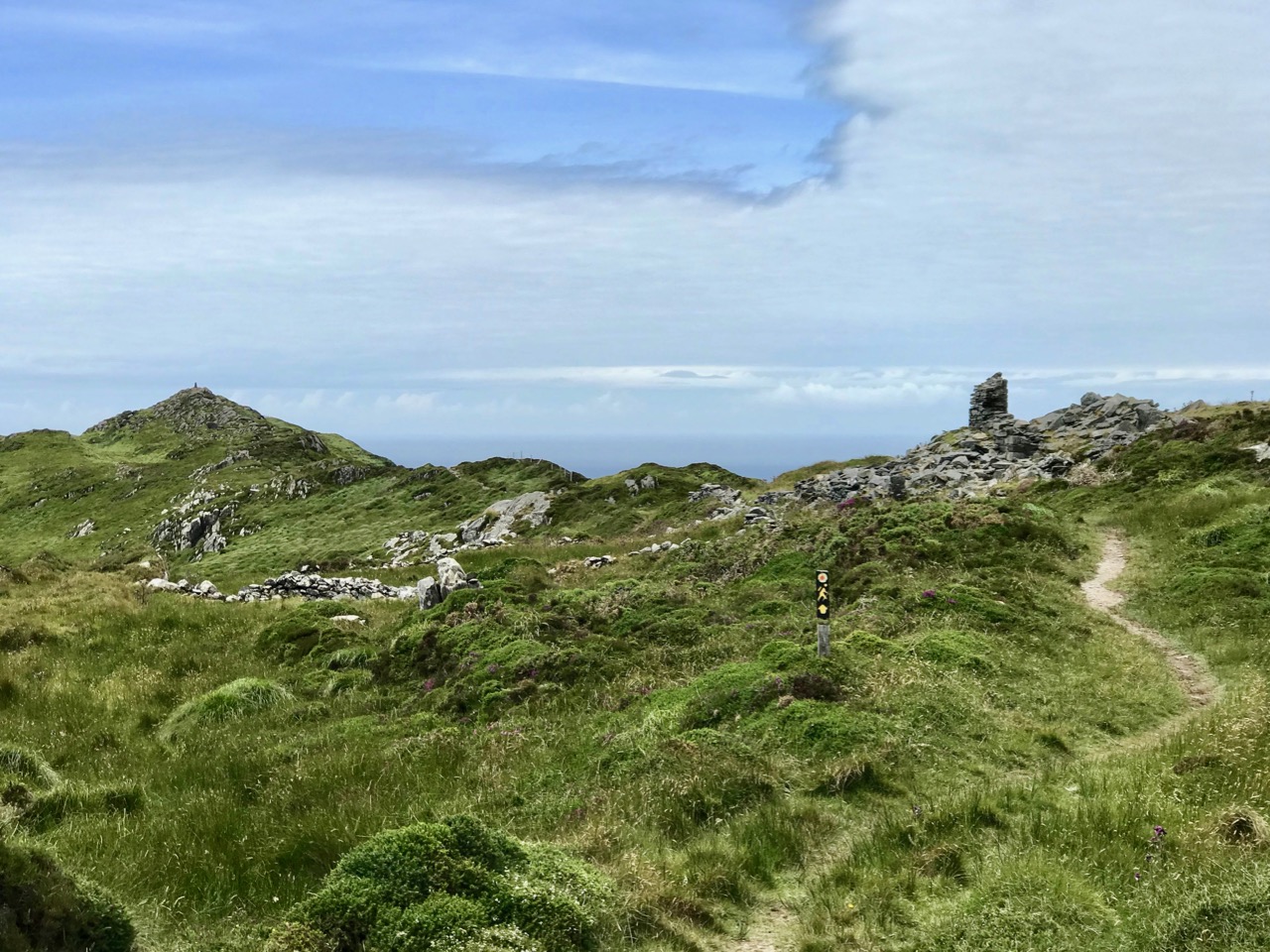
Following on from last week’s account of Kedge Point signal tower, our second foray in search of Ireland’s coastal communication stations dating from the early years of the nineteenth century takes us to the Sheep’s Head Peninsula in West Cork. The waymarked trail that passes the now ruined Ballyroon Mountain signal tower is on the Sheep’s Head Way and is fully accessible from the parking area at Fáilte Faill Bheag (if walking from east to west), or from the Cupán Tae tea-room parking area at the very end of the road (if walking from west to east). Although there is very little of this signal tower left standing – it was largely destroyed by a storm in 1990 – the walk itself is a visually stimulating experience, not to be missed! As with the majority of the remaining signal station sites, the location here is on high ground with prominent panoramic views in all directions.

When walking the off-road Sheep’s Head Way trails, please remember that dogs are not allowed: this is one of the conditions that have been agreed with landowners when the trail routes were negotiated, so it must be respected by all users.

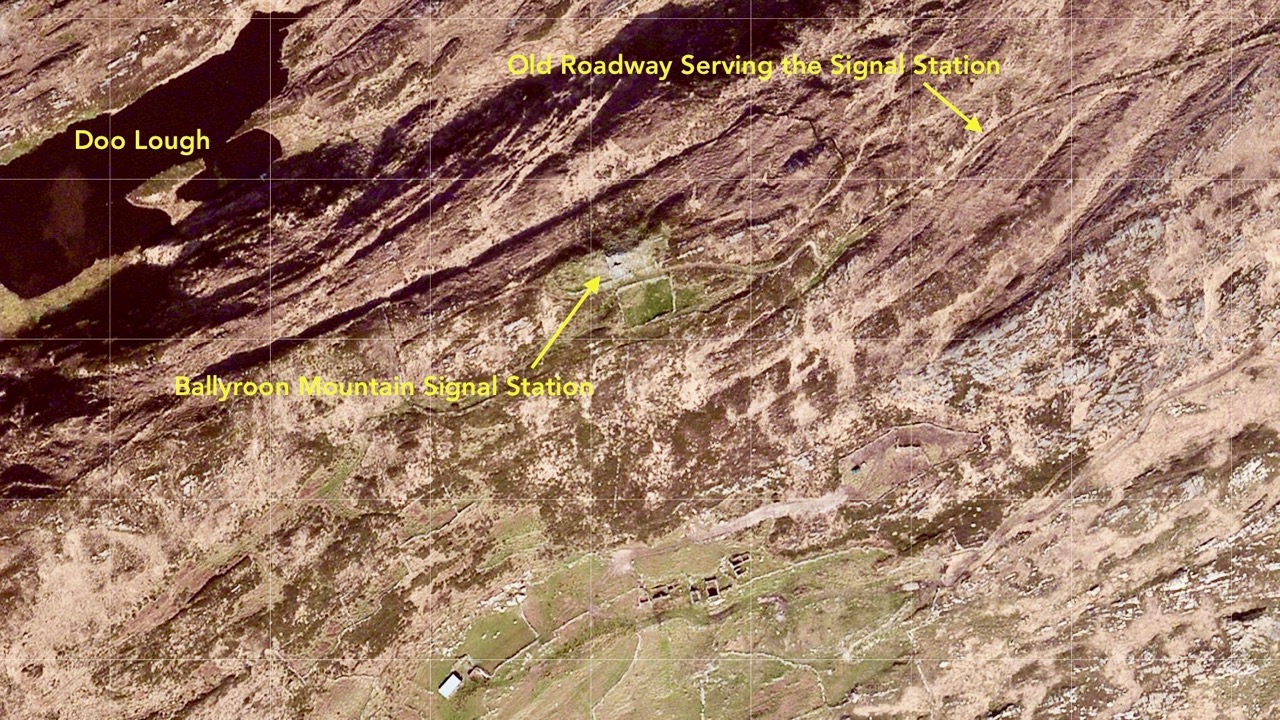
These two aerial images show the remote setting of this signal station. The site was developed a little over two hundred years ago, and one of the necessities was providing a firm trackway along which to bring building materials, and also to provide efficient access to and from the signal tower when in use. In the top image, also, you can make out a substantial walled field to the south of the tower: this would have been used to pen ponies or donkeys and – possibly – a goat for milk.

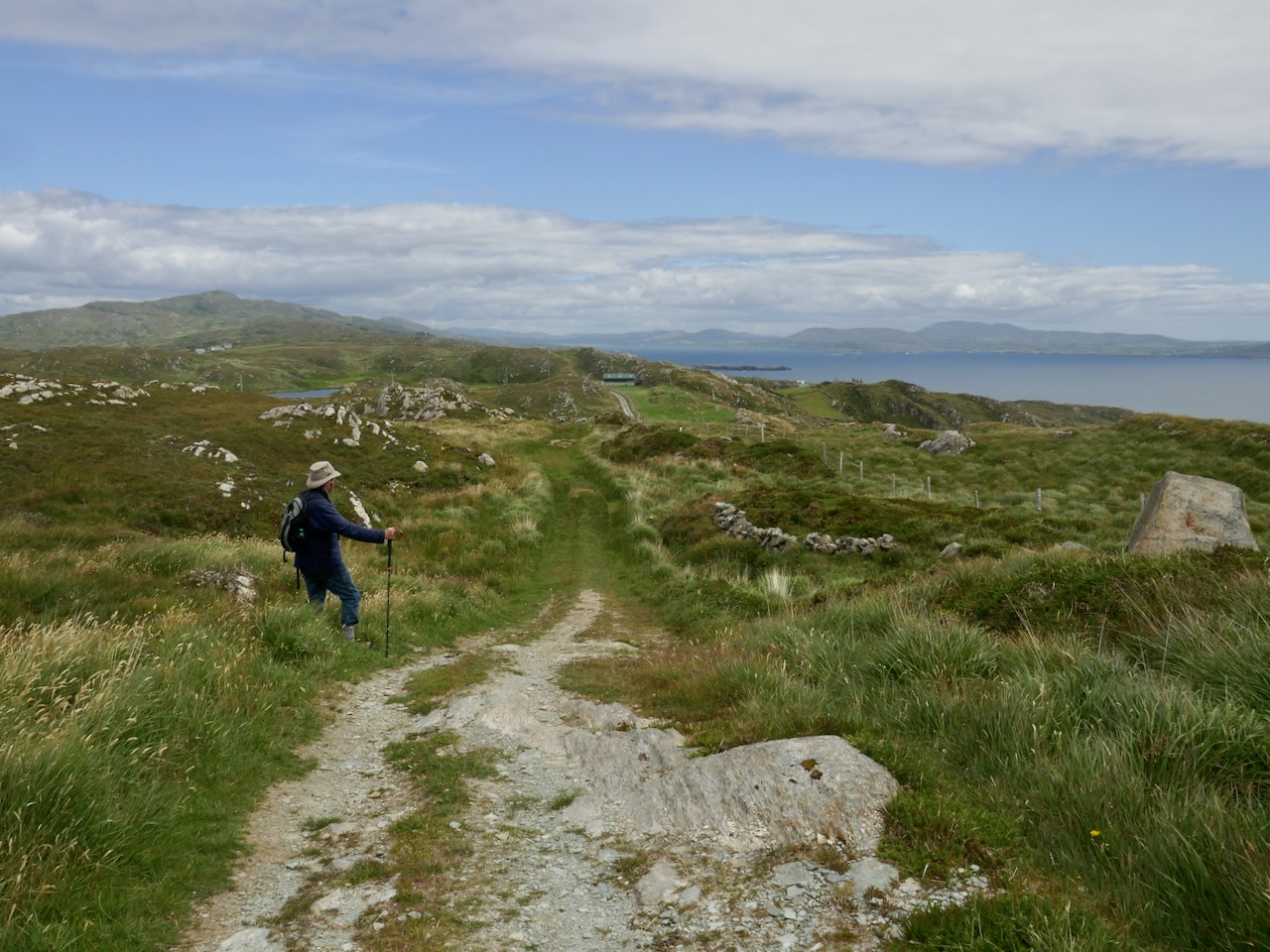
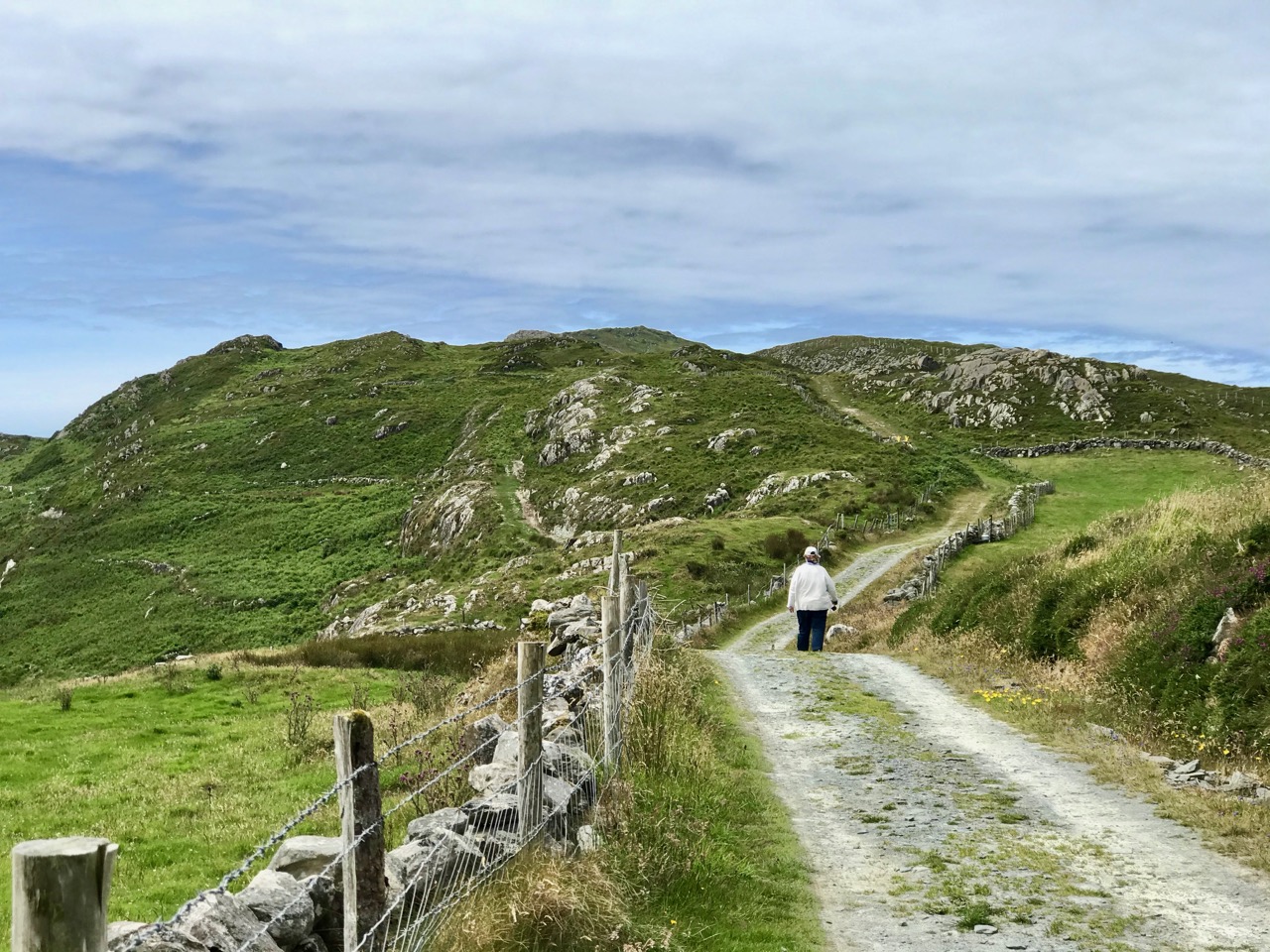
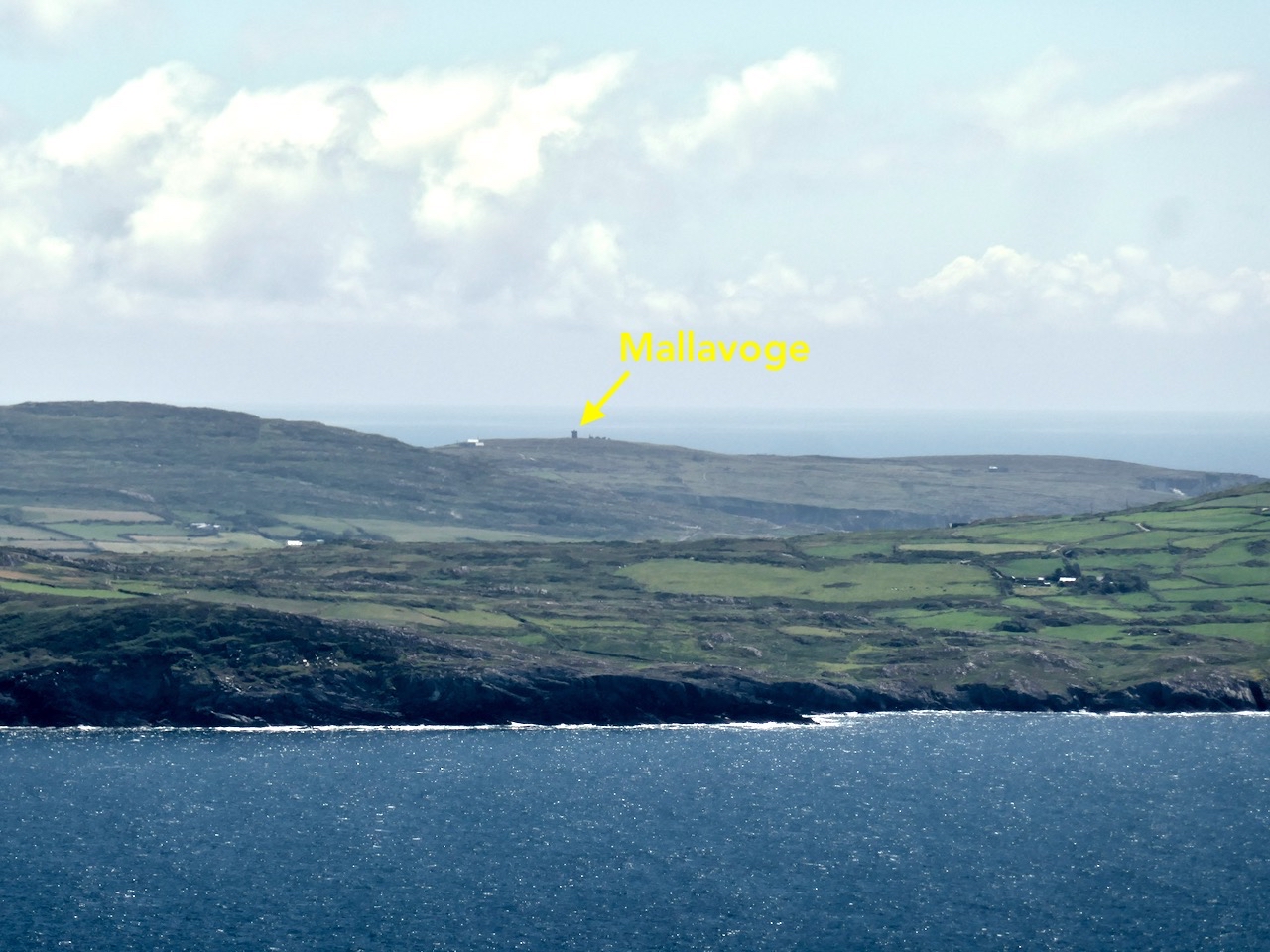
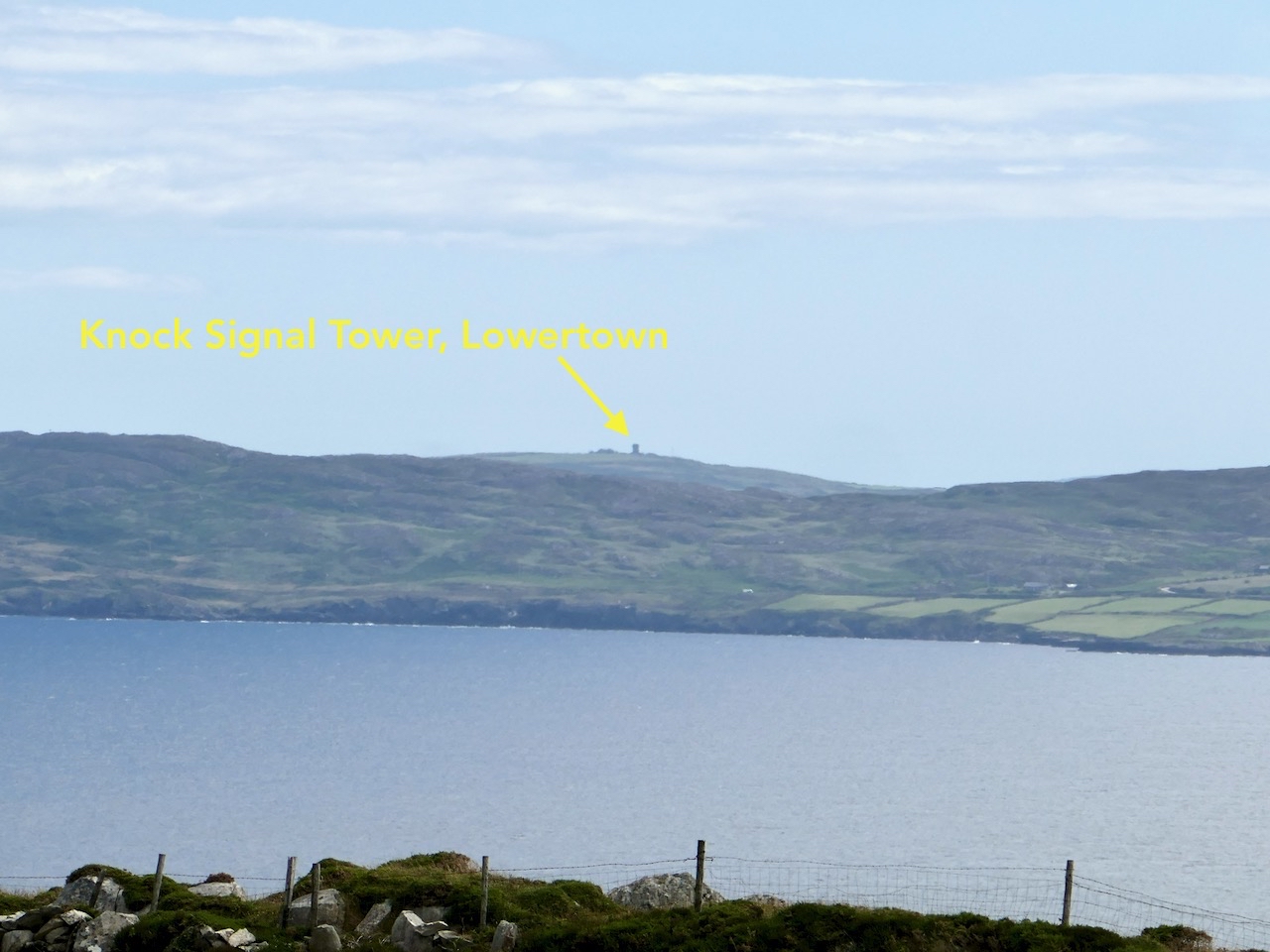
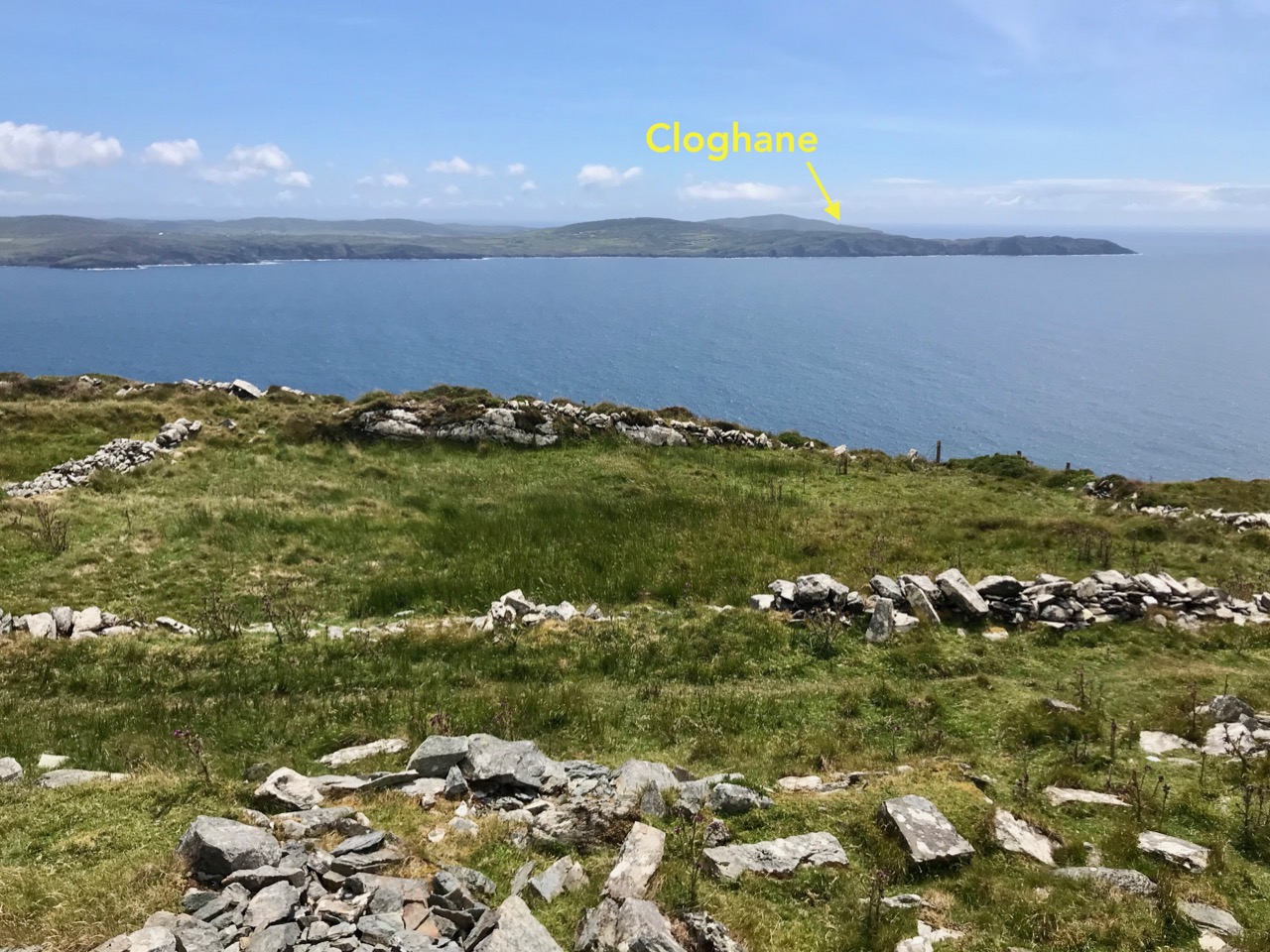
The track that served the signal station in its heyday has become the ‘green road’ that takes you there today. In bad weather it’s a bit wet underfoot in places, but otherwise it is a joy to walk and, on a good clear day, provides spectacular views in all directions. Look out for the other signal towers that can be seen from this site: Cloghane on Mizen Head, Mallavoge on Brow Head, Derrycreeveen on the Beara Peninsula, and Knock, which is an inland site near Lowertown, Schull.

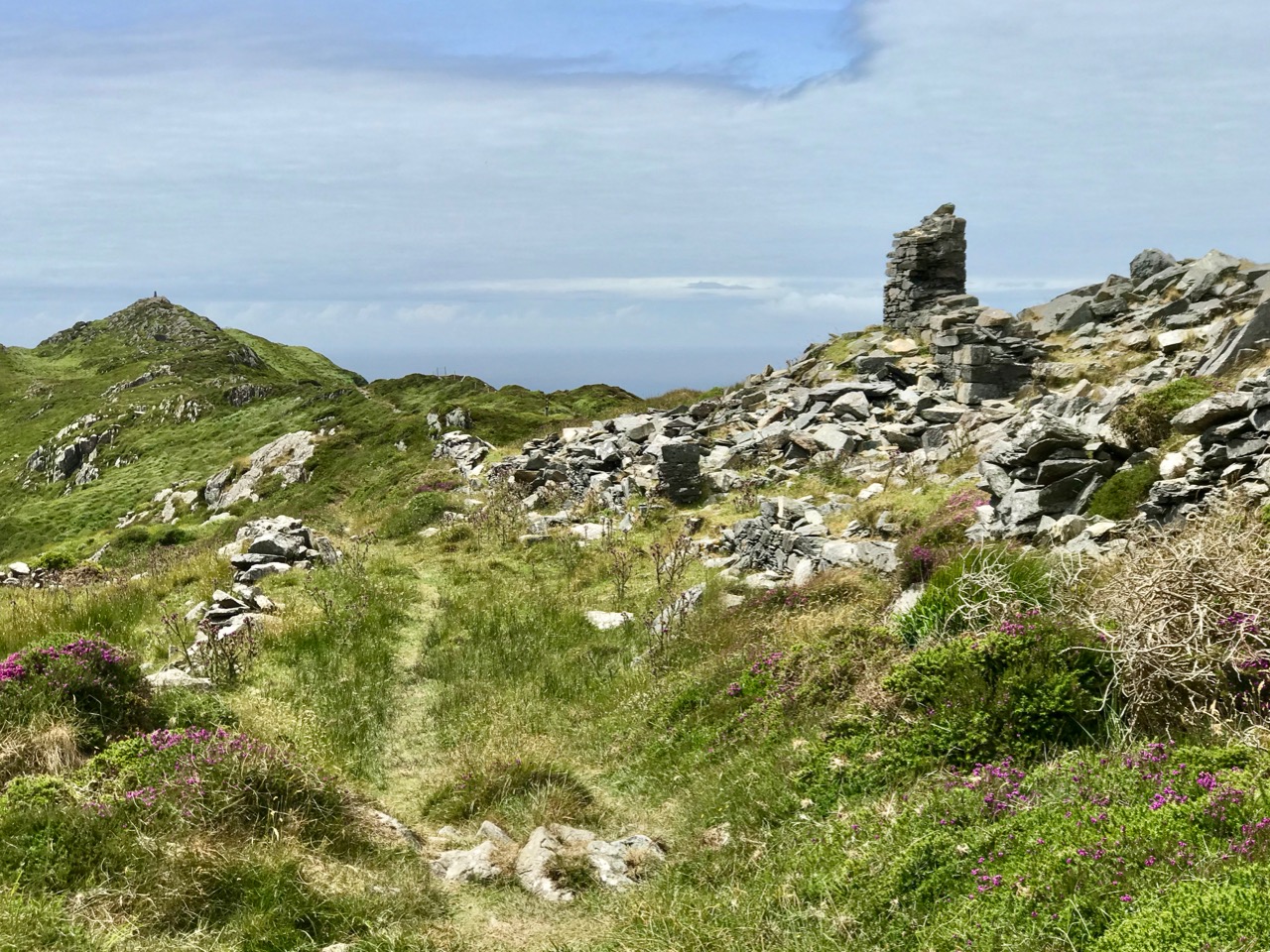
In the upper picture here you are looking back towards the vestigial Ballyroon signal tower from the higher ground on the footpath from the Cupán Tae tea-room, while the lower picture shows the ‘pimple’ on the horizon which is the Cloghane signal tower at Mizen Head seen from Ballyroon.

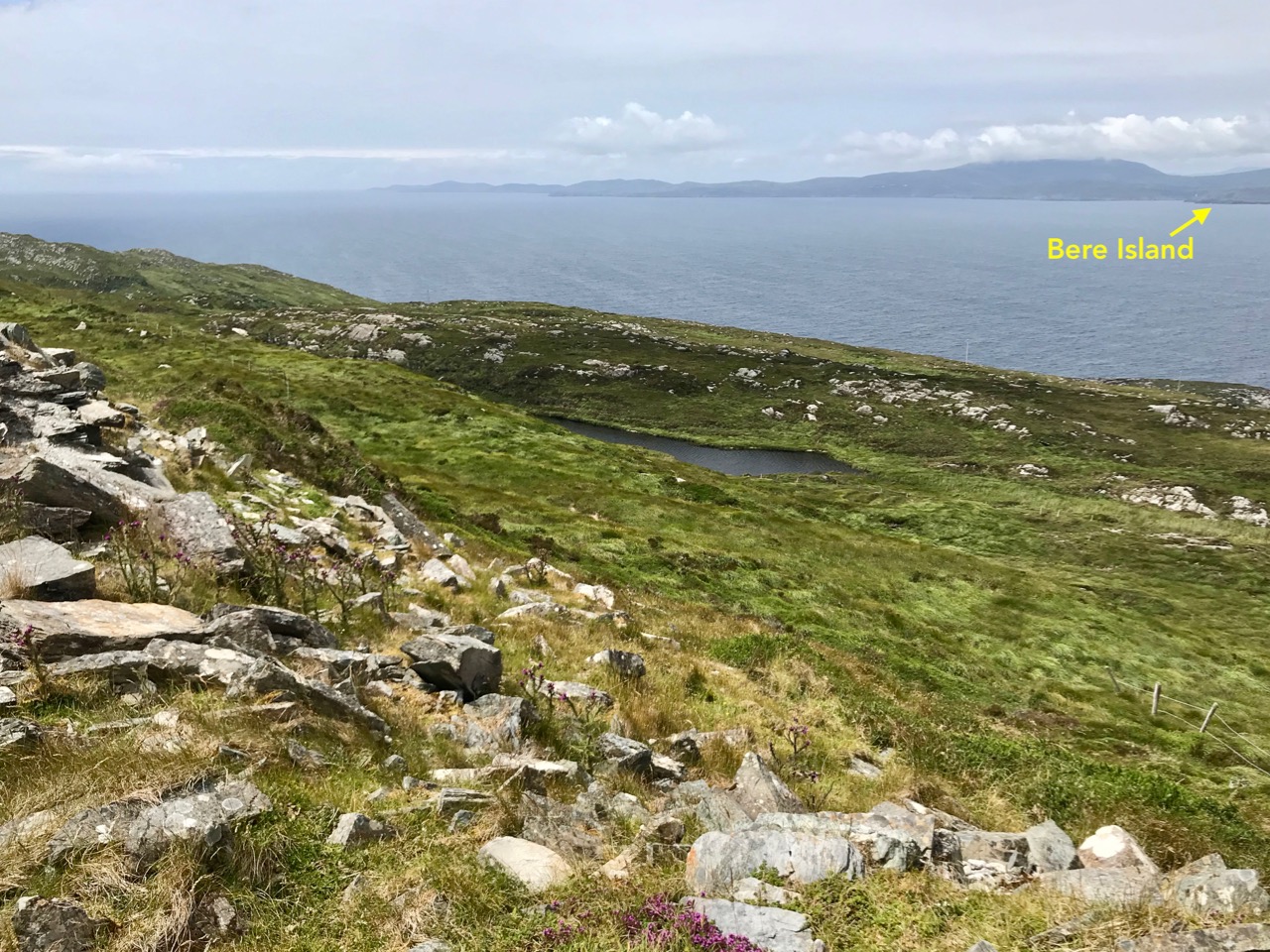
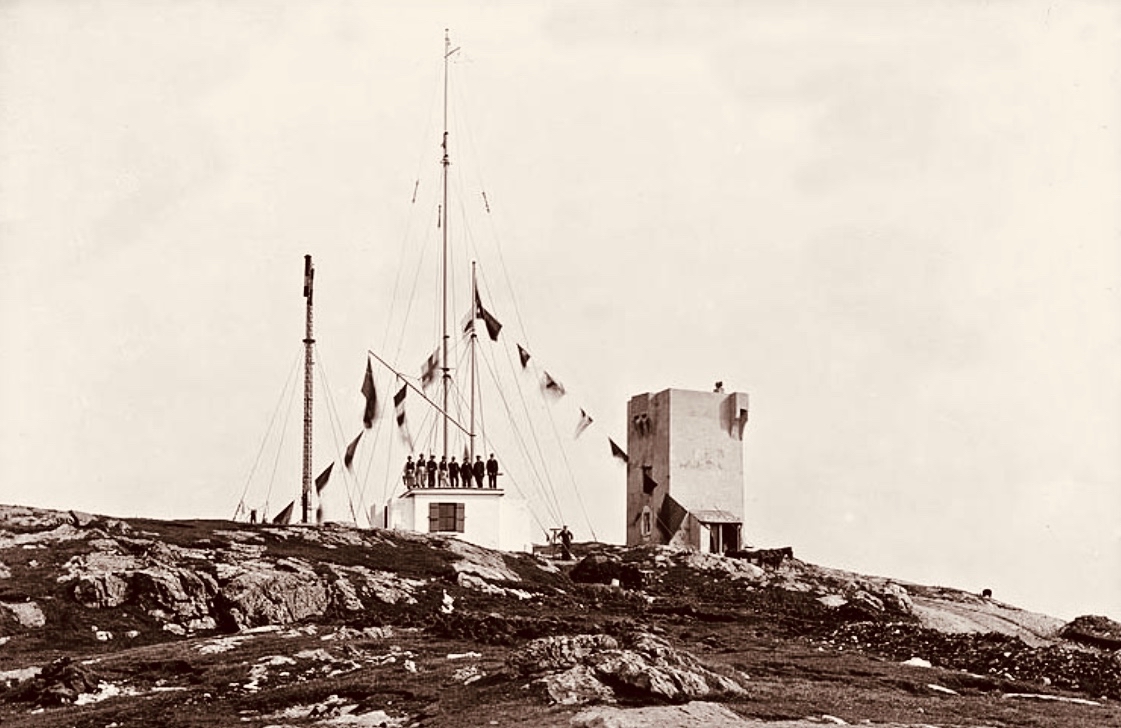
The upper picture shows the Mallavoge signal tower at Brow Head (more about that site here), while the Knock signal tower is seen in the middle picture, which was taken close to the start of the Ballyroon Mountain trail. Both these photographs have the benefit of a modern zoom camera lens, but imagine how good the optics of the telescopes needed to be for those who manned the towers in the early 1800s. Not only did these silhouettes have to be clearly defined, but the flag and ball signals that were put up on the associated masts had to be readable. The lower picture looks north across Doo Lough towards Bere Island, where there were extensive fortifications in Napoleonic times, including a signal tower. Below is a photo of the Malin Head signal station, Co Donegal, dating from 1902 (National Library of Ireland Collection). There the station was kept in use for strategic purposes long after the Napoleonic era and became the site for one of Marconi’s telegraph stations. While the flags in this picture are not from the earlier times, it gives you some idea of what had to be picked out from a great distance. By eye, put the scale of the tower in this photo to the scale of the distant towers in the images  above: it’s hard to fathom how accuracy was possible yet messages were dispatched and received successfully. It evidently took about four minutes to put up a message on the mast: allowing for reading and deciphering, I would expect a message to be sent from Sheep’s Head to Cork via 11 towers in about an hour, or all the way to Dublin via 33 towers in three hours. This would depend on daylight and good visibility at all times.

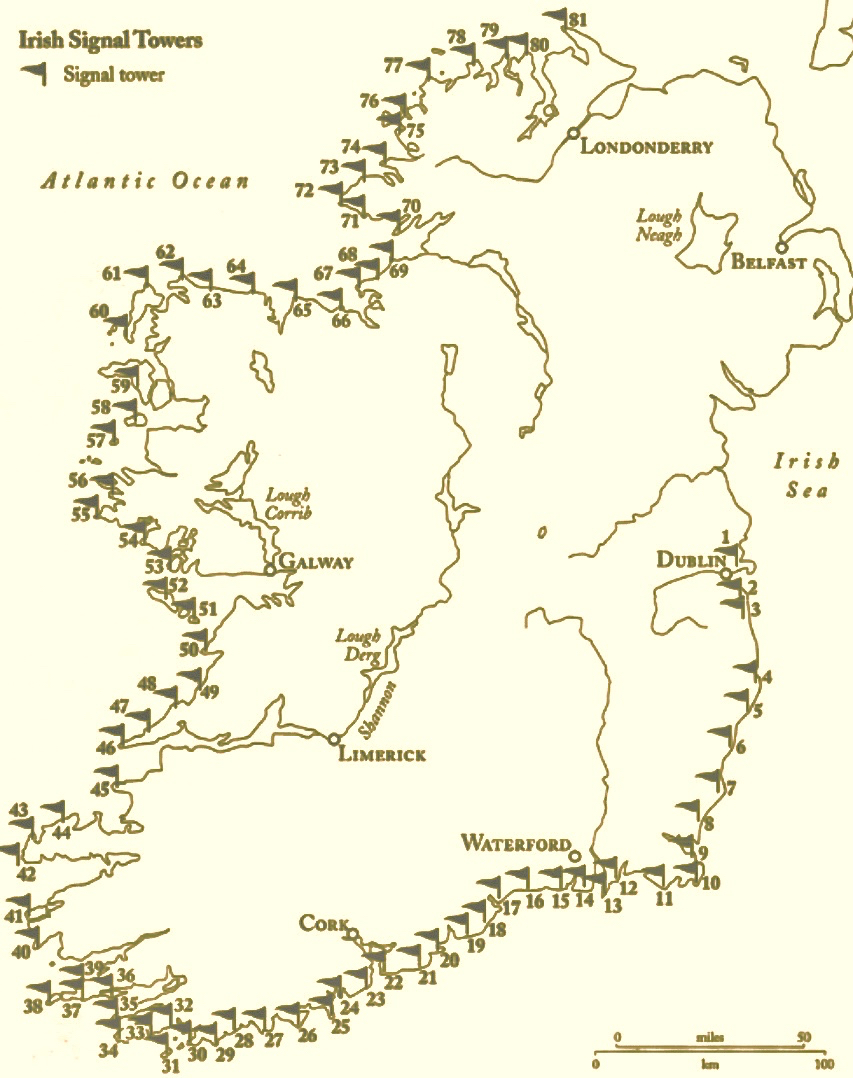
The most comprehensive map of Ireland’s signal tower distrIbution that I have found so far is this one drawn for the authoritative book on the subject Billy Pitt had them built: Napoleonic towers in Ireland by Bill Clements, The Holliwell Press 2013. This clearly shows that invasion was expected to come from the west or south, rather than from the more naturally protected north-east coast.

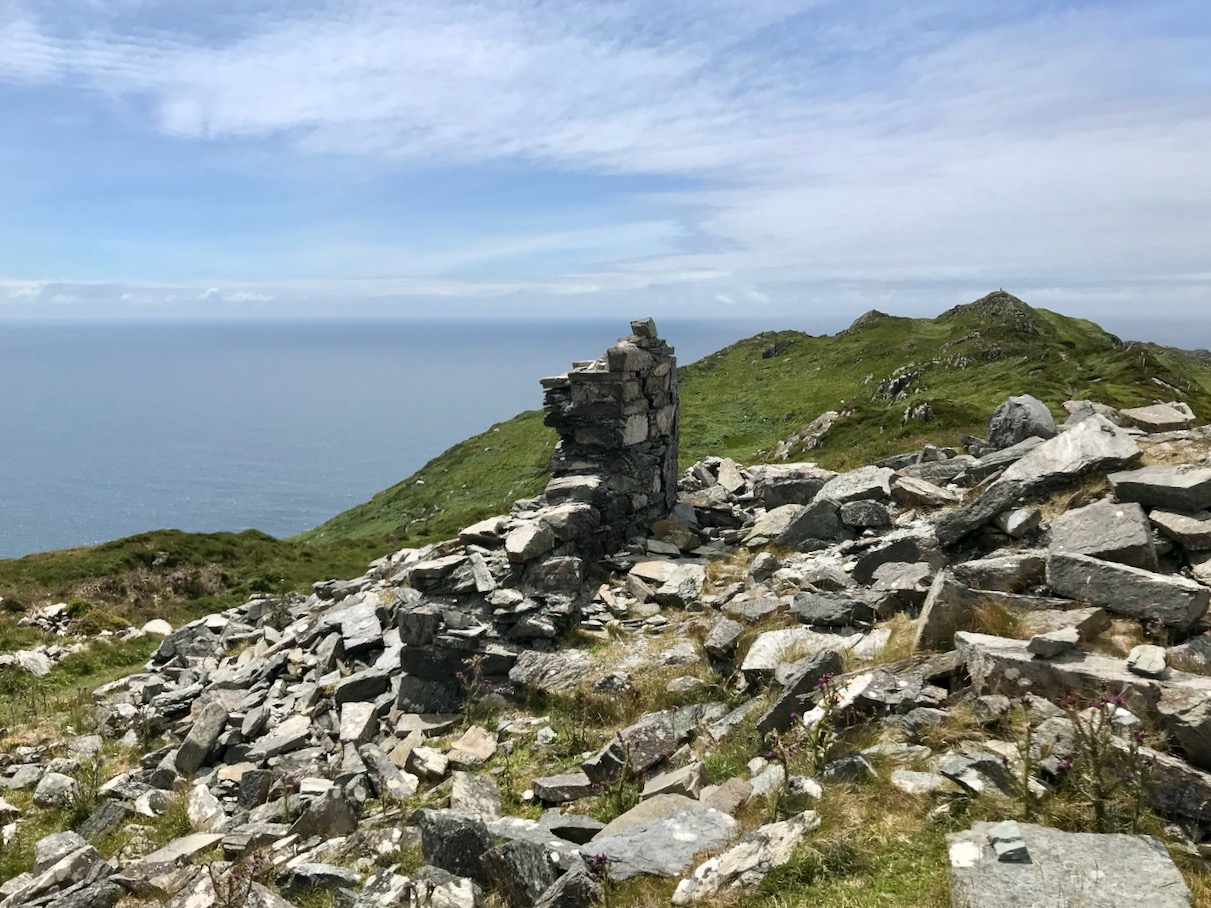
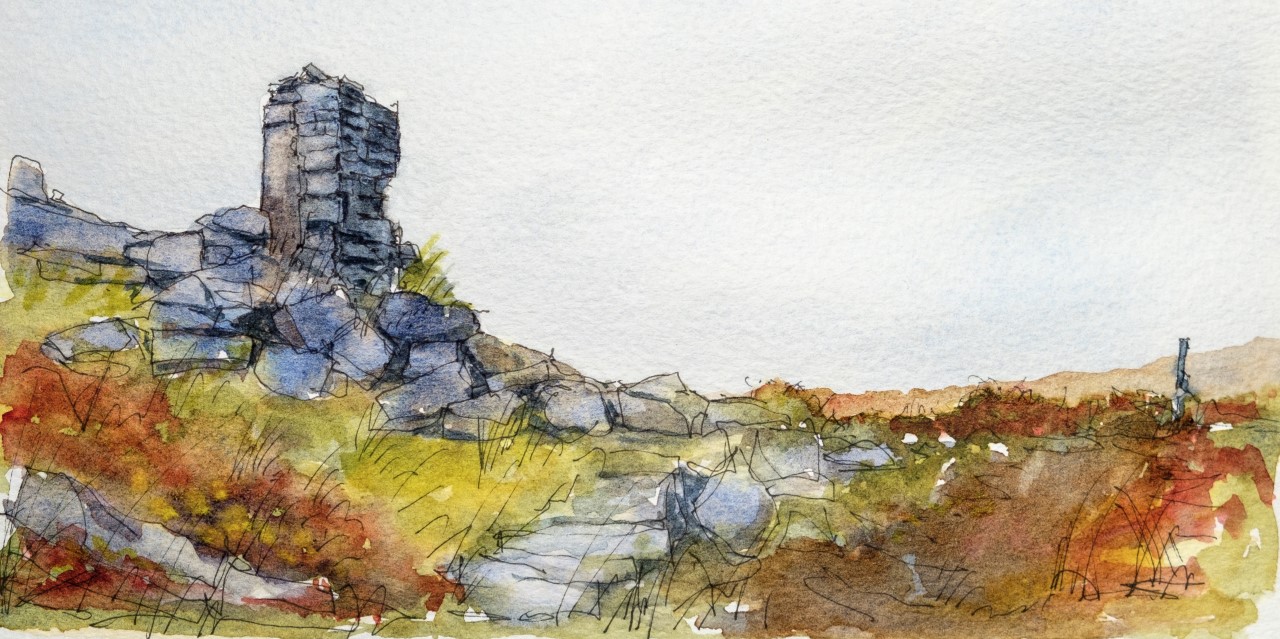
The selection of photographs above shows the state of the ruined tower at Ballyroon Mountain today (2020). Although there’s not much of a structure left it’s still a poignant memorial to those who built and operated this and all the other links in the communication chain that substantially encircles the coastline of Ireland. It’s a legacy well worth celebrating, and we are fortunate in Cork County that we have so many examples of the building type, some of which, like this one, are accessible to visitors. We will be exploring more of them in due course. To neatly finish off this post, here is an exquisite drawing of the Ballyroon tower executed by our friend Peter Clarke who writes the Hikelines series. It’s a lovely sketch which, for me, captures the slightly edgy romanticism of this beguiling location. Thank you, Peter.

Next time: Signal Towers Part 3 – Walking into history!