Green & Silver

title

This book review has been a long time coming: I first read the book in 1963! I was still at school then, and I was given it as a prize for essay writing (although I have no memory of the essay). I chose Green & Silver because I was already familiar with the author – Lionel Thomas Caswall Rolt, more usually known as L T C Rolt or ‘Tom’ Rolt. I had found in the local library his first book – Narrow Boat – written in the late 1930s when the author and his wife were living and travelling through England and Wales on board a converted canal boat. At that time the canals of Britain were still in commercial use, although water transport as a way of life was declining. I was smitten with the romanticism of the nomadic life of the canal boatmen – and of Tom Rolt – and Narrow Boat is beautifully illustrated with woodcuts by Denys Watkins-Pitchford, which enhance the experience of reading this classic book (which has never been out of print). Sir Compton Mackenzie wrote “it is an elegy of classic restraint unmarred by any trace of sentiment… Rolt’s pen is as sure as the brush of a Cotman… Narrow Boat will go on the shelf with White and Cobbett and Hudson.”

Woodcuts by Denys Watkins-Pitchford which illustrated the first edition of  Narrow Boat by L T C Rolt, published by Eyre + Spottiswoode, 1944

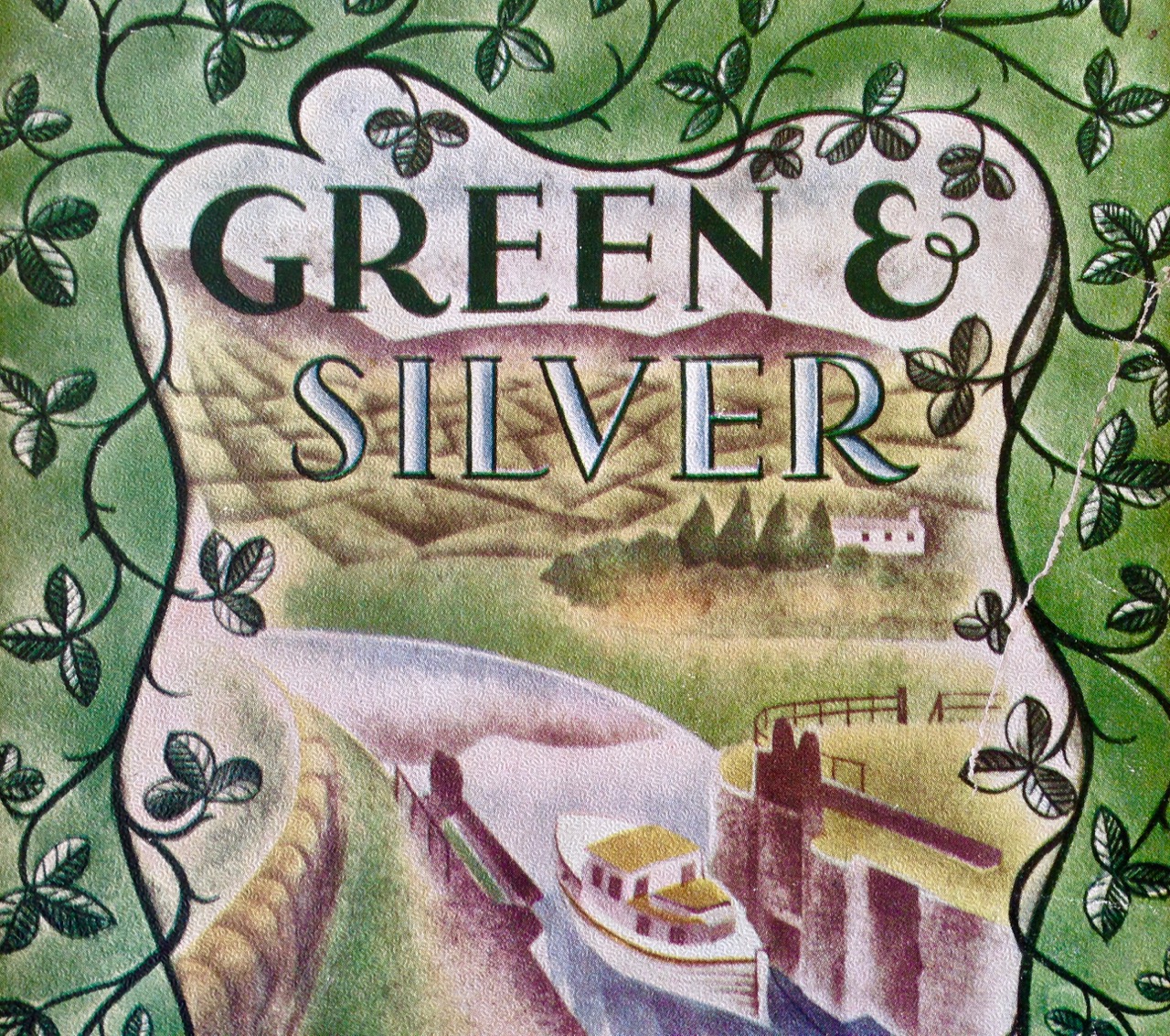
When choosing my essay prize, therefore, it seemed perfectly natural to go for another of Rolt’s books. A brief foray through book catalogues (remember – there was no internet in those days!) brought to light Green & Silver, first published in 1949. I established that it was an account of a journey by the same author through the canals of Ireland. It was the cover as much as anything else that attracted me to the book – it stood out as something quite unusual; I little knew that the content would have a profound effect on me, instilling an immediate yearning to visit the land across the Irish Sea, about which I knew very little.

Left – the bookplate pasted into my first edition of Green & Silver (it’s now in print again); right – the exuberant dust cover which attracted me to the book, painted by Evelyn Hunt

It was, however, to be a dozen years before I first visited Ireland (and then it was more a search for music than the canals), but Rolt’s works as a whole (he wrote more than 50 books) cemented in me an enduring interest in engineering, industrial archaeology, and, specifically, water transport. I spent my youthful leisure time campaigning to restore canals, physically digging them out of dereliction and even building lock gates with oak beams and elm boards using traditional techniques. Within a few years of reading Rolt I had acquired and restored my own boat and followed in his wake, spending a year travelling over the British canal system and writing a new book about their engineering and architecture.
canal port

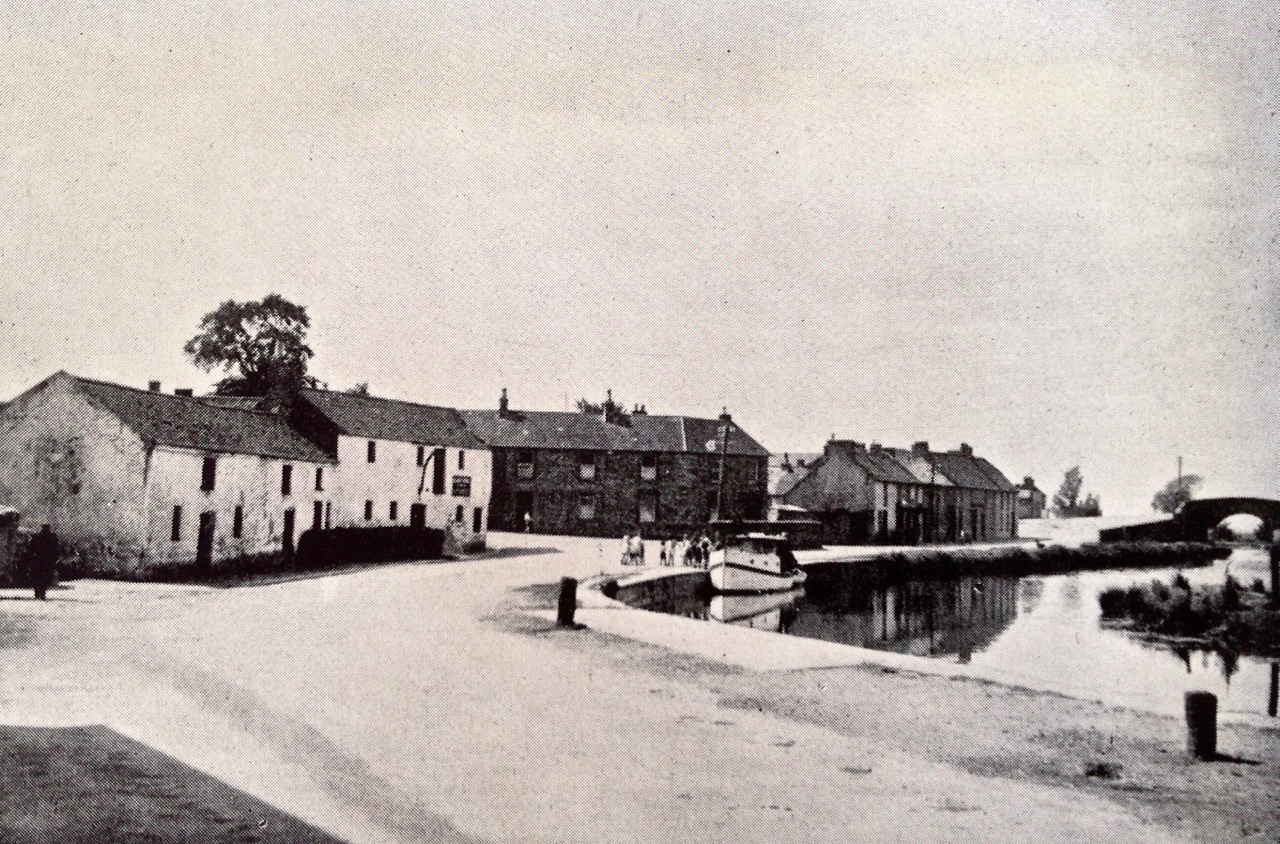
Green & Silver is illustrated with photographs taken by Angela Rolt on the journey through Ireland. They are a valuable and evocative record of life just after the ‘Emergency’ years of the Second World War. Here is the Rolts’ borrowed boat – Le Coq – at Robertstown, on the Grand Canal: pleasure boating was virtually unheard of in rural Ireland in those days and the voyagers seemed much troubled by groups of children who gathered whenever they moored up, all demanding to see – and board – the ‘yacht’

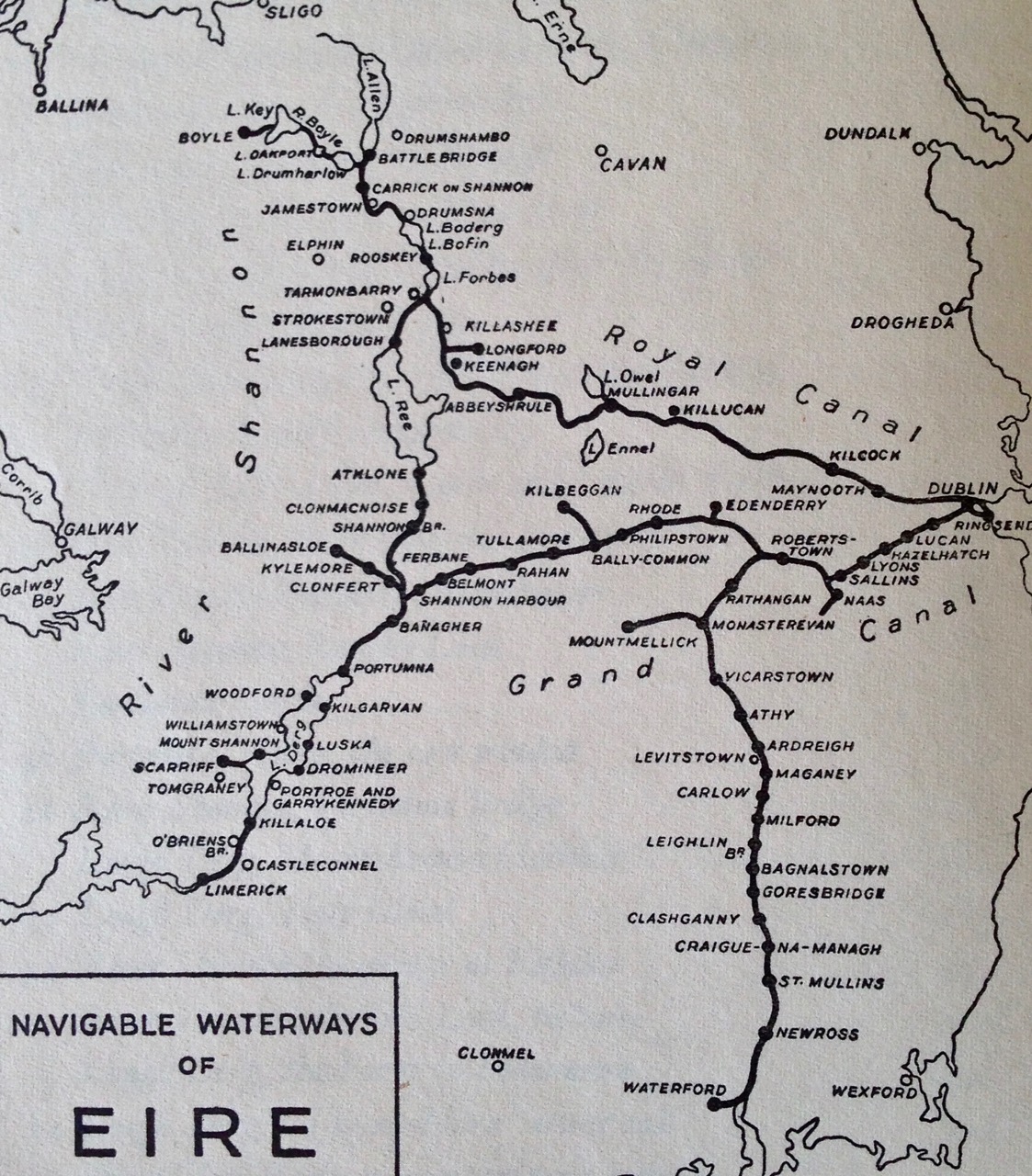
Tom and Angela Rolt faced many challenges in their journey – well documented in the book. They set out to navigate the Shannon, starting at Athlone, to the entrance of the Grand Canal at Shannon Harbour; along that canal to Dublin, then up the Royal Canal to rejoin the Shannon at Tarmonbarry and exploring the river northwards as far as Lough Allen, also taking in the River Boyle. The final part of the journey to Athlone crossed Lough Ree. The ‘Emergency’ years and their aftermath saw restrictions on the availability of fuel: this affected the Rolts’ plans, although they did complete their journey. They encountered commercial traffic on the Grand Canal – some horse drawn – and a little on the Royal Canal, which became derelict shortly after their travels. Le Coq was probably the last boat to complete the circular journey in the twentieth century: after significant efforts by the Inland Waterways Association of Ireland (founded in 1954) the Royal Canal has been fully restored to navigation and reopened in 2010.
navigable waterways

From Green & Silver: a map of the navigable waterways of Ireland at the time of the book’s publication in 1949

This book is full of descriptive detail and observation of the ways of life and the people that Tom Rolt encountered: every page fascinates. It’s hard to pick out any one section to exemplify the writing style, but here is an extract describing a visit to a corn mill at Cloondara in County Longford close to Richmond Harbour, the junction of the Royal Canal with the River Shannon (the mill ceased operations in the 1950s, not long after Rolt’s visit):

…Across the canal bridge there was a large corn mill which had seen better days but which I was pleased to see was still at work. Moreover it was not, as our few surviving [British] watermills are, relegated by the milling combine to grinding cattle meal. Cloondara Mill was grinding 100 per cent extraction flour for the village bakeries of the district. As we walked over the bridge a small water-turbine was churning merrily, driving the dynamo which provided electric light for the mill and the miller’s house. But the great undershot wheel which drove the mill from the waters of the Fallan River, a tributary of the Shannon, was still and silent. I knew why because, from somewhere in the dim recesses of the rambling stone building I could hear the chip chip of a mill-bill tapping away like some busy woodpecker. This Irish miller, like the English country millers who I have been fortunate enough to meet, was obviously proud of his mill and was delighted by our interest. Having assured himself that the stones being dressed were out of gear, he insisted upon opening the sluice for our benefit, setting the giant wheel revolving with a rumble and surge that wakened the mill and which, via a complex of wooden gearing, shafts and pulleys, set screens and sieves shaking and revolving to the very top of the building…
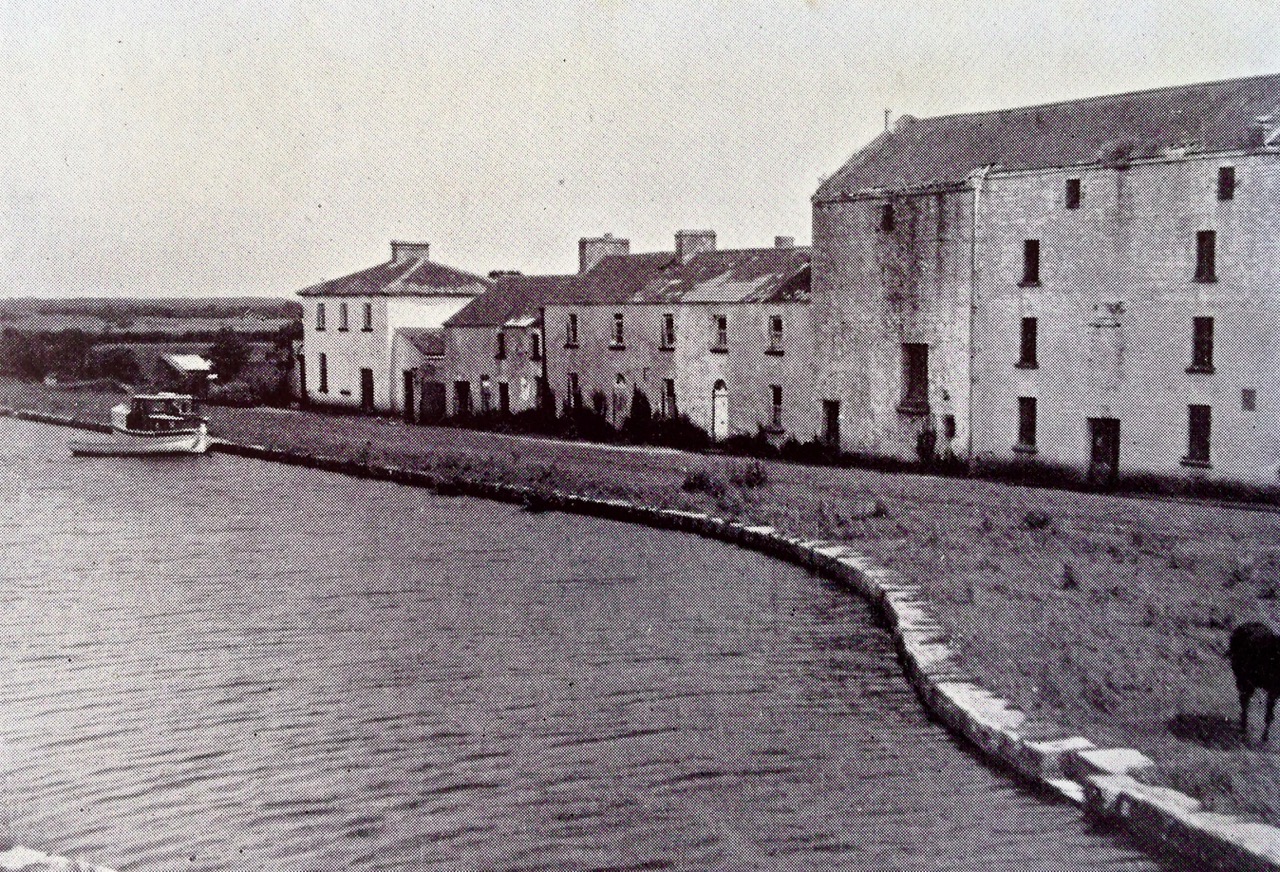
Cloondara

Angela Rolt’s photograph of Le Coq moored at Richmond Harbour, Cloondara – ‘derelict warehouses and empty cottages’

…There were four pairs of stones, two sets of ‘Peaks’ for meal and two sets of French Burrs for wheat. The runner of one pair of Peaks had been swung off the bedstone, and the dresser sat on a sack, legs astraddle, as he tapped away at the worn furrows with his bill. I had expected to find that the language of the miller’s craft was different in Ireland, but this was not so. Thus the stirrup and shoe which feeds the grain into the eye of the runner stone and whose cheerful clink clack contrasts with the rumble of the stones, our miller, like his fellows in England, called the ‘damsel’. In an earlier book I described how the miller of Minshull Mill in Cheshire used apple wood to renew the teeth of the wooden mill gearing. Here beech wood was used for this purpose…
grand canal boat

guiness

keeper and family

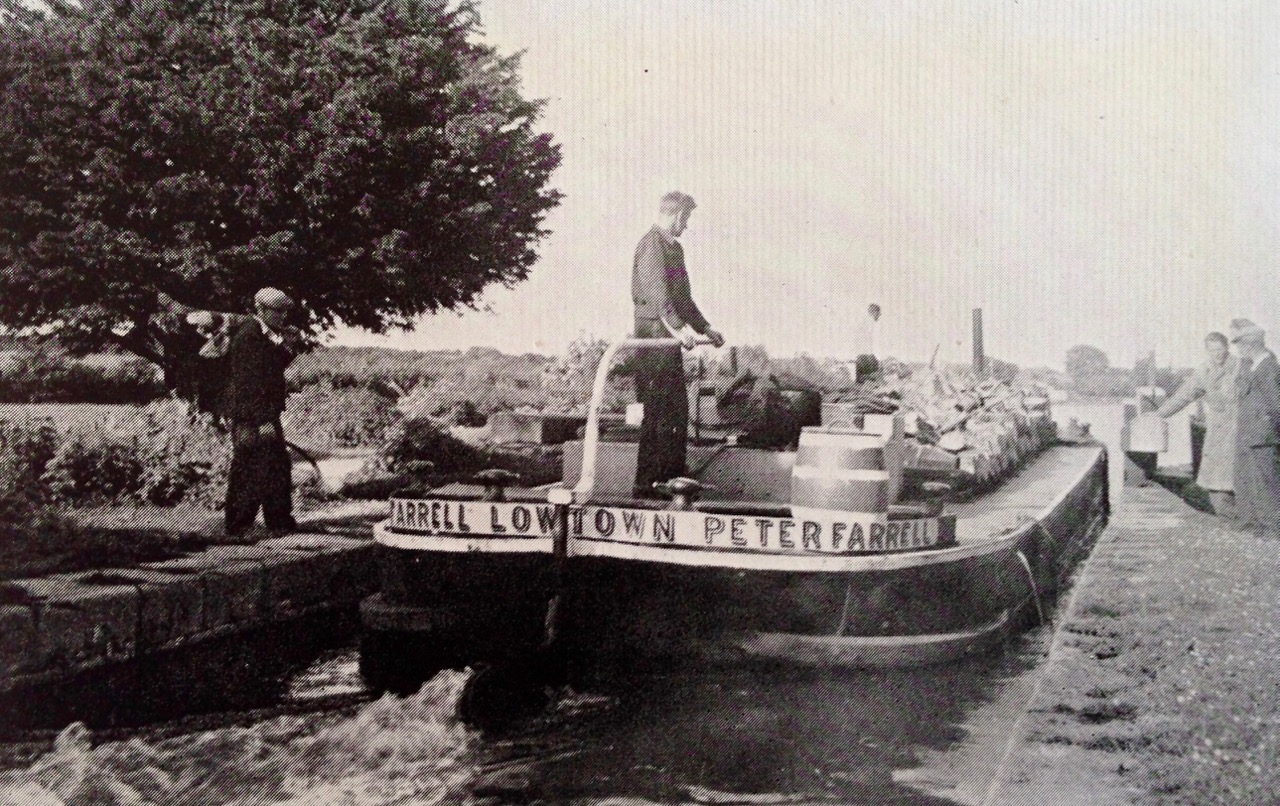
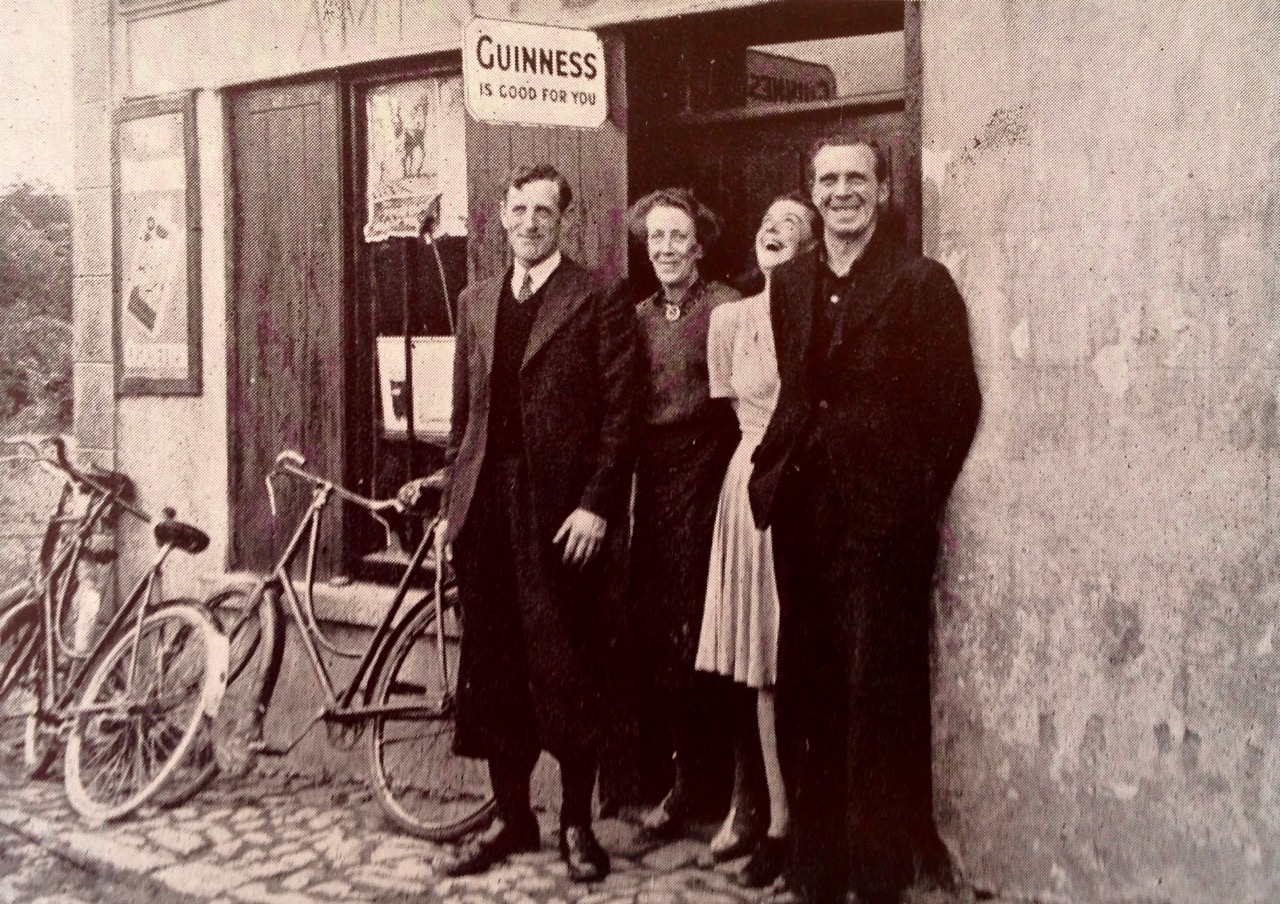
More of Angela Rolt’s photographs from the book: top – Peter Farrell’s working boat on the Grand Canal; centre – the Beirne family outside their inn at Battlebridge, close to the entrance of the abandoned Lough Allen Canal. Le Coq was the first boat to visit Battlebridge in seven years! Bottom – the Lock Keeper and his family at Draper’s Bridge, Royal Canal. The Rolts were always impressed with the generosity of the lock-keepers, particularly on this little-used waterway: they were constantly plied with milk, potatoes and scallions – ‘enough to sink the boat’…

Rolt was at heart an engineer: on leaving school at 16 he took a job learning about steam traction, before starting an apprenticeship at the Kerr Stuart locomotive works in Stoke-on Trent. Railways were in his blood as much as canals were. Thus he couldn’t leave Ireland without a journey on the West Clare Railway – then one of the last surviving narrow gauge railways in Ireland – and the subject of a song written and – famously – sung by Percy French, which includes the refrain:

…Are ye right there, Michael, are ye right?
Do you think that we’ll be there before the night?
Ye’ve been so long in startin’
That ye couldn’t say for certain’
Still ye might now, Michael
So ye might!

The Rolts’ journey on the line from Ennis is well documented in Green & Silver:

…We consigned the bulk of our luggage direct to Limerick to await our arrival there next day, and booked a first class ticket to Kilrush. We might as well enjoy this protracted journey in the maximum of comfort and seclusion. The little train, the only one of the day, was standing in the bay, and we settled ourselves into a compartment that was a period piece in itself. The seats were covered with black American cloth well studded with buttons. Braided arm rests (were they ever used?) were looped over the door pillars, and the captions of the ancient and faded photographs over the seat backs were hand written in painstaking copper-plate. To do justice to such an interior I should, I felt, be wearing a deer-stalker and an ulster…

The West Clare Railway: left – a photograph by Angela Rolt from Green & Silver showing L T C Rolt in a first class carriage on their journey from Athlone and – right – a stamp issued by the Railway Company for the ‘conveyance of single post letters by railway’

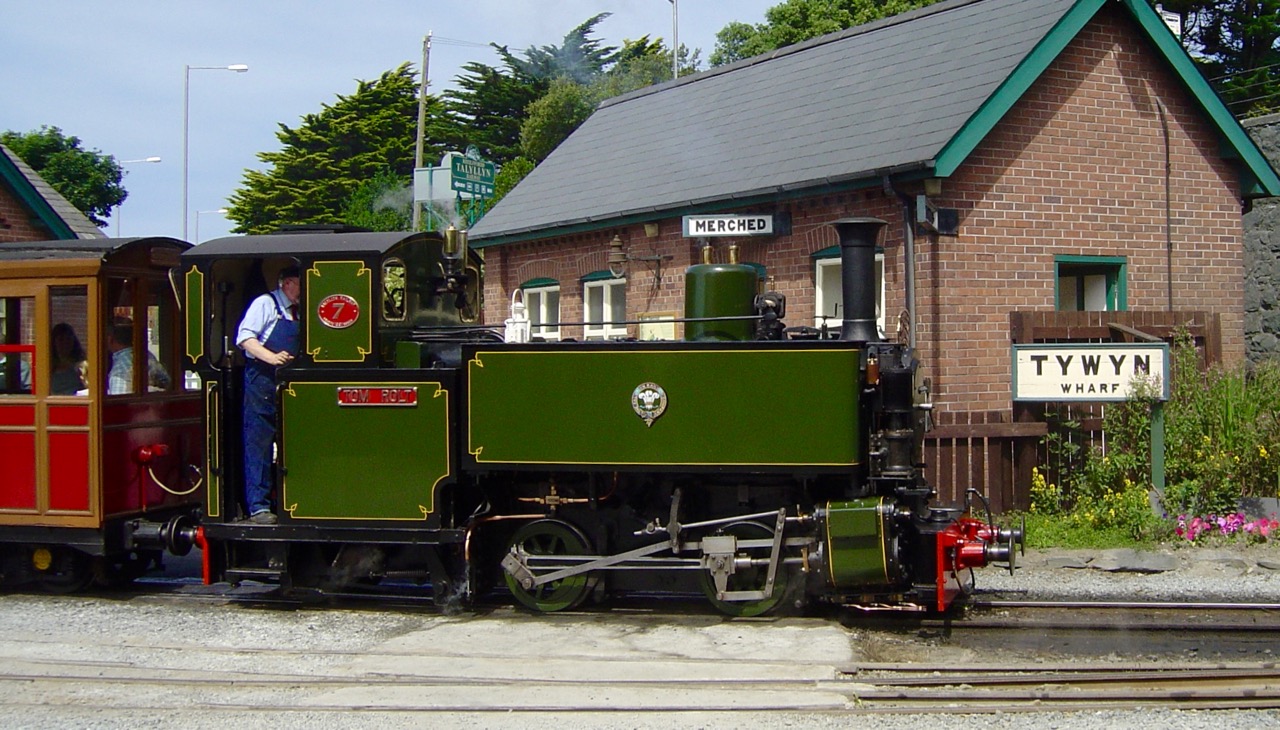
L T C Rolt was heavily involved in a movement in Britain to ‘save’ the declining canal system and in May 1946 the Inland Waterways Association was founded with Robert Aickman as chairman, Charles Hadfield (the canal historian) as vice-chairman and Rolt as secretary. Since that time the IWA has successfully campaigned to secure the restoration of many threatened waterways, and even to build some new ones in Britain. Sadly, within 5 years, Rolt had fallen out with the IWA over ideology, and was expelled from its membership. But Rolt moved on and campaigned to prevent the closure of the Talyllyn narrow gauge railway in Wales. He was involved in its resurrection as the first ‘preserved’ railway line in the world. His name is commemorated on one of the restored locomotives operating on the line: fittingly this engine began life working for Bord na Móna, the company in Ireland created by the Turf Development Act of 1946. The company is still responsible today for the mechanised harvesting of peat and uses narrow gauge railways: formerly steam driven, the lines now use diesel traction. The Tom Rolt (formerly nicknamed Irish Pete) was one of three 3 ft (914 mm) gauge 0-4-0WT well tank locomotives built by Andrew Barclay Sons + Co, an engineering workshop founded in 1840 in Kilmarnock, Scotland.
Tom Rolt Loco

Tom Rolt, the former Bord na Móna locomotive now reconstructed and operating on the Talyllyn narrow gauge railway in Wales, at Tywyn Wharf (photograph courtesy Optimist on the run)

Following in the footsteps of L T C Rolt I wrote my own book on canals and it was published in 1969. The publishers, Hugh Evelyn of London, asked Rolt if he would write an introduction to the book. In the event he was unable to do so, passing the job on to Charles Hadfield. I was sorry not to have a ‘hero’ of mine endorsing the volume, but in my preface I mention my indebtedness to him for introducing me to the world of navigable waterways. Tom Rolt died in 1974 and he won’t know that I am also indebted to him for introducing me to Ireland, now my home.

Capturing the View: Belvederes in West Cork

Swift's Tower

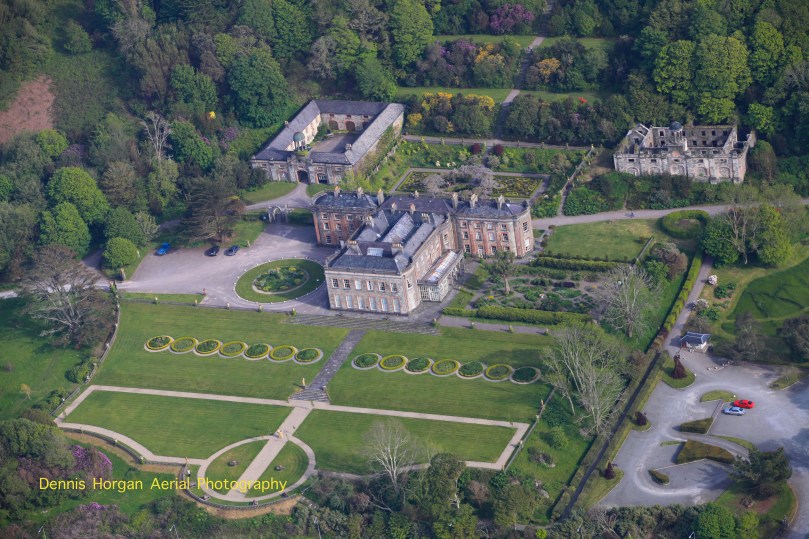
The 18th century was a time of profound change in garden design in Britain, and by extension in Ireland. In the opening decades of the 1700s great and small estates included formal gardens laid out in the French and Dutch styles that emphasised symmetry and geometry, parterres and avenues of trees. The gardens at Bantry House are a good example of this garden style. Although developed in the first half of the 19th century, they were perhaps influenced heavily by the gardens at Versailles and great European houses visited by the Earl of Bantry on his Grand Tour.

Bantry House 1

Thanks to Dennis Horgan, aerial photographer extraordinaire, for allowing me to use his shot of Bantry House. Note the formal and geometric layout of the gardens and the parterres immediately behind and to the right of the house
However, for the previous century a different style of landscaping had dominated garden design in Britain, pioneered by William Kent and Charles Bridgeman and reaching its peak in the work of Lancelot ‘Capability’ Brown. The effect they strove for was naturalistic (as opposed to natural) – a planned layout that mirrored but enhanced their idea of a ‘wild’ and romantic landscape. Large expanses of grass, strategically placed lakes and ponds, plantings of carefully chosen tree and shrub species, and clever little structures such as temples, summer houses and belvederes all combined to delight the eye, create a romantic mood and, of course, attest to the taste and wealth of the owner.
base of ruined tower belvedere New Court

Nothing remains but the stub of what was once a belvedere in the shape of a round tower on the edge of the River Ilen, on the old New Court demesne.

Echoes of these designed landscapes can be found here and there in West Cork, even where the big houses themselves have disappeared. Lately I have been on the hunt for belvederes and have found several intriguing examples. A belvedere (bel-beautiful, vedere-to see) was an edifice from which to enjoy a view. It could be as simple as a platform at a high point, or as complex as a multi-storey tower, but its most important attribute was its positioning to command a breathtaking vista.

Killiney Hill belvedere

Killiney Hill, just south of Dublin

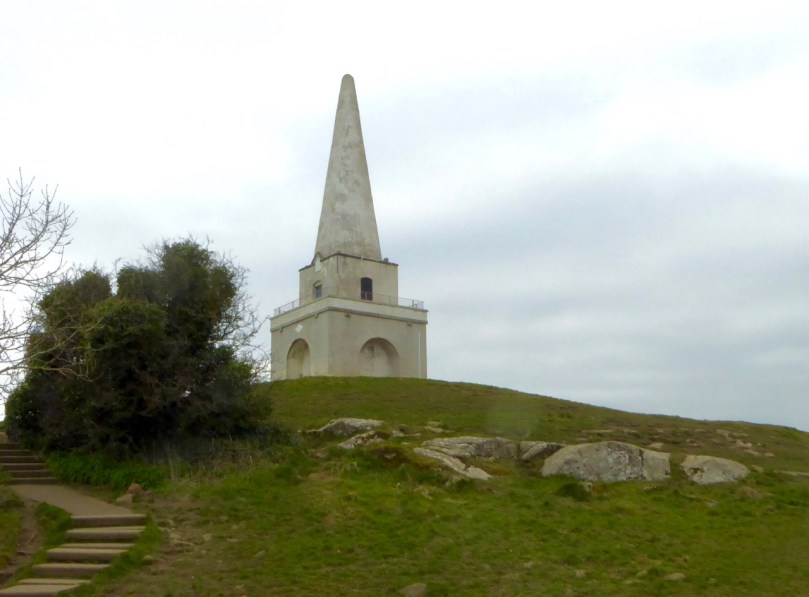
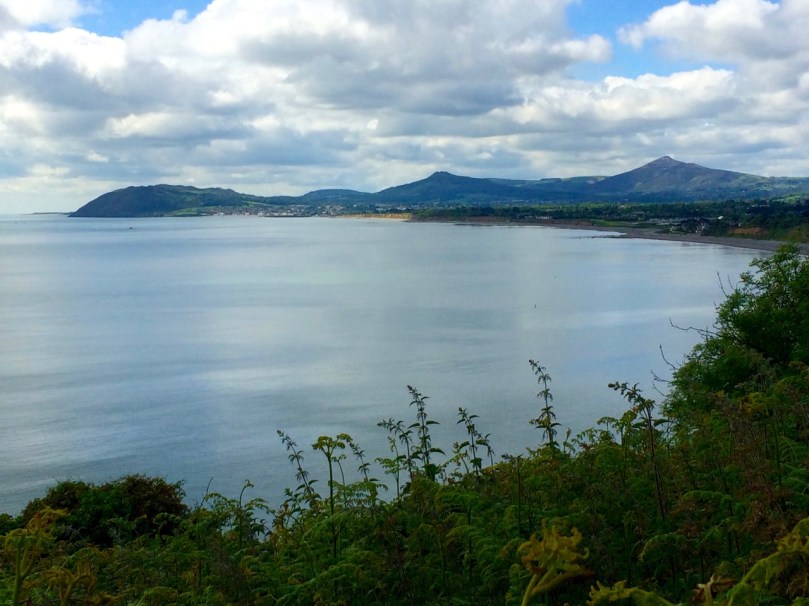
Perhaps the best known belvedere in Ireland is the one on top of Killiney Hill in Dublin. It was built in 1742 by the then-owner of the hill, John Mapas, to provide an opportunity to admire one of Ireland’s most iconic prospects. The room on the second floor had a little fireplace, windows, and a door to the exterior viewing deck, which was surrounded by wrought-iron railing. It’s no longer in use as a belvedere and many people think of it as some kind of memorial or folly.

View from Killiney Hill

The view from Killiney Hill

In West Cork, the belvedere at Aughadown (known locally as the gazebo) is of the most simple kind, a viewing platform. It was associated with Aughadown House, a fortified mansion built by the Bechers that I wrote about in Trading Up In Tudor Times: Fortified Houses in West Cork.  

Belvedere, Aughadown

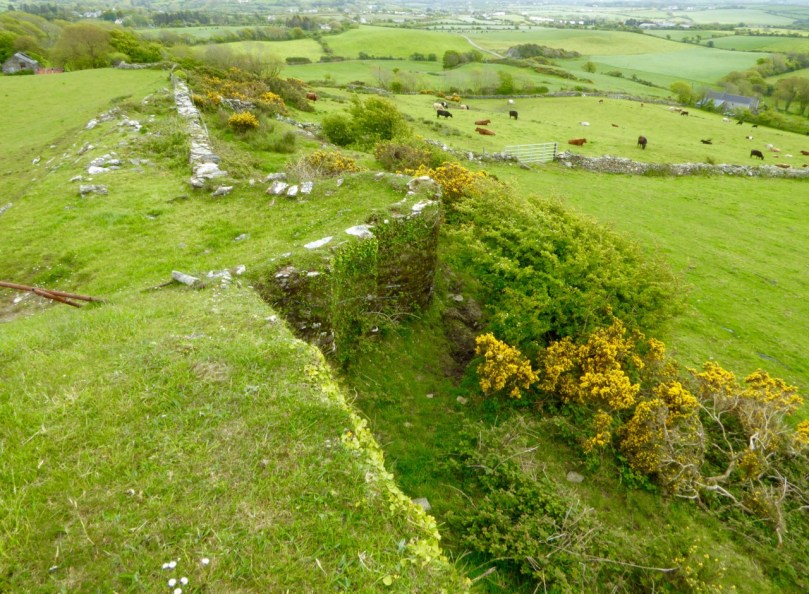
Peter Somerville-Large, in The Coast of West Cork, quoting Daniel Donovan*, says: Donovan described it as “a strong castellated mansion, entered by a drawbridge, surrounded by beautiful grounds and having a gazebo on one of the heights behind”. He continues: This gazebo was approached by a ramp along which the quality used to drive their carriages in order to enjoy the magnificent view out over Roaring Water Bay to the islands and the Fastnet in the distance. I found the ramp running above a field of winter wheat.

Aghadown Belvedere and tower house siting

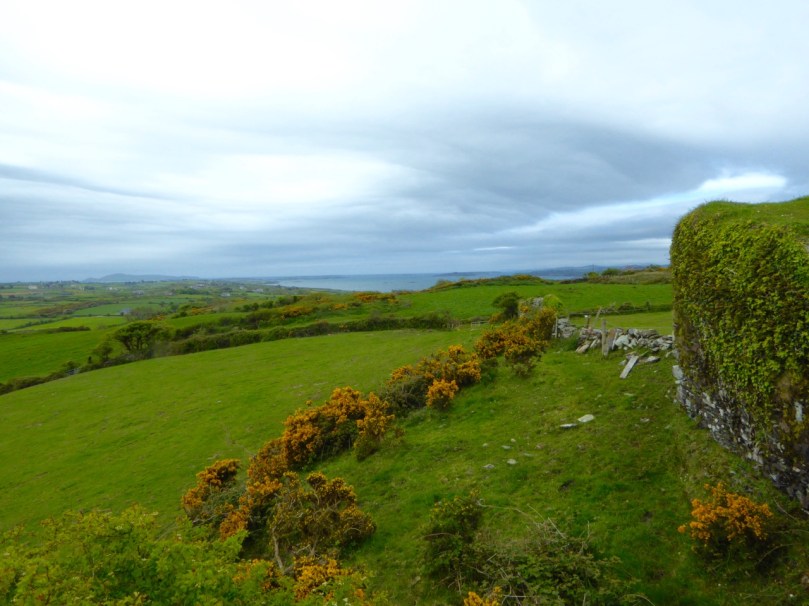
The view from Becher’s ‘gazebo’ across to Roaringwater Bay

On each side of the Ilen River lie belvederes, in the form of towers. Imagine the ladies of the house and their guests, walking or being driven down to the water’s edge. Servants would have arrived earlier and the tea would be ready and a little fire laid against the breezes. They ascend the internal staircase to the second floor or perhaps to the roof and admire the views of the lazy Ilen River as it wends its way to the sea at Roaringwater Bay.

Creagh House Belvedere

The Creagh House belvedere

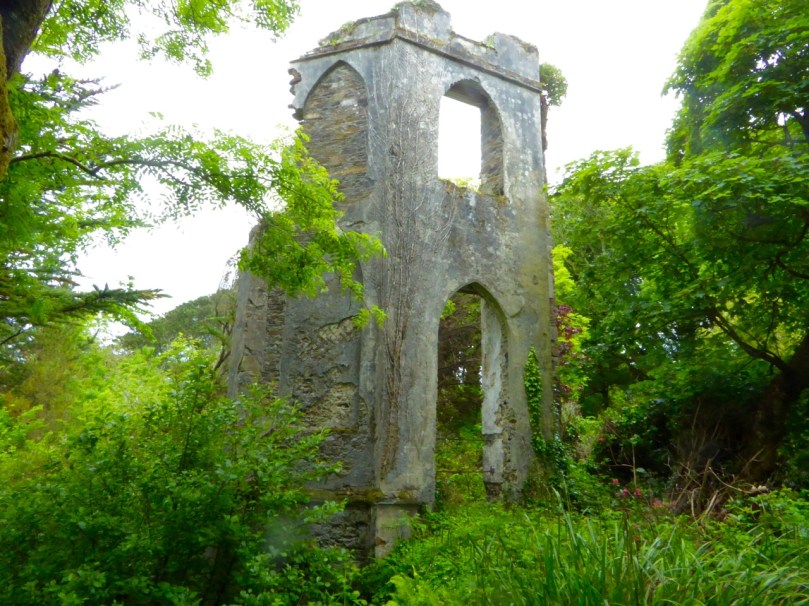
The belvedere at Creagh House exists now as a picturesque ruin. Octagonal in design, with pointed gothic windows and a small fireplace inside, it rises to three stories. Some sources describe it as the remains of a mill, and the artificial pond beside it as a mill pond, but it has all the hallmarks of a romantic garden structure.

Across the river at New Court there were once three such ornamental towers. One is gone, the second is a mere stump, but the third still stands to its original height and offers lovely views of the river both to the east and the south.

Belvedere, New Court

One of the three original belvederes that once dotted the New Court Estate

At Castletownshend the local gentry were enthusiastic builders of ‘pleasure architecture’. Castletownsend Castle boast two structures of interest. The first is in the walls, an octagonal tower that is made to look like a defensive feature but in fact is purely decorative. Since there is apparently no entrance, this one may have to count as a folly rather than a belvedere.

Castle Townsend Belvedere turret

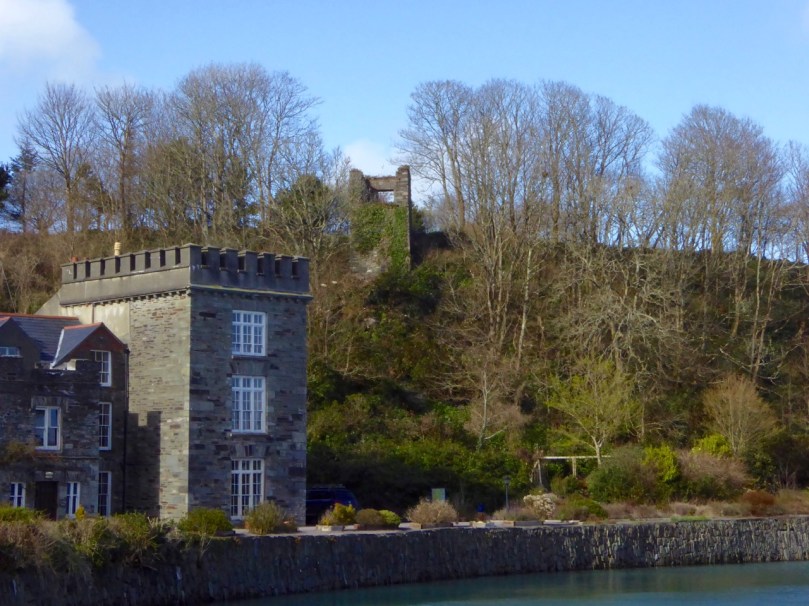
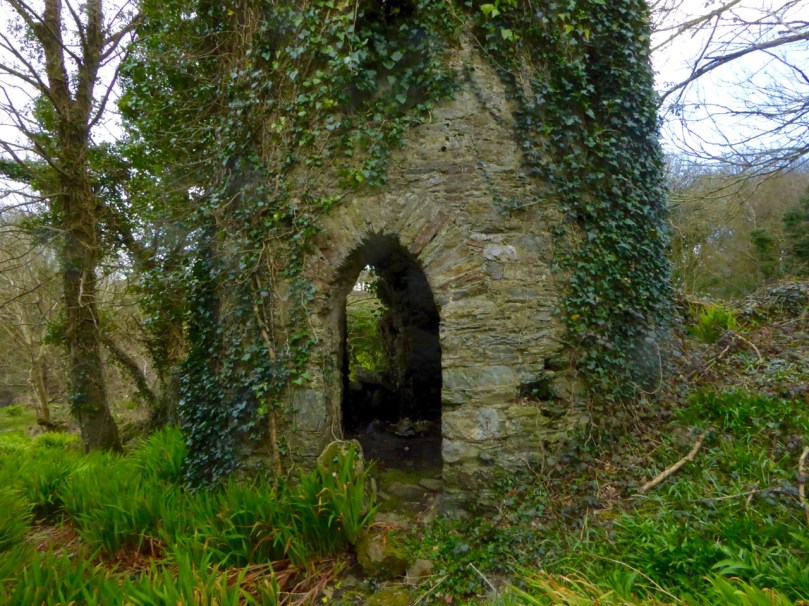
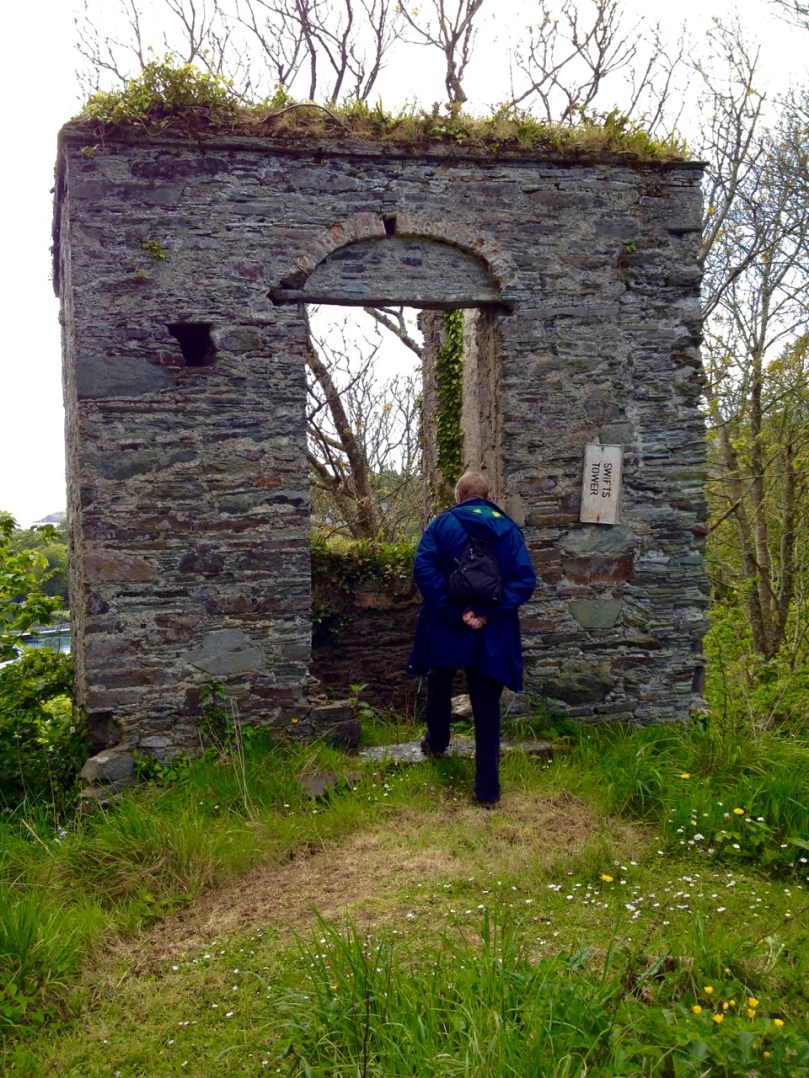
Behind the castle is the structure known as Swift’s Tower (see the very first photograph for an idea of its placement). Following the death of his beloved Vanessa in 1723, Dean Swift embarked on a long summer trip to the south west. it was in this tower, tradition has it, that he wrote the Latin poem Carberiae Rupes, which translates as The Crags of Carbery.

Swift's Tower 3

Once again we are indebted to Daniel Donovan’s Sketches in Carbery for an account of the poem and even a translation. Donovan did not have a high opinion of the poem (although he says that Dean Swift himself preferred it above other, better poems) and another critic referred to it as “a set of indifferent verses” describing a “bleak and deadly landscape”.

Carberiae Rupes

What do you think – his finest work?

Perhaps the Dean’s depressed state was to blame, or maybe he should have just stuck to prose. Or perhaps the servants hadn’t lit the fire and provided the tea – the tower certainly looks bleak enough now to bring on a fit of the dismals, in spite of the magnificent view.

Swift's Tower, Belvedere

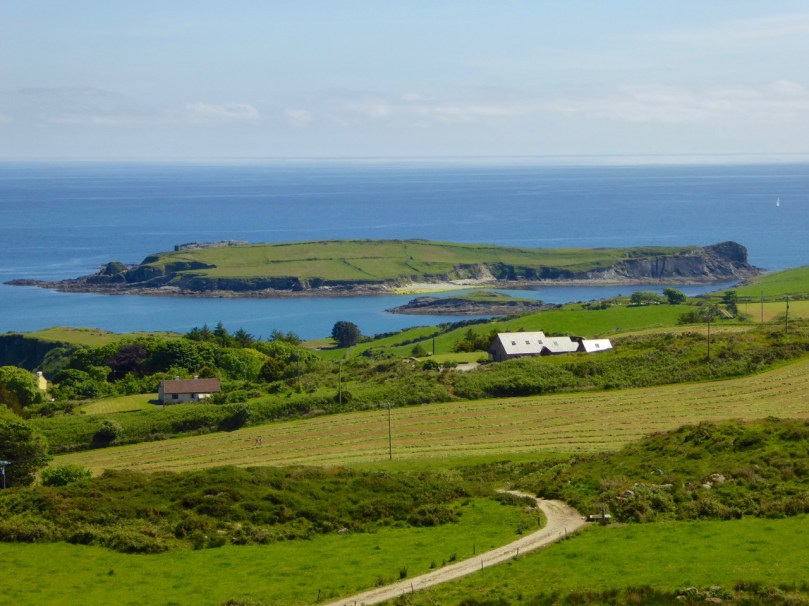
On Horse Island, just outside of Castlehaven Inlet, there is the base of a round tower that may also have been a belvedere. A visit there would have made a wonderful pleasure outing on a fine day, and the views would be stupendous.

Horse Island, Castlehaven, belvedere

You can just make out the remains of a round wall at the top left of Horse Island

There is a whole set of monuments in West Cork that are labelled as Belvederes in the National Monuments Service Inventory, but as Signal Towers in the records maintained by the National Inventory of Architectural Heritage.  These contradictory interpretations are fascinating and these towers are worth a post on their own. I will save that for another day, but to show you what I mean, take a look at the two towers on Rock Island, near Crookhaven. Belvederes or Signal Towers – what do you think? (If you’re not sure what signal towers are, take a look at this post from Amanda Clarke of Sheep’s Head Places.)

Crookhaven belvederes

Looking across to Rock Island from Crookhaven. Experts differ about the functions of the two towers

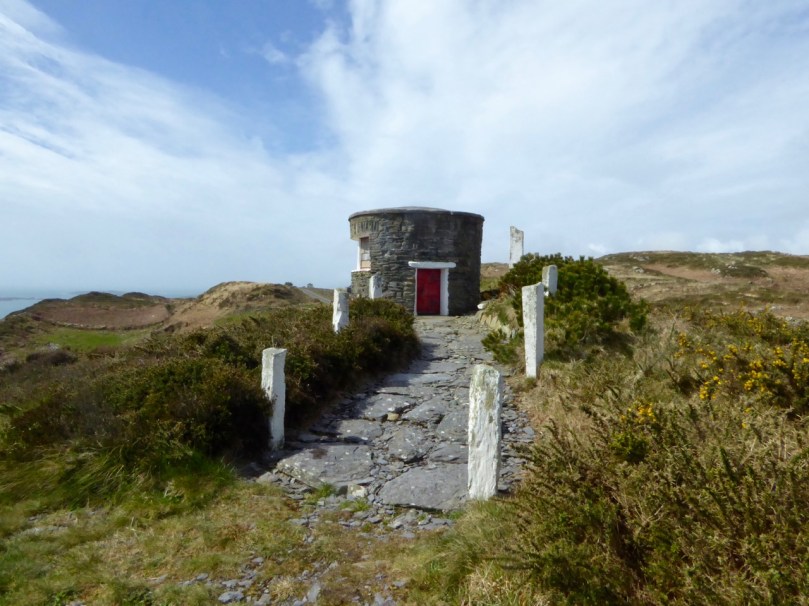
But what about nowadays? Do we still worship the view in West Cork? And do we still build belvederes from which to admire that view? The answer to both those questions can be found at Sailor’s Hill, just west of Schull!

Sailor's Hill 1

Sailor’s Hill Belvedere

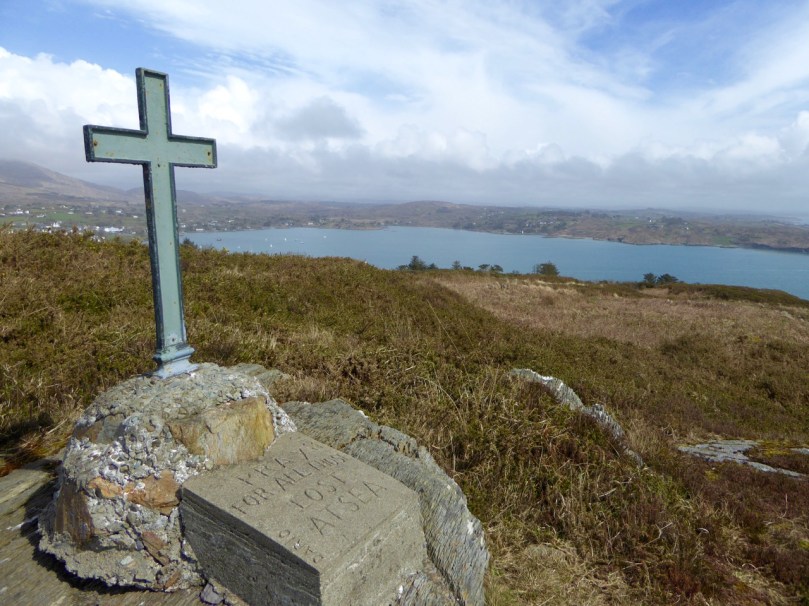
Sailor’s Hill is a labour of love by Connie Griffin who has worked on the sea and lived in this area all his life. It’s partly a memorial to those lost at sea and partly a place of contemplation to simply sit and soak up the panoramic views that stretch gloriously before you in ever direction.

Sailor's Hill Memorial 2

Schull Harbour in the background

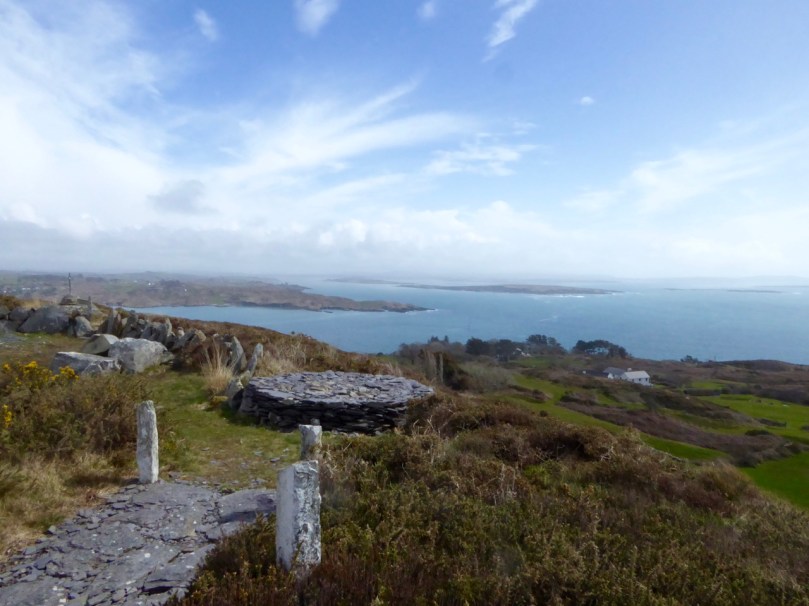
Sadly now a little overgrown and vandalised, it is still an incredible experience to arrive at Connie’s little round tower and see vast stretches of the Cork coast to the south, while the mountains of the Beara and Kerry rise behind you.

Sailor's Hill Views

It’s a testament to the power that landscape and seascape has over us: the power to move us and uplift us; the power to inspire us to try to capture it in paint and in words. We can’t really, but, like Connie, we keep trying.

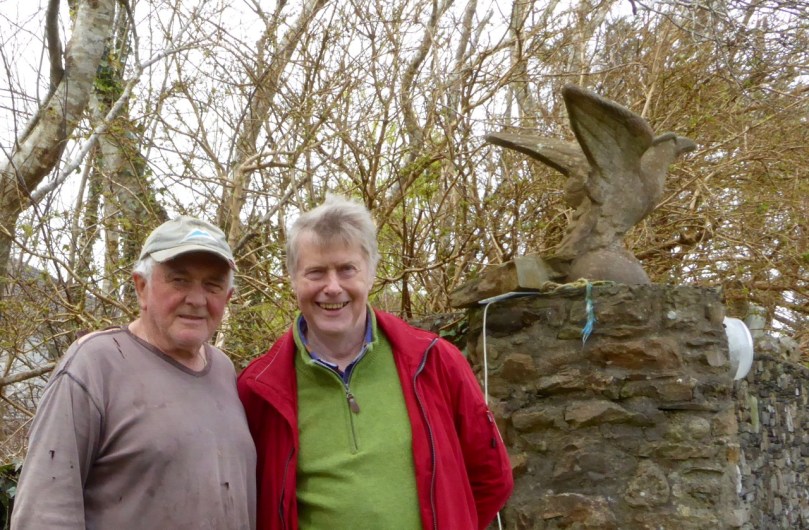
Connie Griffin and Robert

Connie Griffin and Robert

*Somerville-Large attributes this information to Sketches in Carbery by Daniel Donovan. However, I have not been able to find the quote and wonder if it’s from another book.

The Gate to My Heart

Orchard Gate, David Ross

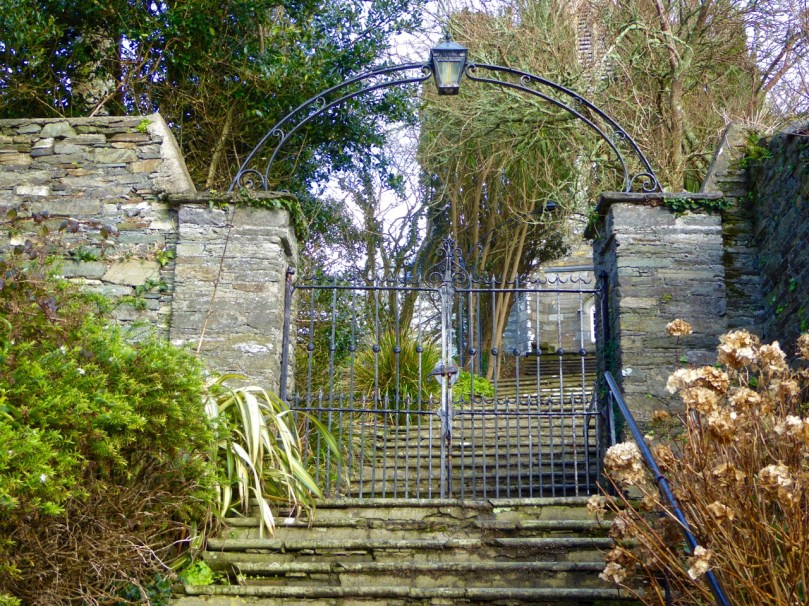
Everywhere I go in West Cork I take pictures of gates.* Most, nowadays, are galvanised metal, rather than, as in the past, forged by a blacksmith taking satisfaction in making each piece unique. Our friend David Ross of the Top of the Rock Pod Páirc & Walking Centre collects and preserves these wrought iron gates where he can. The first two photographs are kindly supplied by him. At the top is an orchard gate he found lying in a ditch and restored – note the blacksmith’s marks of an X and four dots. The gate below is also his, salvaged from the site of an old monastery in Castlemartyr.

David Ross Gate

Another friend and fellow-blogger, Pat Crowley of the encyclopaedic Durrus History, shared his photographs with us – see below. This kind of gate is called a ‘band iron trinity’ and this one was made in the 1930s. The blacksmith was an O’Donovan from Kilcrohane or Kealties.

Band Trinity Gate

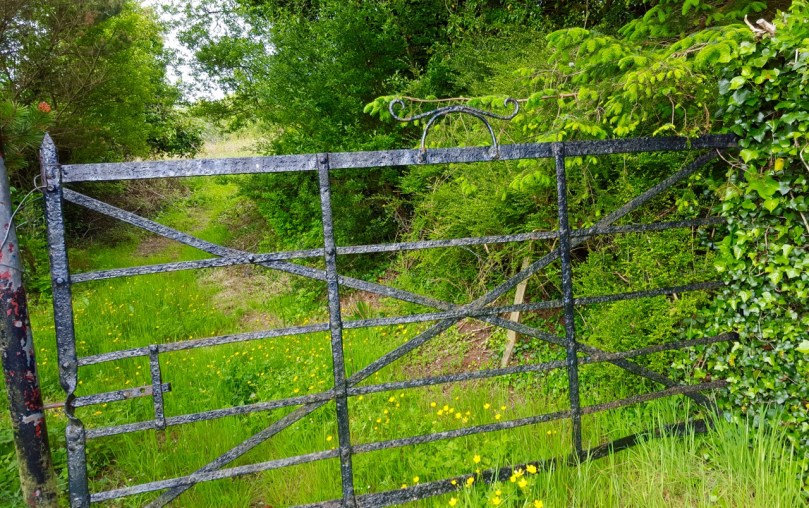
Such gate-dedication is rare: large wrought iron field gates are often left to rust, or cast aside in favour of an easy-care option. But you can still find them, hanging in there, often by a thread, and doing their job. Their days are numbered so we enjoy them while we can.

P1230522


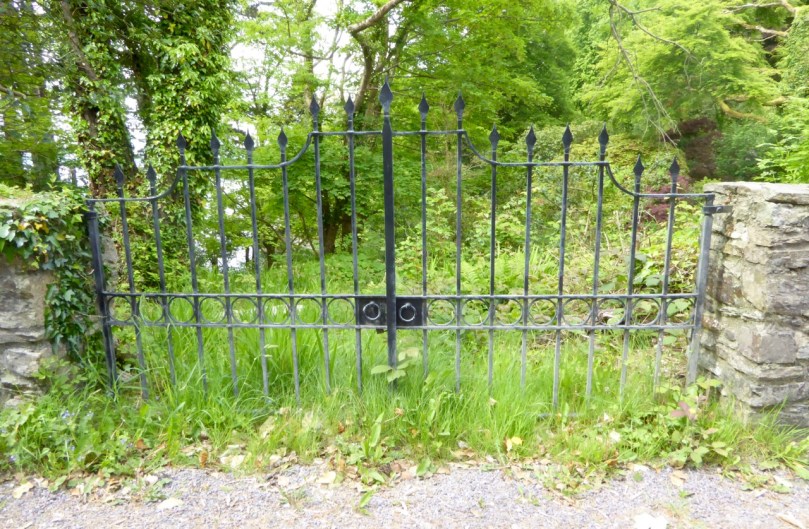
Smaller gates fare better. Perhaps maintaining them isn’t as big a commitment. Garden gates establish the atmosphere the homeowner wishes to evoke – or in the case of abandoned houses, once wished.

Elegant Gate, Ahakista


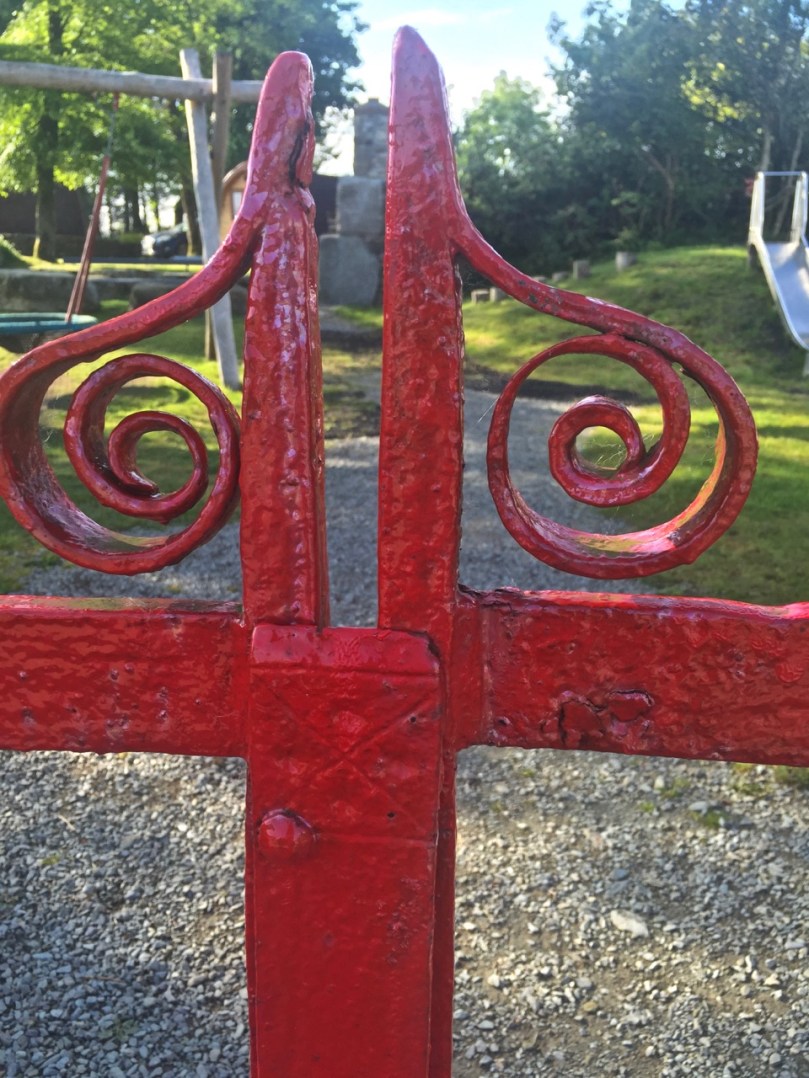
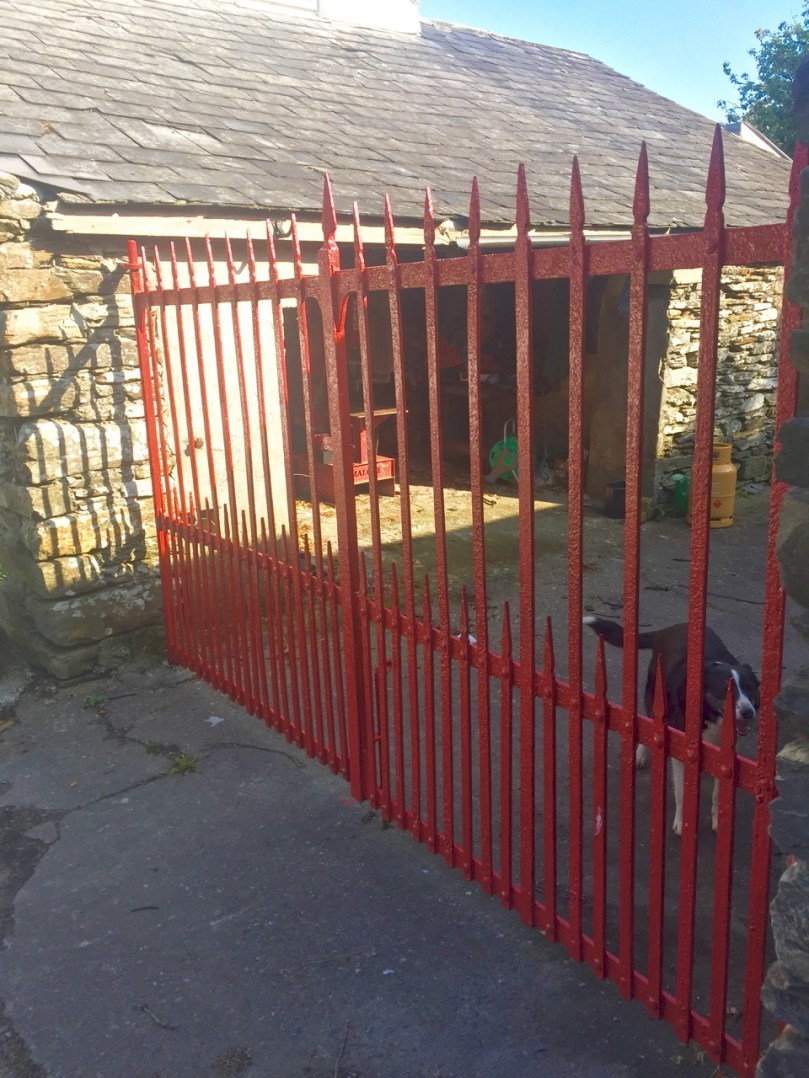
Here are details from a pair of matching red gates near us – a large entrance gate and a smaller side gate.

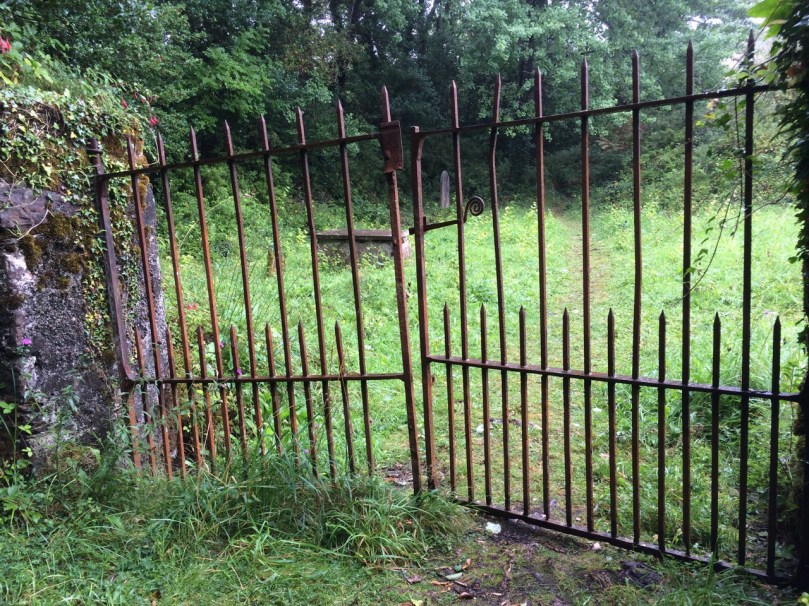
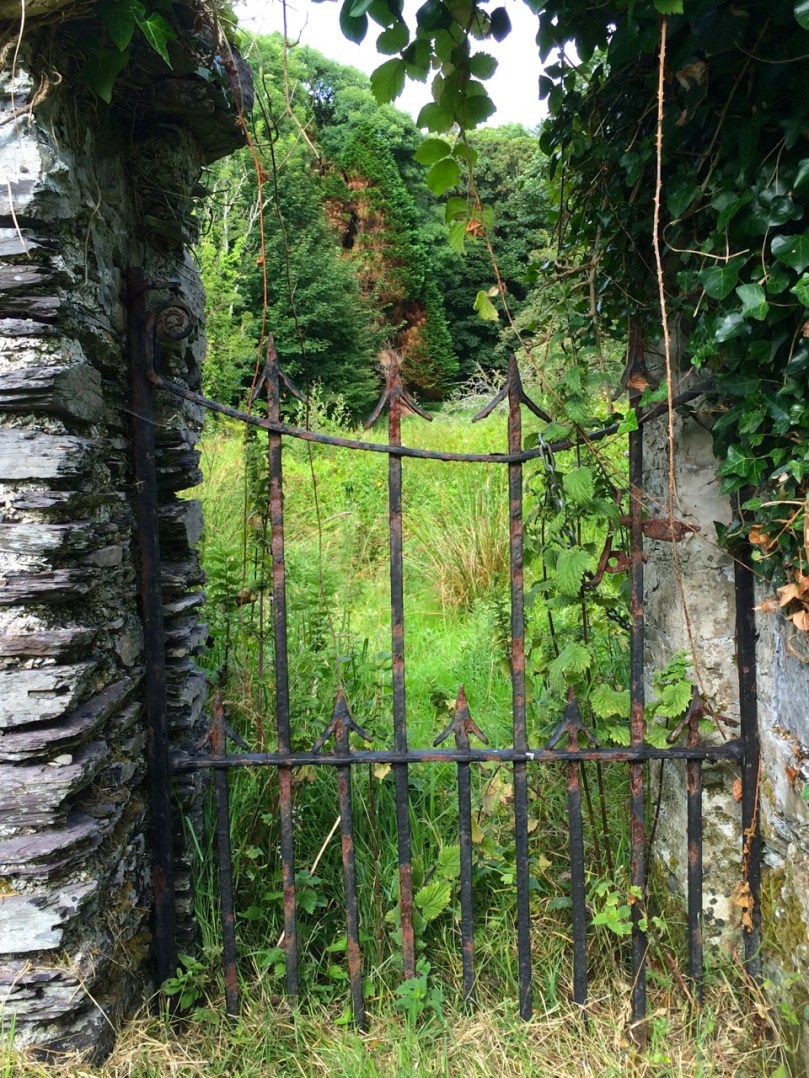
Graveyards are fertile sources of wrought-iron. The entrance gates still stand sentinel, sometimes double gates, but often single, as most coffins were shouldered in.

IMG_5390


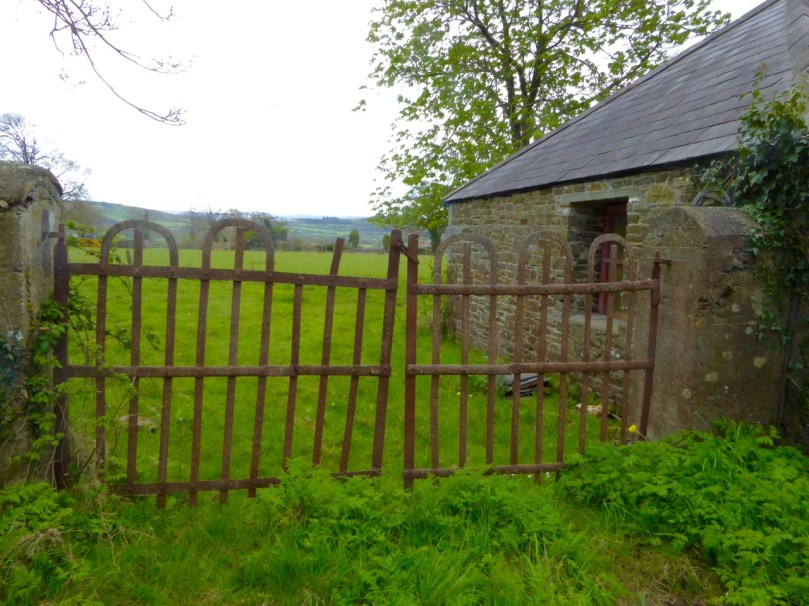
Long-disused church yards with little walls separating off the church precinct from the surrounding cemetery or from the vicarage, feature overgrown gates with fetching designs.


Castlehaven graveyardHoly wells are accessed through through special gates, many dating from the mid-20th century, when holy well sites were re-furbished.

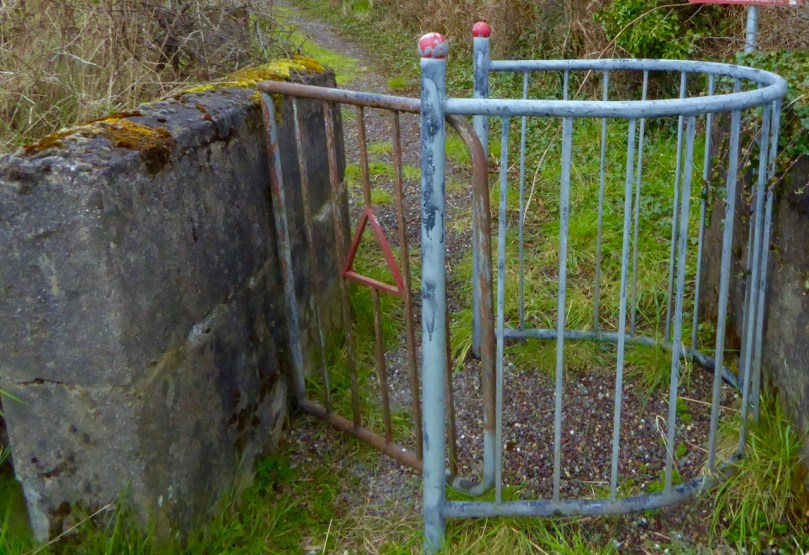
The boreens leading to the well can be accessed occasionally by edging through a kissing gate. This one is not wrought iron, but I like the little details on it.

Kissing Gate

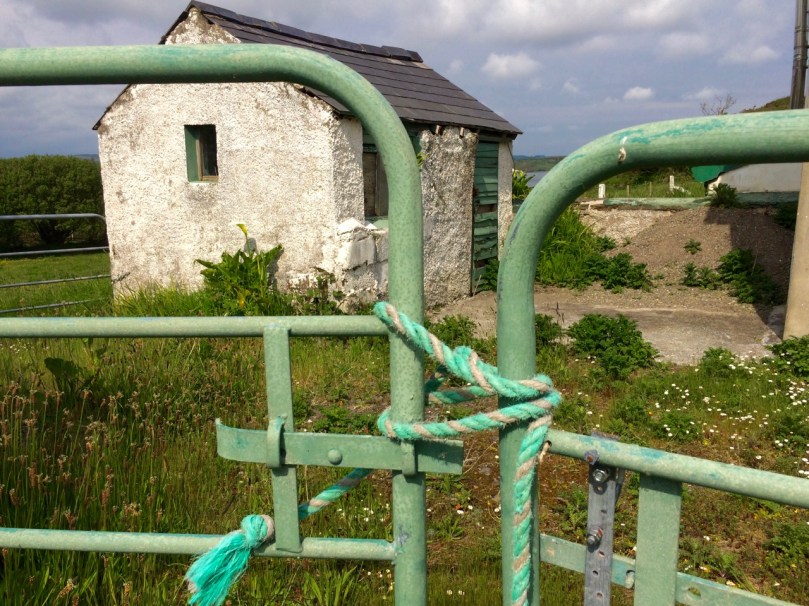
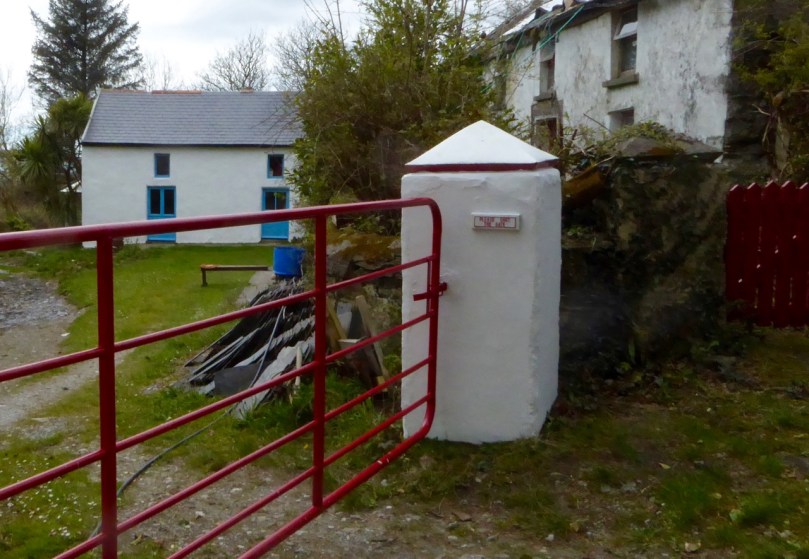
Still, the common field gate manages to establish its own character, and often acts to frame a vista across a valley, or a tantalising glimpse of old stone farm buildings. The vast majority now are galvanised metal, but some have been painted, or hung between substantial stone pillars.

green gate

Nick's GateMost are secured using a highly technical local form of lock called the loop-a-bit-of-rope technique. Seems to baffle the cattle, who stay inside, but it’s great for your friendly wandering archaeologist wanting to investigate a pile of rocks in a field.

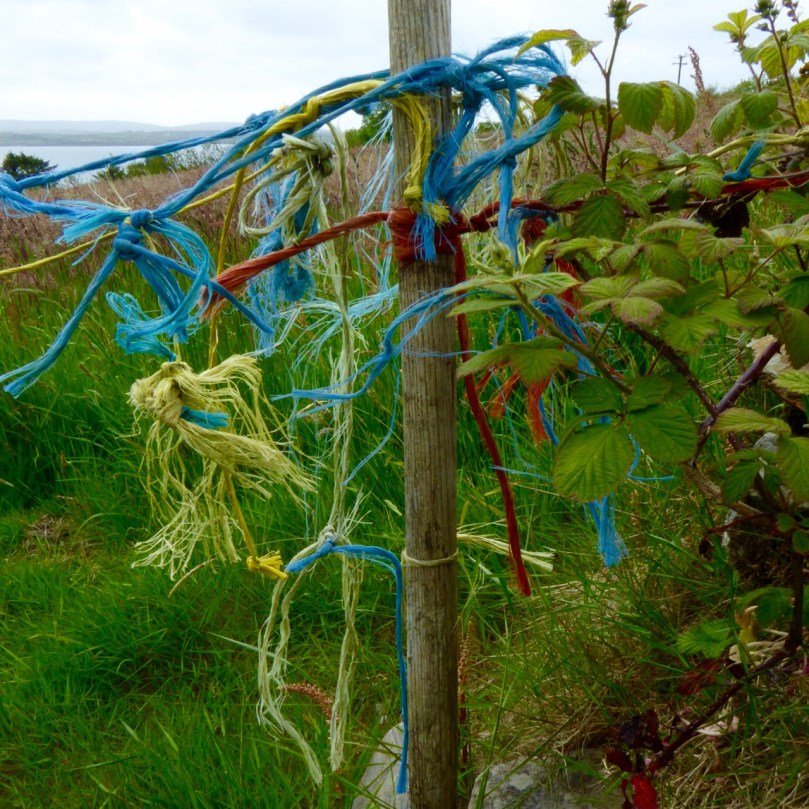
The ultimate, of course, is to dispense with the gate altogether and simply use the loop-a-bit-of-rope lock on its own.

P1060541

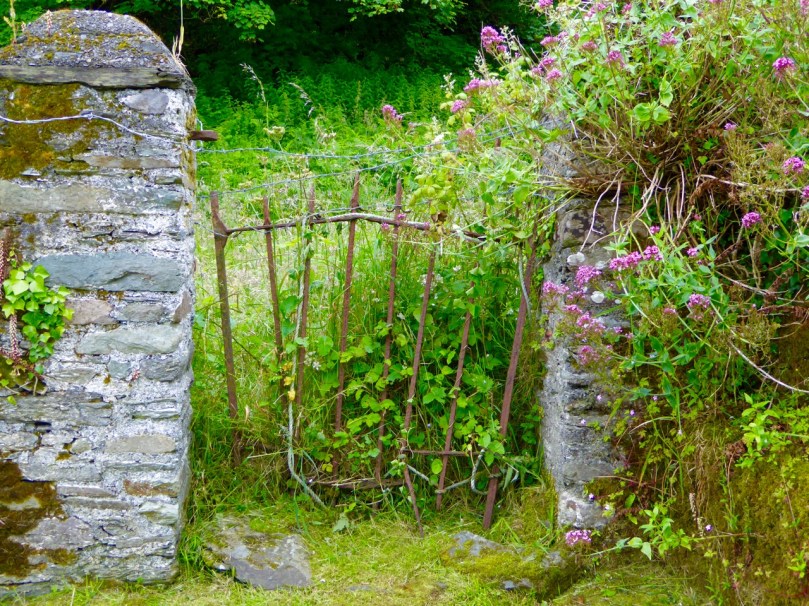
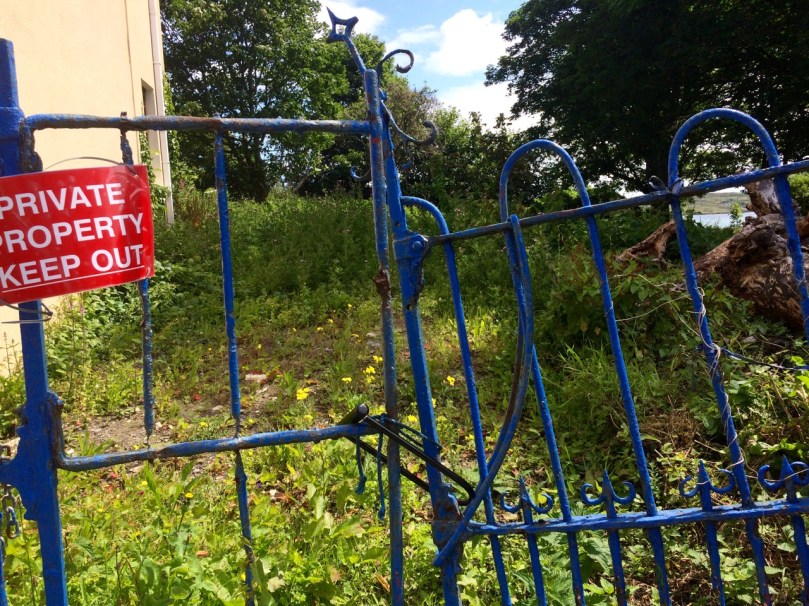
Will this gate, below, sadly neglected, be replaced with a wooden or galvanised model? Perhaps new owners will see what they have and try to salvage it. But it does look like it’s on its last legs.

IMG_8970

When we decided we need some wrought iron for our own entrance, we went to Cronin’s Forge near Durrus. Working in time-honoured ways they make gates and signs that will last the course.

Fitting to end with a church gate, as this has been a hymn to the West Cork Gate, in the form of a photo essay. This is one of my favourites, access to and guardian of so many treasures: the gates to St Barrahane’s Church in Castletownshend. Like so many aspects of this place it is elegant and unique. The photograph was taken by my 11-year old niece, Ava.

St Barrahane's Church Steps

*My apologies to those of you who followed a broken link to this page earlier. At an early stage of writing, I pressed ‘publish’ rather than save (easy to do!) and then had to delete the post. I hope you came back!

Aweigh in Kerry

ursine setting

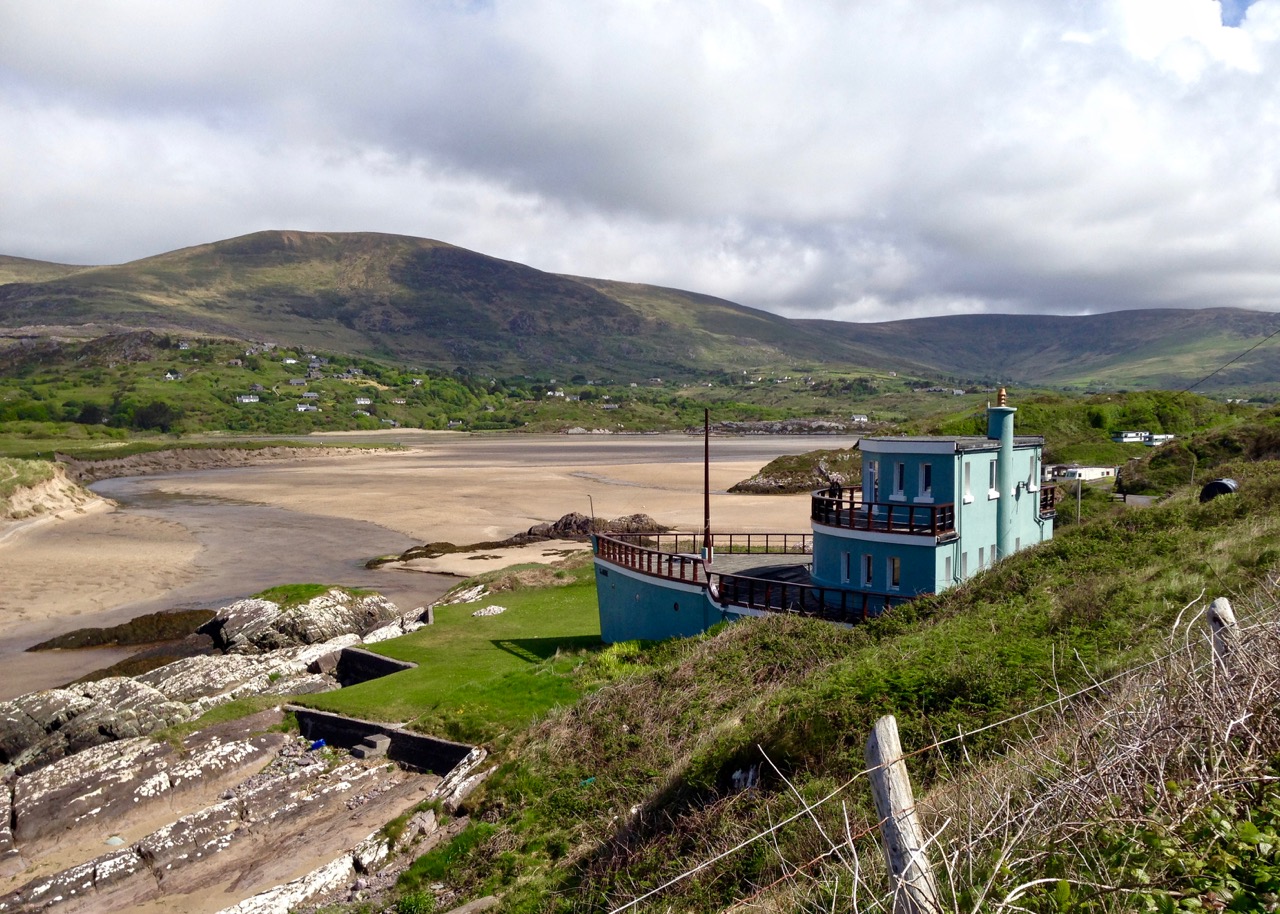
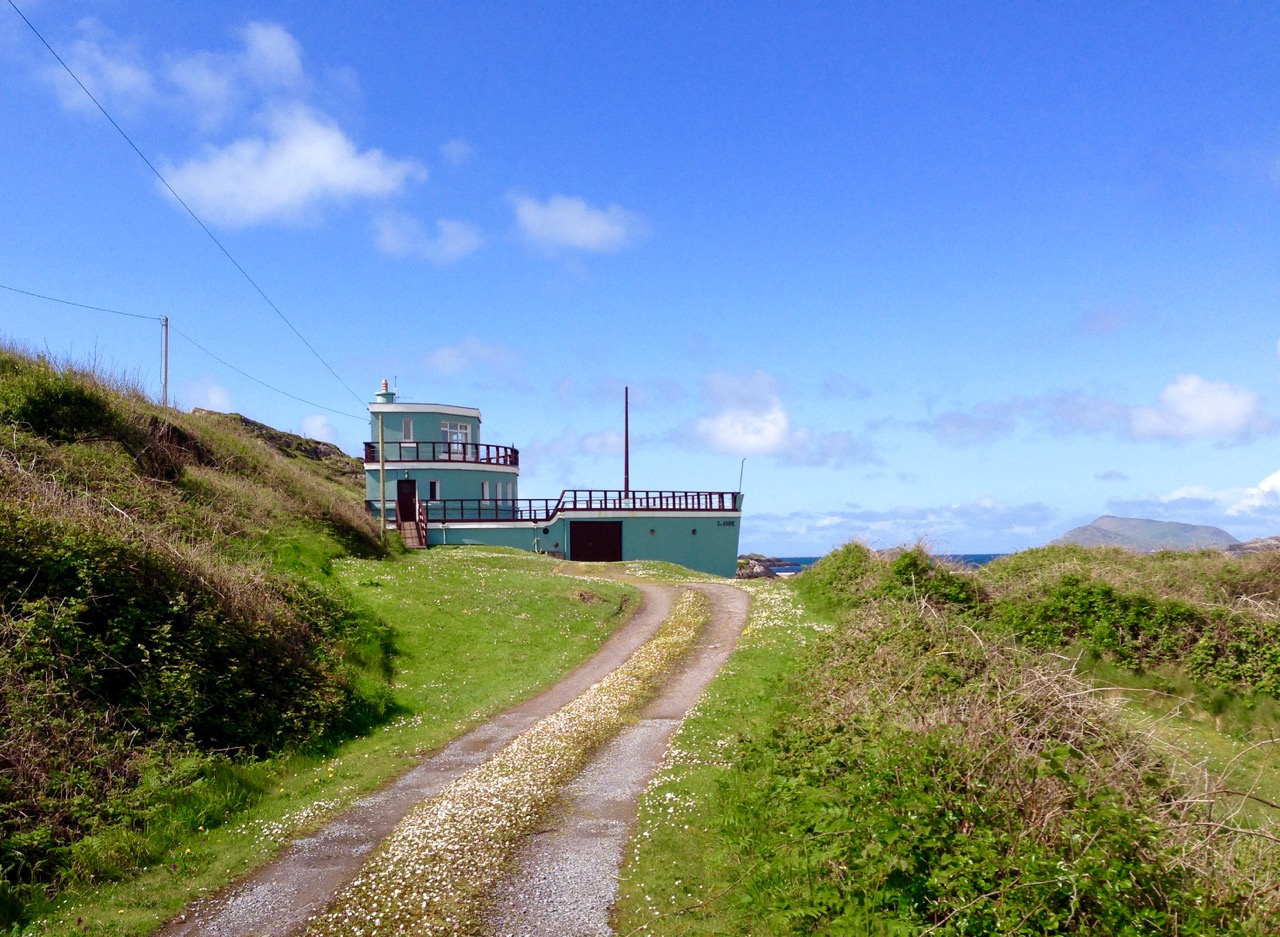
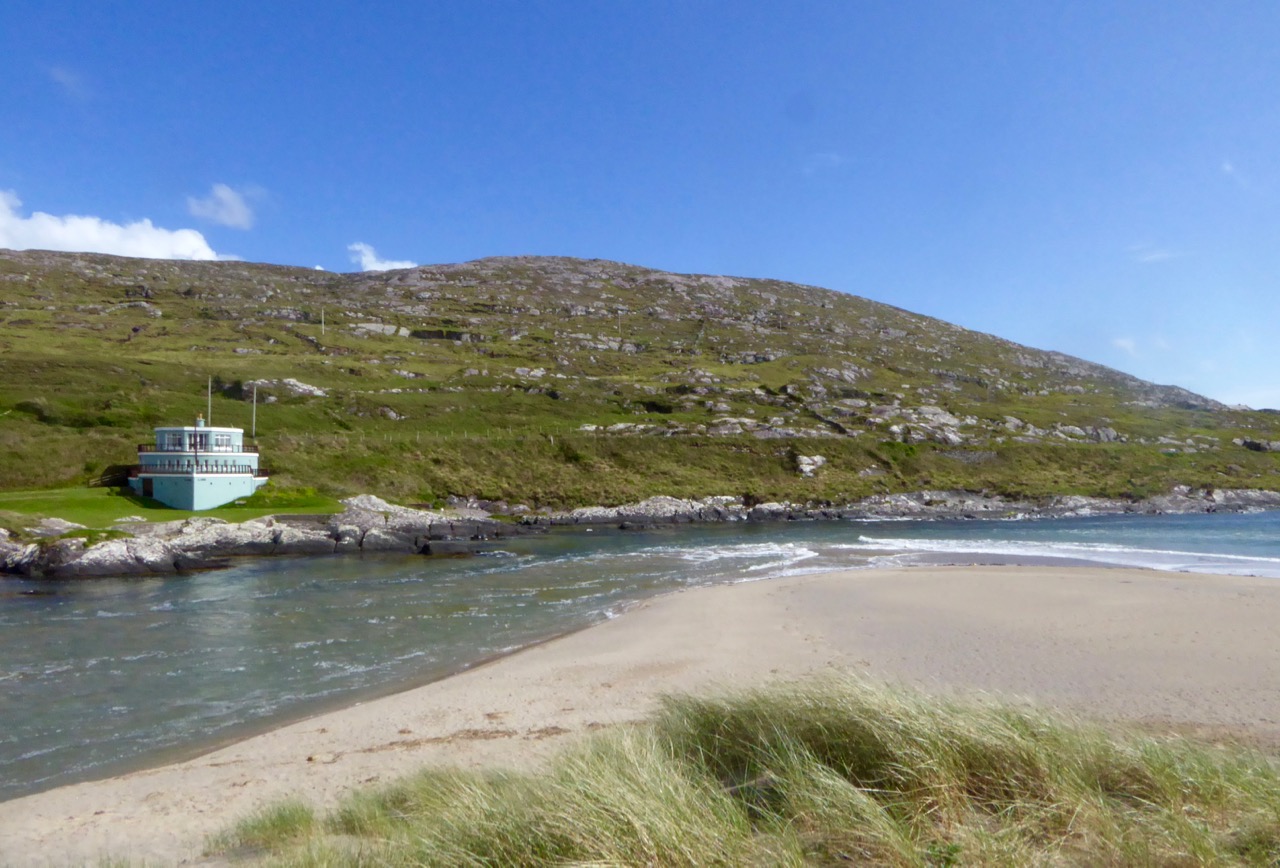
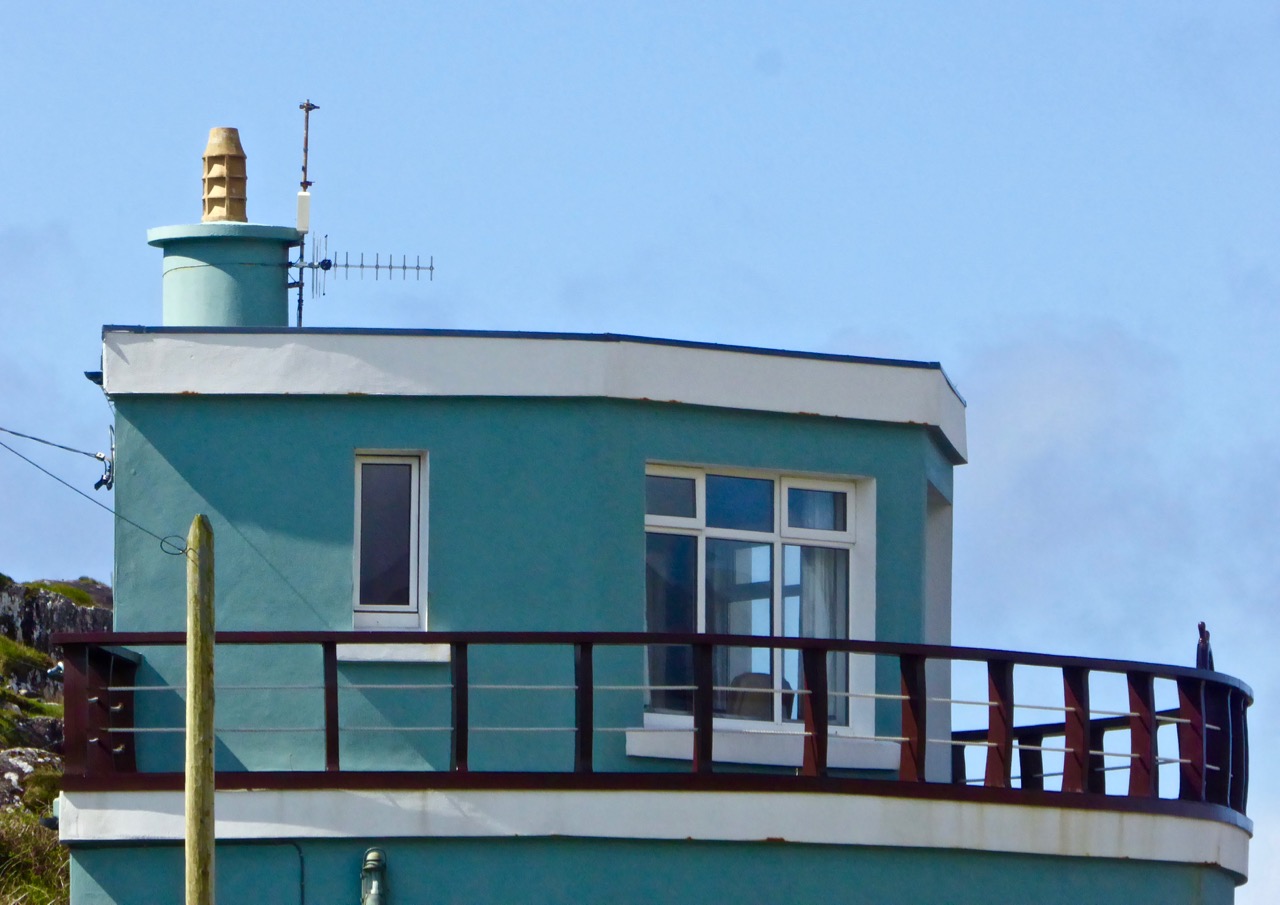
Adrift on the shoreline of Ballycarnahan townland in County Kerry is a most wonderful piece of architecture. It is a ship shaped house, seemingly half buried in the sand dunes, its prow and bridge emerging and facing one of Ireland’s most spectacular views.

view to derrynane

The view from the Ship House: across the water is Derrynane, the home of ‘Ireland’s Liberator’ Daniel O’Connell (soon to be featured on Roaringwater Journal). The Kerry mountains make a splendid backdrop

The house in the dunes was built as a holiday home by Francis and Ros Horgan of Macroom in the early 1950s. It is still owned by the Horgan family. As an architect myself I wondered about the history of the design: did the inspired idea of the ‘ship’ come from the clients? Or was it dreamed up by the architect? In which case the clients would have to be commended for going along with such a daring (and witty) concept.

from the road

Houses made from boats and marooned forever on dry land are not unknown: below are a couple from California; the Kerry house, however, is a purpose-built ‘one off’. Architectural ‘ship’ symbolism can also be found elsewhere in Ireland: the new Library in Dun Laoghaire by Carr Cotter + Neassens Architects has a definite nautical theme, appropriate for its site overlooking Dublin’s Dun Laoghaire Harbour.

green arks

Lexicon

Dun Laoghaire’s new library – the Lexicon – in the right of the picture above, acknowledges its maritime setting (photograph courtesy The Irish Times)

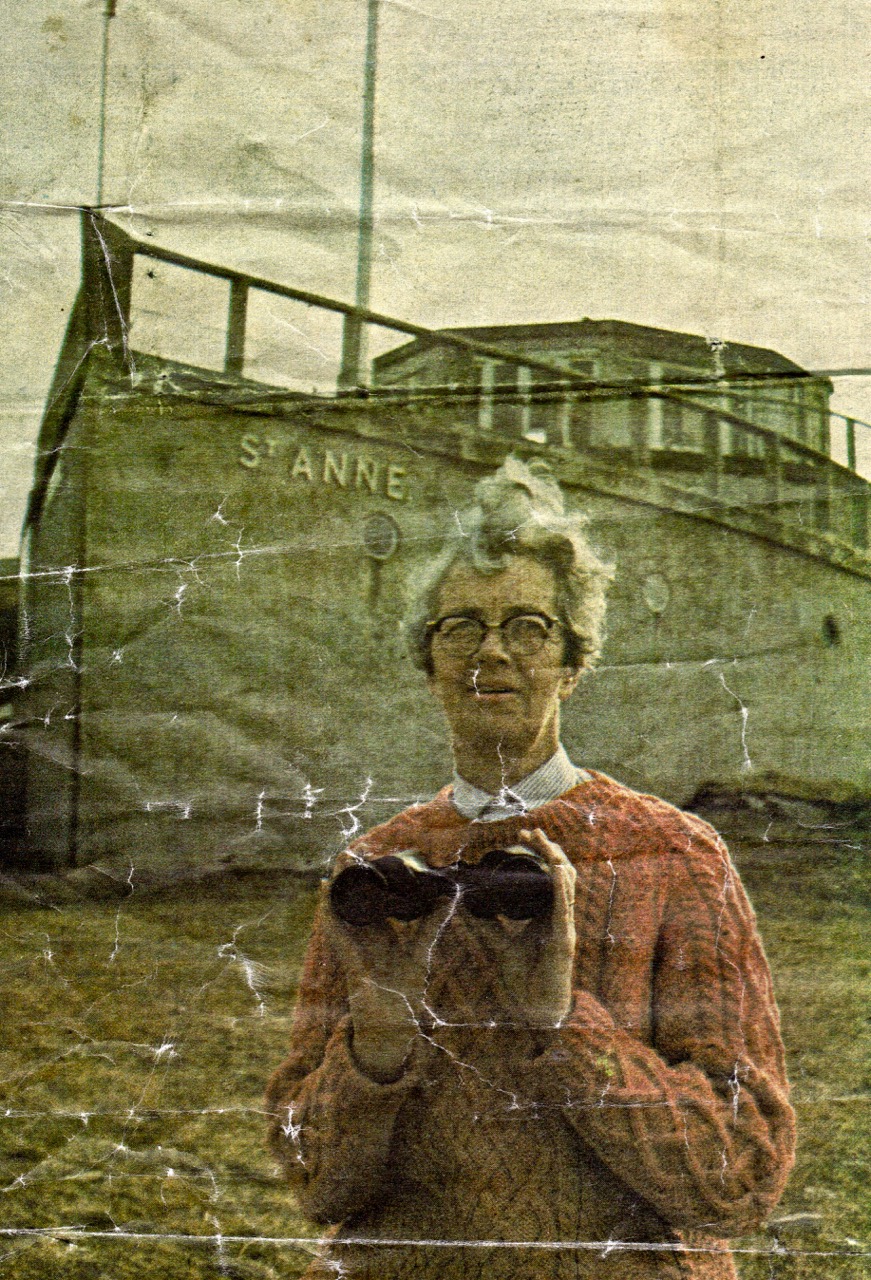
We were in Kerry visiting cousins of Finola: all of them were brought up in Lamb’s Head, just beside the Ship House. They were a mine of information on the house, which had been built by their grandfather Crohane Donnelly (he was named after the local saint) at a cost of one thousand pounds. Over breakfast this morning at Lamb’s Head, enjoying the same view across the bay to Derrynane House, I was delighted when cousin Annie came in with a newspaper cutting from the Daily Mirror dating from St Patrick’s Day 1969: the headline was Ahoy! It’s the Cosy Home that is Always Ship Shape, and it was all about the Ship House.

elevation

The house is named St Anne. I gleaned from the newspaper article that …she was one of Mrs Horgan’s favourite saints. A mass was celebrated when the house was “launched”, after the site had originally been blessed by Cardinal Griffin…

The upper deck of the three tier house – the wheelhouse – has a ship’s wheel which came from the HMS Pluto, which was being broken up in Cork. The lower deck, within the concrete ‘hull’, houses a garage and workshop, is known as ‘the hold’ and is lit by portholes. There is even a gangplank leading to the front door!

Quoting the Mirror: …Mrs Hogan, a quietly humorous Irishwoman in her fifties, explained how it all came about. “I’ve always had a great love for this spot, since I first came here at the age of five,” she said. ‘My husband and I used to come here every year for our holidays. We both loved the sea and boats.” She said that Mr Horgan, an engineering director and farmer from Macroom, Co Cork, worked on the plans with an architect. “First of all it was going to be a round house, then it just evolved into a ship. But,” she smiled, “I think that was what my husband wanted in the first place…”

from the driveway

sand dunes

In 1969 …The house now sprouts a TV aerial and has mains electricity. But Mrs Gorgan rather regrets it. “When we had a diesel engine for lighting, it used to chug-chug away. At night, looking across the bay, you felt you were sailing in a real ship right out at sea. I miss the diesel for that…”

bridge

Perhaps one day I will get to have a look inside the ship house – I wonder how the rooms are laid out? As well as bringing in the electric there are some obvious upgrades which have taken place – there are modern windows installed and the roof looks to have been renewed. But it’s still a holiday home, owned and used by the Horgan’s children. It must be one of the most unusual and eccentric holiday hideaways in Ireland!

Stop Press Since publishing this post yesterday, Cousin Annie has forwarded some more information. An album of photographs which were taken during the construction process was reproduced in the Caherdaniel Parish Magazine in 2014, with the permission of the Horgan family (owners) and the Donnelly family (builders). It’s a great contemporary record of an unusual project and some of those photographs are put together in this slide show – thanks, Annie!

This slideshow requires JavaScript.

Here’s the final picture from that collection, worthy of a place of its own. It shows the completed project and the Donellys who built it. Crohane Donnelly, Annie’s grandfather, is on the left…

ship24 complete

head on

Ros Horgan (pictured below in the Mirror article) deserves the last word: …Her eyes twinkled. “The archaeologists in years to come are going to have a lot of trouble with this one. They are going to ask: ‘In what era did they have concrete ships?’…”

Thanks to all Finola’s Kerry cousins and their families for their memories and information on the Ship House, and for the wonderful hospitality which they heaped upon us during our visit. And thank you to Finola for allowing me to use her superb picture on the header, which would otherwise have featured in her own Into The Kingdom post!

Ros Horgan


Liscarrol: Cork’s Keepless Castle

Liscarrol walls and towers

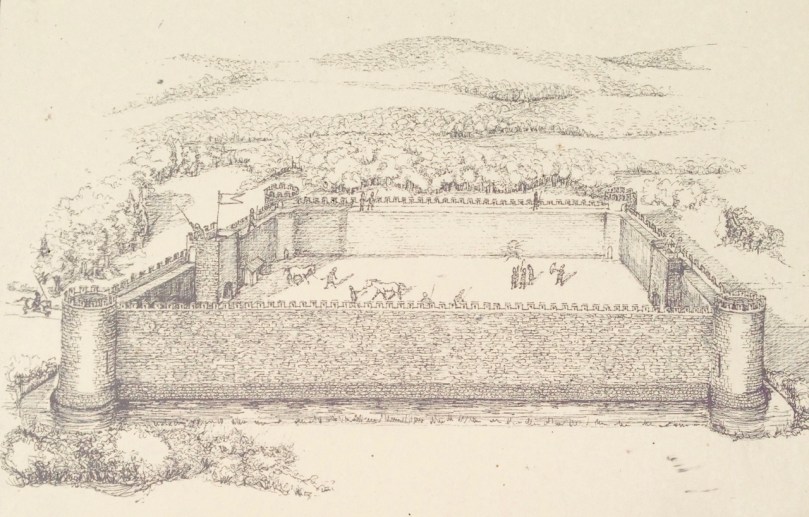
As soon as the Normans arrived in Ireland (1169) they set about building enormous fortifications, the like of which had never been seen in this country before. Dublin Castle was typical, but not a lot remains to be seen of the original shape. More accessible is Limerick Castle – a space enclosed by imposing stone walls with corner towers and a strong gatehouse. Few of these very early castles remain. Leask, in his Irish Castles, termed them keepless castles, since they had no central tower houses or keeps. (Regular readers of Roaringwater Journal will recall several earlier posts about castles – these refer almost exclusively to the much smaller tower houses, most of which date to the 15th century and later. See When is Castle…? Tower House Tutorial Part 1 and Part 2, and Illustrating the Tower House.)

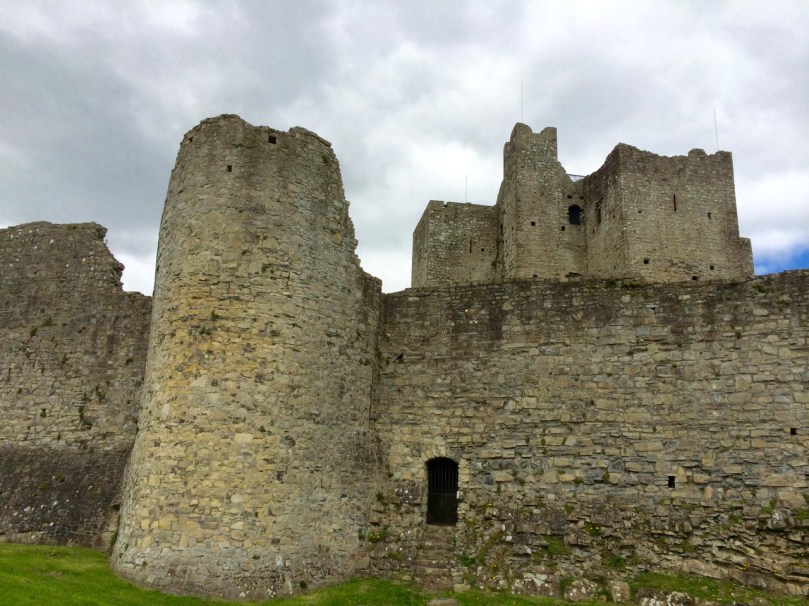
Trim Castle with Keep

Trim Castle in Co Meath is one of our best examples of an early Norman castle with a central keep

Alongside the keepless castles, and gradually taking over in popularity, were built those in which a tower, or keep, was the dominant feature located inside those high curtain walls. These great Norman castles were the predominant form during the late 12th and early 13th century. However, in the late 13th century, for some reason, keepless castles experienced a resurgence and several were built around the country. Most of these are in a ruined state and of course some have entirely disappeared or been so altered as to be unrecognisable.

Liscarrol front elevation

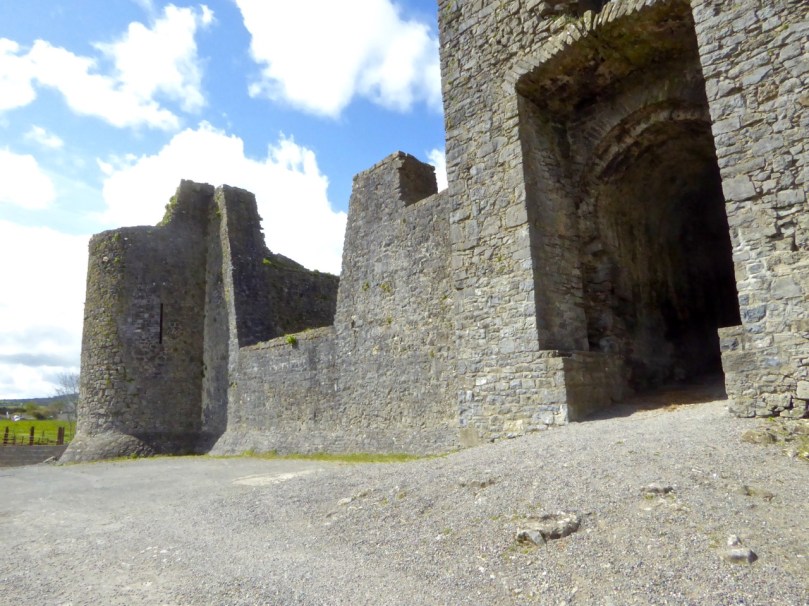
In the middle of the village of Liscarrol in North Cork – this!

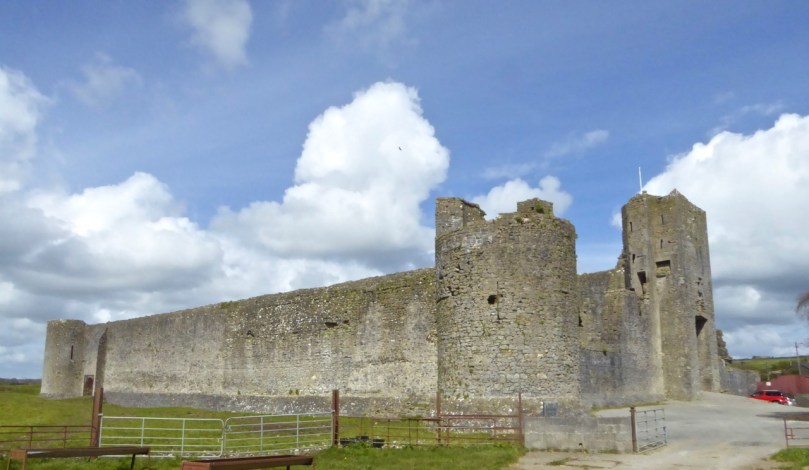
But there’s one (and only one) in Cork and it has has retained all its magnificent features. On a recent trip to Duhallow (mostly looking for holy wells with Amanda and Peter of Holy Wells of Cork) we rounded a corner on a country road approaching the village of Liscarrol and there it was – as unexpected as it was jaw-dropping!

bawn walls

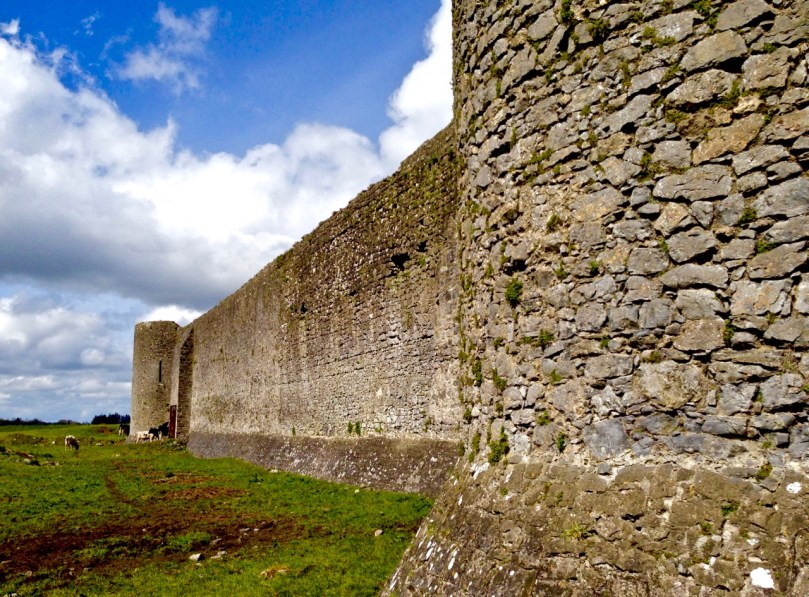
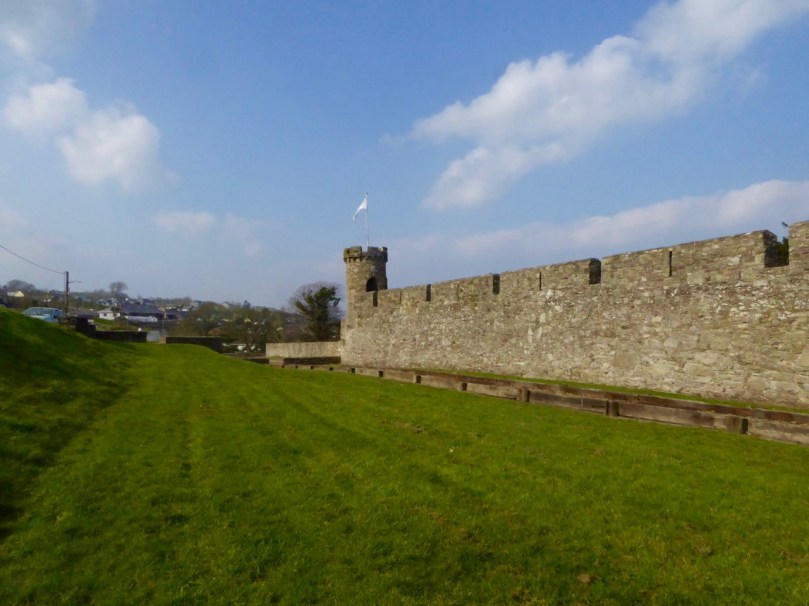
Note the splayed base batter of the walls, providing a solid foundation

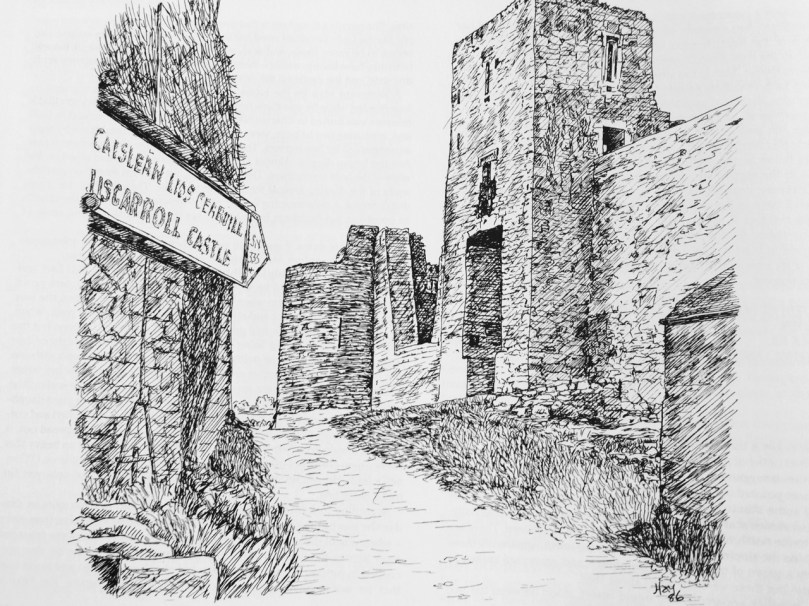
Liscarrol Castle was probably built in the mid-13th century by the De Barry family but eventually passed into the possession of the Percevals in the 17th century. It was besieged by an Irish army of loyalists in 1642, but was eventually subdued and retaken by the parliamentarians under Sir Hardress Waller, whereupon it was again occupied by the Percevals who owned it into recent history.  James N Healy, in his magisterial The Castles of County Cork provides a detailed account of the back-and-forth sieges of the 1640s, as well as a charming sketch of the castle as it was in the early 1980s, when the key could be obtained from a local pub.

Liscarrol by Healy

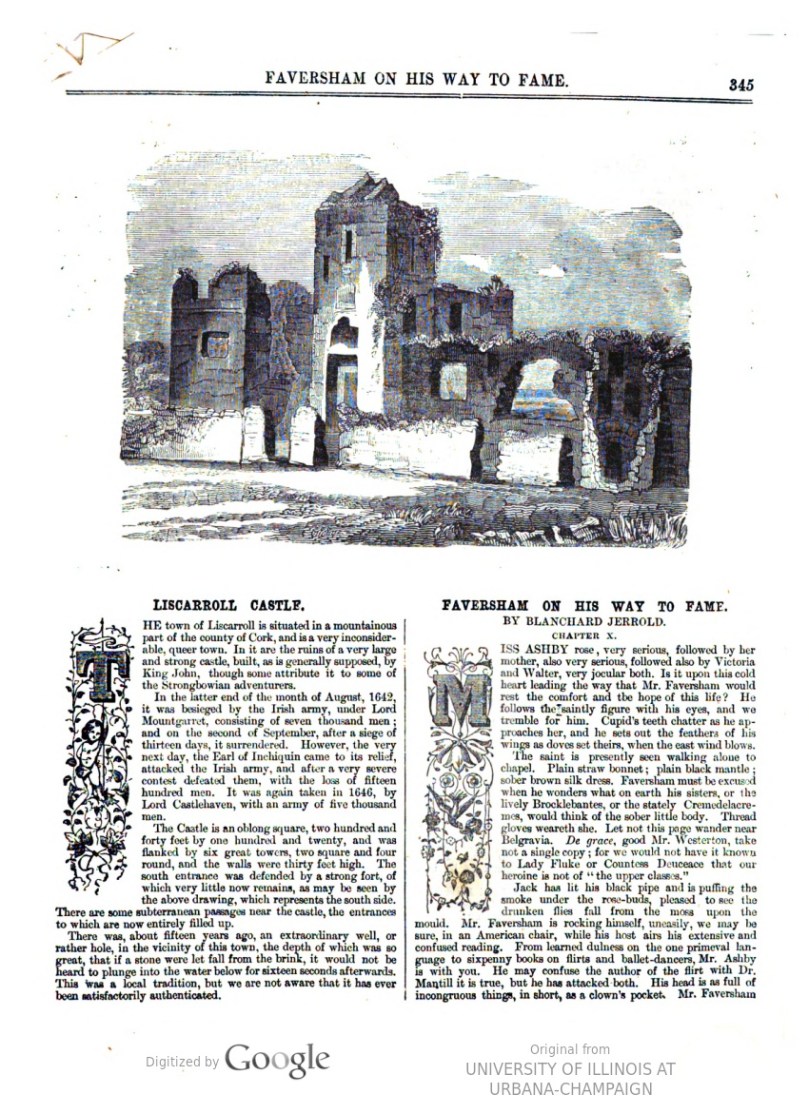
It was extensively repaired and stabilised by the Office of Public Works (OPW) on several occasions in the 20th century. The sad state of the walls can be seen in a picture from The Illustrated Dublin Journal of 1862.

Liscarrol from Illustrated Dublin Journal

The Illustrated Dublin Journal is available online through the kindness of the University of Illinois

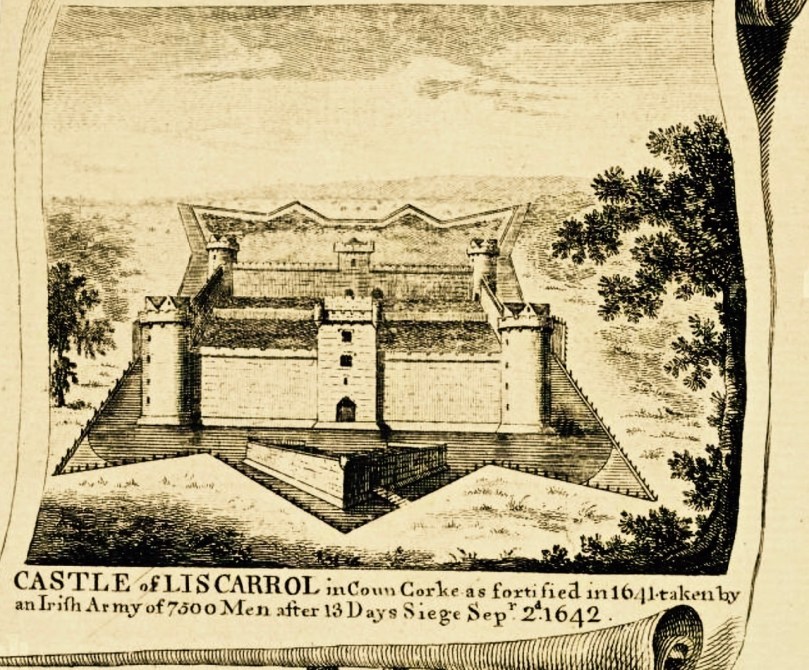
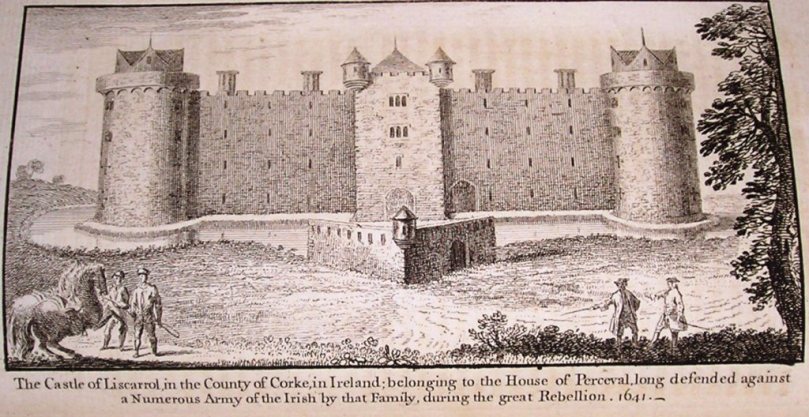
There are several older illustrations of Liscarrol Castle and they show two features that are no longer obvious today. The first is a moat, which must have been drained a long time ago as the ground is dry around the walls.

Liscarrol Castle drawing

The second is an outermost fortification known as a ravelin – a triangular projection that would have been the first line of defence in front of the entry tower.

OLYMPUS DIGITAL CAMERA

Both illustrations above are courtesy of the National Library

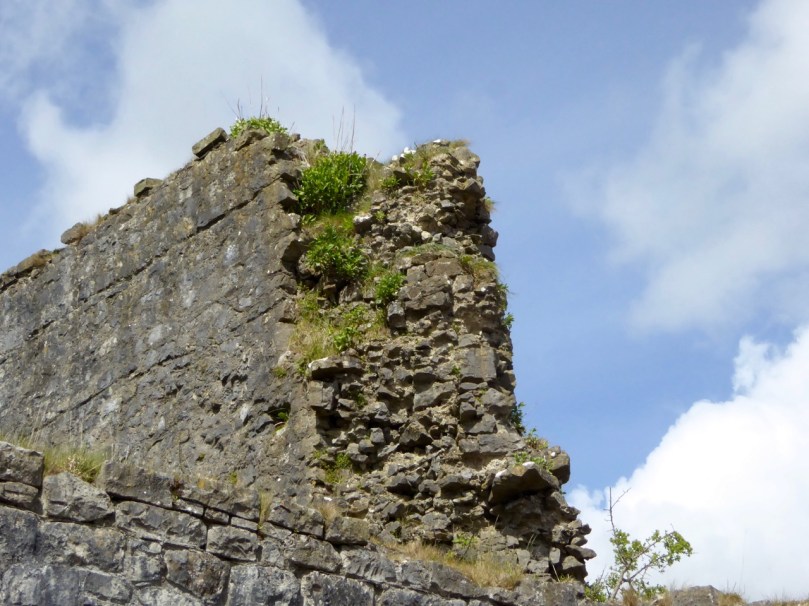
Rubble Construction

A section through the wall showing the rubble construction between outer facings of worked stone

How did a keepless castle work? Quoting Prof Tadgh O’Keefe of DCU, the description of Roscommon Castle (another of the keepless castles) has this to say:

Earlier on in the 13th century, two Royal castles in Ireland at Dublin and Limerick were built- the first castles in Europe that were built as keepless castles with an encircling wall that included towers. The emphasis in castle design here was on the encircling curtain wall. This wall included large barrel towers used as storage and partly living space, with emphasis on a residential gate house.

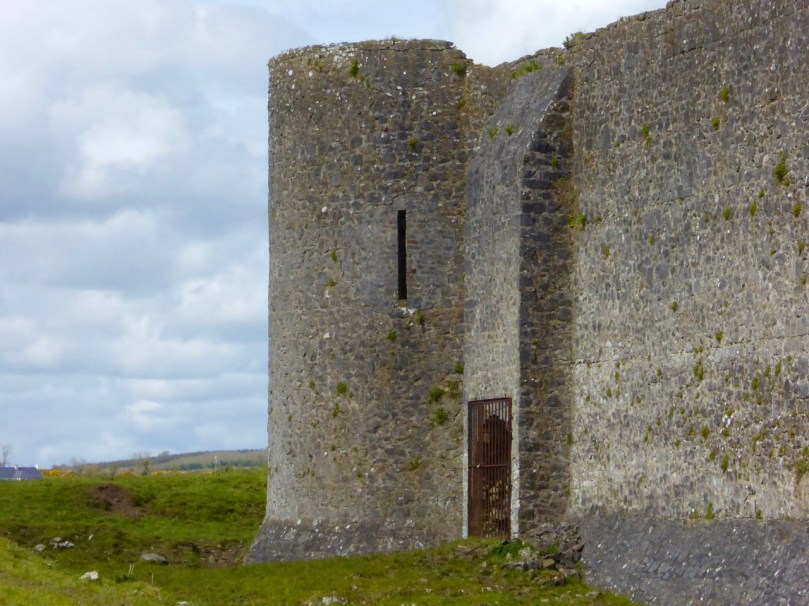
postern gate

The enclosure of these castles then contained further buildings, possibly built from wood or mud. The move to a keepless castle design seems meaningless to us today until we start thinking about the difference this would have made in terms of castle defence.

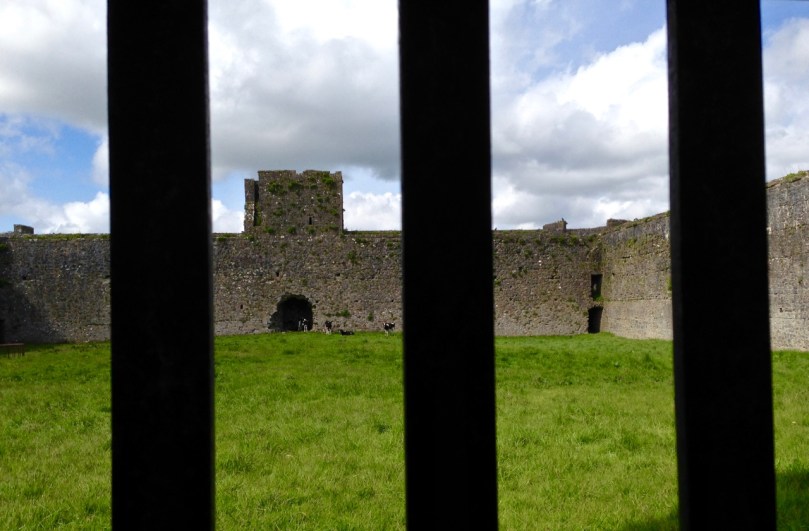
castle behind bars

The interior of this enormous enclosure is now home to some bullocks

In a castle with a keep, the attacker would have stormed and overcome the walls first, and then attacked the keep where all defenders would have withdrawn to now. Defending the keep was dependent on a single gate/ door holding up, and the bawn then had to be re-captured as well. In a keepless castle, defenders withdrew into the super thick walls themselves, supported by food storage and living space in the towers. The walls contained arrow loops facing both sides of the walls, meaning both the bawn AND the outside of the castle could be defended at an advantage. So, in fact, the move to a keepless castle design was an ingenious innovation providing super safe castles.

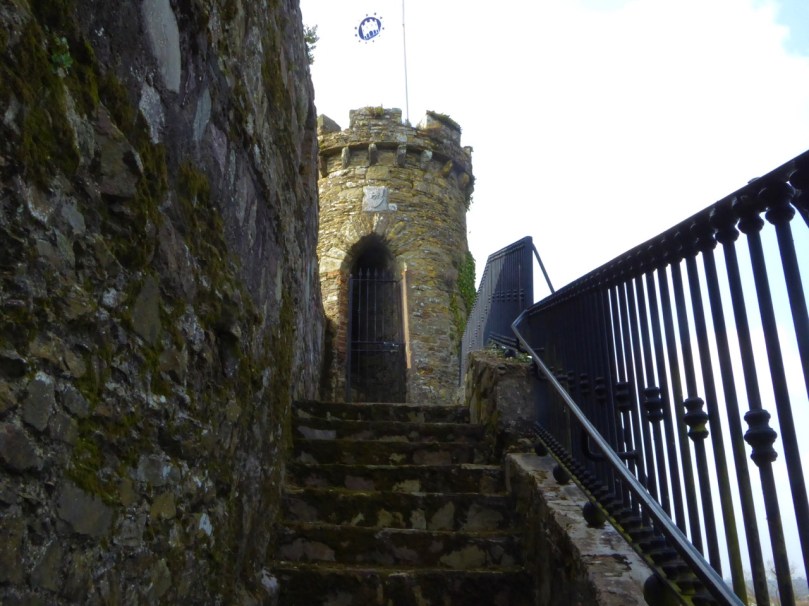
Entrance tower

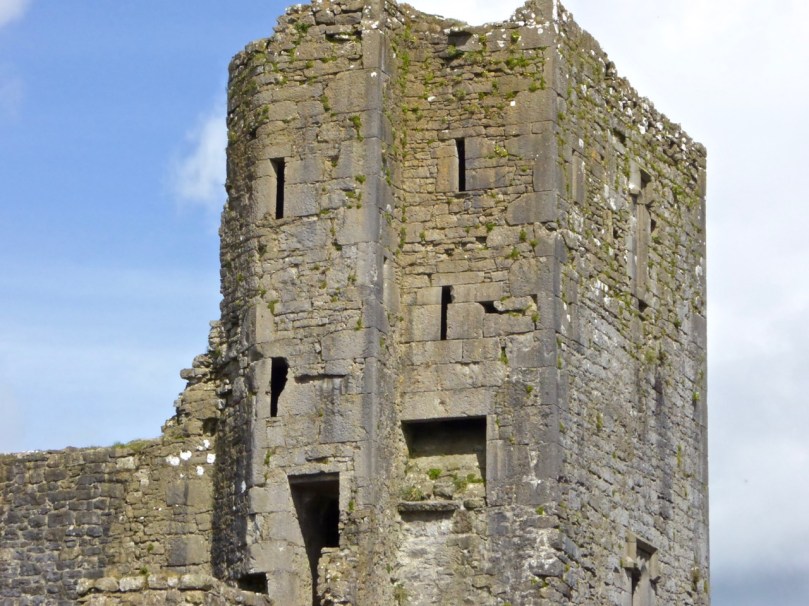
The entrance tower would have provided living space for the De Barrys and the Percevals. Note the garderobe chute high on the walls, and the entrance off the battlements

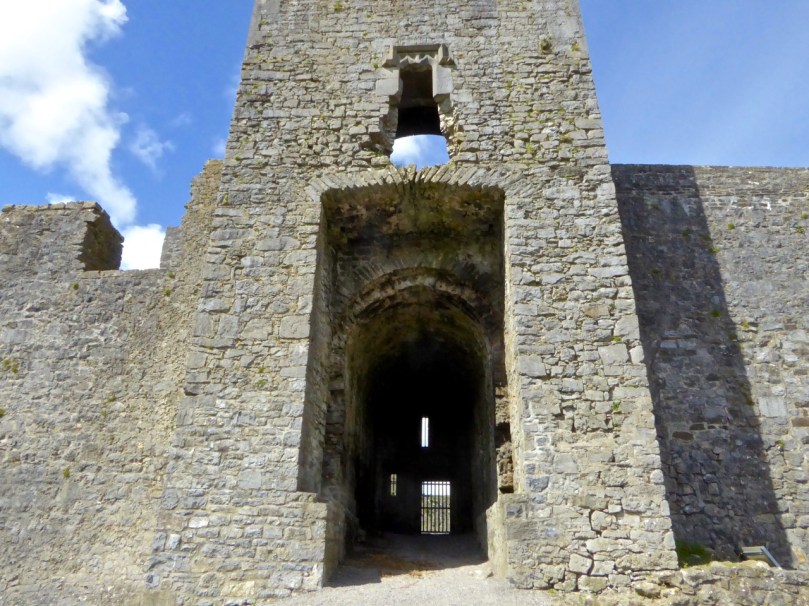
The entrance is one of the most impressive aspects of the castle. Many defensive features were deployed, including murder holes and a portcullis.

Liscarrol entrance

liscarrol signSome modifications to the earlier structure are visible here and there, although on the whole it remains truly a thirteenth century stronghold.

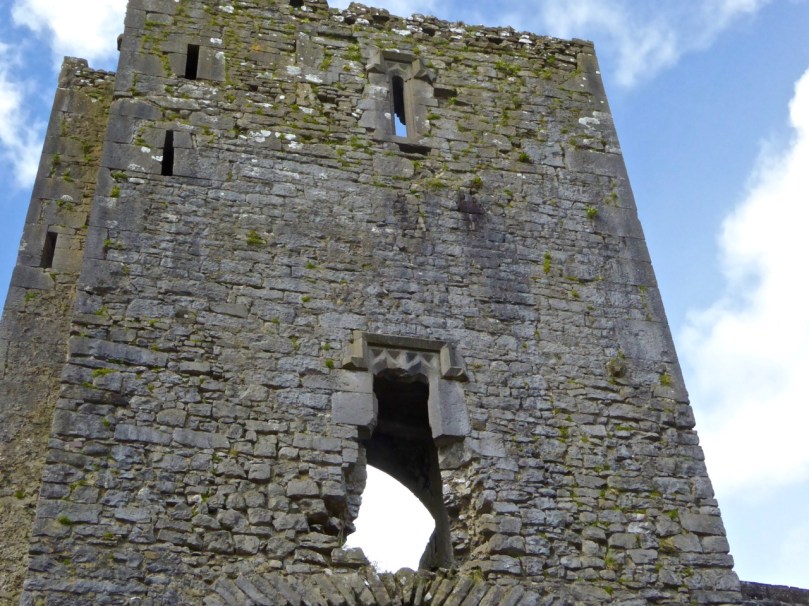
Later window features

Windows were widened, probably in the 15th century – the ogee heads are a dead giveaway

The only problem with Liscarrol Castle is that it is accessible solely on the outside – the inside was occupied by a small herd of young cattle. Given the amount of public money that has been spent on it, this seems an immense pity. Duhallow and its towns and villages are doing a great job at putting together interesting tourist experiences: Liscarrol Castle, unique and awe-inspiring, could be a jewel in its crown.

keepless castle pic

And to finish off in good old Irish tradition – there is, of course, a tune called The Walls of Liscarrol. Have a listen.

Youghal’s Walls

Outside the walls 2

Walled towns are relatively rare in Ireland and it’s even rarer to find substantial sections of wall still standing. But Youghal (pronounced YAWL), in County Cork, miraculously has a significant extent of its medieval wall still in place. 

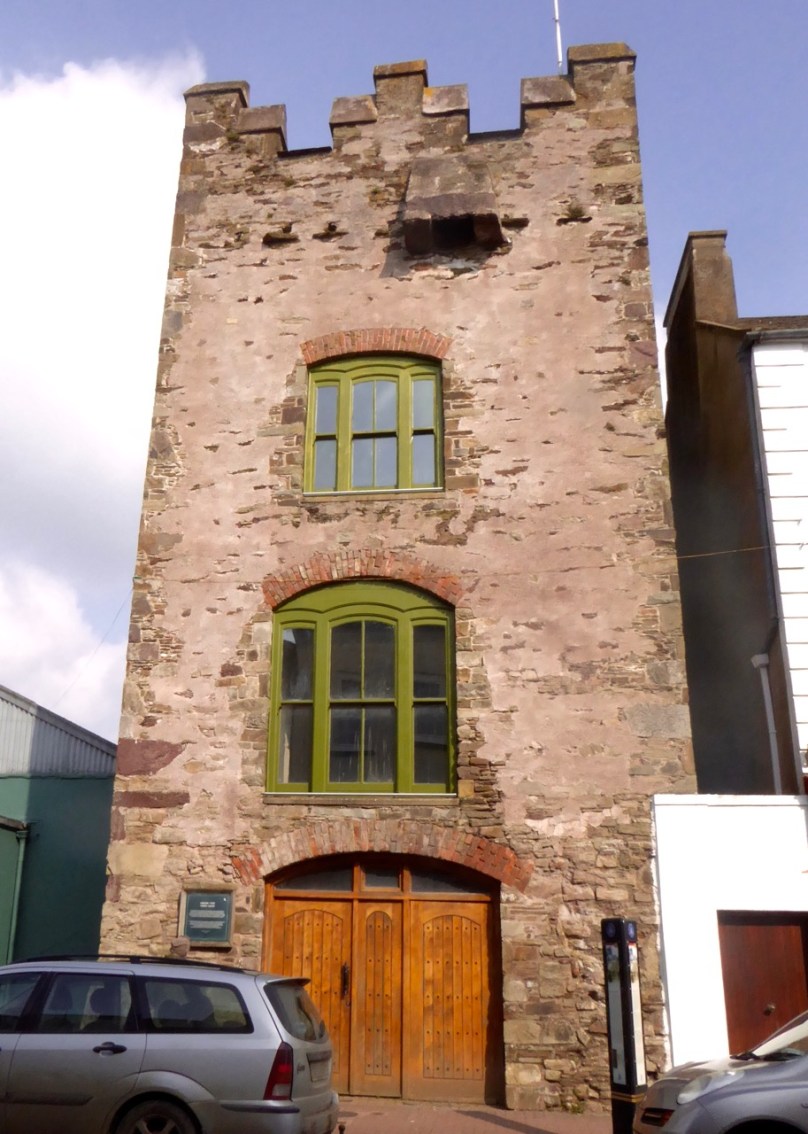
Mural Tower

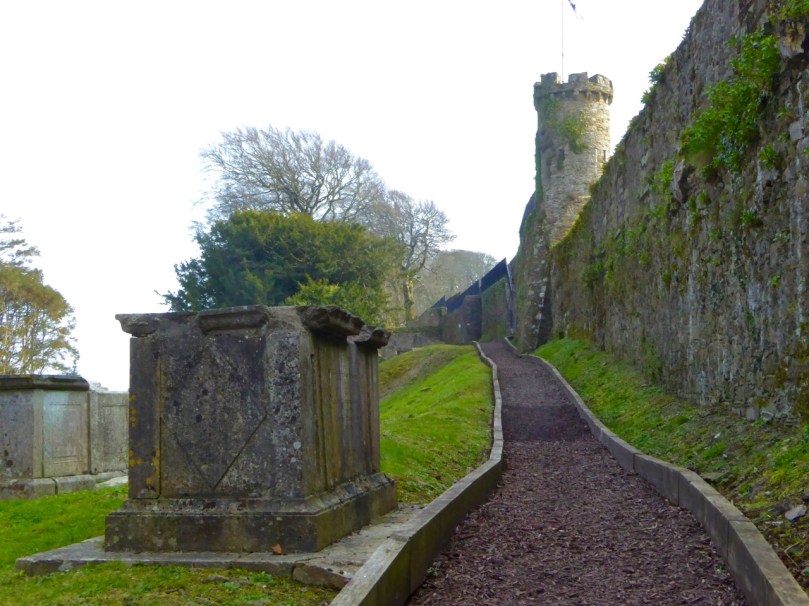
Drew’s Tower, one of the mural towers that punctuated  the wall. Some of the others were called Montmorenci, Half-Moon and Banshee Towers

A walking tour of Youghal is a great way to spend a day. Robert is writing about the wondrous Collegiate Church, one of the highlights of the tour but by no means the only stop of interest.

Boyle's Almshouses

Almshouses built by Richard Boyle and still in use today

The history of Youghal is inextricably mixed up with Walter Raleigh, an early resident, and Richard Boyle, the Great Earl of Cork. They lived here in Tudor times, but the town started out as a Viking stronghold. The Norsemen may have built earthen defences, precursors to the later stone walls.

PacataHiberniaYoughalc 1600_800x537

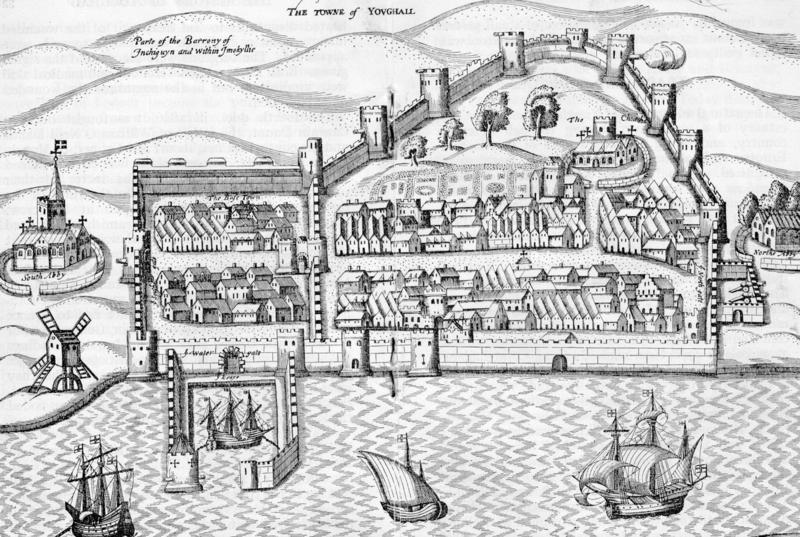
Map of Youghal from the 17th century Pacata Hibernia. The smaller walled section to the left was known as Base Town or Irish Town. It was for the native Irish and the entrance to the main town was through a guarded gate. Note the heavily fortified quay walls

It’s not hard to understand the importance of Youghal if you consider its strategic setting. Situated in an excellent natural harbour, it guarded access to one of the south coast’s longest and most navigable rivers – the Blackwater. The Irish and Norse banded together to defend Youghal against a Norman raiding party that had sacked Lismore in 1173. They were unsuccessful, and from then on Youghal became a Norman town. It was these Normans who built the first sections of the wall, in the 13th century.

Walls above graveyard

The great family of Fitzgerald, Earls of Desmond, dominated the town for the next three hundred years. The Desmonds ignored the dictates of Dublin Castle and lived like independent princes – a factor that was to lead to their eventual downfall and along with it the decline of the old Gaelic order and the arrival of a planter class from England that would include Raleigh and Boyle.

View from Walls

Youghal occupied an important position at the mouth of the Blackwater, with a sheltered harbour

But in the early medieval period, before those troubles, Youghal prospered and became the 6th largest port in Ireland and a booming centre of trade.

Portugal sent wine, oil and olives; Spain, iron, lemons, oranges, shumack; France, silk, salt, spirits, vinegar; Amsterdam, paper; Flanders, bark, tapestry and silk; Rotterdam, cider, coffee-mills, corn powder, earthenware; Bremen, iron, oak-boards, and Rjenish window glass; Norway, balks and deals; Drontheim, oars, spars masts etc. Articles of luxury were imported in abundance; amongst other articles of fashion, we have ivory combs, fans, head-rolls, masks and papers of patches.**

Tynte's Castle streetscape

Tynte’s Castle which once overlooked the quay walls and helped to defend the town

To the sea side the main defence consisted on the quay wall, which was strengthened with crenellations and fortified by towers. One of those towers, Tynte’s Castle, is still in use on the main street. It was once the home of Elizabeth Spenser, widow of the poet Edmund Spenser, to whom he wrote the love poem Epithalamion. Spenser was not popular in Ireland – read more about that here

Tynte's Castle

The quays and the walls behind the town were the subject of petitions for ‘murage grants’ over the centuries as they were difficult to maintain and the town itself was subject to attack from the sea by pirates and by the ‘Wild Irish’ from the high land behind the town.

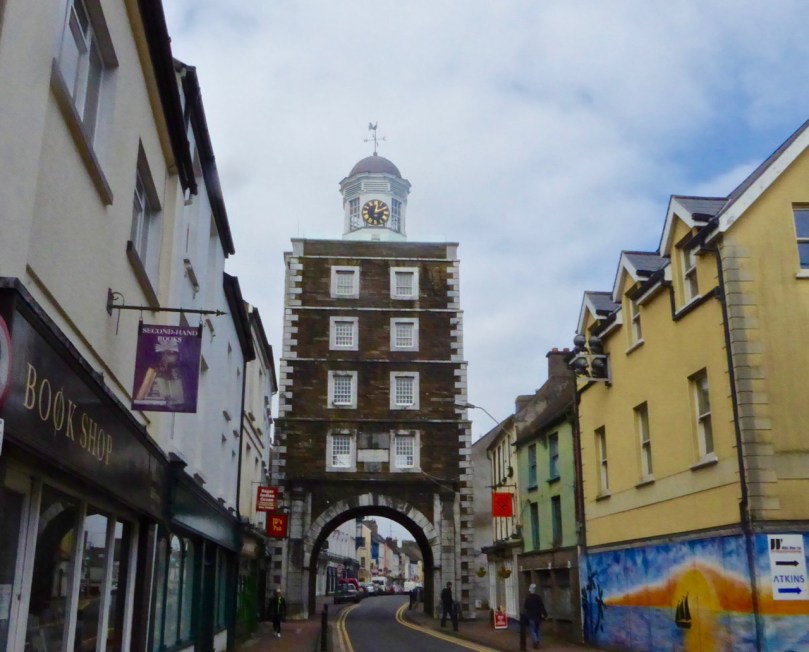
Clock Gate

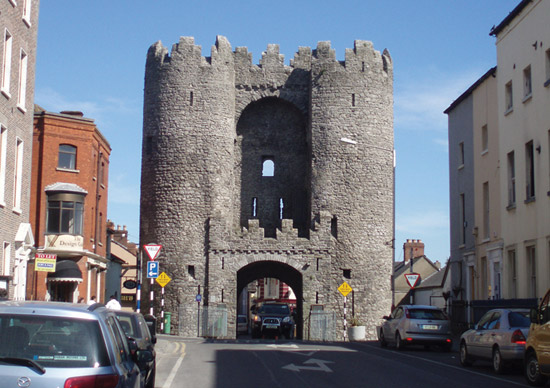
Access to the walled town was provided by means of guarded gates. While no original gates have survived, the Clock Gate, built in 1777, is located where the original gate was. The current tower functioned as a gaol for many years. It is believed the original gate may have looked like St Laurence’s gate in Drogheda, one of the few town gates surviving in Ireland.

laurencesgate-01

The surviving town gate in Drogheda – St Laurence’s Gate – shows us what Youghal’s gates would have looked like

The town was attacked and devastated by the Desmonds in 1579. Eventually driven out and defeated, the Earl’s lands were forfeited to the crown and granted to Sir Walter Raleigh who came to live in the house called Myrtle Grove. He later sold his lands to Richard Boyle, under whose energetic patronage the town once again prospered and the walls were repaired. Much of what we see now dates to this period.

Model of walls

A model of the town – this section shows the walls in the north-east section, St Mary’s Collegiate Church and Myrtle Grove

Walls were rendered obsolete by the advent of heavy canon and they gradually fell once again into decay by the late 1700s. Meanwhile the prosperous town needed wider streets and gates were removed, although the portion inside the walls kept its medieval layout for the most part.

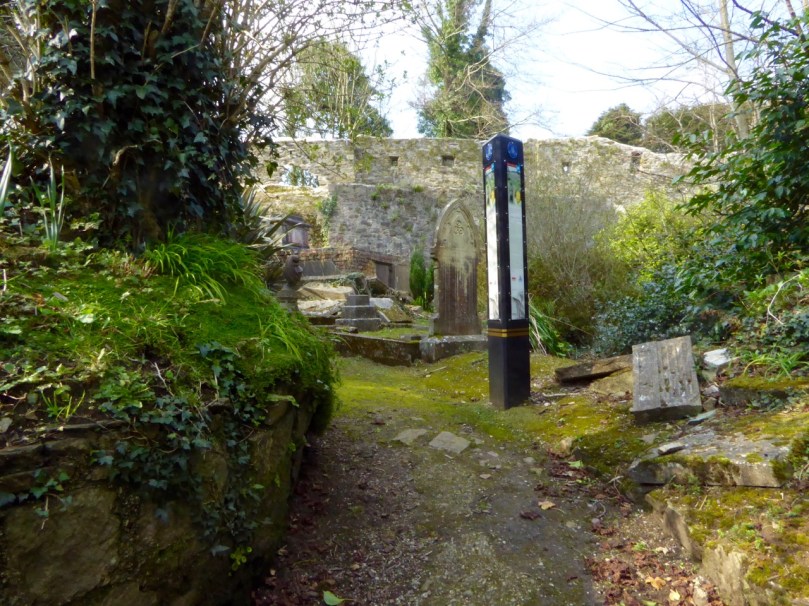
Through the graveyard

The old graveyard behind the Collegiate Church and within the walls is waiting to be explored

Enough of the town wall survived, however, and the citizens of Youghal are rightly proud of it. They have undertaken an ongoing program of  stabilisation and repair. For one thing, they have removed the ivy that threatens to destroy so much of our medieval heritage.

Wall repairs

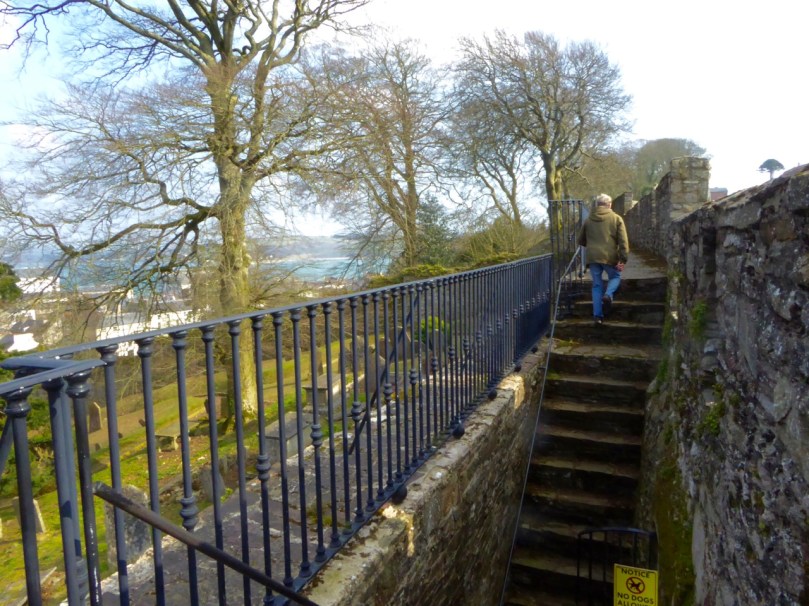
Today, you can wander freely around the walls. There are magnificent views from the top, where you can appreciate the strategic importance of the port and admire the formal collegiate gardens preserved as a town park. Take one of the walking tours offered by the Youghal Heritage Centre – in a land steeped in history, this experience ranks as unique!

Wall walk

**This quote and much of the information in this post came from the excellent publication: Youghal Town Wall: Conservation and Management Plan, by Cork County Council. Thanks also to the Youghal Visitor Centre for the walking tour map and the friendly greeting.