Autumnal Day Out – Myross Pyramid

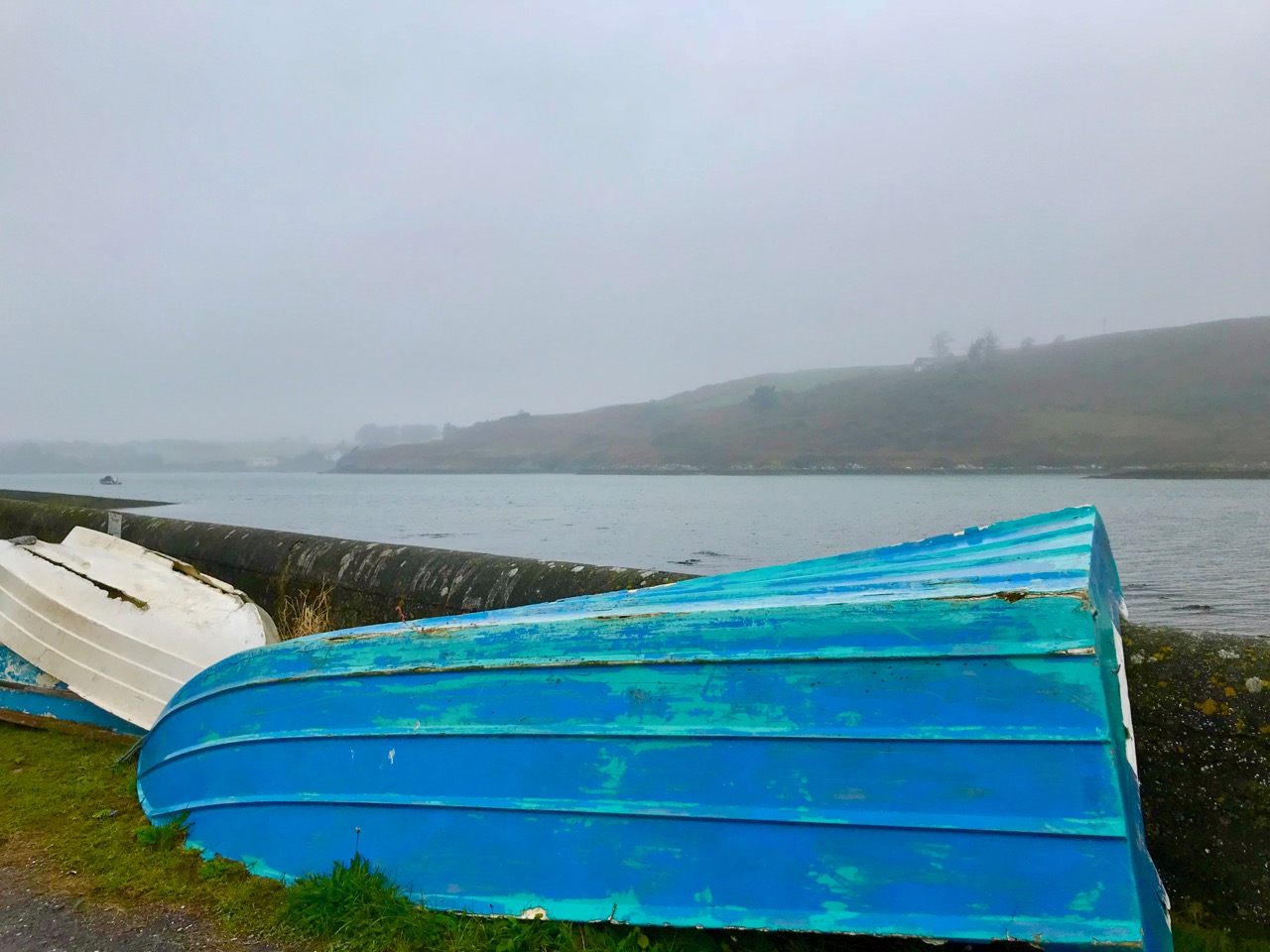
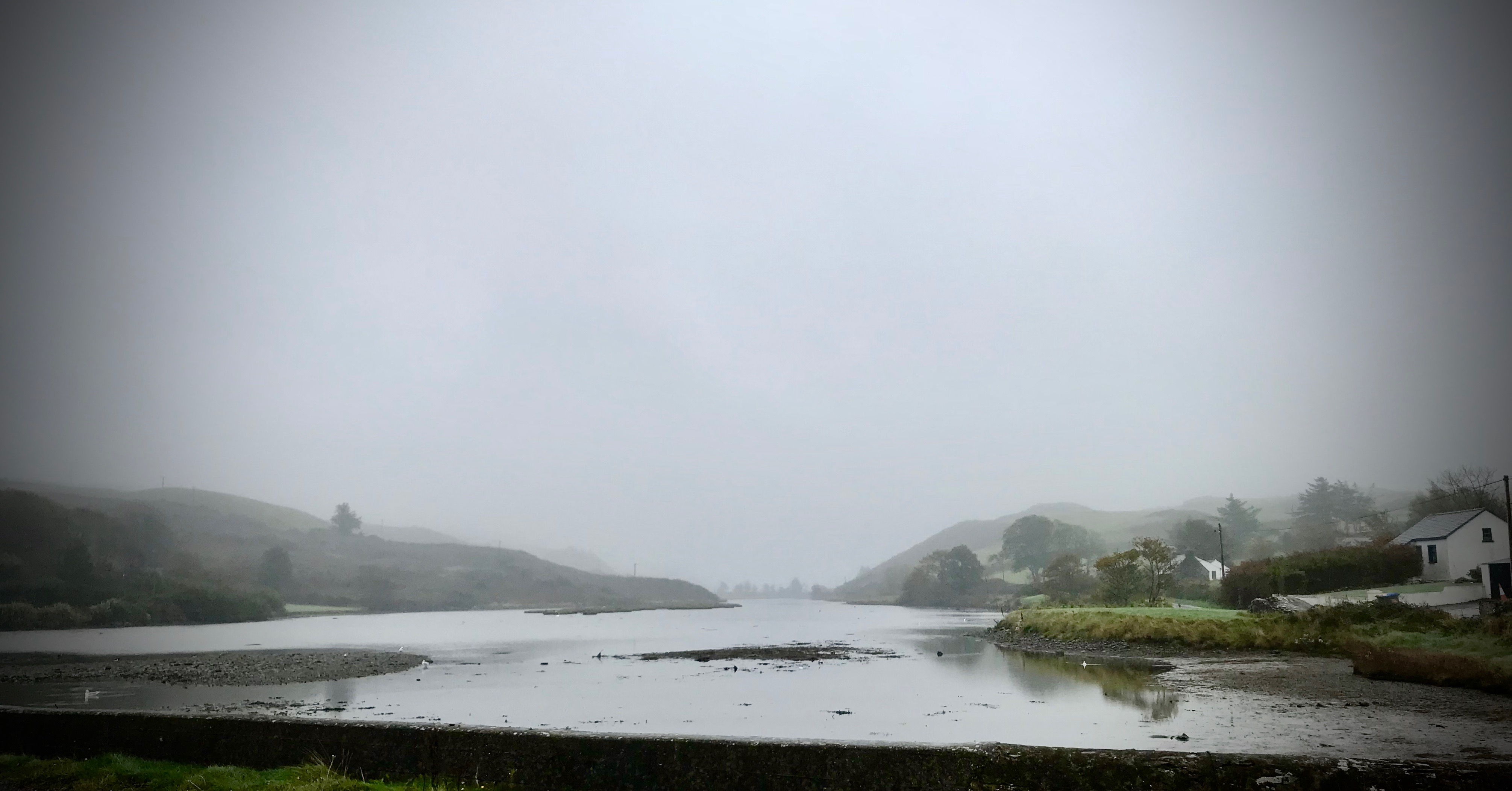
Following what might be described as a Mediterranean summer which went on beyond all expectations well into October – where I suppose it became an Indian summer – we have just had the first truly autumnal days. Mist has descended over the islands of Roaringwater Bay and everything – trees, grass, nature – is dripping wet. This doesn’t put a stop to our travels, but we do see everything in a different light.
Last week I reported on a surprising find, a pyramid-shaped tomb in the idyllically off-the-beaten-track burial ground at Glandore over the hills not too far away from Nead an Iolair. This led to a large number of comments and responses, including some that told us about another West Cork pyramid, at a graveyard in Myross parish, only a little bit further along the coast. Thank you to all our correspondents: you sent us out on a fruitful search in this mellow season of mists.
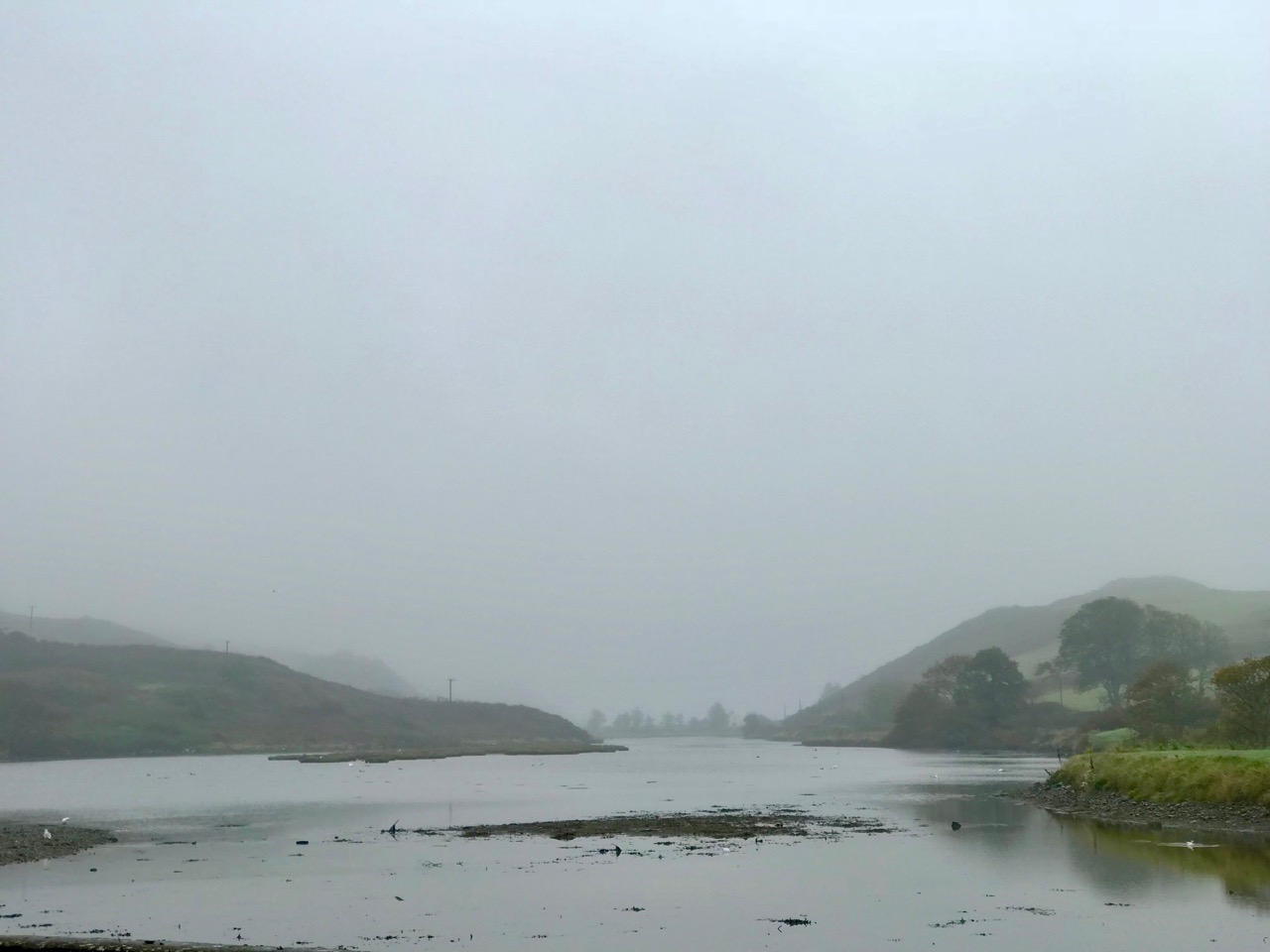
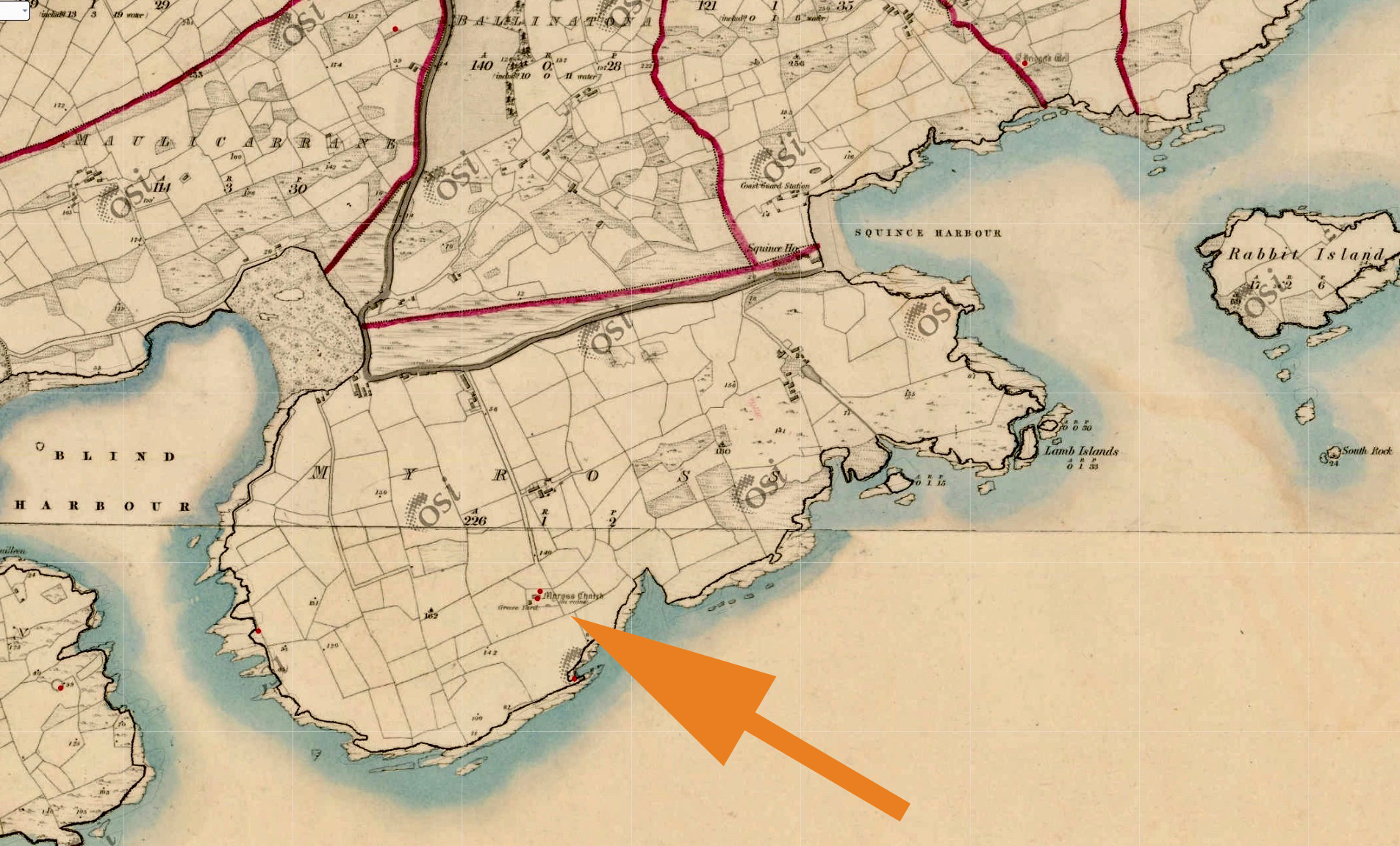
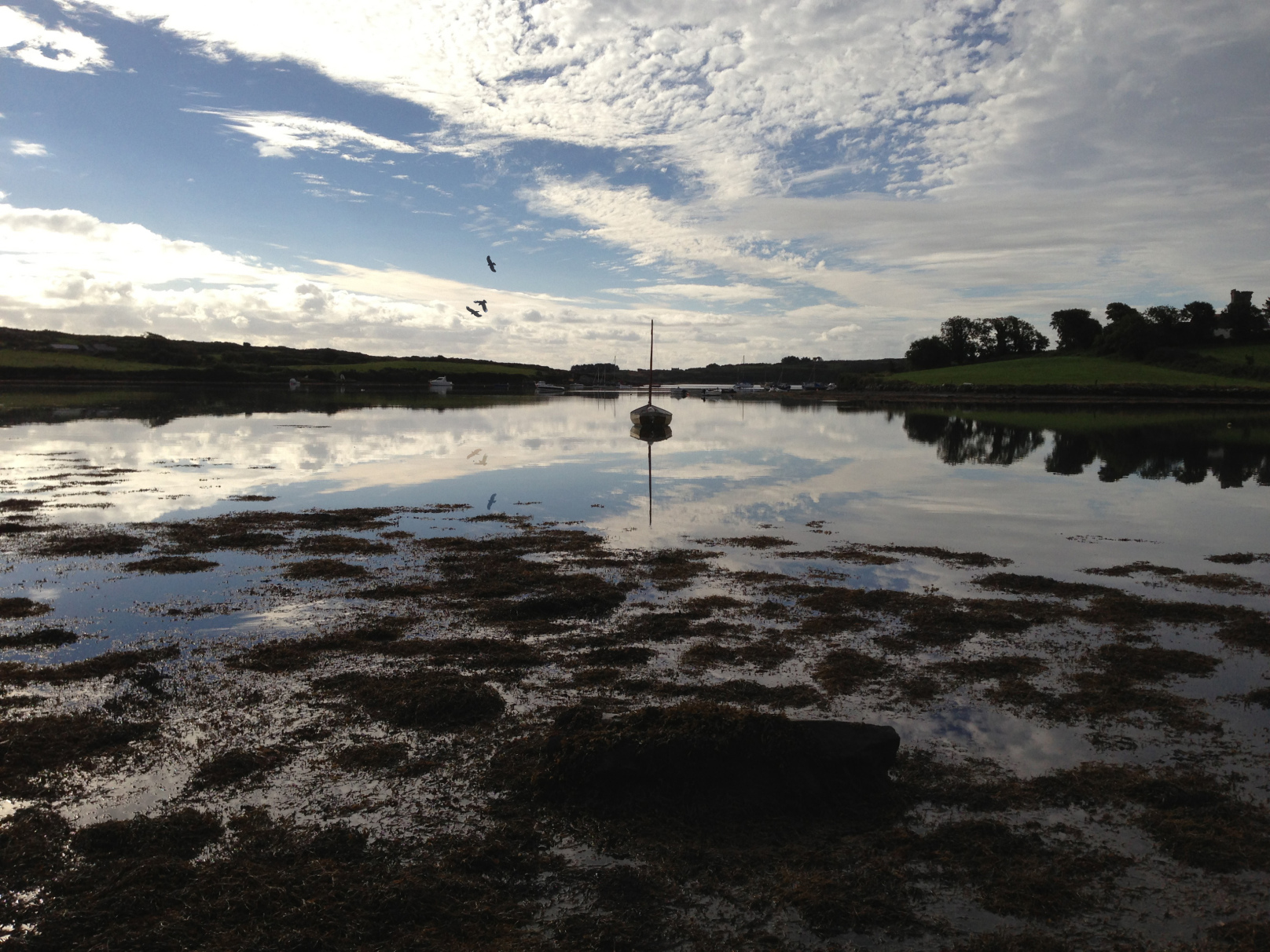
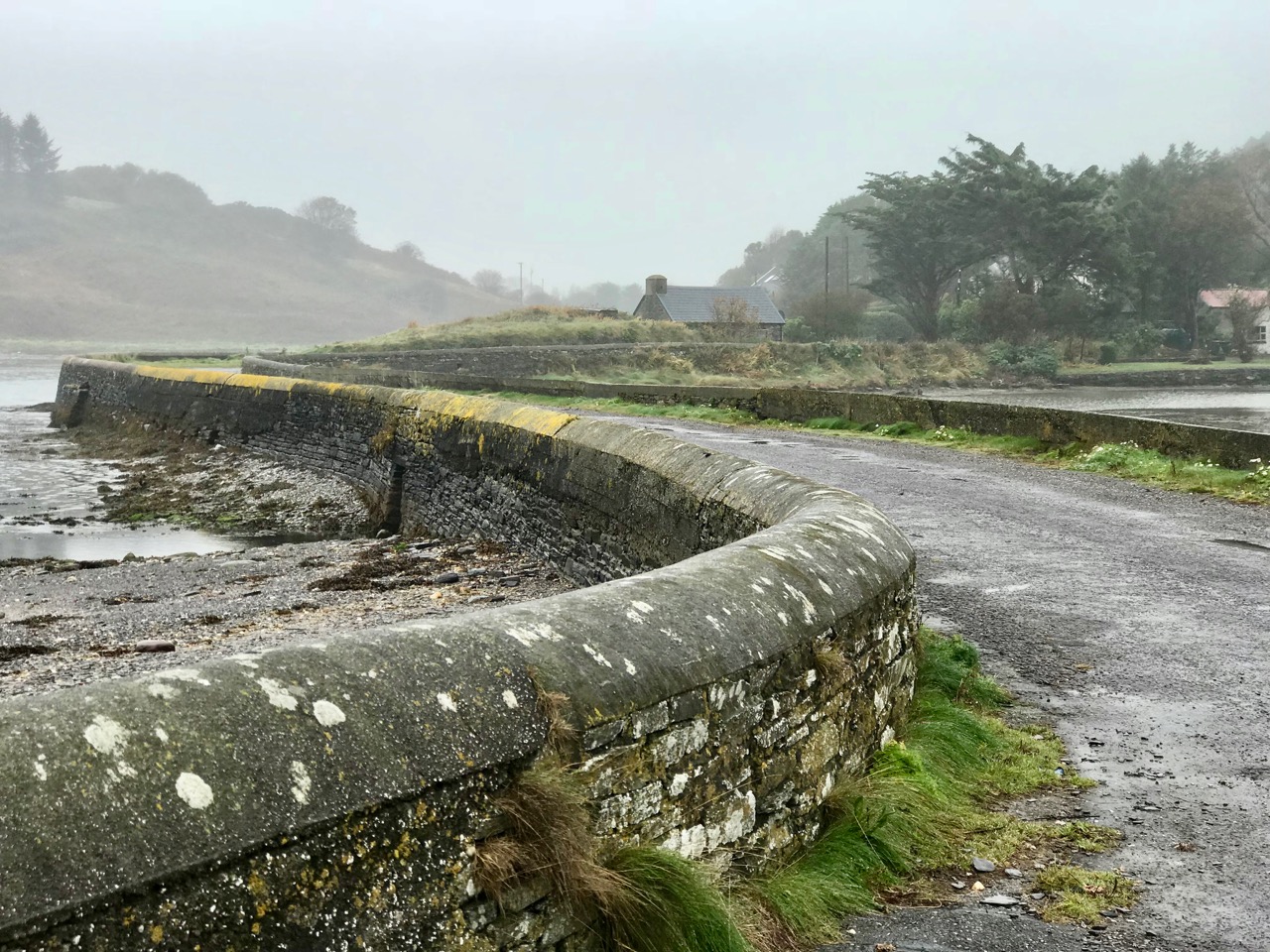
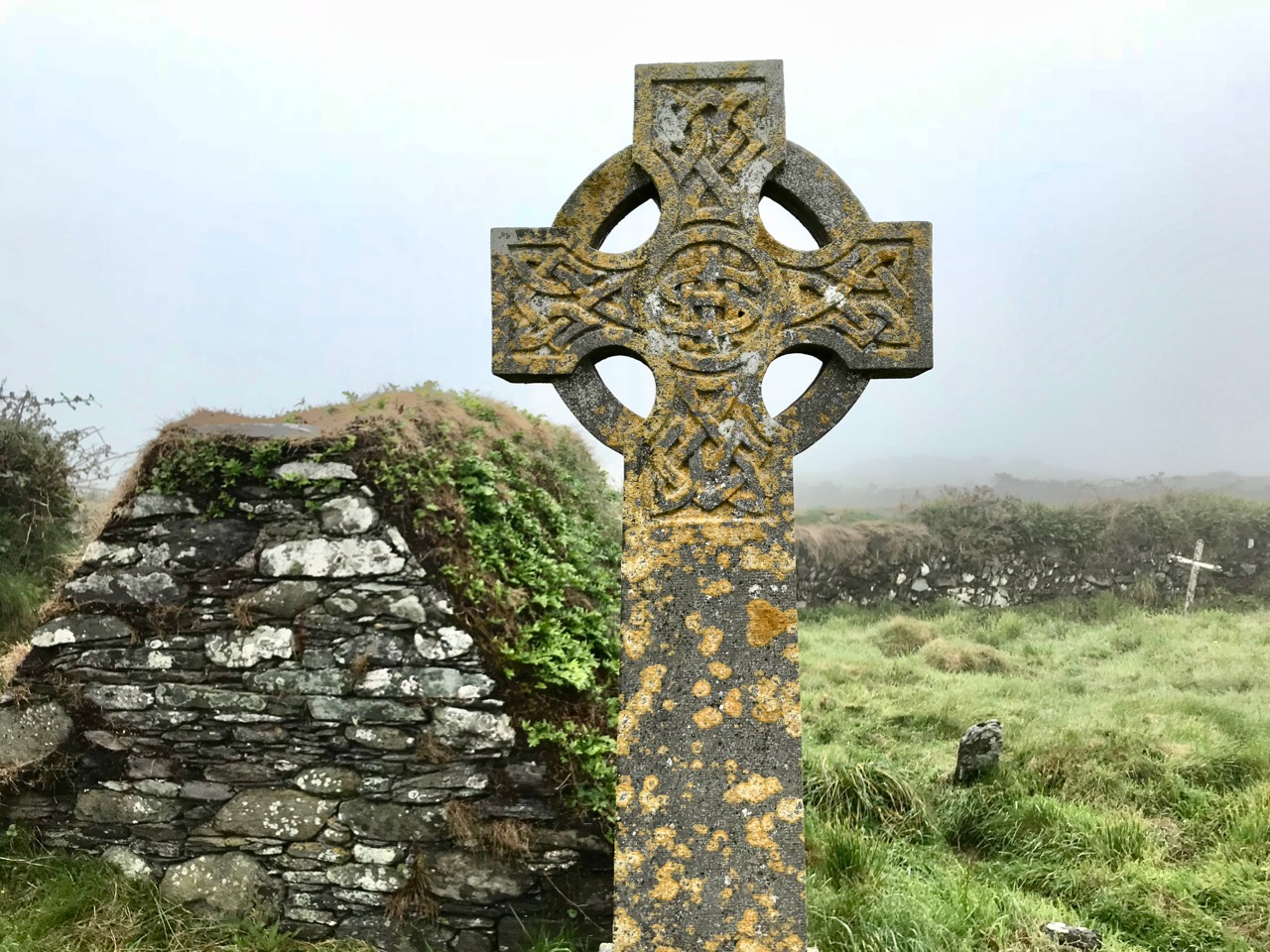
The townland of Myross is an island, of sorts. A stretch of water runs between Blind Harbour in the west and Squince Harbour in the east, and old stone causeways give access at either end. On the day of our visit there was hardly a sign of life, and the fog prevented us getting any idea of the fine ocean views which can evidently be enjoyed from the ancient graveyard. Nevertheless, we felt the day that was in it empathised with the muted atmosphere of this silent place.
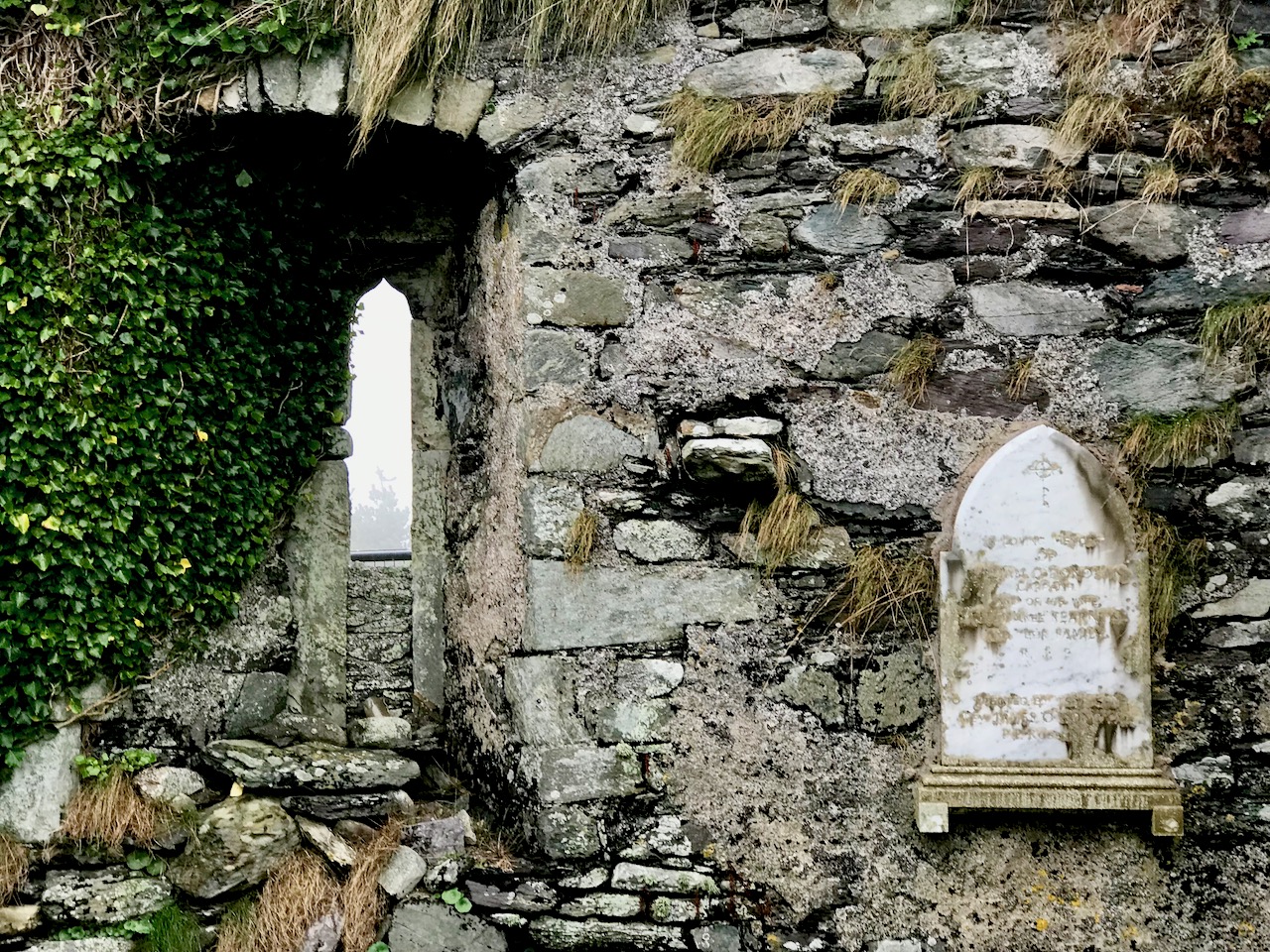
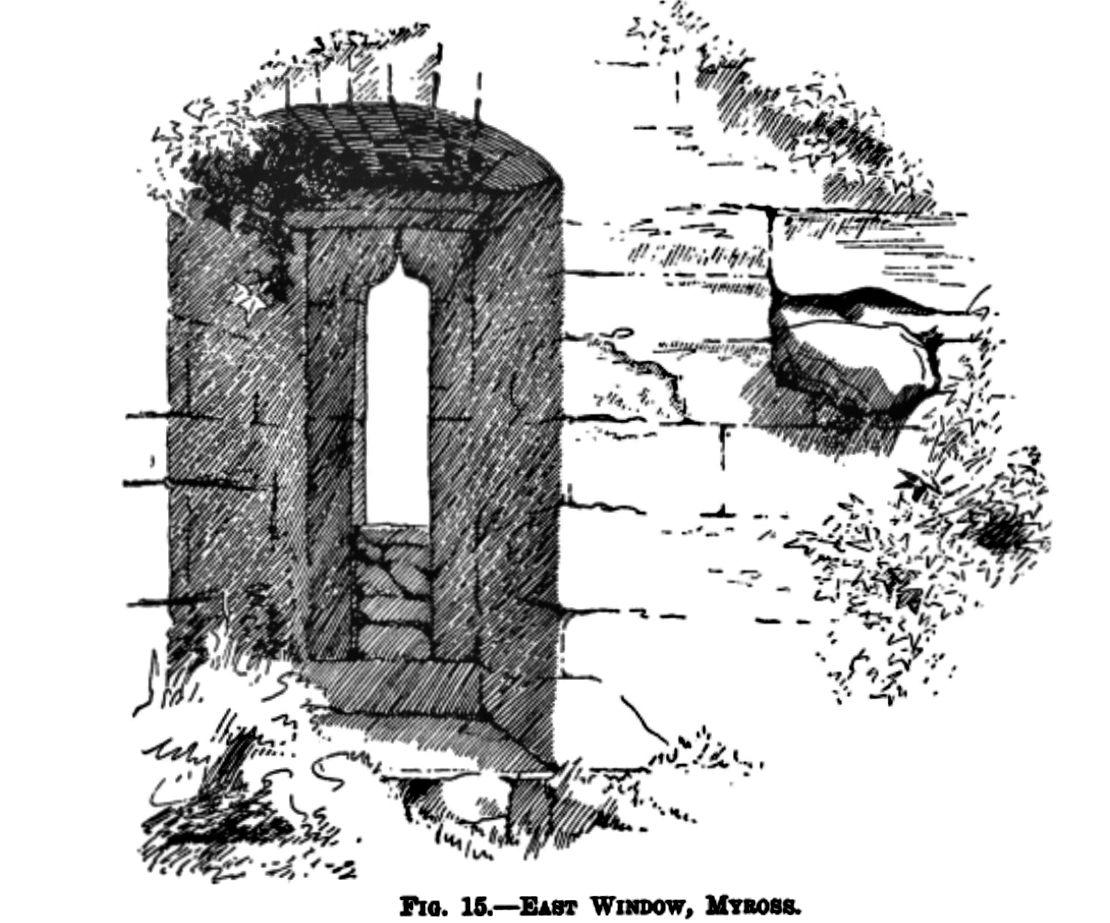
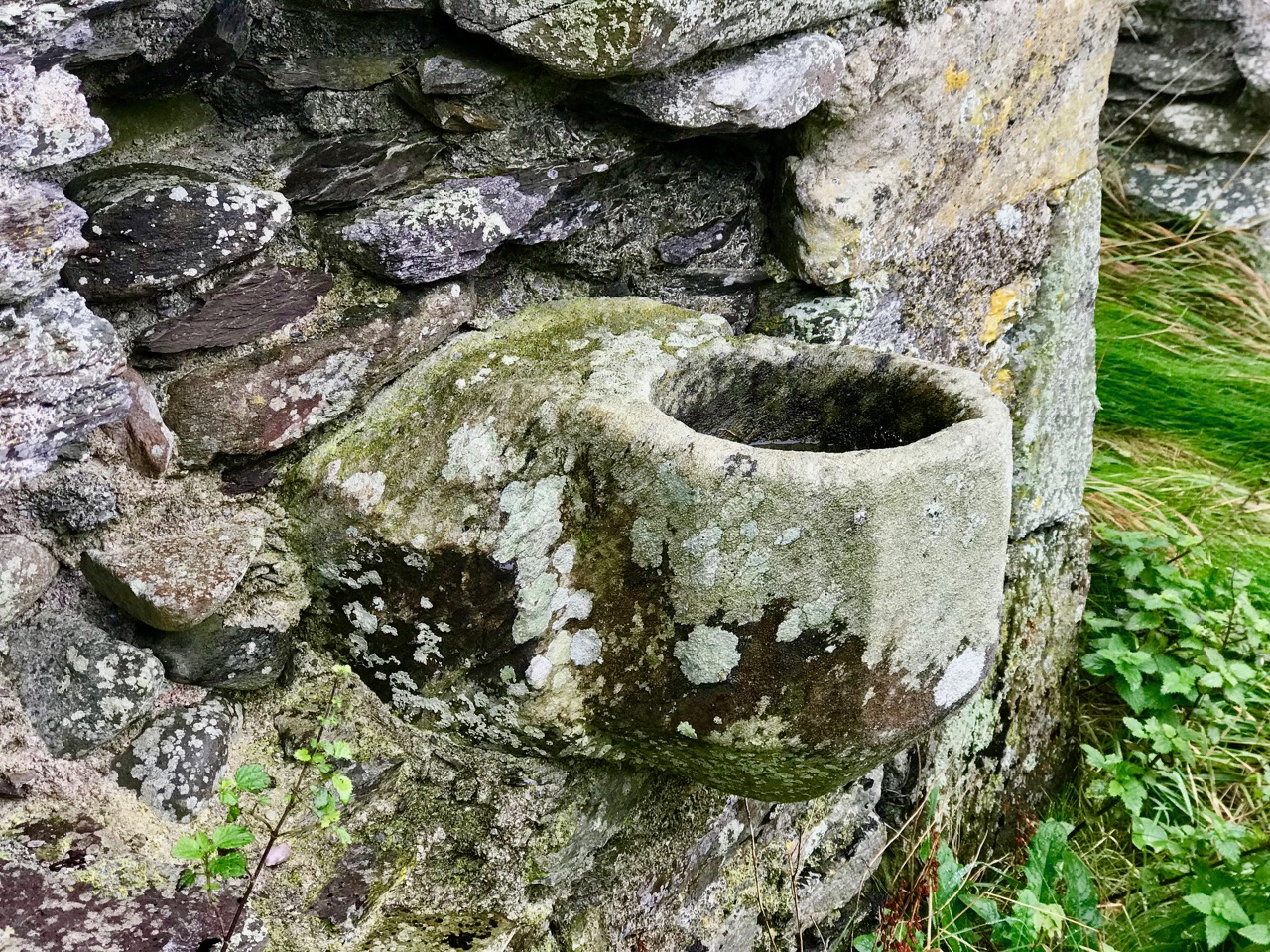
At the centre of the burial ground stand the ruins of a substantial church, in very poor repair. Some of the masonry has been reinforced with brick piers and timber posts, but the structure is fenced off to indicate the risks of its instability. Inside the church are an old font, and a piscina. The illustrations here are from a massive work – The Diocese of Ross and its Ancient Churches by Charles Webster, Dean of Ross, published by the Royal Irish Academy in 1932.
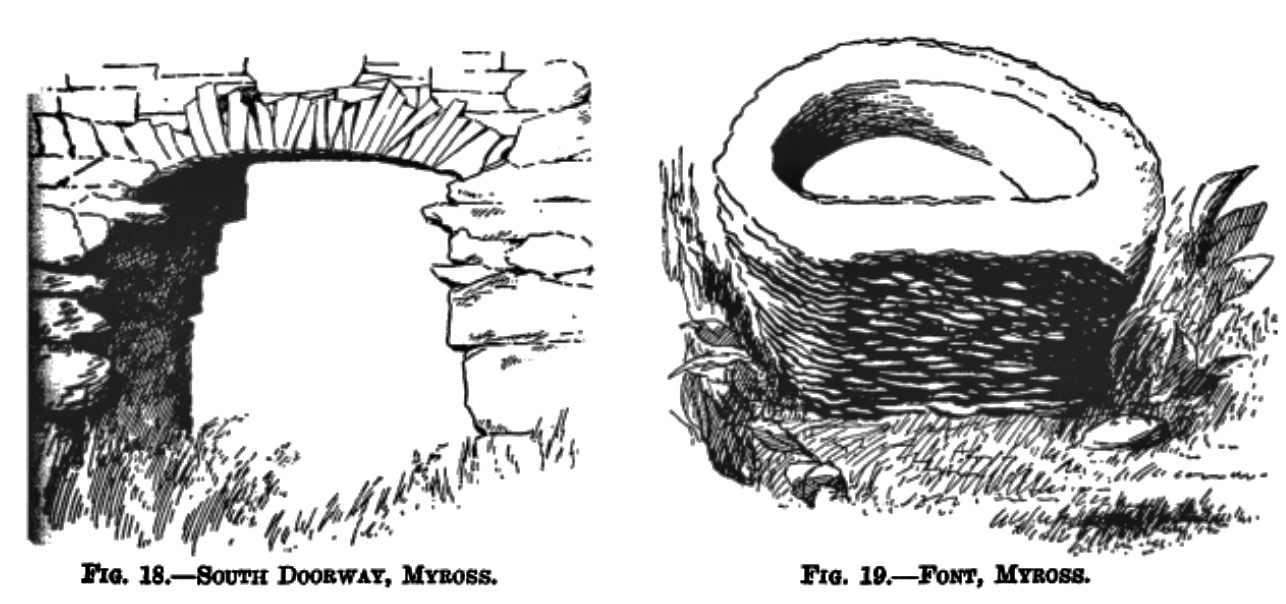
W Mazier Brady’s Clerical and Parochial Record of Cork, 1863, records that the Church of Myross was in use in 1615 but in ruins by 1699. Subsequent researches tell us that a little further to the east is the townland of Carrigihilly and here survives another ancient burial ground: local tradition asserts that here was a Cistercian Monastery – Maure Abbey (Abbey de Sancto Mauro) – founded in 1172 by Dermot MacCarthy, King of Desmond. We didn’t get to Carrigihilly on our autumnal day out: another expedition to the area beckons.
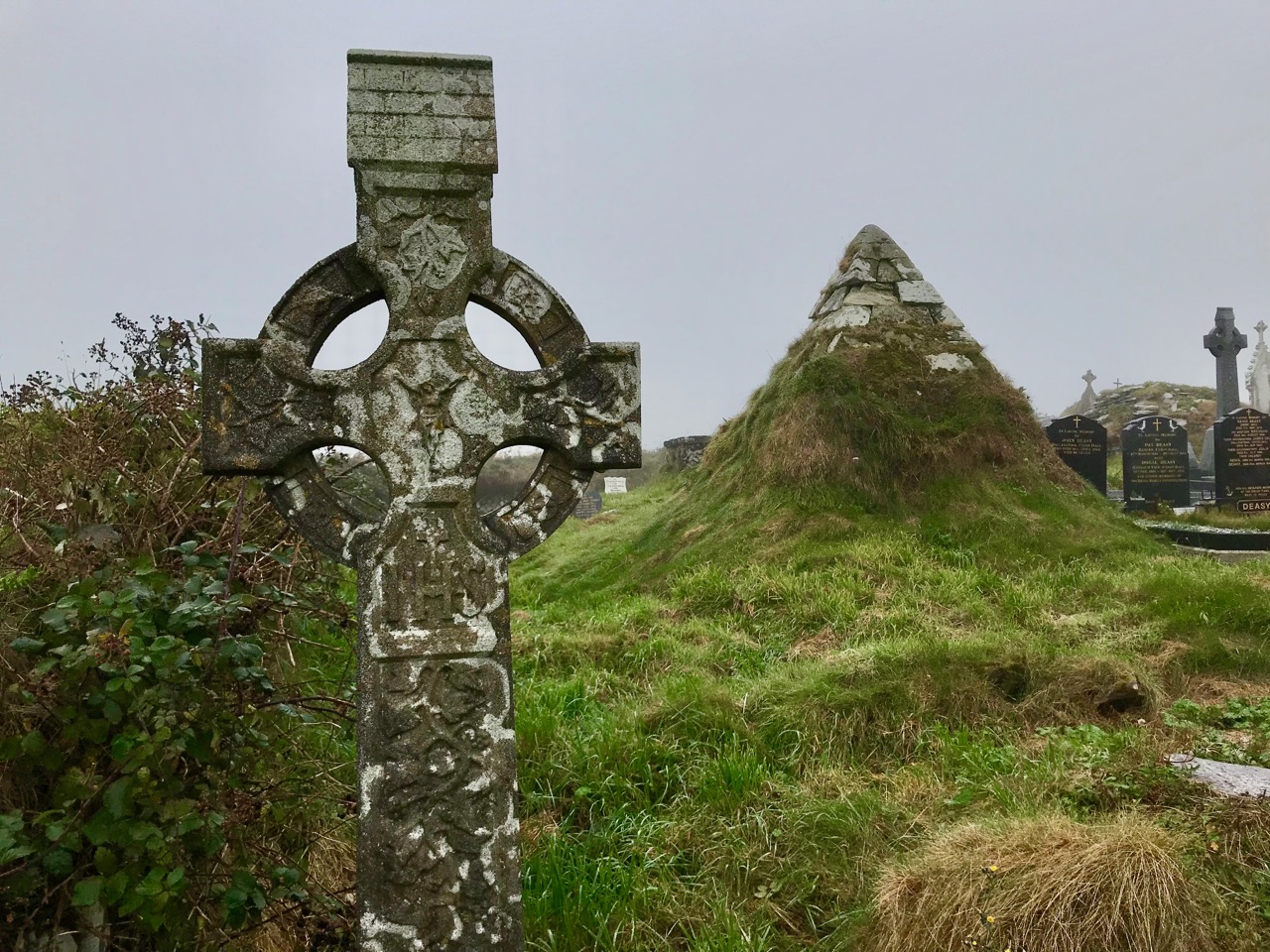
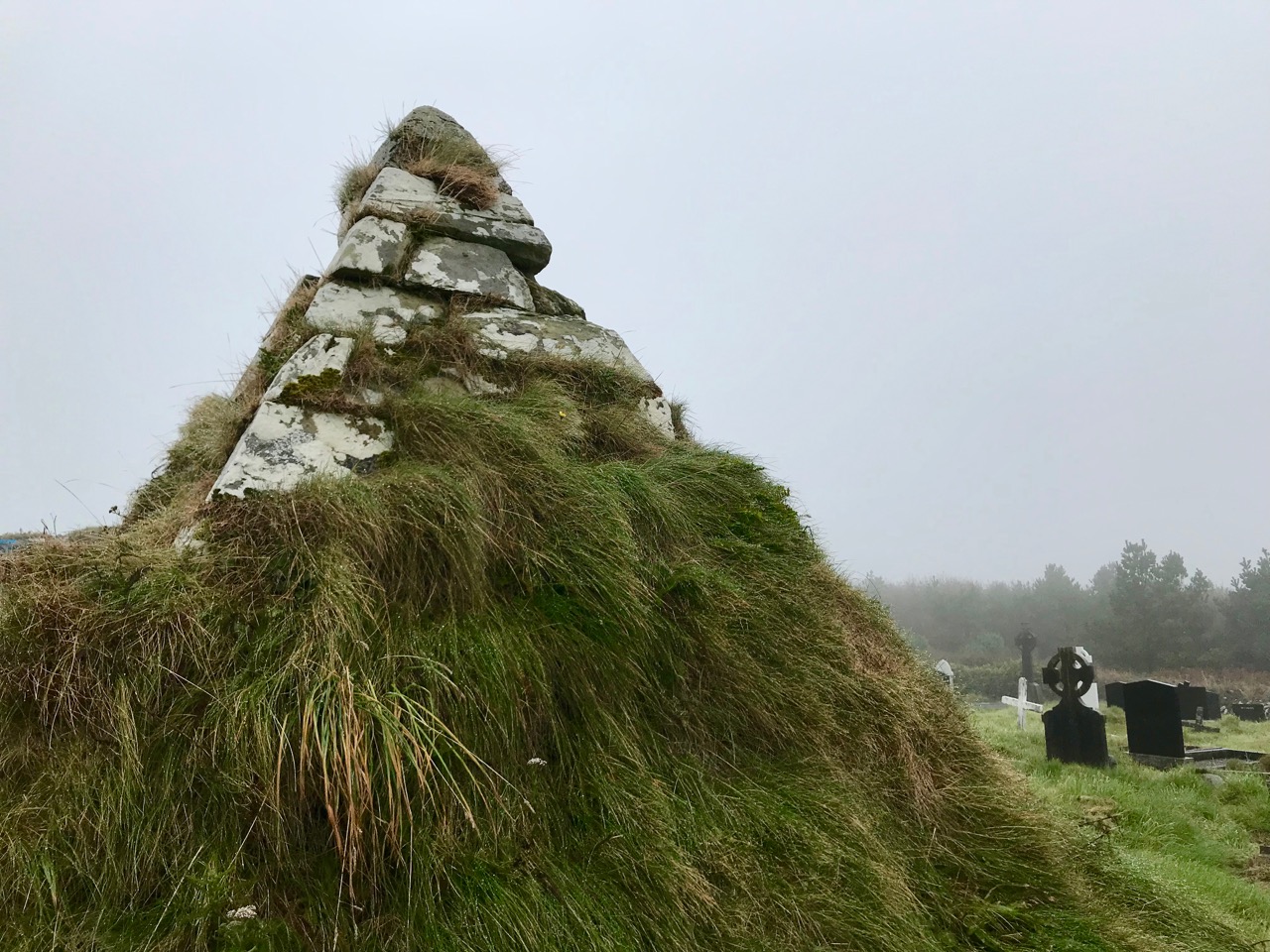
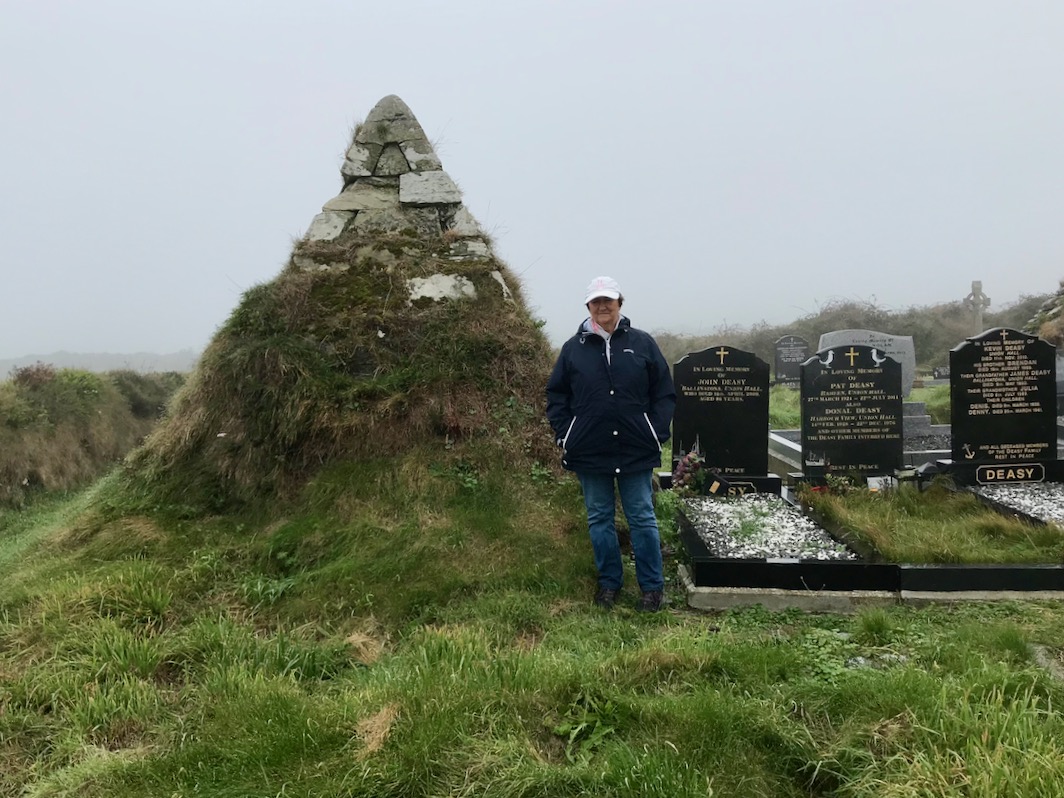
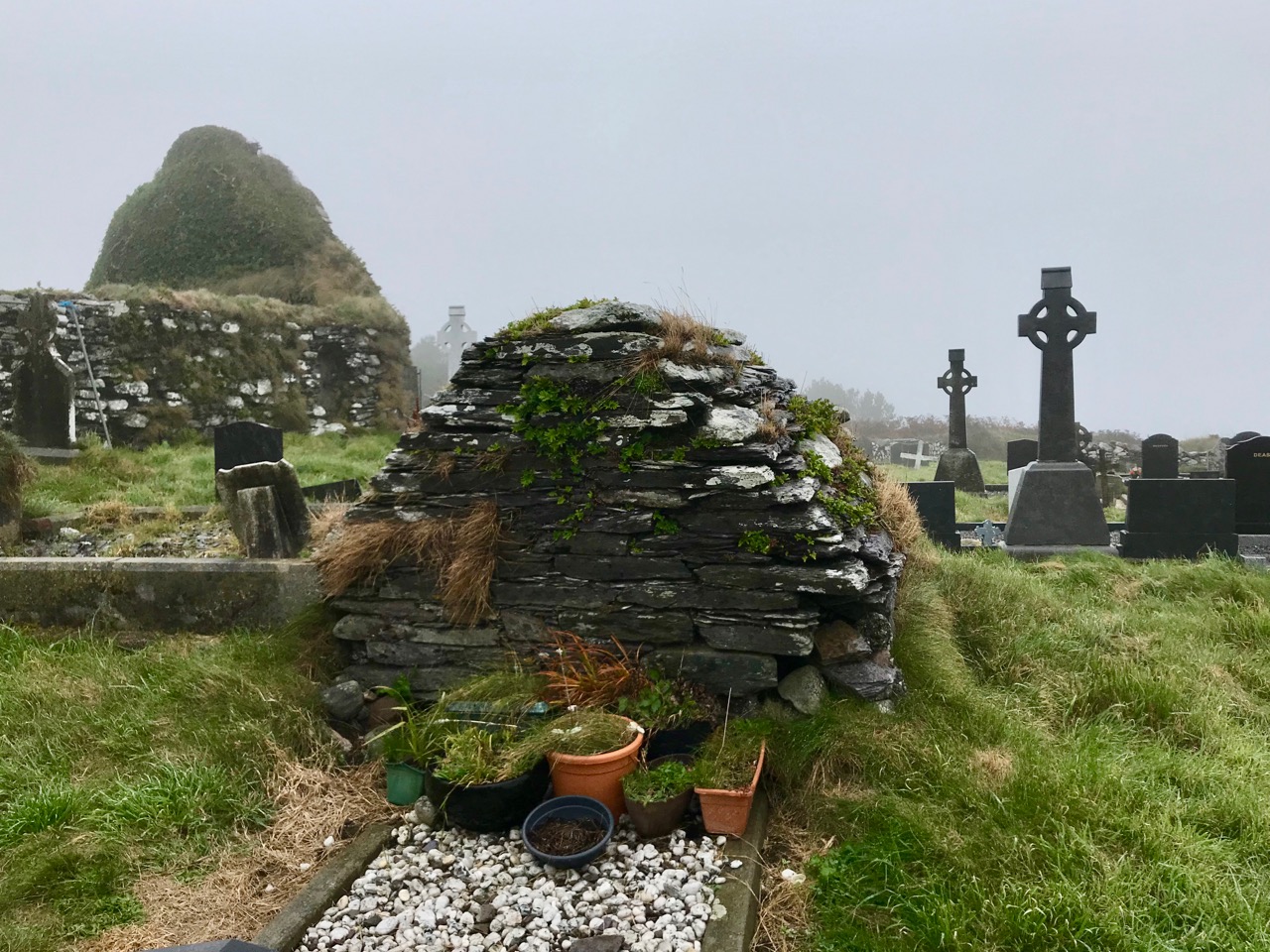
The focus of our visit was, of course, a second pyramid in West Cork – and there it is! More modest in size, perhaps, than the Glandore example, but standing out, nevertheless. Unlike the one at Glandore, there is no visible inscription on the masonry, much of which is quite overgrown. Tradition has it, however, that this tomb is a burial place for the O’Donovans, who are well represented in this part of West Cork, even today.
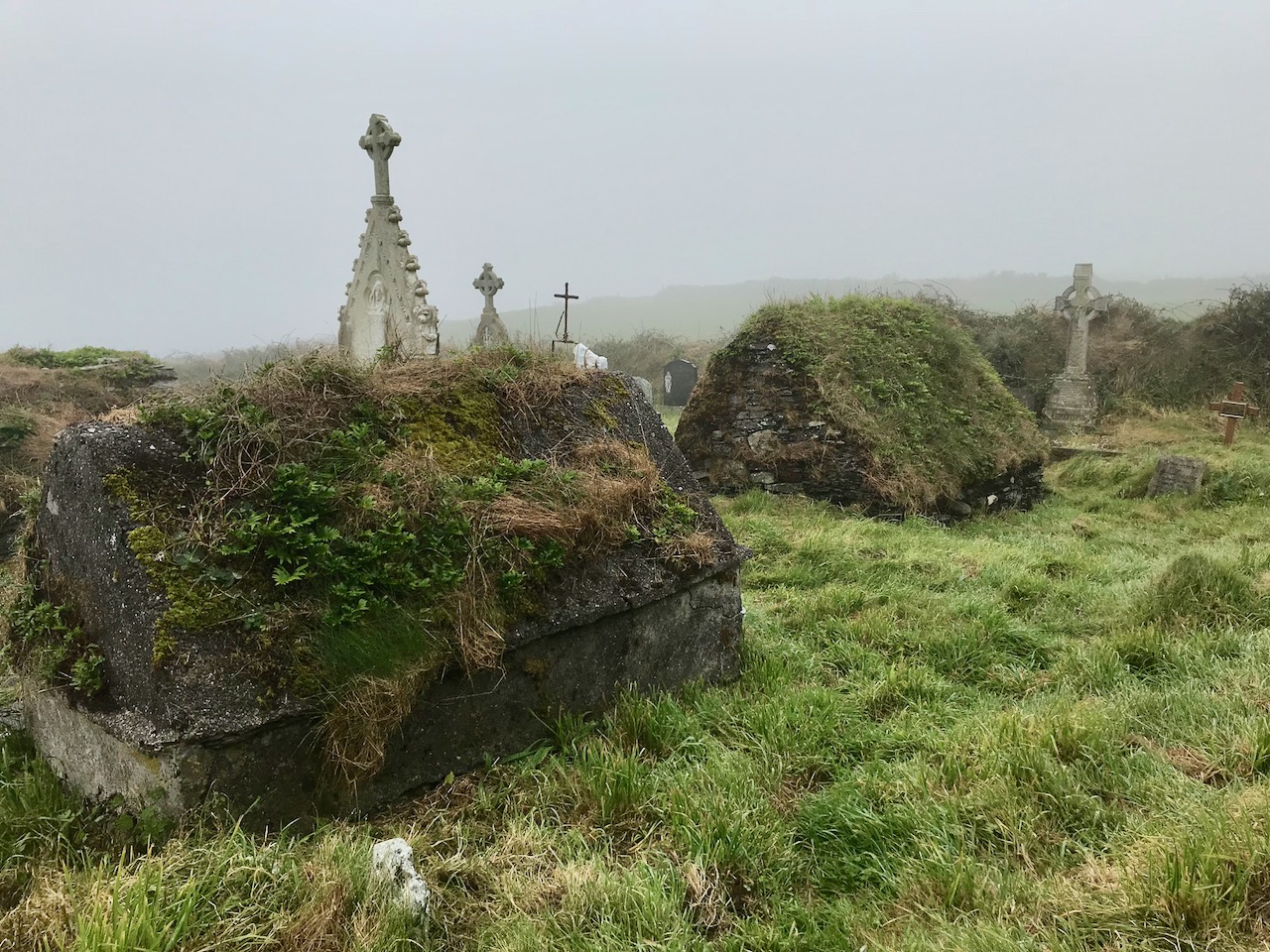
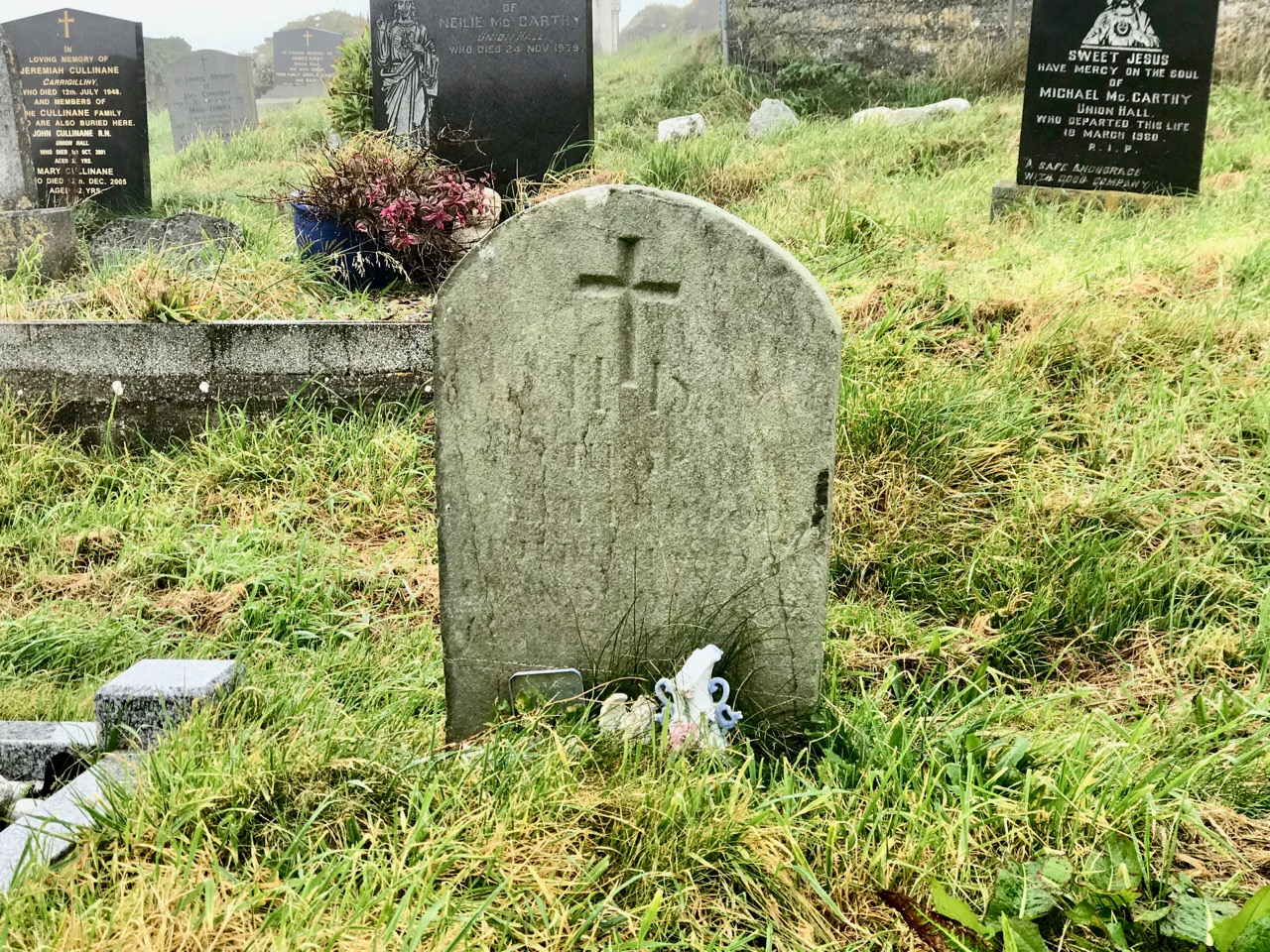
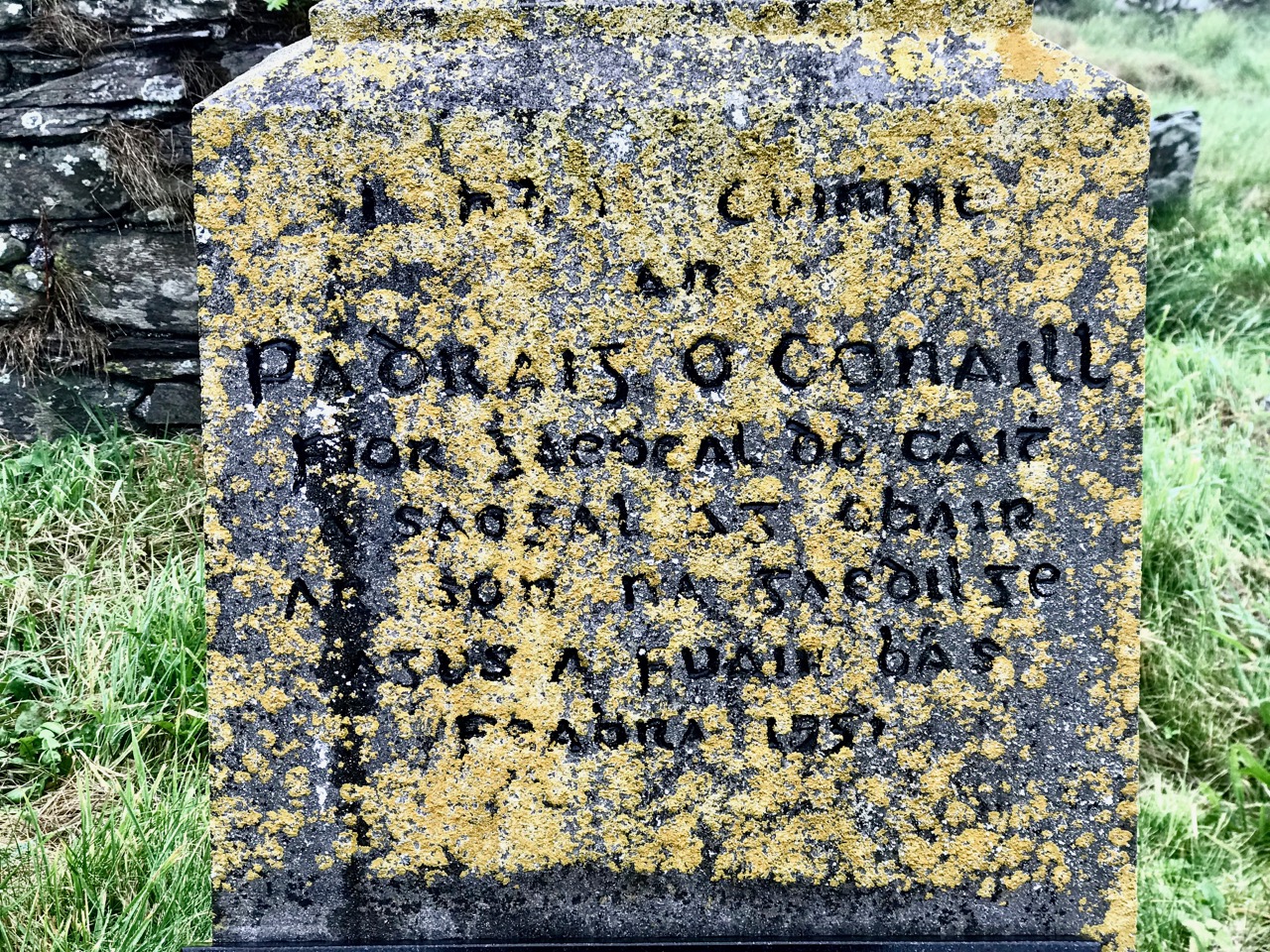
Keeping the pyramid company in this Myross graveyard are other significant chest tombs and unusual ‘gabled’ tombs, also uninscribed, and a small number of carved gravestones dating from the nineteenth century, very weathered but partly legible. It would be fascinating to know something of the lives of those who are interred in this remote and atmospheric West Cork location.
Chough Country

WHERE not a sound is heard
But the white waves, O bird,
And slippery rocks fling back the vanquish’d sea,
Thou soarest in thy pride,
Not heeding storm or tide;
In Freedom’s temple nothing is more free.

‘Tis pleasant by this stone,
Sea-wash’d and weed-o’ergrown,
With Solitude and Silence at my side,
To list the solemn roar
Of ocean on the shore,
And up the beetling cliff to see thee glide.

Though harsh thy earnest cry.
On crag, or shooting high
Above the tumult of this dusty sphere,
Thou tellest of the steep
Where Peace and Quiet sleep,
And noisy man but rarely visits here.

For this I love thee, bird.
And feel my pulses stirr’d
To see thee grandly on the high air ride,
Or float along the land,
Or drop upon the sand,
Or perch within the gully’s frowning side.

Thou bringest the sweet thought
Of some straw-cover’d cot,
On the lone moor beside the bubbling well,
Where cluster wife and child,
And bees hum o’er the wild:
In this seclusion it were joy to dwell.

Will such a quiet bower
Be ever more my dower
In this rough region of perpetual strife?
I like a bird from home
Forward and backward roam;
But there is rest beneath the Tree of Life.

In this dark world of din,
Of selfishness and sin,
Help me, dear Saviour, on Thy love to rest;
That, having cross’d life’s sea,
My shatter’d bark may be
Moor’d safely in the haven of the blest.

The Muse at this sweet hour
Hies with me to my bower
Among the heather of my native hill;
The rude rock-hedges here
And mossy turf, how dear!
What gushing song! how fresh the moors and still!

No spot of earth like thee,
So full of heaven to me,
O hill of rock, piled to the passing cloud!
Good spirits in their flight
Upon thy crags alight,
And leave a glory where they brightly bow’d.

I well remember now,
In boy-days on thy brow,
When first my lyre among thy larks I found,
Stealing from mother’s side
Out on the common wide,
Strange Druid footfalls seem’d to echo round.

Dark Cornish chough, for thee
My shred of minstrelsy
I carol at this meditative hour,
Linking thee with my reed,
Grey moor and grassy mead,
Dear carn and cottage, heathy bank and bower.

I was pleased to find this poem. It was written by a Cornishman – John Harris – who was born in 1820 in Bolenowe. Perhaps he was an ancestor? His father was a miner at Dolcoath Tin Mine where young John also started at the age of 10. He began writing poetry as a child, usually in the open air where he was inspired by nature. After 20 years working in the mine, one of his poems was eventually published in a magazine. It attracted notice, and he was encouraged to produce a collection, which was published in 1853. The Cornish Chough is taken from that collection.

Above – choughs over Rossbrin Cove. The wonderful header picture was kindly given to us to use in a previous piece on the birds by our friend and neighbour Oliver Nares. Oliver and Susie are fortunate to have choughs nesting on their property and keep a good eye out for the welfare of the chough families which are raised there. We don’t have choughs nesting at Nead an Iolair (which means Nest of the Eagle) but we often see and hear them over us: they are the most acrobatic and joyful of birds.

The reason I have returned to choughs today is that they were the subject of an early post which I published on Roaringwater Journal on 6 October 2013 – exactly five years ago! Choughs – Cornwall’s emblematic birds – left that county fifty years ago but returned very recently as migrants from Ireland. We consider ourselves very privileged to be living in abundant chough country.

Tralong Bay, Co Cork – A Prehistoric Drowned Landscape

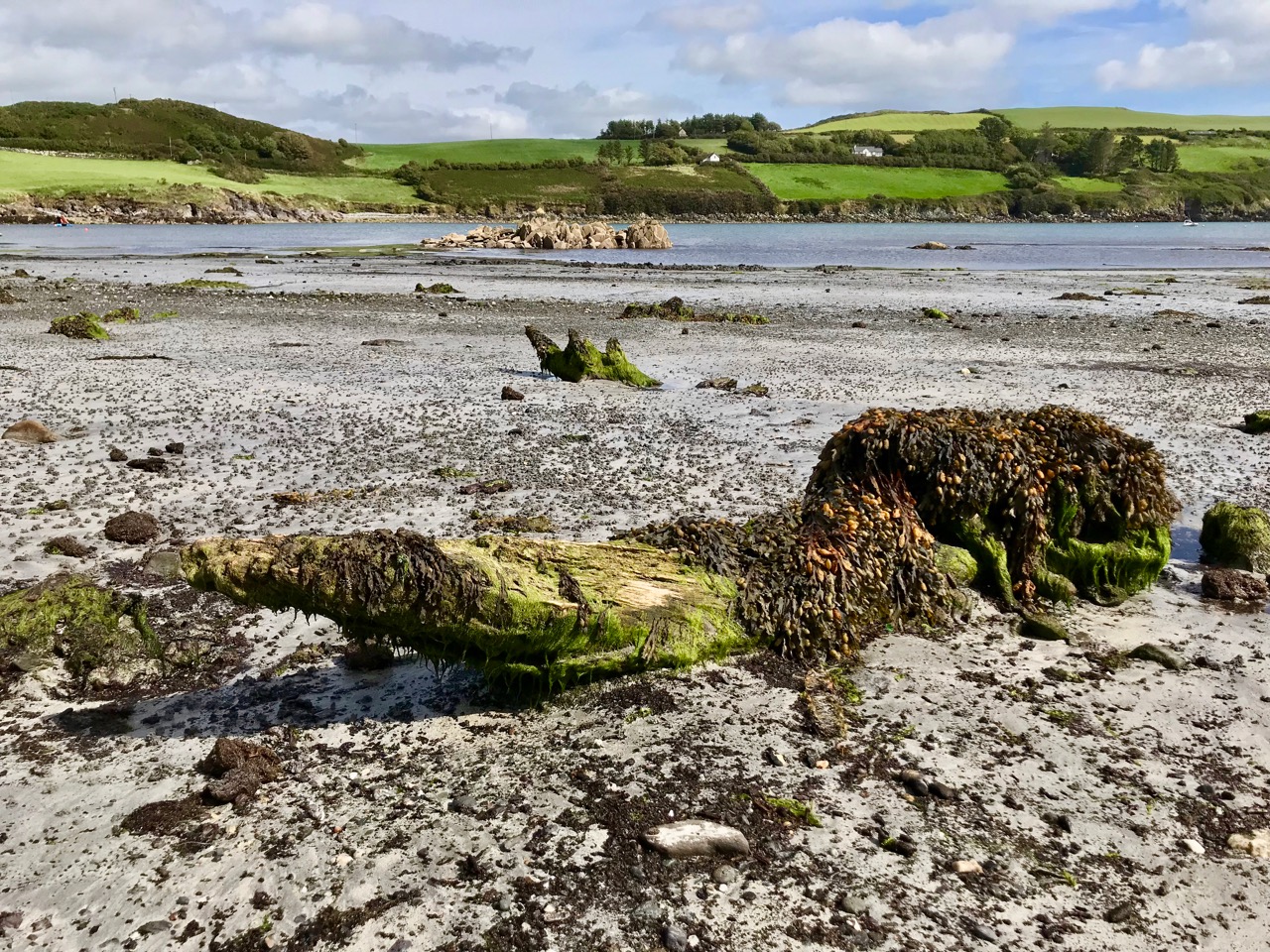
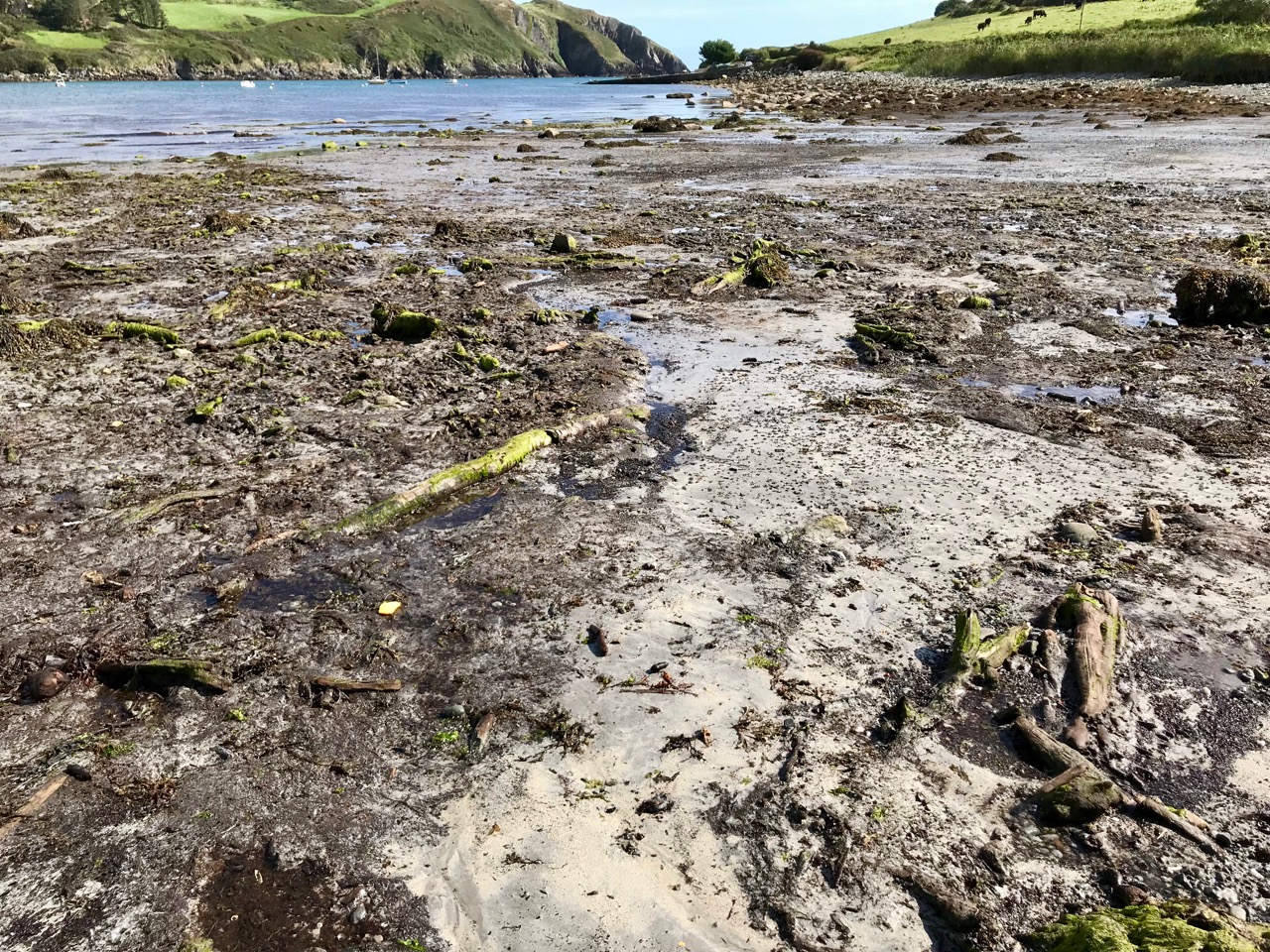
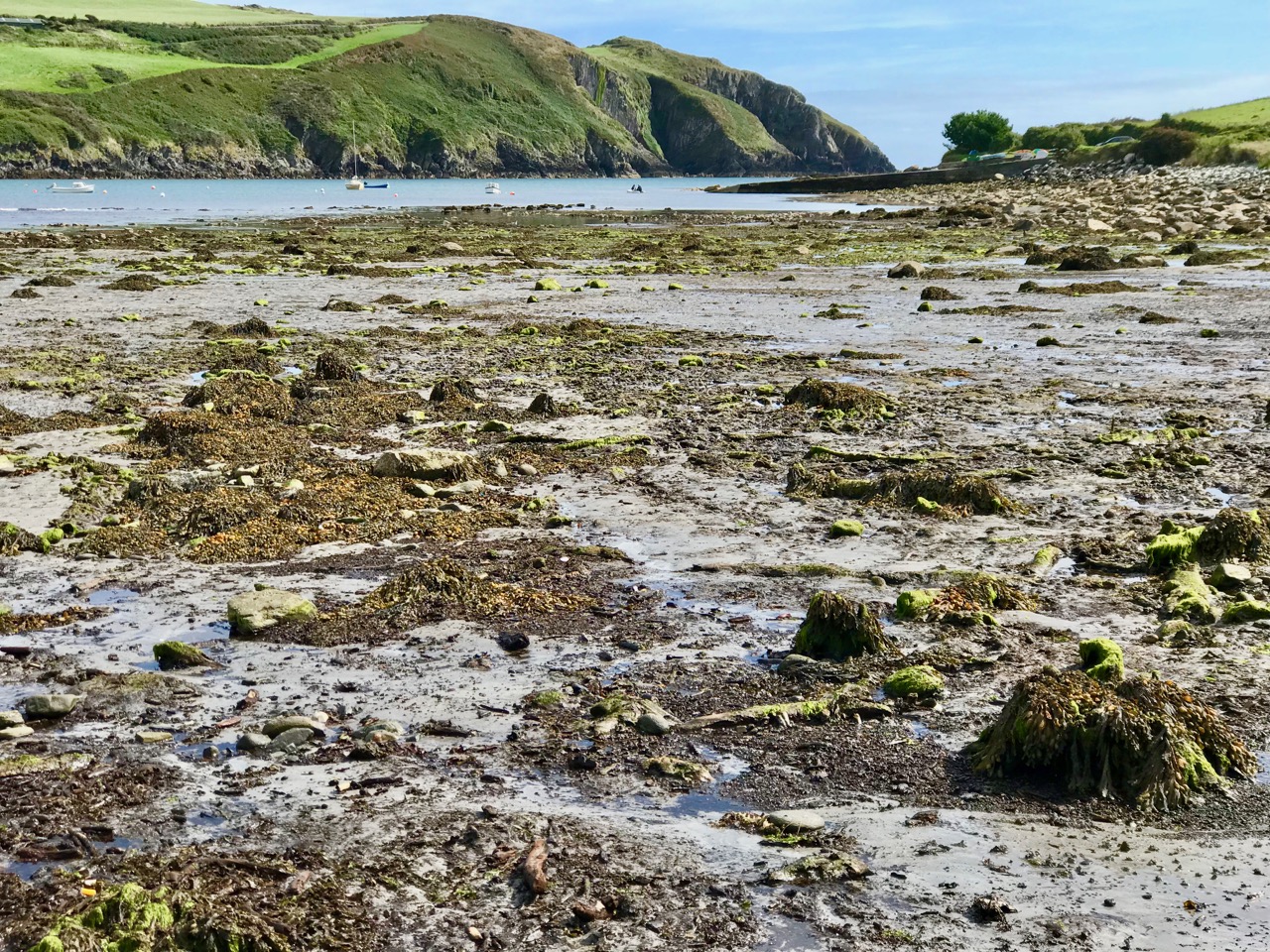
In West Cork it is possible to examine the remains of trees which were growing several thousand years ago – perhaps in the time of our earliest ancestors. Around the coasts of Ireland and Britain are sites of post-glacial forests which flourished close to an ancient shoreline until inundated by rising sea levels in the Neolithic period. Cycles of change in weather, tides and geology over millennia saw these remains flooded by encroaching seas, then resurfacing, only to be buried under sediment and sand as tides abated. We are living in an age of extremes and recent abnormal climate activity has in places exposed some of these remains which are as old as human activity in Ireland: this is Organic Archaeology!

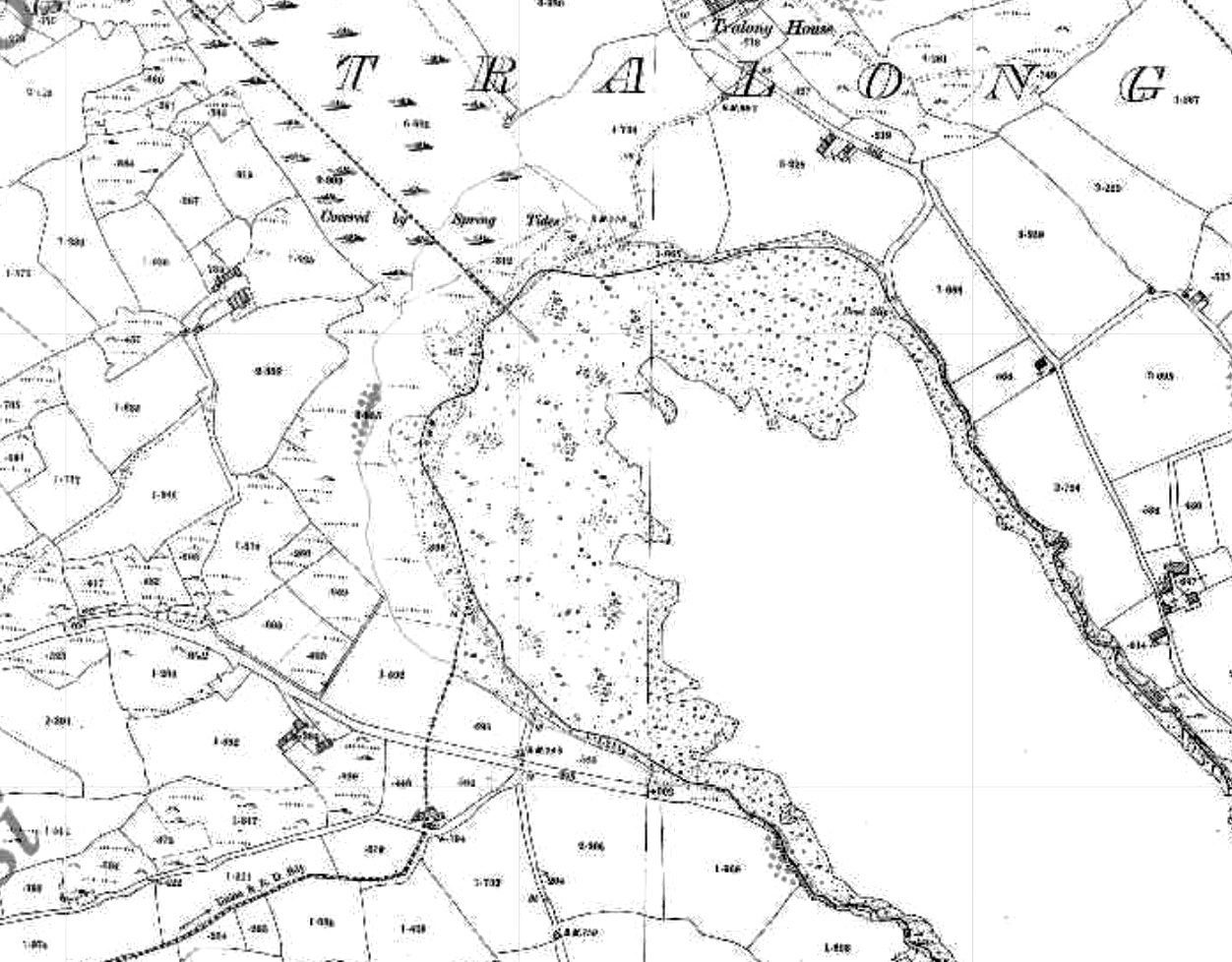
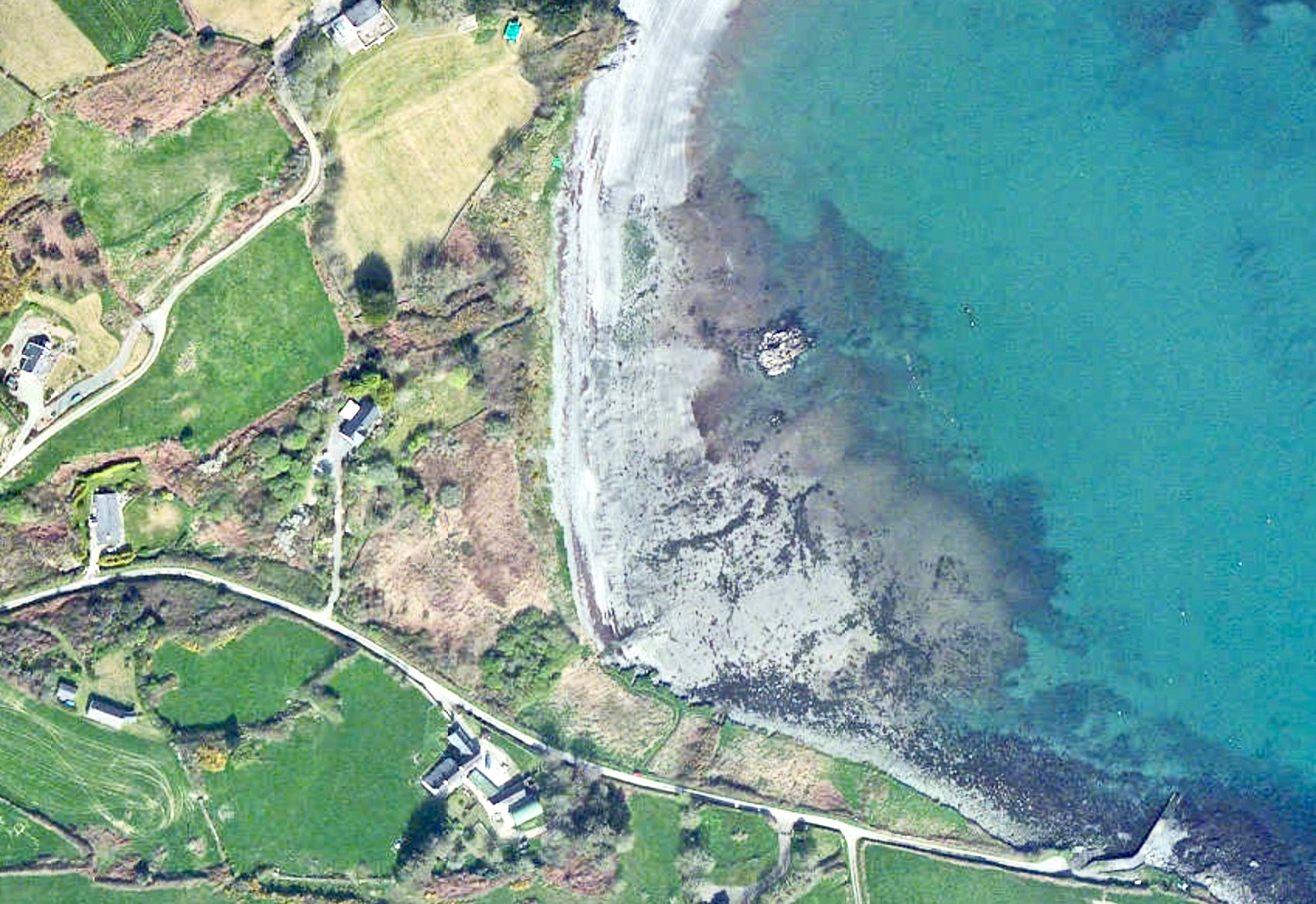
Header – Tralong Beach, between Glandore and Rosscarbery, where the remains of very ancient woodland can be seen. Upper map – the c1850 6″ OS map showing the shape of the coastline at Tralong Bay, and Lower map – a closer aerial view of the beach in modern times: the darker mass shows the partly submerged peat beds

Little has been written about the Tralong site, but another comparable drowned landscape has been revealed in Northumberland UK where archaeologist Clive Waddington, of the company Archaeology Research Services, has found the remains of an ancient forest on the coast of Low Hauxley. He reports:

. . . In 5,000 BC, the sea level rose rapidly and swallowed the earth. The sand dunes were pushed inland, burying the forest, and then the sea receded somewhat. Now, the sea level increases again: it cuts out the sand dunes and exposes the forest . . . During the course of the investigation, the archaeologists found evidence of human presence in the area: traces of adults and children , the analysis of which revealed that they were wearing leather footwear. With human footprints the scientists also found footprints of wild boar and brown bears . . .

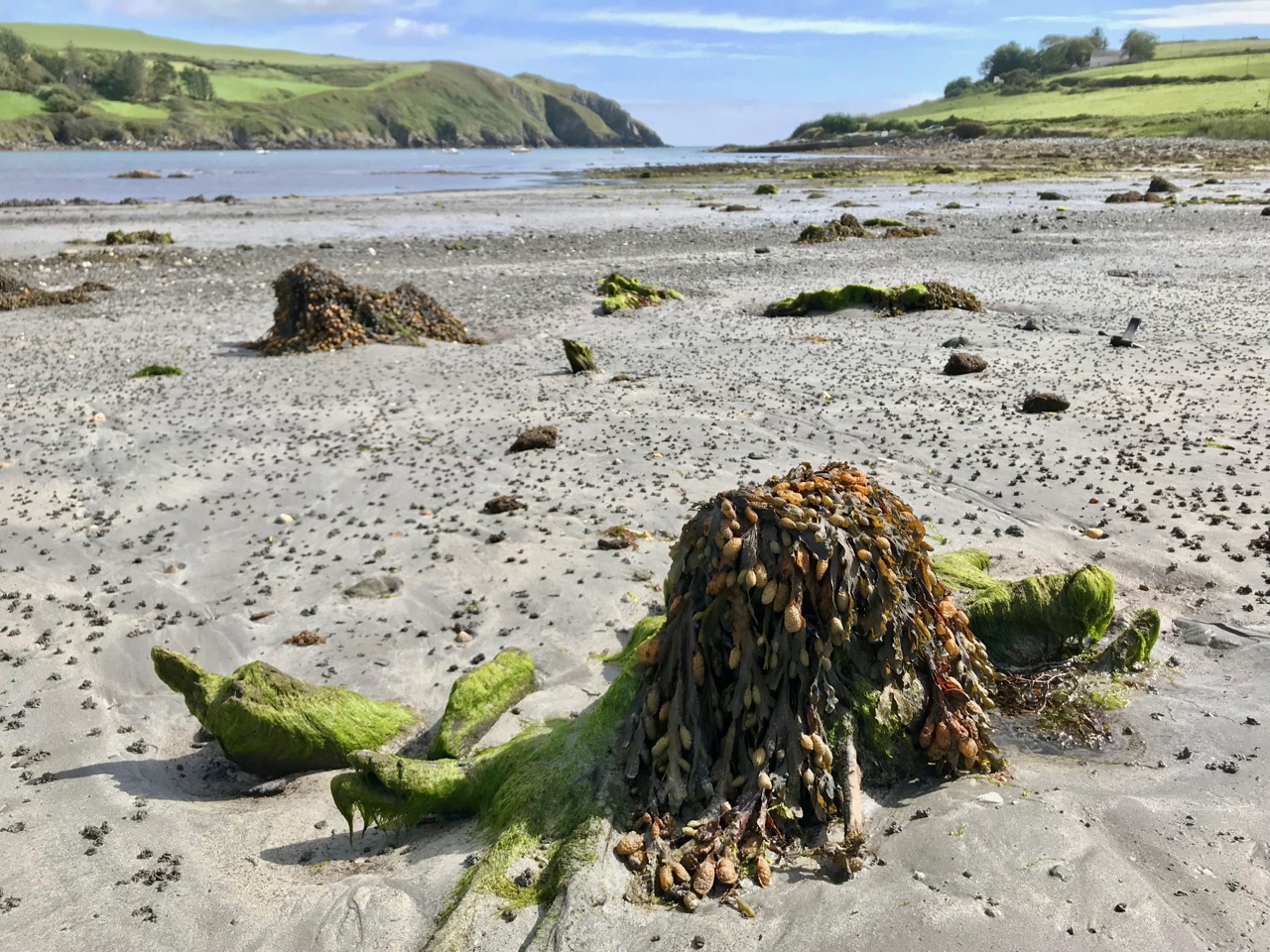
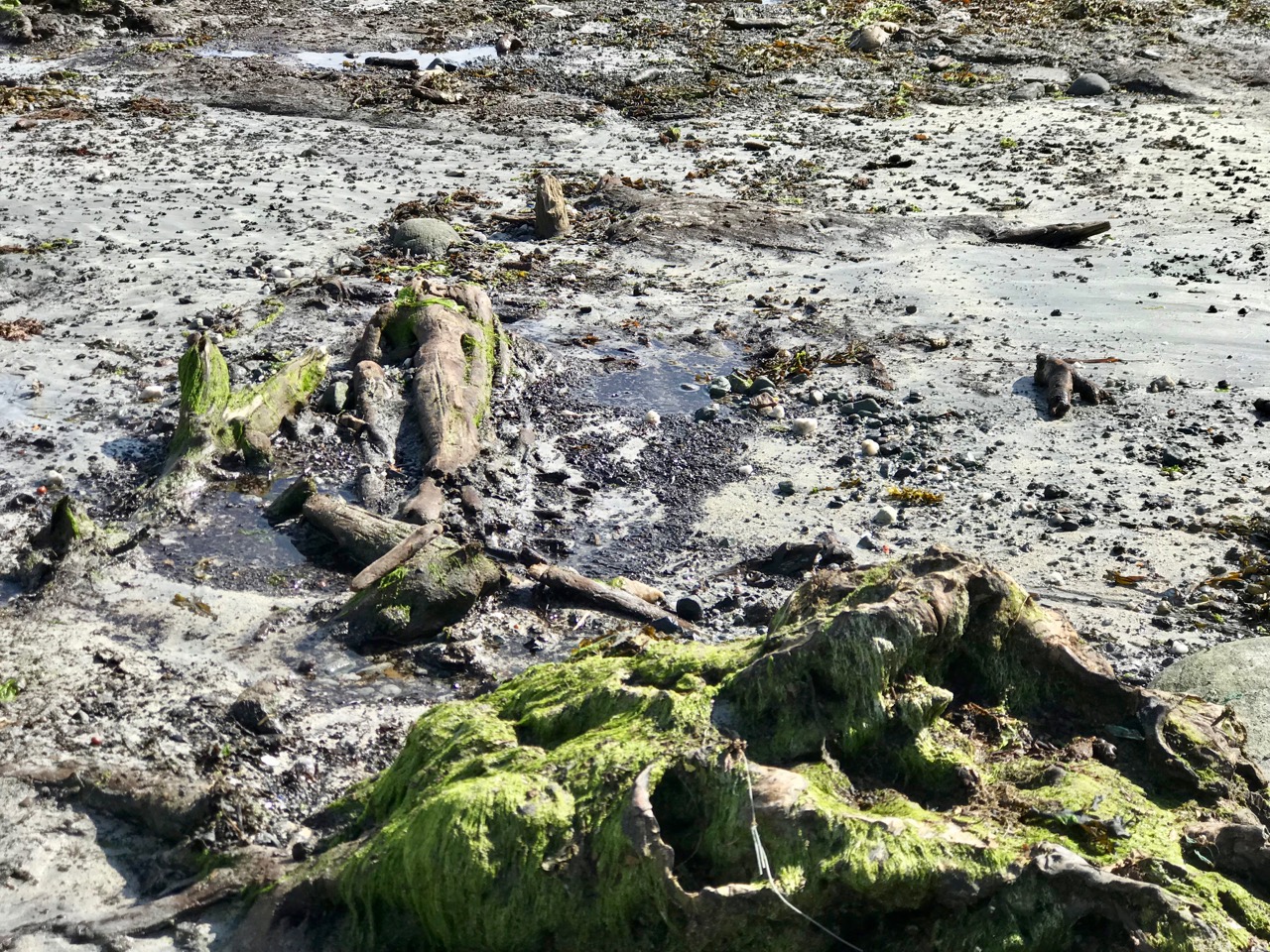
Part of the beach at Tralong Bay, Co Cork: the surface of the peat mass, which could be up to 4 metres thick, is interspersed with numerous tree boles, roots and scattered branch and twig debris. At one place I found a perfect complete pine cone, which could have been part of that debris.

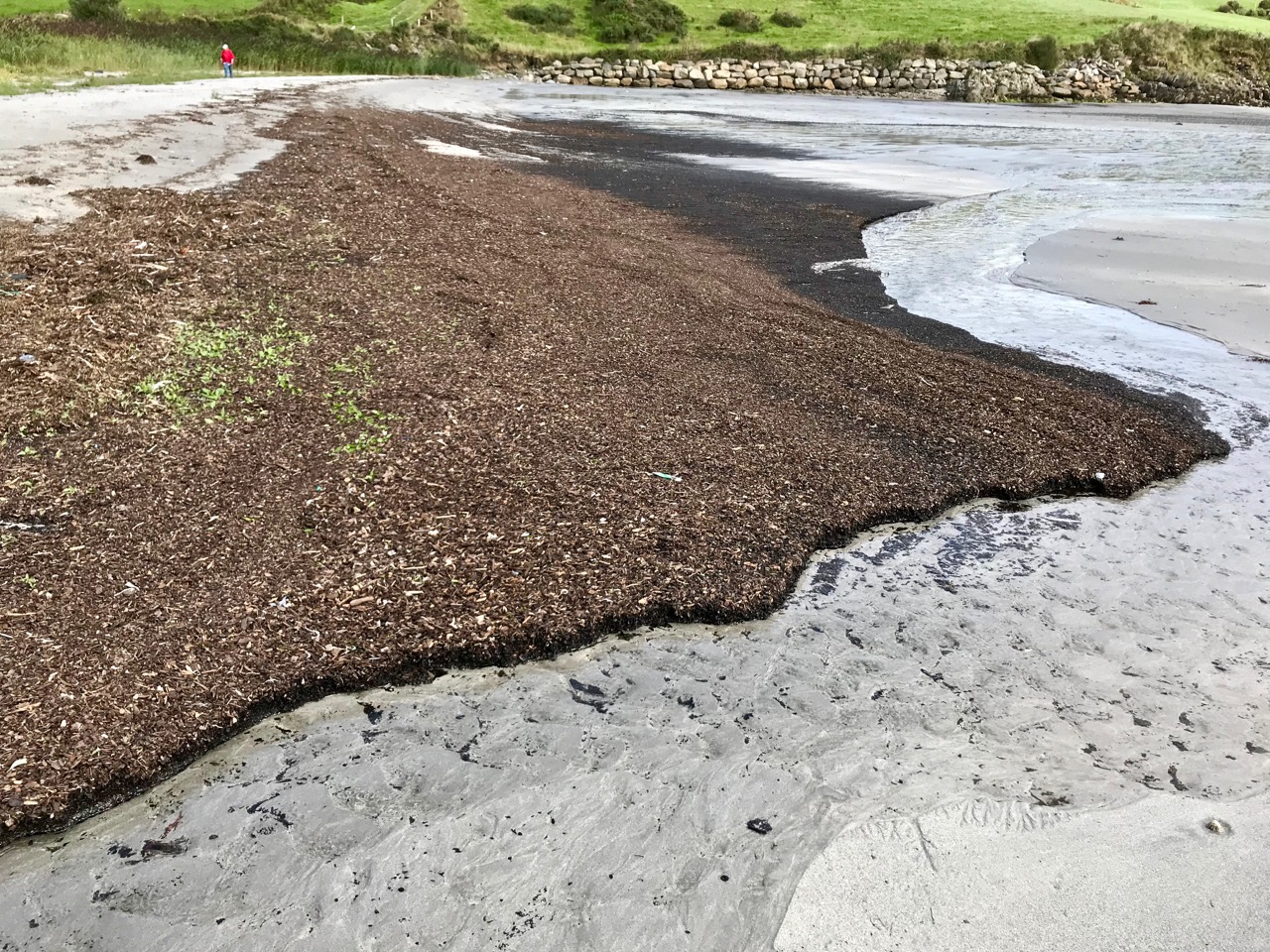
The surface of the beach is dotted with these remnants of ancient forest, over a wide area. It seems remarkable that there are also extensive blankets of loose material retained in the bay which must also originate from the forest.

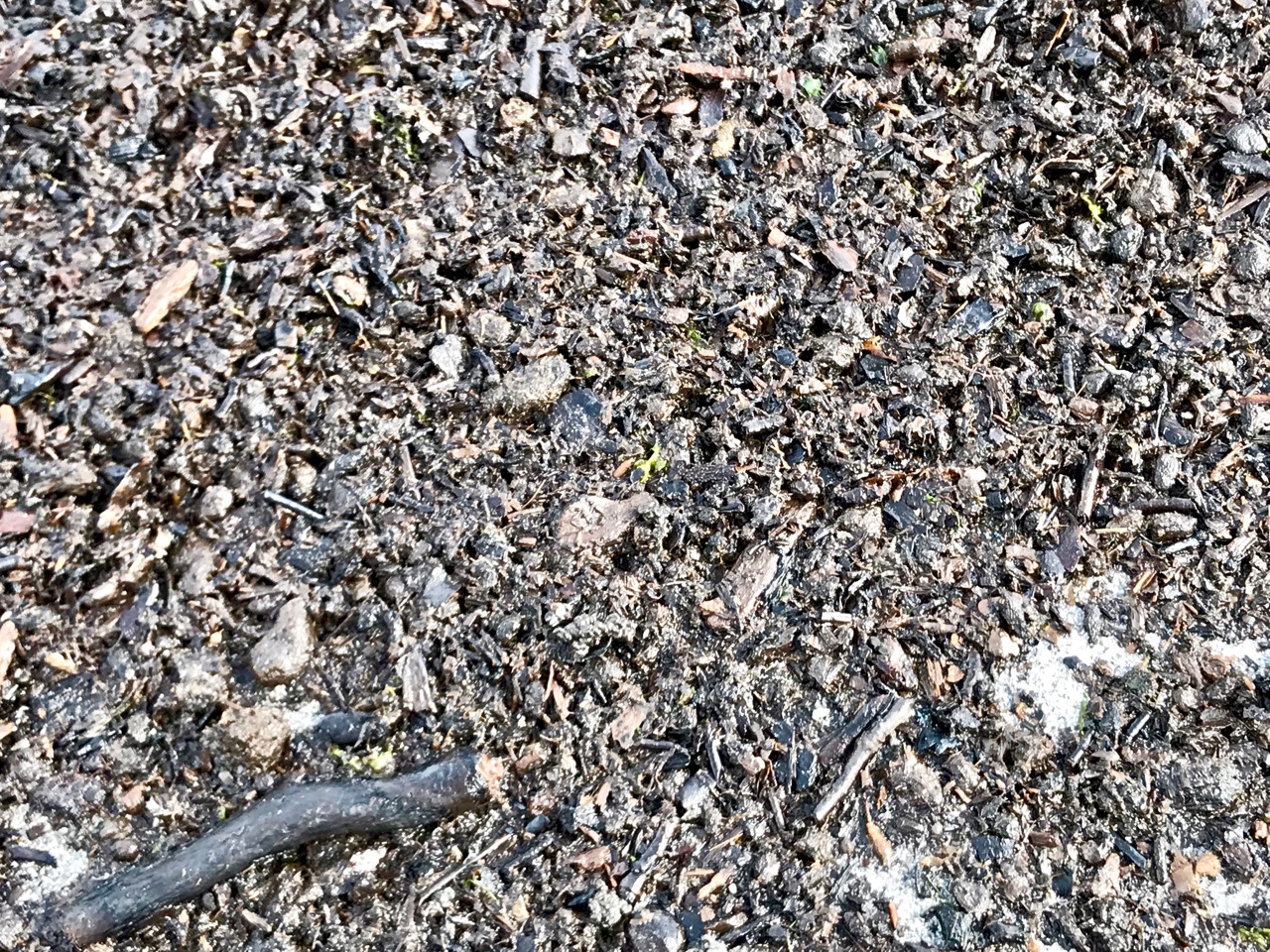
Upper picture – one of the huge blankets of organic material – mainly wood based – which has been washed up to the north end of the bay at Tralong since the extreme storms of 2014. Lower pictures – closer views of the debris showing recognisable material including twigs and branches.

In November 2015 Michael Viney wrote a piece in the Irish Times on drowned forests in Galway Bay:

. . . All summer the quiet tides returned the sand that last winter’s storms had dragged offshore, heaping it even deeper over the old oaken wreck on the strand . . . Perhaps, though I hope not, this winter’s great mill wheels of waves will grind that deeply again. Storms two years ago tore away whole layers of sand and stone west of Spiddal in Galway Bay, uncovering stumps of ancient oak, pine and birch from a 7,000-year-old forest drowned as the sea rose after the end of the Ice Age. The same exceptional seas, on the north coast of Connemara, exposed remnants of human occupation a metre thick in the sand-cliff shore of Omey Island. There were medieval burials among them, and bog at least 6,000 years old . . . Elsewhere along the west coast yet more of the kitchen shell middens of early settlers, back to the late Mesolithic, were stripped away. So the sea reveals the past and then takes it away . . . Glimpses of Ireland’s lost shores and drowned forests are not new. Pinewoods submerged off the Bray coast were described by Robert Lloyd Praeger at the end of the 19th century when construction of Bray harbour changed sediment flows and piles of collapsed trees appeared above the sand . . .

Ancient forests reappeared again in Bray, Co Wicklow, in 2001, and more were revealed recently – in 2017. The Irish Times reported earlier this year on a project to discover “the lost landscapes” of the Irish Sea. 

Tralong Beach will change again, as the weather patterns vary, and it may not always be possible to experience the drowned landscape here. It’s an unmissable journey into deep history.

With many thanks to Robin Lewando for introducing us to this site, and to Anthony Beese for providing additional material

A Flying Priest, and Rolls of Butter

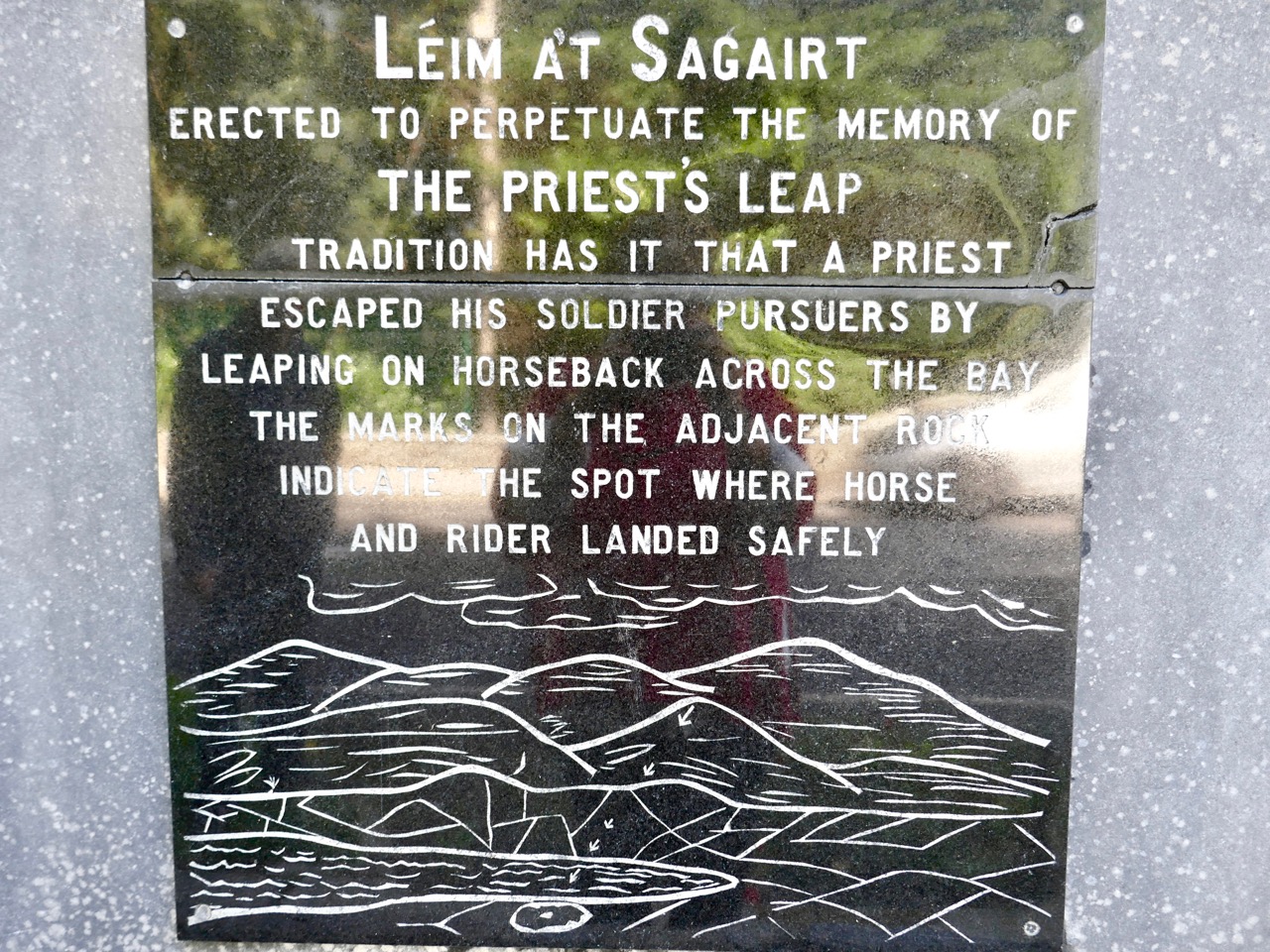
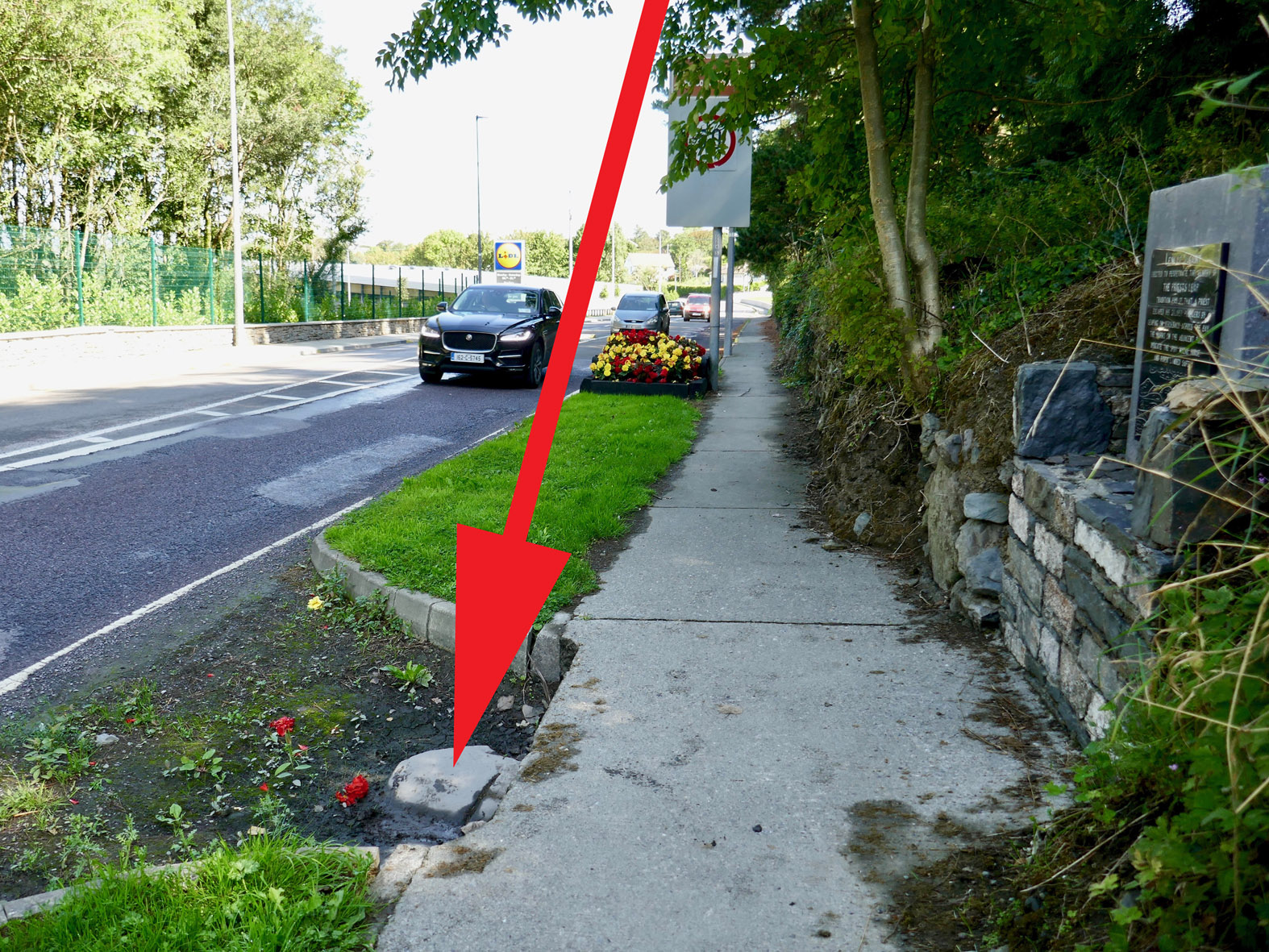
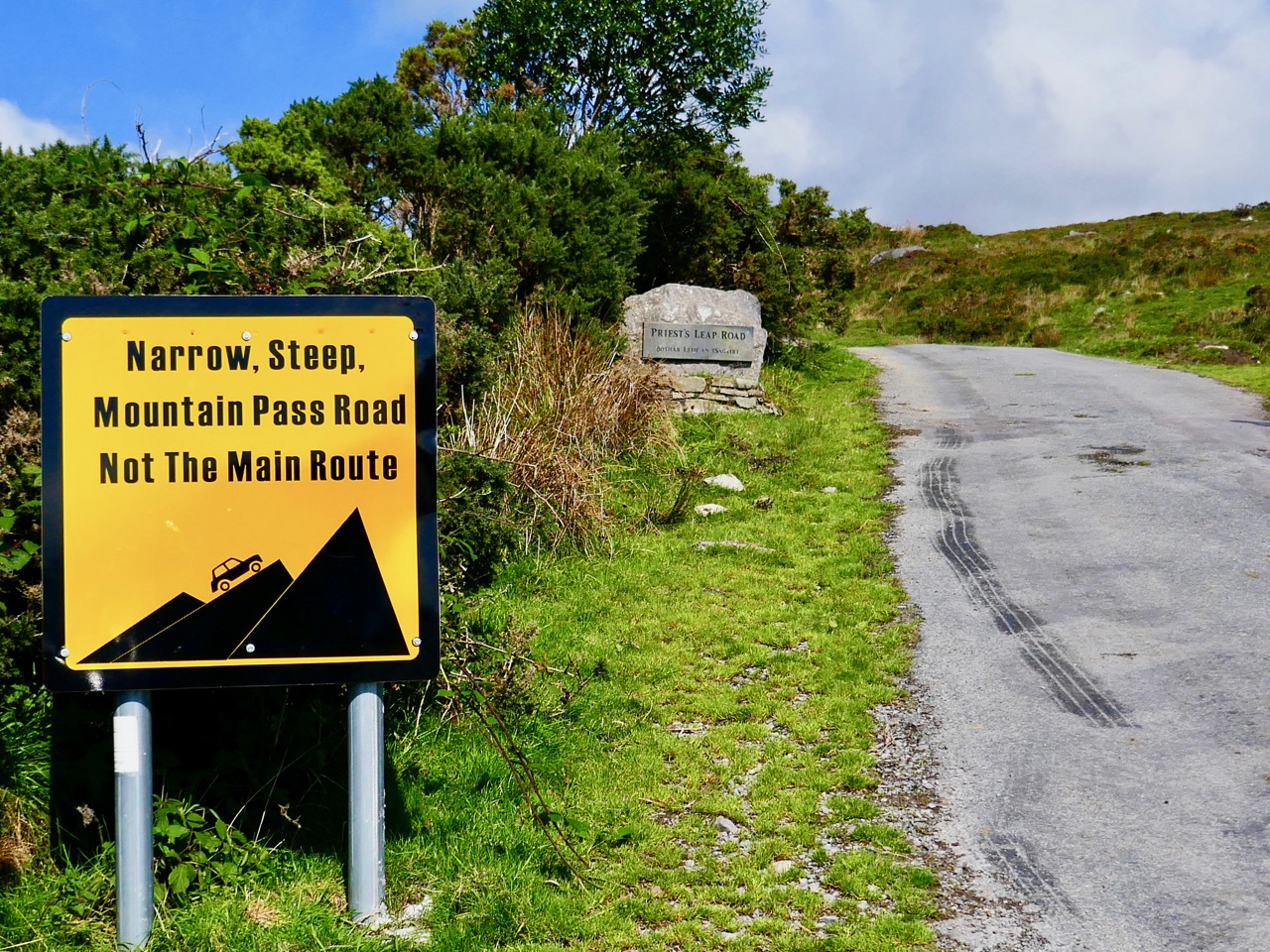
Last week Finola reported on a journey over the mountains on the ‘Priest’s Leap’ road from Kenmare, Co Kerry to Bantry, in West Cork. We received a fusilade of comments from readers who told us we hadn’t seen half of what there is to be found on this road so, on the very first day of September, we were off again, this time getting a different perspective by travelling the other way. Before we left Bantry we had to find the very spot where the priest – being pursued by soldiers – landed after he and his horse leapt off the highest summit of the road which has been named after him.

It’s great that this stone has been left untouched by the modern roadmakers, so that all can see the hoof marks to this day. I calculated that, 400 years ago, the priest was airborne for a distance of some 12 kilometres as the crow (or horse!) flies – considerably more than some of those early aviators of the 20th century were credited with!

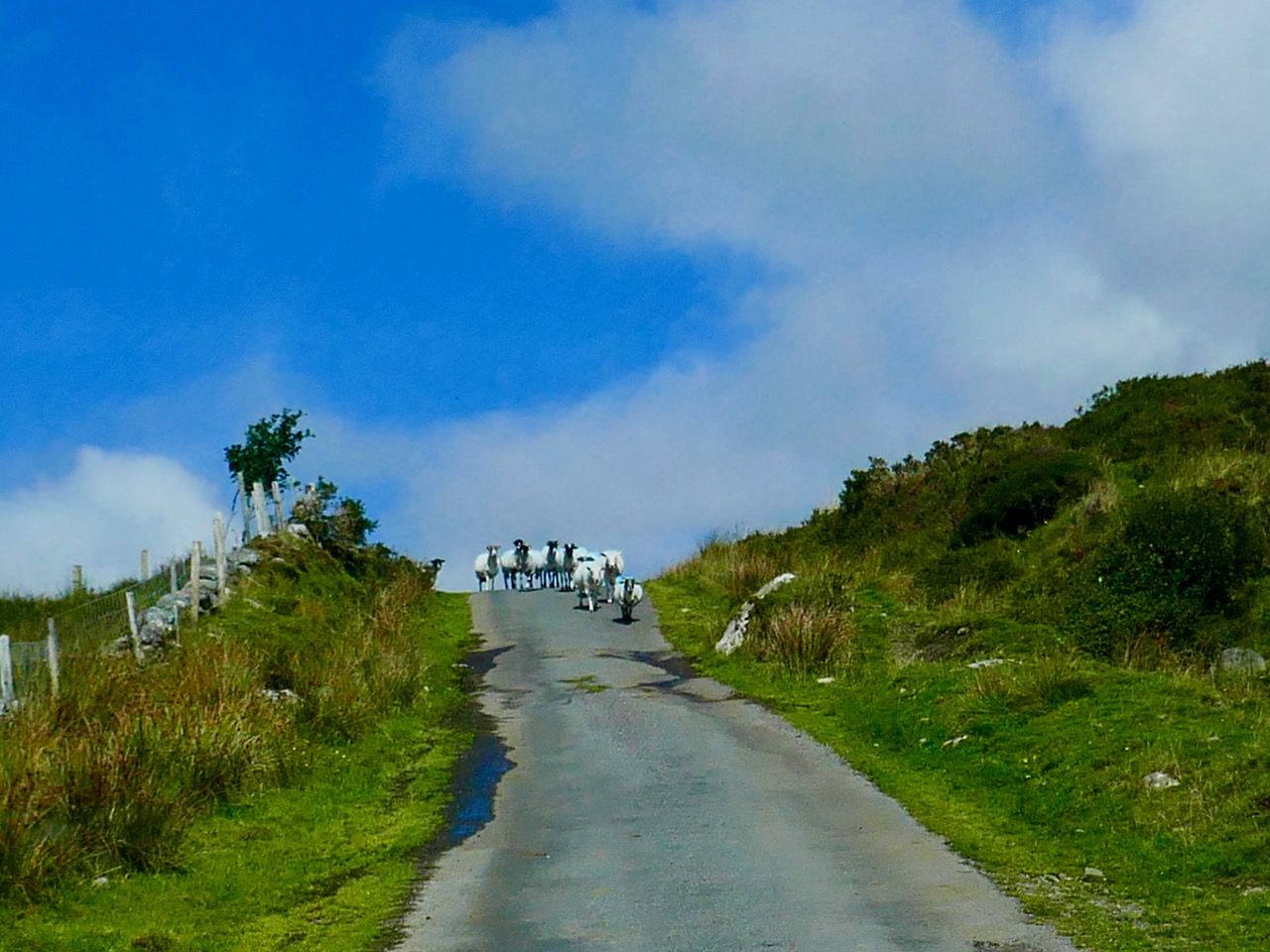
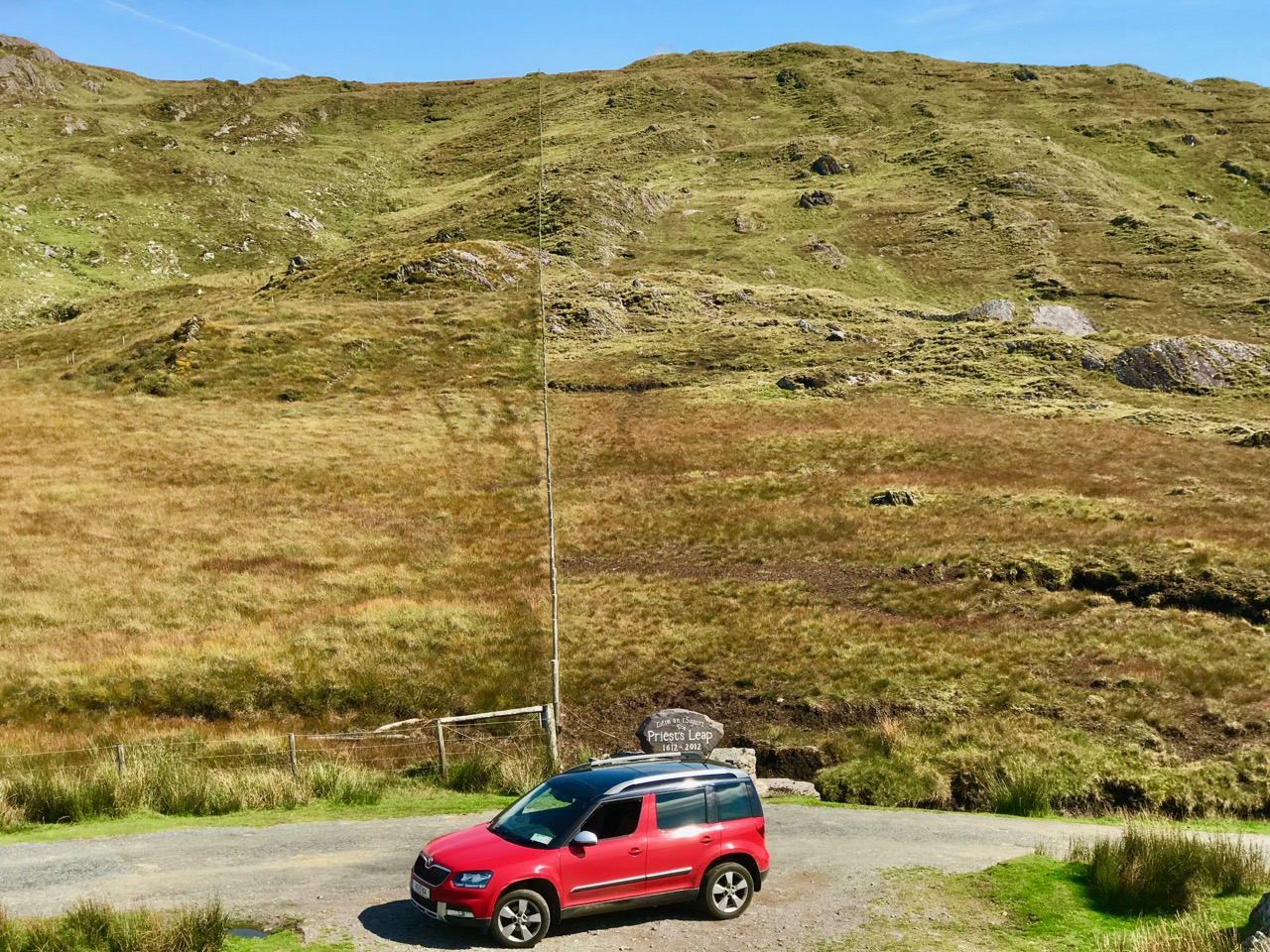
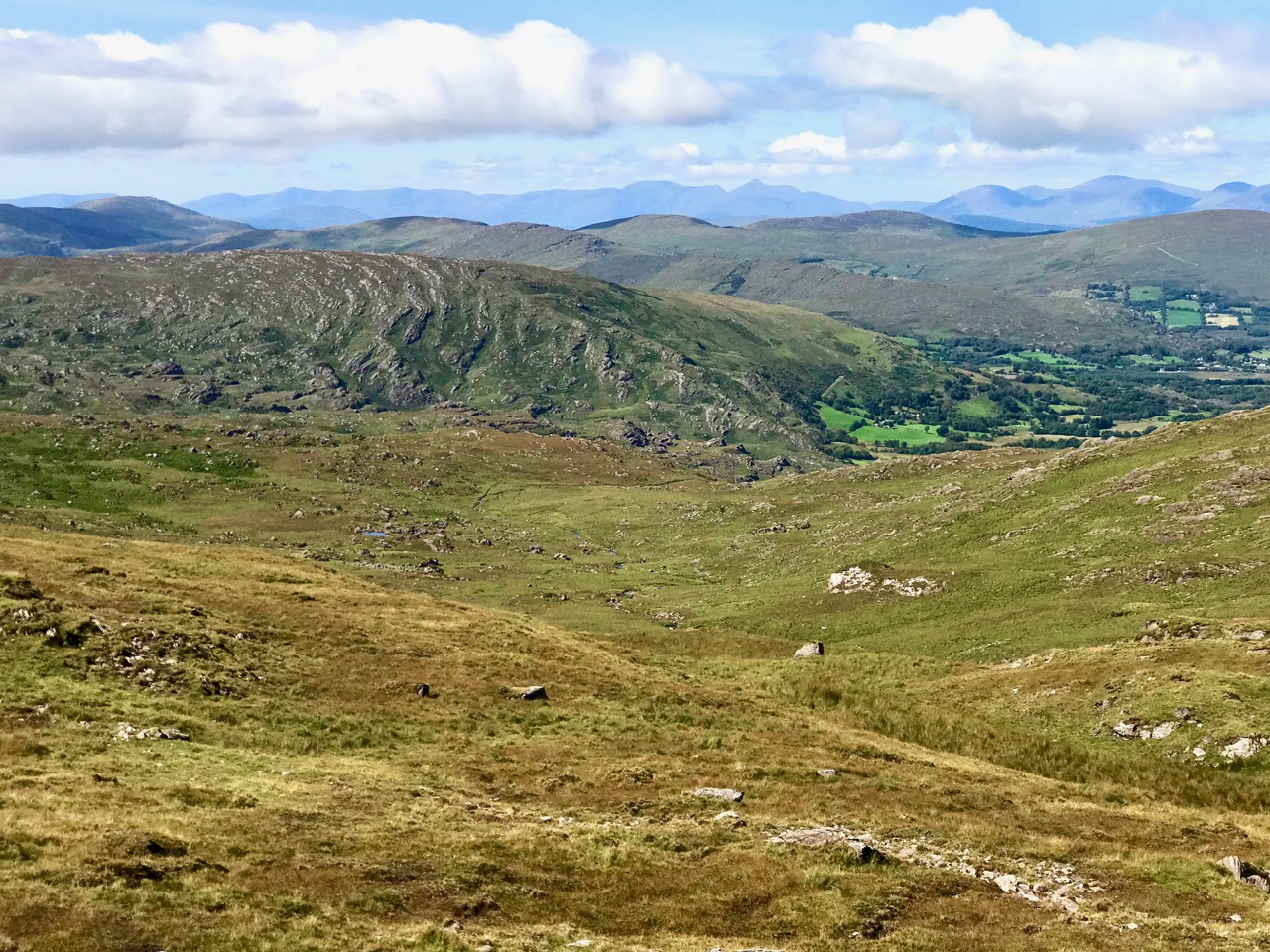
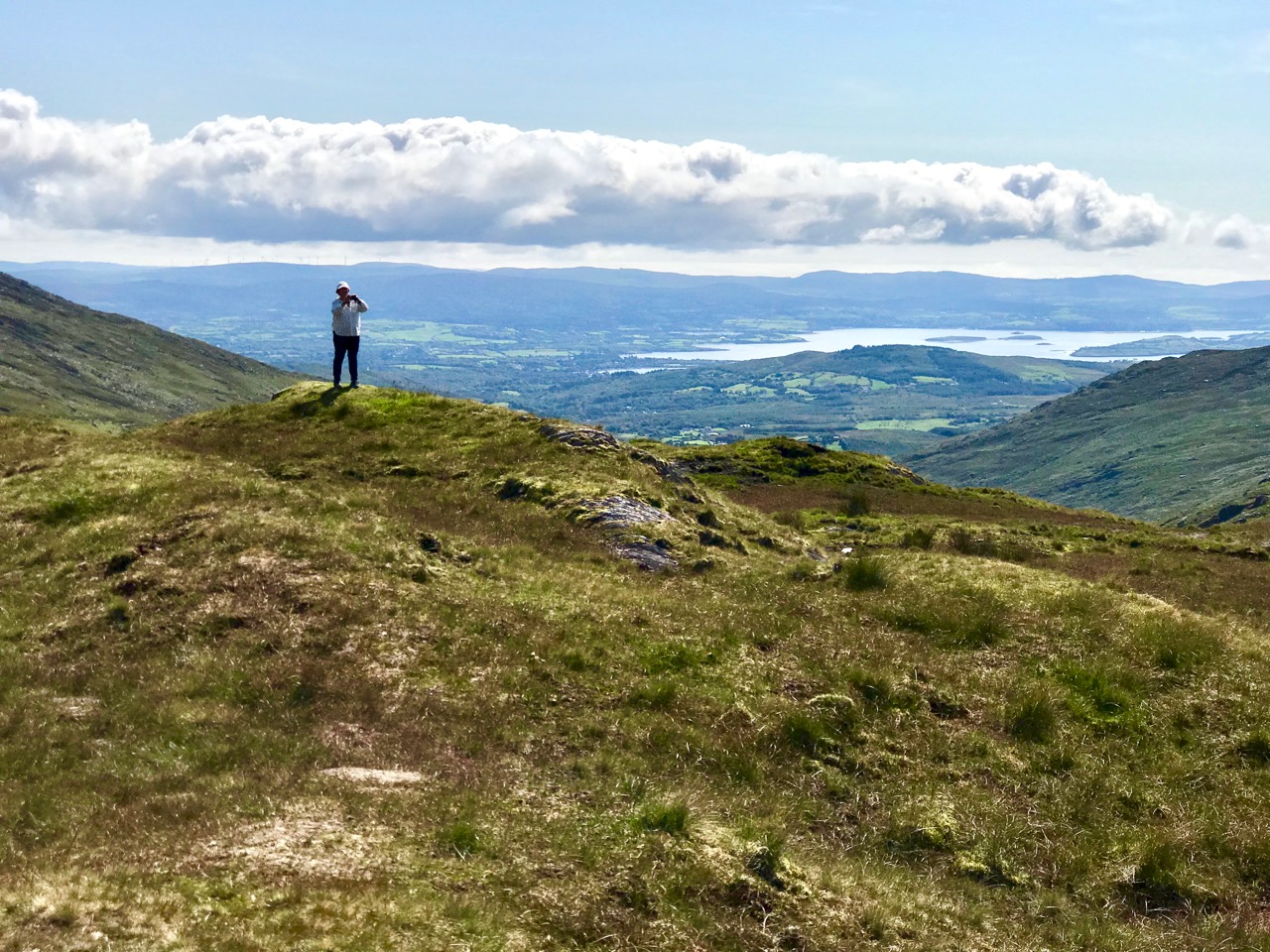
If you are not of a nervous disposition, and don’t mind travelling a narrow, single-track mountain road for some 15 kilometres, probably sharing it only with a few sheep, then to pass over this route is one of Ireland’s most spectacular experiences. Choose your day, though: we were lucky to have hot sun and clear views the whole way. If you survive it to the top, you are right on the Cork – Kerry border: in the photo below, the fence going on up the hill is exactly on that border line (and the point at which the priest and his horse took off is to the right of it at the peak). Stop and look around: the views in every direction are stunning.

After we crossed the border into Kerry we came downhill and stopped again at the remote, picturesque Feaghna burial ground in the townland of Garranes. On our last visit we were completely unaware of the existence of an unusual archaeological site nearby – one which has a number of traditions associated with it.

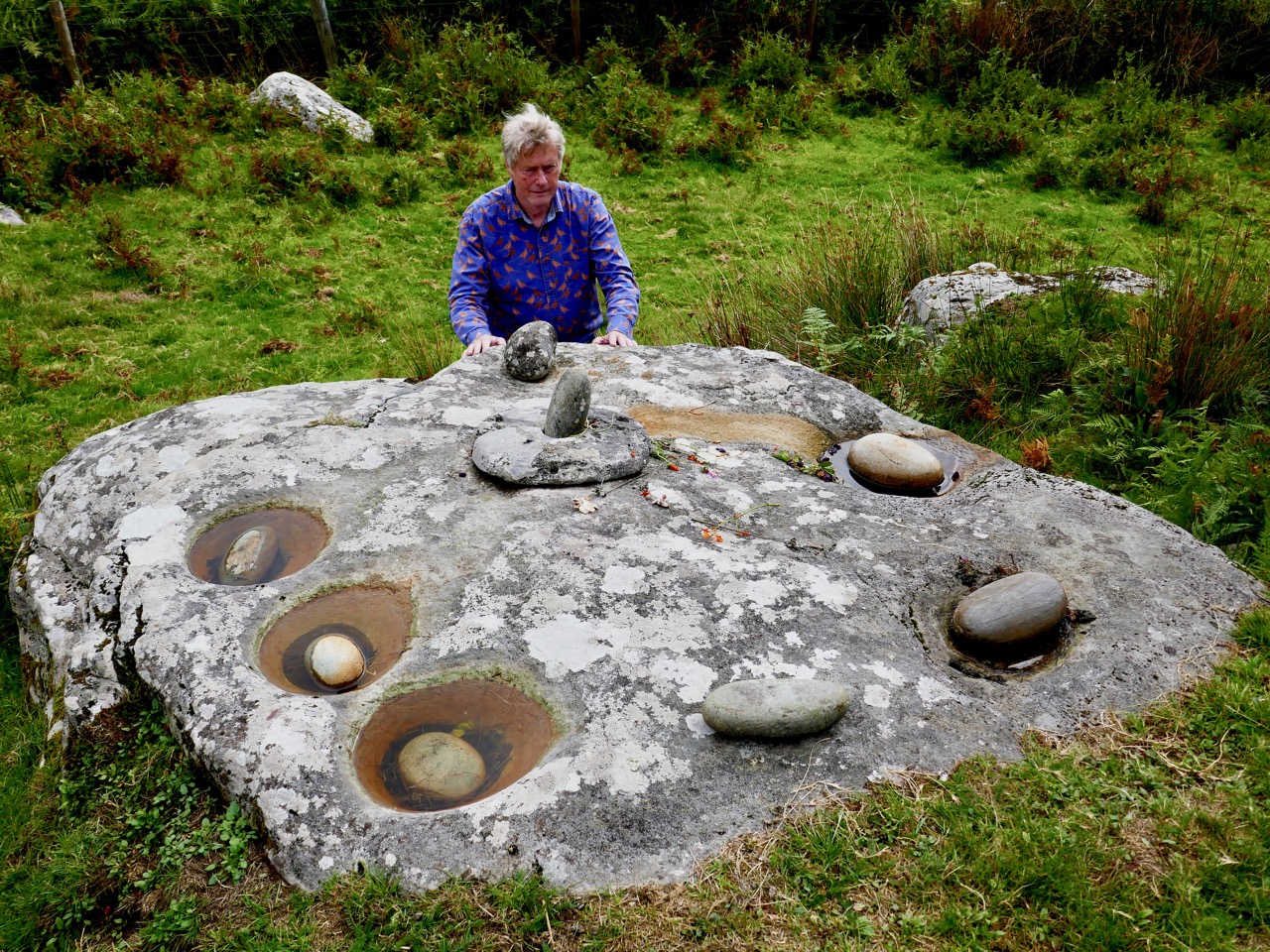
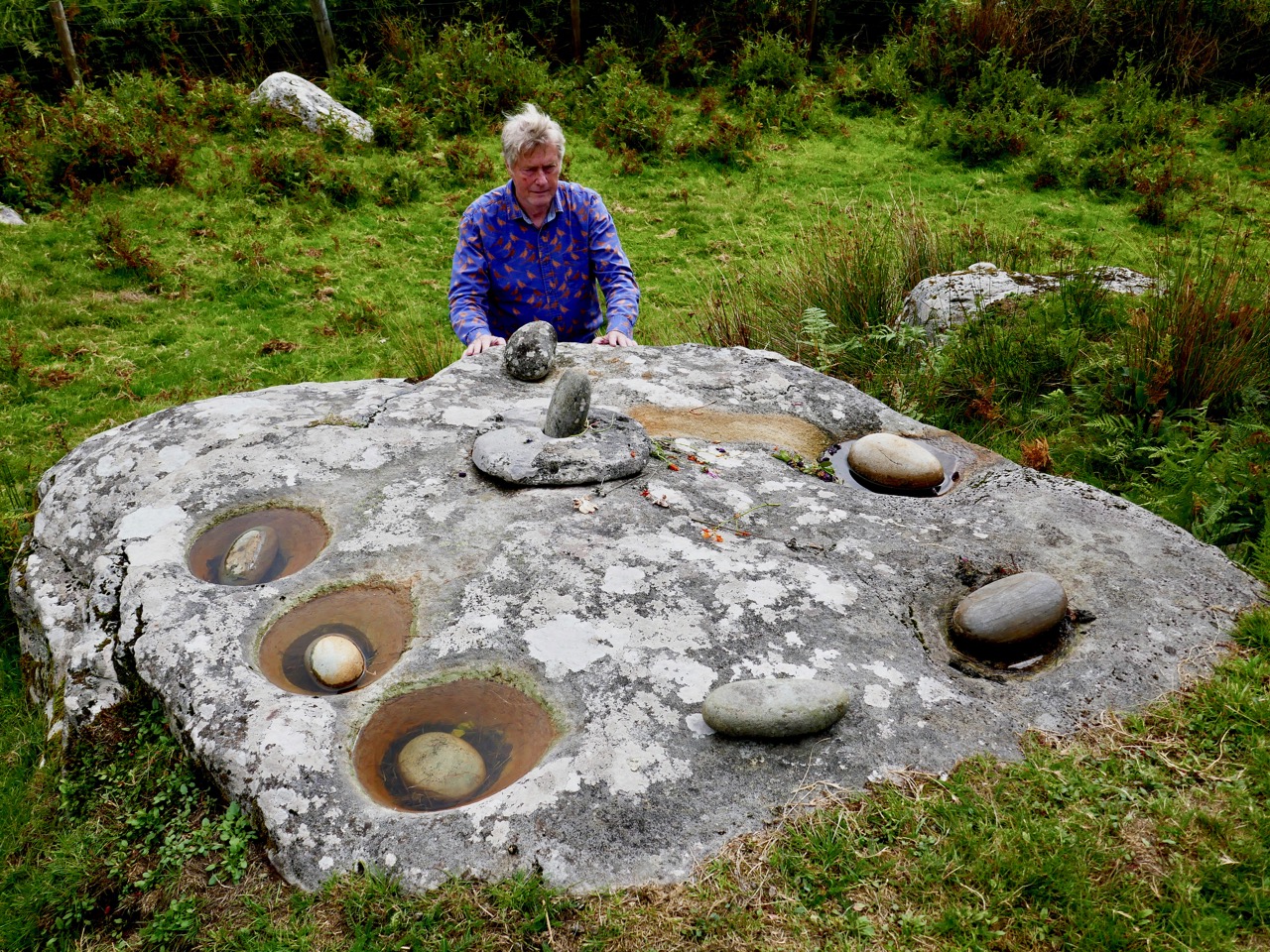
Popularly known as the ‘Rolls of Butter’ this site is technically a ‘Bullaun Stone’. These are fairly widespread over Ireland, but their original function is not known for sure. Here’s a summary from the National Monuments Service:

. . . The term ‘bullaun’ (from the Irish word ‘bullán’, which means a round hollow in a stone, or a bowl) is applied to boulders of stone or bedrock with hemispherical hollows or basin-like depressions, which may have functioned as mortars. They are frequently associated with ecclesiastical sites and holy wells and so may have been used for religious purposes. Other examples which do not appear to have ecclesiastical associations can be found in bedrock or outcrop in upland contexts, often under blanket bog, and are known as bedrock mortars. They date from the prehistoric period to the early medieval period  . . .

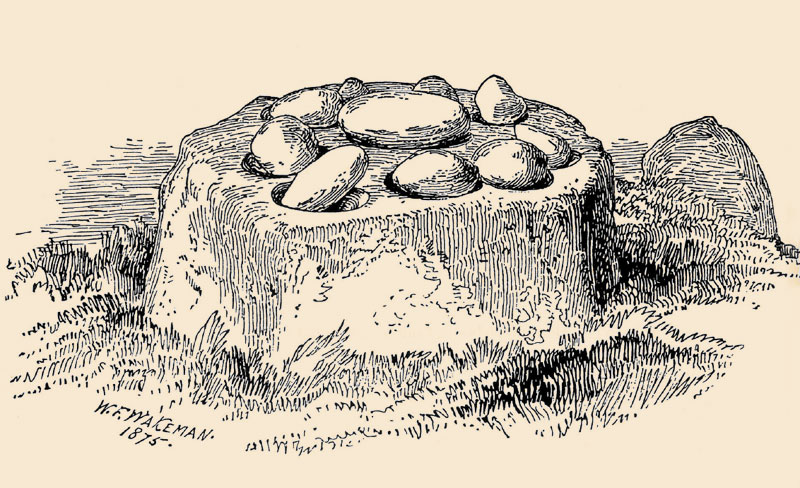
A drawing by the 19th century antiquarian W F Wakeman of a Bullaun Stone at Killinagh in Co Cavan. Here, the stones are known as ‘cursing stones’ – a term also applied by some commentators to the Feaghna site at Garranes. Interestingly, the Cavan site is also referred to as ‘St Brigid’s Stones’, while the Rolls of Butter are associated with the local saint, Fiachna. Beliefs – stories – are, of course, as fascinating as any archaeological evidence, and have to be investigated. Here, they abound – and are best learned from local sources: in this link folklorist Matt Sullivan has put together an entertaining selection of local opinion about the Rolls of Butter.

A few years ago I wrote a post covering some bullauns, ‘cursing stones’ and ‘curing stones’ – but at that time I wasn’t aware of these examples just a mere priest’s leap away from our own home.

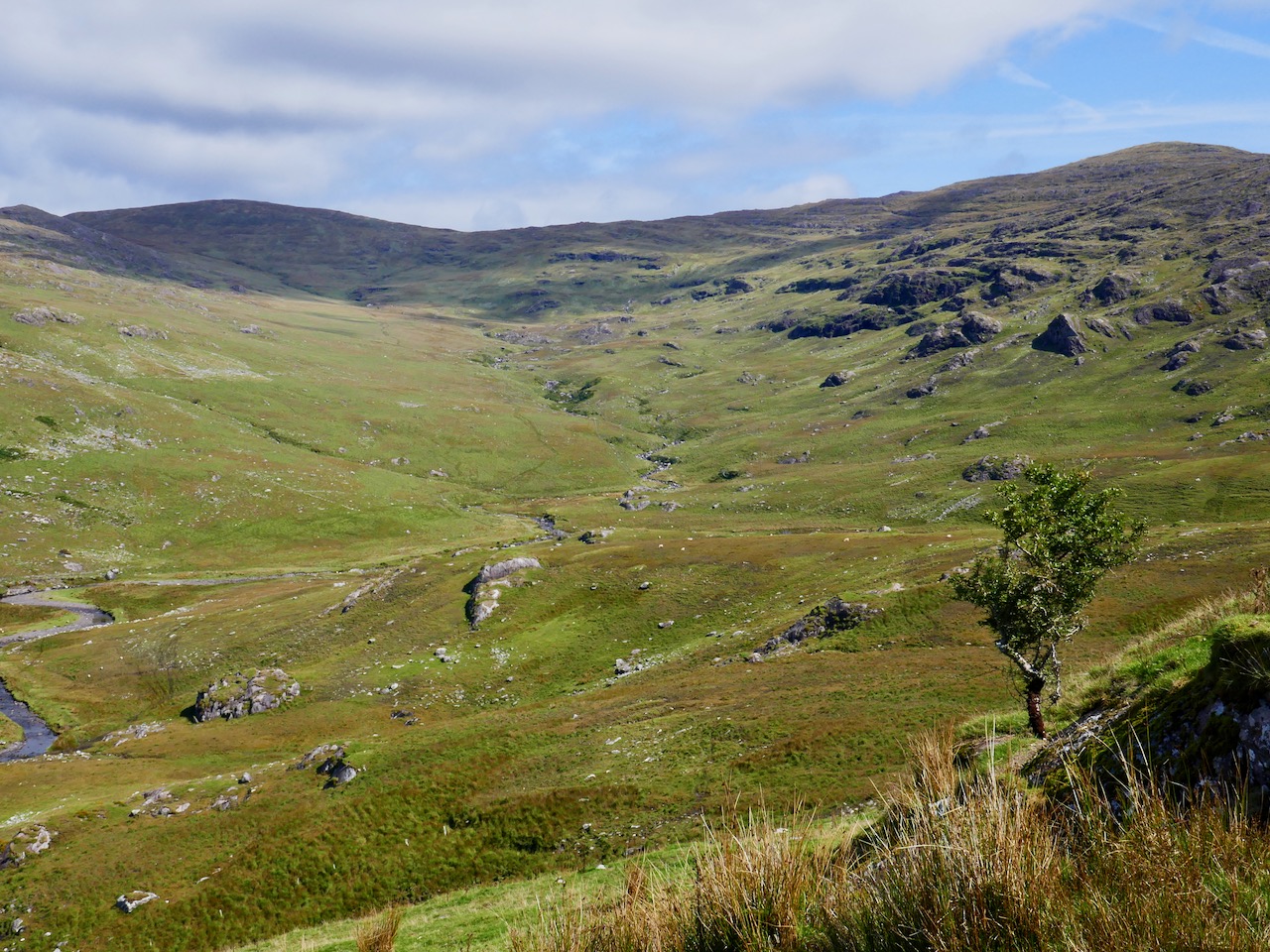
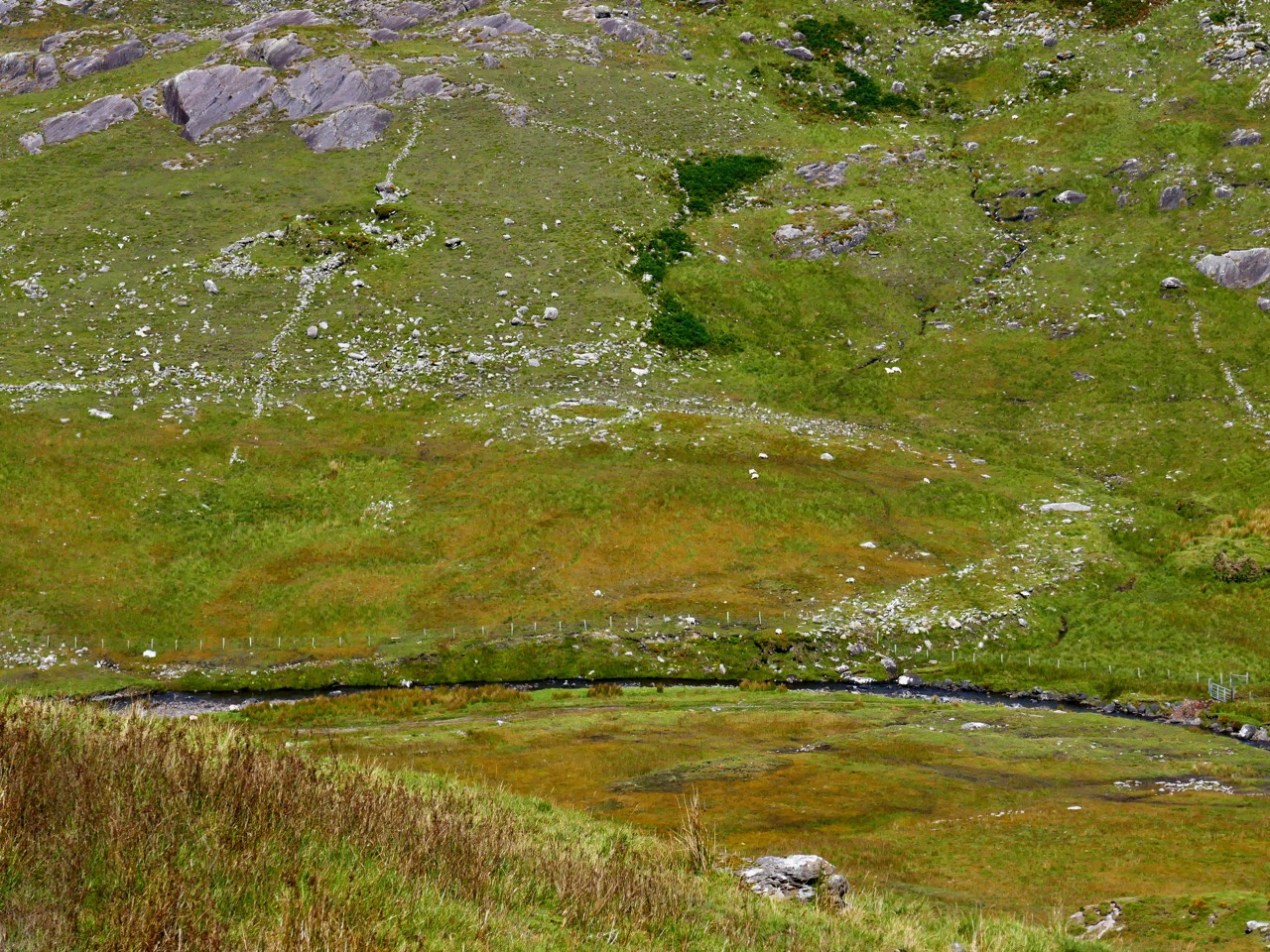
There is much more archaeology and history in this mountainous country: here (above) in the townland of Erneen, the view from the road across one of the many remote glens shows up former enclosures and ‘hut sites’, which the National Monuments Service describes thus:

. . . A structure, usually discernible as a low, stone foundation or earthen bank enclosing a circular, oval or subrectangular area, generally less then 5m in maximum dimension. The remains are generally too insubstantial to classify as a house but the majority probably functioned as dwellings. These may date to any period from prehistory (c. 8000 BC – AD 400) to the medieval period (5th-16th centuries AD) . . .

It’s intriguing to think that these beautiful natural landscapes which appear so lonely to us were occupied hundreds – perhaps thousands – of years ago. It’s likely that they have changed very little over all that time: history is clearly set out for us as we travel over this ancient way.

The days are shortening, and we still didn’t have time to explore everything the Priest’s Leap road has to reveal. We’ll be back again before too long – in search of more stories.

Skibbereen Celebrates: Arts and Artists

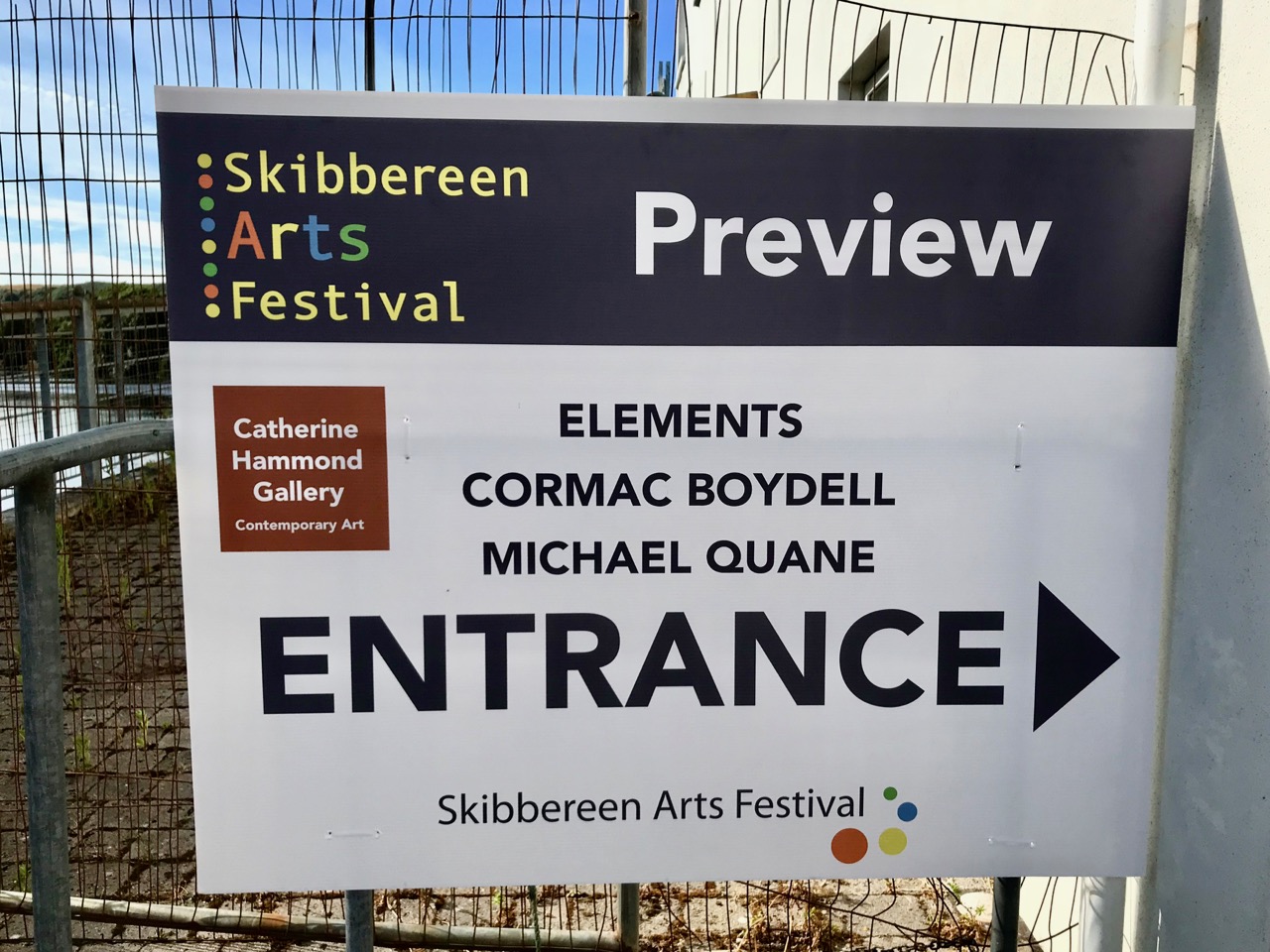
There’s seldom been as much sunshine in Skibbereen as we are seeing this summer: every day feels like a holiday, and there’s so much for residents and visitors to do – it’s going to be hard to keep up with it all! Coming soon is the launch of the Skibbereen Arts Festival (I love this great graphic!) –

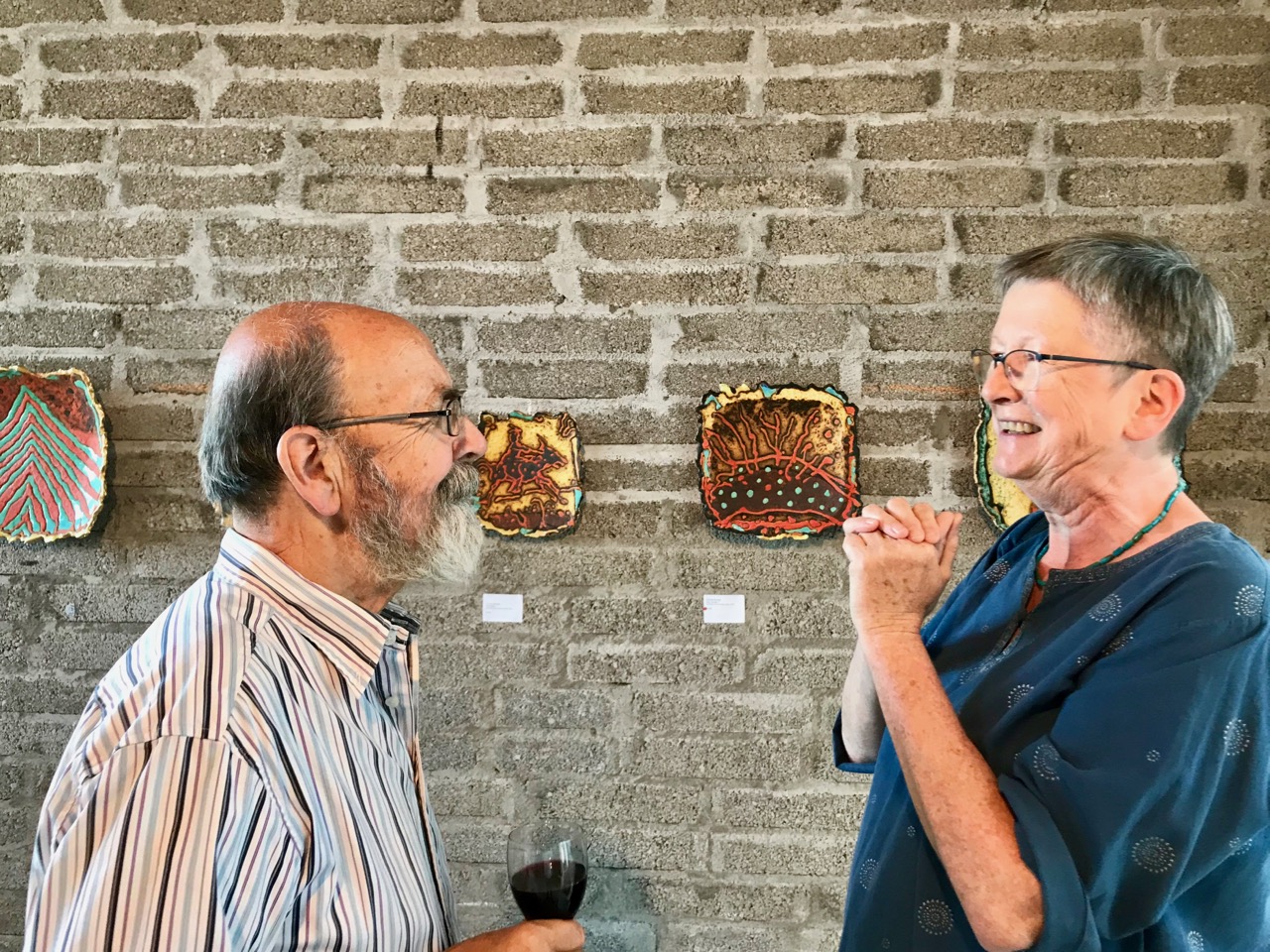
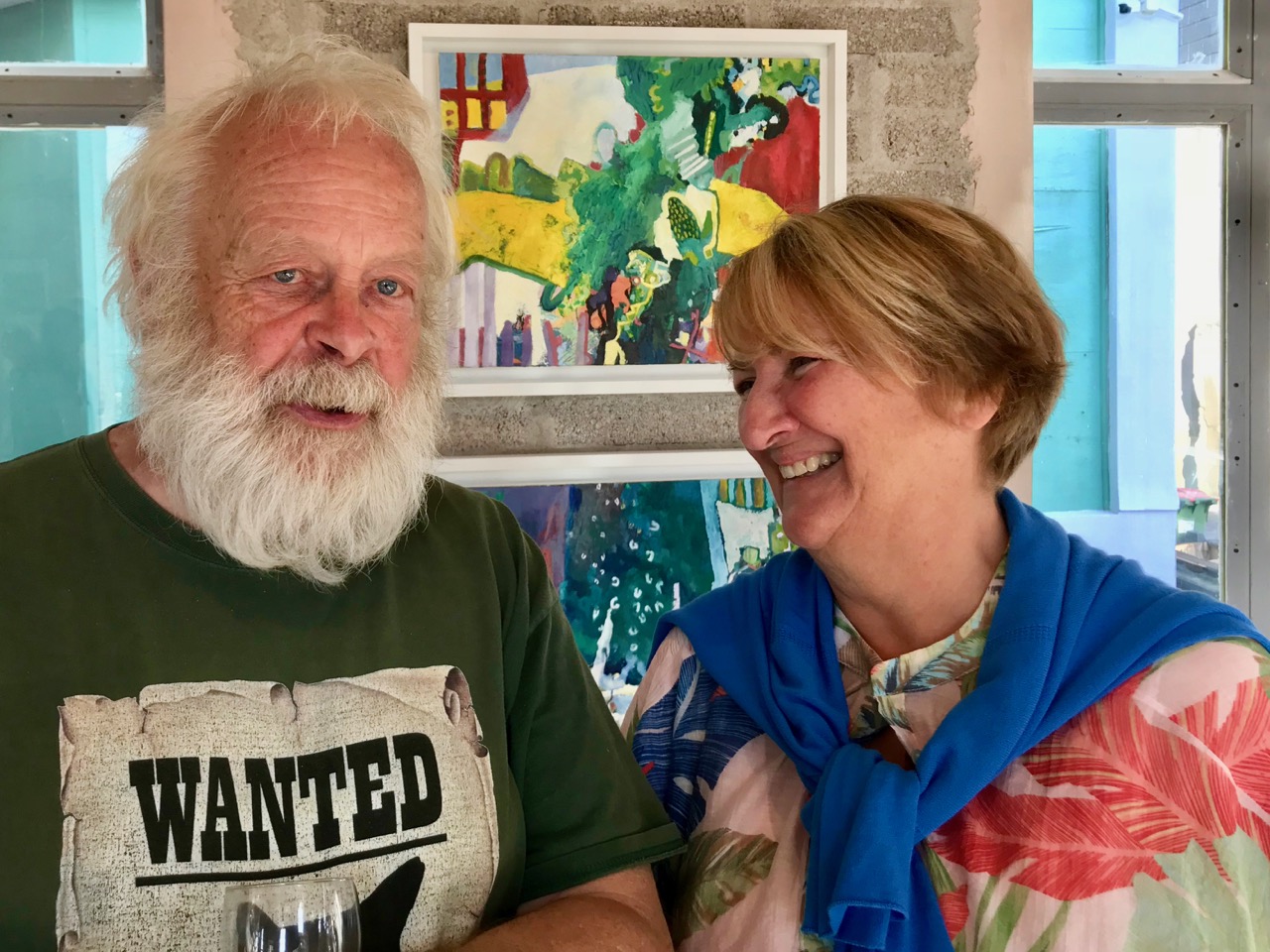
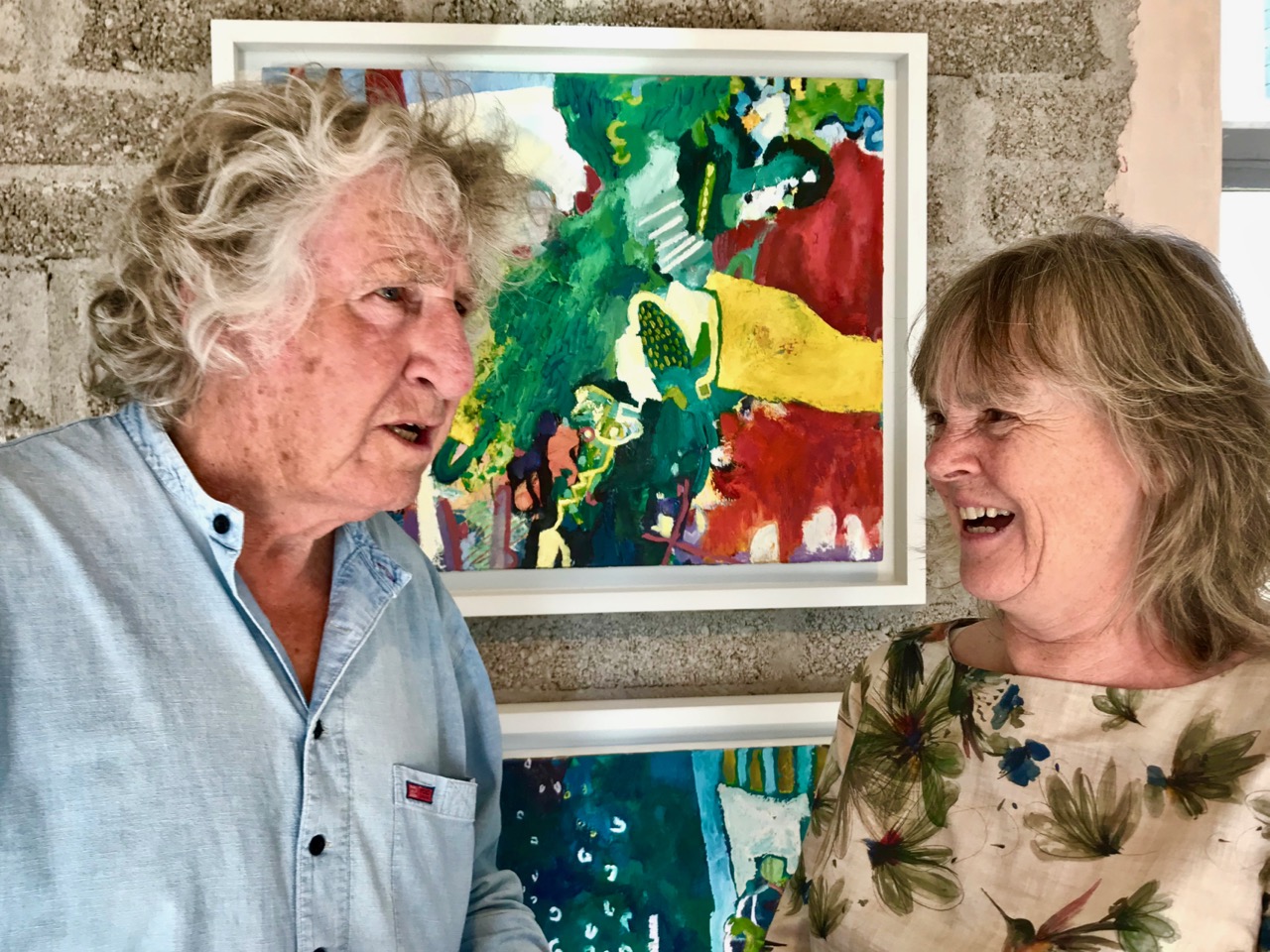
On Friday night we were treated to the ‘Preview’ of the ‘flagship exhibition’ for the Skibb Arts festival, running from now until 6 August at The O’Driscoll Building, Old Quay in the centre of town. It’s titled Elements: West Cork Landscape and features works by 30 artists from the area. In fact, the sunshine and the excitement brought out practically every artist, anyone connected with arts, and a whole lot of West Corkonians and visitors to see what’s on offer.
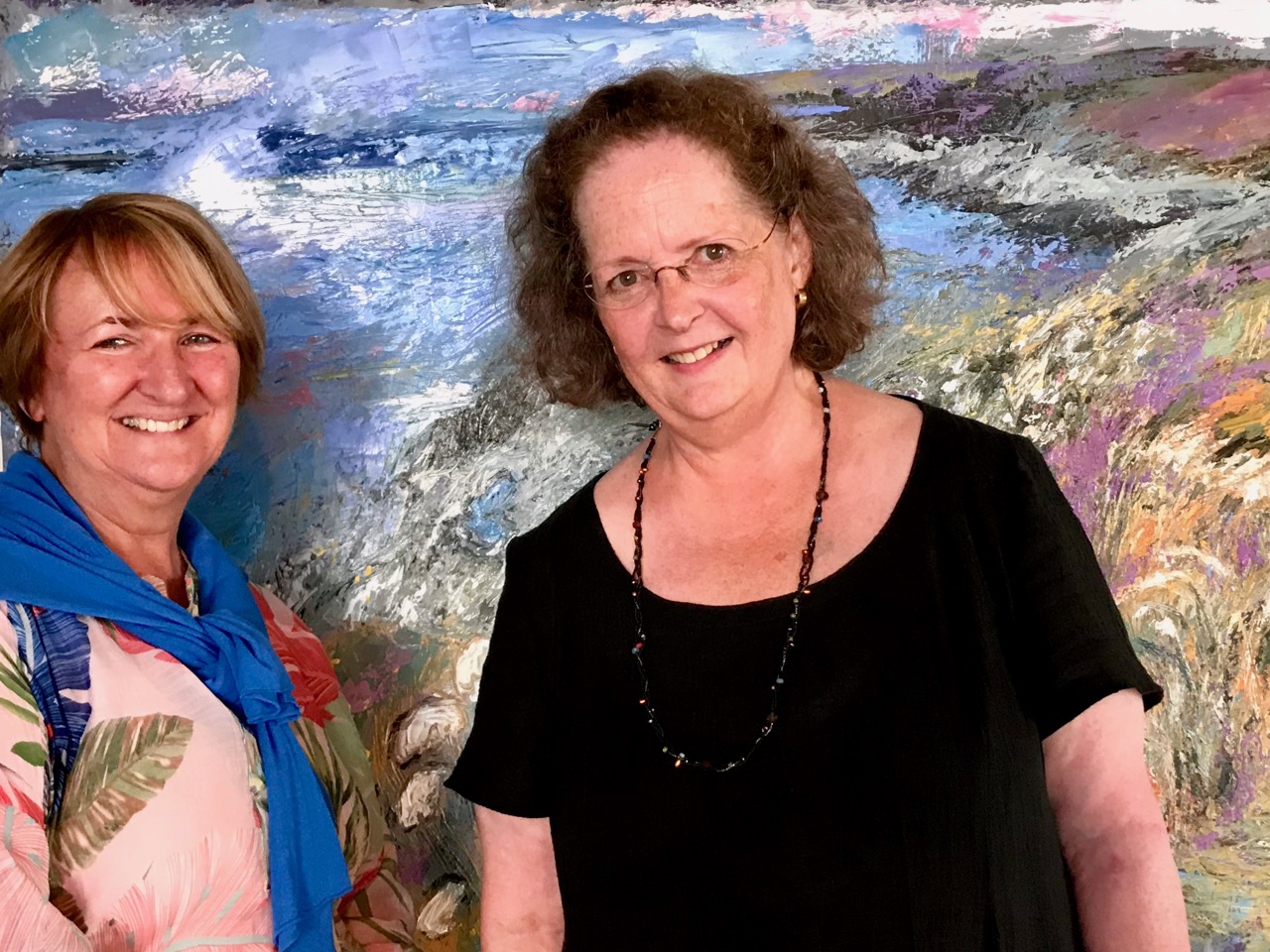
The exhibition has been put together by Catherine Hammond (above, right, with Finola – standing in front of a Christine Thery canvas) and it’s great to see Catherine curating in Skibbereen again. The art here is strong and looks good on the bare concrete walls of the building, the vacant shell of which is a reminder of Celtic Tiger days, but it always works so well as a gallery.

The work of two artists struck us as soon as we entered the building on Friday: the bold, simple architectural forms of Helena Korpela, two examples above. (NOTE: images removed at request of artist. Please see Korpela website for examples); Helena has connections with West Cork and Helsinki, which emphasises the breadth of art makers working here today.

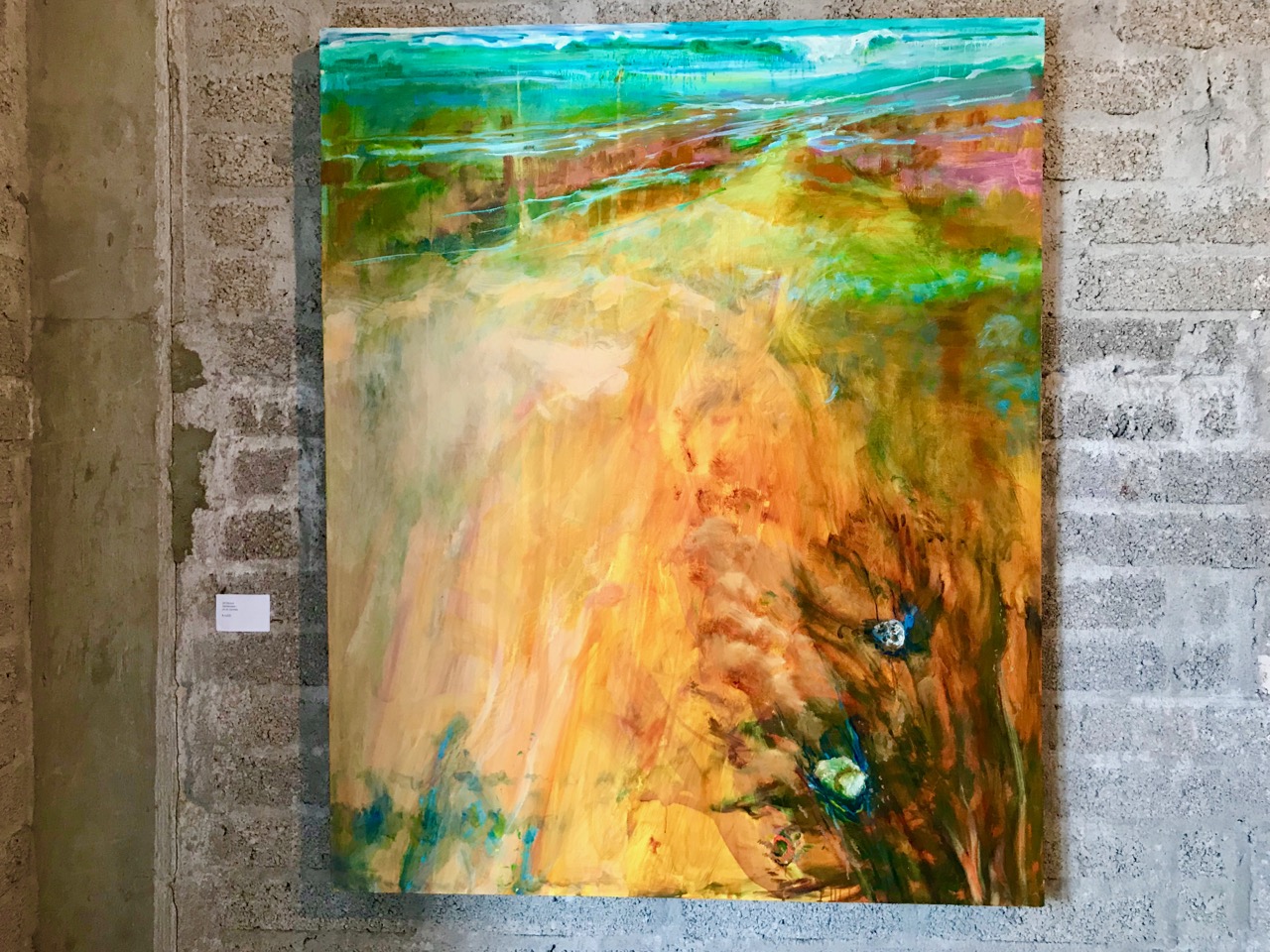
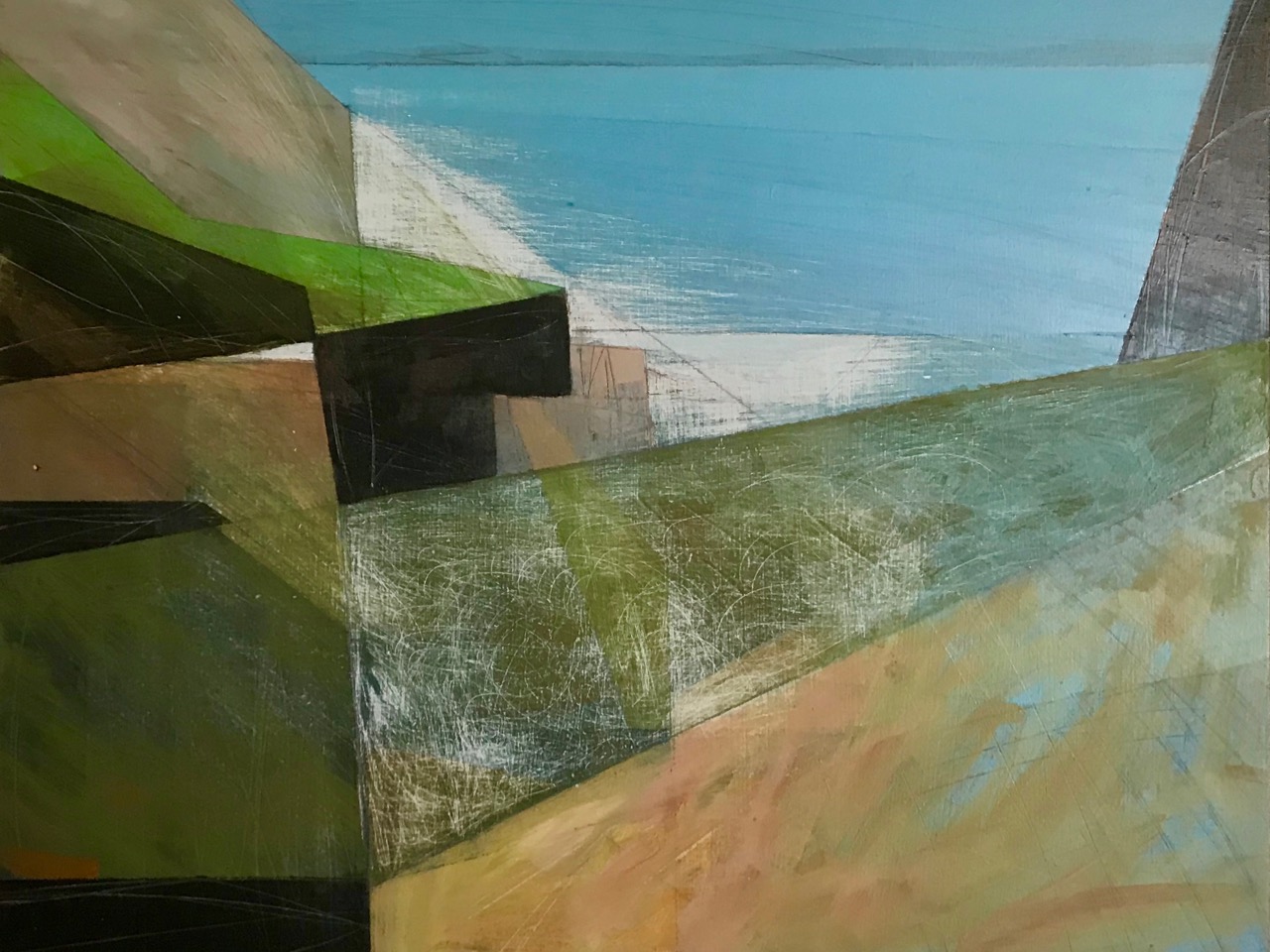
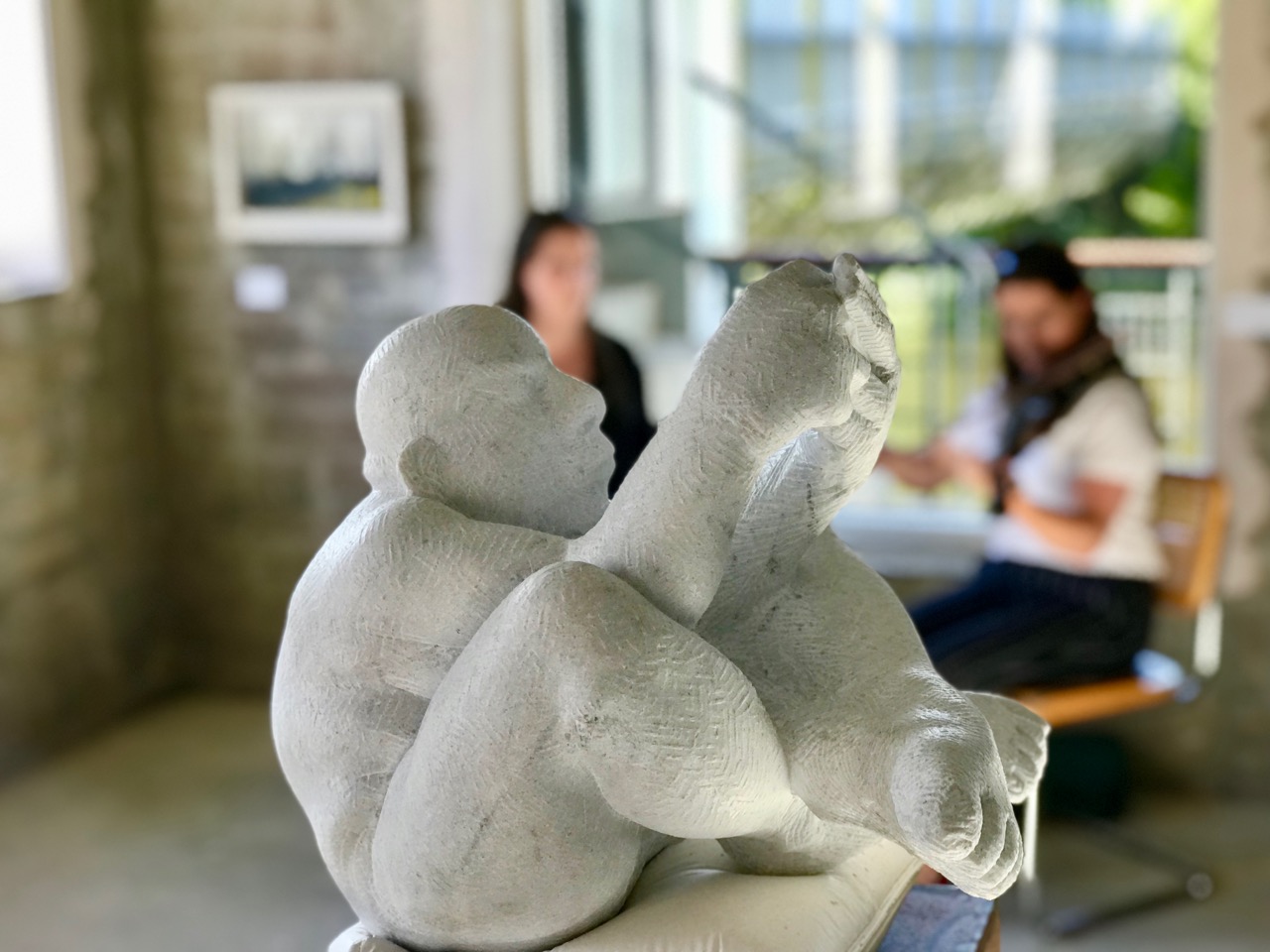
Personal favourites in this exhibition, for me, are two new pieces by Michael Quane. This Cork born artist now based in Leap is well-known for his large public sculptures, but I like the dynamics of these two smaller works (header picture and above). Roaringwater Journal has reviewed many of the artists currently on show at The Old Quay: have a look at these posts on William Crozier, Terry Searle and Cormac Boydell – and let’s see some examples…

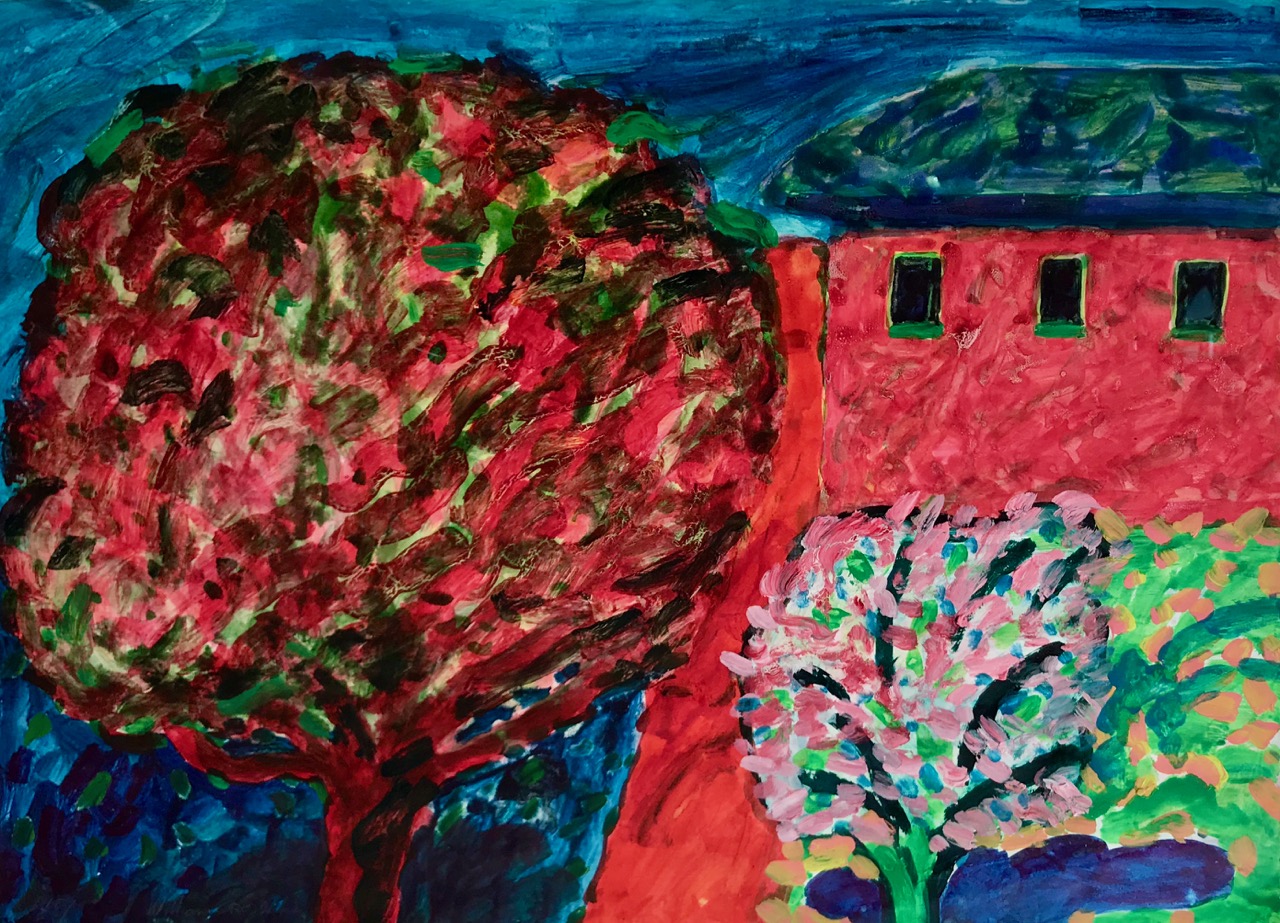
Upper – Crozier; middle – Searle; lower – new ceramics by Boydell. It was also great to see works from elsewhere in Cork: this canvas – by Jill Dennis – is impressive.

It wasn’t just the artists who produced the work that came to the opening: other familiar names in Ireland’s contemporary art world were also well represented. See who you can spot… *

So, everyone is here, everyone is enjoying the summer and Skibbereen is swinging! Art events not to be missed include the opening of Coming Home: Art and the Great Hunger exhibition at Uillinn, and the related performance pieces and installaions which Finola is discussing in her post today, and also mentioned in her post last week. But those are only a fraction of the whole Skibbereen Arts Festival this year – we haven’t even started on the music, film, poetry or workshops: get hold of a programme and book up now – while there are still tickets available.

Angela Fewer – Off Heir Island

* John Kelly, Brian Lalor, Penny Dixey, Jim Turner, Keith Payne, Eion McGonigal, Peter Murray…

Some That Got Away!

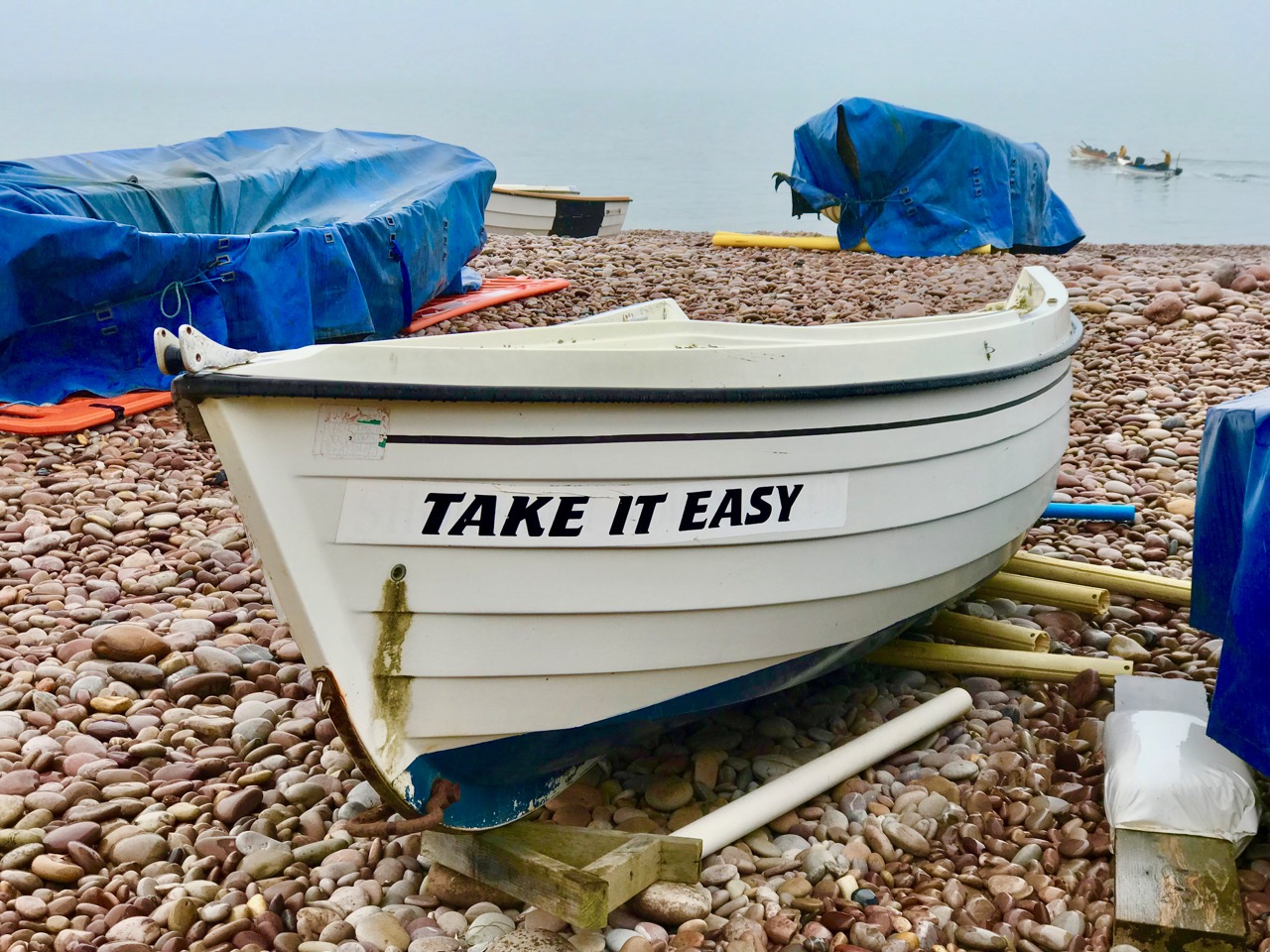
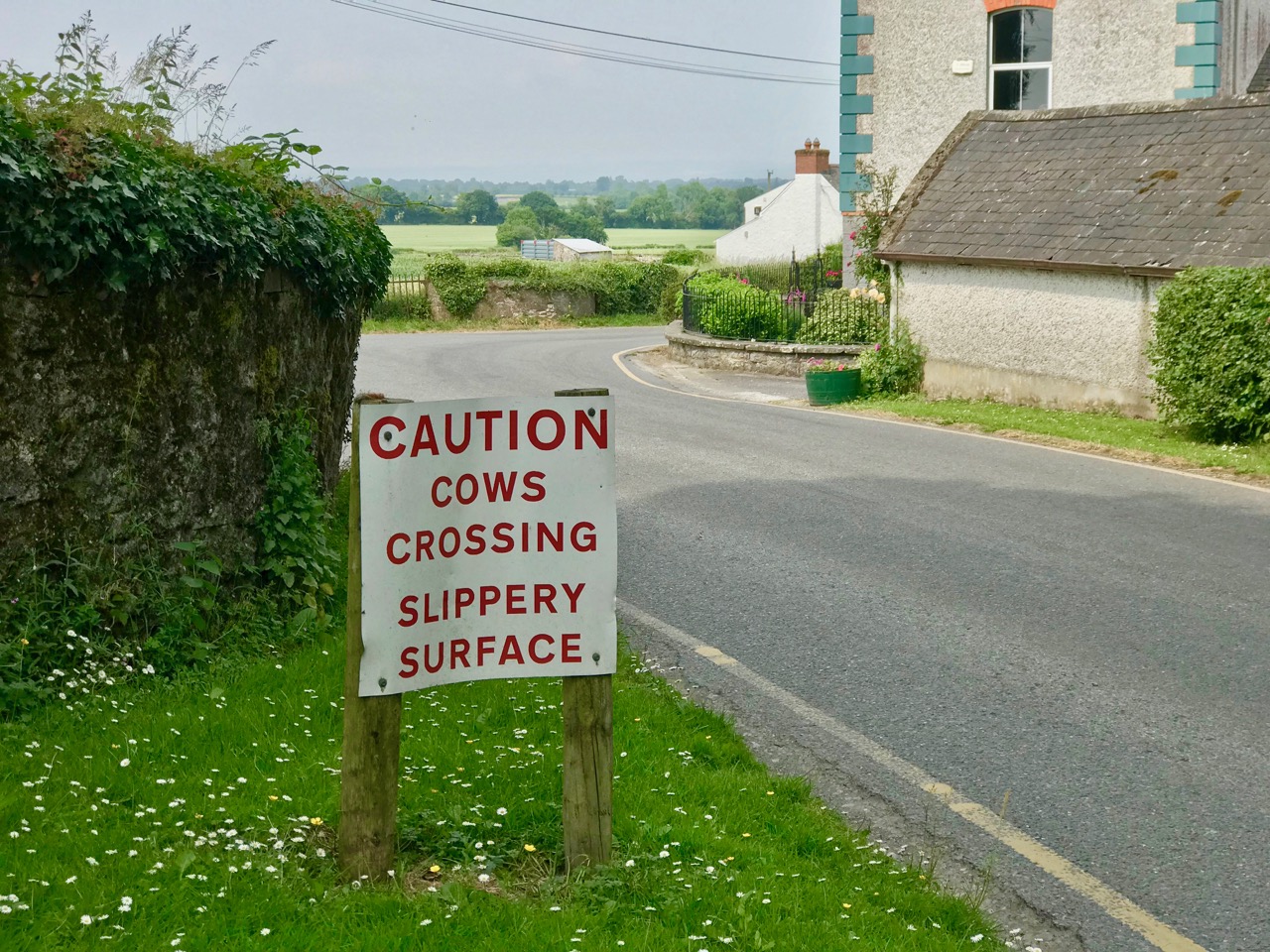
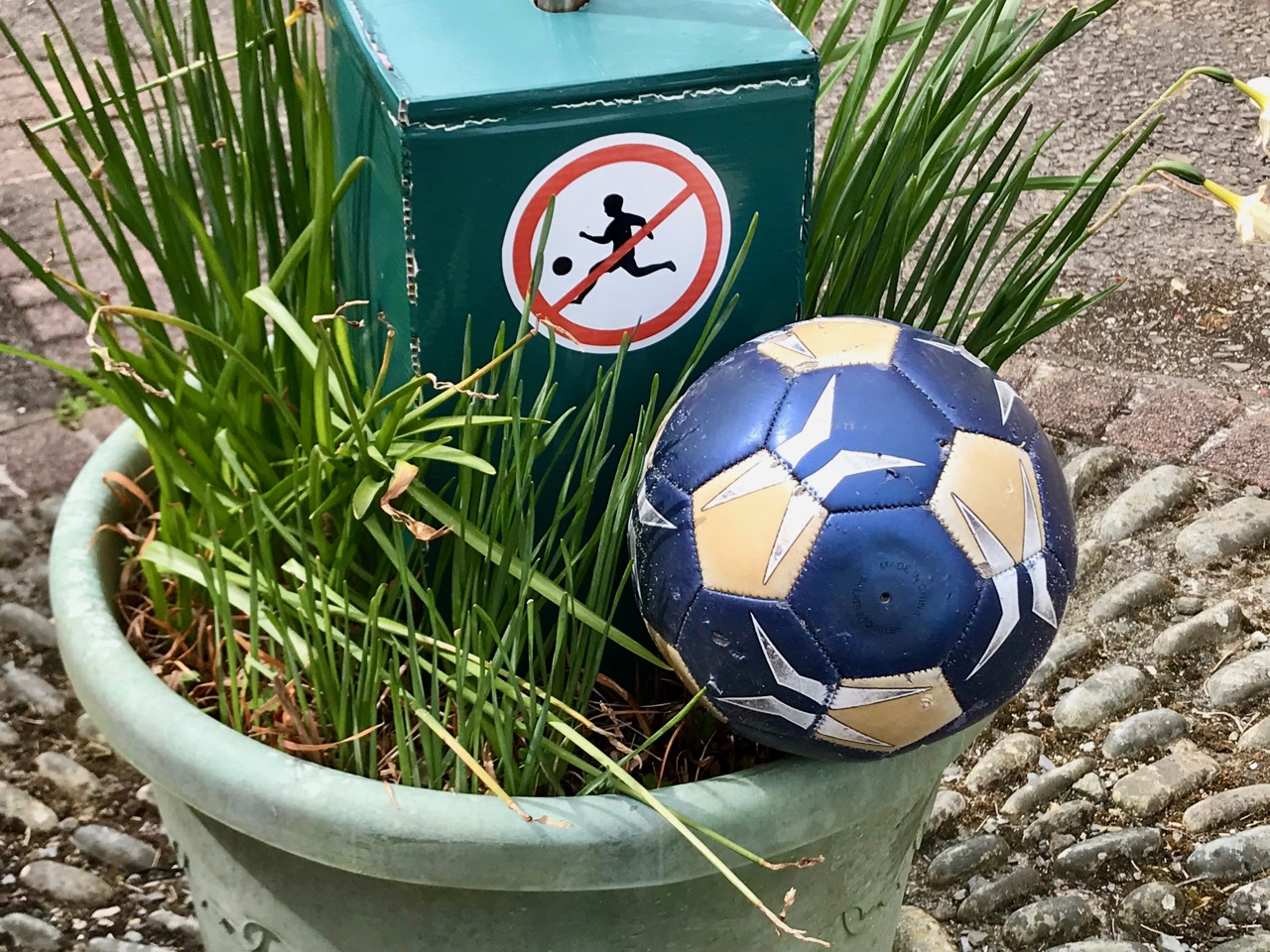
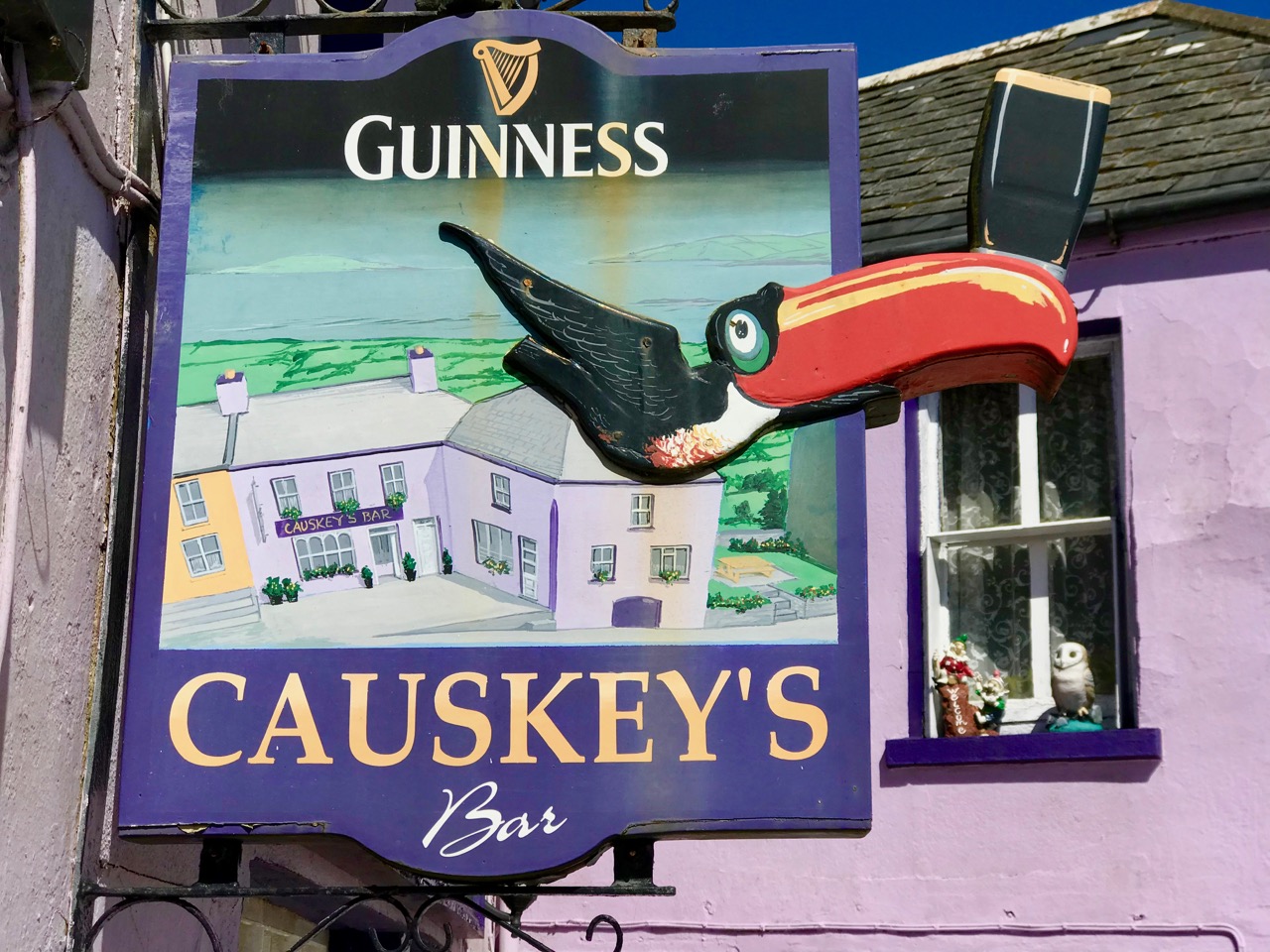
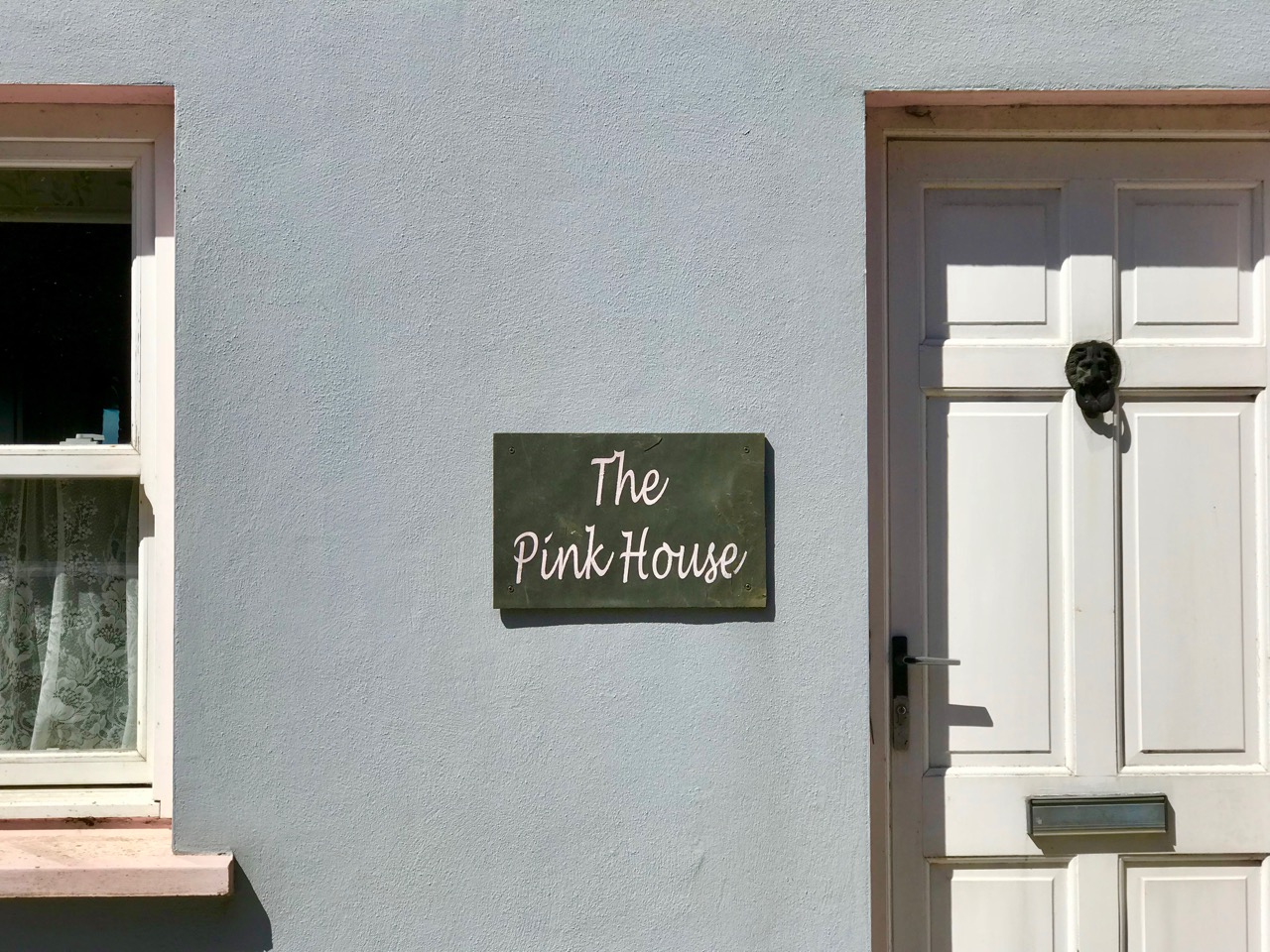
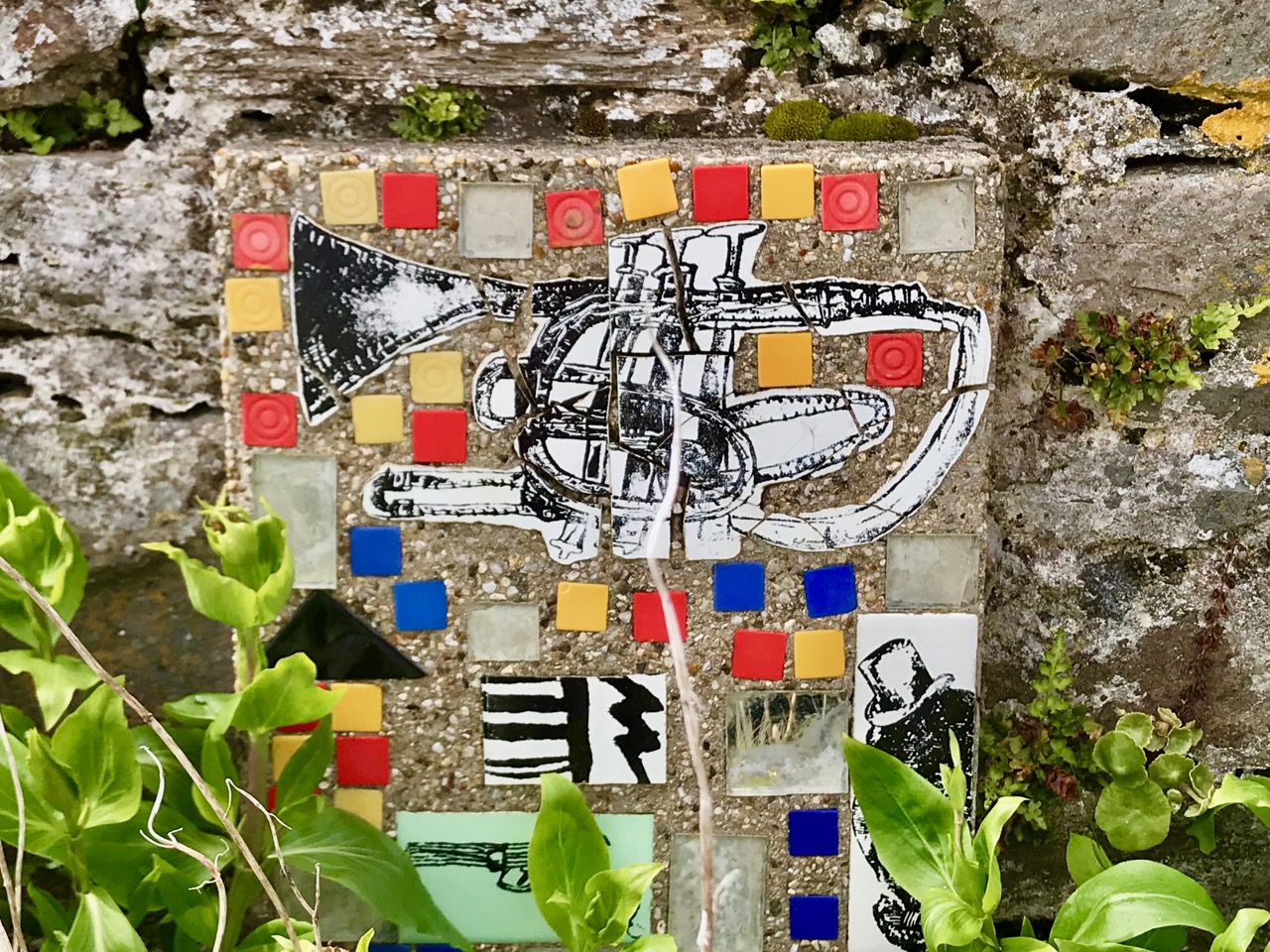
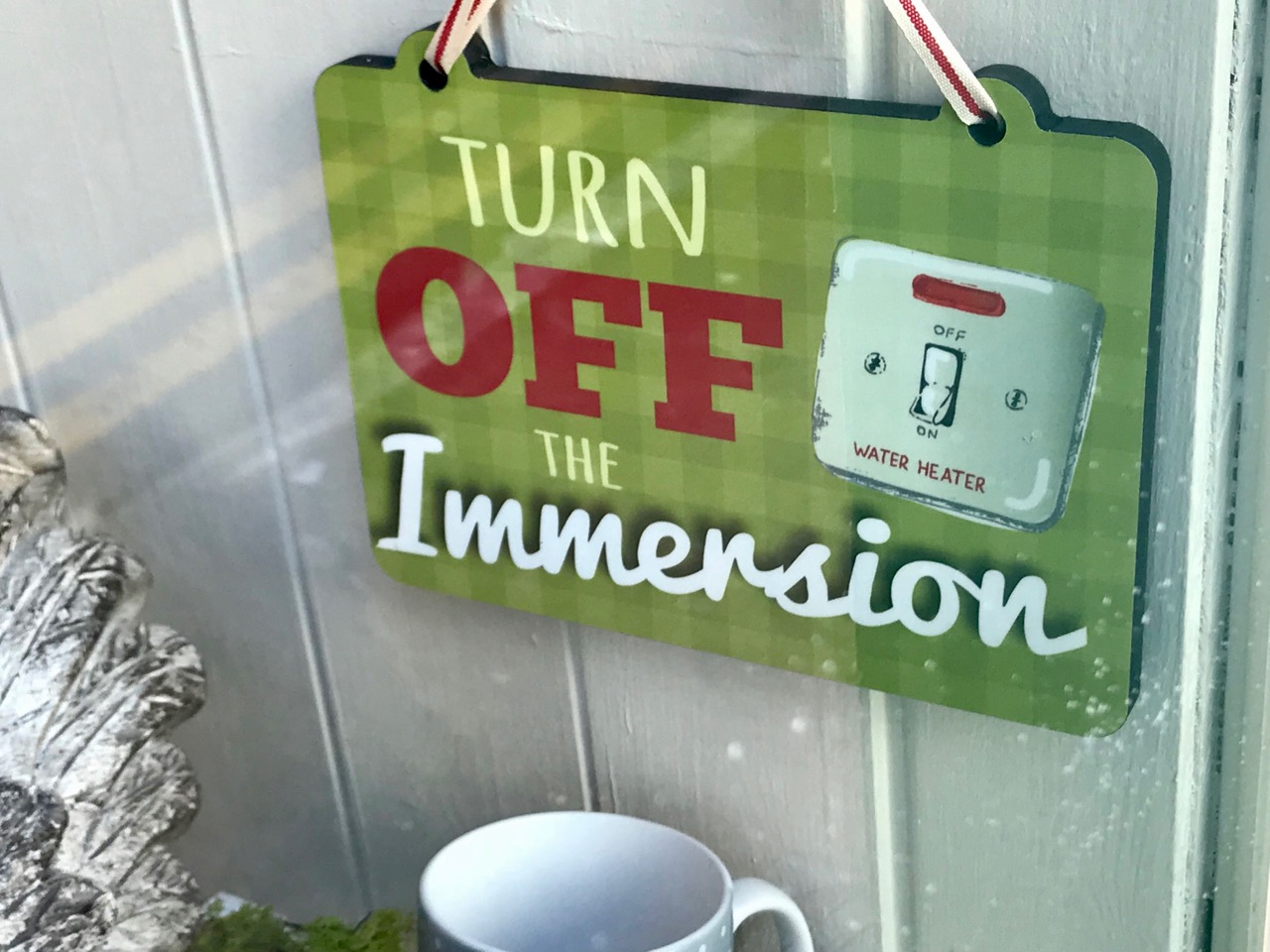
I have been going through my collection of Quirks – pictures I have taken of Irish oddities, signs and sundry graphic images. For whatever reason, they have missed out in my series on good signs: I think it’s time I gave some of them an airing. They are not all humorous: sometimes they just conjure up a thought or an idea. The one above, for instance, is a really good name for a boat – it makes you think of lazy, sunny days drifting on calm waters. Many, of course, require no explanation at all. Here’s one…

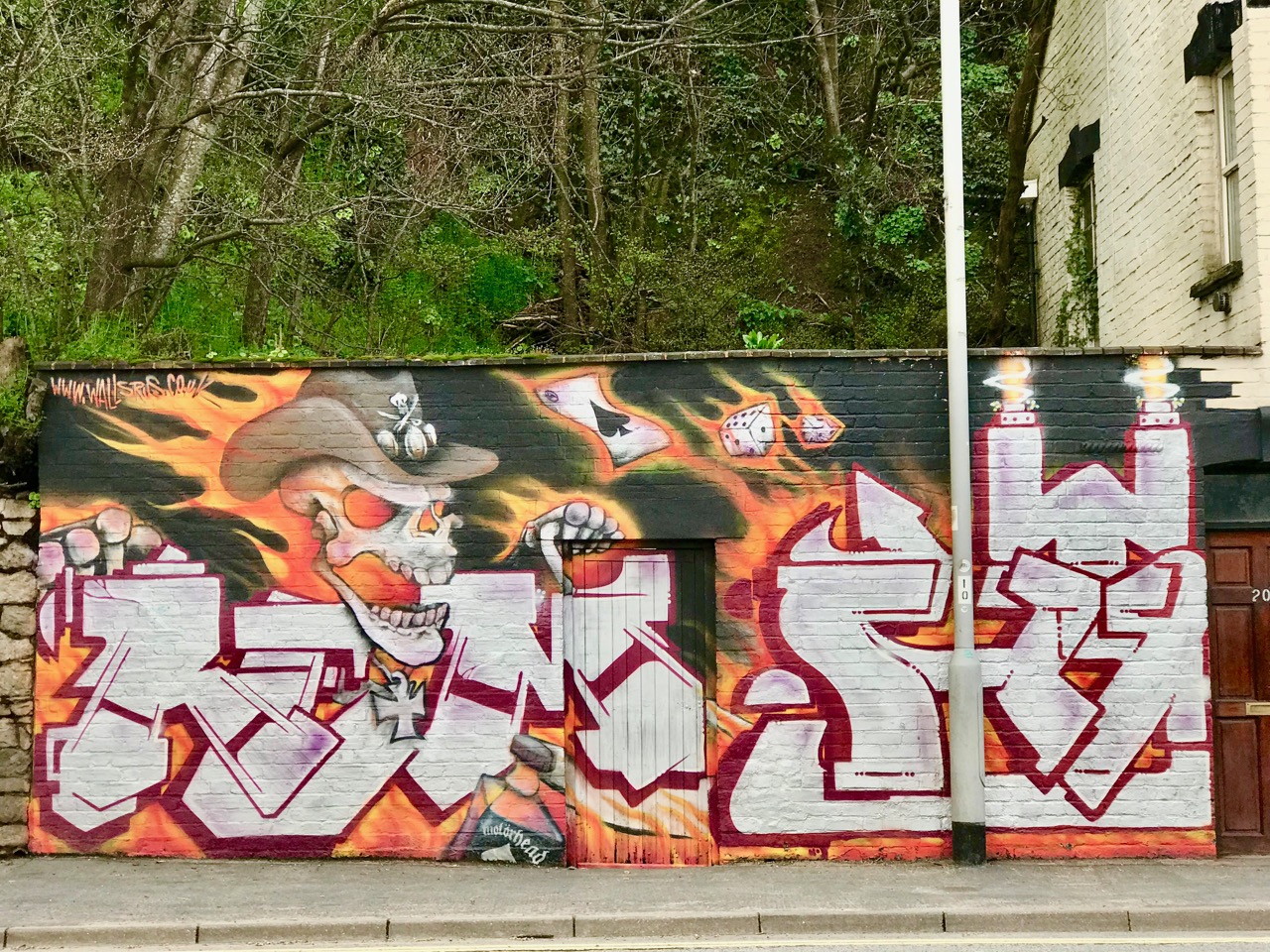
There are those that I’ve retrieved from the reject pile because actually they are arresting enough to make you want to have another look. Some of it is just elaborate graffiti…

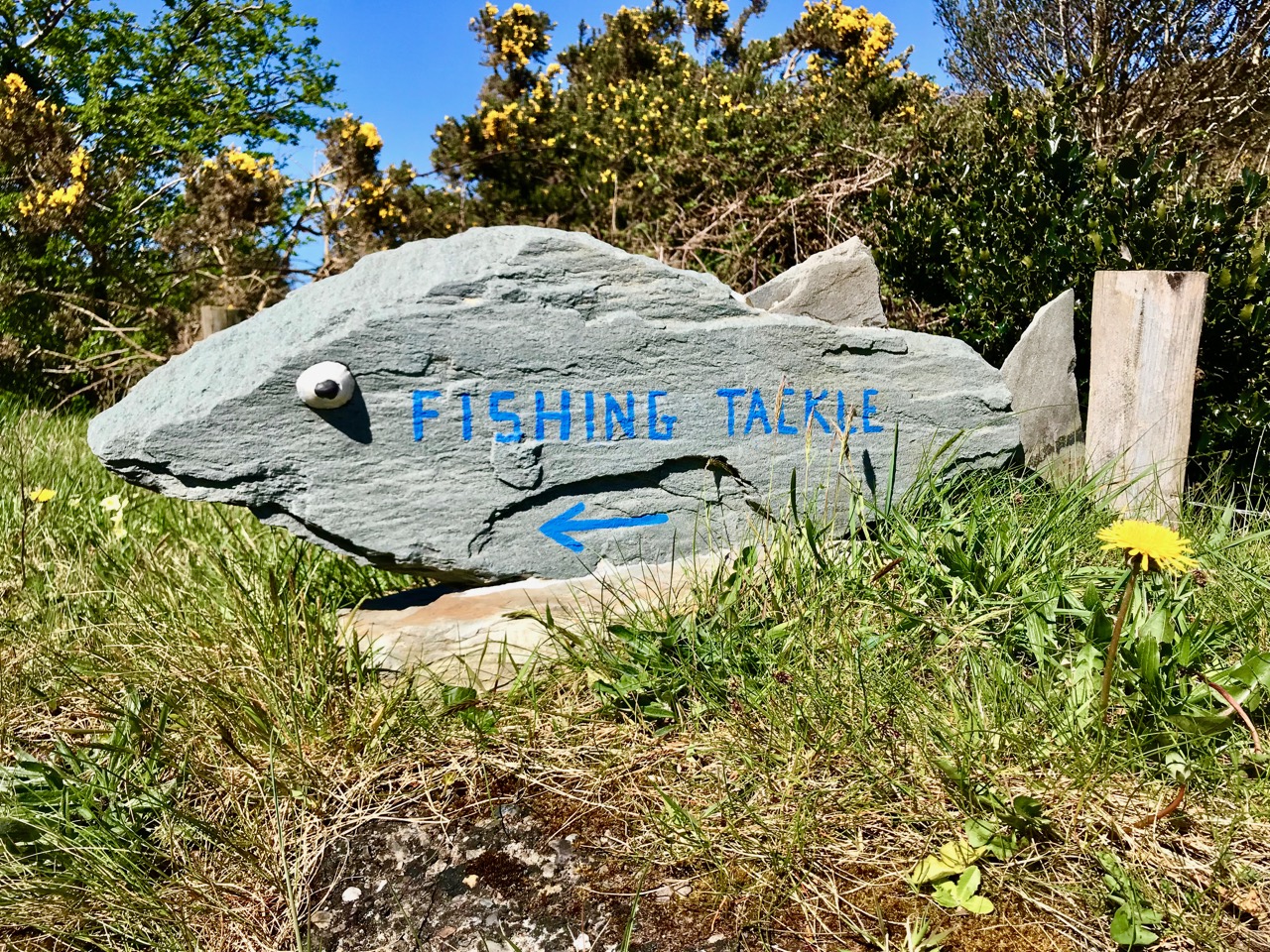
In other cases, people have been imaginative in their use of signs…

Then, there are those which just needed to fill an empty space…

Just in case you have to look twice, there’s a message in here somewhere…

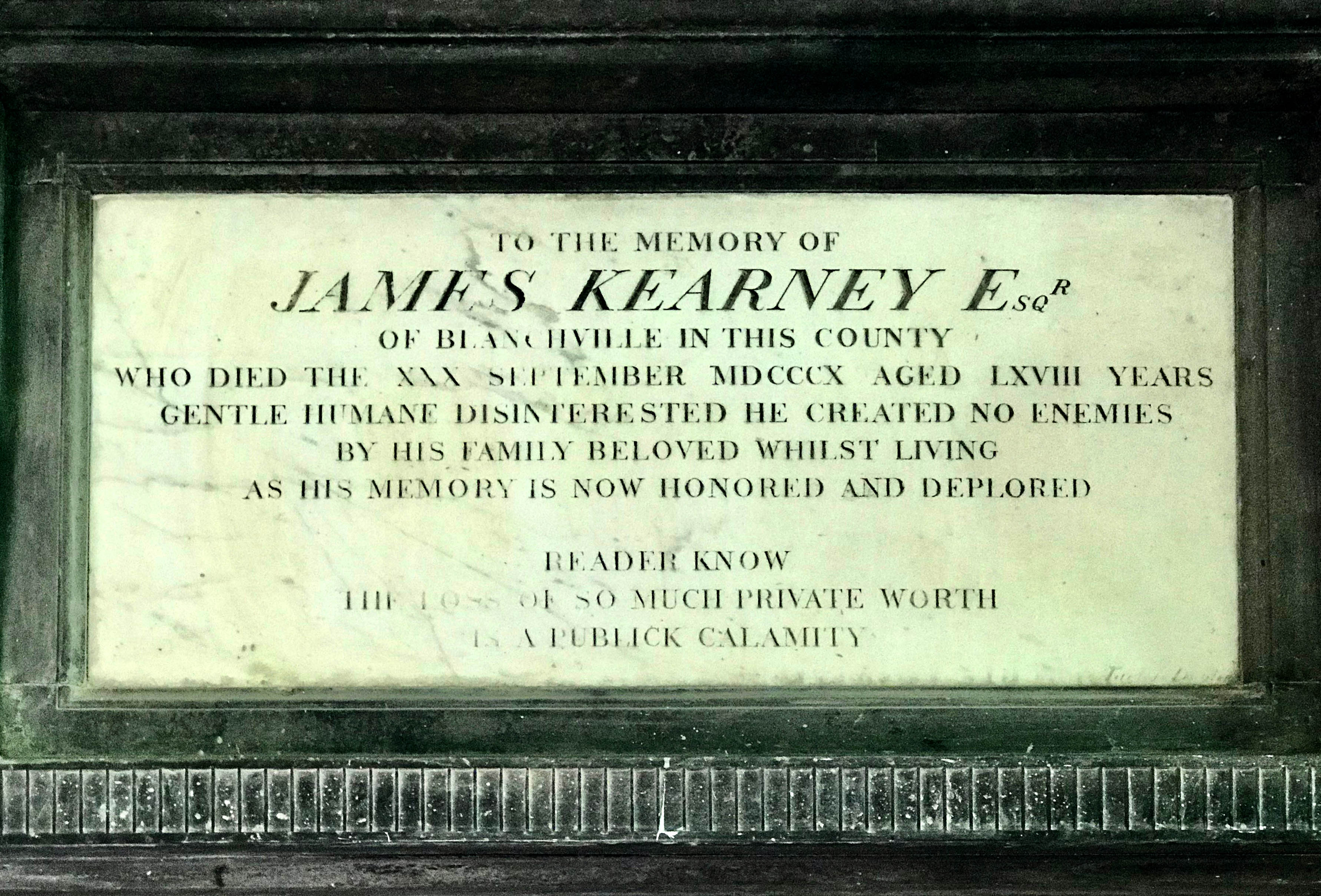
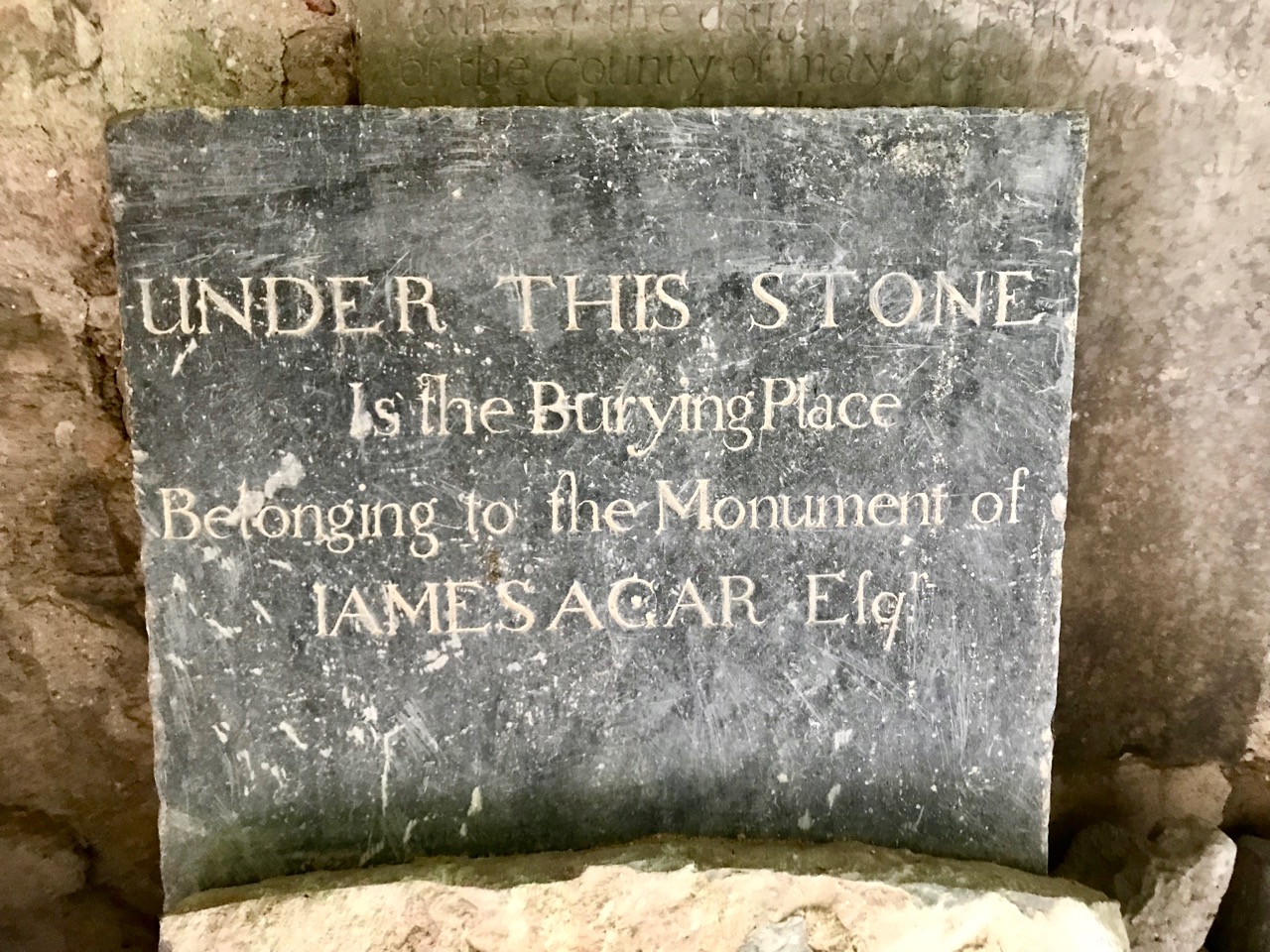
Here’s a particularly strange one, on a memorial in Gowran Church, that had me scratching my head…

I’m sure the erudite among you will not have been puzzled – I had to resort to the dictionary, where I found that the term ‘deplored’ has two meanings: the less usual one is ‘lamented’!

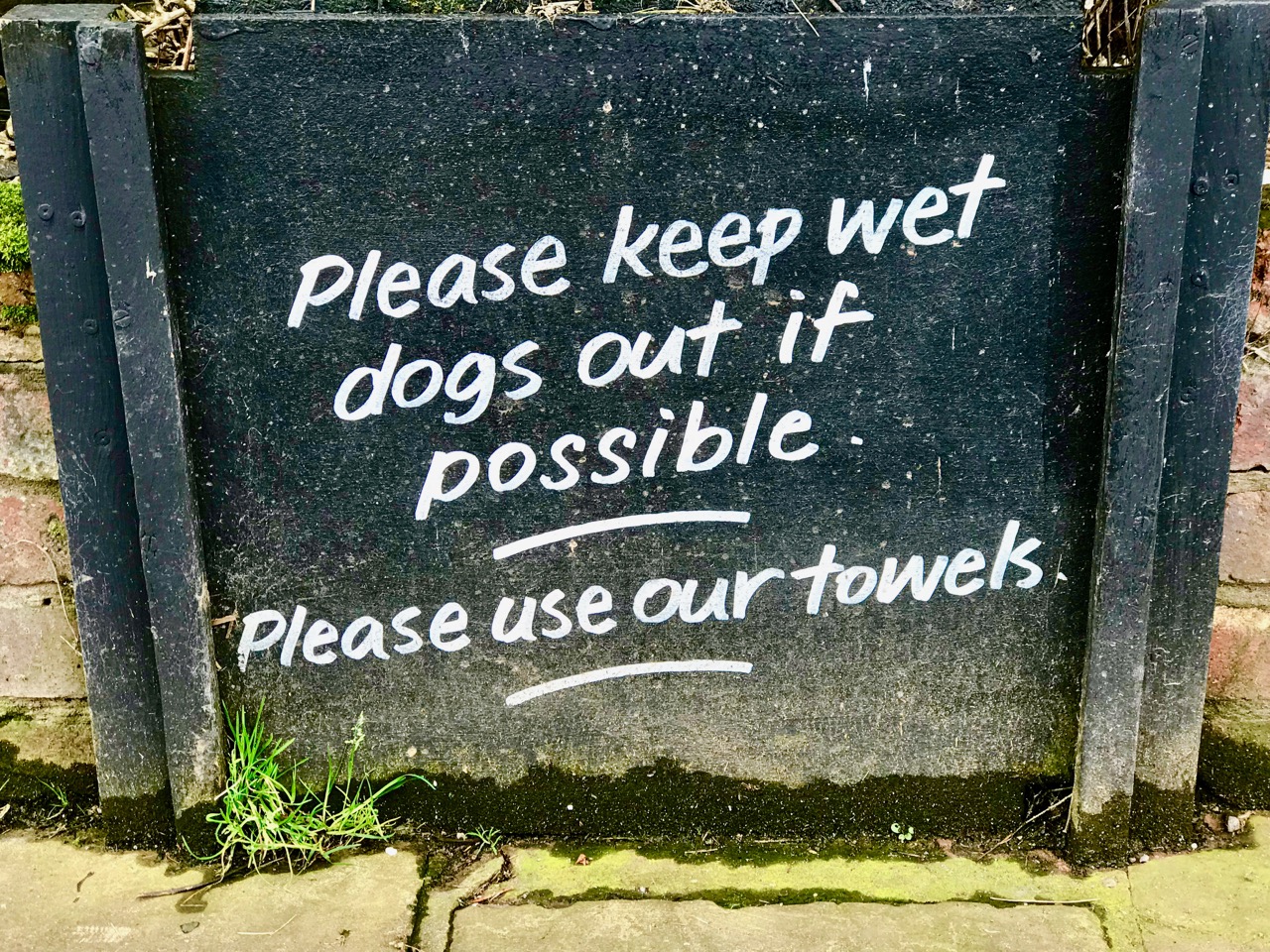
But – enough! The rest can just speak for themselves…

And – last, but not least – I couldn’t resist this one from a farm gateway out on the Sheep’s Head…