Robert Gibbings

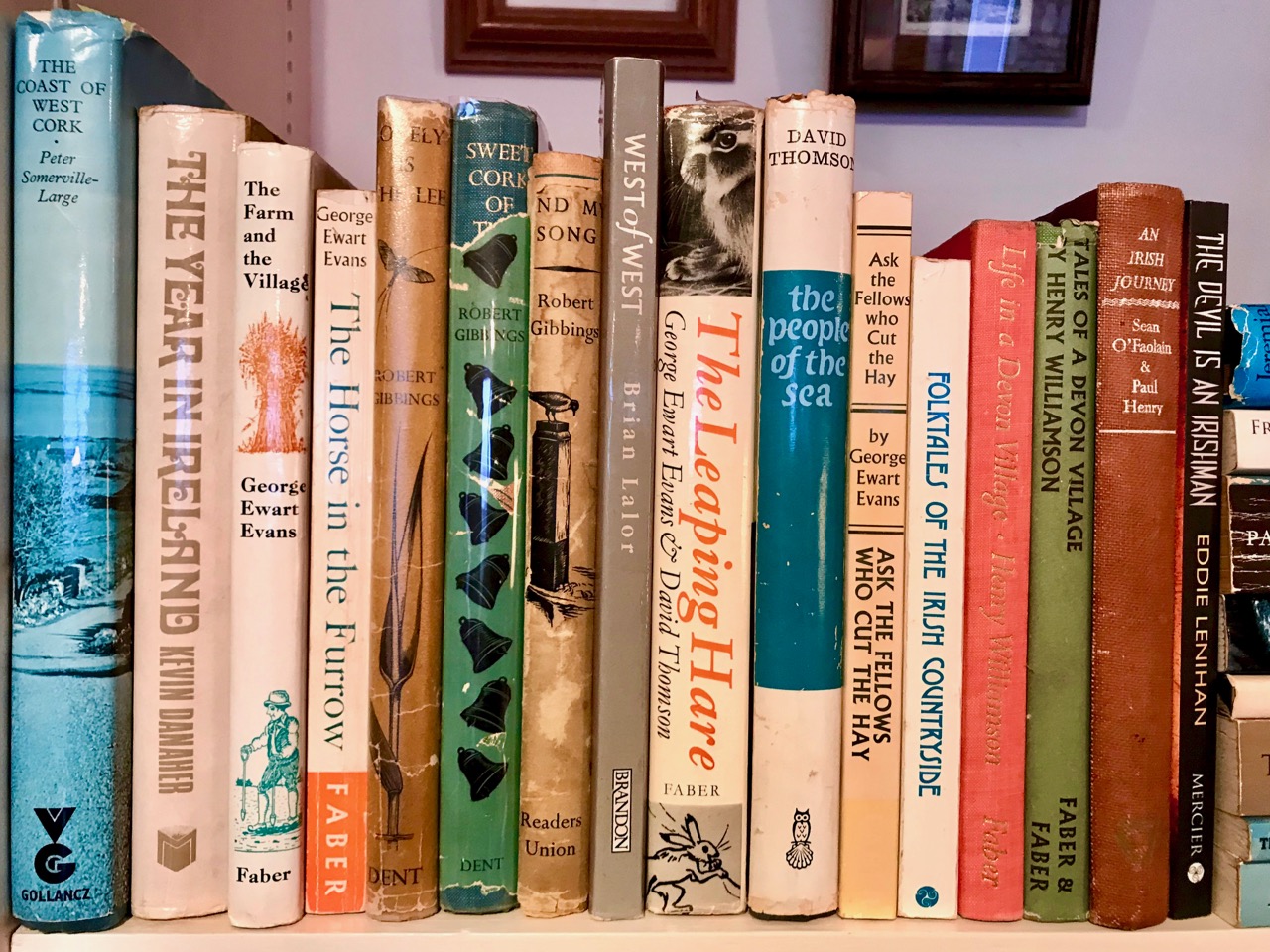
Our bookshelves in Nead an Iolair include some volumes which have travelled with me for the best part of fifty years. They include titles by George Ewart Evans, Henry Williamson, Brian Lalor, Peter Somerville-Large. Look carefully and you’ll also see some there by Robert Gibbings. Who is he?
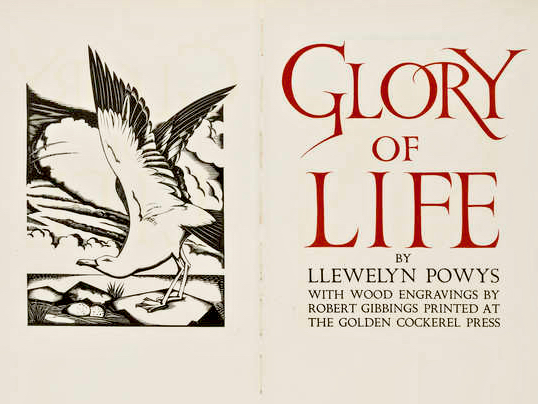
A writer and illustrator, Gibbings was born in 1889 and died exactly sixty years ago, on 19 January 1958. He was a Cork man, raised in Kinsale, where his father became the Rector of St Multose Church. However, he was an inveterate traveller and lived most of his working life in England. Much of his work seems to exude ‘Englishness’ and – in an Irish Times article this week to mark the anniversary of his death, Alannah Hopkin writes:

People often forget that Gibbings was Irish. Brian Lalor, author of Ink-stained Hands, the definitive history of Irish print-making, was challenged by an English academic at a conference in Dublin in 2007, who refused to believe that Gibbings was Irish, as he had produced archetypal English landscapes. But his account of Gougane Barra, for example, confirms how deeply steeped in Irish myth and folklore Gibbings was.
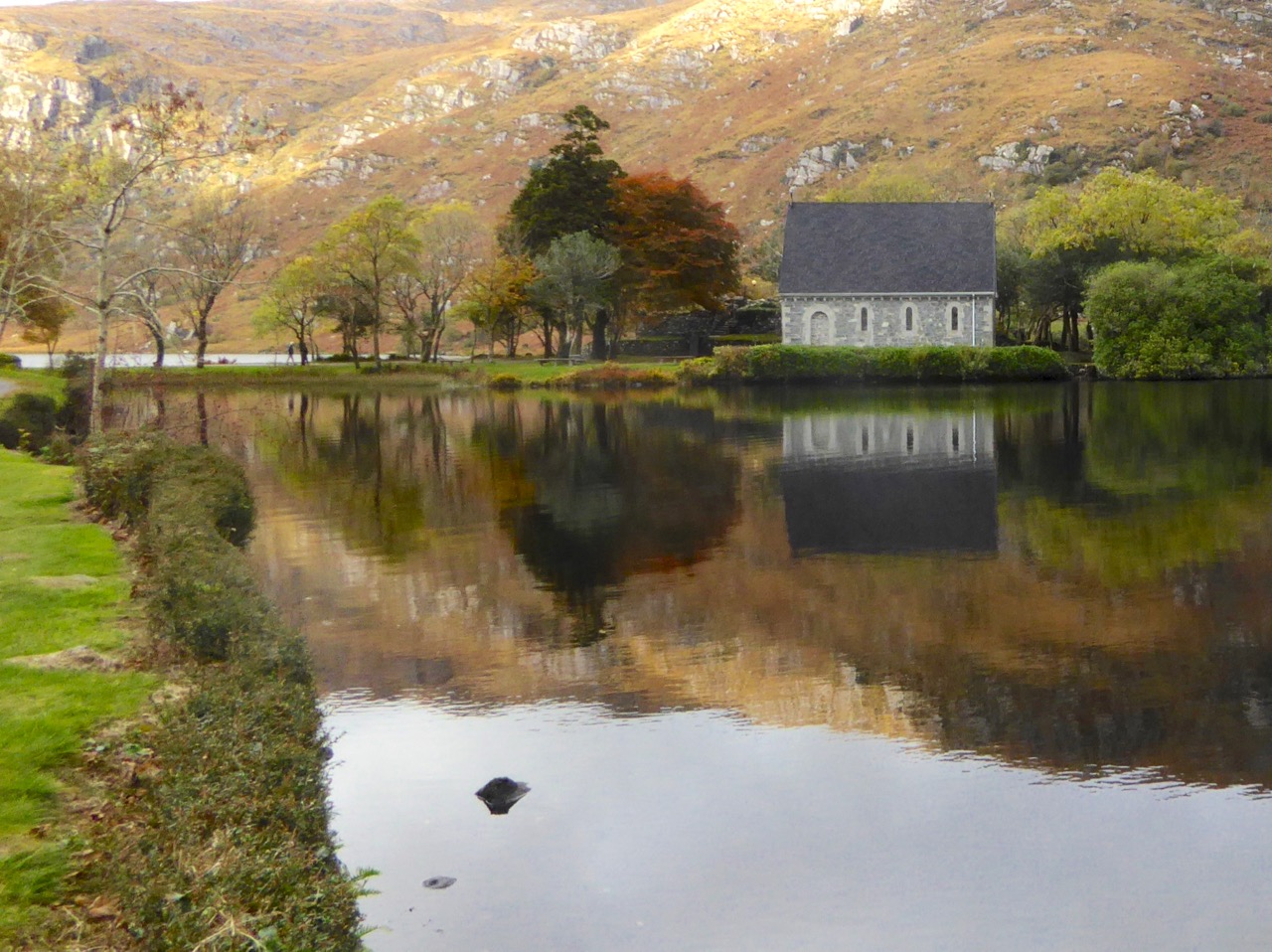
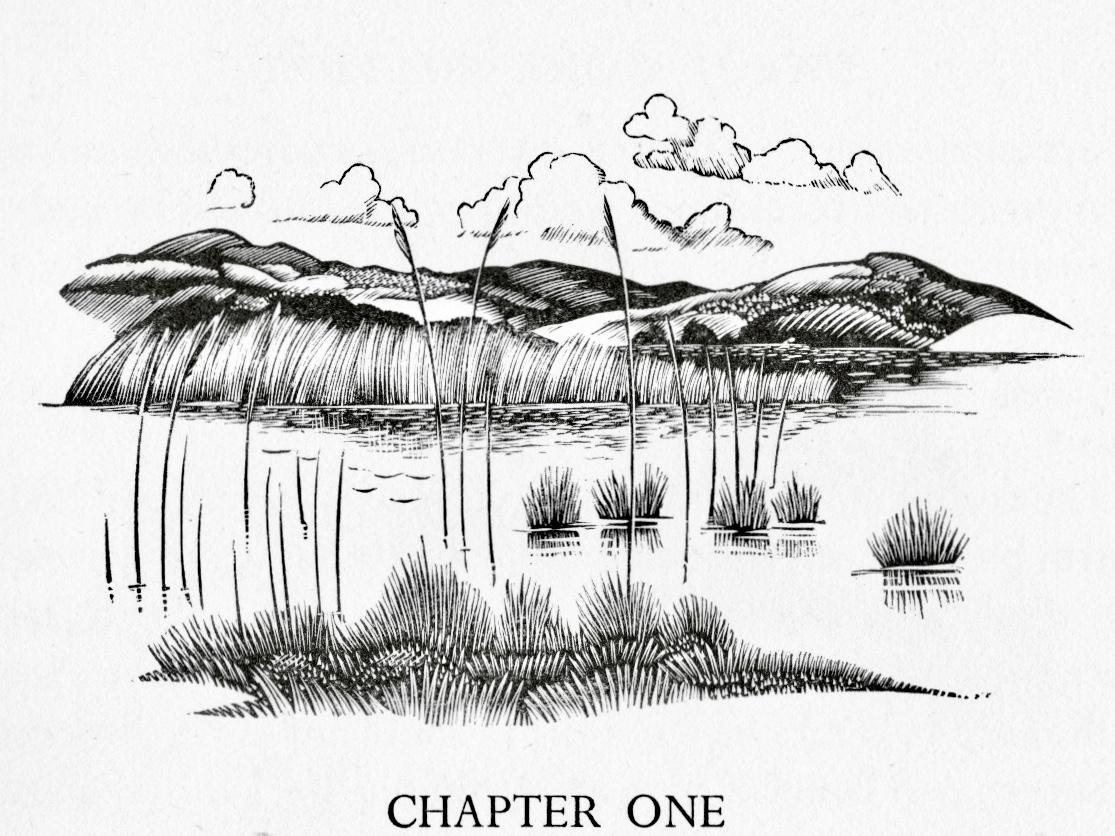
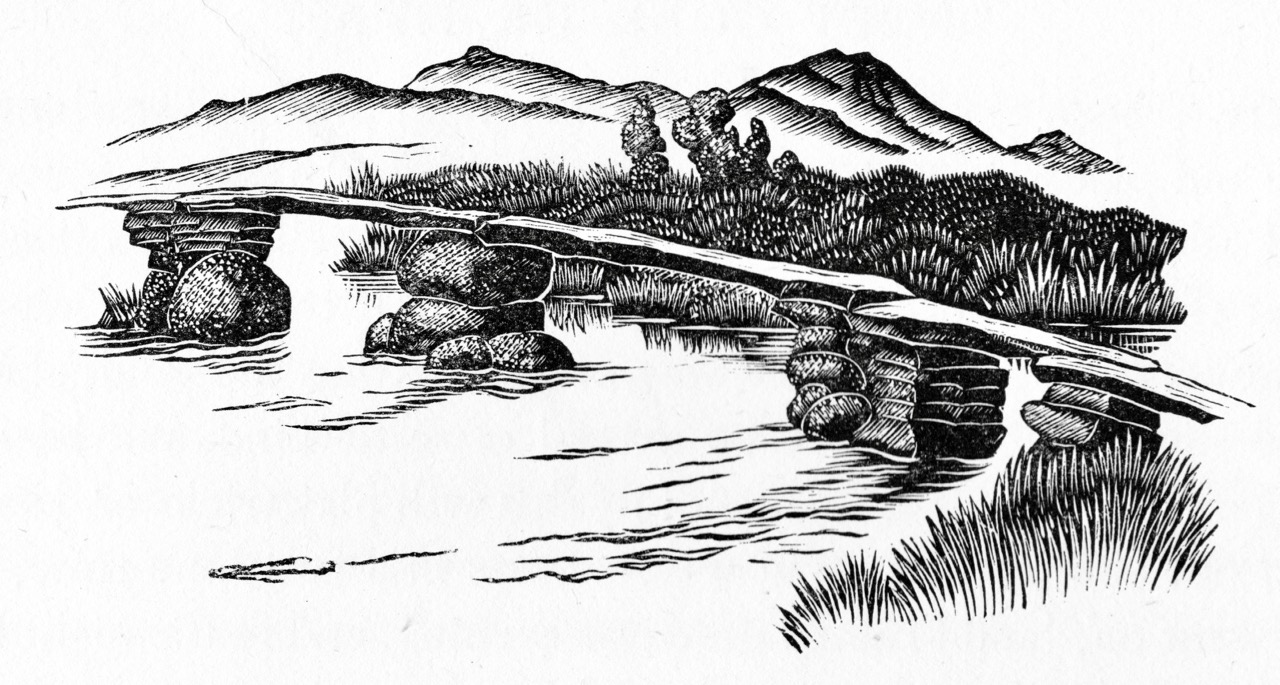
Gougane Barra in County Cork: upper image – the lake in the mountain. Centre – Robert Gibbings’ woodcut engraving of the lake which opens ‘Sweet Cork of Thee’ (1951). Lower image: a clapper bridge near Gougane – perhaps the same one which Finola illustrates in her post today

At the insistence of his parents, Gibbings studied medicine at UCC, although his ambition was to be an artist . . . writes Alannah Hopkin . . . While he enjoyed the scientific side of his studies, it soon became apparent that this big, soft-hearted man was unable to cope with the human suffering of his patients. His parents were apprehensive about his decision to be an artist, fearing, quite rightly, that it meant he would lead an unconventional life, looking at naked women, dressing untidily and consorting with social misfits . . . From 1911 he studied life drawing at the Slade in London. His contemporaries included Eric Gill, John Nash, David Jones and Mabel Annesley. He was advised to take wood-engraving classes; the technique perfectly suited his strong line and close observation of nature, which in this phase was lightly stylised.

Gibbing’s woodblock signature – used in the majority of his books – shows the tools of the wood engraver

The wood engravings of Robert Gibbings are exquisite: his eye is attuned to fine detail. His writing is also compelling: I suppose it reflects a nostalgia for past times and things gone, but it is also humorous and always tightly observant. He brings to life characters he has met in his travels.
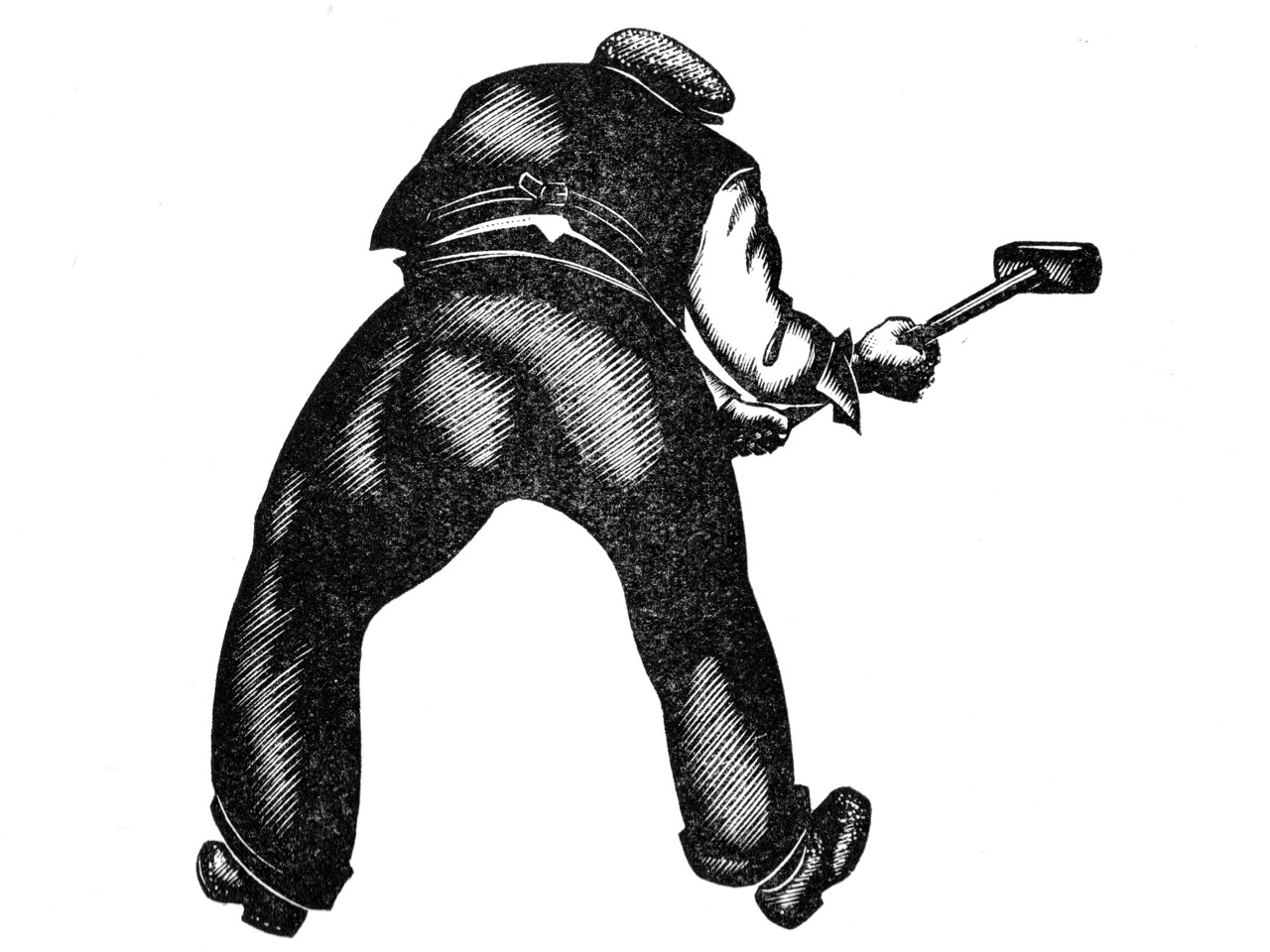
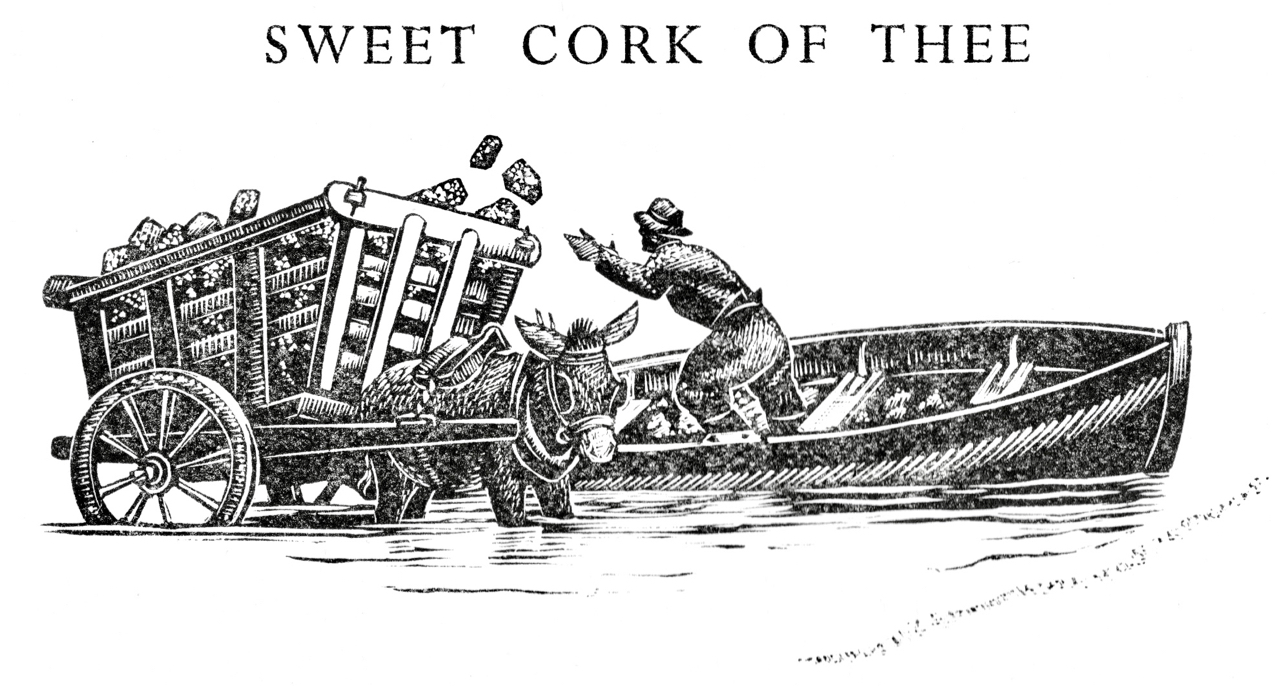
‘Paddy the Forge’ putting metal tyres on wagon wheels – from Sweet Cork of Thee

In the 1940s Gibbings attended the World Ploughing Contest, held for the first time in England, at Shillingford on Thames:

Bowler hats and highly polished riding boots had been the order of the day at the Arab Horse Show: here among the shires it was rubber-boots, corduroy caps, and hats of weathered tweed. ‘I think you’re Irish,’ said a man to me as I was admiring a pair of Pedigree Suffolks resplendent with brasses that told of former triumphs. ‘What gives me away?’ I asked. ‘The tilt of your hat,’ he said, ‘I can always tell an Irishman – he just sticks it on his head and forgets it. Look at some of these fellows – caps, hats, pulled up here, pushed down there – self-conscious all of them. Look at those two fellows in the pork-pie hats – I wouldn’t trust that one on the right, he wears his too straight, has to – it’s psychological.’ ‘Bishops wear their hats straight,’ I said. ‘Same idea,’ he answered. ‘Suggests the narrow path, only they keeps to it.’

For Robert Gibbings, text and illustration were always of equal importance. Each page of his books is set out as an art work, to be enjoyed by the two senses of sight and feeling – the feeling engendered by his descriptive writing. Here is the Foreword to his second ‘Irish’ book – Sweet Cork of Thee:
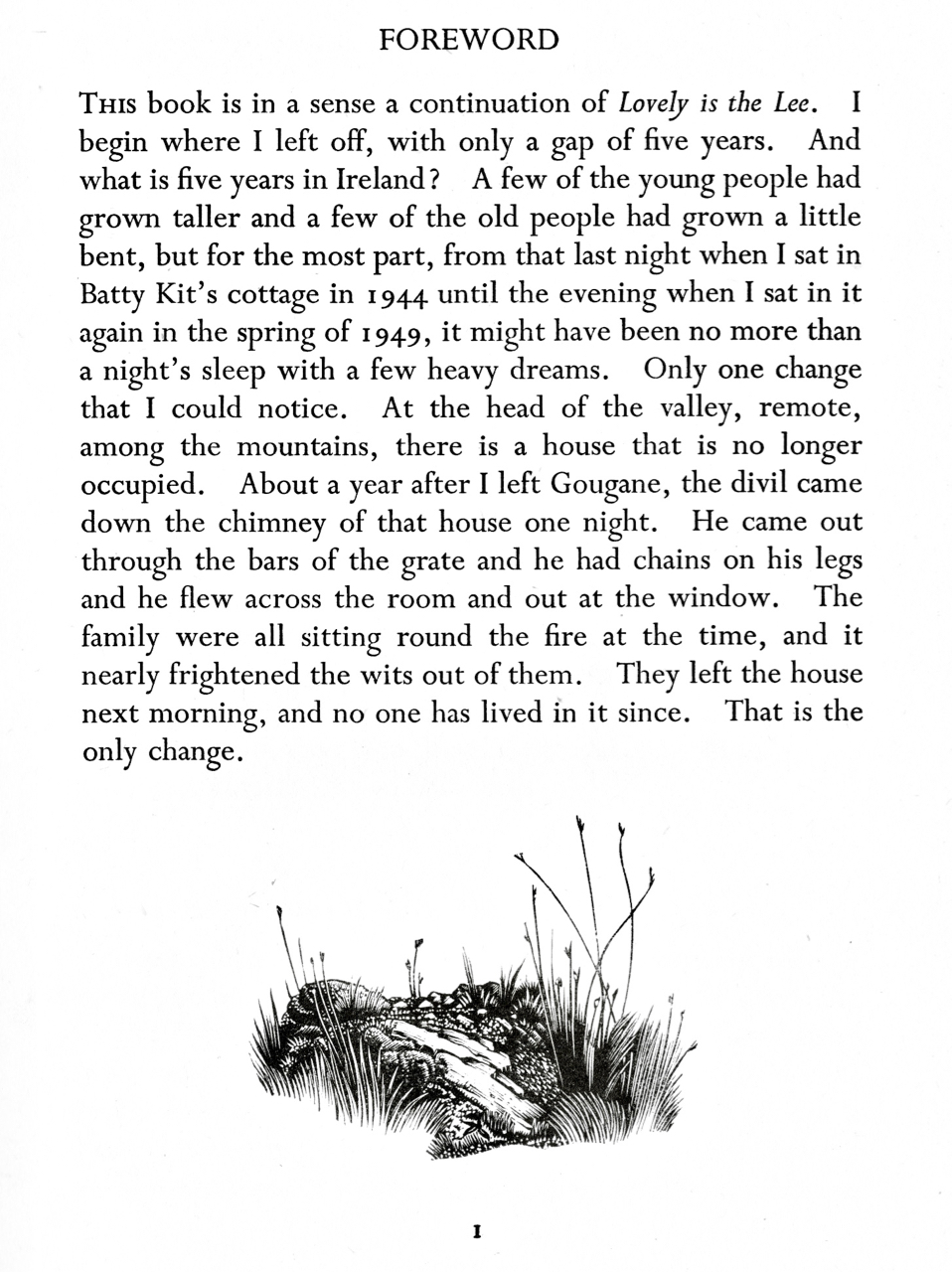

The illustrated Foreword to Sweet Cork of Thee, the second of Gibbings’ books which describe his travels in the land of his birth

Throughout his life, Gibbings immersed himself in travelling and in art. His best known books are his ‘river’ books, beginning with ‘Sweet Thames Flow Softly’, published in 1940 and, at the end of his life, the sequel: ‘Till I End My Song’ completed in 1957: he died at the age of 68. The rivers he explored included the Thames, the Wye, the Seine and Cork’s River Lee. Between 1924 and 1933 he owned and ran the art-based Golden Cockerel Press. Founded in 1920, its earliest prospectus proclaimed:

This press is a co-operative society for the printing and publishing of books. It is co-operative in the strictest sense. Its members are their own craftsmen, and will produce their books themselves in their own communal workshops without recourse to paid and irresponsible labour.
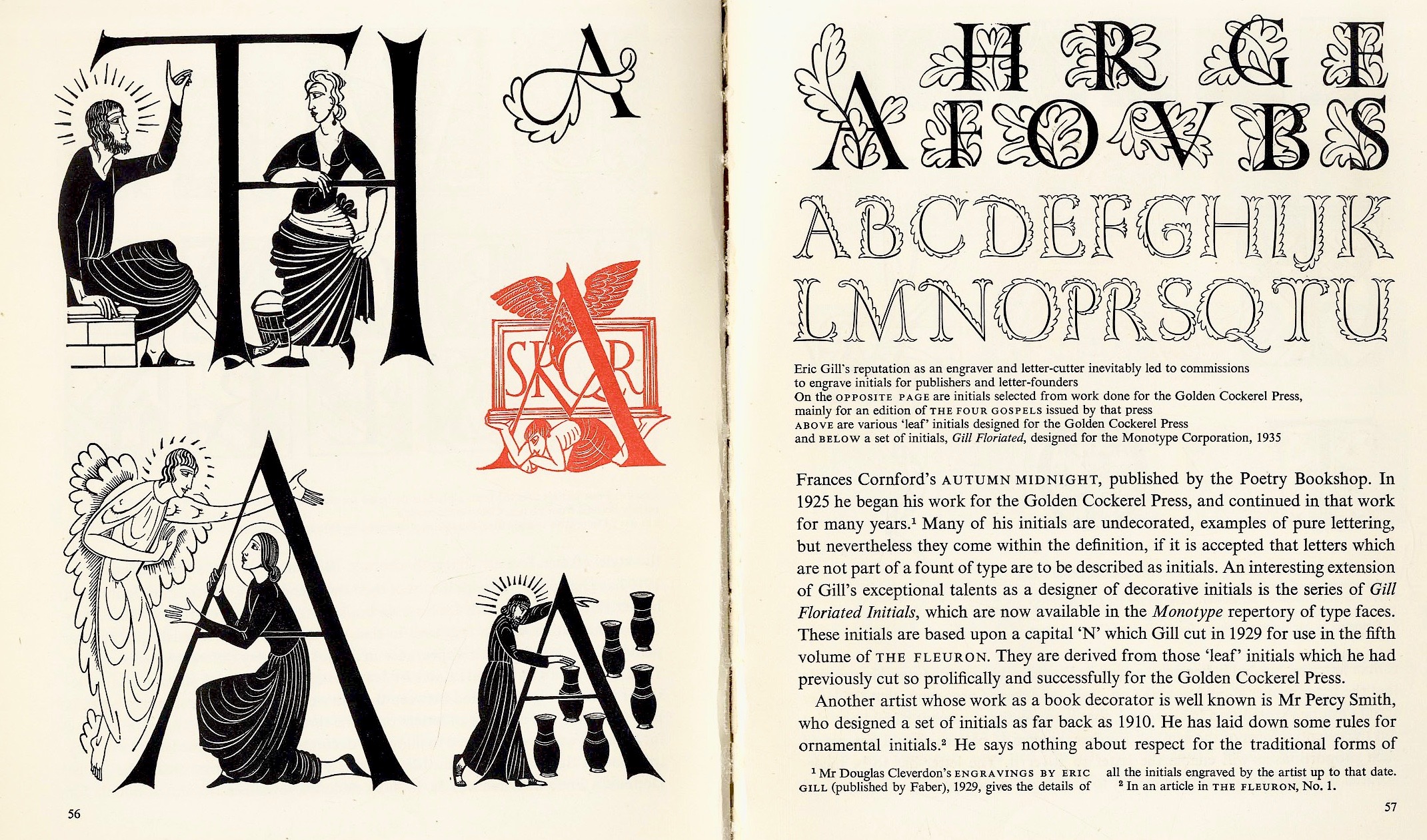
Work from the Golden Cockerel Press: typefaces by Eric Gill

It is the two ‘River Lee’ books that will concern those interested in all things Irish. My copies (both first editions) were given to me by Danny who I first met when I moved to Devon in the 1970s. Danny was determined that I was going to fall in love with Ireland – and it didn’t take me very long! Eventually Danny – who hailed from Limerick but, like Gibbings, led a restless life during which he travelled the world – settled in Devon and then moved on to West Cork.
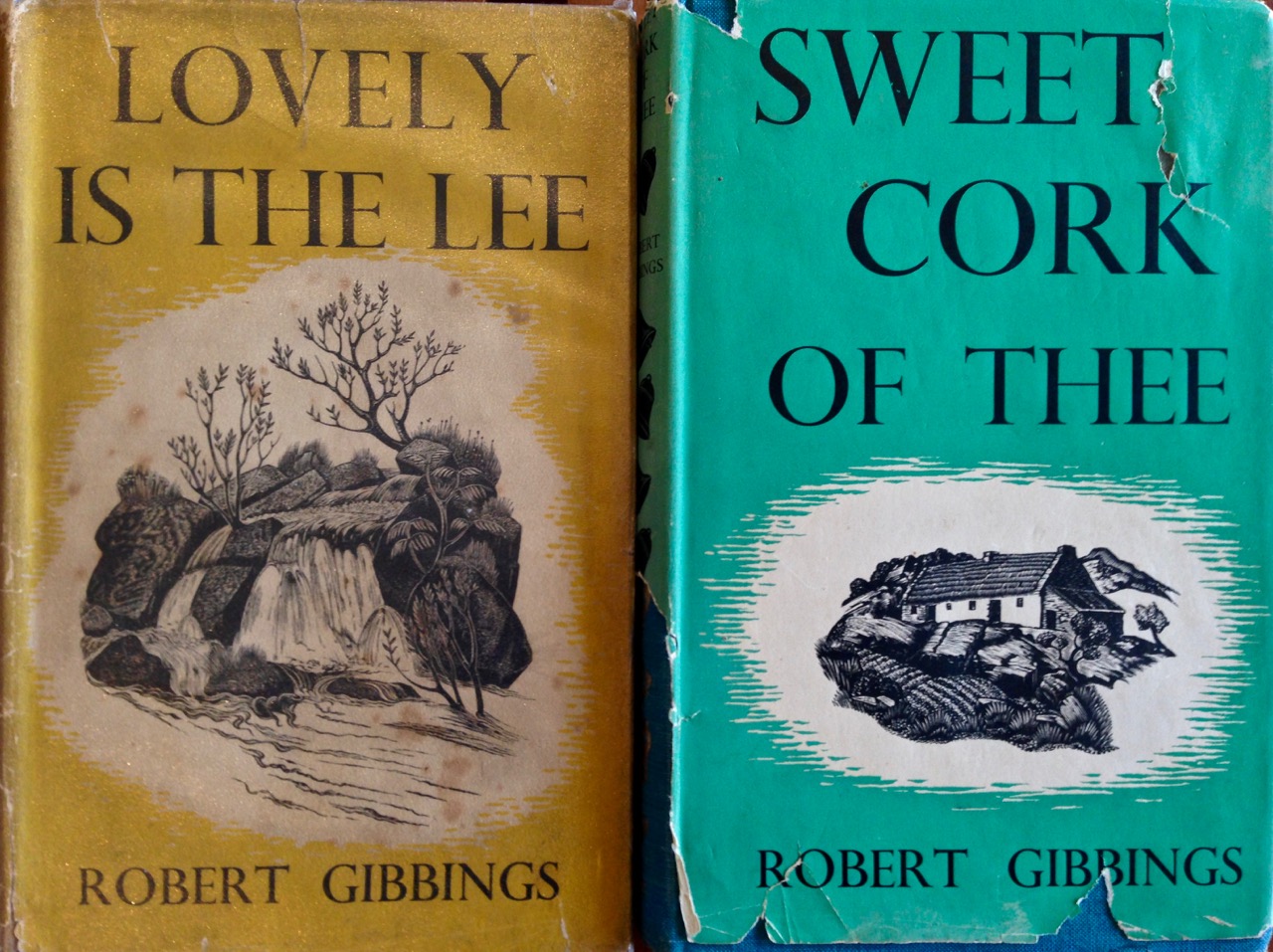
Danny gave me these books to encourage my interest in Ireland. At the time he told me that ‘these were all I needed’ to get to know his country. I think he was right!

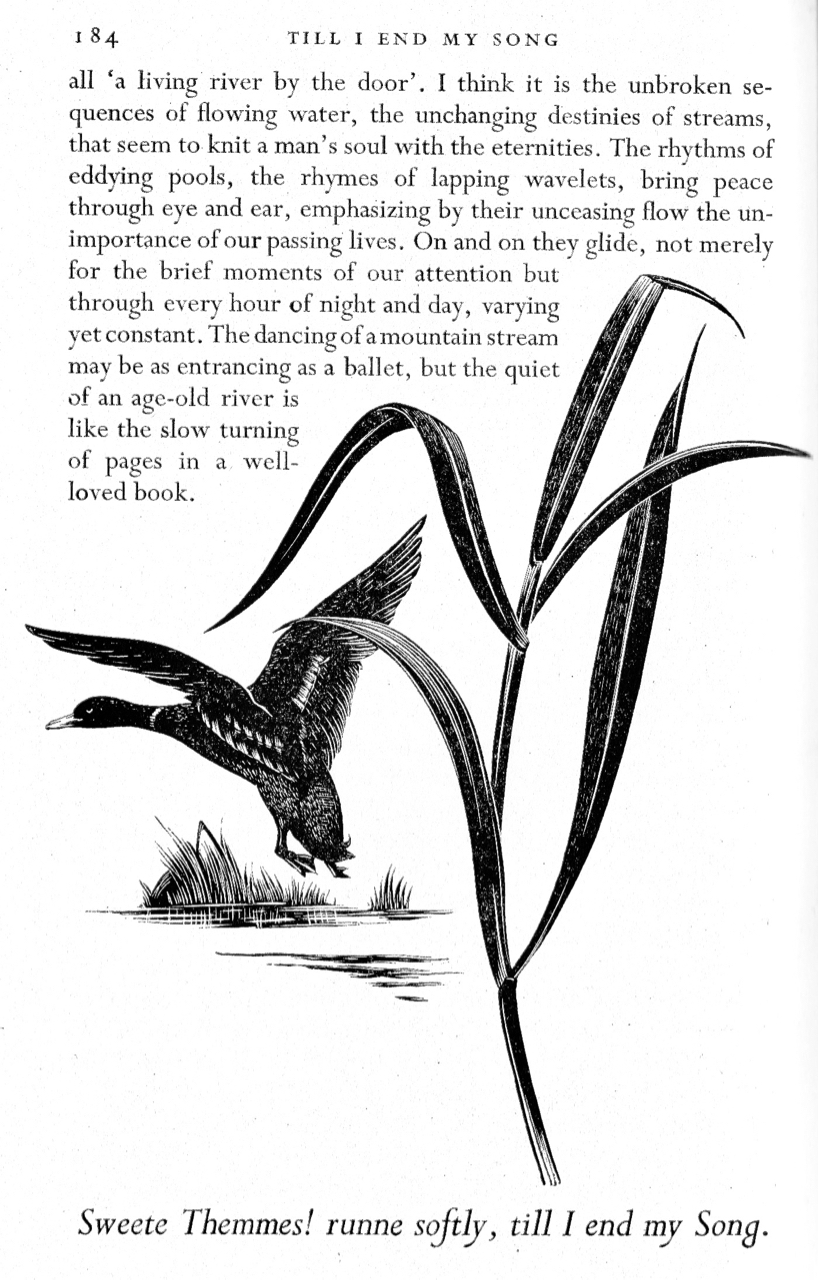
I encourage anyone who follows Ireland to read these books – and anyone who appreciates art to get to know the work of Robert Gibbings who died just fifty years ago. I will ‘play out’ the man by quoting these lines from his aptly titled ‘Till I End My Song’, and include an image of the last page of this, his final book.

Poets throughout the ages have sung of the peace of gently running streams. In the sacred writings a river is used constantly as a symbol of peace: ‘Then had thy peace been as a river’, ‘He leadeth me beside the still waters’. Throughout our own literature flows the timelesss tranquility of rivers. Spenser’s Prothalamion is borne on the waters of Sweete Themmes. The tortured mind of Swift longed for a river at his garden’s end. The gentler Stevenson wishes to all ‘a living river by the door’. I think it is the unbroken sequences of flowing water, the punching destiny of stream, that seem to knit a man’s soul with the eternities . . .
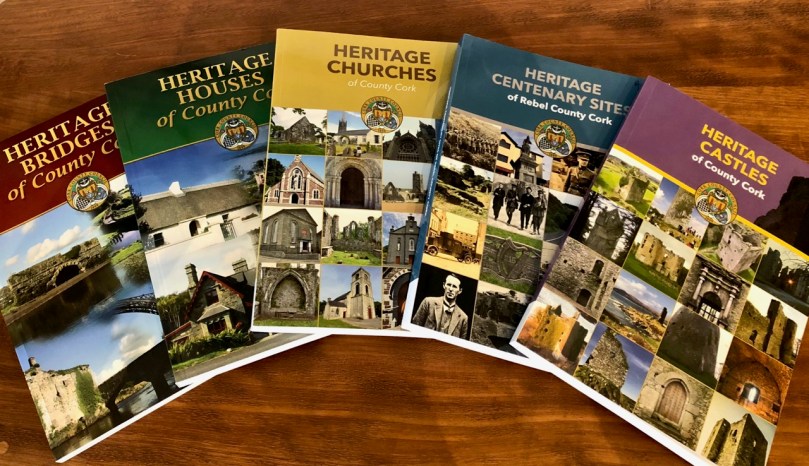
The Cork Heritage Book Series

How do you set about exploring your local heritage? If you’re lucky enough to live in Cork, you have some marvellous resources at your fingertips. Today I want to focus on a set of books that are a comprehensive, affordable, richly illustrated, engagingly written compendium of our fascinating history – the Heritage Series.

Dunlough Castle, also known as Three Castle Head, is an unusual example of a fortified curtain wall dating to the 15th century. It’s also, as you can see, incredibly beautiful – it’s written up in the Castles book.

County Cork has a Heritage Office and a County Heritage Officer, Conor Nelligan. He’s a Tour de Force of Heritage, indefatigable, knowledgeable, and committed to communication and consultation. He pens a regular newsletter to local history associations and interested individuals alerting us all to upcoming events, grants schemes, talks, festivals, and articles of interest. Typically, when a new volume in the heritage series is contemplated, he will send out a call for submissions and contributions.

Glanworth Bridge: “Typical of medieval bridges the arch spans are appealingly irregular, increasing in width towards the centre.” It is purported to be “the narrowest and oldest public bridge still in everyday use in Europe.”

The result is a rich collection of photographs, local information, stories and legends, expert analysis and historical detail. What’s amazing is that each volume only costs ten euro! They are available in all the local bookstores, but if you don’t live in Cork you can buy them online from the Skibbereen Heritage Centre.

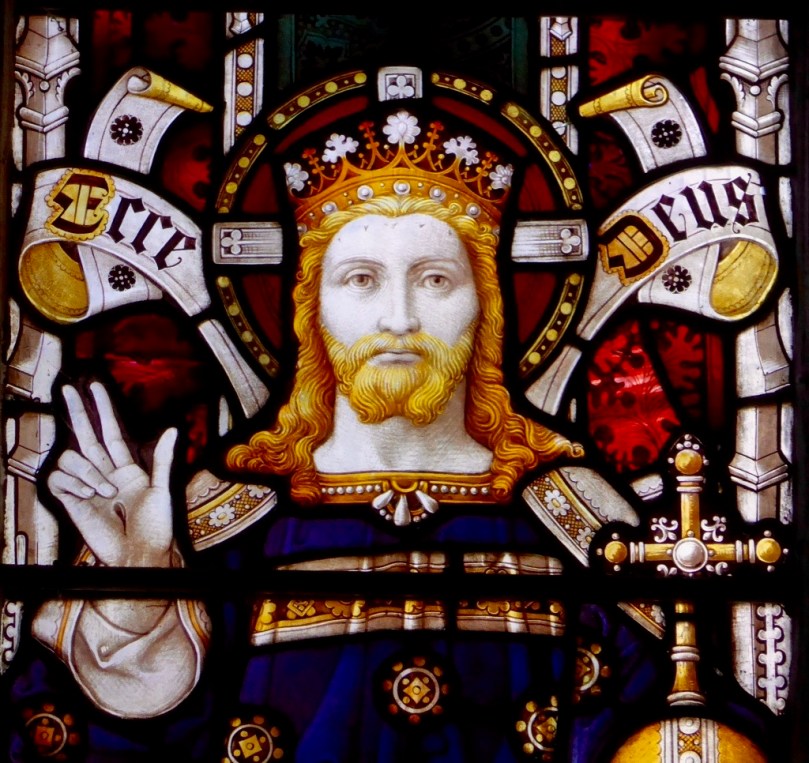
This is the extraordinary Church of the Ascension in Timoleague. I first found out about it from the Heritage Churches book and wrote about it in two parts, Mosaics and Maharajas Part 1 and Part 2. The Christ the King window is by Clayton and Bell and dates to about 1900

Each book has either a lead author or an authorial team, benefitting greatly from the expertise of the overseers and the one-off contributors. Conor and his colleagues Mona Hallinan, Cork’s Conservation Officer, and Mary Sleeman, the County Archaeologist, steer each project through to completion. The result rather than piecemeal is seamless, with the volumes following a pattern for the most part of an introductory historical and architectural context followed by ‘exemplars’ of castles, or bridges, or whatever the focus of that book. 

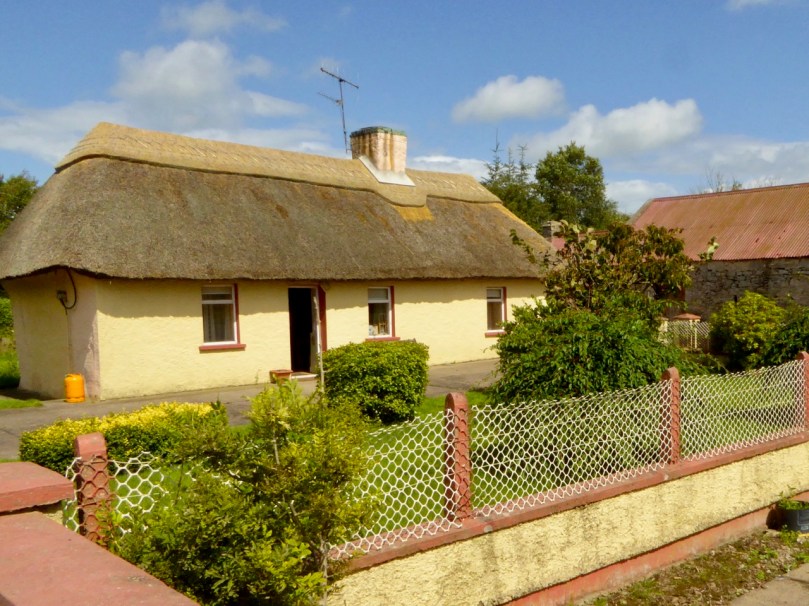
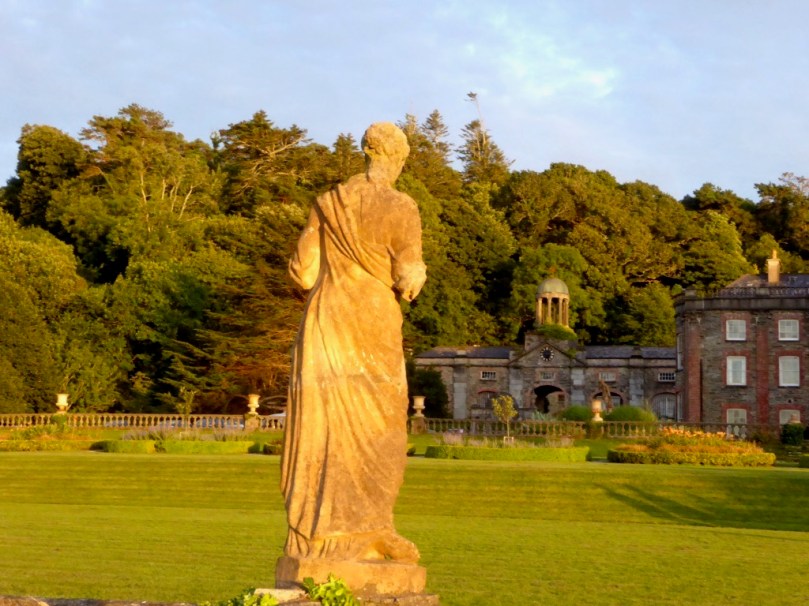
Heritage houses come in all sizes, from  traditional thatched cottage glimpsed in North Cork, to Bantry House bathed in evening sunlight

This layout gives it the convenience of a guidebook – wherever you are in Cork you can decide what to see and read up on it – while not sacrificing the the social and political background in which the buildings were constructed. They are our constant companions while out and about or when planning an expedition.

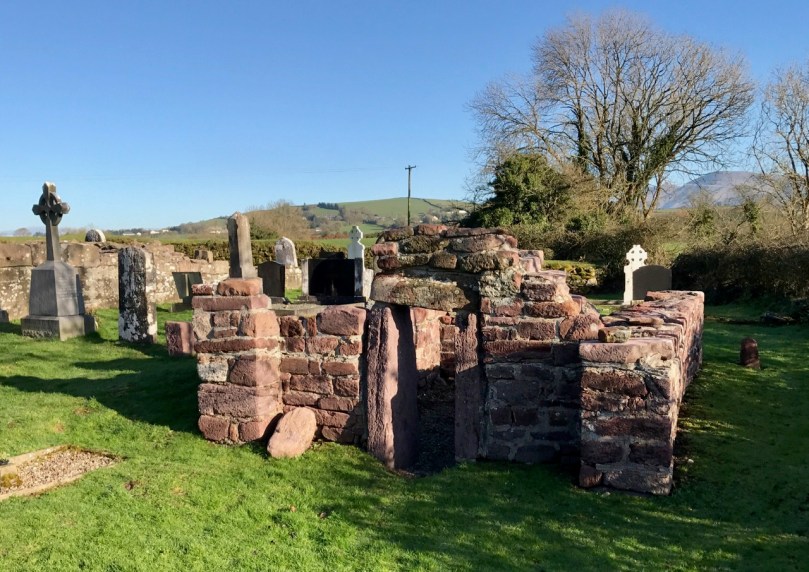
The oldest church in Cork, I think, Labbamolaga. Robert wrote about this wonderful site in Molaga of the Bees

And talking of expeditions, we want to see more of those bridges! I’ve been browsing through the bridge book, learning about abutments and piers and cutwaters, not to mention different kinds of arches, and I am dying to see more of those exemplars. So look out, Dear Readers, for a future post on heritage bridges.

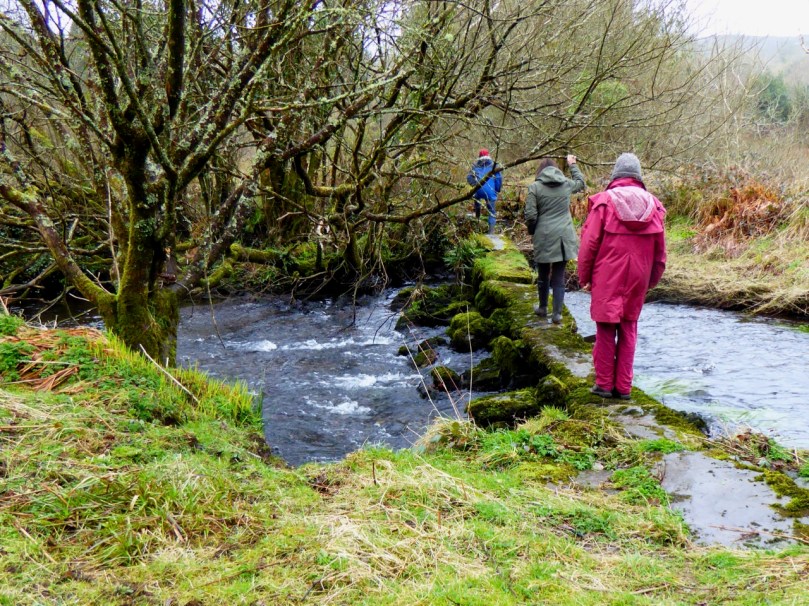
A picturesque clapper bridge near Ballyvourney . Is this the same bridge that Robert Gibbings engraved in “Sweet Cork of Thee” – see Robert’s post this week!

Well done, Cork County Heritage Unit – you can be justly proud of this excellent series!

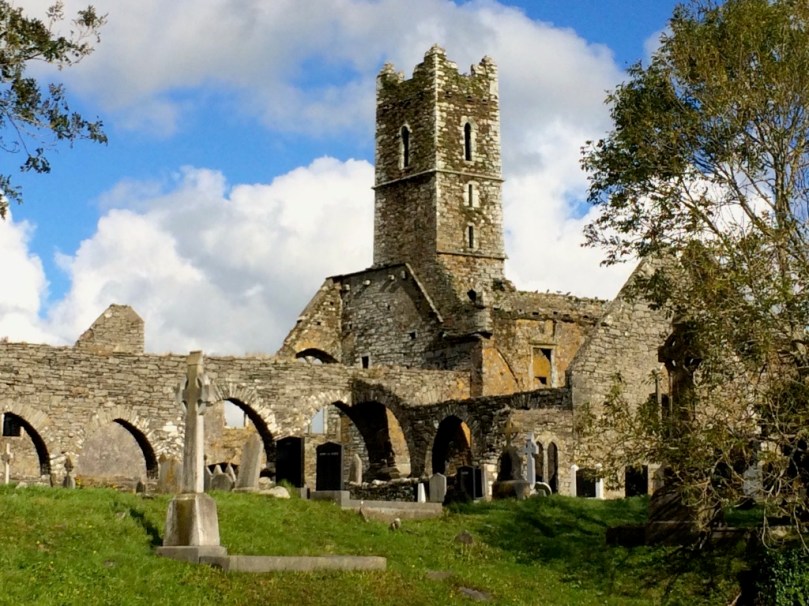
Timoleague Friary, read more about it here

Terry Searle – A West Cork Artist

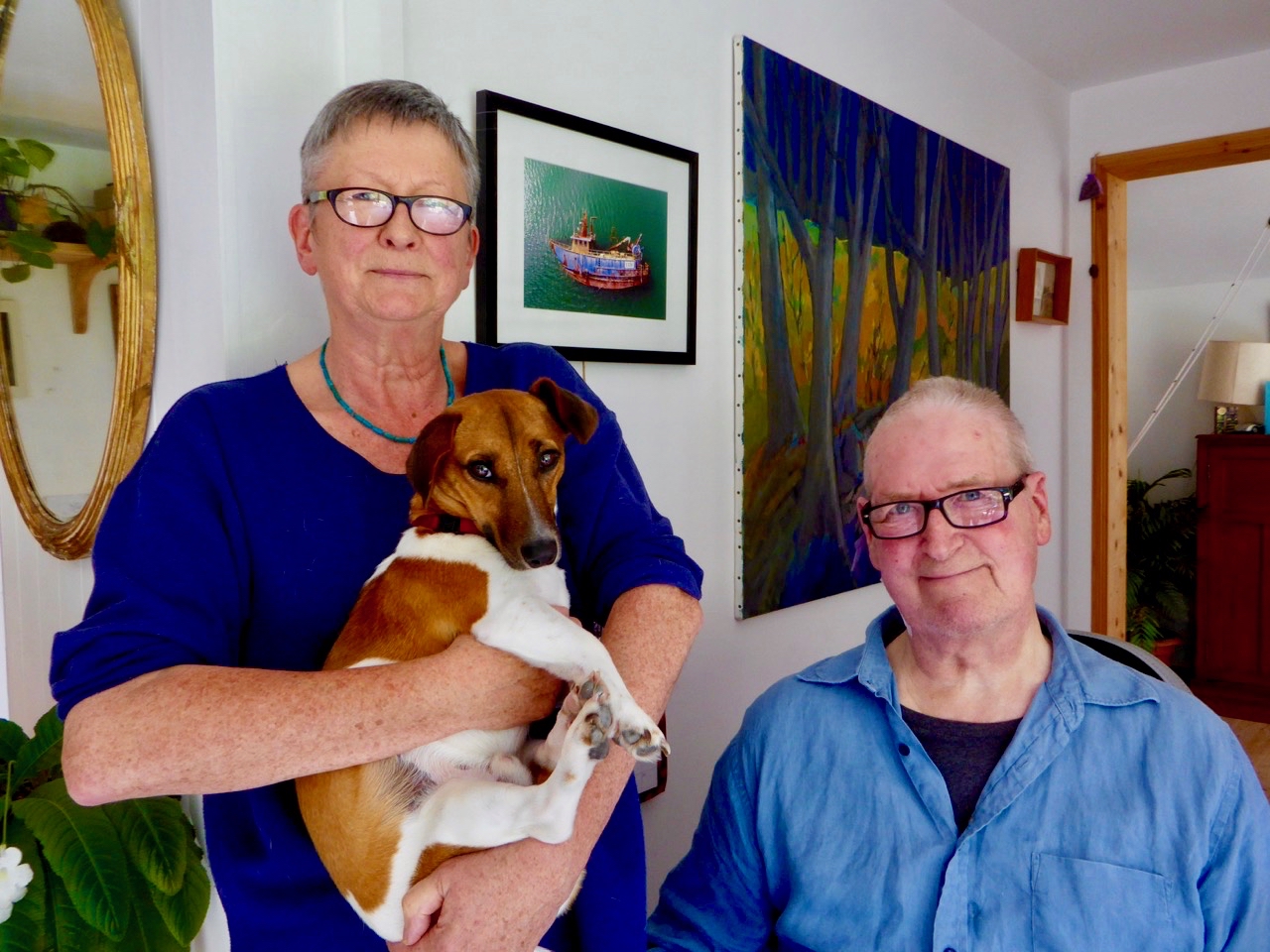
It’s all happening in West Cork at the moment! In particular, there’s a lot going on in Skibb: the fabulous Skibbereen Arts Festival continues to run all through the week and we have already enjoyed some memorable events. The first West Cork History Festival has been a resounding success – and a learning experience: look forward to great things in the future. But don’t leave Skibbereen without visiting the O’Driscoll Building at Levis Quay, in the town centre. Opening at 1pm on Saturday 5 August and running through to 2 September is an important exhibition of the work of two artists: Terry Searle and Ian McNinch. I’m concentrating today on the life and work of Terry – one of the ‘West Cork Artists’ Group’ who built up a reputation during the latter part of the 20th century, and the story of which has still to be written. Finola and I were privileged to meet with Terry and his wife Penny Dixey recently, and thoroughly enjoyed their accounts of the somewhat Bohemian life and times of artists in West Cork.
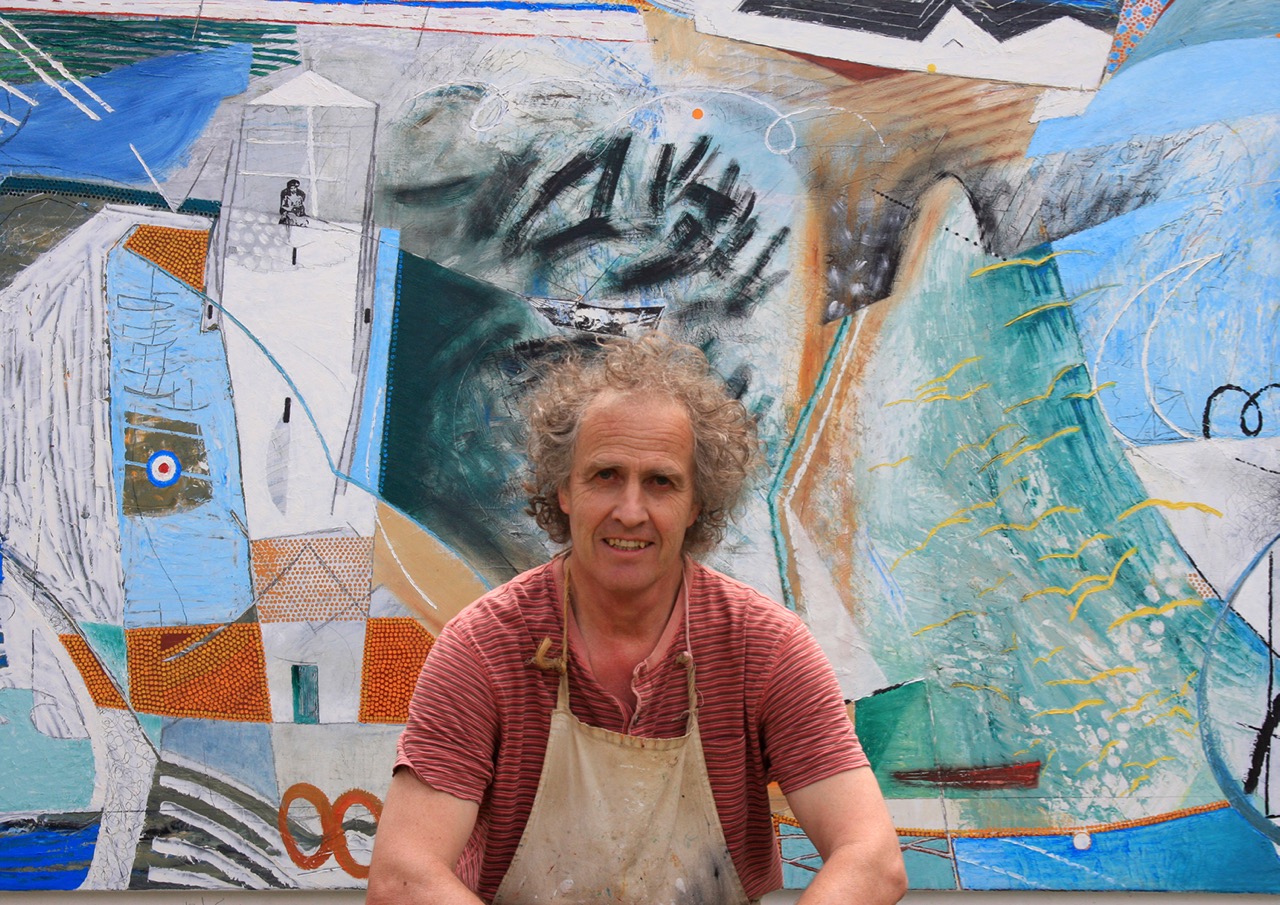
Penny (left, with Ted) and Terry (right) at home in Schull

The exhibition is a retrospective of Terry’s work. His great grandfather was from Dublin: he was born in 1936 and brought up in the East End of London. Like many of his contemporaries he was evacuated to the countryside during the war and spent six years away from his home. It’s hard to imagine how that experience might have affected a young, evolving mind: his positive take is that it imbued in him a permanent love for nature and this has been reflected in his life work.

Terry is a painter. At the end of the war Terry was called up for National Service, where he rubbed shoulders with would-be actors, artists and musicians: their outlooks attracted him and, when he moved back to London, he started evening classes at St Martin’s School of Art and then signed on for a full-time course at Goldsmith’s College of Art. Although life was hard – there were no grants available and he had to fund his studies through a variety of jobs occupying all hours – he never looked back. As he says “…life in the coffee shops in Soho was enjoyable, with a lively social scene…”

Terry’s influences were many – particularly the large, colour-full abstracts of Rothko and Joan Mitchell – but his life-long hero is JMW Turner. London’s Tate Britain has the world’s largest collection of Turner on exhibition, so Terry had the opportunity to study his hero at first hand. Turner challenged the art traditions of his time (first half of the 19th century) and his techniques appear very ‘modern’ to our eyes. Terry is no slave to Turner’s style, but has a very particular way of viewing his subjects. I think Terry’s work is vibrant – colourful – approachable – very attractive yet with a powerful individuality. I can see some parallels with William Crozier, whose work is currently being shown at Uillinn. By chance, Terry Searle and Crozier once lived in the same road in London but were only on nodding acquaintance. As their lives and work progressed, both found their way to West Cork.

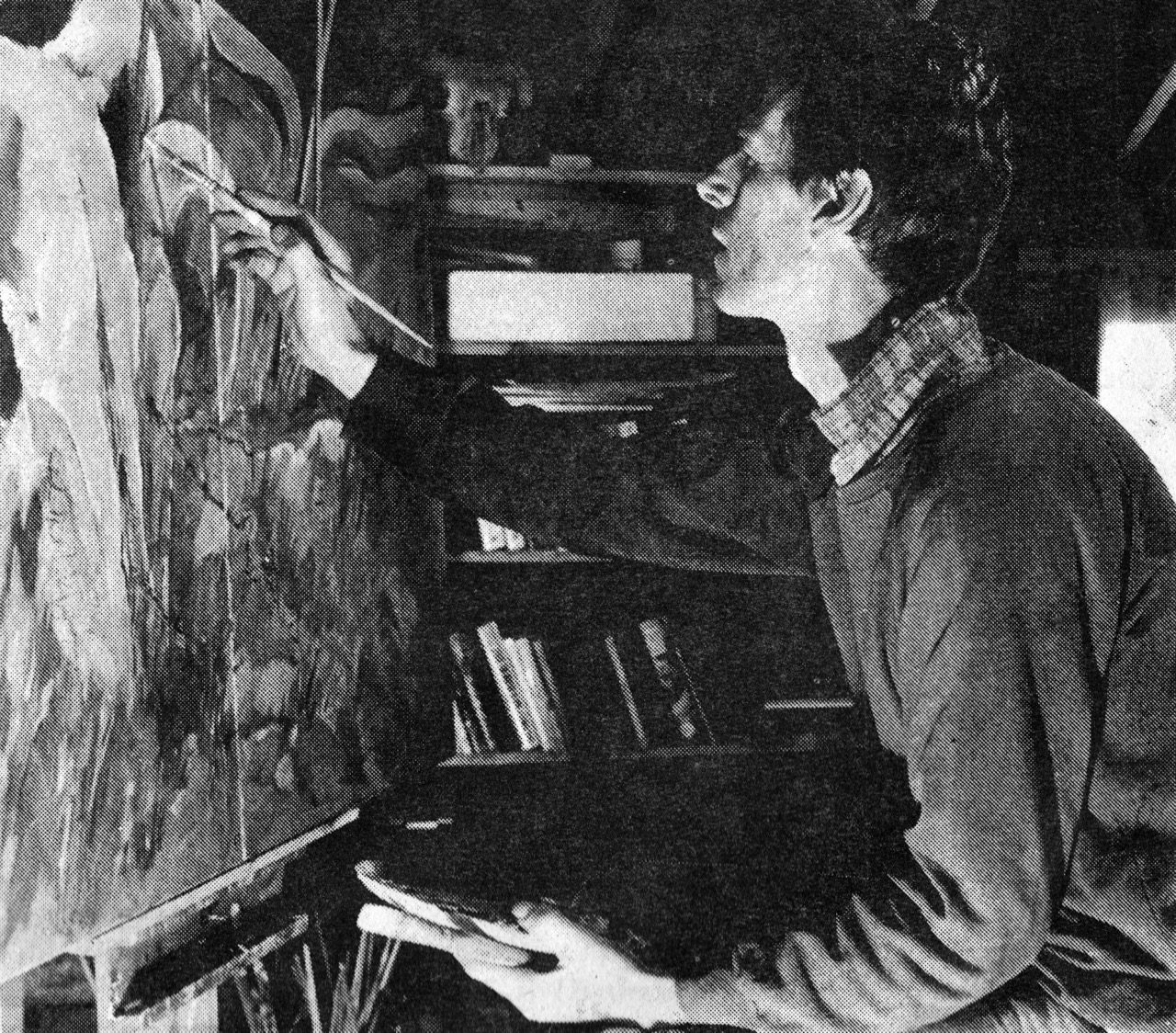
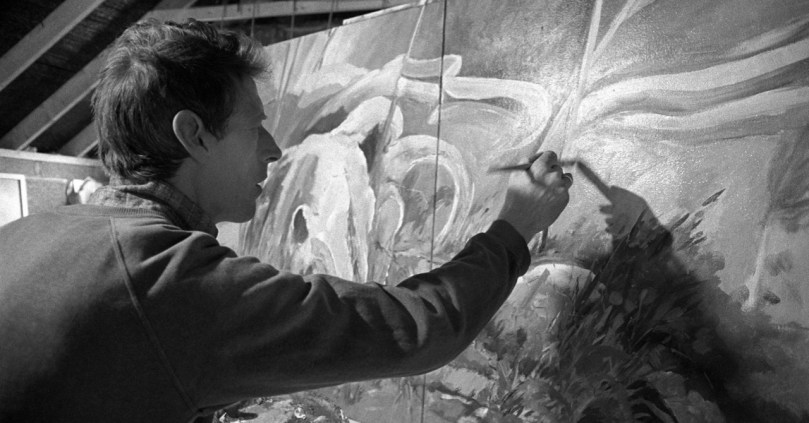
Terry Searle at work, probably around 1986: photograph by Kevin O’Farrell

Terry first visited West Cork when travelling with a group of friends in the 1970s. A number of visits followed and he found himself “enchanted” by the natural beauty of the place, and the civilised pace of life here. He must also have been aware of the strong artistic movement which focussed around Ballydehob and Skibbereen at the time. When he made the permanent relocation to the west of Ireland in 1981 he quickly became active in that movement, and was one of the founders of the West Cork Arts Centre. He contributed to the 1985 exhibition of West Cork artists in Zurich, and in 1987 was part of the important Living Landscape ‘87 Exhibition, which showed in the Crawford Gallery, Cork, as well as in the West Cork Arts Centre in Skibbereen. This extract from the introduction of the exhibition catalogue is enlightening on the spirit of the time:

…Skibbereen is a small town in the South West of the country with a population of 2,000 people. Ten years ago, because of the number of artists living in the area, a small interested group started an art society and held an annual members exhibition which ran for two weeks every July in a local hall. The demand from artists and local people increased over the years and due to the hard work of a dedicated committee, they realised a dream come true – an Arts Centre for West Cork; and with the essential practical help from the Vocational Education Committee in the provision of the building, we became the proud ‘owners’ of a thriving Arts Centre. We run exhibitions monthly, organise musical and theatrical evenings, and provide classes for all, covering a full range of artistic interests in our newly reconstructed classroom. Today, we are very proud to be hosting the first ‘Living Landscape’ exhibition by the top 25 landscape artists working in this country. Our intention to make this a prestigious annual event is ambitious, but then all our plans are ambitious…!

The Living Landscape exhibition shown at The Crawford and in Skibbereen: Terry is third from the right

I wonder how many of those involved in those times could have foreseen just where those ambitions would lead? With Uillinn in Skibbereen, the West Cork Arts Centre now has the foremost public gallery west of Cork city, and it is pushing the boundaries with major exhibitions of contemporary work. Readers will be aware of the recent West meets West exhibition – which heralds a regular exchange of art between West Cork and Cornwall – and the gallery, currently, is hosting a collaborative exhibition with IMMA on the opus of William Crozier.

It’s so good that Terry Searle is being appreciated with this show: he has never been a self-publicist, and it is high time his work received full and proper recognition. He celebrates his eightieth birthday this year. A few years ago he was diagnosed with a degenerative neuromuscular disease and has now been forced to stop painting altogether. It is painful to imagine what a loss that must be to a creative ethos such as his. This exhibition is a very special one – be sure to see it!

Robert is lining up further posts on the stories of the West Cork Artists group dating from the 1960s (and still thriving!) and would be delighted to hear from anyone who has personal accounts, reflections or memories from those days…

Image below – Terry Searle in his studio c1986 – courtesy of Kevin O’Farrell

Terry Searle - Kevin O'Farrell

The Edge of the Landscape – William Crozier

The Edge of the Landscape is the title of an upcoming exhibition which opens this weekend at Uillinn. It will show some of the later work of William Crozier (1930 – 2011), a Scottish born artist who considered himself more Irish than Scottish as his parents were from Ballinderry, Co Antrim. He adopted Irish citizenship in 1973 and purchased a cottage at Kilcoe, West Cork, in the early 1980s. Although he worked both here and in Hampshire for the rest of his life, most of his later paintings dwelled on the Irish landscape – specifically the splendours of West Cork, which are so familiar to us.

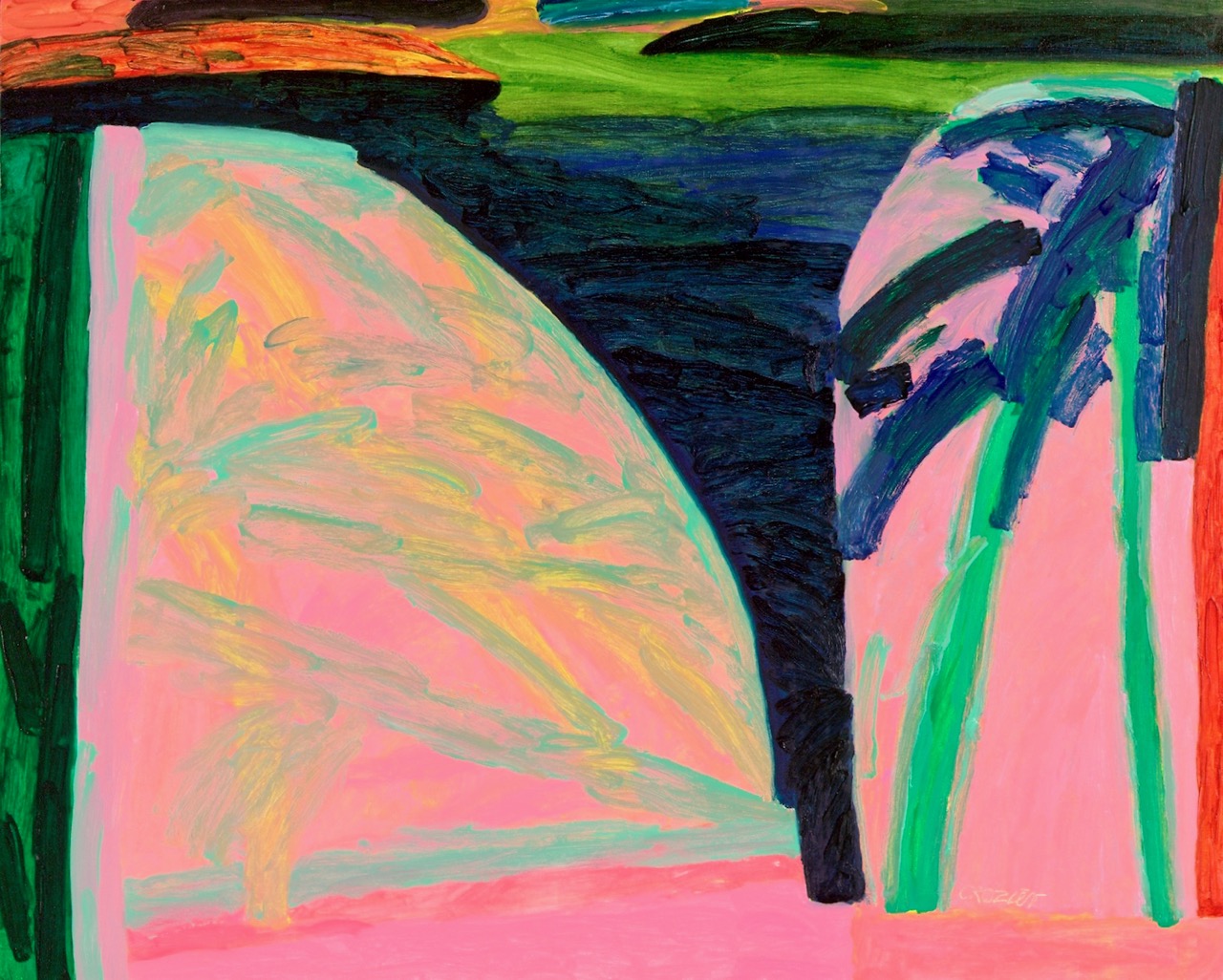
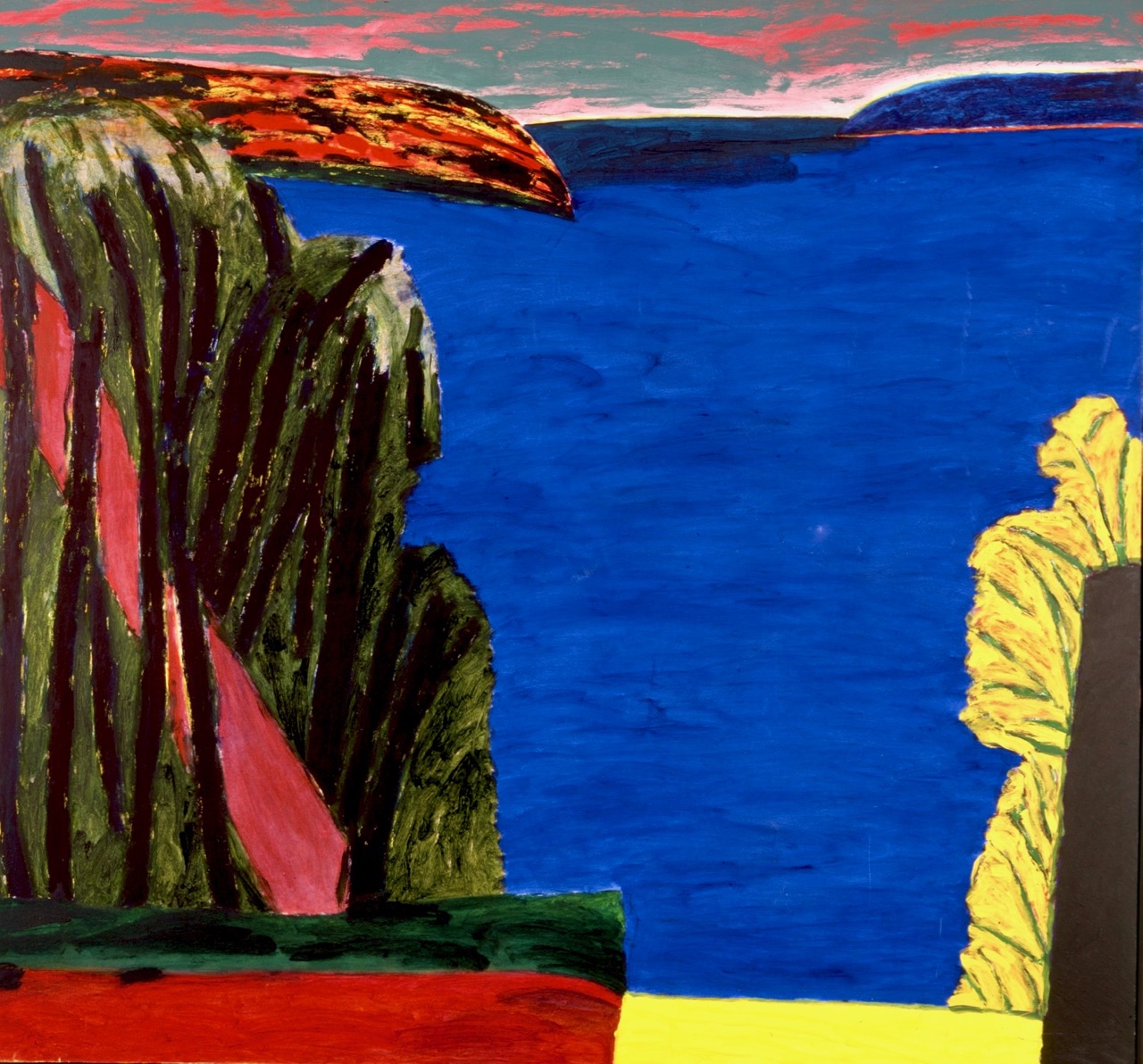
The meeting of land and sea was a recurring theme in Crozier’s work. The quay at Turk Head, above, inspired the header on this post – painted by Crozier in 2003. We might wonder at the eye of the artist that pictures the scene in such vivid colours, but anyone who has lived in West Cork will be familiar with his palette: the rocks, the fields, the lanes, wildflowers, water and ever-changing skies provide all the colours in his paintings, tints, tones and shades which are successfully pulled into unexpected compositions.

Katharine Crouan – Bill Crozier’s widow – has written to me “…Bill was not, in any way, a topographical artist but you can see in his work – particularly from 1984-95 – the stimulus  the landscape provided. He spoke of loving the ‘glamour’ of the West Cork landscape, referring to the glitter of water and sunlight on foliage after rain and the dark shadows that came out of nowhere. For him it was all magical…”

‘Kilcoe Strand (From Peninsula)’, painted by William Crozier in 2011

I am reminded of Peter Lanyon, the St Ives artist (who was, interestingly, the subject of a book titled At the Edge of Landscape): he famously said that, as a painter, he needed to “…get under the skin of the landscape…” That need informs his work, which is abstract rather than specifically landscape-based yet inspired, as he stated, from flying over his native Cornwall and – by exploring the mine shafts – tunnelling underneath it. For me, William Crozier has the same regard for his West Cork homeland and successfully expresses his relationship with it through the richness of his work.

Toe Head, West Cork (upper picture) was the inspiration for many paintings. Lower works: Toe Head 1989, (left), and Wolf’s Castle, Toe Head 1998 (right – Richard Barrett) 

William Crozier was a prolific painter – he estimated that he had painted more than 12,000 pictures, each executed in a single session. The landscape-inspired works are just one part of an enormous opus. He did not overlook the sometimes hard realities of his surroundings. Cocks of hay drying in a field may appear a romantic ‘rural idyll’, but are equally a portrait of an economically unviable small-holding.

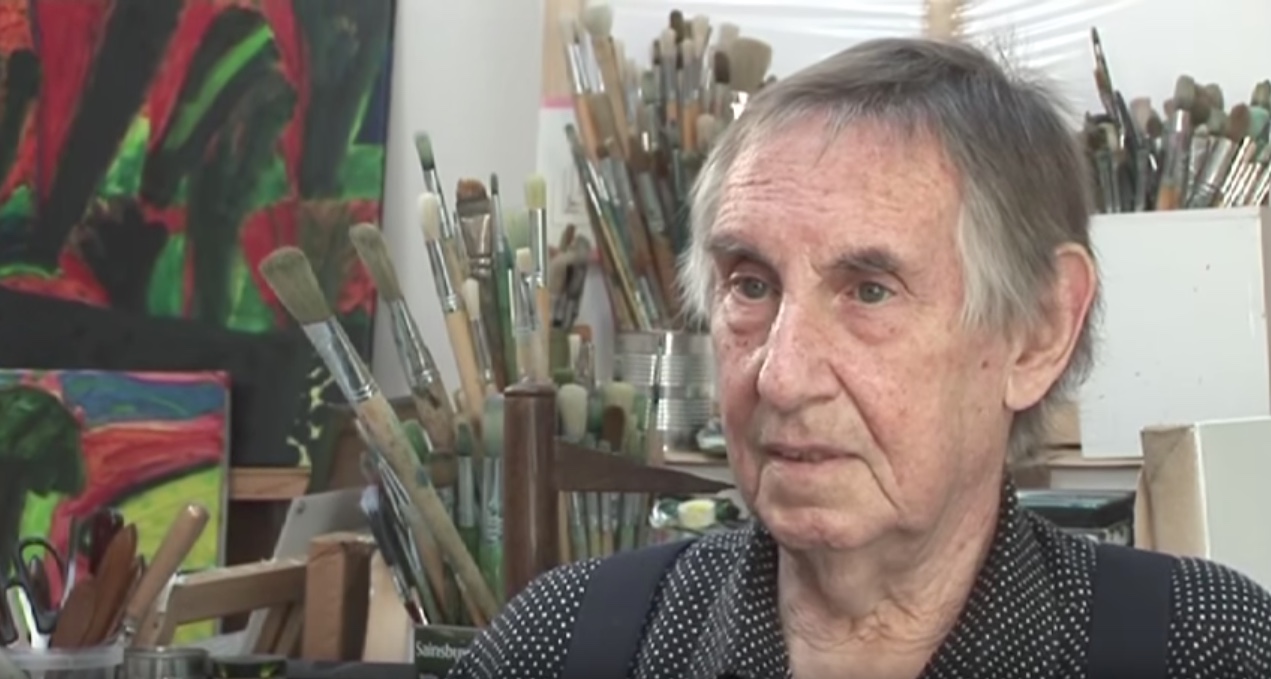
William Crozier in his studio c 2009

The exhibition of a selection of Crozier’s work produced since 1985 is showing at Uillinn: West Cork Arts Centre from 15 July to 31 August, and later in the year some of his earlier works will be shown at IMMA: The Irish Museum of Modern Art from 12 October 2017 to 8 April 2018. Both exhibitions are curated by Seán Kissane (Curator, Exhibitions, IMMA), who will be presenting a talk on the work at 6pm this Friday, 14 July, in Uillinn, following which the exhibition will be formally opened by Sarah Glennie, the Director of IMMA. An important new publication edited by Katharine Crouan and Seán Kissane and designed by Peter Maybury accompanies the exhibition with texts by Mark Hudson, Katharine Crouan, Seán Kissane, Riann Coulter, Enrique Juncosa, and Sarah Turner.

Below – Departure from the Island, William Crozier 1993 (Flowers Gallery). Note that copyright on all works rests – unless otherwise stated – with the William Crozier Estate

Artists of the Western Coasts

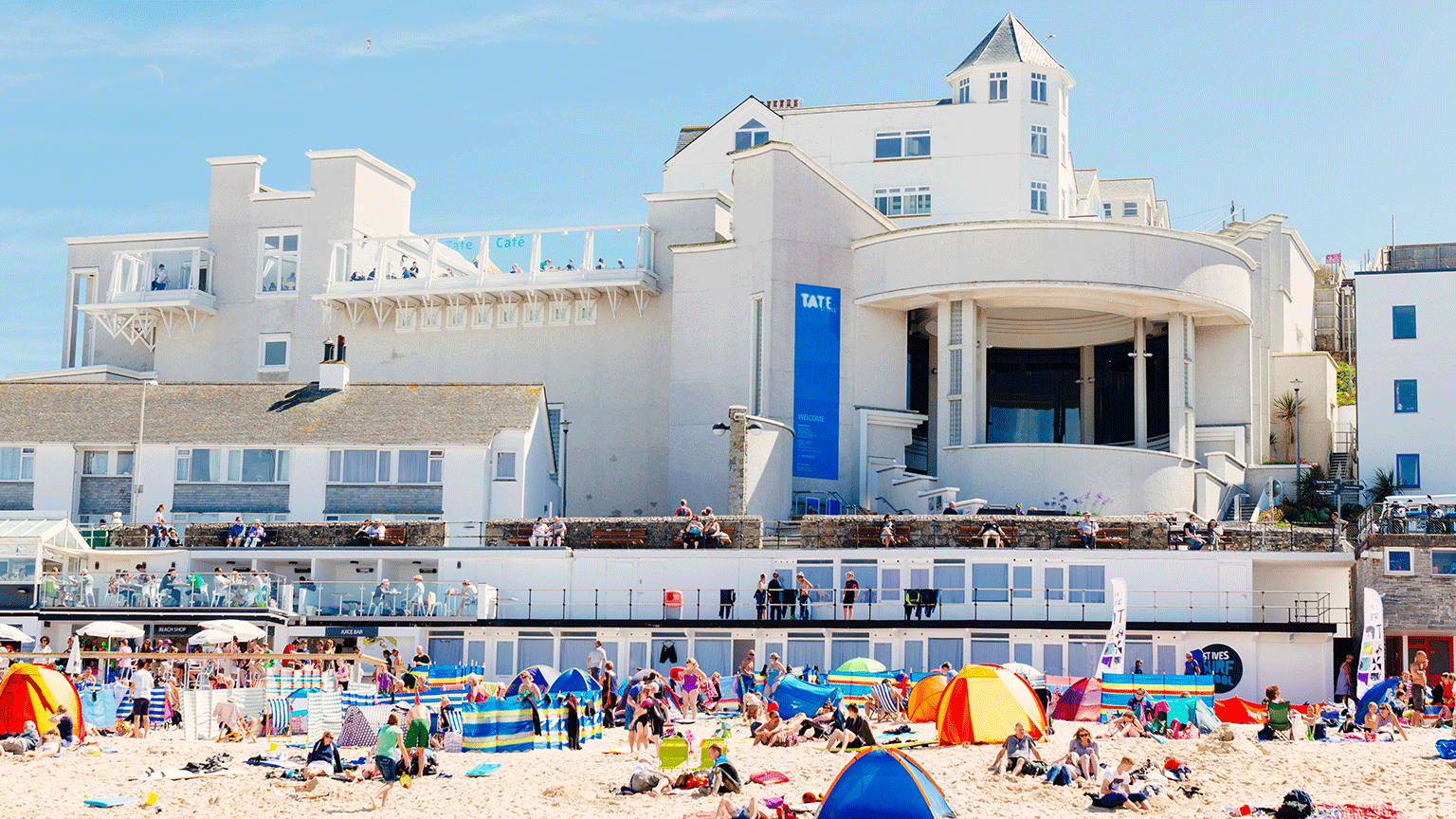
We look forward to welcoming our guest Cornish artists to Uillinn for the West meets West exhibition which opens this Friday – 2 June at 6pm – and runs through to 8 July. The three artists are excellent representatives of the vibrant arts scene in Cornwall, which was established from the late 19th century in Newlyn and St Ives and has been burgeoning through the late 20th century and into the 21st, especially with the opening of the spectacularly successful Tate St Ives gallery in 1993.

Header: Looking towards The Land’s End – Cornwall’s beautiful scenery has attracted artists and tourists for over a hundred years (photo by Phoebe Harris). Above: Tate St Ives – opened in 1993 – a spectacularly successful venue for cultural art tourism (photo by http://www.artfund.org)

Our artists are all from the West Penwith peninsula – the furthest landfall in the UK’s westernmost county of Cornwall. Phil Booth, Lamorna, will be showing some of his large sculptural relief constructions. Phil is known for these works but is also a talented landscape designer. His has spent many years teaching design and sculpture in Japan: he has intensively researched the form and meaning of traditional Japanese Gardens in Kyoto and is able to provide a high quality design service for anyone who is planning to construct a Japanese garden, or who might want to introduce Japanese elements into their own gardens.

Above left: Philip Booth. Above right: one of his relief constructions which will be shown at Uillinn – Beach Boulder

Matthew Lanyon sadly passed away while preparing work for our Uillinn exhibition. We will be showing many of his larger paintings (some are seven metres long!), but also some tapestry and a laminated glass piece which will be seen for the first time here in Skibbereen. Matthew’s father – Peter Lanyon – was one of the notable members of the St Ives School of Artists in the mid twentieth century. Peter was a painter and a teacher, and had a strong influence on many artists – not only in Cornwall and the UK but in Ireland as well. Matthew’s Cornish heritage, therefore, is very special in the context of West meets West.

The Late Matthew Lanyon with one of his huge paintings – The Listening Sea

Tony Lattimer lives in Penzance and has his studios and kilns on a beautiful wild acreage close to The Land’s End. His ceramic sculpture is large and visually stunning. Like the other exhibiting artists, he is recognised internationally. Tony has won the prestigious Emilia-Romagna Prize at Premio Faenza International Ceramic Art Competition, Italy twice – in 2005 and 2013. The MIC – International Museum of Ceramics in Faenza – is reputed to be the world’s largest ceramics museum and one of the liveliest art institutions in Italy. Tony has also exhibited at the Tate St Ives and many other UK galleries, and we are pleased that he is able to bring a selection of his new works over to Skibbereen.

Above left: Tony Lattimer preparing work for the kiln in his Land’s End studio. Above right: some of Tony Lattimer’s recent smaller works

Phil Booth and Tony Lattimer will be at the opening, and in the gallery at noon on Saturday 3 June to take part in a panel discussion on the artists’ work. Matthew will also be represented at this event. Please come! The following week – on Saturday 10 June, also at noon, I (Robert Harris) will be giving an illustrated talk titled Chasing the Light – Why the Artists Moved West. I will outline the historic connections and remarkable similarities between the two most westerly peninsulas of Britain and Ireland over a three and a half thousand year timespan, and explore the lives and work of artists who settled in both communities.

While this exhibition focusses on contemporary art from Cornwall it is part of a larger project envisaged by Uillinn (the West Cork Arts Centre). It is hoped that artists from West Cork will visit Cornwall to exhibit their work next year, and that this will become part of a regular cultural exchange between Cork and Cornwall in the future. There is a fascinating story to be told about the artists and craftspeople who arrived in West Cork from the late 1950s onwards and helped found a cosmopolitan, creative and free-thinking community here. Ceramicists, textile designers, printmakers, painters and writers all contributed to the mix. Because of that heritage there are many artists and creative people who continue to be attracted to the area today. Believe me, it’s the most stimulating place to live!

Don’t miss – West meets West – the work of contemporary Cornish artists, at Uillinn, Skibbereen, from 3 June to 8 July. Opening at 6pm on Friday 2 June.

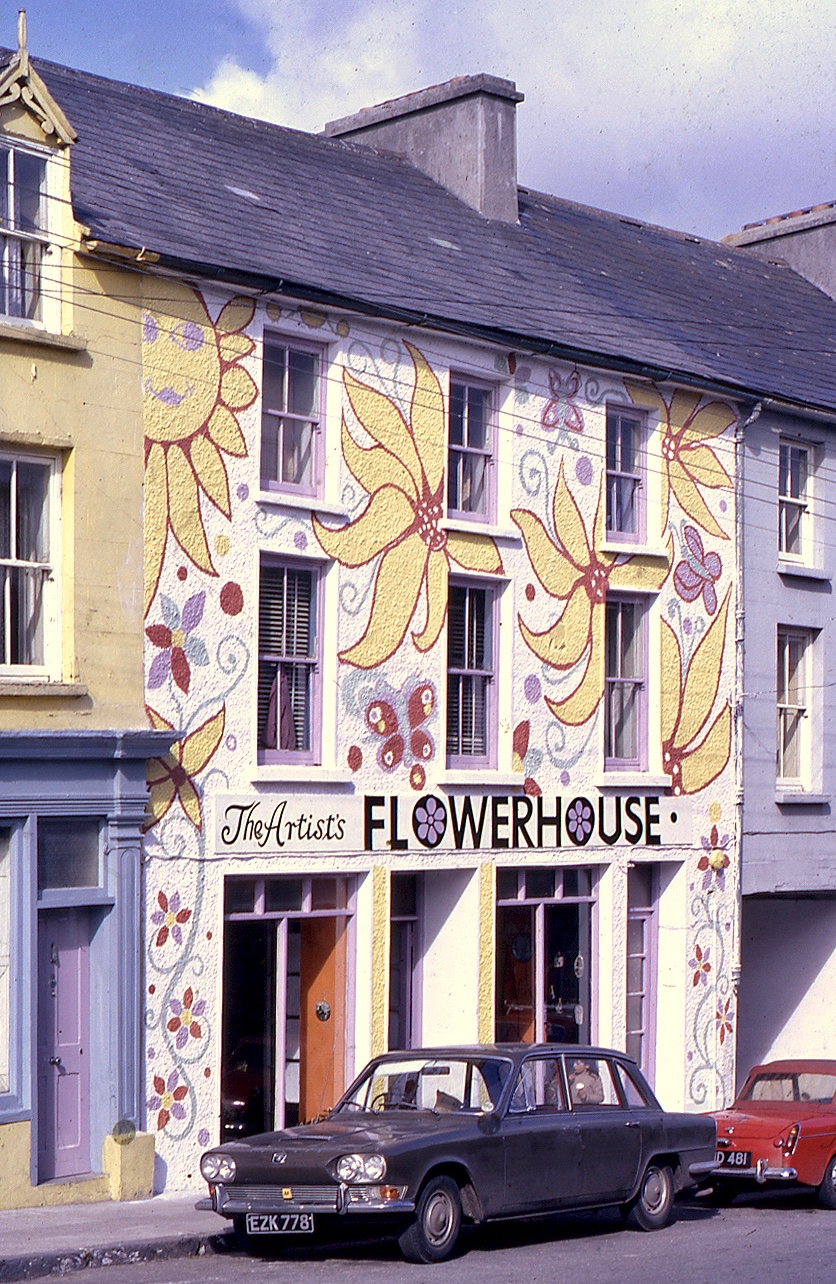
Below: stirrings in Ballydehob: in the 1960s potter Christa Reichel and batik artist Nora Golden set up The Flower House as a shop, studio, cafe and haven for artists. “…Word spread that West Cork was a beautiful, creative place waiting to be discovered…” (Alison Ospina – West Cork Inspires) Photo courtesy Andrew Street

Ways West!

Many of you will know that I was a frequent traveller between Cornwall and West Cork from the 1990s and onwards – until I happily met with Finola and we came and settled permanently here in Nead an Iolair just a few years ago. We have never looked back! But I have often wondered about the various ways in which that journey was made – not just in the last century, but three or four thousand years ago… For we do know that tin mined in Cornwall was brought across to the west of Ireland then, in order to manufacture Bronze – the ‘supermetal’ of those advanced times: it symbolized strength and gave wealth and status.

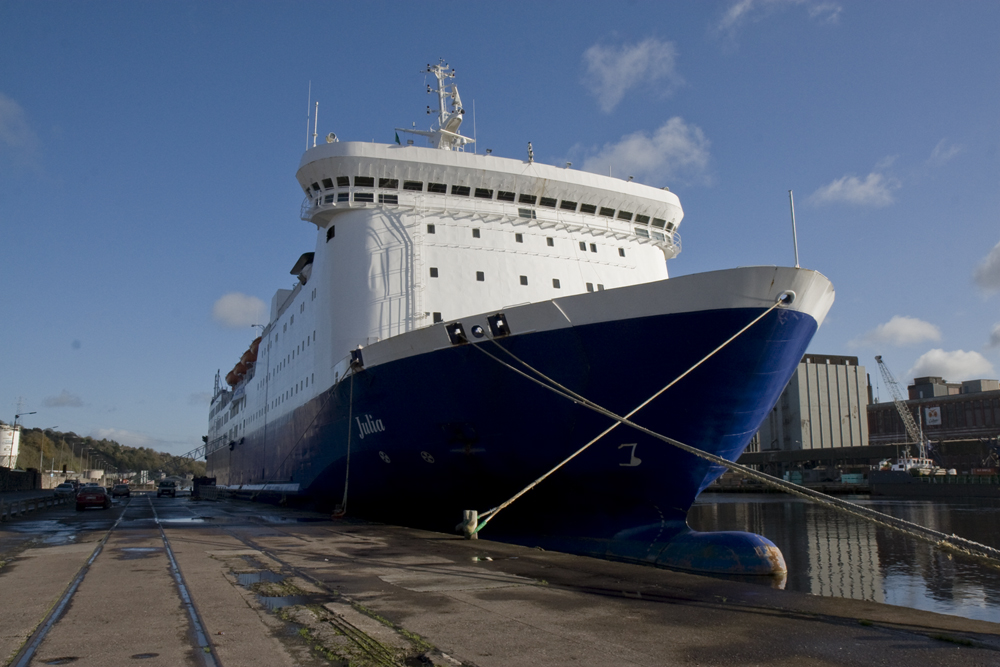
MV Julia, the car ferry which plied between Cork and Swansea: top picture – in her heyday, when she operated throughout the year. Above – Julia leaving Cork in 2012 after the closure of the Fastnet Line. Her name was changed to Wind Perfection and she became a floating dormitory for workers on the offshore wind farms in the North Sea

Not only tin was brought from Cornwall. A study carried out in 2015 by universities in Southampton and Bristol – (using laser ablation mass spectrometry) – concluded that many of the gold artefacts in the National Museum of Ireland and dating from the Bronze Age were manufactured from gold imported from Cornwall – even though there were rich supplies of gold being extracted in Ireland. Author Chris Standish suggests: 

…It is probable that an ‘exotic’ origin was cherished as a key property of gold and was an important reason behind why it was imported for production…

Gold artefacts from Ireland: left – Tyrone Lunula, early Bronze Age; right – Gleninsheen gold gorget, late Bronze Age (photos courtesy National Museum of Ireland)

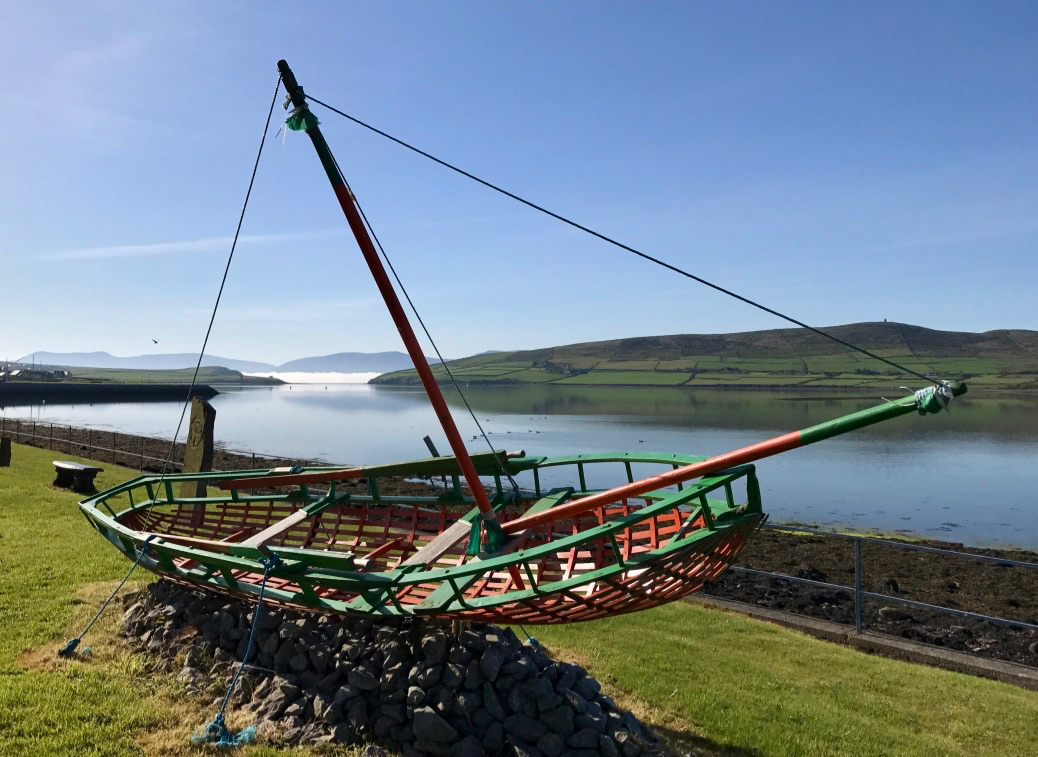
I would really like to know what type of boat was used all that time ago to bring that precious metal across the Irish Sea. Some have suggested that it would have been a forerunner of the currach – implying a small hide-covered boat. But metal was heavy – even if it was smelted into ingots before the journey: something larger than a currach must surely have been needed. My own not-too-distant memories of having survived a night crossing in the MV Julia, from Swansea to Cork, in a Force 9 storm – with the thudding of huge waves against the steel hull and ominous creakings and crashings coming from the car decks below – lead me to think that any craft that had to traverse those seas in all weathers had to be substantial and sturdy.

A traditional currach in Dingle, Co Kerry – without its covering skin of hide or canvas

I began to research types of craft that were used in the Bronze Age: examples have been found, some preserved underwater or in bogs. These included ‘log boats’ such as the 14 metre long Lurgan Canoe in the National Museum, which doesn’t seem ideally suited to cargo carrying – especially on open sea. The most likely candidate comes from the Mediterranean: the Uluburun Shipwreck, found underwater in Turkey in 1982.

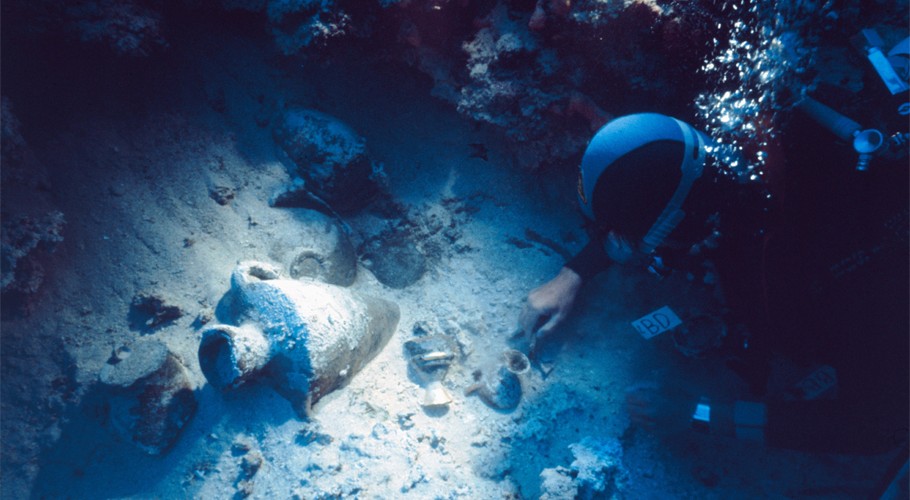
The Uluburun was a cargo boat: we know this because much of its load was intact when the wreck was found. Amazingly, archeologists were able to pinpoint its route: the ship set sail from either a Cypriot or Syro-Palestinian port and was probably heading for a Mycenaean palace on mainland Greece. It was wrecked in the late 14th century BC. The boat was constructed of cedar planks with morticed and tenoned joints and carried a huge cargo: 500 copper ingots; one ton of tin (which when alloyed with the copper would make around 11 tons of bronze); around 150 Canaanite jars, some filled with glass beads, many others with olives and some with an ancient form of turpentine; 175 glass ingots; African blackwood (ebony); ivory; tortoise-shells; ostrich eggs; Cypriot pottery and oil-lamps; a trumpet; quartz, gold, faience, amber, weapons, tools, pan-balance weights and a gold scarab… The list goes on.

Underwater archaeology: it took ten years to excavate and recover the cargo of the Uluburun vessel

This was in the Mediterranean, not in the Irish Sea. But it’s perfectly possible that the marine technology of those times extended to the northern outposts of Bronze Age Europe. We have to be very clear in our minds that we are looking at a sophisticated society capable of metallurgy, communication and long-distance travel.

Coming back to my own journeys from Cornwall to Ireland, I mourn the passing of the Swansea Cork Ferry, in those days by far the best way to get me and my car to the west of Ireland: I have good memories of arriving in the Lee estuary at daybreak and, excited to be here, watching the sun rise as we sailed up through Cobh to Ringaskiddy. On other journeys I also came over by air: there was a wonderful flight in a small aircraft from Exeter going to Cork. The homespun Devon airport in those days was unsophisticated: on one occasion I lined up to have my luggage checked by security and was asked to take my concertina (a constant travelling companion) out of its case for inspection. I was then asked to play it – in front of the queue – and everything stopped so that the serenade could be heard! It was a small aeroplane – about a dozen seats in the cabin, with the pilot up front – no partition. As he started the engines his broad Cork accent came over the speakers: “…let’s see if we can get this thing off the ground…” He succeeded and – once in the air and cruising at a lowish altitude – got out packs of sandwiches and passed them around. I thoroughly enjoyed watching the outline of Cornwall (exactly as it’s shown in the atlas!) passing below us, to be replaced shortly by the distinctive – and similar – geography of south-west Ireland, soon followed by a sketchy and invariably bumpy landing on Cork’s runaway – especially in any sort of stiff breeze.

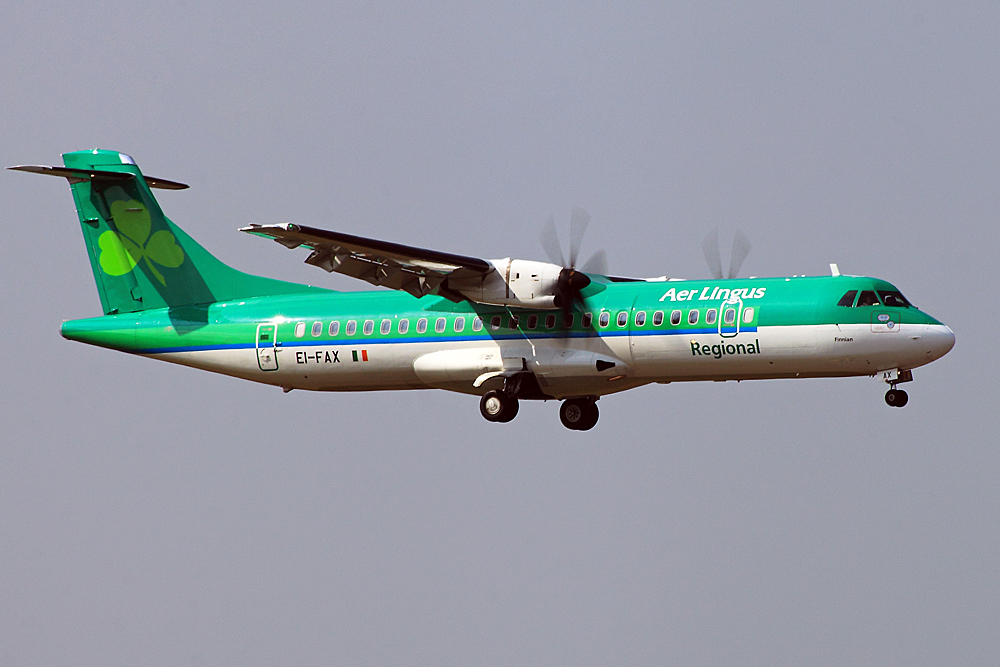
Air Lingus Regional flights – operated by Stobart Air – now directly connect Cornwall with Cork. Photo – Trevor Hannant

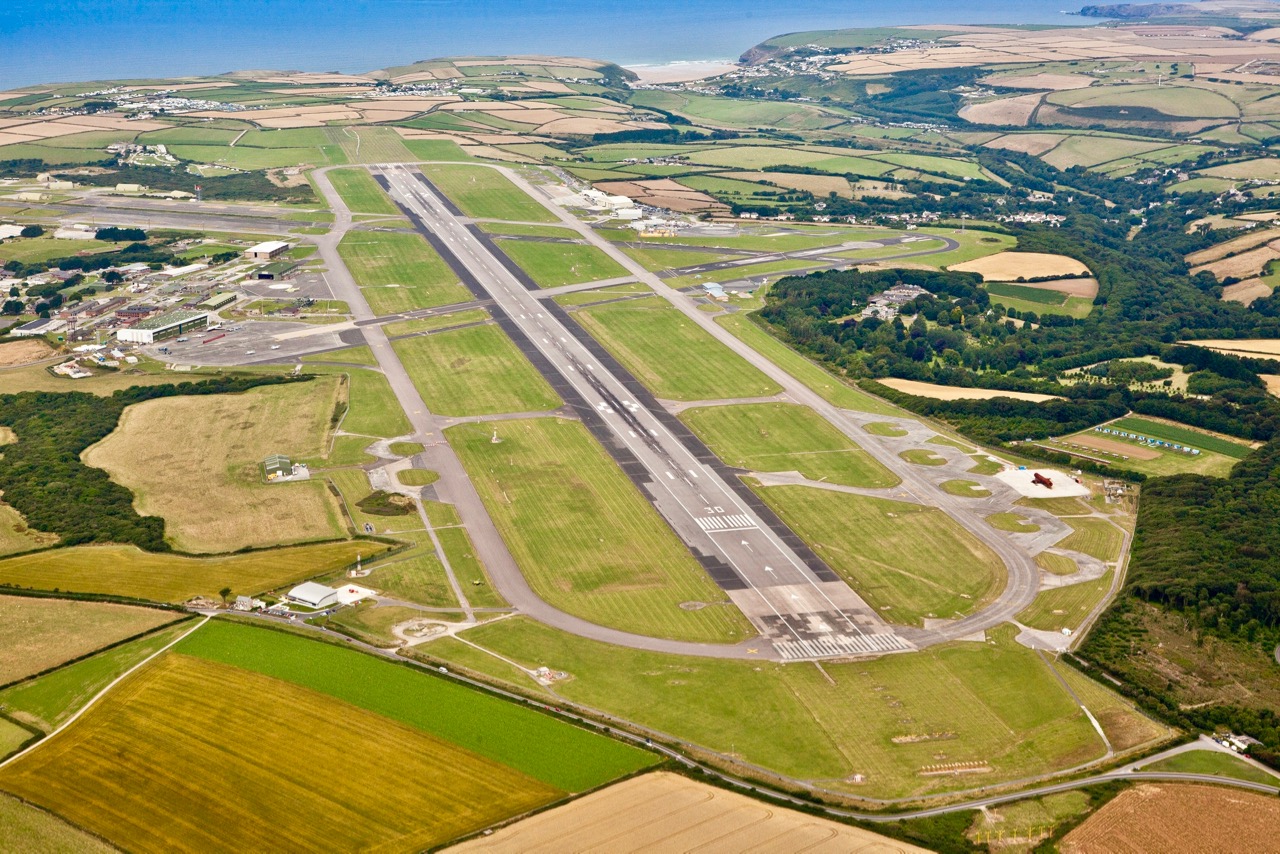
It’s exciting that – just in time for Uillinn’s West meets West exhibition of Cornish artists, there is finally a direct link from within Cornwall to Cork! A new Air Lingus Regional flight – operated by Stobart Air started operating this month and it’s already popular: extra flights have been added to the planned timetable to cater for higher than expected demand. These flights leave from Newquay Airport and are very reasonably priced. I wish them every success… Back in the day, my journey from Newlyn to Skibbereen via the ferry took all day and a night: the new flight barely takes an hour.

Depart here for West Cork! Newquay Airport, in Cornwall

When the Swansea to Cork ferry stopped running the West of Ireland felt the loss: tourism numbers dropped significantly and businesses which relied on visitors suffered. Things have improved since then, particularly with the Wild Atlantic Way initiative. Hopefully the new air link will lead to increased business between the two western outposts of Britain and Ireland, hearkening back to historical times when close links were first forged. Meanwhile, please don’t forget to come along to West meets West and see the work of contemporary artists from Cornwall. The artists (some of whom will have flown over on the Newquay service!) will be speaking about their work at 12 noon on Saturday 3 June, and I will be giving a gallery talk on Saturday 10 June – also at 12 noon – about the many historic links between Cornwall and the West of Ireland. West meets West – the work of contemporary Cornish artists, at Uillinn, Skibbereen, from 3 June to 8 July. Opening at 6pm on Friday 2 June.

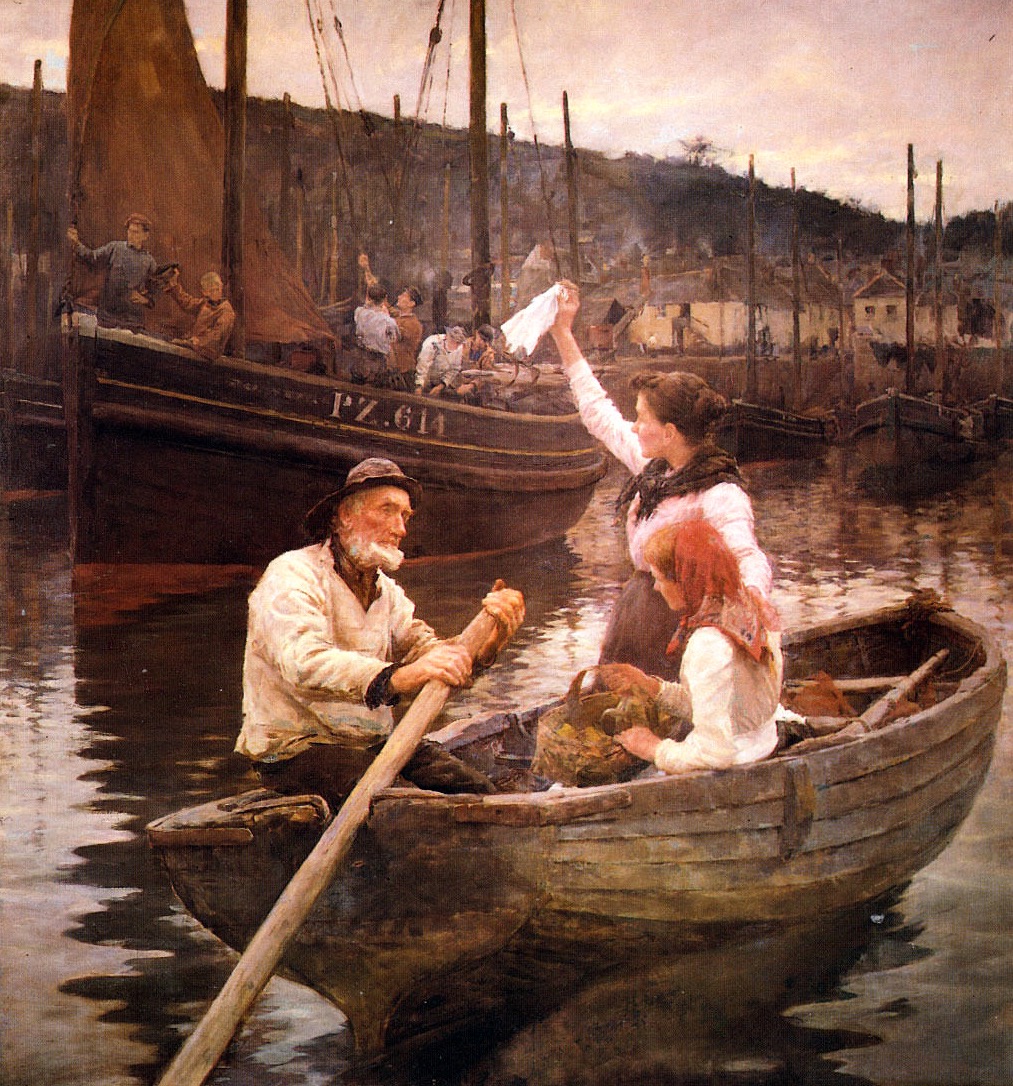
Travelling from Cornwall to Cork: Off to Skibbereen – painted by Newlyn Artist  (and Irishman) Stanhope Alexander Forbes in 1901